window.__IS_SSR__=true
window.__INITIAL_STATE__={
"attachmentsReducer": {
"audio_0": {
"type": "attachments",
"id": "audio_0",
"imgSizes": {
"kqedFullSize": {
"file": "https://ww2.kqed.org/news/wp-content/themes/KQED-unified/img/audio_bgs/background0.jpg"
}
}
},
"audio_1": {
"type": "attachments",
"id": "audio_1",
"imgSizes": {
"kqedFullSize": {
"file": "https://ww2.kqed.org/news/wp-content/themes/KQED-unified/img/audio_bgs/background1.jpg"
}
}
},
"audio_2": {
"type": "attachments",
"id": "audio_2",
"imgSizes": {
"kqedFullSize": {
"file": "https://ww2.kqed.org/news/wp-content/themes/KQED-unified/img/audio_bgs/background2.jpg"
}
}
},
"audio_3": {
"type": "attachments",
"id": "audio_3",
"imgSizes": {
"kqedFullSize": {
"file": "https://ww2.kqed.org/news/wp-content/themes/KQED-unified/img/audio_bgs/background3.jpg"
}
}
},
"audio_4": {
"type": "attachments",
"id": "audio_4",
"imgSizes": {
"kqedFullSize": {
"file": "https://ww2.kqed.org/news/wp-content/themes/KQED-unified/img/audio_bgs/background4.jpg"
}
}
},
"placeholder": {
"type": "attachments",
"id": "placeholder",
"imgSizes": {
"thumbnail": {
"file": "https://cdn.kqed.org/wp-content/uploads/2024/12/KQED-Default-Image-816638274-2000x1333-1-160x107.jpg",
"width": 160,
"height": 107,
"mimeType": "image/jpeg"
},
"medium": {
"file": "https://cdn.kqed.org/wp-content/uploads/2024/12/KQED-Default-Image-816638274-2000x1333-1-800x533.jpg",
"width": 800,
"height": 533,
"mimeType": "image/jpeg"
},
"medium_large": {
"file": "https://cdn.kqed.org/wp-content/uploads/2024/12/KQED-Default-Image-816638274-2000x1333-1-768x512.jpg",
"width": 768,
"height": 512,
"mimeType": "image/jpeg"
},
"large": {
"file": "https://cdn.kqed.org/wp-content/uploads/2024/12/KQED-Default-Image-816638274-2000x1333-1-1020x680.jpg",
"width": 1020,
"height": 680,
"mimeType": "image/jpeg"
},
"1536x1536": {
"file": "https://cdn.kqed.org/wp-content/uploads/2024/12/KQED-Default-Image-816638274-2000x1333-1-1536x1024.jpg",
"width": 1536,
"height": 1024,
"mimeType": "image/jpeg"
},
"fd-lrg": {
"file": "https://cdn.kqed.org/wp-content/uploads/2024/12/KQED-Default-Image-816638274-2000x1333-1-1536x1024.jpg",
"width": 1536,
"height": 1024,
"mimeType": "image/jpeg"
},
"fd-med": {
"file": "https://cdn.kqed.org/wp-content/uploads/2024/12/KQED-Default-Image-816638274-2000x1333-1-1020x680.jpg",
"width": 1020,
"height": 680,
"mimeType": "image/jpeg"
},
"fd-sm": {
"file": "https://cdn.kqed.org/wp-content/uploads/2024/12/KQED-Default-Image-816638274-2000x1333-1-800x533.jpg",
"width": 800,
"height": 533,
"mimeType": "image/jpeg"
},
"post-thumbnail": {
"file": "https://cdn.kqed.org/wp-content/uploads/2024/12/KQED-Default-Image-816638274-2000x1333-1-672x372.jpg",
"width": 672,
"height": 372,
"mimeType": "image/jpeg"
},
"twentyfourteen-full-width": {
"file": "https://cdn.kqed.org/wp-content/uploads/2024/12/KQED-Default-Image-816638274-2000x1333-1-1038x576.jpg",
"width": 1038,
"height": 576,
"mimeType": "image/jpeg"
},
"xxsmall": {
"file": "https://cdn.kqed.org/wp-content/uploads/2024/12/KQED-Default-Image-816638274-2000x1333-1-160x107.jpg",
"width": 160,
"height": 107,
"mimeType": "image/jpeg"
},
"xsmall": {
"file": "https://cdn.kqed.org/wp-content/uploads/2024/12/KQED-Default-Image-816638274-2000x1333-1-672x372.jpg",
"width": 672,
"height": 372,
"mimeType": "image/jpeg"
},
"small": {
"file": "https://cdn.kqed.org/wp-content/uploads/2024/12/KQED-Default-Image-816638274-2000x1333-1-672x372.jpg",
"width": 672,
"height": 372,
"mimeType": "image/jpeg"
},
"xlarge": {
"file": "https://cdn.kqed.org/wp-content/uploads/2024/12/KQED-Default-Image-816638274-2000x1333-1-1020x680.jpg",
"width": 1020,
"height": 680,
"mimeType": "image/jpeg"
},
"full-width": {
"file": "https://cdn.kqed.org/wp-content/uploads/2024/12/KQED-Default-Image-816638274-2000x1333-1-1920x1280.jpg",
"width": 1920,
"height": 1280,
"mimeType": "image/jpeg"
},
"guest-author-32": {
"file": "https://cdn.kqed.org/wp-content/uploads/2025/01/KQED-Default-Image-816638274-1333x1333-1-160x160.jpg",
"width": 32,
"height": 32,
"mimeType": "image/jpeg"
},
"guest-author-50": {
"file": "https://cdn.kqed.org/wp-content/uploads/2025/01/KQED-Default-Image-816638274-1333x1333-1-160x160.jpg",
"width": 50,
"height": 50,
"mimeType": "image/jpeg"
},
"guest-author-64": {
"file": "https://cdn.kqed.org/wp-content/uploads/2025/01/KQED-Default-Image-816638274-1333x1333-1-160x160.jpg",
"width": 64,
"height": 64,
"mimeType": "image/jpeg"
},
"guest-author-96": {
"file": "https://cdn.kqed.org/wp-content/uploads/2025/01/KQED-Default-Image-816638274-1333x1333-1-160x160.jpg",
"width": 96,
"height": 96,
"mimeType": "image/jpeg"
},
"guest-author-128": {
"file": "https://cdn.kqed.org/wp-content/uploads/2025/01/KQED-Default-Image-816638274-1333x1333-1-160x160.jpg",
"width": 128,
"height": 128,
"mimeType": "image/jpeg"
},
"detail": {
"file": "https://cdn.kqed.org/wp-content/uploads/2025/01/KQED-Default-Image-816638274-1333x1333-1-160x160.jpg",
"width": 160,
"height": 160,
"mimeType": "image/jpeg"
},
"kqedFullSize": {
"file": "https://cdn.kqed.org/wp-content/uploads/2024/12/KQED-Default-Image-816638274-2000x1333-1.jpg",
"width": 2000,
"height": 1333
}
}
},
"news_10408162": {
"type": "attachments",
"id": "news_10408162",
"meta": {
"index": "attachments_1716263798",
"site": "news",
"id": "10408162",
"found": true
},
"parent": 10408156,
"imgSizes": {
"thumbnail": {
"file": "https://ww2.kqed.org/app/uploads/sites/10/2015/01/golden-bear-protest-400x300.jpg",
"width": 400,
"mimeType": "image/jpeg",
"height": 300
},
"post-thumbnail": {
"file": "https://ww2.kqed.org/app/uploads/sites/10/2015/01/golden-bear-protest-672x372.jpg",
"width": 672,
"mimeType": "image/jpeg",
"height": 372
},
"kqedFullSize": {
"file": "https://ww2.kqed.org/app/uploads/sites/10/2015/01/golden-bear-protest.jpg",
"width": 720,
"height": 540
},
"guest-author-96": {
"file": "https://ww2.kqed.org/app/uploads/sites/10/2015/01/golden-bear-protest-96x96.jpg",
"width": 96,
"mimeType": "image/jpeg",
"height": 96
},
"guest-author-64": {
"file": "https://ww2.kqed.org/app/uploads/sites/10/2015/01/golden-bear-protest-64x64.jpg",
"width": 64,
"mimeType": "image/jpeg",
"height": 64
},
"detail": {
"file": "https://ww2.kqed.org/app/uploads/sites/10/2015/01/golden-bear-protest-75x75.jpg",
"width": 75,
"mimeType": "image/jpeg",
"height": 75
},
"guest-author-32": {
"file": "https://ww2.kqed.org/app/uploads/sites/10/2015/01/golden-bear-protest-32x32.jpg",
"width": 32,
"mimeType": "image/jpeg",
"height": 32
},
"guest-author-128": {
"file": "https://ww2.kqed.org/app/uploads/sites/10/2015/01/golden-bear-protest-128x128.jpg",
"width": 128,
"mimeType": "image/jpeg",
"height": 128
}
},
"publishDate": 1421440487,
"modified": 1421460035,
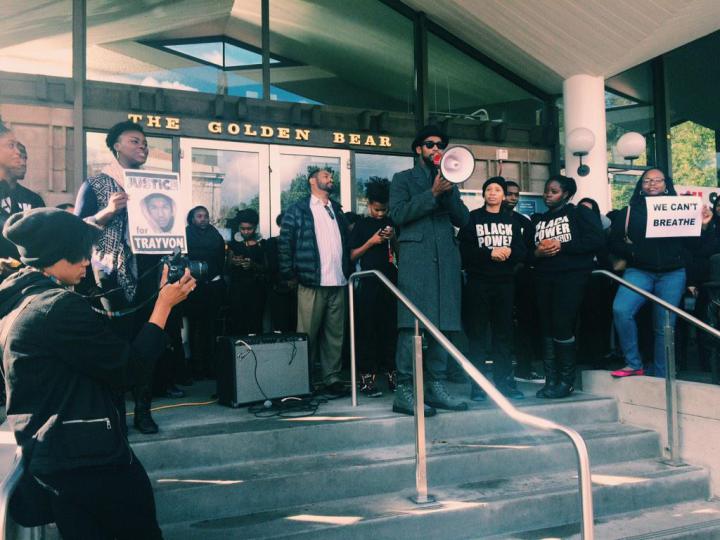
"caption": "On Dec 4, 2014, the Black Student Union of UC Berkeley held the first of three protests. Students occupied the Golden Bear Cafe for 4.5 hours, the amount of time Michael Brown’s body lay in the street in Ferguson, Missouri.",
"description": null,
"title": "golden bear protest",
"credit": "Genesis/Berkeleyside",
"status": "inherit",
"isLoading": false,
"fetchFailed": false
},
"news_10377819": {
"type": "attachments",
"id": "news_10377819",
"meta": {
"index": "attachments_1716263798",
"site": "news",
"id": "10377819",
"found": true
},
"parent": 10377818,
"imgSizes": {
"twentyfourteen-full-width": {
"file": "https://ww2.kqed.org/app/uploads/sites/10/2014/12/Screen-Shot-2014-12-13-at-12.39.56-PM-copy-608x576.jpg",
"width": 608,
"mimeType": "image/jpeg",
"height": 576
},
"thumbnail": {
"file": "https://ww2.kqed.org/app/uploads/sites/10/2014/12/Screen-Shot-2014-12-13-at-12.39.56-PM-copy-400x400.jpg",
"width": 400,
"mimeType": "image/jpeg",
"height": 400
},
"post-thumbnail": {
"file": "https://ww2.kqed.org/app/uploads/sites/10/2014/12/Screen-Shot-2014-12-13-at-12.39.56-PM-copy-608x372.jpg",
"width": 608,
"mimeType": "image/jpeg",
"height": 372
},
"kqedFullSize": {
"file": "https://ww2.kqed.org/app/uploads/sites/10/2014/12/Screen-Shot-2014-12-13-at-12.39.56-PM-copy.jpg",
"width": 608,
"height": 608
},
"guest-author-96": {
"file": "https://ww2.kqed.org/app/uploads/sites/10/2014/12/Screen-Shot-2014-12-13-at-12.39.56-PM-copy-96x96.jpg",
"width": 96,
"mimeType": "image/jpeg",
"height": 96
},
"guest-author-64": {
"file": "https://ww2.kqed.org/app/uploads/sites/10/2014/12/Screen-Shot-2014-12-13-at-12.39.56-PM-copy-64x64.jpg",
"width": 64,
"mimeType": "image/jpeg",
"height": 64
},
"detail": {
"file": "https://ww2.kqed.org/app/uploads/sites/10/2014/12/Screen-Shot-2014-12-13-at-12.39.56-PM-copy-75x75.jpg",
"width": 75,
"mimeType": "image/jpeg",
"height": 75
},
"guest-author-32": {
"file": "https://ww2.kqed.org/app/uploads/sites/10/2014/12/Screen-Shot-2014-12-13-at-12.39.56-PM-copy-32x32.jpg",
"width": 32,
"mimeType": "image/jpeg",
"height": 32
},
"guest-author-128": {
"file": "https://ww2.kqed.org/app/uploads/sites/10/2014/12/Screen-Shot-2014-12-13-at-12.39.56-PM-copy-128x128.jpg",
"width": 128,
"mimeType": "image/jpeg",
"height": 128
}
},
"publishDate": 1418508548,
"modified": 1418508641,
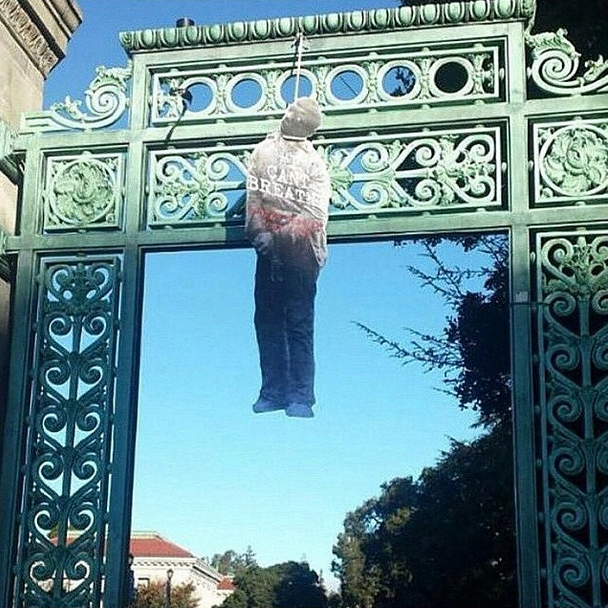
"caption": "This effigy was one of three authorities say was hung at the UC Berkeley campus Saturday morning.",
"description": null,
"title": "Screen-Shot-2014-12-13-at-12.39.56-PM-copy",
"credit": "Courtesy Ronnie Mackey Jr.",
"status": "inherit",
"isLoading": false,
"fetchFailed": false
},
"news_10357222": {
"type": "attachments",
"id": "news_10357222",
"meta": {
"index": "attachments_1716263798",
"site": "news",
"id": "10357222",
"found": true
},
"parent": 10357216,
"imgSizes": {
"twentyfourteen-full-width": {
"file": "https://ww2.kqed.org/app/uploads/sites/10/2014/11/RS13247_20141124_tuitionhike_jt_0111-qut-1038x576.jpg",
"width": 1038,
"mimeType": "image/jpeg",
"height": 576
},
"thumbnail": {
"file": "https://ww2.kqed.org/app/uploads/sites/10/2014/11/RS13247_20141124_tuitionhike_jt_0111-qut-400x266.jpg",
"width": 400,
"mimeType": "image/jpeg",
"height": 266
},
"post-thumbnail": {
"file": "https://ww2.kqed.org/app/uploads/sites/10/2014/11/RS13247_20141124_tuitionhike_jt_0111-qut-672x372.jpg",
"width": 672,
"mimeType": "image/jpeg",
"height": 372
},
"kqedFullSize": {
"file": "https://ww2.kqed.org/app/uploads/sites/10/2014/11/RS13247_20141124_tuitionhike_jt_0111-qut.jpg",
"width": 1440,
"height": 960
},
"guest-author-96": {
"file": "https://ww2.kqed.org/app/uploads/sites/10/2014/11/RS13247_20141124_tuitionhike_jt_0111-qut-96x96.jpg",
"width": 96,
"mimeType": "image/jpeg",
"height": 96
},
"medium": {
"file": "https://ww2.kqed.org/app/uploads/sites/10/2014/11/RS13247_20141124_tuitionhike_jt_0111-qut-800x533.jpg",
"width": 800,
"mimeType": "image/jpeg",
"height": 533
},
"guest-author-64": {
"file": "https://ww2.kqed.org/app/uploads/sites/10/2014/11/RS13247_20141124_tuitionhike_jt_0111-qut-64x64.jpg",
"width": 64,
"mimeType": "image/jpeg",
"height": 64
},
"detail": {
"file": "https://ww2.kqed.org/app/uploads/sites/10/2014/11/RS13247_20141124_tuitionhike_jt_0111-qut-75x75.jpg",
"width": 75,
"mimeType": "image/jpeg",
"height": 75
},
"guest-author-32": {
"file": "https://ww2.kqed.org/app/uploads/sites/10/2014/11/RS13247_20141124_tuitionhike_jt_0111-qut-32x32.jpg",
"width": 32,
"mimeType": "image/jpeg",
"height": 32
},
"guest-author-128": {
"file": "https://ww2.kqed.org/app/uploads/sites/10/2014/11/RS13247_20141124_tuitionhike_jt_0111-qut-128x128.jpg",
"width": 128,
"mimeType": "image/jpeg",
"height": 128
}
},
"publishDate": 1417023607,
"modified": 1417023647,
"caption": null,
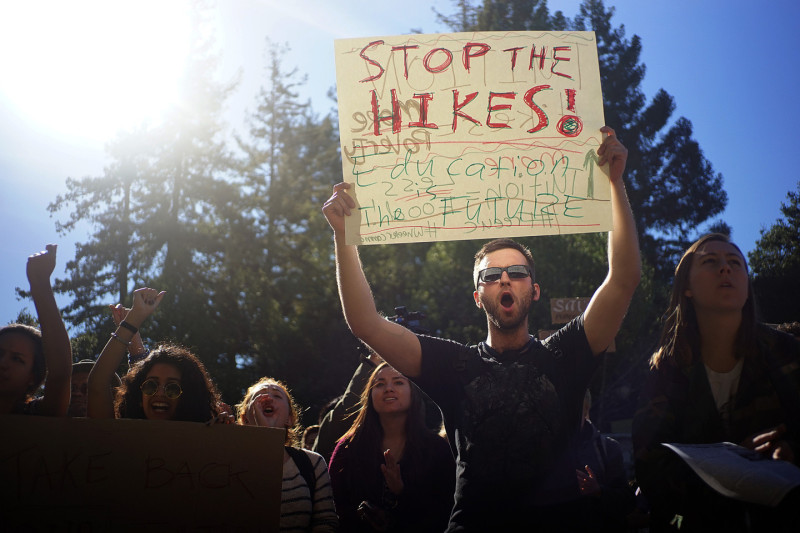
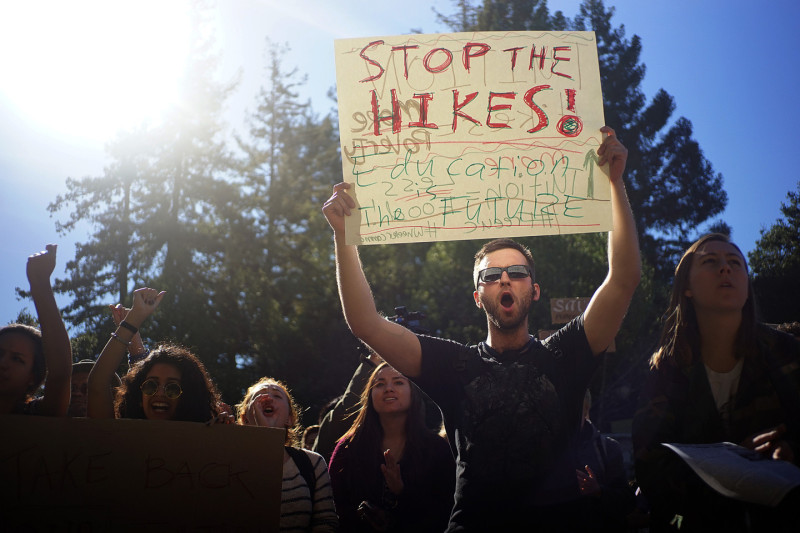
"description": "Cameron Morgan shouts during a protest at UC Berkeley in Berkeley, Calif. on Monday, Nov. 24, 2014. Morgan says if more people take out students loans it will lead to more poverty. Students and others opposed to the tuition hikes put into place by the UC Regents gathered at Berkeley to express their discontent. (James Tensuan/KQED)",
"title": "RS13247_20141124_tuitionhike_jt_011[1]-qut",
"credit": null,
"status": "inherit",
"isLoading": false,
"fetchFailed": false
},
"news_10354943": {
"type": "attachments",
"id": "news_10354943",
"meta": {
"index": "attachments_1716263798",
"site": "news",
"id": "10354943",
"found": true
},
"parent": 10354883,
"imgSizes": {
"twentyfourteen-full-width": {
"file": "https://ww2.kqed.org/app/uploads/sites/10/2014/11/RS13247_20141124_tuitionhike_jt_0111-scr-1038x576.jpg",
"width": 1038,
"mimeType": "image/jpeg",
"height": 576
},
"thumbnail": {
"file": "https://ww2.kqed.org/app/uploads/sites/10/2014/11/RS13247_20141124_tuitionhike_jt_0111-scr-400x266.jpg",
"width": 400,
"mimeType": "image/jpeg",
"height": 266
},
"post-thumbnail": {
"file": "https://ww2.kqed.org/app/uploads/sites/10/2014/11/RS13247_20141124_tuitionhike_jt_0111-scr-672x372.jpg",
"width": 672,
"mimeType": "image/jpeg",
"height": 372
},
"kqedFullSize": {
"file": "https://ww2.kqed.org/app/uploads/sites/10/2014/11/RS13247_20141124_tuitionhike_jt_0111-scr.jpg",
"width": 1440,
"height": 960
},
"guest-author-96": {
"file": "https://ww2.kqed.org/app/uploads/sites/10/2014/11/RS13247_20141124_tuitionhike_jt_0111-scr-96x96.jpg",
"width": 96,
"mimeType": "image/jpeg",
"height": 96
},
"medium": {
"file": "https://ww2.kqed.org/app/uploads/sites/10/2014/11/RS13247_20141124_tuitionhike_jt_0111-scr-800x533.jpg",
"width": 800,
"mimeType": "image/jpeg",
"height": 533
},
"guest-author-64": {
"file": "https://ww2.kqed.org/app/uploads/sites/10/2014/11/RS13247_20141124_tuitionhike_jt_0111-scr-64x64.jpg",
"width": 64,
"mimeType": "image/jpeg",
"height": 64
},
"detail": {
"file": "https://ww2.kqed.org/app/uploads/sites/10/2014/11/RS13247_20141124_tuitionhike_jt_0111-scr-75x75.jpg",
"width": 75,
"mimeType": "image/jpeg",
"height": 75
},
"guest-author-32": {
"file": "https://ww2.kqed.org/app/uploads/sites/10/2014/11/RS13247_20141124_tuitionhike_jt_0111-scr-32x32.jpg",
"width": 32,
"mimeType": "image/jpeg",
"height": 32
},
"guest-author-128": {
"file": "https://ww2.kqed.org/app/uploads/sites/10/2014/11/RS13247_20141124_tuitionhike_jt_0111-scr-128x128.jpg",
"width": 128,
"mimeType": "image/jpeg",
"height": 128
}
},
"publishDate": 1416871829,
"modified": 1416871936,
"caption": "Protesters at UC Berkeley on Monday called for a repeal of tuition increases approved last week. (James Tensuan/KQED)",
"description": "Protesters at UC Berkeley on Monday called for a repeal of tuition increases approved last week. (James Tensuan/KQED)",
"title": "UC Berkeley-Tuition Protest",
"credit": null,
"status": "inherit",
"isLoading": false,
"fetchFailed": false
},
"news_10347449": {
"type": "attachments",
"id": "news_10347449",
"meta": {
"index": "attachments_1716263798",
"site": "news",
"id": "10347449",
"found": true
},
"parent": 10347424,
"imgSizes": {
"twentyfourteen-full-width": {
"file": "https://ww2.kqed.org/app/uploads/sites/10/2014/11/UC-2-1038x576.jpg",
"width": 1038,
"mimeType": "image/jpeg",
"height": 576
},
"thumbnail": {
"file": "https://ww2.kqed.org/app/uploads/sites/10/2014/11/UC-2-400x281.jpg",
"width": 400,
"mimeType": "image/jpeg",
"height": 281
},
"post-thumbnail": {
"file": "https://ww2.kqed.org/app/uploads/sites/10/2014/11/UC-2-672x372.jpg",
"width": 672,
"mimeType": "image/jpeg",
"height": 372
},
"kqedFullSize": {
"file": "https://ww2.kqed.org/app/uploads/sites/10/2014/11/UC-2.jpg",
"width": 1440,
"height": 1012
},
"guest-author-96": {
"file": "https://ww2.kqed.org/app/uploads/sites/10/2014/11/UC-2-96x96.jpg",
"width": 96,
"mimeType": "image/jpeg",
"height": 96
},
"medium": {
"file": "https://ww2.kqed.org/app/uploads/sites/10/2014/11/UC-2-800x562.jpg",
"width": 800,
"mimeType": "image/jpeg",
"height": 562
},
"guest-author-64": {
"file": "https://ww2.kqed.org/app/uploads/sites/10/2014/11/UC-2-64x64.jpg",
"width": 64,
"mimeType": "image/jpeg",
"height": 64
},
"detail": {
"file": "https://ww2.kqed.org/app/uploads/sites/10/2014/11/UC-2-75x75.jpg",
"width": 75,
"mimeType": "image/jpeg",
"height": 75
},
"guest-author-32": {
"file": "https://ww2.kqed.org/app/uploads/sites/10/2014/11/UC-2-32x32.jpg",
"width": 32,
"mimeType": "image/jpeg",
"height": 32
},
"guest-author-128": {
"file": "https://ww2.kqed.org/app/uploads/sites/10/2014/11/UC-2-128x128.jpg",
"width": 128,
"mimeType": "image/jpeg",
"height": 128
}
},
"publishDate": 1415313981,
"modified": 1425488438,
"caption": "UC Berkeley students walk through Sproul Plaza. ",
"description": "BERKELEY, CA - APRIL 17: UC Berkeley students walk through Sproul Plaza on the UC Berkeley campus.",
"title": "UC Berkeley-Sproul Plaza",
"credit": "Justin Sullivan/Getty Images",
"status": "inherit",
"isLoading": false,
"fetchFailed": false
},
"stateofhealth_21642": {
"type": "attachments",
"id": "stateofhealth_21642",
"meta": {
"index": "attachments_1716263798",
"site": "stateofhealth",
"id": "21642",
"found": true
},
"parent": 21625,
"imgSizes": {
"twentyfourteen-full-width": {
"file": "https://ww2.kqed.org/app/uploads/sites/27/2014/09/2346334452_f5e85a3e82_o-copy-e1411101871654-1038x576.jpg",
"width": 1038,
"mimeType": "image/jpeg",
"height": 576
},
"thumbnail": {
"file": "https://ww2.kqed.org/app/uploads/sites/27/2014/09/2346334452_f5e85a3e82_o-copy-e1411101871654-400x226.jpg",
"width": 400,
"mimeType": "image/jpeg",
"height": 226
},
"fd-sm": {
"file": "https://ww2.kqed.org/app/uploads/sites/27/2014/09/2346334452_f5e85a3e82_o-copy-e1411101871654-320x181.jpg",
"width": 320,
"mimeType": "image/jpeg",
"height": 181
},
"post-thumbnail": {
"file": "https://ww2.kqed.org/app/uploads/sites/27/2014/09/2346334452_f5e85a3e82_o-copy-e1411101871654-672x372.jpg",
"width": 672,
"mimeType": "image/jpeg",
"height": 372
},
"kqedFullSize": {
"file": "https://ww2.kqed.org/app/uploads/sites/27/2014/09/2346334452_f5e85a3e82_o-copy-e1411101871654.jpg",
"width": 1400,
"height": 792
},
"guest-author-96": {
"file": "https://ww2.kqed.org/app/uploads/sites/27/2014/09/2346334452_f5e85a3e82_o-copy-e1411101871654-96x96.jpg",
"width": 96,
"mimeType": "image/jpeg",
"height": 96
},
"medium": {
"file": "https://ww2.kqed.org/app/uploads/sites/27/2014/09/2346334452_f5e85a3e82_o-copy-e1411101871654-800x453.jpg",
"width": 800,
"mimeType": "image/jpeg",
"height": 453
},
"guest-author-64": {
"file": "https://ww2.kqed.org/app/uploads/sites/27/2014/09/2346334452_f5e85a3e82_o-copy-e1411101871654-64x64.jpg",
"width": 64,
"mimeType": "image/jpeg",
"height": 64
},
"guest-author-32": {
"file": "https://ww2.kqed.org/app/uploads/sites/27/2014/09/2346334452_f5e85a3e82_o-copy-e1411101871654-32x32.jpg",
"width": 32,
"mimeType": "image/jpeg",
"height": 32
},
"fd-lrg": {
"file": "https://ww2.kqed.org/app/uploads/sites/27/2014/09/2346334452_f5e85a3e82_o-copy-e1411101871654-1180x668.jpg",
"width": 1180,
"mimeType": "image/jpeg",
"height": 668
},
"fd-med": {
"file": "https://ww2.kqed.org/app/uploads/sites/27/2014/09/2346334452_f5e85a3e82_o-copy-e1411101871654-768x434.jpg",
"width": 768,
"mimeType": "image/jpeg",
"height": 434
},
"detail": {
"file": "https://ww2.kqed.org/app/uploads/sites/27/2014/09/2346334452_f5e85a3e82_o-copy-e1411101871654-75x75.jpg",
"width": 75,
"mimeType": "image/jpeg",
"height": 75
},
"guest-author-128": {
"file": "https://ww2.kqed.org/app/uploads/sites/27/2014/09/2346334452_f5e85a3e82_o-copy-e1411101871654-128x128.jpg",
"width": 128,
"mimeType": "image/jpeg",
"height": 128
}
},
"publishDate": 1411101855,
"modified": 1411101855,
"caption": "Students at Sproul Plaza, UC Berkeley. (Henry Zbyszynski/Flickr)",
"description": null,
"title": "2346334452_f5e85a3e82_o copy",
"credit": null,
"status": "inherit",
"isLoading": false,
"fetchFailed": false
},
"news_147946": {
"type": "attachments",
"id": "news_147946",
"meta": {
"index": "attachments_1716263798",
"site": "news",
"id": "147946",
"found": true
},
"parent": 147922,
"imgSizes": {
"wide-featured-image": {
"file": "https://ww2.kqed.org/app/uploads/sites/10/2014/09/RS8355_73908800-lpr-600x300.jpg",
"width": 600,
"mimeType": "image/jpeg",
"height": 300
},
"featured-page": {
"file": "https://ww2.kqed.org/app/uploads/sites/10/2014/09/RS8355_73908800-lpr-315x145.jpg",
"width": 315,
"mimeType": "image/jpeg",
"height": 145
},
"thumbnail": {
"file": "https://ww2.kqed.org/app/uploads/sites/10/2014/09/RS8355_73908800-lpr-300x300.jpg",
"width": 300,
"mimeType": "image/jpeg",
"height": 300
},
"kqedFullSize": {
"file": "https://ww2.kqed.org/app/uploads/sites/10/2014/09/RS8355_73908800-lpr-e1411000730983.jpg",
"width": 800,
"height": 541
},
"large": {
"file": "https://ww2.kqed.org/app/uploads/sites/10/2014/09/RS8355_73908800-lpr-1028x695.jpg",
"width": 1028,
"mimeType": "image/jpeg",
"height": 695
},
"wide-featured-image-full": {
"file": "https://ww2.kqed.org/app/uploads/sites/10/2014/09/RS8355_73908800-lpr-960x300.jpg",
"width": 960,
"mimeType": "image/jpeg",
"height": 300
},
"guest-author-96": {
"file": "https://ww2.kqed.org/app/uploads/sites/10/2014/09/RS8355_73908800-lpr-96x96.jpg",
"width": 96,
"mimeType": "image/jpeg",
"height": 96
},
"medium": {
"file": "https://ww2.kqed.org/app/uploads/sites/10/2014/09/RS8355_73908800-lpr-640x432.jpg",
"width": 640,
"mimeType": "image/jpeg",
"height": 432
},
"guest-author-64": {
"file": "https://ww2.kqed.org/app/uploads/sites/10/2014/09/RS8355_73908800-lpr-64x64.jpg",
"width": 64,
"mimeType": "image/jpeg",
"height": 64
},
"guest-author-32": {
"file": "https://ww2.kqed.org/app/uploads/sites/10/2014/09/RS8355_73908800-lpr-32x32.jpg",
"width": 32,
"mimeType": "image/jpeg",
"height": 32
},
"narrow-featured-image": {
"file": "https://ww2.kqed.org/app/uploads/sites/10/2014/09/RS8355_73908800-lpr-400x300.jpg",
"width": 400,
"mimeType": "image/jpeg",
"height": 300
},
"narrow-featured-image-full": {
"file": "https://ww2.kqed.org/app/uploads/sites/10/2014/09/RS8355_73908800-lpr-640x360.jpg",
"width": 640,
"mimeType": "image/jpeg",
"height": 360
},
"detail": {
"file": "https://ww2.kqed.org/app/uploads/sites/10/2014/09/RS8355_73908800-lpr-75x75.jpg",
"width": 75,
"mimeType": "image/jpeg",
"height": 75
},
"guest-author-128": {
"file": "https://ww2.kqed.org/app/uploads/sites/10/2014/09/RS8355_73908800-lpr-128x128.jpg",
"width": 128,
"mimeType": "image/jpeg",
"height": 128
}
},
"publishDate": 1410999667,
"modified": 1416430055,
"caption": null,
"description": null,
"title": "UC Berkeley ",
"credit": null,
"status": "inherit",
"isLoading": false,
"fetchFailed": false
},
"news_145955": {
"type": "attachments",
"id": "news_145955",
"meta": {
"index": "attachments_1716263798",
"site": "news",
"id": "145955",
"found": true
},
"parent": 145915,
"imgSizes": {
"kqedFullSize": {
"file": "https://ww2.kqed.org/app/uploads/sites/10/2014/08/RS8759_ucberkeley20140213-lpr-e1416430069419.jpg",
"width": 1440,
"height": 959
}
},
"publishDate": 1409100561,
"modified": 1579131198,
"caption": "UC Berkeley students walk through Sproul Plaza on the UC Berkeley campus in April 2012.",
"description": "UC Berkeley students walk through Sproul Plaza on the UC Berkeley campus in April 2012.",
"title": "UC Berkeley",
"credit": "Justin Sullivan/Getty Images",
"status": "inherit",
"isLoading": false,
"fetchFailed": false
},
"news_125602": {
"type": "attachments",
"id": "news_125602",
"meta": {
"index": "attachments_1716263798",
"site": "news",
"id": "125602",
"found": true
},
"parent": 125601,
"imgSizes": {
"kqedFullSize": {
"file": "https://ww2.kqed.org/app/uploads/sites/10/2014/02/tedagu.jpg",
"width": 800,
"height": 453
}
},
"publishDate": 1391800923,
"modified": 1391800923,
"caption": "UC Berkeley football player Ted Agu, in image released today by Cal. ",
"description": "UC Berkeley football player Ted Agu, in image released today by Cal. ",
"title": "Ted Agu",
"credit": null,
"status": "inherit",
"isLoading": false,
"fetchFailed": false
},
"news_136507": {
"type": "attachments",
"id": "news_136507",
"meta": {
"index": "attachments_1716263798",
"site": "news",
"id": "136507",
"found": true
},
"parent": 136502,
"imgSizes": {
"kqedFullSize": {
"file": "https://ww2.kqed.org/app/uploads/sites/10/2014/05/Square-roots.jpg",
"width": 3264,
"height": 2448
}
},
"publishDate": 1400531524,
"modified": 1400531524,
"caption": "Two students practice a California twirl at UC Berkeley's square dance student-ran class. (Samantha Clark/KQED)",
"description": null,
"title": "Square roots",
"credit": null,
"status": "inherit",
"isLoading": false,
"fetchFailed": false
},
"news_136383": {
"type": "attachments",
"id": "news_136383",
"meta": {
"index": "attachments_1716263798",
"site": "news",
"id": "136383",
"found": true
},
"parent": 136381,
"imgSizes": {
"kqedFullSize": {
"file": "https://ww2.kqed.org/app/uploads/sites/10/2014/05/RebeccaWaterJug250.jpg",
"width": 250,
"height": 350
}
},
"publishDate": 1400281444,
"modified": 1400281444,
"caption": "Photo courtesy of Rebecca Peters.",
"description": "Photo courtesy of Rebecca Peters.",
"title": "RebeccaWaterJug250",
"credit": null,
"status": "inherit",
"isLoading": false,
"fetchFailed": false
},
"news_135612": {
"type": "attachments",
"id": "news_135612",
"meta": {
"index": "attachments_1716263798",
"site": "news",
"id": "135612",
"found": true
},
"parent": 135606,
"imgSizes": {
"kqedFullSize": {
"file": "https://ww2.kqed.org/app/uploads/sites/10/2014/05/488927053.jpg",
"width": 3000,
"height": 2001
}
},
"publishDate": 1399682076,
"modified": 1399682076,
"caption": "Cristiano Ronaldo, right, of Real Madrid CF competes for the ball with Alvaro Rubio of Real Valladolid CF during a match on May 7 in Valladolid, Spain. (Gonzalo Arroyo Moreno/Getty Images)",
"description": null,
"title": "Real Valladolid CF v Real Madrid CF - La Liga",
"credit": null,
"status": "inherit",
"isLoading": false,
"fetchFailed": false
}
},
"audioPlayerReducer": {
"postId": "stream_live",
"isPaused": true,
"isPlaying": false,
"pfsActive": false,
"pledgeModalIsOpen": true,
"playerDrawerIsOpen": false,
"liveAudioPlayStartedAt": 0,
"liveAudioPlayContext": ""
},
"authorsReducer": {
"byline_news_10408156": {
"type": "authors",
"id": "byline_news_10408156",
"meta": {
"override": true
},
"slug": "byline_news_10408156",
"name": "Mara Van Ells\u003cbr>\u003ca href=\"http://www.berkeleyside.com/\">Berkeleyside\u003c/a>",
"isLoading": false
},
"byline_news_10377818": {
"type": "authors",
"id": "byline_news_10377818",
"meta": {
"override": true
},
"slug": "byline_news_10377818",
"name": "Frances Dinkelspiel and Emilie Raguso\u003cbr />Berkeleyside",
"isLoading": false
},
"byline_news_10364997": {
"type": "authors",
"id": "byline_news_10364997",
"meta": {
"override": true
},
"slug": "byline_news_10364997",
"name": "Judy Lin\u003cbr />Associated Press",
"isLoading": false
},
"anatintocalis": {
"type": "authors",
"id": "211",
"meta": {
"index": "authors_1716337520",
"id": "211",
"found": true
},
"name": "Ana Tintocalis",
"firstName": "Ana",
"lastName": "Tintocalis",
"slug": "anatintocalis",
"email": "atintocalis@kqed.org",
"display_author_email": false,
"staff_mastheads": [],
"title": null,
"bio": null,
"avatar": "https://secure.gravatar.com/avatar/722c50f51f04eff38fa0e5a3f1d29450?s=600&d=blank&r=g",
"twitter": null,
"facebook": null,
"instagram": null,
"linkedin": null,
"sites": [
{
"site": "news",
"roles": [
"subscriber"
]
},
{
"site": "stateofhealth",
"roles": [
"subscriber"
]
}
],
"headData": {
"title": "Ana Tintocalis | KQED",
"description": null,
"ogImgSrc": "https://secure.gravatar.com/avatar/722c50f51f04eff38fa0e5a3f1d29450?s=600&d=blank&r=g",
"twImgSrc": "https://secure.gravatar.com/avatar/722c50f51f04eff38fa0e5a3f1d29450?s=600&d=blank&r=g"
},
"isLoading": false,
"link": "/author/anatintocalis"
},
"danbrekke": {
"type": "authors",
"id": "222",
"meta": {
"index": "authors_1716337520",
"id": "222",
"found": true
},
"name": "Dan Brekke",
"firstName": "Dan",
"lastName": "Brekke",
"slug": "danbrekke",
"email": "dbrekke@kqed.org",
"display_author_email": true,
"staff_mastheads": [
"news",
"science"
],
"title": "KQED Editor and Reporter",
"bio": "Dan Brekke is a reporter and editor for KQED News, responsible for coverage of topics ranging from California water issues to the Bay Area's transportation challenges. In a newsroom career that began in Chicago in 1972, Dan has worked for \u003cem>The San Francisco Examiner,\u003c/em> Wired and TechTV and has been published in The New York Times, The New York Times Magazine, Business 2.0, Salon and elsewhere.\r\n\r\nSince joining KQED in 2007, Dan has reported, edited and produced both radio and online features and breaking news pieces. He has shared as both editor and reporter in four Society of Professional Journalists Norcal Excellence in Journalism awards and one Edward R. Murrow regional award. He was chosen for a spring 2017 residency at the Mesa Refuge to advance his research on California salmon.\r\n\r\nEmail Dan at: \u003ca href=\"mailto:dbrekke@kqed.org\">dbrekke@kqed.org\u003c/a>\r\n\r\n\u003cstrong>Twitter:\u003c/strong> \u003ca href=\"https://twitter.com/danbrekke\" rel=\"noopener noreferrer\">twitter.com/danbrekke\u003c/a>\r\n\u003cstrong>Facebook:\u003c/strong> \u003ca href=\"https://www.facebook.com/danbrekke\" rel=\"noopener noreferrer\">www.facebook.com/danbrekke\u003c/a>\r\n\u003cstrong>LinkedIn:\u003c/strong> \u003ca href=\"https://www.linkedin.com/in/danbrekke\" rel=\"noopener noreferrer\">www.linkedin.com/in/danbrekke\u003c/a>",
"avatar": "https://secure.gravatar.com/avatar/8f1f0d2a978fb3b23426c922c7e2af558fa36905b49c4ce76a97dc3c72d27226?s=600&d=mm&r=g",
"twitter": "danbrekke",
"bluesky": null,
"facebook": null,
"instagram": "https://www.instagram.com/dan.brekke/",
"linkedin": "https://www.linkedin.com/in/danbrekke/",
"sites": [
{
"site": "news",
"roles": [
"administrator",
"create_posts"
]
},
{
"site": "stateofhealth",
"roles": [
"editor"
]
},
{
"site": "science",
"roles": [
"editor"
]
},
{
"site": "quest",
"roles": [
"contributor"
]
},
{
"site": "food",
"roles": [
"contributor"
]
},
{
"site": "forum",
"roles": [
"contributor"
]
},
{
"site": "elections",
"roles": [
"editor"
]
},
{
"site": "liveblog",
"roles": [
"editor"
]
}
],
"headData": {
"title": "Dan Brekke | KQED",
"description": "KQED Editor and Reporter",
"ogImgSrc": "https://secure.gravatar.com/avatar/8f1f0d2a978fb3b23426c922c7e2af558fa36905b49c4ce76a97dc3c72d27226?s=600&d=mm&r=g",
"twImgSrc": "https://secure.gravatar.com/avatar/8f1f0d2a978fb3b23426c922c7e2af558fa36905b49c4ce76a97dc3c72d27226?s=600&d=mm&r=g"
},
"isLoading": false,
"link": "/author/danbrekke"
},
"iangell": {
"type": "authors",
"id": "229",
"meta": {
"index": "authors_1716337520",
"id": "229",
"found": true
},
"name": "Isabel Angell",
"firstName": "Isabel",
"lastName": "Angell",
"slug": "iangell",
"email": "iangell@KQED.org",
"display_author_email": false,
"staff_mastheads": [],
"title": null,
"bio": "Isabel Angell is an on-call reporter for KQED. She joined the station as a newsroom intern in 2013. \u003ca href=\"https://twitter.com/IsabeltheAngell\" target=\"_blank\" rel=\"noopener\">@IsabeltheAngell \u003c/a>",
"avatar": "https://secure.gravatar.com/avatar/e5d0b523fbffce6592a52f1dccafabe5?s=600&d=blank&r=g",
"twitter": null,
"facebook": null,
"instagram": null,
"linkedin": null,
"sites": [
{
"site": "news",
"roles": [
"subscriber"
]
}
],
"headData": {
"title": "Isabel Angell | KQED",
"description": null,
"ogImgSrc": "https://secure.gravatar.com/avatar/e5d0b523fbffce6592a52f1dccafabe5?s=600&d=blank&r=g",
"twImgSrc": "https://secure.gravatar.com/avatar/e5d0b523fbffce6592a52f1dccafabe5?s=600&d=blank&r=g"
},
"isLoading": false,
"link": "/author/iangell"
},
"kqed": {
"type": "authors",
"id": "236",
"meta": {
"index": "authors_1716337520",
"id": "236",
"found": true
},
"name": "KQED News Staff",
"firstName": "KQED News Staff",
"lastName": null,
"slug": "kqed",
"email": "faq@kqed.org",
"display_author_email": false,
"staff_mastheads": [],
"title": null,
"bio": null,
"avatar": "https://secure.gravatar.com/avatar/ef0e801a68c4c54afa9180db14084167?s=600&d=blank&r=g",
"twitter": null,
"facebook": null,
"instagram": null,
"linkedin": null,
"sites": [
{
"site": "arts",
"roles": [
"contributor"
]
},
{
"site": "news",
"roles": [
"editor"
]
},
{
"site": "futureofyou",
"roles": [
"author"
]
}
],
"headData": {
"title": "KQED News Staff | KQED",
"description": null,
"ogImgSrc": "https://secure.gravatar.com/avatar/ef0e801a68c4c54afa9180db14084167?s=600&d=blank&r=g",
"twImgSrc": "https://secure.gravatar.com/avatar/ef0e801a68c4c54afa9180db14084167?s=600&d=blank&r=g"
},
"isLoading": false,
"link": "/author/kqed"
},
"adembosky": {
"type": "authors",
"id": "3205",
"meta": {
"index": "authors_1716337520",
"id": "3205",
"found": true
},
"name": "April Dembosky",
"firstName": "April",
"lastName": "Dembosky",
"slug": "adembosky",
"email": "adembosky@kqed.org",
"display_author_email": false,
"staff_mastheads": [
"news",
"science"
],
"title": "KQED Health Correspondent",
"bio": "April Dembosky is the health correspondent for KQED News and a regular contributor to NPR. She specializes in covering altered states of mind, from postpartum depression to methamphetamine-induced psychosis to the insanity defense. Her investigative series on insurance companies sidestepping mental health laws won multiple awards, including first place in beat reporting from the national Association of Health Care Journalists. She is the recipient of numerous other prizes and fellowships, including a national Edward R. Murrow award for investigative reporting, a Society of Professional Journalists award for long-form storytelling, and a Carter Center Fellowship for Mental Health Journalism.\r\n\r\nDembosky reported and produced \u003cem>Soundtrack of Silence\u003c/em>, an audio documentary about music and memory that is currently being made into a feature film by Paramount Pictures.\r\n\r\nBefore joining KQED in 2013, Dembosky covered technology and Silicon Valley for \u003cem>The Financial Times of London,\u003c/em> and contributed business and arts stories to \u003cem>Marketplace \u003c/em>and \u003cem>The New York Times.\u003c/em> She got her undergraduate degree in philosophy from Smith College and her master's in journalism from the University of California, Berkeley. She is a classically trained violinist and proud alum of the first symphony orchestra at Burning Man.",
"avatar": "https://secure.gravatar.com/avatar/ef92999be4ceb9ea60701e7dc276f813?s=600&d=blank&r=g",
"twitter": "adembosky",
"facebook": null,
"instagram": null,
"linkedin": null,
"sites": [
{
"site": "arts",
"roles": [
"author"
]
},
{
"site": "news",
"roles": [
"editor"
]
},
{
"site": "futureofyou",
"roles": [
"author"
]
},
{
"site": "stateofhealth",
"roles": [
"editor"
]
},
{
"site": "science",
"roles": [
"editor"
]
},
{
"site": "forum",
"roles": [
"editor"
]
}
],
"headData": {
"title": "April Dembosky | KQED",
"description": "KQED Health Correspondent",
"ogImgSrc": "https://secure.gravatar.com/avatar/ef92999be4ceb9ea60701e7dc276f813?s=600&d=blank&r=g",
"twImgSrc": "https://secure.gravatar.com/avatar/ef92999be4ceb9ea60701e7dc276f813?s=600&d=blank&r=g"
},
"isLoading": false,
"link": "/author/adembosky"
}
},
"pagesReducer": {
"news_tag_uc-berkeley": {
"type": "terms",
"id": "news_17597",
"meta": {
"index": "terms_1716263798",
"site": "news",
"id": "17597",
"score": 8.45813
},
"featImg": null,
"name": "UC Berkeley",
"description": null,
"taxonomy": "tag",
"headData": {
"twImgId": null,
"twTitle": null,
"ogTitle": null,
"ogImgId": null,
"twDescription": null,
"description": null,
"title": "UC Berkeley Archives | KQED News",
"ogDescription": null
},
"ttid": 17631,
"slug": "uc-berkeley",
"isLoading": false,
"title": "UC Berkeley",
"pageMeta": {
"site": "news",
"WpPageTemplate": "page-topic-editorial",
"currentPage": 21
},
"blocks": [
{
"blockName": "kqed/post-list",
"attrs": {
"layout": "cardArticle2",
"query": "posts/news?tag=uc-berkeley",
"seeMore": false,
"paginated": true,
"page": 21
}
},
{
"blockName": "kqed/ad"
}
]
}
},
"pfsSessionReducer": {},
"postsReducer": {
"stream_live": {
"type": "live",
"id": "stream_live",
"audioUrl": "https://streams.kqed.org/kqedradio",
"title": "Live Stream",
"excerpt": "Live Stream information currently unavailable.",
"link": "/radio",
"featImg": "",
"label": {
"name": "KQED Live",
"link": "/"
}
},
"stream_kqedNewscast": {
"type": "posts",
"id": "stream_kqedNewscast",
"audioUrl": "https://www.kqed.org/.stream/anon/radio/RDnews/newscast.mp3?_=1",
"title": "KQED Newscast",
"featImg": "",
"label": {
"name": "88.5 FM",
"link": "/"
}
},
"news_10408156": {
"type": "posts",
"id": "news_10408156",
"meta": {
"index": "posts_1716263798",
"site": "news",
"id": "10408156",
"score": null,
"sort": [
1421600402000
]
},
"guestAuthors": [],
"slug": "recent-protests-strike-personal-chord-for-some-black-uc-berkeley-students",
"title": "Recent Protests Strike Personal Chord For Some UC Berkeley Students",
"publishDate": 1421600402,
"format": "standard",
"headTitle": "Recent Protests Strike Personal Chord For Some UC Berkeley Students | KQED",
"labelTerm": {
"term": 6944,
"site": "news"
},
"content": "\u003cp>Over the last month, the Black Student Union at UC Berkeley has organized three separate events to protest police killings of unarmed black men.\u003c/p>\n\u003cp>Students have marched on the streets, through local businesses and sat in at cafes. The demonstrations have allowed students to grieve, heal and show solidarity with protesters in Ferguson and Staten Island. But they have also been a way to express concerns about race relations at Cal.\u003c/p>\n\u003caside class=\"pullquote alignright\">‘I’m not going to be the last black student at Cal, so it’s time now we start trying to make change.’\u003ccite>Blake Simons, Cal senior\u003c/cite>\u003c/aside>\n\u003cp>Cal senior Blake Simons feels “extremely blessed and grateful” to be a student at UC Berkeley. But he is also unhappy with the racist experiences he’s had while attending school.\u003c/p>\n\u003cp>“I’m not going to be the last black student at Cal, so it’s time now we start trying to make change,” he said.\u003c/p>\n\u003cp>BSU first \u003ca href=\"http://www.berkeleyside.com/2014/12/04/breaking-cal-students-hold-black-lives-matter-rally/\" target=\"_blank\" rel=\"noopener\">organized a 4½-hour occupation of Golden Bear Caf\u003c/a>e on Dec. 4, designed to last the same amount of time the body of Michael Brown was left on a Ferguson, Missouri, street after he was killed by a white police officer. On Dec. 13, students peacefully marched from Berkeley to join the Millions March in Oakland. Most recently, BSU organized Black Brunch, where protesters marched through \u003ca href=\"http://www.berkeleyside.com/2015/01/05/black-students-march-through-fourth-street-shopping-district/\" target=\"_blank\" rel=\"noopener\">breakfast spots on Berkeley’s Fourth Street\u003c/a>. The Jan. 3 event was meant to be reminiscent of sit-ins during the civil rights movement, when black protesters would peacefully occupy restaurants they weren’t allowed in, Simons said.\u003c/p>\n\u003cp>[ad fullwidth]\u003c/p>\n\u003cp>He emphasized that all three protests were peaceful.\u003c/p>\n\u003cp>Eniola Abioye, a senior studying integrative biology who co-led all three protests, said organizing the events has helped her feel less frustrated and helpless.\u003c/p>\n\u003cp>“Having platforms for black people to be able to speak and other people are listening — that’s empowering for us,” she said.\u003c/p>\n\u003cp>[contextly_sidebar id=”is12gEvjxLWDhHdazx53xI5zJzBMJ0tZ”]\u003c/p>\n\u003cp>Junior Gabrielle Shuman, co-chair of political affairs for BSU, said students have been adamant that their protests are part of a larger movement.\u003c/p>\n\u003cp>“It’s not just about our problems as Cal students. This is about black people in America,” she said. That being said, “Within that, we feel it’s important to tell our stories as black students at Cal.”\u003c/p>\n\u003cp>The students have also expressed their own campus experiences through spoken word and poetry, according to freshman Zaynab AbdulQadir.\u003c/p>\n\u003cp>Before the Jan. 3 protest, students sent out a press release that referenced the 2014 Campus Climate Survey that found half of black students at UC Berkeley felt prejudged by faculty based on their identity or background.\u003c/p>\n\u003cp>The survey revealed that 50 percent of black students felt they didn’t have the same opportunities for success as their classmates, and various racial/ethnic groups unanimously agreed that black students had some of the worst conditions on campus regarding climate and respect from peers.\u003c/p>\n\u003cp>Since California adopted Proposition 209 in 1998, which forbade UC schools from using race as a criterion for admission, the percentage of black UC Berkeley students has been halved. In 2012, there were 874 African-American undergraduate students, about 3 percent of the total student body, according to a UC Berkeley diversity census.\u003c/p>\n\u003cp>“It’s pretty hard when you don’t see people like you, when you don’t see people who have a similar perspective,” said Spencer Pritchard, a senior. He described being in a lecture hall with hundreds of students but few black students as “isolating.”\u003c/p>\n\u003caside class=\"pullquote alignright\">‘They see me as a black student before they see me as a UC Berkeley student.’\u003cem>Zaynab \u003c/em>\u003ccite>AbdulQadir, Cal freshmen\u003c/cite>\u003c/aside>\n\u003cp>Shuman said it’s difficult to articulate the negative experiences felt by black students because other students usually aren’t blatantly racist, she said. Rather, students might appropriate black culture or make fun of being “ghetto.” Students might make black jokes or say, “Is it OK if I say n—– around you? Do you mind that?”\u003c/p>\n\u003cp>Simons said his first experience of racism at Cal was when a racial slur was carved on a wall in a Clark Kerr dormitory, where he lived.\u003c/p>\n\u003cp>He also recalls a professor using a racial slur in class to say, “I don’t understand why hip-hop artists call each other n—–.” Being one of the few black students in class, Simons remembers the whole room staring at him.\u003c/p>\n\u003cp>Abioye said her negative classroom experiences have mostly involved fellow students — she’s one of the few black students in her department.\u003c/p>\n\u003cp>“A lot of people assume that I can’t do the work or I’m not smart,” she said, adding that the assumptions show when the students are asked to form groups or work together in class and some students don’t want to work with her.\u003c/p>\n\u003cp>Abioye, who is originally from Oakland, attended a predominantly black high school. As a freshman, she didn’t live on an African-American themed floor. It was an abrupt transition.\u003c/p>\n\u003cp>“Two black people lived on the floor, and we were expected to represent all black people,” she said.\u003c/p>\n\u003cp>Pritchard said his friends have been targets of racial slurs hurled by drunken students while passing fraternity row on their way home. “It definitely happens all the time and it’s hard to deal with,” he said.\u003c/p>\n\u003cp>There have been other issues with fraternities. During Shuman’s freshman year, the fraternity Theta Delta Chi, which happens to be located across the street from a dormitory that has an African-American theme program, hung a “zombie” Halloween decoration — a pair of jeans and a shirt stuffed with straw topped with a gray head — from a noose outside their building for their annual charity Halloween party. The zombie looked like a black man, Shuman said.\u003c/p>\n\u003cp>“We were outraged and disgusted,” she said. Students took the issue to student government and the fraternity took the decoration down and apologized.\u003c/p>\n\u003cfigure id=\"attachment_10408164\" class=\"wp-caption aligncenter\" style=\"max-width: 720px\">\u003ca href=\"http://ww2.kqed.org/news/wp-content/uploads/sites/10/2015/01/students-in-front-of-Afro-house-720x480.jpg\">\u003cimg loading=\"lazy\" decoding=\"async\" class=\"wp-image-10408164 size-full\" src=\"http://ww2.kqed.org/news/wp-content/uploads/sites/10/2015/01/students-in-front-of-Afro-house-720x480.jpg\" alt=\"Spencer Pritchard, Gabrielle Shuman and Blake Simons stand in front of the Afro House, an African-American-themed residence owned and operated by the Berkeley Student Cooperative, which is a nonprofit student-run cooperative housing organization. Most of its members attend UC Berkeley.\" width=\"720\" height=\"480\" srcset=\"https://cdn.kqed.org/wp-content/uploads/sites/10/2015/01/students-in-front-of-Afro-house-720x480.jpg 720w, https://cdn.kqed.org/wp-content/uploads/sites/10/2015/01/students-in-front-of-Afro-house-720x480-400x266.jpg 400w\" sizes=\"(max-width: 720px) 100vw, 720px\">\u003c/a>\u003cfigcaption class=\"wp-caption-text\">Spencer Pritchard, Gabrielle Shuman and Blake Simons stand in front of the Afro House, an African-American-themed residence owned and operated by the Berkeley Student Cooperative, which is a nonprofit student-run cooperative housing organization. Most of its members attend UC Berkeley. \u003ccite>(Mara Van Ells/Berkeleyside)\u003c/cite>\u003c/figcaption>\u003c/figure>\n\u003cp>One of the places where black students on campus feel safe is the Afro House, an African-American themed student co-op, said Shuman. It’s also affordable. She said 19 or 20 of the 21 students that live there are black. Several other first-year students eat meals and participate in activities at the house, through the Donald Foster Boarder Scholarship program.\u003c/p>\n\u003cp>For about 10 years, no black students lived at the house, Shuman said. In 2011-2012, one black woman lived at the Afro House; the following year six black men, including Pritchard, lived in the house. The group, who called themselves the Afro Six, launched a campaign to reclaim the space. By 2013-2014, all but one resident of the house identified as black.\u003c/p>\n\u003cp>“We don’t come across a lot of space by and for black students. We really, really have to fight for it,” Shuman said.\u003c/p>\n\u003cp>Freshman AbdulQadir lives on an African-American theme floor in her dormitory. Although she’s able to surround herself with students who have similar viewpoints, she said she experiences many micro-aggressions on campus every day.\u003c/p>\n\u003cp>“They see me as a black student before they see me as a UC Berkeley student,” she said.\u003c/p>\n\u003cp>The fact that campus climate is an issue is “not news” to the administration, said Gibor Basri, vice-chancellor for Equity and Inclusion.\u003c/p>\n\u003cp>Basri, who created his position more than seven years ago, said improving the campus climate has been one of the top strategic goals since the Equity and Inclusion Department was founded.\u003c/p>\n\u003cp>The Campus Climate Survey, which included questions such as, “Do you feel excluded from study groups or social situations?” and “Do the faculty make assumptions about you?” produced “confirmatory” data that black staff, students and faculty feel the least included of any of the groups identified within the survey, Basri said.\u003c/p>\n\u003cp>Basri noted that the survey showed that most exclusionary incidents occurred between students.\u003c/p>\n\u003cp>“People seem to think faculty to student is the issue, but that was minor compared to student to student,” he said. However, Basri added that faculty is responsible for what goes on in their classrooms.\u003c/p>\n\u003cp>The survey, which was taken by students across the UC system in 2013, showed a correlation between the perceived respect level that specific groups have on campus and the number of students of that group attending a university.\u003c/p>\n\u003cp>“I see the climate issue as essentially one of critical mass,” said Basri. “We just don’t have enough [African-American] students [at UC Berkeley] so they don’t feel isolated,” he said.\u003c/p>\n\u003cp>Only 40 percent of all students accepted by Cal go on to attend the school. If more of the admitted black students would attend Cal, that could help solve the problem, he said.\u003c/p>\n\u003cp>“We’re looking to get outside agencies, foundations, whatever to provide targeted financial aid,” Basri said.\u003c/p>\n\u003cp>The university is also trying to attract more transfer students. Generally, transfer students are a more diverse population than the freshman class, he said.\u003c/p>\n\u003cp>Besides increasing the black student population, the department will continue funding innovation grants that encourage students and staff to propose projects that could improve equity and inclusion, Basri said. “A number of nice initiatives” have come from past innovation grants such as Bears Baking Bread, which brought together Palestinian and Israeli students to bake bread together and have dialogue, he said.\u003c/p>\n\u003cp>In response to the campus climate survey findings, a number of new initiatives will take place in the spring. There will be several symposiums focused on the climate for racial minorities on campus and graduate student instructor training will include discussion of climate issues. Staff will receive an email about the issues and a group of about 10 faculty members are working out how to get instructors into a room to discuss the issue, Basri said.\u003c/p>\n\u003cp>A professor from the psychology department hopes to make climate on campus the focus of special discussion sessions within a new course called Critical Dialogues. Students would be encouraged to take what they learn back to their dorms.\u003c/p>\n\u003cp>For several years, Basri said, black administrators have held monthly breakfasts where students can attend and discuss issues. Three top administrators at the school are black: Basri, Vice-Chancellor Harry Le Grande and Executive Vice-Chancellor and Provost Claude Steele. Vice-Chancellor of Student Affairs for Residential and Student Service Programs, LeNorman Strong, is also African-American.\u003c/p>\n\u003cp>Shuman said representatives from BSU plan to meet with administration in February to discuss conditions for black students on campus.\u003c/p>\n\u003cp>Despite these efforts, many students feel the university isn’t doing enough. “If they really prioritized or cared about students, I’d hope they’d be doing way more than they are,” Simons said.\u003c/p>\n\u003cp>However, he acknowledged that black faculty has been supportive of black students, particularly after \u003ca href=\"http://www.berkeleyside.com/2014/12/14/anonymous-artist-collective-claims-responsibility-for-lynching-effigies-erected-at-cal/\" target=\"_blank\" rel=\"noopener\">effigies hung around campus by an anonymous artist collective\u003c/a> left many students traumatized.\u003c/p>\n\u003cp>“They staged a protest during finals week when they knew we were taking finals, which meant a lot to black students,” he said. Counseling hours were extended for black student during finals, AbdulQadir said.\u003c/p>\n\u003cp>Simons said he’s speaking up to make the university a better place where students are treated fairly and equally.\u003c/p>\n\u003cp>“That’s all my goals are,” he said.\u003c/p>\n\u003cp>[ad floatright]\u003c/p>\n\u003cp>\u003cem>KQED News Associate \u003ca href=\"http://www.berkeleyside.com/\" target=\"_blank\" rel=\"noopener\">Berkeleyside\u003c/a> is an independently owned news website based in Berkeley, Calif. \u003ca href=\"http://eepurl.com/lh_3b\" target=\"_blank\" rel=\"noopener\">Click here\u003c/a> if you would you like to receive the latest Berkeley news in your inbox once a day for free with Berkeleyside’s Daily Briefing email.\u003c/em>\u003c/p>\n\n",
"blocks": [],
"excerpt": "Black Lives Matter protests have helped some black Cal students find voice on daily racism on campus.",
"status": "publish",
"parent": 0,
"modified": 1729713112,
"stats": {
"hasAudio": false,
"hasVideo": false,
"hasChartOrMap": false,
"iframeSrcs": [],
"hasGoogleForm": false,
"hasGallery": false,
"hasHearkenModule": false,
"hasPolis": false,
"paragraphCount": 54,
"wordCount": 2058
},
"headData": {
"title": "Recent Protests Strike Personal Chord For Some UC Berkeley Students | KQED",
"description": "Black Lives Matter protests have helped some black Cal students find voice on daily racism on campus.",
"ogTitle": "",
"ogDescription": "",
"ogImgId": "",
"twTitle": "",
"twDescription": "",
"twImgId": "",
"schema": {
"@context": "https://schema.org",
"@type": "NewsArticle",
"headline": "Recent Protests Strike Personal Chord For Some UC Berkeley Students",
"datePublished": "2015-01-18T09:00:02-08:00",
"dateModified": "2024-10-23T12:51:52-07:00",
"image": "https://cdn.kqed.org/wp-content/uploads/2020/02/KQED-OG-Image@1x.png",
"isAccessibleForFree": "True",
"publisher": {
"@type": "NewsMediaOrganization",
"@id": "https://www.kqed.org/#organization",
"name": "KQED",
"logo": "https://cdn.kqed.org/wp-content/uploads/2020/02/KQED-OG-Image@1x.png",
"url": "https://www.kqed.org",
"sameAs": [
"https://www.facebook.com/KQED",
"https://twitter.com/KQED",
"https://www.instagram.com/kqed/",
"https://www.tiktok.com/@kqedofficial",
"https://www.linkedin.com/company/kqed",
"https://www.youtube.com/channel/UCeC0IOo7i1P_61zVUWbJ4nw"
]
}
}
},
"sticky": false,
"nprByline": "Mara Van Ells\u003cbr>\u003ca href=\"http://www.berkeleyside.com/\">Berkeleyside\u003c/a>",
"path": "/news/10408156/recent-protests-strike-personal-chord-for-some-black-uc-berkeley-students",
"audioTrackLength": null,
"parsedContent": [
{
"type": "contentString",
"content": "\u003cdiv class=\"post-body\">\u003cp>\u003cp>Over the last month, the Black Student Union at UC Berkeley has organized three separate events to protest police killings of unarmed black men.\u003c/p>\n\u003cp>Students have marched on the streets, through local businesses and sat in at cafes. The demonstrations have allowed students to grieve, heal and show solidarity with protesters in Ferguson and Staten Island. But they have also been a way to express concerns about race relations at Cal.\u003c/p>\n\u003caside class=\"pullquote alignright\">‘I’m not going to be the last black student at Cal, so it’s time now we start trying to make change.’\u003ccite>Blake Simons, Cal senior\u003c/cite>\u003c/aside>\n\u003cp>Cal senior Blake Simons feels “extremely blessed and grateful” to be a student at UC Berkeley. But he is also unhappy with the racist experiences he’s had while attending school.\u003c/p>\n\u003cp>“I’m not going to be the last black student at Cal, so it’s time now we start trying to make change,” he said.\u003c/p>\n\u003cp>BSU first \u003ca href=\"http://www.berkeleyside.com/2014/12/04/breaking-cal-students-hold-black-lives-matter-rally/\" target=\"_blank\" rel=\"noopener\">organized a 4½-hour occupation of Golden Bear Caf\u003c/a>e on Dec. 4, designed to last the same amount of time the body of Michael Brown was left on a Ferguson, Missouri, street after he was killed by a white police officer. On Dec. 13, students peacefully marched from Berkeley to join the Millions March in Oakland. Most recently, BSU organized Black Brunch, where protesters marched through \u003ca href=\"http://www.berkeleyside.com/2015/01/05/black-students-march-through-fourth-street-shopping-district/\" target=\"_blank\" rel=\"noopener\">breakfast spots on Berkeley’s Fourth Street\u003c/a>. The Jan. 3 event was meant to be reminiscent of sit-ins during the civil rights movement, when black protesters would peacefully occupy restaurants they weren’t allowed in, Simons said.\u003c/p>\n\u003cp>\u003c/p>\u003c/div>",
"attributes": {
"named": {},
"numeric": []
}
},
{
"type": "component",
"content": "",
"name": "ad",
"attributes": {
"named": {
"label": "fullwidth"
},
"numeric": [
"fullwidth"
]
}
},
{
"type": "contentString",
"content": "\u003cdiv class=\"post-body\">\u003cp>\u003c/p>\n\u003cp>He emphasized that all three protests were peaceful.\u003c/p>\n\u003cp>Eniola Abioye, a senior studying integrative biology who co-led all three protests, said organizing the events has helped her feel less frustrated and helpless.\u003c/p>\n\u003cp>“Having platforms for black people to be able to speak and other people are listening — that’s empowering for us,” she said.\u003c/p>\n\u003cp>\u003c/p>\u003cp>\u003c/p>\u003cp>\u003c/p>\n\u003cp>Junior Gabrielle Shuman, co-chair of political affairs for BSU, said students have been adamant that their protests are part of a larger movement.\u003c/p>\n\u003cp>“It’s not just about our problems as Cal students. This is about black people in America,” she said. That being said, “Within that, we feel it’s important to tell our stories as black students at Cal.”\u003c/p>\n\u003cp>The students have also expressed their own campus experiences through spoken word and poetry, according to freshman Zaynab AbdulQadir.\u003c/p>\n\u003cp>Before the Jan. 3 protest, students sent out a press release that referenced the 2014 Campus Climate Survey that found half of black students at UC Berkeley felt prejudged by faculty based on their identity or background.\u003c/p>\n\u003cp>The survey revealed that 50 percent of black students felt they didn’t have the same opportunities for success as their classmates, and various racial/ethnic groups unanimously agreed that black students had some of the worst conditions on campus regarding climate and respect from peers.\u003c/p>\n\u003cp>Since California adopted Proposition 209 in 1998, which forbade UC schools from using race as a criterion for admission, the percentage of black UC Berkeley students has been halved. In 2012, there were 874 African-American undergraduate students, about 3 percent of the total student body, according to a UC Berkeley diversity census.\u003c/p>\n\u003cp>“It’s pretty hard when you don’t see people like you, when you don’t see people who have a similar perspective,” said Spencer Pritchard, a senior. He described being in a lecture hall with hundreds of students but few black students as “isolating.”\u003c/p>\n\u003caside class=\"pullquote alignright\">‘They see me as a black student before they see me as a UC Berkeley student.’\u003cem>Zaynab \u003c/em>\u003ccite>AbdulQadir, Cal freshmen\u003c/cite>\u003c/aside>\n\u003cp>Shuman said it’s difficult to articulate the negative experiences felt by black students because other students usually aren’t blatantly racist, she said. Rather, students might appropriate black culture or make fun of being “ghetto.” Students might make black jokes or say, “Is it OK if I say n—– around you? Do you mind that?”\u003c/p>\n\u003cp>Simons said his first experience of racism at Cal was when a racial slur was carved on a wall in a Clark Kerr dormitory, where he lived.\u003c/p>\n\u003cp>He also recalls a professor using a racial slur in class to say, “I don’t understand why hip-hop artists call each other n—–.” Being one of the few black students in class, Simons remembers the whole room staring at him.\u003c/p>\n\u003cp>Abioye said her negative classroom experiences have mostly involved fellow students — she’s one of the few black students in her department.\u003c/p>\n\u003cp>“A lot of people assume that I can’t do the work or I’m not smart,” she said, adding that the assumptions show when the students are asked to form groups or work together in class and some students don’t want to work with her.\u003c/p>\n\u003cp>Abioye, who is originally from Oakland, attended a predominantly black high school. As a freshman, she didn’t live on an African-American themed floor. It was an abrupt transition.\u003c/p>\n\u003cp>“Two black people lived on the floor, and we were expected to represent all black people,” she said.\u003c/p>\n\u003cp>Pritchard said his friends have been targets of racial slurs hurled by drunken students while passing fraternity row on their way home. “It definitely happens all the time and it’s hard to deal with,” he said.\u003c/p>\n\u003cp>There have been other issues with fraternities. During Shuman’s freshman year, the fraternity Theta Delta Chi, which happens to be located across the street from a dormitory that has an African-American theme program, hung a “zombie” Halloween decoration — a pair of jeans and a shirt stuffed with straw topped with a gray head — from a noose outside their building for their annual charity Halloween party. The zombie looked like a black man, Shuman said.\u003c/p>\n\u003cp>“We were outraged and disgusted,” she said. Students took the issue to student government and the fraternity took the decoration down and apologized.\u003c/p>\n\u003cfigure id=\"attachment_10408164\" class=\"wp-caption aligncenter\" style=\"max-width: 720px\">\u003ca href=\"http://ww2.kqed.org/news/wp-content/uploads/sites/10/2015/01/students-in-front-of-Afro-house-720x480.jpg\">\u003cimg loading=\"lazy\" decoding=\"async\" class=\"wp-image-10408164 size-full\" src=\"http://ww2.kqed.org/news/wp-content/uploads/sites/10/2015/01/students-in-front-of-Afro-house-720x480.jpg\" alt=\"Spencer Pritchard, Gabrielle Shuman and Blake Simons stand in front of the Afro House, an African-American-themed residence owned and operated by the Berkeley Student Cooperative, which is a nonprofit student-run cooperative housing organization. Most of its members attend UC Berkeley.\" width=\"720\" height=\"480\" srcset=\"https://cdn.kqed.org/wp-content/uploads/sites/10/2015/01/students-in-front-of-Afro-house-720x480.jpg 720w, https://cdn.kqed.org/wp-content/uploads/sites/10/2015/01/students-in-front-of-Afro-house-720x480-400x266.jpg 400w\" sizes=\"(max-width: 720px) 100vw, 720px\">\u003c/a>\u003cfigcaption class=\"wp-caption-text\">Spencer Pritchard, Gabrielle Shuman and Blake Simons stand in front of the Afro House, an African-American-themed residence owned and operated by the Berkeley Student Cooperative, which is a nonprofit student-run cooperative housing organization. Most of its members attend UC Berkeley. \u003ccite>(Mara Van Ells/Berkeleyside)\u003c/cite>\u003c/figcaption>\u003c/figure>\n\u003cp>One of the places where black students on campus feel safe is the Afro House, an African-American themed student co-op, said Shuman. It’s also affordable. She said 19 or 20 of the 21 students that live there are black. Several other first-year students eat meals and participate in activities at the house, through the Donald Foster Boarder Scholarship program.\u003c/p>\n\u003cp>For about 10 years, no black students lived at the house, Shuman said. In 2011-2012, one black woman lived at the Afro House; the following year six black men, including Pritchard, lived in the house. The group, who called themselves the Afro Six, launched a campaign to reclaim the space. By 2013-2014, all but one resident of the house identified as black.\u003c/p>\n\u003cp>“We don’t come across a lot of space by and for black students. We really, really have to fight for it,” Shuman said.\u003c/p>\n\u003cp>Freshman AbdulQadir lives on an African-American theme floor in her dormitory. Although she’s able to surround herself with students who have similar viewpoints, she said she experiences many micro-aggressions on campus every day.\u003c/p>\n\u003cp>“They see me as a black student before they see me as a UC Berkeley student,” she said.\u003c/p>\n\u003cp>The fact that campus climate is an issue is “not news” to the administration, said Gibor Basri, vice-chancellor for Equity and Inclusion.\u003c/p>\n\u003cp>Basri, who created his position more than seven years ago, said improving the campus climate has been one of the top strategic goals since the Equity and Inclusion Department was founded.\u003c/p>\n\u003cp>The Campus Climate Survey, which included questions such as, “Do you feel excluded from study groups or social situations?” and “Do the faculty make assumptions about you?” produced “confirmatory” data that black staff, students and faculty feel the least included of any of the groups identified within the survey, Basri said.\u003c/p>\n\u003cp>Basri noted that the survey showed that most exclusionary incidents occurred between students.\u003c/p>\n\u003cp>“People seem to think faculty to student is the issue, but that was minor compared to student to student,” he said. However, Basri added that faculty is responsible for what goes on in their classrooms.\u003c/p>\n\u003cp>The survey, which was taken by students across the UC system in 2013, showed a correlation between the perceived respect level that specific groups have on campus and the number of students of that group attending a university.\u003c/p>\n\u003cp>“I see the climate issue as essentially one of critical mass,” said Basri. “We just don’t have enough [African-American] students [at UC Berkeley] so they don’t feel isolated,” he said.\u003c/p>\n\u003cp>Only 40 percent of all students accepted by Cal go on to attend the school. If more of the admitted black students would attend Cal, that could help solve the problem, he said.\u003c/p>\n\u003cp>“We’re looking to get outside agencies, foundations, whatever to provide targeted financial aid,” Basri said.\u003c/p>\n\u003cp>The university is also trying to attract more transfer students. Generally, transfer students are a more diverse population than the freshman class, he said.\u003c/p>\n\u003cp>Besides increasing the black student population, the department will continue funding innovation grants that encourage students and staff to propose projects that could improve equity and inclusion, Basri said. “A number of nice initiatives” have come from past innovation grants such as Bears Baking Bread, which brought together Palestinian and Israeli students to bake bread together and have dialogue, he said.\u003c/p>\n\u003cp>In response to the campus climate survey findings, a number of new initiatives will take place in the spring. There will be several symposiums focused on the climate for racial minorities on campus and graduate student instructor training will include discussion of climate issues. Staff will receive an email about the issues and a group of about 10 faculty members are working out how to get instructors into a room to discuss the issue, Basri said.\u003c/p>\n\u003cp>A professor from the psychology department hopes to make climate on campus the focus of special discussion sessions within a new course called Critical Dialogues. Students would be encouraged to take what they learn back to their dorms.\u003c/p>\n\u003cp>For several years, Basri said, black administrators have held monthly breakfasts where students can attend and discuss issues. Three top administrators at the school are black: Basri, Vice-Chancellor Harry Le Grande and Executive Vice-Chancellor and Provost Claude Steele. Vice-Chancellor of Student Affairs for Residential and Student Service Programs, LeNorman Strong, is also African-American.\u003c/p>\n\u003cp>Shuman said representatives from BSU plan to meet with administration in February to discuss conditions for black students on campus.\u003c/p>\n\u003cp>Despite these efforts, many students feel the university isn’t doing enough. “If they really prioritized or cared about students, I’d hope they’d be doing way more than they are,” Simons said.\u003c/p>\n\u003cp>However, he acknowledged that black faculty has been supportive of black students, particularly after \u003ca href=\"http://www.berkeleyside.com/2014/12/14/anonymous-artist-collective-claims-responsibility-for-lynching-effigies-erected-at-cal/\" target=\"_blank\" rel=\"noopener\">effigies hung around campus by an anonymous artist collective\u003c/a> left many students traumatized.\u003c/p>\n\u003cp>“They staged a protest during finals week when they knew we were taking finals, which meant a lot to black students,” he said. Counseling hours were extended for black student during finals, AbdulQadir said.\u003c/p>\n\u003cp>Simons said he’s speaking up to make the university a better place where students are treated fairly and equally.\u003c/p>\n\u003cp>“That’s all my goals are,” he said.\u003c/p>\n\u003cp>\u003c/p>\u003c/div>",
"attributes": {
"named": {},
"numeric": []
}
},
{
"type": "component",
"content": "",
"name": "ad",
"attributes": {
"named": {
"label": "floatright"
},
"numeric": [
"floatright"
]
}
},
{
"type": "contentString",
"content": "\u003cdiv class=\"post-body\">\u003cp>\u003c/p>\n\u003cp>\u003cem>KQED News Associate \u003ca href=\"http://www.berkeleyside.com/\" target=\"_blank\" rel=\"noopener\">Berkeleyside\u003c/a> is an independently owned news website based in Berkeley, Calif. \u003ca href=\"http://eepurl.com/lh_3b\" target=\"_blank\" rel=\"noopener\">Click here\u003c/a> if you would you like to receive the latest Berkeley news in your inbox once a day for free with Berkeleyside’s Daily Briefing email.\u003c/em>\u003c/p>\n\n\u003c/div>\u003c/p>",
"attributes": {
"named": {},
"numeric": []
}
}
],
"link": "/news/10408156/recent-protests-strike-personal-chord-for-some-black-uc-berkeley-students",
"authors": [
"byline_news_10408156"
],
"programs": [
"news_6944"
],
"categories": [
"news_8"
],
"tags": [
"news_19971",
"news_20219",
"news_17597"
],
"affiliates": [
"news_5078"
],
"featImg": "news_10408162",
"label": "news_6944"
},
"news_10377818": {
"type": "posts",
"id": "news_10377818",
"meta": {
"index": "posts_1716263798",
"site": "news",
"id": "10377818",
"score": null,
"sort": [
1418614210000
]
},
"parent": 0,
"labelTerm": {},
"blocks": [],
"publishDate": 1418614210,
"format": "standard",
"disqusTitle": "Artist Group Claims Responsibility for Noose Effigies at Cal ",
"title": "Artist Group Claims Responsibility for Noose Effigies at Cal ",
"headTitle": "News Fix | KQED News",
"content": "\u003cp>\u003cstrong>Update, 5 p.m. Sunday: \u003c/strong> An anonymous artists’ collective has taken responsibility for the effigies strung up in nooses at UC Berkeley on Saturday.\u003c/p>\n\u003cp>The statement from the collective:\u003c/p>\n\u003cblockquote>\u003cp>“We are a collective of queer and POC artists responsible for the images of historical lynchings posted to several locations in Berkeley and Oakland,” reads a notice the group found posted on campus Sunday. “These images connect past events to present ones – referencing endemic faultlines of hatred and persecution that are and should be deeply unsettling to the American consciousness. We choose to remain anonymous because this is not about us as artists, but about the growing movement to address these pervasive wrongs.”\u003c/p>\n\u003cp>“For those who think these images are no longer relevant to the social framework in which black Americans exist everyday – we respectfully disagree. Garner, Brown, and others are victims of systemic racism. For those who think these images depict crimes and attitudes too distasteful to be seen .. we respectfully disagree. Our society must never forget. For those under the mistaken assumption that the images themselves were intended as an act of racism – we vehemently disagree and intended only the confrontation of historical context.”\u003c/p>\n\u003cp>“We apologize solely and profusely to Black Americans who felt further attacked by this work. We are sorry – your pain is ours, our families’, our history’s. To all, each image represents a true life ended by an unimaginable act of ignorance and human cruelty: Laura Nelson, George Meadows, Michael Donald, Charlie Hale, Garfield Burley, Curtis Brown. We urge you to further research the lives and deaths of these individuals. History must be confronted.”\u003c/p>\u003c/blockquote>\n\u003cp>https://twitter.com/autonomyroad/status/544293400095121408\u003c/p>\n\u003cp>Pablo Gonzalez, a Cal professor of Chicano studies, said the notice above was posted on a bulletin board on the UC Berkeley campus and passed on to him. He, in turn, posted it on Twitter.\u003c/p>\n\u003cp>Berkeleyside has reached out to multiple individuals affiliated with the collective to try to talk directly with them, but has not to this point received a response.\u003c/p>\n\u003cp>[ad fullwidth]\u003c/p>\n\u003cp>\u003cstrong>Update, 2:45 p.m. Sunday:\u003c/strong> UC Berkeley Chancellor Nicholas Dirks sent the following message to the campus community shortly before 1 p.m. Sunday. It appears below in full.\u003c/p>\n\u003cp>Scroll down for details of the noose incident, information from police about what took place on campus Saturday and an interview with a UC Berkeley professor who is an expert on the psychology of race relations. The statement from Nicholas Dirks follows:\u003c/p>\n\u003cblockquote>\u003cp>Dear campus community,\u003c/p>\n\u003cp>On Saturday morning, two hanging effigies were left on Sather Gate with reports of a third elsewhere on campus. We are not sure about the intent of these effigies as one contained the words “Can’t Breathe,” but nonetheless, the imagery was deeply disturbing.\u003c/p>\n\u003cp>The African American community has historically faced the terrorism of lynchings used in an attempt to suppress and control. While we do not know the intent of the effigies, the impact that it has had on our campus community is undeniable.\u003c/p>\n\u003cp>No individual or group has claimed responsibility. If you were responsible for this, we invite you to come forward.\u003c/p>\n\u003cp>We must all be vigilant to ensure that we are creating a campus environment that allows for the free exchange of ideas and doesn’t frighten or intimidate people. Our campus climate reminds us that we still have great deal of work to do to make this campus a welcoming place for all members.\u003c/p>\n\u003cp>We have been and will continue to work with the student leadership, the Black Student Union and others on campus staff and groups to create opportunities to address the concerns and develop a plan for improving our campus climate, not only related to these effigies but also the events of the past several weeks.\u003c/p>\n\u003cp>We recognize the stress and anxiety that current events are generating for the members of our extended community, and have faith that we will emerge stronger and more unified, precisely through our commitment to realizing the inclusion and justice that have long been the promise of this institution and this country.\u003c/p>\n\u003cp>Sincerely,\u003c/p>\n\u003cp>Chancellor Nicholas B. Dirks Executive Vice Chancellor and Provost, Claude Steele\u003c/p>\u003c/blockquote>\n\u003cp>\u003cstrong>Update, 8:30 p.m. Saturday:\u003c/strong> Police are examining the incident. Investigators believe the effigies were connected to a smaller protest in Berkeley at noon.\u003c/p>\n\u003cp>Berkeley protest organizers said they didn’t know where they came from.\u003c/p>\n\u003cp>“We hope that it’s someone who wanted to bring attention to the issue,” said one of the organizers, Spencer Pritchard.\u003c/p>\n\u003cp>\u003cstrong>Update, 2:15 p.m. Saturday: \u003c/strong>The Rev.\u003cstrong> \u003c/strong>Michael McBride, who received tweeted photos of the effigies Saturday morning, said “the anonymity connected to that expression, whether it was by antagonists or allies, contributes to the racial terror that black people have to face in the country. We find it radically insensitive at best and a re-inscription of racial terror … and we need everybody to join with us to say #BlackLivesMatter.”\u003c/p>\n\u003cp>\u003cstrong>Update, 1:40 p.m. Saturday:\u003c/strong> It appears as if one of the effigies hung from Sather Gate is a replica of a famous photo of a young man who was lynched in 1911.\u003c/p>\n\u003cp>\u003cstrong>Update, 1:30 p.m.\u003c/strong> \u003cstrong>Saturday:\u003c/strong> One of the effigies is a cardboard cutout of a woman with “#I Can’t Breathe,” and “Laura Nelson 1911” written on it. Nelson and her son, L.D. Nelson, were lynched on May 25, 1911, in Oklahoma, \u003ca href=\"http://en.wikipedia.org/wiki/Lynching_of_Laura_and_L.D._Nelson\">according to Wikipedia.\u003c/a>\u003c/p>\n\u003cp>https://twitter.com/pastormykmac/status/543874329587372033/\u003c/p>\n\u003cp>The lynchings happened after the deputy sheriff and three others arrived at the Nelson home on May 2 to investigate the theft of a cow. L.D. Nelson shot and killed the deputy sheriff, and he and Laura Nelson, who had also touched the gun, were charged with murder.\u003c/p>\n\u003cp>\u003cimg class=\"alignleft wp-image-179073 size-medium\" src=\"http://www.berkeleyside.com/wp-content/uploads/2014/12/Screen-Shot-2014-12-13-at-1.38.49-PM-251x360.png\" alt=\"Screen Shot 2014-12-13 at 1.38.49 PM\" width=\"251\" height=\"360\">\u003c/p>\n\u003cp>“At around midnight on May 24, Laura and L.D. Nelson were both kidnapped from their cells by a group of between a dozen and 40 men,” according to Wikipedia.\u003c/p>\n\u003cp>“Sightseers gathered on the bridge the following morning and photographs of the hanging bodies were sold as postcards; the one of Laura is the only known surviving photograph of a female lynching victim. No one was ever charged with the murders; the district judge convened a grand jury, but the killers were never identified.”\u003c/p>\n\u003cp>\u003cstrong>Update, 1:10 p.m. Saturday: \u003c/strong>\u003ca href=\"http://mendoza-denton.socialpsychology.org/\">Rodolfo Mendoza-Denton\u003c/a>, a UC Berkeley professor and national expert on intergroup relations — particularly related to race — said Saturday afternoon that he had been upset to learn about the effigies on campus earlier in the day.\u003c/p>\n\u003cp>“Whether it’s commentary or provocation, it’s atrocious,” he said. “It’s just mean, period. And heartless. And whoever did that simply needs to grow up.”\u003c/p>\n\u003cp>Mendoza-Denton said it’s difficult to know exactly how to interpret the effigies, whether as a “thoughtless joke” or “straight-up inflammatory racist behavior.”\u003c/p>\n\u003cp>“It falls somewhere along the line between prank and consciously racist messaging,” he said. “But it doesn’t matter. It’s absolutely thoughtless and wrong. Given the volatility of the situation, it’s just damaging to everybody. It’s a very public and clear example that racism exists at all levels of society, and it’s precisely the kind of symbol that protesters are protesting against.”\u003c/p>\n\u003cp>Mendoza-Denton said he has been keeping a close eye on this past week’s protests in Berkeley, and had been sad to see all the broken windows in businesses downtown as he drove through the area Saturday. He said he does not support the violence but, “at the same time, there’s a lot of pent-up frustration and anger.”\u003c/p>\n\u003cp>Mendoza-Denton said, beyond the protests, the community needs a forum to come together for healing and communication. A week and a half ago, the UC Berkeley \u003ca href=\"http://www.berkeleyside.com/2014/12/04/breaking-cal-students-hold-black-lives-matter-rally/\">Black Student Union held one such event on campus\u003c/a>, and Berkeley High students along with REALM Charter School students staged a \u003ca title=\"Black Lives Matter protest by hundreds of Berkeley High students ‘shows how it’s done’\" href=\"http://www.berkeleyside.com/2014/12/11/black-lives-matter-protest-by-hundreds-of-berkeley-high-students-shows-how-its-done/\">walkout and rally\u003c/a>, which culminated with a “die-in” on the UC Berkeley campus several days ago.\u003c/p>\n\u003cp>Mendoza-Denton said there have been a number of informal forums, but that nothing large-scale has been planned by the university to his knowledge.\u003c/p>\n\u003cp>“We need to come together to heal,” he said. “There are a lot of different factions, a lot of different voices, and not a lot of control over the messaging one way or another. We need a forum to help us process these very emotionally laden, very relevant events. But that has to be a two-way street. It has to be a dialogue. And there’s got to be goodwill. And effigies are the very antithesis of that.”\u003c/p>\n\u003cp>\u003cstrong>Update, 12:26 p.m.\u003c/strong> \u003cstrong>Saturday:\u003c/strong> UC Berkeley spokeswoman Claire Holmes called Berkeleyside back to clarify some information.\u003c/p>\n\u003cp>She said University of California Police Department officers found two effigies hanging from Sather Gate on Saturday.\u003c/p>\n\u003cp>They also saw a photo of a third effigy in an area they think was the Campanile. When police went to remove it, they could not find it, said Holmes. Police believe that someone else took it down.\u003c/p>\n\u003cp>One of the effigies hanging from Sather Gate had “Can’t Breathe,” written on it. Eric Garner kept saying that when Staten Island police held him in a chokehold.\u003c/p>\n\u003cp>The effigies were life-size, she said They were cardboard cutouts, she said.\u003c/p>\n\u003cp>UC Berkeley Police received its first call about the matter at 9:10 a.m., she said.\u003c/p>\n\u003cp>\u003cstrong>Update 12:07 p.m. Saturday: \u003c/strong>UC police found three effigies hanging from a noose on the UC Berkeley campus this morning, according to Claire Holmes, a university spokeswoman. There was some writing on the effigies, including “Put Your Hands Up,” she said.\u003c/p>\n\u003cp>The effigies were found at Sather Gate and around the Campanile, she said. No suspects have been detained.\u003c/p>\n\u003cp>“It’s unclear what the intent was,,” said Holmes. “It could be that these are related to police violence and the protests that are going on in Ferguson. It could be racially motivated as well.”\u003c/p>\n\u003cp>Police are combing the campus to see if there are any others, said Holmes.\u003c/p>\n\u003cp>https://twitter.com/pastormykmac/status/543819696181493760/\u003c/p>\n\u003cp>\u003cstrong>Original story, 11:54 a.m.\u003c/strong> \u003cstrong>Saturday:\u003c/strong> UC Berkeley police have confirmed that someone strung up an effigy from Sather Gate around 9 a.m., three hours before a #BlackLivesMatter march was scheduled to begin. It has been taken down. Berkeleyside will update this story as more information becomes available.\u003c/p>\n\u003cp>[ad floatright]\u003c/p>\n\u003cp>\u003cstrong>Do you rely on Berkeleyside for your local news? You can support independent local journalism by \u003ca href=\"http://www.berkeleyside.com/support-berkeleyside/\">becoming a Berkeleyside member\u003c/a>. You can choose either a monthly payment or a one-time donation.\u003c/strong>\u003c/p>\n\n",
"disqusIdentifier": "10377818 http://ww2.kqed.org/news/?p=10377818",
"disqusUrl": "https://ww2.kqed.org/news/2014/12/14/effigies-of-lynched-people-hung-on-uc-berkeley-campus/",
"stats": {
"hasVideo": false,
"hasChartOrMap": false,
"hasAudio": false,
"hasPolis": false,
"wordCount": 1856,
"hasGoogleForm": false,
"hasGallery": false,
"hasHearkenModule": false,
"iframeSrcs": [],
"paragraphCount": 50
},
"modified": 1418684949,
"excerpt": "UC Berkeley students found cardboard effigies of lynching victims hung on Sather Gate Saturday morning.",
"headData": {
"twImgId": "",
"twTitle": "",
"ogTitle": "",
"ogImgId": "",
"twDescription": "",
"description": "UC Berkeley students found cardboard effigies of lynching victims hung on Sather Gate Saturday morning.",
"title": "Artist Group Claims Responsibility for Noose Effigies at Cal | KQED",
"ogDescription": "",
"schema": {
"@context": "https://schema.org",
"@type": "NewsArticle",
"headline": "Artist Group Claims Responsibility for Noose Effigies at Cal ",
"datePublished": "2014-12-14T19:30:10-08:00",
"dateModified": "2014-12-15T15:09:09-08:00",
"image": "https://cdn.kqed.org/wp-content/uploads/2020/02/KQED-OG-Image@1x.png",
"isAccessibleForFree": "True",
"publisher": {
"@type": "NewsMediaOrganization",
"@id": "https://www.kqed.org/#organization",
"name": "KQED",
"logo": "https://cdn.kqed.org/wp-content/uploads/2020/02/KQED-OG-Image@1x.png",
"url": "https://www.kqed.org",
"sameAs": [
"https://www.facebook.com/KQED",
"https://twitter.com/KQED",
"https://www.instagram.com/kqed/",
"https://www.tiktok.com/@kqedofficial",
"https://www.linkedin.com/company/kqed",
"https://www.youtube.com/channel/UCeC0IOo7i1P_61zVUWbJ4nw"
]
}
}
},
"guestAuthors": [],
"slug": "effigies-of-lynched-people-hung-on-uc-berkeley-campus",
"status": "publish",
"sourceUrl": "http://www.berkeleyside.com/",
"customPermalink": "2014/12/13/effigies-of-lynched-people-hung-on-uc-berkeley-campus/",
"nprByline": "Frances Dinkelspiel and Emilie Raguso\u003cbr />Berkeleyside",
"source": "Berkeleyside",
"path": "/news/10377818/effigies-of-lynched-people-hung-on-uc-berkeley-campus",
"audioTrackLength": null,
"parsedContent": [
{
"type": "contentString",
"content": "\u003cdiv class=\"post-body\">\u003cp>\u003cp>\u003cstrong>Update, 5 p.m. Sunday: \u003c/strong> An anonymous artists’ collective has taken responsibility for the effigies strung up in nooses at UC Berkeley on Saturday.\u003c/p>\n\u003cp>The statement from the collective:\u003c/p>\n\u003cblockquote>\u003cp>“We are a collective of queer and POC artists responsible for the images of historical lynchings posted to several locations in Berkeley and Oakland,” reads a notice the group found posted on campus Sunday. “These images connect past events to present ones – referencing endemic faultlines of hatred and persecution that are and should be deeply unsettling to the American consciousness. We choose to remain anonymous because this is not about us as artists, but about the growing movement to address these pervasive wrongs.”\u003c/p>\n\u003cp>“For those who think these images are no longer relevant to the social framework in which black Americans exist everyday – we respectfully disagree. Garner, Brown, and others are victims of systemic racism. For those who think these images depict crimes and attitudes too distasteful to be seen .. we respectfully disagree. Our society must never forget. For those under the mistaken assumption that the images themselves were intended as an act of racism – we vehemently disagree and intended only the confrontation of historical context.”\u003c/p>\n\u003cp>“We apologize solely and profusely to Black Americans who felt further attacked by this work. We are sorry – your pain is ours, our families’, our history’s. To all, each image represents a true life ended by an unimaginable act of ignorance and human cruelty: Laura Nelson, George Meadows, Michael Donald, Charlie Hale, Garfield Burley, Curtis Brown. We urge you to further research the lives and deaths of these individuals. History must be confronted.”\u003c/p>\u003c/blockquote>\u003c/p>\u003c/div>",
"attributes": {
"named": {},
"numeric": []
}
},
{
"type": "component",
"content": "",
"name": "singleTwitterStatus",
"attributes": {
"named": {
"id": "544293400095121408"
},
"numeric": []
}
},
{
"type": "contentString",
"content": "\u003cdiv class=\"post-body\">\u003cp>\n\u003cp>Pablo Gonzalez, a Cal professor of Chicano studies, said the notice above was posted on a bulletin board on the UC Berkeley campus and passed on to him. He, in turn, posted it on Twitter.\u003c/p>\n\u003cp>Berkeleyside has reached out to multiple individuals affiliated with the collective to try to talk directly with them, but has not to this point received a response.\u003c/p>\n\u003cp>\u003c/p>\u003c/div>",
"attributes": {
"named": {},
"numeric": []
}
},
{
"type": "component",
"content": "",
"name": "ad",
"attributes": {
"named": {
"label": "fullwidth"
},
"numeric": [
"fullwidth"
]
}
},
{
"type": "contentString",
"content": "\u003cdiv class=\"post-body\">\u003cp>\u003c/p>\n\u003cp>\u003cstrong>Update, 2:45 p.m. Sunday:\u003c/strong> UC Berkeley Chancellor Nicholas Dirks sent the following message to the campus community shortly before 1 p.m. Sunday. It appears below in full.\u003c/p>\n\u003cp>Scroll down for details of the noose incident, information from police about what took place on campus Saturday and an interview with a UC Berkeley professor who is an expert on the psychology of race relations. The statement from Nicholas Dirks follows:\u003c/p>\n\u003cblockquote>\u003cp>Dear campus community,\u003c/p>\n\u003cp>On Saturday morning, two hanging effigies were left on Sather Gate with reports of a third elsewhere on campus. We are not sure about the intent of these effigies as one contained the words “Can’t Breathe,” but nonetheless, the imagery was deeply disturbing.\u003c/p>\n\u003cp>The African American community has historically faced the terrorism of lynchings used in an attempt to suppress and control. While we do not know the intent of the effigies, the impact that it has had on our campus community is undeniable.\u003c/p>\n\u003cp>No individual or group has claimed responsibility. If you were responsible for this, we invite you to come forward.\u003c/p>\n\u003cp>We must all be vigilant to ensure that we are creating a campus environment that allows for the free exchange of ideas and doesn’t frighten or intimidate people. Our campus climate reminds us that we still have great deal of work to do to make this campus a welcoming place for all members.\u003c/p>\n\u003cp>We have been and will continue to work with the student leadership, the Black Student Union and others on campus staff and groups to create opportunities to address the concerns and develop a plan for improving our campus climate, not only related to these effigies but also the events of the past several weeks.\u003c/p>\n\u003cp>We recognize the stress and anxiety that current events are generating for the members of our extended community, and have faith that we will emerge stronger and more unified, precisely through our commitment to realizing the inclusion and justice that have long been the promise of this institution and this country.\u003c/p>\n\u003cp>Sincerely,\u003c/p>\n\u003cp>Chancellor Nicholas B. Dirks Executive Vice Chancellor and Provost, Claude Steele\u003c/p>\u003c/blockquote>\n\u003cp>\u003cstrong>Update, 8:30 p.m. Saturday:\u003c/strong> Police are examining the incident. Investigators believe the effigies were connected to a smaller protest in Berkeley at noon.\u003c/p>\n\u003cp>Berkeley protest organizers said they didn’t know where they came from.\u003c/p>\n\u003cp>“We hope that it’s someone who wanted to bring attention to the issue,” said one of the organizers, Spencer Pritchard.\u003c/p>\n\u003cp>\u003cstrong>Update, 2:15 p.m. Saturday: \u003c/strong>The Rev.\u003cstrong> \u003c/strong>Michael McBride, who received tweeted photos of the effigies Saturday morning, said “the anonymity connected to that expression, whether it was by antagonists or allies, contributes to the racial terror that black people have to face in the country. We find it radically insensitive at best and a re-inscription of racial terror … and we need everybody to join with us to say #BlackLivesMatter.”\u003c/p>\n\u003cp>\u003cstrong>Update, 1:40 p.m. Saturday:\u003c/strong> It appears as if one of the effigies hung from Sather Gate is a replica of a famous photo of a young man who was lynched in 1911.\u003c/p>\n\u003cp>\u003cstrong>Update, 1:30 p.m.\u003c/strong> \u003cstrong>Saturday:\u003c/strong> One of the effigies is a cardboard cutout of a woman with “#I Can’t Breathe,” and “Laura Nelson 1911” written on it. Nelson and her son, L.D. Nelson, were lynched on May 25, 1911, in Oklahoma, \u003ca href=\"http://en.wikipedia.org/wiki/Lynching_of_Laura_and_L.D._Nelson\">according to Wikipedia.\u003c/a>\u003c/p>\u003c/p>\u003c/div>",
"attributes": {
"named": {},
"numeric": []
}
},
{
"type": "component",
"content": "",
"name": "singleTwitterStatus",
"attributes": {
"named": {
"id": "543874329587372033"
},
"numeric": []
}
},
{
"type": "contentString",
"content": "\u003cdiv class=\"post-body\">\u003cp>/\u003c/p>\n\u003cp>The lynchings happened after the deputy sheriff and three others arrived at the Nelson home on May 2 to investigate the theft of a cow. L.D. Nelson shot and killed the deputy sheriff, and he and Laura Nelson, who had also touched the gun, were charged with murder.\u003c/p>\n\u003cp>\u003cimg class=\"alignleft wp-image-179073 size-medium\" src=\"http://www.berkeleyside.com/wp-content/uploads/2014/12/Screen-Shot-2014-12-13-at-1.38.49-PM-251x360.png\" alt=\"Screen Shot 2014-12-13 at 1.38.49 PM\" width=\"251\" height=\"360\">\u003c/p>\n\u003cp>“At around midnight on May 24, Laura and L.D. Nelson were both kidnapped from their cells by a group of between a dozen and 40 men,” according to Wikipedia.\u003c/p>\n\u003cp>“Sightseers gathered on the bridge the following morning and photographs of the hanging bodies were sold as postcards; the one of Laura is the only known surviving photograph of a female lynching victim. No one was ever charged with the murders; the district judge convened a grand jury, but the killers were never identified.”\u003c/p>\n\u003cp>\u003cstrong>Update, 1:10 p.m. Saturday: \u003c/strong>\u003ca href=\"http://mendoza-denton.socialpsychology.org/\">Rodolfo Mendoza-Denton\u003c/a>, a UC Berkeley professor and national expert on intergroup relations — particularly related to race — said Saturday afternoon that he had been upset to learn about the effigies on campus earlier in the day.\u003c/p>\n\u003cp>“Whether it’s commentary or provocation, it’s atrocious,” he said. “It’s just mean, period. And heartless. And whoever did that simply needs to grow up.”\u003c/p>\n\u003cp>Mendoza-Denton said it’s difficult to know exactly how to interpret the effigies, whether as a “thoughtless joke” or “straight-up inflammatory racist behavior.”\u003c/p>\n\u003cp>“It falls somewhere along the line between prank and consciously racist messaging,” he said. “But it doesn’t matter. It’s absolutely thoughtless and wrong. Given the volatility of the situation, it’s just damaging to everybody. It’s a very public and clear example that racism exists at all levels of society, and it’s precisely the kind of symbol that protesters are protesting against.”\u003c/p>\n\u003cp>Mendoza-Denton said he has been keeping a close eye on this past week’s protests in Berkeley, and had been sad to see all the broken windows in businesses downtown as he drove through the area Saturday. He said he does not support the violence but, “at the same time, there’s a lot of pent-up frustration and anger.”\u003c/p>\n\u003cp>Mendoza-Denton said, beyond the protests, the community needs a forum to come together for healing and communication. A week and a half ago, the UC Berkeley \u003ca href=\"http://www.berkeleyside.com/2014/12/04/breaking-cal-students-hold-black-lives-matter-rally/\">Black Student Union held one such event on campus\u003c/a>, and Berkeley High students along with REALM Charter School students staged a \u003ca title=\"Black Lives Matter protest by hundreds of Berkeley High students ‘shows how it’s done’\" href=\"http://www.berkeleyside.com/2014/12/11/black-lives-matter-protest-by-hundreds-of-berkeley-high-students-shows-how-its-done/\">walkout and rally\u003c/a>, which culminated with a “die-in” on the UC Berkeley campus several days ago.\u003c/p>\n\u003cp>Mendoza-Denton said there have been a number of informal forums, but that nothing large-scale has been planned by the university to his knowledge.\u003c/p>\n\u003cp>“We need to come together to heal,” he said. “There are a lot of different factions, a lot of different voices, and not a lot of control over the messaging one way or another. We need a forum to help us process these very emotionally laden, very relevant events. But that has to be a two-way street. It has to be a dialogue. And there’s got to be goodwill. And effigies are the very antithesis of that.”\u003c/p>\n\u003cp>\u003cstrong>Update, 12:26 p.m.\u003c/strong> \u003cstrong>Saturday:\u003c/strong> UC Berkeley spokeswoman Claire Holmes called Berkeleyside back to clarify some information.\u003c/p>\n\u003cp>She said University of California Police Department officers found two effigies hanging from Sather Gate on Saturday.\u003c/p>\n\u003cp>They also saw a photo of a third effigy in an area they think was the Campanile. When police went to remove it, they could not find it, said Holmes. Police believe that someone else took it down.\u003c/p>\n\u003cp>One of the effigies hanging from Sather Gate had “Can’t Breathe,” written on it. Eric Garner kept saying that when Staten Island police held him in a chokehold.\u003c/p>\n\u003cp>The effigies were life-size, she said They were cardboard cutouts, she said.\u003c/p>\n\u003cp>UC Berkeley Police received its first call about the matter at 9:10 a.m., she said.\u003c/p>\n\u003cp>\u003cstrong>Update 12:07 p.m. Saturday: \u003c/strong>UC police found three effigies hanging from a noose on the UC Berkeley campus this morning, according to Claire Holmes, a university spokeswoman. There was some writing on the effigies, including “Put Your Hands Up,” she said.\u003c/p>\n\u003cp>The effigies were found at Sather Gate and around the Campanile, she said. No suspects have been detained.\u003c/p>\n\u003cp>“It’s unclear what the intent was,,” said Holmes. “It could be that these are related to police violence and the protests that are going on in Ferguson. It could be racially motivated as well.”\u003c/p>\n\u003cp>Police are combing the campus to see if there are any others, said Holmes.\u003c/p>\u003c/p>\u003c/div>",
"attributes": {
"named": {},
"numeric": []
}
},
{
"type": "component",
"content": "",
"name": "singleTwitterStatus",
"attributes": {
"named": {
"id": "543819696181493760"
},
"numeric": []
}
},
{
"type": "contentString",
"content": "\u003cdiv class=\"post-body\">\u003cp>/\u003c/p>\n\u003cp>\u003cstrong>Original story, 11:54 a.m.\u003c/strong> \u003cstrong>Saturday:\u003c/strong> UC Berkeley police have confirmed that someone strung up an effigy from Sather Gate around 9 a.m., three hours before a #BlackLivesMatter march was scheduled to begin. It has been taken down. Berkeleyside will update this story as more information becomes available.\u003c/p>\n\u003cp>\u003c/p>\u003c/div>",
"attributes": {
"named": {},
"numeric": []
}
},
{
"type": "component",
"content": "",
"name": "ad",
"attributes": {
"named": {
"label": "floatright"
},
"numeric": [
"floatright"
]
}
},
{
"type": "contentString",
"content": "\u003cdiv class=\"post-body\">\u003cp>\u003c/p>\n\u003cp>\u003cstrong>Do you rely on Berkeleyside for your local news? You can support independent local journalism by \u003ca href=\"http://www.berkeleyside.com/support-berkeleyside/\">becoming a Berkeleyside member\u003c/a>. You can choose either a monthly payment or a one-time donation.\u003c/strong>\u003c/p>\n\n\u003c/div>\u003c/p>",
"attributes": {
"named": {},
"numeric": []
}
}
],
"link": "/news/10377818/effigies-of-lynched-people-hung-on-uc-berkeley-campus",
"authors": [
"byline_news_10377818"
],
"programs": [
"news_6944"
],
"categories": [
"news_6188"
],
"tags": [
"news_17423",
"news_19971",
"news_17597"
],
"affiliates": [
"news_5078"
],
"featImg": "news_10377819",
"label": "source_news_10377818"
},
"news_10364997": {
"type": "posts",
"id": "news_10364997",
"meta": {
"index": "posts_1716263798",
"site": "news",
"id": "10364997",
"score": null,
"sort": [
1417559159000
]
},
"parent": 0,
"labelTerm": {
"site": "news",
"term": 72
},
"blocks": [],
"publishDate": 1417559159,
"format": "standard",
"disqusTitle": "UC Tuition Battle: Plans Would Increase State Aid, Head Off Fee Hikes",
"title": "UC Tuition Battle: Plans Would Increase State Aid, Head Off Fee Hikes",
"headTitle": "The California Report | KQED News",
"content": "\u003cp>SACRAMENTO — Democrats in the state Senate released a plan Tuesday to avoid tuition increases at the University of California by directing more money to the system and charging a higher rate to out-of-state students.\u003c/p>\n\u003cp>[contextly_sidebar id=\"4ncBxYUuYEx5V3spFDXdzjuC4NwbyneS\"]\u003c/p>\n\u003cp>The proposal released by Senate President pro Tem Kevin de León focuses on increasing slots at both the UC and California State University systems while improving degree-completion times.\u003c/p>\n\u003cp>The proposal came amid rising anger over a decision by the UC Board of Regents to increase tuition as much as 5 percent each of the next five years unless the state approves more money for the 10-campus system.\u003c/p>\n\u003caside class=\"alignright\">Here are key provisions of two plans from Democrats in the state Legislature to head off tuition increases at the University of California. Details will have to be worked out with Gov. Jerry Brown to be included in the budget for the coming fiscal year.\u003cbr>\n\n\u003ch3>SENATE DEMOCRATS\u003c/h3>\n\u003cp>\u003c/p>\n\u003cul>\n\u003cli>Increase UC enrollment by 5,000 and CSU enrollment by 10,500 for the 2015-16 school year as a way to boost the number of transfers allowed from community colleges.\u003c/li>\n\u003cli>Establish a \"Completion Incentive Grant\" to CSU students to complete 30 units a year. The cash award would provide $1,000 the first year, $1,500 the second year and $2,000 the third year.\u003c/li>\n\u003cli>Add 7,500 Cal Grant Competitive Awards for nontraditional students and people returning to school. Increase Cal Grant Access Awards for community college students.\u003c/li>\n\u003cli>Dedicate $25 million each to UC and CSU to increase course offerings.\u003c/li>\n\u003cli>Provide $50 million each to UC and CSU to increase student support services.\u003c/li>\n\u003cli>Repeal an 11 percent Cal Grant cut for students attending private, nonprofit universities that is scheduled to take effect next year.\u003c/li>\n\u003c/ul>\n\u003cp>\u003cem>How it would be funded\u003c/em>\u003c/p>\n\u003cul>\n\u003cli>The Senate Democrats' plan would be funded through a mix of increased state money, boosting tuition for out-of-state students by $4,000 a year and redirecting money from the Middle Class Scholarship program. The plan would provide a total of $342 million in the 2015-16 fiscal year.\u003c/li>\n\u003c/ul>\n\u003cp>\u003cstrong>ASSEMBLY DEMOCRATS:\u003c/strong>\u003c/p>\n\u003cul>\n\u003cli>Increase UC enrollment of California students by 10,000 over five years by adding 2,000 per year. Increase Cal Grants for lower-income families.\u003c/li>\n\u003cli>Accelerate the implementation of the Middle Class Scholarship by more than 20 percent next year.\u003c/li>\n\u003cli>Cap enrollment of out-of-state students at 2014-15 levels.\u003c/li>\n\u003cli>Get the UC to adopt remaining provisions of the state's pension reforms for new employees.\u003c/li>\n\u003cli>Increase the amount faculty members devote to teaching instead of research and limit salary increases for administrators.\u003c/li>\n\u003cli>Implement so-called zero-based budgeting for UC, a process that would force the university each year to justify its spending.\u003c/li>\n\u003c/ul>\n\u003cp>\u003cem>How it would be funded\u003c/em>\u003c/p>\n\u003cul>\n\u003cli>The Assembly Democratic plan would increase UC funding by a total of $150 million. Specifically, it calls for increasing state support by $50 million and raising another $100 million by increasing tuition for out-of-state students by $5,000 a year.\u003c/li>\n\u003cli>CSU also would receive additional state funding, but an amount had not been provided.\u003c/li>\n\u003c/ul>\n\u003c/aside>\n\u003cp>Hundreds of students have participated in protests at various campuses, with UC Berkeley students planning another rally Tuesday afternoon.\u003c/p>\n\u003cp>[ad fullwidth]\u003c/p>\n\u003cp>UC President Janet Napolitano welcomed \u003ca href=\"http://leginfo.legislature.ca.gov/faces/billNavClient.xhtml?bill_id=201520160SB15\" target=\"_blank\">SB15\u003c/a>, the Senate Democrats' bill introduced by Sen. Marty Block (D-San Diego).\u003c/p>\n\u003cp>\"The bill introduced today is a promising first step toward making sure that public higher education benefits Californians today and for generations to come, and we look forward to working with Senate Democrats and other elected officials to secure the state funding essential to this end,\" Napolitano said.\u003c/p>\n\u003cp>The plan by de León (D-Los Angeles) follows one announced Monday by Assembly Speaker Toni Atkins. She called for implementing so-called zero-based budgeting for UC, a process that would force the university each year to justify its spending. Lawmakers have been critical of the UC system in part because they say its board has resisted efforts to reduce costs.\u003c/p>\n\u003cp>Atkins (D-San Diego) also released an earlier proposal calling for the repeal of the tuition increases. Her plan calls for adding $50 million to the UC system's budget from the state's general fund and increasing Cal Grant financial aid.\u003c/p>\n\u003cp>Tuition has been frozen at the University of California for the past three years following a series of increases that have nearly doubled rates since 2006. Under the new plan, the average annual cost for a California resident would increase by $612 next fall, to $12,804. The total cost would grow to $15,564 by fall 2019.\u003c/p>\n\u003cp>The issue has grown particularly contentious, with the Board of Regents' vote drawing criticism from Gov. Jerry Brown, Lt. Gov. Gavin Newsom, legislative leaders and students.\u003c/p>\n\u003cp>De León said he wants to improve access to colleges, make them more affordable and help students finish degrees because the California job market will face a shortage of 1 million college graduates in 10 years.\u003c/p>\n\u003cp>\"It is absolutely clear that the future of California's economy depends on the vibrancy and the quality of our higher education system,\" he said. \"This is also about access, and making sure our kids in fact graduate on a timely basis.\"\u003c/p>\n\u003cp>While his plan calls for increasing state funding, it also would redirect a middle-class scholarship account created by his political rival, former Assembly Speaker John Pérez, who is termed out of office but was recently appointed to the UC board by the governor. Atkins' plan calls for speeding up the implementation of the scholarship by more than 20 percent next year.\u003c/p>\n\u003cp>De León says his plan would use the scholarship money more efficiently to benefit a larger group of students. It would be put into the larger pool of higher education funding and could be used, for example, to add course offerings.\u003c/p>\n\u003cp>Too many California students are failing to graduate in a timely manner, according to the Campaign for College Opportunity, a coalition backed by business, labor and civic organizations to increase efficiency in higher education.\u003c/p>\n\u003cp>\u003c/p>\n\u003cp>The group says 84 percent of students graduate from the UC system after six years, 51 percent graduate from CSU after six years and just 49 percent graduate from community colleges after six years.\u003c/p>\n\n",
"disqusIdentifier": "10364997 http://ww2.kqed.org/news/?p=10364997",
"disqusUrl": "https://ww2.kqed.org/news/2014/12/02/uc-tuition-battle-plans-would-increase-state-aid-head-off-fee-hikes/",
"stats": {
"hasVideo": false,
"hasChartOrMap": false,
"hasAudio": false,
"hasPolis": false,
"wordCount": 1049,
"hasGoogleForm": false,
"hasGallery": false,
"hasHearkenModule": false,
"iframeSrcs": [],
"paragraphCount": 23
},
"modified": 1417571372,
"excerpt": "Democratic bills focus on adding financial aid, upping enrollment, getting students to graduate sooner.",
"headData": {
"twImgId": "",
"twTitle": "",
"ogTitle": "",
"ogImgId": "",
"twDescription": "",
"description": "Democratic bills focus on adding financial aid, upping enrollment, getting students to graduate sooner.",
"title": "UC Tuition Battle: Plans Would Increase State Aid, Head Off Fee Hikes | KQED",
"ogDescription": "",
"schema": {
"@context": "https://schema.org",
"@type": "NewsArticle",
"headline": "UC Tuition Battle: Plans Would Increase State Aid, Head Off Fee Hikes",
"datePublished": "2014-12-02T14:25:59-08:00",
"dateModified": "2014-12-02T17:49:32-08:00",
"image": "https://cdn.kqed.org/wp-content/uploads/2020/02/KQED-OG-Image@1x.png",
"isAccessibleForFree": "True",
"publisher": {
"@type": "NewsMediaOrganization",
"@id": "https://www.kqed.org/#organization",
"name": "KQED",
"logo": "https://cdn.kqed.org/wp-content/uploads/2020/02/KQED-OG-Image@1x.png",
"url": "https://www.kqed.org",
"sameAs": [
"https://www.facebook.com/KQED",
"https://twitter.com/KQED",
"https://www.instagram.com/kqed/",
"https://www.tiktok.com/@kqedofficial",
"https://www.linkedin.com/company/kqed",
"https://www.youtube.com/channel/UCeC0IOo7i1P_61zVUWbJ4nw"
]
}
}
},
"guestAuthors": [],
"slug": "uc-tuition-battle-plans-would-increase-state-aid-head-off-fee-hikes",
"status": "publish",
"nprByline": "Judy Lin\u003cbr />Associated Press",
"path": "/news/10364997/uc-tuition-battle-plans-would-increase-state-aid-head-off-fee-hikes",
"audioTrackLength": null,
"parsedContent": [
{
"type": "contentString",
"content": "\u003cdiv class=\"post-body\">\u003cp>\u003cp>SACRAMENTO — Democrats in the state Senate released a plan Tuesday to avoid tuition increases at the University of California by directing more money to the system and charging a higher rate to out-of-state students.\u003c/p>\n\u003cp>\u003c/p>\u003cp>\u003c/p>\u003cp>\u003c/p>\n\u003cp>The proposal released by Senate President pro Tem Kevin de León focuses on increasing slots at both the UC and California State University systems while improving degree-completion times.\u003c/p>\n\u003cp>The proposal came amid rising anger over a decision by the UC Board of Regents to increase tuition as much as 5 percent each of the next five years unless the state approves more money for the 10-campus system.\u003c/p>\n\u003caside class=\"alignright\">Here are key provisions of two plans from Democrats in the state Legislature to head off tuition increases at the University of California. Details will have to be worked out with Gov. Jerry Brown to be included in the budget for the coming fiscal year.\u003cbr>\n\n\u003ch3>SENATE DEMOCRATS\u003c/h3>\n\u003cp>\u003c/p>\n\u003cul>\n\u003cli>Increase UC enrollment by 5,000 and CSU enrollment by 10,500 for the 2015-16 school year as a way to boost the number of transfers allowed from community colleges.\u003c/li>\n\u003cli>Establish a \"Completion Incentive Grant\" to CSU students to complete 30 units a year. The cash award would provide $1,000 the first year, $1,500 the second year and $2,000 the third year.\u003c/li>\n\u003cli>Add 7,500 Cal Grant Competitive Awards for nontraditional students and people returning to school. Increase Cal Grant Access Awards for community college students.\u003c/li>\n\u003cli>Dedicate $25 million each to UC and CSU to increase course offerings.\u003c/li>\n\u003cli>Provide $50 million each to UC and CSU to increase student support services.\u003c/li>\n\u003cli>Repeal an 11 percent Cal Grant cut for students attending private, nonprofit universities that is scheduled to take effect next year.\u003c/li>\n\u003c/ul>\n\u003cp>\u003cem>How it would be funded\u003c/em>\u003c/p>\n\u003cul>\n\u003cli>The Senate Democrats' plan would be funded through a mix of increased state money, boosting tuition for out-of-state students by $4,000 a year and redirecting money from the Middle Class Scholarship program. The plan would provide a total of $342 million in the 2015-16 fiscal year.\u003c/li>\n\u003c/ul>\n\u003cp>\u003cstrong>ASSEMBLY DEMOCRATS:\u003c/strong>\u003c/p>\n\u003cul>\n\u003cli>Increase UC enrollment of California students by 10,000 over five years by adding 2,000 per year. Increase Cal Grants for lower-income families.\u003c/li>\n\u003cli>Accelerate the implementation of the Middle Class Scholarship by more than 20 percent next year.\u003c/li>\n\u003cli>Cap enrollment of out-of-state students at 2014-15 levels.\u003c/li>\n\u003cli>Get the UC to adopt remaining provisions of the state's pension reforms for new employees.\u003c/li>\n\u003cli>Increase the amount faculty members devote to teaching instead of research and limit salary increases for administrators.\u003c/li>\n\u003cli>Implement so-called zero-based budgeting for UC, a process that would force the university each year to justify its spending.\u003c/li>\n\u003c/ul>\n\u003cp>\u003cem>How it would be funded\u003c/em>\u003c/p>\n\u003cul>\n\u003cli>The Assembly Democratic plan would increase UC funding by a total of $150 million. Specifically, it calls for increasing state support by $50 million and raising another $100 million by increasing tuition for out-of-state students by $5,000 a year.\u003c/li>\n\u003cli>CSU also would receive additional state funding, but an amount had not been provided.\u003c/li>\n\u003c/ul>\n\u003c/aside>\n\u003cp>Hundreds of students have participated in protests at various campuses, with UC Berkeley students planning another rally Tuesday afternoon.\u003c/p>\n\u003cp>\u003c/p>\u003c/div>",
"attributes": {
"named": {},
"numeric": []
}
},
{
"type": "component",
"content": "",
"name": "ad",
"attributes": {
"named": {
"label": "fullwidth"
},
"numeric": [
"fullwidth"
]
}
},
{
"type": "contentString",
"content": "\u003cdiv class=\"post-body\">\u003cp>\u003c/p>\n\u003cp>UC President Janet Napolitano welcomed \u003ca href=\"http://leginfo.legislature.ca.gov/faces/billNavClient.xhtml?bill_id=201520160SB15\" target=\"_blank\">SB15\u003c/a>, the Senate Democrats' bill introduced by Sen. Marty Block (D-San Diego).\u003c/p>\n\u003cp>\"The bill introduced today is a promising first step toward making sure that public higher education benefits Californians today and for generations to come, and we look forward to working with Senate Democrats and other elected officials to secure the state funding essential to this end,\" Napolitano said.\u003c/p>\n\u003cp>The plan by de León (D-Los Angeles) follows one announced Monday by Assembly Speaker Toni Atkins. She called for implementing so-called zero-based budgeting for UC, a process that would force the university each year to justify its spending. Lawmakers have been critical of the UC system in part because they say its board has resisted efforts to reduce costs.\u003c/p>\n\u003cp>Atkins (D-San Diego) also released an earlier proposal calling for the repeal of the tuition increases. Her plan calls for adding $50 million to the UC system's budget from the state's general fund and increasing Cal Grant financial aid.\u003c/p>\n\u003cp>Tuition has been frozen at the University of California for the past three years following a series of increases that have nearly doubled rates since 2006. Under the new plan, the average annual cost for a California resident would increase by $612 next fall, to $12,804. The total cost would grow to $15,564 by fall 2019.\u003c/p>\n\u003cp>The issue has grown particularly contentious, with the Board of Regents' vote drawing criticism from Gov. Jerry Brown, Lt. Gov. Gavin Newsom, legislative leaders and students.\u003c/p>\n\u003cp>De León said he wants to improve access to colleges, make them more affordable and help students finish degrees because the California job market will face a shortage of 1 million college graduates in 10 years.\u003c/p>\n\u003cp>\"It is absolutely clear that the future of California's economy depends on the vibrancy and the quality of our higher education system,\" he said. \"This is also about access, and making sure our kids in fact graduate on a timely basis.\"\u003c/p>\n\u003cp>While his plan calls for increasing state funding, it also would redirect a middle-class scholarship account created by his political rival, former Assembly Speaker John Pérez, who is termed out of office but was recently appointed to the UC board by the governor. Atkins' plan calls for speeding up the implementation of the scholarship by more than 20 percent next year.\u003c/p>\n\u003cp>De León says his plan would use the scholarship money more efficiently to benefit a larger group of students. It would be put into the larger pool of higher education funding and could be used, for example, to add course offerings.\u003c/p>\n\u003cp>Too many California students are failing to graduate in a timely manner, according to the Campaign for College Opportunity, a coalition backed by business, labor and civic organizations to increase efficiency in higher education.\u003c/p>\n\u003cp>\u003c/p>\n\u003cp>The group says 84 percent of students graduate from the UC system after six years, 51 percent graduate from CSU after six years and just 49 percent graduate from community colleges after six years.\u003c/p>\n\n\u003c/div>\u003c/p>",
"attributes": {
"named": {},
"numeric": []
}
}
],
"link": "/news/10364997/uc-tuition-battle-plans-would-increase-state-aid-head-off-fee-hikes",
"authors": [
"byline_news_10364997"
],
"programs": [
"news_6944",
"news_72"
],
"categories": [
"news_18540",
"news_8"
],
"tags": [
"news_797",
"news_379",
"news_17597"
],
"featImg": "news_10357222",
"label": "news_72"
},
"news_10354883": {
"type": "posts",
"id": "news_10354883",
"meta": {
"index": "posts_1716263798",
"site": "news",
"id": "10354883",
"score": null,
"sort": [
1416871980000
]
},
"parent": 0,
"labelTerm": {
"site": "news",
"term": 6944
},
"blocks": [],
"publishDate": 1416871980,
"format": "standard",
"disqusTitle": "UC Berkeley Students Stage Walkout to Protest Tuition Hike ",
"title": "UC Berkeley Students Stage Walkout to Protest Tuition Hike ",
"headTitle": "News Fix | KQED News",
"content": "\u003cp>Several hundred UC Berkeley students staged a walkout and march on Monday to protest a series of tuition increases approved last week by the University of California Board of Regents.\u003c/p>\n\u003cp>The crowd marched through downtown Berkeley before gathering outside California Hall, which houses the offices of Chancellor Nicholas Dirks. Students demanded the chancellor, who issued \u003ca href=\"http://newscenter.berkeley.edu/2014/11/20/chancellors-statement-on-uc-tuition-plan/\" target=\"_blank\">a statement in support of the tuition increase\u003c/a> last week, come out and meet with them.\u003c/p>\n\u003cp>After more than an hour, Dirks did just that, emerging from the building to tell protesters that both students and administrators are on the same side in the dispute -- they all want more money from the state to help fund the university.\u003c/p>\n\u003cp>https://twitter.com/JaneNho/status/536988030255374336\u003c/p>\n\u003cp>\"We need to work together,\" Dirks told the students. \"This is not a contest. We agree on much more than we disagree. We agree that the state has an obligation to support the great system of higher education that it produced.\"\u003c/p>\n\u003cp>[ad fullwidth]\u003c/p>\n\u003cp>[soundcloud url=\"https://api.soundcloud.com/tracks/178506158\" params=\"auto_play=false&hide_related=false&show_comments=true&show_user=true&show_reposts=false&visual=true\" width=\"100%\" height=\"450\" iframe=\"true\" /]\u003c/p>\n\u003cp>University leaders, \u003ca href=\"http://ww2.kqed.org/news/2014/11/20/gov-brown-and-uc-president-napolitano-very-different-views-of-ucs-future\" target=\"_blank\">led by UC President Janet Napolitano\u003c/a>, have argued that the tuition increase is necessary to offset cuts in state funding. But they also say they hope that negotiations with Gov. Jerry Brown and the state Legislature will make the increases -- 5 percent per year for each of the next five years -- unnecessary.\u003c/p>\n\u003cp>Dirks delivered his message to students who say the hikes could prove harmful both to those who want to attend the university and to UC itself.\u003c/p>\n\u003cp>\"I do not believe that a system like the UC can survive when it’s choking the oxygen, which is basically the students,\" said Dartanyan Tzanetopoulos, a second-year student from Los Angeles. \"We are providing the life for this university, we are the Golden Bears, and I don’t think the system will survive if it’s restricting itself from its own breath.\"\u003c/p>\n\u003cp>Maiya Moncino, a fourth-year student from Scotts Valley, was a spokesperson for protesters. She said raising tuition imposes a new burden on students already struggling to get by and it could hurt campus diversity.\u003c/p>\n\u003cfigure id=\"attachment_10355080\" class=\"wp-caption alignright\" style=\"max-width: 400px\">\u003ca href=\"http://ww2.kqed.org/news/wp-content/uploads/sites/10/2014/11/20141124_tuitionhike_jt_0101.jpg\">\u003cimg src=\"http://ww2.kqed.org/news/wp-content/uploads/sites/10/2014/11/20141124_tuitionhike_jt_0101-400x266.jpg\" alt=\"Nancy Romo checks Awais Spall's megaphone in Wheeler Hall in Berkeley, Calif. on Monday, Nov. 24, 2014. Romo believes that the system needs to be open to the public instead of those that can afford it. (James Tensuan/KQED)\" width=\"400\" height=\"266\" class=\"size-thumbnail wp-image-10355080\" srcset=\"https://ww2.kqed.org/app/uploads/sites/10/2014/11/20141124_tuitionhike_jt_0101-400x266.jpg 400w, https://ww2.kqed.org/app/uploads/sites/10/2014/11/20141124_tuitionhike_jt_0101-800x533.jpg 800w, https://ww2.kqed.org/app/uploads/sites/10/2014/11/20141124_tuitionhike_jt_0101-1440x959.jpg 1440w, https://ww2.kqed.org/app/uploads/sites/10/2014/11/20141124_tuitionhike_jt_0101.jpg 2000w\" sizes=\"(max-width: 400px) 100vw, 400px\">\u003c/a>\u003cfigcaption class=\"wp-caption-text\">Nancy Romo checks Awais Spall's megaphone in Wheeler Hall in Berkeley, Calif. on Monday, Nov. 24, 2014. Romo believes that the system needs to be open to the public instead of those that can afford it. (James Tensuan/KQED)\u003c/figcaption>\u003c/figure>\n\u003cp>\"I have friends who work 40 hours a week and are full-time students,\" Moncino said. \"And that’s something that I don’t believe should be the case. I think it really affects the quality of the education they can get. I think it changes the demographic of the university because people do make different choices based on how much it’s going to cost here. So I feel really strongly about public education.\"\u003c/p>\n\u003cp>Students have been occupying Wheeler Hall since \u003ca href=\"http://www.dailycal.org/2014/11/19/100-individuals-occupy-wheeler-hall-wednesday-night-protest-tuition-hikes/\" target=\"_blank\">Wednesday night\u003c/a> after the regents \u003ca href=\"http://ww2.kqed.org/news/2014/11/19/gov-brown-tries-to-derail-proposed-uc-tuition-increase\" target=\"_blank\">voted 14-7\u003c/a> to pass the tuition plan. \u003c/p>\n\u003cp>The hall has been the past site of violent clashes between students and campus police. Dirks says authorities are unlikely to don \u003ca href=\"http://ww2.kqed.org/news/2011/11/15/uc-berkeley-protest-live-updates\" target=\"_blank\">riot gear\u003c/a> or bring out \u003ca href=\"http://ww2.kqed.org/news/2011/11/10/video-cal-police-aggressively-beat-back-student-protesters\" target=\"_blank\">billy clubs\u003c/a> this time though.\u003c/p>\n\u003cp>\"There was a serious review of how campuses responded to protests after 2011. And in the wake of what was a really long and heartfelt reconsideration of how campus police worked, there was a whole new protocol that was out in place,\" he said.\u003c/p>\n\u003cp>\u003c/p>\n\u003cp>Students are currently occupying other UC campus buildings, including at Davis and Santa Cruz.\u003c/p>\n\n",
"disqusIdentifier": "10354883 http://ww2.kqed.org/news/?p=10354883",
"disqusUrl": "https://ww2.kqed.org/news/2014/11/24/uc-berkeley-students-stage-walkout-to-protest-tuition-hike/",
"stats": {
"hasVideo": false,
"hasChartOrMap": false,
"hasAudio": false,
"hasPolis": false,
"wordCount": 604,
"hasGoogleForm": false,
"hasGallery": false,
"hasHearkenModule": false,
"iframeSrcs": [],
"paragraphCount": 16
},
"modified": 1416883136,
"excerpt": "Crowd of several hundred marches through downtown and campus area, meets with Chancellor Nicholas Dirks. ",
"headData": {
"twImgId": "",
"twTitle": "",
"ogTitle": "",
"ogImgId": "",
"twDescription": "",
"description": "Crowd of several hundred marches through downtown and campus area, meets with Chancellor Nicholas Dirks. ",
"title": "UC Berkeley Students Stage Walkout to Protest Tuition Hike | KQED",
"ogDescription": "",
"schema": {
"@context": "https://schema.org",
"@type": "NewsArticle",
"headline": "UC Berkeley Students Stage Walkout to Protest Tuition Hike ",
"datePublished": "2014-11-24T15:33:00-08:00",
"dateModified": "2014-11-24T18:38:56-08:00",
"image": "https://cdn.kqed.org/wp-content/uploads/2020/02/KQED-OG-Image@1x.png",
"isAccessibleForFree": "True",
"publisher": {
"@type": "NewsMediaOrganization",
"@id": "https://www.kqed.org/#organization",
"name": "KQED",
"logo": "https://cdn.kqed.org/wp-content/uploads/2020/02/KQED-OG-Image@1x.png",
"url": "https://www.kqed.org",
"sameAs": [
"https://www.facebook.com/KQED",
"https://twitter.com/KQED",
"https://www.instagram.com/kqed/",
"https://www.tiktok.com/@kqedofficial",
"https://www.linkedin.com/company/kqed",
"https://www.youtube.com/channel/UCeC0IOo7i1P_61zVUWbJ4nw"
]
}
}
},
"guestAuthors": [],
"slug": "uc-berkeley-students-stage-walkout-to-protest-tuition-hike",
"status": "publish",
"path": "/news/10354883/uc-berkeley-students-stage-walkout-to-protest-tuition-hike",
"audioTrackLength": null,
"parsedContent": [
{
"type": "contentString",
"content": "\u003cdiv class=\"post-body\">\u003cp>\u003cp>Several hundred UC Berkeley students staged a walkout and march on Monday to protest a series of tuition increases approved last week by the University of California Board of Regents.\u003c/p>\n\u003cp>The crowd marched through downtown Berkeley before gathering outside California Hall, which houses the offices of Chancellor Nicholas Dirks. Students demanded the chancellor, who issued \u003ca href=\"http://newscenter.berkeley.edu/2014/11/20/chancellors-statement-on-uc-tuition-plan/\" target=\"_blank\">a statement in support of the tuition increase\u003c/a> last week, come out and meet with them.\u003c/p>\n\u003cp>After more than an hour, Dirks did just that, emerging from the building to tell protesters that both students and administrators are on the same side in the dispute -- they all want more money from the state to help fund the university.\u003c/p>\u003c/p>\u003c/div>",
"attributes": {
"named": {},
"numeric": []
}
},
{
"type": "component",
"content": "",
"name": "singleTwitterStatus",
"attributes": {
"named": {
"id": "536988030255374336"
},
"numeric": []
}
},
{
"type": "contentString",
"content": "\u003cdiv class=\"post-body\">\u003cp>\n\u003cp>\"We need to work together,\" Dirks told the students. \"This is not a contest. We agree on much more than we disagree. We agree that the state has an obligation to support the great system of higher education that it produced.\"\u003c/p>\n\u003cp>\u003c/p>\u003c/div>",
"attributes": {
"named": {},
"numeric": []
}
},
{
"type": "component",
"content": "",
"name": "ad",
"attributes": {
"named": {
"label": "fullwidth"
},
"numeric": [
"fullwidth"
]
}
},
{
"type": "contentString",
"content": "\u003cdiv class=\"post-body\">\u003cp>\u003c/p>\n\u003cp>\u003c/p>\u003cp>\u003cdiv class='utils-parseShortcode-shortcodes-__shortcodes__shortcodeWrapper'>\n \u003ciframe width='100%' height='450'\n scrolling='no' frameborder='no'\n src='https://w.soundcloud.com/player/?url=https://api.soundcloud.com/tracks/178506158&visual=true&auto_play=false&hide_related=false&show_comments=true&show_user=true&show_reposts=false&visual=true'\n title='https://api.soundcloud.com/tracks/178506158'>\n \u003c/iframe>\n \u003c/div>\u003c/p>\u003cp>\u003c/p>\n\u003cp>University leaders, \u003ca href=\"http://ww2.kqed.org/news/2014/11/20/gov-brown-and-uc-president-napolitano-very-different-views-of-ucs-future\" target=\"_blank\">led by UC President Janet Napolitano\u003c/a>, have argued that the tuition increase is necessary to offset cuts in state funding. But they also say they hope that negotiations with Gov. Jerry Brown and the state Legislature will make the increases -- 5 percent per year for each of the next five years -- unnecessary.\u003c/p>\n\u003cp>Dirks delivered his message to students who say the hikes could prove harmful both to those who want to attend the university and to UC itself.\u003c/p>\n\u003cp>\"I do not believe that a system like the UC can survive when it’s choking the oxygen, which is basically the students,\" said Dartanyan Tzanetopoulos, a second-year student from Los Angeles. \"We are providing the life for this university, we are the Golden Bears, and I don’t think the system will survive if it’s restricting itself from its own breath.\"\u003c/p>\n\u003cp>Maiya Moncino, a fourth-year student from Scotts Valley, was a spokesperson for protesters. She said raising tuition imposes a new burden on students already struggling to get by and it could hurt campus diversity.\u003c/p>\n\u003cfigure id=\"attachment_10355080\" class=\"wp-caption alignright\" style=\"max-width: 400px\">\u003ca href=\"http://ww2.kqed.org/news/wp-content/uploads/sites/10/2014/11/20141124_tuitionhike_jt_0101.jpg\">\u003cimg src=\"http://ww2.kqed.org/news/wp-content/uploads/sites/10/2014/11/20141124_tuitionhike_jt_0101-400x266.jpg\" alt=\"Nancy Romo checks Awais Spall's megaphone in Wheeler Hall in Berkeley, Calif. on Monday, Nov. 24, 2014. Romo believes that the system needs to be open to the public instead of those that can afford it. (James Tensuan/KQED)\" width=\"400\" height=\"266\" class=\"size-thumbnail wp-image-10355080\" srcset=\"https://ww2.kqed.org/app/uploads/sites/10/2014/11/20141124_tuitionhike_jt_0101-400x266.jpg 400w, https://ww2.kqed.org/app/uploads/sites/10/2014/11/20141124_tuitionhike_jt_0101-800x533.jpg 800w, https://ww2.kqed.org/app/uploads/sites/10/2014/11/20141124_tuitionhike_jt_0101-1440x959.jpg 1440w, https://ww2.kqed.org/app/uploads/sites/10/2014/11/20141124_tuitionhike_jt_0101.jpg 2000w\" sizes=\"(max-width: 400px) 100vw, 400px\">\u003c/a>\u003cfigcaption class=\"wp-caption-text\">Nancy Romo checks Awais Spall's megaphone in Wheeler Hall in Berkeley, Calif. on Monday, Nov. 24, 2014. Romo believes that the system needs to be open to the public instead of those that can afford it. (James Tensuan/KQED)\u003c/figcaption>\u003c/figure>\n\u003cp>\"I have friends who work 40 hours a week and are full-time students,\" Moncino said. \"And that’s something that I don’t believe should be the case. I think it really affects the quality of the education they can get. I think it changes the demographic of the university because people do make different choices based on how much it’s going to cost here. So I feel really strongly about public education.\"\u003c/p>\n\u003cp>Students have been occupying Wheeler Hall since \u003ca href=\"http://www.dailycal.org/2014/11/19/100-individuals-occupy-wheeler-hall-wednesday-night-protest-tuition-hikes/\" target=\"_blank\">Wednesday night\u003c/a> after the regents \u003ca href=\"http://ww2.kqed.org/news/2014/11/19/gov-brown-tries-to-derail-proposed-uc-tuition-increase\" target=\"_blank\">voted 14-7\u003c/a> to pass the tuition plan. \u003c/p>\n\u003cp>The hall has been the past site of violent clashes between students and campus police. Dirks says authorities are unlikely to don \u003ca href=\"http://ww2.kqed.org/news/2011/11/15/uc-berkeley-protest-live-updates\" target=\"_blank\">riot gear\u003c/a> or bring out \u003ca href=\"http://ww2.kqed.org/news/2011/11/10/video-cal-police-aggressively-beat-back-student-protesters\" target=\"_blank\">billy clubs\u003c/a> this time though.\u003c/p>\n\u003cp>\"There was a serious review of how campuses responded to protests after 2011. And in the wake of what was a really long and heartfelt reconsideration of how campus police worked, there was a whole new protocol that was out in place,\" he said.\u003c/p>\n\u003cp>\u003c/p>\n\u003cp>Students are currently occupying other UC campus buildings, including at Davis and Santa Cruz.\u003c/p>\n\n\u003c/div>\u003c/p>",
"attributes": {
"named": {},
"numeric": []
}
}
],
"link": "/news/10354883/uc-berkeley-students-stage-walkout-to-protest-tuition-hike",
"authors": [
"229",
"222"
],
"programs": [
"news_6944"
],
"categories": [
"news_18540",
"news_8"
],
"tags": [
"news_379",
"news_17597"
],
"featImg": "news_10354943",
"label": "news_6944"
},
"news_10354575": {
"type": "posts",
"id": "news_10354575",
"meta": {
"index": "posts_1716263798",
"site": "news",
"id": "10354575",
"score": null,
"sort": [
1416852020000
]
},
"parent": 0,
"labelTerm": {
"site": "news",
"term": 6944
},
"blocks": [],
"publishDate": 1416852020,
"format": "standard",
"disqusTitle": "Morning Digest: 9 Stories You Should Know About Today ",
"title": "Morning Digest: 9 Stories You Should Know About Today ",
"headTitle": "News Fix | KQED News",
"content": "\u003cul>\n\u003cli>\u003ca href=\"http://www.insidebayarea.com/breaking-news/ci_27002538/berkeley-cal-students-plan-walkout-monday-protest-tuition\" target=\"_blank\">Cal students staging walkout to protest tuition increase\u003c/a> (Oakland Tribune):\u003cbr>\n\u003cblockquote>\u003cp>Students at UC Berkeley plan to walk out of classes and rally Monday to protest planned tuition hikes, organizers said. The day of action at the Berkeley campus comes after fee increases approved last week by the UC Board of Regents. Protesters have camped out since Nov. 19 at UC Berkeley's Wheeler Hall to protest the increases, which could hike fees by up to 28 percent by 2019, with annual increases of 5 percent. No arrests have been made, and classes at Wheeler Hall have not been affected, Lt. Marc DeCoulode said on Monday. \u003ca href=\"http://www.insidebayarea.com/breaking-news/ci_27002538/berkeley-cal-students-plan-walkout-monday-protest-tuition\" target=\"_blank\">Full story\u003c/a>\u003c/p>\u003c/blockquote>\n\u003c/li>\n\u003cli>\u003ca href=\"http://www.mercurynews.com/education/ci_26998525/hidden-cost-ucs-tuition-hike\" target=\"_blank\">The hidden cost of UC tuition hikes\u003c/a> (Bay Area News Group):\u003cbr>\n\u003cblockquote>\u003cp>If the University of California hikes its fees, defying the governor's tuition freeze, students won't be the only ones footing the bill. Taxpayers would likely end up paying an extra $45 million next year alone, and at least $250 million more annually by 2019 -- for their share of the rising costs. As tuition soars, so does taxpayer-funded financial aid, becoming a larger -- though often-overlooked -- piece of the UC funding picture. Each time the state cut the university's budget during the Great Recession, UC hiked tuition, and the state, in turn, gave ever-greater sums of tuition grants to help low-income students pay for their UC educations. UC itself last year granted students $775 million out of its own funds. \u003ca href=\"http://www.mercurynews.com/education/ci_26998525/hidden-cost-ucs-tuition-hike\" target=\"_blank\">Full story\u003c/a>\u003c/p>\u003c/blockquote>\n\u003c/li>\n\u003cli>\u003ca href=\"http://www.mercurynews.com/ci_26997943/security-breach-at-san-jose-international-airport\" target=\"_blank\">Another security breach at Mineta San Jose International Airport \u003c/a>(San Jose Mercury News):\u003cbr>\n\u003cblockquote>\u003cp>Mineta San Jose International Airport suffered a security breach Sunday morning when an unauthorized man snuck onto the tarmac and then commandeered a maintenance vehicle in the parking lot, police said. Miguel Zaragoza, 39, was booked into county jail Sunday and charged with trespassing and possession of a stolen vehicle, Sgt. Heather Randol of the San Jose Police Department said. Atlantic Aviation employees spotted Zaragoza about 10:15 a.m. near their ramp and escorted him to the lobby to wait for police. \u003ca href=\"http://www.mercurynews.com/ci_26997943/security-breach-at-san-jose-international-airport\" target=\"_blank\">Full story\u003c/a>\u003c/p>\u003c/blockquote>\n\u003c/li>\n\u003cli>\u003ca href=\"http://www.sacbee.com/news/local/article4081409.html\" target=\"_blank\">In crude-by-rail comments, Benicia mayor at center of debate over city officials' freedom of speech (Sacramento Bee)\u003c/a>:\u003cbr>\n\u003cblockquote>\u003cp>The hot national debate over crude oil train safety has taken an unusual twist in the Bay Area city of Benicia, where a blunt-talking mayor’s right to free speech is being pitted against an oil company’s right to a fair public hearing. This summer, amid tense public debate over a Valero Refining Co. proposal to bring crude oil on trains to its Benicia plant, Mayor Elizabeth Patterson revealed that the city attorney had privately advised her that her frequent public comments about oil transport safety could be seen as bias against the Valero project. \u003ca href=\"http://www.sacbee.com/news/local/article4081409.html\" target=\"_blank\">Full story\u003c/a>\u003c/p>\u003c/blockquote>\n\u003c/li>\n\u003cli>\u003ca href=\"http://www.ibabuzz.com/politics/2014/11/24/rep-mike-honda-schools-sen-rand-paul/\" target=\"_blank\">Congressman Mike Honda blasts Sen. Rand Paul for likening Obama's immigration orders to World War II internment\u003c/a> (Bay Area News Group):\u003cbr>\n\u003cblockquote>\u003cp>Sen. Rand Paul, R-Ky., on Friday likened President Barack Obama’s executive action on immigration to President Franklin Roosevelt’s action to put Japanese-Americans in internment camps during World War II. Rep. Mike Honda, D-San Jose, who as a child was forced to live in such a camp, issued a statement Monday taking the presidential aspirant to task. \u003ca href=\"http://www.ibabuzz.com/politics/2014/11/24/rep-mike-honda-schools-sen-rand-paul/\" target=\"_blank\">Full story\u003c/a>\u003c/p>\u003c/blockquote>\n\u003c/li>\n\u003cli>\u003ca href=\"http://www.sfgate.com/bayarea/article/California-drought-S-F-wants-to-add-this-to-5913205.php\" target=\"_blank\">California drought: San Francisco wants to mix groundwater with 'pristine' Hetch Hetchy supplies\u003c/a> (San Francisco Chronicle):\u003cbr>\n\u003cblockquote>\u003cp>The recipe for San Francisco’s famously delicious tap water is, gulp, about to change. Most city spigots, which, since the 1930s, have gushed water from Yosemite’s pristine Hetch Hetchy Reservoir, will start delivering the Sierra supply blended with a splash of local groundwater — by many measures, a far inferior source. The San Francisco Public Utilities Commission recently began digging in and around Golden Gate Park in hopes of drawing underground flows into the mix within the next two years. The move is designed to increase and diversify the city’s water reserves as California faces its worst drought in a generation. \u003ca href=\"http://www.sfgate.com/bayarea/article/California-drought-S-F-wants-to-add-this-to-5913205.php\" target=\"_blank\">Full story\u003c/a>\u003c/p>\u003c/blockquote>\n\u003c/li>\n\u003cli>\u003ca href=\"http://www.gannett-cdn.com/experiments/usatoday/2014/11/arrests-interactive/\" target=\"_blank\">Data analysis: Blacks are far more likely to be arrested than people of other races\u003c/a> (USA Today):\u003cbr>\n\u003cblockquote>\u003cp>Using FBI arrest records, USA TODAY found nearly 1,600 places where the disparity in arrest rates is more pronounced than in Ferguson, Missouri. \u003ca href=\"http://www.gannett-cdn.com/experiments/usatoday/2014/11/arrests-interactive/\" target=\"_blank\">Full story\u003c/a>\u003c/p>\u003c/blockquote>\n\u003c/li>\n\u003cli>\u003ca href=\"http://www.politico.com/story/2013/07/mark-takano-immigration-letter-94055.html\" target=\"_blank\">Riverside congressman takes red pen to immigration letter\u003c/a> (Politico):\u003cbr>\n\u003cblockquote>\u003cp>Rep. Mark Takano, a former high school teacher, took a red pen to a letter about immigration reform some of his Republican colleagues were circulating. The Riverside Democrat “graded” the two-page unsigned letter, giving it an F and asking the writers to “see me after votes,” posting a copy on his Tumblr page. He was okay with the first sentence, “Our immigration system is broken and in need of serious reform,” saying it was a “strong thesis.\" \u003ca href=\"http://www.politico.com/story/2013/07/mark-takano-immigration-letter-94055.html\" target=\"_blank\">Full story\u003c/a>\u003c/p>\u003c/blockquote>\n\u003c/li>\n\u003cli>\u003ca href=\"http://www.sierraclub.org/sierra/2014-6-november-december/green-life/mr-green-it-true-dogs-require-more-fossil-fuels-hummers\" target=\"_blank\">Are hounds harder on the environments than Hummers?\u003c/a> (Sierra Magazine):\u003cbr>\n\u003cblockquote>\u003cp>... To compare dogs and Hummers, I figured that driving the typical 12,000 miles a year in a Hummer would burn around 800 gallons. At 125,000 British thermal units per gallon, that’s 100 million Btus a year. Then, I assumed a stupendously extravagant dog diet of a pound of beef--the most energy-intensive meat--per day. \u003ca href=\"http://www.sierraclub.org/sierra/2014-6-november-december/green-life/mr-green-it-true-dogs-require-more-fossil-fuels-hummers\" target=\"_blank\">Full story\u003c/a>\u003c/p>\u003c/blockquote>\n\u003c/li>\n\u003c/ul>\n\u003cp>[ad fullwidth]\u003c/p>\u003cp>\u003c/p>\n",
"disqusIdentifier": "10354575 http://ww2.kqed.org/news/?p=10354575",
"disqusUrl": "https://ww2.kqed.org/news/2014/11/24/morning-digest-7-stories-you-should-know-about-today/",
"stats": {
"hasVideo": false,
"hasChartOrMap": false,
"hasAudio": false,
"hasPolis": false,
"wordCount": 888,
"hasGoogleForm": false,
"hasGallery": false,
"hasHearkenModule": false,
"iframeSrcs": [],
"paragraphCount": 11
},
"modified": 1416870093,
"excerpt": "UC Berkeley walkout. Benicia debates crude by rail. Mike Honda scolds Rand Paul. Dogs vs. Hummers.",
"headData": {
"twImgId": "",
"twTitle": "",
"ogTitle": "",
"ogImgId": "",
"twDescription": "",
"description": "UC Berkeley walkout. Benicia debates crude by rail. Mike Honda scolds Rand Paul. Dogs vs. Hummers.",
"title": "Morning Digest: 9 Stories You Should Know About Today | KQED",
"ogDescription": "",
"schema": {
"@context": "https://schema.org",
"@type": "NewsArticle",
"headline": "Morning Digest: 9 Stories You Should Know About Today ",
"datePublished": "2014-11-24T10:00:20-08:00",
"dateModified": "2014-11-24T15:01:33-08:00",
"image": "https://cdn.kqed.org/wp-content/uploads/2020/02/KQED-OG-Image@1x.png",
"isAccessibleForFree": "True",
"publisher": {
"@type": "NewsMediaOrganization",
"@id": "https://www.kqed.org/#organization",
"name": "KQED",
"logo": "https://cdn.kqed.org/wp-content/uploads/2020/02/KQED-OG-Image@1x.png",
"url": "https://www.kqed.org",
"sameAs": [
"https://www.facebook.com/KQED",
"https://twitter.com/KQED",
"https://www.instagram.com/kqed/",
"https://www.tiktok.com/@kqedofficial",
"https://www.linkedin.com/company/kqed",
"https://www.youtube.com/channel/UCeC0IOo7i1P_61zVUWbJ4nw"
]
}
}
},
"guestAuthors": [],
"slug": "morning-digest-7-stories-you-should-know-about-today",
"status": "publish",
"path": "/news/10354575/morning-digest-7-stories-you-should-know-about-today",
"audioTrackLength": null,
"parsedContent": [
{
"type": "contentString",
"content": "\u003cdiv class=\"post-body\">\u003cp>\u003cul>\n\u003cli>\u003ca href=\"http://www.insidebayarea.com/breaking-news/ci_27002538/berkeley-cal-students-plan-walkout-monday-protest-tuition\" target=\"_blank\">Cal students staging walkout to protest tuition increase\u003c/a> (Oakland Tribune):\u003cbr>\n\u003cblockquote>\u003cp>Students at UC Berkeley plan to walk out of classes and rally Monday to protest planned tuition hikes, organizers said. The day of action at the Berkeley campus comes after fee increases approved last week by the UC Board of Regents. Protesters have camped out since Nov. 19 at UC Berkeley's Wheeler Hall to protest the increases, which could hike fees by up to 28 percent by 2019, with annual increases of 5 percent. No arrests have been made, and classes at Wheeler Hall have not been affected, Lt. Marc DeCoulode said on Monday. \u003ca href=\"http://www.insidebayarea.com/breaking-news/ci_27002538/berkeley-cal-students-plan-walkout-monday-protest-tuition\" target=\"_blank\">Full story\u003c/a>\u003c/p>\u003c/blockquote>\n\u003c/li>\n\u003cli>\u003ca href=\"http://www.mercurynews.com/education/ci_26998525/hidden-cost-ucs-tuition-hike\" target=\"_blank\">The hidden cost of UC tuition hikes\u003c/a> (Bay Area News Group):\u003cbr>\n\u003cblockquote>\u003cp>If the University of California hikes its fees, defying the governor's tuition freeze, students won't be the only ones footing the bill. Taxpayers would likely end up paying an extra $45 million next year alone, and at least $250 million more annually by 2019 -- for their share of the rising costs. As tuition soars, so does taxpayer-funded financial aid, becoming a larger -- though often-overlooked -- piece of the UC funding picture. Each time the state cut the university's budget during the Great Recession, UC hiked tuition, and the state, in turn, gave ever-greater sums of tuition grants to help low-income students pay for their UC educations. UC itself last year granted students $775 million out of its own funds. \u003ca href=\"http://www.mercurynews.com/education/ci_26998525/hidden-cost-ucs-tuition-hike\" target=\"_blank\">Full story\u003c/a>\u003c/p>\u003c/blockquote>\n\u003c/li>\n\u003cli>\u003ca href=\"http://www.mercurynews.com/ci_26997943/security-breach-at-san-jose-international-airport\" target=\"_blank\">Another security breach at Mineta San Jose International Airport \u003c/a>(San Jose Mercury News):\u003cbr>\n\u003cblockquote>\u003cp>Mineta San Jose International Airport suffered a security breach Sunday morning when an unauthorized man snuck onto the tarmac and then commandeered a maintenance vehicle in the parking lot, police said. Miguel Zaragoza, 39, was booked into county jail Sunday and charged with trespassing and possession of a stolen vehicle, Sgt. Heather Randol of the San Jose Police Department said. Atlantic Aviation employees spotted Zaragoza about 10:15 a.m. near their ramp and escorted him to the lobby to wait for police. \u003ca href=\"http://www.mercurynews.com/ci_26997943/security-breach-at-san-jose-international-airport\" target=\"_blank\">Full story\u003c/a>\u003c/p>\u003c/blockquote>\n\u003c/li>\n\u003cli>\u003ca href=\"http://www.sacbee.com/news/local/article4081409.html\" target=\"_blank\">In crude-by-rail comments, Benicia mayor at center of debate over city officials' freedom of speech (Sacramento Bee)\u003c/a>:\u003cbr>\n\u003cblockquote>\u003cp>The hot national debate over crude oil train safety has taken an unusual twist in the Bay Area city of Benicia, where a blunt-talking mayor’s right to free speech is being pitted against an oil company’s right to a fair public hearing. This summer, amid tense public debate over a Valero Refining Co. proposal to bring crude oil on trains to its Benicia plant, Mayor Elizabeth Patterson revealed that the city attorney had privately advised her that her frequent public comments about oil transport safety could be seen as bias against the Valero project. \u003ca href=\"http://www.sacbee.com/news/local/article4081409.html\" target=\"_blank\">Full story\u003c/a>\u003c/p>\u003c/blockquote>\n\u003c/li>\n\u003cli>\u003ca href=\"http://www.ibabuzz.com/politics/2014/11/24/rep-mike-honda-schools-sen-rand-paul/\" target=\"_blank\">Congressman Mike Honda blasts Sen. Rand Paul for likening Obama's immigration orders to World War II internment\u003c/a> (Bay Area News Group):\u003cbr>\n\u003cblockquote>\u003cp>Sen. Rand Paul, R-Ky., on Friday likened President Barack Obama’s executive action on immigration to President Franklin Roosevelt’s action to put Japanese-Americans in internment camps during World War II. Rep. Mike Honda, D-San Jose, who as a child was forced to live in such a camp, issued a statement Monday taking the presidential aspirant to task. \u003ca href=\"http://www.ibabuzz.com/politics/2014/11/24/rep-mike-honda-schools-sen-rand-paul/\" target=\"_blank\">Full story\u003c/a>\u003c/p>\u003c/blockquote>\n\u003c/li>\n\u003cli>\u003ca href=\"http://www.sfgate.com/bayarea/article/California-drought-S-F-wants-to-add-this-to-5913205.php\" target=\"_blank\">California drought: San Francisco wants to mix groundwater with 'pristine' Hetch Hetchy supplies\u003c/a> (San Francisco Chronicle):\u003cbr>\n\u003cblockquote>\u003cp>The recipe for San Francisco’s famously delicious tap water is, gulp, about to change. Most city spigots, which, since the 1930s, have gushed water from Yosemite’s pristine Hetch Hetchy Reservoir, will start delivering the Sierra supply blended with a splash of local groundwater — by many measures, a far inferior source. The San Francisco Public Utilities Commission recently began digging in and around Golden Gate Park in hopes of drawing underground flows into the mix within the next two years. The move is designed to increase and diversify the city’s water reserves as California faces its worst drought in a generation. \u003ca href=\"http://www.sfgate.com/bayarea/article/California-drought-S-F-wants-to-add-this-to-5913205.php\" target=\"_blank\">Full story\u003c/a>\u003c/p>\u003c/blockquote>\n\u003c/li>\n\u003cli>\u003ca href=\"http://www.gannett-cdn.com/experiments/usatoday/2014/11/arrests-interactive/\" target=\"_blank\">Data analysis: Blacks are far more likely to be arrested than people of other races\u003c/a> (USA Today):\u003cbr>\n\u003cblockquote>\u003cp>Using FBI arrest records, USA TODAY found nearly 1,600 places where the disparity in arrest rates is more pronounced than in Ferguson, Missouri. \u003ca href=\"http://www.gannett-cdn.com/experiments/usatoday/2014/11/arrests-interactive/\" target=\"_blank\">Full story\u003c/a>\u003c/p>\u003c/blockquote>\n\u003c/li>\n\u003cli>\u003ca href=\"http://www.politico.com/story/2013/07/mark-takano-immigration-letter-94055.html\" target=\"_blank\">Riverside congressman takes red pen to immigration letter\u003c/a> (Politico):\u003cbr>\n\u003cblockquote>\u003cp>Rep. Mark Takano, a former high school teacher, took a red pen to a letter about immigration reform some of his Republican colleagues were circulating. The Riverside Democrat “graded” the two-page unsigned letter, giving it an F and asking the writers to “see me after votes,” posting a copy on his Tumblr page. He was okay with the first sentence, “Our immigration system is broken and in need of serious reform,” saying it was a “strong thesis.\" \u003ca href=\"http://www.politico.com/story/2013/07/mark-takano-immigration-letter-94055.html\" target=\"_blank\">Full story\u003c/a>\u003c/p>\u003c/blockquote>\n\u003c/li>\n\u003cli>\u003ca href=\"http://www.sierraclub.org/sierra/2014-6-november-december/green-life/mr-green-it-true-dogs-require-more-fossil-fuels-hummers\" target=\"_blank\">Are hounds harder on the environments than Hummers?\u003c/a> (Sierra Magazine):\u003cbr>\n\u003cblockquote>\u003cp>... To compare dogs and Hummers, I figured that driving the typical 12,000 miles a year in a Hummer would burn around 800 gallons. At 125,000 British thermal units per gallon, that’s 100 million Btus a year. Then, I assumed a stupendously extravagant dog diet of a pound of beef--the most energy-intensive meat--per day. \u003ca href=\"http://www.sierraclub.org/sierra/2014-6-november-december/green-life/mr-green-it-true-dogs-require-more-fossil-fuels-hummers\" target=\"_blank\">Full story\u003c/a>\u003c/p>\u003c/blockquote>\n\u003c/li>\n\u003c/ul>\n\u003cp>\u003c/p>\u003c/div>",
"attributes": {
"named": {},
"numeric": []
}
},
{
"type": "component",
"content": "",
"name": "ad",
"attributes": {
"named": {
"label": "fullwidth"
},
"numeric": [
"fullwidth"
]
}
},
{
"type": "contentString",
"content": "\u003cdiv class=\"post-body\">\u003cp>\u003c/p>\u003cp>\u003c/p>\n\u003c/div>\u003c/p>",
"attributes": {
"named": {},
"numeric": []
}
}
],
"link": "/news/10354575/morning-digest-7-stories-you-should-know-about-today",
"authors": [
"222"
],
"programs": [
"news_6944"
],
"categories": [
"news_8"
],
"tags": [
"news_17597"
],
"featImg": "news_10347449",
"label": "news_6944"
},
"stateofhealth_21625": {
"type": "posts",
"id": "stateofhealth_21625",
"meta": {
"index": "posts_1716263798",
"site": "stateofhealth",
"id": "21625",
"score": null,
"sort": [
1411110721000
]
},
"parent": 0,
"labelTerm": {
"site": "stateofhealth"
},
"blocks": [],
"publishDate": 1411110721,
"format": "aside",
"disqusTitle": "Students Struggle to Access Mental Health Services on UC Campuses",
"title": "Students Struggle to Access Mental Health Services on UC Campuses",
"headTitle": "State of Health | KQED News",
"content": "\u003cfigure id=\"attachment_21642\" class=\"wp-caption aligncenter\" style=\"max-width: 640px\">\u003ca href=\"https://www.flickr.com/photos/hankzby/2346334452/in/photolist-63LgLe-9x2t1S-63QvZU-hupmxC-4yah92-bCkeua-aF4nGK-5WNAjf-7a4T2e-4zkzuh-xFWZ6-bCkgmF-drmDCx-9wYsLx-9x2sTA-9x2teE-9wYhit-e4cWxN-e47fJi-CPD4-9wYsDB-5bE76S-e4d17U-e47mve-e4cVnQ-e4cYtd-e47iNg-e47hxM-e47jyR-e4cVKy-e47mT6-e47jWB-e47kKP-e47kjn-e4cZHW-moUE-n79pfx-7a5FcV-79Nvk2-79Nva8-79NtVz-79Skgw-79SmcL-79Nvtk-79Nu7x-79Ntxa-7a9r1J-bpqkoj-bCkg1R-drn6pU\">\u003cimg class=\"size-large wp-image-21642\" title=\"\" src=\"http://ww2.kqed.org/stateofhealth/wp-content/uploads/sites/27/2014/09/2346334452_f5e85a3e82_o-copy-640x361.jpg\" alt=\"Students at Sproul Plaza, UC Berkeley. (Henry Zbyszynski/Flickr)\" width=\"640\" height=\"361\">\u003c/a>\u003cfigcaption class=\"wp-caption-text\">Students at Sproul Plaza, UC Berkeley. In the last six years, the number of students seeking health at counseling centers has increased 37 percent across the UC system. (Henry Zbyszynski/Flickr)\u003c/figcaption>\u003c/figure>\n\u003cp>\u003ciframe width=\"100%\" height=\"20\" scrolling=\"no\" frameborder=\"no\" src=\"https://w.soundcloud.com/player/?url=https%3A//api.soundcloud.com/tracks/168470037&color=ff5500&inverse=false&auto_play=false&show_user=true\">\u003c/iframe>\u003c/p>\n\u003cp>Students throughout the University of California system are having trouble accessing mental health care, and health services directors are raising alarms that increased staffing and funding could be warranted to meet demand.\u003c/p>\n\u003cp>“The increased need for mental health services on our campuses is outstripping our ability to provide those services,” said Dr. John Stobo, senior vice president for health sciences and services for the University of California. “It is a major problem. It’s not only a problem for UC, this is a national issue.”\u003c/p>\n\u003cp>In the last six years, the number of students seeking help at university counseling centers has increased 37 percent, according to data presented at UC Regents board meeting on Thursday.\u003c/p>\n\u003cp>“This is real. Students are having difficulty accessing mental health services on campus,” said Dr. Gina Fleming, medical director for the UC Self-Insured Health Plans. “They’re waiting longer to get an appointment. They’re having fewer appointments within the course of therapy, and more are needing to be referred off campus.”\u003c!--more-->\u003c/p>\n\u003cp>[ad fullwidth]\u003c/p>\n\u003cp>Wait times for regular appointments have been four weeks, or more in some cases. A typical student who calls in complaining of mild anxiety and procrastination in the first few weeks of the semester could be waiting until finals for therapy to begin in earnest.\u003c/p>\n\u003cp>“What might have started as a routine procrastination intervention may now be a crisis in full bloom,” said Elizabeth Gong-Guy, executive director of Counseling and Psychological Services at UCLA.\u003c/p>\n\u003cp>“Increasingly, we find that many of the students who make their way to our counseling centers are seasoned perfectionists who’ve driven themselves to unsustainable positions in which their lives lack any semblance of balance or self-compassion. These are students with eating disorders, crippling obsessive-compulsive disorders, cutting histories, addictions, and illicit stimulant abuse.”\u003c/p>\n\u003cp>She says more students are seeking help now because of awareness campaigns that helped reduced stigma around mental health issues. Those campaigns were funded through a $6.8 million grant the university received under Proposition 63, a voter-approved ballot measure that raised taxes on the wealthiest Californians to provide funds for the state’s public mental health system.\u003c/p>\n\u003cp>But that funding to the university ends this year, and health services directors worry they do not have enough money to hire the staff needed to keep up with unabated demand.\u003c/p>\n\u003cp>Gong-Guy said the UCLA counseling center treated 8,500 students last year – that amounts to 21 percent of the student population and a 23 percent increase over the year before.\u003c/p>\n\u003cp>System-wide, 25 percent of students who receive services at campus counseling centers are on psychotropic medications.\u003c/p>\n\u003cp>\u003c/p>\n\u003cp>“This increased utilization is now seriously limiting access to timely treatment that’s needed to support student success,” she said.\u003cbr>\nThe UC Regents asked the health services committee to bring a list of potential solutions to the next board meeting in November.\u003c/p>\n\n",
"disqusIdentifier": "21625 http://blogs.kqed.org/stateofhealth/?p=21625",
"disqusUrl": "https://ww2.kqed.org/stateofhealth/2014/09/19/students-struggle-to-access-mental-health-services-on-uc-campuses/",
"stats": {
"hasVideo": false,
"hasChartOrMap": true,
"hasAudio": true,
"hasPolis": false,
"wordCount": 532,
"hasGoogleForm": false,
"hasGallery": false,
"hasHearkenModule": false,
"iframeSrcs": [
"https://w.soundcloud.com/player/"
],
"paragraphCount": 15
},
"modified": 1411424454,
"excerpt": "In the last six years, the number of students seeking care at UC health centers has increased 37 percent.",
"headData": {
"twImgId": "",
"twTitle": "",
"ogTitle": "",
"ogImgId": "",
"twDescription": "",
"description": "In the last six years, the number of students seeking care at UC health centers has increased 37 percent.",
"title": "Students Struggle to Access Mental Health Services on UC Campuses | KQED",
"ogDescription": "",
"schema": {
"@context": "https://schema.org",
"@type": "Article",
"headline": "Students Struggle to Access Mental Health Services on UC Campuses",
"datePublished": "2014-09-19T00:12:01-07:00",
"dateModified": "2014-09-22T15:20:54-07:00",
"image": "https://cdn.kqed.org/wp-content/uploads/2020/02/KQED-OG-Image@1x.png"
}
},
"guestAuthors": [],
"slug": "students-struggle-to-access-mental-health-services-on-uc-campuses",
"status": "publish",
"path": "/stateofhealth/21625/students-struggle-to-access-mental-health-services-on-uc-campuses",
"audioTrackLength": null,
"parsedContent": [
{
"type": "contentString",
"content": "\u003cdiv class=\"post-body\">\u003cp>\u003cfigure id=\"attachment_21642\" class=\"wp-caption aligncenter\" style=\"max-width: 640px\">\u003ca href=\"https://www.flickr.com/photos/hankzby/2346334452/in/photolist-63LgLe-9x2t1S-63QvZU-hupmxC-4yah92-bCkeua-aF4nGK-5WNAjf-7a4T2e-4zkzuh-xFWZ6-bCkgmF-drmDCx-9wYsLx-9x2sTA-9x2teE-9wYhit-e4cWxN-e47fJi-CPD4-9wYsDB-5bE76S-e4d17U-e47mve-e4cVnQ-e4cYtd-e47iNg-e47hxM-e47jyR-e4cVKy-e47mT6-e47jWB-e47kKP-e47kjn-e4cZHW-moUE-n79pfx-7a5FcV-79Nvk2-79Nva8-79NtVz-79Skgw-79SmcL-79Nvtk-79Nu7x-79Ntxa-7a9r1J-bpqkoj-bCkg1R-drn6pU\">\u003cimg class=\"size-large wp-image-21642\" title=\"\" src=\"http://ww2.kqed.org/stateofhealth/wp-content/uploads/sites/27/2014/09/2346334452_f5e85a3e82_o-copy-640x361.jpg\" alt=\"Students at Sproul Plaza, UC Berkeley. (Henry Zbyszynski/Flickr)\" width=\"640\" height=\"361\">\u003c/a>\u003cfigcaption class=\"wp-caption-text\">Students at Sproul Plaza, UC Berkeley. In the last six years, the number of students seeking health at counseling centers has increased 37 percent across the UC system. (Henry Zbyszynski/Flickr)\u003c/figcaption>\u003c/figure>\n\u003cp>\u003ciframe width=\"100%\" height=\"20\" scrolling=\"no\" frameborder=\"no\" src=\"https://w.soundcloud.com/player/?url=https%3A//api.soundcloud.com/tracks/168470037&color=ff5500&inverse=false&auto_play=false&show_user=true\">\u003c/iframe>\u003c/p>\n\u003cp>Students throughout the University of California system are having trouble accessing mental health care, and health services directors are raising alarms that increased staffing and funding could be warranted to meet demand.\u003c/p>\n\u003cp>“The increased need for mental health services on our campuses is outstripping our ability to provide those services,” said Dr. John Stobo, senior vice president for health sciences and services for the University of California. “It is a major problem. It’s not only a problem for UC, this is a national issue.”\u003c/p>\n\u003cp>In the last six years, the number of students seeking help at university counseling centers has increased 37 percent, according to data presented at UC Regents board meeting on Thursday.\u003c/p>\n\u003cp>“This is real. Students are having difficulty accessing mental health services on campus,” said Dr. Gina Fleming, medical director for the UC Self-Insured Health Plans. “They’re waiting longer to get an appointment. They’re having fewer appointments within the course of therapy, and more are needing to be referred off campus.”\u003c!--more-->\u003c/p>\n\u003cp>\u003c/p>\u003c/div>",
"attributes": {
"named": {},
"numeric": []
}
},
{
"type": "component",
"content": "",
"name": "ad",
"attributes": {
"named": {
"label": "fullwidth"
},
"numeric": [
"fullwidth"
]
}
},
{
"type": "contentString",
"content": "\u003cdiv class=\"post-body\">\u003cp>\u003c/p>\n\u003cp>Wait times for regular appointments have been four weeks, or more in some cases. A typical student who calls in complaining of mild anxiety and procrastination in the first few weeks of the semester could be waiting until finals for therapy to begin in earnest.\u003c/p>\n\u003cp>“What might have started as a routine procrastination intervention may now be a crisis in full bloom,” said Elizabeth Gong-Guy, executive director of Counseling and Psychological Services at UCLA.\u003c/p>\n\u003cp>“Increasingly, we find that many of the students who make their way to our counseling centers are seasoned perfectionists who’ve driven themselves to unsustainable positions in which their lives lack any semblance of balance or self-compassion. These are students with eating disorders, crippling obsessive-compulsive disorders, cutting histories, addictions, and illicit stimulant abuse.”\u003c/p>\n\u003cp>She says more students are seeking help now because of awareness campaigns that helped reduced stigma around mental health issues. Those campaigns were funded through a $6.8 million grant the university received under Proposition 63, a voter-approved ballot measure that raised taxes on the wealthiest Californians to provide funds for the state’s public mental health system.\u003c/p>\n\u003cp>But that funding to the university ends this year, and health services directors worry they do not have enough money to hire the staff needed to keep up with unabated demand.\u003c/p>\n\u003cp>Gong-Guy said the UCLA counseling center treated 8,500 students last year – that amounts to 21 percent of the student population and a 23 percent increase over the year before.\u003c/p>\n\u003cp>System-wide, 25 percent of students who receive services at campus counseling centers are on psychotropic medications.\u003c/p>\n\u003cp>\u003c/p>\n\u003cp>“This increased utilization is now seriously limiting access to timely treatment that’s needed to support student success,” she said.\u003cbr>\nThe UC Regents asked the health services committee to bring a list of potential solutions to the next board meeting in November.\u003c/p>\n\n\u003c/div>\u003c/p>",
"attributes": {
"named": {},
"numeric": []
}
}
],
"link": "/stateofhealth/21625/students-struggle-to-access-mental-health-services-on-uc-campuses",
"authors": [
"3205"
],
"categories": [
"stateofhealth_11",
"stateofhealth_13"
],
"tags": [
"stateofhealth_68"
],
"featImg": "stateofhealth_21642",
"label": "stateofhealth"
},
"news_147922": {
"type": "posts",
"id": "news_147922",
"meta": {
"index": "posts_1716263798",
"site": "news",
"id": "147922",
"score": null,
"sort": [
1411052427000
]
},
"parent": 0,
"labelTerm": {
"site": "news",
"term": 6944
},
"blocks": [],
"publishDate": 1411052427,
"format": "aside",
"disqusTitle": "UC Task Force Offers Recommendations on Combating Campus Sexual Misconduct ",
"title": "UC Task Force Offers Recommendations on Combating Campus Sexual Misconduct ",
"headTitle": "News Fix | KQED News",
"content": "\u003cfigure id=\"attachment_145955\" class=\"wp-caption aligncenter\" style=\"max-width: 640px\">\u003ca href=\"http://ww2.kqed.org/news/wp-content/uploads/sites/10/2014/08/RS8759_ucberkeley20140213-lpr.jpg\">\u003cimg class=\"wp-image-145955 size-medium\" src=\"http://ww2.kqed.org/news/wp-content/uploads/sites/10/2014/08/RS8759_ucberkeley20140213-lpr-640x426.jpg\" alt=\"Students walk through Sproul Plaza on the UC Berkeley campus in April 2012. (Justin Sullivan/Getty Images)\" width=\"640\" height=\"426\">\u003c/a>\u003cfigcaption class=\"wp-caption-text\">Students walk through Sproul Plaza on the UC Berkeley campus in April 2012. (Justin Sullivan/Getty Images) \u003ccite>(Justin Sullivan/Getty Images)\u003c/cite>\u003c/figcaption>\u003c/figure>\n\u003cp>\u003ca href=\"http://www.universityofcalifornia.edu/\">University of California\u003c/a> students who are raped or sexually assaulted on or near campus could soon turn to a special office for help. It’s one of \u003ca href=\"http://www.universityofcalifornia.edu/press-room/uc-task-force-presents-initial-recommendations-fight-sexual-violence-campuses\">seven key recommendations\u003c/a> presented by a UC task force that was created to combat and prevent sexual violence.\u003c/p>\n\u003cp>The recommendations, presented to the UC Board of Regents at its meeting on the Mission Bay campus Wednesday, are designed to create a more uniform and systemwide approach to dealing with the issue.\u003c/p>\n\u003cp>The plan begins with establishing an independent and confidential advocacy office at each UC campus exclusively for these cases. That recommendation won praise from U.S. Sen. Barbara Boxer (D-Calif.) and Rep. Susan Davis (D-San Diego), who issued a \u003ca href=\"http://www.boxer.senate.gov/en/press/releases/091714a.cfm\">joint statement\u003c/a> saying the system is “setting a powerful example for colleges across the country.”\u003c/p>\n\u003cp>Another recommendation would require ongoing mandatory anti-sexual assault training for all UC students, staff and faculty.\u003c/p>\n\u003cp>“[[Mandatory training]]will be very costly but, frankly, it is the students who will change our culture,” said Sheryl Vaca, chairwoman of UC’s Task Force on Preventing and Responding to Sexual Violence and Sexual Assault.\u003c/p>\n\u003cp>[ad fullwidth]\u003c/p>\n\u003cp>\u003ca href=\"http://berkeley.edu/index.html\">UC Berkeley\u003c/a> now requires mandatory training of its students after the university was placed on a federal watch list for the way it has handled sexual assault cases.\u003c/p>\n\u003cp>UC Berkeley \u003ca href=\"http://chancellor.berkeley.edu/sites/default/files/DirksInauguralAddress.pdf\">Chancellor Nicholas Dirks\u003c/a> announced that roughly 500 students have been blocked from registering for their classes because they have not completed the requirement.\u003c/p>\n\u003cp>Funding for the initiative is still unclear, but \u003ca href=\"http://www.ucop.edu/president/index.html\">UC President Janet Napolitano\u003c/a> says she is committed to implementing the recommendations. She wants the system to be a national leader in combating sexual assault and violence on campus.\u003c/p>\n\u003cp>“We at the University of California must maintain zero tolerance for sexual violence and assault. I am committed ensuring the University of California paves the way.”\u003c/p>\n\u003cp>You can read the task force’s complete report and list of recommendations here: \u003ca href=\"http://www.universityofcalifornia.edu/sites/default/files/report_9152014.pdf\">http://www.universityofcalifornia.edu/sites/default/files/report_9152014.pdf\u003c/a>\u003c/p>\n\u003cp>\u003c/p>\n\u003cp>In the last three years, the U.S. Department of Education has made sexual assault prevention a priority, launching more investigations and levying more fines against universities than ever before.\u003c/p>\n\n",
"disqusIdentifier": "147922 http://ww2.kqed.org/news/?p=147922",
"disqusUrl": "https://ww2.kqed.org/news/2014/09/18/uc-task-force-offers-recommendations-on-combating-campus-sexual-misconduct/",
"stats": {
"hasVideo": false,
"hasChartOrMap": false,
"hasAudio": false,
"hasPolis": false,
"wordCount": 391,
"hasGoogleForm": false,
"hasGallery": false,
"hasHearkenModule": false,
"iframeSrcs": [],
"paragraphCount": 13
},
"modified": 1411001713,
"excerpt": "Proposals are aimed at creating a more uniform and systemwide approach to dealing with problem.",
"headData": {
"twImgId": "",
"twTitle": "",
"ogTitle": "",
"ogImgId": "",
"twDescription": "",
"description": "Proposals are aimed at creating a more uniform and systemwide approach to dealing with problem.",
"title": "UC Task Force Offers Recommendations on Combating Campus Sexual Misconduct | KQED",
"ogDescription": "",
"schema": {
"@context": "https://schema.org",
"@type": "NewsArticle",
"headline": "UC Task Force Offers Recommendations on Combating Campus Sexual Misconduct ",
"datePublished": "2014-09-18T08:00:27-07:00",
"dateModified": "2014-09-17T17:55:13-07:00",
"image": "https://cdn.kqed.org/wp-content/uploads/2020/02/KQED-OG-Image@1x.png",
"isAccessibleForFree": "True",
"publisher": {
"@type": "NewsMediaOrganization",
"@id": "https://www.kqed.org/#organization",
"name": "KQED",
"logo": "https://cdn.kqed.org/wp-content/uploads/2020/02/KQED-OG-Image@1x.png",
"url": "https://www.kqed.org",
"sameAs": [
"https://www.facebook.com/KQED",
"https://twitter.com/KQED",
"https://www.instagram.com/kqed/",
"https://www.tiktok.com/@kqedofficial",
"https://www.linkedin.com/company/kqed",
"https://www.youtube.com/channel/UCeC0IOo7i1P_61zVUWbJ4nw"
]
}
}
},
"guestAuthors": [],
"slug": "uc-task-force-offers-recommendations-on-combating-campus-sexual-misconduct",
"status": "publish",
"path": "/news/147922/uc-task-force-offers-recommendations-on-combating-campus-sexual-misconduct",
"audioTrackLength": null,
"parsedContent": [
{
"type": "contentString",
"content": "\u003cdiv class=\"post-body\">\u003cp>\u003cfigure id=\"attachment_145955\" class=\"wp-caption aligncenter\" style=\"max-width: 640px\">\u003ca href=\"http://ww2.kqed.org/news/wp-content/uploads/sites/10/2014/08/RS8759_ucberkeley20140213-lpr.jpg\">\u003cimg class=\"wp-image-145955 size-medium\" src=\"http://ww2.kqed.org/news/wp-content/uploads/sites/10/2014/08/RS8759_ucberkeley20140213-lpr-640x426.jpg\" alt=\"Students walk through Sproul Plaza on the UC Berkeley campus in April 2012. (Justin Sullivan/Getty Images)\" width=\"640\" height=\"426\">\u003c/a>\u003cfigcaption class=\"wp-caption-text\">Students walk through Sproul Plaza on the UC Berkeley campus in April 2012. (Justin Sullivan/Getty Images) \u003ccite>(Justin Sullivan/Getty Images)\u003c/cite>\u003c/figcaption>\u003c/figure>\n\u003cp>\u003ca href=\"http://www.universityofcalifornia.edu/\">University of California\u003c/a> students who are raped or sexually assaulted on or near campus could soon turn to a special office for help. It’s one of \u003ca href=\"http://www.universityofcalifornia.edu/press-room/uc-task-force-presents-initial-recommendations-fight-sexual-violence-campuses\">seven key recommendations\u003c/a> presented by a UC task force that was created to combat and prevent sexual violence.\u003c/p>\n\u003cp>The recommendations, presented to the UC Board of Regents at its meeting on the Mission Bay campus Wednesday, are designed to create a more uniform and systemwide approach to dealing with the issue.\u003c/p>\n\u003cp>The plan begins with establishing an independent and confidential advocacy office at each UC campus exclusively for these cases. That recommendation won praise from U.S. Sen. Barbara Boxer (D-Calif.) and Rep. Susan Davis (D-San Diego), who issued a \u003ca href=\"http://www.boxer.senate.gov/en/press/releases/091714a.cfm\">joint statement\u003c/a> saying the system is “setting a powerful example for colleges across the country.”\u003c/p>\n\u003cp>Another recommendation would require ongoing mandatory anti-sexual assault training for all UC students, staff and faculty.\u003c/p>\n\u003cp>“[[Mandatory training]]will be very costly but, frankly, it is the students who will change our culture,” said Sheryl Vaca, chairwoman of UC’s Task Force on Preventing and Responding to Sexual Violence and Sexual Assault.\u003c/p>\n\u003cp>\u003c/p>\u003c/div>",
"attributes": {
"named": {},
"numeric": []
}
},
{
"type": "component",
"content": "",
"name": "ad",
"attributes": {
"named": {
"label": "fullwidth"
},
"numeric": [
"fullwidth"
]
}
},
{
"type": "contentString",
"content": "\u003cdiv class=\"post-body\">\u003cp>\u003c/p>\n\u003cp>\u003ca href=\"http://berkeley.edu/index.html\">UC Berkeley\u003c/a> now requires mandatory training of its students after the university was placed on a federal watch list for the way it has handled sexual assault cases.\u003c/p>\n\u003cp>UC Berkeley \u003ca href=\"http://chancellor.berkeley.edu/sites/default/files/DirksInauguralAddress.pdf\">Chancellor Nicholas Dirks\u003c/a> announced that roughly 500 students have been blocked from registering for their classes because they have not completed the requirement.\u003c/p>\n\u003cp>Funding for the initiative is still unclear, but \u003ca href=\"http://www.ucop.edu/president/index.html\">UC President Janet Napolitano\u003c/a> says she is committed to implementing the recommendations. She wants the system to be a national leader in combating sexual assault and violence on campus.\u003c/p>\n\u003cp>“We at the University of California must maintain zero tolerance for sexual violence and assault. I am committed ensuring the University of California paves the way.”\u003c/p>\n\u003cp>You can read the task force’s complete report and list of recommendations here: \u003ca href=\"http://www.universityofcalifornia.edu/sites/default/files/report_9152014.pdf\">http://www.universityofcalifornia.edu/sites/default/files/report_9152014.pdf\u003c/a>\u003c/p>\n\u003cp>\u003c/p>\n\u003cp>In the last three years, the U.S. Department of Education has made sexual assault prevention a priority, launching more investigations and levying more fines against universities than ever before.\u003c/p>\n\n\u003c/div>\u003c/p>",
"attributes": {
"named": {},
"numeric": []
}
}
],
"link": "/news/147922/uc-task-force-offers-recommendations-on-combating-campus-sexual-misconduct",
"authors": [
"211"
],
"programs": [
"news_6944"
],
"categories": [
"news_18540",
"news_8"
],
"tags": [
"news_17597"
],
"featImg": "news_147946",
"label": "news_6944"
},
"news_145915": {
"type": "posts",
"id": "news_145915",
"meta": {
"index": "posts_1716263798",
"site": "news",
"id": "145915",
"score": null,
"sort": [
1409155213000
]
},
"parent": 0,
"labelTerm": {
"site": "news",
"term": 6944
},
"blocks": [],
"publishDate": 1409155213,
"format": "aside",
"disqusTitle": "Janet Napolitano Hopes UC Can Cash In on Companies, Not Just Research",
"title": "Janet Napolitano Hopes UC Can Cash In on Companies, Not Just Research",
"headTitle": "News Fix | KQED News",
"content": "\u003cfigure id=\"attachment_145955\" class=\"wp-caption aligncenter\" style=\"max-width: 640px\">\u003ca href=\"http://ww2.kqed.org/news/wp-content/uploads/sites/10/2014/08/RS8759_ucberkeley20140213-lpr.jpg\">\u003cimg class=\"size-medium wp-image-145955\" src=\"http://ww2.kqed.org/news/wp-content/uploads/sites/10/2014/08/RS8759_ucberkeley20140213-lpr-640x426.jpg\" alt=\"UC Berkeley students walk through Sproul Plaza on the UC Berkeley campus in April 2012. (Photo by Justin Sullivan/Getty Images)\" width=\"640\" height=\"426\">\u003c/a>\u003cfigcaption class=\"wp-caption-text\">UC Berkeley students walk through Sproul Plaza on the UC Berkeley campus in April 2012. (Photo by Justin Sullivan/Getty Images) \u003ccite>(Justin Sullivan/Getty Images)\u003c/cite>\u003c/figcaption>\u003c/figure>\n\u003cp>\u003cstrong>By Sam Harnett \u003c/strong>\u003c/p>\n\u003cp>When Google went public, Stanford University made millions. The windfall came because Stanford had equity: not only Google's intellectual property but also the company itself. This kind of direct investment in a startup was not allowed at the University of California — that is, until now. UC President Janet Napolitano made the change possible by removing guidelines for industry-academic relations. Her action is raising questions about ethics, funding and the future of basic research.\u003c/p>\n\u003cp>UC Berkeley grad Rachel Haurwitz has an unusual passion: RNA — those molecules that work with DNA to, well, make life work. “I thought RNA was wacky and weird and sounded super-interesting,” Haurwitz says, “and that is what I wanted to study in school.” Now that study is starting to pay off.\u003c/p>\n\u003cp>While researching RNA at Berkeley, she and her professor discovered a new inexpensive way to edit DNA. \u003cspan style=\"color: #000000\">It involves manipulating the immune system of bacteria. (Yes, bacteria also have immune systems -- they, too, have to fight off viruses.) \u003c/span>Anyway, they realized this innovation could change the biotech industry and make bundles of cash. Haurwitz says, “This is just a fantastic example of how funding even very basic research can lead to translational work that you never would have anticipated.” After graduating, she and her professor started a company called Caribou. But that wasn't always the plan.\u003c/p>\n\u003cp>Jennifer Doudna is Haurwitz's old professor and current business partner. “I was just a curious scientist investigating what I thought could be an interesting pathway in bacteria,” Doudna says. Her lab has been studying RNA for more than 20 years. She says people would have thought her crazy if she set out with the goal of creating Caribou’s technology. “Initially,” she says, “I wasn't thinking of applications at all.”\u003c/p>\n\u003cp>[ad fullwidth]\u003c/p>\n\u003cp>Doudna says this is how America has made big science breakthroughs for decades — not by chasing products but by curious investigation. And for decades, schools like UC Berkeley have made money through patents on the intellectual property or IP. (Well, more precisely since 1980. That is when the government passed the Bayh-Dole Act, which lets universities keep profits from patents developed through governmental funding.) Now, however, the University of California hopes to make money in a new way—from the success of the companies themselves.\u003c/p>\n\u003cp>Carol Mimura is from UC Berkeley's office of \u003ca href=\"http://ipira.berkeley.edu\" target=\"_blank\">Intellectual Property & Industry Research Alliances.\u003c/a> She says Napolitano's new policy will allow UC to invest directly in companies that come out of its schools. This is already done at private universities such as MIT, Stanford and Cornell, which, by the way, takes this one step further by turning postdoc pay into a form of angel investment. Company equity can yield bigger returns, such as with Google, but it’s more tied to corporate success than to intellectual innovation.\u003c/p>\n\u003cp>\u003ciframe width=\"100%\" height=\"166\" scrolling=\"no\" frameborder=\"no\" src=\"https://w.soundcloud.com/player/?url=https%3A//api.soundcloud.com/tracks/166254521&color=ff5500&auto_play=false&hide_related=false&show_comments=true&show_user=true&show_reposts=false\">\u003c/iframe>\u003c/p>\n\u003cp>Napolitano made direct investment possible by removing the 1989 set of industry-academia guidelines. The rescission has roiled faculty — not only because of the change but also because of the abrupt way she did it.\u003c/p>\n\u003cp>Robert Clare is a physics professor at Cal and chair of the University Committee on Research Policy in the Academic Senate. It’s the representative body where faculty can weigh in on issues like this. He says there was no indication of these sweeping changes and that the official statement made it sound completely benign. “They said that these are just some technical and trivial changes,” he says, “and it is not even going to be brought up to the Senate.” That was in October, after Napolitano had been president for two weeks. She declined to comment for this story.\u003c/p>\n\u003cp>Clare says the changes are not trivial. He is concerned they will divert resources from basic research — the kind that eventually leads to really big breakthroughs. “I am really worried at a fundamental level that the office of the president is spelling research: T-E-C-H T-R-A-N-S-F-E-R.” Tech transfer — that is, innovations that can be sold to corporations. “We are supposed to be the producers of knowledge,” Clare says, “much more than the producers of widgets.”\u003c/p>\n\u003cp>The tension between intellectual and commercial pursuits in universities is nothing new. Back in 1918, Thorstein Veblen wrote about how corporate intrusion threatened academia in his \u003ca href=\"http://www.ditext.com/veblen/veblen.html\">memorandum\u003c/a> on “the Conduct of Universities By Business Men.” Today, there are tech transfer offices and startup incubators right on school campuses. Faculty members feel the pressure to develop patents, not just publish papers. According to the \u003ca href=\"http://chronicle.com/article/U-of-Maryland-to-Count/132261/\">Chronicle of Higher Education,\u003c/a> over two dozen institutions now have policies that award promotion and tenure to faculty that generate patents that sell.\u003c/p>\n\u003cp>Chris Newfield is a UC professor and author of \"Unmaking the Public University.\" College is increasingly portrayed as a place to train workers and churn out startups, he says. Public schools like the University of California are feeling pressure to keep up, especially amid huge budget cuts. The UC system lost almost a billion dollars in funding between 2008 and 2013. “The public university is becoming more dependent on private revenues,” Newfield says, and subsequently “it is becoming more interested in serving private interests.”\u003c/p>\n\u003cp>The long-term worries over Napolitano's removal of academic-industry guidelines stem from immediate concerns about conflicts of interest — things like departmental favoritism, or the use of graduate students as labor for commercial research. Boundaries could blur.\u003c/p>\n\u003cp>Consider Professor Doudna's position. Her graduate students are working on research related to Caribou, a company she co-founded that could profit from that research. School guidelines prohibit the private lab and the school lab from working together, but that is a fine line to walk, especially with the injection of more money into the environment.\u003c/p>\n\u003cp>[ad floatright]\u003c/p>\n\u003cp>Caribou was born before direct investment was made possible. UC Berkeley does not have equity in the company — only its patents. So, if the startup does not hit it big with that intellectual property, Cal won't cash in. Then again, if Doudna's lab had been focused on commercial products for 20 years instead of curious science, there may not have been any breakthrough at all.\u003c/p>\n\n",
"disqusIdentifier": "145915 http://ww2.kqed.org/news/?p=145915",
"disqusUrl": "https://ww2.kqed.org/news/2014/08/27/janet-napolitano-hopes-uc-can-cash-in-on-companies-not-just-research/",
"stats": {
"hasVideo": false,
"hasChartOrMap": false,
"hasAudio": true,
"hasPolis": false,
"wordCount": 1096,
"hasGoogleForm": false,
"hasGallery": false,
"hasHearkenModule": false,
"iframeSrcs": [],
"paragraphCount": 18
},
"modified": 1409863485,
"excerpt": "But her removal of guidelines for industry-academic relations is raising questions and ethical concerns.",
"headData": {
"twImgId": "",
"twTitle": "",
"ogTitle": "",
"ogImgId": "",
"twDescription": "",
"description": "But her removal of guidelines for industry-academic relations is raising questions and ethical concerns.",
"title": "Janet Napolitano Hopes UC Can Cash In on Companies, Not Just Research | KQED",
"ogDescription": "",
"schema": {
"@context": "https://schema.org",
"@type": "NewsArticle",
"headline": "Janet Napolitano Hopes UC Can Cash In on Companies, Not Just Research",
"datePublished": "2014-08-27T09:00:13-07:00",
"dateModified": "2014-09-04T13:44:45-07:00",
"image": "https://cdn.kqed.org/wp-content/uploads/2020/02/KQED-OG-Image@1x.png",
"isAccessibleForFree": "True",
"publisher": {
"@type": "NewsMediaOrganization",
"@id": "https://www.kqed.org/#organization",
"name": "KQED",
"logo": "https://cdn.kqed.org/wp-content/uploads/2020/02/KQED-OG-Image@1x.png",
"url": "https://www.kqed.org",
"sameAs": [
"https://www.facebook.com/KQED",
"https://twitter.com/KQED",
"https://www.instagram.com/kqed/",
"https://www.tiktok.com/@kqedofficial",
"https://www.linkedin.com/company/kqed",
"https://www.youtube.com/channel/UCeC0IOo7i1P_61zVUWbJ4nw"
]
}
}
},
"guestAuthors": [],
"slug": "janet-napolitano-hopes-uc-can-cash-in-on-companies-not-just-research",
"status": "publish",
"path": "/news/145915/janet-napolitano-hopes-uc-can-cash-in-on-companies-not-just-research",
"audioTrackLength": null,
"parsedContent": [
{
"type": "contentString",
"content": "\u003cdiv class=\"post-body\">\u003cp>\u003cfigure id=\"attachment_145955\" class=\"wp-caption aligncenter\" style=\"max-width: 640px\">\u003ca href=\"http://ww2.kqed.org/news/wp-content/uploads/sites/10/2014/08/RS8759_ucberkeley20140213-lpr.jpg\">\u003cimg class=\"size-medium wp-image-145955\" src=\"http://ww2.kqed.org/news/wp-content/uploads/sites/10/2014/08/RS8759_ucberkeley20140213-lpr-640x426.jpg\" alt=\"UC Berkeley students walk through Sproul Plaza on the UC Berkeley campus in April 2012. (Photo by Justin Sullivan/Getty Images)\" width=\"640\" height=\"426\">\u003c/a>\u003cfigcaption class=\"wp-caption-text\">UC Berkeley students walk through Sproul Plaza on the UC Berkeley campus in April 2012. (Photo by Justin Sullivan/Getty Images) \u003ccite>(Justin Sullivan/Getty Images)\u003c/cite>\u003c/figcaption>\u003c/figure>\n\u003cp>\u003cstrong>By Sam Harnett \u003c/strong>\u003c/p>\n\u003cp>When Google went public, Stanford University made millions. The windfall came because Stanford had equity: not only Google's intellectual property but also the company itself. This kind of direct investment in a startup was not allowed at the University of California — that is, until now. UC President Janet Napolitano made the change possible by removing guidelines for industry-academic relations. Her action is raising questions about ethics, funding and the future of basic research.\u003c/p>\n\u003cp>UC Berkeley grad Rachel Haurwitz has an unusual passion: RNA — those molecules that work with DNA to, well, make life work. “I thought RNA was wacky and weird and sounded super-interesting,” Haurwitz says, “and that is what I wanted to study in school.” Now that study is starting to pay off.\u003c/p>\n\u003cp>While researching RNA at Berkeley, she and her professor discovered a new inexpensive way to edit DNA. \u003cspan style=\"color: #000000\">It involves manipulating the immune system of bacteria. (Yes, bacteria also have immune systems -- they, too, have to fight off viruses.) \u003c/span>Anyway, they realized this innovation could change the biotech industry and make bundles of cash. Haurwitz says, “This is just a fantastic example of how funding even very basic research can lead to translational work that you never would have anticipated.” After graduating, she and her professor started a company called Caribou. But that wasn't always the plan.\u003c/p>\n\u003cp>Jennifer Doudna is Haurwitz's old professor and current business partner. “I was just a curious scientist investigating what I thought could be an interesting pathway in bacteria,” Doudna says. Her lab has been studying RNA for more than 20 years. She says people would have thought her crazy if she set out with the goal of creating Caribou’s technology. “Initially,” she says, “I wasn't thinking of applications at all.”\u003c/p>\n\u003cp>\u003c/p>\u003c/div>",
"attributes": {
"named": {},
"numeric": []
}
},
{
"type": "component",
"content": "",
"name": "ad",
"attributes": {
"named": {
"label": "fullwidth"
},
"numeric": [
"fullwidth"
]
}
},
{
"type": "contentString",
"content": "\u003cdiv class=\"post-body\">\u003cp>\u003c/p>\n\u003cp>Doudna says this is how America has made big science breakthroughs for decades — not by chasing products but by curious investigation. And for decades, schools like UC Berkeley have made money through patents on the intellectual property or IP. (Well, more precisely since 1980. That is when the government passed the Bayh-Dole Act, which lets universities keep profits from patents developed through governmental funding.) Now, however, the University of California hopes to make money in a new way—from the success of the companies themselves.\u003c/p>\n\u003cp>Carol Mimura is from UC Berkeley's office of \u003ca href=\"http://ipira.berkeley.edu\" target=\"_blank\">Intellectual Property & Industry Research Alliances.\u003c/a> She says Napolitano's new policy will allow UC to invest directly in companies that come out of its schools. This is already done at private universities such as MIT, Stanford and Cornell, which, by the way, takes this one step further by turning postdoc pay into a form of angel investment. Company equity can yield bigger returns, such as with Google, but it’s more tied to corporate success than to intellectual innovation.\u003c/p>\n\u003cp>\u003ciframe width=\"100%\" height=\"166\" scrolling=\"no\" frameborder=\"no\" src=\"https://w.soundcloud.com/player/?url=https%3A//api.soundcloud.com/tracks/166254521&color=ff5500&auto_play=false&hide_related=false&show_comments=true&show_user=true&show_reposts=false\">\u003c/iframe>\u003c/p>\n\u003cp>Napolitano made direct investment possible by removing the 1989 set of industry-academia guidelines. The rescission has roiled faculty — not only because of the change but also because of the abrupt way she did it.\u003c/p>\n\u003cp>Robert Clare is a physics professor at Cal and chair of the University Committee on Research Policy in the Academic Senate. It’s the representative body where faculty can weigh in on issues like this. He says there was no indication of these sweeping changes and that the official statement made it sound completely benign. “They said that these are just some technical and trivial changes,” he says, “and it is not even going to be brought up to the Senate.” That was in October, after Napolitano had been president for two weeks. She declined to comment for this story.\u003c/p>\n\u003cp>Clare says the changes are not trivial. He is concerned they will divert resources from basic research — the kind that eventually leads to really big breakthroughs. “I am really worried at a fundamental level that the office of the president is spelling research: T-E-C-H T-R-A-N-S-F-E-R.” Tech transfer — that is, innovations that can be sold to corporations. “We are supposed to be the producers of knowledge,” Clare says, “much more than the producers of widgets.”\u003c/p>\n\u003cp>The tension between intellectual and commercial pursuits in universities is nothing new. Back in 1918, Thorstein Veblen wrote about how corporate intrusion threatened academia in his \u003ca href=\"http://www.ditext.com/veblen/veblen.html\">memorandum\u003c/a> on “the Conduct of Universities By Business Men.” Today, there are tech transfer offices and startup incubators right on school campuses. Faculty members feel the pressure to develop patents, not just publish papers. According to the \u003ca href=\"http://chronicle.com/article/U-of-Maryland-to-Count/132261/\">Chronicle of Higher Education,\u003c/a> over two dozen institutions now have policies that award promotion and tenure to faculty that generate patents that sell.\u003c/p>\n\u003cp>Chris Newfield is a UC professor and author of \"Unmaking the Public University.\" College is increasingly portrayed as a place to train workers and churn out startups, he says. Public schools like the University of California are feeling pressure to keep up, especially amid huge budget cuts. The UC system lost almost a billion dollars in funding between 2008 and 2013. “The public university is becoming more dependent on private revenues,” Newfield says, and subsequently “it is becoming more interested in serving private interests.”\u003c/p>\n\u003cp>The long-term worries over Napolitano's removal of academic-industry guidelines stem from immediate concerns about conflicts of interest — things like departmental favoritism, or the use of graduate students as labor for commercial research. Boundaries could blur.\u003c/p>\n\u003cp>Consider Professor Doudna's position. Her graduate students are working on research related to Caribou, a company she co-founded that could profit from that research. School guidelines prohibit the private lab and the school lab from working together, but that is a fine line to walk, especially with the injection of more money into the environment.\u003c/p>\n\u003cp>\u003c/p>\u003c/div>",
"attributes": {
"named": {},
"numeric": []
}
},
{
"type": "component",
"content": "",
"name": "ad",
"attributes": {
"named": {
"label": "floatright"
},
"numeric": [
"floatright"
]
}
},
{
"type": "contentString",
"content": "\u003cdiv class=\"post-body\">\u003cp>\u003c/p>\n\u003cp>Caribou was born before direct investment was made possible. UC Berkeley does not have equity in the company — only its patents. So, if the startup does not hit it big with that intellectual property, Cal won't cash in. Then again, if Doudna's lab had been focused on commercial products for 20 years instead of curious science, there may not have been any breakthrough at all.\u003c/p>\n\n\u003c/div>\u003c/p>",
"attributes": {
"named": {},
"numeric": []
}
}
],
"link": "/news/145915/janet-napolitano-hopes-uc-can-cash-in-on-companies-not-just-research",
"authors": [
"236"
],
"programs": [
"news_6944"
],
"categories": [
"news_18540",
"news_8",
"news_248"
],
"tags": [
"news_1790",
"news_17597"
],
"featImg": "news_145955",
"label": "news_6944"
},
"news_144731": {
"type": "posts",
"id": "news_144731",
"meta": {
"index": "posts_1716263798",
"site": "news",
"id": "144731",
"score": null,
"sort": [
1408053637000
]
},
"guestAuthors": [],
"slug": "familys-lawsuit-raises-questions-about-why-cal-football-player-died",
"title": "Suit Spotlights Role of Sickle Cell Condition in Cal Football Player's Death",
"publishDate": 1408053637,
"format": "aside",
"headTitle": "Suit Spotlights Role of Sickle Cell Condition in Cal Football Player’s Death | KQED",
"labelTerm": {
"term": 6944,
"site": "news"
},
"content": "\u003cp>\u003cstrong>By Sara Hossaini\u003c/strong>\u003c/p>\n\u003cfigure id=\"attachment_125602\" class=\"wp-caption alignnone\" style=\"max-width: 640px\">\u003ca href=\"http://ww2.kqed.org/news/2014/02/07/cal-football-player-dies-during-drill/tedagu/\" rel=\"attachment wp-att-125602\">\u003cimg loading=\"lazy\" decoding=\"async\" class=\"size-medium wp-image-125602\" src=\"http://ww2.kqed.org/news/wp-content/uploads/sites/10/2014/02/tedagu-640x362.jpg\" alt=\"UC Berkeley football player Ted Agu, in image released today by Cal. \" width=\"640\" height=\"362\">\u003c/a>\u003cfigcaption class=\"wp-caption-text\">UC Berkeley football player Ted Agu, in image released by Cal.\u003c/figcaption>\u003c/figure>\n\u003cp>\u003ciframe loading=\"lazy\" src=\"https://w.soundcloud.com/player/?url=https%3A//api.soundcloud.com/tracks/163185658&color=ff5500&inverse=false&auto_play=false&show_user=true\" width=\"100%\" height=\"20\" frameborder=\"no\" scrolling=\"no\">\u003c/iframe>\u003c/p>\n\u003cp>\u003cspan style=\"font-size: 4.6875em;float: left;line-height: 0.733em;padding: 0.05em 0.1em 0 0;font-family: times, serif, georgia\">L\u003c/span>ast Feb. 7, Cal football player Ted Agu \u003ca href=\"http://ww2.kqed.org/news/2014/02/07/cal-football-player-dies-during-drill/\">collapsed and died\u003c/a> following an off-season training drill. A walk-on defensive player who had worked hard to earn a scholarship, Agu was a popular player known as “Pre-Med Ted” for his ambition to go to medical school. His death devastated family, friends and teammates.\u003c/p>\n\u003cp>Now that tragedy is the focus of a wrongful death lawsuit by Agu’s parents, who say the university failed to take adequate precautions to respond to a potentially deadly medical condition their son had.\u003c/p>\n\u003cp>That condition, \u003ca href=\"http://www.cdc.gov/ncbddd/sicklecell/traits.html\" target=\"_blank\" rel=\"noopener\">sickle cell trait\u003c/a>, is found in people who have inherited just one of the two genes that cause sickle cell disease. Sickle cell trait itself is not uncommon: It’s found in about 8 percent of the African-American population, and it’s distinct from \u003ca href=\"http://www.cdc.gov/ncbddd/sicklecell/facts.html\" target=\"_blank\" rel=\"noopener\">sickle cell disease\u003c/a> that afflicts people who inherit the gene from both parents.\u003c/p>\n\u003caside class=\"pullquote alignleft\">Agu’s family and lawyers say Cal officials knew he had sickle cell trait and should have been monitoring him more carefully.\u003c/aside>\n\u003cp>The Agu lawsuit shines a spotlight both on what Cal officials knew about the player’s sickle cell status and on a debate about what measures should be taken to protect student athletes with the condition.\u003c/p>\n\u003cp>[ad fullwidth]\u003c/p>\n\u003cp>Dr. Thomas Beaver, Alameda County’s former chief forensic pathologist, performed the initial autopsy on Agu shortly after he died on Feb. 7. He says he observed that Agu’s heart was somewhat enlarged.\u003c/p>\n\u003cp>“It’s not what I would call a severe case, it’s not incompatible with life,” Beaver says. He adds that the discovery led him to focus on \u003ca href=\"http://www.nlm.nih.gov/medlineplus/ency/article/000192.htm\" target=\"_blank\" rel=\"noopener\">hypertrophic cardiomyopathy\u003c/a>, a condition that leads to abnormal thickening of the heart muscle, as a possible cause of death.\u003c/p>\n\u003cp>Beaver says he was told Agu suddenly collapsed during a conditioning drill and couldn’t be revived, a sequence of events that suggested a sudden cardiac event.\u003c/p>\n\u003cp>\u003cstrong>A Surprise Discovery\u003c/strong>\u003c/p>\n\u003cp>Weeks later, Beaver got slides of Agu’s heart tissue and set out to confirm his theory. It was only then that he made a surprising discovery: abnormal, “sickled” red blood cells.\u003c/p>\n\u003cp>“I didn’t discover the sickle cell until I was looking at the tissues under the microscope, and I was shocked to see it,” he says.\u003c/p>\n\u003cp>[contextly_sidebar id=”F0CIL9dEcUFt44dGs4JwecbAsGhwWPM4″]\u003c/p>\n\u003cp>Beaver says that none of the medical records he saw suggested Agu had sickle cell trait.\u003c/p>\n\u003cp>“So, I mean I didn’t expect that at all,” says Beaver. He adds that after discovering the condition, he asked Agu’s family for medical records to learn more about the player’s sickle cell history, but he never received any.\u003c/p>\n\u003cp>Coroner’s records show that a nurse at Alta Bates who reported Agu’s death mentioned a “history of sickle cell anemia.” Beaver said that statement was nonspecific and never substantiated. Beaver says “history” could have referred to Agu or his family, and sickle cell “anemia” or “disease” is different from sickle cell trait.\u003c/p>\n\u003cp>The apparent absence of documentation of Agu’s sickle cell status is remarkable in light of \u003ca href=\"http://www.ncaa.org/health-and-safety/medical-conditions/sickle-cell-trait\">an NCAA policy that took effect in 2010\u003c/a> that acknowledges sickle cell trait’s potential danger and requires athletes to undergo sickle cell tests or submit the results of prior tests. UC Berkeley says \u003ca href=\"http://uhs.berkeley.edu/students/athletics/pdf/Sickle%20Cell%20Parent%20Letter,%20Final%20Spring%202011.pdf\">it complies\u003c/a> with the policy.\u003c/p>\n\u003cp>In the end, Beaver’s synopsis of Agu’s cause of death stated the player died of hypertrophic cardiomyopathy “based on the information available to me at this time.”\u003c/p>\n\u003cp>“If you read my comment carefully,” he says, “it’s very hesitant on the diagnosis and it leaves a lot of room for the sickle cell to become the diagnosis, given history or more information or whatever, so I agonized over each of those words.”\u003c/p>\n\u003cp>Lawyers for Agu’s family said during a press conference earlier this month that the player, a defensive star at Bakersfield’s Frontier High School, had tested positive for sickle cell trait in 2010, before he came to Cal. They say the school later confirmed that finding. The family’s suit says Agu’s status meant coaches and trainers should have been monitoring him more carefully during the tough Feb. 7 workout session and should have responded much more promptly when they realized he was in distress.\u003c/p>\n\u003cp>“He didn’t die within seconds from the onset of his symptoms,” said attorney Steven Yerrid. “A sickling athlete has very, very definitive symptomatology, it’s very well known. The problem is you have to have people watching, and you have to have people intervening, and looking out for the welfare of the student athlete.”\u003c/p>\n\u003cp>The lawsuit also alleges that Cal was negligent in hiring and supervising one of the trainers overseeing the workout that preceded Agu’s death. That’s because the trainer was also present during what the lawsuit calls a “remarkably similar” 2008 incident at the University of Central Florida, when another player with sickle cell trait died after a workout.\u003c/p>\n\u003cp>In a statement responding to the lawsuit, UC Berkeley reiterated that it follows “all recommended protocols, including those outlined by the NCAA, for all student-athletes with identified medical conditions” — including the requirement for sickle cell testing. The statement also said that the university provided all “relevant medical records — including the results of all medical testing — to the Alameda County coroner.\u003c/p>\n\u003cp>Citing the pending litigation, Cal officials would not say whether the records it provided included information on Agu’s sickle cell status.\u003c/p>\n\u003cp>\u003cstrong>How Big a Danger? And How to Respond?\u003c/strong>\u003c/p>\n\u003cp>As the case begins wending its way through Alameda County Superior Court, medical experts are divided on the magnitude of the danger posed by sickle cell trait and on the best way to respond to it.\u003c/p>\n\u003cp>“I don’t think that kids die of sickle trait,” says Dr. Frans Kuypers. He studies sickle cell trait and its impact on athletes at UCSF-Benioff Children’s Hospital Oakland.\u003c/p>\n\u003cp>“In most of the cases, the kids die of very different kind of things that have nothing to do with sickle trait,” he says.\u003c/p>\n\u003cp>Kuypers says the risk factors for problems associated with sickle cell trait, and how they vary among athletes, are not well understood or well studied. He’s partnering with UC Berkeley on a $100,000 grant from the National Football League to undertake just such a study. He hopes to find out why, for example, one athlete is more likely to have trouble playing in altitude, while another may not.\u003c/p>\n\u003cp>But other experts say there is evidence that sickle cell trait has killed athletes during workouts.\u003c/p>\n\u003cp>Dr. John Strouse is an assistant professor of pediatrics and medicine at Johns Hopkins University School of Medicine who studies and treats patients with sickle cell conditions.\u003c/p>\n\u003cp>“There have been reports from the military where they looked at military recruits undergoing basic training by their sickle cell trait status,” says Strouse, “and they had a much greater risk of having serious heat-related injury” or dying.\u003c/p>\n\u003cp>Strouse says the military opted to use “universal precautions” that apply to all recruits, regardless of sickle cell status, including proper hydration and more breaks from exercise when it’s hot.\u003c/p>\n\u003cp>[ad floatright]\u003c/p>\n\u003cp>One medical organization, the American Society of Hematology, says that for a variety of reasons, that approach \u003ca href=\"http://www.npr.org/blogs/health/2012/01/26/145923225/blood-doctors-call-foul-on-ncaas-screening-for-sickle-cell\" target=\"_blank\" rel=\"noopener\">makes more sense\u003c/a> than the NCAA’s testing requirement. The main benefit, it says, is that the universal approach would reduce the risks that all athletes face from extreme exertion.\u003c/p>\n\n",
"blocks": [],
"excerpt": "Doctor who performed autopsy says medical records did not show player Ted Agu had sickle cell trait.",
"status": "publish",
"parent": 0,
"modified": 1721149686,
"stats": {
"hasAudio": true,
"hasVideo": false,
"hasChartOrMap": false,
"iframeSrcs": [],
"hasGoogleForm": false,
"hasGallery": false,
"hasHearkenModule": false,
"hasPolis": false,
"paragraphCount": 36,
"wordCount": 1336
},
"headData": {
"title": "Suit Spotlights Role of Sickle Cell Condition in Cal Football Player's Death | KQED",
"description": "Doctor who performed autopsy says medical records did not show player Ted Agu had sickle cell trait.",
"ogTitle": "",
"ogDescription": "",
"ogImgId": "",
"twTitle": "",
"twDescription": "",
"twImgId": "",
"schema": {
"@context": "https://schema.org",
"@type": "NewsArticle",
"headline": "Suit Spotlights Role of Sickle Cell Condition in Cal Football Player's Death",
"datePublished": "2014-08-14T15:00:37-07:00",
"dateModified": "2024-07-16T10:08:06-07:00",
"image": "https://cdn.kqed.org/wp-content/uploads/2020/02/KQED-OG-Image@1x.png",
"isAccessibleForFree": "True",
"publisher": {
"@type": "NewsMediaOrganization",
"@id": "https://www.kqed.org/#organization",
"name": "KQED",
"logo": "https://cdn.kqed.org/wp-content/uploads/2020/02/KQED-OG-Image@1x.png",
"url": "https://www.kqed.org",
"sameAs": [
"https://www.facebook.com/KQED",
"https://twitter.com/KQED",
"https://www.instagram.com/kqed/",
"https://www.tiktok.com/@kqedofficial",
"https://www.linkedin.com/company/kqed",
"https://www.youtube.com/channel/UCeC0IOo7i1P_61zVUWbJ4nw"
]
}
}
},
"sticky": false,
"customPermalink": "2014/08/14/ted-agu-cal-football-player-death-lawsuit/",
"path": "/news/144731/familys-lawsuit-raises-questions-about-why-cal-football-player-died",
"audioTrackLength": null,
"parsedContent": [
{
"type": "contentString",
"content": "\u003cdiv class=\"post-body\">\u003cp>\u003cp>\u003cstrong>By Sara Hossaini\u003c/strong>\u003c/p>\n\u003cfigure id=\"attachment_125602\" class=\"wp-caption alignnone\" style=\"max-width: 640px\">\u003ca href=\"http://ww2.kqed.org/news/2014/02/07/cal-football-player-dies-during-drill/tedagu/\" rel=\"attachment wp-att-125602\">\u003cimg loading=\"lazy\" decoding=\"async\" class=\"size-medium wp-image-125602\" src=\"http://ww2.kqed.org/news/wp-content/uploads/sites/10/2014/02/tedagu-640x362.jpg\" alt=\"UC Berkeley football player Ted Agu, in image released today by Cal. \" width=\"640\" height=\"362\">\u003c/a>\u003cfigcaption class=\"wp-caption-text\">UC Berkeley football player Ted Agu, in image released by Cal.\u003c/figcaption>\u003c/figure>\n\u003cp>\u003ciframe loading=\"lazy\" src=\"https://w.soundcloud.com/player/?url=https%3A//api.soundcloud.com/tracks/163185658&color=ff5500&inverse=false&auto_play=false&show_user=true\" width=\"100%\" height=\"20\" frameborder=\"no\" scrolling=\"no\">\u003c/iframe>\u003c/p>\n\u003cp>\u003cspan style=\"font-size: 4.6875em;float: left;line-height: 0.733em;padding: 0.05em 0.1em 0 0;font-family: times, serif, georgia\">L\u003c/span>ast Feb. 7, Cal football player Ted Agu \u003ca href=\"http://ww2.kqed.org/news/2014/02/07/cal-football-player-dies-during-drill/\">collapsed and died\u003c/a> following an off-season training drill. A walk-on defensive player who had worked hard to earn a scholarship, Agu was a popular player known as “Pre-Med Ted” for his ambition to go to medical school. His death devastated family, friends and teammates.\u003c/p>\n\u003cp>Now that tragedy is the focus of a wrongful death lawsuit by Agu’s parents, who say the university failed to take adequate precautions to respond to a potentially deadly medical condition their son had.\u003c/p>\n\u003cp>That condition, \u003ca href=\"http://www.cdc.gov/ncbddd/sicklecell/traits.html\" target=\"_blank\" rel=\"noopener\">sickle cell trait\u003c/a>, is found in people who have inherited just one of the two genes that cause sickle cell disease. Sickle cell trait itself is not uncommon: It’s found in about 8 percent of the African-American population, and it’s distinct from \u003ca href=\"http://www.cdc.gov/ncbddd/sicklecell/facts.html\" target=\"_blank\" rel=\"noopener\">sickle cell disease\u003c/a> that afflicts people who inherit the gene from both parents.\u003c/p>\n\u003caside class=\"pullquote alignleft\">Agu’s family and lawyers say Cal officials knew he had sickle cell trait and should have been monitoring him more carefully.\u003c/aside>\n\u003cp>The Agu lawsuit shines a spotlight both on what Cal officials knew about the player’s sickle cell status and on a debate about what measures should be taken to protect student athletes with the condition.\u003c/p>\n\u003cp>\u003c/p>\u003c/div>",
"attributes": {
"named": {},
"numeric": []
}
},
{
"type": "component",
"content": "",
"name": "ad",
"attributes": {
"named": {
"label": "fullwidth"
},
"numeric": [
"fullwidth"
]
}
},
{
"type": "contentString",
"content": "\u003cdiv class=\"post-body\">\u003cp>\u003c/p>\n\u003cp>Dr. Thomas Beaver, Alameda County’s former chief forensic pathologist, performed the initial autopsy on Agu shortly after he died on Feb. 7. He says he observed that Agu’s heart was somewhat enlarged.\u003c/p>\n\u003cp>“It’s not what I would call a severe case, it’s not incompatible with life,” Beaver says. He adds that the discovery led him to focus on \u003ca href=\"http://www.nlm.nih.gov/medlineplus/ency/article/000192.htm\" target=\"_blank\" rel=\"noopener\">hypertrophic cardiomyopathy\u003c/a>, a condition that leads to abnormal thickening of the heart muscle, as a possible cause of death.\u003c/p>\n\u003cp>Beaver says he was told Agu suddenly collapsed during a conditioning drill and couldn’t be revived, a sequence of events that suggested a sudden cardiac event.\u003c/p>\n\u003cp>\u003cstrong>A Surprise Discovery\u003c/strong>\u003c/p>\n\u003cp>Weeks later, Beaver got slides of Agu’s heart tissue and set out to confirm his theory. It was only then that he made a surprising discovery: abnormal, “sickled” red blood cells.\u003c/p>\n\u003cp>“I didn’t discover the sickle cell until I was looking at the tissues under the microscope, and I was shocked to see it,” he says.\u003c/p>\n\u003cp>\u003c/p>\u003cp>\u003c/p>\u003cp>\u003c/p>\n\u003cp>Beaver says that none of the medical records he saw suggested Agu had sickle cell trait.\u003c/p>\n\u003cp>“So, I mean I didn’t expect that at all,” says Beaver. He adds that after discovering the condition, he asked Agu’s family for medical records to learn more about the player’s sickle cell history, but he never received any.\u003c/p>\n\u003cp>Coroner’s records show that a nurse at Alta Bates who reported Agu’s death mentioned a “history of sickle cell anemia.” Beaver said that statement was nonspecific and never substantiated. Beaver says “history” could have referred to Agu or his family, and sickle cell “anemia” or “disease” is different from sickle cell trait.\u003c/p>\n\u003cp>The apparent absence of documentation of Agu’s sickle cell status is remarkable in light of \u003ca href=\"http://www.ncaa.org/health-and-safety/medical-conditions/sickle-cell-trait\">an NCAA policy that took effect in 2010\u003c/a> that acknowledges sickle cell trait’s potential danger and requires athletes to undergo sickle cell tests or submit the results of prior tests. UC Berkeley says \u003ca href=\"http://uhs.berkeley.edu/students/athletics/pdf/Sickle%20Cell%20Parent%20Letter,%20Final%20Spring%202011.pdf\">it complies\u003c/a> with the policy.\u003c/p>\n\u003cp>In the end, Beaver’s synopsis of Agu’s cause of death stated the player died of hypertrophic cardiomyopathy “based on the information available to me at this time.”\u003c/p>\n\u003cp>“If you read my comment carefully,” he says, “it’s very hesitant on the diagnosis and it leaves a lot of room for the sickle cell to become the diagnosis, given history or more information or whatever, so I agonized over each of those words.”\u003c/p>\n\u003cp>Lawyers for Agu’s family said during a press conference earlier this month that the player, a defensive star at Bakersfield’s Frontier High School, had tested positive for sickle cell trait in 2010, before he came to Cal. They say the school later confirmed that finding. The family’s suit says Agu’s status meant coaches and trainers should have been monitoring him more carefully during the tough Feb. 7 workout session and should have responded much more promptly when they realized he was in distress.\u003c/p>\n\u003cp>“He didn’t die within seconds from the onset of his symptoms,” said attorney Steven Yerrid. “A sickling athlete has very, very definitive symptomatology, it’s very well known. The problem is you have to have people watching, and you have to have people intervening, and looking out for the welfare of the student athlete.”\u003c/p>\n\u003cp>The lawsuit also alleges that Cal was negligent in hiring and supervising one of the trainers overseeing the workout that preceded Agu’s death. That’s because the trainer was also present during what the lawsuit calls a “remarkably similar” 2008 incident at the University of Central Florida, when another player with sickle cell trait died after a workout.\u003c/p>\n\u003cp>In a statement responding to the lawsuit, UC Berkeley reiterated that it follows “all recommended protocols, including those outlined by the NCAA, for all student-athletes with identified medical conditions” — including the requirement for sickle cell testing. The statement also said that the university provided all “relevant medical records — including the results of all medical testing — to the Alameda County coroner.\u003c/p>\n\u003cp>Citing the pending litigation, Cal officials would not say whether the records it provided included information on Agu’s sickle cell status.\u003c/p>\n\u003cp>\u003cstrong>How Big a Danger? And How to Respond?\u003c/strong>\u003c/p>\n\u003cp>As the case begins wending its way through Alameda County Superior Court, medical experts are divided on the magnitude of the danger posed by sickle cell trait and on the best way to respond to it.\u003c/p>\n\u003cp>“I don’t think that kids die of sickle trait,” says Dr. Frans Kuypers. He studies sickle cell trait and its impact on athletes at UCSF-Benioff Children’s Hospital Oakland.\u003c/p>\n\u003cp>“In most of the cases, the kids die of very different kind of things that have nothing to do with sickle trait,” he says.\u003c/p>\n\u003cp>Kuypers says the risk factors for problems associated with sickle cell trait, and how they vary among athletes, are not well understood or well studied. He’s partnering with UC Berkeley on a $100,000 grant from the National Football League to undertake just such a study. He hopes to find out why, for example, one athlete is more likely to have trouble playing in altitude, while another may not.\u003c/p>\n\u003cp>But other experts say there is evidence that sickle cell trait has killed athletes during workouts.\u003c/p>\n\u003cp>Dr. John Strouse is an assistant professor of pediatrics and medicine at Johns Hopkins University School of Medicine who studies and treats patients with sickle cell conditions.\u003c/p>\n\u003cp>“There have been reports from the military where they looked at military recruits undergoing basic training by their sickle cell trait status,” says Strouse, “and they had a much greater risk of having serious heat-related injury” or dying.\u003c/p>\n\u003cp>Strouse says the military opted to use “universal precautions” that apply to all recruits, regardless of sickle cell status, including proper hydration and more breaks from exercise when it’s hot.\u003c/p>\n\u003cp>\u003c/p>\u003c/div>",
"attributes": {
"named": {},
"numeric": []
}
},
{
"type": "component",
"content": "",
"name": "ad",
"attributes": {
"named": {
"label": "floatright"
},
"numeric": [
"floatright"
]
}
},
{
"type": "contentString",
"content": "\u003cdiv class=\"post-body\">\u003cp>\u003c/p>\n\u003cp>One medical organization, the American Society of Hematology, says that for a variety of reasons, that approach \u003ca href=\"http://www.npr.org/blogs/health/2012/01/26/145923225/blood-doctors-call-foul-on-ncaas-screening-for-sickle-cell\" target=\"_blank\" rel=\"noopener\">makes more sense\u003c/a> than the NCAA’s testing requirement. The main benefit, it says, is that the universal approach would reduce the risks that all athletes face from extreme exertion.\u003c/p>\n\n\u003c/div>\u003c/p>",
"attributes": {
"named": {},
"numeric": []
}
}
],
"link": "/news/144731/familys-lawsuit-raises-questions-about-why-cal-football-player-died",
"authors": [
"236"
],
"programs": [
"news_6944"
],
"categories": [
"news_6188",
"news_8",
"news_10"
],
"tags": [
"news_17597"
],
"featImg": "news_125602",
"label": "news_6944"
},
"news_136502": {
"type": "posts",
"id": "news_136502",
"meta": {
"index": "posts_1716263798",
"site": "news",
"id": "136502",
"score": null,
"sort": [
1400540036000
]
},
"parent": 0,
"labelTerm": {
"site": "news",
"term": 6944
},
"blocks": [],
"publishDate": 1400540036,
"format": "aside",
"disqusTitle": "Abstract Math Concepts Spring to Life at UC Square Dancing Club",
"title": "Abstract Math Concepts Spring to Life at UC Square Dancing Club",
"headTitle": "News Fix | KQED News",
"content": "\u003cp> \u003c/p>\n\u003cfigure id=\"attachment_136507\" class=\"wp-caption alignnone\" style=\"max-width: 640px\">\u003ca href=\"http://ww2.kqed.org/news/uc-berkeley-square-dancing-club-abstract-math/square-roots/\" rel=\"attachment wp-att-136507\">\u003cimg class=\"wp-image-136507 size-medium\" src=\"http://ww2.kqed.org/news/wp-content/uploads/sites/10/2014/05/Square-roots-640x480.jpg\" alt=\"Two students practice a California twirl at UC Berkeley's square dancing class, run by students. (Samantha Clark/KQED)\" width=\"640\" height=\"480\">\u003c/a>\u003cfigcaption class=\"wp-caption-text\">Two students practice a California twirl at UC Berkeley's square dancing class, run by students. (Samantha Clark/KQED)\u003c/figcaption>\u003c/figure>\n\u003cp>\u003cstrong>By Samantha Clark\u003c/strong>\u003c/p>\n\u003cp>Daniel Levine and a couple of dozen fellow students are swinging through a classroom at UC Berkeley to a remixed Rihanna song. The lyrics are telling them to \"do si do\" and \"allemande left.\"\u003c/p>\n\u003cp>Finals and graduations are wrapping up this week, but this small group of students has found a way to take a break from all that stress: square dancing.\u003c/p>\n\u003cp>But no one is wearing petticoats and cowboy boots here. It’s hoodies and sandals.\u003c/p>\n\u003cp>[ad fullwidth]\u003c/p>\n\u003cp>The appeal to science students and young tech workers is that math concepts take shape in the dance patterns. Square dancing incorporates permutations, fractions and operators, to name a few.\u003c/p>\n\u003cp>Levine, 23, founded this square dance class last fall after starting his graduate work in UC Berkeley’s chemistry department. When he came here from MIT, where he learned to square dance in his senior year, he saw an opportunity.\u003c/p>\n\u003cp>“It’s like ‘Oh look! It’s that abstract algebra that I learned, but not abstract because people are dancing now,’ ” Levine said. “For me, (math is) more interesting to see. I’m just a giant nerd, and I keep trying to relate square dancing to what I do.”\u003c/p>\n\u003cp>Math and puzzle people see square dancing as similar to solving a Rubik’s Cube — challenging and calculative. Eight dancers start and end in the same position, but they don’t know how they’ll find their way home. There’s a near infinite number of ways to get there. They have a split second to recall one of hundreds of dance moves, which a caller dictates.\u003c/p>\n\u003cp>“It’s always exciting to see what new twist might get thrown your way in the process,” said Greg Ford, a computer engineer at IBM.\u003c/p>\n\u003cp>That’s what interests Levine, making cool and intricate patterns without having to actually practice a sequence of calls. He convinced his lab partner, David Litt, to join, selling him on the mathematical challenge.\u003c/p>\n\u003caside class=\"pullquote alignleft\"> Square dancing incorporates permutations, fractions and operators, to name just a few.\u003c/aside>\n\u003cp>“He said every square has inversion symmetry,” Litt said. “If you look into group theory, which we do in a lot of organic chemistry, there’s some molecules that have inversion symmetry where you invert the points and you’ll get the same shape. I thought that was pretty cool, and I always look for that when I’m dancing.”\u003c/p>\n\u003cp>Fellow MIT alumna Risha Mars helps the students get the hang of it. She is a software engineer at Twitter who’s often out on the dance floor four nights a week at different square dance clubs.\u003c/p>\n\u003cp>“Square dancing is all I do,” Mars said. “I like it because it’s like a giant math problem.”\u003c/p>\n\u003cp>She even studies the dance calls.\u003c/p>\n\u003cp>“I have little checkers to push around to test myself whether I know what the call is going to be, and sometimes I practice with my friends if it’s a call I don’t understand,” she said.\u003c/p>\n\u003cp>Mars and Levine met at MIT’s huge square dance club, Tech Squares -- only a handful of universities have clubs or classes. After they both moved to the Bay Area, they joined Stanford Quads in Palo Alto. The two are unofficial sister clubs, emphasizing technical rigor. They both focus on the definitions and concepts of the dance calls. Many of the folks in Stanford Quads are programmers, engineers and math teachers.\u003c/p>\n\u003cp>“I enjoy learning it,” said Jenna Caldwell, a Stanford University biochemistry graduate student. “It’s totally different from what I do all day, but I still get to use my brain. It’s still sort of puzzle-solving.”\u003c/p>\n\u003cp>\u003c/p>\n\u003cp>Many in the UC Berkeley group say they’re now ready to take on more challenging calls. They’ll do that this summer in the newly formed club, called the Golden Squares.\u003c/p>\n\n",
"disqusIdentifier": "136502 http://ww2.kqed.org/news/?p=136502",
"disqusUrl": "https://ww2.kqed.org/news/2014/05/19/abstract-math-concepts-spring-to-life-at-uc-square-dancing-club/",
"stats": {
"hasVideo": false,
"hasChartOrMap": false,
"hasAudio": false,
"hasPolis": false,
"wordCount": 706,
"hasGoogleForm": false,
"hasGallery": false,
"hasHearkenModule": false,
"iframeSrcs": [],
"paragraphCount": 20
},
"modified": 1400540038,
"excerpt": "Math and puzzle people see square dancing like solving a Rubik’s Cube — challenging and computational. ",
"headData": {
"twImgId": "",
"twTitle": "",
"ogTitle": "",
"ogImgId": "",
"twDescription": "",
"description": "Math and puzzle people see square dancing like solving a Rubik’s Cube — challenging and computational. ",
"title": "Abstract Math Concepts Spring to Life at UC Square Dancing Club | KQED",
"ogDescription": "",
"schema": {
"@context": "https://schema.org",
"@type": "NewsArticle",
"headline": "Abstract Math Concepts Spring to Life at UC Square Dancing Club",
"datePublished": "2014-05-19T15:53:56-07:00",
"dateModified": "2014-05-19T15:53:58-07:00",
"image": "https://cdn.kqed.org/wp-content/uploads/2020/02/KQED-OG-Image@1x.png",
"isAccessibleForFree": "True",
"publisher": {
"@type": "NewsMediaOrganization",
"@id": "https://www.kqed.org/#organization",
"name": "KQED",
"logo": "https://cdn.kqed.org/wp-content/uploads/2020/02/KQED-OG-Image@1x.png",
"url": "https://www.kqed.org",
"sameAs": [
"https://www.facebook.com/KQED",
"https://twitter.com/KQED",
"https://www.instagram.com/kqed/",
"https://www.tiktok.com/@kqedofficial",
"https://www.linkedin.com/company/kqed",
"https://www.youtube.com/channel/UCeC0IOo7i1P_61zVUWbJ4nw"
]
}
}
},
"guestAuthors": [],
"slug": "abstract-math-concepts-spring-to-life-at-uc-square-dancing-club",
"status": "publish",
"customPermalink": "uc-berkeley-square-dancing-club-abstract-math/",
"path": "/news/136502/abstract-math-concepts-spring-to-life-at-uc-square-dancing-club",
"audioTrackLength": null,
"parsedContent": [
{
"type": "contentString",
"content": "\u003cdiv class=\"post-body\">\u003cp>\u003cp> \u003c/p>\n\u003cfigure id=\"attachment_136507\" class=\"wp-caption alignnone\" style=\"max-width: 640px\">\u003ca href=\"http://ww2.kqed.org/news/uc-berkeley-square-dancing-club-abstract-math/square-roots/\" rel=\"attachment wp-att-136507\">\u003cimg class=\"wp-image-136507 size-medium\" src=\"http://ww2.kqed.org/news/wp-content/uploads/sites/10/2014/05/Square-roots-640x480.jpg\" alt=\"Two students practice a California twirl at UC Berkeley's square dancing class, run by students. (Samantha Clark/KQED)\" width=\"640\" height=\"480\">\u003c/a>\u003cfigcaption class=\"wp-caption-text\">Two students practice a California twirl at UC Berkeley's square dancing class, run by students. (Samantha Clark/KQED)\u003c/figcaption>\u003c/figure>\n\u003cp>\u003cstrong>By Samantha Clark\u003c/strong>\u003c/p>\n\u003cp>Daniel Levine and a couple of dozen fellow students are swinging through a classroom at UC Berkeley to a remixed Rihanna song. The lyrics are telling them to \"do si do\" and \"allemande left.\"\u003c/p>\n\u003cp>Finals and graduations are wrapping up this week, but this small group of students has found a way to take a break from all that stress: square dancing.\u003c/p>\n\u003cp>But no one is wearing petticoats and cowboy boots here. It’s hoodies and sandals.\u003c/p>\n\u003cp>\u003c/p>\u003c/div>",
"attributes": {
"named": {},
"numeric": []
}
},
{
"type": "component",
"content": "",
"name": "ad",
"attributes": {
"named": {
"label": "fullwidth"
},
"numeric": [
"fullwidth"
]
}
},
{
"type": "contentString",
"content": "\u003cdiv class=\"post-body\">\u003cp>\u003c/p>\n\u003cp>The appeal to science students and young tech workers is that math concepts take shape in the dance patterns. Square dancing incorporates permutations, fractions and operators, to name a few.\u003c/p>\n\u003cp>Levine, 23, founded this square dance class last fall after starting his graduate work in UC Berkeley’s chemistry department. When he came here from MIT, where he learned to square dance in his senior year, he saw an opportunity.\u003c/p>\n\u003cp>“It’s like ‘Oh look! It’s that abstract algebra that I learned, but not abstract because people are dancing now,’ ” Levine said. “For me, (math is) more interesting to see. I’m just a giant nerd, and I keep trying to relate square dancing to what I do.”\u003c/p>\n\u003cp>Math and puzzle people see square dancing as similar to solving a Rubik’s Cube — challenging and calculative. Eight dancers start and end in the same position, but they don’t know how they’ll find their way home. There’s a near infinite number of ways to get there. They have a split second to recall one of hundreds of dance moves, which a caller dictates.\u003c/p>\n\u003cp>“It’s always exciting to see what new twist might get thrown your way in the process,” said Greg Ford, a computer engineer at IBM.\u003c/p>\n\u003cp>That’s what interests Levine, making cool and intricate patterns without having to actually practice a sequence of calls. He convinced his lab partner, David Litt, to join, selling him on the mathematical challenge.\u003c/p>\n\u003caside class=\"pullquote alignleft\"> Square dancing incorporates permutations, fractions and operators, to name just a few.\u003c/aside>\n\u003cp>“He said every square has inversion symmetry,” Litt said. “If you look into group theory, which we do in a lot of organic chemistry, there’s some molecules that have inversion symmetry where you invert the points and you’ll get the same shape. I thought that was pretty cool, and I always look for that when I’m dancing.”\u003c/p>\n\u003cp>Fellow MIT alumna Risha Mars helps the students get the hang of it. She is a software engineer at Twitter who’s often out on the dance floor four nights a week at different square dance clubs.\u003c/p>\n\u003cp>“Square dancing is all I do,” Mars said. “I like it because it’s like a giant math problem.”\u003c/p>\n\u003cp>She even studies the dance calls.\u003c/p>\n\u003cp>“I have little checkers to push around to test myself whether I know what the call is going to be, and sometimes I practice with my friends if it’s a call I don’t understand,” she said.\u003c/p>\n\u003cp>Mars and Levine met at MIT’s huge square dance club, Tech Squares -- only a handful of universities have clubs or classes. After they both moved to the Bay Area, they joined Stanford Quads in Palo Alto. The two are unofficial sister clubs, emphasizing technical rigor. They both focus on the definitions and concepts of the dance calls. Many of the folks in Stanford Quads are programmers, engineers and math teachers.\u003c/p>\n\u003cp>“I enjoy learning it,” said Jenna Caldwell, a Stanford University biochemistry graduate student. “It’s totally different from what I do all day, but I still get to use my brain. It’s still sort of puzzle-solving.”\u003c/p>\n\u003cp>\u003c/p>\n\u003cp>Many in the UC Berkeley group say they’re now ready to take on more challenging calls. They’ll do that this summer in the newly formed club, called the Golden Squares.\u003c/p>\n\n\u003c/div>\u003c/p>",
"attributes": {
"named": {},
"numeric": []
}
}
],
"link": "/news/136502/abstract-math-concepts-spring-to-life-at-uc-square-dancing-club",
"authors": [
"236"
],
"programs": [
"news_6944"
],
"categories": [
"news_223",
"news_18540",
"news_8"
],
"tags": [
"news_6332",
"news_17597"
],
"featImg": "news_136507",
"label": "news_6944"
},
"news_136381": {
"type": "posts",
"id": "news_136381",
"meta": {
"index": "posts_1716263798",
"site": "news",
"id": "136381",
"score": null,
"sort": [
1400335226000
]
},
"parent": 0,
"labelTerm": {
"site": "news",
"term": 6944
},
"blocks": [],
"publishDate": 1400335226,
"format": "aside",
"disqusTitle": "Cal's Top Graduating Senior Overcame Early Struggles",
"title": "Cal's Top Graduating Senior Overcame Early Struggles",
"headTitle": "News Fix | KQED News",
"content": "\u003cfigure id=\"attachment_136383\" class=\"wp-caption alignright\" style=\"max-width: 250px\">\u003ca href=\"http://ww2.kqed.org/news/wp-content/uploads/sites/10/2014/05/RebeccaWaterJug250.jpg\">\u003cimg class=\"wp-image-136383 size-full\" src=\"http://ww2.kqed.org/news/wp-content/uploads/sites/10/2014/05/RebeccaWaterJug250.jpg\" alt=\"Photo courtesy of Rebecca Peters.\" width=\"250\" height=\"350\">\u003c/a>\u003cfigcaption class=\"wp-caption-text\">Photo courtesy of Rebecca Peters.\u003c/figcaption>\u003c/figure>\n\u003cp>\u003cstrong>By Mina Kim and Adam Grossberg\u003c/strong>\u003c/p>\n\u003cp>It’s graduation season and with colleges landing big-name commencement speakers (and dis-inviting others), it's easy to forget about the students who are chosen to speak by their institutions for their remarkable achievements.\u003c/p>\n\u003cp>At UC Berkeley’s commencement Saturday at California Memorial Stadium, Rebecca Peters will have the honor of addressing thousands of her peers.\u003c/p>\n\u003cp>In fourth grade, Peter's IQ score measured so low that her school deemed her unfit for college. Tomorrow, she'll graduate from Cal with a 3.98 GPA.\u003c/p>\n\u003cp>“It’s overwhelming. My parents were told that I would never learn to read at college level. I was put in basic classes and was bored to tears,” Peters said, crediting her tenacious parents and a dedicated teacher for turning her education around.\u003c/p>\n\u003caside class=\"pullquote alignleft\">'My parents were told that I would never learn to read at college level.'\u003c/aside>\n\u003cp>Peters, 23, is the recipient of the University Medal, awarded to UC Berkeley’s top graduating senior. She is graduating with a double major in society and environment, and interdisciplinary studies, with a minor in global poverty and practice.\u003c/p>\n\u003cp>[ad fullwidth]\u003c/p>\n\u003cp>In addition to her high academic marks, Peters has also earned praise for her work improving access to safe drinking water in Central and South America.\u003c/p>\n\u003cp>“In Guatemala ... you see Mayan communities still living in rural, segregated areas with no services and with no piped water,” she said. “It was there that I first saw a direct connection between socioeconomic status, race and ethnicity, and access to water in a way I had not seen in California. That’s why I’m here today at Berkeley.”\u003c/p>\n\u003cp>\u003ciframe src=\"https://w.soundcloud.com/player/?url=https%3A//api.soundcloud.com/tracks/149914052&color=ff5500&auto_play=false&hide_related=false&show_artwork=true\" width=\"100%\" height=\"166\" frameborder=\"no\" scrolling=\"no\">\u003c/iframe>\u003c/p>\n\u003cp>Peters told KQED that her passion for water access dates back to a small river running through her childhood backyard, when she was growing up in Calabasas in the Santa Monica Mountains:\u003c/p>\n\u003cblockquote>\u003cp>\"When I was very young, my sisters and I would play in the river. And all of a sudden, as I got older, the river started to dry up, and all the frogs and tadpoles that we had liked catching started disappearing. I was curious about why that was, so I ventured upstream, and I found a company had been dumping chemicals and waste into the river. I started a petition to raise awareness, and eventually I got a spot on my city council’s environmental commission as a student representative and a liaison to the high schools. So by the time I started college, I knew I wanted to be involved in water.\"\u003c/p>\u003c/blockquote>\n\u003cp>Since transferring to UC Berkeley from Cal Poly San Luis Obispo in 2011, Peters has helped found and lead several projects, including “the Pachamama Project in Cochabamba, Bolivia, a partnership between a Mexico-based non-profit and other groups to improve water access to 12 rural schools; the Berkeley Water Group, a student-run think tank on global water, health, hygiene and sanitation issues; and a course titled ‘Water and International Human Rights,’” according to a UC Berkeley press release.\u003c/p>\n\u003cp>After graduating, Peters will continue her studies abroad. She will attend Manchester University in England and then Oxford University, with the hopes of returning to UC Berkeley for a Ph.D. related to issues of water access.\u003c/p>\n\u003cp>\u003c/p>\n\u003cp>[youtube http://www.youtube.com/watch?v=0889hqXGXEg&w=560&h=315]\u003c/p>\n\n",
"disqusIdentifier": "136381 http://ww2.kqed.org/news/?p=136381",
"disqusUrl": "https://ww2.kqed.org/news/2014/05/17/rebecca-peters-overcame-early-struggles-to-become-uc-berkeleys-top-graduating-senior/",
"stats": {
"hasVideo": true,
"hasChartOrMap": false,
"hasAudio": true,
"hasPolis": false,
"wordCount": 577,
"hasGoogleForm": false,
"hasGallery": false,
"hasHearkenModule": false,
"iframeSrcs": [],
"paragraphCount": 16
},
"modified": 1400288943,
"excerpt": "She has 3.98 GPA, the University Medal and a passion for improving access to safe drinking water. ",
"headData": {
"twImgId": "",
"twTitle": "",
"ogTitle": "",
"ogImgId": "",
"twDescription": "",
"description": "She has 3.98 GPA, the University Medal and a passion for improving access to safe drinking water. ",
"title": "Cal's Top Graduating Senior Overcame Early Struggles | KQED",
"ogDescription": "",
"schema": {
"@context": "https://schema.org",
"@type": "NewsArticle",
"headline": "Cal's Top Graduating Senior Overcame Early Struggles",
"datePublished": "2014-05-17T07:00:26-07:00",
"dateModified": "2014-05-16T18:09:03-07:00",
"image": "https://cdn.kqed.org/wp-content/uploads/2020/02/KQED-OG-Image@1x.png",
"isAccessibleForFree": "True",
"publisher": {
"@type": "NewsMediaOrganization",
"@id": "https://www.kqed.org/#organization",
"name": "KQED",
"logo": "https://cdn.kqed.org/wp-content/uploads/2020/02/KQED-OG-Image@1x.png",
"url": "https://www.kqed.org",
"sameAs": [
"https://www.facebook.com/KQED",
"https://twitter.com/KQED",
"https://www.instagram.com/kqed/",
"https://www.tiktok.com/@kqedofficial",
"https://www.linkedin.com/company/kqed",
"https://www.youtube.com/channel/UCeC0IOo7i1P_61zVUWbJ4nw"
]
}
}
},
"guestAuthors": [],
"slug": "rebecca-peters-overcame-early-struggles-to-become-uc-berkeleys-top-graduating-senior",
"status": "publish",
"path": "/news/136381/rebecca-peters-overcame-early-struggles-to-become-uc-berkeleys-top-graduating-senior",
"audioTrackLength": null,
"parsedContent": [
{
"type": "contentString",
"content": "\u003cdiv class=\"post-body\">\u003cp>\u003cfigure id=\"attachment_136383\" class=\"wp-caption alignright\" style=\"max-width: 250px\">\u003ca href=\"http://ww2.kqed.org/news/wp-content/uploads/sites/10/2014/05/RebeccaWaterJug250.jpg\">\u003cimg class=\"wp-image-136383 size-full\" src=\"http://ww2.kqed.org/news/wp-content/uploads/sites/10/2014/05/RebeccaWaterJug250.jpg\" alt=\"Photo courtesy of Rebecca Peters.\" width=\"250\" height=\"350\">\u003c/a>\u003cfigcaption class=\"wp-caption-text\">Photo courtesy of Rebecca Peters.\u003c/figcaption>\u003c/figure>\n\u003cp>\u003cstrong>By Mina Kim and Adam Grossberg\u003c/strong>\u003c/p>\n\u003cp>It’s graduation season and with colleges landing big-name commencement speakers (and dis-inviting others), it's easy to forget about the students who are chosen to speak by their institutions for their remarkable achievements.\u003c/p>\n\u003cp>At UC Berkeley’s commencement Saturday at California Memorial Stadium, Rebecca Peters will have the honor of addressing thousands of her peers.\u003c/p>\n\u003cp>In fourth grade, Peter's IQ score measured so low that her school deemed her unfit for college. Tomorrow, she'll graduate from Cal with a 3.98 GPA.\u003c/p>\n\u003cp>“It’s overwhelming. My parents were told that I would never learn to read at college level. I was put in basic classes and was bored to tears,” Peters said, crediting her tenacious parents and a dedicated teacher for turning her education around.\u003c/p>\n\u003caside class=\"pullquote alignleft\">'My parents were told that I would never learn to read at college level.'\u003c/aside>\n\u003cp>Peters, 23, is the recipient of the University Medal, awarded to UC Berkeley’s top graduating senior. She is graduating with a double major in society and environment, and interdisciplinary studies, with a minor in global poverty and practice.\u003c/p>\n\u003cp>\u003c/p>\u003c/div>",
"attributes": {
"named": {},
"numeric": []
}
},
{
"type": "component",
"content": "",
"name": "ad",
"attributes": {
"named": {
"label": "fullwidth"
},
"numeric": [
"fullwidth"
]
}
},
{
"type": "contentString",
"content": "\u003cdiv class=\"post-body\">\u003cp>\u003c/p>\n\u003cp>In addition to her high academic marks, Peters has also earned praise for her work improving access to safe drinking water in Central and South America.\u003c/p>\n\u003cp>“In Guatemala ... you see Mayan communities still living in rural, segregated areas with no services and with no piped water,” she said. “It was there that I first saw a direct connection between socioeconomic status, race and ethnicity, and access to water in a way I had not seen in California. That’s why I’m here today at Berkeley.”\u003c/p>\n\u003cp>\u003ciframe src=\"https://w.soundcloud.com/player/?url=https%3A//api.soundcloud.com/tracks/149914052&color=ff5500&auto_play=false&hide_related=false&show_artwork=true\" width=\"100%\" height=\"166\" frameborder=\"no\" scrolling=\"no\">\u003c/iframe>\u003c/p>\n\u003cp>Peters told KQED that her passion for water access dates back to a small river running through her childhood backyard, when she was growing up in Calabasas in the Santa Monica Mountains:\u003c/p>\n\u003cblockquote>\u003cp>\"When I was very young, my sisters and I would play in the river. And all of a sudden, as I got older, the river started to dry up, and all the frogs and tadpoles that we had liked catching started disappearing. I was curious about why that was, so I ventured upstream, and I found a company had been dumping chemicals and waste into the river. I started a petition to raise awareness, and eventually I got a spot on my city council’s environmental commission as a student representative and a liaison to the high schools. So by the time I started college, I knew I wanted to be involved in water.\"\u003c/p>\u003c/blockquote>\n\u003cp>Since transferring to UC Berkeley from Cal Poly San Luis Obispo in 2011, Peters has helped found and lead several projects, including “the Pachamama Project in Cochabamba, Bolivia, a partnership between a Mexico-based non-profit and other groups to improve water access to 12 rural schools; the Berkeley Water Group, a student-run think tank on global water, health, hygiene and sanitation issues; and a course titled ‘Water and International Human Rights,’” according to a UC Berkeley press release.\u003c/p>\n\u003cp>After graduating, Peters will continue her studies abroad. She will attend Manchester University in England and then Oxford University, with the hopes of returning to UC Berkeley for a Ph.D. related to issues of water access.\u003c/p>\n\u003cp>\u003c/p>\n\u003cp>\u003c/p>\u003cp>\u003cspan class='utils-parseShortcode-shortcodes-__youtubeShortcode__embedYoutube'>\n \u003cspan class='utils-parseShortcode-shortcodes-__youtubeShortcode__embedYoutubeInside'>\n \u003ciframe\n loading='lazy'\n class='utils-parseShortcode-shortcodes-__youtubeShortcode__youtubePlayer'\n type='text/html'\n src='//www.youtube.com/embed/0889hqXGXEg'\n title='//www.youtube.com/embed/0889hqXGXEg'\n allowfullscreen='true'\n style='border:0;'>\u003c/iframe>\n \u003c/span>\n \u003c/span>\u003c/p>\u003cp>\u003c/p>\n\n\u003c/div>\u003c/p>",
"attributes": {
"named": {},
"numeric": []
}
}
],
"link": "/news/136381/rebecca-peters-overcame-early-struggles-to-become-uc-berkeleys-top-graduating-senior",
"authors": [
"236"
],
"programs": [
"news_6944"
],
"categories": [
"news_18540",
"news_8"
],
"tags": [
"news_6326",
"news_17597"
],
"featImg": "news_136383",
"label": "news_6944"
},
"news_135606": {
"type": "posts",
"id": "news_135606",
"meta": {
"index": "posts_1716263798",
"site": "news",
"id": "135606",
"score": null,
"sort": [
1400170505000
]
},
"guestAuthors": [],
"slug": "cals-memorial-stadium-to-host-soccer-greats-real-madrid-and-inter-milan",
"title": "Tickets Go on Sale for Real Madrid, Inter Milan Match at Cal",
"publishDate": 1400170505,
"format": "aside",
"headTitle": "Tickets Go on Sale for Real Madrid, Inter Milan Match at Cal | KQED",
"labelTerm": {
"term": 6944,
"site": "news"
},
"content": "\u003cfigure id=\"attachment_135612\" class=\"wp-caption aligncenter\" style=\"max-width: 640px\">\u003ca href=\"http://ww2.kqed.org/news/wp-content/uploads/sites/10/2014/05/488927053.jpg\">\u003cimg loading=\"lazy\" decoding=\"async\" class=\"size-medium wp-image-135612\" src=\"http://ww2.kqed.org/news/wp-content/uploads/sites/10/2014/05/488927053-640x426.jpg\" alt=\"Cristiano Ronaldo, right, of Real Madrid CF competes for the ball with Alvaro Rubio of Real Valladolid CF during a match on May 7 in Valladolid, Spain. (Gonzalo Arroyo Moreno/Getty Images)\" width=\"640\" height=\"426\">\u003c/a>\u003cfigcaption class=\"wp-caption-text\">Cristiano Ronaldo, right, of Real Madrid CF competes for the ball with Alvaro Rubio of Real Valladolid CF during a match on May 7 in Valladolid, Spain. (Gonzalo Arroyo Moreno/Getty Images)\u003c/figcaption>\u003c/figure>\n\u003cp>\u003cstrong>Update: \u003c/strong>Tickets to the Real Madrid-Inter Milan match \u003ca href=\"http://www.calbears.com/ViewArticle.dbml?DB_OEM_ID=30100&ATCLID=209490369\" target=\"_blank\" rel=\"noopener\">go on sale for the general public\u003c/a> on Friday, May 16, at 9 a.m. PDT. Here’s the link via Cal Athletics: \u003ca href=\"http://www.calbears.com/ViewArticle.dbml?DB_OEM_ID=30100&ATCLID=209490369\" target=\"_blank\" rel=\"noopener\">Real Madrid CF vs. Inter Milan\u003c/a>.\u003c/p>\n\u003cp>\u003cstrong>Original post:\u003c/strong> Two of the world’s top soccer teams will play an exhibition match at UC Berkeley’s Memorial Stadium this summer that could generate hundreds of thousands of dollars for the school.\u003c/p>\n\u003cp>Real Madrid (presumably with its megastar Cristiano Ronaldo) will take on Inter Milan on Saturday, July 26, as part of the Guinness International Champions Cup, a preseason stateside tournament.\u003c/p>\n\u003cp>Cal Athletic Director Sandy Barbour pointed to Memorial Stadium’s recent $321 million renovation, saying the investment was crucial to attracting the clubs.\u003c/p>\n\u003cp>“Our ability to attract this event, and events like this one, continue to tell the story of why these facilities were necessary as well as advisable and how they contribute to the campus mission, vision and values,” Barbour said Friday.\u003c/p>\n\u003cp>[ad fullwidth]\u003c/p>\n\u003cp>Charlie Stillitano, CEO of Relevent Sports, the company that organized the match, reinforced Barbour’s message. He said the stadium sealed the deal.\u003c/p>\n\u003cp>“Like nothing I’ve ever seen, this is one of the most beautiful stadiums I’ve ever seen, and I’ve been all over the world,” he said.\u003c/p>\n\u003cp>Berkeley Vice Chancellor for Administration and Finance John Wilton said the university is guaranteed $100,000 from the game, and up to eight times that amount if the game sells out. Wilton said a quarter of the money will go to Berkeley’s general academic scholarship fund.\u003c/p>\n\u003cp>\u003c/p>\n\u003cp>Tickets to the match will be available to qualified pre-sale buyers starting May 12 and to the general public May 16.\u003c/p>\n\n",
"blocks": [],
"excerpt": "Tickets on sale Friday for July game that could produce hundreds of thousands of dollars for UC Berkeley.",
"status": "publish",
"parent": 0,
"modified": 1721106366,
"stats": {
"hasAudio": false,
"hasVideo": false,
"hasChartOrMap": false,
"iframeSrcs": [],
"hasGoogleForm": false,
"hasGallery": false,
"hasHearkenModule": false,
"hasPolis": false,
"paragraphCount": 11,
"wordCount": 331
},
"headData": {
"title": "Tickets Go on Sale for Real Madrid, Inter Milan Match at Cal | KQED",
"description": "Tickets on sale Friday for July game that could produce hundreds of thousands of dollars for UC Berkeley.",
"ogTitle": "",
"ogDescription": "",
"ogImgId": "",
"twTitle": "",
"twDescription": "",
"twImgId": "",
"schema": {
"@context": "https://schema.org",
"@type": "NewsArticle",
"headline": "Tickets Go on Sale for Real Madrid, Inter Milan Match at Cal",
"datePublished": "2014-05-15T09:15:05-07:00",
"dateModified": "2024-07-15T22:06:06-07:00",
"image": "https://cdn.kqed.org/wp-content/uploads/2020/02/KQED-OG-Image@1x.png",
"isAccessibleForFree": "True",
"publisher": {
"@type": "NewsMediaOrganization",
"@id": "https://www.kqed.org/#organization",
"name": "KQED",
"logo": "https://cdn.kqed.org/wp-content/uploads/2020/02/KQED-OG-Image@1x.png",
"url": "https://www.kqed.org",
"sameAs": [
"https://www.facebook.com/KQED",
"https://twitter.com/KQED",
"https://www.instagram.com/kqed/",
"https://www.tiktok.com/@kqedofficial",
"https://www.linkedin.com/company/kqed",
"https://www.youtube.com/channel/UCeC0IOo7i1P_61zVUWbJ4nw"
]
}
}
},
"sticky": false,
"path": "/news/135606/cals-memorial-stadium-to-host-soccer-greats-real-madrid-and-inter-milan",
"audioTrackLength": null,
"parsedContent": [
{
"type": "contentString",
"content": "\u003cdiv class=\"post-body\">\u003cp>\u003cfigure id=\"attachment_135612\" class=\"wp-caption aligncenter\" style=\"max-width: 640px\">\u003ca href=\"http://ww2.kqed.org/news/wp-content/uploads/sites/10/2014/05/488927053.jpg\">\u003cimg loading=\"lazy\" decoding=\"async\" class=\"size-medium wp-image-135612\" src=\"http://ww2.kqed.org/news/wp-content/uploads/sites/10/2014/05/488927053-640x426.jpg\" alt=\"Cristiano Ronaldo, right, of Real Madrid CF competes for the ball with Alvaro Rubio of Real Valladolid CF during a match on May 7 in Valladolid, Spain. (Gonzalo Arroyo Moreno/Getty Images)\" width=\"640\" height=\"426\">\u003c/a>\u003cfigcaption class=\"wp-caption-text\">Cristiano Ronaldo, right, of Real Madrid CF competes for the ball with Alvaro Rubio of Real Valladolid CF during a match on May 7 in Valladolid, Spain. (Gonzalo Arroyo Moreno/Getty Images)\u003c/figcaption>\u003c/figure>\n\u003cp>\u003cstrong>Update: \u003c/strong>Tickets to the Real Madrid-Inter Milan match \u003ca href=\"http://www.calbears.com/ViewArticle.dbml?DB_OEM_ID=30100&ATCLID=209490369\" target=\"_blank\" rel=\"noopener\">go on sale for the general public\u003c/a> on Friday, May 16, at 9 a.m. PDT. Here’s the link via Cal Athletics: \u003ca href=\"http://www.calbears.com/ViewArticle.dbml?DB_OEM_ID=30100&ATCLID=209490369\" target=\"_blank\" rel=\"noopener\">Real Madrid CF vs. Inter Milan\u003c/a>.\u003c/p>\n\u003cp>\u003cstrong>Original post:\u003c/strong> Two of the world’s top soccer teams will play an exhibition match at UC Berkeley’s Memorial Stadium this summer that could generate hundreds of thousands of dollars for the school.\u003c/p>\n\u003cp>Real Madrid (presumably with its megastar Cristiano Ronaldo) will take on Inter Milan on Saturday, July 26, as part of the Guinness International Champions Cup, a preseason stateside tournament.\u003c/p>\n\u003cp>Cal Athletic Director Sandy Barbour pointed to Memorial Stadium’s recent $321 million renovation, saying the investment was crucial to attracting the clubs.\u003c/p>\n\u003cp>“Our ability to attract this event, and events like this one, continue to tell the story of why these facilities were necessary as well as advisable and how they contribute to the campus mission, vision and values,” Barbour said Friday.\u003c/p>\n\u003cp>\u003c/p>\u003c/div>",
"attributes": {
"named": {},
"numeric": []
}
},
{
"type": "component",
"content": "",
"name": "ad",
"attributes": {
"named": {
"label": "fullwidth"
},
"numeric": [
"fullwidth"
]
}
},
{
"type": "contentString",
"content": "\u003cdiv class=\"post-body\">\u003cp>\u003c/p>\n\u003cp>Charlie Stillitano, CEO of Relevent Sports, the company that organized the match, reinforced Barbour’s message. He said the stadium sealed the deal.\u003c/p>\n\u003cp>“Like nothing I’ve ever seen, this is one of the most beautiful stadiums I’ve ever seen, and I’ve been all over the world,” he said.\u003c/p>\n\u003cp>Berkeley Vice Chancellor for Administration and Finance John Wilton said the university is guaranteed $100,000 from the game, and up to eight times that amount if the game sells out. Wilton said a quarter of the money will go to Berkeley’s general academic scholarship fund.\u003c/p>\n\u003cp>\u003c/p>\n\u003cp>Tickets to the match will be available to qualified pre-sale buyers starting May 12 and to the general public May 16.\u003c/p>\n\n\u003c/div>\u003c/p>",
"attributes": {
"named": {},
"numeric": []
}
}
],
"link": "/news/135606/cals-memorial-stadium-to-host-soccer-greats-real-madrid-and-inter-milan",
"authors": [
"229"
],
"programs": [
"news_6944"
],
"categories": [
"news_10"
],
"tags": [
"news_316",
"news_6273",
"news_6272",
"news_5237",
"news_6271",
"news_34078",
"news_17597"
],
"featImg": "news_135612",
"label": "news_6944"
}
},
"podcastsReducer": {
"isFetching": false,
"fetchFailed": false,
"hasFetched": false,
"podcasts": {}
},
"radioProgramsReducer": {
"isFetching": false,
"fetchFailed": false,
"hasFetched": false,
"radioPrograms": {}
},
"radioSearchSegmentsReducer": {},
"programsReducer": {
"all-things-considered": {
"id": "all-things-considered",
"title": "All Things Considered",
"info": "Every weekday, \u003cem>All Things Considered\u003c/em> hosts Robert Siegel, Audie Cornish, Ari Shapiro, and Kelly McEvers present the program's trademark mix of news, interviews, commentaries, reviews, and offbeat features. Michel Martin hosts on the weekends.",
"airtime": "MON-FRI 1pm-2pm, 4:30pm-6:30pm\u003cbr />SAT-SUN 5pm-6pm",
"imageSrc": "https://cdn.kqed.org/wp-content/uploads/2024/04/All-Things-Considered-Podcast-Tile-360x360-1.jpg",
"officialWebsiteLink": "https://www.npr.org/programs/all-things-considered/",
"meta": {
"site": "news",
"source": "npr"
},
"link": "/radio/program/all-things-considered"
},
"american-suburb-podcast": {
"id": "american-suburb-podcast",
"title": "American Suburb: The Podcast",
"tagline": "The flip side of gentrification, told through one town",
"info": "Gentrification is changing cities across America, forcing people from neighborhoods they have long called home. Call them the displaced. Now those priced out of the Bay Area are looking for a better life in an unlikely place. American Suburb follows this migration to one California town along the Delta, 45 miles from San Francisco. But is this once sleepy suburb ready for them?",
"imageSrc": "https://cdn.kqed.org/wp-content/uploads/2024/04/American-Suburb-Podcast-Tile-703x703-1.jpg",
"officialWebsiteLink": "/news/series/american-suburb-podcast",
"meta": {
"site": "news",
"source": "kqed",
"order": 19
},
"link": "/news/series/american-suburb-podcast/",
"subscribe": {
"npr": "https://rpb3r.app.goo.gl/RBrW",
"apple": "https://itunes.apple.com/WebObjects/MZStore.woa/wa/viewPodcast?mt=2&id=1287748328",
"tuneIn": "https://tunein.com/radio/American-Suburb-p1086805/",
"rss": "https://ww2.kqed.org/news/series/american-suburb-podcast/feed/podcast",
"google": "https://podcasts.google.com/feed/aHR0cHM6Ly9mZWVkcy5tZWdhcGhvbmUuZm0vS1FJTkMzMDExODgxNjA5"
}
},
"baycurious": {
"id": "baycurious",
"title": "Bay Curious",
"tagline": "Exploring the Bay Area, one question at a time",
"info": "KQED’s new podcast, Bay Curious, gets to the bottom of the mysteries — both profound and peculiar — that give the Bay Area its unique identity. And we’ll do it with your help! You ask the questions. You decide what Bay Curious investigates. And you join us on the journey to find the answers.",
"imageSrc": "https://cdn.kqed.org/wp-content/uploads/2024/04/Bay-Curious-Podcast-Tile-703x703-1.jpg",
"imageAlt": "KQED Bay Curious",
"officialWebsiteLink": "/news/series/baycurious",
"meta": {
"site": "news",
"source": "kqed",
"order": 3
},
"link": "/podcasts/baycurious",
"subscribe": {
"apple": "https://podcasts.apple.com/us/podcast/bay-curious/id1172473406",
"npr": "https://www.npr.org/podcasts/500557090/bay-curious",
"rss": "https://ww2.kqed.org/news/category/bay-curious-podcast/feed/podcast",
"amazon": "https://music.amazon.com/podcasts/9a90d476-aa04-455d-9a4c-0871ed6216d4/bay-curious",
"stitcher": "https://www.stitcher.com/podcast/kqed/bay-curious",
"spotify": "https://open.spotify.com/show/6O76IdmhixfijmhTZLIJ8k"
}
},
"bbc-world-service": {
"id": "bbc-world-service",
"title": "BBC World Service",
"info": "The day's top stories from BBC News compiled twice daily in the week, once at weekends.",
"airtime": "MON-FRI 9pm-10pm, TUE-FRI 1am-2am",
"imageSrc": "https://cdn.kqed.org/wp-content/uploads/2024/04/BBC-World-Service-Podcast-Tile-360x360-1.jpg",
"officialWebsiteLink": "https://www.bbc.co.uk/sounds/play/live:bbc_world_service",
"meta": {
"site": "news",
"source": "BBC World Service"
},
"link": "/radio/program/bbc-world-service",
"subscribe": {
"apple": "https://itunes.apple.com/us/podcast/global-news-podcast/id135067274?mt=2",
"tuneIn": "https://tunein.com/radio/BBC-World-Service-p455581/",
"rss": "https://podcasts.files.bbci.co.uk/p02nq0gn.rss"
}
},
"californiareport": {
"id": "californiareport",
"title": "The California Report",
"tagline": "California, day by day",
"info": "KQED’s statewide radio news program providing daily coverage of issues, trends and public policy decisions.",
"imageSrc": "https://cdn.kqed.org/wp-content/uploads/2024/04/The-California-Report-Podcast-Tile-703x703-1.jpg",
"imageAlt": "KQED The California Report",
"officialWebsiteLink": "/californiareport",
"meta": {
"site": "news",
"source": "kqed",
"order": 8
},
"link": "/californiareport",
"subscribe": {
"apple": "https://podcasts.apple.com/us/podcast/kqeds-the-california-report/id79681292",
"amazon": "https://music.amazon.com/podcasts/26099305-72af-4542-9dde-ac1807fe36d5/kqed-s-the-california-report",
"npr": "https://www.npr.org/podcasts/432285393/the-california-report",
"stitcher": "https://www.stitcher.com/podcast/kqedfm-kqeds-the-california-report-podcast-8838",
"rss": "https://ww2.kqed.org/news/tag/tcram/feed/podcast"
}
},
"californiareportmagazine": {
"id": "californiareportmagazine",
"title": "The California Report Magazine",
"tagline": "Your state, your stories",
"info": "Every week, The California Report Magazine takes you on a road trip for the ears: to visit the places and meet the people who make California unique. The in-depth storytelling podcast from the California Report.",
"airtime": "FRI 4:30pm-5pm, 6:30pm-7pm, 11pm-11:30pm",
"imageSrc": "https://cdn.kqed.org/wp-content/uploads/2024/04/The-California-Report-Magazine-Podcast-Tile-703x703-1.jpg",
"imageAlt": "KQED The California Report Magazine",
"officialWebsiteLink": "/californiareportmagazine",
"meta": {
"site": "news",
"source": "kqed",
"order": 10
},
"link": "/californiareportmagazine",
"subscribe": {
"apple": "https://podcasts.apple.com/us/podcast/the-california-report-magazine/id1314750545",
"google": "https://podcasts.google.com/feed/aHR0cHM6Ly9mZWVkcy5tZWdhcGhvbmUuZm0vS1FJTkM3NjkwNjk1OTAz",
"npr": "https://www.npr.org/podcasts/564733126/the-california-report-magazine",
"stitcher": "https://www.stitcher.com/podcast/kqed/the-california-report-magazine",
"rss": "https://ww2.kqed.org/news/tag/tcrmag/feed/podcast"
}
},
"city-arts": {
"id": "city-arts",
"title": "City Arts & Lectures",
"info": "A one-hour radio program to hear celebrated writers, artists and thinkers address contemporary ideas and values, often discussing the creative process. Please note: tapes or transcripts are not available",
"imageSrc": "https://ww2.kqed.org/radio/wp-content/uploads/sites/50/2018/05/cityartsandlecture-300x300.jpg",
"officialWebsiteLink": "https://www.cityarts.net/",
"airtime": "SUN 1pm-2pm, TUE 10pm, WED 1am",
"meta": {
"site": "news",
"source": "City Arts & Lectures"
},
"link": "https://www.cityarts.net",
"subscribe": {
"tuneIn": "https://tunein.com/radio/City-Arts-and-Lectures-p692/",
"rss": "https://www.cityarts.net/feed/"
}
},
"closealltabs": {
"id": "closealltabs",
"title": "Close All Tabs",
"tagline": "Your irreverent guide to the trends redefining our world",
"info": "Close All Tabs breaks down how digital culture shapes our world through thoughtful insights and irreverent humor.",
"imageSrc": "https://cdn.kqed.org/wp-content/uploads/2025/02/CAT_2_Tile-scaled.jpg",
"imageAlt": "KQED Close All Tabs",
"officialWebsiteLink": "/podcasts/closealltabs",
"meta": {
"site": "news",
"source": "kqed",
"order": 1
},
"link": "/podcasts/closealltabs",
"subscribe": {
"apple": "https://podcasts.apple.com/us/podcast/close-all-tabs/id214663465",
"rss": "https://feeds.megaphone.fm/KQINC6993880386",
"amazon": "https://music.amazon.com/podcasts/92d9d4ac-67a3-4eed-b10a-fb45d45b1ef2/close-all-tabs",
"spotify": "https://open.spotify.com/show/6LAJFHnGK1pYXYzv6SIol6?si=deb0cae19813417c"
}
},
"code-switch-life-kit": {
"id": "code-switch-life-kit",
"title": "Code Switch / Life Kit",
"info": "\u003cem>Code Switch\u003c/em>, which listeners will hear in the first part of the hour, has fearless and much-needed conversations about race. Hosted by journalists of color, the show tackles the subject of race head-on, exploring how it impacts every part of society — from politics and pop culture to history, sports and more.\u003cbr />\u003cbr />\u003cem>Life Kit\u003c/em>, which will be in the second part of the hour, guides you through spaces and feelings no one prepares you for — from finances to mental health, from workplace microaggressions to imposter syndrome, from relationships to parenting. The show features experts with real world experience and shares their knowledge. Because everyone needs a little help being human.\u003cbr />\u003cbr />\u003ca href=\"https://www.npr.org/podcasts/510312/codeswitch\">\u003cem>Code Switch\u003c/em> offical site and podcast\u003c/a>\u003cbr />\u003ca href=\"https://www.npr.org/lifekit\">\u003cem>Life Kit\u003c/em> offical site and podcast\u003c/a>\u003cbr />",
"airtime": "SUN 9pm-10pm",
"imageSrc": "https://cdn.kqed.org/wp-content/uploads/2024/04/Code-Switch-Life-Kit-Podcast-Tile-360x360-1.jpg",
"meta": {
"site": "radio",
"source": "npr"
},
"link": "/radio/program/code-switch-life-kit",
"subscribe": {
"apple": "https://podcasts.apple.com/podcast/1112190608?mt=2&at=11l79Y&ct=nprdirectory",
"google": "https://podcasts.google.com/feed/aHR0cHM6Ly93d3cubnByLm9yZy9yc3MvcG9kY2FzdC5waHA_aWQ9NTEwMzEy",
"spotify": "https://open.spotify.com/show/3bExJ9JQpkwNhoHvaIIuyV",
"rss": "https://feeds.npr.org/510312/podcast.xml"
}
},
"commonwealth-club": {
"id": "commonwealth-club",
"title": "Commonwealth Club of California Podcast",
"info": "The Commonwealth Club of California is the nation's oldest and largest public affairs forum. As a non-partisan forum, The Club brings to the public airwaves diverse viewpoints on important topics. The Club's weekly radio broadcast - the oldest in the U.S., dating back to 1924 - is carried across the nation on public radio stations and is now podcasting. Our website archive features audio of our recent programs, as well as selected speeches from our long and distinguished history. This podcast feed is usually updated twice a week and is always un-edited.",
"airtime": "THU 10pm, FRI 1am",
"imageSrc": "https://cdn.kqed.org/wp-content/uploads/2024/04/Commonwealth-Club-Podcast-Tile-360x360-1.jpg",
"officialWebsiteLink": "https://www.commonwealthclub.org/podcasts",
"meta": {
"site": "news",
"source": "Commonwealth Club of California"
},
"link": "/radio/program/commonwealth-club",
"subscribe": {
"apple": "https://itunes.apple.com/us/podcast/commonwealth-club-of-california-podcast/id976334034?mt=2",
"google": "https://podcasts.google.com/feed/aHR0cDovL3d3dy5jb21tb253ZWFsdGhjbHViLm9yZy9hdWRpby9wb2RjYXN0L3dlZWtseS54bWw",
"tuneIn": "https://tunein.com/radio/Commonwealth-Club-of-California-p1060/"
}
},
"forum": {
"id": "forum",
"title": "Forum",
"tagline": "The conversation starts here",
"info": "KQED’s live call-in program discussing local, state, national and international issues, as well as in-depth interviews.",
"airtime": "MON-FRI 9am-11am, 10pm-11pm",
"imageSrc": "https://cdn.kqed.org/wp-content/uploads/2024/04/Forum-Podcast-Tile-703x703-1.jpg",
"imageAlt": "KQED Forum with Mina Kim and Alexis Madrigal",
"officialWebsiteLink": "/forum",
"meta": {
"site": "news",
"source": "kqed",
"order": 9
},
"link": "/forum",
"subscribe": {
"apple": "https://podcasts.apple.com/us/podcast/kqeds-forum/id73329719",
"google": "https://podcasts.google.com/feed/aHR0cHM6Ly9mZWVkcy5tZWdhcGhvbmUuZm0vS1FJTkM5NTU3MzgxNjMz",
"npr": "https://www.npr.org/podcasts/432307980/forum",
"stitcher": "https://www.stitcher.com/podcast/kqedfm-kqeds-forum-podcast",
"rss": "https://feeds.megaphone.fm/KQINC9557381633"
}
},
"freakonomics-radio": {
"id": "freakonomics-radio",
"title": "Freakonomics Radio",
"info": "Freakonomics Radio is a one-hour award-winning podcast and public-radio project hosted by Stephen Dubner, with co-author Steve Levitt as a regular guest. It is produced in partnership with WNYC.",
"imageSrc": "https://ww2.kqed.org/news/wp-content/uploads/sites/10/2018/05/freakonomicsRadio.png",
"officialWebsiteLink": "http://freakonomics.com/",
"airtime": "SUN 1am-2am, SAT 3pm-4pm",
"meta": {
"site": "radio",
"source": "WNYC"
},
"link": "/radio/program/freakonomics-radio",
"subscribe": {
"npr": "https://rpb3r.app.goo.gl/4s8b",
"apple": "https://itunes.apple.com/us/podcast/freakonomics-radio/id354668519",
"tuneIn": "https://tunein.com/podcasts/WNYC-Podcasts/Freakonomics-Radio-p272293/",
"rss": "https://feeds.feedburner.com/freakonomicsradio"
}
},
"fresh-air": {
"id": "fresh-air",
"title": "Fresh Air",
"info": "Hosted by Terry Gross, \u003cem>Fresh Air from WHYY\u003c/em> is the Peabody Award-winning weekday magazine of contemporary arts and issues. One of public radio's most popular programs, Fresh Air features intimate conversations with today's biggest luminaries.",
"airtime": "MON-FRI 7pm-8pm",
"imageSrc": "https://cdn.kqed.org/wp-content/uploads/2024/04/Fresh-Air-Podcast-Tile-360x360-1.jpg",
"officialWebsiteLink": "https://www.npr.org/programs/fresh-air/",
"meta": {
"site": "radio",
"source": "npr"
},
"link": "/radio/program/fresh-air",
"subscribe": {
"npr": "https://rpb3r.app.goo.gl/4s8b",
"apple": "https://itunes.apple.com/WebObjects/MZStore.woa/wa/viewPodcast?s=143441&mt=2&id=214089682&at=11l79Y&ct=nprdirectory",
"tuneIn": "https://tunein.com/radio/Fresh-Air-p17/",
"rss": "https://feeds.npr.org/381444908/podcast.xml"
}
},
"here-and-now": {
"id": "here-and-now",
"title": "Here & Now",
"info": "A live production of NPR and WBUR Boston, in collaboration with stations across the country, Here & Now reflects the fluid world of news as it's happening in the middle of the day, with timely, in-depth news, interviews and conversation. Hosted by Robin Young, Jeremy Hobson and Tonya Mosley.",
"airtime": "MON-THU 11am-12pm",
"imageSrc": "https://cdn.kqed.org/wp-content/uploads/2024/04/Here-And-Now-Podcast-Tile-360x360-1.jpg",
"officialWebsiteLink": "http://www.wbur.org/hereandnow",
"meta": {
"site": "news",
"source": "npr"
},
"link": "/radio/program/here-and-now",
"subsdcribe": {
"apple": "https://itunes.apple.com/WebObjects/MZStore.woa/wa/viewPodcast?mt=2&id=426698661",
"tuneIn": "https://tunein.com/radio/Here--Now-p211/",
"rss": "https://feeds.npr.org/510051/podcast.xml"
}
},
"hidden-brain": {
"id": "hidden-brain",
"title": "Hidden Brain",
"info": "Shankar Vedantam uses science and storytelling to reveal the unconscious patterns that drive human behavior, shape our choices and direct our relationships.",
"imageSrc": "https://ww2.kqed.org/radio/wp-content/uploads/sites/50/2018/05/hiddenbrain.jpg",
"officialWebsiteLink": "https://www.npr.org/series/423302056/hidden-brain",
"airtime": "SUN 7pm-8pm",
"meta": {
"site": "news",
"source": "NPR"
},
"link": "/radio/program/hidden-brain",
"subscribe": {
"apple": "https://itunes.apple.com/us/podcast/hidden-brain/id1028908750?mt=2",
"tuneIn": "https://tunein.com/podcasts/Science-Podcasts/Hidden-Brain-p787503/",
"rss": "https://feeds.npr.org/510308/podcast.xml"
}
},
"how-i-built-this": {
"id": "how-i-built-this",
"title": "How I Built This with Guy Raz",
"info": "Guy Raz dives into the stories behind some of the world's best known companies. How I Built This weaves a narrative journey about innovators, entrepreneurs and idealists—and the movements they built.",
"imageSrc": "https://ww2.kqed.org/news/wp-content/uploads/sites/10/2018/05/howIBuiltThis.png",
"officialWebsiteLink": "https://www.npr.org/podcasts/510313/how-i-built-this",
"airtime": "SUN 7:30pm-8pm",
"meta": {
"site": "news",
"source": "npr"
},
"link": "/radio/program/how-i-built-this",
"subscribe": {
"npr": "https://rpb3r.app.goo.gl/3zxy",
"apple": "https://itunes.apple.com/us/podcast/how-i-built-this-with-guy-raz/id1150510297?mt=2",
"tuneIn": "https://tunein.com/podcasts/Arts--Culture-Podcasts/How-I-Built-This-p910896/",
"rss": "https://feeds.npr.org/510313/podcast.xml"
}
},
"hyphenacion": {
"id": "hyphenacion",
"title": "Hyphenación",
"tagline": "Where conversation and cultura meet",
"info": "What kind of no sabo word is Hyphenación? For us, it’s about living within a hyphenation. Like being a third-gen Mexican-American from the Texas border now living that Bay Area Chicano life. Like Xorje! Each week we bring together a couple of hyphenated Latinos to talk all about personal life choices: family, careers, relationships, belonging … everything is on the table. ",
"imageSrc": "https://cdn.kqed.org/wp-content/uploads/2025/03/Hyphenacion_FinalAssets_PodcastTile.png",
"imageAlt": "KQED Hyphenación",
"officialWebsiteLink": "/podcasts/hyphenacion",
"meta": {
"site": "news",
"source": "kqed",
"order": 15
},
"link": "/podcasts/hyphenacion",
"subscribe": {
"apple": "https://podcasts.apple.com/us/podcast/hyphenaci%C3%B3n/id1191591838",
"spotify": "https://open.spotify.com/show/2p3Fifq96nw9BPcmFdIq0o?si=39209f7b25774f38",
"youtube": "https://www.youtube.com/c/kqedarts",
"amazon": "https://music.amazon.com/podcasts/6c3dd23c-93fb-4aab-97ba-1725fa6315f1/hyphenaci%C3%B3n",
"rss": "https://feeds.megaphone.fm/KQINC2275451163"
}
},
"jerrybrown": {
"id": "jerrybrown",
"title": "The Political Mind of Jerry Brown",
"tagline": "Lessons from a lifetime in politics",
"info": "The Political Mind of Jerry Brown brings listeners the wisdom of the former Governor, Mayor, and presidential candidate. Scott Shafer interviewed Brown for more than 40 hours, covering the former governor's life and half-century in the political game – and Brown has some lessons he'd like to share. ",
"imageSrc": "https://cdn.kqed.org/wp-content/uploads/2024/04/The-Political-Mind-of-Jerry-Brown-Podcast-Tile-703x703-1.jpg",
"imageAlt": "KQED The Political Mind of Jerry Brown",
"officialWebsiteLink": "/podcasts/jerrybrown",
"meta": {
"site": "news",
"source": "kqed",
"order": 18
},
"link": "/podcasts/jerrybrown",
"subscribe": {
"npr": "https://www.npr.org/podcasts/790253322/the-political-mind-of-jerry-brown",
"apple": "https://itunes.apple.com/us/podcast/id1492194549",
"rss": "https://ww2.kqed.org/news/series/jerrybrown/feed/podcast/",
"tuneIn": "http://tun.in/pjGcK",
"stitcher": "https://www.stitcher.com/podcast/kqed/the-political-mind-of-jerry-brown",
"spotify": "https://open.spotify.com/show/54C1dmuyFyKMFttY6X2j6r?si=K8SgRCoISNK6ZbjpXrX5-w",
"amazon": "https://music.amazon.com/podcasts/44420f75-3b0e-4301-ab3b-16da6b09e543/the-political-mind-of-jerry-brown"
}
},
"latino-usa": {
"id": "latino-usa",
"title": "Latino USA",
"airtime": "MON 1am-2am, SUN 6pm-7pm",
"info": "Latino USA, the radio journal of news and culture, is the only national, English-language radio program produced from a Latino perspective.",
"imageSrc": "https://ww2.kqed.org/radio/wp-content/uploads/sites/50/2018/04/latinoUsa.jpg",
"officialWebsiteLink": "http://latinousa.org/",
"meta": {
"site": "news",
"source": "npr"
},
"link": "/radio/program/latino-usa",
"subscribe": {
"npr": "https://rpb3r.app.goo.gl/xtTd",
"apple": "https://itunes.apple.com/WebObjects/MZStore.woa/wa/viewPodcast?s=143441&mt=2&id=79681317&at=11l79Y&ct=nprdirectory",
"tuneIn": "https://tunein.com/radio/Latino-USA-p621/",
"rss": "https://feeds.npr.org/510016/podcast.xml"
}
},
"marketplace": {
"id": "marketplace",
"title": "Marketplace",
"info": "Our flagship program, helmed by Kai Ryssdal, examines what the day in money delivered, through stories, conversations, newsworthy numbers and more. Updated Monday through Friday at about 3:30 p.m. PT.",
"airtime": "MON-FRI 4pm-4:30pm, MON-WED 6:30pm-7pm",
"imageSrc": "https://cdn.kqed.org/wp-content/uploads/2024/04/Marketplace-Podcast-Tile-360x360-1.jpg",
"officialWebsiteLink": "https://www.marketplace.org/",
"meta": {
"site": "news",
"source": "American Public Media"
},
"link": "/radio/program/marketplace",
"subscribe": {
"apple": "https://itunes.apple.com/WebObjects/MZStore.woa/wa/viewPodcast?s=143441&mt=2&id=201853034&at=11l79Y&ct=nprdirectory",
"tuneIn": "https://tunein.com/radio/APM-Marketplace-p88/",
"rss": "https://feeds.publicradio.org/public_feeds/marketplace-pm/rss/rss"
}
},
"masters-of-scale": {
"id": "masters-of-scale",
"title": "Masters of Scale",
"info": "Masters of Scale is an original podcast in which LinkedIn co-founder and Greylock Partner Reid Hoffman sets out to describe and prove theories that explain how great entrepreneurs take their companies from zero to a gazillion in ingenious fashion.",
"airtime": "Every other Wednesday June 12 through October 16 at 8pm (repeats Thursdays at 2am)",
"imageSrc": "https://cdn.kqed.org/wp-content/uploads/2024/04/Masters-of-Scale-Podcast-Tile-360x360-1.jpg",
"officialWebsiteLink": "https://mastersofscale.com/",
"meta": {
"site": "radio",
"source": "WaitWhat"
},
"link": "/radio/program/masters-of-scale",
"subscribe": {
"apple": "http://mastersofscale.app.link/",
"rss": "https://rss.art19.com/masters-of-scale"
}
},
"mindshift": {
"id": "mindshift",
"title": "MindShift",
"tagline": "A podcast about the future of learning and how we raise our kids",
"info": "The MindShift podcast explores the innovations in education that are shaping how kids learn. Hosts Ki Sung and Katrina Schwartz introduce listeners to educators, researchers, parents and students who are developing effective ways to improve how kids learn. We cover topics like how fed-up administrators are developing surprising tactics to deal with classroom disruptions; how listening to podcasts are helping kids develop reading skills; the consequences of overparenting; and why interdisciplinary learning can engage students on all ends of the traditional achievement spectrum. This podcast is part of the MindShift education site, a division of KQED News. KQED is an NPR/PBS member station based in San Francisco. You can also visit the MindShift website for episodes and supplemental blog posts or tweet us \u003ca href=\"https://twitter.com/MindShiftKQED\">@MindShiftKQED\u003c/a> or visit us at \u003ca href=\"/mindshift\">MindShift.KQED.org\u003c/a>",
"imageSrc": "https://cdn.kqed.org/wp-content/uploads/2024/04/Mindshift-Podcast-Tile-703x703-1.jpg",
"imageAlt": "KQED MindShift: How We Will Learn",
"officialWebsiteLink": "/mindshift/",
"meta": {
"site": "news",
"source": "kqed",
"order": 12
},
"link": "/podcasts/mindshift",
"subscribe": {
"apple": "https://podcasts.apple.com/us/podcast/mindshift-podcast/id1078765985",
"google": "https://podcasts.google.com/feed/aHR0cHM6Ly9mZWVkcy5tZWdhcGhvbmUuZm0vS1FJTkM1NzY0NjAwNDI5",
"npr": "https://www.npr.org/podcasts/464615685/mind-shift-podcast",
"stitcher": "https://www.stitcher.com/podcast/kqed/stories-teachers-share",
"spotify": "https://open.spotify.com/show/0MxSpNYZKNprFLCl7eEtyx"
}
},
"morning-edition": {
"id": "morning-edition",
"title": "Morning Edition",
"info": "\u003cem>Morning Edition\u003c/em> takes listeners around the country and the world with multi-faceted stories and commentaries every weekday. Hosts Steve Inskeep, David Greene and Rachel Martin bring you the latest breaking news and features to prepare you for the day.",
"airtime": "MON-FRI 3am-9am",
"imageSrc": "https://cdn.kqed.org/wp-content/uploads/2024/04/Morning-Edition-Podcast-Tile-360x360-1.jpg",
"officialWebsiteLink": "https://www.npr.org/programs/morning-edition/",
"meta": {
"site": "news",
"source": "npr"
},
"link": "/radio/program/morning-edition"
},
"onourwatch": {
"id": "onourwatch",
"title": "On Our Watch",
"tagline": "Deeply-reported investigative journalism",
"info": "For decades, the process for how police police themselves has been inconsistent – if not opaque. In some states, like California, these proceedings were completely hidden. After a new police transparency law unsealed scores of internal affairs files, our reporters set out to examine these cases and the shadow world of police discipline. On Our Watch brings listeners into the rooms where officers are questioned and witnesses are interrogated to find out who this system is really protecting. Is it the officers, or the public they've sworn to serve?",
"imageSrc": "https://cdn.kqed.org/wp-content/uploads/2024/04/On-Our-Watch-Podcast-Tile-703x703-1.jpg",
"imageAlt": "On Our Watch from NPR and KQED",
"officialWebsiteLink": "/podcasts/onourwatch",
"meta": {
"site": "news",
"source": "kqed",
"order": 11
},
"link": "/podcasts/onourwatch",
"subscribe": {
"apple": "https://podcasts.apple.com/podcast/id1567098962",
"google": "https://podcasts.google.com/feed/aHR0cHM6Ly9mZWVkcy5ucHIub3JnLzUxMDM2MC9wb2RjYXN0LnhtbD9zYz1nb29nbGVwb2RjYXN0cw",
"npr": "https://rpb3r.app.goo.gl/onourwatch",
"spotify": "https://open.spotify.com/show/0OLWoyizopu6tY1XiuX70x",
"tuneIn": "https://tunein.com/radio/On-Our-Watch-p1436229/",
"stitcher": "https://www.stitcher.com/show/on-our-watch",
"rss": "https://feeds.npr.org/510360/podcast.xml"
}
},
"on-the-media": {
"id": "on-the-media",
"title": "On The Media",
"info": "Our weekly podcast explores how the media 'sausage' is made, casts an incisive eye on fluctuations in the marketplace of ideas, and examines threats to the freedom of information and expression in America and abroad. For one hour a week, the show tries to lift the veil from the process of \"making media,\" especially news media, because it's through that lens that we see the world and the world sees us",
"airtime": "SUN 2pm-3pm, MON 12am-1am",
"imageSrc": "https://ww2.kqed.org/radio/wp-content/uploads/sites/50/2018/04/onTheMedia.png",
"officialWebsiteLink": "https://www.wnycstudios.org/shows/otm",
"meta": {
"site": "news",
"source": "wnyc"
},
"link": "/radio/program/on-the-media",
"subscribe": {
"apple": "https://itunes.apple.com/us/podcast/on-the-media/id73330715?mt=2",
"tuneIn": "https://tunein.com/radio/On-the-Media-p69/",
"rss": "http://feeds.wnyc.org/onthemedia"
}
},
"pbs-newshour": {
"id": "pbs-newshour",
"title": "PBS NewsHour",
"info": "Analysis, background reports and updates from the PBS NewsHour putting today's news in context.",
"airtime": "MON-FRI 3pm-4pm",
"imageSrc": "https://cdn.kqed.org/wp-content/uploads/2024/04/PBS-News-Hour-Podcast-Tile-360x360-1.jpg",
"officialWebsiteLink": "https://www.pbs.org/newshour/",
"meta": {
"site": "news",
"source": "pbs"
},
"link": "/radio/program/pbs-newshour",
"subscribe": {
"apple": "https://itunes.apple.com/us/podcast/pbs-newshour-full-show/id394432287?mt=2",
"tuneIn": "https://tunein.com/radio/PBS-NewsHour---Full-Show-p425698/",
"rss": "https://www.pbs.org/newshour/feeds/rss/podcasts/show"
}
},
"perspectives": {
"id": "perspectives",
"title": "Perspectives",
"tagline": "KQED's series of daily listener commentaries since 1991",
"info": "KQED's series of daily listener commentaries since 1991.",
"imageSrc": "https://cdn.kqed.org/wp-content/uploads/2025/01/Perspectives_Tile_Final.jpg",
"imageAlt": "KQED Perspectives",
"officialWebsiteLink": "/perspectives/",
"meta": {
"site": "radio",
"source": "kqed",
"order": 14
},
"link": "/perspectives",
"subscribe": {
"apple": "https://podcasts.apple.com/us/podcast/id73801135",
"npr": "https://www.npr.org/podcasts/432309616/perspectives",
"rss": "https://ww2.kqed.org/perspectives/category/perspectives/feed/",
"google": "https://podcasts.google.com/feed/aHR0cHM6Ly93dzIua3FlZC5vcmcvcGVyc3BlY3RpdmVzL2NhdGVnb3J5L3BlcnNwZWN0aXZlcy9mZWVkLw"
}
},
"planet-money": {
"id": "planet-money",
"title": "Planet Money",
"info": "The economy explained. Imagine you could call up a friend and say, Meet me at the bar and tell me what's going on with the economy. Now imagine that's actually a fun evening.",
"airtime": "SUN 3pm-4pm",
"imageSrc": "https://ww2.kqed.org/radio/wp-content/uploads/sites/50/2018/04/planetmoney.jpg",
"officialWebsiteLink": "https://www.npr.org/sections/money/",
"meta": {
"site": "news",
"source": "npr"
},
"link": "/radio/program/planet-money",
"subscribe": {
"npr": "https://rpb3r.app.goo.gl/M4f5",
"apple": "https://itunes.apple.com/us/podcast/planet-money/id290783428?mt=2",
"tuneIn": "https://tunein.com/podcasts/Business--Economics-Podcasts/Planet-Money-p164680/",
"rss": "https://feeds.npr.org/510289/podcast.xml"
}
},
"politicalbreakdown": {
"id": "politicalbreakdown",
"title": "Political Breakdown",
"tagline": "Politics from a personal perspective",
"info": "Political Breakdown is a new series that explores the political intersection of California and the nation. Each week hosts Scott Shafer and Marisa Lagos are joined with a new special guest to unpack politics -- with personality — and offer an insider’s glimpse at how politics happens.",
"airtime": "THU 6:30pm-7pm",
"imageSrc": "https://cdn.kqed.org/wp-content/uploads/2024/04/Political-Breakdown-2024-Podcast-Tile-703x703-1.jpg",
"imageAlt": "KQED Political Breakdown",
"officialWebsiteLink": "/podcasts/politicalbreakdown",
"meta": {
"site": "radio",
"source": "kqed",
"order": 5
},
"link": "/podcasts/politicalbreakdown",
"subscribe": {
"apple": "https://podcasts.apple.com/us/podcast/political-breakdown/id1327641087",
"amazon": "https://music.amazon.com/podcasts/e0c2d153-ad36-4c8d-901d-f1da6a724824/political-breakdown",
"npr": "https://www.npr.org/podcasts/572155894/political-breakdown",
"stitcher": "https://www.stitcher.com/podcast/kqed/political-breakdown",
"spotify": "https://open.spotify.com/show/07RVyIjIdk2WDuVehvBMoN",
"rss": "https://ww2.kqed.org/news/tag/political-breakdown/feed/podcast"
}
},
"possible": {
"id": "possible",
"title": "Possible",
"info": "Possible is hosted by entrepreneur Reid Hoffman and writer Aria Finger. Together in Possible, Hoffman and Finger lead enlightening discussions about building a brighter collective future. The show features interviews with visionary guests like Trevor Noah, Sam Altman and Janette Sadik-Khan. Possible paints an optimistic portrait of the world we can create through science, policy, business, art and our shared humanity. It asks: What if everything goes right for once? How can we get there? Each episode also includes a short fiction story generated by advanced AI GPT-4, serving as a thought-provoking springboard to speculate how humanity could leverage technology for good.",
"airtime": "SUN 2pm",
"imageSrc": "https://cdn.kqed.org/wp-content/uploads/2024/04/Possible-Podcast-Tile-360x360-1.jpg",
"officialWebsiteLink": "https://www.possible.fm/",
"meta": {
"site": "news",
"source": "Possible"
},
"link": "/radio/program/possible",
"subscribe": {
"apple": "https://podcasts.apple.com/us/podcast/possible/id1677184070",
"spotify": "https://open.spotify.com/show/730YpdUSNlMyPQwNnyjp4k"
}
},
"pri-the-world": {
"id": "pri-the-world",
"title": "PRI's The World: Latest Edition",
"info": "Each weekday, host Marco Werman and his team of producers bring you the world's most interesting stories in an hour of radio that reminds us just how small our planet really is.",
"airtime": "MON-FRI 2pm-3pm",
"imageSrc": "https://cdn.kqed.org/wp-content/uploads/2024/04/The-World-Podcast-Tile-360x360-1.jpg",
"officialWebsiteLink": "https://www.pri.org/programs/the-world",
"meta": {
"site": "news",
"source": "PRI"
},
"link": "/radio/program/pri-the-world",
"subscribe": {
"apple": "https://itunes.apple.com/us/podcast/pris-the-world-latest-edition/id278196007?mt=2",
"tuneIn": "https://tunein.com/podcasts/News--Politics-Podcasts/PRIs-The-World-p24/",
"rss": "http://feeds.feedburner.com/pri/theworld"
}
},
"radiolab": {
"id": "radiolab",
"title": "Radiolab",
"info": "A two-time Peabody Award-winner, Radiolab is an investigation told through sounds and stories, and centered around one big idea. In the Radiolab world, information sounds like music and science and culture collide. Hosted by Jad Abumrad and Robert Krulwich, the show is designed for listeners who demand skepticism, but appreciate wonder. WNYC Studios is the producer of other leading podcasts including Freakonomics Radio, Death, Sex & Money, On the Media and many more.",
"airtime": "SUN 12am-1am, SAT 2pm-3pm",
"imageSrc": "https://ww2.kqed.org/radio/wp-content/uploads/sites/50/2018/04/radiolab1400.png",
"officialWebsiteLink": "https://www.wnycstudios.org/shows/radiolab/",
"meta": {
"site": "science",
"source": "WNYC"
},
"link": "/radio/program/radiolab",
"subscribe": {
"apple": "https://itunes.apple.com/us/podcast/radiolab/id152249110?mt=2",
"tuneIn": "https://tunein.com/radio/RadioLab-p68032/",
"rss": "https://feeds.wnyc.org/radiolab"
}
},
"reveal": {
"id": "reveal",
"title": "Reveal",
"info": "Created by The Center for Investigative Reporting and PRX, Reveal is public radios first one-hour weekly radio show and podcast dedicated to investigative reporting. Credible, fact based and without a partisan agenda, Reveal combines the power and artistry of driveway moment storytelling with data-rich reporting on critically important issues. The result is stories that inform and inspire, arming our listeners with information to right injustices, hold the powerful accountable and improve lives.Reveal is hosted by Al Letson and showcases the award-winning work of CIR and newsrooms large and small across the nation. In a radio and podcast market crowded with choices, Reveal focuses on important and often surprising stories that illuminate the world for our listeners.",
"airtime": "SAT 4pm-5pm",
"imageSrc": "https://ww2.kqed.org/radio/wp-content/uploads/sites/50/2018/04/reveal300px.png",
"officialWebsiteLink": "https://www.revealnews.org/episodes/",
"meta": {
"site": "news",
"source": "npr"
},
"link": "/radio/program/reveal",
"subscribe": {
"apple": "https://itunes.apple.com/us/podcast/reveal/id886009669",
"tuneIn": "https://tunein.com/radio/Reveal-p679597/",
"rss": "http://feeds.revealradio.org/revealpodcast"
}
},
"rightnowish": {
"id": "rightnowish",
"title": "Rightnowish",
"tagline": "Art is where you find it",
"info": "Rightnowish digs into life in the Bay Area right now… ish. Journalist Pendarvis Harshaw takes us to galleries painted on the sides of liquor stores in West Oakland. We'll dance in warehouses in the Bayview, make smoothies with kids in South Berkeley, and listen to classical music in a 1984 Cutlass Supreme in Richmond. Every week, Pen talks to movers and shakers about how the Bay Area shapes what they create, and how they shape the place we call home.",
"imageSrc": "https://cdn.kqed.org/wp-content/uploads/2024/04/Rightnowish-Podcast-Tile-500x500-1.jpg",
"imageAlt": "KQED Rightnowish with Pendarvis Harshaw",
"officialWebsiteLink": "/podcasts/rightnowish",
"meta": {
"site": "arts",
"source": "kqed",
"order": 16
},
"link": "/podcasts/rightnowish",
"subscribe": {
"npr": "https://www.npr.org/podcasts/721590300/rightnowish",
"rss": "https://ww2.kqed.org/arts/programs/rightnowish/feed/podcast",
"apple": "https://podcasts.apple.com/us/podcast/rightnowish/id1482187648",
"stitcher": "https://www.stitcher.com/podcast/kqed/rightnowish",
"google": "https://podcasts.google.com/feed/aHR0cHM6Ly9mZWVkcy5tZWdhcGhvbmUuZm0vS1FJTkMxMjU5MTY3NDc4",
"spotify": "https://open.spotify.com/show/7kEJuafTzTVan7B78ttz1I"
}
},
"science-friday": {
"id": "science-friday",
"title": "Science Friday",
"info": "Science Friday is a weekly science talk show, broadcast live over public radio stations nationwide. Each week, the show focuses on science topics that are in the news and tries to bring an educated, balanced discussion to bear on the scientific issues at hand. Panels of expert guests join host Ira Flatow, a veteran science journalist, to discuss science and to take questions from listeners during the call-in portion of the program.",
"airtime": "FRI 11am-1pm",
"imageSrc": "https://cdn.kqed.org/wp-content/uploads/2024/04/Science-Friday-Podcast-Tile-360x360-1.jpg",
"officialWebsiteLink": "https://www.wnycstudios.org/shows/science-friday",
"meta": {
"site": "news",
"source": "npr"
},
"link": "/radio/program/science-friday",
"subscribe": {
"apple": "https://itunes.apple.com/WebObjects/MZStore.woa/wa/viewPodcast?s=143441&mt=2&id=73329284&at=11l79Y&ct=nprdirectory",
"tuneIn": "https://tunein.com/radio/Science-Friday-p394/",
"rss": "http://feeds.wnyc.org/science-friday"
}
},
"snap-judgment": {
"id": "snap-judgment",
"title": "Snap Judgment",
"tagline": "Real stories with killer beats",
"info": "The Snap Judgment radio show and podcast mixes real stories with killer beats to produce cinematic, dramatic radio. Snap's musical brand of storytelling dares listeners to see the world through the eyes of another. This is storytelling... with a BEAT!! Snap first aired on public radio stations nationwide in July 2010. Today, Snap Judgment airs on over 450 public radio stations and is brought to the airwaves by KQED & PRX.",
"airtime": "SAT 1pm-2pm, 9pm-10pm",
"imageSrc": "https://cdn.kqed.org/wp-content/uploads/2024/05/Snap-Judgment-Podcast-Tile-703x703-1.jpg",
"imageAlt": "KQED Snap Judgment",
"officialWebsiteLink": "https://snapjudgment.org",
"meta": {
"site": "arts",
"source": "kqed",
"order": 4
},
"link": "https://snapjudgment.org",
"subscribe": {
"apple": "https://podcasts.apple.com/us/podcast/snap-judgment/id283657561",
"npr": "https://www.npr.org/podcasts/449018144/snap-judgment",
"stitcher": "https://www.pandora.com/podcast/snap-judgment/PC:241?source=stitcher-sunset",
"spotify": "https://open.spotify.com/show/3Cct7ZWmxHNAtLgBTqjC5v",
"rss": "https://snap.feed.snapjudgment.org/"
}
},
"soldout": {
"id": "soldout",
"title": "SOLD OUT: Rethinking Housing in America",
"tagline": "A new future for housing",
"info": "Sold Out: Rethinking Housing in America",
"imageSrc": "https://cdn.kqed.org/wp-content/uploads/2024/04/Sold-Out-Podcast-Tile-703x703-1.jpg",
"imageAlt": "KQED Sold Out: Rethinking Housing in America",
"officialWebsiteLink": "/podcasts/soldout",
"meta": {
"site": "news",
"source": "kqed",
"order": 13
},
"link": "/podcasts/soldout",
"subscribe": {
"npr": "https://www.npr.org/podcasts/911586047/s-o-l-d-o-u-t-a-new-future-for-housing",
"apple": "https://podcasts.apple.com/us/podcast/introducing-sold-out-rethinking-housing-in-america/id1531354937",
"rss": "https://feeds.megaphone.fm/soldout",
"spotify": "https://open.spotify.com/show/38dTBSk2ISFoPiyYNoKn1X",
"stitcher": "https://www.stitcher.com/podcast/kqed/sold-out-rethinking-housing-in-america",
"tunein": "https://tunein.com/radio/SOLD-OUT-Rethinking-Housing-in-America-p1365871/"
}
},
"spooked": {
"id": "spooked",
"title": "Spooked",
"tagline": "True-life supernatural stories",
"info": "",
"imageSrc": "https://cdn.kqed.org/wp-content/uploads/2024/10/Spooked-Podcast-Tile-703x703-1.jpg",
"imageAlt": "KQED Spooked",
"officialWebsiteLink": "https://spookedpodcast.org/",
"meta": {
"site": "news",
"source": "kqed",
"order": 7
},
"link": "https://spookedpodcast.org/",
"subscribe": {
"apple": "https://podcasts.apple.com/us/podcast/spooked/id1279361017",
"npr": "https://www.npr.org/podcasts/549547848/snap-judgment-presents-spooked",
"spotify": "https://open.spotify.com/show/76571Rfl3m7PLJQZKQIGCT",
"rss": "https://feeds.simplecast.com/TBotaapn"
}
},
"tech-nation": {
"id": "tech-nation",
"title": "Tech Nation Radio Podcast",
"info": "Tech Nation is a weekly public radio program, hosted by Dr. Moira Gunn. Founded in 1993, it has grown from a simple interview show to a multi-faceted production, featuring conversations with noted technology and science leaders, and a weekly science and technology-related commentary.",
"airtime": "FRI 10pm",
"imageSrc": "https://cdn.kqed.org/wp-content/uploads/2024/04/Tech-Nation-Radio-Podcast-Tile-360x360-1.jpg",
"officialWebsiteLink": "http://technation.podomatic.com/",
"meta": {
"site": "science",
"source": "Tech Nation Media"
},
"link": "/radio/program/tech-nation",
"subscribe": {
"rss": "https://technation.podomatic.com/rss2.xml"
}
},
"ted-radio-hour": {
"id": "ted-radio-hour",
"title": "TED Radio Hour",
"info": "The TED Radio Hour is a journey through fascinating ideas, astonishing inventions, fresh approaches to old problems, and new ways to think and create.",
"airtime": "SUN 3pm-4pm, SAT 10pm-11pm",
"imageSrc": "https://ww2.kqed.org/radio/wp-content/uploads/sites/50/2018/04/tedRadioHour.jpg",
"officialWebsiteLink": "https://www.npr.org/programs/ted-radio-hour/?showDate=2018-06-22",
"meta": {
"site": "news",
"source": "npr"
},
"link": "/radio/program/ted-radio-hour",
"subscribe": {
"npr": "https://rpb3r.app.goo.gl/8vsS",
"apple": "https://itunes.apple.com/WebObjects/MZStore.woa/wa/viewPodcast?s=143441&mt=2&id=523121474&at=11l79Y&ct=nprdirectory",
"tuneIn": "https://tunein.com/radio/TED-Radio-Hour-p418021/",
"rss": "https://feeds.npr.org/510298/podcast.xml"
}
},
"thebay": {
"id": "thebay",
"title": "The Bay",
"tagline": "Local news to keep you rooted",
"info": "Host Devin Katayama walks you through the biggest story of the day with reporters and newsmakers.",
"imageSrc": "https://cdn.kqed.org/wp-content/uploads/2024/04/The-Bay-Podcast-Tile-703x703-1.jpg",
"imageAlt": "KQED The Bay",
"officialWebsiteLink": "/podcasts/thebay",
"meta": {
"site": "radio",
"source": "kqed",
"order": 2
},
"link": "/podcasts/thebay",
"subscribe": {
"apple": "https://podcasts.apple.com/us/podcast/the-bay/id1350043452",
"amazon": "https://music.amazon.com/podcasts/d800ea4c-7a2c-42f2-b861-edaf78a5db0b/the-bay",
"npr": "https://www.npr.org/podcasts/586725995/the-bay",
"stitcher": "https://www.stitcher.com/podcast/kqed/the-bay",
"spotify": "https://open.spotify.com/show/4BIKBKIujizLHlIlBNaAqQ",
"rss": "https://feeds.megaphone.fm/KQINC8259786327"
}
},
"thelatest": {
"id": "thelatest",
"title": "The Latest",
"tagline": "Trusted local news in real time",
"info": "",
"imageSrc": "https://cdn.kqed.org/wp-content/uploads/2025/05/The-Latest-2025-Podcast-Tile-703x703-1.jpg",
"imageAlt": "KQED The Latest",
"officialWebsiteLink": "/thelatest",
"meta": {
"site": "news",
"source": "kqed",
"order": 6
},
"link": "/thelatest",
"subscribe": {
"apple": "https://podcasts.apple.com/us/podcast/the-latest-from-kqed/id1197721799",
"npr": "https://www.npr.org/podcasts/1257949365/the-latest-from-k-q-e-d",
"spotify": "https://open.spotify.com/show/5KIIXMgM9GTi5AepwOYvIZ?si=bd3053fec7244dba",
"rss": "https://feeds.megaphone.fm/KQINC9137121918"
}
},
"theleap": {
"id": "theleap",
"title": "The Leap",
"tagline": "What if you closed your eyes, and jumped?",
"info": "Stories about people making dramatic, risky changes, told by award-winning public radio reporter Judy Campbell.",
"imageSrc": "https://cdn.kqed.org/wp-content/uploads/2024/04/The-Leap-Podcast-Tile-703x703-1.jpg",
"imageAlt": "KQED The Leap",
"officialWebsiteLink": "/podcasts/theleap",
"meta": {
"site": "news",
"source": "kqed",
"order": 17
},
"link": "/podcasts/theleap",
"subscribe": {
"apple": "https://podcasts.apple.com/us/podcast/the-leap/id1046668171",
"npr": "https://www.npr.org/podcasts/447248267/the-leap",
"stitcher": "https://www.stitcher.com/podcast/kqed/the-leap",
"spotify": "https://open.spotify.com/show/3sSlVHHzU0ytLwuGs1SD1U",
"rss": "https://ww2.kqed.org/news/programs/the-leap/feed/podcast"
}
},
"the-moth-radio-hour": {
"id": "the-moth-radio-hour",
"title": "The Moth Radio Hour",
"info": "Since its launch in 1997, The Moth has presented thousands of true stories, told live and without notes, to standing-room-only crowds worldwide. Moth storytellers stand alone, under a spotlight, with only a microphone and a roomful of strangers. The storyteller and the audience embark on a high-wire act of shared experience which is both terrifying and exhilarating. Since 2008, The Moth podcast has featured many of our favorite stories told live on Moth stages around the country. For information on all of our programs and live events, visit themoth.org.",
"airtime": "SAT 8pm-9pm and SUN 11am-12pm",
"imageSrc": "https://ww2.kqed.org/radio/wp-content/uploads/sites/50/2018/04/theMoth.jpg",
"officialWebsiteLink": "https://themoth.org/",
"meta": {
"site": "arts",
"source": "prx"
},
"link": "/radio/program/the-moth-radio-hour",
"subscribe": {
"apple": "https://itunes.apple.com/us/podcast/the-moth-podcast/id275699983?mt=2",
"tuneIn": "https://tunein.com/radio/The-Moth-p273888/",
"rss": "http://feeds.themoth.org/themothpodcast"
}
},
"the-new-yorker-radio-hour": {
"id": "the-new-yorker-radio-hour",
"title": "The New Yorker Radio Hour",
"info": "The New Yorker Radio Hour is a weekly program presented by the magazine's editor, David Remnick, and produced by WNYC Studios and The New Yorker. Each episode features a diverse mix of interviews, profiles, storytelling, and an occasional burst of humor inspired by the magazine, and shaped by its writers, artists, and editors. This isn't a radio version of a magazine, but something all its own, reflecting the rich possibilities of audio storytelling and conversation. Theme music for the show was composed and performed by Merrill Garbus of tUnE-YArDs.",
"airtime": "SAT 10am-11am",
"imageSrc": "https://cdn.kqed.org/wp-content/uploads/2024/04/The-New-Yorker-Podcast-Tile-360x360-1.jpg",
"officialWebsiteLink": "https://www.wnycstudios.org/shows/tnyradiohour",
"meta": {
"site": "arts",
"source": "WNYC"
},
"link": "/radio/program/the-new-yorker-radio-hour",
"subscribe": {
"apple": "https://itunes.apple.com/us/podcast/id1050430296",
"tuneIn": "https://tunein.com/podcasts/WNYC-Podcasts/New-Yorker-Radio-Hour-p803804/",
"rss": "https://feeds.feedburner.com/newyorkerradiohour"
}
},
"the-sam-sanders-show": {
"id": "the-sam-sanders-show",
"title": "The Sam Sanders Show",
"info": "One of public radio's most dynamic voices, Sam Sanders helped launch The NPR Politics Podcast and hosted NPR's hit show It's Been A Minute. Now, the award-winning host returns with something brand new, The Sam Sanders Show. Every week, Sam Sanders and friends dig into the culture that shapes our lives: what's driving the biggest trends, how artists really think, and even the memes you can't stop scrolling past. Sam is beloved for his way of unpacking the world and bringing you up close to fresh currents and engaging conversations. The Sam Sanders Show is smart, funny and always a good time.",
"airtime": "FRI 12-1pm AND SAT 11am-12pm",
"imageSrc": "https://cdn.kqed.org/wp-content/uploads/2025/11/The-Sam-Sanders-Show-Podcast-Tile-400x400-1.jpg",
"officialWebsiteLink": "https://www.kcrw.com/shows/the-sam-sanders-show/latest",
"meta": {
"site": "arts",
"source": "KCRW"
},
"link": "https://www.kcrw.com/shows/the-sam-sanders-show/latest",
"subscribe": {
"rss": "https://feed.cdnstream1.com/zjb/feed/download/ac/28/59/ac28594c-e1d0-4231-8728-61865cdc80e8.xml"
}
},
"the-splendid-table": {
"id": "the-splendid-table",
"title": "The Splendid Table",
"info": "\u003cem>The Splendid Table\u003c/em> hosts our nation's conversations about cooking, sustainability and food culture.",
"imageSrc": "https://cdn.kqed.org/wp-content/uploads/2024/04/The-Splendid-Table-Podcast-Tile-360x360-1.jpg",
"officialWebsiteLink": "https://www.splendidtable.org/",
"airtime": "SUN 10-11 pm",
"meta": {
"site": "radio",
"source": "npr"
},
"link": "/radio/program/the-splendid-table"
},
"this-american-life": {
"id": "this-american-life",
"title": "This American Life",
"info": "This American Life is a weekly public radio show, heard by 2.2 million people on more than 500 stations. Another 2.5 million people download the weekly podcast. It is hosted by Ira Glass, produced in collaboration with Chicago Public Media, delivered to stations by PRX The Public Radio Exchange, and has won all of the major broadcasting awards.",
"airtime": "SAT 12pm-1pm, 7pm-8pm",
"imageSrc": "https://ww2.kqed.org/radio/wp-content/uploads/sites/50/2018/04/thisAmericanLife.png",
"officialWebsiteLink": "https://www.thisamericanlife.org/",
"meta": {
"site": "news",
"source": "wbez"
},
"link": "/radio/program/this-american-life",
"subscribe": {
"apple": "https://itunes.apple.com/WebObjects/MZStore.woa/wa/viewPodcast?s=143441&mt=2&id=201671138&at=11l79Y&ct=nprdirectory",
"rss": "https://www.thisamericanlife.org/podcast/rss.xml"
}
},
"tinydeskradio": {
"id": "tinydeskradio",
"title": "Tiny Desk Radio",
"info": "We're bringing the best of Tiny Desk to the airwaves, only on public radio.",
"airtime": "SUN 8pm and SAT 9pm",
"imageSrc": "https://cdn.kqed.org/wp-content/uploads/2025/04/300x300-For-Member-Station-Logo-Tiny-Desk-Radio-@2x.png",
"officialWebsiteLink": "https://www.npr.org/series/g-s1-52030/tiny-desk-radio",
"meta": {
"site": "news",
"source": "npr"
},
"link": "/radio/program/tinydeskradio",
"subscribe": {
"rss": "https://feeds.npr.org/g-s1-52030/rss.xml"
}
},
"wait-wait-dont-tell-me": {
"id": "wait-wait-dont-tell-me",
"title": "Wait Wait... Don't Tell Me!",
"info": "Peter Sagal and Bill Kurtis host the weekly NPR News quiz show alongside some of the best and brightest news and entertainment personalities.",
"airtime": "SUN 10am-11am, SAT 11am-12pm, SAT 6pm-7pm",
"imageSrc": "https://cdn.kqed.org/wp-content/uploads/2024/04/Wait-Wait-Podcast-Tile-300x300-1.jpg",
"officialWebsiteLink": "https://www.npr.org/programs/wait-wait-dont-tell-me/",
"meta": {
"site": "news",
"source": "npr"
},
"link": "/radio/program/wait-wait-dont-tell-me",
"subscribe": {
"npr": "https://rpb3r.app.goo.gl/Xogv",
"apple": "https://itunes.apple.com/WebObjects/MZStore.woa/wa/viewPodcast?s=143441&mt=2&id=121493804&at=11l79Y&ct=nprdirectory",
"tuneIn": "https://tunein.com/radio/Wait-Wait-Dont-Tell-Me-p46/",
"rss": "https://feeds.npr.org/344098539/podcast.xml"
}
},
"weekend-edition-saturday": {
"id": "weekend-edition-saturday",
"title": "Weekend Edition Saturday",
"info": "Weekend Edition Saturday wraps up the week's news and offers a mix of analysis and features on a wide range of topics, including arts, sports, entertainment, and human interest stories. The two-hour program is hosted by NPR's Peabody Award-winning Scott Simon.",
"airtime": "SAT 5am-10am",
"imageSrc": "https://cdn.kqed.org/wp-content/uploads/2024/04/Weekend-Edition-Podcast-Tile-360x360-1.jpg",
"officialWebsiteLink": "https://www.npr.org/programs/weekend-edition-saturday/",
"meta": {
"site": "news",
"source": "npr"
},
"link": "/radio/program/weekend-edition-saturday"
},
"weekend-edition-sunday": {
"id": "weekend-edition-sunday",
"title": "Weekend Edition Sunday",
"info": "Weekend Edition Sunday features interviews with newsmakers, artists, scientists, politicians, musicians, writers, theologians and historians. The program has covered news events from Nelson Mandela's 1990 release from a South African prison to the capture of Saddam Hussein.",
"airtime": "SUN 5am-10am",
"imageSrc": "https://cdn.kqed.org/wp-content/uploads/2024/04/Weekend-Edition-Podcast-Tile-360x360-1.jpg",
"officialWebsiteLink": "https://www.npr.org/programs/weekend-edition-sunday/",
"meta": {
"site": "news",
"source": "npr"
},
"link": "/radio/program/weekend-edition-sunday"
}
},
"racesReducer": {},
"racesGenElectionReducer": {},
"racesGenElection2026Reducer": {},
"radioSchedulesReducer": {},
"listsReducer": {
"posts/news?tag=uc-berkeley": {
"isFetching": false,
"latestQuery": {
"from": 240,
"size": 12
},
"vitalsOnly": false,
"totalRequested": 12,
"isLoading": false,
"isLoadingMore": true,
"total": {
"value": 289,
"relation": "eq"
},
"items": [
"news_10408156",
"news_10377818",
"news_10364997",
"news_10354883",
"news_10354575",
"stateofhealth_21625",
"news_147922",
"news_145915",
"news_144731",
"news_136502",
"news_136381",
"news_135606"
],
"complete": true
}
},
"recallGuideReducer": {
"intros": {},
"policy": {},
"candidates": {}
},
"savedArticleReducer": {
"articles": [],
"status": {}
},
"newslettersReducer": {
"isFetching": false,
"fetchFailed": false,
"hasFetched": false,
"newsletters": {},
"isSubscribing": false,
"isUnsubscribing": false,
"subscribedNewsletters": {}
},
"termsReducer": {
"about": {
"name": "About",
"type": "terms",
"id": "about",
"slug": "about",
"link": "/about",
"taxonomy": "site"
},
"arts": {
"name": "Arts & Culture",
"grouping": [
"arts",
"pop",
"trulyca"
],
"description": "KQED Arts provides daily in-depth coverage of the Bay Area's music, art, film, performing arts, literature and arts news, as well as cultural commentary and criticism.",
"type": "terms",
"id": "arts",
"slug": "arts",
"link": "/arts",
"taxonomy": "site"
},
"artschool": {
"name": "Art School",
"parent": "arts",
"type": "terms",
"id": "artschool",
"slug": "artschool",
"link": "/artschool",
"taxonomy": "site"
},
"bayareabites": {
"name": "KQED food",
"grouping": [
"food",
"bayareabites",
"checkplease"
],
"parent": "food",
"type": "terms",
"id": "bayareabites",
"slug": "bayareabites",
"link": "/food",
"taxonomy": "site"
},
"bayareahiphop": {
"name": "Bay Area Hiphop",
"type": "terms",
"id": "bayareahiphop",
"slug": "bayareahiphop",
"link": "/bayareahiphop",
"taxonomy": "site"
},
"campaign21": {
"name": "Campaign 21",
"type": "terms",
"id": "campaign21",
"slug": "campaign21",
"link": "/campaign21",
"taxonomy": "site"
},
"careers": {
"name": "Careers",
"type": "terms",
"id": "careers",
"slug": "careers",
"link": "/careers",
"taxonomy": "site"
},
"checkplease": {
"name": "KQED food",
"grouping": [
"food",
"bayareabites",
"checkplease"
],
"parent": "food",
"type": "terms",
"id": "checkplease",
"slug": "checkplease",
"link": "/food",
"taxonomy": "site"
},
"education": {
"name": "Education",
"grouping": [
"education"
],
"type": "terms",
"id": "education",
"slug": "education",
"link": "/education",
"taxonomy": "site"
},
"elections": {
"name": "Elections",
"type": "terms",
"id": "elections",
"slug": "elections",
"link": "/elections",
"taxonomy": "site"
},
"events": {
"name": "Events",
"type": "terms",
"id": "events",
"slug": "events",
"link": "/events",
"taxonomy": "site"
},
"event": {
"name": "Event",
"alias": "events",
"type": "terms",
"id": "event",
"slug": "event",
"link": "/event",
"taxonomy": "site"
},
"filmschoolshorts": {
"name": "Film School Shorts",
"type": "terms",
"id": "filmschoolshorts",
"slug": "filmschoolshorts",
"link": "/filmschoolshorts",
"taxonomy": "site"
},
"food": {
"name": "KQED food",
"grouping": [
"food",
"bayareabites",
"checkplease"
],
"type": "terms",
"id": "food",
"slug": "food",
"link": "/food",
"taxonomy": "site"
},
"forum": {
"name": "Forum",
"relatedContentQuery": "posts/forum?",
"parent": "news",
"type": "terms",
"id": "forum",
"slug": "forum",
"link": "/forum",
"taxonomy": "site"
},
"futureofyou": {
"name": "Future of You",
"grouping": [
"science",
"futureofyou"
],
"parent": "science",
"type": "terms",
"id": "futureofyou",
"slug": "futureofyou",
"link": "/futureofyou",
"taxonomy": "site"
},
"jpepinheart": {
"name": "KQED food",
"relatedContentQuery": "posts/food,bayareabites,checkplease",
"parent": "food",
"type": "terms",
"id": "jpepinheart",
"slug": "jpepinheart",
"link": "/food",
"taxonomy": "site"
},
"liveblog": {
"name": "Live Blog",
"type": "terms",
"id": "liveblog",
"slug": "liveblog",
"link": "/liveblog",
"taxonomy": "site"
},
"livetv": {
"name": "Live TV",
"parent": "tv",
"type": "terms",
"id": "livetv",
"slug": "livetv",
"link": "/livetv",
"taxonomy": "site"
},
"lowdown": {
"name": "The Lowdown",
"relatedContentQuery": "posts/lowdown?",
"parent": "news",
"type": "terms",
"id": "lowdown",
"slug": "lowdown",
"link": "/lowdown",
"taxonomy": "site"
},
"mindshift": {
"name": "Mindshift",
"parent": "news",
"description": "MindShift explores the future of education by highlighting the innovative – and sometimes counterintuitive – ways educators and parents are helping all children succeed.",
"type": "terms",
"id": "mindshift",
"slug": "mindshift",
"link": "/mindshift",
"taxonomy": "site"
},
"news": {
"name": "News",
"grouping": [
"news",
"forum"
],
"type": "terms",
"id": "news",
"slug": "news",
"link": "/news",
"taxonomy": "site"
},
"newsletters": {
"name": "newsletters",
"type": "terms",
"id": "newsletters",
"slug": "newsletters",
"link": "/newsletters",
"taxonomy": "site"
},
"perspectives": {
"name": "Perspectives",
"parent": "radio",
"type": "terms",
"id": "perspectives",
"slug": "perspectives",
"link": "/perspectives",
"taxonomy": "site"
},
"podcasts": {
"name": "Podcasts",
"type": "terms",
"id": "podcasts",
"slug": "podcasts",
"link": "/podcasts",
"taxonomy": "site"
},
"pop": {
"name": "Pop",
"parent": "arts",
"type": "terms",
"id": "pop",
"slug": "pop",
"link": "/pop",
"taxonomy": "site"
},
"pressroom": {
"name": "Pressroom",
"type": "terms",
"id": "pressroom",
"slug": "pressroom",
"link": "/pressroom",
"taxonomy": "site"
},
"quest": {
"name": "Quest",
"parent": "science",
"type": "terms",
"id": "quest",
"slug": "quest",
"link": "/quest",
"taxonomy": "site"
},
"radio": {
"name": "Radio",
"grouping": [
"forum",
"perspectives"
],
"description": "Listen to KQED Public Radio – home of Forum and The California Report – on 88.5 FM in San Francisco, 89.3 FM in Sacramento, 88.3 FM in Santa Rosa and 88.1 FM in Martinez.",
"type": "terms",
"id": "radio",
"slug": "radio",
"link": "/radio",
"taxonomy": "site"
},
"root": {
"name": "KQED",
"image": "https://ww2.kqed.org/app/uploads/2020/02/KQED-OG-Image@1x.png",
"imageWidth": 1200,
"imageHeight": 630,
"headData": {
"title": "KQED | News, Radio, Podcasts, TV | Public Media for Northern California",
"description": "KQED provides public radio, television, and independent reporting on issues that matter to the Bay Area. We’re the NPR and PBS member station for Northern California."
},
"type": "terms",
"id": "root",
"slug": "root",
"link": "/root",
"taxonomy": "site"
},
"science": {
"name": "Science",
"grouping": [
"science",
"futureofyou"
],
"description": "KQED Science brings you award-winning science and environment coverage from the Bay Area and beyond.",
"type": "terms",
"id": "science",
"slug": "science",
"link": "/science",
"taxonomy": "site"
},
"stateofhealth": {
"name": "State of Health",
"parent": "science",
"type": "terms",
"id": "stateofhealth",
"slug": "stateofhealth",
"link": "/stateofhealth",
"taxonomy": "site"
},
"support": {
"name": "Support",
"type": "terms",
"id": "support",
"slug": "support",
"link": "/support",
"taxonomy": "site"
},
"thedolist": {
"name": "The Do List",
"parent": "arts",
"type": "terms",
"id": "thedolist",
"slug": "thedolist",
"link": "/thedolist",
"taxonomy": "site"
},
"trulyca": {
"name": "Truly CA",
"grouping": [
"arts",
"pop",
"trulyca"
],
"parent": "arts",
"type": "terms",
"id": "trulyca",
"slug": "trulyca",
"link": "/trulyca",
"taxonomy": "site"
},
"tv": {
"name": "TV",
"type": "terms",
"id": "tv",
"slug": "tv",
"link": "/tv",
"taxonomy": "site"
},
"voterguide": {
"name": "Voter Guide",
"parent": "elections",
"alias": "elections",
"type": "terms",
"id": "voterguide",
"slug": "voterguide",
"link": "/voterguide",
"taxonomy": "site"
},
"guiaelectoral": {
"name": "Guia Electoral",
"parent": "elections",
"alias": "elections",
"type": "terms",
"id": "guiaelectoral",
"slug": "guiaelectoral",
"link": "/guiaelectoral",
"taxonomy": "site"
},
"news_tag_uc-berkeley": {
"isLoading": true
},
"news_17597": {
"type": "terms",
"id": "news_17597",
"meta": {
"index": "terms_1716263798",
"site": "news",
"id": "17597",
"found": true
},
"relationships": {},
"featImg": null,
"name": "UC Berkeley",
"description": null,
"taxonomy": "tag",
"headData": {
"twImgId": null,
"twTitle": null,
"ogTitle": null,
"ogImgId": null,
"twDescription": null,
"description": null,
"title": "UC Berkeley Archives | KQED News",
"ogDescription": null
},
"ttid": 17631,
"slug": "uc-berkeley",
"isLoading": false,
"link": "/news/tag/uc-berkeley"
},
"source_news_10377818": {
"type": "terms",
"id": "source_news_10377818",
"meta": {
"override": true
},
"name": "Berkeleyside",
"link": "http://www.berkeleyside.com/",
"isLoading": false
},
"news_6944": {
"type": "terms",
"id": "news_6944",
"meta": {
"index": "terms_1716263798",
"site": "news",
"id": "6944",
"found": true
},
"relationships": {},
"featImg": "https://ww2.kqed.org/app/uploads/sites/10/2014/10/News-Fix-Logo-Web-Banners-04.png",
"name": "News Fix",
"description": null,
"taxonomy": "program",
"headData": {
"twImgId": null,
"twTitle": null,
"ogTitle": null,
"ogImgId": null,
"twDescription": null,
"description": "The News Fix is a daily news podcast from KQED that breaks down the latest headlines and provides in-depth analysis of the stories that matter to the Bay Area.",
"title": "News Fix - Daily Dose of Bay Area News | KQED",
"ogDescription": null
},
"ttid": 6968,
"slug": "news-fix",
"isLoading": false,
"link": "/news/program/news-fix"
},
"news_8": {
"type": "terms",
"id": "news_8",
"meta": {
"index": "terms_1716263798",
"site": "news",
"id": "8",
"found": true
},
"relationships": {},
"featImg": null,
"name": "News",
"description": null,
"taxonomy": "category",
"headData": {
"twImgId": null,
"twTitle": null,
"ogTitle": null,
"ogImgId": null,
"twDescription": null,
"description": null,
"title": "News Archives | KQED News",
"ogDescription": null
},
"ttid": 8,
"slug": "news",
"isLoading": false,
"link": "/news/category/news"
},
"news_19971": {
"type": "terms",
"id": "news_19971",
"meta": {
"index": "terms_1716263798",
"site": "news",
"id": "19971",
"found": true
},
"relationships": {},
"featImg": null,
"name": "black lives matter",
"description": null,
"taxonomy": "tag",
"headData": {
"twImgId": null,
"twTitle": null,
"ogTitle": null,
"ogImgId": null,
"twDescription": null,
"description": null,
"title": "black lives matter Archives | KQED News",
"ogDescription": null
},
"ttid": 19988,
"slug": "black-lives-matter",
"isLoading": false,
"link": "/news/tag/black-lives-matter"
},
"news_20219": {
"type": "terms",
"id": "news_20219",
"meta": {
"index": "terms_1716263798",
"site": "news",
"id": "20219",
"found": true
},
"relationships": {},
"featImg": null,
"name": "race",
"description": null,
"taxonomy": "tag",
"headData": {
"twImgId": null,
"twTitle": null,
"ogTitle": null,
"ogImgId": null,
"twDescription": null,
"description": null,
"title": "race Archives | KQED News",
"ogDescription": null
},
"ttid": 20236,
"slug": "race",
"isLoading": false,
"link": "/news/tag/race"
},
"news_5078": {
"type": "terms",
"id": "news_5078",
"meta": {
"index": "terms_1716263798",
"site": "news",
"id": "5078",
"found": true
},
"relationships": {},
"featImg": null,
"name": "Berkeleyside",
"description": "Berkeleyside is Berkeley, California’s independently owned local news site. We report on the extraordinary diversity of people, issues, events, food and environment in our city on the Bay.",
"taxonomy": "affiliate",
"headData": {
"twImgId": null,
"twTitle": null,
"ogTitle": null,
"ogImgId": null,
"twDescription": null,
"description": "Berkeleyside is Berkeley, California’s independently owned local news site. We report on the extraordinary diversity of people, issues, events, food and environment in our city on the Bay.",
"title": "Berkeleyside Archives | KQED Arts",
"ogDescription": null
},
"ttid": 5099,
"slug": "berkeleyside-2",
"isLoading": false,
"link": "/news/affiliate/berkeleyside-2"
},
"news_6188": {
"type": "terms",
"id": "news_6188",
"meta": {
"index": "terms_1716263798",
"site": "news",
"id": "6188",
"found": true
},
"relationships": {},
"featImg": null,
"name": "Law and Justice",
"description": null,
"taxonomy": "category",
"headData": {
"twImgId": null,
"twTitle": null,
"ogTitle": null,
"ogImgId": null,
"twDescription": null,
"description": null,
"title": "Law and Justice Archives | KQED News",
"ogDescription": null
},
"ttid": 6212,
"slug": "law-and-justice",
"isLoading": false,
"link": "/news/category/law-and-justice"
},
"news_17423": {
"type": "terms",
"id": "news_17423",
"meta": {
"index": "terms_1716263798",
"site": "news",
"id": "17423",
"found": true
},
"relationships": {},
"featImg": null,
"name": "Berkeley protests",
"description": null,
"taxonomy": "tag",
"headData": {
"twImgId": null,
"twTitle": null,
"ogTitle": null,
"ogImgId": null,
"twDescription": null,
"description": null,
"title": "Berkeley protests Archives | KQED News",
"ogDescription": null
},
"ttid": 17456,
"slug": "berkeley-protests",
"isLoading": false,
"link": "/news/tag/berkeley-protests"
},
"news_72": {
"type": "terms",
"id": "news_72",
"meta": {
"index": "terms_1716263798",
"site": "news",
"id": "72",
"found": true
},
"relationships": {},
"featImg": "https://ww2.kqed.org/app/uploads/sites/10/2014/10/TCR-2-Logo-Web-Banners-03.png",
"name": "The California Report",
"description": null,
"taxonomy": "program",
"headData": {
"twImgId": null,
"twTitle": null,
"ogTitle": null,
"ogImgId": null,
"twDescription": null,
"description": null,
"title": "The California Report Archives | KQED News",
"ogDescription": null
},
"ttid": 6969,
"slug": "the-california-report",
"isLoading": false,
"link": "/news/program/the-california-report"
},
"news_18540": {
"type": "terms",
"id": "news_18540",
"meta": {
"index": "terms_1716263798",
"site": "news",
"id": "18540",
"found": true
},
"relationships": {},
"featImg": null,
"name": "Education",
"description": null,
"taxonomy": "category",
"headData": {
"twImgId": null,
"twTitle": null,
"ogTitle": null,
"ogImgId": null,
"twDescription": null,
"description": null,
"title": "Education Archives | KQED News",
"ogDescription": null
},
"ttid": 2595,
"slug": "education",
"isLoading": false,
"link": "/news/category/education"
},
"news_797": {
"type": "terms",
"id": "news_797",
"meta": {
"index": "terms_1716263798",
"site": "news",
"id": "797",
"found": true
},
"relationships": {},
"featImg": null,
"name": "tuition",
"description": null,
"taxonomy": "tag",
"headData": {
"twImgId": null,
"twTitle": null,
"ogTitle": null,
"ogImgId": null,
"twDescription": null,
"description": null,
"title": "tuition Archives | KQED News",
"ogDescription": null
},
"ttid": 807,
"slug": "tuition",
"isLoading": false,
"link": "/news/tag/tuition"
},
"news_379": {
"type": "terms",
"id": "news_379",
"meta": {
"index": "terms_1716263798",
"site": "news",
"id": "379",
"found": true
},
"relationships": {},
"featImg": null,
"name": "UC",
"description": null,
"taxonomy": "tag",
"headData": {
"twImgId": null,
"twTitle": null,
"ogTitle": null,
"ogImgId": null,
"twDescription": null,
"description": null,
"title": "UC Archives | KQED News",
"ogDescription": null
},
"ttid": 387,
"slug": "uc",
"isLoading": false,
"link": "/news/tag/uc"
},
"stateofhealth_11": {
"type": "terms",
"id": "stateofhealth_11",
"meta": {
"index": "terms_1716263798",
"site": "stateofhealth",
"id": "11",
"found": true
},
"relationships": {},
"featImg": null,
"name": "Community Health",
"description": "\r\n\r\nFrom rural California to urban neighborhoods, where you live affects your health",
"taxonomy": "category",
"headData": {
"twImgId": null,
"twTitle": null,
"ogTitle": null,
"ogImgId": null,
"twDescription": null,
"description": "From rural California to urban neighborhoods, where you live affects your health",
"title": "Community Health Archives | KQED Arts",
"ogDescription": null
},
"ttid": 11,
"slug": "place-matters",
"isLoading": false,
"link": "/stateofhealth/category/place-matters"
},
"stateofhealth_13": {
"type": "terms",
"id": "stateofhealth_13",
"meta": {
"index": "terms_1716263798",
"site": "stateofhealth",
"id": "13",
"found": true
},
"relationships": {},
"featImg": null,
"name": "Tests & Treatments",
"description": "Information and new research about advances in discovering and treating diseases and conditions.",
"taxonomy": "category",
"headData": {
"twImgId": null,
"twTitle": null,
"ogTitle": null,
"ogImgId": null,
"twDescription": null,
"description": "Information and new research about advances in discovering and treating diseases and conditions.",
"title": "Tests & Treatments Archives | KQED Arts",
"ogDescription": null
},
"ttid": 13,
"slug": "tests-treatments",
"isLoading": false,
"link": "/stateofhealth/category/tests-treatments"
},
"stateofhealth_68": {
"type": "terms",
"id": "stateofhealth_68",
"meta": {
"index": "terms_1716263798",
"site": "stateofhealth",
"id": "68",
"found": true
},
"relationships": {},
"featImg": null,
"name": "Mental Health",
"description": null,
"taxonomy": "tag",
"headData": {
"twImgId": null,
"twTitle": null,
"ogTitle": null,
"ogImgId": null,
"twDescription": null,
"description": null,
"title": "Mental Health Archives | KQED Arts",
"ogDescription": null
},
"ttid": 68,
"slug": "mental-health",
"isLoading": false,
"link": "/stateofhealth/tag/mental-health"
},
"news_248": {
"type": "terms",
"id": "news_248",
"meta": {
"index": "terms_1716263798",
"site": "news",
"id": "248",
"found": true
},
"relationships": {},
"featImg": null,
"name": "Technology",
"description": null,
"taxonomy": "category",
"headData": {
"twImgId": null,
"twTitle": null,
"ogTitle": null,
"ogImgId": null,
"twDescription": null,
"description": null,
"title": "Technology Archives | KQED News",
"ogDescription": null
},
"ttid": 256,
"slug": "technology",
"isLoading": false,
"link": "/news/category/technology"
},
"news_1790": {
"type": "terms",
"id": "news_1790",
"meta": {
"index": "terms_1716263798",
"site": "news",
"id": "1790",
"found": true
},
"relationships": {},
"featImg": null,
"name": "Janet Napolitano",
"description": null,
"taxonomy": "tag",
"headData": {
"twImgId": null,
"twTitle": null,
"ogTitle": null,
"ogImgId": null,
"twDescription": null,
"description": null,
"title": "Janet Napolitano Archives | KQED News",
"ogDescription": null
},
"ttid": 1805,
"slug": "janet-napolitano",
"isLoading": false,
"link": "/news/tag/janet-napolitano"
},
"news_10": {
"type": "terms",
"id": "news_10",
"meta": {
"index": "terms_1716263798",
"site": "news",
"id": "10",
"found": true
},
"relationships": {},
"featImg": null,
"name": "Sports",
"description": null,
"taxonomy": "category",
"headData": {
"twImgId": null,
"twTitle": null,
"ogTitle": null,
"ogImgId": null,
"twDescription": null,
"description": null,
"title": "Sports Archives | KQED News",
"ogDescription": null
},
"ttid": 10,
"slug": "sports",
"isLoading": false,
"link": "/news/category/sports"
},
"news_223": {
"type": "terms",
"id": "news_223",
"meta": {
"index": "terms_1716263798",
"site": "news",
"id": "223",
"found": true
},
"relationships": {},
"featImg": null,
"name": "Arts and Culture",
"description": null,
"taxonomy": "category",
"headData": {
"twImgId": null,
"twTitle": null,
"ogTitle": null,
"ogImgId": null,
"twDescription": null,
"description": null,
"title": "Arts and Culture Archives | KQED News",
"ogDescription": null
},
"ttid": 231,
"slug": "arts-and-culture",
"isLoading": false,
"link": "/news/category/arts-and-culture"
},
"news_6332": {
"type": "terms",
"id": "news_6332",
"meta": {
"index": "terms_1716263798",
"site": "news",
"id": "6332",
"found": true
},
"relationships": {},
"featImg": null,
"name": "square dancing",
"description": null,
"taxonomy": "tag",
"headData": {
"twImgId": null,
"twTitle": null,
"ogTitle": null,
"ogImgId": null,
"twDescription": null,
"description": null,
"title": "square dancing Archives | KQED News",
"ogDescription": null
},
"ttid": 6356,
"slug": "square-dancing",
"isLoading": false,
"link": "/news/tag/square-dancing"
},
"news_6326": {
"type": "terms",
"id": "news_6326",
"meta": {
"index": "terms_1716263798",
"site": "news",
"id": "6326",
"found": true
},
"relationships": {},
"featImg": null,
"name": "rebecca peters",
"description": null,
"taxonomy": "tag",
"headData": {
"twImgId": null,
"twTitle": null,
"ogTitle": null,
"ogImgId": null,
"twDescription": null,
"description": null,
"title": "rebecca peters Archives | KQED News",
"ogDescription": null
},
"ttid": 6350,
"slug": "rebecca-peters",
"isLoading": false,
"link": "/news/tag/rebecca-peters"
},
"news_316": {
"type": "terms",
"id": "news_316",
"meta": {
"index": "terms_1716263798",
"site": "news",
"id": "316",
"found": true
},
"relationships": {},
"featImg": null,
"name": "Cal",
"description": null,
"taxonomy": "tag",
"headData": {
"twImgId": null,
"twTitle": null,
"ogTitle": null,
"ogImgId": null,
"twDescription": null,
"description": null,
"title": "Cal Archives | KQED News",
"ogDescription": null
},
"ttid": 324,
"slug": "cal",
"isLoading": false,
"link": "/news/tag/cal"
},
"news_6273": {
"type": "terms",
"id": "news_6273",
"meta": {
"index": "terms_1716263798",
"site": "news",
"id": "6273",
"found": true
},
"relationships": {},
"name": "Cristiano Ronaldo",
"slug": "cristiano-ronaldo",
"taxonomy": "tag",
"description": null,
"featImg": null,
"headData": {
"title": "Cristiano Ronaldo | KQED News",
"description": null,
"ogTitle": null,
"ogDescription": null,
"ogImgId": null,
"twTitle": null,
"twDescription": null,
"twImgId": null,
"metaRobotsNoIndex": "noindex"
},
"ttid": 6297,
"isLoading": false,
"link": "/news/tag/cristiano-ronaldo"
},
"news_6272": {
"type": "terms",
"id": "news_6272",
"meta": {
"index": "terms_1716263798",
"site": "news",
"id": "6272",
"found": true
},
"relationships": {},
"name": "Inter Milan",
"slug": "inter-milan",
"taxonomy": "tag",
"description": null,
"featImg": null,
"headData": {
"title": "Inter Milan | KQED News",
"description": null,
"ogTitle": null,
"ogDescription": null,
"ogImgId": null,
"twTitle": null,
"twDescription": null,
"twImgId": null,
"metaRobotsNoIndex": "noindex"
},
"ttid": 6296,
"isLoading": false,
"link": "/news/tag/inter-milan"
},
"news_5237": {
"type": "terms",
"id": "news_5237",
"meta": {
"index": "terms_1716263798",
"site": "news",
"id": "5237",
"found": true
},
"relationships": {},
"name": "Memorial Stadium",
"slug": "memorial-stadium",
"taxonomy": "tag",
"description": null,
"featImg": null,
"headData": {
"title": "Memorial Stadium | KQED News",
"description": null,
"ogTitle": null,
"ogDescription": null,
"ogImgId": null,
"twTitle": null,
"twDescription": null,
"twImgId": null,
"metaRobotsNoIndex": "noindex"
},
"ttid": 5259,
"isLoading": false,
"link": "/news/tag/memorial-stadium"
},
"news_6271": {
"type": "terms",
"id": "news_6271",
"meta": {
"index": "terms_1716263798",
"site": "news",
"id": "6271",
"found": true
},
"relationships": {},
"name": "Real Madrid",
"slug": "real-madrid",
"taxonomy": "tag",
"description": null,
"featImg": null,
"headData": {
"title": "Real Madrid | KQED News",
"description": null,
"ogTitle": null,
"ogDescription": null,
"ogImgId": null,
"twTitle": null,
"twDescription": null,
"twImgId": null,
"metaRobotsNoIndex": "noindex"
},
"ttid": 6295,
"isLoading": false,
"link": "/news/tag/real-madrid"
},
"news_34078": {
"type": "terms",
"id": "news_34078",
"meta": {
"index": "terms_1716263798",
"site": "news",
"id": "34078",
"found": true
},
"relationships": {},
"featImg": null,
"name": "sports",
"description": null,
"taxonomy": "tag",
"headData": {
"twImgId": null,
"twTitle": null,
"ogTitle": null,
"ogImgId": null,
"twDescription": null,
"description": null,
"title": "sports Archives | KQED News",
"ogDescription": null
},
"ttid": 34095,
"slug": "sports",
"isLoading": false,
"link": "/news/tag/sports"
}
},
"userPermissionsReducer": {
"wpLoggedIn": false
},
"eventsReducer": {},
"fssReducer": {},
"tvDailyScheduleReducer": {},
"tvWeeklyScheduleReducer": {},
"tvPrimetimeScheduleReducer": {},
"tvMonthlyScheduleReducer": {},
"userAccountReducer": {
"user": {
"email": null,
"emailStatus": "EMAIL_UNVALIDATED",
"loggedStatus": "LOGGED_OUT",
"loggingChecked": false,
"articles": [],
"firstName": null,
"lastName": null,
"phoneNumber": null,
"fetchingMembership": false,
"membershipError": false,
"memberships": [
{
"id": null,
"startDate": null,
"firstName": null,
"lastName": null,
"familyNumber": null,
"memberNumber": null,
"memberSince": null,
"expirationDate": null,
"pfsEligible": false,
"isSustaining": false,
"membershipLevel": "Prospect",
"membershipStatus": "Non Member",
"lastGiftDate": null,
"renewalDate": null,
"lastDonationAmount": null
}
]
},
"authModal": {
"isOpen": false,
"view": "LANDING_VIEW"
},
"error": null
},
"youthMediaReducer": {},
"checkPleaseReducer": {
"filterData": {
"region": {
"key": "Restaurant Region",
"filters": [
"Any Region"
]
},
"cuisine": {
"key": "Restaurant Cuisine",
"filters": [
"Any Cuisine"
]
}
},
"restaurantDataById": {},
"restaurantIdsSorted": [],
"error": null
},
"userAgentReducer": {
"userAgent": "Mozilla/5.0 AppleWebKit/537.36 (KHTML, like Gecko; compatible; ClaudeBot/1.0; +claudebot@anthropic.com)",
"isBot": true
},
"requestOutcomesReducer": {
"notFound": []
}
}