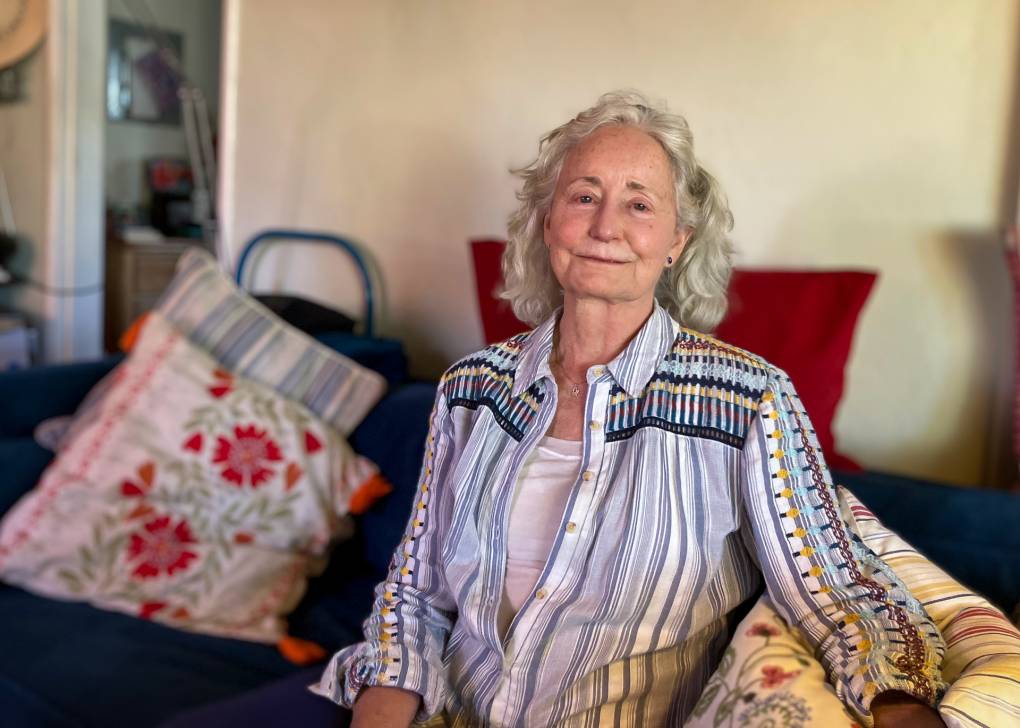
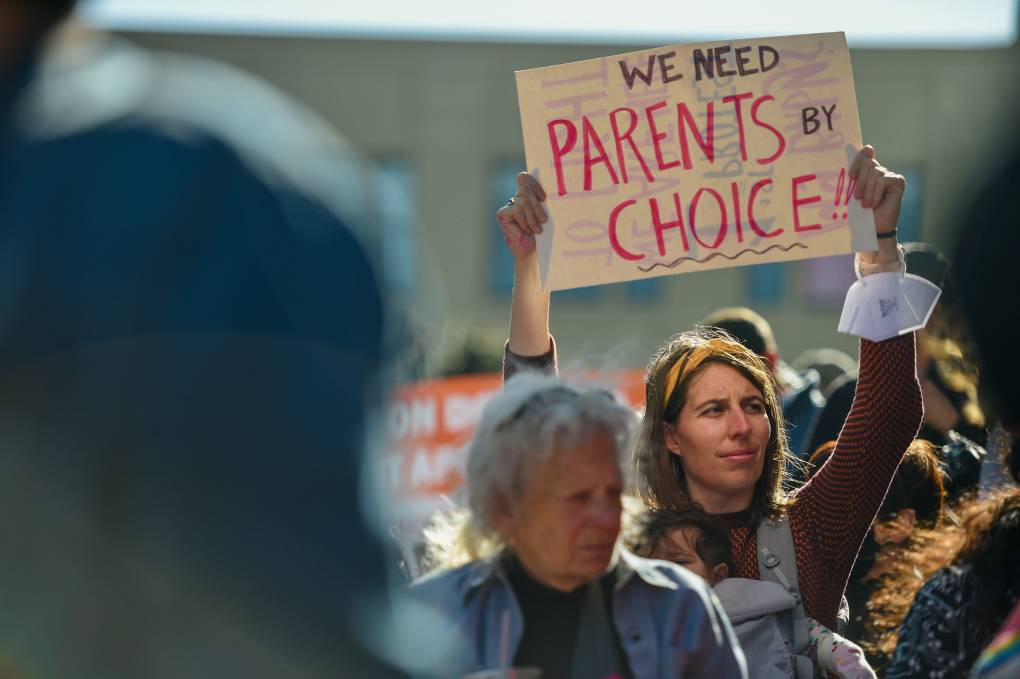
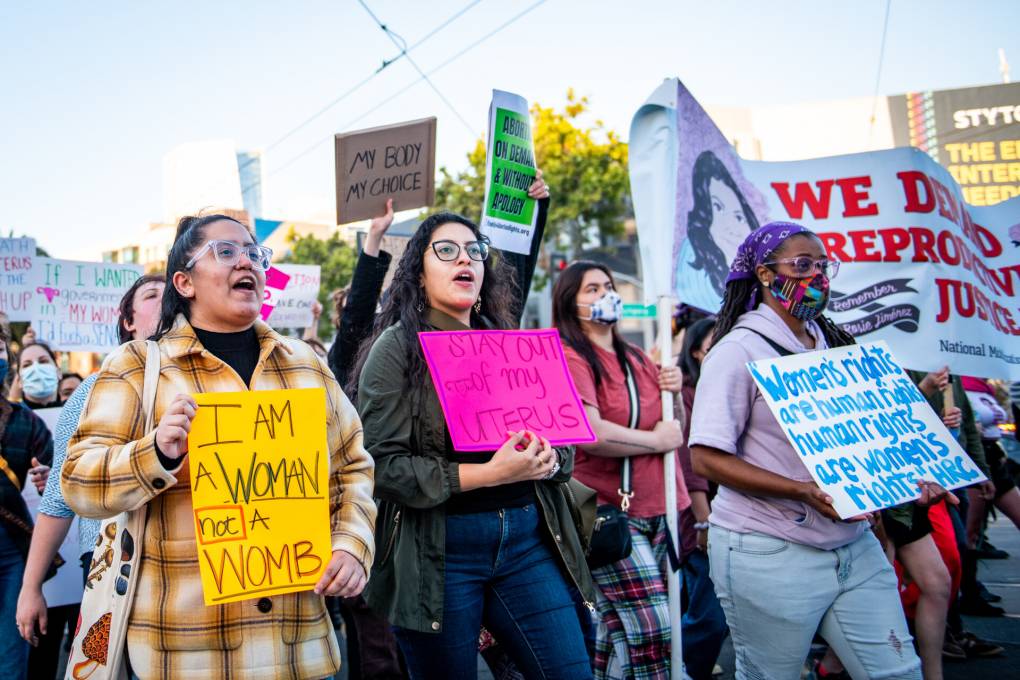
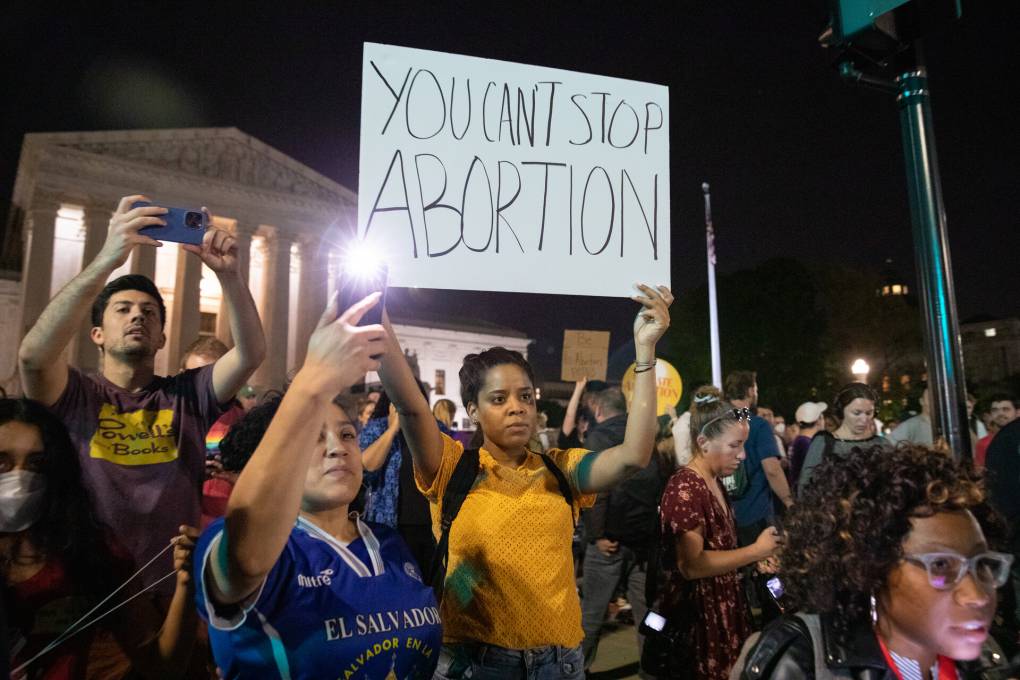
window.__IS_SSR__=true
window.__INITIAL_STATE__={
"attachmentsReducer": {
"audio_0": {
"type": "attachments",
"id": "audio_0",
"imgSizes": {
"kqedFullSize": {
"file": "https://ww2.kqed.org/news/wp-content/themes/KQED-unified/img/audio_bgs/background0.jpg"
}
}
},
"audio_1": {
"type": "attachments",
"id": "audio_1",
"imgSizes": {
"kqedFullSize": {
"file": "https://ww2.kqed.org/news/wp-content/themes/KQED-unified/img/audio_bgs/background1.jpg"
}
}
},
"audio_2": {
"type": "attachments",
"id": "audio_2",
"imgSizes": {
"kqedFullSize": {
"file": "https://ww2.kqed.org/news/wp-content/themes/KQED-unified/img/audio_bgs/background2.jpg"
}
}
},
"audio_3": {
"type": "attachments",
"id": "audio_3",
"imgSizes": {
"kqedFullSize": {
"file": "https://ww2.kqed.org/news/wp-content/themes/KQED-unified/img/audio_bgs/background3.jpg"
}
}
},
"audio_4": {
"type": "attachments",
"id": "audio_4",
"imgSizes": {
"kqedFullSize": {
"file": "https://ww2.kqed.org/news/wp-content/themes/KQED-unified/img/audio_bgs/background4.jpg"
}
}
},
"placeholder": {
"type": "attachments",
"id": "placeholder",
"imgSizes": {
"thumbnail": {
"file": "https://cdn.kqed.org/wp-content/uploads/2024/12/KQED-Default-Image-816638274-2000x1333-1-160x107.jpg",
"width": 160,
"height": 107,
"mimeType": "image/jpeg"
},
"medium": {
"file": "https://cdn.kqed.org/wp-content/uploads/2024/12/KQED-Default-Image-816638274-2000x1333-1-800x533.jpg",
"width": 800,
"height": 533,
"mimeType": "image/jpeg"
},
"medium_large": {
"file": "https://cdn.kqed.org/wp-content/uploads/2024/12/KQED-Default-Image-816638274-2000x1333-1-768x512.jpg",
"width": 768,
"height": 512,
"mimeType": "image/jpeg"
},
"large": {
"file": "https://cdn.kqed.org/wp-content/uploads/2024/12/KQED-Default-Image-816638274-2000x1333-1-1020x680.jpg",
"width": 1020,
"height": 680,
"mimeType": "image/jpeg"
},
"1536x1536": {
"file": "https://cdn.kqed.org/wp-content/uploads/2024/12/KQED-Default-Image-816638274-2000x1333-1-1536x1024.jpg",
"width": 1536,
"height": 1024,
"mimeType": "image/jpeg"
},
"fd-lrg": {
"file": "https://cdn.kqed.org/wp-content/uploads/2024/12/KQED-Default-Image-816638274-2000x1333-1-1536x1024.jpg",
"width": 1536,
"height": 1024,
"mimeType": "image/jpeg"
},
"fd-med": {
"file": "https://cdn.kqed.org/wp-content/uploads/2024/12/KQED-Default-Image-816638274-2000x1333-1-1020x680.jpg",
"width": 1020,
"height": 680,
"mimeType": "image/jpeg"
},
"fd-sm": {
"file": "https://cdn.kqed.org/wp-content/uploads/2024/12/KQED-Default-Image-816638274-2000x1333-1-800x533.jpg",
"width": 800,
"height": 533,
"mimeType": "image/jpeg"
},
"post-thumbnail": {
"file": "https://cdn.kqed.org/wp-content/uploads/2024/12/KQED-Default-Image-816638274-2000x1333-1-672x372.jpg",
"width": 672,
"height": 372,
"mimeType": "image/jpeg"
},
"twentyfourteen-full-width": {
"file": "https://cdn.kqed.org/wp-content/uploads/2024/12/KQED-Default-Image-816638274-2000x1333-1-1038x576.jpg",
"width": 1038,
"height": 576,
"mimeType": "image/jpeg"
},
"xxsmall": {
"file": "https://cdn.kqed.org/wp-content/uploads/2024/12/KQED-Default-Image-816638274-2000x1333-1-160x107.jpg",
"width": 160,
"height": 107,
"mimeType": "image/jpeg"
},
"xsmall": {
"file": "https://cdn.kqed.org/wp-content/uploads/2024/12/KQED-Default-Image-816638274-2000x1333-1-672x372.jpg",
"width": 672,
"height": 372,
"mimeType": "image/jpeg"
},
"small": {
"file": "https://cdn.kqed.org/wp-content/uploads/2024/12/KQED-Default-Image-816638274-2000x1333-1-672x372.jpg",
"width": 672,
"height": 372,
"mimeType": "image/jpeg"
},
"xlarge": {
"file": "https://cdn.kqed.org/wp-content/uploads/2024/12/KQED-Default-Image-816638274-2000x1333-1-1020x680.jpg",
"width": 1020,
"height": 680,
"mimeType": "image/jpeg"
},
"full-width": {
"file": "https://cdn.kqed.org/wp-content/uploads/2024/12/KQED-Default-Image-816638274-2000x1333-1-1920x1280.jpg",
"width": 1920,
"height": 1280,
"mimeType": "image/jpeg"
},
"guest-author-32": {
"file": "https://cdn.kqed.org/wp-content/uploads/2025/01/KQED-Default-Image-816638274-1333x1333-1-160x160.jpg",
"width": 32,
"height": 32,
"mimeType": "image/jpeg"
},
"guest-author-50": {
"file": "https://cdn.kqed.org/wp-content/uploads/2025/01/KQED-Default-Image-816638274-1333x1333-1-160x160.jpg",
"width": 50,
"height": 50,
"mimeType": "image/jpeg"
},
"guest-author-64": {
"file": "https://cdn.kqed.org/wp-content/uploads/2025/01/KQED-Default-Image-816638274-1333x1333-1-160x160.jpg",
"width": 64,
"height": 64,
"mimeType": "image/jpeg"
},
"guest-author-96": {
"file": "https://cdn.kqed.org/wp-content/uploads/2025/01/KQED-Default-Image-816638274-1333x1333-1-160x160.jpg",
"width": 96,
"height": 96,
"mimeType": "image/jpeg"
},
"guest-author-128": {
"file": "https://cdn.kqed.org/wp-content/uploads/2025/01/KQED-Default-Image-816638274-1333x1333-1-160x160.jpg",
"width": 128,
"height": 128,
"mimeType": "image/jpeg"
},
"detail": {
"file": "https://cdn.kqed.org/wp-content/uploads/2025/01/KQED-Default-Image-816638274-1333x1333-1-160x160.jpg",
"width": 160,
"height": 160,
"mimeType": "image/jpeg"
},
"kqedFullSize": {
"file": "https://cdn.kqed.org/wp-content/uploads/2024/12/KQED-Default-Image-816638274-2000x1333-1.jpg",
"width": 2000,
"height": 1333
}
}
},
"news_11917546": {
"type": "attachments",
"id": "news_11917546",
"meta": {
"index": "attachments_1716263798",
"site": "news",
"id": "11917546",
"found": true
},
"parent": 11917541,
"imgSizes": {
"twentyfourteen-full-width": {
"file": "https://ww2.kqed.org/app/uploads/sites/10/2022/06/Lee-Mitchell_IMG_0090-2-1038x576.jpg",
"width": 1038,
"mimeType": "image/jpeg",
"height": 576
},
"thumbnail": {
"file": "https://ww2.kqed.org/app/uploads/sites/10/2022/06/Lee-Mitchell_IMG_0090-2-160x114.jpg",
"width": 160,
"mimeType": "image/jpeg",
"height": 114
},
"post-thumbnail": {
"file": "https://ww2.kqed.org/app/uploads/sites/10/2022/06/Lee-Mitchell_IMG_0090-2-672x372.jpg",
"width": 672,
"mimeType": "image/jpeg",
"height": 372
},
"kqedFullSize": {
"file": "https://ww2.kqed.org/app/uploads/sites/10/2022/06/Lee-Mitchell_IMG_0090-2.jpg",
"width": 1920,
"height": 1371
},
"large": {
"file": "https://ww2.kqed.org/app/uploads/sites/10/2022/06/Lee-Mitchell_IMG_0090-2-1020x728.jpg",
"width": 1020,
"mimeType": "image/jpeg",
"height": 728
},
"1536x1536": {
"file": "https://ww2.kqed.org/app/uploads/sites/10/2022/06/Lee-Mitchell_IMG_0090-2-1536x1097.jpg",
"width": 1536,
"mimeType": "image/jpeg",
"height": 1097
},
"medium": {
"file": "https://ww2.kqed.org/app/uploads/sites/10/2022/06/Lee-Mitchell_IMG_0090-2-800x571.jpg",
"width": 800,
"mimeType": "image/jpeg",
"height": 571
}
},
"publishDate": 1655844572,
"modified": 1656339165,
"caption": null,
"description": "Lee Mitchell, 75, knows what it was like to have an abortion before Roe. Now she wants to help women traveling from out of state to California for an abortion by offering help she didn't have -- a ride to the clinic or a place to stay. ",
"title": "abortion Lee Mitchell",
"credit": "April Dembosky/KQED",
"status": "inherit",
"altTag": "An older woman with peach skin and white hair sits on a blue couch in her living room, with red and blue pillows. She has blue eyes and a slight smile. She's wearing a blue and white striped shirt with geometric embroidery in yellow, blue, and rust along the shoulders and arms.",
"isLoading": false,
"fetchFailed": false
},
"news_11917791": {
"type": "attachments",
"id": "news_11917791",
"meta": {
"index": "attachments_1716263798",
"site": "news",
"id": "11917791",
"found": true
},
"parent": 11917776,
"imgSizes": {
"twentyfourteen-full-width": {
"file": "https://ww2.kqed.org/app/uploads/sites/10/2022/06/RS56799_GettyImages-1404878195-qut-1038x576.jpg",
"width": 1038,
"mimeType": "image/jpeg",
"height": 576
},
"thumbnail": {
"file": "https://ww2.kqed.org/app/uploads/sites/10/2022/06/RS56799_GettyImages-1404878195-qut-160x107.jpg",
"width": 160,
"mimeType": "image/jpeg",
"height": 107
},
"post-thumbnail": {
"file": "https://ww2.kqed.org/app/uploads/sites/10/2022/06/RS56799_GettyImages-1404878195-qut-672x372.jpg",
"width": 672,
"mimeType": "image/jpeg",
"height": 372
},
"kqedFullSize": {
"file": "https://ww2.kqed.org/app/uploads/sites/10/2022/06/RS56799_GettyImages-1404878195-qut.jpg",
"width": 1920,
"height": 1281
},
"large": {
"file": "https://ww2.kqed.org/app/uploads/sites/10/2022/06/RS56799_GettyImages-1404878195-qut-1020x681.jpg",
"width": 1020,
"mimeType": "image/jpeg",
"height": 681
},
"1536x1536": {
"file": "https://ww2.kqed.org/app/uploads/sites/10/2022/06/RS56799_GettyImages-1404878195-qut-1536x1025.jpg",
"width": 1536,
"mimeType": "image/jpeg",
"height": 1025
},
"medium": {
"file": "https://ww2.kqed.org/app/uploads/sites/10/2022/06/RS56799_GettyImages-1404878195-qut-800x534.jpg",
"width": 800,
"mimeType": "image/jpeg",
"height": 534
}
},
"publishDate": 1656083170,
"modified": 1656083247,
"caption": "Abortion rights activists Carrie McDonald (L) and Soraya Bata react to the Dobbs v Jackson Women’s Health Organization ruling which overturns the landmark abortion Roe v. Wade case in front of the U.S. Supreme Court on June 24, 2022.",
"description": null,
"title": "The U.S. Supreme Court Issues Opinions",
"credit": "Anna Moneymaker/Getty Images",
"status": "inherit",
"altTag": "two women hold protest signs reading 'never land of the free' while they hold each other and cry in front of the supreme court building",
"isLoading": false,
"fetchFailed": false
},
"news_11917667": {
"type": "attachments",
"id": "news_11917667",
"meta": {
"index": "attachments_1716263798",
"site": "news",
"id": "11917667",
"found": true
},
"parent": 11917650,
"imgSizes": {
"twentyfourteen-full-width": {
"file": "https://ww2.kqed.org/app/uploads/sites/10/2022/06/RS56738_GettyImages-1321843001-qut-1038x576.jpg",
"width": 1038,
"mimeType": "image/jpeg",
"height": 576
},
"thumbnail": {
"file": "https://ww2.kqed.org/app/uploads/sites/10/2022/06/RS56738_GettyImages-1321843001-qut-160x111.jpg",
"width": 160,
"mimeType": "image/jpeg",
"height": 111
},
"post-thumbnail": {
"file": "https://ww2.kqed.org/app/uploads/sites/10/2022/06/RS56738_GettyImages-1321843001-qut-672x372.jpg",
"width": 672,
"mimeType": "image/jpeg",
"height": 372
},
"kqedFullSize": {
"file": "https://ww2.kqed.org/app/uploads/sites/10/2022/06/RS56738_GettyImages-1321843001-qut.jpg",
"width": 1920,
"height": 1333
},
"large": {
"file": "https://ww2.kqed.org/app/uploads/sites/10/2022/06/RS56738_GettyImages-1321843001-qut-1020x708.jpg",
"width": 1020,
"mimeType": "image/jpeg",
"height": 708
},
"1536x1536": {
"file": "https://ww2.kqed.org/app/uploads/sites/10/2022/06/RS56738_GettyImages-1321843001-qut-1536x1066.jpg",
"width": 1536,
"mimeType": "image/jpeg",
"height": 1066
},
"medium": {
"file": "https://ww2.kqed.org/app/uploads/sites/10/2022/06/RS56738_GettyImages-1321843001-qut-800x555.jpg",
"width": 800,
"mimeType": "image/jpeg",
"height": 555
}
},
"publishDate": 1655998707,
"modified": 1656465053,
"caption": "A gun shop clerk displays a small handgun in San Francisco. Restrictive concealed carry policies in California - like those in place in San Francisco - are in jeopardy following a ruling by the U.S. Supreme Court.",
"description": null,
"title": "A gun shop clerk displays a small handgun on Monday June 26, 2017. The U.S. Supreme Court rejected a challenge by gun groups Monday to California's concealed-weapons law, which requires gun owners to get a license from law enforcement to carry a concealed",
"credit": "Michael Macor/San Francisco Chronicle via Getty Images",
"status": "inherit",
"altTag": "hand holds small gun above glass case containing two other small handguns",
"isLoading": false,
"fetchFailed": false
},
"news_11913105": {
"type": "attachments",
"id": "news_11913105",
"meta": {
"index": "attachments_1716263798",
"site": "news",
"id": "11913105",
"found": true
},
"parent": 0,
"imgSizes": {
"twentyfourteen-full-width": {
"file": "https://ww2.kqed.org/app/uploads/sites/10/2022/05/Image-from-iOS-10-1-1038x576.jpg",
"width": 1038,
"mimeType": "image/jpeg",
"height": 576
},
"thumbnail": {
"file": "https://ww2.kqed.org/app/uploads/sites/10/2022/05/Image-from-iOS-10-1-160x106.jpg",
"width": 160,
"mimeType": "image/jpeg",
"height": 106
},
"post-thumbnail": {
"file": "https://ww2.kqed.org/app/uploads/sites/10/2022/05/Image-from-iOS-10-1-672x372.jpg",
"width": 672,
"mimeType": "image/jpeg",
"height": 372
},
"kqedFullSize": {
"file": "https://ww2.kqed.org/app/uploads/sites/10/2022/05/Image-from-iOS-10-1-scaled-e1651632494388.jpg",
"width": 1920,
"height": 1278
},
"2048x2048": {
"file": "https://ww2.kqed.org/app/uploads/sites/10/2022/05/Image-from-iOS-10-1-2048x1363.jpg",
"width": 2048,
"mimeType": "image/jpeg",
"height": 1363
},
"large": {
"file": "https://ww2.kqed.org/app/uploads/sites/10/2022/05/Image-from-iOS-10-1-1020x679.jpg",
"width": 1020,
"mimeType": "image/jpeg",
"height": 679
},
"1536x1536": {
"file": "https://ww2.kqed.org/app/uploads/sites/10/2022/05/Image-from-iOS-10-1-1536x1022.jpg",
"width": 1536,
"mimeType": "image/jpeg",
"height": 1022
},
"full-width": {
"file": "https://ww2.kqed.org/app/uploads/sites/10/2022/05/Image-from-iOS-10-1-1920x1278.jpg",
"width": 1920,
"mimeType": "image/jpeg",
"height": 1278
},
"medium": {
"file": "https://ww2.kqed.org/app/uploads/sites/10/2022/05/Image-from-iOS-10-1-800x532.jpg",
"width": 800,
"mimeType": "image/jpeg",
"height": 532
}
},
"publishDate": 1651632150,
"modified": 1654816793,
"caption": "A demonstrator holds a sign that says, 'We Need Parents by Choice,' during a rally for abortion rights outside the Phillip Burton Federal Building in San Francisco on May 3, 2022.",
"description": null,
"title": "Image from iOS (10)",
"credit": "Beth LaBerge/KQED News",
"status": "inherit",
"altTag": "A woman holds a sign that reads \"We need parents by choice\" in a crowd of people.",
"isLoading": false,
"fetchFailed": false
},
"news_11913455": {
"type": "attachments",
"id": "news_11913455",
"meta": {
"index": "attachments_1716263798",
"site": "news",
"id": "11913455",
"found": true
},
"parent": 11913295,
"imgSizes": {
"twentyfourteen-full-width": {
"file": "https://ww2.kqed.org/app/uploads/sites/10/2022/05/RS55729_078_KQED_AbortionRallySF_05032022-qut-1038x576.jpg",
"width": 1038,
"mimeType": "image/jpeg",
"height": 576
},
"thumbnail": {
"file": "https://ww2.kqed.org/app/uploads/sites/10/2022/05/RS55729_078_KQED_AbortionRallySF_05032022-qut-160x107.jpg",
"width": 160,
"mimeType": "image/jpeg",
"height": 107
},
"post-thumbnail": {
"file": "https://ww2.kqed.org/app/uploads/sites/10/2022/05/RS55729_078_KQED_AbortionRallySF_05032022-qut-672x372.jpg",
"width": 672,
"mimeType": "image/jpeg",
"height": 372
},
"kqedFullSize": {
"file": "https://ww2.kqed.org/app/uploads/sites/10/2022/05/RS55729_078_KQED_AbortionRallySF_05032022-qut.jpg",
"width": 1920,
"height": 1280
},
"large": {
"file": "https://ww2.kqed.org/app/uploads/sites/10/2022/05/RS55729_078_KQED_AbortionRallySF_05032022-qut-1020x680.jpg",
"width": 1020,
"mimeType": "image/jpeg",
"height": 680
},
"1536x1536": {
"file": "https://ww2.kqed.org/app/uploads/sites/10/2022/05/RS55729_078_KQED_AbortionRallySF_05032022-qut-1536x1024.jpg",
"width": 1536,
"mimeType": "image/jpeg",
"height": 1024
},
"medium": {
"file": "https://ww2.kqed.org/app/uploads/sites/10/2022/05/RS55729_078_KQED_AbortionRallySF_05032022-qut-800x533.jpg",
"width": 800,
"mimeType": "image/jpeg",
"height": 533
}
},
"publishDate": 1651870680,
"modified": 1651873933,
"caption": "Demonstrators march on Market Street in San Francisco on May 3, 2022, during a rally for abortion rights following a leaked draft opinion suggesting the Supreme Court will overturn Roe v. Wade.",
"description": null,
"title": "RS55729_078_KQED_AbortionRallySF_05032022-qut",
"credit": "Beth LaBerge/KQED",
"status": "inherit",
"altTag": "women marchers hold colorful signs reading 'women's rights are human rights' and 'my body my choice'",
"isLoading": false,
"fetchFailed": false
},
"news_11913112": {
"type": "attachments",
"id": "news_11913112",
"meta": {
"index": "attachments_1716263798",
"site": "news",
"id": "11913112",
"found": true
},
"parent": 11913103,
"imgSizes": {
"twentyfourteen-full-width": {
"file": "https://ww2.kqed.org/app/uploads/sites/10/2022/05/Image-from-iOS-3-1038x576.jpg",
"width": 1038,
"mimeType": "image/jpeg",
"height": 576
},
"thumbnail": {
"file": "https://ww2.kqed.org/app/uploads/sites/10/2022/05/Image-from-iOS-3-160x107.jpg",
"width": 160,
"mimeType": "image/jpeg",
"height": 107
},
"post-thumbnail": {
"file": "https://ww2.kqed.org/app/uploads/sites/10/2022/05/Image-from-iOS-3-672x372.jpg",
"width": 672,
"mimeType": "image/jpeg",
"height": 372
},
"kqedFullSize": {
"file": "https://ww2.kqed.org/app/uploads/sites/10/2022/05/Image-from-iOS-3.jpg",
"width": 1429,
"height": 953
},
"large": {
"file": "https://ww2.kqed.org/app/uploads/sites/10/2022/05/Image-from-iOS-3-1020x680.jpg",
"width": 1020,
"mimeType": "image/jpeg",
"height": 680
},
"medium": {
"file": "https://ww2.kqed.org/app/uploads/sites/10/2022/05/Image-from-iOS-3-800x534.jpg",
"width": 800,
"mimeType": "image/jpeg",
"height": 534
}
},
"publishDate": 1651632223,
"modified": 1651774063,
"caption": "Anyssa Jeske (left, foreground) and Taelor Seaton cheer along with a speaker during a rally outside the Phillip Burton Federal Building in San Francisco on May 3, 2022, in support of abortion rights.",
"description": null,
"title": "Image from iOS (3)",
"credit": "Beth LaBerge/KQED",
"status": "inherit",
"altTag": "A large group of people hold multicolored signs at a protest.",
"isLoading": false,
"fetchFailed": false
},
"news_11913034": {
"type": "attachments",
"id": "news_11913034",
"meta": {
"index": "attachments_1716263798",
"site": "news",
"id": "11913034",
"found": true
},
"parent": 11913033,
"imgSizes": {
"twentyfourteen-full-width": {
"file": "https://ww2.kqed.org/app/uploads/sites/10/2022/05/ap22123168083648_custom-28555aef69fa658aeeeba3ae574a99bd93c4696f-1038x576.jpg",
"width": 1038,
"mimeType": "image/jpeg",
"height": 576
},
"thumbnail": {
"file": "https://ww2.kqed.org/app/uploads/sites/10/2022/05/ap22123168083648_custom-28555aef69fa658aeeeba3ae574a99bd93c4696f-160x107.jpg",
"width": 160,
"mimeType": "image/jpeg",
"height": 107
},
"post-thumbnail": {
"file": "https://ww2.kqed.org/app/uploads/sites/10/2022/05/ap22123168083648_custom-28555aef69fa658aeeeba3ae574a99bd93c4696f-672x372.jpg",
"width": 672,
"mimeType": "image/jpeg",
"height": 372
},
"kqedFullSize": {
"file": "https://ww2.kqed.org/app/uploads/sites/10/2022/05/ap22123168083648_custom-28555aef69fa658aeeeba3ae574a99bd93c4696f-scaled.jpg",
"width": 2560,
"height": 1705
},
"2048x2048": {
"file": "https://ww2.kqed.org/app/uploads/sites/10/2022/05/ap22123168083648_custom-28555aef69fa658aeeeba3ae574a99bd93c4696f-2048x1364.jpg",
"width": 2048,
"mimeType": "image/jpeg",
"height": 1364
},
"large": {
"file": "https://ww2.kqed.org/app/uploads/sites/10/2022/05/ap22123168083648_custom-28555aef69fa658aeeeba3ae574a99bd93c4696f-1020x679.jpg",
"width": 1020,
"mimeType": "image/jpeg",
"height": 679
},
"1536x1536": {
"file": "https://ww2.kqed.org/app/uploads/sites/10/2022/05/ap22123168083648_custom-28555aef69fa658aeeeba3ae574a99bd93c4696f-1536x1023.jpg",
"width": 1536,
"mimeType": "image/jpeg",
"height": 1023
},
"full-width": {
"file": "https://ww2.kqed.org/app/uploads/sites/10/2022/05/ap22123168083648_custom-28555aef69fa658aeeeba3ae574a99bd93c4696f-1920x1279.jpg",
"width": 1920,
"mimeType": "image/jpeg",
"height": 1279
},
"medium": {
"file": "https://ww2.kqed.org/app/uploads/sites/10/2022/05/ap22123168083648_custom-28555aef69fa658aeeeba3ae574a99bd93c4696f-800x533.jpg",
"width": 800,
"mimeType": "image/jpeg",
"height": 533
}
},
"publishDate": 1651611098,
"modified": 1651615603,
"caption": "A crowd of people gather outside the Supreme Court, early Tuesday, May 3, 2022 in Washington. ",
"description": null,
"title": "roe-wade-overturn-scotus",
"credit": "AP Photo/Alex Brandon",
"status": "inherit",
"altTag": "A group of protesters outside the Supreme Court, with mouths open in speech or chanting. The woman closest to the camera is holding a sign saying \"Abortions are healthcare.\"",
"isLoading": false,
"fetchFailed": false
},
"news_11913017": {
"type": "attachments",
"id": "news_11913017",
"meta": {
"index": "attachments_1716263798",
"site": "news",
"id": "11913017",
"found": true
},
"parent": 11913011,
"imgSizes": {
"twentyfourteen-full-width": {
"file": "https://ww2.kqed.org/app/uploads/sites/10/2022/05/RS55674_GettyImages-1240412755-qut-1038x576.jpg",
"width": 1038,
"mimeType": "image/jpeg",
"height": 576
},
"thumbnail": {
"file": "https://ww2.kqed.org/app/uploads/sites/10/2022/05/RS55674_GettyImages-1240412755-qut-160x107.jpg",
"width": 160,
"mimeType": "image/jpeg",
"height": 107
},
"post-thumbnail": {
"file": "https://ww2.kqed.org/app/uploads/sites/10/2022/05/RS55674_GettyImages-1240412755-qut-672x372.jpg",
"width": 672,
"mimeType": "image/jpeg",
"height": 372
},
"kqedFullSize": {
"file": "https://ww2.kqed.org/app/uploads/sites/10/2022/05/RS55674_GettyImages-1240412755-qut.jpg",
"width": 1920,
"height": 1280
},
"large": {
"file": "https://ww2.kqed.org/app/uploads/sites/10/2022/05/RS55674_GettyImages-1240412755-qut-1020x680.jpg",
"width": 1020,
"mimeType": "image/jpeg",
"height": 680
},
"1536x1536": {
"file": "https://ww2.kqed.org/app/uploads/sites/10/2022/05/RS55674_GettyImages-1240412755-qut-1536x1024.jpg",
"width": 1536,
"mimeType": "image/jpeg",
"height": 1024
},
"medium": {
"file": "https://ww2.kqed.org/app/uploads/sites/10/2022/05/RS55674_GettyImages-1240412755-qut-800x533.jpg",
"width": 800,
"mimeType": "image/jpeg",
"height": 533
}
},
"publishDate": 1651603329,
"modified": 1654546851,
"caption": "Abortion-rights supporters rally in front of the US Supreme Court on May 2, 2022, after a draft opinion was released indicating that the court is likely to overturn Roe V. Wade, the landmark 1973 decision that guaranteed federal protections for abortion.",
"description": null,
"title": "roe v. wade",
"credit": "Amanda Andrade-Rhoades/Washington Post via Getty Images",
"status": "inherit",
"altTag": "A woman holds large sign saying 'you can't stop abortion' along with other protesters with supreme court building in background",
"isLoading": false,
"fetchFailed": false
},
"news_11910551": {
"type": "attachments",
"id": "news_11910551",
"meta": {
"index": "attachments_1716263798",
"site": "news",
"id": "11910551",
"found": true
},
"parent": 11910550,
"imgSizes": {
"twentyfourteen-full-width": {
"file": "https://ww2.kqed.org/app/uploads/sites/10/2022/04/gettyimages-1390129873-fd20e704f8aa20d2eaf5bc6bed92e4c2480e5390-1038x576.jpg",
"width": 1038,
"mimeType": "image/jpeg",
"height": 576
},
"thumbnail": {
"file": "https://ww2.kqed.org/app/uploads/sites/10/2022/04/gettyimages-1390129873-fd20e704f8aa20d2eaf5bc6bed92e4c2480e5390-160x120.jpg",
"width": 160,
"mimeType": "image/jpeg",
"height": 120
},
"post-thumbnail": {
"file": "https://ww2.kqed.org/app/uploads/sites/10/2022/04/gettyimages-1390129873-fd20e704f8aa20d2eaf5bc6bed92e4c2480e5390-672x372.jpg",
"width": 672,
"mimeType": "image/jpeg",
"height": 372
},
"kqedFullSize": {
"file": "https://ww2.kqed.org/app/uploads/sites/10/2022/04/gettyimages-1390129873-fd20e704f8aa20d2eaf5bc6bed92e4c2480e5390-scaled.jpg",
"width": 2560,
"height": 1917
},
"2048x2048": {
"file": "https://ww2.kqed.org/app/uploads/sites/10/2022/04/gettyimages-1390129873-fd20e704f8aa20d2eaf5bc6bed92e4c2480e5390-2048x1533.jpg",
"width": 2048,
"mimeType": "image/jpeg",
"height": 1533
},
"large": {
"file": "https://ww2.kqed.org/app/uploads/sites/10/2022/04/gettyimages-1390129873-fd20e704f8aa20d2eaf5bc6bed92e4c2480e5390-1020x764.jpg",
"width": 1020,
"mimeType": "image/jpeg",
"height": 764
},
"1536x1536": {
"file": "https://ww2.kqed.org/app/uploads/sites/10/2022/04/gettyimages-1390129873-fd20e704f8aa20d2eaf5bc6bed92e4c2480e5390-1536x1150.jpg",
"width": 1536,
"mimeType": "image/jpeg",
"height": 1150
},
"full-width": {
"file": "https://ww2.kqed.org/app/uploads/sites/10/2022/04/gettyimages-1390129873-fd20e704f8aa20d2eaf5bc6bed92e4c2480e5390-1920x1438.jpg",
"width": 1920,
"mimeType": "image/jpeg",
"height": 1438
},
"medium": {
"file": "https://ww2.kqed.org/app/uploads/sites/10/2022/04/gettyimages-1390129873-fd20e704f8aa20d2eaf5bc6bed92e4c2480e5390-800x599.jpg",
"width": 800,
"mimeType": "image/jpeg",
"height": 599
}
},
"publishDate": 1649376160,
"modified": 1649377085,
"caption": "President Joe Biden congratulates Ketanji Brown Jackson in the Roosevelt Room at the White House on April 7, 2022, moments after the U.S. Senate confirmed her the U.S. Supreme Court.",
"description": "WASHINGTON, DC - APRIL 07: ",
"title": "President Joe Biden congratulates Ketanji Brown Jackson moments after the Senate confirmed her to be the first Black woman to be a justice on the Supreme Court at the White House.",
"credit": "Chip Somodevilla/Getty Images",
"status": "inherit",
"altTag": "President Joe Biden holds Ketanji Brown Jackson's hands, as they stand in front of a TV showing the U.S. Senate floor.",
"isLoading": false,
"fetchFailed": false
},
"news_11906475": {
"type": "attachments",
"id": "news_11906475",
"meta": {
"index": "attachments_1716263798",
"site": "news",
"id": "11906475",
"found": true
},
"parent": 11906473,
"imgSizes": {
"twentyfourteen-full-width": {
"file": "https://ww2.kqed.org/app/uploads/sites/10/2022/02/RS53901_GettyImages-1232579208-qut-1038x576.jpg",
"width": 1038,
"mimeType": "image/jpeg",
"height": 576
},
"thumbnail": {
"file": "https://ww2.kqed.org/app/uploads/sites/10/2022/02/RS53901_GettyImages-1232579208-qut-160x107.jpg",
"width": 160,
"mimeType": "image/jpeg",
"height": 107
},
"post-thumbnail": {
"file": "https://ww2.kqed.org/app/uploads/sites/10/2022/02/RS53901_GettyImages-1232579208-qut-672x372.jpg",
"width": 672,
"mimeType": "image/jpeg",
"height": 372
},
"kqedFullSize": {
"file": "https://ww2.kqed.org/app/uploads/sites/10/2022/02/RS53901_GettyImages-1232579208-qut.jpg",
"width": 1920,
"height": 1280
},
"large": {
"file": "https://ww2.kqed.org/app/uploads/sites/10/2022/02/RS53901_GettyImages-1232579208-qut-1020x680.jpg",
"width": 1020,
"mimeType": "image/jpeg",
"height": 680
},
"1536x1536": {
"file": "https://ww2.kqed.org/app/uploads/sites/10/2022/02/RS53901_GettyImages-1232579208-qut-1536x1024.jpg",
"width": 1536,
"mimeType": "image/jpeg",
"height": 1024
},
"medium": {
"file": "https://ww2.kqed.org/app/uploads/sites/10/2022/02/RS53901_GettyImages-1232579208-qut-800x533.jpg",
"width": 800,
"mimeType": "image/jpeg",
"height": 533
}
},
"publishDate": 1645811683,
"modified": 1645819347,
"caption": "Ketanji Brown Jackson testifies before a Senate Judiciary Committee hearing on pending judicial nominations on April 28, 2021.",
"description": null,
"title": "Senate Judiciary Committee TW POOL",
"credit": "Tom Williams/CQ-Roll Call Inc. via Getty Images/POOL",
"status": "inherit",
"altTag": "profile photo of Ketanji Brown Jackson smiling",
"isLoading": false,
"fetchFailed": false
},
"news_11905430": {
"type": "attachments",
"id": "news_11905430",
"meta": {
"index": "attachments_1716263798",
"site": "news",
"id": "11905430",
"found": true
},
"parent": 11905429,
"imgSizes": {
"twentyfourteen-full-width": {
"file": "https://ww2.kqed.org/app/uploads/sites/10/2022/02/ap22038735487988-406e08ab721fc89b9ac39a3d70df1c65801d41dc-1038x576.jpg",
"width": 1038,
"mimeType": "image/jpeg",
"height": 576
},
"thumbnail": {
"file": "https://ww2.kqed.org/app/uploads/sites/10/2022/02/ap22038735487988-406e08ab721fc89b9ac39a3d70df1c65801d41dc-160x120.jpg",
"width": 160,
"mimeType": "image/jpeg",
"height": 120
},
"post-thumbnail": {
"file": "https://ww2.kqed.org/app/uploads/sites/10/2022/02/ap22038735487988-406e08ab721fc89b9ac39a3d70df1c65801d41dc-672x372.jpg",
"width": 672,
"mimeType": "image/jpeg",
"height": 372
},
"kqedFullSize": {
"file": "https://ww2.kqed.org/app/uploads/sites/10/2022/02/ap22038735487988-406e08ab721fc89b9ac39a3d70df1c65801d41dc-scaled-e1645046892712.jpg",
"width": 1920,
"height": 1440
},
"2048x2048": {
"file": "https://ww2.kqed.org/app/uploads/sites/10/2022/02/ap22038735487988-406e08ab721fc89b9ac39a3d70df1c65801d41dc-2048x1536.jpg",
"width": 2048,
"mimeType": "image/jpeg",
"height": 1536
},
"large": {
"file": "https://ww2.kqed.org/app/uploads/sites/10/2022/02/ap22038735487988-406e08ab721fc89b9ac39a3d70df1c65801d41dc-1020x765.jpg",
"width": 1020,
"mimeType": "image/jpeg",
"height": 765
},
"1536x1536": {
"file": "https://ww2.kqed.org/app/uploads/sites/10/2022/02/ap22038735487988-406e08ab721fc89b9ac39a3d70df1c65801d41dc-1536x1152.jpg",
"width": 1536,
"mimeType": "image/jpeg",
"height": 1152
},
"full-width": {
"file": "https://ww2.kqed.org/app/uploads/sites/10/2022/02/ap22038735487988-406e08ab721fc89b9ac39a3d70df1c65801d41dc-1920x1440.jpg",
"width": 1920,
"mimeType": "image/jpeg",
"height": 1440
},
"medium": {
"file": "https://ww2.kqed.org/app/uploads/sites/10/2022/02/ap22038735487988-406e08ab721fc89b9ac39a3d70df1c65801d41dc-800x600.jpg",
"width": 800,
"mimeType": "image/jpeg",
"height": 600
}
},
"publishDate": 1645046758,
"modified": 1645062417,
"caption": "Leondra Kruger, an associate justice of the Supreme Court of California, poses for photos in San Francisco on Feb. 3, 2022. ",
"description": "Leondra Kruger, an Associate Justice of the Supreme Court of California, poses for photos in San Francisco, Thursday, Feb. 3, 2022. (AP Photo/Jeff Chiu)",
"title": "California Supreme Court Justice Leondra Kruger is a leading contender to replace Justice Stephen Breyer on the U.S. Supreme Court.",
"credit": "Jeff Chiu/AP",
"status": "inherit",
"altTag": "A portrait of a woman with glasses.",
"isLoading": false,
"fetchFailed": false
},
"news_11897288": {
"type": "attachments",
"id": "news_11897288",
"meta": {
"index": "attachments_1716263798",
"site": "news",
"id": "11897288",
"found": true
},
"parent": 11896908,
"imgSizes": {
"twentyfourteen-full-width": {
"file": "https://ww2.kqed.org/app/uploads/sites/10/2021/11/RS52678_001_Chico_WomensHealthSpecialists_11182021-qut-1038x576.jpg",
"width": 1038,
"mimeType": "image/jpeg",
"height": 576
},
"thumbnail": {
"file": "https://ww2.kqed.org/app/uploads/sites/10/2021/11/RS52678_001_Chico_WomensHealthSpecialists_11182021-qut-160x107.jpg",
"width": 160,
"mimeType": "image/jpeg",
"height": 107
},
"post-thumbnail": {
"file": "https://ww2.kqed.org/app/uploads/sites/10/2021/11/RS52678_001_Chico_WomensHealthSpecialists_11182021-qut-672x372.jpg",
"width": 672,
"mimeType": "image/jpeg",
"height": 372
},
"kqedFullSize": {
"file": "https://ww2.kqed.org/app/uploads/sites/10/2021/11/RS52678_001_Chico_WomensHealthSpecialists_11182021-qut.jpg",
"width": 1920,
"height": 1280
},
"large": {
"file": "https://ww2.kqed.org/app/uploads/sites/10/2021/11/RS52678_001_Chico_WomensHealthSpecialists_11182021-qut-1020x680.jpg",
"width": 1020,
"mimeType": "image/jpeg",
"height": 680
},
"1536x1536": {
"file": "https://ww2.kqed.org/app/uploads/sites/10/2021/11/RS52678_001_Chico_WomensHealthSpecialists_11182021-qut-1536x1024.jpg",
"width": 1536,
"mimeType": "image/jpeg",
"height": 1024
},
"medium": {
"file": "https://ww2.kqed.org/app/uploads/sites/10/2021/11/RS52678_001_Chico_WomensHealthSpecialists_11182021-qut-800x533.jpg",
"width": 800,
"mimeType": "image/jpeg",
"height": 533
}
},
"publishDate": 1637785048,
"modified": 1638341064,
"caption": "Women's Health Specialists employees (from left) Maria Barreto, Cindy Xiong, Laura Morehouse and Katrina Maczen-Cantrell, in front of the group's clinic in Chico, on Nov. 18, 2021. The clinic is one of the few abortion providers in the region.",
"description": null,
"title": "RS52678_001_Chico_WomensHealthSpecialists_11182021-qut",
"credit": "Beth LaBerge/KQED",
"status": "inherit",
"altTag": "Four women stand together outside wearing black pants, brown, blue, purple and neon jackets.",
"isLoading": false,
"fetchFailed": false
}
},
"audioPlayerReducer": {
"postId": "stream_live",
"isPaused": true,
"isPlaying": false,
"pfsActive": false,
"pledgeModalIsOpen": true,
"playerDrawerIsOpen": false,
"liveAudioPlayStartedAt": 0,
"liveAudioPlayContext": ""
},
"authorsReducer": {
"byline_news_11917541": {
"type": "authors",
"id": "byline_news_11917541",
"meta": {
"override": true
},
"slug": "byline_news_11917541",
"name": "April Dembosky",
"isLoading": false
},
"byline_news_11917776": {
"type": "authors",
"id": "byline_news_11917776",
"meta": {
"override": true
},
"slug": "byline_news_11917776",
"name": "Mark Sherman \u003cbr> The Associated Press",
"isLoading": false
},
"byline_news_11917650": {
"type": "authors",
"id": "byline_news_11917650",
"meta": {
"override": true
},
"slug": "byline_news_11917650",
"name": "\u003ca href=\"https://calmatters.org/author/ben-christopher/\">Ben Christopher\u003c/a>",
"isLoading": false
},
"byline_news_11916593": {
"type": "authors",
"id": "byline_news_11916593",
"meta": {
"override": true
},
"slug": "byline_news_11916593",
"name": "Adam Beam\u003cbr>Associated Press",
"isLoading": false
},
"byline_news_11913033": {
"type": "authors",
"id": "byline_news_11913033",
"meta": {
"override": true
},
"slug": "byline_news_11913033",
"name": "Joe Hernandez",
"isLoading": false
},
"byline_news_11913011": {
"type": "authors",
"id": "byline_news_11913011",
"meta": {
"override": true
},
"slug": "byline_news_11913011",
"name": "\u003ca href=\"https://calmatters.org/author/emilyhoeven/\">Emily Hoeven\u003c/a>",
"isLoading": false
},
"byline_news_11910550": {
"type": "authors",
"id": "byline_news_11910550",
"meta": {
"override": true
},
"slug": "byline_news_11910550",
"name": "Eric McDaniel",
"isLoading": false
},
"byline_news_11906473": {
"type": "authors",
"id": "byline_news_11906473",
"meta": {
"override": true
},
"slug": "byline_news_11906473",
"name": "\u003ca href=\"https://www.npr.org/people/2101289/nina-totenberg\">Nina Totenberg\u003c/a>",
"isLoading": false
},
"byline_news_11905429": {
"type": "authors",
"id": "byline_news_11905429",
"meta": {
"override": true
},
"slug": "byline_news_11905429",
"name": "Nina Totenberg",
"isLoading": false
},
"kqed": {
"type": "authors",
"id": "236",
"meta": {
"index": "authors_1716337520",
"id": "236",
"found": true
},
"name": "KQED News Staff",
"firstName": "KQED News Staff",
"lastName": null,
"slug": "kqed",
"email": "faq@kqed.org",
"display_author_email": false,
"staff_mastheads": [],
"title": null,
"bio": null,
"avatar": "https://secure.gravatar.com/avatar/ef0e801a68c4c54afa9180db14084167?s=600&d=blank&r=g",
"twitter": null,
"facebook": null,
"instagram": null,
"linkedin": null,
"sites": [
{
"site": "arts",
"roles": [
"contributor"
]
},
{
"site": "news",
"roles": [
"editor"
]
},
{
"site": "futureofyou",
"roles": [
"author"
]
}
],
"headData": {
"title": "KQED News Staff | KQED",
"description": null,
"ogImgSrc": "https://secure.gravatar.com/avatar/ef0e801a68c4c54afa9180db14084167?s=600&d=blank&r=g",
"twImgSrc": "https://secure.gravatar.com/avatar/ef0e801a68c4c54afa9180db14084167?s=600&d=blank&r=g"
},
"isLoading": false,
"link": "/author/kqed"
},
"carlysevern": {
"type": "authors",
"id": "3243",
"meta": {
"index": "authors_1716337520",
"id": "3243",
"found": true
},
"name": "Carly Severn",
"firstName": "Carly",
"lastName": "Severn",
"slug": "carlysevern",
"email": "csevern@kqed.org",
"display_author_email": false,
"staff_mastheads": [
"news"
],
"title": "Senior Editor, Audience News ",
"bio": "Carly is KQED's Senior Editor of Audience News on the Digital News team, and has reported for the California Report Magazine, Bay Curious and KQED Arts. She's formerly the host of \u003ca href=\"http://ww2.kqed.org/pop/category/the-cooler/\" rel=\"noopener noreferrer\">The Cooler\u003c/a> podcast.",
"avatar": "https://secure.gravatar.com/avatar/54037bf5c128fe678f0ef26cec97a93f2e7f220a22d7285703328f12c42c1b1d?s=600&d=blank&r=g",
"twitter": "teacupinthebay",
"bluesky": null,
"facebook": null,
"instagram": null,
"linkedin": null,
"sites": [
{
"site": "",
"roles": [
"editor"
]
},
{
"site": "arts",
"roles": [
"editor"
]
},
{
"site": "news",
"roles": [
"administrator"
]
},
{
"site": "pop",
"roles": [
"editor"
]
},
{
"site": "futureofyou",
"roles": [
"editor"
]
},
{
"site": "about",
"roles": [
"administrator"
]
},
{
"site": "mindshift",
"roles": [
"editor"
]
},
{
"site": "bayareabites",
"roles": [
"editor"
]
},
{
"site": "stateofhealth",
"roles": [
"editor"
]
},
{
"site": "science",
"roles": [
"editor"
]
},
{
"site": "food",
"roles": [
"contributor"
]
},
{
"site": "forum",
"roles": [
"editor"
]
},
{
"site": "perspectives",
"roles": [
"administrator"
]
},
{
"site": "liveblog",
"roles": [
"editor"
]
}
],
"headData": {
"title": "Carly Severn | KQED",
"description": "Senior Editor, Audience News ",
"ogImgSrc": "https://secure.gravatar.com/avatar/54037bf5c128fe678f0ef26cec97a93f2e7f220a22d7285703328f12c42c1b1d?s=600&d=blank&r=g",
"twImgSrc": "https://secure.gravatar.com/avatar/54037bf5c128fe678f0ef26cec97a93f2e7f220a22d7285703328f12c42c1b1d?s=600&d=blank&r=g"
},
"isLoading": false,
"link": "/author/carlysevern"
},
"korr": {
"type": "authors",
"id": "11200",
"meta": {
"index": "authors_1716337520",
"id": "11200",
"found": true
},
"name": "Katie Orr",
"firstName": "Katie",
"lastName": "Orr",
"slug": "korr",
"email": "korr@kqed.org",
"display_author_email": false,
"staff_mastheads": [],
"title": "KQED Contributor",
"bio": "Katie Orr was a Sacramento-based reporter for KQED's Politics and Government Desk, covering the state Capitol and a variety of issues including women in politics, voting and elections and legislation. Prior to joining KQED in 2016, Katie was state government reporter for Capital Public Radio in Sacramento. She's also worked for KPBS in San Diego, where she covered City Hall.\r\n\r\nKatie received her masters degree in political science from San Diego State University and holds a Bachelors degree in broadcast journalism from Arizona State University.\r\n\r\nIn 2015 Katie won a national Clarion Award for a series of stories she did on women in California politics. She's been honored by the Society for Professional Journalists and, in 2013, was named by \u003cem>The Washington Post\u003c/em> as one of the country's top state Capitol reporters. She's also reported for the award-winning documentary series \u003cem>The View from Here \u003c/em>and was part of the team that won national PRNDI and Gabriel Awards in 2015. She lives in Sacramento with her husband. Twitter: @1KatieOrr",
"avatar": "https://secure.gravatar.com/avatar/41a40b25845adc78f50808670860449e?s=600&d=blank&r=g",
"twitter": "1katieorr",
"facebook": null,
"instagram": null,
"linkedin": null,
"sites": [
{
"site": "news",
"roles": [
"subscriber"
]
},
{
"site": "stateofhealth",
"roles": [
"author"
]
},
{
"site": "forum",
"roles": [
"author"
]
}
],
"headData": {
"title": "Katie Orr | KQED",
"description": "KQED Contributor",
"ogImgSrc": "https://secure.gravatar.com/avatar/41a40b25845adc78f50808670860449e?s=600&d=blank&r=g",
"twImgSrc": "https://secure.gravatar.com/avatar/41a40b25845adc78f50808670860449e?s=600&d=blank&r=g"
},
"isLoading": false,
"link": "/author/korr"
},
"ccabreralomeli": {
"type": "authors",
"id": "11708",
"meta": {
"index": "authors_1716337520",
"id": "11708",
"found": true
},
"name": "Carlos Cabrera-Lomelí",
"firstName": "Carlos",
"lastName": "Cabrera-Lomelí",
"slug": "ccabreralomeli",
"email": "ccabreralomeli@KQED.org",
"display_author_email": true,
"staff_mastheads": [
"news"
],
"title": "Community Reporter",
"bio": "Carlos Cabrera-Lomelí is a community reporter with KQED's digital engagement team. He also reports and co-produces for KQED's bilingual news hub KQED en Español. He grew up in San Francisco's Mission District and has previously worked with Univision, 48 Hills and REFORMA in Mexico City.",
"avatar": "https://secure.gravatar.com/avatar/c309be9665e484f887b818c89e273ecc673004f426f36b24d00a4d813a2e0518?s=600&d=blank&r=g",
"twitter": "@LomeliCabrera",
"bluesky": null,
"facebook": null,
"instagram": null,
"linkedin": null,
"sites": [
{
"site": "arts",
"roles": [
"editor"
]
},
{
"site": "news",
"roles": [
"editor"
]
},
{
"site": "about",
"roles": [
"editor"
]
},
{
"site": "science",
"roles": [
"editor"
]
},
{
"site": "perspectives",
"roles": [
"editor"
]
},
{
"site": "elections",
"roles": [
"editor"
]
},
{
"site": "liveblog",
"roles": [
"contributor"
]
}
],
"headData": {
"title": "Carlos Cabrera-Lomelí | KQED",
"description": "Community Reporter",
"ogImgSrc": "https://secure.gravatar.com/avatar/c309be9665e484f887b818c89e273ecc673004f426f36b24d00a4d813a2e0518?s=600&d=blank&r=g",
"twImgSrc": "https://secure.gravatar.com/avatar/c309be9665e484f887b818c89e273ecc673004f426f36b24d00a4d813a2e0518?s=600&d=blank&r=g"
},
"isLoading": false,
"link": "/author/ccabreralomeli"
}
},
"pagesReducer": {
"news_tag_u-s-supreme-court": {
"type": "terms",
"id": "news_1172",
"meta": {
"index": "terms_1716263798",
"site": "news",
"id": "1172",
"score": 10.403838
},
"featImg": null,
"name": "U.S. Supreme Court",
"description": null,
"taxonomy": "tag",
"headData": {
"twImgId": null,
"twTitle": null,
"ogTitle": null,
"ogImgId": null,
"twDescription": null,
"description": null,
"title": "U.S. Supreme Court Archives | KQED News",
"ogDescription": null
},
"ttid": 1183,
"slug": "u-s-supreme-court",
"isLoading": false,
"title": "U.S. Supreme Court",
"pageMeta": {
"site": "news",
"WpPageTemplate": "page-topic-editorial",
"currentPage": 5
},
"blocks": [
{
"blockName": "kqed/post-list",
"attrs": {
"layout": "cardArticle2",
"query": "posts/news?tag=u-s-supreme-court",
"seeMore": false,
"paginated": true,
"page": 5
}
},
{
"blockName": "kqed/ad"
}
]
}
},
"pfsSessionReducer": {},
"postsReducer": {
"stream_live": {
"type": "live",
"id": "stream_live",
"audioUrl": "https://streams.kqed.org/kqedradio",
"title": "Live Stream",
"excerpt": "Live Stream information currently unavailable.",
"link": "/radio",
"featImg": "",
"label": {
"name": "KQED Live",
"link": "/"
}
},
"stream_kqedNewscast": {
"type": "posts",
"id": "stream_kqedNewscast",
"audioUrl": "https://www.kqed.org/.stream/anon/radio/RDnews/newscast.mp3?_=1",
"title": "KQED Newscast",
"featImg": "",
"label": {
"name": "88.5 FM",
"link": "/"
}
},
"news_11917541": {
"type": "posts",
"id": "news_11917541",
"meta": {
"index": "posts_1716263798",
"site": "news",
"id": "11917541",
"score": null,
"sort": [
1656081315000
]
},
"guestAuthors": [],
"slug": "californians-ready-to-help-people-from-out-of-state-receive-abortion-care-state-may-offer-money-for-travel-child-care",
"title": "Californians Ready to Help People From Out of State Receive Abortion Care. State May Offer Money for Travel, Child Care",
"publishDate": 1656081315,
"format": "standard",
"headTitle": "Californians Ready to Help People From Out of State Receive Abortion Care. State May Offer Money for Travel, Child Care | KQED",
"labelTerm": {
"site": "news"
},
"content": "\u003cp>The U.S. Supreme Court has overturned the constitutional right to an abortion, reversing Roe v. Wade, the court’s five-decade-old decision that guaranteed a woman’s right to obtain an abortion.\u003c/p>\n\u003cp>\u003ca href=\"https://states.guttmacher.org/#california\">Twenty-six states are now working or planning to ban access to abortion\u003c/a> following the Court’s ruling. As pregnant people look to travel from their home state to find abortion care, California medical clinics and volunteer networks are preparing to welcome them. \u003ca href=\"https://states.guttmacher.org/#california\">For 1.4 million people, their closest abortion provider will now be in California, an almost 3,000% increase\u003c/a>.\u003c/p>\n\u003cp>[aside postID=news_11917111 hero='https://ww2.kqed.org/app/uploads/sites/10/2022/06/RS55728_073_KQED_AbortionRallySF_05032022-qut-1-1020x679.jpg']\u003c/p>\n\u003cp>\u003ca href=\"https://leginfo.legislature.ca.gov/faces/billTextClient.xhtml?bill_id=202120220SB1142\">California lawmakers are working to establish an Abortion Practical Support Fund\u003c/a> that would help out-of-state patients cover the logistical costs of traveling here for an abortion, including transportation, lodging, and childcare. Nonprofit groups, meanwhile, have been \u003ca href=\"https://accessrj.org/case-study/access-reproductive-justice-practical-support-volunteer/\">working to recruit and train volunteers \u003c/a>who can help with rides and a place to stay.\u003c/p>\n\u003cp>Lee Mitchell wants to be one of those volunteers. After the Supreme Court’s draft opinion overturning Roe v. Wade leaked in May, Mitchell \u003ca href=\"https://phoebecohen.medium.com/why-are-women-suddenly-talking-about-camping-593f7067ae17\">posted a message on Facebook, written in code\u003c/a>:\u003c/p>\n\u003cp>“If you are a person who suddenly finds yourself with a need to go \u003cem>camping\u003c/em> in another state friendly towards \u003cem>camping\u003c/em>, just know that I will happily drive you, support you, and not talk about the \u003cem>camping\u003c/em> trip to anyone ever.”\u003c/p>\n\u003cp>Mitchell lives in California, where abortion remains legal. She has a vision of picking women up at the airport in San Francisco, driving them to a local clinic for their abortion, then offering them a place to sleep on her couch and, really, a hand to hold. Something she did not have when she came to California for an abortion in 1970.\u003c/p>\n\u003cp>“I lived in Minneapolis. I looked and looked and back then, there were no sources,” she said. “So I had to pay the money to fly to California.”\u003c/p>\n\u003cp>It was one of three abortions Mitchell had before Roe v. Wade was decided in 1973 – one in California and two in Washington, DC. Mitchell is 75 now and can hardly believe this is happening again.\u003c/p>\n\u003cp>“I was just furious,” she said. “What I did was I fueled myself in looking for ways to help others.”\u003c/p>\n\u003ch2>Goal: Quadruple the volunteer network\u003c/h2>\n\u003cp>For months before the Supreme Court’s decision, the California-based nonprofit \u003ca href=\"https://accessrj.org/\">Access Reproductive Justice \u003c/a>has been getting calls from people who need help with travel from Texas, Arizona and even New Mexico – where abortion remains legal, but where clinics have been struggling to keep up with the needs of pregnant people traveling there from Texas. The nonprofit has already been helping hundreds of Californians every year with the logistical challenges of obtaining an abortion. \u003ca href=\"https://www.guttmacher.org/fact-sheet/state-facts-about-abortion-california#1\">In 2017, 40% of counties within the state had no clinics that provide abortions\u003c/a>.\u003c/p>\n\u003cp>Since last fall, volunteer engagement coordinator Tricia Gray has been recruiting more volunteers to help with the anticipated surge in out-of-state patients.\u003c/p>\n\u003cp>“I am amazed at people coming together and supporting and showing up for people that they don’t even know, in droves,” she said.\u003c/p>\n\u003cp>[aside postID=news_11916720 hero='https://ww2.kqed.org/app/uploads/sites/10/2022/06/abortion-illodraft3-1020x660.jpg'] Gray has about 60 active volunteers now, but is working to bring that up to 250 statewide. Geographically, she’s focusing on neighborhoods near LAX, the main airport in Los Angeles, which they expect will be a hub for people from out of state. Demographically, she’s hoping to find volunteers who reflect their callers, who are mainly Black, people of color, and low income.\u003c/p>\n\u003cp>“Marginalized communities are always forced to be reactive, and we had to be proactive to support our callers,” Gray said.\u003c/p>\n\u003cp>With the pandemic, volunteers are still giving rides but home stays have been on pause; Gray hopes to resume them in the next month or so, when they can do so safely. For now, volunteers help book and pay for hotel rooms instead, which she says can cost $400 or $500, depending how many days a person needs to stay for the procedure.\u003c/p>\n\u003cp>Add to that the cost of a plane ticket, a babysitter and lost work hours, and the logistical costs alone of getting an abortion can surpass a couple thousand dollars. With the growing patient volume, volunteer networks and nonprofits can’t keep up.\u003c/p>\n\u003ch2>\u003cstrong>Help with travel, child care, housing and friendship\u003c/strong>\u003c/h2>\n\u003cp>\u003ca href=\"https://www.plannedparenthood.org/planned-parenthood-northern-california\">Planned Parenthood\u003c/a>’s 17 clinics in Northern California, for example, are expecting the number of patients seeking abortion care to triple, adding about 8,000 patients per year, says Gloria Martinez, senior director of operations. Every time a person from out of state makes an appointment, one of the clinic’s abortion navigators calls them to see if they need help with travel, she says. The navigators can arrange reimbursement for some expenses, but not for everyone who calls, and only up to $500 for each patient.\u003c/p>\n\u003cp>State lawmakers’ proposed Abortion Practical Support Fund would help by providing grants to nonprofits like Access Reproductive Justice or Planned Parenthood that can be used to help people, in state and out of state pay for logistical costs, including airfare, taxis, gas money, childcare or translation services. The grants can also be used to fund the work of abortion navigators or volunteer coordinators like Gray.\u003c/p>\n\u003cp>It’s an idea local anti-abortion activists oppose.\u003c/p>\n\u003cp>“We’re calling it abortion tourism,” said Greg Burt, a Sacramento-based advocate with the \u003ca href=\"https://www.californiafamily.org/\">California Family Council\u003c/a>. “Come to California, go to the beach, get your abortion done and we’ll pay for it, by the taxpayer.”\u003c/p>\n\u003cp>He says he wishes the state would put more money into removing the obstacles to having a child, rather than focusing on clearing the obstacles to abortion.\u003c/p>\n\u003cp>“Those incentives send a message that we value one more than the other,” Burt said.\u003c/p>\n\u003cp>\u003ca href=\"https://www.ppic.org/blog/where-do-californians-stand-on-abortion/\">Nearly 80 percent of Californians have said they’re opposed to overturning Roe v. Wade\u003c/a>, according to an October poll. At a mall in San Francisco in June, KQED found a similar majority thought it was a good idea for the state to use their tax dollars to help people from other states come here for abortion care.\u003c/p>\n\u003cp>“I think it’s okay, because what if a woman would get raped?” said Latasha Johnson, 44, referring to some state bans that would prohibit abortion even in cases of rape or incest.\u003c/p>\n\u003cp>“Setting aside taxpayer money is really important to ensure safe abortions for people,” said Caroline Fong, 19, a college student who, in the fall, will return to campus in Missouri, one of 13 states with a so-called trigger law set to automatically ban abortion if the Supreme Court overturns Roe.\u003c/p>\n\u003cp>“If we can help, we should,” said Howard Dixon, 60, adding that the government “wastes a lot of money anyway. So I would like to think that a little bit of my money is going towards a good cause.”\u003c/p>\n\u003cp>“I think that getting taxed a little extra would be worth it so that we can help those who need to get an abortion,” said Niveditha Anand, 18, who works in a boba shop.\u003c/p>\n\u003cp>One couple KQED surveyed did not like the idea.\u003c/p>\n\u003cp>“We do not agree with that,” said Joe Bacan, 44, a construction worker, speaking in Spanish. “We believe in protecting life.”\u003c/p>\n\u003cp>His wife, Claudia Sanchez, 49, added: “There are a lot of things we could invest in that would be better than that.”\u003c/p>\n\u003cp>The proposed fund, detailed in \u003ca href=\"https://leginfo.legislature.ca.gov/faces/billTextClient.xhtml?bill_id=202120220SB1142\">Senate Bill 1142\u003c/a>, is one of 13 bills moving through the state legislature that are aimed at \u003ca href=\"https://www.kqed.org/news/11914440/california-wants-to-be-the-nations-abortion-haven\">making California an abortion sanctuary state\u003c/a>.\u003c/p>\n\u003cp>Lee Mitchell supports these efforts, but she wants to be even more involved, more hands on. She imagines what it might have been like when she was 20, if her future self had picked her up at the airport.\u003c/p>\n\u003cp>“I would have liked it. I think I probably would have opened up to the person, to the 75 year-old Lee,” she said. “I don’t know if everybody would have. I would have.”\u003c/p>\n\u003cp>Seasoned advocates like Tricia Gray say the simple act of driving someone to the clinic, chatting about the traffic, or ordering them Thai food can be life-changing for the person seeking abortion care and for the volunteer.\u003c/p>\n\u003cp>“It’s transformative because of the simplicity,” Gray said. “It’s very revolutionary to just give someone a ride and say, ‘We got your back. We can’t solve it all, but at least we can solve this.’”\u003c/p>\n\u003cp>[ad fullwidth]\u003c/p>\n\u003cp>[ad floatright]\u003c/p>\n",
"blocks": [],
"excerpt": "The U.S. Supreme Court decision triggered actions to ban abortion in 26 states. California lawmakers and nonprofits prepare to help women with the travel and lodging costs associated with seeking abortion care here.",
"status": "publish",
"parent": 0,
"modified": 1721133660,
"stats": {
"hasAudio": false,
"hasVideo": false,
"hasChartOrMap": false,
"iframeSrcs": [],
"hasGoogleForm": false,
"hasGallery": false,
"hasHearkenModule": false,
"hasPolis": false,
"paragraphCount": 38,
"wordCount": 1506
},
"headData": {
"title": "Californians Ready to Help People From Out of State Receive Abortion Care. State May Offer Money for Travel, Child Care | KQED",
"description": "The U.S. Supreme Court decision triggered actions to ban abortion in 26 states. California lawmakers and nonprofits prepare to help women with the travel and lodging costs associated with seeking abortion care here.",
"ogTitle": "",
"ogDescription": "",
"ogImgId": "",
"twTitle": "",
"twDescription": "",
"twImgId": "",
"schema": {
"@context": "https://schema.org",
"@type": "NewsArticle",
"headline": "Californians Ready to Help People From Out of State Receive Abortion Care. State May Offer Money for Travel, Child Care",
"datePublished": "2022-06-24T07:35:15-07:00",
"dateModified": "2024-07-16T05:41:00-07:00",
"image": "https://cdn.kqed.org/wp-content/uploads/2020/02/KQED-OG-Image@1x.png",
"isAccessibleForFree": "True",
"publisher": {
"@type": "NewsMediaOrganization",
"@id": "https://www.kqed.org/#organization",
"name": "KQED",
"logo": "https://cdn.kqed.org/wp-content/uploads/2020/02/KQED-OG-Image@1x.png",
"url": "https://www.kqed.org",
"sameAs": [
"https://www.facebook.com/KQED",
"https://twitter.com/KQED",
"https://www.instagram.com/kqed/",
"https://www.tiktok.com/@kqedofficial",
"https://www.linkedin.com/company/kqed",
"https://www.youtube.com/channel/UCeC0IOo7i1P_61zVUWbJ4nw"
]
}
}
},
"audioUrl": "https://traffic.omny.fm/d/clips/0af137ef-751e-4b19-a055-aaef00d2d578/ffca7e9f-6831-4[…]f-aaef00f5a073/d7468cb9-29bb-48f0-9521-aec1010970c1/audio.mp3",
"sticky": false,
"nprByline": "April Dembosky",
"excludeFromSiteSearch": "Include",
"showOnAuthorArchivePages": "No",
"path": "/news/11917541/californians-ready-to-help-people-from-out-of-state-receive-abortion-care-state-may-offer-money-for-travel-child-care",
"audioTrackLength": null,
"parsedContent": [
{
"type": "contentString",
"content": "\u003cdiv class=\"post-body\">\u003cp>\u003cp>The U.S. Supreme Court has overturned the constitutional right to an abortion, reversing Roe v. Wade, the court’s five-decade-old decision that guaranteed a woman’s right to obtain an abortion.\u003c/p>\n\u003cp>\u003ca href=\"https://states.guttmacher.org/#california\">Twenty-six states are now working or planning to ban access to abortion\u003c/a> following the Court’s ruling. As pregnant people look to travel from their home state to find abortion care, California medical clinics and volunteer networks are preparing to welcome them. \u003ca href=\"https://states.guttmacher.org/#california\">For 1.4 million people, their closest abortion provider will now be in California, an almost 3,000% increase\u003c/a>.\u003c/p>\n\u003cp>\u003c/p>\u003c/div>",
"attributes": {
"named": {},
"numeric": []
}
},
{
"type": "component",
"content": "",
"name": "aside",
"attributes": {
"named": {
"postid": "news_11917111",
"hero": "https://ww2.kqed.org/app/uploads/sites/10/2022/06/RS55728_073_KQED_AbortionRallySF_05032022-qut-1-1020x679.jpg",
"label": ""
},
"numeric": []
}
},
{
"type": "contentString",
"content": "\u003cdiv class=\"post-body\">\u003cp>\u003c/p>\n\u003cp>\u003ca href=\"https://leginfo.legislature.ca.gov/faces/billTextClient.xhtml?bill_id=202120220SB1142\">California lawmakers are working to establish an Abortion Practical Support Fund\u003c/a> that would help out-of-state patients cover the logistical costs of traveling here for an abortion, including transportation, lodging, and childcare. Nonprofit groups, meanwhile, have been \u003ca href=\"https://accessrj.org/case-study/access-reproductive-justice-practical-support-volunteer/\">working to recruit and train volunteers \u003c/a>who can help with rides and a place to stay.\u003c/p>\n\u003cp>Lee Mitchell wants to be one of those volunteers. After the Supreme Court’s draft opinion overturning Roe v. Wade leaked in May, Mitchell \u003ca href=\"https://phoebecohen.medium.com/why-are-women-suddenly-talking-about-camping-593f7067ae17\">posted a message on Facebook, written in code\u003c/a>:\u003c/p>\n\u003cp>“If you are a person who suddenly finds yourself with a need to go \u003cem>camping\u003c/em> in another state friendly towards \u003cem>camping\u003c/em>, just know that I will happily drive you, support you, and not talk about the \u003cem>camping\u003c/em> trip to anyone ever.”\u003c/p>\n\u003cp>Mitchell lives in California, where abortion remains legal. She has a vision of picking women up at the airport in San Francisco, driving them to a local clinic for their abortion, then offering them a place to sleep on her couch and, really, a hand to hold. Something she did not have when she came to California for an abortion in 1970.\u003c/p>\n\u003cp>“I lived in Minneapolis. I looked and looked and back then, there were no sources,” she said. “So I had to pay the money to fly to California.”\u003c/p>\n\u003cp>It was one of three abortions Mitchell had before Roe v. Wade was decided in 1973 – one in California and two in Washington, DC. Mitchell is 75 now and can hardly believe this is happening again.\u003c/p>\n\u003cp>“I was just furious,” she said. “What I did was I fueled myself in looking for ways to help others.”\u003c/p>\n\u003ch2>Goal: Quadruple the volunteer network\u003c/h2>\n\u003cp>For months before the Supreme Court’s decision, the California-based nonprofit \u003ca href=\"https://accessrj.org/\">Access Reproductive Justice \u003c/a>has been getting calls from people who need help with travel from Texas, Arizona and even New Mexico – where abortion remains legal, but where clinics have been struggling to keep up with the needs of pregnant people traveling there from Texas. The nonprofit has already been helping hundreds of Californians every year with the logistical challenges of obtaining an abortion. \u003ca href=\"https://www.guttmacher.org/fact-sheet/state-facts-about-abortion-california#1\">In 2017, 40% of counties within the state had no clinics that provide abortions\u003c/a>.\u003c/p>\n\u003cp>Since last fall, volunteer engagement coordinator Tricia Gray has been recruiting more volunteers to help with the anticipated surge in out-of-state patients.\u003c/p>\n\u003cp>“I am amazed at people coming together and supporting and showing up for people that they don’t even know, in droves,” she said.\u003c/p>\n\u003cp>\u003c/p>\u003c/div>",
"attributes": {
"named": {},
"numeric": []
}
},
{
"type": "component",
"content": "",
"name": "aside",
"attributes": {
"named": {
"postid": "news_11916720",
"hero": "https://ww2.kqed.org/app/uploads/sites/10/2022/06/abortion-illodraft3-1020x660.jpg",
"label": ""
},
"numeric": []
}
},
{
"type": "contentString",
"content": "\u003cdiv class=\"post-body\">\u003cp> Gray has about 60 active volunteers now, but is working to bring that up to 250 statewide. Geographically, she’s focusing on neighborhoods near LAX, the main airport in Los Angeles, which they expect will be a hub for people from out of state. Demographically, she’s hoping to find volunteers who reflect their callers, who are mainly Black, people of color, and low income.\u003c/p>\n\u003cp>“Marginalized communities are always forced to be reactive, and we had to be proactive to support our callers,” Gray said.\u003c/p>\n\u003cp>With the pandemic, volunteers are still giving rides but home stays have been on pause; Gray hopes to resume them in the next month or so, when they can do so safely. For now, volunteers help book and pay for hotel rooms instead, which she says can cost $400 or $500, depending how many days a person needs to stay for the procedure.\u003c/p>\n\u003cp>Add to that the cost of a plane ticket, a babysitter and lost work hours, and the logistical costs alone of getting an abortion can surpass a couple thousand dollars. With the growing patient volume, volunteer networks and nonprofits can’t keep up.\u003c/p>\n\u003ch2>\u003cstrong>Help with travel, child care, housing and friendship\u003c/strong>\u003c/h2>\n\u003cp>\u003ca href=\"https://www.plannedparenthood.org/planned-parenthood-northern-california\">Planned Parenthood\u003c/a>’s 17 clinics in Northern California, for example, are expecting the number of patients seeking abortion care to triple, adding about 8,000 patients per year, says Gloria Martinez, senior director of operations. Every time a person from out of state makes an appointment, one of the clinic’s abortion navigators calls them to see if they need help with travel, she says. The navigators can arrange reimbursement for some expenses, but not for everyone who calls, and only up to $500 for each patient.\u003c/p>\n\u003cp>State lawmakers’ proposed Abortion Practical Support Fund would help by providing grants to nonprofits like Access Reproductive Justice or Planned Parenthood that can be used to help people, in state and out of state pay for logistical costs, including airfare, taxis, gas money, childcare or translation services. The grants can also be used to fund the work of abortion navigators or volunteer coordinators like Gray.\u003c/p>\n\u003cp>It’s an idea local anti-abortion activists oppose.\u003c/p>\n\u003cp>“We’re calling it abortion tourism,” said Greg Burt, a Sacramento-based advocate with the \u003ca href=\"https://www.californiafamily.org/\">California Family Council\u003c/a>. “Come to California, go to the beach, get your abortion done and we’ll pay for it, by the taxpayer.”\u003c/p>\n\u003cp>He says he wishes the state would put more money into removing the obstacles to having a child, rather than focusing on clearing the obstacles to abortion.\u003c/p>\n\u003cp>“Those incentives send a message that we value one more than the other,” Burt said.\u003c/p>\n\u003cp>\u003ca href=\"https://www.ppic.org/blog/where-do-californians-stand-on-abortion/\">Nearly 80 percent of Californians have said they’re opposed to overturning Roe v. Wade\u003c/a>, according to an October poll. At a mall in San Francisco in June, KQED found a similar majority thought it was a good idea for the state to use their tax dollars to help people from other states come here for abortion care.\u003c/p>\n\u003cp>“I think it’s okay, because what if a woman would get raped?” said Latasha Johnson, 44, referring to some state bans that would prohibit abortion even in cases of rape or incest.\u003c/p>\n\u003cp>“Setting aside taxpayer money is really important to ensure safe abortions for people,” said Caroline Fong, 19, a college student who, in the fall, will return to campus in Missouri, one of 13 states with a so-called trigger law set to automatically ban abortion if the Supreme Court overturns Roe.\u003c/p>\n\u003cp>“If we can help, we should,” said Howard Dixon, 60, adding that the government “wastes a lot of money anyway. So I would like to think that a little bit of my money is going towards a good cause.”\u003c/p>\n\u003cp>“I think that getting taxed a little extra would be worth it so that we can help those who need to get an abortion,” said Niveditha Anand, 18, who works in a boba shop.\u003c/p>\n\u003cp>One couple KQED surveyed did not like the idea.\u003c/p>\n\u003cp>“We do not agree with that,” said Joe Bacan, 44, a construction worker, speaking in Spanish. “We believe in protecting life.”\u003c/p>\n\u003cp>His wife, Claudia Sanchez, 49, added: “There are a lot of things we could invest in that would be better than that.”\u003c/p>\n\u003cp>The proposed fund, detailed in \u003ca href=\"https://leginfo.legislature.ca.gov/faces/billTextClient.xhtml?bill_id=202120220SB1142\">Senate Bill 1142\u003c/a>, is one of 13 bills moving through the state legislature that are aimed at \u003ca href=\"https://www.kqed.org/news/11914440/california-wants-to-be-the-nations-abortion-haven\">making California an abortion sanctuary state\u003c/a>.\u003c/p>\n\u003cp>Lee Mitchell supports these efforts, but she wants to be even more involved, more hands on. She imagines what it might have been like when she was 20, if her future self had picked her up at the airport.\u003c/p>\n\u003cp>“I would have liked it. I think I probably would have opened up to the person, to the 75 year-old Lee,” she said. “I don’t know if everybody would have. I would have.”\u003c/p>\n\u003cp>Seasoned advocates like Tricia Gray say the simple act of driving someone to the clinic, chatting about the traffic, or ordering them Thai food can be life-changing for the person seeking abortion care and for the volunteer.\u003c/p>\n\u003cp>“It’s transformative because of the simplicity,” Gray said. “It’s very revolutionary to just give someone a ride and say, ‘We got your back. We can’t solve it all, but at least we can solve this.’”\u003c/p>\n\u003cp>\u003c/p>\u003c/div>",
"attributes": {
"named": {},
"numeric": []
}
},
{
"type": "component",
"content": "",
"name": "ad",
"attributes": {
"named": {
"label": "fullwidth"
},
"numeric": [
"fullwidth"
]
}
},
{
"type": "contentString",
"content": "\u003cdiv class=\"post-body\">\u003cp>\u003c/p>\n\u003cp>\u003c/p>\u003c/div>",
"attributes": {
"named": {},
"numeric": []
}
},
{
"type": "component",
"content": "",
"name": "ad",
"attributes": {
"named": {
"label": "floatright"
},
"numeric": [
"floatright"
]
}
},
{
"type": "contentString",
"content": "\u003cdiv class=\"post-body\">\u003cp>\u003c/p>\n\u003c/div>\u003c/p>",
"attributes": {
"named": {},
"numeric": []
}
}
],
"link": "/news/11917541/californians-ready-to-help-people-from-out-of-state-receive-abortion-care-state-may-offer-money-for-travel-child-care",
"authors": [
"byline_news_11917541"
],
"categories": [
"news_457",
"news_8",
"news_356"
],
"tags": [
"news_866",
"news_23688",
"news_932",
"news_1172"
],
"featImg": "news_11917546",
"label": "news"
},
"news_11917776": {
"type": "posts",
"id": "news_11917776",
"meta": {
"index": "posts_1716263798",
"site": "news",
"id": "11917776",
"score": null,
"sort": [
1656080759000
]
},
"parent": 0,
"labelTerm": {
"site": "news"
},
"blocks": [],
"publishDate": 1656080759,
"format": "standard",
"disqusTitle": "Supreme Court Overturns Roe v. Wade, Ending Constitutional Right to Abortion",
"title": "Supreme Court Overturns Roe v. Wade, Ending Constitutional Right to Abortion",
"headTitle": "KQED News",
"content": "\u003cp>The Supreme Court has ended the nation's constitutional protections for abortion that had been in place nearly 50 years in a decision by its conservative majority to overturn Roe v. Wade. Friday's outcome \u003ca href=\"https://www.kqed.org/news/11917855/heres-where-abortions-will-likely-be-banned-or-strictly-limited-post-roe\">is expected to lead to abortion bans in roughly half the states\u003c/a>.\u003c/p>\n\u003cp>The decision, unthinkable just a few years ago, was the culmination of decades of efforts by abortion opponents, made possible by an emboldened right side of the court that has been fortified by three appointees of former President Donald Trump.\u003c/p>\n\u003cp>Both sides predicted the fight over abortion would continue, in state capitals and in Washington, and Justice Clarence Thomas, part of Friday's majority, called on the court to overturn other high court rulings protecting same-sex marriage, gay sex and the use of contraceptives.\u003c/p>\n\u003cp>The ruling came more than a month after the \u003ca href=\"https://www.kqed.org/news/11913011/california-will-fight-like-hell-to-protect-abortion-rights-if-roe-v-wade-overturned-newsom-says\">stunning leak of a draft opinion by Justice Samuel Alito\u003c/a> indicating the court was prepared to take this momentous step. It puts the court at odds with a majority of Americans who favored preserving Roe, according to opinion polls.\u003c/p>\n\u003cp>Alito, in the \u003ca href=\"https://www.supremecourt.gov/opinions/21pdf/19-1392_6j37.pdf\">final opinion issued Friday\u003c/a>, wrote that Roe and Planned Parenthood v. Casey, the 1992 decision that reaffirmed the right to abortion, were wrong the days they were decided and must be overturned.\u003c/p>\n\u003cp>\"We therefore hold that the Constitution does not confer a right to abortion. Roe and Casey must be overruled, and the authority to regulate abortion must be returned to the people and their elected representatives,\" Alito wrote, in an opinion that was very similar to the leaked draft.\u003c/p>\n\u003cp>Authority to regulate abortion rests with the political branches, not the courts, Alito wrote.\u003c/p>\n\u003cp>[aside postID=news_11917111 hero='https://ww2.kqed.org/app/uploads/sites/10/2022/06/RS55728_073_KQED_AbortionRallySF_05032022-qut-1-1020x679.jpg']Joining Alito were Thomas and Justices Neil Gorsuch, Brett Kavanaugh, Amy Coney Barrett. The latter three justices are Trump appointees. Thomas first voted to overrule Roe 30 years ago.\u003c/p>\n\u003cp>Four justices would have left Roe and Casey in place. Chief Justice John Roberts would have stopped short of ending the abortion right, noting that he would have done no more than uphold the Mississippi law at the heart of the case, a ban on abortion after 15 weeks. He wrote that there was no need to overturn the broad abortion precedents to rule in Mississippi's favor.\u003c/p>\n\u003cp>Justices Stephen Breyer, Sonia Sotomayor and Elena Kagan – the diminished liberal wing of the court – were in dissent.\u003c/p>\n\u003cp>\"With sorrow – for this Court, but more, for the many millions of American women who have today lost a fundamental constitutional protection – we dissent,\" they wrote, warning that abortion opponents now could pursue a nationwide ban \"from the moment of conception and without exceptions for rape or incest.\"\u003c/p>\n\u003cp>After Friday's ruling, the governors of California, Washington and Oregon \u003ca href=\"https://www.kqed.org/news/11917796/california-oregon-and-washington-create-coalition-to-increase-abortion-access-for-those-in-other-states\">pledged to protect abortion rights and announced they'll form a new alliance to legally defend people from other states seeking an abortion\u003c/a>, and to protect medical providers, too.\u003c/p>\n\u003cp>The ruling is expected to disproportionately affect low-income women and women of color, who already face limited access to health care, according to statistics analyzed by The Associated Press.\u003c/p>\n\u003cp>It will cause particular harm to the nation's Black communities, said Rep. Joyce Beatty, chair of the Congressional Black Caucus.\u003c/p>\n\u003cp>New restrictions on abortion will result in “government-mandated pregnancy” and the policing of women’s bodies, Beatty said, adding that the decision comes “in the midst of a Black maternal mortality crisis,” \u003ca href=\"https://www.npr.org/live-updates/supreme-court-roe-v-wade-decision-overturn#congressional-black-caucus-says-the-dobbs-decision-turns-back-the-hands-of-time\">according to reporting from NPR\u003c/a>.\u003c/p>\n\u003cp>[ad fullwidth]\u003c/p>\n\u003cp>Attorney General Merrick Garland said the Justice Department \"will work tirelessly to protect and advance reproductive freedom.\" He said in a statement that in addition to protecting providers and those seeking abortions in states where it is legal \"we stand ready to work with other arms of the federal government that seek to use their lawful authorities to protect and preserve access to reproductive care.\"\u003c/p>\n\u003cp>[aside postID=news_11917541 hero='https://ww2.kqed.org/app/uploads/sites/10/2022/06/Lee-Mitchell_IMG_0090-2-1020x728.jpg']In particular, Garland said that the federal Food and Drug Administration has approved the use of Mifepristone for medication abortions.\u003c/p>\n\u003cp>\"States may not ban Mifepristone based on disagreement with the FDA's expert judgment about its safety and efficacy,\" Garland said.\u003c/p>\n\u003cp>More than 90% of abortions take place in the first 13 weeks of pregnancy, and more than half are now done with pills, not surgery, according to data compiled by the Guttmacher Institute, a research group that supports abortion rights.\u003c/p>\n\u003cp>Mississippi's only abortion clinic, which is at the center of the case, continued to see patients Friday. Outside, men used a bullhorn to tell people inside the clinic that they would burn in hell. Clinic escorts wearing colorful vests used large stereo speakers to blast Tom Petty's \"I Won't Back Down\" at the protesters.\u003c/p>\n\u003cp>Mississippi is one of 13 states, mainly in the South and Midwest, that already have laws on the books that ban abortion in the event Roe is overturned. Another half-dozen states have near-total bans or prohibitions after 6 weeks of pregnancy, before many women know they are pregnant.\u003c/p>\n\u003cp>West Virginia's lone clinic performing abortions stopped after Friday's decision.\u003c/p>\n\u003cp>In roughly a half-dozen other states, the fight will be over dormant abortion bans that were enacted before Roe was decided in 1973 or new proposals to sharply limit when abortions can be performed, according to Guttmacher.\u003c/p>\n\u003cp>In Wisconsin, which has an 1849 abortion ban on the books, Planned Parenthood immediately halted all scheduled abortions at its clinics in Madison and Milwaukee following the high court's ruling.\u003c/p>\n\u003cp>The decision came against a backdrop of public opinion surveys that find a majority of Americans oppose overturning Roe and handing the question of whether to permit abortion entirely to the states. Polls conducted by The Associated Press-NORC Center for Public Affairs Research and others also have consistently shown about 1 in 10 Americans want abortion to be illegal in all cases. A majority are in favor of abortion being legal in all or most circumstances, but polls indicate many also support restrictions especially later in pregnancy.\u003c/p>\n\u003cp>The Biden administration and other defenders of abortion rights have warned that a decision overturning Roe also would threaten other high court decisions in favor of gay rights and even potentially, contraception.\u003c/p>\n\u003cp>The liberal justices made the same point in their joint dissent: The majority \"eliminates a 50-year-old constitutional right that safeguards women's freedom and equal station. It breaches a core rule-of-law principle, designed to promote constancy in the law. In doing all of that, it places in jeopardy other rights, from contraception to same-sex intimacy and marriage. And finally, it undermines the Court's legitimacy.\"\u003c/p>\n\u003cp>[aside postID=news_11913295 hero='https://ww2.kqed.org/app/uploads/sites/10/2022/05/RS55729_078_KQED_AbortionRallySF_05032022-qut-1020x680.jpg']And Thomas, the member of the court most open to jettisoning prior decisions, wrote a separate opinion in which he explicitly called on his colleagues to put the Supreme Court's same-sex marriage, gay sex and even contraception cases on the table.\u003c/p>\n\u003cp>But Alito contended that his analysis addresses abortion only. \"Nothing in this opinion should be understood to cast doubt on precedents that do not concern abortion,\" he wrote.\u003c/p>\n\u003cp>Whatever the intentions of the person who leaked Alito's draft opinion, the conservatives held firm in overturning Roe and Casey.\u003c/p>\n\u003cp>In his opinion, Alito dismissed the arguments in favor of retaining the two decisions, including that multiple generations of American women have partly relied on the right to abortion to gain economic and political power.\u003c/p>\n\u003ch2>How we got here\u003c/h2>\n\u003cp>Changing the makeup of the court has been central to the anti-abortion side's strategy, as the dissenters archly noted. \"The Court reverses course today for one reason and one reason only: because the composition of this Court has changed,\" the liberal justices wrote.\u003c/p>\n\u003cp>Mississippi and its allies made increasingly aggressive arguments as the case developed, and two high-court defenders of abortion rights retired or died. The state initially argued that its law could be upheld without overruling the court's abortion precedents.\u003c/p>\n\u003cp>Then-Gov. Phil Bryant signed the 15-week measure into law in March 2018, when Justices Anthony Kennedy and Ruth Bader Ginsburg were still members of a five-justice majority that was mainly protective of abortion rights.\u003c/p>\n\u003cp>By early summer, Kennedy had retired and was replaced by Justice Brett Kavanaugh a few months later. The Mississippi law was blocked in lower federal courts.\u003c/p>\n\u003cp>But the state always was headed to the nation's highest court. It did not even ask for a hearing before a three-judge panel of the 5th U.S. Circuit Court of Appeals, which ultimately held the law invalid in December 2019.\u003c/p>\n\u003cp>By early September 2020, the Supreme Court was ready to consider the state's appeal.\u003c/p>\n\u003cp>The court scheduled the case for consideration at the justices' private conference on Sept. 29. But in the intervening weeks, Ginsburg died and Barrett was quickly nominated and confirmed without a single Democratic vote.\u003c/p>\n\u003cp>The stage now was set, although it took the court another half year to agree to hear the case.\u003c/p>\n\u003cp>[aside label='Related Coverage' tag='abortion']By the time Mississippi filed its main written argument with the court in the summer, the thrust of its argument had changed and it was now calling for the wholesale overruling of Roe and Casey.\u003c/p>\n\u003cp>The first sign that the court might be receptive to wiping away the constitutional right to abortion came in late summer, when the justices divided 5-4 in allowing Texas to enforce a ban on the procedure at roughly six weeks, before some women even know they are pregnant. That dispute turned on the unique structure of the law, including its enforcement by private citizens rather than by state officials, and how it can be challenged in court.\u003c/p>\n\u003cp>But Justice Sonia Sotomayor noted in a searing dissent for the three liberal justices that their conservative colleagues refused to block \"a flagrantly unconstitutional law\" that \"flouts nearly 50 years of federal precedents.\" Roberts was also among the dissenters.\u003c/p>\n\u003cp>Then in December, after hearing additional arguments over whether to block the Texas law known as S.B. 8, the court again declined to do so, also by a 5-4 vote. \"The clear purpose and actual effect of S. B. 8 has been to nullify this Court's rulings,\" Roberts wrote, in a partial dissent.\u003c/p>\n\u003cp>In their Senate hearings, Trump's three high-court picks carefully skirted questions about how they would vote in any cases, including about abortion.\u003c/p>\n\u003cp>But even as Democrats and abortion rights supporters predicted Kavanaugh and Gorsuch would vote to upend abortion rights if confirmed, the two left at least one Republican senator with a different impression. Sen. Susan Collins of Maine predicted Gorsuch and Kavanaugh wouldn't support overturning the abortion cases, based on private conversations she had with them when they were nominees to the Supreme Court.\u003c/p>\n\u003cp>Barrett was perhaps the most vocal opponent of abortion in her time as a law professor, before becoming a federal judge in 2017. She was a member of anti-abortion groups at Notre Dame University, where she taught law, and she signed a newspaper ad opposing \"abortion on demand\" and defending \"the right to life from fertilization to natural death.\" She promised to set aside her personal views when judging cases.\u003c/p>\n\u003cp>Trump, meanwhile, had predicted as a candidate that whoever he named to the court would \"automatically\" vote to overrule Roe.\u003c/p>\n\u003cp>\u003cem>This story has been updated. \u003c/em>\u003c/p>\n\u003cp>\u003cem>Associated Press writers Jessica Gresko, Alanna Durkin Richer in Boston, Emily Wagster Pettus in Jackson, Mississippi and Scott Bauer in Madison, Wisconsin, contributed to this report.\u003c/em>\u003c/p>\n\u003cp>[ad floatright]\u003c/p>\n",
"disqusIdentifier": "11917776 https://ww2.kqed.org/news/?p=11917776",
"disqusUrl": "https://ww2.kqed.org/news/2022/06/24/supreme-court-overturns-roe-v-wade/",
"stats": {
"hasVideo": false,
"hasChartOrMap": false,
"hasAudio": false,
"hasPolis": false,
"wordCount": 1976,
"hasGoogleForm": false,
"hasGallery": false,
"hasHearkenModule": false,
"iframeSrcs": [],
"paragraphCount": 51
},
"modified": 1656099752,
"excerpt": "The nation's high court has ended constitutional protections for abortion that had been in place nearly 50 years in a decision by its conservative majority. Friday's ruling is expected to lead to abortion bans in roughly half the states.",
"headData": {
"twImgId": "",
"twTitle": "",
"ogTitle": "",
"ogImgId": "",
"twDescription": "",
"description": "The nation's high court has ended constitutional protections for abortion that had been in place nearly 50 years in a decision by its conservative majority. Friday's ruling is expected to lead to abortion bans in roughly half the states.",
"title": "Supreme Court Overturns Roe v. Wade, Ending Constitutional Right to Abortion | KQED",
"ogDescription": "",
"schema": {
"@context": "https://schema.org",
"@type": "NewsArticle",
"headline": "Supreme Court Overturns Roe v. Wade, Ending Constitutional Right to Abortion",
"datePublished": "2022-06-24T07:25:59-07:00",
"dateModified": "2022-06-24T12:42:32-07:00",
"image": "https://cdn.kqed.org/wp-content/uploads/2020/02/KQED-OG-Image@1x.png",
"isAccessibleForFree": "True",
"publisher": {
"@type": "NewsMediaOrganization",
"@id": "https://www.kqed.org/#organization",
"name": "KQED",
"logo": "https://cdn.kqed.org/wp-content/uploads/2020/02/KQED-OG-Image@1x.png",
"url": "https://www.kqed.org",
"sameAs": [
"https://www.facebook.com/KQED",
"https://twitter.com/KQED",
"https://www.instagram.com/kqed/",
"https://www.tiktok.com/@kqedofficial",
"https://www.linkedin.com/company/kqed",
"https://www.youtube.com/channel/UCeC0IOo7i1P_61zVUWbJ4nw"
]
}
}
},
"guestAuthors": [],
"slug": "supreme-court-overturns-roe-v-wade",
"status": "publish",
"nprApiLink": "http://api.npr.org/query?id=1102305878&apiKey=MDAxOTAwOTE4MDEyMTkxMDAzNjczZDljZA004",
"nprStoryDate": "Fri, 24 Jun 2022 10:17:39 -0400",
"excludeFromSiteSearch": "Include",
"nprLastModifiedDate": "Fri, 24 Jun 2022 10:23:22 -0400",
"nprHtmlLink": "https://www.npr.org/2022/06/24/1102305878/supreme-court-abortion-roe-v-wade-decision-overturn?ft=nprml&f=1102305878",
"nprImageAgency": "Getty Images",
"nprStoryId": "1102305878",
"nprByline": "Mark Sherman \u003cbr> The Associated Press",
"nprImageCredit": "Drew Angerer",
"showOnAuthorArchivePages": "No",
"WpOldSlug": "supreme-court-overturns-roe-v-wade__trashed",
"nprRetrievedStory": "1",
"nprPubDate": "Fri, 24 Jun 2022 10:23:00 -0400",
"path": "/news/11917776/supreme-court-overturns-roe-v-wade",
"audioTrackLength": null,
"parsedContent": [
{
"type": "contentString",
"content": "\u003cdiv class=\"post-body\">\u003cp>\u003cp>The Supreme Court has ended the nation's constitutional protections for abortion that had been in place nearly 50 years in a decision by its conservative majority to overturn Roe v. Wade. Friday's outcome \u003ca href=\"https://www.kqed.org/news/11917855/heres-where-abortions-will-likely-be-banned-or-strictly-limited-post-roe\">is expected to lead to abortion bans in roughly half the states\u003c/a>.\u003c/p>\n\u003cp>The decision, unthinkable just a few years ago, was the culmination of decades of efforts by abortion opponents, made possible by an emboldened right side of the court that has been fortified by three appointees of former President Donald Trump.\u003c/p>\n\u003cp>Both sides predicted the fight over abortion would continue, in state capitals and in Washington, and Justice Clarence Thomas, part of Friday's majority, called on the court to overturn other high court rulings protecting same-sex marriage, gay sex and the use of contraceptives.\u003c/p>\n\u003cp>The ruling came more than a month after the \u003ca href=\"https://www.kqed.org/news/11913011/california-will-fight-like-hell-to-protect-abortion-rights-if-roe-v-wade-overturned-newsom-says\">stunning leak of a draft opinion by Justice Samuel Alito\u003c/a> indicating the court was prepared to take this momentous step. It puts the court at odds with a majority of Americans who favored preserving Roe, according to opinion polls.\u003c/p>\n\u003cp>Alito, in the \u003ca href=\"https://www.supremecourt.gov/opinions/21pdf/19-1392_6j37.pdf\">final opinion issued Friday\u003c/a>, wrote that Roe and Planned Parenthood v. Casey, the 1992 decision that reaffirmed the right to abortion, were wrong the days they were decided and must be overturned.\u003c/p>\n\u003cp>\"We therefore hold that the Constitution does not confer a right to abortion. Roe and Casey must be overruled, and the authority to regulate abortion must be returned to the people and their elected representatives,\" Alito wrote, in an opinion that was very similar to the leaked draft.\u003c/p>\n\u003cp>Authority to regulate abortion rests with the political branches, not the courts, Alito wrote.\u003c/p>\n\u003cp>\u003c/p>\u003c/div>",
"attributes": {
"named": {},
"numeric": []
}
},
{
"type": "component",
"content": "",
"name": "aside",
"attributes": {
"named": {
"postid": "news_11917111",
"hero": "https://ww2.kqed.org/app/uploads/sites/10/2022/06/RS55728_073_KQED_AbortionRallySF_05032022-qut-1-1020x679.jpg",
"label": ""
},
"numeric": []
}
},
{
"type": "contentString",
"content": "\u003cdiv class=\"post-body\">\u003cp>Joining Alito were Thomas and Justices Neil Gorsuch, Brett Kavanaugh, Amy Coney Barrett. The latter three justices are Trump appointees. Thomas first voted to overrule Roe 30 years ago.\u003c/p>\n\u003cp>Four justices would have left Roe and Casey in place. Chief Justice John Roberts would have stopped short of ending the abortion right, noting that he would have done no more than uphold the Mississippi law at the heart of the case, a ban on abortion after 15 weeks. He wrote that there was no need to overturn the broad abortion precedents to rule in Mississippi's favor.\u003c/p>\n\u003cp>Justices Stephen Breyer, Sonia Sotomayor and Elena Kagan – the diminished liberal wing of the court – were in dissent.\u003c/p>\n\u003cp>\"With sorrow – for this Court, but more, for the many millions of American women who have today lost a fundamental constitutional protection – we dissent,\" they wrote, warning that abortion opponents now could pursue a nationwide ban \"from the moment of conception and without exceptions for rape or incest.\"\u003c/p>\n\u003cp>After Friday's ruling, the governors of California, Washington and Oregon \u003ca href=\"https://www.kqed.org/news/11917796/california-oregon-and-washington-create-coalition-to-increase-abortion-access-for-those-in-other-states\">pledged to protect abortion rights and announced they'll form a new alliance to legally defend people from other states seeking an abortion\u003c/a>, and to protect medical providers, too.\u003c/p>\n\u003cp>The ruling is expected to disproportionately affect low-income women and women of color, who already face limited access to health care, according to statistics analyzed by The Associated Press.\u003c/p>\n\u003cp>It will cause particular harm to the nation's Black communities, said Rep. Joyce Beatty, chair of the Congressional Black Caucus.\u003c/p>\n\u003cp>New restrictions on abortion will result in “government-mandated pregnancy” and the policing of women’s bodies, Beatty said, adding that the decision comes “in the midst of a Black maternal mortality crisis,” \u003ca href=\"https://www.npr.org/live-updates/supreme-court-roe-v-wade-decision-overturn#congressional-black-caucus-says-the-dobbs-decision-turns-back-the-hands-of-time\">according to reporting from NPR\u003c/a>.\u003c/p>\n\u003cp>\u003c/p>\u003c/div>",
"attributes": {
"named": {},
"numeric": []
}
},
{
"type": "component",
"content": "",
"name": "ad",
"attributes": {
"named": {
"label": "fullwidth"
},
"numeric": [
"fullwidth"
]
}
},
{
"type": "contentString",
"content": "\u003cdiv class=\"post-body\">\u003cp>\u003c/p>\n\u003cp>Attorney General Merrick Garland said the Justice Department \"will work tirelessly to protect and advance reproductive freedom.\" He said in a statement that in addition to protecting providers and those seeking abortions in states where it is legal \"we stand ready to work with other arms of the federal government that seek to use their lawful authorities to protect and preserve access to reproductive care.\"\u003c/p>\n\u003cp>\u003c/p>\u003c/div>",
"attributes": {
"named": {},
"numeric": []
}
},
{
"type": "component",
"content": "",
"name": "aside",
"attributes": {
"named": {
"postid": "news_11917541",
"hero": "https://ww2.kqed.org/app/uploads/sites/10/2022/06/Lee-Mitchell_IMG_0090-2-1020x728.jpg",
"label": ""
},
"numeric": []
}
},
{
"type": "contentString",
"content": "\u003cdiv class=\"post-body\">\u003cp>In particular, Garland said that the federal Food and Drug Administration has approved the use of Mifepristone for medication abortions.\u003c/p>\n\u003cp>\"States may not ban Mifepristone based on disagreement with the FDA's expert judgment about its safety and efficacy,\" Garland said.\u003c/p>\n\u003cp>More than 90% of abortions take place in the first 13 weeks of pregnancy, and more than half are now done with pills, not surgery, according to data compiled by the Guttmacher Institute, a research group that supports abortion rights.\u003c/p>\n\u003cp>Mississippi's only abortion clinic, which is at the center of the case, continued to see patients Friday. Outside, men used a bullhorn to tell people inside the clinic that they would burn in hell. Clinic escorts wearing colorful vests used large stereo speakers to blast Tom Petty's \"I Won't Back Down\" at the protesters.\u003c/p>\n\u003cp>Mississippi is one of 13 states, mainly in the South and Midwest, that already have laws on the books that ban abortion in the event Roe is overturned. Another half-dozen states have near-total bans or prohibitions after 6 weeks of pregnancy, before many women know they are pregnant.\u003c/p>\n\u003cp>West Virginia's lone clinic performing abortions stopped after Friday's decision.\u003c/p>\n\u003cp>In roughly a half-dozen other states, the fight will be over dormant abortion bans that were enacted before Roe was decided in 1973 or new proposals to sharply limit when abortions can be performed, according to Guttmacher.\u003c/p>\n\u003cp>In Wisconsin, which has an 1849 abortion ban on the books, Planned Parenthood immediately halted all scheduled abortions at its clinics in Madison and Milwaukee following the high court's ruling.\u003c/p>\n\u003cp>The decision came against a backdrop of public opinion surveys that find a majority of Americans oppose overturning Roe and handing the question of whether to permit abortion entirely to the states. Polls conducted by The Associated Press-NORC Center for Public Affairs Research and others also have consistently shown about 1 in 10 Americans want abortion to be illegal in all cases. A majority are in favor of abortion being legal in all or most circumstances, but polls indicate many also support restrictions especially later in pregnancy.\u003c/p>\n\u003cp>The Biden administration and other defenders of abortion rights have warned that a decision overturning Roe also would threaten other high court decisions in favor of gay rights and even potentially, contraception.\u003c/p>\n\u003cp>The liberal justices made the same point in their joint dissent: The majority \"eliminates a 50-year-old constitutional right that safeguards women's freedom and equal station. It breaches a core rule-of-law principle, designed to promote constancy in the law. In doing all of that, it places in jeopardy other rights, from contraception to same-sex intimacy and marriage. And finally, it undermines the Court's legitimacy.\"\u003c/p>\n\u003cp>\u003c/p>\u003c/div>",
"attributes": {
"named": {},
"numeric": []
}
},
{
"type": "component",
"content": "",
"name": "aside",
"attributes": {
"named": {
"postid": "news_11913295",
"hero": "https://ww2.kqed.org/app/uploads/sites/10/2022/05/RS55729_078_KQED_AbortionRallySF_05032022-qut-1020x680.jpg",
"label": ""
},
"numeric": []
}
},
{
"type": "contentString",
"content": "\u003cdiv class=\"post-body\">\u003cp>And Thomas, the member of the court most open to jettisoning prior decisions, wrote a separate opinion in which he explicitly called on his colleagues to put the Supreme Court's same-sex marriage, gay sex and even contraception cases on the table.\u003c/p>\n\u003cp>But Alito contended that his analysis addresses abortion only. \"Nothing in this opinion should be understood to cast doubt on precedents that do not concern abortion,\" he wrote.\u003c/p>\n\u003cp>Whatever the intentions of the person who leaked Alito's draft opinion, the conservatives held firm in overturning Roe and Casey.\u003c/p>\n\u003cp>In his opinion, Alito dismissed the arguments in favor of retaining the two decisions, including that multiple generations of American women have partly relied on the right to abortion to gain economic and political power.\u003c/p>\n\u003ch2>How we got here\u003c/h2>\n\u003cp>Changing the makeup of the court has been central to the anti-abortion side's strategy, as the dissenters archly noted. \"The Court reverses course today for one reason and one reason only: because the composition of this Court has changed,\" the liberal justices wrote.\u003c/p>\n\u003cp>Mississippi and its allies made increasingly aggressive arguments as the case developed, and two high-court defenders of abortion rights retired or died. The state initially argued that its law could be upheld without overruling the court's abortion precedents.\u003c/p>\n\u003cp>Then-Gov. Phil Bryant signed the 15-week measure into law in March 2018, when Justices Anthony Kennedy and Ruth Bader Ginsburg were still members of a five-justice majority that was mainly protective of abortion rights.\u003c/p>\n\u003cp>By early summer, Kennedy had retired and was replaced by Justice Brett Kavanaugh a few months later. The Mississippi law was blocked in lower federal courts.\u003c/p>\n\u003cp>But the state always was headed to the nation's highest court. It did not even ask for a hearing before a three-judge panel of the 5th U.S. Circuit Court of Appeals, which ultimately held the law invalid in December 2019.\u003c/p>\n\u003cp>By early September 2020, the Supreme Court was ready to consider the state's appeal.\u003c/p>\n\u003cp>The court scheduled the case for consideration at the justices' private conference on Sept. 29. But in the intervening weeks, Ginsburg died and Barrett was quickly nominated and confirmed without a single Democratic vote.\u003c/p>\n\u003cp>The stage now was set, although it took the court another half year to agree to hear the case.\u003c/p>\n\u003cp>\u003c/p>\u003c/div>",
"attributes": {
"named": {},
"numeric": []
}
},
{
"type": "component",
"content": "",
"name": "aside",
"attributes": {
"named": {
"label": "Related Coverage ",
"tag": "abortion"
},
"numeric": []
}
},
{
"type": "contentString",
"content": "\u003cdiv class=\"post-body\">\u003cp>By the time Mississippi filed its main written argument with the court in the summer, the thrust of its argument had changed and it was now calling for the wholesale overruling of Roe and Casey.\u003c/p>\n\u003cp>The first sign that the court might be receptive to wiping away the constitutional right to abortion came in late summer, when the justices divided 5-4 in allowing Texas to enforce a ban on the procedure at roughly six weeks, before some women even know they are pregnant. That dispute turned on the unique structure of the law, including its enforcement by private citizens rather than by state officials, and how it can be challenged in court.\u003c/p>\n\u003cp>But Justice Sonia Sotomayor noted in a searing dissent for the three liberal justices that their conservative colleagues refused to block \"a flagrantly unconstitutional law\" that \"flouts nearly 50 years of federal precedents.\" Roberts was also among the dissenters.\u003c/p>\n\u003cp>Then in December, after hearing additional arguments over whether to block the Texas law known as S.B. 8, the court again declined to do so, also by a 5-4 vote. \"The clear purpose and actual effect of S. B. 8 has been to nullify this Court's rulings,\" Roberts wrote, in a partial dissent.\u003c/p>\n\u003cp>In their Senate hearings, Trump's three high-court picks carefully skirted questions about how they would vote in any cases, including about abortion.\u003c/p>\n\u003cp>But even as Democrats and abortion rights supporters predicted Kavanaugh and Gorsuch would vote to upend abortion rights if confirmed, the two left at least one Republican senator with a different impression. Sen. Susan Collins of Maine predicted Gorsuch and Kavanaugh wouldn't support overturning the abortion cases, based on private conversations she had with them when they were nominees to the Supreme Court.\u003c/p>\n\u003cp>Barrett was perhaps the most vocal opponent of abortion in her time as a law professor, before becoming a federal judge in 2017. She was a member of anti-abortion groups at Notre Dame University, where she taught law, and she signed a newspaper ad opposing \"abortion on demand\" and defending \"the right to life from fertilization to natural death.\" She promised to set aside her personal views when judging cases.\u003c/p>\n\u003cp>Trump, meanwhile, had predicted as a candidate that whoever he named to the court would \"automatically\" vote to overrule Roe.\u003c/p>\n\u003cp>\u003cem>This story has been updated. \u003c/em>\u003c/p>\n\u003cp>\u003cem>Associated Press writers Jessica Gresko, Alanna Durkin Richer in Boston, Emily Wagster Pettus in Jackson, Mississippi and Scott Bauer in Madison, Wisconsin, contributed to this report.\u003c/em>\u003c/p>\n\u003cp>\u003c/p>\u003c/div>",
"attributes": {
"named": {},
"numeric": []
}
},
{
"type": "component",
"content": "",
"name": "ad",
"attributes": {
"named": {
"label": "floatright"
},
"numeric": [
"floatright"
]
}
},
{
"type": "contentString",
"content": "\u003cdiv class=\"post-body\">\u003cp>\u003c/p>\n\u003c/div>\u003c/p>",
"attributes": {
"named": {},
"numeric": []
}
}
],
"link": "/news/11917776/supreme-court-overturns-roe-v-wade",
"authors": [
"byline_news_11917776"
],
"categories": [
"news_457",
"news_8"
],
"tags": [
"news_866",
"news_30251",
"news_22880",
"news_27626",
"news_17968",
"news_23688",
"news_1172"
],
"featImg": "news_11917791",
"label": "news"
},
"news_11917650": {
"type": "posts",
"id": "news_11917650",
"meta": {
"index": "posts_1716263798",
"site": "news",
"id": "11917650",
"score": null,
"sort": [
1655999802000
]
},
"guestAuthors": [],
"slug": "supreme-court-strikes-down-n-y-gun-law-is-californias-concealed-carry-law-next",
"title": "Supreme Court Strikes Down N.Y. Gun Law. Is California's Concealed Carry Law Next?",
"publishDate": 1655999802,
"format": "standard",
"headTitle": "Supreme Court Strikes Down N.Y. Gun Law. Is California’s Concealed Carry Law Next? | KQED",
"labelTerm": {},
"content": "\u003cp>The U.S. Supreme Court on Thursday \u003ca href=\"https://www.npr.org/2022/06/23/1102995474/supreme-court-opinion-guns\">issued one of its most significant gun law rulings in more than a decade\u003c/a>, tossing out New York state’s tight restrictions on who can carry a concealed gun in public.\u003c/p>\n\u003cp>Gun rights activists are celebrating \u003ca href=\"https://www.supremecourt.gov/opinions/21pdf/20-843_7j80.pdf\">the 6-3 decision\u003c/a>, while advocates for stricter gun laws decry it. Both agree that California’s similar law may be challenged next.\u003c/p>\n\u003cp>The ruling likely marks the most dramatic expansion of gun rights in the United States since 2008, when the Supreme Court clarified for the first time that the Second Amendment’s right “to keep and bear” firearms \u003ca href=\"https://www.supremecourt.gov/opinions/07pdf/07-290.pdf\">applies to individual citizens\u003c/a>, not just state militia members. But that ruling only affirmed the right for “\u003ca href=\"https://www.supremecourt.gov/opinions/07pdf/07-290.pdf\">self-defense within the home\u003c/a>,” leaving states with wide discretion over whether and how to restrict guns elsewhere.\u003c/p>\n\u003cp>Thursday’s ruling brings that constitutional right outside the home.\u003c/p>\n\u003cp>“Confining the right to ‘bear’ arms to the home would make little sense,” Justice Clarence Thomas wrote for the court’s majority.\u003c/p>\n\u003cp>Gov. Gavin Newsom called the ruling “shameful” and a “dark day for America.”\u003c/p>\n\u003cp>“This is a dangerous decision from a court hell bent on pushing a radical ideological agenda and infringing on the rights of states to protect our citizens from being gunned down in our streets, schools, and churches,” the governor \u003ca href=\"https://twitter.com/GavinNewsom/status/1539993469644447744?s=20&t=sjv9Ft93Ni-II6qkD03XOg\">said on Twitter\u003c/a>.\u003c/p>\n\u003cp>https://twitter.com/GavinNewsom/status/1539993469644447744?s=20&t=yo2sTI8Si1Vm5jHOV9hEmw\u003c/p>\n\u003cp>Sen. Alex Padilla joined Newsom in condemning the court’s ruling. \u003c/p>\n\u003cp>“Today’s decision will make our communities less safe, plain and simple,” Padilla said in a statement. “This dangerous decision misinterprets the Constitution and jeopardizes gun safety laws in a number of states, including California, which has some of the most effective gun safety measures in the nation.”\u003c/p>\n\u003cp>House Speaker Nancy Pelosi said in a statement that the high court is condoning mass shootings and the “ongoing tragedy of daily gun deaths plaguing our nation.”\u003c/p>\n\u003cp>“It is unfathomable that, while families in Uvalde, Buffalo and countless other communities mourn their loved ones stolen by gun violence, a supermajority of the Supreme Court has chosen to endanger more American lives,” Pelosi said.\u003c/p>\n\u003cp>Most states either issue concealed carry licenses upon request or do not require licenses at all. But in eight states, applicants are required to show a compelling need before being granted permission to tote around a concealed firearm. Until Thursday’s ruling, \u003ca href=\"https://www.npr.org/2021/11/03/1049380749/gun-rights-supreme-court-arguments-new-york\">New York was one of those states\u003c/a>. California is another.\u003c/p>\n\u003cp>“We know of no other constitutional right that an individual may exercise only after demonstrating to government officers some special need,” Thomas wrote, offering a description of New York’s concealed carry law, but also California’s.\u003c/p>\n\u003cp>\u003c!-- iframe plugin v.4.3 wordpress.org/plugins/iframe/ -->\u003cbr>\n\u003ciframe loading=\"lazy\" src=\"https://e.infogram.com/81c2beb2-ad03-44b3-8083-a72264319fb8?src=embed\" title=\"Concealed carry regulations\" width=\"800\" height=\"798\" scrolling=\"no\" frameborder=\"0\" style=\"border:none;\" allowfullscreen=\"allowfullscreen\" class=\"iframe-class\">\u003c/iframe>\u003c/p>\n\u003cp>How easily a Californian is able to obtain a concealed weapon permit depends on where they live. That’s because in California these licenses are issued by local law enforcement — either city police chiefs or county sheriffs. And while state law requires applicants to demonstrate “good cause,” local law enforcement officials have wide latitude to define what that means.\u003c/p>\n\u003cp>In counties with Republican sheriffs — \u003ca href=\"https://revealnews.org/article/want-to-carry-a-concealed-gun-live-in-sacramento-not-san-francisco/\">Sacramento\u003c/a> and Tehama, for example — permits are issued to all qualified applicants so long as they pay the necessary fees, take a firearms safety class as required by state law and don’t have a criminal record.\u003c/p>\n\u003cp>San Francisco sits on the opposite end of the spectrum.\u003ca href=\"https://www.sfsheriff.com/sites/default/files/2021-05/SFSD%2001-15%20CCW.pdf\"> According to county sheriff guidelines\u003c/a>, an applicant living in the city must “supply convincing evidence” that they are at “significant risk of danger” that local law enforcement “cannot adequately address” and “cannot reasonably be avoided by alternative measures.”\u003c/p>\n\u003cp>[ad fullwidth]\u003c/p>\n\u003cp>The court’s ruling doesn’t immediately invalidate restrictive concealed carry policies like those in San Francisco. But it does make legal challenges against California’s entire discretionary system much more likely to succeed. In 2017, the Supreme Court \u003ca href=\"https://www.nytimes.com/2017/06/26/us/politics/supreme-court-guns-public-california.html\">declined to hear a challenge to California’s concealed carry law\u003c/a>.\u003c/p>\n\u003cp>Thursday’s ruling could have much more sweeping implications that touch on all areas of California gun laws – from the state’s ban on assault-style weapons and high-capacity magazines to its restrictions on “ghost guns.” That’s because the new ruling sets a higher bar for any firearm restrictions.\u003c/p>\n\u003cp>“To justify its regulation, the government may not simply posit that the regulation promotes an important interest,” Thomas wrote. “Rather, the government must demonstrate that the regulation is consistent with this Nation’s historical tradition of firearm regulation.”\u003c/p>\n\u003cp>Chuck Michel, president of the California Rifle & Pistol Association (the state’s National Rifle Association chapter), told CalMatters on Thursday that he plans to file a host of new legal briefs in existing court challenges against the state’s assault weapon ban, its background check requirements, its large capacity magazine ban and against Los Angeles County’s concealed carry restrictions.\u003c/p>\n\u003cp>He said today’s ruling is “going to simplify the whole process of judging whether or not a gun law is constitutional” and that the State of California will now have a harder time arguing that its strict rules are legal.\u003c/p>\n\u003cp>[aside label='Related Coverage' tag='gun-control']At the same time the nation’s highest court expands the scope of the Second Amendment, Congress is on the verge of adding a few modest extra guardrails. In response to the mass shooting at an elementary school in Uvalde, Texas, in which a gunman killed 19 children and two teachers with a semi-automatic rifle, the U.S. Senate passed a\u003ca href=\"https://www.npr.org/2022/06/21/1106466279/senators-reach-final-bipartisan-agreement-on-a-gun-safety-bill\"> bipartisan gun bill\u003c/a> on Wednesday over the objections of the National Rifle Association.\u003c/p>\n\u003cp>If passed by the House of Representatives and signed by President Joe Biden, as is expected, the measure would ratchet up some background checks for younger would-be gun buyers. It would also provide funding to states interested in introducing “\u003ca href=\"https://calmatters.org/newsletters/whatmatters/2022/06/california-gun-laws-biden/\">red-flag laws\u003c/a>,” which make it easier for authorities to temporarily remove firearms from those deemed to be a threat to themselves or others.\u003c/p>\n\u003cp>Democratic lawmakers in California are also considering their own raft of new gun bills. That includes legislation that would open gun vendors and manufacturers to an array of lawsuits for\u003ca href=\"https://calmatters.org/newsletters/whatmatters/2021/12/texas-abortion-ban-newsom-assault-weapons/\"> violating state gun rules\u003c/a> or\u003ca href=\"https://calmatters.org/justice/2022/05/california-gun-control-bill/\"> marketing guns and ammunition to minors\u003c/a> or others who aren’t allowed to own them.\u003c/p>\n\u003cp>\u003cem>This story has been updated.\u003c/em>\u003c/p>\n\u003cp>[ad floatright]\u003c/p>\n",
"blocks": [],
"excerpt": "Restrictive concealed carry policies in California - like those in place in San Francisco - are in jeopardy following a ruling by the U.S. Supreme Court on Thursday.",
"status": "publish",
"parent": 0,
"modified": 1721133419,
"stats": {
"hasAudio": false,
"hasVideo": false,
"hasChartOrMap": true,
"iframeSrcs": [
"https://e.infogram.com/81c2beb2-ad03-44b3-8083-a72264319fb8"
],
"hasGoogleForm": false,
"hasGallery": false,
"hasHearkenModule": false,
"hasPolis": false,
"paragraphCount": 28,
"wordCount": 1128
},
"headData": {
"title": "Supreme Court Strikes Down N.Y. Gun Law. Is California's Concealed Carry Law Next? | KQED",
"description": "Restrictive concealed carry policies in California - like those in place in San Francisco - are in jeopardy following a ruling by the U.S. Supreme Court on Thursday.",
"ogTitle": "",
"ogDescription": "",
"ogImgId": "",
"twTitle": "",
"twDescription": "",
"twImgId": "",
"canonicalUrl": "https://calmatters.org/justice/criminal-justice/2022/06/california-gun-laws-supreme-court/",
"schema": {
"@context": "https://schema.org",
"@type": "NewsArticle",
"headline": "Supreme Court Strikes Down N.Y. Gun Law. Is California's Concealed Carry Law Next?",
"datePublished": "2022-06-23T08:56:42-07:00",
"dateModified": "2024-07-16T05:36:59-07:00",
"image": "https://cdn.kqed.org/wp-content/uploads/2020/02/KQED-OG-Image@1x.png",
"isAccessibleForFree": "True",
"publisher": {
"@type": "NewsMediaOrganization",
"@id": "https://www.kqed.org/#organization",
"name": "KQED",
"logo": "https://cdn.kqed.org/wp-content/uploads/2020/02/KQED-OG-Image@1x.png",
"url": "https://www.kqed.org",
"sameAs": [
"https://www.facebook.com/KQED",
"https://twitter.com/KQED",
"https://www.instagram.com/kqed/",
"https://www.tiktok.com/@kqedofficial",
"https://www.linkedin.com/company/kqed",
"https://www.youtube.com/channel/UCeC0IOo7i1P_61zVUWbJ4nw"
]
}
}
},
"source": "Calmatters",
"sourceUrl": "https://calmatters.org/",
"sticky": false,
"nprByline": "\u003ca href=\"https://calmatters.org/author/ben-christopher/\">Ben Christopher\u003c/a>",
"excludeFromSiteSearch": "Include",
"showOnAuthorArchivePages": "No",
"path": "https://calmatters.org/justice/criminal-justice/2022/06/california-gun-laws-supreme-court/",
"redirect": {
"type": "external",
"url": "https://calmatters.org/justice/criminal-justice/2022/06/california-gun-laws-supreme-court/"
},
"audioTrackLength": null,
"parsedContent": [
{
"type": "contentString",
"content": "\u003cdiv class=\"post-body\">\u003cp>\u003cp>The U.S. Supreme Court on Thursday \u003ca href=\"https://www.npr.org/2022/06/23/1102995474/supreme-court-opinion-guns\">issued one of its most significant gun law rulings in more than a decade\u003c/a>, tossing out New York state’s tight restrictions on who can carry a concealed gun in public.\u003c/p>\n\u003cp>Gun rights activists are celebrating \u003ca href=\"https://www.supremecourt.gov/opinions/21pdf/20-843_7j80.pdf\">the 6-3 decision\u003c/a>, while advocates for stricter gun laws decry it. Both agree that California’s similar law may be challenged next.\u003c/p>\n\u003cp>The ruling likely marks the most dramatic expansion of gun rights in the United States since 2008, when the Supreme Court clarified for the first time that the Second Amendment’s right “to keep and bear” firearms \u003ca href=\"https://www.supremecourt.gov/opinions/07pdf/07-290.pdf\">applies to individual citizens\u003c/a>, not just state militia members. But that ruling only affirmed the right for “\u003ca href=\"https://www.supremecourt.gov/opinions/07pdf/07-290.pdf\">self-defense within the home\u003c/a>,” leaving states with wide discretion over whether and how to restrict guns elsewhere.\u003c/p>\n\u003cp>Thursday’s ruling brings that constitutional right outside the home.\u003c/p>\n\u003cp>“Confining the right to ‘bear’ arms to the home would make little sense,” Justice Clarence Thomas wrote for the court’s majority.\u003c/p>\n\u003cp>Gov. Gavin Newsom called the ruling “shameful” and a “dark day for America.”\u003c/p>\n\u003cp>“This is a dangerous decision from a court hell bent on pushing a radical ideological agenda and infringing on the rights of states to protect our citizens from being gunned down in our streets, schools, and churches,” the governor \u003ca href=\"https://twitter.com/GavinNewsom/status/1539993469644447744?s=20&t=sjv9Ft93Ni-II6qkD03XOg\">said on Twitter\u003c/a>.\u003c/p>\u003c/p>\u003c/div>",
"attributes": {
"named": {},
"numeric": []
}
},
{
"type": "component",
"content": "",
"name": "singleTwitterStatus",
"attributes": {
"named": {
"id": "1539993469644447744"
},
"numeric": []
}
},
{
"type": "contentString",
"content": "\u003cdiv class=\"post-body\">\u003cp>\n\u003cp>Sen. Alex Padilla joined Newsom in condemning the court’s ruling. \u003c/p>\n\u003cp>“Today’s decision will make our communities less safe, plain and simple,” Padilla said in a statement. “This dangerous decision misinterprets the Constitution and jeopardizes gun safety laws in a number of states, including California, which has some of the most effective gun safety measures in the nation.”\u003c/p>\n\u003cp>House Speaker Nancy Pelosi said in a statement that the high court is condoning mass shootings and the “ongoing tragedy of daily gun deaths plaguing our nation.”\u003c/p>\n\u003cp>“It is unfathomable that, while families in Uvalde, Buffalo and countless other communities mourn their loved ones stolen by gun violence, a supermajority of the Supreme Court has chosen to endanger more American lives,” Pelosi said.\u003c/p>\n\u003cp>Most states either issue concealed carry licenses upon request or do not require licenses at all. But in eight states, applicants are required to show a compelling need before being granted permission to tote around a concealed firearm. Until Thursday’s ruling, \u003ca href=\"https://www.npr.org/2021/11/03/1049380749/gun-rights-supreme-court-arguments-new-york\">New York was one of those states\u003c/a>. California is another.\u003c/p>\n\u003cp>“We know of no other constitutional right that an individual may exercise only after demonstrating to government officers some special need,” Thomas wrote, offering a description of New York’s concealed carry law, but also California’s.\u003c/p>\n\u003cp>\u003c!-- iframe plugin v.4.3 wordpress.org/plugins/iframe/ -->\u003cbr>\n\u003ciframe loading=\"lazy\" src=\"https://e.infogram.com/81c2beb2-ad03-44b3-8083-a72264319fb8?src=embed\" title=\"Concealed carry regulations\" width=\"800\" height=\"798\" scrolling=\"no\" frameborder=\"0\" style=\"border:none;\" allowfullscreen=\"allowfullscreen\" class=\"iframe-class\">\u003c/iframe>\u003c/p>\n\u003cp>How easily a Californian is able to obtain a concealed weapon permit depends on where they live. That’s because in California these licenses are issued by local law enforcement — either city police chiefs or county sheriffs. And while state law requires applicants to demonstrate “good cause,” local law enforcement officials have wide latitude to define what that means.\u003c/p>\n\u003cp>In counties with Republican sheriffs — \u003ca href=\"https://revealnews.org/article/want-to-carry-a-concealed-gun-live-in-sacramento-not-san-francisco/\">Sacramento\u003c/a> and Tehama, for example — permits are issued to all qualified applicants so long as they pay the necessary fees, take a firearms safety class as required by state law and don’t have a criminal record.\u003c/p>\n\u003cp>San Francisco sits on the opposite end of the spectrum.\u003ca href=\"https://www.sfsheriff.com/sites/default/files/2021-05/SFSD%2001-15%20CCW.pdf\"> According to county sheriff guidelines\u003c/a>, an applicant living in the city must “supply convincing evidence” that they are at “significant risk of danger” that local law enforcement “cannot adequately address” and “cannot reasonably be avoided by alternative measures.”\u003c/p>\n\u003cp>\u003c/p>\u003c/div>",
"attributes": {
"named": {},
"numeric": []
}
},
{
"type": "component",
"content": "",
"name": "ad",
"attributes": {
"named": {
"label": "fullwidth"
},
"numeric": [
"fullwidth"
]
}
},
{
"type": "contentString",
"content": "\u003cdiv class=\"post-body\">\u003cp>\u003c/p>\n\u003cp>The court’s ruling doesn’t immediately invalidate restrictive concealed carry policies like those in San Francisco. But it does make legal challenges against California’s entire discretionary system much more likely to succeed. In 2017, the Supreme Court \u003ca href=\"https://www.nytimes.com/2017/06/26/us/politics/supreme-court-guns-public-california.html\">declined to hear a challenge to California’s concealed carry law\u003c/a>.\u003c/p>\n\u003cp>Thursday’s ruling could have much more sweeping implications that touch on all areas of California gun laws – from the state’s ban on assault-style weapons and high-capacity magazines to its restrictions on “ghost guns.” That’s because the new ruling sets a higher bar for any firearm restrictions.\u003c/p>\n\u003cp>“To justify its regulation, the government may not simply posit that the regulation promotes an important interest,” Thomas wrote. “Rather, the government must demonstrate that the regulation is consistent with this Nation’s historical tradition of firearm regulation.”\u003c/p>\n\u003cp>Chuck Michel, president of the California Rifle & Pistol Association (the state’s National Rifle Association chapter), told CalMatters on Thursday that he plans to file a host of new legal briefs in existing court challenges against the state’s assault weapon ban, its background check requirements, its large capacity magazine ban and against Los Angeles County’s concealed carry restrictions.\u003c/p>\n\u003cp>He said today’s ruling is “going to simplify the whole process of judging whether or not a gun law is constitutional” and that the State of California will now have a harder time arguing that its strict rules are legal.\u003c/p>\n\u003cp>\u003c/p>\u003c/div>",
"attributes": {
"named": {},
"numeric": []
}
},
{
"type": "component",
"content": "",
"name": "aside",
"attributes": {
"named": {
"label": "Related Coverage ",
"tag": "gun-control"
},
"numeric": []
}
},
{
"type": "contentString",
"content": "\u003cdiv class=\"post-body\">\u003cp>At the same time the nation’s highest court expands the scope of the Second Amendment, Congress is on the verge of adding a few modest extra guardrails. In response to the mass shooting at an elementary school in Uvalde, Texas, in which a gunman killed 19 children and two teachers with a semi-automatic rifle, the U.S. Senate passed a\u003ca href=\"https://www.npr.org/2022/06/21/1106466279/senators-reach-final-bipartisan-agreement-on-a-gun-safety-bill\"> bipartisan gun bill\u003c/a> on Wednesday over the objections of the National Rifle Association.\u003c/p>\n\u003cp>If passed by the House of Representatives and signed by President Joe Biden, as is expected, the measure would ratchet up some background checks for younger would-be gun buyers. It would also provide funding to states interested in introducing “\u003ca href=\"https://calmatters.org/newsletters/whatmatters/2022/06/california-gun-laws-biden/\">red-flag laws\u003c/a>,” which make it easier for authorities to temporarily remove firearms from those deemed to be a threat to themselves or others.\u003c/p>\n\u003cp>Democratic lawmakers in California are also considering their own raft of new gun bills. That includes legislation that would open gun vendors and manufacturers to an array of lawsuits for\u003ca href=\"https://calmatters.org/newsletters/whatmatters/2021/12/texas-abortion-ban-newsom-assault-weapons/\"> violating state gun rules\u003c/a> or\u003ca href=\"https://calmatters.org/justice/2022/05/california-gun-control-bill/\"> marketing guns and ammunition to minors\u003c/a> or others who aren’t allowed to own them.\u003c/p>\n\u003cp>\u003cem>This story has been updated.\u003c/em>\u003c/p>\n\u003cp>\u003c/p>\u003c/div>",
"attributes": {
"named": {},
"numeric": []
}
},
{
"type": "component",
"content": "",
"name": "ad",
"attributes": {
"named": {
"label": "floatright"
},
"numeric": [
"floatright"
]
}
},
{
"type": "contentString",
"content": "\u003cdiv class=\"post-body\">\u003cp>\u003c/p>\n\u003c/div>\u003c/p>",
"attributes": {
"named": {},
"numeric": []
}
}
],
"link": "https://calmatters.org/justice/criminal-justice/2022/06/california-gun-laws-supreme-court/",
"authors": [
"byline_news_11917650"
],
"categories": [
"news_6188",
"news_8",
"news_13"
],
"tags": [
"news_18538",
"news_17908",
"news_17725",
"news_27626",
"news_2795",
"news_1103",
"news_17968",
"news_201",
"news_18037",
"news_1172"
],
"featImg": "news_11917667",
"label": "source_news_11917650"
},
"news_11916593": {
"type": "posts",
"id": "news_11916593",
"meta": {
"index": "posts_1716263798",
"site": "news",
"id": "11916593",
"score": null,
"sort": [
1654800111000
]
},
"parent": 0,
"labelTerm": {
"site": "news"
},
"blocks": [],
"publishDate": 1654800111,
"format": "standard",
"disqusTitle": "Right to an Abortion Would Be Enshrined in State Constitution Under Proposed Amendment",
"title": "Right to an Abortion Would Be Enshrined in State Constitution Under Proposed Amendment",
"headTitle": "KQED News",
"content": "\u003cp>The right to an abortion and to use or refuse contraceptives would be enshrined in the California constitution under an amendment announced Wednesday by Democratic legislative leaders who are seeking to blunt a possible U.S. Supreme Court decision overturning federal abortion protections.\u003c/p>\n\u003cp>Lawmakers are moving quickly to place the amendment on the November ballot, which likely would boost turnout from both sides of the abortion debate. The announcement of the amendment came a day after a California primary election that saw abysmal turnout.\u003c/p>\n\u003cp>Four conservative states — Alabama, Louisiana, Tennessee and West Virginia — have amended their constitutions to declare abortion is not a protected right. Meanwhile, over a dozen states have at least some abortion protections codified in law, including California, where lawmakers want to extend rights even further into pregnancy, and add rights around contraceptives as well.[pullquote size=\"medium\" align=\"right\" citation=\"Jodi Hicks, president and CEO, Planned Parenthood Affiliates of California\"]'No judge, or politician, should be able to rob people of their power to control their own bodies, their own lives, their own futures.'[/pullquote]\u003c/p>\n\u003cp>Voters in Vermont will consider an amendment in November that would protect \"personal reproductive autonomy,\" but it does not include the word \"abortion\" and allows for an exception \"justified by a compelling State interest achieved by the least restrictive means.\"\u003c/p>\n\u003cp>California's proposal goes a step beyond with the language on contraceptives. Some believe that if the high court overturns federal abortion protections, conservative groups will push for a ban on contraceptives.\u003c/p>\n\u003cp>\"Too many times, history has shown us that human rights must be enshrined in the constitution so that no one can infringe upon them,\" said Sen. Toni Atkins, a Democrat and president pro tempore of the California Senate. \"This is one such historic moment, and it must be met with a historic response.\"[aside postID=\"news_11914440,news_11914690,news_11913295\" label=\"Related Posts\"]California's Supreme Court ruled in 1969 that the state constitution protects abortion, but the new proposal from Democrats would actually add an amendment to specifically list the procedure as a right.\u003c/p>\n\u003cp>In 1972, California voters added a right to privacy to the constitution. One year later, the U.S. Supreme Court ruled in Roe v. Wade that the U.S. Constitution's implied right to privacy protects a woman's right to choose an abortion.\u003c/p>\n\u003cp>Jonathan Keller, president of the California Family Council, which opposes abortion, said the proposed amendment would be \"redundant\" because of the California court's previous rulings.\u003c/p>\n\u003cp>\"I think it just shows how this is a fixation for the Democrats in Sacramento that crowds out a lot of focus on other issues that are really concerning,\" he said.\u003c/p>\n\u003cp>The U.S. Supreme Court is considering a case from Mississippi over that state's ban on most abortions after 15 weeks of pregnancy. California's Democratic leaders and abortion-rights activists were alarmed last month by the leak of a draft court opinion that declared abortion has no \"sound basis in precedent.\" That opinion could change when the court issues a final ruling later this month.\u003c/p>\n\u003cp>\"Recent events have shown us that we must take every measure imaginable to ensure the right to abortion remains possible in California,\" said Jodi Hicks, president and CEO of Planned Parenthood Affiliates of California. \"No judge, or politician, should be able to rob people of their power to control their own bodies, their own lives, their own futures.\"\u003c/p>\n\u003cp>The constitutional amendment is among 13 proposed laws California Democrats have put forward this year designed to make California a sanctuary for pregnant people who live in states where abortion could soon be outlawed or severely restricted if the high court strikes down Roe. All the proposals have passed at least one legislative chamber, putting them on track to be signed into law later this year.\u003c/p>\n\u003cp>The amendment requires two-thirds approval in the Senate and Assembly, a threshold that should be easy for Democrats to meet because they control both by wide margins. Lawmakers have to act quickly, however, because the deadline to put the issue on the fall ballot is June 30.\u003c/p>\n\u003cp>[ad fullwidth]\u003c/p>\n\u003cp>\u003c/p>\n",
"disqusIdentifier": "11916593 https://ww2.kqed.org/news/?p=11916593",
"disqusUrl": "https://ww2.kqed.org/news/2022/06/09/right-to-an-abortion-would-be-enshrined-in-state-constitution-under-proposed-amendment/",
"stats": {
"hasVideo": false,
"hasChartOrMap": false,
"hasAudio": false,
"hasPolis": false,
"wordCount": 688,
"hasGoogleForm": false,
"hasGallery": false,
"hasHearkenModule": false,
"iframeSrcs": [],
"paragraphCount": 15
},
"modified": 1654817260,
"excerpt": "California's Democratic legislative leaders have proposed a constitutional amendment to enshrine the right to abortion and contraceptives.",
"headData": {
"twImgId": "",
"twTitle": "",
"ogTitle": "",
"ogImgId": "",
"twDescription": "",
"description": "California's Democratic legislative leaders have proposed a constitutional amendment to enshrine the right to abortion and contraceptives.",
"title": "Right to an Abortion Would Be Enshrined in State Constitution Under Proposed Amendment | KQED",
"ogDescription": "",
"schema": {
"@context": "https://schema.org",
"@type": "NewsArticle",
"headline": "Right to an Abortion Would Be Enshrined in State Constitution Under Proposed Amendment",
"datePublished": "2022-06-09T11:41:51-07:00",
"dateModified": "2022-06-09T16:27:40-07:00",
"image": "https://cdn.kqed.org/wp-content/uploads/2020/02/KQED-OG-Image@1x.png",
"isAccessibleForFree": "True",
"publisher": {
"@type": "NewsMediaOrganization",
"@id": "https://www.kqed.org/#organization",
"name": "KQED",
"logo": "https://cdn.kqed.org/wp-content/uploads/2020/02/KQED-OG-Image@1x.png",
"url": "https://www.kqed.org",
"sameAs": [
"https://www.facebook.com/KQED",
"https://twitter.com/KQED",
"https://www.instagram.com/kqed/",
"https://www.tiktok.com/@kqedofficial",
"https://www.linkedin.com/company/kqed",
"https://www.youtube.com/channel/UCeC0IOo7i1P_61zVUWbJ4nw"
]
}
}
},
"guestAuthors": [],
"slug": "right-to-an-abortion-would-be-enshrined-in-state-constitution-under-proposed-amendment",
"status": "publish",
"nprByline": "Adam Beam\u003cbr>Associated Press",
"excludeFromSiteSearch": "Include",
"showOnAuthorArchivePages": "No",
"path": "/news/11916593/right-to-an-abortion-would-be-enshrined-in-state-constitution-under-proposed-amendment",
"audioTrackLength": null,
"parsedContent": [
{
"type": "contentString",
"content": "\u003cdiv class=\"post-body\">\u003cp>\u003cp>The right to an abortion and to use or refuse contraceptives would be enshrined in the California constitution under an amendment announced Wednesday by Democratic legislative leaders who are seeking to blunt a possible U.S. Supreme Court decision overturning federal abortion protections.\u003c/p>\n\u003cp>Lawmakers are moving quickly to place the amendment on the November ballot, which likely would boost turnout from both sides of the abortion debate. The announcement of the amendment came a day after a California primary election that saw abysmal turnout.\u003c/p>\n\u003cp>Four conservative states — Alabama, Louisiana, Tennessee and West Virginia — have amended their constitutions to declare abortion is not a protected right. Meanwhile, over a dozen states have at least some abortion protections codified in law, including California, where lawmakers want to extend rights even further into pregnancy, and add rights around contraceptives as well.\u003c/p>\u003c/div>",
"attributes": {
"named": {},
"numeric": []
}
},
{
"type": "component",
"content": "'No judge, or politician, should be able to rob people of their power to control their own bodies, their own lives, their own futures.'",
"name": "pullquote",
"attributes": {
"named": {
"size": "medium",
"align": "right",
"citation": "Jodi Hicks, president and CEO, Planned Parenthood Affiliates of California",
"label": ""
},
"numeric": []
}
},
{
"type": "contentString",
"content": "\u003cdiv class=\"post-body\">\u003cp>\u003c/p>\n\u003cp>Voters in Vermont will consider an amendment in November that would protect \"personal reproductive autonomy,\" but it does not include the word \"abortion\" and allows for an exception \"justified by a compelling State interest achieved by the least restrictive means.\"\u003c/p>\n\u003cp>California's proposal goes a step beyond with the language on contraceptives. Some believe that if the high court overturns federal abortion protections, conservative groups will push for a ban on contraceptives.\u003c/p>\n\u003cp>\"Too many times, history has shown us that human rights must be enshrined in the constitution so that no one can infringe upon them,\" said Sen. Toni Atkins, a Democrat and president pro tempore of the California Senate. \"This is one such historic moment, and it must be met with a historic response.\"\u003c/p>\u003c/div>",
"attributes": {
"named": {},
"numeric": []
}
},
{
"type": "component",
"content": "",
"name": "aside",
"attributes": {
"named": {
"postid": "news_11914440,news_11914690,news_11913295",
"label": "Related Posts "
},
"numeric": []
}
},
{
"type": "contentString",
"content": "\u003cdiv class=\"post-body\">\u003cp>California's Supreme Court ruled in 1969 that the state constitution protects abortion, but the new proposal from Democrats would actually add an amendment to specifically list the procedure as a right.\u003c/p>\n\u003cp>In 1972, California voters added a right to privacy to the constitution. One year later, the U.S. Supreme Court ruled in Roe v. Wade that the U.S. Constitution's implied right to privacy protects a woman's right to choose an abortion.\u003c/p>\n\u003cp>Jonathan Keller, president of the California Family Council, which opposes abortion, said the proposed amendment would be \"redundant\" because of the California court's previous rulings.\u003c/p>\n\u003cp>\"I think it just shows how this is a fixation for the Democrats in Sacramento that crowds out a lot of focus on other issues that are really concerning,\" he said.\u003c/p>\n\u003cp>The U.S. Supreme Court is considering a case from Mississippi over that state's ban on most abortions after 15 weeks of pregnancy. California's Democratic leaders and abortion-rights activists were alarmed last month by the leak of a draft court opinion that declared abortion has no \"sound basis in precedent.\" That opinion could change when the court issues a final ruling later this month.\u003c/p>\n\u003cp>\"Recent events have shown us that we must take every measure imaginable to ensure the right to abortion remains possible in California,\" said Jodi Hicks, president and CEO of Planned Parenthood Affiliates of California. \"No judge, or politician, should be able to rob people of their power to control their own bodies, their own lives, their own futures.\"\u003c/p>\n\u003cp>The constitutional amendment is among 13 proposed laws California Democrats have put forward this year designed to make California a sanctuary for pregnant people who live in states where abortion could soon be outlawed or severely restricted if the high court strikes down Roe. All the proposals have passed at least one legislative chamber, putting them on track to be signed into law later this year.\u003c/p>\n\u003cp>The amendment requires two-thirds approval in the Senate and Assembly, a threshold that should be easy for Democrats to meet because they control both by wide margins. Lawmakers have to act quickly, however, because the deadline to put the issue on the fall ballot is June 30.\u003c/p>\n\u003cp>\u003c/p>\u003c/div>",
"attributes": {
"named": {},
"numeric": []
}
},
{
"type": "component",
"content": "",
"name": "ad",
"attributes": {
"named": {
"label": "fullwidth"
},
"numeric": [
"fullwidth"
]
}
},
{
"type": "contentString",
"content": "\u003cdiv class=\"post-body\">\u003cp>\u003c/p>\n\u003cp>\u003c/p>\n\u003c/div>\u003c/p>",
"attributes": {
"named": {},
"numeric": []
}
}
],
"link": "/news/11916593/right-to-an-abortion-would-be-enshrined-in-state-constitution-under-proposed-amendment",
"authors": [
"byline_news_11916593"
],
"categories": [
"news_457",
"news_8"
],
"tags": [
"news_866",
"news_22880",
"news_31204",
"news_31206",
"news_914",
"news_31205",
"news_27626",
"news_17968",
"news_23688",
"news_201",
"news_18037",
"news_1172"
],
"featImg": "news_11913105",
"label": "news"
},
"news_11913295": {
"type": "posts",
"id": "news_11913295",
"meta": {
"index": "posts_1716263798",
"site": "news",
"id": "11913295",
"score": null,
"sort": [
1651872124000
]
},
"parent": 0,
"labelTerm": {
"site": "news"
},
"blocks": [],
"publishDate": 1651872124,
"format": "standard",
"disqusTitle": "LGBTQ+ Advocates Fear Implications of Overturning Roe v. Wade",
"title": "LGBTQ+ Advocates Fear Implications of Overturning Roe v. Wade",
"headTitle": "KQED News",
"content": "\u003cp>\u003cstrong>Update, Friday June 24:\u003c/strong> The Supreme Court decision in Dobbs v. Jackson Women’s Health Organization, announced today, overturns Roe v. Wade and eliminates the constitutional right to an abortion.\u003c/p>\n\u003cp>California guarantees the right to abortion in statute and the state constitution. Our state’s abortion laws are the strongest in the United States. Both officials and abortion providers have made it very clear that \u003ca href=\"https://www.kqed.org/news/11917111/even-without-roe-v-wade-abortion-is-still-legal-in-california-heres-what-you-need-to-know\">abortion access in California will not change\u003c/a> because of the U.S. Supreme Court’s decision. \u003ca class=\"c-link\" tabindex=\"-1\" href=\"https://www.kqed.org/news/11917776/supreme-court-overturns-roe-v-wade\" target=\"_blank\" rel=\"noopener noreferrer\" data-stringify-link=\"https://www.kqed.org/news/11917776/supreme-court-overturns-roe-v-wade\" data-sk=\"tooltip_parent\" data-remove-tab-index=\"true\">Read more about the overturning of Roe v. Wade\u003c/a>.\u003c/p>\n\u003cp>\u003cstrong>Original story:\u003c/strong>\u003c/p>\n\u003cp>Earlier this week, \u003ca href=\"https://www.politico.com/news/2022/05/02/supreme-court-abortion-draft-opinion-00029473\">a draft of a U.S. Supreme Court opinion\u003c/a> leaked to Politico suggested that the court’s conservative majority is on the verge of overturning Roe v. Wade, the landmark 1973 decision that guaranteed the federal constitutional right to an abortion.\u003c/p>\n\u003cp>If Roe v. Wade is overturned, the impact on abortion access would be most immediately felt in those \u003ca href=\"https://www.kqed.org/news/11913033\">states where leaders have already made clear their intention to restrict abortion, or ban it altogether\u003c/a>.\u003c/p>\n\u003cp>Communities of color and queer people in those states — specifically transgender people — \u003ca href=\"https://www.npr.org/2022/05/05/1096365879/roe-wade-abortion-transgender-scotus-marriage-contraceptives-privacy-rights\">would be especially affected if Roe v. Wade is revoked, advocates say\u003c/a>.\u003c/p>\n\u003cp>\"We see reproductive rights and abortion rights [as] central to the queer community and not something separate from the queer community,\" said Rebecca Rolfe, executive director of the San Francisco LGBT Community Center.\u003c/p>\n\u003cp>The leaked draft opinion and the legal argument it's based on also are raising deep concern about future effects on other rights Americans hold — including marriage equality, access to contraception and interracial marriage.\u003c/p>\n\u003cul>\n\u003cli>\u003cstrong>Jump to: \u003ca href=\"#legality\">Why does the SCOTUS draft opinion potentially affect other rights beyond abortion?\u003c/a>\u003c/strong>\u003c/li>\n\u003c/ul>\n\u003cp>On Tuesday, President Joe Biden said he believed the reasoning contained in the draft opinion \"would mean that every other decision related to the notion of privacy is thrown into question.\"\u003c/p>\n\u003cp>[pullquote size=\"medium\" align=\"right\" citation=\"Rebecca Rolfe, executive director, San Francisco LGBT Community Center\"]'We see reproductive rights and abortion rights [as] central to the queer community and not something separate from the queer community.'[/pullquote]Such a decision, Biden said, could threaten \"a whole range of rights ... and the idea we're letting the states make those decisions, localities make those decisions would be a fundamental shift in what we've done.\" Biden specifically said he was concerned about challenges to contraception and the legality of same-sex marriage.\u003c/p>\n\u003cp>Gov. Gavin Newsom echoed these fears on Wednesday, at an appearance at a Planned Parenthood office in Los Angeles. Newsom said the Supreme Court was \"poised to roll back constitutionally protected rights, and don’t think for a second — don’t think for a second — this is where they stop.\"\u003c/p>\n\u003cp>\"They are coming after you,\" said Newsom. \"You think for a second same-sex marriage is safe in the United States? If privacy is not constitutionally protected, this opens up a panoply of issues.\"\u003c/p>\n\u003ch2>\u003ca id=\"legality\">\u003c/a>How overturning Roe v. Wade could affect LGBTQ+ rights\u003c/h2>\n\u003cp>Why do people fear that the overturning of Roe v. Wade could have knock-on effects for other rights, including same-sex marriage?\u003c/p>\n\u003cp>NPR political correspondent \u003ca href=\"https://www.npr.org/live-updates/supreme-court-abortion-roe-wade-2022-05-05#democrats-warn-that-an-end-to-roe-could-threaten-other-freedoms-heres-why\">Danielle Kurtzleben explains\u003c/a>:\u003c/p>\n\u003cblockquote>\u003cp>A central idea in Roe is that abortion is an \"unenumerated right,\" meaning the Constitution protects it even if it doesn't explicitly say so. It's also protected by the 14th Amendment, which the Supreme Court has used to protect peoples' right to privacy in other forms.\u003c/p>\n\u003cp>In his draft opinion, Justice Samuel Alito argues that when the 14th Amendment was passed back in 1868, American law did not recognize abortion as a fundamental right, and therefore the right to access one is not protected.\u003c/p>\u003c/blockquote>\n\u003cp>So as legal historian Mary Ziegler told NPR, \u003ca href=\"https://www.npr.org/live-updates/supreme-court-abortion-roe-wade-2022-05-05#democrats-warn-that-an-end-to-roe-could-threaten-other-freedoms-heres-why\">Justice Alito's logic could be carried over to other rights Americans hold\u003c/a>.\u003c/p>\n\u003cp>In 1868, when the 14th Amendment was written, neither same-sex nor interracial couples could legally marry — and birth control was criminalized. So the logic, says Ziegler, is \"if that's how we determine where our constitutional rights begin and end, there's no reason that would stop with abortion.\"\u003c/p>\n\u003cp>In the draft opinion he authored, Alito wrote that \"nothing in this opinion should be understood to cast doubt on precedents that do not concern abortion.\" But as NPR's Kurtzleben points out, \u003ca href=\"https://www.npr.org/live-updates/supreme-court-abortion-roe-wade-2022-05-05#democrats-warn-that-an-end-to-roe-could-threaten-other-freedoms-heres-why\">that doesn't mean that the Supreme Court can't change its mind in the future\u003c/a>.\u003c/p>\n\u003cfigure id=\"attachment_11913452\" class=\"wp-caption aligncenter\" style=\"max-width: 1920px\">\u003cimg class=\"size-full wp-image-11913452\" src=\"https://ww2.kqed.org/app/uploads/sites/10/2022/05/RS55728_073_KQED_AbortionRallySF_05032022-qut.jpg\" alt=\"A group of women marchers hold signs reading 'demand reproductive justice now' and 'women are not breeders' and 'my body my choice'\" width=\"1920\" height=\"1278\" srcset=\"https://ww2.kqed.org/app/uploads/sites/10/2022/05/RS55728_073_KQED_AbortionRallySF_05032022-qut.jpg 1920w, https://ww2.kqed.org/app/uploads/sites/10/2022/05/RS55728_073_KQED_AbortionRallySF_05032022-qut-800x533.jpg 800w, https://ww2.kqed.org/app/uploads/sites/10/2022/05/RS55728_073_KQED_AbortionRallySF_05032022-qut-1020x679.jpg 1020w, https://ww2.kqed.org/app/uploads/sites/10/2022/05/RS55728_073_KQED_AbortionRallySF_05032022-qut-160x107.jpg 160w, https://ww2.kqed.org/app/uploads/sites/10/2022/05/RS55728_073_KQED_AbortionRallySF_05032022-qut-1536x1022.jpg 1536w\" sizes=\"(max-width: 1920px) 100vw, 1920px\">\u003cfigcaption class=\"wp-caption-text\">Demonstrators march on Market Street in San Francisco on May 3, 2022, during a rally for abortion rights following a leaked draft opinion suggesting the Supreme Court will overturn Roe v. Wade. \u003ccite>(Beth LaBerge/KQED)\u003c/cite>\u003c/figcaption>\u003c/figure>\n\u003ch2>LGBTQ+ organizers in California mobilize\u003c/h2>\n\u003cp>The Supreme Court could potentially start questioning the historical validity of other rulings using Alito's logic, said Samuel Garrett-Pate, managing director of external affairs for Equality California, an LGBTQ+ civil rights group.\u003c/p>\n\u003cp>[pullquote size=\"medium\" align=\"right\" citation=\"Samuel Garrett-Pate, managing director, Equality California\"]'To ... be told by a justice on the Supreme Court that our existence isn't deeply rooted in history ... because in his ahistorical view, we have not existed throughout history — it's devastating.'[/pullquote]He points to rulings like \u003ca href=\"https://www.law.cornell.edu/supremecourt/text/14-556\">Obergefell v. Hodges\u003c/a>, which recognized the legality of same-sex marriages in 2015, and \u003ca href=\"https://www.law.cornell.edu/supct/html/02-102.ZS.html\">Lawrence v. Texas\u003c/a>, which in 2003 struck down anti-sodomy laws. Both rulings are partially based on an interpretation of the 14th Amendment and could be under threat if justices base future decisions on what rights they believe are rooted in history, he adds, referencing Justice Alito's conclusion that the right to an abortion \"is not deeply rooted in the Nation’s history.\"\u003c/p>\n\u003cp>\"To ... be told by a justice on the Supreme Court that our existence isn't deeply rooted in history, that our right to exist is somehow less important than everyone else's — because in his ahistorical view, we have not existed throughout history — it's devastating,\" Garrett-Pate said.\u003c/p>\n\u003cp>But Alito's leaked draft opinion has fueled organizing efforts across the state, Garrett-Pate said, and not just to protect abortion rights.\u003c/p>\n\u003cp>Equality California is working with a coalition that includes Planned Parenthood's state affiliates to push \u003ca href=\"https://www.kqed.org/news/11913011/california-will-fight-like-hell-to-protect-abortion-rights-if-roe-v-wade-overturned-newsom-says\">an amendment to the state's constitution that would protect the right to abortion in California\u003c/a>.\u003c/p>\n\u003cp>This organizing is in tandem, Garrett-Pate said, with the work his organization is doing in support of SB 107, a bill co-sponsored by State Sen. Scott Wiener (D-San Francisco) that would \u003ca href=\"https://www.kqed.org/news/11908500/nations-trans-kids-would-be-offered-place-of-refuge-in-california-with-new-bill\">prohibit California courts from honoring court judgments separating transgender kids from their parents due to parents supporting their kids' access to gender-affirming health care\u003c/a>.\u003c/p>\n\u003cp>[aside postID=news_11908500 hero='https://ww2.kqed.org/app/uploads/sites/10/2022/03/RS54556_GettyImages-1385208037-qut-1020x680.jpg']That bill arose partly in response to legislation introduced by Republican state lawmakers across the country that propose \u003ca href=\"https://www.kqed.org/news/11908500/nations-trans-kids-would-be-offered-place-of-refuge-in-california-with-new-bill\">making it a felony for parents to consent to gender-affirming care for their transgender children\u003c/a>. In March, Texas Gov. Greg Abbott issued a directive calling for child abuse investigations of parents who seek gender-affirming medical care for their transgender children.\u003c/p>\n\u003cp>While a Texas judge temporarily blocked Abbott's directive, the state's attorney general later announced it would appeal that decision. Garrett-Pate said he has very little faith that the judicial system will protect transgender kids and their families — especially after the draft of the Supreme Court's opinion leaked.\u003c/p>\n\u003cp>\"If we can't count on the legitimacy of the court in protecting civil rights for all people, in protecting equality and liberty and justice and privacy, all fundamental rights that are protected by the Constitution,\" he said, \"then we need to do the work here in California.\"\u003c/p>\n\u003cp>The San Francisco LGBT Community Center's Rebecca Rolfe echoes this sentiment and argues that the draft ruling is part of a longer trend in the judicial system where landmark civil rights cases and legislation are being weakened.\u003c/p>\n\u003cp>\"We've seen that with the erosion of voting rights and the impact that has on BIPOC [Black, Indigenous and people of color] voters and marginalized and low-income voters,\" she said.\u003c/p>\n\u003cp>That's why, she adds, initiatives to protect abortion rights that come after the draft ruling must be in solidarity with other organizing efforts to defend other rights that could be imperiled by future judicial decisions.\u003c/p>\n\u003cp>\"There is no attack on one set of civil rights that doesn't attack all civil rights,\" she said. \"We certainly see that in the LGBTQ community, that reproductive rights are LGBT rights, that voting rights are LGBT rights.\"\u003c/p>\n\u003cp>\u003cem>This story contains reporting from KQED's Danielle Venton, NPR and The Associated Press.\u003c/em>\u003cbr>\n[ad fullwidth]\u003c/p>\n\u003cp>[ad floatright]\u003c/p>\n",
"disqusIdentifier": "11913295 https://ww2.kqed.org/news/?p=11913295",
"disqusUrl": "https://ww2.kqed.org/news/2022/05/06/lgbtq-advocates-fear-implications-of-overturning-roe-v-wade/",
"stats": {
"hasVideo": false,
"hasChartOrMap": false,
"hasAudio": false,
"hasPolis": false,
"wordCount": 1454,
"hasGoogleForm": false,
"hasGallery": false,
"hasHearkenModule": false,
"iframeSrcs": [],
"paragraphCount": 34
},
"modified": 1656111298,
"excerpt": "Advocates for the LGBTQ+ community share their concerns for what overturning Roe v. Wade could mean for marriage equality and other rights — and how they're mobilizing.",
"headData": {
"twImgId": "",
"twTitle": "",
"ogTitle": "",
"ogImgId": "",
"twDescription": "",
"description": "Advocates for the LGBTQ+ community share their concerns for what overturning Roe v. Wade could mean for marriage equality and other rights — and how they're mobilizing.",
"title": "LGBTQ+ Advocates Fear Implications of Overturning Roe v. Wade | KQED",
"ogDescription": "",
"schema": {
"@context": "https://schema.org",
"@type": "NewsArticle",
"headline": "LGBTQ+ Advocates Fear Implications of Overturning Roe v. Wade",
"datePublished": "2022-05-06T14:22:04-07:00",
"dateModified": "2022-06-24T15:54:58-07:00",
"image": "https://cdn.kqed.org/wp-content/uploads/2020/02/KQED-OG-Image@1x.png",
"isAccessibleForFree": "True",
"publisher": {
"@type": "NewsMediaOrganization",
"@id": "https://www.kqed.org/#organization",
"name": "KQED",
"logo": "https://cdn.kqed.org/wp-content/uploads/2020/02/KQED-OG-Image@1x.png",
"url": "https://www.kqed.org",
"sameAs": [
"https://www.facebook.com/KQED",
"https://twitter.com/KQED",
"https://www.instagram.com/kqed/",
"https://www.tiktok.com/@kqedofficial",
"https://www.linkedin.com/company/kqed",
"https://www.youtube.com/channel/UCeC0IOo7i1P_61zVUWbJ4nw"
]
}
}
},
"guestAuthors": [],
"slug": "lgbtq-advocates-fear-implications-of-overturning-roe-v-wade",
"status": "publish",
"excludeFromSiteSearch": "Include",
"path": "/news/11913295/lgbtq-advocates-fear-implications-of-overturning-roe-v-wade",
"audioTrackLength": null,
"parsedContent": [
{
"type": "contentString",
"content": "\u003cdiv class=\"post-body\">\u003cp>\u003cp>\u003cstrong>Update, Friday June 24:\u003c/strong> The Supreme Court decision in Dobbs v. Jackson Women’s Health Organization, announced today, overturns Roe v. Wade and eliminates the constitutional right to an abortion.\u003c/p>\n\u003cp>California guarantees the right to abortion in statute and the state constitution. Our state’s abortion laws are the strongest in the United States. Both officials and abortion providers have made it very clear that \u003ca href=\"https://www.kqed.org/news/11917111/even-without-roe-v-wade-abortion-is-still-legal-in-california-heres-what-you-need-to-know\">abortion access in California will not change\u003c/a> because of the U.S. Supreme Court’s decision. \u003ca class=\"c-link\" tabindex=\"-1\" href=\"https://www.kqed.org/news/11917776/supreme-court-overturns-roe-v-wade\" target=\"_blank\" rel=\"noopener noreferrer\" data-stringify-link=\"https://www.kqed.org/news/11917776/supreme-court-overturns-roe-v-wade\" data-sk=\"tooltip_parent\" data-remove-tab-index=\"true\">Read more about the overturning of Roe v. Wade\u003c/a>.\u003c/p>\n\u003cp>\u003cstrong>Original story:\u003c/strong>\u003c/p>\n\u003cp>Earlier this week, \u003ca href=\"https://www.politico.com/news/2022/05/02/supreme-court-abortion-draft-opinion-00029473\">a draft of a U.S. Supreme Court opinion\u003c/a> leaked to Politico suggested that the court’s conservative majority is on the verge of overturning Roe v. Wade, the landmark 1973 decision that guaranteed the federal constitutional right to an abortion.\u003c/p>\n\u003cp>If Roe v. Wade is overturned, the impact on abortion access would be most immediately felt in those \u003ca href=\"https://www.kqed.org/news/11913033\">states where leaders have already made clear their intention to restrict abortion, or ban it altogether\u003c/a>.\u003c/p>\n\u003cp>Communities of color and queer people in those states — specifically transgender people — \u003ca href=\"https://www.npr.org/2022/05/05/1096365879/roe-wade-abortion-transgender-scotus-marriage-contraceptives-privacy-rights\">would be especially affected if Roe v. Wade is revoked, advocates say\u003c/a>.\u003c/p>\n\u003cp>\"We see reproductive rights and abortion rights [as] central to the queer community and not something separate from the queer community,\" said Rebecca Rolfe, executive director of the San Francisco LGBT Community Center.\u003c/p>\n\u003cp>The leaked draft opinion and the legal argument it's based on also are raising deep concern about future effects on other rights Americans hold — including marriage equality, access to contraception and interracial marriage.\u003c/p>\n\u003cul>\n\u003cli>\u003cstrong>Jump to: \u003ca href=\"#legality\">Why does the SCOTUS draft opinion potentially affect other rights beyond abortion?\u003c/a>\u003c/strong>\u003c/li>\n\u003c/ul>\n\u003cp>On Tuesday, President Joe Biden said he believed the reasoning contained in the draft opinion \"would mean that every other decision related to the notion of privacy is thrown into question.\"\u003c/p>\n\u003cp>\u003c/p>\u003c/div>",
"attributes": {
"named": {},
"numeric": []
}
},
{
"type": "component",
"content": "'We see reproductive rights and abortion rights [as] central to the queer community and not something separate from the queer community.'",
"name": "pullquote",
"attributes": {
"named": {
"size": "medium",
"align": "right",
"citation": "Rebecca Rolfe, executive director, San Francisco LGBT Community Center",
"label": ""
},
"numeric": []
}
},
{
"type": "contentString",
"content": "\u003cdiv class=\"post-body\">\u003cp>Such a decision, Biden said, could threaten \"a whole range of rights ... and the idea we're letting the states make those decisions, localities make those decisions would be a fundamental shift in what we've done.\" Biden specifically said he was concerned about challenges to contraception and the legality of same-sex marriage.\u003c/p>\n\u003cp>Gov. Gavin Newsom echoed these fears on Wednesday, at an appearance at a Planned Parenthood office in Los Angeles. Newsom said the Supreme Court was \"poised to roll back constitutionally protected rights, and don’t think for a second — don’t think for a second — this is where they stop.\"\u003c/p>\n\u003cp>\"They are coming after you,\" said Newsom. \"You think for a second same-sex marriage is safe in the United States? If privacy is not constitutionally protected, this opens up a panoply of issues.\"\u003c/p>\n\u003ch2>\u003ca id=\"legality\">\u003c/a>How overturning Roe v. Wade could affect LGBTQ+ rights\u003c/h2>\n\u003cp>Why do people fear that the overturning of Roe v. Wade could have knock-on effects for other rights, including same-sex marriage?\u003c/p>\n\u003cp>NPR political correspondent \u003ca href=\"https://www.npr.org/live-updates/supreme-court-abortion-roe-wade-2022-05-05#democrats-warn-that-an-end-to-roe-could-threaten-other-freedoms-heres-why\">Danielle Kurtzleben explains\u003c/a>:\u003c/p>\n\u003cblockquote>\u003cp>A central idea in Roe is that abortion is an \"unenumerated right,\" meaning the Constitution protects it even if it doesn't explicitly say so. It's also protected by the 14th Amendment, which the Supreme Court has used to protect peoples' right to privacy in other forms.\u003c/p>\n\u003cp>In his draft opinion, Justice Samuel Alito argues that when the 14th Amendment was passed back in 1868, American law did not recognize abortion as a fundamental right, and therefore the right to access one is not protected.\u003c/p>\u003c/blockquote>\n\u003cp>So as legal historian Mary Ziegler told NPR, \u003ca href=\"https://www.npr.org/live-updates/supreme-court-abortion-roe-wade-2022-05-05#democrats-warn-that-an-end-to-roe-could-threaten-other-freedoms-heres-why\">Justice Alito's logic could be carried over to other rights Americans hold\u003c/a>.\u003c/p>\n\u003cp>In 1868, when the 14th Amendment was written, neither same-sex nor interracial couples could legally marry — and birth control was criminalized. So the logic, says Ziegler, is \"if that's how we determine where our constitutional rights begin and end, there's no reason that would stop with abortion.\"\u003c/p>\n\u003cp>In the draft opinion he authored, Alito wrote that \"nothing in this opinion should be understood to cast doubt on precedents that do not concern abortion.\" But as NPR's Kurtzleben points out, \u003ca href=\"https://www.npr.org/live-updates/supreme-court-abortion-roe-wade-2022-05-05#democrats-warn-that-an-end-to-roe-could-threaten-other-freedoms-heres-why\">that doesn't mean that the Supreme Court can't change its mind in the future\u003c/a>.\u003c/p>\n\u003cfigure id=\"attachment_11913452\" class=\"wp-caption aligncenter\" style=\"max-width: 1920px\">\u003cimg class=\"size-full wp-image-11913452\" src=\"https://ww2.kqed.org/app/uploads/sites/10/2022/05/RS55728_073_KQED_AbortionRallySF_05032022-qut.jpg\" alt=\"A group of women marchers hold signs reading 'demand reproductive justice now' and 'women are not breeders' and 'my body my choice'\" width=\"1920\" height=\"1278\" srcset=\"https://ww2.kqed.org/app/uploads/sites/10/2022/05/RS55728_073_KQED_AbortionRallySF_05032022-qut.jpg 1920w, https://ww2.kqed.org/app/uploads/sites/10/2022/05/RS55728_073_KQED_AbortionRallySF_05032022-qut-800x533.jpg 800w, https://ww2.kqed.org/app/uploads/sites/10/2022/05/RS55728_073_KQED_AbortionRallySF_05032022-qut-1020x679.jpg 1020w, https://ww2.kqed.org/app/uploads/sites/10/2022/05/RS55728_073_KQED_AbortionRallySF_05032022-qut-160x107.jpg 160w, https://ww2.kqed.org/app/uploads/sites/10/2022/05/RS55728_073_KQED_AbortionRallySF_05032022-qut-1536x1022.jpg 1536w\" sizes=\"(max-width: 1920px) 100vw, 1920px\">\u003cfigcaption class=\"wp-caption-text\">Demonstrators march on Market Street in San Francisco on May 3, 2022, during a rally for abortion rights following a leaked draft opinion suggesting the Supreme Court will overturn Roe v. Wade. \u003ccite>(Beth LaBerge/KQED)\u003c/cite>\u003c/figcaption>\u003c/figure>\n\u003ch2>LGBTQ+ organizers in California mobilize\u003c/h2>\n\u003cp>The Supreme Court could potentially start questioning the historical validity of other rulings using Alito's logic, said Samuel Garrett-Pate, managing director of external affairs for Equality California, an LGBTQ+ civil rights group.\u003c/p>\n\u003cp>\u003c/p>\u003c/div>",
"attributes": {
"named": {},
"numeric": []
}
},
{
"type": "component",
"content": "'To ... be told by a justice on the Supreme Court that our existence isn't deeply rooted in history ... because in his ahistorical view, we have not existed throughout history — it's devastating.'",
"name": "pullquote",
"attributes": {
"named": {
"size": "medium",
"align": "right",
"citation": "Samuel Garrett-Pate, managing director, Equality California",
"label": ""
},
"numeric": []
}
},
{
"type": "contentString",
"content": "\u003cdiv class=\"post-body\">\u003cp>He points to rulings like \u003ca href=\"https://www.law.cornell.edu/supremecourt/text/14-556\">Obergefell v. Hodges\u003c/a>, which recognized the legality of same-sex marriages in 2015, and \u003ca href=\"https://www.law.cornell.edu/supct/html/02-102.ZS.html\">Lawrence v. Texas\u003c/a>, which in 2003 struck down anti-sodomy laws. Both rulings are partially based on an interpretation of the 14th Amendment and could be under threat if justices base future decisions on what rights they believe are rooted in history, he adds, referencing Justice Alito's conclusion that the right to an abortion \"is not deeply rooted in the Nation’s history.\"\u003c/p>\n\u003cp>\"To ... be told by a justice on the Supreme Court that our existence isn't deeply rooted in history, that our right to exist is somehow less important than everyone else's — because in his ahistorical view, we have not existed throughout history — it's devastating,\" Garrett-Pate said.\u003c/p>\n\u003cp>But Alito's leaked draft opinion has fueled organizing efforts across the state, Garrett-Pate said, and not just to protect abortion rights.\u003c/p>\n\u003cp>Equality California is working with a coalition that includes Planned Parenthood's state affiliates to push \u003ca href=\"https://www.kqed.org/news/11913011/california-will-fight-like-hell-to-protect-abortion-rights-if-roe-v-wade-overturned-newsom-says\">an amendment to the state's constitution that would protect the right to abortion in California\u003c/a>.\u003c/p>\n\u003cp>This organizing is in tandem, Garrett-Pate said, with the work his organization is doing in support of SB 107, a bill co-sponsored by State Sen. Scott Wiener (D-San Francisco) that would \u003ca href=\"https://www.kqed.org/news/11908500/nations-trans-kids-would-be-offered-place-of-refuge-in-california-with-new-bill\">prohibit California courts from honoring court judgments separating transgender kids from their parents due to parents supporting their kids' access to gender-affirming health care\u003c/a>.\u003c/p>\n\u003cp>\u003c/p>\u003c/div>",
"attributes": {
"named": {},
"numeric": []
}
},
{
"type": "component",
"content": "",
"name": "aside",
"attributes": {
"named": {
"postid": "news_11908500",
"hero": "https://ww2.kqed.org/app/uploads/sites/10/2022/03/RS54556_GettyImages-1385208037-qut-1020x680.jpg",
"label": ""
},
"numeric": []
}
},
{
"type": "contentString",
"content": "\u003cdiv class=\"post-body\">\u003cp>That bill arose partly in response to legislation introduced by Republican state lawmakers across the country that propose \u003ca href=\"https://www.kqed.org/news/11908500/nations-trans-kids-would-be-offered-place-of-refuge-in-california-with-new-bill\">making it a felony for parents to consent to gender-affirming care for their transgender children\u003c/a>. In March, Texas Gov. Greg Abbott issued a directive calling for child abuse investigations of parents who seek gender-affirming medical care for their transgender children.\u003c/p>\n\u003cp>While a Texas judge temporarily blocked Abbott's directive, the state's attorney general later announced it would appeal that decision. Garrett-Pate said he has very little faith that the judicial system will protect transgender kids and their families — especially after the draft of the Supreme Court's opinion leaked.\u003c/p>\n\u003cp>\"If we can't count on the legitimacy of the court in protecting civil rights for all people, in protecting equality and liberty and justice and privacy, all fundamental rights that are protected by the Constitution,\" he said, \"then we need to do the work here in California.\"\u003c/p>\n\u003cp>The San Francisco LGBT Community Center's Rebecca Rolfe echoes this sentiment and argues that the draft ruling is part of a longer trend in the judicial system where landmark civil rights cases and legislation are being weakened.\u003c/p>\n\u003cp>\"We've seen that with the erosion of voting rights and the impact that has on BIPOC [Black, Indigenous and people of color] voters and marginalized and low-income voters,\" she said.\u003c/p>\n\u003cp>That's why, she adds, initiatives to protect abortion rights that come after the draft ruling must be in solidarity with other organizing efforts to defend other rights that could be imperiled by future judicial decisions.\u003c/p>\n\u003cp>\"There is no attack on one set of civil rights that doesn't attack all civil rights,\" she said. \"We certainly see that in the LGBTQ community, that reproductive rights are LGBT rights, that voting rights are LGBT rights.\"\u003c/p>\n\u003cp>\u003cem>This story contains reporting from KQED's Danielle Venton, NPR and The Associated Press.\u003c/em>\u003cbr>\n\u003c/p>\u003c/div>",
"attributes": {
"named": {},
"numeric": []
}
},
{
"type": "component",
"content": "",
"name": "ad",
"attributes": {
"named": {
"label": "fullwidth"
},
"numeric": [
"fullwidth"
]
}
},
{
"type": "contentString",
"content": "\u003cdiv class=\"post-body\">\u003cp>\u003c/p>\n\u003cp>\u003c/p>\u003c/div>",
"attributes": {
"named": {},
"numeric": []
}
},
{
"type": "component",
"content": "",
"name": "ad",
"attributes": {
"named": {
"label": "floatright"
},
"numeric": [
"floatright"
]
}
},
{
"type": "contentString",
"content": "\u003cdiv class=\"post-body\">\u003cp>\u003c/p>\n\u003c/div>\u003c/p>",
"attributes": {
"named": {},
"numeric": []
}
}
],
"link": "/news/11913295/lgbtq-advocates-fear-implications-of-overturning-roe-v-wade",
"authors": [
"11708",
"3243"
],
"categories": [
"news_6188",
"news_8",
"news_13"
],
"tags": [
"news_866",
"news_30251",
"news_18538",
"news_20004",
"news_19345",
"news_17968",
"news_23688",
"news_1172"
],
"featImg": "news_11913455",
"label": "news"
},
"news_11913144": {
"type": "posts",
"id": "news_11913144",
"meta": {
"index": "posts_1716263798",
"site": "news",
"id": "11913144",
"score": null,
"sort": [
1651699609000
]
},
"parent": 0,
"labelTerm": {
"site": "news"
},
"blocks": [],
"publishDate": 1651699609,
"format": "standard",
"disqusTitle": "'Slammed Back to the Dark Ages': Abortion-Rights Advocates Denounce Potential Overturn of Roe v. Wade in SF Protest",
"title": "'Slammed Back to the Dark Ages': Abortion-Rights Advocates Denounce Potential Overturn of Roe v. Wade in SF Protest",
"headTitle": "KQED News",
"content": "\u003cp>More than 1,000 protesters marched through the streets of downtown San Francisco on Tuesday in opposition to the leaked draft Supreme Court opinion that suggests justices will overturn Roe v. Wade, the 1973 ruling that guaranteed the federal constitutional right to an abortion.\u003c/p>\n\u003cp>If Roe v. Wade is overturned, 26 states could immediately ban or severely limit abortions — making California the closest no-ban state within driving distance for millions of people.\u003c/p>\n\u003cp>Many at Tuesday’s action expressed their solidarity with those who may lose access to abortions.\u003c/p>\n\u003cp>[pullquote size=\"medium\" align=\"right\" citation=\"Jordan Elliott, San Francisco resident\"]'What's to come? Is same-sex marriage next? Is interracial marriage next? If women's rights are at stake, then everyone's rights are at stake.'[/pullquote]\"I can understand the safety and feeling of comfort that comes with living in a state like California,” said Caroline Hannon, a 31-year-old San Francisco resident who has worked in organizing efforts to make abortions more widely available across the country.\u003c/p>\n\u003cp>“But it's not enough to just rest on that comfort and allow people all over the country to really be slammed back to the dark ages with [the] reversal of Roe v. Wade.”\u003c/p>\n\u003cfigure id=\"attachment_11913107\" class=\"wp-caption aligncenter\" style=\"max-width: 2560px\">\u003cimg class=\"size-full wp-image-11913107\" src=\"https://ww2.kqed.org/app/uploads/sites/10/2022/05/Image-from-iOS-8-scaled.jpg\" alt=\"\" width=\"2560\" height=\"1704\" srcset=\"https://ww2.kqed.org/app/uploads/sites/10/2022/05/Image-from-iOS-8-scaled.jpg 2560w, https://ww2.kqed.org/app/uploads/sites/10/2022/05/Image-from-iOS-8-800x532.jpg 800w, https://ww2.kqed.org/app/uploads/sites/10/2022/05/Image-from-iOS-8-1020x679.jpg 1020w, https://ww2.kqed.org/app/uploads/sites/10/2022/05/Image-from-iOS-8-160x106.jpg 160w, https://ww2.kqed.org/app/uploads/sites/10/2022/05/Image-from-iOS-8-1536x1022.jpg 1536w, https://ww2.kqed.org/app/uploads/sites/10/2022/05/Image-from-iOS-8-2048x1363.jpg 2048w, https://ww2.kqed.org/app/uploads/sites/10/2022/05/Image-from-iOS-8-1920x1278.jpg 1920w\" sizes=\"(max-width: 2560px) 100vw, 2560px\">\u003cfigcaption class=\"wp-caption-text\">San Francisco Mayor London Breed speaks during a rally for abortion rights outside the Phillip Burton Federal Building in San Francisco on May 3, 2022. \u003ccite>(Beth LaBerge/KQED)\u003c/cite>\u003c/figcaption>\u003c/figure>\n\u003cp>Others at Tuesday's protest shared their anxiety about what legal precedents the high court's draft opinion could establish.\u003c/p>\n\u003cp>“What’s to come? Is same-sex marriage next? Is interracial marriage next? If women’s rights are at stake, then everyone’s rights are at stake,” said Jordan Elliott, a 23-year-old San Francisco resident.\u003c/p>\n\u003cp>[aside postID=\"news_11913033,news_11913011,news_11912134\" label=\"Related Posts\"]Michelle Whitney, also a 23-year-old San Francisco resident, questioned why abortion rights was a focus for the government when there are other issues of major concern.\u003c/p>\n\u003cp>“Why are we focusing on this?\" asked Whitney. \"There are so many other things that need to be worked on: climate change, the poor, I don't even know where to begin. But the fact that we're attacking women's rights is just ridiculous in my eyes.\"\u003c/p>\n\u003cp>Before the march began, protesters gathered outside the Phillip Burton Federal Building on Golden Gate Avenue, where politicians like California Attorney General Rob Bonta and San Francisco Mayor London Breed also expressed their opposition to the draft opinion.\u003c/p>\n\u003cp>State officials are pushing to make California a “sanctuary” for out-of-state patients seeking abortion, including helping cover the cost of the procedure, transportation, lodging, child care, food and lost wages.\u003c/p>\n\u003cfigure id=\"attachment_11913113\" class=\"wp-caption aligncenter\" style=\"max-width: 800px\">\u003ca href=\"https://ww2.kqed.org/app/uploads/sites/10/2022/05/Image-from-iOS-12.jpg\">\u003cimg class=\"size-medium wp-image-11913113\" src=\"https://ww2.kqed.org/app/uploads/sites/10/2022/05/Image-from-iOS-12-800x533.jpg\" alt='A woman wearing sun glasses holds a sign that reads \"Abortion is a Civil Right\" among a crowd of people.' width=\"800\" height=\"533\" srcset=\"https://ww2.kqed.org/app/uploads/sites/10/2022/05/Image-from-iOS-12-800x533.jpg 800w, https://ww2.kqed.org/app/uploads/sites/10/2022/05/Image-from-iOS-12-1020x680.jpg 1020w, https://ww2.kqed.org/app/uploads/sites/10/2022/05/Image-from-iOS-12-160x107.jpg 160w, https://ww2.kqed.org/app/uploads/sites/10/2022/05/Image-from-iOS-12.jpg 1172w\" sizes=\"(max-width: 800px) 100vw, 800px\">\u003c/a>\u003cfigcaption class=\"wp-caption-text\">Priyanka Patel holds a sign that says 'Abortion Is a Civil Right' during a rally for abortion rights outside the Phillip Burton Federal Building in San Francisco on May 3, 2022. \u003ccite>(Beth LaBerge/KQED)\u003c/cite>\u003c/figcaption>\u003c/figure>\n\u003cp>Shannon Olivieri Hovis, director of NARAL Pro-Choice California, told KQED in an interview earlier Tuesday how overturning Roe v. Wade could affect California and have larger implications for women and pregnant people around the country.\u003c/p>\n\u003cp>\"The reality is that if the right to legal abortion falls in more than half of the United States, millions and millions of women and pregnant people are going to find themselves in need of care and they are going to be searching and seeking out states like ours that can provide these safe havens for them to access that care,\" said Hovis.\u003c/p>\n\u003cfigure id=\"attachment_11913108\" class=\"wp-caption aligncenter\" style=\"max-width: 2560px\">\u003cimg class=\"size-full wp-image-11913108\" src=\"https://ww2.kqed.org/app/uploads/sites/10/2022/05/Image-from-iOS-7-scaled.jpg\" alt=\"\" width=\"2560\" height=\"1704\" srcset=\"https://ww2.kqed.org/app/uploads/sites/10/2022/05/Image-from-iOS-7-scaled.jpg 2560w, https://ww2.kqed.org/app/uploads/sites/10/2022/05/Image-from-iOS-7-800x532.jpg 800w, https://ww2.kqed.org/app/uploads/sites/10/2022/05/Image-from-iOS-7-1020x679.jpg 1020w, https://ww2.kqed.org/app/uploads/sites/10/2022/05/Image-from-iOS-7-160x106.jpg 160w, https://ww2.kqed.org/app/uploads/sites/10/2022/05/Image-from-iOS-7-1536x1022.jpg 1536w, https://ww2.kqed.org/app/uploads/sites/10/2022/05/Image-from-iOS-7-2048x1363.jpg 2048w, https://ww2.kqed.org/app/uploads/sites/10/2022/05/Image-from-iOS-7-1920x1278.jpg 1920w\" sizes=\"(max-width: 2560px) 100vw, 2560px\">\u003cfigcaption class=\"wp-caption-text\">A demonstrator holds a sign that says 'There's Blood on Your Gavels' during a rally for abortion rights outside the Phillip Burton Federal Building in San Francisco on May 3, 2022. \u003ccite>(Beth LaBerge/KQED)\u003c/cite>\u003c/figcaption>\u003c/figure>\n\u003cp>According to Hovis, California already has seen a significant increase in out-of-state patients seeking abortion — and those who cannot afford to travel outside states with abortion restrictions may be forced to carry a pregnancy to term against their will. She says the state must ramp up providing practical, direct support to patients seeking abortion care by fixing cost barriers, ensuring that California's provider shortage is addressed and having legal protections in place for anybody who would help somebody access abortion care.\u003c/p>\n\u003cp>\"We've been able to provide care for Californians,\" she said. \"And now we have to be prepared to provide care for anyone throughout the country who may need to access care within our state.\"\u003c/p>\n\u003cp>Gov. Gavin Newsom and the Democratic leaders of the state Legislature \u003ca href=\"https://www.kqed.org/news/11913011/california-will-fight-like-hell-to-protect-abortion-rights-if-roe-v-wade-overturned-newsom-says\">have announced plans to introduce an amendment\u003c/a> “to enshrine the right to choose in our state constitution so that there is no doubt as to the right to abortion in this state.”\u003c/p>\n\u003cfigure id=\"attachment_11913214\" class=\"wp-caption aligncenter\" style=\"max-width: 1920px\">\u003cimg class=\"size-full wp-image-11913214\" src=\"https://ww2.kqed.org/app/uploads/sites/10/2022/05/RS55732_087_KQED_AbortionRallySF_05032022-qut.jpg\" alt=\"\" width=\"1920\" height=\"1280\" srcset=\"https://ww2.kqed.org/app/uploads/sites/10/2022/05/RS55732_087_KQED_AbortionRallySF_05032022-qut.jpg 1920w, https://ww2.kqed.org/app/uploads/sites/10/2022/05/RS55732_087_KQED_AbortionRallySF_05032022-qut-800x533.jpg 800w, https://ww2.kqed.org/app/uploads/sites/10/2022/05/RS55732_087_KQED_AbortionRallySF_05032022-qut-1020x680.jpg 1020w, https://ww2.kqed.org/app/uploads/sites/10/2022/05/RS55732_087_KQED_AbortionRallySF_05032022-qut-160x107.jpg 160w, https://ww2.kqed.org/app/uploads/sites/10/2022/05/RS55732_087_KQED_AbortionRallySF_05032022-qut-1536x1024.jpg 1536w\" sizes=\"(max-width: 1920px) 100vw, 1920px\">\u003cfigcaption class=\"wp-caption-text\">Demonstrators march on Market Street in San Francisco on May 3, 2022, during a rally for abortion rights. \u003ccite>(Beth LaBerge/KQED)\u003c/cite>\u003c/figcaption>\u003c/figure>\n\u003cp>Laura Jiménez, head of the nonprofit California Latinas for Reproductive Justice, told KQED in an interview Tuesday that the Supreme Court potentially overturning the constitutional right to an abortion would increase the wait times for Californians seeking access to care as well as intensify the need for more funding and providers.\u003c/p>\n\u003cp>If Roe v. Wade is overturned, that would make California the closest no-ban state within driving distance for as many as 1.4 million people, a nearly 3,000% increase from current levels, \u003ca href=\"https://states.guttmacher.org/#california\">according to reproductive justice organization the Guttmacher Institute\u003c/a>.\u003c/p>\n\u003cfigure id=\"attachment_11913216\" class=\"wp-caption aligncenter\" style=\"max-width: 1920px\">\u003cimg class=\"size-full wp-image-11913216\" src=\"https://ww2.kqed.org/app/uploads/sites/10/2022/05/RS55716_056_KQED_AbortionRallySF_05032022-qut.jpg\" alt=\"\" width=\"1920\" height=\"1280\" srcset=\"https://ww2.kqed.org/app/uploads/sites/10/2022/05/RS55716_056_KQED_AbortionRallySF_05032022-qut.jpg 1920w, https://ww2.kqed.org/app/uploads/sites/10/2022/05/RS55716_056_KQED_AbortionRallySF_05032022-qut-800x533.jpg 800w, https://ww2.kqed.org/app/uploads/sites/10/2022/05/RS55716_056_KQED_AbortionRallySF_05032022-qut-1020x680.jpg 1020w, https://ww2.kqed.org/app/uploads/sites/10/2022/05/RS55716_056_KQED_AbortionRallySF_05032022-qut-160x107.jpg 160w, https://ww2.kqed.org/app/uploads/sites/10/2022/05/RS55716_056_KQED_AbortionRallySF_05032022-qut-1536x1024.jpg 1536w\" sizes=\"(max-width: 1920px) 100vw, 1920px\">\u003cfigcaption class=\"wp-caption-text\">Nyajal Taylor, 21, marches from the Federal Building to Market Street in San Francisco on May 3, 2022, during a rally for abortion rights. \u003ccite>(Beth LaBerge/KQED)\u003c/cite>\u003c/figcaption>\u003c/figure>\n\u003cp>For Jiménez, keeping the Latino population informed is a major focus.\u003c/p>\n\u003cp>\"Once you hear that this draft of a decision is out there, people start to get scared and don't even try to seek the services they need,\" said Jiménez. \"So I think that having the correct information provided to folks in Spanish and English and other languages that other communities need is really important.\"\u003c/p>\n\u003cfigure id=\"attachment_11913105\" class=\"wp-caption aligncenter\" style=\"max-width: 800px\">\u003ca href=\"https://ww2.kqed.org/app/uploads/sites/10/2022/05/Image-from-iOS-10-1-scaled-e1651632494388.jpg\">\u003cimg class=\"size-medium wp-image-11913105\" src=\"https://ww2.kqed.org/app/uploads/sites/10/2022/05/Image-from-iOS-10-1-800x532.jpg\" alt='A woman holds a sign that reads \"We need parents by choice\" in a crowd of people.' width=\"800\" height=\"532\">\u003c/a>\u003cfigcaption class=\"wp-caption-text\">A demonstrator holds a sign that says 'We Need Parents by Choice' during a rally for abortion rights outside the Phillip Burton Federal Building in San Francisco on May 3, 2022. \u003ccite>(Beth LaBerge/KQED News)\u003c/cite>\u003c/figcaption>\u003c/figure>\n\u003cp>Jiménez says California Latinas for Reproductive Justice is coordinating efforts with their partners at the National Latina Institute for Reproductive Justice, who have been working in the Rio Grande Valley.\u003c/p>\n\u003cp>\"Along all those western border checkpoints, folks that are maybe Latino, maybe undocumented, will have difficulty even attempting to get to another place for an abortion,\" said Jiménez. \"That's important because it has implications on what we're doing with immigration law.\"\u003c/p>\n\u003cp>\u003cem>This story includes reporting from KQED's Spencer Whitney, Keith Mizuguchi, Natalia Navarro, Alex Emslie and Carlos Cabrera-Lomelí.\u003c/em>\u003c/p>\n\u003cp>[ad fullwidth]\u003c/p>\n\u003cp>[ad floatright]\u003c/p>\n",
"disqusIdentifier": "11913144 https://ww2.kqed.org/news/?p=11913144",
"disqusUrl": "https://ww2.kqed.org/news/2022/05/04/slammed-back-to-the-dark-ages-abortion-rights-advocates-denounce-potential-overturn-of-roe-v-wade-in-sf-protest/",
"stats": {
"hasVideo": false,
"hasChartOrMap": false,
"hasAudio": false,
"hasPolis": false,
"wordCount": 1139,
"hasGoogleForm": false,
"hasGallery": false,
"hasHearkenModule": false,
"iframeSrcs": [],
"paragraphCount": 25
},
"modified": 1657661076,
"excerpt": "Reproductive rights advocates, lawmakers and protesters voiced their opposition to the draft Supreme Court opinion that indicates the court is likely to overturn Roe v. Wade, the 1973 ruling that guaranteed the federal constitutional right to an abortion.",
"headData": {
"twImgId": "",
"twTitle": "",
"ogTitle": "",
"ogImgId": "",
"twDescription": "",
"description": "Reproductive rights advocates, lawmakers and protesters voiced their opposition to the draft Supreme Court opinion that indicates the court is likely to overturn Roe v. Wade, the 1973 ruling that guaranteed the federal constitutional right to an abortion.",
"title": "'Slammed Back to the Dark Ages': Abortion-Rights Advocates Denounce Potential Overturn of Roe v. Wade in SF Protest | KQED",
"ogDescription": "",
"schema": {
"@context": "https://schema.org",
"@type": "NewsArticle",
"headline": "'Slammed Back to the Dark Ages': Abortion-Rights Advocates Denounce Potential Overturn of Roe v. Wade in SF Protest",
"datePublished": "2022-05-04T14:26:49-07:00",
"dateModified": "2022-07-12T14:24:36-07:00",
"image": "https://cdn.kqed.org/wp-content/uploads/2020/02/KQED-OG-Image@1x.png",
"isAccessibleForFree": "True",
"publisher": {
"@type": "NewsMediaOrganization",
"@id": "https://www.kqed.org/#organization",
"name": "KQED",
"logo": "https://cdn.kqed.org/wp-content/uploads/2020/02/KQED-OG-Image@1x.png",
"url": "https://www.kqed.org",
"sameAs": [
"https://www.facebook.com/KQED",
"https://twitter.com/KQED",
"https://www.instagram.com/kqed/",
"https://www.tiktok.com/@kqedofficial",
"https://www.linkedin.com/company/kqed",
"https://www.youtube.com/channel/UCeC0IOo7i1P_61zVUWbJ4nw"
]
}
}
},
"guestAuthors": [],
"slug": "slammed-back-to-the-dark-ages-abortion-rights-advocates-denounce-potential-overturn-of-roe-v-wade-in-sf-protest",
"status": "publish",
"templateType": "standard",
"excludeFromSiteSearch": "Include",
"featuredImageType": "standard",
"path": "/news/11913144/slammed-back-to-the-dark-ages-abortion-rights-advocates-denounce-potential-overturn-of-roe-v-wade-in-sf-protest",
"audioTrackLength": null,
"parsedContent": [
{
"type": "contentString",
"content": "\u003cdiv class=\"post-body\">\u003cp>\u003cp>More than 1,000 protesters marched through the streets of downtown San Francisco on Tuesday in opposition to the leaked draft Supreme Court opinion that suggests justices will overturn Roe v. Wade, the 1973 ruling that guaranteed the federal constitutional right to an abortion.\u003c/p>\n\u003cp>If Roe v. Wade is overturned, 26 states could immediately ban or severely limit abortions — making California the closest no-ban state within driving distance for millions of people.\u003c/p>\n\u003cp>Many at Tuesday’s action expressed their solidarity with those who may lose access to abortions.\u003c/p>\n\u003cp>\u003c/p>\u003c/div>",
"attributes": {
"named": {},
"numeric": []
}
},
{
"type": "component",
"content": "'What's to come? Is same-sex marriage next? Is interracial marriage next? If women's rights are at stake, then everyone's rights are at stake.'",
"name": "pullquote",
"attributes": {
"named": {
"size": "medium",
"align": "right",
"citation": "Jordan Elliott, San Francisco resident",
"label": ""
},
"numeric": []
}
},
{
"type": "contentString",
"content": "\u003cdiv class=\"post-body\">\u003cp>\"I can understand the safety and feeling of comfort that comes with living in a state like California,” said Caroline Hannon, a 31-year-old San Francisco resident who has worked in organizing efforts to make abortions more widely available across the country.\u003c/p>\n\u003cp>“But it's not enough to just rest on that comfort and allow people all over the country to really be slammed back to the dark ages with [the] reversal of Roe v. Wade.”\u003c/p>\n\u003cfigure id=\"attachment_11913107\" class=\"wp-caption aligncenter\" style=\"max-width: 2560px\">\u003cimg class=\"size-full wp-image-11913107\" src=\"https://ww2.kqed.org/app/uploads/sites/10/2022/05/Image-from-iOS-8-scaled.jpg\" alt=\"\" width=\"2560\" height=\"1704\" srcset=\"https://ww2.kqed.org/app/uploads/sites/10/2022/05/Image-from-iOS-8-scaled.jpg 2560w, https://ww2.kqed.org/app/uploads/sites/10/2022/05/Image-from-iOS-8-800x532.jpg 800w, https://ww2.kqed.org/app/uploads/sites/10/2022/05/Image-from-iOS-8-1020x679.jpg 1020w, https://ww2.kqed.org/app/uploads/sites/10/2022/05/Image-from-iOS-8-160x106.jpg 160w, https://ww2.kqed.org/app/uploads/sites/10/2022/05/Image-from-iOS-8-1536x1022.jpg 1536w, https://ww2.kqed.org/app/uploads/sites/10/2022/05/Image-from-iOS-8-2048x1363.jpg 2048w, https://ww2.kqed.org/app/uploads/sites/10/2022/05/Image-from-iOS-8-1920x1278.jpg 1920w\" sizes=\"(max-width: 2560px) 100vw, 2560px\">\u003cfigcaption class=\"wp-caption-text\">San Francisco Mayor London Breed speaks during a rally for abortion rights outside the Phillip Burton Federal Building in San Francisco on May 3, 2022. \u003ccite>(Beth LaBerge/KQED)\u003c/cite>\u003c/figcaption>\u003c/figure>\n\u003cp>Others at Tuesday's protest shared their anxiety about what legal precedents the high court's draft opinion could establish.\u003c/p>\n\u003cp>“What’s to come? Is same-sex marriage next? Is interracial marriage next? If women’s rights are at stake, then everyone’s rights are at stake,” said Jordan Elliott, a 23-year-old San Francisco resident.\u003c/p>\n\u003cp>\u003c/p>\u003c/div>",
"attributes": {
"named": {},
"numeric": []
}
},
{
"type": "component",
"content": "",
"name": "aside",
"attributes": {
"named": {
"postid": "news_11913033,news_11913011,news_11912134",
"label": "Related Posts "
},
"numeric": []
}
},
{
"type": "contentString",
"content": "\u003cdiv class=\"post-body\">\u003cp>Michelle Whitney, also a 23-year-old San Francisco resident, questioned why abortion rights was a focus for the government when there are other issues of major concern.\u003c/p>\n\u003cp>“Why are we focusing on this?\" asked Whitney. \"There are so many other things that need to be worked on: climate change, the poor, I don't even know where to begin. But the fact that we're attacking women's rights is just ridiculous in my eyes.\"\u003c/p>\n\u003cp>Before the march began, protesters gathered outside the Phillip Burton Federal Building on Golden Gate Avenue, where politicians like California Attorney General Rob Bonta and San Francisco Mayor London Breed also expressed their opposition to the draft opinion.\u003c/p>\n\u003cp>State officials are pushing to make California a “sanctuary” for out-of-state patients seeking abortion, including helping cover the cost of the procedure, transportation, lodging, child care, food and lost wages.\u003c/p>\n\u003cfigure id=\"attachment_11913113\" class=\"wp-caption aligncenter\" style=\"max-width: 800px\">\u003ca href=\"https://ww2.kqed.org/app/uploads/sites/10/2022/05/Image-from-iOS-12.jpg\">\u003cimg class=\"size-medium wp-image-11913113\" src=\"https://ww2.kqed.org/app/uploads/sites/10/2022/05/Image-from-iOS-12-800x533.jpg\" alt='A woman wearing sun glasses holds a sign that reads \"Abortion is a Civil Right\" among a crowd of people.' width=\"800\" height=\"533\" srcset=\"https://ww2.kqed.org/app/uploads/sites/10/2022/05/Image-from-iOS-12-800x533.jpg 800w, https://ww2.kqed.org/app/uploads/sites/10/2022/05/Image-from-iOS-12-1020x680.jpg 1020w, https://ww2.kqed.org/app/uploads/sites/10/2022/05/Image-from-iOS-12-160x107.jpg 160w, https://ww2.kqed.org/app/uploads/sites/10/2022/05/Image-from-iOS-12.jpg 1172w\" sizes=\"(max-width: 800px) 100vw, 800px\">\u003c/a>\u003cfigcaption class=\"wp-caption-text\">Priyanka Patel holds a sign that says 'Abortion Is a Civil Right' during a rally for abortion rights outside the Phillip Burton Federal Building in San Francisco on May 3, 2022. \u003ccite>(Beth LaBerge/KQED)\u003c/cite>\u003c/figcaption>\u003c/figure>\n\u003cp>Shannon Olivieri Hovis, director of NARAL Pro-Choice California, told KQED in an interview earlier Tuesday how overturning Roe v. Wade could affect California and have larger implications for women and pregnant people around the country.\u003c/p>\n\u003cp>\"The reality is that if the right to legal abortion falls in more than half of the United States, millions and millions of women and pregnant people are going to find themselves in need of care and they are going to be searching and seeking out states like ours that can provide these safe havens for them to access that care,\" said Hovis.\u003c/p>\n\u003cfigure id=\"attachment_11913108\" class=\"wp-caption aligncenter\" style=\"max-width: 2560px\">\u003cimg class=\"size-full wp-image-11913108\" src=\"https://ww2.kqed.org/app/uploads/sites/10/2022/05/Image-from-iOS-7-scaled.jpg\" alt=\"\" width=\"2560\" height=\"1704\" srcset=\"https://ww2.kqed.org/app/uploads/sites/10/2022/05/Image-from-iOS-7-scaled.jpg 2560w, https://ww2.kqed.org/app/uploads/sites/10/2022/05/Image-from-iOS-7-800x532.jpg 800w, https://ww2.kqed.org/app/uploads/sites/10/2022/05/Image-from-iOS-7-1020x679.jpg 1020w, https://ww2.kqed.org/app/uploads/sites/10/2022/05/Image-from-iOS-7-160x106.jpg 160w, https://ww2.kqed.org/app/uploads/sites/10/2022/05/Image-from-iOS-7-1536x1022.jpg 1536w, https://ww2.kqed.org/app/uploads/sites/10/2022/05/Image-from-iOS-7-2048x1363.jpg 2048w, https://ww2.kqed.org/app/uploads/sites/10/2022/05/Image-from-iOS-7-1920x1278.jpg 1920w\" sizes=\"(max-width: 2560px) 100vw, 2560px\">\u003cfigcaption class=\"wp-caption-text\">A demonstrator holds a sign that says 'There's Blood on Your Gavels' during a rally for abortion rights outside the Phillip Burton Federal Building in San Francisco on May 3, 2022. \u003ccite>(Beth LaBerge/KQED)\u003c/cite>\u003c/figcaption>\u003c/figure>\n\u003cp>According to Hovis, California already has seen a significant increase in out-of-state patients seeking abortion — and those who cannot afford to travel outside states with abortion restrictions may be forced to carry a pregnancy to term against their will. She says the state must ramp up providing practical, direct support to patients seeking abortion care by fixing cost barriers, ensuring that California's provider shortage is addressed and having legal protections in place for anybody who would help somebody access abortion care.\u003c/p>\n\u003cp>\"We've been able to provide care for Californians,\" she said. \"And now we have to be prepared to provide care for anyone throughout the country who may need to access care within our state.\"\u003c/p>\n\u003cp>Gov. Gavin Newsom and the Democratic leaders of the state Legislature \u003ca href=\"https://www.kqed.org/news/11913011/california-will-fight-like-hell-to-protect-abortion-rights-if-roe-v-wade-overturned-newsom-says\">have announced plans to introduce an amendment\u003c/a> “to enshrine the right to choose in our state constitution so that there is no doubt as to the right to abortion in this state.”\u003c/p>\n\u003cfigure id=\"attachment_11913214\" class=\"wp-caption aligncenter\" style=\"max-width: 1920px\">\u003cimg class=\"size-full wp-image-11913214\" src=\"https://ww2.kqed.org/app/uploads/sites/10/2022/05/RS55732_087_KQED_AbortionRallySF_05032022-qut.jpg\" alt=\"\" width=\"1920\" height=\"1280\" srcset=\"https://ww2.kqed.org/app/uploads/sites/10/2022/05/RS55732_087_KQED_AbortionRallySF_05032022-qut.jpg 1920w, https://ww2.kqed.org/app/uploads/sites/10/2022/05/RS55732_087_KQED_AbortionRallySF_05032022-qut-800x533.jpg 800w, https://ww2.kqed.org/app/uploads/sites/10/2022/05/RS55732_087_KQED_AbortionRallySF_05032022-qut-1020x680.jpg 1020w, https://ww2.kqed.org/app/uploads/sites/10/2022/05/RS55732_087_KQED_AbortionRallySF_05032022-qut-160x107.jpg 160w, https://ww2.kqed.org/app/uploads/sites/10/2022/05/RS55732_087_KQED_AbortionRallySF_05032022-qut-1536x1024.jpg 1536w\" sizes=\"(max-width: 1920px) 100vw, 1920px\">\u003cfigcaption class=\"wp-caption-text\">Demonstrators march on Market Street in San Francisco on May 3, 2022, during a rally for abortion rights. \u003ccite>(Beth LaBerge/KQED)\u003c/cite>\u003c/figcaption>\u003c/figure>\n\u003cp>Laura Jiménez, head of the nonprofit California Latinas for Reproductive Justice, told KQED in an interview Tuesday that the Supreme Court potentially overturning the constitutional right to an abortion would increase the wait times for Californians seeking access to care as well as intensify the need for more funding and providers.\u003c/p>\n\u003cp>If Roe v. Wade is overturned, that would make California the closest no-ban state within driving distance for as many as 1.4 million people, a nearly 3,000% increase from current levels, \u003ca href=\"https://states.guttmacher.org/#california\">according to reproductive justice organization the Guttmacher Institute\u003c/a>.\u003c/p>\n\u003cfigure id=\"attachment_11913216\" class=\"wp-caption aligncenter\" style=\"max-width: 1920px\">\u003cimg class=\"size-full wp-image-11913216\" src=\"https://ww2.kqed.org/app/uploads/sites/10/2022/05/RS55716_056_KQED_AbortionRallySF_05032022-qut.jpg\" alt=\"\" width=\"1920\" height=\"1280\" srcset=\"https://ww2.kqed.org/app/uploads/sites/10/2022/05/RS55716_056_KQED_AbortionRallySF_05032022-qut.jpg 1920w, https://ww2.kqed.org/app/uploads/sites/10/2022/05/RS55716_056_KQED_AbortionRallySF_05032022-qut-800x533.jpg 800w, https://ww2.kqed.org/app/uploads/sites/10/2022/05/RS55716_056_KQED_AbortionRallySF_05032022-qut-1020x680.jpg 1020w, https://ww2.kqed.org/app/uploads/sites/10/2022/05/RS55716_056_KQED_AbortionRallySF_05032022-qut-160x107.jpg 160w, https://ww2.kqed.org/app/uploads/sites/10/2022/05/RS55716_056_KQED_AbortionRallySF_05032022-qut-1536x1024.jpg 1536w\" sizes=\"(max-width: 1920px) 100vw, 1920px\">\u003cfigcaption class=\"wp-caption-text\">Nyajal Taylor, 21, marches from the Federal Building to Market Street in San Francisco on May 3, 2022, during a rally for abortion rights. \u003ccite>(Beth LaBerge/KQED)\u003c/cite>\u003c/figcaption>\u003c/figure>\n\u003cp>For Jiménez, keeping the Latino population informed is a major focus.\u003c/p>\n\u003cp>\"Once you hear that this draft of a decision is out there, people start to get scared and don't even try to seek the services they need,\" said Jiménez. \"So I think that having the correct information provided to folks in Spanish and English and other languages that other communities need is really important.\"\u003c/p>\n\u003cfigure id=\"attachment_11913105\" class=\"wp-caption aligncenter\" style=\"max-width: 800px\">\u003ca href=\"https://ww2.kqed.org/app/uploads/sites/10/2022/05/Image-from-iOS-10-1-scaled-e1651632494388.jpg\">\u003cimg class=\"size-medium wp-image-11913105\" src=\"https://ww2.kqed.org/app/uploads/sites/10/2022/05/Image-from-iOS-10-1-800x532.jpg\" alt='A woman holds a sign that reads \"We need parents by choice\" in a crowd of people.' width=\"800\" height=\"532\">\u003c/a>\u003cfigcaption class=\"wp-caption-text\">A demonstrator holds a sign that says 'We Need Parents by Choice' during a rally for abortion rights outside the Phillip Burton Federal Building in San Francisco on May 3, 2022. \u003ccite>(Beth LaBerge/KQED News)\u003c/cite>\u003c/figcaption>\u003c/figure>\n\u003cp>Jiménez says California Latinas for Reproductive Justice is coordinating efforts with their partners at the National Latina Institute for Reproductive Justice, who have been working in the Rio Grande Valley.\u003c/p>\n\u003cp>\"Along all those western border checkpoints, folks that are maybe Latino, maybe undocumented, will have difficulty even attempting to get to another place for an abortion,\" said Jiménez. \"That's important because it has implications on what we're doing with immigration law.\"\u003c/p>\n\u003cp>\u003cem>This story includes reporting from KQED's Spencer Whitney, Keith Mizuguchi, Natalia Navarro, Alex Emslie and Carlos Cabrera-Lomelí.\u003c/em>\u003c/p>\n\u003cp>\u003c/p>\u003c/div>",
"attributes": {
"named": {},
"numeric": []
}
},
{
"type": "component",
"content": "",
"name": "ad",
"attributes": {
"named": {
"label": "fullwidth"
},
"numeric": [
"fullwidth"
]
}
},
{
"type": "contentString",
"content": "\u003cdiv class=\"post-body\">\u003cp>\u003c/p>\n\u003cp>\u003c/p>\u003c/div>",
"attributes": {
"named": {},
"numeric": []
}
},
{
"type": "component",
"content": "",
"name": "ad",
"attributes": {
"named": {
"label": "floatright"
},
"numeric": [
"floatright"
]
}
},
{
"type": "contentString",
"content": "\u003cdiv class=\"post-body\">\u003cp>\u003c/p>\n\u003c/div>\u003c/p>",
"attributes": {
"named": {},
"numeric": []
}
}
],
"link": "/news/11913144/slammed-back-to-the-dark-ages-abortion-rights-advocates-denounce-potential-overturn-of-roe-v-wade-in-sf-protest",
"authors": [
"236"
],
"categories": [
"news_29992",
"news_223",
"news_457",
"news_8"
],
"tags": [
"news_866",
"news_30251",
"news_22880",
"news_18538",
"news_30275",
"news_31044",
"news_27626",
"news_17968",
"news_31043",
"news_23490",
"news_23688",
"news_38",
"news_201",
"news_1172"
],
"featImg": "news_11913112",
"label": "news"
},
"news_11913033": {
"type": "posts",
"id": "news_11913033",
"meta": {
"index": "posts_1716263798",
"site": "news",
"id": "11913033",
"score": null,
"sort": [
1651615721000
]
},
"parent": 0,
"labelTerm": {
"site": "news"
},
"blocks": [],
"publishDate": 1651615721,
"format": "standard",
"disqusTitle": "Here's What Could Happen If Roe V. Wade Is Overturned",
"title": "Here's What Could Happen If Roe V. Wade Is Overturned",
"headTitle": "KQED News",
"content": "\u003cp>\u003cem>\u003cstrong>KQED update Friday, June 24: The decision in Dobbs v. Jackson Women’s Health Organization was announced on June 24, overturning Roe v. Wade and eliminating the constitutional right to an abortion.\u003c/strong>\u003c/em>\u003c/p>\n\u003cp>\u003cem>\u003cstrong>California guarantees the right to abortion in statute and the state constitution. Our state’s abortion laws are the strongest in the United States. Both officials and abortion providers have made it very clear that \u003ca href=\"https://www.kqed.org/news/11917111/even-without-roe-v-wade-abortion-is-still-legal-in-california-heres-what-you-need-to-know\">abortion access in California will not change\u003c/a> because of the U.S. Supreme Court’s decision. \u003ca class=\"c-link\" tabindex=\"-1\" href=\"https://www.kqed.org/news/11917776/supreme-court-overturns-roe-v-wade\" target=\"_blank\" rel=\"noopener noreferrer\" data-stringify-link=\"https://www.kqed.org/news/11917776/supreme-court-overturns-roe-v-wade\" data-sk=\"tooltip_parent\" data-remove-tab-index=\"true\">Read more about the overturning of Roe v. Wade\u003c/a>.\u003c/strong>\u003c/em>\u003c/p>\n\u003cp>\u003cem>Original story continues:\u003c/em>\u003c/p>\n\u003cp>Nearly \u003ca href=\"https://ajph.aphapublications.org/doi/10.2105/AJPH.2017.304042\">1 in 4 women in the U.S. are expected to get an abortion\u003c/a> at some point in their lives, according to a 2017 study.\u003c/p>\n\u003cp>If \u003cem>Roe v. Wade \u003c/em>is struck down, as \u003ca href=\"https://www.npr.org/2022/05/02/1096053620/supreme-court-roe-wade-leaked-draft-opinion-politico\">a leaked draft memo from the U.S. Supreme Court\u003c/a> suggests it could be, it will have a major impact in states across the country that have already signaled their intention to restrict or ban abortion.\u003c/p>\n\u003ch2>States where abortion likely would become illegal if Roe v. Wade is overturned\u003c/h2>\n\u003cp>Eighteen states have “trigger laws” to ban abortion if Roe is overturned or have pre-Roe abortion bans still on the books. Additionally, some states have laws — not currently in effect — banning abortion after six to eight weeks.\u003c/p>\n\u003cfigure id=\"attachment_11913039\" class=\"wp-caption alignnone\" style=\"max-width: 1168px\">\u003cimg class=\"size-full wp-image-11913039\" src=\"https://ww2.kqed.org/app/uploads/sites/10/2022/05/Map.png\" alt=\"\" width=\"1168\" height=\"675\" srcset=\"https://ww2.kqed.org/app/uploads/sites/10/2022/05/Map.png 1168w, https://ww2.kqed.org/app/uploads/sites/10/2022/05/Map-800x462.png 800w, https://ww2.kqed.org/app/uploads/sites/10/2022/05/Map-1020x589.png 1020w, https://ww2.kqed.org/app/uploads/sites/10/2022/05/Map-160x92.png 160w\" sizes=\"(max-width: 1168px) 100vw, 1168px\">\u003cfigcaption class=\"wp-caption-text\">A map of the United States, with the following states highlighted: Arkansas, Alabama, Arizona, Idaho, Kentucky, Louisiana, Michigan, Mississippi, Missouri, North Dakota, Oklahoma, South Dakota, Tennessee, Texas, Utah, West Virginia, Wisconsin and Wyoming. \u003ccite>(Source: Guttmacher Institute (as of April 19.) Credit: NPR)\u003c/cite>\u003c/figcaption>\u003c/figure>\n\u003cp>According to the Guttmacher Institute, a research group that supports abortion rights, \u003ca href=\"https://www.guttmacher.org/infographic/2021/58-us-women-reproductive-age-40-million-women-live-states-hostile-abortion-rights-0\">58% of U.S. women of reproductive age — or 40 million — live in states that are \"hostile\" to abortion\u003c/a>.\u003c/p>\n\u003cp>The Supreme Court verified that the document \u003ca href=\"https://www.politico.com/news/2022/05/02/supreme-court-abortion-draft-opinion-00029473\">published by Politico \u003c/a>is authentic while noting that draft opinions can change before a final ruling. \u003ca href=\"https://www.npr.org/live-updates/supreme-court-abortion-05-03-2022\">Chief Justice John Roberts has ordered an investigation into the leak\u003c/a>.\u003c/p>\n\u003cp>The draft opinion about overturning \u003cem>Roe\u003c/em> would not ban abortion nationwide but instead allow states to drastically restrict or even ban abortion, which advocates for reproductive rights say could have seismic consequences for the country.\u003c/p>\n\u003cp>Here's what a future without \u003cem>Roe v. Wade\u003c/em> could mean:\u003c/p>\n\u003ch2>\u003cstrong>More than \u003c/strong>\u003ca href=\"https://www.npr.org/2021/12/02/1061015753/abortion-roe-v-wade-trigger-laws-mississippi-jacksons-womens-health-organization\">\u003cstrong>20 states have laws that could restrict or ban abortion \u003c/strong>\u003c/a>\u003cstrong>soon after the Supreme Court overturns \u003c/strong>\u003cem>\u003cstrong>Roe\u003c/strong>\u003c/em>\u003cstrong>, according to Guttmacher. \u003c/strong>\u003c/h2>\n\u003cp>\u003ca href=\"https://www.npr.org/2021/12/06/1061896291/trigger-laws-are-abortion-bans-ready-to-go-if-roe-v-wade-is-overturned\">One type of statute, called a \"trigger law,\" is designed to take effect after a Supreme Court ruling\u003c/a>. Some states also still have pre-\u003cem>Roe \u003c/em>abortion bans on the books that haven't been enforced. Other laws express the intent of states to crack down on abortion if permitted by the Supreme Court.\u003cspan style=\"font-weight: 400;\">[aside postID=news_11912134 hero='https://ww2.kqed.org/app/uploads/sites/10/2022/04/GettyImages-1145542990-1020x680.jpg']\u003c/span>\u003c/p>\n\u003ch2>\u003cstrong>States that continue to allow abortion could see an influx of patients seeking care. \u003c/strong>\u003c/h2>\n\u003cp>For example, after Texas enacted its roughly six-week ban on abortion last year, \u003ca href=\"https://www.npr.org/2022/02/17/1081570852/the-consequences-of-texas-restrictive-abortion-law\">some residents began to get abortions out of state\u003c/a>. In the final four months of last year, Planned Parenthood clinics in states near Texas reported \u003ca href=\"https://www.plannedparenthood.org/about-us/newsroom/press-releases/new-planned-parenthood-data-highlight-the-far-reaching-impact-of-texas-abortion-ban\">a nearly 800% increase in abortion patients from Texas\u003c/a> compared to the same period in the prior year.\u003c/p>\n\u003cp>[ad fullwidth]\u003c/p>\n\u003ch2>\u003cstrong>Women of color will bear the brunt of further abortion restrictions. \u003c/strong>\u003c/h2>\n\u003cp>According to The Associated Press, \u003ca href=\"https://abcnews.go.com/US/wireStory/minority-women-affected-abortion-banned-limited-82599673\">in conservative states that already limit access to abortions Black and Hispanic women have abortions at higher rates than white women\u003c/a>. Women of color who are low income could also have a harder time traveling out of state for an abortion, the AP said.\u003c/p>\n\u003ch2>\u003cstrong>Limits on abortion access can lead to negative long-term health effects.\u003c/strong>\u003c/h2>\n\u003cp>A major study from the University of California, San Francisco found that \u003ca href=\"https://www.ansirh.org/sites/default/files/publications/files/the_harms_of_denying_a_woman_a_wanted_abortion_4-16-2020.pdf\">women are harmed by being denied abortions\u003c/a>. The women surveyed who gave birth had economic hardships that lasted for several years, were more likely to raise the child alone, and were at higher risk of developing serious health problems than those who had had abortions.\u003c/p>\n\u003ch2>\u003ca href=\"https://www.npr.org/2022/03/28/1088238619/legislation-abortion-bans\">\u003cstrong>Some blue states are already taking steps \u003c/strong>\u003c/a>\u003cstrong>to enshrine the right to abortion in state law.\u003c/strong>\u003c/h2>\n\u003cp>From Colorado to New Jersey, \u003ca href=\"https://www.npr.org/2022/03/28/1088238619/legislation-abortion-bans\">Democratic governors have signed laws protecting reproductive rights\u003c/a> and announced their intention to be able to provide abortion services to people who live in states where the procedure is restricted.\u003c/p>\n\u003cdiv class=\"fullattribution\">Copyright 2022 NPR. To see more, visit https://www.npr.org.\u003cimg src=\"https://www.google-analytics.com/__utm.gif?utmac=UA-5828686-4&utmdt=Here%27s+what+could+happen+if+Roe+v.+Wade+is+overturned&utme=8(APIKey)9(MDAxOTAwOTE4MDEyMTkxMDAzNjczZDljZA004)\">\u003c/div>\n\u003cp>\u003c/p>\n",
"disqusIdentifier": "11913033 https://ww2.kqed.org/news/?p=11913033",
"disqusUrl": "https://ww2.kqed.org/news/2022/05/03/heres-what-could-happen-if-roe-v-wade-is-overturned/",
"stats": {
"hasVideo": false,
"hasChartOrMap": false,
"hasAudio": false,
"hasPolis": false,
"wordCount": 741,
"hasGoogleForm": false,
"hasGallery": false,
"hasHearkenModule": false,
"iframeSrcs": [],
"paragraphCount": 17
},
"modified": 1656092825,
"excerpt": "If the U.S. Supreme Court strikes down the landmark decision, it will have a major impact in states across the country that have already signaled their intention to further restrict or ban abortion.",
"headData": {
"twImgId": "",
"twTitle": "",
"ogTitle": "",
"ogImgId": "",
"twDescription": "",
"description": "If the U.S. Supreme Court strikes down the landmark decision, it will have a major impact in states across the country that have already signaled their intention to further restrict or ban abortion.",
"title": "Here's What Could Happen If Roe V. Wade Is Overturned | KQED",
"ogDescription": "",
"schema": {
"@context": "https://schema.org",
"@type": "NewsArticle",
"headline": "Here's What Could Happen If Roe V. Wade Is Overturned",
"datePublished": "2022-05-03T15:08:41-07:00",
"dateModified": "2022-06-24T10:47:05-07:00",
"image": "https://cdn.kqed.org/wp-content/uploads/2020/02/KQED-OG-Image@1x.png",
"isAccessibleForFree": "True",
"publisher": {
"@type": "NewsMediaOrganization",
"@id": "https://www.kqed.org/#organization",
"name": "KQED",
"logo": "https://cdn.kqed.org/wp-content/uploads/2020/02/KQED-OG-Image@1x.png",
"url": "https://www.kqed.org",
"sameAs": [
"https://www.facebook.com/KQED",
"https://twitter.com/KQED",
"https://www.instagram.com/kqed/",
"https://www.tiktok.com/@kqedofficial",
"https://www.linkedin.com/company/kqed",
"https://www.youtube.com/channel/UCeC0IOo7i1P_61zVUWbJ4nw"
]
}
}
},
"guestAuthors": [],
"slug": "heres-what-could-happen-if-roe-v-wade-is-overturned",
"status": "publish",
"nprApiLink": "http://api.npr.org/query?id=1096094942&apiKey=MDAxOTAwOTE4MDEyMTkxMDAzNjczZDljZA004",
"nprByline": "Joe Hernandez",
"nprStoryDate": "Tue, 03 May 2022 10:58:08 -0400",
"excludeFromSiteSearch": "Include",
"nprLastModifiedDate": "Tue, 03 May 2022 14:52:24 -0400",
"nprHtmlLink": "https://www.npr.org/2022/05/03/1096094942/roe-wade-overturned-what-happens-next?ft=nprml&f=1096094942",
"nprImageAgency": "AP",
"nprImageCredit": "Alex Brandon",
"showOnAuthorArchivePages": "No",
"nprStoryId": "1096094942",
"nprRetrievedStory": "1",
"nprPubDate": "Tue, 03 May 2022 14:52:00 -0400",
"path": "/news/11913033/heres-what-could-happen-if-roe-v-wade-is-overturned",
"audioTrackLength": null,
"parsedContent": [
{
"type": "contentString",
"content": "\u003cdiv class=\"post-body\">\u003cp>\u003cp>\u003cem>\u003cstrong>KQED update Friday, June 24: The decision in Dobbs v. Jackson Women’s Health Organization was announced on June 24, overturning Roe v. Wade and eliminating the constitutional right to an abortion.\u003c/strong>\u003c/em>\u003c/p>\n\u003cp>\u003cem>\u003cstrong>California guarantees the right to abortion in statute and the state constitution. Our state’s abortion laws are the strongest in the United States. Both officials and abortion providers have made it very clear that \u003ca href=\"https://www.kqed.org/news/11917111/even-without-roe-v-wade-abortion-is-still-legal-in-california-heres-what-you-need-to-know\">abortion access in California will not change\u003c/a> because of the U.S. Supreme Court’s decision. \u003ca class=\"c-link\" tabindex=\"-1\" href=\"https://www.kqed.org/news/11917776/supreme-court-overturns-roe-v-wade\" target=\"_blank\" rel=\"noopener noreferrer\" data-stringify-link=\"https://www.kqed.org/news/11917776/supreme-court-overturns-roe-v-wade\" data-sk=\"tooltip_parent\" data-remove-tab-index=\"true\">Read more about the overturning of Roe v. Wade\u003c/a>.\u003c/strong>\u003c/em>\u003c/p>\n\u003cp>\u003cem>Original story continues:\u003c/em>\u003c/p>\n\u003cp>Nearly \u003ca href=\"https://ajph.aphapublications.org/doi/10.2105/AJPH.2017.304042\">1 in 4 women in the U.S. are expected to get an abortion\u003c/a> at some point in their lives, according to a 2017 study.\u003c/p>\n\u003cp>If \u003cem>Roe v. Wade \u003c/em>is struck down, as \u003ca href=\"https://www.npr.org/2022/05/02/1096053620/supreme-court-roe-wade-leaked-draft-opinion-politico\">a leaked draft memo from the U.S. Supreme Court\u003c/a> suggests it could be, it will have a major impact in states across the country that have already signaled their intention to restrict or ban abortion.\u003c/p>\n\u003ch2>States where abortion likely would become illegal if Roe v. Wade is overturned\u003c/h2>\n\u003cp>Eighteen states have “trigger laws” to ban abortion if Roe is overturned or have pre-Roe abortion bans still on the books. Additionally, some states have laws — not currently in effect — banning abortion after six to eight weeks.\u003c/p>\n\u003cfigure id=\"attachment_11913039\" class=\"wp-caption alignnone\" style=\"max-width: 1168px\">\u003cimg class=\"size-full wp-image-11913039\" src=\"https://ww2.kqed.org/app/uploads/sites/10/2022/05/Map.png\" alt=\"\" width=\"1168\" height=\"675\" srcset=\"https://ww2.kqed.org/app/uploads/sites/10/2022/05/Map.png 1168w, https://ww2.kqed.org/app/uploads/sites/10/2022/05/Map-800x462.png 800w, https://ww2.kqed.org/app/uploads/sites/10/2022/05/Map-1020x589.png 1020w, https://ww2.kqed.org/app/uploads/sites/10/2022/05/Map-160x92.png 160w\" sizes=\"(max-width: 1168px) 100vw, 1168px\">\u003cfigcaption class=\"wp-caption-text\">A map of the United States, with the following states highlighted: Arkansas, Alabama, Arizona, Idaho, Kentucky, Louisiana, Michigan, Mississippi, Missouri, North Dakota, Oklahoma, South Dakota, Tennessee, Texas, Utah, West Virginia, Wisconsin and Wyoming. \u003ccite>(Source: Guttmacher Institute (as of April 19.) Credit: NPR)\u003c/cite>\u003c/figcaption>\u003c/figure>\n\u003cp>According to the Guttmacher Institute, a research group that supports abortion rights, \u003ca href=\"https://www.guttmacher.org/infographic/2021/58-us-women-reproductive-age-40-million-women-live-states-hostile-abortion-rights-0\">58% of U.S. women of reproductive age — or 40 million — live in states that are \"hostile\" to abortion\u003c/a>.\u003c/p>\n\u003cp>The Supreme Court verified that the document \u003ca href=\"https://www.politico.com/news/2022/05/02/supreme-court-abortion-draft-opinion-00029473\">published by Politico \u003c/a>is authentic while noting that draft opinions can change before a final ruling. \u003ca href=\"https://www.npr.org/live-updates/supreme-court-abortion-05-03-2022\">Chief Justice John Roberts has ordered an investigation into the leak\u003c/a>.\u003c/p>\n\u003cp>The draft opinion about overturning \u003cem>Roe\u003c/em> would not ban abortion nationwide but instead allow states to drastically restrict or even ban abortion, which advocates for reproductive rights say could have seismic consequences for the country.\u003c/p>\n\u003cp>Here's what a future without \u003cem>Roe v. Wade\u003c/em> could mean:\u003c/p>\n\u003ch2>\u003cstrong>More than \u003c/strong>\u003ca href=\"https://www.npr.org/2021/12/02/1061015753/abortion-roe-v-wade-trigger-laws-mississippi-jacksons-womens-health-organization\">\u003cstrong>20 states have laws that could restrict or ban abortion \u003c/strong>\u003c/a>\u003cstrong>soon after the Supreme Court overturns \u003c/strong>\u003cem>\u003cstrong>Roe\u003c/strong>\u003c/em>\u003cstrong>, according to Guttmacher. \u003c/strong>\u003c/h2>\n\u003cp>\u003ca href=\"https://www.npr.org/2021/12/06/1061896291/trigger-laws-are-abortion-bans-ready-to-go-if-roe-v-wade-is-overturned\">One type of statute, called a \"trigger law,\" is designed to take effect after a Supreme Court ruling\u003c/a>. Some states also still have pre-\u003cem>Roe \u003c/em>abortion bans on the books that haven't been enforced. Other laws express the intent of states to crack down on abortion if permitted by the Supreme Court.\u003cspan style=\"font-weight: 400;\">\u003c/p>\u003c/div>",
"attributes": {
"named": {},
"numeric": []
}
},
{
"type": "component",
"content": "",
"name": "aside",
"attributes": {
"named": {
"postid": "news_11912134",
"hero": "https://ww2.kqed.org/app/uploads/sites/10/2022/04/GettyImages-1145542990-1020x680.jpg",
"label": ""
},
"numeric": []
}
},
{
"type": "contentString",
"content": "\u003cdiv class=\"post-body\">\u003cp>\u003c/span>\u003c/p>\n\u003ch2>\u003cstrong>States that continue to allow abortion could see an influx of patients seeking care. \u003c/strong>\u003c/h2>\n\u003cp>For example, after Texas enacted its roughly six-week ban on abortion last year, \u003ca href=\"https://www.npr.org/2022/02/17/1081570852/the-consequences-of-texas-restrictive-abortion-law\">some residents began to get abortions out of state\u003c/a>. In the final four months of last year, Planned Parenthood clinics in states near Texas reported \u003ca href=\"https://www.plannedparenthood.org/about-us/newsroom/press-releases/new-planned-parenthood-data-highlight-the-far-reaching-impact-of-texas-abortion-ban\">a nearly 800% increase in abortion patients from Texas\u003c/a> compared to the same period in the prior year.\u003c/p>\n\u003cp>\u003c/p>\u003c/div>",
"attributes": {
"named": {},
"numeric": []
}
},
{
"type": "component",
"content": "",
"name": "ad",
"attributes": {
"named": {
"label": "fullwidth"
},
"numeric": [
"fullwidth"
]
}
},
{
"type": "contentString",
"content": "\u003cdiv class=\"post-body\">\u003cp>\u003c/p>\n\u003ch2>\u003cstrong>Women of color will bear the brunt of further abortion restrictions. \u003c/strong>\u003c/h2>\n\u003cp>According to The Associated Press, \u003ca href=\"https://abcnews.go.com/US/wireStory/minority-women-affected-abortion-banned-limited-82599673\">in conservative states that already limit access to abortions Black and Hispanic women have abortions at higher rates than white women\u003c/a>. Women of color who are low income could also have a harder time traveling out of state for an abortion, the AP said.\u003c/p>\n\u003ch2>\u003cstrong>Limits on abortion access can lead to negative long-term health effects.\u003c/strong>\u003c/h2>\n\u003cp>A major study from the University of California, San Francisco found that \u003ca href=\"https://www.ansirh.org/sites/default/files/publications/files/the_harms_of_denying_a_woman_a_wanted_abortion_4-16-2020.pdf\">women are harmed by being denied abortions\u003c/a>. The women surveyed who gave birth had economic hardships that lasted for several years, were more likely to raise the child alone, and were at higher risk of developing serious health problems than those who had had abortions.\u003c/p>\n\u003ch2>\u003ca href=\"https://www.npr.org/2022/03/28/1088238619/legislation-abortion-bans\">\u003cstrong>Some blue states are already taking steps \u003c/strong>\u003c/a>\u003cstrong>to enshrine the right to abortion in state law.\u003c/strong>\u003c/h2>\n\u003cp>From Colorado to New Jersey, \u003ca href=\"https://www.npr.org/2022/03/28/1088238619/legislation-abortion-bans\">Democratic governors have signed laws protecting reproductive rights\u003c/a> and announced their intention to be able to provide abortion services to people who live in states where the procedure is restricted.\u003c/p>\n\u003cdiv class=\"fullattribution\">Copyright 2022 NPR. To see more, visit https://www.npr.org.\u003cimg src=\"https://www.google-analytics.com/__utm.gif?utmac=UA-5828686-4&utmdt=Here%27s+what+could+happen+if+Roe+v.+Wade+is+overturned&utme=8(APIKey)9(MDAxOTAwOTE4MDEyMTkxMDAzNjczZDljZA004)\">\u003c/div>\n\u003cp>\u003c/p>\n\u003c/div>\u003c/p>",
"attributes": {
"named": {},
"numeric": []
}
}
],
"link": "/news/11913033/heres-what-could-happen-if-roe-v-wade-is-overturned",
"authors": [
"byline_news_11913033"
],
"categories": [
"news_8"
],
"tags": [
"news_866",
"news_23688",
"news_201",
"news_1172"
],
"featImg": "news_11913034",
"label": "news"
},
"news_11913011": {
"type": "posts",
"id": "news_11913011",
"meta": {
"index": "posts_1716263798",
"site": "news",
"id": "11913011",
"score": null,
"sort": [
1651604802000
]
},
"parent": 0,
"labelTerm": {},
"blocks": [],
"publishDate": 1651604802,
"format": "standard",
"disqusTitle": "California Will 'Fight Like Hell' to Protect Abortion Rights If Roe V. Wade Overturned, Newsom Says",
"title": "California Will 'Fight Like Hell' to Protect Abortion Rights If Roe V. Wade Overturned, Newsom Says",
"headTitle": "KQED News",
"content": "\u003cp>\u003cem>\u003cstrong>Update Friday, June 24: The decision in Dobbs v. Jackson Women’s Health Organization was announced on June 24, overturning Roe v. Wade and eliminating the constitutional right to an abortion.\u003c/strong>\u003c/em>\u003c/p>\n\u003cp>\u003cem>\u003cstrong>California guarantees the right to abortion in statute and the state constitution. Our state’s abortion laws are the strongest in the United States. Both officials and abortion providers have made it very clear that \u003ca href=\"https://www.kqed.org/news/11917111/even-without-roe-v-wade-abortion-is-still-legal-in-california-heres-what-you-need-to-know\">abortion access in California will not change\u003c/a> because of the U.S. Supreme Court’s decision. \u003ca class=\"c-link\" tabindex=\"-1\" href=\"https://www.kqed.org/news/11917776/supreme-court-overturns-roe-v-wade\" target=\"_blank\" rel=\"noopener noreferrer\" data-stringify-link=\"https://www.kqed.org/news/11917776/supreme-court-overturns-roe-v-wade\" data-sk=\"tooltip_parent\" data-remove-tab-index=\"true\">Read more about the overturning of Roe v. Wade\u003c/a>.\u003c/strong>\u003c/em>\u003c/p>\n\u003cp>\u003cem>Original story continues:\u003c/em>\u003c/p>\n\u003cp>“California will not sit back. We are going to fight like hell.”\u003c/p>\n\u003cp>That was \u003ca href=\"https://twitter.com/GavinNewsom/status/1521299313808216064\">Gov. Gavin Newsom’s initial response\u003c/a> to \u003ca href=\"https://www.politico.com/news/2022/05/02/supreme-court-abortion-draft-opinion-00029473\">Politico’s explosive Monday-night publication\u003c/a> of a draft \u003ca href=\"https://www.politico.com/f/?id=00000180-874f-dd36-a38c-c74f98520000\">U.S. Supreme Court majority opinion\u003c/a> that suggests justices are poised to strike down Roe v. Wade, the landmark 1973 ruling that guaranteed the federal constitutional right to an abortion.\u003c/p>\n\u003cp>[ad fullwidth]\u003c/p>\n\u003cp>Hours later, Newsom and the Democratic leaders of the state Legislature announced plans to introduce an amendment “\u003ca href=\"https://www.gov.ca.gov/2022/05/02/following-draft-scotus-opinion-legislative-leaders-and-governor-newsom-announce-constitutional-amendment-to-enshrine-the-right-to-choose-in-california/\">to enshrine the right to choose in our state constitution\u003c/a> so that there is no doubt as to the right to abortion in this state.” For the amendment to be incorporated into the constitution, it would need to be passed by two-thirds of lawmakers in both the Assembly and Senate and approved by voters.\u003c/p>\n\u003cp>“California will not stand idly by as women across America are stripped of their rights, and the progress so many have fought for gets erased,” said Newsom and Senate President Pro Tempore Toni G. Atkins (D-San Diego) and Assembly Speaker Anthony Rendon (D-Lakewood) in a statement. “We know we can’t trust the Supreme Court to protect reproductive rights, so California will build a firewall around this right in our state constitution. Women will remain protected here.”\u003c/p>\n\u003cp>Politico acknowledged the draft opinion has many caveats: It represents only the opinion of Justice Samuel Alito, who wrote the draft for the majority. It’s far from final — the draft was written in February, and the court isn’t expected to issue a final ruling until June or July. And vote breakdowns can change: Although four other Republican-appointed justices reportedly voted to back Alito in private conferences while three Democratic-appointed justices are working on dissents and Chief Justice John Roberts remains undecided, that lineup could shift in the final opinion.\u003c/p>\n\u003cp>The draft ruling — the first to be released in the court’s modern history while a case is still pending — could supercharge an election season that’s getting into full swing with \u003ca href=\"https://calmatters.org/california-voter-guide-2022/\">the June 7 primary\u003c/a> just a month away, raising the stakes in already competitive seats.\u003c/p>\n\u003cp>In his \u003ca href=\"https://www.youtube.com/watch?v=5K6DnQwAsRQ\">first campaign video of 2022\u003c/a>, released Monday, Newsom strolls through a redwood forest while pledging to “always lead the California way.”\u003c/p>\n\u003cp>One prong of that plan: \u003ca href=\"https://calmatters.org/newsletters/whatmatters/2021/12/california-abortion-newsom/\">Making California a “sanctuary”\u003c/a> for out-of-state patients seeking abortion, including by helping cover the cost of the procedure, transportation, lodging, child care, food and lost wages. At the local level, \u003ca href=\"https://www.sfchronicle.com/health/article/Santa-Clara-seeks-funding-for-out-of-state-17141880.php\">two Santa Clara County supervisors are seeking $3 million\u003c/a> to help out-of-state women access abortion care.\u003c/p>\n\u003cp>The Supreme Court overturning Roe v. Wade could result in 26 states immediately banning or severely limiting abortions — making California the closest no-ban state within driving distance for as many as 1.4 million women, a nearly 3,000% increase from current levels, \u003ca href=\"https://states.guttmacher.org/#california\">according to abortion-rights supporter Guttmacher Institute\u003c/a>.\u003c/p>\n\u003cp>No state does more to protect abortion access, \u003ca href=\"https://calmatters.org/explainers/abortion-in-california-laws/\">as CalMatters’ Kristen Hwang reports in this comprehensive explainer\u003c/a>.\u003c/p>\n\u003cp>[aside postID=news_11912134 hero='https://ww2.kqed.org/app/uploads/sites/10/2022/04/GettyImages-1145542990-1020x680.jpg']And it’s seeking to go even further. California \u003ca href=\"https://www.kqed.org/news/11912134/we-fill-the-gaps-california-preps-to-be-a-haven-for-abortion-rights\">clinics that provide abortions are building new facilities closer to transit hubs\u003c/a> and training more staff. And a package of 13 abortion-rights bills moving through the Legislature would expand the number of providers, provide financial assistance to people traveling to California to terminate their pregnancies, and legally protect the doctors who treat them.\u003c/p>\n\u003cp>All of those bills have \u003ca href=\"https://twitter.com/ProChoiceCA/status/1520119180959256576?s=20&t=eH8nDyLAafxLb9XW_NiLpw\">cleared their first legislative hurdle\u003c/a>, though some faced \u003ca href=\"https://calmatters.org/newsletters/whatmatters/2022/04/abortion-rights-covid-protests/\">intense opposition from anti-abortion rights protesters\u003c/a>.\u003c/p>\n\u003cp>As the news sank in Monday night, some prominent California Republicans slammed the leak — California Republican National Committee member Harmeet Dhillon deemed it “\u003ca href=\"https://twitter.com/pnjaban/status/1521322833695023104\">terrorism against the Court and against our nation\u003c/a>” — while Democrats promised to defend abortion rights.\u003c/p>\n\u003cp>“It’s time for Congress to get off the sidelines,” said U.S. Sen. Alex Padilla. “We must protect the fundamental right to choose.”\u003c/p>\n\u003cp>Jodi Hicks, president and CEO of Planned Parenthood Affiliates of California, vowed to continue serving Californians and those traveling to California from states that have enacted abortion restrictions.\u003c/p>\n\u003cp>\u003c/p>\n\u003cp>“This is the nightmare scenario we in the reproductive health, rights, and justice space have been sounding the alarm about,” Hicks said. “To Californians, and people who may seek care here due to hostile bans in their home state, know this: Planned Parenthood health centers across California will remain open.”\u003c/p>\n\n",
"disqusIdentifier": "11913011 https://ww2.kqed.org/news/?p=11913011",
"disqusUrl": "https://ww2.kqed.org/news/2022/05/03/california-will-fight-like-hell-to-protect-abortion-rights-if-roe-v-wade-overturned-newsom-says/",
"stats": {
"hasVideo": false,
"hasChartOrMap": false,
"hasAudio": false,
"hasPolis": false,
"wordCount": 897,
"hasGoogleForm": false,
"hasGallery": false,
"hasHearkenModule": false,
"iframeSrcs": [],
"paragraphCount": 21
},
"modified": 1656092314,
"excerpt": "With a leaked draft opinion showing the US Supreme Court poised to overturn Roe v. Wade, Gov. Gavin Newsom and legislative leaders vow to strengthen abortion rights in California.",
"headData": {
"twImgId": "",
"twTitle": "",
"ogTitle": "",
"ogImgId": "",
"twDescription": "",
"description": "With a leaked draft opinion showing the US Supreme Court poised to overturn Roe v. Wade, Gov. Gavin Newsom and legislative leaders vow to strengthen abortion rights in California.",
"title": "California Will 'Fight Like Hell' to Protect Abortion Rights If Roe V. Wade Overturned, Newsom Says | KQED",
"ogDescription": "",
"schema": {
"@context": "https://schema.org",
"@type": "NewsArticle",
"headline": "California Will 'Fight Like Hell' to Protect Abortion Rights If Roe V. Wade Overturned, Newsom Says",
"datePublished": "2022-05-03T12:06:42-07:00",
"dateModified": "2022-06-24T10:38:34-07:00",
"image": "https://cdn.kqed.org/wp-content/uploads/2020/02/KQED-OG-Image@1x.png",
"isAccessibleForFree": "True",
"publisher": {
"@type": "NewsMediaOrganization",
"@id": "https://www.kqed.org/#organization",
"name": "KQED",
"logo": "https://cdn.kqed.org/wp-content/uploads/2020/02/KQED-OG-Image@1x.png",
"url": "https://www.kqed.org",
"sameAs": [
"https://www.facebook.com/KQED",
"https://twitter.com/KQED",
"https://www.instagram.com/kqed/",
"https://www.tiktok.com/@kqedofficial",
"https://www.linkedin.com/company/kqed",
"https://www.youtube.com/channel/UCeC0IOo7i1P_61zVUWbJ4nw"
]
}
}
},
"guestAuthors": [],
"slug": "california-will-fight-like-hell-to-protect-abortion-rights-if-roe-v-wade-overturned-newsom-says",
"status": "publish",
"sourceUrl": "https://calmatters.org/",
"nprByline": "\u003ca href=\"https://calmatters.org/author/emilyhoeven/\">Emily Hoeven\u003c/a>",
"excludeFromSiteSearch": "Include",
"source": "CalMatters",
"showOnAuthorArchivePages": "No",
"path": "/news/11913011/california-will-fight-like-hell-to-protect-abortion-rights-if-roe-v-wade-overturned-newsom-says",
"audioTrackLength": null,
"parsedContent": [
{
"type": "contentString",
"content": "\u003cdiv class=\"post-body\">\u003cp>\u003cp>\u003cem>\u003cstrong>Update Friday, June 24: The decision in Dobbs v. Jackson Women’s Health Organization was announced on June 24, overturning Roe v. Wade and eliminating the constitutional right to an abortion.\u003c/strong>\u003c/em>\u003c/p>\n\u003cp>\u003cem>\u003cstrong>California guarantees the right to abortion in statute and the state constitution. Our state’s abortion laws are the strongest in the United States. Both officials and abortion providers have made it very clear that \u003ca href=\"https://www.kqed.org/news/11917111/even-without-roe-v-wade-abortion-is-still-legal-in-california-heres-what-you-need-to-know\">abortion access in California will not change\u003c/a> because of the U.S. Supreme Court’s decision. \u003ca class=\"c-link\" tabindex=\"-1\" href=\"https://www.kqed.org/news/11917776/supreme-court-overturns-roe-v-wade\" target=\"_blank\" rel=\"noopener noreferrer\" data-stringify-link=\"https://www.kqed.org/news/11917776/supreme-court-overturns-roe-v-wade\" data-sk=\"tooltip_parent\" data-remove-tab-index=\"true\">Read more about the overturning of Roe v. Wade\u003c/a>.\u003c/strong>\u003c/em>\u003c/p>\n\u003cp>\u003cem>Original story continues:\u003c/em>\u003c/p>\n\u003cp>“California will not sit back. We are going to fight like hell.”\u003c/p>\n\u003cp>That was \u003ca href=\"https://twitter.com/GavinNewsom/status/1521299313808216064\">Gov. Gavin Newsom’s initial response\u003c/a> to \u003ca href=\"https://www.politico.com/news/2022/05/02/supreme-court-abortion-draft-opinion-00029473\">Politico’s explosive Monday-night publication\u003c/a> of a draft \u003ca href=\"https://www.politico.com/f/?id=00000180-874f-dd36-a38c-c74f98520000\">U.S. Supreme Court majority opinion\u003c/a> that suggests justices are poised to strike down Roe v. Wade, the landmark 1973 ruling that guaranteed the federal constitutional right to an abortion.\u003c/p>\n\u003cp>\u003c/p>\u003c/div>",
"attributes": {
"named": {},
"numeric": []
}
},
{
"type": "component",
"content": "",
"name": "ad",
"attributes": {
"named": {
"label": "fullwidth"
},
"numeric": [
"fullwidth"
]
}
},
{
"type": "contentString",
"content": "\u003cdiv class=\"post-body\">\u003cp>\u003c/p>\n\u003cp>Hours later, Newsom and the Democratic leaders of the state Legislature announced plans to introduce an amendment “\u003ca href=\"https://www.gov.ca.gov/2022/05/02/following-draft-scotus-opinion-legislative-leaders-and-governor-newsom-announce-constitutional-amendment-to-enshrine-the-right-to-choose-in-california/\">to enshrine the right to choose in our state constitution\u003c/a> so that there is no doubt as to the right to abortion in this state.” For the amendment to be incorporated into the constitution, it would need to be passed by two-thirds of lawmakers in both the Assembly and Senate and approved by voters.\u003c/p>\n\u003cp>“California will not stand idly by as women across America are stripped of their rights, and the progress so many have fought for gets erased,” said Newsom and Senate President Pro Tempore Toni G. Atkins (D-San Diego) and Assembly Speaker Anthony Rendon (D-Lakewood) in a statement. “We know we can’t trust the Supreme Court to protect reproductive rights, so California will build a firewall around this right in our state constitution. Women will remain protected here.”\u003c/p>\n\u003cp>Politico acknowledged the draft opinion has many caveats: It represents only the opinion of Justice Samuel Alito, who wrote the draft for the majority. It’s far from final — the draft was written in February, and the court isn’t expected to issue a final ruling until June or July. And vote breakdowns can change: Although four other Republican-appointed justices reportedly voted to back Alito in private conferences while three Democratic-appointed justices are working on dissents and Chief Justice John Roberts remains undecided, that lineup could shift in the final opinion.\u003c/p>\n\u003cp>The draft ruling — the first to be released in the court’s modern history while a case is still pending — could supercharge an election season that’s getting into full swing with \u003ca href=\"https://calmatters.org/california-voter-guide-2022/\">the June 7 primary\u003c/a> just a month away, raising the stakes in already competitive seats.\u003c/p>\n\u003cp>In his \u003ca href=\"https://www.youtube.com/watch?v=5K6DnQwAsRQ\">first campaign video of 2022\u003c/a>, released Monday, Newsom strolls through a redwood forest while pledging to “always lead the California way.”\u003c/p>\n\u003cp>One prong of that plan: \u003ca href=\"https://calmatters.org/newsletters/whatmatters/2021/12/california-abortion-newsom/\">Making California a “sanctuary”\u003c/a> for out-of-state patients seeking abortion, including by helping cover the cost of the procedure, transportation, lodging, child care, food and lost wages. At the local level, \u003ca href=\"https://www.sfchronicle.com/health/article/Santa-Clara-seeks-funding-for-out-of-state-17141880.php\">two Santa Clara County supervisors are seeking $3 million\u003c/a> to help out-of-state women access abortion care.\u003c/p>\n\u003cp>The Supreme Court overturning Roe v. Wade could result in 26 states immediately banning or severely limiting abortions — making California the closest no-ban state within driving distance for as many as 1.4 million women, a nearly 3,000% increase from current levels, \u003ca href=\"https://states.guttmacher.org/#california\">according to abortion-rights supporter Guttmacher Institute\u003c/a>.\u003c/p>\n\u003cp>No state does more to protect abortion access, \u003ca href=\"https://calmatters.org/explainers/abortion-in-california-laws/\">as CalMatters’ Kristen Hwang reports in this comprehensive explainer\u003c/a>.\u003c/p>\n\u003cp>\u003c/p>\u003c/div>",
"attributes": {
"named": {},
"numeric": []
}
},
{
"type": "component",
"content": "",
"name": "aside",
"attributes": {
"named": {
"postid": "news_11912134",
"hero": "https://ww2.kqed.org/app/uploads/sites/10/2022/04/GettyImages-1145542990-1020x680.jpg",
"label": ""
},
"numeric": []
}
},
{
"type": "contentString",
"content": "\u003cdiv class=\"post-body\">\u003cp>And it’s seeking to go even further. California \u003ca href=\"https://www.kqed.org/news/11912134/we-fill-the-gaps-california-preps-to-be-a-haven-for-abortion-rights\">clinics that provide abortions are building new facilities closer to transit hubs\u003c/a> and training more staff. And a package of 13 abortion-rights bills moving through the Legislature would expand the number of providers, provide financial assistance to people traveling to California to terminate their pregnancies, and legally protect the doctors who treat them.\u003c/p>\n\u003cp>All of those bills have \u003ca href=\"https://twitter.com/ProChoiceCA/status/1520119180959256576?s=20&t=eH8nDyLAafxLb9XW_NiLpw\">cleared their first legislative hurdle\u003c/a>, though some faced \u003ca href=\"https://calmatters.org/newsletters/whatmatters/2022/04/abortion-rights-covid-protests/\">intense opposition from anti-abortion rights protesters\u003c/a>.\u003c/p>\n\u003cp>As the news sank in Monday night, some prominent California Republicans slammed the leak — California Republican National Committee member Harmeet Dhillon deemed it “\u003ca href=\"https://twitter.com/pnjaban/status/1521322833695023104\">terrorism against the Court and against our nation\u003c/a>” — while Democrats promised to defend abortion rights.\u003c/p>\n\u003cp>“It’s time for Congress to get off the sidelines,” said U.S. Sen. Alex Padilla. “We must protect the fundamental right to choose.”\u003c/p>\n\u003cp>Jodi Hicks, president and CEO of Planned Parenthood Affiliates of California, vowed to continue serving Californians and those traveling to California from states that have enacted abortion restrictions.\u003c/p>\n\u003cp>\u003c/p>\n\u003cp>“This is the nightmare scenario we in the reproductive health, rights, and justice space have been sounding the alarm about,” Hicks said. “To Californians, and people who may seek care here due to hostile bans in their home state, know this: Planned Parenthood health centers across California will remain open.”\u003c/p>\n\n\u003c/div>\u003c/p>",
"attributes": {
"named": {},
"numeric": []
}
}
],
"link": "/news/11913011/california-will-fight-like-hell-to-protect-abortion-rights-if-roe-v-wade-overturned-newsom-says",
"authors": [
"byline_news_11913011"
],
"categories": [
"news_6188",
"news_8",
"news_13"
],
"tags": [
"news_866",
"news_30251",
"news_18538",
"news_27626",
"news_16",
"news_17968",
"news_23688",
"news_201",
"news_1172"
],
"featImg": "news_11913017",
"label": "source_news_11913011"
},
"news_11910550": {
"type": "posts",
"id": "news_11910550",
"meta": {
"index": "posts_1716263798",
"site": "news",
"id": "11910550",
"score": null,
"sort": [
1649377270000
]
},
"guestAuthors": [],
"slug": "senate-confirms-ketanji-brown-jackson-to-the-supreme-court",
"title": "Senate Confirms Ketanji Brown Jackson to the Supreme Court",
"publishDate": 1649377270,
"format": "standard",
"headTitle": "Senate Confirms Ketanji Brown Jackson to the Supreme Court | KQED",
"labelTerm": {},
"content": "\u003cdiv class=\"storyMajorUpdateDate\">\u003cstrong>Updated April 7, 2022 at 3:39 PM ET\n\u003cp>\u003c/p>\u003c/strong>\u003c/div>\n\u003cp>The Senate has voted 53 to 47 to confirm \u003ca href=\"https://www.npr.org/2022/02/14/1078086453/ketanji-brown-jackson-supreme-court-biden\">Judge Ketanji Brown Jackson as the 116th Supreme Court\u003c/a> justice. When sworn in this summer, Jackson will be the first Black woman to serve on the nation’s high court.\u003c/p>\n\u003cp>“This is one of the great moments of American history,” Senate Majority Leader Chuck Schumer said before the vote. “Today we are taking a giant, bold and important step on the well-trodden path to fulfilling our country’s founding promise. This is a great moment for Judge Jackson but it is an even greater moment for America as we rise to a more perfect union.”\u003c/p>\n\u003cp>President Biden called the vote a “historic moment” for the nation.\u003c/p>\n\u003cp>“We’ve taken another step toward making our highest court reflect the diversity of America,” Biden posted on Twitter with an image of him taking a selfie with Jackson.\u003c/p>\n\u003cp>https://twitter.com/POTUS/status/1512139093135835153\u003c/p>\n\u003cp>[ad fullwidth]\u003c/p>\n\u003cp>All 50 Senate Democrats, including the two independents who caucus with them, voted for Jackson’s confirmation. They were joined by three Republicans: Sens. Mitt Romney of Utah, Susan Collins of Maine, and Lisa Murkowski of Alaska.\u003c/p>\n\u003cp>Vice President Kamala Harris took the gavel in her role as head of the Senate to preside over the vote. Leaving the Senate after the vote, Harris said she was “overjoyed.”\u003c/p>\n\u003cp>“I am feeling a deep sense of pride in who we are as a nation, that we just did what we did as it relates to the highest court of our land,” she told reporters.\u003c/p>\n\u003cp>On Friday, Biden, Harris and Jackson will deliver remarks on the historic Senate vote at 3:15 p.m. PT at the White House.\u003c/p>\n\u003cp>On Monday, the Senate Judiciary Committee reached an 11-11 tie along party lines on the question of whether to advance Jackson’s nomination to a vote before the full Senate. Democrats, expecting the deadlock, immediately moved ahead with a procedural step to discharge the nomination to a vote before the full Senate.\u003c/p>\n\u003cp>During her hearing before the Senate Judiciary committee, Republicans attacked Jackson as a partisan and leaned heavily on culture war fights rather than inquiries concerning the nominee’s qualifications.\u003c/p>\n\u003cp>Multiple Republicans, including Marsha Blackburn of Tennessee and Josh Hawley of Missouri, accused the judge of being lenient toward child sexual abusers. Fact-checkers say that the \u003ca href=\"https://www.factcheck.org/2022/03/the-facts-on-judge-jacksons-sentencing-in-child-porn-cases/\">claims are misleading\u003c/a> and that Jackson’s sentencing decisions were in line with her peers on the federal bench.\u003c/p>\n\u003ch2>Jackson will be the first Black woman to serve on the Supreme Court\u003c/h2>\n\u003cp>Jackson’s confirmation fulfills a major campaign promise from Biden: to nominate the first Black woman to the Supreme Court.\u003c/p>\n\u003cp>Jackson, 51, served eight years as a federal trial court judge and last June was confirmed for a seat on the U.S. Court of Appeals for the District of Columbia.\u003c/p>\n\u003cp>[aside label=\"related coverage\" tag=\"ketanji-brown-jackson\"]Prior to becoming a judge, Jackson worked as a public defender. Jackson will be first Supreme Court justice since Thurgood Marshall to have represented indigent criminal defendants.\u003c/p>\n\u003cp>After graduating from Harvard Law School in 1996, she went on to clerk for Justice Stephen Breyer — who she will replace on the high court when Breyer formally retires this summer.\u003c/p>\n\u003cp>Breyer, 83, was appointed to the court by then-President Bill Clinton in 1994 to replace retiring justice Harry Blackmun.\u003c/p>\n\u003cp>In contrast to the contemporary view of the court as another venue of partisan political and cultural warfare, Breyer became known for his decades-long effort to build consensus among the justices despite philosophical and ideological differences about the Constitution.\u003c/p>\n\u003cp>Last year, Breyer published a book which argued that the American public should continue to trust in the court as an apolitical institution that exists above the political fray of the other branches.\u003c/p>\n\u003cp>“I’m afraid if the general public begins to think that the Supreme Court justices are junior-league politicians,” Breyer told NPR’s Nina Totenberg, “a lot of unfortunate things will happen because they think, why don’t we want senior-varsity politicians? Why do we want junior-varsity politicians? A lot of unfortunate thoughts for the institution can go through people’s minds.”\u003c/p>\n\u003cp>During Jackson’s time on the court, Breyer’s conception of the Supreme Court will be tested as the court’s conservative majority rules on cases concerning some of the nation’s most controversial social and political issues, ranging from abortion access to the role of race in college admissions.\u003c/p>\n\u003cp>\u003c/p>\n\u003cp>\u003cem>NPR’s Barbara Sprunt and Susan Davis contributed reporting.\u003c/em>\u003c/p>\n\u003cdiv class=\"fullattribution\">Copyright 2022 NPR. To see more, visit https://www.npr.org.\u003cimg decoding=\"async\" src=\"https://www.google-analytics.com/__utm.gif?utmac=UA-5828686-4&utmdt=The+Senate+confirms+Ketanji+Brown+Jackson+to+the+Supreme+Court&utme=8(APIKey)9(MDAxOTAwOTE4MDEyMTkxMDAzNjczZDljZA004)\">\u003c/div>\n\n",
"blocks": [],
"excerpt": "The vote on the historic nomination was 53 to 47, with three Republicans voting with Democrats. When sworn in this summer, Jackson will be the first Black woman on the Supreme Court.",
"status": "publish",
"parent": 0,
"modified": 1721158477,
"stats": {
"hasAudio": false,
"hasVideo": false,
"hasChartOrMap": false,
"iframeSrcs": [],
"hasGoogleForm": false,
"hasGallery": false,
"hasHearkenModule": false,
"hasPolis": false,
"paragraphCount": 24,
"wordCount": 809
},
"headData": {
"title": "Senate Confirms Ketanji Brown Jackson to the Supreme Court | KQED",
"description": "The vote on the historic nomination was 53 to 47, with three Republicans voting with Democrats. When sworn in this summer, Jackson will be the first Black woman on the Supreme Court.",
"ogTitle": "",
"ogDescription": "",
"ogImgId": "",
"twTitle": "",
"twDescription": "",
"twImgId": "",
"schema": {
"@context": "https://schema.org",
"@type": "NewsArticle",
"headline": "Senate Confirms Ketanji Brown Jackson to the Supreme Court",
"datePublished": "2022-04-07T17:21:10-07:00",
"dateModified": "2024-07-16T12:34:37-07:00",
"image": "https://cdn.kqed.org/wp-content/uploads/2020/02/KQED-OG-Image@1x.png",
"isAccessibleForFree": "True",
"publisher": {
"@type": "NewsMediaOrganization",
"@id": "https://www.kqed.org/#organization",
"name": "KQED",
"logo": "https://cdn.kqed.org/wp-content/uploads/2020/02/KQED-OG-Image@1x.png",
"url": "https://www.kqed.org",
"sameAs": [
"https://www.facebook.com/KQED",
"https://twitter.com/KQED",
"https://www.instagram.com/kqed/",
"https://www.tiktok.com/@kqedofficial",
"https://www.linkedin.com/company/kqed",
"https://www.youtube.com/channel/UCeC0IOo7i1P_61zVUWbJ4nw"
]
}
}
},
"source": "NPR",
"sourceUrl": "https://www.npr.org",
"sticky": false,
"nprImageCredit": "Chip Somodevilla",
"nprByline": "Eric McDaniel",
"nprImageAgency": "Getty Images",
"nprStoryId": "1090973786",
"nprApiLink": "http://api.npr.org/query?id=1090973786&apiKey=MDAxOTAwOTE4MDEyMTkxMDAzNjczZDljZA004",
"nprHtmlLink": "https://www.npr.org/2022/04/07/1090973786/ketanji-brown-jackson-first-black-woman-supreme-court?ft=nprml&f=1090973786",
"nprRetrievedStory": "1",
"nprPubDate": "Thu, 07 Apr 2022 16:54:00 -0400",
"nprStoryDate": "Thu, 07 Apr 2022 05:01:04 -0400",
"nprLastModifiedDate": "Thu, 07 Apr 2022 16:54:55 -0400",
"excludeFromSiteSearch": "Include",
"showOnAuthorArchivePages": "No",
"path": "/news/11910550/senate-confirms-ketanji-brown-jackson-to-the-supreme-court",
"audioTrackLength": null,
"parsedContent": [
{
"type": "contentString",
"content": "\u003cdiv class=\"post-body\">\u003cp>\u003cdiv class=\"storyMajorUpdateDate\">\u003cstrong>Updated April 7, 2022 at 3:39 PM ET\n\u003cp>\u003c/p>\u003c/strong>\u003c/div>\n\u003cp>The Senate has voted 53 to 47 to confirm \u003ca href=\"https://www.npr.org/2022/02/14/1078086453/ketanji-brown-jackson-supreme-court-biden\">Judge Ketanji Brown Jackson as the 116th Supreme Court\u003c/a> justice. When sworn in this summer, Jackson will be the first Black woman to serve on the nation’s high court.\u003c/p>\n\u003cp>“This is one of the great moments of American history,” Senate Majority Leader Chuck Schumer said before the vote. “Today we are taking a giant, bold and important step on the well-trodden path to fulfilling our country’s founding promise. This is a great moment for Judge Jackson but it is an even greater moment for America as we rise to a more perfect union.”\u003c/p>\n\u003cp>President Biden called the vote a “historic moment” for the nation.\u003c/p>\n\u003cp>“We’ve taken another step toward making our highest court reflect the diversity of America,” Biden posted on Twitter with an image of him taking a selfie with Jackson.\u003c/p>\u003c/p>\u003c/div>",
"attributes": {
"named": {},
"numeric": []
}
},
{
"type": "component",
"content": "",
"name": "singleTwitterStatus",
"attributes": {
"named": {
"id": "1512139093135835153"
},
"numeric": []
}
},
{
"type": "contentString",
"content": "\u003cdiv class=\"post-body\">\u003cp>\n\u003cp>\u003c/p>\u003c/div>",
"attributes": {
"named": {},
"numeric": []
}
},
{
"type": "component",
"content": "",
"name": "ad",
"attributes": {
"named": {
"label": "fullwidth"
},
"numeric": [
"fullwidth"
]
}
},
{
"type": "contentString",
"content": "\u003cdiv class=\"post-body\">\u003cp>\u003c/p>\n\u003cp>All 50 Senate Democrats, including the two independents who caucus with them, voted for Jackson’s confirmation. They were joined by three Republicans: Sens. Mitt Romney of Utah, Susan Collins of Maine, and Lisa Murkowski of Alaska.\u003c/p>\n\u003cp>Vice President Kamala Harris took the gavel in her role as head of the Senate to preside over the vote. Leaving the Senate after the vote, Harris said she was “overjoyed.”\u003c/p>\n\u003cp>“I am feeling a deep sense of pride in who we are as a nation, that we just did what we did as it relates to the highest court of our land,” she told reporters.\u003c/p>\n\u003cp>On Friday, Biden, Harris and Jackson will deliver remarks on the historic Senate vote at 3:15 p.m. PT at the White House.\u003c/p>\n\u003cp>On Monday, the Senate Judiciary Committee reached an 11-11 tie along party lines on the question of whether to advance Jackson’s nomination to a vote before the full Senate. Democrats, expecting the deadlock, immediately moved ahead with a procedural step to discharge the nomination to a vote before the full Senate.\u003c/p>\n\u003cp>During her hearing before the Senate Judiciary committee, Republicans attacked Jackson as a partisan and leaned heavily on culture war fights rather than inquiries concerning the nominee’s qualifications.\u003c/p>\n\u003cp>Multiple Republicans, including Marsha Blackburn of Tennessee and Josh Hawley of Missouri, accused the judge of being lenient toward child sexual abusers. Fact-checkers say that the \u003ca href=\"https://www.factcheck.org/2022/03/the-facts-on-judge-jacksons-sentencing-in-child-porn-cases/\">claims are misleading\u003c/a> and that Jackson’s sentencing decisions were in line with her peers on the federal bench.\u003c/p>\n\u003ch2>Jackson will be the first Black woman to serve on the Supreme Court\u003c/h2>\n\u003cp>Jackson’s confirmation fulfills a major campaign promise from Biden: to nominate the first Black woman to the Supreme Court.\u003c/p>\n\u003cp>Jackson, 51, served eight years as a federal trial court judge and last June was confirmed for a seat on the U.S. Court of Appeals for the District of Columbia.\u003c/p>\n\u003cp>\u003c/p>\u003c/div>",
"attributes": {
"named": {},
"numeric": []
}
},
{
"type": "component",
"content": "",
"name": "aside",
"attributes": {
"named": {
"label": "related coverage ",
"tag": "ketanji-brown-jackson"
},
"numeric": []
}
},
{
"type": "contentString",
"content": "\u003cdiv class=\"post-body\">\u003cp>Prior to becoming a judge, Jackson worked as a public defender. Jackson will be first Supreme Court justice since Thurgood Marshall to have represented indigent criminal defendants.\u003c/p>\n\u003cp>After graduating from Harvard Law School in 1996, she went on to clerk for Justice Stephen Breyer — who she will replace on the high court when Breyer formally retires this summer.\u003c/p>\n\u003cp>Breyer, 83, was appointed to the court by then-President Bill Clinton in 1994 to replace retiring justice Harry Blackmun.\u003c/p>\n\u003cp>In contrast to the contemporary view of the court as another venue of partisan political and cultural warfare, Breyer became known for his decades-long effort to build consensus among the justices despite philosophical and ideological differences about the Constitution.\u003c/p>\n\u003cp>Last year, Breyer published a book which argued that the American public should continue to trust in the court as an apolitical institution that exists above the political fray of the other branches.\u003c/p>\n\u003cp>“I’m afraid if the general public begins to think that the Supreme Court justices are junior-league politicians,” Breyer told NPR’s Nina Totenberg, “a lot of unfortunate things will happen because they think, why don’t we want senior-varsity politicians? Why do we want junior-varsity politicians? A lot of unfortunate thoughts for the institution can go through people’s minds.”\u003c/p>\n\u003cp>During Jackson’s time on the court, Breyer’s conception of the Supreme Court will be tested as the court’s conservative majority rules on cases concerning some of the nation’s most controversial social and political issues, ranging from abortion access to the role of race in college admissions.\u003c/p>\n\u003cp>\u003c/p>\n\u003cp>\u003cem>NPR’s Barbara Sprunt and Susan Davis contributed reporting.\u003c/em>\u003c/p>\n\u003cdiv class=\"fullattribution\">Copyright 2022 NPR. To see more, visit https://www.npr.org.\u003cimg decoding=\"async\" src=\"https://www.google-analytics.com/__utm.gif?utmac=UA-5828686-4&utmdt=The+Senate+confirms+Ketanji+Brown+Jackson+to+the+Supreme+Court&utme=8(APIKey)9(MDAxOTAwOTE4MDEyMTkxMDAzNjczZDljZA004)\">\u003c/div>\n\n\u003c/div>\u003c/p>",
"attributes": {
"named": {},
"numeric": []
}
}
],
"link": "/news/11910550/senate-confirms-ketanji-brown-jackson-to-the-supreme-court",
"authors": [
"byline_news_11910550"
],
"categories": [
"news_8"
],
"tags": [
"news_27626",
"news_932",
"news_1172"
],
"featImg": "news_11910551",
"label": "source_news_11910550"
},
"news_11906473": {
"type": "posts",
"id": "news_11906473",
"meta": {
"index": "posts_1716263798",
"site": "news",
"id": "11906473",
"score": null,
"sort": [
1645816953000
]
},
"guestAuthors": [],
"slug": "ketanji-brown-jackson-bidens-supreme-court-nominee-has-broken-new-ground-all-her-life",
"title": "Ketanji Brown Jackson, Biden's Supreme Court Nominee, Has Broken New Ground All Her Life",
"publishDate": 1645816953,
"format": "standard",
"headTitle": "Ketanji Brown Jackson, Biden’s Supreme Court Nominee, Has Broken New Ground All Her Life | KQED",
"labelTerm": {},
"content": "\u003cp>President Biden \u003ca href=\"https://www.whitehouse.gov/KBJ/\">has selected Judge Ketanji Brown Jackson\u003c/a> as his Supreme Court nominee to fill the seat left \u003ca href=\"https://www.npr.org/2022/01/27/1076091746/supreme-court-justice-breyer-retire-announce-biden-white-house\">when Judge Stephen Breyer retires\u003c/a> this summer.\u003c/p>\n\u003cp>At a White House event Friday introducing Jackson, Biden described her as a consensus-builder with a “pragmatic understanding that the law much work for the American people.”\u003c/p>\n\u003cp>Jackson, 51, has led a professional and personal life at once classic and unpredictable. Unlike most judges, her background is not as a prosecutor or major corporate lawyer, and her personal life also defies stereotypes.\u003c/p>\n\u003cp>Professionally, she is an experienced judge. For eight years, she served as a federal trial court judge and last June was confirmed for a seat on the U.S. Court of Appeals for the District of Columbia.\u003c/p>\n\u003cp>Prior to her becoming a judge, her legal experience was extensive and varied. While four members of the current court were at one time prosecutors, Jackson, if nominated, would be the first Supreme Court justice since Thurgood Marshall to have represented indigent criminal defendants.\u003c/p>\n\u003cp>[ad fullwidth]\u003c/p>\n\u003cp>At the White House event, Jackson opened her remarks by saying she was humbled by the nomination, noting that it came at a time when there was a lot going on in the world.\u003c/p>\n\u003cp>“I must begin these very brief remarks by thanking God for delivering me to this point in my professional journey,” she said. “My life has been blessed beyond measure and I do know that one can only come this far by faith.”\u003c/p>\n\u003cp>Later, she noted she shares a birthday with Constance Baker Motley, \u003ca href=\"https://www.npr.org/sections/codeswitch/2022/02/03/248994291/the-life-of-a-civil-rights-queen\">the first Black woman ever to be appointed as a federal judge\u003c/a>. Jackson said she stands on her shoulders and shares her commitment to equal justice under the law. “I can only hope that my life and career, my love of this country and the Constitution … will inspire future generations of Americans,” Jackson said.\u003c/p>\n\u003cp>News of Jackson’s nomination was cheered by California senators Alex Padilla and Dianne Feinstein, both of whom sit on the Senate Judiciary Committee.\u003c/p>\n\u003cp>“President Biden has made an exceptional choice with his historic nomination,” Padilla said in a statement. “Throughout her career as a public defender, a member of the U.S. Sentencing Commission, and a federal judge, Judge Jackson has consistently demonstrated a commitment to equal justice under law, respect for the Constitution, and a clear understanding of the impact that the law can have on ordinary Americans.”\u003c/p>\n\u003cp>“Judge Jackson is an experienced jurist and an outstanding nominee,” said Feinstein in a statement. “She embodies President Biden’s commitment to ensuring that the federal judiciary is representative of America as a whole.”\u003c/p>\n\u003ch2>Work as a public defender\u003c/h2>\n\u003cp>In addition to her work as a public defender, Jackson practiced at law firms large and small and served as vice chair of the U.S. Sentencing Commission at a time when it sought to reduce the draconian penalties for crack cocaine, penalties that were 100 times more severe than for powder cocaine. At the Sentencing Commission, she earned a reputation for building consensus, and most of the panel’s decisions were unanimous.\u003c/p>\n\u003cp>For Jackson, sentencing was not an abstract matter. One uncle is a former Miami police chief; another was a sex crimes detective; and her younger brother was a Baltimore police undercover agent. But her family also has had experience with the scourge of drugs. Her father’s older brother was sentenced to life in prison under a federal three-strikes law aimed at repeat drug offenders.\u003c/p>\n\u003cp>After more than 15 years behind bars, he contacted Jackson, by then a public defender, seeking help. According to The Washington Post, Jackson felt sympathy for her uncle, but saw no legal options for him at the time. Later, though, after learning that the law firm of Wilmer Hale was handling clemency cases free of charge, she referred her uncle to the firm. The Post quoted Wilmer Hale as saying that the case was referred “years before Judge Jackson became a federal judge” and that “she had no further involvement in the matter.” Eventually, the uncle would be one of 1,700 people whose sentences for nonviolent drug crimes were commuted by President Barack Obama, more than the past 12 presidents combined. By the time of the uncle’s release, he was 78 and in poor health. He died four months later, according to the Post.\u003c/p>\n\u003ch2>Trump-era record\u003c/h2>\n\u003cp>In 2012, Jackson was nominated for a seat on the federal trial court. Her confirmation went smoothly, with numerous lawyers on the right, as well as the left, supporting the nomination. She was confirmed for the trial court by a voice vote in 2013.\u003c/p>\n\u003cp>As a trial judge, Jackson earned a reputation for hard work, a raucous laugh and more than 500 opinions, some of them noteworthy not just for the outcome but their length.\u003c/p>\n\u003cp>Perhaps the most prominent was an opinion ordering President Trump’s former White House counsel Don McGahn to appear before the House Judiciary Committee to testify in its investigation into allegations of Russian interference in the 2016 elections. In it, she wrote, “Presidents are not kings. This means that they do not have subjects bound by loyalty or blood, whose destiny they are entitled to control.” But the opinion, which numbered some 119 pages, took four months to write, allowing Trump to essentially run out the clock as president. Ultimately, McGahn did testify before the committee in 2021 after the Justice Department, by then under control of the Biden administration, and the committee reached an agreement on the terms of his testimony.\u003c/p>\n\u003cp>[aside label='Related Coverage' tag='u-s-supreme-court']In 2018 Jackson, in another decision against Trump, ruled in favor of federal employee unions that were contesting several executive orders limiting the collective bargaining rights of federal workers. A federal appeals court panel reversed her decision on grounds that the unions had to pursue their claims first through an agency administrative process, and only after that, the appeals court said, could the unions go to federal court.\u003c/p>\n\u003cp>In another Trump-era case, Jackson sided with the administration, concluding that the Department of Homeland Security could waive more than two dozen environmental laws in order to construct a segment of the wall along the U.S. border with Mexico.\u003c/p>\n\u003ch2>Grilled by Senate Republicans on race\u003c/h2>\n\u003cp>Jackson’s nomination to the D.C. Circuit also went relatively smoothly after she was nominated by President Biden last year. Still, she got quite a grilling from some conservative senators on the Judiciary Committee. Sen. Josh Hawley, R-Mo., for instance, asked her this question: “Do you think that the U.S. criminal justice system is systemically racist or is infected with systematic racism and bias?”\u003c/p>\n\u003cp>“Those are not terms that I use in the law when we look at issues of race,” she replied, adding that in examining whether there has been race discrimination, courts “will generally look for attorneys to prove up discriminatory intent, discriminatory impact, in some cases, retaliation. There is no Supreme Court doctrine that speaks to systemic racism,” and those “aren’t words that I’ve ever used in a court of law to make claims based under the constitution or the applicable statutes. ”\u003c/p>\n\u003cp>Sen. Ted Cruz, R-Texas, asked her about her representation of clients in a case involving prisoners at Guantánamo Bay. Jackson said she filed a friend-of-the-court brief, representing 20 former federal judges who wanted to make the point that evidence obtained by torture would not have been accepted by the English courts in the system of common law that is the basis for ours. Cruz pressed further, asking her what led her to take on the case. She replied that she worked in a big firm and was assigned to represent the firm’s clients, who, in this case, were a group of judges.\u003c/p>\n\u003cp>When Sen. Tom Cotton, R-Ark., similarly challenged her about the case, she noted that at the time she was assigned to work on it, her brother was deployed to Iraq with the military. And in a follow-up written answer, she said that she was “keenly aware” of the threat posed by the 9/11 attack.\u003c/p>\n\u003cp>In the end, she was confirmed by a vote of 53-44, with three Republican senators supporting her — Susan Collins, Lisa Murkowski and the Judiciary Committee ranking Republican, Lindsey Graham.\u003c/p>\n\u003cp>On the appeals court, she most recently was part of a unanimous panel that upheld a congressional subpoena for White House records related to the Jan. 6 riots. When Trump appealed to the Supreme Court, the justices left the lower court ruling intact.\u003c/p>\n\u003ch2>From Miami to Harvard\u003c/h2>\n\u003cp>Jackson was born in Washington, D.C., where her parents were schoolteachers. They soon moved to Miami, where her father went to law school and rose to become the school board’s top lawyer, while her mother became a school principal. One of her earliest memories of the law, she has said, was sitting next to her father in the evening while he studied law books and she worked on her coloring books.\u003c/p>\n\u003cp>In high school, Jackson was a national oratory champion, then graduated with honors from Harvard College and Harvard Law School, where she was an editor on the law review. She clerked for three federal judges, including Justice Breyer, the man she would replace.\u003c/p>\n\u003cp>Jackson met her husband, Patrick Jackson, when the two were at Harvard College. He was, she says, her first “serious boyfriend” and has remained that ever since. They have two daughters.\u003c/p>\n\u003cp>At first blush, they look like an improbable couple.\u003c/p>\n\u003cp>As she put it in a charming — and candid — speech at the University of Georgia law school \u003ca href=\"https://digitalcommons.law.uga.edu/lectures_pre_arch_lectures_house/41/\">in March 2017\u003c/a>, “Patrick is a quintessential ‘Boston Brahmin’ — his family can be traced back to England before the Mayflower. … He and his twin brother are, in fact, the sixth generation in their family to graduate from Harvard College. By contrast, I am only the second generation in my family to go to \u003cem>any\u003c/em> college, and I am fairly certain that if you traced my family lineage back past my grandparents — who were raised in Georgia, by the way — you would find that my ancestors were slaves on both sides.”\u003c/p>\n\u003cp>Federal Judge Patti Saris, who hired Jackson as a law clerk straight out of law school, recalls her husband, who now looks full-on prep, as less so back then. At the time, he was a surgical resident at Massachusetts General Hospital, but he was so fascinated by his wife’s work he would often go to the courtroom after a long night on call to watch what was going on. As Saris remembers, the young doctor had often been up for 24-plus hours and looked incredibly scruffy, sitting in the back of the courtroom. Finally, one day, the judge’s courtroom marshal came up to her and whispered, “Judge, would you like me to remove the homeless man in the back row?”\u003c/p>\n\u003cp>The doctor, a star in the surgical world today, is the first to toot his wife’s horn.\u003c/p>\n\u003cp>Judge Brown said in that Georgia speech that being a federal judge was always her “dream job.” But after Obama nominated her in 2012, actually getting that job depended entirely on events beyond her control, namely Obama’s reelection.\u003c/p>\n\u003cp>“And when you add to that,” she said, “the fact that I am related by marriage to … Paul Ryan [then the House speaker], who was at that point running for vice president against President Obama, you can get the sense of what that period was like for me.”\u003c/p>\n\u003cp>As difficult as that confirmation may have seemed at the time, it may in hindsight be something of a picnic compared to what she is likely to face her as a nominee to the U.S. Supreme Court.\u003c/p>\n\u003cp>[ad floatright]\u003c/p>\n\u003cp>\u003cem>This story has been updated.\u003c/em>\u003cbr>\n\u003cem>KQED’s David Marks contributed to this story.\u003c/em>\u003c/p>\n\u003cdiv class=\"fullattribution\">Copyright 2022 NPR. To see more, visit \u003ca href=\"https://www.npr.org\">NPR.org\u003c/a>.\u003cimg decoding=\"async\" src=\"https://www.google-analytics.com/__utm.gif?utmac=UA-5828686-4&utmdt=Ketanji+Brown+Jackson%2C+Biden%27s+Supreme+Court+nominee%2C+has+blazed+trails+all+her+life+&utme=8(APIKey)9(MDAxOTAwOTE4MDEyMTkxMDAzNjczZDljZA004)\">\u003c/div>\n\n",
"blocks": [],
"excerpt": "President Biden announced that Judge Jackson, 51, will be his nominee to the Supreme Court. If confirmed, she will be the first Black woman to serve on the high court.",
"status": "publish",
"parent": 0,
"modified": 1721158481,
"stats": {
"hasAudio": false,
"hasVideo": false,
"hasChartOrMap": false,
"iframeSrcs": [],
"hasGoogleForm": false,
"hasGallery": false,
"hasHearkenModule": false,
"hasPolis": false,
"paragraphCount": 38,
"wordCount": 2068
},
"headData": {
"title": "Ketanji Brown Jackson, Biden's Supreme Court Nominee, Has Broken New Ground All Her Life | KQED",
"description": "President Biden announced that Judge Jackson, 51, will be his nominee to the Supreme Court. If confirmed, she will be the first Black woman to serve on the high court.",
"ogTitle": "",
"ogDescription": "",
"ogImgId": "",
"twTitle": "",
"twDescription": "",
"twImgId": "",
"schema": {
"@context": "https://schema.org",
"@type": "NewsArticle",
"headline": "Ketanji Brown Jackson, Biden's Supreme Court Nominee, Has Broken New Ground All Her Life",
"datePublished": "2022-02-25T11:22:33-08:00",
"dateModified": "2024-07-16T12:34:41-07:00",
"image": "https://cdn.kqed.org/wp-content/uploads/2020/02/KQED-OG-Image@1x.png",
"isAccessibleForFree": "True",
"publisher": {
"@type": "NewsMediaOrganization",
"@id": "https://www.kqed.org/#organization",
"name": "KQED",
"logo": "https://cdn.kqed.org/wp-content/uploads/2020/02/KQED-OG-Image@1x.png",
"url": "https://www.kqed.org",
"sameAs": [
"https://www.facebook.com/KQED",
"https://twitter.com/KQED",
"https://www.instagram.com/kqed/",
"https://www.tiktok.com/@kqedofficial",
"https://www.linkedin.com/company/kqed",
"https://www.youtube.com/channel/UCeC0IOo7i1P_61zVUWbJ4nw"
]
}
}
},
"source": "NPR",
"sourceUrl": "https://www.npr.org/",
"sticky": false,
"nprByline": "\u003ca href=\"https://www.npr.org/people/2101289/nina-totenberg\">Nina Totenberg\u003c/a>",
"nprStoryId": "1078086453",
"nprApiLink": "http://api.npr.org/query?id=1078086453&apiKey=MDAxOTAwOTE4MDEyMTkxMDAzNjczZDljZA004",
"nprHtmlLink": "https://www.npr.org/2022/02/14/1078086453/ketanji-brown-jackson-supreme-court-biden?ft=nprml&f=1078086453",
"nprRetrievedStory": "1",
"nprPubDate": "Fri, 25 Feb 2022 12:08:00 -0500",
"nprStoryDate": "Mon, 14 Feb 2022 16:10:40 -0500",
"nprLastModifiedDate": "Fri, 25 Feb 2022 12:08:54 -0500",
"excludeFromSiteSearch": "Include",
"showOnAuthorArchivePages": "No",
"path": "/news/11906473/ketanji-brown-jackson-bidens-supreme-court-nominee-has-broken-new-ground-all-her-life",
"audioTrackLength": null,
"parsedContent": [
{
"type": "contentString",
"content": "\u003cdiv class=\"post-body\">\u003cp>\u003cp>President Biden \u003ca href=\"https://www.whitehouse.gov/KBJ/\">has selected Judge Ketanji Brown Jackson\u003c/a> as his Supreme Court nominee to fill the seat left \u003ca href=\"https://www.npr.org/2022/01/27/1076091746/supreme-court-justice-breyer-retire-announce-biden-white-house\">when Judge Stephen Breyer retires\u003c/a> this summer.\u003c/p>\n\u003cp>At a White House event Friday introducing Jackson, Biden described her as a consensus-builder with a “pragmatic understanding that the law much work for the American people.”\u003c/p>\n\u003cp>Jackson, 51, has led a professional and personal life at once classic and unpredictable. Unlike most judges, her background is not as a prosecutor or major corporate lawyer, and her personal life also defies stereotypes.\u003c/p>\n\u003cp>Professionally, she is an experienced judge. For eight years, she served as a federal trial court judge and last June was confirmed for a seat on the U.S. Court of Appeals for the District of Columbia.\u003c/p>\n\u003cp>Prior to her becoming a judge, her legal experience was extensive and varied. While four members of the current court were at one time prosecutors, Jackson, if nominated, would be the first Supreme Court justice since Thurgood Marshall to have represented indigent criminal defendants.\u003c/p>\n\u003cp>\u003c/p>\u003c/div>",
"attributes": {
"named": {},
"numeric": []
}
},
{
"type": "component",
"content": "",
"name": "ad",
"attributes": {
"named": {
"label": "fullwidth"
},
"numeric": [
"fullwidth"
]
}
},
{
"type": "contentString",
"content": "\u003cdiv class=\"post-body\">\u003cp>\u003c/p>\n\u003cp>At the White House event, Jackson opened her remarks by saying she was humbled by the nomination, noting that it came at a time when there was a lot going on in the world.\u003c/p>\n\u003cp>“I must begin these very brief remarks by thanking God for delivering me to this point in my professional journey,” she said. “My life has been blessed beyond measure and I do know that one can only come this far by faith.”\u003c/p>\n\u003cp>Later, she noted she shares a birthday with Constance Baker Motley, \u003ca href=\"https://www.npr.org/sections/codeswitch/2022/02/03/248994291/the-life-of-a-civil-rights-queen\">the first Black woman ever to be appointed as a federal judge\u003c/a>. Jackson said she stands on her shoulders and shares her commitment to equal justice under the law. “I can only hope that my life and career, my love of this country and the Constitution … will inspire future generations of Americans,” Jackson said.\u003c/p>\n\u003cp>News of Jackson’s nomination was cheered by California senators Alex Padilla and Dianne Feinstein, both of whom sit on the Senate Judiciary Committee.\u003c/p>\n\u003cp>“President Biden has made an exceptional choice with his historic nomination,” Padilla said in a statement. “Throughout her career as a public defender, a member of the U.S. Sentencing Commission, and a federal judge, Judge Jackson has consistently demonstrated a commitment to equal justice under law, respect for the Constitution, and a clear understanding of the impact that the law can have on ordinary Americans.”\u003c/p>\n\u003cp>“Judge Jackson is an experienced jurist and an outstanding nominee,” said Feinstein in a statement. “She embodies President Biden’s commitment to ensuring that the federal judiciary is representative of America as a whole.”\u003c/p>\n\u003ch2>Work as a public defender\u003c/h2>\n\u003cp>In addition to her work as a public defender, Jackson practiced at law firms large and small and served as vice chair of the U.S. Sentencing Commission at a time when it sought to reduce the draconian penalties for crack cocaine, penalties that were 100 times more severe than for powder cocaine. At the Sentencing Commission, she earned a reputation for building consensus, and most of the panel’s decisions were unanimous.\u003c/p>\n\u003cp>For Jackson, sentencing was not an abstract matter. One uncle is a former Miami police chief; another was a sex crimes detective; and her younger brother was a Baltimore police undercover agent. But her family also has had experience with the scourge of drugs. Her father’s older brother was sentenced to life in prison under a federal three-strikes law aimed at repeat drug offenders.\u003c/p>\n\u003cp>After more than 15 years behind bars, he contacted Jackson, by then a public defender, seeking help. According to The Washington Post, Jackson felt sympathy for her uncle, but saw no legal options for him at the time. Later, though, after learning that the law firm of Wilmer Hale was handling clemency cases free of charge, she referred her uncle to the firm. The Post quoted Wilmer Hale as saying that the case was referred “years before Judge Jackson became a federal judge” and that “she had no further involvement in the matter.” Eventually, the uncle would be one of 1,700 people whose sentences for nonviolent drug crimes were commuted by President Barack Obama, more than the past 12 presidents combined. By the time of the uncle’s release, he was 78 and in poor health. He died four months later, according to the Post.\u003c/p>\n\u003ch2>Trump-era record\u003c/h2>\n\u003cp>In 2012, Jackson was nominated for a seat on the federal trial court. Her confirmation went smoothly, with numerous lawyers on the right, as well as the left, supporting the nomination. She was confirmed for the trial court by a voice vote in 2013.\u003c/p>\n\u003cp>As a trial judge, Jackson earned a reputation for hard work, a raucous laugh and more than 500 opinions, some of them noteworthy not just for the outcome but their length.\u003c/p>\n\u003cp>Perhaps the most prominent was an opinion ordering President Trump’s former White House counsel Don McGahn to appear before the House Judiciary Committee to testify in its investigation into allegations of Russian interference in the 2016 elections. In it, she wrote, “Presidents are not kings. This means that they do not have subjects bound by loyalty or blood, whose destiny they are entitled to control.” But the opinion, which numbered some 119 pages, took four months to write, allowing Trump to essentially run out the clock as president. Ultimately, McGahn did testify before the committee in 2021 after the Justice Department, by then under control of the Biden administration, and the committee reached an agreement on the terms of his testimony.\u003c/p>\n\u003cp>\u003c/p>\u003c/div>",
"attributes": {
"named": {},
"numeric": []
}
},
{
"type": "component",
"content": "",
"name": "aside",
"attributes": {
"named": {
"label": "Related Coverage ",
"tag": "u-s-supreme-court"
},
"numeric": []
}
},
{
"type": "contentString",
"content": "\u003cdiv class=\"post-body\">\u003cp>In 2018 Jackson, in another decision against Trump, ruled in favor of federal employee unions that were contesting several executive orders limiting the collective bargaining rights of federal workers. A federal appeals court panel reversed her decision on grounds that the unions had to pursue their claims first through an agency administrative process, and only after that, the appeals court said, could the unions go to federal court.\u003c/p>\n\u003cp>In another Trump-era case, Jackson sided with the administration, concluding that the Department of Homeland Security could waive more than two dozen environmental laws in order to construct a segment of the wall along the U.S. border with Mexico.\u003c/p>\n\u003ch2>Grilled by Senate Republicans on race\u003c/h2>\n\u003cp>Jackson’s nomination to the D.C. Circuit also went relatively smoothly after she was nominated by President Biden last year. Still, she got quite a grilling from some conservative senators on the Judiciary Committee. Sen. Josh Hawley, R-Mo., for instance, asked her this question: “Do you think that the U.S. criminal justice system is systemically racist or is infected with systematic racism and bias?”\u003c/p>\n\u003cp>“Those are not terms that I use in the law when we look at issues of race,” she replied, adding that in examining whether there has been race discrimination, courts “will generally look for attorneys to prove up discriminatory intent, discriminatory impact, in some cases, retaliation. There is no Supreme Court doctrine that speaks to systemic racism,” and those “aren’t words that I’ve ever used in a court of law to make claims based under the constitution or the applicable statutes. ”\u003c/p>\n\u003cp>Sen. Ted Cruz, R-Texas, asked her about her representation of clients in a case involving prisoners at Guantánamo Bay. Jackson said she filed a friend-of-the-court brief, representing 20 former federal judges who wanted to make the point that evidence obtained by torture would not have been accepted by the English courts in the system of common law that is the basis for ours. Cruz pressed further, asking her what led her to take on the case. She replied that she worked in a big firm and was assigned to represent the firm’s clients, who, in this case, were a group of judges.\u003c/p>\n\u003cp>When Sen. Tom Cotton, R-Ark., similarly challenged her about the case, she noted that at the time she was assigned to work on it, her brother was deployed to Iraq with the military. And in a follow-up written answer, she said that she was “keenly aware” of the threat posed by the 9/11 attack.\u003c/p>\n\u003cp>In the end, she was confirmed by a vote of 53-44, with three Republican senators supporting her — Susan Collins, Lisa Murkowski and the Judiciary Committee ranking Republican, Lindsey Graham.\u003c/p>\n\u003cp>On the appeals court, she most recently was part of a unanimous panel that upheld a congressional subpoena for White House records related to the Jan. 6 riots. When Trump appealed to the Supreme Court, the justices left the lower court ruling intact.\u003c/p>\n\u003ch2>From Miami to Harvard\u003c/h2>\n\u003cp>Jackson was born in Washington, D.C., where her parents were schoolteachers. They soon moved to Miami, where her father went to law school and rose to become the school board’s top lawyer, while her mother became a school principal. One of her earliest memories of the law, she has said, was sitting next to her father in the evening while he studied law books and she worked on her coloring books.\u003c/p>\n\u003cp>In high school, Jackson was a national oratory champion, then graduated with honors from Harvard College and Harvard Law School, where she was an editor on the law review. She clerked for three federal judges, including Justice Breyer, the man she would replace.\u003c/p>\n\u003cp>Jackson met her husband, Patrick Jackson, when the two were at Harvard College. He was, she says, her first “serious boyfriend” and has remained that ever since. They have two daughters.\u003c/p>\n\u003cp>At first blush, they look like an improbable couple.\u003c/p>\n\u003cp>As she put it in a charming — and candid — speech at the University of Georgia law school \u003ca href=\"https://digitalcommons.law.uga.edu/lectures_pre_arch_lectures_house/41/\">in March 2017\u003c/a>, “Patrick is a quintessential ‘Boston Brahmin’ — his family can be traced back to England before the Mayflower. … He and his twin brother are, in fact, the sixth generation in their family to graduate from Harvard College. By contrast, I am only the second generation in my family to go to \u003cem>any\u003c/em> college, and I am fairly certain that if you traced my family lineage back past my grandparents — who were raised in Georgia, by the way — you would find that my ancestors were slaves on both sides.”\u003c/p>\n\u003cp>Federal Judge Patti Saris, who hired Jackson as a law clerk straight out of law school, recalls her husband, who now looks full-on prep, as less so back then. At the time, he was a surgical resident at Massachusetts General Hospital, but he was so fascinated by his wife’s work he would often go to the courtroom after a long night on call to watch what was going on. As Saris remembers, the young doctor had often been up for 24-plus hours and looked incredibly scruffy, sitting in the back of the courtroom. Finally, one day, the judge’s courtroom marshal came up to her and whispered, “Judge, would you like me to remove the homeless man in the back row?”\u003c/p>\n\u003cp>The doctor, a star in the surgical world today, is the first to toot his wife’s horn.\u003c/p>\n\u003cp>Judge Brown said in that Georgia speech that being a federal judge was always her “dream job.” But after Obama nominated her in 2012, actually getting that job depended entirely on events beyond her control, namely Obama’s reelection.\u003c/p>\n\u003cp>“And when you add to that,” she said, “the fact that I am related by marriage to … Paul Ryan [then the House speaker], who was at that point running for vice president against President Obama, you can get the sense of what that period was like for me.”\u003c/p>\n\u003cp>As difficult as that confirmation may have seemed at the time, it may in hindsight be something of a picnic compared to what she is likely to face her as a nominee to the U.S. Supreme Court.\u003c/p>\n\u003cp>\u003c/p>\u003c/div>",
"attributes": {
"named": {},
"numeric": []
}
},
{
"type": "component",
"content": "",
"name": "ad",
"attributes": {
"named": {
"label": "floatright"
},
"numeric": [
"floatright"
]
}
},
{
"type": "contentString",
"content": "\u003cdiv class=\"post-body\">\u003cp>\u003c/p>\n\u003cp>\u003cem>This story has been updated.\u003c/em>\u003cbr>\n\u003cem>KQED’s David Marks contributed to this story.\u003c/em>\u003c/p>\n\u003cdiv class=\"fullattribution\">Copyright 2022 NPR. To see more, visit \u003ca href=\"https://www.npr.org\">NPR.org\u003c/a>.\u003cimg decoding=\"async\" src=\"https://www.google-analytics.com/__utm.gif?utmac=UA-5828686-4&utmdt=Ketanji+Brown+Jackson%2C+Biden%27s+Supreme+Court+nominee%2C+has+blazed+trails+all+her+life+&utme=8(APIKey)9(MDAxOTAwOTE4MDEyMTkxMDAzNjczZDljZA004)\">\u003c/div>\n\n\u003c/div>\u003c/p>",
"attributes": {
"named": {},
"numeric": []
}
}
],
"link": "/news/11906473/ketanji-brown-jackson-bidens-supreme-court-nominee-has-broken-new-ground-all-her-life",
"authors": [
"byline_news_11906473"
],
"categories": [
"news_6188",
"news_8",
"news_13"
],
"tags": [
"news_717",
"news_17968",
"news_201",
"news_1172"
],
"featImg": "news_11906475",
"label": "source_news_11906473"
},
"news_11905429": {
"type": "posts",
"id": "news_11905429",
"meta": {
"index": "posts_1716263798",
"site": "news",
"id": "11905429",
"score": null,
"sort": [
1645051938000
]
},
"guestAuthors": [],
"slug": "leondra-kruger-a-star-on-californias-high-court-makes-bidens-supreme-court-short-list",
"title": "Leondra Kruger, a Star on California's High Court, Makes Biden's Supreme Court Short List",
"publishDate": 1645051938,
"format": "standard",
"headTitle": "Leondra Kruger, a Star on California’s High Court, Makes Biden’s Supreme Court Short List | KQED",
"labelTerm": {},
"content": "\u003cp>Leondra Kruger has been a star in the legal profession for more than a decade. Though some Republicans have railed against President Biden’s pledge to name a Black woman, calling it a “quota,” when it comes to qualifications Kruger has all the bells and whistles, if Biden names her to the Supreme Court.\u003c/p>\n\u003cp>Kruger, 45, has been a California Supreme Court justice since 2015, and prior to that served in the George W. Bush and Obama administrations in the solicitor general’s office, rising to the position of acting principal deputy.\u003c/p>\n\u003cp>In 2013 she left that office to serve as deputy assistant attorney general in the U.S. Department of Justice’s Office of Legal Counsel, which provides legal advice to the president and other executive branch agencies. While there, she twice received the attorney general’s award for exceptional service, the department’s “highest award for employee performance.” Her legal experience also includes two short stints at large law firms in Washington, D.C., and a year as a visiting professor at the University of Chicago Law School.\u003c/p>\n\u003cp>By 2021, she had amassed a legal reputation so distinguished that Attorney General Merrick Garland twice asked her to serve as solicitor general in the Biden administration, to no avail.\u003c/p>\n\u003ch2>Kruger’s standout career\u003c/h2>\n\u003cp>Kruger’s mother is an immigrant from Jamaica, and her late father was the Jewish son of Polish immigrants. Both parents were pediatricians, and her mother, now 80, is still in practice. Kruger was raised in Pasadena, then graduated with honors from Harvard College and went on to Yale Law School, where she was elected editor-in-chief of the law review, the first Black woman to hold that position. After law school, she held two judicial clerkships, the second for former U.S. Supreme Court Justice John Paul Stevens.\u003c/p>\n\u003cp>[ad fullwidth]\u003c/p>\n\u003cp>She is married to Brian Hauck, a lawyer, and the couple has two children, a son and a daughter.\u003c/p>\n\u003cp>At each point in her career, Kruger has been a standout, so much so that when she was 38, California Gov. Jerry Brown, himself a Yale Law School graduate, recruited her for an opening on the state Supreme Court, where he had once been a law clerk.\u003c/p>\n\u003cp>Brown was interested in building back the stature of the court, restoring the prestige it had in the 1960s and 1970s when it was widely viewed as one of the most respected and influential courts in the country. Kruger’s name kept popping up in his search for the country’s most extraordinary lawyers. Soon after interviewing her, he nominated her to fill a vacant seat on the court.\u003c/p>\n\u003cp>If Biden decides to nominate her to the nation’s highest court, Kruger would be the first U.S. Supreme Court justice since Justice David Souter, appointed in 1990, whose principal prior judicial experience was on a state court. But she would not be the only woman from that legal background: The court’s first female justice, Sandra Day O’Connor, was an intermediate-level state appeals court judge when President Ronald Reagan appointed her to the Supreme Court in 1981, carrying out a campaign pledge he made to name a woman if a vacancy occurred.\u003c/p>\n\u003ch2>At the center of the California Supreme Court\u003c/h2>\n\u003cp>Kruger’s record on the California Supreme Court is, in many ways, much like the record of Justice Stephen Breyer, whose seat she would fill. In a \u003ca href=\"https://www.latimes.com/local/lanow/la-me-ln-kruger-court-20180531-story.html\">2018 interview with The Los Angeles Times\u003c/a>, Kruger said she tries to do the job “in a way that enhances the predictability and stability of the law.”\u003c/p>\n\u003cp>[aside label=\"Related Coverage\" tag=\"leondra-kruger\"]“Justice Kruger does not appear to be motivated by a partisan agenda; instead her opinions apply a rigorous analysis regardless of what the result favors,” \u003ca href=\"http://scocablog.com/a-profile-of-california-supreme-court-justice-leondra-reid-kruger/\">concluded SCOCAblog\u003c/a>, which monitors California Supreme Court decisions and conducted a qualitative and quantitative analysis of her record between 2015 and 2021. The analysis, part of a project at UC Berkeley and Hastings law schools, concluded that Kruger was ideologically at the midpoint of the court, and that she was “not aligned with any ideological coalition.”\u003c/p>\n\u003cp>That said, SCOCAblog also found that she sided with criminal defendants slightly more often than with prosecutors. Conversely, the analysis found that in some cases Kruger has voted to affirm the death penalty, over the dissent of two of her more liberal colleagues.\u003c/p>\n\u003cp>Kruger has considered a large number of death penalty cases because state law provides an automatic appeal in capital cases. Most of these are uncontroversial and result in the court unanimously upholding the punishment.\u003c/p>\n\u003cp>Others may likewise be unanimous but more controversial because they reverse a death sentence in a high-profile case. For instance, in the case of Scott Peterson, who was convicted and sentenced to death for the 2002 murders of his pregnant wife and unborn child, Kruger wrote the decision for the unanimous court. Her opinion said that the trial judge had made “a series of clear and significant errors in jury selection that, under long-standing U.S. Supreme Court precedent, undermined Peterson’s right to an impartial jury at the penalty phase” of the trial.\u003c/p>\n\u003cp>The SCOCAblog analysis found that in interpreting statutes, Kruger is not a “strict textualist.”\u003c/p>\n\u003cp>“Justice Kruger has, for example, recognized that a statute should not be ‘blindly and literally applied’ when doing so would lead to an ‘obvious injustice and a perversion of the legislative purpose,'” the analysis found, describing her instead as an “incrementalist,” seeking to make “narrow changes in the law rather than expansive rulings.”\u003c/p>\n\u003ch2>An Obama-era case may dog her nomination\u003c/h2>\n\u003cp>If there is a sleeping dog for Republicans to probe in her record, it is one of the 12 cases she argued during her years in the solicitor general’s office, a case that pitted the constitutional guarantee to the free exercise of religion against federal laws that bar discrimination based on race, sex or, in the particular case she argued, disability.\u003c/p>\n\u003cp>When the case reached the high court in 2012, lower courts had recognized something known as the “ministerial exception,” which protects churches and other religious groups from being sued for certain hiring and firing decisions that would otherwise violate the nation’s antidiscrimination laws. But the Supreme Court itself had not yet recognized such an exception.\u003c/p>\n\u003cp>The case testing that proposition involved a lay teacher who had special religious training as a “called” teacher. \u003ca href=\"https://www.supremecourt.gov/opinions/11pdf/10-553.pdf\">She was fired after being diagnosed with narcolepsy.\u003c/a> The church maintained that such hiring and firing disputes must be decided within the church, while the Obama administration argued that in a case involving a lay teacher, even one with special religious training and ordained as a “called teacher,” there was no such automatic ministerial exception; furthermore, according to the administration’s argument, the religion clauses of the Constitution — barring establishment of religion and guaranteeing free exercise — had only limited relevance when it came to laws banning discrimination.\u003c/p>\n\u003cp>Kruger argued the case in the Supreme Court, gamely defending the government’s position even as the justices, both liberal and conservative, responded with incredulity. Twice, conservative Justice Antonin Scalia called her position “extraordinary.” And her one-time boss, Justice Kagan, called it “amazing.” Kruger remained poised and confident in her responses throughout, but in the end, she did not get a single vote.\u003c/p>\n\u003cp>\u003ca href=\"https://www.npr.org/2016/06/02/480378708/donald-verrilli-who-argued-groundbreaking-cases-for-the-government-stepping-down\">Donald Verrilli, the solicitor general at the time\u003c/a>, says the position Kruger took was his alone. “If I had one thing I could take back from my years as solicitor general, it would be the position we took in that case,” he said in an interview with NPR. “It was the first decision I made when taking over in the summer of 2012, and I blew it. The fault was mine alone.”\u003c/p>\n\u003cp>[ad floatright]\u003c/p>\n\u003cp>For those who have worked in the solicitor general’s office, that is a perfectly plausible, even likely, account. But Kruger was the acting principal deputy at the time, and you can be sure that if nominated in the coming weeks, her confirmation hearing will include a lengthy exploration of how much input, if any, she had in making the decision.\u003c/p>\n\u003cdiv class=\"fullattribution\">Copyright 2022 NPR. To see more, visit www.npr.org.\u003cimg decoding=\"async\" src=\"https://www.google-analytics.com/__utm.gif?utmac=UA-5828686-4&utmdt=Leondra+Kruger%2C+a+star+on+California%27s+high+court%2C+is+on+Biden%27s+Supreme+Court+list&utme=8(APIKey)9(MDAxOTAwOTE4MDEyMTkxMDAzNjczZDljZA004)\">\u003c/div>\n\n",
"blocks": [],
"excerpt": "If there is a sleeping dog for Republicans to probe in her record, it is one of the 12 cases she argued during her years in the solicitor general's office.",
"status": "publish",
"parent": 0,
"modified": 1721158430,
"stats": {
"hasAudio": false,
"hasVideo": false,
"hasChartOrMap": false,
"iframeSrcs": [],
"hasGoogleForm": false,
"hasGallery": false,
"hasHearkenModule": false,
"hasPolis": false,
"paragraphCount": 24,
"wordCount": 1425
},
"headData": {
"title": "Leondra Kruger, a Star on California's High Court, Makes Biden's Supreme Court Short List | KQED",
"description": "If there is a sleeping dog for Republicans to probe in her record, it is one of the 12 cases she argued during her years in the solicitor general's office.",
"ogTitle": "",
"ogDescription": "",
"ogImgId": "",
"twTitle": "",
"twDescription": "",
"twImgId": "",
"schema": {
"@context": "https://schema.org",
"@type": "NewsArticle",
"headline": "Leondra Kruger, a Star on California's High Court, Makes Biden's Supreme Court Short List",
"datePublished": "2022-02-16T14:52:18-08:00",
"dateModified": "2024-07-16T12:33:50-07:00",
"image": "https://cdn.kqed.org/wp-content/uploads/2020/02/KQED-OG-Image@1x.png",
"isAccessibleForFree": "True",
"publisher": {
"@type": "NewsMediaOrganization",
"@id": "https://www.kqed.org/#organization",
"name": "KQED",
"logo": "https://cdn.kqed.org/wp-content/uploads/2020/02/KQED-OG-Image@1x.png",
"url": "https://www.kqed.org",
"sameAs": [
"https://www.facebook.com/KQED",
"https://twitter.com/KQED",
"https://www.instagram.com/kqed/",
"https://www.tiktok.com/@kqedofficial",
"https://www.linkedin.com/company/kqed",
"https://www.youtube.com/channel/UCeC0IOo7i1P_61zVUWbJ4nw"
]
}
}
},
"source": "NPR",
"sourceUrl": "https://www.npr.org",
"sticky": false,
"nprImageCredit": "Jeff Chiu",
"nprByline": "Nina Totenberg",
"nprImageAgency": "AP",
"nprStoryId": "1079356063",
"nprApiLink": "http://api.npr.org/query?id=1079356063&apiKey=MDAxOTAwOTE4MDEyMTkxMDAzNjczZDljZA004",
"nprHtmlLink": "https://www.npr.org/2022/02/15/1079356063/leondra-kruger-biden-supreme-court?ft=nprml&f=1079356063",
"nprRetrievedStory": "1",
"nprPubDate": "Wed, 16 Feb 2022 14:02:00 -0500",
"nprStoryDate": "Tue, 15 Feb 2022 11:32:33 -0500",
"nprLastModifiedDate": "Wed, 16 Feb 2022 14:02:24 -0500",
"excludeFromSiteSearch": "Include",
"showOnAuthorArchivePages": "No",
"path": "/news/11905429/leondra-kruger-a-star-on-californias-high-court-makes-bidens-supreme-court-short-list",
"audioTrackLength": null,
"parsedContent": [
{
"type": "contentString",
"content": "\u003cdiv class=\"post-body\">\u003cp>\u003cp>Leondra Kruger has been a star in the legal profession for more than a decade. Though some Republicans have railed against President Biden’s pledge to name a Black woman, calling it a “quota,” when it comes to qualifications Kruger has all the bells and whistles, if Biden names her to the Supreme Court.\u003c/p>\n\u003cp>Kruger, 45, has been a California Supreme Court justice since 2015, and prior to that served in the George W. Bush and Obama administrations in the solicitor general’s office, rising to the position of acting principal deputy.\u003c/p>\n\u003cp>In 2013 she left that office to serve as deputy assistant attorney general in the U.S. Department of Justice’s Office of Legal Counsel, which provides legal advice to the president and other executive branch agencies. While there, she twice received the attorney general’s award for exceptional service, the department’s “highest award for employee performance.” Her legal experience also includes two short stints at large law firms in Washington, D.C., and a year as a visiting professor at the University of Chicago Law School.\u003c/p>\n\u003cp>By 2021, she had amassed a legal reputation so distinguished that Attorney General Merrick Garland twice asked her to serve as solicitor general in the Biden administration, to no avail.\u003c/p>\n\u003ch2>Kruger’s standout career\u003c/h2>\n\u003cp>Kruger’s mother is an immigrant from Jamaica, and her late father was the Jewish son of Polish immigrants. Both parents were pediatricians, and her mother, now 80, is still in practice. Kruger was raised in Pasadena, then graduated with honors from Harvard College and went on to Yale Law School, where she was elected editor-in-chief of the law review, the first Black woman to hold that position. After law school, she held two judicial clerkships, the second for former U.S. Supreme Court Justice John Paul Stevens.\u003c/p>\n\u003cp>\u003c/p>\u003c/div>",
"attributes": {
"named": {},
"numeric": []
}
},
{
"type": "component",
"content": "",
"name": "ad",
"attributes": {
"named": {
"label": "fullwidth"
},
"numeric": [
"fullwidth"
]
}
},
{
"type": "contentString",
"content": "\u003cdiv class=\"post-body\">\u003cp>\u003c/p>\n\u003cp>She is married to Brian Hauck, a lawyer, and the couple has two children, a son and a daughter.\u003c/p>\n\u003cp>At each point in her career, Kruger has been a standout, so much so that when she was 38, California Gov. Jerry Brown, himself a Yale Law School graduate, recruited her for an opening on the state Supreme Court, where he had once been a law clerk.\u003c/p>\n\u003cp>Brown was interested in building back the stature of the court, restoring the prestige it had in the 1960s and 1970s when it was widely viewed as one of the most respected and influential courts in the country. Kruger’s name kept popping up in his search for the country’s most extraordinary lawyers. Soon after interviewing her, he nominated her to fill a vacant seat on the court.\u003c/p>\n\u003cp>If Biden decides to nominate her to the nation’s highest court, Kruger would be the first U.S. Supreme Court justice since Justice David Souter, appointed in 1990, whose principal prior judicial experience was on a state court. But she would not be the only woman from that legal background: The court’s first female justice, Sandra Day O’Connor, was an intermediate-level state appeals court judge when President Ronald Reagan appointed her to the Supreme Court in 1981, carrying out a campaign pledge he made to name a woman if a vacancy occurred.\u003c/p>\n\u003ch2>At the center of the California Supreme Court\u003c/h2>\n\u003cp>Kruger’s record on the California Supreme Court is, in many ways, much like the record of Justice Stephen Breyer, whose seat she would fill. In a \u003ca href=\"https://www.latimes.com/local/lanow/la-me-ln-kruger-court-20180531-story.html\">2018 interview with The Los Angeles Times\u003c/a>, Kruger said she tries to do the job “in a way that enhances the predictability and stability of the law.”\u003c/p>\n\u003cp>\u003c/p>\u003c/div>",
"attributes": {
"named": {},
"numeric": []
}
},
{
"type": "component",
"content": "",
"name": "aside",
"attributes": {
"named": {
"label": "Related Coverage ",
"tag": "leondra-kruger"
},
"numeric": []
}
},
{
"type": "contentString",
"content": "\u003cdiv class=\"post-body\">\u003cp>“Justice Kruger does not appear to be motivated by a partisan agenda; instead her opinions apply a rigorous analysis regardless of what the result favors,” \u003ca href=\"http://scocablog.com/a-profile-of-california-supreme-court-justice-leondra-reid-kruger/\">concluded SCOCAblog\u003c/a>, which monitors California Supreme Court decisions and conducted a qualitative and quantitative analysis of her record between 2015 and 2021. The analysis, part of a project at UC Berkeley and Hastings law schools, concluded that Kruger was ideologically at the midpoint of the court, and that she was “not aligned with any ideological coalition.”\u003c/p>\n\u003cp>That said, SCOCAblog also found that she sided with criminal defendants slightly more often than with prosecutors. Conversely, the analysis found that in some cases Kruger has voted to affirm the death penalty, over the dissent of two of her more liberal colleagues.\u003c/p>\n\u003cp>Kruger has considered a large number of death penalty cases because state law provides an automatic appeal in capital cases. Most of these are uncontroversial and result in the court unanimously upholding the punishment.\u003c/p>\n\u003cp>Others may likewise be unanimous but more controversial because they reverse a death sentence in a high-profile case. For instance, in the case of Scott Peterson, who was convicted and sentenced to death for the 2002 murders of his pregnant wife and unborn child, Kruger wrote the decision for the unanimous court. Her opinion said that the trial judge had made “a series of clear and significant errors in jury selection that, under long-standing U.S. Supreme Court precedent, undermined Peterson’s right to an impartial jury at the penalty phase” of the trial.\u003c/p>\n\u003cp>The SCOCAblog analysis found that in interpreting statutes, Kruger is not a “strict textualist.”\u003c/p>\n\u003cp>“Justice Kruger has, for example, recognized that a statute should not be ‘blindly and literally applied’ when doing so would lead to an ‘obvious injustice and a perversion of the legislative purpose,'” the analysis found, describing her instead as an “incrementalist,” seeking to make “narrow changes in the law rather than expansive rulings.”\u003c/p>\n\u003ch2>An Obama-era case may dog her nomination\u003c/h2>\n\u003cp>If there is a sleeping dog for Republicans to probe in her record, it is one of the 12 cases she argued during her years in the solicitor general’s office, a case that pitted the constitutional guarantee to the free exercise of religion against federal laws that bar discrimination based on race, sex or, in the particular case she argued, disability.\u003c/p>\n\u003cp>When the case reached the high court in 2012, lower courts had recognized something known as the “ministerial exception,” which protects churches and other religious groups from being sued for certain hiring and firing decisions that would otherwise violate the nation’s antidiscrimination laws. But the Supreme Court itself had not yet recognized such an exception.\u003c/p>\n\u003cp>The case testing that proposition involved a lay teacher who had special religious training as a “called” teacher. \u003ca href=\"https://www.supremecourt.gov/opinions/11pdf/10-553.pdf\">She was fired after being diagnosed with narcolepsy.\u003c/a> The church maintained that such hiring and firing disputes must be decided within the church, while the Obama administration argued that in a case involving a lay teacher, even one with special religious training and ordained as a “called teacher,” there was no such automatic ministerial exception; furthermore, according to the administration’s argument, the religion clauses of the Constitution — barring establishment of religion and guaranteeing free exercise — had only limited relevance when it came to laws banning discrimination.\u003c/p>\n\u003cp>Kruger argued the case in the Supreme Court, gamely defending the government’s position even as the justices, both liberal and conservative, responded with incredulity. Twice, conservative Justice Antonin Scalia called her position “extraordinary.” And her one-time boss, Justice Kagan, called it “amazing.” Kruger remained poised and confident in her responses throughout, but in the end, she did not get a single vote.\u003c/p>\n\u003cp>\u003ca href=\"https://www.npr.org/2016/06/02/480378708/donald-verrilli-who-argued-groundbreaking-cases-for-the-government-stepping-down\">Donald Verrilli, the solicitor general at the time\u003c/a>, says the position Kruger took was his alone. “If I had one thing I could take back from my years as solicitor general, it would be the position we took in that case,” he said in an interview with NPR. “It was the first decision I made when taking over in the summer of 2012, and I blew it. The fault was mine alone.”\u003c/p>\n\u003cp>\u003c/p>\u003c/div>",
"attributes": {
"named": {},
"numeric": []
}
},
{
"type": "component",
"content": "",
"name": "ad",
"attributes": {
"named": {
"label": "floatright"
},
"numeric": [
"floatright"
]
}
},
{
"type": "contentString",
"content": "\u003cdiv class=\"post-body\">\u003cp>\u003c/p>\n\u003cp>For those who have worked in the solicitor general’s office, that is a perfectly plausible, even likely, account. But Kruger was the acting principal deputy at the time, and you can be sure that if nominated in the coming weeks, her confirmation hearing will include a lengthy exploration of how much input, if any, she had in making the decision.\u003c/p>\n\u003cdiv class=\"fullattribution\">Copyright 2022 NPR. To see more, visit www.npr.org.\u003cimg decoding=\"async\" src=\"https://www.google-analytics.com/__utm.gif?utmac=UA-5828686-4&utmdt=Leondra+Kruger%2C+a+star+on+California%27s+high+court%2C+is+on+Biden%27s+Supreme+Court+list&utme=8(APIKey)9(MDAxOTAwOTE4MDEyMTkxMDAzNjczZDljZA004)\">\u003c/div>\n\n\u003c/div>\u003c/p>",
"attributes": {
"named": {},
"numeric": []
}
}
],
"link": "/news/11905429/leondra-kruger-a-star-on-californias-high-court-makes-bidens-supreme-court-short-list",
"authors": [
"byline_news_11905429"
],
"categories": [
"news_8",
"news_13"
],
"tags": [
"news_29052",
"news_548",
"news_1172"
],
"featImg": "news_11905430",
"label": "source_news_11905429"
},
"news_11896908": {
"type": "posts",
"id": "news_11896908",
"meta": {
"index": "posts_1716263798",
"site": "news",
"id": "11896908",
"score": null,
"sort": [
1638367271000
]
},
"guestAuthors": [],
"slug": "for-many-rural-and-lower-income-californians-abortion-services-remain-hard-to-access",
"title": "For Many Rural and Lower-Income Californians, Abortion Access Remains Limited",
"publishDate": 1638367271,
"format": "audio",
"headTitle": "For Many Rural and Lower-Income Californians, Abortion Access Remains Limited | KQED",
"labelTerm": {
"term": 72,
"site": "news"
},
"content": "\u003cp>\u003cem>\u003cstrong>Update June 24, 2022: The decision in Dobbs v. Jackson Women’s Health Organization was announced June 24, overturning Roe v. Wade and eliminating the constitutional right to an abortion.\u003c/strong>\u003c/em>\u003c/p>\n\u003cp>\u003cem>\u003cstrong>California guarantees the right to abortion in statute and the state constitution. Our state’s abortion laws are the strongest in the United States. Both officials and abortion providers have made it very clear that \u003ca href=\"https://www.kqed.org/news/11917111/even-without-roe-v-wade-abortion-is-still-legal-in-california-heres-what-you-need-to-know\">abortion access in California will not change\u003c/a> because of the U.S. Supreme Court’s decision. \u003ca class=\"c-link\" tabindex=\"-1\" href=\"https://www.kqed.org/news/11917776/supreme-court-overturns-roe-v-wade\" target=\"_blank\" rel=\"noopener noreferrer\" data-stringify-link=\"https://www.kqed.org/news/11917776/supreme-court-overturns-roe-v-wade\" data-sk=\"tooltip_parent\" data-remove-tab-index=\"true\">Read more about the overturning of Roe v. Wade\u003c/a>.\u003c/strong>\u003c/em>\u003c/p>\n\u003cp>\u003cem>Original story continues:\u003c/em>\u003c/p>\n\u003cp>The U.S. Supreme Court will hear oral arguments today in a case challenging \u003ca href=\"https://www.npr.org/2021/09/20/1038972266/supreme-court-date-roe-wade-dobbs-jackson-womens\">Roe v. Wade\u003c/a>, the landmark 1973 decision guaranteeing the right to an abortion.\u003c/p>\n\u003cp>The case before the court considers whether a Mississippi state ban on abortions after 15 weeks of pregnancy is constitutional. The decision could undercut current law, which allows for abortion procedures up until a fetus is deemed viable — usually around 24 weeks.\u003c/p>\n\u003cp>The court’s ultimate decision could have vast implications for millions of pregnant people living in an estimated 26 conservative states across the country, where officials have long worked to restrict abortion access.\u003c/p>\n\u003cfigure id=\"attachment_11897735\" class=\"wp-caption aligncenter\" style=\"max-width: 1920px\">\u003ca href=\"https://ww2.kqed.org/app/uploads/sites/10/2021/11/RS52688_014_Chico_WomensHealthSpecialists_11182021-qut.jpg\">\u003cimg loading=\"lazy\" decoding=\"async\" class=\"size-full wp-image-11897735\" src=\"https://ww2.kqed.org/app/uploads/sites/10/2021/11/RS52688_014_Chico_WomensHealthSpecialists_11182021-qut.jpg\" alt=\"Two people with face masks sit in an office.\" width=\"1920\" height=\"1280\" srcset=\"https://cdn.kqed.org/wp-content/uploads/sites/10/2021/11/RS52688_014_Chico_WomensHealthSpecialists_11182021-qut.jpg 1920w, https://cdn.kqed.org/wp-content/uploads/sites/10/2021/11/RS52688_014_Chico_WomensHealthSpecialists_11182021-qut-800x533.jpg 800w, https://cdn.kqed.org/wp-content/uploads/sites/10/2021/11/RS52688_014_Chico_WomensHealthSpecialists_11182021-qut-1020x680.jpg 1020w, https://cdn.kqed.org/wp-content/uploads/sites/10/2021/11/RS52688_014_Chico_WomensHealthSpecialists_11182021-qut-160x107.jpg 160w, https://cdn.kqed.org/wp-content/uploads/sites/10/2021/11/RS52688_014_Chico_WomensHealthSpecialists_11182021-qut-1536x1024.jpg 1536w\" sizes=\"(max-width: 1920px) 100vw, 1920px\">\u003c/a>\u003cfigcaption class=\"wp-caption-text\">Cindy Xiong, left, the director of health services at Women’s Health Specialists, and Katrina Maczen-Cantrell, the executive director, meet at the group’s Chico clinic on Nov. 18, 2021. \u003ccite>(Beth LaBerge/KQED)\u003c/cite>\u003c/figcaption>\u003c/figure>\n\u003cp>But whichever direction the conservative-leaning court goes, its decision likely will have little bearing on access to the procedure in California, where the fundamental right to obtain an abortion before viability is guaranteed, and will remain so.\u003c/p>\n\u003cp>That assurance, however, doesn’t mean it’s always easy to terminate a pregnancy in California, especially in many rural parts of the state.[pullquote size=\"medium\" align=\"right\" citation=\"Laura Morehouse, director's assistant at Women's Health Specialists\"]‘These are people who have minimum-wage jobs. They can’t afford to take time off. They can’t afford additional child care.’[/pullquote]Laura Morehouse knows firsthand just how difficult it can be. When she sought an abortion about 10 years ago, she struggled to find a clinic that would do surgical abortions, and that could provide the service at a rate she could afford.\u003c/p>\n\u003cp>“My abortion was going to cost me around $1,000,” Morehouse said. “I made minimum wage at the time. I worked part time as a cashier. So that was terrifying, absolutely terrifying.”\u003c/p>\n\u003cp>Morehouse now works as an assistant at \u003ca href=\"https://www.womenshealthspecialists.org/\">Women’s Health Specialists\u003c/a> in Chico. The clinic, with three locations in California, provides abortions, and Morehouse says she deeply relates to patients who face even greater challenges than she once did.\u003c/p>\n\u003cfigure id=\"attachment_11897736\" class=\"wp-caption aligncenter\" style=\"max-width: 1920px\">\u003ca href=\"https://ww2.kqed.org/app/uploads/sites/10/2021/11/RS52697_022_Chico_WomensHealthSpecialists_11182021-qut.jpg\">\u003cimg loading=\"lazy\" decoding=\"async\" class=\"size-full wp-image-11897736\" src=\"https://ww2.kqed.org/app/uploads/sites/10/2021/11/RS52697_022_Chico_WomensHealthSpecialists_11182021-qut.jpg\" alt=\"A 2-story wood-paneled building.\" width=\"1920\" height=\"1280\" srcset=\"https://cdn.kqed.org/wp-content/uploads/sites/10/2021/11/RS52697_022_Chico_WomensHealthSpecialists_11182021-qut.jpg 1920w, https://cdn.kqed.org/wp-content/uploads/sites/10/2021/11/RS52697_022_Chico_WomensHealthSpecialists_11182021-qut-800x533.jpg 800w, https://cdn.kqed.org/wp-content/uploads/sites/10/2021/11/RS52697_022_Chico_WomensHealthSpecialists_11182021-qut-1020x680.jpg 1020w, https://cdn.kqed.org/wp-content/uploads/sites/10/2021/11/RS52697_022_Chico_WomensHealthSpecialists_11182021-qut-160x107.jpg 160w, https://cdn.kqed.org/wp-content/uploads/sites/10/2021/11/RS52697_022_Chico_WomensHealthSpecialists_11182021-qut-1536x1024.jpg 1536w\" sizes=\"(max-width: 1920px) 100vw, 1920px\">\u003c/a>\u003cfigcaption class=\"wp-caption-text\">Outside the Women’s Health Specialists clinic in Chico. \u003ccite>(Beth LaBerge/KQED)\u003c/cite>\u003c/figcaption>\u003c/figure>\n\u003cp>“These are single parents. These are young people. These are people who have minimum-wage jobs,” Morehouse said. “They can’t afford to take time off. They can’t afford additional child care. They can’t afford the gas. These are people who have to travel two, three hours one way.”\u003c/p>\n\u003cp>In a 2017 study, the Guttmacher Institute, an abortion-rights advocacy and policy organization, found that some \u003ca href=\"https://www.guttmacher.org/fact-sheet/state-facts-about-abortion-california#1\">40% of mostly rural counties\u003c/a> in California — home to hundreds of thousands of women in the state — had no clinics that provided abortions. That means even in a state with some of the nation’s most progressive abortion laws, many must travel over 100 miles to find a provider.\u003c/p>\n\u003cp>Like it was for Morehouse, the cost of an abortion, which rises sharply as a pregnancy progresses, also continues to be a major barrier for many lower-income pregnant people, including those with insurance. A medical abortion in California, in which pills are used to terminate a pregnancy, costs an average of $306 out of pocket, according to an \u003ca href=\"http://analyses.chbrp.com/document/view.php?id=1542\">analysis by the California Health Benefits Review Program\u003c/a>, but can’t be done after 10 weeks. The only option after that, a surgical abortion, costs an average of over $1,000 out of pocket, when factoring all associated expenses.\u003c/p>\n\u003cfigure id=\"attachment_11897289\" class=\"wp-caption aligncenter\" style=\"max-width: 1920px\">\u003ca href=\"https://ww2.kqed.org/app/uploads/sites/10/2021/11/RS52686_009_Chico_WomensHealthSpecialists_11182021-qut.jpg\">\u003cimg loading=\"lazy\" decoding=\"async\" class=\"size-full wp-image-11897289\" src=\"https://ww2.kqed.org/app/uploads/sites/10/2021/11/RS52686_009_Chico_WomensHealthSpecialists_11182021-qut.jpg\" alt=\"A woman wearing glasses and a masks sits behind a desk seen through glass.\" width=\"1920\" height=\"1280\" srcset=\"https://cdn.kqed.org/wp-content/uploads/sites/10/2021/11/RS52686_009_Chico_WomensHealthSpecialists_11182021-qut.jpg 1920w, https://cdn.kqed.org/wp-content/uploads/sites/10/2021/11/RS52686_009_Chico_WomensHealthSpecialists_11182021-qut-800x533.jpg 800w, https://cdn.kqed.org/wp-content/uploads/sites/10/2021/11/RS52686_009_Chico_WomensHealthSpecialists_11182021-qut-1020x680.jpg 1020w, https://cdn.kqed.org/wp-content/uploads/sites/10/2021/11/RS52686_009_Chico_WomensHealthSpecialists_11182021-qut-160x107.jpg 160w, https://cdn.kqed.org/wp-content/uploads/sites/10/2021/11/RS52686_009_Chico_WomensHealthSpecialists_11182021-qut-1536x1024.jpg 1536w\" sizes=\"(max-width: 1920px) 100vw, 1920px\">\u003c/a>\u003cfigcaption class=\"wp-caption-text\">A staff member at the Women’s Health Specialists clinic in Chico checks in patients on Nov. 18, 2021. \u003ccite>(Beth LaBerge/KQED)\u003c/cite>\u003c/figcaption>\u003c/figure>\n\u003cp>In some more conservative-leaning areas of the state, where anti-abortion sentiment is strong, safety also can be a concern — both to those seeking procedures and those running the clinics that provide them.[aside postID=\"news_11887229,forum_2010101885934,forum_2010101886287\" label=\"Related Posts]Katrina Maczen-Cantrell, the executive director of Women’s Health Specialists, who oversees the clinic in Chico as well as the group’s locations in Redding and Grass Valley, says community disapproval of abortion in some rural areas can drive providers away.\u003c/p>\n\u003cp>“We have not, in our 45 years, really managed to have local providers,” Maczen-Cantrell said. “No local physician wants to remain in the community. It was just for so long, literally, physically hostile.”\u003c/p>\n\u003cp>The threats aren’t just theoretical. In the early 1990s, Maczen-Cantrell’s clinics in Redding, Chico and a now-closed location in Sacramento were \u003ca href=\"https://apnews.com/article/9fab4c5afa4c87f1e58ae053010d7b15\">the targets of arson\u003c/a> and \u003ca href=\"https://www.justice.gov/archive/opa/pr/Pre_96/October94/607.txt.html\">acid attacks\u003c/a>.\u003c/p>\n\u003cp>And, she said, many of those tensions remain.\u003c/p>\n\u003cp>“We continue to have protesters who harass, intimidate and threaten at our sites on abortion clinic days,” she said.\u003c/p>\n\u003cfigure id=\"attachment_11897290\" class=\"wp-caption aligncenter\" style=\"max-width: 1920px\">\u003ca href=\"https://ww2.kqed.org/app/uploads/sites/10/2021/11/RS52687_012_Chico_WomensHealthSpecialists_11182021-qut.jpg\">\u003cimg loading=\"lazy\" decoding=\"async\" class=\"size-full wp-image-11897290\" src=\"https://ww2.kqed.org/app/uploads/sites/10/2021/11/RS52687_012_Chico_WomensHealthSpecialists_11182021-qut.jpg\" alt='Yellow pieces of paper that read \"survival guide\" and a white sign that reads \"free condoms\" with a purple wrappers sits on a table.' width=\"1920\" height=\"1280\" srcset=\"https://cdn.kqed.org/wp-content/uploads/sites/10/2021/11/RS52687_012_Chico_WomensHealthSpecialists_11182021-qut.jpg 1920w, https://cdn.kqed.org/wp-content/uploads/sites/10/2021/11/RS52687_012_Chico_WomensHealthSpecialists_11182021-qut-800x533.jpg 800w, https://cdn.kqed.org/wp-content/uploads/sites/10/2021/11/RS52687_012_Chico_WomensHealthSpecialists_11182021-qut-1020x680.jpg 1020w, https://cdn.kqed.org/wp-content/uploads/sites/10/2021/11/RS52687_012_Chico_WomensHealthSpecialists_11182021-qut-160x107.jpg 160w, https://cdn.kqed.org/wp-content/uploads/sites/10/2021/11/RS52687_012_Chico_WomensHealthSpecialists_11182021-qut-1536x1024.jpg 1536w\" sizes=\"(max-width: 1920px) 100vw, 1920px\">\u003c/a>\u003cfigcaption class=\"wp-caption-text\">Literature and condoms sit on a table in the waiting room at the Women’s Health Specialists clinic in Chico on Nov. 18, 2021. \u003ccite>(Beth LaBerge/KQED)\u003c/cite>\u003c/figcaption>\u003c/figure>\n\u003cp>Maczen-Cantrell’s clinic does not divulge the exact number of abortions they perform, but staff members suggested demand for the procedure remained high, despite the myriad obstacles often involved.\u003c/p>\n\u003cp>With the fate of Roe v. Wade uncertain, and the possibility that California could see a major influx of people from out of state seeking abortions, Maczen-Cantrell and her staff say they’re ready to help anyone who may need to travel here to get one.\u003c/p>\n\u003cp>But, she points out, many patients don’t have the resources to travel for several days in search of a provider. What they really need, she says, is safe, reliable care close to where they live.\u003c/p>\n\u003cp>[ad fullwidth]\u003c/p>\n\u003cp>\u003c/p>\n",
"blocks": [],
"excerpt": "California has some of the nation's most progressive abortion laws, but gaining access to the procedure is still difficult in rural areas of the state, and for many lower-income residents.",
"status": "publish",
"parent": 0,
"modified": 1721131502,
"stats": {
"hasAudio": false,
"hasVideo": false,
"hasChartOrMap": false,
"iframeSrcs": [],
"hasGoogleForm": false,
"hasGallery": false,
"hasHearkenModule": false,
"hasPolis": false,
"paragraphCount": 23,
"wordCount": 1061
},
"headData": {
"title": "For Many Rural and Lower-Income Californians, Abortion Access Remains Limited | KQED",
"description": "California has some of the nation's most progressive abortion laws, but gaining access to the procedure is still difficult in rural areas of the state, and for many lower-income residents.",
"ogTitle": "",
"ogDescription": "",
"ogImgId": "",
"twTitle": "",
"twDescription": "",
"twImgId": "",
"schema": {
"@context": "https://schema.org",
"@type": "NewsArticle",
"headline": "For Many Rural and Lower-Income Californians, Abortion Access Remains Limited",
"datePublished": "2021-12-01T06:01:11-08:00",
"dateModified": "2024-07-16T05:05:02-07:00",
"image": "https://cdn.kqed.org/wp-content/uploads/2020/02/KQED-OG-Image@1x.png",
"isAccessibleForFree": "True",
"publisher": {
"@type": "NewsMediaOrganization",
"@id": "https://www.kqed.org/#organization",
"name": "KQED",
"logo": "https://cdn.kqed.org/wp-content/uploads/2020/02/KQED-OG-Image@1x.png",
"url": "https://www.kqed.org",
"sameAs": [
"https://www.facebook.com/KQED",
"https://twitter.com/KQED",
"https://www.instagram.com/kqed/",
"https://www.tiktok.com/@kqedofficial",
"https://www.linkedin.com/company/kqed",
"https://www.youtube.com/channel/UCeC0IOo7i1P_61zVUWbJ4nw"
]
}
}
},
"audioUrl": "https://traffic.omny.fm/d/clips/0af137ef-751e-4b19-a055-aaef00d2d578/ffca7e9f-6831-41c5-bcaf-aaef00f5a073/e4962b5a-0b32-4c26-bf3c-adf1010f81cf/audio.mp3",
"sticky": false,
"excludeFromSiteSearch": "Include",
"path": "/news/11896908/for-many-rural-and-lower-income-californians-abortion-services-remain-hard-to-access",
"audioTrackLength": null,
"parsedContent": [
{
"type": "contentString",
"content": "\u003cdiv class=\"post-body\">\u003cp>\u003cp>\u003cem>\u003cstrong>Update June 24, 2022: The decision in Dobbs v. Jackson Women’s Health Organization was announced June 24, overturning Roe v. Wade and eliminating the constitutional right to an abortion.\u003c/strong>\u003c/em>\u003c/p>\n\u003cp>\u003cem>\u003cstrong>California guarantees the right to abortion in statute and the state constitution. Our state’s abortion laws are the strongest in the United States. Both officials and abortion providers have made it very clear that \u003ca href=\"https://www.kqed.org/news/11917111/even-without-roe-v-wade-abortion-is-still-legal-in-california-heres-what-you-need-to-know\">abortion access in California will not change\u003c/a> because of the U.S. Supreme Court’s decision. \u003ca class=\"c-link\" tabindex=\"-1\" href=\"https://www.kqed.org/news/11917776/supreme-court-overturns-roe-v-wade\" target=\"_blank\" rel=\"noopener noreferrer\" data-stringify-link=\"https://www.kqed.org/news/11917776/supreme-court-overturns-roe-v-wade\" data-sk=\"tooltip_parent\" data-remove-tab-index=\"true\">Read more about the overturning of Roe v. Wade\u003c/a>.\u003c/strong>\u003c/em>\u003c/p>\n\u003cp>\u003cem>Original story continues:\u003c/em>\u003c/p>\n\u003cp>The U.S. Supreme Court will hear oral arguments today in a case challenging \u003ca href=\"https://www.npr.org/2021/09/20/1038972266/supreme-court-date-roe-wade-dobbs-jackson-womens\">Roe v. Wade\u003c/a>, the landmark 1973 decision guaranteeing the right to an abortion.\u003c/p>\n\u003cp>The case before the court considers whether a Mississippi state ban on abortions after 15 weeks of pregnancy is constitutional. The decision could undercut current law, which allows for abortion procedures up until a fetus is deemed viable — usually around 24 weeks.\u003c/p>\n\u003cp>The court’s ultimate decision could have vast implications for millions of pregnant people living in an estimated 26 conservative states across the country, where officials have long worked to restrict abortion access.\u003c/p>\n\u003cfigure id=\"attachment_11897735\" class=\"wp-caption aligncenter\" style=\"max-width: 1920px\">\u003ca href=\"https://ww2.kqed.org/app/uploads/sites/10/2021/11/RS52688_014_Chico_WomensHealthSpecialists_11182021-qut.jpg\">\u003cimg loading=\"lazy\" decoding=\"async\" class=\"size-full wp-image-11897735\" src=\"https://ww2.kqed.org/app/uploads/sites/10/2021/11/RS52688_014_Chico_WomensHealthSpecialists_11182021-qut.jpg\" alt=\"Two people with face masks sit in an office.\" width=\"1920\" height=\"1280\" srcset=\"https://cdn.kqed.org/wp-content/uploads/sites/10/2021/11/RS52688_014_Chico_WomensHealthSpecialists_11182021-qut.jpg 1920w, https://cdn.kqed.org/wp-content/uploads/sites/10/2021/11/RS52688_014_Chico_WomensHealthSpecialists_11182021-qut-800x533.jpg 800w, https://cdn.kqed.org/wp-content/uploads/sites/10/2021/11/RS52688_014_Chico_WomensHealthSpecialists_11182021-qut-1020x680.jpg 1020w, https://cdn.kqed.org/wp-content/uploads/sites/10/2021/11/RS52688_014_Chico_WomensHealthSpecialists_11182021-qut-160x107.jpg 160w, https://cdn.kqed.org/wp-content/uploads/sites/10/2021/11/RS52688_014_Chico_WomensHealthSpecialists_11182021-qut-1536x1024.jpg 1536w\" sizes=\"(max-width: 1920px) 100vw, 1920px\">\u003c/a>\u003cfigcaption class=\"wp-caption-text\">Cindy Xiong, left, the director of health services at Women’s Health Specialists, and Katrina Maczen-Cantrell, the executive director, meet at the group’s Chico clinic on Nov. 18, 2021. \u003ccite>(Beth LaBerge/KQED)\u003c/cite>\u003c/figcaption>\u003c/figure>\n\u003cp>But whichever direction the conservative-leaning court goes, its decision likely will have little bearing on access to the procedure in California, where the fundamental right to obtain an abortion before viability is guaranteed, and will remain so.\u003c/p>\n\u003cp>That assurance, however, doesn’t mean it’s always easy to terminate a pregnancy in California, especially in many rural parts of the state.\u003c/p>\u003c/div>",
"attributes": {
"named": {},
"numeric": []
}
},
{
"type": "component",
"content": "‘These are people who have minimum-wage jobs. They can’t afford to take time off. They can’t afford additional child care.’",
"name": "pullquote",
"attributes": {
"named": {
"size": "medium",
"align": "right",
"citation": "Laura Morehouse, director's assistant at Women's Health Specialists",
"label": ""
},
"numeric": []
}
},
{
"type": "contentString",
"content": "\u003cdiv class=\"post-body\">\u003cp>Laura Morehouse knows firsthand just how difficult it can be. When she sought an abortion about 10 years ago, she struggled to find a clinic that would do surgical abortions, and that could provide the service at a rate she could afford.\u003c/p>\n\u003cp>“My abortion was going to cost me around $1,000,” Morehouse said. “I made minimum wage at the time. I worked part time as a cashier. So that was terrifying, absolutely terrifying.”\u003c/p>\n\u003cp>Morehouse now works as an assistant at \u003ca href=\"https://www.womenshealthspecialists.org/\">Women’s Health Specialists\u003c/a> in Chico. The clinic, with three locations in California, provides abortions, and Morehouse says she deeply relates to patients who face even greater challenges than she once did.\u003c/p>\n\u003cfigure id=\"attachment_11897736\" class=\"wp-caption aligncenter\" style=\"max-width: 1920px\">\u003ca href=\"https://ww2.kqed.org/app/uploads/sites/10/2021/11/RS52697_022_Chico_WomensHealthSpecialists_11182021-qut.jpg\">\u003cimg loading=\"lazy\" decoding=\"async\" class=\"size-full wp-image-11897736\" src=\"https://ww2.kqed.org/app/uploads/sites/10/2021/11/RS52697_022_Chico_WomensHealthSpecialists_11182021-qut.jpg\" alt=\"A 2-story wood-paneled building.\" width=\"1920\" height=\"1280\" srcset=\"https://cdn.kqed.org/wp-content/uploads/sites/10/2021/11/RS52697_022_Chico_WomensHealthSpecialists_11182021-qut.jpg 1920w, https://cdn.kqed.org/wp-content/uploads/sites/10/2021/11/RS52697_022_Chico_WomensHealthSpecialists_11182021-qut-800x533.jpg 800w, https://cdn.kqed.org/wp-content/uploads/sites/10/2021/11/RS52697_022_Chico_WomensHealthSpecialists_11182021-qut-1020x680.jpg 1020w, https://cdn.kqed.org/wp-content/uploads/sites/10/2021/11/RS52697_022_Chico_WomensHealthSpecialists_11182021-qut-160x107.jpg 160w, https://cdn.kqed.org/wp-content/uploads/sites/10/2021/11/RS52697_022_Chico_WomensHealthSpecialists_11182021-qut-1536x1024.jpg 1536w\" sizes=\"(max-width: 1920px) 100vw, 1920px\">\u003c/a>\u003cfigcaption class=\"wp-caption-text\">Outside the Women’s Health Specialists clinic in Chico. \u003ccite>(Beth LaBerge/KQED)\u003c/cite>\u003c/figcaption>\u003c/figure>\n\u003cp>“These are single parents. These are young people. These are people who have minimum-wage jobs,” Morehouse said. “They can’t afford to take time off. They can’t afford additional child care. They can’t afford the gas. These are people who have to travel two, three hours one way.”\u003c/p>\n\u003cp>In a 2017 study, the Guttmacher Institute, an abortion-rights advocacy and policy organization, found that some \u003ca href=\"https://www.guttmacher.org/fact-sheet/state-facts-about-abortion-california#1\">40% of mostly rural counties\u003c/a> in California — home to hundreds of thousands of women in the state — had no clinics that provided abortions. That means even in a state with some of the nation’s most progressive abortion laws, many must travel over 100 miles to find a provider.\u003c/p>\n\u003cp>Like it was for Morehouse, the cost of an abortion, which rises sharply as a pregnancy progresses, also continues to be a major barrier for many lower-income pregnant people, including those with insurance. A medical abortion in California, in which pills are used to terminate a pregnancy, costs an average of $306 out of pocket, according to an \u003ca href=\"http://analyses.chbrp.com/document/view.php?id=1542\">analysis by the California Health Benefits Review Program\u003c/a>, but can’t be done after 10 weeks. The only option after that, a surgical abortion, costs an average of over $1,000 out of pocket, when factoring all associated expenses.\u003c/p>\n\u003cfigure id=\"attachment_11897289\" class=\"wp-caption aligncenter\" style=\"max-width: 1920px\">\u003ca href=\"https://ww2.kqed.org/app/uploads/sites/10/2021/11/RS52686_009_Chico_WomensHealthSpecialists_11182021-qut.jpg\">\u003cimg loading=\"lazy\" decoding=\"async\" class=\"size-full wp-image-11897289\" src=\"https://ww2.kqed.org/app/uploads/sites/10/2021/11/RS52686_009_Chico_WomensHealthSpecialists_11182021-qut.jpg\" alt=\"A woman wearing glasses and a masks sits behind a desk seen through glass.\" width=\"1920\" height=\"1280\" srcset=\"https://cdn.kqed.org/wp-content/uploads/sites/10/2021/11/RS52686_009_Chico_WomensHealthSpecialists_11182021-qut.jpg 1920w, https://cdn.kqed.org/wp-content/uploads/sites/10/2021/11/RS52686_009_Chico_WomensHealthSpecialists_11182021-qut-800x533.jpg 800w, https://cdn.kqed.org/wp-content/uploads/sites/10/2021/11/RS52686_009_Chico_WomensHealthSpecialists_11182021-qut-1020x680.jpg 1020w, https://cdn.kqed.org/wp-content/uploads/sites/10/2021/11/RS52686_009_Chico_WomensHealthSpecialists_11182021-qut-160x107.jpg 160w, https://cdn.kqed.org/wp-content/uploads/sites/10/2021/11/RS52686_009_Chico_WomensHealthSpecialists_11182021-qut-1536x1024.jpg 1536w\" sizes=\"(max-width: 1920px) 100vw, 1920px\">\u003c/a>\u003cfigcaption class=\"wp-caption-text\">A staff member at the Women’s Health Specialists clinic in Chico checks in patients on Nov. 18, 2021. \u003ccite>(Beth LaBerge/KQED)\u003c/cite>\u003c/figcaption>\u003c/figure>\n\u003cp>In some more conservative-leaning areas of the state, where anti-abortion sentiment is strong, safety also can be a concern — both to those seeking procedures and those running the clinics that provide them.\u003c/p>\u003c/div>",
"attributes": {
"named": {},
"numeric": []
}
},
{
"type": "component",
"content": "",
"name": "aside",
"attributes": {
"named": {
"postid": "news_11887229,forum_2010101885934,forum_2010101886287",
"label": "label=\"Related Posts"
},
"numeric": [
"label=\"Related",
"Posts"
]
}
},
{
"type": "contentString",
"content": "\u003cdiv class=\"post-body\">\u003cp>Katrina Maczen-Cantrell, the executive director of Women’s Health Specialists, who oversees the clinic in Chico as well as the group’s locations in Redding and Grass Valley, says community disapproval of abortion in some rural areas can drive providers away.\u003c/p>\n\u003cp>“We have not, in our 45 years, really managed to have local providers,” Maczen-Cantrell said. “No local physician wants to remain in the community. It was just for so long, literally, physically hostile.”\u003c/p>\n\u003cp>The threats aren’t just theoretical. In the early 1990s, Maczen-Cantrell’s clinics in Redding, Chico and a now-closed location in Sacramento were \u003ca href=\"https://apnews.com/article/9fab4c5afa4c87f1e58ae053010d7b15\">the targets of arson\u003c/a> and \u003ca href=\"https://www.justice.gov/archive/opa/pr/Pre_96/October94/607.txt.html\">acid attacks\u003c/a>.\u003c/p>\n\u003cp>And, she said, many of those tensions remain.\u003c/p>\n\u003cp>“We continue to have protesters who harass, intimidate and threaten at our sites on abortion clinic days,” she said.\u003c/p>\n\u003cfigure id=\"attachment_11897290\" class=\"wp-caption aligncenter\" style=\"max-width: 1920px\">\u003ca href=\"https://ww2.kqed.org/app/uploads/sites/10/2021/11/RS52687_012_Chico_WomensHealthSpecialists_11182021-qut.jpg\">\u003cimg loading=\"lazy\" decoding=\"async\" class=\"size-full wp-image-11897290\" src=\"https://ww2.kqed.org/app/uploads/sites/10/2021/11/RS52687_012_Chico_WomensHealthSpecialists_11182021-qut.jpg\" alt='Yellow pieces of paper that read \"survival guide\" and a white sign that reads \"free condoms\" with a purple wrappers sits on a table.' width=\"1920\" height=\"1280\" srcset=\"https://cdn.kqed.org/wp-content/uploads/sites/10/2021/11/RS52687_012_Chico_WomensHealthSpecialists_11182021-qut.jpg 1920w, https://cdn.kqed.org/wp-content/uploads/sites/10/2021/11/RS52687_012_Chico_WomensHealthSpecialists_11182021-qut-800x533.jpg 800w, https://cdn.kqed.org/wp-content/uploads/sites/10/2021/11/RS52687_012_Chico_WomensHealthSpecialists_11182021-qut-1020x680.jpg 1020w, https://cdn.kqed.org/wp-content/uploads/sites/10/2021/11/RS52687_012_Chico_WomensHealthSpecialists_11182021-qut-160x107.jpg 160w, https://cdn.kqed.org/wp-content/uploads/sites/10/2021/11/RS52687_012_Chico_WomensHealthSpecialists_11182021-qut-1536x1024.jpg 1536w\" sizes=\"(max-width: 1920px) 100vw, 1920px\">\u003c/a>\u003cfigcaption class=\"wp-caption-text\">Literature and condoms sit on a table in the waiting room at the Women’s Health Specialists clinic in Chico on Nov. 18, 2021. \u003ccite>(Beth LaBerge/KQED)\u003c/cite>\u003c/figcaption>\u003c/figure>\n\u003cp>Maczen-Cantrell’s clinic does not divulge the exact number of abortions they perform, but staff members suggested demand for the procedure remained high, despite the myriad obstacles often involved.\u003c/p>\n\u003cp>With the fate of Roe v. Wade uncertain, and the possibility that California could see a major influx of people from out of state seeking abortions, Maczen-Cantrell and her staff say they’re ready to help anyone who may need to travel here to get one.\u003c/p>\n\u003cp>But, she points out, many patients don’t have the resources to travel for several days in search of a provider. What they really need, she says, is safe, reliable care close to where they live.\u003c/p>\n\u003cp>\u003c/p>\u003c/div>",
"attributes": {
"named": {},
"numeric": []
}
},
{
"type": "component",
"content": "",
"name": "ad",
"attributes": {
"named": {
"label": "fullwidth"
},
"numeric": [
"fullwidth"
]
}
},
{
"type": "contentString",
"content": "\u003cdiv class=\"post-body\">\u003cp>\u003c/p>\n\u003cp>\u003c/p>\n\u003c/div>\u003c/p>",
"attributes": {
"named": {},
"numeric": []
}
}
],
"link": "/news/11896908/for-many-rural-and-lower-income-californians-abortion-services-remain-hard-to-access",
"authors": [
"11200"
],
"programs": [
"news_72"
],
"categories": [
"news_457",
"news_6188",
"news_8",
"news_13"
],
"tags": [
"news_866",
"news_30251",
"news_22880",
"news_30275",
"news_23688",
"news_1172"
],
"featImg": "news_11897288",
"label": "news_72"
}
},
"podcastsReducer": {
"isFetching": false,
"fetchFailed": false,
"hasFetched": false,
"podcasts": {}
},
"radioProgramsReducer": {
"isFetching": false,
"fetchFailed": false,
"hasFetched": false,
"radioPrograms": {}
},
"radioSearchSegmentsReducer": {},
"programsReducer": {
"all-things-considered": {
"id": "all-things-considered",
"title": "All Things Considered",
"info": "Every weekday, \u003cem>All Things Considered\u003c/em> hosts Robert Siegel, Audie Cornish, Ari Shapiro, and Kelly McEvers present the program's trademark mix of news, interviews, commentaries, reviews, and offbeat features. Michel Martin hosts on the weekends.",
"airtime": "MON-FRI 1pm-2pm, 4:30pm-6:30pm\u003cbr />SAT-SUN 5pm-6pm",
"imageSrc": "https://cdn.kqed.org/wp-content/uploads/2024/04/All-Things-Considered-Podcast-Tile-360x360-1.jpg",
"officialWebsiteLink": "https://www.npr.org/programs/all-things-considered/",
"meta": {
"site": "news",
"source": "npr"
},
"link": "/radio/program/all-things-considered"
},
"american-suburb-podcast": {
"id": "american-suburb-podcast",
"title": "American Suburb: The Podcast",
"tagline": "The flip side of gentrification, told through one town",
"info": "Gentrification is changing cities across America, forcing people from neighborhoods they have long called home. Call them the displaced. Now those priced out of the Bay Area are looking for a better life in an unlikely place. American Suburb follows this migration to one California town along the Delta, 45 miles from San Francisco. But is this once sleepy suburb ready for them?",
"imageSrc": "https://cdn.kqed.org/wp-content/uploads/2024/04/American-Suburb-Podcast-Tile-703x703-1.jpg",
"officialWebsiteLink": "/news/series/american-suburb-podcast",
"meta": {
"site": "news",
"source": "kqed",
"order": 19
},
"link": "/news/series/american-suburb-podcast/",
"subscribe": {
"npr": "https://rpb3r.app.goo.gl/RBrW",
"apple": "https://itunes.apple.com/WebObjects/MZStore.woa/wa/viewPodcast?mt=2&id=1287748328",
"tuneIn": "https://tunein.com/radio/American-Suburb-p1086805/",
"rss": "https://ww2.kqed.org/news/series/american-suburb-podcast/feed/podcast",
"google": "https://podcasts.google.com/feed/aHR0cHM6Ly9mZWVkcy5tZWdhcGhvbmUuZm0vS1FJTkMzMDExODgxNjA5"
}
},
"baycurious": {
"id": "baycurious",
"title": "Bay Curious",
"tagline": "Exploring the Bay Area, one question at a time",
"info": "KQED’s new podcast, Bay Curious, gets to the bottom of the mysteries — both profound and peculiar — that give the Bay Area its unique identity. And we’ll do it with your help! You ask the questions. You decide what Bay Curious investigates. And you join us on the journey to find the answers.",
"imageSrc": "https://cdn.kqed.org/wp-content/uploads/2024/04/Bay-Curious-Podcast-Tile-703x703-1.jpg",
"imageAlt": "KQED Bay Curious",
"officialWebsiteLink": "/news/series/baycurious",
"meta": {
"site": "news",
"source": "kqed",
"order": 3
},
"link": "/podcasts/baycurious",
"subscribe": {
"apple": "https://podcasts.apple.com/us/podcast/bay-curious/id1172473406",
"npr": "https://www.npr.org/podcasts/500557090/bay-curious",
"rss": "https://ww2.kqed.org/news/category/bay-curious-podcast/feed/podcast",
"amazon": "https://music.amazon.com/podcasts/9a90d476-aa04-455d-9a4c-0871ed6216d4/bay-curious",
"stitcher": "https://www.stitcher.com/podcast/kqed/bay-curious",
"spotify": "https://open.spotify.com/show/6O76IdmhixfijmhTZLIJ8k"
}
},
"bbc-world-service": {
"id": "bbc-world-service",
"title": "BBC World Service",
"info": "The day's top stories from BBC News compiled twice daily in the week, once at weekends.",
"airtime": "MON-FRI 9pm-10pm, TUE-FRI 1am-2am",
"imageSrc": "https://cdn.kqed.org/wp-content/uploads/2024/04/BBC-World-Service-Podcast-Tile-360x360-1.jpg",
"officialWebsiteLink": "https://www.bbc.co.uk/sounds/play/live:bbc_world_service",
"meta": {
"site": "news",
"source": "BBC World Service"
},
"link": "/radio/program/bbc-world-service",
"subscribe": {
"apple": "https://itunes.apple.com/us/podcast/global-news-podcast/id135067274?mt=2",
"tuneIn": "https://tunein.com/radio/BBC-World-Service-p455581/",
"rss": "https://podcasts.files.bbci.co.uk/p02nq0gn.rss"
}
},
"californiareport": {
"id": "californiareport",
"title": "The California Report",
"tagline": "California, day by day",
"info": "KQED’s statewide radio news program providing daily coverage of issues, trends and public policy decisions.",
"imageSrc": "https://cdn.kqed.org/wp-content/uploads/2024/04/The-California-Report-Podcast-Tile-703x703-1.jpg",
"imageAlt": "KQED The California Report",
"officialWebsiteLink": "/californiareport",
"meta": {
"site": "news",
"source": "kqed",
"order": 8
},
"link": "/californiareport",
"subscribe": {
"apple": "https://podcasts.apple.com/us/podcast/kqeds-the-california-report/id79681292",
"amazon": "https://music.amazon.com/podcasts/26099305-72af-4542-9dde-ac1807fe36d5/kqed-s-the-california-report",
"npr": "https://www.npr.org/podcasts/432285393/the-california-report",
"stitcher": "https://www.stitcher.com/podcast/kqedfm-kqeds-the-california-report-podcast-8838",
"rss": "https://ww2.kqed.org/news/tag/tcram/feed/podcast"
}
},
"californiareportmagazine": {
"id": "californiareportmagazine",
"title": "The California Report Magazine",
"tagline": "Your state, your stories",
"info": "Every week, The California Report Magazine takes you on a road trip for the ears: to visit the places and meet the people who make California unique. The in-depth storytelling podcast from the California Report.",
"airtime": "FRI 4:30pm-5pm, 6:30pm-7pm, 11pm-11:30pm",
"imageSrc": "https://cdn.kqed.org/wp-content/uploads/2024/04/The-California-Report-Magazine-Podcast-Tile-703x703-1.jpg",
"imageAlt": "KQED The California Report Magazine",
"officialWebsiteLink": "/californiareportmagazine",
"meta": {
"site": "news",
"source": "kqed",
"order": 10
},
"link": "/californiareportmagazine",
"subscribe": {
"apple": "https://podcasts.apple.com/us/podcast/the-california-report-magazine/id1314750545",
"google": "https://podcasts.google.com/feed/aHR0cHM6Ly9mZWVkcy5tZWdhcGhvbmUuZm0vS1FJTkM3NjkwNjk1OTAz",
"npr": "https://www.npr.org/podcasts/564733126/the-california-report-magazine",
"stitcher": "https://www.stitcher.com/podcast/kqed/the-california-report-magazine",
"rss": "https://ww2.kqed.org/news/tag/tcrmag/feed/podcast"
}
},
"city-arts": {
"id": "city-arts",
"title": "City Arts & Lectures",
"info": "A one-hour radio program to hear celebrated writers, artists and thinkers address contemporary ideas and values, often discussing the creative process. Please note: tapes or transcripts are not available",
"imageSrc": "https://ww2.kqed.org/radio/wp-content/uploads/sites/50/2018/05/cityartsandlecture-300x300.jpg",
"officialWebsiteLink": "https://www.cityarts.net/",
"airtime": "SUN 1pm-2pm, TUE 10pm, WED 1am",
"meta": {
"site": "news",
"source": "City Arts & Lectures"
},
"link": "https://www.cityarts.net",
"subscribe": {
"tuneIn": "https://tunein.com/radio/City-Arts-and-Lectures-p692/",
"rss": "https://www.cityarts.net/feed/"
}
},
"closealltabs": {
"id": "closealltabs",
"title": "Close All Tabs",
"tagline": "Your irreverent guide to the trends redefining our world",
"info": "Close All Tabs breaks down how digital culture shapes our world through thoughtful insights and irreverent humor.",
"imageSrc": "https://cdn.kqed.org/wp-content/uploads/2025/02/CAT_2_Tile-scaled.jpg",
"imageAlt": "KQED Close All Tabs",
"officialWebsiteLink": "/podcasts/closealltabs",
"meta": {
"site": "news",
"source": "kqed",
"order": 1
},
"link": "/podcasts/closealltabs",
"subscribe": {
"apple": "https://podcasts.apple.com/us/podcast/close-all-tabs/id214663465",
"rss": "https://feeds.megaphone.fm/KQINC6993880386",
"amazon": "https://music.amazon.com/podcasts/92d9d4ac-67a3-4eed-b10a-fb45d45b1ef2/close-all-tabs",
"spotify": "https://open.spotify.com/show/6LAJFHnGK1pYXYzv6SIol6?si=deb0cae19813417c"
}
},
"code-switch-life-kit": {
"id": "code-switch-life-kit",
"title": "Code Switch / Life Kit",
"info": "\u003cem>Code Switch\u003c/em>, which listeners will hear in the first part of the hour, has fearless and much-needed conversations about race. Hosted by journalists of color, the show tackles the subject of race head-on, exploring how it impacts every part of society — from politics and pop culture to history, sports and more.\u003cbr />\u003cbr />\u003cem>Life Kit\u003c/em>, which will be in the second part of the hour, guides you through spaces and feelings no one prepares you for — from finances to mental health, from workplace microaggressions to imposter syndrome, from relationships to parenting. The show features experts with real world experience and shares their knowledge. Because everyone needs a little help being human.\u003cbr />\u003cbr />\u003ca href=\"https://www.npr.org/podcasts/510312/codeswitch\">\u003cem>Code Switch\u003c/em> offical site and podcast\u003c/a>\u003cbr />\u003ca href=\"https://www.npr.org/lifekit\">\u003cem>Life Kit\u003c/em> offical site and podcast\u003c/a>\u003cbr />",
"airtime": "SUN 9pm-10pm",
"imageSrc": "https://cdn.kqed.org/wp-content/uploads/2024/04/Code-Switch-Life-Kit-Podcast-Tile-360x360-1.jpg",
"meta": {
"site": "radio",
"source": "npr"
},
"link": "/radio/program/code-switch-life-kit",
"subscribe": {
"apple": "https://podcasts.apple.com/podcast/1112190608?mt=2&at=11l79Y&ct=nprdirectory",
"google": "https://podcasts.google.com/feed/aHR0cHM6Ly93d3cubnByLm9yZy9yc3MvcG9kY2FzdC5waHA_aWQ9NTEwMzEy",
"spotify": "https://open.spotify.com/show/3bExJ9JQpkwNhoHvaIIuyV",
"rss": "https://feeds.npr.org/510312/podcast.xml"
}
},
"commonwealth-club": {
"id": "commonwealth-club",
"title": "Commonwealth Club of California Podcast",
"info": "The Commonwealth Club of California is the nation's oldest and largest public affairs forum. As a non-partisan forum, The Club brings to the public airwaves diverse viewpoints on important topics. The Club's weekly radio broadcast - the oldest in the U.S., dating back to 1924 - is carried across the nation on public radio stations and is now podcasting. Our website archive features audio of our recent programs, as well as selected speeches from our long and distinguished history. This podcast feed is usually updated twice a week and is always un-edited.",
"airtime": "THU 10pm, FRI 1am",
"imageSrc": "https://cdn.kqed.org/wp-content/uploads/2024/04/Commonwealth-Club-Podcast-Tile-360x360-1.jpg",
"officialWebsiteLink": "https://www.commonwealthclub.org/podcasts",
"meta": {
"site": "news",
"source": "Commonwealth Club of California"
},
"link": "/radio/program/commonwealth-club",
"subscribe": {
"apple": "https://itunes.apple.com/us/podcast/commonwealth-club-of-california-podcast/id976334034?mt=2",
"google": "https://podcasts.google.com/feed/aHR0cDovL3d3dy5jb21tb253ZWFsdGhjbHViLm9yZy9hdWRpby9wb2RjYXN0L3dlZWtseS54bWw",
"tuneIn": "https://tunein.com/radio/Commonwealth-Club-of-California-p1060/"
}
},
"forum": {
"id": "forum",
"title": "Forum",
"tagline": "The conversation starts here",
"info": "KQED’s live call-in program discussing local, state, national and international issues, as well as in-depth interviews.",
"airtime": "MON-FRI 9am-11am, 10pm-11pm",
"imageSrc": "https://cdn.kqed.org/wp-content/uploads/2024/04/Forum-Podcast-Tile-703x703-1.jpg",
"imageAlt": "KQED Forum with Mina Kim and Alexis Madrigal",
"officialWebsiteLink": "/forum",
"meta": {
"site": "news",
"source": "kqed",
"order": 9
},
"link": "/forum",
"subscribe": {
"apple": "https://podcasts.apple.com/us/podcast/kqeds-forum/id73329719",
"google": "https://podcasts.google.com/feed/aHR0cHM6Ly9mZWVkcy5tZWdhcGhvbmUuZm0vS1FJTkM5NTU3MzgxNjMz",
"npr": "https://www.npr.org/podcasts/432307980/forum",
"stitcher": "https://www.stitcher.com/podcast/kqedfm-kqeds-forum-podcast",
"rss": "https://feeds.megaphone.fm/KQINC9557381633"
}
},
"freakonomics-radio": {
"id": "freakonomics-radio",
"title": "Freakonomics Radio",
"info": "Freakonomics Radio is a one-hour award-winning podcast and public-radio project hosted by Stephen Dubner, with co-author Steve Levitt as a regular guest. It is produced in partnership with WNYC.",
"imageSrc": "https://ww2.kqed.org/news/wp-content/uploads/sites/10/2018/05/freakonomicsRadio.png",
"officialWebsiteLink": "http://freakonomics.com/",
"airtime": "SUN 1am-2am, SAT 3pm-4pm",
"meta": {
"site": "radio",
"source": "WNYC"
},
"link": "/radio/program/freakonomics-radio",
"subscribe": {
"npr": "https://rpb3r.app.goo.gl/4s8b",
"apple": "https://itunes.apple.com/us/podcast/freakonomics-radio/id354668519",
"tuneIn": "https://tunein.com/podcasts/WNYC-Podcasts/Freakonomics-Radio-p272293/",
"rss": "https://feeds.feedburner.com/freakonomicsradio"
}
},
"fresh-air": {
"id": "fresh-air",
"title": "Fresh Air",
"info": "Hosted by Terry Gross, \u003cem>Fresh Air from WHYY\u003c/em> is the Peabody Award-winning weekday magazine of contemporary arts and issues. One of public radio's most popular programs, Fresh Air features intimate conversations with today's biggest luminaries.",
"airtime": "MON-FRI 7pm-8pm",
"imageSrc": "https://cdn.kqed.org/wp-content/uploads/2024/04/Fresh-Air-Podcast-Tile-360x360-1.jpg",
"officialWebsiteLink": "https://www.npr.org/programs/fresh-air/",
"meta": {
"site": "radio",
"source": "npr"
},
"link": "/radio/program/fresh-air",
"subscribe": {
"npr": "https://rpb3r.app.goo.gl/4s8b",
"apple": "https://itunes.apple.com/WebObjects/MZStore.woa/wa/viewPodcast?s=143441&mt=2&id=214089682&at=11l79Y&ct=nprdirectory",
"tuneIn": "https://tunein.com/radio/Fresh-Air-p17/",
"rss": "https://feeds.npr.org/381444908/podcast.xml"
}
},
"here-and-now": {
"id": "here-and-now",
"title": "Here & Now",
"info": "A live production of NPR and WBUR Boston, in collaboration with stations across the country, Here & Now reflects the fluid world of news as it's happening in the middle of the day, with timely, in-depth news, interviews and conversation. Hosted by Robin Young, Jeremy Hobson and Tonya Mosley.",
"airtime": "MON-THU 11am-12pm",
"imageSrc": "https://cdn.kqed.org/wp-content/uploads/2024/04/Here-And-Now-Podcast-Tile-360x360-1.jpg",
"officialWebsiteLink": "http://www.wbur.org/hereandnow",
"meta": {
"site": "news",
"source": "npr"
},
"link": "/radio/program/here-and-now",
"subsdcribe": {
"apple": "https://itunes.apple.com/WebObjects/MZStore.woa/wa/viewPodcast?mt=2&id=426698661",
"tuneIn": "https://tunein.com/radio/Here--Now-p211/",
"rss": "https://feeds.npr.org/510051/podcast.xml"
}
},
"hidden-brain": {
"id": "hidden-brain",
"title": "Hidden Brain",
"info": "Shankar Vedantam uses science and storytelling to reveal the unconscious patterns that drive human behavior, shape our choices and direct our relationships.",
"imageSrc": "https://ww2.kqed.org/radio/wp-content/uploads/sites/50/2018/05/hiddenbrain.jpg",
"officialWebsiteLink": "https://www.npr.org/series/423302056/hidden-brain",
"airtime": "SUN 7pm-8pm",
"meta": {
"site": "news",
"source": "NPR"
},
"link": "/radio/program/hidden-brain",
"subscribe": {
"apple": "https://itunes.apple.com/us/podcast/hidden-brain/id1028908750?mt=2",
"tuneIn": "https://tunein.com/podcasts/Science-Podcasts/Hidden-Brain-p787503/",
"rss": "https://feeds.npr.org/510308/podcast.xml"
}
},
"how-i-built-this": {
"id": "how-i-built-this",
"title": "How I Built This with Guy Raz",
"info": "Guy Raz dives into the stories behind some of the world's best known companies. How I Built This weaves a narrative journey about innovators, entrepreneurs and idealists—and the movements they built.",
"imageSrc": "https://ww2.kqed.org/news/wp-content/uploads/sites/10/2018/05/howIBuiltThis.png",
"officialWebsiteLink": "https://www.npr.org/podcasts/510313/how-i-built-this",
"airtime": "SUN 7:30pm-8pm",
"meta": {
"site": "news",
"source": "npr"
},
"link": "/radio/program/how-i-built-this",
"subscribe": {
"npr": "https://rpb3r.app.goo.gl/3zxy",
"apple": "https://itunes.apple.com/us/podcast/how-i-built-this-with-guy-raz/id1150510297?mt=2",
"tuneIn": "https://tunein.com/podcasts/Arts--Culture-Podcasts/How-I-Built-This-p910896/",
"rss": "https://feeds.npr.org/510313/podcast.xml"
}
},
"hyphenacion": {
"id": "hyphenacion",
"title": "Hyphenación",
"tagline": "Where conversation and cultura meet",
"info": "What kind of no sabo word is Hyphenación? For us, it’s about living within a hyphenation. Like being a third-gen Mexican-American from the Texas border now living that Bay Area Chicano life. Like Xorje! Each week we bring together a couple of hyphenated Latinos to talk all about personal life choices: family, careers, relationships, belonging … everything is on the table. ",
"imageSrc": "https://cdn.kqed.org/wp-content/uploads/2025/03/Hyphenacion_FinalAssets_PodcastTile.png",
"imageAlt": "KQED Hyphenación",
"officialWebsiteLink": "/podcasts/hyphenacion",
"meta": {
"site": "news",
"source": "kqed",
"order": 15
},
"link": "/podcasts/hyphenacion",
"subscribe": {
"apple": "https://podcasts.apple.com/us/podcast/hyphenaci%C3%B3n/id1191591838",
"spotify": "https://open.spotify.com/show/2p3Fifq96nw9BPcmFdIq0o?si=39209f7b25774f38",
"youtube": "https://www.youtube.com/c/kqedarts",
"amazon": "https://music.amazon.com/podcasts/6c3dd23c-93fb-4aab-97ba-1725fa6315f1/hyphenaci%C3%B3n",
"rss": "https://feeds.megaphone.fm/KQINC2275451163"
}
},
"jerrybrown": {
"id": "jerrybrown",
"title": "The Political Mind of Jerry Brown",
"tagline": "Lessons from a lifetime in politics",
"info": "The Political Mind of Jerry Brown brings listeners the wisdom of the former Governor, Mayor, and presidential candidate. Scott Shafer interviewed Brown for more than 40 hours, covering the former governor's life and half-century in the political game – and Brown has some lessons he'd like to share. ",
"imageSrc": "https://cdn.kqed.org/wp-content/uploads/2024/04/The-Political-Mind-of-Jerry-Brown-Podcast-Tile-703x703-1.jpg",
"imageAlt": "KQED The Political Mind of Jerry Brown",
"officialWebsiteLink": "/podcasts/jerrybrown",
"meta": {
"site": "news",
"source": "kqed",
"order": 18
},
"link": "/podcasts/jerrybrown",
"subscribe": {
"npr": "https://www.npr.org/podcasts/790253322/the-political-mind-of-jerry-brown",
"apple": "https://itunes.apple.com/us/podcast/id1492194549",
"rss": "https://ww2.kqed.org/news/series/jerrybrown/feed/podcast/",
"tuneIn": "http://tun.in/pjGcK",
"stitcher": "https://www.stitcher.com/podcast/kqed/the-political-mind-of-jerry-brown",
"spotify": "https://open.spotify.com/show/54C1dmuyFyKMFttY6X2j6r?si=K8SgRCoISNK6ZbjpXrX5-w",
"amazon": "https://music.amazon.com/podcasts/44420f75-3b0e-4301-ab3b-16da6b09e543/the-political-mind-of-jerry-brown"
}
},
"latino-usa": {
"id": "latino-usa",
"title": "Latino USA",
"airtime": "MON 1am-2am, SUN 6pm-7pm",
"info": "Latino USA, the radio journal of news and culture, is the only national, English-language radio program produced from a Latino perspective.",
"imageSrc": "https://ww2.kqed.org/radio/wp-content/uploads/sites/50/2018/04/latinoUsa.jpg",
"officialWebsiteLink": "http://latinousa.org/",
"meta": {
"site": "news",
"source": "npr"
},
"link": "/radio/program/latino-usa",
"subscribe": {
"npr": "https://rpb3r.app.goo.gl/xtTd",
"apple": "https://itunes.apple.com/WebObjects/MZStore.woa/wa/viewPodcast?s=143441&mt=2&id=79681317&at=11l79Y&ct=nprdirectory",
"tuneIn": "https://tunein.com/radio/Latino-USA-p621/",
"rss": "https://feeds.npr.org/510016/podcast.xml"
}
},
"marketplace": {
"id": "marketplace",
"title": "Marketplace",
"info": "Our flagship program, helmed by Kai Ryssdal, examines what the day in money delivered, through stories, conversations, newsworthy numbers and more. Updated Monday through Friday at about 3:30 p.m. PT.",
"airtime": "MON-FRI 4pm-4:30pm, MON-WED 6:30pm-7pm",
"imageSrc": "https://cdn.kqed.org/wp-content/uploads/2024/04/Marketplace-Podcast-Tile-360x360-1.jpg",
"officialWebsiteLink": "https://www.marketplace.org/",
"meta": {
"site": "news",
"source": "American Public Media"
},
"link": "/radio/program/marketplace",
"subscribe": {
"apple": "https://itunes.apple.com/WebObjects/MZStore.woa/wa/viewPodcast?s=143441&mt=2&id=201853034&at=11l79Y&ct=nprdirectory",
"tuneIn": "https://tunein.com/radio/APM-Marketplace-p88/",
"rss": "https://feeds.publicradio.org/public_feeds/marketplace-pm/rss/rss"
}
},
"masters-of-scale": {
"id": "masters-of-scale",
"title": "Masters of Scale",
"info": "Masters of Scale is an original podcast in which LinkedIn co-founder and Greylock Partner Reid Hoffman sets out to describe and prove theories that explain how great entrepreneurs take their companies from zero to a gazillion in ingenious fashion.",
"airtime": "Every other Wednesday June 12 through October 16 at 8pm (repeats Thursdays at 2am)",
"imageSrc": "https://cdn.kqed.org/wp-content/uploads/2024/04/Masters-of-Scale-Podcast-Tile-360x360-1.jpg",
"officialWebsiteLink": "https://mastersofscale.com/",
"meta": {
"site": "radio",
"source": "WaitWhat"
},
"link": "/radio/program/masters-of-scale",
"subscribe": {
"apple": "http://mastersofscale.app.link/",
"rss": "https://rss.art19.com/masters-of-scale"
}
},
"mindshift": {
"id": "mindshift",
"title": "MindShift",
"tagline": "A podcast about the future of learning and how we raise our kids",
"info": "The MindShift podcast explores the innovations in education that are shaping how kids learn. Hosts Ki Sung and Katrina Schwartz introduce listeners to educators, researchers, parents and students who are developing effective ways to improve how kids learn. We cover topics like how fed-up administrators are developing surprising tactics to deal with classroom disruptions; how listening to podcasts are helping kids develop reading skills; the consequences of overparenting; and why interdisciplinary learning can engage students on all ends of the traditional achievement spectrum. This podcast is part of the MindShift education site, a division of KQED News. KQED is an NPR/PBS member station based in San Francisco. You can also visit the MindShift website for episodes and supplemental blog posts or tweet us \u003ca href=\"https://twitter.com/MindShiftKQED\">@MindShiftKQED\u003c/a> or visit us at \u003ca href=\"/mindshift\">MindShift.KQED.org\u003c/a>",
"imageSrc": "https://cdn.kqed.org/wp-content/uploads/2024/04/Mindshift-Podcast-Tile-703x703-1.jpg",
"imageAlt": "KQED MindShift: How We Will Learn",
"officialWebsiteLink": "/mindshift/",
"meta": {
"site": "news",
"source": "kqed",
"order": 12
},
"link": "/podcasts/mindshift",
"subscribe": {
"apple": "https://podcasts.apple.com/us/podcast/mindshift-podcast/id1078765985",
"google": "https://podcasts.google.com/feed/aHR0cHM6Ly9mZWVkcy5tZWdhcGhvbmUuZm0vS1FJTkM1NzY0NjAwNDI5",
"npr": "https://www.npr.org/podcasts/464615685/mind-shift-podcast",
"stitcher": "https://www.stitcher.com/podcast/kqed/stories-teachers-share",
"spotify": "https://open.spotify.com/show/0MxSpNYZKNprFLCl7eEtyx"
}
},
"morning-edition": {
"id": "morning-edition",
"title": "Morning Edition",
"info": "\u003cem>Morning Edition\u003c/em> takes listeners around the country and the world with multi-faceted stories and commentaries every weekday. Hosts Steve Inskeep, David Greene and Rachel Martin bring you the latest breaking news and features to prepare you for the day.",
"airtime": "MON-FRI 3am-9am",
"imageSrc": "https://cdn.kqed.org/wp-content/uploads/2024/04/Morning-Edition-Podcast-Tile-360x360-1.jpg",
"officialWebsiteLink": "https://www.npr.org/programs/morning-edition/",
"meta": {
"site": "news",
"source": "npr"
},
"link": "/radio/program/morning-edition"
},
"onourwatch": {
"id": "onourwatch",
"title": "On Our Watch",
"tagline": "Deeply-reported investigative journalism",
"info": "For decades, the process for how police police themselves has been inconsistent – if not opaque. In some states, like California, these proceedings were completely hidden. After a new police transparency law unsealed scores of internal affairs files, our reporters set out to examine these cases and the shadow world of police discipline. On Our Watch brings listeners into the rooms where officers are questioned and witnesses are interrogated to find out who this system is really protecting. Is it the officers, or the public they've sworn to serve?",
"imageSrc": "https://cdn.kqed.org/wp-content/uploads/2024/04/On-Our-Watch-Podcast-Tile-703x703-1.jpg",
"imageAlt": "On Our Watch from NPR and KQED",
"officialWebsiteLink": "/podcasts/onourwatch",
"meta": {
"site": "news",
"source": "kqed",
"order": 11
},
"link": "/podcasts/onourwatch",
"subscribe": {
"apple": "https://podcasts.apple.com/podcast/id1567098962",
"google": "https://podcasts.google.com/feed/aHR0cHM6Ly9mZWVkcy5ucHIub3JnLzUxMDM2MC9wb2RjYXN0LnhtbD9zYz1nb29nbGVwb2RjYXN0cw",
"npr": "https://rpb3r.app.goo.gl/onourwatch",
"spotify": "https://open.spotify.com/show/0OLWoyizopu6tY1XiuX70x",
"tuneIn": "https://tunein.com/radio/On-Our-Watch-p1436229/",
"stitcher": "https://www.stitcher.com/show/on-our-watch",
"rss": "https://feeds.npr.org/510360/podcast.xml"
}
},
"on-the-media": {
"id": "on-the-media",
"title": "On The Media",
"info": "Our weekly podcast explores how the media 'sausage' is made, casts an incisive eye on fluctuations in the marketplace of ideas, and examines threats to the freedom of information and expression in America and abroad. For one hour a week, the show tries to lift the veil from the process of \"making media,\" especially news media, because it's through that lens that we see the world and the world sees us",
"airtime": "SUN 2pm-3pm, MON 12am-1am",
"imageSrc": "https://ww2.kqed.org/radio/wp-content/uploads/sites/50/2018/04/onTheMedia.png",
"officialWebsiteLink": "https://www.wnycstudios.org/shows/otm",
"meta": {
"site": "news",
"source": "wnyc"
},
"link": "/radio/program/on-the-media",
"subscribe": {
"apple": "https://itunes.apple.com/us/podcast/on-the-media/id73330715?mt=2",
"tuneIn": "https://tunein.com/radio/On-the-Media-p69/",
"rss": "http://feeds.wnyc.org/onthemedia"
}
},
"pbs-newshour": {
"id": "pbs-newshour",
"title": "PBS NewsHour",
"info": "Analysis, background reports and updates from the PBS NewsHour putting today's news in context.",
"airtime": "MON-FRI 3pm-4pm",
"imageSrc": "https://cdn.kqed.org/wp-content/uploads/2024/04/PBS-News-Hour-Podcast-Tile-360x360-1.jpg",
"officialWebsiteLink": "https://www.pbs.org/newshour/",
"meta": {
"site": "news",
"source": "pbs"
},
"link": "/radio/program/pbs-newshour",
"subscribe": {
"apple": "https://itunes.apple.com/us/podcast/pbs-newshour-full-show/id394432287?mt=2",
"tuneIn": "https://tunein.com/radio/PBS-NewsHour---Full-Show-p425698/",
"rss": "https://www.pbs.org/newshour/feeds/rss/podcasts/show"
}
},
"perspectives": {
"id": "perspectives",
"title": "Perspectives",
"tagline": "KQED's series of daily listener commentaries since 1991",
"info": "KQED's series of daily listener commentaries since 1991.",
"imageSrc": "https://cdn.kqed.org/wp-content/uploads/2025/01/Perspectives_Tile_Final.jpg",
"imageAlt": "KQED Perspectives",
"officialWebsiteLink": "/perspectives/",
"meta": {
"site": "radio",
"source": "kqed",
"order": 14
},
"link": "/perspectives",
"subscribe": {
"apple": "https://podcasts.apple.com/us/podcast/id73801135",
"npr": "https://www.npr.org/podcasts/432309616/perspectives",
"rss": "https://ww2.kqed.org/perspectives/category/perspectives/feed/",
"google": "https://podcasts.google.com/feed/aHR0cHM6Ly93dzIua3FlZC5vcmcvcGVyc3BlY3RpdmVzL2NhdGVnb3J5L3BlcnNwZWN0aXZlcy9mZWVkLw"
}
},
"planet-money": {
"id": "planet-money",
"title": "Planet Money",
"info": "The economy explained. Imagine you could call up a friend and say, Meet me at the bar and tell me what's going on with the economy. Now imagine that's actually a fun evening.",
"airtime": "SUN 3pm-4pm",
"imageSrc": "https://ww2.kqed.org/radio/wp-content/uploads/sites/50/2018/04/planetmoney.jpg",
"officialWebsiteLink": "https://www.npr.org/sections/money/",
"meta": {
"site": "news",
"source": "npr"
},
"link": "/radio/program/planet-money",
"subscribe": {
"npr": "https://rpb3r.app.goo.gl/M4f5",
"apple": "https://itunes.apple.com/us/podcast/planet-money/id290783428?mt=2",
"tuneIn": "https://tunein.com/podcasts/Business--Economics-Podcasts/Planet-Money-p164680/",
"rss": "https://feeds.npr.org/510289/podcast.xml"
}
},
"politicalbreakdown": {
"id": "politicalbreakdown",
"title": "Political Breakdown",
"tagline": "Politics from a personal perspective",
"info": "Political Breakdown is a new series that explores the political intersection of California and the nation. Each week hosts Scott Shafer and Marisa Lagos are joined with a new special guest to unpack politics -- with personality — and offer an insider’s glimpse at how politics happens.",
"airtime": "THU 6:30pm-7pm",
"imageSrc": "https://cdn.kqed.org/wp-content/uploads/2024/04/Political-Breakdown-2024-Podcast-Tile-703x703-1.jpg",
"imageAlt": "KQED Political Breakdown",
"officialWebsiteLink": "/podcasts/politicalbreakdown",
"meta": {
"site": "radio",
"source": "kqed",
"order": 5
},
"link": "/podcasts/politicalbreakdown",
"subscribe": {
"apple": "https://podcasts.apple.com/us/podcast/political-breakdown/id1327641087",
"amazon": "https://music.amazon.com/podcasts/e0c2d153-ad36-4c8d-901d-f1da6a724824/political-breakdown",
"npr": "https://www.npr.org/podcasts/572155894/political-breakdown",
"stitcher": "https://www.stitcher.com/podcast/kqed/political-breakdown",
"spotify": "https://open.spotify.com/show/07RVyIjIdk2WDuVehvBMoN",
"rss": "https://ww2.kqed.org/news/tag/political-breakdown/feed/podcast"
}
},
"possible": {
"id": "possible",
"title": "Possible",
"info": "Possible is hosted by entrepreneur Reid Hoffman and writer Aria Finger. Together in Possible, Hoffman and Finger lead enlightening discussions about building a brighter collective future. The show features interviews with visionary guests like Trevor Noah, Sam Altman and Janette Sadik-Khan. Possible paints an optimistic portrait of the world we can create through science, policy, business, art and our shared humanity. It asks: What if everything goes right for once? How can we get there? Each episode also includes a short fiction story generated by advanced AI GPT-4, serving as a thought-provoking springboard to speculate how humanity could leverage technology for good.",
"airtime": "SUN 2pm",
"imageSrc": "https://cdn.kqed.org/wp-content/uploads/2024/04/Possible-Podcast-Tile-360x360-1.jpg",
"officialWebsiteLink": "https://www.possible.fm/",
"meta": {
"site": "news",
"source": "Possible"
},
"link": "/radio/program/possible",
"subscribe": {
"apple": "https://podcasts.apple.com/us/podcast/possible/id1677184070",
"spotify": "https://open.spotify.com/show/730YpdUSNlMyPQwNnyjp4k"
}
},
"pri-the-world": {
"id": "pri-the-world",
"title": "PRI's The World: Latest Edition",
"info": "Each weekday, host Marco Werman and his team of producers bring you the world's most interesting stories in an hour of radio that reminds us just how small our planet really is.",
"airtime": "MON-FRI 2pm-3pm",
"imageSrc": "https://cdn.kqed.org/wp-content/uploads/2024/04/The-World-Podcast-Tile-360x360-1.jpg",
"officialWebsiteLink": "https://www.pri.org/programs/the-world",
"meta": {
"site": "news",
"source": "PRI"
},
"link": "/radio/program/pri-the-world",
"subscribe": {
"apple": "https://itunes.apple.com/us/podcast/pris-the-world-latest-edition/id278196007?mt=2",
"tuneIn": "https://tunein.com/podcasts/News--Politics-Podcasts/PRIs-The-World-p24/",
"rss": "http://feeds.feedburner.com/pri/theworld"
}
},
"radiolab": {
"id": "radiolab",
"title": "Radiolab",
"info": "A two-time Peabody Award-winner, Radiolab is an investigation told through sounds and stories, and centered around one big idea. In the Radiolab world, information sounds like music and science and culture collide. Hosted by Jad Abumrad and Robert Krulwich, the show is designed for listeners who demand skepticism, but appreciate wonder. WNYC Studios is the producer of other leading podcasts including Freakonomics Radio, Death, Sex & Money, On the Media and many more.",
"airtime": "SUN 12am-1am, SAT 2pm-3pm",
"imageSrc": "https://ww2.kqed.org/radio/wp-content/uploads/sites/50/2018/04/radiolab1400.png",
"officialWebsiteLink": "https://www.wnycstudios.org/shows/radiolab/",
"meta": {
"site": "science",
"source": "WNYC"
},
"link": "/radio/program/radiolab",
"subscribe": {
"apple": "https://itunes.apple.com/us/podcast/radiolab/id152249110?mt=2",
"tuneIn": "https://tunein.com/radio/RadioLab-p68032/",
"rss": "https://feeds.wnyc.org/radiolab"
}
},
"reveal": {
"id": "reveal",
"title": "Reveal",
"info": "Created by The Center for Investigative Reporting and PRX, Reveal is public radios first one-hour weekly radio show and podcast dedicated to investigative reporting. Credible, fact based and without a partisan agenda, Reveal combines the power and artistry of driveway moment storytelling with data-rich reporting on critically important issues. The result is stories that inform and inspire, arming our listeners with information to right injustices, hold the powerful accountable and improve lives.Reveal is hosted by Al Letson and showcases the award-winning work of CIR and newsrooms large and small across the nation. In a radio and podcast market crowded with choices, Reveal focuses on important and often surprising stories that illuminate the world for our listeners.",
"airtime": "SAT 4pm-5pm",
"imageSrc": "https://ww2.kqed.org/radio/wp-content/uploads/sites/50/2018/04/reveal300px.png",
"officialWebsiteLink": "https://www.revealnews.org/episodes/",
"meta": {
"site": "news",
"source": "npr"
},
"link": "/radio/program/reveal",
"subscribe": {
"apple": "https://itunes.apple.com/us/podcast/reveal/id886009669",
"tuneIn": "https://tunein.com/radio/Reveal-p679597/",
"rss": "http://feeds.revealradio.org/revealpodcast"
}
},
"rightnowish": {
"id": "rightnowish",
"title": "Rightnowish",
"tagline": "Art is where you find it",
"info": "Rightnowish digs into life in the Bay Area right now… ish. Journalist Pendarvis Harshaw takes us to galleries painted on the sides of liquor stores in West Oakland. We'll dance in warehouses in the Bayview, make smoothies with kids in South Berkeley, and listen to classical music in a 1984 Cutlass Supreme in Richmond. Every week, Pen talks to movers and shakers about how the Bay Area shapes what they create, and how they shape the place we call home.",
"imageSrc": "https://cdn.kqed.org/wp-content/uploads/2024/04/Rightnowish-Podcast-Tile-500x500-1.jpg",
"imageAlt": "KQED Rightnowish with Pendarvis Harshaw",
"officialWebsiteLink": "/podcasts/rightnowish",
"meta": {
"site": "arts",
"source": "kqed",
"order": 16
},
"link": "/podcasts/rightnowish",
"subscribe": {
"npr": "https://www.npr.org/podcasts/721590300/rightnowish",
"rss": "https://ww2.kqed.org/arts/programs/rightnowish/feed/podcast",
"apple": "https://podcasts.apple.com/us/podcast/rightnowish/id1482187648",
"stitcher": "https://www.stitcher.com/podcast/kqed/rightnowish",
"google": "https://podcasts.google.com/feed/aHR0cHM6Ly9mZWVkcy5tZWdhcGhvbmUuZm0vS1FJTkMxMjU5MTY3NDc4",
"spotify": "https://open.spotify.com/show/7kEJuafTzTVan7B78ttz1I"
}
},
"science-friday": {
"id": "science-friday",
"title": "Science Friday",
"info": "Science Friday is a weekly science talk show, broadcast live over public radio stations nationwide. Each week, the show focuses on science topics that are in the news and tries to bring an educated, balanced discussion to bear on the scientific issues at hand. Panels of expert guests join host Ira Flatow, a veteran science journalist, to discuss science and to take questions from listeners during the call-in portion of the program.",
"airtime": "FRI 11am-1pm",
"imageSrc": "https://cdn.kqed.org/wp-content/uploads/2024/04/Science-Friday-Podcast-Tile-360x360-1.jpg",
"officialWebsiteLink": "https://www.wnycstudios.org/shows/science-friday",
"meta": {
"site": "news",
"source": "npr"
},
"link": "/radio/program/science-friday",
"subscribe": {
"apple": "https://itunes.apple.com/WebObjects/MZStore.woa/wa/viewPodcast?s=143441&mt=2&id=73329284&at=11l79Y&ct=nprdirectory",
"tuneIn": "https://tunein.com/radio/Science-Friday-p394/",
"rss": "http://feeds.wnyc.org/science-friday"
}
},
"snap-judgment": {
"id": "snap-judgment",
"title": "Snap Judgment",
"tagline": "Real stories with killer beats",
"info": "The Snap Judgment radio show and podcast mixes real stories with killer beats to produce cinematic, dramatic radio. Snap's musical brand of storytelling dares listeners to see the world through the eyes of another. This is storytelling... with a BEAT!! Snap first aired on public radio stations nationwide in July 2010. Today, Snap Judgment airs on over 450 public radio stations and is brought to the airwaves by KQED & PRX.",
"airtime": "SAT 1pm-2pm, 9pm-10pm",
"imageSrc": "https://cdn.kqed.org/wp-content/uploads/2024/05/Snap-Judgment-Podcast-Tile-703x703-1.jpg",
"imageAlt": "KQED Snap Judgment",
"officialWebsiteLink": "https://snapjudgment.org",
"meta": {
"site": "arts",
"source": "kqed",
"order": 4
},
"link": "https://snapjudgment.org",
"subscribe": {
"apple": "https://podcasts.apple.com/us/podcast/snap-judgment/id283657561",
"npr": "https://www.npr.org/podcasts/449018144/snap-judgment",
"stitcher": "https://www.pandora.com/podcast/snap-judgment/PC:241?source=stitcher-sunset",
"spotify": "https://open.spotify.com/show/3Cct7ZWmxHNAtLgBTqjC5v",
"rss": "https://snap.feed.snapjudgment.org/"
}
},
"soldout": {
"id": "soldout",
"title": "SOLD OUT: Rethinking Housing in America",
"tagline": "A new future for housing",
"info": "Sold Out: Rethinking Housing in America",
"imageSrc": "https://cdn.kqed.org/wp-content/uploads/2024/04/Sold-Out-Podcast-Tile-703x703-1.jpg",
"imageAlt": "KQED Sold Out: Rethinking Housing in America",
"officialWebsiteLink": "/podcasts/soldout",
"meta": {
"site": "news",
"source": "kqed",
"order": 13
},
"link": "/podcasts/soldout",
"subscribe": {
"npr": "https://www.npr.org/podcasts/911586047/s-o-l-d-o-u-t-a-new-future-for-housing",
"apple": "https://podcasts.apple.com/us/podcast/introducing-sold-out-rethinking-housing-in-america/id1531354937",
"rss": "https://feeds.megaphone.fm/soldout",
"spotify": "https://open.spotify.com/show/38dTBSk2ISFoPiyYNoKn1X",
"stitcher": "https://www.stitcher.com/podcast/kqed/sold-out-rethinking-housing-in-america",
"tunein": "https://tunein.com/radio/SOLD-OUT-Rethinking-Housing-in-America-p1365871/"
}
},
"spooked": {
"id": "spooked",
"title": "Spooked",
"tagline": "True-life supernatural stories",
"info": "",
"imageSrc": "https://cdn.kqed.org/wp-content/uploads/2024/10/Spooked-Podcast-Tile-703x703-1.jpg",
"imageAlt": "KQED Spooked",
"officialWebsiteLink": "https://spookedpodcast.org/",
"meta": {
"site": "news",
"source": "kqed",
"order": 7
},
"link": "https://spookedpodcast.org/",
"subscribe": {
"apple": "https://podcasts.apple.com/us/podcast/spooked/id1279361017",
"npr": "https://www.npr.org/podcasts/549547848/snap-judgment-presents-spooked",
"spotify": "https://open.spotify.com/show/76571Rfl3m7PLJQZKQIGCT",
"rss": "https://feeds.simplecast.com/TBotaapn"
}
},
"tech-nation": {
"id": "tech-nation",
"title": "Tech Nation Radio Podcast",
"info": "Tech Nation is a weekly public radio program, hosted by Dr. Moira Gunn. Founded in 1993, it has grown from a simple interview show to a multi-faceted production, featuring conversations with noted technology and science leaders, and a weekly science and technology-related commentary.",
"airtime": "FRI 10pm",
"imageSrc": "https://cdn.kqed.org/wp-content/uploads/2024/04/Tech-Nation-Radio-Podcast-Tile-360x360-1.jpg",
"officialWebsiteLink": "http://technation.podomatic.com/",
"meta": {
"site": "science",
"source": "Tech Nation Media"
},
"link": "/radio/program/tech-nation",
"subscribe": {
"rss": "https://technation.podomatic.com/rss2.xml"
}
},
"ted-radio-hour": {
"id": "ted-radio-hour",
"title": "TED Radio Hour",
"info": "The TED Radio Hour is a journey through fascinating ideas, astonishing inventions, fresh approaches to old problems, and new ways to think and create.",
"airtime": "SUN 3pm-4pm, SAT 10pm-11pm",
"imageSrc": "https://ww2.kqed.org/radio/wp-content/uploads/sites/50/2018/04/tedRadioHour.jpg",
"officialWebsiteLink": "https://www.npr.org/programs/ted-radio-hour/?showDate=2018-06-22",
"meta": {
"site": "news",
"source": "npr"
},
"link": "/radio/program/ted-radio-hour",
"subscribe": {
"npr": "https://rpb3r.app.goo.gl/8vsS",
"apple": "https://itunes.apple.com/WebObjects/MZStore.woa/wa/viewPodcast?s=143441&mt=2&id=523121474&at=11l79Y&ct=nprdirectory",
"tuneIn": "https://tunein.com/radio/TED-Radio-Hour-p418021/",
"rss": "https://feeds.npr.org/510298/podcast.xml"
}
},
"thebay": {
"id": "thebay",
"title": "The Bay",
"tagline": "Local news to keep you rooted",
"info": "Host Devin Katayama walks you through the biggest story of the day with reporters and newsmakers.",
"imageSrc": "https://cdn.kqed.org/wp-content/uploads/2024/04/The-Bay-Podcast-Tile-703x703-1.jpg",
"imageAlt": "KQED The Bay",
"officialWebsiteLink": "/podcasts/thebay",
"meta": {
"site": "radio",
"source": "kqed",
"order": 2
},
"link": "/podcasts/thebay",
"subscribe": {
"apple": "https://podcasts.apple.com/us/podcast/the-bay/id1350043452",
"amazon": "https://music.amazon.com/podcasts/d800ea4c-7a2c-42f2-b861-edaf78a5db0b/the-bay",
"npr": "https://www.npr.org/podcasts/586725995/the-bay",
"stitcher": "https://www.stitcher.com/podcast/kqed/the-bay",
"spotify": "https://open.spotify.com/show/4BIKBKIujizLHlIlBNaAqQ",
"rss": "https://feeds.megaphone.fm/KQINC8259786327"
}
},
"thelatest": {
"id": "thelatest",
"title": "The Latest",
"tagline": "Trusted local news in real time",
"info": "",
"imageSrc": "https://cdn.kqed.org/wp-content/uploads/2025/05/The-Latest-2025-Podcast-Tile-703x703-1.jpg",
"imageAlt": "KQED The Latest",
"officialWebsiteLink": "/thelatest",
"meta": {
"site": "news",
"source": "kqed",
"order": 6
},
"link": "/thelatest",
"subscribe": {
"apple": "https://podcasts.apple.com/us/podcast/the-latest-from-kqed/id1197721799",
"npr": "https://www.npr.org/podcasts/1257949365/the-latest-from-k-q-e-d",
"spotify": "https://open.spotify.com/show/5KIIXMgM9GTi5AepwOYvIZ?si=bd3053fec7244dba",
"rss": "https://feeds.megaphone.fm/KQINC9137121918"
}
},
"theleap": {
"id": "theleap",
"title": "The Leap",
"tagline": "What if you closed your eyes, and jumped?",
"info": "Stories about people making dramatic, risky changes, told by award-winning public radio reporter Judy Campbell.",
"imageSrc": "https://cdn.kqed.org/wp-content/uploads/2024/04/The-Leap-Podcast-Tile-703x703-1.jpg",
"imageAlt": "KQED The Leap",
"officialWebsiteLink": "/podcasts/theleap",
"meta": {
"site": "news",
"source": "kqed",
"order": 17
},
"link": "/podcasts/theleap",
"subscribe": {
"apple": "https://podcasts.apple.com/us/podcast/the-leap/id1046668171",
"npr": "https://www.npr.org/podcasts/447248267/the-leap",
"stitcher": "https://www.stitcher.com/podcast/kqed/the-leap",
"spotify": "https://open.spotify.com/show/3sSlVHHzU0ytLwuGs1SD1U",
"rss": "https://ww2.kqed.org/news/programs/the-leap/feed/podcast"
}
},
"the-moth-radio-hour": {
"id": "the-moth-radio-hour",
"title": "The Moth Radio Hour",
"info": "Since its launch in 1997, The Moth has presented thousands of true stories, told live and without notes, to standing-room-only crowds worldwide. Moth storytellers stand alone, under a spotlight, with only a microphone and a roomful of strangers. The storyteller and the audience embark on a high-wire act of shared experience which is both terrifying and exhilarating. Since 2008, The Moth podcast has featured many of our favorite stories told live on Moth stages around the country. For information on all of our programs and live events, visit themoth.org.",
"airtime": "SAT 8pm-9pm and SUN 11am-12pm",
"imageSrc": "https://ww2.kqed.org/radio/wp-content/uploads/sites/50/2018/04/theMoth.jpg",
"officialWebsiteLink": "https://themoth.org/",
"meta": {
"site": "arts",
"source": "prx"
},
"link": "/radio/program/the-moth-radio-hour",
"subscribe": {
"apple": "https://itunes.apple.com/us/podcast/the-moth-podcast/id275699983?mt=2",
"tuneIn": "https://tunein.com/radio/The-Moth-p273888/",
"rss": "http://feeds.themoth.org/themothpodcast"
}
},
"the-new-yorker-radio-hour": {
"id": "the-new-yorker-radio-hour",
"title": "The New Yorker Radio Hour",
"info": "The New Yorker Radio Hour is a weekly program presented by the magazine's editor, David Remnick, and produced by WNYC Studios and The New Yorker. Each episode features a diverse mix of interviews, profiles, storytelling, and an occasional burst of humor inspired by the magazine, and shaped by its writers, artists, and editors. This isn't a radio version of a magazine, but something all its own, reflecting the rich possibilities of audio storytelling and conversation. Theme music for the show was composed and performed by Merrill Garbus of tUnE-YArDs.",
"airtime": "SAT 10am-11am",
"imageSrc": "https://cdn.kqed.org/wp-content/uploads/2024/04/The-New-Yorker-Podcast-Tile-360x360-1.jpg",
"officialWebsiteLink": "https://www.wnycstudios.org/shows/tnyradiohour",
"meta": {
"site": "arts",
"source": "WNYC"
},
"link": "/radio/program/the-new-yorker-radio-hour",
"subscribe": {
"apple": "https://itunes.apple.com/us/podcast/id1050430296",
"tuneIn": "https://tunein.com/podcasts/WNYC-Podcasts/New-Yorker-Radio-Hour-p803804/",
"rss": "https://feeds.feedburner.com/newyorkerradiohour"
}
},
"the-sam-sanders-show": {
"id": "the-sam-sanders-show",
"title": "The Sam Sanders Show",
"info": "One of public radio's most dynamic voices, Sam Sanders helped launch The NPR Politics Podcast and hosted NPR's hit show It's Been A Minute. Now, the award-winning host returns with something brand new, The Sam Sanders Show. Every week, Sam Sanders and friends dig into the culture that shapes our lives: what's driving the biggest trends, how artists really think, and even the memes you can't stop scrolling past. Sam is beloved for his way of unpacking the world and bringing you up close to fresh currents and engaging conversations. The Sam Sanders Show is smart, funny and always a good time.",
"airtime": "FRI 12-1pm AND SAT 11am-12pm",
"imageSrc": "https://cdn.kqed.org/wp-content/uploads/2025/11/The-Sam-Sanders-Show-Podcast-Tile-400x400-1.jpg",
"officialWebsiteLink": "https://www.kcrw.com/shows/the-sam-sanders-show/latest",
"meta": {
"site": "arts",
"source": "KCRW"
},
"link": "https://www.kcrw.com/shows/the-sam-sanders-show/latest",
"subscribe": {
"rss": "https://feed.cdnstream1.com/zjb/feed/download/ac/28/59/ac28594c-e1d0-4231-8728-61865cdc80e8.xml"
}
},
"the-splendid-table": {
"id": "the-splendid-table",
"title": "The Splendid Table",
"info": "\u003cem>The Splendid Table\u003c/em> hosts our nation's conversations about cooking, sustainability and food culture.",
"imageSrc": "https://cdn.kqed.org/wp-content/uploads/2024/04/The-Splendid-Table-Podcast-Tile-360x360-1.jpg",
"officialWebsiteLink": "https://www.splendidtable.org/",
"airtime": "SUN 10-11 pm",
"meta": {
"site": "radio",
"source": "npr"
},
"link": "/radio/program/the-splendid-table"
},
"this-american-life": {
"id": "this-american-life",
"title": "This American Life",
"info": "This American Life is a weekly public radio show, heard by 2.2 million people on more than 500 stations. Another 2.5 million people download the weekly podcast. It is hosted by Ira Glass, produced in collaboration with Chicago Public Media, delivered to stations by PRX The Public Radio Exchange, and has won all of the major broadcasting awards.",
"airtime": "SAT 12pm-1pm, 7pm-8pm",
"imageSrc": "https://ww2.kqed.org/radio/wp-content/uploads/sites/50/2018/04/thisAmericanLife.png",
"officialWebsiteLink": "https://www.thisamericanlife.org/",
"meta": {
"site": "news",
"source": "wbez"
},
"link": "/radio/program/this-american-life",
"subscribe": {
"apple": "https://itunes.apple.com/WebObjects/MZStore.woa/wa/viewPodcast?s=143441&mt=2&id=201671138&at=11l79Y&ct=nprdirectory",
"rss": "https://www.thisamericanlife.org/podcast/rss.xml"
}
},
"tinydeskradio": {
"id": "tinydeskradio",
"title": "Tiny Desk Radio",
"info": "We're bringing the best of Tiny Desk to the airwaves, only on public radio.",
"airtime": "SUN 8pm and SAT 9pm",
"imageSrc": "https://cdn.kqed.org/wp-content/uploads/2025/04/300x300-For-Member-Station-Logo-Tiny-Desk-Radio-@2x.png",
"officialWebsiteLink": "https://www.npr.org/series/g-s1-52030/tiny-desk-radio",
"meta": {
"site": "news",
"source": "npr"
},
"link": "/radio/program/tinydeskradio",
"subscribe": {
"rss": "https://feeds.npr.org/g-s1-52030/rss.xml"
}
},
"wait-wait-dont-tell-me": {
"id": "wait-wait-dont-tell-me",
"title": "Wait Wait... Don't Tell Me!",
"info": "Peter Sagal and Bill Kurtis host the weekly NPR News quiz show alongside some of the best and brightest news and entertainment personalities.",
"airtime": "SUN 10am-11am, SAT 11am-12pm, SAT 6pm-7pm",
"imageSrc": "https://cdn.kqed.org/wp-content/uploads/2024/04/Wait-Wait-Podcast-Tile-300x300-1.jpg",
"officialWebsiteLink": "https://www.npr.org/programs/wait-wait-dont-tell-me/",
"meta": {
"site": "news",
"source": "npr"
},
"link": "/radio/program/wait-wait-dont-tell-me",
"subscribe": {
"npr": "https://rpb3r.app.goo.gl/Xogv",
"apple": "https://itunes.apple.com/WebObjects/MZStore.woa/wa/viewPodcast?s=143441&mt=2&id=121493804&at=11l79Y&ct=nprdirectory",
"tuneIn": "https://tunein.com/radio/Wait-Wait-Dont-Tell-Me-p46/",
"rss": "https://feeds.npr.org/344098539/podcast.xml"
}
},
"weekend-edition-saturday": {
"id": "weekend-edition-saturday",
"title": "Weekend Edition Saturday",
"info": "Weekend Edition Saturday wraps up the week's news and offers a mix of analysis and features on a wide range of topics, including arts, sports, entertainment, and human interest stories. The two-hour program is hosted by NPR's Peabody Award-winning Scott Simon.",
"airtime": "SAT 5am-10am",
"imageSrc": "https://cdn.kqed.org/wp-content/uploads/2024/04/Weekend-Edition-Podcast-Tile-360x360-1.jpg",
"officialWebsiteLink": "https://www.npr.org/programs/weekend-edition-saturday/",
"meta": {
"site": "news",
"source": "npr"
},
"link": "/radio/program/weekend-edition-saturday"
},
"weekend-edition-sunday": {
"id": "weekend-edition-sunday",
"title": "Weekend Edition Sunday",
"info": "Weekend Edition Sunday features interviews with newsmakers, artists, scientists, politicians, musicians, writers, theologians and historians. The program has covered news events from Nelson Mandela's 1990 release from a South African prison to the capture of Saddam Hussein.",
"airtime": "SUN 5am-10am",
"imageSrc": "https://cdn.kqed.org/wp-content/uploads/2024/04/Weekend-Edition-Podcast-Tile-360x360-1.jpg",
"officialWebsiteLink": "https://www.npr.org/programs/weekend-edition-sunday/",
"meta": {
"site": "news",
"source": "npr"
},
"link": "/radio/program/weekend-edition-sunday"
}
},
"racesReducer": {},
"racesGenElectionReducer": {},
"racesGenElection2026Reducer": {},
"radioSchedulesReducer": {},
"listsReducer": {
"posts/news?tag=u-s-supreme-court": {
"isFetching": false,
"latestQuery": {
"from": 48,
"size": 12
},
"vitalsOnly": false,
"totalRequested": 12,
"isLoading": false,
"isLoadingMore": true,
"total": {
"value": 197,
"relation": "eq"
},
"items": [
"news_11917541",
"news_11917776",
"news_11917650",
"news_11916593",
"news_11913295",
"news_11913144",
"news_11913033",
"news_11913011",
"news_11910550",
"news_11906473",
"news_11905429",
"news_11896908"
],
"complete": true
}
},
"recallGuideReducer": {
"intros": {},
"policy": {},
"candidates": {}
},
"savedArticleReducer": {
"articles": [],
"status": {}
},
"newslettersReducer": {
"isFetching": false,
"fetchFailed": false,
"hasFetched": false,
"newsletters": {},
"isSubscribing": false,
"isUnsubscribing": false,
"subscribedNewsletters": {}
},
"termsReducer": {
"about": {
"name": "About",
"type": "terms",
"id": "about",
"slug": "about",
"link": "/about",
"taxonomy": "site"
},
"arts": {
"name": "Arts & Culture",
"grouping": [
"arts",
"pop",
"trulyca"
],
"description": "KQED Arts provides daily in-depth coverage of the Bay Area's music, art, film, performing arts, literature and arts news, as well as cultural commentary and criticism.",
"type": "terms",
"id": "arts",
"slug": "arts",
"link": "/arts",
"taxonomy": "site"
},
"artschool": {
"name": "Art School",
"parent": "arts",
"type": "terms",
"id": "artschool",
"slug": "artschool",
"link": "/artschool",
"taxonomy": "site"
},
"bayareabites": {
"name": "KQED food",
"grouping": [
"food",
"bayareabites",
"checkplease"
],
"parent": "food",
"type": "terms",
"id": "bayareabites",
"slug": "bayareabites",
"link": "/food",
"taxonomy": "site"
},
"bayareahiphop": {
"name": "Bay Area Hiphop",
"type": "terms",
"id": "bayareahiphop",
"slug": "bayareahiphop",
"link": "/bayareahiphop",
"taxonomy": "site"
},
"campaign21": {
"name": "Campaign 21",
"type": "terms",
"id": "campaign21",
"slug": "campaign21",
"link": "/campaign21",
"taxonomy": "site"
},
"careers": {
"name": "Careers",
"type": "terms",
"id": "careers",
"slug": "careers",
"link": "/careers",
"taxonomy": "site"
},
"checkplease": {
"name": "KQED food",
"grouping": [
"food",
"bayareabites",
"checkplease"
],
"parent": "food",
"type": "terms",
"id": "checkplease",
"slug": "checkplease",
"link": "/food",
"taxonomy": "site"
},
"education": {
"name": "Education",
"grouping": [
"education"
],
"type": "terms",
"id": "education",
"slug": "education",
"link": "/education",
"taxonomy": "site"
},
"elections": {
"name": "Elections",
"type": "terms",
"id": "elections",
"slug": "elections",
"link": "/elections",
"taxonomy": "site"
},
"events": {
"name": "Events",
"type": "terms",
"id": "events",
"slug": "events",
"link": "/events",
"taxonomy": "site"
},
"event": {
"name": "Event",
"alias": "events",
"type": "terms",
"id": "event",
"slug": "event",
"link": "/event",
"taxonomy": "site"
},
"filmschoolshorts": {
"name": "Film School Shorts",
"type": "terms",
"id": "filmschoolshorts",
"slug": "filmschoolshorts",
"link": "/filmschoolshorts",
"taxonomy": "site"
},
"food": {
"name": "KQED food",
"grouping": [
"food",
"bayareabites",
"checkplease"
],
"type": "terms",
"id": "food",
"slug": "food",
"link": "/food",
"taxonomy": "site"
},
"forum": {
"name": "Forum",
"relatedContentQuery": "posts/forum?",
"parent": "news",
"type": "terms",
"id": "forum",
"slug": "forum",
"link": "/forum",
"taxonomy": "site"
},
"futureofyou": {
"name": "Future of You",
"grouping": [
"science",
"futureofyou"
],
"parent": "science",
"type": "terms",
"id": "futureofyou",
"slug": "futureofyou",
"link": "/futureofyou",
"taxonomy": "site"
},
"jpepinheart": {
"name": "KQED food",
"relatedContentQuery": "posts/food,bayareabites,checkplease",
"parent": "food",
"type": "terms",
"id": "jpepinheart",
"slug": "jpepinheart",
"link": "/food",
"taxonomy": "site"
},
"liveblog": {
"name": "Live Blog",
"type": "terms",
"id": "liveblog",
"slug": "liveblog",
"link": "/liveblog",
"taxonomy": "site"
},
"livetv": {
"name": "Live TV",
"parent": "tv",
"type": "terms",
"id": "livetv",
"slug": "livetv",
"link": "/livetv",
"taxonomy": "site"
},
"lowdown": {
"name": "The Lowdown",
"relatedContentQuery": "posts/lowdown?",
"parent": "news",
"type": "terms",
"id": "lowdown",
"slug": "lowdown",
"link": "/lowdown",
"taxonomy": "site"
},
"mindshift": {
"name": "Mindshift",
"parent": "news",
"description": "MindShift explores the future of education by highlighting the innovative – and sometimes counterintuitive – ways educators and parents are helping all children succeed.",
"type": "terms",
"id": "mindshift",
"slug": "mindshift",
"link": "/mindshift",
"taxonomy": "site"
},
"news": {
"name": "News",
"grouping": [
"news",
"forum"
],
"type": "terms",
"id": "news",
"slug": "news",
"link": "/news",
"taxonomy": "site"
},
"newsletters": {
"name": "newsletters",
"type": "terms",
"id": "newsletters",
"slug": "newsletters",
"link": "/newsletters",
"taxonomy": "site"
},
"perspectives": {
"name": "Perspectives",
"parent": "radio",
"type": "terms",
"id": "perspectives",
"slug": "perspectives",
"link": "/perspectives",
"taxonomy": "site"
},
"podcasts": {
"name": "Podcasts",
"type": "terms",
"id": "podcasts",
"slug": "podcasts",
"link": "/podcasts",
"taxonomy": "site"
},
"pop": {
"name": "Pop",
"parent": "arts",
"type": "terms",
"id": "pop",
"slug": "pop",
"link": "/pop",
"taxonomy": "site"
},
"pressroom": {
"name": "Pressroom",
"type": "terms",
"id": "pressroom",
"slug": "pressroom",
"link": "/pressroom",
"taxonomy": "site"
},
"quest": {
"name": "Quest",
"parent": "science",
"type": "terms",
"id": "quest",
"slug": "quest",
"link": "/quest",
"taxonomy": "site"
},
"radio": {
"name": "Radio",
"grouping": [
"forum",
"perspectives"
],
"description": "Listen to KQED Public Radio – home of Forum and The California Report – on 88.5 FM in San Francisco, 89.3 FM in Sacramento, 88.3 FM in Santa Rosa and 88.1 FM in Martinez.",
"type": "terms",
"id": "radio",
"slug": "radio",
"link": "/radio",
"taxonomy": "site"
},
"root": {
"name": "KQED",
"image": "https://ww2.kqed.org/app/uploads/2020/02/KQED-OG-Image@1x.png",
"imageWidth": 1200,
"imageHeight": 630,
"headData": {
"title": "KQED | News, Radio, Podcasts, TV | Public Media for Northern California",
"description": "KQED provides public radio, television, and independent reporting on issues that matter to the Bay Area. We’re the NPR and PBS member station for Northern California."
},
"type": "terms",
"id": "root",
"slug": "root",
"link": "/root",
"taxonomy": "site"
},
"science": {
"name": "Science",
"grouping": [
"science",
"futureofyou"
],
"description": "KQED Science brings you award-winning science and environment coverage from the Bay Area and beyond.",
"type": "terms",
"id": "science",
"slug": "science",
"link": "/science",
"taxonomy": "site"
},
"stateofhealth": {
"name": "State of Health",
"parent": "science",
"type": "terms",
"id": "stateofhealth",
"slug": "stateofhealth",
"link": "/stateofhealth",
"taxonomy": "site"
},
"support": {
"name": "Support",
"type": "terms",
"id": "support",
"slug": "support",
"link": "/support",
"taxonomy": "site"
},
"thedolist": {
"name": "The Do List",
"parent": "arts",
"type": "terms",
"id": "thedolist",
"slug": "thedolist",
"link": "/thedolist",
"taxonomy": "site"
},
"trulyca": {
"name": "Truly CA",
"grouping": [
"arts",
"pop",
"trulyca"
],
"parent": "arts",
"type": "terms",
"id": "trulyca",
"slug": "trulyca",
"link": "/trulyca",
"taxonomy": "site"
},
"tv": {
"name": "TV",
"type": "terms",
"id": "tv",
"slug": "tv",
"link": "/tv",
"taxonomy": "site"
},
"voterguide": {
"name": "Voter Guide",
"parent": "elections",
"alias": "elections",
"type": "terms",
"id": "voterguide",
"slug": "voterguide",
"link": "/voterguide",
"taxonomy": "site"
},
"guiaelectoral": {
"name": "Guia Electoral",
"parent": "elections",
"alias": "elections",
"type": "terms",
"id": "guiaelectoral",
"slug": "guiaelectoral",
"link": "/guiaelectoral",
"taxonomy": "site"
},
"news_tag_u-s-supreme-court": {
"isLoading": true
},
"news_1172": {
"type": "terms",
"id": "news_1172",
"meta": {
"index": "terms_1716263798",
"site": "news",
"id": "1172",
"found": true
},
"relationships": {},
"featImg": null,
"name": "U.S. Supreme Court",
"description": null,
"taxonomy": "tag",
"headData": {
"twImgId": null,
"twTitle": null,
"ogTitle": null,
"ogImgId": null,
"twDescription": null,
"description": null,
"title": "U.S. Supreme Court Archives | KQED News",
"ogDescription": null
},
"ttid": 1183,
"slug": "u-s-supreme-court",
"isLoading": false,
"link": "/news/tag/u-s-supreme-court"
},
"source_news_11917650": {
"type": "terms",
"id": "source_news_11917650",
"meta": {
"override": true
},
"name": "Calmatters",
"link": "https://calmatters.org/",
"isLoading": false
},
"source_news_11913011": {
"type": "terms",
"id": "source_news_11913011",
"meta": {
"override": true
},
"name": "CalMatters",
"link": "https://calmatters.org/",
"isLoading": false
},
"source_news_11910550": {
"type": "terms",
"id": "source_news_11910550",
"meta": {
"override": true
},
"name": "NPR",
"link": "https://www.npr.org",
"isLoading": false
},
"source_news_11906473": {
"type": "terms",
"id": "source_news_11906473",
"meta": {
"override": true
},
"name": "NPR",
"link": "https://www.npr.org/",
"isLoading": false
},
"source_news_11905429": {
"type": "terms",
"id": "source_news_11905429",
"meta": {
"override": true
},
"name": "NPR",
"link": "https://www.npr.org",
"isLoading": false
},
"news_457": {
"type": "terms",
"id": "news_457",
"meta": {
"index": "terms_1716263798",
"site": "news",
"id": "457",
"found": true
},
"relationships": {},
"featImg": null,
"name": "Health",
"description": null,
"taxonomy": "category",
"headData": {
"twImgId": null,
"twTitle": null,
"ogTitle": null,
"ogImgId": null,
"twDescription": null,
"description": null,
"title": "Health Archives | KQED News",
"ogDescription": null
},
"ttid": 16998,
"slug": "health",
"isLoading": false,
"link": "/news/category/health"
},
"news_8": {
"type": "terms",
"id": "news_8",
"meta": {
"index": "terms_1716263798",
"site": "news",
"id": "8",
"found": true
},
"relationships": {},
"featImg": null,
"name": "News",
"description": null,
"taxonomy": "category",
"headData": {
"twImgId": null,
"twTitle": null,
"ogTitle": null,
"ogImgId": null,
"twDescription": null,
"description": null,
"title": "News Archives | KQED News",
"ogDescription": null
},
"ttid": 8,
"slug": "news",
"isLoading": false,
"link": "/news/category/news"
},
"news_356": {
"type": "terms",
"id": "news_356",
"meta": {
"index": "terms_1716263798",
"site": "news",
"id": "356",
"found": true
},
"relationships": {},
"featImg": null,
"name": "Science",
"description": null,
"taxonomy": "category",
"headData": {
"twImgId": null,
"twTitle": null,
"ogTitle": null,
"ogImgId": null,
"twDescription": null,
"description": null,
"title": "Science Archives | KQED News",
"ogDescription": null
},
"ttid": 364,
"slug": "science",
"isLoading": false,
"link": "/news/category/science"
},
"news_866": {
"type": "terms",
"id": "news_866",
"meta": {
"index": "terms_1716263798",
"site": "news",
"id": "866",
"found": true
},
"relationships": {},
"featImg": null,
"name": "abortion",
"description": null,
"taxonomy": "tag",
"headData": {
"twImgId": null,
"twTitle": null,
"ogTitle": null,
"ogImgId": null,
"twDescription": null,
"description": null,
"title": "abortion Archives | KQED News",
"ogDescription": null
},
"ttid": 876,
"slug": "abortion",
"isLoading": false,
"link": "/news/tag/abortion"
},
"news_23688": {
"type": "terms",
"id": "news_23688",
"meta": {
"index": "terms_1716263798",
"site": "news",
"id": "23688",
"found": true
},
"relationships": {},
"featImg": null,
"name": "roe v. wade",
"description": null,
"taxonomy": "tag",
"headData": {
"twImgId": null,
"twTitle": null,
"ogTitle": null,
"ogImgId": null,
"twDescription": null,
"description": null,
"title": "roe v. wade Archives | KQED News",
"ogDescription": null
},
"ttid": 23705,
"slug": "roe-v-wade",
"isLoading": false,
"link": "/news/tag/roe-v-wade"
},
"news_932": {
"type": "terms",
"id": "news_932",
"meta": {
"index": "terms_1716263798",
"site": "news",
"id": "932",
"found": true
},
"relationships": {},
"featImg": null,
"name": "supreme court",
"description": null,
"taxonomy": "tag",
"headData": {
"twImgId": null,
"twTitle": null,
"ogTitle": null,
"ogImgId": null,
"twDescription": null,
"description": null,
"title": "supreme court Archives | KQED News",
"ogDescription": null
},
"ttid": 942,
"slug": "supreme-court",
"isLoading": false,
"link": "/news/tag/supreme-court"
},
"news_30251": {
"type": "terms",
"id": "news_30251",
"meta": {
"index": "terms_1716263798",
"site": "news",
"id": "30251",
"found": true
},
"relationships": {},
"featImg": null,
"name": "abortion access",
"description": null,
"taxonomy": "tag",
"headData": {
"twImgId": null,
"twTitle": null,
"ogTitle": null,
"ogImgId": null,
"twDescription": null,
"description": null,
"title": "abortion access Archives | KQED News",
"ogDescription": null
},
"ttid": 30268,
"slug": "abortion-access",
"isLoading": false,
"link": "/news/tag/abortion-access"
},
"news_22880": {
"type": "terms",
"id": "news_22880",
"meta": {
"index": "terms_1716263798",
"site": "news",
"id": "22880",
"found": true
},
"relationships": {},
"featImg": null,
"name": "abortion rights",
"description": null,
"taxonomy": "tag",
"headData": {
"twImgId": null,
"twTitle": null,
"ogTitle": null,
"ogImgId": null,
"twDescription": null,
"description": null,
"title": "abortion rights Archives | KQED News",
"ogDescription": null
},
"ttid": 22897,
"slug": "abortion-rights",
"isLoading": false,
"link": "/news/tag/abortion-rights"
},
"news_27626": {
"type": "terms",
"id": "news_27626",
"meta": {
"index": "terms_1716263798",
"site": "news",
"id": "27626",
"found": true
},
"relationships": {},
"featImg": null,
"name": "featured-news",
"description": null,
"taxonomy": "tag",
"headData": {
"twImgId": null,
"twTitle": null,
"ogTitle": null,
"ogImgId": null,
"twDescription": null,
"description": null,
"title": "featured-news Archives | KQED News",
"ogDescription": null
},
"ttid": 27643,
"slug": "featured-news",
"isLoading": false,
"link": "/news/tag/featured-news"
},
"news_17968": {
"type": "terms",
"id": "news_17968",
"meta": {
"index": "terms_1716263798",
"site": "news",
"id": "17968",
"found": true
},
"relationships": {},
"name": "Politics",
"slug": "politics",
"taxonomy": "tag",
"description": null,
"featImg": null,
"headData": {
"title": "Politics | KQED News",
"description": null,
"ogTitle": null,
"ogDescription": null,
"ogImgId": null,
"twTitle": null,
"twDescription": null,
"twImgId": null
},
"ttid": 18002,
"isLoading": false,
"link": "/news/tag/politics"
},
"news_6188": {
"type": "terms",
"id": "news_6188",
"meta": {
"index": "terms_1716263798",
"site": "news",
"id": "6188",
"found": true
},
"relationships": {},
"featImg": null,
"name": "Law and Justice",
"description": null,
"taxonomy": "category",
"headData": {
"twImgId": null,
"twTitle": null,
"ogTitle": null,
"ogImgId": null,
"twDescription": null,
"description": null,
"title": "Law and Justice Archives | KQED News",
"ogDescription": null
},
"ttid": 6212,
"slug": "law-and-justice",
"isLoading": false,
"link": "/news/category/law-and-justice"
},
"news_13": {
"type": "terms",
"id": "news_13",
"meta": {
"index": "terms_1716263798",
"site": "news",
"id": "13",
"found": true
},
"relationships": {},
"name": "Politics",
"slug": "politics",
"taxonomy": "category",
"description": null,
"featImg": null,
"headData": {
"title": "Politics | KQED News",
"description": null,
"ogTitle": null,
"ogDescription": null,
"ogImgId": null,
"twTitle": null,
"twDescription": null,
"twImgId": null
},
"ttid": 13,
"isLoading": false,
"link": "/news/category/politics"
},
"news_18538": {
"type": "terms",
"id": "news_18538",
"meta": {
"index": "terms_1716263798",
"site": "news",
"id": "18538",
"found": true
},
"relationships": {},
"featImg": null,
"name": "California",
"description": null,
"taxonomy": "tag",
"headData": {
"twImgId": null,
"twTitle": null,
"ogTitle": null,
"ogImgId": null,
"twDescription": null,
"description": null,
"title": "California Archives | KQED News",
"ogDescription": null
},
"ttid": 31,
"slug": "california",
"isLoading": false,
"link": "/news/tag/california"
},
"news_17908": {
"type": "terms",
"id": "news_17908",
"meta": {
"index": "terms_1716263798",
"site": "news",
"id": "17908",
"found": true
},
"relationships": {},
"featImg": null,
"name": "Concealed Carry",
"description": null,
"taxonomy": "tag",
"headData": {
"twImgId": null,
"twTitle": null,
"ogTitle": null,
"ogImgId": null,
"twDescription": null,
"description": null,
"title": "Concealed Carry Archives | KQED News",
"ogDescription": null
},
"ttid": 17942,
"slug": "concealed-carry",
"isLoading": false,
"link": "/news/tag/concealed-carry"
},
"news_17725": {
"type": "terms",
"id": "news_17725",
"meta": {
"index": "terms_1716263798",
"site": "news",
"id": "17725",
"found": true
},
"relationships": {},
"featImg": null,
"name": "criminal justice",
"description": null,
"taxonomy": "tag",
"headData": {
"twImgId": null,
"twTitle": null,
"ogTitle": null,
"ogImgId": null,
"twDescription": null,
"description": null,
"title": "criminal justice Archives | KQED News",
"ogDescription": null
},
"ttid": 17759,
"slug": "criminal-justice",
"isLoading": false,
"link": "/news/tag/criminal-justice"
},
"news_2795": {
"type": "terms",
"id": "news_2795",
"meta": {
"index": "terms_1716263798",
"site": "news",
"id": "2795",
"found": true
},
"relationships": {},
"featImg": null,
"name": "gun control",
"description": null,
"taxonomy": "tag",
"headData": {
"twImgId": null,
"twTitle": null,
"ogTitle": null,
"ogImgId": null,
"twDescription": null,
"description": null,
"title": "gun control Archives | KQED News",
"ogDescription": null
},
"ttid": 2813,
"slug": "gun-control",
"isLoading": false,
"link": "/news/tag/gun-control"
},
"news_1103": {
"type": "terms",
"id": "news_1103",
"meta": {
"index": "terms_1716263798",
"site": "news",
"id": "1103",
"found": true
},
"relationships": {},
"featImg": null,
"name": "guns",
"description": null,
"taxonomy": "tag",
"headData": {
"twImgId": null,
"twTitle": null,
"ogTitle": null,
"ogImgId": null,
"twDescription": null,
"description": null,
"title": "guns Archives | KQED News",
"ogDescription": null
},
"ttid": 1114,
"slug": "guns",
"isLoading": false,
"link": "/news/tag/guns"
},
"news_201": {
"type": "terms",
"id": "news_201",
"meta": {
"index": "terms_1716263798",
"site": "news",
"id": "201",
"found": true
},
"relationships": {},
"featImg": null,
"name": "SCOTUS",
"description": null,
"taxonomy": "tag",
"headData": {
"twImgId": null,
"twTitle": null,
"ogTitle": null,
"ogImgId": null,
"twDescription": null,
"description": null,
"title": "SCOTUS Archives | KQED News",
"ogDescription": null
},
"ttid": 209,
"slug": "scotus",
"isLoading": false,
"link": "/news/tag/scotus"
},
"news_18037": {
"type": "terms",
"id": "news_18037",
"meta": {
"index": "terms_1716263798",
"site": "news",
"id": "18037",
"found": true
},
"relationships": {},
"featImg": null,
"name": "Supreme Court of the United States",
"description": null,
"taxonomy": "tag",
"headData": {
"twImgId": null,
"twTitle": null,
"ogTitle": null,
"ogImgId": null,
"twDescription": null,
"description": null,
"title": "Supreme Court of the United States Archives | KQED News",
"ogDescription": null
},
"ttid": 18071,
"slug": "supreme-court-of-the-united-states",
"isLoading": false,
"link": "/news/tag/supreme-court-of-the-united-states"
},
"news_31206": {
"type": "terms",
"id": "news_31206",
"meta": {
"index": "terms_1716263798",
"site": "news",
"id": "31206",
"found": true
},
"relationships": {},
"name": "California Family Council",
"slug": "california-family-council",
"taxonomy": "tag",
"description": null,
"featImg": null,
"headData": {
"title": "California Family Council | KQED News",
"description": null,
"ogTitle": null,
"ogDescription": null,
"ogImgId": null,
"twTitle": null,
"twDescription": null,
"twImgId": null,
"metaRobotsNoIndex": "noindex"
},
"ttid": 31223,
"isLoading": false,
"link": "/news/tag/california-family-council"
},
"news_914": {
"type": "terms",
"id": "news_914",
"meta": {
"index": "terms_1716263798",
"site": "news",
"id": "914",
"found": true
},
"relationships": {},
"featImg": null,
"name": "California Senate",
"description": null,
"taxonomy": "tag",
"headData": {
"twImgId": null,
"twTitle": null,
"ogTitle": null,
"ogImgId": null,
"twDescription": null,
"description": null,
"title": "California Senate Archives | KQED News",
"ogDescription": null
},
"ttid": 924,
"slug": "california-senate",
"isLoading": false,
"link": "/news/tag/california-senate"
},
"news_20004": {
"type": "terms",
"id": "news_20004",
"meta": {
"index": "terms_1716263798",
"site": "news",
"id": "20004",
"found": true
},
"relationships": {},
"featImg": null,
"name": "LGBTQ",
"description": null,
"taxonomy": "tag",
"headData": {
"twImgId": null,
"twTitle": null,
"ogTitle": null,
"ogImgId": null,
"twDescription": null,
"description": null,
"title": "LGBTQ Archives | KQED News",
"ogDescription": null
},
"ttid": 20021,
"slug": "lgbtq",
"isLoading": false,
"link": "/news/tag/lgbtq"
},
"news_19345": {
"type": "terms",
"id": "news_19345",
"meta": {
"index": "terms_1716263798",
"site": "news",
"id": "19345",
"found": true
},
"relationships": {},
"featImg": null,
"name": "LGBTQ rights",
"description": null,
"taxonomy": "tag",
"headData": {
"twImgId": null,
"twTitle": null,
"ogTitle": null,
"ogImgId": null,
"twDescription": null,
"description": null,
"title": "LGBTQ rights Archives | KQED News",
"ogDescription": null
},
"ttid": 19362,
"slug": "lgbtq-rights",
"isLoading": false,
"link": "/news/tag/lgbtq-rights"
},
"news_29992": {
"type": "terms",
"id": "news_29992",
"meta": {
"index": "terms_1716263798",
"site": "news",
"id": "29992",
"found": true
},
"relationships": {},
"featImg": null,
"name": "Arts",
"description": null,
"taxonomy": "category",
"headData": {
"twImgId": null,
"twTitle": null,
"ogTitle": null,
"ogImgId": null,
"twDescription": null,
"description": null,
"title": "Arts Archives | KQED News",
"ogDescription": null
},
"ttid": 30009,
"slug": "arts",
"isLoading": false,
"link": "/news/category/arts"
},
"news_223": {
"type": "terms",
"id": "news_223",
"meta": {
"index": "terms_1716263798",
"site": "news",
"id": "223",
"found": true
},
"relationships": {},
"featImg": null,
"name": "Arts and Culture",
"description": null,
"taxonomy": "category",
"headData": {
"twImgId": null,
"twTitle": null,
"ogTitle": null,
"ogImgId": null,
"twDescription": null,
"description": null,
"title": "Arts and Culture Archives | KQED News",
"ogDescription": null
},
"ttid": 231,
"slug": "arts-and-culture",
"isLoading": false,
"link": "/news/category/arts-and-culture"
},
"news_30275": {
"type": "terms",
"id": "news_30275",
"meta": {
"index": "terms_1716263798",
"site": "news",
"id": "30275",
"found": true
},
"relationships": {},
"featImg": null,
"name": "California abortion laws",
"description": null,
"taxonomy": "tag",
"headData": {
"twImgId": null,
"twTitle": null,
"ogTitle": null,
"ogImgId": null,
"twDescription": null,
"description": null,
"title": "California abortion laws Archives | KQED News",
"ogDescription": null
},
"ttid": 30292,
"slug": "california-abortion-laws",
"isLoading": false,
"link": "/news/tag/california-abortion-laws"
},
"news_23490": {
"type": "terms",
"id": "news_23490",
"meta": {
"index": "terms_1716263798",
"site": "news",
"id": "23490",
"found": true
},
"relationships": {},
"featImg": null,
"name": "reproductive health",
"description": null,
"taxonomy": "tag",
"headData": {
"twImgId": null,
"twTitle": null,
"ogTitle": null,
"ogImgId": null,
"twDescription": null,
"description": null,
"title": "reproductive health Archives | KQED News",
"ogDescription": null
},
"ttid": 23507,
"slug": "reproductive-health",
"isLoading": false,
"link": "/news/tag/reproductive-health"
},
"news_38": {
"type": "terms",
"id": "news_38",
"meta": {
"index": "terms_1716263798",
"site": "news",
"id": "38",
"found": true
},
"relationships": {},
"featImg": null,
"name": "San Francisco",
"description": null,
"taxonomy": "tag",
"headData": {
"twImgId": null,
"twTitle": null,
"ogTitle": null,
"ogImgId": null,
"twDescription": null,
"description": null,
"title": "San Francisco Archives | KQED News",
"ogDescription": null
},
"ttid": 58,
"slug": "san-francisco",
"isLoading": false,
"link": "/news/tag/san-francisco"
},
"news_16": {
"type": "terms",
"id": "news_16",
"meta": {
"index": "terms_1716263798",
"site": "news",
"id": "16",
"found": true
},
"relationships": {},
"featImg": null,
"name": "Gavin Newsom",
"description": null,
"taxonomy": "tag",
"headData": {
"twImgId": null,
"twTitle": null,
"ogTitle": null,
"ogImgId": null,
"twDescription": null,
"description": null,
"title": "Gavin Newsom Archives | KQED News",
"ogDescription": null
},
"ttid": 16,
"slug": "gavin-newsom",
"isLoading": false,
"link": "/news/tag/gavin-newsom"
},
"news_717": {
"type": "terms",
"id": "news_717",
"meta": {
"index": "terms_1716263798",
"site": "news",
"id": "717",
"found": true
},
"relationships": {},
"featImg": null,
"name": "Joe Biden",
"description": null,
"taxonomy": "tag",
"headData": {
"twImgId": null,
"twTitle": null,
"ogTitle": null,
"ogImgId": null,
"twDescription": null,
"description": null,
"title": "Joe Biden Archives | KQED News",
"ogDescription": null
},
"ttid": 726,
"slug": "joe-biden",
"isLoading": false,
"link": "/news/tag/joe-biden"
},
"news_29052": {
"type": "terms",
"id": "news_29052",
"meta": {
"index": "terms_1716263798",
"site": "news",
"id": "29052",
"found": true
},
"relationships": {},
"featImg": null,
"name": "biden administration",
"description": null,
"taxonomy": "tag",
"headData": {
"twImgId": null,
"twTitle": null,
"ogTitle": null,
"ogImgId": null,
"twDescription": null,
"description": null,
"title": "biden administration Archives | KQED News",
"ogDescription": null
},
"ttid": 29069,
"slug": "biden-administration",
"isLoading": false,
"link": "/news/tag/biden-administration"
},
"news_548": {
"type": "terms",
"id": "news_548",
"meta": {
"index": "terms_1716263798",
"site": "news",
"id": "548",
"found": true
},
"relationships": {},
"featImg": null,
"name": "California Supreme Court",
"description": null,
"taxonomy": "tag",
"headData": {
"twImgId": null,
"twTitle": null,
"ogTitle": null,
"ogImgId": null,
"twDescription": null,
"description": null,
"title": "California Supreme Court Archives | KQED News",
"ogDescription": null
},
"ttid": 557,
"slug": "california-supreme-court",
"isLoading": false,
"link": "/news/tag/california-supreme-court"
},
"news_72": {
"type": "terms",
"id": "news_72",
"meta": {
"index": "terms_1716263798",
"site": "news",
"id": "72",
"found": true
},
"relationships": {},
"featImg": "https://ww2.kqed.org/app/uploads/sites/10/2014/10/TCR-2-Logo-Web-Banners-03.png",
"name": "The California Report",
"description": null,
"taxonomy": "program",
"headData": {
"twImgId": null,
"twTitle": null,
"ogTitle": null,
"ogImgId": null,
"twDescription": null,
"description": null,
"title": "The California Report Archives | KQED News",
"ogDescription": null
},
"ttid": 6969,
"slug": "the-california-report",
"isLoading": false,
"link": "/news/program/the-california-report"
}
},
"userPermissionsReducer": {
"wpLoggedIn": false
},
"eventsReducer": {},
"fssReducer": {},
"tvDailyScheduleReducer": {},
"tvWeeklyScheduleReducer": {},
"tvPrimetimeScheduleReducer": {},
"tvMonthlyScheduleReducer": {},
"userAccountReducer": {
"user": {
"email": null,
"emailStatus": "EMAIL_UNVALIDATED",
"loggedStatus": "LOGGED_OUT",
"loggingChecked": false,
"articles": [],
"firstName": null,
"lastName": null,
"phoneNumber": null,
"fetchingMembership": false,
"membershipError": false,
"memberships": [
{
"id": null,
"startDate": null,
"firstName": null,
"lastName": null,
"familyNumber": null,
"memberNumber": null,
"memberSince": null,
"expirationDate": null,
"pfsEligible": false,
"isSustaining": false,
"membershipLevel": "Prospect",
"membershipStatus": "Non Member",
"lastGiftDate": null,
"renewalDate": null,
"lastDonationAmount": null
}
]
},
"authModal": {
"isOpen": false,
"view": "LANDING_VIEW"
},
"error": null
},
"youthMediaReducer": {},
"checkPleaseReducer": {
"filterData": {
"region": {
"key": "Restaurant Region",
"filters": [
"Any Region"
]
},
"cuisine": {
"key": "Restaurant Cuisine",
"filters": [
"Any Cuisine"
]
}
},
"restaurantDataById": {},
"restaurantIdsSorted": [],
"error": null
},
"userAgentReducer": {
"userAgent": "Mozilla/5.0 AppleWebKit/537.36 (KHTML, like Gecko; compatible; ClaudeBot/1.0; +claudebot@anthropic.com)",
"isBot": true
},
"requestOutcomesReducer": {
"notFound": []
}
}