window.__IS_SSR__=true
window.__INITIAL_STATE__={
"attachmentsReducer": {
"audio_0": {
"type": "attachments",
"id": "audio_0",
"imgSizes": {
"kqedFullSize": {
"file": "https://ww2.kqed.org/news/wp-content/themes/KQED-unified/img/audio_bgs/background0.jpg"
}
}
},
"audio_1": {
"type": "attachments",
"id": "audio_1",
"imgSizes": {
"kqedFullSize": {
"file": "https://ww2.kqed.org/news/wp-content/themes/KQED-unified/img/audio_bgs/background1.jpg"
}
}
},
"audio_2": {
"type": "attachments",
"id": "audio_2",
"imgSizes": {
"kqedFullSize": {
"file": "https://ww2.kqed.org/news/wp-content/themes/KQED-unified/img/audio_bgs/background2.jpg"
}
}
},
"audio_3": {
"type": "attachments",
"id": "audio_3",
"imgSizes": {
"kqedFullSize": {
"file": "https://ww2.kqed.org/news/wp-content/themes/KQED-unified/img/audio_bgs/background3.jpg"
}
}
},
"audio_4": {
"type": "attachments",
"id": "audio_4",
"imgSizes": {
"kqedFullSize": {
"file": "https://ww2.kqed.org/news/wp-content/themes/KQED-unified/img/audio_bgs/background4.jpg"
}
}
},
"placeholder": {
"type": "attachments",
"id": "placeholder",
"imgSizes": {
"thumbnail": {
"file": "https://cdn.kqed.org/wp-content/uploads/2024/12/KQED-Default-Image-816638274-2000x1333-1-160x107.jpg",
"width": 160,
"height": 107,
"mimeType": "image/jpeg"
},
"medium": {
"file": "https://cdn.kqed.org/wp-content/uploads/2024/12/KQED-Default-Image-816638274-2000x1333-1-800x533.jpg",
"width": 800,
"height": 533,
"mimeType": "image/jpeg"
},
"medium_large": {
"file": "https://cdn.kqed.org/wp-content/uploads/2024/12/KQED-Default-Image-816638274-2000x1333-1-768x512.jpg",
"width": 768,
"height": 512,
"mimeType": "image/jpeg"
},
"large": {
"file": "https://cdn.kqed.org/wp-content/uploads/2024/12/KQED-Default-Image-816638274-2000x1333-1-1020x680.jpg",
"width": 1020,
"height": 680,
"mimeType": "image/jpeg"
},
"1536x1536": {
"file": "https://cdn.kqed.org/wp-content/uploads/2024/12/KQED-Default-Image-816638274-2000x1333-1-1536x1024.jpg",
"width": 1536,
"height": 1024,
"mimeType": "image/jpeg"
},
"fd-lrg": {
"file": "https://cdn.kqed.org/wp-content/uploads/2024/12/KQED-Default-Image-816638274-2000x1333-1-1536x1024.jpg",
"width": 1536,
"height": 1024,
"mimeType": "image/jpeg"
},
"fd-med": {
"file": "https://cdn.kqed.org/wp-content/uploads/2024/12/KQED-Default-Image-816638274-2000x1333-1-1020x680.jpg",
"width": 1020,
"height": 680,
"mimeType": "image/jpeg"
},
"fd-sm": {
"file": "https://cdn.kqed.org/wp-content/uploads/2024/12/KQED-Default-Image-816638274-2000x1333-1-800x533.jpg",
"width": 800,
"height": 533,
"mimeType": "image/jpeg"
},
"post-thumbnail": {
"file": "https://cdn.kqed.org/wp-content/uploads/2024/12/KQED-Default-Image-816638274-2000x1333-1-672x372.jpg",
"width": 672,
"height": 372,
"mimeType": "image/jpeg"
},
"twentyfourteen-full-width": {
"file": "https://cdn.kqed.org/wp-content/uploads/2024/12/KQED-Default-Image-816638274-2000x1333-1-1038x576.jpg",
"width": 1038,
"height": 576,
"mimeType": "image/jpeg"
},
"xxsmall": {
"file": "https://cdn.kqed.org/wp-content/uploads/2024/12/KQED-Default-Image-816638274-2000x1333-1-160x107.jpg",
"width": 160,
"height": 107,
"mimeType": "image/jpeg"
},
"xsmall": {
"file": "https://cdn.kqed.org/wp-content/uploads/2024/12/KQED-Default-Image-816638274-2000x1333-1-672x372.jpg",
"width": 672,
"height": 372,
"mimeType": "image/jpeg"
},
"small": {
"file": "https://cdn.kqed.org/wp-content/uploads/2024/12/KQED-Default-Image-816638274-2000x1333-1-672x372.jpg",
"width": 672,
"height": 372,
"mimeType": "image/jpeg"
},
"xlarge": {
"file": "https://cdn.kqed.org/wp-content/uploads/2024/12/KQED-Default-Image-816638274-2000x1333-1-1020x680.jpg",
"width": 1020,
"height": 680,
"mimeType": "image/jpeg"
},
"full-width": {
"file": "https://cdn.kqed.org/wp-content/uploads/2024/12/KQED-Default-Image-816638274-2000x1333-1-1920x1280.jpg",
"width": 1920,
"height": 1280,
"mimeType": "image/jpeg"
},
"guest-author-32": {
"file": "https://cdn.kqed.org/wp-content/uploads/2025/01/KQED-Default-Image-816638274-1333x1333-1-160x160.jpg",
"width": 32,
"height": 32,
"mimeType": "image/jpeg"
},
"guest-author-50": {
"file": "https://cdn.kqed.org/wp-content/uploads/2025/01/KQED-Default-Image-816638274-1333x1333-1-160x160.jpg",
"width": 50,
"height": 50,
"mimeType": "image/jpeg"
},
"guest-author-64": {
"file": "https://cdn.kqed.org/wp-content/uploads/2025/01/KQED-Default-Image-816638274-1333x1333-1-160x160.jpg",
"width": 64,
"height": 64,
"mimeType": "image/jpeg"
},
"guest-author-96": {
"file": "https://cdn.kqed.org/wp-content/uploads/2025/01/KQED-Default-Image-816638274-1333x1333-1-160x160.jpg",
"width": 96,
"height": 96,
"mimeType": "image/jpeg"
},
"guest-author-128": {
"file": "https://cdn.kqed.org/wp-content/uploads/2025/01/KQED-Default-Image-816638274-1333x1333-1-160x160.jpg",
"width": 128,
"height": 128,
"mimeType": "image/jpeg"
},
"detail": {
"file": "https://cdn.kqed.org/wp-content/uploads/2025/01/KQED-Default-Image-816638274-1333x1333-1-160x160.jpg",
"width": 160,
"height": 160,
"mimeType": "image/jpeg"
},
"kqedFullSize": {
"file": "https://cdn.kqed.org/wp-content/uploads/2024/12/KQED-Default-Image-816638274-2000x1333-1.jpg",
"width": 2000,
"height": 1333
}
}
},
"news_11614803": {
"type": "attachments",
"id": "news_11614803",
"meta": {
"index": "attachments_1716263798",
"site": "news",
"id": "11614803",
"found": true
},
"title": "cleaner",
"publishDate": 1504133581,
"status": "inherit",
"parent": 11614704,
"modified": 1741112073,
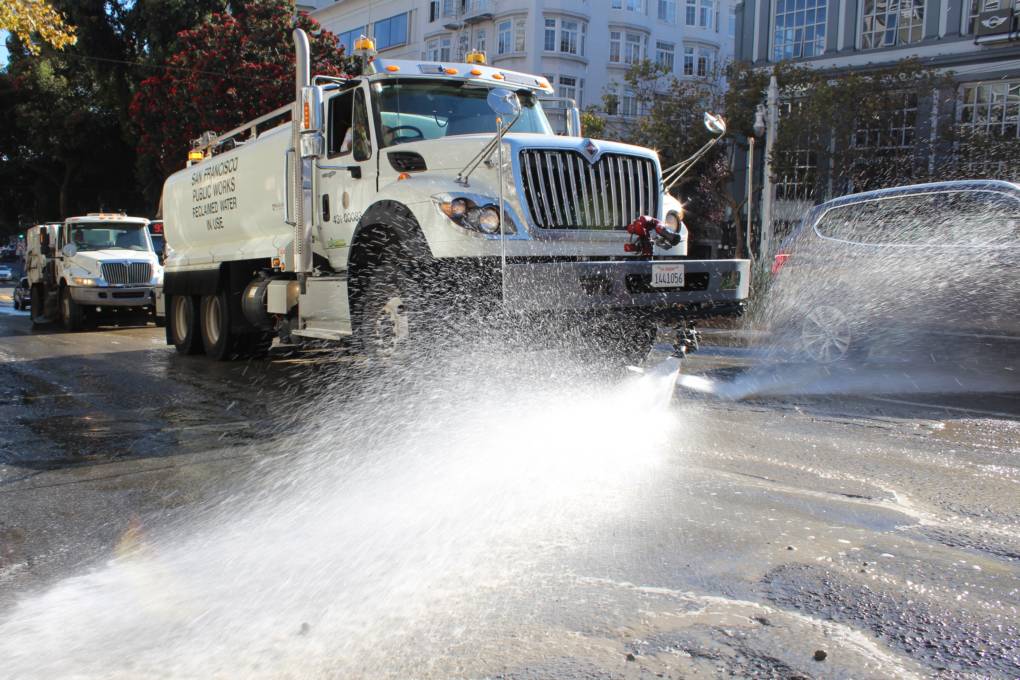
"caption": "A flusher sprays the streets down with water in San Francisco. Environmental advocates had accused San Francisco of trying to dismantle the Clean Water Act in a case about the city’s repeated releases of raw sewage during big storms.",
"credit": "Courtesy of SF Public Works. ",
"altTag": "A flusher sprays the streets down with water.",
"description": "A flusher sprays the streets down with water.",
"imgSizes": {
"thumbnail": {
"file": "https://cdn.kqed.org/wp-content/uploads/sites/10/2017/08/cleaner-160x107.jpg",
"width": 160,
"height": 107,
"mimeType": "image/jpeg"
},
"medium": {
"file": "https://cdn.kqed.org/wp-content/uploads/sites/10/2017/08/cleaner-800x533.jpg",
"width": 800,
"height": 533,
"mimeType": "image/jpeg"
},
"large": {
"file": "https://cdn.kqed.org/wp-content/uploads/sites/10/2017/08/cleaner-1020x680.jpg",
"width": 1020,
"height": 680,
"mimeType": "image/jpeg"
},
"fd-lrg": {
"file": "https://cdn.kqed.org/wp-content/uploads/sites/10/2017/08/cleaner-1920x1280.jpg",
"width": 1920,
"height": 1280,
"mimeType": "image/jpeg"
},
"fd-med": {
"file": "https://cdn.kqed.org/wp-content/uploads/sites/10/2017/08/cleaner-1180x787.jpg",
"width": 1180,
"height": 787,
"mimeType": "image/jpeg"
},
"fd-sm": {
"file": "https://cdn.kqed.org/wp-content/uploads/sites/10/2017/08/cleaner-960x640.jpg",
"width": 960,
"height": 640,
"mimeType": "image/jpeg"
},
"post-thumbnail": {
"file": "https://cdn.kqed.org/wp-content/uploads/sites/10/2017/08/cleaner-672x372.jpg",
"width": 672,
"height": 372,
"mimeType": "image/jpeg"
},
"twentyfourteen-full-width": {
"file": "https://cdn.kqed.org/wp-content/uploads/sites/10/2017/08/cleaner-1038x576.jpg",
"width": 1038,
"height": 576,
"mimeType": "image/jpeg"
},
"xxsmall": {
"file": "https://cdn.kqed.org/wp-content/uploads/sites/10/2017/08/cleaner-240x160.jpg",
"width": 240,
"height": 160,
"mimeType": "image/jpeg"
},
"xsmall": {
"file": "https://cdn.kqed.org/wp-content/uploads/sites/10/2017/08/cleaner-375x250.jpg",
"width": 375,
"height": 250,
"mimeType": "image/jpeg"
},
"small": {
"file": "https://cdn.kqed.org/wp-content/uploads/sites/10/2017/08/cleaner-520x347.jpg",
"width": 520,
"height": 347,
"mimeType": "image/jpeg"
},
"xlarge": {
"file": "https://cdn.kqed.org/wp-content/uploads/sites/10/2017/08/cleaner-1180x787.jpg",
"width": 1180,
"height": 787,
"mimeType": "image/jpeg"
},
"full-width": {
"file": "https://cdn.kqed.org/wp-content/uploads/sites/10/2017/08/cleaner-1920x1280.jpg",
"width": 1920,
"height": 1280,
"mimeType": "image/jpeg"
},
"guest-author-32": {
"file": "https://cdn.kqed.org/wp-content/uploads/sites/10/2017/08/cleaner-32x32.jpg",
"width": 32,
"height": 32,
"mimeType": "image/jpeg"
},
"guest-author-50": {
"file": "https://cdn.kqed.org/wp-content/uploads/sites/10/2017/08/cleaner-50x50.jpg",
"width": 50,
"height": 50,
"mimeType": "image/jpeg"
},
"guest-author-64": {
"file": "https://cdn.kqed.org/wp-content/uploads/sites/10/2017/08/cleaner-64x64.jpg",
"width": 64,
"height": 64,
"mimeType": "image/jpeg"
},
"guest-author-96": {
"file": "https://cdn.kqed.org/wp-content/uploads/sites/10/2017/08/cleaner-96x96.jpg",
"width": 96,
"height": 96,
"mimeType": "image/jpeg"
},
"guest-author-128": {
"file": "https://cdn.kqed.org/wp-content/uploads/sites/10/2017/08/cleaner-128x128.jpg",
"width": 128,
"height": 128,
"mimeType": "image/jpeg"
},
"detail": {
"file": "https://cdn.kqed.org/wp-content/uploads/sites/10/2017/08/cleaner-150x150.jpg",
"width": 150,
"height": 150,
"mimeType": "image/jpeg"
},
"kqedFullSize": {
"file": "https://cdn.kqed.org/wp-content/uploads/sites/10/2017/08/cleaner-e1504203647680.jpg",
"width": 2000,
"height": 1333
}
},
"isLoading": false,
"fetchFailed": false
},
"news_12024792": {
"type": "attachments",
"id": "news_12024792",
"meta": {
"index": "attachments_1716263798",
"site": "news",
"id": "12024792",
"found": true
},
"title": "GRANTS PASS, OREGON: Unhoused people have set up a tent communi",
"publishDate": 1738260207,
"status": "inherit",
"parent": 12024778,
"modified": 1738262707,
"caption": "Unhoused people have set up a tent community at Riverside Park in Grants Pass, Oregon, on Thursday, March 28, 2024. ",
"credit": "Melina Mara/The Washington Post via Getty Images",
"altTag": null,
"description": null,
"imgSizes": {
"medium": {
"file": "https://cdn.kqed.org/wp-content/uploads/sites/10/2025/01/GettyImages-2147916692-800x450.jpg",
"width": 800,
"height": 450,
"mimeType": "image/jpeg"
},
"large": {
"file": "https://cdn.kqed.org/wp-content/uploads/sites/10/2025/01/GettyImages-2147916692-1020x574.jpg",
"width": 1020,
"height": 574,
"mimeType": "image/jpeg"
},
"thumbnail": {
"file": "https://cdn.kqed.org/wp-content/uploads/sites/10/2025/01/GettyImages-2147916692-160x90.jpg",
"width": 160,
"height": 90,
"mimeType": "image/jpeg"
},
"post-thumbnail": {
"file": "https://cdn.kqed.org/wp-content/uploads/sites/10/2025/01/GettyImages-2147916692-672x372.jpg",
"width": 672,
"height": 372,
"mimeType": "image/jpeg"
},
"kqedFullSize": {
"file": "https://cdn.kqed.org/wp-content/uploads/sites/10/2025/01/GettyImages-2147916692.jpg",
"width": 1024,
"height": 576
}
},
"isLoading": false,
"fetchFailed": false
},
"news_12021479": {
"type": "attachments",
"id": "news_12021479",
"meta": {
"index": "attachments_1716263798",
"site": "news",
"id": "12021479",
"found": true
},
"title": "Supreme Court Hears Arguments In ByteDance And TikTok Case",
"publishDate": 1736537233,
"status": "inherit",
"parent": 12021468,
"modified": 1736542488,
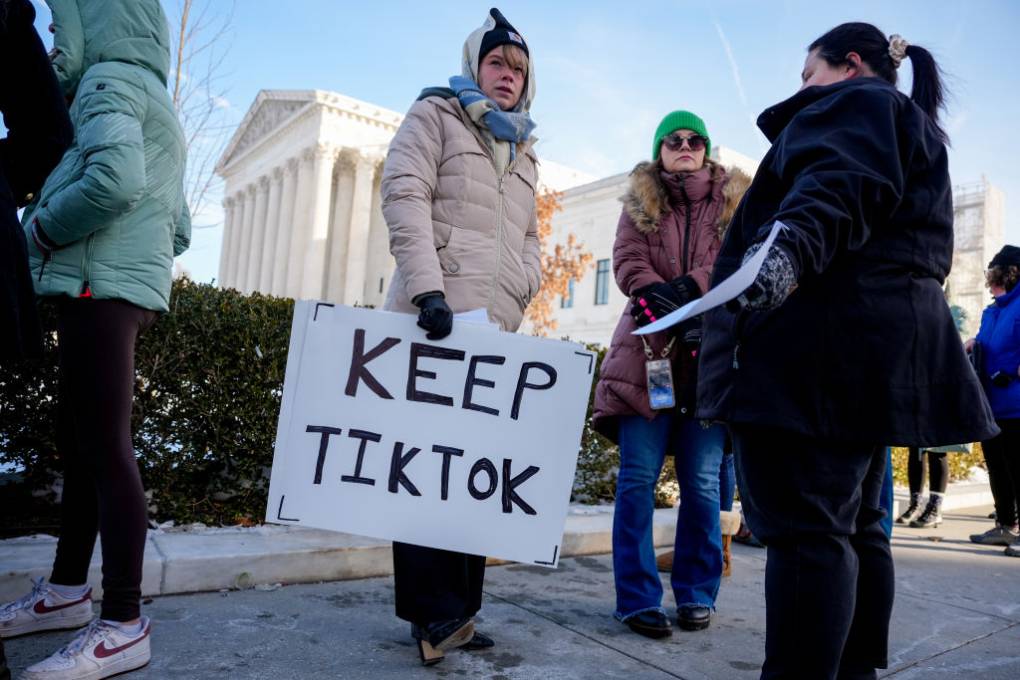
"caption": "(L-R) Sarah Baus of Charleston, South Carolina, holds a sign that reads 'Keep TikTok' as she and other content creators Sallye Miley of Jackson, Mississippi, and Callie Goodwin of Columbia, South Carolina, stand outside the U.S. Supreme Court Building as the court hears oral arguments on whether to overturn or delay a law that could lead to a ban of TikTok in the U.S., on Jan. 10, 20,25 in Washington, D.C. ",
"credit": "Andrew Harnik/Getty Images",
"altTag": "Three women stand outside a neo-classical white building with coats, scarves and beanies, one of them holding a sign that reads 'Keep TikTok.'",
"description": null,
"imgSizes": {
"medium": {
"file": "https://cdn.kqed.org/wp-content/uploads/sites/10/2025/01/GettyImages-2192575772-800x534.jpg",
"width": 800,
"height": 534,
"mimeType": "image/jpeg"
},
"large": {
"file": "https://cdn.kqed.org/wp-content/uploads/sites/10/2025/01/GettyImages-2192575772-1020x680.jpg",
"width": 1020,
"height": 680,
"mimeType": "image/jpeg"
},
"thumbnail": {
"file": "https://cdn.kqed.org/wp-content/uploads/sites/10/2025/01/GettyImages-2192575772-160x107.jpg",
"width": 160,
"height": 107,
"mimeType": "image/jpeg"
},
"post-thumbnail": {
"file": "https://cdn.kqed.org/wp-content/uploads/sites/10/2025/01/GettyImages-2192575772-672x372.jpg",
"width": 672,
"height": 372,
"mimeType": "image/jpeg"
},
"twentyfourteen-full-width": {
"file": "https://cdn.kqed.org/wp-content/uploads/sites/10/2025/01/GettyImages-2192575772-1024x576.jpg",
"width": 1024,
"height": 576,
"mimeType": "image/jpeg"
},
"kqedFullSize": {
"file": "https://cdn.kqed.org/wp-content/uploads/sites/10/2025/01/GettyImages-2192575772.jpg",
"width": 1024,
"height": 683
}
},
"isLoading": false,
"fetchFailed": false
},
"news_12012046": {
"type": "attachments",
"id": "news_12012046",
"meta": {
"index": "attachments_1716263798",
"site": "news",
"id": "12012046",
"found": true
},
"title": "npr.brightspotcdn copy",
"publishDate": 1730418450,
"status": "inherit",
"parent": 12012045,
"modified": 1730418518,
"caption": "US Vice President and Democratic presidential candidate Kamala Harris (right) shakes hands with former US President and Republican presidential candidate Donald Trump during a presidential debate at the National Constitution Center in Philadelphia, Pennsylvania, on Sept. 10, 2024.",
"credit": "Saul Loeb/AFP",
"altTag": null,
"description": null,
"imgSizes": {
"medium": {
"file": "https://cdn.kqed.org/wp-content/uploads/sites/10/2024/10/npr.brightspotcdn-copy-3-800x533.jpg",
"width": 800,
"height": 533,
"mimeType": "image/jpeg"
},
"large": {
"file": "https://cdn.kqed.org/wp-content/uploads/sites/10/2024/10/npr.brightspotcdn-copy-3-1020x680.jpg",
"width": 1020,
"height": 680,
"mimeType": "image/jpeg"
},
"thumbnail": {
"file": "https://cdn.kqed.org/wp-content/uploads/sites/10/2024/10/npr.brightspotcdn-copy-3-160x107.jpg",
"width": 160,
"height": 107,
"mimeType": "image/jpeg"
},
"post-thumbnail": {
"file": "https://cdn.kqed.org/wp-content/uploads/sites/10/2024/10/npr.brightspotcdn-copy-3-672x372.jpg",
"width": 672,
"height": 372,
"mimeType": "image/jpeg"
},
"twentyfourteen-full-width": {
"file": "https://cdn.kqed.org/wp-content/uploads/sites/10/2024/10/npr.brightspotcdn-copy-3-1038x576.jpg",
"width": 1038,
"height": 576,
"mimeType": "image/jpeg"
},
"kqedFullSize": {
"file": "https://cdn.kqed.org/wp-content/uploads/sites/10/2024/10/npr.brightspotcdn-copy-3.jpg",
"width": 1100,
"height": 733
}
},
"isLoading": false,
"fetchFailed": false
},
"news_12009556": {
"type": "attachments",
"id": "news_12009556",
"meta": {
"index": "attachments_1716263798",
"site": "news",
"id": "12009556",
"found": true
},
"title": "MissionCreekSF",
"publishDate": 1729035046,
"status": "inherit",
"parent": 12009496,
"modified": 1729037780,
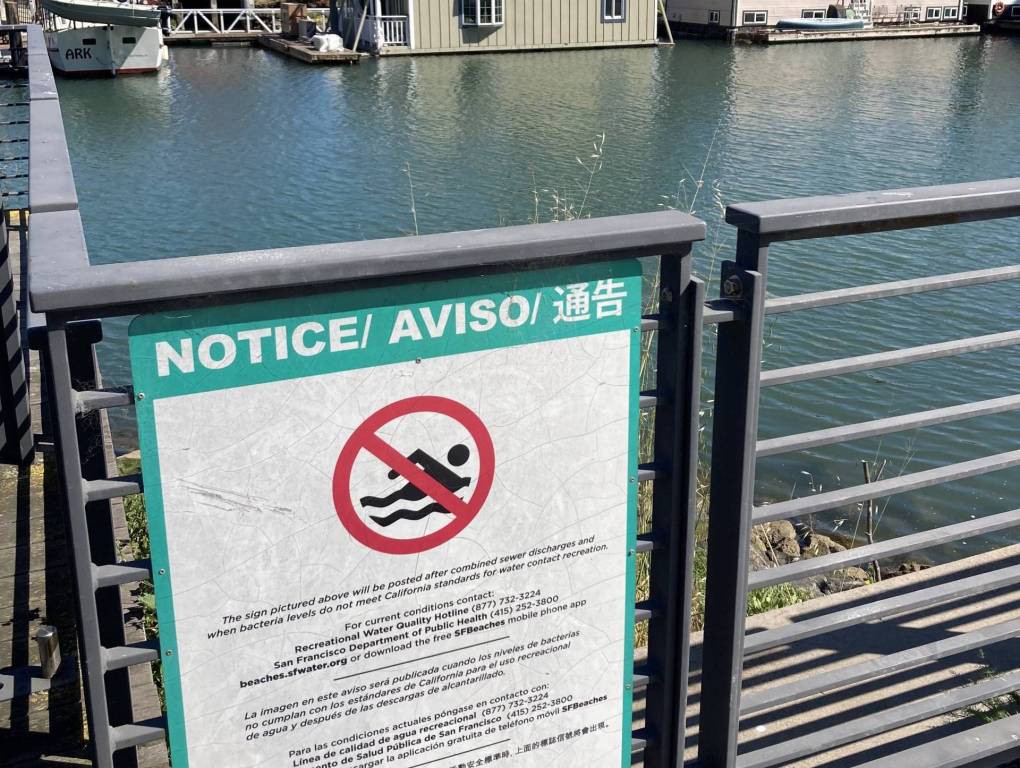
"caption": "A sign along Mission Creek in San Francisco indicates that the water is unsafe to swim in due to \"sewer discharges\" and bacteria levels that \"do not meet California standards for water contact recreation\" on May 13, 2024.",
"credit": "Katherine Monahan/KQED",
"altTag": null,
"description": null,
"imgSizes": {
"medium": {
"file": "https://cdn.kqed.org/wp-content/uploads/sites/10/2024/10/MissionCreekSF-800x603.jpg",
"width": 800,
"height": 603,
"mimeType": "image/jpeg"
},
"large": {
"file": "https://cdn.kqed.org/wp-content/uploads/sites/10/2024/10/MissionCreekSF-1020x768.jpg",
"width": 1020,
"height": 768,
"mimeType": "image/jpeg"
},
"thumbnail": {
"file": "https://cdn.kqed.org/wp-content/uploads/sites/10/2024/10/MissionCreekSF-160x121.jpg",
"width": 160,
"height": 121,
"mimeType": "image/jpeg"
},
"1536x1536": {
"file": "https://cdn.kqed.org/wp-content/uploads/sites/10/2024/10/MissionCreekSF-1536x1157.jpg",
"width": 1536,
"height": 1157,
"mimeType": "image/jpeg"
},
"post-thumbnail": {
"file": "https://cdn.kqed.org/wp-content/uploads/sites/10/2024/10/MissionCreekSF-672x372.jpg",
"width": 672,
"height": 372,
"mimeType": "image/jpeg"
},
"twentyfourteen-full-width": {
"file": "https://cdn.kqed.org/wp-content/uploads/sites/10/2024/10/MissionCreekSF-1038x576.jpg",
"width": 1038,
"height": 576,
"mimeType": "image/jpeg"
},
"kqedFullSize": {
"file": "https://cdn.kqed.org/wp-content/uploads/sites/10/2024/10/MissionCreekSF.jpg",
"width": 1920,
"height": 1446
}
},
"isLoading": false,
"fetchFailed": false
},
"news_12008321": {
"type": "attachments",
"id": "news_12008321",
"meta": {
"index": "attachments_1716263798",
"site": "news",
"id": "12008321",
"found": true
},
"title": "San Francisco Ride Hailing Lawsuit",
"publishDate": 1728334457,
"status": "inherit",
"parent": 12008292,
"modified": 1744762102,
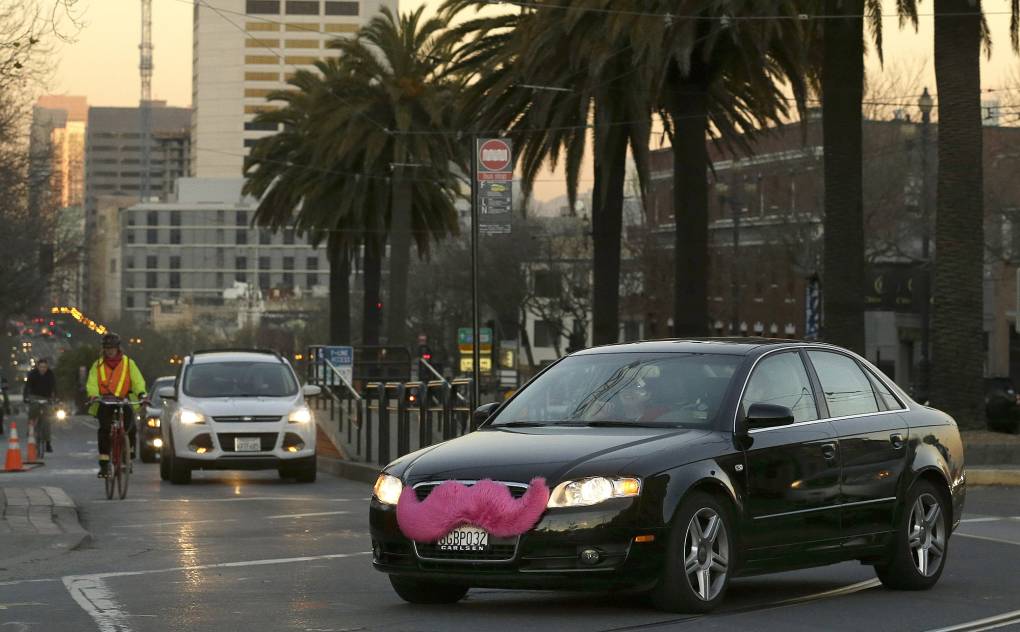
"caption": "A Lyft car crosses Market Street in San Francisco on Feb. 8, 2018. ",
"credit": "Jeff Chiu/AP Photo",
"altTag": null,
"description": null,
"imgSizes": {
"medium": {
"file": "https://cdn.kqed.org/wp-content/uploads/sites/10/2024/10/SFLyftDriverAP-800x496.jpg",
"width": 800,
"height": 496,
"mimeType": "image/jpeg"
},
"large": {
"file": "https://cdn.kqed.org/wp-content/uploads/sites/10/2024/10/SFLyftDriverAP-1020x632.jpg",
"width": 1020,
"height": 632,
"mimeType": "image/jpeg"
},
"thumbnail": {
"file": "https://cdn.kqed.org/wp-content/uploads/sites/10/2024/10/SFLyftDriverAP-160x99.jpg",
"width": 160,
"height": 99,
"mimeType": "image/jpeg"
},
"1536x1536": {
"file": "https://cdn.kqed.org/wp-content/uploads/sites/10/2024/10/SFLyftDriverAP-1536x952.jpg",
"width": 1536,
"height": 952,
"mimeType": "image/jpeg"
},
"post-thumbnail": {
"file": "https://cdn.kqed.org/wp-content/uploads/sites/10/2024/10/SFLyftDriverAP-672x372.jpg",
"width": 672,
"height": 372,
"mimeType": "image/jpeg"
},
"twentyfourteen-full-width": {
"file": "https://cdn.kqed.org/wp-content/uploads/sites/10/2024/10/SFLyftDriverAP-1038x576.jpg",
"width": 1038,
"height": 576,
"mimeType": "image/jpeg"
},
"full-width": {
"file": "https://cdn.kqed.org/wp-content/uploads/sites/10/2024/10/SFLyftDriverAP-1920x1190.jpg",
"width": 1920,
"height": 1190,
"mimeType": "image/jpeg"
},
"kqedFullSize": {
"file": "https://cdn.kqed.org/wp-content/uploads/sites/10/2024/10/SFLyftDriverAP.jpg",
"width": 2000,
"height": 1240
}
},
"isLoading": false,
"fetchFailed": false
},
"news_12002395": {
"type": "attachments",
"id": "news_12002395",
"meta": {
"index": "attachments_1716263798",
"site": "news",
"id": "12002395",
"found": true
},
"title": "061321_StandfordCommencement_HM_CM-03",
"publishDate": 1724965496,
"status": "inherit",
"parent": 12002383,
"modified": 1724968876,
"caption": "Ryan Wimsatt joins his hands to thank his parents during the graduation ceremony at Stanford University in Palo Alto on June 13, 2021. ",
"credit": "Harika Maddala/CalMatters",
"altTag": "A young Black man wearing a black cap and gown interlocks his fingers, looking up as other young people wearing the same attire walk around. Everyone is in a stadium with white fold-up chairs on the field.",
"description": null,
"imgSizes": {
"medium": {
"file": "https://cdn.kqed.org/wp-content/uploads/sites/10/2024/08/061321_StandfordCommencement_HM_CM-03-800x533.jpg",
"width": 800,
"height": 533,
"mimeType": "image/jpeg"
},
"large": {
"file": "https://cdn.kqed.org/wp-content/uploads/sites/10/2024/08/061321_StandfordCommencement_HM_CM-03-1020x680.jpg",
"width": 1020,
"height": 680,
"mimeType": "image/jpeg"
},
"thumbnail": {
"file": "https://cdn.kqed.org/wp-content/uploads/sites/10/2024/08/061321_StandfordCommencement_HM_CM-03-160x107.jpg",
"width": 160,
"height": 107,
"mimeType": "image/jpeg"
},
"1536x1536": {
"file": "https://cdn.kqed.org/wp-content/uploads/sites/10/2024/08/061321_StandfordCommencement_HM_CM-03-1536x1024.jpg",
"width": 1536,
"height": 1024,
"mimeType": "image/jpeg"
},
"post-thumbnail": {
"file": "https://cdn.kqed.org/wp-content/uploads/sites/10/2024/08/061321_StandfordCommencement_HM_CM-03-672x372.jpg",
"width": 672,
"height": 372,
"mimeType": "image/jpeg"
},
"twentyfourteen-full-width": {
"file": "https://cdn.kqed.org/wp-content/uploads/sites/10/2024/08/061321_StandfordCommencement_HM_CM-03-1038x576.jpg",
"width": 1038,
"height": 576,
"mimeType": "image/jpeg"
},
"full-width": {
"file": "https://cdn.kqed.org/wp-content/uploads/sites/10/2024/08/061321_StandfordCommencement_HM_CM-03-1920x1280.jpg",
"width": 1920,
"height": 1280,
"mimeType": "image/jpeg"
},
"kqedFullSize": {
"file": "https://cdn.kqed.org/wp-content/uploads/sites/10/2024/08/061321_StandfordCommencement_HM_CM-03.jpg",
"width": 2000,
"height": 1333
}
},
"isLoading": false,
"fetchFailed": false
},
"news_11996092": {
"type": "attachments",
"id": "news_11996092",
"meta": {
"index": "attachments_1716263798",
"site": "news",
"id": "11996092",
"found": true
},
"title": "032223_SD_Encampment-Ban_KC_CM_23",
"publishDate": 1721247123,
"status": "inherit",
"parent": 11996078,
"modified": 1721248104,
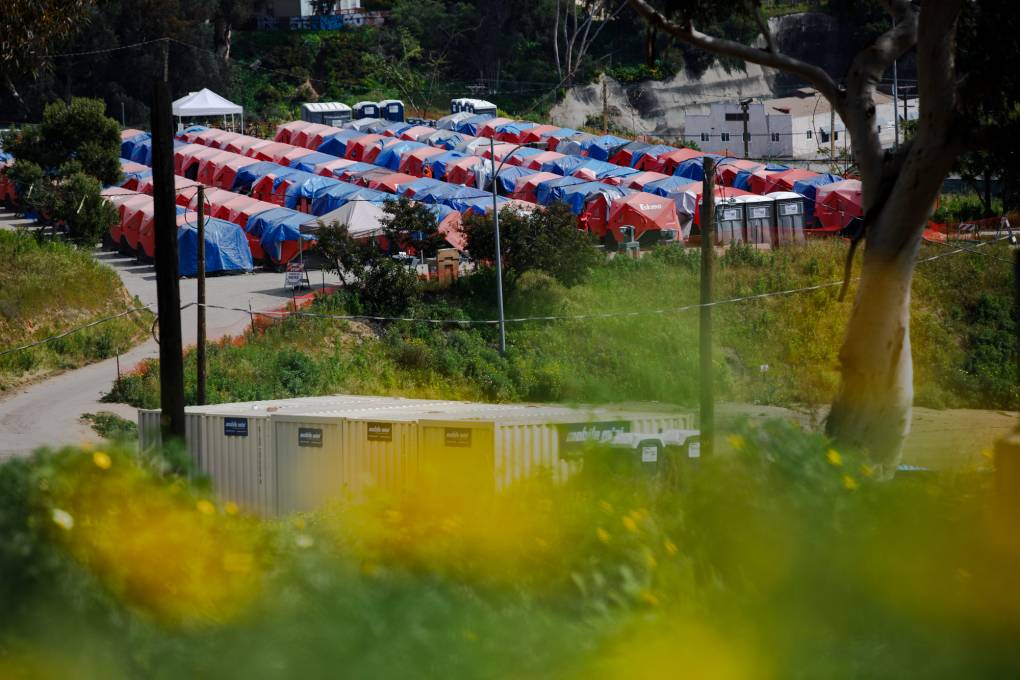
"caption": "The O Lot Safe Sleeping site at Balboa Park in San Diego on March 22, 2024. ",
"credit": "Kristian Carreon / CalMatters",
"altTag": "Rows of tents outdoors from a distance.",
"description": null,
"imgSizes": {
"medium": {
"file": "https://cdn.kqed.org/wp-content/uploads/sites/10/2024/07/032223_SD_Encampment-Ban_KC_CM_23-800x533.jpg",
"width": 800,
"height": 533,
"mimeType": "image/jpeg"
},
"large": {
"file": "https://cdn.kqed.org/wp-content/uploads/sites/10/2024/07/032223_SD_Encampment-Ban_KC_CM_23-1020x680.jpg",
"width": 1020,
"height": 680,
"mimeType": "image/jpeg"
},
"thumbnail": {
"file": "https://cdn.kqed.org/wp-content/uploads/sites/10/2024/07/032223_SD_Encampment-Ban_KC_CM_23-160x107.jpg",
"width": 160,
"height": 107,
"mimeType": "image/jpeg"
},
"1536x1536": {
"file": "https://cdn.kqed.org/wp-content/uploads/sites/10/2024/07/032223_SD_Encampment-Ban_KC_CM_23-1536x1024.jpg",
"width": 1536,
"height": 1024,
"mimeType": "image/jpeg"
},
"post-thumbnail": {
"file": "https://cdn.kqed.org/wp-content/uploads/sites/10/2024/07/032223_SD_Encampment-Ban_KC_CM_23-672x372.jpg",
"width": 672,
"height": 372,
"mimeType": "image/jpeg"
},
"twentyfourteen-full-width": {
"file": "https://cdn.kqed.org/wp-content/uploads/sites/10/2024/07/032223_SD_Encampment-Ban_KC_CM_23-1038x576.jpg",
"width": 1038,
"height": 576,
"mimeType": "image/jpeg"
},
"full-width": {
"file": "https://cdn.kqed.org/wp-content/uploads/sites/10/2024/07/032223_SD_Encampment-Ban_KC_CM_23-1920x1280.jpg",
"width": 1920,
"height": 1280,
"mimeType": "image/jpeg"
},
"kqedFullSize": {
"file": "https://cdn.kqed.org/wp-content/uploads/sites/10/2024/07/032223_SD_Encampment-Ban_KC_CM_23.jpg",
"width": 2000,
"height": 1333
}
},
"isLoading": false,
"fetchFailed": false
},
"news_11950162": {
"type": "attachments",
"id": "news_11950162",
"meta": {
"index": "attachments_1716263798",
"site": "news",
"id": "11950162",
"found": true
},
"title": "013_KQED_WoodStreet_JessicaFountaine_09082022",
"publishDate": 1684462667,
"status": "inherit",
"parent": 11949978,
"modified": 1720550121,
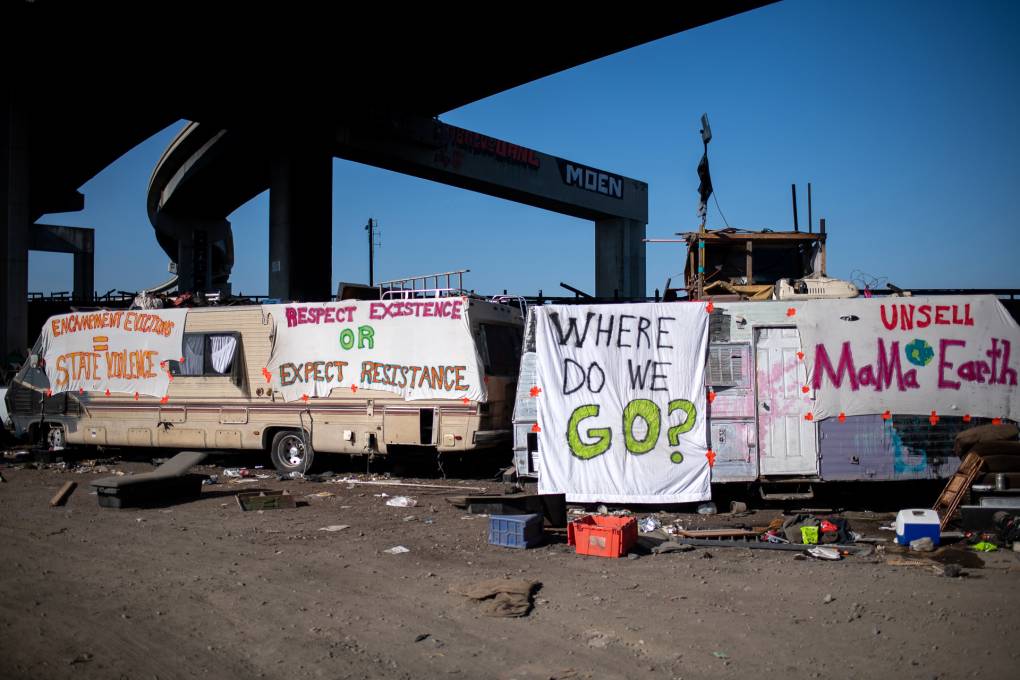
"caption": "Signs cover 2 RVs at the Wood Street encampment as Caltrans moved in to clear the area on May 18, 2023.",
"credit": "Beth LaBerge/KQED",
"altTag": "RVs in an encampment under a freeway ramp with signs that say 'Where do we go?' draped on the nearest RV.",
"description": null,
"imgSizes": {
"medium": {
"file": "https://cdn.kqed.org/wp-content/uploads/sites/10/2023/05/013_KQED_WoodStreet_JessicaFountaine_09082022-800x533.jpg",
"width": 800,
"height": 533,
"mimeType": "image/jpeg"
},
"large": {
"file": "https://cdn.kqed.org/wp-content/uploads/sites/10/2023/05/013_KQED_WoodStreet_JessicaFountaine_09082022-1020x680.jpg",
"width": 1020,
"height": 680,
"mimeType": "image/jpeg"
},
"thumbnail": {
"file": "https://cdn.kqed.org/wp-content/uploads/sites/10/2023/05/013_KQED_WoodStreet_JessicaFountaine_09082022-160x107.jpg",
"width": 160,
"height": 107,
"mimeType": "image/jpeg"
},
"1536x1536": {
"file": "https://cdn.kqed.org/wp-content/uploads/sites/10/2023/05/013_KQED_WoodStreet_JessicaFountaine_09082022-1536x1024.jpg",
"width": 1536,
"height": 1024,
"mimeType": "image/jpeg"
},
"post-thumbnail": {
"file": "https://cdn.kqed.org/wp-content/uploads/sites/10/2023/05/013_KQED_WoodStreet_JessicaFountaine_09082022-672x372.jpg",
"width": 672,
"height": 372,
"mimeType": "image/jpeg"
},
"twentyfourteen-full-width": {
"file": "https://cdn.kqed.org/wp-content/uploads/sites/10/2023/05/013_KQED_WoodStreet_JessicaFountaine_09082022-1038x576.jpg",
"width": 1038,
"height": 576,
"mimeType": "image/jpeg"
},
"kqedFullSize": {
"file": "https://cdn.kqed.org/wp-content/uploads/sites/10/2023/05/013_KQED_WoodStreet_JessicaFountaine_09082022.jpg",
"width": 1920,
"height": 1280
}
},
"isLoading": false,
"fetchFailed": false
},
"news_11963497": {
"type": "attachments",
"id": "news_11963497",
"meta": {
"index": "attachments_1716263798",
"site": "news",
"id": "11963497",
"found": true
},
"parent": 11963482,
"imgSizes": {
"twentyfourteen-full-width": {
"file": "https://ww2.kqed.org/app/uploads/sites/10/2023/10/GettyImages-1258550747-qut-1038x576.jpg",
"width": 1038,
"mimeType": "image/jpeg",
"height": 576
},
"thumbnail": {
"file": "https://ww2.kqed.org/app/uploads/sites/10/2023/10/GettyImages-1258550747-qut-160x107.jpg",
"width": 160,
"mimeType": "image/jpeg",
"height": 107
},
"post-thumbnail": {
"file": "https://ww2.kqed.org/app/uploads/sites/10/2023/10/GettyImages-1258550747-qut-672x372.jpg",
"width": 672,
"mimeType": "image/jpeg",
"height": 372
},
"kqedFullSize": {
"file": "https://ww2.kqed.org/app/uploads/sites/10/2023/10/GettyImages-1258550747-qut.jpg",
"width": 1920,
"height": 1280
},
"large": {
"file": "https://ww2.kqed.org/app/uploads/sites/10/2023/10/GettyImages-1258550747-qut-1020x680.jpg",
"width": 1020,
"mimeType": "image/jpeg",
"height": 680
},
"1536x1536": {
"file": "https://ww2.kqed.org/app/uploads/sites/10/2023/10/GettyImages-1258550747-qut-1536x1024.jpg",
"width": 1536,
"mimeType": "image/jpeg",
"height": 1024
},
"medium": {
"file": "https://ww2.kqed.org/app/uploads/sites/10/2023/10/GettyImages-1258550747-qut-800x533.jpg",
"width": 800,
"mimeType": "image/jpeg",
"height": 533
}
},
"publishDate": 1696464540,
"modified": 1696466201,
"caption": "A tent encampment is seen near City Hall in San Francisco on June 6, 2023.",
"description": null,
"title": "Homelessness in San Francisco",
"credit": "Tayfun Coskun/Anadolu Agency via Getty Images",
"status": "inherit",
"altTag": "A street scene, with cars, people, and tents on the sidewalk.",
"isLoading": false,
"fetchFailed": false
},
"news_11991361": {
"type": "attachments",
"id": "news_11991361",
"meta": {
"index": "attachments_1716263798",
"site": "news",
"id": "11991361",
"found": true
},
"title": "Tents sit along Coyote Creek in Roosevelt Park in San José on April 9, 2024.",
"publishDate": 1718923276,
"status": "inherit",
"parent": 0,
"modified": 1719345027,
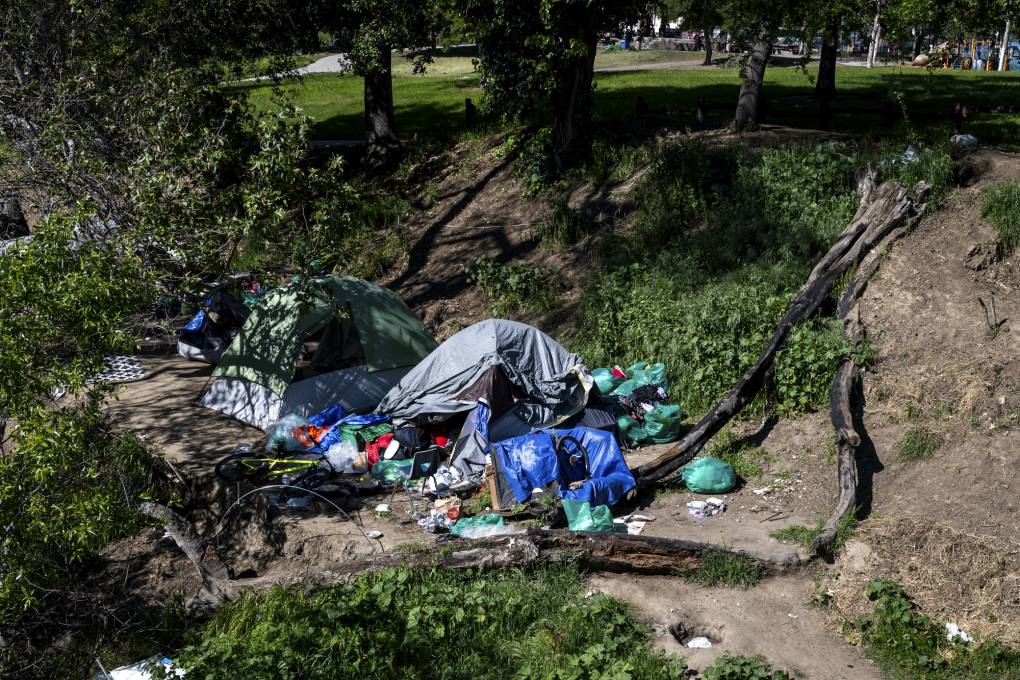
"caption": "Tents sit along Coyote Creek in Roosevelt Park in San José on April 9, 2024. ",
"credit": "Beth LaBerge/KQED",
"altTag": null,
"description": null,
"imgSizes": {
"medium": {
"file": "https://cdn.kqed.org/wp-content/uploads/sites/10/2024/06/240409-SJENCAMPMENTBAN-067-BL-KQED-800x533.jpg",
"width": 800,
"height": 533,
"mimeType": "image/jpeg"
},
"large": {
"file": "https://cdn.kqed.org/wp-content/uploads/sites/10/2024/06/240409-SJENCAMPMENTBAN-067-BL-KQED-1020x680.jpg",
"width": 1020,
"height": 680,
"mimeType": "image/jpeg"
},
"thumbnail": {
"file": "https://cdn.kqed.org/wp-content/uploads/sites/10/2024/06/240409-SJENCAMPMENTBAN-067-BL-KQED-160x107.jpg",
"width": 160,
"height": 107,
"mimeType": "image/jpeg"
},
"1536x1536": {
"file": "https://cdn.kqed.org/wp-content/uploads/sites/10/2024/06/240409-SJENCAMPMENTBAN-067-BL-KQED-1536x1024.jpg",
"width": 1536,
"height": 1024,
"mimeType": "image/jpeg"
},
"post-thumbnail": {
"file": "https://cdn.kqed.org/wp-content/uploads/sites/10/2024/06/240409-SJENCAMPMENTBAN-067-BL-KQED-672x372.jpg",
"width": 672,
"height": 372,
"mimeType": "image/jpeg"
},
"twentyfourteen-full-width": {
"file": "https://cdn.kqed.org/wp-content/uploads/sites/10/2024/06/240409-SJENCAMPMENTBAN-067-BL-KQED-1038x576.jpg",
"width": 1038,
"height": 576,
"mimeType": "image/jpeg"
},
"full-width": {
"file": "https://cdn.kqed.org/wp-content/uploads/sites/10/2024/06/240409-SJENCAMPMENTBAN-067-BL-KQED-1920x1280.jpg",
"width": 1920,
"height": 1280,
"mimeType": "image/jpeg"
},
"kqedFullSize": {
"file": "https://cdn.kqed.org/wp-content/uploads/sites/10/2024/06/240409-SJENCAMPMENTBAN-067-BL-KQED.jpg",
"width": 2000,
"height": 1333
}
},
"isLoading": false,
"fetchFailed": false
},
"news_11990203": {
"type": "attachments",
"id": "news_11990203",
"meta": {
"index": "attachments_1716263798",
"site": "news",
"id": "11990203",
"found": true
},
"title": "Roe-Wade-Abortion-Protest-MG-CM-10",
"publishDate": 1718304292,
"status": "inherit",
"parent": 11990192,
"modified": 1718307043,
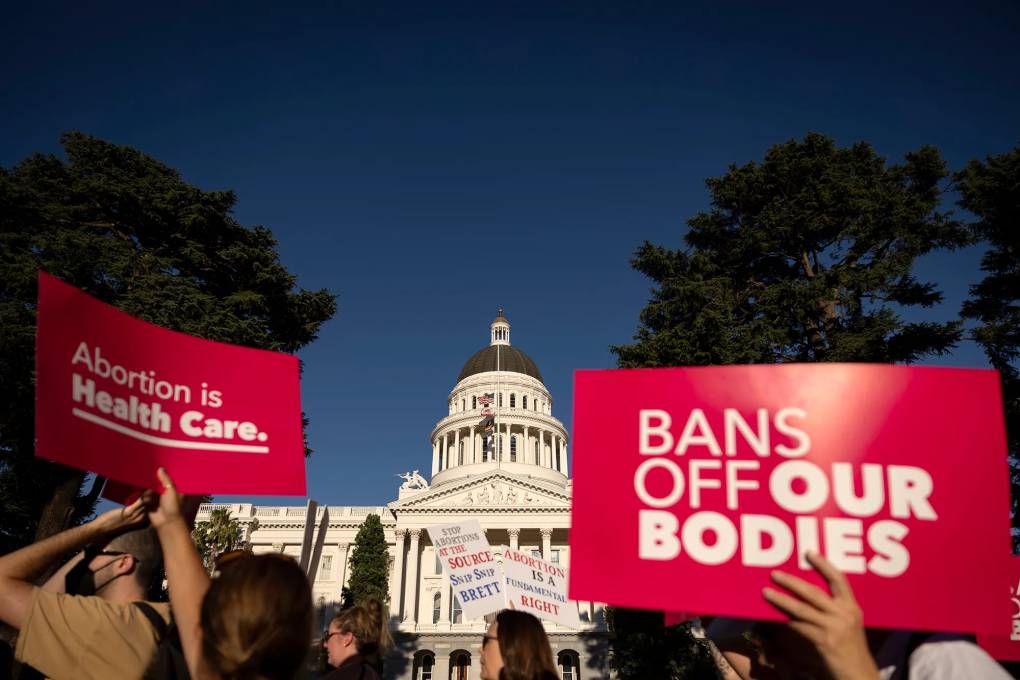
"caption": "Abortion rights supporters rally in front of the California State Capitol in Sacramento on June 25, 2022, to protest the U.S. Supreme Court’s ruling that overturned Roe vs. Wade. Since then, California has expanded access to abortion. The High Court on Thursday upheld access to the abortion pill, rejecting a case that questioned the FDA's approval of mifepristone.",
"credit": "Miguel Gutierrez Jr./CalMatters",
"altTag": "Pro-choice protesters rally in front of the California Capitol Building in Sacramento, holding signs that say 'Bans off our bodies.'",
"description": null,
"imgSizes": {
"medium": {
"file": "https://cdn.kqed.org/wp-content/uploads/sites/10/2024/06/Roe-Wade-Abortion-Protest-MG-CM-10-800x533.jpg",
"width": 800,
"height": 533,
"mimeType": "image/jpeg"
},
"large": {
"file": "https://cdn.kqed.org/wp-content/uploads/sites/10/2024/06/Roe-Wade-Abortion-Protest-MG-CM-10-1020x680.jpg",
"width": 1020,
"height": 680,
"mimeType": "image/jpeg"
},
"thumbnail": {
"file": "https://cdn.kqed.org/wp-content/uploads/sites/10/2024/06/Roe-Wade-Abortion-Protest-MG-CM-10-160x107.jpg",
"width": 160,
"height": 107,
"mimeType": "image/jpeg"
},
"1536x1536": {
"file": "https://cdn.kqed.org/wp-content/uploads/sites/10/2024/06/Roe-Wade-Abortion-Protest-MG-CM-10-1536x1024.jpg",
"width": 1536,
"height": 1024,
"mimeType": "image/jpeg"
},
"post-thumbnail": {
"file": "https://cdn.kqed.org/wp-content/uploads/sites/10/2024/06/Roe-Wade-Abortion-Protest-MG-CM-10-672x372.jpg",
"width": 672,
"height": 372,
"mimeType": "image/jpeg"
},
"twentyfourteen-full-width": {
"file": "https://cdn.kqed.org/wp-content/uploads/sites/10/2024/06/Roe-Wade-Abortion-Protest-MG-CM-10-1038x576.jpg",
"width": 1038,
"height": 576,
"mimeType": "image/jpeg"
},
"full-width": {
"file": "https://cdn.kqed.org/wp-content/uploads/sites/10/2024/06/Roe-Wade-Abortion-Protest-MG-CM-10-1920x1280.jpg",
"width": 1920,
"height": 1280,
"mimeType": "image/jpeg"
},
"kqedFullSize": {
"file": "https://cdn.kqed.org/wp-content/uploads/sites/10/2024/06/Roe-Wade-Abortion-Protest-MG-CM-10.jpg",
"width": 2000,
"height": 1333
}
},
"isLoading": false,
"fetchFailed": false
}
},
"audioPlayerReducer": {
"postId": "stream_live",
"isPaused": true,
"isPlaying": false,
"pfsActive": false,
"pledgeModalIsOpen": true,
"playerDrawerIsOpen": false,
"liveAudioPlayStartedAt": 0,
"liveAudioPlayContext": ""
},
"authorsReducer": {
"byline_news_12024778": {
"type": "authors",
"id": "byline_news_12024778",
"meta": {
"override": true
},
"slug": "byline_news_12024778",
"name": "Claire Rush, Associated Press",
"isLoading": false
},
"byline_news_12021468": {
"type": "authors",
"id": "byline_news_12021468",
"meta": {
"override": true
},
"slug": "byline_news_12021468",
"name": "Mark Sherman, Associated Press",
"isLoading": false
},
"byline_news_12012045": {
"type": "authors",
"id": "byline_news_12012045",
"meta": {
"override": true
},
"slug": "byline_news_12012045",
"name": "\u003ca href=\"https://www.npr.org/people/2101289/nina-totenberg\">Nina Totenberg\u003c/a>",
"isLoading": false
},
"byline_news_12002383": {
"type": "authors",
"id": "byline_news_12002383",
"meta": {
"override": true
},
"slug": "byline_news_12002383",
"name": "\u003ca href=\"https://calmatters.org/author/mikhailzinshteyn\">Mikhail Zinshteyn, \u003c/a>CalMatters",
"isLoading": false
},
"byline_news_11996078": {
"type": "authors",
"id": "byline_news_11996078",
"meta": {
"override": true
},
"slug": "byline_news_11996078",
"name": "Lauren Hepler, CalMatters",
"isLoading": false
},
"byline_news_11990192": {
"type": "authors",
"id": "byline_news_11990192",
"meta": {
"override": true
},
"slug": "byline_news_11990192",
"name": "\u003ca href=\"https://calmatters.org/author/kristen-hwang/\">Kristen Hwang\u003c/a>",
"isLoading": false
},
"rachael-myrow": {
"type": "authors",
"id": "251",
"meta": {
"index": "authors_1716337520",
"id": "251",
"found": true
},
"name": "Rachael Myrow",
"firstName": "Rachael",
"lastName": "Myrow",
"slug": "rachael-myrow",
"email": "rmyrow@kqed.org",
"display_author_email": true,
"staff_mastheads": [
"news"
],
"title": "Senior Editor of KQED's Silicon Valley News Desk",
"bio": "• I write and edit stories about how Silicon Valley power and policies shape everyday life in California. I’m also passionate about making Bay Area history and culture more accessible to a broad public. • I’ve been a journalist for most of my life, starting in high school with The Franklin Press in Los Angeles, where I grew up. While earning my first degree in English at UC Berkeley, I got my start in public radio at KALX-FM. After completing a second degree in journalism at Cal, I landed my first professional job at Marketplace, then moved on to KPCC (now LAist), and then KQED, where I hosted The California Report for more than seven years. • My reporting has appeared on NPR, The World, WBUR’s \u003ci>Here & Now\u003c/i>, and the BBC. I also guest host for KQED’s \u003ci>Forum\u003c/i>, as well as the Commonwealth Club in San Francisco. • I speak periodically on media, democracy and technology issues, and do voiceover work for documentaries and educational video projects. • Outside of the studio, you'll find me hiking Bay Area trails and whipping up Insta-ready meals in my kitchen. • I do not accept gifts, money, or favors from anyone connected to my reporting, I don't pay people for information, and I do not support or donate to political causes. • I strive to treat the people I report on with fairness, honesty, and respect. I also recognize there are often multiple sides to a story and work to verify information through multiple sources and documentation. If I get something wrong, I correct it.",
"avatar": "https://secure.gravatar.com/avatar/3ed8a3c5f26025e4a805ba634cda8cd764906b97438a6d9ce216b044e340da4e?s=600&d=blank&r=g",
"twitter": "rachaelmyrow",
"bluesky": null,
"facebook": null,
"instagram": null,
"linkedin": "https://www.linkedin.com/in/rachaelmyrow/",
"sites": [
{
"site": "arts",
"roles": [
"administrator"
]
},
{
"site": "news",
"roles": [
"edit_others_posts",
"editor"
]
},
{
"site": "futureofyou",
"roles": [
"editor"
]
},
{
"site": "bayareabites",
"roles": [
"editor"
]
},
{
"site": "stateofhealth",
"roles": [
"editor"
]
},
{
"site": "science",
"roles": [
"editor"
]
},
{
"site": "food",
"roles": [
"editor"
]
},
{
"site": "forum",
"roles": [
"editor"
]
},
{
"site": "liveblog",
"roles": [
"author"
]
}
],
"headData": {
"title": "Rachael Myrow | KQED",
"description": "Senior Editor of KQED's Silicon Valley News Desk",
"ogImgSrc": "https://secure.gravatar.com/avatar/3ed8a3c5f26025e4a805ba634cda8cd764906b97438a6d9ce216b044e340da4e?s=600&d=blank&r=g",
"twImgSrc": "https://secure.gravatar.com/avatar/3ed8a3c5f26025e4a805ba634cda8cd764906b97438a6d9ce216b044e340da4e?s=600&d=blank&r=g"
},
"isLoading": false,
"link": "/author/rachael-myrow"
},
"lesleymcclurg": {
"type": "authors",
"id": "11229",
"meta": {
"index": "authors_1716337520",
"id": "11229",
"found": true
},
"name": "Lesley McClurg",
"firstName": "Lesley",
"lastName": "McClurg",
"slug": "lesleymcclurg",
"email": "lmcclurg@KQED.org",
"display_author_email": false,
"staff_mastheads": [
"news",
"science"
],
"title": "KQED Health Correspondent",
"bio": "Lesley McClurg is a health correspondent and fill-in host whose work is regularly rebroadcast on NPR and PBS programs. She’s earned multiple regional Emmy awards, a national and a regional Edward R. Murrow award, and was named Best Beat Reporter by the Association of Health Care Journalists. The Society of Professional Journalists has recognized her work several times, and the Society of Environmental Journalists spotlighted her coverage of California’s historic drought.\r\n\r\nBefore joining KQED in 2016, Lesley covered food and sustainability for Capital Public Radio, environmental issues for Colorado Public Radio, and reported for KUOW and KCTS 9 in Seattle. Away from the newsroom, she loves skiing with her daughter, mountain biking with her partner, and playing with Ollie, the family’s goldendoodle. On deadline, she runs almost entirely on chocolate chips.\r\n\r\n ",
"avatar": "https://secure.gravatar.com/avatar/bab49e972ea10c774fe0f5e29dba1722b158f7c0d58a360923d1389d380b2978?s=600&d=blank&r=g",
"twitter": "lesleywmcclurg",
"bluesky": null,
"facebook": null,
"instagram": null,
"linkedin": null,
"sites": [
{
"site": "arts",
"roles": [
"author"
]
},
{
"site": "news",
"roles": [
"editor"
]
},
{
"site": "futureofyou",
"roles": [
"editor"
]
},
{
"site": "stateofhealth",
"roles": [
"author"
]
},
{
"site": "science",
"roles": [
"editor"
]
},
{
"site": "quest",
"roles": [
"subscriber"
]
},
{
"site": "forum",
"roles": [
"administrator"
]
},
{
"site": "liveblog",
"roles": [
"author"
]
}
],
"headData": {
"title": "Lesley McClurg | KQED",
"description": "KQED Health Correspondent",
"ogImgSrc": "https://secure.gravatar.com/avatar/bab49e972ea10c774fe0f5e29dba1722b158f7c0d58a360923d1389d380b2978?s=600&d=blank&r=g",
"twImgSrc": "https://secure.gravatar.com/avatar/bab49e972ea10c774fe0f5e29dba1722b158f7c0d58a360923d1389d380b2978?s=600&d=blank&r=g"
},
"isLoading": false,
"link": "/author/lesleymcclurg"
},
"vrancano": {
"type": "authors",
"id": "11276",
"meta": {
"index": "authors_1716337520",
"id": "11276",
"found": true
},
"name": "Vanessa Rancaño",
"firstName": "Vanessa",
"lastName": "Rancaño",
"slug": "vrancano",
"email": "vrancano@kqed.org",
"display_author_email": false,
"staff_mastheads": [
"news"
],
"title": "Reporter",
"bio": "Vanessa Rancaño is a features reporter for KQED. She’s also covered homelessness and education for the station and reported from the Central Valley. Her work has aired across public radio, from flagship national news shows to longform narrative podcasts. Before taking up a mic, she worked as a freelance print journalist. She’s been recognized with a number of national and regional awards. Vanessa grew up in California's Central Valley. She's a former NPR Kroc Fellow, and a graduate of the UC Berkeley Graduate School of Journalism.",
"avatar": "https://secure.gravatar.com/avatar/b3a383dfb0e7ee1c17568f2cf067904ab654d6e3de9743fc661f3c788ade1bed?s=600&d=blank&r=g",
"twitter": "vanessarancano",
"bluesky": null,
"facebook": null,
"instagram": null,
"linkedin": null,
"sites": [
{
"site": "arts",
"roles": [
"editor"
]
},
{
"site": "news",
"roles": [
"editor"
]
},
{
"site": "liveblog",
"roles": [
"contributor"
]
}
],
"headData": {
"title": "Vanessa Rancaño | KQED",
"description": "Reporter",
"ogImgSrc": "https://secure.gravatar.com/avatar/b3a383dfb0e7ee1c17568f2cf067904ab654d6e3de9743fc661f3c788ade1bed?s=600&d=blank&r=g",
"twImgSrc": "https://secure.gravatar.com/avatar/b3a383dfb0e7ee1c17568f2cf067904ab654d6e3de9743fc661f3c788ade1bed?s=600&d=blank&r=g"
},
"isLoading": false,
"link": "/author/vrancano"
},
"kevinstark": {
"type": "authors",
"id": "11608",
"meta": {
"index": "authors_1716337520",
"id": "11608",
"found": true
},
"name": "Kevin Stark",
"firstName": "Kevin",
"lastName": "Stark",
"slug": "kevinstark",
"email": "kstark@kqed.org",
"display_author_email": true,
"staff_mastheads": [
"science"
],
"title": "Senior Editor",
"bio": "Kevin is a senior editor for KQED Science, managing the station's health and climate desks. His journalism career began in the Pacific Northwest, and he later became a lead reporter for the San Francisco Public Press. His work has appeared in Pacific Standard magazine, the Energy News Network, the Center for Investigative Reporting's Reveal and WBEZ in Chicago. Kevin joined KQED in 2019, and has covered issues related to energy, wildfire, climate change and the environment.",
"avatar": "https://secure.gravatar.com/avatar/365aaa4b597d3a8374f67504ff0facd323d7906e8eb4be0a7efd2427408e802c?s=600&d=blank&r=g",
"twitter": "starkkev",
"bluesky": null,
"facebook": null,
"instagram": null,
"linkedin": null,
"sites": [
{
"site": "",
"roles": [
"editor"
]
},
{
"site": "news",
"roles": [
"editor"
]
},
{
"site": "science",
"roles": [
"administrator"
]
}
],
"headData": {
"title": "Kevin Stark | KQED",
"description": "Senior Editor",
"ogImgSrc": "https://secure.gravatar.com/avatar/365aaa4b597d3a8374f67504ff0facd323d7906e8eb4be0a7efd2427408e802c?s=600&d=blank&r=g",
"twImgSrc": "https://secure.gravatar.com/avatar/365aaa4b597d3a8374f67504ff0facd323d7906e8eb4be0a7efd2427408e802c?s=600&d=blank&r=g"
},
"isLoading": false,
"link": "/author/kevinstark"
},
"eromero": {
"type": "authors",
"id": "11746",
"meta": {
"index": "authors_1716337520",
"id": "11746",
"found": true
},
"name": "Ezra David Romero",
"firstName": "Ezra David",
"lastName": "Romero",
"slug": "eromero",
"email": "eromero@kqed.org",
"display_author_email": true,
"staff_mastheads": [
"news",
"science"
],
"title": "Climate Reporter",
"bio": "Ezra David Romero is a climate reporter for KQED News. He covers the absence and excess of water in the Bay Area — think sea level rise, flooding and drought. For nearly a decade he’s covered how warming temperatures are altering the lives of Californians. He’s reported on farmers worried their pistachio trees aren’t getting enough sleep, families desperate for water, scientists studying dying giant sequoias, and alongside firefighters containing wildfires. His work has appeared on local stations across California and nationally on public radio shows like Morning Edition, Here and Now, All Things Considered and Science Friday. ",
"avatar": "https://secure.gravatar.com/avatar/c76404d287c10ed40224227551ac36e24352c7306f106632caf6fead76f8801f?s=600&d=blank&r=g",
"twitter": "ezraromero",
"bluesky": null,
"facebook": null,
"instagram": null,
"linkedin": null,
"sites": [
{
"site": "arts",
"roles": [
"editor"
]
},
{
"site": "news",
"roles": [
"editor"
]
},
{
"site": "science",
"roles": [
"editor"
]
},
{
"site": "liveblog",
"roles": [
"author"
]
}
],
"headData": {
"title": "Ezra David Romero | KQED",
"description": "Climate Reporter",
"ogImgSrc": "https://secure.gravatar.com/avatar/c76404d287c10ed40224227551ac36e24352c7306f106632caf6fead76f8801f?s=600&d=blank&r=g",
"twImgSrc": "https://secure.gravatar.com/avatar/c76404d287c10ed40224227551ac36e24352c7306f106632caf6fead76f8801f?s=600&d=blank&r=g"
},
"isLoading": false,
"link": "/author/eromero"
},
"kmonahan": {
"type": "authors",
"id": "11842",
"meta": {
"index": "authors_1716337520",
"id": "11842",
"found": true
},
"name": "Katherine Monahan",
"firstName": "Katherine",
"lastName": "Monahan",
"slug": "kmonahan",
"email": "kmonahan@kqed.org",
"display_author_email": true,
"staff_mastheads": [],
"title": "Reporter / Sound Engineer",
"bio": "I cover state and local news. I’m also a sound engineer at the station, mixing stories and running live broadcasts. I link to source materials so that readers can draw their own conclusions, and seek comment from a range of perspectives, including from people directly affected by events. Awards received include from the Society of Professional Journalists, Northern California chapter and the Alaska Press Club. I speak multiple languages and have reported and engineered in the Bay Area, Alaska, West Africa and Latin America.",
"avatar": "https://secure.gravatar.com/avatar/ff257b3a5da88893781a3d3266904b2d2f91c7f0e1bbf728f61f5fb81b74a669?s=600&d=blank&r=g",
"twitter": null,
"bluesky": null,
"facebook": null,
"instagram": null,
"linkedin": null,
"sites": [
{
"site": "news",
"roles": [
"editor"
]
},
{
"site": "science",
"roles": [
"contributor"
]
}
],
"headData": {
"title": "Katherine Monahan | KQED",
"description": "Reporter / Sound Engineer",
"ogImgSrc": "https://secure.gravatar.com/avatar/ff257b3a5da88893781a3d3266904b2d2f91c7f0e1bbf728f61f5fb81b74a669?s=600&d=blank&r=g",
"twImgSrc": "https://secure.gravatar.com/avatar/ff257b3a5da88893781a3d3266904b2d2f91c7f0e1bbf728f61f5fb81b74a669?s=600&d=blank&r=g"
},
"isLoading": false,
"link": "/author/kmonahan"
}
},
"pagesReducer": {
"news_tag_u-s-supreme-court": {
"type": "terms",
"id": "news_1172",
"meta": {
"index": "terms_1716263798",
"site": "news",
"id": "1172",
"score": 10.403718
},
"featImg": null,
"name": "U.S. Supreme Court",
"description": null,
"taxonomy": "tag",
"headData": {
"twImgId": null,
"twTitle": null,
"ogTitle": null,
"ogImgId": null,
"twDescription": null,
"description": null,
"title": "U.S. Supreme Court Archives | KQED News",
"ogDescription": null
},
"ttid": 1183,
"slug": "u-s-supreme-court",
"isLoading": false,
"title": "U.S. Supreme Court",
"pageMeta": {
"site": "news",
"WpPageTemplate": "page-topic-editorial",
"currentPage": 3
},
"blocks": [
{
"blockName": "kqed/post-list",
"attrs": {
"layout": "cardArticle2",
"query": "posts/news?tag=u-s-supreme-court",
"seeMore": false,
"paginated": true,
"page": 3
}
},
{
"blockName": "kqed/ad"
}
]
}
},
"pfsSessionReducer": {},
"postsReducer": {
"stream_live": {
"type": "live",
"id": "stream_live",
"audioUrl": "https://streams.kqed.org/kqedradio",
"title": "Live Stream",
"excerpt": "Live Stream information currently unavailable.",
"link": "/radio",
"featImg": "",
"label": {
"name": "KQED Live",
"link": "/"
}
},
"stream_kqedNewscast": {
"type": "posts",
"id": "stream_kqedNewscast",
"audioUrl": "https://www.kqed.org/.stream/anon/radio/RDnews/newscast.mp3?_=1",
"title": "KQED Newscast",
"featImg": "",
"label": {
"name": "88.5 FM",
"link": "/"
}
},
"news_12029553": {
"type": "posts",
"id": "news_12029553",
"meta": {
"index": "posts_1716263798",
"site": "news",
"id": "12029553",
"score": null,
"sort": [
1741112356000
]
},
"guestAuthors": [],
"slug": "supreme-court-sides-with-san-francisco-against-epa-sewage-lawsuit",
"title": "Supreme Court Sides With San Francisco Against EPA in Sewage Lawsuit",
"publishDate": 1741112356,
"format": "standard",
"headTitle": "Supreme Court Sides With San Francisco Against EPA in Sewage Lawsuit | KQED",
"labelTerm": {
"site": "news"
},
"content": "\u003cp>\u003cem>Updated 2:58 p.m. Tuesday\u003c/em>\u003c/p>\n\u003cp>The U.S. Supreme Court on Tuesday morning sided with San Francisco and its unusual alliance of oil companies and business groups in a \u003ca href=\"https://www.kqed.org/news/12009496/san-francisco-challenges-epa-in-supreme-court-over-water-pollution-standards\">case it brought against the federal Environmental Protection Agency\u003c/a> over the city’s raw sewage.\u003c/p>\n\u003cp>Environmentalists have raised concerns that the court’s conservative majority could use the case to roll back clean water protections on a national scale. The city, meanwhile, argued it was only seeking clarity on permit limitations and believed it was being held responsible for more than its share of water pollution.\u003c/p>\n\u003cp>San Francisco filed its lawsuit challenging the EPA’s discharge regulations as too vague after the federal agency and the California State Water Resources Control Board lodged a civil complaint in federal court against the city in May. The agencies’ complaint alleged\u003ca href=\"https://www.epa.gov/ca/city-and-county-san-francisco-complaint\"> numerous Clean Water Act violations\u003c/a> over the last decade as the city \u003ca href=\"https://www.kqed.org/science/1996145/sf-dumps-millions-of-gallons-of-sewage-during-big-storms-surfers-say-that-needs-to-stop\">repeatedly spilled raw sewage\u003c/a> onto streets and beaches during big storms.\u003c/p>\n\u003cp>[ad fullwidth]\u003c/p>\n\u003cp>San Francisco faced the prospect of spending billions to \u003ca href=\"https://www.kqed.org/science/1993067/amid-long-and-costly-legal-battles-sf-urged-to-update-wastewater-system-fix-sewage-discharges\">upgrade its infrastructure\u003c/a> to get into compliance with the Clean Water Act, a project it said was too expensive.\u003c/p>\n\u003cp>In its 5–4 opinion, the Supreme Court’s conservative majority said that the EPA does not have the authority to require these kinds of sewage system upgrades and that the city is only responsible for what it discharges — not the water quality’s “end result.”\u003c/p>\n\u003cp>“The agency has adequate tools to obtain needed information from permittees without resorting to end-result requirements,” the opinion said. “Its reliance on the Combined Sewer Overflow Policy is misplaced as that policy authorizes narrative limitations but not end-result requirements.”\u003c/p>\n\u003cfigure id=\"attachment_12000414\" class=\"wp-caption aligncenter\" style=\"max-width: 2000px\">\u003cimg loading=\"lazy\" decoding=\"async\" class=\"size-full wp-image-12000414\" src=\"https://cdn.kqed.org/wp-content/uploads/sites/10/2024/08/240815-CITYATTORNEYDEEPFAKES-11-BL-KQED.jpg\" alt=\"\" width=\"2000\" height=\"1333\" srcset=\"https://cdn.kqed.org/wp-content/uploads/sites/10/2024/08/240815-CITYATTORNEYDEEPFAKES-11-BL-KQED.jpg 2000w, https://cdn.kqed.org/wp-content/uploads/sites/10/2024/08/240815-CITYATTORNEYDEEPFAKES-11-BL-KQED-800x533.jpg 800w, https://cdn.kqed.org/wp-content/uploads/sites/10/2024/08/240815-CITYATTORNEYDEEPFAKES-11-BL-KQED-1020x680.jpg 1020w, https://cdn.kqed.org/wp-content/uploads/sites/10/2024/08/240815-CITYATTORNEYDEEPFAKES-11-BL-KQED-160x107.jpg 160w, https://cdn.kqed.org/wp-content/uploads/sites/10/2024/08/240815-CITYATTORNEYDEEPFAKES-11-BL-KQED-1536x1024.jpg 1536w, https://cdn.kqed.org/wp-content/uploads/sites/10/2024/08/240815-CITYATTORNEYDEEPFAKES-11-BL-KQED-1920x1280.jpg 1920w\" sizes=\"auto, (max-width: 2000px) 100vw, 2000px\">\u003cfigcaption class=\"wp-caption-text\">City Attorney David Chiu speaks during a press conference at City Hall in San Francisco on Aug. 15, 2024. \u003ccite>(Beth LaBerge/KQED)\u003c/cite>\u003c/figcaption>\u003c/figure>\n\u003cp>In a joint statement, City Attorney David Chiu and San Francisco Public Utilities Commission General Manager Dennis Herrera said they were pleased with the court’s narrow decision.\u003c/p>\n\u003cp>“This ruling makes clear that permitholders like San Francisco are responsible for what they discharge, and the EPA has the tools at its disposal to ensure water quality,” they said. “But it’s not lawful to punish permitholders for things outside of their control, such as the end-result water quality of a shared body of water, where many other factors affect water quality.”\u003c/p>\n\u003cp>The EPA said in an email that it is “reviewing the decision.”\u003c/p>\n\u003cp>San Francisco’s legal case was “very well designed to play on the sympathies of a very conservative Supreme Court,” said Dave Owen, a professor at UC Law San Francisco, who added that he was not surprised by the court’s decision.\u003c/p>\n\u003cp>But at the end of the day, Owen said, San Francisco’s sewer still overflows, and the city is required under the Clean Water Act to address those problems. The city runs stormwater and sewage through the same pipes, which are prone to overflows during heavy storms.\u003c/p>\n\u003cp>[aside postID=science_1996145 hero='https://cdn.kqed.org/wp-content/uploads/sites/35/2025/02/250210-SurferSewage-05-BL-1020x680.jpg']\u003c/p>\n\u003cp>San Francisco discharges an average of nearly 2 billion gallons of combined stormwater and raw sewage each year into Mission Creek and other points around the shoreline.\u003c/p>\n\u003cp>“None of that changes,” he said. “The city’s obligations and its costs really aren’t going to shift very much.”\u003c/p>\n\u003cp>He added that the city might have shot itself in the foot because the EPA could be forced to enforce more restrictive regulations.\u003c/p>\n\u003cp>“It’s very possible that San Francisco comes out of this litigation in the long run with more burdensome and less effective permit terms that cost just as much, if not significantly more, to deal with,” he said. “It’s not in the interest of a city that is surrounded by water to undermine the Clean Water Act.”\u003c/p>\n\u003cp>Environmental advocates had accused the city of trying to dismantle the Clean Water Act and encouraged San Francisco to drop its lawsuit. They argued it would stain the city’s reputation as a protector of the public and environment and affect federal regulators’ ability to implement the Clean Water Act.\u003c/p>\n\u003cp>Sanjay Narayan, chief appellate counsel of the Sierra Club’s Environmental Law Program, said in a statement that the court’s decision “ignores the basic reality of how water bodies and water pollution works.”\u003c/p>\n\u003cfigure id=\"attachment_12026542\" class=\"wp-caption aligncenter\" style=\"max-width: 2000px\">\u003cimg loading=\"lazy\" decoding=\"async\" class=\"size-full wp-image-12026542\" src=\"https://cdn.kqed.org/wp-content/uploads/sites/10/2025/02/250206-SurferSewage-32-BL.jpg\" alt=\"\" width=\"2000\" height=\"1333\" srcset=\"https://cdn.kqed.org/wp-content/uploads/sites/10/2025/02/250206-SurferSewage-32-BL.jpg 2000w, https://cdn.kqed.org/wp-content/uploads/sites/10/2025/02/250206-SurferSewage-32-BL-800x533.jpg 800w, https://cdn.kqed.org/wp-content/uploads/sites/10/2025/02/250206-SurferSewage-32-BL-1020x680.jpg 1020w, https://cdn.kqed.org/wp-content/uploads/sites/10/2025/02/250206-SurferSewage-32-BL-160x107.jpg 160w, https://cdn.kqed.org/wp-content/uploads/sites/10/2025/02/250206-SurferSewage-32-BL-1536x1024.jpg 1536w, https://cdn.kqed.org/wp-content/uploads/sites/10/2025/02/250206-SurferSewage-32-BL-1920x1280.jpg 1920w\" sizes=\"auto, (max-width: 2000px) 100vw, 2000px\">\u003cfigcaption class=\"wp-caption-text\">An overflow pipe near the Oceanside Water Pollution Control Plant, also known as the Oceanside Treatment Plant, at Ocean Beach in San Francisco on Feb. 10, 2025. Erosion is damaging the overflow pipes along Ocean Beach. \u003ccite>(Beth LaBerge/KQED)\u003c/cite>\u003c/figcaption>\u003c/figure>\n\u003cp>“The result is likely to be a new system where the public is regularly subjected to unsafe water quality,” Narayan said.\u003c/p>\n\u003cp>Deborah Sivas, a professor of environmental law at Stanford Law School, reviewed the court’s opinion and said she doesn’t think it “is one bit helpful for solving the problem.”\u003c/p>\n\u003cp>Sivas believes the decision could ultimately have far-reaching consequences for cities with combined sewer systems across the country — and potentially those without. It could ultimately also affect agricultural runoff permits, she said.\u003c/p>\n\u003cp>“All those permits, in my mind, are now in jeopardy because they all have that backstop in there,” she said.\u003c/p>\n\u003cp>[aside postID=news_12029795 hero='https://cdn.kqed.org/wp-content/uploads/sites/10/2025/03/NOAA2.jpg']\u003c/p>\n\u003cp>She questioned San Francisco’s motive behind the lawsuit, saying the court’s decision could actually lead to a worse situation for the city.\u003c/p>\n\u003cp>“I think it’s going to be a big challenge for everyone to figure this out,” she said. “The real issue here is that it’s so expensive for San Francisco to rebuild its system.”\u003c/p>\n\u003cp>Eric Buescher, managing attorney for SF Baykeeper, said he is still evaluating the court’s decision but thinks it could either lead to “more polluted waters” or result in narrow, restrictive limits on how San Francisco can clean up its pollution issues.\u003c/p>\n\u003cp>“I don’t think that’s good for the regulated industry at the end of the day to have those more heavy-handed restrictions imposed,” he said. “I’m skeptical that’s going to work.”\u003c/p>\n\u003cp>SF Baykeeper is a local environmental group and is part of the EPA and California water board’s lawsuit against San Francisco over the discharges.\u003c/p>\n\u003cp>Sean Bothwell, executive director of the California Coastkeeper Alliance, said in a statement that regulators must follow up with specific, enforceable permit terms to ensure water quality standards are met. For decades, he said, water dischargers like San Francisco have had the “freedom to decide how to meet water quality standards, and now the Supreme Court has put an end to that practice.”\u003c/p>\n\u003cp>“The regulated community should reap what they sowed,” he said. “You cannot beg regulators for flexibility to avoid enforcement and then ask the Supreme Court to strike down vague permit standards. It is time California hold polluters to specific water quality standards.”\u003c/p>\n\u003cp>[ad floatright]\u003c/p>\n",
"blocks": [],
"excerpt": "Environmental advocates had accused San Francisco of trying to dismantle the Clean Water Act in a case about the city’s repeated releases of raw sewage during big storms.",
"status": "publish",
"parent": 0,
"modified": 1741297801,
"stats": {
"hasAudio": false,
"hasVideo": false,
"hasChartOrMap": false,
"iframeSrcs": [],
"hasGoogleForm": false,
"hasGallery": false,
"hasHearkenModule": false,
"hasPolis": false,
"paragraphCount": 33,
"wordCount": 1236
},
"headData": {
"title": "Supreme Court Sides With San Francisco Against EPA in Sewage Lawsuit | KQED",
"description": "Environmental advocates had accused San Francisco of trying to dismantle the Clean Water Act in a case about the city’s repeated releases of raw sewage during big storms.",
"ogTitle": "",
"ogDescription": "",
"ogImgId": "",
"twTitle": "",
"twDescription": "",
"twImgId": "",
"schema": {
"@context": "https://schema.org",
"@type": "NewsArticle",
"headline": "Supreme Court Sides With San Francisco Against EPA in Sewage Lawsuit",
"datePublished": "2025-03-04T10:19:16-08:00",
"dateModified": "2025-03-06T13:50:01-08:00",
"image": "https://cdn.kqed.org/wp-content/uploads/2020/02/KQED-OG-Image@1x.png",
"isAccessibleForFree": "True",
"publisher": {
"@type": "NewsMediaOrganization",
"@id": "https://www.kqed.org/#organization",
"name": "KQED",
"logo": "https://cdn.kqed.org/wp-content/uploads/2020/02/KQED-OG-Image@1x.png",
"url": "https://www.kqed.org",
"sameAs": [
"https://www.facebook.com/KQED",
"https://twitter.com/KQED",
"https://www.instagram.com/kqed/",
"https://www.tiktok.com/@kqedofficial",
"https://www.linkedin.com/company/kqed",
"https://www.youtube.com/channel/UCeC0IOo7i1P_61zVUWbJ4nw"
]
}
}
},
"sticky": false,
"nprStoryId": "kqed-12029553",
"templateType": "standard",
"featuredImageType": "standard",
"excludeFromSiteSearch": "Include",
"articleAge": "0",
"path": "/news/12029553/supreme-court-sides-with-san-francisco-against-epa-sewage-lawsuit",
"audioTrackLength": null,
"parsedContent": [
{
"type": "contentString",
"content": "\u003cdiv class=\"post-body\">\u003cp>\u003cp>\u003cem>Updated 2:58 p.m. Tuesday\u003c/em>\u003c/p>\n\u003cp>The U.S. Supreme Court on Tuesday morning sided with San Francisco and its unusual alliance of oil companies and business groups in a \u003ca href=\"https://www.kqed.org/news/12009496/san-francisco-challenges-epa-in-supreme-court-over-water-pollution-standards\">case it brought against the federal Environmental Protection Agency\u003c/a> over the city’s raw sewage.\u003c/p>\n\u003cp>Environmentalists have raised concerns that the court’s conservative majority could use the case to roll back clean water protections on a national scale. The city, meanwhile, argued it was only seeking clarity on permit limitations and believed it was being held responsible for more than its share of water pollution.\u003c/p>\n\u003cp>San Francisco filed its lawsuit challenging the EPA’s discharge regulations as too vague after the federal agency and the California State Water Resources Control Board lodged a civil complaint in federal court against the city in May. The agencies’ complaint alleged\u003ca href=\"https://www.epa.gov/ca/city-and-county-san-francisco-complaint\"> numerous Clean Water Act violations\u003c/a> over the last decade as the city \u003ca href=\"https://www.kqed.org/science/1996145/sf-dumps-millions-of-gallons-of-sewage-during-big-storms-surfers-say-that-needs-to-stop\">repeatedly spilled raw sewage\u003c/a> onto streets and beaches during big storms.\u003c/p>\n\u003cp>\u003c/p>\u003c/div>",
"attributes": {
"named": {},
"numeric": []
}
},
{
"type": "component",
"content": "",
"name": "ad",
"attributes": {
"named": {
"label": "fullwidth"
},
"numeric": [
"fullwidth"
]
}
},
{
"type": "contentString",
"content": "\u003cdiv class=\"post-body\">\u003cp>\u003c/p>\n\u003cp>San Francisco faced the prospect of spending billions to \u003ca href=\"https://www.kqed.org/science/1993067/amid-long-and-costly-legal-battles-sf-urged-to-update-wastewater-system-fix-sewage-discharges\">upgrade its infrastructure\u003c/a> to get into compliance with the Clean Water Act, a project it said was too expensive.\u003c/p>\n\u003cp>In its 5–4 opinion, the Supreme Court’s conservative majority said that the EPA does not have the authority to require these kinds of sewage system upgrades and that the city is only responsible for what it discharges — not the water quality’s “end result.”\u003c/p>\n\u003cp>“The agency has adequate tools to obtain needed information from permittees without resorting to end-result requirements,” the opinion said. “Its reliance on the Combined Sewer Overflow Policy is misplaced as that policy authorizes narrative limitations but not end-result requirements.”\u003c/p>\n\u003cfigure id=\"attachment_12000414\" class=\"wp-caption aligncenter\" style=\"max-width: 2000px\">\u003cimg loading=\"lazy\" decoding=\"async\" class=\"size-full wp-image-12000414\" src=\"https://cdn.kqed.org/wp-content/uploads/sites/10/2024/08/240815-CITYATTORNEYDEEPFAKES-11-BL-KQED.jpg\" alt=\"\" width=\"2000\" height=\"1333\" srcset=\"https://cdn.kqed.org/wp-content/uploads/sites/10/2024/08/240815-CITYATTORNEYDEEPFAKES-11-BL-KQED.jpg 2000w, https://cdn.kqed.org/wp-content/uploads/sites/10/2024/08/240815-CITYATTORNEYDEEPFAKES-11-BL-KQED-800x533.jpg 800w, https://cdn.kqed.org/wp-content/uploads/sites/10/2024/08/240815-CITYATTORNEYDEEPFAKES-11-BL-KQED-1020x680.jpg 1020w, https://cdn.kqed.org/wp-content/uploads/sites/10/2024/08/240815-CITYATTORNEYDEEPFAKES-11-BL-KQED-160x107.jpg 160w, https://cdn.kqed.org/wp-content/uploads/sites/10/2024/08/240815-CITYATTORNEYDEEPFAKES-11-BL-KQED-1536x1024.jpg 1536w, https://cdn.kqed.org/wp-content/uploads/sites/10/2024/08/240815-CITYATTORNEYDEEPFAKES-11-BL-KQED-1920x1280.jpg 1920w\" sizes=\"auto, (max-width: 2000px) 100vw, 2000px\">\u003cfigcaption class=\"wp-caption-text\">City Attorney David Chiu speaks during a press conference at City Hall in San Francisco on Aug. 15, 2024. \u003ccite>(Beth LaBerge/KQED)\u003c/cite>\u003c/figcaption>\u003c/figure>\n\u003cp>In a joint statement, City Attorney David Chiu and San Francisco Public Utilities Commission General Manager Dennis Herrera said they were pleased with the court’s narrow decision.\u003c/p>\n\u003cp>“This ruling makes clear that permitholders like San Francisco are responsible for what they discharge, and the EPA has the tools at its disposal to ensure water quality,” they said. “But it’s not lawful to punish permitholders for things outside of their control, such as the end-result water quality of a shared body of water, where many other factors affect water quality.”\u003c/p>\n\u003cp>The EPA said in an email that it is “reviewing the decision.”\u003c/p>\n\u003cp>San Francisco’s legal case was “very well designed to play on the sympathies of a very conservative Supreme Court,” said Dave Owen, a professor at UC Law San Francisco, who added that he was not surprised by the court’s decision.\u003c/p>\n\u003cp>But at the end of the day, Owen said, San Francisco’s sewer still overflows, and the city is required under the Clean Water Act to address those problems. The city runs stormwater and sewage through the same pipes, which are prone to overflows during heavy storms.\u003c/p>\n\u003cp>\u003c/p>\u003c/div>",
"attributes": {
"named": {},
"numeric": []
}
},
{
"type": "component",
"content": "",
"name": "aside",
"attributes": {
"named": {
"postid": "science_1996145",
"hero": "https://cdn.kqed.org/wp-content/uploads/sites/35/2025/02/250210-SurferSewage-05-BL-1020x680.jpg",
"label": ""
},
"numeric": []
}
},
{
"type": "contentString",
"content": "\u003cdiv class=\"post-body\">\u003cp>\u003c/p>\n\u003cp>San Francisco discharges an average of nearly 2 billion gallons of combined stormwater and raw sewage each year into Mission Creek and other points around the shoreline.\u003c/p>\n\u003cp>“None of that changes,” he said. “The city’s obligations and its costs really aren’t going to shift very much.”\u003c/p>\n\u003cp>He added that the city might have shot itself in the foot because the EPA could be forced to enforce more restrictive regulations.\u003c/p>\n\u003cp>“It’s very possible that San Francisco comes out of this litigation in the long run with more burdensome and less effective permit terms that cost just as much, if not significantly more, to deal with,” he said. “It’s not in the interest of a city that is surrounded by water to undermine the Clean Water Act.”\u003c/p>\n\u003cp>Environmental advocates had accused the city of trying to dismantle the Clean Water Act and encouraged San Francisco to drop its lawsuit. They argued it would stain the city’s reputation as a protector of the public and environment and affect federal regulators’ ability to implement the Clean Water Act.\u003c/p>\n\u003cp>Sanjay Narayan, chief appellate counsel of the Sierra Club’s Environmental Law Program, said in a statement that the court’s decision “ignores the basic reality of how water bodies and water pollution works.”\u003c/p>\n\u003cfigure id=\"attachment_12026542\" class=\"wp-caption aligncenter\" style=\"max-width: 2000px\">\u003cimg loading=\"lazy\" decoding=\"async\" class=\"size-full wp-image-12026542\" src=\"https://cdn.kqed.org/wp-content/uploads/sites/10/2025/02/250206-SurferSewage-32-BL.jpg\" alt=\"\" width=\"2000\" height=\"1333\" srcset=\"https://cdn.kqed.org/wp-content/uploads/sites/10/2025/02/250206-SurferSewage-32-BL.jpg 2000w, https://cdn.kqed.org/wp-content/uploads/sites/10/2025/02/250206-SurferSewage-32-BL-800x533.jpg 800w, https://cdn.kqed.org/wp-content/uploads/sites/10/2025/02/250206-SurferSewage-32-BL-1020x680.jpg 1020w, https://cdn.kqed.org/wp-content/uploads/sites/10/2025/02/250206-SurferSewage-32-BL-160x107.jpg 160w, https://cdn.kqed.org/wp-content/uploads/sites/10/2025/02/250206-SurferSewage-32-BL-1536x1024.jpg 1536w, https://cdn.kqed.org/wp-content/uploads/sites/10/2025/02/250206-SurferSewage-32-BL-1920x1280.jpg 1920w\" sizes=\"auto, (max-width: 2000px) 100vw, 2000px\">\u003cfigcaption class=\"wp-caption-text\">An overflow pipe near the Oceanside Water Pollution Control Plant, also known as the Oceanside Treatment Plant, at Ocean Beach in San Francisco on Feb. 10, 2025. Erosion is damaging the overflow pipes along Ocean Beach. \u003ccite>(Beth LaBerge/KQED)\u003c/cite>\u003c/figcaption>\u003c/figure>\n\u003cp>“The result is likely to be a new system where the public is regularly subjected to unsafe water quality,” Narayan said.\u003c/p>\n\u003cp>Deborah Sivas, a professor of environmental law at Stanford Law School, reviewed the court’s opinion and said she doesn’t think it “is one bit helpful for solving the problem.”\u003c/p>\n\u003cp>Sivas believes the decision could ultimately have far-reaching consequences for cities with combined sewer systems across the country — and potentially those without. It could ultimately also affect agricultural runoff permits, she said.\u003c/p>\n\u003cp>“All those permits, in my mind, are now in jeopardy because they all have that backstop in there,” she said.\u003c/p>\n\u003cp>\u003c/p>\u003c/div>",
"attributes": {
"named": {},
"numeric": []
}
},
{
"type": "component",
"content": "",
"name": "aside",
"attributes": {
"named": {
"postid": "news_12029795",
"hero": "https://cdn.kqed.org/wp-content/uploads/sites/10/2025/03/NOAA2.jpg",
"label": ""
},
"numeric": []
}
},
{
"type": "contentString",
"content": "\u003cdiv class=\"post-body\">\u003cp>\u003c/p>\n\u003cp>She questioned San Francisco’s motive behind the lawsuit, saying the court’s decision could actually lead to a worse situation for the city.\u003c/p>\n\u003cp>“I think it’s going to be a big challenge for everyone to figure this out,” she said. “The real issue here is that it’s so expensive for San Francisco to rebuild its system.”\u003c/p>\n\u003cp>Eric Buescher, managing attorney for SF Baykeeper, said he is still evaluating the court’s decision but thinks it could either lead to “more polluted waters” or result in narrow, restrictive limits on how San Francisco can clean up its pollution issues.\u003c/p>\n\u003cp>“I don’t think that’s good for the regulated industry at the end of the day to have those more heavy-handed restrictions imposed,” he said. “I’m skeptical that’s going to work.”\u003c/p>\n\u003cp>SF Baykeeper is a local environmental group and is part of the EPA and California water board’s lawsuit against San Francisco over the discharges.\u003c/p>\n\u003cp>Sean Bothwell, executive director of the California Coastkeeper Alliance, said in a statement that regulators must follow up with specific, enforceable permit terms to ensure water quality standards are met. For decades, he said, water dischargers like San Francisco have had the “freedom to decide how to meet water quality standards, and now the Supreme Court has put an end to that practice.”\u003c/p>\n\u003cp>“The regulated community should reap what they sowed,” he said. “You cannot beg regulators for flexibility to avoid enforcement and then ask the Supreme Court to strike down vague permit standards. It is time California hold polluters to specific water quality standards.”\u003c/p>\n\u003cp>\u003c/p>\u003c/div>",
"attributes": {
"named": {},
"numeric": []
}
},
{
"type": "component",
"content": "",
"name": "ad",
"attributes": {
"named": {
"label": "floatright"
},
"numeric": [
"floatright"
]
}
},
{
"type": "contentString",
"content": "\u003cdiv class=\"post-body\">\u003cp>\u003c/p>\n\u003c/div>\u003c/p>",
"attributes": {
"named": {},
"numeric": []
}
}
],
"link": "/news/12029553/supreme-court-sides-with-san-francisco-against-epa-sewage-lawsuit",
"authors": [
"11608",
"11746"
],
"categories": [
"news_34165",
"news_8",
"news_356"
],
"tags": [
"news_19204",
"news_19232",
"news_20023",
"news_31830",
"news_21506",
"news_27626",
"news_28199",
"news_19960",
"news_38",
"news_1172",
"news_483"
],
"featImg": "news_11614803",
"label": "news"
},
"news_12024778": {
"type": "posts",
"id": "news_12024778",
"meta": {
"index": "posts_1716263798",
"site": "news",
"id": "12024778",
"score": null,
"sort": [
1738261821000
]
},
"guestAuthors": [],
"slug": "oregon-city-at-the-heart-of-a-supreme-court-ruling-sued-over-camping-rules",
"title": "City at Heart of Supreme Court Ruling on Homeless Encampments Sued Over Camping Rules",
"publishDate": 1738261821,
"format": "standard",
"headTitle": "City at Heart of Supreme Court Ruling on Homeless Encampments Sued Over Camping Rules | KQED",
"labelTerm": {
"site": "news"
},
"content": "\u003cp>\u003cem>Updated 2:45 p.m. Thursday\u003c/em>\u003c/p>\n\u003cp>The small Oregon city at the \u003ca href=\"https://apnews.com/article/grants-pass-oregon-supreme-court-homeless-encampments-a8dcddb518bd76b11d409666c06701b8\">heart of a major U.S. Supreme Court ruling\u003c/a> last year that allowed cities across the country to enforce homeless camping bans is facing a fresh lawsuit over its camping rules, as advocates find new ways to challenge them in a legal landscape shifted by the high court’s decision.\u003c/p>\n\u003cp>Disability Rights Oregon sued Grants Pass on Thursday, accusing it of violating a state law requiring cities’ camping regulations to be “objectively reasonable.”\u003c/p>\n\u003cp>“I don’t think that the bad decision from the Supreme Court is the end of homeless advocacy,” Tom Stenson, the group’s deputy legal director, told The Associated Press. “I think we’re going to see that it continues, because the problem isn’t going away. The need for housing is not going away.”\u003c/p>\n\u003cp>Mike Zacchino, the information coordinator for Grants Pass, said in an email that the city had no comment.\u003c/p>\n\u003cp>[ad fullwidth]\u003c/p>\n\u003cp>\u003ca href=\"https://apnews.com/article/supreme-court-homeless-camping-bans-506ac68dc069e3bf456c10fcedfa6bee\">Last June’s Supreme Court ruling\u003c/a> made the southern Oregon mountain town of 40,000 the unlikely face of the nation’s homelessness crisis. It ushered in a new era of homeless policy by allowing cities across the U.S. to ban sleeping outside and fine people for doing so, even when there aren’t enough shelter beds.\u003c/p>\n\u003cp>In Grants Pass — where officials have struggled for years to address a homelessness crisis that has divided residents — the decision paved the way for the new mayor and City Council members elected in November to crack down on camping upon taking office.\u003c/p>\n\u003cp>The high court decision overturned a ruling from a California-based appeals court that found camping bans when shelter space is lacking amounted to cruel and unusual punishment under the U.S. Constitution’s Eighth Amendment. It enabled Grants Pass to enforce local ordinances barring camping on city property such as parks and sidewalks.\u003c/p>\n\u003cp>Grants Pass has just one overnight shelter for adults — the Gospel Rescue Mission — and its rules requiring attendance at religious services and barring pets, alcohol, drugs and smoking mean many won’t stay there.\u003c/p>\n\u003cp>\u003ca href=\"https://apnews.com/article/oregon-homeless-camping-grants-pass-supreme-court-10735d893442aa60f907f1cae7502af3\">After the ruling was issued\u003c/a>, the City Council designated two city-owned properties as the areas where the town’s hundreds of homeless people would be allowed to stay.\u003c/p>\n\u003cp>But last week, the new council closed the larger of the two campsites — which housed roughly 120 tents, the complaint says — and made the remaining smaller one only open from 5 p.m. to 7 a.m., forcing people to pack up their belongings every morning and carry them throughout the day with no place where they can legally set down their things.\u003c/p>\n\u003cfigure id=\"attachment_12024793\" class=\"wp-caption aligncenter\" style=\"max-width: 1024px\">\u003cimg loading=\"lazy\" decoding=\"async\" class=\"size-full wp-image-12024793\" src=\"https://cdn.kqed.org/wp-content/uploads/sites/10/2025/01/GettyImages-2149700693.jpg\" alt=\"\" width=\"1024\" height=\"677\" srcset=\"https://cdn.kqed.org/wp-content/uploads/sites/10/2025/01/GettyImages-2149700693.jpg 1024w, https://cdn.kqed.org/wp-content/uploads/sites/10/2025/01/GettyImages-2149700693-800x529.jpg 800w, https://cdn.kqed.org/wp-content/uploads/sites/10/2025/01/GettyImages-2149700693-1020x674.jpg 1020w, https://cdn.kqed.org/wp-content/uploads/sites/10/2025/01/GettyImages-2149700693-160x106.jpg 160w\" sizes=\"auto, (max-width: 1024px) 100vw, 1024px\">\u003cfigcaption class=\"wp-caption-text\">Homeless rights activists hold a rally outside of the U.S. Supreme Court on April 22, 2024, in Washington, D.C. \u003ccite>(Kevin Dietsch/Getty Images)\u003c/cite>\u003c/figcaption>\u003c/figure>\n\u003cp>“It wants to make being homeless in Grants Pass so unpleasant that people go elsewhere,” Disability Rights Oregon said of the city in its complaint. “Despite the presence of numerous elderly, ill, and disabled people on site, the city increased its draconian restrictions in the dead of winter leaving hundreds of people with no legal option for their continued survival.”\u003c/p>\n\u003cp>Five homeless people with disabilities who live in Grants Pass are named as plaintiffs in the lawsuit. They include people who use wheelchairs and canes, as well as people suffering from the aftermath of a stroke or missing part of their limbs, according to the complaint.\u003c/p>\n\u003cp>Among them is Janine Harris, who has lived in Grants Pass for over two decades and became homeless four years ago. The 57-year-old, who says she struggles with post-traumatic stress disorder and depression, lived at the larger city-sanctioned campsite that closed last week.\u003c/p>\n\u003cp>“A lot of us do not have any idea where to go,” she told the AP on Thursday. “I really am hurting, physically and mentally.”[aside label=\"Related Stories\" postID=\"news_12019944,news_12018466,news_12005474\"]Harris said she joined the lawsuit as a plaintiff because she wants city officials to recognize that homeless people are human beings. “Just because we don’t live in a house doesn’t mean that we’re not,” she said.\u003c/p>\n\u003cp>The complaint says the camping restrictions discriminate against people with disabilities and violate state law, which states that cities’ rules regarding when, where and how homeless people can sleep or keep warm and dry outdoors must be “objectively reasonable.”\u003c/p>\n\u003cp>“The City has discriminated against people with disabilities by imposing standards for participation in its camping program that require people to move themselves and their own belongings frequently and for no good purpose,” the complaint says. “People with physical disabilities affecting their movement or chronic illnesses that make frequent lifting, carrying, and walking distances difficult or impossible have been and will be cited and prosecuted for violating city ordinances regarding camping.”\u003c/p>\n\u003cp>Disability Rights Oregon is asking the court to block the city from enforcing its camping rules.\u003c/p>\n\u003cp>Homelessness continues to be a nationwide crisis. Last year, \u003ca href=\"https://apnews.com/article/homelessness-population-count-2024-hud-migrants-2e0e2b4503b754612a1d0b3b73abf75f\">it increased 18%\u003c/a> in a dramatic rise driven mostly by a lack of \u003ca href=\"https://apnews.com/article/low-income-housing-tax-credit-affordable-harris-8f68bcf189c17f910459142ee8a50289\">affordable housing\u003c/a> as well as \u003ca href=\"https://apnews.com/article/hurricane-helene-florida-georgia-north-carolina-south-carolina-92d5caaafe40644e1db687cf6431395f\">devastating natural disasters\u003c/a> and an \u003ca href=\"https://apnews.com/article/massachusetts-homeless-migrants-shelter-limits-6e447344d46212bc889afb421edd78fc\">increase in migrants\u003c/a> in several parts of the country.\u003c/p>\n\u003cp>\u003cem>This story has been updated to correct that New York did not ban sleeping outside and to clarify that cities across the U.S. are now allowed to do so.\u003c/em>\u003c/p>\n\u003cp>\u003c/p>\n",
"blocks": [],
"excerpt": "A small Oregon city is facing a fresh lawsuit over its homeless camping rules. Disability Rights Oregon sued Grants Pass on Thursday.",
"status": "publish",
"parent": 0,
"modified": 1738277046,
"stats": {
"hasAudio": false,
"hasVideo": false,
"hasChartOrMap": false,
"iframeSrcs": [],
"hasGoogleForm": false,
"hasGallery": false,
"hasHearkenModule": false,
"hasPolis": false,
"paragraphCount": 22,
"wordCount": 943
},
"headData": {
"title": "City at Heart of Supreme Court Ruling on Homeless Encampments Sued Over Camping Rules | KQED",
"description": "A small Oregon city is facing a fresh lawsuit over its homeless camping rules. Disability Rights Oregon sued Grants Pass on Thursday.",
"ogTitle": "",
"ogDescription": "",
"ogImgId": "",
"twTitle": "",
"twDescription": "",
"twImgId": "",
"schema": {
"@context": "https://schema.org",
"@type": "NewsArticle",
"headline": "City at Heart of Supreme Court Ruling on Homeless Encampments Sued Over Camping Rules",
"datePublished": "2025-01-30T10:30:21-08:00",
"dateModified": "2025-01-30T14:44:06-08:00",
"image": "https://cdn.kqed.org/wp-content/uploads/2020/02/KQED-OG-Image@1x.png",
"isAccessibleForFree": "True",
"publisher": {
"@type": "NewsMediaOrganization",
"@id": "https://www.kqed.org/#organization",
"name": "KQED",
"logo": "https://cdn.kqed.org/wp-content/uploads/2020/02/KQED-OG-Image@1x.png",
"url": "https://www.kqed.org",
"sameAs": [
"https://www.facebook.com/KQED",
"https://twitter.com/KQED",
"https://www.instagram.com/kqed/",
"https://www.tiktok.com/@kqedofficial",
"https://www.linkedin.com/company/kqed",
"https://www.youtube.com/channel/UCeC0IOo7i1P_61zVUWbJ4nw"
]
}
}
},
"sticky": false,
"nprByline": "Claire Rush, Associated Press",
"nprStoryId": "kqed-12024778",
"excludeFromSiteSearch": "Include",
"showOnAuthorArchivePages": "No",
"articleAge": "0",
"path": "/news/12024778/oregon-city-at-the-heart-of-a-supreme-court-ruling-sued-over-camping-rules",
"audioTrackLength": null,
"parsedContent": [
{
"type": "contentString",
"content": "\u003cdiv class=\"post-body\">\u003cp>\u003cp>\u003cem>Updated 2:45 p.m. Thursday\u003c/em>\u003c/p>\n\u003cp>The small Oregon city at the \u003ca href=\"https://apnews.com/article/grants-pass-oregon-supreme-court-homeless-encampments-a8dcddb518bd76b11d409666c06701b8\">heart of a major U.S. Supreme Court ruling\u003c/a> last year that allowed cities across the country to enforce homeless camping bans is facing a fresh lawsuit over its camping rules, as advocates find new ways to challenge them in a legal landscape shifted by the high court’s decision.\u003c/p>\n\u003cp>Disability Rights Oregon sued Grants Pass on Thursday, accusing it of violating a state law requiring cities’ camping regulations to be “objectively reasonable.”\u003c/p>\n\u003cp>“I don’t think that the bad decision from the Supreme Court is the end of homeless advocacy,” Tom Stenson, the group’s deputy legal director, told The Associated Press. “I think we’re going to see that it continues, because the problem isn’t going away. The need for housing is not going away.”\u003c/p>\n\u003cp>Mike Zacchino, the information coordinator for Grants Pass, said in an email that the city had no comment.\u003c/p>\n\u003cp>\u003c/p>\u003c/div>",
"attributes": {
"named": {},
"numeric": []
}
},
{
"type": "component",
"content": "",
"name": "ad",
"attributes": {
"named": {
"label": "fullwidth"
},
"numeric": [
"fullwidth"
]
}
},
{
"type": "contentString",
"content": "\u003cdiv class=\"post-body\">\u003cp>\u003c/p>\n\u003cp>\u003ca href=\"https://apnews.com/article/supreme-court-homeless-camping-bans-506ac68dc069e3bf456c10fcedfa6bee\">Last June’s Supreme Court ruling\u003c/a> made the southern Oregon mountain town of 40,000 the unlikely face of the nation’s homelessness crisis. It ushered in a new era of homeless policy by allowing cities across the U.S. to ban sleeping outside and fine people for doing so, even when there aren’t enough shelter beds.\u003c/p>\n\u003cp>In Grants Pass — where officials have struggled for years to address a homelessness crisis that has divided residents — the decision paved the way for the new mayor and City Council members elected in November to crack down on camping upon taking office.\u003c/p>\n\u003cp>The high court decision overturned a ruling from a California-based appeals court that found camping bans when shelter space is lacking amounted to cruel and unusual punishment under the U.S. Constitution’s Eighth Amendment. It enabled Grants Pass to enforce local ordinances barring camping on city property such as parks and sidewalks.\u003c/p>\n\u003cp>Grants Pass has just one overnight shelter for adults — the Gospel Rescue Mission — and its rules requiring attendance at religious services and barring pets, alcohol, drugs and smoking mean many won’t stay there.\u003c/p>\n\u003cp>\u003ca href=\"https://apnews.com/article/oregon-homeless-camping-grants-pass-supreme-court-10735d893442aa60f907f1cae7502af3\">After the ruling was issued\u003c/a>, the City Council designated two city-owned properties as the areas where the town’s hundreds of homeless people would be allowed to stay.\u003c/p>\n\u003cp>But last week, the new council closed the larger of the two campsites — which housed roughly 120 tents, the complaint says — and made the remaining smaller one only open from 5 p.m. to 7 a.m., forcing people to pack up their belongings every morning and carry them throughout the day with no place where they can legally set down their things.\u003c/p>\n\u003cfigure id=\"attachment_12024793\" class=\"wp-caption aligncenter\" style=\"max-width: 1024px\">\u003cimg loading=\"lazy\" decoding=\"async\" class=\"size-full wp-image-12024793\" src=\"https://cdn.kqed.org/wp-content/uploads/sites/10/2025/01/GettyImages-2149700693.jpg\" alt=\"\" width=\"1024\" height=\"677\" srcset=\"https://cdn.kqed.org/wp-content/uploads/sites/10/2025/01/GettyImages-2149700693.jpg 1024w, https://cdn.kqed.org/wp-content/uploads/sites/10/2025/01/GettyImages-2149700693-800x529.jpg 800w, https://cdn.kqed.org/wp-content/uploads/sites/10/2025/01/GettyImages-2149700693-1020x674.jpg 1020w, https://cdn.kqed.org/wp-content/uploads/sites/10/2025/01/GettyImages-2149700693-160x106.jpg 160w\" sizes=\"auto, (max-width: 1024px) 100vw, 1024px\">\u003cfigcaption class=\"wp-caption-text\">Homeless rights activists hold a rally outside of the U.S. Supreme Court on April 22, 2024, in Washington, D.C. \u003ccite>(Kevin Dietsch/Getty Images)\u003c/cite>\u003c/figcaption>\u003c/figure>\n\u003cp>“It wants to make being homeless in Grants Pass so unpleasant that people go elsewhere,” Disability Rights Oregon said of the city in its complaint. “Despite the presence of numerous elderly, ill, and disabled people on site, the city increased its draconian restrictions in the dead of winter leaving hundreds of people with no legal option for their continued survival.”\u003c/p>\n\u003cp>Five homeless people with disabilities who live in Grants Pass are named as plaintiffs in the lawsuit. They include people who use wheelchairs and canes, as well as people suffering from the aftermath of a stroke or missing part of their limbs, according to the complaint.\u003c/p>\n\u003cp>Among them is Janine Harris, who has lived in Grants Pass for over two decades and became homeless four years ago. The 57-year-old, who says she struggles with post-traumatic stress disorder and depression, lived at the larger city-sanctioned campsite that closed last week.\u003c/p>\n\u003cp>“A lot of us do not have any idea where to go,” she told the AP on Thursday. “I really am hurting, physically and mentally.”\u003c/p>\u003c/div>",
"attributes": {
"named": {},
"numeric": []
}
},
{
"type": "component",
"content": "",
"name": "aside",
"attributes": {
"named": {
"label": "Related Stories ",
"postid": "news_12019944,news_12018466,news_12005474"
},
"numeric": []
}
},
{
"type": "contentString",
"content": "\u003cdiv class=\"post-body\">\u003cp>Harris said she joined the lawsuit as a plaintiff because she wants city officials to recognize that homeless people are human beings. “Just because we don’t live in a house doesn’t mean that we’re not,” she said.\u003c/p>\n\u003cp>The complaint says the camping restrictions discriminate against people with disabilities and violate state law, which states that cities’ rules regarding when, where and how homeless people can sleep or keep warm and dry outdoors must be “objectively reasonable.”\u003c/p>\n\u003cp>“The City has discriminated against people with disabilities by imposing standards for participation in its camping program that require people to move themselves and their own belongings frequently and for no good purpose,” the complaint says. “People with physical disabilities affecting their movement or chronic illnesses that make frequent lifting, carrying, and walking distances difficult or impossible have been and will be cited and prosecuted for violating city ordinances regarding camping.”\u003c/p>\n\u003cp>Disability Rights Oregon is asking the court to block the city from enforcing its camping rules.\u003c/p>\n\u003cp>Homelessness continues to be a nationwide crisis. Last year, \u003ca href=\"https://apnews.com/article/homelessness-population-count-2024-hud-migrants-2e0e2b4503b754612a1d0b3b73abf75f\">it increased 18%\u003c/a> in a dramatic rise driven mostly by a lack of \u003ca href=\"https://apnews.com/article/low-income-housing-tax-credit-affordable-harris-8f68bcf189c17f910459142ee8a50289\">affordable housing\u003c/a> as well as \u003ca href=\"https://apnews.com/article/hurricane-helene-florida-georgia-north-carolina-south-carolina-92d5caaafe40644e1db687cf6431395f\">devastating natural disasters\u003c/a> and an \u003ca href=\"https://apnews.com/article/massachusetts-homeless-migrants-shelter-limits-6e447344d46212bc889afb421edd78fc\">increase in migrants\u003c/a> in several parts of the country.\u003c/p>\n\u003cp>\u003cem>This story has been updated to correct that New York did not ban sleeping outside and to clarify that cities across the U.S. are now allowed to do so.\u003c/em>\u003c/p>\n\u003cp>\u003c/p>\n\u003c/div>\u003c/p>",
"attributes": {
"named": {},
"numeric": []
}
}
],
"link": "/news/12024778/oregon-city-at-the-heart-of-a-supreme-court-ruling-sued-over-camping-rules",
"authors": [
"byline_news_12024778"
],
"categories": [
"news_6266",
"news_6188",
"news_8"
],
"tags": [
"news_21214",
"news_4020",
"news_1775",
"news_19954",
"news_1172",
"news_29607"
],
"featImg": "news_12024792",
"label": "news"
},
"news_12021468": {
"type": "posts",
"id": "news_12021468",
"meta": {
"index": "posts_1716263798",
"site": "news",
"id": "12021468",
"score": null,
"sort": [
1736539209000
]
},
"guestAuthors": [],
"slug": "supreme-court-seems-likely-to-uphold-a-federal-law-that-could-ban-tiktok-in-us",
"title": "Supreme Court Seems Likely to Uphold a Federal Law That Could Ban TikTok in US",
"publishDate": 1736539209,
"format": "standard",
"headTitle": "Supreme Court Seems Likely to Uphold a Federal Law That Could Ban TikTok in US | KQED",
"labelTerm": {
"site": "news"
},
"content": "\u003cp>The \u003ca href=\"https://apnews.com/hub/us-supreme-court\">Supreme Court\u003c/a> on Friday seemed likely to uphold a law that would ban \u003ca href=\"https://apnews.com/article/supreme-court-tiktok-china-speech-national-security-22d672d946b6b4065ae5fb7f3e0d8bed\">TikTok\u003c/a> in the United States beginning Jan. 19, unless the popular social media program is sold by its China-based parent company.\u003c/p>\n\u003cp>Hearing arguments in a momentous clash of free speech and national security concerns, the justices seemed persuaded by arguments that the national security threat posed by the company’s connections to China overrides concerns about restricting the speech either of TikTok or its 170 million users in the United States.\u003c/p>\n\u003cp>Early in arguments that lasted more than two and a half hours, Chief Justice John Roberts identified as the “main concern” in the case TikTok’s ownership by China-based ByteDance and the parent company’s requirement to cooperate with the Chinese government’s intelligence operations.\u003c/p>\n\u003cp>If left in place, the law passed by bipartisan majorities in Congress and signed by President Joe Biden in April will require TikTok to “go dark” on Jan. 19, lawyer Noel Francisco told the justices on behalf of TikTok.\u003c/p>\n\u003cp>[ad fullwidth]\u003c/p>\n\u003cp>At the very least, Francisco urged the justices to enter a temporary pause that would allow TikTok to keep operating. “We might be in a different world again” after President-elect Donald Trump takes office on Jan. 20. Trump, who has 14.7 million followers on TikTok, also has called for the deadline to be pushed back to give him time to negotiate a “political resolution.”\u003c/p>\n\u003cp>But it was not clear whether any justices would choose such a course. And only Justice Neil Gorsuch sounded like he would side with TikTok to find the ban violates the Constitution.\u003c/p>\n\u003cp>Gorsuch labeled arguments advanced by the Biden administration in defense of the law a “paternalistic point of view.” TikTok, he said, has offered to post a warning that the Chinese government could manipulate the content.\u003c/p>\n\u003cp>“Don’t we normally assume that the best remedy for problematic speech is counterspeech?” he asked Solicitor General Elizabeth Prelogar, who defended the law for the Biden administration.\u003c/p>\n\u003cp>A warning wouldn’t be enough to counterbalance the spread of misinformation, Prelogar said.\u003c/p>\n\u003cp>But Francisco and lawyer Jeffrey Fisher, representing content creators and TikTok users, faced much more skeptical questioning from every other justice.\u003c/p>\n\u003cp>Justice Brett Kavanaugh focused on U.S. concerns about China accessing information on tens of millions of Americans, including especially teenagers and people in their 20s, with whom TikTok is extremely popular.\u003c/p>\n\u003cp>“That seems like a huge concern for the future of the country,” said Kavanaugh, whose daughters are in that age range.\u003c/p>\n\u003cp>Roberts downplayed Fisher’s argument that banning TikTok violates American users’ free speech rights. “Congress is fine with the expression,” Roberts said. “They’re not fine with a foreign adversary, as they’ve determined it is, gathering all this information about the 170 million people who use TikTok.”\u003c/p>\n\u003cp>The justices are expected to act within days, almost certainly ahead of the Jan. 19 deadline.\u003c/p>\n\u003cp>Content creators and small business owners who rely on the app are awaiting a decision with anxiety.\u003c/p>\n\u003cp>“There’s really no replacement for this app,” said Skip Chapman, co-owner of KAFX Body in Manasquan, New Jersey, a maker and seller of natural deodorants. Chapman said more than 80% of his sales come on TikTok and he has not found the same traction on Amazon or other platforms.\u003c/p>\n\u003cp>Lee Zavorskas, a TikTok creator and a licensed esthetician based in New Hampshire, said she makes nearly half of her income on the platform by promoting products for other businesses. Zavorskas said she found it too stressful to listen to Friday’s arguments. Instead, she spent her time building a YouTube channel.\u003c/p>\n\u003cp>ByteDance has said it won’t sell the short-form video platform. However, some investors have been eyeing it, including Trump’s \u003ca href=\"https://apnews.com/article/tiktok-mnuchin-house-senate-ffdf37776e63a09bb6966d741df7093b\">Former Treasury Secretary Steven Mnuchin\u003c/a> and billionaire businessman \u003ca href=\"https://apnews.com/article/tiktok-ban-mccourt-sale-bytedance-843d24334321f90bebeeac4b32896a9a\">Frank McCourt\u003c/a>. On Thursday, McCourt’s Project Liberty initiative said it, along with its unnamed partners, presented a proposal to ByteDance to acquire TikTok’s U.S. assets. The consortium, which includes\u003cem> Shark Tank\u003c/em> host Kevin O’Leary, did not disclose the financial terms of the offer.\u003c/p>\n\u003cp>If TikTok isn’t sold to an approved buyer, the federal law would prohibit app stores, such as those operated by Apple and Google, from offering the popular app. It would also bar internet hosting services from hosting TikTok.\u003c/p>\n\u003cp>TikTok users who already have the app on their phones will continue to have access to it. But new users won’t be able to download the app, and existing ones will no longer be able to receive updates. That will eventually render the app unworkable, the Justice Department has said in court filings.\u003c/p>\n\u003cp>Prelogar said an eventual sale of the platform, even after the ban kicks in, would allow TikTok to resume operations. The sale of Twitter to Elon Musk, who renamed it X, shows that the sale of a social media platform can happen quickly, she said.\u003c/p>\n\u003cp>That high-profile transaction went through in about six months from offer to completion, she said.[aside label=\"Related Stories\" postID=\"forum_2010101908398,news_12021209,news_12008456\"]TikTok, meanwhile, has been “on notice” since 2020, during Trump’s first term that its sale could be required if it couldn’t satisfy the U.S. government’s national security concerns\u003c/p>\n\u003cp>The federal law was the culmination of a \u003ca href=\"https://apnews.com/article/tiktok-timeline-ban-biden-india-d3219a32de913f8083612e71ecf1f428\">yearslong saga in Washington\u003c/a> over TikTok, which the government \u003ca href=\"https://apnews.com/article/tiktok-bytedance-shou-zi-chew-8d8a6a9694357040d484670b7f4833be\">sees as a national security threat\u003c/a> due to its connections to China.\u003c/p>\n\u003cp>U.S. officials argue that the vast amounts of user data that TikTok collects, including sensitive information on viewing habits, could fall into the hands of the Chinese government through coercion. They are also concerned that the proprietary algorithm that fuels what users see on the app is vulnerable to manipulation by Chinese authorities, who could pressure ByteDance to shape content on the platform in a way that’s difficult to detect.\u003c/p>\n\u003cp>TikTok, which sued the government last year over the law, has long denied it could be used as a tool of Beijing.\u003c/p>\n\u003cp>The company negotiated with the Biden administration between 2021 and 2022 to resolve the concerns around U.S. data privacy and potential algorithmic manipulation. In court documents, it has accused the administration of essentially walking away from those negotiations after it presented a draft agreement in August 2022. However, the Justice Department has said that the Biden administration concluded the proposal was “insufficient” because it would maintain TikTok’s ties to China. The agency said the Executive Branch also could “neither trust ByteDance to comply nor detect noncompliance before it was too late.”\u003c/p>\n\u003cp>A three-judge panel made up of two Republican appointees and a Democratic appointee unanimously upheld the law in December, prompting TikTok’s quick appeal to the Supreme Court.\u003c/p>\n\u003cp>\u003cem>Associated Press writers Mae Anderson, Haleluya Hadero, Fatima Hussein, Didi Tang and Lindsay Whitehurst contributed to this report. Anderson reported from New York.\u003c/em>\u003c/p>\n\u003cp>[ad floatright]\u003c/p>\n",
"blocks": [],
"excerpt": "The Supreme Court seems likely to uphold a law banning TikTok in the U.S. beginning Jan. 19 unless the popular social media program is sold by its China-based parent company. ",
"status": "publish",
"parent": 0,
"modified": 1736543132,
"stats": {
"hasAudio": false,
"hasVideo": false,
"hasChartOrMap": false,
"iframeSrcs": [],
"hasGoogleForm": false,
"hasGallery": false,
"hasHearkenModule": false,
"hasPolis": false,
"paragraphCount": 30,
"wordCount": 1206
},
"headData": {
"title": "Supreme Court Seems Likely to Uphold a Federal Law That Could Ban TikTok in US | KQED",
"description": "The Supreme Court seems likely to uphold a law banning TikTok in the U.S. beginning Jan. 19 unless the popular social media program is sold by its China-based parent company. ",
"ogTitle": "",
"ogDescription": "",
"ogImgId": "",
"twTitle": "",
"twDescription": "",
"twImgId": "",
"schema": {
"@context": "https://schema.org",
"@type": "NewsArticle",
"headline": "Supreme Court Seems Likely to Uphold a Federal Law That Could Ban TikTok in US",
"datePublished": "2025-01-10T12:00:09-08:00",
"dateModified": "2025-01-10T13:05:32-08:00",
"image": "https://cdn.kqed.org/wp-content/uploads/2020/02/KQED-OG-Image@1x.png",
"isAccessibleForFree": "True",
"publisher": {
"@type": "NewsMediaOrganization",
"@id": "https://www.kqed.org/#organization",
"name": "KQED",
"logo": "https://cdn.kqed.org/wp-content/uploads/2020/02/KQED-OG-Image@1x.png",
"url": "https://www.kqed.org",
"sameAs": [
"https://www.facebook.com/KQED",
"https://twitter.com/KQED",
"https://www.instagram.com/kqed/",
"https://www.tiktok.com/@kqedofficial",
"https://www.linkedin.com/company/kqed",
"https://www.youtube.com/channel/UCeC0IOo7i1P_61zVUWbJ4nw"
]
}
}
},
"sticky": false,
"nprByline": "Mark Sherman, Associated Press",
"nprStoryId": "kqed-12021468",
"excludeFromSiteSearch": "Include",
"showOnAuthorArchivePages": "No",
"articleAge": "0",
"path": "/news/12021468/supreme-court-seems-likely-to-uphold-a-federal-law-that-could-ban-tiktok-in-us",
"audioTrackLength": null,
"parsedContent": [
{
"type": "contentString",
"content": "\u003cdiv class=\"post-body\">\u003cp>\u003cp>The \u003ca href=\"https://apnews.com/hub/us-supreme-court\">Supreme Court\u003c/a> on Friday seemed likely to uphold a law that would ban \u003ca href=\"https://apnews.com/article/supreme-court-tiktok-china-speech-national-security-22d672d946b6b4065ae5fb7f3e0d8bed\">TikTok\u003c/a> in the United States beginning Jan. 19, unless the popular social media program is sold by its China-based parent company.\u003c/p>\n\u003cp>Hearing arguments in a momentous clash of free speech and national security concerns, the justices seemed persuaded by arguments that the national security threat posed by the company’s connections to China overrides concerns about restricting the speech either of TikTok or its 170 million users in the United States.\u003c/p>\n\u003cp>Early in arguments that lasted more than two and a half hours, Chief Justice John Roberts identified as the “main concern” in the case TikTok’s ownership by China-based ByteDance and the parent company’s requirement to cooperate with the Chinese government’s intelligence operations.\u003c/p>\n\u003cp>If left in place, the law passed by bipartisan majorities in Congress and signed by President Joe Biden in April will require TikTok to “go dark” on Jan. 19, lawyer Noel Francisco told the justices on behalf of TikTok.\u003c/p>\n\u003cp>\u003c/p>\u003c/div>",
"attributes": {
"named": {},
"numeric": []
}
},
{
"type": "component",
"content": "",
"name": "ad",
"attributes": {
"named": {
"label": "fullwidth"
},
"numeric": [
"fullwidth"
]
}
},
{
"type": "contentString",
"content": "\u003cdiv class=\"post-body\">\u003cp>\u003c/p>\n\u003cp>At the very least, Francisco urged the justices to enter a temporary pause that would allow TikTok to keep operating. “We might be in a different world again” after President-elect Donald Trump takes office on Jan. 20. Trump, who has 14.7 million followers on TikTok, also has called for the deadline to be pushed back to give him time to negotiate a “political resolution.”\u003c/p>\n\u003cp>But it was not clear whether any justices would choose such a course. And only Justice Neil Gorsuch sounded like he would side with TikTok to find the ban violates the Constitution.\u003c/p>\n\u003cp>Gorsuch labeled arguments advanced by the Biden administration in defense of the law a “paternalistic point of view.” TikTok, he said, has offered to post a warning that the Chinese government could manipulate the content.\u003c/p>\n\u003cp>“Don’t we normally assume that the best remedy for problematic speech is counterspeech?” he asked Solicitor General Elizabeth Prelogar, who defended the law for the Biden administration.\u003c/p>\n\u003cp>A warning wouldn’t be enough to counterbalance the spread of misinformation, Prelogar said.\u003c/p>\n\u003cp>But Francisco and lawyer Jeffrey Fisher, representing content creators and TikTok users, faced much more skeptical questioning from every other justice.\u003c/p>\n\u003cp>Justice Brett Kavanaugh focused on U.S. concerns about China accessing information on tens of millions of Americans, including especially teenagers and people in their 20s, with whom TikTok is extremely popular.\u003c/p>\n\u003cp>“That seems like a huge concern for the future of the country,” said Kavanaugh, whose daughters are in that age range.\u003c/p>\n\u003cp>Roberts downplayed Fisher’s argument that banning TikTok violates American users’ free speech rights. “Congress is fine with the expression,” Roberts said. “They’re not fine with a foreign adversary, as they’ve determined it is, gathering all this information about the 170 million people who use TikTok.”\u003c/p>\n\u003cp>The justices are expected to act within days, almost certainly ahead of the Jan. 19 deadline.\u003c/p>\n\u003cp>Content creators and small business owners who rely on the app are awaiting a decision with anxiety.\u003c/p>\n\u003cp>“There’s really no replacement for this app,” said Skip Chapman, co-owner of KAFX Body in Manasquan, New Jersey, a maker and seller of natural deodorants. Chapman said more than 80% of his sales come on TikTok and he has not found the same traction on Amazon or other platforms.\u003c/p>\n\u003cp>Lee Zavorskas, a TikTok creator and a licensed esthetician based in New Hampshire, said she makes nearly half of her income on the platform by promoting products for other businesses. Zavorskas said she found it too stressful to listen to Friday’s arguments. Instead, she spent her time building a YouTube channel.\u003c/p>\n\u003cp>ByteDance has said it won’t sell the short-form video platform. However, some investors have been eyeing it, including Trump’s \u003ca href=\"https://apnews.com/article/tiktok-mnuchin-house-senate-ffdf37776e63a09bb6966d741df7093b\">Former Treasury Secretary Steven Mnuchin\u003c/a> and billionaire businessman \u003ca href=\"https://apnews.com/article/tiktok-ban-mccourt-sale-bytedance-843d24334321f90bebeeac4b32896a9a\">Frank McCourt\u003c/a>. On Thursday, McCourt’s Project Liberty initiative said it, along with its unnamed partners, presented a proposal to ByteDance to acquire TikTok’s U.S. assets. The consortium, which includes\u003cem> Shark Tank\u003c/em> host Kevin O’Leary, did not disclose the financial terms of the offer.\u003c/p>\n\u003cp>If TikTok isn’t sold to an approved buyer, the federal law would prohibit app stores, such as those operated by Apple and Google, from offering the popular app. It would also bar internet hosting services from hosting TikTok.\u003c/p>\n\u003cp>TikTok users who already have the app on their phones will continue to have access to it. But new users won’t be able to download the app, and existing ones will no longer be able to receive updates. That will eventually render the app unworkable, the Justice Department has said in court filings.\u003c/p>\n\u003cp>Prelogar said an eventual sale of the platform, even after the ban kicks in, would allow TikTok to resume operations. The sale of Twitter to Elon Musk, who renamed it X, shows that the sale of a social media platform can happen quickly, she said.\u003c/p>\n\u003cp>That high-profile transaction went through in about six months from offer to completion, she said.\u003c/p>\u003c/div>",
"attributes": {
"named": {},
"numeric": []
}
},
{
"type": "component",
"content": "",
"name": "aside",
"attributes": {
"named": {
"label": "Related Stories ",
"postid": "forum_2010101908398,news_12021209,news_12008456"
},
"numeric": []
}
},
{
"type": "contentString",
"content": "\u003cdiv class=\"post-body\">\u003cp>TikTok, meanwhile, has been “on notice” since 2020, during Trump’s first term that its sale could be required if it couldn’t satisfy the U.S. government’s national security concerns\u003c/p>\n\u003cp>The federal law was the culmination of a \u003ca href=\"https://apnews.com/article/tiktok-timeline-ban-biden-india-d3219a32de913f8083612e71ecf1f428\">yearslong saga in Washington\u003c/a> over TikTok, which the government \u003ca href=\"https://apnews.com/article/tiktok-bytedance-shou-zi-chew-8d8a6a9694357040d484670b7f4833be\">sees as a national security threat\u003c/a> due to its connections to China.\u003c/p>\n\u003cp>U.S. officials argue that the vast amounts of user data that TikTok collects, including sensitive information on viewing habits, could fall into the hands of the Chinese government through coercion. They are also concerned that the proprietary algorithm that fuels what users see on the app is vulnerable to manipulation by Chinese authorities, who could pressure ByteDance to shape content on the platform in a way that’s difficult to detect.\u003c/p>\n\u003cp>TikTok, which sued the government last year over the law, has long denied it could be used as a tool of Beijing.\u003c/p>\n\u003cp>The company negotiated with the Biden administration between 2021 and 2022 to resolve the concerns around U.S. data privacy and potential algorithmic manipulation. In court documents, it has accused the administration of essentially walking away from those negotiations after it presented a draft agreement in August 2022. However, the Justice Department has said that the Biden administration concluded the proposal was “insufficient” because it would maintain TikTok’s ties to China. The agency said the Executive Branch also could “neither trust ByteDance to comply nor detect noncompliance before it was too late.”\u003c/p>\n\u003cp>A three-judge panel made up of two Republican appointees and a Democratic appointee unanimously upheld the law in December, prompting TikTok’s quick appeal to the Supreme Court.\u003c/p>\n\u003cp>\u003cem>Associated Press writers Mae Anderson, Haleluya Hadero, Fatima Hussein, Didi Tang and Lindsay Whitehurst contributed to this report. Anderson reported from New York.\u003c/em>\u003c/p>\n\u003cp>\u003c/p>\u003c/div>",
"attributes": {
"named": {},
"numeric": []
}
},
{
"type": "component",
"content": "",
"name": "ad",
"attributes": {
"named": {
"label": "floatright"
},
"numeric": [
"floatright"
]
}
},
{
"type": "contentString",
"content": "\u003cdiv class=\"post-body\">\u003cp>\u003c/p>\n\u003c/div>\u003c/p>",
"attributes": {
"named": {},
"numeric": []
}
}
],
"link": "/news/12021468/supreme-court-seems-likely-to-uphold-a-federal-law-that-could-ban-tiktok-in-us",
"authors": [
"byline_news_12021468"
],
"categories": [
"news_223",
"news_8",
"news_248"
],
"tags": [
"news_18378",
"news_1089",
"news_1631",
"news_32148",
"news_29435",
"news_1172"
],
"featImg": "news_12021479",
"label": "news"
},
"news_12012045": {
"type": "posts",
"id": "news_12012045",
"meta": {
"index": "posts_1716263798",
"site": "news",
"id": "12012045",
"score": null,
"sort": [
1730487638000
]
},
"guestAuthors": [],
"slug": "what-could-happen-at-the-supreme-court-under-harris-and-trump",
"title": "What Could Happen at the Supreme Court Under Harris and Trump",
"publishDate": 1730487638,
"format": "standard",
"headTitle": "What Could Happen at the Supreme Court Under Harris and Trump | KQED",
"labelTerm": {
"term": 253,
"site": "news"
},
"content": "\u003cp>The \u003ca href=\"https://www.npr.org/sections/elections/\">upcoming election\u003c/a>, less than a week away, could reshape the U.S. Supreme Court — or not, depending on retirements, deaths, or other unforeseen events. The only certainty is political struggle.\u003c/p>\n\u003cp>Depending on who wins the presidential election, \u003cem>and\u003c/em> control of the Senate, the current 6–to–3 conservative supermajority could remain the same, be trimmed to 5–to–4, or expand to an even larger and more lopsided conservative majority.\u003c/p>\n\u003cp>[aside label=\"From the 2024 Voter Guide\" link1='https://www.kqed.org/voterguide/president,Learn about the U.S. Presidential Election' hero=https://cdn.kqed.org/wp-content/uploads/sites/80/2024/09/Aside-Presidential-2024-General-Election-1200x1200-1.png]\u003c/p>\n\u003cp>The public, for the most part, understands that if there is a Supreme Court vacancy, the president’s nominee will generally reflect the president’s views. But, there is a genuine possibility that if the Senate is controlled by the opposition party, the open seat will remain unfilled — not for months, but for years.\u003c/p>\n\u003cp>Indeed, there is also a real possibility that lower court seats will go unfilled, unless there is significant backroom horse-trading. In short, with power split between the White House and the Senate, there could be unprecedented gridlock on judicial nominations that extends all the way up to the Supreme Court and down to the appellate and even district courts.\u003c/p>\n\u003ch2>‘The Merrick Garland treatment’\u003c/h2>\n\u003cp>In recent years, Republicans have wielded their power in unprecedented ways to prevent a president’s Supreme Court nominee from being confirmed. When conservative Justice Antonin Scalia died unexpectedly in 2016, Senate Republican leader Mitch McConnell immediately announced that no Obama nominee would be considered at all prior to the election that was nearly a year away.\u003c/p>\n\u003cp>Obama \u003ca href=\"https://www.npr.org/2018/06/29/624467256/what-happened-with-merrick-garland-in-2016-and-why-it-matters-now\">went ahead anyway\u003c/a>, figuring that old norms would prevail if he nominated a respected and centrist judge, someone acceptable to both Democrats and Republicans. Judge Merrick Garland seemed the best fit, but Garland didn’t even get a hearing, much less a vote. Four years later, after the \u003ca href=\"https://www.npr.org/2020/09/18/100306972/justice-ruth-bader-ginsburg-champion-of-gender-equality-dies-at-87\">death of Justice Ruth Bader Ginsburg\u003c/a>, Senate Republicans put the pedal to the metal just weeks before the election, rapidly \u003ca href=\"https://www.npr.org/2020/10/26/927640619/senate-confirms-amy-coney-barrett-to-the-supreme-court\">pushing through the confirmation of judge, now Justice, Amy Coney Barrett\u003c/a>.\u003c/p>\n\u003cp>This year, conservatives are just as determined to keep or expand their 6–to–3 Supreme Court majority. So what happens if Kamala Harris is elected president, but the Senate flips to Republican control?\u003c/p>\n\u003cp>“We’ll give you the Merrick Garland treatment,” says conservative scholar Josh Blackman, a professor at South Texas College of Law, Houston. “We’ll have the seat open for three or four years,” he says.\u003c/p>\n\u003cp>[ad fullwidth]\u003c/p>\n\u003ch2>A Trump win and a Democratic Senate\u003c/h2>\n\u003cp>Would the reverse happen if Trump is elected but the Senate remains in Democratic hands?\u003c/p>\n\u003cp>Democrats like to think of themselves as “more responsible” than Republicans, but the pressures would be enormous to do unto the Republicans what they did to the Democrats.\u003c/p>\n\u003cp>Republicans “essentially crossed the Rubicon” in 2016 with the Garland nomination, says Harvard law professor Noah Feldman, who has written extensively about the court’s history.\u003c/p>\n\u003cp>“Given that we’re in a world of … controversial revolutionary decisions, neither party would be likely to give a positive vote to a nominee of the president from the opposite party,” he said.\u003c/p>\n\u003cp>NYU law professor Bob Bauer, who served as White House counsel for two years in the Obama administration, notes that institutional norms aren’t necessarily permanent.\u003c/p>\n\u003cp>The whole notion that “a certain process has to be respected, regardless of the potential impact on one party or another,” he says. “It’s not a norm if it doesn’t command general adherence anymore.”\u003c/p>\n\u003cp>So what if Trump is elected, and the Senate flips, as expected, to Republican control? The only thing then standing between nominating and confirming a new Trump-appointed justice would be two moderate Republican senators, Lisa Murkowski of Alaska and Susan Collins of Maine. If the Republican margin in the Senate is 52–48, their votes aren’t needed; JD Vance would cast the tie-breaking vote as vice president even if Murkowski and Collins voted against the nominee.\u003c/p>\n\u003cp>So, what recourse would the Democrats have in a situation like that? How would they fight a Trump nomination? After all, there is no filibuster anymore to block a vote. Democrats abolished the filibuster for lower court nominations in 2011 in response to Republicans routinely blocking judicial nominations. Republicans then abolished the filibuster for Supreme Court nominations in 2017 after Trump was elected and nominated Neil Gorsuch to fill the seat that GOP leader McConnell had held open after Scalia’s death.\u003c/p>\n\u003cp>Democrats are only candid about this when speaking not for attribution. As one put it, “We would largely be left with the politics of personal destruction, investigating every aspect of a nominee’s life to find something that is disqualifying.”\u003c/p>\n\u003ch2>Unforeseen circumstances\u003c/h2>\n\u003cp>Of course, right now, there is no vacant seat at the Supreme Court.\u003c/p>\n\u003cp>Although the deaths of Justices Scalia and Ginsburg prove that nothing is certain, they were far older than any member of the current court. Scalia was just days shy of turning 80 and Ginsburg was 87. In contrast, the oldest members of the current court are also among its most conservative. Justice Clarence Thomas is 76 and Justice Samuel Alito is 74, followed by liberal Justice Sonia Sotomayor, 70, and Chief Justice Roberts, 69.\u003c/p>\n\u003cp>Some of the most politically active conservative thinkers would like to see Thomas and Alito step down for younger conservative judges who could serve for many decades longer and move the conservative needle even further to the right. They see as their “farm team” the ultra-conservative Fifth Circuit Court of appeals, populated with former Thomas and Alito clerks whose decisions are often reversed even by the current conservatives on the Supreme Court, including the men they once clerked for.\u003c/p>\n\u003cp>But those who know Thomas and Alito well are adamant that neither man would leave the court at this point. Several NPR spoke to would only speak candidly on condition of anonymity. “What would he do, go home and fly flags with his wife at the beach?” said one Alito ally, adding that the court is “Alito’s life.” As for Thomas, his friends and former clerks say he would see retirement as “caving into his critics” and being “driven off the court.”\u003c/p>\n\u003cp>So if there are no retirements or unexpected health crises, the court could well remain as is.\u003c/p>\n\u003ch2>A period of dysfunction\u003c/h2>\n\u003cp>That leaves the lower courts, which get less attention than the Supreme Court, but decide many more cases. During the last year of the Obama administration, when Republicans controlled the Senate, not one nominee to a regional appeals court was confirmed, though 10 trial court judges, a tiny fraction of vacancies, were. The result was that on the day Trump was sworn in, there were 105 judicial vacancies to fill.[aside label=\"Related Stories\" postID=\"news_11992718,forum_2010101906513,news_12011637\"]Professor Blackman expects that if Harris is elected and Republicans control the Senate, something similar could happen for a full four years.\u003c/p>\n\u003cp>“They may just stop, confirming” any lower court judges, he says.\u003c/p>\n\u003cp>Other conservatives think that is far too dire a prediction. They expect that especially in states where both senators are Democrats, there would be horse-trading and a deal that allocates judicial seats — basically, the Democrats get one, for example, for every two or three GOP nominees.\u003c/p>\n\u003cp>Harvard’s Feldman says he sees no light at the end of the tunnel when the parties are split, with a president of one party, and a Senate controlled by the other party. But dysfunction, he thinks could lead to change … eventually.\u003c/p>\n\u003cp>“We might have what I call the incredible shrinking Supreme Court,” he says, adding that “if we have divided government and we have justices naturally retiring or dying and they don’t get replaced, we could go down to eight, to seven, to six and eventually the public might start to notice and complain about it, and then some sort of compromise formation might be reached.” That said, he acknowledges a process like that could take 15 or 20 years.\u003c/p>\n\u003cp>If he’s right, the end of dysfunction is a long way of off.\u003c/p>\n\u003cp>In the meantime, Justice Clarence Thomas, the most senior and seasoned Supreme Court justice, provides a lesson of longevity and power. If he serves another three years, he will break Justice William O. Douglas’ 36-year record for length of service on the court. Indeed, even sooner, when the next president is sworn in this January, Thomas will be making decisions that directly effect his 11th presidential administration.\u003c/p>\n\u003cp>[ad floatright]\u003c/p>\n",
"blocks": [],
"excerpt": "The upcoming election could reshape the US Supreme Court — or not, depending on retirements, deaths, or other unforeseen events. ",
"status": "publish",
"parent": 0,
"modified": 1730477832,
"stats": {
"hasAudio": false,
"hasVideo": false,
"hasChartOrMap": false,
"iframeSrcs": [],
"hasGoogleForm": false,
"hasGallery": false,
"hasHearkenModule": false,
"hasPolis": false,
"paragraphCount": 32,
"wordCount": 1517
},
"headData": {
"title": "What Could Happen at the Supreme Court Under Harris and Trump | KQED",
"description": "The upcoming election could reshape the US Supreme Court — or not, depending on retirements, deaths, or other unforeseen events. ",
"ogTitle": "",
"ogDescription": "",
"ogImgId": "",
"twTitle": "",
"twDescription": "",
"twImgId": "",
"schema": {
"@context": "https://schema.org",
"@type": "NewsArticle",
"headline": "What Could Happen at the Supreme Court Under Harris and Trump",
"datePublished": "2024-11-01T12:00:38-07:00",
"dateModified": "2024-11-01T09:17:12-07:00",
"image": "https://cdn.kqed.org/wp-content/uploads/2020/02/KQED-OG-Image@1x.png",
"isAccessibleForFree": "True",
"publisher": {
"@type": "NewsMediaOrganization",
"@id": "https://www.kqed.org/#organization",
"name": "KQED",
"logo": "https://cdn.kqed.org/wp-content/uploads/2020/02/KQED-OG-Image@1x.png",
"url": "https://www.kqed.org",
"sameAs": [
"https://www.facebook.com/KQED",
"https://twitter.com/KQED",
"https://www.instagram.com/kqed/",
"https://www.tiktok.com/@kqedofficial",
"https://www.linkedin.com/company/kqed",
"https://www.youtube.com/channel/UCeC0IOo7i1P_61zVUWbJ4nw"
]
}
}
},
"sticky": false,
"nprByline": "\u003ca href=\"https://www.npr.org/people/2101289/nina-totenberg\">Nina Totenberg\u003c/a>",
"excludeFromSiteSearch": "Include",
"showOnAuthorArchivePages": "No",
"articleAge": "0",
"path": "/news/12012045/what-could-happen-at-the-supreme-court-under-harris-and-trump",
"audioTrackLength": null,
"parsedContent": [
{
"type": "contentString",
"content": "\u003cdiv class=\"post-body\">\u003cp>\u003cp>The \u003ca href=\"https://www.npr.org/sections/elections/\">upcoming election\u003c/a>, less than a week away, could reshape the U.S. Supreme Court — or not, depending on retirements, deaths, or other unforeseen events. The only certainty is political struggle.\u003c/p>\n\u003cp>Depending on who wins the presidential election, \u003cem>and\u003c/em> control of the Senate, the current 6–to–3 conservative supermajority could remain the same, be trimmed to 5–to–4, or expand to an even larger and more lopsided conservative majority.\u003c/p>\n\u003cp>\u003c/p>\u003c/div>",
"attributes": {
"named": {},
"numeric": []
}
},
{
"type": "component",
"content": "",
"name": "aside",
"attributes": {
"named": {
"label": "From the 2024 Voter Guide ",
"link1": "https://www.kqed.org/voterguide/president,Learn about the U.S. Presidential Election",
"hero": "https://cdn.kqed.org/wp-content/uploads/sites/80/2024/09/Aside-Presidential-2024-General-Election-1200x1200-1.png"
},
"numeric": []
}
},
{
"type": "contentString",
"content": "\u003cdiv class=\"post-body\">\u003cp>\u003c/p>\n\u003cp>The public, for the most part, understands that if there is a Supreme Court vacancy, the president’s nominee will generally reflect the president’s views. But, there is a genuine possibility that if the Senate is controlled by the opposition party, the open seat will remain unfilled — not for months, but for years.\u003c/p>\n\u003cp>Indeed, there is also a real possibility that lower court seats will go unfilled, unless there is significant backroom horse-trading. In short, with power split between the White House and the Senate, there could be unprecedented gridlock on judicial nominations that extends all the way up to the Supreme Court and down to the appellate and even district courts.\u003c/p>\n\u003ch2>‘The Merrick Garland treatment’\u003c/h2>\n\u003cp>In recent years, Republicans have wielded their power in unprecedented ways to prevent a president’s Supreme Court nominee from being confirmed. When conservative Justice Antonin Scalia died unexpectedly in 2016, Senate Republican leader Mitch McConnell immediately announced that no Obama nominee would be considered at all prior to the election that was nearly a year away.\u003c/p>\n\u003cp>Obama \u003ca href=\"https://www.npr.org/2018/06/29/624467256/what-happened-with-merrick-garland-in-2016-and-why-it-matters-now\">went ahead anyway\u003c/a>, figuring that old norms would prevail if he nominated a respected and centrist judge, someone acceptable to both Democrats and Republicans. Judge Merrick Garland seemed the best fit, but Garland didn’t even get a hearing, much less a vote. Four years later, after the \u003ca href=\"https://www.npr.org/2020/09/18/100306972/justice-ruth-bader-ginsburg-champion-of-gender-equality-dies-at-87\">death of Justice Ruth Bader Ginsburg\u003c/a>, Senate Republicans put the pedal to the metal just weeks before the election, rapidly \u003ca href=\"https://www.npr.org/2020/10/26/927640619/senate-confirms-amy-coney-barrett-to-the-supreme-court\">pushing through the confirmation of judge, now Justice, Amy Coney Barrett\u003c/a>.\u003c/p>\n\u003cp>This year, conservatives are just as determined to keep or expand their 6–to–3 Supreme Court majority. So what happens if Kamala Harris is elected president, but the Senate flips to Republican control?\u003c/p>\n\u003cp>“We’ll give you the Merrick Garland treatment,” says conservative scholar Josh Blackman, a professor at South Texas College of Law, Houston. “We’ll have the seat open for three or four years,” he says.\u003c/p>\n\u003cp>\u003c/p>\u003c/div>",
"attributes": {
"named": {},
"numeric": []
}
},
{
"type": "component",
"content": "",
"name": "ad",
"attributes": {
"named": {
"label": "fullwidth"
},
"numeric": [
"fullwidth"
]
}
},
{
"type": "contentString",
"content": "\u003cdiv class=\"post-body\">\u003cp>\u003c/p>\n\u003ch2>A Trump win and a Democratic Senate\u003c/h2>\n\u003cp>Would the reverse happen if Trump is elected but the Senate remains in Democratic hands?\u003c/p>\n\u003cp>Democrats like to think of themselves as “more responsible” than Republicans, but the pressures would be enormous to do unto the Republicans what they did to the Democrats.\u003c/p>\n\u003cp>Republicans “essentially crossed the Rubicon” in 2016 with the Garland nomination, says Harvard law professor Noah Feldman, who has written extensively about the court’s history.\u003c/p>\n\u003cp>“Given that we’re in a world of … controversial revolutionary decisions, neither party would be likely to give a positive vote to a nominee of the president from the opposite party,” he said.\u003c/p>\n\u003cp>NYU law professor Bob Bauer, who served as White House counsel for two years in the Obama administration, notes that institutional norms aren’t necessarily permanent.\u003c/p>\n\u003cp>The whole notion that “a certain process has to be respected, regardless of the potential impact on one party or another,” he says. “It’s not a norm if it doesn’t command general adherence anymore.”\u003c/p>\n\u003cp>So what if Trump is elected, and the Senate flips, as expected, to Republican control? The only thing then standing between nominating and confirming a new Trump-appointed justice would be two moderate Republican senators, Lisa Murkowski of Alaska and Susan Collins of Maine. If the Republican margin in the Senate is 52–48, their votes aren’t needed; JD Vance would cast the tie-breaking vote as vice president even if Murkowski and Collins voted against the nominee.\u003c/p>\n\u003cp>So, what recourse would the Democrats have in a situation like that? How would they fight a Trump nomination? After all, there is no filibuster anymore to block a vote. Democrats abolished the filibuster for lower court nominations in 2011 in response to Republicans routinely blocking judicial nominations. Republicans then abolished the filibuster for Supreme Court nominations in 2017 after Trump was elected and nominated Neil Gorsuch to fill the seat that GOP leader McConnell had held open after Scalia’s death.\u003c/p>\n\u003cp>Democrats are only candid about this when speaking not for attribution. As one put it, “We would largely be left with the politics of personal destruction, investigating every aspect of a nominee’s life to find something that is disqualifying.”\u003c/p>\n\u003ch2>Unforeseen circumstances\u003c/h2>\n\u003cp>Of course, right now, there is no vacant seat at the Supreme Court.\u003c/p>\n\u003cp>Although the deaths of Justices Scalia and Ginsburg prove that nothing is certain, they were far older than any member of the current court. Scalia was just days shy of turning 80 and Ginsburg was 87. In contrast, the oldest members of the current court are also among its most conservative. Justice Clarence Thomas is 76 and Justice Samuel Alito is 74, followed by liberal Justice Sonia Sotomayor, 70, and Chief Justice Roberts, 69.\u003c/p>\n\u003cp>Some of the most politically active conservative thinkers would like to see Thomas and Alito step down for younger conservative judges who could serve for many decades longer and move the conservative needle even further to the right. They see as their “farm team” the ultra-conservative Fifth Circuit Court of appeals, populated with former Thomas and Alito clerks whose decisions are often reversed even by the current conservatives on the Supreme Court, including the men they once clerked for.\u003c/p>\n\u003cp>But those who know Thomas and Alito well are adamant that neither man would leave the court at this point. Several NPR spoke to would only speak candidly on condition of anonymity. “What would he do, go home and fly flags with his wife at the beach?” said one Alito ally, adding that the court is “Alito’s life.” As for Thomas, his friends and former clerks say he would see retirement as “caving into his critics” and being “driven off the court.”\u003c/p>\n\u003cp>So if there are no retirements or unexpected health crises, the court could well remain as is.\u003c/p>\n\u003ch2>A period of dysfunction\u003c/h2>\n\u003cp>That leaves the lower courts, which get less attention than the Supreme Court, but decide many more cases. During the last year of the Obama administration, when Republicans controlled the Senate, not one nominee to a regional appeals court was confirmed, though 10 trial court judges, a tiny fraction of vacancies, were. The result was that on the day Trump was sworn in, there were 105 judicial vacancies to fill.\u003c/p>\u003c/div>",
"attributes": {
"named": {},
"numeric": []
}
},
{
"type": "component",
"content": "",
"name": "aside",
"attributes": {
"named": {
"label": "Related Stories ",
"postid": "news_11992718,forum_2010101906513,news_12011637"
},
"numeric": []
}
},
{
"type": "contentString",
"content": "\u003cdiv class=\"post-body\">\u003cp>Professor Blackman expects that if Harris is elected and Republicans control the Senate, something similar could happen for a full four years.\u003c/p>\n\u003cp>“They may just stop, confirming” any lower court judges, he says.\u003c/p>\n\u003cp>Other conservatives think that is far too dire a prediction. They expect that especially in states where both senators are Democrats, there would be horse-trading and a deal that allocates judicial seats — basically, the Democrats get one, for example, for every two or three GOP nominees.\u003c/p>\n\u003cp>Harvard’s Feldman says he sees no light at the end of the tunnel when the parties are split, with a president of one party, and a Senate controlled by the other party. But dysfunction, he thinks could lead to change … eventually.\u003c/p>\n\u003cp>“We might have what I call the incredible shrinking Supreme Court,” he says, adding that “if we have divided government and we have justices naturally retiring or dying and they don’t get replaced, we could go down to eight, to seven, to six and eventually the public might start to notice and complain about it, and then some sort of compromise formation might be reached.” That said, he acknowledges a process like that could take 15 or 20 years.\u003c/p>\n\u003cp>If he’s right, the end of dysfunction is a long way of off.\u003c/p>\n\u003cp>In the meantime, Justice Clarence Thomas, the most senior and seasoned Supreme Court justice, provides a lesson of longevity and power. If he serves another three years, he will break Justice William O. Douglas’ 36-year record for length of service on the court. Indeed, even sooner, when the next president is sworn in this January, Thomas will be making decisions that directly effect his 11th presidential administration.\u003c/p>\n\u003cp>\u003c/p>\u003c/div>",
"attributes": {
"named": {},
"numeric": []
}
},
{
"type": "component",
"content": "",
"name": "ad",
"attributes": {
"named": {
"label": "floatright"
},
"numeric": [
"floatright"
]
}
},
{
"type": "contentString",
"content": "\u003cdiv class=\"post-body\">\u003cp>\u003c/p>\n\u003c/div>\u003c/p>",
"attributes": {
"named": {},
"numeric": []
}
}
],
"link": "/news/12012045/what-could-happen-at-the-supreme-court-under-harris-and-trump",
"authors": [
"byline_news_12012045"
],
"categories": [
"news_8",
"news_13"
],
"tags": [
"news_1323",
"news_32839",
"news_61",
"news_17968",
"news_29111",
"news_1172"
],
"affiliates": [
"news_253"
],
"featImg": "news_12012046",
"label": "news_253"
},
"news_12009496": {
"type": "posts",
"id": "news_12009496",
"meta": {
"index": "posts_1716263798",
"site": "news",
"id": "12009496",
"score": null,
"sort": [
1729113329000
]
},
"guestAuthors": [],
"slug": "san-francisco-challenges-epa-in-supreme-court-over-water-pollution-standards",
"title": "San Francisco Takes on EPA at the Supreme Court, a Surprising Case for Green-Thinking City",
"publishDate": 1729113329,
"format": "standard",
"headTitle": "San Francisco Takes on EPA at the Supreme Court, a Surprising Case for Green-Thinking City | KQED",
"labelTerm": {
"site": "news"
},
"content": "\u003cp>\u003cem>Updated 2:44 p.m. Wednesday\u003c/em>\u003c/p>\n\u003cp>The \u003ca href=\"https://www.kqed.org/science/1993067/amid-long-and-costly-legal-battles-sf-urged-to-update-wastewater-system-fix-sewage-discharges\">Supreme Court heard arguments\u003c/a> on Wednesday in a significant environmental case brought by San Francisco — one that some city officials are \u003ca href=\"https://www.sfchronicle.com/politics/article/sf-epa-supreme-court-19821579.php\">surprisingly hoping to lose\u003c/a>.\u003c/p>\n\u003cp>San Francisco is \u003ca href=\"https://www.supremecourt.gov/docket/docketfiles/html/public/23-753.html\">suing the Environmental Protection Agency\u003c/a> because it argues that current law makes the city responsible for more than its share of water pollution, sparking a legal battle that environmentalists fear the court’s 6-3 conservative majority could use to roll back clean water protections on a national scale.\u003c/p>\n\u003cp>The city’s lawyer argued that San Francisco cannot control the water quality in the ocean or the bay and that being held accountable for it leaves the city vulnerable to unpredictable fines.\u003c/p>\n\u003cp>“San Francisco’s ask in this case is simple,” said Tara M. Steeley, deputy city attorney. “We simply want to understand our permit limitations so that we can comply with them.”\u003c/p>\n\u003cp>[ad fullwidth]\u003c/p>\n\u003cp>She said provisions of the Clean Water Act do not clarify how much untreated sewage can be released into local waterways.\u003c/p>\n\u003cp>“The city wants to limit [the EPA] to only regulating based on what comes out of the pipe,” said Eric Buescher, an attorney with the environmental group San Francisco Baykeeper. “And that just eliminates half of the tool kit that it uses.”\u003c/p>\n\u003cp>About 90 minutes into oral arguments Wednesday, Chief Justice John Roberts and Justice Brett Kavanaugh indicated they were behind San Francisco’s position. Kavanaugh read from an amicus brief by the Farm Bureau Federation arguing that current clean water standards “expose farmers to potentially devastating and unnecessarily costly consequences of government enforcement, action or citizen suit.”\u003c/p>\n\u003cp>But others — notably Justice Sonya Sotomayor — hinted they might prefer a narrower ruling than what the city is seeking.\u003c/p>\n\u003cp>The case began as a local dispute over San Francisco’s Oceanside wastewater discharge permit. San Francisco, along with Sacramento and New York City, is one of about 700 communities with a combined sewer, an older system that runs wastewater and stormwater through the same pipes. The systems regularly overflow during heavy rains. When San Francisco overflows — about 10 times per year, on average — it spills human waste into surrounding waters.\u003c/p>\n\u003cp>[aside postID=news_12005020 hero='https://cdn.kqed.org/wp-content/uploads/sites/10/2024/09/BolinasBeachMarinCountyGetty1-1020x680.jpg']\u003c/p>\n\u003cp>Under the Clean Water Act, San Francisco is required to have a \u003ca href=\"https://www.epa.gov/npdes/npdes-permit-basics\">permit\u003c/a> “to ensure that the discharge does not hurt water quality or people’s health.” San Francisco has been disputing the terms of its permit since 2019 — first in the 9th U.S. Circuit Court of Appeals, which \u003ca href=\"https://cdn.ca9.uscourts.gov/datastore/opinions/2023/07/31/21-70282.pdf\">ruled against\u003c/a> the city, and now at the Supreme Court.\u003c/p>\n\u003cp>The city has said upgrading its sewer system would cost ratepayers over $10 billion, estimating between 8,000-11,000 people would no longer earn enough to cover basic needs and be forced into poverty.\u003c/p>\n\u003cp>Trade groups representing industries from mining to pork production filed \u003ca href=\"https://www.supremecourt.gov/DocketPDF/23/23-753/300371/20240212132258538_23-753%20Amicus%20Brief.pdf\">briefs\u003c/a> with the Court stating that standards based on water quality could expose them to crippling penalties and litigation. Other cities with combined sewer systems, and facing costly upgrades, \u003ca href=\"https://www.supremecourt.gov/DocketPDF/23/23-753/300378/20240212135338902_NACWA%20et%20al%20Amicus%20Brief%2023-753.pdf\">wrote to the Court\u003c/a> in support of San Francisco.\u003c/p>\n\u003cp>In September, \u003ca href=\"https://www.supremecourt.gov/DocketPDF/23/23-753/323990/20240903170607131_SF%20v.%20EPA%20Amicus_Centered.pdf\">14 states\u003c/a> including \u003ca href=\"https://www.supremecourt.gov/DocketPDF/23/23-753/323960/20240903154714565_CCSF%20v.%20EPA%20Amicus%20Brief%20for%20State%20of%20California.pdf\">California\u003c/a> filed in support of the EPA, writing that state-defined water quality standards are a bedrock principle of the Clean Water Act.\u003c/p>\n\u003cp>San Francisco considers itself an environmentally progressive city and many, including within city government, were surprised to hear that it had sued the EPA.\u003c/p>\n\u003cp>“I was honestly not aware that we had a case that had worked its way up to the Supreme Court,” Supervisor Rafael Mandelman told KQED in an interview.\u003c/p>\n\u003cp>Earlier this month, the San Francisco Board of Supervisors approved a resolution urging the city to withdraw its lawsuit or seek mediation with the EPA. Mandelman voted no because he said the resolution came too late to make a difference.\u003c/p>\n\u003cp>“As far as I can tell, it was entirely symbolic and a declaration,” he added.\u003c/p>\n\u003cp>The Supreme Court will present a decision before its current term ends in June.\u003c/p>\n\u003cp>\u003c/p>\n",
"blocks": [],
"excerpt": "San Francisco’s case over water pollution standards that it says are unclear could lead the conservative-majority Supreme Court to weaken the Clean Water Act, environmentalists argue.",
"status": "publish",
"parent": 0,
"modified": 1729115070,
"stats": {
"hasAudio": false,
"hasVideo": false,
"hasChartOrMap": false,
"iframeSrcs": [],
"hasGoogleForm": false,
"hasGallery": false,
"hasHearkenModule": false,
"hasPolis": false,
"paragraphCount": 22,
"wordCount": 697
},
"headData": {
"title": "San Francisco Takes on EPA at the Supreme Court, a Surprising Case for Green-Thinking City | KQED",
"description": "San Francisco’s case over water pollution standards that it says are unclear could lead the conservative-majority Supreme Court to weaken the Clean Water Act, environmentalists argue.",
"ogTitle": "",
"ogDescription": "",
"ogImgId": "",
"twTitle": "",
"twDescription": "",
"twImgId": "",
"schema": {
"@context": "https://schema.org",
"@type": "NewsArticle",
"headline": "San Francisco Takes on EPA at the Supreme Court, a Surprising Case for Green-Thinking City",
"datePublished": "2024-10-16T14:15:29-07:00",
"dateModified": "2024-10-16T14:44:30-07:00",
"image": "https://cdn.kqed.org/wp-content/uploads/2020/02/KQED-OG-Image@1x.png",
"isAccessibleForFree": "True",
"publisher": {
"@type": "NewsMediaOrganization",
"@id": "https://www.kqed.org/#organization",
"name": "KQED",
"logo": "https://cdn.kqed.org/wp-content/uploads/2020/02/KQED-OG-Image@1x.png",
"url": "https://www.kqed.org",
"sameAs": [
"https://www.facebook.com/KQED",
"https://twitter.com/KQED",
"https://www.instagram.com/kqed/",
"https://www.tiktok.com/@kqedofficial",
"https://www.linkedin.com/company/kqed",
"https://www.youtube.com/channel/UCeC0IOo7i1P_61zVUWbJ4nw"
]
}
}
},
"sticky": false,
"nprStoryId": "kqed-12009496",
"excludeFromSiteSearch": "Include",
"articleAge": "0",
"path": "/news/12009496/san-francisco-challenges-epa-in-supreme-court-over-water-pollution-standards",
"audioTrackLength": null,
"parsedContent": [
{
"type": "contentString",
"content": "\u003cdiv class=\"post-body\">\u003cp>\u003cp>\u003cem>Updated 2:44 p.m. Wednesday\u003c/em>\u003c/p>\n\u003cp>The \u003ca href=\"https://www.kqed.org/science/1993067/amid-long-and-costly-legal-battles-sf-urged-to-update-wastewater-system-fix-sewage-discharges\">Supreme Court heard arguments\u003c/a> on Wednesday in a significant environmental case brought by San Francisco — one that some city officials are \u003ca href=\"https://www.sfchronicle.com/politics/article/sf-epa-supreme-court-19821579.php\">surprisingly hoping to lose\u003c/a>.\u003c/p>\n\u003cp>San Francisco is \u003ca href=\"https://www.supremecourt.gov/docket/docketfiles/html/public/23-753.html\">suing the Environmental Protection Agency\u003c/a> because it argues that current law makes the city responsible for more than its share of water pollution, sparking a legal battle that environmentalists fear the court’s 6-3 conservative majority could use to roll back clean water protections on a national scale.\u003c/p>\n\u003cp>The city’s lawyer argued that San Francisco cannot control the water quality in the ocean or the bay and that being held accountable for it leaves the city vulnerable to unpredictable fines.\u003c/p>\n\u003cp>“San Francisco’s ask in this case is simple,” said Tara M. Steeley, deputy city attorney. “We simply want to understand our permit limitations so that we can comply with them.”\u003c/p>\n\u003cp>\u003c/p>\u003c/div>",
"attributes": {
"named": {},
"numeric": []
}
},
{
"type": "component",
"content": "",
"name": "ad",
"attributes": {
"named": {
"label": "fullwidth"
},
"numeric": [
"fullwidth"
]
}
},
{
"type": "contentString",
"content": "\u003cdiv class=\"post-body\">\u003cp>\u003c/p>\n\u003cp>She said provisions of the Clean Water Act do not clarify how much untreated sewage can be released into local waterways.\u003c/p>\n\u003cp>“The city wants to limit [the EPA] to only regulating based on what comes out of the pipe,” said Eric Buescher, an attorney with the environmental group San Francisco Baykeeper. “And that just eliminates half of the tool kit that it uses.”\u003c/p>\n\u003cp>About 90 minutes into oral arguments Wednesday, Chief Justice John Roberts and Justice Brett Kavanaugh indicated they were behind San Francisco’s position. Kavanaugh read from an amicus brief by the Farm Bureau Federation arguing that current clean water standards “expose farmers to potentially devastating and unnecessarily costly consequences of government enforcement, action or citizen suit.”\u003c/p>\n\u003cp>But others — notably Justice Sonya Sotomayor — hinted they might prefer a narrower ruling than what the city is seeking.\u003c/p>\n\u003cp>The case began as a local dispute over San Francisco’s Oceanside wastewater discharge permit. San Francisco, along with Sacramento and New York City, is one of about 700 communities with a combined sewer, an older system that runs wastewater and stormwater through the same pipes. The systems regularly overflow during heavy rains. When San Francisco overflows — about 10 times per year, on average — it spills human waste into surrounding waters.\u003c/p>\n\u003cp>\u003c/p>\u003c/div>",
"attributes": {
"named": {},
"numeric": []
}
},
{
"type": "component",
"content": "",
"name": "aside",
"attributes": {
"named": {
"postid": "news_12005020",
"hero": "https://cdn.kqed.org/wp-content/uploads/sites/10/2024/09/BolinasBeachMarinCountyGetty1-1020x680.jpg",
"label": ""
},
"numeric": []
}
},
{
"type": "contentString",
"content": "\u003cdiv class=\"post-body\">\u003cp>\u003c/p>\n\u003cp>Under the Clean Water Act, San Francisco is required to have a \u003ca href=\"https://www.epa.gov/npdes/npdes-permit-basics\">permit\u003c/a> “to ensure that the discharge does not hurt water quality or people’s health.” San Francisco has been disputing the terms of its permit since 2019 — first in the 9th U.S. Circuit Court of Appeals, which \u003ca href=\"https://cdn.ca9.uscourts.gov/datastore/opinions/2023/07/31/21-70282.pdf\">ruled against\u003c/a> the city, and now at the Supreme Court.\u003c/p>\n\u003cp>The city has said upgrading its sewer system would cost ratepayers over $10 billion, estimating between 8,000-11,000 people would no longer earn enough to cover basic needs and be forced into poverty.\u003c/p>\n\u003cp>Trade groups representing industries from mining to pork production filed \u003ca href=\"https://www.supremecourt.gov/DocketPDF/23/23-753/300371/20240212132258538_23-753%20Amicus%20Brief.pdf\">briefs\u003c/a> with the Court stating that standards based on water quality could expose them to crippling penalties and litigation. Other cities with combined sewer systems, and facing costly upgrades, \u003ca href=\"https://www.supremecourt.gov/DocketPDF/23/23-753/300378/20240212135338902_NACWA%20et%20al%20Amicus%20Brief%2023-753.pdf\">wrote to the Court\u003c/a> in support of San Francisco.\u003c/p>\n\u003cp>In September, \u003ca href=\"https://www.supremecourt.gov/DocketPDF/23/23-753/323990/20240903170607131_SF%20v.%20EPA%20Amicus_Centered.pdf\">14 states\u003c/a> including \u003ca href=\"https://www.supremecourt.gov/DocketPDF/23/23-753/323960/20240903154714565_CCSF%20v.%20EPA%20Amicus%20Brief%20for%20State%20of%20California.pdf\">California\u003c/a> filed in support of the EPA, writing that state-defined water quality standards are a bedrock principle of the Clean Water Act.\u003c/p>\n\u003cp>San Francisco considers itself an environmentally progressive city and many, including within city government, were surprised to hear that it had sued the EPA.\u003c/p>\n\u003cp>“I was honestly not aware that we had a case that had worked its way up to the Supreme Court,” Supervisor Rafael Mandelman told KQED in an interview.\u003c/p>\n\u003cp>Earlier this month, the San Francisco Board of Supervisors approved a resolution urging the city to withdraw its lawsuit or seek mediation with the EPA. Mandelman voted no because he said the resolution came too late to make a difference.\u003c/p>\n\u003cp>“As far as I can tell, it was entirely symbolic and a declaration,” he added.\u003c/p>\n\u003cp>The Supreme Court will present a decision before its current term ends in June.\u003c/p>\n\u003cp>\u003c/p>\n\u003c/div>\u003c/p>",
"attributes": {
"named": {},
"numeric": []
}
}
],
"link": "/news/12009496/san-francisco-challenges-epa-in-supreme-court-over-water-pollution-standards",
"authors": [
"11842",
"11229"
],
"categories": [
"news_31795",
"news_19906",
"news_8"
],
"tags": [
"news_18538",
"news_19204",
"news_21506",
"news_5892",
"news_1172",
"news_20287"
],
"featImg": "news_12009556",
"label": "news"
},
"news_12008292": {
"type": "posts",
"id": "news_12008292",
"meta": {
"index": "posts_1716263798",
"site": "news",
"id": "12008292",
"score": null,
"sort": [
1728335044000
]
},
"guestAuthors": [],
"slug": "uber-and-lyfts-appeal-in-california-labor-case-wont-be-heard-by-supreme-court",
"title": "Uber and Lyft’s Appeal in California Labor Case Won’t Be Heard by Supreme Court",
"publishDate": 1728335044,
"format": "standard",
"headTitle": "Uber and Lyft’s Appeal in California Labor Case Won’t Be Heard by Supreme Court | KQED",
"labelTerm": {
"site": "news"
},
"content": "\u003cp>U.S. Supreme Court justices on Monday declined to hear an appeal from \u003ca href=\"https://www.kqed.org/news/tag/uber\">Uber\u003c/a> and \u003ca href=\"https://www.kqed.org/news/tag/lyft\">Lyft\u003c/a> that sought to block California state labor lawsuits over back pay for drivers.\u003c/p>\n\u003cp>The decision — or lack thereof — let stand a California appeals court ruling from 2023 that allowed the state lawsuits to proceed because state officials never agreed to be bound by employer arbitration agreements.\u003c/p>\n\u003cp>“The California Court of Appeal basically said, look, these state agencies, they get to go into court, and they have the authority to undertake enforcement actions to enforce the law,” said Cheryl Sabnis, who practices employer-side labor law in San Francisco for Vedder Price.\u003c/p>\n\u003cp>“This is not a private dispute necessarily between an individual and a company where you would definitely see a motion to compel arbitration. You know, often those are granted. This is a very different animal,” she added.\u003c/p>\n\u003cp>[ad fullwidth]\u003c/p>\n\u003ch2>Here’s what you need to know:\u003c/h2>\n\u003cp>Four years ago, California Atty. Gen. Rob Bonta and Labor Commissioner Lilia Garcia-Brower sued the ride-hailing companies for the “misclassification of drivers as independent contractors” rather than as employees. The suit sought money “for unpaid wages and penalties owed to workers which will be distributed to all drivers who worked for Uber or Lyft during the time period covered by the lawsuits.”\u003c/p>\n\u003cp>The lawsuit continued even after voters approved Proposition 22 in 2020 to uphold the authority of companies to classify drivers as independent contractors. Uber, Lyft and DoorDash, among other companies, spent more than $200 million to back the ballot measure, which was approved by 59% of voters in November 2020. The initiative was in response to \u003ca href=\"https://www.kqed.org/news/tag/ab5\">Assembly Bill 5\u003c/a>, a state law that made it more difficult to classify drivers as independent contractors.\u003c/p>\n\u003cfigure id=\"attachment_11959050\" class=\"wp-caption aligncenter\" style=\"max-width: 2000px\">\u003cimg loading=\"lazy\" decoding=\"async\" class=\"size-full wp-image-11959050\" src=\"https://cdn.kqed.org/wp-content/uploads/sites/10/2023/08/230824-UBER-Getty-RB-KQED.jpg\" alt='A white bumpersticker with the word \"Uber\" written on it on a car bumper.' width=\"2000\" height=\"1333\" srcset=\"https://cdn.kqed.org/wp-content/uploads/sites/10/2023/08/230824-UBER-Getty-RB-KQED.jpg 2000w, https://cdn.kqed.org/wp-content/uploads/sites/10/2023/08/230824-UBER-Getty-RB-KQED-800x533.jpg 800w, https://cdn.kqed.org/wp-content/uploads/sites/10/2023/08/230824-UBER-Getty-RB-KQED-1020x680.jpg 1020w, https://cdn.kqed.org/wp-content/uploads/sites/10/2023/08/230824-UBER-Getty-RB-KQED-160x107.jpg 160w, https://cdn.kqed.org/wp-content/uploads/sites/10/2023/08/230824-UBER-Getty-RB-KQED-1536x1024.jpg 1536w, https://cdn.kqed.org/wp-content/uploads/sites/10/2023/08/230824-UBER-Getty-RB-KQED-1920x1280.jpg 1920w\" sizes=\"(max-width: 2000px) 100vw, 2000px\">\u003cfigcaption class=\"wp-caption-text\">An Uber sticker is seen on a car on Aug. 20, 2020 in Los Angeles. \u003ccite>(Robyn Beck/AFP via Getty Images)\u003c/cite>\u003c/figcaption>\u003c/figure>\n\u003cp>In its ruling last year, the state appeals court in San Francisco said California officials were not suing on behalf of drivers so much as enforcing state labor laws. “The public officials who brought these actions do not derive their authority from individual drivers but from their independent statutory authority to bring civil enforcement actions,” \u003ca href=\"https://casetext.com/case/in-re-uber-techs-wage-hour-cases\">Justice Jon Streeter wrote\u003c/a> for the California Court of Appeal.\u003c/p>\n\u003cp>In January, the state Supreme Court refused to hear an appeal. Uber and Lyft then asked the U.S. Supreme Court to weigh in.\u003c/p>\n\u003cp>The California attorney general’s office applauded the high court’s move on Monday. “We’re pleased by the U.S. Supreme Court’s decision to deny certiorari in this case, allowing the case to proceed in the California Superior Court,” the office said in a statement, adding that it “remains committed to defending the rights of California workers to receive the benefits and protections to which they are legally entitled.”\u003c/p>\n\u003ch2>Driving the story\u003c/h2>\n\u003cp>Uber and Lyft have been locked in a years-long battle with the state of California over how to classify gig workers. In their\u003ca href=\"https://www.scotusblog.com/case-files/cases/uber-technologies-inc-v-california/\"> appeal to the Supreme Court, lawyers for Uber\u003c/a> and Lyft, joined by a coalition of California employers, contended that the Federal Arbitration Act overrides state laws and blocks state lawsuits seeking money for employees who already agreed to arbitrate claims as individuals.\u003c/p>\n\u003cp>[aside postID=news_12007450 hero='https://ww2.kqed.org/app/uploads/sites/10/2017/10/RS27783_GettyImages-461843616-qut-1180x782.jpg']\u003c/p>\n\u003cp>The U.S. Supreme Court \u003ca href=\"https://www.supremecourt.gov/docket/docketfiles/html/public/23-1130.html\">provided no explanatio\u003c/a>n along with its determination not to hear appeals from\u003ca href=\"https://www.kqed.org/news/tag/uber\"> Uber\u003c/a> and\u003ca href=\"https://www.kqed.org/news/tag/lyft\"> Lyft\u003c/a> asking to block state labor lawsuits over back pay for drivers. That kicks the case back to state courts, but it means there’s a continuing lack of clarity, according to UC Santa Cruz sociology professor Steve McKay, who directs the university’s Center for Labor and Community.\u003c/p>\n\u003cp>“When we have a system where employers pay for a lot of the benefits, who’s covered and how? And that’s actually falling more and more to the state to provide that then if employers aren’t doing it,” McKay said.\u003c/p>\n\u003cp>There’s a lot of money at stake, he explained.\u003c/p>\n\u003cp>“When you’re an independent contractor, you’re not covered by worker protections such as wage and hour laws, anti-discrimination laws, and laws providing the ability for collective bargaining. If you’re a contractor, you don’t receive unemployment benefits. When you’re temporarily jobless, you don’t get worker’s comp if you’re injured, and you’re responsible for paying all the payroll tax,” McKay said.\u003c/p>\n\u003ch2>The company take\u003c/h2>\n\u003cp>Two years ago, the justices struck down part of California state law that\u003ca href=\"https://www.supremecourt.gov/opinions/21pdf/20-1573_8p6h.pdf\"> authorized private attorneys to sue\u003c/a> on behalf of a group of employees, even though they had agreed to be bound by individual arbitration.\u003c/p>\n\u003cp>Theane Evangelis, counsel for Uber, wrote in a statement to KQED, “While the Supreme Court did not take this opportunity to weigh in now, it should do so in the future, holding once again that the FAA preempts state efforts to undermine arbitration agreements.”\u003c/p>\n\u003cp>“It is also important to note that the Supreme Court is still considering our constitutional challenge to AB5,” she continued. “As we explained in detail in our complaint in that case — and to which a three-judge panel of the Ninth Circuit unanimously agreed — in enacting AB5, the California legislature unfairly targeted my clients out of animus rather than reason. We’re asking the U.S. Supreme Court to grant review and give us our day in court.”\u003c/p>\n\u003cp>\u003c/p>\n",
"blocks": [],
"excerpt": "The U.S. Supreme Court declined to hear an appeal from Uber and Lyft, letting a California appeals court decision stand in a labor lawsuit that sought back pay for drivers.",
"status": "publish",
"parent": 0,
"modified": 1729026954,
"stats": {
"hasAudio": false,
"hasVideo": false,
"hasChartOrMap": false,
"iframeSrcs": [],
"hasGoogleForm": false,
"hasGallery": false,
"hasHearkenModule": false,
"hasPolis": false,
"paragraphCount": 20,
"wordCount": 959
},
"headData": {
"title": "Uber and Lyft’s Appeal in California Labor Case Won’t Be Heard by Supreme Court | KQED",
"description": "The U.S. Supreme Court declined to hear an appeal from Uber and Lyft, letting a California appeals court decision stand in a labor lawsuit that sought back pay for drivers.",
"ogTitle": "",
"ogDescription": "",
"ogImgId": "",
"twTitle": "",
"twDescription": "",
"twImgId": "",
"schema": {
"@context": "https://schema.org",
"@type": "NewsArticle",
"headline": "Uber and Lyft’s Appeal in California Labor Case Won’t Be Heard by Supreme Court",
"datePublished": "2024-10-07T14:04:04-07:00",
"dateModified": "2024-10-15T14:15:54-07:00",
"image": "https://cdn.kqed.org/wp-content/uploads/2020/02/KQED-OG-Image@1x.png",
"isAccessibleForFree": "True",
"publisher": {
"@type": "NewsMediaOrganization",
"@id": "https://www.kqed.org/#organization",
"name": "KQED",
"logo": "https://cdn.kqed.org/wp-content/uploads/2020/02/KQED-OG-Image@1x.png",
"url": "https://www.kqed.org",
"sameAs": [
"https://www.facebook.com/KQED",
"https://twitter.com/KQED",
"https://www.instagram.com/kqed/",
"https://www.tiktok.com/@kqedofficial",
"https://www.linkedin.com/company/kqed",
"https://www.youtube.com/channel/UCeC0IOo7i1P_61zVUWbJ4nw"
]
}
}
},
"audioUrl": "https://traffic.omny.fm/d/clips/0af137ef-751e-4b19-a055-aaef00d2d578/ffca7e9f-6831-41c5-bcaf-aaef00f5a073/96a3a249-242b-4d68-9074-b2030109a695/audio.mp3",
"sticky": false,
"nprStoryId": "kqed-12008292",
"excludeFromSiteSearch": "Include",
"articleAge": "0",
"path": "/news/12008292/uber-and-lyfts-appeal-in-california-labor-case-wont-be-heard-by-supreme-court",
"audioTrackLength": null,
"parsedContent": [
{
"type": "contentString",
"content": "\u003cdiv class=\"post-body\">\u003cp>\u003cp>U.S. Supreme Court justices on Monday declined to hear an appeal from \u003ca href=\"https://www.kqed.org/news/tag/uber\">Uber\u003c/a> and \u003ca href=\"https://www.kqed.org/news/tag/lyft\">Lyft\u003c/a> that sought to block California state labor lawsuits over back pay for drivers.\u003c/p>\n\u003cp>The decision — or lack thereof — let stand a California appeals court ruling from 2023 that allowed the state lawsuits to proceed because state officials never agreed to be bound by employer arbitration agreements.\u003c/p>\n\u003cp>“The California Court of Appeal basically said, look, these state agencies, they get to go into court, and they have the authority to undertake enforcement actions to enforce the law,” said Cheryl Sabnis, who practices employer-side labor law in San Francisco for Vedder Price.\u003c/p>\n\u003cp>“This is not a private dispute necessarily between an individual and a company where you would definitely see a motion to compel arbitration. You know, often those are granted. This is a very different animal,” she added.\u003c/p>\n\u003cp>\u003c/p>\u003c/div>",
"attributes": {
"named": {},
"numeric": []
}
},
{
"type": "component",
"content": "",
"name": "ad",
"attributes": {
"named": {
"label": "fullwidth"
},
"numeric": [
"fullwidth"
]
}
},
{
"type": "contentString",
"content": "\u003cdiv class=\"post-body\">\u003cp>\u003c/p>\n\u003ch2>Here’s what you need to know:\u003c/h2>\n\u003cp>Four years ago, California Atty. Gen. Rob Bonta and Labor Commissioner Lilia Garcia-Brower sued the ride-hailing companies for the “misclassification of drivers as independent contractors” rather than as employees. The suit sought money “for unpaid wages and penalties owed to workers which will be distributed to all drivers who worked for Uber or Lyft during the time period covered by the lawsuits.”\u003c/p>\n\u003cp>The lawsuit continued even after voters approved Proposition 22 in 2020 to uphold the authority of companies to classify drivers as independent contractors. Uber, Lyft and DoorDash, among other companies, spent more than $200 million to back the ballot measure, which was approved by 59% of voters in November 2020. The initiative was in response to \u003ca href=\"https://www.kqed.org/news/tag/ab5\">Assembly Bill 5\u003c/a>, a state law that made it more difficult to classify drivers as independent contractors.\u003c/p>\n\u003cfigure id=\"attachment_11959050\" class=\"wp-caption aligncenter\" style=\"max-width: 2000px\">\u003cimg loading=\"lazy\" decoding=\"async\" class=\"size-full wp-image-11959050\" src=\"https://cdn.kqed.org/wp-content/uploads/sites/10/2023/08/230824-UBER-Getty-RB-KQED.jpg\" alt='A white bumpersticker with the word \"Uber\" written on it on a car bumper.' width=\"2000\" height=\"1333\" srcset=\"https://cdn.kqed.org/wp-content/uploads/sites/10/2023/08/230824-UBER-Getty-RB-KQED.jpg 2000w, https://cdn.kqed.org/wp-content/uploads/sites/10/2023/08/230824-UBER-Getty-RB-KQED-800x533.jpg 800w, https://cdn.kqed.org/wp-content/uploads/sites/10/2023/08/230824-UBER-Getty-RB-KQED-1020x680.jpg 1020w, https://cdn.kqed.org/wp-content/uploads/sites/10/2023/08/230824-UBER-Getty-RB-KQED-160x107.jpg 160w, https://cdn.kqed.org/wp-content/uploads/sites/10/2023/08/230824-UBER-Getty-RB-KQED-1536x1024.jpg 1536w, https://cdn.kqed.org/wp-content/uploads/sites/10/2023/08/230824-UBER-Getty-RB-KQED-1920x1280.jpg 1920w\" sizes=\"(max-width: 2000px) 100vw, 2000px\">\u003cfigcaption class=\"wp-caption-text\">An Uber sticker is seen on a car on Aug. 20, 2020 in Los Angeles. \u003ccite>(Robyn Beck/AFP via Getty Images)\u003c/cite>\u003c/figcaption>\u003c/figure>\n\u003cp>In its ruling last year, the state appeals court in San Francisco said California officials were not suing on behalf of drivers so much as enforcing state labor laws. “The public officials who brought these actions do not derive their authority from individual drivers but from their independent statutory authority to bring civil enforcement actions,” \u003ca href=\"https://casetext.com/case/in-re-uber-techs-wage-hour-cases\">Justice Jon Streeter wrote\u003c/a> for the California Court of Appeal.\u003c/p>\n\u003cp>In January, the state Supreme Court refused to hear an appeal. Uber and Lyft then asked the U.S. Supreme Court to weigh in.\u003c/p>\n\u003cp>The California attorney general’s office applauded the high court’s move on Monday. “We’re pleased by the U.S. Supreme Court’s decision to deny certiorari in this case, allowing the case to proceed in the California Superior Court,” the office said in a statement, adding that it “remains committed to defending the rights of California workers to receive the benefits and protections to which they are legally entitled.”\u003c/p>\n\u003ch2>Driving the story\u003c/h2>\n\u003cp>Uber and Lyft have been locked in a years-long battle with the state of California over how to classify gig workers. In their\u003ca href=\"https://www.scotusblog.com/case-files/cases/uber-technologies-inc-v-california/\"> appeal to the Supreme Court, lawyers for Uber\u003c/a> and Lyft, joined by a coalition of California employers, contended that the Federal Arbitration Act overrides state laws and blocks state lawsuits seeking money for employees who already agreed to arbitrate claims as individuals.\u003c/p>\n\u003cp>\u003c/p>\u003c/div>",
"attributes": {
"named": {},
"numeric": []
}
},
{
"type": "component",
"content": "",
"name": "aside",
"attributes": {
"named": {
"postid": "news_12007450",
"hero": "https://ww2.kqed.org/app/uploads/sites/10/2017/10/RS27783_GettyImages-461843616-qut-1180x782.jpg",
"label": ""
},
"numeric": []
}
},
{
"type": "contentString",
"content": "\u003cdiv class=\"post-body\">\u003cp>\u003c/p>\n\u003cp>The U.S. Supreme Court \u003ca href=\"https://www.supremecourt.gov/docket/docketfiles/html/public/23-1130.html\">provided no explanatio\u003c/a>n along with its determination not to hear appeals from\u003ca href=\"https://www.kqed.org/news/tag/uber\"> Uber\u003c/a> and\u003ca href=\"https://www.kqed.org/news/tag/lyft\"> Lyft\u003c/a> asking to block state labor lawsuits over back pay for drivers. That kicks the case back to state courts, but it means there’s a continuing lack of clarity, according to UC Santa Cruz sociology professor Steve McKay, who directs the university’s Center for Labor and Community.\u003c/p>\n\u003cp>“When we have a system where employers pay for a lot of the benefits, who’s covered and how? And that’s actually falling more and more to the state to provide that then if employers aren’t doing it,” McKay said.\u003c/p>\n\u003cp>There’s a lot of money at stake, he explained.\u003c/p>\n\u003cp>“When you’re an independent contractor, you’re not covered by worker protections such as wage and hour laws, anti-discrimination laws, and laws providing the ability for collective bargaining. If you’re a contractor, you don’t receive unemployment benefits. When you’re temporarily jobless, you don’t get worker’s comp if you’re injured, and you’re responsible for paying all the payroll tax,” McKay said.\u003c/p>\n\u003ch2>The company take\u003c/h2>\n\u003cp>Two years ago, the justices struck down part of California state law that\u003ca href=\"https://www.supremecourt.gov/opinions/21pdf/20-1573_8p6h.pdf\"> authorized private attorneys to sue\u003c/a> on behalf of a group of employees, even though they had agreed to be bound by individual arbitration.\u003c/p>\n\u003cp>Theane Evangelis, counsel for Uber, wrote in a statement to KQED, “While the Supreme Court did not take this opportunity to weigh in now, it should do so in the future, holding once again that the FAA preempts state efforts to undermine arbitration agreements.”\u003c/p>\n\u003cp>“It is also important to note that the Supreme Court is still considering our constitutional challenge to AB5,” she continued. “As we explained in detail in our complaint in that case — and to which a three-judge panel of the Ninth Circuit unanimously agreed — in enacting AB5, the California legislature unfairly targeted my clients out of animus rather than reason. We’re asking the U.S. Supreme Court to grant review and give us our day in court.”\u003c/p>\n\u003cp>\u003c/p>\n\u003c/div>\u003c/p>",
"attributes": {
"named": {},
"numeric": []
}
}
],
"link": "/news/12008292/uber-and-lyfts-appeal-in-california-labor-case-wont-be-heard-by-supreme-court",
"authors": [
"251"
],
"categories": [
"news_34551",
"news_8",
"news_248"
],
"tags": [
"news_18538",
"news_27626",
"news_34164",
"news_17994",
"news_26585",
"news_19904",
"news_21891",
"news_4524",
"news_18183",
"news_23667",
"news_201",
"news_34586",
"news_1631",
"news_1172",
"news_4523"
],
"featImg": "news_12008321",
"label": "news"
},
"news_12002383": {
"type": "posts",
"id": "news_12002383",
"meta": {
"index": "posts_1716263798",
"site": "news",
"id": "12002383",
"score": null,
"sort": [
1725028226000
]
},
"guestAuthors": [],
"slug": "california-may-ban-legacy-admissions-at-colleges-the-end-of-affirmative-action-is-a-reason-why",
"title": "California May Ban Legacy Admissions at Colleges. The End of Affirmative Action is a Reason Why",
"publishDate": 1725028226,
"format": "standard",
"headTitle": "California May Ban Legacy Admissions at Colleges. The End of Affirmative Action is a Reason Why | KQED",
"labelTerm": {
"term": 18481,
"site": "news"
},
"content": "\u003cp>Call it a ban on affirmative action for the well-connected: California’s Legislature on Wednesday \u003ca href=\"https://digitaldemocracy.calmatters.org/bills/ca_202320240ab1780\">passed a bill\u003c/a> barring the state’s private nonprofit colleges from making admissions decisions based on whether family members of students donated money to the school or had attended the school themselves.\u003c/p>\n\u003cp>If Gov. Gavin Newsom signs it, the state \u003ca href=\"https://calmatters.org/wp-content/uploads/2024/08/NCSL_LegacyAdmissions_August2024-1.pdf\">would join four others\u003c/a> that also made legacy preferences in admissions illegal for either public or private institutions. With California’s outsized national role — it’s the most populous state and enrolls the most college students — bill backers say this legislation will serve as a necessary corrective to last year’s U.S. Supreme Court ruling that banned \u003ca href=\"https://hechingerreport.org/the-supreme-court-affirmative-action-decision-left-a-head-scratching-exemption-for-military-academies-heres-why-it-matters/\">all but military colleges\u003c/a> from using race as a factor in admissions.\u003c/p>\n\u003cp>Assemblymember \u003ca href=\"https://digitaldemocracy.calmatters.org/legislators/philip-ting-30\">Philip Ting\u003c/a>, a Democrat from San Francisco, wrote \u003ca href=\"https://digitaldemocracy.calmatters.org/bills/ca_202320240ab1780\">Assembly Bill 1780\u003c/a> to ban legacy admissions in part as a response to that Supreme Court ruling.\u003c/p>\n\u003cp>“We want to make sure that everyone’s getting in because of their own merit, because of their grades, their test scores, what they provide to that institution, not because of their pocketbooks, of their parents or their family members,” Ting said during\u003ca href=\"https://digitaldemocracy.calmatters.org/hearings/257989?t=1647&f=0eb6d2ced3118ec8ffd612d100d008dd\"> a legislative voting session in May\u003c/a>.\u003c/p>\n\u003cp>The court undid nearly 50 years of precedent that permitted college admissions offices to consider a student’s racial or ethnic background in their \u003ca href=\"https://crsreports.congress.gov/product/pdf/LSB/LSB10893\">effort to promote campus diversity\u003c/a>. In California, the ruling \u003ca href=\"https://calmatters.org/education/higher-education/2023/11/college-admissions/\">affected just a handful of private colleges that used affirmative action\u003c/a>; voters in 1996 changed the state constitution to forbid public schools from using race as a factor in admissions.\u003c/p>\n\u003cp>[ad fullwidth]\u003c/p>\n\u003cp>And like that court decision, Ting’s bill would affect few colleges. About a half-dozen private institutions consider legacy in admissions; none of California’s public universities do.\u003c/p>\n\u003cp>However, like the Supreme Court case, bill backers say the legislation could be a powerful force in influencing the decision of high school students who are low-income and students of color to apply for college, especially highly selective schools that are springboards for corporate and political influence.\u003c/p>\n\u003cp>If the Supreme Court case created doubt for students that they’re welcomed, this bill combats that in California and nationally, supporters say, especially as \u003ca href=\"https://www.ppic.org/publication/college-access-in-california/#:~:text=About%20three%20in%20five%20Californians,67%25%20in%202017%E2%80%9318.\">more high school graduates\u003c/a> avoid enrolling in college altogether, \u003ca href=\"https://www.bls.gov/opub/ted/2024/61-4-percent-of-recent-high-school-graduates-enrolled-in-college-in-october-2023.htm#:~:text=Of%20the%203.1%20million%20people,in%20October%20of%20that%20year.\">particularly men\u003c/a>.\u003c/p>\n\u003cp>“I think that it is fair to say that there are a smaller number of colleges that will be impacted by enrollment slots that will change as a result of this legislative action,” said Jessie Ryan, president of The Campaign for College Opportunity, a California-based advocacy and research organization that co-sponsored Ting’s bill.\u003c/p>\n\u003cp>Although relatively few enrollment slots are affected by this bill, that misses the bigger picture, Ryan said. With any effort that shows students wealth doesn’t offer a leg up in admissions, “you’re doing something bigger related to culture and (social) fabric as students are questioning the value of college altogether and whether or not they want to pursue a higher education,” she said.\u003c/p>\n\u003cp>Just as affirmative action was but one tool in increasing college access to marginalized students, so is this bill, her reasoning went.\u003c/p>\n\u003ch2>Few colleges consider legacy in admissions\u003c/h2>\n\u003cp>In fall 2022, only seven private universities out of about 90 in California admitted students whose family members either donated money to the school or attended it themselves. \u003ca href=\"https://a19.asmdc.org/press-releases/20240228-ting-brings-back-legislation-end-legacy-admissions-practices-make-college\">A little over 3,300 undergraduates\u003c/a> — out of an admissions class of 31,633 — were legacy admissions. \u003ca href=\"https://cdn.ymaws.com/aiccu.edu/resource/resmgr/publications/2024/factsheets_and_reports/ab_697_admission_report__202.pdf#page=4\">Last fall\u003c/a>, it was \u003ca href=\"https://irds.stanford.edu/sites/g/files/sbiybj23826/files/media/file/2024_ab_697_report_1.pdf\">six colleges\u003c/a> and about 2,100 students admitted with legacy or donor ties as a factor.\u003c/p>\n\u003cp>At one school, Northeastern University Oakland, fewer than 10 students were admitted who didn’t meet the school’s admissions criteria last fall. The other campuses — Claremont McKenna College, Harvey Mudd College, Santa Clara University, Stanford University, University of Southern California — admitted students with legacy or donor ties who all met admissions standards.\u003c/p>\n\u003cp>The data exists because of an earlier effort by Ting to end legacy admissions. \u003ca href=\"https://a19.asmdc.org/press-releases/20240228-ting-brings-back-legislation-end-legacy-admissions-practices-make-college\">That 2019 legislation\u003c/a> was significantly altered to instead require colleges to report their legacy admissions numbers.\u003c/p>\n\u003cp>“This is not a lot of students, not in the whole landscape of all the students we serve,” said Kristen Soares, president of the Association of Independent California Colleges and Universities. The organization opposed the bill.\u003c/p>\n\u003cp>A senior association staffer told lawmakers the group has “\u003ca href=\"https://digitaldemocracy.calmatters.org/hearings/258087?t=726&f=c5ae3263aacd5d3e31f91250501ddf56\">strong reservations\u003c/a>” about legislative scrutiny of private colleges, oversight that’s typical for public colleges and universities that receive billions of dollars in direct state support to fund their education missions. Private colleges generally only receive tuition aid for low-income students in California. And while the vast majority of students at California public universities are Californians, private nonprofit colleges in the state pull many of their students from outside the state, \u003ca href=\"https://nces.ed.gov/collegenavigator/?q=university+of+the+pacific&s=all&fv=243744+122931+122436+117946+123961+120883&cp=1&sl=122931+243744+123961+120883\">though it varies by campus\u003c/a>.\u003c/p>\n\u003cp>Colleges will comply with the law if Newsom signs the bill, Soares said.\u003c/p>\n\u003cp>Like other college leaders, Soares continues to worry about the “chilling impact” the ban on affirmative action may have on students. “We want to do more, and we’ll continue to do more to serve all students,” she said,\u003ca href=\"https://calmatters.org/education/higher-education/2023/11/college-admissions/\"> such as increased student outreach\u003c/a>, which the group and its colleges said they’d double down on after last year’s Supreme Court ban.\u003c/p>\n\u003cp>She hasn’t written an appeal to Newsom to veto the measure, she said. The governor’s Department of Finance is neutral on the bill, though it expressed concern that the bill will create the need for the state’s Department of Justice to hire two new employees to monitor the colleges at a time when the state is \u003ca href=\"https://leganalysis.dof.ca.gov/getPdf/8348\">forecasting large budget deficits\u003c/a>.\u003c/p>\n\u003cp>The bill doesn’t have the punitive teeth Ting initially sought. Gone are provisions that would have forced colleges to pay a civil penalty equal to the amount they got in Cal Grant dollars — the state’s main tuition subsidy for low-income students — if they continued to use legacy as a factor in admissions. That would have meant several million dollars for some colleges that enroll relatively high numbers of low-income students.\u003c/p>\n\u003cp>As it stands, the bill’s only punishment for colleges would be to appear on a list compiled by the state’s Department of Justice. However, Ryan said her organization is part of a coalition of groups that includes legal defense funds “that stand ready to take legal action if, in fact, campuses do not comply with the law.”\u003c/p>\n\u003ch2>Impact of legacy admissions ban unclear\u003c/h2>\n\u003cp>But others say it’s still too early to declare that this bill, or the Supreme Court ban on affirmative action, will have an effect on students’ decisions to attend college.\u003c/p>\n\u003cp>On the one hand, Ting’s bill is the Legislature’s reminder to colleges “that they do have a role in providing oversight and accountability for ensuring that higher education is accessible to those who are not just from wealthy backgrounds,” said Steve Desir, an assistant professor at the University of Southern California who studies racial equity issues in college access and admissions.[aside postID=\"news_11966391,news_11988452,news_11998761\" label=\"Related Stories\"]\u003c/p>\n\u003cp>That’s particularly true given that private colleges receive \u003ca href=\"https://calmatters.org/education/higher-education/2024/04/cal-grant-3/\">Cal Grant funding,\u003c/a> he said. Last year, more than 25,000 California students received around $230 million in partial tuition waivers to attend the private colleges.\u003c/p>\n\u003cp>But he doesn’t think the research is clear on whether ending legacy admissions changes student behavior “because that’s kind of a new area,” he said.\u003c/p>\n\u003cp>To him, other decisions, like \u003ca href=\"https://calmatters.org/explainers/cost-of-college-california/\">more financial aid\u003c/a> or eliminating the \u003ca href=\"https://calmatters.org/education/higher-education/2022/03/csu-entrance-requirement/\">SAT in admissions\u003c/a>, are stronger signals to students that college is accessible because students are more directly engaged in filling out forms for grants or studying for standardized tests. The admissions process itself is “opaque” to many, he said.\u003c/p>\n\u003cp>He’s similarly hesitant to guess how students have interpreted the affirmative action ban. “It’s just so new, and I think everyone’s still trying to make sense of what this actually means in practice,” he said.\u003c/p>\n\u003cp>He said the onus is on colleges to continue the outreach to students to tell them they’re welcome, something campuses \u003ca href=\"https://calmatters.org/education/higher-education/2023/11/college-admissions/\">vowed to do even more last year\u003c/a>. Hiring more high school counselors would help students tackle the stress of picking and applying to colleges, too, Desir said.\u003c/p>\n\u003cp>[ad floatright]\u003c/p>\n\u003cp>The bill, if signed, would take effect next year. After Sept. 1, 2025, schools won’t be able to use an applicant’s legacy or donor connections as a factor in admissions, a spokesperson for Ting wrote.\u003c/p>\n\n",
"blocks": [],
"excerpt": "Lawmakers want to ban legacy admissions at California private colleges, even though few colleges admit students that way. Bill backers say the bill will signal to students that college is for them in the aftermath of the national ban on affirmative action.",
"status": "publish",
"parent": 0,
"modified": 1724969529,
"stats": {
"hasAudio": false,
"hasVideo": false,
"hasChartOrMap": false,
"iframeSrcs": [],
"hasGoogleForm": false,
"hasGallery": false,
"hasHearkenModule": false,
"hasPolis": false,
"paragraphCount": 31,
"wordCount": 1486
},
"headData": {
"title": "California May Ban Legacy Admissions at Colleges. The End of Affirmative Action is a Reason Why | KQED",
"description": "Lawmakers want to ban legacy admissions at California private colleges, even though few colleges admit students that way. Bill backers say the bill will signal to students that college is for them in the aftermath of the national ban on affirmative action.",
"ogTitle": "",
"ogDescription": "",
"ogImgId": "",
"twTitle": "",
"twDescription": "",
"twImgId": "",
"schema": {
"@context": "https://schema.org",
"@type": "NewsArticle",
"headline": "California May Ban Legacy Admissions at Colleges. The End of Affirmative Action is a Reason Why",
"datePublished": "2024-08-30T07:30:26-07:00",
"dateModified": "2024-08-29T15:12:09-07:00",
"image": "https://cdn.kqed.org/wp-content/uploads/2020/02/KQED-OG-Image@1x.png",
"isAccessibleForFree": "True",
"publisher": {
"@type": "NewsMediaOrganization",
"@id": "https://www.kqed.org/#organization",
"name": "KQED",
"logo": "https://cdn.kqed.org/wp-content/uploads/2020/02/KQED-OG-Image@1x.png",
"url": "https://www.kqed.org",
"sameAs": [
"https://www.facebook.com/KQED",
"https://twitter.com/KQED",
"https://www.instagram.com/kqed/",
"https://www.tiktok.com/@kqedofficial",
"https://www.linkedin.com/company/kqed",
"https://www.youtube.com/channel/UCeC0IOo7i1P_61zVUWbJ4nw"
]
}
}
},
"sticky": false,
"nprByline": "\u003ca href=\"https://calmatters.org/author/mikhailzinshteyn\">Mikhail Zinshteyn, \u003c/a>CalMatters",
"excludeFromSiteSearch": "Include",
"showOnAuthorArchivePages": "No",
"articleAge": "0",
"path": "/news/12002383/california-may-ban-legacy-admissions-at-colleges-the-end-of-affirmative-action-is-a-reason-why",
"audioTrackLength": null,
"parsedContent": [
{
"type": "contentString",
"content": "\u003cdiv class=\"post-body\">\u003cp>\u003cp>Call it a ban on affirmative action for the well-connected: California’s Legislature on Wednesday \u003ca href=\"https://digitaldemocracy.calmatters.org/bills/ca_202320240ab1780\">passed a bill\u003c/a> barring the state’s private nonprofit colleges from making admissions decisions based on whether family members of students donated money to the school or had attended the school themselves.\u003c/p>\n\u003cp>If Gov. Gavin Newsom signs it, the state \u003ca href=\"https://calmatters.org/wp-content/uploads/2024/08/NCSL_LegacyAdmissions_August2024-1.pdf\">would join four others\u003c/a> that also made legacy preferences in admissions illegal for either public or private institutions. With California’s outsized national role — it’s the most populous state and enrolls the most college students — bill backers say this legislation will serve as a necessary corrective to last year’s U.S. Supreme Court ruling that banned \u003ca href=\"https://hechingerreport.org/the-supreme-court-affirmative-action-decision-left-a-head-scratching-exemption-for-military-academies-heres-why-it-matters/\">all but military colleges\u003c/a> from using race as a factor in admissions.\u003c/p>\n\u003cp>Assemblymember \u003ca href=\"https://digitaldemocracy.calmatters.org/legislators/philip-ting-30\">Philip Ting\u003c/a>, a Democrat from San Francisco, wrote \u003ca href=\"https://digitaldemocracy.calmatters.org/bills/ca_202320240ab1780\">Assembly Bill 1780\u003c/a> to ban legacy admissions in part as a response to that Supreme Court ruling.\u003c/p>\n\u003cp>“We want to make sure that everyone’s getting in because of their own merit, because of their grades, their test scores, what they provide to that institution, not because of their pocketbooks, of their parents or their family members,” Ting said during\u003ca href=\"https://digitaldemocracy.calmatters.org/hearings/257989?t=1647&f=0eb6d2ced3118ec8ffd612d100d008dd\"> a legislative voting session in May\u003c/a>.\u003c/p>\n\u003cp>The court undid nearly 50 years of precedent that permitted college admissions offices to consider a student’s racial or ethnic background in their \u003ca href=\"https://crsreports.congress.gov/product/pdf/LSB/LSB10893\">effort to promote campus diversity\u003c/a>. In California, the ruling \u003ca href=\"https://calmatters.org/education/higher-education/2023/11/college-admissions/\">affected just a handful of private colleges that used affirmative action\u003c/a>; voters in 1996 changed the state constitution to forbid public schools from using race as a factor in admissions.\u003c/p>\n\u003cp>\u003c/p>\u003c/div>",
"attributes": {
"named": {},
"numeric": []
}
},
{
"type": "component",
"content": "",
"name": "ad",
"attributes": {
"named": {
"label": "fullwidth"
},
"numeric": [
"fullwidth"
]
}
},
{
"type": "contentString",
"content": "\u003cdiv class=\"post-body\">\u003cp>\u003c/p>\n\u003cp>And like that court decision, Ting’s bill would affect few colleges. About a half-dozen private institutions consider legacy in admissions; none of California’s public universities do.\u003c/p>\n\u003cp>However, like the Supreme Court case, bill backers say the legislation could be a powerful force in influencing the decision of high school students who are low-income and students of color to apply for college, especially highly selective schools that are springboards for corporate and political influence.\u003c/p>\n\u003cp>If the Supreme Court case created doubt for students that they’re welcomed, this bill combats that in California and nationally, supporters say, especially as \u003ca href=\"https://www.ppic.org/publication/college-access-in-california/#:~:text=About%20three%20in%20five%20Californians,67%25%20in%202017%E2%80%9318.\">more high school graduates\u003c/a> avoid enrolling in college altogether, \u003ca href=\"https://www.bls.gov/opub/ted/2024/61-4-percent-of-recent-high-school-graduates-enrolled-in-college-in-october-2023.htm#:~:text=Of%20the%203.1%20million%20people,in%20October%20of%20that%20year.\">particularly men\u003c/a>.\u003c/p>\n\u003cp>“I think that it is fair to say that there are a smaller number of colleges that will be impacted by enrollment slots that will change as a result of this legislative action,” said Jessie Ryan, president of The Campaign for College Opportunity, a California-based advocacy and research organization that co-sponsored Ting’s bill.\u003c/p>\n\u003cp>Although relatively few enrollment slots are affected by this bill, that misses the bigger picture, Ryan said. With any effort that shows students wealth doesn’t offer a leg up in admissions, “you’re doing something bigger related to culture and (social) fabric as students are questioning the value of college altogether and whether or not they want to pursue a higher education,” she said.\u003c/p>\n\u003cp>Just as affirmative action was but one tool in increasing college access to marginalized students, so is this bill, her reasoning went.\u003c/p>\n\u003ch2>Few colleges consider legacy in admissions\u003c/h2>\n\u003cp>In fall 2022, only seven private universities out of about 90 in California admitted students whose family members either donated money to the school or attended it themselves. \u003ca href=\"https://a19.asmdc.org/press-releases/20240228-ting-brings-back-legislation-end-legacy-admissions-practices-make-college\">A little over 3,300 undergraduates\u003c/a> — out of an admissions class of 31,633 — were legacy admissions. \u003ca href=\"https://cdn.ymaws.com/aiccu.edu/resource/resmgr/publications/2024/factsheets_and_reports/ab_697_admission_report__202.pdf#page=4\">Last fall\u003c/a>, it was \u003ca href=\"https://irds.stanford.edu/sites/g/files/sbiybj23826/files/media/file/2024_ab_697_report_1.pdf\">six colleges\u003c/a> and about 2,100 students admitted with legacy or donor ties as a factor.\u003c/p>\n\u003cp>At one school, Northeastern University Oakland, fewer than 10 students were admitted who didn’t meet the school’s admissions criteria last fall. The other campuses — Claremont McKenna College, Harvey Mudd College, Santa Clara University, Stanford University, University of Southern California — admitted students with legacy or donor ties who all met admissions standards.\u003c/p>\n\u003cp>The data exists because of an earlier effort by Ting to end legacy admissions. \u003ca href=\"https://a19.asmdc.org/press-releases/20240228-ting-brings-back-legislation-end-legacy-admissions-practices-make-college\">That 2019 legislation\u003c/a> was significantly altered to instead require colleges to report their legacy admissions numbers.\u003c/p>\n\u003cp>“This is not a lot of students, not in the whole landscape of all the students we serve,” said Kristen Soares, president of the Association of Independent California Colleges and Universities. The organization opposed the bill.\u003c/p>\n\u003cp>A senior association staffer told lawmakers the group has “\u003ca href=\"https://digitaldemocracy.calmatters.org/hearings/258087?t=726&f=c5ae3263aacd5d3e31f91250501ddf56\">strong reservations\u003c/a>” about legislative scrutiny of private colleges, oversight that’s typical for public colleges and universities that receive billions of dollars in direct state support to fund their education missions. Private colleges generally only receive tuition aid for low-income students in California. And while the vast majority of students at California public universities are Californians, private nonprofit colleges in the state pull many of their students from outside the state, \u003ca href=\"https://nces.ed.gov/collegenavigator/?q=university+of+the+pacific&s=all&fv=243744+122931+122436+117946+123961+120883&cp=1&sl=122931+243744+123961+120883\">though it varies by campus\u003c/a>.\u003c/p>\n\u003cp>Colleges will comply with the law if Newsom signs the bill, Soares said.\u003c/p>\n\u003cp>Like other college leaders, Soares continues to worry about the “chilling impact” the ban on affirmative action may have on students. “We want to do more, and we’ll continue to do more to serve all students,” she said,\u003ca href=\"https://calmatters.org/education/higher-education/2023/11/college-admissions/\"> such as increased student outreach\u003c/a>, which the group and its colleges said they’d double down on after last year’s Supreme Court ban.\u003c/p>\n\u003cp>She hasn’t written an appeal to Newsom to veto the measure, she said. The governor’s Department of Finance is neutral on the bill, though it expressed concern that the bill will create the need for the state’s Department of Justice to hire two new employees to monitor the colleges at a time when the state is \u003ca href=\"https://leganalysis.dof.ca.gov/getPdf/8348\">forecasting large budget deficits\u003c/a>.\u003c/p>\n\u003cp>The bill doesn’t have the punitive teeth Ting initially sought. Gone are provisions that would have forced colleges to pay a civil penalty equal to the amount they got in Cal Grant dollars — the state’s main tuition subsidy for low-income students — if they continued to use legacy as a factor in admissions. That would have meant several million dollars for some colleges that enroll relatively high numbers of low-income students.\u003c/p>\n\u003cp>As it stands, the bill’s only punishment for colleges would be to appear on a list compiled by the state’s Department of Justice. However, Ryan said her organization is part of a coalition of groups that includes legal defense funds “that stand ready to take legal action if, in fact, campuses do not comply with the law.”\u003c/p>\n\u003ch2>Impact of legacy admissions ban unclear\u003c/h2>\n\u003cp>But others say it’s still too early to declare that this bill, or the Supreme Court ban on affirmative action, will have an effect on students’ decisions to attend college.\u003c/p>\n\u003cp>On the one hand, Ting’s bill is the Legislature’s reminder to colleges “that they do have a role in providing oversight and accountability for ensuring that higher education is accessible to those who are not just from wealthy backgrounds,” said Steve Desir, an assistant professor at the University of Southern California who studies racial equity issues in college access and admissions.\u003c/p>\u003c/div>",
"attributes": {
"named": {},
"numeric": []
}
},
{
"type": "component",
"content": "",
"name": "aside",
"attributes": {
"named": {
"postid": "news_11966391,news_11988452,news_11998761",
"label": "Related Stories "
},
"numeric": []
}
},
{
"type": "contentString",
"content": "\u003cdiv class=\"post-body\">\u003cp>\u003c/p>\n\u003cp>That’s particularly true given that private colleges receive \u003ca href=\"https://calmatters.org/education/higher-education/2024/04/cal-grant-3/\">Cal Grant funding,\u003c/a> he said. Last year, more than 25,000 California students received around $230 million in partial tuition waivers to attend the private colleges.\u003c/p>\n\u003cp>But he doesn’t think the research is clear on whether ending legacy admissions changes student behavior “because that’s kind of a new area,” he said.\u003c/p>\n\u003cp>To him, other decisions, like \u003ca href=\"https://calmatters.org/explainers/cost-of-college-california/\">more financial aid\u003c/a> or eliminating the \u003ca href=\"https://calmatters.org/education/higher-education/2022/03/csu-entrance-requirement/\">SAT in admissions\u003c/a>, are stronger signals to students that college is accessible because students are more directly engaged in filling out forms for grants or studying for standardized tests. The admissions process itself is “opaque” to many, he said.\u003c/p>\n\u003cp>He’s similarly hesitant to guess how students have interpreted the affirmative action ban. “It’s just so new, and I think everyone’s still trying to make sense of what this actually means in practice,” he said.\u003c/p>\n\u003cp>He said the onus is on colleges to continue the outreach to students to tell them they’re welcome, something campuses \u003ca href=\"https://calmatters.org/education/higher-education/2023/11/college-admissions/\">vowed to do even more last year\u003c/a>. Hiring more high school counselors would help students tackle the stress of picking and applying to colleges, too, Desir said.\u003c/p>\n\u003cp>\u003c/p>\u003c/div>",
"attributes": {
"named": {},
"numeric": []
}
},
{
"type": "component",
"content": "",
"name": "ad",
"attributes": {
"named": {
"label": "floatright"
},
"numeric": [
"floatright"
]
}
},
{
"type": "contentString",
"content": "\u003cdiv class=\"post-body\">\u003cp>\u003c/p>\n\u003cp>The bill, if signed, would take effect next year. After Sept. 1, 2025, schools won’t be able to use an applicant’s legacy or donor connections as a factor in admissions, a spokesperson for Ting wrote.\u003c/p>\n\n\u003c/div>\u003c/p>",
"attributes": {
"named": {},
"numeric": []
}
}
],
"link": "/news/12002383/california-may-ban-legacy-admissions-at-colleges-the-end-of-affirmative-action-is-a-reason-why",
"authors": [
"byline_news_12002383"
],
"categories": [
"news_18540",
"news_8"
],
"tags": [
"news_1895",
"news_33638",
"news_22809",
"news_1172"
],
"affiliates": [
"news_18481"
],
"featImg": "news_12002395",
"label": "news_18481"
},
"news_11996078": {
"type": "posts",
"id": "news_11996078",
"meta": {
"index": "posts_1716263798",
"site": "news",
"id": "11996078",
"score": null,
"sort": [
1721250057000
]
},
"guestAuthors": [],
"slug": "californias-law-to-fix-unsafe-homeless-shelters-ignored-by-cities-and-counties",
"title": "California's Law to Fix Unsafe Homeless Shelters Ignored by Cities and Counties",
"publishDate": 1721250057,
"format": "standard",
"headTitle": "California’s Law to Fix Unsafe Homeless Shelters Ignored by Cities and Counties | KQED",
"labelTerm": {},
"content": "\u003cp>Now that the \u003ca href=\"https://calmatters.org/housing/2024/06/california-homeless-camps-grants-pass-ruling/\">Supreme Court\u003c/a> has granted cities more power to ban sleeping outside, homeless Californians face a crucial decision: Try to get into a shelter, or risk going to jail.\u003c/p>\n\u003cp>Those able to find a shelter bed will step into a world rife with reports of violence, theft, health hazards — and a lack of accountability. Public records obtained by CalMatters show that most cities and counties have seemingly ignored a recent state law that aimed to reform dangerous conditions in shelters.\u003c/p>\n\u003cp>In 2021, following earlier \u003ca href=\"https://www.aclusocal.org/en/publications/thisplaceiskillingme#:~:text=A%20year%2Dlong%20investigation%20by,porta%20potties%3B%20showers%20with%20no\">reports\u003c/a> of maggots, flooding and sexual harassment in shelters, the state Legislature created \u003ca href=\"https://leginfo.legislature.ca.gov/faces/billTextClient.xhtml?bill_id=202120220AB362\">a new system\u003c/a> requiring local governments to inspect the facilities after complaints and file annual reports on shelter conditions, including plans to fix safety and building code violations.\u003c/p>\n\u003cp>CalMatters found that just five of California’s 58 counties — Lake, Los Angeles, Monterey, Orange and Yuba — have filed shelter reports. Only 4 of the state’s 478 cities filed reports: Fairfield, Petaluma, Santa Rosa and Woodland, according to records from the agency in charge of implementing the law, the California Department of Housing and Community Development.\u003c/p>\n\u003cp>“It is shocking, number one, that there is so little reporting, considering that is part of the legislation,” said the law’s author, Assemblymember Sharon Quirk-Silva, a Democrat representing parts of Orange and L.A. counties. “We are asking for the basics here.”\u003c/p>\n\u003cp>[ad fullwidth]\u003c/p>\n\u003cp>In light of CalMatters’ findings, she said she has requested a meeting with officials at the state housing agency. Quirk-Silva said she will consider audits or other measures as needed.\u003c/p>\n\u003cp>“Maybe we need to add more teeth,” she said. “There certainly could be a possibility that we will follow up with another piece of legislation.”\u003c/p>\n\u003cp>Police call logs, shelter incident reports and other records obtained by CalMatters provide a hint of what’s missing as a result of the failure to report: a child falling out of an unreinforced window in San Mateo County and being hospitalized; multiple allegations of sexual harassment in Contra Costa County; food shortages in Placer County; and deaths, mold and vermin in many places across the state.\u003c/p>\n\u003cp>California has spent \u003ca href=\"https://leginfo.legislature.ca.gov/faces/billAnalysisClient.xhtml?bill_id=202120220AB362\">at least $1.5 billion\u003c/a> on shelters and related solutions since 2018, legislative reports show, on top of millions invested by cities, counties and the federal government. The facilities are designed to be a temporary stop on the road to regaining housing but increasingly function as a bridge to nowhere; the state added new emergency shelter beds at roughly five times the rate of permanent housing with supportive services from 2018 to 2023, gaining 27,544 shelter beds, \u003ca href=\"https://files.hudexchange.info/reports/published/CoC_HIC_State_CA_2023.pdf\">federal\u003c/a> \u003ca href=\"https://files.hudexchange.info/reports/published/CoC_HIC_State_CA_2018.PDF\">data\u003c/a> shows.\u003c/p>\n\u003cp>What happens in those shelters is largely a black box. No state agency keeps an updated list of how many shelters are operating or where, officials told CalMatters. There is no state licensing process for shelters. The U.S. \u003ca href=\"https://files.hudexchange.info/reports/published/CoC_HIC_State_CA_2023.pdf\">Department of Housing and Urban Development\u003c/a> tracks numbers of emergency shelter beds and how long people live in them, but no information about resident deaths, health or safety.\u003c/p>\n\u003cfigure id=\"attachment_11996094\" class=\"wp-caption aligncenter\" style=\"max-width: 2000px\">\u003ca href=\"https://cdn.kqed.org/wp-content/uploads/sites/10/2024/07/051424-OC-Shelter-JAH-CM-32.jpg\">\u003cimg loading=\"lazy\" decoding=\"async\" class=\"size-full wp-image-11996094\" src=\"https://cdn.kqed.org/wp-content/uploads/sites/10/2024/07/051424-OC-Shelter-JAH-CM-32.jpg\" alt=\"The outside of a door.\" width=\"2000\" height=\"1333\" srcset=\"https://cdn.kqed.org/wp-content/uploads/sites/10/2024/07/051424-OC-Shelter-JAH-CM-32.jpg 2000w, https://cdn.kqed.org/wp-content/uploads/sites/10/2024/07/051424-OC-Shelter-JAH-CM-32-800x533.jpg 800w, https://cdn.kqed.org/wp-content/uploads/sites/10/2024/07/051424-OC-Shelter-JAH-CM-32-1020x680.jpg 1020w, https://cdn.kqed.org/wp-content/uploads/sites/10/2024/07/051424-OC-Shelter-JAH-CM-32-160x107.jpg 160w, https://cdn.kqed.org/wp-content/uploads/sites/10/2024/07/051424-OC-Shelter-JAH-CM-32-1536x1024.jpg 1536w, https://cdn.kqed.org/wp-content/uploads/sites/10/2024/07/051424-OC-Shelter-JAH-CM-32-1920x1280.jpg 1920w\" sizes=\"auto, (max-width: 2000px) 100vw, 2000px\">\u003c/a>\u003cfigcaption class=\"wp-caption-text\">The only 24-hour outdoor access residents had at this former homeless shelter in Anaheim was a small outdoor patio used for smoking. The shelter has since been permanently shut down and partially boarded up. May 14, 2024. \u003ccite>(Jules Hotz / CalMatters)\u003c/cite>\u003c/figcaption>\u003c/figure>\n\u003cp>While not every city or county in California has a homeless shelter, \u003ca href=\"https://leginfo.legislature.ca.gov/faces/billAnalysisClient.xhtml?bill_id=202120220AB362\">state housing officials estimated\u003c/a> a total of around 1,300 shelters in 2021. Municipalities continue to invest in them as a more immediate alternative to street homelessness, even as \u003ca href=\"https://www.huduser.gov/portal/sites/default/files/pdf/2020-AHAR-Part-2.pdf\">experts stress\u003c/a> that other options — such as direct rent subsidies or housing with on-site services — are often more effective at combating the root issue.\u003c/p>\n\u003cp>“It’s a bad idea. At the same time, so many unhoused people are living in these congregate shelters,” said Eve Garrow, a senior policy analyst and advocate for the ACLU of Southern California. “We want to make sure those spaces are safe and clean for as long as people need them, but we also want to move away from that model.”\u003c/p>\n\u003cfigure id=\"attachment_11996093\" class=\"wp-caption aligncenter\" style=\"max-width: 2000px\">\u003ca href=\"https://cdn.kqed.org/wp-content/uploads/sites/10/2024/07/051424-OC-Shelter-JAH-CM-30.jpg\">\u003cimg loading=\"lazy\" decoding=\"async\" class=\"size-full wp-image-11996093\" src=\"https://cdn.kqed.org/wp-content/uploads/sites/10/2024/07/051424-OC-Shelter-JAH-CM-30.jpg\" alt=\"Shopping carts next to chairs, safety cones and other materials outside of a fenced in storage unit.\" width=\"2000\" height=\"1333\" srcset=\"https://cdn.kqed.org/wp-content/uploads/sites/10/2024/07/051424-OC-Shelter-JAH-CM-30.jpg 2000w, https://cdn.kqed.org/wp-content/uploads/sites/10/2024/07/051424-OC-Shelter-JAH-CM-30-800x533.jpg 800w, https://cdn.kqed.org/wp-content/uploads/sites/10/2024/07/051424-OC-Shelter-JAH-CM-30-1020x680.jpg 1020w, https://cdn.kqed.org/wp-content/uploads/sites/10/2024/07/051424-OC-Shelter-JAH-CM-30-160x107.jpg 160w, https://cdn.kqed.org/wp-content/uploads/sites/10/2024/07/051424-OC-Shelter-JAH-CM-30-1536x1024.jpg 1536w, https://cdn.kqed.org/wp-content/uploads/sites/10/2024/07/051424-OC-Shelter-JAH-CM-30-1920x1280.jpg 1920w\" sizes=\"auto, (max-width: 2000px) 100vw, 2000px\">\u003c/a>\u003cfigcaption class=\"wp-caption-text\">An area where folks experiencing homelessness were given space to store their belongings while staying at the shelter that has since been permanently shut down in Anaheim on May 14, 2024. \u003ccite>(Photo by )\u003c/cite>\u003c/figcaption>\u003c/figure>\n\u003cp>The 2021 state law was supposed to help enforce minimum building and safety standards for shelters by creating a new state oversight system. When people staying at shelters or their advocates \u003ca href=\"https://calcivilrights.ca.gov/wp-content/uploads/sites/32/2020/03/Discrimination-and-Harassment-in-Shelters_ENG.pdf\">file complaints\u003c/a>, the law requires cities or counties to inspect the facilities and report any violations to the state to reconsider future funding. The catch: cities and counties only have to report to the state if they determine that \u003ca href=\"https://codes.findlaw.com/ca/health-and-safety-code/hsc-sect-17920-3/?DCMP=google:ppc:TRLNA:21219027752:697523562873:161386574133&HBX_PK=&sid=9061109&source=google~ppc&tsid=latlppc&gad_source=1&gclid=CjwKCAjwtNi0BhA1EiwAWZaANIzl4kC28Sc9Kndy8F98puHpp4hD7dhJfgeGKqQGTcsejt7nrnMrGhoCSugQAvD_BwE\">a violation\u003c/a> is severe enough.\u003c/p>\n\u003cp>“Each city and county has a very unique way of processing complaints\u003cem>,\u003c/em>” said Mitchel Baker, assistant deputy director of the Department of Housing and Community Development’s codes and standards division. “What may be perceived as complaints or violations may not ultimately result in the issuance of a notice of violation or corrective order.”\u003c/p>\n\u003cp>As California and the rest of the country barrel into a new legal era for mass homelessness, promises of safe shelter will be key to determining how many people can avoid more frequent tickets or jail. Many public officials, meanwhile, cast the \u003ca href=\"https://www.supremecourt.gov/opinions/23pdf/23-175_19m2.pdf\">Supreme Court’s Grants Pass ruling\u003c/a> as a necessary clarification after years of conflict over when cities should be allowed to dismantle tents, insisting that they will continue to offer alternatives.\u003c/p>\n\u003cp>“This decision removes the legal ambiguities that have tied the hands of local officials for years,” Gov. Gavin Newsom said in a statement after the ruling. “The state will continue to work with compassion to provide individuals experiencing homelessness with the resources they need.”\u003c/p>\n\u003cp>What those resources are is often hard to know, since many shelters are closed to visitors and so few places have filed state reports on conditions. However, people who have lived in shelters paint a more dire picture.\u003c/p>\n\u003cp>Residents of one Huntington Beach shelter recently complained to health officials about mold, never-ending cases of pneumonia and neighbors walking around with infected, open sores. Homeless people and their families have \u003ca href=\"https://calmatters.org/housing/homelessness/2024/04/homeless-shelter-private-security/\">filed lawsuits\u003c/a> in several cities over shelter sexual assaults and wrongful deaths. In San Diego, Sharon Descans has been bouncing between shelters and a borrowed van after being evicted from a newer kind of publicly-funded tent city, where she said she weathered unpaid labor, multiple neighbors’ deaths and flashes of chaos.\u003c/p>\n\u003cp>“People are pulling swords on each other and hitting each other with two-by-fours,” Descans said. “All I wanted from the day I got there is to get out.”\u003c/p>\n\u003cfigure id=\"attachment_11996102\" class=\"wp-caption aligncenter\" style=\"max-width: 2000px\">\u003ca href=\"https://cdn.kqed.org/wp-content/uploads/sites/10/2024/07/062324_HomelessShelterConditions_KC_CM_005.jpg\">\u003cimg loading=\"lazy\" decoding=\"async\" class=\"size-full wp-image-11996102\" src=\"https://cdn.kqed.org/wp-content/uploads/sites/10/2024/07/062324_HomelessShelterConditions_KC_CM_005.jpg\" alt=\"A white woman wearing a dark dress rests her arm on a table outside while sitting down.\" width=\"2000\" height=\"1333\" srcset=\"https://cdn.kqed.org/wp-content/uploads/sites/10/2024/07/062324_HomelessShelterConditions_KC_CM_005.jpg 2000w, https://cdn.kqed.org/wp-content/uploads/sites/10/2024/07/062324_HomelessShelterConditions_KC_CM_005-800x533.jpg 800w, https://cdn.kqed.org/wp-content/uploads/sites/10/2024/07/062324_HomelessShelterConditions_KC_CM_005-1020x680.jpg 1020w, https://cdn.kqed.org/wp-content/uploads/sites/10/2024/07/062324_HomelessShelterConditions_KC_CM_005-160x107.jpg 160w, https://cdn.kqed.org/wp-content/uploads/sites/10/2024/07/062324_HomelessShelterConditions_KC_CM_005-1536x1024.jpg 1536w, https://cdn.kqed.org/wp-content/uploads/sites/10/2024/07/062324_HomelessShelterConditions_KC_CM_005-1920x1280.jpg 1920w\" sizes=\"auto, (max-width: 2000px) 100vw, 2000px\">\u003c/a>\u003cfigcaption class=\"wp-caption-text\">Sharon Descans at the Chula Vista Bayfront Park on June 23, 2024. Descans has been staying in a van after getting evicted from the O Lot Safe Sleeping site in San Diego’s Balboa Park. \u003ccite>(Kristian Carreon / CalMatters)\u003c/cite>\u003c/figcaption>\u003c/figure>\n\u003ch2>Old problems, new failures\u003c/h2>\n\u003cp>Up until the 1980s, many of the poorest people in California and other states could still afford rented rooms or cheap hotels. Then came a tidal wave of gentrification, wage stagnation, federal cuts to housing and cash aid, plus shocks like the AIDS and drug epidemics. In less than three decades, the state went from 37,000 dedicated beds for mental health patients to just 2,500 by 1983, according to historians at the \u003ca href=\"https://www.ncbi.nlm.nih.gov/books/NBK519584/\">National Academies of Sciences\u003c/a>.\u003c/p>\n\u003cp>Vast numbers of people “drifted onto the streets,” the historians wrote, as promised investments in community resources proved inadequate. The “modern era of homelessness” had begun.\u003c/p>\n\u003cp>Large emergency shelters with bunk beds and communal showers emerged as a stop-gap despite comparisons to jail cells or military barracks. The shelter triage approach spread as \u003ca href=\"https://calmatters.org/housing/2024/06/california-housing-law-charter-city/\">California housing construction\u003c/a> slowed and \u003ca href=\"https://calmatters.org/housing/homelessness/2024/01/california-homeless-point-in-time-count-2024/\">homelessness exploded\u003c/a>, up 40% in the past five years alone, to more than 181,000 people.\u003c/p>\n\u003cp>Shelters boomed thanks in large part to court rulings that forbid authorities from cracking down on homeless people solely for being homeless. In \u003ca href=\"https://www.sfchronicle.com/california/article/california-homeless-shelters-17423387.php\">Martin v Boise\u003c/a>, courts decided that the city violated the U.S. Constitution’s ban on cruel and unusual punishment by ticketing people for sleeping outside when there wasn’t “adequate” shelter available.\u003c/p>\n\u003cp>“What has happened is cities and counties have quite explicitly raced to build more shelters in order to criminalize more people,” Garrow said. “Shelters become kind of an arm of this criminal legal system.”\u003c/p>\n\u003cp>Quirk-Silva proposed the 2021 shelter law after a \u003ca href=\"https://www.aclusocal.org/en/publications/thisplaceiskillingme\">2019 ACLU report\u003c/a> by Garrow documented bedbug infestations, overflowing sewage and sexual harassment by shelter workers. The findings collided with Quirk-Silva’s experience talking with people on the street near her Fullerton neighborhood about why they weren’t in shelters. Her own brother died at age 50 after struggling with housing instability, mental health and alcohol abuse.\u003c/p>\n\u003cp>Shelters were growing fast, Quirk-Silva realized, and people were staying longer. California shelter residents now stay a median of about five months, or 155 days, the most recent federal \u003ca href=\"https://public.tableau.com/app/profile/system.performance.measures.hud.public.data/viz/HUDCoCSystemPerformanceMeasures/M2Returns\">data from 2023 shows\u003c/a> — a 30% increase since 2019.\u003c/p>\n\u003cp>Garrow supported the 2021 law’s effort to create minimum standards for shelters. She has seen a few problematic shelters closed down in Orange County, she said, including an old transit station in Santa Ana not meant for human habitation, which \u003ca href=\"https://www.ocregister.com/2019/03/14/aclu-report-alleges-abuse-unsanitary-conditions-common-at-orange-county-homeless-shelters/\">previously flooded\u003c/a>.\u003c/p>\n\u003cp>Still, Garrow wasn’t surprised to hear about the small number of cities and counties following through on the law, which she said several \u003ca href=\"https://leginfo.legislature.ca.gov/faces/billAnalysisClient.xhtml?bill_id=202120220AB362\">amendments\u003c/a> weakened. One removed a requirement for local officials to regularly conduct unannounced shelter inspections. Another struck a rule to add signs with information about how to file complaints at shelters.\u003c/p>\n\u003cp>“I would attribute the low number of complaints not to the fact that shelters are now clean and sanitary and abiding by a new law,” Garrow said. “But to the fact that people aren’t aware.”\u003c/p>\n\u003cp>Under the law, cities and counties that find violations in their shelters are supposed to report any conditions that are “dangerous, hazardous, imminently detrimental to life or health, or otherwise render the homeless shelter unfit for human habitation.” However, even places filing state shelter reports omit serious potential safety issues.\u003c/p>\n\u003cp>L.A. County, for example, has filed lists of its several dozen shelters and one-page inventories of violations related to rats, roaches, hot water outages and garbage. Not mentioned were issues like a \u003ca href=\"https://calmatters.org/housing/homelessness/2024/04/homeless-shelter-private-security/\">2021 conviction\u003c/a> of a former shelter security guard on multiple sexual assault charges. Or reports of shelter deaths, physical attacks and other incidents that appear in police call logs requested by CalMatters.\u003c/p>\n\u003ch2>Shelters after SCOTUS\u003c/h2>\n\u003cp>On a recent Friday in San Diego’s crown jewel of a central park, Balboa Park, Sharon Descans laid down on a concrete bench under a palm tree to ease the pain in her joints after a year of constant motion. The former college swimmer said she became homeless for the first time last year, after she got sick with COVID-19, lost two property management jobs, fell behind on rent and got evicted.\u003c/p>\n\u003cp>What followed was a tour she never wanted of last-ditch housing in a city \u003ca href=\"https://calmatters.org/housing/homelessness/2024/04/homeless-encampment-ban/\">at the forefront\u003c/a> of statewide efforts to vanquish street encampments.\u003c/p>\n\u003cp>Even before the Supreme Court decision, San Diego officials were moving people off the street to large publicly funded tent cities, called “safe sleeping” sites.\u003c/p>\n\u003cp>At a site called \u003ca href=\"https://www.sandiego.gov/insidesd/mayor-gloria-opens-second-safe-sleeping-site-unsheltered-san-diegans\">O Lot\u003c/a>, Descans and many neighbors lived in Eskimo-brand ice fishing huts that multiple residents said were prone to leaking during rain. Her anxiety spiked at the makeshift shelter, she said, since she didn’t have a door to lock and witnessed widespread drug use and unpredictable outbursts. One neighbor died of cancer alone in his tent, Descans said, after what seemed like days without anyone checking on him.\u003c/p>\n\u003cfigure id=\"attachment_11996088\" class=\"wp-caption aligncenter\" style=\"max-width: 2000px\">\u003ca href=\"https://cdn.kqed.org/wp-content/uploads/sites/10/2024/07/032223_SD_Encampment-Ban_KC_CM_02.jpg\">\u003cimg loading=\"lazy\" decoding=\"async\" class=\"size-full wp-image-11996088\" src=\"https://cdn.kqed.org/wp-content/uploads/sites/10/2024/07/032223_SD_Encampment-Ban_KC_CM_02.jpg\" alt=\"A view of tents on a street sidewalk from the a car window.\" width=\"2000\" height=\"1333\" srcset=\"https://cdn.kqed.org/wp-content/uploads/sites/10/2024/07/032223_SD_Encampment-Ban_KC_CM_02.jpg 2000w, https://cdn.kqed.org/wp-content/uploads/sites/10/2024/07/032223_SD_Encampment-Ban_KC_CM_02-800x533.jpg 800w, https://cdn.kqed.org/wp-content/uploads/sites/10/2024/07/032223_SD_Encampment-Ban_KC_CM_02-1020x680.jpg 1020w, https://cdn.kqed.org/wp-content/uploads/sites/10/2024/07/032223_SD_Encampment-Ban_KC_CM_02-160x107.jpg 160w, https://cdn.kqed.org/wp-content/uploads/sites/10/2024/07/032223_SD_Encampment-Ban_KC_CM_02-1536x1024.jpg 1536w, https://cdn.kqed.org/wp-content/uploads/sites/10/2024/07/032223_SD_Encampment-Ban_KC_CM_02-1920x1280.jpg 1920w\" sizes=\"auto, (max-width: 2000px) 100vw, 2000px\">\u003c/a>\u003cfigcaption class=\"wp-caption-text\">Sgt. Gary Gonzales’ drives past an encampment in downtown San Diego on March 22, 2024. Gonzales is a part of the neighborhood policing division of the San Diego Police Department. \u003ccite>(Kristian Carreon / CalMatters)\u003c/cite>\u003c/figcaption>\u003c/figure>\n\u003cp>None of that has been captured in state reports. San Diego is one of the many California locales that has not submitted any reports after the 2021 shelter law, according to state records, despite housing \u003ca href=\"https://sdhc.org/homelessness-solutions/city-homeless-shelters-services/#shelters\">more than a dozen shelters\u003c/a> and some 10,600 homeless residents.\u003c/p>\n\u003cp>(Even if San Diego had filed the reports, state and local spokespeople said it’s not certain they would’ve captured operations at O Lot. Though many homeless people have temporarily lived at the tent site, nonprofit operator Dreams For Change stressed that it is not technically a shelter under federal definitions.)\u003c/p>\n\u003cfigure id=\"attachment_11996089\" class=\"wp-caption aligncenter\" style=\"max-width: 2000px\">\u003ca href=\"https://cdn.kqed.org/wp-content/uploads/sites/10/2024/07/032223_SD_Encampment-Ban_KC_CM_16.jpg\">\u003cimg loading=\"lazy\" decoding=\"async\" class=\"size-full wp-image-11996089\" src=\"https://cdn.kqed.org/wp-content/uploads/sites/10/2024/07/032223_SD_Encampment-Ban_KC_CM_16.jpg\" alt=\"A row of tents with tarps over them.\" width=\"2000\" height=\"1333\" srcset=\"https://cdn.kqed.org/wp-content/uploads/sites/10/2024/07/032223_SD_Encampment-Ban_KC_CM_16.jpg 2000w, https://cdn.kqed.org/wp-content/uploads/sites/10/2024/07/032223_SD_Encampment-Ban_KC_CM_16-800x533.jpg 800w, https://cdn.kqed.org/wp-content/uploads/sites/10/2024/07/032223_SD_Encampment-Ban_KC_CM_16-1020x680.jpg 1020w, https://cdn.kqed.org/wp-content/uploads/sites/10/2024/07/032223_SD_Encampment-Ban_KC_CM_16-160x107.jpg 160w, https://cdn.kqed.org/wp-content/uploads/sites/10/2024/07/032223_SD_Encampment-Ban_KC_CM_16-1536x1024.jpg 1536w, https://cdn.kqed.org/wp-content/uploads/sites/10/2024/07/032223_SD_Encampment-Ban_KC_CM_16-1920x1280.jpg 1920w\" sizes=\"auto, (max-width: 2000px) 100vw, 2000px\">\u003c/a>\u003cfigcaption class=\"wp-caption-text\">Tents are shown at the city’s O Lot Safe Sleeping site at Balboa Park in San Diego on March 22, 2024. \u003ccite>(Kristian Carreon / CalMatters)\u003c/cite>\u003c/figcaption>\u003c/figure>\n\u003cp>When asked whether there was any process in place for complaints about homeless shelters in San Diego County, a spokesperson said only that the county does not directly operate any shelters. Under the state law, cities and counties are still responsible for monitoring complaints and reporting violations at shelters in their area with other owners or operators.\u003c/p>\n\u003cp>A spokesman for the city of San Diego said it has received five complaints since the shelter law was passed and that “city staff are working on” evaluating why a state report had not been filed.\u003c/p>\n\u003cp>“At all city-funded shelters, including the Safe Sleeping and Safe Parking programs, there is a comprehensive complaint process where potential issues are quickly and thoroughly resolved,” spokesperson Matt Hoffman said in a statement. “Every complaint is followed up on and, if needed, action is promptly taken.”\u003c/p>\n\u003cp>At O Lot, Descans tried to keep her head down. She made friends with another mom whose son had also wrestled at a nearby high school. The pair heard they could earn money to work their way out of the tents by cleaning bathrooms and doing laundry for the nonprofit Dreams for Change. Descans said she was never paid around $1,000 for 55 hours of cleaning work, which she documented in photos and text message complaints to a site supervisor.\u003c/p>\n\u003cfigure id=\"attachment_11996090\" class=\"wp-caption aligncenter\" style=\"max-width: 2000px\">\u003ca href=\"https://cdn.kqed.org/wp-content/uploads/sites/10/2024/07/032223_SD_Encampment-Ban_KC_CM_17.jpg\">\u003cimg loading=\"lazy\" decoding=\"async\" class=\"size-full wp-image-11996090\" src=\"https://cdn.kqed.org/wp-content/uploads/sites/10/2024/07/032223_SD_Encampment-Ban_KC_CM_17.jpg\" alt=\"The inside of a tent with a cot, blankets and bag.\" width=\"2000\" height=\"1333\" srcset=\"https://cdn.kqed.org/wp-content/uploads/sites/10/2024/07/032223_SD_Encampment-Ban_KC_CM_17.jpg 2000w, https://cdn.kqed.org/wp-content/uploads/sites/10/2024/07/032223_SD_Encampment-Ban_KC_CM_17-800x533.jpg 800w, https://cdn.kqed.org/wp-content/uploads/sites/10/2024/07/032223_SD_Encampment-Ban_KC_CM_17-1020x680.jpg 1020w, https://cdn.kqed.org/wp-content/uploads/sites/10/2024/07/032223_SD_Encampment-Ban_KC_CM_17-160x107.jpg 160w, https://cdn.kqed.org/wp-content/uploads/sites/10/2024/07/032223_SD_Encampment-Ban_KC_CM_17-1536x1024.jpg 1536w, https://cdn.kqed.org/wp-content/uploads/sites/10/2024/07/032223_SD_Encampment-Ban_KC_CM_17-1920x1280.jpg 1920w\" sizes=\"auto, (max-width: 2000px) 100vw, 2000px\">\u003c/a>\u003cfigcaption class=\"wp-caption-text\">The inside of one of the tents provided at the O Lot Safe Sleeping site at Balboa Park in San Diego on March 22, 2024. People are given a cot, blanket, sleeping bag, and hygiene kit. 24/7 staffing, showers, laundry, and shuttles are also provided for clients. \u003ccite>(Kristian Carreon / CalMatters)\u003c/cite>\u003c/figcaption>\u003c/figure>\n\u003cp>In June, Descans was “exited” from the shelter — nonprofit-speak for evicted — after forms said she had a verbal altercation with staff and allowed an unpermitted visit from her 17-year-old son, who lives with other family.\u003c/p>\n\u003cp>“I just feel like nobody cares,” Descans said. “It’s like cover your ass at any expense — who even cares about these homeless people?”\u003c/p>\n\u003cp>A Dreams for Change spokesperson said the nonprofit cannot comment on individual cases but has a process for formally hiring and paying residents who wish to work. The nonprofit added that it is one of several contractors that operate safe sleeping sites near Balboa Park.\u003c/p>\n\u003cp>About 80 households have secured permanent housing after living at Dreams for Change’s portion of O Lot, spokesperson Kelly Spoon said in a statement. She confirmed three deaths at the site and added, “Dealing with a diverse population, occasional altercations may arise, but physical altercations are extremely rare.”\u003c/p>\n\u003cp>Another current resident of the safe sleeping site, who asked not to be identified due to fear of retaliation, said he was also concerned about a lack of sufficient meals, deaths, sexual assaults reported by female neighbors, and a nagging lack of information from caseworkers about housing options.\u003c/p>\n\u003cp>“The animals almost get better treatment than the people,” he said. “You keep shitting on people, you’re going to get shit results.”\u003c/p>\n\u003cp>Shawn Swearigen also lived in a tent at O Lot before moving to a subsidized apartment last month. The grandson of a cattle rancher from Imperial County worked in construction for years until family deaths and the 2008 housing crash landed him on the street.\u003c/p>\n\u003cfigure id=\"attachment_11996091\" class=\"wp-caption aligncenter\" style=\"max-width: 2000px\">\u003ca href=\"https://cdn.kqed.org/wp-content/uploads/sites/10/2024/07/032223_SD_Encampment-Ban_KC_CM_20.jpg\">\u003cimg loading=\"lazy\" decoding=\"async\" class=\"size-full wp-image-11996091\" src=\"https://cdn.kqed.org/wp-content/uploads/sites/10/2024/07/032223_SD_Encampment-Ban_KC_CM_20.jpg\" alt=\"A white man wearing a cowboy hat, a reddish orange shirt and black track pants with orange stripes sits on a blanket in the grass outside.\" width=\"2000\" height=\"1333\" srcset=\"https://cdn.kqed.org/wp-content/uploads/sites/10/2024/07/032223_SD_Encampment-Ban_KC_CM_20.jpg 2000w, https://cdn.kqed.org/wp-content/uploads/sites/10/2024/07/032223_SD_Encampment-Ban_KC_CM_20-800x533.jpg 800w, https://cdn.kqed.org/wp-content/uploads/sites/10/2024/07/032223_SD_Encampment-Ban_KC_CM_20-1020x680.jpg 1020w, https://cdn.kqed.org/wp-content/uploads/sites/10/2024/07/032223_SD_Encampment-Ban_KC_CM_20-160x107.jpg 160w, https://cdn.kqed.org/wp-content/uploads/sites/10/2024/07/032223_SD_Encampment-Ban_KC_CM_20-1536x1024.jpg 1536w, https://cdn.kqed.org/wp-content/uploads/sites/10/2024/07/032223_SD_Encampment-Ban_KC_CM_20-1920x1280.jpg 1920w\" sizes=\"auto, (max-width: 2000px) 100vw, 2000px\">\u003c/a>\u003cfigcaption class=\"wp-caption-text\">Shawn Swearingen, 55, at the O Lot Safe Sleeping site at Balboa Park in San Diego on March 22, 2024. \u003ccite>(Kristian Carreon / CalMatters)\u003c/cite>\u003c/figcaption>\u003c/figure>\n\u003cp>The tent in Balboa Park “wasn’t bad,” he said, though it wasn’t immune from theft and mental health crises that he has found are two constants of homelessness. Swearigen valued having his own space, as opposed to being “dormed up” in a bunk bed like when he first became homeless and stayed at a large shelter. It was so claustrophobic and counter-productive, he said that he spent the next decade trying to stay out of sight, often camping in the woods.\u003c/p>\n\u003cp>“It was kind of like a lack of options,” Swearigen said. “I really didn’t want to be a burden on people.”\u003c/p>\n\u003cp>[ad floatright]\u003c/p>\n\u003cp>\u003cem>Have you stayed at a California homeless shelter? Tell us about your experience \u003c/em>\u003ca href=\"https://forms.gle/nFga3B3XvLRfd3dv6\">\u003cem>here\u003c/em>\u003c/a>\u003cem>.\u003c/em>\u003c/p>\n\n",
"blocks": [],
"excerpt": "The Supreme Court’s decision on homelessness will test a shelter system that has many problems and lacks accountability.",
"status": "publish",
"parent": 0,
"modified": 1740521034,
"stats": {
"hasAudio": false,
"hasVideo": false,
"hasChartOrMap": false,
"iframeSrcs": [],
"hasGoogleForm": false,
"hasGallery": false,
"hasHearkenModule": false,
"hasPolis": false,
"paragraphCount": 53,
"wordCount": 2897
},
"headData": {
"title": "California's Law to Fix Unsafe Homeless Shelters Ignored by Cities and Counties | KQED",
"description": "The Supreme Court’s decision on homelessness will test a shelter system that has many problems and lacks accountability.",
"ogTitle": "",
"ogDescription": "",
"ogImgId": "",
"twTitle": "",
"twDescription": "",
"twImgId": "",
"schema": {
"@context": "https://schema.org",
"@type": "NewsArticle",
"headline": "California's Law to Fix Unsafe Homeless Shelters Ignored by Cities and Counties",
"datePublished": "2024-07-17T14:00:57-07:00",
"dateModified": "2025-02-25T14:03:54-08:00",
"image": "https://cdn.kqed.org/wp-content/uploads/2020/02/KQED-OG-Image@1x.png",
"isAccessibleForFree": "True",
"publisher": {
"@type": "NewsMediaOrganization",
"@id": "https://www.kqed.org/#organization",
"name": "KQED",
"logo": "https://cdn.kqed.org/wp-content/uploads/2020/02/KQED-OG-Image@1x.png",
"url": "https://www.kqed.org",
"sameAs": [
"https://www.facebook.com/KQED",
"https://twitter.com/KQED",
"https://www.instagram.com/kqed/",
"https://www.tiktok.com/@kqedofficial",
"https://www.linkedin.com/company/kqed",
"https://www.youtube.com/channel/UCeC0IOo7i1P_61zVUWbJ4nw"
]
}
}
},
"source": "CalMatters",
"sticky": false,
"nprByline": "Lauren Hepler, CalMatters",
"nprStoryId": "kqed-11996078",
"excludeFromSiteSearch": "Include",
"showOnAuthorArchivePages": "No",
"articleAge": "0",
"path": "/news/11996078/californias-law-to-fix-unsafe-homeless-shelters-ignored-by-cities-and-counties",
"audioTrackLength": null,
"parsedContent": [
{
"type": "contentString",
"content": "\u003cdiv class=\"post-body\">\u003cp>\u003cp>Now that the \u003ca href=\"https://calmatters.org/housing/2024/06/california-homeless-camps-grants-pass-ruling/\">Supreme Court\u003c/a> has granted cities more power to ban sleeping outside, homeless Californians face a crucial decision: Try to get into a shelter, or risk going to jail.\u003c/p>\n\u003cp>Those able to find a shelter bed will step into a world rife with reports of violence, theft, health hazards — and a lack of accountability. Public records obtained by CalMatters show that most cities and counties have seemingly ignored a recent state law that aimed to reform dangerous conditions in shelters.\u003c/p>\n\u003cp>In 2021, following earlier \u003ca href=\"https://www.aclusocal.org/en/publications/thisplaceiskillingme#:~:text=A%20year%2Dlong%20investigation%20by,porta%20potties%3B%20showers%20with%20no\">reports\u003c/a> of maggots, flooding and sexual harassment in shelters, the state Legislature created \u003ca href=\"https://leginfo.legislature.ca.gov/faces/billTextClient.xhtml?bill_id=202120220AB362\">a new system\u003c/a> requiring local governments to inspect the facilities after complaints and file annual reports on shelter conditions, including plans to fix safety and building code violations.\u003c/p>\n\u003cp>CalMatters found that just five of California’s 58 counties — Lake, Los Angeles, Monterey, Orange and Yuba — have filed shelter reports. Only 4 of the state’s 478 cities filed reports: Fairfield, Petaluma, Santa Rosa and Woodland, according to records from the agency in charge of implementing the law, the California Department of Housing and Community Development.\u003c/p>\n\u003cp>“It is shocking, number one, that there is so little reporting, considering that is part of the legislation,” said the law’s author, Assemblymember Sharon Quirk-Silva, a Democrat representing parts of Orange and L.A. counties. “We are asking for the basics here.”\u003c/p>\n\u003cp>\u003c/p>\u003c/div>",
"attributes": {
"named": {},
"numeric": []
}
},
{
"type": "component",
"content": "",
"name": "ad",
"attributes": {
"named": {
"label": "fullwidth"
},
"numeric": [
"fullwidth"
]
}
},
{
"type": "contentString",
"content": "\u003cdiv class=\"post-body\">\u003cp>\u003c/p>\n\u003cp>In light of CalMatters’ findings, she said she has requested a meeting with officials at the state housing agency. Quirk-Silva said she will consider audits or other measures as needed.\u003c/p>\n\u003cp>“Maybe we need to add more teeth,” she said. “There certainly could be a possibility that we will follow up with another piece of legislation.”\u003c/p>\n\u003cp>Police call logs, shelter incident reports and other records obtained by CalMatters provide a hint of what’s missing as a result of the failure to report: a child falling out of an unreinforced window in San Mateo County and being hospitalized; multiple allegations of sexual harassment in Contra Costa County; food shortages in Placer County; and deaths, mold and vermin in many places across the state.\u003c/p>\n\u003cp>California has spent \u003ca href=\"https://leginfo.legislature.ca.gov/faces/billAnalysisClient.xhtml?bill_id=202120220AB362\">at least $1.5 billion\u003c/a> on shelters and related solutions since 2018, legislative reports show, on top of millions invested by cities, counties and the federal government. The facilities are designed to be a temporary stop on the road to regaining housing but increasingly function as a bridge to nowhere; the state added new emergency shelter beds at roughly five times the rate of permanent housing with supportive services from 2018 to 2023, gaining 27,544 shelter beds, \u003ca href=\"https://files.hudexchange.info/reports/published/CoC_HIC_State_CA_2023.pdf\">federal\u003c/a> \u003ca href=\"https://files.hudexchange.info/reports/published/CoC_HIC_State_CA_2018.PDF\">data\u003c/a> shows.\u003c/p>\n\u003cp>What happens in those shelters is largely a black box. No state agency keeps an updated list of how many shelters are operating or where, officials told CalMatters. There is no state licensing process for shelters. The U.S. \u003ca href=\"https://files.hudexchange.info/reports/published/CoC_HIC_State_CA_2023.pdf\">Department of Housing and Urban Development\u003c/a> tracks numbers of emergency shelter beds and how long people live in them, but no information about resident deaths, health or safety.\u003c/p>\n\u003cfigure id=\"attachment_11996094\" class=\"wp-caption aligncenter\" style=\"max-width: 2000px\">\u003ca href=\"https://cdn.kqed.org/wp-content/uploads/sites/10/2024/07/051424-OC-Shelter-JAH-CM-32.jpg\">\u003cimg loading=\"lazy\" decoding=\"async\" class=\"size-full wp-image-11996094\" src=\"https://cdn.kqed.org/wp-content/uploads/sites/10/2024/07/051424-OC-Shelter-JAH-CM-32.jpg\" alt=\"The outside of a door.\" width=\"2000\" height=\"1333\" srcset=\"https://cdn.kqed.org/wp-content/uploads/sites/10/2024/07/051424-OC-Shelter-JAH-CM-32.jpg 2000w, https://cdn.kqed.org/wp-content/uploads/sites/10/2024/07/051424-OC-Shelter-JAH-CM-32-800x533.jpg 800w, https://cdn.kqed.org/wp-content/uploads/sites/10/2024/07/051424-OC-Shelter-JAH-CM-32-1020x680.jpg 1020w, https://cdn.kqed.org/wp-content/uploads/sites/10/2024/07/051424-OC-Shelter-JAH-CM-32-160x107.jpg 160w, https://cdn.kqed.org/wp-content/uploads/sites/10/2024/07/051424-OC-Shelter-JAH-CM-32-1536x1024.jpg 1536w, https://cdn.kqed.org/wp-content/uploads/sites/10/2024/07/051424-OC-Shelter-JAH-CM-32-1920x1280.jpg 1920w\" sizes=\"auto, (max-width: 2000px) 100vw, 2000px\">\u003c/a>\u003cfigcaption class=\"wp-caption-text\">The only 24-hour outdoor access residents had at this former homeless shelter in Anaheim was a small outdoor patio used for smoking. The shelter has since been permanently shut down and partially boarded up. May 14, 2024. \u003ccite>(Jules Hotz / CalMatters)\u003c/cite>\u003c/figcaption>\u003c/figure>\n\u003cp>While not every city or county in California has a homeless shelter, \u003ca href=\"https://leginfo.legislature.ca.gov/faces/billAnalysisClient.xhtml?bill_id=202120220AB362\">state housing officials estimated\u003c/a> a total of around 1,300 shelters in 2021. Municipalities continue to invest in them as a more immediate alternative to street homelessness, even as \u003ca href=\"https://www.huduser.gov/portal/sites/default/files/pdf/2020-AHAR-Part-2.pdf\">experts stress\u003c/a> that other options — such as direct rent subsidies or housing with on-site services — are often more effective at combating the root issue.\u003c/p>\n\u003cp>“It’s a bad idea. At the same time, so many unhoused people are living in these congregate shelters,” said Eve Garrow, a senior policy analyst and advocate for the ACLU of Southern California. “We want to make sure those spaces are safe and clean for as long as people need them, but we also want to move away from that model.”\u003c/p>\n\u003cfigure id=\"attachment_11996093\" class=\"wp-caption aligncenter\" style=\"max-width: 2000px\">\u003ca href=\"https://cdn.kqed.org/wp-content/uploads/sites/10/2024/07/051424-OC-Shelter-JAH-CM-30.jpg\">\u003cimg loading=\"lazy\" decoding=\"async\" class=\"size-full wp-image-11996093\" src=\"https://cdn.kqed.org/wp-content/uploads/sites/10/2024/07/051424-OC-Shelter-JAH-CM-30.jpg\" alt=\"Shopping carts next to chairs, safety cones and other materials outside of a fenced in storage unit.\" width=\"2000\" height=\"1333\" srcset=\"https://cdn.kqed.org/wp-content/uploads/sites/10/2024/07/051424-OC-Shelter-JAH-CM-30.jpg 2000w, https://cdn.kqed.org/wp-content/uploads/sites/10/2024/07/051424-OC-Shelter-JAH-CM-30-800x533.jpg 800w, https://cdn.kqed.org/wp-content/uploads/sites/10/2024/07/051424-OC-Shelter-JAH-CM-30-1020x680.jpg 1020w, https://cdn.kqed.org/wp-content/uploads/sites/10/2024/07/051424-OC-Shelter-JAH-CM-30-160x107.jpg 160w, https://cdn.kqed.org/wp-content/uploads/sites/10/2024/07/051424-OC-Shelter-JAH-CM-30-1536x1024.jpg 1536w, https://cdn.kqed.org/wp-content/uploads/sites/10/2024/07/051424-OC-Shelter-JAH-CM-30-1920x1280.jpg 1920w\" sizes=\"auto, (max-width: 2000px) 100vw, 2000px\">\u003c/a>\u003cfigcaption class=\"wp-caption-text\">An area where folks experiencing homelessness were given space to store their belongings while staying at the shelter that has since been permanently shut down in Anaheim on May 14, 2024. \u003ccite>(Photo by )\u003c/cite>\u003c/figcaption>\u003c/figure>\n\u003cp>The 2021 state law was supposed to help enforce minimum building and safety standards for shelters by creating a new state oversight system. When people staying at shelters or their advocates \u003ca href=\"https://calcivilrights.ca.gov/wp-content/uploads/sites/32/2020/03/Discrimination-and-Harassment-in-Shelters_ENG.pdf\">file complaints\u003c/a>, the law requires cities or counties to inspect the facilities and report any violations to the state to reconsider future funding. The catch: cities and counties only have to report to the state if they determine that \u003ca href=\"https://codes.findlaw.com/ca/health-and-safety-code/hsc-sect-17920-3/?DCMP=google:ppc:TRLNA:21219027752:697523562873:161386574133&HBX_PK=&sid=9061109&source=google~ppc&tsid=latlppc&gad_source=1&gclid=CjwKCAjwtNi0BhA1EiwAWZaANIzl4kC28Sc9Kndy8F98puHpp4hD7dhJfgeGKqQGTcsejt7nrnMrGhoCSugQAvD_BwE\">a violation\u003c/a> is severe enough.\u003c/p>\n\u003cp>“Each city and county has a very unique way of processing complaints\u003cem>,\u003c/em>” said Mitchel Baker, assistant deputy director of the Department of Housing and Community Development’s codes and standards division. “What may be perceived as complaints or violations may not ultimately result in the issuance of a notice of violation or corrective order.”\u003c/p>\n\u003cp>As California and the rest of the country barrel into a new legal era for mass homelessness, promises of safe shelter will be key to determining how many people can avoid more frequent tickets or jail. Many public officials, meanwhile, cast the \u003ca href=\"https://www.supremecourt.gov/opinions/23pdf/23-175_19m2.pdf\">Supreme Court’s Grants Pass ruling\u003c/a> as a necessary clarification after years of conflict over when cities should be allowed to dismantle tents, insisting that they will continue to offer alternatives.\u003c/p>\n\u003cp>“This decision removes the legal ambiguities that have tied the hands of local officials for years,” Gov. Gavin Newsom said in a statement after the ruling. “The state will continue to work with compassion to provide individuals experiencing homelessness with the resources they need.”\u003c/p>\n\u003cp>What those resources are is often hard to know, since many shelters are closed to visitors and so few places have filed state reports on conditions. However, people who have lived in shelters paint a more dire picture.\u003c/p>\n\u003cp>Residents of one Huntington Beach shelter recently complained to health officials about mold, never-ending cases of pneumonia and neighbors walking around with infected, open sores. Homeless people and their families have \u003ca href=\"https://calmatters.org/housing/homelessness/2024/04/homeless-shelter-private-security/\">filed lawsuits\u003c/a> in several cities over shelter sexual assaults and wrongful deaths. In San Diego, Sharon Descans has been bouncing between shelters and a borrowed van after being evicted from a newer kind of publicly-funded tent city, where she said she weathered unpaid labor, multiple neighbors’ deaths and flashes of chaos.\u003c/p>\n\u003cp>“People are pulling swords on each other and hitting each other with two-by-fours,” Descans said. “All I wanted from the day I got there is to get out.”\u003c/p>\n\u003cfigure id=\"attachment_11996102\" class=\"wp-caption aligncenter\" style=\"max-width: 2000px\">\u003ca href=\"https://cdn.kqed.org/wp-content/uploads/sites/10/2024/07/062324_HomelessShelterConditions_KC_CM_005.jpg\">\u003cimg loading=\"lazy\" decoding=\"async\" class=\"size-full wp-image-11996102\" src=\"https://cdn.kqed.org/wp-content/uploads/sites/10/2024/07/062324_HomelessShelterConditions_KC_CM_005.jpg\" alt=\"A white woman wearing a dark dress rests her arm on a table outside while sitting down.\" width=\"2000\" height=\"1333\" srcset=\"https://cdn.kqed.org/wp-content/uploads/sites/10/2024/07/062324_HomelessShelterConditions_KC_CM_005.jpg 2000w, https://cdn.kqed.org/wp-content/uploads/sites/10/2024/07/062324_HomelessShelterConditions_KC_CM_005-800x533.jpg 800w, https://cdn.kqed.org/wp-content/uploads/sites/10/2024/07/062324_HomelessShelterConditions_KC_CM_005-1020x680.jpg 1020w, https://cdn.kqed.org/wp-content/uploads/sites/10/2024/07/062324_HomelessShelterConditions_KC_CM_005-160x107.jpg 160w, https://cdn.kqed.org/wp-content/uploads/sites/10/2024/07/062324_HomelessShelterConditions_KC_CM_005-1536x1024.jpg 1536w, https://cdn.kqed.org/wp-content/uploads/sites/10/2024/07/062324_HomelessShelterConditions_KC_CM_005-1920x1280.jpg 1920w\" sizes=\"auto, (max-width: 2000px) 100vw, 2000px\">\u003c/a>\u003cfigcaption class=\"wp-caption-text\">Sharon Descans at the Chula Vista Bayfront Park on June 23, 2024. Descans has been staying in a van after getting evicted from the O Lot Safe Sleeping site in San Diego’s Balboa Park. \u003ccite>(Kristian Carreon / CalMatters)\u003c/cite>\u003c/figcaption>\u003c/figure>\n\u003ch2>Old problems, new failures\u003c/h2>\n\u003cp>Up until the 1980s, many of the poorest people in California and other states could still afford rented rooms or cheap hotels. Then came a tidal wave of gentrification, wage stagnation, federal cuts to housing and cash aid, plus shocks like the AIDS and drug epidemics. In less than three decades, the state went from 37,000 dedicated beds for mental health patients to just 2,500 by 1983, according to historians at the \u003ca href=\"https://www.ncbi.nlm.nih.gov/books/NBK519584/\">National Academies of Sciences\u003c/a>.\u003c/p>\n\u003cp>Vast numbers of people “drifted onto the streets,” the historians wrote, as promised investments in community resources proved inadequate. The “modern era of homelessness” had begun.\u003c/p>\n\u003cp>Large emergency shelters with bunk beds and communal showers emerged as a stop-gap despite comparisons to jail cells or military barracks. The shelter triage approach spread as \u003ca href=\"https://calmatters.org/housing/2024/06/california-housing-law-charter-city/\">California housing construction\u003c/a> slowed and \u003ca href=\"https://calmatters.org/housing/homelessness/2024/01/california-homeless-point-in-time-count-2024/\">homelessness exploded\u003c/a>, up 40% in the past five years alone, to more than 181,000 people.\u003c/p>\n\u003cp>Shelters boomed thanks in large part to court rulings that forbid authorities from cracking down on homeless people solely for being homeless. In \u003ca href=\"https://www.sfchronicle.com/california/article/california-homeless-shelters-17423387.php\">Martin v Boise\u003c/a>, courts decided that the city violated the U.S. Constitution’s ban on cruel and unusual punishment by ticketing people for sleeping outside when there wasn’t “adequate” shelter available.\u003c/p>\n\u003cp>“What has happened is cities and counties have quite explicitly raced to build more shelters in order to criminalize more people,” Garrow said. “Shelters become kind of an arm of this criminal legal system.”\u003c/p>\n\u003cp>Quirk-Silva proposed the 2021 shelter law after a \u003ca href=\"https://www.aclusocal.org/en/publications/thisplaceiskillingme\">2019 ACLU report\u003c/a> by Garrow documented bedbug infestations, overflowing sewage and sexual harassment by shelter workers. The findings collided with Quirk-Silva’s experience talking with people on the street near her Fullerton neighborhood about why they weren’t in shelters. Her own brother died at age 50 after struggling with housing instability, mental health and alcohol abuse.\u003c/p>\n\u003cp>Shelters were growing fast, Quirk-Silva realized, and people were staying longer. California shelter residents now stay a median of about five months, or 155 days, the most recent federal \u003ca href=\"https://public.tableau.com/app/profile/system.performance.measures.hud.public.data/viz/HUDCoCSystemPerformanceMeasures/M2Returns\">data from 2023 shows\u003c/a> — a 30% increase since 2019.\u003c/p>\n\u003cp>Garrow supported the 2021 law’s effort to create minimum standards for shelters. She has seen a few problematic shelters closed down in Orange County, she said, including an old transit station in Santa Ana not meant for human habitation, which \u003ca href=\"https://www.ocregister.com/2019/03/14/aclu-report-alleges-abuse-unsanitary-conditions-common-at-orange-county-homeless-shelters/\">previously flooded\u003c/a>.\u003c/p>\n\u003cp>Still, Garrow wasn’t surprised to hear about the small number of cities and counties following through on the law, which she said several \u003ca href=\"https://leginfo.legislature.ca.gov/faces/billAnalysisClient.xhtml?bill_id=202120220AB362\">amendments\u003c/a> weakened. One removed a requirement for local officials to regularly conduct unannounced shelter inspections. Another struck a rule to add signs with information about how to file complaints at shelters.\u003c/p>\n\u003cp>“I would attribute the low number of complaints not to the fact that shelters are now clean and sanitary and abiding by a new law,” Garrow said. “But to the fact that people aren’t aware.”\u003c/p>\n\u003cp>Under the law, cities and counties that find violations in their shelters are supposed to report any conditions that are “dangerous, hazardous, imminently detrimental to life or health, or otherwise render the homeless shelter unfit for human habitation.” However, even places filing state shelter reports omit serious potential safety issues.\u003c/p>\n\u003cp>L.A. County, for example, has filed lists of its several dozen shelters and one-page inventories of violations related to rats, roaches, hot water outages and garbage. Not mentioned were issues like a \u003ca href=\"https://calmatters.org/housing/homelessness/2024/04/homeless-shelter-private-security/\">2021 conviction\u003c/a> of a former shelter security guard on multiple sexual assault charges. Or reports of shelter deaths, physical attacks and other incidents that appear in police call logs requested by CalMatters.\u003c/p>\n\u003ch2>Shelters after SCOTUS\u003c/h2>\n\u003cp>On a recent Friday in San Diego’s crown jewel of a central park, Balboa Park, Sharon Descans laid down on a concrete bench under a palm tree to ease the pain in her joints after a year of constant motion. The former college swimmer said she became homeless for the first time last year, after she got sick with COVID-19, lost two property management jobs, fell behind on rent and got evicted.\u003c/p>\n\u003cp>What followed was a tour she never wanted of last-ditch housing in a city \u003ca href=\"https://calmatters.org/housing/homelessness/2024/04/homeless-encampment-ban/\">at the forefront\u003c/a> of statewide efforts to vanquish street encampments.\u003c/p>\n\u003cp>Even before the Supreme Court decision, San Diego officials were moving people off the street to large publicly funded tent cities, called “safe sleeping” sites.\u003c/p>\n\u003cp>At a site called \u003ca href=\"https://www.sandiego.gov/insidesd/mayor-gloria-opens-second-safe-sleeping-site-unsheltered-san-diegans\">O Lot\u003c/a>, Descans and many neighbors lived in Eskimo-brand ice fishing huts that multiple residents said were prone to leaking during rain. Her anxiety spiked at the makeshift shelter, she said, since she didn’t have a door to lock and witnessed widespread drug use and unpredictable outbursts. One neighbor died of cancer alone in his tent, Descans said, after what seemed like days without anyone checking on him.\u003c/p>\n\u003cfigure id=\"attachment_11996088\" class=\"wp-caption aligncenter\" style=\"max-width: 2000px\">\u003ca href=\"https://cdn.kqed.org/wp-content/uploads/sites/10/2024/07/032223_SD_Encampment-Ban_KC_CM_02.jpg\">\u003cimg loading=\"lazy\" decoding=\"async\" class=\"size-full wp-image-11996088\" src=\"https://cdn.kqed.org/wp-content/uploads/sites/10/2024/07/032223_SD_Encampment-Ban_KC_CM_02.jpg\" alt=\"A view of tents on a street sidewalk from the a car window.\" width=\"2000\" height=\"1333\" srcset=\"https://cdn.kqed.org/wp-content/uploads/sites/10/2024/07/032223_SD_Encampment-Ban_KC_CM_02.jpg 2000w, https://cdn.kqed.org/wp-content/uploads/sites/10/2024/07/032223_SD_Encampment-Ban_KC_CM_02-800x533.jpg 800w, https://cdn.kqed.org/wp-content/uploads/sites/10/2024/07/032223_SD_Encampment-Ban_KC_CM_02-1020x680.jpg 1020w, https://cdn.kqed.org/wp-content/uploads/sites/10/2024/07/032223_SD_Encampment-Ban_KC_CM_02-160x107.jpg 160w, https://cdn.kqed.org/wp-content/uploads/sites/10/2024/07/032223_SD_Encampment-Ban_KC_CM_02-1536x1024.jpg 1536w, https://cdn.kqed.org/wp-content/uploads/sites/10/2024/07/032223_SD_Encampment-Ban_KC_CM_02-1920x1280.jpg 1920w\" sizes=\"auto, (max-width: 2000px) 100vw, 2000px\">\u003c/a>\u003cfigcaption class=\"wp-caption-text\">Sgt. Gary Gonzales’ drives past an encampment in downtown San Diego on March 22, 2024. Gonzales is a part of the neighborhood policing division of the San Diego Police Department. \u003ccite>(Kristian Carreon / CalMatters)\u003c/cite>\u003c/figcaption>\u003c/figure>\n\u003cp>None of that has been captured in state reports. San Diego is one of the many California locales that has not submitted any reports after the 2021 shelter law, according to state records, despite housing \u003ca href=\"https://sdhc.org/homelessness-solutions/city-homeless-shelters-services/#shelters\">more than a dozen shelters\u003c/a> and some 10,600 homeless residents.\u003c/p>\n\u003cp>(Even if San Diego had filed the reports, state and local spokespeople said it’s not certain they would’ve captured operations at O Lot. Though many homeless people have temporarily lived at the tent site, nonprofit operator Dreams For Change stressed that it is not technically a shelter under federal definitions.)\u003c/p>\n\u003cfigure id=\"attachment_11996089\" class=\"wp-caption aligncenter\" style=\"max-width: 2000px\">\u003ca href=\"https://cdn.kqed.org/wp-content/uploads/sites/10/2024/07/032223_SD_Encampment-Ban_KC_CM_16.jpg\">\u003cimg loading=\"lazy\" decoding=\"async\" class=\"size-full wp-image-11996089\" src=\"https://cdn.kqed.org/wp-content/uploads/sites/10/2024/07/032223_SD_Encampment-Ban_KC_CM_16.jpg\" alt=\"A row of tents with tarps over them.\" width=\"2000\" height=\"1333\" srcset=\"https://cdn.kqed.org/wp-content/uploads/sites/10/2024/07/032223_SD_Encampment-Ban_KC_CM_16.jpg 2000w, https://cdn.kqed.org/wp-content/uploads/sites/10/2024/07/032223_SD_Encampment-Ban_KC_CM_16-800x533.jpg 800w, https://cdn.kqed.org/wp-content/uploads/sites/10/2024/07/032223_SD_Encampment-Ban_KC_CM_16-1020x680.jpg 1020w, https://cdn.kqed.org/wp-content/uploads/sites/10/2024/07/032223_SD_Encampment-Ban_KC_CM_16-160x107.jpg 160w, https://cdn.kqed.org/wp-content/uploads/sites/10/2024/07/032223_SD_Encampment-Ban_KC_CM_16-1536x1024.jpg 1536w, https://cdn.kqed.org/wp-content/uploads/sites/10/2024/07/032223_SD_Encampment-Ban_KC_CM_16-1920x1280.jpg 1920w\" sizes=\"auto, (max-width: 2000px) 100vw, 2000px\">\u003c/a>\u003cfigcaption class=\"wp-caption-text\">Tents are shown at the city’s O Lot Safe Sleeping site at Balboa Park in San Diego on March 22, 2024. \u003ccite>(Kristian Carreon / CalMatters)\u003c/cite>\u003c/figcaption>\u003c/figure>\n\u003cp>When asked whether there was any process in place for complaints about homeless shelters in San Diego County, a spokesperson said only that the county does not directly operate any shelters. Under the state law, cities and counties are still responsible for monitoring complaints and reporting violations at shelters in their area with other owners or operators.\u003c/p>\n\u003cp>A spokesman for the city of San Diego said it has received five complaints since the shelter law was passed and that “city staff are working on” evaluating why a state report had not been filed.\u003c/p>\n\u003cp>“At all city-funded shelters, including the Safe Sleeping and Safe Parking programs, there is a comprehensive complaint process where potential issues are quickly and thoroughly resolved,” spokesperson Matt Hoffman said in a statement. “Every complaint is followed up on and, if needed, action is promptly taken.”\u003c/p>\n\u003cp>At O Lot, Descans tried to keep her head down. She made friends with another mom whose son had also wrestled at a nearby high school. The pair heard they could earn money to work their way out of the tents by cleaning bathrooms and doing laundry for the nonprofit Dreams for Change. Descans said she was never paid around $1,000 for 55 hours of cleaning work, which she documented in photos and text message complaints to a site supervisor.\u003c/p>\n\u003cfigure id=\"attachment_11996090\" class=\"wp-caption aligncenter\" style=\"max-width: 2000px\">\u003ca href=\"https://cdn.kqed.org/wp-content/uploads/sites/10/2024/07/032223_SD_Encampment-Ban_KC_CM_17.jpg\">\u003cimg loading=\"lazy\" decoding=\"async\" class=\"size-full wp-image-11996090\" src=\"https://cdn.kqed.org/wp-content/uploads/sites/10/2024/07/032223_SD_Encampment-Ban_KC_CM_17.jpg\" alt=\"The inside of a tent with a cot, blankets and bag.\" width=\"2000\" height=\"1333\" srcset=\"https://cdn.kqed.org/wp-content/uploads/sites/10/2024/07/032223_SD_Encampment-Ban_KC_CM_17.jpg 2000w, https://cdn.kqed.org/wp-content/uploads/sites/10/2024/07/032223_SD_Encampment-Ban_KC_CM_17-800x533.jpg 800w, https://cdn.kqed.org/wp-content/uploads/sites/10/2024/07/032223_SD_Encampment-Ban_KC_CM_17-1020x680.jpg 1020w, https://cdn.kqed.org/wp-content/uploads/sites/10/2024/07/032223_SD_Encampment-Ban_KC_CM_17-160x107.jpg 160w, https://cdn.kqed.org/wp-content/uploads/sites/10/2024/07/032223_SD_Encampment-Ban_KC_CM_17-1536x1024.jpg 1536w, https://cdn.kqed.org/wp-content/uploads/sites/10/2024/07/032223_SD_Encampment-Ban_KC_CM_17-1920x1280.jpg 1920w\" sizes=\"auto, (max-width: 2000px) 100vw, 2000px\">\u003c/a>\u003cfigcaption class=\"wp-caption-text\">The inside of one of the tents provided at the O Lot Safe Sleeping site at Balboa Park in San Diego on March 22, 2024. People are given a cot, blanket, sleeping bag, and hygiene kit. 24/7 staffing, showers, laundry, and shuttles are also provided for clients. \u003ccite>(Kristian Carreon / CalMatters)\u003c/cite>\u003c/figcaption>\u003c/figure>\n\u003cp>In June, Descans was “exited” from the shelter — nonprofit-speak for evicted — after forms said she had a verbal altercation with staff and allowed an unpermitted visit from her 17-year-old son, who lives with other family.\u003c/p>\n\u003cp>“I just feel like nobody cares,” Descans said. “It’s like cover your ass at any expense — who even cares about these homeless people?”\u003c/p>\n\u003cp>A Dreams for Change spokesperson said the nonprofit cannot comment on individual cases but has a process for formally hiring and paying residents who wish to work. The nonprofit added that it is one of several contractors that operate safe sleeping sites near Balboa Park.\u003c/p>\n\u003cp>About 80 households have secured permanent housing after living at Dreams for Change’s portion of O Lot, spokesperson Kelly Spoon said in a statement. She confirmed three deaths at the site and added, “Dealing with a diverse population, occasional altercations may arise, but physical altercations are extremely rare.”\u003c/p>\n\u003cp>Another current resident of the safe sleeping site, who asked not to be identified due to fear of retaliation, said he was also concerned about a lack of sufficient meals, deaths, sexual assaults reported by female neighbors, and a nagging lack of information from caseworkers about housing options.\u003c/p>\n\u003cp>“The animals almost get better treatment than the people,” he said. “You keep shitting on people, you’re going to get shit results.”\u003c/p>\n\u003cp>Shawn Swearigen also lived in a tent at O Lot before moving to a subsidized apartment last month. The grandson of a cattle rancher from Imperial County worked in construction for years until family deaths and the 2008 housing crash landed him on the street.\u003c/p>\n\u003cfigure id=\"attachment_11996091\" class=\"wp-caption aligncenter\" style=\"max-width: 2000px\">\u003ca href=\"https://cdn.kqed.org/wp-content/uploads/sites/10/2024/07/032223_SD_Encampment-Ban_KC_CM_20.jpg\">\u003cimg loading=\"lazy\" decoding=\"async\" class=\"size-full wp-image-11996091\" src=\"https://cdn.kqed.org/wp-content/uploads/sites/10/2024/07/032223_SD_Encampment-Ban_KC_CM_20.jpg\" alt=\"A white man wearing a cowboy hat, a reddish orange shirt and black track pants with orange stripes sits on a blanket in the grass outside.\" width=\"2000\" height=\"1333\" srcset=\"https://cdn.kqed.org/wp-content/uploads/sites/10/2024/07/032223_SD_Encampment-Ban_KC_CM_20.jpg 2000w, https://cdn.kqed.org/wp-content/uploads/sites/10/2024/07/032223_SD_Encampment-Ban_KC_CM_20-800x533.jpg 800w, https://cdn.kqed.org/wp-content/uploads/sites/10/2024/07/032223_SD_Encampment-Ban_KC_CM_20-1020x680.jpg 1020w, https://cdn.kqed.org/wp-content/uploads/sites/10/2024/07/032223_SD_Encampment-Ban_KC_CM_20-160x107.jpg 160w, https://cdn.kqed.org/wp-content/uploads/sites/10/2024/07/032223_SD_Encampment-Ban_KC_CM_20-1536x1024.jpg 1536w, https://cdn.kqed.org/wp-content/uploads/sites/10/2024/07/032223_SD_Encampment-Ban_KC_CM_20-1920x1280.jpg 1920w\" sizes=\"auto, (max-width: 2000px) 100vw, 2000px\">\u003c/a>\u003cfigcaption class=\"wp-caption-text\">Shawn Swearingen, 55, at the O Lot Safe Sleeping site at Balboa Park in San Diego on March 22, 2024. \u003ccite>(Kristian Carreon / CalMatters)\u003c/cite>\u003c/figcaption>\u003c/figure>\n\u003cp>The tent in Balboa Park “wasn’t bad,” he said, though it wasn’t immune from theft and mental health crises that he has found are two constants of homelessness. Swearigen valued having his own space, as opposed to being “dormed up” in a bunk bed like when he first became homeless and stayed at a large shelter. It was so claustrophobic and counter-productive, he said that he spent the next decade trying to stay out of sight, often camping in the woods.\u003c/p>\n\u003cp>“It was kind of like a lack of options,” Swearigen said. “I really didn’t want to be a burden on people.”\u003c/p>\n\u003cp>\u003c/p>\u003c/div>",
"attributes": {
"named": {},
"numeric": []
}
},
{
"type": "component",
"content": "",
"name": "ad",
"attributes": {
"named": {
"label": "floatright"
},
"numeric": [
"floatright"
]
}
},
{
"type": "contentString",
"content": "\u003cdiv class=\"post-body\">\u003cp>\u003c/p>\n\u003cp>\u003cem>Have you stayed at a California homeless shelter? Tell us about your experience \u003c/em>\u003ca href=\"https://forms.gle/nFga3B3XvLRfd3dv6\">\u003cem>here\u003c/em>\u003c/a>\u003cem>.\u003c/em>\u003c/p>\n\n\u003c/div>\u003c/p>",
"attributes": {
"named": {},
"numeric": []
}
}
],
"link": "/news/11996078/californias-law-to-fix-unsafe-homeless-shelters-ignored-by-cities-and-counties",
"authors": [
"byline_news_11996078"
],
"categories": [
"news_6266",
"news_8"
],
"tags": [
"news_22307",
"news_4020",
"news_1172",
"news_29607"
],
"affiliates": [
"news_18481"
],
"featImg": "news_11996092",
"label": "source_news_11996078"
},
"news_11993380": {
"type": "posts",
"id": "news_11993380",
"meta": {
"index": "posts_1716263798",
"site": "news",
"id": "11993380",
"score": null,
"sort": [
1720729470000
]
},
"guestAuthors": [],
"slug": "unhoused-oakland-residents-eviction-battle-is-early-test-of-supreme-court-ruling",
"title": "Unhoused Oakland Residents Win Order Delaying Eviction in Early Test of Supreme Court Ruling",
"publishDate": 1720729470,
"format": "standard",
"headTitle": "Unhoused Oakland Residents Win Order Delaying Eviction in Early Test of Supreme Court Ruling | KQED",
"labelTerm": {
"site": "news"
},
"content": "\u003cp>\u003cem>Updated 1:24 p.m. Thursday\u003c/em>\u003c/p>\n\u003cp>Residents of an Oakland encampment won a temporary restraining order staving off their eviction in a federal court case that represents one of the first local tests of cities’ ability to police homelessness since a major \u003ca href=\"https://www.kqed.org/news/11991340/supreme-court-says-laws-criminalizing-homeless-camping-do-not-violate-constitution\">Supreme Court ruling\u003c/a> last month.\u003c/p>\n\u003cp>Senior District Judge Susan Illston granted the order Wednesday night, barring the city from removing the residents’ dwellings and other property until 5 p.m. on July 18. The order allows officials to keep clearing trash and abandoned cars.\u003c/p>\n\u003cp>The city had given roughly a dozen residents living on a beach alongside Interstate 80 at the foot of the Bay Bridge until Tuesday to leave, citing a notice from the San Francisco Bay Conservation and Development Commission (BCDC) that threatened daily fines over environmental and public access concerns.\u003c/p>\n\u003cp>Residents argued at a hearing Tuesday that the city hadn’t offered them a feasible alternative to the camp before moving ahead with the eviction.\u003c/p>\n\u003cp>“These are the most vulnerable that you’re evicting,” said attorney Andrea Henson, a longtime homeless advocate who appeared in court on behalf of the plaintiffs. “There’s nowhere for them to go.”\u003c/p>\n\u003cp>[ad fullwidth]\u003c/p>\n\u003cp>Unhoused people and their allies have used similar arguments in recent years to successfully delay encampment sweeps around the Bay Area and beyond. But those claims relied on \u003ca href=\"https://www.kqed.org/news/11983492/how-a-pivotal-case-on-homelessness-could-redefine-policies-in-california-and-the-nation\">a key legal precedent\u003c/a> that fining or jailing people for public camping when there isn’t enough shelter available amounts to cruel and unusual punishment, which is prohibited under the Eighth Amendment. With the precedent now overturned by the Supreme Court, giving cities expanded authority to police encampments, the viability of that approach is in question.\u003c/p>\n\u003cp>The temporary restraining order in the Oakland case came after Illson found status reports she had requested from the unhoused plaintiffs and city outreach workers on shelter options “difficult to reconcile.”\u003c/p>\n\u003cp>In the reports, plaintiffs said they hadn’t been offered shelter, but the city described limited offers that were largely declined. In one case, the city said staff tried to connect a resident with a housing program for people living with AIDS, “but he wants to keep his pets (dogs), which present an obstacle (not allowed),” according to the report.\u003c/p>\n\u003cp>In other cases, the city said residents were willing to consider a spot at a tiny home emergency shelter site, but not at the Mandela Parkway-Beach Street location on offer, or not if their pets couldn’t join. Other residents asked for motel rooms, which aren’t an option, according to the report, and one refused services because he plans to relocate in one of his vehicles.\u003c/p>\n\u003cp>The only relatively consistent account describes a tiny home offer made to Ronnie Simpson and his father, who also lives at the camp and has dementia. In that case, the pair declined the offer because the father’s condition makes it untenable.\u003c/p>\n\u003ch2>Fallout from Supreme Court decision\u003c/h2>\n\u003cp>Without using the Eighth Amendment argument that encampment sweeps amount to cruel and unusual punishment if shelter isn’t available, homeless advocates must turn to other legal strategies.\u003c/p>\n\u003cp>“We’ve lost a really important tool in our toolbox,” said Brigitte Nicoletti, a staff attorney with the East Bay Community Law Center, who’s worked on encampment litigation. “You’re also seeing the fact that advocates are not going to stop advocating. You may have lost one tool, but we have a lot more.”\u003c/p>\n\u003cp>Nicoletti isn’t involved in the Oakland case but has followed it closely in light of the Supreme Court decision. Before that ruling, she said, attorneys would likely have relied at least in part on an Eighth Amendment claim in fighting an eviction like this one.\u003c/p>\n\u003cp>The plaintiffs in this case instead argue the eviction will expose them to state-created danger, a violation of the 14th Amendment, and allege the city is violating their rights under the Americans with Disabilities Act (ADA). The plaintiffs also argue the city is violating the terms of a settlement agreement that prohibits sweeps during extreme weather. There is a heat advisory in place for the Bay Area until Friday.\u003c/p>\n\u003cfigure id=\"attachment_11993513\" class=\"wp-caption aligncenter\" style=\"max-width: 2000px\">\u003cimg loading=\"lazy\" decoding=\"async\" class=\"size-full wp-image-11993513\" src=\"https://cdn.kqed.org/wp-content/uploads/sites/10/2024/07/008_Oakland_LakeviewVillageTinyHomes_11032021_qed.jpg\" alt=\"\" width=\"2000\" height=\"1333\" srcset=\"https://cdn.kqed.org/wp-content/uploads/sites/10/2024/07/008_Oakland_LakeviewVillageTinyHomes_11032021_qed.jpg 2000w, https://cdn.kqed.org/wp-content/uploads/sites/10/2024/07/008_Oakland_LakeviewVillageTinyHomes_11032021_qed-800x533.jpg 800w, https://cdn.kqed.org/wp-content/uploads/sites/10/2024/07/008_Oakland_LakeviewVillageTinyHomes_11032021_qed-1020x680.jpg 1020w, https://cdn.kqed.org/wp-content/uploads/sites/10/2024/07/008_Oakland_LakeviewVillageTinyHomes_11032021_qed-160x107.jpg 160w, https://cdn.kqed.org/wp-content/uploads/sites/10/2024/07/008_Oakland_LakeviewVillageTinyHomes_11032021_qed-1536x1024.jpg 1536w, https://cdn.kqed.org/wp-content/uploads/sites/10/2024/07/008_Oakland_LakeviewVillageTinyHomes_11032021_qed-1920x1280.jpg 1920w\" sizes=\"auto, (max-width: 2000px) 100vw, 2000px\">\u003cfigcaption class=\"wp-caption-text\">Rows of tiny homes line Lakeview Village, a community that can house 71 people, in Oakland near Lake Merritt on Nov. 3, 2021. \u003ccite>(Beth LaBerge/KQED)\u003c/cite>\u003c/figcaption>\u003c/figure>\n\u003cp>“Failing to provide shelter options to unhoused people that meet their disability-related needs … means that shelter is functionally unavailable to them,” the complaint reads.\u003c/p>\n\u003cp>The eviction follows a two-year campaign by the San Francisco Boardsailing Association to get the camp cleared. On its website, the organization said the camp has “created an epicenter for car break-ins while increased trash and direct sewage runoff have been flowing directly into the waters there.”\u003c/p>\n\u003cp>Henson believes that effort may have spurred BCDC’s letter threatening fines to the city. The agency did not respond to questions about the role of those complaints in its actions.\u003c/p>\n\u003cp>While less tested, the ADA claim may prove to be a powerful tool to block encampment evictions, Nicoletti noted, although it doesn’t provide blanket protection applicable to a whole community the way the Eighth Amendment protections did. Instead, she said courts require detailed analysis of each person’s disabilities and whether or not the city is accommodating them.\u003c/p>\n\u003cp>Both Nicoletti and homeless advocate Robbie Powelson, who’s been involved in several lawsuits over encampment sweeps in the Bay Area, have found success stalling sweeps using state-created harm arguments in the past.\u003c/p>\n\u003cp>“Cities are going to perceive that they have a blank check to steamroll people’s rights,” Powelson said. “There’s many rights that still exist and are enforceable.”\u003c/p>\n\u003cp>In San Francisco, the Supreme Court ruling has already affected an ongoing lawsuit filed by unhoused residents over the city’s homelessness policies. The Eighth Amendment claims in the suit no longer hold water, but the suit will move forward based on its other 13 claims. Earlier this week, a temporary injunction barring the city from enforcing laws against public camping without first offering a shelter bed \u003ca href=\"https://www.kqed.org/news/11993312/court-lifts-restrictions-on-sf-encampment-sweeps\">was vacated\u003c/a>.\u003c/p>\n\u003cfigure id=\"attachment_11993518\" class=\"wp-caption aligncenter\" style=\"max-width: 1999px\">\u003cimg loading=\"lazy\" decoding=\"async\" class=\"size-full wp-image-11993518\" src=\"https://cdn.kqed.org/wp-content/uploads/sites/10/2024/07/011_KQED_SanFrancisco_TentEncampments_05052020_qed.jpg\" alt=\"\" width=\"1999\" height=\"1333\" srcset=\"https://cdn.kqed.org/wp-content/uploads/sites/10/2024/07/011_KQED_SanFrancisco_TentEncampments_05052020_qed.jpg 1999w, https://cdn.kqed.org/wp-content/uploads/sites/10/2024/07/011_KQED_SanFrancisco_TentEncampments_05052020_qed-800x533.jpg 800w, https://cdn.kqed.org/wp-content/uploads/sites/10/2024/07/011_KQED_SanFrancisco_TentEncampments_05052020_qed-1020x680.jpg 1020w, https://cdn.kqed.org/wp-content/uploads/sites/10/2024/07/011_KQED_SanFrancisco_TentEncampments_05052020_qed-160x107.jpg 160w, https://cdn.kqed.org/wp-content/uploads/sites/10/2024/07/011_KQED_SanFrancisco_TentEncampments_05052020_qed-1536x1024.jpg 1536w, https://cdn.kqed.org/wp-content/uploads/sites/10/2024/07/011_KQED_SanFrancisco_TentEncampments_05052020_qed-1920x1280.jpg 1920w\" sizes=\"auto, (max-width: 1999px) 100vw, 1999px\">\u003cfigcaption class=\"wp-caption-text\">Tents line Fulton Street near San Francisco City Hall on April 5, 2020. \u003ccite>(Beth LaBerge/KQED)\u003c/cite>\u003c/figcaption>\u003c/figure>\n\u003cp>“If the city follows its own policies, we should continue to see offers of shelter prior to any kind of enforcement,” said Nisha Kashyap, an attorney with the Lawyers’ Committee for Civil Rights of San Francisco, who represents the plaintiffs. “Now, our clients brought this lawsuit because there was a gap between what the city said it was doing and what it actually was doing.”\u003c/p>\n\u003cp>Other cities, including Oakland, have policies requiring officials to make shelter offers before clearing camps, but Nicoletti said the Supreme Court’s ruling makes it challenging to enforce those.\u003c/p>\n\u003cp>“It’s harder and sometimes slower to hold the city accountable for following its own policies when there’s no teeth behind it,” she said.\u003c/p>\n\u003cp>In Berkeley, city leaders are considering a resolution reaffirming the city will not take additional steps to criminalize unhoused people in the wake of the Supreme Court decision.\u003c/p>\n\u003cp>At Tuesday’s hearing in the Oakland case, Illston asked whether the city had offered residents shelter, to which Deputy City Attorney Jamilah Jefferson responded, “Everyone has been offered shelter. Whether or not they have accepted is a different story.” She noted camp residents were first given notice in May that they’d have to move.\u003c/p>\n\u003cp>Harold Duffey, assistant city administrator and acting homeless administrator, emphasized that the shelter being offered was only a temporary entry point to a service system that would eventually secure residents permanent housing.\u003c/p>\n\u003cp>Henson said that assessment missed the point.\u003c/p>\n\u003cp>“The issue here is not about whether they offered an option, it’s about whether that option is reasonably accessible,” she said, calling the city’s offer of group shelter a “death sentence” for the medically fragile residents.\u003c/p>\n\u003cp>“The city is under no obligation to fundamentally alter its programs to address the needs of all individuals,” Jefferson later said.\u003c/p>\n\u003cp>The judge ultimately ordered the residents to discuss their needs with outreach workers, and outreach workers to make accommodations where feasible, and to report their progress to the court by Wednesday evening.\u003c/p>\n\u003cp>Finding little common ground in the reports, Ilson issued the temporary restraining order.\u003c/p>\n\u003cp>[ad floatright]\u003c/p>\n",
"blocks": [],
"excerpt": "After the Supreme Court granted cities broader power to clear homeless encampments, a new lawsuit filed by a group of unhoused Oakland residents over a sweep will test the ruling's limits.",
"status": "publish",
"parent": 0,
"modified": 1740517018,
"stats": {
"hasAudio": false,
"hasVideo": false,
"hasChartOrMap": false,
"iframeSrcs": [],
"hasGoogleForm": false,
"hasGallery": false,
"hasHearkenModule": false,
"hasPolis": false,
"paragraphCount": 35,
"wordCount": 1434
},
"headData": {
"title": "Unhoused Oakland Residents Win Order Delaying Eviction in Early Test of Supreme Court Ruling | KQED",
"description": "After the Supreme Court granted cities broader power to clear homeless encampments, a new lawsuit filed by a group of unhoused Oakland residents over a sweep will test the ruling's limits.",
"ogTitle": "",
"ogDescription": "",
"ogImgId": "",
"twTitle": "",
"twDescription": "",
"twImgId": "",
"schema": {
"@context": "https://schema.org",
"@type": "NewsArticle",
"headline": "Unhoused Oakland Residents Win Order Delaying Eviction in Early Test of Supreme Court Ruling",
"datePublished": "2024-07-11T13:24:30-07:00",
"dateModified": "2025-02-25T12:56:58-08:00",
"image": "https://cdn.kqed.org/wp-content/uploads/2020/02/KQED-OG-Image@1x.png",
"isAccessibleForFree": "True",
"publisher": {
"@type": "NewsMediaOrganization",
"@id": "https://www.kqed.org/#organization",
"name": "KQED",
"logo": "https://cdn.kqed.org/wp-content/uploads/2020/02/KQED-OG-Image@1x.png",
"url": "https://www.kqed.org",
"sameAs": [
"https://www.facebook.com/KQED",
"https://twitter.com/KQED",
"https://www.instagram.com/kqed/",
"https://www.tiktok.com/@kqedofficial",
"https://www.linkedin.com/company/kqed",
"https://www.youtube.com/channel/UCeC0IOo7i1P_61zVUWbJ4nw"
]
}
}
},
"sticky": false,
"nprStoryId": "kqed-11993380",
"excludeFromSiteSearch": "Include",
"articleAge": "0",
"path": "/news/11993380/unhoused-oakland-residents-eviction-battle-is-early-test-of-supreme-court-ruling",
"audioTrackLength": null,
"parsedContent": [
{
"type": "contentString",
"content": "\u003cdiv class=\"post-body\">\u003cp>\u003cp>\u003cem>Updated 1:24 p.m. Thursday\u003c/em>\u003c/p>\n\u003cp>Residents of an Oakland encampment won a temporary restraining order staving off their eviction in a federal court case that represents one of the first local tests of cities’ ability to police homelessness since a major \u003ca href=\"https://www.kqed.org/news/11991340/supreme-court-says-laws-criminalizing-homeless-camping-do-not-violate-constitution\">Supreme Court ruling\u003c/a> last month.\u003c/p>\n\u003cp>Senior District Judge Susan Illston granted the order Wednesday night, barring the city from removing the residents’ dwellings and other property until 5 p.m. on July 18. The order allows officials to keep clearing trash and abandoned cars.\u003c/p>\n\u003cp>The city had given roughly a dozen residents living on a beach alongside Interstate 80 at the foot of the Bay Bridge until Tuesday to leave, citing a notice from the San Francisco Bay Conservation and Development Commission (BCDC) that threatened daily fines over environmental and public access concerns.\u003c/p>\n\u003cp>Residents argued at a hearing Tuesday that the city hadn’t offered them a feasible alternative to the camp before moving ahead with the eviction.\u003c/p>\n\u003cp>“These are the most vulnerable that you’re evicting,” said attorney Andrea Henson, a longtime homeless advocate who appeared in court on behalf of the plaintiffs. “There’s nowhere for them to go.”\u003c/p>\n\u003cp>\u003c/p>\u003c/div>",
"attributes": {
"named": {},
"numeric": []
}
},
{
"type": "component",
"content": "",
"name": "ad",
"attributes": {
"named": {
"label": "fullwidth"
},
"numeric": [
"fullwidth"
]
}
},
{
"type": "contentString",
"content": "\u003cdiv class=\"post-body\">\u003cp>\u003c/p>\n\u003cp>Unhoused people and their allies have used similar arguments in recent years to successfully delay encampment sweeps around the Bay Area and beyond. But those claims relied on \u003ca href=\"https://www.kqed.org/news/11983492/how-a-pivotal-case-on-homelessness-could-redefine-policies-in-california-and-the-nation\">a key legal precedent\u003c/a> that fining or jailing people for public camping when there isn’t enough shelter available amounts to cruel and unusual punishment, which is prohibited under the Eighth Amendment. With the precedent now overturned by the Supreme Court, giving cities expanded authority to police encampments, the viability of that approach is in question.\u003c/p>\n\u003cp>The temporary restraining order in the Oakland case came after Illson found status reports she had requested from the unhoused plaintiffs and city outreach workers on shelter options “difficult to reconcile.”\u003c/p>\n\u003cp>In the reports, plaintiffs said they hadn’t been offered shelter, but the city described limited offers that were largely declined. In one case, the city said staff tried to connect a resident with a housing program for people living with AIDS, “but he wants to keep his pets (dogs), which present an obstacle (not allowed),” according to the report.\u003c/p>\n\u003cp>In other cases, the city said residents were willing to consider a spot at a tiny home emergency shelter site, but not at the Mandela Parkway-Beach Street location on offer, or not if their pets couldn’t join. Other residents asked for motel rooms, which aren’t an option, according to the report, and one refused services because he plans to relocate in one of his vehicles.\u003c/p>\n\u003cp>The only relatively consistent account describes a tiny home offer made to Ronnie Simpson and his father, who also lives at the camp and has dementia. In that case, the pair declined the offer because the father’s condition makes it untenable.\u003c/p>\n\u003ch2>Fallout from Supreme Court decision\u003c/h2>\n\u003cp>Without using the Eighth Amendment argument that encampment sweeps amount to cruel and unusual punishment if shelter isn’t available, homeless advocates must turn to other legal strategies.\u003c/p>\n\u003cp>“We’ve lost a really important tool in our toolbox,” said Brigitte Nicoletti, a staff attorney with the East Bay Community Law Center, who’s worked on encampment litigation. “You’re also seeing the fact that advocates are not going to stop advocating. You may have lost one tool, but we have a lot more.”\u003c/p>\n\u003cp>Nicoletti isn’t involved in the Oakland case but has followed it closely in light of the Supreme Court decision. Before that ruling, she said, attorneys would likely have relied at least in part on an Eighth Amendment claim in fighting an eviction like this one.\u003c/p>\n\u003cp>The plaintiffs in this case instead argue the eviction will expose them to state-created danger, a violation of the 14th Amendment, and allege the city is violating their rights under the Americans with Disabilities Act (ADA). The plaintiffs also argue the city is violating the terms of a settlement agreement that prohibits sweeps during extreme weather. There is a heat advisory in place for the Bay Area until Friday.\u003c/p>\n\u003cfigure id=\"attachment_11993513\" class=\"wp-caption aligncenter\" style=\"max-width: 2000px\">\u003cimg loading=\"lazy\" decoding=\"async\" class=\"size-full wp-image-11993513\" src=\"https://cdn.kqed.org/wp-content/uploads/sites/10/2024/07/008_Oakland_LakeviewVillageTinyHomes_11032021_qed.jpg\" alt=\"\" width=\"2000\" height=\"1333\" srcset=\"https://cdn.kqed.org/wp-content/uploads/sites/10/2024/07/008_Oakland_LakeviewVillageTinyHomes_11032021_qed.jpg 2000w, https://cdn.kqed.org/wp-content/uploads/sites/10/2024/07/008_Oakland_LakeviewVillageTinyHomes_11032021_qed-800x533.jpg 800w, https://cdn.kqed.org/wp-content/uploads/sites/10/2024/07/008_Oakland_LakeviewVillageTinyHomes_11032021_qed-1020x680.jpg 1020w, https://cdn.kqed.org/wp-content/uploads/sites/10/2024/07/008_Oakland_LakeviewVillageTinyHomes_11032021_qed-160x107.jpg 160w, https://cdn.kqed.org/wp-content/uploads/sites/10/2024/07/008_Oakland_LakeviewVillageTinyHomes_11032021_qed-1536x1024.jpg 1536w, https://cdn.kqed.org/wp-content/uploads/sites/10/2024/07/008_Oakland_LakeviewVillageTinyHomes_11032021_qed-1920x1280.jpg 1920w\" sizes=\"auto, (max-width: 2000px) 100vw, 2000px\">\u003cfigcaption class=\"wp-caption-text\">Rows of tiny homes line Lakeview Village, a community that can house 71 people, in Oakland near Lake Merritt on Nov. 3, 2021. \u003ccite>(Beth LaBerge/KQED)\u003c/cite>\u003c/figcaption>\u003c/figure>\n\u003cp>“Failing to provide shelter options to unhoused people that meet their disability-related needs … means that shelter is functionally unavailable to them,” the complaint reads.\u003c/p>\n\u003cp>The eviction follows a two-year campaign by the San Francisco Boardsailing Association to get the camp cleared. On its website, the organization said the camp has “created an epicenter for car break-ins while increased trash and direct sewage runoff have been flowing directly into the waters there.”\u003c/p>\n\u003cp>Henson believes that effort may have spurred BCDC’s letter threatening fines to the city. The agency did not respond to questions about the role of those complaints in its actions.\u003c/p>\n\u003cp>While less tested, the ADA claim may prove to be a powerful tool to block encampment evictions, Nicoletti noted, although it doesn’t provide blanket protection applicable to a whole community the way the Eighth Amendment protections did. Instead, she said courts require detailed analysis of each person’s disabilities and whether or not the city is accommodating them.\u003c/p>\n\u003cp>Both Nicoletti and homeless advocate Robbie Powelson, who’s been involved in several lawsuits over encampment sweeps in the Bay Area, have found success stalling sweeps using state-created harm arguments in the past.\u003c/p>\n\u003cp>“Cities are going to perceive that they have a blank check to steamroll people’s rights,” Powelson said. “There’s many rights that still exist and are enforceable.”\u003c/p>\n\u003cp>In San Francisco, the Supreme Court ruling has already affected an ongoing lawsuit filed by unhoused residents over the city’s homelessness policies. The Eighth Amendment claims in the suit no longer hold water, but the suit will move forward based on its other 13 claims. Earlier this week, a temporary injunction barring the city from enforcing laws against public camping without first offering a shelter bed \u003ca href=\"https://www.kqed.org/news/11993312/court-lifts-restrictions-on-sf-encampment-sweeps\">was vacated\u003c/a>.\u003c/p>\n\u003cfigure id=\"attachment_11993518\" class=\"wp-caption aligncenter\" style=\"max-width: 1999px\">\u003cimg loading=\"lazy\" decoding=\"async\" class=\"size-full wp-image-11993518\" src=\"https://cdn.kqed.org/wp-content/uploads/sites/10/2024/07/011_KQED_SanFrancisco_TentEncampments_05052020_qed.jpg\" alt=\"\" width=\"1999\" height=\"1333\" srcset=\"https://cdn.kqed.org/wp-content/uploads/sites/10/2024/07/011_KQED_SanFrancisco_TentEncampments_05052020_qed.jpg 1999w, https://cdn.kqed.org/wp-content/uploads/sites/10/2024/07/011_KQED_SanFrancisco_TentEncampments_05052020_qed-800x533.jpg 800w, https://cdn.kqed.org/wp-content/uploads/sites/10/2024/07/011_KQED_SanFrancisco_TentEncampments_05052020_qed-1020x680.jpg 1020w, https://cdn.kqed.org/wp-content/uploads/sites/10/2024/07/011_KQED_SanFrancisco_TentEncampments_05052020_qed-160x107.jpg 160w, https://cdn.kqed.org/wp-content/uploads/sites/10/2024/07/011_KQED_SanFrancisco_TentEncampments_05052020_qed-1536x1024.jpg 1536w, https://cdn.kqed.org/wp-content/uploads/sites/10/2024/07/011_KQED_SanFrancisco_TentEncampments_05052020_qed-1920x1280.jpg 1920w\" sizes=\"auto, (max-width: 1999px) 100vw, 1999px\">\u003cfigcaption class=\"wp-caption-text\">Tents line Fulton Street near San Francisco City Hall on April 5, 2020. \u003ccite>(Beth LaBerge/KQED)\u003c/cite>\u003c/figcaption>\u003c/figure>\n\u003cp>“If the city follows its own policies, we should continue to see offers of shelter prior to any kind of enforcement,” said Nisha Kashyap, an attorney with the Lawyers’ Committee for Civil Rights of San Francisco, who represents the plaintiffs. “Now, our clients brought this lawsuit because there was a gap between what the city said it was doing and what it actually was doing.”\u003c/p>\n\u003cp>Other cities, including Oakland, have policies requiring officials to make shelter offers before clearing camps, but Nicoletti said the Supreme Court’s ruling makes it challenging to enforce those.\u003c/p>\n\u003cp>“It’s harder and sometimes slower to hold the city accountable for following its own policies when there’s no teeth behind it,” she said.\u003c/p>\n\u003cp>In Berkeley, city leaders are considering a resolution reaffirming the city will not take additional steps to criminalize unhoused people in the wake of the Supreme Court decision.\u003c/p>\n\u003cp>At Tuesday’s hearing in the Oakland case, Illston asked whether the city had offered residents shelter, to which Deputy City Attorney Jamilah Jefferson responded, “Everyone has been offered shelter. Whether or not they have accepted is a different story.” She noted camp residents were first given notice in May that they’d have to move.\u003c/p>\n\u003cp>Harold Duffey, assistant city administrator and acting homeless administrator, emphasized that the shelter being offered was only a temporary entry point to a service system that would eventually secure residents permanent housing.\u003c/p>\n\u003cp>Henson said that assessment missed the point.\u003c/p>\n\u003cp>“The issue here is not about whether they offered an option, it’s about whether that option is reasonably accessible,” she said, calling the city’s offer of group shelter a “death sentence” for the medically fragile residents.\u003c/p>\n\u003cp>“The city is under no obligation to fundamentally alter its programs to address the needs of all individuals,” Jefferson later said.\u003c/p>\n\u003cp>The judge ultimately ordered the residents to discuss their needs with outreach workers, and outreach workers to make accommodations where feasible, and to report their progress to the court by Wednesday evening.\u003c/p>\n\u003cp>Finding little common ground in the reports, Ilson issued the temporary restraining order.\u003c/p>\n\u003cp>\u003c/p>\u003c/div>",
"attributes": {
"named": {},
"numeric": []
}
},
{
"type": "component",
"content": "",
"name": "ad",
"attributes": {
"named": {
"label": "floatright"
},
"numeric": [
"floatright"
]
}
},
{
"type": "contentString",
"content": "\u003cdiv class=\"post-body\">\u003cp>\u003c/p>\n\u003c/div>\u003c/p>",
"attributes": {
"named": {},
"numeric": []
}
}
],
"link": "/news/11993380/unhoused-oakland-residents-eviction-battle-is-early-test-of-supreme-court-ruling",
"authors": [
"11276"
],
"categories": [
"news_6266",
"news_8"
],
"tags": [
"news_3921",
"news_18538",
"news_21214",
"news_4020",
"news_1775",
"news_34054",
"news_38",
"news_1172",
"news_29607"
],
"featImg": "news_11950162",
"label": "news"
},
"news_11993312": {
"type": "posts",
"id": "news_11993312",
"meta": {
"index": "posts_1716263798",
"site": "news",
"id": "11993312",
"score": null,
"sort": [
1720485926000
]
},
"guestAuthors": [],
"slug": "court-lifts-restrictions-on-sf-encampment-sweeps",
"title": "Court Lifts Restrictions on SF Encampment Sweeps",
"publishDate": 1720485926,
"format": "standard",
"headTitle": "Court Lifts Restrictions on SF Encampment Sweeps | KQED",
"labelTerm": {
"site": "news"
},
"content": "\u003cp>A federal appeals court on Monday granted San Francisco greater freedom to sweep homeless encampments. The decision comes after \u003ca href=\"https://www.kqed.org/news/11991340/supreme-court-says-laws-criminalizing-homeless-camping-do-not-violate-constitution\">last month’s Supreme Court ruling\u003c/a> expanded cities’ power to police homelessness.\u003c/p>\n\u003cp>In December 2022, U.S. Magistrate Judge Donna Ryu \u003ca href=\"https://www.kqed.org/news/11960279/where-things-stand-in-san-franciscos-legal-battle-over-street-encampments\">ordered an injunction\u003c/a> barring San Francisco from enforcing laws against public camping without first offering a shelter bed — part of the \u003ca href=\"https://www.kqed.org/news/11958939/sf-homelessness-lawsuit-faces-critical-hearing-over-sweeps-ban\">ongoing lawsuit against the city\u003c/a> over its homelessness policies.\u003c/p>\n\u003cp>The injunction relied on Ninth Circuit rulings that found punishing unhoused people for sleeping on public property when shelter beds aren’t available violates the Constitution’s prohibition on cruel and unusual punishment. The Supreme Court overturned those rulings, and the Ninth Circuit \u003ca href=\"https://www.sfcityattorney.org/wp-content/uploads/2024/07/23-15087-Coalition-on-Homelessness-et-al-v.-City-and-County-of-San-Francisco-et-al.pdf\">has now ordered\u003c/a> Ryu to vacate the portion of her injunction that leaned on them.[ad fullwidth]\u003c/p>\n\u003cp>The court kept a requirement that the city follow its “bag and tag” policies governing how unhoused people’s belongings are handled and stored.\u003c/p>\n\u003cp>“We appreciate that the Ninth Circuit panel took quick action to ensure the preliminary injunction in San Francisco is in line with the Supreme Court’s decision in Grants Pass,” City Attorney David Chiu said in a statement. He noted that the decision will help officials deal with the “most challenging” encampments in the city “where services are often refused and re-encampment is common.”\u003c/p>\n\u003cp>Last year, the Ninth Circuit denied San Francisco’s appeal but clarified that the injunction did not apply to unhoused people who declined offers of shelter.[aside label=\"Related Stories\" tag=\"encampment-sweeps\"]Despite the restrictions, \u003ca href=\"https://www.sf.gov/news/2023-report-san-francisco-encampment-teams-helped-more-people-shelter\">the city conducted more sweeps in 2023 than the year before\u003c/a> and saw a 17% reduction in tents.\u003c/p>\n\u003cp>Now, lawyers for the unhoused residents and advocates who filed suit say they’ll closely watch how the city responds.\u003c/p>\n\u003cp>“If the city follows its own policies, we should continue to see offers of shelter prior to any kind of enforcement,” said Nisha Kashyap, an attorney with the Lawyers Committee for Civil Rights of San Francisco, who’s involved in the suit. “Now, our clients brought this lawsuit because there was a gap between what the city said it was doing and what it actually was doing.”\u003c/p>\n\u003cp>Kashyap maintains the Supreme Court decision will not derail their case, emphasizing that only one of the 13 claims in the lawsuit will be impacted. The suit accuses the city of violating unhoused residents’ rights by destroying their property and failing to provide shelter accommodations appropriate for people with disabilities.\u003c/p>\n\u003cp>Mayor London Breed and Chiu have said they’re working to adjust city policies to reflect the Supreme Court ruling.\u003c/p>\n\u003cp>\u003c/p>\n",
"blocks": [],
"excerpt": "San Francisco officials say the decision will help them clean up the city’s most stubborn camps. Lawyers and advocates say they’ll be watching the city’s moves closely.",
"status": "publish",
"parent": 0,
"modified": 1740530282,
"stats": {
"hasAudio": false,
"hasVideo": false,
"hasChartOrMap": false,
"iframeSrcs": [],
"hasGoogleForm": false,
"hasGallery": false,
"hasHearkenModule": false,
"hasPolis": false,
"paragraphCount": 11,
"wordCount": 454
},
"headData": {
"title": "Court Lifts Restrictions on SF Encampment Sweeps | KQED",
"description": "San Francisco officials say the decision will help them clean up the city’s most stubborn camps. Lawyers and advocates say they’ll be watching the city’s moves closely.",
"ogTitle": "",
"ogDescription": "",
"ogImgId": "",
"twTitle": "",
"twDescription": "",
"twImgId": "",
"schema": {
"@context": "https://schema.org",
"@type": "NewsArticle",
"headline": "Court Lifts Restrictions on SF Encampment Sweeps",
"datePublished": "2024-07-08T17:45:26-07:00",
"dateModified": "2025-02-25T16:38:02-08:00",
"image": "https://cdn.kqed.org/wp-content/uploads/2020/02/KQED-OG-Image@1x.png",
"isAccessibleForFree": "True",
"publisher": {
"@type": "NewsMediaOrganization",
"@id": "https://www.kqed.org/#organization",
"name": "KQED",
"logo": "https://cdn.kqed.org/wp-content/uploads/2020/02/KQED-OG-Image@1x.png",
"url": "https://www.kqed.org",
"sameAs": [
"https://www.facebook.com/KQED",
"https://twitter.com/KQED",
"https://www.instagram.com/kqed/",
"https://www.tiktok.com/@kqedofficial",
"https://www.linkedin.com/company/kqed",
"https://www.youtube.com/channel/UCeC0IOo7i1P_61zVUWbJ4nw"
]
}
}
},
"sticky": false,
"nprStoryId": "kqed-11993312",
"excludeFromSiteSearch": "Include",
"articleAge": "0",
"path": "/news/11993312/court-lifts-restrictions-on-sf-encampment-sweeps",
"audioTrackLength": null,
"parsedContent": [
{
"type": "contentString",
"content": "\u003cdiv class=\"post-body\">\u003cp>\u003cp>A federal appeals court on Monday granted San Francisco greater freedom to sweep homeless encampments. The decision comes after \u003ca href=\"https://www.kqed.org/news/11991340/supreme-court-says-laws-criminalizing-homeless-camping-do-not-violate-constitution\">last month’s Supreme Court ruling\u003c/a> expanded cities’ power to police homelessness.\u003c/p>\n\u003cp>In December 2022, U.S. Magistrate Judge Donna Ryu \u003ca href=\"https://www.kqed.org/news/11960279/where-things-stand-in-san-franciscos-legal-battle-over-street-encampments\">ordered an injunction\u003c/a> barring San Francisco from enforcing laws against public camping without first offering a shelter bed — part of the \u003ca href=\"https://www.kqed.org/news/11958939/sf-homelessness-lawsuit-faces-critical-hearing-over-sweeps-ban\">ongoing lawsuit against the city\u003c/a> over its homelessness policies.\u003c/p>\n\u003cp>The injunction relied on Ninth Circuit rulings that found punishing unhoused people for sleeping on public property when shelter beds aren’t available violates the Constitution’s prohibition on cruel and unusual punishment. The Supreme Court overturned those rulings, and the Ninth Circuit \u003ca href=\"https://www.sfcityattorney.org/wp-content/uploads/2024/07/23-15087-Coalition-on-Homelessness-et-al-v.-City-and-County-of-San-Francisco-et-al.pdf\">has now ordered\u003c/a> Ryu to vacate the portion of her injunction that leaned on them.\u003c/p>\u003c/div>",
"attributes": {
"named": {},
"numeric": []
}
},
{
"type": "component",
"content": "",
"name": "ad",
"attributes": {
"named": {
"label": "fullwidth"
},
"numeric": [
"fullwidth"
]
}
},
{
"type": "contentString",
"content": "\u003cdiv class=\"post-body\">\u003cp>\u003c/p>\n\u003cp>The court kept a requirement that the city follow its “bag and tag” policies governing how unhoused people’s belongings are handled and stored.\u003c/p>\n\u003cp>“We appreciate that the Ninth Circuit panel took quick action to ensure the preliminary injunction in San Francisco is in line with the Supreme Court’s decision in Grants Pass,” City Attorney David Chiu said in a statement. He noted that the decision will help officials deal with the “most challenging” encampments in the city “where services are often refused and re-encampment is common.”\u003c/p>\n\u003cp>Last year, the Ninth Circuit denied San Francisco’s appeal but clarified that the injunction did not apply to unhoused people who declined offers of shelter.\u003c/p>\u003c/div>",
"attributes": {
"named": {},
"numeric": []
}
},
{
"type": "component",
"content": "",
"name": "aside",
"attributes": {
"named": {
"label": "Related Stories ",
"tag": "encampment-sweeps"
},
"numeric": []
}
},
{
"type": "contentString",
"content": "\u003cdiv class=\"post-body\">\u003cp>Despite the restrictions, \u003ca href=\"https://www.sf.gov/news/2023-report-san-francisco-encampment-teams-helped-more-people-shelter\">the city conducted more sweeps in 2023 than the year before\u003c/a> and saw a 17% reduction in tents.\u003c/p>\n\u003cp>Now, lawyers for the unhoused residents and advocates who filed suit say they’ll closely watch how the city responds.\u003c/p>\n\u003cp>“If the city follows its own policies, we should continue to see offers of shelter prior to any kind of enforcement,” said Nisha Kashyap, an attorney with the Lawyers Committee for Civil Rights of San Francisco, who’s involved in the suit. “Now, our clients brought this lawsuit because there was a gap between what the city said it was doing and what it actually was doing.”\u003c/p>\n\u003cp>Kashyap maintains the Supreme Court decision will not derail their case, emphasizing that only one of the 13 claims in the lawsuit will be impacted. The suit accuses the city of violating unhoused residents’ rights by destroying their property and failing to provide shelter accommodations appropriate for people with disabilities.\u003c/p>\n\u003cp>Mayor London Breed and Chiu have said they’re working to adjust city policies to reflect the Supreme Court ruling.\u003c/p>\n\u003cp>\u003c/p>\n\u003c/div>\u003c/p>",
"attributes": {
"named": {},
"numeric": []
}
}
],
"link": "/news/11993312/court-lifts-restrictions-on-sf-encampment-sweeps",
"authors": [
"11276"
],
"categories": [
"news_6266",
"news_8"
],
"tags": [
"news_27626",
"news_21214",
"news_4020",
"news_38",
"news_1172"
],
"featImg": "news_11963497",
"label": "news"
},
"news_11991340": {
"type": "posts",
"id": "news_11991340",
"meta": {
"index": "posts_1716263798",
"site": "news",
"id": "11991340",
"score": null,
"sort": [
1719615043000
]
},
"guestAuthors": [],
"slug": "supreme-court-says-laws-criminalizing-homeless-camping-do-not-violate-constitution",
"title": "San Francisco Plans to Enforce Homeless Camping Ban After Supreme Court Ruling",
"publishDate": 1719615043,
"format": "standard",
"headTitle": "San Francisco Plans to Enforce Homeless Camping Ban After Supreme Court Ruling | KQED",
"labelTerm": {
"site": "news"
},
"content": "\u003cp>\u003cem>Updated 3:50 p.m. Friday\u003c/em>\u003c/p>\n\u003cp>The Supreme Court on Friday overturned a lower court ruling limiting how far cities can go in policing homelessness, in a case advocates for the unhoused have called the most consequential in a generation.\u003c/p>\n\u003cp>In a \u003ca href=\"https://www.supremecourt.gov/opinions/23pdf/23-175_19m2.pdf\">6–3 decision (PDF)\u003c/a>, the majority found that local laws limiting public camping do not amount to cruel and unusual punishment. The ruling gives cities more power to regulate encampments on sidewalks and public property.\u003c/p>\n\u003cp>In San Francisco, it could change the trajectory of a lawsuit about the city’s approach to homeless encampments that was on pause pending the outcome of the Supreme Court’s decision. Mayor London Breed said the decision would allow the city to enforce its laws when unhoused people reject offers of shelter, adding that “those who refuse our help or those who already have shelter will not be allowed to camp on our streets.”\u003c/p>\n\u003cp>The case before the Supreme Court, \u003ca href=\"https://www.supremecourt.gov/docket/docketfiles/html/public/23-175.html\">City of Grants Pass, Oregon v. Gloria Johnson\u003c/a>, hinged on whether a local government can issue fines and jail people for camping in public spaces when there isn’t enough shelter available. The 9th U.S. Circuit Court of Appeals ruled this was cruel and unusual punishment, prompting the city of Grants Pass to appeal the case to the Supreme Court.\u003c/p>\n\u003cp>Justice Neil Gorsuch wrote the majority opinion, joined by the court’s conservatives.\u003c/p>\n\u003cp>[ad fullwidth]\u003c/p>\n\u003cp>“Homelessness is complex. Its causes are many. So maybe the public policy responses required to address it,” he wrote. “Yes, people will disagree over which policy responses are best. … But in our democracy, that is their right. Nor can a handful of federal judges begin to ‘match’ the collective wisdom the American people possess in deciding ‘how best to handle’ a pressing social question like homelessness.”\u003c/p>\n\u003cp>Justice Sonia Sotomayor, in a dissent, wrote that laws like the one at issue here punish people who don’t have access to shelter, amounting to cruel and unusual punishment. Justices Elena Kagan and Ketanji Brown Jackson joined her dissent.\u003c/p>\n\u003cp>“Sleep is a biological necessity, not a crime,” Sotomayor wrote. “For some people, sleeping outside is their only option.”\u003c/p>\n\u003cp>Justice Clarence Thomas wrote a concurring opinion.\u003c/p>\n\u003cp>For advocates, the ruling came as a crushing blow after years of fighting local governments’ approach to addressing the homelessness crisis. Jesse Rabinowitz, campaign and communications director at the National Homelessness Law Center, called the ruling “inhumane” and warned it would worsen homelessness.\u003c/p>\n\u003cp>“Cities are now even more empowered to neglect proven housing-based solutions and to arrest or fine those with no choice but to sleep outdoors,” he said in a statement. “While we are disappointed, we are not surprised that this Supreme Court ruled against the interests of our poorest neighbors.”\u003c/p>\n\u003cp>National Alliance to End Homelessness CEO Ann Oliva struck a similar tone. The ruling would undermine efforts to solve street homelessness, she said, by removing a requirement on the part of local governments to provide an alternative.\u003c/p>\n\u003cp>“This decision sets a dangerous precedent that will cause undue harm to people experiencing homelessness and give free rein to local officials who prefer pointless and expensive arrests and imprisonment rather than real solutions,” she said in a statement.\u003c/p>\n\u003cp>Others, however, who had argued the lower court’s ruling tied the hands of local governments to respond to a serious public health crisis lauded the decision. In a statement on Friday, Gov. Gavin Newsom said the ruling opens the door to “common-sense measures to protect the safety and well-being of our communities.”\u003c/p>\n\u003cp>“Today’s ruling by the U.S. Supreme Court provides state and local officials the definitive authority to implement and enforce policies to clear unsafe encampments from our streets,” he wrote. “This decision removes the legal ambiguities that have tied the hands of local officials for years.”\u003c/p>\n\u003cp>California Senate Minority Leader Brian W. Jones (R-San Diego) joined Newsom in his assessment, adding that the decision was not about criminalizing homelessness but about ensuring public safety.\u003c/p>\n\u003cp>“Californians should not have to tolerate the encampments that have taken over our communities,” he said in a statement. “With this decision, Democrat politicians can no longer justify allowing this severe public health and safety crisis to persist on our streets. It’s time to clean up California.”\u003c/p>\n\u003cp>State and city leaders under pressure to reduce homelessness had blamed the 9th Circuit ruling for stymieing their efforts to clear encampments. Officials across the political map, including California \u003ca href=\"https://www.supremecourt.gov/DocketPDF/23/23-175/280288/20230922163648635_Amicus%20Brief%20for%20Governor%20Newsom%20-%20Grants%20Pass_Final.pdf\">Newsom (PDF)\u003c/a>, the cities of Los Angeles and San Francisco and a group of \u003ca href=\"https://www.supremecourt.gov/DocketPDF/23/23-175/280428/20230925170042238_No%2023-175_AmicusBrief.pdf\">20 conservative-led states (PDF)\u003c/a>, were among those who encouraged the Supreme Court to take up the case.\u003c/p>\n\u003cp>In their brief before the court, lawyers for the city of Grants Pass argued its policies, which include fines and short jail stints for camping on public property, don’t violate the Eighth Amendment’s prohibition on cruel and unusual punishments and that the courts have overstepped, stripping local governments of their autonomy and limiting their ability to reduce street homelessness.\u003c/p>\n\u003cp>Attorneys and advocates for the unhoused Grants Pass residents argued the lower courts’ rulings allowed cities leeway to regulate encampments and even clear them — but not to ban camps outright. They argued that camping bans and similar policies are expensive and counterproductive because they disrupt connections to services, erode trust in law enforcement and create additional obstacles to finding housing and employment.\u003c/p>\n\u003cp>More than 80 amicus briefs were filed in the case, about evenly split in their support for the two parties.\u003c/p>\n\u003cp>The attorneys general of 24 conservative states, national conservative legal groups like the Cicero Institute, and the California sheriffs and police associations were among those who weighed in on behalf of Grants Pass.\u003c/p>\n\u003cp>Support for the unhoused residents came from the ACLU, several California-based nonprofits and the American Psychiatric Association, among others.\u003c/p>\n\u003cp>Some parties, including the \u003ca href=\"https://www.supremecourt.gov/DocketPDF/23/23-175/302264/20240304183726571_23-175npUnitedStates.pdf\">Biden administration (PDF)\u003c/a>, Newsom and San Francisco City Attorney David Chiu, filed briefs in the case but didn’t back either party, asking instead for clarity about how to interpret the lower courts’ rulings.\u003c/p>\n\u003cp>The decision will have significant implications for San Francisco, where a lawsuit over the city’s homelessness policies has been on pause since February, pending the Supreme Court’s ruling.\u003c/p>\n\u003cp>A district court magistrate relied on the 9th Circuit’s ruling in this case for an injunction restricting camp clearings.\u003c/p>\n\u003cp>“San Francisco has and will continue to take a compassionate, services-first approach to addressing our homelessness crisis,” Chiu said in a statement on Friday. “It will take time to analyze this decision and chart a path forward to change policies on the ground and ensure our litigation catches up with the Supreme Court’s decision today.”\u003c/p>\n\u003cp>Lawyers for the unhoused residents and advocates who filed suit against the city denounced the outcome but said it would not derail their case, emphasizing that only one of the 13 claims in the lawsuit, Coalition on Homelessness v. City of San Francisco, would be affected by the decision. The suit accuses the city of violating unhoused residents’ rights by destroying their property and failing to provide shelter accommodations appropriate for people with disabilities.\u003c/p>\n\u003cp>“We will move forward with making sure that San Francisco follows its own policies and upholds the constitutional rights of our unhoused neighbors,” said the plaintiffs’ attorney, Nisha Kashyap, Program Director of Racial Justice at the Lawyers’ Committee for Civil Rights of the San Francisco Bay Area. “Those claims are unaffected by [the Supreme Court’s] decision and can and will proceed.”\u003c/p>\n\u003cp>The lawsuit is currently expected to go to trial next May.\u003c/p>\n\u003cp>Breed said the city has been preparing for potential outcomes and would adjust its policies to reflect the ruling. Staff will keep making offers of shelter but wouldn’t allow people who turn them down to stay put, the mayor said.\u003c/p>\n\u003cp>“It’s not healthy, safe, or compassionate for people on the street, and it’s not acceptable for our neighborhoods,” she said.\u003c/p>\n\u003cp>Ed Johnson, the litigation director at The Oregon Law Center who filed the Grants Pass suit, said he planned to pursue other means of defending unhoused people against criminalization, including through individual claims, group challenges or class action lawsuits.\u003c/p>\n\u003cp>“There are many legal arguments that can be brought on behalf of homeless individuals who are being punished for being the victims of our failed housing policies,” he said.\u003c/p>\n\u003cp>[ad floatright]\u003c/p>\n",
"blocks": [],
"excerpt": "The 6-3 decision will have major implications for how cities handle homeless encampments, overturning a lower court ruling that said it was unconstitutional to punish people for sleeping outside when there isn’t enough shelter available.",
"status": "publish",
"parent": 0,
"modified": 1740516477,
"stats": {
"hasAudio": false,
"hasVideo": false,
"hasChartOrMap": false,
"iframeSrcs": [],
"hasGoogleForm": false,
"hasGallery": false,
"hasHearkenModule": false,
"hasPolis": false,
"paragraphCount": 37,
"wordCount": 1468
},
"headData": {
"title": "San Francisco Plans to Enforce Homeless Camping Ban After Supreme Court Ruling | KQED",
"description": "The 6-3 decision will have major implications for how cities handle homeless encampments, overturning a lower court ruling that said it was unconstitutional to punish people for sleeping outside when there isn’t enough shelter available.",
"ogTitle": "",
"ogDescription": "",
"ogImgId": "",
"twTitle": "",
"twDescription": "",
"twImgId": "",
"schema": {
"@context": "https://schema.org",
"@type": "NewsArticle",
"headline": "San Francisco Plans to Enforce Homeless Camping Ban After Supreme Court Ruling",
"datePublished": "2024-06-28T15:50:43-07:00",
"dateModified": "2025-02-25T12:47:57-08:00",
"image": "https://cdn.kqed.org/wp-content/uploads/2020/02/KQED-OG-Image@1x.png",
"isAccessibleForFree": "True",
"publisher": {
"@type": "NewsMediaOrganization",
"@id": "https://www.kqed.org/#organization",
"name": "KQED",
"logo": "https://cdn.kqed.org/wp-content/uploads/2020/02/KQED-OG-Image@1x.png",
"url": "https://www.kqed.org",
"sameAs": [
"https://www.facebook.com/KQED",
"https://twitter.com/KQED",
"https://www.instagram.com/kqed/",
"https://www.tiktok.com/@kqedofficial",
"https://www.linkedin.com/company/kqed",
"https://www.youtube.com/channel/UCeC0IOo7i1P_61zVUWbJ4nw"
]
}
}
},
"sticky": false,
"nprStoryId": "kqed-11991340",
"excludeFromSiteSearch": "Include",
"articleAge": "0",
"path": "/news/11991340/supreme-court-says-laws-criminalizing-homeless-camping-do-not-violate-constitution",
"audioTrackLength": null,
"parsedContent": [
{
"type": "contentString",
"content": "\u003cdiv class=\"post-body\">\u003cp>\u003cp>\u003cem>Updated 3:50 p.m. Friday\u003c/em>\u003c/p>\n\u003cp>The Supreme Court on Friday overturned a lower court ruling limiting how far cities can go in policing homelessness, in a case advocates for the unhoused have called the most consequential in a generation.\u003c/p>\n\u003cp>In a \u003ca href=\"https://www.supremecourt.gov/opinions/23pdf/23-175_19m2.pdf\">6–3 decision (PDF)\u003c/a>, the majority found that local laws limiting public camping do not amount to cruel and unusual punishment. The ruling gives cities more power to regulate encampments on sidewalks and public property.\u003c/p>\n\u003cp>In San Francisco, it could change the trajectory of a lawsuit about the city’s approach to homeless encampments that was on pause pending the outcome of the Supreme Court’s decision. Mayor London Breed said the decision would allow the city to enforce its laws when unhoused people reject offers of shelter, adding that “those who refuse our help or those who already have shelter will not be allowed to camp on our streets.”\u003c/p>\n\u003cp>The case before the Supreme Court, \u003ca href=\"https://www.supremecourt.gov/docket/docketfiles/html/public/23-175.html\">City of Grants Pass, Oregon v. Gloria Johnson\u003c/a>, hinged on whether a local government can issue fines and jail people for camping in public spaces when there isn’t enough shelter available. The 9th U.S. Circuit Court of Appeals ruled this was cruel and unusual punishment, prompting the city of Grants Pass to appeal the case to the Supreme Court.\u003c/p>\n\u003cp>Justice Neil Gorsuch wrote the majority opinion, joined by the court’s conservatives.\u003c/p>\n\u003cp>\u003c/p>\u003c/div>",
"attributes": {
"named": {},
"numeric": []
}
},
{
"type": "component",
"content": "",
"name": "ad",
"attributes": {
"named": {
"label": "fullwidth"
},
"numeric": [
"fullwidth"
]
}
},
{
"type": "contentString",
"content": "\u003cdiv class=\"post-body\">\u003cp>\u003c/p>\n\u003cp>“Homelessness is complex. Its causes are many. So maybe the public policy responses required to address it,” he wrote. “Yes, people will disagree over which policy responses are best. … But in our democracy, that is their right. Nor can a handful of federal judges begin to ‘match’ the collective wisdom the American people possess in deciding ‘how best to handle’ a pressing social question like homelessness.”\u003c/p>\n\u003cp>Justice Sonia Sotomayor, in a dissent, wrote that laws like the one at issue here punish people who don’t have access to shelter, amounting to cruel and unusual punishment. Justices Elena Kagan and Ketanji Brown Jackson joined her dissent.\u003c/p>\n\u003cp>“Sleep is a biological necessity, not a crime,” Sotomayor wrote. “For some people, sleeping outside is their only option.”\u003c/p>\n\u003cp>Justice Clarence Thomas wrote a concurring opinion.\u003c/p>\n\u003cp>For advocates, the ruling came as a crushing blow after years of fighting local governments’ approach to addressing the homelessness crisis. Jesse Rabinowitz, campaign and communications director at the National Homelessness Law Center, called the ruling “inhumane” and warned it would worsen homelessness.\u003c/p>\n\u003cp>“Cities are now even more empowered to neglect proven housing-based solutions and to arrest or fine those with no choice but to sleep outdoors,” he said in a statement. “While we are disappointed, we are not surprised that this Supreme Court ruled against the interests of our poorest neighbors.”\u003c/p>\n\u003cp>National Alliance to End Homelessness CEO Ann Oliva struck a similar tone. The ruling would undermine efforts to solve street homelessness, she said, by removing a requirement on the part of local governments to provide an alternative.\u003c/p>\n\u003cp>“This decision sets a dangerous precedent that will cause undue harm to people experiencing homelessness and give free rein to local officials who prefer pointless and expensive arrests and imprisonment rather than real solutions,” she said in a statement.\u003c/p>\n\u003cp>Others, however, who had argued the lower court’s ruling tied the hands of local governments to respond to a serious public health crisis lauded the decision. In a statement on Friday, Gov. Gavin Newsom said the ruling opens the door to “common-sense measures to protect the safety and well-being of our communities.”\u003c/p>\n\u003cp>“Today’s ruling by the U.S. Supreme Court provides state and local officials the definitive authority to implement and enforce policies to clear unsafe encampments from our streets,” he wrote. “This decision removes the legal ambiguities that have tied the hands of local officials for years.”\u003c/p>\n\u003cp>California Senate Minority Leader Brian W. Jones (R-San Diego) joined Newsom in his assessment, adding that the decision was not about criminalizing homelessness but about ensuring public safety.\u003c/p>\n\u003cp>“Californians should not have to tolerate the encampments that have taken over our communities,” he said in a statement. “With this decision, Democrat politicians can no longer justify allowing this severe public health and safety crisis to persist on our streets. It’s time to clean up California.”\u003c/p>\n\u003cp>State and city leaders under pressure to reduce homelessness had blamed the 9th Circuit ruling for stymieing their efforts to clear encampments. Officials across the political map, including California \u003ca href=\"https://www.supremecourt.gov/DocketPDF/23/23-175/280288/20230922163648635_Amicus%20Brief%20for%20Governor%20Newsom%20-%20Grants%20Pass_Final.pdf\">Newsom (PDF)\u003c/a>, the cities of Los Angeles and San Francisco and a group of \u003ca href=\"https://www.supremecourt.gov/DocketPDF/23/23-175/280428/20230925170042238_No%2023-175_AmicusBrief.pdf\">20 conservative-led states (PDF)\u003c/a>, were among those who encouraged the Supreme Court to take up the case.\u003c/p>\n\u003cp>In their brief before the court, lawyers for the city of Grants Pass argued its policies, which include fines and short jail stints for camping on public property, don’t violate the Eighth Amendment’s prohibition on cruel and unusual punishments and that the courts have overstepped, stripping local governments of their autonomy and limiting their ability to reduce street homelessness.\u003c/p>\n\u003cp>Attorneys and advocates for the unhoused Grants Pass residents argued the lower courts’ rulings allowed cities leeway to regulate encampments and even clear them — but not to ban camps outright. They argued that camping bans and similar policies are expensive and counterproductive because they disrupt connections to services, erode trust in law enforcement and create additional obstacles to finding housing and employment.\u003c/p>\n\u003cp>More than 80 amicus briefs were filed in the case, about evenly split in their support for the two parties.\u003c/p>\n\u003cp>The attorneys general of 24 conservative states, national conservative legal groups like the Cicero Institute, and the California sheriffs and police associations were among those who weighed in on behalf of Grants Pass.\u003c/p>\n\u003cp>Support for the unhoused residents came from the ACLU, several California-based nonprofits and the American Psychiatric Association, among others.\u003c/p>\n\u003cp>Some parties, including the \u003ca href=\"https://www.supremecourt.gov/DocketPDF/23/23-175/302264/20240304183726571_23-175npUnitedStates.pdf\">Biden administration (PDF)\u003c/a>, Newsom and San Francisco City Attorney David Chiu, filed briefs in the case but didn’t back either party, asking instead for clarity about how to interpret the lower courts’ rulings.\u003c/p>\n\u003cp>The decision will have significant implications for San Francisco, where a lawsuit over the city’s homelessness policies has been on pause since February, pending the Supreme Court’s ruling.\u003c/p>\n\u003cp>A district court magistrate relied on the 9th Circuit’s ruling in this case for an injunction restricting camp clearings.\u003c/p>\n\u003cp>“San Francisco has and will continue to take a compassionate, services-first approach to addressing our homelessness crisis,” Chiu said in a statement on Friday. “It will take time to analyze this decision and chart a path forward to change policies on the ground and ensure our litigation catches up with the Supreme Court’s decision today.”\u003c/p>\n\u003cp>Lawyers for the unhoused residents and advocates who filed suit against the city denounced the outcome but said it would not derail their case, emphasizing that only one of the 13 claims in the lawsuit, Coalition on Homelessness v. City of San Francisco, would be affected by the decision. The suit accuses the city of violating unhoused residents’ rights by destroying their property and failing to provide shelter accommodations appropriate for people with disabilities.\u003c/p>\n\u003cp>“We will move forward with making sure that San Francisco follows its own policies and upholds the constitutional rights of our unhoused neighbors,” said the plaintiffs’ attorney, Nisha Kashyap, Program Director of Racial Justice at the Lawyers’ Committee for Civil Rights of the San Francisco Bay Area. “Those claims are unaffected by [the Supreme Court’s] decision and can and will proceed.”\u003c/p>\n\u003cp>The lawsuit is currently expected to go to trial next May.\u003c/p>\n\u003cp>Breed said the city has been preparing for potential outcomes and would adjust its policies to reflect the ruling. Staff will keep making offers of shelter but wouldn’t allow people who turn them down to stay put, the mayor said.\u003c/p>\n\u003cp>“It’s not healthy, safe, or compassionate for people on the street, and it’s not acceptable for our neighborhoods,” she said.\u003c/p>\n\u003cp>Ed Johnson, the litigation director at The Oregon Law Center who filed the Grants Pass suit, said he planned to pursue other means of defending unhoused people against criminalization, including through individual claims, group challenges or class action lawsuits.\u003c/p>\n\u003cp>“There are many legal arguments that can be brought on behalf of homeless individuals who are being punished for being the victims of our failed housing policies,” he said.\u003c/p>\n\u003cp>\u003c/p>\u003c/div>",
"attributes": {
"named": {},
"numeric": []
}
},
{
"type": "component",
"content": "",
"name": "ad",
"attributes": {
"named": {
"label": "floatright"
},
"numeric": [
"floatright"
]
}
},
{
"type": "contentString",
"content": "\u003cdiv class=\"post-body\">\u003cp>\u003c/p>\n\u003c/div>\u003c/p>",
"attributes": {
"named": {},
"numeric": []
}
}
],
"link": "/news/11991340/supreme-court-says-laws-criminalizing-homeless-camping-do-not-violate-constitution",
"authors": [
"11276"
],
"categories": [
"news_6266",
"news_8"
],
"tags": [
"news_3921",
"news_18538",
"news_21214",
"news_1775",
"news_1024",
"news_1172",
"news_29607"
],
"featImg": "news_11991361",
"label": "news"
},
"news_11990192": {
"type": "posts",
"id": "news_11990192",
"meta": {
"index": "posts_1716263798",
"site": "news",
"id": "11990192",
"score": null,
"sort": [
1718305240000
]
},
"guestAuthors": [],
"slug": "what-the-supreme-court-ruling-on-the-abortion-pill-means-for-access-in-california",
"title": "What the Supreme Court Ruling on the Abortion Pill Means for Access in California",
"publishDate": 1718305240,
"format": "standard",
"headTitle": "What the Supreme Court Ruling on the Abortion Pill Means for Access in California | KQED",
"labelTerm": {
"term": 18481,
"site": "news"
},
"content": "\u003cp>Medication abortion will remain widely available to Californians after the U.S. Supreme Court \u003ca href=\"https://www.supremecourt.gov/opinions/23pdf/23-235_n7ip.pdf\">rejected a bid by anti-abortion groups\u003c/a> to challenge the Food and Drug Administration’s approval of the drug.\u003c/p>\n\u003cp>In a unanimous vote, the High Court on Thursday said plaintiffs did not have standing to claim the FDA had inappropriately expanded access to \u003ca href=\"https://calmatters.org/explainers/abortion-in-california-laws/#9f19d20d-aa0d-463f-a93f-1f63820093df\">mifepristone\u003c/a>, also known as the abortion pill. In doing so, justices temporarily upheld FDA regulations allowing clinicians to prescribe the pill via telehealth appointment and mail-order delivery of the drug and sent the case back to the lower courts.\u003c/p>\n\u003cp>“Specifically, FDA’s regulations apply to doctors prescribing mifepristone and to pregnant women taking mifepristone. But the plaintiff doctors and medical associations do not prescribe or use mifepristone. And FDA has not required the plaintiffs to do anything or to refrain from doing anything,” Justice Brett Kavanaugh wrote.\u003c/p>\n\u003cp>The Alliance for Hippocratic Medicine, a group representing doctors and others opposed to \u003ca href=\"https://calmatters.org/tag/abortion/\">abortion\u003c/a>, had argued that relaxed mifepristone regulations could compel doctors with moral or religious objections to treat patients arriving at the emergency room with complications related to taking the pill. However, the ruling stated that federal law already provides comprehensive protections for clinicians who object to performing abortions.\u003c/p>\n\u003cp>Kavanaugh wrote, “Plaintiffs have not shown — and cannot show — that FDA’s actions will cause them to suffer any conscience injury.”\u003c/p>\n\u003cp>[ad fullwidth]\u003c/p>\n\u003cp>The decision is the first abortion challenge to make it to the High Court since justices overturned Roe v. Wade and eliminated federal abortion protections in 2022.\u003c/p>\n\u003cp>Although advocates for abortion and reproductive rights were quick to celebrate the decision, many cautioned that the case could work its way through the court system once again.\u003c/p>\n\u003cp>“While a sigh of relief, SCOTUS’ decision today was decided on standing — not merits,” Gov. Gavin Newsom said on X, formerly known as Twitter. “Make no mistake: radical anti-abortion activists will stop at nothing to deny women their rights to access reproductive care.”\u003c/p>\n\u003ch2>‘Far from over’\u003c/h2>\n\u003cp>Similarly, California Attorney General Rob Bonta said in a statement that the “fight for reproductive rights across the country is far from over” and reaffirmed the Department of Justice’s commitment to protecting access in California.[aside label=\"more abortion coverage\" tag=\"abortion\"]“No matter how many lawsuits they file or challenges they bring, they cannot change the facts: mifepristone is safe and effective,” Bonta said in a statement.\u003c/p>\n\u003cp>Since the Supreme Court decision overturning the right to an abortion, California has \u003ca href=\"https://calmatters.org/explainers/abortion-in-california-laws/\" target=\"_blank\" rel=\"noreferrer noopener\">strengthened abortion rights\u003c/a> and welcomed patients from states that have prohibited the procedure. Most recently, Newsom signed a law granting \u003ca href=\"https://calmatters.org/health/2024/04/california-abortion-ban-arizona/\" target=\"_blank\" rel=\"noreferrer noopener\">abortion providers from Arizona\u003c/a> an expedited licensing pathway in California.\u003c/p>\n\u003cp>Alliance Defending Freedom, the group representing the plaintiffs in the abortion pill case, said in a statement that it would continue the legal battle. A lower court judge has already ruled that three states — Idaho, Missouri and Kansas — can join the case as plaintiffs. Legal experts say states often have a stronger standing argument because they have to provide access to health care services.\u003c/p>\n\u003cp>“While we’re disappointed with the court’s decision, we will continue to advocate for women and work to restore commonsense safeguards for abortion drugs — like an initial office visit to screen for ectopic pregnancies. And we are grateful that three states stand ready to hold the FDA accountable for jeopardizing the health and safety of women and girls across this country,” Erin Hawley, senior counsel for the group, said in a statement.\u003c/p>\n\u003ch2>Abortion pill access\u003c/h2>\n\u003cp>Medication abortion is the most commonly used abortion method, accounting for nearly two-thirds of all U.S. abortions, according to the \u003ca href=\"https://www.guttmacher.org/2024/03/medication-abortion-accounted-63-all-us-abortions-2023-increase-53-2020\" target=\"_blank\" rel=\"noreferrer noopener\">Guttmacher Institute\u003c/a>, a national reproductive health policy center advocating for abortion rights.\u003c/p>\n\u003cp>Mifepristone, the pill at the heart of the Supreme Court decision, is part of a two-drug regimen for medication abortion. It halts pregnancy by \u003ca href=\"https://www.fda.gov/drugs/postmarket-drug-safety-information-patients-and-providers/questions-and-answers-mifepristone-medical-termination-pregnancy-through-ten-weeks-gestation\" target=\"_blank\" rel=\"noreferrer noopener\">blocking the hormone progesterone\u003c/a> before the second drug, misoprostol, empties the uterus by causing it to contract.\u003c/p>\n\u003cp>The FDA approved mifepristone in 2000 and made it easier to access in 2021 when the COVID-19 pandemic made in-person dispensing requirements impossible. It is now used in nearly all medication abortions.\u003c/p>\n\u003cp>Cathren Cohen, a staff attorney with the UCLA Center on Reproductive Health, Law and Policy, said a ruling against the FDA could have had a destabilizing effect on all pharmaceuticals.\u003c/p>\n\u003cp>“The court, they’re not scientists, so for them to be second-guessing the people with actual authority, which is the FDA, that’s concerning,” Cohen said.\u003c/p>\n\u003cp>The center submitted an amicus brief to the Supreme Court on behalf of 300 reproductive health researchers detailing mifepristone’s safety record. Dozens of studies have demonstrated its safety and efficacy.\u003c/p>\n\u003cp>Recently, researchers from \u003ca href=\"https://bixbycenter.ucsf.edu/news/telehealth-medication-abortion-just-safe-and-effective-person-care\" target=\"_blank\" rel=\"noreferrer noopener\">UCSF’s Bixby Center for Global Reproductive Health\u003c/a> conducted the \u003ca href=\"https://www.nature.com/articles/s41591-024-02834-w\" target=\"_blank\" rel=\"noreferrer noopener\">largest study of telehealth abortions\u003c/a> and found that medication abortions obtained via telehealth appointments are just as safe as those obtained through in-person medical care, with 98% of patients completing the abortion without needing additional medical care.\u003c/p>\n\u003cp>Last year, Newsom announced the state would stockpile misoprostol, the second drug in the medication abortion regimen, in case the Supreme Court decision resulted in a shortage. That \u003ca href=\"https://calmatters.org/health/2024/03/abortion-pill-california-stockpile/\" target=\"_blank\" rel=\"noreferrer noopener\">stockpile has since been depleted,\u003c/a> and it was not immediately clear whether the state would replenish it.\u003c/p>\n\u003cp>Misoprostol can be safely used alone for abortions but is more likely to have side effects when not paired with mifepristone, \u003ca href=\"https://www.ncbi.nlm.nih.gov/pmc/articles/PMC6309472/\" target=\"_blank\" rel=\"noreferrer noopener\">studies show\u003c/a>. Both drugs are also commonly used to manage miscarriages.\u003c/p>\n\u003cp>\u003c/p>\n\u003cp>\u003cem>Supported by the California Health Care Foundation (CHCF), which works to ensure that people have access to the care they need, when they need it, at a price they can afford. Visit \u003ca href=\"http://www.chcf.org/\" target=\"_blank\" rel=\"noreferrer noopener\">www.chcf.org\u003c/a> to learn more.\u003c/em>\u003c/p>\n\n",
"blocks": [],
"excerpt": "In its first ruling on reproductive rights since overturning Roe v. Wade, the U.S. Supreme Court on Thursday rejected a lawsuit that questioned the FDA’s approval of the abortion pill mifepristone.",
"status": "publish",
"parent": 0,
"modified": 1721131655,
"stats": {
"hasAudio": false,
"hasVideo": false,
"hasChartOrMap": false,
"iframeSrcs": [],
"hasGoogleForm": false,
"hasGallery": false,
"hasHearkenModule": false,
"hasPolis": false,
"paragraphCount": 24,
"wordCount": 996
},
"headData": {
"title": "What the Supreme Court Ruling on the Abortion Pill Means for Access in California | KQED",
"description": "In its first ruling on reproductive rights since overturning Roe v. Wade, the U.S. Supreme Court on Thursday rejected a lawsuit that questioned the FDA’s approval of the abortion pill mifepristone.",
"ogTitle": "",
"ogDescription": "",
"ogImgId": "",
"twTitle": "",
"twDescription": "",
"twImgId": "",
"schema": {
"@context": "https://schema.org",
"@type": "NewsArticle",
"headline": "What the Supreme Court Ruling on the Abortion Pill Means for Access in California",
"datePublished": "2024-06-13T12:00:40-07:00",
"dateModified": "2024-07-16T05:07:35-07:00",
"image": "https://cdn.kqed.org/wp-content/uploads/2020/02/KQED-OG-Image@1x.png",
"isAccessibleForFree": "True",
"publisher": {
"@type": "NewsMediaOrganization",
"@id": "https://www.kqed.org/#organization",
"name": "KQED",
"logo": "https://cdn.kqed.org/wp-content/uploads/2020/02/KQED-OG-Image@1x.png",
"url": "https://www.kqed.org",
"sameAs": [
"https://www.facebook.com/KQED",
"https://twitter.com/KQED",
"https://www.instagram.com/kqed/",
"https://www.tiktok.com/@kqedofficial",
"https://www.linkedin.com/company/kqed",
"https://www.youtube.com/channel/UCeC0IOo7i1P_61zVUWbJ4nw"
]
}
}
},
"sticky": false,
"nprByline": "\u003ca href=\"https://calmatters.org/author/kristen-hwang/\">Kristen Hwang\u003c/a>",
"nprStoryId": "kqed-11990192",
"excludeFromSiteSearch": "Include",
"showOnAuthorArchivePages": "No",
"articleAge": "0",
"path": "/news/11990192/what-the-supreme-court-ruling-on-the-abortion-pill-means-for-access-in-california",
"audioTrackLength": null,
"parsedContent": [
{
"type": "contentString",
"content": "\u003cdiv class=\"post-body\">\u003cp>\u003cp>Medication abortion will remain widely available to Californians after the U.S. Supreme Court \u003ca href=\"https://www.supremecourt.gov/opinions/23pdf/23-235_n7ip.pdf\">rejected a bid by anti-abortion groups\u003c/a> to challenge the Food and Drug Administration’s approval of the drug.\u003c/p>\n\u003cp>In a unanimous vote, the High Court on Thursday said plaintiffs did not have standing to claim the FDA had inappropriately expanded access to \u003ca href=\"https://calmatters.org/explainers/abortion-in-california-laws/#9f19d20d-aa0d-463f-a93f-1f63820093df\">mifepristone\u003c/a>, also known as the abortion pill. In doing so, justices temporarily upheld FDA regulations allowing clinicians to prescribe the pill via telehealth appointment and mail-order delivery of the drug and sent the case back to the lower courts.\u003c/p>\n\u003cp>“Specifically, FDA’s regulations apply to doctors prescribing mifepristone and to pregnant women taking mifepristone. But the plaintiff doctors and medical associations do not prescribe or use mifepristone. And FDA has not required the plaintiffs to do anything or to refrain from doing anything,” Justice Brett Kavanaugh wrote.\u003c/p>\n\u003cp>The Alliance for Hippocratic Medicine, a group representing doctors and others opposed to \u003ca href=\"https://calmatters.org/tag/abortion/\">abortion\u003c/a>, had argued that relaxed mifepristone regulations could compel doctors with moral or religious objections to treat patients arriving at the emergency room with complications related to taking the pill. However, the ruling stated that federal law already provides comprehensive protections for clinicians who object to performing abortions.\u003c/p>\n\u003cp>Kavanaugh wrote, “Plaintiffs have not shown — and cannot show — that FDA’s actions will cause them to suffer any conscience injury.”\u003c/p>\n\u003cp>\u003c/p>\u003c/div>",
"attributes": {
"named": {},
"numeric": []
}
},
{
"type": "component",
"content": "",
"name": "ad",
"attributes": {
"named": {
"label": "fullwidth"
},
"numeric": [
"fullwidth"
]
}
},
{
"type": "contentString",
"content": "\u003cdiv class=\"post-body\">\u003cp>\u003c/p>\n\u003cp>The decision is the first abortion challenge to make it to the High Court since justices overturned Roe v. Wade and eliminated federal abortion protections in 2022.\u003c/p>\n\u003cp>Although advocates for abortion and reproductive rights were quick to celebrate the decision, many cautioned that the case could work its way through the court system once again.\u003c/p>\n\u003cp>“While a sigh of relief, SCOTUS’ decision today was decided on standing — not merits,” Gov. Gavin Newsom said on X, formerly known as Twitter. “Make no mistake: radical anti-abortion activists will stop at nothing to deny women their rights to access reproductive care.”\u003c/p>\n\u003ch2>‘Far from over’\u003c/h2>\n\u003cp>Similarly, California Attorney General Rob Bonta said in a statement that the “fight for reproductive rights across the country is far from over” and reaffirmed the Department of Justice’s commitment to protecting access in California.\u003c/p>\u003c/div>",
"attributes": {
"named": {},
"numeric": []
}
},
{
"type": "component",
"content": "",
"name": "aside",
"attributes": {
"named": {
"label": "more abortion coverage ",
"tag": "abortion"
},
"numeric": []
}
},
{
"type": "contentString",
"content": "\u003cdiv class=\"post-body\">\u003cp>“No matter how many lawsuits they file or challenges they bring, they cannot change the facts: mifepristone is safe and effective,” Bonta said in a statement.\u003c/p>\n\u003cp>Since the Supreme Court decision overturning the right to an abortion, California has \u003ca href=\"https://calmatters.org/explainers/abortion-in-california-laws/\" target=\"_blank\" rel=\"noreferrer noopener\">strengthened abortion rights\u003c/a> and welcomed patients from states that have prohibited the procedure. Most recently, Newsom signed a law granting \u003ca href=\"https://calmatters.org/health/2024/04/california-abortion-ban-arizona/\" target=\"_blank\" rel=\"noreferrer noopener\">abortion providers from Arizona\u003c/a> an expedited licensing pathway in California.\u003c/p>\n\u003cp>Alliance Defending Freedom, the group representing the plaintiffs in the abortion pill case, said in a statement that it would continue the legal battle. A lower court judge has already ruled that three states — Idaho, Missouri and Kansas — can join the case as plaintiffs. Legal experts say states often have a stronger standing argument because they have to provide access to health care services.\u003c/p>\n\u003cp>“While we’re disappointed with the court’s decision, we will continue to advocate for women and work to restore commonsense safeguards for abortion drugs — like an initial office visit to screen for ectopic pregnancies. And we are grateful that three states stand ready to hold the FDA accountable for jeopardizing the health and safety of women and girls across this country,” Erin Hawley, senior counsel for the group, said in a statement.\u003c/p>\n\u003ch2>Abortion pill access\u003c/h2>\n\u003cp>Medication abortion is the most commonly used abortion method, accounting for nearly two-thirds of all U.S. abortions, according to the \u003ca href=\"https://www.guttmacher.org/2024/03/medication-abortion-accounted-63-all-us-abortions-2023-increase-53-2020\" target=\"_blank\" rel=\"noreferrer noopener\">Guttmacher Institute\u003c/a>, a national reproductive health policy center advocating for abortion rights.\u003c/p>\n\u003cp>Mifepristone, the pill at the heart of the Supreme Court decision, is part of a two-drug regimen for medication abortion. It halts pregnancy by \u003ca href=\"https://www.fda.gov/drugs/postmarket-drug-safety-information-patients-and-providers/questions-and-answers-mifepristone-medical-termination-pregnancy-through-ten-weeks-gestation\" target=\"_blank\" rel=\"noreferrer noopener\">blocking the hormone progesterone\u003c/a> before the second drug, misoprostol, empties the uterus by causing it to contract.\u003c/p>\n\u003cp>The FDA approved mifepristone in 2000 and made it easier to access in 2021 when the COVID-19 pandemic made in-person dispensing requirements impossible. It is now used in nearly all medication abortions.\u003c/p>\n\u003cp>Cathren Cohen, a staff attorney with the UCLA Center on Reproductive Health, Law and Policy, said a ruling against the FDA could have had a destabilizing effect on all pharmaceuticals.\u003c/p>\n\u003cp>“The court, they’re not scientists, so for them to be second-guessing the people with actual authority, which is the FDA, that’s concerning,” Cohen said.\u003c/p>\n\u003cp>The center submitted an amicus brief to the Supreme Court on behalf of 300 reproductive health researchers detailing mifepristone’s safety record. Dozens of studies have demonstrated its safety and efficacy.\u003c/p>\n\u003cp>Recently, researchers from \u003ca href=\"https://bixbycenter.ucsf.edu/news/telehealth-medication-abortion-just-safe-and-effective-person-care\" target=\"_blank\" rel=\"noreferrer noopener\">UCSF’s Bixby Center for Global Reproductive Health\u003c/a> conducted the \u003ca href=\"https://www.nature.com/articles/s41591-024-02834-w\" target=\"_blank\" rel=\"noreferrer noopener\">largest study of telehealth abortions\u003c/a> and found that medication abortions obtained via telehealth appointments are just as safe as those obtained through in-person medical care, with 98% of patients completing the abortion without needing additional medical care.\u003c/p>\n\u003cp>Last year, Newsom announced the state would stockpile misoprostol, the second drug in the medication abortion regimen, in case the Supreme Court decision resulted in a shortage. That \u003ca href=\"https://calmatters.org/health/2024/03/abortion-pill-california-stockpile/\" target=\"_blank\" rel=\"noreferrer noopener\">stockpile has since been depleted,\u003c/a> and it was not immediately clear whether the state would replenish it.\u003c/p>\n\u003cp>Misoprostol can be safely used alone for abortions but is more likely to have side effects when not paired with mifepristone, \u003ca href=\"https://www.ncbi.nlm.nih.gov/pmc/articles/PMC6309472/\" target=\"_blank\" rel=\"noreferrer noopener\">studies show\u003c/a>. Both drugs are also commonly used to manage miscarriages.\u003c/p>\n\u003cp>\u003c/p>\n\u003cp>\u003cem>Supported by the California Health Care Foundation (CHCF), which works to ensure that people have access to the care they need, when they need it, at a price they can afford. Visit \u003ca href=\"http://www.chcf.org/\" target=\"_blank\" rel=\"noreferrer noopener\">www.chcf.org\u003c/a> to learn more.\u003c/em>\u003c/p>\n\n\u003c/div>\u003c/p>",
"attributes": {
"named": {},
"numeric": []
}
}
],
"link": "/news/11990192/what-the-supreme-court-ruling-on-the-abortion-pill-means-for-access-in-california",
"authors": [
"byline_news_11990192"
],
"categories": [
"news_457",
"news_8"
],
"tags": [
"news_866",
"news_30251",
"news_23790",
"news_18543",
"news_34180",
"news_1172"
],
"affiliates": [
"news_18481"
],
"featImg": "news_11990203",
"label": "news_18481"
}
},
"podcastsReducer": {
"isFetching": false,
"fetchFailed": false,
"hasFetched": false,
"podcasts": {}
},
"radioProgramsReducer": {
"isFetching": false,
"fetchFailed": false,
"hasFetched": false,
"radioPrograms": {}
},
"radioSearchSegmentsReducer": {},
"programsReducer": {
"all-things-considered": {
"id": "all-things-considered",
"title": "All Things Considered",
"info": "Every weekday, \u003cem>All Things Considered\u003c/em> hosts Robert Siegel, Audie Cornish, Ari Shapiro, and Kelly McEvers present the program's trademark mix of news, interviews, commentaries, reviews, and offbeat features. Michel Martin hosts on the weekends.",
"airtime": "MON-FRI 1pm-2pm, 4:30pm-6:30pm\u003cbr />SAT-SUN 5pm-6pm",
"imageSrc": "https://cdn.kqed.org/wp-content/uploads/2024/04/All-Things-Considered-Podcast-Tile-360x360-1.jpg",
"officialWebsiteLink": "https://www.npr.org/programs/all-things-considered/",
"meta": {
"site": "news",
"source": "npr"
},
"link": "/radio/program/all-things-considered"
},
"american-suburb-podcast": {
"id": "american-suburb-podcast",
"title": "American Suburb: The Podcast",
"tagline": "The flip side of gentrification, told through one town",
"info": "Gentrification is changing cities across America, forcing people from neighborhoods they have long called home. Call them the displaced. Now those priced out of the Bay Area are looking for a better life in an unlikely place. American Suburb follows this migration to one California town along the Delta, 45 miles from San Francisco. But is this once sleepy suburb ready for them?",
"imageSrc": "https://cdn.kqed.org/wp-content/uploads/2024/04/American-Suburb-Podcast-Tile-703x703-1.jpg",
"officialWebsiteLink": "/news/series/american-suburb-podcast",
"meta": {
"site": "news",
"source": "kqed",
"order": 19
},
"link": "/news/series/american-suburb-podcast/",
"subscribe": {
"npr": "https://rpb3r.app.goo.gl/RBrW",
"apple": "https://itunes.apple.com/WebObjects/MZStore.woa/wa/viewPodcast?mt=2&id=1287748328",
"tuneIn": "https://tunein.com/radio/American-Suburb-p1086805/",
"rss": "https://ww2.kqed.org/news/series/american-suburb-podcast/feed/podcast",
"google": "https://podcasts.google.com/feed/aHR0cHM6Ly9mZWVkcy5tZWdhcGhvbmUuZm0vS1FJTkMzMDExODgxNjA5"
}
},
"baycurious": {
"id": "baycurious",
"title": "Bay Curious",
"tagline": "Exploring the Bay Area, one question at a time",
"info": "KQED’s new podcast, Bay Curious, gets to the bottom of the mysteries — both profound and peculiar — that give the Bay Area its unique identity. And we’ll do it with your help! You ask the questions. You decide what Bay Curious investigates. And you join us on the journey to find the answers.",
"imageSrc": "https://cdn.kqed.org/wp-content/uploads/2024/04/Bay-Curious-Podcast-Tile-703x703-1.jpg",
"imageAlt": "KQED Bay Curious",
"officialWebsiteLink": "/news/series/baycurious",
"meta": {
"site": "news",
"source": "kqed",
"order": 3
},
"link": "/podcasts/baycurious",
"subscribe": {
"apple": "https://podcasts.apple.com/us/podcast/bay-curious/id1172473406",
"npr": "https://www.npr.org/podcasts/500557090/bay-curious",
"rss": "https://ww2.kqed.org/news/category/bay-curious-podcast/feed/podcast",
"amazon": "https://music.amazon.com/podcasts/9a90d476-aa04-455d-9a4c-0871ed6216d4/bay-curious",
"stitcher": "https://www.stitcher.com/podcast/kqed/bay-curious",
"spotify": "https://open.spotify.com/show/6O76IdmhixfijmhTZLIJ8k"
}
},
"bbc-world-service": {
"id": "bbc-world-service",
"title": "BBC World Service",
"info": "The day's top stories from BBC News compiled twice daily in the week, once at weekends.",
"airtime": "MON-FRI 9pm-10pm, TUE-FRI 1am-2am",
"imageSrc": "https://cdn.kqed.org/wp-content/uploads/2024/04/BBC-World-Service-Podcast-Tile-360x360-1.jpg",
"officialWebsiteLink": "https://www.bbc.co.uk/sounds/play/live:bbc_world_service",
"meta": {
"site": "news",
"source": "BBC World Service"
},
"link": "/radio/program/bbc-world-service",
"subscribe": {
"apple": "https://itunes.apple.com/us/podcast/global-news-podcast/id135067274?mt=2",
"tuneIn": "https://tunein.com/radio/BBC-World-Service-p455581/",
"rss": "https://podcasts.files.bbci.co.uk/p02nq0gn.rss"
}
},
"californiareport": {
"id": "californiareport",
"title": "The California Report",
"tagline": "California, day by day",
"info": "KQED’s statewide radio news program providing daily coverage of issues, trends and public policy decisions.",
"imageSrc": "https://cdn.kqed.org/wp-content/uploads/2024/04/The-California-Report-Podcast-Tile-703x703-1.jpg",
"imageAlt": "KQED The California Report",
"officialWebsiteLink": "/californiareport",
"meta": {
"site": "news",
"source": "kqed",
"order": 8
},
"link": "/californiareport",
"subscribe": {
"apple": "https://podcasts.apple.com/us/podcast/kqeds-the-california-report/id79681292",
"amazon": "https://music.amazon.com/podcasts/26099305-72af-4542-9dde-ac1807fe36d5/kqed-s-the-california-report",
"npr": "https://www.npr.org/podcasts/432285393/the-california-report",
"stitcher": "https://www.stitcher.com/podcast/kqedfm-kqeds-the-california-report-podcast-8838",
"rss": "https://ww2.kqed.org/news/tag/tcram/feed/podcast"
}
},
"californiareportmagazine": {
"id": "californiareportmagazine",
"title": "The California Report Magazine",
"tagline": "Your state, your stories",
"info": "Every week, The California Report Magazine takes you on a road trip for the ears: to visit the places and meet the people who make California unique. The in-depth storytelling podcast from the California Report.",
"airtime": "FRI 4:30pm-5pm, 6:30pm-7pm, 11pm-11:30pm",
"imageSrc": "https://cdn.kqed.org/wp-content/uploads/2024/04/The-California-Report-Magazine-Podcast-Tile-703x703-1.jpg",
"imageAlt": "KQED The California Report Magazine",
"officialWebsiteLink": "/californiareportmagazine",
"meta": {
"site": "news",
"source": "kqed",
"order": 10
},
"link": "/californiareportmagazine",
"subscribe": {
"apple": "https://podcasts.apple.com/us/podcast/the-california-report-magazine/id1314750545",
"google": "https://podcasts.google.com/feed/aHR0cHM6Ly9mZWVkcy5tZWdhcGhvbmUuZm0vS1FJTkM3NjkwNjk1OTAz",
"npr": "https://www.npr.org/podcasts/564733126/the-california-report-magazine",
"stitcher": "https://www.stitcher.com/podcast/kqed/the-california-report-magazine",
"rss": "https://ww2.kqed.org/news/tag/tcrmag/feed/podcast"
}
},
"city-arts": {
"id": "city-arts",
"title": "City Arts & Lectures",
"info": "A one-hour radio program to hear celebrated writers, artists and thinkers address contemporary ideas and values, often discussing the creative process. Please note: tapes or transcripts are not available",
"imageSrc": "https://ww2.kqed.org/radio/wp-content/uploads/sites/50/2018/05/cityartsandlecture-300x300.jpg",
"officialWebsiteLink": "https://www.cityarts.net/",
"airtime": "SUN 1pm-2pm, TUE 10pm, WED 1am",
"meta": {
"site": "news",
"source": "City Arts & Lectures"
},
"link": "https://www.cityarts.net",
"subscribe": {
"tuneIn": "https://tunein.com/radio/City-Arts-and-Lectures-p692/",
"rss": "https://www.cityarts.net/feed/"
}
},
"closealltabs": {
"id": "closealltabs",
"title": "Close All Tabs",
"tagline": "Your irreverent guide to the trends redefining our world",
"info": "Close All Tabs breaks down how digital culture shapes our world through thoughtful insights and irreverent humor.",
"imageSrc": "https://cdn.kqed.org/wp-content/uploads/2025/02/CAT_2_Tile-scaled.jpg",
"imageAlt": "KQED Close All Tabs",
"officialWebsiteLink": "/podcasts/closealltabs",
"meta": {
"site": "news",
"source": "kqed",
"order": 1
},
"link": "/podcasts/closealltabs",
"subscribe": {
"apple": "https://podcasts.apple.com/us/podcast/close-all-tabs/id214663465",
"rss": "https://feeds.megaphone.fm/KQINC6993880386",
"amazon": "https://music.amazon.com/podcasts/92d9d4ac-67a3-4eed-b10a-fb45d45b1ef2/close-all-tabs",
"spotify": "https://open.spotify.com/show/6LAJFHnGK1pYXYzv6SIol6?si=deb0cae19813417c"
}
},
"code-switch-life-kit": {
"id": "code-switch-life-kit",
"title": "Code Switch / Life Kit",
"info": "\u003cem>Code Switch\u003c/em>, which listeners will hear in the first part of the hour, has fearless and much-needed conversations about race. Hosted by journalists of color, the show tackles the subject of race head-on, exploring how it impacts every part of society — from politics and pop culture to history, sports and more.\u003cbr />\u003cbr />\u003cem>Life Kit\u003c/em>, which will be in the second part of the hour, guides you through spaces and feelings no one prepares you for — from finances to mental health, from workplace microaggressions to imposter syndrome, from relationships to parenting. The show features experts with real world experience and shares their knowledge. Because everyone needs a little help being human.\u003cbr />\u003cbr />\u003ca href=\"https://www.npr.org/podcasts/510312/codeswitch\">\u003cem>Code Switch\u003c/em> offical site and podcast\u003c/a>\u003cbr />\u003ca href=\"https://www.npr.org/lifekit\">\u003cem>Life Kit\u003c/em> offical site and podcast\u003c/a>\u003cbr />",
"airtime": "SUN 9pm-10pm",
"imageSrc": "https://cdn.kqed.org/wp-content/uploads/2024/04/Code-Switch-Life-Kit-Podcast-Tile-360x360-1.jpg",
"meta": {
"site": "radio",
"source": "npr"
},
"link": "/radio/program/code-switch-life-kit",
"subscribe": {
"apple": "https://podcasts.apple.com/podcast/1112190608?mt=2&at=11l79Y&ct=nprdirectory",
"google": "https://podcasts.google.com/feed/aHR0cHM6Ly93d3cubnByLm9yZy9yc3MvcG9kY2FzdC5waHA_aWQ9NTEwMzEy",
"spotify": "https://open.spotify.com/show/3bExJ9JQpkwNhoHvaIIuyV",
"rss": "https://feeds.npr.org/510312/podcast.xml"
}
},
"commonwealth-club": {
"id": "commonwealth-club",
"title": "Commonwealth Club of California Podcast",
"info": "The Commonwealth Club of California is the nation's oldest and largest public affairs forum. As a non-partisan forum, The Club brings to the public airwaves diverse viewpoints on important topics. The Club's weekly radio broadcast - the oldest in the U.S., dating back to 1924 - is carried across the nation on public radio stations and is now podcasting. Our website archive features audio of our recent programs, as well as selected speeches from our long and distinguished history. This podcast feed is usually updated twice a week and is always un-edited.",
"airtime": "THU 10pm, FRI 1am",
"imageSrc": "https://cdn.kqed.org/wp-content/uploads/2024/04/Commonwealth-Club-Podcast-Tile-360x360-1.jpg",
"officialWebsiteLink": "https://www.commonwealthclub.org/podcasts",
"meta": {
"site": "news",
"source": "Commonwealth Club of California"
},
"link": "/radio/program/commonwealth-club",
"subscribe": {
"apple": "https://itunes.apple.com/us/podcast/commonwealth-club-of-california-podcast/id976334034?mt=2",
"google": "https://podcasts.google.com/feed/aHR0cDovL3d3dy5jb21tb253ZWFsdGhjbHViLm9yZy9hdWRpby9wb2RjYXN0L3dlZWtseS54bWw",
"tuneIn": "https://tunein.com/radio/Commonwealth-Club-of-California-p1060/"
}
},
"forum": {
"id": "forum",
"title": "Forum",
"tagline": "The conversation starts here",
"info": "KQED’s live call-in program discussing local, state, national and international issues, as well as in-depth interviews.",
"airtime": "MON-FRI 9am-11am, 10pm-11pm",
"imageSrc": "https://cdn.kqed.org/wp-content/uploads/2024/04/Forum-Podcast-Tile-703x703-1.jpg",
"imageAlt": "KQED Forum with Mina Kim and Alexis Madrigal",
"officialWebsiteLink": "/forum",
"meta": {
"site": "news",
"source": "kqed",
"order": 9
},
"link": "/forum",
"subscribe": {
"apple": "https://podcasts.apple.com/us/podcast/kqeds-forum/id73329719",
"google": "https://podcasts.google.com/feed/aHR0cHM6Ly9mZWVkcy5tZWdhcGhvbmUuZm0vS1FJTkM5NTU3MzgxNjMz",
"npr": "https://www.npr.org/podcasts/432307980/forum",
"stitcher": "https://www.stitcher.com/podcast/kqedfm-kqeds-forum-podcast",
"rss": "https://feeds.megaphone.fm/KQINC9557381633"
}
},
"freakonomics-radio": {
"id": "freakonomics-radio",
"title": "Freakonomics Radio",
"info": "Freakonomics Radio is a one-hour award-winning podcast and public-radio project hosted by Stephen Dubner, with co-author Steve Levitt as a regular guest. It is produced in partnership with WNYC.",
"imageSrc": "https://ww2.kqed.org/news/wp-content/uploads/sites/10/2018/05/freakonomicsRadio.png",
"officialWebsiteLink": "http://freakonomics.com/",
"airtime": "SUN 1am-2am, SAT 3pm-4pm",
"meta": {
"site": "radio",
"source": "WNYC"
},
"link": "/radio/program/freakonomics-radio",
"subscribe": {
"npr": "https://rpb3r.app.goo.gl/4s8b",
"apple": "https://itunes.apple.com/us/podcast/freakonomics-radio/id354668519",
"tuneIn": "https://tunein.com/podcasts/WNYC-Podcasts/Freakonomics-Radio-p272293/",
"rss": "https://feeds.feedburner.com/freakonomicsradio"
}
},
"fresh-air": {
"id": "fresh-air",
"title": "Fresh Air",
"info": "Hosted by Terry Gross, \u003cem>Fresh Air from WHYY\u003c/em> is the Peabody Award-winning weekday magazine of contemporary arts and issues. One of public radio's most popular programs, Fresh Air features intimate conversations with today's biggest luminaries.",
"airtime": "MON-FRI 7pm-8pm",
"imageSrc": "https://cdn.kqed.org/wp-content/uploads/2024/04/Fresh-Air-Podcast-Tile-360x360-1.jpg",
"officialWebsiteLink": "https://www.npr.org/programs/fresh-air/",
"meta": {
"site": "radio",
"source": "npr"
},
"link": "/radio/program/fresh-air",
"subscribe": {
"npr": "https://rpb3r.app.goo.gl/4s8b",
"apple": "https://itunes.apple.com/WebObjects/MZStore.woa/wa/viewPodcast?s=143441&mt=2&id=214089682&at=11l79Y&ct=nprdirectory",
"tuneIn": "https://tunein.com/radio/Fresh-Air-p17/",
"rss": "https://feeds.npr.org/381444908/podcast.xml"
}
},
"here-and-now": {
"id": "here-and-now",
"title": "Here & Now",
"info": "A live production of NPR and WBUR Boston, in collaboration with stations across the country, Here & Now reflects the fluid world of news as it's happening in the middle of the day, with timely, in-depth news, interviews and conversation. Hosted by Robin Young, Jeremy Hobson and Tonya Mosley.",
"airtime": "MON-THU 11am-12pm",
"imageSrc": "https://cdn.kqed.org/wp-content/uploads/2024/04/Here-And-Now-Podcast-Tile-360x360-1.jpg",
"officialWebsiteLink": "http://www.wbur.org/hereandnow",
"meta": {
"site": "news",
"source": "npr"
},
"link": "/radio/program/here-and-now",
"subsdcribe": {
"apple": "https://itunes.apple.com/WebObjects/MZStore.woa/wa/viewPodcast?mt=2&id=426698661",
"tuneIn": "https://tunein.com/radio/Here--Now-p211/",
"rss": "https://feeds.npr.org/510051/podcast.xml"
}
},
"hidden-brain": {
"id": "hidden-brain",
"title": "Hidden Brain",
"info": "Shankar Vedantam uses science and storytelling to reveal the unconscious patterns that drive human behavior, shape our choices and direct our relationships.",
"imageSrc": "https://ww2.kqed.org/radio/wp-content/uploads/sites/50/2018/05/hiddenbrain.jpg",
"officialWebsiteLink": "https://www.npr.org/series/423302056/hidden-brain",
"airtime": "SUN 7pm-8pm",
"meta": {
"site": "news",
"source": "NPR"
},
"link": "/radio/program/hidden-brain",
"subscribe": {
"apple": "https://itunes.apple.com/us/podcast/hidden-brain/id1028908750?mt=2",
"tuneIn": "https://tunein.com/podcasts/Science-Podcasts/Hidden-Brain-p787503/",
"rss": "https://feeds.npr.org/510308/podcast.xml"
}
},
"how-i-built-this": {
"id": "how-i-built-this",
"title": "How I Built This with Guy Raz",
"info": "Guy Raz dives into the stories behind some of the world's best known companies. How I Built This weaves a narrative journey about innovators, entrepreneurs and idealists—and the movements they built.",
"imageSrc": "https://ww2.kqed.org/news/wp-content/uploads/sites/10/2018/05/howIBuiltThis.png",
"officialWebsiteLink": "https://www.npr.org/podcasts/510313/how-i-built-this",
"airtime": "SUN 7:30pm-8pm",
"meta": {
"site": "news",
"source": "npr"
},
"link": "/radio/program/how-i-built-this",
"subscribe": {
"npr": "https://rpb3r.app.goo.gl/3zxy",
"apple": "https://itunes.apple.com/us/podcast/how-i-built-this-with-guy-raz/id1150510297?mt=2",
"tuneIn": "https://tunein.com/podcasts/Arts--Culture-Podcasts/How-I-Built-This-p910896/",
"rss": "https://feeds.npr.org/510313/podcast.xml"
}
},
"hyphenacion": {
"id": "hyphenacion",
"title": "Hyphenación",
"tagline": "Where conversation and cultura meet",
"info": "What kind of no sabo word is Hyphenación? For us, it’s about living within a hyphenation. Like being a third-gen Mexican-American from the Texas border now living that Bay Area Chicano life. Like Xorje! Each week we bring together a couple of hyphenated Latinos to talk all about personal life choices: family, careers, relationships, belonging … everything is on the table. ",
"imageSrc": "https://cdn.kqed.org/wp-content/uploads/2025/03/Hyphenacion_FinalAssets_PodcastTile.png",
"imageAlt": "KQED Hyphenación",
"officialWebsiteLink": "/podcasts/hyphenacion",
"meta": {
"site": "news",
"source": "kqed",
"order": 15
},
"link": "/podcasts/hyphenacion",
"subscribe": {
"apple": "https://podcasts.apple.com/us/podcast/hyphenaci%C3%B3n/id1191591838",
"spotify": "https://open.spotify.com/show/2p3Fifq96nw9BPcmFdIq0o?si=39209f7b25774f38",
"youtube": "https://www.youtube.com/c/kqedarts",
"amazon": "https://music.amazon.com/podcasts/6c3dd23c-93fb-4aab-97ba-1725fa6315f1/hyphenaci%C3%B3n",
"rss": "https://feeds.megaphone.fm/KQINC2275451163"
}
},
"jerrybrown": {
"id": "jerrybrown",
"title": "The Political Mind of Jerry Brown",
"tagline": "Lessons from a lifetime in politics",
"info": "The Political Mind of Jerry Brown brings listeners the wisdom of the former Governor, Mayor, and presidential candidate. Scott Shafer interviewed Brown for more than 40 hours, covering the former governor's life and half-century in the political game – and Brown has some lessons he'd like to share. ",
"imageSrc": "https://cdn.kqed.org/wp-content/uploads/2024/04/The-Political-Mind-of-Jerry-Brown-Podcast-Tile-703x703-1.jpg",
"imageAlt": "KQED The Political Mind of Jerry Brown",
"officialWebsiteLink": "/podcasts/jerrybrown",
"meta": {
"site": "news",
"source": "kqed",
"order": 18
},
"link": "/podcasts/jerrybrown",
"subscribe": {
"npr": "https://www.npr.org/podcasts/790253322/the-political-mind-of-jerry-brown",
"apple": "https://itunes.apple.com/us/podcast/id1492194549",
"rss": "https://ww2.kqed.org/news/series/jerrybrown/feed/podcast/",
"tuneIn": "http://tun.in/pjGcK",
"stitcher": "https://www.stitcher.com/podcast/kqed/the-political-mind-of-jerry-brown",
"spotify": "https://open.spotify.com/show/54C1dmuyFyKMFttY6X2j6r?si=K8SgRCoISNK6ZbjpXrX5-w",
"amazon": "https://music.amazon.com/podcasts/44420f75-3b0e-4301-ab3b-16da6b09e543/the-political-mind-of-jerry-brown"
}
},
"latino-usa": {
"id": "latino-usa",
"title": "Latino USA",
"airtime": "MON 1am-2am, SUN 6pm-7pm",
"info": "Latino USA, the radio journal of news and culture, is the only national, English-language radio program produced from a Latino perspective.",
"imageSrc": "https://ww2.kqed.org/radio/wp-content/uploads/sites/50/2018/04/latinoUsa.jpg",
"officialWebsiteLink": "http://latinousa.org/",
"meta": {
"site": "news",
"source": "npr"
},
"link": "/radio/program/latino-usa",
"subscribe": {
"npr": "https://rpb3r.app.goo.gl/xtTd",
"apple": "https://itunes.apple.com/WebObjects/MZStore.woa/wa/viewPodcast?s=143441&mt=2&id=79681317&at=11l79Y&ct=nprdirectory",
"tuneIn": "https://tunein.com/radio/Latino-USA-p621/",
"rss": "https://feeds.npr.org/510016/podcast.xml"
}
},
"marketplace": {
"id": "marketplace",
"title": "Marketplace",
"info": "Our flagship program, helmed by Kai Ryssdal, examines what the day in money delivered, through stories, conversations, newsworthy numbers and more. Updated Monday through Friday at about 3:30 p.m. PT.",
"airtime": "MON-FRI 4pm-4:30pm, MON-WED 6:30pm-7pm",
"imageSrc": "https://cdn.kqed.org/wp-content/uploads/2024/04/Marketplace-Podcast-Tile-360x360-1.jpg",
"officialWebsiteLink": "https://www.marketplace.org/",
"meta": {
"site": "news",
"source": "American Public Media"
},
"link": "/radio/program/marketplace",
"subscribe": {
"apple": "https://itunes.apple.com/WebObjects/MZStore.woa/wa/viewPodcast?s=143441&mt=2&id=201853034&at=11l79Y&ct=nprdirectory",
"tuneIn": "https://tunein.com/radio/APM-Marketplace-p88/",
"rss": "https://feeds.publicradio.org/public_feeds/marketplace-pm/rss/rss"
}
},
"masters-of-scale": {
"id": "masters-of-scale",
"title": "Masters of Scale",
"info": "Masters of Scale is an original podcast in which LinkedIn co-founder and Greylock Partner Reid Hoffman sets out to describe and prove theories that explain how great entrepreneurs take their companies from zero to a gazillion in ingenious fashion.",
"airtime": "Every other Wednesday June 12 through October 16 at 8pm (repeats Thursdays at 2am)",
"imageSrc": "https://cdn.kqed.org/wp-content/uploads/2024/04/Masters-of-Scale-Podcast-Tile-360x360-1.jpg",
"officialWebsiteLink": "https://mastersofscale.com/",
"meta": {
"site": "radio",
"source": "WaitWhat"
},
"link": "/radio/program/masters-of-scale",
"subscribe": {
"apple": "http://mastersofscale.app.link/",
"rss": "https://rss.art19.com/masters-of-scale"
}
},
"mindshift": {
"id": "mindshift",
"title": "MindShift",
"tagline": "A podcast about the future of learning and how we raise our kids",
"info": "The MindShift podcast explores the innovations in education that are shaping how kids learn. Hosts Ki Sung and Katrina Schwartz introduce listeners to educators, researchers, parents and students who are developing effective ways to improve how kids learn. We cover topics like how fed-up administrators are developing surprising tactics to deal with classroom disruptions; how listening to podcasts are helping kids develop reading skills; the consequences of overparenting; and why interdisciplinary learning can engage students on all ends of the traditional achievement spectrum. This podcast is part of the MindShift education site, a division of KQED News. KQED is an NPR/PBS member station based in San Francisco. You can also visit the MindShift website for episodes and supplemental blog posts or tweet us \u003ca href=\"https://twitter.com/MindShiftKQED\">@MindShiftKQED\u003c/a> or visit us at \u003ca href=\"/mindshift\">MindShift.KQED.org\u003c/a>",
"imageSrc": "https://cdn.kqed.org/wp-content/uploads/2024/04/Mindshift-Podcast-Tile-703x703-1.jpg",
"imageAlt": "KQED MindShift: How We Will Learn",
"officialWebsiteLink": "/mindshift/",
"meta": {
"site": "news",
"source": "kqed",
"order": 12
},
"link": "/podcasts/mindshift",
"subscribe": {
"apple": "https://podcasts.apple.com/us/podcast/mindshift-podcast/id1078765985",
"google": "https://podcasts.google.com/feed/aHR0cHM6Ly9mZWVkcy5tZWdhcGhvbmUuZm0vS1FJTkM1NzY0NjAwNDI5",
"npr": "https://www.npr.org/podcasts/464615685/mind-shift-podcast",
"stitcher": "https://www.stitcher.com/podcast/kqed/stories-teachers-share",
"spotify": "https://open.spotify.com/show/0MxSpNYZKNprFLCl7eEtyx"
}
},
"morning-edition": {
"id": "morning-edition",
"title": "Morning Edition",
"info": "\u003cem>Morning Edition\u003c/em> takes listeners around the country and the world with multi-faceted stories and commentaries every weekday. Hosts Steve Inskeep, David Greene and Rachel Martin bring you the latest breaking news and features to prepare you for the day.",
"airtime": "MON-FRI 3am-9am",
"imageSrc": "https://cdn.kqed.org/wp-content/uploads/2024/04/Morning-Edition-Podcast-Tile-360x360-1.jpg",
"officialWebsiteLink": "https://www.npr.org/programs/morning-edition/",
"meta": {
"site": "news",
"source": "npr"
},
"link": "/radio/program/morning-edition"
},
"onourwatch": {
"id": "onourwatch",
"title": "On Our Watch",
"tagline": "Deeply-reported investigative journalism",
"info": "For decades, the process for how police police themselves has been inconsistent – if not opaque. In some states, like California, these proceedings were completely hidden. After a new police transparency law unsealed scores of internal affairs files, our reporters set out to examine these cases and the shadow world of police discipline. On Our Watch brings listeners into the rooms where officers are questioned and witnesses are interrogated to find out who this system is really protecting. Is it the officers, or the public they've sworn to serve?",
"imageSrc": "https://cdn.kqed.org/wp-content/uploads/2024/04/On-Our-Watch-Podcast-Tile-703x703-1.jpg",
"imageAlt": "On Our Watch from NPR and KQED",
"officialWebsiteLink": "/podcasts/onourwatch",
"meta": {
"site": "news",
"source": "kqed",
"order": 11
},
"link": "/podcasts/onourwatch",
"subscribe": {
"apple": "https://podcasts.apple.com/podcast/id1567098962",
"google": "https://podcasts.google.com/feed/aHR0cHM6Ly9mZWVkcy5ucHIub3JnLzUxMDM2MC9wb2RjYXN0LnhtbD9zYz1nb29nbGVwb2RjYXN0cw",
"npr": "https://rpb3r.app.goo.gl/onourwatch",
"spotify": "https://open.spotify.com/show/0OLWoyizopu6tY1XiuX70x",
"tuneIn": "https://tunein.com/radio/On-Our-Watch-p1436229/",
"stitcher": "https://www.stitcher.com/show/on-our-watch",
"rss": "https://feeds.npr.org/510360/podcast.xml"
}
},
"on-the-media": {
"id": "on-the-media",
"title": "On The Media",
"info": "Our weekly podcast explores how the media 'sausage' is made, casts an incisive eye on fluctuations in the marketplace of ideas, and examines threats to the freedom of information and expression in America and abroad. For one hour a week, the show tries to lift the veil from the process of \"making media,\" especially news media, because it's through that lens that we see the world and the world sees us",
"airtime": "SUN 2pm-3pm, MON 12am-1am",
"imageSrc": "https://ww2.kqed.org/radio/wp-content/uploads/sites/50/2018/04/onTheMedia.png",
"officialWebsiteLink": "https://www.wnycstudios.org/shows/otm",
"meta": {
"site": "news",
"source": "wnyc"
},
"link": "/radio/program/on-the-media",
"subscribe": {
"apple": "https://itunes.apple.com/us/podcast/on-the-media/id73330715?mt=2",
"tuneIn": "https://tunein.com/radio/On-the-Media-p69/",
"rss": "http://feeds.wnyc.org/onthemedia"
}
},
"pbs-newshour": {
"id": "pbs-newshour",
"title": "PBS NewsHour",
"info": "Analysis, background reports and updates from the PBS NewsHour putting today's news in context.",
"airtime": "MON-FRI 3pm-4pm",
"imageSrc": "https://cdn.kqed.org/wp-content/uploads/2024/04/PBS-News-Hour-Podcast-Tile-360x360-1.jpg",
"officialWebsiteLink": "https://www.pbs.org/newshour/",
"meta": {
"site": "news",
"source": "pbs"
},
"link": "/radio/program/pbs-newshour",
"subscribe": {
"apple": "https://itunes.apple.com/us/podcast/pbs-newshour-full-show/id394432287?mt=2",
"tuneIn": "https://tunein.com/radio/PBS-NewsHour---Full-Show-p425698/",
"rss": "https://www.pbs.org/newshour/feeds/rss/podcasts/show"
}
},
"perspectives": {
"id": "perspectives",
"title": "Perspectives",
"tagline": "KQED's series of daily listener commentaries since 1991",
"info": "KQED's series of daily listener commentaries since 1991.",
"imageSrc": "https://cdn.kqed.org/wp-content/uploads/2025/01/Perspectives_Tile_Final.jpg",
"imageAlt": "KQED Perspectives",
"officialWebsiteLink": "/perspectives/",
"meta": {
"site": "radio",
"source": "kqed",
"order": 14
},
"link": "/perspectives",
"subscribe": {
"apple": "https://podcasts.apple.com/us/podcast/id73801135",
"npr": "https://www.npr.org/podcasts/432309616/perspectives",
"rss": "https://ww2.kqed.org/perspectives/category/perspectives/feed/",
"google": "https://podcasts.google.com/feed/aHR0cHM6Ly93dzIua3FlZC5vcmcvcGVyc3BlY3RpdmVzL2NhdGVnb3J5L3BlcnNwZWN0aXZlcy9mZWVkLw"
}
},
"planet-money": {
"id": "planet-money",
"title": "Planet Money",
"info": "The economy explained. Imagine you could call up a friend and say, Meet me at the bar and tell me what's going on with the economy. Now imagine that's actually a fun evening.",
"airtime": "SUN 3pm-4pm",
"imageSrc": "https://ww2.kqed.org/radio/wp-content/uploads/sites/50/2018/04/planetmoney.jpg",
"officialWebsiteLink": "https://www.npr.org/sections/money/",
"meta": {
"site": "news",
"source": "npr"
},
"link": "/radio/program/planet-money",
"subscribe": {
"npr": "https://rpb3r.app.goo.gl/M4f5",
"apple": "https://itunes.apple.com/us/podcast/planet-money/id290783428?mt=2",
"tuneIn": "https://tunein.com/podcasts/Business--Economics-Podcasts/Planet-Money-p164680/",
"rss": "https://feeds.npr.org/510289/podcast.xml"
}
},
"politicalbreakdown": {
"id": "politicalbreakdown",
"title": "Political Breakdown",
"tagline": "Politics from a personal perspective",
"info": "Political Breakdown is a new series that explores the political intersection of California and the nation. Each week hosts Scott Shafer and Marisa Lagos are joined with a new special guest to unpack politics -- with personality — and offer an insider’s glimpse at how politics happens.",
"airtime": "THU 6:30pm-7pm",
"imageSrc": "https://cdn.kqed.org/wp-content/uploads/2024/04/Political-Breakdown-2024-Podcast-Tile-703x703-1.jpg",
"imageAlt": "KQED Political Breakdown",
"officialWebsiteLink": "/podcasts/politicalbreakdown",
"meta": {
"site": "radio",
"source": "kqed",
"order": 5
},
"link": "/podcasts/politicalbreakdown",
"subscribe": {
"apple": "https://podcasts.apple.com/us/podcast/political-breakdown/id1327641087",
"amazon": "https://music.amazon.com/podcasts/e0c2d153-ad36-4c8d-901d-f1da6a724824/political-breakdown",
"npr": "https://www.npr.org/podcasts/572155894/political-breakdown",
"stitcher": "https://www.stitcher.com/podcast/kqed/political-breakdown",
"spotify": "https://open.spotify.com/show/07RVyIjIdk2WDuVehvBMoN",
"rss": "https://ww2.kqed.org/news/tag/political-breakdown/feed/podcast"
}
},
"possible": {
"id": "possible",
"title": "Possible",
"info": "Possible is hosted by entrepreneur Reid Hoffman and writer Aria Finger. Together in Possible, Hoffman and Finger lead enlightening discussions about building a brighter collective future. The show features interviews with visionary guests like Trevor Noah, Sam Altman and Janette Sadik-Khan. Possible paints an optimistic portrait of the world we can create through science, policy, business, art and our shared humanity. It asks: What if everything goes right for once? How can we get there? Each episode also includes a short fiction story generated by advanced AI GPT-4, serving as a thought-provoking springboard to speculate how humanity could leverage technology for good.",
"airtime": "SUN 2pm",
"imageSrc": "https://cdn.kqed.org/wp-content/uploads/2024/04/Possible-Podcast-Tile-360x360-1.jpg",
"officialWebsiteLink": "https://www.possible.fm/",
"meta": {
"site": "news",
"source": "Possible"
},
"link": "/radio/program/possible",
"subscribe": {
"apple": "https://podcasts.apple.com/us/podcast/possible/id1677184070",
"spotify": "https://open.spotify.com/show/730YpdUSNlMyPQwNnyjp4k"
}
},
"pri-the-world": {
"id": "pri-the-world",
"title": "PRI's The World: Latest Edition",
"info": "Each weekday, host Marco Werman and his team of producers bring you the world's most interesting stories in an hour of radio that reminds us just how small our planet really is.",
"airtime": "MON-FRI 2pm-3pm",
"imageSrc": "https://cdn.kqed.org/wp-content/uploads/2024/04/The-World-Podcast-Tile-360x360-1.jpg",
"officialWebsiteLink": "https://www.pri.org/programs/the-world",
"meta": {
"site": "news",
"source": "PRI"
},
"link": "/radio/program/pri-the-world",
"subscribe": {
"apple": "https://itunes.apple.com/us/podcast/pris-the-world-latest-edition/id278196007?mt=2",
"tuneIn": "https://tunein.com/podcasts/News--Politics-Podcasts/PRIs-The-World-p24/",
"rss": "http://feeds.feedburner.com/pri/theworld"
}
},
"radiolab": {
"id": "radiolab",
"title": "Radiolab",
"info": "A two-time Peabody Award-winner, Radiolab is an investigation told through sounds and stories, and centered around one big idea. In the Radiolab world, information sounds like music and science and culture collide. Hosted by Jad Abumrad and Robert Krulwich, the show is designed for listeners who demand skepticism, but appreciate wonder. WNYC Studios is the producer of other leading podcasts including Freakonomics Radio, Death, Sex & Money, On the Media and many more.",
"airtime": "SUN 12am-1am, SAT 2pm-3pm",
"imageSrc": "https://ww2.kqed.org/radio/wp-content/uploads/sites/50/2018/04/radiolab1400.png",
"officialWebsiteLink": "https://www.wnycstudios.org/shows/radiolab/",
"meta": {
"site": "science",
"source": "WNYC"
},
"link": "/radio/program/radiolab",
"subscribe": {
"apple": "https://itunes.apple.com/us/podcast/radiolab/id152249110?mt=2",
"tuneIn": "https://tunein.com/radio/RadioLab-p68032/",
"rss": "https://feeds.wnyc.org/radiolab"
}
},
"reveal": {
"id": "reveal",
"title": "Reveal",
"info": "Created by The Center for Investigative Reporting and PRX, Reveal is public radios first one-hour weekly radio show and podcast dedicated to investigative reporting. Credible, fact based and without a partisan agenda, Reveal combines the power and artistry of driveway moment storytelling with data-rich reporting on critically important issues. The result is stories that inform and inspire, arming our listeners with information to right injustices, hold the powerful accountable and improve lives.Reveal is hosted by Al Letson and showcases the award-winning work of CIR and newsrooms large and small across the nation. In a radio and podcast market crowded with choices, Reveal focuses on important and often surprising stories that illuminate the world for our listeners.",
"airtime": "SAT 4pm-5pm",
"imageSrc": "https://ww2.kqed.org/radio/wp-content/uploads/sites/50/2018/04/reveal300px.png",
"officialWebsiteLink": "https://www.revealnews.org/episodes/",
"meta": {
"site": "news",
"source": "npr"
},
"link": "/radio/program/reveal",
"subscribe": {
"apple": "https://itunes.apple.com/us/podcast/reveal/id886009669",
"tuneIn": "https://tunein.com/radio/Reveal-p679597/",
"rss": "http://feeds.revealradio.org/revealpodcast"
}
},
"rightnowish": {
"id": "rightnowish",
"title": "Rightnowish",
"tagline": "Art is where you find it",
"info": "Rightnowish digs into life in the Bay Area right now… ish. Journalist Pendarvis Harshaw takes us to galleries painted on the sides of liquor stores in West Oakland. We'll dance in warehouses in the Bayview, make smoothies with kids in South Berkeley, and listen to classical music in a 1984 Cutlass Supreme in Richmond. Every week, Pen talks to movers and shakers about how the Bay Area shapes what they create, and how they shape the place we call home.",
"imageSrc": "https://cdn.kqed.org/wp-content/uploads/2024/04/Rightnowish-Podcast-Tile-500x500-1.jpg",
"imageAlt": "KQED Rightnowish with Pendarvis Harshaw",
"officialWebsiteLink": "/podcasts/rightnowish",
"meta": {
"site": "arts",
"source": "kqed",
"order": 16
},
"link": "/podcasts/rightnowish",
"subscribe": {
"npr": "https://www.npr.org/podcasts/721590300/rightnowish",
"rss": "https://ww2.kqed.org/arts/programs/rightnowish/feed/podcast",
"apple": "https://podcasts.apple.com/us/podcast/rightnowish/id1482187648",
"stitcher": "https://www.stitcher.com/podcast/kqed/rightnowish",
"google": "https://podcasts.google.com/feed/aHR0cHM6Ly9mZWVkcy5tZWdhcGhvbmUuZm0vS1FJTkMxMjU5MTY3NDc4",
"spotify": "https://open.spotify.com/show/7kEJuafTzTVan7B78ttz1I"
}
},
"science-friday": {
"id": "science-friday",
"title": "Science Friday",
"info": "Science Friday is a weekly science talk show, broadcast live over public radio stations nationwide. Each week, the show focuses on science topics that are in the news and tries to bring an educated, balanced discussion to bear on the scientific issues at hand. Panels of expert guests join host Ira Flatow, a veteran science journalist, to discuss science and to take questions from listeners during the call-in portion of the program.",
"airtime": "FRI 11am-1pm",
"imageSrc": "https://cdn.kqed.org/wp-content/uploads/2024/04/Science-Friday-Podcast-Tile-360x360-1.jpg",
"officialWebsiteLink": "https://www.wnycstudios.org/shows/science-friday",
"meta": {
"site": "news",
"source": "npr"
},
"link": "/radio/program/science-friday",
"subscribe": {
"apple": "https://itunes.apple.com/WebObjects/MZStore.woa/wa/viewPodcast?s=143441&mt=2&id=73329284&at=11l79Y&ct=nprdirectory",
"tuneIn": "https://tunein.com/radio/Science-Friday-p394/",
"rss": "http://feeds.wnyc.org/science-friday"
}
},
"snap-judgment": {
"id": "snap-judgment",
"title": "Snap Judgment",
"tagline": "Real stories with killer beats",
"info": "The Snap Judgment radio show and podcast mixes real stories with killer beats to produce cinematic, dramatic radio. Snap's musical brand of storytelling dares listeners to see the world through the eyes of another. This is storytelling... with a BEAT!! Snap first aired on public radio stations nationwide in July 2010. Today, Snap Judgment airs on over 450 public radio stations and is brought to the airwaves by KQED & PRX.",
"airtime": "SAT 1pm-2pm, 9pm-10pm",
"imageSrc": "https://cdn.kqed.org/wp-content/uploads/2024/05/Snap-Judgment-Podcast-Tile-703x703-1.jpg",
"imageAlt": "KQED Snap Judgment",
"officialWebsiteLink": "https://snapjudgment.org",
"meta": {
"site": "arts",
"source": "kqed",
"order": 4
},
"link": "https://snapjudgment.org",
"subscribe": {
"apple": "https://podcasts.apple.com/us/podcast/snap-judgment/id283657561",
"npr": "https://www.npr.org/podcasts/449018144/snap-judgment",
"stitcher": "https://www.pandora.com/podcast/snap-judgment/PC:241?source=stitcher-sunset",
"spotify": "https://open.spotify.com/show/3Cct7ZWmxHNAtLgBTqjC5v",
"rss": "https://snap.feed.snapjudgment.org/"
}
},
"soldout": {
"id": "soldout",
"title": "SOLD OUT: Rethinking Housing in America",
"tagline": "A new future for housing",
"info": "Sold Out: Rethinking Housing in America",
"imageSrc": "https://cdn.kqed.org/wp-content/uploads/2024/04/Sold-Out-Podcast-Tile-703x703-1.jpg",
"imageAlt": "KQED Sold Out: Rethinking Housing in America",
"officialWebsiteLink": "/podcasts/soldout",
"meta": {
"site": "news",
"source": "kqed",
"order": 13
},
"link": "/podcasts/soldout",
"subscribe": {
"npr": "https://www.npr.org/podcasts/911586047/s-o-l-d-o-u-t-a-new-future-for-housing",
"apple": "https://podcasts.apple.com/us/podcast/introducing-sold-out-rethinking-housing-in-america/id1531354937",
"rss": "https://feeds.megaphone.fm/soldout",
"spotify": "https://open.spotify.com/show/38dTBSk2ISFoPiyYNoKn1X",
"stitcher": "https://www.stitcher.com/podcast/kqed/sold-out-rethinking-housing-in-america",
"tunein": "https://tunein.com/radio/SOLD-OUT-Rethinking-Housing-in-America-p1365871/"
}
},
"spooked": {
"id": "spooked",
"title": "Spooked",
"tagline": "True-life supernatural stories",
"info": "",
"imageSrc": "https://cdn.kqed.org/wp-content/uploads/2024/10/Spooked-Podcast-Tile-703x703-1.jpg",
"imageAlt": "KQED Spooked",
"officialWebsiteLink": "https://spookedpodcast.org/",
"meta": {
"site": "news",
"source": "kqed",
"order": 7
},
"link": "https://spookedpodcast.org/",
"subscribe": {
"apple": "https://podcasts.apple.com/us/podcast/spooked/id1279361017",
"npr": "https://www.npr.org/podcasts/549547848/snap-judgment-presents-spooked",
"spotify": "https://open.spotify.com/show/76571Rfl3m7PLJQZKQIGCT",
"rss": "https://feeds.simplecast.com/TBotaapn"
}
},
"tech-nation": {
"id": "tech-nation",
"title": "Tech Nation Radio Podcast",
"info": "Tech Nation is a weekly public radio program, hosted by Dr. Moira Gunn. Founded in 1993, it has grown from a simple interview show to a multi-faceted production, featuring conversations with noted technology and science leaders, and a weekly science and technology-related commentary.",
"airtime": "FRI 10pm",
"imageSrc": "https://cdn.kqed.org/wp-content/uploads/2024/04/Tech-Nation-Radio-Podcast-Tile-360x360-1.jpg",
"officialWebsiteLink": "http://technation.podomatic.com/",
"meta": {
"site": "science",
"source": "Tech Nation Media"
},
"link": "/radio/program/tech-nation",
"subscribe": {
"rss": "https://technation.podomatic.com/rss2.xml"
}
},
"ted-radio-hour": {
"id": "ted-radio-hour",
"title": "TED Radio Hour",
"info": "The TED Radio Hour is a journey through fascinating ideas, astonishing inventions, fresh approaches to old problems, and new ways to think and create.",
"airtime": "SUN 3pm-4pm, SAT 10pm-11pm",
"imageSrc": "https://ww2.kqed.org/radio/wp-content/uploads/sites/50/2018/04/tedRadioHour.jpg",
"officialWebsiteLink": "https://www.npr.org/programs/ted-radio-hour/?showDate=2018-06-22",
"meta": {
"site": "news",
"source": "npr"
},
"link": "/radio/program/ted-radio-hour",
"subscribe": {
"npr": "https://rpb3r.app.goo.gl/8vsS",
"apple": "https://itunes.apple.com/WebObjects/MZStore.woa/wa/viewPodcast?s=143441&mt=2&id=523121474&at=11l79Y&ct=nprdirectory",
"tuneIn": "https://tunein.com/radio/TED-Radio-Hour-p418021/",
"rss": "https://feeds.npr.org/510298/podcast.xml"
}
},
"thebay": {
"id": "thebay",
"title": "The Bay",
"tagline": "Local news to keep you rooted",
"info": "Host Devin Katayama walks you through the biggest story of the day with reporters and newsmakers.",
"imageSrc": "https://cdn.kqed.org/wp-content/uploads/2024/04/The-Bay-Podcast-Tile-703x703-1.jpg",
"imageAlt": "KQED The Bay",
"officialWebsiteLink": "/podcasts/thebay",
"meta": {
"site": "radio",
"source": "kqed",
"order": 2
},
"link": "/podcasts/thebay",
"subscribe": {
"apple": "https://podcasts.apple.com/us/podcast/the-bay/id1350043452",
"amazon": "https://music.amazon.com/podcasts/d800ea4c-7a2c-42f2-b861-edaf78a5db0b/the-bay",
"npr": "https://www.npr.org/podcasts/586725995/the-bay",
"stitcher": "https://www.stitcher.com/podcast/kqed/the-bay",
"spotify": "https://open.spotify.com/show/4BIKBKIujizLHlIlBNaAqQ",
"rss": "https://feeds.megaphone.fm/KQINC8259786327"
}
},
"thelatest": {
"id": "thelatest",
"title": "The Latest",
"tagline": "Trusted local news in real time",
"info": "",
"imageSrc": "https://cdn.kqed.org/wp-content/uploads/2025/05/The-Latest-2025-Podcast-Tile-703x703-1.jpg",
"imageAlt": "KQED The Latest",
"officialWebsiteLink": "/thelatest",
"meta": {
"site": "news",
"source": "kqed",
"order": 6
},
"link": "/thelatest",
"subscribe": {
"apple": "https://podcasts.apple.com/us/podcast/the-latest-from-kqed/id1197721799",
"npr": "https://www.npr.org/podcasts/1257949365/the-latest-from-k-q-e-d",
"spotify": "https://open.spotify.com/show/5KIIXMgM9GTi5AepwOYvIZ?si=bd3053fec7244dba",
"rss": "https://feeds.megaphone.fm/KQINC9137121918"
}
},
"theleap": {
"id": "theleap",
"title": "The Leap",
"tagline": "What if you closed your eyes, and jumped?",
"info": "Stories about people making dramatic, risky changes, told by award-winning public radio reporter Judy Campbell.",
"imageSrc": "https://cdn.kqed.org/wp-content/uploads/2024/04/The-Leap-Podcast-Tile-703x703-1.jpg",
"imageAlt": "KQED The Leap",
"officialWebsiteLink": "/podcasts/theleap",
"meta": {
"site": "news",
"source": "kqed",
"order": 17
},
"link": "/podcasts/theleap",
"subscribe": {
"apple": "https://podcasts.apple.com/us/podcast/the-leap/id1046668171",
"npr": "https://www.npr.org/podcasts/447248267/the-leap",
"stitcher": "https://www.stitcher.com/podcast/kqed/the-leap",
"spotify": "https://open.spotify.com/show/3sSlVHHzU0ytLwuGs1SD1U",
"rss": "https://ww2.kqed.org/news/programs/the-leap/feed/podcast"
}
},
"the-moth-radio-hour": {
"id": "the-moth-radio-hour",
"title": "The Moth Radio Hour",
"info": "Since its launch in 1997, The Moth has presented thousands of true stories, told live and without notes, to standing-room-only crowds worldwide. Moth storytellers stand alone, under a spotlight, with only a microphone and a roomful of strangers. The storyteller and the audience embark on a high-wire act of shared experience which is both terrifying and exhilarating. Since 2008, The Moth podcast has featured many of our favorite stories told live on Moth stages around the country. For information on all of our programs and live events, visit themoth.org.",
"airtime": "SAT 8pm-9pm and SUN 11am-12pm",
"imageSrc": "https://ww2.kqed.org/radio/wp-content/uploads/sites/50/2018/04/theMoth.jpg",
"officialWebsiteLink": "https://themoth.org/",
"meta": {
"site": "arts",
"source": "prx"
},
"link": "/radio/program/the-moth-radio-hour",
"subscribe": {
"apple": "https://itunes.apple.com/us/podcast/the-moth-podcast/id275699983?mt=2",
"tuneIn": "https://tunein.com/radio/The-Moth-p273888/",
"rss": "http://feeds.themoth.org/themothpodcast"
}
},
"the-new-yorker-radio-hour": {
"id": "the-new-yorker-radio-hour",
"title": "The New Yorker Radio Hour",
"info": "The New Yorker Radio Hour is a weekly program presented by the magazine's editor, David Remnick, and produced by WNYC Studios and The New Yorker. Each episode features a diverse mix of interviews, profiles, storytelling, and an occasional burst of humor inspired by the magazine, and shaped by its writers, artists, and editors. This isn't a radio version of a magazine, but something all its own, reflecting the rich possibilities of audio storytelling and conversation. Theme music for the show was composed and performed by Merrill Garbus of tUnE-YArDs.",
"airtime": "SAT 10am-11am",
"imageSrc": "https://cdn.kqed.org/wp-content/uploads/2024/04/The-New-Yorker-Podcast-Tile-360x360-1.jpg",
"officialWebsiteLink": "https://www.wnycstudios.org/shows/tnyradiohour",
"meta": {
"site": "arts",
"source": "WNYC"
},
"link": "/radio/program/the-new-yorker-radio-hour",
"subscribe": {
"apple": "https://itunes.apple.com/us/podcast/id1050430296",
"tuneIn": "https://tunein.com/podcasts/WNYC-Podcasts/New-Yorker-Radio-Hour-p803804/",
"rss": "https://feeds.feedburner.com/newyorkerradiohour"
}
},
"the-sam-sanders-show": {
"id": "the-sam-sanders-show",
"title": "The Sam Sanders Show",
"info": "One of public radio's most dynamic voices, Sam Sanders helped launch The NPR Politics Podcast and hosted NPR's hit show It's Been A Minute. Now, the award-winning host returns with something brand new, The Sam Sanders Show. Every week, Sam Sanders and friends dig into the culture that shapes our lives: what's driving the biggest trends, how artists really think, and even the memes you can't stop scrolling past. Sam is beloved for his way of unpacking the world and bringing you up close to fresh currents and engaging conversations. The Sam Sanders Show is smart, funny and always a good time.",
"airtime": "FRI 12-1pm AND SAT 11am-12pm",
"imageSrc": "https://cdn.kqed.org/wp-content/uploads/2025/11/The-Sam-Sanders-Show-Podcast-Tile-400x400-1.jpg",
"officialWebsiteLink": "https://www.kcrw.com/shows/the-sam-sanders-show/latest",
"meta": {
"site": "arts",
"source": "KCRW"
},
"link": "https://www.kcrw.com/shows/the-sam-sanders-show/latest",
"subscribe": {
"rss": "https://feed.cdnstream1.com/zjb/feed/download/ac/28/59/ac28594c-e1d0-4231-8728-61865cdc80e8.xml"
}
},
"the-splendid-table": {
"id": "the-splendid-table",
"title": "The Splendid Table",
"info": "\u003cem>The Splendid Table\u003c/em> hosts our nation's conversations about cooking, sustainability and food culture.",
"imageSrc": "https://cdn.kqed.org/wp-content/uploads/2024/04/The-Splendid-Table-Podcast-Tile-360x360-1.jpg",
"officialWebsiteLink": "https://www.splendidtable.org/",
"airtime": "SUN 10-11 pm",
"meta": {
"site": "radio",
"source": "npr"
},
"link": "/radio/program/the-splendid-table"
},
"this-american-life": {
"id": "this-american-life",
"title": "This American Life",
"info": "This American Life is a weekly public radio show, heard by 2.2 million people on more than 500 stations. Another 2.5 million people download the weekly podcast. It is hosted by Ira Glass, produced in collaboration with Chicago Public Media, delivered to stations by PRX The Public Radio Exchange, and has won all of the major broadcasting awards.",
"airtime": "SAT 12pm-1pm, 7pm-8pm",
"imageSrc": "https://ww2.kqed.org/radio/wp-content/uploads/sites/50/2018/04/thisAmericanLife.png",
"officialWebsiteLink": "https://www.thisamericanlife.org/",
"meta": {
"site": "news",
"source": "wbez"
},
"link": "/radio/program/this-american-life",
"subscribe": {
"apple": "https://itunes.apple.com/WebObjects/MZStore.woa/wa/viewPodcast?s=143441&mt=2&id=201671138&at=11l79Y&ct=nprdirectory",
"rss": "https://www.thisamericanlife.org/podcast/rss.xml"
}
},
"tinydeskradio": {
"id": "tinydeskradio",
"title": "Tiny Desk Radio",
"info": "We're bringing the best of Tiny Desk to the airwaves, only on public radio.",
"airtime": "SUN 8pm and SAT 9pm",
"imageSrc": "https://cdn.kqed.org/wp-content/uploads/2025/04/300x300-For-Member-Station-Logo-Tiny-Desk-Radio-@2x.png",
"officialWebsiteLink": "https://www.npr.org/series/g-s1-52030/tiny-desk-radio",
"meta": {
"site": "news",
"source": "npr"
},
"link": "/radio/program/tinydeskradio",
"subscribe": {
"rss": "https://feeds.npr.org/g-s1-52030/rss.xml"
}
},
"wait-wait-dont-tell-me": {
"id": "wait-wait-dont-tell-me",
"title": "Wait Wait... Don't Tell Me!",
"info": "Peter Sagal and Bill Kurtis host the weekly NPR News quiz show alongside some of the best and brightest news and entertainment personalities.",
"airtime": "SUN 10am-11am, SAT 11am-12pm, SAT 6pm-7pm",
"imageSrc": "https://cdn.kqed.org/wp-content/uploads/2024/04/Wait-Wait-Podcast-Tile-300x300-1.jpg",
"officialWebsiteLink": "https://www.npr.org/programs/wait-wait-dont-tell-me/",
"meta": {
"site": "news",
"source": "npr"
},
"link": "/radio/program/wait-wait-dont-tell-me",
"subscribe": {
"npr": "https://rpb3r.app.goo.gl/Xogv",
"apple": "https://itunes.apple.com/WebObjects/MZStore.woa/wa/viewPodcast?s=143441&mt=2&id=121493804&at=11l79Y&ct=nprdirectory",
"tuneIn": "https://tunein.com/radio/Wait-Wait-Dont-Tell-Me-p46/",
"rss": "https://feeds.npr.org/344098539/podcast.xml"
}
},
"weekend-edition-saturday": {
"id": "weekend-edition-saturday",
"title": "Weekend Edition Saturday",
"info": "Weekend Edition Saturday wraps up the week's news and offers a mix of analysis and features on a wide range of topics, including arts, sports, entertainment, and human interest stories. The two-hour program is hosted by NPR's Peabody Award-winning Scott Simon.",
"airtime": "SAT 5am-10am",
"imageSrc": "https://cdn.kqed.org/wp-content/uploads/2024/04/Weekend-Edition-Podcast-Tile-360x360-1.jpg",
"officialWebsiteLink": "https://www.npr.org/programs/weekend-edition-saturday/",
"meta": {
"site": "news",
"source": "npr"
},
"link": "/radio/program/weekend-edition-saturday"
},
"weekend-edition-sunday": {
"id": "weekend-edition-sunday",
"title": "Weekend Edition Sunday",
"info": "Weekend Edition Sunday features interviews with newsmakers, artists, scientists, politicians, musicians, writers, theologians and historians. The program has covered news events from Nelson Mandela's 1990 release from a South African prison to the capture of Saddam Hussein.",
"airtime": "SUN 5am-10am",
"imageSrc": "https://cdn.kqed.org/wp-content/uploads/2024/04/Weekend-Edition-Podcast-Tile-360x360-1.jpg",
"officialWebsiteLink": "https://www.npr.org/programs/weekend-edition-sunday/",
"meta": {
"site": "news",
"source": "npr"
},
"link": "/radio/program/weekend-edition-sunday"
}
},
"racesReducer": {},
"racesGenElectionReducer": {},
"racesGenElection2026Reducer": {},
"radioSchedulesReducer": {},
"listsReducer": {
"posts/news?tag=u-s-supreme-court": {
"isFetching": false,
"latestQuery": {
"from": 24,
"size": 12
},
"vitalsOnly": false,
"totalRequested": 12,
"isLoading": false,
"isLoadingMore": true,
"total": {
"value": 197,
"relation": "eq"
},
"items": [
"news_12029553",
"news_12024778",
"news_12021468",
"news_12012045",
"news_12009496",
"news_12008292",
"news_12002383",
"news_11996078",
"news_11993380",
"news_11993312",
"news_11991340",
"news_11990192"
],
"complete": true
}
},
"recallGuideReducer": {
"intros": {},
"policy": {},
"candidates": {}
},
"savedArticleReducer": {
"articles": [],
"status": {}
},
"newslettersReducer": {
"isFetching": false,
"fetchFailed": false,
"hasFetched": false,
"newsletters": {},
"isSubscribing": false,
"isUnsubscribing": false,
"subscribedNewsletters": {}
},
"termsReducer": {
"about": {
"name": "About",
"type": "terms",
"id": "about",
"slug": "about",
"link": "/about",
"taxonomy": "site"
},
"arts": {
"name": "Arts & Culture",
"grouping": [
"arts",
"pop",
"trulyca"
],
"description": "KQED Arts provides daily in-depth coverage of the Bay Area's music, art, film, performing arts, literature and arts news, as well as cultural commentary and criticism.",
"type": "terms",
"id": "arts",
"slug": "arts",
"link": "/arts",
"taxonomy": "site"
},
"artschool": {
"name": "Art School",
"parent": "arts",
"type": "terms",
"id": "artschool",
"slug": "artschool",
"link": "/artschool",
"taxonomy": "site"
},
"bayareabites": {
"name": "KQED food",
"grouping": [
"food",
"bayareabites",
"checkplease"
],
"parent": "food",
"type": "terms",
"id": "bayareabites",
"slug": "bayareabites",
"link": "/food",
"taxonomy": "site"
},
"bayareahiphop": {
"name": "Bay Area Hiphop",
"type": "terms",
"id": "bayareahiphop",
"slug": "bayareahiphop",
"link": "/bayareahiphop",
"taxonomy": "site"
},
"campaign21": {
"name": "Campaign 21",
"type": "terms",
"id": "campaign21",
"slug": "campaign21",
"link": "/campaign21",
"taxonomy": "site"
},
"careers": {
"name": "Careers",
"type": "terms",
"id": "careers",
"slug": "careers",
"link": "/careers",
"taxonomy": "site"
},
"checkplease": {
"name": "KQED food",
"grouping": [
"food",
"bayareabites",
"checkplease"
],
"parent": "food",
"type": "terms",
"id": "checkplease",
"slug": "checkplease",
"link": "/food",
"taxonomy": "site"
},
"education": {
"name": "Education",
"grouping": [
"education"
],
"type": "terms",
"id": "education",
"slug": "education",
"link": "/education",
"taxonomy": "site"
},
"elections": {
"name": "Elections",
"type": "terms",
"id": "elections",
"slug": "elections",
"link": "/elections",
"taxonomy": "site"
},
"events": {
"name": "Events",
"type": "terms",
"id": "events",
"slug": "events",
"link": "/events",
"taxonomy": "site"
},
"event": {
"name": "Event",
"alias": "events",
"type": "terms",
"id": "event",
"slug": "event",
"link": "/event",
"taxonomy": "site"
},
"filmschoolshorts": {
"name": "Film School Shorts",
"type": "terms",
"id": "filmschoolshorts",
"slug": "filmschoolshorts",
"link": "/filmschoolshorts",
"taxonomy": "site"
},
"food": {
"name": "KQED food",
"grouping": [
"food",
"bayareabites",
"checkplease"
],
"type": "terms",
"id": "food",
"slug": "food",
"link": "/food",
"taxonomy": "site"
},
"forum": {
"name": "Forum",
"relatedContentQuery": "posts/forum?",
"parent": "news",
"type": "terms",
"id": "forum",
"slug": "forum",
"link": "/forum",
"taxonomy": "site"
},
"futureofyou": {
"name": "Future of You",
"grouping": [
"science",
"futureofyou"
],
"parent": "science",
"type": "terms",
"id": "futureofyou",
"slug": "futureofyou",
"link": "/futureofyou",
"taxonomy": "site"
},
"jpepinheart": {
"name": "KQED food",
"relatedContentQuery": "posts/food,bayareabites,checkplease",
"parent": "food",
"type": "terms",
"id": "jpepinheart",
"slug": "jpepinheart",
"link": "/food",
"taxonomy": "site"
},
"liveblog": {
"name": "Live Blog",
"type": "terms",
"id": "liveblog",
"slug": "liveblog",
"link": "/liveblog",
"taxonomy": "site"
},
"livetv": {
"name": "Live TV",
"parent": "tv",
"type": "terms",
"id": "livetv",
"slug": "livetv",
"link": "/livetv",
"taxonomy": "site"
},
"lowdown": {
"name": "The Lowdown",
"relatedContentQuery": "posts/lowdown?",
"parent": "news",
"type": "terms",
"id": "lowdown",
"slug": "lowdown",
"link": "/lowdown",
"taxonomy": "site"
},
"mindshift": {
"name": "Mindshift",
"parent": "news",
"description": "MindShift explores the future of education by highlighting the innovative – and sometimes counterintuitive – ways educators and parents are helping all children succeed.",
"type": "terms",
"id": "mindshift",
"slug": "mindshift",
"link": "/mindshift",
"taxonomy": "site"
},
"news": {
"name": "News",
"grouping": [
"news",
"forum"
],
"type": "terms",
"id": "news",
"slug": "news",
"link": "/news",
"taxonomy": "site"
},
"newsletters": {
"name": "newsletters",
"type": "terms",
"id": "newsletters",
"slug": "newsletters",
"link": "/newsletters",
"taxonomy": "site"
},
"perspectives": {
"name": "Perspectives",
"parent": "radio",
"type": "terms",
"id": "perspectives",
"slug": "perspectives",
"link": "/perspectives",
"taxonomy": "site"
},
"podcasts": {
"name": "Podcasts",
"type": "terms",
"id": "podcasts",
"slug": "podcasts",
"link": "/podcasts",
"taxonomy": "site"
},
"pop": {
"name": "Pop",
"parent": "arts",
"type": "terms",
"id": "pop",
"slug": "pop",
"link": "/pop",
"taxonomy": "site"
},
"pressroom": {
"name": "Pressroom",
"type": "terms",
"id": "pressroom",
"slug": "pressroom",
"link": "/pressroom",
"taxonomy": "site"
},
"quest": {
"name": "Quest",
"parent": "science",
"type": "terms",
"id": "quest",
"slug": "quest",
"link": "/quest",
"taxonomy": "site"
},
"radio": {
"name": "Radio",
"grouping": [
"forum",
"perspectives"
],
"description": "Listen to KQED Public Radio – home of Forum and The California Report – on 88.5 FM in San Francisco, 89.3 FM in Sacramento, 88.3 FM in Santa Rosa and 88.1 FM in Martinez.",
"type": "terms",
"id": "radio",
"slug": "radio",
"link": "/radio",
"taxonomy": "site"
},
"root": {
"name": "KQED",
"image": "https://ww2.kqed.org/app/uploads/2020/02/KQED-OG-Image@1x.png",
"imageWidth": 1200,
"imageHeight": 630,
"headData": {
"title": "KQED | News, Radio, Podcasts, TV | Public Media for Northern California",
"description": "KQED provides public radio, television, and independent reporting on issues that matter to the Bay Area. We’re the NPR and PBS member station for Northern California."
},
"type": "terms",
"id": "root",
"slug": "root",
"link": "/root",
"taxonomy": "site"
},
"science": {
"name": "Science",
"grouping": [
"science",
"futureofyou"
],
"description": "KQED Science brings you award-winning science and environment coverage from the Bay Area and beyond.",
"type": "terms",
"id": "science",
"slug": "science",
"link": "/science",
"taxonomy": "site"
},
"stateofhealth": {
"name": "State of Health",
"parent": "science",
"type": "terms",
"id": "stateofhealth",
"slug": "stateofhealth",
"link": "/stateofhealth",
"taxonomy": "site"
},
"support": {
"name": "Support",
"type": "terms",
"id": "support",
"slug": "support",
"link": "/support",
"taxonomy": "site"
},
"thedolist": {
"name": "The Do List",
"parent": "arts",
"type": "terms",
"id": "thedolist",
"slug": "thedolist",
"link": "/thedolist",
"taxonomy": "site"
},
"trulyca": {
"name": "Truly CA",
"grouping": [
"arts",
"pop",
"trulyca"
],
"parent": "arts",
"type": "terms",
"id": "trulyca",
"slug": "trulyca",
"link": "/trulyca",
"taxonomy": "site"
},
"tv": {
"name": "TV",
"type": "terms",
"id": "tv",
"slug": "tv",
"link": "/tv",
"taxonomy": "site"
},
"voterguide": {
"name": "Voter Guide",
"parent": "elections",
"alias": "elections",
"type": "terms",
"id": "voterguide",
"slug": "voterguide",
"link": "/voterguide",
"taxonomy": "site"
},
"guiaelectoral": {
"name": "Guia Electoral",
"parent": "elections",
"alias": "elections",
"type": "terms",
"id": "guiaelectoral",
"slug": "guiaelectoral",
"link": "/guiaelectoral",
"taxonomy": "site"
},
"news_tag_u-s-supreme-court": {
"isLoading": true
},
"news_1172": {
"type": "terms",
"id": "news_1172",
"meta": {
"index": "terms_1716263798",
"site": "news",
"id": "1172",
"found": true
},
"relationships": {},
"featImg": null,
"name": "U.S. Supreme Court",
"description": null,
"taxonomy": "tag",
"headData": {
"twImgId": null,
"twTitle": null,
"ogTitle": null,
"ogImgId": null,
"twDescription": null,
"description": null,
"title": "U.S. Supreme Court Archives | KQED News",
"ogDescription": null
},
"ttid": 1183,
"slug": "u-s-supreme-court",
"isLoading": false,
"link": "/news/tag/u-s-supreme-court"
},
"source_news_11996078": {
"type": "terms",
"id": "source_news_11996078",
"meta": {
"override": true
},
"name": "CalMatters",
"isLoading": false
},
"news_34165": {
"type": "terms",
"id": "news_34165",
"meta": {
"index": "terms_1716263798",
"site": "news",
"id": "34165",
"found": true
},
"relationships": {},
"name": "Climate",
"slug": "climate",
"taxonomy": "category",
"description": null,
"featImg": null,
"headData": {
"title": "Climate Archives | KQED News",
"description": null,
"ogTitle": null,
"ogDescription": null,
"ogImgId": null,
"twTitle": null,
"twDescription": null,
"twImgId": null
},
"ttid": 34182,
"isLoading": false,
"link": "/news/category/climate"
},
"news_8": {
"type": "terms",
"id": "news_8",
"meta": {
"index": "terms_1716263798",
"site": "news",
"id": "8",
"found": true
},
"relationships": {},
"featImg": null,
"name": "News",
"description": null,
"taxonomy": "category",
"headData": {
"twImgId": null,
"twTitle": null,
"ogTitle": null,
"ogImgId": null,
"twDescription": null,
"description": null,
"title": "News Archives | KQED News",
"ogDescription": null
},
"ttid": 8,
"slug": "news",
"isLoading": false,
"link": "/news/category/news"
},
"news_356": {
"type": "terms",
"id": "news_356",
"meta": {
"index": "terms_1716263798",
"site": "news",
"id": "356",
"found": true
},
"relationships": {},
"featImg": null,
"name": "Science",
"description": null,
"taxonomy": "category",
"headData": {
"twImgId": null,
"twTitle": null,
"ogTitle": null,
"ogImgId": null,
"twDescription": null,
"description": null,
"title": "Science Archives | KQED News",
"ogDescription": null
},
"ttid": 364,
"slug": "science",
"isLoading": false,
"link": "/news/category/science"
},
"news_19204": {
"type": "terms",
"id": "news_19204",
"meta": {
"index": "terms_1716263798",
"site": "news",
"id": "19204",
"found": true
},
"relationships": {},
"featImg": null,
"name": "climate",
"description": null,
"taxonomy": "tag",
"headData": {
"twImgId": null,
"twTitle": null,
"ogTitle": null,
"ogImgId": null,
"twDescription": null,
"description": null,
"title": "climate Archives | KQED News",
"ogDescription": null
},
"ttid": 19221,
"slug": "climate",
"isLoading": false,
"link": "/news/tag/climate"
},
"news_19232": {
"type": "terms",
"id": "news_19232",
"meta": {
"index": "terms_1716263798",
"site": "news",
"id": "19232",
"found": true
},
"relationships": {},
"featImg": null,
"name": "drinking water",
"description": null,
"taxonomy": "tag",
"headData": {
"twImgId": null,
"twTitle": null,
"ogTitle": null,
"ogImgId": null,
"twDescription": null,
"description": null,
"title": "drinking water Archives | KQED News",
"ogDescription": null
},
"ttid": 19249,
"slug": "drinking-water",
"isLoading": false,
"link": "/news/tag/drinking-water"
},
"news_20023": {
"type": "terms",
"id": "news_20023",
"meta": {
"index": "terms_1716263798",
"site": "news",
"id": "20023",
"found": true
},
"relationships": {},
"featImg": null,
"name": "environment",
"description": null,
"taxonomy": "tag",
"headData": {
"twImgId": null,
"twTitle": null,
"ogTitle": null,
"ogImgId": null,
"twDescription": null,
"description": null,
"title": "environment Archives | KQED News",
"ogDescription": null
},
"ttid": 20040,
"slug": "environment",
"isLoading": false,
"link": "/news/tag/environment"
},
"news_31830": {
"type": "terms",
"id": "news_31830",
"meta": {
"index": "terms_1716263798",
"site": "news",
"id": "31830",
"found": true
},
"relationships": {},
"featImg": null,
"name": "environmental pollution",
"description": null,
"taxonomy": "tag",
"headData": {
"twImgId": null,
"twTitle": null,
"ogTitle": null,
"ogImgId": null,
"twDescription": null,
"description": null,
"title": "environmental pollution Archives | KQED News",
"ogDescription": null
},
"ttid": 31847,
"slug": "environmental-pollution",
"isLoading": false,
"link": "/news/tag/environmental-pollution"
},
"news_21506": {
"type": "terms",
"id": "news_21506",
"meta": {
"index": "terms_1716263798",
"site": "news",
"id": "21506",
"found": true
},
"relationships": {},
"featImg": null,
"name": "Environmental Protection Agency",
"description": null,
"taxonomy": "tag",
"headData": {
"twImgId": null,
"twTitle": null,
"ogTitle": null,
"ogImgId": null,
"twDescription": null,
"description": null,
"title": "Environmental Protection Agency Archives | KQED News",
"ogDescription": null
},
"ttid": 21523,
"slug": "environmental-protection-agency",
"isLoading": false,
"link": "/news/tag/environmental-protection-agency"
},
"news_27626": {
"type": "terms",
"id": "news_27626",
"meta": {
"index": "terms_1716263798",
"site": "news",
"id": "27626",
"found": true
},
"relationships": {},
"featImg": null,
"name": "featured-news",
"description": null,
"taxonomy": "tag",
"headData": {
"twImgId": null,
"twTitle": null,
"ogTitle": null,
"ogImgId": null,
"twDescription": null,
"description": null,
"title": "featured-news Archives | KQED News",
"ogDescription": null
},
"ttid": 27643,
"slug": "featured-news",
"isLoading": false,
"link": "/news/tag/featured-news"
},
"news_28199": {
"type": "terms",
"id": "news_28199",
"meta": {
"index": "terms_1716263798",
"site": "news",
"id": "28199",
"found": true
},
"relationships": {},
"featImg": null,
"name": "featured-science",
"description": null,
"taxonomy": "tag",
"headData": {
"twImgId": null,
"twTitle": null,
"ogTitle": null,
"ogImgId": null,
"twDescription": null,
"description": null,
"title": "featured-science Archives | KQED News",
"ogDescription": null
},
"ttid": 28216,
"slug": "featured-science",
"isLoading": false,
"link": "/news/tag/featured-science"
},
"news_19960": {
"type": "terms",
"id": "news_19960",
"meta": {
"index": "terms_1716263798",
"site": "news",
"id": "19960",
"found": true
},
"relationships": {},
"featImg": null,
"name": "public health",
"description": null,
"taxonomy": "tag",
"headData": {
"twImgId": null,
"twTitle": null,
"ogTitle": null,
"ogImgId": null,
"twDescription": null,
"description": null,
"title": "public health Archives | KQED News",
"ogDescription": null
},
"ttid": 19977,
"slug": "public-health",
"isLoading": false,
"link": "/news/tag/public-health"
},
"news_38": {
"type": "terms",
"id": "news_38",
"meta": {
"index": "terms_1716263798",
"site": "news",
"id": "38",
"found": true
},
"relationships": {},
"featImg": null,
"name": "San Francisco",
"description": null,
"taxonomy": "tag",
"headData": {
"twImgId": null,
"twTitle": null,
"ogTitle": null,
"ogImgId": null,
"twDescription": null,
"description": null,
"title": "San Francisco Archives | KQED News",
"ogDescription": null
},
"ttid": 58,
"slug": "san-francisco",
"isLoading": false,
"link": "/news/tag/san-francisco"
},
"news_483": {
"type": "terms",
"id": "news_483",
"meta": {
"index": "terms_1716263798",
"site": "news",
"id": "483",
"found": true
},
"relationships": {},
"featImg": null,
"name": "water",
"description": null,
"taxonomy": "tag",
"headData": {
"twImgId": null,
"twTitle": null,
"ogTitle": null,
"ogImgId": null,
"twDescription": null,
"description": null,
"title": "water Archives | KQED News",
"ogDescription": null
},
"ttid": 492,
"slug": "water-2",
"isLoading": false,
"link": "/news/tag/water-2"
},
"news_33750": {
"type": "terms",
"id": "news_33750",
"meta": {
"index": "terms_1716263798",
"site": "news",
"id": "33750",
"found": true
},
"relationships": {},
"featImg": null,
"name": "Climate",
"description": null,
"taxonomy": "interest",
"headData": {
"twImgId": null,
"twTitle": null,
"ogTitle": null,
"ogImgId": null,
"twDescription": null,
"description": null,
"title": "Climate Archives | KQED News",
"ogDescription": null
},
"ttid": 33767,
"slug": "climate",
"isLoading": false,
"link": "/news/interest/climate"
},
"news_33733": {
"type": "terms",
"id": "news_33733",
"meta": {
"index": "terms_1716263798",
"site": "news",
"id": "33733",
"found": true
},
"relationships": {},
"featImg": null,
"name": "News",
"description": null,
"taxonomy": "interest",
"headData": {
"twImgId": null,
"twTitle": null,
"ogTitle": null,
"ogImgId": null,
"twDescription": null,
"description": null,
"title": "News Archives | KQED News",
"ogDescription": null
},
"ttid": 33750,
"slug": "news",
"isLoading": false,
"link": "/news/interest/news"
},
"news_33729": {
"type": "terms",
"id": "news_33729",
"meta": {
"index": "terms_1716263798",
"site": "news",
"id": "33729",
"found": true
},
"relationships": {},
"featImg": null,
"name": "San Francisco",
"description": null,
"taxonomy": "interest",
"headData": {
"twImgId": null,
"twTitle": null,
"ogTitle": null,
"ogImgId": null,
"twDescription": null,
"description": null,
"title": "San Francisco Archives | KQED News",
"ogDescription": null
},
"ttid": 33746,
"slug": "san-francisco",
"isLoading": false,
"link": "/news/interest/san-francisco"
},
"news_6266": {
"type": "terms",
"id": "news_6266",
"meta": {
"index": "terms_1716263798",
"site": "news",
"id": "6266",
"found": true
},
"relationships": {},
"featImg": null,
"name": "Housing",
"description": null,
"taxonomy": "category",
"headData": {
"twImgId": null,
"twTitle": null,
"ogTitle": null,
"ogImgId": null,
"twDescription": null,
"description": null,
"title": "Housing Archives | KQED News",
"ogDescription": null
},
"ttid": 6290,
"slug": "housing",
"isLoading": false,
"link": "/news/category/housing"
},
"news_6188": {
"type": "terms",
"id": "news_6188",
"meta": {
"index": "terms_1716263798",
"site": "news",
"id": "6188",
"found": true
},
"relationships": {},
"featImg": null,
"name": "Law and Justice",
"description": null,
"taxonomy": "category",
"headData": {
"twImgId": null,
"twTitle": null,
"ogTitle": null,
"ogImgId": null,
"twDescription": null,
"description": null,
"title": "Law and Justice Archives | KQED News",
"ogDescription": null
},
"ttid": 6212,
"slug": "law-and-justice",
"isLoading": false,
"link": "/news/category/law-and-justice"
},
"news_21214": {
"type": "terms",
"id": "news_21214",
"meta": {
"index": "terms_1716263798",
"site": "news",
"id": "21214",
"found": true
},
"relationships": {},
"featImg": null,
"name": "homeless encampments",
"description": null,
"taxonomy": "tag",
"headData": {
"twImgId": null,
"twTitle": null,
"ogTitle": null,
"ogImgId": null,
"twDescription": null,
"description": null,
"title": "homeless encampments Archives | KQED News",
"ogDescription": null
},
"ttid": 21231,
"slug": "homeless-encampments",
"isLoading": false,
"link": "/news/tag/homeless-encampments"
},
"news_4020": {
"type": "terms",
"id": "news_4020",
"meta": {
"index": "terms_1716263798",
"site": "news",
"id": "4020",
"found": true
},
"relationships": {},
"name": "Homelessness",
"slug": "homelessness",
"taxonomy": "tag",
"description": null,
"featImg": null,
"headData": {
"title": "Homelessness | KQED News",
"description": null,
"ogTitle": null,
"ogDescription": null,
"ogImgId": null,
"twTitle": null,
"twDescription": null,
"twImgId": null,
"metaRobotsNoIndex": "index"
},
"ttid": 4039,
"isLoading": false,
"link": "/news/tag/homelessness"
},
"news_1775": {
"type": "terms",
"id": "news_1775",
"meta": {
"index": "terms_1716263798",
"site": "news",
"id": "1775",
"found": true
},
"relationships": {},
"featImg": null,
"name": "housing",
"description": null,
"taxonomy": "tag",
"headData": {
"twImgId": null,
"twTitle": null,
"ogTitle": null,
"ogImgId": null,
"twDescription": null,
"description": null,
"title": "housing Archives | KQED News",
"ogDescription": null
},
"ttid": 1790,
"slug": "housing",
"isLoading": false,
"link": "/news/tag/housing"
},
"news_19954": {
"type": "terms",
"id": "news_19954",
"meta": {
"index": "terms_1716263798",
"site": "news",
"id": "19954",
"found": true
},
"relationships": {},
"featImg": null,
"name": "Law and Justice",
"description": null,
"taxonomy": "tag",
"headData": {
"twImgId": null,
"twTitle": null,
"ogTitle": null,
"ogImgId": null,
"twDescription": null,
"description": null,
"title": "Law and Justice Archives | KQED News",
"ogDescription": null
},
"ttid": 19971,
"slug": "law-and-justice",
"isLoading": false,
"link": "/news/tag/law-and-justice"
},
"news_29607": {
"type": "terms",
"id": "news_29607",
"meta": {
"index": "terms_1716263798",
"site": "news",
"id": "29607",
"found": true
},
"relationships": {},
"featImg": null,
"name": "unhoused",
"description": null,
"taxonomy": "tag",
"headData": {
"twImgId": null,
"twTitle": null,
"ogTitle": null,
"ogImgId": null,
"twDescription": null,
"description": null,
"title": "unhoused Archives | KQED News",
"ogDescription": null
},
"ttid": 29624,
"slug": "unhoused",
"isLoading": false,
"link": "/news/tag/unhoused"
},
"news_33739": {
"type": "terms",
"id": "news_33739",
"meta": {
"index": "terms_1716263798",
"site": "news",
"id": "33739",
"found": true
},
"relationships": {},
"featImg": null,
"name": "Housing",
"description": null,
"taxonomy": "interest",
"headData": {
"twImgId": null,
"twTitle": null,
"ogTitle": null,
"ogImgId": null,
"twDescription": null,
"description": null,
"title": "Housing Archives | KQED News",
"ogDescription": null
},
"ttid": 33756,
"slug": "housing",
"isLoading": false,
"link": "/news/interest/housing"
},
"news_223": {
"type": "terms",
"id": "news_223",
"meta": {
"index": "terms_1716263798",
"site": "news",
"id": "223",
"found": true
},
"relationships": {},
"featImg": null,
"name": "Arts and Culture",
"description": null,
"taxonomy": "category",
"headData": {
"twImgId": null,
"twTitle": null,
"ogTitle": null,
"ogImgId": null,
"twDescription": null,
"description": null,
"title": "Arts and Culture Archives | KQED News",
"ogDescription": null
},
"ttid": 231,
"slug": "arts-and-culture",
"isLoading": false,
"link": "/news/category/arts-and-culture"
},
"news_248": {
"type": "terms",
"id": "news_248",
"meta": {
"index": "terms_1716263798",
"site": "news",
"id": "248",
"found": true
},
"relationships": {},
"featImg": null,
"name": "Technology",
"description": null,
"taxonomy": "category",
"headData": {
"twImgId": null,
"twTitle": null,
"ogTitle": null,
"ogImgId": null,
"twDescription": null,
"description": null,
"title": "Technology Archives | KQED News",
"ogDescription": null
},
"ttid": 256,
"slug": "technology",
"isLoading": false,
"link": "/news/category/technology"
},
"news_18378": {
"type": "terms",
"id": "news_18378",
"meta": {
"index": "terms_1716263798",
"site": "news",
"id": "18378",
"found": true
},
"relationships": {},
"featImg": null,
"name": "China",
"description": null,
"taxonomy": "tag",
"headData": {
"twImgId": null,
"twTitle": null,
"ogTitle": null,
"ogImgId": null,
"twDescription": null,
"description": null,
"title": "China Archives | KQED News",
"ogDescription": null
},
"ttid": 18412,
"slug": "china",
"isLoading": false,
"link": "/news/tag/china"
},
"news_1089": {
"type": "terms",
"id": "news_1089",
"meta": {
"index": "terms_1716263798",
"site": "news",
"id": "1089",
"found": true
},
"relationships": {},
"featImg": null,
"name": "social media",
"description": null,
"taxonomy": "tag",
"headData": {
"twImgId": null,
"twTitle": null,
"ogTitle": null,
"ogImgId": null,
"twDescription": null,
"description": null,
"title": "social media Archives | KQED News",
"ogDescription": null
},
"ttid": 1100,
"slug": "social-media",
"isLoading": false,
"link": "/news/tag/social-media"
},
"news_1631": {
"type": "terms",
"id": "news_1631",
"meta": {
"index": "terms_1716263798",
"site": "news",
"id": "1631",
"found": true
},
"relationships": {},
"name": "Technology",
"slug": "technology",
"taxonomy": "tag",
"description": null,
"featImg": null,
"headData": {
"title": "Technology | KQED News",
"description": null,
"ogTitle": null,
"ogDescription": null,
"ogImgId": null,
"twTitle": null,
"twDescription": null,
"twImgId": null
},
"ttid": 1643,
"isLoading": false,
"link": "/news/tag/technology"
},
"news_32148": {
"type": "terms",
"id": "news_32148",
"meta": {
"index": "terms_1716263798",
"site": "news",
"id": "32148",
"found": true
},
"relationships": {},
"featImg": null,
"name": "Tik Tok",
"description": null,
"taxonomy": "tag",
"headData": {
"twImgId": null,
"twTitle": null,
"ogTitle": null,
"ogImgId": null,
"twDescription": null,
"description": null,
"title": "Tik Tok Archives | KQED News",
"ogDescription": null
},
"ttid": 32165,
"slug": "tik-tok",
"isLoading": false,
"link": "/news/tag/tik-tok"
},
"news_29435": {
"type": "terms",
"id": "news_29435",
"meta": {
"index": "terms_1716263798",
"site": "news",
"id": "29435",
"found": true
},
"relationships": {},
"featImg": null,
"name": "tiktok",
"description": null,
"taxonomy": "tag",
"headData": {
"twImgId": null,
"twTitle": null,
"ogTitle": null,
"ogImgId": null,
"twDescription": null,
"description": null,
"title": "tiktok Archives | KQED News",
"ogDescription": null
},
"ttid": 29452,
"slug": "tiktok",
"isLoading": false,
"link": "/news/tag/tiktok"
},
"news_33736": {
"type": "terms",
"id": "news_33736",
"meta": {
"index": "terms_1716263798",
"site": "news",
"id": "33736",
"found": true
},
"relationships": {},
"featImg": null,
"name": "Arts and Culture",
"description": null,
"taxonomy": "interest",
"headData": {
"twImgId": null,
"twTitle": null,
"ogTitle": null,
"ogImgId": null,
"twDescription": null,
"description": null,
"title": "Arts and Culture Archives | KQED News",
"ogDescription": null
},
"ttid": 33753,
"slug": "arts-and-culture",
"isLoading": false,
"link": "/news/interest/arts-and-culture"
},
"news_33749": {
"type": "terms",
"id": "news_33749",
"meta": {
"index": "terms_1716263798",
"site": "news",
"id": "33749",
"found": true
},
"relationships": {},
"featImg": null,
"name": "Entertainment",
"description": null,
"taxonomy": "interest",
"headData": {
"twImgId": null,
"twTitle": null,
"ogTitle": null,
"ogImgId": null,
"twDescription": null,
"description": null,
"title": "Entertainment Archives | KQED News",
"ogDescription": null
},
"ttid": 33766,
"slug": "entertainment",
"isLoading": false,
"link": "/news/interest/entertainment"
},
"news_33732": {
"type": "terms",
"id": "news_33732",
"meta": {
"index": "terms_1716263798",
"site": "news",
"id": "33732",
"found": true
},
"relationships": {},
"featImg": null,
"name": "Technology",
"description": null,
"taxonomy": "interest",
"headData": {
"twImgId": null,
"twTitle": null,
"ogTitle": null,
"ogImgId": null,
"twDescription": null,
"description": null,
"title": "Technology Archives | KQED News",
"ogDescription": null
},
"ttid": 33749,
"slug": "technology",
"isLoading": false,
"link": "/news/interest/technology"
},
"news_13": {
"type": "terms",
"id": "news_13",
"meta": {
"index": "terms_1716263798",
"site": "news",
"id": "13",
"found": true
},
"relationships": {},
"name": "Politics",
"slug": "politics",
"taxonomy": "category",
"description": null,
"featImg": null,
"headData": {
"title": "Politics | KQED News",
"description": null,
"ogTitle": null,
"ogDescription": null,
"ogImgId": null,
"twTitle": null,
"twDescription": null,
"twImgId": null
},
"ttid": 13,
"isLoading": false,
"link": "/news/category/politics"
},
"news_1323": {
"type": "terms",
"id": "news_1323",
"meta": {
"index": "terms_1716263798",
"site": "news",
"id": "1323",
"found": true
},
"relationships": {},
"featImg": null,
"name": "Donald Trump",
"description": null,
"taxonomy": "tag",
"headData": {
"twImgId": null,
"twTitle": null,
"ogTitle": null,
"ogImgId": null,
"twDescription": null,
"description": null,
"title": "Donald Trump Archives | KQED News",
"ogDescription": null
},
"ttid": 1335,
"slug": "donald-trump",
"isLoading": false,
"link": "/news/tag/donald-trump"
},
"news_32839": {
"type": "terms",
"id": "news_32839",
"meta": {
"index": "terms_1716263798",
"site": "news",
"id": "32839",
"found": true
},
"relationships": {},
"featImg": null,
"name": "Election 2024",
"description": null,
"taxonomy": "tag",
"headData": {
"twImgId": null,
"twTitle": null,
"ogTitle": null,
"ogImgId": null,
"twDescription": null,
"description": null,
"title": "Election 2024 Archives | KQED News",
"ogDescription": null
},
"ttid": 32856,
"slug": "election-2024",
"isLoading": false,
"link": "/news/tag/election-2024"
},
"news_61": {
"type": "terms",
"id": "news_61",
"meta": {
"index": "terms_1716263798",
"site": "news",
"id": "61",
"found": true
},
"relationships": {},
"name": "Kamala Harris",
"slug": "kamala-harris",
"taxonomy": "tag",
"description": "Browse all our stories on Vice President Kamala Harris, including archive coverage of her accomplishments — and controversies — during her time in Bay Area and California politics before 2020.\r\n\r\nThe Oakland-born, Berkeley-raised Harris was San Francisco district attorney from 2004–10, California attorney general from 2011–17 and United States senator for California from 2017–21. In 2020, she became the first woman, the first Black woman and the first South Asian woman to be elected to vice president.",
"featImg": null,
"headData": {
"title": "Kamala Harris Archives | KQED News",
"description": "Browse all our stories on Vice President Kamala Harris, including archive coverage of her accomplishments — and controversies — during her time in Bay Area and California politics before 2020. The Oakland-born, Berkeley-raised Harris was San Francisco district attorney from 2004–10, California attorney general from 2011–17 and United States senator for California from 2017–21. In 2020, she became the first woman, the first Black woman and the first South Asian woman to be elected to vice president.",
"ogTitle": null,
"ogDescription": null,
"ogImgId": null,
"twTitle": null,
"twDescription": null,
"twImgId": null
},
"ttid": 62,
"isLoading": false,
"link": "/news/tag/kamala-harris"
},
"news_17968": {
"type": "terms",
"id": "news_17968",
"meta": {
"index": "terms_1716263798",
"site": "news",
"id": "17968",
"found": true
},
"relationships": {},
"name": "Politics",
"slug": "politics",
"taxonomy": "tag",
"description": null,
"featImg": null,
"headData": {
"title": "Politics | KQED News",
"description": null,
"ogTitle": null,
"ogDescription": null,
"ogImgId": null,
"twTitle": null,
"twDescription": null,
"twImgId": null
},
"ttid": 18002,
"isLoading": false,
"link": "/news/tag/politics"
},
"news_29111": {
"type": "terms",
"id": "news_29111",
"meta": {
"index": "terms_1716263798",
"site": "news",
"id": "29111",
"found": true
},
"relationships": {},
"name": "Presidential Election",
"slug": "presidential-election",
"taxonomy": "tag",
"description": null,
"featImg": null,
"headData": {
"title": "Presidential Election Archives | KQED News",
"description": null,
"ogTitle": null,
"ogDescription": null,
"ogImgId": null,
"twTitle": null,
"twDescription": null,
"twImgId": null
},
"ttid": 29128,
"isLoading": false,
"link": "/news/tag/presidential-election"
},
"news_253": {
"type": "terms",
"id": "news_253",
"meta": {
"index": "terms_1716263798",
"site": "news",
"id": "253",
"found": true
},
"relationships": {},
"featImg": null,
"name": "NPR",
"description": null,
"taxonomy": "affiliate",
"headData": {
"twImgId": null,
"twTitle": null,
"ogTitle": null,
"ogImgId": null,
"twDescription": null,
"description": "KQED is the NPR station for the Bay Area, providing award-winning news, programming, and community engagement.",
"title": "NPR Archives - Get the Latest News and Reports from California | KQED",
"ogDescription": null
},
"ttid": 7083,
"slug": "npr",
"isLoading": false,
"link": "/news/affiliate/npr"
},
"news_31795": {
"type": "terms",
"id": "news_31795",
"meta": {
"index": "terms_1716263798",
"site": "news",
"id": "31795",
"found": true
},
"relationships": {},
"featImg": null,
"name": "California",
"description": null,
"taxonomy": "category",
"headData": {
"twImgId": null,
"twTitle": null,
"ogTitle": null,
"ogImgId": null,
"twDescription": null,
"description": null,
"title": "California Archives | KQED News",
"ogDescription": null
},
"ttid": 31812,
"slug": "california",
"isLoading": false,
"link": "/news/category/california"
},
"news_19906": {
"type": "terms",
"id": "news_19906",
"meta": {
"index": "terms_1716263798",
"site": "news",
"id": "19906",
"found": true
},
"relationships": {},
"featImg": null,
"name": "Environment",
"description": null,
"taxonomy": "category",
"headData": {
"twImgId": null,
"twTitle": null,
"ogTitle": null,
"ogImgId": null,
"twDescription": null,
"description": null,
"title": "Environment Archives | KQED News",
"ogDescription": null
},
"ttid": 19923,
"slug": "environment",
"isLoading": false,
"link": "/news/category/environment"
},
"news_18538": {
"type": "terms",
"id": "news_18538",
"meta": {
"index": "terms_1716263798",
"site": "news",
"id": "18538",
"found": true
},
"relationships": {},
"featImg": null,
"name": "California",
"description": null,
"taxonomy": "tag",
"headData": {
"twImgId": null,
"twTitle": null,
"ogTitle": null,
"ogImgId": null,
"twDescription": null,
"description": null,
"title": "California Archives | KQED News",
"ogDescription": null
},
"ttid": 31,
"slug": "california",
"isLoading": false,
"link": "/news/tag/california"
},
"news_5892": {
"type": "terms",
"id": "news_5892",
"meta": {
"index": "terms_1716263798",
"site": "news",
"id": "5892",
"found": true
},
"relationships": {},
"featImg": null,
"name": "groundwater",
"description": null,
"taxonomy": "tag",
"headData": {
"twImgId": null,
"twTitle": null,
"ogTitle": null,
"ogImgId": null,
"twDescription": null,
"description": null,
"title": "groundwater Archives | KQED News",
"ogDescription": null
},
"ttid": 5916,
"slug": "groundwater",
"isLoading": false,
"link": "/news/tag/groundwater"
},
"news_20287": {
"type": "terms",
"id": "news_20287",
"meta": {
"index": "terms_1716263798",
"site": "news",
"id": "20287",
"found": true
},
"relationships": {},
"featImg": null,
"name": "wastewater",
"description": null,
"taxonomy": "tag",
"headData": {
"twImgId": null,
"twTitle": null,
"ogTitle": null,
"ogImgId": null,
"twDescription": null,
"description": null,
"title": "wastewater Archives | KQED News",
"ogDescription": null
},
"ttid": 20304,
"slug": "wastewater",
"isLoading": false,
"link": "/news/tag/wastewater"
},
"news_34551": {
"type": "terms",
"id": "news_34551",
"meta": {
"index": "terms_1716263798",
"site": "news",
"id": "34551",
"found": true
},
"relationships": {},
"name": "Labor",
"slug": "labor",
"taxonomy": "category",
"description": "We examine worker safety, workplace regulation, employment trends and union organizing.",
"featImg": null,
"headData": {
"title": "Labor | KQED News",
"description": "We examine worker safety, workplace regulation, employment trends and union organizing.",
"ogTitle": null,
"ogDescription": null,
"ogImgId": null,
"twTitle": null,
"twDescription": null,
"twImgId": null
},
"ttid": 34568,
"isLoading": false,
"link": "/news/category/labor"
},
"news_34164": {
"type": "terms",
"id": "news_34164",
"meta": {
"index": "terms_1716263798",
"site": "news",
"id": "34164",
"found": true
},
"relationships": {},
"name": "gig companies",
"slug": "gig-companies",
"taxonomy": "tag",
"description": null,
"featImg": null,
"headData": {
"title": "gig companies Archives | KQED News",
"description": null,
"ogTitle": null,
"ogDescription": null,
"ogImgId": null,
"twTitle": null,
"twDescription": null,
"twImgId": null
},
"ttid": 34181,
"isLoading": false,
"link": "/news/tag/gig-companies"
},
"news_17994": {
"type": "terms",
"id": "news_17994",
"meta": {
"index": "terms_1716263798",
"site": "news",
"id": "17994",
"found": true
},
"relationships": {},
"featImg": null,
"name": "gig economy",
"description": null,
"taxonomy": "tag",
"headData": {
"twImgId": null,
"twTitle": null,
"ogTitle": null,
"ogImgId": null,
"twDescription": null,
"description": null,
"title": "gig economy Archives | KQED News",
"ogDescription": null
},
"ttid": 18028,
"slug": "gig-economy",
"isLoading": false,
"link": "/news/tag/gig-economy"
},
"news_26585": {
"type": "terms",
"id": "news_26585",
"meta": {
"index": "terms_1716263798",
"site": "news",
"id": "26585",
"found": true
},
"relationships": {},
"featImg": null,
"name": "gig workers",
"description": null,
"taxonomy": "tag",
"headData": {
"twImgId": null,
"twTitle": null,
"ogTitle": null,
"ogImgId": null,
"twDescription": null,
"description": null,
"title": "gig workers Archives | KQED News",
"ogDescription": null
},
"ttid": 26602,
"slug": "gig-workers",
"isLoading": false,
"link": "/news/tag/gig-workers"
},
"news_19904": {
"type": "terms",
"id": "news_19904",
"meta": {
"index": "terms_1716263798",
"site": "news",
"id": "19904",
"found": true
},
"relationships": {},
"name": "Labor",
"slug": "labor",
"taxonomy": "tag",
"description": null,
"featImg": null,
"headData": {
"title": "Labor | KQED News",
"description": null,
"ogTitle": null,
"ogDescription": null,
"ogImgId": null,
"twTitle": null,
"twDescription": null,
"twImgId": null
},
"ttid": 19921,
"isLoading": false,
"link": "/news/tag/labor"
},
"news_21891": {
"type": "terms",
"id": "news_21891",
"meta": {
"index": "terms_1716263798",
"site": "news",
"id": "21891",
"found": true
},
"relationships": {},
"featImg": null,
"name": "lawsuits",
"description": null,
"taxonomy": "tag",
"headData": {
"twImgId": null,
"twTitle": null,
"ogTitle": null,
"ogImgId": null,
"twDescription": null,
"description": null,
"title": "lawsuits Archives | KQED News",
"ogDescription": null
},
"ttid": 21908,
"slug": "lawsuits",
"isLoading": false,
"link": "/news/tag/lawsuits"
},
"news_4524": {
"type": "terms",
"id": "news_4524",
"meta": {
"index": "terms_1716263798",
"site": "news",
"id": "4524",
"found": true
},
"relationships": {},
"featImg": null,
"name": "Lyft",
"description": null,
"taxonomy": "tag",
"headData": {
"twImgId": null,
"twTitle": null,
"ogTitle": null,
"ogImgId": null,
"twDescription": null,
"description": null,
"title": "Lyft Archives | KQED News",
"ogDescription": null
},
"ttid": 4543,
"slug": "lyft",
"isLoading": false,
"link": "/news/tag/lyft"
},
"news_18183": {
"type": "terms",
"id": "news_18183",
"meta": {
"index": "terms_1716263798",
"site": "news",
"id": "18183",
"found": true
},
"relationships": {},
"featImg": null,
"name": "ride services",
"description": null,
"taxonomy": "tag",
"headData": {
"twImgId": null,
"twTitle": null,
"ogTitle": null,
"ogImgId": null,
"twDescription": null,
"description": null,
"title": "ride services Archives | KQED News",
"ogDescription": null
},
"ttid": 18217,
"slug": "ride-services",
"isLoading": false,
"link": "/news/tag/ride-services"
},
"news_23667": {
"type": "terms",
"id": "news_23667",
"meta": {
"index": "terms_1716263798",
"site": "news",
"id": "23667",
"found": true
},
"relationships": {},
"featImg": null,
"name": "ride-hailing",
"description": null,
"taxonomy": "tag",
"headData": {
"twImgId": null,
"twTitle": null,
"ogTitle": null,
"ogImgId": null,
"twDescription": null,
"description": null,
"title": "ride-hailing Archives | KQED News",
"ogDescription": null
},
"ttid": 23684,
"slug": "ride-hailing",
"isLoading": false,
"link": "/news/tag/ride-hailing"
},
"news_201": {
"type": "terms",
"id": "news_201",
"meta": {
"index": "terms_1716263798",
"site": "news",
"id": "201",
"found": true
},
"relationships": {},
"featImg": null,
"name": "SCOTUS",
"description": null,
"taxonomy": "tag",
"headData": {
"twImgId": null,
"twTitle": null,
"ogTitle": null,
"ogImgId": null,
"twDescription": null,
"description": null,
"title": "SCOTUS Archives | KQED News",
"ogDescription": null
},
"ttid": 209,
"slug": "scotus",
"isLoading": false,
"link": "/news/tag/scotus"
},
"news_34586": {
"type": "terms",
"id": "news_34586",
"meta": {
"index": "terms_1716263798",
"site": "news",
"id": "34586",
"found": true
},
"relationships": {},
"name": "Silicon Valley",
"slug": "silicon-valley",
"taxonomy": "tag",
"description": null,
"featImg": null,
"headData": {
"title": "Silicon Valley | KQED News",
"description": null,
"ogTitle": null,
"ogDescription": null,
"ogImgId": null,
"twTitle": null,
"twDescription": null,
"twImgId": null
},
"ttid": 34603,
"isLoading": false,
"link": "/news/tag/silicon-valley"
},
"news_4523": {
"type": "terms",
"id": "news_4523",
"meta": {
"index": "terms_1716263798",
"site": "news",
"id": "4523",
"found": true
},
"relationships": {},
"featImg": null,
"name": "Uber",
"description": null,
"taxonomy": "tag",
"headData": {
"twImgId": null,
"twTitle": null,
"ogTitle": null,
"ogImgId": null,
"twDescription": null,
"description": null,
"title": "Uber Archives | KQED News",
"ogDescription": null
},
"ttid": 4542,
"slug": "uber",
"isLoading": false,
"link": "/news/tag/uber"
},
"news_33738": {
"type": "terms",
"id": "news_33738",
"meta": {
"index": "terms_1716263798",
"site": "news",
"id": "33738",
"found": true
},
"relationships": {},
"featImg": null,
"name": "California",
"description": null,
"taxonomy": "interest",
"headData": {
"twImgId": null,
"twTitle": null,
"ogTitle": null,
"ogImgId": null,
"twDescription": null,
"description": null,
"title": "California Archives | KQED News",
"ogDescription": null
},
"ttid": 33755,
"slug": "california",
"isLoading": false,
"link": "/news/interest/california"
},
"news_18540": {
"type": "terms",
"id": "news_18540",
"meta": {
"index": "terms_1716263798",
"site": "news",
"id": "18540",
"found": true
},
"relationships": {},
"featImg": null,
"name": "Education",
"description": null,
"taxonomy": "category",
"headData": {
"twImgId": null,
"twTitle": null,
"ogTitle": null,
"ogImgId": null,
"twDescription": null,
"description": null,
"title": "Education Archives | KQED News",
"ogDescription": null
},
"ttid": 2595,
"slug": "education",
"isLoading": false,
"link": "/news/category/education"
},
"news_1895": {
"type": "terms",
"id": "news_1895",
"meta": {
"index": "terms_1716263798",
"site": "news",
"id": "1895",
"found": true
},
"relationships": {},
"featImg": null,
"name": "affirmative action",
"description": null,
"taxonomy": "tag",
"headData": {
"twImgId": null,
"twTitle": null,
"ogTitle": null,
"ogImgId": null,
"twDescription": null,
"description": null,
"title": "affirmative action Archives | KQED News",
"ogDescription": null
},
"ttid": 1910,
"slug": "affirmative-action",
"isLoading": false,
"link": "/news/tag/affirmative-action"
},
"news_33638": {
"type": "terms",
"id": "news_33638",
"meta": {
"index": "terms_1716263798",
"site": "news",
"id": "33638",
"found": true
},
"relationships": {},
"featImg": null,
"name": "california colleges",
"description": null,
"taxonomy": "tag",
"headData": {
"twImgId": null,
"twTitle": null,
"ogTitle": null,
"ogImgId": null,
"twDescription": null,
"description": null,
"title": "california colleges Archives | KQED News",
"ogDescription": null
},
"ttid": 33655,
"slug": "california-colleges",
"isLoading": false,
"link": "/news/tag/california-colleges"
},
"news_22809": {
"type": "terms",
"id": "news_22809",
"meta": {
"index": "terms_1716263798",
"site": "news",
"id": "22809",
"found": true
},
"relationships": {},
"featImg": null,
"name": "college admissions",
"description": null,
"taxonomy": "tag",
"headData": {
"twImgId": null,
"twTitle": null,
"ogTitle": null,
"ogImgId": null,
"twDescription": null,
"description": null,
"title": "college admissions Archives | KQED News",
"ogDescription": null
},
"ttid": 22826,
"slug": "college-admissions",
"isLoading": false,
"link": "/news/tag/college-admissions"
},
"news_18481": {
"type": "terms",
"id": "news_18481",
"meta": {
"index": "terms_1716263798",
"site": "news",
"id": "18481",
"found": true
},
"relationships": {},
"featImg": null,
"name": "CALmatters",
"description": null,
"taxonomy": "affiliate",
"headData": {
"twImgId": null,
"twTitle": null,
"ogTitle": null,
"ogImgId": null,
"twDescription": null,
"description": null,
"title": "CALmatters Archives | KQED Arts",
"ogDescription": null
},
"ttid": 18515,
"slug": "calmatters",
"isLoading": false,
"link": "/news/affiliate/calmatters"
},
"news_33746": {
"type": "terms",
"id": "news_33746",
"meta": {
"index": "terms_1716263798",
"site": "news",
"id": "33746",
"found": true
},
"relationships": {},
"featImg": null,
"name": "Education",
"description": null,
"taxonomy": "interest",
"headData": {
"twImgId": null,
"twTitle": null,
"ogTitle": null,
"ogImgId": null,
"twDescription": null,
"description": null,
"title": "Education Archives | KQED News",
"ogDescription": null
},
"ttid": 33763,
"slug": "education",
"isLoading": false,
"link": "/news/interest/education"
},
"news_22307": {
"type": "terms",
"id": "news_22307",
"meta": {
"index": "terms_1716263798",
"site": "news",
"id": "22307",
"found": true
},
"relationships": {},
"featImg": null,
"name": "california laws",
"description": null,
"taxonomy": "tag",
"headData": {
"twImgId": null,
"twTitle": null,
"ogTitle": null,
"ogImgId": null,
"twDescription": null,
"description": null,
"title": "california laws Archives | KQED News",
"ogDescription": null
},
"ttid": 22324,
"slug": "california-laws",
"isLoading": false,
"link": "/news/tag/california-laws"
},
"news_3921": {
"type": "terms",
"id": "news_3921",
"meta": {
"index": "terms_1716263798",
"site": "news",
"id": "3921",
"found": true
},
"relationships": {},
"featImg": null,
"name": "affordable housing",
"description": null,
"taxonomy": "tag",
"headData": {
"twImgId": null,
"twTitle": null,
"ogTitle": null,
"ogImgId": null,
"twDescription": null,
"description": null,
"title": "affordable housing Archives | KQED News",
"ogDescription": null
},
"ttid": 3940,
"slug": "affordable-housing",
"isLoading": false,
"link": "/news/tag/affordable-housing"
},
"news_34054": {
"type": "terms",
"id": "news_34054",
"meta": {
"index": "terms_1716263798",
"site": "news",
"id": "34054",
"found": true
},
"relationships": {},
"featImg": null,
"name": "oakland",
"description": null,
"taxonomy": "tag",
"headData": {
"twImgId": null,
"twTitle": null,
"ogTitle": null,
"ogImgId": null,
"twDescription": null,
"description": null,
"title": "oakland Archives | KQED News",
"ogDescription": null
},
"ttid": 34071,
"slug": "oakland",
"isLoading": false,
"link": "/news/tag/oakland"
},
"news_33730": {
"type": "terms",
"id": "news_33730",
"meta": {
"index": "terms_1716263798",
"site": "news",
"id": "33730",
"found": true
},
"relationships": {},
"featImg": null,
"name": "Oakland",
"description": null,
"taxonomy": "interest",
"headData": {
"twImgId": null,
"twTitle": null,
"ogTitle": null,
"ogImgId": null,
"twDescription": null,
"description": null,
"title": "Oakland Archives | KQED News",
"ogDescription": null
},
"ttid": 33747,
"slug": "oakland",
"isLoading": false,
"link": "/news/interest/oakland"
},
"news_1024": {
"type": "terms",
"id": "news_1024",
"meta": {
"index": "terms_1716263798",
"site": "news",
"id": "1024",
"found": true
},
"relationships": {},
"featImg": null,
"name": "oregon",
"description": null,
"taxonomy": "tag",
"headData": {
"twImgId": null,
"twTitle": null,
"ogTitle": null,
"ogImgId": null,
"twDescription": null,
"description": null,
"title": "oregon Archives | KQED News",
"ogDescription": null
},
"ttid": 1034,
"slug": "oregon",
"isLoading": false,
"link": "/news/tag/oregon"
},
"news_457": {
"type": "terms",
"id": "news_457",
"meta": {
"index": "terms_1716263798",
"site": "news",
"id": "457",
"found": true
},
"relationships": {},
"featImg": null,
"name": "Health",
"description": null,
"taxonomy": "category",
"headData": {
"twImgId": null,
"twTitle": null,
"ogTitle": null,
"ogImgId": null,
"twDescription": null,
"description": null,
"title": "Health Archives | KQED News",
"ogDescription": null
},
"ttid": 16998,
"slug": "health",
"isLoading": false,
"link": "/news/category/health"
},
"news_866": {
"type": "terms",
"id": "news_866",
"meta": {
"index": "terms_1716263798",
"site": "news",
"id": "866",
"found": true
},
"relationships": {},
"featImg": null,
"name": "abortion",
"description": null,
"taxonomy": "tag",
"headData": {
"twImgId": null,
"twTitle": null,
"ogTitle": null,
"ogImgId": null,
"twDescription": null,
"description": null,
"title": "abortion Archives | KQED News",
"ogDescription": null
},
"ttid": 876,
"slug": "abortion",
"isLoading": false,
"link": "/news/tag/abortion"
},
"news_30251": {
"type": "terms",
"id": "news_30251",
"meta": {
"index": "terms_1716263798",
"site": "news",
"id": "30251",
"found": true
},
"relationships": {},
"featImg": null,
"name": "abortion access",
"description": null,
"taxonomy": "tag",
"headData": {
"twImgId": null,
"twTitle": null,
"ogTitle": null,
"ogImgId": null,
"twDescription": null,
"description": null,
"title": "abortion access Archives | KQED News",
"ogDescription": null
},
"ttid": 30268,
"slug": "abortion-access",
"isLoading": false,
"link": "/news/tag/abortion-access"
},
"news_23790": {
"type": "terms",
"id": "news_23790",
"meta": {
"index": "terms_1716263798",
"site": "news",
"id": "23790",
"found": true
},
"relationships": {},
"name": "abortion pill",
"slug": "abortion-pill",
"taxonomy": "tag",
"description": null,
"featImg": null,
"headData": {
"title": "abortion pill | KQED News",
"description": null,
"ogTitle": null,
"ogDescription": null,
"ogImgId": null,
"twTitle": null,
"twDescription": null,
"twImgId": null,
"metaRobotsNoIndex": "noindex"
},
"ttid": 23807,
"isLoading": false,
"link": "/news/tag/abortion-pill"
},
"news_18543": {
"type": "terms",
"id": "news_18543",
"meta": {
"index": "terms_1716263798",
"site": "news",
"id": "18543",
"found": true
},
"relationships": {},
"featImg": null,
"name": "Health",
"description": null,
"taxonomy": "tag",
"headData": {
"twImgId": null,
"twTitle": null,
"ogTitle": null,
"ogImgId": null,
"twDescription": null,
"description": null,
"title": "Health Archives | KQED News",
"ogDescription": null
},
"ttid": 466,
"slug": "health",
"isLoading": false,
"link": "/news/tag/health"
},
"news_34180": {
"type": "terms",
"id": "news_34180",
"meta": {
"index": "terms_1716263798",
"site": "news",
"id": "34180",
"found": true
},
"relationships": {},
"name": "mifepristone",
"slug": "mifepristone",
"taxonomy": "tag",
"description": null,
"featImg": null,
"headData": {
"title": "mifepristone | KQED News",
"description": null,
"ogTitle": null,
"ogDescription": null,
"ogImgId": null,
"twTitle": null,
"twDescription": null,
"twImgId": null,
"metaRobotsNoIndex": "noindex"
},
"ttid": 34197,
"isLoading": false,
"link": "/news/tag/mifepristone"
},
"news_33747": {
"type": "terms",
"id": "news_33747",
"meta": {
"index": "terms_1716263798",
"site": "news",
"id": "33747",
"found": true
},
"relationships": {},
"featImg": null,
"name": "Health",
"description": null,
"taxonomy": "interest",
"headData": {
"twImgId": null,
"twTitle": null,
"ogTitle": null,
"ogImgId": null,
"twDescription": null,
"description": null,
"title": "Health Archives | KQED News",
"ogDescription": null
},
"ttid": 33764,
"slug": "health",
"isLoading": false,
"link": "/news/interest/health"
}
},
"userPermissionsReducer": {
"wpLoggedIn": false
},
"eventsReducer": {},
"fssReducer": {},
"tvDailyScheduleReducer": {},
"tvWeeklyScheduleReducer": {},
"tvPrimetimeScheduleReducer": {},
"tvMonthlyScheduleReducer": {},
"userAccountReducer": {
"user": {
"email": null,
"emailStatus": "EMAIL_UNVALIDATED",
"loggedStatus": "LOGGED_OUT",
"loggingChecked": false,
"articles": [],
"firstName": null,
"lastName": null,
"phoneNumber": null,
"fetchingMembership": false,
"membershipError": false,
"memberships": [
{
"id": null,
"startDate": null,
"firstName": null,
"lastName": null,
"familyNumber": null,
"memberNumber": null,
"memberSince": null,
"expirationDate": null,
"pfsEligible": false,
"isSustaining": false,
"membershipLevel": "Prospect",
"membershipStatus": "Non Member",
"lastGiftDate": null,
"renewalDate": null,
"lastDonationAmount": null
}
]
},
"authModal": {
"isOpen": false,
"view": "LANDING_VIEW"
},
"error": null
},
"youthMediaReducer": {},
"checkPleaseReducer": {
"filterData": {
"region": {
"key": "Restaurant Region",
"filters": [
"Any Region"
]
},
"cuisine": {
"key": "Restaurant Cuisine",
"filters": [
"Any Cuisine"
]
}
},
"restaurantDataById": {},
"restaurantIdsSorted": [],
"error": null
},
"userAgentReducer": {
"userAgent": "Mozilla/5.0 AppleWebKit/537.36 (KHTML, like Gecko; compatible; ClaudeBot/1.0; +claudebot@anthropic.com)",
"isBot": true
},
"requestOutcomesReducer": {
"notFound": []
}
}