window.__IS_SSR__=true
window.__INITIAL_STATE__={
"attachmentsReducer": {
"audio_0": {
"type": "attachments",
"id": "audio_0",
"imgSizes": {
"kqedFullSize": {
"file": "https://ww2.kqed.org/news/wp-content/themes/KQED-unified/img/audio_bgs/background0.jpg"
}
}
},
"audio_1": {
"type": "attachments",
"id": "audio_1",
"imgSizes": {
"kqedFullSize": {
"file": "https://ww2.kqed.org/news/wp-content/themes/KQED-unified/img/audio_bgs/background1.jpg"
}
}
},
"audio_2": {
"type": "attachments",
"id": "audio_2",
"imgSizes": {
"kqedFullSize": {
"file": "https://ww2.kqed.org/news/wp-content/themes/KQED-unified/img/audio_bgs/background2.jpg"
}
}
},
"audio_3": {
"type": "attachments",
"id": "audio_3",
"imgSizes": {
"kqedFullSize": {
"file": "https://ww2.kqed.org/news/wp-content/themes/KQED-unified/img/audio_bgs/background3.jpg"
}
}
},
"audio_4": {
"type": "attachments",
"id": "audio_4",
"imgSizes": {
"kqedFullSize": {
"file": "https://ww2.kqed.org/news/wp-content/themes/KQED-unified/img/audio_bgs/background4.jpg"
}
}
},
"placeholder": {
"type": "attachments",
"id": "placeholder",
"imgSizes": {
"thumbnail": {
"file": "https://cdn.kqed.org/wp-content/uploads/2024/12/KQED-Default-Image-816638274-2000x1333-1-160x107.jpg",
"width": 160,
"height": 107,
"mimeType": "image/jpeg"
},
"medium": {
"file": "https://cdn.kqed.org/wp-content/uploads/2024/12/KQED-Default-Image-816638274-2000x1333-1-800x533.jpg",
"width": 800,
"height": 533,
"mimeType": "image/jpeg"
},
"medium_large": {
"file": "https://cdn.kqed.org/wp-content/uploads/2024/12/KQED-Default-Image-816638274-2000x1333-1-768x512.jpg",
"width": 768,
"height": 512,
"mimeType": "image/jpeg"
},
"large": {
"file": "https://cdn.kqed.org/wp-content/uploads/2024/12/KQED-Default-Image-816638274-2000x1333-1-1020x680.jpg",
"width": 1020,
"height": 680,
"mimeType": "image/jpeg"
},
"1536x1536": {
"file": "https://cdn.kqed.org/wp-content/uploads/2024/12/KQED-Default-Image-816638274-2000x1333-1-1536x1024.jpg",
"width": 1536,
"height": 1024,
"mimeType": "image/jpeg"
},
"fd-lrg": {
"file": "https://cdn.kqed.org/wp-content/uploads/2024/12/KQED-Default-Image-816638274-2000x1333-1-1536x1024.jpg",
"width": 1536,
"height": 1024,
"mimeType": "image/jpeg"
},
"fd-med": {
"file": "https://cdn.kqed.org/wp-content/uploads/2024/12/KQED-Default-Image-816638274-2000x1333-1-1020x680.jpg",
"width": 1020,
"height": 680,
"mimeType": "image/jpeg"
},
"fd-sm": {
"file": "https://cdn.kqed.org/wp-content/uploads/2024/12/KQED-Default-Image-816638274-2000x1333-1-800x533.jpg",
"width": 800,
"height": 533,
"mimeType": "image/jpeg"
},
"post-thumbnail": {
"file": "https://cdn.kqed.org/wp-content/uploads/2024/12/KQED-Default-Image-816638274-2000x1333-1-672x372.jpg",
"width": 672,
"height": 372,
"mimeType": "image/jpeg"
},
"twentyfourteen-full-width": {
"file": "https://cdn.kqed.org/wp-content/uploads/2024/12/KQED-Default-Image-816638274-2000x1333-1-1038x576.jpg",
"width": 1038,
"height": 576,
"mimeType": "image/jpeg"
},
"xxsmall": {
"file": "https://cdn.kqed.org/wp-content/uploads/2024/12/KQED-Default-Image-816638274-2000x1333-1-160x107.jpg",
"width": 160,
"height": 107,
"mimeType": "image/jpeg"
},
"xsmall": {
"file": "https://cdn.kqed.org/wp-content/uploads/2024/12/KQED-Default-Image-816638274-2000x1333-1-672x372.jpg",
"width": 672,
"height": 372,
"mimeType": "image/jpeg"
},
"small": {
"file": "https://cdn.kqed.org/wp-content/uploads/2024/12/KQED-Default-Image-816638274-2000x1333-1-672x372.jpg",
"width": 672,
"height": 372,
"mimeType": "image/jpeg"
},
"xlarge": {
"file": "https://cdn.kqed.org/wp-content/uploads/2024/12/KQED-Default-Image-816638274-2000x1333-1-1020x680.jpg",
"width": 1020,
"height": 680,
"mimeType": "image/jpeg"
},
"full-width": {
"file": "https://cdn.kqed.org/wp-content/uploads/2024/12/KQED-Default-Image-816638274-2000x1333-1-1920x1280.jpg",
"width": 1920,
"height": 1280,
"mimeType": "image/jpeg"
},
"guest-author-32": {
"file": "https://cdn.kqed.org/wp-content/uploads/2025/01/KQED-Default-Image-816638274-1333x1333-1-160x160.jpg",
"width": 32,
"height": 32,
"mimeType": "image/jpeg"
},
"guest-author-50": {
"file": "https://cdn.kqed.org/wp-content/uploads/2025/01/KQED-Default-Image-816638274-1333x1333-1-160x160.jpg",
"width": 50,
"height": 50,
"mimeType": "image/jpeg"
},
"guest-author-64": {
"file": "https://cdn.kqed.org/wp-content/uploads/2025/01/KQED-Default-Image-816638274-1333x1333-1-160x160.jpg",
"width": 64,
"height": 64,
"mimeType": "image/jpeg"
},
"guest-author-96": {
"file": "https://cdn.kqed.org/wp-content/uploads/2025/01/KQED-Default-Image-816638274-1333x1333-1-160x160.jpg",
"width": 96,
"height": 96,
"mimeType": "image/jpeg"
},
"guest-author-128": {
"file": "https://cdn.kqed.org/wp-content/uploads/2025/01/KQED-Default-Image-816638274-1333x1333-1-160x160.jpg",
"width": 128,
"height": 128,
"mimeType": "image/jpeg"
},
"detail": {
"file": "https://cdn.kqed.org/wp-content/uploads/2025/01/KQED-Default-Image-816638274-1333x1333-1-160x160.jpg",
"width": 160,
"height": 160,
"mimeType": "image/jpeg"
},
"kqedFullSize": {
"file": "https://cdn.kqed.org/wp-content/uploads/2024/12/KQED-Default-Image-816638274-2000x1333-1.jpg",
"width": 2000,
"height": 1333
}
}
},
"news_12056974": {
"type": "attachments",
"id": "news_12056974",
"meta": {
"index": "attachments_1716263798",
"site": "news",
"id": "12056974",
"found": true
},
"title": "071625_Newsom-ICE-Raids_CM_36 copy",
"publishDate": 1758399342,
"status": "inherit",
"parent": 12056972,
"modified": 1791137110,
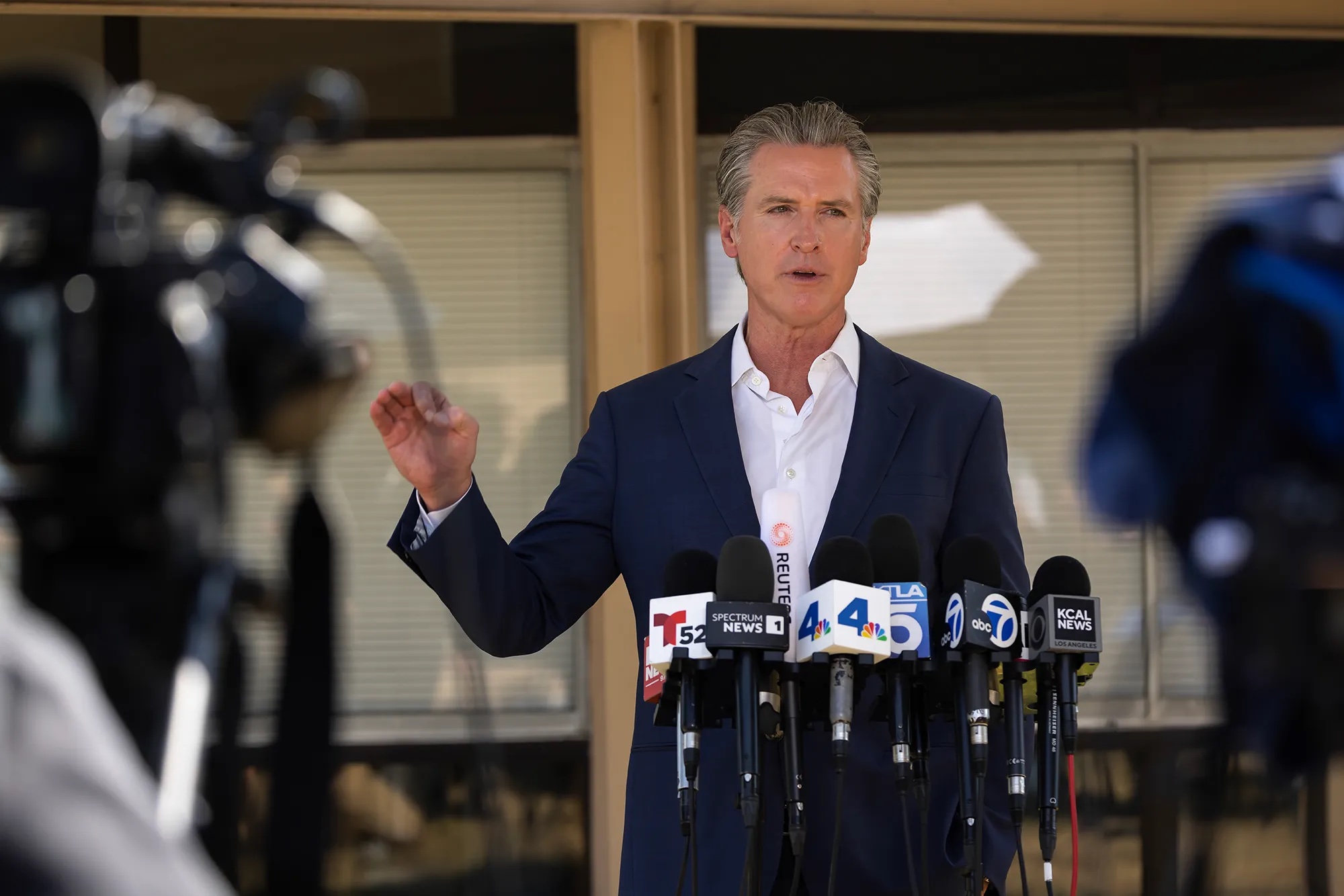
"caption": "Gov. Gavin Newsom speaks to the media at Downey Memorial Christian Church after visiting Los Angeles communities affected by immigration raids, in Downey on July 16, 2025. ",
"credit": "Ted Soqui/CalMatters",
"altTag": null,
"description": null,
"imgSizes": {
"thumbnail": {
"file": "https://cdn.kqed.org/wp-content/uploads/sites/10/2025/09/071625_Newsom-ICE-Raids_CM_36-copy-160x107.jpg",
"width": 160,
"height": 107,
"mimeType": "image/jpeg"
},
"1536x1536": {
"file": "https://cdn.kqed.org/wp-content/uploads/sites/10/2025/09/071625_Newsom-ICE-Raids_CM_36-copy-1536x1025.jpg",
"width": 1536,
"height": 1025,
"mimeType": "image/jpeg"
},
"post-thumbnail": {
"file": "https://cdn.kqed.org/wp-content/uploads/sites/10/2025/09/071625_Newsom-ICE-Raids_CM_36-copy-672x372.jpg",
"width": 672,
"height": 372,
"mimeType": "image/jpeg"
},
"twentyfourteen-full-width": {
"file": "https://cdn.kqed.org/wp-content/uploads/sites/10/2025/09/071625_Newsom-ICE-Raids_CM_36-copy-1038x576.jpg",
"width": 1038,
"height": 576,
"mimeType": "image/jpeg"
},
"kqedFullSize": {
"file": "https://cdn.kqed.org/wp-content/uploads/sites/10/2025/09/071625_Newsom-ICE-Raids_CM_36-copy.jpg",
"width": 2000,
"height": 1334
}
},
"isLoading": false,
"fetchFailed": false
},
"news_12037937": {
"type": "attachments",
"id": "news_12037937",
"meta": {
"index": "attachments_1716263798",
"site": "news",
"id": "12037937",
"found": true
},
"title": "A US Air Force C-5 Galaxy and a C-17 Glo",
"publishDate": 1745868783,
"status": "inherit",
"parent": 12037889,
"modified": 1745880938,
"caption": "A U.S. Air Force C-5 Galaxy and a C-17 Globemaster sit on the tarmac at Travis Air Force Base in Fairfield, California, on July 17, 2008. ",
"credit": "Saul Loeb/AFP via Getty Images",
"altTag": null,
"description": null,
"imgSizes": {
"medium": {
"file": "https://cdn.kqed.org/wp-content/uploads/sites/10/2025/04/TravisAirForceBaseGetty3-800x473.jpg",
"width": 800,
"height": 473,
"mimeType": "image/jpeg"
},
"large": {
"file": "https://cdn.kqed.org/wp-content/uploads/sites/10/2025/04/TravisAirForceBaseGetty3-1020x603.jpg",
"width": 1020,
"height": 603,
"mimeType": "image/jpeg"
},
"thumbnail": {
"file": "https://cdn.kqed.org/wp-content/uploads/sites/10/2025/04/TravisAirForceBaseGetty3-160x95.jpg",
"width": 160,
"height": 95,
"mimeType": "image/jpeg"
},
"1536x1536": {
"file": "https://cdn.kqed.org/wp-content/uploads/sites/10/2025/04/TravisAirForceBaseGetty3-1536x908.jpg",
"width": 1536,
"height": 908,
"mimeType": "image/jpeg"
},
"post-thumbnail": {
"file": "https://cdn.kqed.org/wp-content/uploads/sites/10/2025/04/TravisAirForceBaseGetty3-672x372.jpg",
"width": 672,
"height": 372,
"mimeType": "image/jpeg"
},
"twentyfourteen-full-width": {
"file": "https://cdn.kqed.org/wp-content/uploads/sites/10/2025/04/TravisAirForceBaseGetty3-1038x576.jpg",
"width": 1038,
"height": 576,
"mimeType": "image/jpeg"
},
"full-width": {
"file": "https://cdn.kqed.org/wp-content/uploads/sites/10/2025/04/TravisAirForceBaseGetty3-1920x1135.jpg",
"width": 1920,
"height": 1135,
"mimeType": "image/jpeg"
},
"kqedFullSize": {
"file": "https://cdn.kqed.org/wp-content/uploads/sites/10/2025/04/TravisAirForceBaseGetty3.jpg",
"width": 2000,
"height": 1182
}
},
"isLoading": false,
"fetchFailed": false
},
"news_12055636": {
"type": "attachments",
"id": "news_12055636",
"meta": {
"index": "attachments_1716263798",
"site": "news",
"id": "12055636",
"found": true
},
"title": "ICE Protest",
"publishDate": 1757617766,
"status": "inherit",
"parent": 12055606,
"modified": 1757617873,
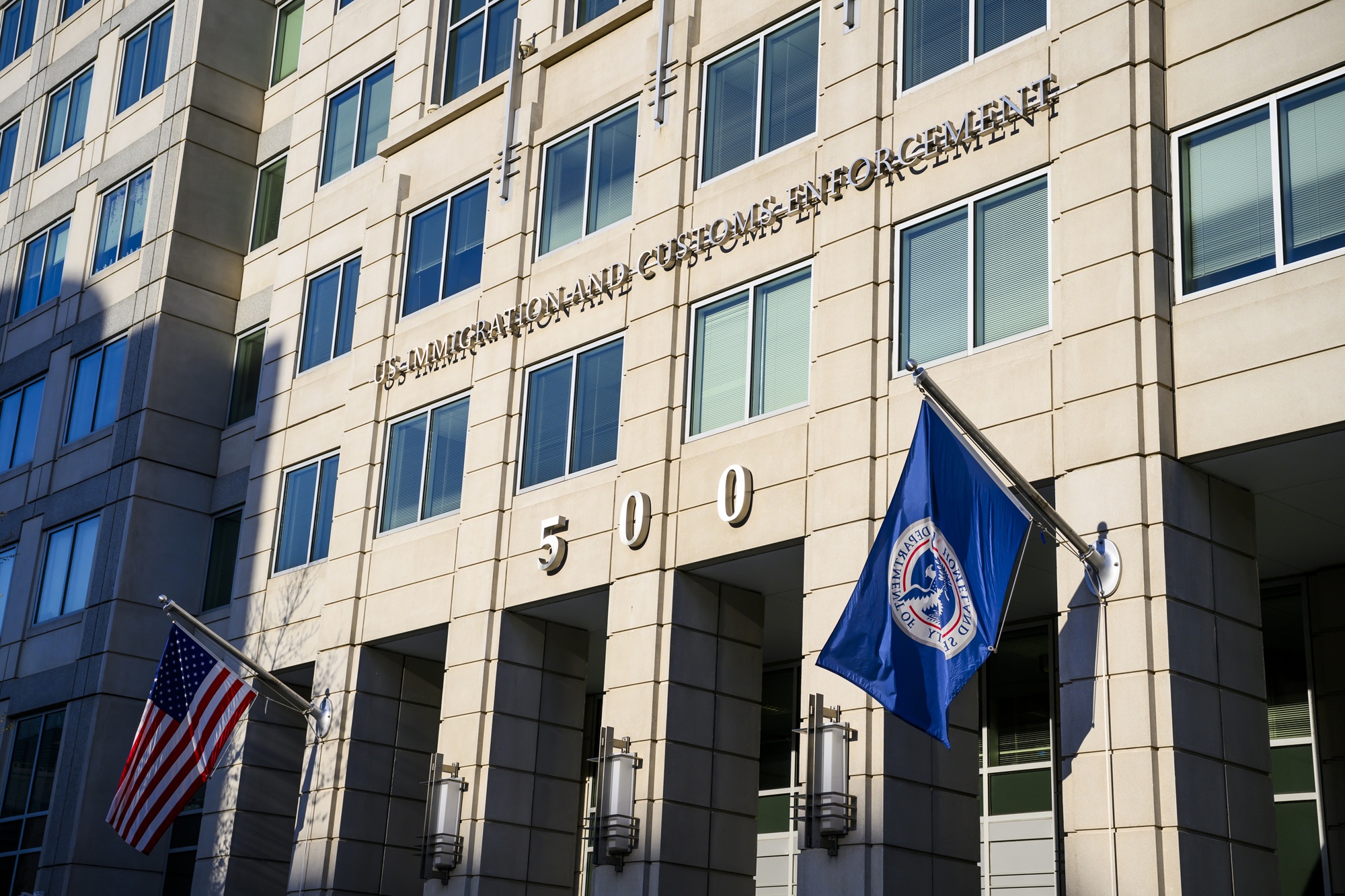
"caption": "The U.S. Immigration and Customs Enforcement (ICE) headquarters on April 14, 2025, in Washington, D.C. ",
"credit": "Pete Kiehart/The Washington Post via Getty Images",
"altTag": null,
"description": null,
"imgSizes": {
"thumbnail": {
"file": "https://cdn.kqed.org/wp-content/uploads/sites/10/2025/09/USImmigrationCustomsEnforcementHQGetty-160x107.jpg",
"width": 160,
"height": 107,
"mimeType": "image/jpeg"
},
"1536x1536": {
"file": "https://cdn.kqed.org/wp-content/uploads/sites/10/2025/09/USImmigrationCustomsEnforcementHQGetty-1536x1024.jpg",
"width": 1536,
"height": 1024,
"mimeType": "image/jpeg"
},
"post-thumbnail": {
"file": "https://cdn.kqed.org/wp-content/uploads/sites/10/2025/09/USImmigrationCustomsEnforcementHQGetty-672x372.jpg",
"width": 672,
"height": 372,
"mimeType": "image/jpeg"
},
"twentyfourteen-full-width": {
"file": "https://cdn.kqed.org/wp-content/uploads/sites/10/2025/09/USImmigrationCustomsEnforcementHQGetty-1038x576.jpg",
"width": 1038,
"height": 576,
"mimeType": "image/jpeg"
},
"kqedFullSize": {
"file": "https://cdn.kqed.org/wp-content/uploads/sites/10/2025/09/USImmigrationCustomsEnforcementHQGetty.jpg",
"width": 2000,
"height": 1333
}
},
"isLoading": false,
"fetchFailed": false
},
"news_12055169": {
"type": "attachments",
"id": "news_12055169",
"meta": {
"index": "attachments_1716263798",
"site": "news",
"id": "12055169",
"found": true
},
"title": "ICECMGETTY",
"publishDate": 1757361542,
"status": "inherit",
"parent": 12055166,
"modified": 1757361614,
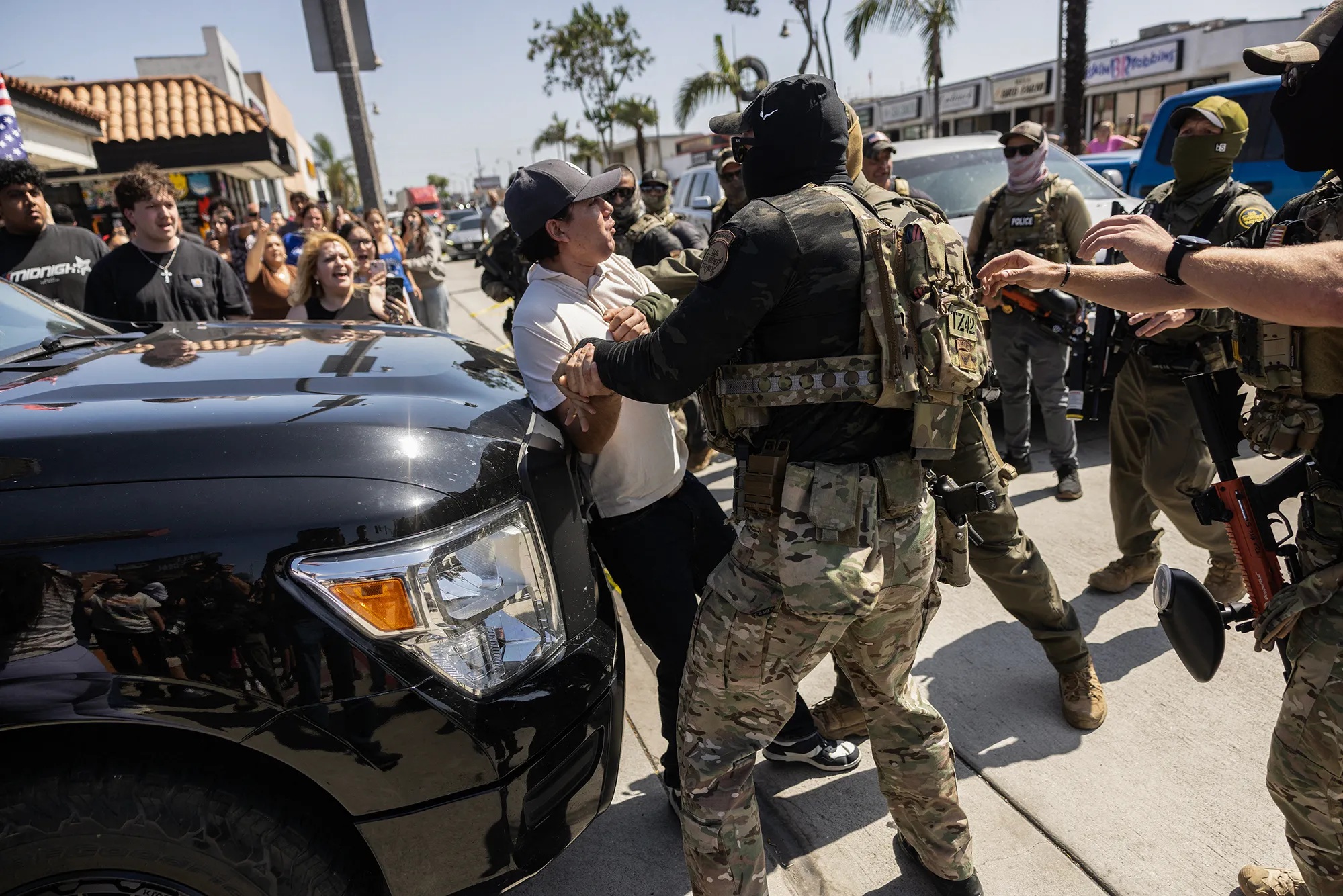
"caption": "A person is detained as clashes break out after U.S. Customs and Border Protection (CBP) officers attempted to raid a store in Bell, just south of Los Angeles, on June 20, 2025.\n",
"credit": "Etienne Laurent/AFP via Getty Images",
"altTag": null,
"description": null,
"imgSizes": {
"thumbnail": {
"file": "https://cdn.kqed.org/wp-content/uploads/sites/10/2025/09/ICECMGETTY-160x107.jpg",
"width": 160,
"height": 107,
"mimeType": "image/jpeg"
},
"1536x1536": {
"file": "https://cdn.kqed.org/wp-content/uploads/sites/10/2025/09/ICECMGETTY-1536x1025.jpg",
"width": 1536,
"height": 1025,
"mimeType": "image/jpeg"
},
"post-thumbnail": {
"file": "https://cdn.kqed.org/wp-content/uploads/sites/10/2025/09/ICECMGETTY-672x372.jpg",
"width": 672,
"height": 372,
"mimeType": "image/jpeg"
},
"twentyfourteen-full-width": {
"file": "https://cdn.kqed.org/wp-content/uploads/sites/10/2025/09/ICECMGETTY-1038x576.jpg",
"width": 1038,
"height": 576,
"mimeType": "image/jpeg"
},
"kqedFullSize": {
"file": "https://cdn.kqed.org/wp-content/uploads/sites/10/2025/09/ICECMGETTY.jpg",
"width": 1999,
"height": 1334
}
},
"isLoading": false,
"fetchFailed": false
},
"news_12054681": {
"type": "attachments",
"id": "news_12054681",
"meta": {
"index": "attachments_1716263798",
"site": "news",
"id": "12054681",
"found": true
},
"title": "US-POLITICS-IMMIGRATION",
"publishDate": 1757020526,
"status": "inherit",
"parent": 12054668,
"modified": 1757362676,
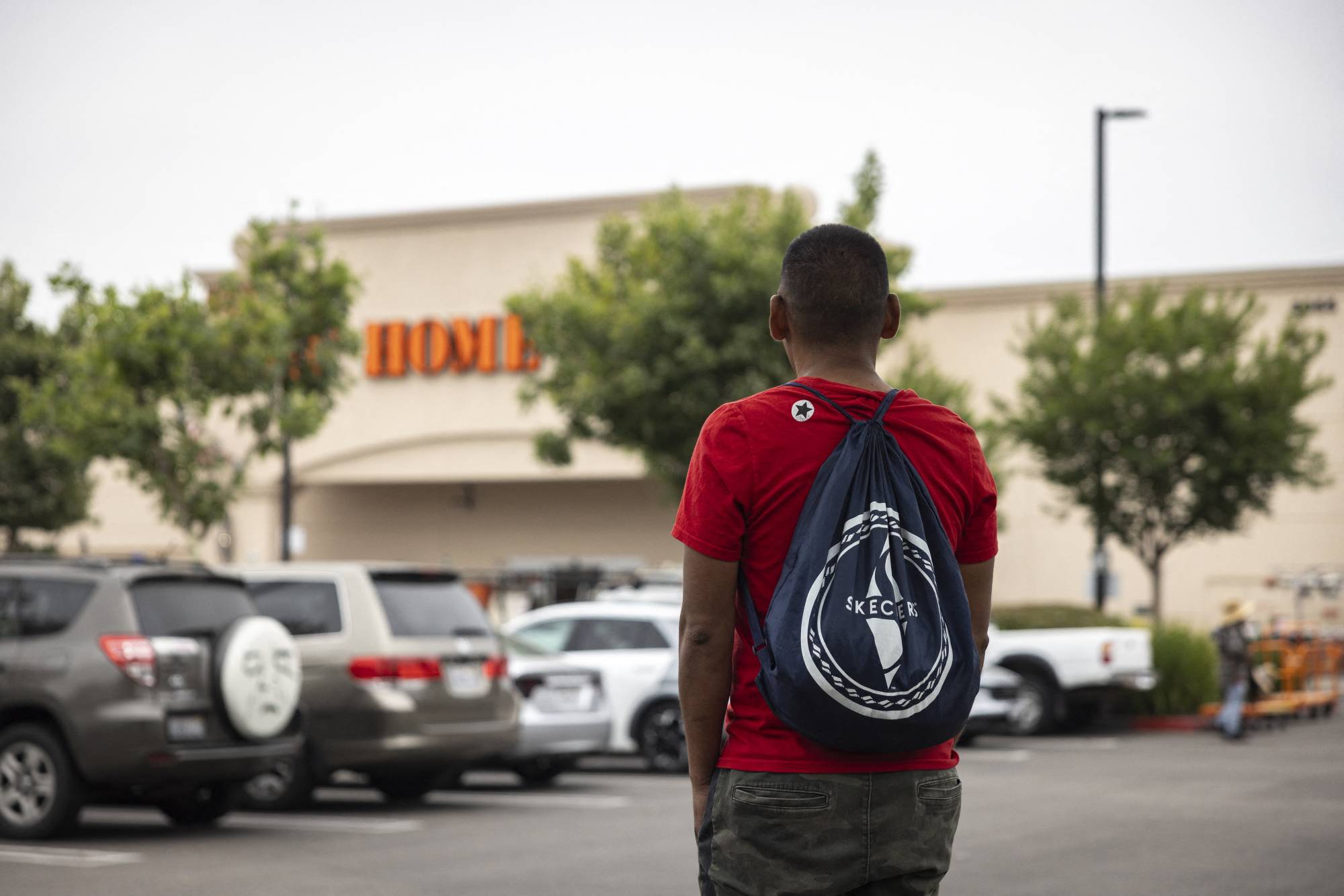
"caption": "A day laborer waits on the parking lot of a Home Depot as federal immigration conducts raids in Los Angeles, California on June 20, 2025. ",
"credit": "Etienne Laurent/AFP via Getty Images",
"altTag": null,
"description": null,
"imgSizes": {
"medium": {
"file": "https://cdn.kqed.org/wp-content/uploads/sites/10/2025/09/GettyImages-2220320695-2000x1334.jpg",
"width": 2000,
"height": 1334,
"mimeType": "image/jpeg"
},
"large": {
"file": "https://cdn.kqed.org/wp-content/uploads/sites/10/2025/09/GettyImages-2220320695-2000x1334.jpg",
"width": 2000,
"height": 1334,
"mimeType": "image/jpeg"
},
"thumbnail": {
"file": "https://cdn.kqed.org/wp-content/uploads/sites/10/2025/09/GettyImages-2220320695-160x107.jpg",
"width": 160,
"height": 107,
"mimeType": "image/jpeg"
},
"1536x1536": {
"file": "https://cdn.kqed.org/wp-content/uploads/sites/10/2025/09/GettyImages-2220320695-1536x1025.jpg",
"width": 1536,
"height": 1025,
"mimeType": "image/jpeg"
},
"2048x2048": {
"file": "https://cdn.kqed.org/wp-content/uploads/sites/10/2025/09/GettyImages-2220320695-2048x1366.jpg",
"width": 2048,
"height": 1366,
"mimeType": "image/jpeg"
},
"post-thumbnail": {
"file": "https://cdn.kqed.org/wp-content/uploads/sites/10/2025/09/GettyImages-2220320695-672x372.jpg",
"width": 672,
"height": 372,
"mimeType": "image/jpeg"
},
"twentyfourteen-full-width": {
"file": "https://cdn.kqed.org/wp-content/uploads/sites/10/2025/09/GettyImages-2220320695-1038x576.jpg",
"width": 1038,
"height": 576,
"mimeType": "image/jpeg"
},
"full-width": {
"file": "https://cdn.kqed.org/wp-content/uploads/sites/10/2025/09/GettyImages-2220320695-2000x1334.jpg",
"width": 2000,
"height": 1334,
"mimeType": "image/jpeg"
},
"kqedFullSize": {
"file": "https://cdn.kqed.org/wp-content/uploads/sites/10/2025/09/GettyImages-2220320695-scaled.jpg",
"width": 2560,
"height": 1708
}
},
"isLoading": false,
"fetchFailed": false
},
"news_12044826": {
"type": "attachments",
"id": "news_12044826",
"meta": {
"index": "attachments_1716263798",
"site": "news",
"id": "12044826",
"found": true
},
"title": "Protests Erupt In L.A. County Sparked By Federal Immigration Raids",
"publishDate": 1750202502,
"status": "inherit",
"parent": 12044637,
"modified": 1757026443,
"caption": "A police officer holds a less lethal rifle as protesters confront California National Guard soldiers and police outside of a federal building, as protests continue in Los Angeles following 3 days of clashes with police after a series of immigration raids on June 9, 2025. ",
"credit": "David McNew/Getty Images",
"altTag": null,
"description": null,
"imgSizes": {
"medium": {
"file": "https://cdn.kqed.org/wp-content/uploads/sites/10/2025/06/GettyImages-2219434485-2000x1333.jpg",
"width": 2000,
"height": 1333,
"mimeType": "image/jpeg"
},
"large": {
"file": "https://cdn.kqed.org/wp-content/uploads/sites/10/2025/06/GettyImages-2219434485-2000x1333.jpg",
"width": 2000,
"height": 1333,
"mimeType": "image/jpeg"
},
"thumbnail": {
"file": "https://cdn.kqed.org/wp-content/uploads/sites/10/2025/06/GettyImages-2219434485-160x107.jpg",
"width": 160,
"height": 107,
"mimeType": "image/jpeg"
},
"1536x1536": {
"file": "https://cdn.kqed.org/wp-content/uploads/sites/10/2025/06/GettyImages-2219434485-1536x1024.jpg",
"width": 1536,
"height": 1024,
"mimeType": "image/jpeg"
},
"2048x2048": {
"file": "https://cdn.kqed.org/wp-content/uploads/sites/10/2025/06/GettyImages-2219434485-2048x1365.jpg",
"width": 2048,
"height": 1365,
"mimeType": "image/jpeg"
},
"post-thumbnail": {
"file": "https://cdn.kqed.org/wp-content/uploads/sites/10/2025/06/GettyImages-2219434485-672x372.jpg",
"width": 672,
"height": 372,
"mimeType": "image/jpeg"
},
"twentyfourteen-full-width": {
"file": "https://cdn.kqed.org/wp-content/uploads/sites/10/2025/06/GettyImages-2219434485-1038x576.jpg",
"width": 1038,
"height": 576,
"mimeType": "image/jpeg"
},
"full-width": {
"file": "https://cdn.kqed.org/wp-content/uploads/sites/10/2025/06/GettyImages-2219434485-2000x1333.jpg",
"width": 2000,
"height": 1333,
"mimeType": "image/jpeg"
},
"kqedFullSize": {
"file": "https://cdn.kqed.org/wp-content/uploads/sites/10/2025/06/GettyImages-2219434485-scaled-e1753393070287.jpg",
"width": 2000,
"height": 1334
}
},
"isLoading": false,
"fetchFailed": false
},
"news_12054567": {
"type": "attachments",
"id": "news_12054567",
"meta": {
"index": "attachments_1716263798",
"site": "news",
"id": "12054567",
"found": true
},
"title": "US-POLITICS-IMMIGRATION",
"publishDate": 1756941444,
"status": "inherit",
"parent": 12054544,
"modified": 1769006278,
"caption": "The CoreCivic, Inc. California City Immigration Processing Center stands in the Kern County desert on July 10, 2025.",
"credit": "Patrick T. Fallon/AFP via Getty Images",
"altTag": null,
"description": null,
"imgSizes": {
"thumbnail": {
"file": "https://cdn.kqed.org/wp-content/uploads/sites/10/2025/09/KernCountyICEDetentionGetty-160x107.jpg",
"width": 160,
"height": 107,
"mimeType": "image/jpeg"
},
"1536x1536": {
"file": "https://cdn.kqed.org/wp-content/uploads/sites/10/2025/09/KernCountyICEDetentionGetty-1536x1024.jpg",
"width": 1536,
"height": 1024,
"mimeType": "image/jpeg"
},
"post-thumbnail": {
"file": "https://cdn.kqed.org/wp-content/uploads/sites/10/2025/09/KernCountyICEDetentionGetty-672x372.jpg",
"width": 672,
"height": 372,
"mimeType": "image/jpeg"
},
"twentyfourteen-full-width": {
"file": "https://cdn.kqed.org/wp-content/uploads/sites/10/2025/09/KernCountyICEDetentionGetty-1038x576.jpg",
"width": 1038,
"height": 576,
"mimeType": "image/jpeg"
},
"kqedFullSize": {
"file": "https://cdn.kqed.org/wp-content/uploads/sites/10/2025/09/KernCountyICEDetentionGetty.jpg",
"width": 2000,
"height": 1333
}
},
"isLoading": false,
"fetchFailed": false
},
"news_12053886": {
"type": "attachments",
"id": "news_12053886",
"meta": {
"index": "attachments_1716263798",
"site": "news",
"id": "12053886",
"found": true
},
"title": "HealthCareICECalMatters1",
"publishDate": 1756321773,
"status": "inherit",
"parent": 12053881,
"modified": 1756321808,
"caption": "Protesters gather outside Glendale Memorial Hospital where federal immigration agents wait for Milagro Solis Portillo to recover in Glendale, on July 17, 2025.\n",
"credit": "J.W. Hendricks/NurPhoto via Getty Images",
"altTag": null,
"description": null,
"imgSizes": {
"thumbnail": {
"file": "https://cdn.kqed.org/wp-content/uploads/sites/10/2025/08/HealthCareICECalMatters1-160x107.jpg",
"width": 160,
"height": 107,
"mimeType": "image/jpeg"
},
"1536x1536": {
"file": "https://cdn.kqed.org/wp-content/uploads/sites/10/2025/08/HealthCareICECalMatters1-1536x1025.jpg",
"width": 1536,
"height": 1025,
"mimeType": "image/jpeg"
},
"post-thumbnail": {
"file": "https://cdn.kqed.org/wp-content/uploads/sites/10/2025/08/HealthCareICECalMatters1-672x372.jpg",
"width": 672,
"height": 372,
"mimeType": "image/jpeg"
},
"twentyfourteen-full-width": {
"file": "https://cdn.kqed.org/wp-content/uploads/sites/10/2025/08/HealthCareICECalMatters1-1038x576.jpg",
"width": 1038,
"height": 576,
"mimeType": "image/jpeg"
},
"kqedFullSize": {
"file": "https://cdn.kqed.org/wp-content/uploads/sites/10/2025/08/HealthCareICECalMatters1.jpg",
"width": 1999,
"height": 1334
}
},
"isLoading": false,
"fetchFailed": false
},
"news_12053224": {
"type": "attachments",
"id": "news_12053224",
"meta": {
"index": "attachments_1716263798",
"site": "news",
"id": "12053224",
"found": true
},
"title": "250821-UNIONICE-07-KQED",
"publishDate": 1755812271,
"status": "inherit",
"parent": 0,
"modified": 1755814295,
"caption": "SEIU Local 87 president Olga Miranda speaks during a rally outside the Phillip Burton Federal Building in San Francisco on Aug. 21, 2025, where labor leaders and family members condemned recent ICE raids and awaited the release of detained community organizer Angélica Guerrero.",
"credit": "Beth LaBerge/KQED",
"altTag": null,
"description": null,
"imgSizes": {
"thumbnail": {
"file": "https://cdn.kqed.org/wp-content/uploads/sites/10/2025/08/250821-UNIONICE-07-KQED-160x107.jpg",
"width": 160,
"height": 107,
"mimeType": "image/jpeg"
},
"1536x1536": {
"file": "https://cdn.kqed.org/wp-content/uploads/sites/10/2025/08/250821-UNIONICE-07-KQED-1536x1024.jpg",
"width": 1536,
"height": 1024,
"mimeType": "image/jpeg"
},
"post-thumbnail": {
"file": "https://cdn.kqed.org/wp-content/uploads/sites/10/2025/08/250821-UNIONICE-07-KQED-672x372.jpg",
"width": 672,
"height": 372,
"mimeType": "image/jpeg"
},
"twentyfourteen-full-width": {
"file": "https://cdn.kqed.org/wp-content/uploads/sites/10/2025/08/250821-UNIONICE-07-KQED-1038x576.jpg",
"width": 1038,
"height": 576,
"mimeType": "image/jpeg"
},
"kqedFullSize": {
"file": "https://cdn.kqed.org/wp-content/uploads/sites/10/2025/08/250821-UNIONICE-07-KQED.jpg",
"width": 2000,
"height": 1333
}
},
"isLoading": false,
"fetchFailed": false
},
"news_12053045": {
"type": "attachments",
"id": "news_12053045",
"meta": {
"index": "attachments_1716263798",
"site": "news",
"id": "12053045",
"found": true
},
"title": "250820-ICE ACTIVITY-JCL-03-KQED",
"publishDate": 1755721112,
"status": "inherit",
"parent": 0,
"modified": 1755721119,
"caption": null,
"credit": "Juan Carlos Lara/KQED",
"altTag": null,
"description": null,
"imgSizes": {
"thumbnail": {
"file": "https://cdn.kqed.org/wp-content/uploads/sites/10/2025/08/250820-ICE-ACTIVITY-JCL-03-KQED-160x107.jpg",
"width": 160,
"height": 107,
"mimeType": "image/jpeg"
},
"1536x1536": {
"file": "https://cdn.kqed.org/wp-content/uploads/sites/10/2025/08/250820-ICE-ACTIVITY-JCL-03-KQED-1536x1024.jpg",
"width": 1536,
"height": 1024,
"mimeType": "image/jpeg"
},
"post-thumbnail": {
"file": "https://cdn.kqed.org/wp-content/uploads/sites/10/2025/08/250820-ICE-ACTIVITY-JCL-03-KQED-672x372.jpg",
"width": 672,
"height": 372,
"mimeType": "image/jpeg"
},
"twentyfourteen-full-width": {
"file": "https://cdn.kqed.org/wp-content/uploads/sites/10/2025/08/250820-ICE-ACTIVITY-JCL-03-KQED-1038x576.jpg",
"width": 1038,
"height": 576,
"mimeType": "image/jpeg"
},
"kqedFullSize": {
"file": "https://cdn.kqed.org/wp-content/uploads/sites/10/2025/08/250820-ICE-ACTIVITY-JCL-03-KQED.jpg",
"width": 2000,
"height": 1333
}
},
"isLoading": false,
"fetchFailed": false
},
"news_11721432": {
"type": "attachments",
"id": "news_11721432",
"meta": {
"index": "attachments_1716263798",
"site": "news",
"id": "11721432",
"found": true
},
"title": "Children of Mexican immigrants wait to receive a free health checkup inside a mobile clinic at the Mexican Consulate in Denver, Colo., in 2009. The Trump administration wants to ratchet up scrutiny of the use of social services by immigrants. That's already led some worried parents to avoid family health care.",
"publishDate": 1548610147,
"status": "inherit",
"parent": 11721431,
"modified": 1755645180,
"caption": "Children of Mexican immigrants wait to receive a free health checkup inside a mobile clinic at the Mexican Consulate in Denver, Colorado, in 2009. The Trump administration wants to ratchet up scrutiny of the use of social services by immigrants. That's already led some worried parents to avoid family health care.",
"credit": "John Moore/Getty Images",
"altTag": null,
"description": "Children of Mexican immigrants wait to receive a free health checkup inside a mobile clinic at the Mexican Consulate in Denver, Colo., in 2009. The Trump administration wants to ratchet up scrutiny of the use of social services by immigrants. That's already led some worried parents to avoid family health care.",
"imgSizes": {
"thumbnail": {
"file": "https://cdn.kqed.org/wp-content/uploads/sites/10/2019/01/gettyimages-91547950_slide-4d6100270cc91128d1beb27eca778a6dcd952acd-160x107.jpg",
"width": 160,
"height": 107,
"mimeType": "image/jpeg"
},
"medium": {
"file": "https://cdn.kqed.org/wp-content/uploads/sites/10/2019/01/gettyimages-91547950_slide-4d6100270cc91128d1beb27eca778a6dcd952acd-800x533.jpg",
"width": 800,
"height": 533,
"mimeType": "image/jpeg"
},
"large": {
"file": "https://cdn.kqed.org/wp-content/uploads/sites/10/2019/01/gettyimages-91547950_slide-4d6100270cc91128d1beb27eca778a6dcd952acd-1020x680.jpg",
"width": 1020,
"height": 680,
"mimeType": "image/jpeg"
},
"complete_open_graph": {
"file": "https://cdn.kqed.org/wp-content/uploads/sites/10/2019/01/gettyimages-91547950_slide-4d6100270cc91128d1beb27eca778a6dcd952acd-1200x800.jpg",
"width": 1200,
"height": 800,
"mimeType": "image/jpeg"
},
"post-thumbnail": {
"file": "https://cdn.kqed.org/wp-content/uploads/sites/10/2019/01/gettyimages-91547950_slide-4d6100270cc91128d1beb27eca778a6dcd952acd-672x372.jpg",
"width": 672,
"height": 372,
"mimeType": "image/jpeg"
},
"twentyfourteen-full-width": {
"file": "https://cdn.kqed.org/wp-content/uploads/sites/10/2019/01/gettyimages-91547950_slide-4d6100270cc91128d1beb27eca778a6dcd952acd-1038x576.jpg",
"width": 1038,
"height": 576,
"mimeType": "image/jpeg"
},
"full-width": {
"file": "https://cdn.kqed.org/wp-content/uploads/sites/10/2019/01/gettyimages-91547950_slide-4d6100270cc91128d1beb27eca778a6dcd952acd-1920x1280.jpg",
"width": 1920,
"height": 1280,
"mimeType": "image/jpeg"
},
"guest-author-32": {
"file": "https://cdn.kqed.org/wp-content/uploads/sites/10/2019/01/gettyimages-91547950_slide-4d6100270cc91128d1beb27eca778a6dcd952acd-32x32.jpg",
"width": 32,
"height": 32,
"mimeType": "image/jpeg"
},
"guest-author-50": {
"file": "https://cdn.kqed.org/wp-content/uploads/sites/10/2019/01/gettyimages-91547950_slide-4d6100270cc91128d1beb27eca778a6dcd952acd-50x50.jpg",
"width": 50,
"height": 50,
"mimeType": "image/jpeg"
},
"guest-author-64": {
"file": "https://cdn.kqed.org/wp-content/uploads/sites/10/2019/01/gettyimages-91547950_slide-4d6100270cc91128d1beb27eca778a6dcd952acd-64x64.jpg",
"width": 64,
"height": 64,
"mimeType": "image/jpeg"
},
"guest-author-96": {
"file": "https://cdn.kqed.org/wp-content/uploads/sites/10/2019/01/gettyimages-91547950_slide-4d6100270cc91128d1beb27eca778a6dcd952acd-96x96.jpg",
"width": 96,
"height": 96,
"mimeType": "image/jpeg"
},
"guest-author-128": {
"file": "https://cdn.kqed.org/wp-content/uploads/sites/10/2019/01/gettyimages-91547950_slide-4d6100270cc91128d1beb27eca778a6dcd952acd-128x128.jpg",
"width": 128,
"height": 128,
"mimeType": "image/jpeg"
},
"detail": {
"file": "https://cdn.kqed.org/wp-content/uploads/sites/10/2019/01/gettyimages-91547950_slide-4d6100270cc91128d1beb27eca778a6dcd952acd-150x150.jpg",
"width": 150,
"height": 150,
"mimeType": "image/jpeg"
},
"kqedFullSize": {
"file": "https://cdn.kqed.org/wp-content/uploads/sites/10/2019/01/gettyimages-91547950_slide-4d6100270cc91128d1beb27eca778a6dcd952acd-e1548610211215.jpg",
"width": 1920,
"height": 1280
}
},
"isLoading": false,
"fetchFailed": false
},
"news_12052259": {
"type": "attachments",
"id": "news_12052259",
"meta": {
"index": "attachments_1716263798",
"site": "news",
"id": "12052259",
"found": true
},
"title": null,
"publishDate": 1755205539,
"status": "inherit",
"parent": 12052217,
"modified": 1755213544,
"caption": null,
"credit": "SDI Productions/Getty Images",
"altTag": null,
"description": null,
"imgSizes": {
"thumbnail": {
"file": "https://cdn.kqed.org/wp-content/uploads/sites/10/2025/08/ImmigrationLawyerGetty-160x90.jpg",
"width": 160,
"height": 90,
"mimeType": "image/jpeg"
},
"1536x1536": {
"file": "https://cdn.kqed.org/wp-content/uploads/sites/10/2025/08/ImmigrationLawyerGetty-1536x864.jpg",
"width": 1536,
"height": 864,
"mimeType": "image/jpeg"
},
"post-thumbnail": {
"file": "https://cdn.kqed.org/wp-content/uploads/sites/10/2025/08/ImmigrationLawyerGetty-672x372.jpg",
"width": 672,
"height": 372,
"mimeType": "image/jpeg"
},
"twentyfourteen-full-width": {
"file": "https://cdn.kqed.org/wp-content/uploads/sites/10/2025/08/ImmigrationLawyerGetty-1038x576.jpg",
"width": 1038,
"height": 576,
"mimeType": "image/jpeg"
},
"kqedFullSize": {
"file": "https://cdn.kqed.org/wp-content/uploads/sites/10/2025/08/ImmigrationLawyerGetty.jpg",
"width": 2000,
"height": 1125
}
},
"isLoading": false,
"fetchFailed": false
}
},
"audioPlayerReducer": {
"postId": "stream_live",
"isPaused": true,
"isPlaying": false,
"pfsActive": false,
"pledgeModalIsOpen": true,
"playerDrawerIsOpen": false,
"liveAudioPlayStartedAt": 0,
"liveAudioPlayContext": ""
},
"authorsReducer": {
"byline_news_12056972": {
"type": "authors",
"id": "byline_news_12056972",
"meta": {
"override": true
},
"slug": "byline_news_12056972",
"name": "Cayla Mihalovich and Jeanne Kuang, CalMatters",
"isLoading": false
},
"byline_news_12055166": {
"type": "authors",
"id": "byline_news_12055166",
"meta": {
"override": true
},
"slug": "byline_news_12055166",
"name": "Wendy Fry and Sergio Olmos, CalMatters",
"isLoading": false
},
"byline_news_12053881": {
"type": "authors",
"id": "byline_news_12053881",
"meta": {
"override": true
},
"slug": "byline_news_12053881",
"name": "Ana B. Ibarra and Kristen Hwang, CalMatters",
"isLoading": false
},
"tychehendricks": {
"type": "authors",
"id": "259",
"meta": {
"index": "authors_1716337520",
"id": "259",
"found": true
},
"name": "Tyche Hendricks",
"firstName": "Tyche",
"lastName": "Hendricks",
"slug": "tychehendricks",
"email": "thendricks@kqed.org",
"display_author_email": true,
"staff_mastheads": [
"news"
],
"title": "KQED Senior Editor, Immigration",
"bio": "\u003cspan style=\"font-weight: 400;\">Tyche Hendricks is KQED’s senior editor for immigration, leading coverage of the policy and politics that affect California’s immigrant communities. Her work for KQED’s radio and online audiences is also carried on NPR and other national outlets. She has been recognized with awards from the Radio and Television News Directors Association, the Society for Professional Journalists; the Education Writers Association; the Best of the West and the National Federation of Community Broadcasters. Before joining KQED in 2010, Tyche spent more than a dozen years as a newspaper reporter, notably at the \u003c/span>\u003ci>\u003cspan style=\"font-weight: 400;\">San Francisco Chronicle\u003c/span>\u003c/i>\u003cspan style=\"font-weight: 400;\">. At different times she has covered criminal justice, government and politics and urban planning. Tyche has taught in the MFA Creative Writing program at the University of San Francisco and at UC Berkeley’s Graduate School of Journalism, where she was co-director of a national immigration symposium for professional journalists. She is the author of \u003c/span>\u003ci>\u003cspan style=\"font-weight: 400;\">The Wind Doesn't Need a Passport: Stories from the U.S.-Mexico Borderlands\u003c/span>\u003c/i>\u003cspan style=\"font-weight: 400;\"> (University of California Press). \u003c/span>",
"avatar": "https://secure.gravatar.com/avatar/b8ee458e2731c2d43df86882ce17267e?s=600&d=blank&r=g",
"twitter": "tychehendricks",
"facebook": null,
"instagram": null,
"linkedin": null,
"sites": [
{
"site": "news",
"roles": [
"editor"
]
},
{
"site": "stateofhealth",
"roles": [
"editor"
]
}
],
"headData": {
"title": "Tyche Hendricks | KQED",
"description": "KQED Senior Editor, Immigration",
"ogImgSrc": "https://secure.gravatar.com/avatar/b8ee458e2731c2d43df86882ce17267e?s=600&d=blank&r=g",
"twImgSrc": "https://secure.gravatar.com/avatar/b8ee458e2731c2d43df86882ce17267e?s=600&d=blank&r=g"
},
"isLoading": false,
"link": "/author/tychehendricks"
},
"mlagos": {
"type": "authors",
"id": "3239",
"meta": {
"index": "authors_1716337520",
"id": "3239",
"found": true
},
"name": "Marisa Lagos",
"firstName": "Marisa",
"lastName": "Lagos",
"slug": "mlagos",
"email": "mlagos@kqed.org",
"display_author_email": false,
"staff_mastheads": [
"news"
],
"title": "KQED Contributor",
"bio": "Marisa Lagos is a correspondent for KQED’s California Politics and Government Desk and co-hosts the award-winning show and podcast, Political Breakdown. At KQED, Lagos also conducts reporting, analysis and investigations into state, local and national politics for radio, TV, online and onstage. In 2022, she and co-host, Scott Shafer, moderated the only gubernatorial debate in California. In 2020, the \u003ci>Washington Post\u003c/i> named her one of the top political journalists in California; she was nominated for a Peabody and won several other awards for her work investigating the 2017 California wildfires. She has worked at the \u003ci>San Francisco Chronicle\u003c/i>, \u003ci>San Francisco Examiner\u003c/i> and \u003ci>Los Angeles Times\u003c/i>. A UC Santa Barbara graduate, she lives in San Francisco with her two sons and husband.",
"avatar": "https://secure.gravatar.com/avatar/a261a0d3696fc066871ef96b85b5e7d2?s=600&d=blank&r=g",
"twitter": "@mlagos",
"facebook": null,
"instagram": null,
"linkedin": null,
"sites": [
{
"site": "arts",
"roles": [
"author"
]
},
{
"site": "news",
"roles": [
"editor"
]
},
{
"site": "science",
"roles": [
"editor"
]
},
{
"site": "forum",
"roles": [
"author"
]
},
{
"site": "liveblog",
"roles": [
"author"
]
}
],
"headData": {
"title": "Marisa Lagos | KQED",
"description": "KQED Contributor",
"ogImgSrc": "https://secure.gravatar.com/avatar/a261a0d3696fc066871ef96b85b5e7d2?s=600&d=blank&r=g",
"twImgSrc": "https://secure.gravatar.com/avatar/a261a0d3696fc066871ef96b85b5e7d2?s=600&d=blank&r=g"
},
"isLoading": false,
"link": "/author/mlagos"
},
"fjhabvala": {
"type": "authors",
"id": "8659",
"meta": {
"index": "authors_1716337520",
"id": "8659",
"found": true
},
"name": "Farida Jhabvala Romero",
"firstName": "Farida",
"lastName": "Jhabvala Romero",
"slug": "fjhabvala",
"email": "fjhabvala@kqed.org",
"display_author_email": true,
"staff_mastheads": [
"news"
],
"title": "KQED Contributor",
"bio": "Farida Jhabvala Romero is a Labor Correspondent for KQED. She previously covered immigration. Farida was \u003ca href=\"https://www.ccnma.org/2022-most-influential-latina-journalists\">named\u003c/a> one of the 10 Most Influential Latina Journalists in California in 2022 by the California Chicano News Media Association. Her work has won awards from the Society of Professional Journalists (Northern California), as well as a national and regional Edward M. Murrow Award for the collaborative reporting projects “Dangerous Air” and “Graying California.” Before joining KQED, Farida worked as a producer at Radio Bilingüe, a national public radio network. Farida earned her master’s degree in journalism from Stanford University.",
"avatar": "https://secure.gravatar.com/avatar/f9f022d4e2609741874222a1e9d41f48fea74011aa7c615eef91d9a50c944ebe?s=600&d=blank&r=g",
"twitter": "FaridaJhabvala",
"bluesky": null,
"facebook": null,
"instagram": null,
"linkedin": "https://www.linkedin.com/in/faridajhabvala/",
"sites": [
{
"site": "news",
"roles": [
"editor"
]
},
{
"site": "stateofhealth",
"roles": [
"author"
]
},
{
"site": "liveblog",
"roles": [
"author"
]
}
],
"headData": {
"title": "Farida Jhabvala Romero | KQED",
"description": "KQED Contributor",
"ogImgSrc": "https://secure.gravatar.com/avatar/f9f022d4e2609741874222a1e9d41f48fea74011aa7c615eef91d9a50c944ebe?s=600&d=blank&r=g",
"twImgSrc": "https://secure.gravatar.com/avatar/f9f022d4e2609741874222a1e9d41f48fea74011aa7c615eef91d9a50c944ebe?s=600&d=blank&r=g"
},
"isLoading": false,
"link": "/author/fjhabvala"
},
"amontecillo": {
"type": "authors",
"id": "11649",
"meta": {
"index": "authors_1716337520",
"id": "11649",
"found": true
},
"name": "Alan Montecillo",
"firstName": "Alan",
"lastName": "Montecillo",
"slug": "amontecillo",
"email": "amontecillo@kqed.org",
"display_author_email": false,
"staff_mastheads": [
"news"
],
"title": "KQED Contributor",
"bio": "Alan Montecillo is the senior editor of \u003cem>\u003ca href=\"http://kqed.org/thebay\">The Bay\u003c/a>, \u003c/em> KQED's local news podcast. Before moving to the Bay Area, he worked as a senior talk show producer for WILL in Champaign-Urbana, Illinois and at Oregon Public Broadcasting in Portland, Oregon. He has won journalism awards from the Society of Professional Journalists Northern California, the Public Media Journalists Association, The Signal Awards, and has also received a regional Edward R. Murrow award. Alan is a Filipino American from Hong Kong and a graduate of Reed College.",
"avatar": "https://secure.gravatar.com/avatar/268f53a2066899ea9efdd8a5900218b17c822d9862cbc9326cccec53ef41d349?s=600&d=blank&r=g",
"twitter": "alanmontecillo",
"bluesky": null,
"facebook": null,
"instagram": null,
"linkedin": null,
"sites": [
{
"site": "",
"roles": [
"editor"
]
},
{
"site": "news",
"roles": [
"editor",
"manage_categories"
]
}
],
"headData": {
"title": "Alan Montecillo | KQED",
"description": "KQED Contributor",
"ogImgSrc": "https://secure.gravatar.com/avatar/268f53a2066899ea9efdd8a5900218b17c822d9862cbc9326cccec53ef41d349?s=600&d=blank&r=g",
"twImgSrc": "https://secure.gravatar.com/avatar/268f53a2066899ea9efdd8a5900218b17c822d9862cbc9326cccec53ef41d349?s=600&d=blank&r=g"
},
"isLoading": false,
"link": "/author/amontecillo"
},
"ccabreralomeli": {
"type": "authors",
"id": "11708",
"meta": {
"index": "authors_1716337520",
"id": "11708",
"found": true
},
"name": "Carlos Cabrera-Lomelí",
"firstName": "Carlos",
"lastName": "Cabrera-Lomelí",
"slug": "ccabreralomeli",
"email": "ccabreralomeli@KQED.org",
"display_author_email": true,
"staff_mastheads": [
"news"
],
"title": "Community Reporter",
"bio": "Carlos Cabrera-Lomelí is a community reporter with KQED's digital engagement team. He also reports and co-produces for KQED's bilingual news hub KQED en Español. He grew up in San Francisco's Mission District and has previously worked with Univision, 48 Hills and REFORMA in Mexico City.",
"avatar": "https://secure.gravatar.com/avatar/c309be9665e484f887b818c89e273ecc673004f426f36b24d00a4d813a2e0518?s=600&d=blank&r=g",
"twitter": "@LomeliCabrera",
"bluesky": null,
"facebook": null,
"instagram": null,
"linkedin": null,
"sites": [
{
"site": "arts",
"roles": [
"editor"
]
},
{
"site": "news",
"roles": [
"editor"
]
},
{
"site": "about",
"roles": [
"editor"
]
},
{
"site": "science",
"roles": [
"editor"
]
},
{
"site": "perspectives",
"roles": [
"editor"
]
},
{
"site": "elections",
"roles": [
"editor"
]
},
{
"site": "liveblog",
"roles": [
"contributor"
]
}
],
"headData": {
"title": "Carlos Cabrera-Lomelí | KQED",
"description": "Community Reporter",
"ogImgSrc": "https://secure.gravatar.com/avatar/c309be9665e484f887b818c89e273ecc673004f426f36b24d00a4d813a2e0518?s=600&d=blank&r=g",
"twImgSrc": "https://secure.gravatar.com/avatar/c309be9665e484f887b818c89e273ecc673004f426f36b24d00a4d813a2e0518?s=600&d=blank&r=g"
},
"isLoading": false,
"link": "/author/ccabreralomeli"
},
"jlara": {
"type": "authors",
"id": "11761",
"meta": {
"index": "authors_1716337520",
"id": "11761",
"found": true
},
"name": "Juan Carlos Lara",
"firstName": "Juan Carlos",
"lastName": "Lara",
"slug": "jlara",
"email": "jlara@kqed.org",
"display_author_email": false,
"staff_mastheads": [],
"title": "KQED Contributor",
"bio": null,
"avatar": "https://secure.gravatar.com/avatar/19e2052b9b05657c5ff2af2121846e9c?s=600&d=blank&r=g",
"twitter": null,
"facebook": null,
"instagram": null,
"linkedin": null,
"sites": [
{
"site": "arts",
"roles": [
"editor"
]
},
{
"site": "news",
"roles": [
"editor"
]
},
{
"site": "forum",
"roles": [
"editor"
]
},
{
"site": "liveblog",
"roles": [
"contributor"
]
}
],
"headData": {
"title": "Juan Carlos Lara | KQED",
"description": "KQED Contributor",
"ogImgSrc": "https://secure.gravatar.com/avatar/19e2052b9b05657c5ff2af2121846e9c?s=600&d=blank&r=g",
"twImgSrc": "https://secure.gravatar.com/avatar/19e2052b9b05657c5ff2af2121846e9c?s=600&d=blank&r=g"
},
"isLoading": false,
"link": "/author/jlara"
},
"jessicakariisa": {
"type": "authors",
"id": "11831",
"meta": {
"index": "authors_1716337520",
"id": "11831",
"found": true
},
"name": "Jessica Kariisa",
"firstName": "Jessica",
"lastName": "Kariisa",
"slug": "jessicakariisa",
"email": "jkariisa@kqed.org",
"display_author_email": false,
"staff_mastheads": [],
"title": "Producer, The Bay",
"bio": "Jessica Kariisa is the producer of The Bay. She first joined KQED as an intern for The California Report Magazine, after which she became an on-call producer. She reported a Bay Curious episode on the use of rap lyrics in criminal trials which won a Society of Professional Journalists award in 2023 for Excellence in Features Journalism and the 2023 Signal Award for Best Conversation Starter. She’s worked on podcasts for Snap Judgment and American Public Media. Before embarking on her audio career, she was a music journalist.\r\n\r\nJessica Kariisa is represented by SAG-AFTRA.",
"avatar": "https://secure.gravatar.com/avatar/522e97b28ac0b3d411621c0fde8f3419c7b71ea2c5c262c57c4bb600963f328c?s=600&d=blank&r=g",
"twitter": null,
"bluesky": null,
"facebook": null,
"instagram": null,
"linkedin": null,
"sites": [
{
"site": "arts",
"roles": [
"author"
]
},
{
"site": "news",
"roles": [
"editor",
"manage_categories"
]
}
],
"headData": {
"title": "Jessica Kariisa | KQED",
"description": "Producer, The Bay",
"ogImgSrc": "https://secure.gravatar.com/avatar/522e97b28ac0b3d411621c0fde8f3419c7b71ea2c5c262c57c4bb600963f328c?s=600&d=blank&r=g",
"twImgSrc": "https://secure.gravatar.com/avatar/522e97b28ac0b3d411621c0fde8f3419c7b71ea2c5c262c57c4bb600963f328c?s=600&d=blank&r=g"
},
"isLoading": false,
"link": "/author/jessicakariisa"
},
"nkhan": {
"type": "authors",
"id": "11867",
"meta": {
"index": "authors_1716337520",
"id": "11867",
"found": true
},
"name": "Nisa Khan",
"firstName": "Nisa",
"lastName": "Khan",
"slug": "nkhan",
"email": "nkhan@kqed.org",
"display_author_email": false,
"staff_mastheads": [],
"title": "KQED Contributor",
"bio": "Nisa Khan is a reporter for KQED's Audience News Desk. She was formerly a data reporter at Michigan Radio. She earned a Bachelor of Science in Information from the University of Michigan and a Master of Arts in Communication from Stanford University.",
"avatar": "https://secure.gravatar.com/avatar/8720459eef081ff64582b3506b124d58523e80e120704a0cbd9892533c914991?s=600&d=blank&r=g",
"twitter": "mnisakhan",
"bluesky": null,
"facebook": null,
"instagram": null,
"linkedin": null,
"sites": [
{
"site": "arts",
"roles": [
"editor"
]
},
{
"site": "news",
"roles": [
"editor"
]
},
{
"site": "science",
"roles": [
"editor",
"author"
]
},
{
"site": "forum",
"roles": [
"editor"
]
},
{
"site": "liveblog",
"roles": [
"contributor"
]
}
],
"headData": {
"title": "Nisa Khan | KQED",
"description": "KQED Contributor",
"ogImgSrc": "https://secure.gravatar.com/avatar/8720459eef081ff64582b3506b124d58523e80e120704a0cbd9892533c914991?s=600&d=blank&r=g",
"twImgSrc": "https://secure.gravatar.com/avatar/8720459eef081ff64582b3506b124d58523e80e120704a0cbd9892533c914991?s=600&d=blank&r=g"
},
"isLoading": false,
"link": "/author/nkhan"
},
"kdebenedetti": {
"type": "authors",
"id": "11913",
"meta": {
"index": "authors_1716337520",
"id": "11913",
"found": true
},
"name": "Katie DeBenedetti",
"firstName": "Katie",
"lastName": "DeBenedetti",
"slug": "kdebenedetti",
"email": "kdebenedetti@kqed.org",
"display_author_email": false,
"staff_mastheads": [
"news",
"science"
],
"title": "KQED Contributor",
"bio": "Katie DeBenedetti is a digital reporter covering daily news for the Express Desk. Prior to joining KQED as a culture reporting intern in January 2024, she covered education and city government for the Napa Valley Register.",
"avatar": "https://secure.gravatar.com/avatar/6e31073cb8f7e4214ab03f42771d0f45?s=600&d=blank&r=g",
"twitter": null,
"facebook": null,
"instagram": null,
"linkedin": null,
"sites": [
{
"site": "news",
"roles": [
"author"
]
},
{
"site": "science",
"roles": [
"author"
]
},
{
"site": "liveblog",
"roles": [
"author"
]
}
],
"headData": {
"title": "Katie DeBenedetti | KQED",
"description": "KQED Contributor",
"ogImgSrc": "https://secure.gravatar.com/avatar/6e31073cb8f7e4214ab03f42771d0f45?s=600&d=blank&r=g",
"twImgSrc": "https://secure.gravatar.com/avatar/6e31073cb8f7e4214ab03f42771d0f45?s=600&d=blank&r=g"
},
"isLoading": false,
"link": "/author/kdebenedetti"
},
"skennedy": {
"type": "authors",
"id": "11935",
"meta": {
"index": "authors_1716337520",
"id": "11935",
"found": true
},
"name": "Samantha Kennedy",
"firstName": "Samantha",
"lastName": "Kennedy",
"slug": "skennedy",
"email": "SKennedy@kqed.org",
"display_author_email": false,
"staff_mastheads": [],
"title": "KQED Contributor",
"bio": null,
"avatar": "https://secure.gravatar.com/avatar/adc7b14bf1e801793202a156ecc864d4ad505b0fd63162a2f3da0e5ba57222d0?s=600&d=blank&r=g",
"twitter": null,
"bluesky": null,
"facebook": null,
"instagram": null,
"linkedin": null,
"sites": [
{
"site": "arts",
"roles": [
"author"
]
},
{
"site": "news",
"roles": [
"editor"
]
},
{
"site": "science",
"roles": [
"editor"
]
}
],
"headData": {
"title": "Samantha Kennedy | KQED",
"description": "KQED Contributor",
"ogImgSrc": "https://secure.gravatar.com/avatar/adc7b14bf1e801793202a156ecc864d4ad505b0fd63162a2f3da0e5ba57222d0?s=600&d=blank&r=g",
"twImgSrc": "https://secure.gravatar.com/avatar/adc7b14bf1e801793202a156ecc864d4ad505b0fd63162a2f3da0e5ba57222d0?s=600&d=blank&r=g"
},
"isLoading": false,
"link": "/author/skennedy"
},
"aamaral": {
"type": "authors",
"id": "11947",
"meta": {
"index": "authors_1716337520",
"id": "11947",
"found": true
},
"name": "Ana De Almeida Amaral",
"firstName": "Ana",
"lastName": "De Almeida Amaral",
"slug": "aamaral",
"email": "aamaral@kqed.org",
"display_author_email": false,
"staff_mastheads": [],
"title": "KQED Contributor",
"bio": null,
"avatar": "https://secure.gravatar.com/avatar/eb08e0e3effedf89fc5153d5f7416228a3359f82750571d5de728615b88e8c32?s=600&d=blank&r=g",
"twitter": null,
"bluesky": null,
"facebook": null,
"instagram": null,
"linkedin": null,
"sites": [
{
"site": "arts",
"roles": [
"editor"
]
},
{
"site": "news",
"roles": [
"editor"
]
},
{
"site": "forum",
"roles": [
"editor"
]
}
],
"headData": {
"title": "Ana De Almeida Amaral | KQED",
"description": "KQED Contributor",
"ogImgSrc": "https://secure.gravatar.com/avatar/eb08e0e3effedf89fc5153d5f7416228a3359f82750571d5de728615b88e8c32?s=600&d=blank&r=g",
"twImgSrc": "https://secure.gravatar.com/avatar/eb08e0e3effedf89fc5153d5f7416228a3359f82750571d5de728615b88e8c32?s=600&d=blank&r=g"
},
"isLoading": false,
"link": "/author/aamaral"
}
},
"pagesReducer": {
"news_tag_u-s-immigration-and-customs-enforcement": {
"type": "terms",
"id": "news_20529",
"meta": {
"index": "terms_1716263798",
"site": "news",
"id": "20529",
"score": 10.404648
},
"featImg": null,
"name": "U.S. Immigration and Customs Enforcement",
"description": null,
"taxonomy": "tag",
"headData": {
"twImgId": null,
"twTitle": null,
"ogTitle": null,
"ogImgId": null,
"twDescription": null,
"description": null,
"title": "U.S. Immigration and Customs Enforcement Archives | KQED News",
"ogDescription": null
},
"ttid": 20546,
"slug": "u-s-immigration-and-customs-enforcement",
"isLoading": false,
"title": "U.S. Immigration and Customs Enforcement",
"pageMeta": {
"site": "news",
"WpPageTemplate": "page-topic-editorial",
"currentPage": 9
},
"blocks": [
{
"blockName": "kqed/post-list",
"attrs": {
"layout": "cardArticle2",
"query": "posts/news?tag=u-s-immigration-and-customs-enforcement",
"seeMore": false,
"paginated": true,
"page": 9
}
},
{
"blockName": "kqed/ad"
}
]
}
},
"pfsSessionReducer": {},
"postsReducer": {
"stream_live": {
"type": "live",
"id": "stream_live",
"audioUrl": "https://streams.kqed.org/kqedradio",
"title": "Live Stream",
"excerpt": "Live Stream information currently unavailable.",
"link": "/radio",
"featImg": "",
"label": {
"name": "KQED Live",
"link": "/"
}
},
"stream_kqedNewscast": {
"type": "posts",
"id": "stream_kqedNewscast",
"audioUrl": "https://www.kqed.org/.stream/anon/radio/RDnews/newscast.mp3?_=1",
"title": "KQED Newscast",
"featImg": "",
"label": {
"name": "88.5 FM",
"link": "/"
}
},
"news_12056972": {
"type": "posts",
"id": "news_12056972",
"meta": {
"index": "posts_1716263798",
"site": "news",
"id": "12056972",
"score": null,
"sort": [
1758399726000
]
},
"guestAuthors": [],
"slug": "newsom-signs-laws-to-resist-trumps-immigration-crackdown-including-ban-on-masks-for-ice-agents",
"title": "Newsom Signs Laws to Resist Trump’s Immigration Crackdown, Including Ban on Masks for ICE Agents",
"publishDate": 1758399726,
"format": "standard",
"headTitle": "Newsom Signs Laws to Resist Trump’s Immigration Crackdown, Including Ban on Masks for ICE Agents | KQED",
"labelTerm": {
"term": 18481,
"site": "news"
},
"content": "\u003cp>\u003c!-- Creative Commons Attribution-NonCommercial-NoDerivatives https://creativecommons.org/licenses/by-nc-nd/4.0/ -->\u003c/p>\n\u003cp>\u003cem>This story was originally published by \u003ca href=\"https://calmatters.org/\">CalMatters\u003c/a>. \u003ca href=\"https://calmatters.org/subscribe-to-calmatters/\">Sign up\u003c/a> for their newsletters.\u003c/em>\u003c/p>\n\u003cp>Gov. \u003ca href=\"https://calmatters.org/tag/gavin-newsom/\">Gavin Newsom\u003c/a> today signed a set of bills meant to check the Trump administration’s aggressive immigration crackdown in California, including a first-in-the nation measure to prohibit officers from wearing masks and others that limit their access to schools and hospitals.\u003c/p>\n\u003cp>The new laws echo the “resistance” measures California adopted during the first administration, when it passed a \u003ca href=\"https://calmatters.org/justice/2025/01/california-sanctuary-state/\">so-called sanctuary law\u003c/a> to limit local law enforcement from cooperating with immigration agents, among other policies.\u003c/p>\n\u003cp>“Immigrants have rights and we have the right to stand up and push back,” Newsom said at an event in Los Angeles where he signed the legislation.\u003c/p>\n\u003cp>[ad fullwidth]\u003c/p>\n\u003cp>\u003ca href=\"https://calmatters.org/tag/donald-trump/\">President Trump\u003c/a> promised a historic deportation effort and assault on \u003ca href=\"https://calmatters.org/justice/2024/12/sanctuary-cities-san-diego-letter/\">sanctuary-style policies\u003c/a> when he took office for the second time. His administration criticized the state’s new immigration laws even before Newsom signed them.\u003c/p>\n\u003cp>The Department of Homeland Security earlier this week \u003ca href=\"https://www.dhs.gov/news/2025/09/16/dhs-calls-governor-newsom-veto-californias-no-secret-police-act#:~:text=WASHINGTON%20%E2%80%94%20The%20Department%20of%20Homeland,coverings%20to%20conceal%20their%20identities.\">called on Newsom to veto the mask bill\u003c/a> — one of the more contentious pieces of immigration legislation — calling it “despicable.”\u003c/p>\n\u003cp>“Once again sanctuary politicians are trying to outlaw officers wearing masks to protect themselves from being doxed and targeted by known and suspected terrorist sympathizers,” said Assistant Secretary Tricia McLaughlin in a Sept. 16 press release.\u003c/p>\n\u003cp>[aside postID=forum_2010101911301 hero='https://cdn.kqed.org/wp-content/uploads/sites/43/2025/09/Cali-vs-Florida.png']\u003c/p>\n\u003cp>California may struggle to enforce the new laws, some of which have already raised constitutional questions around the state’s role in federal operations, but lawmakers maintain that they are legally defensible.\u003c/p>\n\u003cp>California political consultant Mike Madrid said in signing the laws Newsom is showing that he can stand up and fight, whether or not he has a chance of winning.\u003c/p>\n\u003cp>“In this moment, when there are very few cards to play for state governments and state legislatures, California has done what no other state has done: establish itself as the tip of the spear on resisting a lot of these efforts that are an affront to its values,” said Madrid, a longtime Republican consultant who co-founded the anti-Trump Lincoln Project.\u003c/p>\n\u003cp>“99% of this is the purview of the federal government. So a lot of it is just symbolic, but symbolism matters. It’s both politically astute but also morally right,” he said.\u003c/p>\n\u003cp>The package of bills Newsom signed included:\u003c/p>\n\u003cul>\n\u003cli>\u003ca href=\"https://calmatters.digitaldemocracy.org/bills/ca_202520260ab49\">Assembly Bill 49\u003c/a> prohibits schools from allowing immigration enforcement officers on campus without a warrant.\u003c/li>\n\u003cli>\u003ca href=\"https://calmatters.digitaldemocracy.org/bills/ca_202520260sb627\">Senate Bill 627\u003c/a> widely prohibits federal and local law enforcement officers from wearing face masks while conducting their duties.\u003c/li>\n\u003cli>\u003ca href=\"https://calmatters.digitaldemocracy.org/bills/ca_202520260sb805\">Senate Bill 805\u003c/a> requires that law enforcement officers identify themselves while conducting their duties, with some exceptions.\u003c/li>\n\u003cli>\u003ca href=\"https://calmatters.digitaldemocracy.org/bills/ca_202520260sb81\">Senate Bill 81\u003c/a> prohibits immigration enforcement from entering restricted areas of a health facility without a judicial warrant or court order.\u003c/li>\n\u003cli>\u003ca href=\"https://calmatters.digitaldemocracy.org/bills/ca_202520260sb98\">Senate Bill 98\u003c/a> requires schools and higher education institutions to send community notifications when immigration enforcement is on campus, and prohibits immigration enforcement from entering certain areas without a judicial warrant or court order.\u003c/li>\n\u003c/ul>\n\u003cp>California Democrats began drafting immigration-related bills almost as soon Trump took office in January. Those efforts accelerated after the Trump administration launched \u003ca href=\"https://calmatters.org/investigation/2025/06/taken-la-immigration-raids/\">aggressive immigration sweeps\u003c/a> throughout Los Angeles, which led to weeks of protests and a subsequent \u003ca href=\"https://calmatters.org/justice/2025/09/trump-national-guard-posse-comitatus/\">National Guard deployment\u003c/a>.\u003c/p>\n\u003cp>“All of this legislative resistance is to protect Angelenos from their own federal government. That is profound,” Los Angeles Mayor Karen Bass said at a news conference with Newsom and other Democratic leaders.\u003c/p>\n\u003ch2>Will the laws make a difference?\u003c/h2>\n\u003cp>Kevin Johnson, an immigration law professor and former dean of the UC Davis School of Law, said the legislation may have a marginal impact on federal immigration enforcement operations.\u003c/p>\n\u003cp>In 2018, for instance, California passed a law to restrict \u003ca href=\"https://leginfo.legislature.ca.gov/faces/billTextClient.xhtml?bill_id=201920200AB668\">immigration arrests at superior court buildings\u003c/a>. That hasn’t stopped the Trump administration from \u003ca href=\"https://www.dailyjournal.com/articles/386953-california-chief-justice-condemns-immigration-enforcement-at-courthouses\">detaining people at those courts\u003c/a> this year.\u003c/p>\n\u003cp>“The federal government is going to continue doing what it’s doing, in one form or another,” he said. “I do think the legislation gives some hope and optimism to communities that feel under fire, vulnerable and basically hated by the federal government.”\u003c/p>\n\u003cp>Shiu-Ming Cheer, deputy director at California Immigrant Policy Center, remains hopeful that the package of bills will ensure safety for people attending school and accessing health care.\u003c/p>\n\u003cp>“With most laws, there has to be really vigorous monitoring, both by the state as well as by advocates to ensure that it’s truly being implemented and followed,” she said.\u003c/p>\n\u003ch2>California police opposed mask ban\u003c/h2>\n\u003cp>The most controversial bill in the package was Democratic Sen. Scott Wiener’s proposal to widely ban federal and local law enforcement officers from \u003ca href=\"https://calmatters.org/justice/2025/07/immigration-raids-who/\">wearing face masks while conducting their duties\u003c/a>. The law, also known as the “No Secret Police Act,” does not apply to certain forms of face coverings, such as face shields, and it exempts some officers, including those who are undercover. Officers who violate the law will face an infraction or misdemeanor.\u003c/p>\n\u003cp>Wiener and Democratic Sens. Jesse Arreguín, Sasha Pérez and Aisha Wahab championed the legislation after seeing footage of \u003ca href=\"https://calmatters.org/justice/2025/07/immigration-raids-who/\">masked and unidentifiable agents\u003c/a> carrying out operations.[aside postID=news_12055416 hero='https://cdn.kqed.org/wp-content/uploads/sites/10/2025/07/250715-ImmigrationCourtProtests-16-BL_qed.jpg']“ICE’s recklessness creates chaos as agents run around with what are effectively ski masks and no identification, grabbing people, throwing them in unmarked vehicles, and disappearing them,” Wiener of San Francisco said at a legislative hearing in August. “When law enforcement officers hide their identities, it destroys community trust.”\u003c/p>\n\u003cp>California’s law enforcement groups widely opposed the bill, arguing it will largely apply to local police, rather than federal agents, because the federal government is likely to sue on constitutional grounds.\u003c/p>\n\u003cp>“It’s using an emotionally charged issue on a federal level to pass a bill that will only affect local peace officers,” said Brian Marvel, president of the Peace Officers Research Association of California, an umbrella labor organization that lobbies on behalf of police unions. “You’re upset with the feds, but you’re going to punish us.”\u003c/p>\n\u003cp>Other law enforcement experts echoed those concerns, arguing that it’s illegal to interfere with federal operations.\u003c/p>\n\u003cp>“California cops are not going to enforce this law,” said Ed Obayashi, a longtime California police officer who now is a special prosecutor and policy adviser to the Modoc County Sheriff’s Office. “You cannot regulate lawful federal conduct, whether the Legislature likes it or not.”\u003c/p>\n\u003cp>The law allows officers to be sued personally for “tortious conduct,” including if they assault or falsely arrest someone while masked.\u003c/p>\n\u003cp>“Private enforcement could be the avenue where enforcement is the likeliest,” said Johnson.\u003c/p>\n\u003cp>The bill caused hours of contentious debate on the Senate and Assembly floors, with many Republicans calling it misguided.\u003c/p>\n\u003cp>“My immigrant family is not afraid” of ramped-up immigration enforcement, Fresno Republican Assemblymember David Tangipa said, “because we did not break the law.”\u003c/p>\n\u003cp>But Democrats were animated because just days before, the U.S. Supreme Court had sided with the Trump administration and ICE for \u003ca href=\"https://calmatters.org/justice/2025/09/la-immigration-sweeps-supreme-court/\">conducting roving sweeps through Los Angeles\u003c/a>, apparently catching bystander day laborers or anyone who appeared Latino in their dragnet. The bill, they said, was their way of pushing back.\u003c/p>\n\u003cp>“We need a full front defense for the violence that is coming from this regime,” said Hector Pereyra, policy manager for the nonprofit Inland Coalition for Immigrant Justice, which co-sponsored the mask bill and another bill \u003ca href=\"https://calmatters.digitaldemocracy.org/bills/ca_202520260sb635\">to protect the private data of street vendors\u003c/a>. “We have to respond with a united front of strength and aggressiveness, not of passiveness.”\u003c/p>\n\u003cp>\u003cem>Cayla Mihalovich is a California Local News fellow.\u003c/em>\u003c/p>\n\u003cp>\u003cem>This article was \u003ca href=\"https://calmatters.org/justice/2025/09/newsom-new-immigration-laws/\">originally published on CalMatters\u003c/a> and was republished under the \u003ca href=\"https://creativecommons.org/licenses/by-nc-nd/4.0/\">Creative Commons Attribution-NonCommercial-NoDerivatives\u003c/a> license.\u003c/em>\u003c/p>\n\u003cp>[ad floatright]\u003c/p>\n",
"blocks": [],
"excerpt": "Gov. Newsom signed laws meant to protect immigrants during President Trump’s extensive deportation program. Some of the measures raise constitutional questions and likely will be challenged.",
"status": "publish",
"parent": 0,
"modified": 1758399726,
"stats": {
"hasAudio": false,
"hasVideo": false,
"hasChartOrMap": false,
"iframeSrcs": [],
"hasGoogleForm": false,
"hasGallery": false,
"hasHearkenModule": false,
"hasPolis": false,
"paragraphCount": 37,
"wordCount": 1358
},
"headData": {
"title": "Newsom Signs Laws to Resist Trump’s Immigration Crackdown, Including Ban on Masks for ICE Agents | KQED",
"description": "Gov. Newsom signed laws meant to protect immigrants during President Trump’s extensive deportation program. Some of the measures raise constitutional questions and likely will be challenged.",
"ogTitle": "",
"ogDescription": "",
"ogImgId": "",
"twTitle": "",
"twDescription": "",
"twImgId": "",
"schema": {
"@context": "https://schema.org",
"@type": "NewsArticle",
"headline": "Newsom Signs Laws to Resist Trump’s Immigration Crackdown, Including Ban on Masks for ICE Agents",
"datePublished": "2025-09-20T13:22:06-07:00",
"dateModified": "2025-09-20T13:22:06-07:00",
"image": "https://cdn.kqed.org/wp-content/uploads/2020/02/KQED-OG-Image@1x.png",
"isAccessibleForFree": "True",
"publisher": {
"@type": "NewsMediaOrganization",
"@id": "https://www.kqed.org/#organization",
"name": "KQED",
"logo": "https://cdn.kqed.org/wp-content/uploads/2020/02/KQED-OG-Image@1x.png",
"url": "https://www.kqed.org",
"sameAs": [
"https://www.facebook.com/KQED",
"https://twitter.com/KQED",
"https://www.instagram.com/kqed/",
"https://www.tiktok.com/@kqedofficial",
"https://www.linkedin.com/company/kqed",
"https://www.youtube.com/channel/UCeC0IOo7i1P_61zVUWbJ4nw"
]
}
}
},
"primaryCategory": {
"termId": 8,
"slug": "news",
"name": "News"
},
"sticky": false,
"nprByline": "Cayla Mihalovich and Jeanne Kuang, CalMatters",
"nprStoryId": "kqed-12056972",
"templateType": "standard",
"featuredImageType": "standard",
"excludeFromSiteSearch": "Include",
"showOnAuthorArchivePages": "No",
"articleAge": "0",
"path": "/news/12056972/newsom-signs-laws-to-resist-trumps-immigration-crackdown-including-ban-on-masks-for-ice-agents",
"audioTrackLength": null,
"parsedContent": [
{
"type": "contentString",
"content": "\u003cdiv class=\"post-body\">\u003cp>\u003cp>\u003c!-- Creative Commons Attribution-NonCommercial-NoDerivatives https://creativecommons.org/licenses/by-nc-nd/4.0/ -->\u003c/p>\n\u003cp>\u003cem>This story was originally published by \u003ca href=\"https://calmatters.org/\">CalMatters\u003c/a>. \u003ca href=\"https://calmatters.org/subscribe-to-calmatters/\">Sign up\u003c/a> for their newsletters.\u003c/em>\u003c/p>\n\u003cp>Gov. \u003ca href=\"https://calmatters.org/tag/gavin-newsom/\">Gavin Newsom\u003c/a> today signed a set of bills meant to check the Trump administration’s aggressive immigration crackdown in California, including a first-in-the nation measure to prohibit officers from wearing masks and others that limit their access to schools and hospitals.\u003c/p>\n\u003cp>The new laws echo the “resistance” measures California adopted during the first administration, when it passed a \u003ca href=\"https://calmatters.org/justice/2025/01/california-sanctuary-state/\">so-called sanctuary law\u003c/a> to limit local law enforcement from cooperating with immigration agents, among other policies.\u003c/p>\n\u003cp>“Immigrants have rights and we have the right to stand up and push back,” Newsom said at an event in Los Angeles where he signed the legislation.\u003c/p>\n\u003cp>\u003c/p>\u003c/div>",
"attributes": {
"named": {},
"numeric": []
}
},
{
"type": "component",
"content": "",
"name": "ad",
"attributes": {
"named": {
"label": "fullwidth"
},
"numeric": [
"fullwidth"
]
}
},
{
"type": "contentString",
"content": "\u003cdiv class=\"post-body\">\u003cp>\u003c/p>\n\u003cp>\u003ca href=\"https://calmatters.org/tag/donald-trump/\">President Trump\u003c/a> promised a historic deportation effort and assault on \u003ca href=\"https://calmatters.org/justice/2024/12/sanctuary-cities-san-diego-letter/\">sanctuary-style policies\u003c/a> when he took office for the second time. His administration criticized the state’s new immigration laws even before Newsom signed them.\u003c/p>\n\u003cp>The Department of Homeland Security earlier this week \u003ca href=\"https://www.dhs.gov/news/2025/09/16/dhs-calls-governor-newsom-veto-californias-no-secret-police-act#:~:text=WASHINGTON%20%E2%80%94%20The%20Department%20of%20Homeland,coverings%20to%20conceal%20their%20identities.\">called on Newsom to veto the mask bill\u003c/a> — one of the more contentious pieces of immigration legislation — calling it “despicable.”\u003c/p>\n\u003cp>“Once again sanctuary politicians are trying to outlaw officers wearing masks to protect themselves from being doxed and targeted by known and suspected terrorist sympathizers,” said Assistant Secretary Tricia McLaughlin in a Sept. 16 press release.\u003c/p>\n\u003cp>\u003c/p>\u003c/div>",
"attributes": {
"named": {},
"numeric": []
}
},
{
"type": "component",
"content": "",
"name": "aside",
"attributes": {
"named": {
"postid": "forum_2010101911301",
"hero": "https://cdn.kqed.org/wp-content/uploads/sites/43/2025/09/Cali-vs-Florida.png",
"label": ""
},
"numeric": []
}
},
{
"type": "contentString",
"content": "\u003cdiv class=\"post-body\">\u003cp>\u003c/p>\n\u003cp>California may struggle to enforce the new laws, some of which have already raised constitutional questions around the state’s role in federal operations, but lawmakers maintain that they are legally defensible.\u003c/p>\n\u003cp>California political consultant Mike Madrid said in signing the laws Newsom is showing that he can stand up and fight, whether or not he has a chance of winning.\u003c/p>\n\u003cp>“In this moment, when there are very few cards to play for state governments and state legislatures, California has done what no other state has done: establish itself as the tip of the spear on resisting a lot of these efforts that are an affront to its values,” said Madrid, a longtime Republican consultant who co-founded the anti-Trump Lincoln Project.\u003c/p>\n\u003cp>“99% of this is the purview of the federal government. So a lot of it is just symbolic, but symbolism matters. It’s both politically astute but also morally right,” he said.\u003c/p>\n\u003cp>The package of bills Newsom signed included:\u003c/p>\n\u003cul>\n\u003cli>\u003ca href=\"https://calmatters.digitaldemocracy.org/bills/ca_202520260ab49\">Assembly Bill 49\u003c/a> prohibits schools from allowing immigration enforcement officers on campus without a warrant.\u003c/li>\n\u003cli>\u003ca href=\"https://calmatters.digitaldemocracy.org/bills/ca_202520260sb627\">Senate Bill 627\u003c/a> widely prohibits federal and local law enforcement officers from wearing face masks while conducting their duties.\u003c/li>\n\u003cli>\u003ca href=\"https://calmatters.digitaldemocracy.org/bills/ca_202520260sb805\">Senate Bill 805\u003c/a> requires that law enforcement officers identify themselves while conducting their duties, with some exceptions.\u003c/li>\n\u003cli>\u003ca href=\"https://calmatters.digitaldemocracy.org/bills/ca_202520260sb81\">Senate Bill 81\u003c/a> prohibits immigration enforcement from entering restricted areas of a health facility without a judicial warrant or court order.\u003c/li>\n\u003cli>\u003ca href=\"https://calmatters.digitaldemocracy.org/bills/ca_202520260sb98\">Senate Bill 98\u003c/a> requires schools and higher education institutions to send community notifications when immigration enforcement is on campus, and prohibits immigration enforcement from entering certain areas without a judicial warrant or court order.\u003c/li>\n\u003c/ul>\n\u003cp>California Democrats began drafting immigration-related bills almost as soon Trump took office in January. Those efforts accelerated after the Trump administration launched \u003ca href=\"https://calmatters.org/investigation/2025/06/taken-la-immigration-raids/\">aggressive immigration sweeps\u003c/a> throughout Los Angeles, which led to weeks of protests and a subsequent \u003ca href=\"https://calmatters.org/justice/2025/09/trump-national-guard-posse-comitatus/\">National Guard deployment\u003c/a>.\u003c/p>\n\u003cp>“All of this legislative resistance is to protect Angelenos from their own federal government. That is profound,” Los Angeles Mayor Karen Bass said at a news conference with Newsom and other Democratic leaders.\u003c/p>\n\u003ch2>Will the laws make a difference?\u003c/h2>\n\u003cp>Kevin Johnson, an immigration law professor and former dean of the UC Davis School of Law, said the legislation may have a marginal impact on federal immigration enforcement operations.\u003c/p>\n\u003cp>In 2018, for instance, California passed a law to restrict \u003ca href=\"https://leginfo.legislature.ca.gov/faces/billTextClient.xhtml?bill_id=201920200AB668\">immigration arrests at superior court buildings\u003c/a>. That hasn’t stopped the Trump administration from \u003ca href=\"https://www.dailyjournal.com/articles/386953-california-chief-justice-condemns-immigration-enforcement-at-courthouses\">detaining people at those courts\u003c/a> this year.\u003c/p>\n\u003cp>“The federal government is going to continue doing what it’s doing, in one form or another,” he said. “I do think the legislation gives some hope and optimism to communities that feel under fire, vulnerable and basically hated by the federal government.”\u003c/p>\n\u003cp>Shiu-Ming Cheer, deputy director at California Immigrant Policy Center, remains hopeful that the package of bills will ensure safety for people attending school and accessing health care.\u003c/p>\n\u003cp>“With most laws, there has to be really vigorous monitoring, both by the state as well as by advocates to ensure that it’s truly being implemented and followed,” she said.\u003c/p>\n\u003ch2>California police opposed mask ban\u003c/h2>\n\u003cp>The most controversial bill in the package was Democratic Sen. Scott Wiener’s proposal to widely ban federal and local law enforcement officers from \u003ca href=\"https://calmatters.org/justice/2025/07/immigration-raids-who/\">wearing face masks while conducting their duties\u003c/a>. The law, also known as the “No Secret Police Act,” does not apply to certain forms of face coverings, such as face shields, and it exempts some officers, including those who are undercover. Officers who violate the law will face an infraction or misdemeanor.\u003c/p>\n\u003cp>Wiener and Democratic Sens. Jesse Arreguín, Sasha Pérez and Aisha Wahab championed the legislation after seeing footage of \u003ca href=\"https://calmatters.org/justice/2025/07/immigration-raids-who/\">masked and unidentifiable agents\u003c/a> carrying out operations.\u003c/p>\u003c/div>",
"attributes": {
"named": {},
"numeric": []
}
},
{
"type": "component",
"content": "",
"name": "aside",
"attributes": {
"named": {
"postid": "news_12055416",
"hero": "https://cdn.kqed.org/wp-content/uploads/sites/10/2025/07/250715-ImmigrationCourtProtests-16-BL_qed.jpg",
"label": ""
},
"numeric": []
}
},
{
"type": "contentString",
"content": "\u003cdiv class=\"post-body\">\u003cp>“ICE’s recklessness creates chaos as agents run around with what are effectively ski masks and no identification, grabbing people, throwing them in unmarked vehicles, and disappearing them,” Wiener of San Francisco said at a legislative hearing in August. “When law enforcement officers hide their identities, it destroys community trust.”\u003c/p>\n\u003cp>California’s law enforcement groups widely opposed the bill, arguing it will largely apply to local police, rather than federal agents, because the federal government is likely to sue on constitutional grounds.\u003c/p>\n\u003cp>“It’s using an emotionally charged issue on a federal level to pass a bill that will only affect local peace officers,” said Brian Marvel, president of the Peace Officers Research Association of California, an umbrella labor organization that lobbies on behalf of police unions. “You’re upset with the feds, but you’re going to punish us.”\u003c/p>\n\u003cp>Other law enforcement experts echoed those concerns, arguing that it’s illegal to interfere with federal operations.\u003c/p>\n\u003cp>“California cops are not going to enforce this law,” said Ed Obayashi, a longtime California police officer who now is a special prosecutor and policy adviser to the Modoc County Sheriff’s Office. “You cannot regulate lawful federal conduct, whether the Legislature likes it or not.”\u003c/p>\n\u003cp>The law allows officers to be sued personally for “tortious conduct,” including if they assault or falsely arrest someone while masked.\u003c/p>\n\u003cp>“Private enforcement could be the avenue where enforcement is the likeliest,” said Johnson.\u003c/p>\n\u003cp>The bill caused hours of contentious debate on the Senate and Assembly floors, with many Republicans calling it misguided.\u003c/p>\n\u003cp>“My immigrant family is not afraid” of ramped-up immigration enforcement, Fresno Republican Assemblymember David Tangipa said, “because we did not break the law.”\u003c/p>\n\u003cp>But Democrats were animated because just days before, the U.S. Supreme Court had sided with the Trump administration and ICE for \u003ca href=\"https://calmatters.org/justice/2025/09/la-immigration-sweeps-supreme-court/\">conducting roving sweeps through Los Angeles\u003c/a>, apparently catching bystander day laborers or anyone who appeared Latino in their dragnet. The bill, they said, was their way of pushing back.\u003c/p>\n\u003cp>“We need a full front defense for the violence that is coming from this regime,” said Hector Pereyra, policy manager for the nonprofit Inland Coalition for Immigrant Justice, which co-sponsored the mask bill and another bill \u003ca href=\"https://calmatters.digitaldemocracy.org/bills/ca_202520260sb635\">to protect the private data of street vendors\u003c/a>. “We have to respond with a united front of strength and aggressiveness, not of passiveness.”\u003c/p>\n\u003cp>\u003cem>Cayla Mihalovich is a California Local News fellow.\u003c/em>\u003c/p>\n\u003cp>\u003cem>This article was \u003ca href=\"https://calmatters.org/justice/2025/09/newsom-new-immigration-laws/\">originally published on CalMatters\u003c/a> and was republished under the \u003ca href=\"https://creativecommons.org/licenses/by-nc-nd/4.0/\">Creative Commons Attribution-NonCommercial-NoDerivatives\u003c/a> license.\u003c/em>\u003c/p>\n\u003cp>\u003c/p>\u003c/div>",
"attributes": {
"named": {},
"numeric": []
}
},
{
"type": "component",
"content": "",
"name": "ad",
"attributes": {
"named": {
"label": "floatright"
},
"numeric": [
"floatright"
]
}
},
{
"type": "contentString",
"content": "\u003cdiv class=\"post-body\">\u003cp>\u003c/p>\n\u003c/div>\u003c/p>",
"attributes": {
"named": {},
"numeric": []
}
}
],
"link": "/news/12056972/newsom-signs-laws-to-resist-trumps-immigration-crackdown-including-ban-on-masks-for-ice-agents",
"authors": [
"byline_news_12056972"
],
"categories": [
"news_31795",
"news_1169",
"news_8",
"news_13"
],
"tags": [
"news_18538",
"news_16",
"news_20202",
"news_20529"
],
"affiliates": [
"news_18481"
],
"featImg": "news_12056974",
"label": "news_18481"
},
"news_12055651": {
"type": "posts",
"id": "news_12055651",
"meta": {
"index": "posts_1716263798",
"site": "news",
"id": "12055651",
"score": null,
"sort": [
1757711233000
]
},
"guestAuthors": [],
"slug": "trump-administrations-plans-for-ice-detention-on-bay-area-military-base-are-on-hold",
"title": "Trump Administration’s Plans for ICE Detention on Bay Area Military Base Are On Hold",
"publishDate": 1757711233,
"format": "standard",
"headTitle": "Trump Administration’s Plans for ICE Detention on Bay Area Military Base Are On Hold | KQED",
"labelTerm": {
"site": "news"
},
"content": "\u003cp>While the Trump administration aggressively expands immigration detention nationwide, including a \u003ca href=\"https://www.kqed.org/news/12054544/californias-newest-immigration-facility-is-also-its-biggest-is-it-operating-legally\">2,500-bed private prison\u003c/a> just opened in California’s Mojave Desert, a controversial plan to build an immigration jail at Travis Air Force Base in Fairfield is now on hold.\u003c/p>\n\u003cp>Rep. Mike Thompson, whose district surrounds the base on three sides, said he was relieved to get a letter last month from the Department of Defense confirming the proposal has been taken off the table, following strenuous opposition.\u003c/p>\n\u003cp>“I’m pleased, as is Travis, that they decided not to move forward with the detention center on the base. Nobody wanted it,” the North Bay Democrat said. “The base was against it, the community was against it, two members of Congress from there were against it.”\u003c/p>\n\u003cp>[ad fullwidth]\u003c/p>\n\u003cp>The push to build a U.S. Immigration and Customs Enforcement detention center on the air base \u003ca href=\"https://www.kqed.org/news/12037889/trump-administration-considers-immigration-detention-bay-area-military-base-records-show\">came to light\u003c/a> in April through internal federal emails obtained by KQED. The emails showed significant coordination among Department of Defense and Homeland Security officials to expedite the plans and tee them up for approval by Defense Secretary Pete Hegseth.\u003c/p>\n\u003cp>The plan came as a shock to Thompson and Rep. John Garamendi, another Democrat whose district includes the base. They \u003ca href=\"https://www.kqed.org/news/12039137/bay-area-democrats-decry-trump-administrations-outrageous-plan-to-use-military-base-for-immigration-detention\">expressed outrage\u003c/a> that the Trump administration had not informed them of the plan and concern that using military resources for civilian law enforcement could violate the Posse Comitatus Act and divert from missions such as supplying weapons to Ukraine and allies in the Pacific.\u003c/p>\n\u003cfigure id=\"attachment_12037935\" class=\"wp-caption aligncenter\" style=\"max-width: 2000px\">\u003ca href=\"https://cdn.kqed.org/wp-content/uploads/sites/10/2025/04/TravisAirForceBaseGetty.jpg\">\u003cimg loading=\"lazy\" decoding=\"async\" class=\"size-full wp-image-12037935\" src=\"https://cdn.kqed.org/wp-content/uploads/sites/10/2025/04/TravisAirForceBaseGetty.jpg\" alt=\"\" width=\"2000\" height=\"1181\" srcset=\"https://cdn.kqed.org/wp-content/uploads/sites/10/2025/04/TravisAirForceBaseGetty.jpg 2000w, https://cdn.kqed.org/wp-content/uploads/sites/10/2025/04/TravisAirForceBaseGetty-800x472.jpg 800w, https://cdn.kqed.org/wp-content/uploads/sites/10/2025/04/TravisAirForceBaseGetty-1020x602.jpg 1020w, https://cdn.kqed.org/wp-content/uploads/sites/10/2025/04/TravisAirForceBaseGetty-160x94.jpg 160w, https://cdn.kqed.org/wp-content/uploads/sites/10/2025/04/TravisAirForceBaseGetty-1536x907.jpg 1536w, https://cdn.kqed.org/wp-content/uploads/sites/10/2025/04/TravisAirForceBaseGetty-1920x1134.jpg 1920w\" sizes=\"auto, (max-width: 2000px) 100vw, 2000px\">\u003c/a>\u003cfigcaption class=\"wp-caption-text\">Travis Air Force Base in Fairfield on Sept. 15, 2023. Rep. John Garamendi said he has “serious opposition” to using Travis Air Force base to lock up immigrants for deportation, a move he says would compromise military readiness and national security. \u003ccite>(Josh Edelson/AFP via Getty Images)\u003c/cite>\u003c/figcaption>\u003c/figure>\n\u003cp>On May 5, the pair fired off a \u003ca href=\"https://garamendi.house.gov/media/press-releases/reps-garamendi-thompson-demand-answers-pentagon-over-plans-use-travis-afb#:~:text=Additionally%2C%20military%20personnel's%20involvement%20in,and%20maintain%20this%20detention%20center?\">letter\u003c/a> to Hegseth saying: “The decision to use Travis AFB as a migrant detention center would both constitute a dangerous militarization of immigration enforcement and unnecessarily degrade military readiness.”\u003c/p>\n\u003cp>For weeks, opposition mounted, with protests outside the base, constituents calling the congressmen and many local elected officials speaking out, \u003ca href=\"https://www.youtube.com/watch?v=qjSHHfObknQ\">including the mayor\u003c/a> of Fairfield.\u003c/p>\n\u003cp>At a May 29 meeting of the Travis Community Consortium, Travis’ commanding officer, then-Col. Jay Johnson, reported that there had been talks about establishing an ICE facility on the base, but he said that plan had been taken off the table, at least for the time being, according to Garamendi staff who attended the meeting.\u003c/p>\n\u003cp>Finally, on Aug. 6, the congressmen received an official reply from Assistant Secretary of Defense M. Roosevelt Ditlevson that read, in part: “While DoD remains committed to supporting the Department of Homeland Security within the framework of applicable legal authorities and through approved requests for assistance, Travis AFB will not be designated for migrant detention-related activities at this time.”[aside postID=news_12039137 hero='https://cdn.kqed.org/wp-content/uploads/sites/10/2025/04/TravisAirForceBaseGetty2-1020x680.jpg']Garamendi and Thompson spoke about the shift in plans to KQED this week.\u003c/p>\n\u003cp>“The argument that Mike Thompson and I made carried the day. Travis is a critical element in our national security,” Garamendi said. “The role that Travis has as an international distribution center for military supplies, equipment, and personnel is critical to everything the military must do. And a detention facility would degrade that mission.”\u003c/p>\n\u003cp>Garamendi and Thompson called it a win but said they would remain vigilant, as defense officials have approved immigration jails on military bases in other states, \u003ca href=\"https://www.npr.org/2025/07/21/nx-s1-5475109/immigrant-detention-military-bases\">including New Jersey and Indiana\u003c/a> and a 5,000-bed installation \u003ca href=\"https://www.ice.gov/detain/detention-facilities/dod-detention-facility-fort-bliss\">at Fort Bliss\u003c/a> in El Paso, Texas.\u003c/p>\n\u003cp>“With this administration, you don’t really have a clear understanding of what is going to change from one moment to the next,” Thompson said. “So we’re watching it. We’re in constant communication with the base personnel.”\u003c/p>\n\u003cp>Situating ICE jails on military bases can facilitate the swift removal of immigrants from the country. Although most deportation flights are conducted with ICE Air charter planes, the administration has also conducted at least 85 removal flights on military cargo planes, a \u003ca href=\"https://humanrightsfirst.org/library/ice-flight-monitor-august-2025-report/\">new report\u003c/a> from Human Rights First found.\u003c/p>\n\u003cp>Over the last year in California, ICE has held an average of roughly 3,600 people a day across six facilities, all of them private prison operations in Southern California.\u003c/p>\n\u003cp>ICE officials \u003ca href=\"https://calmatters.org/justice/2024/12/ice-detention-center-plan-northern-california/\">have been seeking\u003c/a> a detention center in Northern California, which has a major ICE field office and three immigration courts — in San Francisco, Concord and Sacramento.\u003c/p>\n\u003cp>“ICE is exploring all options in California to meet its current and future detention requirements, which include new detention facilities and possible support from partner agencies,” an ICE official \u003ca href=\"https://www.kqed.org/news/12037889/trump-administration-considers-immigration-detention-bay-area-military-base-records-show\">told KQED\u003c/a> in a written statement in April.\u003c/p>\n\u003cp>\u003c/p>\n",
"blocks": [],
"excerpt": "Two Bay Area congressmen who opposed the plans to build an immigration jail at Travis Air Force Base said the Department of Defense confirmed the proposal is off the table for now.",
"status": "publish",
"parent": 0,
"modified": 1757714717,
"stats": {
"hasAudio": false,
"hasVideo": false,
"hasChartOrMap": false,
"iframeSrcs": [],
"hasGoogleForm": false,
"hasGallery": false,
"hasHearkenModule": false,
"hasPolis": false,
"paragraphCount": 18,
"wordCount": 814
},
"headData": {
"title": "Trump Administration’s Plans for ICE Detention on Bay Area Military Base Are On Hold | KQED",
"description": "Two Bay Area congressmen who opposed the plans to build an immigration jail at Travis Air Force Base said the Department of Defense confirmed the proposal is off the table for now.",
"ogTitle": "",
"ogDescription": "",
"ogImgId": "",
"twTitle": "",
"twDescription": "",
"twImgId": "",
"schema": {
"@context": "https://schema.org",
"@type": "NewsArticle",
"headline": "Trump Administration’s Plans for ICE Detention on Bay Area Military Base Are On Hold",
"datePublished": "2025-09-12T14:07:13-07:00",
"dateModified": "2025-09-12T15:05:17-07:00",
"image": "https://cdn.kqed.org/wp-content/uploads/2020/02/KQED-OG-Image@1x.png",
"isAccessibleForFree": "True",
"publisher": {
"@type": "NewsMediaOrganization",
"@id": "https://www.kqed.org/#organization",
"name": "KQED",
"logo": "https://cdn.kqed.org/wp-content/uploads/2020/02/KQED-OG-Image@1x.png",
"url": "https://www.kqed.org",
"sameAs": [
"https://www.facebook.com/KQED",
"https://twitter.com/KQED",
"https://www.instagram.com/kqed/",
"https://www.tiktok.com/@kqedofficial",
"https://www.linkedin.com/company/kqed",
"https://www.youtube.com/channel/UCeC0IOo7i1P_61zVUWbJ4nw"
]
}
}
},
"primaryCategory": {
"termId": 13,
"slug": "politics",
"name": "Politics"
},
"audioUrl": "https://traffic.omny.fm/d/clips/0af137ef-751e-4b19-a055-aaef00d2d578/ffca7e9f-6831-4[…]f-aaef00f5a073/6c7edac1-fc73-414e-a2e4-b35601150661/audio.mp3",
"sticky": false,
"nprStoryId": "kqed-12055651",
"templateType": "standard",
"featuredImageType": "standard",
"excludeFromSiteSearch": "Include",
"articleAge": "0",
"path": "/news/12055651/trump-administrations-plans-for-ice-detention-on-bay-area-military-base-are-on-hold",
"audioTrackLength": null,
"parsedContent": [
{
"type": "contentString",
"content": "\u003cdiv class=\"post-body\">\u003cp>\u003cp>While the Trump administration aggressively expands immigration detention nationwide, including a \u003ca href=\"https://www.kqed.org/news/12054544/californias-newest-immigration-facility-is-also-its-biggest-is-it-operating-legally\">2,500-bed private prison\u003c/a> just opened in California’s Mojave Desert, a controversial plan to build an immigration jail at Travis Air Force Base in Fairfield is now on hold.\u003c/p>\n\u003cp>Rep. Mike Thompson, whose district surrounds the base on three sides, said he was relieved to get a letter last month from the Department of Defense confirming the proposal has been taken off the table, following strenuous opposition.\u003c/p>\n\u003cp>“I’m pleased, as is Travis, that they decided not to move forward with the detention center on the base. Nobody wanted it,” the North Bay Democrat said. “The base was against it, the community was against it, two members of Congress from there were against it.”\u003c/p>\n\u003cp>\u003c/p>\u003c/div>",
"attributes": {
"named": {},
"numeric": []
}
},
{
"type": "component",
"content": "",
"name": "ad",
"attributes": {
"named": {
"label": "fullwidth"
},
"numeric": [
"fullwidth"
]
}
},
{
"type": "contentString",
"content": "\u003cdiv class=\"post-body\">\u003cp>\u003c/p>\n\u003cp>The push to build a U.S. Immigration and Customs Enforcement detention center on the air base \u003ca href=\"https://www.kqed.org/news/12037889/trump-administration-considers-immigration-detention-bay-area-military-base-records-show\">came to light\u003c/a> in April through internal federal emails obtained by KQED. The emails showed significant coordination among Department of Defense and Homeland Security officials to expedite the plans and tee them up for approval by Defense Secretary Pete Hegseth.\u003c/p>\n\u003cp>The plan came as a shock to Thompson and Rep. John Garamendi, another Democrat whose district includes the base. They \u003ca href=\"https://www.kqed.org/news/12039137/bay-area-democrats-decry-trump-administrations-outrageous-plan-to-use-military-base-for-immigration-detention\">expressed outrage\u003c/a> that the Trump administration had not informed them of the plan and concern that using military resources for civilian law enforcement could violate the Posse Comitatus Act and divert from missions such as supplying weapons to Ukraine and allies in the Pacific.\u003c/p>\n\u003cfigure id=\"attachment_12037935\" class=\"wp-caption aligncenter\" style=\"max-width: 2000px\">\u003ca href=\"https://cdn.kqed.org/wp-content/uploads/sites/10/2025/04/TravisAirForceBaseGetty.jpg\">\u003cimg loading=\"lazy\" decoding=\"async\" class=\"size-full wp-image-12037935\" src=\"https://cdn.kqed.org/wp-content/uploads/sites/10/2025/04/TravisAirForceBaseGetty.jpg\" alt=\"\" width=\"2000\" height=\"1181\" srcset=\"https://cdn.kqed.org/wp-content/uploads/sites/10/2025/04/TravisAirForceBaseGetty.jpg 2000w, https://cdn.kqed.org/wp-content/uploads/sites/10/2025/04/TravisAirForceBaseGetty-800x472.jpg 800w, https://cdn.kqed.org/wp-content/uploads/sites/10/2025/04/TravisAirForceBaseGetty-1020x602.jpg 1020w, https://cdn.kqed.org/wp-content/uploads/sites/10/2025/04/TravisAirForceBaseGetty-160x94.jpg 160w, https://cdn.kqed.org/wp-content/uploads/sites/10/2025/04/TravisAirForceBaseGetty-1536x907.jpg 1536w, https://cdn.kqed.org/wp-content/uploads/sites/10/2025/04/TravisAirForceBaseGetty-1920x1134.jpg 1920w\" sizes=\"auto, (max-width: 2000px) 100vw, 2000px\">\u003c/a>\u003cfigcaption class=\"wp-caption-text\">Travis Air Force Base in Fairfield on Sept. 15, 2023. Rep. John Garamendi said he has “serious opposition” to using Travis Air Force base to lock up immigrants for deportation, a move he says would compromise military readiness and national security. \u003ccite>(Josh Edelson/AFP via Getty Images)\u003c/cite>\u003c/figcaption>\u003c/figure>\n\u003cp>On May 5, the pair fired off a \u003ca href=\"https://garamendi.house.gov/media/press-releases/reps-garamendi-thompson-demand-answers-pentagon-over-plans-use-travis-afb#:~:text=Additionally%2C%20military%20personnel's%20involvement%20in,and%20maintain%20this%20detention%20center?\">letter\u003c/a> to Hegseth saying: “The decision to use Travis AFB as a migrant detention center would both constitute a dangerous militarization of immigration enforcement and unnecessarily degrade military readiness.”\u003c/p>\n\u003cp>For weeks, opposition mounted, with protests outside the base, constituents calling the congressmen and many local elected officials speaking out, \u003ca href=\"https://www.youtube.com/watch?v=qjSHHfObknQ\">including the mayor\u003c/a> of Fairfield.\u003c/p>\n\u003cp>At a May 29 meeting of the Travis Community Consortium, Travis’ commanding officer, then-Col. Jay Johnson, reported that there had been talks about establishing an ICE facility on the base, but he said that plan had been taken off the table, at least for the time being, according to Garamendi staff who attended the meeting.\u003c/p>\n\u003cp>Finally, on Aug. 6, the congressmen received an official reply from Assistant Secretary of Defense M. Roosevelt Ditlevson that read, in part: “While DoD remains committed to supporting the Department of Homeland Security within the framework of applicable legal authorities and through approved requests for assistance, Travis AFB will not be designated for migrant detention-related activities at this time.”\u003c/p>\u003c/div>",
"attributes": {
"named": {},
"numeric": []
}
},
{
"type": "component",
"content": "",
"name": "aside",
"attributes": {
"named": {
"postid": "news_12039137",
"hero": "https://cdn.kqed.org/wp-content/uploads/sites/10/2025/04/TravisAirForceBaseGetty2-1020x680.jpg",
"label": ""
},
"numeric": []
}
},
{
"type": "contentString",
"content": "\u003cdiv class=\"post-body\">\u003cp>Garamendi and Thompson spoke about the shift in plans to KQED this week.\u003c/p>\n\u003cp>“The argument that Mike Thompson and I made carried the day. Travis is a critical element in our national security,” Garamendi said. “The role that Travis has as an international distribution center for military supplies, equipment, and personnel is critical to everything the military must do. And a detention facility would degrade that mission.”\u003c/p>\n\u003cp>Garamendi and Thompson called it a win but said they would remain vigilant, as defense officials have approved immigration jails on military bases in other states, \u003ca href=\"https://www.npr.org/2025/07/21/nx-s1-5475109/immigrant-detention-military-bases\">including New Jersey and Indiana\u003c/a> and a 5,000-bed installation \u003ca href=\"https://www.ice.gov/detain/detention-facilities/dod-detention-facility-fort-bliss\">at Fort Bliss\u003c/a> in El Paso, Texas.\u003c/p>\n\u003cp>“With this administration, you don’t really have a clear understanding of what is going to change from one moment to the next,” Thompson said. “So we’re watching it. We’re in constant communication with the base personnel.”\u003c/p>\n\u003cp>Situating ICE jails on military bases can facilitate the swift removal of immigrants from the country. Although most deportation flights are conducted with ICE Air charter planes, the administration has also conducted at least 85 removal flights on military cargo planes, a \u003ca href=\"https://humanrightsfirst.org/library/ice-flight-monitor-august-2025-report/\">new report\u003c/a> from Human Rights First found.\u003c/p>\n\u003cp>Over the last year in California, ICE has held an average of roughly 3,600 people a day across six facilities, all of them private prison operations in Southern California.\u003c/p>\n\u003cp>ICE officials \u003ca href=\"https://calmatters.org/justice/2024/12/ice-detention-center-plan-northern-california/\">have been seeking\u003c/a> a detention center in Northern California, which has a major ICE field office and three immigration courts — in San Francisco, Concord and Sacramento.\u003c/p>\n\u003cp>“ICE is exploring all options in California to meet its current and future detention requirements, which include new detention facilities and possible support from partner agencies,” an ICE official \u003ca href=\"https://www.kqed.org/news/12037889/trump-administration-considers-immigration-detention-bay-area-military-base-records-show\">told KQED\u003c/a> in a written statement in April.\u003c/p>\n\u003cp>\u003c/p>\n\u003c/div>\u003c/p>",
"attributes": {
"named": {},
"numeric": []
}
}
],
"link": "/news/12055651/trump-administrations-plans-for-ice-detention-on-bay-area-military-base-are-on-hold",
"authors": [
"259"
],
"categories": [
"news_31795",
"news_1169",
"news_8",
"news_13"
],
"tags": [
"news_18538",
"news_1323",
"news_27626",
"news_20202",
"news_21140",
"news_20529"
],
"featImg": "news_12037937",
"label": "news"
},
"news_12055606": {
"type": "posts",
"id": "news_12055606",
"meta": {
"index": "posts_1716263798",
"site": "news",
"id": "12055606",
"score": null,
"sort": [
1757674829000
]
},
"guestAuthors": [],
"slug": "how-ice-is-using-your-data-and-what-you-can-do-about-it",
"title": "How ICE Is Using Your Data — and What You Can Do About It",
"publishDate": 1757674829,
"format": "standard",
"headTitle": "How ICE Is Using Your Data — and What You Can Do About It | KQED",
"labelTerm": {
"site": "news"
},
"content": "\u003cp>Halfway through the first year of\u003ca href=\"https://www.kqed.org/news/tag/donald-trump\"> President Donald Trump’s second administration\u003c/a>, an expansion in operations by Immigration and Customs Enforcement agents has led to \u003ca href=\"https://www.nytimes.com/interactive/2025/06/27/us/ice-arrests-trump.html?smid=url-share&rsrc=deeplink#ice_arrests_California\">a 123% increase\u003c/a> from 2024 in immigrant arrests in California alone. According to the same June numbers from a UC Berkeley law professor’s study called the \u003ca href=\"https://deportationdata.org/index.html\">Deportation Data Project, \u003c/a>there have been over 94,000 arrests nationwide since the inauguration.\u003c/p>\n\u003cp>And for many immigrants, anxiety about in-person and online surveillance by ICE will have been stoked by several new developments.\u003c/p>\n\u003cp>An \u003ca href=\"https://sfstandard.com/2025/09/08/sfpd-flock-alpr-ice-data-sharing/\">\u003cem>SF Standard\u003c/em> investigation\u003c/a> found that in San Francisco, law enforcement allowed out-of-state police officers to search through the city’s license-plate reader data on behalf of ICE — a move that is likely illegal. And \u003ca href=\"https://www.theguardian.com/us-news/2025/sep/02/trump-immigration-ice-israeli-spyware\">\u003cem>The Guardian\u003c/em> reported \u003c/a>that ICE also now has access to tools made by Paragon Solutions: an Israeli developer of spyware which can hack into any mobile phone — including encrypted apps — and look at messages, photos and location data.\u003c/p>\n\u003cp>[ad fullwidth]\u003c/p>\n\u003ch2>‘Extremely troubling’\u003c/h2>\n\u003cp>Paragon’s software, called Graphite, uses a \u003ca href=\"https://x.com/ronanfarrow/status/1963734651408728092?s=46&t=7BBzFwo6eYLzJIVfAlumEQ\">“zero clicks exploit”\u003c/a> — meaning that someone could use Graphite to access another person’s phone simply by sending it a message, even if that person does not click or download anything contained within.\u003c/p>\n\u003cp>“It’s an incredibly powerful tool,” said Turner Willman, a Bay Area resident who leads digital security workshops for the national progressive Asian American organization \u003ca href=\"https://www.18millionrising.org/\">18 Million Rising\u003c/a>. “In the hands of ICE, I have serious concerns about what the impacts would be on not only immigrants but advocates for immigrant rights.”\u003c/p>\n\u003cp>https://twitter.com/ronanfarrow/status/1963734651408728092?s=46&t=7BBzFwo6eYLzJIVfAlumEQ\u003c/p>\n\u003cp>The Biden administration put ICE’s original contract with Paragon — reported to be worth $2 million according to \u003ca href=\"https://www.theguardian.com/us-news/2025/sep/02/trump-immigration-ice-israeli-spyware?CMP=Share_iOSApp_Other\">\u003cem>The Guardian\u003c/em> —\u003c/a> under review, to make sure the partnership complied with an executive order that essentially prevents government agencies from using spyware that infringes on \u003ca href=\"https://www.federalregister.gov/documents/2023/03/30/2023-06730/prohibition-on-use-by-the-united-states-government-of-commercial-spyware-that-poses-risks-to\">“forms of human rights abuses or suppression of civil liberties.”\u003c/a>\u003c/p>\n\u003cp>The Trump administration lifted that pause, in a move that the Electronic Frontier Foundation’s Cooper Quintin described as \u003ca href=\"https://www.eff.org/deeplinks/2025/09/eff-statement-ice-use-paragon-solutions-malware\">“extremely troubling”\u003c/a> — citing \u003ca href=\"https://citizenlab.ca/2025/06/first-forensic-confirmation-of-paragons-ios-mercenary-spyware-finds-journalists-targeted/\">research\u003c/a> that found that the hacking software was used in Italy to spy on journalists and humanitarian workers.\u003c/p>\n\u003cp>ICE’s access to the software — and to San Francisco’s license plate data — comes at a time when the agency’s budget has \u003ca href=\"https://www.americanimmigrationcouncil.org/press-release/congress-approves-unprecedented-funding-mass-detention-deportation-2025/\">expanded significantly\u003c/a>, as part of the Trump administration’s \u003ca href=\"https://www.kqed.org/immigration\">immigration enforcement agenda\u003c/a>. KQED spoke to Quintin and other Bay Area technologists focused on public privacy about what people, especially immigrants, should know about the access ICE potentially has to your data.\u003c/p>\n\u003ch2>What \u003cem>are \u003c/em>the digital tools ICE is using?\u003c/h2>\n\u003cp>As you might expect, your online activity generates multiple sources of information that immigration officials can use, like social media accounts, which the Trump administration now requires that \u003ca href=\"https://www.state.gov/releases/office-of-the-spokesperson/2025/06/announcement-of-expanded-screening-and-vetting-for-visa-applicants\">people seeking a U.S. visa make public.\u003c/a>\u003c/p>\n\u003cp>But not all of the data ICE uses is collected through your phone.\u003c/p>\n\u003cp>\u003cstrong>Those license plate readers can track your movements\u003c/strong>\u003c/p>\n\u003cp>Cities around the Bay Area, including San Francisco and \u003ca href=\"https://www.kqed.org/news/11983813/san-jose-adding-hundreds-of-license-plate-readers-amid-privacy-and-efficacy-concerns\">San José\u003c/a>, have installed numerous automated license plate readers: devices that are \u003ca href=\"https://www.kqed.org/news/11989977/san-franciscos-new-license-plate-readers-are-leading-to-arrests-and-concerns-about-privacy\">placed at traffic intersections\u003c/a>, which take pictures of every passing car.\u003c/p>\n\u003cp>For example, “every single entrance and exit in the city of Piedmont” has an automated license plate reader, said Sam Smith, a Bay Area co-founder of \u003ca href=\"https://convocation.design/\">Convocation Research and Design\u003c/a>, a think-tank that focuses on cybersecurity and human rights. This means, Smith said, that “no one can come or go in a car in Piedmont without it being logged.”\u003c/p>\n\u003cfigure id=\"attachment_11984097\" class=\"wp-caption aligncenter\" style=\"max-width: 2000px\">\u003cimg loading=\"lazy\" decoding=\"async\" class=\"size-full wp-image-11984097\" src=\"https://cdn.kqed.org/wp-content/uploads/sites/10/2024/04/SAN-JOSE-LICENSE-PLATE-READERS-11-KQED.jpg\" alt=\"A man with a fluorescent yellow coat holds a black machine.\" width=\"2000\" height=\"1333\" srcset=\"https://cdn.kqed.org/wp-content/uploads/sites/10/2024/04/SAN-JOSE-LICENSE-PLATE-READERS-11-KQED.jpg 2000w, https://cdn.kqed.org/wp-content/uploads/sites/10/2024/04/SAN-JOSE-LICENSE-PLATE-READERS-11-KQED-800x533.jpg 800w, https://cdn.kqed.org/wp-content/uploads/sites/10/2024/04/SAN-JOSE-LICENSE-PLATE-READERS-11-KQED-1020x680.jpg 1020w, https://cdn.kqed.org/wp-content/uploads/sites/10/2024/04/SAN-JOSE-LICENSE-PLATE-READERS-11-KQED-160x107.jpg 160w, https://cdn.kqed.org/wp-content/uploads/sites/10/2024/04/SAN-JOSE-LICENSE-PLATE-READERS-11-KQED-1536x1024.jpg 1536w, https://cdn.kqed.org/wp-content/uploads/sites/10/2024/04/SAN-JOSE-LICENSE-PLATE-READERS-11-KQED-1920x1280.jpg 1920w\" sizes=\"auto, (max-width: 2000px) 100vw, 2000px\">\u003cfigcaption class=\"wp-caption-text\">A Flock Safety worker holds up a new Automated License Plate Reader that was being installed in East San José on Tuesday, April 23, 2024. \u003ccite>(Joseph Geha/KQED)\u003c/cite>\u003c/figcaption>\u003c/figure>\n\u003cp>Afterwards, the license plate numbers are run against a database of reported stolen vehicles or vehicles linked to suspected crimes. But using a license plate reader is also a simple way to establish someone’s patterns, like where they live, where they go to work and where they like to eat, Quintin said. This could make it easier to predict where someone will be at a certain time of the day.\u003c/p>\n\u003cp>\u003ca href=\"https://www.flocksafety.com/\">Flock\u003c/a>, a major license plate reader software used in local government, \u003ca href=\"https://www.404media.co/ice-taps-into-nationwide-ai-enabled-camera-network-data-shows/\">does not\u003c/a> have a formal contract with ICE. However, \u003ca href=\"https://www.404media.co/ice-taps-into-nationwide-ai-enabled-camera-network-data-shows/\">a May investigation\u003c/a> by tech outlet 404 Media found instances where local law enforcement in places like \u003ca href=\"https://www.404media.co/flock-removes-states-from-national-lookup-tool-after-ice-and-abortion-searches-revealed/\">Illinois\u003c/a> had looked up individuals in the company’s automated license plate reader system — to then pass on to ICE.\u003c/p>\n\u003cp>Despite California law barring local law enforcement from cooperating with ICE investigations except in cases of serious crimes, CalMatters reported that local authorities in Southern California \u003ca href=\"https://calmatters.org/economy/technology/2025/06/california-police-sharing-license-plate-reader-data/\">shared license plate information\u003c/a> with ICE more than 100 times. According to the \u003cem>SF Standard\u003c/em>, San Francisco officers have allowed out-of-state law enforcement to run more than 1.6 million searches of the city’s license plate reader database — and at least 19 of those searches were related to ICE.\u003c/p>\n\u003cp>Flock \u003ca href=\"https://www.flocksafety.com/blog/statement-network-sharing-use-cases-federal-cooperation?ref=404media.co\">disabled their national search tool\u003c/a>, with the CEO Garrett Langley noting that “Some states, like California, do not allow any sharing across state borders,” and that for those states, Flock has disabled National Lookup “to make compliance easier.” The company is also currently \u003ca href=\"https://abc7.com/post/flock-safety-license-plate-camera-company-halts-cooperation-federal-agencies-among-investigation-concerns-including-il/17653876/\">facing scrutiny\u003c/a> from Illinois’ state attorney general and has paused its cooperation with federal agencies.\u003c/p>\n\u003cp>\u003cstrong>Partnerships with federal agencies that already hold your data\u003c/strong>\u003c/p>\n\u003cp>In March, the Trump administration took steps to remove what it calls “unnecessary barriers” to \u003ca href=\"https://www.whitehouse.gov/presidential-actions/2025/03/stopping-waste-fraud-and-abuse-by-eliminating-information-silos/\">inter-agency data sharing\u003c/a> and expand the use of \u003ca href=\"https://one.npr.org/?sharedMediaId=nx-s1-5372776:nx-s1-5443914-1\">Palantir\u003c/a>, a data analysis technology company, across the government.[aside postID=news_12038914 hero='https://cdn.kqed.org/wp-content/uploads/sites/10/2025/02/ICE-three-agents.jpg']In May, an \u003ca href=\"https://immigrationforum.org/article/irs-ice-immigration-data-sharing-agreement-explainer/\">agreement\u003c/a> between the Internal Revenue Service and ICE was officialized, \u003ca href=\"https://www.kqed.org/news/12035735/what-we-now-know-about-the-irs-ice-tax-data-deal\">allowing immigration officials to receive sensitive information\u003c/a> like names, addresses and tax data that can aid deportation efforts. Advocates like the National Immigration Forum called the agreement \u003ca href=\"https://immigrationforum.org/article/irs-ice-immigration-data-sharing-agreement-explainer/\">“unprecedented”\u003c/a> and said that it threatened the IRS’s “longstanding commitment to taxpayer privacy.”\u003c/p>\n\u003cp>“What we are seeing is a huge increase of different federal agencies willfully sharing data, even when they’re not supposed to,” Quintin said. “Even if you personally are not concerned about ICE, I think it should be concerning to anybody. This is going to be used to further \u003ca href=\"https://academic.oup.com/book/33466/chapter-abstract/287744917?redirectedFrom=fulltext\">dragnet surveillance\u003c/a>.”\u003c/p>\n\u003cp>KQED has several explainers sharing guidance for undocumented immigrants and mixed-status students filling out government forms like \u003ca href=\"https://www.kqed.org/news/12035735/what-we-now-know-about-the-irs-ice-tax-data-deal\">tax filings\u003c/a> and \u003ca href=\"https://www.kqed.org/news/12033573/fafsa-2025-california-priority-deadline-student-aid-department-of-education\">student loan\u003c/a> applications. Experts have stressed that people should always consult with an attorney who is familiar with their situation and immigration status before applying or filing for anything.\u003c/p>\n\u003cp>\u003cstrong>Data brokers who collect and sell your personal details\u003c/strong>\u003c/p>\n\u003cp>Data brokers collect your data, sell it and even create an individual profile of you that includes information that comes from public records, like marriage licenses, home purchases, even travelers’ \u003ca href=\"https://www.eff.org/deeplinks/2025/07/data-brokers-are-selling-your-flight-information-cbp-and-ice\">domestic flight records\u003c/a>.\u003c/p>\n\u003cp>Turner Willman’s digital security workshop demonstrates how even interacting with a weather app can lead to your information being stored with Venntel, \u003ca href=\"https://www.vice.com/en/article/cbp-dhs-location-data-venntel-apps/\">a company that sold data to U.S. government\u003c/a> agencies for \u003ca href=\"https://www.wsj.com/articles/federal-agencies-use-cellphone-location-data-for-immigration-enforcement-11581078600\">immigration enforcement\u003c/a> during the first Trump administration. (In 2024, Venntel was under investigation by the \u003ca href=\"https://jackpoulson.substack.com/p/ftc-opened-investigation-into-commercial\">Federal Trade Commission\u003c/a> under President Joe Biden.)\u003c/p>\n\u003cfigure id=\"attachment_11671250\" class=\"wp-caption aligncenter\" style=\"max-width: 1920px\">\u003cimg loading=\"lazy\" decoding=\"async\" class=\"wp-image-11671250 size-full\" src=\"https://cdn.kqed.org/wp-content/uploads/sites/10/2018/05/gettyimages-482560856_slide-0eb858cc20a7268075b700f441db64e8eadc3fce-e1527620398586.jpg\" alt=\"In California, an initiative expected on November's ballot would be one of the broadest online privacy regulations in the U.S.\" width=\"1920\" height=\"1280\">\u003cfigcaption class=\"wp-caption-text\">Under current U.S. privacy laws, people’s sensitive data, such as marriage licenses, home purchases and even travelers’ domestic flight records, are not as protected as one might think. \u003ccite>(traffic_analyzer/Getty Images)\u003c/cite>\u003c/figcaption>\u003c/figure>\n\u003cp>“[ICE has] \u003ca href=\"https://epic.org/documents/how-data-brokers-harm-immigrants/\">contracts\u003c/a> with data brokers and with tech companies to gain access to our personal data,” Willman said. “Some of that is more obvious stuff, like our contact info, our addresses. But it’s also our social media accounts and our online activity. It’s our location data that’s coming from our cell phones.”\u003c/p>\n\u003cp>“Typically, we’re supposed to have constitutional protections around our privacy. There are legal steps to gain access to us, to search us, to surveil us,” Willman said. But through what they call the U.S.’s “unregulated and weak”\u003ca href=\"https://www.security.org/resources/digital-privacy-legislation-by-state/\"> data privacy laws\u003c/a>, “we don’t have those same kind of protections,” Willman said.\u003c/p>\n\u003cp>\u003cstrong>Facial recognition software that can recognize and track you \u003c/strong>\u003c/p>\n\u003cp>Facial recognition software, which often scrapes information from public sources like social media accounts, is also a commonly used tool by local law enforcement to \u003ca href=\"https://contracosta.news/2025/02/15/el-cerrito-police-announces-use-of-facial-recognition-software/\">identify possible suspects\u003c/a>. Software like Clearview AI is used by hundreds of police departments across the country, like \u003ca href=\"https://contracosta.news/2025/02/15/el-cerrito-police-announces-use-of-facial-recognition-software/#google_vignette\">the El Cerrito Police Department\u003c/a> in Contra Costa County. Clearview AI is expected to engage in \u003ca href=\"https://www.biometricupdate.com/202508/ice-prepares-sole-source-facial-recognition-deal-with-clearview-ai\">a deeper collaboration with ICE\u003c/a> in the future.\u003c/p>\n\u003cp>Advocates have long expressed concerns about the use of facial recognition by law enforcement, citing privacy concerns and the documented inaccuracies this technology generates when \u003ca href=\"https://amnesty.ca/features/racial-bias-in-facial-recognition-algorithms/\">identifying people with darker skin\u003c/a> and \u003ca href=\"https://www.aclunc.org/news/aclu-comment-ice-and-california-law-enforcement-use-clearview-ai-s-face-surveillance-system\">women\u003c/a>.\u003c/p>\n\u003cp>California has more robust legal protections around this technology than other states. Police officers in the state are \u003ca href=\"https://www.aclu.org/news/privacy-technology/california-just-blocked-police-body-cam-use-face\">prohibited from pairing footage\u003c/a> from their body cameras with facial recognition technology, and\u003ca href=\"https://www.kqed.org/news/11747249/san-francisco-bans-municipal-agencies-from-using-facial-recognition-technology\"> cities like San Francisco\u003c/a>, Oakland and Berkeley have also \u003ca href=\"https://www.wired.com/story/san-francisco-bans-use-facial-recognition-tech/\">banned\u003c/a> the use of facial recognition technology by city agencies. San Francisco’s police department has nonetheless attempted to \u003ca href=\"https://www.washingtonpost.com/business/2024/05/18/facial-recognition-law-enforcement-austin-san-francisco/\">circumvent the ban\u003c/a>, according to an investigation by \u003cem>The Washington Post\u003c/em>.\u003c/p>\n\u003cp>404 Media has also reported that ICE \u003ca href=\"https://www.404media.co/ice-is-using-a-new-facial-recognition-app-to-identify-people-leaked-emails-show/\">is using\u003c/a> a mobile app called Mobile Fortify, which can identify someone by pointing a camera at their face — similar to the type of technology used at airports and borders.\u003c/p>\n\u003cp>“That’s very dangerous for people who are maybe out in the street or \u003ca href=\"https://www.kqed.org/news/12049326/as-ice-operations-expand-how-are-immigrant-allies-responding\">bystanders\u003c/a> to \u003ca href=\"https://www.kqed.org/news/12054798/san-jose-joins-the-growing-call-to-unmask-ice-agents\">ICE kidnapping\u003c/a>s,” Willman said.\u003c/p>\n\u003ch2>So what steps can you take for better privacy?\u003c/h2>\n\u003cp>Willman admits that even digital security experts like them are overwhelmed by news like ICE’s partnership with the IRS.\u003c/p>\n\u003cp>It’s why it’s important to focus on guidance that can feel achievable and within someone’s grasp, Willman said — while acknowledging that “there’s no such thing as being 100% secure or safe.” Rather, “when we use digital security, we are reducing harm and risk,” they said.\u003c/p>\n\u003cfigure id=\"attachment_11746095\" class=\"wp-caption aligncenter\" style=\"max-width: 1920px\">\u003cimg loading=\"lazy\" decoding=\"async\" class=\"size-full wp-image-11746095\" src=\"https://cdn.kqed.org/wp-content/uploads/sites/10/2019/05/RS8886_facebook-whatsapp-e1557416960993.jpg\" alt=\"The Facebook and WhatsApp applications' icons. Facebook purchase WhatsApp in 2014.\" width=\"1920\" height=\"1278\">\u003cfigcaption class=\"wp-caption-text\">The Facebook and WhatsApp applications’ icons. Facebook purchased WhatsApp in 2014. \u003ccite>(Gabriel BouysAFP/Getty Images)\u003c/cite>\u003c/figcaption>\u003c/figure>\n\u003cp>\u003cstrong>Start with small steps\u003c/strong>\u003c/p>\n\u003cp>One example Willman gave: People could move their conversations from WhatsApp — a messaging platform that “is very popular in diasporic communities and immigrant communities,” but may be vulnerable to spyware — to Signal, “which has a much better track record and collects way, way less data on us.”\u003c/p>\n\u003cp>It’s also worth noting that each person’s situation is different — and avoiding technology is almost impossible for daily life, Quintin said.\u003c/p>\n\u003cp>At Willman’s workshop, attendees are asked to pose a series of questions to themselves to assess their own risks and figure out how best to perceive with their own digital hygiene practices:\u003c/p>\n\u003cul>\n\u003cli>“What or who do I want to protect?”\u003c/li>\n\u003cli>“Who do I want to protect it from? Who are my adversaries?”\u003c/li>\n\u003cli>“How motivated and capable are they to get it?”\u003c/li>\n\u003cli>“What happens if they do get it?”\u003c/li>\n\u003cli>“What am I willing to do to prevent that?”\u003c/li>\n\u003c/ul>\n\u003cp>\u003cstrong>Consider removing your information from data brokers\u003c/strong>\u003c/p>\n\u003cp>CalMatters has \u003ca href=\"https://calmatters.org/economy/technology/2024/04/data-broker-registry/\">a guide on deleting your information\u003c/a> from data broker websites or “opting out.”\u003c/p>\n\u003cp>A data broker’s opt-out link tends to be at the bottom of the page, and the process can look something like filling out a form or emailing the company.\u003c/p>\n\u003cp>It may be hard to even find this opt-out information, though, and many data brokers are \u003ca href=\"https://themarkup.org/privacy/2025/08/18/data-brokers-face-new-pressure-for-hiding-opt-out-pages-from-google\">facing criticism\u003c/a> from elected officials for hiding their opt-out pages from Google search to purposely make it harder for users to find them.\u003c/p>\n\u003cfigure id=\"attachment_11744516\" class=\"wp-caption aligncenter\" style=\"max-width: 1920px\">\u003cimg loading=\"lazy\" decoding=\"async\" class=\"size-full wp-image-11744516\" src=\"https://cdn.kqed.org/wp-content/uploads/sites/10/2019/05/ap_17049076292456-98ef10b0a38140d3e3616319050b387595d13762-e1556823156400.jpg\" alt=\"In this 2016 photo, a man holds up his iPhone during a rally in support of data privacy outside the Apple store in San Francisco. Watchdog groups that keep tabs on digital privacy rights are concerned that U.S. Customs and Border Protection agents are searching the phones and other digital devices of international travelers at border checkpoints in U.S. airports.\" width=\"1920\" height=\"1440\">\u003cfigcaption class=\"wp-caption-text\">In this 2016 photo, a man holds up his iPhone during a rally in support of data privacy outside the Apple store in San Francisco. \u003ccite>(Eric Risberg/AP)\u003c/cite>\u003c/figcaption>\u003c/figure>\n\u003cp>You can also use a third-party app such as \u003ca href=\"https://permissionslipcr.com/\">Permission Slip\u003c/a> to help you or paid services like \u003ca href=\"https://joindeleteme.com/\">DeleteMe\u003c/a> or \u003ca href=\"https://www.nytimes.com/wirecutter/reviews/best-data-removal-services/\">EasyOptOuts\u003c/a>.\u003c/p>\n\u003cp>While opting out can also be a lengthy process, the broker must respond within \u003ca href=\"https://calmatters.org/economy/technology/2024/04/data-broker-registry/\">90 days\u003c/a> according to California law.\u003c/p>\n\u003cp>For preventive measures, both Quintin and Willman said you should visit your phone’s settings to see which apps you’re already allowing to access your data, under “Permissions.”\u003c/p>\n\u003cp>Quintin said that it can also be helpful to outright minimize the number of apps on your phone, including restaurant apps. “Deleting a lot of those will help reduce your \u003ca href=\"https://www.fortinet.com/resources/cyberglossary/attack-surface\">attack surface\u003c/a>,” he said.\u003c/p>\n\u003cp>The \u003ca href=\"https://oag.ca.gov/privacy/ccpa\">California Consumer Privacy Act\u003c/a> will allow you to request a report of all your data that any company has and delete it, Quintin said.\u003c/p>\n\u003cp>“I definitely recommend that people exercise their California consumer privacy rights,” he said.\u003c/p>\n\u003cp>\u003cstrong>Keep your phone’s software up to date \u003c/strong>\u003c/p>\n\u003cp>In the\u003ca href=\"https://www.eff.org/deeplinks/2025/09/eff-statement-ice-use-paragon-solutions-malware\"> EFF statement\u003c/a> regarding Paragon, Quintin states that the company’s spyware “isn’t magical — it’s still just malware.”[aside postID=news_12044323 hero='https://cdn.kqed.org/wp-content/uploads/sites/10/2024/10/240923-AI-IN-POLICING-MD-13_qed-1020x680.jpg']“The best thing you can do to protect yourself against Graphite is to keep your phone up to date,” he said, meaning allowing software updates whenever they’re offered. You can also turn on \u003ca href=\"https://faq.whatsapp.com/673193694148537\">“disappearing messages”\u003c/a> on apps like WhatsApp so that their last few texts are not saved. On \u003ca href=\"https://support.apple.com/guide/iphone/delete-messages-and-attachments-iph2c9c4bfcb/ios\">an iPhone\u003c/a> or \u003ca href=\"https://www.samsung.com/us/support/answer/ANS10001923/\">Android\u003c/a>, you can go to your settings and automatically delete old messages.\u003c/p>\n\u003cp>If you suspect you are being targeted in a cyberattack, you can enable \u003ca href=\"https://support.apple.com/en-us/105120\">Lockdown Mode\u003c/a> (on an iPhone) or \u003ca href=\"https://support.google.com/accounts/answer/9764949?hl=en\">Advanced Protection Mode\u003c/a> (on an Android), limiting some functionality of your phone.\u003c/p>\n\u003cp>\u003cstrong>Advocate for better protections\u003c/strong>\u003c/p>\n\u003cp>Individual action can only go so far when faced with a systematic issue, Quintin said.\u003c/p>\n\u003cp>He said it’s why people also need to \u003ca href=\"https://www.kqed.org/news/12049326/as-ice-operations-expand-how-are-immigrant-allies-responding\">work with their community\u003c/a> and \u003ca href=\"https://www.kqed.org/news/11967439/how-can-i-call-my-representative-a-step-by-step-guide-to-the-process\">call their elected representative\u003c/a> to advocate for better laws around surveillance tech like Flock.\u003c/p>\n\u003cp>“Any one of these things individually isn’t going to do anything,” he said. “When we do all of these things together, that’s really how we protect our communities.”\u003c/p>\n\u003cp>\u003cstrong>Start using apps and browsers that offer higher degrees of privacy\u003c/strong>\u003c/p>\n\u003cul>\n\u003cli>\u003ca href=\"https://signal.org/\">Signal\u003c/a> (an encrypted messaging app)\u003c/li>\n\u003cli>\u003ca href=\"https://brave.com/\">Brave\u003c/a> (a browser)\u003c/li>\n\u003cli>\u003ca href=\"https://www.firefox.com/en-US/landing/get/?gad_source=1&gad_campaignid=21953014515&gbraid=0AAAAAD-k1GoU5cx3InnRFVnrEWj-o_BBZ&gclid=CjwKCAjwlOrFBhBaEiwAw4bYDXtvyTTZsS7iPAQI-hYp092tbIUPuooqx_4TaQCunanjFqmDhRl9vxoCIb0QAvD_BwE&utm_campaign=SET_DEFAULT_BROWSER\">Firefox\u003c/a> (a browser)\u003c/li>\n\u003cli>\u003ca href=\"https://mullvad.net/en\">Mullvad\u003c/a> (a VPN)\u003c/li>\n\u003cli>\u003ca href=\"https://privacybadger.org/\">Privacy Badger\u003c/a> (an ad and trackers blocker)\u003c/li>\n\u003cli>\u003ca href=\"https://ublockorigin.com/\">uBlock Origin\u003c/a> (an ad blocker)\u003c/li>\n\u003cli>\u003ca href=\"https://duckduckgo.com/\">Duck Duck Go\u003c/a> (a search engine)\u003c/li>\n\u003c/ul>\n\u003cp>\u003cstrong>More resources to better your digital privacy:\u003c/strong>\u003c/p>\n\u003cul>\n\u003cli>\u003ca href=\"https://ssd.eff.org/\">Surveillance Self-Defense\u003c/a>\u003c/li>\n\u003cli>More tools from the \u003ca href=\"https://www.eff.org/pages/tools\">Electronic Frontier Foundation\u003c/a>\u003c/li>\n\u003cli>\u003ca href=\"https://www.privacyguides.org/en/\">Privacy Guides\u003c/a>\u003c/li>\n\u003cli>\u003ca href=\"https://libguides.rutgers.edu/digitalprivacy\">Rutgers University\u003c/a>\u003c/li>\n\u003cli>\u003ca href=\"https://themarkup.org/gentle-january/2024/01/31/overwhelmed-by-digital-privacy-reset-with-these-practical-tips\">The Markup\u003c/a>\u003c/li>\n\u003cli>\u003ca href=\"https://www.propublica.org/article/a-former-hackers-guide-to-boosting-your-online-security\">ProPublica\u003c/a>\u003c/li>\n\u003cli>\u003ca href=\"https://digitaldefensefund.org/\">Digital Defense Fund\u003c/a>\u003c/li>\n\u003c/ul>\n\u003cp>[ad floatright]\u003c/p>\n",
"blocks": [],
"excerpt": "ICE’s reach may get even wider due to a new partnership with a spyware company. But there have always been tools at the immigration agency’s disposal. KQED speaks to privacy advocates on what people should know about ICE’s access to their personal data.",
"status": "publish",
"parent": 0,
"modified": 1757697443,
"stats": {
"hasAudio": false,
"hasVideo": false,
"hasChartOrMap": false,
"iframeSrcs": [],
"hasGoogleForm": false,
"hasGallery": false,
"hasHearkenModule": false,
"hasPolis": false,
"paragraphCount": 59,
"wordCount": 2528
},
"headData": {
"title": "How ICE Is Using Your Data — and What You Can Do About It | KQED",
"description": "ICE’s reach may get even wider due to a new partnership with a spyware company. But there have always been tools at the immigration agency’s disposal. KQED speaks to privacy advocates on what people should know about ICE’s access to their personal data.",
"ogTitle": "",
"ogDescription": "",
"ogImgId": "",
"twTitle": "",
"twDescription": "",
"twImgId": "",
"schema": {
"@context": "https://schema.org",
"@type": "NewsArticle",
"headline": "How ICE Is Using Your Data — and What You Can Do About It",
"datePublished": "2025-09-12T04:00:29-07:00",
"dateModified": "2025-09-12T10:17:23-07:00",
"image": "https://cdn.kqed.org/wp-content/uploads/2020/02/KQED-OG-Image@1x.png",
"isAccessibleForFree": "True",
"publisher": {
"@type": "NewsMediaOrganization",
"@id": "https://www.kqed.org/#organization",
"name": "KQED",
"logo": "https://cdn.kqed.org/wp-content/uploads/2020/02/KQED-OG-Image@1x.png",
"url": "https://www.kqed.org",
"sameAs": [
"https://www.facebook.com/KQED",
"https://twitter.com/KQED",
"https://www.instagram.com/kqed/",
"https://www.tiktok.com/@kqedofficial",
"https://www.linkedin.com/company/kqed",
"https://www.youtube.com/channel/UCeC0IOo7i1P_61zVUWbJ4nw"
]
}
}
},
"primaryCategory": {
"termId": 1169,
"slug": "immigration",
"name": "Immigration"
},
"sticky": false,
"nprStoryId": "kqed-12055606",
"templateType": "standard",
"featuredImageType": "standard",
"excludeFromSiteSearch": "Include",
"articleAge": "0",
"path": "/news/12055606/how-ice-is-using-your-data-and-what-you-can-do-about-it",
"audioTrackLength": null,
"parsedContent": [
{
"type": "contentString",
"content": "\u003cdiv class=\"post-body\">\u003cp>\u003cp>Halfway through the first year of\u003ca href=\"https://www.kqed.org/news/tag/donald-trump\"> President Donald Trump’s second administration\u003c/a>, an expansion in operations by Immigration and Customs Enforcement agents has led to \u003ca href=\"https://www.nytimes.com/interactive/2025/06/27/us/ice-arrests-trump.html?smid=url-share&rsrc=deeplink#ice_arrests_California\">a 123% increase\u003c/a> from 2024 in immigrant arrests in California alone. According to the same June numbers from a UC Berkeley law professor’s study called the \u003ca href=\"https://deportationdata.org/index.html\">Deportation Data Project, \u003c/a>there have been over 94,000 arrests nationwide since the inauguration.\u003c/p>\n\u003cp>And for many immigrants, anxiety about in-person and online surveillance by ICE will have been stoked by several new developments.\u003c/p>\n\u003cp>An \u003ca href=\"https://sfstandard.com/2025/09/08/sfpd-flock-alpr-ice-data-sharing/\">\u003cem>SF Standard\u003c/em> investigation\u003c/a> found that in San Francisco, law enforcement allowed out-of-state police officers to search through the city’s license-plate reader data on behalf of ICE — a move that is likely illegal. And \u003ca href=\"https://www.theguardian.com/us-news/2025/sep/02/trump-immigration-ice-israeli-spyware\">\u003cem>The Guardian\u003c/em> reported \u003c/a>that ICE also now has access to tools made by Paragon Solutions: an Israeli developer of spyware which can hack into any mobile phone — including encrypted apps — and look at messages, photos and location data.\u003c/p>\n\u003cp>\u003c/p>\u003c/div>",
"attributes": {
"named": {},
"numeric": []
}
},
{
"type": "component",
"content": "",
"name": "ad",
"attributes": {
"named": {
"label": "fullwidth"
},
"numeric": [
"fullwidth"
]
}
},
{
"type": "contentString",
"content": "\u003cdiv class=\"post-body\">\u003cp>\u003c/p>\n\u003ch2>‘Extremely troubling’\u003c/h2>\n\u003cp>Paragon’s software, called Graphite, uses a \u003ca href=\"https://x.com/ronanfarrow/status/1963734651408728092?s=46&t=7BBzFwo6eYLzJIVfAlumEQ\">“zero clicks exploit”\u003c/a> — meaning that someone could use Graphite to access another person’s phone simply by sending it a message, even if that person does not click or download anything contained within.\u003c/p>\n\u003cp>“It’s an incredibly powerful tool,” said Turner Willman, a Bay Area resident who leads digital security workshops for the national progressive Asian American organization \u003ca href=\"https://www.18millionrising.org/\">18 Million Rising\u003c/a>. “In the hands of ICE, I have serious concerns about what the impacts would be on not only immigrants but advocates for immigrant rights.”\u003c/p>\u003c/p>\u003c/div>",
"attributes": {
"named": {},
"numeric": []
}
},
{
"type": "component",
"content": "",
"name": "singleTwitterStatus",
"attributes": {
"named": {
"id": "1963734651408728092"
},
"numeric": []
}
},
{
"type": "contentString",
"content": "\u003cdiv class=\"post-body\">\u003cp>\n\u003cp>The Biden administration put ICE’s original contract with Paragon — reported to be worth $2 million according to \u003ca href=\"https://www.theguardian.com/us-news/2025/sep/02/trump-immigration-ice-israeli-spyware?CMP=Share_iOSApp_Other\">\u003cem>The Guardian\u003c/em> —\u003c/a> under review, to make sure the partnership complied with an executive order that essentially prevents government agencies from using spyware that infringes on \u003ca href=\"https://www.federalregister.gov/documents/2023/03/30/2023-06730/prohibition-on-use-by-the-united-states-government-of-commercial-spyware-that-poses-risks-to\">“forms of human rights abuses or suppression of civil liberties.”\u003c/a>\u003c/p>\n\u003cp>The Trump administration lifted that pause, in a move that the Electronic Frontier Foundation’s Cooper Quintin described as \u003ca href=\"https://www.eff.org/deeplinks/2025/09/eff-statement-ice-use-paragon-solutions-malware\">“extremely troubling”\u003c/a> — citing \u003ca href=\"https://citizenlab.ca/2025/06/first-forensic-confirmation-of-paragons-ios-mercenary-spyware-finds-journalists-targeted/\">research\u003c/a> that found that the hacking software was used in Italy to spy on journalists and humanitarian workers.\u003c/p>\n\u003cp>ICE’s access to the software — and to San Francisco’s license plate data — comes at a time when the agency’s budget has \u003ca href=\"https://www.americanimmigrationcouncil.org/press-release/congress-approves-unprecedented-funding-mass-detention-deportation-2025/\">expanded significantly\u003c/a>, as part of the Trump administration’s \u003ca href=\"https://www.kqed.org/immigration\">immigration enforcement agenda\u003c/a>. KQED spoke to Quintin and other Bay Area technologists focused on public privacy about what people, especially immigrants, should know about the access ICE potentially has to your data.\u003c/p>\n\u003ch2>What \u003cem>are \u003c/em>the digital tools ICE is using?\u003c/h2>\n\u003cp>As you might expect, your online activity generates multiple sources of information that immigration officials can use, like social media accounts, which the Trump administration now requires that \u003ca href=\"https://www.state.gov/releases/office-of-the-spokesperson/2025/06/announcement-of-expanded-screening-and-vetting-for-visa-applicants\">people seeking a U.S. visa make public.\u003c/a>\u003c/p>\n\u003cp>But not all of the data ICE uses is collected through your phone.\u003c/p>\n\u003cp>\u003cstrong>Those license plate readers can track your movements\u003c/strong>\u003c/p>\n\u003cp>Cities around the Bay Area, including San Francisco and \u003ca href=\"https://www.kqed.org/news/11983813/san-jose-adding-hundreds-of-license-plate-readers-amid-privacy-and-efficacy-concerns\">San José\u003c/a>, have installed numerous automated license plate readers: devices that are \u003ca href=\"https://www.kqed.org/news/11989977/san-franciscos-new-license-plate-readers-are-leading-to-arrests-and-concerns-about-privacy\">placed at traffic intersections\u003c/a>, which take pictures of every passing car.\u003c/p>\n\u003cp>For example, “every single entrance and exit in the city of Piedmont” has an automated license plate reader, said Sam Smith, a Bay Area co-founder of \u003ca href=\"https://convocation.design/\">Convocation Research and Design\u003c/a>, a think-tank that focuses on cybersecurity and human rights. This means, Smith said, that “no one can come or go in a car in Piedmont without it being logged.”\u003c/p>\n\u003cfigure id=\"attachment_11984097\" class=\"wp-caption aligncenter\" style=\"max-width: 2000px\">\u003cimg loading=\"lazy\" decoding=\"async\" class=\"size-full wp-image-11984097\" src=\"https://cdn.kqed.org/wp-content/uploads/sites/10/2024/04/SAN-JOSE-LICENSE-PLATE-READERS-11-KQED.jpg\" alt=\"A man with a fluorescent yellow coat holds a black machine.\" width=\"2000\" height=\"1333\" srcset=\"https://cdn.kqed.org/wp-content/uploads/sites/10/2024/04/SAN-JOSE-LICENSE-PLATE-READERS-11-KQED.jpg 2000w, https://cdn.kqed.org/wp-content/uploads/sites/10/2024/04/SAN-JOSE-LICENSE-PLATE-READERS-11-KQED-800x533.jpg 800w, https://cdn.kqed.org/wp-content/uploads/sites/10/2024/04/SAN-JOSE-LICENSE-PLATE-READERS-11-KQED-1020x680.jpg 1020w, https://cdn.kqed.org/wp-content/uploads/sites/10/2024/04/SAN-JOSE-LICENSE-PLATE-READERS-11-KQED-160x107.jpg 160w, https://cdn.kqed.org/wp-content/uploads/sites/10/2024/04/SAN-JOSE-LICENSE-PLATE-READERS-11-KQED-1536x1024.jpg 1536w, https://cdn.kqed.org/wp-content/uploads/sites/10/2024/04/SAN-JOSE-LICENSE-PLATE-READERS-11-KQED-1920x1280.jpg 1920w\" sizes=\"auto, (max-width: 2000px) 100vw, 2000px\">\u003cfigcaption class=\"wp-caption-text\">A Flock Safety worker holds up a new Automated License Plate Reader that was being installed in East San José on Tuesday, April 23, 2024. \u003ccite>(Joseph Geha/KQED)\u003c/cite>\u003c/figcaption>\u003c/figure>\n\u003cp>Afterwards, the license plate numbers are run against a database of reported stolen vehicles or vehicles linked to suspected crimes. But using a license plate reader is also a simple way to establish someone’s patterns, like where they live, where they go to work and where they like to eat, Quintin said. This could make it easier to predict where someone will be at a certain time of the day.\u003c/p>\n\u003cp>\u003ca href=\"https://www.flocksafety.com/\">Flock\u003c/a>, a major license plate reader software used in local government, \u003ca href=\"https://www.404media.co/ice-taps-into-nationwide-ai-enabled-camera-network-data-shows/\">does not\u003c/a> have a formal contract with ICE. However, \u003ca href=\"https://www.404media.co/ice-taps-into-nationwide-ai-enabled-camera-network-data-shows/\">a May investigation\u003c/a> by tech outlet 404 Media found instances where local law enforcement in places like \u003ca href=\"https://www.404media.co/flock-removes-states-from-national-lookup-tool-after-ice-and-abortion-searches-revealed/\">Illinois\u003c/a> had looked up individuals in the company’s automated license plate reader system — to then pass on to ICE.\u003c/p>\n\u003cp>Despite California law barring local law enforcement from cooperating with ICE investigations except in cases of serious crimes, CalMatters reported that local authorities in Southern California \u003ca href=\"https://calmatters.org/economy/technology/2025/06/california-police-sharing-license-plate-reader-data/\">shared license plate information\u003c/a> with ICE more than 100 times. According to the \u003cem>SF Standard\u003c/em>, San Francisco officers have allowed out-of-state law enforcement to run more than 1.6 million searches of the city’s license plate reader database — and at least 19 of those searches were related to ICE.\u003c/p>\n\u003cp>Flock \u003ca href=\"https://www.flocksafety.com/blog/statement-network-sharing-use-cases-federal-cooperation?ref=404media.co\">disabled their national search tool\u003c/a>, with the CEO Garrett Langley noting that “Some states, like California, do not allow any sharing across state borders,” and that for those states, Flock has disabled National Lookup “to make compliance easier.” The company is also currently \u003ca href=\"https://abc7.com/post/flock-safety-license-plate-camera-company-halts-cooperation-federal-agencies-among-investigation-concerns-including-il/17653876/\">facing scrutiny\u003c/a> from Illinois’ state attorney general and has paused its cooperation with federal agencies.\u003c/p>\n\u003cp>\u003cstrong>Partnerships with federal agencies that already hold your data\u003c/strong>\u003c/p>\n\u003cp>In March, the Trump administration took steps to remove what it calls “unnecessary barriers” to \u003ca href=\"https://www.whitehouse.gov/presidential-actions/2025/03/stopping-waste-fraud-and-abuse-by-eliminating-information-silos/\">inter-agency data sharing\u003c/a> and expand the use of \u003ca href=\"https://one.npr.org/?sharedMediaId=nx-s1-5372776:nx-s1-5443914-1\">Palantir\u003c/a>, a data analysis technology company, across the government.\u003c/p>\u003c/div>",
"attributes": {
"named": {},
"numeric": []
}
},
{
"type": "component",
"content": "",
"name": "aside",
"attributes": {
"named": {
"postid": "news_12038914",
"hero": "https://cdn.kqed.org/wp-content/uploads/sites/10/2025/02/ICE-three-agents.jpg",
"label": ""
},
"numeric": []
}
},
{
"type": "contentString",
"content": "\u003cdiv class=\"post-body\">\u003cp>In May, an \u003ca href=\"https://immigrationforum.org/article/irs-ice-immigration-data-sharing-agreement-explainer/\">agreement\u003c/a> between the Internal Revenue Service and ICE was officialized, \u003ca href=\"https://www.kqed.org/news/12035735/what-we-now-know-about-the-irs-ice-tax-data-deal\">allowing immigration officials to receive sensitive information\u003c/a> like names, addresses and tax data that can aid deportation efforts. Advocates like the National Immigration Forum called the agreement \u003ca href=\"https://immigrationforum.org/article/irs-ice-immigration-data-sharing-agreement-explainer/\">“unprecedented”\u003c/a> and said that it threatened the IRS’s “longstanding commitment to taxpayer privacy.”\u003c/p>\n\u003cp>“What we are seeing is a huge increase of different federal agencies willfully sharing data, even when they’re not supposed to,” Quintin said. “Even if you personally are not concerned about ICE, I think it should be concerning to anybody. This is going to be used to further \u003ca href=\"https://academic.oup.com/book/33466/chapter-abstract/287744917?redirectedFrom=fulltext\">dragnet surveillance\u003c/a>.”\u003c/p>\n\u003cp>KQED has several explainers sharing guidance for undocumented immigrants and mixed-status students filling out government forms like \u003ca href=\"https://www.kqed.org/news/12035735/what-we-now-know-about-the-irs-ice-tax-data-deal\">tax filings\u003c/a> and \u003ca href=\"https://www.kqed.org/news/12033573/fafsa-2025-california-priority-deadline-student-aid-department-of-education\">student loan\u003c/a> applications. Experts have stressed that people should always consult with an attorney who is familiar with their situation and immigration status before applying or filing for anything.\u003c/p>\n\u003cp>\u003cstrong>Data brokers who collect and sell your personal details\u003c/strong>\u003c/p>\n\u003cp>Data brokers collect your data, sell it and even create an individual profile of you that includes information that comes from public records, like marriage licenses, home purchases, even travelers’ \u003ca href=\"https://www.eff.org/deeplinks/2025/07/data-brokers-are-selling-your-flight-information-cbp-and-ice\">domestic flight records\u003c/a>.\u003c/p>\n\u003cp>Turner Willman’s digital security workshop demonstrates how even interacting with a weather app can lead to your information being stored with Venntel, \u003ca href=\"https://www.vice.com/en/article/cbp-dhs-location-data-venntel-apps/\">a company that sold data to U.S. government\u003c/a> agencies for \u003ca href=\"https://www.wsj.com/articles/federal-agencies-use-cellphone-location-data-for-immigration-enforcement-11581078600\">immigration enforcement\u003c/a> during the first Trump administration. (In 2024, Venntel was under investigation by the \u003ca href=\"https://jackpoulson.substack.com/p/ftc-opened-investigation-into-commercial\">Federal Trade Commission\u003c/a> under President Joe Biden.)\u003c/p>\n\u003cfigure id=\"attachment_11671250\" class=\"wp-caption aligncenter\" style=\"max-width: 1920px\">\u003cimg loading=\"lazy\" decoding=\"async\" class=\"wp-image-11671250 size-full\" src=\"https://cdn.kqed.org/wp-content/uploads/sites/10/2018/05/gettyimages-482560856_slide-0eb858cc20a7268075b700f441db64e8eadc3fce-e1527620398586.jpg\" alt=\"In California, an initiative expected on November's ballot would be one of the broadest online privacy regulations in the U.S.\" width=\"1920\" height=\"1280\">\u003cfigcaption class=\"wp-caption-text\">Under current U.S. privacy laws, people’s sensitive data, such as marriage licenses, home purchases and even travelers’ domestic flight records, are not as protected as one might think. \u003ccite>(traffic_analyzer/Getty Images)\u003c/cite>\u003c/figcaption>\u003c/figure>\n\u003cp>“[ICE has] \u003ca href=\"https://epic.org/documents/how-data-brokers-harm-immigrants/\">contracts\u003c/a> with data brokers and with tech companies to gain access to our personal data,” Willman said. “Some of that is more obvious stuff, like our contact info, our addresses. But it’s also our social media accounts and our online activity. It’s our location data that’s coming from our cell phones.”\u003c/p>\n\u003cp>“Typically, we’re supposed to have constitutional protections around our privacy. There are legal steps to gain access to us, to search us, to surveil us,” Willman said. But through what they call the U.S.’s “unregulated and weak”\u003ca href=\"https://www.security.org/resources/digital-privacy-legislation-by-state/\"> data privacy laws\u003c/a>, “we don’t have those same kind of protections,” Willman said.\u003c/p>\n\u003cp>\u003cstrong>Facial recognition software that can recognize and track you \u003c/strong>\u003c/p>\n\u003cp>Facial recognition software, which often scrapes information from public sources like social media accounts, is also a commonly used tool by local law enforcement to \u003ca href=\"https://contracosta.news/2025/02/15/el-cerrito-police-announces-use-of-facial-recognition-software/\">identify possible suspects\u003c/a>. Software like Clearview AI is used by hundreds of police departments across the country, like \u003ca href=\"https://contracosta.news/2025/02/15/el-cerrito-police-announces-use-of-facial-recognition-software/#google_vignette\">the El Cerrito Police Department\u003c/a> in Contra Costa County. Clearview AI is expected to engage in \u003ca href=\"https://www.biometricupdate.com/202508/ice-prepares-sole-source-facial-recognition-deal-with-clearview-ai\">a deeper collaboration with ICE\u003c/a> in the future.\u003c/p>\n\u003cp>Advocates have long expressed concerns about the use of facial recognition by law enforcement, citing privacy concerns and the documented inaccuracies this technology generates when \u003ca href=\"https://amnesty.ca/features/racial-bias-in-facial-recognition-algorithms/\">identifying people with darker skin\u003c/a> and \u003ca href=\"https://www.aclunc.org/news/aclu-comment-ice-and-california-law-enforcement-use-clearview-ai-s-face-surveillance-system\">women\u003c/a>.\u003c/p>\n\u003cp>California has more robust legal protections around this technology than other states. Police officers in the state are \u003ca href=\"https://www.aclu.org/news/privacy-technology/california-just-blocked-police-body-cam-use-face\">prohibited from pairing footage\u003c/a> from their body cameras with facial recognition technology, and\u003ca href=\"https://www.kqed.org/news/11747249/san-francisco-bans-municipal-agencies-from-using-facial-recognition-technology\"> cities like San Francisco\u003c/a>, Oakland and Berkeley have also \u003ca href=\"https://www.wired.com/story/san-francisco-bans-use-facial-recognition-tech/\">banned\u003c/a> the use of facial recognition technology by city agencies. San Francisco’s police department has nonetheless attempted to \u003ca href=\"https://www.washingtonpost.com/business/2024/05/18/facial-recognition-law-enforcement-austin-san-francisco/\">circumvent the ban\u003c/a>, according to an investigation by \u003cem>The Washington Post\u003c/em>.\u003c/p>\n\u003cp>404 Media has also reported that ICE \u003ca href=\"https://www.404media.co/ice-is-using-a-new-facial-recognition-app-to-identify-people-leaked-emails-show/\">is using\u003c/a> a mobile app called Mobile Fortify, which can identify someone by pointing a camera at their face — similar to the type of technology used at airports and borders.\u003c/p>\n\u003cp>“That’s very dangerous for people who are maybe out in the street or \u003ca href=\"https://www.kqed.org/news/12049326/as-ice-operations-expand-how-are-immigrant-allies-responding\">bystanders\u003c/a> to \u003ca href=\"https://www.kqed.org/news/12054798/san-jose-joins-the-growing-call-to-unmask-ice-agents\">ICE kidnapping\u003c/a>s,” Willman said.\u003c/p>\n\u003ch2>So what steps can you take for better privacy?\u003c/h2>\n\u003cp>Willman admits that even digital security experts like them are overwhelmed by news like ICE’s partnership with the IRS.\u003c/p>\n\u003cp>It’s why it’s important to focus on guidance that can feel achievable and within someone’s grasp, Willman said — while acknowledging that “there’s no such thing as being 100% secure or safe.” Rather, “when we use digital security, we are reducing harm and risk,” they said.\u003c/p>\n\u003cfigure id=\"attachment_11746095\" class=\"wp-caption aligncenter\" style=\"max-width: 1920px\">\u003cimg loading=\"lazy\" decoding=\"async\" class=\"size-full wp-image-11746095\" src=\"https://cdn.kqed.org/wp-content/uploads/sites/10/2019/05/RS8886_facebook-whatsapp-e1557416960993.jpg\" alt=\"The Facebook and WhatsApp applications' icons. Facebook purchase WhatsApp in 2014.\" width=\"1920\" height=\"1278\">\u003cfigcaption class=\"wp-caption-text\">The Facebook and WhatsApp applications’ icons. Facebook purchased WhatsApp in 2014. \u003ccite>(Gabriel BouysAFP/Getty Images)\u003c/cite>\u003c/figcaption>\u003c/figure>\n\u003cp>\u003cstrong>Start with small steps\u003c/strong>\u003c/p>\n\u003cp>One example Willman gave: People could move their conversations from WhatsApp — a messaging platform that “is very popular in diasporic communities and immigrant communities,” but may be vulnerable to spyware — to Signal, “which has a much better track record and collects way, way less data on us.”\u003c/p>\n\u003cp>It’s also worth noting that each person’s situation is different — and avoiding technology is almost impossible for daily life, Quintin said.\u003c/p>\n\u003cp>At Willman’s workshop, attendees are asked to pose a series of questions to themselves to assess their own risks and figure out how best to perceive with their own digital hygiene practices:\u003c/p>\n\u003cul>\n\u003cli>“What or who do I want to protect?”\u003c/li>\n\u003cli>“Who do I want to protect it from? Who are my adversaries?”\u003c/li>\n\u003cli>“How motivated and capable are they to get it?”\u003c/li>\n\u003cli>“What happens if they do get it?”\u003c/li>\n\u003cli>“What am I willing to do to prevent that?”\u003c/li>\n\u003c/ul>\n\u003cp>\u003cstrong>Consider removing your information from data brokers\u003c/strong>\u003c/p>\n\u003cp>CalMatters has \u003ca href=\"https://calmatters.org/economy/technology/2024/04/data-broker-registry/\">a guide on deleting your information\u003c/a> from data broker websites or “opting out.”\u003c/p>\n\u003cp>A data broker’s opt-out link tends to be at the bottom of the page, and the process can look something like filling out a form or emailing the company.\u003c/p>\n\u003cp>It may be hard to even find this opt-out information, though, and many data brokers are \u003ca href=\"https://themarkup.org/privacy/2025/08/18/data-brokers-face-new-pressure-for-hiding-opt-out-pages-from-google\">facing criticism\u003c/a> from elected officials for hiding their opt-out pages from Google search to purposely make it harder for users to find them.\u003c/p>\n\u003cfigure id=\"attachment_11744516\" class=\"wp-caption aligncenter\" style=\"max-width: 1920px\">\u003cimg loading=\"lazy\" decoding=\"async\" class=\"size-full wp-image-11744516\" src=\"https://cdn.kqed.org/wp-content/uploads/sites/10/2019/05/ap_17049076292456-98ef10b0a38140d3e3616319050b387595d13762-e1556823156400.jpg\" alt=\"In this 2016 photo, a man holds up his iPhone during a rally in support of data privacy outside the Apple store in San Francisco. Watchdog groups that keep tabs on digital privacy rights are concerned that U.S. Customs and Border Protection agents are searching the phones and other digital devices of international travelers at border checkpoints in U.S. airports.\" width=\"1920\" height=\"1440\">\u003cfigcaption class=\"wp-caption-text\">In this 2016 photo, a man holds up his iPhone during a rally in support of data privacy outside the Apple store in San Francisco. \u003ccite>(Eric Risberg/AP)\u003c/cite>\u003c/figcaption>\u003c/figure>\n\u003cp>You can also use a third-party app such as \u003ca href=\"https://permissionslipcr.com/\">Permission Slip\u003c/a> to help you or paid services like \u003ca href=\"https://joindeleteme.com/\">DeleteMe\u003c/a> or \u003ca href=\"https://www.nytimes.com/wirecutter/reviews/best-data-removal-services/\">EasyOptOuts\u003c/a>.\u003c/p>\n\u003cp>While opting out can also be a lengthy process, the broker must respond within \u003ca href=\"https://calmatters.org/economy/technology/2024/04/data-broker-registry/\">90 days\u003c/a> according to California law.\u003c/p>\n\u003cp>For preventive measures, both Quintin and Willman said you should visit your phone’s settings to see which apps you’re already allowing to access your data, under “Permissions.”\u003c/p>\n\u003cp>Quintin said that it can also be helpful to outright minimize the number of apps on your phone, including restaurant apps. “Deleting a lot of those will help reduce your \u003ca href=\"https://www.fortinet.com/resources/cyberglossary/attack-surface\">attack surface\u003c/a>,” he said.\u003c/p>\n\u003cp>The \u003ca href=\"https://oag.ca.gov/privacy/ccpa\">California Consumer Privacy Act\u003c/a> will allow you to request a report of all your data that any company has and delete it, Quintin said.\u003c/p>\n\u003cp>“I definitely recommend that people exercise their California consumer privacy rights,” he said.\u003c/p>\n\u003cp>\u003cstrong>Keep your phone’s software up to date \u003c/strong>\u003c/p>\n\u003cp>In the\u003ca href=\"https://www.eff.org/deeplinks/2025/09/eff-statement-ice-use-paragon-solutions-malware\"> EFF statement\u003c/a> regarding Paragon, Quintin states that the company’s spyware “isn’t magical — it’s still just malware.”\u003c/p>\u003c/div>",
"attributes": {
"named": {},
"numeric": []
}
},
{
"type": "component",
"content": "",
"name": "aside",
"attributes": {
"named": {
"postid": "news_12044323",
"hero": "https://cdn.kqed.org/wp-content/uploads/sites/10/2024/10/240923-AI-IN-POLICING-MD-13_qed-1020x680.jpg",
"label": ""
},
"numeric": []
}
},
{
"type": "contentString",
"content": "\u003cdiv class=\"post-body\">\u003cp>“The best thing you can do to protect yourself against Graphite is to keep your phone up to date,” he said, meaning allowing software updates whenever they’re offered. You can also turn on \u003ca href=\"https://faq.whatsapp.com/673193694148537\">“disappearing messages”\u003c/a> on apps like WhatsApp so that their last few texts are not saved. On \u003ca href=\"https://support.apple.com/guide/iphone/delete-messages-and-attachments-iph2c9c4bfcb/ios\">an iPhone\u003c/a> or \u003ca href=\"https://www.samsung.com/us/support/answer/ANS10001923/\">Android\u003c/a>, you can go to your settings and automatically delete old messages.\u003c/p>\n\u003cp>If you suspect you are being targeted in a cyberattack, you can enable \u003ca href=\"https://support.apple.com/en-us/105120\">Lockdown Mode\u003c/a> (on an iPhone) or \u003ca href=\"https://support.google.com/accounts/answer/9764949?hl=en\">Advanced Protection Mode\u003c/a> (on an Android), limiting some functionality of your phone.\u003c/p>\n\u003cp>\u003cstrong>Advocate for better protections\u003c/strong>\u003c/p>\n\u003cp>Individual action can only go so far when faced with a systematic issue, Quintin said.\u003c/p>\n\u003cp>He said it’s why people also need to \u003ca href=\"https://www.kqed.org/news/12049326/as-ice-operations-expand-how-are-immigrant-allies-responding\">work with their community\u003c/a> and \u003ca href=\"https://www.kqed.org/news/11967439/how-can-i-call-my-representative-a-step-by-step-guide-to-the-process\">call their elected representative\u003c/a> to advocate for better laws around surveillance tech like Flock.\u003c/p>\n\u003cp>“Any one of these things individually isn’t going to do anything,” he said. “When we do all of these things together, that’s really how we protect our communities.”\u003c/p>\n\u003cp>\u003cstrong>Start using apps and browsers that offer higher degrees of privacy\u003c/strong>\u003c/p>\n\u003cul>\n\u003cli>\u003ca href=\"https://signal.org/\">Signal\u003c/a> (an encrypted messaging app)\u003c/li>\n\u003cli>\u003ca href=\"https://brave.com/\">Brave\u003c/a> (a browser)\u003c/li>\n\u003cli>\u003ca href=\"https://www.firefox.com/en-US/landing/get/?gad_source=1&gad_campaignid=21953014515&gbraid=0AAAAAD-k1GoU5cx3InnRFVnrEWj-o_BBZ&gclid=CjwKCAjwlOrFBhBaEiwAw4bYDXtvyTTZsS7iPAQI-hYp092tbIUPuooqx_4TaQCunanjFqmDhRl9vxoCIb0QAvD_BwE&utm_campaign=SET_DEFAULT_BROWSER\">Firefox\u003c/a> (a browser)\u003c/li>\n\u003cli>\u003ca href=\"https://mullvad.net/en\">Mullvad\u003c/a> (a VPN)\u003c/li>\n\u003cli>\u003ca href=\"https://privacybadger.org/\">Privacy Badger\u003c/a> (an ad and trackers blocker)\u003c/li>\n\u003cli>\u003ca href=\"https://ublockorigin.com/\">uBlock Origin\u003c/a> (an ad blocker)\u003c/li>\n\u003cli>\u003ca href=\"https://duckduckgo.com/\">Duck Duck Go\u003c/a> (a search engine)\u003c/li>\n\u003c/ul>\n\u003cp>\u003cstrong>More resources to better your digital privacy:\u003c/strong>\u003c/p>\n\u003cul>\n\u003cli>\u003ca href=\"https://ssd.eff.org/\">Surveillance Self-Defense\u003c/a>\u003c/li>\n\u003cli>More tools from the \u003ca href=\"https://www.eff.org/pages/tools\">Electronic Frontier Foundation\u003c/a>\u003c/li>\n\u003cli>\u003ca href=\"https://www.privacyguides.org/en/\">Privacy Guides\u003c/a>\u003c/li>\n\u003cli>\u003ca href=\"https://libguides.rutgers.edu/digitalprivacy\">Rutgers University\u003c/a>\u003c/li>\n\u003cli>\u003ca href=\"https://themarkup.org/gentle-january/2024/01/31/overwhelmed-by-digital-privacy-reset-with-these-practical-tips\">The Markup\u003c/a>\u003c/li>\n\u003cli>\u003ca href=\"https://www.propublica.org/article/a-former-hackers-guide-to-boosting-your-online-security\">ProPublica\u003c/a>\u003c/li>\n\u003cli>\u003ca href=\"https://digitaldefensefund.org/\">Digital Defense Fund\u003c/a>\u003c/li>\n\u003c/ul>\n\u003cp>\u003c/p>\u003c/div>",
"attributes": {
"named": {},
"numeric": []
}
},
{
"type": "component",
"content": "",
"name": "ad",
"attributes": {
"named": {
"label": "floatright"
},
"numeric": [
"floatright"
]
}
},
{
"type": "contentString",
"content": "\u003cdiv class=\"post-body\">\u003cp>\u003c/p>\n\u003c/div>\u003c/p>",
"attributes": {
"named": {},
"numeric": []
}
}
],
"link": "/news/12055606/how-ice-is-using-your-data-and-what-you-can-do-about-it",
"authors": [
"11867"
],
"categories": [
"news_31795",
"news_1169",
"news_28250",
"news_8",
"news_13"
],
"tags": [
"news_32707",
"news_18538",
"news_1323",
"news_27626",
"news_35606",
"news_20202",
"news_20529"
],
"featImg": "news_12055636",
"label": "news"
},
"news_12055166": {
"type": "posts",
"id": "news_12055166",
"meta": {
"index": "posts_1716263798",
"site": "news",
"id": "12055166",
"score": null,
"sort": [
1757363441000
]
},
"guestAuthors": [],
"slug": "supreme-court-allows-immigration-agents-to-resume-roving-patrols-in-la-siding-with-trump",
"title": "Supreme Court Allows Immigration Agents to Resume ‘Roving Patrols’ in LA, Siding With Trump",
"publishDate": 1757363441,
"format": "standard",
"headTitle": "Supreme Court Allows Immigration Agents to Resume ‘Roving Patrols’ in LA, Siding With Trump | KQED",
"labelTerm": {
"term": 18481,
"site": "news"
},
"content": "\u003cp>\u003c!-- Creative Commons Attribution-NonCommercial-NoDerivatives https://creativecommons.org/licenses/by-nc-nd/4.0/ -->\u003c/p>\n\u003cp>\u003cem>This story was originally published by \u003ca href=\"https://calmatters.org/\">CalMatters\u003c/a>. \u003ca href=\"https://calmatters.org/subscribe-to-calmatters/\">Sign up\u003c/a> for their newsletters.\u003c/em>\u003c/p>\n\u003cp>The U.S. Supreme Court today granted the \u003ca href=\"https://www.kqed.org/news/tag/trump-administration\">Trump administration\u003c/a>’s \u003ca href=\"https://www.documentcloud.org/documents/26044229-25a169/\">emergency request\u003c/a> to lift a temporary restraining order barring federal immigration officials from conducting “\u003ca href=\"https://www.kqed.org/news/12051954/judge-to-rule-whether-trumps-use-of-troops-in-la-violated-federal-law\">roving patrols\u003c/a>” and profiling people based on their appearance in Los Angeles and Southern California.\u003c/p>\n\u003cp>The case is likely to have an enormous impact, not just for Los Angeles but across the country, several experts told CalMatters. It means \u003ca href=\"https://www.kqed.org/news/12054771/what-ice-agents-can-and-cannot-legally-do-during-arrests\">immigration agents can legally\u003c/a> resume aggressive street sweeps that began in early June in Los Angeles, the epicenter for President Donald Trump’s mass deportation campaign.\u003c/p>\n\u003cp>The Supreme Court, by a 6-3 majority, \u003ca href=\"https://www.supremecourt.gov/opinions/24pdf/25a169_5h25.pdf\">agreed with the Trump administration\u003c/a> that federal immigration officers can briefly detain and interrogate individuals about whether they are lawfully in the United States and that they can rely on a “totality of circumstances” standard for reasonable suspicion. That means everything the officer knew and observed at the time of the stop.\u003c/p>\n\u003cp>[ad fullwidth]\u003c/p>\n\u003cp>The U.S. Supreme Court took the case through its emergency docket, also known as the shadow docket, which is used for cases that are handled speedily with limited briefing and typically no oral argument.\u003c/p>\n\u003cp>Justices do not have to publish an opinion when they act from the emergency docket. Justice Brett Kavanaugh, nonetheless, wrote a concurring opinion explaining his reasoning in lifting restrictions on Los Angeles immigration sweeps.\u003c/p>\n\u003cfigure id=\"attachment_12055174\" class=\"wp-caption aligncenter\" style=\"max-width: 2000px\">\u003cimg loading=\"lazy\" decoding=\"async\" class=\"size-full wp-image-12055174\" src=\"https://cdn.kqed.org/wp-content/uploads/sites/10/2025/09/Brett-Kavanaugh-Getty.jpg\" alt=\"\" width=\"2000\" height=\"1333\" srcset=\"https://cdn.kqed.org/wp-content/uploads/sites/10/2025/09/Brett-Kavanaugh-Getty.jpg 2000w, https://cdn.kqed.org/wp-content/uploads/sites/10/2025/09/Brett-Kavanaugh-Getty-160x107.jpg 160w, https://cdn.kqed.org/wp-content/uploads/sites/10/2025/09/Brett-Kavanaugh-Getty-1536x1024.jpg 1536w\" sizes=\"auto, (max-width: 2000px) 100vw, 2000px\">\u003cfigcaption class=\"wp-caption-text\">Left to right: Chief Justice of the Supreme Court John Roberts, Justice Elena Kagan, Justice Brett Kavanaugh, Justice Amy Coney Barrett, and retired Justice Anthony Kennedy attend U.S. President Donald Trump’s address to a joint session of Congress at the U.S. Capitol on March 04, 2025 in Washington, D.C. President Trump was expected to address Congress on his early achievements of his presidency and his upcoming legislative agenda. \u003ccite>(Win McNamee/Getty Images)\u003c/cite>\u003c/figcaption>\u003c/figure>\n\u003cp>“Here, those circumstances include: that there is an extremely high number and percentage of illegal immigrants in the Los Angeles area; that those individuals tend to gather in certain locations to seek daily work; that those individuals often work in certain kinds of jobs, such as day labor, landscaping, agriculture, and construction, that do not require paperwork and are therefore especially attractive to illegal immigrants; and that many of those illegally in the Los Angeles area come from Mexico or Central America and do not speak much English,” he wrote.\u003c/p>\n\u003cp>“To be clear,” he continued, “ethnicity alone cannot furnish reasonable suspicion; under this Court’s case law regarding immigration stops, however, it can be a ‘relevant factor’ when considered with other salient factors.”\u003c/p>\n\u003cp>The three justices appointed by Democratic presidents dissented from the majority, stressing that they objected to the court lifting limitations on immigration sweeps without oral argument and through the emergency docket, which the Trump administration used extensively this year.\u003c/p>\n\u003cp>The Supreme Court has sided with Trump in at least 17 cases in a row now.[aside postID=news_12055084 hero='https://cdn.kqed.org/wp-content/uploads/sites/10/2025/09/250905-ADOPTACORNER_00645_TV-KQED.jpg']“That decision is yet another grave misuse of our emergency docket,” Justice Sonia Sotomayor wrote in the dissent. “We should not have to live in a country where the Government can seize anyone who looks Latino, speaks Spanish, and appears to work a low-wage job.”\u003c/p>\n\u003cp>Los Angeles and dozens of other Southern California municipalities wrote in an amicus brief supporting the restraining order that, because of the population makeup that “half the population” of the region meets the federal government’s criteria for being stopped and questioned about their immigration status.\u003c/p>\n\u003cp>Gov. Gavin Newsom, in a written statement, condemned the decision and said the state would “continue fighting these abhorrent attacks on Californians.”\u003c/p>\n\u003cp>“Trump’s hand-picked Supreme Court majority just became the Grand Marshal for a parade of racial terror in Los Angeles. This isn’t about enforcing immigration laws — it’s about targeting Latinos and anyone who doesn’t look or sound like Stephen Miller’s idea of an American, including U.S. citizens and children, to deliberately harm California’s families and small businesses,” Newsom said, referring to Trump’s deputy chief of staff.\u003c/p>\n\u003cfigure id=\"attachment_12051595\" class=\"wp-caption aligncenter\" style=\"max-width: 2000px\">\u003cimg loading=\"lazy\" decoding=\"async\" class=\"size-full wp-image-12051595\" src=\"https://cdn.kqed.org/wp-content/uploads/sites/10/2025/08/GavinNewsomTexasDemsAP.jpg\" alt=\"\" width=\"2000\" height=\"1333\" srcset=\"https://cdn.kqed.org/wp-content/uploads/sites/10/2025/08/GavinNewsomTexasDemsAP.jpg 2000w, https://cdn.kqed.org/wp-content/uploads/sites/10/2025/08/GavinNewsomTexasDemsAP-160x107.jpg 160w, https://cdn.kqed.org/wp-content/uploads/sites/10/2025/08/GavinNewsomTexasDemsAP-1536x1024.jpg 1536w\" sizes=\"auto, (max-width: 2000px) 100vw, 2000px\">\u003cfigcaption class=\"wp-caption-text\">Accompanied by California and Texas lawmakers, California Gov. Gavin Newsom, center, discusses the push to schedule a special election to redraw California’s Congressional voting districts, during a news conference in Sacramento, California, on Friday, Aug. 8, 2025. \u003ccite>(Rich Pedroncelli/AP Photo)\u003c/cite>\u003c/figcaption>\u003c/figure>\n\u003cp>The ruling means the Border Patrol can \u003ca href=\"https://calmatters.org/investigation/2025/06/taken-la-immigration-raids/\">resume the aggressive tactics\u003c/a> a district federal judge said violated people’s Fourth Amendment constitutional rights against unreasonable search and seizure. It means officers can rely on little more than a person being in the parking lot of a Home Depot and speaking Spanish to question someone about their immigration status.\u003c/p>\n\u003cp>In a brief asking justices to remove restrictions on immigration stops, Trump’s Department of Homeland Security wrote that the lower-court injunction interfered with agents’ efforts to remove unauthorized immigrants.\u003c/p>\n\u003cp>“The injunction raises the specter of contempt for every stop in the district, threatening agents with sanctions if the court disbelieves that they relied on additional factors in making any particular stop. It chills the exercise of Executive authority and usurps the President’s Article II powers to enforce our immigration laws,” attorneys for the Trump administration wrote.\u003c/p>\n\u003ch2>Why courts paused ‘roving patrols’\u003c/h2>\n\u003cp>The district court found, based on a “mountain of evidence,” that the government engaged in a pattern of conducting stops without reasonable suspicion—relying solely on traits like race or ethnicity, speaking Spanish or accented English, the location a person is in, and the type of work a person does.\u003c/p>\n\u003cp>The 9th Circuit Court of Appeals had upheld the lower court’s ruling, chiding the Trump administration for misrepresenting the restraining order in their appeal.\u003c/p>\n\u003cfigure id=\"attachment_12053411\" class=\"wp-caption aligncenter\" style=\"max-width: 2000px\">\u003cimg loading=\"lazy\" decoding=\"async\" class=\"size-full wp-image-12053411\" src=\"https://cdn.kqed.org/wp-content/uploads/sites/10/2025/08/DSC02098-scaled-e1755897157954.jpg\" alt=\"\" width=\"2000\" height=\"1334\">\u003cfigcaption class=\"wp-caption-text\">California National Guard patrol downtown Los Angeles on June 18, 2025. \u003ccite>(Aisha Wallace-Palomares/KQED)\u003c/cite>\u003c/figcaption>\u003c/figure>\n\u003cp>“If, as the Defendants suggest, they are not conducting stops that lack reasonable suspicion, they can hardly claim to be irreparably harmed by an injunction aimed at preventing … stops not supported by reasonable suspicion,” the three-judge panel from the 9th Circuit wrote.\u003c/p>\n\u003cp>A coalition of civil rights, immigrant rights, and local government agencies, including the American Civil Liberties Union and the United Farm Workers, sought the order, arguing the LA-area raids have violated people’s rights by allowing federal immigration agents to stop people who simply appear to be Latino, including U.S. citizens.\u003c/p>\n\u003cp>“The federal government is seeking to detain individuals solely because they are not white, speak Spanish or speak accented English. That idea is anathema to everything the United States stands for, and it should be rejected,” a group of cities in Los Angeles County wrote in an amicus brief supporting restrictions on immigration agents. They wrote that this summer’s raids had “sown terror” in their communities.\u003c/p>\n\u003ch2>L.A. immigration sweeps continued\u003c/h2>\n\u003cp>Despite the previous order barring profiling, agents have continued an \u003ca href=\"https://calmatters.org/justice/2025/07/immigration-raids-who/\">aggressive enforcement blitz \u003c/a>in the nation’s second-largest city.\u003c/p>\n\u003cp>About 40 agents hit a Westlake Home Depot on Aug. 28, using tear gas and pepper pellets to disperse a crowd before detaining eight people, a Border Patrol official confirmed Friday. That’s the same location where agents previously \u003ca href=\"https://x.com/CMDROpAtLargeCA/status/1953616253270327491\">made a hype video set to rap music\u003c/a> of themselves hiding in a Penske rental truck before bursting out to detain day laborers in a raid dubbed Operation Trojan Horse.\u003c/p>\n\u003cfigure id=\"attachment_12054681\" class=\"wp-caption aligncenter\" style=\"max-width: 2560px\">\u003cimg loading=\"lazy\" decoding=\"async\" class=\"size-full wp-image-12054681\" src=\"https://cdn.kqed.org/wp-content/uploads/sites/10/2025/09/GettyImages-2220320695-scaled.jpg\" alt=\"\" width=\"2560\" height=\"1708\" srcset=\"https://cdn.kqed.org/wp-content/uploads/sites/10/2025/09/GettyImages-2220320695-scaled.jpg 2560w, https://cdn.kqed.org/wp-content/uploads/sites/10/2025/09/GettyImages-2220320695-2000x1334.jpg 2000w, https://cdn.kqed.org/wp-content/uploads/sites/10/2025/09/GettyImages-2220320695-160x107.jpg 160w, https://cdn.kqed.org/wp-content/uploads/sites/10/2025/09/GettyImages-2220320695-1536x1025.jpg 1536w, https://cdn.kqed.org/wp-content/uploads/sites/10/2025/09/GettyImages-2220320695-2048x1366.jpg 2048w\" sizes=\"auto, (max-width: 2560px) 100vw, 2560px\">\u003cfigcaption class=\"wp-caption-text\">A day laborer waits on the parking lot of a Home Depot as federal immigration conducts raids in Los Angeles, California on June 20, 2025. \u003ccite>(Etienne Laurent/AFP via Getty Images)\u003c/cite>\u003c/figcaption>\u003c/figure>\n\u003cp>Under Operation-At-Large Chief \u003ca href=\"https://calmatters.org/investigation/2025/06/los-angeles-border-patrol-chief/\">Gregory Bovino\u003c/a>, the Border Patrol has detained Latino daylaborers, swarming Home Depots and carwashes across the nation’s second-largest city. Bovino has vowed to bring similar tactics to cities across the country.\u003c/p>\n\u003cp>Kevin R. Johnson, the director of Aoki Center on Critical Race and Nation Studies at UC Davis School of Law, said the federal government’s racial profiling has consequences beyond immigration enforcement. He wrote to CalMatters and also in a paper for the SMU Law Review that “race-based immigration enforcement undermines Latina/o sense of belonging in the national community for generations.”\u003c/p>\n\u003cp>“Importantly, the Trump administration’s campaign against people of color goes well beyond immigration law and immigrants. As exemplified by the administration’s war on diversity, equity, and inclusion, the President has sought to eliminate programs that seek to promote the full integration of racial and other minorities into U.S. society,” Johnson wrote.\u003c/p>\n\u003cp>\u003cem>This article was \u003ca href=\"https://calmatters.org/justice/2025/09/la-immigration-sweeps-supreme-court/\">originally published on CalMatters\u003c/a> and was republished under the \u003ca href=\"https://creativecommons.org/licenses/by-nc-nd/4.0/\">Creative Commons Attribution-NonCommercial-NoDerivatives\u003c/a> license.\u003c/em>\u003c/p>\n\u003cp>[ad floatright]\u003c/p>\n",
"blocks": [],
"excerpt": "The U.S. Supreme Court lifted limits on immigration sweeps in Southern California, overturning a lower court ruling that prohibited agents from stopping people based on their appearance.",
"status": "publish",
"parent": 0,
"modified": 1757363067,
"stats": {
"hasAudio": false,
"hasVideo": false,
"hasChartOrMap": false,
"iframeSrcs": [],
"hasGoogleForm": false,
"hasGallery": false,
"hasHearkenModule": false,
"hasPolis": false,
"paragraphCount": 30,
"wordCount": 1510
},
"headData": {
"title": "Supreme Court Allows Immigration Agents to Resume ‘Roving Patrols’ in LA, Siding With Trump | KQED",
"description": "The U.S. Supreme Court lifted limits on immigration sweeps in Southern California, overturning a lower court ruling that prohibited agents from stopping people based on their appearance.",
"ogTitle": "",
"ogDescription": "",
"ogImgId": "",
"twTitle": "",
"twDescription": "",
"twImgId": "",
"schema": {
"@context": "https://schema.org",
"@type": "NewsArticle",
"headline": "Supreme Court Allows Immigration Agents to Resume ‘Roving Patrols’ in LA, Siding With Trump",
"datePublished": "2025-09-08T13:30:41-07:00",
"dateModified": "2025-09-08T13:24:27-07:00",
"image": "https://cdn.kqed.org/wp-content/uploads/2020/02/KQED-OG-Image@1x.png",
"isAccessibleForFree": "True",
"publisher": {
"@type": "NewsMediaOrganization",
"@id": "https://www.kqed.org/#organization",
"name": "KQED",
"logo": "https://cdn.kqed.org/wp-content/uploads/2020/02/KQED-OG-Image@1x.png",
"url": "https://www.kqed.org",
"sameAs": [
"https://www.facebook.com/KQED",
"https://twitter.com/KQED",
"https://www.instagram.com/kqed/",
"https://www.tiktok.com/@kqedofficial",
"https://www.linkedin.com/company/kqed",
"https://www.youtube.com/channel/UCeC0IOo7i1P_61zVUWbJ4nw"
]
}
}
},
"primaryCategory": {
"termId": 1169,
"slug": "immigration",
"name": "Immigration"
},
"sticky": false,
"nprByline": "Wendy Fry and Sergio Olmos, CalMatters",
"templateType": "standard",
"featuredImageType": "standard",
"excludeFromSiteSearch": "Include",
"showOnAuthorArchivePages": "No",
"articleAge": "0",
"path": "/news/12055166/supreme-court-allows-immigration-agents-to-resume-roving-patrols-in-la-siding-with-trump",
"audioTrackLength": null,
"parsedContent": [
{
"type": "contentString",
"content": "\u003cdiv class=\"post-body\">\u003cp>\u003cp>\u003c!-- Creative Commons Attribution-NonCommercial-NoDerivatives https://creativecommons.org/licenses/by-nc-nd/4.0/ -->\u003c/p>\n\u003cp>\u003cem>This story was originally published by \u003ca href=\"https://calmatters.org/\">CalMatters\u003c/a>. \u003ca href=\"https://calmatters.org/subscribe-to-calmatters/\">Sign up\u003c/a> for their newsletters.\u003c/em>\u003c/p>\n\u003cp>The U.S. Supreme Court today granted the \u003ca href=\"https://www.kqed.org/news/tag/trump-administration\">Trump administration\u003c/a>’s \u003ca href=\"https://www.documentcloud.org/documents/26044229-25a169/\">emergency request\u003c/a> to lift a temporary restraining order barring federal immigration officials from conducting “\u003ca href=\"https://www.kqed.org/news/12051954/judge-to-rule-whether-trumps-use-of-troops-in-la-violated-federal-law\">roving patrols\u003c/a>” and profiling people based on their appearance in Los Angeles and Southern California.\u003c/p>\n\u003cp>The case is likely to have an enormous impact, not just for Los Angeles but across the country, several experts told CalMatters. It means \u003ca href=\"https://www.kqed.org/news/12054771/what-ice-agents-can-and-cannot-legally-do-during-arrests\">immigration agents can legally\u003c/a> resume aggressive street sweeps that began in early June in Los Angeles, the epicenter for President Donald Trump’s mass deportation campaign.\u003c/p>\n\u003cp>The Supreme Court, by a 6-3 majority, \u003ca href=\"https://www.supremecourt.gov/opinions/24pdf/25a169_5h25.pdf\">agreed with the Trump administration\u003c/a> that federal immigration officers can briefly detain and interrogate individuals about whether they are lawfully in the United States and that they can rely on a “totality of circumstances” standard for reasonable suspicion. That means everything the officer knew and observed at the time of the stop.\u003c/p>\n\u003cp>\u003c/p>\u003c/div>",
"attributes": {
"named": {},
"numeric": []
}
},
{
"type": "component",
"content": "",
"name": "ad",
"attributes": {
"named": {
"label": "fullwidth"
},
"numeric": [
"fullwidth"
]
}
},
{
"type": "contentString",
"content": "\u003cdiv class=\"post-body\">\u003cp>\u003c/p>\n\u003cp>The U.S. Supreme Court took the case through its emergency docket, also known as the shadow docket, which is used for cases that are handled speedily with limited briefing and typically no oral argument.\u003c/p>\n\u003cp>Justices do not have to publish an opinion when they act from the emergency docket. Justice Brett Kavanaugh, nonetheless, wrote a concurring opinion explaining his reasoning in lifting restrictions on Los Angeles immigration sweeps.\u003c/p>\n\u003cfigure id=\"attachment_12055174\" class=\"wp-caption aligncenter\" style=\"max-width: 2000px\">\u003cimg loading=\"lazy\" decoding=\"async\" class=\"size-full wp-image-12055174\" src=\"https://cdn.kqed.org/wp-content/uploads/sites/10/2025/09/Brett-Kavanaugh-Getty.jpg\" alt=\"\" width=\"2000\" height=\"1333\" srcset=\"https://cdn.kqed.org/wp-content/uploads/sites/10/2025/09/Brett-Kavanaugh-Getty.jpg 2000w, https://cdn.kqed.org/wp-content/uploads/sites/10/2025/09/Brett-Kavanaugh-Getty-160x107.jpg 160w, https://cdn.kqed.org/wp-content/uploads/sites/10/2025/09/Brett-Kavanaugh-Getty-1536x1024.jpg 1536w\" sizes=\"auto, (max-width: 2000px) 100vw, 2000px\">\u003cfigcaption class=\"wp-caption-text\">Left to right: Chief Justice of the Supreme Court John Roberts, Justice Elena Kagan, Justice Brett Kavanaugh, Justice Amy Coney Barrett, and retired Justice Anthony Kennedy attend U.S. President Donald Trump’s address to a joint session of Congress at the U.S. Capitol on March 04, 2025 in Washington, D.C. President Trump was expected to address Congress on his early achievements of his presidency and his upcoming legislative agenda. \u003ccite>(Win McNamee/Getty Images)\u003c/cite>\u003c/figcaption>\u003c/figure>\n\u003cp>“Here, those circumstances include: that there is an extremely high number and percentage of illegal immigrants in the Los Angeles area; that those individuals tend to gather in certain locations to seek daily work; that those individuals often work in certain kinds of jobs, such as day labor, landscaping, agriculture, and construction, that do not require paperwork and are therefore especially attractive to illegal immigrants; and that many of those illegally in the Los Angeles area come from Mexico or Central America and do not speak much English,” he wrote.\u003c/p>\n\u003cp>“To be clear,” he continued, “ethnicity alone cannot furnish reasonable suspicion; under this Court’s case law regarding immigration stops, however, it can be a ‘relevant factor’ when considered with other salient factors.”\u003c/p>\n\u003cp>The three justices appointed by Democratic presidents dissented from the majority, stressing that they objected to the court lifting limitations on immigration sweeps without oral argument and through the emergency docket, which the Trump administration used extensively this year.\u003c/p>\n\u003cp>The Supreme Court has sided with Trump in at least 17 cases in a row now.\u003c/p>\u003c/div>",
"attributes": {
"named": {},
"numeric": []
}
},
{
"type": "component",
"content": "",
"name": "aside",
"attributes": {
"named": {
"postid": "news_12055084",
"hero": "https://cdn.kqed.org/wp-content/uploads/sites/10/2025/09/250905-ADOPTACORNER_00645_TV-KQED.jpg",
"label": ""
},
"numeric": []
}
},
{
"type": "contentString",
"content": "\u003cdiv class=\"post-body\">\u003cp>“That decision is yet another grave misuse of our emergency docket,” Justice Sonia Sotomayor wrote in the dissent. “We should not have to live in a country where the Government can seize anyone who looks Latino, speaks Spanish, and appears to work a low-wage job.”\u003c/p>\n\u003cp>Los Angeles and dozens of other Southern California municipalities wrote in an amicus brief supporting the restraining order that, because of the population makeup that “half the population” of the region meets the federal government’s criteria for being stopped and questioned about their immigration status.\u003c/p>\n\u003cp>Gov. Gavin Newsom, in a written statement, condemned the decision and said the state would “continue fighting these abhorrent attacks on Californians.”\u003c/p>\n\u003cp>“Trump’s hand-picked Supreme Court majority just became the Grand Marshal for a parade of racial terror in Los Angeles. This isn’t about enforcing immigration laws — it’s about targeting Latinos and anyone who doesn’t look or sound like Stephen Miller’s idea of an American, including U.S. citizens and children, to deliberately harm California’s families and small businesses,” Newsom said, referring to Trump’s deputy chief of staff.\u003c/p>\n\u003cfigure id=\"attachment_12051595\" class=\"wp-caption aligncenter\" style=\"max-width: 2000px\">\u003cimg loading=\"lazy\" decoding=\"async\" class=\"size-full wp-image-12051595\" src=\"https://cdn.kqed.org/wp-content/uploads/sites/10/2025/08/GavinNewsomTexasDemsAP.jpg\" alt=\"\" width=\"2000\" height=\"1333\" srcset=\"https://cdn.kqed.org/wp-content/uploads/sites/10/2025/08/GavinNewsomTexasDemsAP.jpg 2000w, https://cdn.kqed.org/wp-content/uploads/sites/10/2025/08/GavinNewsomTexasDemsAP-160x107.jpg 160w, https://cdn.kqed.org/wp-content/uploads/sites/10/2025/08/GavinNewsomTexasDemsAP-1536x1024.jpg 1536w\" sizes=\"auto, (max-width: 2000px) 100vw, 2000px\">\u003cfigcaption class=\"wp-caption-text\">Accompanied by California and Texas lawmakers, California Gov. Gavin Newsom, center, discusses the push to schedule a special election to redraw California’s Congressional voting districts, during a news conference in Sacramento, California, on Friday, Aug. 8, 2025. \u003ccite>(Rich Pedroncelli/AP Photo)\u003c/cite>\u003c/figcaption>\u003c/figure>\n\u003cp>The ruling means the Border Patrol can \u003ca href=\"https://calmatters.org/investigation/2025/06/taken-la-immigration-raids/\">resume the aggressive tactics\u003c/a> a district federal judge said violated people’s Fourth Amendment constitutional rights against unreasonable search and seizure. It means officers can rely on little more than a person being in the parking lot of a Home Depot and speaking Spanish to question someone about their immigration status.\u003c/p>\n\u003cp>In a brief asking justices to remove restrictions on immigration stops, Trump’s Department of Homeland Security wrote that the lower-court injunction interfered with agents’ efforts to remove unauthorized immigrants.\u003c/p>\n\u003cp>“The injunction raises the specter of contempt for every stop in the district, threatening agents with sanctions if the court disbelieves that they relied on additional factors in making any particular stop. It chills the exercise of Executive authority and usurps the President’s Article II powers to enforce our immigration laws,” attorneys for the Trump administration wrote.\u003c/p>\n\u003ch2>Why courts paused ‘roving patrols’\u003c/h2>\n\u003cp>The district court found, based on a “mountain of evidence,” that the government engaged in a pattern of conducting stops without reasonable suspicion—relying solely on traits like race or ethnicity, speaking Spanish or accented English, the location a person is in, and the type of work a person does.\u003c/p>\n\u003cp>The 9th Circuit Court of Appeals had upheld the lower court’s ruling, chiding the Trump administration for misrepresenting the restraining order in their appeal.\u003c/p>\n\u003cfigure id=\"attachment_12053411\" class=\"wp-caption aligncenter\" style=\"max-width: 2000px\">\u003cimg loading=\"lazy\" decoding=\"async\" class=\"size-full wp-image-12053411\" src=\"https://cdn.kqed.org/wp-content/uploads/sites/10/2025/08/DSC02098-scaled-e1755897157954.jpg\" alt=\"\" width=\"2000\" height=\"1334\">\u003cfigcaption class=\"wp-caption-text\">California National Guard patrol downtown Los Angeles on June 18, 2025. \u003ccite>(Aisha Wallace-Palomares/KQED)\u003c/cite>\u003c/figcaption>\u003c/figure>\n\u003cp>“If, as the Defendants suggest, they are not conducting stops that lack reasonable suspicion, they can hardly claim to be irreparably harmed by an injunction aimed at preventing … stops not supported by reasonable suspicion,” the three-judge panel from the 9th Circuit wrote.\u003c/p>\n\u003cp>A coalition of civil rights, immigrant rights, and local government agencies, including the American Civil Liberties Union and the United Farm Workers, sought the order, arguing the LA-area raids have violated people’s rights by allowing federal immigration agents to stop people who simply appear to be Latino, including U.S. citizens.\u003c/p>\n\u003cp>“The federal government is seeking to detain individuals solely because they are not white, speak Spanish or speak accented English. That idea is anathema to everything the United States stands for, and it should be rejected,” a group of cities in Los Angeles County wrote in an amicus brief supporting restrictions on immigration agents. They wrote that this summer’s raids had “sown terror” in their communities.\u003c/p>\n\u003ch2>L.A. immigration sweeps continued\u003c/h2>\n\u003cp>Despite the previous order barring profiling, agents have continued an \u003ca href=\"https://calmatters.org/justice/2025/07/immigration-raids-who/\">aggressive enforcement blitz \u003c/a>in the nation’s second-largest city.\u003c/p>\n\u003cp>About 40 agents hit a Westlake Home Depot on Aug. 28, using tear gas and pepper pellets to disperse a crowd before detaining eight people, a Border Patrol official confirmed Friday. That’s the same location where agents previously \u003ca href=\"https://x.com/CMDROpAtLargeCA/status/1953616253270327491\">made a hype video set to rap music\u003c/a> of themselves hiding in a Penske rental truck before bursting out to detain day laborers in a raid dubbed Operation Trojan Horse.\u003c/p>\n\u003cfigure id=\"attachment_12054681\" class=\"wp-caption aligncenter\" style=\"max-width: 2560px\">\u003cimg loading=\"lazy\" decoding=\"async\" class=\"size-full wp-image-12054681\" src=\"https://cdn.kqed.org/wp-content/uploads/sites/10/2025/09/GettyImages-2220320695-scaled.jpg\" alt=\"\" width=\"2560\" height=\"1708\" srcset=\"https://cdn.kqed.org/wp-content/uploads/sites/10/2025/09/GettyImages-2220320695-scaled.jpg 2560w, https://cdn.kqed.org/wp-content/uploads/sites/10/2025/09/GettyImages-2220320695-2000x1334.jpg 2000w, https://cdn.kqed.org/wp-content/uploads/sites/10/2025/09/GettyImages-2220320695-160x107.jpg 160w, https://cdn.kqed.org/wp-content/uploads/sites/10/2025/09/GettyImages-2220320695-1536x1025.jpg 1536w, https://cdn.kqed.org/wp-content/uploads/sites/10/2025/09/GettyImages-2220320695-2048x1366.jpg 2048w\" sizes=\"auto, (max-width: 2560px) 100vw, 2560px\">\u003cfigcaption class=\"wp-caption-text\">A day laborer waits on the parking lot of a Home Depot as federal immigration conducts raids in Los Angeles, California on June 20, 2025. \u003ccite>(Etienne Laurent/AFP via Getty Images)\u003c/cite>\u003c/figcaption>\u003c/figure>\n\u003cp>Under Operation-At-Large Chief \u003ca href=\"https://calmatters.org/investigation/2025/06/los-angeles-border-patrol-chief/\">Gregory Bovino\u003c/a>, the Border Patrol has detained Latino daylaborers, swarming Home Depots and carwashes across the nation’s second-largest city. Bovino has vowed to bring similar tactics to cities across the country.\u003c/p>\n\u003cp>Kevin R. Johnson, the director of Aoki Center on Critical Race and Nation Studies at UC Davis School of Law, said the federal government’s racial profiling has consequences beyond immigration enforcement. He wrote to CalMatters and also in a paper for the SMU Law Review that “race-based immigration enforcement undermines Latina/o sense of belonging in the national community for generations.”\u003c/p>\n\u003cp>“Importantly, the Trump administration’s campaign against people of color goes well beyond immigration law and immigrants. As exemplified by the administration’s war on diversity, equity, and inclusion, the President has sought to eliminate programs that seek to promote the full integration of racial and other minorities into U.S. society,” Johnson wrote.\u003c/p>\n\u003cp>\u003cem>This article was \u003ca href=\"https://calmatters.org/justice/2025/09/la-immigration-sweeps-supreme-court/\">originally published on CalMatters\u003c/a> and was republished under the \u003ca href=\"https://creativecommons.org/licenses/by-nc-nd/4.0/\">Creative Commons Attribution-NonCommercial-NoDerivatives\u003c/a> license.\u003c/em>\u003c/p>\n\u003cp>\u003c/p>\u003c/div>",
"attributes": {
"named": {},
"numeric": []
}
},
{
"type": "component",
"content": "",
"name": "ad",
"attributes": {
"named": {
"label": "floatright"
},
"numeric": [
"floatright"
]
}
},
{
"type": "contentString",
"content": "\u003cdiv class=\"post-body\">\u003cp>\u003c/p>\n\u003c/div>\u003c/p>",
"attributes": {
"named": {},
"numeric": []
}
}
],
"link": "/news/12055166/supreme-court-allows-immigration-agents-to-resume-roving-patrols-in-la-siding-with-trump",
"authors": [
"byline_news_12055166"
],
"categories": [
"news_31795",
"news_1169",
"news_8",
"news_13"
],
"tags": [
"news_18538",
"news_1323",
"news_35606",
"news_20202",
"news_17968",
"news_20529",
"news_1172"
],
"affiliates": [
"news_18481"
],
"featImg": "news_12055169",
"label": "news_18481"
},
"news_12054668": {
"type": "posts",
"id": "news_12054668",
"meta": {
"index": "posts_1716263798",
"site": "news",
"id": "12054668",
"score": null,
"sort": [
1757066427000
]
},
"guestAuthors": [],
"slug": "to-monitor-ice-activity-some-volunteers-are-adopting-street-corners",
"title": "To Monitor ICE Activity, Volunteers Are ‘Adopting’ Street Corners Near Day Laborers",
"publishDate": 1757066427,
"format": "audio",
"headTitle": "To Monitor ICE Activity, Volunteers Are ‘Adopting’ Street Corners Near Day Laborers | KQED",
"labelTerm": {},
"content": "\u003cp>Hundreds of volunteers across the state have signed up to ‘\u003ca href=\"https://ndlon.org/adopt-a-day-labor-corner/\">adopt\u003c/a>‘ street corners near where day laborers gather to find work. Their goal? To keep an eye out for Immigration and Customs Enforcement agents.\u003c/p>\n\u003cp>KQED labor correspondent Farida Jhabvala Romero takes us to one intersection in East Oakland to meet the people offering their time to watch out for ICE.\u003c/p>\n\u003cp>\u003cem>\u003ci>Some members of the KQED podcast team are represented by The Screen Actors Guild, American Federation of Television and Radio Artists. San Francisco Northern California Local.\u003c/i>\u003c/em>\u003c/p>\n\u003cp>\u003cstrong>Links:\u003c/strong>\u003c/p>\n\u003cul>\n\u003cli>\u003ca href=\"https://www.kqed.org/news/12054317/volunteers-help-monitor-for-ice-activity-near-where-day-laborers-gather\">Volunteers ‘Adopt’ Street Corners To Monitor For ICE Activity \u003c/a>\u003c/li>\n\u003c/ul>\n\u003cp>\u003c!-- iframe plugin v.4.3 wordpress.org/plugins/iframe/ -->\u003cbr>\n\u003ciframe loading=\"lazy\" frameborder=\"0\" height=\"200\" scrolling=\"no\" src=\"https://playlist.megaphone.fm?e=KQINC7640200941&light=true\" width=\"100%\" class=\"iframe-class\">\u003c/iframe>\u003c/p>\n\u003cp>[ad fullwidth]\u003c/p>\n\u003cp>\u003cem>This is a computer-generated transcript. While our team has reviewed it, there may be errors.\u003c/em>\u003c/p>\n\u003cp>\u003cstrong>Jessica Kariisa \u003c/strong>[00:00:00] I’m Jessica Kariisa, in for Ericka Cruz Guevara, and welcome to The Bay, local news to keep you rooted.\u003c/p>\n\u003cp>\u003cstrong>Julio \u003c/strong>[00:00:07] Way over there. You have to look at a car that comes in, it’s suspicious, we’re all there.\u003c/p>\n\u003cp>\u003cstrong>Jessica Kariisa \u003c/strong>[00:00:17] This is Julio. He’s a day laborer in Oakland. On some mornings, he stands on a corner waiting for someone to offer him work. It could be in landscaping or construction, but he’s really not picky. He’ll do most work.\u003c/p>\n\u003cp>\u003cstrong>Julio \u003c/strong>[00:00:37] Whatever, whatever.\u003c/p>\n\u003cp>\u003cstrong>Jessica Kariisa \u003c/strong>[00:00:43] Julio’s already in a vulnerable position. He’s standing outside on a public corner, waiting to interact with strangers. But these days, it’s even more dangerous because many day laborers, including Julio, are undocumented.\u003c/p>\n\u003cp>\u003cstrong>Newsreel \u003c/strong>[00:01:00] This cell phone video shows another raid. This happened at a Home Depot in Westlake. Now agents pulled up in unmarked vans and you can see the panic and the fear in the streets among the street vendors.\u003c/p>\n\u003cp>\u003cstrong>Jessica Kariisa \u003c/strong>[00:01:12] An increase in ICE activity has also led to a lot more fear among day laborers like Julio. But volunteers are responding. They’re showing up to those same street corners to keep watch.\u003c/p>\n\u003cp>\u003cstrong>Christy \u003c/strong>[00:01:29] I believe in social justice, I believe right and wrong, and I can’t sit on my hands and say that’s wrong without doing something about it.\u003c/p>\n\u003cp>\u003cstrong>Jessica Kariisa \u003c/strong>[00:01:41] Today, why volunteers are adopting street corners for day laborers.\u003c/p>\n\u003cp>\u003cstrong>Farida Jhabvala Romero \u003c/strong>[00:01:56] So I went to this intersection in East Oakland in the morning.\u003c/p>\n\u003cp>\u003cstrong>Farida Jhabvala Romero \u003c/strong>[00:02:07] It’s really busy, you know. There’s a lot of parents walking their kids to a nearby school, people waiting for the bus. It was a U-Haul parking lot. There was a lot activity there, in addition to about 10 to 12 day laborers waiting for jobs.\u003c/p>\n\u003cp>\u003cstrong>Jessica Kariisa \u003c/strong>[00:02:23] And why did you want to go to to that corner?\u003c/p>\n\u003cp>\u003cstrong>Farida Jhabvala Romero \u003c/strong>[00:02:26] Yeah, so that’s where a training was gonna happen for volunteers of a program called Adopt a Day Laborer Corner.\u003c/p>\n\u003cp>\u003cstrong>Steve Robles \u003c/strong>[00:02:37] Right, the hardest thing is always being a step ahead of this department, right, of this agency.\u003c/p>\n\u003cp>\u003cstrong>Farida Jhabvala Romero \u003c/strong>[00:02:42] The idea is that people who want to support folks who might be at risk of detention by immigration authorities or stops by immigration authorities and who want to just, you know, support physically often vulnerable immigrants like delivers by being there.\u003c/p>\n\u003cp>\u003cstrong>Jessica Kariisa \u003c/strong>[00:03:02] And yeah, I’ve definitely seen corners where, you know, day laborers are waiting for work. I haven’t seen volunteers there waiting there with them. Can you tell me a little bit more about what the volunteers were doing when you were there?\u003c/p>\n\u003cp>\u003cstrong>Farida Jhabvala Romero \u003c/strong>[00:03:15] Yeah, yeah, yeah. So I didn’t know what exactly we were going to find, but I was very curious and the reason I worked on the story was I was curious about who was getting up early in the morning to do something like that.\u003c/p>\n\u003cp>\u003cstrong>Christy \u003c/strong>[00:03:28] I need to be out with the community I can’t and immigration has always been a real heartbreaker for me and it’s always been in my heart.\u003c/p>\n\u003cp>\u003cstrong>Farida Jhabvala Romero \u003c/strong>[00:03:37] I’m gonna only use their first names because both were afraid or concerned about negative impacts of their full names being out. So one of the volunteers I met, her name is Christy, and she’s 60 years old. She’s an interpreter. She lives in Alameda.\u003c/p>\n\u003cp>\u003cstrong>Christy \u003c/strong>[00:03:54] So I just decided, this seems like something I can do. I’m bilingual, I can look out, I have…\u003c/p>\n\u003cp>\u003cstrong>Farida Jhabvala Romero \u003c/strong>[00:04:00] And then the other volunteer is Wendy.\u003c/p>\n\u003cp>\u003cstrong>Wendy \u003c/strong>[00:04:03] Yeah, I’ve been here a few times. This will be my second week.\u003c/p>\n\u003cp>\u003cstrong>Farida Jhabvala Romero \u003c/strong>[00:04:10] And it was really interesting because Wendy works in public health, she actually lives nearby and she said she’d been you know spending time in the mornings there bringing her knitting and like chatting with with workers while she sat there. Both of them spoke Spanish you know they’re you know white American ladies who speak Spanish and so they felt like their jobs were either flexible enough in schedule or they could make time in a morning before their jobs to show up and do this.\u003c/p>\n\u003cp>\u003cstrong>Wendy \u003c/strong>[00:04:41] I’m not much of one for writing letters or emailing or calling, but this is something I can do.\u003c/p>\n\u003cp>\u003cstrong>Jessica Kariisa \u003c/strong>[00:04:49] Can you tell me a bit more about why they said they were out there?\u003c/p>\n\u003cp>\u003cstrong>Farida Jhabvala Romero \u003c/strong>[00:04:53] So I think both of these women were really activated by the recent bystander videos we’ve seen of federal agents detaining people in the Los Angeles area and nearby counties.\u003c/p>\n\u003cp>\u003cstrong>Christy \u003c/strong>[00:05:10] You know, watching what was going on in LA just broke my heart. It’s like, how can I, you know, be of service for a community?\u003c/p>\n\u003cp>\u003cstrong>Farida Jhabvala Romero \u003c/strong>[00:05:18] And then, especially, Christy talked about how she was really distressed by videos of immigration agents violently detaining people.\u003c/p>\n\u003cp>\u003cstrong>Christy \u003c/strong>[00:05:29] I believe in social justice. I believe in right and wrong and I can’t sit on my hands and say that’s wrong without doing something about it.\u003c/p>\n\u003cp>\u003cstrong>Jessica Kariisa \u003c/strong>[00:05:43] And this call that they heard to adopt a day laborer corner, where did it come from? Who’s behind it?\u003c/p>\n\u003cp>\u003cstrong>Farida Jhabvala Romero \u003c/strong>[00:05:50] Yeah, so there’s been an organization for a long time called the National Day Laborer Organizing Network. They’re based in Southern California, but they’re national. They have, I think, dozens of organizations like Street Level Health Project in Oakland that are part of this network. And so what they told me is that for years they’ve encouraged people to sort of make neighbors, employers, other folks to make a connection with these day laborers, you know, and like bring them coffee or not be afraid to chat with them outside of, you know, work projects. When the LA immigration operations started really heating up in the summer, they sort of formalized that initiative and made it into this Adopt a Corner program. They said they got like thousands of people, you know, attending their trainings, and so they’ve had a massive spike in interest, you now, to show up.\u003c/p>\n\u003cp>\u003cstrong>Jessica Kariisa \u003c/strong>[00:06:53] So say I decide to adopt a coroner. Is the goal for me if I see an ICE raid happening or if I see ICE coming to stop that from happening or to stop someone from being detained, what exactly is the goal?\u003c/p>\n\u003cp>\u003cstrong>Farida Jhabvala Romero \u003c/strong>[00:07:08] No, that is not the goal. The main goal is just to first monitor what’s happening. What we’ve seen with immigration enforcement is often they don’t have identification that says immigration or ICE.\u003c/p>\n\u003cp>\u003cstrong>Steve Robles \u003c/strong>[00:07:26] When it comes to adopt a corner, your position is more as a watch out. We want you to be very aware of your surroundings and very vigilant.\u003c/p>\n\u003cp>\u003cstrong>Farida Jhabvala Romero \u003c/strong>[00:07:36] Steve Robles is with Street Level Health Project, which is an organization, I think their office is in the Fruitvale. Steve was talking to the volunteers about what they were expected to do.\u003c/p>\n\u003cp>\u003cstrong>Steve Robles \u003c/strong>[00:07:50] One thing that we’ve noticed is if a truck is large enough to have people standing up in the back, that’s a big red flag because what they’re doing is these raids happen in maybe five minutes.\u003c/p>\n\u003cp>\u003cstrong>Farida Jhabvala Romero \u003c/strong>[00:08:03] He told them that ICE arrests, especially in public places, can happen very quickly. And their job as volunteers is to, as soon as they spot, you know, this kind of activity happening or something they suspect, this, you know immigration enforcement showing up, to call a number that alerts a wider network of immigrant advocates and lawyers, and at the same time to try to document what’s happening with their cell phones. After arrests happen, people need to figure out who was arrested, you know, and then try to alert the relatives. So there’s that kind of gathering of information that will help later on. It’s getting maybe legal help to people who need it, alerting relatives or friends about what’s happened and that kind stuff.\u003c/p>\n\u003cp>\u003cstrong>Jessica Kariisa \u003c/strong>[00:08:59] So really like serving as a witness and then helping to activate a chain of events that might allow someone to get more resources and more help.\u003c/p>\n\u003cp>\u003cstrong>Jessica Kariisa \u003c/strong>[00:09:16] For the day laborers themselves, seeing these volunteers, how does that make them feel? Do they feel safer?\u003c/p>\n\u003cp>\u003cstrong>Farida Jhabvala Romero \u003c/strong>[00:09:34] At first people are like who are these folks you know why are you just standing there and then the day laborers felt like well I mean it’s another pair of eyes right that is here.\u003c/p>\n\u003cp>\u003cstrong>Julio \u003c/strong>[00:09:45] It’s good that they live here because it’s more protected.\u003c/p>\n\u003cp>\u003cstrong>Farida Jhabvala Romero \u003c/strong>[00:09:49] It feels like there’s more people besides the workers.\u003c/p>\n\u003cp>\u003cstrong>Julio \u003c/strong>[00:09:53] There’s more people, yeah.\u003c/p>\n\u003cp>\u003cstrong>Farida Jhabvala Romero \u003c/strong>[00:09:54] Julio is a day laborer, originally from Honduras, because of his immigration status, we’re not using his full name. He’s been in the States for a long time, and mostly works construction, landscaping jobs, but he says he comes to this particular corner in Oakland, you know, when he’s done with those jobs and is in between jobs, to try to supplement his income.\u003c/p>\n\u003cp>\u003cstrong>Farida Jhabvala Romero \u003c/strong>[00:10:22] You have to be careful because you don’t know what’s going to happen. You have a suspicious car coming. We’re all there.\u003c/p>\n\u003cp>\u003cstrong>Farida Jhabvala Romero \u003c/strong>[00:10:32] He was very vigilant while we were talking. A lot of these, I think the immigration enforcement in Southern California has really made these folks who were already concerned about ICE agents showing up be even more worried about that. And because of the nature of their job, I mean, you have like vehicles coming up to them and then a potential employer asking who wants to work, explaining about the terms for the project. But when new people approach, they’re trying to figure out if it’s safe to even come close to that vehicle.\u003c/p>\n\u003cp>\u003cstrong>Jessica Kariisa \u003c/strong>[00:11:09] Yeah, I mean, it sounds incredibly stressful. And I imagine Julio has so many other things going on, you know, trying to get work and, you know trying to also stay in the country. I wonder what is his most pressing need as a day laborer? And like, are initiatives like Adopt a Corner helping him?\u003c/p>\n\u003cp>\u003cstrong>Farida Jhabvala Romero \u003c/strong>[00:11:30] We’ll see you know what the impact is but for day laborers I mean they’re out there because they need the work. They need to make money they need to pay rent they need to they often send money back to their home countries to their families Julio said he was like sending money to his daughter he’s you know in college in Honduras so I think their most pressing needs remain the same which is you know like make a living. Even though we’ve heard that the number of day laborers definitely went down in these very public spaces, you know, many still need to like make money so they have to come out. And here in Northern California, we have not seen that level of immigration enforcement that we’ve seen in LA. But there’s definitely a sense that people are watching and they’re trying to prepare. And so I think the volunteers I spoke with felt like this was something that they could start doing now to build those relationships, figure out what corner they’re going to be in, and then if needed, they’ll be there. So I think a lot of this is a lot preparation in the Bay Area.\u003c/p>\n\u003cp>\u003cstrong>Jessica Kariisa \u003c/strong>[00:12:44] Yeah, yeah. Sort of picking up on that, you know, on the other side of it, you know, people watching all these things happening, seeing all these viral videos. There have been different responses to it. We’ve seen huge protests in the Bay Area all across California. I’m wondering how you see a program like this, you know, fitting into, like, the broader efforts around, like responding to what’s happening around immigration.\u003c/p>\n\u003cp>\u003cstrong>Farida Jhabvala Romero \u003c/strong>[00:13:10] I think there’s a lot of organizing and trying to reach out to different people that are interested in getting involved. And so I think that there’s been a little more urgency. With this program, in particular, what the volunteers told me is they needed another avenue to feel like they could do something that they believe will help the broader community.\u003c/p>\n\u003cp>\u003cstrong>Wendy \u003c/strong>[00:13:40] It helps to be actually doing a thing and even if it’s only a little bit useful, you know, because me being here, is that going to prevent people getting picked up by ICE if ICE shows up? Probably not, but we can mitigate some of the harm.\u003c/p>\n\u003cp>\u003cstrong>Farida Jhabvala Romero \u003c/strong>[00:13:53] For Wendy, that was a way to show solidarity. She also lives in the neighborhood, and so these folks are part of her community in a way. She sees them all the time as she’s going to work. And so for her, it was like going a step beyond and spend time at the corner, observing and just monitoring for things.\u003c/p>\n\u003cp>[ad floatright]\u003c/p>\n\u003cp>\u003cstrong>Wendy \u003c/strong>[00:14:17] There’s so much going on, but you have to find something. It’s important. We got to take, we have to take care of ourselves. You know, it’s only us.\u003c/p>\n\n",
"blocks": [],
"excerpt": "KQED's Farida Jhabvala Romero takes us to one intersection in East Oakland to meet the people \"adopting\" street corners.",
"status": "publish",
"parent": 0,
"modified": 1757097010,
"stats": {
"hasAudio": true,
"hasVideo": false,
"hasChartOrMap": false,
"iframeSrcs": [],
"hasGoogleForm": false,
"hasGallery": false,
"hasHearkenModule": false,
"hasPolis": false,
"paragraphCount": 61,
"wordCount": 2631
},
"headData": {
"title": "To Monitor ICE Activity, Volunteers Are ‘Adopting’ Street Corners Near Day Laborers | KQED",
"description": "KQED's Farida Jhabvala Romero takes us to one intersection in East Oakland to meet the people "adopting" street corners.",
"ogTitle": "",
"ogDescription": "",
"ogImgId": "",
"twTitle": "",
"twDescription": "",
"twImgId": "",
"schema": {
"@context": "https://schema.org",
"@type": "NewsArticle",
"headline": "To Monitor ICE Activity, Volunteers Are ‘Adopting’ Street Corners Near Day Laborers",
"datePublished": "2025-09-05T03:00:27-07:00",
"dateModified": "2025-09-05T11:30:10-07:00",
"image": "https://cdn.kqed.org/wp-content/uploads/2020/02/KQED-OG-Image@1x.png",
"isAccessibleForFree": "True",
"publisher": {
"@type": "NewsMediaOrganization",
"@id": "https://www.kqed.org/#organization",
"name": "KQED",
"logo": "https://cdn.kqed.org/wp-content/uploads/2020/02/KQED-OG-Image@1x.png",
"url": "https://www.kqed.org",
"sameAs": [
"https://www.facebook.com/KQED",
"https://twitter.com/KQED",
"https://www.instagram.com/kqed/",
"https://www.tiktok.com/@kqedofficial",
"https://www.linkedin.com/company/kqed",
"https://www.youtube.com/channel/UCeC0IOo7i1P_61zVUWbJ4nw"
]
}
}
},
"primaryCategory": {
"termId": 8,
"slug": "news",
"name": "News"
},
"source": "The Bay",
"sourceUrl": "https://www.kqed.org/podcasts/thebay",
"audioUrl": "https://www.podtrac.com/pts/redirect.mp3/chrt.fm/track/G6C7C3/traffic.megaphone.fm/KQINC7640200941.mp3",
"sticky": false,
"nprStoryId": "kqed-12054668",
"templateType": "standard",
"featuredImageType": "standard",
"excludeFromSiteSearch": "Include",
"articleAge": "0",
"path": "/news/12054668/to-monitor-ice-activity-some-volunteers-are-adopting-street-corners",
"audioTrackLength": null,
"parsedContent": [
{
"type": "contentString",
"content": "\u003cdiv class=\"post-body\">\u003cp>\u003cp>Hundreds of volunteers across the state have signed up to ‘\u003ca href=\"https://ndlon.org/adopt-a-day-labor-corner/\">adopt\u003c/a>‘ street corners near where day laborers gather to find work. Their goal? To keep an eye out for Immigration and Customs Enforcement agents.\u003c/p>\n\u003cp>KQED labor correspondent Farida Jhabvala Romero takes us to one intersection in East Oakland to meet the people offering their time to watch out for ICE.\u003c/p>\n\u003cp>\u003cem>\u003ci>Some members of the KQED podcast team are represented by The Screen Actors Guild, American Federation of Television and Radio Artists. San Francisco Northern California Local.\u003c/i>\u003c/em>\u003c/p>\n\u003cp>\u003cstrong>Links:\u003c/strong>\u003c/p>\n\u003cul>\n\u003cli>\u003ca href=\"https://www.kqed.org/news/12054317/volunteers-help-monitor-for-ice-activity-near-where-day-laborers-gather\">Volunteers ‘Adopt’ Street Corners To Monitor For ICE Activity \u003c/a>\u003c/li>\n\u003c/ul>\n\u003cp>\u003c!-- iframe plugin v.4.3 wordpress.org/plugins/iframe/ -->\u003cbr>\n\u003ciframe loading=\"lazy\" frameborder=\"0\" height=\"200\" scrolling=\"no\" src=\"https://playlist.megaphone.fm?e=KQINC7640200941&light=true\" width=\"100%\" class=\"iframe-class\">\u003c/iframe>\u003c/p>\n\u003cp>\u003c/p>\u003c/div>",
"attributes": {
"named": {},
"numeric": []
}
},
{
"type": "component",
"content": "",
"name": "ad",
"attributes": {
"named": {
"label": "fullwidth"
},
"numeric": [
"fullwidth"
]
}
},
{
"type": "contentString",
"content": "\u003cdiv class=\"post-body\">\u003cp>\u003c/p>\n\u003cp>\u003cem>This is a computer-generated transcript. While our team has reviewed it, there may be errors.\u003c/em>\u003c/p>\n\u003cp>\u003cstrong>Jessica Kariisa \u003c/strong>[00:00:00] I’m Jessica Kariisa, in for Ericka Cruz Guevara, and welcome to The Bay, local news to keep you rooted.\u003c/p>\n\u003cp>\u003cstrong>Julio \u003c/strong>[00:00:07] Way over there. You have to look at a car that comes in, it’s suspicious, we’re all there.\u003c/p>\n\u003cp>\u003cstrong>Jessica Kariisa \u003c/strong>[00:00:17] This is Julio. He’s a day laborer in Oakland. On some mornings, he stands on a corner waiting for someone to offer him work. It could be in landscaping or construction, but he’s really not picky. He’ll do most work.\u003c/p>\n\u003cp>\u003cstrong>Julio \u003c/strong>[00:00:37] Whatever, whatever.\u003c/p>\n\u003cp>\u003cstrong>Jessica Kariisa \u003c/strong>[00:00:43] Julio’s already in a vulnerable position. He’s standing outside on a public corner, waiting to interact with strangers. But these days, it’s even more dangerous because many day laborers, including Julio, are undocumented.\u003c/p>\n\u003cp>\u003cstrong>Newsreel \u003c/strong>[00:01:00] This cell phone video shows another raid. This happened at a Home Depot in Westlake. Now agents pulled up in unmarked vans and you can see the panic and the fear in the streets among the street vendors.\u003c/p>\n\u003cp>\u003cstrong>Jessica Kariisa \u003c/strong>[00:01:12] An increase in ICE activity has also led to a lot more fear among day laborers like Julio. But volunteers are responding. They’re showing up to those same street corners to keep watch.\u003c/p>\n\u003cp>\u003cstrong>Christy \u003c/strong>[00:01:29] I believe in social justice, I believe right and wrong, and I can’t sit on my hands and say that’s wrong without doing something about it.\u003c/p>\n\u003cp>\u003cstrong>Jessica Kariisa \u003c/strong>[00:01:41] Today, why volunteers are adopting street corners for day laborers.\u003c/p>\n\u003cp>\u003cstrong>Farida Jhabvala Romero \u003c/strong>[00:01:56] So I went to this intersection in East Oakland in the morning.\u003c/p>\n\u003cp>\u003cstrong>Farida Jhabvala Romero \u003c/strong>[00:02:07] It’s really busy, you know. There’s a lot of parents walking their kids to a nearby school, people waiting for the bus. It was a U-Haul parking lot. There was a lot activity there, in addition to about 10 to 12 day laborers waiting for jobs.\u003c/p>\n\u003cp>\u003cstrong>Jessica Kariisa \u003c/strong>[00:02:23] And why did you want to go to to that corner?\u003c/p>\n\u003cp>\u003cstrong>Farida Jhabvala Romero \u003c/strong>[00:02:26] Yeah, so that’s where a training was gonna happen for volunteers of a program called Adopt a Day Laborer Corner.\u003c/p>\n\u003cp>\u003cstrong>Steve Robles \u003c/strong>[00:02:37] Right, the hardest thing is always being a step ahead of this department, right, of this agency.\u003c/p>\n\u003cp>\u003cstrong>Farida Jhabvala Romero \u003c/strong>[00:02:42] The idea is that people who want to support folks who might be at risk of detention by immigration authorities or stops by immigration authorities and who want to just, you know, support physically often vulnerable immigrants like delivers by being there.\u003c/p>\n\u003cp>\u003cstrong>Jessica Kariisa \u003c/strong>[00:03:02] And yeah, I’ve definitely seen corners where, you know, day laborers are waiting for work. I haven’t seen volunteers there waiting there with them. Can you tell me a little bit more about what the volunteers were doing when you were there?\u003c/p>\n\u003cp>\u003cstrong>Farida Jhabvala Romero \u003c/strong>[00:03:15] Yeah, yeah, yeah. So I didn’t know what exactly we were going to find, but I was very curious and the reason I worked on the story was I was curious about who was getting up early in the morning to do something like that.\u003c/p>\n\u003cp>\u003cstrong>Christy \u003c/strong>[00:03:28] I need to be out with the community I can’t and immigration has always been a real heartbreaker for me and it’s always been in my heart.\u003c/p>\n\u003cp>\u003cstrong>Farida Jhabvala Romero \u003c/strong>[00:03:37] I’m gonna only use their first names because both were afraid or concerned about negative impacts of their full names being out. So one of the volunteers I met, her name is Christy, and she’s 60 years old. She’s an interpreter. She lives in Alameda.\u003c/p>\n\u003cp>\u003cstrong>Christy \u003c/strong>[00:03:54] So I just decided, this seems like something I can do. I’m bilingual, I can look out, I have…\u003c/p>\n\u003cp>\u003cstrong>Farida Jhabvala Romero \u003c/strong>[00:04:00] And then the other volunteer is Wendy.\u003c/p>\n\u003cp>\u003cstrong>Wendy \u003c/strong>[00:04:03] Yeah, I’ve been here a few times. This will be my second week.\u003c/p>\n\u003cp>\u003cstrong>Farida Jhabvala Romero \u003c/strong>[00:04:10] And it was really interesting because Wendy works in public health, she actually lives nearby and she said she’d been you know spending time in the mornings there bringing her knitting and like chatting with with workers while she sat there. Both of them spoke Spanish you know they’re you know white American ladies who speak Spanish and so they felt like their jobs were either flexible enough in schedule or they could make time in a morning before their jobs to show up and do this.\u003c/p>\n\u003cp>\u003cstrong>Wendy \u003c/strong>[00:04:41] I’m not much of one for writing letters or emailing or calling, but this is something I can do.\u003c/p>\n\u003cp>\u003cstrong>Jessica Kariisa \u003c/strong>[00:04:49] Can you tell me a bit more about why they said they were out there?\u003c/p>\n\u003cp>\u003cstrong>Farida Jhabvala Romero \u003c/strong>[00:04:53] So I think both of these women were really activated by the recent bystander videos we’ve seen of federal agents detaining people in the Los Angeles area and nearby counties.\u003c/p>\n\u003cp>\u003cstrong>Christy \u003c/strong>[00:05:10] You know, watching what was going on in LA just broke my heart. It’s like, how can I, you know, be of service for a community?\u003c/p>\n\u003cp>\u003cstrong>Farida Jhabvala Romero \u003c/strong>[00:05:18] And then, especially, Christy talked about how she was really distressed by videos of immigration agents violently detaining people.\u003c/p>\n\u003cp>\u003cstrong>Christy \u003c/strong>[00:05:29] I believe in social justice. I believe in right and wrong and I can’t sit on my hands and say that’s wrong without doing something about it.\u003c/p>\n\u003cp>\u003cstrong>Jessica Kariisa \u003c/strong>[00:05:43] And this call that they heard to adopt a day laborer corner, where did it come from? Who’s behind it?\u003c/p>\n\u003cp>\u003cstrong>Farida Jhabvala Romero \u003c/strong>[00:05:50] Yeah, so there’s been an organization for a long time called the National Day Laborer Organizing Network. They’re based in Southern California, but they’re national. They have, I think, dozens of organizations like Street Level Health Project in Oakland that are part of this network. And so what they told me is that for years they’ve encouraged people to sort of make neighbors, employers, other folks to make a connection with these day laborers, you know, and like bring them coffee or not be afraid to chat with them outside of, you know, work projects. When the LA immigration operations started really heating up in the summer, they sort of formalized that initiative and made it into this Adopt a Corner program. They said they got like thousands of people, you know, attending their trainings, and so they’ve had a massive spike in interest, you now, to show up.\u003c/p>\n\u003cp>\u003cstrong>Jessica Kariisa \u003c/strong>[00:06:53] So say I decide to adopt a coroner. Is the goal for me if I see an ICE raid happening or if I see ICE coming to stop that from happening or to stop someone from being detained, what exactly is the goal?\u003c/p>\n\u003cp>\u003cstrong>Farida Jhabvala Romero \u003c/strong>[00:07:08] No, that is not the goal. The main goal is just to first monitor what’s happening. What we’ve seen with immigration enforcement is often they don’t have identification that says immigration or ICE.\u003c/p>\n\u003cp>\u003cstrong>Steve Robles \u003c/strong>[00:07:26] When it comes to adopt a corner, your position is more as a watch out. We want you to be very aware of your surroundings and very vigilant.\u003c/p>\n\u003cp>\u003cstrong>Farida Jhabvala Romero \u003c/strong>[00:07:36] Steve Robles is with Street Level Health Project, which is an organization, I think their office is in the Fruitvale. Steve was talking to the volunteers about what they were expected to do.\u003c/p>\n\u003cp>\u003cstrong>Steve Robles \u003c/strong>[00:07:50] One thing that we’ve noticed is if a truck is large enough to have people standing up in the back, that’s a big red flag because what they’re doing is these raids happen in maybe five minutes.\u003c/p>\n\u003cp>\u003cstrong>Farida Jhabvala Romero \u003c/strong>[00:08:03] He told them that ICE arrests, especially in public places, can happen very quickly. And their job as volunteers is to, as soon as they spot, you know, this kind of activity happening or something they suspect, this, you know immigration enforcement showing up, to call a number that alerts a wider network of immigrant advocates and lawyers, and at the same time to try to document what’s happening with their cell phones. After arrests happen, people need to figure out who was arrested, you know, and then try to alert the relatives. So there’s that kind of gathering of information that will help later on. It’s getting maybe legal help to people who need it, alerting relatives or friends about what’s happened and that kind stuff.\u003c/p>\n\u003cp>\u003cstrong>Jessica Kariisa \u003c/strong>[00:08:59] So really like serving as a witness and then helping to activate a chain of events that might allow someone to get more resources and more help.\u003c/p>\n\u003cp>\u003cstrong>Jessica Kariisa \u003c/strong>[00:09:16] For the day laborers themselves, seeing these volunteers, how does that make them feel? Do they feel safer?\u003c/p>\n\u003cp>\u003cstrong>Farida Jhabvala Romero \u003c/strong>[00:09:34] At first people are like who are these folks you know why are you just standing there and then the day laborers felt like well I mean it’s another pair of eyes right that is here.\u003c/p>\n\u003cp>\u003cstrong>Julio \u003c/strong>[00:09:45] It’s good that they live here because it’s more protected.\u003c/p>\n\u003cp>\u003cstrong>Farida Jhabvala Romero \u003c/strong>[00:09:49] It feels like there’s more people besides the workers.\u003c/p>\n\u003cp>\u003cstrong>Julio \u003c/strong>[00:09:53] There’s more people, yeah.\u003c/p>\n\u003cp>\u003cstrong>Farida Jhabvala Romero \u003c/strong>[00:09:54] Julio is a day laborer, originally from Honduras, because of his immigration status, we’re not using his full name. He’s been in the States for a long time, and mostly works construction, landscaping jobs, but he says he comes to this particular corner in Oakland, you know, when he’s done with those jobs and is in between jobs, to try to supplement his income.\u003c/p>\n\u003cp>\u003cstrong>Farida Jhabvala Romero \u003c/strong>[00:10:22] You have to be careful because you don’t know what’s going to happen. You have a suspicious car coming. We’re all there.\u003c/p>\n\u003cp>\u003cstrong>Farida Jhabvala Romero \u003c/strong>[00:10:32] He was very vigilant while we were talking. A lot of these, I think the immigration enforcement in Southern California has really made these folks who were already concerned about ICE agents showing up be even more worried about that. And because of the nature of their job, I mean, you have like vehicles coming up to them and then a potential employer asking who wants to work, explaining about the terms for the project. But when new people approach, they’re trying to figure out if it’s safe to even come close to that vehicle.\u003c/p>\n\u003cp>\u003cstrong>Jessica Kariisa \u003c/strong>[00:11:09] Yeah, I mean, it sounds incredibly stressful. And I imagine Julio has so many other things going on, you know, trying to get work and, you know trying to also stay in the country. I wonder what is his most pressing need as a day laborer? And like, are initiatives like Adopt a Corner helping him?\u003c/p>\n\u003cp>\u003cstrong>Farida Jhabvala Romero \u003c/strong>[00:11:30] We’ll see you know what the impact is but for day laborers I mean they’re out there because they need the work. They need to make money they need to pay rent they need to they often send money back to their home countries to their families Julio said he was like sending money to his daughter he’s you know in college in Honduras so I think their most pressing needs remain the same which is you know like make a living. Even though we’ve heard that the number of day laborers definitely went down in these very public spaces, you know, many still need to like make money so they have to come out. And here in Northern California, we have not seen that level of immigration enforcement that we’ve seen in LA. But there’s definitely a sense that people are watching and they’re trying to prepare. And so I think the volunteers I spoke with felt like this was something that they could start doing now to build those relationships, figure out what corner they’re going to be in, and then if needed, they’ll be there. So I think a lot of this is a lot preparation in the Bay Area.\u003c/p>\n\u003cp>\u003cstrong>Jessica Kariisa \u003c/strong>[00:12:44] Yeah, yeah. Sort of picking up on that, you know, on the other side of it, you know, people watching all these things happening, seeing all these viral videos. There have been different responses to it. We’ve seen huge protests in the Bay Area all across California. I’m wondering how you see a program like this, you know, fitting into, like, the broader efforts around, like responding to what’s happening around immigration.\u003c/p>\n\u003cp>\u003cstrong>Farida Jhabvala Romero \u003c/strong>[00:13:10] I think there’s a lot of organizing and trying to reach out to different people that are interested in getting involved. And so I think that there’s been a little more urgency. With this program, in particular, what the volunteers told me is they needed another avenue to feel like they could do something that they believe will help the broader community.\u003c/p>\n\u003cp>\u003cstrong>Wendy \u003c/strong>[00:13:40] It helps to be actually doing a thing and even if it’s only a little bit useful, you know, because me being here, is that going to prevent people getting picked up by ICE if ICE shows up? Probably not, but we can mitigate some of the harm.\u003c/p>\n\u003cp>\u003cstrong>Farida Jhabvala Romero \u003c/strong>[00:13:53] For Wendy, that was a way to show solidarity. She also lives in the neighborhood, and so these folks are part of her community in a way. She sees them all the time as she’s going to work. And so for her, it was like going a step beyond and spend time at the corner, observing and just monitoring for things.\u003c/p>\n\u003cp>\u003c/p>\u003c/div>",
"attributes": {
"named": {},
"numeric": []
}
},
{
"type": "component",
"content": "",
"name": "ad",
"attributes": {
"named": {
"label": "floatright"
},
"numeric": [
"floatright"
]
}
},
{
"type": "contentString",
"content": "\u003cdiv class=\"post-body\">\u003cp>\u003c/p>\n\u003cp>\u003cstrong>Wendy \u003c/strong>[00:14:17] There’s so much going on, but you have to find something. It’s important. We got to take, we have to take care of ourselves. You know, it’s only us.\u003c/p>\n\n\u003c/div>\u003c/p>",
"attributes": {
"named": {},
"numeric": []
}
}
],
"link": "/news/12054668/to-monitor-ice-activity-some-volunteers-are-adopting-street-corners",
"authors": [
"11831",
"8659",
"11649",
"11947"
],
"programs": [
"news_28779"
],
"categories": [
"news_1169",
"news_8"
],
"tags": [
"news_35134",
"news_18066",
"news_21027",
"news_20202",
"news_21791",
"news_33812",
"news_34054",
"news_22598",
"news_20529",
"news_244",
"news_32380",
"news_21221"
],
"featImg": "news_12054681",
"label": "source_news_12054668"
},
"news_12054700": {
"type": "posts",
"id": "news_12054700",
"meta": {
"index": "posts_1716263798",
"site": "news",
"id": "12054700",
"score": null,
"sort": [
1757026046000
]
},
"guestAuthors": [],
"slug": "newsom-trump-troop-stunt-cost-taxpayers-nearly-120-million",
"title": "Newsom: Trump Troop ‘Stunt’ Cost Taxpayers Nearly $120 Million",
"publishDate": 1757026046,
"format": "standard",
"headTitle": "Newsom: Trump Troop ‘Stunt’ Cost Taxpayers Nearly $120 Million | KQED",
"labelTerm": {
"site": "news"
},
"content": "\u003cp>President \u003ca href=\"https://www.kqed.org/news/tag/donald-trump\">Donald Trump\u003c/a>’s deployment of military troops to Los Angeles has cost U.S. taxpayers at least $118 million, said Gov. Gavin Newsom, who has sued over the president’s move.\u003c/p>\n\u003cp>The figure, Newsom’s office said Thursday, is based on an estimate compiled by the California National Guard. The Trump administration has not responded to a public information request for documents and records itemizing the cost of the military deployment, Newsom’s office stated.\u003c/p>\n\u003cp>[ad fullwidth]\u003c/p>\n\u003cp>The governor estimates that the June deployment of 4,000 National Guard soldiers and 700 U.S. Marines cost taxpayers $71 million in food, $37 million in payroll and another $9 million in other costs. Newsom called the deployment a “stunt” and a waste of resources.\u003c/p>\n\u003cp>The $118 million total is close to the \u003ca href=\"https://www.politico.com/news/2025/06/10/troops-deployed-to-la-will-cost-134m-pentagon-official-says-00396632\">$134 million estimate\u003c/a> provided to lawmakers by Defense Secretary Pete Hegseth earlier this summer, as the troops were being deployed.\u003c/p>\n\u003cfigure id=\"attachment_12049917\" class=\"wp-caption aligncenter\" style=\"max-width: 2000px\">\u003cimg loading=\"lazy\" decoding=\"async\" class=\"size-full wp-image-12049917\" src=\"https://cdn.kqed.org/wp-content/uploads/sites/10/2025/07/072525-Gavin-Newsom-Presser-AP-CM-01.jpg\" alt=\"\" width=\"2000\" height=\"1333\" srcset=\"https://cdn.kqed.org/wp-content/uploads/sites/10/2025/07/072525-Gavin-Newsom-Presser-AP-CM-01.jpg 2000w, https://cdn.kqed.org/wp-content/uploads/sites/10/2025/07/072525-Gavin-Newsom-Presser-AP-CM-01-160x107.jpg 160w, https://cdn.kqed.org/wp-content/uploads/sites/10/2025/07/072525-Gavin-Newsom-Presser-AP-CM-01-1536x1024.jpg 1536w\" sizes=\"auto, (max-width: 2000px) 100vw, 2000px\">\u003cfigcaption class=\"wp-caption-text\">Gov. Gavin Newsom calls for a new way for California to redraw its congressional district maps during a news conference in Sacramento on July 25, 2025. \u003ccite>(Rich Pedroncelli/AP Photo)\u003c/cite>\u003c/figcaption>\u003c/figure>\n\u003cp>“Let us not forget what this political theater is costing us all — millions of taxpayer dollars down the drain, an atrophy to the readiness of guards members across the nation, and unnecessary hardships to the families supporting those troops,” Newsom said in a written statement. “Talk about waste, fraud, and abuse.”\u003c/p>\n\u003cp>Trump dispatched the troops to L.A. in June as protests broke out in response to immigration raids. The president claimed that those protests amounted to a rebellion and that he had the power to seize control of California’s National Guard, which Newsom usually oversees.[aside postID=news_12054322 hero='https://cdn.kqed.org/wp-content/uploads/sites/10/2025/08/NationalGuardLAAP.jpg']The state sued and this week won a favorable ruling from U.S. District Court Judge Charles Breyer, who ordered Trump to stop allowing the 300 National Guard troops still in L.A. to conduct policing of civilians.\u003c/p>\n\u003cp>Breyer also ruled that the protests did not amount to a rebellion; the president has appealed, and the ruling remains on hold.\u003c/p>\n\u003cp>In announcing the costs, Newsom noted that fewer than one-fifth of the troops deployed to L.A. were actually utilized.\u003c/p>\n\u003cp>Trump has also sent troops to Washington, D.C. under the guise of fighting crime and said he plans to also send military units to Democrat-led cities, including Chicago.\u003c/p>\n\u003cp>Newsom, who has accused the president of trying to create his own national police force, called on other states to “do the math themselves.”\u003c/p>\n\u003cp>\u003c/p>\n",
"blocks": [],
"excerpt": "The California governor called President Donald Trump’s costly deployment of troops to Los Angeles “waste, fraud and abuse.”",
"status": "publish",
"parent": 0,
"modified": 1757027110,
"stats": {
"hasAudio": false,
"hasVideo": false,
"hasChartOrMap": false,
"iframeSrcs": [],
"hasGoogleForm": false,
"hasGallery": false,
"hasHearkenModule": false,
"hasPolis": false,
"paragraphCount": 12,
"wordCount": 445
},
"headData": {
"title": "Newsom: Trump Troop ‘Stunt’ Cost Taxpayers Nearly $120 Million | KQED",
"description": "The California governor called President Donald Trump’s costly deployment of troops to Los Angeles “waste, fraud and abuse.”",
"ogTitle": "",
"ogDescription": "",
"ogImgId": "",
"twTitle": "",
"twDescription": "",
"twImgId": "",
"schema": {
"@context": "https://schema.org",
"@type": "NewsArticle",
"headline": "Newsom: Trump Troop ‘Stunt’ Cost Taxpayers Nearly $120 Million",
"datePublished": "2025-09-04T15:47:26-07:00",
"dateModified": "2025-09-04T16:05:10-07:00",
"image": "https://cdn.kqed.org/wp-content/uploads/2020/02/KQED-OG-Image@1x.png",
"isAccessibleForFree": "True",
"publisher": {
"@type": "NewsMediaOrganization",
"@id": "https://www.kqed.org/#organization",
"name": "KQED",
"logo": "https://cdn.kqed.org/wp-content/uploads/2020/02/KQED-OG-Image@1x.png",
"url": "https://www.kqed.org",
"sameAs": [
"https://www.facebook.com/KQED",
"https://twitter.com/KQED",
"https://www.instagram.com/kqed/",
"https://www.tiktok.com/@kqedofficial",
"https://www.linkedin.com/company/kqed",
"https://www.youtube.com/channel/UCeC0IOo7i1P_61zVUWbJ4nw"
]
}
}
},
"primaryCategory": {
"termId": 1169,
"slug": "immigration",
"name": "Immigration"
},
"sticky": false,
"nprStoryId": "kqed-12054700",
"templateType": "standard",
"featuredImageType": "standard",
"excludeFromSiteSearch": "Include",
"articleAge": "0",
"path": "/news/12054700/newsom-trump-troop-stunt-cost-taxpayers-nearly-120-million",
"audioTrackLength": null,
"parsedContent": [
{
"type": "contentString",
"content": "\u003cdiv class=\"post-body\">\u003cp>\u003cp>President \u003ca href=\"https://www.kqed.org/news/tag/donald-trump\">Donald Trump\u003c/a>’s deployment of military troops to Los Angeles has cost U.S. taxpayers at least $118 million, said Gov. Gavin Newsom, who has sued over the president’s move.\u003c/p>\n\u003cp>The figure, Newsom’s office said Thursday, is based on an estimate compiled by the California National Guard. The Trump administration has not responded to a public information request for documents and records itemizing the cost of the military deployment, Newsom’s office stated.\u003c/p>\n\u003cp>\u003c/p>\u003c/div>",
"attributes": {
"named": {},
"numeric": []
}
},
{
"type": "component",
"content": "",
"name": "ad",
"attributes": {
"named": {
"label": "fullwidth"
},
"numeric": [
"fullwidth"
]
}
},
{
"type": "contentString",
"content": "\u003cdiv class=\"post-body\">\u003cp>\u003c/p>\n\u003cp>The governor estimates that the June deployment of 4,000 National Guard soldiers and 700 U.S. Marines cost taxpayers $71 million in food, $37 million in payroll and another $9 million in other costs. Newsom called the deployment a “stunt” and a waste of resources.\u003c/p>\n\u003cp>The $118 million total is close to the \u003ca href=\"https://www.politico.com/news/2025/06/10/troops-deployed-to-la-will-cost-134m-pentagon-official-says-00396632\">$134 million estimate\u003c/a> provided to lawmakers by Defense Secretary Pete Hegseth earlier this summer, as the troops were being deployed.\u003c/p>\n\u003cfigure id=\"attachment_12049917\" class=\"wp-caption aligncenter\" style=\"max-width: 2000px\">\u003cimg loading=\"lazy\" decoding=\"async\" class=\"size-full wp-image-12049917\" src=\"https://cdn.kqed.org/wp-content/uploads/sites/10/2025/07/072525-Gavin-Newsom-Presser-AP-CM-01.jpg\" alt=\"\" width=\"2000\" height=\"1333\" srcset=\"https://cdn.kqed.org/wp-content/uploads/sites/10/2025/07/072525-Gavin-Newsom-Presser-AP-CM-01.jpg 2000w, https://cdn.kqed.org/wp-content/uploads/sites/10/2025/07/072525-Gavin-Newsom-Presser-AP-CM-01-160x107.jpg 160w, https://cdn.kqed.org/wp-content/uploads/sites/10/2025/07/072525-Gavin-Newsom-Presser-AP-CM-01-1536x1024.jpg 1536w\" sizes=\"auto, (max-width: 2000px) 100vw, 2000px\">\u003cfigcaption class=\"wp-caption-text\">Gov. Gavin Newsom calls for a new way for California to redraw its congressional district maps during a news conference in Sacramento on July 25, 2025. \u003ccite>(Rich Pedroncelli/AP Photo)\u003c/cite>\u003c/figcaption>\u003c/figure>\n\u003cp>“Let us not forget what this political theater is costing us all — millions of taxpayer dollars down the drain, an atrophy to the readiness of guards members across the nation, and unnecessary hardships to the families supporting those troops,” Newsom said in a written statement. “Talk about waste, fraud, and abuse.”\u003c/p>\n\u003cp>Trump dispatched the troops to L.A. in June as protests broke out in response to immigration raids. The president claimed that those protests amounted to a rebellion and that he had the power to seize control of California’s National Guard, which Newsom usually oversees.\u003c/p>\u003c/div>",
"attributes": {
"named": {},
"numeric": []
}
},
{
"type": "component",
"content": "",
"name": "aside",
"attributes": {
"named": {
"postid": "news_12054322",
"hero": "https://cdn.kqed.org/wp-content/uploads/sites/10/2025/08/NationalGuardLAAP.jpg",
"label": ""
},
"numeric": []
}
},
{
"type": "contentString",
"content": "\u003cdiv class=\"post-body\">\u003cp>The state sued and this week won a favorable ruling from U.S. District Court Judge Charles Breyer, who ordered Trump to stop allowing the 300 National Guard troops still in L.A. to conduct policing of civilians.\u003c/p>\n\u003cp>Breyer also ruled that the protests did not amount to a rebellion; the president has appealed, and the ruling remains on hold.\u003c/p>\n\u003cp>In announcing the costs, Newsom noted that fewer than one-fifth of the troops deployed to L.A. were actually utilized.\u003c/p>\n\u003cp>Trump has also sent troops to Washington, D.C. under the guise of fighting crime and said he plans to also send military units to Democrat-led cities, including Chicago.\u003c/p>\n\u003cp>Newsom, who has accused the president of trying to create his own national police force, called on other states to “do the math themselves.”\u003c/p>\n\u003cp>\u003c/p>\n\u003c/div>\u003c/p>",
"attributes": {
"named": {},
"numeric": []
}
}
],
"link": "/news/12054700/newsom-trump-troop-stunt-cost-taxpayers-nearly-120-million",
"authors": [
"3239"
],
"categories": [
"news_31795",
"news_1169",
"news_8",
"news_13"
],
"tags": [
"news_18538",
"news_20098",
"news_1323",
"news_27626",
"news_16",
"news_20202",
"news_4",
"news_21238",
"news_20529"
],
"featImg": "news_12044826",
"label": "news"
},
"news_12054544": {
"type": "posts",
"id": "news_12054544",
"meta": {
"index": "posts_1716263798",
"site": "news",
"id": "12054544",
"score": null,
"sort": [
1757006994000
]
},
"guestAuthors": [],
"slug": "californias-newest-immigration-facility-is-also-its-biggest-is-it-operating-legally",
"title": "California’s Newest Immigration Facility Is Also Its Biggest. Is It Operating Legally?",
"publishDate": 1757006994,
"format": "standard",
"headTitle": "California’s Newest Immigration Facility Is Also Its Biggest. Is It Operating Legally? | KQED",
"labelTerm": {
"site": "news"
},
"content": "\u003cp>A new \u003ca href=\"https://www.kqed.org/news/12046793/facility-in-california-city-expected-to-be-states-largest-migrant-detention-center\">immigration detention facility\u003c/a> has quietly opened in California’s Mojave Desert, even though the private prison company that owns it may lack the permits to operate.\u003c/p>\n\u003cp>The California City Detention Facility in Kern County is set to become the largest immigration detention center in the state, with a \u003ca href=\"https://ir.corecivic.com/news-releases/news-release-details/corecivic-reports-second-quarter-2025-financial-results#:~:text=Intake%20Process%20Expected%20to%20Begin,required%20to%20operate%20the%20facility.\">capacity \u003c/a>of 2,560 beds. It’s part of the \u003ca href=\"https://www.kqed.org/news/12048121/how-immigrant-communities-are-bracing-for-ice-expansion\">Trump administration’s push\u003c/a> for a massive expansion of U.S. Immigration and Customs Enforcement detention nationally.\u003c/p>\n\u003cp>The reopened prison in California City, a small town 100 miles north of Los Angeles, would significantly increase ICE’s ability to hold immigrants for deportation in the state. For most of the past year, ICE has held roughly 3,600 people a day on average across its six other California facilities.\u003c/p>\n\u003cp>[ad fullwidth]\u003c/p>\n\u003cp>CoreCivic, the Tennessee-based private prison company that owns and operates the facility, confirmed it has begun receiving ICE detainees but would not say when it started to do so. Lawyers for detained immigrants say they first heard last week that clients were being transferred from other locations to California City.\u003c/p>\n\u003cp>“We are once again housing federal detainees to meet the immediate needs of our government partners,” CoreCivic spokesperson Ryan Gustin said in a statement. He added that the company was responding “to an immediate need from the federal government for safe, humane and appropriate housing and care for these individuals.”\u003c/p>\n\u003cfigure id=\"attachment_12054610\" class=\"wp-caption aligncenter\" style=\"max-width: 2000px\">\u003cimg loading=\"lazy\" decoding=\"async\" class=\"size-full wp-image-12054610\" src=\"https://cdn.kqed.org/wp-content/uploads/sites/10/2025/09/CoreCivicKernCountyGetty.jpg\" alt=\"\" width=\"2000\" height=\"1333\" srcset=\"https://cdn.kqed.org/wp-content/uploads/sites/10/2025/09/CoreCivicKernCountyGetty.jpg 2000w, https://cdn.kqed.org/wp-content/uploads/sites/10/2025/09/CoreCivicKernCountyGetty-160x107.jpg 160w, https://cdn.kqed.org/wp-content/uploads/sites/10/2025/09/CoreCivicKernCountyGetty-1536x1024.jpg 1536w\" sizes=\"auto, (max-width: 2000px) 100vw, 2000px\">\u003cfigcaption class=\"wp-caption-text\">The CoreCivic, Inc. California City Immigration Processing Center stands in the Kern County desert awaiting reopening as a federal immigrant detention facility under contract with the U.S. Immigration and Customs Enforcement (ICE) in California City, California, on July 10, 2025. \u003ccite>(Patrick T. Fallon/AFP via Getty Images)\u003c/cite>\u003c/figcaption>\u003c/figure>\n\u003cp>Yet immigrant rights advocates who oppose the facility claim CoreCivic is operating without proper permits and in defiance of a state law that \u003ca href=\"https://legiscan.com/CA/text/SB29/id/1651848\">requires \u003c/a>180 days’ public notice and two public meetings before a local government can issue a permit allowing a private company to run an immigration jail.\u003c/p>\n\u003cp>CoreCivic built the prison in the 1990s with a capacity of 2,300 inmates. It contracted first with the federal government and then with the California Department of Corrections and Rehabilitation, which operated it as a state prison. The state ended its contract in 2023 as part of \u003ca href=\"https://www.kqed.org/news/11949943/when-california-downsizes-prisons-incarcerated-people-are-shuffled-out-of-community-college-classes\">an effort to reduce incarceration.\u003c/a> The prison has sat empty since.\u003c/p>\n\u003ch2>‘Significant public health and safety risks’\u003c/h2>\n\u003cp>Grisel Ruiz, an attorney with the Immigrant Legal Resource Center in San Francisco, said CoreCivic still needs a city business license and a conditional use permit, arguing that an immigration detention center differs significantly from a long-term prison.\u003c/p>\n\u003cp>“They are operating unlawfully,” she told the California City Planning Commission at its meeting Tuesday. “We urge the Planning Commission to hold CoreCivic accountable to local municipal code and state law.”\u003c/p>\n\u003cfigure id=\"attachment_12054615\" class=\"wp-caption aligncenter\" style=\"max-width: 2000px\">\u003cimg loading=\"lazy\" decoding=\"async\" class=\"wp-image-12054615 size-full\" src=\"https://cdn.kqed.org/wp-content/uploads/sites/10/2025/09/CoreCivicKQED1.jpg\" alt=\"\" width=\"2000\" height=\"1125\" srcset=\"https://cdn.kqed.org/wp-content/uploads/sites/10/2025/09/CoreCivicKQED1.jpg 2000w, https://cdn.kqed.org/wp-content/uploads/sites/10/2025/09/CoreCivicKQED1-160x90.jpg 160w, https://cdn.kqed.org/wp-content/uploads/sites/10/2025/09/CoreCivicKQED1-1536x864.jpg 1536w\" sizes=\"auto, (max-width: 2000px) 100vw, 2000px\">\u003cfigcaption class=\"wp-caption-text\">The CoreCivic Inc. California City Immigration Processing Center in California City, California, in June 2025. \u003ccite>(Saul Gonzalez/KQED)\u003c/cite>\u003c/figcaption>\u003c/figure>\n\u003cp>Ruiz was one of dozens of immigrant advocates, business owners, faith leaders and local residents who spoke in opposition to the project at the packed meeting on Tuesday night. Many called on the commission to shut down CoreCivic’s facility for operating without permits.\u003c/p>\n\u003cp>Chair David Brottlund said commissioners could not act on an issue unless staff presented them with an agenda item, and that he city council could overrule them.\u003c/p>\n\u003cp>The five-member city council has not had a quorum to function for weeks, after two members stepped down and another has missed meetings. As a result, Mayor Marquette Hawkins said the council has not had a chance to discuss the facility.\u003c/p>\n\u003cp>The company has applied for a business license, but the application is still pending. In an Aug. 5 Planning Commission \u003ca href=\"https://californiacity.granicus.com/DocumentViewer.php?file=californiacity_88dee556fc9f227ce0b4a1acab618b55.pdf&view=1\">report\u003c/a>, city planner Anu Doravari noted: “Business license will be considered for approval once Fire & Building Dept. requirements and inspections are met.”\u003c/p>\n\u003cp>The facility failed a fire department inspection in late July.[aside postID=news_12053380 hero='https://cdn.kqed.org/wp-content/uploads/sites/10/2025/08/75ACE4D9-068E-4167-9BD3-CFF3A0BE597B-2000x1335.jpg']In a July 29 letter to CoreCivic describing the deficiencies, City Manager Christopher Lopez wrote that the building is unsafe and violates the fire code because its construction prevents radio signals from transmitting from key areas, including the location of the fire alarm control panel, mechanics shop, IT server rooms and some inmate cells.\u003c/p>\n\u003cp>“Risks to the public’s health and safety are of such significance that the City cannot permit or otherwise allow for the operation of the facility at this time and in its current condition,” he wrote.\u003c/p>\n\u003cp>Lopez was unavailable for comment on whether the fire safety issue had been resolved and what permits city staff believe CoreCivic must obtain.\u003c/p>\n\u003cp>Gustin said CoreCivic had addressed all the concerns raised in the letter and had “submitted all required information for the business license.”\u003c/p>\n\u003cp>Hawkins said in an interview that the city lacks jurisdiction over what a private business does, “as long as they have their ducks in a row.”\u003c/p>\n\u003cp>“In the case of the immigration processing center, which has the federal layer of protection, there’s even less that we can do as a municipality in terms of how we regulate what they do and whether or not their doors open,” he said.\u003c/p>\n\u003cp>Hawkins said some residents expressed concern that the CoreCivic facility put too much pressure on the desert city’s water and sewer systems. He acknowledged that those systems are fragile but said the prison was not the source of the problem. The detention facility, he added, is already creating jobs and will augment the city’s tax revenue.\u003c/p>\n\u003cp>He referred questions about licensing to the city manager and city planner— neither of whom responded to KQED’s requests for comment by press time.\u003c/p>\n\u003ch2>‘Incarcerating farmworkers and nannies’\u003c/h2>\n\u003cp>Jonathan Montes Diaz, a 33-year-old California man detained at the Mesa Verde ICE Processing Center in Bakersfield, said he had first-hand experience of what he called the “poor infrastructure” at the California City facility when it was operating as a state prison.\u003c/p>\n\u003cp>“It’s up there with some of the worst time I’ve been in prison,” said Montes Diaz, who served a criminal sentence there and said he did not ever want to go back.\u003c/p>\n\u003cfigure id=\"attachment_12054617\" class=\"wp-caption aligncenter\" style=\"max-width: 2000px\">\u003cimg loading=\"lazy\" decoding=\"async\" class=\"size-full wp-image-12054617\" src=\"https://cdn.kqed.org/wp-content/uploads/sites/10/2025/09/CoreCivicKQED3.jpg\" alt=\"\" width=\"2000\" height=\"1125\" srcset=\"https://cdn.kqed.org/wp-content/uploads/sites/10/2025/09/CoreCivicKQED3.jpg 2000w, https://cdn.kqed.org/wp-content/uploads/sites/10/2025/09/CoreCivicKQED3-160x90.jpg 160w, https://cdn.kqed.org/wp-content/uploads/sites/10/2025/09/CoreCivicKQED3-1536x864.jpg 1536w\" sizes=\"auto, (max-width: 2000px) 100vw, 2000px\">\u003cfigcaption class=\"wp-caption-text\">The CoreCivic Inc. California City Immigration Processing Center in California City, California, in June 2025. \u003ccite>(Saul Gonzalez/KQED)\u003c/cite>\u003c/figcaption>\u003c/figure>\n\u003cp>In April of 2023, a water line ruptured, cutting off drinking water and the\u003cbr>\nability to flush toilets. Montes Diaz recalls a couple of days, before portable toilets were installed, when prison staff issued plastic bags to inmates to relieve themselves.\u003c/p>\n\u003cp>“I had it better than others,” he said. “I was the main baker and the little water we had was prioritized for the kitchen, so I was able to use the restroom.”\u003c/p>\n\u003cp>CDCR spokesperson Mary Xjimenez confirmed the break but said staff provided bottled water and portable toilets within 24 hours. She said CDCR “did not issue plastic bags and did not condone this use,” adding that CoreCivic, the building’s owner, carried out the repair.\u003c/p>\n\u003cp>Montes Diaz said the warden at Mesa Verde told him late last week that some detainees would soon be transferred to the California City facility.\u003c/p>\n\u003cp>ICE did not respond to KQED’s questions, including whether it had inspected the facility prior to housing detainees there and why it was placing people at a facility that is so far not licensed to do business in California City.\u003c/p>\n\u003cp>Under \u003ca href=\"https://leginfo.legislature.ca.gov/faces/billTextClient.xhtml?bill_id=201720180AB103\">state law\u003c/a>, the California attorney general has authority to inspect conditions at privately-owned immigration detention facilities in California.[aside postID=news_12054322 hero='https://cdn.kqed.org/wp-content/uploads/sites/10/2025/08/NationalGuardLAAP.jpg']Nina Sheridan, a spokesperson for Attorney General Rob Bonta, said in an email that these reviews “remain especially critical in light of efforts by the Trump Administration to both eliminate federal oversight of conditions at immigration detention facilities and increase their inhumane campaign of deportation.”\u003c/p>\n\u003cp>She added: “As we’ve shown in recent reports, conditions at these facilities are already substandard in a number of areas, failing to meet ICE’s own detention standards.”\u003c/p>\n\u003cp>In April, the federal government awarded CoreCivic a six-month, \u003ca href=\"https://www.usaspending.gov/award/CONT_IDV_70CDCR25D00000010_7012\">$31 million contract \u003c/a>to prepare and reopen the facility. To date, $13.5 million of that has been spent.\u003c/p>\n\u003cp>In an emailed statement, an ICE spokesperson who would not identify themself said the agency has “an urgent operational need to house the historic number of arrests and removals.”\u003c/p>\n\u003cp>Expanding detention is “critical to restoring law and order,” the statement said, adding that ICE is working to “bring online over 60 new detention facilities, to include California City. These contracts ensure ICE has the resources and infrastructure required to detain individuals who violate our immigration laws and to carry out its enforcement mission effectively.”\u003c/p>\n\u003cp>Some residents of the desert community \u003ca href=\"https://www.kqed.org/news/12046793/facility-in-california-city-expected-to-be-states-largest-migrant-detention-center\">told KQED\u003c/a> in early summer that they hoped that restarting the prison facility would bring new jobs to their struggling town. Others said, while they voted for President Donald Trump, they disagreed with ICE tactics of arresting non-criminals and breaking apart families.\u003c/p>\n\u003cp>In recent years, ICE has had six detention centers in California, all of them privately-owned. The largest until now was Otay Mesa Detention Center in San Diego County, with \u003ca href=\"https://tracreports.org/reports/762/#:~:text=As%20of%20April%2014%2C%202025,these%20181%20authorized%20detention%20facilities.\">a contractual capacity of 1,358 beds\u003c/a>. These facilities are becoming increasingly \u003ca href=\"https://www.kpbs.org/news/local/2025/07/28/overcrowded-conditions-plague-otay-mesa-and-other-immigrant-detention-facilities\">overcrowded\u003c/a>, as the \u003ca href=\"https://www.theguardian.com/us-news/2025/aug/03/trump-administration-daily-quota-immigration-arrests\">White House\u003c/a> has pushed agents to meet a goal of 3,000 arrests per day.\u003c/p>\n\u003cp>ICE is currently detaining more than \u003ca href=\"https://tracreports.org/immigration/quickfacts/\">61,000 people\u003c/a> nationwide, up from 39,000 at the start of the year. Immigration detention is not a criminal sentence — it is civil detention while people await deportation or fight their cases in immigration court. Advocates argue that ICE detention is cruel and unnecessary.\u003c/p>\n\u003cp>At the Tuesday evening planning commission meeting in California City, advocates warned that once ICE facilities are opened, there’s growing pressure to fill them.\u003c/p>\n\u003cp>Ruiz, the ILRC attorney, told commissioners: “The decisions being made right now will impact this community for decades to come. Detention centers operate for decades, and we know that California City is better than that. California City deserves to be known as more than a prison town.”\u003c/p>\n\u003cp>Another speaker was United Farm Workers co-founder Dolores Huerta. The 95-year-old Kern County resident waited nearly 90 minutes for her turn at the microphone during public comment.\u003c/p>\n\u003cp>Standing at the podium, she called Trump’s mass detention and deportation plan a move toward authoritarianism, and decried the $45 billion in new Congressional funding for ICE detention “to incarcerate farmworkers and nannies.”\u003c/p>\n\u003cp>“Are we going to fight back?” she asked the commissioners. “This is our test … You have to stand up to this prison system here in California City. You can do it. Si se puede.”\u003c/p>\n\u003cp>[ad floatright]\u003c/p>\n",
"blocks": [],
"excerpt": "The Mojave Desert facility reopened by the Trump administration has begun housing ICE detainees, but lacks at least one key city permit.",
"status": "publish",
"parent": 0,
"modified": 1757031256,
"stats": {
"hasAudio": false,
"hasVideo": false,
"hasChartOrMap": false,
"iframeSrcs": [],
"hasGoogleForm": false,
"hasGallery": false,
"hasHearkenModule": false,
"hasPolis": false,
"paragraphCount": 43,
"wordCount": 1870
},
"headData": {
"title": "California’s Newest Immigration Facility Is Also Its Biggest. Is It Operating Legally? | KQED",
"description": "The Mojave Desert facility reopened by the Trump administration has begun housing ICE detainees, but lacks at least one key city permit.",
"ogTitle": "",
"ogDescription": "",
"ogImgId": "",
"twTitle": "",
"twDescription": "",
"twImgId": "",
"schema": {
"@context": "https://schema.org",
"@type": "NewsArticle",
"headline": "California’s Newest Immigration Facility Is Also Its Biggest. Is It Operating Legally?",
"datePublished": "2025-09-04T10:29:54-07:00",
"dateModified": "2025-09-04T17:14:16-07:00",
"image": "https://cdn.kqed.org/wp-content/uploads/2020/02/KQED-OG-Image@1x.png",
"isAccessibleForFree": "True",
"publisher": {
"@type": "NewsMediaOrganization",
"@id": "https://www.kqed.org/#organization",
"name": "KQED",
"logo": "https://cdn.kqed.org/wp-content/uploads/2020/02/KQED-OG-Image@1x.png",
"url": "https://www.kqed.org",
"sameAs": [
"https://www.facebook.com/KQED",
"https://twitter.com/KQED",
"https://www.instagram.com/kqed/",
"https://www.tiktok.com/@kqedofficial",
"https://www.linkedin.com/company/kqed",
"https://www.youtube.com/channel/UCeC0IOo7i1P_61zVUWbJ4nw"
]
}
}
},
"primaryCategory": {
"termId": 1169,
"slug": "immigration",
"name": "Immigration"
},
"audioUrl": "https://traffic.omny.fm/d/clips/0af137ef-751e-4b19-a055-aaef00d2d578/ffca7e9f-6831-41c5-bcaf-aaef00f5a073/ff3f97e7-b15c-42be-89e0-b34e010cfd55/audio.mp3",
"sticky": false,
"nprStoryId": "kqed-12054544",
"templateType": "standard",
"featuredImageType": "standard",
"excludeFromSiteSearch": "Include",
"articleAge": "0",
"path": "/news/12054544/californias-newest-immigration-facility-is-also-its-biggest-is-it-operating-legally",
"audioTrackLength": null,
"parsedContent": [
{
"type": "contentString",
"content": "\u003cdiv class=\"post-body\">\u003cp>\u003cp>A new \u003ca href=\"https://www.kqed.org/news/12046793/facility-in-california-city-expected-to-be-states-largest-migrant-detention-center\">immigration detention facility\u003c/a> has quietly opened in California’s Mojave Desert, even though the private prison company that owns it may lack the permits to operate.\u003c/p>\n\u003cp>The California City Detention Facility in Kern County is set to become the largest immigration detention center in the state, with a \u003ca href=\"https://ir.corecivic.com/news-releases/news-release-details/corecivic-reports-second-quarter-2025-financial-results#:~:text=Intake%20Process%20Expected%20to%20Begin,required%20to%20operate%20the%20facility.\">capacity \u003c/a>of 2,560 beds. It’s part of the \u003ca href=\"https://www.kqed.org/news/12048121/how-immigrant-communities-are-bracing-for-ice-expansion\">Trump administration’s push\u003c/a> for a massive expansion of U.S. Immigration and Customs Enforcement detention nationally.\u003c/p>\n\u003cp>The reopened prison in California City, a small town 100 miles north of Los Angeles, would significantly increase ICE’s ability to hold immigrants for deportation in the state. For most of the past year, ICE has held roughly 3,600 people a day on average across its six other California facilities.\u003c/p>\n\u003cp>\u003c/p>\u003c/div>",
"attributes": {
"named": {},
"numeric": []
}
},
{
"type": "component",
"content": "",
"name": "ad",
"attributes": {
"named": {
"label": "fullwidth"
},
"numeric": [
"fullwidth"
]
}
},
{
"type": "contentString",
"content": "\u003cdiv class=\"post-body\">\u003cp>\u003c/p>\n\u003cp>CoreCivic, the Tennessee-based private prison company that owns and operates the facility, confirmed it has begun receiving ICE detainees but would not say when it started to do so. Lawyers for detained immigrants say they first heard last week that clients were being transferred from other locations to California City.\u003c/p>\n\u003cp>“We are once again housing federal detainees to meet the immediate needs of our government partners,” CoreCivic spokesperson Ryan Gustin said in a statement. He added that the company was responding “to an immediate need from the federal government for safe, humane and appropriate housing and care for these individuals.”\u003c/p>\n\u003cfigure id=\"attachment_12054610\" class=\"wp-caption aligncenter\" style=\"max-width: 2000px\">\u003cimg loading=\"lazy\" decoding=\"async\" class=\"size-full wp-image-12054610\" src=\"https://cdn.kqed.org/wp-content/uploads/sites/10/2025/09/CoreCivicKernCountyGetty.jpg\" alt=\"\" width=\"2000\" height=\"1333\" srcset=\"https://cdn.kqed.org/wp-content/uploads/sites/10/2025/09/CoreCivicKernCountyGetty.jpg 2000w, https://cdn.kqed.org/wp-content/uploads/sites/10/2025/09/CoreCivicKernCountyGetty-160x107.jpg 160w, https://cdn.kqed.org/wp-content/uploads/sites/10/2025/09/CoreCivicKernCountyGetty-1536x1024.jpg 1536w\" sizes=\"auto, (max-width: 2000px) 100vw, 2000px\">\u003cfigcaption class=\"wp-caption-text\">The CoreCivic, Inc. California City Immigration Processing Center stands in the Kern County desert awaiting reopening as a federal immigrant detention facility under contract with the U.S. Immigration and Customs Enforcement (ICE) in California City, California, on July 10, 2025. \u003ccite>(Patrick T. Fallon/AFP via Getty Images)\u003c/cite>\u003c/figcaption>\u003c/figure>\n\u003cp>Yet immigrant rights advocates who oppose the facility claim CoreCivic is operating without proper permits and in defiance of a state law that \u003ca href=\"https://legiscan.com/CA/text/SB29/id/1651848\">requires \u003c/a>180 days’ public notice and two public meetings before a local government can issue a permit allowing a private company to run an immigration jail.\u003c/p>\n\u003cp>CoreCivic built the prison in the 1990s with a capacity of 2,300 inmates. It contracted first with the federal government and then with the California Department of Corrections and Rehabilitation, which operated it as a state prison. The state ended its contract in 2023 as part of \u003ca href=\"https://www.kqed.org/news/11949943/when-california-downsizes-prisons-incarcerated-people-are-shuffled-out-of-community-college-classes\">an effort to reduce incarceration.\u003c/a> The prison has sat empty since.\u003c/p>\n\u003ch2>‘Significant public health and safety risks’\u003c/h2>\n\u003cp>Grisel Ruiz, an attorney with the Immigrant Legal Resource Center in San Francisco, said CoreCivic still needs a city business license and a conditional use permit, arguing that an immigration detention center differs significantly from a long-term prison.\u003c/p>\n\u003cp>“They are operating unlawfully,” she told the California City Planning Commission at its meeting Tuesday. “We urge the Planning Commission to hold CoreCivic accountable to local municipal code and state law.”\u003c/p>\n\u003cfigure id=\"attachment_12054615\" class=\"wp-caption aligncenter\" style=\"max-width: 2000px\">\u003cimg loading=\"lazy\" decoding=\"async\" class=\"wp-image-12054615 size-full\" src=\"https://cdn.kqed.org/wp-content/uploads/sites/10/2025/09/CoreCivicKQED1.jpg\" alt=\"\" width=\"2000\" height=\"1125\" srcset=\"https://cdn.kqed.org/wp-content/uploads/sites/10/2025/09/CoreCivicKQED1.jpg 2000w, https://cdn.kqed.org/wp-content/uploads/sites/10/2025/09/CoreCivicKQED1-160x90.jpg 160w, https://cdn.kqed.org/wp-content/uploads/sites/10/2025/09/CoreCivicKQED1-1536x864.jpg 1536w\" sizes=\"auto, (max-width: 2000px) 100vw, 2000px\">\u003cfigcaption class=\"wp-caption-text\">The CoreCivic Inc. California City Immigration Processing Center in California City, California, in June 2025. \u003ccite>(Saul Gonzalez/KQED)\u003c/cite>\u003c/figcaption>\u003c/figure>\n\u003cp>Ruiz was one of dozens of immigrant advocates, business owners, faith leaders and local residents who spoke in opposition to the project at the packed meeting on Tuesday night. Many called on the commission to shut down CoreCivic’s facility for operating without permits.\u003c/p>\n\u003cp>Chair David Brottlund said commissioners could not act on an issue unless staff presented them with an agenda item, and that he city council could overrule them.\u003c/p>\n\u003cp>The five-member city council has not had a quorum to function for weeks, after two members stepped down and another has missed meetings. As a result, Mayor Marquette Hawkins said the council has not had a chance to discuss the facility.\u003c/p>\n\u003cp>The company has applied for a business license, but the application is still pending. In an Aug. 5 Planning Commission \u003ca href=\"https://californiacity.granicus.com/DocumentViewer.php?file=californiacity_88dee556fc9f227ce0b4a1acab618b55.pdf&view=1\">report\u003c/a>, city planner Anu Doravari noted: “Business license will be considered for approval once Fire & Building Dept. requirements and inspections are met.”\u003c/p>\n\u003cp>The facility failed a fire department inspection in late July.\u003c/p>\u003c/div>",
"attributes": {
"named": {},
"numeric": []
}
},
{
"type": "component",
"content": "",
"name": "aside",
"attributes": {
"named": {
"postid": "news_12053380",
"hero": "https://cdn.kqed.org/wp-content/uploads/sites/10/2025/08/75ACE4D9-068E-4167-9BD3-CFF3A0BE597B-2000x1335.jpg",
"label": ""
},
"numeric": []
}
},
{
"type": "contentString",
"content": "\u003cdiv class=\"post-body\">\u003cp>In a July 29 letter to CoreCivic describing the deficiencies, City Manager Christopher Lopez wrote that the building is unsafe and violates the fire code because its construction prevents radio signals from transmitting from key areas, including the location of the fire alarm control panel, mechanics shop, IT server rooms and some inmate cells.\u003c/p>\n\u003cp>“Risks to the public’s health and safety are of such significance that the City cannot permit or otherwise allow for the operation of the facility at this time and in its current condition,” he wrote.\u003c/p>\n\u003cp>Lopez was unavailable for comment on whether the fire safety issue had been resolved and what permits city staff believe CoreCivic must obtain.\u003c/p>\n\u003cp>Gustin said CoreCivic had addressed all the concerns raised in the letter and had “submitted all required information for the business license.”\u003c/p>\n\u003cp>Hawkins said in an interview that the city lacks jurisdiction over what a private business does, “as long as they have their ducks in a row.”\u003c/p>\n\u003cp>“In the case of the immigration processing center, which has the federal layer of protection, there’s even less that we can do as a municipality in terms of how we regulate what they do and whether or not their doors open,” he said.\u003c/p>\n\u003cp>Hawkins said some residents expressed concern that the CoreCivic facility put too much pressure on the desert city’s water and sewer systems. He acknowledged that those systems are fragile but said the prison was not the source of the problem. The detention facility, he added, is already creating jobs and will augment the city’s tax revenue.\u003c/p>\n\u003cp>He referred questions about licensing to the city manager and city planner— neither of whom responded to KQED’s requests for comment by press time.\u003c/p>\n\u003ch2>‘Incarcerating farmworkers and nannies’\u003c/h2>\n\u003cp>Jonathan Montes Diaz, a 33-year-old California man detained at the Mesa Verde ICE Processing Center in Bakersfield, said he had first-hand experience of what he called the “poor infrastructure” at the California City facility when it was operating as a state prison.\u003c/p>\n\u003cp>“It’s up there with some of the worst time I’ve been in prison,” said Montes Diaz, who served a criminal sentence there and said he did not ever want to go back.\u003c/p>\n\u003cfigure id=\"attachment_12054617\" class=\"wp-caption aligncenter\" style=\"max-width: 2000px\">\u003cimg loading=\"lazy\" decoding=\"async\" class=\"size-full wp-image-12054617\" src=\"https://cdn.kqed.org/wp-content/uploads/sites/10/2025/09/CoreCivicKQED3.jpg\" alt=\"\" width=\"2000\" height=\"1125\" srcset=\"https://cdn.kqed.org/wp-content/uploads/sites/10/2025/09/CoreCivicKQED3.jpg 2000w, https://cdn.kqed.org/wp-content/uploads/sites/10/2025/09/CoreCivicKQED3-160x90.jpg 160w, https://cdn.kqed.org/wp-content/uploads/sites/10/2025/09/CoreCivicKQED3-1536x864.jpg 1536w\" sizes=\"auto, (max-width: 2000px) 100vw, 2000px\">\u003cfigcaption class=\"wp-caption-text\">The CoreCivic Inc. California City Immigration Processing Center in California City, California, in June 2025. \u003ccite>(Saul Gonzalez/KQED)\u003c/cite>\u003c/figcaption>\u003c/figure>\n\u003cp>In April of 2023, a water line ruptured, cutting off drinking water and the\u003cbr>\nability to flush toilets. Montes Diaz recalls a couple of days, before portable toilets were installed, when prison staff issued plastic bags to inmates to relieve themselves.\u003c/p>\n\u003cp>“I had it better than others,” he said. “I was the main baker and the little water we had was prioritized for the kitchen, so I was able to use the restroom.”\u003c/p>\n\u003cp>CDCR spokesperson Mary Xjimenez confirmed the break but said staff provided bottled water and portable toilets within 24 hours. She said CDCR “did not issue plastic bags and did not condone this use,” adding that CoreCivic, the building’s owner, carried out the repair.\u003c/p>\n\u003cp>Montes Diaz said the warden at Mesa Verde told him late last week that some detainees would soon be transferred to the California City facility.\u003c/p>\n\u003cp>ICE did not respond to KQED’s questions, including whether it had inspected the facility prior to housing detainees there and why it was placing people at a facility that is so far not licensed to do business in California City.\u003c/p>\n\u003cp>Under \u003ca href=\"https://leginfo.legislature.ca.gov/faces/billTextClient.xhtml?bill_id=201720180AB103\">state law\u003c/a>, the California attorney general has authority to inspect conditions at privately-owned immigration detention facilities in California.\u003c/p>\u003c/div>",
"attributes": {
"named": {},
"numeric": []
}
},
{
"type": "component",
"content": "",
"name": "aside",
"attributes": {
"named": {
"postid": "news_12054322",
"hero": "https://cdn.kqed.org/wp-content/uploads/sites/10/2025/08/NationalGuardLAAP.jpg",
"label": ""
},
"numeric": []
}
},
{
"type": "contentString",
"content": "\u003cdiv class=\"post-body\">\u003cp>Nina Sheridan, a spokesperson for Attorney General Rob Bonta, said in an email that these reviews “remain especially critical in light of efforts by the Trump Administration to both eliminate federal oversight of conditions at immigration detention facilities and increase their inhumane campaign of deportation.”\u003c/p>\n\u003cp>She added: “As we’ve shown in recent reports, conditions at these facilities are already substandard in a number of areas, failing to meet ICE’s own detention standards.”\u003c/p>\n\u003cp>In April, the federal government awarded CoreCivic a six-month, \u003ca href=\"https://www.usaspending.gov/award/CONT_IDV_70CDCR25D00000010_7012\">$31 million contract \u003c/a>to prepare and reopen the facility. To date, $13.5 million of that has been spent.\u003c/p>\n\u003cp>In an emailed statement, an ICE spokesperson who would not identify themself said the agency has “an urgent operational need to house the historic number of arrests and removals.”\u003c/p>\n\u003cp>Expanding detention is “critical to restoring law and order,” the statement said, adding that ICE is working to “bring online over 60 new detention facilities, to include California City. These contracts ensure ICE has the resources and infrastructure required to detain individuals who violate our immigration laws and to carry out its enforcement mission effectively.”\u003c/p>\n\u003cp>Some residents of the desert community \u003ca href=\"https://www.kqed.org/news/12046793/facility-in-california-city-expected-to-be-states-largest-migrant-detention-center\">told KQED\u003c/a> in early summer that they hoped that restarting the prison facility would bring new jobs to their struggling town. Others said, while they voted for President Donald Trump, they disagreed with ICE tactics of arresting non-criminals and breaking apart families.\u003c/p>\n\u003cp>In recent years, ICE has had six detention centers in California, all of them privately-owned. The largest until now was Otay Mesa Detention Center in San Diego County, with \u003ca href=\"https://tracreports.org/reports/762/#:~:text=As%20of%20April%2014%2C%202025,these%20181%20authorized%20detention%20facilities.\">a contractual capacity of 1,358 beds\u003c/a>. These facilities are becoming increasingly \u003ca href=\"https://www.kpbs.org/news/local/2025/07/28/overcrowded-conditions-plague-otay-mesa-and-other-immigrant-detention-facilities\">overcrowded\u003c/a>, as the \u003ca href=\"https://www.theguardian.com/us-news/2025/aug/03/trump-administration-daily-quota-immigration-arrests\">White House\u003c/a> has pushed agents to meet a goal of 3,000 arrests per day.\u003c/p>\n\u003cp>ICE is currently detaining more than \u003ca href=\"https://tracreports.org/immigration/quickfacts/\">61,000 people\u003c/a> nationwide, up from 39,000 at the start of the year. Immigration detention is not a criminal sentence — it is civil detention while people await deportation or fight their cases in immigration court. Advocates argue that ICE detention is cruel and unnecessary.\u003c/p>\n\u003cp>At the Tuesday evening planning commission meeting in California City, advocates warned that once ICE facilities are opened, there’s growing pressure to fill them.\u003c/p>\n\u003cp>Ruiz, the ILRC attorney, told commissioners: “The decisions being made right now will impact this community for decades to come. Detention centers operate for decades, and we know that California City is better than that. California City deserves to be known as more than a prison town.”\u003c/p>\n\u003cp>Another speaker was United Farm Workers co-founder Dolores Huerta. The 95-year-old Kern County resident waited nearly 90 minutes for her turn at the microphone during public comment.\u003c/p>\n\u003cp>Standing at the podium, she called Trump’s mass detention and deportation plan a move toward authoritarianism, and decried the $45 billion in new Congressional funding for ICE detention “to incarcerate farmworkers and nannies.”\u003c/p>\n\u003cp>“Are we going to fight back?” she asked the commissioners. “This is our test … You have to stand up to this prison system here in California City. You can do it. Si se puede.”\u003c/p>\n\u003cp>\u003c/p>\u003c/div>",
"attributes": {
"named": {},
"numeric": []
}
},
{
"type": "component",
"content": "",
"name": "ad",
"attributes": {
"named": {
"label": "floatright"
},
"numeric": [
"floatright"
]
}
},
{
"type": "contentString",
"content": "\u003cdiv class=\"post-body\">\u003cp>\u003c/p>\n\u003c/div>\u003c/p>",
"attributes": {
"named": {},
"numeric": []
}
}
],
"link": "/news/12054544/californias-newest-immigration-facility-is-also-its-biggest-is-it-operating-legally",
"authors": [
"259"
],
"categories": [
"news_31795",
"news_1169",
"news_13"
],
"tags": [
"news_18538",
"news_1323",
"news_27626",
"news_16",
"news_35606",
"news_17708",
"news_20202",
"news_20529",
"news_244"
],
"featImg": "news_12054567",
"label": "news"
},
"news_12053881": {
"type": "posts",
"id": "news_12053881",
"meta": {
"index": "posts_1716263798",
"site": "news",
"id": "12053881",
"score": null,
"sort": [
1756330231000
]
},
"guestAuthors": [],
"slug": "ice-activity-in-california-hospitals-leaves-health-care-workers-on-edge",
"title": "ICE Activity in California Hospitals Leaves Health Care Workers on Edge",
"publishDate": 1756330231,
"format": "standard",
"headTitle": "ICE Activity in California Hospitals Leaves Health Care Workers on Edge | KQED",
"labelTerm": {},
"content": "\u003cp>\u003c!-- Creative Commons Attribution-NonCommercial-NoDerivatives https://creativecommons.org/licenses/by-nc-nd/4.0/ -->\u003c/p>\n\u003cp>\u003cem>This story was originally published by \u003ca href=\"https://calmatters.org/\">CalMatters\u003c/a>. \u003ca href=\"https://calmatters.org/subscribe-to-calmatters/\">Sign up\u003c/a> for their newsletters.\u003c/em>\u003c/p>\n\u003cp>Federal immigration agents are more routinely showing up at California medical facilities as the Trump administration ramps up deportations.\u003c/p>\n\u003cp>They may come to the emergency room, bringing in someone who’s suffering a medical crisis while being detained. They may wait in the lobby, as agents did for two weeks\u003ca href=\"https://lapublicpress.org/2025/07/ice-agents-glendale-hospital-waiting-to-arrest-a-patient/\"> at an L.A.-area hospital \u003c/a>waiting for a woman to be discharged. Or they may even chase people inside, as federal agents did at a Southern California surgical center.\u003c/p>\n\u003cp>The sight of these agents — often armed and with covered faces — makes many wary and may keep people from seeking care.\u003c/p>\n\u003cp>[ad fullwidth]\u003c/p>\n\u003cp>Existing hospital policies guide operations when law enforcement brings in a person under arrest, hospital officials say.\u003c/p>\n\u003cp>“This is nothing new to hospitals,” said Lois Richardson, vice president and counsel at the California Hospital Association. “We get inmates, detainees, arrestees all the time, whether it’s police, sheriff, highway patrol, ICE, whatever it is.” The job for hospital workers remains to provide care, she added, and not to get involved in disputes over why a person is in custody.\u003c/p>\n\u003cfigure id=\"attachment_12031986\" class=\"wp-caption aligncenter\" style=\"max-width: 2000px\">\u003cimg loading=\"lazy\" decoding=\"async\" class=\"size-full wp-image-12031986\" src=\"https://cdn.kqed.org/wp-content/uploads/sites/10/2025/03/082420_healthcareworkers_AW_sized_04-copy.jpg\" alt=\"\" width=\"2000\" height=\"1333\" srcset=\"https://cdn.kqed.org/wp-content/uploads/sites/10/2025/03/082420_healthcareworkers_AW_sized_04-copy.jpg 2000w, https://cdn.kqed.org/wp-content/uploads/sites/10/2025/03/082420_healthcareworkers_AW_sized_04-copy-800x533.jpg 800w, https://cdn.kqed.org/wp-content/uploads/sites/10/2025/03/082420_healthcareworkers_AW_sized_04-copy-1020x680.jpg 1020w, https://cdn.kqed.org/wp-content/uploads/sites/10/2025/03/082420_healthcareworkers_AW_sized_04-copy-160x107.jpg 160w, https://cdn.kqed.org/wp-content/uploads/sites/10/2025/03/082420_healthcareworkers_AW_sized_04-copy-1536x1024.jpg 1536w, https://cdn.kqed.org/wp-content/uploads/sites/10/2025/03/082420_healthcareworkers_AW_sized_04-copy-1920x1280.jpg 1920w\" sizes=\"auto, (max-width: 2000px) 100vw, 2000px\">\u003cfigcaption class=\"wp-caption-text\">A hospital employee enters Alta Bates Summit Medical Center in Oakland on Aug. 24, 2020. \u003ccite>(Anne Wernikoff for CalMatters)\u003c/cite>\u003c/figcaption>\u003c/figure>\n\u003cp>Yet immigration attorneys, advocates and health workers have expressed concerns over the handling of some of these cases, both by immigration officers and by some administrators at medical facilities.\u003c/p>\n\u003cp>Specifically, they’re worried about the application of protocols like visitation rules, about threats to patients’ legal and privacy rights, and about risks to hospital workers themselves.\u003c/p>\n\u003cp>“We have a level of privacy that we owe to patients and their families, and that has just been completely demolished with all of the involvement of ICE coming into hospitals,” said Kate Mobeen, an ICU nurse at John Muir Medical Center in Concord. “It creates just a huge sense of fear, not only in our patient population, but in our employee population and our nurses.”\u003c/p>\n\u003ch2>\u003cstrong>Patients’ rights, policies face new tests\u003c/strong>\u003c/h2>\n\u003cp>Sometimes, when ICE has shown up at medical facilities with a detained patient, the result has been conflicting messaging about the rules.\u003c/p>\n\u003cp>On July 29, ICE agents took a man to John Muir Medical Center in Concord because he suffered an unspecified medical emergency while being detained outside the Concord immigration court, according to Ali Saidi, an attorney and the director of Stand Together Contra Costa, a local rapid response and legal services organization.\u003c/p>\n\u003cfigure id=\"attachment_12043496\" class=\"wp-caption aligncenter\" style=\"max-width: 2000px\">\u003cimg loading=\"lazy\" decoding=\"async\" class=\"size-full wp-image-12043496\" src=\"https://cdn.kqed.org/wp-content/uploads/sites/10/2025/06/250609-SF-IMMIGRATION-PROTESTS-MD-12-KQED.jpg\" alt=\"\" width=\"2000\" height=\"1334\" srcset=\"https://cdn.kqed.org/wp-content/uploads/sites/10/2025/06/250609-SF-IMMIGRATION-PROTESTS-MD-12-KQED.jpg 2000w, https://cdn.kqed.org/wp-content/uploads/sites/10/2025/06/250609-SF-IMMIGRATION-PROTESTS-MD-12-KQED-160x107.jpg 160w, https://cdn.kqed.org/wp-content/uploads/sites/10/2025/06/250609-SF-IMMIGRATION-PROTESTS-MD-12-KQED-1536x1025.jpg 1536w\" sizes=\"auto, (max-width: 2000px) 100vw, 2000px\">\u003cfigcaption class=\"wp-caption-text\">Protestors rally in the Mission District in San Francisco in opposition to the Trump Administration’s immigration policy and enforcement on June 9, 2025. \u003ccite>(Martin do Nascimento/KQED)\u003c/cite>\u003c/figcaption>\u003c/figure>\n\u003cp>When Saidi arrived at the hospital as part of the response network, he said hospital staff told him that he was not allowed to see the detained patient, but that the man’s family would be allowed. Then, when the man’s wife arrived, “The rules had somehow changed, and they said no family visit,” Saidi said.\u003c/p>\n\u003cp>In a statement shared by the Contra Costa Immigrants Rights Alliance, the detained man’s wife, who asked to be identified only by her middle name, Maria, said that when she later talked to her husband, he told her that he was so terrified that he passed out.\u003c/p>\n\u003cp>“My family and I went to the emergency room and we asked to see him and talk to him to make sure he was OK,” Maria said in the statement. “The hospital staff would not let us see him, and they would not give us any information about what was happening to him. They wouldn’t even answer my questions.”[aside postID=news_12053380 hero='https://cdn.kqed.org/wp-content/uploads/sites/10/2025/08/75ACE4D9-068E-4167-9BD3-CFF3A0BE597B-2000x1335.jpg']John Muir officials would not comment on the incident, citing privacy laws. But in an email, Ben Drew, a spokesperson for the hospital, said general policy is that “If a law enforcement agency indicates that visitation presents a safety or security concern, [the hospital] may limit or deny visitation to protect our patients, staff, and visitors.”\u003c/p>\n\u003cp>Saidi said that when the wife insisted on getting information about the man’s condition, hospital security called the police.\u003c/p>\n\u003cp>“We understand that emotions are high whenever a family member or friend is in the emergency department or hospital,” said Drew. “The hospital only involves local police in circumstances when a patient or visitor’s behavior becomes abusive, disruptive, or threatening, and cannot be resolved through our own security team.”\u003c/p>\n\u003cp>Saidi denied that the family was being disruptive, saying that conversations with hospital staff and administration were respectful and no voices were raised.\u003c/p>\n\u003cp>“The atmosphere in that emergency bay was something like I’ve never seen before in my career,” Saidi said. “There was a chilling effect. Everyone was averting their eyes. You could tell the staff felt bad.”\u003c/p>\n\u003cp>Multiple emergency department nurses told Mobeen, a local California Nurses Association leader at John Muir, that ICE officers were “very aggressive with staff” and staff were afterwards “emotionally and physically upset” by what happened, she said.\u003c/p>\n\u003cp>“It’s horrifying to not be able to tell patients’ family members how they are, what their status is,” Mobeen said.\u003c/p>\n\u003cp>Part of the issue, Mobeen added, is training. Staff were not given adequate training on how to respond to any kind of immigration enforcement action that may occur at the hospital, she said.\u003c/p>\n\u003cp>Drew, the spokesman for John Muir, countered that the hospital has given guidance on its longstanding law enforcement policy and answered multiple questions since January about what to do if ICE agents show up at their facilities.\u003c/p>\n\u003ch2>\u003cstrong>Limits for ICE access, sometimes murky\u003c/strong>\u003c/h2>\n\u003cp>Last month, immigration agents occupied the lobby of Dignity Health’s Glendale Memorial Hospital, even standing behind reception desks, \u003ca href=\"https://lapublicpress.org/2025/07/ice-agents-glendale-hospital-waiting-to-arrest-a-patient/\">as photos that circulated online showed.\u003c/a> Protestors gathered outside the hospital, hosting rallies and press conferences.\u003c/p>\n\u003cp>They were all there because agents had previously brought in \u003ca href=\"https://abc7.com/post/immigrant-rights-activists-rally-presence-ice-contractors-glendale-hospital/17038487/\">Milagro Solis-Portillo\u003c/a>, an immigrant from El Salvador, for medical care following her detention. They spent 15 days in the hospital waiting for Solis-Portillo’s discharge before transferring her to another hospital and then taking her into custody, \u003ca href=\"https://lapublicpress.org/2025/07/woman-ice-stalked-at-two-socal-hospitals-is-now-in-federal-custody/\">according to local news reports\u003c/a>.\u003c/p>\n\u003cfigure id=\"attachment_12053903\" class=\"wp-caption aligncenter\" style=\"max-width: 2000px\">\u003cimg loading=\"lazy\" decoding=\"async\" class=\"size-full wp-image-12053903\" src=\"https://cdn.kqed.org/wp-content/uploads/sites/10/2025/08/HealthCareICECalMatters2.jpg\" alt=\"\" width=\"2000\" height=\"1334\" srcset=\"https://cdn.kqed.org/wp-content/uploads/sites/10/2025/08/HealthCareICECalMatters2.jpg 2000w, https://cdn.kqed.org/wp-content/uploads/sites/10/2025/08/HealthCareICECalMatters2-160x107.jpg 160w, https://cdn.kqed.org/wp-content/uploads/sites/10/2025/08/HealthCareICECalMatters2-1536x1025.jpg 1536w\" sizes=\"auto, (max-width: 2000px) 100vw, 2000px\">\u003cfigcaption class=\"wp-caption-text\">People stand on the stairs at an entrance of Dignity Health-Glendale Memorial Hospital in Glendale, on July 17, 2025. Activists have condemned the ongoing presence of ICE agents or contractors in the hospital lobby where a woman was recovering from a medical emergency while detained. \u003ccite>(Robyn Beck/AFP via Getty Images)\u003c/cite>\u003c/figcaption>\u003c/figure>\n\u003cp>In a \u003ca href=\"https://www.dignityhealth.org/socal/locations/glendalememorial/about-us/press-center/statement-from-glendale-memorial-hospital-regarding-ice-july-7-2025\">statement\u003c/a>, officials from Dignity Memorial Hospital said they could not legally prohibit law enforcement from being in public areas.\u003c/p>\n\u003cp>That’s true, say legal experts: Waiting rooms and lobbies are considered public spaces in hospitals. But agents cannot move through hospitals without limits. Law enforcement officials are not allowed to search for people in exam rooms or other private spaces without a federal court warrant.\u003c/p>\n\u003cp>When agents bring in someone who is in their custody and needs medical care, the application of the law can be more murky.\u003c/p>\n\u003cp>According to Richardson at the hospital association, how far an agent can go into treatment areas with a detained patient may be decided on a case-by-case basis. In cases where a detained patient is struggling or resisting, that patient may need guarding, she explained.\u003c/p>\n\u003cp>And if law enforcement officers do go inside exam rooms, they may hear medical information while on guard. But that isn’t necessarily a privacy violation, according to federal rules. The HIPAA Privacy Rule, the law that sets privacy standards for medical information, \u003ca href=\"https://www.hhs.gov/hipaa/for-professionals/privacy/guidance/incidental-uses-and-disclosures/index.html\">has a provision\u003c/a> that allows for “incidental disclosures” of information as long as “reasonable safeguards” are applied.\u003c/p>\n\u003cp>“The hospital will, and the doctor will make reasonable attempts to protect the patient’s privacy.” “What is reasonable is going to depend, again, on what’s wrong with the patient, how the patient is behaving, the nature of the circumstances,” Richardson said.\u003c/p>\n\u003cp>HIPAA protects the disclosure of medical records, which include names, addresses and social security numbers along with health conditions. State law also requires health facilities to protect this information. According to \u003ca href=\"https://oag.ca.gov/sites/all/files/agweb/pdfs/immigration/healthcare-guidance.pdf\">guidance from the attorney general’s office\u003c/a>, health facilities should consider a patient’s immigration status confidential.\u003c/p>\n\u003cp>At the same time, some disclosures are required if law enforcement can prove lawful custody or show an appropriate warrant. A federal court warrant signed by a judge grants law enforcement immediate access to information or to search a particular area, while an ICE administrative warrant does not require immediate compliance.\u003c/p>\n\u003ch2>Health workers in ‘precarious’ \u003cstrong>situations \u003c/strong>\u003c/h2>\n\u003cp>Health facilities generally direct frontline workers not to engage with immigration agents, but rather to immediately contact security or management.\u003c/p>\n\u003cp>One particular incident at a Southern California surgery center stands out, in conversation with health workers.\u003c/p>\n\u003cp>On July 8, federal agents targeted three landscapers who had parked outside of the Ontario Advanced Surgical Center. They chased one of the men inside on foot, according to a felony criminal complaint filed against two health care workers in the U.S. District Court for the Central District of California.\u003c/p>\n\u003cp>In videos of the incident posted online, a \u003ca href=\"https://www.youtube.com/watch?v=9PW6Bysinn0\">masked agent wearing a vest labeled “POLICE ICE” \u003c/a>on the back holds a weeping man by the shoulder inside the center while several workers in scrubs stand by. At multiple points in the video workers ask the officer for identification; one worker says, “this is a private business.”\u003c/p>\n\u003cp>Two workers, Danielle Davila and Jose Ortega, tell the officer to leave. Davila moves between the officer and the man, saying “Get your hands off of him. You don’t even have a warrant.”[aside postID=news_12052815 hero='https://cdn.kqed.org/wp-content/uploads/sites/10/2019/01/gettyimages-91547950_slide-4d6100270cc91128d1beb27eca778a6dcd952acd-1020x680.jpg']Ortega puts an arm between Davila and the officer and says “You have no proper identification.”\u003c/p>\n\u003cp>The officer says to both workers “You touched a federal agent.” Then Davila responds, “I’m not touching you.”\u003c/p>\n\u003cp>Davila and Ortega were later charged with two felony counts of assaulting a federal officer and conspiring to prevent a federal officer from performing their duties.\u003c/p>\n\u003cp>Last week the felony charges were dismissed and both Davila and Ortega pleaded not guilty to a subsequent misdemeanor assault charge. A spokesperson for the U.S. attorney’s office declined to comment on the charges.\u003c/p>\n\u003cp>Davila’s defense attorney Oliver Cleary said his client believed she was doing the right thing by asking for credentials and a warrant.\u003c/p>\n\u003cp>“You can’t just come in where people are getting medical care and whisk them away,” Cleary said. “She didn’t know who these people were. They didn’t tell her who they were, and as far as she knew this was a patient of the clinic.”\u003c/p>\n\u003cp>Carlos Juárez, Ortega’s defense attorney, said arresting and charging health workers with crimes for asking to see a warrant and identification puts them in a “precarious” and “dangerous situation.”\u003c/p>\n\u003cp>“They did what they needed to do and what they had a right to do,” Juárez said. “What I hope is it doesn’t have a chilling effect on other health care workers.”\u003c/p>\n\u003ch2>\u003cstrong>Workers say additional training can help\u003c/strong>\u003c/h2>\n\u003cp>Around the state, health workers say they’d like to see management provide additional guidance on how to respond to such scenarios if they were to play out in their workplace. Some workers are providing training themselves.\u003c/p>\n\u003cp>Adriana Rugeles-Ortiz, a licensed vocational nurse at Kaiser Permanente Modesto Medical Center, has been leading “Know Your Rights” sessions at her hospital and in her community as part of her union, SEIU-United Healthcare Workers West. She said some of her coworkers have expressed anxiety over some of the situations they’ve seen play out in other hospitals.\u003c/p>\n\u003cp>“Because of my involvement with all the training that we have done to the workers and to the community, personally, I do feel prepared. I am not that confident that we have been able to reach the entire workforce within Kaiser to get them to the level of confidence to deal with it,” Rugeles-Ortiz said.\u003c/p>\n\u003cp>Dr. Douglas Yoshida, an emergency room physician at Stanford Health Tri-Valley in Alameda County, said additional guidance and training for workers at medical facilities could be of great value.\u003c/p>\n\u003cp>“I think as health care providers, we need to deliver good health care to these patients, just like any other patient, and we need to protect their rights,” Yoshida said. “I mean, personally, if someone comes in in ICE custody, within the limits of the law, I want to do everything I can to help [patients.]”\u003c/p>\n\u003cp>The hospital in Pleasanton that Yoshida works in is located near the county’s Santa Rita Jail; staff, he said, have been used to a law enforcement presence. But the recent incident at John Muir Medical Center, about 30 miles north, as well as the criminal charges filed against the southern California surgery center workers have set people on edge, Yoshida said.\u003c/p>\n\u003cp>“Normally, health care workers have no reason to fear law enforcement,” he added, “but we’re in uncharted territory.”\u003c/p>\n\u003cp>\u003cem>Supported by the California Health Care Foundation (CHCF), which works to ensure that people have access to the care they need, when they need it, at a price they can afford. Visit \u003ca href=\"https://www.chcf.org/\">www.chcf.org\u003c/a> to learn more.\u003c/em>\u003c/p>\n\u003cp>\u003cem>This article was \u003ca href=\"https://calmatters.org/health/2025/08/immigration-hospitals-workers-fear/\">originally published on CalMatters\u003c/a> and was republished under the \u003ca href=\"https://creativecommons.org/licenses/by-nc-nd/4.0/\">Creative Commons Attribution-NonCommercial-NoDerivatives\u003c/a> license.\u003c/em>\u003c/p>\n\u003cp>[ad floatright]\u003c/p>\n",
"blocks": [],
"excerpt": "As federal immigration agents appear more frequently at California medical facilities, workers are increasingly concerned about patients’ rights and their own.",
"status": "publish",
"parent": 0,
"modified": 1756328265,
"stats": {
"hasAudio": false,
"hasVideo": false,
"hasChartOrMap": false,
"iframeSrcs": [],
"hasGoogleForm": false,
"hasGallery": false,
"hasHearkenModule": false,
"hasPolis": false,
"paragraphCount": 56,
"wordCount": 2361
},
"headData": {
"title": "ICE Activity in California Hospitals Leaves Health Care Workers on Edge | KQED",
"description": "As federal immigration agents appear more frequently at California medical facilities, workers are increasingly concerned about patients’ rights and their own.",
"ogTitle": "",
"ogDescription": "",
"ogImgId": "",
"twTitle": "",
"twDescription": "",
"twImgId": "",
"schema": {
"@context": "https://schema.org",
"@type": "NewsArticle",
"headline": "ICE Activity in California Hospitals Leaves Health Care Workers on Edge",
"datePublished": "2025-08-27T14:30:31-07:00",
"dateModified": "2025-08-27T13:57:45-07:00",
"image": "https://cdn.kqed.org/wp-content/uploads/2020/02/KQED-OG-Image@1x.png",
"isAccessibleForFree": "True",
"publisher": {
"@type": "NewsMediaOrganization",
"@id": "https://www.kqed.org/#organization",
"name": "KQED",
"logo": "https://cdn.kqed.org/wp-content/uploads/2020/02/KQED-OG-Image@1x.png",
"url": "https://www.kqed.org",
"sameAs": [
"https://www.facebook.com/KQED",
"https://twitter.com/KQED",
"https://www.instagram.com/kqed/",
"https://www.tiktok.com/@kqedofficial",
"https://www.linkedin.com/company/kqed",
"https://www.youtube.com/channel/UCeC0IOo7i1P_61zVUWbJ4nw"
]
}
}
},
"primaryCategory": {
"termId": 8,
"slug": "news",
"name": "News"
},
"source": "CalMatters",
"sourceUrl": "https://calmatters.org/",
"sticky": false,
"nprByline": "Ana B. Ibarra and Kristen Hwang, CalMatters",
"templateType": "standard",
"featuredImageType": "standard",
"excludeFromSiteSearch": "Include",
"showOnAuthorArchivePages": "No",
"articleAge": "0",
"path": "/news/12053881/ice-activity-in-california-hospitals-leaves-health-care-workers-on-edge",
"audioTrackLength": null,
"parsedContent": [
{
"type": "contentString",
"content": "\u003cdiv class=\"post-body\">\u003cp>\u003cp>\u003c!-- Creative Commons Attribution-NonCommercial-NoDerivatives https://creativecommons.org/licenses/by-nc-nd/4.0/ -->\u003c/p>\n\u003cp>\u003cem>This story was originally published by \u003ca href=\"https://calmatters.org/\">CalMatters\u003c/a>. \u003ca href=\"https://calmatters.org/subscribe-to-calmatters/\">Sign up\u003c/a> for their newsletters.\u003c/em>\u003c/p>\n\u003cp>Federal immigration agents are more routinely showing up at California medical facilities as the Trump administration ramps up deportations.\u003c/p>\n\u003cp>They may come to the emergency room, bringing in someone who’s suffering a medical crisis while being detained. They may wait in the lobby, as agents did for two weeks\u003ca href=\"https://lapublicpress.org/2025/07/ice-agents-glendale-hospital-waiting-to-arrest-a-patient/\"> at an L.A.-area hospital \u003c/a>waiting for a woman to be discharged. Or they may even chase people inside, as federal agents did at a Southern California surgical center.\u003c/p>\n\u003cp>The sight of these agents — often armed and with covered faces — makes many wary and may keep people from seeking care.\u003c/p>\n\u003cp>\u003c/p>\u003c/div>",
"attributes": {
"named": {},
"numeric": []
}
},
{
"type": "component",
"content": "",
"name": "ad",
"attributes": {
"named": {
"label": "fullwidth"
},
"numeric": [
"fullwidth"
]
}
},
{
"type": "contentString",
"content": "\u003cdiv class=\"post-body\">\u003cp>\u003c/p>\n\u003cp>Existing hospital policies guide operations when law enforcement brings in a person under arrest, hospital officials say.\u003c/p>\n\u003cp>“This is nothing new to hospitals,” said Lois Richardson, vice president and counsel at the California Hospital Association. “We get inmates, detainees, arrestees all the time, whether it’s police, sheriff, highway patrol, ICE, whatever it is.” The job for hospital workers remains to provide care, she added, and not to get involved in disputes over why a person is in custody.\u003c/p>\n\u003cfigure id=\"attachment_12031986\" class=\"wp-caption aligncenter\" style=\"max-width: 2000px\">\u003cimg loading=\"lazy\" decoding=\"async\" class=\"size-full wp-image-12031986\" src=\"https://cdn.kqed.org/wp-content/uploads/sites/10/2025/03/082420_healthcareworkers_AW_sized_04-copy.jpg\" alt=\"\" width=\"2000\" height=\"1333\" srcset=\"https://cdn.kqed.org/wp-content/uploads/sites/10/2025/03/082420_healthcareworkers_AW_sized_04-copy.jpg 2000w, https://cdn.kqed.org/wp-content/uploads/sites/10/2025/03/082420_healthcareworkers_AW_sized_04-copy-800x533.jpg 800w, https://cdn.kqed.org/wp-content/uploads/sites/10/2025/03/082420_healthcareworkers_AW_sized_04-copy-1020x680.jpg 1020w, https://cdn.kqed.org/wp-content/uploads/sites/10/2025/03/082420_healthcareworkers_AW_sized_04-copy-160x107.jpg 160w, https://cdn.kqed.org/wp-content/uploads/sites/10/2025/03/082420_healthcareworkers_AW_sized_04-copy-1536x1024.jpg 1536w, https://cdn.kqed.org/wp-content/uploads/sites/10/2025/03/082420_healthcareworkers_AW_sized_04-copy-1920x1280.jpg 1920w\" sizes=\"auto, (max-width: 2000px) 100vw, 2000px\">\u003cfigcaption class=\"wp-caption-text\">A hospital employee enters Alta Bates Summit Medical Center in Oakland on Aug. 24, 2020. \u003ccite>(Anne Wernikoff for CalMatters)\u003c/cite>\u003c/figcaption>\u003c/figure>\n\u003cp>Yet immigration attorneys, advocates and health workers have expressed concerns over the handling of some of these cases, both by immigration officers and by some administrators at medical facilities.\u003c/p>\n\u003cp>Specifically, they’re worried about the application of protocols like visitation rules, about threats to patients’ legal and privacy rights, and about risks to hospital workers themselves.\u003c/p>\n\u003cp>“We have a level of privacy that we owe to patients and their families, and that has just been completely demolished with all of the involvement of ICE coming into hospitals,” said Kate Mobeen, an ICU nurse at John Muir Medical Center in Concord. “It creates just a huge sense of fear, not only in our patient population, but in our employee population and our nurses.”\u003c/p>\n\u003ch2>\u003cstrong>Patients’ rights, policies face new tests\u003c/strong>\u003c/h2>\n\u003cp>Sometimes, when ICE has shown up at medical facilities with a detained patient, the result has been conflicting messaging about the rules.\u003c/p>\n\u003cp>On July 29, ICE agents took a man to John Muir Medical Center in Concord because he suffered an unspecified medical emergency while being detained outside the Concord immigration court, according to Ali Saidi, an attorney and the director of Stand Together Contra Costa, a local rapid response and legal services organization.\u003c/p>\n\u003cfigure id=\"attachment_12043496\" class=\"wp-caption aligncenter\" style=\"max-width: 2000px\">\u003cimg loading=\"lazy\" decoding=\"async\" class=\"size-full wp-image-12043496\" src=\"https://cdn.kqed.org/wp-content/uploads/sites/10/2025/06/250609-SF-IMMIGRATION-PROTESTS-MD-12-KQED.jpg\" alt=\"\" width=\"2000\" height=\"1334\" srcset=\"https://cdn.kqed.org/wp-content/uploads/sites/10/2025/06/250609-SF-IMMIGRATION-PROTESTS-MD-12-KQED.jpg 2000w, https://cdn.kqed.org/wp-content/uploads/sites/10/2025/06/250609-SF-IMMIGRATION-PROTESTS-MD-12-KQED-160x107.jpg 160w, https://cdn.kqed.org/wp-content/uploads/sites/10/2025/06/250609-SF-IMMIGRATION-PROTESTS-MD-12-KQED-1536x1025.jpg 1536w\" sizes=\"auto, (max-width: 2000px) 100vw, 2000px\">\u003cfigcaption class=\"wp-caption-text\">Protestors rally in the Mission District in San Francisco in opposition to the Trump Administration’s immigration policy and enforcement on June 9, 2025. \u003ccite>(Martin do Nascimento/KQED)\u003c/cite>\u003c/figcaption>\u003c/figure>\n\u003cp>When Saidi arrived at the hospital as part of the response network, he said hospital staff told him that he was not allowed to see the detained patient, but that the man’s family would be allowed. Then, when the man’s wife arrived, “The rules had somehow changed, and they said no family visit,” Saidi said.\u003c/p>\n\u003cp>In a statement shared by the Contra Costa Immigrants Rights Alliance, the detained man’s wife, who asked to be identified only by her middle name, Maria, said that when she later talked to her husband, he told her that he was so terrified that he passed out.\u003c/p>\n\u003cp>“My family and I went to the emergency room and we asked to see him and talk to him to make sure he was OK,” Maria said in the statement. “The hospital staff would not let us see him, and they would not give us any information about what was happening to him. They wouldn’t even answer my questions.”\u003c/p>\u003c/div>",
"attributes": {
"named": {},
"numeric": []
}
},
{
"type": "component",
"content": "",
"name": "aside",
"attributes": {
"named": {
"postid": "news_12053380",
"hero": "https://cdn.kqed.org/wp-content/uploads/sites/10/2025/08/75ACE4D9-068E-4167-9BD3-CFF3A0BE597B-2000x1335.jpg",
"label": ""
},
"numeric": []
}
},
{
"type": "contentString",
"content": "\u003cdiv class=\"post-body\">\u003cp>John Muir officials would not comment on the incident, citing privacy laws. But in an email, Ben Drew, a spokesperson for the hospital, said general policy is that “If a law enforcement agency indicates that visitation presents a safety or security concern, [the hospital] may limit or deny visitation to protect our patients, staff, and visitors.”\u003c/p>\n\u003cp>Saidi said that when the wife insisted on getting information about the man’s condition, hospital security called the police.\u003c/p>\n\u003cp>“We understand that emotions are high whenever a family member or friend is in the emergency department or hospital,” said Drew. “The hospital only involves local police in circumstances when a patient or visitor’s behavior becomes abusive, disruptive, or threatening, and cannot be resolved through our own security team.”\u003c/p>\n\u003cp>Saidi denied that the family was being disruptive, saying that conversations with hospital staff and administration were respectful and no voices were raised.\u003c/p>\n\u003cp>“The atmosphere in that emergency bay was something like I’ve never seen before in my career,” Saidi said. “There was a chilling effect. Everyone was averting their eyes. You could tell the staff felt bad.”\u003c/p>\n\u003cp>Multiple emergency department nurses told Mobeen, a local California Nurses Association leader at John Muir, that ICE officers were “very aggressive with staff” and staff were afterwards “emotionally and physically upset” by what happened, she said.\u003c/p>\n\u003cp>“It’s horrifying to not be able to tell patients’ family members how they are, what their status is,” Mobeen said.\u003c/p>\n\u003cp>Part of the issue, Mobeen added, is training. Staff were not given adequate training on how to respond to any kind of immigration enforcement action that may occur at the hospital, she said.\u003c/p>\n\u003cp>Drew, the spokesman for John Muir, countered that the hospital has given guidance on its longstanding law enforcement policy and answered multiple questions since January about what to do if ICE agents show up at their facilities.\u003c/p>\n\u003ch2>\u003cstrong>Limits for ICE access, sometimes murky\u003c/strong>\u003c/h2>\n\u003cp>Last month, immigration agents occupied the lobby of Dignity Health’s Glendale Memorial Hospital, even standing behind reception desks, \u003ca href=\"https://lapublicpress.org/2025/07/ice-agents-glendale-hospital-waiting-to-arrest-a-patient/\">as photos that circulated online showed.\u003c/a> Protestors gathered outside the hospital, hosting rallies and press conferences.\u003c/p>\n\u003cp>They were all there because agents had previously brought in \u003ca href=\"https://abc7.com/post/immigrant-rights-activists-rally-presence-ice-contractors-glendale-hospital/17038487/\">Milagro Solis-Portillo\u003c/a>, an immigrant from El Salvador, for medical care following her detention. They spent 15 days in the hospital waiting for Solis-Portillo’s discharge before transferring her to another hospital and then taking her into custody, \u003ca href=\"https://lapublicpress.org/2025/07/woman-ice-stalked-at-two-socal-hospitals-is-now-in-federal-custody/\">according to local news reports\u003c/a>.\u003c/p>\n\u003cfigure id=\"attachment_12053903\" class=\"wp-caption aligncenter\" style=\"max-width: 2000px\">\u003cimg loading=\"lazy\" decoding=\"async\" class=\"size-full wp-image-12053903\" src=\"https://cdn.kqed.org/wp-content/uploads/sites/10/2025/08/HealthCareICECalMatters2.jpg\" alt=\"\" width=\"2000\" height=\"1334\" srcset=\"https://cdn.kqed.org/wp-content/uploads/sites/10/2025/08/HealthCareICECalMatters2.jpg 2000w, https://cdn.kqed.org/wp-content/uploads/sites/10/2025/08/HealthCareICECalMatters2-160x107.jpg 160w, https://cdn.kqed.org/wp-content/uploads/sites/10/2025/08/HealthCareICECalMatters2-1536x1025.jpg 1536w\" sizes=\"auto, (max-width: 2000px) 100vw, 2000px\">\u003cfigcaption class=\"wp-caption-text\">People stand on the stairs at an entrance of Dignity Health-Glendale Memorial Hospital in Glendale, on July 17, 2025. Activists have condemned the ongoing presence of ICE agents or contractors in the hospital lobby where a woman was recovering from a medical emergency while detained. \u003ccite>(Robyn Beck/AFP via Getty Images)\u003c/cite>\u003c/figcaption>\u003c/figure>\n\u003cp>In a \u003ca href=\"https://www.dignityhealth.org/socal/locations/glendalememorial/about-us/press-center/statement-from-glendale-memorial-hospital-regarding-ice-july-7-2025\">statement\u003c/a>, officials from Dignity Memorial Hospital said they could not legally prohibit law enforcement from being in public areas.\u003c/p>\n\u003cp>That’s true, say legal experts: Waiting rooms and lobbies are considered public spaces in hospitals. But agents cannot move through hospitals without limits. Law enforcement officials are not allowed to search for people in exam rooms or other private spaces without a federal court warrant.\u003c/p>\n\u003cp>When agents bring in someone who is in their custody and needs medical care, the application of the law can be more murky.\u003c/p>\n\u003cp>According to Richardson at the hospital association, how far an agent can go into treatment areas with a detained patient may be decided on a case-by-case basis. In cases where a detained patient is struggling or resisting, that patient may need guarding, she explained.\u003c/p>\n\u003cp>And if law enforcement officers do go inside exam rooms, they may hear medical information while on guard. But that isn’t necessarily a privacy violation, according to federal rules. The HIPAA Privacy Rule, the law that sets privacy standards for medical information, \u003ca href=\"https://www.hhs.gov/hipaa/for-professionals/privacy/guidance/incidental-uses-and-disclosures/index.html\">has a provision\u003c/a> that allows for “incidental disclosures” of information as long as “reasonable safeguards” are applied.\u003c/p>\n\u003cp>“The hospital will, and the doctor will make reasonable attempts to protect the patient’s privacy.” “What is reasonable is going to depend, again, on what’s wrong with the patient, how the patient is behaving, the nature of the circumstances,” Richardson said.\u003c/p>\n\u003cp>HIPAA protects the disclosure of medical records, which include names, addresses and social security numbers along with health conditions. State law also requires health facilities to protect this information. According to \u003ca href=\"https://oag.ca.gov/sites/all/files/agweb/pdfs/immigration/healthcare-guidance.pdf\">guidance from the attorney general’s office\u003c/a>, health facilities should consider a patient’s immigration status confidential.\u003c/p>\n\u003cp>At the same time, some disclosures are required if law enforcement can prove lawful custody or show an appropriate warrant. A federal court warrant signed by a judge grants law enforcement immediate access to information or to search a particular area, while an ICE administrative warrant does not require immediate compliance.\u003c/p>\n\u003ch2>Health workers in ‘precarious’ \u003cstrong>situations \u003c/strong>\u003c/h2>\n\u003cp>Health facilities generally direct frontline workers not to engage with immigration agents, but rather to immediately contact security or management.\u003c/p>\n\u003cp>One particular incident at a Southern California surgery center stands out, in conversation with health workers.\u003c/p>\n\u003cp>On July 8, federal agents targeted three landscapers who had parked outside of the Ontario Advanced Surgical Center. They chased one of the men inside on foot, according to a felony criminal complaint filed against two health care workers in the U.S. District Court for the Central District of California.\u003c/p>\n\u003cp>In videos of the incident posted online, a \u003ca href=\"https://www.youtube.com/watch?v=9PW6Bysinn0\">masked agent wearing a vest labeled “POLICE ICE” \u003c/a>on the back holds a weeping man by the shoulder inside the center while several workers in scrubs stand by. At multiple points in the video workers ask the officer for identification; one worker says, “this is a private business.”\u003c/p>\n\u003cp>Two workers, Danielle Davila and Jose Ortega, tell the officer to leave. Davila moves between the officer and the man, saying “Get your hands off of him. You don’t even have a warrant.”\u003c/p>\u003c/div>",
"attributes": {
"named": {},
"numeric": []
}
},
{
"type": "component",
"content": "",
"name": "aside",
"attributes": {
"named": {
"postid": "news_12052815",
"hero": "https://cdn.kqed.org/wp-content/uploads/sites/10/2019/01/gettyimages-91547950_slide-4d6100270cc91128d1beb27eca778a6dcd952acd-1020x680.jpg",
"label": ""
},
"numeric": []
}
},
{
"type": "contentString",
"content": "\u003cdiv class=\"post-body\">\u003cp>Ortega puts an arm between Davila and the officer and says “You have no proper identification.”\u003c/p>\n\u003cp>The officer says to both workers “You touched a federal agent.” Then Davila responds, “I’m not touching you.”\u003c/p>\n\u003cp>Davila and Ortega were later charged with two felony counts of assaulting a federal officer and conspiring to prevent a federal officer from performing their duties.\u003c/p>\n\u003cp>Last week the felony charges were dismissed and both Davila and Ortega pleaded not guilty to a subsequent misdemeanor assault charge. A spokesperson for the U.S. attorney’s office declined to comment on the charges.\u003c/p>\n\u003cp>Davila’s defense attorney Oliver Cleary said his client believed she was doing the right thing by asking for credentials and a warrant.\u003c/p>\n\u003cp>“You can’t just come in where people are getting medical care and whisk them away,” Cleary said. “She didn’t know who these people were. They didn’t tell her who they were, and as far as she knew this was a patient of the clinic.”\u003c/p>\n\u003cp>Carlos Juárez, Ortega’s defense attorney, said arresting and charging health workers with crimes for asking to see a warrant and identification puts them in a “precarious” and “dangerous situation.”\u003c/p>\n\u003cp>“They did what they needed to do and what they had a right to do,” Juárez said. “What I hope is it doesn’t have a chilling effect on other health care workers.”\u003c/p>\n\u003ch2>\u003cstrong>Workers say additional training can help\u003c/strong>\u003c/h2>\n\u003cp>Around the state, health workers say they’d like to see management provide additional guidance on how to respond to such scenarios if they were to play out in their workplace. Some workers are providing training themselves.\u003c/p>\n\u003cp>Adriana Rugeles-Ortiz, a licensed vocational nurse at Kaiser Permanente Modesto Medical Center, has been leading “Know Your Rights” sessions at her hospital and in her community as part of her union, SEIU-United Healthcare Workers West. She said some of her coworkers have expressed anxiety over some of the situations they’ve seen play out in other hospitals.\u003c/p>\n\u003cp>“Because of my involvement with all the training that we have done to the workers and to the community, personally, I do feel prepared. I am not that confident that we have been able to reach the entire workforce within Kaiser to get them to the level of confidence to deal with it,” Rugeles-Ortiz said.\u003c/p>\n\u003cp>Dr. Douglas Yoshida, an emergency room physician at Stanford Health Tri-Valley in Alameda County, said additional guidance and training for workers at medical facilities could be of great value.\u003c/p>\n\u003cp>“I think as health care providers, we need to deliver good health care to these patients, just like any other patient, and we need to protect their rights,” Yoshida said. “I mean, personally, if someone comes in in ICE custody, within the limits of the law, I want to do everything I can to help [patients.]”\u003c/p>\n\u003cp>The hospital in Pleasanton that Yoshida works in is located near the county’s Santa Rita Jail; staff, he said, have been used to a law enforcement presence. But the recent incident at John Muir Medical Center, about 30 miles north, as well as the criminal charges filed against the southern California surgery center workers have set people on edge, Yoshida said.\u003c/p>\n\u003cp>“Normally, health care workers have no reason to fear law enforcement,” he added, “but we’re in uncharted territory.”\u003c/p>\n\u003cp>\u003cem>Supported by the California Health Care Foundation (CHCF), which works to ensure that people have access to the care they need, when they need it, at a price they can afford. Visit \u003ca href=\"https://www.chcf.org/\">www.chcf.org\u003c/a> to learn more.\u003c/em>\u003c/p>\n\u003cp>\u003cem>This article was \u003ca href=\"https://calmatters.org/health/2025/08/immigration-hospitals-workers-fear/\">originally published on CalMatters\u003c/a> and was republished under the \u003ca href=\"https://creativecommons.org/licenses/by-nc-nd/4.0/\">Creative Commons Attribution-NonCommercial-NoDerivatives\u003c/a> license.\u003c/em>\u003c/p>\n\u003cp>\u003c/p>\u003c/div>",
"attributes": {
"named": {},
"numeric": []
}
},
{
"type": "component",
"content": "",
"name": "ad",
"attributes": {
"named": {
"label": "floatright"
},
"numeric": [
"floatright"
]
}
},
{
"type": "contentString",
"content": "\u003cdiv class=\"post-body\">\u003cp>\u003c/p>\n\u003c/div>\u003c/p>",
"attributes": {
"named": {},
"numeric": []
}
}
],
"link": "/news/12053881/ice-activity-in-california-hospitals-leaves-health-care-workers-on-edge",
"authors": [
"byline_news_12053881"
],
"categories": [
"news_31795",
"news_457",
"news_1169",
"news_8",
"news_13"
],
"tags": [
"news_18538",
"news_1323",
"news_18543",
"news_35118",
"news_24939",
"news_18659",
"news_35606",
"news_17708",
"news_20202",
"news_35766",
"news_17968",
"news_20529",
"news_244"
],
"affiliates": [
"news_18481"
],
"featImg": "news_12053886",
"label": "source_news_12053881"
},
"news_12053144": {
"type": "posts",
"id": "news_12053144",
"meta": {
"index": "posts_1716263798",
"site": "news",
"id": "12053144",
"score": null,
"sort": [
1755820167000
]
},
"guestAuthors": [],
"slug": "immigration-activist-says-her-jail-conditions-were-barbaric-after-arrest-in-sf",
"title": "Immigration Activist Says Her Jail Conditions Were 'Barbaric' After Arrest in SF",
"publishDate": 1755820167,
"format": "standard",
"headTitle": "Immigration Activist Says Her Jail Conditions Were ‘Barbaric’ After Arrest in SF | KQED",
"labelTerm": {
"site": "news"
},
"content": "\u003cp>After a third \u003ca href=\"https://www.kqed.org/news/12052975/federal-officers-detain-protester-after-clash-outside-san-francisco-ice-office\">U.S. citizen protesting federal immigration enforcement\u003c/a> was detained in San Francisco this month, a coalition of labor unions is warning that the recent actions mark yet another escalation in Immigration and Customs Enforcement activity.\u003c/p>\n\u003cp>Representatives of more than five local unions rallied outside the federal courthouse where Angélica Guerrero was arraigned Thursday. Federal law enforcement agents arrested Guerrero on Wednesday amid an altercation outside the city’s ICE field office following the detention of an immigrant attending an asylum hearing.\u003c/p>\n\u003cp>“This is a union household. These are not the damn criminals this administration is talking about that they’re trying to clean the country of,” said Olga Miranda, who heads the Service Employees International Union chapter that represents janitors in downtown San Francisco. “These are hard-working people, taxpayers, Americans. This means that we all have a target on our backs.”\u003c/p>\n\u003cp>[ad fullwidth]\u003c/p>\n\u003cp>Family and friends gathered Thursday said Guerrero has been an integral presence at protests in San Francisco opposing \u003ca href=\"https://www.kqed.org/news/12041473/unprecedented-ice-officers-operating-inside-bay-area-immigration-courts-lawyers-say\">unprecedented ICE detentions\u003c/a> at local \u003ca href=\"https://www.kqed.org/news/12047397/ice-officers-drive-through-protesters-trying-to-stop-arrest-at-sf-immigration-court\">immigration courts and field offices\u003c/a>, where officers have taken to arresting people attending mandatory status hearings and check-in appointments.\u003c/p>\n\u003cp>She was among a group of a few dozen protesters who faced off with federal officers on Wednesday, first at the immigration court on Montgomery Street, where they attempted to block ICE’s path to transfer the detained man the half-mile to their office on Sansome Street. Protesters initially blocked the court’s door, and later stood in the surrounding streets, urging drivers to stall their cars to halt their vans.\u003c/p>\n\u003cfigure id=\"attachment_12053231\" class=\"wp-caption aligncenter\" style=\"max-width: 2000px\">\u003cimg loading=\"lazy\" decoding=\"async\" class=\"size-full wp-image-12053231\" src=\"https://cdn.kqed.org/wp-content/uploads/sites/10/2025/08/250821-UNIONICE-JCL-01-KQED-KQED.jpg\" alt=\"\" width=\"2000\" height=\"1500\" srcset=\"https://cdn.kqed.org/wp-content/uploads/sites/10/2025/08/250821-UNIONICE-JCL-01-KQED-KQED.jpg 2000w, https://cdn.kqed.org/wp-content/uploads/sites/10/2025/08/250821-UNIONICE-JCL-01-KQED-KQED-160x120.jpg 160w, https://cdn.kqed.org/wp-content/uploads/sites/10/2025/08/250821-UNIONICE-JCL-01-KQED-KQED-1536x1152.jpg 1536w\" sizes=\"auto, (max-width: 2000px) 100vw, 2000px\">\u003cfigcaption class=\"wp-caption-text\">Angélica Guerrero reunites with her parents after her arraignment in federal court on Aug. 21, 2025, more than 24 hours after being arrested by federal agents. \u003ccite>(Juan Carlos Lara/KQED)\u003c/cite>\u003c/figcaption>\u003c/figure>\n\u003cp>A few minutes later, after federal officers and about a dozen protesters traveled on foot to the immigration office, Guerrero was tackled, pepper-sprayed, zip-tied and taken inside.\u003c/p>\n\u003cp>Advocates say they gathered at the Sansome Street office late into the night Wednesday, but did not hear about Guerrero’s whereabouts until about midnight, when they found out that she had been taken to Santa Rita Jail in the East Bay.\u003c/p>\n\u003cp>“Those holding cells in Santa Rita Jail are barbaric,” Guerrero said after her release. “The walls where I was meant to sleep were covered in feces and blood.”[aside postID=news_12052975 hero='https://cdn.kqed.org/wp-content/uploads/sites/10/2025/08/250820-ICE-ACTIVITY-JCL-03-KQED.jpg']This morning, their first contact with her was at her arraignment.\u003c/p>\n\u003cp>“I was taken back and forth to different agencies over the last 24 hours,” Guerrero said. “Without a phone call, without being able to contact a lawyer. They could have shipped me to Louisiana; nobody would have even known about it until charges were filed.”\u003c/p>\n\u003cp>Just moments before Guerrero exited the courthouse to cheers and sighs of relief, her father, Ernesto, spoke about immigrating to the U.S. more than four decades ago.\u003c/p>\n\u003cp>“I am the good story of America,” he said through tears. “This is not the America I met 40 years ago. And I believe that this is not a perfect place, but a place where you still have a chance to raise up a good family, have a decent life. But I am shocked at what has happened these last six months.”\u003c/p>\n\u003cp>Guerrero’s mother said that her fight was not over, but said she was overwhelmed with gratitude for the people who worked for her daughter’s release.\u003c/p>\n\u003cp>Whether arrests like Guerrero’s are legal under federal law is murky.\u003c/p>\n\u003cfigure id=\"attachment_12053226\" class=\"wp-caption aligncenter\" style=\"max-width: 2000px\">\u003cimg loading=\"lazy\" decoding=\"async\" class=\"size-full wp-image-12053226\" src=\"https://cdn.kqed.org/wp-content/uploads/sites/10/2025/08/250821-UNIONICE-10-KQED.jpg\" alt=\"\" width=\"2000\" height=\"1333\" srcset=\"https://cdn.kqed.org/wp-content/uploads/sites/10/2025/08/250821-UNIONICE-10-KQED.jpg 2000w, https://cdn.kqed.org/wp-content/uploads/sites/10/2025/08/250821-UNIONICE-10-KQED-160x107.jpg 160w, https://cdn.kqed.org/wp-content/uploads/sites/10/2025/08/250821-UNIONICE-10-KQED-1536x1024.jpg 1536w\" sizes=\"auto, (max-width: 2000px) 100vw, 2000px\">\u003cfigcaption class=\"wp-caption-text\">Maria Guerrero, the mother of Angélica Guerrero, speaks during a rally outside the Phillip Burton Federal Building in San Francisco on Aug. 21, 2025, where labor leaders and family members condemned recent ICE raids and awaited the release of Guerrero. \u003ccite>(Beth LaBerge/KQED)\u003c/cite>\u003c/figcaption>\u003c/figure>\n\u003cp>While ICE is \u003ca href=\"https://www.ice.gov/sites/default/files/documents/Document/2017/16001.2.pdf\">barred from arresting\u003c/a> U.S. citizens, it has a \u003ca href=\"https://www.law.cornell.edu/uscode/text/8/1357\">directive\u003c/a> that allows officers to arrest any person who they believe is committing a felony “if the officer or employee is performing duties relating to the enforcement of the immigration laws at the time of the arrest.”\u003c/p>\n\u003cp>ICE did not answer inquiries for more information about the arrest.\u003c/p>\n\u003cp>In recent months, federal officers have \u003ca href=\"https://www.latimes.com/california/story/2025-07-23/protester-charges-essayli\">arrested citizens amid similar protests in Los Angeles\u003c/a>, and two weeks ago, two citizens were detained and held for hours after a separate protest at San Francisco’s immigration court.\u003c/p>\n\u003cp>During Wednesday’s protest, officers also pepper-sprayed two people, including a reporter, who said it was unprovoked.\u003c/p>\n\u003cp>“They don’t care about your citizenship status, they don’t care about whether or not you break the law,” Guerrero said after her release, referring to federal immigration officers. “At the end of the day, those with power do what they want, and the rest of us have to deal with it unless we organize and fight back.”\u003c/p>\n\u003cp>\u003c/p>\n",
"blocks": [],
"excerpt": "A Thursday rally with supporters follows the latest standoff between protesters and federal immigration agents.",
"status": "publish",
"parent": 0,
"modified": 1755825487,
"stats": {
"hasAudio": false,
"hasVideo": false,
"hasChartOrMap": false,
"iframeSrcs": [],
"hasGoogleForm": false,
"hasGallery": false,
"hasHearkenModule": false,
"hasPolis": false,
"paragraphCount": 20,
"wordCount": 854
},
"headData": {
"title": "Immigration Activist Says Her Jail Conditions Were 'Barbaric' After Arrest in SF | KQED",
"description": "A Thursday rally with supporters follows the latest standoff between protesters and federal immigration agents.",
"ogTitle": "",
"ogDescription": "",
"ogImgId": "",
"twTitle": "",
"twDescription": "",
"twImgId": "",
"schema": {
"@context": "https://schema.org",
"@type": "NewsArticle",
"headline": "Immigration Activist Says Her Jail Conditions Were 'Barbaric' After Arrest in SF",
"datePublished": "2025-08-21T16:49:27-07:00",
"dateModified": "2025-08-21T18:18:07-07:00",
"image": "https://cdn.kqed.org/wp-content/uploads/2020/02/KQED-OG-Image@1x.png",
"isAccessibleForFree": "True",
"publisher": {
"@type": "NewsMediaOrganization",
"@id": "https://www.kqed.org/#organization",
"name": "KQED",
"logo": "https://cdn.kqed.org/wp-content/uploads/2020/02/KQED-OG-Image@1x.png",
"url": "https://www.kqed.org",
"sameAs": [
"https://www.facebook.com/KQED",
"https://twitter.com/KQED",
"https://www.instagram.com/kqed/",
"https://www.tiktok.com/@kqedofficial",
"https://www.linkedin.com/company/kqed",
"https://www.youtube.com/channel/UCeC0IOo7i1P_61zVUWbJ4nw"
]
}
}
},
"primaryCategory": {
"termId": 8,
"slug": "news",
"name": "News"
},
"sticky": false,
"nprStoryId": "kqed-12053144",
"templateType": "standard",
"featuredImageType": "standard",
"excludeFromSiteSearch": "Include",
"articleAge": "0",
"path": "/news/12053144/immigration-activist-says-her-jail-conditions-were-barbaric-after-arrest-in-sf",
"audioTrackLength": null,
"parsedContent": [
{
"type": "contentString",
"content": "\u003cdiv class=\"post-body\">\u003cp>\u003cp>After a third \u003ca href=\"https://www.kqed.org/news/12052975/federal-officers-detain-protester-after-clash-outside-san-francisco-ice-office\">U.S. citizen protesting federal immigration enforcement\u003c/a> was detained in San Francisco this month, a coalition of labor unions is warning that the recent actions mark yet another escalation in Immigration and Customs Enforcement activity.\u003c/p>\n\u003cp>Representatives of more than five local unions rallied outside the federal courthouse where Angélica Guerrero was arraigned Thursday. Federal law enforcement agents arrested Guerrero on Wednesday amid an altercation outside the city’s ICE field office following the detention of an immigrant attending an asylum hearing.\u003c/p>\n\u003cp>“This is a union household. These are not the damn criminals this administration is talking about that they’re trying to clean the country of,” said Olga Miranda, who heads the Service Employees International Union chapter that represents janitors in downtown San Francisco. “These are hard-working people, taxpayers, Americans. This means that we all have a target on our backs.”\u003c/p>\n\u003cp>\u003c/p>\u003c/div>",
"attributes": {
"named": {},
"numeric": []
}
},
{
"type": "component",
"content": "",
"name": "ad",
"attributes": {
"named": {
"label": "fullwidth"
},
"numeric": [
"fullwidth"
]
}
},
{
"type": "contentString",
"content": "\u003cdiv class=\"post-body\">\u003cp>\u003c/p>\n\u003cp>Family and friends gathered Thursday said Guerrero has been an integral presence at protests in San Francisco opposing \u003ca href=\"https://www.kqed.org/news/12041473/unprecedented-ice-officers-operating-inside-bay-area-immigration-courts-lawyers-say\">unprecedented ICE detentions\u003c/a> at local \u003ca href=\"https://www.kqed.org/news/12047397/ice-officers-drive-through-protesters-trying-to-stop-arrest-at-sf-immigration-court\">immigration courts and field offices\u003c/a>, where officers have taken to arresting people attending mandatory status hearings and check-in appointments.\u003c/p>\n\u003cp>She was among a group of a few dozen protesters who faced off with federal officers on Wednesday, first at the immigration court on Montgomery Street, where they attempted to block ICE’s path to transfer the detained man the half-mile to their office on Sansome Street. Protesters initially blocked the court’s door, and later stood in the surrounding streets, urging drivers to stall their cars to halt their vans.\u003c/p>\n\u003cfigure id=\"attachment_12053231\" class=\"wp-caption aligncenter\" style=\"max-width: 2000px\">\u003cimg loading=\"lazy\" decoding=\"async\" class=\"size-full wp-image-12053231\" src=\"https://cdn.kqed.org/wp-content/uploads/sites/10/2025/08/250821-UNIONICE-JCL-01-KQED-KQED.jpg\" alt=\"\" width=\"2000\" height=\"1500\" srcset=\"https://cdn.kqed.org/wp-content/uploads/sites/10/2025/08/250821-UNIONICE-JCL-01-KQED-KQED.jpg 2000w, https://cdn.kqed.org/wp-content/uploads/sites/10/2025/08/250821-UNIONICE-JCL-01-KQED-KQED-160x120.jpg 160w, https://cdn.kqed.org/wp-content/uploads/sites/10/2025/08/250821-UNIONICE-JCL-01-KQED-KQED-1536x1152.jpg 1536w\" sizes=\"auto, (max-width: 2000px) 100vw, 2000px\">\u003cfigcaption class=\"wp-caption-text\">Angélica Guerrero reunites with her parents after her arraignment in federal court on Aug. 21, 2025, more than 24 hours after being arrested by federal agents. \u003ccite>(Juan Carlos Lara/KQED)\u003c/cite>\u003c/figcaption>\u003c/figure>\n\u003cp>A few minutes later, after federal officers and about a dozen protesters traveled on foot to the immigration office, Guerrero was tackled, pepper-sprayed, zip-tied and taken inside.\u003c/p>\n\u003cp>Advocates say they gathered at the Sansome Street office late into the night Wednesday, but did not hear about Guerrero’s whereabouts until about midnight, when they found out that she had been taken to Santa Rita Jail in the East Bay.\u003c/p>\n\u003cp>“Those holding cells in Santa Rita Jail are barbaric,” Guerrero said after her release. “The walls where I was meant to sleep were covered in feces and blood.”\u003c/p>\u003c/div>",
"attributes": {
"named": {},
"numeric": []
}
},
{
"type": "component",
"content": "",
"name": "aside",
"attributes": {
"named": {
"postid": "news_12052975",
"hero": "https://cdn.kqed.org/wp-content/uploads/sites/10/2025/08/250820-ICE-ACTIVITY-JCL-03-KQED.jpg",
"label": ""
},
"numeric": []
}
},
{
"type": "contentString",
"content": "\u003cdiv class=\"post-body\">\u003cp>This morning, their first contact with her was at her arraignment.\u003c/p>\n\u003cp>“I was taken back and forth to different agencies over the last 24 hours,” Guerrero said. “Without a phone call, without being able to contact a lawyer. They could have shipped me to Louisiana; nobody would have even known about it until charges were filed.”\u003c/p>\n\u003cp>Just moments before Guerrero exited the courthouse to cheers and sighs of relief, her father, Ernesto, spoke about immigrating to the U.S. more than four decades ago.\u003c/p>\n\u003cp>“I am the good story of America,” he said through tears. “This is not the America I met 40 years ago. And I believe that this is not a perfect place, but a place where you still have a chance to raise up a good family, have a decent life. But I am shocked at what has happened these last six months.”\u003c/p>\n\u003cp>Guerrero’s mother said that her fight was not over, but said she was overwhelmed with gratitude for the people who worked for her daughter’s release.\u003c/p>\n\u003cp>Whether arrests like Guerrero’s are legal under federal law is murky.\u003c/p>\n\u003cfigure id=\"attachment_12053226\" class=\"wp-caption aligncenter\" style=\"max-width: 2000px\">\u003cimg loading=\"lazy\" decoding=\"async\" class=\"size-full wp-image-12053226\" src=\"https://cdn.kqed.org/wp-content/uploads/sites/10/2025/08/250821-UNIONICE-10-KQED.jpg\" alt=\"\" width=\"2000\" height=\"1333\" srcset=\"https://cdn.kqed.org/wp-content/uploads/sites/10/2025/08/250821-UNIONICE-10-KQED.jpg 2000w, https://cdn.kqed.org/wp-content/uploads/sites/10/2025/08/250821-UNIONICE-10-KQED-160x107.jpg 160w, https://cdn.kqed.org/wp-content/uploads/sites/10/2025/08/250821-UNIONICE-10-KQED-1536x1024.jpg 1536w\" sizes=\"auto, (max-width: 2000px) 100vw, 2000px\">\u003cfigcaption class=\"wp-caption-text\">Maria Guerrero, the mother of Angélica Guerrero, speaks during a rally outside the Phillip Burton Federal Building in San Francisco on Aug. 21, 2025, where labor leaders and family members condemned recent ICE raids and awaited the release of Guerrero. \u003ccite>(Beth LaBerge/KQED)\u003c/cite>\u003c/figcaption>\u003c/figure>\n\u003cp>While ICE is \u003ca href=\"https://www.ice.gov/sites/default/files/documents/Document/2017/16001.2.pdf\">barred from arresting\u003c/a> U.S. citizens, it has a \u003ca href=\"https://www.law.cornell.edu/uscode/text/8/1357\">directive\u003c/a> that allows officers to arrest any person who they believe is committing a felony “if the officer or employee is performing duties relating to the enforcement of the immigration laws at the time of the arrest.”\u003c/p>\n\u003cp>ICE did not answer inquiries for more information about the arrest.\u003c/p>\n\u003cp>In recent months, federal officers have \u003ca href=\"https://www.latimes.com/california/story/2025-07-23/protester-charges-essayli\">arrested citizens amid similar protests in Los Angeles\u003c/a>, and two weeks ago, two citizens were detained and held for hours after a separate protest at San Francisco’s immigration court.\u003c/p>\n\u003cp>During Wednesday’s protest, officers also pepper-sprayed two people, including a reporter, who said it was unprovoked.\u003c/p>\n\u003cp>“They don’t care about your citizenship status, they don’t care about whether or not you break the law,” Guerrero said after her release, referring to federal immigration officers. “At the end of the day, those with power do what they want, and the rest of us have to deal with it unless we organize and fight back.”\u003c/p>\n\u003cp>\u003c/p>\n\u003c/div>\u003c/p>",
"attributes": {
"named": {},
"numeric": []
}
}
],
"link": "/news/12053144/immigration-activist-says-her-jail-conditions-were-barbaric-after-arrest-in-sf",
"authors": [
"11913",
"11761"
],
"categories": [
"news_31795",
"news_1169",
"news_28250",
"news_8",
"news_13"
],
"tags": [
"news_35606",
"news_20202",
"news_35766",
"news_6883",
"news_17968",
"news_38",
"news_20529"
],
"featImg": "news_12053224",
"label": "news"
},
"news_12052975": {
"type": "posts",
"id": "news_12052975",
"meta": {
"index": "posts_1716263798",
"site": "news",
"id": "12052975",
"score": null,
"sort": [
1755716467000
]
},
"guestAuthors": [],
"slug": "federal-officers-detain-protester-after-clash-outside-san-francisco-ice-office",
"title": "Feds Detain Protester and Pepper Spray Journalist After Clash Outside SF ICE Office",
"publishDate": 1755716467,
"format": "standard",
"headTitle": "Feds Detain Protester and Pepper Spray Journalist After Clash Outside SF ICE Office | KQED",
"labelTerm": {
"site": "news"
},
"content": "\u003cp>\u003cem>Updated 4:41 p.m. Wednesday\u003c/em>\u003c/p>\n\u003cp>At least one protester was detained, and two people, including a journalist, were hit with pepper spray by federal\u003ca href=\"https://www.kqed.org/news/tag/immigration\"> immigration\u003c/a> officers Wednesday morning after a standoff outside the agency’s San Francisco office became violent.\u003c/p>\n\u003cp>Protesters first faced off with Immigration and Customs Enforcement officers outside the nearby immigration courthouse at 100 Montgomery St. after officers arrested a man inside.\u003c/p>\n\u003cp>“Why are you disappearing our community?” one protester yelled as officers guided the man into a waiting van and began to drive away.\u003c/p>\n\u003cp>[ad fullwidth]\u003c/p>\n\u003cp>The protest escalated, spreading to the Financial District ICE field office, which is often used as a holding facility for immigrants detained across the Bay Area.\u003c/p>\n\u003cp>One protester outside ICE’s Sansome Street office was tackled, zip-tied and taken inside shortly after about a dozen people, who followed officers on foot the half-mile from the immigration court, arrived.\u003c/p>\n\u003cp>Minutes earlier, as the group walked toward the office, an officer pepper-sprayed both a protester and a journalist.\u003c/p>\n\u003cp>\u003cimg loading=\"lazy\" decoding=\"async\" class=\"aligncenter size-full wp-image-12053041\" src=\"https://cdn.kqed.org/wp-content/uploads/sites/10/2025/08/250820-ICE-ACTIVITY-JCL-01-KQED.jpg\" alt=\"\" width=\"2000\" height=\"1334\" srcset=\"https://cdn.kqed.org/wp-content/uploads/sites/10/2025/08/250820-ICE-ACTIVITY-JCL-01-KQED.jpg 2000w, https://cdn.kqed.org/wp-content/uploads/sites/10/2025/08/250820-ICE-ACTIVITY-JCL-01-KQED-160x107.jpg 160w, https://cdn.kqed.org/wp-content/uploads/sites/10/2025/08/250820-ICE-ACTIVITY-JCL-01-KQED-1536x1025.jpg 1536w\" sizes=\"auto, (max-width: 2000px) 100vw, 2000px\">\u003c/p>\n\u003cp>About two blocks north of the immigration court, Gazetteer reporter Eddie Kim told KQED he was sprayed in the eyes while trying to record an altercation between an ICE officer and a protester. He said a person rolling a bicycle alongside the group was walking calmly when an ICE officer reached out and grabbed hold of the bike’s handle.\u003c/p>\n\u003cp>The officer then sprayed the protester and Kim with a pepper spray gel.\u003c/p>\n\u003cp>“It wasn’t provoked,” Kim told KQED. “It’s not like the bike was being moved to hit the agent or get in their way. It was just a person just walking with the group … There were no aggressive movements other than me approaching the scene.”\u003c/p>\n\u003cp>Altercations between ICE and protesters\u003ca href=\"https://www.kqed.org/news/12047397/ice-officers-drive-through-protesters-trying-to-stop-arrest-at-sf-immigration-court\"> outside the downtown court\u003c/a> and field office have grown \u003ca href=\"https://www.kqed.org/news/12043596/protesters-swarm-sf-immigration-court-after-more-ice-arrests\">increasingly common\u003c/a> since federal agents began arresting asylum seekers reporting to the buildings for mandatory status hearings and check-in appointments — a tactic that was\u003ca href=\"https://www.kqed.org/news/12041473/unprecedented-ice-officers-operating-inside-bay-area-immigration-courts-lawyers-say\"> unheard of until earlier this year\u003c/a>.[aside postID=news_12052815 hero='https://cdn.kqed.org/wp-content/uploads/sites/10/2019/01/gettyimages-91547950_slide-4d6100270cc91128d1beb27eca778a6dcd952acd-1020x680.jpg']In recent weeks, officers have also detained multiple protesters as tensions have escalated. Last Friday, two people were pinned to the ground and handcuffed before being walked into the Financial District ICE office.\u003c/p>\n\u003cp>“It’s also very clear that when people mobilize, it affects ICE in a major way,” Kim said. “They’re clearly affected by the presence of protesters to the point where they’re willing to deploy force against people who are not even an active threat.”\u003c/p>\n\u003cp>After hearing reports around 8:30 a.m., Wednesday, that a man had been arrested inside the immigration court building, protesters first gathered outside on Montgomery Street, standing in the way of the building’s lower-profile side door in an attempt to block ICE officers’ path to a line of waiting vans.\u003c/p>\n\u003cp>One protester who refused to stand back from the door was shoved to the ground, while another was pushed away toward the street.\u003c/p>\n\u003cp>Masked officers exited the building with the detained man, who was dressed in a suit and had his hands secured behind his back. They escorted him to the vehicle as protesters yelled for them to stop.\u003c/p>\n\u003cfigure id=\"attachment_12053042\" class=\"wp-caption aligncenter\" style=\"max-width: 2000px\">\u003cimg loading=\"lazy\" decoding=\"async\" class=\"wp-image-12053042 size-full\" src=\"https://cdn.kqed.org/wp-content/uploads/sites/10/2025/08/250820-ICE-ACTIVITY-JCL-02-KQED.jpg\" alt=\"\" width=\"2000\" height=\"1333\" srcset=\"https://cdn.kqed.org/wp-content/uploads/sites/10/2025/08/250820-ICE-ACTIVITY-JCL-02-KQED.jpg 2000w, https://cdn.kqed.org/wp-content/uploads/sites/10/2025/08/250820-ICE-ACTIVITY-JCL-02-KQED-160x107.jpg 160w, https://cdn.kqed.org/wp-content/uploads/sites/10/2025/08/250820-ICE-ACTIVITY-JCL-02-KQED-1536x1024.jpg 1536w\" sizes=\"auto, (max-width: 2000px) 100vw, 2000px\">\u003cfigcaption class=\"wp-caption-text\">A group of protesters and federal officers clashed on Wednesday, Aug. 20, 2025, outside the nearby immigration courthouse at 100 Montgomery St. in San Francisco. \u003ccite>(Juan Carlos Lara/KQED)\u003c/cite>\u003c/figcaption>\u003c/figure>\n\u003cp>Protesters popped a front tire of the van before it took off south down Montgomery Street, along with two other vehicles. One officer yelled that a protester who ran down the street had a knife, and the officer reached for his gun but did not unholster it.\u003c/p>\n\u003cp>At least 20 protesters moved into the streets and crosswalks surrounding the court building, attempting to block the vans’ path. Some held bicycles and others stood in front of cars, trying to keep them in place.\u003c/p>\n\u003cp>An ICE officer shot a weapon, producing a white powder into the leg of a protester jostling with others over a bike.\u003c/p>\n\u003cp>At the same time, the dozen or so people who migrated to Sansome Street began to head north, some running in the street.\u003c/p>\n\u003cp>Following the protester’s detention at the field office, many of the protesters who had traveled to Sansome Street dispersed. Others remained at the courthouse on Montgomery Street midmorning.\u003c/p>\n\u003cp>\u003c/p>\n",
"blocks": [],
"excerpt": "Protesters first faced off with federal officers after an arrest at immigration court before moving to the downtown ICE field office.\r\n",
"status": "publish",
"parent": 0,
"modified": 1755733524,
"stats": {
"hasAudio": false,
"hasVideo": false,
"hasChartOrMap": false,
"iframeSrcs": [],
"hasGoogleForm": false,
"hasGallery": false,
"hasHearkenModule": false,
"hasPolis": false,
"paragraphCount": 23,
"wordCount": 755
},
"headData": {
"title": "Feds Detain Protester and Pepper Spray Journalist After Clash Outside SF ICE Office | KQED",
"description": "Protesters first faced off with federal officers after an arrest at immigration court before moving to the downtown ICE field office.\r\n",
"ogTitle": "",
"ogDescription": "",
"ogImgId": "",
"twTitle": "",
"twDescription": "",
"twImgId": "",
"schema": {
"@context": "https://schema.org",
"@type": "NewsArticle",
"headline": "Feds Detain Protester and Pepper Spray Journalist After Clash Outside SF ICE Office",
"datePublished": "2025-08-20T12:01:07-07:00",
"dateModified": "2025-08-20T16:45:24-07:00",
"image": "https://cdn.kqed.org/wp-content/uploads/2020/02/KQED-OG-Image@1x.png",
"isAccessibleForFree": "True",
"publisher": {
"@type": "NewsMediaOrganization",
"@id": "https://www.kqed.org/#organization",
"name": "KQED",
"logo": "https://cdn.kqed.org/wp-content/uploads/2020/02/KQED-OG-Image@1x.png",
"url": "https://www.kqed.org",
"sameAs": [
"https://www.facebook.com/KQED",
"https://twitter.com/KQED",
"https://www.instagram.com/kqed/",
"https://www.tiktok.com/@kqedofficial",
"https://www.linkedin.com/company/kqed",
"https://www.youtube.com/channel/UCeC0IOo7i1P_61zVUWbJ4nw"
]
}
}
},
"primaryCategory": {
"termId": 8,
"slug": "news",
"name": "News"
},
"sticky": false,
"nprStoryId": "kqed-12052975",
"templateType": "standard",
"featuredImageType": "standard",
"excludeFromSiteSearch": "Include",
"articleAge": "0",
"path": "/news/12052975/federal-officers-detain-protester-after-clash-outside-san-francisco-ice-office",
"audioTrackLength": null,
"parsedContent": [
{
"type": "contentString",
"content": "\u003cdiv class=\"post-body\">\u003cp>\u003cp>\u003cem>Updated 4:41 p.m. Wednesday\u003c/em>\u003c/p>\n\u003cp>At least one protester was detained, and two people, including a journalist, were hit with pepper spray by federal\u003ca href=\"https://www.kqed.org/news/tag/immigration\"> immigration\u003c/a> officers Wednesday morning after a standoff outside the agency’s San Francisco office became violent.\u003c/p>\n\u003cp>Protesters first faced off with Immigration and Customs Enforcement officers outside the nearby immigration courthouse at 100 Montgomery St. after officers arrested a man inside.\u003c/p>\n\u003cp>“Why are you disappearing our community?” one protester yelled as officers guided the man into a waiting van and began to drive away.\u003c/p>\n\u003cp>\u003c/p>\u003c/div>",
"attributes": {
"named": {},
"numeric": []
}
},
{
"type": "component",
"content": "",
"name": "ad",
"attributes": {
"named": {
"label": "fullwidth"
},
"numeric": [
"fullwidth"
]
}
},
{
"type": "contentString",
"content": "\u003cdiv class=\"post-body\">\u003cp>\u003c/p>\n\u003cp>The protest escalated, spreading to the Financial District ICE field office, which is often used as a holding facility for immigrants detained across the Bay Area.\u003c/p>\n\u003cp>One protester outside ICE’s Sansome Street office was tackled, zip-tied and taken inside shortly after about a dozen people, who followed officers on foot the half-mile from the immigration court, arrived.\u003c/p>\n\u003cp>Minutes earlier, as the group walked toward the office, an officer pepper-sprayed both a protester and a journalist.\u003c/p>\n\u003cp>\u003cimg loading=\"lazy\" decoding=\"async\" class=\"aligncenter size-full wp-image-12053041\" src=\"https://cdn.kqed.org/wp-content/uploads/sites/10/2025/08/250820-ICE-ACTIVITY-JCL-01-KQED.jpg\" alt=\"\" width=\"2000\" height=\"1334\" srcset=\"https://cdn.kqed.org/wp-content/uploads/sites/10/2025/08/250820-ICE-ACTIVITY-JCL-01-KQED.jpg 2000w, https://cdn.kqed.org/wp-content/uploads/sites/10/2025/08/250820-ICE-ACTIVITY-JCL-01-KQED-160x107.jpg 160w, https://cdn.kqed.org/wp-content/uploads/sites/10/2025/08/250820-ICE-ACTIVITY-JCL-01-KQED-1536x1025.jpg 1536w\" sizes=\"auto, (max-width: 2000px) 100vw, 2000px\">\u003c/p>\n\u003cp>About two blocks north of the immigration court, Gazetteer reporter Eddie Kim told KQED he was sprayed in the eyes while trying to record an altercation between an ICE officer and a protester. He said a person rolling a bicycle alongside the group was walking calmly when an ICE officer reached out and grabbed hold of the bike’s handle.\u003c/p>\n\u003cp>The officer then sprayed the protester and Kim with a pepper spray gel.\u003c/p>\n\u003cp>“It wasn’t provoked,” Kim told KQED. “It’s not like the bike was being moved to hit the agent or get in their way. It was just a person just walking with the group … There were no aggressive movements other than me approaching the scene.”\u003c/p>\n\u003cp>Altercations between ICE and protesters\u003ca href=\"https://www.kqed.org/news/12047397/ice-officers-drive-through-protesters-trying-to-stop-arrest-at-sf-immigration-court\"> outside the downtown court\u003c/a> and field office have grown \u003ca href=\"https://www.kqed.org/news/12043596/protesters-swarm-sf-immigration-court-after-more-ice-arrests\">increasingly common\u003c/a> since federal agents began arresting asylum seekers reporting to the buildings for mandatory status hearings and check-in appointments — a tactic that was\u003ca href=\"https://www.kqed.org/news/12041473/unprecedented-ice-officers-operating-inside-bay-area-immigration-courts-lawyers-say\"> unheard of until earlier this year\u003c/a>.\u003c/p>\u003c/div>",
"attributes": {
"named": {},
"numeric": []
}
},
{
"type": "component",
"content": "",
"name": "aside",
"attributes": {
"named": {
"postid": "news_12052815",
"hero": "https://cdn.kqed.org/wp-content/uploads/sites/10/2019/01/gettyimages-91547950_slide-4d6100270cc91128d1beb27eca778a6dcd952acd-1020x680.jpg",
"label": ""
},
"numeric": []
}
},
{
"type": "contentString",
"content": "\u003cdiv class=\"post-body\">\u003cp>In recent weeks, officers have also detained multiple protesters as tensions have escalated. Last Friday, two people were pinned to the ground and handcuffed before being walked into the Financial District ICE office.\u003c/p>\n\u003cp>“It’s also very clear that when people mobilize, it affects ICE in a major way,” Kim said. “They’re clearly affected by the presence of protesters to the point where they’re willing to deploy force against people who are not even an active threat.”\u003c/p>\n\u003cp>After hearing reports around 8:30 a.m., Wednesday, that a man had been arrested inside the immigration court building, protesters first gathered outside on Montgomery Street, standing in the way of the building’s lower-profile side door in an attempt to block ICE officers’ path to a line of waiting vans.\u003c/p>\n\u003cp>One protester who refused to stand back from the door was shoved to the ground, while another was pushed away toward the street.\u003c/p>\n\u003cp>Masked officers exited the building with the detained man, who was dressed in a suit and had his hands secured behind his back. They escorted him to the vehicle as protesters yelled for them to stop.\u003c/p>\n\u003cfigure id=\"attachment_12053042\" class=\"wp-caption aligncenter\" style=\"max-width: 2000px\">\u003cimg loading=\"lazy\" decoding=\"async\" class=\"wp-image-12053042 size-full\" src=\"https://cdn.kqed.org/wp-content/uploads/sites/10/2025/08/250820-ICE-ACTIVITY-JCL-02-KQED.jpg\" alt=\"\" width=\"2000\" height=\"1333\" srcset=\"https://cdn.kqed.org/wp-content/uploads/sites/10/2025/08/250820-ICE-ACTIVITY-JCL-02-KQED.jpg 2000w, https://cdn.kqed.org/wp-content/uploads/sites/10/2025/08/250820-ICE-ACTIVITY-JCL-02-KQED-160x107.jpg 160w, https://cdn.kqed.org/wp-content/uploads/sites/10/2025/08/250820-ICE-ACTIVITY-JCL-02-KQED-1536x1024.jpg 1536w\" sizes=\"auto, (max-width: 2000px) 100vw, 2000px\">\u003cfigcaption class=\"wp-caption-text\">A group of protesters and federal officers clashed on Wednesday, Aug. 20, 2025, outside the nearby immigration courthouse at 100 Montgomery St. in San Francisco. \u003ccite>(Juan Carlos Lara/KQED)\u003c/cite>\u003c/figcaption>\u003c/figure>\n\u003cp>Protesters popped a front tire of the van before it took off south down Montgomery Street, along with two other vehicles. One officer yelled that a protester who ran down the street had a knife, and the officer reached for his gun but did not unholster it.\u003c/p>\n\u003cp>At least 20 protesters moved into the streets and crosswalks surrounding the court building, attempting to block the vans’ path. Some held bicycles and others stood in front of cars, trying to keep them in place.\u003c/p>\n\u003cp>An ICE officer shot a weapon, producing a white powder into the leg of a protester jostling with others over a bike.\u003c/p>\n\u003cp>At the same time, the dozen or so people who migrated to Sansome Street began to head north, some running in the street.\u003c/p>\n\u003cp>Following the protester’s detention at the field office, many of the protesters who had traveled to Sansome Street dispersed. Others remained at the courthouse on Montgomery Street midmorning.\u003c/p>\n\u003cp>\u003c/p>\n\u003c/div>\u003c/p>",
"attributes": {
"named": {},
"numeric": []
}
}
],
"link": "/news/12052975/federal-officers-detain-protester-after-clash-outside-san-francisco-ice-office",
"authors": [
"11913",
"11761"
],
"categories": [
"news_1169",
"news_28250",
"news_8",
"news_13"
],
"tags": [
"news_1386",
"news_1323",
"news_27626",
"news_35606",
"news_20202",
"news_38",
"news_20529"
],
"featImg": "news_12053045",
"label": "news"
},
"news_12052815": {
"type": "posts",
"id": "news_12052815",
"meta": {
"index": "posts_1716263798",
"site": "news",
"id": "12052815",
"score": null,
"sort": [
1755644233000
]
},
"guestAuthors": [],
"slug": "oakland-attorneys-say-immigrant-children-are-being-held-in-prison-like-conditions",
"title": "Oakland Attorneys Say Immigrant Children Are Being Held in Prison-Like Conditions",
"publishDate": 1755644233,
"format": "standard",
"headTitle": "Oakland Attorneys Say Immigrant Children Are Being Held in Prison-Like Conditions | KQED",
"labelTerm": {
"site": "news"
},
"content": "\u003cp>Oakland-based attorneys pushing back against the Trump administration in federal court raised alarms as they said they have evidence of children being held for weeks in prison-like conditions in \u003ca href=\"https://www.kqed.org/news/tag/customs-and-border-protection\">U.S. Customs and Border Protection\u003c/a> custody.\u003c/p>\n\u003cp>Now, a federal judge is reaffirming those allegations and upholding the federal government’s responsibility to process detained immigrant children as expeditiously as possible. The ruling comes after the Trump administration again sought to end a settlement requiring \u003ca href=\"https://www.kqed.org/news/11982020/judge-rules-border-patrol-must-care-for-migrant-children-waiting-in-open-air-camps\">humane treatment of children in federal custody\u003c/a>.\u003c/p>\n\u003cp>U.S. District Judge Dolly Gee on Friday rejected the administration’s bid to throw out the 1997 Flores Settlement Agreement, which requires the government to transfer detained children to a guardian or a licensed facility within three days. Gee’s ruling, which she also enforced in a Monday motion, requires that the government also improve the current conditions of facilities.\u003c/p>\n\u003cp>[ad fullwidth]\u003c/p>\n\u003cp>“The judge recognized that the conditions that are currently in CBP custody are unacceptable for kids to be held in for any length of time,” said Becky Wolozin, a senior attorney at the National Center for Youth Law in Oakland, one of the plaintiffs working to uphold the settlement terms. “She continues to recognize that children deserve at least the bare minimum in terms of humanitarian conditions and dignity if the government chooses to hold them in detention.”\u003c/p>\n\u003cp>The Trump administration in May moved to terminate the Flores settlement, saying it was not necessary because the government had already \u003ca href=\"https://www.kqed.org/news/11769437/whats-in-new-trump-immigration-rule-overriding-flores-agreement-3-key-changes\">put in place such policies\u003c/a>. The agreement had actually “ossified immigration policy,” the administration argued in its motion, by increasing the number of children entering the country.\u003c/p>\n\u003cfigure id=\"attachment_12015881\" class=\"wp-caption aligncenter\" style=\"max-width: 2560px\">\u003cimg loading=\"lazy\" decoding=\"async\" class=\"size-full wp-image-12015881\" src=\"https://cdn.kqed.org/wp-content/uploads/sites/10/2024/11/GettyImages-2167160569-scaled.jpg\" alt=\"\" width=\"2560\" height=\"1696\" srcset=\"https://cdn.kqed.org/wp-content/uploads/sites/10/2024/11/GettyImages-2167160569-scaled.jpg 2560w, https://cdn.kqed.org/wp-content/uploads/sites/10/2024/11/GettyImages-2167160569-800x530.jpg 800w, https://cdn.kqed.org/wp-content/uploads/sites/10/2024/11/GettyImages-2167160569-1020x676.jpg 1020w, https://cdn.kqed.org/wp-content/uploads/sites/10/2024/11/GettyImages-2167160569-160x106.jpg 160w, https://cdn.kqed.org/wp-content/uploads/sites/10/2024/11/GettyImages-2167160569-1536x1017.jpg 1536w, https://cdn.kqed.org/wp-content/uploads/sites/10/2024/11/GettyImages-2167160569-2048x1357.jpg 2048w, https://cdn.kqed.org/wp-content/uploads/sites/10/2024/11/GettyImages-2167160569-1920x1272.jpg 1920w\" sizes=\"auto, (max-width: 2560px) 100vw, 2560px\">\u003cfigcaption class=\"wp-caption-text\">Then-former U.S. President Donald Trump speaks about immigration and border security near Coronado National Memorial in Montezuma Pass, Arizona, on Aug. 22, 2024. \u003ccite>(Olivier Touron/AFP via Getty Images)\u003c/cite>\u003c/figcaption>\u003c/figure>\n\u003cp>The agreement has “changed the immigration landscape by removing some of the disincentives for families to enter the U.S. unlawfully,” the administration said in the motion. “Unlawful family migration barely existed in 1997.”\u003c/p>\n\u003cp>Plaintiffs fired back against the administration, moving for the court to enforce the longstanding agreement and arguing that the government violated the agreement because it had kept children at border stations for weeks to months in poor conditions.\u003c/p>\n\u003cp>Gee, however, said it appeared that the government was trying to reduce the amount of time children may be held at a Border Patrol station. In the most recent report by the CBP’s juvenile coordinator that tracks time in custody, the average time detained at family facilities had decreased in the last few months.\u003c/p>\n\u003cp>“This indicates that CBP is aware of the issue and is working to resolve it,” Gee said.[aside postID=news_12026817 hero='https://cdn.kqed.org/wp-content/uploads/sites/10/2025/02/GettyImages-2197914000-1020x680.jpg']Still, the judge said current times in custody are too long, Wolozin said.\u003c/p>\n\u003cp>“She was very clear that weeks, months in these facilities is a blatant violation of the settlement agreement and the children’s basic rights,” Wolozin said.\u003c/p>\n\u003cp>\u003ca href=\"https://www.kqed.org/news/11769455/lengthy-detention-of-migrant-children-may-create-lasting-trauma-say-researchers\">Children in CBP detention\u003c/a> sometimes don’t see the sun “for days at a time” and talk about being very cold and separated from their families, Wolozin said.\u003c/p>\n\u003cp>Additional families say that detention facilities sometimes lack the ability to flush toilets, provide infrequent showers for children and have inadequate access to medical care, according to claims by individuals in detention facilities.\u003c/p>\n\u003cp>“This underscores precisely why the prolonged times in CBP custody remain a significant problem,” Gee said in her ruling enforcing the agreement. “CBP facilities, by design, are not suitable for minors for long periods of time.”\u003c/p>\n\u003cp>President Donald Trump first tried to do away with the settlement during his first term before Gee blocked the changes. The Department of Homeland Security asked in 2018 to exempt it from provisions regarding release and exempt U.S. Immigration and Customs Enforcement’s family facilities from the agreement’s state license requirement.\u003c/p>\n\u003cp>By the time children reach these facilities, Wolozin said, they are at the end of an already “difficult, traumatic journey” where they’re often fleeing violence.\u003c/p>\n\u003cp>“When they’re placed in these restrictive settings that don’t treat them like children but instead treat them like criminals, it compounds all of the harms they’re trying to escape,” Wolozin said. “It also causes them to stay in this really heightened sense of anxiety and awareness of their surroundings — sort of a hypervigilance — that is really bad for children and their bodies.”\u003c/p>\n\u003cp>\u003cem>KQED’s \u003c/em>\u003ca href=\"https://www.kqed.org/author/tychehendricks\">\u003cem>Tyche Hendricks\u003c/em>\u003c/a>\u003cem> contributed to this report. \u003c/em>\u003c/p>\n\u003cp>\u003c/p>\n",
"blocks": [],
"excerpt": "The National Center for Youth Law is among the plaintiffs pushing the Trump administration to uphold the Flores settlement, which requires humane treatment of children in federal custody.",
"status": "publish",
"parent": 0,
"modified": 1755714872,
"stats": {
"hasAudio": false,
"hasVideo": false,
"hasChartOrMap": false,
"iframeSrcs": [],
"hasGoogleForm": false,
"hasGallery": false,
"hasHearkenModule": false,
"hasPolis": false,
"paragraphCount": 19,
"wordCount": 797
},
"headData": {
"title": "Oakland Attorneys Say Immigrant Children Are Being Held in Prison-Like Conditions | KQED",
"description": "The National Center for Youth Law is among the plaintiffs pushing the Trump administration to uphold the Flores settlement, which requires humane treatment of children in federal custody.",
"ogTitle": "",
"ogDescription": "",
"ogImgId": "",
"twTitle": "",
"twDescription": "",
"twImgId": "",
"schema": {
"@context": "https://schema.org",
"@type": "NewsArticle",
"headline": "Oakland Attorneys Say Immigrant Children Are Being Held in Prison-Like Conditions",
"datePublished": "2025-08-19T15:57:13-07:00",
"dateModified": "2025-08-20T11:34:32-07:00",
"image": "https://cdn.kqed.org/wp-content/uploads/2020/02/KQED-OG-Image@1x.png",
"isAccessibleForFree": "True",
"publisher": {
"@type": "NewsMediaOrganization",
"@id": "https://www.kqed.org/#organization",
"name": "KQED",
"logo": "https://cdn.kqed.org/wp-content/uploads/2020/02/KQED-OG-Image@1x.png",
"url": "https://www.kqed.org",
"sameAs": [
"https://www.facebook.com/KQED",
"https://twitter.com/KQED",
"https://www.instagram.com/kqed/",
"https://www.tiktok.com/@kqedofficial",
"https://www.linkedin.com/company/kqed",
"https://www.youtube.com/channel/UCeC0IOo7i1P_61zVUWbJ4nw"
]
}
}
},
"primaryCategory": {
"termId": 8,
"slug": "news",
"name": "News"
},
"audioUrl": "https://traffic.omny.fm/d/clips/0af137ef-751e-4b19-a055-aaef00d2d578/ffca7e9f-6831-41c5-bcaf-aaef00f5a073/2e40bf55-9673-4baa-b974-b33f0118fdd4/audio.mp3",
"sticky": false,
"nprStoryId": "kqed-12052815",
"templateType": "standard",
"featuredImageType": "standard",
"excludeFromSiteSearch": "Include",
"articleAge": "0",
"path": "/news/12052815/oakland-attorneys-say-immigrant-children-are-being-held-in-prison-like-conditions",
"audioTrackLength": null,
"parsedContent": [
{
"type": "contentString",
"content": "\u003cdiv class=\"post-body\">\u003cp>\u003cp>Oakland-based attorneys pushing back against the Trump administration in federal court raised alarms as they said they have evidence of children being held for weeks in prison-like conditions in \u003ca href=\"https://www.kqed.org/news/tag/customs-and-border-protection\">U.S. Customs and Border Protection\u003c/a> custody.\u003c/p>\n\u003cp>Now, a federal judge is reaffirming those allegations and upholding the federal government’s responsibility to process detained immigrant children as expeditiously as possible. The ruling comes after the Trump administration again sought to end a settlement requiring \u003ca href=\"https://www.kqed.org/news/11982020/judge-rules-border-patrol-must-care-for-migrant-children-waiting-in-open-air-camps\">humane treatment of children in federal custody\u003c/a>.\u003c/p>\n\u003cp>U.S. District Judge Dolly Gee on Friday rejected the administration’s bid to throw out the 1997 Flores Settlement Agreement, which requires the government to transfer detained children to a guardian or a licensed facility within three days. Gee’s ruling, which she also enforced in a Monday motion, requires that the government also improve the current conditions of facilities.\u003c/p>\n\u003cp>\u003c/p>\u003c/div>",
"attributes": {
"named": {},
"numeric": []
}
},
{
"type": "component",
"content": "",
"name": "ad",
"attributes": {
"named": {
"label": "fullwidth"
},
"numeric": [
"fullwidth"
]
}
},
{
"type": "contentString",
"content": "\u003cdiv class=\"post-body\">\u003cp>\u003c/p>\n\u003cp>“The judge recognized that the conditions that are currently in CBP custody are unacceptable for kids to be held in for any length of time,” said Becky Wolozin, a senior attorney at the National Center for Youth Law in Oakland, one of the plaintiffs working to uphold the settlement terms. “She continues to recognize that children deserve at least the bare minimum in terms of humanitarian conditions and dignity if the government chooses to hold them in detention.”\u003c/p>\n\u003cp>The Trump administration in May moved to terminate the Flores settlement, saying it was not necessary because the government had already \u003ca href=\"https://www.kqed.org/news/11769437/whats-in-new-trump-immigration-rule-overriding-flores-agreement-3-key-changes\">put in place such policies\u003c/a>. The agreement had actually “ossified immigration policy,” the administration argued in its motion, by increasing the number of children entering the country.\u003c/p>\n\u003cfigure id=\"attachment_12015881\" class=\"wp-caption aligncenter\" style=\"max-width: 2560px\">\u003cimg loading=\"lazy\" decoding=\"async\" class=\"size-full wp-image-12015881\" src=\"https://cdn.kqed.org/wp-content/uploads/sites/10/2024/11/GettyImages-2167160569-scaled.jpg\" alt=\"\" width=\"2560\" height=\"1696\" srcset=\"https://cdn.kqed.org/wp-content/uploads/sites/10/2024/11/GettyImages-2167160569-scaled.jpg 2560w, https://cdn.kqed.org/wp-content/uploads/sites/10/2024/11/GettyImages-2167160569-800x530.jpg 800w, https://cdn.kqed.org/wp-content/uploads/sites/10/2024/11/GettyImages-2167160569-1020x676.jpg 1020w, https://cdn.kqed.org/wp-content/uploads/sites/10/2024/11/GettyImages-2167160569-160x106.jpg 160w, https://cdn.kqed.org/wp-content/uploads/sites/10/2024/11/GettyImages-2167160569-1536x1017.jpg 1536w, https://cdn.kqed.org/wp-content/uploads/sites/10/2024/11/GettyImages-2167160569-2048x1357.jpg 2048w, https://cdn.kqed.org/wp-content/uploads/sites/10/2024/11/GettyImages-2167160569-1920x1272.jpg 1920w\" sizes=\"auto, (max-width: 2560px) 100vw, 2560px\">\u003cfigcaption class=\"wp-caption-text\">Then-former U.S. President Donald Trump speaks about immigration and border security near Coronado National Memorial in Montezuma Pass, Arizona, on Aug. 22, 2024. \u003ccite>(Olivier Touron/AFP via Getty Images)\u003c/cite>\u003c/figcaption>\u003c/figure>\n\u003cp>The agreement has “changed the immigration landscape by removing some of the disincentives for families to enter the U.S. unlawfully,” the administration said in the motion. “Unlawful family migration barely existed in 1997.”\u003c/p>\n\u003cp>Plaintiffs fired back against the administration, moving for the court to enforce the longstanding agreement and arguing that the government violated the agreement because it had kept children at border stations for weeks to months in poor conditions.\u003c/p>\n\u003cp>Gee, however, said it appeared that the government was trying to reduce the amount of time children may be held at a Border Patrol station. In the most recent report by the CBP’s juvenile coordinator that tracks time in custody, the average time detained at family facilities had decreased in the last few months.\u003c/p>\n\u003cp>“This indicates that CBP is aware of the issue and is working to resolve it,” Gee said.\u003c/p>\u003c/div>",
"attributes": {
"named": {},
"numeric": []
}
},
{
"type": "component",
"content": "",
"name": "aside",
"attributes": {
"named": {
"postid": "news_12026817",
"hero": "https://cdn.kqed.org/wp-content/uploads/sites/10/2025/02/GettyImages-2197914000-1020x680.jpg",
"label": ""
},
"numeric": []
}
},
{
"type": "contentString",
"content": "\u003cdiv class=\"post-body\">\u003cp>Still, the judge said current times in custody are too long, Wolozin said.\u003c/p>\n\u003cp>“She was very clear that weeks, months in these facilities is a blatant violation of the settlement agreement and the children’s basic rights,” Wolozin said.\u003c/p>\n\u003cp>\u003ca href=\"https://www.kqed.org/news/11769455/lengthy-detention-of-migrant-children-may-create-lasting-trauma-say-researchers\">Children in CBP detention\u003c/a> sometimes don’t see the sun “for days at a time” and talk about being very cold and separated from their families, Wolozin said.\u003c/p>\n\u003cp>Additional families say that detention facilities sometimes lack the ability to flush toilets, provide infrequent showers for children and have inadequate access to medical care, according to claims by individuals in detention facilities.\u003c/p>\n\u003cp>“This underscores precisely why the prolonged times in CBP custody remain a significant problem,” Gee said in her ruling enforcing the agreement. “CBP facilities, by design, are not suitable for minors for long periods of time.”\u003c/p>\n\u003cp>President Donald Trump first tried to do away with the settlement during his first term before Gee blocked the changes. The Department of Homeland Security asked in 2018 to exempt it from provisions regarding release and exempt U.S. Immigration and Customs Enforcement’s family facilities from the agreement’s state license requirement.\u003c/p>\n\u003cp>By the time children reach these facilities, Wolozin said, they are at the end of an already “difficult, traumatic journey” where they’re often fleeing violence.\u003c/p>\n\u003cp>“When they’re placed in these restrictive settings that don’t treat them like children but instead treat them like criminals, it compounds all of the harms they’re trying to escape,” Wolozin said. “It also causes them to stay in this really heightened sense of anxiety and awareness of their surroundings — sort of a hypervigilance — that is really bad for children and their bodies.”\u003c/p>\n\u003cp>\u003cem>KQED’s \u003c/em>\u003ca href=\"https://www.kqed.org/author/tychehendricks\">\u003cem>Tyche Hendricks\u003c/em>\u003c/a>\u003cem> contributed to this report. \u003c/em>\u003c/p>\n\u003cp>\u003c/p>\n\u003c/div>\u003c/p>",
"attributes": {
"named": {},
"numeric": []
}
}
],
"link": "/news/12052815/oakland-attorneys-say-immigrant-children-are-being-held-in-prison-like-conditions",
"authors": [
"11935"
],
"categories": [
"news_31795",
"news_1169",
"news_28250",
"news_8",
"news_13"
],
"tags": [
"news_18538",
"news_27240",
"news_34377",
"news_34944",
"news_35606",
"news_6904",
"news_22215",
"news_20202",
"news_17968",
"news_20529"
],
"featImg": "news_11721432",
"label": "news"
},
"news_12052217": {
"type": "posts",
"id": "news_12052217",
"meta": {
"index": "posts_1716263798",
"site": "news",
"id": "12052217",
"score": null,
"sort": [
1755255616000
]
},
"guestAuthors": [],
"slug": "immigration-lawyers-bay-area-common-scams-notario-fraud",
"title": "Looking for an Immigration Lawyer? Don’t Fall for These Scams",
"publishDate": 1755255616,
"format": "standard",
"headTitle": "Looking for an Immigration Lawyer? Don’t Fall for These Scams | KQED",
"labelTerm": {
"site": "news"
},
"content": "\u003cp>\u003cem>\u003ca href=\"https://www.kqed.org/news/12052932/busca-abogado-inmigracion-cuidado-estafas\">\u003cstrong>Leer en español\u003c/strong>\u003c/a>\u003c/em>\u003c/p>\n\u003cp>It’s been 24 years since a woman now residing in \u003ca href=\"https://www.kqed.org/news/tag/san-francisco\">San Francisco\u003c/a> last saw her eldest children in Guatemala.\u003c/p>\n\u003cp>“I’ve given everything trying to find a way to visit my children there,” said the woman, who works cleaning houses. She now has a young son here in California, and because she is undocumented, she risks being unable to reenter the U.S. if she ever travels back to Guatemala. (KQED is not using the woman’s name because she fears being detained or deported if publicly identified due to her immigration status.)\u003c/p>\n\u003cp>“All this time here, I’ve never found a way to figure out my situation,” she said. “When you’re trying to see the people you love once more, you’re willing to do anything.”\u003c/p>\n\u003cp>[ad fullwidth]\u003c/p>\n\u003cp>And unfortunately, her desperation made her a target for fraud, she said.\u003c/p>\n\u003ch2>‘Fear and uncertainty’\u003c/h2>\n\u003cp>While scrolling Facebook in 2023, she saw a post from a man claiming to be a successful immigration lawyer — with experience handling complicated cases like hers. After she messaged him, “he promised that he could make me a permanent resident within three months,” she said.\u003c/p>\n\u003cp>In exchange, she sent over her personal documents and $500 via money order. But when she tried contacting the California law firm where the man claimed to work, this office told her he wasn’t employed there.[aside postID=news_12013522 hero='https://cdn.kqed.org/wp-content/uploads/sites/10/2024/11/GettyImages-1171173643-1020x765.jpg']\u003c/p>\n\u003cp>When a family friend suggested that they ask the man for his law license. “That’s when he got very defensive, and just kept asking why I would want that,” she said. “After that call, he blocked me.”\u003c/p>\n\u003cp>That’s when she realized: “He pretended to be a lawyer and he scammed me.”\u003c/p>\n\u003cp>This woman’s experience is not unique. Every year, \u003ca href=\"https://www.kvpr.org/government-politics/2021-05-27/fresno-city-council-approves-measure-targeting-immigration-fraud\">immigrant families across California\u003c/a> fall prey to individuals claiming to be immigration lawyers, and President Donald Trump’s \u003ca href=\"https://www.npr.org/2025/07/03/nx-s1-5454891/sharpest-growth-in-ice-detention-population-people-with-no-criminal-convictions\">aggressive deportation policy\u003c/a> has made many in the undocumented community desperate to find any type of legal help.\u003c/p>\n\u003cp>State officials are now asking people to be on high alert for potential fraud amid this tense environment.\u003c/p>\n\u003cfigure id=\"attachment_11959336\" class=\"wp-caption aligncenter\" style=\"max-width: 2000px\">\u003cimg loading=\"lazy\" decoding=\"async\" class=\"size-full wp-image-11959336\" src=\"https://cdn.kqed.org/wp-content/uploads/sites/10/2023/08/230828-ROB-BONTA-AP-MJS-KQED.jpg\" alt=\"A man wearing a navy blue suit, white shirt and blue foulard tie speaks into a microphone.\" width=\"2000\" height=\"1333\" srcset=\"https://cdn.kqed.org/wp-content/uploads/sites/10/2023/08/230828-ROB-BONTA-AP-MJS-KQED.jpg 2000w, https://cdn.kqed.org/wp-content/uploads/sites/10/2023/08/230828-ROB-BONTA-AP-MJS-KQED-800x533.jpg 800w, https://cdn.kqed.org/wp-content/uploads/sites/10/2023/08/230828-ROB-BONTA-AP-MJS-KQED-1020x680.jpg 1020w, https://cdn.kqed.org/wp-content/uploads/sites/10/2023/08/230828-ROB-BONTA-AP-MJS-KQED-160x107.jpg 160w, https://cdn.kqed.org/wp-content/uploads/sites/10/2023/08/230828-ROB-BONTA-AP-MJS-KQED-1536x1024.jpg 1536w, https://cdn.kqed.org/wp-content/uploads/sites/10/2023/08/230828-ROB-BONTA-AP-MJS-KQED-1920x1280.jpg 1920w\" sizes=\"auto, (max-width: 2000px) 100vw, 2000px\">\u003cfigcaption class=\"wp-caption-text\">California Attorney General Rob Bonta fields questions during a press conference on Monday, Aug. 28, 2023, in Los Angeles. \u003ccite>(Marcio Jose Sanchez/AP Photo)\u003c/cite>\u003c/figcaption>\u003c/figure>\n\u003cp>“Families across the country are experiencing fear and uncertainty as a result of President Trump’s inhumane immigration agenda — and scammers are paying attention,” Attorney General Rob Bonta said in a statement \u003ca href=\"https://oag.ca.gov/news/press-releases/attorney-general-bonta-issues-consumer-alert-notario-fraud-obtaining-immigration\">released on July 27\u003c/a>.\u003c/p>\n\u003cp>Keep reading for what to know about immigration fraud and how to spot a potential scam.\u003c/p>\n\u003ch2>The types of immigration fraud to watch for\u003c/h2>\n\u003cp>When seeking legal help for an immigration case, fraud can happen in different ways and can be perpetrated by different kinds of people:\u003c/p>\n\u003cp>\u003cstrong>Notario fraud\u003c/strong>\u003c/p>\n\u003cp>\u003cem>When a U.S.-based notary public insists to prospective clients that they are qualified to give legal advice, despite this being untrue. \u003c/em>\u003c/p>\n\u003cp>In many Latin American countries — including Mexico, Colombia and Argentina — notaries, or notario públicos, are trained as lawyers. This means that in these countries, they can prepare important legal documents like wills and contracts.\u003c/p>\n\u003cp>Victims incorrectly believe that this is also true in the U.S. legal system, even though notaries and lawyers are two completely different professions in the U.S. \u003ca href=\"#Jumpstraighttomoreinformationaboutnotariofraud\">Jump straight to more information about notario fraud.\u003c/a>\u003c/p>\n\u003cp>\u003cstrong>Invalid legal license\u003c/strong>\u003c/p>\n\u003cp>\u003cem>When someone who previously worked as a lawyer in their country of origin claims they can offer legal services in the United States.\u003c/em>[aside postID=news_12052198 hero='https://cdn.kqed.org/wp-content/uploads/sites/10/2025/07/GettyImages-2220045842-2000x1334.jpg']In most legal proceedings, the lawyer who represents you must be licensed in the state where you are, but for immigration law, your lawyer \u003ca href=\"https://www.uscis.gov/sites/default/files/document/outreach-engagements/USCIS_Institute_of_Museum_and_Library_Services_Webinar-The_Unauthorized_Practice_of_Immigration_Law.pdf\">\u003cem>can \u003c/em>be licensed in any U.S. state or territory\u003c/a>. However, \u003ca href=\"#theymustbecertifiedtopracticelawintheUSnotanothercountry\">they must be certified to practice law in the U.S., not another country.\u003c/a>\u003c/p>\n\u003cp>\u003cstrong>Identity fraud\u003c/strong>\u003c/p>\n\u003cp>\u003cem>When an individual claims to be a licensed attorney when they have no professional legal background whatsoever, or impersonates the identity of a real-life lawyer.\u003c/em>\u003c/p>\n\u003cp>“Immigration services is not something that just anyone can do,” said Hugo Meza, Santa Clara County deputy district attorney. For years, Santa Clara County officials have worked \u003ca href=\"https://sheriff.santaclaracounty.gov/news/press-releases/immigration-fraud-investigation\">to identify and stop individuals\u003c/a> falsely claiming to be immigration attorneys.\u003c/p>\n\u003cp>“These bad actors will sometimes take all the money and never render any services,” he said. But what could be even \u003cem>worse\u003c/em>, said Meza, is when a fraudster actually does provide a legal service, “and then they provide it in a wrong way.”\u003c/p>\n\u003cp>This, Meza said, “can really ruin someone’s chances in a complex legal process.”\u003c/p>\n\u003ch2>Who can actually offer legal services for an immigration case?\u003c/h2>\n\u003cp>In the U.S., only an attorney licensed by a state bar can represent someone in court, that is, someone accredited by the professional association that sets quality standards for legal services in your state.\u003c/p>\n\u003cp>However, immigration law is federal, and any person licensed in any U.S. state or territory can practice it. This means you can be represented by a lawyer licensed in a state different from where you live.\u003c/p>\n\u003cp>“Attorneys can handle all aspects of a case; they can represent someone before an immigration office and even give legal advice,” Meza said. “But in order to have that authority, you must overcome a lot of layers of scrutiny.”\u003c/p>\n\u003cp>For someone to work as an attorney in California, they must:[aside postID=news_12047018 hero='https://cdn.kqed.org/wp-content/uploads/sites/10/2025/07/IMG_1067-2000x1500.jpg']\u003c/p>\n\u003cul>\n\u003cli>Graduate from law school (a law degree is different from an undergraduate degree) or successfully complete an apprenticeship with the \u003ca href=\"http://calbar.ca.gov/Admissions/Requirements/Education/Legal-Education/Law-Office-or-Judges-Chamber\">Law Office Study Program\u003c/a>;\u003c/li>\n\u003cli>Pass the \u003ca href=\"https://www.calbar.ca.gov/Admissions/Examinations/California-Bar-Examination\">state Bar Examination\u003c/a>, the test all attorneys must pass if they want to practice law in California; and\u003c/li>\n\u003cli>Maintain their certification and stay in good standing with the state Bar Association, which investigates cases of attorney misconduct.\u003c/li>\n\u003c/ul>\n\u003cp>When looking for an immigration attorney, you may also see ads for “immigration consultants.” These are professionals who can translate important documents, help you complete certain applications or provide general background information on the American immigration system.\u003c/p>\n\u003cp>“But not anyone can decide to be an immigration consultant,” Meza said, and these people have to conform to certain regulations, too. California requires that \u003ca href=\"https://www.sos.ca.gov/business-programs/special-filings/immigration-consultant-checklist\">every person offering services as an immigration consultant\u003c/a> must:\u003c/p>\n\u003cul>\n\u003cli>Pass a background check with state officials;\u003c/li>\n\u003cli>Be registered with the Secretary of State’s office; and\u003c/li>\n\u003cli>\u003ca href=\"https://www.sos.ca.gov/business-programs/special-filings/immigration-consultant-qualifications\">Secure a $100,000 bond from an insurer or surety company\u003c/a> to establish trust with clients.\u003c/li>\n\u003c/ul>\n\u003cfigure id=\"attachment_11949809\" class=\"wp-caption alignnone\" style=\"max-width: 2560px\">\u003cimg loading=\"lazy\" decoding=\"async\" class=\"wp-image-11949809 size-full\" src=\"https://cdn.kqed.org/wp-content/uploads/sites/10/2023/05/GettyImages-867421140-scaled.jpg\" alt=\"Young businesswoman looks at a computer screen thoughtfully.\" width=\"2560\" height=\"1707\" srcset=\"https://cdn.kqed.org/wp-content/uploads/sites/10/2023/05/GettyImages-867421140-scaled.jpg 2560w, https://cdn.kqed.org/wp-content/uploads/sites/10/2023/05/GettyImages-867421140-800x533.jpg 800w, https://cdn.kqed.org/wp-content/uploads/sites/10/2023/05/GettyImages-867421140-1020x680.jpg 1020w, https://cdn.kqed.org/wp-content/uploads/sites/10/2023/05/GettyImages-867421140-160x107.jpg 160w, https://cdn.kqed.org/wp-content/uploads/sites/10/2023/05/GettyImages-867421140-1536x1024.jpg 1536w, https://cdn.kqed.org/wp-content/uploads/sites/10/2023/05/GettyImages-867421140-2048x1365.jpg 2048w, https://cdn.kqed.org/wp-content/uploads/sites/10/2023/05/GettyImages-867421140-1920x1280.jpg 1920w\" sizes=\"auto, (max-width: 2560px) 100vw, 2560px\">\u003cfigcaption class=\"wp-caption-text\">What should you know about choosing a trustworthy immigration lawyer? \u003ccite>(Luis Alvarez/Getty Images)\u003c/cite>\u003c/figcaption>\u003c/figure>\n\u003ch2>\u003ca id=\"Jumpstraighttomoreinformationaboutnotariofraud\">\u003c/a>Why can’t a notary help me in my immigration case?\u003c/h2>\n\u003cp>“Notaries here typically don’t have any special qualification to do any kind of immigration law,” said Ronald Lee, San Francisco deputy city attorney. But some notary publics incorrectly promote themselves to suggest they offer immigration services, he said. “By saying that they are notarios, they are causing confusion for a lot of people in terms of their actual qualifications.”\u003c/p>\n\u003cp>In the U.S., the role of notaries is to “notarize” important documents, like a contract or copies of personal documents, like a passport.\u003c/p>\n\u003cp>This means they confirm that the person presenting the document is who they say they are, and if the document involved is a contract, that the parties signing it are willingly entering into this agreement.\u003c/p>\n\u003cp>“In no way, shape or form do they have the same responsibilities as a lawyer,” Meza said.\u003c/p>\n\u003ch2>What are some red flags to spot a potential immigration scam?\u003c/h2>\n\u003cp>When someone has worked for years and had to pass through multiple levels of accreditation, they should be willing to talk about this, Meza said. “If you ask people about their background in this field and they don’t want to talk about it?” he said. ”That’s a red flag.”\u003c/p>\n\u003cp>The most important question you can ask to confirm that this person is actually licensed to practice law is: “What is your attorney bar number?”\u003c/p>\n\u003cp>Why: Licensed attorneys must have received a number specific to them from the state bar. \u003ca href=\"https://apps.calbar.ca.gov/attorney/LicenseeSearch/QuickSearch\">You can then look this number up online in the State Bar of California’s attorney search tool\u003c/a> to make sure who you’re speaking to is telling the truth about who they are.[aside postID=news_12050993 hero='https://cdn.kqed.org/wp-content/uploads/sites/10/2025/07/250718-RIDEALONGRAPIDRESPONSE-10-BL-KQED.jpg']If this attorney shares that they are licensed in another state, they can still represent you — but it’s a good idea to nonetheless look them up in their home state’s bar. Most states have \u003ca href=\"https://www.americanbar.org/groups/legal_services/flh-home/flh-bar-directories-and-lawyer-finders/\">an attorney search tool available online\u003c/a>. Experts recommend you confirm an attorney’s bar number \u003cem>before \u003c/em>making any payments — or sharing your personal documents with them.\u003c/p>\n\u003cp>Some questions you can also ask to make sure that this person can provide you with the legal services you are looking for:\u003c/p>\n\u003cul>\n\u003cli>“Have you worked on cases similar to mine?”\u003c/li>\n\u003cli>“Are you a member of any professional groups or organizations related to immigration law?”\u003c/li>\n\u003cli>“Where can I find more information about you online?”\u003c/li>\n\u003c/ul>\n\u003cp>Other red flags to watch for when it comes to verifying your immigration lawyer:\u003c/p>\n\u003cp>\u003cstrong>Blank documents:\u003c/strong> If you are asked to sign a blank form and told that everything else will be taken care of, be wary. A blank document can later be altered, and you may find yourself in a contract you did not actually agree to. “Always ask for copies of everything. Get everything explained to you,” Meza said.\u003c/p>\n\u003cp>\u003cstrong>Cash only:\u003c/strong> Stay alert if you are told that only cash payments are accepted. “Fraudsters want to do stuff under the table. They don’t want a lot of paper trail,” Meza said.\u003c/p>\n\u003cp>\u003cstrong>Costs keep increasing:\u003c/strong> “They’re always saying that a hiccup came up and they’re asking for more and more money,” Meza said. “That’s a big red flag.” Before you sign anything, make sure you and your attorney have clearly established how much you will pay for their services.\u003c/p>\n\u003cp>\u003cstrong>Overly optimistic promises:\u003c/strong> Immigration law is extremely complicated, and many immigration benefits can take many months, if not years. Be wary of people promising you very quick, positive results.\u003c/p>\n\u003cp>“In the legal field, you never know what might come out in a trial or how a judge might decide a case,” Meza said. “If anyone’s promising you a specific permit or immigration status, that’s also someone who I would probably turn away [from] and look for someone else.”\u003c/p>\n\u003cfigure id=\"attachment_11756647\" class=\"wp-caption alignnone\" style=\"max-width: 1920px\">\u003cimg loading=\"lazy\" decoding=\"async\" class=\"wp-image-11756647 size-full\" src=\"https://cdn.kqed.org/wp-content/uploads/sites/10/2019/06/iStock-1155523595-e1561227391685.jpg\" alt=\"Judge Gavel hammer wood\" width=\"1920\" height=\"1280\">\u003cfigcaption class=\"wp-caption-text\">What should you know about choosing a trustworthy immigration lawyer? \u003ccite>(iStock)\u003c/cite>\u003c/figcaption>\u003c/figure>\n\u003ch2>\u003ca id=\"theymustbecertifiedtopracticelawintheUSnotanothercountry\">\u003c/a>Can someone who is only licensed to practice law in another country help me?\u003c/h2>\n\u003cp>San José immigrant organizers recently told KQED they’re aware of individuals offering immigration legal services when they are only certified to practice law in their home country, but not in the U.S.\u003c/p>\n\u003cp>According to \u003ca href=\"https://www.uscis.gov/scams-fraud-and-misconduct/avoid-scams/find-legal-services#:~:text=An%20attorney%20who%20is:,Recognized%20Organizations%20and%20Accredited%20Representatives.\">U.S. Citizenship and Immigration Services\u003c/a>, any attorney who offers legal representation \u003cem>must \u003c/em>be eligible to practice law in a U.S. state or territory or the District of Columbia. They must also be in compliance with the professional standards set by their state’s bar.\u003c/p>\n\u003cp>If someone claims to be an attorney in another country but they are not licensed anywhere within the U.S., they cannot offer you legal services as a lawyer in the U.S.\u003c/p>\n\u003cp>If they are a lawyer but licensed in another state — Texas, for example — they \u003cem>can\u003c/em> offer immigration legal services to someone living in California. This is because \u003ca href=\"https://www.uscis.gov/sites/default/files/document/outreach-engagements/USCIS_Institute_of_Museum_and_Library_Services_Webinar-The_Unauthorized_Practice_of_Immigration_Law.pdf\">immigration law is federal\u003c/a>, and a person licensed in any U.S. state or territory can practice it.\u003c/p>\n\u003cp>If you connect with an immigration attorney in another state, experts still recommend that you verify that they have a valid license.\u003c/p>\n\u003cp>[ad floatright]\u003c/p>\n",
"blocks": [],
"excerpt": "What to know about the different types of immigration fraud — plus how to spot a potential scam.",
"status": "publish",
"parent": 0,
"modified": 1755897132,
"stats": {
"hasAudio": false,
"hasVideo": false,
"hasChartOrMap": false,
"iframeSrcs": [],
"hasGoogleForm": false,
"hasGallery": false,
"hasHearkenModule": false,
"hasPolis": false,
"paragraphCount": 52,
"wordCount": 2091
},
"headData": {
"title": "Looking for an Immigration Lawyer? Don’t Fall for These Scams | KQED",
"description": "What to know about the different types of immigration fraud — plus how to spot a potential scam.",
"ogTitle": "",
"ogDescription": "",
"ogImgId": "",
"twTitle": "",
"twDescription": "",
"twImgId": "",
"translatedArticles": [
{
"path": "/news/12052217/immigration-lawyers-bay-area-common-scams-notario-fraud",
"lang": "en"
},
{
"path": "/news/12052932/busca-abogado-inmigracion-cuidado-estafas",
"lang": "es"
}
],
"schema": {
"@context": "https://schema.org",
"@type": "NewsArticle",
"headline": "Looking for an Immigration Lawyer? Don’t Fall for These Scams",
"datePublished": "2025-08-15T04:00:16-07:00",
"dateModified": "2025-08-22T14:12:12-07:00",
"image": "https://cdn.kqed.org/wp-content/uploads/2020/02/KQED-OG-Image@1x.png",
"isAccessibleForFree": "True",
"publisher": {
"@type": "NewsMediaOrganization",
"@id": "https://www.kqed.org/#organization",
"name": "KQED",
"logo": "https://cdn.kqed.org/wp-content/uploads/2020/02/KQED-OG-Image@1x.png",
"url": "https://www.kqed.org",
"sameAs": [
"https://www.facebook.com/KQED",
"https://twitter.com/KQED",
"https://www.instagram.com/kqed/",
"https://www.tiktok.com/@kqedofficial",
"https://www.linkedin.com/company/kqed",
"https://www.youtube.com/channel/UCeC0IOo7i1P_61zVUWbJ4nw"
]
}
}
},
"primaryCategory": {
"termId": 8,
"slug": "news",
"name": "News"
},
"sticky": false,
"nprStoryId": "kqed-12052217",
"templateType": "standard",
"featuredImageType": "standard",
"excludeFromSiteSearch": "Include",
"articleAge": "0",
"path": "/news/12052217/immigration-lawyers-bay-area-common-scams-notario-fraud",
"audioTrackLength": null,
"parsedContent": [
{
"type": "contentString",
"content": "\u003cdiv class=\"post-body\">\u003cp>\u003cp>\u003cem>\u003ca href=\"https://www.kqed.org/news/12052932/busca-abogado-inmigracion-cuidado-estafas\">\u003cstrong>Leer en español\u003c/strong>\u003c/a>\u003c/em>\u003c/p>\n\u003cp>It’s been 24 years since a woman now residing in \u003ca href=\"https://www.kqed.org/news/tag/san-francisco\">San Francisco\u003c/a> last saw her eldest children in Guatemala.\u003c/p>\n\u003cp>“I’ve given everything trying to find a way to visit my children there,” said the woman, who works cleaning houses. She now has a young son here in California, and because she is undocumented, she risks being unable to reenter the U.S. if she ever travels back to Guatemala. (KQED is not using the woman’s name because she fears being detained or deported if publicly identified due to her immigration status.)\u003c/p>\n\u003cp>“All this time here, I’ve never found a way to figure out my situation,” she said. “When you’re trying to see the people you love once more, you’re willing to do anything.”\u003c/p>\n\u003cp>\u003c/p>\u003c/div>",
"attributes": {
"named": {},
"numeric": []
}
},
{
"type": "component",
"content": "",
"name": "ad",
"attributes": {
"named": {
"label": "fullwidth"
},
"numeric": [
"fullwidth"
]
}
},
{
"type": "contentString",
"content": "\u003cdiv class=\"post-body\">\u003cp>\u003c/p>\n\u003cp>And unfortunately, her desperation made her a target for fraud, she said.\u003c/p>\n\u003ch2>‘Fear and uncertainty’\u003c/h2>\n\u003cp>While scrolling Facebook in 2023, she saw a post from a man claiming to be a successful immigration lawyer — with experience handling complicated cases like hers. After she messaged him, “he promised that he could make me a permanent resident within three months,” she said.\u003c/p>\n\u003cp>In exchange, she sent over her personal documents and $500 via money order. But when she tried contacting the California law firm where the man claimed to work, this office told her he wasn’t employed there.\u003c/p>\u003c/div>",
"attributes": {
"named": {},
"numeric": []
}
},
{
"type": "component",
"content": "",
"name": "aside",
"attributes": {
"named": {
"postid": "news_12013522",
"hero": "https://cdn.kqed.org/wp-content/uploads/sites/10/2024/11/GettyImages-1171173643-1020x765.jpg",
"label": ""
},
"numeric": []
}
},
{
"type": "contentString",
"content": "\u003cdiv class=\"post-body\">\u003cp>\u003c/p>\n\u003cp>When a family friend suggested that they ask the man for his law license. “That’s when he got very defensive, and just kept asking why I would want that,” she said. “After that call, he blocked me.”\u003c/p>\n\u003cp>That’s when she realized: “He pretended to be a lawyer and he scammed me.”\u003c/p>\n\u003cp>This woman’s experience is not unique. Every year, \u003ca href=\"https://www.kvpr.org/government-politics/2021-05-27/fresno-city-council-approves-measure-targeting-immigration-fraud\">immigrant families across California\u003c/a> fall prey to individuals claiming to be immigration lawyers, and President Donald Trump’s \u003ca href=\"https://www.npr.org/2025/07/03/nx-s1-5454891/sharpest-growth-in-ice-detention-population-people-with-no-criminal-convictions\">aggressive deportation policy\u003c/a> has made many in the undocumented community desperate to find any type of legal help.\u003c/p>\n\u003cp>State officials are now asking people to be on high alert for potential fraud amid this tense environment.\u003c/p>\n\u003cfigure id=\"attachment_11959336\" class=\"wp-caption aligncenter\" style=\"max-width: 2000px\">\u003cimg loading=\"lazy\" decoding=\"async\" class=\"size-full wp-image-11959336\" src=\"https://cdn.kqed.org/wp-content/uploads/sites/10/2023/08/230828-ROB-BONTA-AP-MJS-KQED.jpg\" alt=\"A man wearing a navy blue suit, white shirt and blue foulard tie speaks into a microphone.\" width=\"2000\" height=\"1333\" srcset=\"https://cdn.kqed.org/wp-content/uploads/sites/10/2023/08/230828-ROB-BONTA-AP-MJS-KQED.jpg 2000w, https://cdn.kqed.org/wp-content/uploads/sites/10/2023/08/230828-ROB-BONTA-AP-MJS-KQED-800x533.jpg 800w, https://cdn.kqed.org/wp-content/uploads/sites/10/2023/08/230828-ROB-BONTA-AP-MJS-KQED-1020x680.jpg 1020w, https://cdn.kqed.org/wp-content/uploads/sites/10/2023/08/230828-ROB-BONTA-AP-MJS-KQED-160x107.jpg 160w, https://cdn.kqed.org/wp-content/uploads/sites/10/2023/08/230828-ROB-BONTA-AP-MJS-KQED-1536x1024.jpg 1536w, https://cdn.kqed.org/wp-content/uploads/sites/10/2023/08/230828-ROB-BONTA-AP-MJS-KQED-1920x1280.jpg 1920w\" sizes=\"auto, (max-width: 2000px) 100vw, 2000px\">\u003cfigcaption class=\"wp-caption-text\">California Attorney General Rob Bonta fields questions during a press conference on Monday, Aug. 28, 2023, in Los Angeles. \u003ccite>(Marcio Jose Sanchez/AP Photo)\u003c/cite>\u003c/figcaption>\u003c/figure>\n\u003cp>“Families across the country are experiencing fear and uncertainty as a result of President Trump’s inhumane immigration agenda — and scammers are paying attention,” Attorney General Rob Bonta said in a statement \u003ca href=\"https://oag.ca.gov/news/press-releases/attorney-general-bonta-issues-consumer-alert-notario-fraud-obtaining-immigration\">released on July 27\u003c/a>.\u003c/p>\n\u003cp>Keep reading for what to know about immigration fraud and how to spot a potential scam.\u003c/p>\n\u003ch2>The types of immigration fraud to watch for\u003c/h2>\n\u003cp>When seeking legal help for an immigration case, fraud can happen in different ways and can be perpetrated by different kinds of people:\u003c/p>\n\u003cp>\u003cstrong>Notario fraud\u003c/strong>\u003c/p>\n\u003cp>\u003cem>When a U.S.-based notary public insists to prospective clients that they are qualified to give legal advice, despite this being untrue. \u003c/em>\u003c/p>\n\u003cp>In many Latin American countries — including Mexico, Colombia and Argentina — notaries, or notario públicos, are trained as lawyers. This means that in these countries, they can prepare important legal documents like wills and contracts.\u003c/p>\n\u003cp>Victims incorrectly believe that this is also true in the U.S. legal system, even though notaries and lawyers are two completely different professions in the U.S. \u003ca href=\"#Jumpstraighttomoreinformationaboutnotariofraud\">Jump straight to more information about notario fraud.\u003c/a>\u003c/p>\n\u003cp>\u003cstrong>Invalid legal license\u003c/strong>\u003c/p>\n\u003cp>\u003cem>When someone who previously worked as a lawyer in their country of origin claims they can offer legal services in the United States.\u003c/em>\u003c/p>\u003c/div>",
"attributes": {
"named": {},
"numeric": []
}
},
{
"type": "component",
"content": "",
"name": "aside",
"attributes": {
"named": {
"postid": "news_12052198",
"hero": "https://cdn.kqed.org/wp-content/uploads/sites/10/2025/07/GettyImages-2220045842-2000x1334.jpg",
"label": ""
},
"numeric": []
}
},
{
"type": "contentString",
"content": "\u003cdiv class=\"post-body\">\u003cp>In most legal proceedings, the lawyer who represents you must be licensed in the state where you are, but for immigration law, your lawyer \u003ca href=\"https://www.uscis.gov/sites/default/files/document/outreach-engagements/USCIS_Institute_of_Museum_and_Library_Services_Webinar-The_Unauthorized_Practice_of_Immigration_Law.pdf\">\u003cem>can \u003c/em>be licensed in any U.S. state or territory\u003c/a>. However, \u003ca href=\"#theymustbecertifiedtopracticelawintheUSnotanothercountry\">they must be certified to practice law in the U.S., not another country.\u003c/a>\u003c/p>\n\u003cp>\u003cstrong>Identity fraud\u003c/strong>\u003c/p>\n\u003cp>\u003cem>When an individual claims to be a licensed attorney when they have no professional legal background whatsoever, or impersonates the identity of a real-life lawyer.\u003c/em>\u003c/p>\n\u003cp>“Immigration services is not something that just anyone can do,” said Hugo Meza, Santa Clara County deputy district attorney. For years, Santa Clara County officials have worked \u003ca href=\"https://sheriff.santaclaracounty.gov/news/press-releases/immigration-fraud-investigation\">to identify and stop individuals\u003c/a> falsely claiming to be immigration attorneys.\u003c/p>\n\u003cp>“These bad actors will sometimes take all the money and never render any services,” he said. But what could be even \u003cem>worse\u003c/em>, said Meza, is when a fraudster actually does provide a legal service, “and then they provide it in a wrong way.”\u003c/p>\n\u003cp>This, Meza said, “can really ruin someone’s chances in a complex legal process.”\u003c/p>\n\u003ch2>Who can actually offer legal services for an immigration case?\u003c/h2>\n\u003cp>In the U.S., only an attorney licensed by a state bar can represent someone in court, that is, someone accredited by the professional association that sets quality standards for legal services in your state.\u003c/p>\n\u003cp>However, immigration law is federal, and any person licensed in any U.S. state or territory can practice it. This means you can be represented by a lawyer licensed in a state different from where you live.\u003c/p>\n\u003cp>“Attorneys can handle all aspects of a case; they can represent someone before an immigration office and even give legal advice,” Meza said. “But in order to have that authority, you must overcome a lot of layers of scrutiny.”\u003c/p>\n\u003cp>For someone to work as an attorney in California, they must:\u003c/p>\u003c/div>",
"attributes": {
"named": {},
"numeric": []
}
},
{
"type": "component",
"content": "",
"name": "aside",
"attributes": {
"named": {
"postid": "news_12047018",
"hero": "https://cdn.kqed.org/wp-content/uploads/sites/10/2025/07/IMG_1067-2000x1500.jpg",
"label": ""
},
"numeric": []
}
},
{
"type": "contentString",
"content": "\u003cdiv class=\"post-body\">\u003cp>\u003c/p>\n\u003cul>\n\u003cli>Graduate from law school (a law degree is different from an undergraduate degree) or successfully complete an apprenticeship with the \u003ca href=\"http://calbar.ca.gov/Admissions/Requirements/Education/Legal-Education/Law-Office-or-Judges-Chamber\">Law Office Study Program\u003c/a>;\u003c/li>\n\u003cli>Pass the \u003ca href=\"https://www.calbar.ca.gov/Admissions/Examinations/California-Bar-Examination\">state Bar Examination\u003c/a>, the test all attorneys must pass if they want to practice law in California; and\u003c/li>\n\u003cli>Maintain their certification and stay in good standing with the state Bar Association, which investigates cases of attorney misconduct.\u003c/li>\n\u003c/ul>\n\u003cp>When looking for an immigration attorney, you may also see ads for “immigration consultants.” These are professionals who can translate important documents, help you complete certain applications or provide general background information on the American immigration system.\u003c/p>\n\u003cp>“But not anyone can decide to be an immigration consultant,” Meza said, and these people have to conform to certain regulations, too. California requires that \u003ca href=\"https://www.sos.ca.gov/business-programs/special-filings/immigration-consultant-checklist\">every person offering services as an immigration consultant\u003c/a> must:\u003c/p>\n\u003cul>\n\u003cli>Pass a background check with state officials;\u003c/li>\n\u003cli>Be registered with the Secretary of State’s office; and\u003c/li>\n\u003cli>\u003ca href=\"https://www.sos.ca.gov/business-programs/special-filings/immigration-consultant-qualifications\">Secure a $100,000 bond from an insurer or surety company\u003c/a> to establish trust with clients.\u003c/li>\n\u003c/ul>\n\u003cfigure id=\"attachment_11949809\" class=\"wp-caption alignnone\" style=\"max-width: 2560px\">\u003cimg loading=\"lazy\" decoding=\"async\" class=\"wp-image-11949809 size-full\" src=\"https://cdn.kqed.org/wp-content/uploads/sites/10/2023/05/GettyImages-867421140-scaled.jpg\" alt=\"Young businesswoman looks at a computer screen thoughtfully.\" width=\"2560\" height=\"1707\" srcset=\"https://cdn.kqed.org/wp-content/uploads/sites/10/2023/05/GettyImages-867421140-scaled.jpg 2560w, https://cdn.kqed.org/wp-content/uploads/sites/10/2023/05/GettyImages-867421140-800x533.jpg 800w, https://cdn.kqed.org/wp-content/uploads/sites/10/2023/05/GettyImages-867421140-1020x680.jpg 1020w, https://cdn.kqed.org/wp-content/uploads/sites/10/2023/05/GettyImages-867421140-160x107.jpg 160w, https://cdn.kqed.org/wp-content/uploads/sites/10/2023/05/GettyImages-867421140-1536x1024.jpg 1536w, https://cdn.kqed.org/wp-content/uploads/sites/10/2023/05/GettyImages-867421140-2048x1365.jpg 2048w, https://cdn.kqed.org/wp-content/uploads/sites/10/2023/05/GettyImages-867421140-1920x1280.jpg 1920w\" sizes=\"auto, (max-width: 2560px) 100vw, 2560px\">\u003cfigcaption class=\"wp-caption-text\">What should you know about choosing a trustworthy immigration lawyer? \u003ccite>(Luis Alvarez/Getty Images)\u003c/cite>\u003c/figcaption>\u003c/figure>\n\u003ch2>\u003ca id=\"Jumpstraighttomoreinformationaboutnotariofraud\">\u003c/a>Why can’t a notary help me in my immigration case?\u003c/h2>\n\u003cp>“Notaries here typically don’t have any special qualification to do any kind of immigration law,” said Ronald Lee, San Francisco deputy city attorney. But some notary publics incorrectly promote themselves to suggest they offer immigration services, he said. “By saying that they are notarios, they are causing confusion for a lot of people in terms of their actual qualifications.”\u003c/p>\n\u003cp>In the U.S., the role of notaries is to “notarize” important documents, like a contract or copies of personal documents, like a passport.\u003c/p>\n\u003cp>This means they confirm that the person presenting the document is who they say they are, and if the document involved is a contract, that the parties signing it are willingly entering into this agreement.\u003c/p>\n\u003cp>“In no way, shape or form do they have the same responsibilities as a lawyer,” Meza said.\u003c/p>\n\u003ch2>What are some red flags to spot a potential immigration scam?\u003c/h2>\n\u003cp>When someone has worked for years and had to pass through multiple levels of accreditation, they should be willing to talk about this, Meza said. “If you ask people about their background in this field and they don’t want to talk about it?” he said. ”That’s a red flag.”\u003c/p>\n\u003cp>The most important question you can ask to confirm that this person is actually licensed to practice law is: “What is your attorney bar number?”\u003c/p>\n\u003cp>Why: Licensed attorneys must have received a number specific to them from the state bar. \u003ca href=\"https://apps.calbar.ca.gov/attorney/LicenseeSearch/QuickSearch\">You can then look this number up online in the State Bar of California’s attorney search tool\u003c/a> to make sure who you’re speaking to is telling the truth about who they are.\u003c/p>\u003c/div>",
"attributes": {
"named": {},
"numeric": []
}
},
{
"type": "component",
"content": "",
"name": "aside",
"attributes": {
"named": {
"postid": "news_12050993",
"hero": "https://cdn.kqed.org/wp-content/uploads/sites/10/2025/07/250718-RIDEALONGRAPIDRESPONSE-10-BL-KQED.jpg",
"label": ""
},
"numeric": []
}
},
{
"type": "contentString",
"content": "\u003cdiv class=\"post-body\">\u003cp>If this attorney shares that they are licensed in another state, they can still represent you — but it’s a good idea to nonetheless look them up in their home state’s bar. Most states have \u003ca href=\"https://www.americanbar.org/groups/legal_services/flh-home/flh-bar-directories-and-lawyer-finders/\">an attorney search tool available online\u003c/a>. Experts recommend you confirm an attorney’s bar number \u003cem>before \u003c/em>making any payments — or sharing your personal documents with them.\u003c/p>\n\u003cp>Some questions you can also ask to make sure that this person can provide you with the legal services you are looking for:\u003c/p>\n\u003cul>\n\u003cli>“Have you worked on cases similar to mine?”\u003c/li>\n\u003cli>“Are you a member of any professional groups or organizations related to immigration law?”\u003c/li>\n\u003cli>“Where can I find more information about you online?”\u003c/li>\n\u003c/ul>\n\u003cp>Other red flags to watch for when it comes to verifying your immigration lawyer:\u003c/p>\n\u003cp>\u003cstrong>Blank documents:\u003c/strong> If you are asked to sign a blank form and told that everything else will be taken care of, be wary. A blank document can later be altered, and you may find yourself in a contract you did not actually agree to. “Always ask for copies of everything. Get everything explained to you,” Meza said.\u003c/p>\n\u003cp>\u003cstrong>Cash only:\u003c/strong> Stay alert if you are told that only cash payments are accepted. “Fraudsters want to do stuff under the table. They don’t want a lot of paper trail,” Meza said.\u003c/p>\n\u003cp>\u003cstrong>Costs keep increasing:\u003c/strong> “They’re always saying that a hiccup came up and they’re asking for more and more money,” Meza said. “That’s a big red flag.” Before you sign anything, make sure you and your attorney have clearly established how much you will pay for their services.\u003c/p>\n\u003cp>\u003cstrong>Overly optimistic promises:\u003c/strong> Immigration law is extremely complicated, and many immigration benefits can take many months, if not years. Be wary of people promising you very quick, positive results.\u003c/p>\n\u003cp>“In the legal field, you never know what might come out in a trial or how a judge might decide a case,” Meza said. “If anyone’s promising you a specific permit or immigration status, that’s also someone who I would probably turn away [from] and look for someone else.”\u003c/p>\n\u003cfigure id=\"attachment_11756647\" class=\"wp-caption alignnone\" style=\"max-width: 1920px\">\u003cimg loading=\"lazy\" decoding=\"async\" class=\"wp-image-11756647 size-full\" src=\"https://cdn.kqed.org/wp-content/uploads/sites/10/2019/06/iStock-1155523595-e1561227391685.jpg\" alt=\"Judge Gavel hammer wood\" width=\"1920\" height=\"1280\">\u003cfigcaption class=\"wp-caption-text\">What should you know about choosing a trustworthy immigration lawyer? \u003ccite>(iStock)\u003c/cite>\u003c/figcaption>\u003c/figure>\n\u003ch2>\u003ca id=\"theymustbecertifiedtopracticelawintheUSnotanothercountry\">\u003c/a>Can someone who is only licensed to practice law in another country help me?\u003c/h2>\n\u003cp>San José immigrant organizers recently told KQED they’re aware of individuals offering immigration legal services when they are only certified to practice law in their home country, but not in the U.S.\u003c/p>\n\u003cp>According to \u003ca href=\"https://www.uscis.gov/scams-fraud-and-misconduct/avoid-scams/find-legal-services#:~:text=An%20attorney%20who%20is:,Recognized%20Organizations%20and%20Accredited%20Representatives.\">U.S. Citizenship and Immigration Services\u003c/a>, any attorney who offers legal representation \u003cem>must \u003c/em>be eligible to practice law in a U.S. state or territory or the District of Columbia. They must also be in compliance with the professional standards set by their state’s bar.\u003c/p>\n\u003cp>If someone claims to be an attorney in another country but they are not licensed anywhere within the U.S., they cannot offer you legal services as a lawyer in the U.S.\u003c/p>\n\u003cp>If they are a lawyer but licensed in another state — Texas, for example — they \u003cem>can\u003c/em> offer immigration legal services to someone living in California. This is because \u003ca href=\"https://www.uscis.gov/sites/default/files/document/outreach-engagements/USCIS_Institute_of_Museum_and_Library_Services_Webinar-The_Unauthorized_Practice_of_Immigration_Law.pdf\">immigration law is federal\u003c/a>, and a person licensed in any U.S. state or territory can practice it.\u003c/p>\n\u003cp>If you connect with an immigration attorney in another state, experts still recommend that you verify that they have a valid license.\u003c/p>\n\u003cp>\u003c/p>\u003c/div>",
"attributes": {
"named": {},
"numeric": []
}
},
{
"type": "component",
"content": "",
"name": "ad",
"attributes": {
"named": {
"label": "floatright"
},
"numeric": [
"floatright"
]
}
},
{
"type": "contentString",
"content": "\u003cdiv class=\"post-body\">\u003cp>\u003c/p>\n\u003c/div>\u003c/p>",
"attributes": {
"named": {},
"numeric": []
}
}
],
"link": "/news/12052217/immigration-lawyers-bay-area-common-scams-notario-fraud",
"authors": [
"11708"
],
"categories": [
"news_31795",
"news_34168",
"news_1169",
"news_28250",
"news_8",
"news_13"
],
"tags": [
"news_32707",
"news_18538",
"news_4750",
"news_1323",
"news_27626",
"news_35606",
"news_20579",
"news_17708",
"news_20202",
"news_35278",
"news_17968",
"news_4308",
"news_20529",
"news_244"
],
"featImg": "news_12052259",
"label": "news"
}
},
"podcastsReducer": {
"isFetching": false,
"fetchFailed": false,
"hasFetched": false,
"podcasts": {}
},
"radioProgramsReducer": {
"isFetching": false,
"fetchFailed": false,
"hasFetched": false,
"radioPrograms": {}
},
"radioSearchSegmentsReducer": {},
"programsReducer": {
"all-things-considered": {
"id": "all-things-considered",
"title": "All Things Considered",
"info": "Every weekday, \u003cem>All Things Considered\u003c/em> hosts Robert Siegel, Audie Cornish, Ari Shapiro, and Kelly McEvers present the program's trademark mix of news, interviews, commentaries, reviews, and offbeat features. Michel Martin hosts on the weekends.",
"airtime": "MON-FRI 1pm-2pm, 4:30pm-6:30pm\u003cbr />SAT-SUN 5pm-6pm",
"imageSrc": "https://cdn.kqed.org/wp-content/uploads/2024/04/All-Things-Considered-Podcast-Tile-360x360-1.jpg",
"officialWebsiteLink": "https://www.npr.org/programs/all-things-considered/",
"meta": {
"site": "news",
"source": "npr"
},
"link": "/radio/program/all-things-considered"
},
"american-suburb-podcast": {
"id": "american-suburb-podcast",
"title": "American Suburb: The Podcast",
"tagline": "The flip side of gentrification, told through one town",
"info": "Gentrification is changing cities across America, forcing people from neighborhoods they have long called home. Call them the displaced. Now those priced out of the Bay Area are looking for a better life in an unlikely place. American Suburb follows this migration to one California town along the Delta, 45 miles from San Francisco. But is this once sleepy suburb ready for them?",
"imageSrc": "https://cdn.kqed.org/wp-content/uploads/2024/04/American-Suburb-Podcast-Tile-703x703-1.jpg",
"officialWebsiteLink": "/news/series/american-suburb-podcast",
"meta": {
"site": "news",
"source": "kqed",
"order": 19
},
"link": "/news/series/american-suburb-podcast/",
"subscribe": {
"npr": "https://rpb3r.app.goo.gl/RBrW",
"apple": "https://itunes.apple.com/WebObjects/MZStore.woa/wa/viewPodcast?mt=2&id=1287748328",
"tuneIn": "https://tunein.com/radio/American-Suburb-p1086805/",
"rss": "https://ww2.kqed.org/news/series/american-suburb-podcast/feed/podcast",
"google": "https://podcasts.google.com/feed/aHR0cHM6Ly9mZWVkcy5tZWdhcGhvbmUuZm0vS1FJTkMzMDExODgxNjA5"
}
},
"baycurious": {
"id": "baycurious",
"title": "Bay Curious",
"tagline": "Exploring the Bay Area, one question at a time",
"info": "KQED’s new podcast, Bay Curious, gets to the bottom of the mysteries — both profound and peculiar — that give the Bay Area its unique identity. And we’ll do it with your help! You ask the questions. You decide what Bay Curious investigates. And you join us on the journey to find the answers.",
"imageSrc": "https://cdn.kqed.org/wp-content/uploads/2024/04/Bay-Curious-Podcast-Tile-703x703-1.jpg",
"imageAlt": "KQED Bay Curious",
"officialWebsiteLink": "/news/series/baycurious",
"meta": {
"site": "news",
"source": "kqed",
"order": 3
},
"link": "/podcasts/baycurious",
"subscribe": {
"apple": "https://podcasts.apple.com/us/podcast/bay-curious/id1172473406",
"npr": "https://www.npr.org/podcasts/500557090/bay-curious",
"rss": "https://ww2.kqed.org/news/category/bay-curious-podcast/feed/podcast",
"amazon": "https://music.amazon.com/podcasts/9a90d476-aa04-455d-9a4c-0871ed6216d4/bay-curious",
"stitcher": "https://www.stitcher.com/podcast/kqed/bay-curious",
"spotify": "https://open.spotify.com/show/6O76IdmhixfijmhTZLIJ8k"
}
},
"bbc-world-service": {
"id": "bbc-world-service",
"title": "BBC World Service",
"info": "The day's top stories from BBC News compiled twice daily in the week, once at weekends.",
"airtime": "MON-FRI 9pm-10pm, TUE-FRI 1am-2am",
"imageSrc": "https://cdn.kqed.org/wp-content/uploads/2024/04/BBC-World-Service-Podcast-Tile-360x360-1.jpg",
"officialWebsiteLink": "https://www.bbc.co.uk/sounds/play/live:bbc_world_service",
"meta": {
"site": "news",
"source": "BBC World Service"
},
"link": "/radio/program/bbc-world-service",
"subscribe": {
"apple": "https://itunes.apple.com/us/podcast/global-news-podcast/id135067274?mt=2",
"tuneIn": "https://tunein.com/radio/BBC-World-Service-p455581/",
"rss": "https://podcasts.files.bbci.co.uk/p02nq0gn.rss"
}
},
"californiareport": {
"id": "californiareport",
"title": "The California Report",
"tagline": "California, day by day",
"info": "KQED’s statewide radio news program providing daily coverage of issues, trends and public policy decisions.",
"imageSrc": "https://cdn.kqed.org/wp-content/uploads/2024/04/The-California-Report-Podcast-Tile-703x703-1.jpg",
"imageAlt": "KQED The California Report",
"officialWebsiteLink": "/californiareport",
"meta": {
"site": "news",
"source": "kqed",
"order": 8
},
"link": "/californiareport",
"subscribe": {
"apple": "https://podcasts.apple.com/us/podcast/kqeds-the-california-report/id79681292",
"amazon": "https://music.amazon.com/podcasts/26099305-72af-4542-9dde-ac1807fe36d5/kqed-s-the-california-report",
"npr": "https://www.npr.org/podcasts/432285393/the-california-report",
"stitcher": "https://www.stitcher.com/podcast/kqedfm-kqeds-the-california-report-podcast-8838",
"rss": "https://ww2.kqed.org/news/tag/tcram/feed/podcast"
}
},
"californiareportmagazine": {
"id": "californiareportmagazine",
"title": "The California Report Magazine",
"tagline": "Your state, your stories",
"info": "Every week, The California Report Magazine takes you on a road trip for the ears: to visit the places and meet the people who make California unique. The in-depth storytelling podcast from the California Report.",
"airtime": "FRI 4:30pm-5pm, 6:30pm-7pm, 11pm-11:30pm",
"imageSrc": "https://cdn.kqed.org/wp-content/uploads/2024/04/The-California-Report-Magazine-Podcast-Tile-703x703-1.jpg",
"imageAlt": "KQED The California Report Magazine",
"officialWebsiteLink": "/californiareportmagazine",
"meta": {
"site": "news",
"source": "kqed",
"order": 10
},
"link": "/californiareportmagazine",
"subscribe": {
"apple": "https://podcasts.apple.com/us/podcast/the-california-report-magazine/id1314750545",
"google": "https://podcasts.google.com/feed/aHR0cHM6Ly9mZWVkcy5tZWdhcGhvbmUuZm0vS1FJTkM3NjkwNjk1OTAz",
"npr": "https://www.npr.org/podcasts/564733126/the-california-report-magazine",
"stitcher": "https://www.stitcher.com/podcast/kqed/the-california-report-magazine",
"rss": "https://ww2.kqed.org/news/tag/tcrmag/feed/podcast"
}
},
"city-arts": {
"id": "city-arts",
"title": "City Arts & Lectures",
"info": "A one-hour radio program to hear celebrated writers, artists and thinkers address contemporary ideas and values, often discussing the creative process. Please note: tapes or transcripts are not available",
"imageSrc": "https://ww2.kqed.org/radio/wp-content/uploads/sites/50/2018/05/cityartsandlecture-300x300.jpg",
"officialWebsiteLink": "https://www.cityarts.net/",
"airtime": "SUN 1pm-2pm, TUE 10pm, WED 1am",
"meta": {
"site": "news",
"source": "City Arts & Lectures"
},
"link": "https://www.cityarts.net",
"subscribe": {
"tuneIn": "https://tunein.com/radio/City-Arts-and-Lectures-p692/",
"rss": "https://www.cityarts.net/feed/"
}
},
"closealltabs": {
"id": "closealltabs",
"title": "Close All Tabs",
"tagline": "Your irreverent guide to the trends redefining our world",
"info": "Close All Tabs breaks down how digital culture shapes our world through thoughtful insights and irreverent humor.",
"imageSrc": "https://cdn.kqed.org/wp-content/uploads/2025/02/CAT_2_Tile-scaled.jpg",
"imageAlt": "KQED Close All Tabs",
"officialWebsiteLink": "/podcasts/closealltabs",
"meta": {
"site": "news",
"source": "kqed",
"order": 1
},
"link": "/podcasts/closealltabs",
"subscribe": {
"apple": "https://podcasts.apple.com/us/podcast/close-all-tabs/id214663465",
"rss": "https://feeds.megaphone.fm/KQINC6993880386",
"amazon": "https://music.amazon.com/podcasts/92d9d4ac-67a3-4eed-b10a-fb45d45b1ef2/close-all-tabs",
"spotify": "https://open.spotify.com/show/6LAJFHnGK1pYXYzv6SIol6?si=deb0cae19813417c"
}
},
"code-switch-life-kit": {
"id": "code-switch-life-kit",
"title": "Code Switch / Life Kit",
"info": "\u003cem>Code Switch\u003c/em>, which listeners will hear in the first part of the hour, has fearless and much-needed conversations about race. Hosted by journalists of color, the show tackles the subject of race head-on, exploring how it impacts every part of society — from politics and pop culture to history, sports and more.\u003cbr />\u003cbr />\u003cem>Life Kit\u003c/em>, which will be in the second part of the hour, guides you through spaces and feelings no one prepares you for — from finances to mental health, from workplace microaggressions to imposter syndrome, from relationships to parenting. The show features experts with real world experience and shares their knowledge. Because everyone needs a little help being human.\u003cbr />\u003cbr />\u003ca href=\"https://www.npr.org/podcasts/510312/codeswitch\">\u003cem>Code Switch\u003c/em> offical site and podcast\u003c/a>\u003cbr />\u003ca href=\"https://www.npr.org/lifekit\">\u003cem>Life Kit\u003c/em> offical site and podcast\u003c/a>\u003cbr />",
"airtime": "SUN 9pm-10pm",
"imageSrc": "https://cdn.kqed.org/wp-content/uploads/2024/04/Code-Switch-Life-Kit-Podcast-Tile-360x360-1.jpg",
"meta": {
"site": "radio",
"source": "npr"
},
"link": "/radio/program/code-switch-life-kit",
"subscribe": {
"apple": "https://podcasts.apple.com/podcast/1112190608?mt=2&at=11l79Y&ct=nprdirectory",
"google": "https://podcasts.google.com/feed/aHR0cHM6Ly93d3cubnByLm9yZy9yc3MvcG9kY2FzdC5waHA_aWQ9NTEwMzEy",
"spotify": "https://open.spotify.com/show/3bExJ9JQpkwNhoHvaIIuyV",
"rss": "https://feeds.npr.org/510312/podcast.xml"
}
},
"commonwealth-club": {
"id": "commonwealth-club",
"title": "Commonwealth Club of California Podcast",
"info": "The Commonwealth Club of California is the nation's oldest and largest public affairs forum. As a non-partisan forum, The Club brings to the public airwaves diverse viewpoints on important topics. The Club's weekly radio broadcast - the oldest in the U.S., dating back to 1924 - is carried across the nation on public radio stations and is now podcasting. Our website archive features audio of our recent programs, as well as selected speeches from our long and distinguished history. This podcast feed is usually updated twice a week and is always un-edited.",
"airtime": "THU 10pm, FRI 1am",
"imageSrc": "https://cdn.kqed.org/wp-content/uploads/2024/04/Commonwealth-Club-Podcast-Tile-360x360-1.jpg",
"officialWebsiteLink": "https://www.commonwealthclub.org/podcasts",
"meta": {
"site": "news",
"source": "Commonwealth Club of California"
},
"link": "/radio/program/commonwealth-club",
"subscribe": {
"apple": "https://itunes.apple.com/us/podcast/commonwealth-club-of-california-podcast/id976334034?mt=2",
"google": "https://podcasts.google.com/feed/aHR0cDovL3d3dy5jb21tb253ZWFsdGhjbHViLm9yZy9hdWRpby9wb2RjYXN0L3dlZWtseS54bWw",
"tuneIn": "https://tunein.com/radio/Commonwealth-Club-of-California-p1060/"
}
},
"forum": {
"id": "forum",
"title": "Forum",
"tagline": "The conversation starts here",
"info": "KQED’s live call-in program discussing local, state, national and international issues, as well as in-depth interviews.",
"airtime": "MON-FRI 9am-11am, 10pm-11pm",
"imageSrc": "https://cdn.kqed.org/wp-content/uploads/2024/04/Forum-Podcast-Tile-703x703-1.jpg",
"imageAlt": "KQED Forum with Mina Kim and Alexis Madrigal",
"officialWebsiteLink": "/forum",
"meta": {
"site": "news",
"source": "kqed",
"order": 9
},
"link": "/forum",
"subscribe": {
"apple": "https://podcasts.apple.com/us/podcast/kqeds-forum/id73329719",
"google": "https://podcasts.google.com/feed/aHR0cHM6Ly9mZWVkcy5tZWdhcGhvbmUuZm0vS1FJTkM5NTU3MzgxNjMz",
"npr": "https://www.npr.org/podcasts/432307980/forum",
"stitcher": "https://www.stitcher.com/podcast/kqedfm-kqeds-forum-podcast",
"rss": "https://feeds.megaphone.fm/KQINC9557381633"
}
},
"freakonomics-radio": {
"id": "freakonomics-radio",
"title": "Freakonomics Radio",
"info": "Freakonomics Radio is a one-hour award-winning podcast and public-radio project hosted by Stephen Dubner, with co-author Steve Levitt as a regular guest. It is produced in partnership with WNYC.",
"imageSrc": "https://ww2.kqed.org/news/wp-content/uploads/sites/10/2018/05/freakonomicsRadio.png",
"officialWebsiteLink": "http://freakonomics.com/",
"airtime": "SUN 1am-2am, SAT 3pm-4pm",
"meta": {
"site": "radio",
"source": "WNYC"
},
"link": "/radio/program/freakonomics-radio",
"subscribe": {
"npr": "https://rpb3r.app.goo.gl/4s8b",
"apple": "https://itunes.apple.com/us/podcast/freakonomics-radio/id354668519",
"tuneIn": "https://tunein.com/podcasts/WNYC-Podcasts/Freakonomics-Radio-p272293/",
"rss": "https://feeds.feedburner.com/freakonomicsradio"
}
},
"fresh-air": {
"id": "fresh-air",
"title": "Fresh Air",
"info": "Hosted by Terry Gross, \u003cem>Fresh Air from WHYY\u003c/em> is the Peabody Award-winning weekday magazine of contemporary arts and issues. One of public radio's most popular programs, Fresh Air features intimate conversations with today's biggest luminaries.",
"airtime": "MON-FRI 7pm-8pm",
"imageSrc": "https://cdn.kqed.org/wp-content/uploads/2024/04/Fresh-Air-Podcast-Tile-360x360-1.jpg",
"officialWebsiteLink": "https://www.npr.org/programs/fresh-air/",
"meta": {
"site": "radio",
"source": "npr"
},
"link": "/radio/program/fresh-air",
"subscribe": {
"npr": "https://rpb3r.app.goo.gl/4s8b",
"apple": "https://itunes.apple.com/WebObjects/MZStore.woa/wa/viewPodcast?s=143441&mt=2&id=214089682&at=11l79Y&ct=nprdirectory",
"tuneIn": "https://tunein.com/radio/Fresh-Air-p17/",
"rss": "https://feeds.npr.org/381444908/podcast.xml"
}
},
"here-and-now": {
"id": "here-and-now",
"title": "Here & Now",
"info": "A live production of NPR and WBUR Boston, in collaboration with stations across the country, Here & Now reflects the fluid world of news as it's happening in the middle of the day, with timely, in-depth news, interviews and conversation. Hosted by Robin Young, Jeremy Hobson and Tonya Mosley.",
"airtime": "MON-THU 11am-12pm",
"imageSrc": "https://cdn.kqed.org/wp-content/uploads/2024/04/Here-And-Now-Podcast-Tile-360x360-1.jpg",
"officialWebsiteLink": "http://www.wbur.org/hereandnow",
"meta": {
"site": "news",
"source": "npr"
},
"link": "/radio/program/here-and-now",
"subsdcribe": {
"apple": "https://itunes.apple.com/WebObjects/MZStore.woa/wa/viewPodcast?mt=2&id=426698661",
"tuneIn": "https://tunein.com/radio/Here--Now-p211/",
"rss": "https://feeds.npr.org/510051/podcast.xml"
}
},
"hidden-brain": {
"id": "hidden-brain",
"title": "Hidden Brain",
"info": "Shankar Vedantam uses science and storytelling to reveal the unconscious patterns that drive human behavior, shape our choices and direct our relationships.",
"imageSrc": "https://ww2.kqed.org/radio/wp-content/uploads/sites/50/2018/05/hiddenbrain.jpg",
"officialWebsiteLink": "https://www.npr.org/series/423302056/hidden-brain",
"airtime": "SUN 7pm-8pm",
"meta": {
"site": "news",
"source": "NPR"
},
"link": "/radio/program/hidden-brain",
"subscribe": {
"apple": "https://itunes.apple.com/us/podcast/hidden-brain/id1028908750?mt=2",
"tuneIn": "https://tunein.com/podcasts/Science-Podcasts/Hidden-Brain-p787503/",
"rss": "https://feeds.npr.org/510308/podcast.xml"
}
},
"how-i-built-this": {
"id": "how-i-built-this",
"title": "How I Built This with Guy Raz",
"info": "Guy Raz dives into the stories behind some of the world's best known companies. How I Built This weaves a narrative journey about innovators, entrepreneurs and idealists—and the movements they built.",
"imageSrc": "https://ww2.kqed.org/news/wp-content/uploads/sites/10/2018/05/howIBuiltThis.png",
"officialWebsiteLink": "https://www.npr.org/podcasts/510313/how-i-built-this",
"airtime": "SUN 7:30pm-8pm",
"meta": {
"site": "news",
"source": "npr"
},
"link": "/radio/program/how-i-built-this",
"subscribe": {
"npr": "https://rpb3r.app.goo.gl/3zxy",
"apple": "https://itunes.apple.com/us/podcast/how-i-built-this-with-guy-raz/id1150510297?mt=2",
"tuneIn": "https://tunein.com/podcasts/Arts--Culture-Podcasts/How-I-Built-This-p910896/",
"rss": "https://feeds.npr.org/510313/podcast.xml"
}
},
"hyphenacion": {
"id": "hyphenacion",
"title": "Hyphenación",
"tagline": "Where conversation and cultura meet",
"info": "What kind of no sabo word is Hyphenación? For us, it’s about living within a hyphenation. Like being a third-gen Mexican-American from the Texas border now living that Bay Area Chicano life. Like Xorje! Each week we bring together a couple of hyphenated Latinos to talk all about personal life choices: family, careers, relationships, belonging … everything is on the table. ",
"imageSrc": "https://cdn.kqed.org/wp-content/uploads/2025/03/Hyphenacion_FinalAssets_PodcastTile.png",
"imageAlt": "KQED Hyphenación",
"officialWebsiteLink": "/podcasts/hyphenacion",
"meta": {
"site": "news",
"source": "kqed",
"order": 15
},
"link": "/podcasts/hyphenacion",
"subscribe": {
"apple": "https://podcasts.apple.com/us/podcast/hyphenaci%C3%B3n/id1191591838",
"spotify": "https://open.spotify.com/show/2p3Fifq96nw9BPcmFdIq0o?si=39209f7b25774f38",
"youtube": "https://www.youtube.com/c/kqedarts",
"amazon": "https://music.amazon.com/podcasts/6c3dd23c-93fb-4aab-97ba-1725fa6315f1/hyphenaci%C3%B3n",
"rss": "https://feeds.megaphone.fm/KQINC2275451163"
}
},
"jerrybrown": {
"id": "jerrybrown",
"title": "The Political Mind of Jerry Brown",
"tagline": "Lessons from a lifetime in politics",
"info": "The Political Mind of Jerry Brown brings listeners the wisdom of the former Governor, Mayor, and presidential candidate. Scott Shafer interviewed Brown for more than 40 hours, covering the former governor's life and half-century in the political game – and Brown has some lessons he'd like to share. ",
"imageSrc": "https://cdn.kqed.org/wp-content/uploads/2024/04/The-Political-Mind-of-Jerry-Brown-Podcast-Tile-703x703-1.jpg",
"imageAlt": "KQED The Political Mind of Jerry Brown",
"officialWebsiteLink": "/podcasts/jerrybrown",
"meta": {
"site": "news",
"source": "kqed",
"order": 18
},
"link": "/podcasts/jerrybrown",
"subscribe": {
"npr": "https://www.npr.org/podcasts/790253322/the-political-mind-of-jerry-brown",
"apple": "https://itunes.apple.com/us/podcast/id1492194549",
"rss": "https://ww2.kqed.org/news/series/jerrybrown/feed/podcast/",
"tuneIn": "http://tun.in/pjGcK",
"stitcher": "https://www.stitcher.com/podcast/kqed/the-political-mind-of-jerry-brown",
"spotify": "https://open.spotify.com/show/54C1dmuyFyKMFttY6X2j6r?si=K8SgRCoISNK6ZbjpXrX5-w",
"amazon": "https://music.amazon.com/podcasts/44420f75-3b0e-4301-ab3b-16da6b09e543/the-political-mind-of-jerry-brown"
}
},
"latino-usa": {
"id": "latino-usa",
"title": "Latino USA",
"airtime": "MON 1am-2am, SUN 6pm-7pm",
"info": "Latino USA, the radio journal of news and culture, is the only national, English-language radio program produced from a Latino perspective.",
"imageSrc": "https://ww2.kqed.org/radio/wp-content/uploads/sites/50/2018/04/latinoUsa.jpg",
"officialWebsiteLink": "http://latinousa.org/",
"meta": {
"site": "news",
"source": "npr"
},
"link": "/radio/program/latino-usa",
"subscribe": {
"npr": "https://rpb3r.app.goo.gl/xtTd",
"apple": "https://itunes.apple.com/WebObjects/MZStore.woa/wa/viewPodcast?s=143441&mt=2&id=79681317&at=11l79Y&ct=nprdirectory",
"tuneIn": "https://tunein.com/radio/Latino-USA-p621/",
"rss": "https://feeds.npr.org/510016/podcast.xml"
}
},
"marketplace": {
"id": "marketplace",
"title": "Marketplace",
"info": "Our flagship program, helmed by Kai Ryssdal, examines what the day in money delivered, through stories, conversations, newsworthy numbers and more. Updated Monday through Friday at about 3:30 p.m. PT.",
"airtime": "MON-FRI 4pm-4:30pm, MON-WED 6:30pm-7pm",
"imageSrc": "https://cdn.kqed.org/wp-content/uploads/2024/04/Marketplace-Podcast-Tile-360x360-1.jpg",
"officialWebsiteLink": "https://www.marketplace.org/",
"meta": {
"site": "news",
"source": "American Public Media"
},
"link": "/radio/program/marketplace",
"subscribe": {
"apple": "https://itunes.apple.com/WebObjects/MZStore.woa/wa/viewPodcast?s=143441&mt=2&id=201853034&at=11l79Y&ct=nprdirectory",
"tuneIn": "https://tunein.com/radio/APM-Marketplace-p88/",
"rss": "https://feeds.publicradio.org/public_feeds/marketplace-pm/rss/rss"
}
},
"masters-of-scale": {
"id": "masters-of-scale",
"title": "Masters of Scale",
"info": "Masters of Scale is an original podcast in which LinkedIn co-founder and Greylock Partner Reid Hoffman sets out to describe and prove theories that explain how great entrepreneurs take their companies from zero to a gazillion in ingenious fashion.",
"airtime": "Every other Wednesday June 12 through October 16 at 8pm (repeats Thursdays at 2am)",
"imageSrc": "https://cdn.kqed.org/wp-content/uploads/2024/04/Masters-of-Scale-Podcast-Tile-360x360-1.jpg",
"officialWebsiteLink": "https://mastersofscale.com/",
"meta": {
"site": "radio",
"source": "WaitWhat"
},
"link": "/radio/program/masters-of-scale",
"subscribe": {
"apple": "http://mastersofscale.app.link/",
"rss": "https://rss.art19.com/masters-of-scale"
}
},
"mindshift": {
"id": "mindshift",
"title": "MindShift",
"tagline": "A podcast about the future of learning and how we raise our kids",
"info": "The MindShift podcast explores the innovations in education that are shaping how kids learn. Hosts Ki Sung and Katrina Schwartz introduce listeners to educators, researchers, parents and students who are developing effective ways to improve how kids learn. We cover topics like how fed-up administrators are developing surprising tactics to deal with classroom disruptions; how listening to podcasts are helping kids develop reading skills; the consequences of overparenting; and why interdisciplinary learning can engage students on all ends of the traditional achievement spectrum. This podcast is part of the MindShift education site, a division of KQED News. KQED is an NPR/PBS member station based in San Francisco. You can also visit the MindShift website for episodes and supplemental blog posts or tweet us \u003ca href=\"https://twitter.com/MindShiftKQED\">@MindShiftKQED\u003c/a> or visit us at \u003ca href=\"/mindshift\">MindShift.KQED.org\u003c/a>",
"imageSrc": "https://cdn.kqed.org/wp-content/uploads/2024/04/Mindshift-Podcast-Tile-703x703-1.jpg",
"imageAlt": "KQED MindShift: How We Will Learn",
"officialWebsiteLink": "/mindshift/",
"meta": {
"site": "news",
"source": "kqed",
"order": 12
},
"link": "/podcasts/mindshift",
"subscribe": {
"apple": "https://podcasts.apple.com/us/podcast/mindshift-podcast/id1078765985",
"google": "https://podcasts.google.com/feed/aHR0cHM6Ly9mZWVkcy5tZWdhcGhvbmUuZm0vS1FJTkM1NzY0NjAwNDI5",
"npr": "https://www.npr.org/podcasts/464615685/mind-shift-podcast",
"stitcher": "https://www.stitcher.com/podcast/kqed/stories-teachers-share",
"spotify": "https://open.spotify.com/show/0MxSpNYZKNprFLCl7eEtyx"
}
},
"morning-edition": {
"id": "morning-edition",
"title": "Morning Edition",
"info": "\u003cem>Morning Edition\u003c/em> takes listeners around the country and the world with multi-faceted stories and commentaries every weekday. Hosts Steve Inskeep, David Greene and Rachel Martin bring you the latest breaking news and features to prepare you for the day.",
"airtime": "MON-FRI 3am-9am",
"imageSrc": "https://cdn.kqed.org/wp-content/uploads/2024/04/Morning-Edition-Podcast-Tile-360x360-1.jpg",
"officialWebsiteLink": "https://www.npr.org/programs/morning-edition/",
"meta": {
"site": "news",
"source": "npr"
},
"link": "/radio/program/morning-edition"
},
"onourwatch": {
"id": "onourwatch",
"title": "On Our Watch",
"tagline": "Deeply-reported investigative journalism",
"info": "For decades, the process for how police police themselves has been inconsistent – if not opaque. In some states, like California, these proceedings were completely hidden. After a new police transparency law unsealed scores of internal affairs files, our reporters set out to examine these cases and the shadow world of police discipline. On Our Watch brings listeners into the rooms where officers are questioned and witnesses are interrogated to find out who this system is really protecting. Is it the officers, or the public they've sworn to serve?",
"imageSrc": "https://cdn.kqed.org/wp-content/uploads/2024/04/On-Our-Watch-Podcast-Tile-703x703-1.jpg",
"imageAlt": "On Our Watch from NPR and KQED",
"officialWebsiteLink": "/podcasts/onourwatch",
"meta": {
"site": "news",
"source": "kqed",
"order": 11
},
"link": "/podcasts/onourwatch",
"subscribe": {
"apple": "https://podcasts.apple.com/podcast/id1567098962",
"google": "https://podcasts.google.com/feed/aHR0cHM6Ly9mZWVkcy5ucHIub3JnLzUxMDM2MC9wb2RjYXN0LnhtbD9zYz1nb29nbGVwb2RjYXN0cw",
"npr": "https://rpb3r.app.goo.gl/onourwatch",
"spotify": "https://open.spotify.com/show/0OLWoyizopu6tY1XiuX70x",
"tuneIn": "https://tunein.com/radio/On-Our-Watch-p1436229/",
"stitcher": "https://www.stitcher.com/show/on-our-watch",
"rss": "https://feeds.npr.org/510360/podcast.xml"
}
},
"on-the-media": {
"id": "on-the-media",
"title": "On The Media",
"info": "Our weekly podcast explores how the media 'sausage' is made, casts an incisive eye on fluctuations in the marketplace of ideas, and examines threats to the freedom of information and expression in America and abroad. For one hour a week, the show tries to lift the veil from the process of \"making media,\" especially news media, because it's through that lens that we see the world and the world sees us",
"airtime": "SUN 2pm-3pm, MON 12am-1am",
"imageSrc": "https://ww2.kqed.org/radio/wp-content/uploads/sites/50/2018/04/onTheMedia.png",
"officialWebsiteLink": "https://www.wnycstudios.org/shows/otm",
"meta": {
"site": "news",
"source": "wnyc"
},
"link": "/radio/program/on-the-media",
"subscribe": {
"apple": "https://itunes.apple.com/us/podcast/on-the-media/id73330715?mt=2",
"tuneIn": "https://tunein.com/radio/On-the-Media-p69/",
"rss": "http://feeds.wnyc.org/onthemedia"
}
},
"pbs-newshour": {
"id": "pbs-newshour",
"title": "PBS NewsHour",
"info": "Analysis, background reports and updates from the PBS NewsHour putting today's news in context.",
"airtime": "MON-FRI 3pm-4pm",
"imageSrc": "https://cdn.kqed.org/wp-content/uploads/2024/04/PBS-News-Hour-Podcast-Tile-360x360-1.jpg",
"officialWebsiteLink": "https://www.pbs.org/newshour/",
"meta": {
"site": "news",
"source": "pbs"
},
"link": "/radio/program/pbs-newshour",
"subscribe": {
"apple": "https://itunes.apple.com/us/podcast/pbs-newshour-full-show/id394432287?mt=2",
"tuneIn": "https://tunein.com/radio/PBS-NewsHour---Full-Show-p425698/",
"rss": "https://www.pbs.org/newshour/feeds/rss/podcasts/show"
}
},
"perspectives": {
"id": "perspectives",
"title": "Perspectives",
"tagline": "KQED's series of daily listener commentaries since 1991",
"info": "KQED's series of daily listener commentaries since 1991.",
"imageSrc": "https://cdn.kqed.org/wp-content/uploads/2025/01/Perspectives_Tile_Final.jpg",
"imageAlt": "KQED Perspectives",
"officialWebsiteLink": "/perspectives/",
"meta": {
"site": "radio",
"source": "kqed",
"order": 14
},
"link": "/perspectives",
"subscribe": {
"apple": "https://podcasts.apple.com/us/podcast/id73801135",
"npr": "https://www.npr.org/podcasts/432309616/perspectives",
"rss": "https://ww2.kqed.org/perspectives/category/perspectives/feed/",
"google": "https://podcasts.google.com/feed/aHR0cHM6Ly93dzIua3FlZC5vcmcvcGVyc3BlY3RpdmVzL2NhdGVnb3J5L3BlcnNwZWN0aXZlcy9mZWVkLw"
}
},
"planet-money": {
"id": "planet-money",
"title": "Planet Money",
"info": "The economy explained. Imagine you could call up a friend and say, Meet me at the bar and tell me what's going on with the economy. Now imagine that's actually a fun evening.",
"airtime": "SUN 3pm-4pm",
"imageSrc": "https://ww2.kqed.org/radio/wp-content/uploads/sites/50/2018/04/planetmoney.jpg",
"officialWebsiteLink": "https://www.npr.org/sections/money/",
"meta": {
"site": "news",
"source": "npr"
},
"link": "/radio/program/planet-money",
"subscribe": {
"npr": "https://rpb3r.app.goo.gl/M4f5",
"apple": "https://itunes.apple.com/us/podcast/planet-money/id290783428?mt=2",
"tuneIn": "https://tunein.com/podcasts/Business--Economics-Podcasts/Planet-Money-p164680/",
"rss": "https://feeds.npr.org/510289/podcast.xml"
}
},
"politicalbreakdown": {
"id": "politicalbreakdown",
"title": "Political Breakdown",
"tagline": "Politics from a personal perspective",
"info": "Political Breakdown is a new series that explores the political intersection of California and the nation. Each week hosts Scott Shafer and Marisa Lagos are joined with a new special guest to unpack politics -- with personality — and offer an insider’s glimpse at how politics happens.",
"airtime": "THU 6:30pm-7pm",
"imageSrc": "https://cdn.kqed.org/wp-content/uploads/2024/04/Political-Breakdown-2024-Podcast-Tile-703x703-1.jpg",
"imageAlt": "KQED Political Breakdown",
"officialWebsiteLink": "/podcasts/politicalbreakdown",
"meta": {
"site": "radio",
"source": "kqed",
"order": 5
},
"link": "/podcasts/politicalbreakdown",
"subscribe": {
"apple": "https://podcasts.apple.com/us/podcast/political-breakdown/id1327641087",
"amazon": "https://music.amazon.com/podcasts/e0c2d153-ad36-4c8d-901d-f1da6a724824/political-breakdown",
"npr": "https://www.npr.org/podcasts/572155894/political-breakdown",
"stitcher": "https://www.stitcher.com/podcast/kqed/political-breakdown",
"spotify": "https://open.spotify.com/show/07RVyIjIdk2WDuVehvBMoN",
"rss": "https://ww2.kqed.org/news/tag/political-breakdown/feed/podcast"
}
},
"possible": {
"id": "possible",
"title": "Possible",
"info": "Possible is hosted by entrepreneur Reid Hoffman and writer Aria Finger. Together in Possible, Hoffman and Finger lead enlightening discussions about building a brighter collective future. The show features interviews with visionary guests like Trevor Noah, Sam Altman and Janette Sadik-Khan. Possible paints an optimistic portrait of the world we can create through science, policy, business, art and our shared humanity. It asks: What if everything goes right for once? How can we get there? Each episode also includes a short fiction story generated by advanced AI GPT-4, serving as a thought-provoking springboard to speculate how humanity could leverage technology for good.",
"airtime": "SUN 2pm",
"imageSrc": "https://cdn.kqed.org/wp-content/uploads/2024/04/Possible-Podcast-Tile-360x360-1.jpg",
"officialWebsiteLink": "https://www.possible.fm/",
"meta": {
"site": "news",
"source": "Possible"
},
"link": "/radio/program/possible",
"subscribe": {
"apple": "https://podcasts.apple.com/us/podcast/possible/id1677184070",
"spotify": "https://open.spotify.com/show/730YpdUSNlMyPQwNnyjp4k"
}
},
"pri-the-world": {
"id": "pri-the-world",
"title": "PRI's The World: Latest Edition",
"info": "Each weekday, host Marco Werman and his team of producers bring you the world's most interesting stories in an hour of radio that reminds us just how small our planet really is.",
"airtime": "MON-FRI 2pm-3pm",
"imageSrc": "https://cdn.kqed.org/wp-content/uploads/2024/04/The-World-Podcast-Tile-360x360-1.jpg",
"officialWebsiteLink": "https://www.pri.org/programs/the-world",
"meta": {
"site": "news",
"source": "PRI"
},
"link": "/radio/program/pri-the-world",
"subscribe": {
"apple": "https://itunes.apple.com/us/podcast/pris-the-world-latest-edition/id278196007?mt=2",
"tuneIn": "https://tunein.com/podcasts/News--Politics-Podcasts/PRIs-The-World-p24/",
"rss": "http://feeds.feedburner.com/pri/theworld"
}
},
"radiolab": {
"id": "radiolab",
"title": "Radiolab",
"info": "A two-time Peabody Award-winner, Radiolab is an investigation told through sounds and stories, and centered around one big idea. In the Radiolab world, information sounds like music and science and culture collide. Hosted by Jad Abumrad and Robert Krulwich, the show is designed for listeners who demand skepticism, but appreciate wonder. WNYC Studios is the producer of other leading podcasts including Freakonomics Radio, Death, Sex & Money, On the Media and many more.",
"airtime": "SUN 12am-1am, SAT 2pm-3pm",
"imageSrc": "https://ww2.kqed.org/radio/wp-content/uploads/sites/50/2018/04/radiolab1400.png",
"officialWebsiteLink": "https://www.wnycstudios.org/shows/radiolab/",
"meta": {
"site": "science",
"source": "WNYC"
},
"link": "/radio/program/radiolab",
"subscribe": {
"apple": "https://itunes.apple.com/us/podcast/radiolab/id152249110?mt=2",
"tuneIn": "https://tunein.com/radio/RadioLab-p68032/",
"rss": "https://feeds.wnyc.org/radiolab"
}
},
"reveal": {
"id": "reveal",
"title": "Reveal",
"info": "Created by The Center for Investigative Reporting and PRX, Reveal is public radios first one-hour weekly radio show and podcast dedicated to investigative reporting. Credible, fact based and without a partisan agenda, Reveal combines the power and artistry of driveway moment storytelling with data-rich reporting on critically important issues. The result is stories that inform and inspire, arming our listeners with information to right injustices, hold the powerful accountable and improve lives.Reveal is hosted by Al Letson and showcases the award-winning work of CIR and newsrooms large and small across the nation. In a radio and podcast market crowded with choices, Reveal focuses on important and often surprising stories that illuminate the world for our listeners.",
"airtime": "SAT 4pm-5pm",
"imageSrc": "https://ww2.kqed.org/radio/wp-content/uploads/sites/50/2018/04/reveal300px.png",
"officialWebsiteLink": "https://www.revealnews.org/episodes/",
"meta": {
"site": "news",
"source": "npr"
},
"link": "/radio/program/reveal",
"subscribe": {
"apple": "https://itunes.apple.com/us/podcast/reveal/id886009669",
"tuneIn": "https://tunein.com/radio/Reveal-p679597/",
"rss": "http://feeds.revealradio.org/revealpodcast"
}
},
"rightnowish": {
"id": "rightnowish",
"title": "Rightnowish",
"tagline": "Art is where you find it",
"info": "Rightnowish digs into life in the Bay Area right now… ish. Journalist Pendarvis Harshaw takes us to galleries painted on the sides of liquor stores in West Oakland. We'll dance in warehouses in the Bayview, make smoothies with kids in South Berkeley, and listen to classical music in a 1984 Cutlass Supreme in Richmond. Every week, Pen talks to movers and shakers about how the Bay Area shapes what they create, and how they shape the place we call home.",
"imageSrc": "https://cdn.kqed.org/wp-content/uploads/2024/04/Rightnowish-Podcast-Tile-500x500-1.jpg",
"imageAlt": "KQED Rightnowish with Pendarvis Harshaw",
"officialWebsiteLink": "/podcasts/rightnowish",
"meta": {
"site": "arts",
"source": "kqed",
"order": 16
},
"link": "/podcasts/rightnowish",
"subscribe": {
"npr": "https://www.npr.org/podcasts/721590300/rightnowish",
"rss": "https://ww2.kqed.org/arts/programs/rightnowish/feed/podcast",
"apple": "https://podcasts.apple.com/us/podcast/rightnowish/id1482187648",
"stitcher": "https://www.stitcher.com/podcast/kqed/rightnowish",
"google": "https://podcasts.google.com/feed/aHR0cHM6Ly9mZWVkcy5tZWdhcGhvbmUuZm0vS1FJTkMxMjU5MTY3NDc4",
"spotify": "https://open.spotify.com/show/7kEJuafTzTVan7B78ttz1I"
}
},
"science-friday": {
"id": "science-friday",
"title": "Science Friday",
"info": "Science Friday is a weekly science talk show, broadcast live over public radio stations nationwide. Each week, the show focuses on science topics that are in the news and tries to bring an educated, balanced discussion to bear on the scientific issues at hand. Panels of expert guests join host Ira Flatow, a veteran science journalist, to discuss science and to take questions from listeners during the call-in portion of the program.",
"airtime": "FRI 11am-1pm",
"imageSrc": "https://cdn.kqed.org/wp-content/uploads/2024/04/Science-Friday-Podcast-Tile-360x360-1.jpg",
"officialWebsiteLink": "https://www.wnycstudios.org/shows/science-friday",
"meta": {
"site": "news",
"source": "npr"
},
"link": "/radio/program/science-friday",
"subscribe": {
"apple": "https://itunes.apple.com/WebObjects/MZStore.woa/wa/viewPodcast?s=143441&mt=2&id=73329284&at=11l79Y&ct=nprdirectory",
"tuneIn": "https://tunein.com/radio/Science-Friday-p394/",
"rss": "http://feeds.wnyc.org/science-friday"
}
},
"snap-judgment": {
"id": "snap-judgment",
"title": "Snap Judgment",
"tagline": "Real stories with killer beats",
"info": "The Snap Judgment radio show and podcast mixes real stories with killer beats to produce cinematic, dramatic radio. Snap's musical brand of storytelling dares listeners to see the world through the eyes of another. This is storytelling... with a BEAT!! Snap first aired on public radio stations nationwide in July 2010. Today, Snap Judgment airs on over 450 public radio stations and is brought to the airwaves by KQED & PRX.",
"airtime": "SAT 1pm-2pm, 9pm-10pm",
"imageSrc": "https://cdn.kqed.org/wp-content/uploads/2024/05/Snap-Judgment-Podcast-Tile-703x703-1.jpg",
"imageAlt": "KQED Snap Judgment",
"officialWebsiteLink": "https://snapjudgment.org",
"meta": {
"site": "arts",
"source": "kqed",
"order": 4
},
"link": "https://snapjudgment.org",
"subscribe": {
"apple": "https://podcasts.apple.com/us/podcast/snap-judgment/id283657561",
"npr": "https://www.npr.org/podcasts/449018144/snap-judgment",
"stitcher": "https://www.pandora.com/podcast/snap-judgment/PC:241?source=stitcher-sunset",
"spotify": "https://open.spotify.com/show/3Cct7ZWmxHNAtLgBTqjC5v",
"rss": "https://snap.feed.snapjudgment.org/"
}
},
"soldout": {
"id": "soldout",
"title": "SOLD OUT: Rethinking Housing in America",
"tagline": "A new future for housing",
"info": "Sold Out: Rethinking Housing in America",
"imageSrc": "https://cdn.kqed.org/wp-content/uploads/2024/04/Sold-Out-Podcast-Tile-703x703-1.jpg",
"imageAlt": "KQED Sold Out: Rethinking Housing in America",
"officialWebsiteLink": "/podcasts/soldout",
"meta": {
"site": "news",
"source": "kqed",
"order": 13
},
"link": "/podcasts/soldout",
"subscribe": {
"npr": "https://www.npr.org/podcasts/911586047/s-o-l-d-o-u-t-a-new-future-for-housing",
"apple": "https://podcasts.apple.com/us/podcast/introducing-sold-out-rethinking-housing-in-america/id1531354937",
"rss": "https://feeds.megaphone.fm/soldout",
"spotify": "https://open.spotify.com/show/38dTBSk2ISFoPiyYNoKn1X",
"stitcher": "https://www.stitcher.com/podcast/kqed/sold-out-rethinking-housing-in-america",
"tunein": "https://tunein.com/radio/SOLD-OUT-Rethinking-Housing-in-America-p1365871/"
}
},
"spooked": {
"id": "spooked",
"title": "Spooked",
"tagline": "True-life supernatural stories",
"info": "",
"imageSrc": "https://cdn.kqed.org/wp-content/uploads/2024/10/Spooked-Podcast-Tile-703x703-1.jpg",
"imageAlt": "KQED Spooked",
"officialWebsiteLink": "https://spookedpodcast.org/",
"meta": {
"site": "news",
"source": "kqed",
"order": 7
},
"link": "https://spookedpodcast.org/",
"subscribe": {
"apple": "https://podcasts.apple.com/us/podcast/spooked/id1279361017",
"npr": "https://www.npr.org/podcasts/549547848/snap-judgment-presents-spooked",
"spotify": "https://open.spotify.com/show/76571Rfl3m7PLJQZKQIGCT",
"rss": "https://feeds.simplecast.com/TBotaapn"
}
},
"tech-nation": {
"id": "tech-nation",
"title": "Tech Nation Radio Podcast",
"info": "Tech Nation is a weekly public radio program, hosted by Dr. Moira Gunn. Founded in 1993, it has grown from a simple interview show to a multi-faceted production, featuring conversations with noted technology and science leaders, and a weekly science and technology-related commentary.",
"airtime": "FRI 10pm",
"imageSrc": "https://cdn.kqed.org/wp-content/uploads/2024/04/Tech-Nation-Radio-Podcast-Tile-360x360-1.jpg",
"officialWebsiteLink": "http://technation.podomatic.com/",
"meta": {
"site": "science",
"source": "Tech Nation Media"
},
"link": "/radio/program/tech-nation",
"subscribe": {
"rss": "https://technation.podomatic.com/rss2.xml"
}
},
"ted-radio-hour": {
"id": "ted-radio-hour",
"title": "TED Radio Hour",
"info": "The TED Radio Hour is a journey through fascinating ideas, astonishing inventions, fresh approaches to old problems, and new ways to think and create.",
"airtime": "SUN 3pm-4pm, SAT 10pm-11pm",
"imageSrc": "https://ww2.kqed.org/radio/wp-content/uploads/sites/50/2018/04/tedRadioHour.jpg",
"officialWebsiteLink": "https://www.npr.org/programs/ted-radio-hour/?showDate=2018-06-22",
"meta": {
"site": "news",
"source": "npr"
},
"link": "/radio/program/ted-radio-hour",
"subscribe": {
"npr": "https://rpb3r.app.goo.gl/8vsS",
"apple": "https://itunes.apple.com/WebObjects/MZStore.woa/wa/viewPodcast?s=143441&mt=2&id=523121474&at=11l79Y&ct=nprdirectory",
"tuneIn": "https://tunein.com/radio/TED-Radio-Hour-p418021/",
"rss": "https://feeds.npr.org/510298/podcast.xml"
}
},
"thebay": {
"id": "thebay",
"title": "The Bay",
"tagline": "Local news to keep you rooted",
"info": "Host Devin Katayama walks you through the biggest story of the day with reporters and newsmakers.",
"imageSrc": "https://cdn.kqed.org/wp-content/uploads/2024/04/The-Bay-Podcast-Tile-703x703-1.jpg",
"imageAlt": "KQED The Bay",
"officialWebsiteLink": "/podcasts/thebay",
"meta": {
"site": "radio",
"source": "kqed",
"order": 2
},
"link": "/podcasts/thebay",
"subscribe": {
"apple": "https://podcasts.apple.com/us/podcast/the-bay/id1350043452",
"amazon": "https://music.amazon.com/podcasts/d800ea4c-7a2c-42f2-b861-edaf78a5db0b/the-bay",
"npr": "https://www.npr.org/podcasts/586725995/the-bay",
"stitcher": "https://www.stitcher.com/podcast/kqed/the-bay",
"spotify": "https://open.spotify.com/show/4BIKBKIujizLHlIlBNaAqQ",
"rss": "https://feeds.megaphone.fm/KQINC8259786327"
}
},
"thelatest": {
"id": "thelatest",
"title": "The Latest",
"tagline": "Trusted local news in real time",
"info": "",
"imageSrc": "https://cdn.kqed.org/wp-content/uploads/2025/05/The-Latest-2025-Podcast-Tile-703x703-1.jpg",
"imageAlt": "KQED The Latest",
"officialWebsiteLink": "/thelatest",
"meta": {
"site": "news",
"source": "kqed",
"order": 6
},
"link": "/thelatest",
"subscribe": {
"apple": "https://podcasts.apple.com/us/podcast/the-latest-from-kqed/id1197721799",
"npr": "https://www.npr.org/podcasts/1257949365/the-latest-from-k-q-e-d",
"spotify": "https://open.spotify.com/show/5KIIXMgM9GTi5AepwOYvIZ?si=bd3053fec7244dba",
"rss": "https://feeds.megaphone.fm/KQINC9137121918"
}
},
"theleap": {
"id": "theleap",
"title": "The Leap",
"tagline": "What if you closed your eyes, and jumped?",
"info": "Stories about people making dramatic, risky changes, told by award-winning public radio reporter Judy Campbell.",
"imageSrc": "https://cdn.kqed.org/wp-content/uploads/2024/04/The-Leap-Podcast-Tile-703x703-1.jpg",
"imageAlt": "KQED The Leap",
"officialWebsiteLink": "/podcasts/theleap",
"meta": {
"site": "news",
"source": "kqed",
"order": 17
},
"link": "/podcasts/theleap",
"subscribe": {
"apple": "https://podcasts.apple.com/us/podcast/the-leap/id1046668171",
"npr": "https://www.npr.org/podcasts/447248267/the-leap",
"stitcher": "https://www.stitcher.com/podcast/kqed/the-leap",
"spotify": "https://open.spotify.com/show/3sSlVHHzU0ytLwuGs1SD1U",
"rss": "https://ww2.kqed.org/news/programs/the-leap/feed/podcast"
}
},
"the-moth-radio-hour": {
"id": "the-moth-radio-hour",
"title": "The Moth Radio Hour",
"info": "Since its launch in 1997, The Moth has presented thousands of true stories, told live and without notes, to standing-room-only crowds worldwide. Moth storytellers stand alone, under a spotlight, with only a microphone and a roomful of strangers. The storyteller and the audience embark on a high-wire act of shared experience which is both terrifying and exhilarating. Since 2008, The Moth podcast has featured many of our favorite stories told live on Moth stages around the country. For information on all of our programs and live events, visit themoth.org.",
"airtime": "SAT 8pm-9pm and SUN 11am-12pm",
"imageSrc": "https://ww2.kqed.org/radio/wp-content/uploads/sites/50/2018/04/theMoth.jpg",
"officialWebsiteLink": "https://themoth.org/",
"meta": {
"site": "arts",
"source": "prx"
},
"link": "/radio/program/the-moth-radio-hour",
"subscribe": {
"apple": "https://itunes.apple.com/us/podcast/the-moth-podcast/id275699983?mt=2",
"tuneIn": "https://tunein.com/radio/The-Moth-p273888/",
"rss": "http://feeds.themoth.org/themothpodcast"
}
},
"the-new-yorker-radio-hour": {
"id": "the-new-yorker-radio-hour",
"title": "The New Yorker Radio Hour",
"info": "The New Yorker Radio Hour is a weekly program presented by the magazine's editor, David Remnick, and produced by WNYC Studios and The New Yorker. Each episode features a diverse mix of interviews, profiles, storytelling, and an occasional burst of humor inspired by the magazine, and shaped by its writers, artists, and editors. This isn't a radio version of a magazine, but something all its own, reflecting the rich possibilities of audio storytelling and conversation. Theme music for the show was composed and performed by Merrill Garbus of tUnE-YArDs.",
"airtime": "SAT 10am-11am",
"imageSrc": "https://cdn.kqed.org/wp-content/uploads/2024/04/The-New-Yorker-Podcast-Tile-360x360-1.jpg",
"officialWebsiteLink": "https://www.wnycstudios.org/shows/tnyradiohour",
"meta": {
"site": "arts",
"source": "WNYC"
},
"link": "/radio/program/the-new-yorker-radio-hour",
"subscribe": {
"apple": "https://itunes.apple.com/us/podcast/id1050430296",
"tuneIn": "https://tunein.com/podcasts/WNYC-Podcasts/New-Yorker-Radio-Hour-p803804/",
"rss": "https://feeds.feedburner.com/newyorkerradiohour"
}
},
"the-sam-sanders-show": {
"id": "the-sam-sanders-show",
"title": "The Sam Sanders Show",
"info": "One of public radio's most dynamic voices, Sam Sanders helped launch The NPR Politics Podcast and hosted NPR's hit show It's Been A Minute. Now, the award-winning host returns with something brand new, The Sam Sanders Show. Every week, Sam Sanders and friends dig into the culture that shapes our lives: what's driving the biggest trends, how artists really think, and even the memes you can't stop scrolling past. Sam is beloved for his way of unpacking the world and bringing you up close to fresh currents and engaging conversations. The Sam Sanders Show is smart, funny and always a good time.",
"airtime": "FRI 12-1pm AND SAT 11am-12pm",
"imageSrc": "https://cdn.kqed.org/wp-content/uploads/2025/11/The-Sam-Sanders-Show-Podcast-Tile-400x400-1.jpg",
"officialWebsiteLink": "https://www.kcrw.com/shows/the-sam-sanders-show/latest",
"meta": {
"site": "arts",
"source": "KCRW"
},
"link": "https://www.kcrw.com/shows/the-sam-sanders-show/latest",
"subscribe": {
"rss": "https://feed.cdnstream1.com/zjb/feed/download/ac/28/59/ac28594c-e1d0-4231-8728-61865cdc80e8.xml"
}
},
"the-splendid-table": {
"id": "the-splendid-table",
"title": "The Splendid Table",
"info": "\u003cem>The Splendid Table\u003c/em> hosts our nation's conversations about cooking, sustainability and food culture.",
"imageSrc": "https://cdn.kqed.org/wp-content/uploads/2024/04/The-Splendid-Table-Podcast-Tile-360x360-1.jpg",
"officialWebsiteLink": "https://www.splendidtable.org/",
"airtime": "SUN 10-11 pm",
"meta": {
"site": "radio",
"source": "npr"
},
"link": "/radio/program/the-splendid-table"
},
"this-american-life": {
"id": "this-american-life",
"title": "This American Life",
"info": "This American Life is a weekly public radio show, heard by 2.2 million people on more than 500 stations. Another 2.5 million people download the weekly podcast. It is hosted by Ira Glass, produced in collaboration with Chicago Public Media, delivered to stations by PRX The Public Radio Exchange, and has won all of the major broadcasting awards.",
"airtime": "SAT 12pm-1pm, 7pm-8pm",
"imageSrc": "https://ww2.kqed.org/radio/wp-content/uploads/sites/50/2018/04/thisAmericanLife.png",
"officialWebsiteLink": "https://www.thisamericanlife.org/",
"meta": {
"site": "news",
"source": "wbez"
},
"link": "/radio/program/this-american-life",
"subscribe": {
"apple": "https://itunes.apple.com/WebObjects/MZStore.woa/wa/viewPodcast?s=143441&mt=2&id=201671138&at=11l79Y&ct=nprdirectory",
"rss": "https://www.thisamericanlife.org/podcast/rss.xml"
}
},
"tinydeskradio": {
"id": "tinydeskradio",
"title": "Tiny Desk Radio",
"info": "We're bringing the best of Tiny Desk to the airwaves, only on public radio.",
"airtime": "SUN 8pm and SAT 9pm",
"imageSrc": "https://cdn.kqed.org/wp-content/uploads/2025/04/300x300-For-Member-Station-Logo-Tiny-Desk-Radio-@2x.png",
"officialWebsiteLink": "https://www.npr.org/series/g-s1-52030/tiny-desk-radio",
"meta": {
"site": "news",
"source": "npr"
},
"link": "/radio/program/tinydeskradio",
"subscribe": {
"rss": "https://feeds.npr.org/g-s1-52030/rss.xml"
}
},
"wait-wait-dont-tell-me": {
"id": "wait-wait-dont-tell-me",
"title": "Wait Wait... Don't Tell Me!",
"info": "Peter Sagal and Bill Kurtis host the weekly NPR News quiz show alongside some of the best and brightest news and entertainment personalities.",
"airtime": "SUN 10am-11am, SAT 11am-12pm, SAT 6pm-7pm",
"imageSrc": "https://cdn.kqed.org/wp-content/uploads/2024/04/Wait-Wait-Podcast-Tile-300x300-1.jpg",
"officialWebsiteLink": "https://www.npr.org/programs/wait-wait-dont-tell-me/",
"meta": {
"site": "news",
"source": "npr"
},
"link": "/radio/program/wait-wait-dont-tell-me",
"subscribe": {
"npr": "https://rpb3r.app.goo.gl/Xogv",
"apple": "https://itunes.apple.com/WebObjects/MZStore.woa/wa/viewPodcast?s=143441&mt=2&id=121493804&at=11l79Y&ct=nprdirectory",
"tuneIn": "https://tunein.com/radio/Wait-Wait-Dont-Tell-Me-p46/",
"rss": "https://feeds.npr.org/344098539/podcast.xml"
}
},
"weekend-edition-saturday": {
"id": "weekend-edition-saturday",
"title": "Weekend Edition Saturday",
"info": "Weekend Edition Saturday wraps up the week's news and offers a mix of analysis and features on a wide range of topics, including arts, sports, entertainment, and human interest stories. The two-hour program is hosted by NPR's Peabody Award-winning Scott Simon.",
"airtime": "SAT 5am-10am",
"imageSrc": "https://cdn.kqed.org/wp-content/uploads/2024/04/Weekend-Edition-Podcast-Tile-360x360-1.jpg",
"officialWebsiteLink": "https://www.npr.org/programs/weekend-edition-saturday/",
"meta": {
"site": "news",
"source": "npr"
},
"link": "/radio/program/weekend-edition-saturday"
},
"weekend-edition-sunday": {
"id": "weekend-edition-sunday",
"title": "Weekend Edition Sunday",
"info": "Weekend Edition Sunday features interviews with newsmakers, artists, scientists, politicians, musicians, writers, theologians and historians. The program has covered news events from Nelson Mandela's 1990 release from a South African prison to the capture of Saddam Hussein.",
"airtime": "SUN 5am-10am",
"imageSrc": "https://cdn.kqed.org/wp-content/uploads/2024/04/Weekend-Edition-Podcast-Tile-360x360-1.jpg",
"officialWebsiteLink": "https://www.npr.org/programs/weekend-edition-sunday/",
"meta": {
"site": "news",
"source": "npr"
},
"link": "/radio/program/weekend-edition-sunday"
}
},
"racesReducer": {},
"racesGenElectionReducer": {},
"racesGenElection2026Reducer": {},
"racesGenElection2026PresidentialReducer": {},
"radioSchedulesReducer": {},
"listsReducer": {
"posts/news?tag=u-s-immigration-and-customs-enforcement": {
"isFetching": false,
"latestQuery": {
"from": 96,
"size": 12
},
"vitalsOnly": false,
"totalRequested": 12,
"isLoading": false,
"isLoadingMore": true,
"total": {
"value": 370,
"relation": "eq"
},
"items": [
"news_12056972",
"news_12055651",
"news_12055606",
"news_12055166",
"news_12054668",
"news_12054700",
"news_12054544",
"news_12053881",
"news_12053144",
"news_12052975",
"news_12052815",
"news_12052217"
],
"complete": true
}
},
"recallGuideReducer": {
"intros": {},
"policy": {},
"candidates": {}
},
"savedArticleReducer": {
"articles": [],
"status": {}
},
"newslettersReducer": {
"isFetching": false,
"fetchFailed": false,
"hasFetched": false,
"newsletters": {},
"isSubscribing": false,
"isUnsubscribing": false,
"subscribedNewsletters": {}
},
"termsReducer": {
"about": {
"name": "About",
"type": "terms",
"id": "about",
"slug": "about",
"link": "/about",
"taxonomy": "site"
},
"arts": {
"name": "Arts & Culture",
"grouping": [
"arts",
"pop",
"trulyca"
],
"description": "KQED Arts provides daily in-depth coverage of the Bay Area's music, art, film, performing arts, literature and arts news, as well as cultural commentary and criticism.",
"type": "terms",
"id": "arts",
"slug": "arts",
"link": "/arts",
"taxonomy": "site"
},
"artschool": {
"name": "Art School",
"parent": "arts",
"type": "terms",
"id": "artschool",
"slug": "artschool",
"link": "/artschool",
"taxonomy": "site"
},
"bayareabites": {
"name": "KQED food",
"grouping": [
"food",
"bayareabites",
"checkplease"
],
"parent": "food",
"type": "terms",
"id": "bayareabites",
"slug": "bayareabites",
"link": "/food",
"taxonomy": "site"
},
"bayareahiphop": {
"name": "Bay Area Hiphop",
"type": "terms",
"id": "bayareahiphop",
"slug": "bayareahiphop",
"link": "/bayareahiphop",
"taxonomy": "site"
},
"campaign21": {
"name": "Campaign 21",
"type": "terms",
"id": "campaign21",
"slug": "campaign21",
"link": "/campaign21",
"taxonomy": "site"
},
"careers": {
"name": "Careers",
"type": "terms",
"id": "careers",
"slug": "careers",
"link": "/careers",
"taxonomy": "site"
},
"checkplease": {
"name": "KQED food",
"grouping": [
"food",
"bayareabites",
"checkplease"
],
"parent": "food",
"type": "terms",
"id": "checkplease",
"slug": "checkplease",
"link": "/food",
"taxonomy": "site"
},
"education": {
"name": "Education",
"grouping": [
"education"
],
"type": "terms",
"id": "education",
"slug": "education",
"link": "/education",
"taxonomy": "site"
},
"elections": {
"name": "Elections",
"type": "terms",
"id": "elections",
"slug": "elections",
"link": "/elections",
"taxonomy": "site"
},
"events": {
"name": "Events",
"type": "terms",
"id": "events",
"slug": "events",
"link": "/events",
"taxonomy": "site"
},
"event": {
"name": "Event",
"alias": "events",
"type": "terms",
"id": "event",
"slug": "event",
"link": "/event",
"taxonomy": "site"
},
"filmschoolshorts": {
"name": "Film School Shorts",
"type": "terms",
"id": "filmschoolshorts",
"slug": "filmschoolshorts",
"link": "/filmschoolshorts",
"taxonomy": "site"
},
"food": {
"name": "KQED food",
"grouping": [
"food",
"bayareabites",
"checkplease"
],
"type": "terms",
"id": "food",
"slug": "food",
"link": "/food",
"taxonomy": "site"
},
"forum": {
"name": "Forum",
"relatedContentQuery": "posts/forum?",
"parent": "news",
"type": "terms",
"id": "forum",
"slug": "forum",
"link": "/forum",
"taxonomy": "site"
},
"futureofyou": {
"name": "Future of You",
"grouping": [
"science",
"futureofyou"
],
"parent": "science",
"type": "terms",
"id": "futureofyou",
"slug": "futureofyou",
"link": "/futureofyou",
"taxonomy": "site"
},
"jpepinheart": {
"name": "KQED food",
"relatedContentQuery": "posts/food,bayareabites,checkplease",
"parent": "food",
"type": "terms",
"id": "jpepinheart",
"slug": "jpepinheart",
"link": "/food",
"taxonomy": "site"
},
"liveblog": {
"name": "Live Blog",
"type": "terms",
"id": "liveblog",
"slug": "liveblog",
"link": "/liveblog",
"taxonomy": "site"
},
"livetv": {
"name": "Live TV",
"parent": "tv",
"type": "terms",
"id": "livetv",
"slug": "livetv",
"link": "/livetv",
"taxonomy": "site"
},
"lowdown": {
"name": "The Lowdown",
"relatedContentQuery": "posts/lowdown?",
"parent": "news",
"type": "terms",
"id": "lowdown",
"slug": "lowdown",
"link": "/lowdown",
"taxonomy": "site"
},
"mindshift": {
"name": "Mindshift",
"parent": "news",
"description": "MindShift explores the future of education by highlighting the innovative – and sometimes counterintuitive – ways educators and parents are helping all children succeed.",
"type": "terms",
"id": "mindshift",
"slug": "mindshift",
"link": "/mindshift",
"taxonomy": "site"
},
"news": {
"name": "News",
"grouping": [
"news",
"forum"
],
"type": "terms",
"id": "news",
"slug": "news",
"link": "/news",
"taxonomy": "site"
},
"newsletters": {
"name": "newsletters",
"type": "terms",
"id": "newsletters",
"slug": "newsletters",
"link": "/newsletters",
"taxonomy": "site"
},
"perspectives": {
"name": "Perspectives",
"parent": "radio",
"type": "terms",
"id": "perspectives",
"slug": "perspectives",
"link": "/perspectives",
"taxonomy": "site"
},
"podcasts": {
"name": "Podcasts",
"type": "terms",
"id": "podcasts",
"slug": "podcasts",
"link": "/podcasts",
"taxonomy": "site"
},
"pop": {
"name": "Pop",
"parent": "arts",
"type": "terms",
"id": "pop",
"slug": "pop",
"link": "/pop",
"taxonomy": "site"
},
"pressroom": {
"name": "Pressroom",
"type": "terms",
"id": "pressroom",
"slug": "pressroom",
"link": "/pressroom",
"taxonomy": "site"
},
"quest": {
"name": "Quest",
"parent": "science",
"type": "terms",
"id": "quest",
"slug": "quest",
"link": "/quest",
"taxonomy": "site"
},
"radio": {
"name": "Radio",
"grouping": [
"forum",
"perspectives"
],
"description": "Listen to KQED Public Radio – home of Forum and The California Report – on 88.5 FM in San Francisco, 89.3 FM in Sacramento, 88.3 FM in Santa Rosa and 88.1 FM in Martinez.",
"type": "terms",
"id": "radio",
"slug": "radio",
"link": "/radio",
"taxonomy": "site"
},
"root": {
"name": "KQED",
"image": "https://ww2.kqed.org/app/uploads/2020/02/KQED-OG-Image@1x.png",
"imageWidth": 1200,
"imageHeight": 630,
"headData": {
"title": "KQED | News, Radio, Podcasts, TV | Public Media for Northern California",
"description": "KQED provides public radio, television, and independent reporting on issues that matter to the Bay Area. We’re the NPR and PBS member station for Northern California."
},
"type": "terms",
"id": "root",
"slug": "root",
"link": "/root",
"taxonomy": "site"
},
"science": {
"name": "Science",
"grouping": [
"science",
"futureofyou"
],
"description": "KQED Science brings you award-winning science and environment coverage from the Bay Area and beyond.",
"type": "terms",
"id": "science",
"slug": "science",
"link": "/science",
"taxonomy": "site"
},
"stateofhealth": {
"name": "State of Health",
"parent": "science",
"type": "terms",
"id": "stateofhealth",
"slug": "stateofhealth",
"link": "/stateofhealth",
"taxonomy": "site"
},
"support": {
"name": "Support",
"type": "terms",
"id": "support",
"slug": "support",
"link": "/support",
"taxonomy": "site"
},
"thedolist": {
"name": "The Do List",
"parent": "arts",
"type": "terms",
"id": "thedolist",
"slug": "thedolist",
"link": "/thedolist",
"taxonomy": "site"
},
"trulyca": {
"name": "Truly CA",
"grouping": [
"arts",
"pop",
"trulyca"
],
"parent": "arts",
"type": "terms",
"id": "trulyca",
"slug": "trulyca",
"link": "/trulyca",
"taxonomy": "site"
},
"tv": {
"name": "TV",
"type": "terms",
"id": "tv",
"slug": "tv",
"link": "/tv",
"taxonomy": "site"
},
"voterguide": {
"name": "Voter Guide",
"parent": "elections",
"alias": "elections",
"type": "terms",
"id": "voterguide",
"slug": "voterguide",
"link": "/voterguide",
"taxonomy": "site"
},
"guiaelectoral": {
"name": "Guia Electoral",
"parent": "elections",
"alias": "elections",
"type": "terms",
"id": "guiaelectoral",
"slug": "guiaelectoral",
"link": "/guiaelectoral",
"taxonomy": "site"
},
"news_tag_u-s-immigration-and-customs-enforcement": {
"isLoading": true
},
"news_20529": {
"type": "terms",
"id": "news_20529",
"meta": {
"index": "terms_1716263798",
"site": "news",
"id": "20529",
"found": true
},
"relationships": {},
"featImg": null,
"name": "U.S. Immigration and Customs Enforcement",
"description": null,
"taxonomy": "tag",
"headData": {
"twImgId": null,
"twTitle": null,
"ogTitle": null,
"ogImgId": null,
"twDescription": null,
"description": null,
"title": "U.S. Immigration and Customs Enforcement Archives | KQED News",
"ogDescription": null
},
"ttid": 20546,
"slug": "u-s-immigration-and-customs-enforcement",
"isLoading": false,
"link": "/news/tag/u-s-immigration-and-customs-enforcement"
},
"source_news_12054668": {
"type": "terms",
"id": "source_news_12054668",
"meta": {
"override": true
},
"name": "The Bay",
"link": "https://www.kqed.org/podcasts/thebay",
"isLoading": false
},
"source_news_12053881": {
"type": "terms",
"id": "source_news_12053881",
"meta": {
"override": true
},
"name": "CalMatters",
"link": "https://calmatters.org/",
"isLoading": false
},
"news_31795": {
"type": "terms",
"id": "news_31795",
"meta": {
"index": "terms_1716263798",
"site": "news",
"id": "31795",
"found": true
},
"relationships": {},
"featImg": null,
"name": "California",
"description": null,
"taxonomy": "category",
"headData": {
"twImgId": null,
"twTitle": null,
"ogTitle": null,
"ogImgId": null,
"twDescription": null,
"description": null,
"title": "California Archives | KQED News",
"ogDescription": null
},
"ttid": 31812,
"slug": "california",
"isLoading": false,
"link": "/news/category/california"
},
"news_1169": {
"type": "terms",
"id": "news_1169",
"meta": {
"index": "terms_1716263798",
"site": "news",
"id": "1169",
"found": true
},
"relationships": {},
"featImg": null,
"name": "Immigration",
"description": null,
"taxonomy": "category",
"headData": {
"twImgId": null,
"twTitle": null,
"ogTitle": null,
"ogImgId": null,
"twDescription": null,
"description": null,
"title": "Immigration Archives | KQED News",
"ogDescription": null
},
"ttid": 1180,
"slug": "immigration",
"isLoading": false,
"link": "/news/category/immigration"
},
"news_8": {
"type": "terms",
"id": "news_8",
"meta": {
"index": "terms_1716263798",
"site": "news",
"id": "8",
"found": true
},
"relationships": {},
"featImg": null,
"name": "News",
"description": null,
"taxonomy": "category",
"headData": {
"twImgId": null,
"twTitle": null,
"ogTitle": null,
"ogImgId": null,
"twDescription": null,
"description": null,
"title": "News Archives | KQED News",
"ogDescription": null
},
"ttid": 8,
"slug": "news",
"isLoading": false,
"link": "/news/category/news"
},
"news_13": {
"type": "terms",
"id": "news_13",
"meta": {
"index": "terms_1716263798",
"site": "news",
"id": "13",
"found": true
},
"relationships": {},
"name": "Politics",
"slug": "politics",
"taxonomy": "category",
"description": null,
"featImg": null,
"headData": {
"title": "Politics | KQED News",
"description": null,
"ogTitle": null,
"ogDescription": null,
"ogImgId": null,
"twTitle": null,
"twDescription": null,
"twImgId": null
},
"ttid": 13,
"isLoading": false,
"link": "/news/category/politics"
},
"news_18538": {
"type": "terms",
"id": "news_18538",
"meta": {
"index": "terms_1716263798",
"site": "news",
"id": "18538",
"found": true
},
"relationships": {},
"featImg": null,
"name": "California",
"description": null,
"taxonomy": "tag",
"headData": {
"twImgId": null,
"twTitle": null,
"ogTitle": null,
"ogImgId": null,
"twDescription": null,
"description": null,
"title": "California Archives | KQED News",
"ogDescription": null
},
"ttid": 31,
"slug": "california",
"isLoading": false,
"link": "/news/tag/california"
},
"news_16": {
"type": "terms",
"id": "news_16",
"meta": {
"index": "terms_1716263798",
"site": "news",
"id": "16",
"found": true
},
"relationships": {},
"featImg": null,
"name": "Gavin Newsom",
"description": null,
"taxonomy": "tag",
"headData": {
"twImgId": null,
"twTitle": null,
"ogTitle": null,
"ogImgId": null,
"twDescription": null,
"description": null,
"title": "Gavin Newsom Archives | KQED News",
"ogDescription": null
},
"ttid": 16,
"slug": "gavin-newsom",
"isLoading": false,
"link": "/news/tag/gavin-newsom"
},
"news_20202": {
"type": "terms",
"id": "news_20202",
"meta": {
"index": "terms_1716263798",
"site": "news",
"id": "20202",
"found": true
},
"relationships": {},
"featImg": null,
"name": "immigration",
"description": null,
"taxonomy": "tag",
"headData": {
"twImgId": null,
"twTitle": null,
"ogTitle": null,
"ogImgId": null,
"twDescription": null,
"description": null,
"title": "immigration Archives | KQED News",
"ogDescription": null
},
"ttid": 20219,
"slug": "immigration",
"isLoading": false,
"link": "/news/tag/immigration"
},
"news_18481": {
"type": "terms",
"id": "news_18481",
"meta": {
"index": "terms_1716263798",
"site": "news",
"id": "18481",
"found": true
},
"relationships": {},
"featImg": null,
"name": "CALmatters",
"description": null,
"taxonomy": "affiliate",
"headData": {
"twImgId": null,
"twTitle": null,
"ogTitle": null,
"ogImgId": null,
"twDescription": null,
"description": null,
"title": "CALmatters Archives | KQED Arts",
"ogDescription": null
},
"ttid": 18515,
"slug": "calmatters",
"isLoading": false,
"link": "/news/affiliate/calmatters"
},
"news_33738": {
"type": "terms",
"id": "news_33738",
"meta": {
"index": "terms_1716263798",
"site": "news",
"id": "33738",
"found": true
},
"relationships": {},
"featImg": null,
"name": "California",
"description": null,
"taxonomy": "interest",
"headData": {
"twImgId": null,
"twTitle": null,
"ogTitle": null,
"ogImgId": null,
"twDescription": null,
"description": null,
"title": "California Archives | KQED News",
"ogDescription": null
},
"ttid": 33755,
"slug": "california",
"isLoading": false,
"link": "/news/interest/california"
},
"news_33748": {
"type": "terms",
"id": "news_33748",
"meta": {
"index": "terms_1716263798",
"site": "news",
"id": "33748",
"found": true
},
"relationships": {},
"featImg": null,
"name": "Immigration",
"description": null,
"taxonomy": "interest",
"headData": {
"twImgId": null,
"twTitle": null,
"ogTitle": null,
"ogImgId": null,
"twDescription": null,
"description": null,
"title": "Immigration Archives | KQED News",
"ogDescription": null
},
"ttid": 33765,
"slug": "immigration",
"isLoading": false,
"link": "/news/interest/immigration"
},
"news_33733": {
"type": "terms",
"id": "news_33733",
"meta": {
"index": "terms_1716263798",
"site": "news",
"id": "33733",
"found": true
},
"relationships": {},
"featImg": null,
"name": "News",
"description": null,
"taxonomy": "interest",
"headData": {
"twImgId": null,
"twTitle": null,
"ogTitle": null,
"ogImgId": null,
"twDescription": null,
"description": null,
"title": "News Archives | KQED News",
"ogDescription": null
},
"ttid": 33750,
"slug": "news",
"isLoading": false,
"link": "/news/interest/news"
},
"news_1323": {
"type": "terms",
"id": "news_1323",
"meta": {
"index": "terms_1716263798",
"site": "news",
"id": "1323",
"found": true
},
"relationships": {},
"featImg": null,
"name": "Donald Trump",
"description": null,
"taxonomy": "tag",
"headData": {
"twImgId": null,
"twTitle": null,
"ogTitle": null,
"ogImgId": null,
"twDescription": null,
"description": null,
"title": "Donald Trump Archives | KQED News",
"ogDescription": null
},
"ttid": 1335,
"slug": "donald-trump",
"isLoading": false,
"link": "/news/tag/donald-trump"
},
"news_27626": {
"type": "terms",
"id": "news_27626",
"meta": {
"index": "terms_1716263798",
"site": "news",
"id": "27626",
"found": true
},
"relationships": {},
"featImg": null,
"name": "featured-news",
"description": null,
"taxonomy": "tag",
"headData": {
"twImgId": null,
"twTitle": null,
"ogTitle": null,
"ogImgId": null,
"twDescription": null,
"description": null,
"title": "featured-news Archives | KQED News",
"ogDescription": null
},
"ttid": 27643,
"slug": "featured-news",
"isLoading": false,
"link": "/news/tag/featured-news"
},
"news_21140": {
"type": "terms",
"id": "news_21140",
"meta": {
"index": "terms_1716263798",
"site": "news",
"id": "21140",
"found": true
},
"relationships": {},
"featImg": null,
"name": "Travis Air Force Base",
"description": null,
"taxonomy": "tag",
"headData": {
"twImgId": null,
"twTitle": null,
"ogTitle": null,
"ogImgId": null,
"twDescription": null,
"description": null,
"title": "Travis Air Force Base Archives | KQED News",
"ogDescription": null
},
"ttid": 21157,
"slug": "travis-air-force-base",
"isLoading": false,
"link": "/news/tag/travis-air-force-base"
},
"news_33734": {
"type": "terms",
"id": "news_33734",
"meta": {
"index": "terms_1716263798",
"site": "news",
"id": "33734",
"found": true
},
"relationships": {},
"featImg": null,
"name": "Local Politics",
"description": null,
"taxonomy": "interest",
"headData": {
"twImgId": null,
"twTitle": null,
"ogTitle": null,
"ogImgId": null,
"twDescription": null,
"description": null,
"title": "Local Politics Archives | KQED News",
"ogDescription": null
},
"ttid": 33751,
"slug": "local-politics",
"isLoading": false,
"link": "/news/interest/local-politics"
},
"news_28250": {
"type": "terms",
"id": "news_28250",
"meta": {
"index": "terms_1716263798",
"site": "news",
"id": "28250",
"found": true
},
"relationships": {},
"featImg": null,
"name": "Local",
"description": null,
"taxonomy": "category",
"headData": {
"twImgId": null,
"twTitle": null,
"ogTitle": null,
"ogImgId": null,
"twDescription": null,
"description": null,
"title": "Local Archives | KQED News",
"ogDescription": null
},
"ttid": 28267,
"slug": "local",
"isLoading": false,
"link": "/news/category/local"
},
"news_32707": {
"type": "terms",
"id": "news_32707",
"meta": {
"index": "terms_1716263798",
"site": "news",
"id": "32707",
"found": true
},
"relationships": {},
"featImg": null,
"name": "audience-news",
"description": null,
"taxonomy": "tag",
"headData": {
"twImgId": null,
"twTitle": null,
"ogTitle": null,
"ogImgId": null,
"twDescription": null,
"description": null,
"title": "audience-news Archives | KQED News",
"ogDescription": null
},
"ttid": 32724,
"slug": "audience-news",
"isLoading": false,
"link": "/news/tag/audience-news"
},
"news_35606": {
"type": "terms",
"id": "news_35606",
"meta": {
"index": "terms_1716263798",
"site": "news",
"id": "35606",
"found": true
},
"relationships": {},
"name": "ICE raids",
"slug": "ice-raids",
"taxonomy": "tag",
"description": null,
"featImg": null,
"headData": {
"title": "ICE raids | KQED News",
"description": null,
"ogTitle": null,
"ogDescription": null,
"ogImgId": null,
"twTitle": null,
"twDescription": null,
"twImgId": null
},
"ttid": 35623,
"isLoading": false,
"link": "/news/tag/ice-raids"
},
"news_17968": {
"type": "terms",
"id": "news_17968",
"meta": {
"index": "terms_1716263798",
"site": "news",
"id": "17968",
"found": true
},
"relationships": {},
"name": "Politics",
"slug": "politics",
"taxonomy": "tag",
"description": null,
"featImg": null,
"headData": {
"title": "Politics | KQED News",
"description": null,
"ogTitle": null,
"ogDescription": null,
"ogImgId": null,
"twTitle": null,
"twDescription": null,
"twImgId": null
},
"ttid": 18002,
"isLoading": false,
"link": "/news/tag/politics"
},
"news_1172": {
"type": "terms",
"id": "news_1172",
"meta": {
"index": "terms_1716263798",
"site": "news",
"id": "1172",
"found": true
},
"relationships": {},
"featImg": null,
"name": "U.S. Supreme Court",
"description": null,
"taxonomy": "tag",
"headData": {
"twImgId": null,
"twTitle": null,
"ogTitle": null,
"ogImgId": null,
"twDescription": null,
"description": null,
"title": "U.S. Supreme Court Archives | KQED News",
"ogDescription": null
},
"ttid": 1183,
"slug": "u-s-supreme-court",
"isLoading": false,
"link": "/news/tag/u-s-supreme-court"
},
"news_28779": {
"type": "terms",
"id": "news_28779",
"meta": {
"index": "terms_1716263798",
"site": "news",
"id": "28779",
"found": true
},
"relationships": {},
"featImg": null,
"name": "The Bay",
"description": null,
"taxonomy": "program",
"headData": {
"twImgId": null,
"twTitle": null,
"ogTitle": null,
"ogImgId": null,
"twDescription": null,
"description": "The Bay is a daily news and culture program from KQED that covers the latest headlines, trends, and stories that matter to the Bay Area.",
"title": "The Bay Area Archives | KQED",
"ogDescription": null
},
"ttid": 28796,
"slug": "the-bay",
"isLoading": false,
"link": "/news/program/the-bay"
},
"news_35134": {
"type": "terms",
"id": "news_35134",
"meta": {
"index": "terms_1716263798",
"site": "news",
"id": "35134",
"found": true
},
"relationships": {},
"name": "day laborers",
"slug": "day-laborers",
"taxonomy": "tag",
"description": null,
"featImg": null,
"headData": {
"title": "day laborers | KQED News",
"description": null,
"ogTitle": null,
"ogDescription": null,
"ogImgId": null,
"twTitle": null,
"twDescription": null,
"twImgId": null
},
"ttid": 35151,
"isLoading": false,
"link": "/news/tag/day-laborers"
},
"news_18066": {
"type": "terms",
"id": "news_18066",
"meta": {
"index": "terms_1716263798",
"site": "news",
"id": "18066",
"found": true
},
"relationships": {},
"featImg": null,
"name": "east oakland",
"description": null,
"taxonomy": "tag",
"headData": {
"twImgId": null,
"twTitle": null,
"ogTitle": null,
"ogImgId": null,
"twDescription": null,
"description": null,
"title": "east oakland Archives | KQED News",
"ogDescription": null
},
"ttid": 18100,
"slug": "east-oakland",
"isLoading": false,
"link": "/news/tag/east-oakland"
},
"news_21027": {
"type": "terms",
"id": "news_21027",
"meta": {
"index": "terms_1716263798",
"site": "news",
"id": "21027",
"found": true
},
"relationships": {},
"featImg": null,
"name": "ICE",
"description": null,
"taxonomy": "tag",
"headData": {
"twImgId": null,
"twTitle": null,
"ogTitle": null,
"ogImgId": null,
"twDescription": null,
"description": null,
"title": "ICE Archives | KQED News",
"ogDescription": null
},
"ttid": 21044,
"slug": "ice",
"isLoading": false,
"link": "/news/tag/ice"
},
"news_21791": {
"type": "terms",
"id": "news_21791",
"meta": {
"index": "terms_1716263798",
"site": "news",
"id": "21791",
"found": true
},
"relationships": {},
"featImg": null,
"name": "immigration enforcement",
"description": null,
"taxonomy": "tag",
"headData": {
"twImgId": null,
"twTitle": null,
"ogTitle": null,
"ogImgId": null,
"twDescription": null,
"description": null,
"title": "immigration enforcement Archives | KQED News",
"ogDescription": null
},
"ttid": 21808,
"slug": "immigration-enforcement",
"isLoading": false,
"link": "/news/tag/immigration-enforcement"
},
"news_33812": {
"type": "terms",
"id": "news_33812",
"meta": {
"index": "terms_1716263798",
"site": "news",
"id": "33812",
"found": true
},
"relationships": {},
"featImg": null,
"name": "Interests",
"description": null,
"taxonomy": "tag",
"headData": {
"twImgId": null,
"twTitle": null,
"ogTitle": null,
"ogImgId": null,
"twDescription": null,
"description": null,
"title": "Interests Archives | KQED News",
"ogDescription": null
},
"ttid": 33829,
"slug": "interests",
"isLoading": false,
"link": "/news/tag/interests"
},
"news_34054": {
"type": "terms",
"id": "news_34054",
"meta": {
"index": "terms_1716263798",
"site": "news",
"id": "34054",
"found": true
},
"relationships": {},
"featImg": null,
"name": "oakland",
"description": null,
"taxonomy": "tag",
"headData": {
"twImgId": null,
"twTitle": null,
"ogTitle": null,
"ogImgId": null,
"twDescription": null,
"description": null,
"title": "oakland Archives | KQED News",
"ogDescription": null
},
"ttid": 34071,
"slug": "oakland",
"isLoading": false,
"link": "/news/tag/oakland"
},
"news_22598": {
"type": "terms",
"id": "news_22598",
"meta": {
"index": "terms_1716263798",
"site": "news",
"id": "22598",
"found": true
},
"relationships": {},
"featImg": null,
"name": "The Bay",
"description": "\u003cimg class=\"alignnone size-medium wp-image-11638190\" src=\"https://ww2.kqed.org/news/wp-content/uploads/sites/10/2018/02/TheBay_1200x6301.png\" alt=\"\" />\r\n\u003cbr/>\r\n\r\nEvery good story starts local. So that’s where we start. \u003ci>The Bay\u003c/i> is storytelling for daily news. KQED host Devin Katayama talks with reporters to help us make sense of what’s happening in the Bay Area. One story. One conversation. One idea.\r\n\r\n\u003cstrong>Subscribe to The Bay:\u003c/strong>\r\n\r\n\u003ca href=\"https://itunes.apple.com/us/podcast/the-bay/id1350043452?mt=2\">\u003cimg src=\"https://ww2.kqed.org/news/wp-content/uploads/sites/10/2018/01/Listen_on_Apple_Podcasts_sRGB_US-e1515635079510.png\" />\u003c/a>",
"taxonomy": "tag",
"headData": {
"twImgId": null,
"twTitle": null,
"ogTitle": null,
"ogImgId": null,
"twDescription": null,
"description": "Every good story starts local. So that’s where we start. The Bay is storytelling for daily news. KQED host Devin Katayama talks with reporters to help us make sense of what’s happening in the Bay Area. One story. One conversation. One idea. Subscribe to The Bay:",
"title": "The Bay Archives | KQED News",
"ogDescription": null
},
"ttid": 22615,
"slug": "the-bay",
"isLoading": false,
"link": "/news/tag/the-bay"
},
"news_244": {
"type": "terms",
"id": "news_244",
"meta": {
"index": "terms_1716263798",
"site": "news",
"id": "244",
"found": true
},
"relationships": {},
"featImg": null,
"name": "undocumented immigrants",
"description": null,
"taxonomy": "tag",
"headData": {
"twImgId": null,
"twTitle": null,
"ogTitle": null,
"ogImgId": null,
"twDescription": null,
"description": null,
"title": "undocumented immigrants Archives | KQED News",
"ogDescription": null
},
"ttid": 252,
"slug": "undocumented-immigrants",
"isLoading": false,
"link": "/news/tag/undocumented-immigrants"
},
"news_32380": {
"type": "terms",
"id": "news_32380",
"meta": {
"index": "terms_1716263798",
"site": "news",
"id": "32380",
"found": true
},
"relationships": {},
"featImg": null,
"name": "undocumented workers",
"description": null,
"taxonomy": "tag",
"headData": {
"twImgId": null,
"twTitle": null,
"ogTitle": null,
"ogImgId": null,
"twDescription": null,
"description": null,
"title": "undocumented workers Archives | KQED News",
"ogDescription": null
},
"ttid": 32397,
"slug": "undocumented-workers",
"isLoading": false,
"link": "/news/tag/undocumented-workers"
},
"news_21221": {
"type": "terms",
"id": "news_21221",
"meta": {
"index": "terms_1716263798",
"site": "news",
"id": "21221",
"found": true
},
"relationships": {},
"featImg": null,
"name": "volunteers",
"description": null,
"taxonomy": "tag",
"headData": {
"twImgId": null,
"twTitle": null,
"ogTitle": null,
"ogImgId": null,
"twDescription": null,
"description": null,
"title": "volunteers Archives | KQED News",
"ogDescription": null
},
"ttid": 21238,
"slug": "volunteers",
"isLoading": false,
"link": "/news/tag/volunteers"
},
"news_20098": {
"type": "terms",
"id": "news_20098",
"meta": {
"index": "terms_1716263798",
"site": "news",
"id": "20098",
"found": true
},
"relationships": {},
"featImg": null,
"name": "California National Guard",
"description": null,
"taxonomy": "tag",
"headData": {
"twImgId": null,
"twTitle": null,
"ogTitle": null,
"ogImgId": null,
"twDescription": null,
"description": null,
"title": "California National Guard Archives | KQED News",
"ogDescription": null
},
"ttid": 20115,
"slug": "california-national-guard",
"isLoading": false,
"link": "/news/tag/california-national-guard"
},
"news_4": {
"type": "terms",
"id": "news_4",
"meta": {
"index": "terms_1716263798",
"site": "news",
"id": "4",
"found": true
},
"relationships": {},
"featImg": null,
"name": "los angeles",
"description": null,
"taxonomy": "tag",
"headData": {
"twImgId": null,
"twTitle": null,
"ogTitle": null,
"ogImgId": null,
"twDescription": null,
"description": null,
"title": "los angeles Archives | KQED News",
"ogDescription": null
},
"ttid": 4,
"slug": "los-angeles",
"isLoading": false,
"link": "/news/tag/los-angeles"
},
"news_21238": {
"type": "terms",
"id": "news_21238",
"meta": {
"index": "terms_1716263798",
"site": "news",
"id": "21238",
"found": true
},
"relationships": {},
"featImg": null,
"name": "Los Angeles County",
"description": null,
"taxonomy": "tag",
"headData": {
"twImgId": null,
"twTitle": null,
"ogTitle": null,
"ogImgId": null,
"twDescription": null,
"description": null,
"title": "Los Angeles County Archives | KQED News",
"ogDescription": null
},
"ttid": 21255,
"slug": "los-angeles-county",
"isLoading": false,
"link": "/news/tag/los-angeles-county"
},
"news_17708": {
"type": "terms",
"id": "news_17708",
"meta": {
"index": "terms_1716263798",
"site": "news",
"id": "17708",
"found": true
},
"relationships": {},
"featImg": null,
"name": "immigrants",
"description": null,
"taxonomy": "tag",
"headData": {
"twImgId": null,
"twTitle": null,
"ogTitle": null,
"ogImgId": null,
"twDescription": null,
"description": null,
"title": "immigrants Archives | KQED News",
"ogDescription": null
},
"ttid": 17742,
"slug": "immigrants",
"isLoading": false,
"link": "/news/tag/immigrants"
},
"news_457": {
"type": "terms",
"id": "news_457",
"meta": {
"index": "terms_1716263798",
"site": "news",
"id": "457",
"found": true
},
"relationships": {},
"featImg": null,
"name": "Health",
"description": null,
"taxonomy": "category",
"headData": {
"twImgId": null,
"twTitle": null,
"ogTitle": null,
"ogImgId": null,
"twDescription": null,
"description": null,
"title": "Health Archives | KQED News",
"ogDescription": null
},
"ttid": 16998,
"slug": "health",
"isLoading": false,
"link": "/news/category/health"
},
"news_18543": {
"type": "terms",
"id": "news_18543",
"meta": {
"index": "terms_1716263798",
"site": "news",
"id": "18543",
"found": true
},
"relationships": {},
"featImg": null,
"name": "Health",
"description": null,
"taxonomy": "tag",
"headData": {
"twImgId": null,
"twTitle": null,
"ogTitle": null,
"ogImgId": null,
"twDescription": null,
"description": null,
"title": "Health Archives | KQED News",
"ogDescription": null
},
"ttid": 466,
"slug": "health",
"isLoading": false,
"link": "/news/tag/health"
},
"news_35118": {
"type": "terms",
"id": "news_35118",
"meta": {
"index": "terms_1716263798",
"site": "news",
"id": "35118",
"found": true
},
"relationships": {},
"name": "health care",
"slug": "health-care",
"taxonomy": "tag",
"description": null,
"featImg": null,
"headData": {
"title": "health care | KQED News",
"description": null,
"ogTitle": null,
"ogDescription": null,
"ogImgId": null,
"twTitle": null,
"twDescription": null,
"twImgId": null
},
"ttid": 35135,
"isLoading": false,
"link": "/news/tag/health-care"
},
"news_24939": {
"type": "terms",
"id": "news_24939",
"meta": {
"index": "terms_1716263798",
"site": "news",
"id": "24939",
"found": true
},
"relationships": {},
"featImg": null,
"name": "health care workers",
"description": null,
"taxonomy": "tag",
"headData": {
"twImgId": null,
"twTitle": null,
"ogTitle": null,
"ogImgId": null,
"twDescription": null,
"description": null,
"title": "health care workers Archives | KQED News",
"ogDescription": null
},
"ttid": 24956,
"slug": "health-care-workers",
"isLoading": false,
"link": "/news/tag/health-care-workers"
},
"news_18659": {
"type": "terms",
"id": "news_18659",
"meta": {
"index": "terms_1716263798",
"site": "news",
"id": "18659",
"found": true
},
"relationships": {},
"featImg": null,
"name": "hospitals",
"description": null,
"taxonomy": "tag",
"headData": {
"twImgId": null,
"twTitle": null,
"ogTitle": null,
"ogImgId": null,
"twDescription": null,
"description": null,
"title": "hospitals Archives | KQED News",
"ogDescription": null
},
"ttid": 18676,
"slug": "hospitals",
"isLoading": false,
"link": "/news/tag/hospitals"
},
"news_35766": {
"type": "terms",
"id": "news_35766",
"meta": {
"index": "terms_1716263798",
"site": "news",
"id": "35766",
"found": true
},
"relationships": {},
"name": "immigration arrest",
"slug": "immigration-arrest",
"taxonomy": "tag",
"description": null,
"featImg": null,
"headData": {
"title": "immigration arrest | KQED News",
"description": null,
"ogTitle": null,
"ogDescription": null,
"ogImgId": null,
"twTitle": null,
"twDescription": null,
"twImgId": null
},
"ttid": 35783,
"isLoading": false,
"link": "/news/tag/immigration-arrest"
},
"news_33747": {
"type": "terms",
"id": "news_33747",
"meta": {
"index": "terms_1716263798",
"site": "news",
"id": "33747",
"found": true
},
"relationships": {},
"featImg": null,
"name": "Health",
"description": null,
"taxonomy": "interest",
"headData": {
"twImgId": null,
"twTitle": null,
"ogTitle": null,
"ogImgId": null,
"twDescription": null,
"description": null,
"title": "Health Archives | KQED News",
"ogDescription": null
},
"ttid": 33764,
"slug": "health",
"isLoading": false,
"link": "/news/interest/health"
},
"news_6883": {
"type": "terms",
"id": "news_6883",
"meta": {
"index": "terms_1716263798",
"site": "news",
"id": "6883",
"found": true
},
"relationships": {},
"featImg": null,
"name": "immigration courts",
"description": null,
"taxonomy": "tag",
"headData": {
"twImgId": null,
"twTitle": null,
"ogTitle": null,
"ogImgId": null,
"twDescription": null,
"description": null,
"title": "immigration courts Archives | KQED News",
"ogDescription": null
},
"ttid": 6907,
"slug": "immigration-courts",
"isLoading": false,
"link": "/news/tag/immigration-courts"
},
"news_38": {
"type": "terms",
"id": "news_38",
"meta": {
"index": "terms_1716263798",
"site": "news",
"id": "38",
"found": true
},
"relationships": {},
"featImg": null,
"name": "San Francisco",
"description": null,
"taxonomy": "tag",
"headData": {
"twImgId": null,
"twTitle": null,
"ogTitle": null,
"ogImgId": null,
"twDescription": null,
"description": null,
"title": "San Francisco Archives | KQED News",
"ogDescription": null
},
"ttid": 58,
"slug": "san-francisco",
"isLoading": false,
"link": "/news/tag/san-francisco"
},
"news_33729": {
"type": "terms",
"id": "news_33729",
"meta": {
"index": "terms_1716263798",
"site": "news",
"id": "33729",
"found": true
},
"relationships": {},
"featImg": null,
"name": "San Francisco",
"description": null,
"taxonomy": "interest",
"headData": {
"twImgId": null,
"twTitle": null,
"ogTitle": null,
"ogImgId": null,
"twDescription": null,
"description": null,
"title": "San Francisco Archives | KQED News",
"ogDescription": null
},
"ttid": 33746,
"slug": "san-francisco",
"isLoading": false,
"link": "/news/interest/san-francisco"
},
"news_1386": {
"type": "terms",
"id": "news_1386",
"meta": {
"index": "terms_1716263798",
"site": "news",
"id": "1386",
"found": true
},
"relationships": {},
"featImg": null,
"name": "Bay Area",
"description": null,
"taxonomy": "tag",
"headData": {
"twImgId": null,
"twTitle": null,
"ogTitle": null,
"ogImgId": null,
"twDescription": null,
"description": null,
"title": "Bay Area Archives | KQED News",
"ogDescription": null
},
"ttid": 1398,
"slug": "bay-area",
"isLoading": false,
"link": "/news/tag/bay-area"
},
"news_27240": {
"type": "terms",
"id": "news_27240",
"meta": {
"index": "terms_1716263798",
"site": "news",
"id": "27240",
"found": true
},
"relationships": {},
"featImg": null,
"name": "detention centers",
"description": null,
"taxonomy": "tag",
"headData": {
"twImgId": null,
"twTitle": null,
"ogTitle": null,
"ogImgId": null,
"twDescription": null,
"description": null,
"title": "detention centers Archives | KQED News",
"ogDescription": null
},
"ttid": 27257,
"slug": "detention-centers",
"isLoading": false,
"link": "/news/tag/detention-centers"
},
"news_34377": {
"type": "terms",
"id": "news_34377",
"meta": {
"index": "terms_1716263798",
"site": "news",
"id": "34377",
"found": true
},
"relationships": {},
"name": "featured-politics",
"slug": "featured-politics",
"taxonomy": "tag",
"description": null,
"featImg": null,
"headData": {
"title": "featured-politics Archives | KQED News",
"description": null,
"ogTitle": null,
"ogDescription": null,
"ogImgId": null,
"twTitle": null,
"twDescription": null,
"twImgId": null
},
"ttid": 34394,
"isLoading": false,
"link": "/news/tag/featured-politics"
},
"news_34944": {
"type": "terms",
"id": "news_34944",
"meta": {
"index": "terms_1716263798",
"site": "news",
"id": "34944",
"found": true
},
"relationships": {},
"name": "ICE detention facility",
"slug": "ice-detention-facility",
"taxonomy": "tag",
"description": null,
"featImg": null,
"headData": {
"title": "ICE detention facility | KQED News",
"description": null,
"ogTitle": null,
"ogDescription": null,
"ogImgId": null,
"twTitle": null,
"twDescription": null,
"twImgId": null
},
"ttid": 34961,
"isLoading": false,
"link": "/news/tag/ice-detention-facility"
},
"news_6904": {
"type": "terms",
"id": "news_6904",
"meta": {
"index": "terms_1716263798",
"site": "news",
"id": "6904",
"found": true
},
"relationships": {},
"featImg": null,
"name": "immigrant children",
"description": null,
"taxonomy": "tag",
"headData": {
"twImgId": null,
"twTitle": null,
"ogTitle": null,
"ogImgId": null,
"twDescription": null,
"description": null,
"title": "immigrant children Archives | KQED News",
"ogDescription": null
},
"ttid": 6928,
"slug": "immigrant-children",
"isLoading": false,
"link": "/news/tag/immigrant-children"
},
"news_22215": {
"type": "terms",
"id": "news_22215",
"meta": {
"index": "terms_1716263798",
"site": "news",
"id": "22215",
"found": true
},
"relationships": {},
"featImg": null,
"name": "immigrant detention centers",
"description": null,
"taxonomy": "tag",
"headData": {
"twImgId": null,
"twTitle": null,
"ogTitle": null,
"ogImgId": null,
"twDescription": null,
"description": null,
"title": "immigrant detention centers Archives | KQED News",
"ogDescription": null
},
"ttid": 22232,
"slug": "immigrant-detention-centers",
"isLoading": false,
"link": "/news/tag/immigrant-detention-centers"
},
"news_34168": {
"type": "terms",
"id": "news_34168",
"meta": {
"index": "terms_1716263798",
"site": "news",
"id": "34168",
"found": true
},
"relationships": {},
"name": "Guides and Explainers",
"slug": "guides-and-explainers",
"taxonomy": "category",
"description": null,
"featImg": null,
"headData": {
"title": "Guides and Explainers Archives | KQED News",
"description": null,
"ogTitle": null,
"ogDescription": null,
"ogImgId": null,
"twTitle": null,
"twDescription": null,
"twImgId": null
},
"ttid": 34185,
"isLoading": false,
"link": "/news/category/guides-and-explainers"
},
"news_4750": {
"type": "terms",
"id": "news_4750",
"meta": {
"index": "terms_1716263798",
"site": "news",
"id": "4750",
"found": true
},
"relationships": {},
"featImg": null,
"name": "civil rights",
"description": null,
"taxonomy": "tag",
"headData": {
"twImgId": null,
"twTitle": null,
"ogTitle": null,
"ogImgId": null,
"twDescription": null,
"description": null,
"title": "civil rights Archives | KQED News",
"ogDescription": null
},
"ttid": 4769,
"slug": "civil-rights",
"isLoading": false,
"link": "/news/tag/civil-rights"
},
"news_20579": {
"type": "terms",
"id": "news_20579",
"meta": {
"index": "terms_1716263798",
"site": "news",
"id": "20579",
"found": true
},
"relationships": {},
"featImg": null,
"name": "immigrant rights",
"description": null,
"taxonomy": "tag",
"headData": {
"twImgId": null,
"twTitle": null,
"ogTitle": null,
"ogImgId": null,
"twDescription": null,
"description": null,
"title": "immigrant rights Archives | KQED News",
"ogDescription": null
},
"ttid": 20596,
"slug": "immigrant-rights",
"isLoading": false,
"link": "/news/tag/immigrant-rights"
},
"news_35278": {
"type": "terms",
"id": "news_35278",
"meta": {
"index": "terms_1716263798",
"site": "news",
"id": "35278",
"found": true
},
"relationships": {},
"name": "Immigration Raids",
"slug": "immigration-raids",
"taxonomy": "tag",
"description": null,
"featImg": null,
"headData": {
"title": "Immigration Raids | KQED News",
"description": null,
"ogTitle": null,
"ogDescription": null,
"ogImgId": null,
"twTitle": null,
"twDescription": null,
"twImgId": null
},
"ttid": 35295,
"isLoading": false,
"link": "/news/tag/immigration-raids"
},
"news_4308": {
"type": "terms",
"id": "news_4308",
"meta": {
"index": "terms_1716263798",
"site": "news",
"id": "4308",
"found": true
},
"relationships": {},
"featImg": null,
"name": "scam",
"description": null,
"taxonomy": "tag",
"headData": {
"twImgId": null,
"twTitle": null,
"ogTitle": null,
"ogImgId": null,
"twDescription": null,
"description": null,
"title": "scam Archives | KQED News",
"ogDescription": null
},
"ttid": 4327,
"slug": "scam",
"isLoading": false,
"link": "/news/tag/scam"
}
},
"userPermissionsReducer": {
"wpLoggedIn": false
},
"eventsReducer": {},
"fssReducer": {},
"tvDailyScheduleReducer": {},
"tvWeeklyScheduleReducer": {},
"tvPrimetimeScheduleReducer": {},
"tvMonthlyScheduleReducer": {},
"userAccountReducer": {
"user": {
"email": null,
"emailStatus": "EMAIL_UNVALIDATED",
"loggedStatus": "LOGGED_OUT",
"loggingChecked": false,
"articles": [],
"firstName": null,
"lastName": null,
"phoneNumber": null,
"fetchingMembership": false,
"membershipError": false,
"memberships": [
{
"id": null,
"startDate": null,
"firstName": null,
"lastName": null,
"familyNumber": null,
"memberNumber": null,
"memberSince": null,
"expirationDate": null,
"pfsEligible": false,
"isSustaining": false,
"membershipLevel": "Prospect",
"membershipStatus": "Non Member",
"lastGiftDate": null,
"renewalDate": null,
"lastDonationAmount": null
}
]
},
"authModal": {
"isOpen": false,
"view": "LANDING_VIEW"
},
"error": null
},
"youthMediaReducer": {},
"checkPleaseReducer": {
"filterData": {
"region": {
"key": "Restaurant Region",
"filters": [
"Any Region"
]
},
"cuisine": {
"key": "Restaurant Cuisine",
"filters": [
"Any Cuisine"
]
}
},
"restaurantDataById": {},
"restaurantIdsSorted": [],
"error": null
},
"userAgentReducer": {
"userAgent": "Mozilla/5.0 AppleWebKit/537.36 (KHTML, like Gecko; compatible; ClaudeBot/1.0; +claudebot@anthropic.com)",
"isBot": true
},
"requestOutcomesReducer": {
"notFound": []
}
}