window.__IS_SSR__=true
window.__INITIAL_STATE__={
"attachmentsReducer": {
"audio_0": {
"type": "attachments",
"id": "audio_0",
"imgSizes": {
"kqedFullSize": {
"file": "https://ww2.kqed.org/news/wp-content/themes/KQED-unified/img/audio_bgs/background0.jpg"
}
}
},
"audio_1": {
"type": "attachments",
"id": "audio_1",
"imgSizes": {
"kqedFullSize": {
"file": "https://ww2.kqed.org/news/wp-content/themes/KQED-unified/img/audio_bgs/background1.jpg"
}
}
},
"audio_2": {
"type": "attachments",
"id": "audio_2",
"imgSizes": {
"kqedFullSize": {
"file": "https://ww2.kqed.org/news/wp-content/themes/KQED-unified/img/audio_bgs/background2.jpg"
}
}
},
"audio_3": {
"type": "attachments",
"id": "audio_3",
"imgSizes": {
"kqedFullSize": {
"file": "https://ww2.kqed.org/news/wp-content/themes/KQED-unified/img/audio_bgs/background3.jpg"
}
}
},
"audio_4": {
"type": "attachments",
"id": "audio_4",
"imgSizes": {
"kqedFullSize": {
"file": "https://ww2.kqed.org/news/wp-content/themes/KQED-unified/img/audio_bgs/background4.jpg"
}
}
},
"placeholder": {
"type": "attachments",
"id": "placeholder",
"imgSizes": {
"thumbnail": {
"file": "https://cdn.kqed.org/wp-content/uploads/2024/12/KQED-Default-Image-816638274-2000x1333-1-160x107.jpg",
"width": 160,
"height": 107,
"mimeType": "image/jpeg"
},
"medium": {
"file": "https://cdn.kqed.org/wp-content/uploads/2024/12/KQED-Default-Image-816638274-2000x1333-1-800x533.jpg",
"width": 800,
"height": 533,
"mimeType": "image/jpeg"
},
"medium_large": {
"file": "https://cdn.kqed.org/wp-content/uploads/2024/12/KQED-Default-Image-816638274-2000x1333-1-768x512.jpg",
"width": 768,
"height": 512,
"mimeType": "image/jpeg"
},
"large": {
"file": "https://cdn.kqed.org/wp-content/uploads/2024/12/KQED-Default-Image-816638274-2000x1333-1-1020x680.jpg",
"width": 1020,
"height": 680,
"mimeType": "image/jpeg"
},
"1536x1536": {
"file": "https://cdn.kqed.org/wp-content/uploads/2024/12/KQED-Default-Image-816638274-2000x1333-1-1536x1024.jpg",
"width": 1536,
"height": 1024,
"mimeType": "image/jpeg"
},
"fd-lrg": {
"file": "https://cdn.kqed.org/wp-content/uploads/2024/12/KQED-Default-Image-816638274-2000x1333-1-1536x1024.jpg",
"width": 1536,
"height": 1024,
"mimeType": "image/jpeg"
},
"fd-med": {
"file": "https://cdn.kqed.org/wp-content/uploads/2024/12/KQED-Default-Image-816638274-2000x1333-1-1020x680.jpg",
"width": 1020,
"height": 680,
"mimeType": "image/jpeg"
},
"fd-sm": {
"file": "https://cdn.kqed.org/wp-content/uploads/2024/12/KQED-Default-Image-816638274-2000x1333-1-800x533.jpg",
"width": 800,
"height": 533,
"mimeType": "image/jpeg"
},
"post-thumbnail": {
"file": "https://cdn.kqed.org/wp-content/uploads/2024/12/KQED-Default-Image-816638274-2000x1333-1-672x372.jpg",
"width": 672,
"height": 372,
"mimeType": "image/jpeg"
},
"twentyfourteen-full-width": {
"file": "https://cdn.kqed.org/wp-content/uploads/2024/12/KQED-Default-Image-816638274-2000x1333-1-1038x576.jpg",
"width": 1038,
"height": 576,
"mimeType": "image/jpeg"
},
"xxsmall": {
"file": "https://cdn.kqed.org/wp-content/uploads/2024/12/KQED-Default-Image-816638274-2000x1333-1-160x107.jpg",
"width": 160,
"height": 107,
"mimeType": "image/jpeg"
},
"xsmall": {
"file": "https://cdn.kqed.org/wp-content/uploads/2024/12/KQED-Default-Image-816638274-2000x1333-1-672x372.jpg",
"width": 672,
"height": 372,
"mimeType": "image/jpeg"
},
"small": {
"file": "https://cdn.kqed.org/wp-content/uploads/2024/12/KQED-Default-Image-816638274-2000x1333-1-672x372.jpg",
"width": 672,
"height": 372,
"mimeType": "image/jpeg"
},
"xlarge": {
"file": "https://cdn.kqed.org/wp-content/uploads/2024/12/KQED-Default-Image-816638274-2000x1333-1-1020x680.jpg",
"width": 1020,
"height": 680,
"mimeType": "image/jpeg"
},
"full-width": {
"file": "https://cdn.kqed.org/wp-content/uploads/2024/12/KQED-Default-Image-816638274-2000x1333-1-1920x1280.jpg",
"width": 1920,
"height": 1280,
"mimeType": "image/jpeg"
},
"guest-author-32": {
"file": "https://cdn.kqed.org/wp-content/uploads/2025/01/KQED-Default-Image-816638274-1333x1333-1-160x160.jpg",
"width": 32,
"height": 32,
"mimeType": "image/jpeg"
},
"guest-author-50": {
"file": "https://cdn.kqed.org/wp-content/uploads/2025/01/KQED-Default-Image-816638274-1333x1333-1-160x160.jpg",
"width": 50,
"height": 50,
"mimeType": "image/jpeg"
},
"guest-author-64": {
"file": "https://cdn.kqed.org/wp-content/uploads/2025/01/KQED-Default-Image-816638274-1333x1333-1-160x160.jpg",
"width": 64,
"height": 64,
"mimeType": "image/jpeg"
},
"guest-author-96": {
"file": "https://cdn.kqed.org/wp-content/uploads/2025/01/KQED-Default-Image-816638274-1333x1333-1-160x160.jpg",
"width": 96,
"height": 96,
"mimeType": "image/jpeg"
},
"guest-author-128": {
"file": "https://cdn.kqed.org/wp-content/uploads/2025/01/KQED-Default-Image-816638274-1333x1333-1-160x160.jpg",
"width": 128,
"height": 128,
"mimeType": "image/jpeg"
},
"detail": {
"file": "https://cdn.kqed.org/wp-content/uploads/2025/01/KQED-Default-Image-816638274-1333x1333-1-160x160.jpg",
"width": 160,
"height": 160,
"mimeType": "image/jpeg"
},
"kqedFullSize": {
"file": "https://cdn.kqed.org/wp-content/uploads/2024/12/KQED-Default-Image-816638274-2000x1333-1.jpg",
"width": 2000,
"height": 1333
}
}
},
"news_12060896": {
"type": "attachments",
"id": "news_12060896",
"meta": {
"index": "attachments_1716263798",
"site": "news",
"id": "12060896",
"found": true
},
"title": "PeterOrtizKQED",
"publishDate": 1761077689,
"status": "inherit",
"parent": 12060893,
"modified": 1761077700,
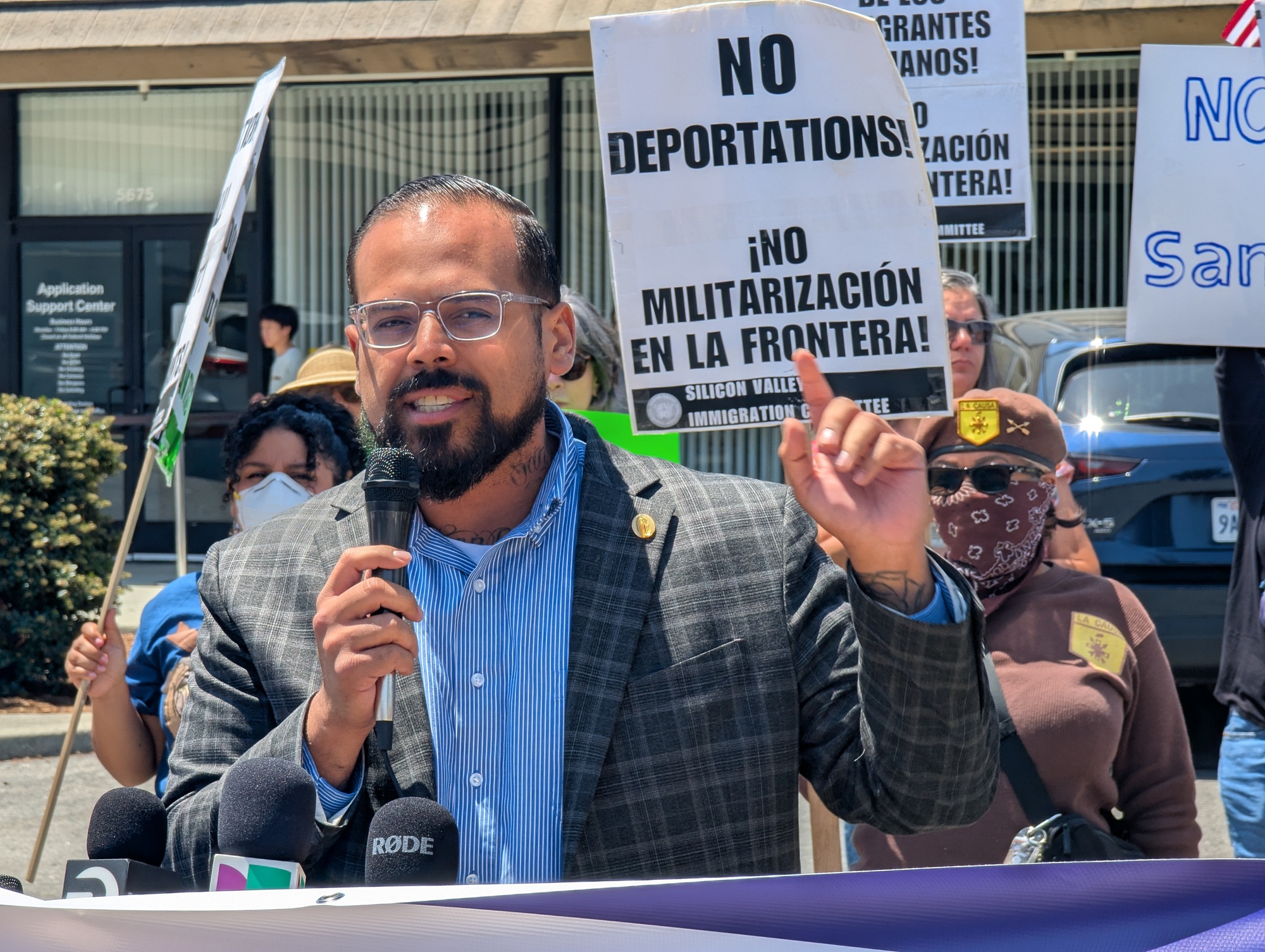
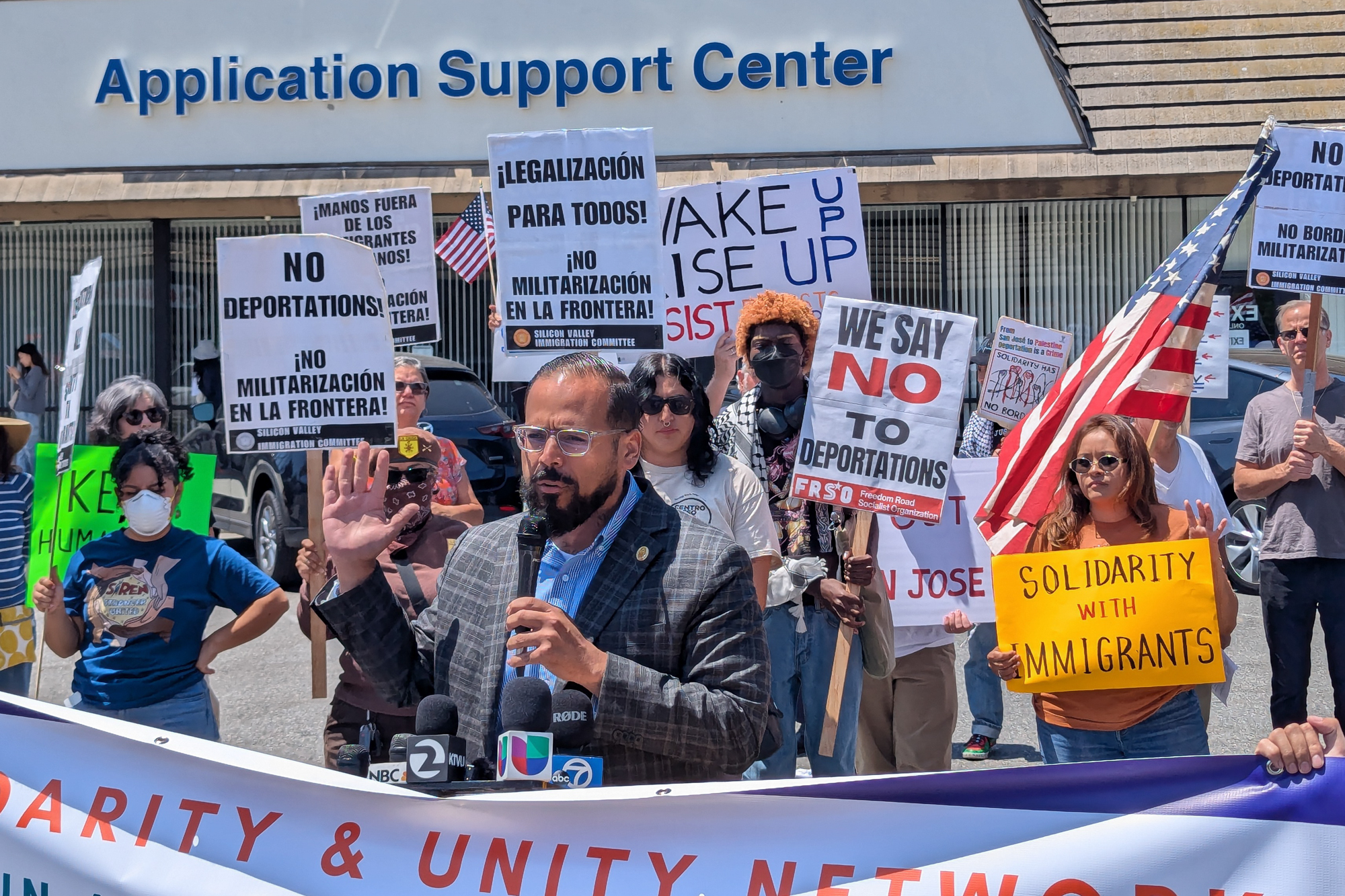
"caption": "District 5 San José City Councilmember Peter Ortiz speaks during a protest against ICE in South San José on June 6, 2025. South Bay leaders are pushing new policies aimed at barring immigration agents from using public facilities for their operations. ",
"credit": "Joseph Geha/KQED",
"altTag": null,
"description": null,
"imgSizes": {
"thumbnail": {
"file": "https://cdn.kqed.org/wp-content/uploads/sites/10/2025/10/PeterOrtizKQED-160x120.jpg",
"width": 160,
"height": 120,
"mimeType": "image/jpeg"
},
"1536x1536": {
"file": "https://cdn.kqed.org/wp-content/uploads/sites/10/2025/10/PeterOrtizKQED-1536x1156.jpg",
"width": 1536,
"height": 1156,
"mimeType": "image/jpeg"
},
"post-thumbnail": {
"file": "https://cdn.kqed.org/wp-content/uploads/sites/10/2025/10/PeterOrtizKQED-672x372.jpg",
"width": 672,
"height": 372,
"mimeType": "image/jpeg"
},
"twentyfourteen-full-width": {
"file": "https://cdn.kqed.org/wp-content/uploads/sites/10/2025/10/PeterOrtizKQED-1038x576.jpg",
"width": 1038,
"height": 576,
"mimeType": "image/jpeg"
},
"kqedFullSize": {
"file": "https://cdn.kqed.org/wp-content/uploads/sites/10/2025/10/PeterOrtizKQED.jpg",
"width": 2000,
"height": 1505
}
},
"isLoading": false,
"fetchFailed": false
},
"news_12060697": {
"type": "attachments",
"id": "news_12060697",
"meta": {
"index": "attachments_1716263798",
"site": "news",
"id": "12060697",
"found": true
},
"title": "Pittsburgh Penguins v San Jose Sharks",
"publishDate": 1760979334,
"status": "inherit",
"parent": 12060692,
"modified": 1760979376,
"caption": "The San Jose Sharks skates onto the ice through the Shark Head prior to the start of the game against the Pittsburgh Penguins at SAP Center on October 18, 2025 in San Jose, California. ",
"credit": "Photo by Thearon W. Henderson/Getty Images",
"altTag": null,
"description": null,
"imgSizes": {
"medium": {
"file": "https://cdn.kqed.org/wp-content/uploads/sites/10/2025/10/GettyImages-2242035629-2000x1333.jpg",
"width": 2000,
"height": 1333,
"mimeType": "image/jpeg"
},
"large": {
"file": "https://cdn.kqed.org/wp-content/uploads/sites/10/2025/10/GettyImages-2242035629-2000x1333.jpg",
"width": 2000,
"height": 1333,
"mimeType": "image/jpeg"
},
"thumbnail": {
"file": "https://cdn.kqed.org/wp-content/uploads/sites/10/2025/10/GettyImages-2242035629-160x107.jpg",
"width": 160,
"height": 107,
"mimeType": "image/jpeg"
},
"1536x1536": {
"file": "https://cdn.kqed.org/wp-content/uploads/sites/10/2025/10/GettyImages-2242035629-1536x1024.jpg",
"width": 1536,
"height": 1024,
"mimeType": "image/jpeg"
},
"2048x2048": {
"file": "https://cdn.kqed.org/wp-content/uploads/sites/10/2025/10/GettyImages-2242035629-2048x1365.jpg",
"width": 2048,
"height": 1365,
"mimeType": "image/jpeg"
},
"post-thumbnail": {
"file": "https://cdn.kqed.org/wp-content/uploads/sites/10/2025/10/GettyImages-2242035629-672x372.jpg",
"width": 672,
"height": 372,
"mimeType": "image/jpeg"
},
"twentyfourteen-full-width": {
"file": "https://cdn.kqed.org/wp-content/uploads/sites/10/2025/10/GettyImages-2242035629-1038x576.jpg",
"width": 1038,
"height": 576,
"mimeType": "image/jpeg"
},
"full-width": {
"file": "https://cdn.kqed.org/wp-content/uploads/sites/10/2025/10/GettyImages-2242035629-2000x1333.jpg",
"width": 2000,
"height": 1333,
"mimeType": "image/jpeg"
},
"kqedFullSize": {
"file": "https://cdn.kqed.org/wp-content/uploads/sites/10/2025/10/GettyImages-2242035629-scaled-e1760979386282.jpg",
"width": 2000,
"height": 1333
}
},
"isLoading": false,
"fetchFailed": false
},
"news_12060142": {
"type": "attachments",
"id": "news_12060142",
"meta": {
"index": "attachments_1716263798",
"site": "news",
"id": "12060142",
"found": true
},
"title": "Border Patrol Agents Detain Migrants Near US-Mexico Border",
"publishDate": 1760641072,
"status": "inherit",
"parent": 12060135,
"modified": 1760643684,
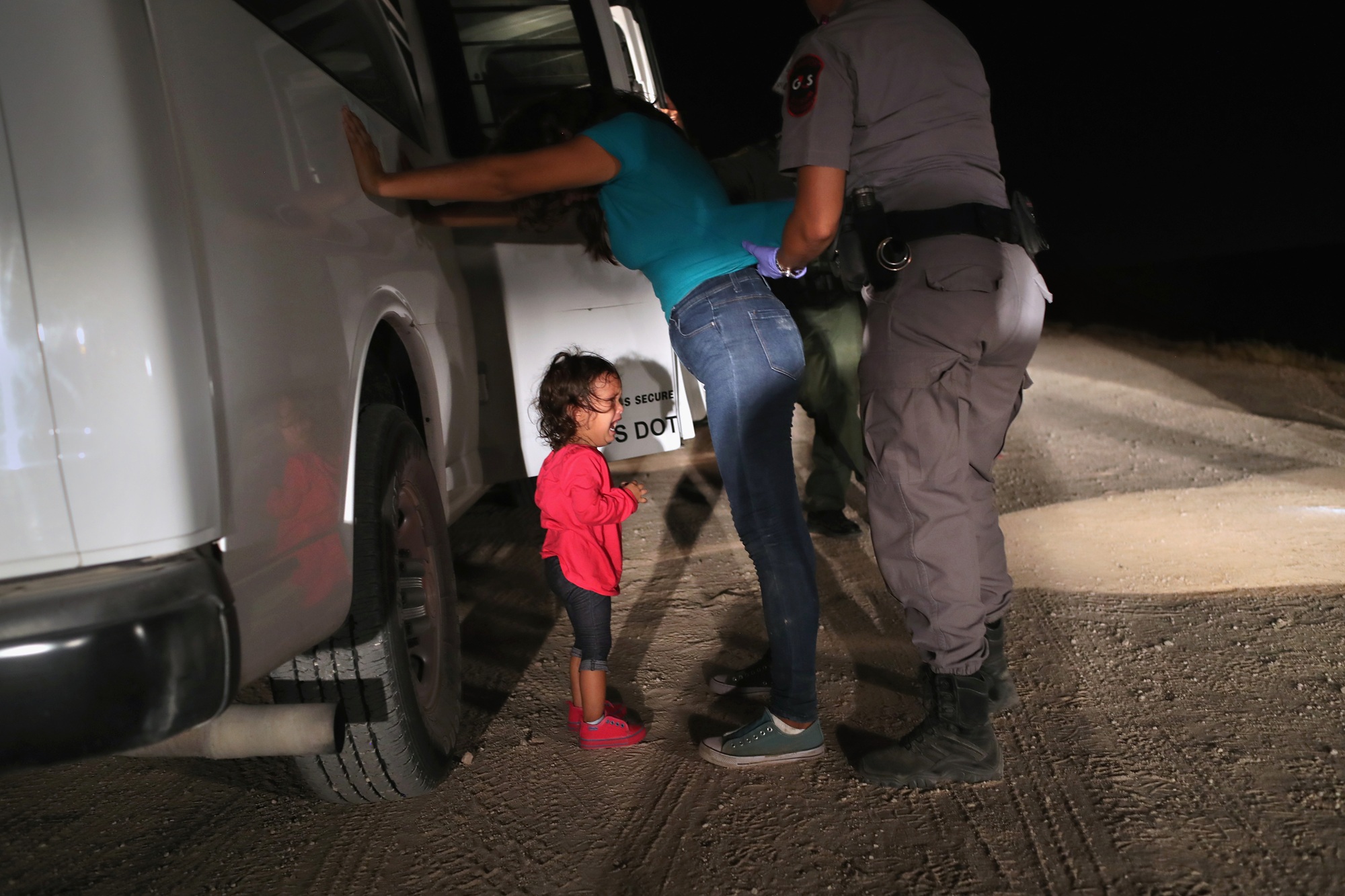
"caption": "A 2-year-old Honduran asylum seeker cries as her mother is searched and detained near the U.S.-Mexico border on June 12, 2018, in McAllen, Texas. ",
"credit": "John Moore/Getty Images",
"altTag": null,
"description": null,
"imgSizes": {
"thumbnail": {
"file": "https://cdn.kqed.org/wp-content/uploads/sites/10/2025/10/FamilySeparationGetty1-160x107.jpg",
"width": 160,
"height": 107,
"mimeType": "image/jpeg"
},
"1536x1536": {
"file": "https://cdn.kqed.org/wp-content/uploads/sites/10/2025/10/FamilySeparationGetty1-1536x1024.jpg",
"width": 1536,
"height": 1024,
"mimeType": "image/jpeg"
},
"post-thumbnail": {
"file": "https://cdn.kqed.org/wp-content/uploads/sites/10/2025/10/FamilySeparationGetty1-672x372.jpg",
"width": 672,
"height": 372,
"mimeType": "image/jpeg"
},
"twentyfourteen-full-width": {
"file": "https://cdn.kqed.org/wp-content/uploads/sites/10/2025/10/FamilySeparationGetty1-1038x576.jpg",
"width": 1038,
"height": 576,
"mimeType": "image/jpeg"
},
"kqedFullSize": {
"file": "https://cdn.kqed.org/wp-content/uploads/sites/10/2025/10/FamilySeparationGetty1.jpg",
"width": 2000,
"height": 1333
}
},
"isLoading": false,
"fetchFailed": false
},
"news_12059877": {
"type": "attachments",
"id": "news_12059877",
"meta": {
"index": "attachments_1716263798",
"site": "news",
"id": "12059877",
"found": true
},
"title": "251014-ANTIFAROUNDTABLEFOLO-03-BL-KQED",
"publishDate": 1760467761,
"status": "inherit",
"parent": 0,
"modified": 1760467820,
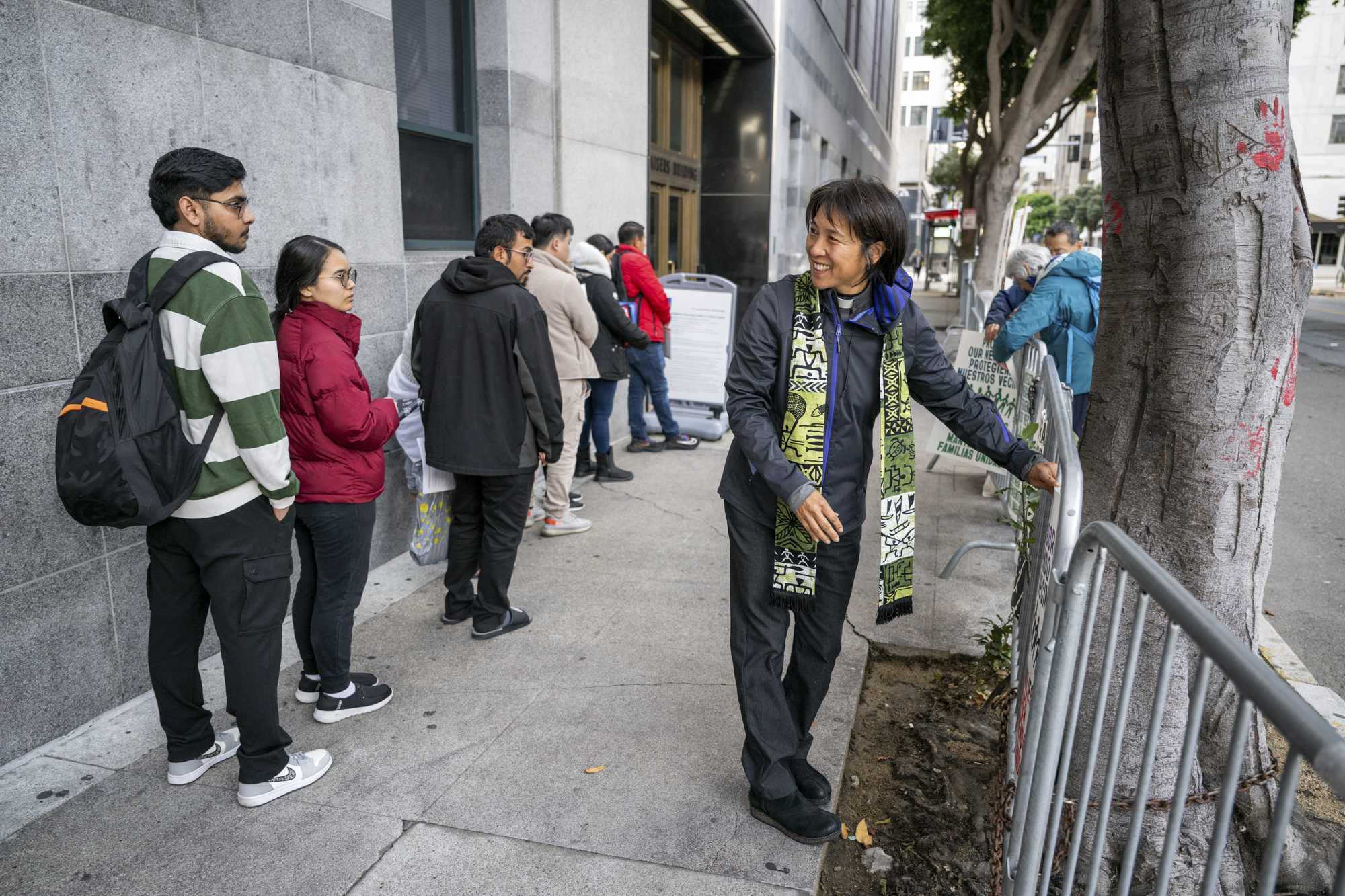
"caption": "Rev. Deborah Lee speaks with people in line outside the ICE Field Office in downtown San Francisco on Oct. 14, 2025, as they wait for scheduled check-ins and immigration-related appointments.",
"credit": "Beth LaBerge/KQED",
"altTag": null,
"description": null,
"imgSizes": {
"thumbnail": {
"file": "https://cdn.kqed.org/wp-content/uploads/sites/10/2025/10/251014-ANTIFAROUNDTABLEFOLO-03-BL-KQED-160x107.jpg",
"width": 160,
"height": 107,
"mimeType": "image/jpeg"
},
"1536x1536": {
"file": "https://cdn.kqed.org/wp-content/uploads/sites/10/2025/10/251014-ANTIFAROUNDTABLEFOLO-03-BL-KQED-1536x1024.jpg",
"width": 1536,
"height": 1024,
"mimeType": "image/jpeg"
},
"post-thumbnail": {
"file": "https://cdn.kqed.org/wp-content/uploads/sites/10/2025/10/251014-ANTIFAROUNDTABLEFOLO-03-BL-KQED-672x372.jpg",
"width": 672,
"height": 372,
"mimeType": "image/jpeg"
},
"twentyfourteen-full-width": {
"file": "https://cdn.kqed.org/wp-content/uploads/sites/10/2025/10/251014-ANTIFAROUNDTABLEFOLO-03-BL-KQED-1038x576.jpg",
"width": 1038,
"height": 576,
"mimeType": "image/jpeg"
},
"kqedFullSize": {
"file": "https://cdn.kqed.org/wp-content/uploads/sites/10/2025/10/251014-ANTIFAROUNDTABLEFOLO-03-BL-KQED.jpg",
"width": 2000,
"height": 1333
}
},
"isLoading": false,
"fetchFailed": false
},
"news_12060040": {
"type": "attachments",
"id": "news_12060040",
"meta": {
"index": "attachments_1716263798",
"site": "news",
"id": "12060040",
"found": true
},
"title": "250609-LuriePresser-04-BL_qed",
"publishDate": 1760559792,
"status": "inherit",
"parent": 12060033,
"modified": 1760559803,
"caption": "Mayor Daniel Lurie speaks at a press conference with public safety leaders in San Francisco on June 9, 2025.",
"credit": "Beth LaBerge/KQED",
"altTag": null,
"description": null,
"imgSizes": {
"thumbnail": {
"file": "https://cdn.kqed.org/wp-content/uploads/sites/10/2025/10/250609-LuriePresser-04-BL_qed-160x107.jpg",
"width": 160,
"height": 107,
"mimeType": "image/jpeg"
},
"1536x1536": {
"file": "https://cdn.kqed.org/wp-content/uploads/sites/10/2025/10/250609-LuriePresser-04-BL_qed-1536x1024.jpg",
"width": 1536,
"height": 1024,
"mimeType": "image/jpeg"
},
"post-thumbnail": {
"file": "https://cdn.kqed.org/wp-content/uploads/sites/10/2025/10/250609-LuriePresser-04-BL_qed-672x372.jpg",
"width": 672,
"height": 372,
"mimeType": "image/jpeg"
},
"twentyfourteen-full-width": {
"file": "https://cdn.kqed.org/wp-content/uploads/sites/10/2025/10/250609-LuriePresser-04-BL_qed-1038x576.jpg",
"width": 1038,
"height": 576,
"mimeType": "image/jpeg"
},
"kqedFullSize": {
"file": "https://cdn.kqed.org/wp-content/uploads/sites/10/2025/10/250609-LuriePresser-04-BL_qed.jpg",
"width": 1999,
"height": 1333
}
},
"isLoading": false,
"fetchFailed": false
},
"news_12055063": {
"type": "attachments",
"id": "news_12055063",
"meta": {
"index": "attachments_1716263798",
"site": "news",
"id": "12055063",
"found": true
},
"title": "250903-ICETRAINING_01023_TV-KQED",
"publishDate": 1757336633,
"status": "inherit",
"parent": 12071374,
"modified": 1769642299,
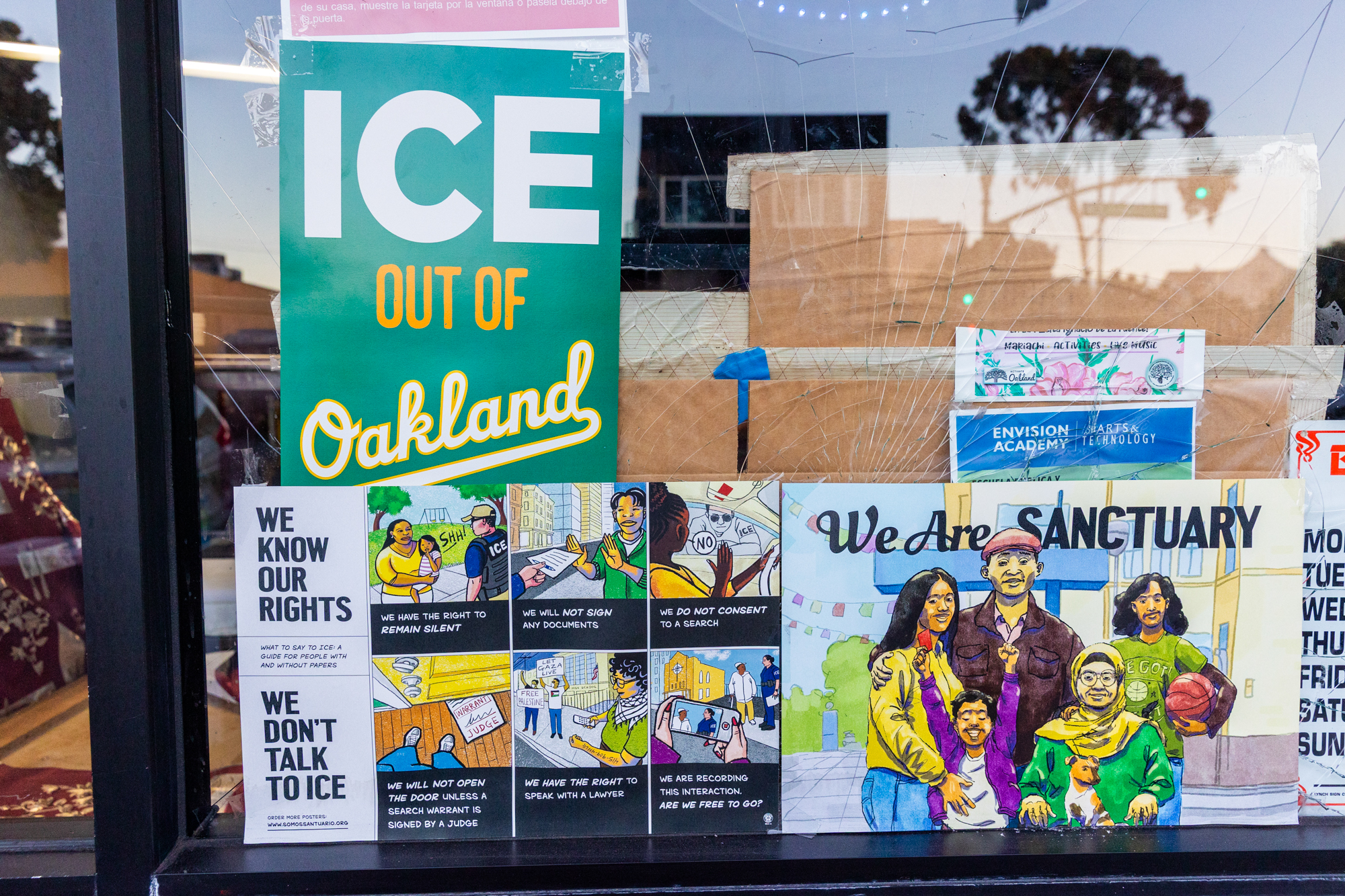
"caption": "Signs identify Taqueria La Gran Chiquita as a safe space for those at risk of deportation in Oakland on Sept. 3, 2025. Members of the Community of Fruitvale and East Bay Sanctuary Covenant gather to prepare for how to fight back against ICE.",
"credit": "Tâm Vũ/KQED",
"altTag": null,
"description": null,
"imgSizes": {
"thumbnail": {
"file": "https://cdn.kqed.org/wp-content/uploads/sites/10/2025/09/250903-ICETRAINING_01023_TV-KQED-160x107.jpg",
"width": 160,
"height": 107,
"mimeType": "image/jpeg"
},
"1536x1536": {
"file": "https://cdn.kqed.org/wp-content/uploads/sites/10/2025/09/250903-ICETRAINING_01023_TV-KQED-1536x1024.jpg",
"width": 1536,
"height": 1024,
"mimeType": "image/jpeg"
},
"post-thumbnail": {
"file": "https://cdn.kqed.org/wp-content/uploads/sites/10/2025/09/250903-ICETRAINING_01023_TV-KQED-672x372.jpg",
"width": 672,
"height": 372,
"mimeType": "image/jpeg"
},
"twentyfourteen-full-width": {
"file": "https://cdn.kqed.org/wp-content/uploads/sites/10/2025/09/250903-ICETRAINING_01023_TV-KQED-1038x576.jpg",
"width": 1038,
"height": 576,
"mimeType": "image/jpeg"
},
"kqedFullSize": {
"file": "https://cdn.kqed.org/wp-content/uploads/sites/10/2025/09/250903-ICETRAINING_01023_TV-KQED.jpg",
"width": 2000,
"height": 1333
}
},
"isLoading": false,
"fetchFailed": false
},
"news_12043197": {
"type": "attachments",
"id": "news_12043197",
"meta": {
"index": "attachments_1716263798",
"site": "news",
"id": "12043197",
"found": true
},
"title": "250606-SJICEPROTEST-JG-5-KQED",
"publishDate": 1749253072,
"status": "inherit",
"parent": 12043139,
"modified": 1749253093,
"caption": "District 5 San José City Councilmember Peter Ortiz speaks during a protest against ICE in South San José on June 6, 2025.",
"credit": "Joseph Geha/KQED",
"altTag": null,
"description": null,
"imgSizes": {
"thumbnail": {
"file": "https://cdn.kqed.org/wp-content/uploads/sites/10/2025/06/250606-SJICEPROTEST-JG-5-KQED-160x107.jpg",
"width": 160,
"height": 107,
"mimeType": "image/jpeg"
},
"1536x1536": {
"file": "https://cdn.kqed.org/wp-content/uploads/sites/10/2025/06/250606-SJICEPROTEST-JG-5-KQED-1536x1024.jpg",
"width": 1536,
"height": 1024,
"mimeType": "image/jpeg"
},
"post-thumbnail": {
"file": "https://cdn.kqed.org/wp-content/uploads/sites/10/2025/06/250606-SJICEPROTEST-JG-5-KQED-672x372.jpg",
"width": 672,
"height": 372,
"mimeType": "image/jpeg"
},
"twentyfourteen-full-width": {
"file": "https://cdn.kqed.org/wp-content/uploads/sites/10/2025/06/250606-SJICEPROTEST-JG-5-KQED-1038x576.jpg",
"width": 1038,
"height": 576,
"mimeType": "image/jpeg"
},
"kqedFullSize": {
"file": "https://cdn.kqed.org/wp-content/uploads/sites/10/2025/06/250606-SJICEPROTEST-JG-5-KQED.jpg",
"width": 2000,
"height": 1333
}
},
"isLoading": false,
"fetchFailed": false
},
"news_12059732": {
"type": "attachments",
"id": "news_12059732",
"meta": {
"index": "attachments_1716263798",
"site": "news",
"id": "12059732",
"found": true
},
"title": "Salesforce CEO Marc Benioff And NVIDIA's CEO Jensen Huang Speak At Salesforce's Dreamforce Event",
"publishDate": 1760388192,
"status": "inherit",
"parent": 12059728,
"modified": 1760388229,
"caption": "Salesforce CEO Marc Benioff speaks during Salesforce's Dreamforce on Sept. 17, 2024, in San Francisco, California. ",
"credit": "Justin Sullivan/Getty Images",
"altTag": null,
"description": null,
"imgSizes": {
"thumbnail": {
"file": "https://cdn.kqed.org/wp-content/uploads/sites/10/2025/10/MarcBenioffGetty-160x107.jpg",
"width": 160,
"height": 107,
"mimeType": "image/jpeg"
},
"1536x1536": {
"file": "https://cdn.kqed.org/wp-content/uploads/sites/10/2025/10/MarcBenioffGetty-1536x1031.jpg",
"width": 1536,
"height": 1031,
"mimeType": "image/jpeg"
},
"post-thumbnail": {
"file": "https://cdn.kqed.org/wp-content/uploads/sites/10/2025/10/MarcBenioffGetty-672x372.jpg",
"width": 672,
"height": 372,
"mimeType": "image/jpeg"
},
"twentyfourteen-full-width": {
"file": "https://cdn.kqed.org/wp-content/uploads/sites/10/2025/10/MarcBenioffGetty-1038x576.jpg",
"width": 1038,
"height": 576,
"mimeType": "image/jpeg"
},
"kqedFullSize": {
"file": "https://cdn.kqed.org/wp-content/uploads/sites/10/2025/10/MarcBenioffGetty.jpg",
"width": 2000,
"height": 1343
}
},
"isLoading": false,
"fetchFailed": false
},
"news_12058492": {
"type": "attachments",
"id": "news_12058492",
"meta": {
"index": "attachments_1716263798",
"site": "news",
"id": "12058492",
"found": true
},
"title": "20250930_HISPANICSERVINGINSTITUTIONS_GC-14-KQED",
"publishDate": 1759447546,
"status": "inherit",
"parent": 0,
"modified": 1760127539,
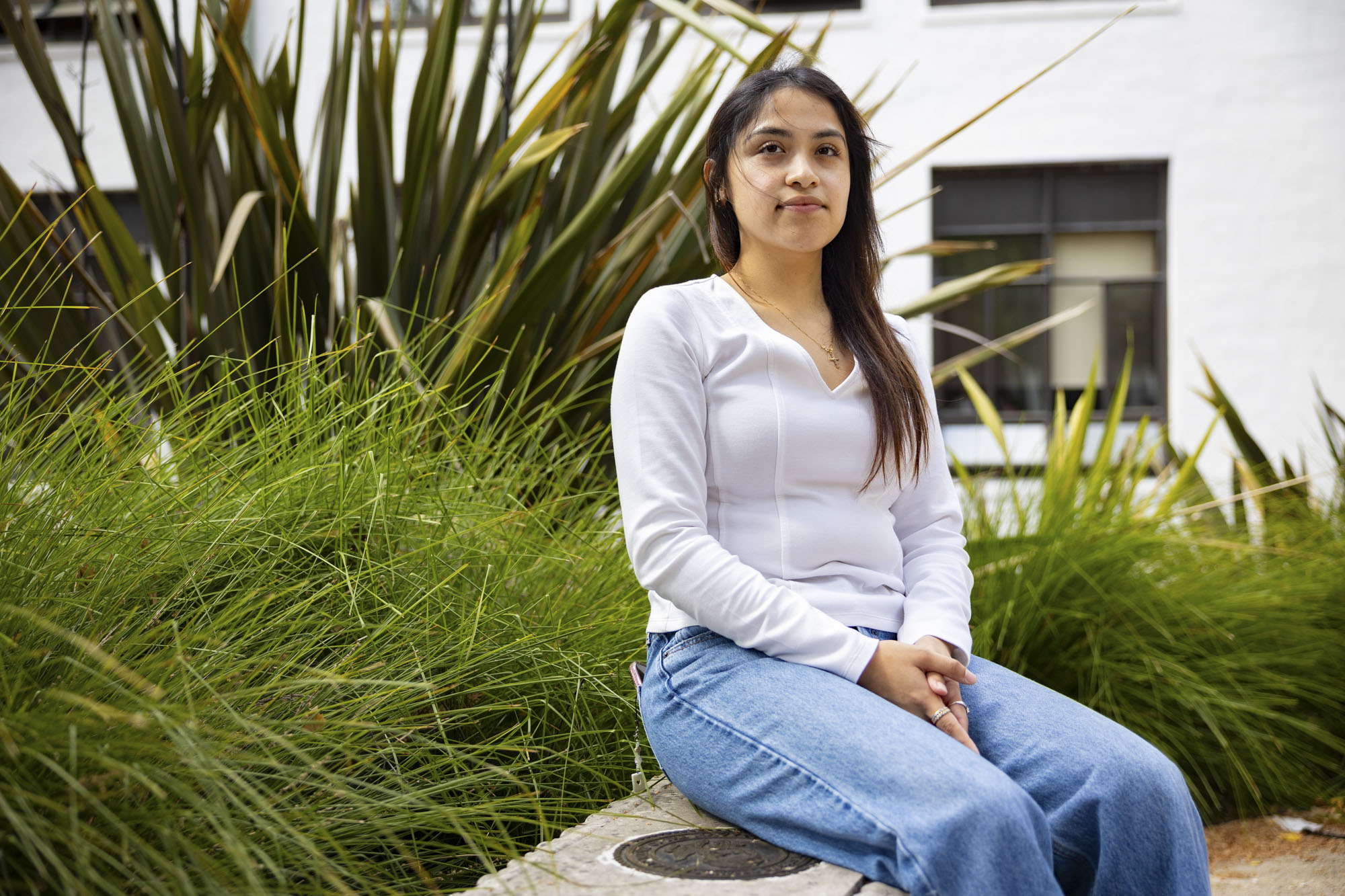
"caption": "Vanessa Perez Rojas, a fourth-year student, poses for a photo at Saint Mary’s College of California in Moraga on Sept. 30, 2025. Vanessa says spirituality is a big reason why she is at this university.",
"credit": "Gina Castro/KQED",
"altTag": null,
"description": null,
"imgSizes": {
"thumbnail": {
"file": "https://cdn.kqed.org/wp-content/uploads/sites/10/2025/10/20250930_HISPANICSERVINGINSTITUTIONS_GC-14-KQED-160x107.jpg",
"width": 160,
"height": 107,
"mimeType": "image/jpeg"
},
"1536x1536": {
"file": "https://cdn.kqed.org/wp-content/uploads/sites/10/2025/10/20250930_HISPANICSERVINGINSTITUTIONS_GC-14-KQED-1536x1024.jpg",
"width": 1536,
"height": 1024,
"mimeType": "image/jpeg"
},
"post-thumbnail": {
"file": "https://cdn.kqed.org/wp-content/uploads/sites/10/2025/10/20250930_HISPANICSERVINGINSTITUTIONS_GC-14-KQED-672x372.jpg",
"width": 672,
"height": 372,
"mimeType": "image/jpeg"
},
"twentyfourteen-full-width": {
"file": "https://cdn.kqed.org/wp-content/uploads/sites/10/2025/10/20250930_HISPANICSERVINGINSTITUTIONS_GC-14-KQED-1038x576.jpg",
"width": 1038,
"height": 576,
"mimeType": "image/jpeg"
},
"kqedFullSize": {
"file": "https://cdn.kqed.org/wp-content/uploads/sites/10/2025/10/20250930_HISPANICSERVINGINSTITUTIONS_GC-14-KQED.jpg",
"width": 2000,
"height": 1333
}
},
"isLoading": false,
"fetchFailed": false
},
"news_12058946": {
"type": "attachments",
"id": "news_12058946",
"meta": {
"index": "attachments_1716263798",
"site": "news",
"id": "12058946",
"found": true
},
"title": "ICE in Little Tokyo",
"publishDate": 1759861710,
"status": "inherit",
"parent": 12058936,
"modified": 1759880054,
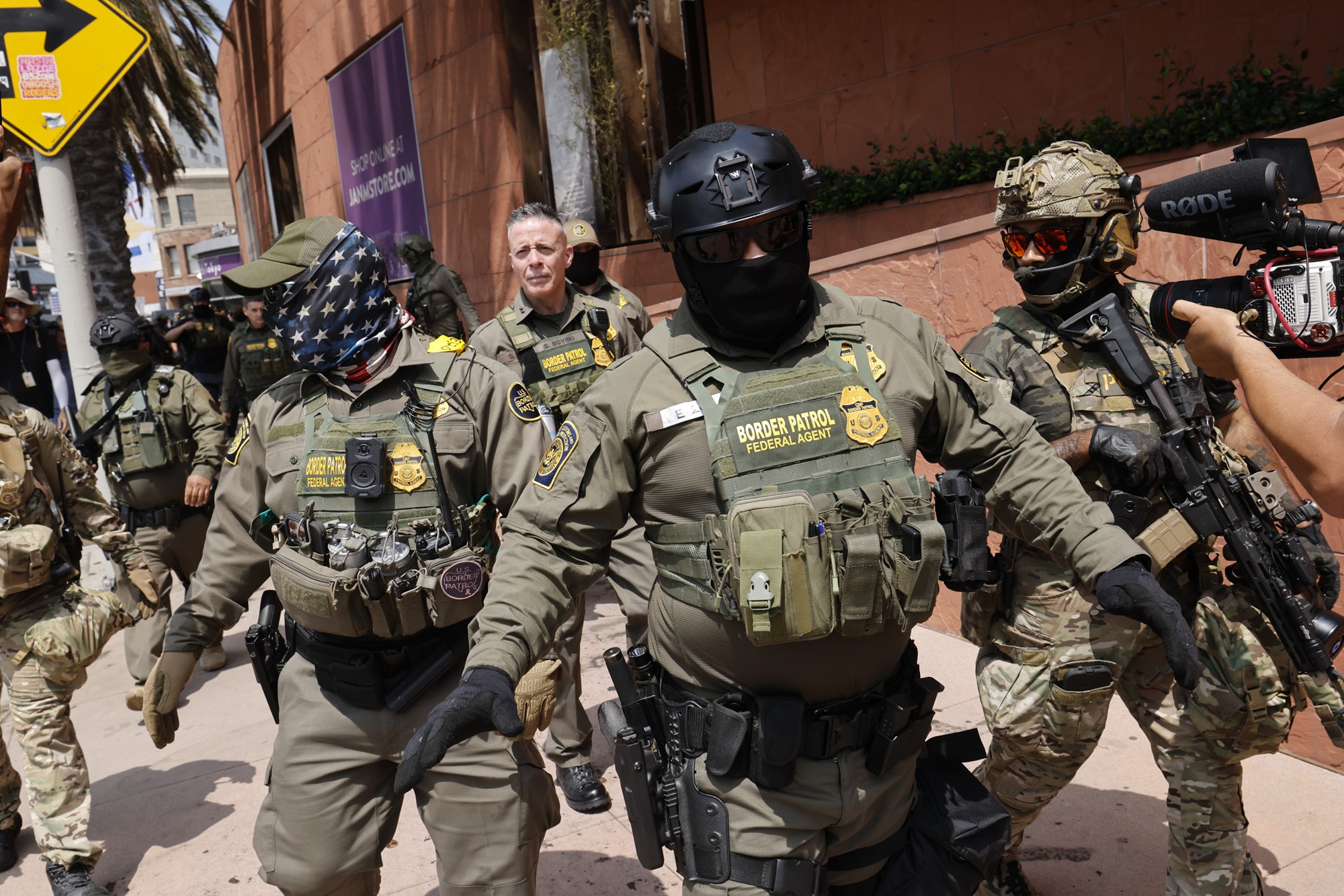
"caption": "Gregory Bovino, chief patrol agent of the El Centro sector (center), marches with federal agents to the Edward R. Roybal Federal Building after U.S. Border Patrol agents produced a show of force outside the Japanese American National Museum, where Gov. Newsom was holding a redistricting press conference on Aug. 14, 2025, in Los Angeles, California.",
"credit": "Carlin Stiehl/Los Angeles Times via Getty Images",
"altTag": null,
"description": null,
"imgSizes": {
"thumbnail": {
"file": "https://cdn.kqed.org/wp-content/uploads/sites/10/2025/10/BorderPatrolAgentsGetty-160x107.jpg",
"width": 160,
"height": 107,
"mimeType": "image/jpeg"
},
"1536x1536": {
"file": "https://cdn.kqed.org/wp-content/uploads/sites/10/2025/10/BorderPatrolAgentsGetty-1536x1025.jpg",
"width": 1536,
"height": 1025,
"mimeType": "image/jpeg"
},
"post-thumbnail": {
"file": "https://cdn.kqed.org/wp-content/uploads/sites/10/2025/10/BorderPatrolAgentsGetty-672x372.jpg",
"width": 672,
"height": 372,
"mimeType": "image/jpeg"
},
"twentyfourteen-full-width": {
"file": "https://cdn.kqed.org/wp-content/uploads/sites/10/2025/10/BorderPatrolAgentsGetty-1038x576.jpg",
"width": 1038,
"height": 576,
"mimeType": "image/jpeg"
},
"kqedFullSize": {
"file": "https://cdn.kqed.org/wp-content/uploads/sites/10/2025/10/BorderPatrolAgentsGetty.jpg",
"width": 2000,
"height": 1334
}
},
"isLoading": false,
"fetchFailed": false
},
"news_12048135": {
"type": "attachments",
"id": "news_12048135",
"meta": {
"index": "attachments_1716263798",
"site": "news",
"id": "12048135",
"found": true
},
"title": "Protests Erupt In L.A. County Sparked By Federal Immigration Raids",
"publishDate": 1752605450,
"status": "inherit",
"parent": 12048121,
"modified": 1779816898,
"caption": "Federal agents guard outside of a federal building and Immigration and Customs Enforcement (ICE) detention center in downtown Los Angeles as demonstrations continue after a series of immigration raids began June 13, 2025, in Los Angeles. Tensions in the city remain high after the Trump administration called in the National Guard and the Marines against the wishes of city leaders.",
"credit": "Spencer Platt/Getty Images",
"altTag": null,
"description": null,
"imgSizes": {
"medium": {
"file": "https://cdn.kqed.org/wp-content/uploads/sites/10/2025/07/GettyImages-2220045842-2000x1334.jpg",
"width": 2000,
"height": 1334,
"mimeType": "image/jpeg"
},
"large": {
"file": "https://cdn.kqed.org/wp-content/uploads/sites/10/2025/07/GettyImages-2220045842-2000x1334.jpg",
"width": 2000,
"height": 1334,
"mimeType": "image/jpeg"
},
"thumbnail": {
"file": "https://cdn.kqed.org/wp-content/uploads/sites/10/2025/07/GettyImages-2220045842-160x107.jpg",
"width": 160,
"height": 107,
"mimeType": "image/jpeg"
},
"1536x1536": {
"file": "https://cdn.kqed.org/wp-content/uploads/sites/10/2025/07/GettyImages-2220045842-1536x1025.jpg",
"width": 1536,
"height": 1025,
"mimeType": "image/jpeg"
},
"2048x2048": {
"file": "https://cdn.kqed.org/wp-content/uploads/sites/10/2025/07/GettyImages-2220045842-2048x1366.jpg",
"width": 2048,
"height": 1366,
"mimeType": "image/jpeg"
},
"post-thumbnail": {
"file": "https://cdn.kqed.org/wp-content/uploads/sites/10/2025/07/GettyImages-2220045842-672x372.jpg",
"width": 672,
"height": 372,
"mimeType": "image/jpeg"
},
"twentyfourteen-full-width": {
"file": "https://cdn.kqed.org/wp-content/uploads/sites/10/2025/07/GettyImages-2220045842-1038x576.jpg",
"width": 1038,
"height": 576,
"mimeType": "image/jpeg"
},
"full-width": {
"file": "https://cdn.kqed.org/wp-content/uploads/sites/10/2025/07/GettyImages-2220045842-2000x1334.jpg",
"width": 2000,
"height": 1334,
"mimeType": "image/jpeg"
},
"kqedFullSize": {
"file": "https://cdn.kqed.org/wp-content/uploads/sites/10/2025/07/GettyImages-2220045842-scaled-e1752857672682.jpg",
"width": 2000,
"height": 1334
}
},
"isLoading": false,
"fetchFailed": false
},
"news_12057365": {
"type": "attachments",
"id": "news_12057365",
"meta": {
"index": "attachments_1716263798",
"site": "news",
"id": "12057365",
"found": true
},
"title": "ICE Holds Hiring Event In Arlington, Texas",
"publishDate": 1758722357,
"status": "inherit",
"parent": 12057364,
"modified": 1758722447,
"caption": "ARLINGTON, TEXAS - AUGUST 26: A detail view of an ICE promotion as U.S. Immigration and Customs Enforcement (ICE) holds a major hiring event on August 26, 2025 in Arlington, Texas. The federal immigration agency is ramping up recruiting efforts nationwide. ",
"credit": "Photo by Ron Jenkins/Getty Images",
"altTag": null,
"description": null,
"imgSizes": {
"medium": {
"file": "https://cdn.kqed.org/wp-content/uploads/sites/10/2025/09/GettyImages-2231531157-2000x1416.jpg",
"width": 2000,
"height": 1416,
"mimeType": "image/jpeg"
},
"large": {
"file": "https://cdn.kqed.org/wp-content/uploads/sites/10/2025/09/GettyImages-2231531157-2000x1416.jpg",
"width": 2000,
"height": 1416,
"mimeType": "image/jpeg"
},
"thumbnail": {
"file": "https://cdn.kqed.org/wp-content/uploads/sites/10/2025/09/GettyImages-2231531157-160x113.jpg",
"width": 160,
"height": 113,
"mimeType": "image/jpeg"
},
"1536x1536": {
"file": "https://cdn.kqed.org/wp-content/uploads/sites/10/2025/09/GettyImages-2231531157-1536x1087.jpg",
"width": 1536,
"height": 1087,
"mimeType": "image/jpeg"
},
"2048x2048": {
"file": "https://cdn.kqed.org/wp-content/uploads/sites/10/2025/09/GettyImages-2231531157-2048x1450.jpg",
"width": 2048,
"height": 1450,
"mimeType": "image/jpeg"
},
"post-thumbnail": {
"file": "https://cdn.kqed.org/wp-content/uploads/sites/10/2025/09/GettyImages-2231531157-672x372.jpg",
"width": 672,
"height": 372,
"mimeType": "image/jpeg"
},
"twentyfourteen-full-width": {
"file": "https://cdn.kqed.org/wp-content/uploads/sites/10/2025/09/GettyImages-2231531157-1038x576.jpg",
"width": 1038,
"height": 576,
"mimeType": "image/jpeg"
},
"full-width": {
"file": "https://cdn.kqed.org/wp-content/uploads/sites/10/2025/09/GettyImages-2231531157-2000x1416.jpg",
"width": 2000,
"height": 1416,
"mimeType": "image/jpeg"
},
"kqedFullSize": {
"file": "https://cdn.kqed.org/wp-content/uploads/sites/10/2025/09/GettyImages-2231531157-scaled.jpg",
"width": 2560,
"height": 1812
}
},
"isLoading": false,
"fetchFailed": false
}
},
"audioPlayerReducer": {
"postId": "stream_live",
"isPaused": true,
"isPlaying": false,
"pfsActive": false,
"pledgeModalIsOpen": true,
"playerDrawerIsOpen": false,
"liveAudioPlayStartedAt": 0,
"liveAudioPlayContext": ""
},
"authorsReducer": {
"byline_news_12060692": {
"type": "authors",
"id": "byline_news_12060692",
"meta": {
"override": true
},
"slug": "byline_news_12060692",
"name": "Associated Press ",
"isLoading": false
},
"byline_news_12060135": {
"type": "authors",
"id": "byline_news_12060135",
"meta": {
"override": true
},
"slug": "byline_news_12060135",
"name": "Mark Betancourt, The California Newsroom",
"isLoading": false
},
"mlagos": {
"type": "authors",
"id": "3239",
"meta": {
"index": "authors_1716337520",
"id": "3239",
"found": true
},
"name": "Marisa Lagos",
"firstName": "Marisa",
"lastName": "Lagos",
"slug": "mlagos",
"email": "mlagos@kqed.org",
"display_author_email": false,
"staff_mastheads": [
"news"
],
"title": "KQED Contributor",
"bio": "Marisa Lagos is a correspondent for KQED’s California Politics and Government Desk and co-hosts the award-winning show and podcast, Political Breakdown. At KQED, Lagos also conducts reporting, analysis and investigations into state, local and national politics for radio, TV, online and onstage. In 2022, she and co-host, Scott Shafer, moderated the only gubernatorial debate in California. In 2020, the \u003ci>Washington Post\u003c/i> named her one of the top political journalists in California; she was nominated for a Peabody and won several other awards for her work investigating the 2017 California wildfires. She has worked at the \u003ci>San Francisco Chronicle\u003c/i>, \u003ci>San Francisco Examiner\u003c/i> and \u003ci>Los Angeles Times\u003c/i>. A UC Santa Barbara graduate, she lives in San Francisco with her two sons and husband.",
"avatar": "https://secure.gravatar.com/avatar/a261a0d3696fc066871ef96b85b5e7d2?s=600&d=blank&r=g",
"twitter": "@mlagos",
"facebook": null,
"instagram": null,
"linkedin": null,
"sites": [
{
"site": "arts",
"roles": [
"author"
]
},
{
"site": "news",
"roles": [
"editor"
]
},
{
"site": "science",
"roles": [
"editor"
]
},
{
"site": "forum",
"roles": [
"author"
]
},
{
"site": "liveblog",
"roles": [
"author"
]
}
],
"headData": {
"title": "Marisa Lagos | KQED",
"description": "KQED Contributor",
"ogImgSrc": "https://secure.gravatar.com/avatar/a261a0d3696fc066871ef96b85b5e7d2?s=600&d=blank&r=g",
"twImgSrc": "https://secure.gravatar.com/avatar/a261a0d3696fc066871ef96b85b5e7d2?s=600&d=blank&r=g"
},
"isLoading": false,
"link": "/author/mlagos"
},
"ecruzguevarra": {
"type": "authors",
"id": "8654",
"meta": {
"index": "authors_1716337520",
"id": "8654",
"found": true
},
"name": "Ericka Cruz Guevarra",
"firstName": "Ericka",
"lastName": "Cruz Guevarra",
"slug": "ecruzguevarra",
"email": "ecruzguevarra@kqed.org",
"display_author_email": true,
"staff_mastheads": [
"news"
],
"title": "Producer, The Bay Podcast",
"bio": "Ericka Cruz Guevarra is host of \u003ca href=\"https://www.kqed.org/podcasts/thebay\">\u003cem>The Bay\u003c/em>\u003c/a> podcast at KQED. Before host, she was the show’s producer. Her work in that capacity includes a three-part reported series on policing in Vallejo, which won a 2020 excellence in journalism award from the Society of Professional Journalists. Ericka has worked as a breaking news reporter at Oregon Public Broadcasting, helped produce the Code Switch podcast, and was KQED’s inaugural Raul Ramirez Diversity Fund intern. She’s also an alumna of NPR’s Next Generation Radio program. Send her an email if you have strong feelings about whether Fairfield and Suisun City are the Bay. Ericka is represented by SAG-AFTRA.",
"avatar": "https://secure.gravatar.com/avatar/accefc1de4bafc7e234b69bcb9b6f6536c130fd84709bc3069ef11a78787e1bb?s=600&d=blank&r=g",
"twitter": "NotoriousECG",
"bluesky": null,
"facebook": null,
"instagram": null,
"linkedin": null,
"sites": [
{
"site": "arts",
"roles": [
"subscriber"
]
},
{
"site": "news",
"roles": [
"editor",
"manage_categories"
]
},
{
"site": "futureofyou",
"roles": [
"subscriber"
]
},
{
"site": "stateofhealth",
"roles": [
"subscriber"
]
},
{
"site": "science",
"roles": [
"editor"
]
},
{
"site": "forum",
"roles": [
"subscriber"
]
}
],
"headData": {
"title": "Ericka Cruz Guevarra | KQED",
"description": "Producer, The Bay Podcast",
"ogImgSrc": "https://secure.gravatar.com/avatar/accefc1de4bafc7e234b69bcb9b6f6536c130fd84709bc3069ef11a78787e1bb?s=600&d=blank&r=g",
"twImgSrc": "https://secure.gravatar.com/avatar/accefc1de4bafc7e234b69bcb9b6f6536c130fd84709bc3069ef11a78787e1bb?s=600&d=blank&r=g"
},
"isLoading": false,
"link": "/author/ecruzguevarra"
},
"amontecillo": {
"type": "authors",
"id": "11649",
"meta": {
"index": "authors_1716337520",
"id": "11649",
"found": true
},
"name": "Alan Montecillo",
"firstName": "Alan",
"lastName": "Montecillo",
"slug": "amontecillo",
"email": "amontecillo@kqed.org",
"display_author_email": false,
"staff_mastheads": [
"news"
],
"title": "KQED Contributor",
"bio": "Alan Montecillo is the senior editor of \u003cem>\u003ca href=\"http://kqed.org/thebay\">The Bay\u003c/a>, \u003c/em> KQED's local news podcast. Before moving to the Bay Area, he worked as a senior talk show producer for WILL in Champaign-Urbana, Illinois and at Oregon Public Broadcasting in Portland, Oregon. He has won journalism awards from the Society of Professional Journalists Northern California, the Public Media Journalists Association, The Signal Awards, and has also received a regional Edward R. Murrow award. Alan is a Filipino American from Hong Kong and a graduate of Reed College.",
"avatar": "https://secure.gravatar.com/avatar/268f53a2066899ea9efdd8a5900218b17c822d9862cbc9326cccec53ef41d349?s=600&d=blank&r=g",
"twitter": "alanmontecillo",
"bluesky": null,
"facebook": null,
"instagram": null,
"linkedin": null,
"sites": [
{
"site": "",
"roles": [
"editor"
]
},
{
"site": "news",
"roles": [
"editor",
"manage_categories"
]
}
],
"headData": {
"title": "Alan Montecillo | KQED",
"description": "KQED Contributor",
"ogImgSrc": "https://secure.gravatar.com/avatar/268f53a2066899ea9efdd8a5900218b17c822d9862cbc9326cccec53ef41d349?s=600&d=blank&r=g",
"twImgSrc": "https://secure.gravatar.com/avatar/268f53a2066899ea9efdd8a5900218b17c822d9862cbc9326cccec53ef41d349?s=600&d=blank&r=g"
},
"isLoading": false,
"link": "/author/amontecillo"
},
"btorres": {
"type": "authors",
"id": "11666",
"meta": {
"index": "authors_1716337520",
"id": "11666",
"found": true
},
"name": "Blanca Torres",
"firstName": "Blanca",
"lastName": "Torres",
"slug": "btorres",
"email": "btorres@kqed.org",
"display_author_email": true,
"staff_mastheads": [
"news"
],
"title": "Producer, Forum",
"bio": "Blanca Torres brings sharp news judgement and keen sense of lively conversation to her work as producer for Forum. She loves producing shows that leave listeners feeling like they heard distinctive voices, learned something new and gained a fresh perspective.\r\n\r\nShe joined KQED in January of 2020 after 16 years of working as a newspaper reporter most recently at the \u003cem>San Francisco Business Times,\u003c/em> where she wrote about real estate and economic development. Before that, she covered a variety of beats including crime, education, retail, workplace, the economy, consumer issues, and small business for the \u003cem>Contra Costa Times, Baltimore Sun\u003c/em> and\u003cem> The Seattle Times\u003c/em>. In addition to reporting, she worked as an editorial writer and columnist for the \u003cem>Seattle Times\u003c/em>. From 2017 to 2020, Blanca won a total of ten awards from the National Association of Real Estate Editors and won first place for land use reporting from the California News Publishers Association two years in a row. She is also a member and former board member for the National Association of Hispanic Journalists.\r\n\r\nA native of the Pacific Northwest, Blanca earned her bachelor's degree from Vanderbilt University in Nashville and a master's in fine arts in creative writing at Mills College. She lives in the East Bay with her family.",
"avatar": "https://secure.gravatar.com/avatar/50b49d19b14a1eed34f26ebf4681152cdd81574ed21851100871ccd29e578cdc?s=600&d=blank&r=g",
"twitter": "@blancawrites",
"bluesky": null,
"facebook": null,
"instagram": null,
"linkedin": null,
"sites": [
{
"site": "arts",
"roles": [
"editor"
]
},
{
"site": "news",
"roles": [
"editor"
]
},
{
"site": "forum",
"roles": [
"editor"
]
}
],
"headData": {
"title": "Blanca Torres | KQED",
"description": "Producer, Forum",
"ogImgSrc": "https://secure.gravatar.com/avatar/50b49d19b14a1eed34f26ebf4681152cdd81574ed21851100871ccd29e578cdc?s=600&d=blank&r=g",
"twImgSrc": "https://secure.gravatar.com/avatar/50b49d19b14a1eed34f26ebf4681152cdd81574ed21851100871ccd29e578cdc?s=600&d=blank&r=g"
},
"isLoading": false,
"link": "/author/btorres"
},
"kmizuguchi": {
"type": "authors",
"id": "11739",
"meta": {
"index": "authors_1716337520",
"id": "11739",
"found": true
},
"name": "Keith Mizuguchi",
"firstName": "Keith",
"lastName": "Mizuguchi",
"slug": "kmizuguchi",
"email": "kmizuguchi@kqed.org",
"display_author_email": false,
"staff_mastheads": [],
"title": "KQED Contributor",
"bio": null,
"avatar": "https://secure.gravatar.com/avatar/64d8a7de0723d4099b9fe4e915136103febcc20809abce228ee4415bcb237023?s=600&d=blank&r=g",
"twitter": null,
"bluesky": null,
"facebook": null,
"instagram": null,
"linkedin": null,
"sites": [
{
"site": "news",
"roles": [
"editor"
]
},
{
"site": "science",
"roles": [
"editor"
]
}
],
"headData": {
"title": "Keith Mizuguchi | KQED",
"description": "KQED Contributor",
"ogImgSrc": "https://secure.gravatar.com/avatar/64d8a7de0723d4099b9fe4e915136103febcc20809abce228ee4415bcb237023?s=600&d=blank&r=g",
"twImgSrc": "https://secure.gravatar.com/avatar/64d8a7de0723d4099b9fe4e915136103febcc20809abce228ee4415bcb237023?s=600&d=blank&r=g"
},
"isLoading": false,
"link": "/author/kmizuguchi"
},
"jessicakariisa": {
"type": "authors",
"id": "11831",
"meta": {
"index": "authors_1716337520",
"id": "11831",
"found": true
},
"name": "Jessica Kariisa",
"firstName": "Jessica",
"lastName": "Kariisa",
"slug": "jessicakariisa",
"email": "jkariisa@kqed.org",
"display_author_email": false,
"staff_mastheads": [],
"title": "Producer, The Bay",
"bio": "Jessica Kariisa is the producer of The Bay. She first joined KQED as an intern for The California Report Magazine, after which she became an on-call producer. She reported a Bay Curious episode on the use of rap lyrics in criminal trials which won a Society of Professional Journalists award in 2023 for Excellence in Features Journalism and the 2023 Signal Award for Best Conversation Starter. She’s worked on podcasts for Snap Judgment and American Public Media. Before embarking on her audio career, she was a music journalist.\r\n\r\nJessica Kariisa is represented by SAG-AFTRA.",
"avatar": "https://secure.gravatar.com/avatar/522e97b28ac0b3d411621c0fde8f3419c7b71ea2c5c262c57c4bb600963f328c?s=600&d=blank&r=g",
"twitter": null,
"bluesky": null,
"facebook": null,
"instagram": null,
"linkedin": null,
"sites": [
{
"site": "arts",
"roles": [
"author"
]
},
{
"site": "news",
"roles": [
"editor",
"manage_categories"
]
}
],
"headData": {
"title": "Jessica Kariisa | KQED",
"description": "Producer, The Bay",
"ogImgSrc": "https://secure.gravatar.com/avatar/522e97b28ac0b3d411621c0fde8f3419c7b71ea2c5c262c57c4bb600963f328c?s=600&d=blank&r=g",
"twImgSrc": "https://secure.gravatar.com/avatar/522e97b28ac0b3d411621c0fde8f3419c7b71ea2c5c262c57c4bb600963f328c?s=600&d=blank&r=g"
},
"isLoading": false,
"link": "/author/jessicakariisa"
},
"sjohnson": {
"type": "authors",
"id": "11840",
"meta": {
"index": "authors_1716337520",
"id": "11840",
"found": true
},
"name": "Sydney Johnson",
"firstName": "Sydney",
"lastName": "Johnson",
"slug": "sjohnson",
"email": "sjohnson@kqed.org",
"display_author_email": false,
"staff_mastheads": [
"news"
],
"title": "KQED Reporter",
"bio": "Sydney Johnson is a general assignment reporter at KQED. She previously reported on public health and city government at the San Francisco Examiner, and before that, she covered statewide education policy for EdSource. Her reporting has won multiple local, state and national awards. Sydney is a graduate of the University of California, Berkeley and lives in San Francisco.",
"avatar": "https://secure.gravatar.com/avatar/97855f2719b72ad6190b7c535fe642c8?s=600&d=blank&r=g",
"twitter": "sydneyfjohnson",
"facebook": null,
"instagram": null,
"linkedin": null,
"sites": [
{
"site": "news",
"roles": [
"editor"
]
}
],
"headData": {
"title": "Sydney Johnson | KQED",
"description": "KQED Reporter",
"ogImgSrc": "https://secure.gravatar.com/avatar/97855f2719b72ad6190b7c535fe642c8?s=600&d=blank&r=g",
"twImgSrc": "https://secure.gravatar.com/avatar/97855f2719b72ad6190b7c535fe642c8?s=600&d=blank&r=g"
},
"isLoading": false,
"link": "/author/sjohnson"
},
"jgeha": {
"type": "authors",
"id": "11906",
"meta": {
"index": "authors_1716337520",
"id": "11906",
"found": true
},
"name": "Joseph Geha",
"firstName": "Joseph",
"lastName": "Geha",
"slug": "jgeha",
"email": "jgeha@kqed.org",
"display_author_email": false,
"staff_mastheads": [
"news",
"science"
],
"title": "KQED Contributor",
"bio": null,
"avatar": "https://secure.gravatar.com/avatar/ea84d2b6dd93d6369d453edf19dd583f117cd1759d2d9c9c92f9de77017354fe?s=600&d=blank&r=g",
"twitter": null,
"bluesky": null,
"facebook": null,
"instagram": null,
"linkedin": null,
"sites": [
{
"site": "news",
"roles": [
"editor"
]
},
{
"site": "liveblog",
"roles": [
"author"
]
}
],
"headData": {
"title": "Joseph Geha | KQED",
"description": "KQED Contributor",
"ogImgSrc": "https://secure.gravatar.com/avatar/ea84d2b6dd93d6369d453edf19dd583f117cd1759d2d9c9c92f9de77017354fe?s=600&d=blank&r=g",
"twImgSrc": "https://secure.gravatar.com/avatar/ea84d2b6dd93d6369d453edf19dd583f117cd1759d2d9c9c92f9de77017354fe?s=600&d=blank&r=g"
},
"isLoading": false,
"link": "/author/jgeha"
},
"kdebenedetti": {
"type": "authors",
"id": "11913",
"meta": {
"index": "authors_1716337520",
"id": "11913",
"found": true
},
"name": "Katie DeBenedetti",
"firstName": "Katie",
"lastName": "DeBenedetti",
"slug": "kdebenedetti",
"email": "kdebenedetti@kqed.org",
"display_author_email": false,
"staff_mastheads": [
"news",
"science"
],
"title": "KQED Contributor",
"bio": "Katie DeBenedetti is a digital reporter covering daily news for the Express Desk. Prior to joining KQED as a culture reporting intern in January 2024, she covered education and city government for the Napa Valley Register.",
"avatar": "https://secure.gravatar.com/avatar/6e31073cb8f7e4214ab03f42771d0f45?s=600&d=blank&r=g",
"twitter": null,
"facebook": null,
"instagram": null,
"linkedin": null,
"sites": [
{
"site": "news",
"roles": [
"author"
]
},
{
"site": "science",
"roles": [
"author"
]
},
{
"site": "liveblog",
"roles": [
"author"
]
}
],
"headData": {
"title": "Katie DeBenedetti | KQED",
"description": "KQED Contributor",
"ogImgSrc": "https://secure.gravatar.com/avatar/6e31073cb8f7e4214ab03f42771d0f45?s=600&d=blank&r=g",
"twImgSrc": "https://secure.gravatar.com/avatar/6e31073cb8f7e4214ab03f42771d0f45?s=600&d=blank&r=g"
},
"isLoading": false,
"link": "/author/kdebenedetti"
},
"aaliahmad": {
"type": "authors",
"id": "11986",
"meta": {
"index": "authors_1716337520",
"id": "11986",
"found": true
},
"name": "Ayah Ali-Ahmad",
"firstName": "Ayah",
"lastName": "Ali-Ahmad",
"slug": "aaliahmad",
"email": "aaliahmad@KQED.org",
"display_author_email": false,
"staff_mastheads": [],
"title": "KQED Contributor",
"bio": null,
"avatar": "https://secure.gravatar.com/avatar/1cf54f187a5e1064b2cfef3f3d2f1e4f93e453395d56912aca6382a6071ec3ed?s=600&d=blank&r=g",
"twitter": "ayahaliahmad",
"bluesky": null,
"facebook": null,
"instagram": null,
"linkedin": null,
"sites": [
{
"site": "news",
"roles": [
"subscriber"
]
}
],
"headData": {
"title": "Ayah Ali-Ahmad | KQED",
"description": "KQED Contributor",
"ogImgSrc": "https://secure.gravatar.com/avatar/1cf54f187a5e1064b2cfef3f3d2f1e4f93e453395d56912aca6382a6071ec3ed?s=600&d=blank&r=g",
"twImgSrc": "https://secure.gravatar.com/avatar/1cf54f187a5e1064b2cfef3f3d2f1e4f93e453395d56912aca6382a6071ec3ed?s=600&d=blank&r=g"
},
"isLoading": false,
"link": "/author/aaliahmad"
}
},
"pagesReducer": {
"news_tag_u-s-immigration-and-customs-enforcement": {
"type": "terms",
"id": "news_20529",
"meta": {
"index": "terms_1716263798",
"site": "news",
"id": "20529",
"score": 10.404648
},
"featImg": null,
"name": "U.S. Immigration and Customs Enforcement",
"description": null,
"taxonomy": "tag",
"headData": {
"twImgId": null,
"twTitle": null,
"ogTitle": null,
"ogImgId": null,
"twDescription": null,
"description": null,
"title": "U.S. Immigration and Customs Enforcement Archives | KQED News",
"ogDescription": null
},
"ttid": 20546,
"slug": "u-s-immigration-and-customs-enforcement",
"isLoading": false,
"title": "U.S. Immigration and Customs Enforcement",
"pageMeta": {
"site": "news",
"WpPageTemplate": "page-topic-editorial",
"currentPage": 8
},
"blocks": [
{
"blockName": "kqed/post-list",
"attrs": {
"layout": "cardArticle2",
"query": "posts/news?tag=u-s-immigration-and-customs-enforcement",
"seeMore": false,
"paginated": true,
"page": 8
}
},
{
"blockName": "kqed/ad"
}
]
}
},
"pfsSessionReducer": {},
"postsReducer": {
"stream_live": {
"type": "live",
"id": "stream_live",
"audioUrl": "https://streams.kqed.org/kqedradio",
"title": "Live Stream",
"excerpt": "Live Stream information currently unavailable.",
"link": "/radio",
"featImg": "",
"label": {
"name": "KQED Live",
"link": "/"
}
},
"stream_kqedNewscast": {
"type": "posts",
"id": "stream_kqedNewscast",
"audioUrl": "https://www.kqed.org/.stream/anon/radio/RDnews/newscast.mp3?_=1",
"title": "KQED Newscast",
"featImg": "",
"label": {
"name": "88.5 FM",
"link": "/"
}
},
"news_12060893": {
"type": "posts",
"id": "news_12060893",
"meta": {
"index": "posts_1716263798",
"site": "news",
"id": "12060893",
"score": null,
"sort": [
1761091502000
]
},
"guestAuthors": [],
"slug": "south-bay-leaders-aim-to-create-ice-free-zones",
"title": "South Bay Leaders Aim to Create ‘ICE-Free Zones’",
"publishDate": 1761091502,
"format": "standard",
"headTitle": "South Bay Leaders Aim to Create ‘ICE-Free Zones’ | KQED",
"labelTerm": {
"site": "news"
},
"content": "\u003cp>\u003ca href=\"https://www.kqed.org/news/tag/south-bay\">South Bay\u003c/a> leaders this week are considering new laws aiming to prevent immigration agents and other federal authorities from using public facilities like parking garages for their operations.\u003c/p>\n\u003cp>The Santa Clara County Board of Supervisors and the San José City Council’s Rules Committee are hearing early versions of local proposals that would make city- and county-owned parking lots, garages and land off-limits for Immigration and Customs Enforcement agents working in the city.\u003c/p>\n\u003cp>“San José will not allow our resources to be weaponized against our very own residents,” City Councilmember Peter Ortiz said Tuesday during a press conference about the new policies.\u003c/p>\n\u003cp>[ad fullwidth]\u003c/p>\n\u003cp>Ortiz is leading the call for the new policy in the city, which is modeled after the “ICE Free Zone” executive order issued by Chicago Mayor Brandon Johnson earlier this month.\u003c/p>\n\u003cp>The local action comes just days after President Donald Trump said he is targeting San Francisco as the next city to deploy the National Guard. Local officials expect any guard deployment to target the broader Bay Area, including places like San José and Oakland, and the region has been bracing for ramped-up immigration enforcement efforts for months.\u003c/p>\n\u003cp>“That kind of rhetoric and that kind of federal overreach is exactly why this policy needs to be enforced and implemented,” Ortiz said. “We cannot wait until federal agents show up in our neighborhoods to finally decide that we should have protected our community spaces.”\u003c/p>\n\u003cfigure id=\"attachment_12037905\" class=\"wp-caption aligncenter\" style=\"max-width: 2000px\">\u003cimg loading=\"lazy\" decoding=\"async\" class=\"size-full wp-image-12037905\" src=\"https://cdn.kqed.org/wp-content/uploads/sites/10/2025/04/20240324_SANTACLARASUPERIORCOURT_GC-2-KQED.jpg\" alt=\"\" width=\"2000\" height=\"1333\" srcset=\"https://cdn.kqed.org/wp-content/uploads/sites/10/2025/04/20240324_SANTACLARASUPERIORCOURT_GC-2-KQED.jpg 2000w, https://cdn.kqed.org/wp-content/uploads/sites/10/2025/04/20240324_SANTACLARASUPERIORCOURT_GC-2-KQED-800x533.jpg 800w, https://cdn.kqed.org/wp-content/uploads/sites/10/2025/04/20240324_SANTACLARASUPERIORCOURT_GC-2-KQED-1020x680.jpg 1020w, https://cdn.kqed.org/wp-content/uploads/sites/10/2025/04/20240324_SANTACLARASUPERIORCOURT_GC-2-KQED-160x107.jpg 160w, https://cdn.kqed.org/wp-content/uploads/sites/10/2025/04/20240324_SANTACLARASUPERIORCOURT_GC-2-KQED-1536x1024.jpg 1536w, https://cdn.kqed.org/wp-content/uploads/sites/10/2025/04/20240324_SANTACLARASUPERIORCOURT_GC-2-KQED-1920x1280.jpg 1920w\" sizes=\"auto, (max-width: 2000px) 100vw, 2000px\">\u003cfigcaption class=\"wp-caption-text\">Santa Clara County Superior Court in San José on March 24, 2025. \u003ccite>(Gina Castro/KQED)\u003c/cite>\u003c/figcaption>\u003c/figure>\n\u003cp>While the new laws, if enacted, wouldn’t completely prevent federal immigration officers from carrying out their duties if they have a lawful warrant or court order for a person’s removal, the policies could make it harder for those authorities to find places to stage, process or surveil residents.\u003c/p>\n\u003cp>The county board unanimously supported advancing the proposal at its meeting on Tuesday afternoon, and it will return for a more formal vote at a future meeting. San José’s Rules Committee will consider the city proposal on Wednesday to weigh whether to send it to the full City Council for discussion.\u003c/p>\n\u003cp>For instance, the county policy would also include a directive to identify all county property that could potentially be used for immigration enforcement and ensure that “wherever appropriate, physical barriers such as locked gates are used to limit access” to those sites and structures.[aside postID=news_12060875 hero='https://cdn.kqed.org/wp-content/uploads/sites/10/2025/10/NationalGuardGetty.jpg']County Supervisor Sylvia Arenas, who is leading the county effort, said the region’s elected officials are trying to use physical barriers and a patchwork of new laws to foil ongoing immigration enforcement tactics she described as “horrific.”\u003c/p>\n\u003cp>“It’s a little bump in the road. But if that bump in the road distracts them and keeps some from coming to our community, I think that’s helpful. So anything to irritate and to agitate those ICE agents, I think, is good,” Arenas told KQED.\u003c/p>\n\u003cp>The county policy would also call for signs to be posted on county properties, “declaring the restriction of immigration enforcement” there. The county would make similar signs available to private property and business owners for free if they want to display them.\u003c/p>\n\u003cp>Ortiz recently spearheaded a new proposed policy in San José that would ban all law enforcement officers, including federal immigration agents, from wearing masks or face coverings and would require clear agency affiliation on their uniforms. The council will consider the ordinance for a formal vote on Oct. 28.\u003c/p>\n\u003cp>He acknowledged it’s possible federal authorities may ignore these kinds of local ordinances, or that they may end up being challenged in court, but said it’s important to put them on the books nonetheless.\u003c/p>\n\u003cfigure id=\"attachment_12058716\" class=\"wp-caption aligncenter\" style=\"max-width: 2000px\">\u003cimg loading=\"lazy\" decoding=\"async\" class=\"size-full wp-image-12058716\" src=\"https://cdn.kqed.org/wp-content/uploads/sites/10/2025/10/AP25278748416734-scaled-e1761091431392.jpg\" alt=\"Several people dressed in military gear and wearing gas masks stand in a line in the middle of the street.\" width=\"2000\" height=\"1334\">\u003cfigcaption class=\"wp-caption-text\">Law enforcement officers block the road for a vehicle to enter a U.S. Immigration and Customs Enforcement facility on Oct. 4, 2025, in Portland, Oregon. \u003ccite>(Jenny Kane/The Associated Press )\u003c/cite>\u003c/figcaption>\u003c/figure>\n\u003cp>“I took the lead in authoring this policy to make sure San José sets the standard that our city and county stands firmly on the side of our residents, and not with federal intimidation, because that’s what this is,” he said.\u003c/p>\n\u003cp>Arenas said her late parents, who were immigrant farmworkers, often lived in fear of ICE knocking on their door, even when they were legal residents and later citizens.\u003c/p>\n\u003cp>“And it’s sad to say, but I’m relieved that they’re not here to see their worst fear,” Arenas said. “I’m relieved that they didn’t live to see the day Latinos were rounded up in such a savage and inhumane manner. I’m relieved that my parents didn’t live to see the day in which a president made this country believe in absurdities and then carry out monstrosities.”\u003c/p>\n\u003cp>Lucila Ortiz (no relation to Peter Ortiz), the political director of community and labor organization Working Partnerships USA, said she’s happy to see local leaders taking action proactively.\u003c/p>\n\u003cp>She noted federal budgets for immigration enforcement are increasing, the threat of the National Guard coming to the region, and influential figures like Department of Homeland Security Secretary Kristi Noem saying ICE agents will be at the Super Bowl in Santa Clara next year.\u003c/p>\n\u003cp>“This is not a hypothetical. This is happening now,” she told KQED. “And so we can’t be quiet, we can’t be getting comfortable. We’ve got to do everything that we can, expect the worst and hope for the best.”\u003c/p>\n\u003cp>\u003c/p>\n",
"blocks": [],
"excerpt": "South Bay leaders are pushing new policies aimed at barring immigration agents from using public facilities for their operations. ",
"status": "publish",
"parent": 0,
"modified": 1761094758,
"stats": {
"hasAudio": false,
"hasVideo": false,
"hasChartOrMap": false,
"iframeSrcs": [],
"hasGoogleForm": false,
"hasGallery": false,
"hasHearkenModule": false,
"hasPolis": false,
"paragraphCount": 21,
"wordCount": 973
},
"headData": {
"title": "South Bay Leaders Aim to Create ‘ICE-Free Zones’ | KQED",
"description": "South Bay leaders are pushing new policies aimed at barring immigration agents from using public facilities for their operations. ",
"ogTitle": "",
"ogDescription": "",
"ogImgId": "",
"twTitle": "",
"twDescription": "",
"twImgId": "",
"schema": {
"@context": "https://schema.org",
"@type": "NewsArticle",
"headline": "South Bay Leaders Aim to Create ‘ICE-Free Zones’",
"datePublished": "2025-10-21T17:05:02-07:00",
"dateModified": "2025-10-21T17:59:18-07:00",
"image": "https://cdn.kqed.org/wp-content/uploads/2020/02/KQED-OG-Image@1x.png",
"isAccessibleForFree": "True",
"publisher": {
"@type": "NewsMediaOrganization",
"@id": "https://www.kqed.org/#organization",
"name": "KQED",
"logo": "https://cdn.kqed.org/wp-content/uploads/2020/02/KQED-OG-Image@1x.png",
"url": "https://www.kqed.org",
"sameAs": [
"https://www.facebook.com/KQED",
"https://twitter.com/KQED",
"https://www.instagram.com/kqed/",
"https://www.tiktok.com/@kqedofficial",
"https://www.linkedin.com/company/kqed",
"https://www.youtube.com/channel/UCeC0IOo7i1P_61zVUWbJ4nw"
]
}
}
},
"primaryCategory": {
"termId": 1169,
"slug": "immigration",
"name": "Immigration"
},
"sticky": false,
"nprStoryId": "kqed-12060893",
"templateType": "standard",
"featuredImageType": "standard",
"excludeFromSiteSearch": "Include",
"articleAge": "0",
"path": "/news/12060893/south-bay-leaders-aim-to-create-ice-free-zones",
"audioTrackLength": null,
"parsedContent": [
{
"type": "contentString",
"content": "\u003cdiv class=\"post-body\">\u003cp>\u003cp>\u003ca href=\"https://www.kqed.org/news/tag/south-bay\">South Bay\u003c/a> leaders this week are considering new laws aiming to prevent immigration agents and other federal authorities from using public facilities like parking garages for their operations.\u003c/p>\n\u003cp>The Santa Clara County Board of Supervisors and the San José City Council’s Rules Committee are hearing early versions of local proposals that would make city- and county-owned parking lots, garages and land off-limits for Immigration and Customs Enforcement agents working in the city.\u003c/p>\n\u003cp>“San José will not allow our resources to be weaponized against our very own residents,” City Councilmember Peter Ortiz said Tuesday during a press conference about the new policies.\u003c/p>\n\u003cp>\u003c/p>\u003c/div>",
"attributes": {
"named": {},
"numeric": []
}
},
{
"type": "component",
"content": "",
"name": "ad",
"attributes": {
"named": {
"label": "fullwidth"
},
"numeric": [
"fullwidth"
]
}
},
{
"type": "contentString",
"content": "\u003cdiv class=\"post-body\">\u003cp>\u003c/p>\n\u003cp>Ortiz is leading the call for the new policy in the city, which is modeled after the “ICE Free Zone” executive order issued by Chicago Mayor Brandon Johnson earlier this month.\u003c/p>\n\u003cp>The local action comes just days after President Donald Trump said he is targeting San Francisco as the next city to deploy the National Guard. Local officials expect any guard deployment to target the broader Bay Area, including places like San José and Oakland, and the region has been bracing for ramped-up immigration enforcement efforts for months.\u003c/p>\n\u003cp>“That kind of rhetoric and that kind of federal overreach is exactly why this policy needs to be enforced and implemented,” Ortiz said. “We cannot wait until federal agents show up in our neighborhoods to finally decide that we should have protected our community spaces.”\u003c/p>\n\u003cfigure id=\"attachment_12037905\" class=\"wp-caption aligncenter\" style=\"max-width: 2000px\">\u003cimg loading=\"lazy\" decoding=\"async\" class=\"size-full wp-image-12037905\" src=\"https://cdn.kqed.org/wp-content/uploads/sites/10/2025/04/20240324_SANTACLARASUPERIORCOURT_GC-2-KQED.jpg\" alt=\"\" width=\"2000\" height=\"1333\" srcset=\"https://cdn.kqed.org/wp-content/uploads/sites/10/2025/04/20240324_SANTACLARASUPERIORCOURT_GC-2-KQED.jpg 2000w, https://cdn.kqed.org/wp-content/uploads/sites/10/2025/04/20240324_SANTACLARASUPERIORCOURT_GC-2-KQED-800x533.jpg 800w, https://cdn.kqed.org/wp-content/uploads/sites/10/2025/04/20240324_SANTACLARASUPERIORCOURT_GC-2-KQED-1020x680.jpg 1020w, https://cdn.kqed.org/wp-content/uploads/sites/10/2025/04/20240324_SANTACLARASUPERIORCOURT_GC-2-KQED-160x107.jpg 160w, https://cdn.kqed.org/wp-content/uploads/sites/10/2025/04/20240324_SANTACLARASUPERIORCOURT_GC-2-KQED-1536x1024.jpg 1536w, https://cdn.kqed.org/wp-content/uploads/sites/10/2025/04/20240324_SANTACLARASUPERIORCOURT_GC-2-KQED-1920x1280.jpg 1920w\" sizes=\"auto, (max-width: 2000px) 100vw, 2000px\">\u003cfigcaption class=\"wp-caption-text\">Santa Clara County Superior Court in San José on March 24, 2025. \u003ccite>(Gina Castro/KQED)\u003c/cite>\u003c/figcaption>\u003c/figure>\n\u003cp>While the new laws, if enacted, wouldn’t completely prevent federal immigration officers from carrying out their duties if they have a lawful warrant or court order for a person’s removal, the policies could make it harder for those authorities to find places to stage, process or surveil residents.\u003c/p>\n\u003cp>The county board unanimously supported advancing the proposal at its meeting on Tuesday afternoon, and it will return for a more formal vote at a future meeting. San José’s Rules Committee will consider the city proposal on Wednesday to weigh whether to send it to the full City Council for discussion.\u003c/p>\n\u003cp>For instance, the county policy would also include a directive to identify all county property that could potentially be used for immigration enforcement and ensure that “wherever appropriate, physical barriers such as locked gates are used to limit access” to those sites and structures.\u003c/p>\u003c/div>",
"attributes": {
"named": {},
"numeric": []
}
},
{
"type": "component",
"content": "",
"name": "aside",
"attributes": {
"named": {
"postid": "news_12060875",
"hero": "https://cdn.kqed.org/wp-content/uploads/sites/10/2025/10/NationalGuardGetty.jpg",
"label": ""
},
"numeric": []
}
},
{
"type": "contentString",
"content": "\u003cdiv class=\"post-body\">\u003cp>County Supervisor Sylvia Arenas, who is leading the county effort, said the region’s elected officials are trying to use physical barriers and a patchwork of new laws to foil ongoing immigration enforcement tactics she described as “horrific.”\u003c/p>\n\u003cp>“It’s a little bump in the road. But if that bump in the road distracts them and keeps some from coming to our community, I think that’s helpful. So anything to irritate and to agitate those ICE agents, I think, is good,” Arenas told KQED.\u003c/p>\n\u003cp>The county policy would also call for signs to be posted on county properties, “declaring the restriction of immigration enforcement” there. The county would make similar signs available to private property and business owners for free if they want to display them.\u003c/p>\n\u003cp>Ortiz recently spearheaded a new proposed policy in San José that would ban all law enforcement officers, including federal immigration agents, from wearing masks or face coverings and would require clear agency affiliation on their uniforms. The council will consider the ordinance for a formal vote on Oct. 28.\u003c/p>\n\u003cp>He acknowledged it’s possible federal authorities may ignore these kinds of local ordinances, or that they may end up being challenged in court, but said it’s important to put them on the books nonetheless.\u003c/p>\n\u003cfigure id=\"attachment_12058716\" class=\"wp-caption aligncenter\" style=\"max-width: 2000px\">\u003cimg loading=\"lazy\" decoding=\"async\" class=\"size-full wp-image-12058716\" src=\"https://cdn.kqed.org/wp-content/uploads/sites/10/2025/10/AP25278748416734-scaled-e1761091431392.jpg\" alt=\"Several people dressed in military gear and wearing gas masks stand in a line in the middle of the street.\" width=\"2000\" height=\"1334\">\u003cfigcaption class=\"wp-caption-text\">Law enforcement officers block the road for a vehicle to enter a U.S. Immigration and Customs Enforcement facility on Oct. 4, 2025, in Portland, Oregon. \u003ccite>(Jenny Kane/The Associated Press )\u003c/cite>\u003c/figcaption>\u003c/figure>\n\u003cp>“I took the lead in authoring this policy to make sure San José sets the standard that our city and county stands firmly on the side of our residents, and not with federal intimidation, because that’s what this is,” he said.\u003c/p>\n\u003cp>Arenas said her late parents, who were immigrant farmworkers, often lived in fear of ICE knocking on their door, even when they were legal residents and later citizens.\u003c/p>\n\u003cp>“And it’s sad to say, but I’m relieved that they’re not here to see their worst fear,” Arenas said. “I’m relieved that they didn’t live to see the day Latinos were rounded up in such a savage and inhumane manner. I’m relieved that my parents didn’t live to see the day in which a president made this country believe in absurdities and then carry out monstrosities.”\u003c/p>\n\u003cp>Lucila Ortiz (no relation to Peter Ortiz), the political director of community and labor organization Working Partnerships USA, said she’s happy to see local leaders taking action proactively.\u003c/p>\n\u003cp>She noted federal budgets for immigration enforcement are increasing, the threat of the National Guard coming to the region, and influential figures like Department of Homeland Security Secretary Kristi Noem saying ICE agents will be at the Super Bowl in Santa Clara next year.\u003c/p>\n\u003cp>“This is not a hypothetical. This is happening now,” she told KQED. “And so we can’t be quiet, we can’t be getting comfortable. We’ve got to do everything that we can, expect the worst and hope for the best.”\u003c/p>\n\u003cp>\u003c/p>\n\u003c/div>\u003c/p>",
"attributes": {
"named": {},
"numeric": []
}
}
],
"link": "/news/12060893/south-bay-leaders-aim-to-create-ice-free-zones",
"authors": [
"11906"
],
"categories": [
"news_1169",
"news_28250",
"news_8"
],
"tags": [
"news_35606",
"news_20202",
"news_17968",
"news_18541",
"news_18188",
"news_21285",
"news_20529"
],
"featImg": "news_12060896",
"label": "news"
},
"news_12060692": {
"type": "posts",
"id": "news_12060692",
"meta": {
"index": "posts_1716263798",
"site": "news",
"id": "12060692",
"score": null,
"sort": [
1760979562000
]
},
"guestAuthors": [],
"slug": "san-jose-sharks-apologize-for-offensive-message-during-hispanic-heritage-night",
"title": "San Jose Sharks Apologize for Offensive Message During Hispanic Heritage Night",
"publishDate": 1760979562,
"format": "standard",
"headTitle": "San Jose Sharks Apologize for Offensive Message During Hispanic Heritage Night | KQED",
"labelTerm": {
"site": "news"
},
"content": "\u003cp>The \u003ca href=\"https://www.kqed.org/news/tag/san-jose-sharks\">San Jose Sharks\u003c/a> apologized for a message that was displayed on the video board that appeared to praise Immigration and Customs Enforcement on a night the team celebrated Hispanic heritage.\u003c/p>\n\u003cp>A message from a fan was shown on the videoboard during the first intermission of San Jose’s game against Pittsburgh on Saturday night that said, “SJ SHARKS FANS/LOVE ICE !!/GET ‘EM BOYZ !”\u003c/p>\n\u003cp>The Sharks issued an apology later in the game, saying “an offensively worded message which had been externally submitted was inadvertently displayed on the in-arena scoreboard.”\u003c/p>\n\u003cp>[ad fullwidth]\u003c/p>\n\u003cp>“Sharks Sports & Entertainment deeply regrets that this message, which does not meet our organization’s values, was not detected during our standard review process,” the statement continued.\u003c/p>\n\u003cp>“The Sharks organization sincerely apologizes for this oversight, and we are actively working to determine the origin of the message.”\u003c/p>\n\u003cp>The Sharks were holding their ninth annual celebration of Hispanic heritage on what they call “Los Tiburones Night.”\u003c/p>\n\u003cp>\u003c/p>\n",
"blocks": [],
"excerpt": "The San Jose Sharks apologized for displaying a message praising ICE during Hispanic Heritage Night, saying it was externally submitted and didn't meet their values.",
"status": "publish",
"parent": 0,
"modified": 1760985309,
"stats": {
"hasAudio": false,
"hasVideo": false,
"hasChartOrMap": false,
"iframeSrcs": [],
"hasGoogleForm": false,
"hasGallery": false,
"hasHearkenModule": false,
"hasPolis": false,
"paragraphCount": 8,
"wordCount": 173
},
"headData": {
"title": "San Jose Sharks Apologize for Offensive Message During Hispanic Heritage Night | KQED",
"description": "The San Jose Sharks apologized for displaying a message praising ICE during Hispanic Heritage Night, saying it was externally submitted and didn't meet their values.",
"ogTitle": "",
"ogDescription": "",
"ogImgId": "",
"twTitle": "",
"twDescription": "",
"twImgId": "",
"schema": {
"@context": "https://schema.org",
"@type": "NewsArticle",
"headline": "San Jose Sharks Apologize for Offensive Message During Hispanic Heritage Night",
"datePublished": "2025-10-20T09:59:22-07:00",
"dateModified": "2025-10-20T11:35:09-07:00",
"image": "https://cdn.kqed.org/wp-content/uploads/2020/02/KQED-OG-Image@1x.png",
"isAccessibleForFree": "True",
"publisher": {
"@type": "NewsMediaOrganization",
"@id": "https://www.kqed.org/#organization",
"name": "KQED",
"logo": "https://cdn.kqed.org/wp-content/uploads/2020/02/KQED-OG-Image@1x.png",
"url": "https://www.kqed.org",
"sameAs": [
"https://www.facebook.com/KQED",
"https://twitter.com/KQED",
"https://www.instagram.com/kqed/",
"https://www.tiktok.com/@kqedofficial",
"https://www.linkedin.com/company/kqed",
"https://www.youtube.com/channel/UCeC0IOo7i1P_61zVUWbJ4nw"
]
}
}
},
"primaryCategory": {
"termId": 8,
"slug": "news",
"name": "News"
},
"sticky": false,
"nprByline": "Associated Press ",
"nprStoryId": "kqed-12060692",
"templateType": "standard",
"featuredImageType": "standard",
"excludeFromSiteSearch": "Include",
"showOnAuthorArchivePages": "No",
"articleAge": "0",
"path": "/news/12060692/san-jose-sharks-apologize-for-offensive-message-during-hispanic-heritage-night",
"audioTrackLength": null,
"parsedContent": [
{
"type": "contentString",
"content": "\u003cdiv class=\"post-body\">\u003cp>\u003cp>The \u003ca href=\"https://www.kqed.org/news/tag/san-jose-sharks\">San Jose Sharks\u003c/a> apologized for a message that was displayed on the video board that appeared to praise Immigration and Customs Enforcement on a night the team celebrated Hispanic heritage.\u003c/p>\n\u003cp>A message from a fan was shown on the videoboard during the first intermission of San Jose’s game against Pittsburgh on Saturday night that said, “SJ SHARKS FANS/LOVE ICE !!/GET ‘EM BOYZ !”\u003c/p>\n\u003cp>The Sharks issued an apology later in the game, saying “an offensively worded message which had been externally submitted was inadvertently displayed on the in-arena scoreboard.”\u003c/p>\n\u003cp>\u003c/p>\u003c/div>",
"attributes": {
"named": {},
"numeric": []
}
},
{
"type": "component",
"content": "",
"name": "ad",
"attributes": {
"named": {
"label": "fullwidth"
},
"numeric": [
"fullwidth"
]
}
},
{
"type": "contentString",
"content": "\u003cdiv class=\"post-body\">\u003cp>\u003c/p>\n\u003cp>“Sharks Sports & Entertainment deeply regrets that this message, which does not meet our organization’s values, was not detected during our standard review process,” the statement continued.\u003c/p>\n\u003cp>“The Sharks organization sincerely apologizes for this oversight, and we are actively working to determine the origin of the message.”\u003c/p>\n\u003cp>The Sharks were holding their ninth annual celebration of Hispanic heritage on what they call “Los Tiburones Night.”\u003c/p>\n\u003cp>\u003c/p>\n\u003c/div>\u003c/p>",
"attributes": {
"named": {},
"numeric": []
}
}
],
"link": "/news/12060692/san-jose-sharks-apologize-for-offensive-message-during-hispanic-heritage-night",
"authors": [
"byline_news_12060692"
],
"categories": [
"news_31795",
"news_8",
"news_10"
],
"tags": [
"news_33130",
"news_18538",
"news_20202",
"news_18541",
"news_20529"
],
"featImg": "news_12060697",
"label": "news"
},
"news_12060135": {
"type": "posts",
"id": "news_12060135",
"meta": {
"index": "posts_1716263798",
"site": "news",
"id": "12060135",
"score": null,
"sort": [
1760706056000
]
},
"guestAuthors": [],
"slug": "families-once-torn-apart-at-border-face-renewed-threat-of-separation",
"title": "Families Once Torn Apart at Border Face Renewed Threat of Separation",
"publishDate": 1760706056,
"format": "standard",
"headTitle": "Families Once Torn Apart at Border Face Renewed Threat of Separation | KQED",
"labelTerm": {
"site": "news"
},
"content": "\u003cp>Seven years ago, the first Trump administration triggered \u003ca href=\"https://www.npr.org/2018/06/01/616257822/immigration-rights-activists-protest-trump-administration-child-separation-polic\">global condemnation\u003c/a> when news broke that it was\u003ca href=\"https://www.npr.org/2018/06/19/621065383/what-we-know-family-separation-and-zero-tolerance-at-the-border\"> forcibly separating children\u003c/a> from their families at the U.S.-Mexico Border. The outcry led the administration to \u003ca href=\"https://www.npr.org/2018/06/20/621798823/speaker-ryan-plans-immigration-votes-amid-doubts-that-bills-can-pass\">shutter the program\u003c/a>, but thousands of families remained shattered.\u003c/p>\n\u003cp>The American Academy of Pediatrics called the policy “government-sanctioned child abuse.” Physicians who examined statements from many separated parents and children noted that most met the diagnostic criteria for major mental health disorders as a result of their experience at the border.\u003c/p>\n\u003cp>A class-action lawsuit followed, and the Biden administration later \u003ca href=\"https://www.aclu.org/documents/ms-l-amended-settlement\">settled the case.\u003c/a> In the settlement agreement, the federal government promised to repair some of the damage by reuniting the families in the U.S. and providing them with a path to asylum.\u003c/p>\n\u003cp>[ad fullwidth]\u003c/p>\n\u003cp>Now the second Trump administration is \u003ca href=\"https://www.kqed.org/news/12026959/families-separated-at-the-border-are-protected-by-a-2023-settlement-will-trump-honor-it\">quietly abandoning that promise\u003c/a>, putting thousands of once-separated families at risk of being split up a second time. At least four families have been deported already.\u003c/p>\n\u003cp>That’s according to the American Civil Liberties Union, which brought the original lawsuit, known as \u003cem>Ms. L. v. ICE\u003c/em>, on behalf of separated families. The ACLU filed a motion in federal court on Tuesday asking for the recently deported families to be returned to the U.S., alleging that at least one of the deportations violated an explicit court order.\u003c/p>\n\u003cp>It’s only one skirmish in a pitched battle that the ACLU and advocates across the country have been fighting since Trump was reelected. The organization said the settlement agreement is now in danger of unraveling.\u003c/p>\n\u003cfigure id=\"attachment_12060144\" class=\"wp-caption aligncenter\" style=\"max-width: 2000px\">\u003cimg loading=\"lazy\" decoding=\"async\" class=\"wp-image-12060144 size-full\" src=\"https://cdn.kqed.org/wp-content/uploads/sites/10/2025/10/FamilySeparationGetty2.jpg\" alt=\"\" width=\"2000\" height=\"1403\" srcset=\"https://cdn.kqed.org/wp-content/uploads/sites/10/2025/10/FamilySeparationGetty2.jpg 2000w, https://cdn.kqed.org/wp-content/uploads/sites/10/2025/10/FamilySeparationGetty2-160x112.jpg 160w, https://cdn.kqed.org/wp-content/uploads/sites/10/2025/10/FamilySeparationGetty2-1536x1078.jpg 1536w\" sizes=\"auto, (max-width: 2000px) 100vw, 2000px\">\u003cfigcaption class=\"wp-caption-text\">Protesters stand outside the James A. Musick Facility, a detention center that houses unauthorized immigrants, to protest President Trump’s immigration policies and demand that children be reunited with their families in Irvine on Saturday, June 30, 2018. \u003ccite>(Kevin Sullivan/Orange County Register via Getty Images)\u003c/cite>\u003c/figcaption>\u003c/figure>\n\u003cp>Since April, the administration has chipped away at \u003cem>Ms. L.\u003c/em> in a series of technical maneuvers that have profoundly impacted families covered by the settlement, according to ACLU filings. Most notably, the government pulled funding for services laid out in the agreement — like help navigating the complex immigration process, assistance with housing and medical costs, and mental health treatment. Defending its actions in court, government lawyers cited the president’s agenda to cut costs and purge contractors with diversity, equity and inclusion policies.\u003c/p>\n\u003cp>While the services were eventually restored, the families are still facing the consequences of the lapse, and the government has only continued to make things harder for them.\u003c/p>\n\u003cp>Despite orders from a judge to give \u003cem>Ms. L.\u003c/em> class members more time to stay in the country legally while plodding through the asylum process, court filings say the administration has failed to demonstrate that it is doing so.\u003c/p>\n\u003cp>“It started off slowly, but now we’re seeing breach after breach” of the settlement agreement, said Lee Gelernt, the ACLU’s lead attorney in the case. “The administration, while claiming the settlement is still in place, is trying to undermine it in various ways that will have the effect of allowing families to be reseparated and deported.”[aside postID=news_12026959 hero='https://ww2.kqed.org/app/uploads/sites/10/2020/10/CBP-family-border-1020x680.jpg']It’s not unusual or improper for the government to renegotiate court-ordered settlement agreements, said David Super, an administrative law expert at Georgetown University who has litigated against both Democratic and Republican administrations. But, he said, it’s “extraordinary” for the government to change its policy before receiving permission from the court, as the DOJ has done in \u003cem>Ms. L.\u003c/em> this year.\u003c/p>\n\u003cp>“When the government unilaterally stops complying, that’s not negotiation,” he said. “That’s contempt of court.”\u003c/p>\n\u003cp>The Department of Justice declined to answer questions about its challenges to the settlement agreement, saying it doesn’t comment on matters that are in litigation. But in hearings before Judge Dana M. Sabraw, of the U.S. District Court for the Southern District of California in San Diego, DOJ attorneys have maintained that government agencies are “trying to meet their obligations under the settlement agreement,” and that the deportations are legal.\u003c/p>\n\u003cp>The California Newsroom also asked the Department of Homeland Security, which oversees Immigration and Customs Enforcement, how it avoids reseparating families that are entitled to protection under the \u003cem>Ms. L.\u003c/em> agreement.\u003c/p>\n\u003cp>“ICE does not separate families,” an unnamed DHS spokesperson wrote in an email. “Parents are asked if they want to be removed with their children or ICE will place the children with a safe person the parent designates.”\u003c/p>\n\u003cp>Among those deported was a mother of five who was detained at a routine ICE check-in, along with her two youngest children, according to an ACLU court filing. The woman, whose family members had been separated during the first Trump presidency, had permission to stay in the United States under the terms of the settlement. She and the toddlers were deported to Honduras anyway, while the rest of their family was left behind in the U.S.\u003c/p>\n\u003cp>“My two youngest children cry for their father and siblings every day,” the woman, who was identified only by her initials, wrote in a declaration to the court. “It breaks my heart to see them in such pain.”\u003c/p>\n\u003ch2>‘The sole purpose of causing them harm’\u003c/h2>\n\u003cp>Upon approving the \u003cem>Ms. L.\u003c/em> settlement agreement in December 2023, Sabraw called family separation “one of the most shameful chapters in the history of our country.”\u003c/p>\n\u003cp>For decades, the federal government\u003ca href=\"https://www.congress.gov/crs-product/R45266\"> rarely separated families\u003c/a> at the border, often allowing them to stay in the country together while they pursued asylum. But soon after Trump took office in 2017, immigration officials began a coordinated effort to apprehend all adults who crossed without authorization, including those with children in tow. While adults were detained and deported, kids — \u003ca href=\"https://www.nytimes.com/2019/06/14/the-weekly/trump-immigration-border-separation-family.html\">some only a few months old\u003c/a> — were placed in federal custody. They \u003ca href=\"https://www.npr.org/2018/06/19/621065383/what-we-know-family-separation-and-zero-tolerance-at-the-border\">slept on the floors\u003c/a> of \u003ca href=\"https://www.nbcnews.com/storyline/immigration-border-crisis/trump-admin-s-tent-cities-cost-more-keeping-migrant-kids-n884871\">makeshift detention centers\u003c/a> and were later sent to other relatives or foster homes.\u003c/p>\n\u003cfigure id=\"attachment_11844000\" class=\"wp-caption aligncenter\" style=\"max-width: 1920px\">\u003cimg loading=\"lazy\" decoding=\"async\" class=\"size-full wp-image-11844000\" src=\"https://cdn.kqed.org/wp-content/uploads/sites/10/2020/10/CBPAgent.jpg\" alt=\"CBP agent detains migrants\" width=\"1920\" height=\"1280\" srcset=\"https://cdn.kqed.org/wp-content/uploads/sites/10/2020/10/CBPAgent.jpg 1920w, https://cdn.kqed.org/wp-content/uploads/sites/10/2020/10/CBPAgent-800x533.jpg 800w, https://cdn.kqed.org/wp-content/uploads/sites/10/2020/10/CBPAgent-1020x680.jpg 1020w, https://cdn.kqed.org/wp-content/uploads/sites/10/2020/10/CBPAgent-160x107.jpg 160w, https://cdn.kqed.org/wp-content/uploads/sites/10/2020/10/CBPAgent-1536x1024.jpg 1536w\" sizes=\"auto, (max-width: 1920px) 100vw, 1920px\">\u003cfigcaption class=\"wp-caption-text\">Central American asylum seekers wait as U.S. Border Patrol agents take them into custody in 2018 near McAllen, Texas. The families were then sent to a U.S. Customs and Border Protection (CBP) processing center for possible separation as part of the Trump administration’s “zero tolerance” policy toward undocumented immigrants. \u003ccite>(John Moore/Getty Images)\u003c/cite>\u003c/figcaption>\u003c/figure>\n\u003cp>The Trump administration called the policy “zero tolerance.”\u003c/p>\n\u003cp>In its rush to scale up the campaign, the government \u003ca href=\"https://www.cnn.com/2018/09/19/politics/undocumented-immigrant-children-not-located-detention-released\">lost track\u003c/a> of which children belonged to which families. Anguished parents were \u003ca href=\"https://www.buzzfeednews.com/article/zoetillman/migrant-parents-in-their-own-words-tell-a-judge-whats-like\">kept in the dark\u003c/a> about where immigration officials had taken their kids — and when they could see them again. Families \u003ca href=\"https://www.hrw.org/report/2024/12/16/we-need-take-away-children/zero-accountability-six-years-after-zero-tolerance\">remained separated\u003c/a> for weeks, months, and in some cases even years. As many as 1,000 children, parents and guardians may still be separated today, according to the ACLU, which is struggling to locate and reunite them all.\u003c/p>\n\u003cp>Trump officials have said, both during and since “zero tolerance,” that the explicit purpose of family separation was to make the crossing so painful that it would discourage other families from trying.\u003c/p>\n\u003cp>The pain has lasted.\u003c/p>\n\u003cp>“These events caused by the government have integrated into the psyche,” said Alfonso Mercado, a psychologist in South Texas who has done clinical research and consulted as an expert witness in family separation cases at the border. The trauma, he added, makes it difficult for families to function as they struggle to move on with a new life in the U.S.\u003c/p>\n\u003cfigure id=\"attachment_11331900\" class=\"wp-caption aligncenter\" style=\"max-width: 1920px\">\u003cimg loading=\"lazy\" decoding=\"async\" class=\"size-full wp-image-11331900\" src=\"https://cdn.kqed.org/wp-content/uploads/sites/10/2017/02/ChildBorderPatrol.jpg\" alt=\"Border Patrol agents take Central American immigrants into custody on January 4, 2017 near McAllen, Texas. Thousands of families and unaccompanied children, most from Central America, are crossing the border illegally to request asylum in the U.S. from violence and poverty in their home countries.\" width=\"1920\" height=\"1280\" srcset=\"https://cdn.kqed.org/wp-content/uploads/sites/10/2017/02/ChildBorderPatrol.jpg 1920w, https://cdn.kqed.org/wp-content/uploads/sites/10/2017/02/ChildBorderPatrol-160x107.jpg 160w, https://cdn.kqed.org/wp-content/uploads/sites/10/2017/02/ChildBorderPatrol-800x533.jpg 800w, https://cdn.kqed.org/wp-content/uploads/sites/10/2017/02/ChildBorderPatrol-1020x680.jpg 1020w, https://cdn.kqed.org/wp-content/uploads/sites/10/2017/02/ChildBorderPatrol-1180x787.jpg 1180w, https://cdn.kqed.org/wp-content/uploads/sites/10/2017/02/ChildBorderPatrol-960x640.jpg 960w, https://cdn.kqed.org/wp-content/uploads/sites/10/2017/02/ChildBorderPatrol-240x160.jpg 240w, https://cdn.kqed.org/wp-content/uploads/sites/10/2017/02/ChildBorderPatrol-375x250.jpg 375w, https://cdn.kqed.org/wp-content/uploads/sites/10/2017/02/ChildBorderPatrol-520x347.jpg 520w\" sizes=\"auto, (max-width: 1920px) 100vw, 1920px\">\u003cfigcaption class=\"wp-caption-text\">Border Patrol agents take Central American immigrants into custody on Jan. 4, 2017, near McAllen, Texas. \u003ccite>(John Moore/Getty Images)\u003c/cite>\u003c/figcaption>\u003c/figure>\n\u003cp>“We were intentionally tearing parents and kids from each other with the sole purpose of causing them harm,” said Sara Van Hofwegen of Acacia Center for Justice, the main contractor tasked with providing separated families with legal help. “Part of what the government did through \u003cem>Ms. L.\u003c/em> was it promised to help people rebuild their lives and give them a small piece of redress for everything that they went through.”\u003c/p>\n\u003cp>In all, the \u003cem>Ms. L.\u003c/em> settlement agreement applies to roughly 8,000 people, including close family members who were affected by the separation. California is home to the largest proportion — about 12% — of class members with known addresses, according to Acacia. The organization placed two of its eight contractors in California to manage the heavier caseload.\u003c/p>\n\u003cp>The vast majority of the families came to the U.S. seeking refuge from violence or persecution in their home countries, Van Hofwegen said. But before pursuing asylum cases, attorneys working with families through Acacia’s legal-services contract have helped them establish temporary immigration status and get permission to work, so they can support themselves and not worry about being deported during the asylum process, which can take years.\u003c/p>\n\u003cp>That work ground to a halt with little warning in April, when the Trump administration \u003ca href=\"https://www.kqed.org/news/12037508/aclu-fights-trump-court-preserve-legal-aid-border-separated-families\">abruptly cut off funding\u003c/a> for Acacia’s legal services.\u003c/p>\n\u003ch2>Rolling back protections\u003c/h2>\n\u003cp>Pulling the plug on the Acacia contract was only the first of a series of government steps that have made it more difficult for formerly separated families to stay in the U.S., according to the ACLU’s court filings and advocates who provide services to them.\u003c/p>\n\u003cp>In May, for example, the government stopped paying travel expenses for reuniting families. It also lets invoices pile up from an adjudicator who handles disputes about who qualifies for protections. Both services are required under the settlement agreement.\u003c/p>\n\u003cfigure id=\"attachment_12060151\" class=\"wp-caption aligncenter\" style=\"max-width: 2000px\">\u003cimg loading=\"lazy\" decoding=\"async\" class=\"wp-image-12060151 size-full\" src=\"https://cdn.kqed.org/wp-content/uploads/sites/10/2025/10/FamilySeparationGetty3.jpg\" alt=\"\" width=\"2000\" height=\"1333\" srcset=\"https://cdn.kqed.org/wp-content/uploads/sites/10/2025/10/FamilySeparationGetty3.jpg 2000w, https://cdn.kqed.org/wp-content/uploads/sites/10/2025/10/FamilySeparationGetty3-160x107.jpg 160w, https://cdn.kqed.org/wp-content/uploads/sites/10/2025/10/FamilySeparationGetty3-1536x1024.jpg 1536w\" sizes=\"auto, (max-width: 2000px) 100vw, 2000px\">\u003cfigcaption class=\"wp-caption-text\">A Honduran migrant and his daughter, who are taking part in a caravan heading to the U.S., rest as they wait to cross the border from Ciudad Tecun Uman in Guatemala to Ciudad Hidalgo, Mexico, on Oct. 22, 2018. \u003ccite>(Orlando Sierra/AFP via Getty Images)\u003c/cite>\u003c/figcaption>\u003c/figure>\n\u003cp>The next month, the DOJ let another contract lapse, this one with Oakland-based Seneca Family of Agencies, which provided mental health care, medical copays and general case management for separated families.\u003c/p>\n\u003cp>While the ACLU fought to get funding reinstated, some families couldn’t afford medications or access mental health care on their own. Some parents, who should have been flying to reunite with their children, were stuck in their home countries. One of the deported mothers searched for legal help to keep her family in the country, but none was available during the lapse of Acacia’s contract, according to the recent ACLU filing.\u003c/p>\n\u003cp>“One of the M.O.s of the Trump administration in this case has been to wait until there’s almost no time to fix things and then force us to rush into court,” said Gelernt, the ACLU attorney. “But while we’re litigating that issue, there’s this lapse in services.”\u003c/p>\n\u003cp>DOJ lawyers defended cutting off the Acacia contract by saying it would be cheaper for the agency to provide some legal services itself and let pro bono lawyers do the rest. The ACLU argued there aren’t enough private lawyers with the willingness and expertise to do that. The Justice Department also told the court that the government had only “temporarily paused” the travel and adjudication payments while officials reviewed the contracts for cost savings.\u003c/p>\n\u003cfigure id=\"attachment_11692190\" class=\"wp-caption aligncenter\" style=\"max-width: 1920px\">\u003cimg loading=\"lazy\" decoding=\"async\" class=\"size-full wp-image-11692190\" src=\"https://cdn.kqed.org/wp-content/uploads/sites/10/2018/09/ap_18207644894177-bf4e7bceee939dda2a4262cf80ca6777a3d16a80-e1536865057762.jpg\" alt=\"Asylum seekers line up at the San Ysidro port of entry in Tijuana, Mexico. The ACLU announced today a preliminary agreement with the Trump administration to allow some parents already in the U.S. but separated from their children at the border to apply for asylum.\" width=\"1920\" height=\"1440\">\u003cfigcaption class=\"wp-caption-text\">Asylum seekers line up at the San Ysidro port of entry in Tijuana, Mexico, on Sept. 13, 2018. The ACLU announced on Tuesday a preliminary agreement with the Trump administration to allow some parents already in the U.S. but separated from their children at the border to apply for asylum. \u003ccite>(Gregory Bull/AP Photo)\u003c/cite>\u003c/figcaption>\u003c/figure>\n\u003cp>As for the checks the government stopped cutting to Seneca, the administration suggested the organization’s efforts to hire a diverse staff may have violated anti-discrimination laws, an allegation that Seneca rejected.\u003c/p>\n\u003cp>“We take pride in our compliance with civil rights and employment laws and have received no specific evidence of any violations,” Seneca wrote in a June statement. “Should such information emerge, we would welcome the opportunity to review and address it.”\u003c/p>\n\u003cp>In four separate orders throughout the summer, Sabraw found the government was in breach of the settlement agreement by withholding funding for services. After a series of failed attempts to push back, the DOJ finally reinstated the Acacia and Seneca contracts and paid for the other lapsed services.\u003c/p>\n\u003cp>Advocates say they welcome the reversal, but don’t expect the government to give up its fight against the settlement agreement.\u003c/p>\n\u003cp>“While we’re really grateful that our contract is reinstated and that people are getting services,” Acacia’s Van Hofwegen said, “we’re prepared for ongoing attempts to roll back protections for class members.”\u003c/p>\n\u003ch2>‘In real jeopardy’\u003c/h2>\n\u003cp>In fact, while Acacia and Seneca scramble to rebuild teams they were forced to lay off during the lapse in services, slog through their backlog of cases and attempt to reach families they’d turned away, the government has continued to undermine the settlement agreement and fight the court on multiple fronts.\u003c/p>\n\u003cp>Last month, it challenged Sabraw’s standing order that requires DHS to notify the ACLU within 24 hours if it detains anyone covered by the settlement agreement, and to provide a list of those already in ICE custody or required to check in with the agency. The DOJ told Sabraw that following the orders would be too “operationally challenging,” and in early September, it appealed them in the 9th Circuit. The case is not scheduled to be heard until December.\u003c/p>\n\u003cfigure id=\"attachment_11868594\" class=\"wp-caption aligncenter\" style=\"max-width: 2000px\">\u003cimg loading=\"lazy\" decoding=\"async\" class=\"size-full wp-image-11868594\" src=\"https://cdn.kqed.org/wp-content/uploads/sites/10/2021/04/ap21089772775412-a8735e2cecb75d66dc4f6b59c06f7845a07e1342-scaled-e1760642201475.jpg\" alt=\"\" width=\"2000\" height=\"1500\">\u003cfigcaption class=\"wp-caption-text\">Young migrants lie down inside a pod at a Department of Homeland Security holding facility in Donna, Texas, the main detention center for unaccompanied children in the Rio Grande Valley, on March 30, 2021. The minors are housed by the hundreds in eight pods that are about 3,200 square feet in size. Many of the pods have more than 500 children in them. \u003ccite>(Dario Lopez-Mills/AP/Pool)\u003c/cite>\u003c/figcaption>\u003c/figure>\n\u003cp>Meanwhile, the ACLU remains in the dark about how many \u003cem>Ms. L.\u003c/em> families are at risk of being swept up by immigration enforcement.\u003c/p>\n\u003cp>“Everyone’s entitled to notice and everyone’s entitled to good faith in the exercise of their contractual rights,” Sabraw told DOJ lawyers during a July 17 hearing. “The fear, of course, is that the government is detaining and removing people, and to the extent they fall within the corners of the settlement agreement, it seems to me it would have an obligation, no matter how burdensome, to get it right.”\u003c/p>\n\u003cp>The DOJ also recently opened an entirely new objection to the settlement agreement, arguing that noncitizens applying for legal status — including \u003cem>Ms. L.\u003c/em> families — should pay hundreds of dollars in fees per person and be required to reapply annually, as laid out in the One Big Beautiful Bill Act passed in July. Under the settlement agreement, applying should be free and status should last for three years at a time, according to an ACLU court filing.\u003c/p>\n\u003cp>In declarations filed with the court, legal services providers wrote that nearly 30 people protected by the settlement agreement have already been denied work authorization renewals over the fees, even though Sabraw has not yet ruled on whether they should have to pay. According to one example in the ACLU’s court filings, a family of 10 could not come up with the $2,475 to renew their papers. Several of them have lost their jobs because their work authorization expired during the lapse in legal services.[aside postID=news_12038327 hero='https://cdn.kqed.org/wp-content/uploads/sites/10/2021/09/GettyImages-1031228044-1020x680.jpg']If the chaos continues, Van Hofwegen said, the added burden of renewing status more often will also tax legal-services providers, delay asylum applications and ultimately eat away at the support the settlement agreement is supposed to provide for separated families.\u003c/p>\n\u003cp>“It makes every piece of this legal process that’s supposed to exist for them harder and harder, with the goal of denying permanency in the U.S. to as many class members as possible,” she said.\u003c/p>\n\u003cp>Given the lapse in legal services, Sabraw recently extended deadlines for class members to apply for immigration documents and ordered the government to reinstate their legal status or work authorizations that expired during the stoppage.\u003c/p>\n\u003cp>But it’s unclear if the government has complied with that order, according to the filings. Attorneys advising class members say the administration has not responded to their requests for proof of the extension. Without official documents, the attorneys said, \u003cem>Ms. L.\u003c/em> families can’t show they have a right to be in the country if they’re stopped by law enforcement.\u003c/p>\n\u003cp>Even if the administration eventually complies with the court’s orders, say advocates, formerly separated families can only be protected by the settlement agreement if the government is willing to honor it.\u003c/p>\n\u003cp>“All the work the court did and all the work the parties did over two years to reach this settlement is in real jeopardy,” Gelernt told the court during one of many hearings this summer. “We cannot leave these families drifting.”\u003c/p>\n\u003cp>\u003cem>This story was produced with \u003c/em>\u003ca href=\"https://www.kqed.org/californianewsroom\">\u003cem>The California Newsroom\u003c/em>\u003c/a>\u003cem>, a collaboration of public media outlets throughout the state. \u003c/em>\u003c/p>\n\u003cp>[ad floatright]\u003c/p>\n",
"blocks": [],
"excerpt": "The Trump administration is quietly unraveling a court settlement meant to reunite and help families separated at the U.S.-Mexico border, the ACLU says, putting thousands at risk of being torn apart again.",
"status": "publish",
"parent": 0,
"modified": 1760711688,
"stats": {
"hasAudio": false,
"hasVideo": false,
"hasChartOrMap": false,
"iframeSrcs": [],
"hasGoogleForm": false,
"hasGallery": false,
"hasHearkenModule": false,
"hasPolis": false,
"paragraphCount": 52,
"wordCount": 2933
},
"headData": {
"title": "Families Once Torn Apart at Border Face Renewed Threat of Separation | KQED",
"description": "The Trump administration is quietly unraveling a court settlement meant to reunite and help families separated at the U.S.-Mexico border, the ACLU says, putting thousands at risk of being torn apart again.",
"ogTitle": "",
"ogDescription": "",
"ogImgId": "",
"twTitle": "",
"twDescription": "",
"twImgId": "",
"schema": {
"@context": "https://schema.org",
"@type": "NewsArticle",
"headline": "Families Once Torn Apart at Border Face Renewed Threat of Separation",
"datePublished": "2025-10-17T06:00:56-07:00",
"dateModified": "2025-10-17T07:34:48-07:00",
"image": "https://cdn.kqed.org/wp-content/uploads/2020/02/KQED-OG-Image@1x.png",
"isAccessibleForFree": "True",
"publisher": {
"@type": "NewsMediaOrganization",
"@id": "https://www.kqed.org/#organization",
"name": "KQED",
"logo": "https://cdn.kqed.org/wp-content/uploads/2020/02/KQED-OG-Image@1x.png",
"url": "https://www.kqed.org",
"sameAs": [
"https://www.facebook.com/KQED",
"https://twitter.com/KQED",
"https://www.instagram.com/kqed/",
"https://www.tiktok.com/@kqedofficial",
"https://www.linkedin.com/company/kqed",
"https://www.youtube.com/channel/UCeC0IOo7i1P_61zVUWbJ4nw"
]
}
}
},
"primaryCategory": {
"termId": 1169,
"slug": "immigration",
"name": "Immigration"
},
"sticky": false,
"nprByline": "Mark Betancourt, The California Newsroom",
"nprStoryId": "kqed-12060135",
"templateType": "standard",
"featuredImageType": "standard",
"excludeFromSiteSearch": "Include",
"showOnAuthorArchivePages": "No",
"articleAge": "0",
"path": "/news/12060135/families-once-torn-apart-at-border-face-renewed-threat-of-separation",
"audioTrackLength": null,
"parsedContent": [
{
"type": "contentString",
"content": "\u003cdiv class=\"post-body\">\u003cp>\u003cp>Seven years ago, the first Trump administration triggered \u003ca href=\"https://www.npr.org/2018/06/01/616257822/immigration-rights-activists-protest-trump-administration-child-separation-polic\">global condemnation\u003c/a> when news broke that it was\u003ca href=\"https://www.npr.org/2018/06/19/621065383/what-we-know-family-separation-and-zero-tolerance-at-the-border\"> forcibly separating children\u003c/a> from their families at the U.S.-Mexico Border. The outcry led the administration to \u003ca href=\"https://www.npr.org/2018/06/20/621798823/speaker-ryan-plans-immigration-votes-amid-doubts-that-bills-can-pass\">shutter the program\u003c/a>, but thousands of families remained shattered.\u003c/p>\n\u003cp>The American Academy of Pediatrics called the policy “government-sanctioned child abuse.” Physicians who examined statements from many separated parents and children noted that most met the diagnostic criteria for major mental health disorders as a result of their experience at the border.\u003c/p>\n\u003cp>A class-action lawsuit followed, and the Biden administration later \u003ca href=\"https://www.aclu.org/documents/ms-l-amended-settlement\">settled the case.\u003c/a> In the settlement agreement, the federal government promised to repair some of the damage by reuniting the families in the U.S. and providing them with a path to asylum.\u003c/p>\n\u003cp>\u003c/p>\u003c/div>",
"attributes": {
"named": {},
"numeric": []
}
},
{
"type": "component",
"content": "",
"name": "ad",
"attributes": {
"named": {
"label": "fullwidth"
},
"numeric": [
"fullwidth"
]
}
},
{
"type": "contentString",
"content": "\u003cdiv class=\"post-body\">\u003cp>\u003c/p>\n\u003cp>Now the second Trump administration is \u003ca href=\"https://www.kqed.org/news/12026959/families-separated-at-the-border-are-protected-by-a-2023-settlement-will-trump-honor-it\">quietly abandoning that promise\u003c/a>, putting thousands of once-separated families at risk of being split up a second time. At least four families have been deported already.\u003c/p>\n\u003cp>That’s according to the American Civil Liberties Union, which brought the original lawsuit, known as \u003cem>Ms. L. v. ICE\u003c/em>, on behalf of separated families. The ACLU filed a motion in federal court on Tuesday asking for the recently deported families to be returned to the U.S., alleging that at least one of the deportations violated an explicit court order.\u003c/p>\n\u003cp>It’s only one skirmish in a pitched battle that the ACLU and advocates across the country have been fighting since Trump was reelected. The organization said the settlement agreement is now in danger of unraveling.\u003c/p>\n\u003cfigure id=\"attachment_12060144\" class=\"wp-caption aligncenter\" style=\"max-width: 2000px\">\u003cimg loading=\"lazy\" decoding=\"async\" class=\"wp-image-12060144 size-full\" src=\"https://cdn.kqed.org/wp-content/uploads/sites/10/2025/10/FamilySeparationGetty2.jpg\" alt=\"\" width=\"2000\" height=\"1403\" srcset=\"https://cdn.kqed.org/wp-content/uploads/sites/10/2025/10/FamilySeparationGetty2.jpg 2000w, https://cdn.kqed.org/wp-content/uploads/sites/10/2025/10/FamilySeparationGetty2-160x112.jpg 160w, https://cdn.kqed.org/wp-content/uploads/sites/10/2025/10/FamilySeparationGetty2-1536x1078.jpg 1536w\" sizes=\"auto, (max-width: 2000px) 100vw, 2000px\">\u003cfigcaption class=\"wp-caption-text\">Protesters stand outside the James A. Musick Facility, a detention center that houses unauthorized immigrants, to protest President Trump’s immigration policies and demand that children be reunited with their families in Irvine on Saturday, June 30, 2018. \u003ccite>(Kevin Sullivan/Orange County Register via Getty Images)\u003c/cite>\u003c/figcaption>\u003c/figure>\n\u003cp>Since April, the administration has chipped away at \u003cem>Ms. L.\u003c/em> in a series of technical maneuvers that have profoundly impacted families covered by the settlement, according to ACLU filings. Most notably, the government pulled funding for services laid out in the agreement — like help navigating the complex immigration process, assistance with housing and medical costs, and mental health treatment. Defending its actions in court, government lawyers cited the president’s agenda to cut costs and purge contractors with diversity, equity and inclusion policies.\u003c/p>\n\u003cp>While the services were eventually restored, the families are still facing the consequences of the lapse, and the government has only continued to make things harder for them.\u003c/p>\n\u003cp>Despite orders from a judge to give \u003cem>Ms. L.\u003c/em> class members more time to stay in the country legally while plodding through the asylum process, court filings say the administration has failed to demonstrate that it is doing so.\u003c/p>\n\u003cp>“It started off slowly, but now we’re seeing breach after breach” of the settlement agreement, said Lee Gelernt, the ACLU’s lead attorney in the case. “The administration, while claiming the settlement is still in place, is trying to undermine it in various ways that will have the effect of allowing families to be reseparated and deported.”\u003c/p>\u003c/div>",
"attributes": {
"named": {},
"numeric": []
}
},
{
"type": "component",
"content": "",
"name": "aside",
"attributes": {
"named": {
"postid": "news_12026959",
"hero": "https://ww2.kqed.org/app/uploads/sites/10/2020/10/CBP-family-border-1020x680.jpg",
"label": ""
},
"numeric": []
}
},
{
"type": "contentString",
"content": "\u003cdiv class=\"post-body\">\u003cp>It’s not unusual or improper for the government to renegotiate court-ordered settlement agreements, said David Super, an administrative law expert at Georgetown University who has litigated against both Democratic and Republican administrations. But, he said, it’s “extraordinary” for the government to change its policy before receiving permission from the court, as the DOJ has done in \u003cem>Ms. L.\u003c/em> this year.\u003c/p>\n\u003cp>“When the government unilaterally stops complying, that’s not negotiation,” he said. “That’s contempt of court.”\u003c/p>\n\u003cp>The Department of Justice declined to answer questions about its challenges to the settlement agreement, saying it doesn’t comment on matters that are in litigation. But in hearings before Judge Dana M. Sabraw, of the U.S. District Court for the Southern District of California in San Diego, DOJ attorneys have maintained that government agencies are “trying to meet their obligations under the settlement agreement,” and that the deportations are legal.\u003c/p>\n\u003cp>The California Newsroom also asked the Department of Homeland Security, which oversees Immigration and Customs Enforcement, how it avoids reseparating families that are entitled to protection under the \u003cem>Ms. L.\u003c/em> agreement.\u003c/p>\n\u003cp>“ICE does not separate families,” an unnamed DHS spokesperson wrote in an email. “Parents are asked if they want to be removed with their children or ICE will place the children with a safe person the parent designates.”\u003c/p>\n\u003cp>Among those deported was a mother of five who was detained at a routine ICE check-in, along with her two youngest children, according to an ACLU court filing. The woman, whose family members had been separated during the first Trump presidency, had permission to stay in the United States under the terms of the settlement. She and the toddlers were deported to Honduras anyway, while the rest of their family was left behind in the U.S.\u003c/p>\n\u003cp>“My two youngest children cry for their father and siblings every day,” the woman, who was identified only by her initials, wrote in a declaration to the court. “It breaks my heart to see them in such pain.”\u003c/p>\n\u003ch2>‘The sole purpose of causing them harm’\u003c/h2>\n\u003cp>Upon approving the \u003cem>Ms. L.\u003c/em> settlement agreement in December 2023, Sabraw called family separation “one of the most shameful chapters in the history of our country.”\u003c/p>\n\u003cp>For decades, the federal government\u003ca href=\"https://www.congress.gov/crs-product/R45266\"> rarely separated families\u003c/a> at the border, often allowing them to stay in the country together while they pursued asylum. But soon after Trump took office in 2017, immigration officials began a coordinated effort to apprehend all adults who crossed without authorization, including those with children in tow. While adults were detained and deported, kids — \u003ca href=\"https://www.nytimes.com/2019/06/14/the-weekly/trump-immigration-border-separation-family.html\">some only a few months old\u003c/a> — were placed in federal custody. They \u003ca href=\"https://www.npr.org/2018/06/19/621065383/what-we-know-family-separation-and-zero-tolerance-at-the-border\">slept on the floors\u003c/a> of \u003ca href=\"https://www.nbcnews.com/storyline/immigration-border-crisis/trump-admin-s-tent-cities-cost-more-keeping-migrant-kids-n884871\">makeshift detention centers\u003c/a> and were later sent to other relatives or foster homes.\u003c/p>\n\u003cfigure id=\"attachment_11844000\" class=\"wp-caption aligncenter\" style=\"max-width: 1920px\">\u003cimg loading=\"lazy\" decoding=\"async\" class=\"size-full wp-image-11844000\" src=\"https://cdn.kqed.org/wp-content/uploads/sites/10/2020/10/CBPAgent.jpg\" alt=\"CBP agent detains migrants\" width=\"1920\" height=\"1280\" srcset=\"https://cdn.kqed.org/wp-content/uploads/sites/10/2020/10/CBPAgent.jpg 1920w, https://cdn.kqed.org/wp-content/uploads/sites/10/2020/10/CBPAgent-800x533.jpg 800w, https://cdn.kqed.org/wp-content/uploads/sites/10/2020/10/CBPAgent-1020x680.jpg 1020w, https://cdn.kqed.org/wp-content/uploads/sites/10/2020/10/CBPAgent-160x107.jpg 160w, https://cdn.kqed.org/wp-content/uploads/sites/10/2020/10/CBPAgent-1536x1024.jpg 1536w\" sizes=\"auto, (max-width: 1920px) 100vw, 1920px\">\u003cfigcaption class=\"wp-caption-text\">Central American asylum seekers wait as U.S. Border Patrol agents take them into custody in 2018 near McAllen, Texas. The families were then sent to a U.S. Customs and Border Protection (CBP) processing center for possible separation as part of the Trump administration’s “zero tolerance” policy toward undocumented immigrants. \u003ccite>(John Moore/Getty Images)\u003c/cite>\u003c/figcaption>\u003c/figure>\n\u003cp>The Trump administration called the policy “zero tolerance.”\u003c/p>\n\u003cp>In its rush to scale up the campaign, the government \u003ca href=\"https://www.cnn.com/2018/09/19/politics/undocumented-immigrant-children-not-located-detention-released\">lost track\u003c/a> of which children belonged to which families. Anguished parents were \u003ca href=\"https://www.buzzfeednews.com/article/zoetillman/migrant-parents-in-their-own-words-tell-a-judge-whats-like\">kept in the dark\u003c/a> about where immigration officials had taken their kids — and when they could see them again. Families \u003ca href=\"https://www.hrw.org/report/2024/12/16/we-need-take-away-children/zero-accountability-six-years-after-zero-tolerance\">remained separated\u003c/a> for weeks, months, and in some cases even years. As many as 1,000 children, parents and guardians may still be separated today, according to the ACLU, which is struggling to locate and reunite them all.\u003c/p>\n\u003cp>Trump officials have said, both during and since “zero tolerance,” that the explicit purpose of family separation was to make the crossing so painful that it would discourage other families from trying.\u003c/p>\n\u003cp>The pain has lasted.\u003c/p>\n\u003cp>“These events caused by the government have integrated into the psyche,” said Alfonso Mercado, a psychologist in South Texas who has done clinical research and consulted as an expert witness in family separation cases at the border. The trauma, he added, makes it difficult for families to function as they struggle to move on with a new life in the U.S.\u003c/p>\n\u003cfigure id=\"attachment_11331900\" class=\"wp-caption aligncenter\" style=\"max-width: 1920px\">\u003cimg loading=\"lazy\" decoding=\"async\" class=\"size-full wp-image-11331900\" src=\"https://cdn.kqed.org/wp-content/uploads/sites/10/2017/02/ChildBorderPatrol.jpg\" alt=\"Border Patrol agents take Central American immigrants into custody on January 4, 2017 near McAllen, Texas. Thousands of families and unaccompanied children, most from Central America, are crossing the border illegally to request asylum in the U.S. from violence and poverty in their home countries.\" width=\"1920\" height=\"1280\" srcset=\"https://cdn.kqed.org/wp-content/uploads/sites/10/2017/02/ChildBorderPatrol.jpg 1920w, https://cdn.kqed.org/wp-content/uploads/sites/10/2017/02/ChildBorderPatrol-160x107.jpg 160w, https://cdn.kqed.org/wp-content/uploads/sites/10/2017/02/ChildBorderPatrol-800x533.jpg 800w, https://cdn.kqed.org/wp-content/uploads/sites/10/2017/02/ChildBorderPatrol-1020x680.jpg 1020w, https://cdn.kqed.org/wp-content/uploads/sites/10/2017/02/ChildBorderPatrol-1180x787.jpg 1180w, https://cdn.kqed.org/wp-content/uploads/sites/10/2017/02/ChildBorderPatrol-960x640.jpg 960w, https://cdn.kqed.org/wp-content/uploads/sites/10/2017/02/ChildBorderPatrol-240x160.jpg 240w, https://cdn.kqed.org/wp-content/uploads/sites/10/2017/02/ChildBorderPatrol-375x250.jpg 375w, https://cdn.kqed.org/wp-content/uploads/sites/10/2017/02/ChildBorderPatrol-520x347.jpg 520w\" sizes=\"auto, (max-width: 1920px) 100vw, 1920px\">\u003cfigcaption class=\"wp-caption-text\">Border Patrol agents take Central American immigrants into custody on Jan. 4, 2017, near McAllen, Texas. \u003ccite>(John Moore/Getty Images)\u003c/cite>\u003c/figcaption>\u003c/figure>\n\u003cp>“We were intentionally tearing parents and kids from each other with the sole purpose of causing them harm,” said Sara Van Hofwegen of Acacia Center for Justice, the main contractor tasked with providing separated families with legal help. “Part of what the government did through \u003cem>Ms. L.\u003c/em> was it promised to help people rebuild their lives and give them a small piece of redress for everything that they went through.”\u003c/p>\n\u003cp>In all, the \u003cem>Ms. L.\u003c/em> settlement agreement applies to roughly 8,000 people, including close family members who were affected by the separation. California is home to the largest proportion — about 12% — of class members with known addresses, according to Acacia. The organization placed two of its eight contractors in California to manage the heavier caseload.\u003c/p>\n\u003cp>The vast majority of the families came to the U.S. seeking refuge from violence or persecution in their home countries, Van Hofwegen said. But before pursuing asylum cases, attorneys working with families through Acacia’s legal-services contract have helped them establish temporary immigration status and get permission to work, so they can support themselves and not worry about being deported during the asylum process, which can take years.\u003c/p>\n\u003cp>That work ground to a halt with little warning in April, when the Trump administration \u003ca href=\"https://www.kqed.org/news/12037508/aclu-fights-trump-court-preserve-legal-aid-border-separated-families\">abruptly cut off funding\u003c/a> for Acacia’s legal services.\u003c/p>\n\u003ch2>Rolling back protections\u003c/h2>\n\u003cp>Pulling the plug on the Acacia contract was only the first of a series of government steps that have made it more difficult for formerly separated families to stay in the U.S., according to the ACLU’s court filings and advocates who provide services to them.\u003c/p>\n\u003cp>In May, for example, the government stopped paying travel expenses for reuniting families. It also lets invoices pile up from an adjudicator who handles disputes about who qualifies for protections. Both services are required under the settlement agreement.\u003c/p>\n\u003cfigure id=\"attachment_12060151\" class=\"wp-caption aligncenter\" style=\"max-width: 2000px\">\u003cimg loading=\"lazy\" decoding=\"async\" class=\"wp-image-12060151 size-full\" src=\"https://cdn.kqed.org/wp-content/uploads/sites/10/2025/10/FamilySeparationGetty3.jpg\" alt=\"\" width=\"2000\" height=\"1333\" srcset=\"https://cdn.kqed.org/wp-content/uploads/sites/10/2025/10/FamilySeparationGetty3.jpg 2000w, https://cdn.kqed.org/wp-content/uploads/sites/10/2025/10/FamilySeparationGetty3-160x107.jpg 160w, https://cdn.kqed.org/wp-content/uploads/sites/10/2025/10/FamilySeparationGetty3-1536x1024.jpg 1536w\" sizes=\"auto, (max-width: 2000px) 100vw, 2000px\">\u003cfigcaption class=\"wp-caption-text\">A Honduran migrant and his daughter, who are taking part in a caravan heading to the U.S., rest as they wait to cross the border from Ciudad Tecun Uman in Guatemala to Ciudad Hidalgo, Mexico, on Oct. 22, 2018. \u003ccite>(Orlando Sierra/AFP via Getty Images)\u003c/cite>\u003c/figcaption>\u003c/figure>\n\u003cp>The next month, the DOJ let another contract lapse, this one with Oakland-based Seneca Family of Agencies, which provided mental health care, medical copays and general case management for separated families.\u003c/p>\n\u003cp>While the ACLU fought to get funding reinstated, some families couldn’t afford medications or access mental health care on their own. Some parents, who should have been flying to reunite with their children, were stuck in their home countries. One of the deported mothers searched for legal help to keep her family in the country, but none was available during the lapse of Acacia’s contract, according to the recent ACLU filing.\u003c/p>\n\u003cp>“One of the M.O.s of the Trump administration in this case has been to wait until there’s almost no time to fix things and then force us to rush into court,” said Gelernt, the ACLU attorney. “But while we’re litigating that issue, there’s this lapse in services.”\u003c/p>\n\u003cp>DOJ lawyers defended cutting off the Acacia contract by saying it would be cheaper for the agency to provide some legal services itself and let pro bono lawyers do the rest. The ACLU argued there aren’t enough private lawyers with the willingness and expertise to do that. The Justice Department also told the court that the government had only “temporarily paused” the travel and adjudication payments while officials reviewed the contracts for cost savings.\u003c/p>\n\u003cfigure id=\"attachment_11692190\" class=\"wp-caption aligncenter\" style=\"max-width: 1920px\">\u003cimg loading=\"lazy\" decoding=\"async\" class=\"size-full wp-image-11692190\" src=\"https://cdn.kqed.org/wp-content/uploads/sites/10/2018/09/ap_18207644894177-bf4e7bceee939dda2a4262cf80ca6777a3d16a80-e1536865057762.jpg\" alt=\"Asylum seekers line up at the San Ysidro port of entry in Tijuana, Mexico. The ACLU announced today a preliminary agreement with the Trump administration to allow some parents already in the U.S. but separated from their children at the border to apply for asylum.\" width=\"1920\" height=\"1440\">\u003cfigcaption class=\"wp-caption-text\">Asylum seekers line up at the San Ysidro port of entry in Tijuana, Mexico, on Sept. 13, 2018. The ACLU announced on Tuesday a preliminary agreement with the Trump administration to allow some parents already in the U.S. but separated from their children at the border to apply for asylum. \u003ccite>(Gregory Bull/AP Photo)\u003c/cite>\u003c/figcaption>\u003c/figure>\n\u003cp>As for the checks the government stopped cutting to Seneca, the administration suggested the organization’s efforts to hire a diverse staff may have violated anti-discrimination laws, an allegation that Seneca rejected.\u003c/p>\n\u003cp>“We take pride in our compliance with civil rights and employment laws and have received no specific evidence of any violations,” Seneca wrote in a June statement. “Should such information emerge, we would welcome the opportunity to review and address it.”\u003c/p>\n\u003cp>In four separate orders throughout the summer, Sabraw found the government was in breach of the settlement agreement by withholding funding for services. After a series of failed attempts to push back, the DOJ finally reinstated the Acacia and Seneca contracts and paid for the other lapsed services.\u003c/p>\n\u003cp>Advocates say they welcome the reversal, but don’t expect the government to give up its fight against the settlement agreement.\u003c/p>\n\u003cp>“While we’re really grateful that our contract is reinstated and that people are getting services,” Acacia’s Van Hofwegen said, “we’re prepared for ongoing attempts to roll back protections for class members.”\u003c/p>\n\u003ch2>‘In real jeopardy’\u003c/h2>\n\u003cp>In fact, while Acacia and Seneca scramble to rebuild teams they were forced to lay off during the lapse in services, slog through their backlog of cases and attempt to reach families they’d turned away, the government has continued to undermine the settlement agreement and fight the court on multiple fronts.\u003c/p>\n\u003cp>Last month, it challenged Sabraw’s standing order that requires DHS to notify the ACLU within 24 hours if it detains anyone covered by the settlement agreement, and to provide a list of those already in ICE custody or required to check in with the agency. The DOJ told Sabraw that following the orders would be too “operationally challenging,” and in early September, it appealed them in the 9th Circuit. The case is not scheduled to be heard until December.\u003c/p>\n\u003cfigure id=\"attachment_11868594\" class=\"wp-caption aligncenter\" style=\"max-width: 2000px\">\u003cimg loading=\"lazy\" decoding=\"async\" class=\"size-full wp-image-11868594\" src=\"https://cdn.kqed.org/wp-content/uploads/sites/10/2021/04/ap21089772775412-a8735e2cecb75d66dc4f6b59c06f7845a07e1342-scaled-e1760642201475.jpg\" alt=\"\" width=\"2000\" height=\"1500\">\u003cfigcaption class=\"wp-caption-text\">Young migrants lie down inside a pod at a Department of Homeland Security holding facility in Donna, Texas, the main detention center for unaccompanied children in the Rio Grande Valley, on March 30, 2021. The minors are housed by the hundreds in eight pods that are about 3,200 square feet in size. Many of the pods have more than 500 children in them. \u003ccite>(Dario Lopez-Mills/AP/Pool)\u003c/cite>\u003c/figcaption>\u003c/figure>\n\u003cp>Meanwhile, the ACLU remains in the dark about how many \u003cem>Ms. L.\u003c/em> families are at risk of being swept up by immigration enforcement.\u003c/p>\n\u003cp>“Everyone’s entitled to notice and everyone’s entitled to good faith in the exercise of their contractual rights,” Sabraw told DOJ lawyers during a July 17 hearing. “The fear, of course, is that the government is detaining and removing people, and to the extent they fall within the corners of the settlement agreement, it seems to me it would have an obligation, no matter how burdensome, to get it right.”\u003c/p>\n\u003cp>The DOJ also recently opened an entirely new objection to the settlement agreement, arguing that noncitizens applying for legal status — including \u003cem>Ms. L.\u003c/em> families — should pay hundreds of dollars in fees per person and be required to reapply annually, as laid out in the One Big Beautiful Bill Act passed in July. Under the settlement agreement, applying should be free and status should last for three years at a time, according to an ACLU court filing.\u003c/p>\n\u003cp>In declarations filed with the court, legal services providers wrote that nearly 30 people protected by the settlement agreement have already been denied work authorization renewals over the fees, even though Sabraw has not yet ruled on whether they should have to pay. According to one example in the ACLU’s court filings, a family of 10 could not come up with the $2,475 to renew their papers. Several of them have lost their jobs because their work authorization expired during the lapse in legal services.\u003c/p>\u003c/div>",
"attributes": {
"named": {},
"numeric": []
}
},
{
"type": "component",
"content": "",
"name": "aside",
"attributes": {
"named": {
"postid": "news_12038327",
"hero": "https://cdn.kqed.org/wp-content/uploads/sites/10/2021/09/GettyImages-1031228044-1020x680.jpg",
"label": ""
},
"numeric": []
}
},
{
"type": "contentString",
"content": "\u003cdiv class=\"post-body\">\u003cp>If the chaos continues, Van Hofwegen said, the added burden of renewing status more often will also tax legal-services providers, delay asylum applications and ultimately eat away at the support the settlement agreement is supposed to provide for separated families.\u003c/p>\n\u003cp>“It makes every piece of this legal process that’s supposed to exist for them harder and harder, with the goal of denying permanency in the U.S. to as many class members as possible,” she said.\u003c/p>\n\u003cp>Given the lapse in legal services, Sabraw recently extended deadlines for class members to apply for immigration documents and ordered the government to reinstate their legal status or work authorizations that expired during the stoppage.\u003c/p>\n\u003cp>But it’s unclear if the government has complied with that order, according to the filings. Attorneys advising class members say the administration has not responded to their requests for proof of the extension. Without official documents, the attorneys said, \u003cem>Ms. L.\u003c/em> families can’t show they have a right to be in the country if they’re stopped by law enforcement.\u003c/p>\n\u003cp>Even if the administration eventually complies with the court’s orders, say advocates, formerly separated families can only be protected by the settlement agreement if the government is willing to honor it.\u003c/p>\n\u003cp>“All the work the court did and all the work the parties did over two years to reach this settlement is in real jeopardy,” Gelernt told the court during one of many hearings this summer. “We cannot leave these families drifting.”\u003c/p>\n\u003cp>\u003cem>This story was produced with \u003c/em>\u003ca href=\"https://www.kqed.org/californianewsroom\">\u003cem>The California Newsroom\u003c/em>\u003c/a>\u003cem>, a collaboration of public media outlets throughout the state. \u003c/em>\u003c/p>\n\u003cp>\u003c/p>\u003c/div>",
"attributes": {
"named": {},
"numeric": []
}
},
{
"type": "component",
"content": "",
"name": "ad",
"attributes": {
"named": {
"label": "floatright"
},
"numeric": [
"floatright"
]
}
},
{
"type": "contentString",
"content": "\u003cdiv class=\"post-body\">\u003cp>\u003c/p>\n\u003c/div>\u003c/p>",
"attributes": {
"named": {},
"numeric": []
}
}
],
"link": "/news/12060135/families-once-torn-apart-at-border-face-renewed-threat-of-separation",
"authors": [
"byline_news_12060135"
],
"categories": [
"news_31795",
"news_1169",
"news_8",
"news_13"
],
"tags": [
"news_350",
"news_18538",
"news_1323",
"news_23456",
"news_27626",
"news_34377",
"news_35606",
"news_35558",
"news_20202",
"news_17968",
"news_22226",
"news_20058",
"news_20529"
],
"featImg": "news_12060142",
"label": "news"
},
"news_12059840": {
"type": "posts",
"id": "news_12059840",
"meta": {
"index": "posts_1716263798",
"site": "news",
"id": "12059840",
"score": null,
"sort": [
1760619638000
]
},
"guestAuthors": [],
"slug": "trump-says-anti-ice-protests-are-a-campaign-of-violence-reality-looks-far-different",
"title": "Trump Says Anti-ICE Protests Are a ‘Campaign of Violence.’ Reality Looks Far Different",
"publishDate": 1760619638,
"format": "standard",
"headTitle": "Trump Says Anti-ICE Protests Are a ‘Campaign of Violence.’ Reality Looks Far Different | KQED",
"labelTerm": {
"site": "news"
},
"content": "\u003cp>Just after 8 a.m. Tuesday, a mother balancing her young child and stacks of paperwork in her arms walked upstream of the growing line outside San Francisco’s \u003ca href=\"https://www.kqed.org/news/12057093/bay-area-lawmaker-inspects-ice-detention-facility-in-sf-after-reports-of-mistreatment\">Immigration and Customs Enforcement office\u003c/a> on Sansome Street.\u003c/p>\n\u003cp>As she rewrapped the blanket around her daughter’s shoulders, hiking her onto her hip, a slew of immigration check-in forms flew from her hands.\u003c/p>\n\u003cp>Russell Jeung, who is part of an interfaith coalition that stations outside the office a few days a week, rushed over to collect the splayed paperwork as he called to her: “You’re out?”\u003c/p>\n\u003cp>[ad fullwidth]\u003c/p>\n\u003cp>“Yes, yes,” the woman’s husband said eagerly from a few feet behind.\u003c/p>\n\u003cp>The family laughed and cheered with Jeung, relief evident on all of their faces.\u003c/p>\n\u003cp>“They were waiting to check in and were able to check in without having to go inside,” Jeung said. “That’s the best-case scenario. They have another maybe year to wait for a hearing.”\u003c/p>\n\u003cfigure id=\"attachment_12059876\" class=\"wp-caption aligncenter\" style=\"max-width: 2000px\">\u003cimg loading=\"lazy\" decoding=\"async\" class=\"size-full wp-image-12059876\" src=\"https://cdn.kqed.org/wp-content/uploads/sites/10/2025/10/251014-ANTIFAROUNDTABLEFOLO-02-BL-KQED.jpg\" alt=\"\" width=\"2000\" height=\"1333\" srcset=\"https://cdn.kqed.org/wp-content/uploads/sites/10/2025/10/251014-ANTIFAROUNDTABLEFOLO-02-BL-KQED.jpg 2000w, https://cdn.kqed.org/wp-content/uploads/sites/10/2025/10/251014-ANTIFAROUNDTABLEFOLO-02-BL-KQED-160x107.jpg 160w, https://cdn.kqed.org/wp-content/uploads/sites/10/2025/10/251014-ANTIFAROUNDTABLEFOLO-02-BL-KQED-1536x1024.jpg 1536w\" sizes=\"auto, (max-width: 2000px) 100vw, 2000px\">\u003cfigcaption class=\"wp-caption-text\">Members of the Interfaith Movement for Human Integrity hang signs outside the ICE Field Office in downtown San Francisco on Oct. 14, 2025, as people wait for scheduled check-ins and immigration-related appointments. \u003ccite>(Beth LaBerge/KQED)\u003c/cite>\u003c/figcaption>\u003c/figure>\n\u003cp>For months, Jeung has joined faith leaders and congregants early on Tuesday mornings outside the downtown San Francisco ICE office, where they hope to stand as “sacred witness” as an increasing number of asylum seekers and immigrants appearing for routine check-in appointments are detained.\u003c/p>\n\u003cp>It’s a far cry from the violent anarchy President Donald Trump described when discussing growing anti-ICE movements in cities across the country, including Portland, Ore., Chicago and Los Angeles, where he’s \u003ca href=\"https://www.kqed.org/news/12058799/trumps-national-guard-moves-are-part-of-a-dangerous-plan-california-ag-warns\">deployed National Guard troops\u003c/a>.\u003c/p>\n\u003cp>“Far-left extremists have been carrying out a campaign of violence against ICE agents and other officials charged with enforcing federal law,” he said during a \u003ca href=\"https://www.whitehouse.gov/videos/antifa-roundtable/\">discussion with right-wing media\u003c/a>, dubbed the “Antifa Roundtable,” last week. “In Chicago, anarchists have surveilled at least four local ICE facilities and posted diagrams of the buildings online. … And in Portland, Oregon, antifa thugs have repeatedly attacked our officers and laid siege to federal property in an attempt to violently stop the execution of federal law.”[aside postID=news_12059728 hero='https://cdn.kqed.org/wp-content/uploads/sites/10/2025/10/MarcBenioffGetty.jpg']On Wednesday, city officials and Democratic representatives \u003ca href=\"https://www.kqed.org/news/12060033/trump-calls-out-san-francisco-as-next-target-for-national-guard-deployment\">slammed Trump’s latest threats\u003c/a> to add San Francisco to that list, with state Sen. Scott Wiener calling the guard deployments an “authoritarian crackdown.”\u003c/p>\n\u003cp>Outside the downtown ICE office, the Interfaith Movement for Human Integrity has a standing presence on Tuesdays, Wednesdays and Thursdays to pray, sing hymns and serve hot coffee and pastries from the streetside of a chain of metal barricades lining the sidewalk.\u003c/p>\n\u003cp>Along with nonprofits and community organizations and a group of autonomous protesters, IMHI volunteers have been gathering outside the office and immigration court a half-mile away multiple times per week since May, when immigration officials began unprecedented detentions of immigrants who were summoned to court or ICE field offices for mandatory asylum hearings or check-in appointments.\u003c/p>\n\u003cp>A few violent altercations between federal officials and protesters marked the summer.\u003c/p>\n\u003cp>The immigration court shut down early one day in June after throngs of protesters rallied outside, and in July, one activist was \u003ca href=\"https://www.kqed.org/news/12047397/ice-officers-drive-through-protesters-trying-to-stop-arrest-at-sf-immigration-court\">sent flying from the side of a car\u003c/a> driven by ICE officers after a group attempted to block it from leaving with a man detained inside the building.\u003c/p>\n\u003cfigure id=\"attachment_12059881\" class=\"wp-caption aligncenter\" style=\"max-width: 2000px\">\u003cimg loading=\"lazy\" decoding=\"async\" class=\"size-full wp-image-12059881\" src=\"https://cdn.kqed.org/wp-content/uploads/sites/10/2025/10/251014-ANTIFAROUNDTABLEFOLO-16-BL-KQED.jpg\" alt=\"\" width=\"2000\" height=\"1333\" srcset=\"https://cdn.kqed.org/wp-content/uploads/sites/10/2025/10/251014-ANTIFAROUNDTABLEFOLO-16-BL-KQED.jpg 2000w, https://cdn.kqed.org/wp-content/uploads/sites/10/2025/10/251014-ANTIFAROUNDTABLEFOLO-16-BL-KQED-160x107.jpg 160w, https://cdn.kqed.org/wp-content/uploads/sites/10/2025/10/251014-ANTIFAROUNDTABLEFOLO-16-BL-KQED-1536x1024.jpg 1536w\" sizes=\"auto, (max-width: 2000px) 100vw, 2000px\">\u003cfigcaption class=\"wp-caption-text\">Cindy McPherson, with the Interfaith Movement For Human Integrity, hugs a friend outside the ICE Field Office in downtown San Francisco on Oct. 14, 2025, as people wait for scheduled check-ins and immigration-related appointments. \u003ccite>(Beth LaBerge/KQED)\u003c/cite>\u003c/figcaption>\u003c/figure>\n\u003cp>More recently, protesters trailed ICE officials on foot from the courthouse to the field office after a person was detained following their hearing. During the standoff, one U.S. citizen was arrested after slashing the tires on an ICE vehicle, while another was pepper-sprayed unprompted alongside a journalist \u003ca href=\"https://www.kqed.org/news/12052975/federal-officers-detain-protester-after-clash-outside-san-francisco-ice-office\">reporting on the altercation\u003c/a>.\u003c/p>\n\u003cp>But most mornings, like Tuesday, are calm.\u003c/p>\n\u003cp>As the line of immigrants grew along most of Sansome Street, Jeung and the Rev. Deborah Lee, who heads IMHI, spoke with terrified families, offered prayers of safety and took down asylum seekers’ alien registration numbers and emergency contact information to be passed along to the city’s Rapid Response Network. If they don’t come out of an appointment, the \u003ca href=\"https://www.kqed.org/news/12049326/as-ice-operations-expand-how-are-immigrant-allies-responding\">group of immigrant rights organizations\u003c/a> connects them to legal representation.\u003c/p>\n\u003cp>The volunteers greeted and stood with people they recognized, like a grandfather who two weeks ago was instructed to return to his appointment that morning “with documents so we can deport you,” Lee said.\u003c/p>\n\u003cfigure id=\"attachment_12059879\" class=\"wp-caption aligncenter\" style=\"max-width: 2000px\">\u003cimg loading=\"lazy\" decoding=\"async\" class=\"size-full wp-image-12059879\" src=\"https://cdn.kqed.org/wp-content/uploads/sites/10/2025/10/251014-ANTIFAROUNDTABLEFOLO-13-BL-KQED.jpg\" alt=\"\" width=\"2000\" height=\"1333\" srcset=\"https://cdn.kqed.org/wp-content/uploads/sites/10/2025/10/251014-ANTIFAROUNDTABLEFOLO-13-BL-KQED.jpg 2000w, https://cdn.kqed.org/wp-content/uploads/sites/10/2025/10/251014-ANTIFAROUNDTABLEFOLO-13-BL-KQED-160x107.jpg 160w, https://cdn.kqed.org/wp-content/uploads/sites/10/2025/10/251014-ANTIFAROUNDTABLEFOLO-13-BL-KQED-1536x1024.jpg 1536w\" sizes=\"auto, (max-width: 2000px) 100vw, 2000px\">\u003cfigcaption class=\"wp-caption-text\">Rev. Deborah Lee (center left) and members of the Interfaith Movement for Human Integrity gather for a prayer outside the ICE Field Office in downtown San Francisco on Oct. 14, 2025. \u003ccite>(Beth LaBerge/KQED)\u003c/cite>\u003c/figcaption>\u003c/figure>\n\u003cp>“He could get deported to a country that he hasn’t been in since he was 3 years old,” she told KQED. The man was born in Laos but has been in California with his family for 40 years.\u003c/p>\n\u003cp>“For decades, he’s been here in the Bay Area and contributing,” Lee said. “Our economy needs him, our community needs him, his family needs him — and probably we could say the same thing about every single person in this line.”\u003c/p>\n\u003cp>He and three others were detained on Tuesday, Lee told KQED.\u003c/p>\n\u003cp>Across downtown, half a dozen protesters stood outside the multi-use building that houses San Francisco’s immigration court, where they gather on Tuesdays, Wednesdays and Thursdays.\u003c/p>\n\u003cp>A few were set up behind a fold-out table covered in legal resource flyers and red, pocket-sized \u003ca href=\"https://www.kqed.org/news/12025647/what-to-do-if-you-encounter-ice\">“Know Your Rights”\u003c/a> cards that contain translated scripts immigrants are encouraged to use if they encounter ICE.\u003c/p>\n\u003cfigure id=\"attachment_12059883\" class=\"wp-caption aligncenter\" style=\"max-width: 2000px\">\u003cimg loading=\"lazy\" decoding=\"async\" class=\"size-full wp-image-12059883\" src=\"https://cdn.kqed.org/wp-content/uploads/sites/10/2025/10/251014-ANTIFAROUNDTABLEFOLO-20-BL-KQED.jpg\" alt=\"\" width=\"2000\" height=\"1333\" srcset=\"https://cdn.kqed.org/wp-content/uploads/sites/10/2025/10/251014-ANTIFAROUNDTABLEFOLO-20-BL-KQED.jpg 2000w, https://cdn.kqed.org/wp-content/uploads/sites/10/2025/10/251014-ANTIFAROUNDTABLEFOLO-20-BL-KQED-160x107.jpg 160w, https://cdn.kqed.org/wp-content/uploads/sites/10/2025/10/251014-ANTIFAROUNDTABLEFOLO-20-BL-KQED-1536x1024.jpg 1536w\" sizes=\"auto, (max-width: 2000px) 100vw, 2000px\">\u003cfigcaption class=\"wp-caption-text\">Ernesto Reyes holds a sign outside the San Francisco Immigration Court in downtown San Francisco on Oct. 14, 2025. \u003ccite>(Beth LaBerge/KQED)\u003c/cite>\u003c/figcaption>\u003c/figure>\n\u003cp>Once a week, the cohort is joined by a troupe of clowns who put on a show mocking immigration officials. Other days, artists sketch chalk drawings on the sidewalks and bands play music.\u003c/p>\n\u003cp>The group also stations a few people just outside the building’s entrance to offer interpretation and accompaniment to anyone headed to court.\u003c/p>\n\u003cp>“It’s not all like militarized confrontation as the federal government would have you believe,” said Ernesto Reyes, 27, who’s been joining the protests weekly since June.\u003c/p>\n\u003cp>“We’re just helping immigrants out by accompanying them and helping them not feel so alone,” they told KQED. As a Spanish speaker, Reyes said they can help immigrants navigate to the right room and explain what’s happening during the proceedings.\u003c/p>\n\u003cfigure id=\"attachment_12059882\" class=\"wp-caption aligncenter\" style=\"max-width: 2000px\">\u003cimg loading=\"lazy\" decoding=\"async\" class=\"size-full wp-image-12059882\" src=\"https://cdn.kqed.org/wp-content/uploads/sites/10/2025/10/251014-ANTIFAROUNDTABLEFOLO-19-BL-KQED.jpg\" alt=\"\" width=\"2000\" height=\"1333\" srcset=\"https://cdn.kqed.org/wp-content/uploads/sites/10/2025/10/251014-ANTIFAROUNDTABLEFOLO-19-BL-KQED.jpg 2000w, https://cdn.kqed.org/wp-content/uploads/sites/10/2025/10/251014-ANTIFAROUNDTABLEFOLO-19-BL-KQED-160x107.jpg 160w, https://cdn.kqed.org/wp-content/uploads/sites/10/2025/10/251014-ANTIFAROUNDTABLEFOLO-19-BL-KQED-1536x1024.jpg 1536w\" sizes=\"auto, (max-width: 2000px) 100vw, 2000px\">\u003cfigcaption class=\"wp-caption-text\">People line up outside the ICE Field Office in downtown San Francisco on Oct. 14, 2025, for scheduled check-ins and immigration-related appointments. \u003ccite>(Beth LaBerge/KQED)\u003c/cite>\u003c/figcaption>\u003c/figure>\n\u003cp>If the person being escorted is detained, they also coordinate with the Rapid Response Network. Even if no one is accompanying a person who is arrested, protesters often try to write down the person’s name or a phone number to call on their behalf as immigration officials escort them from the building.\u003c/p>\n\u003cp>Reyes credits the protest movement’s presence — and the standoffs with ICE officers on the street — with slowing the pace of enforcement actions at the courthouse. There hasn’t been a detention, they said, in nearly two months.\u003c/p>\n\u003cp>“The people here make it so much harder and make it cost so much more money for them to do it. And every time that happens, they get more and more discouraged,” Reyes told KQED.\u003c/p>\n\u003cp>Still, they said, protesters are preparing for increased ICE and federal law enforcement presence. During a press conference with FBI Director Kash Patel on Wednesday, Trump called San Francisco “a mess” and said he had encouraged his administration to look at it for future federal law enforcement interventions.\u003c/p>\n\u003cfigure id=\"attachment_12059878\" class=\"wp-caption aligncenter\" style=\"max-width: 2000px\">\u003cimg loading=\"lazy\" decoding=\"async\" class=\"size-full wp-image-12059878\" src=\"https://cdn.kqed.org/wp-content/uploads/sites/10/2025/10/251014-ANTIFAROUNDTABLEFOLO-09-BL-KQED.jpg\" alt=\"\" width=\"2000\" height=\"1333\" srcset=\"https://cdn.kqed.org/wp-content/uploads/sites/10/2025/10/251014-ANTIFAROUNDTABLEFOLO-09-BL-KQED.jpg 2000w, https://cdn.kqed.org/wp-content/uploads/sites/10/2025/10/251014-ANTIFAROUNDTABLEFOLO-09-BL-KQED-160x107.jpg 160w, https://cdn.kqed.org/wp-content/uploads/sites/10/2025/10/251014-ANTIFAROUNDTABLEFOLO-09-BL-KQED-1536x1024.jpg 1536w\" sizes=\"auto, (max-width: 2000px) 100vw, 2000px\">\u003cfigcaption class=\"wp-caption-text\">Rev. Deborah Lee (center left) and members of the Interfaith Movement for Human Integrity gather to share intentions outside the ICE Field Office in downtown San Francisco on Oct. 14, 2025. \u003ccite>(Beth LaBerge/KQED)\u003c/cite>\u003c/figcaption>\u003c/figure>\n\u003cp>In recent days, \u003ca href=\"https://x.com/elonmusk/status/1977277765415321926\">billionaire Elon Musk\u003c/a> and \u003ca href=\"https://www.kqed.org/news/12059728/salesforce-ceo-marc-benioff-sf-mayor-scrap-event-after-national-guard-comment\">Salesforce CEO Marc Benioff\u003c/a> joined in with calls for federal troops, raising alarms about acute safety concerns in the city.\u003c/p>\n\u003cp>Both Reyes and Lee said even if federal forces are deployed, they’ll keep showing up.\u003c/p>\n\u003cp>“All those mischaracterizations that are being leveled are a way to scare people from bearing witness,” Lee said. “They want to keep people away from these areas; they want people to stop being good neighbors, stop showing love and care.\u003c/p>\n\u003cp>“I’m not surprised, but it’s a set of lies.”\u003c/p>\n\u003cp>[ad floatright]\u003c/p>\n",
"blocks": [],
"excerpt": "For months, interfaith leaders and activists have been a steady presence outside San Francisco’s ICE office. It’s a far cry from the “antifa” violence described by President Trump.",
"status": "publish",
"parent": 0,
"modified": 1760573805,
"stats": {
"hasAudio": false,
"hasVideo": false,
"hasChartOrMap": false,
"iframeSrcs": [],
"hasGoogleForm": false,
"hasGallery": false,
"hasHearkenModule": false,
"hasPolis": false,
"paragraphCount": 36,
"wordCount": 1515
},
"headData": {
"title": "Trump Says Anti-ICE Protests Are a ‘Campaign of Violence.’ Reality Looks Far Different | KQED",
"description": "For months, interfaith leaders and activists have been a steady presence outside San Francisco’s ICE office. It’s a far cry from the “antifa” violence described by President Trump.",
"ogTitle": "",
"ogDescription": "",
"ogImgId": "",
"twTitle": "",
"twDescription": "",
"twImgId": "",
"schema": {
"@context": "https://schema.org",
"@type": "NewsArticle",
"headline": "Trump Says Anti-ICE Protests Are a ‘Campaign of Violence.’ Reality Looks Far Different",
"datePublished": "2025-10-16T06:00:38-07:00",
"dateModified": "2025-10-15T17:16:45-07:00",
"image": "https://cdn.kqed.org/wp-content/uploads/2020/02/KQED-OG-Image@1x.png",
"isAccessibleForFree": "True",
"publisher": {
"@type": "NewsMediaOrganization",
"@id": "https://www.kqed.org/#organization",
"name": "KQED",
"logo": "https://cdn.kqed.org/wp-content/uploads/2020/02/KQED-OG-Image@1x.png",
"url": "https://www.kqed.org",
"sameAs": [
"https://www.facebook.com/KQED",
"https://twitter.com/KQED",
"https://www.instagram.com/kqed/",
"https://www.tiktok.com/@kqedofficial",
"https://www.linkedin.com/company/kqed",
"https://www.youtube.com/channel/UCeC0IOo7i1P_61zVUWbJ4nw"
]
}
}
},
"primaryCategory": {
"termId": 13,
"slug": "politics",
"name": "Politics"
},
"sticky": false,
"templateType": "standard",
"featuredImageType": "standard",
"excludeFromSiteSearch": "Include",
"articleAge": "0",
"path": "/news/12059840/trump-says-anti-ice-protests-are-a-campaign-of-violence-reality-looks-far-different",
"audioTrackLength": null,
"parsedContent": [
{
"type": "contentString",
"content": "\u003cdiv class=\"post-body\">\u003cp>\u003cp>Just after 8 a.m. Tuesday, a mother balancing her young child and stacks of paperwork in her arms walked upstream of the growing line outside San Francisco’s \u003ca href=\"https://www.kqed.org/news/12057093/bay-area-lawmaker-inspects-ice-detention-facility-in-sf-after-reports-of-mistreatment\">Immigration and Customs Enforcement office\u003c/a> on Sansome Street.\u003c/p>\n\u003cp>As she rewrapped the blanket around her daughter’s shoulders, hiking her onto her hip, a slew of immigration check-in forms flew from her hands.\u003c/p>\n\u003cp>Russell Jeung, who is part of an interfaith coalition that stations outside the office a few days a week, rushed over to collect the splayed paperwork as he called to her: “You’re out?”\u003c/p>\n\u003cp>\u003c/p>\u003c/div>",
"attributes": {
"named": {},
"numeric": []
}
},
{
"type": "component",
"content": "",
"name": "ad",
"attributes": {
"named": {
"label": "fullwidth"
},
"numeric": [
"fullwidth"
]
}
},
{
"type": "contentString",
"content": "\u003cdiv class=\"post-body\">\u003cp>\u003c/p>\n\u003cp>“Yes, yes,” the woman’s husband said eagerly from a few feet behind.\u003c/p>\n\u003cp>The family laughed and cheered with Jeung, relief evident on all of their faces.\u003c/p>\n\u003cp>“They were waiting to check in and were able to check in without having to go inside,” Jeung said. “That’s the best-case scenario. They have another maybe year to wait for a hearing.”\u003c/p>\n\u003cfigure id=\"attachment_12059876\" class=\"wp-caption aligncenter\" style=\"max-width: 2000px\">\u003cimg loading=\"lazy\" decoding=\"async\" class=\"size-full wp-image-12059876\" src=\"https://cdn.kqed.org/wp-content/uploads/sites/10/2025/10/251014-ANTIFAROUNDTABLEFOLO-02-BL-KQED.jpg\" alt=\"\" width=\"2000\" height=\"1333\" srcset=\"https://cdn.kqed.org/wp-content/uploads/sites/10/2025/10/251014-ANTIFAROUNDTABLEFOLO-02-BL-KQED.jpg 2000w, https://cdn.kqed.org/wp-content/uploads/sites/10/2025/10/251014-ANTIFAROUNDTABLEFOLO-02-BL-KQED-160x107.jpg 160w, https://cdn.kqed.org/wp-content/uploads/sites/10/2025/10/251014-ANTIFAROUNDTABLEFOLO-02-BL-KQED-1536x1024.jpg 1536w\" sizes=\"auto, (max-width: 2000px) 100vw, 2000px\">\u003cfigcaption class=\"wp-caption-text\">Members of the Interfaith Movement for Human Integrity hang signs outside the ICE Field Office in downtown San Francisco on Oct. 14, 2025, as people wait for scheduled check-ins and immigration-related appointments. \u003ccite>(Beth LaBerge/KQED)\u003c/cite>\u003c/figcaption>\u003c/figure>\n\u003cp>For months, Jeung has joined faith leaders and congregants early on Tuesday mornings outside the downtown San Francisco ICE office, where they hope to stand as “sacred witness” as an increasing number of asylum seekers and immigrants appearing for routine check-in appointments are detained.\u003c/p>\n\u003cp>It’s a far cry from the violent anarchy President Donald Trump described when discussing growing anti-ICE movements in cities across the country, including Portland, Ore., Chicago and Los Angeles, where he’s \u003ca href=\"https://www.kqed.org/news/12058799/trumps-national-guard-moves-are-part-of-a-dangerous-plan-california-ag-warns\">deployed National Guard troops\u003c/a>.\u003c/p>\n\u003cp>“Far-left extremists have been carrying out a campaign of violence against ICE agents and other officials charged with enforcing federal law,” he said during a \u003ca href=\"https://www.whitehouse.gov/videos/antifa-roundtable/\">discussion with right-wing media\u003c/a>, dubbed the “Antifa Roundtable,” last week. “In Chicago, anarchists have surveilled at least four local ICE facilities and posted diagrams of the buildings online. … And in Portland, Oregon, antifa thugs have repeatedly attacked our officers and laid siege to federal property in an attempt to violently stop the execution of federal law.”\u003c/p>\u003c/div>",
"attributes": {
"named": {},
"numeric": []
}
},
{
"type": "component",
"content": "",
"name": "aside",
"attributes": {
"named": {
"postid": "news_12059728",
"hero": "https://cdn.kqed.org/wp-content/uploads/sites/10/2025/10/MarcBenioffGetty.jpg",
"label": ""
},
"numeric": []
}
},
{
"type": "contentString",
"content": "\u003cdiv class=\"post-body\">\u003cp>On Wednesday, city officials and Democratic representatives \u003ca href=\"https://www.kqed.org/news/12060033/trump-calls-out-san-francisco-as-next-target-for-national-guard-deployment\">slammed Trump’s latest threats\u003c/a> to add San Francisco to that list, with state Sen. Scott Wiener calling the guard deployments an “authoritarian crackdown.”\u003c/p>\n\u003cp>Outside the downtown ICE office, the Interfaith Movement for Human Integrity has a standing presence on Tuesdays, Wednesdays and Thursdays to pray, sing hymns and serve hot coffee and pastries from the streetside of a chain of metal barricades lining the sidewalk.\u003c/p>\n\u003cp>Along with nonprofits and community organizations and a group of autonomous protesters, IMHI volunteers have been gathering outside the office and immigration court a half-mile away multiple times per week since May, when immigration officials began unprecedented detentions of immigrants who were summoned to court or ICE field offices for mandatory asylum hearings or check-in appointments.\u003c/p>\n\u003cp>A few violent altercations between federal officials and protesters marked the summer.\u003c/p>\n\u003cp>The immigration court shut down early one day in June after throngs of protesters rallied outside, and in July, one activist was \u003ca href=\"https://www.kqed.org/news/12047397/ice-officers-drive-through-protesters-trying-to-stop-arrest-at-sf-immigration-court\">sent flying from the side of a car\u003c/a> driven by ICE officers after a group attempted to block it from leaving with a man detained inside the building.\u003c/p>\n\u003cfigure id=\"attachment_12059881\" class=\"wp-caption aligncenter\" style=\"max-width: 2000px\">\u003cimg loading=\"lazy\" decoding=\"async\" class=\"size-full wp-image-12059881\" src=\"https://cdn.kqed.org/wp-content/uploads/sites/10/2025/10/251014-ANTIFAROUNDTABLEFOLO-16-BL-KQED.jpg\" alt=\"\" width=\"2000\" height=\"1333\" srcset=\"https://cdn.kqed.org/wp-content/uploads/sites/10/2025/10/251014-ANTIFAROUNDTABLEFOLO-16-BL-KQED.jpg 2000w, https://cdn.kqed.org/wp-content/uploads/sites/10/2025/10/251014-ANTIFAROUNDTABLEFOLO-16-BL-KQED-160x107.jpg 160w, https://cdn.kqed.org/wp-content/uploads/sites/10/2025/10/251014-ANTIFAROUNDTABLEFOLO-16-BL-KQED-1536x1024.jpg 1536w\" sizes=\"auto, (max-width: 2000px) 100vw, 2000px\">\u003cfigcaption class=\"wp-caption-text\">Cindy McPherson, with the Interfaith Movement For Human Integrity, hugs a friend outside the ICE Field Office in downtown San Francisco on Oct. 14, 2025, as people wait for scheduled check-ins and immigration-related appointments. \u003ccite>(Beth LaBerge/KQED)\u003c/cite>\u003c/figcaption>\u003c/figure>\n\u003cp>More recently, protesters trailed ICE officials on foot from the courthouse to the field office after a person was detained following their hearing. During the standoff, one U.S. citizen was arrested after slashing the tires on an ICE vehicle, while another was pepper-sprayed unprompted alongside a journalist \u003ca href=\"https://www.kqed.org/news/12052975/federal-officers-detain-protester-after-clash-outside-san-francisco-ice-office\">reporting on the altercation\u003c/a>.\u003c/p>\n\u003cp>But most mornings, like Tuesday, are calm.\u003c/p>\n\u003cp>As the line of immigrants grew along most of Sansome Street, Jeung and the Rev. Deborah Lee, who heads IMHI, spoke with terrified families, offered prayers of safety and took down asylum seekers’ alien registration numbers and emergency contact information to be passed along to the city’s Rapid Response Network. If they don’t come out of an appointment, the \u003ca href=\"https://www.kqed.org/news/12049326/as-ice-operations-expand-how-are-immigrant-allies-responding\">group of immigrant rights organizations\u003c/a> connects them to legal representation.\u003c/p>\n\u003cp>The volunteers greeted and stood with people they recognized, like a grandfather who two weeks ago was instructed to return to his appointment that morning “with documents so we can deport you,” Lee said.\u003c/p>\n\u003cfigure id=\"attachment_12059879\" class=\"wp-caption aligncenter\" style=\"max-width: 2000px\">\u003cimg loading=\"lazy\" decoding=\"async\" class=\"size-full wp-image-12059879\" src=\"https://cdn.kqed.org/wp-content/uploads/sites/10/2025/10/251014-ANTIFAROUNDTABLEFOLO-13-BL-KQED.jpg\" alt=\"\" width=\"2000\" height=\"1333\" srcset=\"https://cdn.kqed.org/wp-content/uploads/sites/10/2025/10/251014-ANTIFAROUNDTABLEFOLO-13-BL-KQED.jpg 2000w, https://cdn.kqed.org/wp-content/uploads/sites/10/2025/10/251014-ANTIFAROUNDTABLEFOLO-13-BL-KQED-160x107.jpg 160w, https://cdn.kqed.org/wp-content/uploads/sites/10/2025/10/251014-ANTIFAROUNDTABLEFOLO-13-BL-KQED-1536x1024.jpg 1536w\" sizes=\"auto, (max-width: 2000px) 100vw, 2000px\">\u003cfigcaption class=\"wp-caption-text\">Rev. Deborah Lee (center left) and members of the Interfaith Movement for Human Integrity gather for a prayer outside the ICE Field Office in downtown San Francisco on Oct. 14, 2025. \u003ccite>(Beth LaBerge/KQED)\u003c/cite>\u003c/figcaption>\u003c/figure>\n\u003cp>“He could get deported to a country that he hasn’t been in since he was 3 years old,” she told KQED. The man was born in Laos but has been in California with his family for 40 years.\u003c/p>\n\u003cp>“For decades, he’s been here in the Bay Area and contributing,” Lee said. “Our economy needs him, our community needs him, his family needs him — and probably we could say the same thing about every single person in this line.”\u003c/p>\n\u003cp>He and three others were detained on Tuesday, Lee told KQED.\u003c/p>\n\u003cp>Across downtown, half a dozen protesters stood outside the multi-use building that houses San Francisco’s immigration court, where they gather on Tuesdays, Wednesdays and Thursdays.\u003c/p>\n\u003cp>A few were set up behind a fold-out table covered in legal resource flyers and red, pocket-sized \u003ca href=\"https://www.kqed.org/news/12025647/what-to-do-if-you-encounter-ice\">“Know Your Rights”\u003c/a> cards that contain translated scripts immigrants are encouraged to use if they encounter ICE.\u003c/p>\n\u003cfigure id=\"attachment_12059883\" class=\"wp-caption aligncenter\" style=\"max-width: 2000px\">\u003cimg loading=\"lazy\" decoding=\"async\" class=\"size-full wp-image-12059883\" src=\"https://cdn.kqed.org/wp-content/uploads/sites/10/2025/10/251014-ANTIFAROUNDTABLEFOLO-20-BL-KQED.jpg\" alt=\"\" width=\"2000\" height=\"1333\" srcset=\"https://cdn.kqed.org/wp-content/uploads/sites/10/2025/10/251014-ANTIFAROUNDTABLEFOLO-20-BL-KQED.jpg 2000w, https://cdn.kqed.org/wp-content/uploads/sites/10/2025/10/251014-ANTIFAROUNDTABLEFOLO-20-BL-KQED-160x107.jpg 160w, https://cdn.kqed.org/wp-content/uploads/sites/10/2025/10/251014-ANTIFAROUNDTABLEFOLO-20-BL-KQED-1536x1024.jpg 1536w\" sizes=\"auto, (max-width: 2000px) 100vw, 2000px\">\u003cfigcaption class=\"wp-caption-text\">Ernesto Reyes holds a sign outside the San Francisco Immigration Court in downtown San Francisco on Oct. 14, 2025. \u003ccite>(Beth LaBerge/KQED)\u003c/cite>\u003c/figcaption>\u003c/figure>\n\u003cp>Once a week, the cohort is joined by a troupe of clowns who put on a show mocking immigration officials. Other days, artists sketch chalk drawings on the sidewalks and bands play music.\u003c/p>\n\u003cp>The group also stations a few people just outside the building’s entrance to offer interpretation and accompaniment to anyone headed to court.\u003c/p>\n\u003cp>“It’s not all like militarized confrontation as the federal government would have you believe,” said Ernesto Reyes, 27, who’s been joining the protests weekly since June.\u003c/p>\n\u003cp>“We’re just helping immigrants out by accompanying them and helping them not feel so alone,” they told KQED. As a Spanish speaker, Reyes said they can help immigrants navigate to the right room and explain what’s happening during the proceedings.\u003c/p>\n\u003cfigure id=\"attachment_12059882\" class=\"wp-caption aligncenter\" style=\"max-width: 2000px\">\u003cimg loading=\"lazy\" decoding=\"async\" class=\"size-full wp-image-12059882\" src=\"https://cdn.kqed.org/wp-content/uploads/sites/10/2025/10/251014-ANTIFAROUNDTABLEFOLO-19-BL-KQED.jpg\" alt=\"\" width=\"2000\" height=\"1333\" srcset=\"https://cdn.kqed.org/wp-content/uploads/sites/10/2025/10/251014-ANTIFAROUNDTABLEFOLO-19-BL-KQED.jpg 2000w, https://cdn.kqed.org/wp-content/uploads/sites/10/2025/10/251014-ANTIFAROUNDTABLEFOLO-19-BL-KQED-160x107.jpg 160w, https://cdn.kqed.org/wp-content/uploads/sites/10/2025/10/251014-ANTIFAROUNDTABLEFOLO-19-BL-KQED-1536x1024.jpg 1536w\" sizes=\"auto, (max-width: 2000px) 100vw, 2000px\">\u003cfigcaption class=\"wp-caption-text\">People line up outside the ICE Field Office in downtown San Francisco on Oct. 14, 2025, for scheduled check-ins and immigration-related appointments. \u003ccite>(Beth LaBerge/KQED)\u003c/cite>\u003c/figcaption>\u003c/figure>\n\u003cp>If the person being escorted is detained, they also coordinate with the Rapid Response Network. Even if no one is accompanying a person who is arrested, protesters often try to write down the person’s name or a phone number to call on their behalf as immigration officials escort them from the building.\u003c/p>\n\u003cp>Reyes credits the protest movement’s presence — and the standoffs with ICE officers on the street — with slowing the pace of enforcement actions at the courthouse. There hasn’t been a detention, they said, in nearly two months.\u003c/p>\n\u003cp>“The people here make it so much harder and make it cost so much more money for them to do it. And every time that happens, they get more and more discouraged,” Reyes told KQED.\u003c/p>\n\u003cp>Still, they said, protesters are preparing for increased ICE and federal law enforcement presence. During a press conference with FBI Director Kash Patel on Wednesday, Trump called San Francisco “a mess” and said he had encouraged his administration to look at it for future federal law enforcement interventions.\u003c/p>\n\u003cfigure id=\"attachment_12059878\" class=\"wp-caption aligncenter\" style=\"max-width: 2000px\">\u003cimg loading=\"lazy\" decoding=\"async\" class=\"size-full wp-image-12059878\" src=\"https://cdn.kqed.org/wp-content/uploads/sites/10/2025/10/251014-ANTIFAROUNDTABLEFOLO-09-BL-KQED.jpg\" alt=\"\" width=\"2000\" height=\"1333\" srcset=\"https://cdn.kqed.org/wp-content/uploads/sites/10/2025/10/251014-ANTIFAROUNDTABLEFOLO-09-BL-KQED.jpg 2000w, https://cdn.kqed.org/wp-content/uploads/sites/10/2025/10/251014-ANTIFAROUNDTABLEFOLO-09-BL-KQED-160x107.jpg 160w, https://cdn.kqed.org/wp-content/uploads/sites/10/2025/10/251014-ANTIFAROUNDTABLEFOLO-09-BL-KQED-1536x1024.jpg 1536w\" sizes=\"auto, (max-width: 2000px) 100vw, 2000px\">\u003cfigcaption class=\"wp-caption-text\">Rev. Deborah Lee (center left) and members of the Interfaith Movement for Human Integrity gather to share intentions outside the ICE Field Office in downtown San Francisco on Oct. 14, 2025. \u003ccite>(Beth LaBerge/KQED)\u003c/cite>\u003c/figcaption>\u003c/figure>\n\u003cp>In recent days, \u003ca href=\"https://x.com/elonmusk/status/1977277765415321926\">billionaire Elon Musk\u003c/a> and \u003ca href=\"https://www.kqed.org/news/12059728/salesforce-ceo-marc-benioff-sf-mayor-scrap-event-after-national-guard-comment\">Salesforce CEO Marc Benioff\u003c/a> joined in with calls for federal troops, raising alarms about acute safety concerns in the city.\u003c/p>\n\u003cp>Both Reyes and Lee said even if federal forces are deployed, they’ll keep showing up.\u003c/p>\n\u003cp>“All those mischaracterizations that are being leveled are a way to scare people from bearing witness,” Lee said. “They want to keep people away from these areas; they want people to stop being good neighbors, stop showing love and care.\u003c/p>\n\u003cp>“I’m not surprised, but it’s a set of lies.”\u003c/p>\n\u003cp>\u003c/p>\u003c/div>",
"attributes": {
"named": {},
"numeric": []
}
},
{
"type": "component",
"content": "",
"name": "ad",
"attributes": {
"named": {
"label": "floatright"
},
"numeric": [
"floatright"
]
}
},
{
"type": "contentString",
"content": "\u003cdiv class=\"post-body\">\u003cp>\u003c/p>\n\u003c/div>\u003c/p>",
"attributes": {
"named": {},
"numeric": []
}
}
],
"link": "/news/12059840/trump-says-anti-ice-protests-are-a-campaign-of-violence-reality-looks-far-different",
"authors": [
"11913"
],
"categories": [
"news_31795",
"news_28250",
"news_8",
"news_13"
],
"tags": [
"news_21450",
"news_1386",
"news_18538",
"news_1323",
"news_27626",
"news_34377",
"news_35606",
"news_20202",
"news_17968",
"news_38",
"news_20529"
],
"featImg": "news_12059877",
"label": "news"
},
"news_12060033": {
"type": "posts",
"id": "news_12060033",
"meta": {
"index": "posts_1716263798",
"site": "news",
"id": "12060033",
"score": null,
"sort": [
1760565217000
]
},
"guestAuthors": [],
"slug": "trump-calls-out-san-francisco-as-next-target-for-national-guard-deployment",
"title": "Trump Calls Out San Francisco as Next Target for National Guard Deployment",
"publishDate": 1760565217,
"format": "standard",
"headTitle": "Trump Calls Out San Francisco as Next Target for National Guard Deployment | KQED",
"labelTerm": {
"site": "news"
},
"content": "\u003cp>President \u003ca href=\"https://www.kqed.org/news/tag/donald-trump\">Donald Trump\u003c/a> said Wednesday that he’s casting his focus on \u003ca href=\"https://www.kqed.org/news/tag/san-francisco\">San Francisco\u003c/a> as one of the next cities on his list of places where he’s looking to deploy the National Guard.\u003c/p>\n\u003cp>In a meeting at the White House with FBI Director Kash Patel, Trump called San Francisco “a mess” and said he is encouraging his administration to start looking at the city for future federal law enforcement interventions.\u003c/p>\n\u003cp>Democratic representatives for San Francisco quickly blasted Trump’s remarks.\u003c/p>\n\u003cp>[ad fullwidth]\u003c/p>\n\u003cp>“San Francisco neither needs nor wants Trump’s personal army on our streets. Contrary to Trump’s lie, no ‘government officials’ here have requested federal occupation,” \u003ca href=\"https://x.com/Scott_Wiener/status/1978559432259686707\">Sen. Scott Wiener posted on the social media platform X\u003c/a>. “We don’t need Trump’s authoritarian crackdown in our city. Bottom line: Stay the hell out of San Francisco.”\u003c/p>\n\u003cp>The president’s comments arrived shortly after city officials on Wednesday morning pushed back against \u003ca href=\"https://www.kqed.org/news/12059728/salesforce-ceo-marc-benioff-sf-mayor-scrap-event-after-national-guard-comment\">recent comments by Salesforce CEO Marc Benioff\u003c/a> and Trump, suggesting the president should send the National Guard to San Francisco and touting an increase in local law enforcement officers.\u003c/p>\n\u003cfigure id=\"attachment_12060046\" class=\"wp-caption aligncenter\" style=\"max-width: 2000px\">\u003cimg loading=\"lazy\" decoding=\"async\" class=\"size-full wp-image-12060046\" src=\"https://cdn.kqed.org/wp-content/uploads/sites/10/2025/10/LurieJenkinsKQED.jpg\" alt=\"\" width=\"2000\" height=\"1500\" srcset=\"https://cdn.kqed.org/wp-content/uploads/sites/10/2025/10/LurieJenkinsKQED.jpg 2000w, https://cdn.kqed.org/wp-content/uploads/sites/10/2025/10/LurieJenkinsKQED-160x120.jpg 160w, https://cdn.kqed.org/wp-content/uploads/sites/10/2025/10/LurieJenkinsKQED-1536x1152.jpg 1536w\" sizes=\"auto, (max-width: 2000px) 100vw, 2000px\">\u003cfigcaption class=\"wp-caption-text\">Mayor Daniel Lurie and District Attorney Brooke Jenkins visited the city’s police academy on Oct. 15, 2025. \u003ccite>(Sydney Johnson/KQED)\u003c/cite>\u003c/figcaption>\u003c/figure>\n\u003cp>“It certainly undermines the work that we’ve been doing,” District Attorney Brooke Jenkins told reporters when asked about Benioff’s comments. “Anytime somebody of the level of influence that he has speaks in that way — who we know has a voice with the [Trump] administration — is concerning.”\u003c/p>\n\u003cp>Jenkins joined Mayor Daniel Lurie on Wednesday morning in announcing the first net growth in the number of police officers in the city since 2020. Speaking at the city’s police academy, she said Benioff’s idea of bringing federal troops to San Francisco, published in an interview with \u003ca href=\"https://www.nytimes.com/2025/10/10/us/marc-benioff-san-francisco-guard.html\">\u003cem>The New York Times\u003c/em>\u003c/a> last week, was unnecessary and would put local policing efforts at greater risk.\u003c/p>\n\u003cp>A fourth-generation San Franciscan, Benioff came under fire this week from city supervisors and other officials for praising Trump, supporting deploying federal troops in San Francisco and calling the city to “refund” the police.\u003c/p>\n\u003cp>But crime rates in San Francisco are actually lower than they have been in years, and both the police budget and force have grown despite a major budget deficit this year that forced the city to cut millions of dollars from other departments.[aside postID=news_12059958 hero='https://cdn.kqed.org/wp-content/uploads/sites/10/2025/10/SFFIRE1-2000x1500.jpg']Benioff’s comments came just before the kickoff of Salesforce’s massive conference, called Dreamforce, happening this week in San Francisco. To prepare for the temporary influx of people downtown, California Highway Patrol has sent in 200 extra officers.\u003c/p>\n\u003cp>The city is shy about 500 officers from recommended staffing levels, according to the Police Department, and Benioff blasted the city for failing to maintain the same levels of policing outside of the conference week. However, it’s common during any major event for the city to ramp up policing and for private event holders to pay for extra security costs.\u003c/p>\n\u003cp>Speaking at the police academy, Lurie did not mention Trump’s name on Wednesday, \u003ca href=\"https://www.kqed.org/news/12023569/lurie-tiptoes-around-trump-as-sf-leaders-challenge-executive-orders\">staying consistent with his communication strategy\u003c/a> since assuming office in January to avoid calling out the president. He instead emphasized the city’s declining crime rates and growing police force as evidence that the National Guard is not needed in San Francisco.\u003c/p>\n\u003cp>“We have seen crime go down in Union Square 40%. Crime citywide is down 30%. We are at 70-year lows when it comes to homicides. Car break-ins are at 22-year lows,” Lurie said. “I am clear-eyed about the challenges that we have. We have a lot of work to do. But I trust our local law enforcement.”\u003c/p>\n\u003cp>Across San Francisco, there has been a 45% decrease in homicides and 40% decrease in robberies since 2019, according to data from the Major Cities Chiefs Association, a professional organization of police executives.\u003c/p>\n\u003cfigure id=\"attachment_11977514\" class=\"wp-caption aligncenter\" style=\"max-width: 2000px\">\u003cimg loading=\"lazy\" decoding=\"async\" class=\"size-full wp-image-11977514\" src=\"https://cdn.kqed.org/wp-content/uploads/sites/10/2024/02/ap20336794283031_custom-78b2f9039ebb1cd87ba3c4d3edf97a3854590c5a-scaled-e1760564859201.jpg\" alt=\"\" width=\"2000\" height=\"1332\">\u003cfigcaption class=\"wp-caption-text\">Salesforce CEO Marc Benioff speaks during a news conference in Indianapolis on Dec. 1, 2020. \u003ccite>(Darron Cummings/AP Photo)\u003c/cite>\u003c/figcaption>\u003c/figure>\n\u003cp>Lurie said he spoke to the Salesforce CEO after his comments snowballed over the weekend, but declined to go into detail about their conversation.\u003c/p>\n\u003cp>“I’m not trying to change those people’s minds,” the mayor told reporters on Wednesday. “They’re entitled to their own opinions, but they’re not entitled to their own facts.”\u003c/p>\n\u003cp>Benioff, who is a major donor to San Francisco, has since softened his stance, saying his intention was to support increased public safety in the city.\u003cbr>\n[aside postID=news_12059728 hero='https://cdn.kqed.org/wp-content/uploads/sites/10/2025/10/MarcBenioffGetty.jpg']“San Francisco’s public safety challenges are real and complex, and we need to continue exploring every possible pathway to create a safer city for everyone,” Benioff said in a post on X following his interview with the \u003cem>Times\u003c/em>.\u003c/p>\n\u003cp>Trump recently called out \u003ca href=\"https://www.kqed.org/news/12058130/san-francisco-officials-respond-to-trump-telling-us-generals-were-under-invasion-from-within\">San Francisco among the list of Democratic cities\u003c/a> he said the federal government and military would crack down on, in what he called an effort to fight enemies “from within.”\u003c/p>\n\u003cp>Jenkins told reporters that decisions to deploy federal troops in cities like Chicago have escalated violence and tensions on the ground.\u003c/p>\n\u003cp>“We just cannot afford to have what is happening [in Chicago] go on here,” Jenkins said. “It is not promoting law and order. It is not promoting safety. It is promoting chaos, terror and fear,” she said.\u003c/p>\n\u003cp>San Francisco is a sanctuary city, meaning that local law enforcement cannot aid federal Immigration and Customs Enforcement. But local law enforcement also cannot interfere with National Guard troops or ICE agents on the ground, Jenkins said, unless they witness any violence or crime being committed.\u003c/p>\n\u003cp>“This is a tough space, particularly for our police and our Sheriff’s Department to be in, because they will see things that maybe they morally want to address, but cannot legally,” Jenkins said.\u003c/p>\n\u003cp>\u003c/p>\n",
"blocks": [],
"excerpt": "Top city officials on Wednesday fired back at recent comments suggesting President Donald Trump should send the National Guard to San Francisco.",
"status": "publish",
"parent": 0,
"modified": 1760566809,
"stats": {
"hasAudio": false,
"hasVideo": false,
"hasChartOrMap": false,
"iframeSrcs": [],
"hasGoogleForm": false,
"hasGallery": false,
"hasHearkenModule": false,
"hasPolis": false,
"paragraphCount": 23,
"wordCount": 1051
},
"headData": {
"title": "Trump Calls Out San Francisco as Next Target for National Guard Deployment | KQED",
"description": "Top city officials on Wednesday fired back at recent comments suggesting President Donald Trump should send the National Guard to San Francisco.",
"ogTitle": "",
"ogDescription": "",
"ogImgId": "",
"twTitle": "",
"twDescription": "",
"twImgId": "",
"schema": {
"@context": "https://schema.org",
"@type": "NewsArticle",
"headline": "Trump Calls Out San Francisco as Next Target for National Guard Deployment",
"datePublished": "2025-10-15T14:53:37-07:00",
"dateModified": "2025-10-15T15:20:09-07:00",
"image": "https://cdn.kqed.org/wp-content/uploads/2020/02/KQED-OG-Image@1x.png",
"isAccessibleForFree": "True",
"publisher": {
"@type": "NewsMediaOrganization",
"@id": "https://www.kqed.org/#organization",
"name": "KQED",
"logo": "https://cdn.kqed.org/wp-content/uploads/2020/02/KQED-OG-Image@1x.png",
"url": "https://www.kqed.org",
"sameAs": [
"https://www.facebook.com/KQED",
"https://twitter.com/KQED",
"https://www.instagram.com/kqed/",
"https://www.tiktok.com/@kqedofficial",
"https://www.linkedin.com/company/kqed",
"https://www.youtube.com/channel/UCeC0IOo7i1P_61zVUWbJ4nw"
]
}
}
},
"primaryCategory": {
"termId": 13,
"slug": "politics",
"name": "Politics"
},
"sticky": false,
"nprStoryId": "kqed-12060033",
"templateType": "standard",
"featuredImageType": "standard",
"excludeFromSiteSearch": "Include",
"articleAge": "0",
"path": "/news/12060033/trump-calls-out-san-francisco-as-next-target-for-national-guard-deployment",
"audioTrackLength": null,
"parsedContent": [
{
"type": "contentString",
"content": "\u003cdiv class=\"post-body\">\u003cp>\u003cp>President \u003ca href=\"https://www.kqed.org/news/tag/donald-trump\">Donald Trump\u003c/a> said Wednesday that he’s casting his focus on \u003ca href=\"https://www.kqed.org/news/tag/san-francisco\">San Francisco\u003c/a> as one of the next cities on his list of places where he’s looking to deploy the National Guard.\u003c/p>\n\u003cp>In a meeting at the White House with FBI Director Kash Patel, Trump called San Francisco “a mess” and said he is encouraging his administration to start looking at the city for future federal law enforcement interventions.\u003c/p>\n\u003cp>Democratic representatives for San Francisco quickly blasted Trump’s remarks.\u003c/p>\n\u003cp>\u003c/p>\u003c/div>",
"attributes": {
"named": {},
"numeric": []
}
},
{
"type": "component",
"content": "",
"name": "ad",
"attributes": {
"named": {
"label": "fullwidth"
},
"numeric": [
"fullwidth"
]
}
},
{
"type": "contentString",
"content": "\u003cdiv class=\"post-body\">\u003cp>\u003c/p>\n\u003cp>“San Francisco neither needs nor wants Trump’s personal army on our streets. Contrary to Trump’s lie, no ‘government officials’ here have requested federal occupation,” \u003ca href=\"https://x.com/Scott_Wiener/status/1978559432259686707\">Sen. Scott Wiener posted on the social media platform X\u003c/a>. “We don’t need Trump’s authoritarian crackdown in our city. Bottom line: Stay the hell out of San Francisco.”\u003c/p>\n\u003cp>The president’s comments arrived shortly after city officials on Wednesday morning pushed back against \u003ca href=\"https://www.kqed.org/news/12059728/salesforce-ceo-marc-benioff-sf-mayor-scrap-event-after-national-guard-comment\">recent comments by Salesforce CEO Marc Benioff\u003c/a> and Trump, suggesting the president should send the National Guard to San Francisco and touting an increase in local law enforcement officers.\u003c/p>\n\u003cfigure id=\"attachment_12060046\" class=\"wp-caption aligncenter\" style=\"max-width: 2000px\">\u003cimg loading=\"lazy\" decoding=\"async\" class=\"size-full wp-image-12060046\" src=\"https://cdn.kqed.org/wp-content/uploads/sites/10/2025/10/LurieJenkinsKQED.jpg\" alt=\"\" width=\"2000\" height=\"1500\" srcset=\"https://cdn.kqed.org/wp-content/uploads/sites/10/2025/10/LurieJenkinsKQED.jpg 2000w, https://cdn.kqed.org/wp-content/uploads/sites/10/2025/10/LurieJenkinsKQED-160x120.jpg 160w, https://cdn.kqed.org/wp-content/uploads/sites/10/2025/10/LurieJenkinsKQED-1536x1152.jpg 1536w\" sizes=\"auto, (max-width: 2000px) 100vw, 2000px\">\u003cfigcaption class=\"wp-caption-text\">Mayor Daniel Lurie and District Attorney Brooke Jenkins visited the city’s police academy on Oct. 15, 2025. \u003ccite>(Sydney Johnson/KQED)\u003c/cite>\u003c/figcaption>\u003c/figure>\n\u003cp>“It certainly undermines the work that we’ve been doing,” District Attorney Brooke Jenkins told reporters when asked about Benioff’s comments. “Anytime somebody of the level of influence that he has speaks in that way — who we know has a voice with the [Trump] administration — is concerning.”\u003c/p>\n\u003cp>Jenkins joined Mayor Daniel Lurie on Wednesday morning in announcing the first net growth in the number of police officers in the city since 2020. Speaking at the city’s police academy, she said Benioff’s idea of bringing federal troops to San Francisco, published in an interview with \u003ca href=\"https://www.nytimes.com/2025/10/10/us/marc-benioff-san-francisco-guard.html\">\u003cem>The New York Times\u003c/em>\u003c/a> last week, was unnecessary and would put local policing efforts at greater risk.\u003c/p>\n\u003cp>A fourth-generation San Franciscan, Benioff came under fire this week from city supervisors and other officials for praising Trump, supporting deploying federal troops in San Francisco and calling the city to “refund” the police.\u003c/p>\n\u003cp>But crime rates in San Francisco are actually lower than they have been in years, and both the police budget and force have grown despite a major budget deficit this year that forced the city to cut millions of dollars from other departments.\u003c/p>\u003c/div>",
"attributes": {
"named": {},
"numeric": []
}
},
{
"type": "component",
"content": "",
"name": "aside",
"attributes": {
"named": {
"postid": "news_12059958",
"hero": "https://cdn.kqed.org/wp-content/uploads/sites/10/2025/10/SFFIRE1-2000x1500.jpg",
"label": ""
},
"numeric": []
}
},
{
"type": "contentString",
"content": "\u003cdiv class=\"post-body\">\u003cp>Benioff’s comments came just before the kickoff of Salesforce’s massive conference, called Dreamforce, happening this week in San Francisco. To prepare for the temporary influx of people downtown, California Highway Patrol has sent in 200 extra officers.\u003c/p>\n\u003cp>The city is shy about 500 officers from recommended staffing levels, according to the Police Department, and Benioff blasted the city for failing to maintain the same levels of policing outside of the conference week. However, it’s common during any major event for the city to ramp up policing and for private event holders to pay for extra security costs.\u003c/p>\n\u003cp>Speaking at the police academy, Lurie did not mention Trump’s name on Wednesday, \u003ca href=\"https://www.kqed.org/news/12023569/lurie-tiptoes-around-trump-as-sf-leaders-challenge-executive-orders\">staying consistent with his communication strategy\u003c/a> since assuming office in January to avoid calling out the president. He instead emphasized the city’s declining crime rates and growing police force as evidence that the National Guard is not needed in San Francisco.\u003c/p>\n\u003cp>“We have seen crime go down in Union Square 40%. Crime citywide is down 30%. We are at 70-year lows when it comes to homicides. Car break-ins are at 22-year lows,” Lurie said. “I am clear-eyed about the challenges that we have. We have a lot of work to do. But I trust our local law enforcement.”\u003c/p>\n\u003cp>Across San Francisco, there has been a 45% decrease in homicides and 40% decrease in robberies since 2019, according to data from the Major Cities Chiefs Association, a professional organization of police executives.\u003c/p>\n\u003cfigure id=\"attachment_11977514\" class=\"wp-caption aligncenter\" style=\"max-width: 2000px\">\u003cimg loading=\"lazy\" decoding=\"async\" class=\"size-full wp-image-11977514\" src=\"https://cdn.kqed.org/wp-content/uploads/sites/10/2024/02/ap20336794283031_custom-78b2f9039ebb1cd87ba3c4d3edf97a3854590c5a-scaled-e1760564859201.jpg\" alt=\"\" width=\"2000\" height=\"1332\">\u003cfigcaption class=\"wp-caption-text\">Salesforce CEO Marc Benioff speaks during a news conference in Indianapolis on Dec. 1, 2020. \u003ccite>(Darron Cummings/AP Photo)\u003c/cite>\u003c/figcaption>\u003c/figure>\n\u003cp>Lurie said he spoke to the Salesforce CEO after his comments snowballed over the weekend, but declined to go into detail about their conversation.\u003c/p>\n\u003cp>“I’m not trying to change those people’s minds,” the mayor told reporters on Wednesday. “They’re entitled to their own opinions, but they’re not entitled to their own facts.”\u003c/p>\n\u003cp>Benioff, who is a major donor to San Francisco, has since softened his stance, saying his intention was to support increased public safety in the city.\u003cbr>\n\u003c/p>\u003c/div>",
"attributes": {
"named": {},
"numeric": []
}
},
{
"type": "component",
"content": "",
"name": "aside",
"attributes": {
"named": {
"postid": "news_12059728",
"hero": "https://cdn.kqed.org/wp-content/uploads/sites/10/2025/10/MarcBenioffGetty.jpg",
"label": ""
},
"numeric": []
}
},
{
"type": "contentString",
"content": "\u003cdiv class=\"post-body\">\u003cp>“San Francisco’s public safety challenges are real and complex, and we need to continue exploring every possible pathway to create a safer city for everyone,” Benioff said in a post on X following his interview with the \u003cem>Times\u003c/em>.\u003c/p>\n\u003cp>Trump recently called out \u003ca href=\"https://www.kqed.org/news/12058130/san-francisco-officials-respond-to-trump-telling-us-generals-were-under-invasion-from-within\">San Francisco among the list of Democratic cities\u003c/a> he said the federal government and military would crack down on, in what he called an effort to fight enemies “from within.”\u003c/p>\n\u003cp>Jenkins told reporters that decisions to deploy federal troops in cities like Chicago have escalated violence and tensions on the ground.\u003c/p>\n\u003cp>“We just cannot afford to have what is happening [in Chicago] go on here,” Jenkins said. “It is not promoting law and order. It is not promoting safety. It is promoting chaos, terror and fear,” she said.\u003c/p>\n\u003cp>San Francisco is a sanctuary city, meaning that local law enforcement cannot aid federal Immigration and Customs Enforcement. But local law enforcement also cannot interfere with National Guard troops or ICE agents on the ground, Jenkins said, unless they witness any violence or crime being committed.\u003c/p>\n\u003cp>“This is a tough space, particularly for our police and our Sheriff’s Department to be in, because they will see things that maybe they morally want to address, but cannot legally,” Jenkins said.\u003c/p>\n\u003cp>\u003c/p>\n\u003c/div>\u003c/p>",
"attributes": {
"named": {},
"numeric": []
}
}
],
"link": "/news/12060033/trump-calls-out-san-francisco-as-next-target-for-national-guard-deployment",
"authors": [
"11840"
],
"categories": [
"news_28250",
"news_8",
"news_13"
],
"tags": [
"news_31298",
"news_20098",
"news_34055",
"news_27626",
"news_35606",
"news_20202",
"news_17897",
"news_79",
"news_17968",
"news_38",
"news_545",
"news_20529"
],
"featImg": "news_12060040",
"label": "news"
},
"news_12059894": {
"type": "posts",
"id": "news_12059894",
"meta": {
"index": "posts_1716263798",
"site": "news",
"id": "12059894",
"score": null,
"sort": [
1760533224000
]
},
"guestAuthors": [],
"slug": "alameda-county-approves-3-5-million-to-scale-up-immigrant-defense-amid-ice-surge",
"title": "Alameda County Approves $3.5 Million to Scale Up Immigrant Defense Amid ICE Surge",
"publishDate": 1760533224,
"format": "standard",
"headTitle": "Alameda County Approves $3.5 Million to Scale Up Immigrant Defense Amid ICE Surge | KQED",
"labelTerm": {
"site": "news"
},
"content": "\u003cp>The \u003ca href=\"https://www.kqed.org/news/tag/alameda-county\">Alameda County\u003c/a> Board of Supervisors voted unanimously on Tuesday afternoon to approve a $3.57 million emergency allocation to dramatically scale up legal services, community outreach and rapid response networks for the county’s immigrant and refugee residents.\u003c/p>\n\u003cp>Sourced primarily from the Measure W Essential Services Fund, \u003ca href=\"https://www.acgov.org/board/bos_calendar/documents/DocsAgendaReg_10_14_25/GENERAL%20ADMINISTRATION/Regular%20Calendar/Supervisor%20Fortunato%20Bas_Supervisor%20M%c3%a1rquez_394335.pdf\">the allocation\u003c/a> includes $2.5 million designated for immigrant and refugee support and an additional $1 million for a flexible contingency pool. The funds will extend and increase contracts for three frontline community coalitions.\u003c/p>\n\u003cp>These funds extend the county’s initial $3.5 million emergency package approved on March 11, which helped establish the rapid response services now facing critical demand.\u003c/p>\n\u003cp>[ad fullwidth]\u003c/p>\n\u003cp>Spearheaded by Supervisors Nikki Fortunato Bas and Elisa Márquez, the action is a direct response to what county staff reports describe as “exponentially more attacks” and “unprecedented levels” of federal immigration enforcement.\u003c/p>\n\u003cp>“This is about real-time response and building an infrastructure that will continue to educate and empower our communities to withstand this escalation of threats and attacks,” Márquez said.\u003c/p>\n\u003cfigure id=\"attachment_12050001\" class=\"wp-caption aligncenter\" style=\"max-width: 2000px\">\u003cimg loading=\"lazy\" decoding=\"async\" class=\"size-full wp-image-12050001\" src=\"https://cdn.kqed.org/wp-content/uploads/sites/10/2025/07/20250725_OAKLANDDAYLABORERS_GC-11-KQED.jpg\" alt=\"\" width=\"2000\" height=\"1333\" srcset=\"https://cdn.kqed.org/wp-content/uploads/sites/10/2025/07/20250725_OAKLANDDAYLABORERS_GC-11-KQED.jpg 2000w, https://cdn.kqed.org/wp-content/uploads/sites/10/2025/07/20250725_OAKLANDDAYLABORERS_GC-11-KQED-160x107.jpg 160w, https://cdn.kqed.org/wp-content/uploads/sites/10/2025/07/20250725_OAKLANDDAYLABORERS_GC-11-KQED-1536x1024.jpg 1536w\" sizes=\"auto, (max-width: 2000px) 100vw, 2000px\">\u003cfigcaption class=\"wp-caption-text\">A person holds a red card, listing people’s rights and protections if they are approached by ICE agents, in Oakland on July 25, 2025. \u003ccite>(Gina Castro for KQED)\u003c/cite>\u003c/figcaption>\u003c/figure>\n\u003cp>Under the new federal budget, Immigration and Customs Enforcement is set to receive an \u003ca href=\"https://www.kqed.org/forum/2010101910650/ices-budget-just-tripled-whats-next\">additional $75 billion\u003c/a> over four years, representing a more than 300% increase in enforcement and detention capacity.\u003c/p>\n\u003cp>Bas said that residents demanded greater support after a recent Supreme Court ruling that allows federal ICE agents to conduct stops based on perceived ethnicity, raising concerns about heightened racial profiling. The move also follows an incident last month where federal immigration officers\u003ca href=\"https://www.kqed.org/news/12057368/unprecedented-ice-arrest-inside-oakland-courthouse-draws-backlash\"> detained a man inside an Oakland courthouse\u003c/a>.\u003c/p>\n\u003cp>“With the surge in ICE arrests again, the targeting of our immigrant communities, the community has come to us to say it is urgent that we boost our capacity,” Bas said. “This will allow us to expand the rapid response hotline into the weekends and continue defending immigrants in our legal system to ensure they have due process.”[aside postID=news_12057368 hero='https://cdn.kqed.org/wp-content/uploads/sites/10/2018/08/RS24077_Courthouse-closeup-qut-1180x664.jpg']The six-month funding extension is designed to fortify the local safety net in a county where one in three residents is foreign-born and half of all children live in a mixed-status household, according to a \u003ca href=\"https://www.acgov.org/board/bos_calendar/documents/DocsAgendaReg_10_14_25/GENERAL%20ADMINISTRATION/Regular%20Calendar/Supervisor%20Fortunato%20Bas_Supervisor%20M%c3%a1rquez_394335.pdf\">letter\u003c/a> from Bas and Márquez to the board recommending adoption.\u003c/p>\n\u003cp>Enforcement data for what ICE refers to as the San Francisco “Area of Responsibility,” which stretches from Kern County to Hawaii, Saipan and Guam and includes Alameda County, showed that immigration arrests doubled in early 2025.\u003c/p>\n\u003cp>This spike disproportionately impacts working-class families, particularly nationals from Mexico, Guatemala, India, El Salvador and Honduras, according to the supervisors’ letter.\u003c/p>\n\u003cp>The Alameda County Immigration Legal Education Partnership’s rapid response hotline documented a 500% surge in monthly call volume since its relaunch earlier this year, receiving over 1,300 calls between March and October 2025. At Tuesday’s meeting, ACILEP said during the weekday, one staffer currently mans the phone at a time, highlighting the group’s limited capacity.\u003c/p>\n\u003cp>The $3.57 million will support the county’s three core partners in scaling their services:\u003c/p>\n\u003cul>\n\u003cli>\u003ca href=\"http://acilep.org/\">ACILEP\u003c/a>: The largest portion of the funding will support the expansion of the organization’s Rapid Response Hotline to operate on weekends and ensure 24/7 coverage, alongside bolstering legal services and community volunteer network coordination.\u003c/li>\n\u003cli>\u003ca href=\"https://www.ccijustice.org/\">California Collaborative for Immigrant Justice\u003c/a>: The funds will maintain removal defense capacity, offset filing fees for low-income clients and fund legal education and outreach—ensuring immigrants in removal proceedings have access to due process and legal protection.\u003c/li>\n\u003cli>\u003ca href=\"https://tuwu.org/\">Trabajadores Unidos Workers United\u003c/a>: The group will use the funding to provide resources, mutual aid and community organizing opportunities to low-income immigrant workers and their families.\u003c/li>\n\u003c/ul>\n\u003cp>The board also designated $50,000 for the Alameda County Public Defender’s Office. This funding will help offset skyrocketing immigration application and litigation fees for low-income clients, such as the recent significant increase in costs for asylum applications and green cards following the passage of President Donald Trump’s “One Big Beautiful” budget bill.\u003c/p>\n\u003cp>Unlike all three of its neighboring counties — Contra Costa, San Francisco and Santa Clara — Alameda County does not currently operate a dedicated Office of Immigrant and Refugee Affairs.\u003c/p>\n\u003cfigure id=\"attachment_12055079\" class=\"wp-caption aligncenter\" style=\"max-width: 2000px\">\u003cimg loading=\"lazy\" decoding=\"async\" class=\"size-full wp-image-12055079\" src=\"https://cdn.kqed.org/wp-content/uploads/sites/10/2025/09/250905-ADOPTACORNER_00840_TV-KQED.jpg\" alt=\"\" width=\"2000\" height=\"1333\" srcset=\"https://cdn.kqed.org/wp-content/uploads/sites/10/2025/09/250905-ADOPTACORNER_00840_TV-KQED.jpg 2000w, https://cdn.kqed.org/wp-content/uploads/sites/10/2025/09/250905-ADOPTACORNER_00840_TV-KQED-160x107.jpg 160w, https://cdn.kqed.org/wp-content/uploads/sites/10/2025/09/250905-ADOPTACORNER_00840_TV-KQED-1536x1024.jpg 1536w\" sizes=\"auto, (max-width: 2000px) 100vw, 2000px\">\u003cfigcaption class=\"wp-caption-text\">A day laborer waits for work on International Boulevard at a U-Haul in Oakland on Sept. 5, 2025. \u003ccite>(Tâm Vũ/KQED)\u003c/cite>\u003c/figcaption>\u003c/figure>\n\u003cp>“We definitely have to do more strategic planning and develop stronger infrastructure for the long term,” Márquez said.\u003c/p>\n\u003cp>Alameda County Together, an ad hoc committee prioritizing equity and inclusion for residents, recommended that the county establish such an office, which would be tasked with coordinating resources, overseeing immigrant-serving programs and advising the Board on responsive policies.\u003c/p>\n\u003cp>County staff have been directed to return to the Board on Oct. 21 with a comprehensive coordination plan, and again on Oct. 28. The county is engaging with philanthropy, including the San Francisco Foundation’s new initiative, the Stand Together Bay Area Fund, to support these initiatives.\u003c/p>\n\u003cp>“It’s really important that people have a sense of belonging in this county,” Márquez said. “By us investing in these services, to acknowledge the challenges that are occurring and finding a way to mitigate that, just reaffirms our commitment to being a space and inclusive community for everyone.”\u003c/p>\n\u003cp>\u003c/p>\n",
"blocks": [],
"excerpt": "The money will fund the county’s rapid response hotline, deportation defense services and outreach. ",
"status": "publish",
"parent": 0,
"modified": 1763421314,
"stats": {
"hasAudio": false,
"hasVideo": false,
"hasChartOrMap": false,
"iframeSrcs": [],
"hasGoogleForm": false,
"hasGallery": false,
"hasHearkenModule": false,
"hasPolis": false,
"paragraphCount": 20,
"wordCount": 950
},
"headData": {
"title": "Alameda County Approves $3.5 Million to Scale Up Immigrant Defense Amid ICE Surge | KQED",
"description": "The money will fund the county’s rapid response hotline, deportation defense services and outreach. ",
"ogTitle": "",
"ogDescription": "",
"ogImgId": "",
"twTitle": "",
"twDescription": "",
"twImgId": "",
"schema": {
"@context": "https://schema.org",
"@type": "NewsArticle",
"headline": "Alameda County Approves $3.5 Million to Scale Up Immigrant Defense Amid ICE Surge",
"datePublished": "2025-10-15T06:00:24-07:00",
"dateModified": "2025-11-17T15:15:14-08:00",
"image": "https://cdn.kqed.org/wp-content/uploads/2020/02/KQED-OG-Image@1x.png",
"isAccessibleForFree": "True",
"publisher": {
"@type": "NewsMediaOrganization",
"@id": "https://www.kqed.org/#organization",
"name": "KQED",
"logo": "https://cdn.kqed.org/wp-content/uploads/2020/02/KQED-OG-Image@1x.png",
"url": "https://www.kqed.org",
"sameAs": [
"https://www.facebook.com/KQED",
"https://twitter.com/KQED",
"https://www.instagram.com/kqed/",
"https://www.tiktok.com/@kqedofficial",
"https://www.linkedin.com/company/kqed",
"https://www.youtube.com/channel/UCeC0IOo7i1P_61zVUWbJ4nw"
]
}
}
},
"primaryCategory": {
"termId": 1169,
"slug": "immigration",
"name": "Immigration"
},
"sticky": false,
"nprStoryId": "kqed-12059894",
"templateType": "standard",
"featuredImageType": "standard",
"excludeFromSiteSearch": "Include",
"showOnAuthorArchivePages": "No",
"articleAge": "0",
"path": "/news/12059894/alameda-county-approves-3-5-million-to-scale-up-immigrant-defense-amid-ice-surge",
"audioTrackLength": null,
"parsedContent": [
{
"type": "contentString",
"content": "\u003cdiv class=\"post-body\">\u003cp>\u003cp>The \u003ca href=\"https://www.kqed.org/news/tag/alameda-county\">Alameda County\u003c/a> Board of Supervisors voted unanimously on Tuesday afternoon to approve a $3.57 million emergency allocation to dramatically scale up legal services, community outreach and rapid response networks for the county’s immigrant and refugee residents.\u003c/p>\n\u003cp>Sourced primarily from the Measure W Essential Services Fund, \u003ca href=\"https://www.acgov.org/board/bos_calendar/documents/DocsAgendaReg_10_14_25/GENERAL%20ADMINISTRATION/Regular%20Calendar/Supervisor%20Fortunato%20Bas_Supervisor%20M%c3%a1rquez_394335.pdf\">the allocation\u003c/a> includes $2.5 million designated for immigrant and refugee support and an additional $1 million for a flexible contingency pool. The funds will extend and increase contracts for three frontline community coalitions.\u003c/p>\n\u003cp>These funds extend the county’s initial $3.5 million emergency package approved on March 11, which helped establish the rapid response services now facing critical demand.\u003c/p>\n\u003cp>\u003c/p>\u003c/div>",
"attributes": {
"named": {},
"numeric": []
}
},
{
"type": "component",
"content": "",
"name": "ad",
"attributes": {
"named": {
"label": "fullwidth"
},
"numeric": [
"fullwidth"
]
}
},
{
"type": "contentString",
"content": "\u003cdiv class=\"post-body\">\u003cp>\u003c/p>\n\u003cp>Spearheaded by Supervisors Nikki Fortunato Bas and Elisa Márquez, the action is a direct response to what county staff reports describe as “exponentially more attacks” and “unprecedented levels” of federal immigration enforcement.\u003c/p>\n\u003cp>“This is about real-time response and building an infrastructure that will continue to educate and empower our communities to withstand this escalation of threats and attacks,” Márquez said.\u003c/p>\n\u003cfigure id=\"attachment_12050001\" class=\"wp-caption aligncenter\" style=\"max-width: 2000px\">\u003cimg loading=\"lazy\" decoding=\"async\" class=\"size-full wp-image-12050001\" src=\"https://cdn.kqed.org/wp-content/uploads/sites/10/2025/07/20250725_OAKLANDDAYLABORERS_GC-11-KQED.jpg\" alt=\"\" width=\"2000\" height=\"1333\" srcset=\"https://cdn.kqed.org/wp-content/uploads/sites/10/2025/07/20250725_OAKLANDDAYLABORERS_GC-11-KQED.jpg 2000w, https://cdn.kqed.org/wp-content/uploads/sites/10/2025/07/20250725_OAKLANDDAYLABORERS_GC-11-KQED-160x107.jpg 160w, https://cdn.kqed.org/wp-content/uploads/sites/10/2025/07/20250725_OAKLANDDAYLABORERS_GC-11-KQED-1536x1024.jpg 1536w\" sizes=\"auto, (max-width: 2000px) 100vw, 2000px\">\u003cfigcaption class=\"wp-caption-text\">A person holds a red card, listing people’s rights and protections if they are approached by ICE agents, in Oakland on July 25, 2025. \u003ccite>(Gina Castro for KQED)\u003c/cite>\u003c/figcaption>\u003c/figure>\n\u003cp>Under the new federal budget, Immigration and Customs Enforcement is set to receive an \u003ca href=\"https://www.kqed.org/forum/2010101910650/ices-budget-just-tripled-whats-next\">additional $75 billion\u003c/a> over four years, representing a more than 300% increase in enforcement and detention capacity.\u003c/p>\n\u003cp>Bas said that residents demanded greater support after a recent Supreme Court ruling that allows federal ICE agents to conduct stops based on perceived ethnicity, raising concerns about heightened racial profiling. The move also follows an incident last month where federal immigration officers\u003ca href=\"https://www.kqed.org/news/12057368/unprecedented-ice-arrest-inside-oakland-courthouse-draws-backlash\"> detained a man inside an Oakland courthouse\u003c/a>.\u003c/p>\n\u003cp>“With the surge in ICE arrests again, the targeting of our immigrant communities, the community has come to us to say it is urgent that we boost our capacity,” Bas said. “This will allow us to expand the rapid response hotline into the weekends and continue defending immigrants in our legal system to ensure they have due process.”\u003c/p>\u003c/div>",
"attributes": {
"named": {},
"numeric": []
}
},
{
"type": "component",
"content": "",
"name": "aside",
"attributes": {
"named": {
"postid": "news_12057368",
"hero": "https://cdn.kqed.org/wp-content/uploads/sites/10/2018/08/RS24077_Courthouse-closeup-qut-1180x664.jpg",
"label": ""
},
"numeric": []
}
},
{
"type": "contentString",
"content": "\u003cdiv class=\"post-body\">\u003cp>The six-month funding extension is designed to fortify the local safety net in a county where one in three residents is foreign-born and half of all children live in a mixed-status household, according to a \u003ca href=\"https://www.acgov.org/board/bos_calendar/documents/DocsAgendaReg_10_14_25/GENERAL%20ADMINISTRATION/Regular%20Calendar/Supervisor%20Fortunato%20Bas_Supervisor%20M%c3%a1rquez_394335.pdf\">letter\u003c/a> from Bas and Márquez to the board recommending adoption.\u003c/p>\n\u003cp>Enforcement data for what ICE refers to as the San Francisco “Area of Responsibility,” which stretches from Kern County to Hawaii, Saipan and Guam and includes Alameda County, showed that immigration arrests doubled in early 2025.\u003c/p>\n\u003cp>This spike disproportionately impacts working-class families, particularly nationals from Mexico, Guatemala, India, El Salvador and Honduras, according to the supervisors’ letter.\u003c/p>\n\u003cp>The Alameda County Immigration Legal Education Partnership’s rapid response hotline documented a 500% surge in monthly call volume since its relaunch earlier this year, receiving over 1,300 calls between March and October 2025. At Tuesday’s meeting, ACILEP said during the weekday, one staffer currently mans the phone at a time, highlighting the group’s limited capacity.\u003c/p>\n\u003cp>The $3.57 million will support the county’s three core partners in scaling their services:\u003c/p>\n\u003cul>\n\u003cli>\u003ca href=\"http://acilep.org/\">ACILEP\u003c/a>: The largest portion of the funding will support the expansion of the organization’s Rapid Response Hotline to operate on weekends and ensure 24/7 coverage, alongside bolstering legal services and community volunteer network coordination.\u003c/li>\n\u003cli>\u003ca href=\"https://www.ccijustice.org/\">California Collaborative for Immigrant Justice\u003c/a>: The funds will maintain removal defense capacity, offset filing fees for low-income clients and fund legal education and outreach—ensuring immigrants in removal proceedings have access to due process and legal protection.\u003c/li>\n\u003cli>\u003ca href=\"https://tuwu.org/\">Trabajadores Unidos Workers United\u003c/a>: The group will use the funding to provide resources, mutual aid and community organizing opportunities to low-income immigrant workers and their families.\u003c/li>\n\u003c/ul>\n\u003cp>The board also designated $50,000 for the Alameda County Public Defender’s Office. This funding will help offset skyrocketing immigration application and litigation fees for low-income clients, such as the recent significant increase in costs for asylum applications and green cards following the passage of President Donald Trump’s “One Big Beautiful” budget bill.\u003c/p>\n\u003cp>Unlike all three of its neighboring counties — Contra Costa, San Francisco and Santa Clara — Alameda County does not currently operate a dedicated Office of Immigrant and Refugee Affairs.\u003c/p>\n\u003cfigure id=\"attachment_12055079\" class=\"wp-caption aligncenter\" style=\"max-width: 2000px\">\u003cimg loading=\"lazy\" decoding=\"async\" class=\"size-full wp-image-12055079\" src=\"https://cdn.kqed.org/wp-content/uploads/sites/10/2025/09/250905-ADOPTACORNER_00840_TV-KQED.jpg\" alt=\"\" width=\"2000\" height=\"1333\" srcset=\"https://cdn.kqed.org/wp-content/uploads/sites/10/2025/09/250905-ADOPTACORNER_00840_TV-KQED.jpg 2000w, https://cdn.kqed.org/wp-content/uploads/sites/10/2025/09/250905-ADOPTACORNER_00840_TV-KQED-160x107.jpg 160w, https://cdn.kqed.org/wp-content/uploads/sites/10/2025/09/250905-ADOPTACORNER_00840_TV-KQED-1536x1024.jpg 1536w\" sizes=\"auto, (max-width: 2000px) 100vw, 2000px\">\u003cfigcaption class=\"wp-caption-text\">A day laborer waits for work on International Boulevard at a U-Haul in Oakland on Sept. 5, 2025. \u003ccite>(Tâm Vũ/KQED)\u003c/cite>\u003c/figcaption>\u003c/figure>\n\u003cp>“We definitely have to do more strategic planning and develop stronger infrastructure for the long term,” Márquez said.\u003c/p>\n\u003cp>Alameda County Together, an ad hoc committee prioritizing equity and inclusion for residents, recommended that the county establish such an office, which would be tasked with coordinating resources, overseeing immigrant-serving programs and advising the Board on responsive policies.\u003c/p>\n\u003cp>County staff have been directed to return to the Board on Oct. 21 with a comprehensive coordination plan, and again on Oct. 28. The county is engaging with philanthropy, including the San Francisco Foundation’s new initiative, the Stand Together Bay Area Fund, to support these initiatives.\u003c/p>\n\u003cp>“It’s really important that people have a sense of belonging in this county,” Márquez said. “By us investing in these services, to acknowledge the challenges that are occurring and finding a way to mitigate that, just reaffirms our commitment to being a space and inclusive community for everyone.”\u003c/p>\n\u003cp>\u003c/p>\n\u003c/div>\u003c/p>",
"attributes": {
"named": {},
"numeric": []
}
}
],
"link": "/news/12059894/alameda-county-approves-3-5-million-to-scale-up-immigrant-defense-amid-ice-surge",
"authors": [
"11986"
],
"categories": [
"news_1169",
"news_28250",
"news_8",
"news_13"
],
"tags": [
"news_260",
"news_34150",
"news_35606",
"news_35558",
"news_17708",
"news_20202",
"news_19904",
"news_19006",
"news_20529"
],
"featImg": "news_12055063",
"label": "news"
},
"news_12059900": {
"type": "posts",
"id": "news_12059900",
"meta": {
"index": "posts_1716263798",
"site": "news",
"id": "12059900",
"score": null,
"sort": [
1760522436000
]
},
"guestAuthors": [],
"slug": "san-jose-could-soon-ban-ice-from-wearing-masks",
"title": "San José Could Soon Ban ICE from Wearing Masks",
"publishDate": 1760522436,
"format": "audio",
"headTitle": "San José Could Soon Ban ICE from Wearing Masks | KQED",
"labelTerm": {},
"content": "\u003cp>\u003cspan style=\"font-weight: 400\">The city of San José is coming up with a plan to make it unlawful for federal immigration officers to conceal their identities while working in the city. The ban, along with California’s new “\u003c/span>\u003ca href=\"https://www.gov.ca.gov/wp-content/uploads/2025/09/SB-627-Signing-Message.pdf\">\u003cspan style=\"font-weight: 400\">No Secret Police Act\u003c/span>\u003c/a>\u003cspan style=\"font-weight: 400\">,” tees up a potential legal showdown with the Trump administration over its immigration enforcement operations. \u003c/span>\u003c/p>\n\u003cp>\u003c!-- iframe plugin v.4.3 wordpress.org/plugins/iframe/ -->\u003cbr>\n\u003ciframe loading=\"lazy\" frameborder=\"0\" height=\"200\" scrolling=\"no\" src=\"https://playlist.megaphone.fm?e=KQINC6038772070&light=true\" width=\"100%\" class=\"iframe-class\">\u003c/iframe>\u003c/p>\n\u003cp>\u003cb>Links:\u003c/b>\u003c/p>\n\u003cul>\n\u003cli>\u003ca href=\"https://www.kqed.org/news/12058155/san-jose-city-council-supports-ice-mask-ban-after-plainclothes-arrest\">San José City Council Supports ICE Mask Ban After Plainclothes Arrest\u003c/a>\u003c/li>\n\u003cli>\u003ca href=\"https://www.kqed.org/news/12057384/south-bay-day-laborer-center-staff-devastated-over-immigration-arrest\">South Bay Day Laborer Center Staff ‘Devastated’ Over Immigration Arrest\u003c/a>\u003c/li>\n\u003c/ul>\n\u003cp>\u003cem>\u003ci>Some members of the KQED podcast team are represented by The Screen Actors Guild, American Federation of Television and Radio Artists. San Francisco Northern California Local.\u003c/i>\u003c/em>\u003c/p>\n\u003cp>\u003cem>This is a computer-generated transcript. While our team has reviewed it, there may be errors.\u003c/em>\u003c/p>\n\u003cp>[ad fullwidth]\u003c/p>\n\u003cp>\u003cstrong>Ericka Cruz Guevarra \u003c/strong>[00:00:00] I’m Ericka Cruz Guevarra, and welcome to The Bay. Local news to keep you rooted. It was a Tuesday morning at Conexion to Community off Story Road in East San Jose, where for decades, day laborers and immigrants have come here for resources like job training and food assistance. But this wasn’t gonna be like any other Tuesday here. People had been increasingly worried about federal immigration enforcement, And suddenly, it was at… their doorstep.\u003c/p>\n\u003cp>\u003cstrong>Joseph Geha \u003c/strong>[00:00:39] And it was in the classroom space at Connection to Community where a man in plain clothes who, you know, later turned out to be a federal immigration officer, came into the classroom and took out one of the clients by force, basically, and arrested him.\u003c/p>\n\u003cp>\u003cstrong>Ericka Cruz Guevarra \u003c/strong>[00:01:01] This arrest in late September shocked the community. Staff members say they had never seen anything like it before. And as this happened, San Jose City counselors were already working on a plan to ban ICE agents from concealing their identities, which supporters say adds to the climate of fear in the community\u003c/p>\n\u003cp>\u003cstrong>Peter Ortiz \u003c/strong>[00:01:27] They didn’t know who these individuals were or whether they had any authority to be there. That moment of confusion and fear illustrates exactly why this ordinance is necessary.\u003c/p>\n\u003cp>\u003cstrong>Ericka Cruz Guevarra \u003c/strong>[00:01:40] Today, San Jose’s plan to ban masks for ICE.\u003c/p>\n\u003cp>\u003cstrong>Joseph Geha \u003c/strong>[00:01:55] So far, San Jose has not really seen the kind of mass raids and mass arrests that other cities or counties have seen, like we saw in the Los Angeles area and elsewhere.\u003c/p>\n\u003cp>\u003cstrong>Ericka Cruz Guevarra \u003c/strong>[00:02:07] Joseph Geha is a South Bay digital editor for KQED.\u003c/p>\n\u003cp>\u003cstrong>Joseph Geha \u003c/strong>[00:02:12] We’ve heard from local officials and local leaders that it appears most of the arrests and enforcement that are happening in San Jose have kind of been targeted operations, looking for one or several folks at a time, not, you know, dozens and dozens of people indiscriminately being rounded up. But even without those kind of mass raids, there’s still a very real and palpable fear. You know, we’ve heard from city council members, community leaders, county supervisors that people are staying home from their jobs or they’re not sending their kids to school. They are, you know, waiting for off hours to go shopping sometimes. All of this because they are concerned that they might get picked up in one of these arrests.\u003c/p>\n\u003cp>\u003cstrong>Ericka Cruz Guevarra \u003c/strong>[00:03:04] Well I wonder if you can start by telling me about this arrest that happened in San Jose in September and that really shook the community.\u003c/p>\n\u003cp>\u003cstrong>Joseph Geha \u003c/strong>[00:03:14] It was a Tuesday morning at Conexion to Community, which is a long-standing resource center, day laborer center, a trusted place in the community where many have gone for decades. And when staff at the center asked this agent to prove who he was, to show some sort of identification, you know, he flashed potentially some sort of digital badge at them, but nothing really in person, nothing on his person, nothing in his hand. And it was only after they were outside that other immigration agents in uniforms, who, you know, we were told were waiting in an unmarked van, came kind of rushing over to help finish off the arrest, essentially.\u003c/p>\n\u003cp>\u003cstrong>Rose Amador \u003c/strong>[00:03:56] We were concerned that the other clients that were in there would be afraid to come and pick up.\u003c/p>\n\u003cp>\u003cstrong>Joseph Geha \u003c/strong>[00:04:03] We were told by Rose Amador, who’s the retired CEO now of Connection to Community, that the next day after this arrest, there were a lot fewer people coming to the normal programs and coming to take advantage of the services.\u003c/p>\n\u003cp>\u003cstrong>Rose Amador \u003c/strong>[00:04:21] So we assured them that we have new precautions and they’re advised of everything we’re doing now.\u003c/p>\n\u003cp>\u003cstrong>Joseph Geha \u003c/strong>[00:04:29] One thing Rose Amador told us that they did at the center is installed a locking screen door on this classroom space. She worked at that center and led the center for many years but had never seen anything like that. And I don’t think she’d ever seen her staff shook up like that.”\u003c/p>\n\u003cp>\u003cstrong>Rose Amador \u003c/strong>[00:04:48] Just, we were sad that our person got taken like that. You know, we’re a big family, you know, with all of our clients and our programs, so it was just devastating.\u003c/p>\n\u003cp>\u003cstrong>Ericka Cruz Guevarra \u003c/strong>[00:05:03] Well, Joseph, we’re talking now because even before this arrest happened, San Jose city leaders had been looking into creating an ordinance to ban immigration and customs enforcement agents from wearing masks. Tell me a little bit more about what they’re considering.\u003c/p>\n\u003cp>\u003cstrong>Joseph Geha \u003c/strong>[00:05:26] Yeah, the local law that San Jose leaders are considering putting into place would essentially do two things. It would require that all law enforcement officers, and this is from top to bottom, from federal agents down to local police and everybody in between, it would require that they not conceal their identity. So no gators, no balaclavas, no complete face coverings of any kind. And then also it would require all officers working in that he would have clear identification. And clear agency affiliations. Basically, a very simple and easy way for anyone who is on the street, maybe interacting with this officer, to know who they are and who they work for. There would be some exceptions in the law for face coverings and masks for health and safety reasons, for things like potentially medical reasons or gas and fire masks. Those kinds of things could be accepted, but the overall aim is pretty clear.\u003c/p>\n\u003cp>\u003cstrong>Ericka Cruz Guevarra \u003c/strong>[00:06:24] I guess why do this, like why a ban on masks specifically, and how do city councilors talk about the rationale?\u003c/p>\n\u003cp>\u003cstrong>Joseph Geha \u003c/strong>[00:06:34] Yeah, when we talk to Peter Ortiz, he’s the District 5 council member, and he’s kind of been leading the charge on this. You know, the reasons he gives are simple. He says it’s about trust.\u003c/p>\n\u003cp>\u003cstrong>Peter Ortiz \u003c/strong>[00:06:44] I believe people regardless of citizenship deserve to know who is approaching them and whether that person is a legitimate law enforcement officer.\u003c/p>\n\u003cp>\u003cstrong>Joseph Geha \u003c/strong>[00:06:54] He has told us that, you know, nobody should have to fear whether the person coming up to them with handcuffs or questioning them on the street or out of business is legitimate.\u003c/p>\n\u003cp>\u003cstrong>Peter Ortiz \u003c/strong>[00:07:06] It’s a responsibility of this council to make sure that our immigrant community is being protected and that any sort of immigration enforcement, because we can’t stop it, they do have authority to do immigration enforcement. But when it is done, is done in accordance to law and respects the human rights of all residents.\u003c/p>\n\u003cp>\u003cstrong>Ericka Cruz Guevarra \u003c/strong>[00:07:28] Did you get the sense, Joseph, that folks in San Jose feel like a ban on masks for immigration and customs enforcement agents could be really meaningful in the community?\u003c/p>\n\u003cp>\u003cstrong>Joseph Geha \u003c/strong>[00:07:41] Yeah, we’ve heard from a lot of folks at these various rallies and community organization events and also at, you know, the recent council meeting.\u003c/p>\n\u003cp>\u003cstrong>Misrayn Mendoza \u003c/strong>[00:07:50] Okay, so we need to step up. You guys been doing good work, very proud, okay? But our people, especially our Mexican people, is getting wiped out.\u003c/p>\n\u003cp>\u003cstrong>Joseph Geha \u003c/strong>[00:08:01] Some folks we heard from at the council meeting even have asked, you know, the city council to take a step further to do even more for their community. They want folks to come physically take part in these protests and these actions against federal immigration enforcement officials.\u003c/p>\n\u003cp>\u003cstrong>Misrayn Mendoza \u003c/strong>[00:08:21] We need to do something. And I also hope when these creeps come to our city, I wanna see each of every one of you shoulder to shoulder with us.\u003c/p>\n\u003cp>\u003cstrong>Joseph Geha \u003c/strong>[00:08:34] On the other hand though, you know, it’s unclear at this point and it seems unlikely that any federal officers are actually going to abide by these kinds of laws. So the net effect is still kind of up in the air.\u003c/p>\n\u003cp>\u003cstrong>Ericka Cruz Guevarra \u003c/strong>[00:08:52] Coming up, how the mask ban could set San Jose up for a legal fight with the Trump administration. Stay with us. Is there any sense yet of how something like this would be enforced in San Jose?\u003c/p>\n\u003cp>\u003cstrong>Joseph Geha \u003c/strong>[00:09:14] You know, it may be up to local law enforcement to take reports and investigate claims of people impersonating officers, but it’s really not clear, putting aside the mechanics, whether or not the enforcement would work and whether or not, the net effect of having these bills on the books would actually create a situation in which federal agents start removing their masks.\u003c/p>\n\u003cp>\u003cstrong>Kristi Noem \u003c/strong>[00:09:38] I would say that they wear masks at times to protect their identities from dangerous situations.\u003c/p>\n\u003cp>\u003cstrong>Joseph Geha \u003c/strong>[00:09:44] We have heard from the Department of Homeland Security and its leaders, like Secretary Kristi Noem, who said in the past that she thinks ICE agents kind of need to wear masks to protect their agents from being doxed or having any of their personal information, like their addresses and their names and such revealed on the internet for people to take advantage of.\u003c/p>\n\u003cp>\u003cstrong>Kristi Noem \u003c/strong>[00:10:04] It’s making sure that they are safe while they do this job and that they get home to their families at night, too, is incredibly important.\u003c/p>\n\u003cp>\u003cstrong>Joseph Geha \u003c/strong>[00:10:11] And we’ve heard from figures closer to home, like Bill Essayli, who’s the U.S. Attorney for the Central District of California. He said he told federal agencies that they should ignore these types of mandates. So while federal officials haven’t commented specifically on the proposed ban in San Jose, it’s kind of a certainty, really, that they would ignore it if it were to be enacted.\u003c/p>\n\u003cp>\u003cstrong>Ericka Cruz Guevarra \u003c/strong>[00:10:35] I do know that Governor Gavin Newsom has also signed a law last month essentially doing this exact same thing, but at the statewide level. So I guess I wonder why it was so important for city leaders in San Jose to still pursue a local version of this.\u003c/p>\n\u003cp>\u003cstrong>Joseph Geha \u003c/strong>[00:10:56] From what I hear from city leaders, again, it’s about putting a stake in the ground. It’s about saying, this is where we stand on this. And if the state legislature feels the same, that’s great, because we are going to maybe join them in a fight if we need to, like in a court battle, which is where this kind of debate may end up. I would assume that folks in the city, if they could do it without a legal fight, would be quite happy for that to be the case, but I don’t see that happening, and the folks I’ve asked about this, the legal experts, the political science experts, and even Peter Ortiz himself has said this may end up in a court fight.\u003c/p>\n\u003cp>\u003cstrong>Peter Ortiz \u003c/strong>[00:11:37] I believe we have the legal authority to regulate law enforcement activity regardless of the agency because it is taking place in our municipality.\u003c/p>\n\u003cp>\u003cstrong>Ericka Cruz Guevarra \u003c/strong>[00:11:55] Well, Joseph, it sounds like the city is still sort of putting this ordinance together and figuring out the mechanics of it all and how it’s going to work. But do we have a sense yet of the timeline on things and when something like this might actually come to a vote in San Jose City Council?\u003c/p>\n\u003cp>\u003cstrong>Joseph Geha \u003c/strong>[00:12:14] The city council unanimously voted to kind of advance this local law at the beginning of October. The ask of the city council was to have the city attorney bring back a draft law within 60 days, and then that law could be discussed and voted on to head toward an act.\u003c/p>\n\u003cp>\u003cstrong>Ericka Cruz Guevarra \u003c/strong>[00:12:36] As someone who covers San Jose and the South Bay, Joseph, I’m curious what your takeaways are from this story and why it’s significant that San Jose is pursuing something like this.\u003c/p>\n\u003cp>[ad floatright]\u003c/p>\n\u003cp>\u003cstrong>Joseph Geha \u003c/strong>[00:12:50] I think it’s really interesting that despite all the concerns and the people telling local leaders that they’re not going to be able to win this fight, that they are pushing ahead anyways. And I really think that speaks to the city’s values. There’s so much to disagree upon within the San Jose City Council on any other given day, right? But I think everyone on the council right now… I think understands the value of San Jose as a community of immigrants and as a place where people have for many decades felt overall safe and valued. San Jose is, you know, 40% of its residents are foreign born, right? So it’s a community built by and sustained by immigrants every single day. So I think this is, as Peter Ortiz put it, the kind of the moral obligation of a place like San Jose, is to stick its neck out and say, we are not OK with what’s happening and we intend to fight back.\u003c/p>\n\n",
"blocks": [],
"excerpt": "The ban tees up a potential legal showdown with the Trump administration over its immigration enforcement operations. ",
"status": "publish",
"parent": 0,
"modified": 1760552141,
"stats": {
"hasAudio": true,
"hasVideo": false,
"hasChartOrMap": false,
"iframeSrcs": [],
"hasGoogleForm": false,
"hasGallery": false,
"hasHearkenModule": false,
"hasPolis": false,
"paragraphCount": 48,
"wordCount": 2470
},
"headData": {
"title": "San José Could Soon Ban ICE from Wearing Masks | KQED",
"description": "The ban tees up a potential legal showdown with the Trump administration over its immigration enforcement operations. ",
"ogTitle": "",
"ogDescription": "",
"ogImgId": "",
"twTitle": "",
"twDescription": "",
"twImgId": "",
"schema": {
"@context": "https://schema.org",
"@type": "NewsArticle",
"headline": "San José Could Soon Ban ICE from Wearing Masks",
"datePublished": "2025-10-15T03:00:36-07:00",
"dateModified": "2025-10-15T11:15:41-07:00",
"image": "https://cdn.kqed.org/wp-content/uploads/2020/02/KQED-OG-Image@1x.png",
"isAccessibleForFree": "True",
"publisher": {
"@type": "NewsMediaOrganization",
"@id": "https://www.kqed.org/#organization",
"name": "KQED",
"logo": "https://cdn.kqed.org/wp-content/uploads/2020/02/KQED-OG-Image@1x.png",
"url": "https://www.kqed.org",
"sameAs": [
"https://www.facebook.com/KQED",
"https://twitter.com/KQED",
"https://www.instagram.com/kqed/",
"https://www.tiktok.com/@kqedofficial",
"https://www.linkedin.com/company/kqed",
"https://www.youtube.com/channel/UCeC0IOo7i1P_61zVUWbJ4nw"
]
}
}
},
"primaryCategory": {
"termId": 1169,
"slug": "immigration",
"name": "Immigration"
},
"source": "The Bay",
"sourceUrl": "https://www.kqed.org/podcasts/thebay",
"audioUrl": "https://www.podtrac.com/pts/redirect.mp3/chrt.fm/track/G6C7C3/traffic.megaphone.fm/KQINC6038772070.mp3",
"sticky": false,
"nprStoryId": "kqed-12059900",
"templateType": "standard",
"featuredImageType": "standard",
"excludeFromSiteSearch": "Include",
"articleAge": "0",
"path": "/news/12059900/san-jose-could-soon-ban-ice-from-wearing-masks",
"audioTrackLength": null,
"parsedContent": [
{
"type": "contentString",
"content": "\u003cdiv class=\"post-body\">\u003cp>\u003cp>\u003cspan style=\"font-weight: 400\">The city of San José is coming up with a plan to make it unlawful for federal immigration officers to conceal their identities while working in the city. The ban, along with California’s new “\u003c/span>\u003ca href=\"https://www.gov.ca.gov/wp-content/uploads/2025/09/SB-627-Signing-Message.pdf\">\u003cspan style=\"font-weight: 400\">No Secret Police Act\u003c/span>\u003c/a>\u003cspan style=\"font-weight: 400\">,” tees up a potential legal showdown with the Trump administration over its immigration enforcement operations. \u003c/span>\u003c/p>\n\u003cp>\u003c!-- iframe plugin v.4.3 wordpress.org/plugins/iframe/ -->\u003cbr>\n\u003ciframe loading=\"lazy\" frameborder=\"0\" height=\"200\" scrolling=\"no\" src=\"https://playlist.megaphone.fm?e=KQINC6038772070&light=true\" width=\"100%\" class=\"iframe-class\">\u003c/iframe>\u003c/p>\n\u003cp>\u003cb>Links:\u003c/b>\u003c/p>\n\u003cul>\n\u003cli>\u003ca href=\"https://www.kqed.org/news/12058155/san-jose-city-council-supports-ice-mask-ban-after-plainclothes-arrest\">San José City Council Supports ICE Mask Ban After Plainclothes Arrest\u003c/a>\u003c/li>\n\u003cli>\u003ca href=\"https://www.kqed.org/news/12057384/south-bay-day-laborer-center-staff-devastated-over-immigration-arrest\">South Bay Day Laborer Center Staff ‘Devastated’ Over Immigration Arrest\u003c/a>\u003c/li>\n\u003c/ul>\n\u003cp>\u003cem>\u003ci>Some members of the KQED podcast team are represented by The Screen Actors Guild, American Federation of Television and Radio Artists. San Francisco Northern California Local.\u003c/i>\u003c/em>\u003c/p>\n\u003cp>\u003cem>This is a computer-generated transcript. While our team has reviewed it, there may be errors.\u003c/em>\u003c/p>\n\u003cp>\u003c/p>\u003c/div>",
"attributes": {
"named": {},
"numeric": []
}
},
{
"type": "component",
"content": "",
"name": "ad",
"attributes": {
"named": {
"label": "fullwidth"
},
"numeric": [
"fullwidth"
]
}
},
{
"type": "contentString",
"content": "\u003cdiv class=\"post-body\">\u003cp>\u003c/p>\n\u003cp>\u003cstrong>Ericka Cruz Guevarra \u003c/strong>[00:00:00] I’m Ericka Cruz Guevarra, and welcome to The Bay. Local news to keep you rooted. It was a Tuesday morning at Conexion to Community off Story Road in East San Jose, where for decades, day laborers and immigrants have come here for resources like job training and food assistance. But this wasn’t gonna be like any other Tuesday here. People had been increasingly worried about federal immigration enforcement, And suddenly, it was at… their doorstep.\u003c/p>\n\u003cp>\u003cstrong>Joseph Geha \u003c/strong>[00:00:39] And it was in the classroom space at Connection to Community where a man in plain clothes who, you know, later turned out to be a federal immigration officer, came into the classroom and took out one of the clients by force, basically, and arrested him.\u003c/p>\n\u003cp>\u003cstrong>Ericka Cruz Guevarra \u003c/strong>[00:01:01] This arrest in late September shocked the community. Staff members say they had never seen anything like it before. And as this happened, San Jose City counselors were already working on a plan to ban ICE agents from concealing their identities, which supporters say adds to the climate of fear in the community\u003c/p>\n\u003cp>\u003cstrong>Peter Ortiz \u003c/strong>[00:01:27] They didn’t know who these individuals were or whether they had any authority to be there. That moment of confusion and fear illustrates exactly why this ordinance is necessary.\u003c/p>\n\u003cp>\u003cstrong>Ericka Cruz Guevarra \u003c/strong>[00:01:40] Today, San Jose’s plan to ban masks for ICE.\u003c/p>\n\u003cp>\u003cstrong>Joseph Geha \u003c/strong>[00:01:55] So far, San Jose has not really seen the kind of mass raids and mass arrests that other cities or counties have seen, like we saw in the Los Angeles area and elsewhere.\u003c/p>\n\u003cp>\u003cstrong>Ericka Cruz Guevarra \u003c/strong>[00:02:07] Joseph Geha is a South Bay digital editor for KQED.\u003c/p>\n\u003cp>\u003cstrong>Joseph Geha \u003c/strong>[00:02:12] We’ve heard from local officials and local leaders that it appears most of the arrests and enforcement that are happening in San Jose have kind of been targeted operations, looking for one or several folks at a time, not, you know, dozens and dozens of people indiscriminately being rounded up. But even without those kind of mass raids, there’s still a very real and palpable fear. You know, we’ve heard from city council members, community leaders, county supervisors that people are staying home from their jobs or they’re not sending their kids to school. They are, you know, waiting for off hours to go shopping sometimes. All of this because they are concerned that they might get picked up in one of these arrests.\u003c/p>\n\u003cp>\u003cstrong>Ericka Cruz Guevarra \u003c/strong>[00:03:04] Well I wonder if you can start by telling me about this arrest that happened in San Jose in September and that really shook the community.\u003c/p>\n\u003cp>\u003cstrong>Joseph Geha \u003c/strong>[00:03:14] It was a Tuesday morning at Conexion to Community, which is a long-standing resource center, day laborer center, a trusted place in the community where many have gone for decades. And when staff at the center asked this agent to prove who he was, to show some sort of identification, you know, he flashed potentially some sort of digital badge at them, but nothing really in person, nothing on his person, nothing in his hand. And it was only after they were outside that other immigration agents in uniforms, who, you know, we were told were waiting in an unmarked van, came kind of rushing over to help finish off the arrest, essentially.\u003c/p>\n\u003cp>\u003cstrong>Rose Amador \u003c/strong>[00:03:56] We were concerned that the other clients that were in there would be afraid to come and pick up.\u003c/p>\n\u003cp>\u003cstrong>Joseph Geha \u003c/strong>[00:04:03] We were told by Rose Amador, who’s the retired CEO now of Connection to Community, that the next day after this arrest, there were a lot fewer people coming to the normal programs and coming to take advantage of the services.\u003c/p>\n\u003cp>\u003cstrong>Rose Amador \u003c/strong>[00:04:21] So we assured them that we have new precautions and they’re advised of everything we’re doing now.\u003c/p>\n\u003cp>\u003cstrong>Joseph Geha \u003c/strong>[00:04:29] One thing Rose Amador told us that they did at the center is installed a locking screen door on this classroom space. She worked at that center and led the center for many years but had never seen anything like that. And I don’t think she’d ever seen her staff shook up like that.”\u003c/p>\n\u003cp>\u003cstrong>Rose Amador \u003c/strong>[00:04:48] Just, we were sad that our person got taken like that. You know, we’re a big family, you know, with all of our clients and our programs, so it was just devastating.\u003c/p>\n\u003cp>\u003cstrong>Ericka Cruz Guevarra \u003c/strong>[00:05:03] Well, Joseph, we’re talking now because even before this arrest happened, San Jose city leaders had been looking into creating an ordinance to ban immigration and customs enforcement agents from wearing masks. Tell me a little bit more about what they’re considering.\u003c/p>\n\u003cp>\u003cstrong>Joseph Geha \u003c/strong>[00:05:26] Yeah, the local law that San Jose leaders are considering putting into place would essentially do two things. It would require that all law enforcement officers, and this is from top to bottom, from federal agents down to local police and everybody in between, it would require that they not conceal their identity. So no gators, no balaclavas, no complete face coverings of any kind. And then also it would require all officers working in that he would have clear identification. And clear agency affiliations. Basically, a very simple and easy way for anyone who is on the street, maybe interacting with this officer, to know who they are and who they work for. There would be some exceptions in the law for face coverings and masks for health and safety reasons, for things like potentially medical reasons or gas and fire masks. Those kinds of things could be accepted, but the overall aim is pretty clear.\u003c/p>\n\u003cp>\u003cstrong>Ericka Cruz Guevarra \u003c/strong>[00:06:24] I guess why do this, like why a ban on masks specifically, and how do city councilors talk about the rationale?\u003c/p>\n\u003cp>\u003cstrong>Joseph Geha \u003c/strong>[00:06:34] Yeah, when we talk to Peter Ortiz, he’s the District 5 council member, and he’s kind of been leading the charge on this. You know, the reasons he gives are simple. He says it’s about trust.\u003c/p>\n\u003cp>\u003cstrong>Peter Ortiz \u003c/strong>[00:06:44] I believe people regardless of citizenship deserve to know who is approaching them and whether that person is a legitimate law enforcement officer.\u003c/p>\n\u003cp>\u003cstrong>Joseph Geha \u003c/strong>[00:06:54] He has told us that, you know, nobody should have to fear whether the person coming up to them with handcuffs or questioning them on the street or out of business is legitimate.\u003c/p>\n\u003cp>\u003cstrong>Peter Ortiz \u003c/strong>[00:07:06] It’s a responsibility of this council to make sure that our immigrant community is being protected and that any sort of immigration enforcement, because we can’t stop it, they do have authority to do immigration enforcement. But when it is done, is done in accordance to law and respects the human rights of all residents.\u003c/p>\n\u003cp>\u003cstrong>Ericka Cruz Guevarra \u003c/strong>[00:07:28] Did you get the sense, Joseph, that folks in San Jose feel like a ban on masks for immigration and customs enforcement agents could be really meaningful in the community?\u003c/p>\n\u003cp>\u003cstrong>Joseph Geha \u003c/strong>[00:07:41] Yeah, we’ve heard from a lot of folks at these various rallies and community organization events and also at, you know, the recent council meeting.\u003c/p>\n\u003cp>\u003cstrong>Misrayn Mendoza \u003c/strong>[00:07:50] Okay, so we need to step up. You guys been doing good work, very proud, okay? But our people, especially our Mexican people, is getting wiped out.\u003c/p>\n\u003cp>\u003cstrong>Joseph Geha \u003c/strong>[00:08:01] Some folks we heard from at the council meeting even have asked, you know, the city council to take a step further to do even more for their community. They want folks to come physically take part in these protests and these actions against federal immigration enforcement officials.\u003c/p>\n\u003cp>\u003cstrong>Misrayn Mendoza \u003c/strong>[00:08:21] We need to do something. And I also hope when these creeps come to our city, I wanna see each of every one of you shoulder to shoulder with us.\u003c/p>\n\u003cp>\u003cstrong>Joseph Geha \u003c/strong>[00:08:34] On the other hand though, you know, it’s unclear at this point and it seems unlikely that any federal officers are actually going to abide by these kinds of laws. So the net effect is still kind of up in the air.\u003c/p>\n\u003cp>\u003cstrong>Ericka Cruz Guevarra \u003c/strong>[00:08:52] Coming up, how the mask ban could set San Jose up for a legal fight with the Trump administration. Stay with us. Is there any sense yet of how something like this would be enforced in San Jose?\u003c/p>\n\u003cp>\u003cstrong>Joseph Geha \u003c/strong>[00:09:14] You know, it may be up to local law enforcement to take reports and investigate claims of people impersonating officers, but it’s really not clear, putting aside the mechanics, whether or not the enforcement would work and whether or not, the net effect of having these bills on the books would actually create a situation in which federal agents start removing their masks.\u003c/p>\n\u003cp>\u003cstrong>Kristi Noem \u003c/strong>[00:09:38] I would say that they wear masks at times to protect their identities from dangerous situations.\u003c/p>\n\u003cp>\u003cstrong>Joseph Geha \u003c/strong>[00:09:44] We have heard from the Department of Homeland Security and its leaders, like Secretary Kristi Noem, who said in the past that she thinks ICE agents kind of need to wear masks to protect their agents from being doxed or having any of their personal information, like their addresses and their names and such revealed on the internet for people to take advantage of.\u003c/p>\n\u003cp>\u003cstrong>Kristi Noem \u003c/strong>[00:10:04] It’s making sure that they are safe while they do this job and that they get home to their families at night, too, is incredibly important.\u003c/p>\n\u003cp>\u003cstrong>Joseph Geha \u003c/strong>[00:10:11] And we’ve heard from figures closer to home, like Bill Essayli, who’s the U.S. Attorney for the Central District of California. He said he told federal agencies that they should ignore these types of mandates. So while federal officials haven’t commented specifically on the proposed ban in San Jose, it’s kind of a certainty, really, that they would ignore it if it were to be enacted.\u003c/p>\n\u003cp>\u003cstrong>Ericka Cruz Guevarra \u003c/strong>[00:10:35] I do know that Governor Gavin Newsom has also signed a law last month essentially doing this exact same thing, but at the statewide level. So I guess I wonder why it was so important for city leaders in San Jose to still pursue a local version of this.\u003c/p>\n\u003cp>\u003cstrong>Joseph Geha \u003c/strong>[00:10:56] From what I hear from city leaders, again, it’s about putting a stake in the ground. It’s about saying, this is where we stand on this. And if the state legislature feels the same, that’s great, because we are going to maybe join them in a fight if we need to, like in a court battle, which is where this kind of debate may end up. I would assume that folks in the city, if they could do it without a legal fight, would be quite happy for that to be the case, but I don’t see that happening, and the folks I’ve asked about this, the legal experts, the political science experts, and even Peter Ortiz himself has said this may end up in a court fight.\u003c/p>\n\u003cp>\u003cstrong>Peter Ortiz \u003c/strong>[00:11:37] I believe we have the legal authority to regulate law enforcement activity regardless of the agency because it is taking place in our municipality.\u003c/p>\n\u003cp>\u003cstrong>Ericka Cruz Guevarra \u003c/strong>[00:11:55] Well, Joseph, it sounds like the city is still sort of putting this ordinance together and figuring out the mechanics of it all and how it’s going to work. But do we have a sense yet of the timeline on things and when something like this might actually come to a vote in San Jose City Council?\u003c/p>\n\u003cp>\u003cstrong>Joseph Geha \u003c/strong>[00:12:14] The city council unanimously voted to kind of advance this local law at the beginning of October. The ask of the city council was to have the city attorney bring back a draft law within 60 days, and then that law could be discussed and voted on to head toward an act.\u003c/p>\n\u003cp>\u003cstrong>Ericka Cruz Guevarra \u003c/strong>[00:12:36] As someone who covers San Jose and the South Bay, Joseph, I’m curious what your takeaways are from this story and why it’s significant that San Jose is pursuing something like this.\u003c/p>\n\u003cp>\u003c/p>\u003c/div>",
"attributes": {
"named": {},
"numeric": []
}
},
{
"type": "component",
"content": "",
"name": "ad",
"attributes": {
"named": {
"label": "floatright"
},
"numeric": [
"floatright"
]
}
},
{
"type": "contentString",
"content": "\u003cdiv class=\"post-body\">\u003cp>\u003c/p>\n\u003cp>\u003cstrong>Joseph Geha \u003c/strong>[00:12:50] I think it’s really interesting that despite all the concerns and the people telling local leaders that they’re not going to be able to win this fight, that they are pushing ahead anyways. And I really think that speaks to the city’s values. There’s so much to disagree upon within the San Jose City Council on any other given day, right? But I think everyone on the council right now… I think understands the value of San Jose as a community of immigrants and as a place where people have for many decades felt overall safe and valued. San Jose is, you know, 40% of its residents are foreign born, right? So it’s a community built by and sustained by immigrants every single day. So I think this is, as Peter Ortiz put it, the kind of the moral obligation of a place like San Jose, is to stick its neck out and say, we are not OK with what’s happening and we intend to fight back.\u003c/p>\n\n\u003c/div>\u003c/p>",
"attributes": {
"named": {},
"numeric": []
}
}
],
"link": "/news/12059900/san-jose-could-soon-ban-ice-from-wearing-masks",
"authors": [
"8654",
"11906",
"11831",
"11649"
],
"categories": [
"news_1169",
"news_8"
],
"tags": [
"news_1323",
"news_27804",
"news_20202",
"news_33812",
"news_18541",
"news_22598",
"news_20529"
],
"featImg": "news_12043197",
"label": "source_news_12059900"
},
"news_12059728": {
"type": "posts",
"id": "news_12059728",
"meta": {
"index": "posts_1716263798",
"site": "news",
"id": "12059728",
"score": null,
"sort": [
1760393555000
]
},
"guestAuthors": [],
"slug": "salesforce-ceo-marc-benioff-sf-mayor-scrap-event-after-national-guard-comment",
"title": "Salesforce CEO Marc Benioff, SF Mayor Scrap Event After National Guard Comment",
"publishDate": 1760393555,
"format": "standard",
"headTitle": "Salesforce CEO Marc Benioff, SF Mayor Scrap Event After National Guard Comment | KQED",
"labelTerm": {
"site": "news"
},
"content": "\u003cp>Days after his comments advocating for President \u003ca href=\"https://www.kqed.org/news/tag/donald-trump\">Donald Trump\u003c/a> to send the National Guard into San Francisco ballooned into a controversy, Salesforce CEO Marc Benioff was slated to appear at a press event on Monday afternoon with Mayor Daniel Lurie. Then it was cancelled.\u003c/p>\n\u003cp>The abrupt change came after Benioff, a fourth-generation San Franciscan once viewed as relatively liberal, came under fire over the weekend for praising Trump in an interview with \u003ca href=\"https://www.nytimes.com/2025/10/10/us/marc-benioff-san-francisco-guard.html\">\u003cem>The New York Times\u003c/em>\u003c/a> and lambasting the city’s approach to combating crime, saying the city should “refund” the police force—even though the police budget has grown and violent crime rates are down.\u003c/p>\n\u003cp>“San Francisco’s public safety challenges are real and complex, and we need to continue exploring every possible pathway to create a safer city for everyone,” Benioff, who once hosted a dinner for then-Democratic presidential candidate Hillary Clinton, said in a post on the social media platform X following his interview with \u003cem>the Times\u003c/em>.\u003c/p>\n\u003cp>[ad fullwidth]\u003c/p>\n\u003cp>Salesforce media representatives said the cancellation was due to an expected rainstorm. They did not say why the event — announcing millions of dollars in donations to UCSF Benioff Children’s Hospital and local public schools — was not simply moved indoors.\u003c/p>\n\u003cp>Benioff has since said that his comments were intended to suggest that San Francisco needs the same level of policing that takes place during Salesforce’s flagship conference, Dreamforce, happening this week in downtown San Francisco. Homeless advocates have also criticized the way the city increases encampment sweeps and policing \u003ca href=\"https://www.kqed.org/news/11966960/san-francisco-is-clearing-homeless-encampments-ahead-of-apec\">during major public events\u003c/a>, rather than putting more resources toward seeking long-term solutions.\u003c/p>\n\u003cfigure id=\"attachment_12037910\" class=\"wp-caption aligncenter\" style=\"max-width: 2000px\">\u003cimg loading=\"lazy\" decoding=\"async\" class=\"wp-image-12037910 size-full\" src=\"https://cdn.kqed.org/wp-content/uploads/sites/10/2025/04/20250424_UCSFFILE_GC-17-KQED.jpg\" alt=\"\" width=\"2000\" height=\"1333\" srcset=\"https://cdn.kqed.org/wp-content/uploads/sites/10/2025/04/20250424_UCSFFILE_GC-17-KQED.jpg 2000w, https://cdn.kqed.org/wp-content/uploads/sites/10/2025/04/20250424_UCSFFILE_GC-17-KQED-800x533.jpg 800w, https://cdn.kqed.org/wp-content/uploads/sites/10/2025/04/20250424_UCSFFILE_GC-17-KQED-1020x680.jpg 1020w, https://cdn.kqed.org/wp-content/uploads/sites/10/2025/04/20250424_UCSFFILE_GC-17-KQED-160x107.jpg 160w, https://cdn.kqed.org/wp-content/uploads/sites/10/2025/04/20250424_UCSFFILE_GC-17-KQED-1536x1024.jpg 1536w, https://cdn.kqed.org/wp-content/uploads/sites/10/2025/04/20250424_UCSFFILE_GC-17-KQED-1920x1280.jpg 1920w\" sizes=\"auto, (max-width: 2000px) 100vw, 2000px\">\u003cfigcaption class=\"wp-caption-text\">UCSF Benioff Children’s Hospital at Mission Bay in San Francisco on April 24, 2025. \u003ccite>(Gina Castro/KQED)\u003c/cite>\u003c/figcaption>\u003c/figure>\n\u003cp>But Benioff’s comments shocked some city officials and were immediately seized on by other tech giants close to Trump, like Elon Musk, who echoed Benioff’s call to bring the National Guard to San Francisco.\u003c/p>\n\u003cp>“It’s the only solution at this point,” Musk \u003ca href=\"https://x.com/elonmusk/status/1977277765415321926\">posted Sunday on X\u003c/a>. “Nothing else has or will work.”\u003c/p>\n\u003cp>On Sunday, the Salesforce CEO elaborated on his remarks on X.\u003c/p>\n\u003cp>“When I was recently asked about federal resources, my point was this: each year, to make Dreamforce as safe as possible for 50,000 attendees, we add 200 additional law-enforcement professionals — coordinated across city, state, and other partners,” he said in the lengthy post. “It’s proof that collaboration works and a reminder that the city needs more resources to keep San Franciscans safe year-round.”[aside postID=news_11977506 hero='https://cdn.kqed.org/wp-content/uploads/sites/10/2024/02/waimea-2_custom-3e3b796df19537131158318566195b4713aae87c-1020x674.jpg']Mayor Daniel Lurie, a moderate Democrat who has refrained from speaking out against Trump or his allies in tech, declined to respond to Benioff’s National Guard comments but defended the city’s law enforcement capabilities, saying crime is down 30% citywide compared to last year.\u003c/p>\n\u003cp>“We are going to keep people safe during Salesforce and Dreamforce this week, and we will keep people safe 365 days a year,” Lurie said when asked by reporters about Benioff’s comments at the city’s Italian Heritage Festival on Sunday. “We have work to do, there is no doubt about that. We need more SFPD.\u003c/p>\n\u003cp>“For the first time in seven years, we have an increase in SFPD officers, and for the first time in 10 years, we have an increase in Sheriff’s officers,” Lurie said. “The city is on the rise. San Francisco is coming back, and I trust my local law enforcement.”\u003c/p>\n\u003cp>But other local officials blasted Benioff for adding fuel to the president’s decision to send the military to largely Democratic cities, including Portland, Chicago and Los Angeles.\u003c/p>\n\u003cp>“This is a slap in the face to San Francisco. It’s insulting to our cops, and it’s honestly galling to those of us who’ve been fighting hard over the last few years to fully staff our SFPD,” Supervisor Matt Dorsey said \u003ca href=\"https://x.com/mattdorsey/status/1976842793265119244\">in a post on X\u003c/a>. “Marc Benioff, I pleaded for your support last year for the Prop F Charter Amendment I wrote, which would have swelled our police staffing ranks by hundreds of officers.”\u003c/p>\n\u003cfigure id=\"attachment_11993653\" class=\"wp-caption aligncenter\" style=\"max-width: 2000px\">\u003cimg loading=\"lazy\" decoding=\"async\" class=\"wp-image-11993653 size-full\" src=\"https://cdn.kqed.org/wp-content/uploads/sites/10/2024/07/240711-NEWSOM-CARS-AF-01-KQED.jpg\" alt=\"\" width=\"2000\" height=\"1333\" srcset=\"https://cdn.kqed.org/wp-content/uploads/sites/10/2024/07/240711-NEWSOM-CARS-AF-01-KQED.jpg 2000w, https://cdn.kqed.org/wp-content/uploads/sites/10/2024/07/240711-NEWSOM-CARS-AF-01-KQED-800x533.jpg 800w, https://cdn.kqed.org/wp-content/uploads/sites/10/2024/07/240711-NEWSOM-CARS-AF-01-KQED-1020x680.jpg 1020w, https://cdn.kqed.org/wp-content/uploads/sites/10/2024/07/240711-NEWSOM-CARS-AF-01-KQED-160x107.jpg 160w, https://cdn.kqed.org/wp-content/uploads/sites/10/2024/07/240711-NEWSOM-CARS-AF-01-KQED-1536x1024.jpg 1536w, https://cdn.kqed.org/wp-content/uploads/sites/10/2024/07/240711-NEWSOM-CARS-AF-01-KQED-1920x1280.jpg 1920w\" sizes=\"auto, (max-width: 2000px) 100vw, 2000px\">\u003cfigcaption class=\"wp-caption-text\">Gov. Gavin Newsom announced a fourfold increase in California Highway Patrol operations in the East Bay on July 11, 2024, at Berry Bros. Towing in West Oakland, backed by rows of cars recovered by CHP. He was joined by Oakland Police Chief Floyd Mitchell (left) and CHP Commissioner Sean Duryee (right). \u003ccite>(Annelise Finney/KQED)\u003c/cite>\u003c/figcaption>\u003c/figure>\n\u003cp>The city has struggled over the last decade to recruit and retain police officers, even with increased financial incentives.\u003c/p>\n\u003cp>In 2023, Gov. Gavin Newsom ordered the California Highway Patrol and National Guard to \u003ca href=\"https://www.npr.org/2023/04/22/1171467560/newsom-san-francisco-fentanyl-national-guard-highway-patrol\">assist San Francisco law enforcement\u003c/a> with fentanyl trafficking in the city. But legal experts have said Trump’s decision to deploy troops in cities, against the will of their local and state leadership, violates federal law.\u003c/p>\n\u003cp>In contrast to many other tech executives, the Salesforce CEO was outspokenly supportive of a 2018 ballot measure, Prop C, which taxed the city’s wealthiest technology companies to fund homelessness services.\u003c/p>\n\u003cp>But like Musk and other tech titans, Benioff’s politics in recent years have shifted to the right.[aside postID=news_12058799 hero='https://cdn.kqed.org/wp-content/uploads/sites/10/2025/10/RobBontaTrumpGetty.jpg']In 2024, as the city was debating a new policy to ban pretextual traffic stops, which data show disproportionately affect Black drivers, Benioff said San Francisco should continue the controversial practice and increase police funding.\u003c/p>\n\u003cp>“Our police need to be empowered now — not this new terrible decision to end pretext stops,” he posted on X.\u003c/p>\n\u003cp>It’s unclear exactly what’s prompted Benioff’s pivot toward Trump, but Salesforce does business with the federal government and tech moguls from OpenAI’s Sam Altman to Meta’s Mark Zuckerberg have spoken favorably of the president in what many analysts say is an attempt to preserve their own business interests in the face of a commander-in-chief who has sought to punish his enemies.\u003c/p>\n\u003cp>Benioff’s latest comments signal to Keally McBride, a professor of politics at the University of San Francisco, that Benioff, who has largely relocated in recent years to Hawaii, “is probably not in touch with what life in San Francisco really is like these days. And he’s not thinking very clearly about the human costs that are associated with bringing in the National Guard to police.”\u003c/p>\n\u003cp>His remarks also pose a challenge for Lurie, who, while steering clear of criticizing Trump, has also sought to foster relationships with tech leaders.\u003c/p>\n\u003cfigure id=\"attachment_12059031\" class=\"wp-caption aligncenter\" style=\"max-width: 2000px\">\u003cimg loading=\"lazy\" decoding=\"async\" class=\"size-full wp-image-12059031\" src=\"https://cdn.kqed.org/wp-content/uploads/sites/10/2025/10/251007_Urban-Alchemy-Rally_-2_qed.jpg\" alt=\"\" width=\"2000\" height=\"1333\" srcset=\"https://cdn.kqed.org/wp-content/uploads/sites/10/2025/10/251007_Urban-Alchemy-Rally_-2_qed.jpg 2000w, https://cdn.kqed.org/wp-content/uploads/sites/10/2025/10/251007_Urban-Alchemy-Rally_-2_qed-160x107.jpg 160w, https://cdn.kqed.org/wp-content/uploads/sites/10/2025/10/251007_Urban-Alchemy-Rally_-2_qed-1536x1024.jpg 1536w\" sizes=\"auto, (max-width: 2000px) 100vw, 2000px\">\u003cfigcaption class=\"wp-caption-text\">Mayor Daniel Lurie speaks at a rally on the steps of City Hall in San Francisco on Oct. 7, 2025. \u003ccite>(Gustavo Hernandez/KQED)\u003c/cite>\u003c/figcaption>\u003c/figure>\n\u003cp>“Benioff coming out and saying, ‘I think the National Guard should come in,’ makes it clear that there are political costs for San Franciscans, but also for Lurie in associating himself with these people,” McBride said. “Lurie’s trying to be like, ‘We’re the good rich people,’ and this is not going to help.”\u003c/p>\n\u003cp>The mayor, a Levi Strauss heir, is walking a tightrope in trying to court business interest in the city, at a time when the city has had to cut millions of dollars from its annual budget and is increasingly looking to private philanthropy to fill in the gaps. Angering Benioff, who has poured millions of dollars into various San Francisco causes, could have serious repercussions. The Salesforce CEO has already threatened in the past to move Dreamforce to another city, like Las Vegas.\u003c/p>\n\u003cp>“No one is doing more philanthropy in San Francisco this year than I am,” Benioff said in an \u003ca href=\"https://sfstandard.com/2025/10/13/publicly-turning-san-francisco-marc-benioff-had-privately-left/\">interview with \u003cem>the San Francisco Standard\u003c/em>\u003c/a>. “We are the largest philanthropist in San Francisco by the company and individually. Nobody has given more than my family. Nobody has given more than my company.”\u003c/p>\n\u003cp>At the start of Lurie’s term this year, McBride said she hoped Lurie’s keep-quiet approach, “would mean that San Francisco would dodge the ire of Donald Trump, and that his affiliation with the tech industry leaders would help in that regard,” she said.\u003c/p>\n\u003cp>Lurie has \u003ca href=\"https://www.kqed.org/news/12023569/lurie-tiptoes-around-trump-as-sf-leaders-challenge-executive-orders\">remained silent as Trump\u003c/a> has sent the National Guard to crack down on protests against increased immigration raids and arrests, and as the president said he will continue to send troops to Democratic strongholds like San Francisco to fight a “\u003ca href=\"https://www.kqed.org/news/12058130/san-francisco-officials-respond-to-trump-telling-us-generals-were-under-invasion-from-within\">war from within\u003c/a>.”\u003c/p>\n\u003cp>Now, that approach is being tested.\u003c/p>\n\u003cp>“Benioff’s statements, if anything, serve as encouragement to the Trump Administration. It could be decisive,” McBride said. “But, it’s really hard to know what the White House will do. I’m way beyond trying to predict what’s going to happen next week.”\u003c/p>\n\u003cp>[ad floatright]\u003c/p>\n",
"blocks": [],
"excerpt": "The event was scheduled days after Benioff praised President Donald Trump in an interview with The New York Times, advocating for him to send troops to San Francisco.",
"status": "publish",
"parent": 0,
"modified": 1760399359,
"stats": {
"hasAudio": false,
"hasVideo": false,
"hasChartOrMap": false,
"iframeSrcs": [],
"hasGoogleForm": false,
"hasGallery": false,
"hasHearkenModule": false,
"hasPolis": false,
"paragraphCount": 30,
"wordCount": 1546
},
"headData": {
"title": "Salesforce CEO Marc Benioff, SF Mayor Scrap Event After National Guard Comment | KQED",
"description": "The event was scheduled days after Benioff praised President Donald Trump in an interview with The New York Times, advocating for him to send troops to San Francisco.",
"ogTitle": "",
"ogDescription": "",
"ogImgId": "",
"twTitle": "",
"twDescription": "",
"twImgId": "",
"schema": {
"@context": "https://schema.org",
"@type": "NewsArticle",
"headline": "Salesforce CEO Marc Benioff, SF Mayor Scrap Event After National Guard Comment",
"datePublished": "2025-10-13T15:12:35-07:00",
"dateModified": "2025-10-13T16:49:19-07:00",
"image": "https://cdn.kqed.org/wp-content/uploads/2020/02/KQED-OG-Image@1x.png",
"isAccessibleForFree": "True",
"publisher": {
"@type": "NewsMediaOrganization",
"@id": "https://www.kqed.org/#organization",
"name": "KQED",
"logo": "https://cdn.kqed.org/wp-content/uploads/2020/02/KQED-OG-Image@1x.png",
"url": "https://www.kqed.org",
"sameAs": [
"https://www.facebook.com/KQED",
"https://twitter.com/KQED",
"https://www.instagram.com/kqed/",
"https://www.tiktok.com/@kqedofficial",
"https://www.linkedin.com/company/kqed",
"https://www.youtube.com/channel/UCeC0IOo7i1P_61zVUWbJ4nw"
]
}
}
},
"primaryCategory": {
"termId": 13,
"slug": "politics",
"name": "Politics"
},
"sticky": false,
"nprStoryId": "kqed-12059728",
"templateType": "standard",
"featuredImageType": "standard",
"excludeFromSiteSearch": "Include",
"articleAge": "0",
"path": "/news/12059728/salesforce-ceo-marc-benioff-sf-mayor-scrap-event-after-national-guard-comment",
"audioTrackLength": null,
"parsedContent": [
{
"type": "contentString",
"content": "\u003cdiv class=\"post-body\">\u003cp>\u003cp>Days after his comments advocating for President \u003ca href=\"https://www.kqed.org/news/tag/donald-trump\">Donald Trump\u003c/a> to send the National Guard into San Francisco ballooned into a controversy, Salesforce CEO Marc Benioff was slated to appear at a press event on Monday afternoon with Mayor Daniel Lurie. Then it was cancelled.\u003c/p>\n\u003cp>The abrupt change came after Benioff, a fourth-generation San Franciscan once viewed as relatively liberal, came under fire over the weekend for praising Trump in an interview with \u003ca href=\"https://www.nytimes.com/2025/10/10/us/marc-benioff-san-francisco-guard.html\">\u003cem>The New York Times\u003c/em>\u003c/a> and lambasting the city’s approach to combating crime, saying the city should “refund” the police force—even though the police budget has grown and violent crime rates are down.\u003c/p>\n\u003cp>“San Francisco’s public safety challenges are real and complex, and we need to continue exploring every possible pathway to create a safer city for everyone,” Benioff, who once hosted a dinner for then-Democratic presidential candidate Hillary Clinton, said in a post on the social media platform X following his interview with \u003cem>the Times\u003c/em>.\u003c/p>\n\u003cp>\u003c/p>\u003c/div>",
"attributes": {
"named": {},
"numeric": []
}
},
{
"type": "component",
"content": "",
"name": "ad",
"attributes": {
"named": {
"label": "fullwidth"
},
"numeric": [
"fullwidth"
]
}
},
{
"type": "contentString",
"content": "\u003cdiv class=\"post-body\">\u003cp>\u003c/p>\n\u003cp>Salesforce media representatives said the cancellation was due to an expected rainstorm. They did not say why the event — announcing millions of dollars in donations to UCSF Benioff Children’s Hospital and local public schools — was not simply moved indoors.\u003c/p>\n\u003cp>Benioff has since said that his comments were intended to suggest that San Francisco needs the same level of policing that takes place during Salesforce’s flagship conference, Dreamforce, happening this week in downtown San Francisco. Homeless advocates have also criticized the way the city increases encampment sweeps and policing \u003ca href=\"https://www.kqed.org/news/11966960/san-francisco-is-clearing-homeless-encampments-ahead-of-apec\">during major public events\u003c/a>, rather than putting more resources toward seeking long-term solutions.\u003c/p>\n\u003cfigure id=\"attachment_12037910\" class=\"wp-caption aligncenter\" style=\"max-width: 2000px\">\u003cimg loading=\"lazy\" decoding=\"async\" class=\"wp-image-12037910 size-full\" src=\"https://cdn.kqed.org/wp-content/uploads/sites/10/2025/04/20250424_UCSFFILE_GC-17-KQED.jpg\" alt=\"\" width=\"2000\" height=\"1333\" srcset=\"https://cdn.kqed.org/wp-content/uploads/sites/10/2025/04/20250424_UCSFFILE_GC-17-KQED.jpg 2000w, https://cdn.kqed.org/wp-content/uploads/sites/10/2025/04/20250424_UCSFFILE_GC-17-KQED-800x533.jpg 800w, https://cdn.kqed.org/wp-content/uploads/sites/10/2025/04/20250424_UCSFFILE_GC-17-KQED-1020x680.jpg 1020w, https://cdn.kqed.org/wp-content/uploads/sites/10/2025/04/20250424_UCSFFILE_GC-17-KQED-160x107.jpg 160w, https://cdn.kqed.org/wp-content/uploads/sites/10/2025/04/20250424_UCSFFILE_GC-17-KQED-1536x1024.jpg 1536w, https://cdn.kqed.org/wp-content/uploads/sites/10/2025/04/20250424_UCSFFILE_GC-17-KQED-1920x1280.jpg 1920w\" sizes=\"auto, (max-width: 2000px) 100vw, 2000px\">\u003cfigcaption class=\"wp-caption-text\">UCSF Benioff Children’s Hospital at Mission Bay in San Francisco on April 24, 2025. \u003ccite>(Gina Castro/KQED)\u003c/cite>\u003c/figcaption>\u003c/figure>\n\u003cp>But Benioff’s comments shocked some city officials and were immediately seized on by other tech giants close to Trump, like Elon Musk, who echoed Benioff’s call to bring the National Guard to San Francisco.\u003c/p>\n\u003cp>“It’s the only solution at this point,” Musk \u003ca href=\"https://x.com/elonmusk/status/1977277765415321926\">posted Sunday on X\u003c/a>. “Nothing else has or will work.”\u003c/p>\n\u003cp>On Sunday, the Salesforce CEO elaborated on his remarks on X.\u003c/p>\n\u003cp>“When I was recently asked about federal resources, my point was this: each year, to make Dreamforce as safe as possible for 50,000 attendees, we add 200 additional law-enforcement professionals — coordinated across city, state, and other partners,” he said in the lengthy post. “It’s proof that collaboration works and a reminder that the city needs more resources to keep San Franciscans safe year-round.”\u003c/p>\u003c/div>",
"attributes": {
"named": {},
"numeric": []
}
},
{
"type": "component",
"content": "",
"name": "aside",
"attributes": {
"named": {
"postid": "news_11977506",
"hero": "https://cdn.kqed.org/wp-content/uploads/sites/10/2024/02/waimea-2_custom-3e3b796df19537131158318566195b4713aae87c-1020x674.jpg",
"label": ""
},
"numeric": []
}
},
{
"type": "contentString",
"content": "\u003cdiv class=\"post-body\">\u003cp>Mayor Daniel Lurie, a moderate Democrat who has refrained from speaking out against Trump or his allies in tech, declined to respond to Benioff’s National Guard comments but defended the city’s law enforcement capabilities, saying crime is down 30% citywide compared to last year.\u003c/p>\n\u003cp>“We are going to keep people safe during Salesforce and Dreamforce this week, and we will keep people safe 365 days a year,” Lurie said when asked by reporters about Benioff’s comments at the city’s Italian Heritage Festival on Sunday. “We have work to do, there is no doubt about that. We need more SFPD.\u003c/p>\n\u003cp>“For the first time in seven years, we have an increase in SFPD officers, and for the first time in 10 years, we have an increase in Sheriff’s officers,” Lurie said. “The city is on the rise. San Francisco is coming back, and I trust my local law enforcement.”\u003c/p>\n\u003cp>But other local officials blasted Benioff for adding fuel to the president’s decision to send the military to largely Democratic cities, including Portland, Chicago and Los Angeles.\u003c/p>\n\u003cp>“This is a slap in the face to San Francisco. It’s insulting to our cops, and it’s honestly galling to those of us who’ve been fighting hard over the last few years to fully staff our SFPD,” Supervisor Matt Dorsey said \u003ca href=\"https://x.com/mattdorsey/status/1976842793265119244\">in a post on X\u003c/a>. “Marc Benioff, I pleaded for your support last year for the Prop F Charter Amendment I wrote, which would have swelled our police staffing ranks by hundreds of officers.”\u003c/p>\n\u003cfigure id=\"attachment_11993653\" class=\"wp-caption aligncenter\" style=\"max-width: 2000px\">\u003cimg loading=\"lazy\" decoding=\"async\" class=\"wp-image-11993653 size-full\" src=\"https://cdn.kqed.org/wp-content/uploads/sites/10/2024/07/240711-NEWSOM-CARS-AF-01-KQED.jpg\" alt=\"\" width=\"2000\" height=\"1333\" srcset=\"https://cdn.kqed.org/wp-content/uploads/sites/10/2024/07/240711-NEWSOM-CARS-AF-01-KQED.jpg 2000w, https://cdn.kqed.org/wp-content/uploads/sites/10/2024/07/240711-NEWSOM-CARS-AF-01-KQED-800x533.jpg 800w, https://cdn.kqed.org/wp-content/uploads/sites/10/2024/07/240711-NEWSOM-CARS-AF-01-KQED-1020x680.jpg 1020w, https://cdn.kqed.org/wp-content/uploads/sites/10/2024/07/240711-NEWSOM-CARS-AF-01-KQED-160x107.jpg 160w, https://cdn.kqed.org/wp-content/uploads/sites/10/2024/07/240711-NEWSOM-CARS-AF-01-KQED-1536x1024.jpg 1536w, https://cdn.kqed.org/wp-content/uploads/sites/10/2024/07/240711-NEWSOM-CARS-AF-01-KQED-1920x1280.jpg 1920w\" sizes=\"auto, (max-width: 2000px) 100vw, 2000px\">\u003cfigcaption class=\"wp-caption-text\">Gov. Gavin Newsom announced a fourfold increase in California Highway Patrol operations in the East Bay on July 11, 2024, at Berry Bros. Towing in West Oakland, backed by rows of cars recovered by CHP. He was joined by Oakland Police Chief Floyd Mitchell (left) and CHP Commissioner Sean Duryee (right). \u003ccite>(Annelise Finney/KQED)\u003c/cite>\u003c/figcaption>\u003c/figure>\n\u003cp>The city has struggled over the last decade to recruit and retain police officers, even with increased financial incentives.\u003c/p>\n\u003cp>In 2023, Gov. Gavin Newsom ordered the California Highway Patrol and National Guard to \u003ca href=\"https://www.npr.org/2023/04/22/1171467560/newsom-san-francisco-fentanyl-national-guard-highway-patrol\">assist San Francisco law enforcement\u003c/a> with fentanyl trafficking in the city. But legal experts have said Trump’s decision to deploy troops in cities, against the will of their local and state leadership, violates federal law.\u003c/p>\n\u003cp>In contrast to many other tech executives, the Salesforce CEO was outspokenly supportive of a 2018 ballot measure, Prop C, which taxed the city’s wealthiest technology companies to fund homelessness services.\u003c/p>\n\u003cp>But like Musk and other tech titans, Benioff’s politics in recent years have shifted to the right.\u003c/p>\u003c/div>",
"attributes": {
"named": {},
"numeric": []
}
},
{
"type": "component",
"content": "",
"name": "aside",
"attributes": {
"named": {
"postid": "news_12058799",
"hero": "https://cdn.kqed.org/wp-content/uploads/sites/10/2025/10/RobBontaTrumpGetty.jpg",
"label": ""
},
"numeric": []
}
},
{
"type": "contentString",
"content": "\u003cdiv class=\"post-body\">\u003cp>In 2024, as the city was debating a new policy to ban pretextual traffic stops, which data show disproportionately affect Black drivers, Benioff said San Francisco should continue the controversial practice and increase police funding.\u003c/p>\n\u003cp>“Our police need to be empowered now — not this new terrible decision to end pretext stops,” he posted on X.\u003c/p>\n\u003cp>It’s unclear exactly what’s prompted Benioff’s pivot toward Trump, but Salesforce does business with the federal government and tech moguls from OpenAI’s Sam Altman to Meta’s Mark Zuckerberg have spoken favorably of the president in what many analysts say is an attempt to preserve their own business interests in the face of a commander-in-chief who has sought to punish his enemies.\u003c/p>\n\u003cp>Benioff’s latest comments signal to Keally McBride, a professor of politics at the University of San Francisco, that Benioff, who has largely relocated in recent years to Hawaii, “is probably not in touch with what life in San Francisco really is like these days. And he’s not thinking very clearly about the human costs that are associated with bringing in the National Guard to police.”\u003c/p>\n\u003cp>His remarks also pose a challenge for Lurie, who, while steering clear of criticizing Trump, has also sought to foster relationships with tech leaders.\u003c/p>\n\u003cfigure id=\"attachment_12059031\" class=\"wp-caption aligncenter\" style=\"max-width: 2000px\">\u003cimg loading=\"lazy\" decoding=\"async\" class=\"size-full wp-image-12059031\" src=\"https://cdn.kqed.org/wp-content/uploads/sites/10/2025/10/251007_Urban-Alchemy-Rally_-2_qed.jpg\" alt=\"\" width=\"2000\" height=\"1333\" srcset=\"https://cdn.kqed.org/wp-content/uploads/sites/10/2025/10/251007_Urban-Alchemy-Rally_-2_qed.jpg 2000w, https://cdn.kqed.org/wp-content/uploads/sites/10/2025/10/251007_Urban-Alchemy-Rally_-2_qed-160x107.jpg 160w, https://cdn.kqed.org/wp-content/uploads/sites/10/2025/10/251007_Urban-Alchemy-Rally_-2_qed-1536x1024.jpg 1536w\" sizes=\"auto, (max-width: 2000px) 100vw, 2000px\">\u003cfigcaption class=\"wp-caption-text\">Mayor Daniel Lurie speaks at a rally on the steps of City Hall in San Francisco on Oct. 7, 2025. \u003ccite>(Gustavo Hernandez/KQED)\u003c/cite>\u003c/figcaption>\u003c/figure>\n\u003cp>“Benioff coming out and saying, ‘I think the National Guard should come in,’ makes it clear that there are political costs for San Franciscans, but also for Lurie in associating himself with these people,” McBride said. “Lurie’s trying to be like, ‘We’re the good rich people,’ and this is not going to help.”\u003c/p>\n\u003cp>The mayor, a Levi Strauss heir, is walking a tightrope in trying to court business interest in the city, at a time when the city has had to cut millions of dollars from its annual budget and is increasingly looking to private philanthropy to fill in the gaps. Angering Benioff, who has poured millions of dollars into various San Francisco causes, could have serious repercussions. The Salesforce CEO has already threatened in the past to move Dreamforce to another city, like Las Vegas.\u003c/p>\n\u003cp>“No one is doing more philanthropy in San Francisco this year than I am,” Benioff said in an \u003ca href=\"https://sfstandard.com/2025/10/13/publicly-turning-san-francisco-marc-benioff-had-privately-left/\">interview with \u003cem>the San Francisco Standard\u003c/em>\u003c/a>. “We are the largest philanthropist in San Francisco by the company and individually. Nobody has given more than my family. Nobody has given more than my company.”\u003c/p>\n\u003cp>At the start of Lurie’s term this year, McBride said she hoped Lurie’s keep-quiet approach, “would mean that San Francisco would dodge the ire of Donald Trump, and that his affiliation with the tech industry leaders would help in that regard,” she said.\u003c/p>\n\u003cp>Lurie has \u003ca href=\"https://www.kqed.org/news/12023569/lurie-tiptoes-around-trump-as-sf-leaders-challenge-executive-orders\">remained silent as Trump\u003c/a> has sent the National Guard to crack down on protests against increased immigration raids and arrests, and as the president said he will continue to send troops to Democratic strongholds like San Francisco to fight a “\u003ca href=\"https://www.kqed.org/news/12058130/san-francisco-officials-respond-to-trump-telling-us-generals-were-under-invasion-from-within\">war from within\u003c/a>.”\u003c/p>\n\u003cp>Now, that approach is being tested.\u003c/p>\n\u003cp>“Benioff’s statements, if anything, serve as encouragement to the Trump Administration. It could be decisive,” McBride said. “But, it’s really hard to know what the White House will do. I’m way beyond trying to predict what’s going to happen next week.”\u003c/p>\n\u003cp>\u003c/p>\u003c/div>",
"attributes": {
"named": {},
"numeric": []
}
},
{
"type": "component",
"content": "",
"name": "ad",
"attributes": {
"named": {
"label": "floatright"
},
"numeric": [
"floatright"
]
}
},
{
"type": "contentString",
"content": "\u003cdiv class=\"post-body\">\u003cp>\u003c/p>\n\u003c/div>\u003c/p>",
"attributes": {
"named": {},
"numeric": []
}
}
],
"link": "/news/12059728/salesforce-ceo-marc-benioff-sf-mayor-scrap-event-after-national-guard-comment",
"authors": [
"11840"
],
"categories": [
"news_31795",
"news_1169",
"news_28250",
"news_8",
"news_13"
],
"tags": [
"news_1386",
"news_20098",
"news_34377",
"news_35606",
"news_20202",
"news_17897",
"news_79",
"news_17968",
"news_5150",
"news_6467",
"news_20529",
"news_31295"
],
"featImg": "news_12059732",
"label": "news"
},
"news_12059504": {
"type": "posts",
"id": "news_12059504",
"meta": {
"index": "posts_1716263798",
"site": "news",
"id": "12059504",
"score": null,
"sort": [
1760202038000
]
},
"guestAuthors": [],
"slug": "california-colleges-fear-loss-of-federal-funding-for-hispanic-serving-institutions",
"title": "California Colleges Fear Loss of Federal Funding for Hispanic-Serving Institutions",
"publishDate": 1760202038,
"format": "standard",
"headTitle": "California Colleges Fear Loss of Federal Funding for Hispanic-Serving Institutions | KQED",
"labelTerm": {
"site": "news"
},
"content": "\u003cp>\u003cspan style=\"font-weight: 400;\">When Vanessa Perez Rojas began her first year at Saint Mary’s College in Moraga, she recalled feeling a bit lost and out of place. Growing up in \u003ca href=\"https://www.kqed.org/news/tag/san-francisco\">San Francisco\u003c/a> with parents who migrated from Mexico and El Salvador, she said she wasn’t exposed to much information about college.\u003c/span>\u003c/p>\n\u003cp>\u003cspan style=\"font-weight: 400;\">“I had no idea how to even declare a major. I didn’t really even know where to look,” said the 21-year-old speaking from campus, where graduation celebrations often include mariachi bands and taco bars.\u003c/span>\u003c/p>\n\u003cp>\u003cspan style=\"font-weight: 400;\">Perez Rojas knew of Saint Mary’s because her older brother had attended — which gave her the confidence that she could find support as a first-generation college student. More than one-third of St. Mary’s students are Latino, and the school is designated a Hispanic Serving Institution, a federal program that allows colleges to apply for grants if at least 25% of their students identify as Hispanic.\u003c/span>\u003c/p>\n\u003cp>[ad fullwidth]\u003c/p>\n\u003cp>\u003cspan style=\"font-weight: 400;\">“I’ve been able to meet great mentors who also fit that description of being first generation, and far beyond being able to see myself through them, they want to see people like myself succeed,” Perez Rojas said.\u003c/span>\u003c/p>\n\u003cp>\u003cspan style=\"font-weight: 400;\">There are 171 Hispanic-Serving Institutions in California — the most of any state — and they have long relied on federal funding to \u003c/span>\u003ca href=\"https://www.kqed.org/news/12057033/california-faces-steepest-cuts-as-trump-ends-diversity-grants-how-one-college-is-faring\">\u003cspan style=\"font-weight: 400;\">pay for programs, staff, and support services\u003c/span>\u003cspan style=\"font-weight: 400;\">. Now, those schools are worried about \u003c/span>\u003c/a>\u003cspan style=\"font-weight: 400;\">the program’s future. Last month, the U.S. Department of Education pulled $350 million that had been allocated to HSIs. \u003c/span>\u003c/p>\n\u003cfigure id=\"attachment_12058488\" class=\"wp-caption aligncenter\" style=\"max-width: 2000px\">\u003cimg loading=\"lazy\" decoding=\"async\" class=\"size-full wp-image-12058488\" src=\"https://cdn.kqed.org/wp-content/uploads/sites/10/2025/10/20250930_HISPANICSERVINGINSTITUTIONS_GC-9-KQED.jpg\" alt=\"\" width=\"2000\" height=\"1333\" srcset=\"https://cdn.kqed.org/wp-content/uploads/sites/10/2025/10/20250930_HISPANICSERVINGINSTITUTIONS_GC-9-KQED.jpg 2000w, https://cdn.kqed.org/wp-content/uploads/sites/10/2025/10/20250930_HISPANICSERVINGINSTITUTIONS_GC-9-KQED-160x107.jpg 160w, https://cdn.kqed.org/wp-content/uploads/sites/10/2025/10/20250930_HISPANICSERVINGINSTITUTIONS_GC-9-KQED-1536x1024.jpg 1536w\" sizes=\"auto, (max-width: 2000px) 100vw, 2000px\">\u003cfigcaption class=\"wp-caption-text\">The chapel at Saint Mary’s College of California in Moraga on Sept. 30, 2025. \u003ccite>(Gina Castro/KQED)\u003c/cite>\u003c/figcaption>\u003c/figure>\n\u003cp>\u003cspan style=\"font-weight: 400;\">In a statement, Secretary of Education Linda McMahon \u003c/span>\u003ca href=\"https://www.ed.gov/about/news/press-release/us-department-of-education-ends-funding-racially-discriminatory-discretionary-grant-programs-minority-serving-institutions\">\u003cspan style=\"font-weight: 400;\">said\u003c/span>\u003c/a>\u003cspan style=\"font-weight: 400;\"> the HSI program amounts to “discrimination based upon race or ethnicity,” as the Trump administration scales back initiatives related to diversity, equity and inclusion. \u003c/span>\u003c/p>\n\u003cp>\u003cspan style=\"font-weight: 400;\">“The Department will no longer award Minority-Serving Institution grants that discriminate by restricting eligibility to institutions that meet government-mandated racial quotas,” McMahon said.[aside postID=news_12057037 hero='https://cdn.kqed.org/wp-content/uploads/sites/10/2025/09/250904_K-ONDA-SEPTEMBER-NAIL-ARTIST-_GH-2-KQED.jpg']\u003c/span>\u003cspan style=\"font-weight: 400;\">The program’s existence was already under threat. In June, the state of Tennessee and Students for Fair Admissions,\u003c/span> \u003cspan style=\"font-weight: 400;\">a nonprofit legal advocacy organization founded by conservative activist Edward Blum for the purpose of challenging affirmative action admissions policies at schools, filed\u003c/span>\u003ca href=\"https://www.tn.gov/attorneygeneral/news/2025/6/11/pr25-33.html\">\u003cspan style=\"font-weight: 400;\"> a federal lawsuit\u003c/span>\u003c/a>\u003cspan style=\"font-weight: 400;\"> claiming HSI funding is unconstitutional. The Trump administration declined to contest the case.\u003c/span>\u003c/p>\n\u003cp>\u003cspan style=\"font-weight: 400;\">The idea that the program is discriminatory is misleading, said Gina Ann Garcia, a professor in the UC Berkeley School of Education who studies HSIs and hosts a podcast about them. \u003c/span>\u003c/p>\n\u003cp>\u003cspan style=\"font-weight: 400;\">“A lot of campuses do benefit, including our community college system in California, and have had a good success rate of getting those HSI grants to advance programs that we know are serving students,” Garcia said. “It would be detrimental to California if we no longer have access to those funds.”\u003c/span>\u003c/p>\n\u003cp>\u003cspan style=\"font-weight: 400;\">HSIs were created in the 1990s to ensure that colleges enrolling large numbers of Latino students received adequate funding to help those students graduate. \u003c/span>\u003c/p>\n\u003cfigure id=\"attachment_12058491\" class=\"wp-caption aligncenter\" style=\"max-width: 2000px\">\u003cimg loading=\"lazy\" decoding=\"async\" class=\"size-full wp-image-12058491\" src=\"https://cdn.kqed.org/wp-content/uploads/sites/10/2025/10/20250930_HISPANICSERVINGINSTITUTIONS_GC-11-KQED.jpg\" alt=\"\" width=\"2000\" height=\"1333\" srcset=\"https://cdn.kqed.org/wp-content/uploads/sites/10/2025/10/20250930_HISPANICSERVINGINSTITUTIONS_GC-11-KQED.jpg 2000w, https://cdn.kqed.org/wp-content/uploads/sites/10/2025/10/20250930_HISPANICSERVINGINSTITUTIONS_GC-11-KQED-160x107.jpg 160w, https://cdn.kqed.org/wp-content/uploads/sites/10/2025/10/20250930_HISPANICSERVINGINSTITUTIONS_GC-11-KQED-1536x1024.jpg 1536w\" sizes=\"auto, (max-width: 2000px) 100vw, 2000px\">\u003cfigcaption class=\"wp-caption-text\">A poster reading “Hispanic Culture and Heritage” is displayed in the Intercultural Center at Saint Mary’s College of California in Moraga on Sept. 30, 2025. \u003ccite>(Gina Castro/KQED)\u003c/cite>\u003c/figcaption>\u003c/figure>\n\u003cp>\u003cspan style=\"font-weight: 400;\">In California, more than 90% of community colleges, and 21 out of 22 California State Universities and seven of nine University of California undergraduate campuses qualify as HSIs. Community colleges in the state estimate they\u003c/span>\u003ca href=\"https://edsource.org/updates/california-community-colleges-to-lose-20-million-next-year-amid-hispanic-serving-institution-grant-cuts\">\u003cspan style=\"font-weight: 400;\"> will lose at least $20 million this year.\u003c/span>\u003c/a>\u003cspan style=\"font-weight: 400;\"> \u003c/span>\u003c/p>\n\u003cp>\u003cspan style=\"font-weight: 400;\">“The mission of our colleges is to ensure that all students, regardless of background, have the opportunity to succeed,” California Community Colleges Chancellor Sonya Christian said in a statement after the Education Department pulled HSI funding. “We are deeply troubled that this action could limit access to resources that support their educational advancement and economic mobility.”\u003c/span>\u003c/p>\n\u003cp>\u003cspan style=\"font-weight: 400;\">HSI funds have helped pay for high school students to take community college classes, cover students’ living expenses and provide mentorship — efforts shown to\u003c/span>\u003ca href=\"https://www.kqed.org/mindshift/65399/how-some-colleges-are-working-to-engage-and-better-recruit-latino-students\">\u003cspan style=\"font-weight: 400;\"> increase graduation rates\u003c/span>\u003c/a>\u003cspan style=\"font-weight: 400;\"> and long-term socioeconomic mobility for Latinos, Garcia said. \u003c/span>\u003c/p>\n\u003cfigure id=\"attachment_12058487\" class=\"wp-caption alignleft\" style=\"max-width: 1333px\">\u003cimg loading=\"lazy\" decoding=\"async\" class=\"size-full wp-image-12058487\" src=\"https://cdn.kqed.org/wp-content/uploads/sites/10/2025/10/20250930_HISPANICSERVINGINSTITUTIONS_GC-7-KQED.jpg\" alt=\"\" width=\"1333\" height=\"2000\" srcset=\"https://cdn.kqed.org/wp-content/uploads/sites/10/2025/10/20250930_HISPANICSERVINGINSTITUTIONS_GC-7-KQED.jpg 1333w, https://cdn.kqed.org/wp-content/uploads/sites/10/2025/10/20250930_HISPANICSERVINGINSTITUTIONS_GC-7-KQED-160x240.jpg 160w, https://cdn.kqed.org/wp-content/uploads/sites/10/2025/10/20250930_HISPANICSERVINGINSTITUTIONS_GC-7-KQED-1024x1536.jpg 1024w\" sizes=\"auto, (max-width: 1333px) 100vw, 1333px\">\u003cfigcaption class=\"wp-caption-text\">Vanessa Perez Rojas, a fourth-year student, prays in the chapel at Saint Mary’s College of California in Moraga on Sept. 30, 2025. \u003ccite>(Gina Castro/KQED)\u003c/cite>\u003c/figcaption>\u003c/figure>\n\u003cp>\u003cspan style=\"font-weight: 400;\">At Saint Mary’s, the school will not see an immediate financial hit because it doesn’t currently have active HSI grants, but participation in the program signals a commitment to serving Latino students, Provost Carol Ann Gittens said.\u003c/span>\u003c/p>\n\u003cp>\u003cspan style=\"font-weight: 400;\">“What that says to students and families is that if you come to Saint Mary’s College, you’re going to be supported,” Roger Thompson, president of Saint Mary’s, told KQED. “Latino students are the fastest growing demographic in the state and the country, but it’s also one of the least likely to go to college. We are leaning in in every way possible to try to build and increase our Hispanic student population.” \u003c/span>\u003c/p>\n\u003cp>\u003cspan style=\"font-weight: 400;\">Perez Rojas is on track to graduate next spring with a degree in business administration. Her path wasn’t always certain. In 2020, when the pandemic hit, she had to transfer after her high school closed. Her new school offered little college guidance, so she relied on her brother for help.\u003c/span>\u003c/p>\n\u003cp>\u003cspan style=\"font-weight: 400;\">At Saint Mary’s, admissions and financial aid counselors met with her parents in person — in Spanish. \u003c/span>\u003c/p>\n\u003cp>\u003cspan style=\"font-weight: 400;\">“Just sitting down and explaining things really made a difference,” Perez Rojas said. “I don’t think I would be in college if that wasn’t the case.” \u003c/span>\u003c/p>\n\u003cp>\u003cspan style=\"font-weight: 400;\">A combination of financial aid and scholarships, including one for students with family alumni, made her education possible.\u003c/span>\u003cb> \u003c/b>\u003c/p>\n\u003cp>\u003cspan style=\"font-weight: 400;\">But once she arrived on campus, Perez Rojas said she still struggled to adapt. She recalled attending a panel discussion about imposter syndrome at the college’s Intercultural Center that had a profound impact. \u003c/span>\u003c/p>\n\u003cp>\u003cspan style=\"font-weight: 400;\">“I realized that there are other people on this campus that feel that same way. It definitely changed my perspective on being worthy of having a bachelor’s degree,” said Perez Rojas, who hopes to use her business background to serve the Latino community. “I want to promote, hopefully, more Latinx students to come to Saint Mary’s, but also to foster that idea that you are important, you are known and you can be safe here.”\u003c/span>\u003c/p>\n\u003cp>[ad floatright]\u003c/p>\n",
"blocks": [],
"excerpt": "After the Trump administration cut $350 million in Hispanic-Serving Institution funding, Saint Mary’s College in Moraga says it remains committed to supporting Latino students. ",
"status": "publish",
"parent": 0,
"modified": 1761762797,
"stats": {
"hasAudio": false,
"hasVideo": false,
"hasChartOrMap": false,
"iframeSrcs": [],
"hasGoogleForm": false,
"hasGallery": false,
"hasHearkenModule": false,
"hasPolis": false,
"paragraphCount": 23,
"wordCount": 1120
},
"headData": {
"title": "California Colleges Fear Loss of Federal Funding for Hispanic-Serving Institutions | KQED",
"description": "After the Trump administration cut $350 million in Hispanic-Serving Institution funding, Saint Mary’s College in Moraga says it remains committed to supporting Latino students. ",
"ogTitle": "",
"ogDescription": "",
"ogImgId": "",
"twTitle": "",
"twDescription": "",
"twImgId": "",
"schema": {
"@context": "https://schema.org",
"@type": "NewsArticle",
"headline": "California Colleges Fear Loss of Federal Funding for Hispanic-Serving Institutions",
"datePublished": "2025-10-11T10:00:38-07:00",
"dateModified": "2025-10-29T11:33:17-07:00",
"image": "https://cdn.kqed.org/wp-content/uploads/2020/02/KQED-OG-Image@1x.png",
"isAccessibleForFree": "True",
"publisher": {
"@type": "NewsMediaOrganization",
"@id": "https://www.kqed.org/#organization",
"name": "KQED",
"logo": "https://cdn.kqed.org/wp-content/uploads/2020/02/KQED-OG-Image@1x.png",
"url": "https://www.kqed.org",
"sameAs": [
"https://www.facebook.com/KQED",
"https://twitter.com/KQED",
"https://www.instagram.com/kqed/",
"https://www.tiktok.com/@kqedofficial",
"https://www.linkedin.com/company/kqed",
"https://www.youtube.com/channel/UCeC0IOo7i1P_61zVUWbJ4nw"
]
}
}
},
"primaryCategory": {
"termId": 18540,
"slug": "education",
"name": "Education"
},
"audioUrl": "https://traffic.omny.fm/d/clips/0af137ef-751e-4b19-a055-aaef00d2d578/ffca7e9f-6831-41c5-bcaf-aaef00f5a073/62bd7e32-aa28-4d7f-94a9-b3850111efd3/audio.mp3",
"sticky": false,
"nprStoryId": "kqed-12059504",
"templateType": "standard",
"featuredImageType": "standard",
"excludeFromSiteSearch": "Include",
"articleAge": "0",
"path": "/news/12059504/california-colleges-fear-loss-of-federal-funding-for-hispanic-serving-institutions",
"audioTrackLength": null,
"parsedContent": [
{
"type": "contentString",
"content": "\u003cdiv class=\"post-body\">\u003cp>\u003cp>\u003cspan style=\"font-weight: 400;\">When Vanessa Perez Rojas began her first year at Saint Mary’s College in Moraga, she recalled feeling a bit lost and out of place. Growing up in \u003ca href=\"https://www.kqed.org/news/tag/san-francisco\">San Francisco\u003c/a> with parents who migrated from Mexico and El Salvador, she said she wasn’t exposed to much information about college.\u003c/span>\u003c/p>\n\u003cp>\u003cspan style=\"font-weight: 400;\">“I had no idea how to even declare a major. I didn’t really even know where to look,” said the 21-year-old speaking from campus, where graduation celebrations often include mariachi bands and taco bars.\u003c/span>\u003c/p>\n\u003cp>\u003cspan style=\"font-weight: 400;\">Perez Rojas knew of Saint Mary’s because her older brother had attended — which gave her the confidence that she could find support as a first-generation college student. More than one-third of St. Mary’s students are Latino, and the school is designated a Hispanic Serving Institution, a federal program that allows colleges to apply for grants if at least 25% of their students identify as Hispanic.\u003c/span>\u003c/p>\n\u003cp>\u003c/p>\u003c/div>",
"attributes": {
"named": {},
"numeric": []
}
},
{
"type": "component",
"content": "",
"name": "ad",
"attributes": {
"named": {
"label": "fullwidth"
},
"numeric": [
"fullwidth"
]
}
},
{
"type": "contentString",
"content": "\u003cdiv class=\"post-body\">\u003cp>\u003c/p>\n\u003cp>\u003cspan style=\"font-weight: 400;\">“I’ve been able to meet great mentors who also fit that description of being first generation, and far beyond being able to see myself through them, they want to see people like myself succeed,” Perez Rojas said.\u003c/span>\u003c/p>\n\u003cp>\u003cspan style=\"font-weight: 400;\">There are 171 Hispanic-Serving Institutions in California — the most of any state — and they have long relied on federal funding to \u003c/span>\u003ca href=\"https://www.kqed.org/news/12057033/california-faces-steepest-cuts-as-trump-ends-diversity-grants-how-one-college-is-faring\">\u003cspan style=\"font-weight: 400;\">pay for programs, staff, and support services\u003c/span>\u003cspan style=\"font-weight: 400;\">. Now, those schools are worried about \u003c/span>\u003c/a>\u003cspan style=\"font-weight: 400;\">the program’s future. Last month, the U.S. Department of Education pulled $350 million that had been allocated to HSIs. \u003c/span>\u003c/p>\n\u003cfigure id=\"attachment_12058488\" class=\"wp-caption aligncenter\" style=\"max-width: 2000px\">\u003cimg loading=\"lazy\" decoding=\"async\" class=\"size-full wp-image-12058488\" src=\"https://cdn.kqed.org/wp-content/uploads/sites/10/2025/10/20250930_HISPANICSERVINGINSTITUTIONS_GC-9-KQED.jpg\" alt=\"\" width=\"2000\" height=\"1333\" srcset=\"https://cdn.kqed.org/wp-content/uploads/sites/10/2025/10/20250930_HISPANICSERVINGINSTITUTIONS_GC-9-KQED.jpg 2000w, https://cdn.kqed.org/wp-content/uploads/sites/10/2025/10/20250930_HISPANICSERVINGINSTITUTIONS_GC-9-KQED-160x107.jpg 160w, https://cdn.kqed.org/wp-content/uploads/sites/10/2025/10/20250930_HISPANICSERVINGINSTITUTIONS_GC-9-KQED-1536x1024.jpg 1536w\" sizes=\"auto, (max-width: 2000px) 100vw, 2000px\">\u003cfigcaption class=\"wp-caption-text\">The chapel at Saint Mary’s College of California in Moraga on Sept. 30, 2025. \u003ccite>(Gina Castro/KQED)\u003c/cite>\u003c/figcaption>\u003c/figure>\n\u003cp>\u003cspan style=\"font-weight: 400;\">In a statement, Secretary of Education Linda McMahon \u003c/span>\u003ca href=\"https://www.ed.gov/about/news/press-release/us-department-of-education-ends-funding-racially-discriminatory-discretionary-grant-programs-minority-serving-institutions\">\u003cspan style=\"font-weight: 400;\">said\u003c/span>\u003c/a>\u003cspan style=\"font-weight: 400;\"> the HSI program amounts to “discrimination based upon race or ethnicity,” as the Trump administration scales back initiatives related to diversity, equity and inclusion. \u003c/span>\u003c/p>\n\u003cp>\u003cspan style=\"font-weight: 400;\">“The Department will no longer award Minority-Serving Institution grants that discriminate by restricting eligibility to institutions that meet government-mandated racial quotas,” McMahon said.\u003c/p>\u003c/div>",
"attributes": {
"named": {},
"numeric": []
}
},
{
"type": "component",
"content": "",
"name": "aside",
"attributes": {
"named": {
"postid": "news_12057037",
"hero": "https://cdn.kqed.org/wp-content/uploads/sites/10/2025/09/250904_K-ONDA-SEPTEMBER-NAIL-ARTIST-_GH-2-KQED.jpg",
"label": ""
},
"numeric": []
}
},
{
"type": "contentString",
"content": "\u003cdiv class=\"post-body\">\u003cp>\u003c/span>\u003cspan style=\"font-weight: 400;\">The program’s existence was already under threat. In June, the state of Tennessee and Students for Fair Admissions,\u003c/span> \u003cspan style=\"font-weight: 400;\">a nonprofit legal advocacy organization founded by conservative activist Edward Blum for the purpose of challenging affirmative action admissions policies at schools, filed\u003c/span>\u003ca href=\"https://www.tn.gov/attorneygeneral/news/2025/6/11/pr25-33.html\">\u003cspan style=\"font-weight: 400;\"> a federal lawsuit\u003c/span>\u003c/a>\u003cspan style=\"font-weight: 400;\"> claiming HSI funding is unconstitutional. The Trump administration declined to contest the case.\u003c/span>\u003c/p>\n\u003cp>\u003cspan style=\"font-weight: 400;\">The idea that the program is discriminatory is misleading, said Gina Ann Garcia, a professor in the UC Berkeley School of Education who studies HSIs and hosts a podcast about them. \u003c/span>\u003c/p>\n\u003cp>\u003cspan style=\"font-weight: 400;\">“A lot of campuses do benefit, including our community college system in California, and have had a good success rate of getting those HSI grants to advance programs that we know are serving students,” Garcia said. “It would be detrimental to California if we no longer have access to those funds.”\u003c/span>\u003c/p>\n\u003cp>\u003cspan style=\"font-weight: 400;\">HSIs were created in the 1990s to ensure that colleges enrolling large numbers of Latino students received adequate funding to help those students graduate. \u003c/span>\u003c/p>\n\u003cfigure id=\"attachment_12058491\" class=\"wp-caption aligncenter\" style=\"max-width: 2000px\">\u003cimg loading=\"lazy\" decoding=\"async\" class=\"size-full wp-image-12058491\" src=\"https://cdn.kqed.org/wp-content/uploads/sites/10/2025/10/20250930_HISPANICSERVINGINSTITUTIONS_GC-11-KQED.jpg\" alt=\"\" width=\"2000\" height=\"1333\" srcset=\"https://cdn.kqed.org/wp-content/uploads/sites/10/2025/10/20250930_HISPANICSERVINGINSTITUTIONS_GC-11-KQED.jpg 2000w, https://cdn.kqed.org/wp-content/uploads/sites/10/2025/10/20250930_HISPANICSERVINGINSTITUTIONS_GC-11-KQED-160x107.jpg 160w, https://cdn.kqed.org/wp-content/uploads/sites/10/2025/10/20250930_HISPANICSERVINGINSTITUTIONS_GC-11-KQED-1536x1024.jpg 1536w\" sizes=\"auto, (max-width: 2000px) 100vw, 2000px\">\u003cfigcaption class=\"wp-caption-text\">A poster reading “Hispanic Culture and Heritage” is displayed in the Intercultural Center at Saint Mary’s College of California in Moraga on Sept. 30, 2025. \u003ccite>(Gina Castro/KQED)\u003c/cite>\u003c/figcaption>\u003c/figure>\n\u003cp>\u003cspan style=\"font-weight: 400;\">In California, more than 90% of community colleges, and 21 out of 22 California State Universities and seven of nine University of California undergraduate campuses qualify as HSIs. Community colleges in the state estimate they\u003c/span>\u003ca href=\"https://edsource.org/updates/california-community-colleges-to-lose-20-million-next-year-amid-hispanic-serving-institution-grant-cuts\">\u003cspan style=\"font-weight: 400;\"> will lose at least $20 million this year.\u003c/span>\u003c/a>\u003cspan style=\"font-weight: 400;\"> \u003c/span>\u003c/p>\n\u003cp>\u003cspan style=\"font-weight: 400;\">“The mission of our colleges is to ensure that all students, regardless of background, have the opportunity to succeed,” California Community Colleges Chancellor Sonya Christian said in a statement after the Education Department pulled HSI funding. “We are deeply troubled that this action could limit access to resources that support their educational advancement and economic mobility.”\u003c/span>\u003c/p>\n\u003cp>\u003cspan style=\"font-weight: 400;\">HSI funds have helped pay for high school students to take community college classes, cover students’ living expenses and provide mentorship — efforts shown to\u003c/span>\u003ca href=\"https://www.kqed.org/mindshift/65399/how-some-colleges-are-working-to-engage-and-better-recruit-latino-students\">\u003cspan style=\"font-weight: 400;\"> increase graduation rates\u003c/span>\u003c/a>\u003cspan style=\"font-weight: 400;\"> and long-term socioeconomic mobility for Latinos, Garcia said. \u003c/span>\u003c/p>\n\u003cfigure id=\"attachment_12058487\" class=\"wp-caption alignleft\" style=\"max-width: 1333px\">\u003cimg loading=\"lazy\" decoding=\"async\" class=\"size-full wp-image-12058487\" src=\"https://cdn.kqed.org/wp-content/uploads/sites/10/2025/10/20250930_HISPANICSERVINGINSTITUTIONS_GC-7-KQED.jpg\" alt=\"\" width=\"1333\" height=\"2000\" srcset=\"https://cdn.kqed.org/wp-content/uploads/sites/10/2025/10/20250930_HISPANICSERVINGINSTITUTIONS_GC-7-KQED.jpg 1333w, https://cdn.kqed.org/wp-content/uploads/sites/10/2025/10/20250930_HISPANICSERVINGINSTITUTIONS_GC-7-KQED-160x240.jpg 160w, https://cdn.kqed.org/wp-content/uploads/sites/10/2025/10/20250930_HISPANICSERVINGINSTITUTIONS_GC-7-KQED-1024x1536.jpg 1024w\" sizes=\"auto, (max-width: 1333px) 100vw, 1333px\">\u003cfigcaption class=\"wp-caption-text\">Vanessa Perez Rojas, a fourth-year student, prays in the chapel at Saint Mary’s College of California in Moraga on Sept. 30, 2025. \u003ccite>(Gina Castro/KQED)\u003c/cite>\u003c/figcaption>\u003c/figure>\n\u003cp>\u003cspan style=\"font-weight: 400;\">At Saint Mary’s, the school will not see an immediate financial hit because it doesn’t currently have active HSI grants, but participation in the program signals a commitment to serving Latino students, Provost Carol Ann Gittens said.\u003c/span>\u003c/p>\n\u003cp>\u003cspan style=\"font-weight: 400;\">“What that says to students and families is that if you come to Saint Mary’s College, you’re going to be supported,” Roger Thompson, president of Saint Mary’s, told KQED. “Latino students are the fastest growing demographic in the state and the country, but it’s also one of the least likely to go to college. We are leaning in in every way possible to try to build and increase our Hispanic student population.” \u003c/span>\u003c/p>\n\u003cp>\u003cspan style=\"font-weight: 400;\">Perez Rojas is on track to graduate next spring with a degree in business administration. Her path wasn’t always certain. In 2020, when the pandemic hit, she had to transfer after her high school closed. Her new school offered little college guidance, so she relied on her brother for help.\u003c/span>\u003c/p>\n\u003cp>\u003cspan style=\"font-weight: 400;\">At Saint Mary’s, admissions and financial aid counselors met with her parents in person — in Spanish. \u003c/span>\u003c/p>\n\u003cp>\u003cspan style=\"font-weight: 400;\">“Just sitting down and explaining things really made a difference,” Perez Rojas said. “I don’t think I would be in college if that wasn’t the case.” \u003c/span>\u003c/p>\n\u003cp>\u003cspan style=\"font-weight: 400;\">A combination of financial aid and scholarships, including one for students with family alumni, made her education possible.\u003c/span>\u003cb> \u003c/b>\u003c/p>\n\u003cp>\u003cspan style=\"font-weight: 400;\">But once she arrived on campus, Perez Rojas said she still struggled to adapt. She recalled attending a panel discussion about imposter syndrome at the college’s Intercultural Center that had a profound impact. \u003c/span>\u003c/p>\n\u003cp>\u003cspan style=\"font-weight: 400;\">“I realized that there are other people on this campus that feel that same way. It definitely changed my perspective on being worthy of having a bachelor’s degree,” said Perez Rojas, who hopes to use her business background to serve the Latino community. “I want to promote, hopefully, more Latinx students to come to Saint Mary’s, but also to foster that idea that you are important, you are known and you can be safe here.”\u003c/span>\u003c/p>\n\u003cp>\u003c/p>\u003c/div>",
"attributes": {
"named": {},
"numeric": []
}
},
{
"type": "component",
"content": "",
"name": "ad",
"attributes": {
"named": {
"label": "floatright"
},
"numeric": [
"floatright"
]
}
},
{
"type": "contentString",
"content": "\u003cdiv class=\"post-body\">\u003cp>\u003c/p>\n\u003c/div>\u003c/p>",
"attributes": {
"named": {},
"numeric": []
}
}
],
"link": "/news/12059504/california-colleges-fear-loss-of-federal-funding-for-hispanic-serving-institutions",
"authors": [
"11666"
],
"categories": [
"news_31795",
"news_18540",
"news_1169",
"news_8",
"news_13"
],
"tags": [
"news_18538",
"news_33638",
"news_20013",
"news_27626",
"news_35063",
"news_34927",
"news_2968",
"news_35606",
"news_20202",
"news_31420",
"news_18142",
"news_25409",
"news_17968",
"news_20529"
],
"featImg": "news_12058492",
"label": "news"
},
"news_12058936": {
"type": "posts",
"id": "news_12058936",
"meta": {
"index": "posts_1716263798",
"site": "news",
"id": "12058936",
"score": null,
"sort": [
1759939244000
]
},
"guestAuthors": [],
"slug": "masking-bill-fuels-california-legal-battle-over-federal-immigration-agents",
"title": "Masking Bill Fuels California Legal Battle Over Federal Immigration Agents",
"publishDate": 1759939244,
"format": "standard",
"headTitle": "Masking Bill Fuels California Legal Battle Over Federal Immigration Agents | KQED",
"labelTerm": {
"site": "news"
},
"content": "\u003cp>The videos have become almost routine: men in dark clothing and vests, \u003ca href=\"https://www.kqed.org/news/12044570/california-bill-would-prohibit-ice-officers-from-wearing-masks-in-the-state\">often wearing masks\u003c/a>, wrestling people to the ground and whisking them away in unmarked vehicles.\u003c/p>\n\u003cp>It could look like a kidnapping or a scene from a movie, but they are American immigration officers, and some of the people being swept up are U.S. citizens.\u003c/p>\n\u003cp>“That’s happening in the United States of America. Masked men jumping out of unmarked cars, people disappearing, no due process, no oversight, zero accountability,” California Gov. Gavin Newsom \u003ca href=\"https://www.youtube.com/watch?v=OC71635to-I\">said recently on “The Late Show with Stephen Colbert\u003c/a>.”\u003c/p>\n\u003cp>[ad fullwidth]\u003c/p>\n\u003cp>“We’re losing confidence and trust in law enforcement,” he said, citing incidents where federal officers \u003ca href=\"https://www.theguardian.com/us-news/2025/aug/29/immigration-agents-los-angeles-detention-damages-claim\">pointed guns\u003c/a> at a teenager. “We had a 15-year-old disabled kid in Los Angeles who was waiting for his sister to come out of high school and they pulled out guns on this kid. They pulled out guns and handcuffed this young child.”\u003c/p>\n\u003cp>In response to the scenes, Newsom signed a bill last month barring local and federal law enforcement from wearing masks while on duty.\u003c/p>\n\u003cfigure id=\"attachment_12046313\" class=\"wp-caption aligncenter\" style=\"max-width: 2000px\">\u003cimg loading=\"lazy\" decoding=\"async\" class=\"size-full wp-image-12046313\" src=\"https://cdn.kqed.org/wp-content/uploads/sites/10/2025/06/GavinNewsomGetty2.jpg\" alt=\"\" width=\"2000\" height=\"1333\" srcset=\"https://cdn.kqed.org/wp-content/uploads/sites/10/2025/06/GavinNewsomGetty2.jpg 2000w, https://cdn.kqed.org/wp-content/uploads/sites/10/2025/06/GavinNewsomGetty2-160x107.jpg 160w, https://cdn.kqed.org/wp-content/uploads/sites/10/2025/06/GavinNewsomGetty2-1536x1024.jpg 1536w\" sizes=\"auto, (max-width: 2000px) 100vw, 2000px\">\u003cfigcaption class=\"wp-caption-text\">Gov. Gavin Newsom speaks after U.S. District Judge Charles Breyer granted an emergency temporary restraining order to stop President Trump’s deployment of the California National Guard, on Thursday, June 12, 2025, at the California State Supreme Court building in San Francisco. \u003ccite>(Santiago Mejia/San Francisco Chronicle via Getty Images)\u003c/cite>\u003c/figcaption>\u003c/figure>\n\u003cp>The new law quickly drew fire from federal officials. Acting U.S. Attorney Bill Essayli instructed federal officers to \u003ca href=\"https://x.com/USAttyEssayli/status/1971625330722119843\">disregard\u003c/a> what he called a dangerous and unconstitutional law. In a recent \u003ca href=\"https://www.youtube.com/watch?v=fEbtGwPLi6E\">interview\u003c/a> on KCRA, Essayli accused California officials of passing the law because they “don’t want our immigration laws being enforced.”\u003c/p>\n\u003cp>“So they’re dehumanizing, and they’re delegitimizing the federal government. They call ICE agents kidnappers. They’re saying they’re making people disappear,” he said. “People are being arrested in compliance with federal law and the Constitution. … And all they’re doing with this bill and this rhetoric is putting the lives of our agents in danger.”\u003c/p>\n\u003ch2>California’s latest immigration battle\u003c/h2>\n\u003cp>The masking bill is the latest skirmish in an ongoing battle between California and the Trump administration over how federal law enforcement agencies operate in the state — a fight likely headed to court.\u003c/p>\n\u003cp>There’s already a \u003ca href=\"https://www.kqed.org/news/12054322/judge-rules-trump-violated-law-by-sending-troops-to-los-angeles\">pending federal lawsuit\u003c/a> over President Donald Trump’s decision to seize control of the California National Guard earlier this summer and deploy guard troops and U.S. Marines to assist in immigration raids.\u003c/p>\n\u003cfigure id=\"attachment_12058608\" class=\"wp-caption aligncenter\" style=\"max-width: 2000px\">\u003cimg loading=\"lazy\" decoding=\"async\" class=\"wp-image-12058608 size-full\" src=\"https://cdn.kqed.org/wp-content/uploads/sites/10/2025/10/GettyImages-2237687579-scaled-e1759877176351.jpg\" alt=\"\" width=\"2000\" height=\"1334\">\u003cfigcaption class=\"wp-caption-text\">Federal agents confront protesters outside of the U.S. Immigration and Customs Enforcement building on Sept. 28, 2025, in Portland, Oregon. In a Truth Social post on Sept. 27, President Donald Trump authorized the deployment of military troops to “protect war-ravaged Portland, and any of our ICE Facilities under siege from attack by Antifa, and other domestic terrorists.” \u003ccite>(Mathieu Lewis-Rolland/Getty Images)\u003c/cite>\u003c/figcaption>\u003c/figure>\n\u003cp>Last weekend, California also joined a lawsuit in Oregon challenging the president’s move to send National Guard troops into Portland. And \u003ca href=\"https://www.kqed.org/news/12031821/legal-showdown-over-sanctuary-laws-tests-federal-vs-state-power-again\">legal battles over the state’s sanctuary laws\u003c/a>, which prohibit state and local police from assisting in immigration enforcement, date back to Trump’s first term.\u003c/p>\n\u003cp>Essayli and other federal prosecutors have also \u003ca href=\"https://www.latimes.com/california/story/2025-07-23/protester-charges-essayli\">aggressively pursued criminal charges\u003c/a> against people who come into contact with federal officers, though many cases have been dismissed or reduced after grand juries \u003ca href=\"https://www.nytimes.com/2025/09/06/us/trump-dc-national-guard-grand-juries-crime.html\">declined to hand down indictments\u003c/a>. In some cases, evidence \u003ca href=\"https://www.theguardian.com/us-news/2025/jul/28/doj-la-protesters-false-claims\">contradicted\u003c/a> Immigration and Customs Enforcement and Department of Homeland Security agents’ claims.\u003c/p>\n\u003cp>Critics say the aggressive tactics and lack of identification by immigration officers raise questions about both the rights of Americans and the accountability of federal law enforcement officers.\u003c/p>\n\u003cfigure id=\"attachment_12000985\" class=\"wp-caption aligncenter\" style=\"max-width: 2000px\">\u003cimg loading=\"lazy\" decoding=\"async\" class=\"wp-image-12000985 size-full\" style=\"font-weight: bold;background-color: transparent;color: #767676\" src=\"https://cdn.kqed.org/wp-content/uploads/sites/10/2024/08/Scott_Wiener_20111118_1473_qed.jpg\" alt=\"\" width=\"2000\" height=\"1333\" srcset=\"https://cdn.kqed.org/wp-content/uploads/sites/10/2024/08/Scott_Wiener_20111118_1473_qed.jpg 2000w, https://cdn.kqed.org/wp-content/uploads/sites/10/2024/08/Scott_Wiener_20111118_1473_qed-800x533.jpg 800w, https://cdn.kqed.org/wp-content/uploads/sites/10/2024/08/Scott_Wiener_20111118_1473_qed-1020x680.jpg 1020w, https://cdn.kqed.org/wp-content/uploads/sites/10/2024/08/Scott_Wiener_20111118_1473_qed-160x107.jpg 160w, https://cdn.kqed.org/wp-content/uploads/sites/10/2024/08/Scott_Wiener_20111118_1473_qed-1536x1024.jpg 1536w, https://cdn.kqed.org/wp-content/uploads/sites/10/2024/08/Scott_Wiener_20111118_1473_qed-1920x1280.jpg 1920w\" sizes=\"auto, (max-width: 2000px) 100vw, 2000px\">\u003cfigcaption class=\"wp-caption-text\">Sen. Scott Wiener, a Democrat, wrote the No Secret Police Act (SB 627), barring law enforcement from wearing masks. \u003ccite>(Michelle Gachet/KQED)\u003c/cite>\u003c/figcaption>\u003c/figure>\n\u003cp>San Francisco state Sen. Scott Wiener, a Democrat, wrote the bill barring law enforcement from wearing masks. He said ICE’s “authoritarian tactics” are creating a combustible situation that makes law enforcement less safe by eroding trust with the public and opening the door to people \u003ca href=\"https://www.usatoday.com/story/news/nation/2025/04/25/ice-agent-impersonate-kidnapping-florida-woman/83271541007/\">impersonating law enforcement\u003c/a>. It also makes it nearly impossible for Americans to know whether the people detaining them are actually law enforcement, he said.\u003c/p>\n\u003cp>The city of San José also passed a policy last week aimed at forcing federal immigration agents to unmask and identify themselves when they are working in the city.\u003c/p>\n\u003cp>“This entire ICE operation, essentially secret police, is terrifying and scary. Having ICE agents, and lord knows who else, vigilantes, bounty hunters, having them patrolling, roving around neighborhoods and grabbing people out of bus stops, out of their front yards, out their workplaces — it’s absolutely terrifying,” Wiener said. “You can’t even see the face of the person you’re dealing with. You don’t know who you’re interacting with.”\u003c/p>\n\u003ch2>‘I’m a citizen. I am not doing anything wrong’\u003c/h2>\n\u003cp>U.S. citizens, including George Retes, are among those being caught up.\u003c/p>\n\u003cp>Retes, a 25-year-old Army veteran and security guard, was arrested in July during a raid on the Ventura County cannabis farm where he works as a security guard. He was held for three days before being released without charges. After he wrote an \u003ca href=\"https://www.sfchronicle.com/opinion/openforum/article/ice-racial-profiling-21045429.php\">op-ed\u003c/a> about his experience, DHS accused him of assault on the social media platform \u003ca href=\"https://x.com/DHSgov/status/1968378912326697368\">X\u003c/a>. No charges have been filed, according to his lawyers.\u003c/p>\n\u003cp>Retes said he tried to comply with orders as he approached the farm in his vehicle, but federal agents gave him contradictory commands before using tear gas, smashing his car window, pepper-spraying his face, pulling him out of the car and pinning him to the ground with their knees. He was transferred to a Los Angeles County facility and released without explanation.\u003c/p>\n\u003cfigure id=\"attachment_12059042\" class=\"wp-caption aligncenter\" style=\"max-width: 2000px\">\u003cimg loading=\"lazy\" decoding=\"async\" class=\"size-full wp-image-12059042\" src=\"https://cdn.kqed.org/wp-content/uploads/sites/10/2025/10/CamarilloCannabisFarmICEGetty.jpg\" alt=\"\" width=\"2000\" height=\"1307\" srcset=\"https://cdn.kqed.org/wp-content/uploads/sites/10/2025/10/CamarilloCannabisFarmICEGetty.jpg 2000w, https://cdn.kqed.org/wp-content/uploads/sites/10/2025/10/CamarilloCannabisFarmICEGetty-160x105.jpg 160w, https://cdn.kqed.org/wp-content/uploads/sites/10/2025/10/CamarilloCannabisFarmICEGetty-1536x1004.jpg 1536w\" sizes=\"auto, (max-width: 2000px) 100vw, 2000px\">\u003cfigcaption class=\"wp-caption-text\">Federal agents block a field and road during an ICE raid at a nearby licensed cannabis farm on July 10, 2025, near Camarillo, California. \u003ccite>(Mario Tama/Getty Images)\u003c/cite>\u003c/figcaption>\u003c/figure>\n\u003cp>Retes has filed a claim alleging unconstitutional detention — the precursor to a lawsuit — but his lawyers have been unable to identify the officers involved.\u003c/p>\n\u003cp>“I’m just trying to get to work. I’m a citizen. I am not doing anything wrong,” he said. “I thought everything was going to be OK.”\u003c/p>\n\u003cp>Retes missed his daughter’s third birthday during his detention, and was suspended from work for three weeks until he could prove he wasn’t charged with a crime.\u003c/p>\n\u003cp>Institute for Justice attorney Anya Bidwell, who represents Retes, alleged that his arrest and detention — and the threat of assault charges now being leveled at him — illustrate how ICE officers are comfortable acting with impunity.\u003c/p>\n\u003cfigure id=\"attachment_12047761\" class=\"wp-caption aligncenter\" style=\"max-width: 2000px\">\u003cimg loading=\"lazy\" decoding=\"async\" class=\"size-full wp-image-12047761\" src=\"https://cdn.kqed.org/wp-content/uploads/sites/10/2025/07/AP25192084195592-scaled-e1759878934178.jpg\" alt=\"\" width=\"2000\" height=\"1331\">\u003cfigcaption class=\"wp-caption-text\">A demonstrator stands in front of a military vehicle approaching a federal immigration agents raid in the agriculture area of Camarillo, California, on July 10, 2025. \u003ccite>(Michael Owen Baker/AP Photo)\u003c/cite>\u003c/figcaption>\u003c/figure>\n\u003cp>Bidwell said \u003ca href=\"https://www.ecfr.gov/current/title-8/chapter-I/subchapter-B/part-287/section-287.8#p-287.8%28c%29\">federal regulations\u003c/a> already require immigration officers to identify themselves when making arrests — a point noted in \u003ca href=\"https://www.kaine.senate.gov/press-releases/warner-kaine-push-ice-to-require-agents-identify-themselves-limit-use-of-masks-and-face-coverings-during-enforcement-operations\">a letter earlier this year\u003c/a> from Virginia Sens. Mark Warner and Tim Kaine, who demanded ICE agents unmask and identify themselves.\u003c/p>\n\u003cp>“This administration is kind of just exploiting the cracks that we have in the system,” Bidwell said. “Federal officials have such a high degree of immunity that they essentially don’t even care if they break the law.”\u003c/p>\n\u003cp>“They’re not following their own regulations,” she added. “But again, it doesn’t matter that they’re not following their own regulations, at least in their mind, because like, go ahead, sue me. What are you going to do?”\u003c/p>\n\u003ch2>Local police caught in the middle\u003c/h2>\n\u003cp>By contrast, local and state police in California are legally required to identify themselves in most cases, said Brian Marvel, president of the Peace Officers Research Association of California, or PORAC. The group represents 87,000 rank-and-file police officers in the state.\u003c/p>\n\u003cp>“You have to have either a badge or a name or identification indicating that you’re a peace officer in the state of California,” Marvel said, adding that after someone is arrested,” their name, their ID number and the agency they work for will be all available to that individual.”\u003c/p>\n\u003cfigure id=\"attachment_12055169\" class=\"wp-caption aligncenter\" style=\"max-width: 1999px\">\u003cimg loading=\"lazy\" decoding=\"async\" class=\"size-full wp-image-12055169\" src=\"https://cdn.kqed.org/wp-content/uploads/sites/10/2025/09/ICECMGETTY.jpg\" alt=\"\" width=\"1999\" height=\"1334\" srcset=\"https://cdn.kqed.org/wp-content/uploads/sites/10/2025/09/ICECMGETTY.jpg 1999w, https://cdn.kqed.org/wp-content/uploads/sites/10/2025/09/ICECMGETTY-160x107.jpg 160w, https://cdn.kqed.org/wp-content/uploads/sites/10/2025/09/ICECMGETTY-1536x1025.jpg 1536w\" sizes=\"auto, (max-width: 1999px) 100vw, 1999px\">\u003cfigcaption class=\"wp-caption-text\">A person is detained as clashes break out after U.S. Customs and Border Protection (CBP) officers attempted to raid a store in Bell, just south of Los Angeles, on June 20, 2025. \u003ccite>(Etienne Laurent/AFP via Getty Images)\u003c/cite>\u003c/figcaption>\u003c/figure>\n\u003cp>PORAC opposed the masking bill, arguing that it unfairly entangles local police in a broader political fight that’s really about federal authorities. Marvel said no California agency uses masks to conceal identity, but the law could expose officers to lawsuits even if they cover their faces for legitimate reasons, like cold weather or to protect their health and safety.\u003c/p>\n\u003cp>Federal officials have made clear they will not comply. Before Newsom signed the bill, Department of Homeland Security officials called on the governor to veto it. In \u003ca href=\"https://www.dhs.gov/news/2025/09/16/dhs-calls-governor-newsom-veto-californias-no-secret-police-act\">a statement\u003c/a>, DHS insisted federal agents do identify themselves but wear masks to prevent doxing and retaliation from “highly sophisticated gangs like Tren de Aragua and MS-13, criminal rings, murderers, and rapists.”\u003c/p>\n\u003cp>DHS Assistant Secretary Tricia McLaughlin went on to blame Wiener for violence against ICE agents, saying that his legislation “and rhetoric comparing them to ‘secret police’ — likening them to the Gestapo — is despicable.”[aside postID=news_12058586 hero='https://cdn.kqed.org/wp-content/uploads/sites/10/2025/10/IMG_1173-2000x1500.jpg']Wiener, who has himself been frequently targeted and doxed, said McLaughlin’s comments are meant to silence critics.\u003c/p>\n\u003cp>“None of us want anyone to be doxed,” he said. “Being a law enforcement officer has certain risks. Just like being an elected official has certain risks … Anyone who says, ‘I can only be a law enforcement officer on patrol if I wear a ski mask,’ I think that person needs to do some introspection and decide if law enforcement is really the right calling for them.”\u003c/p>\n\u003cp>Still, Wiener and others acknowledged that the public runs the risk of criminal charges if they don’t comply with a federal agent. Marvel, from PORAC, recommended compliance even if an agent refuses to show identification.\u003c/p>\n\u003cp>“Here in America, the likelihood of that actually being a legitimate kidnapping is pretty slight. So I would assume that they are legitimate law enforcement officers,” he said. “Compliance is the best route because it’s less likely to escalate a situation, less likely to turn into a violent altercation or an officer-involved shooting.”\u003c/p>\n\u003cp>UC Berkeley Law School Dean Erwin Chemerinsky said police have a clear obligation to identify themselves when arresting someone.\u003c/p>\n\u003cp>“If law enforcement personnel take somebody and arrest them, law enforcement personnel need to let them know that they have been arrested,” he said. “It’s the only way for somebody to know that they haven’t been kidnapped. And so when ICE agents in masks without identification are taking people into custody, that shouldn’t be deemed a lawful arrest.”\u003c/p>\n\u003cp>But Chemerinsky acknowledged the only recourse is a lawsuit or asking a judge to dismiss charges. Neither, he said, is a sure bet.\u003c/p>\n\u003cp>[ad floatright]\u003c/p>\n",
"blocks": [],
"excerpt": "California’s new law banning federal immigration agents from wearing masks heightens tensions with the Trump administration over ICE accountability, enforcement authority and public oversight. ",
"status": "publish",
"parent": 0,
"modified": 1766096405,
"stats": {
"hasAudio": false,
"hasVideo": false,
"hasChartOrMap": false,
"iframeSrcs": [],
"hasGoogleForm": false,
"hasGallery": false,
"hasHearkenModule": false,
"hasPolis": false,
"paragraphCount": 38,
"wordCount": 1951
},
"headData": {
"title": "Masking Bill Fuels California Legal Battle Over Federal Immigration Agents | KQED",
"description": "California’s new law banning federal immigration agents from wearing masks heightens tensions with the Trump administration over ICE accountability, enforcement authority and public oversight. ",
"ogTitle": "",
"ogDescription": "",
"ogImgId": "",
"twTitle": "",
"twDescription": "",
"twImgId": "",
"schema": {
"@context": "https://schema.org",
"@type": "NewsArticle",
"headline": "Masking Bill Fuels California Legal Battle Over Federal Immigration Agents",
"datePublished": "2025-10-08T09:00:44-07:00",
"dateModified": "2025-12-18T14:20:05-08:00",
"image": "https://cdn.kqed.org/wp-content/uploads/2020/02/KQED-OG-Image@1x.png",
"isAccessibleForFree": "True",
"publisher": {
"@type": "NewsMediaOrganization",
"@id": "https://www.kqed.org/#organization",
"name": "KQED",
"logo": "https://cdn.kqed.org/wp-content/uploads/2020/02/KQED-OG-Image@1x.png",
"url": "https://www.kqed.org",
"sameAs": [
"https://www.facebook.com/KQED",
"https://twitter.com/KQED",
"https://www.instagram.com/kqed/",
"https://www.tiktok.com/@kqedofficial",
"https://www.linkedin.com/company/kqed",
"https://www.youtube.com/channel/UCeC0IOo7i1P_61zVUWbJ4nw"
]
}
}
},
"primaryCategory": {
"termId": 13,
"slug": "politics",
"name": "Politics"
},
"audioUrl": "https://traffic.omny.fm/d/clips/0af137ef-751e-4b19-a055-aaef00d2d578/ffca7e9f-6831-41c5-bcaf-aaef00f5a073/85d46495-ba4f-4c59-8fee-b370010e89b6/audio.mp3",
"sticky": false,
"nprStoryId": "kqed-12058936",
"templateType": "standard",
"featuredImageType": "standard",
"excludeFromSiteSearch": "Include",
"articleAge": "0",
"path": "/news/12058936/masking-bill-fuels-california-legal-battle-over-federal-immigration-agents",
"audioTrackLength": null,
"parsedContent": [
{
"type": "contentString",
"content": "\u003cdiv class=\"post-body\">\u003cp>\u003cp>The videos have become almost routine: men in dark clothing and vests, \u003ca href=\"https://www.kqed.org/news/12044570/california-bill-would-prohibit-ice-officers-from-wearing-masks-in-the-state\">often wearing masks\u003c/a>, wrestling people to the ground and whisking them away in unmarked vehicles.\u003c/p>\n\u003cp>It could look like a kidnapping or a scene from a movie, but they are American immigration officers, and some of the people being swept up are U.S. citizens.\u003c/p>\n\u003cp>“That’s happening in the United States of America. Masked men jumping out of unmarked cars, people disappearing, no due process, no oversight, zero accountability,” California Gov. Gavin Newsom \u003ca href=\"https://www.youtube.com/watch?v=OC71635to-I\">said recently on “The Late Show with Stephen Colbert\u003c/a>.”\u003c/p>\n\u003cp>\u003c/p>\u003c/div>",
"attributes": {
"named": {},
"numeric": []
}
},
{
"type": "component",
"content": "",
"name": "ad",
"attributes": {
"named": {
"label": "fullwidth"
},
"numeric": [
"fullwidth"
]
}
},
{
"type": "contentString",
"content": "\u003cdiv class=\"post-body\">\u003cp>\u003c/p>\n\u003cp>“We’re losing confidence and trust in law enforcement,” he said, citing incidents where federal officers \u003ca href=\"https://www.theguardian.com/us-news/2025/aug/29/immigration-agents-los-angeles-detention-damages-claim\">pointed guns\u003c/a> at a teenager. “We had a 15-year-old disabled kid in Los Angeles who was waiting for his sister to come out of high school and they pulled out guns on this kid. They pulled out guns and handcuffed this young child.”\u003c/p>\n\u003cp>In response to the scenes, Newsom signed a bill last month barring local and federal law enforcement from wearing masks while on duty.\u003c/p>\n\u003cfigure id=\"attachment_12046313\" class=\"wp-caption aligncenter\" style=\"max-width: 2000px\">\u003cimg loading=\"lazy\" decoding=\"async\" class=\"size-full wp-image-12046313\" src=\"https://cdn.kqed.org/wp-content/uploads/sites/10/2025/06/GavinNewsomGetty2.jpg\" alt=\"\" width=\"2000\" height=\"1333\" srcset=\"https://cdn.kqed.org/wp-content/uploads/sites/10/2025/06/GavinNewsomGetty2.jpg 2000w, https://cdn.kqed.org/wp-content/uploads/sites/10/2025/06/GavinNewsomGetty2-160x107.jpg 160w, https://cdn.kqed.org/wp-content/uploads/sites/10/2025/06/GavinNewsomGetty2-1536x1024.jpg 1536w\" sizes=\"auto, (max-width: 2000px) 100vw, 2000px\">\u003cfigcaption class=\"wp-caption-text\">Gov. Gavin Newsom speaks after U.S. District Judge Charles Breyer granted an emergency temporary restraining order to stop President Trump’s deployment of the California National Guard, on Thursday, June 12, 2025, at the California State Supreme Court building in San Francisco. \u003ccite>(Santiago Mejia/San Francisco Chronicle via Getty Images)\u003c/cite>\u003c/figcaption>\u003c/figure>\n\u003cp>The new law quickly drew fire from federal officials. Acting U.S. Attorney Bill Essayli instructed federal officers to \u003ca href=\"https://x.com/USAttyEssayli/status/1971625330722119843\">disregard\u003c/a> what he called a dangerous and unconstitutional law. In a recent \u003ca href=\"https://www.youtube.com/watch?v=fEbtGwPLi6E\">interview\u003c/a> on KCRA, Essayli accused California officials of passing the law because they “don’t want our immigration laws being enforced.”\u003c/p>\n\u003cp>“So they’re dehumanizing, and they’re delegitimizing the federal government. They call ICE agents kidnappers. They’re saying they’re making people disappear,” he said. “People are being arrested in compliance with federal law and the Constitution. … And all they’re doing with this bill and this rhetoric is putting the lives of our agents in danger.”\u003c/p>\n\u003ch2>California’s latest immigration battle\u003c/h2>\n\u003cp>The masking bill is the latest skirmish in an ongoing battle between California and the Trump administration over how federal law enforcement agencies operate in the state — a fight likely headed to court.\u003c/p>\n\u003cp>There’s already a \u003ca href=\"https://www.kqed.org/news/12054322/judge-rules-trump-violated-law-by-sending-troops-to-los-angeles\">pending federal lawsuit\u003c/a> over President Donald Trump’s decision to seize control of the California National Guard earlier this summer and deploy guard troops and U.S. Marines to assist in immigration raids.\u003c/p>\n\u003cfigure id=\"attachment_12058608\" class=\"wp-caption aligncenter\" style=\"max-width: 2000px\">\u003cimg loading=\"lazy\" decoding=\"async\" class=\"wp-image-12058608 size-full\" src=\"https://cdn.kqed.org/wp-content/uploads/sites/10/2025/10/GettyImages-2237687579-scaled-e1759877176351.jpg\" alt=\"\" width=\"2000\" height=\"1334\">\u003cfigcaption class=\"wp-caption-text\">Federal agents confront protesters outside of the U.S. Immigration and Customs Enforcement building on Sept. 28, 2025, in Portland, Oregon. In a Truth Social post on Sept. 27, President Donald Trump authorized the deployment of military troops to “protect war-ravaged Portland, and any of our ICE Facilities under siege from attack by Antifa, and other domestic terrorists.” \u003ccite>(Mathieu Lewis-Rolland/Getty Images)\u003c/cite>\u003c/figcaption>\u003c/figure>\n\u003cp>Last weekend, California also joined a lawsuit in Oregon challenging the president’s move to send National Guard troops into Portland. And \u003ca href=\"https://www.kqed.org/news/12031821/legal-showdown-over-sanctuary-laws-tests-federal-vs-state-power-again\">legal battles over the state’s sanctuary laws\u003c/a>, which prohibit state and local police from assisting in immigration enforcement, date back to Trump’s first term.\u003c/p>\n\u003cp>Essayli and other federal prosecutors have also \u003ca href=\"https://www.latimes.com/california/story/2025-07-23/protester-charges-essayli\">aggressively pursued criminal charges\u003c/a> against people who come into contact with federal officers, though many cases have been dismissed or reduced after grand juries \u003ca href=\"https://www.nytimes.com/2025/09/06/us/trump-dc-national-guard-grand-juries-crime.html\">declined to hand down indictments\u003c/a>. In some cases, evidence \u003ca href=\"https://www.theguardian.com/us-news/2025/jul/28/doj-la-protesters-false-claims\">contradicted\u003c/a> Immigration and Customs Enforcement and Department of Homeland Security agents’ claims.\u003c/p>\n\u003cp>Critics say the aggressive tactics and lack of identification by immigration officers raise questions about both the rights of Americans and the accountability of federal law enforcement officers.\u003c/p>\n\u003cfigure id=\"attachment_12000985\" class=\"wp-caption aligncenter\" style=\"max-width: 2000px\">\u003cimg loading=\"lazy\" decoding=\"async\" class=\"wp-image-12000985 size-full\" style=\"font-weight: bold;background-color: transparent;color: #767676\" src=\"https://cdn.kqed.org/wp-content/uploads/sites/10/2024/08/Scott_Wiener_20111118_1473_qed.jpg\" alt=\"\" width=\"2000\" height=\"1333\" srcset=\"https://cdn.kqed.org/wp-content/uploads/sites/10/2024/08/Scott_Wiener_20111118_1473_qed.jpg 2000w, https://cdn.kqed.org/wp-content/uploads/sites/10/2024/08/Scott_Wiener_20111118_1473_qed-800x533.jpg 800w, https://cdn.kqed.org/wp-content/uploads/sites/10/2024/08/Scott_Wiener_20111118_1473_qed-1020x680.jpg 1020w, https://cdn.kqed.org/wp-content/uploads/sites/10/2024/08/Scott_Wiener_20111118_1473_qed-160x107.jpg 160w, https://cdn.kqed.org/wp-content/uploads/sites/10/2024/08/Scott_Wiener_20111118_1473_qed-1536x1024.jpg 1536w, https://cdn.kqed.org/wp-content/uploads/sites/10/2024/08/Scott_Wiener_20111118_1473_qed-1920x1280.jpg 1920w\" sizes=\"auto, (max-width: 2000px) 100vw, 2000px\">\u003cfigcaption class=\"wp-caption-text\">Sen. Scott Wiener, a Democrat, wrote the No Secret Police Act (SB 627), barring law enforcement from wearing masks. \u003ccite>(Michelle Gachet/KQED)\u003c/cite>\u003c/figcaption>\u003c/figure>\n\u003cp>San Francisco state Sen. Scott Wiener, a Democrat, wrote the bill barring law enforcement from wearing masks. He said ICE’s “authoritarian tactics” are creating a combustible situation that makes law enforcement less safe by eroding trust with the public and opening the door to people \u003ca href=\"https://www.usatoday.com/story/news/nation/2025/04/25/ice-agent-impersonate-kidnapping-florida-woman/83271541007/\">impersonating law enforcement\u003c/a>. It also makes it nearly impossible for Americans to know whether the people detaining them are actually law enforcement, he said.\u003c/p>\n\u003cp>The city of San José also passed a policy last week aimed at forcing federal immigration agents to unmask and identify themselves when they are working in the city.\u003c/p>\n\u003cp>“This entire ICE operation, essentially secret police, is terrifying and scary. Having ICE agents, and lord knows who else, vigilantes, bounty hunters, having them patrolling, roving around neighborhoods and grabbing people out of bus stops, out of their front yards, out their workplaces — it’s absolutely terrifying,” Wiener said. “You can’t even see the face of the person you’re dealing with. You don’t know who you’re interacting with.”\u003c/p>\n\u003ch2>‘I’m a citizen. I am not doing anything wrong’\u003c/h2>\n\u003cp>U.S. citizens, including George Retes, are among those being caught up.\u003c/p>\n\u003cp>Retes, a 25-year-old Army veteran and security guard, was arrested in July during a raid on the Ventura County cannabis farm where he works as a security guard. He was held for three days before being released without charges. After he wrote an \u003ca href=\"https://www.sfchronicle.com/opinion/openforum/article/ice-racial-profiling-21045429.php\">op-ed\u003c/a> about his experience, DHS accused him of assault on the social media platform \u003ca href=\"https://x.com/DHSgov/status/1968378912326697368\">X\u003c/a>. No charges have been filed, according to his lawyers.\u003c/p>\n\u003cp>Retes said he tried to comply with orders as he approached the farm in his vehicle, but federal agents gave him contradictory commands before using tear gas, smashing his car window, pepper-spraying his face, pulling him out of the car and pinning him to the ground with their knees. He was transferred to a Los Angeles County facility and released without explanation.\u003c/p>\n\u003cfigure id=\"attachment_12059042\" class=\"wp-caption aligncenter\" style=\"max-width: 2000px\">\u003cimg loading=\"lazy\" decoding=\"async\" class=\"size-full wp-image-12059042\" src=\"https://cdn.kqed.org/wp-content/uploads/sites/10/2025/10/CamarilloCannabisFarmICEGetty.jpg\" alt=\"\" width=\"2000\" height=\"1307\" srcset=\"https://cdn.kqed.org/wp-content/uploads/sites/10/2025/10/CamarilloCannabisFarmICEGetty.jpg 2000w, https://cdn.kqed.org/wp-content/uploads/sites/10/2025/10/CamarilloCannabisFarmICEGetty-160x105.jpg 160w, https://cdn.kqed.org/wp-content/uploads/sites/10/2025/10/CamarilloCannabisFarmICEGetty-1536x1004.jpg 1536w\" sizes=\"auto, (max-width: 2000px) 100vw, 2000px\">\u003cfigcaption class=\"wp-caption-text\">Federal agents block a field and road during an ICE raid at a nearby licensed cannabis farm on July 10, 2025, near Camarillo, California. \u003ccite>(Mario Tama/Getty Images)\u003c/cite>\u003c/figcaption>\u003c/figure>\n\u003cp>Retes has filed a claim alleging unconstitutional detention — the precursor to a lawsuit — but his lawyers have been unable to identify the officers involved.\u003c/p>\n\u003cp>“I’m just trying to get to work. I’m a citizen. I am not doing anything wrong,” he said. “I thought everything was going to be OK.”\u003c/p>\n\u003cp>Retes missed his daughter’s third birthday during his detention, and was suspended from work for three weeks until he could prove he wasn’t charged with a crime.\u003c/p>\n\u003cp>Institute for Justice attorney Anya Bidwell, who represents Retes, alleged that his arrest and detention — and the threat of assault charges now being leveled at him — illustrate how ICE officers are comfortable acting with impunity.\u003c/p>\n\u003cfigure id=\"attachment_12047761\" class=\"wp-caption aligncenter\" style=\"max-width: 2000px\">\u003cimg loading=\"lazy\" decoding=\"async\" class=\"size-full wp-image-12047761\" src=\"https://cdn.kqed.org/wp-content/uploads/sites/10/2025/07/AP25192084195592-scaled-e1759878934178.jpg\" alt=\"\" width=\"2000\" height=\"1331\">\u003cfigcaption class=\"wp-caption-text\">A demonstrator stands in front of a military vehicle approaching a federal immigration agents raid in the agriculture area of Camarillo, California, on July 10, 2025. \u003ccite>(Michael Owen Baker/AP Photo)\u003c/cite>\u003c/figcaption>\u003c/figure>\n\u003cp>Bidwell said \u003ca href=\"https://www.ecfr.gov/current/title-8/chapter-I/subchapter-B/part-287/section-287.8#p-287.8%28c%29\">federal regulations\u003c/a> already require immigration officers to identify themselves when making arrests — a point noted in \u003ca href=\"https://www.kaine.senate.gov/press-releases/warner-kaine-push-ice-to-require-agents-identify-themselves-limit-use-of-masks-and-face-coverings-during-enforcement-operations\">a letter earlier this year\u003c/a> from Virginia Sens. Mark Warner and Tim Kaine, who demanded ICE agents unmask and identify themselves.\u003c/p>\n\u003cp>“This administration is kind of just exploiting the cracks that we have in the system,” Bidwell said. “Federal officials have such a high degree of immunity that they essentially don’t even care if they break the law.”\u003c/p>\n\u003cp>“They’re not following their own regulations,” she added. “But again, it doesn’t matter that they’re not following their own regulations, at least in their mind, because like, go ahead, sue me. What are you going to do?”\u003c/p>\n\u003ch2>Local police caught in the middle\u003c/h2>\n\u003cp>By contrast, local and state police in California are legally required to identify themselves in most cases, said Brian Marvel, president of the Peace Officers Research Association of California, or PORAC. The group represents 87,000 rank-and-file police officers in the state.\u003c/p>\n\u003cp>“You have to have either a badge or a name or identification indicating that you’re a peace officer in the state of California,” Marvel said, adding that after someone is arrested,” their name, their ID number and the agency they work for will be all available to that individual.”\u003c/p>\n\u003cfigure id=\"attachment_12055169\" class=\"wp-caption aligncenter\" style=\"max-width: 1999px\">\u003cimg loading=\"lazy\" decoding=\"async\" class=\"size-full wp-image-12055169\" src=\"https://cdn.kqed.org/wp-content/uploads/sites/10/2025/09/ICECMGETTY.jpg\" alt=\"\" width=\"1999\" height=\"1334\" srcset=\"https://cdn.kqed.org/wp-content/uploads/sites/10/2025/09/ICECMGETTY.jpg 1999w, https://cdn.kqed.org/wp-content/uploads/sites/10/2025/09/ICECMGETTY-160x107.jpg 160w, https://cdn.kqed.org/wp-content/uploads/sites/10/2025/09/ICECMGETTY-1536x1025.jpg 1536w\" sizes=\"auto, (max-width: 1999px) 100vw, 1999px\">\u003cfigcaption class=\"wp-caption-text\">A person is detained as clashes break out after U.S. Customs and Border Protection (CBP) officers attempted to raid a store in Bell, just south of Los Angeles, on June 20, 2025. \u003ccite>(Etienne Laurent/AFP via Getty Images)\u003c/cite>\u003c/figcaption>\u003c/figure>\n\u003cp>PORAC opposed the masking bill, arguing that it unfairly entangles local police in a broader political fight that’s really about federal authorities. Marvel said no California agency uses masks to conceal identity, but the law could expose officers to lawsuits even if they cover their faces for legitimate reasons, like cold weather or to protect their health and safety.\u003c/p>\n\u003cp>Federal officials have made clear they will not comply. Before Newsom signed the bill, Department of Homeland Security officials called on the governor to veto it. In \u003ca href=\"https://www.dhs.gov/news/2025/09/16/dhs-calls-governor-newsom-veto-californias-no-secret-police-act\">a statement\u003c/a>, DHS insisted federal agents do identify themselves but wear masks to prevent doxing and retaliation from “highly sophisticated gangs like Tren de Aragua and MS-13, criminal rings, murderers, and rapists.”\u003c/p>\n\u003cp>DHS Assistant Secretary Tricia McLaughlin went on to blame Wiener for violence against ICE agents, saying that his legislation “and rhetoric comparing them to ‘secret police’ — likening them to the Gestapo — is despicable.”\u003c/p>\u003c/div>",
"attributes": {
"named": {},
"numeric": []
}
},
{
"type": "component",
"content": "",
"name": "aside",
"attributes": {
"named": {
"postid": "news_12058586",
"hero": "https://cdn.kqed.org/wp-content/uploads/sites/10/2025/10/IMG_1173-2000x1500.jpg",
"label": ""
},
"numeric": []
}
},
{
"type": "contentString",
"content": "\u003cdiv class=\"post-body\">\u003cp>Wiener, who has himself been frequently targeted and doxed, said McLaughlin’s comments are meant to silence critics.\u003c/p>\n\u003cp>“None of us want anyone to be doxed,” he said. “Being a law enforcement officer has certain risks. Just like being an elected official has certain risks … Anyone who says, ‘I can only be a law enforcement officer on patrol if I wear a ski mask,’ I think that person needs to do some introspection and decide if law enforcement is really the right calling for them.”\u003c/p>\n\u003cp>Still, Wiener and others acknowledged that the public runs the risk of criminal charges if they don’t comply with a federal agent. Marvel, from PORAC, recommended compliance even if an agent refuses to show identification.\u003c/p>\n\u003cp>“Here in America, the likelihood of that actually being a legitimate kidnapping is pretty slight. So I would assume that they are legitimate law enforcement officers,” he said. “Compliance is the best route because it’s less likely to escalate a situation, less likely to turn into a violent altercation or an officer-involved shooting.”\u003c/p>\n\u003cp>UC Berkeley Law School Dean Erwin Chemerinsky said police have a clear obligation to identify themselves when arresting someone.\u003c/p>\n\u003cp>“If law enforcement personnel take somebody and arrest them, law enforcement personnel need to let them know that they have been arrested,” he said. “It’s the only way for somebody to know that they haven’t been kidnapped. And so when ICE agents in masks without identification are taking people into custody, that shouldn’t be deemed a lawful arrest.”\u003c/p>\n\u003cp>But Chemerinsky acknowledged the only recourse is a lawsuit or asking a judge to dismiss charges. Neither, he said, is a sure bet.\u003c/p>\n\u003cp>\u003c/p>\u003c/div>",
"attributes": {
"named": {},
"numeric": []
}
},
{
"type": "component",
"content": "",
"name": "ad",
"attributes": {
"named": {
"label": "floatright"
},
"numeric": [
"floatright"
]
}
},
{
"type": "contentString",
"content": "\u003cdiv class=\"post-body\">\u003cp>\u003c/p>\n\u003c/div>\u003c/p>",
"attributes": {
"named": {},
"numeric": []
}
}
],
"link": "/news/12058936/masking-bill-fuels-california-legal-battle-over-federal-immigration-agents",
"authors": [
"3239"
],
"categories": [
"news_31795",
"news_1169",
"news_28250",
"news_8",
"news_13"
],
"tags": [
"news_18538",
"news_4750",
"news_1323",
"news_27626",
"news_34377",
"news_16",
"news_35606",
"news_20579",
"news_20202",
"news_17968",
"news_20529"
],
"featImg": "news_12058946",
"label": "news"
},
"news_12058155": {
"type": "posts",
"id": "news_12058155",
"meta": {
"index": "posts_1716263798",
"site": "news",
"id": "12058155",
"score": null,
"sort": [
1759337822000
]
},
"guestAuthors": [],
"slug": "san-jose-city-council-supports-ice-mask-ban-after-plainclothes-arrest",
"title": "San José City Council Supports ICE Mask Ban After Plainclothes Arrest",
"publishDate": 1759337822,
"format": "standard",
"headTitle": "San José City Council Supports ICE Mask Ban After Plainclothes Arrest | KQED",
"labelTerm": {
"site": "news"
},
"content": "\u003cp>The San José City Council advanced a policy that would make it unlawful for federal immigration officers to \u003ca href=\"https://www.kqed.org/news/12054798/san-jose-joins-the-growing-call-to-unmask-ice-agents\">conceal their identities while working in the city\u003c/a>, moving toward enacting it as law and teeing up a potential legal showdown with the Trump administration.\u003c/p>\n\u003cp>In a unanimous vote on Tuesday, the council directed the city attorney to draft an ordinance that would bar all law enforcement officers, including federal agents, from “wearing any mask or personal disguise” while on duty within San José’s borders, with limited exceptions. Mayor Matt Mahan was absent.\u003c/p>\n\u003cp>[ad fullwidth]\u003c/p>\n\u003cp>The ordinance would also require that all law enforcement officers “wear visible identification and clear agency affiliation while interacting with the public” in the city.\u003c/p>\n\u003cp>The city attorney is expected to return to the council with the draft within 60 days.\u003c/p>\n\u003cp>“These protections are not just about procedure. They are about dignity, fairness and public trust,” District 5 Councilmember Peter Ortiz, who has spearheaded the proposal since introducing it earlier this month, said during the meeting.\u003c/p>\n\u003cfigure id=\"attachment_12057528\" class=\"wp-caption aligncenter\" style=\"max-width: 2000px\">\u003ca href=\"https://cdn.kqed.org/wp-content/uploads/sites/10/2025/09/250924-SJICE-JG-3_qed.jpg\">\u003cimg loading=\"lazy\" decoding=\"async\" class=\"size-full wp-image-12057528\" src=\"https://cdn.kqed.org/wp-content/uploads/sites/10/2025/09/250924-SJICE-JG-3_qed.jpg\" alt=\"\" width=\"2000\" height=\"1333\" srcset=\"https://cdn.kqed.org/wp-content/uploads/sites/10/2025/09/250924-SJICE-JG-3_qed.jpg 2000w, https://cdn.kqed.org/wp-content/uploads/sites/10/2025/09/250924-SJICE-JG-3_qed-160x107.jpg 160w, https://cdn.kqed.org/wp-content/uploads/sites/10/2025/09/250924-SJICE-JG-3_qed-1536x1024.jpg 1536w\" sizes=\"auto, (max-width: 2000px) 100vw, 2000px\">\u003c/a>\u003cfigcaption class=\"wp-caption-text\">San José District 5 City Councilmember Peter Ortiz speaks during a Sept. 24, 2025, press conference about an immigration arrest at a local nonprofit.\u003c/figcaption>\u003c/figure>\n\u003cp>The vote comes amid months of escalating immigration enforcement tactics in cities around the nation, with federal agents often making arrests while wearing plain clothing or generic uniforms with the word “police” printed on them, without clear indication of their agency affiliation.\u003c/p>\n\u003cp>The council’s full-throated support of the proposed policy brings San José in league with the state legislature, which passed SB 627, called the “No Secret Police Act,” from Sen. Scott Wiener, D-San Francisco, earlier this month. Gov. Gavin Newsom \u003ca href=\"https://www.gov.ca.gov/wp-content/uploads/2025/09/SB-627-Signing-Message.pdf\">signed\u003c/a> the bill into law on Sept. 20, though he asked lawmakers to bring back follow-up legislation next year to further clarify the scope of the law.\u003c/p>\n\u003cp>Dozens of other governments across cities, counties and states are pushing similar laws, including in Los Angeles, New York and Pennsylvania. However, it remains unclear whether any state or local law could — or would — compel federal officers to change their tactics to comply.\u003c/p>\n\u003cp>“By doing this, we put ourselves on record as standing with other agencies and the state of California that are calling for federal agents to display visible identification and the prohibition of the use of face coverings unless necessary,” Ortiz said.\u003c/p>\n\u003cp>Even as the authority of such laws is to be determined, several council members said at the meeting, it’s important to back the proposal to address the growing distress in a city where roughly 40% of residents are foreign-born, as the Trump administration’s aggressive immigration enforcement campaign continues.[aside postID=news_12057384 hero='https://cdn.kqed.org/wp-content/uploads/sites/10/2025/09/250905-ADOPTACORNER_00805_TV-KQED.jpg']“During a time where our families continue to live in fear, we need to do everything in our power to protect our community, not just folks who are citizens or folks who have their immigration papers,” District 8 Councilmember Domingo Candelas said.\u003c/p>\n\u003cp>“If you have your papers or your legal ability to be here, but you speak with an accent, you may be targeted,” he said. “We’re showing our neighbors, our community members, where we as leaders stand with what’s going on at the federal level.”\u003c/p>\n\u003cp>Similar to the state bill, San José’s law would include exemptions for officers for health and safety reasons, “including the use of gas masks, fire/smoke protection masks, or medical grade masks, when necessary,” according to city staff reports.\u003c/p>\n\u003cp>City officials and political analysts have suggested the laws are likely to end up the subject of a court fight against the Trump administration, as have many other challenges President Donald Trump has made to states’ rights and the authority of governors or mayors, such as when he sent Marines into Southern California and National Guard troops into other cities like Portland, Oregon and Washington, D.C.\u003c/p>\n\u003cp>“So this, too, will trickle up the judicial system and at some point get some sort of clarity by the Supreme Court,” Larry Gerston, a professor emeritus of political science at San José State University, told KQED. “In the meantime, the states and local governments are fighting tooth and nail to make their case.”\u003c/p>\n\u003cp>Gerston said it could be tough for states and cities that are fighting to win a case on the issue of how police should identify themselves, if a case were to make it to the highest court.\u003c/p>\n\u003cp>“We know that the Supreme Court has been extremely generous with President Trump in terms of allowing him and, by extension, agencies such as ICE to use their powers in ways that other courts would not have allowed,” Gerston said.[aside postID=news_12057368 hero='https://cdn.kqed.org/wp-content/uploads/sites/10/2018/08/RS24077_Courthouse-closeup-qut-1180x664.jpg']The U.S. Department of Homeland Security’s Assistant Secretary Tricia McLaughlin, in a statement earlier this month, called California’s bill “despicable,” and condemned the term secret police, which she said wrongfully likened federal agents to the Gestapo of Nazi Germany.\u003c/p>\n\u003cp>She said federal officers are facing “a 1000% increase” in assaults against them, and said they use masks to “protect themselves from being doxed and targeted by known and suspected terrorist sympathizers.”\u003c/p>\n\u003cp>During the meeting on Tuesday, Ortiz invoked an incident last week at ConXión to Community, a community resource hub and day laborer center in San José’s Little Saigon neighborhood, where a man was taken out of the building by a federal immigration officer in plain clothes before \u003ca href=\"https://www.kqed.org/news/12057384/south-bay-day-laborer-center-staff-devastated-over-immigration-arrest\">being arrested\u003c/a>, causing panic among staff and other clients of the center.\u003c/p>\n\u003cp>“They didn’t know who these individuals were or whether they had any authority to be there. That moment of confusion and fear illustrates exactly why this ordinance is necessary,” Ortiz said.\u003c/p>\n\u003cp>Misrayn Mendoza, the organizing manager for community nonprofit Amigos de Guadalupe, told the council he’s proud of the work the council is doing, but they need to step up further.\u003c/p>\n\u003cp>“Our people, especially our Mexican people, are getting wiped out. We need to do something,” he said, asking all council members to show their faces at protests against federal immigration enforcement. “I also hope when these creeps come to our city, I want to see every one of you shoulder to shoulder with us.”\u003c/p>\n\u003cp>Gerston said while the courts may have the final say on the issue, local and state elected officials passing laws around the expectations of federal law enforcement is still a valuable step, even if it has little tangible effect on the ground in the meantime.\u003c/p>\n\u003cp>“They’re drawing the line in the sand. ‘And maybe we can’t stop it,’ they’re saying. ‘Maybe we can’t stop it, but we can let people, whether it’s the president, the press, other states, or other cities, know that this is something too far, beyond the pale.’”\u003c/p>\n\u003cp>[ad floatright]\u003c/p>\n",
"blocks": [],
"excerpt": "The San José City Council showed strong support for a new policy that would prohibit federal officers from hiding their identity while working in the city.",
"status": "publish",
"parent": 0,
"modified": 1759344594,
"stats": {
"hasAudio": false,
"hasVideo": false,
"hasChartOrMap": false,
"iframeSrcs": [],
"hasGoogleForm": false,
"hasGallery": false,
"hasHearkenModule": false,
"hasPolis": false,
"paragraphCount": 25,
"wordCount": 1228
},
"headData": {
"title": "San José City Council Supports ICE Mask Ban After Plainclothes Arrest | KQED",
"description": "The San José City Council showed strong support for a new policy that would prohibit federal officers from hiding their identity while working in the city.",
"ogTitle": "",
"ogDescription": "",
"ogImgId": "",
"twTitle": "",
"twDescription": "",
"twImgId": "",
"schema": {
"@context": "https://schema.org",
"@type": "NewsArticle",
"headline": "San José City Council Supports ICE Mask Ban After Plainclothes Arrest",
"datePublished": "2025-10-01T09:57:02-07:00",
"dateModified": "2025-10-01T11:49:54-07:00",
"image": "https://cdn.kqed.org/wp-content/uploads/2020/02/KQED-OG-Image@1x.png",
"isAccessibleForFree": "True",
"publisher": {
"@type": "NewsMediaOrganization",
"@id": "https://www.kqed.org/#organization",
"name": "KQED",
"logo": "https://cdn.kqed.org/wp-content/uploads/2020/02/KQED-OG-Image@1x.png",
"url": "https://www.kqed.org",
"sameAs": [
"https://www.facebook.com/KQED",
"https://twitter.com/KQED",
"https://www.instagram.com/kqed/",
"https://www.tiktok.com/@kqedofficial",
"https://www.linkedin.com/company/kqed",
"https://www.youtube.com/channel/UCeC0IOo7i1P_61zVUWbJ4nw"
]
}
}
},
"primaryCategory": {
"termId": 1169,
"slug": "immigration",
"name": "Immigration"
},
"sticky": false,
"nprStoryId": "kqed-12058155",
"templateType": "standard",
"featuredImageType": "standard",
"excludeFromSiteSearch": "Include",
"articleAge": "0",
"path": "/news/12058155/san-jose-city-council-supports-ice-mask-ban-after-plainclothes-arrest",
"audioTrackLength": null,
"parsedContent": [
{
"type": "contentString",
"content": "\u003cdiv class=\"post-body\">\u003cp>\u003cp>The San José City Council advanced a policy that would make it unlawful for federal immigration officers to \u003ca href=\"https://www.kqed.org/news/12054798/san-jose-joins-the-growing-call-to-unmask-ice-agents\">conceal their identities while working in the city\u003c/a>, moving toward enacting it as law and teeing up a potential legal showdown with the Trump administration.\u003c/p>\n\u003cp>In a unanimous vote on Tuesday, the council directed the city attorney to draft an ordinance that would bar all law enforcement officers, including federal agents, from “wearing any mask or personal disguise” while on duty within San José’s borders, with limited exceptions. Mayor Matt Mahan was absent.\u003c/p>\n\u003cp>\u003c/p>\u003c/div>",
"attributes": {
"named": {},
"numeric": []
}
},
{
"type": "component",
"content": "",
"name": "ad",
"attributes": {
"named": {
"label": "fullwidth"
},
"numeric": [
"fullwidth"
]
}
},
{
"type": "contentString",
"content": "\u003cdiv class=\"post-body\">\u003cp>\u003c/p>\n\u003cp>The ordinance would also require that all law enforcement officers “wear visible identification and clear agency affiliation while interacting with the public” in the city.\u003c/p>\n\u003cp>The city attorney is expected to return to the council with the draft within 60 days.\u003c/p>\n\u003cp>“These protections are not just about procedure. They are about dignity, fairness and public trust,” District 5 Councilmember Peter Ortiz, who has spearheaded the proposal since introducing it earlier this month, said during the meeting.\u003c/p>\n\u003cfigure id=\"attachment_12057528\" class=\"wp-caption aligncenter\" style=\"max-width: 2000px\">\u003ca href=\"https://cdn.kqed.org/wp-content/uploads/sites/10/2025/09/250924-SJICE-JG-3_qed.jpg\">\u003cimg loading=\"lazy\" decoding=\"async\" class=\"size-full wp-image-12057528\" src=\"https://cdn.kqed.org/wp-content/uploads/sites/10/2025/09/250924-SJICE-JG-3_qed.jpg\" alt=\"\" width=\"2000\" height=\"1333\" srcset=\"https://cdn.kqed.org/wp-content/uploads/sites/10/2025/09/250924-SJICE-JG-3_qed.jpg 2000w, https://cdn.kqed.org/wp-content/uploads/sites/10/2025/09/250924-SJICE-JG-3_qed-160x107.jpg 160w, https://cdn.kqed.org/wp-content/uploads/sites/10/2025/09/250924-SJICE-JG-3_qed-1536x1024.jpg 1536w\" sizes=\"auto, (max-width: 2000px) 100vw, 2000px\">\u003c/a>\u003cfigcaption class=\"wp-caption-text\">San José District 5 City Councilmember Peter Ortiz speaks during a Sept. 24, 2025, press conference about an immigration arrest at a local nonprofit.\u003c/figcaption>\u003c/figure>\n\u003cp>The vote comes amid months of escalating immigration enforcement tactics in cities around the nation, with federal agents often making arrests while wearing plain clothing or generic uniforms with the word “police” printed on them, without clear indication of their agency affiliation.\u003c/p>\n\u003cp>The council’s full-throated support of the proposed policy brings San José in league with the state legislature, which passed SB 627, called the “No Secret Police Act,” from Sen. Scott Wiener, D-San Francisco, earlier this month. Gov. Gavin Newsom \u003ca href=\"https://www.gov.ca.gov/wp-content/uploads/2025/09/SB-627-Signing-Message.pdf\">signed\u003c/a> the bill into law on Sept. 20, though he asked lawmakers to bring back follow-up legislation next year to further clarify the scope of the law.\u003c/p>\n\u003cp>Dozens of other governments across cities, counties and states are pushing similar laws, including in Los Angeles, New York and Pennsylvania. However, it remains unclear whether any state or local law could — or would — compel federal officers to change their tactics to comply.\u003c/p>\n\u003cp>“By doing this, we put ourselves on record as standing with other agencies and the state of California that are calling for federal agents to display visible identification and the prohibition of the use of face coverings unless necessary,” Ortiz said.\u003c/p>\n\u003cp>Even as the authority of such laws is to be determined, several council members said at the meeting, it’s important to back the proposal to address the growing distress in a city where roughly 40% of residents are foreign-born, as the Trump administration’s aggressive immigration enforcement campaign continues.\u003c/p>\u003c/div>",
"attributes": {
"named": {},
"numeric": []
}
},
{
"type": "component",
"content": "",
"name": "aside",
"attributes": {
"named": {
"postid": "news_12057384",
"hero": "https://cdn.kqed.org/wp-content/uploads/sites/10/2025/09/250905-ADOPTACORNER_00805_TV-KQED.jpg",
"label": ""
},
"numeric": []
}
},
{
"type": "contentString",
"content": "\u003cdiv class=\"post-body\">\u003cp>“During a time where our families continue to live in fear, we need to do everything in our power to protect our community, not just folks who are citizens or folks who have their immigration papers,” District 8 Councilmember Domingo Candelas said.\u003c/p>\n\u003cp>“If you have your papers or your legal ability to be here, but you speak with an accent, you may be targeted,” he said. “We’re showing our neighbors, our community members, where we as leaders stand with what’s going on at the federal level.”\u003c/p>\n\u003cp>Similar to the state bill, San José’s law would include exemptions for officers for health and safety reasons, “including the use of gas masks, fire/smoke protection masks, or medical grade masks, when necessary,” according to city staff reports.\u003c/p>\n\u003cp>City officials and political analysts have suggested the laws are likely to end up the subject of a court fight against the Trump administration, as have many other challenges President Donald Trump has made to states’ rights and the authority of governors or mayors, such as when he sent Marines into Southern California and National Guard troops into other cities like Portland, Oregon and Washington, D.C.\u003c/p>\n\u003cp>“So this, too, will trickle up the judicial system and at some point get some sort of clarity by the Supreme Court,” Larry Gerston, a professor emeritus of political science at San José State University, told KQED. “In the meantime, the states and local governments are fighting tooth and nail to make their case.”\u003c/p>\n\u003cp>Gerston said it could be tough for states and cities that are fighting to win a case on the issue of how police should identify themselves, if a case were to make it to the highest court.\u003c/p>\n\u003cp>“We know that the Supreme Court has been extremely generous with President Trump in terms of allowing him and, by extension, agencies such as ICE to use their powers in ways that other courts would not have allowed,” Gerston said.\u003c/p>\u003c/div>",
"attributes": {
"named": {},
"numeric": []
}
},
{
"type": "component",
"content": "",
"name": "aside",
"attributes": {
"named": {
"postid": "news_12057368",
"hero": "https://cdn.kqed.org/wp-content/uploads/sites/10/2018/08/RS24077_Courthouse-closeup-qut-1180x664.jpg",
"label": ""
},
"numeric": []
}
},
{
"type": "contentString",
"content": "\u003cdiv class=\"post-body\">\u003cp>The U.S. Department of Homeland Security’s Assistant Secretary Tricia McLaughlin, in a statement earlier this month, called California’s bill “despicable,” and condemned the term secret police, which she said wrongfully likened federal agents to the Gestapo of Nazi Germany.\u003c/p>\n\u003cp>She said federal officers are facing “a 1000% increase” in assaults against them, and said they use masks to “protect themselves from being doxed and targeted by known and suspected terrorist sympathizers.”\u003c/p>\n\u003cp>During the meeting on Tuesday, Ortiz invoked an incident last week at ConXión to Community, a community resource hub and day laborer center in San José’s Little Saigon neighborhood, where a man was taken out of the building by a federal immigration officer in plain clothes before \u003ca href=\"https://www.kqed.org/news/12057384/south-bay-day-laborer-center-staff-devastated-over-immigration-arrest\">being arrested\u003c/a>, causing panic among staff and other clients of the center.\u003c/p>\n\u003cp>“They didn’t know who these individuals were or whether they had any authority to be there. That moment of confusion and fear illustrates exactly why this ordinance is necessary,” Ortiz said.\u003c/p>\n\u003cp>Misrayn Mendoza, the organizing manager for community nonprofit Amigos de Guadalupe, told the council he’s proud of the work the council is doing, but they need to step up further.\u003c/p>\n\u003cp>“Our people, especially our Mexican people, are getting wiped out. We need to do something,” he said, asking all council members to show their faces at protests against federal immigration enforcement. “I also hope when these creeps come to our city, I want to see every one of you shoulder to shoulder with us.”\u003c/p>\n\u003cp>Gerston said while the courts may have the final say on the issue, local and state elected officials passing laws around the expectations of federal law enforcement is still a valuable step, even if it has little tangible effect on the ground in the meantime.\u003c/p>\n\u003cp>“They’re drawing the line in the sand. ‘And maybe we can’t stop it,’ they’re saying. ‘Maybe we can’t stop it, but we can let people, whether it’s the president, the press, other states, or other cities, know that this is something too far, beyond the pale.’”\u003c/p>\n\u003cp>\u003c/p>\u003c/div>",
"attributes": {
"named": {},
"numeric": []
}
},
{
"type": "component",
"content": "",
"name": "ad",
"attributes": {
"named": {
"label": "floatright"
},
"numeric": [
"floatright"
]
}
},
{
"type": "contentString",
"content": "\u003cdiv class=\"post-body\">\u003cp>\u003c/p>\n\u003c/div>\u003c/p>",
"attributes": {
"named": {},
"numeric": []
}
}
],
"link": "/news/12058155/san-jose-city-council-supports-ice-mask-ban-after-plainclothes-arrest",
"authors": [
"11906"
],
"categories": [
"news_1169",
"news_28250",
"news_8",
"news_13"
],
"tags": [
"news_35606",
"news_20202",
"news_17968",
"news_18541",
"news_21285",
"news_20529"
],
"featImg": "news_12048135",
"label": "news"
},
"news_12057364": {
"type": "posts",
"id": "news_12057364",
"meta": {
"index": "posts_1716263798",
"site": "news",
"id": "12057364",
"score": null,
"sort": [
1758738267000
]
},
"guestAuthors": [],
"slug": "experts-concerned-about-imagery-language-in-ice-recruitment-materials",
"title": "Experts Concerned About Imagery, Language In ICE Recruitment Materials",
"publishDate": 1758738267,
"format": "audio",
"headTitle": "Experts Concerned About Imagery, Language In ICE Recruitment Materials | KQED",
"labelTerm": {},
"content": "\u003cp>\u003cb>Here are the morning’s top stories on Wednesday, September 24, 2025…\u003c/b>\u003c/p>\n\u003cul>\n\u003cli style=\"font-weight: 400\">\u003cspan style=\"font-weight: 400\">Immigration and Customs Enforcement is \u003c/span>\u003ca href=\"https://www.kpbs.org/news/border-immigration/2025/09/22/experts-concerned-about-white-nationalist-imagery-in-ice-recruitment-materials\">\u003cspan style=\"font-weight: 400\">ramping up its hiring efforts\u003c/span>\u003c/a>\u003cspan style=\"font-weight: 400\">, as it aims to bring on 10,000 new agents by the end of the year. Some experts say the Department of Homeland Security’s recruitment strategy is filled with white nationalist messages and imagery. \u003c/span>\u003c/li>\n\u003cli style=\"font-weight: 400\">\u003cspan style=\"font-weight: 400\">A 39-year-old man \u003c/span>\u003ca href=\"https://www.ice.gov/news/releases/mexican-national-dies-ice-custody-after-being-referred-local-hospital-day-prior\">\u003cspan style=\"font-weight: 400\">has\u003c/span> \u003cspan style=\"font-weight: 400\">died\u003c/span>\u003c/a>\u003cspan style=\"font-weight: 400\"> after being held at the Immigration and Customs Enforcement facility in Adelanto in San Bernardino County.\u003c/span>\u003c/li>\n\u003cli>After months of delays and refinement, supervisors in Shasta County, which has for years been at the center of election integrity debates, \u003ca href=\"https://www.ijpr.org/politics-government/2025-09-23/shasta-county-finally-approves-funding-for-elections-experiment\">have approved funding\u003c/a> for new changes to the county’s voting system.\u003c/li>\n\u003c/ul>\n\u003ch2 class=\"LongFormPage-headline\">\u003ca href=\"https://www.kpbs.org/news/border-immigration/2025/09/22/experts-concerned-about-white-nationalist-imagery-in-ice-recruitment-materials\">\u003cstrong>Experts Concerned About Imagery In ICE Recruitment Materials\u003c/strong>\u003c/a>\u003c/h2>\n\u003cp>Some of the images look like World War II recruiting posters. Uncle Sam asking you to \u003ca class=\"Link\" href=\"https://x.com/ICEgov/status/1953474611808448917\" target=\"_blank\" rel=\"noopener\" data-cms-ai=\"0\">\u003cu>defend the homeland\u003c/u>\u003c/a>. Others reference a glorified version of the past. \u003ca class=\"Link\" href=\"https://x.com/DHSgov/status/1948150126494482555\" target=\"_blank\" rel=\"noopener\" data-cms-ai=\"0\">\u003cu>White settlers traveling\u003c/u>\u003c/a> across the plains toward their Manifest Destiny as Native Americans retreat to the shadows.\u003c/p>\n\u003cp>These are the words and images the Department of Homeland Security (DHS) is using to recruit more than 10,000 Immigration and Customs Enforcement (ICE) agents by the end of the year, which would make it the largest law enforcement agency in the federal government. DHS is also offering signing bonuses of $50,000, student loan repayment and starting salaries as high as $80,000.\u003c/p>\n\u003cp>These posts have millions of views on social media platforms like X. Experts who study extremist groups are flagging them as dangerous. Pete Simi is a sociologist at Chapman University who has been studying extremist groups and violence for more than 25 years. “Propaganda is an art,” he said. “It’s a very powerful way of communicating and it typically obscures the truth. When it’s done effectively, it makes it hard to call it out.” Ambiguity plays a major role in white supremacist messaging because it allows whoever posts hateful rhetoric to hide behind plausible deniability, Simi said.\u003c/p>\n\u003cp>Simi went on to say that someone who isn’t versed in far-right extremist culture will see an image of Uncle Sam and won’t think twice about it. But the posts DHS is using to recruit ICE agents can be interpreted through a white nationalist lens. For example, the caption on the post showing settlers expanding westward, the words heritage and homeland are capitalized. “In white supremacist circles, H.H. stands for Heil Hitler,” Simi said. Also, the caption contains exactly 14 words, which is a symbolically significant number for people who follow that ideology. White nationalists use messaging with 14 words as a hidden reference to a famous phrase from the 1980s: “We must secure the existence of our people and a future for white children.”\u003c/p>\n\u003cp>[ad fullwidth]\u003c/p>\n\u003cp>“It became one of the most central slogans among white supremacists,” Simi said. “They reference it in everything from tattoos, to t-shirts, to emails. It’s just ubiquitous among these folks.”\u003c/p>\n\u003ch2>Former DACA Recipient Dies While In ICE Custody\u003c/h2>\n\u003cp>A 39-year-old man has died after being held at the Immigration and Customs Enforcement facility in Adelanto in San Bernardino County.\u003c/p>\n\u003cp>According to \u003ca href=\"https://www.ice.gov/news/releases/mexican-national-dies-ice-custody-after-being-referred-local-hospital-day-prior\">a statement from ICE\u003c/a>, Ismael Ayala-Uribe died Sunday after being transferred to a local hospital. The cause of death is still under investigation.\u003c/p>\n\u003cp>Ayala-Uribe applied for, and received, Deferred Action for Childhood Arrivals, or DACA status in 2012. His application for renewal was denied in 2016.\u003c/p>\n\u003cp>The Adelanto facility has long been criticized by detainees and state and federal inspectors for among other things, its poor medical and mental health services. Several members of Congress were denied access to the facility in June, after they heard about deteriorating conditions there. After finally being allowed to tour the detention center, \u003ca href=\"https://chu.house.gov/media-center/press-releases/reps-chu-sanchez-takano-kamlager-dove-and-rivas-successfully-gain\">Representative Judy Chu called the conditions\u003c/a> there “inhumane.” Detainees told her they had gone several days without a change of clothes and were not allowed to use the telephone to talk with loved ones or their attorneys.\u003c/p>\n\u003ch2 class=\"ArtP-headline\">\u003ca href=\"https://www.ijpr.org/politics-government/2025-09-23/shasta-county-finally-approves-funding-for-elections-experiment\">\u003cstrong>Shasta County Finally Approves Funding For Elections Experiment\u003c/strong>\u003c/a>\u003c/h2>\n\u003cp>\u003c/p>\n\u003cp class=\"ArtP-subheadline\">After months of delays and refinement, Shasta County Supervisors have approved funding for an elections experiment in the county meant to improve transparency.\u003c/p>\n\u003cdiv class=\"ArtP-articleContainer\">\n\u003cdiv class=\"ArtP-articleBody\">\n\u003cp>The county clerk \u003ca class=\"Link\" href=\"https://www.ijpr.org/politics-government/2025-08-14/shasta-countys-new-elections-official-cant-get-the-money-to-fulfill-his-vision\" target=\"_blank\" rel=\"noopener\">originally asked\u003c/a> Shasta County supervisors for $2.5 million to overhaul how elections are run. But the final amount approved was reduced to just under $140,000, enough to buy three additional ballot-counting machines and cameras to livestream the process.\u003c/p>\n\u003cp>Shasta County Clerk Clint Curtis said the pared-down plan means he won’t be able to accomplish some goals, such as waiting to count mail-in ballots until election night. “We wanted to actually have it where we counted all the ballots on election night,” he said. “But we don’t have the tabulators for that. That would take days and days and days.”\u003c/p>\n\u003cp>Curtis has never run an election. But he’s seeking to increase transparency with cameras and wants to reduce the role machines play in ballot counting. The funding approved by county supervisors allows for a scaled-back version of what he wants to do.\u003c/p>\n\u003c/div>\n\u003c/div>\n\n",
"blocks": [],
"excerpt": "Immigration and Customs Enforcement is hoping to bring on 10,000 new agents by the end of the year.",
"status": "publish",
"parent": 0,
"modified": 1758738267,
"stats": {
"hasAudio": false,
"hasVideo": false,
"hasChartOrMap": false,
"iframeSrcs": [],
"hasGoogleForm": false,
"hasGallery": false,
"hasHearkenModule": false,
"hasPolis": false,
"paragraphCount": 15,
"wordCount": 895
},
"headData": {
"title": "Experts Concerned About Imagery, Language In ICE Recruitment Materials | KQED",
"description": "Immigration and Customs Enforcement is hoping to bring on 10,000 new agents by the end of the year.",
"ogTitle": "",
"ogDescription": "",
"ogImgId": "",
"twTitle": "",
"twDescription": "",
"twImgId": "",
"schema": {
"@context": "https://schema.org",
"@type": "NewsArticle",
"headline": "Experts Concerned About Imagery, Language In ICE Recruitment Materials",
"datePublished": "2025-09-24T11:24:27-07:00",
"dateModified": "2025-09-24T11:24:27-07:00",
"image": "https://cdn.kqed.org/wp-content/uploads/2020/02/KQED-OG-Image@1x.png",
"isAccessibleForFree": "True",
"publisher": {
"@type": "NewsMediaOrganization",
"@id": "https://www.kqed.org/#organization",
"name": "KQED",
"logo": "https://cdn.kqed.org/wp-content/uploads/2020/02/KQED-OG-Image@1x.png",
"url": "https://www.kqed.org",
"sameAs": [
"https://www.facebook.com/KQED",
"https://twitter.com/KQED",
"https://www.instagram.com/kqed/",
"https://www.tiktok.com/@kqedofficial",
"https://www.linkedin.com/company/kqed",
"https://www.youtube.com/channel/UCeC0IOo7i1P_61zVUWbJ4nw"
]
}
}
},
"primaryCategory": {
"termId": 33520,
"slug": "podcast",
"name": "Podcast"
},
"source": "The California Report",
"sourceUrl": "https://www.kqed.org/news/tag/tcrarchive/",
"audioUrl": "https://www.podtrac.com/pts/redirect.mp3/chrt.fm/track/G6C7C3/traffic.megaphone.fm/KQINC5538396286.mp3?updated=1758723854",
"sticky": false,
"nprStoryId": "kqed-12057364",
"templateType": "standard",
"featuredImageType": "standard",
"excludeFromSiteSearch": "Include",
"articleAge": "0",
"path": "/news/12057364/experts-concerned-about-imagery-language-in-ice-recruitment-materials",
"audioTrackLength": null,
"parsedContent": [
{
"type": "contentString",
"content": "\u003cdiv class=\"post-body\">\u003cp>\u003cp>\u003cb>Here are the morning’s top stories on Wednesday, September 24, 2025…\u003c/b>\u003c/p>\n\u003cul>\n\u003cli style=\"font-weight: 400\">\u003cspan style=\"font-weight: 400\">Immigration and Customs Enforcement is \u003c/span>\u003ca href=\"https://www.kpbs.org/news/border-immigration/2025/09/22/experts-concerned-about-white-nationalist-imagery-in-ice-recruitment-materials\">\u003cspan style=\"font-weight: 400\">ramping up its hiring efforts\u003c/span>\u003c/a>\u003cspan style=\"font-weight: 400\">, as it aims to bring on 10,000 new agents by the end of the year. Some experts say the Department of Homeland Security’s recruitment strategy is filled with white nationalist messages and imagery. \u003c/span>\u003c/li>\n\u003cli style=\"font-weight: 400\">\u003cspan style=\"font-weight: 400\">A 39-year-old man \u003c/span>\u003ca href=\"https://www.ice.gov/news/releases/mexican-national-dies-ice-custody-after-being-referred-local-hospital-day-prior\">\u003cspan style=\"font-weight: 400\">has\u003c/span> \u003cspan style=\"font-weight: 400\">died\u003c/span>\u003c/a>\u003cspan style=\"font-weight: 400\"> after being held at the Immigration and Customs Enforcement facility in Adelanto in San Bernardino County.\u003c/span>\u003c/li>\n\u003cli>After months of delays and refinement, supervisors in Shasta County, which has for years been at the center of election integrity debates, \u003ca href=\"https://www.ijpr.org/politics-government/2025-09-23/shasta-county-finally-approves-funding-for-elections-experiment\">have approved funding\u003c/a> for new changes to the county’s voting system.\u003c/li>\n\u003c/ul>\n\u003ch2 class=\"LongFormPage-headline\">\u003ca href=\"https://www.kpbs.org/news/border-immigration/2025/09/22/experts-concerned-about-white-nationalist-imagery-in-ice-recruitment-materials\">\u003cstrong>Experts Concerned About Imagery In ICE Recruitment Materials\u003c/strong>\u003c/a>\u003c/h2>\n\u003cp>Some of the images look like World War II recruiting posters. Uncle Sam asking you to \u003ca class=\"Link\" href=\"https://x.com/ICEgov/status/1953474611808448917\" target=\"_blank\" rel=\"noopener\" data-cms-ai=\"0\">\u003cu>defend the homeland\u003c/u>\u003c/a>. Others reference a glorified version of the past. \u003ca class=\"Link\" href=\"https://x.com/DHSgov/status/1948150126494482555\" target=\"_blank\" rel=\"noopener\" data-cms-ai=\"0\">\u003cu>White settlers traveling\u003c/u>\u003c/a> across the plains toward their Manifest Destiny as Native Americans retreat to the shadows.\u003c/p>\n\u003cp>These are the words and images the Department of Homeland Security (DHS) is using to recruit more than 10,000 Immigration and Customs Enforcement (ICE) agents by the end of the year, which would make it the largest law enforcement agency in the federal government. DHS is also offering signing bonuses of $50,000, student loan repayment and starting salaries as high as $80,000.\u003c/p>\n\u003cp>These posts have millions of views on social media platforms like X. Experts who study extremist groups are flagging them as dangerous. Pete Simi is a sociologist at Chapman University who has been studying extremist groups and violence for more than 25 years. “Propaganda is an art,” he said. “It’s a very powerful way of communicating and it typically obscures the truth. When it’s done effectively, it makes it hard to call it out.” Ambiguity plays a major role in white supremacist messaging because it allows whoever posts hateful rhetoric to hide behind plausible deniability, Simi said.\u003c/p>\n\u003cp>Simi went on to say that someone who isn’t versed in far-right extremist culture will see an image of Uncle Sam and won’t think twice about it. But the posts DHS is using to recruit ICE agents can be interpreted through a white nationalist lens. For example, the caption on the post showing settlers expanding westward, the words heritage and homeland are capitalized. “In white supremacist circles, H.H. stands for Heil Hitler,” Simi said. Also, the caption contains exactly 14 words, which is a symbolically significant number for people who follow that ideology. White nationalists use messaging with 14 words as a hidden reference to a famous phrase from the 1980s: “We must secure the existence of our people and a future for white children.”\u003c/p>\n\u003cp>\u003c/p>\u003c/div>",
"attributes": {
"named": {},
"numeric": []
}
},
{
"type": "component",
"content": "",
"name": "ad",
"attributes": {
"named": {
"label": "fullwidth"
},
"numeric": [
"fullwidth"
]
}
},
{
"type": "contentString",
"content": "\u003cdiv class=\"post-body\">\u003cp>\u003c/p>\n\u003cp>“It became one of the most central slogans among white supremacists,” Simi said. “They reference it in everything from tattoos, to t-shirts, to emails. It’s just ubiquitous among these folks.”\u003c/p>\n\u003ch2>Former DACA Recipient Dies While In ICE Custody\u003c/h2>\n\u003cp>A 39-year-old man has died after being held at the Immigration and Customs Enforcement facility in Adelanto in San Bernardino County.\u003c/p>\n\u003cp>According to \u003ca href=\"https://www.ice.gov/news/releases/mexican-national-dies-ice-custody-after-being-referred-local-hospital-day-prior\">a statement from ICE\u003c/a>, Ismael Ayala-Uribe died Sunday after being transferred to a local hospital. The cause of death is still under investigation.\u003c/p>\n\u003cp>Ayala-Uribe applied for, and received, Deferred Action for Childhood Arrivals, or DACA status in 2012. His application for renewal was denied in 2016.\u003c/p>\n\u003cp>The Adelanto facility has long been criticized by detainees and state and federal inspectors for among other things, its poor medical and mental health services. Several members of Congress were denied access to the facility in June, after they heard about deteriorating conditions there. After finally being allowed to tour the detention center, \u003ca href=\"https://chu.house.gov/media-center/press-releases/reps-chu-sanchez-takano-kamlager-dove-and-rivas-successfully-gain\">Representative Judy Chu called the conditions\u003c/a> there “inhumane.” Detainees told her they had gone several days without a change of clothes and were not allowed to use the telephone to talk with loved ones or their attorneys.\u003c/p>\n\u003ch2 class=\"ArtP-headline\">\u003ca href=\"https://www.ijpr.org/politics-government/2025-09-23/shasta-county-finally-approves-funding-for-elections-experiment\">\u003cstrong>Shasta County Finally Approves Funding For Elections Experiment\u003c/strong>\u003c/a>\u003c/h2>\n\u003cp>\u003c/p>\n\u003cp class=\"ArtP-subheadline\">After months of delays and refinement, Shasta County Supervisors have approved funding for an elections experiment in the county meant to improve transparency.\u003c/p>\n\u003cdiv class=\"ArtP-articleContainer\">\n\u003cdiv class=\"ArtP-articleBody\">\n\u003cp>The county clerk \u003ca class=\"Link\" href=\"https://www.ijpr.org/politics-government/2025-08-14/shasta-countys-new-elections-official-cant-get-the-money-to-fulfill-his-vision\" target=\"_blank\" rel=\"noopener\">originally asked\u003c/a> Shasta County supervisors for $2.5 million to overhaul how elections are run. But the final amount approved was reduced to just under $140,000, enough to buy three additional ballot-counting machines and cameras to livestream the process.\u003c/p>\n\u003cp>Shasta County Clerk Clint Curtis said the pared-down plan means he won’t be able to accomplish some goals, such as waiting to count mail-in ballots until election night. “We wanted to actually have it where we counted all the ballots on election night,” he said. “But we don’t have the tabulators for that. That would take days and days and days.”\u003c/p>\n\u003cp>Curtis has never run an election. But he’s seeking to increase transparency with cameras and wants to reduce the role machines play in ballot counting. The funding approved by county supervisors allows for a scaled-back version of what he wants to do.\u003c/p>\n\u003c/div>\n\u003c/div>\n\n\u003c/div>\u003c/p>",
"attributes": {
"named": {},
"numeric": []
}
}
],
"link": "/news/12057364/experts-concerned-about-imagery-language-in-ice-recruitment-materials",
"authors": [
"11739"
],
"programs": [
"news_72"
],
"categories": [
"news_33520",
"news_34018"
],
"tags": [
"news_35559",
"news_23394",
"news_21027",
"news_35904",
"news_22895",
"news_21998",
"news_21268",
"news_20529"
],
"featImg": "news_12057365",
"label": "source_news_12057364"
}
},
"podcastsReducer": {
"isFetching": false,
"fetchFailed": false,
"hasFetched": false,
"podcasts": {}
},
"radioProgramsReducer": {
"isFetching": false,
"fetchFailed": false,
"hasFetched": false,
"radioPrograms": {}
},
"radioSearchSegmentsReducer": {},
"programsReducer": {
"all-things-considered": {
"id": "all-things-considered",
"title": "All Things Considered",
"info": "Every weekday, \u003cem>All Things Considered\u003c/em> hosts Robert Siegel, Audie Cornish, Ari Shapiro, and Kelly McEvers present the program's trademark mix of news, interviews, commentaries, reviews, and offbeat features. Michel Martin hosts on the weekends.",
"airtime": "MON-FRI 1pm-2pm, 4:30pm-6:30pm\u003cbr />SAT-SUN 5pm-6pm",
"imageSrc": "https://cdn.kqed.org/wp-content/uploads/2024/04/All-Things-Considered-Podcast-Tile-360x360-1.jpg",
"officialWebsiteLink": "https://www.npr.org/programs/all-things-considered/",
"meta": {
"site": "news",
"source": "npr"
},
"link": "/radio/program/all-things-considered"
},
"american-suburb-podcast": {
"id": "american-suburb-podcast",
"title": "American Suburb: The Podcast",
"tagline": "The flip side of gentrification, told through one town",
"info": "Gentrification is changing cities across America, forcing people from neighborhoods they have long called home. Call them the displaced. Now those priced out of the Bay Area are looking for a better life in an unlikely place. American Suburb follows this migration to one California town along the Delta, 45 miles from San Francisco. But is this once sleepy suburb ready for them?",
"imageSrc": "https://cdn.kqed.org/wp-content/uploads/2024/04/American-Suburb-Podcast-Tile-703x703-1.jpg",
"officialWebsiteLink": "/news/series/american-suburb-podcast",
"meta": {
"site": "news",
"source": "kqed",
"order": 19
},
"link": "/news/series/american-suburb-podcast/",
"subscribe": {
"npr": "https://rpb3r.app.goo.gl/RBrW",
"apple": "https://itunes.apple.com/WebObjects/MZStore.woa/wa/viewPodcast?mt=2&id=1287748328",
"tuneIn": "https://tunein.com/radio/American-Suburb-p1086805/",
"rss": "https://ww2.kqed.org/news/series/american-suburb-podcast/feed/podcast",
"google": "https://podcasts.google.com/feed/aHR0cHM6Ly9mZWVkcy5tZWdhcGhvbmUuZm0vS1FJTkMzMDExODgxNjA5"
}
},
"baycurious": {
"id": "baycurious",
"title": "Bay Curious",
"tagline": "Exploring the Bay Area, one question at a time",
"info": "KQED’s new podcast, Bay Curious, gets to the bottom of the mysteries — both profound and peculiar — that give the Bay Area its unique identity. And we’ll do it with your help! You ask the questions. You decide what Bay Curious investigates. And you join us on the journey to find the answers.",
"imageSrc": "https://cdn.kqed.org/wp-content/uploads/2024/04/Bay-Curious-Podcast-Tile-703x703-1.jpg",
"imageAlt": "KQED Bay Curious",
"officialWebsiteLink": "/news/series/baycurious",
"meta": {
"site": "news",
"source": "kqed",
"order": 3
},
"link": "/podcasts/baycurious",
"subscribe": {
"apple": "https://podcasts.apple.com/us/podcast/bay-curious/id1172473406",
"npr": "https://www.npr.org/podcasts/500557090/bay-curious",
"rss": "https://ww2.kqed.org/news/category/bay-curious-podcast/feed/podcast",
"amazon": "https://music.amazon.com/podcasts/9a90d476-aa04-455d-9a4c-0871ed6216d4/bay-curious",
"stitcher": "https://www.stitcher.com/podcast/kqed/bay-curious",
"spotify": "https://open.spotify.com/show/6O76IdmhixfijmhTZLIJ8k"
}
},
"bbc-world-service": {
"id": "bbc-world-service",
"title": "BBC World Service",
"info": "The day's top stories from BBC News compiled twice daily in the week, once at weekends.",
"airtime": "MON-FRI 9pm-10pm, TUE-FRI 1am-2am",
"imageSrc": "https://cdn.kqed.org/wp-content/uploads/2024/04/BBC-World-Service-Podcast-Tile-360x360-1.jpg",
"officialWebsiteLink": "https://www.bbc.co.uk/sounds/play/live:bbc_world_service",
"meta": {
"site": "news",
"source": "BBC World Service"
},
"link": "/radio/program/bbc-world-service",
"subscribe": {
"apple": "https://itunes.apple.com/us/podcast/global-news-podcast/id135067274?mt=2",
"tuneIn": "https://tunein.com/radio/BBC-World-Service-p455581/",
"rss": "https://podcasts.files.bbci.co.uk/p02nq0gn.rss"
}
},
"californiareport": {
"id": "californiareport",
"title": "The California Report",
"tagline": "California, day by day",
"info": "KQED’s statewide radio news program providing daily coverage of issues, trends and public policy decisions.",
"imageSrc": "https://cdn.kqed.org/wp-content/uploads/2024/04/The-California-Report-Podcast-Tile-703x703-1.jpg",
"imageAlt": "KQED The California Report",
"officialWebsiteLink": "/californiareport",
"meta": {
"site": "news",
"source": "kqed",
"order": 8
},
"link": "/californiareport",
"subscribe": {
"apple": "https://podcasts.apple.com/us/podcast/kqeds-the-california-report/id79681292",
"amazon": "https://music.amazon.com/podcasts/26099305-72af-4542-9dde-ac1807fe36d5/kqed-s-the-california-report",
"npr": "https://www.npr.org/podcasts/432285393/the-california-report",
"stitcher": "https://www.stitcher.com/podcast/kqedfm-kqeds-the-california-report-podcast-8838",
"rss": "https://ww2.kqed.org/news/tag/tcram/feed/podcast"
}
},
"californiareportmagazine": {
"id": "californiareportmagazine",
"title": "The California Report Magazine",
"tagline": "Your state, your stories",
"info": "Every week, The California Report Magazine takes you on a road trip for the ears: to visit the places and meet the people who make California unique. The in-depth storytelling podcast from the California Report.",
"airtime": "FRI 4:30pm-5pm, 6:30pm-7pm, 11pm-11:30pm",
"imageSrc": "https://cdn.kqed.org/wp-content/uploads/2024/04/The-California-Report-Magazine-Podcast-Tile-703x703-1.jpg",
"imageAlt": "KQED The California Report Magazine",
"officialWebsiteLink": "/californiareportmagazine",
"meta": {
"site": "news",
"source": "kqed",
"order": 10
},
"link": "/californiareportmagazine",
"subscribe": {
"apple": "https://podcasts.apple.com/us/podcast/the-california-report-magazine/id1314750545",
"google": "https://podcasts.google.com/feed/aHR0cHM6Ly9mZWVkcy5tZWdhcGhvbmUuZm0vS1FJTkM3NjkwNjk1OTAz",
"npr": "https://www.npr.org/podcasts/564733126/the-california-report-magazine",
"stitcher": "https://www.stitcher.com/podcast/kqed/the-california-report-magazine",
"rss": "https://ww2.kqed.org/news/tag/tcrmag/feed/podcast"
}
},
"city-arts": {
"id": "city-arts",
"title": "City Arts & Lectures",
"info": "A one-hour radio program to hear celebrated writers, artists and thinkers address contemporary ideas and values, often discussing the creative process. Please note: tapes or transcripts are not available",
"imageSrc": "https://ww2.kqed.org/radio/wp-content/uploads/sites/50/2018/05/cityartsandlecture-300x300.jpg",
"officialWebsiteLink": "https://www.cityarts.net/",
"airtime": "SUN 1pm-2pm, TUE 10pm, WED 1am",
"meta": {
"site": "news",
"source": "City Arts & Lectures"
},
"link": "https://www.cityarts.net",
"subscribe": {
"tuneIn": "https://tunein.com/radio/City-Arts-and-Lectures-p692/",
"rss": "https://www.cityarts.net/feed/"
}
},
"closealltabs": {
"id": "closealltabs",
"title": "Close All Tabs",
"tagline": "Your irreverent guide to the trends redefining our world",
"info": "Close All Tabs breaks down how digital culture shapes our world through thoughtful insights and irreverent humor.",
"imageSrc": "https://cdn.kqed.org/wp-content/uploads/2025/02/CAT_2_Tile-scaled.jpg",
"imageAlt": "KQED Close All Tabs",
"officialWebsiteLink": "/podcasts/closealltabs",
"meta": {
"site": "news",
"source": "kqed",
"order": 1
},
"link": "/podcasts/closealltabs",
"subscribe": {
"apple": "https://podcasts.apple.com/us/podcast/close-all-tabs/id214663465",
"rss": "https://feeds.megaphone.fm/KQINC6993880386",
"amazon": "https://music.amazon.com/podcasts/92d9d4ac-67a3-4eed-b10a-fb45d45b1ef2/close-all-tabs",
"spotify": "https://open.spotify.com/show/6LAJFHnGK1pYXYzv6SIol6?si=deb0cae19813417c"
}
},
"code-switch-life-kit": {
"id": "code-switch-life-kit",
"title": "Code Switch / Life Kit",
"info": "\u003cem>Code Switch\u003c/em>, which listeners will hear in the first part of the hour, has fearless and much-needed conversations about race. Hosted by journalists of color, the show tackles the subject of race head-on, exploring how it impacts every part of society — from politics and pop culture to history, sports and more.\u003cbr />\u003cbr />\u003cem>Life Kit\u003c/em>, which will be in the second part of the hour, guides you through spaces and feelings no one prepares you for — from finances to mental health, from workplace microaggressions to imposter syndrome, from relationships to parenting. The show features experts with real world experience and shares their knowledge. Because everyone needs a little help being human.\u003cbr />\u003cbr />\u003ca href=\"https://www.npr.org/podcasts/510312/codeswitch\">\u003cem>Code Switch\u003c/em> offical site and podcast\u003c/a>\u003cbr />\u003ca href=\"https://www.npr.org/lifekit\">\u003cem>Life Kit\u003c/em> offical site and podcast\u003c/a>\u003cbr />",
"airtime": "SUN 9pm-10pm",
"imageSrc": "https://cdn.kqed.org/wp-content/uploads/2024/04/Code-Switch-Life-Kit-Podcast-Tile-360x360-1.jpg",
"meta": {
"site": "radio",
"source": "npr"
},
"link": "/radio/program/code-switch-life-kit",
"subscribe": {
"apple": "https://podcasts.apple.com/podcast/1112190608?mt=2&at=11l79Y&ct=nprdirectory",
"google": "https://podcasts.google.com/feed/aHR0cHM6Ly93d3cubnByLm9yZy9yc3MvcG9kY2FzdC5waHA_aWQ9NTEwMzEy",
"spotify": "https://open.spotify.com/show/3bExJ9JQpkwNhoHvaIIuyV",
"rss": "https://feeds.npr.org/510312/podcast.xml"
}
},
"commonwealth-club": {
"id": "commonwealth-club",
"title": "Commonwealth Club of California Podcast",
"info": "The Commonwealth Club of California is the nation's oldest and largest public affairs forum. As a non-partisan forum, The Club brings to the public airwaves diverse viewpoints on important topics. The Club's weekly radio broadcast - the oldest in the U.S., dating back to 1924 - is carried across the nation on public radio stations and is now podcasting. Our website archive features audio of our recent programs, as well as selected speeches from our long and distinguished history. This podcast feed is usually updated twice a week and is always un-edited.",
"airtime": "THU 10pm, FRI 1am",
"imageSrc": "https://cdn.kqed.org/wp-content/uploads/2024/04/Commonwealth-Club-Podcast-Tile-360x360-1.jpg",
"officialWebsiteLink": "https://www.commonwealthclub.org/podcasts",
"meta": {
"site": "news",
"source": "Commonwealth Club of California"
},
"link": "/radio/program/commonwealth-club",
"subscribe": {
"apple": "https://itunes.apple.com/us/podcast/commonwealth-club-of-california-podcast/id976334034?mt=2",
"google": "https://podcasts.google.com/feed/aHR0cDovL3d3dy5jb21tb253ZWFsdGhjbHViLm9yZy9hdWRpby9wb2RjYXN0L3dlZWtseS54bWw",
"tuneIn": "https://tunein.com/radio/Commonwealth-Club-of-California-p1060/"
}
},
"forum": {
"id": "forum",
"title": "Forum",
"tagline": "The conversation starts here",
"info": "KQED’s live call-in program discussing local, state, national and international issues, as well as in-depth interviews.",
"airtime": "MON-FRI 9am-11am, 10pm-11pm",
"imageSrc": "https://cdn.kqed.org/wp-content/uploads/2024/04/Forum-Podcast-Tile-703x703-1.jpg",
"imageAlt": "KQED Forum with Mina Kim and Alexis Madrigal",
"officialWebsiteLink": "/forum",
"meta": {
"site": "news",
"source": "kqed",
"order": 9
},
"link": "/forum",
"subscribe": {
"apple": "https://podcasts.apple.com/us/podcast/kqeds-forum/id73329719",
"google": "https://podcasts.google.com/feed/aHR0cHM6Ly9mZWVkcy5tZWdhcGhvbmUuZm0vS1FJTkM5NTU3MzgxNjMz",
"npr": "https://www.npr.org/podcasts/432307980/forum",
"stitcher": "https://www.stitcher.com/podcast/kqedfm-kqeds-forum-podcast",
"rss": "https://feeds.megaphone.fm/KQINC9557381633"
}
},
"freakonomics-radio": {
"id": "freakonomics-radio",
"title": "Freakonomics Radio",
"info": "Freakonomics Radio is a one-hour award-winning podcast and public-radio project hosted by Stephen Dubner, with co-author Steve Levitt as a regular guest. It is produced in partnership with WNYC.",
"imageSrc": "https://ww2.kqed.org/news/wp-content/uploads/sites/10/2018/05/freakonomicsRadio.png",
"officialWebsiteLink": "http://freakonomics.com/",
"airtime": "SUN 1am-2am, SAT 3pm-4pm",
"meta": {
"site": "radio",
"source": "WNYC"
},
"link": "/radio/program/freakonomics-radio",
"subscribe": {
"npr": "https://rpb3r.app.goo.gl/4s8b",
"apple": "https://itunes.apple.com/us/podcast/freakonomics-radio/id354668519",
"tuneIn": "https://tunein.com/podcasts/WNYC-Podcasts/Freakonomics-Radio-p272293/",
"rss": "https://feeds.feedburner.com/freakonomicsradio"
}
},
"fresh-air": {
"id": "fresh-air",
"title": "Fresh Air",
"info": "Hosted by Terry Gross, \u003cem>Fresh Air from WHYY\u003c/em> is the Peabody Award-winning weekday magazine of contemporary arts and issues. One of public radio's most popular programs, Fresh Air features intimate conversations with today's biggest luminaries.",
"airtime": "MON-FRI 7pm-8pm",
"imageSrc": "https://cdn.kqed.org/wp-content/uploads/2024/04/Fresh-Air-Podcast-Tile-360x360-1.jpg",
"officialWebsiteLink": "https://www.npr.org/programs/fresh-air/",
"meta": {
"site": "radio",
"source": "npr"
},
"link": "/radio/program/fresh-air",
"subscribe": {
"npr": "https://rpb3r.app.goo.gl/4s8b",
"apple": "https://itunes.apple.com/WebObjects/MZStore.woa/wa/viewPodcast?s=143441&mt=2&id=214089682&at=11l79Y&ct=nprdirectory",
"tuneIn": "https://tunein.com/radio/Fresh-Air-p17/",
"rss": "https://feeds.npr.org/381444908/podcast.xml"
}
},
"here-and-now": {
"id": "here-and-now",
"title": "Here & Now",
"info": "A live production of NPR and WBUR Boston, in collaboration with stations across the country, Here & Now reflects the fluid world of news as it's happening in the middle of the day, with timely, in-depth news, interviews and conversation. Hosted by Robin Young, Jeremy Hobson and Tonya Mosley.",
"airtime": "MON-THU 11am-12pm",
"imageSrc": "https://cdn.kqed.org/wp-content/uploads/2024/04/Here-And-Now-Podcast-Tile-360x360-1.jpg",
"officialWebsiteLink": "http://www.wbur.org/hereandnow",
"meta": {
"site": "news",
"source": "npr"
},
"link": "/radio/program/here-and-now",
"subsdcribe": {
"apple": "https://itunes.apple.com/WebObjects/MZStore.woa/wa/viewPodcast?mt=2&id=426698661",
"tuneIn": "https://tunein.com/radio/Here--Now-p211/",
"rss": "https://feeds.npr.org/510051/podcast.xml"
}
},
"hidden-brain": {
"id": "hidden-brain",
"title": "Hidden Brain",
"info": "Shankar Vedantam uses science and storytelling to reveal the unconscious patterns that drive human behavior, shape our choices and direct our relationships.",
"imageSrc": "https://ww2.kqed.org/radio/wp-content/uploads/sites/50/2018/05/hiddenbrain.jpg",
"officialWebsiteLink": "https://www.npr.org/series/423302056/hidden-brain",
"airtime": "SUN 7pm-8pm",
"meta": {
"site": "news",
"source": "NPR"
},
"link": "/radio/program/hidden-brain",
"subscribe": {
"apple": "https://itunes.apple.com/us/podcast/hidden-brain/id1028908750?mt=2",
"tuneIn": "https://tunein.com/podcasts/Science-Podcasts/Hidden-Brain-p787503/",
"rss": "https://feeds.npr.org/510308/podcast.xml"
}
},
"how-i-built-this": {
"id": "how-i-built-this",
"title": "How I Built This with Guy Raz",
"info": "Guy Raz dives into the stories behind some of the world's best known companies. How I Built This weaves a narrative journey about innovators, entrepreneurs and idealists—and the movements they built.",
"imageSrc": "https://ww2.kqed.org/news/wp-content/uploads/sites/10/2018/05/howIBuiltThis.png",
"officialWebsiteLink": "https://www.npr.org/podcasts/510313/how-i-built-this",
"airtime": "SUN 7:30pm-8pm",
"meta": {
"site": "news",
"source": "npr"
},
"link": "/radio/program/how-i-built-this",
"subscribe": {
"npr": "https://rpb3r.app.goo.gl/3zxy",
"apple": "https://itunes.apple.com/us/podcast/how-i-built-this-with-guy-raz/id1150510297?mt=2",
"tuneIn": "https://tunein.com/podcasts/Arts--Culture-Podcasts/How-I-Built-This-p910896/",
"rss": "https://feeds.npr.org/510313/podcast.xml"
}
},
"hyphenacion": {
"id": "hyphenacion",
"title": "Hyphenación",
"tagline": "Where conversation and cultura meet",
"info": "What kind of no sabo word is Hyphenación? For us, it’s about living within a hyphenation. Like being a third-gen Mexican-American from the Texas border now living that Bay Area Chicano life. Like Xorje! Each week we bring together a couple of hyphenated Latinos to talk all about personal life choices: family, careers, relationships, belonging … everything is on the table. ",
"imageSrc": "https://cdn.kqed.org/wp-content/uploads/2025/03/Hyphenacion_FinalAssets_PodcastTile.png",
"imageAlt": "KQED Hyphenación",
"officialWebsiteLink": "/podcasts/hyphenacion",
"meta": {
"site": "news",
"source": "kqed",
"order": 15
},
"link": "/podcasts/hyphenacion",
"subscribe": {
"apple": "https://podcasts.apple.com/us/podcast/hyphenaci%C3%B3n/id1191591838",
"spotify": "https://open.spotify.com/show/2p3Fifq96nw9BPcmFdIq0o?si=39209f7b25774f38",
"youtube": "https://www.youtube.com/c/kqedarts",
"amazon": "https://music.amazon.com/podcasts/6c3dd23c-93fb-4aab-97ba-1725fa6315f1/hyphenaci%C3%B3n",
"rss": "https://feeds.megaphone.fm/KQINC2275451163"
}
},
"jerrybrown": {
"id": "jerrybrown",
"title": "The Political Mind of Jerry Brown",
"tagline": "Lessons from a lifetime in politics",
"info": "The Political Mind of Jerry Brown brings listeners the wisdom of the former Governor, Mayor, and presidential candidate. Scott Shafer interviewed Brown for more than 40 hours, covering the former governor's life and half-century in the political game – and Brown has some lessons he'd like to share. ",
"imageSrc": "https://cdn.kqed.org/wp-content/uploads/2024/04/The-Political-Mind-of-Jerry-Brown-Podcast-Tile-703x703-1.jpg",
"imageAlt": "KQED The Political Mind of Jerry Brown",
"officialWebsiteLink": "/podcasts/jerrybrown",
"meta": {
"site": "news",
"source": "kqed",
"order": 18
},
"link": "/podcasts/jerrybrown",
"subscribe": {
"npr": "https://www.npr.org/podcasts/790253322/the-political-mind-of-jerry-brown",
"apple": "https://itunes.apple.com/us/podcast/id1492194549",
"rss": "https://ww2.kqed.org/news/series/jerrybrown/feed/podcast/",
"tuneIn": "http://tun.in/pjGcK",
"stitcher": "https://www.stitcher.com/podcast/kqed/the-political-mind-of-jerry-brown",
"spotify": "https://open.spotify.com/show/54C1dmuyFyKMFttY6X2j6r?si=K8SgRCoISNK6ZbjpXrX5-w",
"amazon": "https://music.amazon.com/podcasts/44420f75-3b0e-4301-ab3b-16da6b09e543/the-political-mind-of-jerry-brown"
}
},
"latino-usa": {
"id": "latino-usa",
"title": "Latino USA",
"airtime": "MON 1am-2am, SUN 6pm-7pm",
"info": "Latino USA, the radio journal of news and culture, is the only national, English-language radio program produced from a Latino perspective.",
"imageSrc": "https://ww2.kqed.org/radio/wp-content/uploads/sites/50/2018/04/latinoUsa.jpg",
"officialWebsiteLink": "http://latinousa.org/",
"meta": {
"site": "news",
"source": "npr"
},
"link": "/radio/program/latino-usa",
"subscribe": {
"npr": "https://rpb3r.app.goo.gl/xtTd",
"apple": "https://itunes.apple.com/WebObjects/MZStore.woa/wa/viewPodcast?s=143441&mt=2&id=79681317&at=11l79Y&ct=nprdirectory",
"tuneIn": "https://tunein.com/radio/Latino-USA-p621/",
"rss": "https://feeds.npr.org/510016/podcast.xml"
}
},
"marketplace": {
"id": "marketplace",
"title": "Marketplace",
"info": "Our flagship program, helmed by Kai Ryssdal, examines what the day in money delivered, through stories, conversations, newsworthy numbers and more. Updated Monday through Friday at about 3:30 p.m. PT.",
"airtime": "MON-FRI 4pm-4:30pm, MON-WED 6:30pm-7pm",
"imageSrc": "https://cdn.kqed.org/wp-content/uploads/2024/04/Marketplace-Podcast-Tile-360x360-1.jpg",
"officialWebsiteLink": "https://www.marketplace.org/",
"meta": {
"site": "news",
"source": "American Public Media"
},
"link": "/radio/program/marketplace",
"subscribe": {
"apple": "https://itunes.apple.com/WebObjects/MZStore.woa/wa/viewPodcast?s=143441&mt=2&id=201853034&at=11l79Y&ct=nprdirectory",
"tuneIn": "https://tunein.com/radio/APM-Marketplace-p88/",
"rss": "https://feeds.publicradio.org/public_feeds/marketplace-pm/rss/rss"
}
},
"masters-of-scale": {
"id": "masters-of-scale",
"title": "Masters of Scale",
"info": "Masters of Scale is an original podcast in which LinkedIn co-founder and Greylock Partner Reid Hoffman sets out to describe and prove theories that explain how great entrepreneurs take their companies from zero to a gazillion in ingenious fashion.",
"airtime": "Every other Wednesday June 12 through October 16 at 8pm (repeats Thursdays at 2am)",
"imageSrc": "https://cdn.kqed.org/wp-content/uploads/2024/04/Masters-of-Scale-Podcast-Tile-360x360-1.jpg",
"officialWebsiteLink": "https://mastersofscale.com/",
"meta": {
"site": "radio",
"source": "WaitWhat"
},
"link": "/radio/program/masters-of-scale",
"subscribe": {
"apple": "http://mastersofscale.app.link/",
"rss": "https://rss.art19.com/masters-of-scale"
}
},
"mindshift": {
"id": "mindshift",
"title": "MindShift",
"tagline": "A podcast about the future of learning and how we raise our kids",
"info": "The MindShift podcast explores the innovations in education that are shaping how kids learn. Hosts Ki Sung and Katrina Schwartz introduce listeners to educators, researchers, parents and students who are developing effective ways to improve how kids learn. We cover topics like how fed-up administrators are developing surprising tactics to deal with classroom disruptions; how listening to podcasts are helping kids develop reading skills; the consequences of overparenting; and why interdisciplinary learning can engage students on all ends of the traditional achievement spectrum. This podcast is part of the MindShift education site, a division of KQED News. KQED is an NPR/PBS member station based in San Francisco. You can also visit the MindShift website for episodes and supplemental blog posts or tweet us \u003ca href=\"https://twitter.com/MindShiftKQED\">@MindShiftKQED\u003c/a> or visit us at \u003ca href=\"/mindshift\">MindShift.KQED.org\u003c/a>",
"imageSrc": "https://cdn.kqed.org/wp-content/uploads/2024/04/Mindshift-Podcast-Tile-703x703-1.jpg",
"imageAlt": "KQED MindShift: How We Will Learn",
"officialWebsiteLink": "/mindshift/",
"meta": {
"site": "news",
"source": "kqed",
"order": 12
},
"link": "/podcasts/mindshift",
"subscribe": {
"apple": "https://podcasts.apple.com/us/podcast/mindshift-podcast/id1078765985",
"google": "https://podcasts.google.com/feed/aHR0cHM6Ly9mZWVkcy5tZWdhcGhvbmUuZm0vS1FJTkM1NzY0NjAwNDI5",
"npr": "https://www.npr.org/podcasts/464615685/mind-shift-podcast",
"stitcher": "https://www.stitcher.com/podcast/kqed/stories-teachers-share",
"spotify": "https://open.spotify.com/show/0MxSpNYZKNprFLCl7eEtyx"
}
},
"morning-edition": {
"id": "morning-edition",
"title": "Morning Edition",
"info": "\u003cem>Morning Edition\u003c/em> takes listeners around the country and the world with multi-faceted stories and commentaries every weekday. Hosts Steve Inskeep, David Greene and Rachel Martin bring you the latest breaking news and features to prepare you for the day.",
"airtime": "MON-FRI 3am-9am",
"imageSrc": "https://cdn.kqed.org/wp-content/uploads/2024/04/Morning-Edition-Podcast-Tile-360x360-1.jpg",
"officialWebsiteLink": "https://www.npr.org/programs/morning-edition/",
"meta": {
"site": "news",
"source": "npr"
},
"link": "/radio/program/morning-edition"
},
"onourwatch": {
"id": "onourwatch",
"title": "On Our Watch",
"tagline": "Deeply-reported investigative journalism",
"info": "For decades, the process for how police police themselves has been inconsistent – if not opaque. In some states, like California, these proceedings were completely hidden. After a new police transparency law unsealed scores of internal affairs files, our reporters set out to examine these cases and the shadow world of police discipline. On Our Watch brings listeners into the rooms where officers are questioned and witnesses are interrogated to find out who this system is really protecting. Is it the officers, or the public they've sworn to serve?",
"imageSrc": "https://cdn.kqed.org/wp-content/uploads/2024/04/On-Our-Watch-Podcast-Tile-703x703-1.jpg",
"imageAlt": "On Our Watch from NPR and KQED",
"officialWebsiteLink": "/podcasts/onourwatch",
"meta": {
"site": "news",
"source": "kqed",
"order": 11
},
"link": "/podcasts/onourwatch",
"subscribe": {
"apple": "https://podcasts.apple.com/podcast/id1567098962",
"google": "https://podcasts.google.com/feed/aHR0cHM6Ly9mZWVkcy5ucHIub3JnLzUxMDM2MC9wb2RjYXN0LnhtbD9zYz1nb29nbGVwb2RjYXN0cw",
"npr": "https://rpb3r.app.goo.gl/onourwatch",
"spotify": "https://open.spotify.com/show/0OLWoyizopu6tY1XiuX70x",
"tuneIn": "https://tunein.com/radio/On-Our-Watch-p1436229/",
"stitcher": "https://www.stitcher.com/show/on-our-watch",
"rss": "https://feeds.npr.org/510360/podcast.xml"
}
},
"on-the-media": {
"id": "on-the-media",
"title": "On The Media",
"info": "Our weekly podcast explores how the media 'sausage' is made, casts an incisive eye on fluctuations in the marketplace of ideas, and examines threats to the freedom of information and expression in America and abroad. For one hour a week, the show tries to lift the veil from the process of \"making media,\" especially news media, because it's through that lens that we see the world and the world sees us",
"airtime": "SUN 2pm-3pm, MON 12am-1am",
"imageSrc": "https://ww2.kqed.org/radio/wp-content/uploads/sites/50/2018/04/onTheMedia.png",
"officialWebsiteLink": "https://www.wnycstudios.org/shows/otm",
"meta": {
"site": "news",
"source": "wnyc"
},
"link": "/radio/program/on-the-media",
"subscribe": {
"apple": "https://itunes.apple.com/us/podcast/on-the-media/id73330715?mt=2",
"tuneIn": "https://tunein.com/radio/On-the-Media-p69/",
"rss": "http://feeds.wnyc.org/onthemedia"
}
},
"pbs-newshour": {
"id": "pbs-newshour",
"title": "PBS NewsHour",
"info": "Analysis, background reports and updates from the PBS NewsHour putting today's news in context.",
"airtime": "MON-FRI 3pm-4pm",
"imageSrc": "https://cdn.kqed.org/wp-content/uploads/2024/04/PBS-News-Hour-Podcast-Tile-360x360-1.jpg",
"officialWebsiteLink": "https://www.pbs.org/newshour/",
"meta": {
"site": "news",
"source": "pbs"
},
"link": "/radio/program/pbs-newshour",
"subscribe": {
"apple": "https://itunes.apple.com/us/podcast/pbs-newshour-full-show/id394432287?mt=2",
"tuneIn": "https://tunein.com/radio/PBS-NewsHour---Full-Show-p425698/",
"rss": "https://www.pbs.org/newshour/feeds/rss/podcasts/show"
}
},
"perspectives": {
"id": "perspectives",
"title": "Perspectives",
"tagline": "KQED's series of daily listener commentaries since 1991",
"info": "KQED's series of daily listener commentaries since 1991.",
"imageSrc": "https://cdn.kqed.org/wp-content/uploads/2025/01/Perspectives_Tile_Final.jpg",
"imageAlt": "KQED Perspectives",
"officialWebsiteLink": "/perspectives/",
"meta": {
"site": "radio",
"source": "kqed",
"order": 14
},
"link": "/perspectives",
"subscribe": {
"apple": "https://podcasts.apple.com/us/podcast/id73801135",
"npr": "https://www.npr.org/podcasts/432309616/perspectives",
"rss": "https://ww2.kqed.org/perspectives/category/perspectives/feed/",
"google": "https://podcasts.google.com/feed/aHR0cHM6Ly93dzIua3FlZC5vcmcvcGVyc3BlY3RpdmVzL2NhdGVnb3J5L3BlcnNwZWN0aXZlcy9mZWVkLw"
}
},
"planet-money": {
"id": "planet-money",
"title": "Planet Money",
"info": "The economy explained. Imagine you could call up a friend and say, Meet me at the bar and tell me what's going on with the economy. Now imagine that's actually a fun evening.",
"airtime": "SUN 3pm-4pm",
"imageSrc": "https://ww2.kqed.org/radio/wp-content/uploads/sites/50/2018/04/planetmoney.jpg",
"officialWebsiteLink": "https://www.npr.org/sections/money/",
"meta": {
"site": "news",
"source": "npr"
},
"link": "/radio/program/planet-money",
"subscribe": {
"npr": "https://rpb3r.app.goo.gl/M4f5",
"apple": "https://itunes.apple.com/us/podcast/planet-money/id290783428?mt=2",
"tuneIn": "https://tunein.com/podcasts/Business--Economics-Podcasts/Planet-Money-p164680/",
"rss": "https://feeds.npr.org/510289/podcast.xml"
}
},
"politicalbreakdown": {
"id": "politicalbreakdown",
"title": "Political Breakdown",
"tagline": "Politics from a personal perspective",
"info": "Political Breakdown is a new series that explores the political intersection of California and the nation. Each week hosts Scott Shafer and Marisa Lagos are joined with a new special guest to unpack politics -- with personality — and offer an insider’s glimpse at how politics happens.",
"airtime": "THU 6:30pm-7pm",
"imageSrc": "https://cdn.kqed.org/wp-content/uploads/2024/04/Political-Breakdown-2024-Podcast-Tile-703x703-1.jpg",
"imageAlt": "KQED Political Breakdown",
"officialWebsiteLink": "/podcasts/politicalbreakdown",
"meta": {
"site": "radio",
"source": "kqed",
"order": 5
},
"link": "/podcasts/politicalbreakdown",
"subscribe": {
"apple": "https://podcasts.apple.com/us/podcast/political-breakdown/id1327641087",
"amazon": "https://music.amazon.com/podcasts/e0c2d153-ad36-4c8d-901d-f1da6a724824/political-breakdown",
"npr": "https://www.npr.org/podcasts/572155894/political-breakdown",
"stitcher": "https://www.stitcher.com/podcast/kqed/political-breakdown",
"spotify": "https://open.spotify.com/show/07RVyIjIdk2WDuVehvBMoN",
"rss": "https://ww2.kqed.org/news/tag/political-breakdown/feed/podcast"
}
},
"possible": {
"id": "possible",
"title": "Possible",
"info": "Possible is hosted by entrepreneur Reid Hoffman and writer Aria Finger. Together in Possible, Hoffman and Finger lead enlightening discussions about building a brighter collective future. The show features interviews with visionary guests like Trevor Noah, Sam Altman and Janette Sadik-Khan. Possible paints an optimistic portrait of the world we can create through science, policy, business, art and our shared humanity. It asks: What if everything goes right for once? How can we get there? Each episode also includes a short fiction story generated by advanced AI GPT-4, serving as a thought-provoking springboard to speculate how humanity could leverage technology for good.",
"airtime": "SUN 2pm",
"imageSrc": "https://cdn.kqed.org/wp-content/uploads/2024/04/Possible-Podcast-Tile-360x360-1.jpg",
"officialWebsiteLink": "https://www.possible.fm/",
"meta": {
"site": "news",
"source": "Possible"
},
"link": "/radio/program/possible",
"subscribe": {
"apple": "https://podcasts.apple.com/us/podcast/possible/id1677184070",
"spotify": "https://open.spotify.com/show/730YpdUSNlMyPQwNnyjp4k"
}
},
"pri-the-world": {
"id": "pri-the-world",
"title": "PRI's The World: Latest Edition",
"info": "Each weekday, host Marco Werman and his team of producers bring you the world's most interesting stories in an hour of radio that reminds us just how small our planet really is.",
"airtime": "MON-FRI 2pm-3pm",
"imageSrc": "https://cdn.kqed.org/wp-content/uploads/2024/04/The-World-Podcast-Tile-360x360-1.jpg",
"officialWebsiteLink": "https://www.pri.org/programs/the-world",
"meta": {
"site": "news",
"source": "PRI"
},
"link": "/radio/program/pri-the-world",
"subscribe": {
"apple": "https://itunes.apple.com/us/podcast/pris-the-world-latest-edition/id278196007?mt=2",
"tuneIn": "https://tunein.com/podcasts/News--Politics-Podcasts/PRIs-The-World-p24/",
"rss": "http://feeds.feedburner.com/pri/theworld"
}
},
"radiolab": {
"id": "radiolab",
"title": "Radiolab",
"info": "A two-time Peabody Award-winner, Radiolab is an investigation told through sounds and stories, and centered around one big idea. In the Radiolab world, information sounds like music and science and culture collide. Hosted by Jad Abumrad and Robert Krulwich, the show is designed for listeners who demand skepticism, but appreciate wonder. WNYC Studios is the producer of other leading podcasts including Freakonomics Radio, Death, Sex & Money, On the Media and many more.",
"airtime": "SUN 12am-1am, SAT 2pm-3pm",
"imageSrc": "https://ww2.kqed.org/radio/wp-content/uploads/sites/50/2018/04/radiolab1400.png",
"officialWebsiteLink": "https://www.wnycstudios.org/shows/radiolab/",
"meta": {
"site": "science",
"source": "WNYC"
},
"link": "/radio/program/radiolab",
"subscribe": {
"apple": "https://itunes.apple.com/us/podcast/radiolab/id152249110?mt=2",
"tuneIn": "https://tunein.com/radio/RadioLab-p68032/",
"rss": "https://feeds.wnyc.org/radiolab"
}
},
"reveal": {
"id": "reveal",
"title": "Reveal",
"info": "Created by The Center for Investigative Reporting and PRX, Reveal is public radios first one-hour weekly radio show and podcast dedicated to investigative reporting. Credible, fact based and without a partisan agenda, Reveal combines the power and artistry of driveway moment storytelling with data-rich reporting on critically important issues. The result is stories that inform and inspire, arming our listeners with information to right injustices, hold the powerful accountable and improve lives.Reveal is hosted by Al Letson and showcases the award-winning work of CIR and newsrooms large and small across the nation. In a radio and podcast market crowded with choices, Reveal focuses on important and often surprising stories that illuminate the world for our listeners.",
"airtime": "SAT 4pm-5pm",
"imageSrc": "https://ww2.kqed.org/radio/wp-content/uploads/sites/50/2018/04/reveal300px.png",
"officialWebsiteLink": "https://www.revealnews.org/episodes/",
"meta": {
"site": "news",
"source": "npr"
},
"link": "/radio/program/reveal",
"subscribe": {
"apple": "https://itunes.apple.com/us/podcast/reveal/id886009669",
"tuneIn": "https://tunein.com/radio/Reveal-p679597/",
"rss": "http://feeds.revealradio.org/revealpodcast"
}
},
"rightnowish": {
"id": "rightnowish",
"title": "Rightnowish",
"tagline": "Art is where you find it",
"info": "Rightnowish digs into life in the Bay Area right now… ish. Journalist Pendarvis Harshaw takes us to galleries painted on the sides of liquor stores in West Oakland. We'll dance in warehouses in the Bayview, make smoothies with kids in South Berkeley, and listen to classical music in a 1984 Cutlass Supreme in Richmond. Every week, Pen talks to movers and shakers about how the Bay Area shapes what they create, and how they shape the place we call home.",
"imageSrc": "https://cdn.kqed.org/wp-content/uploads/2024/04/Rightnowish-Podcast-Tile-500x500-1.jpg",
"imageAlt": "KQED Rightnowish with Pendarvis Harshaw",
"officialWebsiteLink": "/podcasts/rightnowish",
"meta": {
"site": "arts",
"source": "kqed",
"order": 16
},
"link": "/podcasts/rightnowish",
"subscribe": {
"npr": "https://www.npr.org/podcasts/721590300/rightnowish",
"rss": "https://ww2.kqed.org/arts/programs/rightnowish/feed/podcast",
"apple": "https://podcasts.apple.com/us/podcast/rightnowish/id1482187648",
"stitcher": "https://www.stitcher.com/podcast/kqed/rightnowish",
"google": "https://podcasts.google.com/feed/aHR0cHM6Ly9mZWVkcy5tZWdhcGhvbmUuZm0vS1FJTkMxMjU5MTY3NDc4",
"spotify": "https://open.spotify.com/show/7kEJuafTzTVan7B78ttz1I"
}
},
"science-friday": {
"id": "science-friday",
"title": "Science Friday",
"info": "Science Friday is a weekly science talk show, broadcast live over public radio stations nationwide. Each week, the show focuses on science topics that are in the news and tries to bring an educated, balanced discussion to bear on the scientific issues at hand. Panels of expert guests join host Ira Flatow, a veteran science journalist, to discuss science and to take questions from listeners during the call-in portion of the program.",
"airtime": "FRI 11am-1pm",
"imageSrc": "https://cdn.kqed.org/wp-content/uploads/2024/04/Science-Friday-Podcast-Tile-360x360-1.jpg",
"officialWebsiteLink": "https://www.wnycstudios.org/shows/science-friday",
"meta": {
"site": "news",
"source": "npr"
},
"link": "/radio/program/science-friday",
"subscribe": {
"apple": "https://itunes.apple.com/WebObjects/MZStore.woa/wa/viewPodcast?s=143441&mt=2&id=73329284&at=11l79Y&ct=nprdirectory",
"tuneIn": "https://tunein.com/radio/Science-Friday-p394/",
"rss": "http://feeds.wnyc.org/science-friday"
}
},
"snap-judgment": {
"id": "snap-judgment",
"title": "Snap Judgment",
"tagline": "Real stories with killer beats",
"info": "The Snap Judgment radio show and podcast mixes real stories with killer beats to produce cinematic, dramatic radio. Snap's musical brand of storytelling dares listeners to see the world through the eyes of another. This is storytelling... with a BEAT!! Snap first aired on public radio stations nationwide in July 2010. Today, Snap Judgment airs on over 450 public radio stations and is brought to the airwaves by KQED & PRX.",
"airtime": "SAT 1pm-2pm, 9pm-10pm",
"imageSrc": "https://cdn.kqed.org/wp-content/uploads/2024/05/Snap-Judgment-Podcast-Tile-703x703-1.jpg",
"imageAlt": "KQED Snap Judgment",
"officialWebsiteLink": "https://snapjudgment.org",
"meta": {
"site": "arts",
"source": "kqed",
"order": 4
},
"link": "https://snapjudgment.org",
"subscribe": {
"apple": "https://podcasts.apple.com/us/podcast/snap-judgment/id283657561",
"npr": "https://www.npr.org/podcasts/449018144/snap-judgment",
"stitcher": "https://www.pandora.com/podcast/snap-judgment/PC:241?source=stitcher-sunset",
"spotify": "https://open.spotify.com/show/3Cct7ZWmxHNAtLgBTqjC5v",
"rss": "https://snap.feed.snapjudgment.org/"
}
},
"soldout": {
"id": "soldout",
"title": "SOLD OUT: Rethinking Housing in America",
"tagline": "A new future for housing",
"info": "Sold Out: Rethinking Housing in America",
"imageSrc": "https://cdn.kqed.org/wp-content/uploads/2024/04/Sold-Out-Podcast-Tile-703x703-1.jpg",
"imageAlt": "KQED Sold Out: Rethinking Housing in America",
"officialWebsiteLink": "/podcasts/soldout",
"meta": {
"site": "news",
"source": "kqed",
"order": 13
},
"link": "/podcasts/soldout",
"subscribe": {
"npr": "https://www.npr.org/podcasts/911586047/s-o-l-d-o-u-t-a-new-future-for-housing",
"apple": "https://podcasts.apple.com/us/podcast/introducing-sold-out-rethinking-housing-in-america/id1531354937",
"rss": "https://feeds.megaphone.fm/soldout",
"spotify": "https://open.spotify.com/show/38dTBSk2ISFoPiyYNoKn1X",
"stitcher": "https://www.stitcher.com/podcast/kqed/sold-out-rethinking-housing-in-america",
"tunein": "https://tunein.com/radio/SOLD-OUT-Rethinking-Housing-in-America-p1365871/"
}
},
"spooked": {
"id": "spooked",
"title": "Spooked",
"tagline": "True-life supernatural stories",
"info": "",
"imageSrc": "https://cdn.kqed.org/wp-content/uploads/2024/10/Spooked-Podcast-Tile-703x703-1.jpg",
"imageAlt": "KQED Spooked",
"officialWebsiteLink": "https://spookedpodcast.org/",
"meta": {
"site": "news",
"source": "kqed",
"order": 7
},
"link": "https://spookedpodcast.org/",
"subscribe": {
"apple": "https://podcasts.apple.com/us/podcast/spooked/id1279361017",
"npr": "https://www.npr.org/podcasts/549547848/snap-judgment-presents-spooked",
"spotify": "https://open.spotify.com/show/76571Rfl3m7PLJQZKQIGCT",
"rss": "https://feeds.simplecast.com/TBotaapn"
}
},
"tech-nation": {
"id": "tech-nation",
"title": "Tech Nation Radio Podcast",
"info": "Tech Nation is a weekly public radio program, hosted by Dr. Moira Gunn. Founded in 1993, it has grown from a simple interview show to a multi-faceted production, featuring conversations with noted technology and science leaders, and a weekly science and technology-related commentary.",
"airtime": "FRI 10pm",
"imageSrc": "https://cdn.kqed.org/wp-content/uploads/2024/04/Tech-Nation-Radio-Podcast-Tile-360x360-1.jpg",
"officialWebsiteLink": "http://technation.podomatic.com/",
"meta": {
"site": "science",
"source": "Tech Nation Media"
},
"link": "/radio/program/tech-nation",
"subscribe": {
"rss": "https://technation.podomatic.com/rss2.xml"
}
},
"ted-radio-hour": {
"id": "ted-radio-hour",
"title": "TED Radio Hour",
"info": "The TED Radio Hour is a journey through fascinating ideas, astonishing inventions, fresh approaches to old problems, and new ways to think and create.",
"airtime": "SUN 3pm-4pm, SAT 10pm-11pm",
"imageSrc": "https://ww2.kqed.org/radio/wp-content/uploads/sites/50/2018/04/tedRadioHour.jpg",
"officialWebsiteLink": "https://www.npr.org/programs/ted-radio-hour/?showDate=2018-06-22",
"meta": {
"site": "news",
"source": "npr"
},
"link": "/radio/program/ted-radio-hour",
"subscribe": {
"npr": "https://rpb3r.app.goo.gl/8vsS",
"apple": "https://itunes.apple.com/WebObjects/MZStore.woa/wa/viewPodcast?s=143441&mt=2&id=523121474&at=11l79Y&ct=nprdirectory",
"tuneIn": "https://tunein.com/radio/TED-Radio-Hour-p418021/",
"rss": "https://feeds.npr.org/510298/podcast.xml"
}
},
"thebay": {
"id": "thebay",
"title": "The Bay",
"tagline": "Local news to keep you rooted",
"info": "Host Devin Katayama walks you through the biggest story of the day with reporters and newsmakers.",
"imageSrc": "https://cdn.kqed.org/wp-content/uploads/2024/04/The-Bay-Podcast-Tile-703x703-1.jpg",
"imageAlt": "KQED The Bay",
"officialWebsiteLink": "/podcasts/thebay",
"meta": {
"site": "radio",
"source": "kqed",
"order": 2
},
"link": "/podcasts/thebay",
"subscribe": {
"apple": "https://podcasts.apple.com/us/podcast/the-bay/id1350043452",
"amazon": "https://music.amazon.com/podcasts/d800ea4c-7a2c-42f2-b861-edaf78a5db0b/the-bay",
"npr": "https://www.npr.org/podcasts/586725995/the-bay",
"stitcher": "https://www.stitcher.com/podcast/kqed/the-bay",
"spotify": "https://open.spotify.com/show/4BIKBKIujizLHlIlBNaAqQ",
"rss": "https://feeds.megaphone.fm/KQINC8259786327"
}
},
"thelatest": {
"id": "thelatest",
"title": "The Latest",
"tagline": "Trusted local news in real time",
"info": "",
"imageSrc": "https://cdn.kqed.org/wp-content/uploads/2025/05/The-Latest-2025-Podcast-Tile-703x703-1.jpg",
"imageAlt": "KQED The Latest",
"officialWebsiteLink": "/thelatest",
"meta": {
"site": "news",
"source": "kqed",
"order": 6
},
"link": "/thelatest",
"subscribe": {
"apple": "https://podcasts.apple.com/us/podcast/the-latest-from-kqed/id1197721799",
"npr": "https://www.npr.org/podcasts/1257949365/the-latest-from-k-q-e-d",
"spotify": "https://open.spotify.com/show/5KIIXMgM9GTi5AepwOYvIZ?si=bd3053fec7244dba",
"rss": "https://feeds.megaphone.fm/KQINC9137121918"
}
},
"theleap": {
"id": "theleap",
"title": "The Leap",
"tagline": "What if you closed your eyes, and jumped?",
"info": "Stories about people making dramatic, risky changes, told by award-winning public radio reporter Judy Campbell.",
"imageSrc": "https://cdn.kqed.org/wp-content/uploads/2024/04/The-Leap-Podcast-Tile-703x703-1.jpg",
"imageAlt": "KQED The Leap",
"officialWebsiteLink": "/podcasts/theleap",
"meta": {
"site": "news",
"source": "kqed",
"order": 17
},
"link": "/podcasts/theleap",
"subscribe": {
"apple": "https://podcasts.apple.com/us/podcast/the-leap/id1046668171",
"npr": "https://www.npr.org/podcasts/447248267/the-leap",
"stitcher": "https://www.stitcher.com/podcast/kqed/the-leap",
"spotify": "https://open.spotify.com/show/3sSlVHHzU0ytLwuGs1SD1U",
"rss": "https://ww2.kqed.org/news/programs/the-leap/feed/podcast"
}
},
"the-moth-radio-hour": {
"id": "the-moth-radio-hour",
"title": "The Moth Radio Hour",
"info": "Since its launch in 1997, The Moth has presented thousands of true stories, told live and without notes, to standing-room-only crowds worldwide. Moth storytellers stand alone, under a spotlight, with only a microphone and a roomful of strangers. The storyteller and the audience embark on a high-wire act of shared experience which is both terrifying and exhilarating. Since 2008, The Moth podcast has featured many of our favorite stories told live on Moth stages around the country. For information on all of our programs and live events, visit themoth.org.",
"airtime": "SAT 8pm-9pm and SUN 11am-12pm",
"imageSrc": "https://ww2.kqed.org/radio/wp-content/uploads/sites/50/2018/04/theMoth.jpg",
"officialWebsiteLink": "https://themoth.org/",
"meta": {
"site": "arts",
"source": "prx"
},
"link": "/radio/program/the-moth-radio-hour",
"subscribe": {
"apple": "https://itunes.apple.com/us/podcast/the-moth-podcast/id275699983?mt=2",
"tuneIn": "https://tunein.com/radio/The-Moth-p273888/",
"rss": "http://feeds.themoth.org/themothpodcast"
}
},
"the-new-yorker-radio-hour": {
"id": "the-new-yorker-radio-hour",
"title": "The New Yorker Radio Hour",
"info": "The New Yorker Radio Hour is a weekly program presented by the magazine's editor, David Remnick, and produced by WNYC Studios and The New Yorker. Each episode features a diverse mix of interviews, profiles, storytelling, and an occasional burst of humor inspired by the magazine, and shaped by its writers, artists, and editors. This isn't a radio version of a magazine, but something all its own, reflecting the rich possibilities of audio storytelling and conversation. Theme music for the show was composed and performed by Merrill Garbus of tUnE-YArDs.",
"airtime": "SAT 10am-11am",
"imageSrc": "https://cdn.kqed.org/wp-content/uploads/2024/04/The-New-Yorker-Podcast-Tile-360x360-1.jpg",
"officialWebsiteLink": "https://www.wnycstudios.org/shows/tnyradiohour",
"meta": {
"site": "arts",
"source": "WNYC"
},
"link": "/radio/program/the-new-yorker-radio-hour",
"subscribe": {
"apple": "https://itunes.apple.com/us/podcast/id1050430296",
"tuneIn": "https://tunein.com/podcasts/WNYC-Podcasts/New-Yorker-Radio-Hour-p803804/",
"rss": "https://feeds.feedburner.com/newyorkerradiohour"
}
},
"the-sam-sanders-show": {
"id": "the-sam-sanders-show",
"title": "The Sam Sanders Show",
"info": "One of public radio's most dynamic voices, Sam Sanders helped launch The NPR Politics Podcast and hosted NPR's hit show It's Been A Minute. Now, the award-winning host returns with something brand new, The Sam Sanders Show. Every week, Sam Sanders and friends dig into the culture that shapes our lives: what's driving the biggest trends, how artists really think, and even the memes you can't stop scrolling past. Sam is beloved for his way of unpacking the world and bringing you up close to fresh currents and engaging conversations. The Sam Sanders Show is smart, funny and always a good time.",
"airtime": "FRI 12-1pm AND SAT 11am-12pm",
"imageSrc": "https://cdn.kqed.org/wp-content/uploads/2025/11/The-Sam-Sanders-Show-Podcast-Tile-400x400-1.jpg",
"officialWebsiteLink": "https://www.kcrw.com/shows/the-sam-sanders-show/latest",
"meta": {
"site": "arts",
"source": "KCRW"
},
"link": "https://www.kcrw.com/shows/the-sam-sanders-show/latest",
"subscribe": {
"rss": "https://feed.cdnstream1.com/zjb/feed/download/ac/28/59/ac28594c-e1d0-4231-8728-61865cdc80e8.xml"
}
},
"the-splendid-table": {
"id": "the-splendid-table",
"title": "The Splendid Table",
"info": "\u003cem>The Splendid Table\u003c/em> hosts our nation's conversations about cooking, sustainability and food culture.",
"imageSrc": "https://cdn.kqed.org/wp-content/uploads/2024/04/The-Splendid-Table-Podcast-Tile-360x360-1.jpg",
"officialWebsiteLink": "https://www.splendidtable.org/",
"airtime": "SUN 10-11 pm",
"meta": {
"site": "radio",
"source": "npr"
},
"link": "/radio/program/the-splendid-table"
},
"this-american-life": {
"id": "this-american-life",
"title": "This American Life",
"info": "This American Life is a weekly public radio show, heard by 2.2 million people on more than 500 stations. Another 2.5 million people download the weekly podcast. It is hosted by Ira Glass, produced in collaboration with Chicago Public Media, delivered to stations by PRX The Public Radio Exchange, and has won all of the major broadcasting awards.",
"airtime": "SAT 12pm-1pm, 7pm-8pm",
"imageSrc": "https://ww2.kqed.org/radio/wp-content/uploads/sites/50/2018/04/thisAmericanLife.png",
"officialWebsiteLink": "https://www.thisamericanlife.org/",
"meta": {
"site": "news",
"source": "wbez"
},
"link": "/radio/program/this-american-life",
"subscribe": {
"apple": "https://itunes.apple.com/WebObjects/MZStore.woa/wa/viewPodcast?s=143441&mt=2&id=201671138&at=11l79Y&ct=nprdirectory",
"rss": "https://www.thisamericanlife.org/podcast/rss.xml"
}
},
"tinydeskradio": {
"id": "tinydeskradio",
"title": "Tiny Desk Radio",
"info": "We're bringing the best of Tiny Desk to the airwaves, only on public radio.",
"airtime": "SUN 8pm and SAT 9pm",
"imageSrc": "https://cdn.kqed.org/wp-content/uploads/2025/04/300x300-For-Member-Station-Logo-Tiny-Desk-Radio-@2x.png",
"officialWebsiteLink": "https://www.npr.org/series/g-s1-52030/tiny-desk-radio",
"meta": {
"site": "news",
"source": "npr"
},
"link": "/radio/program/tinydeskradio",
"subscribe": {
"rss": "https://feeds.npr.org/g-s1-52030/rss.xml"
}
},
"wait-wait-dont-tell-me": {
"id": "wait-wait-dont-tell-me",
"title": "Wait Wait... Don't Tell Me!",
"info": "Peter Sagal and Bill Kurtis host the weekly NPR News quiz show alongside some of the best and brightest news and entertainment personalities.",
"airtime": "SUN 10am-11am, SAT 11am-12pm, SAT 6pm-7pm",
"imageSrc": "https://cdn.kqed.org/wp-content/uploads/2024/04/Wait-Wait-Podcast-Tile-300x300-1.jpg",
"officialWebsiteLink": "https://www.npr.org/programs/wait-wait-dont-tell-me/",
"meta": {
"site": "news",
"source": "npr"
},
"link": "/radio/program/wait-wait-dont-tell-me",
"subscribe": {
"npr": "https://rpb3r.app.goo.gl/Xogv",
"apple": "https://itunes.apple.com/WebObjects/MZStore.woa/wa/viewPodcast?s=143441&mt=2&id=121493804&at=11l79Y&ct=nprdirectory",
"tuneIn": "https://tunein.com/radio/Wait-Wait-Dont-Tell-Me-p46/",
"rss": "https://feeds.npr.org/344098539/podcast.xml"
}
},
"weekend-edition-saturday": {
"id": "weekend-edition-saturday",
"title": "Weekend Edition Saturday",
"info": "Weekend Edition Saturday wraps up the week's news and offers a mix of analysis and features on a wide range of topics, including arts, sports, entertainment, and human interest stories. The two-hour program is hosted by NPR's Peabody Award-winning Scott Simon.",
"airtime": "SAT 5am-10am",
"imageSrc": "https://cdn.kqed.org/wp-content/uploads/2024/04/Weekend-Edition-Podcast-Tile-360x360-1.jpg",
"officialWebsiteLink": "https://www.npr.org/programs/weekend-edition-saturday/",
"meta": {
"site": "news",
"source": "npr"
},
"link": "/radio/program/weekend-edition-saturday"
},
"weekend-edition-sunday": {
"id": "weekend-edition-sunday",
"title": "Weekend Edition Sunday",
"info": "Weekend Edition Sunday features interviews with newsmakers, artists, scientists, politicians, musicians, writers, theologians and historians. The program has covered news events from Nelson Mandela's 1990 release from a South African prison to the capture of Saddam Hussein.",
"airtime": "SUN 5am-10am",
"imageSrc": "https://cdn.kqed.org/wp-content/uploads/2024/04/Weekend-Edition-Podcast-Tile-360x360-1.jpg",
"officialWebsiteLink": "https://www.npr.org/programs/weekend-edition-sunday/",
"meta": {
"site": "news",
"source": "npr"
},
"link": "/radio/program/weekend-edition-sunday"
}
},
"racesReducer": {},
"racesGenElectionReducer": {},
"racesGenElection2026Reducer": {},
"racesGenElection2026PresidentialReducer": {},
"radioSchedulesReducer": {},
"listsReducer": {
"posts/news?tag=u-s-immigration-and-customs-enforcement": {
"isFetching": false,
"latestQuery": {
"from": 84,
"size": 12
},
"vitalsOnly": false,
"totalRequested": 12,
"isLoading": false,
"isLoadingMore": true,
"total": {
"value": 370,
"relation": "eq"
},
"items": [
"news_12060893",
"news_12060692",
"news_12060135",
"news_12059840",
"news_12060033",
"news_12059894",
"news_12059900",
"news_12059728",
"news_12059504",
"news_12058936",
"news_12058155",
"news_12057364"
],
"complete": true
}
},
"recallGuideReducer": {
"intros": {},
"policy": {},
"candidates": {}
},
"savedArticleReducer": {
"articles": [],
"status": {}
},
"newslettersReducer": {
"isFetching": false,
"fetchFailed": false,
"hasFetched": false,
"newsletters": {},
"isSubscribing": false,
"isUnsubscribing": false,
"subscribedNewsletters": {}
},
"termsReducer": {
"about": {
"name": "About",
"type": "terms",
"id": "about",
"slug": "about",
"link": "/about",
"taxonomy": "site"
},
"arts": {
"name": "Arts & Culture",
"grouping": [
"arts",
"pop",
"trulyca"
],
"description": "KQED Arts provides daily in-depth coverage of the Bay Area's music, art, film, performing arts, literature and arts news, as well as cultural commentary and criticism.",
"type": "terms",
"id": "arts",
"slug": "arts",
"link": "/arts",
"taxonomy": "site"
},
"artschool": {
"name": "Art School",
"parent": "arts",
"type": "terms",
"id": "artschool",
"slug": "artschool",
"link": "/artschool",
"taxonomy": "site"
},
"bayareabites": {
"name": "KQED food",
"grouping": [
"food",
"bayareabites",
"checkplease"
],
"parent": "food",
"type": "terms",
"id": "bayareabites",
"slug": "bayareabites",
"link": "/food",
"taxonomy": "site"
},
"bayareahiphop": {
"name": "Bay Area Hiphop",
"type": "terms",
"id": "bayareahiphop",
"slug": "bayareahiphop",
"link": "/bayareahiphop",
"taxonomy": "site"
},
"campaign21": {
"name": "Campaign 21",
"type": "terms",
"id": "campaign21",
"slug": "campaign21",
"link": "/campaign21",
"taxonomy": "site"
},
"careers": {
"name": "Careers",
"type": "terms",
"id": "careers",
"slug": "careers",
"link": "/careers",
"taxonomy": "site"
},
"checkplease": {
"name": "KQED food",
"grouping": [
"food",
"bayareabites",
"checkplease"
],
"parent": "food",
"type": "terms",
"id": "checkplease",
"slug": "checkplease",
"link": "/food",
"taxonomy": "site"
},
"education": {
"name": "Education",
"grouping": [
"education"
],
"type": "terms",
"id": "education",
"slug": "education",
"link": "/education",
"taxonomy": "site"
},
"elections": {
"name": "Elections",
"type": "terms",
"id": "elections",
"slug": "elections",
"link": "/elections",
"taxonomy": "site"
},
"events": {
"name": "Events",
"type": "terms",
"id": "events",
"slug": "events",
"link": "/events",
"taxonomy": "site"
},
"event": {
"name": "Event",
"alias": "events",
"type": "terms",
"id": "event",
"slug": "event",
"link": "/event",
"taxonomy": "site"
},
"filmschoolshorts": {
"name": "Film School Shorts",
"type": "terms",
"id": "filmschoolshorts",
"slug": "filmschoolshorts",
"link": "/filmschoolshorts",
"taxonomy": "site"
},
"food": {
"name": "KQED food",
"grouping": [
"food",
"bayareabites",
"checkplease"
],
"type": "terms",
"id": "food",
"slug": "food",
"link": "/food",
"taxonomy": "site"
},
"forum": {
"name": "Forum",
"relatedContentQuery": "posts/forum?",
"parent": "news",
"type": "terms",
"id": "forum",
"slug": "forum",
"link": "/forum",
"taxonomy": "site"
},
"futureofyou": {
"name": "Future of You",
"grouping": [
"science",
"futureofyou"
],
"parent": "science",
"type": "terms",
"id": "futureofyou",
"slug": "futureofyou",
"link": "/futureofyou",
"taxonomy": "site"
},
"jpepinheart": {
"name": "KQED food",
"relatedContentQuery": "posts/food,bayareabites,checkplease",
"parent": "food",
"type": "terms",
"id": "jpepinheart",
"slug": "jpepinheart",
"link": "/food",
"taxonomy": "site"
},
"liveblog": {
"name": "Live Blog",
"type": "terms",
"id": "liveblog",
"slug": "liveblog",
"link": "/liveblog",
"taxonomy": "site"
},
"livetv": {
"name": "Live TV",
"parent": "tv",
"type": "terms",
"id": "livetv",
"slug": "livetv",
"link": "/livetv",
"taxonomy": "site"
},
"lowdown": {
"name": "The Lowdown",
"relatedContentQuery": "posts/lowdown?",
"parent": "news",
"type": "terms",
"id": "lowdown",
"slug": "lowdown",
"link": "/lowdown",
"taxonomy": "site"
},
"mindshift": {
"name": "Mindshift",
"parent": "news",
"description": "MindShift explores the future of education by highlighting the innovative – and sometimes counterintuitive – ways educators and parents are helping all children succeed.",
"type": "terms",
"id": "mindshift",
"slug": "mindshift",
"link": "/mindshift",
"taxonomy": "site"
},
"news": {
"name": "News",
"grouping": [
"news",
"forum"
],
"type": "terms",
"id": "news",
"slug": "news",
"link": "/news",
"taxonomy": "site"
},
"newsletters": {
"name": "newsletters",
"type": "terms",
"id": "newsletters",
"slug": "newsletters",
"link": "/newsletters",
"taxonomy": "site"
},
"perspectives": {
"name": "Perspectives",
"parent": "radio",
"type": "terms",
"id": "perspectives",
"slug": "perspectives",
"link": "/perspectives",
"taxonomy": "site"
},
"podcasts": {
"name": "Podcasts",
"type": "terms",
"id": "podcasts",
"slug": "podcasts",
"link": "/podcasts",
"taxonomy": "site"
},
"pop": {
"name": "Pop",
"parent": "arts",
"type": "terms",
"id": "pop",
"slug": "pop",
"link": "/pop",
"taxonomy": "site"
},
"pressroom": {
"name": "Pressroom",
"type": "terms",
"id": "pressroom",
"slug": "pressroom",
"link": "/pressroom",
"taxonomy": "site"
},
"quest": {
"name": "Quest",
"parent": "science",
"type": "terms",
"id": "quest",
"slug": "quest",
"link": "/quest",
"taxonomy": "site"
},
"radio": {
"name": "Radio",
"grouping": [
"forum",
"perspectives"
],
"description": "Listen to KQED Public Radio – home of Forum and The California Report – on 88.5 FM in San Francisco, 89.3 FM in Sacramento, 88.3 FM in Santa Rosa and 88.1 FM in Martinez.",
"type": "terms",
"id": "radio",
"slug": "radio",
"link": "/radio",
"taxonomy": "site"
},
"root": {
"name": "KQED",
"image": "https://ww2.kqed.org/app/uploads/2020/02/KQED-OG-Image@1x.png",
"imageWidth": 1200,
"imageHeight": 630,
"headData": {
"title": "KQED | News, Radio, Podcasts, TV | Public Media for Northern California",
"description": "KQED provides public radio, television, and independent reporting on issues that matter to the Bay Area. We’re the NPR and PBS member station for Northern California."
},
"type": "terms",
"id": "root",
"slug": "root",
"link": "/root",
"taxonomy": "site"
},
"science": {
"name": "Science",
"grouping": [
"science",
"futureofyou"
],
"description": "KQED Science brings you award-winning science and environment coverage from the Bay Area and beyond.",
"type": "terms",
"id": "science",
"slug": "science",
"link": "/science",
"taxonomy": "site"
},
"stateofhealth": {
"name": "State of Health",
"parent": "science",
"type": "terms",
"id": "stateofhealth",
"slug": "stateofhealth",
"link": "/stateofhealth",
"taxonomy": "site"
},
"support": {
"name": "Support",
"type": "terms",
"id": "support",
"slug": "support",
"link": "/support",
"taxonomy": "site"
},
"thedolist": {
"name": "The Do List",
"parent": "arts",
"type": "terms",
"id": "thedolist",
"slug": "thedolist",
"link": "/thedolist",
"taxonomy": "site"
},
"trulyca": {
"name": "Truly CA",
"grouping": [
"arts",
"pop",
"trulyca"
],
"parent": "arts",
"type": "terms",
"id": "trulyca",
"slug": "trulyca",
"link": "/trulyca",
"taxonomy": "site"
},
"tv": {
"name": "TV",
"type": "terms",
"id": "tv",
"slug": "tv",
"link": "/tv",
"taxonomy": "site"
},
"voterguide": {
"name": "Voter Guide",
"parent": "elections",
"alias": "elections",
"type": "terms",
"id": "voterguide",
"slug": "voterguide",
"link": "/voterguide",
"taxonomy": "site"
},
"guiaelectoral": {
"name": "Guia Electoral",
"parent": "elections",
"alias": "elections",
"type": "terms",
"id": "guiaelectoral",
"slug": "guiaelectoral",
"link": "/guiaelectoral",
"taxonomy": "site"
},
"news_tag_u-s-immigration-and-customs-enforcement": {
"isLoading": true
},
"news_20529": {
"type": "terms",
"id": "news_20529",
"meta": {
"index": "terms_1716263798",
"site": "news",
"id": "20529",
"found": true
},
"relationships": {},
"featImg": null,
"name": "U.S. Immigration and Customs Enforcement",
"description": null,
"taxonomy": "tag",
"headData": {
"twImgId": null,
"twTitle": null,
"ogTitle": null,
"ogImgId": null,
"twDescription": null,
"description": null,
"title": "U.S. Immigration and Customs Enforcement Archives | KQED News",
"ogDescription": null
},
"ttid": 20546,
"slug": "u-s-immigration-and-customs-enforcement",
"isLoading": false,
"link": "/news/tag/u-s-immigration-and-customs-enforcement"
},
"source_news_12059900": {
"type": "terms",
"id": "source_news_12059900",
"meta": {
"override": true
},
"name": "The Bay",
"link": "https://www.kqed.org/podcasts/thebay",
"isLoading": false
},
"source_news_12057364": {
"type": "terms",
"id": "source_news_12057364",
"meta": {
"override": true
},
"name": "The California Report",
"link": "https://www.kqed.org/news/tag/tcrarchive/",
"isLoading": false
},
"news_1169": {
"type": "terms",
"id": "news_1169",
"meta": {
"index": "terms_1716263798",
"site": "news",
"id": "1169",
"found": true
},
"relationships": {},
"featImg": null,
"name": "Immigration",
"description": null,
"taxonomy": "category",
"headData": {
"twImgId": null,
"twTitle": null,
"ogTitle": null,
"ogImgId": null,
"twDescription": null,
"description": null,
"title": "Immigration Archives | KQED News",
"ogDescription": null
},
"ttid": 1180,
"slug": "immigration",
"isLoading": false,
"link": "/news/category/immigration"
},
"news_28250": {
"type": "terms",
"id": "news_28250",
"meta": {
"index": "terms_1716263798",
"site": "news",
"id": "28250",
"found": true
},
"relationships": {},
"featImg": null,
"name": "Local",
"description": null,
"taxonomy": "category",
"headData": {
"twImgId": null,
"twTitle": null,
"ogTitle": null,
"ogImgId": null,
"twDescription": null,
"description": null,
"title": "Local Archives | KQED News",
"ogDescription": null
},
"ttid": 28267,
"slug": "local",
"isLoading": false,
"link": "/news/category/local"
},
"news_8": {
"type": "terms",
"id": "news_8",
"meta": {
"index": "terms_1716263798",
"site": "news",
"id": "8",
"found": true
},
"relationships": {},
"featImg": null,
"name": "News",
"description": null,
"taxonomy": "category",
"headData": {
"twImgId": null,
"twTitle": null,
"ogTitle": null,
"ogImgId": null,
"twDescription": null,
"description": null,
"title": "News Archives | KQED News",
"ogDescription": null
},
"ttid": 8,
"slug": "news",
"isLoading": false,
"link": "/news/category/news"
},
"news_35606": {
"type": "terms",
"id": "news_35606",
"meta": {
"index": "terms_1716263798",
"site": "news",
"id": "35606",
"found": true
},
"relationships": {},
"name": "ICE raids",
"slug": "ice-raids",
"taxonomy": "tag",
"description": null,
"featImg": null,
"headData": {
"title": "ICE raids | KQED News",
"description": null,
"ogTitle": null,
"ogDescription": null,
"ogImgId": null,
"twTitle": null,
"twDescription": null,
"twImgId": null
},
"ttid": 35623,
"isLoading": false,
"link": "/news/tag/ice-raids"
},
"news_20202": {
"type": "terms",
"id": "news_20202",
"meta": {
"index": "terms_1716263798",
"site": "news",
"id": "20202",
"found": true
},
"relationships": {},
"featImg": null,
"name": "immigration",
"description": null,
"taxonomy": "tag",
"headData": {
"twImgId": null,
"twTitle": null,
"ogTitle": null,
"ogImgId": null,
"twDescription": null,
"description": null,
"title": "immigration Archives | KQED News",
"ogDescription": null
},
"ttid": 20219,
"slug": "immigration",
"isLoading": false,
"link": "/news/tag/immigration"
},
"news_17968": {
"type": "terms",
"id": "news_17968",
"meta": {
"index": "terms_1716263798",
"site": "news",
"id": "17968",
"found": true
},
"relationships": {},
"name": "Politics",
"slug": "politics",
"taxonomy": "tag",
"description": null,
"featImg": null,
"headData": {
"title": "Politics | KQED News",
"description": null,
"ogTitle": null,
"ogDescription": null,
"ogImgId": null,
"twTitle": null,
"twDescription": null,
"twImgId": null
},
"ttid": 18002,
"isLoading": false,
"link": "/news/tag/politics"
},
"news_18541": {
"type": "terms",
"id": "news_18541",
"meta": {
"index": "terms_1716263798",
"site": "news",
"id": "18541",
"found": true
},
"relationships": {},
"featImg": null,
"name": "San Jose",
"description": null,
"taxonomy": "tag",
"headData": {
"twImgId": null,
"twTitle": null,
"ogTitle": null,
"ogImgId": null,
"twDescription": null,
"description": null,
"title": "San Jose Archives | KQED News",
"ogDescription": null
},
"ttid": 91,
"slug": "san-jose",
"isLoading": false,
"link": "/news/tag/san-jose"
},
"news_18188": {
"type": "terms",
"id": "news_18188",
"meta": {
"index": "terms_1716263798",
"site": "news",
"id": "18188",
"found": true
},
"relationships": {},
"featImg": null,
"name": "Santa Clara County",
"description": null,
"taxonomy": "tag",
"headData": {
"twImgId": null,
"twTitle": null,
"ogTitle": null,
"ogImgId": null,
"twDescription": null,
"description": null,
"title": "Santa Clara County Archives | KQED News",
"ogDescription": null
},
"ttid": 18222,
"slug": "santa-clara-county",
"isLoading": false,
"link": "/news/tag/santa-clara-county"
},
"news_21285": {
"type": "terms",
"id": "news_21285",
"meta": {
"index": "terms_1716263798",
"site": "news",
"id": "21285",
"found": true
},
"relationships": {},
"featImg": null,
"name": "South Bay",
"description": null,
"taxonomy": "tag",
"headData": {
"twImgId": null,
"twTitle": null,
"ogTitle": null,
"ogImgId": null,
"twDescription": null,
"description": null,
"title": "South Bay Archives | KQED News",
"ogDescription": null
},
"ttid": 21302,
"slug": "south-bay",
"isLoading": false,
"link": "/news/tag/south-bay"
},
"news_33748": {
"type": "terms",
"id": "news_33748",
"meta": {
"index": "terms_1716263798",
"site": "news",
"id": "33748",
"found": true
},
"relationships": {},
"featImg": null,
"name": "Immigration",
"description": null,
"taxonomy": "interest",
"headData": {
"twImgId": null,
"twTitle": null,
"ogTitle": null,
"ogImgId": null,
"twDescription": null,
"description": null,
"title": "Immigration Archives | KQED News",
"ogDescription": null
},
"ttid": 33765,
"slug": "immigration",
"isLoading": false,
"link": "/news/interest/immigration"
},
"news_33733": {
"type": "terms",
"id": "news_33733",
"meta": {
"index": "terms_1716263798",
"site": "news",
"id": "33733",
"found": true
},
"relationships": {},
"featImg": null,
"name": "News",
"description": null,
"taxonomy": "interest",
"headData": {
"twImgId": null,
"twTitle": null,
"ogTitle": null,
"ogImgId": null,
"twDescription": null,
"description": null,
"title": "News Archives | KQED News",
"ogDescription": null
},
"ttid": 33750,
"slug": "news",
"isLoading": false,
"link": "/news/interest/news"
},
"news_33731": {
"type": "terms",
"id": "news_33731",
"meta": {
"index": "terms_1716263798",
"site": "news",
"id": "33731",
"found": true
},
"relationships": {},
"featImg": null,
"name": "South Bay",
"description": null,
"taxonomy": "interest",
"headData": {
"twImgId": null,
"twTitle": null,
"ogTitle": null,
"ogImgId": null,
"twDescription": null,
"description": null,
"title": "South Bay Archives | KQED News",
"ogDescription": null
},
"ttid": 33748,
"slug": "south-bay",
"isLoading": false,
"link": "/news/interest/south-bay"
},
"news_31795": {
"type": "terms",
"id": "news_31795",
"meta": {
"index": "terms_1716263798",
"site": "news",
"id": "31795",
"found": true
},
"relationships": {},
"featImg": null,
"name": "California",
"description": null,
"taxonomy": "category",
"headData": {
"twImgId": null,
"twTitle": null,
"ogTitle": null,
"ogImgId": null,
"twDescription": null,
"description": null,
"title": "California Archives | KQED News",
"ogDescription": null
},
"ttid": 31812,
"slug": "california",
"isLoading": false,
"link": "/news/category/california"
},
"news_10": {
"type": "terms",
"id": "news_10",
"meta": {
"index": "terms_1716263798",
"site": "news",
"id": "10",
"found": true
},
"relationships": {},
"featImg": null,
"name": "Sports",
"description": null,
"taxonomy": "category",
"headData": {
"twImgId": null,
"twTitle": null,
"ogTitle": null,
"ogImgId": null,
"twDescription": null,
"description": null,
"title": "Sports Archives | KQED News",
"ogDescription": null
},
"ttid": 10,
"slug": "sports",
"isLoading": false,
"link": "/news/category/sports"
},
"news_33130": {
"type": "terms",
"id": "news_33130",
"meta": {
"index": "terms_1716263798",
"site": "news",
"id": "33130",
"found": true
},
"relationships": {},
"featImg": null,
"name": "Bay Area sports",
"description": null,
"taxonomy": "tag",
"headData": {
"twImgId": null,
"twTitle": null,
"ogTitle": null,
"ogImgId": null,
"twDescription": null,
"description": null,
"title": "Bay Area sports Archives | KQED News",
"ogDescription": null
},
"ttid": 33147,
"slug": "bay-area-sports",
"isLoading": false,
"link": "/news/tag/bay-area-sports"
},
"news_18538": {
"type": "terms",
"id": "news_18538",
"meta": {
"index": "terms_1716263798",
"site": "news",
"id": "18538",
"found": true
},
"relationships": {},
"featImg": null,
"name": "California",
"description": null,
"taxonomy": "tag",
"headData": {
"twImgId": null,
"twTitle": null,
"ogTitle": null,
"ogImgId": null,
"twDescription": null,
"description": null,
"title": "California Archives | KQED News",
"ogDescription": null
},
"ttid": 31,
"slug": "california",
"isLoading": false,
"link": "/news/tag/california"
},
"news_33738": {
"type": "terms",
"id": "news_33738",
"meta": {
"index": "terms_1716263798",
"site": "news",
"id": "33738",
"found": true
},
"relationships": {},
"featImg": null,
"name": "California",
"description": null,
"taxonomy": "interest",
"headData": {
"twImgId": null,
"twTitle": null,
"ogTitle": null,
"ogImgId": null,
"twDescription": null,
"description": null,
"title": "California Archives | KQED News",
"ogDescription": null
},
"ttid": 33755,
"slug": "california",
"isLoading": false,
"link": "/news/interest/california"
},
"news_13": {
"type": "terms",
"id": "news_13",
"meta": {
"index": "terms_1716263798",
"site": "news",
"id": "13",
"found": true
},
"relationships": {},
"name": "Politics",
"slug": "politics",
"taxonomy": "category",
"description": null,
"featImg": null,
"headData": {
"title": "Politics | KQED News",
"description": null,
"ogTitle": null,
"ogDescription": null,
"ogImgId": null,
"twTitle": null,
"twDescription": null,
"twImgId": null
},
"ttid": 13,
"isLoading": false,
"link": "/news/category/politics"
},
"news_350": {
"type": "terms",
"id": "news_350",
"meta": {
"index": "terms_1716263798",
"site": "news",
"id": "350",
"found": true
},
"relationships": {},
"featImg": null,
"name": "ACLU",
"description": null,
"taxonomy": "tag",
"headData": {
"twImgId": null,
"twTitle": null,
"ogTitle": null,
"ogImgId": null,
"twDescription": null,
"description": null,
"title": "ACLU Archives | KQED News",
"ogDescription": null
},
"ttid": 358,
"slug": "aclu",
"isLoading": false,
"link": "/news/tag/aclu"
},
"news_1323": {
"type": "terms",
"id": "news_1323",
"meta": {
"index": "terms_1716263798",
"site": "news",
"id": "1323",
"found": true
},
"relationships": {},
"featImg": null,
"name": "Donald Trump",
"description": null,
"taxonomy": "tag",
"headData": {
"twImgId": null,
"twTitle": null,
"ogTitle": null,
"ogImgId": null,
"twDescription": null,
"description": null,
"title": "Donald Trump Archives | KQED News",
"ogDescription": null
},
"ttid": 1335,
"slug": "donald-trump",
"isLoading": false,
"link": "/news/tag/donald-trump"
},
"news_23456": {
"type": "terms",
"id": "news_23456",
"meta": {
"index": "terms_1716263798",
"site": "news",
"id": "23456",
"found": true
},
"relationships": {},
"featImg": null,
"name": "family separation",
"description": null,
"taxonomy": "tag",
"headData": {
"twImgId": null,
"twTitle": null,
"ogTitle": null,
"ogImgId": null,
"twDescription": null,
"description": null,
"title": "family separation Archives | KQED News",
"ogDescription": null
},
"ttid": 23473,
"slug": "family-separation",
"isLoading": false,
"link": "/news/tag/family-separation"
},
"news_27626": {
"type": "terms",
"id": "news_27626",
"meta": {
"index": "terms_1716263798",
"site": "news",
"id": "27626",
"found": true
},
"relationships": {},
"featImg": null,
"name": "featured-news",
"description": null,
"taxonomy": "tag",
"headData": {
"twImgId": null,
"twTitle": null,
"ogTitle": null,
"ogImgId": null,
"twDescription": null,
"description": null,
"title": "featured-news Archives | KQED News",
"ogDescription": null
},
"ttid": 27643,
"slug": "featured-news",
"isLoading": false,
"link": "/news/tag/featured-news"
},
"news_34377": {
"type": "terms",
"id": "news_34377",
"meta": {
"index": "terms_1716263798",
"site": "news",
"id": "34377",
"found": true
},
"relationships": {},
"name": "featured-politics",
"slug": "featured-politics",
"taxonomy": "tag",
"description": null,
"featImg": null,
"headData": {
"title": "featured-politics Archives | KQED News",
"description": null,
"ogTitle": null,
"ogDescription": null,
"ogImgId": null,
"twTitle": null,
"twDescription": null,
"twImgId": null
},
"ttid": 34394,
"isLoading": false,
"link": "/news/tag/featured-politics"
},
"news_35558": {
"type": "terms",
"id": "news_35558",
"meta": {
"index": "terms_1716263798",
"site": "news",
"id": "35558",
"found": true
},
"relationships": {},
"name": "immigrant families",
"slug": "immigrant-families",
"taxonomy": "tag",
"description": null,
"featImg": null,
"headData": {
"title": "immigrant families | KQED News",
"description": null,
"ogTitle": null,
"ogDescription": null,
"ogImgId": null,
"twTitle": null,
"twDescription": null,
"twImgId": null
},
"ttid": 35575,
"isLoading": false,
"link": "/news/tag/immigrant-families"
},
"news_22226": {
"type": "terms",
"id": "news_22226",
"meta": {
"index": "terms_1716263798",
"site": "news",
"id": "22226",
"found": true
},
"relationships": {},
"featImg": null,
"name": "U.S. Department of Homeland Security",
"description": null,
"taxonomy": "tag",
"headData": {
"twImgId": null,
"twTitle": null,
"ogTitle": null,
"ogImgId": null,
"twDescription": null,
"description": null,
"title": "U.S. Department of Homeland Security Archives | KQED News",
"ogDescription": null
},
"ttid": 22243,
"slug": "u-s-department-of-homeland-security",
"isLoading": false,
"link": "/news/tag/u-s-department-of-homeland-security"
},
"news_20058": {
"type": "terms",
"id": "news_20058",
"meta": {
"index": "terms_1716263798",
"site": "news",
"id": "20058",
"found": true
},
"relationships": {},
"featImg": null,
"name": "U.S. Department of Justice",
"description": null,
"taxonomy": "tag",
"headData": {
"twImgId": null,
"twTitle": null,
"ogTitle": null,
"ogImgId": null,
"twDescription": null,
"description": null,
"title": "U.S. Department of Justice Archives | KQED News",
"ogDescription": null
},
"ttid": 20075,
"slug": "u-s-department-of-justice",
"isLoading": false,
"link": "/news/tag/u-s-department-of-justice"
},
"news_33734": {
"type": "terms",
"id": "news_33734",
"meta": {
"index": "terms_1716263798",
"site": "news",
"id": "33734",
"found": true
},
"relationships": {},
"featImg": null,
"name": "Local Politics",
"description": null,
"taxonomy": "interest",
"headData": {
"twImgId": null,
"twTitle": null,
"ogTitle": null,
"ogImgId": null,
"twDescription": null,
"description": null,
"title": "Local Politics Archives | KQED News",
"ogDescription": null
},
"ttid": 33751,
"slug": "local-politics",
"isLoading": false,
"link": "/news/interest/local-politics"
},
"news_21450": {
"type": "terms",
"id": "news_21450",
"meta": {
"index": "terms_1716263798",
"site": "news",
"id": "21450",
"found": true
},
"relationships": {},
"name": "antifa",
"slug": "antifa",
"taxonomy": "tag",
"description": null,
"featImg": null,
"headData": {
"title": "antifa | KQED News",
"description": null,
"ogTitle": null,
"ogDescription": null,
"ogImgId": null,
"twTitle": null,
"twDescription": null,
"twImgId": null,
"metaRobotsNoIndex": "noindex"
},
"ttid": 21467,
"isLoading": false,
"link": "/news/tag/antifa"
},
"news_1386": {
"type": "terms",
"id": "news_1386",
"meta": {
"index": "terms_1716263798",
"site": "news",
"id": "1386",
"found": true
},
"relationships": {},
"featImg": null,
"name": "Bay Area",
"description": null,
"taxonomy": "tag",
"headData": {
"twImgId": null,
"twTitle": null,
"ogTitle": null,
"ogImgId": null,
"twDescription": null,
"description": null,
"title": "Bay Area Archives | KQED News",
"ogDescription": null
},
"ttid": 1398,
"slug": "bay-area",
"isLoading": false,
"link": "/news/tag/bay-area"
},
"news_38": {
"type": "terms",
"id": "news_38",
"meta": {
"index": "terms_1716263798",
"site": "news",
"id": "38",
"found": true
},
"relationships": {},
"featImg": null,
"name": "San Francisco",
"description": null,
"taxonomy": "tag",
"headData": {
"twImgId": null,
"twTitle": null,
"ogTitle": null,
"ogImgId": null,
"twDescription": null,
"description": null,
"title": "San Francisco Archives | KQED News",
"ogDescription": null
},
"ttid": 58,
"slug": "san-francisco",
"isLoading": false,
"link": "/news/tag/san-francisco"
},
"news_31298": {
"type": "terms",
"id": "news_31298",
"meta": {
"index": "terms_1716263798",
"site": "news",
"id": "31298",
"found": true
},
"relationships": {},
"name": "Brooke Jenkins",
"slug": "brooke-jenkins",
"taxonomy": "tag",
"description": null,
"featImg": null,
"headData": {
"title": "Brooke Jenkins | KQED News",
"description": null,
"ogTitle": null,
"ogDescription": null,
"ogImgId": null,
"twTitle": null,
"twDescription": null,
"twImgId": null,
"metaRobotsNoIndex": "index"
},
"ttid": 31315,
"isLoading": false,
"link": "/news/tag/brooke-jenkins"
},
"news_20098": {
"type": "terms",
"id": "news_20098",
"meta": {
"index": "terms_1716263798",
"site": "news",
"id": "20098",
"found": true
},
"relationships": {},
"featImg": null,
"name": "California National Guard",
"description": null,
"taxonomy": "tag",
"headData": {
"twImgId": null,
"twTitle": null,
"ogTitle": null,
"ogImgId": null,
"twDescription": null,
"description": null,
"title": "California National Guard Archives | KQED News",
"ogDescription": null
},
"ttid": 20115,
"slug": "california-national-guard",
"isLoading": false,
"link": "/news/tag/california-national-guard"
},
"news_34055": {
"type": "terms",
"id": "news_34055",
"meta": {
"index": "terms_1716263798",
"site": "news",
"id": "34055",
"found": true
},
"relationships": {},
"name": "Daniel Lurie",
"slug": "daniel-lurie",
"taxonomy": "tag",
"description": null,
"featImg": null,
"headData": {
"title": "Daniel Lurie | KQED News",
"description": null,
"ogTitle": null,
"ogDescription": null,
"ogImgId": null,
"twTitle": null,
"twDescription": null,
"twImgId": null
},
"ttid": 34072,
"isLoading": false,
"link": "/news/tag/daniel-lurie"
},
"news_17897": {
"type": "terms",
"id": "news_17897",
"meta": {
"index": "terms_1716263798",
"site": "news",
"id": "17897",
"found": true
},
"relationships": {},
"featImg": null,
"name": "Marc Benioff",
"description": null,
"taxonomy": "tag",
"headData": {
"twImgId": null,
"twTitle": null,
"ogTitle": null,
"ogImgId": null,
"twDescription": null,
"description": null,
"title": "Marc Benioff Archives | KQED News",
"ogDescription": null
},
"ttid": 17931,
"slug": "marc-benioff",
"isLoading": false,
"link": "/news/tag/marc-benioff"
},
"news_79": {
"type": "terms",
"id": "news_79",
"meta": {
"index": "terms_1716263798",
"site": "news",
"id": "79",
"found": true
},
"relationships": {},
"featImg": null,
"name": "National Guard",
"description": null,
"taxonomy": "tag",
"headData": {
"twImgId": null,
"twTitle": null,
"ogTitle": null,
"ogImgId": null,
"twDescription": null,
"description": null,
"title": "National Guard Archives | KQED News",
"ogDescription": null
},
"ttid": 80,
"slug": "national-guard",
"isLoading": false,
"link": "/news/tag/national-guard"
},
"news_545": {
"type": "terms",
"id": "news_545",
"meta": {
"index": "terms_1716263798",
"site": "news",
"id": "545",
"found": true
},
"relationships": {},
"featImg": null,
"name": "San Francisco Police Department",
"description": null,
"taxonomy": "tag",
"headData": {
"twImgId": null,
"twTitle": null,
"ogTitle": null,
"ogImgId": null,
"twDescription": null,
"description": null,
"title": "San Francisco Police Department Archives | KQED News",
"ogDescription": null
},
"ttid": 554,
"slug": "san-francisco-police-department",
"isLoading": false,
"link": "/news/tag/san-francisco-police-department"
},
"news_33729": {
"type": "terms",
"id": "news_33729",
"meta": {
"index": "terms_1716263798",
"site": "news",
"id": "33729",
"found": true
},
"relationships": {},
"featImg": null,
"name": "San Francisco",
"description": null,
"taxonomy": "interest",
"headData": {
"twImgId": null,
"twTitle": null,
"ogTitle": null,
"ogImgId": null,
"twDescription": null,
"description": null,
"title": "San Francisco Archives | KQED News",
"ogDescription": null
},
"ttid": 33746,
"slug": "san-francisco",
"isLoading": false,
"link": "/news/interest/san-francisco"
},
"news_260": {
"type": "terms",
"id": "news_260",
"meta": {
"index": "terms_1716263798",
"site": "news",
"id": "260",
"found": true
},
"relationships": {},
"featImg": null,
"name": "Alameda County",
"description": null,
"taxonomy": "tag",
"headData": {
"twImgId": null,
"twTitle": null,
"ogTitle": null,
"ogImgId": null,
"twDescription": null,
"description": null,
"title": "Alameda County Archives | KQED News",
"ogDescription": null
},
"ttid": 268,
"slug": "alameda-county",
"isLoading": false,
"link": "/news/tag/alameda-county"
},
"news_34150": {
"type": "terms",
"id": "news_34150",
"meta": {
"index": "terms_1716263798",
"site": "news",
"id": "34150",
"found": true
},
"relationships": {},
"name": "Alameda County Supervisors",
"slug": "alameda-county-supervisors",
"taxonomy": "tag",
"description": null,
"featImg": null,
"headData": {
"title": "Alameda County Supervisors | KQED News",
"description": null,
"ogTitle": null,
"ogDescription": null,
"ogImgId": null,
"twTitle": null,
"twDescription": null,
"twImgId": null,
"metaRobotsNoIndex": "noindex"
},
"ttid": 34167,
"isLoading": false,
"link": "/news/tag/alameda-county-supervisors"
},
"news_17708": {
"type": "terms",
"id": "news_17708",
"meta": {
"index": "terms_1716263798",
"site": "news",
"id": "17708",
"found": true
},
"relationships": {},
"featImg": null,
"name": "immigrants",
"description": null,
"taxonomy": "tag",
"headData": {
"twImgId": null,
"twTitle": null,
"ogTitle": null,
"ogImgId": null,
"twDescription": null,
"description": null,
"title": "immigrants Archives | KQED News",
"ogDescription": null
},
"ttid": 17742,
"slug": "immigrants",
"isLoading": false,
"link": "/news/tag/immigrants"
},
"news_19904": {
"type": "terms",
"id": "news_19904",
"meta": {
"index": "terms_1716263798",
"site": "news",
"id": "19904",
"found": true
},
"relationships": {},
"name": "Labor",
"slug": "labor",
"taxonomy": "tag",
"description": null,
"featImg": null,
"headData": {
"title": "Labor | KQED News",
"description": null,
"ogTitle": null,
"ogDescription": null,
"ogImgId": null,
"twTitle": null,
"twDescription": null,
"twImgId": null
},
"ttid": 19921,
"isLoading": false,
"link": "/news/tag/labor"
},
"news_19006": {
"type": "terms",
"id": "news_19006",
"meta": {
"index": "terms_1716263798",
"site": "news",
"id": "19006",
"found": true
},
"relationships": {},
"featImg": null,
"name": "refugees",
"description": null,
"taxonomy": "tag",
"headData": {
"twImgId": null,
"twTitle": null,
"ogTitle": null,
"ogImgId": null,
"twDescription": null,
"description": null,
"title": "refugees Archives | KQED News",
"ogDescription": null
},
"ttid": 19023,
"slug": "refugees",
"isLoading": false,
"link": "/news/tag/refugees"
},
"news_33741": {
"type": "terms",
"id": "news_33741",
"meta": {
"index": "terms_1716263798",
"site": "news",
"id": "33741",
"found": true
},
"relationships": {},
"featImg": null,
"name": "East Bay",
"description": null,
"taxonomy": "interest",
"headData": {
"twImgId": null,
"twTitle": null,
"ogTitle": null,
"ogImgId": null,
"twDescription": null,
"description": null,
"title": "East Bay Archives | KQED News",
"ogDescription": null
},
"ttid": 33758,
"slug": "east-bay",
"isLoading": false,
"link": "/news/interest/east-bay"
},
"news_27804": {
"type": "terms",
"id": "news_27804",
"meta": {
"index": "terms_1716263798",
"site": "news",
"id": "27804",
"found": true
},
"relationships": {},
"featImg": null,
"name": "face masks",
"description": null,
"taxonomy": "tag",
"headData": {
"twImgId": null,
"twTitle": null,
"ogTitle": null,
"ogImgId": null,
"twDescription": null,
"description": null,
"title": "face masks Archives | KQED News",
"ogDescription": null
},
"ttid": 27821,
"slug": "face-masks",
"isLoading": false,
"link": "/news/tag/face-masks"
},
"news_33812": {
"type": "terms",
"id": "news_33812",
"meta": {
"index": "terms_1716263798",
"site": "news",
"id": "33812",
"found": true
},
"relationships": {},
"featImg": null,
"name": "Interests",
"description": null,
"taxonomy": "tag",
"headData": {
"twImgId": null,
"twTitle": null,
"ogTitle": null,
"ogImgId": null,
"twDescription": null,
"description": null,
"title": "Interests Archives | KQED News",
"ogDescription": null
},
"ttid": 33829,
"slug": "interests",
"isLoading": false,
"link": "/news/tag/interests"
},
"news_22598": {
"type": "terms",
"id": "news_22598",
"meta": {
"index": "terms_1716263798",
"site": "news",
"id": "22598",
"found": true
},
"relationships": {},
"featImg": null,
"name": "The Bay",
"description": "\u003cimg class=\"alignnone size-medium wp-image-11638190\" src=\"https://ww2.kqed.org/news/wp-content/uploads/sites/10/2018/02/TheBay_1200x6301.png\" alt=\"\" />\r\n\u003cbr/>\r\n\r\nEvery good story starts local. So that’s where we start. \u003ci>The Bay\u003c/i> is storytelling for daily news. KQED host Devin Katayama talks with reporters to help us make sense of what’s happening in the Bay Area. One story. One conversation. One idea.\r\n\r\n\u003cstrong>Subscribe to The Bay:\u003c/strong>\r\n\r\n\u003ca href=\"https://itunes.apple.com/us/podcast/the-bay/id1350043452?mt=2\">\u003cimg src=\"https://ww2.kqed.org/news/wp-content/uploads/sites/10/2018/01/Listen_on_Apple_Podcasts_sRGB_US-e1515635079510.png\" />\u003c/a>",
"taxonomy": "tag",
"headData": {
"twImgId": null,
"twTitle": null,
"ogTitle": null,
"ogImgId": null,
"twDescription": null,
"description": "Every good story starts local. So that’s where we start. The Bay is storytelling for daily news. KQED host Devin Katayama talks with reporters to help us make sense of what’s happening in the Bay Area. One story. One conversation. One idea. Subscribe to The Bay:",
"title": "The Bay Archives | KQED News",
"ogDescription": null
},
"ttid": 22615,
"slug": "the-bay",
"isLoading": false,
"link": "/news/tag/the-bay"
},
"news_5150": {
"type": "terms",
"id": "news_5150",
"meta": {
"index": "terms_1716263798",
"site": "news",
"id": "5150",
"found": true
},
"relationships": {},
"featImg": null,
"name": "Salesforce",
"description": null,
"taxonomy": "tag",
"headData": {
"twImgId": null,
"twTitle": null,
"ogTitle": null,
"ogImgId": null,
"twDescription": null,
"description": null,
"title": "Salesforce Archives | KQED News",
"ogDescription": null
},
"ttid": 5171,
"slug": "salesforce",
"isLoading": false,
"link": "/news/tag/salesforce"
},
"news_6467": {
"type": "terms",
"id": "news_6467",
"meta": {
"index": "terms_1716263798",
"site": "news",
"id": "6467",
"found": true
},
"relationships": {},
"name": "Salesforce Tower",
"slug": "salesforce-tower",
"taxonomy": "tag",
"description": null,
"featImg": null,
"headData": {
"title": "Salesforce Tower | KQED News",
"description": null,
"ogTitle": null,
"ogDescription": null,
"ogImgId": null,
"twTitle": null,
"twDescription": null,
"twImgId": null,
"metaRobotsNoIndex": "noindex"
},
"ttid": 6491,
"isLoading": false,
"link": "/news/tag/salesforce-tower"
},
"news_31295": {
"type": "terms",
"id": "news_31295",
"meta": {
"index": "terms_1716263798",
"site": "news",
"id": "31295",
"found": true
},
"relationships": {},
"featImg": null,
"name": "UCSF Benioff Children's Hospital San Francisco",
"description": null,
"taxonomy": "tag",
"headData": {
"twImgId": null,
"twTitle": null,
"ogTitle": null,
"ogImgId": null,
"twDescription": null,
"description": null,
"title": "UCSF Benioff Children's Hospital San Francisco Archives | KQED News",
"ogDescription": null
},
"ttid": 31312,
"slug": "ucsf-benioff-childrens-hospital-san-francisco",
"isLoading": false,
"link": "/news/tag/ucsf-benioff-childrens-hospital-san-francisco"
},
"news_18540": {
"type": "terms",
"id": "news_18540",
"meta": {
"index": "terms_1716263798",
"site": "news",
"id": "18540",
"found": true
},
"relationships": {},
"featImg": null,
"name": "Education",
"description": null,
"taxonomy": "category",
"headData": {
"twImgId": null,
"twTitle": null,
"ogTitle": null,
"ogImgId": null,
"twDescription": null,
"description": null,
"title": "Education Archives | KQED News",
"ogDescription": null
},
"ttid": 2595,
"slug": "education",
"isLoading": false,
"link": "/news/category/education"
},
"news_33638": {
"type": "terms",
"id": "news_33638",
"meta": {
"index": "terms_1716263798",
"site": "news",
"id": "33638",
"found": true
},
"relationships": {},
"featImg": null,
"name": "california colleges",
"description": null,
"taxonomy": "tag",
"headData": {
"twImgId": null,
"twTitle": null,
"ogTitle": null,
"ogImgId": null,
"twDescription": null,
"description": null,
"title": "california colleges Archives | KQED News",
"ogDescription": null
},
"ttid": 33655,
"slug": "california-colleges",
"isLoading": false,
"link": "/news/tag/california-colleges"
},
"news_20013": {
"type": "terms",
"id": "news_20013",
"meta": {
"index": "terms_1716263798",
"site": "news",
"id": "20013",
"found": true
},
"relationships": {},
"featImg": null,
"name": "education",
"description": null,
"taxonomy": "tag",
"headData": {
"twImgId": null,
"twTitle": null,
"ogTitle": null,
"ogImgId": null,
"twDescription": null,
"description": null,
"title": "education Archives | KQED News",
"ogDescription": null
},
"ttid": 20030,
"slug": "education",
"isLoading": false,
"link": "/news/tag/education"
},
"news_35063": {
"type": "terms",
"id": "news_35063",
"meta": {
"index": "terms_1716263798",
"site": "news",
"id": "35063",
"found": true
},
"relationships": {},
"name": "federal funding",
"slug": "federal-funding",
"taxonomy": "tag",
"description": null,
"featImg": null,
"headData": {
"title": "federal funding | KQED News",
"description": null,
"ogTitle": null,
"ogDescription": null,
"ogImgId": null,
"twTitle": null,
"twDescription": null,
"twImgId": null
},
"ttid": 35080,
"isLoading": false,
"link": "/news/tag/federal-funding"
},
"news_34927": {
"type": "terms",
"id": "news_34927",
"meta": {
"index": "terms_1716263798",
"site": "news",
"id": "34927",
"found": true
},
"relationships": {},
"name": "federal funds",
"slug": "federal-funds",
"taxonomy": "tag",
"description": null,
"featImg": null,
"headData": {
"title": "federal funds | KQED News",
"description": null,
"ogTitle": null,
"ogDescription": null,
"ogImgId": null,
"twTitle": null,
"twDescription": null,
"twImgId": null
},
"ttid": 34944,
"isLoading": false,
"link": "/news/tag/federal-funds"
},
"news_2968": {
"type": "terms",
"id": "news_2968",
"meta": {
"index": "terms_1716263798",
"site": "news",
"id": "2968",
"found": true
},
"relationships": {},
"name": "Hispanic",
"slug": "hispanic",
"taxonomy": "tag",
"description": null,
"featImg": null,
"headData": {
"title": "Hispanic | KQED News",
"description": null,
"ogTitle": null,
"ogDescription": null,
"ogImgId": null,
"twTitle": null,
"twDescription": null,
"twImgId": null,
"metaRobotsNoIndex": "noindex"
},
"ttid": 2986,
"isLoading": false,
"link": "/news/tag/hispanic"
},
"news_31420": {
"type": "terms",
"id": "news_31420",
"meta": {
"index": "terms_1716263798",
"site": "news",
"id": "31420",
"found": true
},
"relationships": {},
"featImg": null,
"name": "latino community",
"description": null,
"taxonomy": "tag",
"headData": {
"twImgId": null,
"twTitle": null,
"ogTitle": null,
"ogImgId": null,
"twDescription": null,
"description": null,
"title": "latino community Archives | KQED News",
"ogDescription": null
},
"ttid": 31437,
"slug": "latino-community",
"isLoading": false,
"link": "/news/tag/latino-community"
},
"news_18142": {
"type": "terms",
"id": "news_18142",
"meta": {
"index": "terms_1716263798",
"site": "news",
"id": "18142",
"found": true
},
"relationships": {},
"featImg": null,
"name": "Latinos",
"description": null,
"taxonomy": "tag",
"headData": {
"twImgId": null,
"twTitle": null,
"ogTitle": null,
"ogImgId": null,
"twDescription": null,
"description": null,
"title": "Latinos Archives | KQED News",
"ogDescription": null
},
"ttid": 18176,
"slug": "latinos",
"isLoading": false,
"link": "/news/tag/latinos"
},
"news_25409": {
"type": "terms",
"id": "news_25409",
"meta": {
"index": "terms_1716263798",
"site": "news",
"id": "25409",
"found": true
},
"relationships": {},
"featImg": null,
"name": "Latinx",
"description": null,
"taxonomy": "tag",
"headData": {
"twImgId": null,
"twTitle": null,
"ogTitle": null,
"ogImgId": null,
"twDescription": null,
"description": null,
"title": "Latinx Archives | KQED News",
"ogDescription": null
},
"ttid": 25426,
"slug": "latinx",
"isLoading": false,
"link": "/news/tag/latinx"
},
"news_33746": {
"type": "terms",
"id": "news_33746",
"meta": {
"index": "terms_1716263798",
"site": "news",
"id": "33746",
"found": true
},
"relationships": {},
"featImg": null,
"name": "Education",
"description": null,
"taxonomy": "interest",
"headData": {
"twImgId": null,
"twTitle": null,
"ogTitle": null,
"ogImgId": null,
"twDescription": null,
"description": null,
"title": "Education Archives | KQED News",
"ogDescription": null
},
"ttid": 33763,
"slug": "education",
"isLoading": false,
"link": "/news/interest/education"
},
"news_4750": {
"type": "terms",
"id": "news_4750",
"meta": {
"index": "terms_1716263798",
"site": "news",
"id": "4750",
"found": true
},
"relationships": {},
"featImg": null,
"name": "civil rights",
"description": null,
"taxonomy": "tag",
"headData": {
"twImgId": null,
"twTitle": null,
"ogTitle": null,
"ogImgId": null,
"twDescription": null,
"description": null,
"title": "civil rights Archives | KQED News",
"ogDescription": null
},
"ttid": 4769,
"slug": "civil-rights",
"isLoading": false,
"link": "/news/tag/civil-rights"
},
"news_16": {
"type": "terms",
"id": "news_16",
"meta": {
"index": "terms_1716263798",
"site": "news",
"id": "16",
"found": true
},
"relationships": {},
"featImg": null,
"name": "Gavin Newsom",
"description": null,
"taxonomy": "tag",
"headData": {
"twImgId": null,
"twTitle": null,
"ogTitle": null,
"ogImgId": null,
"twDescription": null,
"description": null,
"title": "Gavin Newsom Archives | KQED News",
"ogDescription": null
},
"ttid": 16,
"slug": "gavin-newsom",
"isLoading": false,
"link": "/news/tag/gavin-newsom"
},
"news_20579": {
"type": "terms",
"id": "news_20579",
"meta": {
"index": "terms_1716263798",
"site": "news",
"id": "20579",
"found": true
},
"relationships": {},
"featImg": null,
"name": "immigrant rights",
"description": null,
"taxonomy": "tag",
"headData": {
"twImgId": null,
"twTitle": null,
"ogTitle": null,
"ogImgId": null,
"twDescription": null,
"description": null,
"title": "immigrant rights Archives | KQED News",
"ogDescription": null
},
"ttid": 20596,
"slug": "immigrant-rights",
"isLoading": false,
"link": "/news/tag/immigrant-rights"
},
"news_72": {
"type": "terms",
"id": "news_72",
"meta": {
"index": "terms_1716263798",
"site": "news",
"id": "72",
"found": true
},
"relationships": {},
"featImg": "https://ww2.kqed.org/app/uploads/sites/10/2014/10/TCR-2-Logo-Web-Banners-03.png",
"name": "The California Report",
"description": null,
"taxonomy": "program",
"headData": {
"twImgId": null,
"twTitle": null,
"ogTitle": null,
"ogImgId": null,
"twDescription": null,
"description": null,
"title": "The California Report Archives | KQED News",
"ogDescription": null
},
"ttid": 6969,
"slug": "the-california-report",
"isLoading": false,
"link": "/news/program/the-california-report"
},
"news_33520": {
"type": "terms",
"id": "news_33520",
"meta": {
"index": "terms_1716263798",
"site": "news",
"id": "33520",
"found": true
},
"relationships": {},
"featImg": null,
"name": "Podcast",
"description": null,
"taxonomy": "category",
"headData": {
"twImgId": null,
"twTitle": null,
"ogTitle": null,
"ogImgId": null,
"twDescription": null,
"description": null,
"title": "Podcast Archives | KQED News",
"ogDescription": null
},
"ttid": 33537,
"slug": "podcast",
"isLoading": false,
"link": "/news/category/podcast"
},
"news_34018": {
"type": "terms",
"id": "news_34018",
"meta": {
"index": "terms_1716263798",
"site": "news",
"id": "34018",
"found": true
},
"relationships": {},
"featImg": null,
"name": "tcr",
"description": null,
"taxonomy": "category",
"headData": {
"twImgId": null,
"twTitle": null,
"ogTitle": null,
"ogImgId": null,
"twDescription": null,
"description": null,
"title": "tcr Archives | KQED News",
"ogDescription": null
},
"ttid": 34035,
"slug": "tcr",
"isLoading": false,
"link": "/news/category/tcr"
},
"news_35559": {
"type": "terms",
"id": "news_35559",
"meta": {
"index": "terms_1716263798",
"site": "news",
"id": "35559",
"found": true
},
"relationships": {},
"name": "Adelanto Detention Facility",
"slug": "adelanto-detention-facility",
"taxonomy": "tag",
"description": null,
"featImg": null,
"headData": {
"title": "Adelanto Detention Facility | KQED News",
"description": null,
"ogTitle": null,
"ogDescription": null,
"ogImgId": null,
"twTitle": null,
"twDescription": null,
"twImgId": null
},
"ttid": 35576,
"isLoading": false,
"link": "/news/tag/adelanto-detention-facility"
},
"news_23394": {
"type": "terms",
"id": "news_23394",
"meta": {
"index": "terms_1716263798",
"site": "news",
"id": "23394",
"found": true
},
"relationships": {},
"featImg": null,
"name": "elections",
"description": null,
"taxonomy": "tag",
"headData": {
"twImgId": null,
"twTitle": null,
"ogTitle": null,
"ogImgId": null,
"twDescription": null,
"description": null,
"title": "elections Archives | KQED News",
"ogDescription": null
},
"ttid": 23411,
"slug": "elections",
"isLoading": false,
"link": "/news/tag/elections"
},
"news_21027": {
"type": "terms",
"id": "news_21027",
"meta": {
"index": "terms_1716263798",
"site": "news",
"id": "21027",
"found": true
},
"relationships": {},
"featImg": null,
"name": "ICE",
"description": null,
"taxonomy": "tag",
"headData": {
"twImgId": null,
"twTitle": null,
"ogTitle": null,
"ogImgId": null,
"twDescription": null,
"description": null,
"title": "ICE Archives | KQED News",
"ogDescription": null
},
"ttid": 21044,
"slug": "ice",
"isLoading": false,
"link": "/news/tag/ice"
},
"news_35904": {
"type": "terms",
"id": "news_35904",
"meta": {
"index": "terms_1716263798",
"site": "news",
"id": "35904",
"found": true
},
"relationships": {},
"name": "recruitment",
"slug": "recruitment",
"taxonomy": "tag",
"description": null,
"featImg": null,
"headData": {
"title": "recruitment | KQED News",
"description": null,
"ogTitle": null,
"ogDescription": null,
"ogImgId": null,
"twTitle": null,
"twDescription": null,
"twImgId": null
},
"ttid": 35921,
"isLoading": false,
"link": "/news/tag/recruitment"
},
"news_22895": {
"type": "terms",
"id": "news_22895",
"meta": {
"index": "terms_1716263798",
"site": "news",
"id": "22895",
"found": true
},
"relationships": {},
"featImg": null,
"name": "Shasta County",
"description": null,
"taxonomy": "tag",
"headData": {
"twImgId": null,
"twTitle": null,
"ogTitle": null,
"ogImgId": null,
"twDescription": null,
"description": null,
"title": "Shasta County Archives | KQED News",
"ogDescription": null
},
"ttid": 22912,
"slug": "shasta-county",
"isLoading": false,
"link": "/news/tag/shasta-county"
},
"news_21998": {
"type": "terms",
"id": "news_21998",
"meta": {
"index": "terms_1716263798",
"site": "news",
"id": "21998",
"found": true
},
"relationships": {},
"featImg": null,
"name": "TCRAM",
"description": null,
"taxonomy": "tag",
"headData": {
"twImgId": null,
"twTitle": null,
"ogTitle": null,
"ogImgId": null,
"twDescription": null,
"description": null,
"title": "TCRAM Archives | KQED News",
"ogDescription": null
},
"ttid": 22015,
"slug": "tcram",
"isLoading": false,
"link": "/news/tag/tcram"
},
"news_21268": {
"type": "terms",
"id": "news_21268",
"meta": {
"index": "terms_1716263798",
"site": "news",
"id": "21268",
"found": true
},
"relationships": {},
"featImg": null,
"name": "tcrarchive",
"description": null,
"taxonomy": "tag",
"headData": {
"twImgId": null,
"twTitle": null,
"ogTitle": null,
"ogImgId": null,
"twDescription": null,
"description": null,
"title": "tcrarchive Archives | KQED News",
"ogDescription": null
},
"ttid": 21285,
"slug": "tcrarchive",
"isLoading": false,
"link": "/news/tag/tcrarchive"
}
},
"userPermissionsReducer": {
"wpLoggedIn": false
},
"eventsReducer": {},
"fssReducer": {},
"tvDailyScheduleReducer": {},
"tvWeeklyScheduleReducer": {},
"tvPrimetimeScheduleReducer": {},
"tvMonthlyScheduleReducer": {},
"userAccountReducer": {
"user": {
"email": null,
"emailStatus": "EMAIL_UNVALIDATED",
"loggedStatus": "LOGGED_OUT",
"loggingChecked": false,
"articles": [],
"firstName": null,
"lastName": null,
"phoneNumber": null,
"fetchingMembership": false,
"membershipError": false,
"memberships": [
{
"id": null,
"startDate": null,
"firstName": null,
"lastName": null,
"familyNumber": null,
"memberNumber": null,
"memberSince": null,
"expirationDate": null,
"pfsEligible": false,
"isSustaining": false,
"membershipLevel": "Prospect",
"membershipStatus": "Non Member",
"lastGiftDate": null,
"renewalDate": null,
"lastDonationAmount": null
}
]
},
"authModal": {
"isOpen": false,
"view": "LANDING_VIEW"
},
"error": null
},
"youthMediaReducer": {},
"checkPleaseReducer": {
"filterData": {
"region": {
"key": "Restaurant Region",
"filters": [
"Any Region"
]
},
"cuisine": {
"key": "Restaurant Cuisine",
"filters": [
"Any Cuisine"
]
}
},
"restaurantDataById": {},
"restaurantIdsSorted": [],
"error": null
},
"userAgentReducer": {
"userAgent": "Mozilla/5.0 AppleWebKit/537.36 (KHTML, like Gecko; compatible; ClaudeBot/1.0; +claudebot@anthropic.com)",
"isBot": true
},
"requestOutcomesReducer": {
"notFound": []
}
}