window.__IS_SSR__=true
window.__INITIAL_STATE__={
"attachmentsReducer": {
"audio_0": {
"type": "attachments",
"id": "audio_0",
"imgSizes": {
"kqedFullSize": {
"file": "https://ww2.kqed.org/news/wp-content/themes/KQED-unified/img/audio_bgs/background0.jpg"
}
}
},
"audio_1": {
"type": "attachments",
"id": "audio_1",
"imgSizes": {
"kqedFullSize": {
"file": "https://ww2.kqed.org/news/wp-content/themes/KQED-unified/img/audio_bgs/background1.jpg"
}
}
},
"audio_2": {
"type": "attachments",
"id": "audio_2",
"imgSizes": {
"kqedFullSize": {
"file": "https://ww2.kqed.org/news/wp-content/themes/KQED-unified/img/audio_bgs/background2.jpg"
}
}
},
"audio_3": {
"type": "attachments",
"id": "audio_3",
"imgSizes": {
"kqedFullSize": {
"file": "https://ww2.kqed.org/news/wp-content/themes/KQED-unified/img/audio_bgs/background3.jpg"
}
}
},
"audio_4": {
"type": "attachments",
"id": "audio_4",
"imgSizes": {
"kqedFullSize": {
"file": "https://ww2.kqed.org/news/wp-content/themes/KQED-unified/img/audio_bgs/background4.jpg"
}
}
},
"placeholder": {
"type": "attachments",
"id": "placeholder",
"imgSizes": {
"thumbnail": {
"file": "https://cdn.kqed.org/wp-content/uploads/2024/12/KQED-Default-Image-816638274-2000x1333-1-160x107.jpg",
"width": 160,
"height": 107,
"mimeType": "image/jpeg"
},
"medium": {
"file": "https://cdn.kqed.org/wp-content/uploads/2024/12/KQED-Default-Image-816638274-2000x1333-1-800x533.jpg",
"width": 800,
"height": 533,
"mimeType": "image/jpeg"
},
"medium_large": {
"file": "https://cdn.kqed.org/wp-content/uploads/2024/12/KQED-Default-Image-816638274-2000x1333-1-768x512.jpg",
"width": 768,
"height": 512,
"mimeType": "image/jpeg"
},
"large": {
"file": "https://cdn.kqed.org/wp-content/uploads/2024/12/KQED-Default-Image-816638274-2000x1333-1-1020x680.jpg",
"width": 1020,
"height": 680,
"mimeType": "image/jpeg"
},
"1536x1536": {
"file": "https://cdn.kqed.org/wp-content/uploads/2024/12/KQED-Default-Image-816638274-2000x1333-1-1536x1024.jpg",
"width": 1536,
"height": 1024,
"mimeType": "image/jpeg"
},
"fd-lrg": {
"file": "https://cdn.kqed.org/wp-content/uploads/2024/12/KQED-Default-Image-816638274-2000x1333-1-1536x1024.jpg",
"width": 1536,
"height": 1024,
"mimeType": "image/jpeg"
},
"fd-med": {
"file": "https://cdn.kqed.org/wp-content/uploads/2024/12/KQED-Default-Image-816638274-2000x1333-1-1020x680.jpg",
"width": 1020,
"height": 680,
"mimeType": "image/jpeg"
},
"fd-sm": {
"file": "https://cdn.kqed.org/wp-content/uploads/2024/12/KQED-Default-Image-816638274-2000x1333-1-800x533.jpg",
"width": 800,
"height": 533,
"mimeType": "image/jpeg"
},
"post-thumbnail": {
"file": "https://cdn.kqed.org/wp-content/uploads/2024/12/KQED-Default-Image-816638274-2000x1333-1-672x372.jpg",
"width": 672,
"height": 372,
"mimeType": "image/jpeg"
},
"twentyfourteen-full-width": {
"file": "https://cdn.kqed.org/wp-content/uploads/2024/12/KQED-Default-Image-816638274-2000x1333-1-1038x576.jpg",
"width": 1038,
"height": 576,
"mimeType": "image/jpeg"
},
"xxsmall": {
"file": "https://cdn.kqed.org/wp-content/uploads/2024/12/KQED-Default-Image-816638274-2000x1333-1-160x107.jpg",
"width": 160,
"height": 107,
"mimeType": "image/jpeg"
},
"xsmall": {
"file": "https://cdn.kqed.org/wp-content/uploads/2024/12/KQED-Default-Image-816638274-2000x1333-1-672x372.jpg",
"width": 672,
"height": 372,
"mimeType": "image/jpeg"
},
"small": {
"file": "https://cdn.kqed.org/wp-content/uploads/2024/12/KQED-Default-Image-816638274-2000x1333-1-672x372.jpg",
"width": 672,
"height": 372,
"mimeType": "image/jpeg"
},
"xlarge": {
"file": "https://cdn.kqed.org/wp-content/uploads/2024/12/KQED-Default-Image-816638274-2000x1333-1-1020x680.jpg",
"width": 1020,
"height": 680,
"mimeType": "image/jpeg"
},
"full-width": {
"file": "https://cdn.kqed.org/wp-content/uploads/2024/12/KQED-Default-Image-816638274-2000x1333-1-1920x1280.jpg",
"width": 1920,
"height": 1280,
"mimeType": "image/jpeg"
},
"guest-author-32": {
"file": "https://cdn.kqed.org/wp-content/uploads/2025/01/KQED-Default-Image-816638274-1333x1333-1-160x160.jpg",
"width": 32,
"height": 32,
"mimeType": "image/jpeg"
},
"guest-author-50": {
"file": "https://cdn.kqed.org/wp-content/uploads/2025/01/KQED-Default-Image-816638274-1333x1333-1-160x160.jpg",
"width": 50,
"height": 50,
"mimeType": "image/jpeg"
},
"guest-author-64": {
"file": "https://cdn.kqed.org/wp-content/uploads/2025/01/KQED-Default-Image-816638274-1333x1333-1-160x160.jpg",
"width": 64,
"height": 64,
"mimeType": "image/jpeg"
},
"guest-author-96": {
"file": "https://cdn.kqed.org/wp-content/uploads/2025/01/KQED-Default-Image-816638274-1333x1333-1-160x160.jpg",
"width": 96,
"height": 96,
"mimeType": "image/jpeg"
},
"guest-author-128": {
"file": "https://cdn.kqed.org/wp-content/uploads/2025/01/KQED-Default-Image-816638274-1333x1333-1-160x160.jpg",
"width": 128,
"height": 128,
"mimeType": "image/jpeg"
},
"detail": {
"file": "https://cdn.kqed.org/wp-content/uploads/2025/01/KQED-Default-Image-816638274-1333x1333-1-160x160.jpg",
"width": 160,
"height": 160,
"mimeType": "image/jpeg"
},
"kqedFullSize": {
"file": "https://cdn.kqed.org/wp-content/uploads/2024/12/KQED-Default-Image-816638274-2000x1333-1.jpg",
"width": 2000,
"height": 1333
}
}
},
"news_12050964": {
"type": "attachments",
"id": "news_12050964",
"meta": {
"index": "attachments_1716263798",
"site": "news",
"id": "12050964",
"found": true
},
"title": "20250725_KaiserTransProtest_GC-1_qed",
"publishDate": 1754419388,
"status": "inherit",
"parent": 12050945,
"modified": 1754419407,
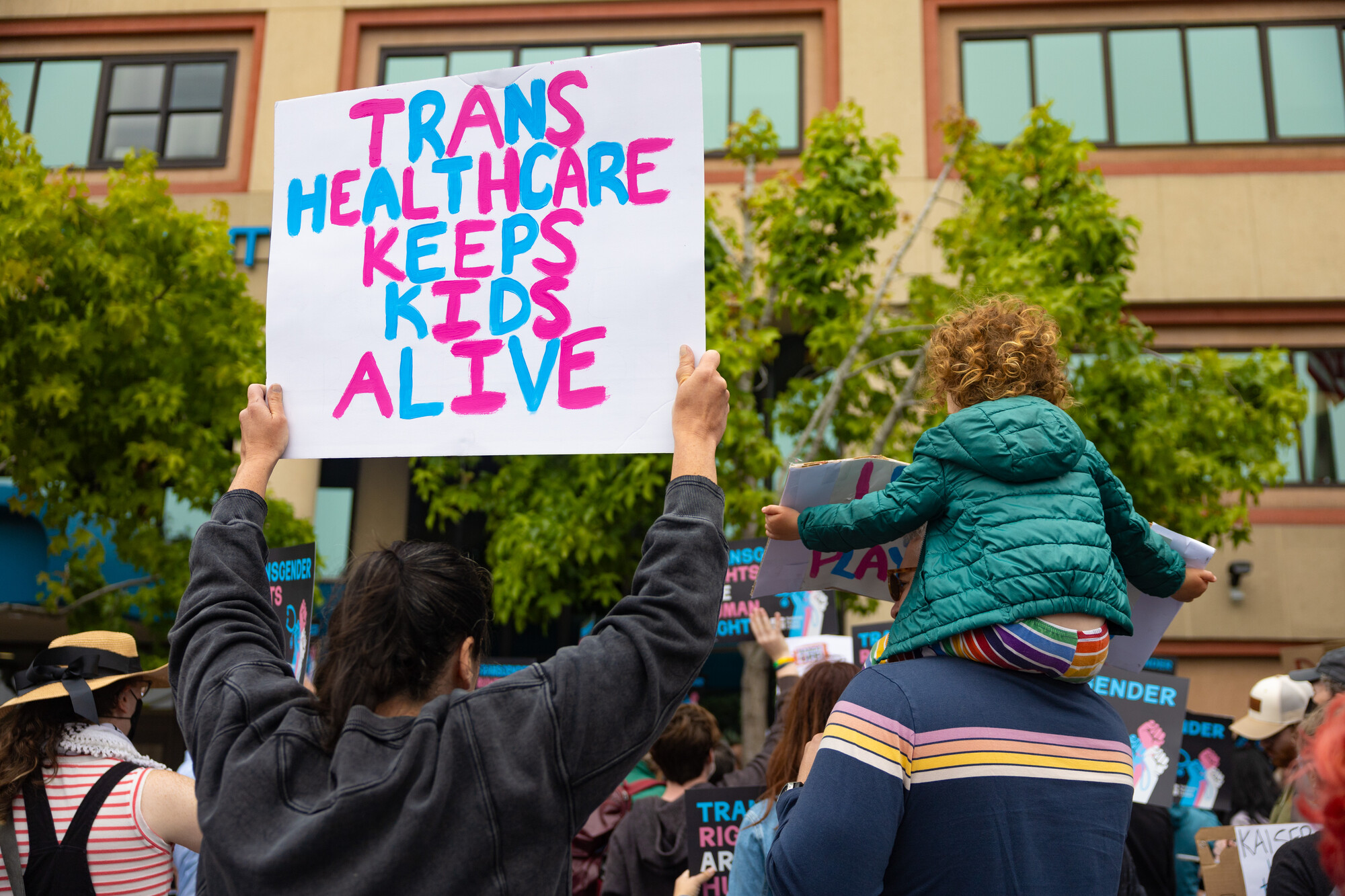
"caption": "Union nurses and community supporters rally outside of Kaiser Permanente, honoring transgender patients affected by Kaiser’s decision to halt gender-affirming care to minors, on July 25, 2025. ",
"credit": "Gina Castro/KQED",
"altTag": null,
"description": null,
"imgSizes": {
"thumbnail": {
"file": "https://cdn.kqed.org/wp-content/uploads/sites/10/2025/08/20250725_KaiserTransProtest_GC-1_qed-160x107.jpg",
"width": 160,
"height": 107,
"mimeType": "image/jpeg"
},
"1536x1536": {
"file": "https://cdn.kqed.org/wp-content/uploads/sites/10/2025/08/20250725_KaiserTransProtest_GC-1_qed-1536x1024.jpg",
"width": 1536,
"height": 1024,
"mimeType": "image/jpeg"
},
"post-thumbnail": {
"file": "https://cdn.kqed.org/wp-content/uploads/sites/10/2025/08/20250725_KaiserTransProtest_GC-1_qed-672x372.jpg",
"width": 672,
"height": 372,
"mimeType": "image/jpeg"
},
"twentyfourteen-full-width": {
"file": "https://cdn.kqed.org/wp-content/uploads/sites/10/2025/08/20250725_KaiserTransProtest_GC-1_qed-1038x576.jpg",
"width": 1038,
"height": 576,
"mimeType": "image/jpeg"
},
"kqedFullSize": {
"file": "https://cdn.kqed.org/wp-content/uploads/sites/10/2025/08/20250725_KaiserTransProtest_GC-1_qed.jpg",
"width": 2000,
"height": 1333
}
},
"isLoading": false,
"fetchFailed": false
},
"news_12049935": {
"type": "attachments",
"id": "news_12049935",
"meta": {
"index": "attachments_1716263798",
"site": "news",
"id": "12049935",
"found": true
},
"title": "20250725_KaiserTransProtest_GC-7_qed",
"publishDate": 1753496897,
"status": "inherit",
"parent": 12049666,
"modified": 1753496913,
"caption": "Union nurses and community supporters rally outside of Kaiser Permanente, honoring transgender patients affected by Kaiser’s decision to halt gender-affirming care to minors, on July 25, 2025.",
"credit": "Gina Castro/KQED",
"altTag": null,
"description": null,
"imgSizes": {
"thumbnail": {
"file": "https://cdn.kqed.org/wp-content/uploads/sites/10/2025/07/20250725_KaiserTransProtest_GC-7_qed-160x107.jpg",
"width": 160,
"height": 107,
"mimeType": "image/jpeg"
},
"1536x1536": {
"file": "https://cdn.kqed.org/wp-content/uploads/sites/10/2025/07/20250725_KaiserTransProtest_GC-7_qed-1536x1024.jpg",
"width": 1536,
"height": 1024,
"mimeType": "image/jpeg"
},
"post-thumbnail": {
"file": "https://cdn.kqed.org/wp-content/uploads/sites/10/2025/07/20250725_KaiserTransProtest_GC-7_qed-672x372.jpg",
"width": 672,
"height": 372,
"mimeType": "image/jpeg"
},
"twentyfourteen-full-width": {
"file": "https://cdn.kqed.org/wp-content/uploads/sites/10/2025/07/20250725_KaiserTransProtest_GC-7_qed-1038x576.jpg",
"width": 1038,
"height": 576,
"mimeType": "image/jpeg"
},
"kqedFullSize": {
"file": "https://cdn.kqed.org/wp-content/uploads/sites/10/2025/07/20250725_KaiserTransProtest_GC-7_qed.jpg",
"width": 2000,
"height": 1333
}
},
"isLoading": false,
"fetchFailed": false
},
"news_12049926": {
"type": "attachments",
"id": "news_12049926",
"meta": {
"index": "attachments_1716263798",
"site": "news",
"id": "12049926",
"found": true
},
"title": "20250725_KaiserTransProtest_GC-31_qed",
"publishDate": 1753492678,
"status": "inherit",
"parent": 12049666,
"modified": 1753492700,
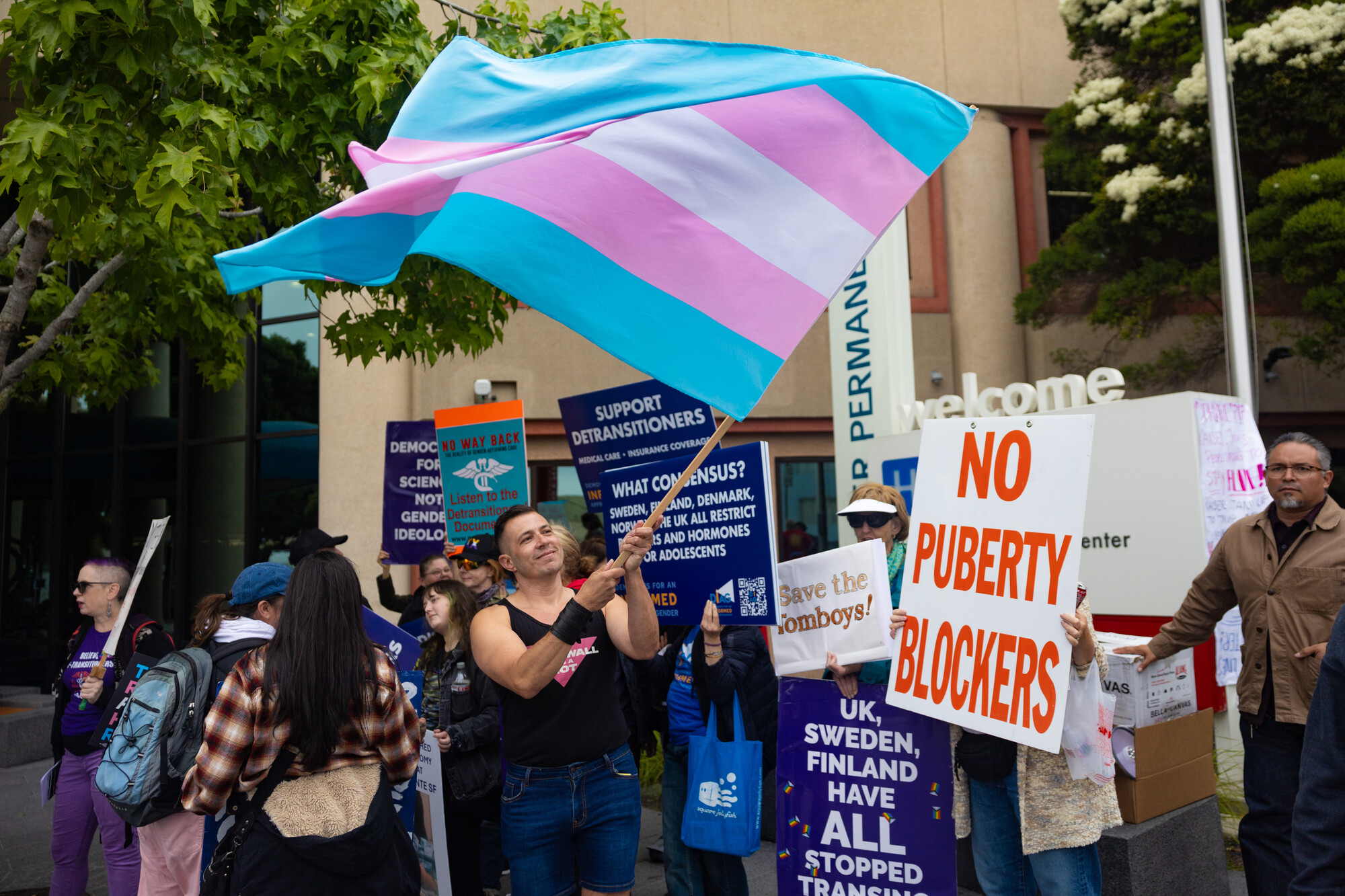
"caption": "Calder Storm waves a transgender flag at a rally and vigil, honoring transgender patients affected by Kaiser’s decision to halt gender-affirming care to minors, outside of Kaiser Permanente on July 25, 2025.",
"credit": "Gina Castro/KQED",
"altTag": null,
"description": null,
"imgSizes": {
"thumbnail": {
"file": "https://cdn.kqed.org/wp-content/uploads/sites/10/2025/07/20250725_KaiserTransProtest_GC-31_qed-160x107.jpg",
"width": 160,
"height": 107,
"mimeType": "image/jpeg"
},
"1536x1536": {
"file": "https://cdn.kqed.org/wp-content/uploads/sites/10/2025/07/20250725_KaiserTransProtest_GC-31_qed-1536x1024.jpg",
"width": 1536,
"height": 1024,
"mimeType": "image/jpeg"
},
"post-thumbnail": {
"file": "https://cdn.kqed.org/wp-content/uploads/sites/10/2025/07/20250725_KaiserTransProtest_GC-31_qed-672x372.jpg",
"width": 672,
"height": 372,
"mimeType": "image/jpeg"
},
"twentyfourteen-full-width": {
"file": "https://cdn.kqed.org/wp-content/uploads/sites/10/2025/07/20250725_KaiserTransProtest_GC-31_qed-1038x576.jpg",
"width": 1038,
"height": 576,
"mimeType": "image/jpeg"
},
"kqedFullSize": {
"file": "https://cdn.kqed.org/wp-content/uploads/sites/10/2025/07/20250725_KaiserTransProtest_GC-31_qed.jpg",
"width": 2000,
"height": 1333
}
},
"isLoading": false,
"fetchFailed": false
},
"news_11963409": {
"type": "attachments",
"id": "news_11963409",
"meta": {
"index": "attachments_1716263798",
"site": "news",
"id": "11963409",
"found": true
},
"title": "The Kaiser Permanente Oakland Medical Center in Oakland on Oct. 4, 2023",
"publishDate": 1696444787,
"status": "inherit",
"parent": 12059551,
"modified": 1760140155,
"caption": "The Kaiser Permanente Oakland Medical Center in Oakland on Oct. 4, 2023.",
"credit": "Martin do Nascimento/KQED",
"altTag": "A large modern building with the words \"Kaiser Permanente\" across the top.",
"description": null,
"imgSizes": {
"medium": {
"file": "https://cdn.kqed.org/wp-content/uploads/sites/10/2023/10/231004-KAISER-STRIKE-MD-10-KQED-800x533.jpg",
"width": 800,
"height": 533,
"mimeType": "image/jpeg"
},
"large": {
"file": "https://cdn.kqed.org/wp-content/uploads/sites/10/2023/10/231004-KAISER-STRIKE-MD-10-KQED-1020x680.jpg",
"width": 1020,
"height": 680,
"mimeType": "image/jpeg"
},
"thumbnail": {
"file": "https://cdn.kqed.org/wp-content/uploads/sites/10/2023/10/231004-KAISER-STRIKE-MD-10-KQED-160x107.jpg",
"width": 160,
"height": 107,
"mimeType": "image/jpeg"
},
"1536x1536": {
"file": "https://cdn.kqed.org/wp-content/uploads/sites/10/2023/10/231004-KAISER-STRIKE-MD-10-KQED-1536x1024.jpg",
"width": 1536,
"height": 1024,
"mimeType": "image/jpeg"
},
"post-thumbnail": {
"file": "https://cdn.kqed.org/wp-content/uploads/sites/10/2023/10/231004-KAISER-STRIKE-MD-10-KQED-672x372.jpg",
"width": 672,
"height": 372,
"mimeType": "image/jpeg"
},
"twentyfourteen-full-width": {
"file": "https://cdn.kqed.org/wp-content/uploads/sites/10/2023/10/231004-KAISER-STRIKE-MD-10-KQED-1038x576.jpg",
"width": 1038,
"height": 576,
"mimeType": "image/jpeg"
},
"full-width": {
"file": "https://cdn.kqed.org/wp-content/uploads/sites/10/2023/10/231004-KAISER-STRIKE-MD-10-KQED-1920x1280.jpg",
"width": 1920,
"height": 1280,
"mimeType": "image/jpeg"
},
"kqedFullSize": {
"file": "https://cdn.kqed.org/wp-content/uploads/sites/10/2023/10/231004-KAISER-STRIKE-MD-10-KQED.jpg",
"width": 2000,
"height": 1333
}
},
"isLoading": false,
"fetchFailed": false
},
"news_12049311": {
"type": "attachments",
"id": "news_12049311",
"meta": {
"index": "attachments_1716263798",
"site": "news",
"id": "12049311",
"found": true
},
"title": "trans-health-6880e51cc03ba",
"publishDate": 1753277762,
"status": "inherit",
"parent": 12049310,
"modified": 1753277854,
"caption": "Maria Do of the Los Angeles LGBT Center speaks at a July 3 rally to protest the closure of the Center for Transyouth at Children’s Hospital Los Angeles.",
"credit": "Megan Jamerson/KCRW",
"altTag": null,
"description": null,
"imgSizes": {
"thumbnail": {
"file": "https://cdn.kqed.org/wp-content/uploads/sites/10/2025/07/trans-health-6880e51cc03ba-160x90.jpg",
"width": 160,
"height": 90,
"mimeType": "image/jpeg"
},
"post-thumbnail": {
"file": "https://cdn.kqed.org/wp-content/uploads/sites/10/2025/07/trans-health-6880e51cc03ba-672x372.jpg",
"width": 672,
"height": 372,
"mimeType": "image/jpeg"
},
"twentyfourteen-full-width": {
"file": "https://cdn.kqed.org/wp-content/uploads/sites/10/2025/07/trans-health-6880e51cc03ba-1038x576.jpg",
"width": 1038,
"height": 576,
"mimeType": "image/jpeg"
},
"kqedFullSize": {
"file": "https://cdn.kqed.org/wp-content/uploads/sites/10/2025/07/trans-health-6880e51cc03ba.jpg",
"width": 1460,
"height": 820
}
},
"isLoading": false,
"fetchFailed": false
},
"news_12047801": {
"type": "attachments",
"id": "news_12047801",
"meta": {
"index": "attachments_1716263798",
"site": "news",
"id": "12047801",
"found": true
},
"title": "WNBA-mom",
"publishDate": 1752279410,
"status": "inherit",
"parent": 0,
"modified": 1752281158,
"caption": "Audy McAfee holds a family picture of her mother and aunt at her home in Oakland, CA on July 11, 2025. McAfee’s mother, Judy Mosely-McAfee, was the 6th woman picked for the WNBA in 1997, for the Sacramento Monarchs.",
"credit": "Brian L. Frank/KQED",
"altTag": null,
"description": null,
"imgSizes": {
"thumbnail": {
"file": "https://cdn.kqed.org/wp-content/uploads/sites/10/2025/07/250711_WNBA-mom_008_BF_KQED-160x107.jpg",
"width": 160,
"height": 107,
"mimeType": "image/jpeg"
},
"1536x1536": {
"file": "https://cdn.kqed.org/wp-content/uploads/sites/10/2025/07/250711_WNBA-mom_008_BF_KQED-1536x1023.jpg",
"width": 1536,
"height": 1023,
"mimeType": "image/jpeg"
},
"post-thumbnail": {
"file": "https://cdn.kqed.org/wp-content/uploads/sites/10/2025/07/250711_WNBA-mom_008_BF_KQED-672x372.jpg",
"width": 672,
"height": 372,
"mimeType": "image/jpeg"
},
"twentyfourteen-full-width": {
"file": "https://cdn.kqed.org/wp-content/uploads/sites/10/2025/07/250711_WNBA-mom_008_BF_KQED-1038x576.jpg",
"width": 1038,
"height": 576,
"mimeType": "image/jpeg"
},
"kqedFullSize": {
"file": "https://cdn.kqed.org/wp-content/uploads/sites/10/2025/07/250711_WNBA-mom_008_BF_KQED.jpg",
"width": 2000,
"height": 1332
}
},
"isLoading": false,
"fetchFailed": false
},
"news_12047822": {
"type": "attachments",
"id": "news_12047822",
"meta": {
"index": "attachments_1716263798",
"site": "news",
"id": "12047822",
"found": true
},
"title": "250709-MaitriCompassionateCare-17-BL_qed",
"publishDate": 1752281219,
"status": "inherit",
"parent": 0,
"modified": 1752281523,
"caption": "Development Director Tomas Moreno (center) plays bingo with residents and volunteers at Maitri Compassionate Care in San Francisco on July 9, 2025. The center provides residential hospice, respite, and medical care.",
"credit": "Beth LaBerge/KQED",
"altTag": null,
"description": null,
"imgSizes": {
"thumbnail": {
"file": "https://cdn.kqed.org/wp-content/uploads/sites/10/2025/07/250709-MaitriCompassionateCare-17-BL_qed-160x107.jpg",
"width": 160,
"height": 107,
"mimeType": "image/jpeg"
},
"1536x1536": {
"file": "https://cdn.kqed.org/wp-content/uploads/sites/10/2025/07/250709-MaitriCompassionateCare-17-BL_qed-1536x1024.jpg",
"width": 1536,
"height": 1024,
"mimeType": "image/jpeg"
},
"post-thumbnail": {
"file": "https://cdn.kqed.org/wp-content/uploads/sites/10/2025/07/250709-MaitriCompassionateCare-17-BL_qed-672x372.jpg",
"width": 672,
"height": 372,
"mimeType": "image/jpeg"
},
"twentyfourteen-full-width": {
"file": "https://cdn.kqed.org/wp-content/uploads/sites/10/2025/07/250709-MaitriCompassionateCare-17-BL_qed-1038x576.jpg",
"width": 1038,
"height": 576,
"mimeType": "image/jpeg"
},
"kqedFullSize": {
"file": "https://cdn.kqed.org/wp-content/uploads/sites/10/2025/07/250709-MaitriCompassionateCare-17-BL_qed.jpg",
"width": 2000,
"height": 1333
}
},
"isLoading": false,
"fetchFailed": false
},
"news_11884072": {
"type": "attachments",
"id": "news_11884072",
"meta": {
"index": "attachments_1716263798",
"site": "news",
"id": "11884072",
"found": true
},
"title": "RS50353_007_LosGatos_HighSchool_07212021-qut",
"publishDate": 1628243552,
"status": "inherit",
"parent": 11884066,
"modified": 1752085293,
"caption": "The football field and track at Los Gatos High School sit empty during summer vacation on July 21, 2021.",
"credit": "Beth LaBerge/KQED",
"altTag": null,
"description": null,
"imgSizes": {
"medium": {
"file": "https://cdn.kqed.org/wp-content/uploads/sites/10/2021/08/RS50353_007_LosGatos_HighSchool_07212021-qut-800x533.jpg",
"width": 800,
"height": 533,
"mimeType": "image/jpeg"
},
"large": {
"file": "https://cdn.kqed.org/wp-content/uploads/sites/10/2021/08/RS50353_007_LosGatos_HighSchool_07212021-qut-1020x680.jpg",
"width": 1020,
"height": 680,
"mimeType": "image/jpeg"
},
"thumbnail": {
"file": "https://cdn.kqed.org/wp-content/uploads/sites/10/2021/08/RS50353_007_LosGatos_HighSchool_07212021-qut-160x107.jpg",
"width": 160,
"height": 107,
"mimeType": "image/jpeg"
},
"1536x1536": {
"file": "https://cdn.kqed.org/wp-content/uploads/sites/10/2021/08/RS50353_007_LosGatos_HighSchool_07212021-qut-1536x1024.jpg",
"width": 1536,
"height": 1024,
"mimeType": "image/jpeg"
},
"post-thumbnail": {
"file": "https://cdn.kqed.org/wp-content/uploads/sites/10/2021/08/RS50353_007_LosGatos_HighSchool_07212021-qut-672x372.jpg",
"width": 672,
"height": 372,
"mimeType": "image/jpeg"
},
"twentyfourteen-full-width": {
"file": "https://cdn.kqed.org/wp-content/uploads/sites/10/2021/08/RS50353_007_LosGatos_HighSchool_07212021-qut-1038x576.jpg",
"width": 1038,
"height": 576,
"mimeType": "image/jpeg"
},
"kqedFullSize": {
"file": "https://cdn.kqed.org/wp-content/uploads/sites/10/2021/08/RS50353_007_LosGatos_HighSchool_07212021-qut.jpg",
"width": 1920,
"height": 1280
}
},
"isLoading": false,
"fetchFailed": false
},
"news_12046520": {
"type": "attachments",
"id": "news_12046520",
"meta": {
"index": "attachments_1716263798",
"site": "news",
"id": "12046520",
"found": true
},
"title": "IMG_7669",
"publishDate": 1751238109,
"status": "inherit",
"parent": 12046470,
"modified": 1751238634,
"caption": "A still image of Panda Dulce from the film \"After What Happened At The Library.\"",
"credit": "Photo Courtesy of Kyle Casey Chu",
"altTag": "A closeup of a person with light blue hair and makeup.",
"description": null,
"imgSizes": {
"thumbnail": {
"file": "https://cdn.kqed.org/wp-content/uploads/sites/10/2025/06/IMG_7669-160x87.jpg",
"width": 160,
"height": 87,
"mimeType": "image/jpeg"
},
"post-thumbnail": {
"file": "https://cdn.kqed.org/wp-content/uploads/sites/10/2025/06/IMG_7669-672x372.jpg",
"width": 672,
"height": 372,
"mimeType": "image/jpeg"
},
"kqedFullSize": {
"file": "https://cdn.kqed.org/wp-content/uploads/sites/10/2025/06/IMG_7669.jpg",
"width": 960,
"height": 524
}
},
"isLoading": false,
"fetchFailed": false
},
"news_12042365": {
"type": "attachments",
"id": "news_12042365",
"meta": {
"index": "attachments_1716263798",
"site": "news",
"id": "12042365",
"found": true
},
"title": "Coliseum",
"publishDate": 1748870694,
"status": "inherit",
"parent": 12042364,
"modified": 1748870930,
"caption": "The exterior of the Los Angeles Memorial Coliseum, which is expected to host the opening ceremony for the 2028 Summer Olympics.",
"credit": "Saul Gonzalez/The California Report",
"altTag": null,
"description": null,
"imgSizes": {
"medium": {
"file": "https://cdn.kqed.org/wp-content/uploads/sites/10/2025/06/Colsieum-800x600.jpeg",
"width": 800,
"height": 600,
"mimeType": "image/jpeg"
},
"large": {
"file": "https://cdn.kqed.org/wp-content/uploads/sites/10/2025/06/Colsieum-1020x765.jpeg",
"width": 1020,
"height": 765,
"mimeType": "image/jpeg"
},
"thumbnail": {
"file": "https://cdn.kqed.org/wp-content/uploads/sites/10/2025/06/Colsieum-160x120.jpeg",
"width": 160,
"height": 120,
"mimeType": "image/jpeg"
},
"1536x1536": {
"file": "https://cdn.kqed.org/wp-content/uploads/sites/10/2025/06/Colsieum-1536x1152.jpeg",
"width": 1536,
"height": 1152,
"mimeType": "image/jpeg"
},
"2048x2048": {
"file": "https://cdn.kqed.org/wp-content/uploads/sites/10/2025/06/Colsieum-2048x1536.jpeg",
"width": 2048,
"height": 1536,
"mimeType": "image/jpeg"
},
"post-thumbnail": {
"file": "https://cdn.kqed.org/wp-content/uploads/sites/10/2025/06/Colsieum-672x372.jpeg",
"width": 672,
"height": 372,
"mimeType": "image/jpeg"
},
"twentyfourteen-full-width": {
"file": "https://cdn.kqed.org/wp-content/uploads/sites/10/2025/06/Colsieum-1038x576.jpeg",
"width": 1038,
"height": 576,
"mimeType": "image/jpeg"
},
"full-width": {
"file": "https://cdn.kqed.org/wp-content/uploads/sites/10/2025/06/Colsieum-1920x1440.jpeg",
"width": 1920,
"height": 1440,
"mimeType": "image/jpeg"
},
"kqedFullSize": {
"file": "https://cdn.kqed.org/wp-content/uploads/sites/10/2025/06/Colsieum-scaled-e1772041159569.jpeg",
"width": 2000,
"height": 1500
}
},
"isLoading": false,
"fetchFailed": false
},
"news_12042354": {
"type": "attachments",
"id": "news_12042354",
"meta": {
"index": "attachments_1716263798",
"site": "news",
"id": "12042354",
"found": true
},
"title": "California Transgender Athletes",
"publishDate": 1748809509,
"status": "inherit",
"parent": 12042352,
"modified": 1748809866,
"caption": "AB Hernandez, center, flashes a sign as she shares the first-place spot on the podium with Jillene Wetteland, left, and Lelani Laruelle during a medal ceremony for the high jump at the California high school track-and-field championships in Clovis, Saturday, May 31, 2025. At right is third-place finisher Julia Teven. ",
"credit": "Jae C. Hong / Associated Press",
"altTag": "Three young people wearing track and field attire and medals around their necks pose for a photo.",
"description": null,
"imgSizes": {
"medium": {
"file": "https://cdn.kqed.org/wp-content/uploads/sites/10/2025/06/AP25152096173904-800x533.jpg",
"width": 800,
"height": 533,
"mimeType": "image/jpeg"
},
"large": {
"file": "https://cdn.kqed.org/wp-content/uploads/sites/10/2025/06/AP25152096173904-1020x680.jpg",
"width": 1020,
"height": 680,
"mimeType": "image/jpeg"
},
"thumbnail": {
"file": "https://cdn.kqed.org/wp-content/uploads/sites/10/2025/06/AP25152096173904-160x107.jpg",
"width": 160,
"height": 107,
"mimeType": "image/jpeg"
},
"1536x1536": {
"file": "https://cdn.kqed.org/wp-content/uploads/sites/10/2025/06/AP25152096173904-1536x1024.jpg",
"width": 1536,
"height": 1024,
"mimeType": "image/jpeg"
},
"2048x2048": {
"file": "https://cdn.kqed.org/wp-content/uploads/sites/10/2025/06/AP25152096173904-2048x1365.jpg",
"width": 2048,
"height": 1365,
"mimeType": "image/jpeg"
},
"post-thumbnail": {
"file": "https://cdn.kqed.org/wp-content/uploads/sites/10/2025/06/AP25152096173904-672x372.jpg",
"width": 672,
"height": 372,
"mimeType": "image/jpeg"
},
"twentyfourteen-full-width": {
"file": "https://cdn.kqed.org/wp-content/uploads/sites/10/2025/06/AP25152096173904-1038x576.jpg",
"width": 1038,
"height": 576,
"mimeType": "image/jpeg"
},
"full-width": {
"file": "https://cdn.kqed.org/wp-content/uploads/sites/10/2025/06/AP25152096173904-1920x1280.jpg",
"width": 1920,
"height": 1280,
"mimeType": "image/jpeg"
},
"kqedFullSize": {
"file": "https://cdn.kqed.org/wp-content/uploads/sites/10/2025/06/AP25152096173904-scaled.jpg",
"width": 2560,
"height": 1707
}
},
"isLoading": false,
"fetchFailed": false
},
"news_12042333": {
"type": "attachments",
"id": "news_12042333",
"meta": {
"index": "attachments_1716263798",
"site": "news",
"id": "12042333",
"found": true
},
"title": "CIF State Track and Field Championships",
"publishDate": 1748730194,
"status": "inherit",
"parent": 12042317,
"modified": 1748730249,
"caption": "The girls 800m heat in the CIF State Track and Field Championships at Veterans Memorial Stadium on May 30, 2025 in Clovis, Fresno County. ",
"credit": "Kirby Lee/Getty Images",
"altTag": null,
"description": null,
"imgSizes": {
"medium": {
"file": "https://cdn.kqed.org/wp-content/uploads/sites/10/2025/05/GettyImages-2217942893-800x534.jpg",
"width": 800,
"height": 534,
"mimeType": "image/jpeg"
},
"large": {
"file": "https://cdn.kqed.org/wp-content/uploads/sites/10/2025/05/GettyImages-2217942893-1020x680.jpg",
"width": 1020,
"height": 680,
"mimeType": "image/jpeg"
},
"thumbnail": {
"file": "https://cdn.kqed.org/wp-content/uploads/sites/10/2025/05/GettyImages-2217942893-160x107.jpg",
"width": 160,
"height": 107,
"mimeType": "image/jpeg"
},
"post-thumbnail": {
"file": "https://cdn.kqed.org/wp-content/uploads/sites/10/2025/05/GettyImages-2217942893-672x372.jpg",
"width": 672,
"height": 372,
"mimeType": "image/jpeg"
},
"twentyfourteen-full-width": {
"file": "https://cdn.kqed.org/wp-content/uploads/sites/10/2025/05/GettyImages-2217942893-1024x576.jpg",
"width": 1024,
"height": 576,
"mimeType": "image/jpeg"
},
"kqedFullSize": {
"file": "https://cdn.kqed.org/wp-content/uploads/sites/10/2025/05/GettyImages-2217942893.jpg",
"width": 1024,
"height": 683
}
},
"isLoading": false,
"fetchFailed": false
}
},
"audioPlayerReducer": {
"postId": "stream_live",
"isPaused": true,
"isPlaying": false,
"pfsActive": false,
"pledgeModalIsOpen": true,
"playerDrawerIsOpen": false,
"liveAudioPlayStartedAt": 0,
"liveAudioPlayContext": ""
},
"authorsReducer": {
"byline_news_12042352": {
"type": "authors",
"id": "byline_news_12042352",
"meta": {
"override": true
},
"slug": "byline_news_12042352",
"name": "Sophie Austin and Jae Hong, Associated Press",
"isLoading": false
},
"byline_news_12042317": {
"type": "authors",
"id": "byline_news_12042317",
"meta": {
"override": true
},
"slug": "byline_news_12042317",
"name": "Sophie Austin and Jae Hong, Associated Press/Report for America",
"isLoading": false
},
"kqed": {
"type": "authors",
"id": "236",
"meta": {
"index": "authors_1716337520",
"id": "236",
"found": true
},
"name": "KQED News Staff",
"firstName": "KQED News Staff",
"lastName": null,
"slug": "kqed",
"email": "faq@kqed.org",
"display_author_email": false,
"staff_mastheads": [],
"title": null,
"bio": null,
"avatar": "https://secure.gravatar.com/avatar/ef0e801a68c4c54afa9180db14084167?s=600&d=blank&r=g",
"twitter": null,
"facebook": null,
"instagram": null,
"linkedin": null,
"sites": [
{
"site": "arts",
"roles": [
"contributor"
]
},
{
"site": "news",
"roles": [
"editor"
]
},
{
"site": "futureofyou",
"roles": [
"author"
]
}
],
"headData": {
"title": "KQED News Staff | KQED",
"description": null,
"ogImgSrc": "https://secure.gravatar.com/avatar/ef0e801a68c4c54afa9180db14084167?s=600&d=blank&r=g",
"twImgSrc": "https://secure.gravatar.com/avatar/ef0e801a68c4c54afa9180db14084167?s=600&d=blank&r=g"
},
"isLoading": false,
"link": "/author/kqed"
},
"kmoghadam": {
"type": "authors",
"id": "11637",
"meta": {
"index": "authors_1716337520",
"id": "11637",
"found": true
},
"name": "Kyana Moghadam",
"firstName": "Kyana",
"lastName": "Moghadam",
"slug": "kmoghadam",
"email": "kmoghadam@kqed.org",
"display_author_email": false,
"staff_mastheads": [
"news"
],
"title": "Senior Producer ",
"bio": "Kyana Moghadam is a senior producer at KQED. Prior to joining KQED, she was an audio producer and editor with Al Jazeera, Jetty Studios, VOX Media, Democracy Now!, and Global Press.",
"avatar": "https://secure.gravatar.com/avatar/cdbd6cb0b9e99deaa9eb618abdba56f265d374a2c614710aebeb4e58decbc5f0?s=600&d=blank&r=g",
"twitter": null,
"bluesky": null,
"facebook": null,
"instagram": null,
"linkedin": "https://www.linkedin.com/in/kyanamoghadam/",
"sites": [
{
"site": "",
"roles": [
"editor"
]
},
{
"site": "arts",
"roles": [
"editor"
]
},
{
"site": "news",
"roles": [
"administrator"
]
},
{
"site": "pop",
"roles": [
"editor"
]
},
{
"site": "about",
"roles": [
"editor"
]
},
{
"site": "forum",
"roles": [
"editor"
]
},
{
"site": "perspectives",
"roles": [
"editor"
]
},
{
"site": "podcasts",
"roles": [
"administrator"
]
}
],
"headData": {
"title": "Kyana Moghadam | KQED",
"description": "Senior Producer ",
"ogImgSrc": "https://secure.gravatar.com/avatar/cdbd6cb0b9e99deaa9eb618abdba56f265d374a2c614710aebeb4e58decbc5f0?s=600&d=blank&r=g",
"twImgSrc": "https://secure.gravatar.com/avatar/cdbd6cb0b9e99deaa9eb618abdba56f265d374a2c614710aebeb4e58decbc5f0?s=600&d=blank&r=g"
},
"isLoading": false,
"link": "/author/kmoghadam"
},
"kmizuguchi": {
"type": "authors",
"id": "11739",
"meta": {
"index": "authors_1716337520",
"id": "11739",
"found": true
},
"name": "Keith Mizuguchi",
"firstName": "Keith",
"lastName": "Mizuguchi",
"slug": "kmizuguchi",
"email": "kmizuguchi@kqed.org",
"display_author_email": false,
"staff_mastheads": [],
"title": "KQED Contributor",
"bio": null,
"avatar": "https://secure.gravatar.com/avatar/64d8a7de0723d4099b9fe4e915136103febcc20809abce228ee4415bcb237023?s=600&d=blank&r=g",
"twitter": null,
"bluesky": null,
"facebook": null,
"instagram": null,
"linkedin": null,
"sites": [
{
"site": "news",
"roles": [
"editor"
]
},
{
"site": "science",
"roles": [
"editor"
]
}
],
"headData": {
"title": "Keith Mizuguchi | KQED",
"description": "KQED Contributor",
"ogImgSrc": "https://secure.gravatar.com/avatar/64d8a7de0723d4099b9fe4e915136103febcc20809abce228ee4415bcb237023?s=600&d=blank&r=g",
"twImgSrc": "https://secure.gravatar.com/avatar/64d8a7de0723d4099b9fe4e915136103febcc20809abce228ee4415bcb237023?s=600&d=blank&r=g"
},
"isLoading": false,
"link": "/author/kmizuguchi"
},
"jlara": {
"type": "authors",
"id": "11761",
"meta": {
"index": "authors_1716337520",
"id": "11761",
"found": true
},
"name": "Juan Carlos Lara",
"firstName": "Juan Carlos",
"lastName": "Lara",
"slug": "jlara",
"email": "jlara@kqed.org",
"display_author_email": false,
"staff_mastheads": [],
"title": "KQED Contributor",
"bio": null,
"avatar": "https://secure.gravatar.com/avatar/19e2052b9b05657c5ff2af2121846e9c?s=600&d=blank&r=g",
"twitter": null,
"facebook": null,
"instagram": null,
"linkedin": null,
"sites": [
{
"site": "arts",
"roles": [
"editor"
]
},
{
"site": "news",
"roles": [
"editor"
]
},
{
"site": "forum",
"roles": [
"editor"
]
},
{
"site": "liveblog",
"roles": [
"contributor"
]
}
],
"headData": {
"title": "Juan Carlos Lara | KQED",
"description": "KQED Contributor",
"ogImgSrc": "https://secure.gravatar.com/avatar/19e2052b9b05657c5ff2af2121846e9c?s=600&d=blank&r=g",
"twImgSrc": "https://secure.gravatar.com/avatar/19e2052b9b05657c5ff2af2121846e9c?s=600&d=blank&r=g"
},
"isLoading": false,
"link": "/author/jlara"
},
"rvasquez": {
"type": "authors",
"id": "11860",
"meta": {
"index": "authors_1716337520",
"id": "11860",
"found": true
},
"name": "Rachael Vasquez",
"firstName": "Rachael",
"lastName": "Vasquez",
"slug": "rvasquez",
"email": "rvasquez@KQED.org",
"display_author_email": false,
"staff_mastheads": [
"news"
],
"title": "KQED Contributor",
"bio": "Rachael Vasquez is a weekend host and editor at KQED. She’s worked in public radio for years, most recently at Wisconsin Public Radio in Madison, Wis. where she woke up very early as a producer for the network’s statewide \"Morning Edition\" broadcast, later serving as a producer for the stations’s afternoon talk show \"Central Time,\" and going on to report on business and economics during the coronavirus pandemic. In addition to hearing her anchor the afternoon newscasts every weekend at KQED, you can find her working with a number of different teams including the weekday newsroom and \"Forum.\" Rachael is an East Bay native who loves watching old movies and cooking her abuelita’s recipes.",
"avatar": "https://secure.gravatar.com/avatar/a1defdae97cbdde04c13baacacd7c94a?s=600&d=blank&r=g",
"twitter": null,
"facebook": null,
"instagram": null,
"linkedin": null,
"sites": [
{
"site": "news",
"roles": [
"editor"
]
}
],
"headData": {
"title": "Rachael Vasquez | KQED",
"description": "KQED Contributor",
"ogImgSrc": "https://secure.gravatar.com/avatar/a1defdae97cbdde04c13baacacd7c94a?s=600&d=blank&r=g",
"twImgSrc": "https://secure.gravatar.com/avatar/a1defdae97cbdde04c13baacacd7c94a?s=600&d=blank&r=g"
},
"isLoading": false,
"link": "/author/rvasquez"
},
"jservantez": {
"type": "authors",
"id": "11909",
"meta": {
"index": "authors_1716337520",
"id": "11909",
"found": true
},
"name": "Jared Servantez",
"firstName": "Jared",
"lastName": "Servantez",
"slug": "jservantez",
"email": "jservantez@kqed.org",
"display_author_email": true,
"staff_mastheads": [
"news"
],
"title": "KQED Contributor",
"bio": "Jared Servantez is the editor of KQED's Express Desk, leading the newsroom's online breaking news operation. He most recently worked for the Los Angeles Times, where he served as a breaking news editor, the Metro Desk's night editor, and a copy editor. Jared is a graduate of the USC Annenberg School for Communication and Journalism.",
"avatar": "https://secure.gravatar.com/avatar/f0e317c67bb498c3f077f033d1cc79e62f3bc1303fa20a14e8880d31fbe7e01e?s=600&d=blank&r=g",
"twitter": "jservantez",
"bluesky": null,
"facebook": null,
"instagram": null,
"linkedin": null,
"sites": [
{
"site": "news",
"roles": [
"editor"
]
},
{
"site": "science",
"roles": [
"editor",
"author"
]
},
{
"site": "liveblog",
"roles": [
"editor"
]
}
],
"headData": {
"title": "Jared Servantez | KQED",
"description": "KQED Contributor",
"ogImgSrc": "https://secure.gravatar.com/avatar/f0e317c67bb498c3f077f033d1cc79e62f3bc1303fa20a14e8880d31fbe7e01e?s=600&d=blank&r=g",
"twImgSrc": "https://secure.gravatar.com/avatar/f0e317c67bb498c3f077f033d1cc79e62f3bc1303fa20a14e8880d31fbe7e01e?s=600&d=blank&r=g"
},
"isLoading": false,
"link": "/author/jservantez"
},
"kdebenedetti": {
"type": "authors",
"id": "11913",
"meta": {
"index": "authors_1716337520",
"id": "11913",
"found": true
},
"name": "Katie DeBenedetti",
"firstName": "Katie",
"lastName": "DeBenedetti",
"slug": "kdebenedetti",
"email": "kdebenedetti@kqed.org",
"display_author_email": false,
"staff_mastheads": [
"news",
"science"
],
"title": "KQED Contributor",
"bio": "Katie DeBenedetti is a digital reporter covering daily news for the Express Desk. Prior to joining KQED as a culture reporting intern in January 2024, she covered education and city government for the Napa Valley Register.",
"avatar": "https://secure.gravatar.com/avatar/6e31073cb8f7e4214ab03f42771d0f45?s=600&d=blank&r=g",
"twitter": null,
"facebook": null,
"instagram": null,
"linkedin": null,
"sites": [
{
"site": "news",
"roles": [
"author"
]
},
{
"site": "science",
"roles": [
"author"
]
},
{
"site": "liveblog",
"roles": [
"author"
]
}
],
"headData": {
"title": "Katie DeBenedetti | KQED",
"description": "KQED Contributor",
"ogImgSrc": "https://secure.gravatar.com/avatar/6e31073cb8f7e4214ab03f42771d0f45?s=600&d=blank&r=g",
"twImgSrc": "https://secure.gravatar.com/avatar/6e31073cb8f7e4214ab03f42771d0f45?s=600&d=blank&r=g"
},
"isLoading": false,
"link": "/author/kdebenedetti"
},
"bkrans": {
"type": "authors",
"id": "11923",
"meta": {
"index": "authors_1716337520",
"id": "11923",
"found": true
},
"name": "Brian Krans",
"firstName": "Brian",
"lastName": "Krans",
"slug": "bkrans",
"email": "bkrans@kqed.org",
"display_author_email": false,
"staff_mastheads": [
"news"
],
"title": "KQED Contributing Reporter",
"bio": "Brian Krans is an award-winning local news and investigative reporter who has been proudly working as a general assignment reporter for KQED since August 2023. He lives in Richmond, where he also reports on air pollution for Richmondside. He is also a founding member of the Vallejo Sun.",
"avatar": "https://secure.gravatar.com/avatar/71fa91f931774612559f7640390b53d9c2840ff72b20f195a25239aab2d9fbb9?s=600&d=blank&r=g",
"twitter": "citizenkrans",
"bluesky": null,
"facebook": null,
"instagram": null,
"linkedin": null,
"sites": [
{
"site": "news",
"roles": [
"editor"
]
}
],
"headData": {
"title": "Brian Krans | KQED",
"description": "KQED Contributing Reporter",
"ogImgSrc": "https://secure.gravatar.com/avatar/71fa91f931774612559f7640390b53d9c2840ff72b20f195a25239aab2d9fbb9?s=600&d=blank&r=g",
"twImgSrc": "https://secure.gravatar.com/avatar/71fa91f931774612559f7640390b53d9c2840ff72b20f195a25239aab2d9fbb9?s=600&d=blank&r=g"
},
"isLoading": false,
"link": "/author/bkrans"
},
"emanoukian": {
"type": "authors",
"id": "11925",
"meta": {
"index": "authors_1716337520",
"id": "11925",
"found": true
},
"name": "Elize Manoukian",
"firstName": "Elize",
"lastName": "Manoukian",
"slug": "emanoukian",
"email": "emanoukian@KQED.org",
"display_author_email": false,
"staff_mastheads": [
"news"
],
"title": "Digital News Editor",
"bio": "Elize Manoukian is an award-winning audio producer and editor on the Express Desk, KQED's digital news platform. Her work has appeared on KPFA, Interlochen Public Radio, Oregon Public Broadcast, the New York Daily News, LA Times and the San Diego Union-Tribune. You can reach her at emanoukian@kqed.org.",
"avatar": "https://secure.gravatar.com/avatar/4525f1a8e46ccb30933b32653d9772064cfefe3fa655eb45b3b3a80341f6bdad?s=600&d=blank&r=g",
"twitter": null,
"bluesky": null,
"facebook": null,
"instagram": null,
"linkedin": null,
"sites": [
{
"site": "arts",
"roles": [
"editor"
]
},
{
"site": "news",
"roles": [
"editor"
]
},
{
"site": "science",
"roles": [
"editor"
]
}
],
"headData": {
"title": "Elize Manoukian | KQED",
"description": "Digital News Editor",
"ogImgSrc": "https://secure.gravatar.com/avatar/4525f1a8e46ccb30933b32653d9772064cfefe3fa655eb45b3b3a80341f6bdad?s=600&d=blank&r=g",
"twImgSrc": "https://secure.gravatar.com/avatar/4525f1a8e46ccb30933b32653d9772064cfefe3fa655eb45b3b3a80341f6bdad?s=600&d=blank&r=g"
},
"isLoading": false,
"link": "/author/emanoukian"
}
},
"pagesReducer": {
"news_tag_transgender": {
"type": "terms",
"id": "news_2486",
"meta": {
"index": "terms_1716263798",
"site": "news",
"id": "2486",
"score": 8.672976
},
"featImg": null,
"name": "transgender",
"description": null,
"taxonomy": "tag",
"headData": {
"twImgId": null,
"twTitle": null,
"ogTitle": null,
"ogImgId": null,
"twDescription": null,
"description": null,
"title": "transgender Archives | KQED News",
"ogDescription": null
},
"ttid": 2501,
"slug": "transgender",
"isLoading": false,
"title": "transgender",
"pageMeta": {
"site": "news",
"WpPageTemplate": "page-topic-editorial",
"currentPage": 3
},
"blocks": [
{
"blockName": "kqed/post-list",
"attrs": {
"layout": "cardArticle2",
"query": "posts/news?tag=transgender",
"seeMore": false,
"paginated": true,
"page": 3
}
},
{
"blockName": "kqed/ad"
}
]
}
},
"pfsSessionReducer": {},
"postsReducer": {
"stream_live": {
"type": "live",
"id": "stream_live",
"audioUrl": "https://hls.kqed.org/hls/kqed_app/playlist.m3u8",
"title": "Live Stream",
"excerpt": "Live Stream information currently unavailable.",
"link": "/radio",
"featImg": "",
"label": {
"name": "KQED Live",
"link": "/"
}
},
"stream_kqedNewscast": {
"type": "posts",
"id": "stream_kqedNewscast",
"audioUrl": "https://www.kqed.org/.stream/anon/radio/RDnews/newscast.mp3?_=1",
"title": "KQED Newscast",
"featImg": "",
"label": {
"name": "88.5 FM",
"link": "/"
}
},
"news_12050945": {
"type": "posts",
"id": "news_12050945",
"meta": {
"index": "posts_1716263798",
"site": "news",
"id": "12050945",
"score": null,
"sort": [
1754488816000
]
},
"guestAuthors": [],
"slug": "dangerous-how-a-top-civil-rights-attorney-describes-attack-on-trans-health-care",
"title": "‘Dangerous’: How a Top Civil Rights Attorney Describes Attack on Trans Health Care",
"publishDate": 1754488816,
"format": "standard",
"headTitle": "‘Dangerous’: How a Top Civil Rights Attorney Describes Attack on Trans Health Care | KQED",
"labelTerm": {
"site": "news"
},
"content": "\u003cp>In recent weeks, the Bay Area’s trans community has experienced a series of painful political setbacks, following a wave of backlash across the country.\u003c/p>\n\u003cp>On July 24, \u003ca href=\"https://www.kqed.org/news/12049555/kaiser-to-stop-gender-affirming-surgeries-for-minors-leaving-trans-kids-with-fewer-options\">Oakland-based Kaiser Permanente\u003c/a> said it would join a growing list of medical providers in the state to roll back or fully restrict gender-affirming surgical treatment for trans youth in July, \u003ca href=\"https://www.kqed.org/news/12049666/nowhere-else-to-go-sf-families-protest-kaisers-new-limits-on-gender-affirming-care\">leaving patients and families with few options\u003c/a> for care.\u003c/p>\n\u003cp>Kaiser cited a challenging “legal and regulatory environment” — a clear takeaway from the Trump administration’s January \u003ca href=\"https://www.whitehouse.gov/presidential-actions/2025/01/protecting-children-from-chemical-and-surgical-mutilation/\">executive order\u003c/a> that sought to target funding and other support for hospitals that provide such care. And last month, the \u003ca href=\"https://www.justice.gov/opa/pr/department-justice-subpoenas-doctors-and-clinics-involved-performing-transgender-medical\">Department of Justice subpoenaed\u003c/a> more than 20 doctors and clinics that perform gender-affirming procedures on minors.\u003c/p>\n\u003cp>[ad fullwidth]\u003c/p>\n\u003cp>California has pushed back, with state Attorney General Rob Bonta \u003ca href=\"https://www.kqed.org/news/12050618/california-sues-trump-administration-over-efforts-to-deny-gender-affirming-health-care\">filing a lawsuit\u003c/a> against the administration on Friday on behalf of more than a dozen other states. Bonta framed the issue as a life-and-death matter, citing the higher rates of suicide and other forms of self-harm among young people whose assigned gender at birth doesn’t match their identity. To deny these youth lifesaving care, Bonta argued, is both “cruel and irresponsible.”\u003c/p>\n\u003cp>According to Shannon Minter, legal director at the National Center for LGBTQ Rights and a longtime civil rights attorney, Trump’s order represents a broader legal threat to doctor-patient confidentiality and sets a troubling precedent for federal overreach.\u003c/p>\n\u003cp>Minter, who led the fight for marriage equality in California’s landmark 2009 case, spoke with KQED from his home in East Texas about the legal implications of this order — and why everyone, not just trans people, should be paying attention.\u003c/p>\n\u003cfigure id=\"attachment_12051038\" class=\"wp-caption aligncenter\" style=\"max-width: 800px\">\u003cimg loading=\"lazy\" decoding=\"async\" class=\"wp-image-12051038 size-full\" src=\"https://cdn.kqed.org/wp-content/uploads/sites/10/2025/08/ShannonMinter.jpg\" alt=\"\" width=\"800\" height=\"640\" srcset=\"https://cdn.kqed.org/wp-content/uploads/sites/10/2025/08/ShannonMinter.jpg 800w, https://cdn.kqed.org/wp-content/uploads/sites/10/2025/08/ShannonMinter-160x128.jpg 160w\" sizes=\"auto, (max-width: 800px) 100vw, 800px\">\u003cfigcaption class=\"wp-caption-text\">Shannon Minter is the legal director at the National Center for LGBTQ Rights and a civil rights attorney. Minter criticized President Donald Trump’s criminalization of health care for trans youth and said the president’s executive orders have no legal basis. \u003ccite>(Courtesy of Shannon Minter)\u003c/cite>\u003c/figcaption>\u003c/figure>\n\u003cp>\u003cstrong>KQED:\u003c/strong> Could I get your initial reaction to the news that California is suing the Trump administration over the president’s successful efforts to deny gender-affirming care to youth across the country?\u003c/p>\n\u003cp>\u003cstrong>Minter: \u003c/strong>I’m very grateful to California for pushing back on this. I don’t think I’ve ever seen anything like this level of intimidation and bullying and harassment from the federal government going after medical providers. And it’s just absolutely essential that states stand up for patients and for the families who need this care and for medical privacy for all of us.\u003c/p>\n\u003cp>\u003cstrong>KQED:\u003c/strong> What is the legal basis for Trump’s executive orders? Is there a precedent for this kind of top-down action?\u003c/p>\n\u003cp>\u003cstrong>Minter:\u003c/strong> Unprecedented, and there is absolutely zero legal basis for these orders. The federal government has ordered the Department of Justice to threaten — with criminal and civil prosecution — hospitals who are simply providing medical care to these young people. The lawsuit points out that there is no basis for it.[aside postID=news_12050618 hero='https://cdn.kqed.org/wp-content/uploads/sites/10/2025/07/20250725_KaiserTransProtest_GC-7_qed.jpg']This is really mafia-like behavior on the part of the federal government, just pure intimidation and coercion. There is not a single federal law that in any way prohibits, much less criminalizes, providing medical care to these young people.\u003c/p>\n\u003cp>\u003cstrong>KQED:\u003c/strong> What are the chances of success for this lawsuit?\u003c/p>\n\u003cp>\u003cstrong>Minter: \u003c/strong>Very, very high. Some of the challenges are tougher than others. This one, I think, has got an extremely high likelihood of success because there’s just no legal foundation for what the federal government is doing here.\u003c/p>\n\u003cp>There’s literally no federal law that supports them coming after these hospitals and asking for medical records and threatening some kind of vague civil or criminal prosecution. That’s just not the way our legal system works.\u003c/p>\n\u003cp>The federal government, if they’re going to threaten any of us with a criminal prosecution or civil prosecution, they have to be able to point to a law that we are allegedly violating. And the problem for the federal government here, is there is no federal law that prohibits doctors or hospitals from providing this medical care.\u003c/p>\n\u003cp>There’s just nothing to back up this use of force by the Department of Justice. That’s why I say this is really kind of like mafia-like behavior. It’s just a sheer exercise of federal coercion and abuse of federal power. And I do believe the courts will shut this down very quickly.\u003c/p>\n\u003cfigure id=\"attachment_12029440\" class=\"wp-caption aligncenter\" style=\"max-width: 2000px\">\u003cimg loading=\"lazy\" decoding=\"async\" class=\"size-full wp-image-12029440\" src=\"https://cdn.kqed.org/wp-content/uploads/sites/10/2025/03/TransIdentityAP.jpg\" alt=\"\" width=\"2000\" height=\"1333\" srcset=\"https://cdn.kqed.org/wp-content/uploads/sites/10/2025/03/TransIdentityAP.jpg 2000w, https://cdn.kqed.org/wp-content/uploads/sites/10/2025/03/TransIdentityAP-800x533.jpg 800w, https://cdn.kqed.org/wp-content/uploads/sites/10/2025/03/TransIdentityAP-1020x680.jpg 1020w, https://cdn.kqed.org/wp-content/uploads/sites/10/2025/03/TransIdentityAP-160x107.jpg 160w, https://cdn.kqed.org/wp-content/uploads/sites/10/2025/03/TransIdentityAP-1536x1024.jpg 1536w, https://cdn.kqed.org/wp-content/uploads/sites/10/2025/03/TransIdentityAP-1920x1280.jpg 1920w\" sizes=\"auto, (max-width: 2000px) 100vw, 2000px\">\u003cfigcaption class=\"wp-caption-text\">A protester is silhouetted against a trans pride flag during a pro-transgender rights protest outside of Seattle Children’s Hospital, in Seattle, on Feb. 9, 2025. \u003ccite>(Lindsey Wasson/AP Photo)\u003c/cite>\u003c/figcaption>\u003c/figure>\n\u003cp>\u003cstrong>KQED: \u003c/strong>And a presidential executive order doesn’t count as legal precedent?\u003c/p>\n\u003cp>\u003cstrong>Minter: \u003c/strong>No, no, the president can’t just make something up out of thin air and threaten criminal prosecution based on an executive order.\u003c/p>\n\u003cp>\u003cstrong>KQED: \u003c/strong>What legal rights to care do young people seeking gender-affirming care in California have in California?\u003c/p>\n\u003cp>\u003cstrong>Minter:\u003c/strong> California, as well as many other states, have enacted laws that prohibit discrimination against transgender people in health care. Those laws are fully operative in California and many other states.\u003c/p>\n\u003cp>And that’s also one of the bases for the claims in this lawsuit: that the federal government is trying to interfere with and override state law in an area in which the federal government has no business.\u003c/p>\n\u003cp>Nothing in our Constitution gives the federal government any authority whatsoever to regulate medical care. That’s something that is left to the states. Traditionally, in our system of government, that’s something the states do.\u003c/p>\n\u003cp>The 10th Amendment prohibits the federal government from doing anything to interfere with areas in which states have authority. And so this lawsuit is saying, among other things, this order violates the 10th Amendment.\u003c/p>\n\u003cfigure id=\"attachment_12050962\" class=\"wp-caption aligncenter\" style=\"max-width: 2000px\">\u003cimg loading=\"lazy\" decoding=\"async\" class=\"size-full wp-image-12050962\" src=\"https://cdn.kqed.org/wp-content/uploads/sites/10/2025/08/20250725_KaiserTransProtest_GC-14_qed.jpg\" alt=\"\" width=\"2000\" height=\"1333\" srcset=\"https://cdn.kqed.org/wp-content/uploads/sites/10/2025/08/20250725_KaiserTransProtest_GC-14_qed.jpg 2000w, https://cdn.kqed.org/wp-content/uploads/sites/10/2025/08/20250725_KaiserTransProtest_GC-14_qed-160x107.jpg 160w, https://cdn.kqed.org/wp-content/uploads/sites/10/2025/08/20250725_KaiserTransProtest_GC-14_qed-1536x1024.jpg 1536w\" sizes=\"auto, (max-width: 2000px) 100vw, 2000px\">\u003cfigcaption class=\"wp-caption-text\">Union nurses and community supporters rally outside of Kaiser Permanente, honoring transgender patients affected by Kaiser’s decision to halt gender-affirming care to minors, on July 25, 2025. \u003ccite>(Gina Castro/KQED)\u003c/cite>\u003c/figcaption>\u003c/figure>\n\u003cp>\u003cstrong>KQED: \u003c/strong>Is it not ironic that the federal government is typically in favor of states’ rights when it comes to regulating issues like abortion, but then, when it comes to gender-affirming care, the federal government is now actively interfering with state laws?\u003c/p>\n\u003cp>\u003cstrong>Minter:\u003c/strong> It is ironic. I really hope people recognize the federal government is taking advantage of the fact that many people don’t know much about transgender people.\u003c/p>\n\u003cp>They may think, ‘Oh, this has nothing to do with me.’\u003c/p>\n\u003cp>Maybe people even don’t approve of the care themselves, so they’re not paying attention to it. But this sets a terrible precedent. This is the federal government literally coming in, demanding private patient medical records from hospitals, and also purporting to tell states and hospitals how to perform health care, like what types of care they can and cannot perform.\u003c/p>\n\u003cp>This is a federal takeover of our state health care system, getting us all used to the idea that the federal government can demand any of our private records anytime they want to for any reason they want to. That is so dangerous.\u003c/p>\n\u003cp>\u003cstrong>KQED: \u003c/strong>What’s at stake for the young people and families who are being affected by this?[aside postID=news_12049666 hero='https://cdn.kqed.org/wp-content/uploads/sites/10/2025/07/20250725_KaiserTransProtest_GC-31_qed.jpg']\u003cstrong>Minter:\u003c/strong> It’s terrible for these families. Nobody knows a child better than that child’s parents. These are parents who have been through a process consulting with medical experts, coming to terms with the fact that their child has a very serious medical condition — gender dysphoria — and that their child is among the very small number of young people who really need and benefit from medical treatment for that condition.\u003c/p>\n\u003cp>This care is so effective, and many kids who receive it are doing great. There was a really comprehensive study systematic review that was just \u003ca href=\"https://www.sltrib.com/news/politics/2025/05/22/utah-lawmakers-own-study-found/\">conducted by the University of Utah\u003c/a> that looked at every available study on this topic and found that the care is safe and effective, that it significantly reduces suicidality in young people. And that there are virtually no regrets — almost no one who obtains this care has any reason to wish they hadn’t.\u003c/p>\n\u003cp>Losing that care for these families is really devastating. You can only imagine — if you know your child is getting the care they need, and they’re doing great, and you know what will happen if they lose that care, that they’re going to be really severely harmed. Parents are in a panic, understandably.\u003c/p>\n\u003cp>\u003cstrong>KQED:\u003c/strong> What other legal action can the state or patients and their allies take?\u003c/p>\n\u003cp>\u003cstrong>Minter: \u003c/strong>Well, the state is doing the best thing it can do, which is ask a federal court to tell the federal government to knock it off and to leave these providers alone.\u003c/p>\n\u003cp>In terms of what families can do, a lot of families are making sure to notify these hospitals that they do not give the hospitals permission in any way, shape or form to share their private medical records. So that’s always a good thing to do.\u003c/p>\n\u003cp>All of us can reach out to these hospitals and express support and tell them, please do keep providing this care and please do not cooperate with these unlawful subpoenas. We don’t want hospitals to ever, ever violate their oath of confidentiality to patients. The more everyone can speak up and not be misled — don’t be distracted by the fact that this is about one particular group of people. This is really about protecting all of our medical freedom and the privacy of our medical information.\u003c/p>\n\u003cp>\u003cstrong>KQED: \u003c/strong>Do you think Bonta should sue providers for denying patients their legal care or are providers in between a rock and a hard place?\u003c/p>\n\u003cp>\u003cstrong>Minter: \u003c/strong>I do think that providers need to comply with state law.\u003c/p>\n\u003cp>I understand it’s frightening to be served with a subpoena by the federal government. But it’s disappointing to see providers pausing the care. I think we might have a moment of grace — maybe it was a spur-of-the-moment reaction to being served with the subpoena like that.\u003c/p>\n\u003cp>But it’s unlawful, it’s wrong, they’re betraying their patients and they need to get back to providing this care. And if they don’t, yes — I think the attorney general can and will and should sue them if necessary. I like to think it wouldn’t come to that.\u003c/p>\n\u003cp>Families can also sue them, and I’m pretty sure that will happen if these providers recover and get back to doing what they’re supposed to be doing, which is serve all their patients. Of course, you can’t just decide you’re gonna stop providing care to a particular group of people because the federal government is targeting that group. That is really a blatant violation of California law.\u003c/p>\n\u003cp>[ad floatright]\u003c/p>\n",
"blocks": [],
"excerpt": "Shannon Minter, legal director for the National Center for LGBTQ Rights, criticized President Donald Trump’s criminalization of health care for trans youth and said the president’s executive orders have no legal basis. ",
"status": "publish",
"parent": 0,
"modified": 1754441924,
"stats": {
"hasAudio": false,
"hasVideo": false,
"hasChartOrMap": false,
"iframeSrcs": [],
"hasGoogleForm": false,
"hasGallery": false,
"hasHearkenModule": false,
"hasPolis": false,
"paragraphCount": 41,
"wordCount": 1902
},
"headData": {
"title": "‘Dangerous’: How a Top Civil Rights Attorney Describes Attack on Trans Health Care | KQED",
"description": "Shannon Minter, legal director for the National Center for LGBTQ Rights, criticized President Donald Trump’s criminalization of health care for trans youth and said the president’s executive orders have no legal basis. ",
"ogTitle": "",
"ogDescription": "",
"ogImgId": "",
"twTitle": "",
"twDescription": "",
"twImgId": "",
"schema": {
"@context": "https://schema.org",
"@type": "NewsArticle",
"headline": "‘Dangerous’: How a Top Civil Rights Attorney Describes Attack on Trans Health Care",
"datePublished": "2025-08-06T07:00:16-07:00",
"dateModified": "2025-08-05T17:58:44-07:00",
"image": "https://cdn.kqed.org/wp-content/uploads/2020/02/KQED-OG-Image@1x.png",
"isAccessibleForFree": "True",
"publisher": {
"@type": "NewsMediaOrganization",
"@id": "https://www.kqed.org/#organization",
"name": "KQED",
"logo": "https://cdn.kqed.org/wp-content/uploads/2020/02/KQED-OG-Image@1x.png",
"url": "https://www.kqed.org",
"sameAs": [
"https://www.facebook.com/KQED",
"https://twitter.com/KQED",
"https://www.instagram.com/kqed/",
"https://www.tiktok.com/@kqedofficial",
"https://www.linkedin.com/company/kqed",
"https://www.youtube.com/channel/UCeC0IOo7i1P_61zVUWbJ4nw"
]
}
}
},
"primaryCategory": {
"termId": 8,
"slug": "news",
"name": "News"
},
"sticky": false,
"templateType": "standard",
"featuredImageType": "standard",
"excludeFromSiteSearch": "Include",
"articleAge": "0",
"path": "/news/12050945/dangerous-how-a-top-civil-rights-attorney-describes-attack-on-trans-health-care",
"audioTrackLength": null,
"parsedContent": [
{
"type": "contentString",
"content": "\u003cdiv class=\"post-body\">\u003cp>\u003cp>In recent weeks, the Bay Area’s trans community has experienced a series of painful political setbacks, following a wave of backlash across the country.\u003c/p>\n\u003cp>On July 24, \u003ca href=\"https://www.kqed.org/news/12049555/kaiser-to-stop-gender-affirming-surgeries-for-minors-leaving-trans-kids-with-fewer-options\">Oakland-based Kaiser Permanente\u003c/a> said it would join a growing list of medical providers in the state to roll back or fully restrict gender-affirming surgical treatment for trans youth in July, \u003ca href=\"https://www.kqed.org/news/12049666/nowhere-else-to-go-sf-families-protest-kaisers-new-limits-on-gender-affirming-care\">leaving patients and families with few options\u003c/a> for care.\u003c/p>\n\u003cp>Kaiser cited a challenging “legal and regulatory environment” — a clear takeaway from the Trump administration’s January \u003ca href=\"https://www.whitehouse.gov/presidential-actions/2025/01/protecting-children-from-chemical-and-surgical-mutilation/\">executive order\u003c/a> that sought to target funding and other support for hospitals that provide such care. And last month, the \u003ca href=\"https://www.justice.gov/opa/pr/department-justice-subpoenas-doctors-and-clinics-involved-performing-transgender-medical\">Department of Justice subpoenaed\u003c/a> more than 20 doctors and clinics that perform gender-affirming procedures on minors.\u003c/p>\n\u003cp>\u003c/p>\u003c/div>",
"attributes": {
"named": {},
"numeric": []
}
},
{
"type": "component",
"content": "",
"name": "ad",
"attributes": {
"named": {
"label": "fullwidth"
},
"numeric": [
"fullwidth"
]
}
},
{
"type": "contentString",
"content": "\u003cdiv class=\"post-body\">\u003cp>\u003c/p>\n\u003cp>California has pushed back, with state Attorney General Rob Bonta \u003ca href=\"https://www.kqed.org/news/12050618/california-sues-trump-administration-over-efforts-to-deny-gender-affirming-health-care\">filing a lawsuit\u003c/a> against the administration on Friday on behalf of more than a dozen other states. Bonta framed the issue as a life-and-death matter, citing the higher rates of suicide and other forms of self-harm among young people whose assigned gender at birth doesn’t match their identity. To deny these youth lifesaving care, Bonta argued, is both “cruel and irresponsible.”\u003c/p>\n\u003cp>According to Shannon Minter, legal director at the National Center for LGBTQ Rights and a longtime civil rights attorney, Trump’s order represents a broader legal threat to doctor-patient confidentiality and sets a troubling precedent for federal overreach.\u003c/p>\n\u003cp>Minter, who led the fight for marriage equality in California’s landmark 2009 case, spoke with KQED from his home in East Texas about the legal implications of this order — and why everyone, not just trans people, should be paying attention.\u003c/p>\n\u003cfigure id=\"attachment_12051038\" class=\"wp-caption aligncenter\" style=\"max-width: 800px\">\u003cimg loading=\"lazy\" decoding=\"async\" class=\"wp-image-12051038 size-full\" src=\"https://cdn.kqed.org/wp-content/uploads/sites/10/2025/08/ShannonMinter.jpg\" alt=\"\" width=\"800\" height=\"640\" srcset=\"https://cdn.kqed.org/wp-content/uploads/sites/10/2025/08/ShannonMinter.jpg 800w, https://cdn.kqed.org/wp-content/uploads/sites/10/2025/08/ShannonMinter-160x128.jpg 160w\" sizes=\"auto, (max-width: 800px) 100vw, 800px\">\u003cfigcaption class=\"wp-caption-text\">Shannon Minter is the legal director at the National Center for LGBTQ Rights and a civil rights attorney. Minter criticized President Donald Trump’s criminalization of health care for trans youth and said the president’s executive orders have no legal basis. \u003ccite>(Courtesy of Shannon Minter)\u003c/cite>\u003c/figcaption>\u003c/figure>\n\u003cp>\u003cstrong>KQED:\u003c/strong> Could I get your initial reaction to the news that California is suing the Trump administration over the president’s successful efforts to deny gender-affirming care to youth across the country?\u003c/p>\n\u003cp>\u003cstrong>Minter: \u003c/strong>I’m very grateful to California for pushing back on this. I don’t think I’ve ever seen anything like this level of intimidation and bullying and harassment from the federal government going after medical providers. And it’s just absolutely essential that states stand up for patients and for the families who need this care and for medical privacy for all of us.\u003c/p>\n\u003cp>\u003cstrong>KQED:\u003c/strong> What is the legal basis for Trump’s executive orders? Is there a precedent for this kind of top-down action?\u003c/p>\n\u003cp>\u003cstrong>Minter:\u003c/strong> Unprecedented, and there is absolutely zero legal basis for these orders. The federal government has ordered the Department of Justice to threaten — with criminal and civil prosecution — hospitals who are simply providing medical care to these young people. The lawsuit points out that there is no basis for it.\u003c/p>\u003c/div>",
"attributes": {
"named": {},
"numeric": []
}
},
{
"type": "component",
"content": "",
"name": "aside",
"attributes": {
"named": {
"postid": "news_12050618",
"hero": "https://cdn.kqed.org/wp-content/uploads/sites/10/2025/07/20250725_KaiserTransProtest_GC-7_qed.jpg",
"label": ""
},
"numeric": []
}
},
{
"type": "contentString",
"content": "\u003cdiv class=\"post-body\">\u003cp>This is really mafia-like behavior on the part of the federal government, just pure intimidation and coercion. There is not a single federal law that in any way prohibits, much less criminalizes, providing medical care to these young people.\u003c/p>\n\u003cp>\u003cstrong>KQED:\u003c/strong> What are the chances of success for this lawsuit?\u003c/p>\n\u003cp>\u003cstrong>Minter: \u003c/strong>Very, very high. Some of the challenges are tougher than others. This one, I think, has got an extremely high likelihood of success because there’s just no legal foundation for what the federal government is doing here.\u003c/p>\n\u003cp>There’s literally no federal law that supports them coming after these hospitals and asking for medical records and threatening some kind of vague civil or criminal prosecution. That’s just not the way our legal system works.\u003c/p>\n\u003cp>The federal government, if they’re going to threaten any of us with a criminal prosecution or civil prosecution, they have to be able to point to a law that we are allegedly violating. And the problem for the federal government here, is there is no federal law that prohibits doctors or hospitals from providing this medical care.\u003c/p>\n\u003cp>There’s just nothing to back up this use of force by the Department of Justice. That’s why I say this is really kind of like mafia-like behavior. It’s just a sheer exercise of federal coercion and abuse of federal power. And I do believe the courts will shut this down very quickly.\u003c/p>\n\u003cfigure id=\"attachment_12029440\" class=\"wp-caption aligncenter\" style=\"max-width: 2000px\">\u003cimg loading=\"lazy\" decoding=\"async\" class=\"size-full wp-image-12029440\" src=\"https://cdn.kqed.org/wp-content/uploads/sites/10/2025/03/TransIdentityAP.jpg\" alt=\"\" width=\"2000\" height=\"1333\" srcset=\"https://cdn.kqed.org/wp-content/uploads/sites/10/2025/03/TransIdentityAP.jpg 2000w, https://cdn.kqed.org/wp-content/uploads/sites/10/2025/03/TransIdentityAP-800x533.jpg 800w, https://cdn.kqed.org/wp-content/uploads/sites/10/2025/03/TransIdentityAP-1020x680.jpg 1020w, https://cdn.kqed.org/wp-content/uploads/sites/10/2025/03/TransIdentityAP-160x107.jpg 160w, https://cdn.kqed.org/wp-content/uploads/sites/10/2025/03/TransIdentityAP-1536x1024.jpg 1536w, https://cdn.kqed.org/wp-content/uploads/sites/10/2025/03/TransIdentityAP-1920x1280.jpg 1920w\" sizes=\"auto, (max-width: 2000px) 100vw, 2000px\">\u003cfigcaption class=\"wp-caption-text\">A protester is silhouetted against a trans pride flag during a pro-transgender rights protest outside of Seattle Children’s Hospital, in Seattle, on Feb. 9, 2025. \u003ccite>(Lindsey Wasson/AP Photo)\u003c/cite>\u003c/figcaption>\u003c/figure>\n\u003cp>\u003cstrong>KQED: \u003c/strong>And a presidential executive order doesn’t count as legal precedent?\u003c/p>\n\u003cp>\u003cstrong>Minter: \u003c/strong>No, no, the president can’t just make something up out of thin air and threaten criminal prosecution based on an executive order.\u003c/p>\n\u003cp>\u003cstrong>KQED: \u003c/strong>What legal rights to care do young people seeking gender-affirming care in California have in California?\u003c/p>\n\u003cp>\u003cstrong>Minter:\u003c/strong> California, as well as many other states, have enacted laws that prohibit discrimination against transgender people in health care. Those laws are fully operative in California and many other states.\u003c/p>\n\u003cp>And that’s also one of the bases for the claims in this lawsuit: that the federal government is trying to interfere with and override state law in an area in which the federal government has no business.\u003c/p>\n\u003cp>Nothing in our Constitution gives the federal government any authority whatsoever to regulate medical care. That’s something that is left to the states. Traditionally, in our system of government, that’s something the states do.\u003c/p>\n\u003cp>The 10th Amendment prohibits the federal government from doing anything to interfere with areas in which states have authority. And so this lawsuit is saying, among other things, this order violates the 10th Amendment.\u003c/p>\n\u003cfigure id=\"attachment_12050962\" class=\"wp-caption aligncenter\" style=\"max-width: 2000px\">\u003cimg loading=\"lazy\" decoding=\"async\" class=\"size-full wp-image-12050962\" src=\"https://cdn.kqed.org/wp-content/uploads/sites/10/2025/08/20250725_KaiserTransProtest_GC-14_qed.jpg\" alt=\"\" width=\"2000\" height=\"1333\" srcset=\"https://cdn.kqed.org/wp-content/uploads/sites/10/2025/08/20250725_KaiserTransProtest_GC-14_qed.jpg 2000w, https://cdn.kqed.org/wp-content/uploads/sites/10/2025/08/20250725_KaiserTransProtest_GC-14_qed-160x107.jpg 160w, https://cdn.kqed.org/wp-content/uploads/sites/10/2025/08/20250725_KaiserTransProtest_GC-14_qed-1536x1024.jpg 1536w\" sizes=\"auto, (max-width: 2000px) 100vw, 2000px\">\u003cfigcaption class=\"wp-caption-text\">Union nurses and community supporters rally outside of Kaiser Permanente, honoring transgender patients affected by Kaiser’s decision to halt gender-affirming care to minors, on July 25, 2025. \u003ccite>(Gina Castro/KQED)\u003c/cite>\u003c/figcaption>\u003c/figure>\n\u003cp>\u003cstrong>KQED: \u003c/strong>Is it not ironic that the federal government is typically in favor of states’ rights when it comes to regulating issues like abortion, but then, when it comes to gender-affirming care, the federal government is now actively interfering with state laws?\u003c/p>\n\u003cp>\u003cstrong>Minter:\u003c/strong> It is ironic. I really hope people recognize the federal government is taking advantage of the fact that many people don’t know much about transgender people.\u003c/p>\n\u003cp>They may think, ‘Oh, this has nothing to do with me.’\u003c/p>\n\u003cp>Maybe people even don’t approve of the care themselves, so they’re not paying attention to it. But this sets a terrible precedent. This is the federal government literally coming in, demanding private patient medical records from hospitals, and also purporting to tell states and hospitals how to perform health care, like what types of care they can and cannot perform.\u003c/p>\n\u003cp>This is a federal takeover of our state health care system, getting us all used to the idea that the federal government can demand any of our private records anytime they want to for any reason they want to. That is so dangerous.\u003c/p>\n\u003cp>\u003cstrong>KQED: \u003c/strong>What’s at stake for the young people and families who are being affected by this?\u003c/p>\u003c/div>",
"attributes": {
"named": {},
"numeric": []
}
},
{
"type": "component",
"content": "",
"name": "aside",
"attributes": {
"named": {
"postid": "news_12049666",
"hero": "https://cdn.kqed.org/wp-content/uploads/sites/10/2025/07/20250725_KaiserTransProtest_GC-31_qed.jpg",
"label": ""
},
"numeric": []
}
},
{
"type": "contentString",
"content": "\u003cdiv class=\"post-body\">\u003cp>\u003cstrong>Minter:\u003c/strong> It’s terrible for these families. Nobody knows a child better than that child’s parents. These are parents who have been through a process consulting with medical experts, coming to terms with the fact that their child has a very serious medical condition — gender dysphoria — and that their child is among the very small number of young people who really need and benefit from medical treatment for that condition.\u003c/p>\n\u003cp>This care is so effective, and many kids who receive it are doing great. There was a really comprehensive study systematic review that was just \u003ca href=\"https://www.sltrib.com/news/politics/2025/05/22/utah-lawmakers-own-study-found/\">conducted by the University of Utah\u003c/a> that looked at every available study on this topic and found that the care is safe and effective, that it significantly reduces suicidality in young people. And that there are virtually no regrets — almost no one who obtains this care has any reason to wish they hadn’t.\u003c/p>\n\u003cp>Losing that care for these families is really devastating. You can only imagine — if you know your child is getting the care they need, and they’re doing great, and you know what will happen if they lose that care, that they’re going to be really severely harmed. Parents are in a panic, understandably.\u003c/p>\n\u003cp>\u003cstrong>KQED:\u003c/strong> What other legal action can the state or patients and their allies take?\u003c/p>\n\u003cp>\u003cstrong>Minter: \u003c/strong>Well, the state is doing the best thing it can do, which is ask a federal court to tell the federal government to knock it off and to leave these providers alone.\u003c/p>\n\u003cp>In terms of what families can do, a lot of families are making sure to notify these hospitals that they do not give the hospitals permission in any way, shape or form to share their private medical records. So that’s always a good thing to do.\u003c/p>\n\u003cp>All of us can reach out to these hospitals and express support and tell them, please do keep providing this care and please do not cooperate with these unlawful subpoenas. We don’t want hospitals to ever, ever violate their oath of confidentiality to patients. The more everyone can speak up and not be misled — don’t be distracted by the fact that this is about one particular group of people. This is really about protecting all of our medical freedom and the privacy of our medical information.\u003c/p>\n\u003cp>\u003cstrong>KQED: \u003c/strong>Do you think Bonta should sue providers for denying patients their legal care or are providers in between a rock and a hard place?\u003c/p>\n\u003cp>\u003cstrong>Minter: \u003c/strong>I do think that providers need to comply with state law.\u003c/p>\n\u003cp>I understand it’s frightening to be served with a subpoena by the federal government. But it’s disappointing to see providers pausing the care. I think we might have a moment of grace — maybe it was a spur-of-the-moment reaction to being served with the subpoena like that.\u003c/p>\n\u003cp>But it’s unlawful, it’s wrong, they’re betraying their patients and they need to get back to providing this care. And if they don’t, yes — I think the attorney general can and will and should sue them if necessary. I like to think it wouldn’t come to that.\u003c/p>\n\u003cp>Families can also sue them, and I’m pretty sure that will happen if these providers recover and get back to doing what they’re supposed to be doing, which is serve all their patients. Of course, you can’t just decide you’re gonna stop providing care to a particular group of people because the federal government is targeting that group. That is really a blatant violation of California law.\u003c/p>\n\u003cp>\u003c/p>\u003c/div>",
"attributes": {
"named": {},
"numeric": []
}
},
{
"type": "component",
"content": "",
"name": "ad",
"attributes": {
"named": {
"label": "floatright"
},
"numeric": [
"floatright"
]
}
},
{
"type": "contentString",
"content": "\u003cdiv class=\"post-body\">\u003cp>\u003c/p>\n\u003c/div>\u003c/p>",
"attributes": {
"named": {},
"numeric": []
}
}
],
"link": "/news/12050945/dangerous-how-a-top-civil-rights-attorney-describes-attack-on-trans-health-care",
"authors": [
"11925"
],
"categories": [
"news_457",
"news_8",
"news_13"
],
"tags": [
"news_18538",
"news_1323",
"news_31843",
"news_17911",
"news_34905",
"news_18543",
"news_35118",
"news_20004",
"news_20003",
"news_19345",
"news_32549",
"news_2486",
"news_35628"
],
"featImg": "news_12050964",
"label": "news"
},
"news_12050618": {
"type": "posts",
"id": "news_12050618",
"meta": {
"index": "posts_1716263798",
"site": "news",
"id": "12050618",
"score": null,
"sort": [
1754069780000
]
},
"guestAuthors": [],
"slug": "california-sues-trump-administration-over-efforts-to-deny-gender-affirming-health-care",
"title": "California Sues Trump Administration Over Efforts to Deny Gender-Affirming Health Care",
"publishDate": 1754069780,
"format": "standard",
"headTitle": "California Sues Trump Administration Over Efforts to Deny Gender-Affirming Health Care | KQED",
"labelTerm": {
"site": "news"
},
"content": "\u003cp>\u003cem>Updated 12:31 p.m. Friday\u003c/em>\u003c/p>\n\u003cp>California is leading a coalition of more than a dozen states suing the Trump administration over its restrictions on \u003ca href=\"https://www.kqed.org/news/12049666/nowhere-else-to-go-sf-families-protest-kaisers-new-limits-on-gender-affirming-care\">gender-affirming health care\u003c/a>, Attorney General Rob Bonta announced Friday morning.\u003c/p>\n\u003cp>Bonta said President Trump and U.S. Attorney General Pam Bondi’s orders and directives restricting that care to people under the age of 19 infringe upon states’ laws that protect their residents’ access to gender-affirming care.\u003c/p>\n\u003cp>The lawsuit is joined by 15 other states and the District of Columbia.\u003c/p>\n\u003cp>[ad fullwidth]\u003c/p>\n\u003cp>Bonta framed the issue as a life-and-death matter, citing the higher rates of suicide and other forms of self-harm among young people whose assigned gender at birth doesn’t match their identity.\u003c/p>\n\u003cp>The Trump administration’s “demands that our healthcare providers discriminate against transgender individuals and deny them access to medically-necessary healthcare is cruel and irresponsible,” Bonta said in a statement. “These actions have created a chilling effect in which providers are pressured to scale back on their care for fear of prosecution, leaving countless individuals without the critical care they need and are entitled to under law.”\u003c/p>\n\u003cfigure id=\"attachment_11959336\" class=\"wp-caption aligncenter\" style=\"max-width: 2000px\">\u003cimg loading=\"lazy\" decoding=\"async\" class=\"size-full wp-image-11959336\" src=\"https://cdn.kqed.org/wp-content/uploads/sites/10/2023/08/230828-ROB-BONTA-AP-MJS-KQED.jpg\" alt=\"A man wearing a navy blue suit, white shirt and blue foulard tie speaks into a microphone.\" width=\"2000\" height=\"1333\" srcset=\"https://cdn.kqed.org/wp-content/uploads/sites/10/2023/08/230828-ROB-BONTA-AP-MJS-KQED.jpg 2000w, https://cdn.kqed.org/wp-content/uploads/sites/10/2023/08/230828-ROB-BONTA-AP-MJS-KQED-800x533.jpg 800w, https://cdn.kqed.org/wp-content/uploads/sites/10/2023/08/230828-ROB-BONTA-AP-MJS-KQED-1020x680.jpg 1020w, https://cdn.kqed.org/wp-content/uploads/sites/10/2023/08/230828-ROB-BONTA-AP-MJS-KQED-160x107.jpg 160w, https://cdn.kqed.org/wp-content/uploads/sites/10/2023/08/230828-ROB-BONTA-AP-MJS-KQED-1536x1024.jpg 1536w, https://cdn.kqed.org/wp-content/uploads/sites/10/2023/08/230828-ROB-BONTA-AP-MJS-KQED-1920x1280.jpg 1920w\" sizes=\"auto, (max-width: 2000px) 100vw, 2000px\">\u003cfigcaption class=\"wp-caption-text\">California Attorney General Rob Bonta fields questions during a press conference on Monday, Aug. 28, 2023, in Los Angeles. \u003ccite>(Marcio Jose Sanchez/AP Photo)\u003c/cite>\u003c/figcaption>\u003c/figure>\n\u003cp>Oakland-based Kaiser Permanente recently announced it was following \u003ca href=\"https://www.kqed.org/science/1997491/stanford-scales-back-trans-care-for-minors-amid-federal-crackdown\">Stanford Medicine\u003c/a> and other health care providers in \u003ca href=\"https://www.kqed.org/news/12049555/kaiser-to-stop-gender-affirming-surgeries-for-minors-leaving-trans-kids-with-fewer-options\">pausing gender-affirming surgeries\u003c/a> for patients under 19 — something Bonta warned hospitals not to do.\u003c/p>\n\u003cp>Kaiser, which serves 12 million people across eight states, cited the “significant risks” created by the current legal and regulatory environment surrounding care for transgender minors.\u003c/p>\n\u003cp>The health care giant pointed to a \u003ca href=\"https://www.whitehouse.gov/presidential-actions/2025/01/protecting-children-from-chemical-and-surgical-mutilation/\">January executive order\u003c/a> from Trump threatening funding for medical centers that provide gender-affirming care to minors. The order directs agencies to “not fund, sponsor, promote, assist, or support the so‑called ‘transition’ of a child from one sex to another.”\u003c/p>\n\u003cp>Kaiser also cited changes to insurance coverage and ongoing federal investigations. Last month, for example, the \u003ca href=\"https://www.justice.gov/opa/pr/department-justice-subpoenas-doctors-and-clinics-involved-performing-transgender-medical\">Department of Justice subpoenaed\u003c/a> more than 20 doctors and clinics that perform gender-affirming procedures on minors.\u003c/p>\n\u003cp>Equality California, a statewide LGBTQ+ rights organization, said the Trump administration was bullying hospitals and doctors into curtailing gender-affirming treatments, calling the lawsuit announced Friday “a critical step toward protecting access to lifesaving healthcare for transgender youth — and pushing back against a coordinated political assault on our community.” [aside postID=news_12049666 hero='https://cdn.kqed.org/wp-content/uploads/sites/10/2025/07/20250725_KaiserTransProtest_GC-31_qed.jpg']“These attacks are not about fairness or safety — they are about fearmongering, erasure, and punishing transgender people for simply existing,” Equality California executive director Tony Hoang said in a statement. “The Trump administration’s actions are not just discriminatory — they are dangerous, and fly in the face of both medical standards and basic human decency.”\u003c/p>\n\u003cp>While several Republican-led states have moved to restrict surgeries and other care for transgender youth, California has doubled down on \u003ca href=\"https://www.kqed.org/news/11929233/california-becomes-first-sanctuary-state-for-transgender-youth-seeking-medical-care\">shielding such medical services\u003c/a>. State law bars hospitals from refusing to provide health care to transgender people, and Bonta has warned providers that denying or pausing care for trans youth based on political pressure could be illegal.\u003c/p>\n\u003cp>State Sen. Scott Wiener (D–San Francisco), who authored a 2022 law to make California a \u003ca href=\"https://sd11.senate.ca.gov/news/senator-wieners-historic-bill-provide-refuge-trans-kids-and-their-families-signed-law\">safe refuge for transgender youth\u003c/a> seeking medical care, previously told KQED that state politicians should put pressure on Bonta’s office to enforce state law on access to health care.\u003c/p>\n\u003cp>“I don’t want the state to have to fight with Kaiser or with Stanford or with any of our great health systems, but we have to enforce the law,” he said. “California should be a safe place for trans people and LGBTQ people generally, and this is not what should be happening.”\u003c/p>\n\u003cp>Groups including the \u003ca href=\"https://www.ama-assn.org/press-center/ama-press-releases/ama-states-stop-interfering-health-care-transgender-children\">American Medical Association\u003c/a> and the \u003ca href=\"https://publications.aap.org/aapnews/news/25340/AAP-reaffirms-gender-affirming-care-policy?autologincheck=redirected\">American Pediatrics Association\u003c/a> maintain that gender-affirming care, including surgeries in some cases, can be medically necessary for both children and adults. A 2022 study by researchers at Stanford University \u003ca href=\"https://med.stanford.edu/news/all-news/2022/01/mental-health-hormone-treatment-transgender-people.html\">found better mental health outcomes\u003c/a> for transgender people who started receiving hormone therapy as teens compared with those who waited until they were adults.\u003c/p>\n\u003cp>Amy Whelan, a senior staff attorney with the National Center for LGBTQ Rights, told KQED earlier that “there are very few patients under 19 who receive surgery, but for those who do, this is very essential health care.”\u003c/p>\n\u003cp>A \u003ca href=\"https://hsph.harvard.edu/news/gender-affirming-surgeries-rarely-performed-on-transgender-youth/\">recent study\u003c/a> from researchers at Harvard University’s T.H. Chan School of Public Health found that gender-affirming surgeries were rarely performed on transgender or gender-diverse (TGS) youth in the U.S. For 15- to 17-year-olds, the rate of gender-affirming surgeries associated with a TGS-related diagnosis in 2019 was just 2 in 100,000. The rate was 0.1 in 100,000 for 13- and 14-year-olds, and the study found no such surgeries on trans children under 12.\u003c/p>\n\u003cp>Still, some medical experts have \u003ca href=\"https://bmjgroup.com/gender-dysphoria-is-rising-and-so-is-professional-disagreement/\">urged greater caution\u003c/a>, calling for more scrutiny of the evidence underpinning these gender-affirming treatments. Critics have also questioned the strength of long-term data and raised concerns about the potential irreversibility of certain medical interventions — concerns echoed in a recent \u003ca href=\"https://opa.hhs.gov/gender-dysphoria-report\">report on gender dysphoria\u003c/a> commissioned by the Trump administration.\u003c/p>\n\u003cp>\u003c/p>\n",
"blocks": [],
"excerpt": "California and over a dozen other states filed the lawsuit over the restrictions, which Attorney General Rob Bonta framed as a life-and-death matter for young transgender people.",
"status": "publish",
"parent": 0,
"modified": 1754076727,
"stats": {
"hasAudio": false,
"hasVideo": false,
"hasChartOrMap": false,
"iframeSrcs": [],
"hasGoogleForm": false,
"hasGallery": false,
"hasHearkenModule": false,
"hasPolis": false,
"paragraphCount": 20,
"wordCount": 912
},
"headData": {
"title": "California Sues Trump Administration Over Efforts to Deny Gender-Affirming Health Care | KQED",
"description": "California and over a dozen other states filed the lawsuit over the restrictions, which Attorney General Rob Bonta framed as a life-and-death matter for young transgender people.",
"ogTitle": "",
"ogDescription": "",
"ogImgId": "",
"twTitle": "",
"twDescription": "",
"twImgId": "",
"schema": {
"@context": "https://schema.org",
"@type": "NewsArticle",
"headline": "California Sues Trump Administration Over Efforts to Deny Gender-Affirming Health Care",
"datePublished": "2025-08-01T10:36:20-07:00",
"dateModified": "2025-08-01T12:32:07-07:00",
"image": "https://cdn.kqed.org/wp-content/uploads/2020/02/KQED-OG-Image@1x.png",
"isAccessibleForFree": "True",
"publisher": {
"@type": "NewsMediaOrganization",
"@id": "https://www.kqed.org/#organization",
"name": "KQED",
"logo": "https://cdn.kqed.org/wp-content/uploads/2020/02/KQED-OG-Image@1x.png",
"url": "https://www.kqed.org",
"sameAs": [
"https://www.facebook.com/KQED",
"https://twitter.com/KQED",
"https://www.instagram.com/kqed/",
"https://www.tiktok.com/@kqedofficial",
"https://www.linkedin.com/company/kqed",
"https://www.youtube.com/channel/UCeC0IOo7i1P_61zVUWbJ4nw"
]
}
}
},
"primaryCategory": {
"termId": 8,
"slug": "news",
"name": "News"
},
"sticky": false,
"nprStoryId": "kqed-12050618",
"templateType": "standard",
"featuredImageType": "standard",
"excludeFromSiteSearch": "Include",
"articleAge": "0",
"path": "/news/12050618/california-sues-trump-administration-over-efforts-to-deny-gender-affirming-health-care",
"audioTrackLength": null,
"parsedContent": [
{
"type": "contentString",
"content": "\u003cdiv class=\"post-body\">\u003cp>\u003cp>\u003cem>Updated 12:31 p.m. Friday\u003c/em>\u003c/p>\n\u003cp>California is leading a coalition of more than a dozen states suing the Trump administration over its restrictions on \u003ca href=\"https://www.kqed.org/news/12049666/nowhere-else-to-go-sf-families-protest-kaisers-new-limits-on-gender-affirming-care\">gender-affirming health care\u003c/a>, Attorney General Rob Bonta announced Friday morning.\u003c/p>\n\u003cp>Bonta said President Trump and U.S. Attorney General Pam Bondi’s orders and directives restricting that care to people under the age of 19 infringe upon states’ laws that protect their residents’ access to gender-affirming care.\u003c/p>\n\u003cp>The lawsuit is joined by 15 other states and the District of Columbia.\u003c/p>\n\u003cp>\u003c/p>\u003c/div>",
"attributes": {
"named": {},
"numeric": []
}
},
{
"type": "component",
"content": "",
"name": "ad",
"attributes": {
"named": {
"label": "fullwidth"
},
"numeric": [
"fullwidth"
]
}
},
{
"type": "contentString",
"content": "\u003cdiv class=\"post-body\">\u003cp>\u003c/p>\n\u003cp>Bonta framed the issue as a life-and-death matter, citing the higher rates of suicide and other forms of self-harm among young people whose assigned gender at birth doesn’t match their identity.\u003c/p>\n\u003cp>The Trump administration’s “demands that our healthcare providers discriminate against transgender individuals and deny them access to medically-necessary healthcare is cruel and irresponsible,” Bonta said in a statement. “These actions have created a chilling effect in which providers are pressured to scale back on their care for fear of prosecution, leaving countless individuals without the critical care they need and are entitled to under law.”\u003c/p>\n\u003cfigure id=\"attachment_11959336\" class=\"wp-caption aligncenter\" style=\"max-width: 2000px\">\u003cimg loading=\"lazy\" decoding=\"async\" class=\"size-full wp-image-11959336\" src=\"https://cdn.kqed.org/wp-content/uploads/sites/10/2023/08/230828-ROB-BONTA-AP-MJS-KQED.jpg\" alt=\"A man wearing a navy blue suit, white shirt and blue foulard tie speaks into a microphone.\" width=\"2000\" height=\"1333\" srcset=\"https://cdn.kqed.org/wp-content/uploads/sites/10/2023/08/230828-ROB-BONTA-AP-MJS-KQED.jpg 2000w, https://cdn.kqed.org/wp-content/uploads/sites/10/2023/08/230828-ROB-BONTA-AP-MJS-KQED-800x533.jpg 800w, https://cdn.kqed.org/wp-content/uploads/sites/10/2023/08/230828-ROB-BONTA-AP-MJS-KQED-1020x680.jpg 1020w, https://cdn.kqed.org/wp-content/uploads/sites/10/2023/08/230828-ROB-BONTA-AP-MJS-KQED-160x107.jpg 160w, https://cdn.kqed.org/wp-content/uploads/sites/10/2023/08/230828-ROB-BONTA-AP-MJS-KQED-1536x1024.jpg 1536w, https://cdn.kqed.org/wp-content/uploads/sites/10/2023/08/230828-ROB-BONTA-AP-MJS-KQED-1920x1280.jpg 1920w\" sizes=\"auto, (max-width: 2000px) 100vw, 2000px\">\u003cfigcaption class=\"wp-caption-text\">California Attorney General Rob Bonta fields questions during a press conference on Monday, Aug. 28, 2023, in Los Angeles. \u003ccite>(Marcio Jose Sanchez/AP Photo)\u003c/cite>\u003c/figcaption>\u003c/figure>\n\u003cp>Oakland-based Kaiser Permanente recently announced it was following \u003ca href=\"https://www.kqed.org/science/1997491/stanford-scales-back-trans-care-for-minors-amid-federal-crackdown\">Stanford Medicine\u003c/a> and other health care providers in \u003ca href=\"https://www.kqed.org/news/12049555/kaiser-to-stop-gender-affirming-surgeries-for-minors-leaving-trans-kids-with-fewer-options\">pausing gender-affirming surgeries\u003c/a> for patients under 19 — something Bonta warned hospitals not to do.\u003c/p>\n\u003cp>Kaiser, which serves 12 million people across eight states, cited the “significant risks” created by the current legal and regulatory environment surrounding care for transgender minors.\u003c/p>\n\u003cp>The health care giant pointed to a \u003ca href=\"https://www.whitehouse.gov/presidential-actions/2025/01/protecting-children-from-chemical-and-surgical-mutilation/\">January executive order\u003c/a> from Trump threatening funding for medical centers that provide gender-affirming care to minors. The order directs agencies to “not fund, sponsor, promote, assist, or support the so‑called ‘transition’ of a child from one sex to another.”\u003c/p>\n\u003cp>Kaiser also cited changes to insurance coverage and ongoing federal investigations. Last month, for example, the \u003ca href=\"https://www.justice.gov/opa/pr/department-justice-subpoenas-doctors-and-clinics-involved-performing-transgender-medical\">Department of Justice subpoenaed\u003c/a> more than 20 doctors and clinics that perform gender-affirming procedures on minors.\u003c/p>\n\u003cp>Equality California, a statewide LGBTQ+ rights organization, said the Trump administration was bullying hospitals and doctors into curtailing gender-affirming treatments, calling the lawsuit announced Friday “a critical step toward protecting access to lifesaving healthcare for transgender youth — and pushing back against a coordinated political assault on our community.” \u003c/p>\u003c/div>",
"attributes": {
"named": {},
"numeric": []
}
},
{
"type": "component",
"content": "",
"name": "aside",
"attributes": {
"named": {
"postid": "news_12049666",
"hero": "https://cdn.kqed.org/wp-content/uploads/sites/10/2025/07/20250725_KaiserTransProtest_GC-31_qed.jpg",
"label": ""
},
"numeric": []
}
},
{
"type": "contentString",
"content": "\u003cdiv class=\"post-body\">\u003cp>“These attacks are not about fairness or safety — they are about fearmongering, erasure, and punishing transgender people for simply existing,” Equality California executive director Tony Hoang said in a statement. “The Trump administration’s actions are not just discriminatory — they are dangerous, and fly in the face of both medical standards and basic human decency.”\u003c/p>\n\u003cp>While several Republican-led states have moved to restrict surgeries and other care for transgender youth, California has doubled down on \u003ca href=\"https://www.kqed.org/news/11929233/california-becomes-first-sanctuary-state-for-transgender-youth-seeking-medical-care\">shielding such medical services\u003c/a>. State law bars hospitals from refusing to provide health care to transgender people, and Bonta has warned providers that denying or pausing care for trans youth based on political pressure could be illegal.\u003c/p>\n\u003cp>State Sen. Scott Wiener (D–San Francisco), who authored a 2022 law to make California a \u003ca href=\"https://sd11.senate.ca.gov/news/senator-wieners-historic-bill-provide-refuge-trans-kids-and-their-families-signed-law\">safe refuge for transgender youth\u003c/a> seeking medical care, previously told KQED that state politicians should put pressure on Bonta’s office to enforce state law on access to health care.\u003c/p>\n\u003cp>“I don’t want the state to have to fight with Kaiser or with Stanford or with any of our great health systems, but we have to enforce the law,” he said. “California should be a safe place for trans people and LGBTQ people generally, and this is not what should be happening.”\u003c/p>\n\u003cp>Groups including the \u003ca href=\"https://www.ama-assn.org/press-center/ama-press-releases/ama-states-stop-interfering-health-care-transgender-children\">American Medical Association\u003c/a> and the \u003ca href=\"https://publications.aap.org/aapnews/news/25340/AAP-reaffirms-gender-affirming-care-policy?autologincheck=redirected\">American Pediatrics Association\u003c/a> maintain that gender-affirming care, including surgeries in some cases, can be medically necessary for both children and adults. A 2022 study by researchers at Stanford University \u003ca href=\"https://med.stanford.edu/news/all-news/2022/01/mental-health-hormone-treatment-transgender-people.html\">found better mental health outcomes\u003c/a> for transgender people who started receiving hormone therapy as teens compared with those who waited until they were adults.\u003c/p>\n\u003cp>Amy Whelan, a senior staff attorney with the National Center for LGBTQ Rights, told KQED earlier that “there are very few patients under 19 who receive surgery, but for those who do, this is very essential health care.”\u003c/p>\n\u003cp>A \u003ca href=\"https://hsph.harvard.edu/news/gender-affirming-surgeries-rarely-performed-on-transgender-youth/\">recent study\u003c/a> from researchers at Harvard University’s T.H. Chan School of Public Health found that gender-affirming surgeries were rarely performed on transgender or gender-diverse (TGS) youth in the U.S. For 15- to 17-year-olds, the rate of gender-affirming surgeries associated with a TGS-related diagnosis in 2019 was just 2 in 100,000. The rate was 0.1 in 100,000 for 13- and 14-year-olds, and the study found no such surgeries on trans children under 12.\u003c/p>\n\u003cp>Still, some medical experts have \u003ca href=\"https://bmjgroup.com/gender-dysphoria-is-rising-and-so-is-professional-disagreement/\">urged greater caution\u003c/a>, calling for more scrutiny of the evidence underpinning these gender-affirming treatments. Critics have also questioned the strength of long-term data and raised concerns about the potential irreversibility of certain medical interventions — concerns echoed in a recent \u003ca href=\"https://opa.hhs.gov/gender-dysphoria-report\">report on gender dysphoria\u003c/a> commissioned by the Trump administration.\u003c/p>\n\u003cp>\u003c/p>\n\u003c/div>\u003c/p>",
"attributes": {
"named": {},
"numeric": []
}
}
],
"link": "/news/12050618/california-sues-trump-administration-over-efforts-to-deny-gender-affirming-health-care",
"authors": [
"11923",
"11909"
],
"categories": [
"news_457",
"news_8",
"news_13"
],
"tags": [
"news_18538",
"news_1323",
"news_27626",
"news_34377",
"news_16",
"news_31843",
"news_34905",
"news_18543",
"news_35118",
"news_20004",
"news_20003",
"news_19345",
"news_17968",
"news_3674",
"news_2486",
"news_35628"
],
"featImg": "news_12049935",
"label": "news"
},
"news_12049666": {
"type": "posts",
"id": "news_12049666",
"meta": {
"index": "posts_1716263798",
"site": "news",
"id": "12049666",
"score": null,
"sort": [
1753538404000
]
},
"guestAuthors": [],
"slug": "nowhere-else-to-go-sf-families-protest-kaisers-new-limits-on-gender-affirming-care",
"title": "‘Nowhere Else to Go': SF Families Protest Kaiser’s New Limits on Gender-Affirming Care",
"publishDate": 1753538404,
"format": "standard",
"headTitle": "‘Nowhere Else to Go’: SF Families Protest Kaiser’s New Limits on Gender-Affirming Care | KQED",
"labelTerm": {
"site": "news"
},
"content": "\u003cp>Dozens of caregivers, nurses and allies rallied at Kaiser Permanente’s San Francisco Medical Center on Friday afternoon to mourn the loss of what they say is critical and life-affirming care for trans and gender-diverse youth.\u003c/p>\n\u003cp>Days earlier, the California health care giant said it was \u003ca href=\"https://www.kqed.org/news/12049555/kaiser-to-stop-gender-affirming-surgeries-for-minors-leaving-trans-kids-with-fewer-options\">pausing surgical treatment for gender dysphoria\u003c/a> for patients who are younger than 19, under mounting political pressure from the Trump administration. All other gender-affirming care, including non-surgical treatment for minors and surgeries for patients 19 and older, will continue, a Kaiser spokesperson said in a statement.\u003c/p>\n\u003cp>The move sent shockwaves through the Bay Area’s LGBTQ+ community, many of whom turned to Kaiser for gender-affirming care when there was nowhere else to go.\u003c/p>\n\u003cp>[ad fullwidth]\u003c/p>\n\u003cp>Sydney Simpson, a registered Kaiser nurse and member of the California Nurses Association, said they came to the Golden State from Alabama because of the services their employer formerly provided.\u003c/p>\n\u003cp>“I’ve heard questions like, ‘Well, where can we go instead?’ And the answer is, I don’t know. And I don’t know that there will be an answer any time soon,” Simpson said.\u003c/p>\n\u003cfigure id=\"attachment_12049935\" class=\"wp-caption aligncenter\" style=\"max-width: 2000px\">\u003ca href=\"https://cdn.kqed.org/wp-content/uploads/sites/10/2025/07/20250725_KaiserTransProtest_GC-7_qed.jpg\">\u003cimg loading=\"lazy\" decoding=\"async\" src=\"https://cdn.kqed.org/wp-content/uploads/sites/10/2025/07/20250725_KaiserTransProtest_GC-7_qed.jpg\" alt=\"\" width=\"2000\" height=\"1333\" class=\"size-full wp-image-12049935\" srcset=\"https://cdn.kqed.org/wp-content/uploads/sites/10/2025/07/20250725_KaiserTransProtest_GC-7_qed.jpg 2000w, https://cdn.kqed.org/wp-content/uploads/sites/10/2025/07/20250725_KaiserTransProtest_GC-7_qed-160x107.jpg 160w, https://cdn.kqed.org/wp-content/uploads/sites/10/2025/07/20250725_KaiserTransProtest_GC-7_qed-1536x1024.jpg 1536w\" sizes=\"auto, (max-width: 2000px) 100vw, 2000px\">\u003c/a>\u003cfigcaption class=\"wp-caption-text\">Union nurses and community supporters rally outside of Kaiser Permanente, honoring transgender patients affected by Kaiser’s decision to halt gender-affirming care to minors, on July 25, 2025. \u003ccite>(Gina Castro/KQED)\u003c/cite>\u003c/figcaption>\u003c/figure>\n\u003cp>“There is nowhere else to go past San Francisco, past Northern California.”\u003c/p>\n\u003cp>The crowd, largely made up of Kaiser patients and their supporters, waved transgender pride flags, and carried signs saying, “Transgender rights are human rights.”\u003c/p>\n\u003cp>Jason Reiger is the parent of a transgender child who says the care they received at Kaiser helped save their life.\u003c/p>\n\u003cp>“My kid got the help they needed which they would not get today. But there are other kids who still need it because of Kaiser’s decision today and it is a dereliction of their medical, ethical, professional duties,” Reiger told KQED.[aside postID=news_12049555 hero='https://cdn.kqed.org/wp-content/uploads/sites/10/2023/10/231004-KAISER-STRIKE-MD-10-KQED-1020x680.jpg']Oakland-based Kaiser Permanente, which serves more than 12 million people across eight states, called the decision to pause treatment a “difficult” one, citing “the significant risks being created for health systems, clinicians, and patients” in the evolving legal and regulatory environment.\u003c/p>\n\u003cp>The Trump administration has aggressively targeted gender-related health care for trans youth, beginning with a series of executive orders instructing federal agencies to restrict access to care and funding. Most recently, the U.S. Department of Justice issued more than 20 subpoenas to \u003ca href=\"https://www.theguardian.com/us-news/2025/jul/09/gender-affirming-care-minors\">doctors and clinics\u003c/a> providing gender-affirming care to minors.\u003c/p>\n\u003cp>While other states have passed laws limiting such care, California has doubled down on \u003ca href=\"https://www.kqed.org/news/11929233/california-becomes-first-sanctuary-state-for-transgender-youth-seeking-medical-care\">protecting medical services for youth\u003c/a>. And in February, California Attorney General Rob Bonta \u003ca href=\"https://oag.ca.gov/news/press-releases/attorney-general-bonta-reminds-hospitals-and-clinics-anti-discrimination-laws#:~:text=Electing%20to%20refuse%20services%20to,are%20protected%20under%20state%20laws.&text=California%20has%20a%20number%20of,Health%20Care%27s%20TGI%20Care%20webpage\">warned hospitals\u003c/a> that denying or pausing care for trans youth based on political pressure could violate state law.\u003c/p>\n\u003cp>“I understand that the President’s executive order on gender affirming care has created some confusion,” Bonta said in a statement. “Let me be clear: California law has not changed, and hospitals and clinics have a legal obligation to provide equal access to healthcare services.”\u003c/p>\n\u003cp>But Kaiser is not the only health care provider in the state to have caved to Trump’s pressure in recent weeks. Palo Alto-based Stanford Medicine scaled back \u003ca href=\"https://www.kqed.org/science/1997491/stanford-scales-back-trans-care-for-minors-amid-federal-crackdown\">gender-related surgical procedures\u003c/a> for minors last month. And this week, Children’s Hospital Los Angeles closed its \u003ca href=\"https://www.kqed.org/news/12049310/childrens-hospital-los-angeles-ends-transgender-care\">Center for Transyouth Health and Development\u003c/a>, which had been a leader in gender-affirming care for the last 30 years.\u003c/p>\n\u003cp>Democratic State Sen. Scott Wiener of San Francisco, who authored a \u003ca href=\"https://sd11.senate.ca.gov/news/senator-wieners-historic-bill-provide-refuge-trans-kids-and-their-families-signed-law\">2022 law to make California a safe refuge\u003c/a> for transgender youth seeking medical care, also attended the protest and called Kaiser’s decision illegal under state law.\u003c/p>\n\u003cfigure id=\"attachment_12049936\" class=\"wp-caption aligncenter\" style=\"max-width: 2000px\">\u003ca href=\"https://cdn.kqed.org/wp-content/uploads/sites/10/2025/07/20250725_KaiserTransProtest_GC-26_qed.jpg\">\u003cimg loading=\"lazy\" decoding=\"async\" src=\"https://cdn.kqed.org/wp-content/uploads/sites/10/2025/07/20250725_KaiserTransProtest_GC-26_qed.jpg\" alt=\"\" width=\"2000\" height=\"1333\" class=\"size-full wp-image-12049936\" srcset=\"https://cdn.kqed.org/wp-content/uploads/sites/10/2025/07/20250725_KaiserTransProtest_GC-26_qed.jpg 2000w, https://cdn.kqed.org/wp-content/uploads/sites/10/2025/07/20250725_KaiserTransProtest_GC-26_qed-160x107.jpg 160w, https://cdn.kqed.org/wp-content/uploads/sites/10/2025/07/20250725_KaiserTransProtest_GC-26_qed-1536x1024.jpg 1536w\" sizes=\"auto, (max-width: 2000px) 100vw, 2000px\">\u003c/a>\u003cfigcaption class=\"wp-caption-text\">A counter protester, center, confronts a protester during a rally and vigil honoring transgender patients affected by Kaiser’s decision to halt gender-affirming care to minors, outside of Kaiser Permanente on July 25, 2025. \u003ccite>(Gina Castro/KQED)\u003c/cite>\u003c/figcaption>\u003c/figure>\n\u003cp>In a past interview, he acknowledged the challenges facing companies caught in between the needs of patients and the Trump administration’s pressure.\u003c/p>\n\u003cp>“It’s important for us not to just cave in to Donald Trump’s bullying. It’s hard and it’s scary, but this is how fascists succeed, when institutions start backing down and caving in and doing whatever the regime wants,” Wiener said.\u003c/p>\n\u003cp>A small group of counter-protesters stood mostly on the outskirts of the crowd, holding signs reading “No child can consent to be sterilized” and “No more profiting off of confused children.”\u003c/p>\n\u003cp>At certain points during the rally, counter-protesters interjected to shout down rally speakers, yelling, “Stop sterilizing children.” Tensions briefly escalated between the two sides when counter-protesters tried to move closer to the center of the rally, and advocates quickly moved to block them with their bodies. A brief shoving match ensued, and then quickly fizzled out.[aside postID=arts_13977595 hero='https://cdn.kqed.org/wp-content/uploads/sites/2/2025/06/2025.04.14_Middleton_SandyStone_15_qed.jpg']Medical interventions for transgender children and youth, which may include puberty blockers, hormones and, in rare cases, surgery, has become a lightning rod issue nationally and globally. Some parents, like Reiger, say that surgical medical care was lifesaving for their child.\u003c/p>\n\u003cp>The \u003ca href=\"https://www.ama-assn.org/press-center/ama-press-releases/ama-states-stop-interfering-health-care-transgender-children\">American Medical Association\u003c/a> and the \u003ca href=\"https://publications.aap.org/aapnews/news/25340/AAP-reaffirms-gender-affirming-care-policy?autologincheck=redirected\">American Pediatrics Association\u003c/a> maintain that gender-affirming care, including surgeries in some cases, can be medically necessary for both children and adults. A 2022 study by researchers at Stanford University \u003ca href=\"https://med.stanford.edu/news/all-news/2022/01/mental-health-hormone-treatment-transgender-people.html\">found better mental health outcomes\u003c/a> for transgender people who started receiving hormone therapy as teens compared with those who waited until they were adults.\u003c/p>\n\u003cp>However, some medical experts have \u003ca href=\"https://bmjgroup.com/gender-dysphoria-is-rising-and-so-is-professional-disagreement/\">urged caution\u003c/a>, calling for greater scrutiny of evidence underpinning these treatments and raising concerns about the potential irreversibility of certain interventions.\u003c/p>\n\u003cp>Amid this professional debate, frontline providers like Simpson continue to find ways to support families grappling with these life-changing decisions in real time.\u003c/p>\n\u003cp>“I think our options just sort of dwindle and dwindle,” Simpson said.\u003c/p>\n\u003cp>“I just hugged a parent and said, ‘We’ll figure this out.’ We’re gonna have to get very creative, but we’ll figure this out because again, for a lot of these kids, the option is death. And people don’t wanna talk about that, but it’s the truth.”\u003c/p>\n\u003cp>[ad floatright]\u003c/p>\n",
"blocks": [],
"excerpt": "The rally at Kaiser Permanente’s San Francisco Medical Center came after the California health care giant said it was pausing gender-affirming surgeries for patients younger than 19.\r\n",
"status": "publish",
"parent": 0,
"modified": 1753558278,
"stats": {
"hasAudio": false,
"hasVideo": false,
"hasChartOrMap": false,
"iframeSrcs": [],
"hasGoogleForm": false,
"hasGallery": false,
"hasHearkenModule": false,
"hasPolis": false,
"paragraphCount": 25,
"wordCount": 1119
},
"headData": {
"title": "‘Nowhere Else to Go': SF Families Protest Kaiser’s New Limits on Gender-Affirming Care | KQED",
"description": "The rally at Kaiser Permanente’s San Francisco Medical Center came after the California health care giant said it was pausing gender-affirming surgeries for patients younger than 19.\r\n",
"ogTitle": "",
"ogDescription": "",
"ogImgId": "",
"twTitle": "",
"twDescription": "",
"twImgId": "",
"schema": {
"@context": "https://schema.org",
"@type": "NewsArticle",
"headline": "‘Nowhere Else to Go': SF Families Protest Kaiser’s New Limits on Gender-Affirming Care",
"datePublished": "2025-07-26T07:00:04-07:00",
"dateModified": "2025-07-26T12:31:18-07:00",
"image": "https://cdn.kqed.org/wp-content/uploads/2020/02/KQED-OG-Image@1x.png",
"isAccessibleForFree": "True",
"publisher": {
"@type": "NewsMediaOrganization",
"@id": "https://www.kqed.org/#organization",
"name": "KQED",
"logo": "https://cdn.kqed.org/wp-content/uploads/2020/02/KQED-OG-Image@1x.png",
"url": "https://www.kqed.org",
"sameAs": [
"https://www.facebook.com/KQED",
"https://twitter.com/KQED",
"https://www.instagram.com/kqed/",
"https://www.tiktok.com/@kqedofficial",
"https://www.linkedin.com/company/kqed",
"https://www.youtube.com/channel/UCeC0IOo7i1P_61zVUWbJ4nw"
]
}
}
},
"primaryCategory": {
"termId": 8,
"slug": "news",
"name": "News"
},
"sticky": false,
"nprStoryId": "kqed-12049666",
"templateType": "standard",
"featuredImageType": "standard",
"excludeFromSiteSearch": "Include",
"articleAge": "0",
"path": "/news/12049666/nowhere-else-to-go-sf-families-protest-kaisers-new-limits-on-gender-affirming-care",
"audioTrackLength": null,
"parsedContent": [
{
"type": "contentString",
"content": "\u003cdiv class=\"post-body\">\u003cp>\u003cp>Dozens of caregivers, nurses and allies rallied at Kaiser Permanente’s San Francisco Medical Center on Friday afternoon to mourn the loss of what they say is critical and life-affirming care for trans and gender-diverse youth.\u003c/p>\n\u003cp>Days earlier, the California health care giant said it was \u003ca href=\"https://www.kqed.org/news/12049555/kaiser-to-stop-gender-affirming-surgeries-for-minors-leaving-trans-kids-with-fewer-options\">pausing surgical treatment for gender dysphoria\u003c/a> for patients who are younger than 19, under mounting political pressure from the Trump administration. All other gender-affirming care, including non-surgical treatment for minors and surgeries for patients 19 and older, will continue, a Kaiser spokesperson said in a statement.\u003c/p>\n\u003cp>The move sent shockwaves through the Bay Area’s LGBTQ+ community, many of whom turned to Kaiser for gender-affirming care when there was nowhere else to go.\u003c/p>\n\u003cp>\u003c/p>\u003c/div>",
"attributes": {
"named": {},
"numeric": []
}
},
{
"type": "component",
"content": "",
"name": "ad",
"attributes": {
"named": {
"label": "fullwidth"
},
"numeric": [
"fullwidth"
]
}
},
{
"type": "contentString",
"content": "\u003cdiv class=\"post-body\">\u003cp>\u003c/p>\n\u003cp>Sydney Simpson, a registered Kaiser nurse and member of the California Nurses Association, said they came to the Golden State from Alabama because of the services their employer formerly provided.\u003c/p>\n\u003cp>“I’ve heard questions like, ‘Well, where can we go instead?’ And the answer is, I don’t know. And I don’t know that there will be an answer any time soon,” Simpson said.\u003c/p>\n\u003cfigure id=\"attachment_12049935\" class=\"wp-caption aligncenter\" style=\"max-width: 2000px\">\u003ca href=\"https://cdn.kqed.org/wp-content/uploads/sites/10/2025/07/20250725_KaiserTransProtest_GC-7_qed.jpg\">\u003cimg loading=\"lazy\" decoding=\"async\" src=\"https://cdn.kqed.org/wp-content/uploads/sites/10/2025/07/20250725_KaiserTransProtest_GC-7_qed.jpg\" alt=\"\" width=\"2000\" height=\"1333\" class=\"size-full wp-image-12049935\" srcset=\"https://cdn.kqed.org/wp-content/uploads/sites/10/2025/07/20250725_KaiserTransProtest_GC-7_qed.jpg 2000w, https://cdn.kqed.org/wp-content/uploads/sites/10/2025/07/20250725_KaiserTransProtest_GC-7_qed-160x107.jpg 160w, https://cdn.kqed.org/wp-content/uploads/sites/10/2025/07/20250725_KaiserTransProtest_GC-7_qed-1536x1024.jpg 1536w\" sizes=\"auto, (max-width: 2000px) 100vw, 2000px\">\u003c/a>\u003cfigcaption class=\"wp-caption-text\">Union nurses and community supporters rally outside of Kaiser Permanente, honoring transgender patients affected by Kaiser’s decision to halt gender-affirming care to minors, on July 25, 2025. \u003ccite>(Gina Castro/KQED)\u003c/cite>\u003c/figcaption>\u003c/figure>\n\u003cp>“There is nowhere else to go past San Francisco, past Northern California.”\u003c/p>\n\u003cp>The crowd, largely made up of Kaiser patients and their supporters, waved transgender pride flags, and carried signs saying, “Transgender rights are human rights.”\u003c/p>\n\u003cp>Jason Reiger is the parent of a transgender child who says the care they received at Kaiser helped save their life.\u003c/p>\n\u003cp>“My kid got the help they needed which they would not get today. But there are other kids who still need it because of Kaiser’s decision today and it is a dereliction of their medical, ethical, professional duties,” Reiger told KQED.\u003c/p>\u003c/div>",
"attributes": {
"named": {},
"numeric": []
}
},
{
"type": "component",
"content": "",
"name": "aside",
"attributes": {
"named": {
"postid": "news_12049555",
"hero": "https://cdn.kqed.org/wp-content/uploads/sites/10/2023/10/231004-KAISER-STRIKE-MD-10-KQED-1020x680.jpg",
"label": ""
},
"numeric": []
}
},
{
"type": "contentString",
"content": "\u003cdiv class=\"post-body\">\u003cp>Oakland-based Kaiser Permanente, which serves more than 12 million people across eight states, called the decision to pause treatment a “difficult” one, citing “the significant risks being created for health systems, clinicians, and patients” in the evolving legal and regulatory environment.\u003c/p>\n\u003cp>The Trump administration has aggressively targeted gender-related health care for trans youth, beginning with a series of executive orders instructing federal agencies to restrict access to care and funding. Most recently, the U.S. Department of Justice issued more than 20 subpoenas to \u003ca href=\"https://www.theguardian.com/us-news/2025/jul/09/gender-affirming-care-minors\">doctors and clinics\u003c/a> providing gender-affirming care to minors.\u003c/p>\n\u003cp>While other states have passed laws limiting such care, California has doubled down on \u003ca href=\"https://www.kqed.org/news/11929233/california-becomes-first-sanctuary-state-for-transgender-youth-seeking-medical-care\">protecting medical services for youth\u003c/a>. And in February, California Attorney General Rob Bonta \u003ca href=\"https://oag.ca.gov/news/press-releases/attorney-general-bonta-reminds-hospitals-and-clinics-anti-discrimination-laws#:~:text=Electing%20to%20refuse%20services%20to,are%20protected%20under%20state%20laws.&text=California%20has%20a%20number%20of,Health%20Care%27s%20TGI%20Care%20webpage\">warned hospitals\u003c/a> that denying or pausing care for trans youth based on political pressure could violate state law.\u003c/p>\n\u003cp>“I understand that the President’s executive order on gender affirming care has created some confusion,” Bonta said in a statement. “Let me be clear: California law has not changed, and hospitals and clinics have a legal obligation to provide equal access to healthcare services.”\u003c/p>\n\u003cp>But Kaiser is not the only health care provider in the state to have caved to Trump’s pressure in recent weeks. Palo Alto-based Stanford Medicine scaled back \u003ca href=\"https://www.kqed.org/science/1997491/stanford-scales-back-trans-care-for-minors-amid-federal-crackdown\">gender-related surgical procedures\u003c/a> for minors last month. And this week, Children’s Hospital Los Angeles closed its \u003ca href=\"https://www.kqed.org/news/12049310/childrens-hospital-los-angeles-ends-transgender-care\">Center for Transyouth Health and Development\u003c/a>, which had been a leader in gender-affirming care for the last 30 years.\u003c/p>\n\u003cp>Democratic State Sen. Scott Wiener of San Francisco, who authored a \u003ca href=\"https://sd11.senate.ca.gov/news/senator-wieners-historic-bill-provide-refuge-trans-kids-and-their-families-signed-law\">2022 law to make California a safe refuge\u003c/a> for transgender youth seeking medical care, also attended the protest and called Kaiser’s decision illegal under state law.\u003c/p>\n\u003cfigure id=\"attachment_12049936\" class=\"wp-caption aligncenter\" style=\"max-width: 2000px\">\u003ca href=\"https://cdn.kqed.org/wp-content/uploads/sites/10/2025/07/20250725_KaiserTransProtest_GC-26_qed.jpg\">\u003cimg loading=\"lazy\" decoding=\"async\" src=\"https://cdn.kqed.org/wp-content/uploads/sites/10/2025/07/20250725_KaiserTransProtest_GC-26_qed.jpg\" alt=\"\" width=\"2000\" height=\"1333\" class=\"size-full wp-image-12049936\" srcset=\"https://cdn.kqed.org/wp-content/uploads/sites/10/2025/07/20250725_KaiserTransProtest_GC-26_qed.jpg 2000w, https://cdn.kqed.org/wp-content/uploads/sites/10/2025/07/20250725_KaiserTransProtest_GC-26_qed-160x107.jpg 160w, https://cdn.kqed.org/wp-content/uploads/sites/10/2025/07/20250725_KaiserTransProtest_GC-26_qed-1536x1024.jpg 1536w\" sizes=\"auto, (max-width: 2000px) 100vw, 2000px\">\u003c/a>\u003cfigcaption class=\"wp-caption-text\">A counter protester, center, confronts a protester during a rally and vigil honoring transgender patients affected by Kaiser’s decision to halt gender-affirming care to minors, outside of Kaiser Permanente on July 25, 2025. \u003ccite>(Gina Castro/KQED)\u003c/cite>\u003c/figcaption>\u003c/figure>\n\u003cp>In a past interview, he acknowledged the challenges facing companies caught in between the needs of patients and the Trump administration’s pressure.\u003c/p>\n\u003cp>“It’s important for us not to just cave in to Donald Trump’s bullying. It’s hard and it’s scary, but this is how fascists succeed, when institutions start backing down and caving in and doing whatever the regime wants,” Wiener said.\u003c/p>\n\u003cp>A small group of counter-protesters stood mostly on the outskirts of the crowd, holding signs reading “No child can consent to be sterilized” and “No more profiting off of confused children.”\u003c/p>\n\u003cp>At certain points during the rally, counter-protesters interjected to shout down rally speakers, yelling, “Stop sterilizing children.” Tensions briefly escalated between the two sides when counter-protesters tried to move closer to the center of the rally, and advocates quickly moved to block them with their bodies. A brief shoving match ensued, and then quickly fizzled out.\u003c/p>\u003c/div>",
"attributes": {
"named": {},
"numeric": []
}
},
{
"type": "component",
"content": "",
"name": "aside",
"attributes": {
"named": {
"postid": "arts_13977595",
"hero": "https://cdn.kqed.org/wp-content/uploads/sites/2/2025/06/2025.04.14_Middleton_SandyStone_15_qed.jpg",
"label": ""
},
"numeric": []
}
},
{
"type": "contentString",
"content": "\u003cdiv class=\"post-body\">\u003cp>Medical interventions for transgender children and youth, which may include puberty blockers, hormones and, in rare cases, surgery, has become a lightning rod issue nationally and globally. Some parents, like Reiger, say that surgical medical care was lifesaving for their child.\u003c/p>\n\u003cp>The \u003ca href=\"https://www.ama-assn.org/press-center/ama-press-releases/ama-states-stop-interfering-health-care-transgender-children\">American Medical Association\u003c/a> and the \u003ca href=\"https://publications.aap.org/aapnews/news/25340/AAP-reaffirms-gender-affirming-care-policy?autologincheck=redirected\">American Pediatrics Association\u003c/a> maintain that gender-affirming care, including surgeries in some cases, can be medically necessary for both children and adults. A 2022 study by researchers at Stanford University \u003ca href=\"https://med.stanford.edu/news/all-news/2022/01/mental-health-hormone-treatment-transgender-people.html\">found better mental health outcomes\u003c/a> for transgender people who started receiving hormone therapy as teens compared with those who waited until they were adults.\u003c/p>\n\u003cp>However, some medical experts have \u003ca href=\"https://bmjgroup.com/gender-dysphoria-is-rising-and-so-is-professional-disagreement/\">urged caution\u003c/a>, calling for greater scrutiny of evidence underpinning these treatments and raising concerns about the potential irreversibility of certain interventions.\u003c/p>\n\u003cp>Amid this professional debate, frontline providers like Simpson continue to find ways to support families grappling with these life-changing decisions in real time.\u003c/p>\n\u003cp>“I think our options just sort of dwindle and dwindle,” Simpson said.\u003c/p>\n\u003cp>“I just hugged a parent and said, ‘We’ll figure this out.’ We’re gonna have to get very creative, but we’ll figure this out because again, for a lot of these kids, the option is death. And people don’t wanna talk about that, but it’s the truth.”\u003c/p>\n\u003cp>\u003c/p>\u003c/div>",
"attributes": {
"named": {},
"numeric": []
}
},
{
"type": "component",
"content": "",
"name": "ad",
"attributes": {
"named": {
"label": "floatright"
},
"numeric": [
"floatright"
]
}
},
{
"type": "contentString",
"content": "\u003cdiv class=\"post-body\">\u003cp>\u003c/p>\n\u003c/div>\u003c/p>",
"attributes": {
"named": {},
"numeric": []
}
}
],
"link": "/news/12049666/nowhere-else-to-go-sf-families-protest-kaisers-new-limits-on-gender-affirming-care",
"authors": [
"11925",
"11761"
],
"categories": [
"news_31795",
"news_457",
"news_28250",
"news_8",
"news_13"
],
"tags": [
"news_27626",
"news_31843",
"news_421",
"news_20003",
"news_19345",
"news_32549",
"news_34054",
"news_745",
"news_38",
"news_2486",
"news_35628"
],
"featImg": "news_12049926",
"label": "news"
},
"news_12049555": {
"type": "posts",
"id": "news_12049555",
"meta": {
"index": "posts_1716263798",
"site": "news",
"id": "12049555",
"score": null,
"sort": [
1753382353000
]
},
"guestAuthors": [],
"slug": "kaiser-to-stop-gender-affirming-surgeries-for-minors-leaving-trans-kids-with-fewer-options",
"title": "Kaiser to Stop Gender-Affirming Surgeries for Minors, Leaving Trans Kids With Fewer Options",
"publishDate": 1753382353,
"format": "standard",
"headTitle": "Kaiser to Stop Gender-Affirming Surgeries for Minors, Leaving Trans Kids With Fewer Options | KQED",
"labelTerm": {
"site": "news"
},
"content": "\u003cp>Calder Storm doesn’t know where to turn for gender-affirming care for his 16-year-old daughter.\u003c/p>\n\u003cp>After Palo Alto-based Stanford Medicine \u003ca href=\"https://www.kqed.org/science/1997491/stanford-scales-back-trans-care-for-minors-amid-federal-crackdown\">stopped offering gender-related surgical procedures\u003c/a> for minors last month, he planned to enroll her as a\u003ca href=\"https://www.kqed.org/news/tag/kaiser-permanente\"> patient at Kaiser Permanente \u003c/a>— widely regarded as a bastion of trans health care.\u003c/p>\n\u003cp>But on Wednesday, the health care giant announced that it would follow suit, pausing gender-affirming surgeries for patients under 19.\u003c/p>\n\u003cp>[ad fullwidth]\u003c/p>\n\u003cp>“Kaiser was supposed to be our safe haven,” Storm told KQED on Wednesday. “Everyone in the trans community thought we had the best chance possible within the Kaiser system. And furthermore, we thought we had the best chance in the Northern California Kaiser system.”\u003c/p>\n\u003cp>Oakland-based Kaiser Permanente, which serves more than 12 million people across eight states, said Wednesday it would stop offering surgical gender-affirming treatments for trans minors next month, citing “significant risks” created by the current legal and regulatory environment surrounding care for transgender children.\u003c/p>\n\u003cp>“Since January, there has been significant focus by the federal government on gender-affirming care, specifically for patients under the age of 19,” the health care provider said in a statement, citing a \u003ca href=\"https://www.whitehouse.gov/presidential-actions/2025/01/protecting-children-from-chemical-and-surgical-mutilation/\">January executive order\u003c/a> from President Donald Trump threatening funding for medical centers that provide such care, changes to insurance coverage and ongoing federal investigations.\u003c/p>\n\u003cfigure id=\"attachment_12023855\" class=\"wp-caption aligncenter\" style=\"max-width: 2000px\">\u003cimg loading=\"lazy\" decoding=\"async\" class=\"size-full wp-image-12023855\" src=\"https://cdn.kqed.org/wp-content/uploads/sites/10/2025/01/0M6A0870_qed.jpg\" alt=\"\" width=\"2000\" height=\"1333\" srcset=\"https://cdn.kqed.org/wp-content/uploads/sites/10/2025/01/0M6A0870_qed.jpg 2000w, https://cdn.kqed.org/wp-content/uploads/sites/10/2025/01/0M6A0870_qed-800x533.jpg 800w, https://cdn.kqed.org/wp-content/uploads/sites/10/2025/01/0M6A0870_qed-1020x680.jpg 1020w, https://cdn.kqed.org/wp-content/uploads/sites/10/2025/01/0M6A0870_qed-160x107.jpg 160w, https://cdn.kqed.org/wp-content/uploads/sites/10/2025/01/0M6A0870_qed-1536x1024.jpg 1536w, https://cdn.kqed.org/wp-content/uploads/sites/10/2025/01/0M6A0870_qed-1920x1280.jpg 1920w\" sizes=\"auto, (max-width: 2000px) 100vw, 2000px\">\u003cfigcaption class=\"wp-caption-text\">A demonstrator proudly waves a transgender pride flag during Pride Month in San Francisco, California, on June 28, 2019. \u003ccite>(Sruti Mamidanna/KQED)\u003c/cite>\u003c/figcaption>\u003c/figure>\n\u003cp>Earlier this month, the\u003ca href=\"https://www.justice.gov/opa/pr/department-justice-subpoenas-doctors-and-clinics-involved-performing-transgender-medical\"> Department of Justice subpoenaed\u003c/a> more than 20 doctors and clinics that perform gender-affirming procedures on minors.\u003c/p>\n\u003cp>“We recognize that this is an extremely challenging and stressful time for our patients seeking care, as well as for our clinicians whose mission is to care for them,” the statement continued.\u003c/p>\n\u003cp>Kaiser joins a growing list of health care providers moving to limit care for trans youth under building pressure from the Trump administration. In June, Stanford’s \u003ca href=\"https://www.kqed.org/science/1997491/stanford-scales-back-trans-care-for-minors-amid-federal-crackdown\">pause of gender-affirming surgeries\u003c/a> included prescribing puberty blockers to youth, Storm said. And just this week, Los Angeles Children’s Hospital closed its \u003ca href=\"https://www.kqed.org/news/12049310/childrens-hospital-los-angeles-ends-transgender-care\">Center for Transyouth Health and Development\u003c/a>, which has been a leader in gender-affirming care for the last 30 years.\u003c/p>\n\u003cp>Storm thought Kaiser would be different, since the closed health care system doesn’t rely on federal research funding like Stanford, L.A. Children’s and many others do. And just months ago, California Attorney General Rob Bonta \u003ca href=\"https://oag.ca.gov/news/press-releases/attorney-general-bonta-reminds-hospitals-and-clinics-anti-discrimination-laws\">preemptively warned the state’s health care providers\u003c/a> that capitulating to political pressure and pausing gender-affirming care would violate state law.[aside postID=news_12049310 hero='https://cdn.kqed.org/wp-content/uploads/sites/10/2025/07/trans-health-6880e51cc03ba.jpg']But Lady Rainsard, a registered nurse in plastic surgery at Kaiser’s San Francisco campus, said that’s exactly what the health care system is doing.\u003c/p>\n\u003cp>“Medical providers, not politicians, know what’s best for our patients,” she said in a statement from California Nurses Association, a union representing 25,000 Kaiser nurses. “Right now, we deem it a much greater risk to cave to this kind of government overreach than it is to provide this care to our patients, no matter their age.”\u003c/p>\n\u003cp>Kaiser medical centers will continue to offer non-surgical care for minors and all gender-affirming care for trans adults.\u003c/p>\n\u003cp>According to State Sen. Scott Wiener, D-San Francisco, refusing to offer these procedures for young people is a step towards Trump’s goal to eliminate all trans health care.\u003c/p>\n\u003cp>“It’s important for us not to just cave in to Donald Trump’s bullying,” he told KQED on Wednesday. “It’s hard and it’s scary, but this is how fascists succeed — when institutions start backing down.”\u003c/p>\n\u003cp>Wiener said the next step for the state’s politicians will be to put pressure on Bonta’s office to enforce California law, which bars hospitals from refusing to provide health care to trans people.\u003c/p>\n\u003cfigure id=\"attachment_12043149\" class=\"wp-caption aligncenter\" style=\"max-width: 2000px\">\u003cimg loading=\"lazy\" decoding=\"async\" class=\"size-full wp-image-12043149\" src=\"https://cdn.kqed.org/wp-content/uploads/sites/10/2025/06/HarveyMilkFolo2.jpg\" alt=\"\" width=\"2000\" height=\"1500\" srcset=\"https://cdn.kqed.org/wp-content/uploads/sites/10/2025/06/HarveyMilkFolo2.jpg 2000w, https://cdn.kqed.org/wp-content/uploads/sites/10/2025/06/HarveyMilkFolo2-160x120.jpg 160w, https://cdn.kqed.org/wp-content/uploads/sites/10/2025/06/HarveyMilkFolo2-1536x1152.jpg 1536w\" sizes=\"auto, (max-width: 2000px) 100vw, 2000px\">\u003cfigcaption class=\"wp-caption-text\">Sen. Scott Wiener speaks at a press conference at Jane Warner Plaza in San Francisco on June 6, 2025. \u003ccite>(Samantha Kennedy/KQED)\u003c/cite>\u003c/figcaption>\u003c/figure>\n\u003cp>“I don’t want the state to have to fight with Kaiser or with Stanford or with any of our great health systems, but we have to enforce the law,” he said. “California should be a safe place for trans people and LGBTQ people generally, and this is not what should be happening.”\u003c/p>\n\u003cp>Amy Whelan, a senior staff attorney with the National Center for LGBTQ Rights, said the organization is in close contact with families of patients affected by the Stanford and Los Angeles Children’s Hospital policy changes and working on the issue.\u003c/p>\n\u003cp>“There are very few patients under 19 who receive surgery, but for those who do, this is very essential health care,” she said.\u003c/p>\n\u003cp>A \u003ca href=\"https://hsph.harvard.edu/news/gender-affirming-surgeries-rarely-performed-on-transgender-youth/\">recent study\u003c/a> from researchers at Harvard’s T.H. Chan School of Public Health found little to no utilization of gender-affirming surgeries by transgender and gender diverse minors in the U.S., with a rate of two in 100,000 15- to 17-year-olds undergoing gender-affirming breast reduction surgeries in 2019. The study found that 0.1 in 100,000 13- and 14-year-olds received the procedure, and no trans children under 12 did.\u003c/p>\n\u003cp>Cisgender minors, on the other hand, received surgical gender-affirming care at “substantially” higher rates.\u003c/p>\n\u003cp>Advocates plan to rally outside Kaiser’s Medical Center at 2425 Geary Blvd. on Friday at 4 p.m.\u003c/p>\n\u003cp>\u003cem>KQED’s \u003c/em>\u003ca href=\"https://www.kqed.org/author/nnavarro\">\u003cem>Natalia Navarro\u003c/em>\u003c/a>\u003cem> contributed to this report.\u003c/em>\u003c/p>\n\u003cp>\u003c/p>\n",
"blocks": [],
"excerpt": "Oakland-based Kaiser Permanente has said it will cease surgical gender-affirming care for trans minors, citing political pressure from the Trump administration. ",
"status": "publish",
"parent": 0,
"modified": 1753464698,
"stats": {
"hasAudio": false,
"hasVideo": false,
"hasChartOrMap": false,
"iframeSrcs": [],
"hasGoogleForm": false,
"hasGallery": false,
"hasHearkenModule": false,
"hasPolis": false,
"paragraphCount": 24,
"wordCount": 963
},
"headData": {
"title": "Kaiser to Stop Gender-Affirming Surgeries for Minors, Leaving Trans Kids With Fewer Options | KQED",
"description": "Oakland-based Kaiser Permanente has said it will cease surgical gender-affirming care for trans minors, citing political pressure from the Trump administration. ",
"ogTitle": "",
"ogDescription": "",
"ogImgId": "",
"twTitle": "",
"twDescription": "",
"twImgId": "",
"schema": {
"@context": "https://schema.org",
"@type": "NewsArticle",
"headline": "Kaiser to Stop Gender-Affirming Surgeries for Minors, Leaving Trans Kids With Fewer Options",
"datePublished": "2025-07-24T11:39:13-07:00",
"dateModified": "2025-07-25T10:31:38-07:00",
"image": "https://cdn.kqed.org/wp-content/uploads/2020/02/KQED-OG-Image@1x.png",
"isAccessibleForFree": "True",
"publisher": {
"@type": "NewsMediaOrganization",
"@id": "https://www.kqed.org/#organization",
"name": "KQED",
"logo": "https://cdn.kqed.org/wp-content/uploads/2020/02/KQED-OG-Image@1x.png",
"url": "https://www.kqed.org",
"sameAs": [
"https://www.facebook.com/KQED",
"https://twitter.com/KQED",
"https://www.instagram.com/kqed/",
"https://www.tiktok.com/@kqedofficial",
"https://www.linkedin.com/company/kqed",
"https://www.youtube.com/channel/UCeC0IOo7i1P_61zVUWbJ4nw"
]
}
}
},
"primaryCategory": {
"termId": 8,
"slug": "news",
"name": "News"
},
"audioUrl": "https://traffic.omny.fm/d/clips/0af137ef-751e-4b19-a055-aaef00d2d578/ffca7e9f-6831-41c5-bcaf-aaef00f5a073/726fc9e6-b9ca-4eec-a459-b325010d5867/audio.mp3",
"sticky": false,
"nprStoryId": "kqed-12049555",
"templateType": "standard",
"featuredImageType": "standard",
"excludeFromSiteSearch": "Include",
"articleAge": "0",
"path": "/news/12049555/kaiser-to-stop-gender-affirming-surgeries-for-minors-leaving-trans-kids-with-fewer-options",
"audioTrackLength": null,
"parsedContent": [
{
"type": "contentString",
"content": "\u003cdiv class=\"post-body\">\u003cp>\u003cp>Calder Storm doesn’t know where to turn for gender-affirming care for his 16-year-old daughter.\u003c/p>\n\u003cp>After Palo Alto-based Stanford Medicine \u003ca href=\"https://www.kqed.org/science/1997491/stanford-scales-back-trans-care-for-minors-amid-federal-crackdown\">stopped offering gender-related surgical procedures\u003c/a> for minors last month, he planned to enroll her as a\u003ca href=\"https://www.kqed.org/news/tag/kaiser-permanente\"> patient at Kaiser Permanente \u003c/a>— widely regarded as a bastion of trans health care.\u003c/p>\n\u003cp>But on Wednesday, the health care giant announced that it would follow suit, pausing gender-affirming surgeries for patients under 19.\u003c/p>\n\u003cp>\u003c/p>\u003c/div>",
"attributes": {
"named": {},
"numeric": []
}
},
{
"type": "component",
"content": "",
"name": "ad",
"attributes": {
"named": {
"label": "fullwidth"
},
"numeric": [
"fullwidth"
]
}
},
{
"type": "contentString",
"content": "\u003cdiv class=\"post-body\">\u003cp>\u003c/p>\n\u003cp>“Kaiser was supposed to be our safe haven,” Storm told KQED on Wednesday. “Everyone in the trans community thought we had the best chance possible within the Kaiser system. And furthermore, we thought we had the best chance in the Northern California Kaiser system.”\u003c/p>\n\u003cp>Oakland-based Kaiser Permanente, which serves more than 12 million people across eight states, said Wednesday it would stop offering surgical gender-affirming treatments for trans minors next month, citing “significant risks” created by the current legal and regulatory environment surrounding care for transgender children.\u003c/p>\n\u003cp>“Since January, there has been significant focus by the federal government on gender-affirming care, specifically for patients under the age of 19,” the health care provider said in a statement, citing a \u003ca href=\"https://www.whitehouse.gov/presidential-actions/2025/01/protecting-children-from-chemical-and-surgical-mutilation/\">January executive order\u003c/a> from President Donald Trump threatening funding for medical centers that provide such care, changes to insurance coverage and ongoing federal investigations.\u003c/p>\n\u003cfigure id=\"attachment_12023855\" class=\"wp-caption aligncenter\" style=\"max-width: 2000px\">\u003cimg loading=\"lazy\" decoding=\"async\" class=\"size-full wp-image-12023855\" src=\"https://cdn.kqed.org/wp-content/uploads/sites/10/2025/01/0M6A0870_qed.jpg\" alt=\"\" width=\"2000\" height=\"1333\" srcset=\"https://cdn.kqed.org/wp-content/uploads/sites/10/2025/01/0M6A0870_qed.jpg 2000w, https://cdn.kqed.org/wp-content/uploads/sites/10/2025/01/0M6A0870_qed-800x533.jpg 800w, https://cdn.kqed.org/wp-content/uploads/sites/10/2025/01/0M6A0870_qed-1020x680.jpg 1020w, https://cdn.kqed.org/wp-content/uploads/sites/10/2025/01/0M6A0870_qed-160x107.jpg 160w, https://cdn.kqed.org/wp-content/uploads/sites/10/2025/01/0M6A0870_qed-1536x1024.jpg 1536w, https://cdn.kqed.org/wp-content/uploads/sites/10/2025/01/0M6A0870_qed-1920x1280.jpg 1920w\" sizes=\"auto, (max-width: 2000px) 100vw, 2000px\">\u003cfigcaption class=\"wp-caption-text\">A demonstrator proudly waves a transgender pride flag during Pride Month in San Francisco, California, on June 28, 2019. \u003ccite>(Sruti Mamidanna/KQED)\u003c/cite>\u003c/figcaption>\u003c/figure>\n\u003cp>Earlier this month, the\u003ca href=\"https://www.justice.gov/opa/pr/department-justice-subpoenas-doctors-and-clinics-involved-performing-transgender-medical\"> Department of Justice subpoenaed\u003c/a> more than 20 doctors and clinics that perform gender-affirming procedures on minors.\u003c/p>\n\u003cp>“We recognize that this is an extremely challenging and stressful time for our patients seeking care, as well as for our clinicians whose mission is to care for them,” the statement continued.\u003c/p>\n\u003cp>Kaiser joins a growing list of health care providers moving to limit care for trans youth under building pressure from the Trump administration. In June, Stanford’s \u003ca href=\"https://www.kqed.org/science/1997491/stanford-scales-back-trans-care-for-minors-amid-federal-crackdown\">pause of gender-affirming surgeries\u003c/a> included prescribing puberty blockers to youth, Storm said. And just this week, Los Angeles Children’s Hospital closed its \u003ca href=\"https://www.kqed.org/news/12049310/childrens-hospital-los-angeles-ends-transgender-care\">Center for Transyouth Health and Development\u003c/a>, which has been a leader in gender-affirming care for the last 30 years.\u003c/p>\n\u003cp>Storm thought Kaiser would be different, since the closed health care system doesn’t rely on federal research funding like Stanford, L.A. Children’s and many others do. And just months ago, California Attorney General Rob Bonta \u003ca href=\"https://oag.ca.gov/news/press-releases/attorney-general-bonta-reminds-hospitals-and-clinics-anti-discrimination-laws\">preemptively warned the state’s health care providers\u003c/a> that capitulating to political pressure and pausing gender-affirming care would violate state law.\u003c/p>\u003c/div>",
"attributes": {
"named": {},
"numeric": []
}
},
{
"type": "component",
"content": "",
"name": "aside",
"attributes": {
"named": {
"postid": "news_12049310",
"hero": "https://cdn.kqed.org/wp-content/uploads/sites/10/2025/07/trans-health-6880e51cc03ba.jpg",
"label": ""
},
"numeric": []
}
},
{
"type": "contentString",
"content": "\u003cdiv class=\"post-body\">\u003cp>But Lady Rainsard, a registered nurse in plastic surgery at Kaiser’s San Francisco campus, said that’s exactly what the health care system is doing.\u003c/p>\n\u003cp>“Medical providers, not politicians, know what’s best for our patients,” she said in a statement from California Nurses Association, a union representing 25,000 Kaiser nurses. “Right now, we deem it a much greater risk to cave to this kind of government overreach than it is to provide this care to our patients, no matter their age.”\u003c/p>\n\u003cp>Kaiser medical centers will continue to offer non-surgical care for minors and all gender-affirming care for trans adults.\u003c/p>\n\u003cp>According to State Sen. Scott Wiener, D-San Francisco, refusing to offer these procedures for young people is a step towards Trump’s goal to eliminate all trans health care.\u003c/p>\n\u003cp>“It’s important for us not to just cave in to Donald Trump’s bullying,” he told KQED on Wednesday. “It’s hard and it’s scary, but this is how fascists succeed — when institutions start backing down.”\u003c/p>\n\u003cp>Wiener said the next step for the state’s politicians will be to put pressure on Bonta’s office to enforce California law, which bars hospitals from refusing to provide health care to trans people.\u003c/p>\n\u003cfigure id=\"attachment_12043149\" class=\"wp-caption aligncenter\" style=\"max-width: 2000px\">\u003cimg loading=\"lazy\" decoding=\"async\" class=\"size-full wp-image-12043149\" src=\"https://cdn.kqed.org/wp-content/uploads/sites/10/2025/06/HarveyMilkFolo2.jpg\" alt=\"\" width=\"2000\" height=\"1500\" srcset=\"https://cdn.kqed.org/wp-content/uploads/sites/10/2025/06/HarveyMilkFolo2.jpg 2000w, https://cdn.kqed.org/wp-content/uploads/sites/10/2025/06/HarveyMilkFolo2-160x120.jpg 160w, https://cdn.kqed.org/wp-content/uploads/sites/10/2025/06/HarveyMilkFolo2-1536x1152.jpg 1536w\" sizes=\"auto, (max-width: 2000px) 100vw, 2000px\">\u003cfigcaption class=\"wp-caption-text\">Sen. Scott Wiener speaks at a press conference at Jane Warner Plaza in San Francisco on June 6, 2025. \u003ccite>(Samantha Kennedy/KQED)\u003c/cite>\u003c/figcaption>\u003c/figure>\n\u003cp>“I don’t want the state to have to fight with Kaiser or with Stanford or with any of our great health systems, but we have to enforce the law,” he said. “California should be a safe place for trans people and LGBTQ people generally, and this is not what should be happening.”\u003c/p>\n\u003cp>Amy Whelan, a senior staff attorney with the National Center for LGBTQ Rights, said the organization is in close contact with families of patients affected by the Stanford and Los Angeles Children’s Hospital policy changes and working on the issue.\u003c/p>\n\u003cp>“There are very few patients under 19 who receive surgery, but for those who do, this is very essential health care,” she said.\u003c/p>\n\u003cp>A \u003ca href=\"https://hsph.harvard.edu/news/gender-affirming-surgeries-rarely-performed-on-transgender-youth/\">recent study\u003c/a> from researchers at Harvard’s T.H. Chan School of Public Health found little to no utilization of gender-affirming surgeries by transgender and gender diverse minors in the U.S., with a rate of two in 100,000 15- to 17-year-olds undergoing gender-affirming breast reduction surgeries in 2019. The study found that 0.1 in 100,000 13- and 14-year-olds received the procedure, and no trans children under 12 did.\u003c/p>\n\u003cp>Cisgender minors, on the other hand, received surgical gender-affirming care at “substantially” higher rates.\u003c/p>\n\u003cp>Advocates plan to rally outside Kaiser’s Medical Center at 2425 Geary Blvd. on Friday at 4 p.m.\u003c/p>\n\u003cp>\u003cem>KQED’s \u003c/em>\u003ca href=\"https://www.kqed.org/author/nnavarro\">\u003cem>Natalia Navarro\u003c/em>\u003c/a>\u003cem> contributed to this report.\u003c/em>\u003c/p>\n\u003cp>\u003c/p>\n\u003c/div>\u003c/p>",
"attributes": {
"named": {},
"numeric": []
}
}
],
"link": "/news/12049555/kaiser-to-stop-gender-affirming-surgeries-for-minors-leaving-trans-kids-with-fewer-options",
"authors": [
"11913"
],
"categories": [
"news_457",
"news_8",
"news_13"
],
"tags": [
"news_27626",
"news_18543",
"news_35118",
"news_21790",
"news_421",
"news_20004",
"news_20003",
"news_19345",
"news_17968",
"news_2486",
"news_35628"
],
"featImg": "news_11963409",
"label": "news"
},
"news_12049310": {
"type": "posts",
"id": "news_12049310",
"meta": {
"index": "posts_1716263798",
"site": "news",
"id": "12049310",
"score": null,
"sort": [
1753296970000
]
},
"guestAuthors": [],
"slug": "childrens-hospital-los-angeles-ends-transgender-care",
"title": "Children's Hospital Los Angeles Ends Transgender Care",
"publishDate": 1753296970,
"format": "audio",
"headTitle": "Children’s Hospital Los Angeles Ends Transgender Care | KQED",
"labelTerm": {},
"content": "\u003cp>\u003cb>Here are the morning’s top stories on Wednesday, July 23, 2025…\u003c/b>\u003c/p>\n\u003cul>\n\u003cli style=\"font-weight: 400\">\u003cspan style=\"font-weight: 400\">For the past 30 years, Children’s Hospital Los Angeles has provided gender-affirming care to trans children and young adults. But for nearly 3,000 patients, that \u003c/span>\u003ca href=\"https://www.kcrw.com/news/shows/kcrw-features/trans-youth-chla\">\u003cspan style=\"font-weight: 400\">ended this week\u003c/span>\u003c/a>\u003cspan style=\"font-weight: 400\">, under pressure from the Trump administration.\u003c/span>\u003c/li>\n\u003cli style=\"font-weight: 400\">\u003cspan style=\"font-weight: 400\">Immigrants in Los Angeles have been losing income because of federal immigration raids. Cities \u003c/span>\u003ca href=\"https://laist.com/news/housing-homelessness/los-angeles-cash-assistance-immigration-ice-raids-private-donor-rent-relief-funds\">\u003cspan style=\"font-weight: 400\">want to help\u003c/span>\u003c/a>\u003cspan style=\"font-weight: 400\">, but they’ve been dealing with budget cuts.\u003c/span>\u003c/li>\n\u003cli> California Planned Parenthood, the largest provider of abortions in the state, \u003ca href=\"https://calmatters.org/health/2025/07/planned-parenthood-california-defunded/\">lost its federal funding this week\u003c/a> under a court order that allows that money to be withheld, while a larger legal dispute plays out.\u003c/li>\n\u003c/ul>\n\u003ch2>\u003ca href=\"https://www.kcrw.com/news/shows/kcrw-features/trans-youth-chla\">\u003cstrong>Children’s Hospital Los Angeles Closes Transyouth Center\u003c/strong>\u003c/a>\u003c/h2>\n\u003cp>Sage Sol Pitchenik was scrolling through Substack on June 12 when they were startled by a post that said Children’s Hospital Los Angeles (CHLA) was ending gender-affirming care on July 22. They had received that kind of care for the past six years. The 16-year-old patient called their dad, and he confirmed it. “I started crying,” said Pitchenik.\u003c/p>\n\u003cp>CHLA’s \u003ca href=\"https://www.chla.org/adolescent-and-young-adult-medicine/center-transyouth-health-and-development\">Center for Transyouth Health and Development\u003c/a> has provided essential treatments to thousands of trans children and young adults for over 30 years, making it one of the oldest and largest programs in the country. Now, nearly 3,000 patients there will need to find new medical providers. CHLA’s decision follows an executive order signed by President Trump in January that \u003ca href=\"https://www.whitehouse.gov/presidential-actions/2025/01/protecting-children-from-chemical-and-surgical-mutilation/\">threatened to cut funding for hospitals\u003c/a> that help patients under age 19 medically transition. CHLA receives two-thirds of its funding from federal sources, and said in a statement that federal agencies have already terminated some of its grants. “Despite [a] deeply held commitment to supporting LA’s gender-diverse community, the hospital has been left with no viable path forward,” the statement said.\u003c/p>\n\u003cp>In response, local organizations, including the Los Angeles LGBT Center and Gender Justice LA, scheduled a series of protests over the closure. On June 26, Pitchenik attended one of these rallies in front of the hospital, and stood on a bench to speak to the crowd: “I learned how to not only survive, but also thrive in my own body, because of the life-saving health care provided to me right here through Children’s Hospital Los Angeles.” Pitchenik is trans and nonbinary, and says they hated themselves deeply before they started counseling and medical treatment. “[Now] the next generation of trans youth aren’t going to be able to have the resource that we did,” they say.\u003c/p>\n\u003cp>LGBT advocates tell KCRW they are concerned current low-income patients won’t be able to find new doctors. “We’ve never had enough providers when it comes to trans youth care,” says Kathie Moehlig, the founder and executive director of the San Diego-based nonprofit \u003ca href=\"https://transfamilysos.org/\">TranFamily Support Services\u003c/a>, and the mom of a trans child. Moehlig and her staff are helping about 100 of the CHLA families find new options for their kids. Even though gender-affirming care for minors is legal in California, Moehlig says fewer doctors are offering it. She’s spoken to some physicians who run private practices, and they’re scared they could be prosecuted.\u003c/p>\n\u003ch2 class=\"ArticlePage-headline\">\u003ca href=\"https://laist.com/news/housing-homelessness/los-angeles-cash-assistance-immigration-ice-raids-private-donor-rent-relief-funds\">\u003cstrong>Cash-Strapped LA Cities Ask Private Donors To Help Immigrants Pay Rent\u003c/strong>\u003c/a>\u003c/h2>\n\u003cp>Recent immigration raids have stripped many Los Angeles families of their primary breadwinner. Other immigrant workers who have not been detained are also losing income as workplaces shut down to avoid becoming the next target for masked, armed federal agents.\u003c/p>\n\u003cp>[ad fullwidth]\u003c/p>\n\u003cp>The economic fallout has made \u003ca class=\"Link\" href=\"https://laist.com/news/housing-homelessness/los-angeles-ice-immigration-raids-detention-economy-housing-costs-rent\" data-cms-ai=\"0\">\u003cu>paying rent even more challenging\u003c/u>\u003c/a> for undocumented L.A. tenants, two-thirds of whom were already paying rents considered unaffordable by federal government standards. Now, local governments such as the city of L.A., Long Beach and L.A. County are asking philanthropists to fund cash assistance programs. The goal is to use private dollars to help families affected by the raids pay for rent and other expenses.\u003c/p>\n\u003cp>So far the efforts have been relatively small in scale. Some immigrant and tenant rights groups say cities should be digging deeper to help families in need. Local relief efforts have been complicated by municipal budget shortfalls. With the Trump administration spearheading the immigration raids, cash-strapped cities cannot rely on the federal government to provide rent relief funds, as they did \u003ca class=\"Link\" href=\"https://laist.com/news/housing-homelessness/los-angeles-county-rent-relief-program-application-deadline-landlord-tenant-covid-debt-how-to-apply-friday-january-12\" data-cms-ai=\"0\">\u003cu>during the COVID-19 pandemic\u003c/u>\u003c/a>.\u003c/p>\n\u003ch2 class=\"entry-title \">\u003cstrong>\u003ca href=\"https://calmatters.org/health/2025/07/planned-parenthood-california-defunded/\">Planned Parenthood Of California Loses $300 Million In Federal Funding\u003c/a>\u003c/strong>\u003c/h2>\n\u003cp>California Planned Parenthood, the largest \u003ca href=\"https://calmatters.org/tag/abortion/\" target=\"_blank\" rel=\"noreferrer noopener\">abortion\u003c/a> provider in the state, lost all federal funding this week under a preliminary court order that allows the money to be withheld while a larger legal dispute plays out.\u003c/p>\n\u003cp>Planned Parenthood Federation of America sued the Trump Administration on behalf of its members earlier in July over \u003ca href=\"https://calmatters.org/health/2025/07/federal-budget-health-care-medicaid-medi-cal/\" target=\"_blank\" rel=\"noreferrer noopener\">provisions of the congressional reconciliation bill\u003c/a> that prohibited Medicaid reimbursements for large nonprofit health clinics that provide abortions. The lawsuit argues that the law defunds Planned Parenthood’s services in violation of multiple constitutional amendments.\u003c/p>\n\u003cp>The ruling, which left both parties dissatisfied, partly blocked the law from taking effect but only for a \u003ca href=\"https://litigationtracker.law.georgetown.edu/wp-content/uploads/2025/07/Planned-Parenthood-Federation-of-America_2025.07.21_MEMORANDUM-ORDER.pdf\">small fraction of Planned Parenthood organizations\u003c/a>. None of California’s Planned Parenthood health centers are included.\u003c/p>\n\u003cp>\u003c/p>\n\u003cp>In the Monday night ruling, U.S. District Court Judge Indira Talwani stated that Planned Parenthood’s arguments show a “substantial likelihood of success,” but her order did not apply to most of the organization’s nearly 600 clinics. Instead the only clinics that may continue to receive funding while the lawsuit is ongoing are those that do not provide abortions because they are located in states where it is banned. Smaller health centers that received less than $800,000 in federal funds will also be allowed to receive federal reimbursements. A previous temporary restraining order that blocked the funding cut for all Planned Parenthood health centers expired Monday. The new order replaces it. In California, the funding loss amounts to roughly $300 million and jeopardizes the sexual and reproductive health clinic network’s ability to keep its doors open throughout the state, said Jodi Hicks, president and chief executive of Planned Parenthood Affiliates of California.\u003c/p>\n\u003caside class=\"scaip scaip-1 \">\u003c/aside>\n\n",
"blocks": [],
"excerpt": "Now, nearly 3,000 patients there will need to find new medical providers.",
"status": "publish",
"parent": 0,
"modified": 1753296970,
"stats": {
"hasAudio": false,
"hasVideo": false,
"hasChartOrMap": false,
"iframeSrcs": [],
"hasGoogleForm": false,
"hasGallery": false,
"hasHearkenModule": false,
"hasPolis": false,
"paragraphCount": 14,
"wordCount": 1067
},
"headData": {
"title": "Children's Hospital Los Angeles Ends Transgender Care | KQED",
"description": "Now, nearly 3,000 patients there will need to find new medical providers.",
"ogTitle": "",
"ogDescription": "",
"ogImgId": "",
"twTitle": "",
"twDescription": "",
"twImgId": "",
"schema": {
"@context": "https://schema.org",
"@type": "NewsArticle",
"headline": "Children's Hospital Los Angeles Ends Transgender Care",
"datePublished": "2025-07-23T11:56:10-07:00",
"dateModified": "2025-07-23T11:56:10-07:00",
"image": "https://cdn.kqed.org/wp-content/uploads/2020/02/KQED-OG-Image@1x.png",
"isAccessibleForFree": "True",
"publisher": {
"@type": "NewsMediaOrganization",
"@id": "https://www.kqed.org/#organization",
"name": "KQED",
"logo": "https://cdn.kqed.org/wp-content/uploads/2020/02/KQED-OG-Image@1x.png",
"url": "https://www.kqed.org",
"sameAs": [
"https://www.facebook.com/KQED",
"https://twitter.com/KQED",
"https://www.instagram.com/kqed/",
"https://www.tiktok.com/@kqedofficial",
"https://www.linkedin.com/company/kqed",
"https://www.youtube.com/channel/UCeC0IOo7i1P_61zVUWbJ4nw"
]
}
}
},
"primaryCategory": {
"termId": 33520,
"slug": "podcast",
"name": "Podcast"
},
"source": "The California Report",
"sourceUrl": "https://www.kqed.org/news/tag/tcrarchive/",
"audioUrl": "https://www.podtrac.com/pts/redirect.mp3/chrt.fm/track/G6C7C3/traffic.megaphone.fm/KQINC2998620437.mp3?updated=1753279083",
"sticky": false,
"nprStoryId": "kqed-12049310",
"templateType": "standard",
"featuredImageType": "standard",
"excludeFromSiteSearch": "Include",
"articleAge": "0",
"path": "/news/12049310/childrens-hospital-los-angeles-ends-transgender-care",
"audioTrackLength": null,
"parsedContent": [
{
"type": "contentString",
"content": "\u003cdiv class=\"post-body\">\u003cp>\u003cp>\u003cb>Here are the morning’s top stories on Wednesday, July 23, 2025…\u003c/b>\u003c/p>\n\u003cul>\n\u003cli style=\"font-weight: 400\">\u003cspan style=\"font-weight: 400\">For the past 30 years, Children’s Hospital Los Angeles has provided gender-affirming care to trans children and young adults. But for nearly 3,000 patients, that \u003c/span>\u003ca href=\"https://www.kcrw.com/news/shows/kcrw-features/trans-youth-chla\">\u003cspan style=\"font-weight: 400\">ended this week\u003c/span>\u003c/a>\u003cspan style=\"font-weight: 400\">, under pressure from the Trump administration.\u003c/span>\u003c/li>\n\u003cli style=\"font-weight: 400\">\u003cspan style=\"font-weight: 400\">Immigrants in Los Angeles have been losing income because of federal immigration raids. Cities \u003c/span>\u003ca href=\"https://laist.com/news/housing-homelessness/los-angeles-cash-assistance-immigration-ice-raids-private-donor-rent-relief-funds\">\u003cspan style=\"font-weight: 400\">want to help\u003c/span>\u003c/a>\u003cspan style=\"font-weight: 400\">, but they’ve been dealing with budget cuts.\u003c/span>\u003c/li>\n\u003cli> California Planned Parenthood, the largest provider of abortions in the state, \u003ca href=\"https://calmatters.org/health/2025/07/planned-parenthood-california-defunded/\">lost its federal funding this week\u003c/a> under a court order that allows that money to be withheld, while a larger legal dispute plays out.\u003c/li>\n\u003c/ul>\n\u003ch2>\u003ca href=\"https://www.kcrw.com/news/shows/kcrw-features/trans-youth-chla\">\u003cstrong>Children’s Hospital Los Angeles Closes Transyouth Center\u003c/strong>\u003c/a>\u003c/h2>\n\u003cp>Sage Sol Pitchenik was scrolling through Substack on June 12 when they were startled by a post that said Children’s Hospital Los Angeles (CHLA) was ending gender-affirming care on July 22. They had received that kind of care for the past six years. The 16-year-old patient called their dad, and he confirmed it. “I started crying,” said Pitchenik.\u003c/p>\n\u003cp>CHLA’s \u003ca href=\"https://www.chla.org/adolescent-and-young-adult-medicine/center-transyouth-health-and-development\">Center for Transyouth Health and Development\u003c/a> has provided essential treatments to thousands of trans children and young adults for over 30 years, making it one of the oldest and largest programs in the country. Now, nearly 3,000 patients there will need to find new medical providers. CHLA’s decision follows an executive order signed by President Trump in January that \u003ca href=\"https://www.whitehouse.gov/presidential-actions/2025/01/protecting-children-from-chemical-and-surgical-mutilation/\">threatened to cut funding for hospitals\u003c/a> that help patients under age 19 medically transition. CHLA receives two-thirds of its funding from federal sources, and said in a statement that federal agencies have already terminated some of its grants. “Despite [a] deeply held commitment to supporting LA’s gender-diverse community, the hospital has been left with no viable path forward,” the statement said.\u003c/p>\n\u003cp>In response, local organizations, including the Los Angeles LGBT Center and Gender Justice LA, scheduled a series of protests over the closure. On June 26, Pitchenik attended one of these rallies in front of the hospital, and stood on a bench to speak to the crowd: “I learned how to not only survive, but also thrive in my own body, because of the life-saving health care provided to me right here through Children’s Hospital Los Angeles.” Pitchenik is trans and nonbinary, and says they hated themselves deeply before they started counseling and medical treatment. “[Now] the next generation of trans youth aren’t going to be able to have the resource that we did,” they say.\u003c/p>\n\u003cp>LGBT advocates tell KCRW they are concerned current low-income patients won’t be able to find new doctors. “We’ve never had enough providers when it comes to trans youth care,” says Kathie Moehlig, the founder and executive director of the San Diego-based nonprofit \u003ca href=\"https://transfamilysos.org/\">TranFamily Support Services\u003c/a>, and the mom of a trans child. Moehlig and her staff are helping about 100 of the CHLA families find new options for their kids. Even though gender-affirming care for minors is legal in California, Moehlig says fewer doctors are offering it. She’s spoken to some physicians who run private practices, and they’re scared they could be prosecuted.\u003c/p>\n\u003ch2 class=\"ArticlePage-headline\">\u003ca href=\"https://laist.com/news/housing-homelessness/los-angeles-cash-assistance-immigration-ice-raids-private-donor-rent-relief-funds\">\u003cstrong>Cash-Strapped LA Cities Ask Private Donors To Help Immigrants Pay Rent\u003c/strong>\u003c/a>\u003c/h2>\n\u003cp>Recent immigration raids have stripped many Los Angeles families of their primary breadwinner. Other immigrant workers who have not been detained are also losing income as workplaces shut down to avoid becoming the next target for masked, armed federal agents.\u003c/p>\n\u003cp>\u003c/p>\u003c/div>",
"attributes": {
"named": {},
"numeric": []
}
},
{
"type": "component",
"content": "",
"name": "ad",
"attributes": {
"named": {
"label": "fullwidth"
},
"numeric": [
"fullwidth"
]
}
},
{
"type": "contentString",
"content": "\u003cdiv class=\"post-body\">\u003cp>\u003c/p>\n\u003cp>The economic fallout has made \u003ca class=\"Link\" href=\"https://laist.com/news/housing-homelessness/los-angeles-ice-immigration-raids-detention-economy-housing-costs-rent\" data-cms-ai=\"0\">\u003cu>paying rent even more challenging\u003c/u>\u003c/a> for undocumented L.A. tenants, two-thirds of whom were already paying rents considered unaffordable by federal government standards. Now, local governments such as the city of L.A., Long Beach and L.A. County are asking philanthropists to fund cash assistance programs. The goal is to use private dollars to help families affected by the raids pay for rent and other expenses.\u003c/p>\n\u003cp>So far the efforts have been relatively small in scale. Some immigrant and tenant rights groups say cities should be digging deeper to help families in need. Local relief efforts have been complicated by municipal budget shortfalls. With the Trump administration spearheading the immigration raids, cash-strapped cities cannot rely on the federal government to provide rent relief funds, as they did \u003ca class=\"Link\" href=\"https://laist.com/news/housing-homelessness/los-angeles-county-rent-relief-program-application-deadline-landlord-tenant-covid-debt-how-to-apply-friday-january-12\" data-cms-ai=\"0\">\u003cu>during the COVID-19 pandemic\u003c/u>\u003c/a>.\u003c/p>\n\u003ch2 class=\"entry-title \">\u003cstrong>\u003ca href=\"https://calmatters.org/health/2025/07/planned-parenthood-california-defunded/\">Planned Parenthood Of California Loses $300 Million In Federal Funding\u003c/a>\u003c/strong>\u003c/h2>\n\u003cp>California Planned Parenthood, the largest \u003ca href=\"https://calmatters.org/tag/abortion/\" target=\"_blank\" rel=\"noreferrer noopener\">abortion\u003c/a> provider in the state, lost all federal funding this week under a preliminary court order that allows the money to be withheld while a larger legal dispute plays out.\u003c/p>\n\u003cp>Planned Parenthood Federation of America sued the Trump Administration on behalf of its members earlier in July over \u003ca href=\"https://calmatters.org/health/2025/07/federal-budget-health-care-medicaid-medi-cal/\" target=\"_blank\" rel=\"noreferrer noopener\">provisions of the congressional reconciliation bill\u003c/a> that prohibited Medicaid reimbursements for large nonprofit health clinics that provide abortions. The lawsuit argues that the law defunds Planned Parenthood’s services in violation of multiple constitutional amendments.\u003c/p>\n\u003cp>The ruling, which left both parties dissatisfied, partly blocked the law from taking effect but only for a \u003ca href=\"https://litigationtracker.law.georgetown.edu/wp-content/uploads/2025/07/Planned-Parenthood-Federation-of-America_2025.07.21_MEMORANDUM-ORDER.pdf\">small fraction of Planned Parenthood organizations\u003c/a>. None of California’s Planned Parenthood health centers are included.\u003c/p>\n\u003cp>\u003c/p>\n\u003cp>In the Monday night ruling, U.S. District Court Judge Indira Talwani stated that Planned Parenthood’s arguments show a “substantial likelihood of success,” but her order did not apply to most of the organization’s nearly 600 clinics. Instead the only clinics that may continue to receive funding while the lawsuit is ongoing are those that do not provide abortions because they are located in states where it is banned. Smaller health centers that received less than $800,000 in federal funds will also be allowed to receive federal reimbursements. A previous temporary restraining order that blocked the funding cut for all Planned Parenthood health centers expired Monday. The new order replaces it. In California, the funding loss amounts to roughly $300 million and jeopardizes the sexual and reproductive health clinic network’s ability to keep its doors open throughout the state, said Jodi Hicks, president and chief executive of Planned Parenthood Affiliates of California.\u003c/p>\n\u003caside class=\"scaip scaip-1 \">\u003c/aside>\n\n\u003c/div>\u003c/p>",
"attributes": {
"named": {},
"numeric": []
}
}
],
"link": "/news/12049310/childrens-hospital-los-angeles-ends-transgender-care",
"authors": [
"11739"
],
"programs": [
"news_72"
],
"categories": [
"news_33520",
"news_34018"
],
"tags": [
"news_35672",
"news_31843",
"news_21791",
"news_20296",
"news_20967",
"news_21998",
"news_21268",
"news_2486"
],
"featImg": "news_12049311",
"label": "source_news_12049310"
},
"news_12048097": {
"type": "posts",
"id": "news_12048097",
"meta": {
"index": "posts_1716263798",
"site": "news",
"id": "12048097",
"score": null,
"sort": [
1752865223000
]
},
"guestAuthors": [],
"slug": "daughter-looks-back-at-her-wnba-mom-community-care-in-the-castro",
"title": "The Legacy of a WNBA Trailblazer; Community Care in the Castro",
"publishDate": 1752865223,
"format": "standard",
"headTitle": "The Legacy of a WNBA Trailblazer; Community Care in the Castro | KQED",
"labelTerm": {},
"content": "\u003cp>\u003cem>\u003ca href=\"http://itunes.apple.com/us/podcast/the-california-report-magazine/id1314750545?mt=2\" target=\"_blank\" rel=\"noopener noreferrer\">Listen to this and more in-depth storytelling by subscribing to The California Report Magazine podcast.\u003c/a>\u003c/em>\u003c/p>\n\u003cdiv class=\"routes-Site-routes-Post-SinglePost-__SinglePost__mpost_Title\">\n\u003cdiv>\n\u003ch2 class=\"routes-Site-routes-Post-Title-__Title__title\">\u003ca href=\"https://www.kqed.org/news/12047979/a-basketball-trailblazer-my-mother-the-wnba-star-youve-never-heard-of\">\u003cb>\u003cstrong>A Basketball Trailblazer: My Mother, the WNBA Star You’ve Never Heard Of\u003c/strong> \u003c/b>\u003c/a>\u003c/h2>\n\u003c/div>\n\u003c/div>\n\u003cp>\u003cspan style=\"font-weight: 400\">In May, the Golden State Valkyries kicked off their inaugural season. Even though they just started playing games in front of Bay Area fans, the team is said to be valued at $500 million dollars, the most of any franchise in the WNBA. And the team just had their first player named to the All-Star team: Forward Kayla Thornton was named as a reserve. These days the WNBA is on fire with record viewership and attendance. And more sold out games than ever. But that growth has taken nearly 28 years since the league launched in 1997. And while Caitlin Clark has become a household name, we rarely hear about the early players who fought for professional women’s basketball to get respect. Judy Mosley McAfee was one of them. She was the sixth woman drafted into the WNBA. Her daughter, reporter Audy McAfee, brings us this tribute.\u003c/span>\u003c/p>\n\u003cdiv class=\"routes-Site-routes-Post-SinglePost-__SinglePost__mpost_Title\">\n\u003cdiv>\n\u003ch2 class=\"routes-Site-routes-Post-Title-__Title__title\">\u003ca href=\"https://www.kqed.org/news/12047959/a-compassionate-care-center-right-in-the-heart-of-san-francisco\">\u003cb>\u003cstrong>A Compassionate Care Center, Right in the Heart of San Francisco\u003c/strong> \u003c/b>\u003c/a>\u003c/h2>\n\u003c/div>\n\u003c/div>\n\u003cp>\u003cspan style=\"font-weight: 400\">San Francisco’s Castro District is home to Maitri Compassionate Care Center. In addition to providing hospice care for people living with AIDS, for the last several years, it’s provided affordable care for those preparing for or recovering from gender affirmation surgery. At a moment when the Trump administration is issuing executive orders to dismantle protections for transgender people, Maitri remains committed to their work. KQED’s Kyana Moghadam takes us inside the center to learn about its legacy, and what it means to provide care in the heart of San Francisco..\u003c/span>\u003c/p>\n\u003cp>[ad fullwidth]\u003c/p>\u003cp>\u003c/p>\n",
"blocks": [],
"excerpt": "This week, a daughter remembers her mom, a pioneer of the WNBA. Plus we visit a Maitri Community Care which provides 24-hour medical services for those with HIV or AIDS, as well as those going through gender affirmation surgery. ",
"status": "publish",
"parent": 0,
"modified": 1752865052,
"stats": {
"hasAudio": false,
"hasVideo": false,
"hasChartOrMap": false,
"iframeSrcs": [],
"hasGoogleForm": false,
"hasGallery": false,
"hasHearkenModule": false,
"hasPolis": false,
"paragraphCount": 5,
"wordCount": 290
},
"headData": {
"title": "The Legacy of a WNBA Trailblazer; Community Care in the Castro | KQED",
"description": "This week, a daughter remembers her mom, a pioneer of the WNBA. Plus we visit a Maitri Community Care which provides 24-hour medical services for those with HIV or AIDS, as well as those going through gender affirmation surgery. ",
"ogTitle": "",
"ogDescription": "",
"ogImgId": "",
"twTitle": "",
"twDescription": "",
"twImgId": "",
"schema": {
"@context": "https://schema.org",
"@type": "NewsArticle",
"headline": "The Legacy of a WNBA Trailblazer; Community Care in the Castro",
"datePublished": "2025-07-18T12:00:23-07:00",
"dateModified": "2025-07-18T11:57:32-07:00",
"image": "https://cdn.kqed.org/wp-content/uploads/2020/02/KQED-OG-Image@1x.png",
"isAccessibleForFree": "True",
"publisher": {
"@type": "NewsMediaOrganization",
"@id": "https://www.kqed.org/#organization",
"name": "KQED",
"logo": "https://cdn.kqed.org/wp-content/uploads/2020/02/KQED-OG-Image@1x.png",
"url": "https://www.kqed.org",
"sameAs": [
"https://www.facebook.com/KQED",
"https://twitter.com/KQED",
"https://www.instagram.com/kqed/",
"https://www.tiktok.com/@kqedofficial",
"https://www.linkedin.com/company/kqed",
"https://www.youtube.com/channel/UCeC0IOo7i1P_61zVUWbJ4nw"
]
}
}
},
"primaryCategory": {
"termId": 31795,
"slug": "california",
"name": "California"
},
"source": "The California Report Magazine",
"sourceUrl": "https://www.kqed.org/news/tag/tcrmag/ ",
"audioUrl": "https://www.podtrac.com/pts/redirect.mp3/chrt.fm/track/G6C7C3/traffic.megaphone.fm/KQINC8549815876.mp3?updated=1752601477",
"sticky": false,
"templateType": "standard",
"featuredImageType": "standard",
"excludeFromSiteSearch": "Include",
"articleAge": "0",
"path": "/news/12048097/daughter-looks-back-at-her-wnba-mom-community-care-in-the-castro",
"audioTrackLength": null,
"parsedContent": [
{
"type": "contentString",
"content": "\u003cdiv class=\"post-body\">\u003cp>\u003cp>\u003cem>\u003ca href=\"http://itunes.apple.com/us/podcast/the-california-report-magazine/id1314750545?mt=2\" target=\"_blank\" rel=\"noopener noreferrer\">Listen to this and more in-depth storytelling by subscribing to The California Report Magazine podcast.\u003c/a>\u003c/em>\u003c/p>\n\u003cdiv class=\"routes-Site-routes-Post-SinglePost-__SinglePost__mpost_Title\">\n\u003cdiv>\n\u003ch2 class=\"routes-Site-routes-Post-Title-__Title__title\">\u003ca href=\"https://www.kqed.org/news/12047979/a-basketball-trailblazer-my-mother-the-wnba-star-youve-never-heard-of\">\u003cb>\u003cstrong>A Basketball Trailblazer: My Mother, the WNBA Star You’ve Never Heard Of\u003c/strong> \u003c/b>\u003c/a>\u003c/h2>\n\u003c/div>\n\u003c/div>\n\u003cp>\u003cspan style=\"font-weight: 400\">In May, the Golden State Valkyries kicked off their inaugural season. Even though they just started playing games in front of Bay Area fans, the team is said to be valued at $500 million dollars, the most of any franchise in the WNBA. And the team just had their first player named to the All-Star team: Forward Kayla Thornton was named as a reserve. These days the WNBA is on fire with record viewership and attendance. And more sold out games than ever. But that growth has taken nearly 28 years since the league launched in 1997. And while Caitlin Clark has become a household name, we rarely hear about the early players who fought for professional women’s basketball to get respect. Judy Mosley McAfee was one of them. She was the sixth woman drafted into the WNBA. Her daughter, reporter Audy McAfee, brings us this tribute.\u003c/span>\u003c/p>\n\u003cdiv class=\"routes-Site-routes-Post-SinglePost-__SinglePost__mpost_Title\">\n\u003cdiv>\n\u003ch2 class=\"routes-Site-routes-Post-Title-__Title__title\">\u003ca href=\"https://www.kqed.org/news/12047959/a-compassionate-care-center-right-in-the-heart-of-san-francisco\">\u003cb>\u003cstrong>A Compassionate Care Center, Right in the Heart of San Francisco\u003c/strong> \u003c/b>\u003c/a>\u003c/h2>\n\u003c/div>\n\u003c/div>\n\u003cp>\u003cspan style=\"font-weight: 400\">San Francisco’s Castro District is home to Maitri Compassionate Care Center. In addition to providing hospice care for people living with AIDS, for the last several years, it’s provided affordable care for those preparing for or recovering from gender affirmation surgery. At a moment when the Trump administration is issuing executive orders to dismantle protections for transgender people, Maitri remains committed to their work. KQED’s Kyana Moghadam takes us inside the center to learn about its legacy, and what it means to provide care in the heart of San Francisco..\u003c/span>\u003c/p>\n\u003cp>\u003c/p>\u003c/div>",
"attributes": {
"named": {},
"numeric": []
}
},
{
"type": "component",
"content": "",
"name": "ad",
"attributes": {
"named": {
"label": "fullwidth"
},
"numeric": [
"fullwidth"
]
}
},
{
"type": "contentString",
"content": "\u003cdiv class=\"post-body\">\u003cp>\u003c/p>\u003cp>\u003c/p>\n\u003c/div>\u003c/p>",
"attributes": {
"named": {},
"numeric": []
}
}
],
"link": "/news/12048097/daughter-looks-back-at-her-wnba-mom-community-care-in-the-castro",
"authors": [
"236"
],
"programs": [
"news_72",
"news_26731"
],
"categories": [
"news_31795",
"news_33520"
],
"tags": [
"news_18538",
"news_35118",
"news_2486",
"news_33257"
],
"featImg": "news_12047801",
"label": "source_news_12048097"
},
"news_12047959": {
"type": "posts",
"id": "news_12047959",
"meta": {
"index": "posts_1716263798",
"site": "news",
"id": "12047959",
"score": null,
"sort": [
1752850853000
]
},
"guestAuthors": [],
"slug": "a-compassionate-care-center-right-in-the-heart-of-san-francisco",
"title": "A Compassionate Care Center, Right in the Heart of San Francisco",
"publishDate": 1752850853,
"format": "standard",
"headTitle": "A Compassionate Care Center, Right in the Heart of San Francisco | KQED",
"labelTerm": {
"term": 26731,
"site": "news"
},
"content": "\u003cp>On a summer day, after morning traffic had eased and the early fog started to burn off, San Francisco’s \u003ca href=\"https://www.kqed.org/news/tag/castro\">Castro\u003c/a> neighborhood was quiet on the corner of Duboce Avenue and Market Street, where Maitri Compassionate Care Center is located.\u003c/p>\n\u003cp>In addition to being the city’s only AIDS hospice center, Maitri provides 24-hour medical care and respite services for people currently living with HIV or AIDS. It also provides recovery care for people following gender-affirmation surgeries.\u003c/p>\n\u003cp>It would be easy to miss the entrance to the center if not for a giant red, green and blue mural depicting flowers, stars, cats, dogs and a circle of people holding hands. The mural also features a portrait of a man named Issan Dorsey. Dorsey has been referred to as the “bad drag queen” who changed his life and the lives of many other people when he became a Buddhist Zen teacher and monk. In 1987, he opened the doors of his own home to care for a man dying of AIDS. That act of care nearly 40 years ago was the founding act of Maitri.\u003c/p>\n\u003cp>[ad fullwidth]\u003c/p>\n\u003cp>“We were founded at the height of the AIDS epidemic when people in power refused to say the word AIDS, when people were dying on the streets,” said Tomas Moreno, Maitri’s development director.\u003c/p>\n\u003cp>What originally began as a small, grassroots effort to provide compassion and care for people in their final days has developed into the robust center it is today because of advancements in medications. “As AIDS and HIV was no longer a death sentence, people came here to get better,” Moreno said.\u003c/p>\n\u003cfigure id=\"attachment_12047821\" class=\"wp-caption aligncenter\" style=\"max-width: 1999px\">\u003cimg loading=\"lazy\" decoding=\"async\" class=\"size-full wp-image-12047821\" src=\"https://cdn.kqed.org/wp-content/uploads/sites/10/2025/07/250709-MaitriCompassionateCare-14-BL_qed.jpg\" alt=\"\" width=\"1999\" height=\"1333\" srcset=\"https://cdn.kqed.org/wp-content/uploads/sites/10/2025/07/250709-MaitriCompassionateCare-14-BL_qed.jpg 1999w, https://cdn.kqed.org/wp-content/uploads/sites/10/2025/07/250709-MaitriCompassionateCare-14-BL_qed-160x107.jpg 160w, https://cdn.kqed.org/wp-content/uploads/sites/10/2025/07/250709-MaitriCompassionateCare-14-BL_qed-1536x1024.jpg 1536w\" sizes=\"auto, (max-width: 1999px) 100vw, 1999px\">\u003cfigcaption class=\"wp-caption-text\">Development Director Tomas Moreno (center) speaks with residents and volunteers during a bingo game at Maitri Compassionate Care in San Francisco on July 9, 2025. The center provides residential hospice, respite, and medical care. \u003ccite>(Beth LaBerge/KQED)\u003c/cite>\u003c/figcaption>\u003c/figure>\n\u003cp>In addition to providing care for people living with HIV and AIDS, the center has become a safe recovery space for people undergoing gender affirmation surgeries during a time when the LGBTQ community is under attack.\u003c/p>\n\u003cp>Most recently, the Trump administration has \u003ca href=\"https://www.hrc.org/news/understanding-executive-orders-and-what-they-mean-for-the-lgbtq-community\">issued executive orders\u003c/a> to dismantle protections for transgender people, including banning access to some gender-affirming care, in particular for people under the age of 19.[aside postID=forum_2010101910322 hero='https://cdn.kqed.org/wp-content/uploads/sites/43/2025/06/DSC4552_qed.jpg']“People are being singled out,” Moreno said. “Children are being singled out for being trans on the nightly news, and it’s really, really scary.”\u003c/p>\n\u003cp>With funding through Housing Opportunities for People with AIDS and the Ryan White HIV/AIDS Program, as well as the help of private donations and support from the public health department and the city of San Francisco, Maitri has kept its doors open, providing care for lower-income and housing-insecure clients living with HIV or AIDS.\u003c/p>\n\u003cp>Many of whom are elderly, as the epidemic is disproportionately affecting older people. A loss in this funding would greatly impact the level of care that Maitri is able to provide to its clients, which is why the center continues to push for sustainable, grassroots funding, including donations.\u003c/p>\n\u003cp>It’s even expanded its services to include pre- and post-op care for gender-affirmation surgery on a free or sliding scale for people from all across the country and Canada. All of this feels especially important at this moment, and in this particular place.\u003c/p>\n\u003cfigure id=\"attachment_12047818\" class=\"wp-caption aligncenter\" style=\"max-width: 2000px\">\u003cimg loading=\"lazy\" decoding=\"async\" class=\"size-full wp-image-12047818\" src=\"https://cdn.kqed.org/wp-content/uploads/sites/10/2025/07/250709-MaitriCompassionateCare-09-BL_qed.jpg\" alt=\"\" width=\"2000\" height=\"1333\" srcset=\"https://cdn.kqed.org/wp-content/uploads/sites/10/2025/07/250709-MaitriCompassionateCare-09-BL_qed.jpg 2000w, https://cdn.kqed.org/wp-content/uploads/sites/10/2025/07/250709-MaitriCompassionateCare-09-BL_qed-160x107.jpg 160w, https://cdn.kqed.org/wp-content/uploads/sites/10/2025/07/250709-MaitriCompassionateCare-09-BL_qed-1536x1024.jpg 1536w\" sizes=\"auto, (max-width: 2000px) 100vw, 2000px\">\u003cfigcaption class=\"wp-caption-text\">CNA Suki Su picks up a plate of food for a resident at Maitri Compassionate Care in San Francisco on July 9, 2025. The center provides residential hospice, respite, and medical care. \u003ccite>(Beth LaBerge/KQED)\u003c/cite>\u003c/figcaption>\u003c/figure>\n\u003cp>The cost of living in San Francisco is extraordinarily high, and it is home to some of the nation’s highest rates of income inequality. Providing a place to stay, in this case, is a form of health care — and what Maitri provides goes beyond a place to recover.\u003c/p>\n\u003cp>“People really do become family here,” Moreno said. “You see Maitri neighbors really pushing each other to quit smoking, to eat less dessert, to have more salad. To just be better together.”\u003c/p>\n\u003cp>Wanda O’Connor is one of those people. She came to Maitri through a referral after a spinal injury, and has been in the center recovering for nearly a year and a half.\u003c/p>\n\u003cp>During the time she’s been here, she’s quit smoking cigarettes, undergone top surgery and has plans for bottom surgery, and made amazing friends. She said Maitri has been a blessing, calling it “the best kept secret ever.”\u003c/p>\n\u003cfigure id=\"attachment_12047823\" class=\"wp-caption aligncenter\" style=\"max-width: 2000px\">\u003cimg loading=\"lazy\" decoding=\"async\" class=\"size-full wp-image-12047823\" src=\"https://cdn.kqed.org/wp-content/uploads/sites/10/2025/07/250709-MaitriCompassionateCare-18-BL_qed.jpg\" alt=\"\" width=\"2000\" height=\"1333\" srcset=\"https://cdn.kqed.org/wp-content/uploads/sites/10/2025/07/250709-MaitriCompassionateCare-18-BL_qed.jpg 2000w, https://cdn.kqed.org/wp-content/uploads/sites/10/2025/07/250709-MaitriCompassionateCare-18-BL_qed-160x107.jpg 160w, https://cdn.kqed.org/wp-content/uploads/sites/10/2025/07/250709-MaitriCompassionateCare-18-BL_qed-1536x1024.jpg 1536w\" sizes=\"auto, (max-width: 2000px) 100vw, 2000px\">\u003cfigcaption class=\"wp-caption-text\">Residents and former residents play a game of bingo at Maitri Compassionate Care in San Francisco on July 9, 2025. The center provides residential hospice, respite, and medical care. \u003ccite>(Beth LaBerge/KQED)\u003c/cite>\u003c/figcaption>\u003c/figure>\n\u003cp>For her, the attention, care and understanding that Maitri’s staff have given her is beyond what she ever received in the hospital. And it all seems to be effortless. “This place is like a well-lubricated machine,” O’Connor said.\u003c/p>\n\u003cp>The center works hard to keep its clients engaged and feeling a part of a community. There are daily meals, weekly bingo games and art groups, a piano that’s available for playing, and annual holiday parties. Plus, there’s access to ongoing resources, such as on-site therapy and classes or workshops from outside partners or programs.\u003c/p>\n\u003cp>It’s a giant ecosystem that Moreno said has continued to grow, so much so that they now have the Branch aftercare center, which enables former clients to stay connected with the people and offerings at Maitri.\u003c/p>\n\u003cfigure id=\"attachment_12047820\" class=\"wp-caption aligncenter\" style=\"max-width: 2000px\">\u003cimg loading=\"lazy\" decoding=\"async\" class=\"size-full wp-image-12047820\" src=\"https://cdn.kqed.org/wp-content/uploads/sites/10/2025/07/250709-MaitriCompassionateCare-13-BL_qed.jpg\" alt=\"\" width=\"2000\" height=\"1333\" srcset=\"https://cdn.kqed.org/wp-content/uploads/sites/10/2025/07/250709-MaitriCompassionateCare-13-BL_qed.jpg 2000w, https://cdn.kqed.org/wp-content/uploads/sites/10/2025/07/250709-MaitriCompassionateCare-13-BL_qed-160x107.jpg 160w, https://cdn.kqed.org/wp-content/uploads/sites/10/2025/07/250709-MaitriCompassionateCare-13-BL_qed-1536x1024.jpg 1536w\" sizes=\"auto, (max-width: 2000px) 100vw, 2000px\">\u003cfigcaption class=\"wp-caption-text\">Volunteer Mark Silva (left) speaks with resident Wanda O’Connor (center) and David Nevarez during dinner at Maitri Compassionate Care in San Francisco on July 9, 2025. \u003ccite>(Beth LaBerge/KQED)\u003c/cite>\u003c/figcaption>\u003c/figure>\n\u003cp>“Branch doesn’t actually stand for anything,” he said, admitting that it’s a play on the center’s name, “Maitree,” which is a Sanskrit word meaning unconditional acceptance and loving friendship. “My tree, my branch,” he said jokingly.\u003c/p>\n\u003cp>And it really is a branch, connecting many people who have passed through the center. For O’Connor, her branch takes the form of supporting people who are just arriving at Maitri, and helping to assure them it’s likely a very different experience than where they just were. “I’ll sit down and talk with them about my experience” she said, but “then they find it for themselves.”\u003c/p>\n\u003cp>O’Connor is such a strong advocate for the center, she said that if she were to choose a place to die, she would choose Maitri. “I’m not gonna die anytime soon,” she said, “but if I had to, this would be the place I want to die.”\u003c/p>\n\u003cfigure id=\"attachment_12047817\" class=\"wp-caption aligncenter\" style=\"max-width: 1999px\">\u003cimg loading=\"lazy\" decoding=\"async\" class=\"size-full wp-image-12047817\" src=\"https://cdn.kqed.org/wp-content/uploads/sites/10/2025/07/250709-MaitriCompassionateCare-08-BL_qed.jpg\" alt=\"\" width=\"1999\" height=\"1333\" srcset=\"https://cdn.kqed.org/wp-content/uploads/sites/10/2025/07/250709-MaitriCompassionateCare-08-BL_qed.jpg 1999w, https://cdn.kqed.org/wp-content/uploads/sites/10/2025/07/250709-MaitriCompassionateCare-08-BL_qed-160x107.jpg 160w, https://cdn.kqed.org/wp-content/uploads/sites/10/2025/07/250709-MaitriCompassionateCare-08-BL_qed-1536x1024.jpg 1536w\" sizes=\"auto, (max-width: 1999px) 100vw, 1999px\">\u003cfigcaption class=\"wp-caption-text\">Wanda O’Connor (right) eats dinner with David Nevarez at Maitri Compassionate Care in San Francisco on July 9, 2025. \u003ccite>(Beth LaBerge/KQED)\u003c/cite>\u003c/figcaption>\u003c/figure>\n\u003cp>Geary Holst, a former client at Maitri and a member of the Branch program, thought he would be spending his last days living in the center.\u003c/p>\n\u003cp>Holst came to the center after having a heart attack. He was living with HIV, recently diagnosed with Parkinson’s disease, and was fairly confident that when his doctors sent him to Maitri, it was for hospice care. But he bounced back. “It just showed me how to live again,” he said.\u003c/p>\n\u003cp>Now Holst lives two blocks down the street from the center, stopping by multiple times a week to see people, sit down for a meal or attend an event. He spends the holidays here, decorating the tree at Christmas, sharing a big Thanksgiving meal.\u003c/p>\n\u003cfigure id=\"attachment_12047812\" class=\"wp-caption aligncenter\" style=\"max-width: 2000px\">\u003cimg loading=\"lazy\" decoding=\"async\" class=\"size-full wp-image-12047812\" src=\"https://cdn.kqed.org/wp-content/uploads/sites/10/2025/07/250709-MaitriCompassionateCare-02-BL_qed.jpg\" alt=\"\" width=\"2000\" height=\"1333\" srcset=\"https://cdn.kqed.org/wp-content/uploads/sites/10/2025/07/250709-MaitriCompassionateCare-02-BL_qed.jpg 2000w, https://cdn.kqed.org/wp-content/uploads/sites/10/2025/07/250709-MaitriCompassionateCare-02-BL_qed-160x107.jpg 160w, https://cdn.kqed.org/wp-content/uploads/sites/10/2025/07/250709-MaitriCompassionateCare-02-BL_qed-1536x1024.jpg 1536w\" sizes=\"auto, (max-width: 2000px) 100vw, 2000px\">\u003cfigcaption class=\"wp-caption-text\">Geary Holst, 80, watches TV in the living room at Maitri Compassionate Care. \u003ccite>(Beth LaBerge/KQED)\u003c/cite>\u003c/figcaption>\u003c/figure>\n\u003cfigure id=\"attachment_12047970\" class=\"wp-caption aligncenter\" style=\"max-width: 2500px\">\u003cimg loading=\"lazy\" decoding=\"async\" class=\"size-full wp-image-12047970\" src=\"https://cdn.kqed.org/wp-content/uploads/sites/10/2025/07/Side-by-side-Downpage-3.jpg\" alt=\"\" width=\"2500\" height=\"833\" srcset=\"https://cdn.kqed.org/wp-content/uploads/sites/10/2025/07/Side-by-side-Downpage-3.jpg 2500w, https://cdn.kqed.org/wp-content/uploads/sites/10/2025/07/Side-by-side-Downpage-3-2000x666.jpg 2000w, https://cdn.kqed.org/wp-content/uploads/sites/10/2025/07/Side-by-side-Downpage-3-160x53.jpg 160w, https://cdn.kqed.org/wp-content/uploads/sites/10/2025/07/Side-by-side-Downpage-3-1536x512.jpg 1536w, https://cdn.kqed.org/wp-content/uploads/sites/10/2025/07/Side-by-side-Downpage-3-2048x682.jpg 2048w\" sizes=\"auto, (max-width: 2500px) 100vw, 2500px\">\u003cfigcaption class=\"wp-caption-text\">Holst is served dinner (left) and eats with David Nevarez (right) at Maitri Compassionate Care. \u003ccite>(Beth LaBerge/KQED)\u003c/cite>\u003c/figcaption>\u003c/figure>\n\u003cp>“Halloween is a hoot,” he said, adding that people get dressed up and the Sisters of Perpetual Indulgence, a group of drag queen activists and performers, show up and help with the festivities.\u003c/p>\n\u003cp>Holst compares his relationship to Maitri as one would to their “grandma’s house,” because it’s a place people can feel comfortable and accepted — with different personalities all mixing together.\u003c/p>\n\u003cp>For many, it’s a place not just for receiving care, but for getting a second chance at life, for thriving. And that’s not just for Maitri clients, but staff as well.\u003c/p>\n\u003cp>Monique Dupree, Maitri’s head of nursing, and Molly Herzog, the director of client services, joined the Maitri team after careers in nursing and social work, respectively. They’ve both fallen in love with the work they do at Maitri, and in particular, the people they work with.\u003c/p>\n\u003cfigure id=\"attachment_12047811\" class=\"wp-caption aligncenter\" style=\"max-width: 2000px\">\u003cimg loading=\"lazy\" decoding=\"async\" class=\"size-full wp-image-12047811\" src=\"https://cdn.kqed.org/wp-content/uploads/sites/10/2025/07/250709-MaitriCompassionateCare-01-BL_qed.jpg\" alt=\"\" width=\"2000\" height=\"1333\" srcset=\"https://cdn.kqed.org/wp-content/uploads/sites/10/2025/07/250709-MaitriCompassionateCare-01-BL_qed.jpg 2000w, https://cdn.kqed.org/wp-content/uploads/sites/10/2025/07/250709-MaitriCompassionateCare-01-BL_qed-160x107.jpg 160w, https://cdn.kqed.org/wp-content/uploads/sites/10/2025/07/250709-MaitriCompassionateCare-01-BL_qed-1536x1024.jpg 1536w\" sizes=\"auto, (max-width: 2000px) 100vw, 2000px\">\u003cfigcaption class=\"wp-caption-text\">An empty room at Maitri Compassionate Care in San Francisco on July 9, 2025. \u003ccite>(Beth LaBerge/KQED)\u003c/cite>\u003c/figcaption>\u003c/figure>\n\u003cp>“They’re amazing,” Herzog said. She wears a shamrock necklace that a former client made for her, citing it as one of the kinds of tokens the staff receive for the care they give.\u003c/p>\n\u003cp>She calls it a “community of love,” saying that the staff and the clients care for each other. One such client, she said, would always be sitting in the living room when she came in for work, and every morning he greeted her with “Here comes Molly. She brings sunshine out every morning!” It was a beautiful and special way to start every day, she said.\u003c/p>\n\u003cp>For Dupree, her gratitude for finding a place at Maitri is reinforced every time she thinks about what the center provides. Like the name Maitri suggests, acceptance, friendship and compassion are at the heart of everything they do for clients. “It’s all about being there in people’s most vulnerable moments,” she said, “even if there isn’t anything to say.”\u003c/p>\n\u003cp>[ad floatright]\u003c/p>\n",
"blocks": [],
"excerpt": "What originally began as a small, grassroots effort to provide compassion and care for people in their final days has developed into a robust center for the LGBTQ community for people living with HIV/AIDS.",
"status": "publish",
"parent": 0,
"modified": 1752684456,
"stats": {
"hasAudio": false,
"hasVideo": false,
"hasChartOrMap": false,
"iframeSrcs": [],
"hasGoogleForm": false,
"hasGallery": false,
"hasHearkenModule": false,
"hasPolis": false,
"paragraphCount": 32,
"wordCount": 1704
},
"headData": {
"title": "A Compassionate Care Center, Right in the Heart of San Francisco | KQED",
"description": "What originally began as a small, grassroots effort to provide compassion and care for people in their final days has developed into a robust center for the LGBTQ community for people living with HIV/AIDS.",
"ogTitle": "",
"ogDescription": "",
"ogImgId": "",
"twTitle": "",
"twDescription": "",
"twImgId": "",
"schema": {
"@context": "https://schema.org",
"@type": "NewsArticle",
"headline": "A Compassionate Care Center, Right in the Heart of San Francisco",
"datePublished": "2025-07-18T08:00:53-07:00",
"dateModified": "2025-07-16T09:47:36-07:00",
"image": "https://cdn.kqed.org/wp-content/uploads/2020/02/KQED-OG-Image@1x.png",
"isAccessibleForFree": "True",
"publisher": {
"@type": "NewsMediaOrganization",
"@id": "https://www.kqed.org/#organization",
"name": "KQED",
"logo": "https://cdn.kqed.org/wp-content/uploads/2020/02/KQED-OG-Image@1x.png",
"url": "https://www.kqed.org",
"sameAs": [
"https://www.facebook.com/KQED",
"https://twitter.com/KQED",
"https://www.instagram.com/kqed/",
"https://www.tiktok.com/@kqedofficial",
"https://www.linkedin.com/company/kqed",
"https://www.youtube.com/channel/UCeC0IOo7i1P_61zVUWbJ4nw"
]
}
}
},
"primaryCategory": {
"termId": 8,
"slug": "news",
"name": "News"
},
"audioUrl": "https://traffic.omny.fm/d/clips/0af137ef-751e-4b19-a055-aaef00d2d578/ffca7e9f-6831-41c5-bcaf-aaef00f5a073/650bdf28-67e8-41f8-bfcc-b31c000af050/audio.mp3",
"sticky": false,
"templateType": "standard",
"featuredImageType": "standard",
"excludeFromSiteSearch": "Include",
"articleAge": "0",
"path": "/news/12047959/a-compassionate-care-center-right-in-the-heart-of-san-francisco",
"audioTrackLength": null,
"parsedContent": [
{
"type": "contentString",
"content": "\u003cdiv class=\"post-body\">\u003cp>\u003cp>On a summer day, after morning traffic had eased and the early fog started to burn off, San Francisco’s \u003ca href=\"https://www.kqed.org/news/tag/castro\">Castro\u003c/a> neighborhood was quiet on the corner of Duboce Avenue and Market Street, where Maitri Compassionate Care Center is located.\u003c/p>\n\u003cp>In addition to being the city’s only AIDS hospice center, Maitri provides 24-hour medical care and respite services for people currently living with HIV or AIDS. It also provides recovery care for people following gender-affirmation surgeries.\u003c/p>\n\u003cp>It would be easy to miss the entrance to the center if not for a giant red, green and blue mural depicting flowers, stars, cats, dogs and a circle of people holding hands. The mural also features a portrait of a man named Issan Dorsey. Dorsey has been referred to as the “bad drag queen” who changed his life and the lives of many other people when he became a Buddhist Zen teacher and monk. In 1987, he opened the doors of his own home to care for a man dying of AIDS. That act of care nearly 40 years ago was the founding act of Maitri.\u003c/p>\n\u003cp>\u003c/p>\u003c/div>",
"attributes": {
"named": {},
"numeric": []
}
},
{
"type": "component",
"content": "",
"name": "ad",
"attributes": {
"named": {
"label": "fullwidth"
},
"numeric": [
"fullwidth"
]
}
},
{
"type": "contentString",
"content": "\u003cdiv class=\"post-body\">\u003cp>\u003c/p>\n\u003cp>“We were founded at the height of the AIDS epidemic when people in power refused to say the word AIDS, when people were dying on the streets,” said Tomas Moreno, Maitri’s development director.\u003c/p>\n\u003cp>What originally began as a small, grassroots effort to provide compassion and care for people in their final days has developed into the robust center it is today because of advancements in medications. “As AIDS and HIV was no longer a death sentence, people came here to get better,” Moreno said.\u003c/p>\n\u003cfigure id=\"attachment_12047821\" class=\"wp-caption aligncenter\" style=\"max-width: 1999px\">\u003cimg loading=\"lazy\" decoding=\"async\" class=\"size-full wp-image-12047821\" src=\"https://cdn.kqed.org/wp-content/uploads/sites/10/2025/07/250709-MaitriCompassionateCare-14-BL_qed.jpg\" alt=\"\" width=\"1999\" height=\"1333\" srcset=\"https://cdn.kqed.org/wp-content/uploads/sites/10/2025/07/250709-MaitriCompassionateCare-14-BL_qed.jpg 1999w, https://cdn.kqed.org/wp-content/uploads/sites/10/2025/07/250709-MaitriCompassionateCare-14-BL_qed-160x107.jpg 160w, https://cdn.kqed.org/wp-content/uploads/sites/10/2025/07/250709-MaitriCompassionateCare-14-BL_qed-1536x1024.jpg 1536w\" sizes=\"auto, (max-width: 1999px) 100vw, 1999px\">\u003cfigcaption class=\"wp-caption-text\">Development Director Tomas Moreno (center) speaks with residents and volunteers during a bingo game at Maitri Compassionate Care in San Francisco on July 9, 2025. The center provides residential hospice, respite, and medical care. \u003ccite>(Beth LaBerge/KQED)\u003c/cite>\u003c/figcaption>\u003c/figure>\n\u003cp>In addition to providing care for people living with HIV and AIDS, the center has become a safe recovery space for people undergoing gender affirmation surgeries during a time when the LGBTQ community is under attack.\u003c/p>\n\u003cp>Most recently, the Trump administration has \u003ca href=\"https://www.hrc.org/news/understanding-executive-orders-and-what-they-mean-for-the-lgbtq-community\">issued executive orders\u003c/a> to dismantle protections for transgender people, including banning access to some gender-affirming care, in particular for people under the age of 19.\u003c/p>\u003c/div>",
"attributes": {
"named": {},
"numeric": []
}
},
{
"type": "component",
"content": "",
"name": "aside",
"attributes": {
"named": {
"postid": "forum_2010101910322",
"hero": "https://cdn.kqed.org/wp-content/uploads/sites/43/2025/06/DSC4552_qed.jpg",
"label": ""
},
"numeric": []
}
},
{
"type": "contentString",
"content": "\u003cdiv class=\"post-body\">\u003cp>“People are being singled out,” Moreno said. “Children are being singled out for being trans on the nightly news, and it’s really, really scary.”\u003c/p>\n\u003cp>With funding through Housing Opportunities for People with AIDS and the Ryan White HIV/AIDS Program, as well as the help of private donations and support from the public health department and the city of San Francisco, Maitri has kept its doors open, providing care for lower-income and housing-insecure clients living with HIV or AIDS.\u003c/p>\n\u003cp>Many of whom are elderly, as the epidemic is disproportionately affecting older people. A loss in this funding would greatly impact the level of care that Maitri is able to provide to its clients, which is why the center continues to push for sustainable, grassroots funding, including donations.\u003c/p>\n\u003cp>It’s even expanded its services to include pre- and post-op care for gender-affirmation surgery on a free or sliding scale for people from all across the country and Canada. All of this feels especially important at this moment, and in this particular place.\u003c/p>\n\u003cfigure id=\"attachment_12047818\" class=\"wp-caption aligncenter\" style=\"max-width: 2000px\">\u003cimg loading=\"lazy\" decoding=\"async\" class=\"size-full wp-image-12047818\" src=\"https://cdn.kqed.org/wp-content/uploads/sites/10/2025/07/250709-MaitriCompassionateCare-09-BL_qed.jpg\" alt=\"\" width=\"2000\" height=\"1333\" srcset=\"https://cdn.kqed.org/wp-content/uploads/sites/10/2025/07/250709-MaitriCompassionateCare-09-BL_qed.jpg 2000w, https://cdn.kqed.org/wp-content/uploads/sites/10/2025/07/250709-MaitriCompassionateCare-09-BL_qed-160x107.jpg 160w, https://cdn.kqed.org/wp-content/uploads/sites/10/2025/07/250709-MaitriCompassionateCare-09-BL_qed-1536x1024.jpg 1536w\" sizes=\"auto, (max-width: 2000px) 100vw, 2000px\">\u003cfigcaption class=\"wp-caption-text\">CNA Suki Su picks up a plate of food for a resident at Maitri Compassionate Care in San Francisco on July 9, 2025. The center provides residential hospice, respite, and medical care. \u003ccite>(Beth LaBerge/KQED)\u003c/cite>\u003c/figcaption>\u003c/figure>\n\u003cp>The cost of living in San Francisco is extraordinarily high, and it is home to some of the nation’s highest rates of income inequality. Providing a place to stay, in this case, is a form of health care — and what Maitri provides goes beyond a place to recover.\u003c/p>\n\u003cp>“People really do become family here,” Moreno said. “You see Maitri neighbors really pushing each other to quit smoking, to eat less dessert, to have more salad. To just be better together.”\u003c/p>\n\u003cp>Wanda O’Connor is one of those people. She came to Maitri through a referral after a spinal injury, and has been in the center recovering for nearly a year and a half.\u003c/p>\n\u003cp>During the time she’s been here, she’s quit smoking cigarettes, undergone top surgery and has plans for bottom surgery, and made amazing friends. She said Maitri has been a blessing, calling it “the best kept secret ever.”\u003c/p>\n\u003cfigure id=\"attachment_12047823\" class=\"wp-caption aligncenter\" style=\"max-width: 2000px\">\u003cimg loading=\"lazy\" decoding=\"async\" class=\"size-full wp-image-12047823\" src=\"https://cdn.kqed.org/wp-content/uploads/sites/10/2025/07/250709-MaitriCompassionateCare-18-BL_qed.jpg\" alt=\"\" width=\"2000\" height=\"1333\" srcset=\"https://cdn.kqed.org/wp-content/uploads/sites/10/2025/07/250709-MaitriCompassionateCare-18-BL_qed.jpg 2000w, https://cdn.kqed.org/wp-content/uploads/sites/10/2025/07/250709-MaitriCompassionateCare-18-BL_qed-160x107.jpg 160w, https://cdn.kqed.org/wp-content/uploads/sites/10/2025/07/250709-MaitriCompassionateCare-18-BL_qed-1536x1024.jpg 1536w\" sizes=\"auto, (max-width: 2000px) 100vw, 2000px\">\u003cfigcaption class=\"wp-caption-text\">Residents and former residents play a game of bingo at Maitri Compassionate Care in San Francisco on July 9, 2025. The center provides residential hospice, respite, and medical care. \u003ccite>(Beth LaBerge/KQED)\u003c/cite>\u003c/figcaption>\u003c/figure>\n\u003cp>For her, the attention, care and understanding that Maitri’s staff have given her is beyond what she ever received in the hospital. And it all seems to be effortless. “This place is like a well-lubricated machine,” O’Connor said.\u003c/p>\n\u003cp>The center works hard to keep its clients engaged and feeling a part of a community. There are daily meals, weekly bingo games and art groups, a piano that’s available for playing, and annual holiday parties. Plus, there’s access to ongoing resources, such as on-site therapy and classes or workshops from outside partners or programs.\u003c/p>\n\u003cp>It’s a giant ecosystem that Moreno said has continued to grow, so much so that they now have the Branch aftercare center, which enables former clients to stay connected with the people and offerings at Maitri.\u003c/p>\n\u003cfigure id=\"attachment_12047820\" class=\"wp-caption aligncenter\" style=\"max-width: 2000px\">\u003cimg loading=\"lazy\" decoding=\"async\" class=\"size-full wp-image-12047820\" src=\"https://cdn.kqed.org/wp-content/uploads/sites/10/2025/07/250709-MaitriCompassionateCare-13-BL_qed.jpg\" alt=\"\" width=\"2000\" height=\"1333\" srcset=\"https://cdn.kqed.org/wp-content/uploads/sites/10/2025/07/250709-MaitriCompassionateCare-13-BL_qed.jpg 2000w, https://cdn.kqed.org/wp-content/uploads/sites/10/2025/07/250709-MaitriCompassionateCare-13-BL_qed-160x107.jpg 160w, https://cdn.kqed.org/wp-content/uploads/sites/10/2025/07/250709-MaitriCompassionateCare-13-BL_qed-1536x1024.jpg 1536w\" sizes=\"auto, (max-width: 2000px) 100vw, 2000px\">\u003cfigcaption class=\"wp-caption-text\">Volunteer Mark Silva (left) speaks with resident Wanda O’Connor (center) and David Nevarez during dinner at Maitri Compassionate Care in San Francisco on July 9, 2025. \u003ccite>(Beth LaBerge/KQED)\u003c/cite>\u003c/figcaption>\u003c/figure>\n\u003cp>“Branch doesn’t actually stand for anything,” he said, admitting that it’s a play on the center’s name, “Maitree,” which is a Sanskrit word meaning unconditional acceptance and loving friendship. “My tree, my branch,” he said jokingly.\u003c/p>\n\u003cp>And it really is a branch, connecting many people who have passed through the center. For O’Connor, her branch takes the form of supporting people who are just arriving at Maitri, and helping to assure them it’s likely a very different experience than where they just were. “I’ll sit down and talk with them about my experience” she said, but “then they find it for themselves.”\u003c/p>\n\u003cp>O’Connor is such a strong advocate for the center, she said that if she were to choose a place to die, she would choose Maitri. “I’m not gonna die anytime soon,” she said, “but if I had to, this would be the place I want to die.”\u003c/p>\n\u003cfigure id=\"attachment_12047817\" class=\"wp-caption aligncenter\" style=\"max-width: 1999px\">\u003cimg loading=\"lazy\" decoding=\"async\" class=\"size-full wp-image-12047817\" src=\"https://cdn.kqed.org/wp-content/uploads/sites/10/2025/07/250709-MaitriCompassionateCare-08-BL_qed.jpg\" alt=\"\" width=\"1999\" height=\"1333\" srcset=\"https://cdn.kqed.org/wp-content/uploads/sites/10/2025/07/250709-MaitriCompassionateCare-08-BL_qed.jpg 1999w, https://cdn.kqed.org/wp-content/uploads/sites/10/2025/07/250709-MaitriCompassionateCare-08-BL_qed-160x107.jpg 160w, https://cdn.kqed.org/wp-content/uploads/sites/10/2025/07/250709-MaitriCompassionateCare-08-BL_qed-1536x1024.jpg 1536w\" sizes=\"auto, (max-width: 1999px) 100vw, 1999px\">\u003cfigcaption class=\"wp-caption-text\">Wanda O’Connor (right) eats dinner with David Nevarez at Maitri Compassionate Care in San Francisco on July 9, 2025. \u003ccite>(Beth LaBerge/KQED)\u003c/cite>\u003c/figcaption>\u003c/figure>\n\u003cp>Geary Holst, a former client at Maitri and a member of the Branch program, thought he would be spending his last days living in the center.\u003c/p>\n\u003cp>Holst came to the center after having a heart attack. He was living with HIV, recently diagnosed with Parkinson’s disease, and was fairly confident that when his doctors sent him to Maitri, it was for hospice care. But he bounced back. “It just showed me how to live again,” he said.\u003c/p>\n\u003cp>Now Holst lives two blocks down the street from the center, stopping by multiple times a week to see people, sit down for a meal or attend an event. He spends the holidays here, decorating the tree at Christmas, sharing a big Thanksgiving meal.\u003c/p>\n\u003cfigure id=\"attachment_12047812\" class=\"wp-caption aligncenter\" style=\"max-width: 2000px\">\u003cimg loading=\"lazy\" decoding=\"async\" class=\"size-full wp-image-12047812\" src=\"https://cdn.kqed.org/wp-content/uploads/sites/10/2025/07/250709-MaitriCompassionateCare-02-BL_qed.jpg\" alt=\"\" width=\"2000\" height=\"1333\" srcset=\"https://cdn.kqed.org/wp-content/uploads/sites/10/2025/07/250709-MaitriCompassionateCare-02-BL_qed.jpg 2000w, https://cdn.kqed.org/wp-content/uploads/sites/10/2025/07/250709-MaitriCompassionateCare-02-BL_qed-160x107.jpg 160w, https://cdn.kqed.org/wp-content/uploads/sites/10/2025/07/250709-MaitriCompassionateCare-02-BL_qed-1536x1024.jpg 1536w\" sizes=\"auto, (max-width: 2000px) 100vw, 2000px\">\u003cfigcaption class=\"wp-caption-text\">Geary Holst, 80, watches TV in the living room at Maitri Compassionate Care. \u003ccite>(Beth LaBerge/KQED)\u003c/cite>\u003c/figcaption>\u003c/figure>\n\u003cfigure id=\"attachment_12047970\" class=\"wp-caption aligncenter\" style=\"max-width: 2500px\">\u003cimg loading=\"lazy\" decoding=\"async\" class=\"size-full wp-image-12047970\" src=\"https://cdn.kqed.org/wp-content/uploads/sites/10/2025/07/Side-by-side-Downpage-3.jpg\" alt=\"\" width=\"2500\" height=\"833\" srcset=\"https://cdn.kqed.org/wp-content/uploads/sites/10/2025/07/Side-by-side-Downpage-3.jpg 2500w, https://cdn.kqed.org/wp-content/uploads/sites/10/2025/07/Side-by-side-Downpage-3-2000x666.jpg 2000w, https://cdn.kqed.org/wp-content/uploads/sites/10/2025/07/Side-by-side-Downpage-3-160x53.jpg 160w, https://cdn.kqed.org/wp-content/uploads/sites/10/2025/07/Side-by-side-Downpage-3-1536x512.jpg 1536w, https://cdn.kqed.org/wp-content/uploads/sites/10/2025/07/Side-by-side-Downpage-3-2048x682.jpg 2048w\" sizes=\"auto, (max-width: 2500px) 100vw, 2500px\">\u003cfigcaption class=\"wp-caption-text\">Holst is served dinner (left) and eats with David Nevarez (right) at Maitri Compassionate Care. \u003ccite>(Beth LaBerge/KQED)\u003c/cite>\u003c/figcaption>\u003c/figure>\n\u003cp>“Halloween is a hoot,” he said, adding that people get dressed up and the Sisters of Perpetual Indulgence, a group of drag queen activists and performers, show up and help with the festivities.\u003c/p>\n\u003cp>Holst compares his relationship to Maitri as one would to their “grandma’s house,” because it’s a place people can feel comfortable and accepted — with different personalities all mixing together.\u003c/p>\n\u003cp>For many, it’s a place not just for receiving care, but for getting a second chance at life, for thriving. And that’s not just for Maitri clients, but staff as well.\u003c/p>\n\u003cp>Monique Dupree, Maitri’s head of nursing, and Molly Herzog, the director of client services, joined the Maitri team after careers in nursing and social work, respectively. They’ve both fallen in love with the work they do at Maitri, and in particular, the people they work with.\u003c/p>\n\u003cfigure id=\"attachment_12047811\" class=\"wp-caption aligncenter\" style=\"max-width: 2000px\">\u003cimg loading=\"lazy\" decoding=\"async\" class=\"size-full wp-image-12047811\" src=\"https://cdn.kqed.org/wp-content/uploads/sites/10/2025/07/250709-MaitriCompassionateCare-01-BL_qed.jpg\" alt=\"\" width=\"2000\" height=\"1333\" srcset=\"https://cdn.kqed.org/wp-content/uploads/sites/10/2025/07/250709-MaitriCompassionateCare-01-BL_qed.jpg 2000w, https://cdn.kqed.org/wp-content/uploads/sites/10/2025/07/250709-MaitriCompassionateCare-01-BL_qed-160x107.jpg 160w, https://cdn.kqed.org/wp-content/uploads/sites/10/2025/07/250709-MaitriCompassionateCare-01-BL_qed-1536x1024.jpg 1536w\" sizes=\"auto, (max-width: 2000px) 100vw, 2000px\">\u003cfigcaption class=\"wp-caption-text\">An empty room at Maitri Compassionate Care in San Francisco on July 9, 2025. \u003ccite>(Beth LaBerge/KQED)\u003c/cite>\u003c/figcaption>\u003c/figure>\n\u003cp>“They’re amazing,” Herzog said. She wears a shamrock necklace that a former client made for her, citing it as one of the kinds of tokens the staff receive for the care they give.\u003c/p>\n\u003cp>She calls it a “community of love,” saying that the staff and the clients care for each other. One such client, she said, would always be sitting in the living room when she came in for work, and every morning he greeted her with “Here comes Molly. She brings sunshine out every morning!” It was a beautiful and special way to start every day, she said.\u003c/p>\n\u003cp>For Dupree, her gratitude for finding a place at Maitri is reinforced every time she thinks about what the center provides. Like the name Maitri suggests, acceptance, friendship and compassion are at the heart of everything they do for clients. “It’s all about being there in people’s most vulnerable moments,” she said, “even if there isn’t anything to say.”\u003c/p>\n\u003cp>\u003c/p>\u003c/div>",
"attributes": {
"named": {},
"numeric": []
}
},
{
"type": "component",
"content": "",
"name": "ad",
"attributes": {
"named": {
"label": "floatright"
},
"numeric": [
"floatright"
]
}
},
{
"type": "contentString",
"content": "\u003cdiv class=\"post-body\">\u003cp>\u003c/p>\n\u003c/div>\u003c/p>",
"attributes": {
"named": {},
"numeric": []
}
}
],
"link": "/news/12047959/a-compassionate-care-center-right-in-the-heart-of-san-francisco",
"authors": [
"11637"
],
"programs": [
"news_26731"
],
"categories": [
"news_457",
"news_8"
],
"tags": [
"news_34948",
"news_31843",
"news_29548",
"news_18509",
"news_22018",
"news_2486"
],
"featImg": "news_12047822",
"label": "news_26731"
},
"news_12047432": {
"type": "posts",
"id": "news_12047432",
"meta": {
"index": "posts_1716263798",
"site": "news",
"id": "12047432",
"score": null,
"sort": [
1752094816000
]
},
"guestAuthors": [],
"slug": "us-sues-california-over-its-refusal-to-ban-transgender-athletes-from-girls-sports",
"title": "US Sues California Over Its Refusal to Ban Transgender Athletes From Girls’ Sports",
"publishDate": 1752094816,
"format": "standard",
"headTitle": "US Sues California Over Its Refusal to Ban Transgender Athletes From Girls’ Sports | KQED",
"labelTerm": {
"site": "news"
},
"content": "\u003cp>\u003cem>Updated 2 p.m. Wednesday\u003c/em>\u003c/p>\n\u003cp>The Trump administration sued California on Wednesday over its policy permitting \u003ca href=\"https://www.kqed.org/news/12041770/california-tweaks-trans-athlete-rules-after-trump-threatens-to-halt-federal-funding\">transgender high school athletes\u003c/a> to participate on teams that match their gender identity.\u003c/p>\n\u003cp>The suit comes just days after the California Interscholastic Federation and the state’s Department of Education declined to sign a resolution agreeing to comply with the U.S. Department of Education’s push to ban transgender athletes from women’s sports.\u003c/p>\n\u003cp>The lawsuit alleges that by allowing transgender athletes to participate on girls’ sports teams, California is discriminating against women and girls, ignoring “undeniable biological differences.” According to the U.S. Department of Justice, the state’s policies violate Title IX, the landmark civil rights law that protects against discrimination based on sex in schools that receive federal funding.\u003c/p>\n\u003cp>[ad fullwidth]\u003c/p>\n\u003cp>“Girls are displaced from podiums, denied awards, and miss out on critical visibility for college scholarships and recognition,” the suit reads.\u003c/p>\n\u003cp>In a statement, Gov. Gavin Newsom’s office said the CIF and the state Education Department are following existing state law, which he said is in line with 21 other states’ laws and doesn’t violate Title IX.\u003c/p>\n\u003cp>“No court has adopted the interpretation of Title IX advanced by the federal government and neither the governor, nor they, get to wave a magic wand and override it,” Newsom’s office said via email. “Unlike Donald Trump, California follows the law.”\u003c/p>\n\u003cfigure id=\"attachment_12043426\" class=\"wp-caption aligncenter\" style=\"max-width: 2000px\">\u003cimg loading=\"lazy\" decoding=\"async\" class=\"size-full wp-image-12043426\" src=\"https://cdn.kqed.org/wp-content/uploads/sites/10/2025/06/GavinNewsomRobBontaGetty.jpg\" alt=\"\" width=\"2000\" height=\"1491\" srcset=\"https://cdn.kqed.org/wp-content/uploads/sites/10/2025/06/GavinNewsomRobBontaGetty.jpg 2000w, https://cdn.kqed.org/wp-content/uploads/sites/10/2025/06/GavinNewsomRobBontaGetty-160x119.jpg 160w, https://cdn.kqed.org/wp-content/uploads/sites/10/2025/06/GavinNewsomRobBontaGetty-1536x1145.jpg 1536w\" sizes=\"auto, (max-width: 2000px) 100vw, 2000px\">\u003cfigcaption class=\"wp-caption-text\">Gov. Gavin Newsom (right) speaks as Attorney General Rob Bonta looks on during a news conference on April 16, 2025, in Ceres, California. \u003ccite>(Justin Sullivan/Getty Images)\u003c/cite>\u003c/figcaption>\u003c/figure>\n\u003cp>California state law requires public schools to allow students to participate in all school activities, including sports teams, that match their gender identity. Pushback against it, as well as similar legislation in other states, intensified during the 2024 presidential campaign, when opposition to transgender athletes’ participation in sports became a linchpin of Trump’s platform.\u003c/p>\n\u003cp>“Transgender youth are at the center of this administration’s cruel and discriminatory policies,” said Heron Greenesmith, deputy director of policy at the Transgender Law Center. “Their attempts at wielding Title IX against the very students it is supposed to protect is characteristic of a government that has no issues with continuing to attack an already marginalized group, push a harmful and misinformed narrative about transgender youth, and create confusing and hostile conditions for students and school[s].”\u003c/p>\n\u003cp>Shortly after Trump took office, he signed an \u003ca href=\"https://www.whitehouse.gov/presidential-actions/2025/02/keeping-men-out-of-womens-sports/\">executive order\u003c/a> that sought to ban trans women from competing in women’s sports by rescinding federal funding from educational programs that didn’t comply. In February, his Department of Education launched an investigation into California’s Title IX compliance.[aside postID=news_12041770 hero='https://cdn.kqed.org/wp-content/uploads/sites/10/2025/05/TrumpTransAthletesGetty-1020x638.jpg']In June, the U.S. Department of Education’s investigation found that the state had violated regulations, and it also gave California an ultimatum requiring it to ban transgender athletes from participating in women’s sports and apologize to female athletes who had lost to transgender competitors within 10 days. If the state refused to do so, the letter said, the U.S. Department of Education could move to withhold funding or refer the case to the Department of Justice.\u003c/p>\n\u003cp>CIF and the state Department of Education sent letters to the U.S. Department of Education declining to sign a resolution agreement on Monday, saying that they disagreed with its Office of Civil Rights’ analysis. CIF and the state Education Department declined to comment, citing pending litigation.\u003c/p>\n\u003cp>The suit filed Wednesday is the second such lawsuit filed by the U.S. Department of Justice against a state that declined to comply with the federal order. It seeks to require California to ban transgender girls from competing in female sports in schools that receive federal funding and to provide compensation for athletes who the suit said have been denied equal athletic opportunities because of the state’s alleged Title IX violations.\u003c/p>\n\u003cp>Among the other states with laws like California’s is Maine, which the DOJ filed a similar suit against in April over its refusal to ban transgender athletes’ participation in sports.\u003c/p>\n\u003cp>Billions of dollars in federal funding could be at stake. According to the complaint, the U.S. Department of Education has allocated about $44.3 billion to California for fiscal year 2025, with about $3.8 billion of that still “available for drawdown … including both discretionary grants and formula grants.”\u003c/p>\n\u003cp>Attorneys for the DOJ specifically cite California’s high school track and field championships this year, at which a transgender athlete from Riverside County competed in the girls’ high jump, triple jump and long jump. \u003c/p>\n\u003cp>The athlete’s \u003ca href=\"https://www.kqed.org/news/12042352/trans-athlete-shines-in-california-high-school-track-finals-ignites-amid-policy-debate\">dominance in some of the events\u003c/a> spurred controversy leading up to the meet, amplified by Trump when he threatened on Truth Social to withhold federal funding from California if it did not prohibit the athlete from competing in alignment with his executive order.\u003c/p>\n\u003cp>Hours later, CIF announced that it would pilot a first-of-its-kind entry process at the track and field competition that allowed an additional athlete to advance to the finals and place in events with a transgender competitor. \u003c/p>\n\u003cp>According to the DOJ’s lawsuit, CIF’s rule change allowed for an additional placement in the finals for a “biological female,” and in doing so “acknowledged the inherent athletic advantage males have over ‘biological female[s]’ and that allowing males to compete in female athletic competitions displaces girls and denies girls equal athletic opportunities.”\u003c/p>\n\u003cp>Throughout, the lawsuit also jabs at Newsom, who said in a March episode of his podcast “This is Gavin Newsom” that trans athletes’ participation in women’s sports \u003ca href=\"https://www.kqed.org/news/12030376/newsom-splits-with-democrats-on-trans-athletes-in-sports\">was “deeply unfair.”\u003c/a>\u003c/p>\n\u003cp>The complaint included an email CIF Executive Director Ronald Nocetti sent to State Superintendent of Public Instruction Tony Thurmond following the podcast. In the email, Nocetti asked for clarification on the state policy on trans athletes, saying comments made by Newsom “increased the level of confusion and concern of the CIF and our member schools.”\u003c/p>\n\u003cp>\u003c/p>\n",
"blocks": [],
"excerpt": "The Trump administration’s lawsuit accuses California of Title IX discrimination by allowing trans high school athletes to participate on teams that match their gender identity.",
"status": "publish",
"parent": 0,
"modified": 1752094865,
"stats": {
"hasAudio": false,
"hasVideo": false,
"hasChartOrMap": false,
"iframeSrcs": [],
"hasGoogleForm": false,
"hasGallery": false,
"hasHearkenModule": false,
"hasPolis": false,
"paragraphCount": 22,
"wordCount": 1055
},
"headData": {
"title": "US Sues California Over Its Refusal to Ban Transgender Athletes From Girls’ Sports | KQED",
"description": "The Trump administration’s lawsuit accuses California of Title IX discrimination by allowing trans high school athletes to participate on teams that match their gender identity.",
"ogTitle": "",
"ogDescription": "",
"ogImgId": "",
"twTitle": "",
"twDescription": "",
"twImgId": "",
"schema": {
"@context": "https://schema.org",
"@type": "NewsArticle",
"headline": "US Sues California Over Its Refusal to Ban Transgender Athletes From Girls’ Sports",
"datePublished": "2025-07-09T14:00:16-07:00",
"dateModified": "2025-07-09T14:01:05-07:00",
"image": "https://cdn.kqed.org/wp-content/uploads/2020/02/KQED-OG-Image@1x.png",
"isAccessibleForFree": "True",
"publisher": {
"@type": "NewsMediaOrganization",
"@id": "https://www.kqed.org/#organization",
"name": "KQED",
"logo": "https://cdn.kqed.org/wp-content/uploads/2020/02/KQED-OG-Image@1x.png",
"url": "https://www.kqed.org",
"sameAs": [
"https://www.facebook.com/KQED",
"https://twitter.com/KQED",
"https://www.instagram.com/kqed/",
"https://www.tiktok.com/@kqedofficial",
"https://www.linkedin.com/company/kqed",
"https://www.youtube.com/channel/UCeC0IOo7i1P_61zVUWbJ4nw"
]
}
}
},
"primaryCategory": {
"termId": 8,
"slug": "news",
"name": "News"
},
"sticky": false,
"nprStoryId": "kqed-12047432",
"templateType": "standard",
"featuredImageType": "standard",
"excludeFromSiteSearch": "Include",
"articleAge": "0",
"path": "/news/12047432/us-sues-california-over-its-refusal-to-ban-transgender-athletes-from-girls-sports",
"audioTrackLength": null,
"parsedContent": [
{
"type": "contentString",
"content": "\u003cdiv class=\"post-body\">\u003cp>\u003cp>\u003cem>Updated 2 p.m. Wednesday\u003c/em>\u003c/p>\n\u003cp>The Trump administration sued California on Wednesday over its policy permitting \u003ca href=\"https://www.kqed.org/news/12041770/california-tweaks-trans-athlete-rules-after-trump-threatens-to-halt-federal-funding\">transgender high school athletes\u003c/a> to participate on teams that match their gender identity.\u003c/p>\n\u003cp>The suit comes just days after the California Interscholastic Federation and the state’s Department of Education declined to sign a resolution agreeing to comply with the U.S. Department of Education’s push to ban transgender athletes from women’s sports.\u003c/p>\n\u003cp>The lawsuit alleges that by allowing transgender athletes to participate on girls’ sports teams, California is discriminating against women and girls, ignoring “undeniable biological differences.” According to the U.S. Department of Justice, the state’s policies violate Title IX, the landmark civil rights law that protects against discrimination based on sex in schools that receive federal funding.\u003c/p>\n\u003cp>\u003c/p>\u003c/div>",
"attributes": {
"named": {},
"numeric": []
}
},
{
"type": "component",
"content": "",
"name": "ad",
"attributes": {
"named": {
"label": "fullwidth"
},
"numeric": [
"fullwidth"
]
}
},
{
"type": "contentString",
"content": "\u003cdiv class=\"post-body\">\u003cp>\u003c/p>\n\u003cp>“Girls are displaced from podiums, denied awards, and miss out on critical visibility for college scholarships and recognition,” the suit reads.\u003c/p>\n\u003cp>In a statement, Gov. Gavin Newsom’s office said the CIF and the state Education Department are following existing state law, which he said is in line with 21 other states’ laws and doesn’t violate Title IX.\u003c/p>\n\u003cp>“No court has adopted the interpretation of Title IX advanced by the federal government and neither the governor, nor they, get to wave a magic wand and override it,” Newsom’s office said via email. “Unlike Donald Trump, California follows the law.”\u003c/p>\n\u003cfigure id=\"attachment_12043426\" class=\"wp-caption aligncenter\" style=\"max-width: 2000px\">\u003cimg loading=\"lazy\" decoding=\"async\" class=\"size-full wp-image-12043426\" src=\"https://cdn.kqed.org/wp-content/uploads/sites/10/2025/06/GavinNewsomRobBontaGetty.jpg\" alt=\"\" width=\"2000\" height=\"1491\" srcset=\"https://cdn.kqed.org/wp-content/uploads/sites/10/2025/06/GavinNewsomRobBontaGetty.jpg 2000w, https://cdn.kqed.org/wp-content/uploads/sites/10/2025/06/GavinNewsomRobBontaGetty-160x119.jpg 160w, https://cdn.kqed.org/wp-content/uploads/sites/10/2025/06/GavinNewsomRobBontaGetty-1536x1145.jpg 1536w\" sizes=\"auto, (max-width: 2000px) 100vw, 2000px\">\u003cfigcaption class=\"wp-caption-text\">Gov. Gavin Newsom (right) speaks as Attorney General Rob Bonta looks on during a news conference on April 16, 2025, in Ceres, California. \u003ccite>(Justin Sullivan/Getty Images)\u003c/cite>\u003c/figcaption>\u003c/figure>\n\u003cp>California state law requires public schools to allow students to participate in all school activities, including sports teams, that match their gender identity. Pushback against it, as well as similar legislation in other states, intensified during the 2024 presidential campaign, when opposition to transgender athletes’ participation in sports became a linchpin of Trump’s platform.\u003c/p>\n\u003cp>“Transgender youth are at the center of this administration’s cruel and discriminatory policies,” said Heron Greenesmith, deputy director of policy at the Transgender Law Center. “Their attempts at wielding Title IX against the very students it is supposed to protect is characteristic of a government that has no issues with continuing to attack an already marginalized group, push a harmful and misinformed narrative about transgender youth, and create confusing and hostile conditions for students and school[s].”\u003c/p>\n\u003cp>Shortly after Trump took office, he signed an \u003ca href=\"https://www.whitehouse.gov/presidential-actions/2025/02/keeping-men-out-of-womens-sports/\">executive order\u003c/a> that sought to ban trans women from competing in women’s sports by rescinding federal funding from educational programs that didn’t comply. In February, his Department of Education launched an investigation into California’s Title IX compliance.\u003c/p>\u003c/div>",
"attributes": {
"named": {},
"numeric": []
}
},
{
"type": "component",
"content": "",
"name": "aside",
"attributes": {
"named": {
"postid": "news_12041770",
"hero": "https://cdn.kqed.org/wp-content/uploads/sites/10/2025/05/TrumpTransAthletesGetty-1020x638.jpg",
"label": ""
},
"numeric": []
}
},
{
"type": "contentString",
"content": "\u003cdiv class=\"post-body\">\u003cp>In June, the U.S. Department of Education’s investigation found that the state had violated regulations, and it also gave California an ultimatum requiring it to ban transgender athletes from participating in women’s sports and apologize to female athletes who had lost to transgender competitors within 10 days. If the state refused to do so, the letter said, the U.S. Department of Education could move to withhold funding or refer the case to the Department of Justice.\u003c/p>\n\u003cp>CIF and the state Department of Education sent letters to the U.S. Department of Education declining to sign a resolution agreement on Monday, saying that they disagreed with its Office of Civil Rights’ analysis. CIF and the state Education Department declined to comment, citing pending litigation.\u003c/p>\n\u003cp>The suit filed Wednesday is the second such lawsuit filed by the U.S. Department of Justice against a state that declined to comply with the federal order. It seeks to require California to ban transgender girls from competing in female sports in schools that receive federal funding and to provide compensation for athletes who the suit said have been denied equal athletic opportunities because of the state’s alleged Title IX violations.\u003c/p>\n\u003cp>Among the other states with laws like California’s is Maine, which the DOJ filed a similar suit against in April over its refusal to ban transgender athletes’ participation in sports.\u003c/p>\n\u003cp>Billions of dollars in federal funding could be at stake. According to the complaint, the U.S. Department of Education has allocated about $44.3 billion to California for fiscal year 2025, with about $3.8 billion of that still “available for drawdown … including both discretionary grants and formula grants.”\u003c/p>\n\u003cp>Attorneys for the DOJ specifically cite California’s high school track and field championships this year, at which a transgender athlete from Riverside County competed in the girls’ high jump, triple jump and long jump. \u003c/p>\n\u003cp>The athlete’s \u003ca href=\"https://www.kqed.org/news/12042352/trans-athlete-shines-in-california-high-school-track-finals-ignites-amid-policy-debate\">dominance in some of the events\u003c/a> spurred controversy leading up to the meet, amplified by Trump when he threatened on Truth Social to withhold federal funding from California if it did not prohibit the athlete from competing in alignment with his executive order.\u003c/p>\n\u003cp>Hours later, CIF announced that it would pilot a first-of-its-kind entry process at the track and field competition that allowed an additional athlete to advance to the finals and place in events with a transgender competitor. \u003c/p>\n\u003cp>According to the DOJ’s lawsuit, CIF’s rule change allowed for an additional placement in the finals for a “biological female,” and in doing so “acknowledged the inherent athletic advantage males have over ‘biological female[s]’ and that allowing males to compete in female athletic competitions displaces girls and denies girls equal athletic opportunities.”\u003c/p>\n\u003cp>Throughout, the lawsuit also jabs at Newsom, who said in a March episode of his podcast “This is Gavin Newsom” that trans athletes’ participation in women’s sports \u003ca href=\"https://www.kqed.org/news/12030376/newsom-splits-with-democrats-on-trans-athletes-in-sports\">was “deeply unfair.”\u003c/a>\u003c/p>\n\u003cp>The complaint included an email CIF Executive Director Ronald Nocetti sent to State Superintendent of Public Instruction Tony Thurmond following the podcast. In the email, Nocetti asked for clarification on the state policy on trans athletes, saying comments made by Newsom “increased the level of confusion and concern of the CIF and our member schools.”\u003c/p>\n\u003cp>\u003c/p>\n\u003c/div>\u003c/p>",
"attributes": {
"named": {},
"numeric": []
}
}
],
"link": "/news/12047432/us-sues-california-over-its-refusal-to-ban-transgender-athletes-from-girls-sports",
"authors": [
"11913"
],
"categories": [
"news_31795",
"news_8",
"news_13",
"news_10"
],
"tags": [
"news_18538",
"news_1323",
"news_27626",
"news_34377",
"news_16",
"news_34508",
"news_20004",
"news_20003",
"news_17968",
"news_34078",
"news_2486",
"news_20058",
"news_25293"
],
"featImg": "news_11884072",
"label": "news"
},
"news_12046470": {
"type": "posts",
"id": "news_12046470",
"meta": {
"index": "posts_1716263798",
"site": "news",
"id": "12046470",
"score": null,
"sort": [
1751216424000
]
},
"guestAuthors": [],
"slug": "her-drag-story-hour-was-interrupted-by-the-proud-boys-no-one-was-held-accountable",
"title": "Her Drag Story Hour Was Interrupted by the Proud Boys. No One Was Held Accountable.",
"publishDate": 1751216424,
"format": "standard",
"headTitle": "Her Drag Story Hour Was Interrupted by the Proud Boys. No One Was Held Accountable. | KQED",
"labelTerm": {
"site": "news"
},
"content": "\u003cp>\u003cspan style=\"font-weight: 400\">Three years ago this month, Kyle Casey Chu was reading stories to children at the San Lorenzo Public Library as part of a Drag Story Hour.\u003c/span>\u003c/p>\n\u003cp>Shortly after, \u003ca href=\"https://www.kqed.org/news/11916918/sheriffs-investigating-hate-crime-after-alleged-proud-boys-disrupt-drag-queen-story-hour-with-homophobic-slurs\">members of the far-right Proud Boys interrupted the event\u003c/a>\u003cspan style=\"font-weight: 400\">, criticizing parents for bringing their kids and shouting slurs at Chu, who’s also known by her drag name Panda Dulce.\u003c/span>\u003c/p>\n\u003cp>Now, Chu is out with a new short film reflecting on the experience, the lack of justice in the case and the aftermath of public notoriety. It’s called \u003cspan style=\"font-weight: 400\">called \u003cem>After What Happened at the Library\u003c/em>. \u003c/span>\u003c/p>\n\u003cp>\u003cem>This interview has been edited and cut for clarity.\u003c/em>\u003c/p>\n\u003cp>[ad fullwidth]\u003c/p>\n\u003cp>\u003cstrong>Rachael Vazquez: We know from the title that this short film is focused on what happened \u003cem>after\u003c/em> that 2022 incident at the library in San Lorenzo. Why was it important for you to tell \u003cem>that\u003c/em> story?\u003c/strong>\u003c/p>\n\u003cfigure id=\"attachment_12046521\" class=\"wp-caption alignright\" style=\"max-width: 160px\">\u003ca href=\"https://cdn.kqed.org/wp-content/uploads/sites/10/2025/06/AWHATL-Poster-With-Laurels.png\">\u003cimg loading=\"lazy\" decoding=\"async\" class=\"size-thumbnail wp-image-12046521\" src=\"https://cdn.kqed.org/wp-content/uploads/sites/10/2025/06/AWHATL-Poster-With-Laurels-160x237.png\" alt=\"A film poster showing a person behind a desk.\" width=\"160\" height=\"237\" srcset=\"https://cdn.kqed.org/wp-content/uploads/sites/10/2025/06/AWHATL-Poster-With-Laurels-160x237.png 160w, https://cdn.kqed.org/wp-content/uploads/sites/10/2025/06/AWHATL-Poster-With-Laurels-2000x2963.png 2000w, https://cdn.kqed.org/wp-content/uploads/sites/10/2025/06/AWHATL-Poster-With-Laurels-1037x1536.png 1037w, https://cdn.kqed.org/wp-content/uploads/sites/10/2025/06/AWHATL-Poster-With-Laurels-1382x2048.png 1382w\" sizes=\"auto, (max-width: 160px) 100vw, 160px\">\u003c/a>\u003cfigcaption class=\"wp-caption-text\">The film poster for “After What Happened At The Library.” \u003ccite>(Photo Courtesy of Kyle Casey Chu)\u003c/cite>\u003c/figcaption>\u003c/figure>\n\u003cp>\u003cstrong>Kyle Casey Chu:\u003c/strong> I’m really glad you asked this too, because a lot of my screenwriting and film enthusiast friends ask the same question. If the library is where it all went down, then why are we focusing on \u003cem>after\u003c/em> the drama? And to me, in my life, this event constituted an inciting incident as opposed to the bulk of the drama itself. And so, of course, you can never be prepared for a traumatic incident like that. But what I was also wholly unprepared for was the aftermath of public notoriety, which is being deluged by love letters and trauma dumps and journalistic requests to relive the experience over and over again. I really wanted to focus on what it means to be the subject of trauma and scrutiny, and what that looks like in the age of social media.\u003c/p>\n\u003cp>\u003cstrong>A big part of this film is about what it’s like to be the subject of really intense media interest. Can you say more about what that was like for you?\u003c/strong>\u003c/p>\n\u003cp>So I think, especially in this day and age when so much of the world we see and perceive is consumed through the small frame of our phone, it can be really easy to consume a moment in time and then forget that it had ever happened, just because we have such a rapidly cycling newsfeed. But for me, obviously, this is an event that is going to affect me for the rest of my life. And I think a lot of people who hear the story feel some sort of resonance to it, and they want to reach out to express support, to express disdain, hate, whatever it is. In the process, there are a lot of different opinions and polarizing views that are projected onto me. At the same time, there’s an expectation that as a public victim we are supposed to manage their responses and kind of interact with all of these conversations at once. And so this can add to the feeling of overwhelm at a time when we’re already struggling to make basic decisions in our lives and our executive functioning is sort of shot. And so I wanted to talk about this additional dimension because it kind of added to the alienation of being turned into a political football at a point when drag was vilified by the right.\u003c/p>\n\u003cp>\u003cstrong>This is also in part about the response from local law enforcement. Can you tell us about that?\u003c/strong>[aside postID=news_11916918 hero='https://ww2.kqed.org/app/uploads/sites/10/2022/06/AllegedProudBoys-1020x638.jpg']Another dimension on this incident is it ultimately resulted in zero consequences for those involved. Ultimately, the authorities said that this was out of their hands. There was nothing they could do. There was not enough evidence to constitute a hate crime when, in fact, hate crime measures are enhancements and so it can be added to an existing crime — for example, graffiti or harassing children. And in this case, this constituted an instance of harassment of children. And I believe it fit the category of a hate crime because of all the expletives and the transphobic insults they were hurling. But no names were taken. They were politely dismissed and asked to leave. And it was ultimately left to me to kind of clean up the aftermath and follow up with the department. And nothing came of it. And so it’s a little harrowing to think that something like this can happen. And you know, there’ll be lip service paid to say, ‘We don’t want this to happen again, this is unfortunate, etc.’ And then it’s ultimately toothless because these perpetrators are being told that they can do this again and again without any sort of repercussion.\u003c/p>\n\u003cp>\u003cem>[Editor’s note: No one was arrested and no charges were filed against anyone involved in the incident. In a statement, the Alameda County Sheriff’s Office said “while the disturbance may have been a criminal act, it did not meet the elements of a hate crime.” \u003cspan style=\"font-weight: 400\">The sheriff’s office also said they identified several individuals connected to the incident and forwarded the case to the Alameda County District Attorney’s Office to determine whether to file charges. The DA’s office told KQED\u003c/span> they couldn’t speculate about why former DA Pamela Price’s office didn’t press charges. \u003cspan style=\"font-weight: 400\">They said the statute of limitations has since run out.\u003c/span>]\u003c/em>\u003c/p>\n\u003cp>\u003cstrong>When I was watching this, I really felt the stress of the aftermath of that moment. And then there’s a part where you’re getting ready and doing your makeup, and it felt really grounding, almost like a ritual. Is that how it feels for you?\u003c/strong>\u003c/p>\n\u003cp>It is, and I’m so glad you said that, because it feels witchy and ritualistic to me as well, and I think for a lot of my drag sisters. I felt it was important that we talk about drag as a safe place to feel magical, to feel like the most powerful versions of ourselves and, when that’s taken away from us, in order to feel the loss of that, we need to understand what it meant to this character and the world that it offered her. And so the reason why we have this sort of surrealistic drag ritual is to show exactly what it means to her. It’s this place where she feels protected and safe and free. And for me, whenever you get into drag, it’s like one to two to three hours of just making yourself as beautiful as you possibly can. And my relationship to drag has fundamentally changed after this incident. And so I thought it’s important to kind of honor the process in that way.\u003c/p>\n\u003cp>\u003cstrong>We’re a few years out from this incident. How do you feel when you reflect on what you went through?\u003c/strong>\u003c/p>\n\u003cp>The pain of it dulls as time goes on. And at the same time, I’m also seeing a lot of conservative pundits make examples and political footballs out of fellow artists who I know. And I do my best to reach out to them and to advise them they don’t have to take every interview. They can do whatever they need to do to preserve themselves, especially when they’re in an acute crisis that feels like they must act on a fight-or-flight instinct. It’s something that’s going to be kind of a lingering sector in my drag practice whenever I take on a gig. Like, I don’t know, especially growing up in San Francisco, I started drag really young and it was just always a place of imagination and play, and nothing further really. And I think now there’s a shadow clinging to the underbelly that is going to be persistent, and it only means that I have to be more persistent and returning to it.\u003c/p>\n\u003cfigure id=\"attachment_12046519\" class=\"wp-caption aligncenter\" style=\"max-width: 2560px\">\u003ca href=\"https://cdn.kqed.org/wp-content/uploads/sites/10/2025/06/%E2%9C%A8-AWHATL-Still-6-scaled.jpg\">\u003cimg loading=\"lazy\" decoding=\"async\" class=\"size-full wp-image-12046519\" src=\"https://cdn.kqed.org/wp-content/uploads/sites/10/2025/06/%E2%9C%A8-AWHATL-Still-6-scaled.jpg\" alt=\"An image of the back of a person's head facing a mirror with lights around it.\" width=\"2560\" height=\"1440\" srcset=\"https://cdn.kqed.org/wp-content/uploads/sites/10/2025/06/✨-AWHATL-Still-6-scaled.jpg 2560w, https://cdn.kqed.org/wp-content/uploads/sites/10/2025/06/✨-AWHATL-Still-6-2000x1125.jpg 2000w, https://cdn.kqed.org/wp-content/uploads/sites/10/2025/06/✨-AWHATL-Still-6-160x90.jpg 160w, https://cdn.kqed.org/wp-content/uploads/sites/10/2025/06/✨-AWHATL-Still-6-1536x864.jpg 1536w, https://cdn.kqed.org/wp-content/uploads/sites/10/2025/06/✨-AWHATL-Still-6-2048x1152.jpg 2048w\" sizes=\"auto, (max-width: 2560px) 100vw, 2560px\">\u003c/a>\u003cfigcaption class=\"wp-caption-text\">A still image from the film “After What Happened At The Library.” \u003ccite>(Photo Courtesy of Kyle Casey Chu)\u003c/cite>\u003c/figcaption>\u003c/figure>\n\u003cp>\u003cstrong>This film has been competing in different film festivals across the country. Can you talk about what the reaction to it has been?\u003c/strong>\u003c/p>\n\u003cp>It is such as a real experience to actually share this project after three years in the making. You know, it started off as a Word doc with my best friend and I … a private little document where we just, you know, spilled our guts out. And from script to screen, it’s incredibly rewarding to see in live theater screenings the real time reactions that people are laughing where we want them to laugh and they’re quiet and ruminative at the exact beats that we wanted them to be. It feels like a well-crafted machine that’s finally being shared — if I can use a mechanical metaphor, which I usually never do. But it’s ultimately very rewarding and cathartic. To come out of this experience feeling voiceless and powerless and kind of robbed of my own agency and authorship over my story, and to re-enter this process having shot on location at San Lorenzo Public Library, to play the role and to revisit the scene of the crime surrounded by loved ones and collaborators and people who I really love and trust… has transformed the experience for me. It was the ultimate exercise in an exorcism, and I would recommend that to anyone who has has any sort incident or rumination that’s bouncing around in their heads.\u003c/p>\n\u003cp>[ad floatright]\u003c/p>\n",
"blocks": [],
"excerpt": "An interview with Kyle Casey Chu, writer and star of the new short film 'After What Happened at the Library,' about how the incident — and the aftermath of public notoriety — changed her life.",
"status": "publish",
"parent": 0,
"modified": 1751240029,
"stats": {
"hasAudio": false,
"hasVideo": false,
"hasChartOrMap": false,
"iframeSrcs": [],
"hasGoogleForm": false,
"hasGallery": false,
"hasHearkenModule": false,
"hasPolis": false,
"paragraphCount": 18,
"wordCount": 1644
},
"headData": {
"title": "Her Drag Story Hour Was Interrupted by the Proud Boys. No One Was Held Accountable. | KQED",
"description": "An interview with Kyle Casey Chu, writer and star of the new short film 'After What Happened at the Library,' about how the incident — and the aftermath of public notoriety — changed her life.",
"ogTitle": "",
"ogDescription": "",
"ogImgId": "",
"twTitle": "",
"twDescription": "",
"twImgId": "",
"schema": {
"@context": "https://schema.org",
"@type": "NewsArticle",
"headline": "Her Drag Story Hour Was Interrupted by the Proud Boys. No One Was Held Accountable.",
"datePublished": "2025-06-29T10:00:24-07:00",
"dateModified": "2025-06-29T16:33:49-07:00",
"image": "https://cdn.kqed.org/wp-content/uploads/2020/02/KQED-OG-Image@1x.png",
"isAccessibleForFree": "True",
"publisher": {
"@type": "NewsMediaOrganization",
"@id": "https://www.kqed.org/#organization",
"name": "KQED",
"logo": "https://cdn.kqed.org/wp-content/uploads/2020/02/KQED-OG-Image@1x.png",
"url": "https://www.kqed.org",
"sameAs": [
"https://www.facebook.com/KQED",
"https://twitter.com/KQED",
"https://www.instagram.com/kqed/",
"https://www.tiktok.com/@kqedofficial",
"https://www.linkedin.com/company/kqed",
"https://www.youtube.com/channel/UCeC0IOo7i1P_61zVUWbJ4nw"
]
}
}
},
"primaryCategory": {
"termId": 8,
"slug": "news",
"name": "News"
},
"audioUrl": "https://cdn.kqed.org/wp-content/uploads/sites/10/2025/06/AftertheLibrary2wayVasquez.mp3",
"sticky": false,
"nprStoryId": "kqed-12046470",
"templateType": "standard",
"featuredImageType": "standard",
"excludeFromSiteSearch": "Include",
"articleAge": "0",
"path": "/news/12046470/her-drag-story-hour-was-interrupted-by-the-proud-boys-no-one-was-held-accountable",
"audioTrackLength": null,
"parsedContent": [
{
"type": "contentString",
"content": "\u003cdiv class=\"post-body\">\u003cp>\u003cp>\u003cspan style=\"font-weight: 400\">Three years ago this month, Kyle Casey Chu was reading stories to children at the San Lorenzo Public Library as part of a Drag Story Hour.\u003c/span>\u003c/p>\n\u003cp>Shortly after, \u003ca href=\"https://www.kqed.org/news/11916918/sheriffs-investigating-hate-crime-after-alleged-proud-boys-disrupt-drag-queen-story-hour-with-homophobic-slurs\">members of the far-right Proud Boys interrupted the event\u003c/a>\u003cspan style=\"font-weight: 400\">, criticizing parents for bringing their kids and shouting slurs at Chu, who’s also known by her drag name Panda Dulce.\u003c/span>\u003c/p>\n\u003cp>Now, Chu is out with a new short film reflecting on the experience, the lack of justice in the case and the aftermath of public notoriety. It’s called \u003cspan style=\"font-weight: 400\">called \u003cem>After What Happened at the Library\u003c/em>. \u003c/span>\u003c/p>\n\u003cp>\u003cem>This interview has been edited and cut for clarity.\u003c/em>\u003c/p>\n\u003cp>\u003c/p>\u003c/div>",
"attributes": {
"named": {},
"numeric": []
}
},
{
"type": "component",
"content": "",
"name": "ad",
"attributes": {
"named": {
"label": "fullwidth"
},
"numeric": [
"fullwidth"
]
}
},
{
"type": "contentString",
"content": "\u003cdiv class=\"post-body\">\u003cp>\u003c/p>\n\u003cp>\u003cstrong>Rachael Vazquez: We know from the title that this short film is focused on what happened \u003cem>after\u003c/em> that 2022 incident at the library in San Lorenzo. Why was it important for you to tell \u003cem>that\u003c/em> story?\u003c/strong>\u003c/p>\n\u003cfigure id=\"attachment_12046521\" class=\"wp-caption alignright\" style=\"max-width: 160px\">\u003ca href=\"https://cdn.kqed.org/wp-content/uploads/sites/10/2025/06/AWHATL-Poster-With-Laurels.png\">\u003cimg loading=\"lazy\" decoding=\"async\" class=\"size-thumbnail wp-image-12046521\" src=\"https://cdn.kqed.org/wp-content/uploads/sites/10/2025/06/AWHATL-Poster-With-Laurels-160x237.png\" alt=\"A film poster showing a person behind a desk.\" width=\"160\" height=\"237\" srcset=\"https://cdn.kqed.org/wp-content/uploads/sites/10/2025/06/AWHATL-Poster-With-Laurels-160x237.png 160w, https://cdn.kqed.org/wp-content/uploads/sites/10/2025/06/AWHATL-Poster-With-Laurels-2000x2963.png 2000w, https://cdn.kqed.org/wp-content/uploads/sites/10/2025/06/AWHATL-Poster-With-Laurels-1037x1536.png 1037w, https://cdn.kqed.org/wp-content/uploads/sites/10/2025/06/AWHATL-Poster-With-Laurels-1382x2048.png 1382w\" sizes=\"auto, (max-width: 160px) 100vw, 160px\">\u003c/a>\u003cfigcaption class=\"wp-caption-text\">The film poster for “After What Happened At The Library.” \u003ccite>(Photo Courtesy of Kyle Casey Chu)\u003c/cite>\u003c/figcaption>\u003c/figure>\n\u003cp>\u003cstrong>Kyle Casey Chu:\u003c/strong> I’m really glad you asked this too, because a lot of my screenwriting and film enthusiast friends ask the same question. If the library is where it all went down, then why are we focusing on \u003cem>after\u003c/em> the drama? And to me, in my life, this event constituted an inciting incident as opposed to the bulk of the drama itself. And so, of course, you can never be prepared for a traumatic incident like that. But what I was also wholly unprepared for was the aftermath of public notoriety, which is being deluged by love letters and trauma dumps and journalistic requests to relive the experience over and over again. I really wanted to focus on what it means to be the subject of trauma and scrutiny, and what that looks like in the age of social media.\u003c/p>\n\u003cp>\u003cstrong>A big part of this film is about what it’s like to be the subject of really intense media interest. Can you say more about what that was like for you?\u003c/strong>\u003c/p>\n\u003cp>So I think, especially in this day and age when so much of the world we see and perceive is consumed through the small frame of our phone, it can be really easy to consume a moment in time and then forget that it had ever happened, just because we have such a rapidly cycling newsfeed. But for me, obviously, this is an event that is going to affect me for the rest of my life. And I think a lot of people who hear the story feel some sort of resonance to it, and they want to reach out to express support, to express disdain, hate, whatever it is. In the process, there are a lot of different opinions and polarizing views that are projected onto me. At the same time, there’s an expectation that as a public victim we are supposed to manage their responses and kind of interact with all of these conversations at once. And so this can add to the feeling of overwhelm at a time when we’re already struggling to make basic decisions in our lives and our executive functioning is sort of shot. And so I wanted to talk about this additional dimension because it kind of added to the alienation of being turned into a political football at a point when drag was vilified by the right.\u003c/p>\n\u003cp>\u003cstrong>This is also in part about the response from local law enforcement. Can you tell us about that?\u003c/strong>\u003c/p>\u003c/div>",
"attributes": {
"named": {},
"numeric": []
}
},
{
"type": "component",
"content": "",
"name": "aside",
"attributes": {
"named": {
"postid": "news_11916918",
"hero": "https://ww2.kqed.org/app/uploads/sites/10/2022/06/AllegedProudBoys-1020x638.jpg",
"label": ""
},
"numeric": []
}
},
{
"type": "contentString",
"content": "\u003cdiv class=\"post-body\">\u003cp>Another dimension on this incident is it ultimately resulted in zero consequences for those involved. Ultimately, the authorities said that this was out of their hands. There was nothing they could do. There was not enough evidence to constitute a hate crime when, in fact, hate crime measures are enhancements and so it can be added to an existing crime — for example, graffiti or harassing children. And in this case, this constituted an instance of harassment of children. And I believe it fit the category of a hate crime because of all the expletives and the transphobic insults they were hurling. But no names were taken. They were politely dismissed and asked to leave. And it was ultimately left to me to kind of clean up the aftermath and follow up with the department. And nothing came of it. And so it’s a little harrowing to think that something like this can happen. And you know, there’ll be lip service paid to say, ‘We don’t want this to happen again, this is unfortunate, etc.’ And then it’s ultimately toothless because these perpetrators are being told that they can do this again and again without any sort of repercussion.\u003c/p>\n\u003cp>\u003cem>[Editor’s note: No one was arrested and no charges were filed against anyone involved in the incident. In a statement, the Alameda County Sheriff’s Office said “while the disturbance may have been a criminal act, it did not meet the elements of a hate crime.” \u003cspan style=\"font-weight: 400\">The sheriff’s office also said they identified several individuals connected to the incident and forwarded the case to the Alameda County District Attorney’s Office to determine whether to file charges. The DA’s office told KQED\u003c/span> they couldn’t speculate about why former DA Pamela Price’s office didn’t press charges. \u003cspan style=\"font-weight: 400\">They said the statute of limitations has since run out.\u003c/span>]\u003c/em>\u003c/p>\n\u003cp>\u003cstrong>When I was watching this, I really felt the stress of the aftermath of that moment. And then there’s a part where you’re getting ready and doing your makeup, and it felt really grounding, almost like a ritual. Is that how it feels for you?\u003c/strong>\u003c/p>\n\u003cp>It is, and I’m so glad you said that, because it feels witchy and ritualistic to me as well, and I think for a lot of my drag sisters. I felt it was important that we talk about drag as a safe place to feel magical, to feel like the most powerful versions of ourselves and, when that’s taken away from us, in order to feel the loss of that, we need to understand what it meant to this character and the world that it offered her. And so the reason why we have this sort of surrealistic drag ritual is to show exactly what it means to her. It’s this place where she feels protected and safe and free. And for me, whenever you get into drag, it’s like one to two to three hours of just making yourself as beautiful as you possibly can. And my relationship to drag has fundamentally changed after this incident. And so I thought it’s important to kind of honor the process in that way.\u003c/p>\n\u003cp>\u003cstrong>We’re a few years out from this incident. How do you feel when you reflect on what you went through?\u003c/strong>\u003c/p>\n\u003cp>The pain of it dulls as time goes on. And at the same time, I’m also seeing a lot of conservative pundits make examples and political footballs out of fellow artists who I know. And I do my best to reach out to them and to advise them they don’t have to take every interview. They can do whatever they need to do to preserve themselves, especially when they’re in an acute crisis that feels like they must act on a fight-or-flight instinct. It’s something that’s going to be kind of a lingering sector in my drag practice whenever I take on a gig. Like, I don’t know, especially growing up in San Francisco, I started drag really young and it was just always a place of imagination and play, and nothing further really. And I think now there’s a shadow clinging to the underbelly that is going to be persistent, and it only means that I have to be more persistent and returning to it.\u003c/p>\n\u003cfigure id=\"attachment_12046519\" class=\"wp-caption aligncenter\" style=\"max-width: 2560px\">\u003ca href=\"https://cdn.kqed.org/wp-content/uploads/sites/10/2025/06/%E2%9C%A8-AWHATL-Still-6-scaled.jpg\">\u003cimg loading=\"lazy\" decoding=\"async\" class=\"size-full wp-image-12046519\" src=\"https://cdn.kqed.org/wp-content/uploads/sites/10/2025/06/%E2%9C%A8-AWHATL-Still-6-scaled.jpg\" alt=\"An image of the back of a person's head facing a mirror with lights around it.\" width=\"2560\" height=\"1440\" srcset=\"https://cdn.kqed.org/wp-content/uploads/sites/10/2025/06/✨-AWHATL-Still-6-scaled.jpg 2560w, https://cdn.kqed.org/wp-content/uploads/sites/10/2025/06/✨-AWHATL-Still-6-2000x1125.jpg 2000w, https://cdn.kqed.org/wp-content/uploads/sites/10/2025/06/✨-AWHATL-Still-6-160x90.jpg 160w, https://cdn.kqed.org/wp-content/uploads/sites/10/2025/06/✨-AWHATL-Still-6-1536x864.jpg 1536w, https://cdn.kqed.org/wp-content/uploads/sites/10/2025/06/✨-AWHATL-Still-6-2048x1152.jpg 2048w\" sizes=\"auto, (max-width: 2560px) 100vw, 2560px\">\u003c/a>\u003cfigcaption class=\"wp-caption-text\">A still image from the film “After What Happened At The Library.” \u003ccite>(Photo Courtesy of Kyle Casey Chu)\u003c/cite>\u003c/figcaption>\u003c/figure>\n\u003cp>\u003cstrong>This film has been competing in different film festivals across the country. Can you talk about what the reaction to it has been?\u003c/strong>\u003c/p>\n\u003cp>It is such as a real experience to actually share this project after three years in the making. You know, it started off as a Word doc with my best friend and I … a private little document where we just, you know, spilled our guts out. And from script to screen, it’s incredibly rewarding to see in live theater screenings the real time reactions that people are laughing where we want them to laugh and they’re quiet and ruminative at the exact beats that we wanted them to be. It feels like a well-crafted machine that’s finally being shared — if I can use a mechanical metaphor, which I usually never do. But it’s ultimately very rewarding and cathartic. To come out of this experience feeling voiceless and powerless and kind of robbed of my own agency and authorship over my story, and to re-enter this process having shot on location at San Lorenzo Public Library, to play the role and to revisit the scene of the crime surrounded by loved ones and collaborators and people who I really love and trust… has transformed the experience for me. It was the ultimate exercise in an exorcism, and I would recommend that to anyone who has has any sort incident or rumination that’s bouncing around in their heads.\u003c/p>\n\u003cp>\u003c/p>\u003c/div>",
"attributes": {
"named": {},
"numeric": []
}
},
{
"type": "component",
"content": "",
"name": "ad",
"attributes": {
"named": {
"label": "floatright"
},
"numeric": [
"floatright"
]
}
},
{
"type": "contentString",
"content": "\u003cdiv class=\"post-body\">\u003cp>\u003c/p>\n\u003c/div>\u003c/p>",
"attributes": {
"named": {},
"numeric": []
}
}
],
"link": "/news/12046470/her-drag-story-hour-was-interrupted-by-the-proud-boys-no-one-was-held-accountable",
"authors": [
"11860"
],
"categories": [
"news_223",
"news_8"
],
"tags": [
"news_4750",
"news_4273",
"news_4691",
"news_20004",
"news_28616",
"news_2486"
],
"featImg": "news_12046520",
"label": "news"
},
"news_12042364": {
"type": "posts",
"id": "news_12042364",
"meta": {
"index": "posts_1716263798",
"site": "news",
"id": "12042364",
"score": null,
"sort": [
1748882815000
]
},
"guestAuthors": [],
"slug": "los-angeles-ramps-up-preparations-for-summer-olympics",
"title": "Los Angeles Ramps Up Preparations For Summer Olympics",
"publishDate": 1748882815,
"format": "audio",
"headTitle": "Los Angeles Ramps Up Preparations For Summer Olympics | KQED",
"labelTerm": {},
"content": "\u003cp>\u003cb>Here are the morning’s top stories on Monday, June 2, 2025…\u003c/b>\u003c/p>\n\u003cul>\n\u003cli style=\"font-weight: 400\">\u003cspan style=\"font-weight: 400\">In Los Angeles, the clock is ticking down, faster and faster it seems, to July 14th, 2028. That’s the opening day of the Summer Olympics Games, followed shortly by the Paralympic Games. And as that date draws closer, the scale of the challenges that face Los Angeles to get ready is starting to sink in.\u003c/span>\u003c/li>\n\u003cli style=\"font-weight: 400\">\u003cspan style=\"font-weight: 400\">A transgender female athlete took home two gold medals and one silver medal at this weekend’s statewide track and field championships held in Clovis. It marked a rare moment for high school sports in California. But not everyone is celebrating.\u003c/span>\u003c/li>\n\u003c/ul>\n\u003ch2>\u003cstrong>How Prepared Is LA For The 2028 Olympics?\u003c/strong>\u003c/h2>\n\u003cp>We’re a little more than three years from the start of the 2028 Summer Olympics in Los Angeles. And organizers are \u003ca href=\"https://laist.com/news/los-angeles-activities/list-venues-los-angeles-2026-olympics-games\">ramping up preparations\u003c/a> for the huge event.\u003c/p>\n\u003cp>“The Olympics in L.A. will be the largest peacetime gathering in the history of the world. It is a level of complexity and scale that is unimaginable. It is the operational equivalent of seven Super Bowls a day for 30 days,” said Casey Wasserman, chairman of LA28, the 2028 Los Angeles Olympics organizing committee.\u003c/p>\n\u003cp>The price tag for the Games tops $7 billion. Organizers are hoping it will be covered by a combination of corporate sponsorships, broadcast deals and ticket sales. In most host cities, the price tag for the Olympics often exceeds estimates. But organizers in Los Angeles believe they have an advantage – the city already has a number of state-of-the-art stadiums and arenas that will be used in competition.\u003c/p>\n\u003ch2 class=\"ArtP-headline\">\u003ca href=\"https://www.kvpr.org/government-politics/2025-05-31/cheers-erupt-at-california-track-and-field-finals-as-a-transgender-competitor-pushes-the-limits\">\u003cstrong>Transgender Track And Field Athlete Makes History At State Championship\u003c/strong>\u003c/a>\u003c/h2>\n\u003cp>A transgender female student athlete competing at California’s high school track and field championship finals took home first place in the \u003ca class=\"Link\" href=\"https://rt.trackscoreboard.com/meets/53025/events/23/Final\" target=\"_blank\" rel=\"noopener\" data-cms-ai=\"0\">\u003cu>high jump\u003c/u>\u003c/a> and \u003ca class=\"Link\" href=\"https://rt.trackscoreboard.com/meets/53025/events/26/Final\" target=\"_blank\" rel=\"noopener\" data-cms-ai=\"0\">\u003cu>triple jump\u003c/u>\u003c/a>, and second place in the \u003ca class=\"Link\" href=\"https://rt.trackscoreboard.com/meets/53025/events/25/Final\" target=\"_blank\" rel=\"noopener\" data-cms-ai=\"0\">\u003cu>long jump\u003c/u>\u003c/a>.\u003c/p>\n\u003cp>[ad fullwidth]\u003c/p>\n\u003cp>It marked a historic moment at the 2025 CIF Track and Field Championships held on Saturday at Buchanan High School in Clovis. There has not been a known transgender student reach the state finals in the competitions until this year. The participation in the track and field championships by Jurupa Valley High School junior AB Hernandez has in some ways pushed the limits on how the broader participation of transgender student athletes in sports can look.\u003c/p>\n\u003cp>It forced the state agency that oversees high school sports to grapple with how to address when a transgender student athlete participates in games, but the agency did so in the face of heavy criticism over the fairness of allowing a transgender female to compete against non transgender females.\u003c/p>\n\u003cp>\u003c/p>\n\u003cp>The championships even drew national attention, including from President Trump – who threatened to withhold federal funding from California over the student’s participation in the games. The federal Department of Justice also announced it would investigate whether California was violating the landmark civil rights laws known as Title IX. The investigation centers on a state law passed in 2013 that allows students who meet certain requirements to compete on sports teams that reflect their gender identity, rather than their biological sex.\u003c/p>\n\n",
"blocks": [],
"excerpt": "We're a little more than three years from the start of the 2028 Summer Olympics in Los Angeles.",
"status": "publish",
"parent": 0,
"modified": 1748882815,
"stats": {
"hasAudio": false,
"hasVideo": false,
"hasChartOrMap": false,
"iframeSrcs": [],
"hasGoogleForm": false,
"hasGallery": false,
"hasHearkenModule": false,
"hasPolis": false,
"paragraphCount": 10,
"wordCount": 540
},
"headData": {
"title": "Los Angeles Ramps Up Preparations For Summer Olympics | KQED",
"description": "We're a little more than three years from the start of the 2028 Summer Olympics in Los Angeles.",
"ogTitle": "",
"ogDescription": "",
"ogImgId": "",
"twTitle": "",
"twDescription": "",
"twImgId": "",
"schema": {
"@context": "https://schema.org",
"@type": "NewsArticle",
"headline": "Los Angeles Ramps Up Preparations For Summer Olympics",
"datePublished": "2025-06-02T09:46:55-07:00",
"dateModified": "2025-06-02T09:46:55-07:00",
"image": "https://cdn.kqed.org/wp-content/uploads/2020/02/KQED-OG-Image@1x.png",
"isAccessibleForFree": "True",
"publisher": {
"@type": "NewsMediaOrganization",
"@id": "https://www.kqed.org/#organization",
"name": "KQED",
"logo": "https://cdn.kqed.org/wp-content/uploads/2020/02/KQED-OG-Image@1x.png",
"url": "https://www.kqed.org",
"sameAs": [
"https://www.facebook.com/KQED",
"https://twitter.com/KQED",
"https://www.instagram.com/kqed/",
"https://www.tiktok.com/@kqedofficial",
"https://www.linkedin.com/company/kqed",
"https://www.youtube.com/channel/UCeC0IOo7i1P_61zVUWbJ4nw"
]
}
}
},
"source": "The California Report",
"sourceUrl": "https://www.kqed.org/news/tag/tcrarchive/",
"audioUrl": "https://www.podtrac.com/pts/redirect.mp3/chrt.fm/track/G6C7C3/traffic.megaphone.fm/KQINC4161528700.mp3?updated=1748873376",
"sticky": false,
"nprStoryId": "kqed-12042364",
"templateType": "standard",
"featuredImageType": "standard",
"excludeFromSiteSearch": "Include",
"articleAge": "0",
"path": "/news/12042364/los-angeles-ramps-up-preparations-for-summer-olympics",
"audioTrackLength": null,
"parsedContent": [
{
"type": "contentString",
"content": "\u003cdiv class=\"post-body\">\u003cp>\u003cp>\u003cb>Here are the morning’s top stories on Monday, June 2, 2025…\u003c/b>\u003c/p>\n\u003cul>\n\u003cli style=\"font-weight: 400\">\u003cspan style=\"font-weight: 400\">In Los Angeles, the clock is ticking down, faster and faster it seems, to July 14th, 2028. That’s the opening day of the Summer Olympics Games, followed shortly by the Paralympic Games. And as that date draws closer, the scale of the challenges that face Los Angeles to get ready is starting to sink in.\u003c/span>\u003c/li>\n\u003cli style=\"font-weight: 400\">\u003cspan style=\"font-weight: 400\">A transgender female athlete took home two gold medals and one silver medal at this weekend’s statewide track and field championships held in Clovis. It marked a rare moment for high school sports in California. But not everyone is celebrating.\u003c/span>\u003c/li>\n\u003c/ul>\n\u003ch2>\u003cstrong>How Prepared Is LA For The 2028 Olympics?\u003c/strong>\u003c/h2>\n\u003cp>We’re a little more than three years from the start of the 2028 Summer Olympics in Los Angeles. And organizers are \u003ca href=\"https://laist.com/news/los-angeles-activities/list-venues-los-angeles-2026-olympics-games\">ramping up preparations\u003c/a> for the huge event.\u003c/p>\n\u003cp>“The Olympics in L.A. will be the largest peacetime gathering in the history of the world. It is a level of complexity and scale that is unimaginable. It is the operational equivalent of seven Super Bowls a day for 30 days,” said Casey Wasserman, chairman of LA28, the 2028 Los Angeles Olympics organizing committee.\u003c/p>\n\u003cp>The price tag for the Games tops $7 billion. Organizers are hoping it will be covered by a combination of corporate sponsorships, broadcast deals and ticket sales. In most host cities, the price tag for the Olympics often exceeds estimates. But organizers in Los Angeles believe they have an advantage – the city already has a number of state-of-the-art stadiums and arenas that will be used in competition.\u003c/p>\n\u003ch2 class=\"ArtP-headline\">\u003ca href=\"https://www.kvpr.org/government-politics/2025-05-31/cheers-erupt-at-california-track-and-field-finals-as-a-transgender-competitor-pushes-the-limits\">\u003cstrong>Transgender Track And Field Athlete Makes History At State Championship\u003c/strong>\u003c/a>\u003c/h2>\n\u003cp>A transgender female student athlete competing at California’s high school track and field championship finals took home first place in the \u003ca class=\"Link\" href=\"https://rt.trackscoreboard.com/meets/53025/events/23/Final\" target=\"_blank\" rel=\"noopener\" data-cms-ai=\"0\">\u003cu>high jump\u003c/u>\u003c/a> and \u003ca class=\"Link\" href=\"https://rt.trackscoreboard.com/meets/53025/events/26/Final\" target=\"_blank\" rel=\"noopener\" data-cms-ai=\"0\">\u003cu>triple jump\u003c/u>\u003c/a>, and second place in the \u003ca class=\"Link\" href=\"https://rt.trackscoreboard.com/meets/53025/events/25/Final\" target=\"_blank\" rel=\"noopener\" data-cms-ai=\"0\">\u003cu>long jump\u003c/u>\u003c/a>.\u003c/p>\n\u003cp>\u003c/p>\u003c/div>",
"attributes": {
"named": {},
"numeric": []
}
},
{
"type": "component",
"content": "",
"name": "ad",
"attributes": {
"named": {
"label": "fullwidth"
},
"numeric": [
"fullwidth"
]
}
},
{
"type": "contentString",
"content": "\u003cdiv class=\"post-body\">\u003cp>\u003c/p>\n\u003cp>It marked a historic moment at the 2025 CIF Track and Field Championships held on Saturday at Buchanan High School in Clovis. There has not been a known transgender student reach the state finals in the competitions until this year. The participation in the track and field championships by Jurupa Valley High School junior AB Hernandez has in some ways pushed the limits on how the broader participation of transgender student athletes in sports can look.\u003c/p>\n\u003cp>It forced the state agency that oversees high school sports to grapple with how to address when a transgender student athlete participates in games, but the agency did so in the face of heavy criticism over the fairness of allowing a transgender female to compete against non transgender females.\u003c/p>\n\u003cp>\u003c/p>\n\u003cp>The championships even drew national attention, including from President Trump – who threatened to withhold federal funding from California over the student’s participation in the games. The federal Department of Justice also announced it would investigate whether California was violating the landmark civil rights laws known as Title IX. The investigation centers on a state law passed in 2013 that allows students who meet certain requirements to compete on sports teams that reflect their gender identity, rather than their biological sex.\u003c/p>\n\n\u003c/div>\u003c/p>",
"attributes": {
"named": {},
"numeric": []
}
}
],
"link": "/news/12042364/los-angeles-ramps-up-preparations-for-summer-olympics",
"authors": [
"11739"
],
"programs": [
"news_72"
],
"categories": [
"news_33520",
"news_34018"
],
"tags": [
"news_4",
"news_2808",
"news_21998",
"news_21268",
"news_2811",
"news_2486"
],
"featImg": "news_12042365",
"label": "source_news_12042364"
},
"news_12042352": {
"type": "posts",
"id": "news_12042352",
"meta": {
"index": "posts_1716263798",
"site": "news",
"id": "12042352",
"score": null,
"sort": [
1748814338000
]
},
"guestAuthors": [],
"slug": "trans-athlete-shines-in-california-high-school-track-finals-ignites-amid-policy-debate",
"title": "Trans Athlete Shines in California High School Track Finals Amid Policy Debate",
"publishDate": 1748814338,
"format": "standard",
"headTitle": "Trans Athlete Shines in California High School Track Finals Amid Policy Debate | KQED",
"labelTerm": {
"site": "news"
},
"content": "\u003cp>A transgender athlete bested the competition Saturday at the California high school track and field championship to take home gold in the girls high jump and the triple jump at a meet that has stirred controversy and drawn national attention.\u003c/p>\n\u003cp>AB Hernandez competed under a new rule change that may be the first of its kind nationally by a high school sports governing body. California’s governing body changed the rules ahead of the meet to allow more girls to compete and medal in events in which Hernandez competed.\u003c/p>\n\u003cp>Hernandez finished the high jump with a mark of 5 feet, 7 inches, with no failed attempts. Co-winners Jillene Wetteland and Lelani Laruelle also cleared that height after each logged a failed attempt. The three shared the first-place win, smiling as they stepped together onto the podium.\u003c/p>\n\u003cp>Hernandez wrapped up the night with a first place finish in the triple jump, sharing the top spot with Kira Gant Hatcher who trailed by just over a half-meter. Earlier in the afternoon, Hernandez placed second in the long jump.\u003c/p>\n\u003cp>Olympians Marion Jones and Tara Davis-Woodhall previously set state championship records in the long jump in 1993 and 2017, respectively, both surpassing 22 feet. This year’s winner, Loren Webster, topped 21 feet, with Hernandez trailing by a few inches.\u003c/p>\n\u003cp>[ad fullwidth]\u003c/p>\n\u003cp>The California Interscholastic Federation announced the new policy earlier this week in response to Hernandez’s success heading into the championships. Under the policy, the federation allowed \u003ca href=\"https://apnews.com/article/california-transgender-athletes-state-championship-girls-f91965a7fa6d2f9dff19896af29f6b89\">an additional student to compete\u003c/a> and medal in the events where Hernandez qualified.\u003c/p>\n\u003cp>The two-day championship kicked off Friday in sweltering heat at a high school near Fresno. Temperatures reached the triple digits during Saturday’s finals.\u003c/p>\n\u003cfigure id=\"attachment_12042355\" class=\"wp-caption aligncenter\" style=\"max-width: 2560px\">\u003ca href=\"https://cdn.kqed.org/wp-content/uploads/sites/10/2025/06/AP25152105209919-scaled.jpg\">\u003cimg loading=\"lazy\" decoding=\"async\" class=\"size-full wp-image-12042355\" src=\"https://cdn.kqed.org/wp-content/uploads/sites/10/2025/06/AP25152105209919-scaled.jpg\" alt=\"A young person in a track and field uniform jumps over a bar.\" width=\"2560\" height=\"1707\" srcset=\"https://cdn.kqed.org/wp-content/uploads/sites/10/2025/06/AP25152105209919-scaled.jpg 2560w, https://cdn.kqed.org/wp-content/uploads/sites/10/2025/06/AP25152105209919-800x533.jpg 800w, https://cdn.kqed.org/wp-content/uploads/sites/10/2025/06/AP25152105209919-1020x680.jpg 1020w, https://cdn.kqed.org/wp-content/uploads/sites/10/2025/06/AP25152105209919-160x107.jpg 160w, https://cdn.kqed.org/wp-content/uploads/sites/10/2025/06/AP25152105209919-1536x1024.jpg 1536w, https://cdn.kqed.org/wp-content/uploads/sites/10/2025/06/AP25152105209919-2048x1365.jpg 2048w, https://cdn.kqed.org/wp-content/uploads/sites/10/2025/06/AP25152105209919-1920x1280.jpg 1920w\" sizes=\"auto, (max-width: 2560px) 100vw, 2560px\">\u003c/a>\u003cfigcaption class=\"wp-caption-text\">AB Hernandez, a transgender student at Jurupa Valley High School, competes in the high jump at the California high school track-and-field championships in Clovis, Saturday, May 31, 2025. \u003ccite>(Jae C. Hong / Associated Press)\u003c/cite>\u003c/figcaption>\u003c/figure>\n\u003cp>The atmosphere was relatively quiet despite critics — including parents, conservative activists and President Donald Trump — calling for Hernandez to be barred from competing. Some critics wore pink bracelets and T-shirts that read, “Save Girls’ Sports.”\u003c/p>\n\u003cp>During Friday’s qualifying events, an aircraft circled above the stadium for more than an hour with a banner: “No Boys in Girls’ Sports!” Two groups that oppose transgender athletes participating in women’s sports — the Independent Council on Women’s Sports and Women Are Real — took credit for flying the banner.\u003c/p>\n\u003ch2>California at center of national debate\u003c/h2>\n\u003cp>The federation’s rule change reflected efforts to find a middle ground in the debate over trans girls’ participation in youth sports.\u003c/p>\n\u003cp>“The CIF values all of our student-athletes and we will continue to uphold our mission of providing students with the opportunity to belong, connect, and compete while complying with California law,” the group said in a statement after announcing its rule change.\u003c/p>\n\u003cp>A \u003ca href=\"https://apnorc.org/wp-content/uploads/2025/05/may-W2-2025-topline-.pdf\">recent AP-NORC poll\u003c/a> found that about 7 in 10 U.S. adults think transgender female athletes should not be allowed to participate in girls and women’s sports at the high school, college or professional level. That view was shared by about 9 in 10 Republicans and roughly half of Democrats.\u003c/p>\n\u003cp>The federation announced the change after Trump threatened to pull federal funding from California unless it \u003ca href=\"https://apnews.com/article/donald-trump-transgender-athletes-3606411fc12efffec95a893351624e1b\">bars trans female athletes\u003c/a> from competing on girls teams. The federation said it decided on the change before then.\u003c/p>\n\u003cp>The U.S. Department of Justice also said it would investigate the federation and the district that includes Hernandez’s high school to determine whether they violated federal sex discrimination law. [aside postID=\"news_12029289,news_12041770,news_12026189\" label=\"Related Stories\"]\u003c/p>\n\u003cp>California law allows trans students to compete on sex-segregated sports teams consistent with their gender identity.\u003c/p>\n\u003cp>The federation said the rule opens the field to more “biological female” athletes. One expert said the change may itself be discriminatory because it creates an extra spot for “biological female” athletes but not for other trans athletes.\u003c/p>\n\u003cp>The federation did not specify how it defines “biological female” or how it would verify whether a competitor meets that definition.\u003c/p>\n\u003cp>Sophia Lorey, outreach director with California Family Council, was among those at the stadium Saturday. She said the federation’s policy is not a fix for the issue and only ends up causing more confusion.\u003c/p>\n\u003cp>“At the end of the day,” Lorey said, “it shows the girls that we know this is wrong and we’re still letting it happen to you.”\u003c/p>\n\u003cp>Hernandez \u003ca href=\"https://capitalandmain.com/a-league-of-her-own-transgender-athlete-ab-hernandez-faces-down-hecklers\">told the publication Capital & Main\u003c/a> this month that she cannot worry about critics.\u003c/p>\n\u003cp>“I’m still a child, you’re an adult, and for you to act like a child shows how you are as a person,” she said.\u003c/p>\n\u003ch2>Other students break records\u003c/h2>\n\u003cp>California’s championship stands out from that of other states because of the sheer number of competitors. The state had the second-largest number of students participating in outdoor track and field in the nation during the 2023-2024 school year, behind Texas, according to a survey by the National Federation of State High School Associations.\u003c/p>\n\u003cp>The boys 100-meter heats also were a highlight, with junior Jaden Jefferson of De La Salle High School in Concord finishing in 10.01 seconds Friday, 0.19 seconds faster than a meet record set in 2023. But he fell just shy of making it count as a meet record with a final time of 10.27 seconds in Saturday’s final.\u003c/p>\n\u003cp>Athletes set new meet records in several events, including boys and girls relay races, hurdle competitions and the boys pole vault.\u003c/p>\n\u003cp>\u003c/p>\n\u003cp>\u003cem>Associated Press writer Susan Montoya Bryan in Albuquerque, New Mexico, contributed to this report.\u003c/em>\u003c/p>\n\n",
"blocks": [],
"excerpt": "A transgender athlete won two events at the California high school track and field championship amid controversy over a new policy on trans athletes.",
"status": "publish",
"parent": 0,
"modified": 1748815562,
"stats": {
"hasAudio": false,
"hasVideo": false,
"hasChartOrMap": false,
"iframeSrcs": [],
"hasGoogleForm": false,
"hasGallery": false,
"hasHearkenModule": false,
"hasPolis": false,
"paragraphCount": 27,
"wordCount": 985
},
"headData": {
"title": "Trans Athlete Shines in California High School Track Finals Amid Policy Debate | KQED",
"description": "A transgender athlete won two events at the California high school track and field championship amid controversy over a new policy on trans athletes.",
"ogTitle": "",
"ogDescription": "",
"ogImgId": "",
"twTitle": "",
"twDescription": "",
"twImgId": "",
"schema": {
"@context": "https://schema.org",
"@type": "NewsArticle",
"headline": "Trans Athlete Shines in California High School Track Finals Amid Policy Debate",
"datePublished": "2025-06-01T14:45:38-07:00",
"dateModified": "2025-06-01T15:06:02-07:00",
"image": "https://cdn.kqed.org/wp-content/uploads/2020/02/KQED-OG-Image@1x.png",
"isAccessibleForFree": "True",
"publisher": {
"@type": "NewsMediaOrganization",
"@id": "https://www.kqed.org/#organization",
"name": "KQED",
"logo": "https://cdn.kqed.org/wp-content/uploads/2020/02/KQED-OG-Image@1x.png",
"url": "https://www.kqed.org",
"sameAs": [
"https://www.facebook.com/KQED",
"https://twitter.com/KQED",
"https://www.instagram.com/kqed/",
"https://www.tiktok.com/@kqedofficial",
"https://www.linkedin.com/company/kqed",
"https://www.youtube.com/channel/UCeC0IOo7i1P_61zVUWbJ4nw"
]
}
}
},
"sticky": false,
"nprByline": "Sophie Austin and Jae Hong, Associated Press",
"nprStoryId": "kqed-12042352",
"templateType": "standard",
"featuredImageType": "standard",
"excludeFromSiteSearch": "Include",
"showOnAuthorArchivePages": "No",
"articleAge": "0",
"path": "/news/12042352/trans-athlete-shines-in-california-high-school-track-finals-ignites-amid-policy-debate",
"audioTrackLength": null,
"parsedContent": [
{
"type": "contentString",
"content": "\u003cdiv class=\"post-body\">\u003cp>\u003cp>A transgender athlete bested the competition Saturday at the California high school track and field championship to take home gold in the girls high jump and the triple jump at a meet that has stirred controversy and drawn national attention.\u003c/p>\n\u003cp>AB Hernandez competed under a new rule change that may be the first of its kind nationally by a high school sports governing body. California’s governing body changed the rules ahead of the meet to allow more girls to compete and medal in events in which Hernandez competed.\u003c/p>\n\u003cp>Hernandez finished the high jump with a mark of 5 feet, 7 inches, with no failed attempts. Co-winners Jillene Wetteland and Lelani Laruelle also cleared that height after each logged a failed attempt. The three shared the first-place win, smiling as they stepped together onto the podium.\u003c/p>\n\u003cp>Hernandez wrapped up the night with a first place finish in the triple jump, sharing the top spot with Kira Gant Hatcher who trailed by just over a half-meter. Earlier in the afternoon, Hernandez placed second in the long jump.\u003c/p>\n\u003cp>Olympians Marion Jones and Tara Davis-Woodhall previously set state championship records in the long jump in 1993 and 2017, respectively, both surpassing 22 feet. This year’s winner, Loren Webster, topped 21 feet, with Hernandez trailing by a few inches.\u003c/p>\n\u003cp>\u003c/p>\u003c/div>",
"attributes": {
"named": {},
"numeric": []
}
},
{
"type": "component",
"content": "",
"name": "ad",
"attributes": {
"named": {
"label": "fullwidth"
},
"numeric": [
"fullwidth"
]
}
},
{
"type": "contentString",
"content": "\u003cdiv class=\"post-body\">\u003cp>\u003c/p>\n\u003cp>The California Interscholastic Federation announced the new policy earlier this week in response to Hernandez’s success heading into the championships. Under the policy, the federation allowed \u003ca href=\"https://apnews.com/article/california-transgender-athletes-state-championship-girls-f91965a7fa6d2f9dff19896af29f6b89\">an additional student to compete\u003c/a> and medal in the events where Hernandez qualified.\u003c/p>\n\u003cp>The two-day championship kicked off Friday in sweltering heat at a high school near Fresno. Temperatures reached the triple digits during Saturday’s finals.\u003c/p>\n\u003cfigure id=\"attachment_12042355\" class=\"wp-caption aligncenter\" style=\"max-width: 2560px\">\u003ca href=\"https://cdn.kqed.org/wp-content/uploads/sites/10/2025/06/AP25152105209919-scaled.jpg\">\u003cimg loading=\"lazy\" decoding=\"async\" class=\"size-full wp-image-12042355\" src=\"https://cdn.kqed.org/wp-content/uploads/sites/10/2025/06/AP25152105209919-scaled.jpg\" alt=\"A young person in a track and field uniform jumps over a bar.\" width=\"2560\" height=\"1707\" srcset=\"https://cdn.kqed.org/wp-content/uploads/sites/10/2025/06/AP25152105209919-scaled.jpg 2560w, https://cdn.kqed.org/wp-content/uploads/sites/10/2025/06/AP25152105209919-800x533.jpg 800w, https://cdn.kqed.org/wp-content/uploads/sites/10/2025/06/AP25152105209919-1020x680.jpg 1020w, https://cdn.kqed.org/wp-content/uploads/sites/10/2025/06/AP25152105209919-160x107.jpg 160w, https://cdn.kqed.org/wp-content/uploads/sites/10/2025/06/AP25152105209919-1536x1024.jpg 1536w, https://cdn.kqed.org/wp-content/uploads/sites/10/2025/06/AP25152105209919-2048x1365.jpg 2048w, https://cdn.kqed.org/wp-content/uploads/sites/10/2025/06/AP25152105209919-1920x1280.jpg 1920w\" sizes=\"auto, (max-width: 2560px) 100vw, 2560px\">\u003c/a>\u003cfigcaption class=\"wp-caption-text\">AB Hernandez, a transgender student at Jurupa Valley High School, competes in the high jump at the California high school track-and-field championships in Clovis, Saturday, May 31, 2025. \u003ccite>(Jae C. Hong / Associated Press)\u003c/cite>\u003c/figcaption>\u003c/figure>\n\u003cp>The atmosphere was relatively quiet despite critics — including parents, conservative activists and President Donald Trump — calling for Hernandez to be barred from competing. Some critics wore pink bracelets and T-shirts that read, “Save Girls’ Sports.”\u003c/p>\n\u003cp>During Friday’s qualifying events, an aircraft circled above the stadium for more than an hour with a banner: “No Boys in Girls’ Sports!” Two groups that oppose transgender athletes participating in women’s sports — the Independent Council on Women’s Sports and Women Are Real — took credit for flying the banner.\u003c/p>\n\u003ch2>California at center of national debate\u003c/h2>\n\u003cp>The federation’s rule change reflected efforts to find a middle ground in the debate over trans girls’ participation in youth sports.\u003c/p>\n\u003cp>“The CIF values all of our student-athletes and we will continue to uphold our mission of providing students with the opportunity to belong, connect, and compete while complying with California law,” the group said in a statement after announcing its rule change.\u003c/p>\n\u003cp>A \u003ca href=\"https://apnorc.org/wp-content/uploads/2025/05/may-W2-2025-topline-.pdf\">recent AP-NORC poll\u003c/a> found that about 7 in 10 U.S. adults think transgender female athletes should not be allowed to participate in girls and women’s sports at the high school, college or professional level. That view was shared by about 9 in 10 Republicans and roughly half of Democrats.\u003c/p>\n\u003cp>The federation announced the change after Trump threatened to pull federal funding from California unless it \u003ca href=\"https://apnews.com/article/donald-trump-transgender-athletes-3606411fc12efffec95a893351624e1b\">bars trans female athletes\u003c/a> from competing on girls teams. The federation said it decided on the change before then.\u003c/p>\n\u003cp>The U.S. Department of Justice also said it would investigate the federation and the district that includes Hernandez’s high school to determine whether they violated federal sex discrimination law. \u003c/p>\u003c/div>",
"attributes": {
"named": {},
"numeric": []
}
},
{
"type": "component",
"content": "",
"name": "aside",
"attributes": {
"named": {
"postid": "news_12029289,news_12041770,news_12026189",
"label": "Related Stories "
},
"numeric": []
}
},
{
"type": "contentString",
"content": "\u003cdiv class=\"post-body\">\u003cp>\u003c/p>\n\u003cp>California law allows trans students to compete on sex-segregated sports teams consistent with their gender identity.\u003c/p>\n\u003cp>The federation said the rule opens the field to more “biological female” athletes. One expert said the change may itself be discriminatory because it creates an extra spot for “biological female” athletes but not for other trans athletes.\u003c/p>\n\u003cp>The federation did not specify how it defines “biological female” or how it would verify whether a competitor meets that definition.\u003c/p>\n\u003cp>Sophia Lorey, outreach director with California Family Council, was among those at the stadium Saturday. She said the federation’s policy is not a fix for the issue and only ends up causing more confusion.\u003c/p>\n\u003cp>“At the end of the day,” Lorey said, “it shows the girls that we know this is wrong and we’re still letting it happen to you.”\u003c/p>\n\u003cp>Hernandez \u003ca href=\"https://capitalandmain.com/a-league-of-her-own-transgender-athlete-ab-hernandez-faces-down-hecklers\">told the publication Capital & Main\u003c/a> this month that she cannot worry about critics.\u003c/p>\n\u003cp>“I’m still a child, you’re an adult, and for you to act like a child shows how you are as a person,” she said.\u003c/p>\n\u003ch2>Other students break records\u003c/h2>\n\u003cp>California’s championship stands out from that of other states because of the sheer number of competitors. The state had the second-largest number of students participating in outdoor track and field in the nation during the 2023-2024 school year, behind Texas, according to a survey by the National Federation of State High School Associations.\u003c/p>\n\u003cp>The boys 100-meter heats also were a highlight, with junior Jaden Jefferson of De La Salle High School in Concord finishing in 10.01 seconds Friday, 0.19 seconds faster than a meet record set in 2023. But he fell just shy of making it count as a meet record with a final time of 10.27 seconds in Saturday’s final.\u003c/p>\n\u003cp>Athletes set new meet records in several events, including boys and girls relay races, hurdle competitions and the boys pole vault.\u003c/p>\n\u003cp>\u003c/p>\n\u003cp>\u003cem>Associated Press writer Susan Montoya Bryan in Albuquerque, New Mexico, contributed to this report.\u003c/em>\u003c/p>\n\n\u003c/div>\u003c/p>",
"attributes": {
"named": {},
"numeric": []
}
}
],
"link": "/news/12042352/trans-athlete-shines-in-california-high-school-track-finals-ignites-amid-policy-debate",
"authors": [
"byline_news_12042352"
],
"categories": [
"news_31795",
"news_8",
"news_10"
],
"tags": [
"news_34950",
"news_27626",
"news_34508",
"news_2811",
"news_2486"
],
"featImg": "news_12042354",
"label": "news"
},
"news_12042317": {
"type": "posts",
"id": "news_12042317",
"meta": {
"index": "posts_1716263798",
"site": "news",
"id": "12042317",
"score": null,
"sort": [
1748728801000
]
},
"guestAuthors": [],
"slug": "california-track-and-field-championships-draw-limited-protest-over-trans-students-participation",
"title": "California Track-and-Field Championships Draw Limited Protest Over Trans Student's Participation",
"publishDate": 1748728801,
"format": "standard",
"headTitle": "California Track-and-Field Championships Draw Limited Protest Over Trans Student’s Participation | KQED",
"labelTerm": {
"site": "news"
},
"content": "\u003cp>CLOVIS, Calif. — A transgender teen will compete in the California high school track-and-field finals on Saturday, one day after advancing in the competition as a protest plane circled about the meet that has drawn national attention, including criticism from President Donald Trump.\u003c/p>\n\u003cp>The trans student who on Friday advanced in the girls high jump, long jump and triple jump will be in the finals Saturday, competing under a new rule change that may be the first of its kind nationally by a high school sports governing body.\u003c/p>\n\u003cp>The California Interscholastic Federation announced the new policy earlier this week in response to the trans athlete’s success. According to the policy, the federation will \u003ca href=\"https://apnews.com/article/california-transgender-athletes-state-championship-girls-f91965a7fa6d2f9dff19896af29f6b89\">let an additional student compete\u003c/a> and medal in the events where a trans athlete qualified.\u003c/p>\n\u003cp>[ad fullwidth]\u003c/p>\n\u003cp>The two-day championship kicked off in the sweltering heat at high school near Fresno. The atmosphere was relatively quiet Friday despite critics — including parents, conservative activists and Trump — calling for the athlete to be barred from girls competition leading up to the meet.\u003c/p>\n\u003cp>There was some pushback Friday. A group of fewer than 10 people gathered outside the stadium ahead of the meet to protest. Some of them wore “Save Girls’ Sports” T-shirts. At one point as the athlete was attempting a high jump, someone in the stands yelled an insult.\u003c/p>\n\u003cp>[aside postID=news_12041770 hero='https://cdn.kqed.org/wp-content/uploads/sites/10/2025/05/TrumpTransAthletesGetty-1020x638.jpg']\u003c/p>\n\u003cp>An aircraft circled above the stadium for more than an hour during the events, carrying a banner that read, “No Boys in Girls’ Sports!” Two groups, the Independent Council on Women’s Sports and Women Are Real, that oppose transgender athletes participating in women’s sports took credit for flying the banner.\u003c/p>\n\u003cp>Separately, one person was arrested outside the competition on Friday after getting in a confrontation with another protester that turned physical, according to the Clovis Police Department.\u003c/p>\n\u003ch2>California at center of national debate\u003c/h2>\n\u003cp>The federation’s rule change reflects efforts to find a middle ground in the debate over trans girls’ participation in youth sports.\u003c/p>\n\u003cp>“The CIF values all of our student-athletes and we will continue to uphold our mission of providing students with the opportunity to belong, connect, and compete while complying with California law,” the group said in a statement after announcing its rule change.\u003c/p>\n\u003cp>A \u003ca href=\"https://apnorc.org/wp-content/uploads/2025/05/may-W2-2025-topline-.pdf\" target=\"_blank\" rel=\"noopener\">recent AP-NORC poll\u003c/a> found that about 7 in 10 U.S. adults think transgender female athletes should not be allowed to participate in girls and women’s sports at the high school, college or professional level. That view was shared by about 9 in 10 Republicans and roughly half of Democrats.\u003c/p>\n\u003cfigure id=\"attachment_12042332\" class=\"wp-caption aligncenter\" style=\"max-width: 1024px\">\u003cimg loading=\"lazy\" decoding=\"async\" class=\"size-full wp-image-12042332\" src=\"https://cdn.kqed.org/wp-content/uploads/sites/10/2025/05/GettyImages-2217942917.jpg\" alt=\"\" width=\"1024\" height=\"683\" srcset=\"https://cdn.kqed.org/wp-content/uploads/sites/10/2025/05/GettyImages-2217942917.jpg 1024w, https://cdn.kqed.org/wp-content/uploads/sites/10/2025/05/GettyImages-2217942917-800x534.jpg 800w, https://cdn.kqed.org/wp-content/uploads/sites/10/2025/05/GettyImages-2217942917-1020x680.jpg 1020w, https://cdn.kqed.org/wp-content/uploads/sites/10/2025/05/GettyImages-2217942917-160x107.jpg 160w\" sizes=\"auto, (max-width: 1024px) 100vw, 1024px\">\u003cfigcaption class=\"wp-caption-text\">People hold Save Girls Sports signs in protest of a transgender athlete of Jurupa Valley (not pictured) during the CIF State Track and Field Championships at Veterans Memorial Stadium on May 30, 2025 in Clovis, Fresno County. \u003ccite>(Kirby Lee/Getty Images)\u003c/cite>\u003c/figcaption>\u003c/figure>\n\u003cp>The federation announced the rule change after Trump threatened this week to pull federal funding from California unless it \u003ca href=\"https://apnews.com/article/donald-trump-transgender-athletes-3606411fc12efffec95a893351624e1b\">bars trans female athletes\u003c/a> from competing on girls teams. The federation said it decided on the change before then.\u003c/p>\n\u003cp>The U.S. Department of Justice also said it would investigate the state federation and the district that includes the trans athlete’s high school to determine whether they violated federal sex discrimination law by allowing trans girls to compete in girls sports.\u003c/p>\n\u003cp>Some California Republicans also weighed in, with several state lawmakers attending a news conference to criticize the federation for keeping the athlete in the competition and a Republican gubernatorial candidate planning to attend Saturday’s finals.\u003c/p>\n\u003cp>California law allows trans students to compete on sex-segregated sports teams consistent with their gender identity.\u003c/p>\n\u003cp>The federation said the rule would open the field to more “biological female” athletes. One expert said the change may itself be discriminatory because it creates an extra spot for “biological female” athletes but not for other trans athletes.\u003c/p>\n\u003cp>The federation did not specify how they define “biological female” or how they would verify whether a competitor meets that definition.\u003c/p>\n\u003ch2>Another student breaks a record\u003c/h2>\n\u003cp>California’s state championship stands out from that of other states because of the number of competitors athletes are up against to qualify. The state had the second-largest number of students participating in outdoor track and field in the nation during the 2023–2024 school year, behind Texas, according to a survey by the National Federation of State High School Associations.\u003c/p>\n\u003cp>Olympians Marion Jones and Tara Davis-Woodhall previously set state championship records in the long jump in 1993 and 2017, respectively, both surpassing 22 feet.\u003c/p>\n\u003cp>The boys 100-meter dash heats were also a highlight Friday. Junior Jaden Jefferson of De La Salle High School in Concord finished in 10.01 seconds, about 0.2 seconds faster than a meet record set in 2023. Jefferson’s time won’t count as a record unless he can replicate his results in the final.\u003c/p>\n\u003cp>\u003cem>This story has been edited to remove the name of the transgender athlete, who is a minor.\u003c/em>\u003c/p>\n\u003cp>\u003c/p>\n",
"blocks": [],
"excerpt": "The California high school track-and-field championship kicked off to a relatively quiet atmosphere despite controversy leading up to the meet over a transgender athlete’s participation, which President Trump has criticized. ",
"status": "publish",
"parent": 0,
"modified": 1748733234,
"stats": {
"hasAudio": false,
"hasVideo": false,
"hasChartOrMap": false,
"iframeSrcs": [],
"hasGoogleForm": false,
"hasGallery": false,
"hasHearkenModule": false,
"hasPolis": false,
"paragraphCount": 23,
"wordCount": 878
},
"headData": {
"title": "California Track-and-Field Championships Draw Limited Protest Over Trans Student's Participation | KQED",
"description": "The California high school track-and-field championship kicked off to a relatively quiet atmosphere despite controversy leading up to the meet over a transgender athlete’s participation, which President Trump has criticized. ",
"ogTitle": "",
"ogDescription": "",
"ogImgId": "",
"twTitle": "",
"twDescription": "",
"twImgId": "",
"schema": {
"@context": "https://schema.org",
"@type": "NewsArticle",
"headline": "California Track-and-Field Championships Draw Limited Protest Over Trans Student's Participation",
"datePublished": "2025-05-31T15:00:01-07:00",
"dateModified": "2025-05-31T16:13:54-07:00",
"image": "https://cdn.kqed.org/wp-content/uploads/2020/02/KQED-OG-Image@1x.png",
"isAccessibleForFree": "True",
"publisher": {
"@type": "NewsMediaOrganization",
"@id": "https://www.kqed.org/#organization",
"name": "KQED",
"logo": "https://cdn.kqed.org/wp-content/uploads/2020/02/KQED-OG-Image@1x.png",
"url": "https://www.kqed.org",
"sameAs": [
"https://www.facebook.com/KQED",
"https://twitter.com/KQED",
"https://www.instagram.com/kqed/",
"https://www.tiktok.com/@kqedofficial",
"https://www.linkedin.com/company/kqed",
"https://www.youtube.com/channel/UCeC0IOo7i1P_61zVUWbJ4nw"
]
}
}
},
"sticky": false,
"nprByline": "Sophie Austin and Jae Hong, Associated Press/Report for America",
"nprStoryId": "kqed-12042317",
"templateType": "standard",
"featuredImageType": "standard",
"excludeFromSiteSearch": "Include",
"showOnAuthorArchivePages": "No",
"articleAge": "0",
"path": "/news/12042317/california-track-and-field-championships-draw-limited-protest-over-trans-students-participation",
"audioTrackLength": null,
"parsedContent": [
{
"type": "contentString",
"content": "\u003cdiv class=\"post-body\">\u003cp>\u003cp>CLOVIS, Calif. — A transgender teen will compete in the California high school track-and-field finals on Saturday, one day after advancing in the competition as a protest plane circled about the meet that has drawn national attention, including criticism from President Donald Trump.\u003c/p>\n\u003cp>The trans student who on Friday advanced in the girls high jump, long jump and triple jump will be in the finals Saturday, competing under a new rule change that may be the first of its kind nationally by a high school sports governing body.\u003c/p>\n\u003cp>The California Interscholastic Federation announced the new policy earlier this week in response to the trans athlete’s success. According to the policy, the federation will \u003ca href=\"https://apnews.com/article/california-transgender-athletes-state-championship-girls-f91965a7fa6d2f9dff19896af29f6b89\">let an additional student compete\u003c/a> and medal in the events where a trans athlete qualified.\u003c/p>\n\u003cp>\u003c/p>\u003c/div>",
"attributes": {
"named": {},
"numeric": []
}
},
{
"type": "component",
"content": "",
"name": "ad",
"attributes": {
"named": {
"label": "fullwidth"
},
"numeric": [
"fullwidth"
]
}
},
{
"type": "contentString",
"content": "\u003cdiv class=\"post-body\">\u003cp>\u003c/p>\n\u003cp>The two-day championship kicked off in the sweltering heat at high school near Fresno. The atmosphere was relatively quiet Friday despite critics — including parents, conservative activists and Trump — calling for the athlete to be barred from girls competition leading up to the meet.\u003c/p>\n\u003cp>There was some pushback Friday. A group of fewer than 10 people gathered outside the stadium ahead of the meet to protest. Some of them wore “Save Girls’ Sports” T-shirts. At one point as the athlete was attempting a high jump, someone in the stands yelled an insult.\u003c/p>\n\u003cp>\u003c/p>\u003c/div>",
"attributes": {
"named": {},
"numeric": []
}
},
{
"type": "component",
"content": "",
"name": "aside",
"attributes": {
"named": {
"postid": "news_12041770",
"hero": "https://cdn.kqed.org/wp-content/uploads/sites/10/2025/05/TrumpTransAthletesGetty-1020x638.jpg",
"label": ""
},
"numeric": []
}
},
{
"type": "contentString",
"content": "\u003cdiv class=\"post-body\">\u003cp>\u003c/p>\n\u003cp>An aircraft circled above the stadium for more than an hour during the events, carrying a banner that read, “No Boys in Girls’ Sports!” Two groups, the Independent Council on Women’s Sports and Women Are Real, that oppose transgender athletes participating in women’s sports took credit for flying the banner.\u003c/p>\n\u003cp>Separately, one person was arrested outside the competition on Friday after getting in a confrontation with another protester that turned physical, according to the Clovis Police Department.\u003c/p>\n\u003ch2>California at center of national debate\u003c/h2>\n\u003cp>The federation’s rule change reflects efforts to find a middle ground in the debate over trans girls’ participation in youth sports.\u003c/p>\n\u003cp>“The CIF values all of our student-athletes and we will continue to uphold our mission of providing students with the opportunity to belong, connect, and compete while complying with California law,” the group said in a statement after announcing its rule change.\u003c/p>\n\u003cp>A \u003ca href=\"https://apnorc.org/wp-content/uploads/2025/05/may-W2-2025-topline-.pdf\" target=\"_blank\" rel=\"noopener\">recent AP-NORC poll\u003c/a> found that about 7 in 10 U.S. adults think transgender female athletes should not be allowed to participate in girls and women’s sports at the high school, college or professional level. That view was shared by about 9 in 10 Republicans and roughly half of Democrats.\u003c/p>\n\u003cfigure id=\"attachment_12042332\" class=\"wp-caption aligncenter\" style=\"max-width: 1024px\">\u003cimg loading=\"lazy\" decoding=\"async\" class=\"size-full wp-image-12042332\" src=\"https://cdn.kqed.org/wp-content/uploads/sites/10/2025/05/GettyImages-2217942917.jpg\" alt=\"\" width=\"1024\" height=\"683\" srcset=\"https://cdn.kqed.org/wp-content/uploads/sites/10/2025/05/GettyImages-2217942917.jpg 1024w, https://cdn.kqed.org/wp-content/uploads/sites/10/2025/05/GettyImages-2217942917-800x534.jpg 800w, https://cdn.kqed.org/wp-content/uploads/sites/10/2025/05/GettyImages-2217942917-1020x680.jpg 1020w, https://cdn.kqed.org/wp-content/uploads/sites/10/2025/05/GettyImages-2217942917-160x107.jpg 160w\" sizes=\"auto, (max-width: 1024px) 100vw, 1024px\">\u003cfigcaption class=\"wp-caption-text\">People hold Save Girls Sports signs in protest of a transgender athlete of Jurupa Valley (not pictured) during the CIF State Track and Field Championships at Veterans Memorial Stadium on May 30, 2025 in Clovis, Fresno County. \u003ccite>(Kirby Lee/Getty Images)\u003c/cite>\u003c/figcaption>\u003c/figure>\n\u003cp>The federation announced the rule change after Trump threatened this week to pull federal funding from California unless it \u003ca href=\"https://apnews.com/article/donald-trump-transgender-athletes-3606411fc12efffec95a893351624e1b\">bars trans female athletes\u003c/a> from competing on girls teams. The federation said it decided on the change before then.\u003c/p>\n\u003cp>The U.S. Department of Justice also said it would investigate the state federation and the district that includes the trans athlete’s high school to determine whether they violated federal sex discrimination law by allowing trans girls to compete in girls sports.\u003c/p>\n\u003cp>Some California Republicans also weighed in, with several state lawmakers attending a news conference to criticize the federation for keeping the athlete in the competition and a Republican gubernatorial candidate planning to attend Saturday’s finals.\u003c/p>\n\u003cp>California law allows trans students to compete on sex-segregated sports teams consistent with their gender identity.\u003c/p>\n\u003cp>The federation said the rule would open the field to more “biological female” athletes. One expert said the change may itself be discriminatory because it creates an extra spot for “biological female” athletes but not for other trans athletes.\u003c/p>\n\u003cp>The federation did not specify how they define “biological female” or how they would verify whether a competitor meets that definition.\u003c/p>\n\u003ch2>Another student breaks a record\u003c/h2>\n\u003cp>California’s state championship stands out from that of other states because of the number of competitors athletes are up against to qualify. The state had the second-largest number of students participating in outdoor track and field in the nation during the 2023–2024 school year, behind Texas, according to a survey by the National Federation of State High School Associations.\u003c/p>\n\u003cp>Olympians Marion Jones and Tara Davis-Woodhall previously set state championship records in the long jump in 1993 and 2017, respectively, both surpassing 22 feet.\u003c/p>\n\u003cp>The boys 100-meter dash heats were also a highlight Friday. Junior Jaden Jefferson of De La Salle High School in Concord finished in 10.01 seconds, about 0.2 seconds faster than a meet record set in 2023. Jefferson’s time won’t count as a record unless he can replicate his results in the final.\u003c/p>\n\u003cp>\u003cem>This story has been edited to remove the name of the transgender athlete, who is a minor.\u003c/em>\u003c/p>\n\u003cp>\u003c/p>\n\u003c/div>\u003c/p>",
"attributes": {
"named": {},
"numeric": []
}
}
],
"link": "/news/12042317/california-track-and-field-championships-draw-limited-protest-over-trans-students-participation",
"authors": [
"byline_news_12042317"
],
"categories": [
"news_8",
"news_13",
"news_10"
],
"tags": [
"news_1323",
"news_34508",
"news_17896",
"news_20004",
"news_32549",
"news_2811",
"news_34934",
"news_2486"
],
"featImg": "news_12042333",
"label": "news"
}
},
"podcastsReducer": {
"isFetching": false,
"fetchFailed": false,
"hasFetched": false,
"podcasts": {}
},
"radioProgramsReducer": {
"isFetching": false,
"fetchFailed": false,
"hasFetched": false,
"radioPrograms": {}
},
"radioSearchSegmentsReducer": {},
"programsReducer": {
"all-things-considered": {
"id": "all-things-considered",
"title": "All Things Considered",
"info": "Every weekday, \u003cem>All Things Considered\u003c/em> hosts Robert Siegel, Audie Cornish, Ari Shapiro, and Kelly McEvers present the program's trademark mix of news, interviews, commentaries, reviews, and offbeat features. Michel Martin hosts on the weekends.",
"airtime": "MON-FRI 1pm-2pm, 4:30pm-6:30pm\u003cbr />SAT-SUN 5pm-6pm",
"imageSrc": "https://cdn.kqed.org/wp-content/uploads/2024/04/All-Things-Considered-Podcast-Tile-360x360-1.jpg",
"officialWebsiteLink": "https://www.npr.org/programs/all-things-considered/",
"meta": {
"site": "news",
"source": "npr"
},
"link": "/radio/program/all-things-considered"
},
"american-suburb-podcast": {
"id": "american-suburb-podcast",
"title": "American Suburb: The Podcast",
"tagline": "The flip side of gentrification, told through one town",
"info": "Gentrification is changing cities across America, forcing people from neighborhoods they have long called home. Call them the displaced. Now those priced out of the Bay Area are looking for a better life in an unlikely place. American Suburb follows this migration to one California town along the Delta, 45 miles from San Francisco. But is this once sleepy suburb ready for them?",
"imageSrc": "https://cdn.kqed.org/wp-content/uploads/2024/04/American-Suburb-Podcast-Tile-703x703-1.jpg",
"officialWebsiteLink": "/news/series/american-suburb-podcast",
"meta": {
"site": "news",
"source": "kqed",
"order": 19
},
"link": "/news/series/american-suburb-podcast/",
"subscribe": {
"npr": "https://rpb3r.app.goo.gl/RBrW",
"apple": "https://itunes.apple.com/WebObjects/MZStore.woa/wa/viewPodcast?mt=2&id=1287748328",
"tuneIn": "https://tunein.com/radio/American-Suburb-p1086805/",
"rss": "https://ww2.kqed.org/news/series/american-suburb-podcast/feed/podcast",
"google": "https://podcasts.google.com/feed/aHR0cHM6Ly9mZWVkcy5tZWdhcGhvbmUuZm0vS1FJTkMzMDExODgxNjA5"
}
},
"baycurious": {
"id": "baycurious",
"title": "Bay Curious",
"tagline": "Exploring the Bay Area, one question at a time",
"info": "KQED’s new podcast, Bay Curious, gets to the bottom of the mysteries — both profound and peculiar — that give the Bay Area its unique identity. And we’ll do it with your help! You ask the questions. You decide what Bay Curious investigates. And you join us on the journey to find the answers.",
"imageSrc": "https://cdn.kqed.org/wp-content/uploads/2024/04/Bay-Curious-Podcast-Tile-703x703-1.jpg",
"imageAlt": "KQED Bay Curious",
"officialWebsiteLink": "/news/series/baycurious",
"meta": {
"site": "news",
"source": "kqed",
"order": 3
},
"link": "/podcasts/baycurious",
"subscribe": {
"apple": "https://podcasts.apple.com/us/podcast/bay-curious/id1172473406",
"npr": "https://www.npr.org/podcasts/500557090/bay-curious",
"rss": "https://ww2.kqed.org/news/category/bay-curious-podcast/feed/podcast",
"amazon": "https://music.amazon.com/podcasts/9a90d476-aa04-455d-9a4c-0871ed6216d4/bay-curious",
"stitcher": "https://www.stitcher.com/podcast/kqed/bay-curious",
"spotify": "https://open.spotify.com/show/6O76IdmhixfijmhTZLIJ8k"
}
},
"bbc-world-service": {
"id": "bbc-world-service",
"title": "BBC World Service",
"info": "The day's top stories from BBC News compiled twice daily in the week, once at weekends.",
"airtime": "MON-FRI 9pm-10pm, TUE-FRI 1am-2am",
"imageSrc": "https://cdn.kqed.org/wp-content/uploads/2024/04/BBC-World-Service-Podcast-Tile-360x360-1.jpg",
"officialWebsiteLink": "https://www.bbc.co.uk/sounds/play/live:bbc_world_service",
"meta": {
"site": "news",
"source": "BBC World Service"
},
"link": "/radio/program/bbc-world-service",
"subscribe": {
"apple": "https://itunes.apple.com/us/podcast/global-news-podcast/id135067274?mt=2",
"tuneIn": "https://tunein.com/radio/BBC-World-Service-p455581/",
"rss": "https://podcasts.files.bbci.co.uk/p02nq0gn.rss"
}
},
"californiareport": {
"id": "californiareport",
"title": "The California Report",
"tagline": "California, day by day",
"info": "KQED’s statewide radio news program providing daily coverage of issues, trends and public policy decisions.",
"imageSrc": "https://cdn.kqed.org/wp-content/uploads/2024/04/The-California-Report-Podcast-Tile-703x703-1.jpg",
"imageAlt": "KQED The California Report",
"officialWebsiteLink": "/californiareport",
"meta": {
"site": "news",
"source": "kqed",
"order": 8
},
"link": "/californiareport",
"subscribe": {
"apple": "https://podcasts.apple.com/us/podcast/kqeds-the-california-report/id79681292",
"amazon": "https://music.amazon.com/podcasts/26099305-72af-4542-9dde-ac1807fe36d5/kqed-s-the-california-report",
"npr": "https://www.npr.org/podcasts/432285393/the-california-report",
"stitcher": "https://www.stitcher.com/podcast/kqedfm-kqeds-the-california-report-podcast-8838",
"rss": "https://ww2.kqed.org/news/tag/tcram/feed/podcast"
}
},
"californiareportmagazine": {
"id": "californiareportmagazine",
"title": "The California Report Magazine",
"tagline": "Your state, your stories",
"info": "Every week, The California Report Magazine takes you on a road trip for the ears: to visit the places and meet the people who make California unique. The in-depth storytelling podcast from the California Report.",
"airtime": "FRI 4:30pm-5pm, 6:30pm-7pm, 11pm-11:30pm",
"imageSrc": "https://cdn.kqed.org/wp-content/uploads/2024/04/The-California-Report-Magazine-Podcast-Tile-703x703-1.jpg",
"imageAlt": "KQED The California Report Magazine",
"officialWebsiteLink": "/californiareportmagazine",
"meta": {
"site": "news",
"source": "kqed",
"order": 10
},
"link": "/californiareportmagazine",
"subscribe": {
"apple": "https://podcasts.apple.com/us/podcast/the-california-report-magazine/id1314750545",
"google": "https://podcasts.google.com/feed/aHR0cHM6Ly9mZWVkcy5tZWdhcGhvbmUuZm0vS1FJTkM3NjkwNjk1OTAz",
"npr": "https://www.npr.org/podcasts/564733126/the-california-report-magazine",
"stitcher": "https://www.stitcher.com/podcast/kqed/the-california-report-magazine",
"rss": "https://ww2.kqed.org/news/tag/tcrmag/feed/podcast"
}
},
"city-arts": {
"id": "city-arts",
"title": "City Arts & Lectures",
"info": "A one-hour radio program to hear celebrated writers, artists and thinkers address contemporary ideas and values, often discussing the creative process. Please note: tapes or transcripts are not available",
"imageSrc": "https://ww2.kqed.org/radio/wp-content/uploads/sites/50/2018/05/cityartsandlecture-300x300.jpg",
"officialWebsiteLink": "https://www.cityarts.net/",
"airtime": "SUN 1pm-2pm, TUE 10pm, WED 1am",
"meta": {
"site": "news",
"source": "City Arts & Lectures"
},
"link": "https://www.cityarts.net",
"subscribe": {
"tuneIn": "https://tunein.com/radio/City-Arts-and-Lectures-p692/",
"rss": "https://www.cityarts.net/feed/"
}
},
"closealltabs": {
"id": "closealltabs",
"title": "Close All Tabs",
"tagline": "Your irreverent guide to the trends redefining our world",
"info": "Close All Tabs breaks down how digital culture shapes our world through thoughtful insights and irreverent humor.",
"imageSrc": "https://cdn.kqed.org/wp-content/uploads/2025/02/CAT_2_Tile-scaled.jpg",
"imageAlt": "KQED Close All Tabs",
"officialWebsiteLink": "/podcasts/closealltabs",
"meta": {
"site": "news",
"source": "kqed",
"order": 1
},
"link": "/podcasts/closealltabs",
"subscribe": {
"apple": "https://podcasts.apple.com/us/podcast/close-all-tabs/id214663465",
"rss": "https://feeds.megaphone.fm/KQINC6993880386",
"amazon": "https://music.amazon.com/podcasts/92d9d4ac-67a3-4eed-b10a-fb45d45b1ef2/close-all-tabs",
"spotify": "https://open.spotify.com/show/6LAJFHnGK1pYXYzv6SIol6?si=deb0cae19813417c"
}
},
"code-switch-life-kit": {
"id": "code-switch-life-kit",
"title": "Code Switch / Life Kit",
"info": "\u003cem>Code Switch\u003c/em>, which listeners will hear in the first part of the hour, has fearless and much-needed conversations about race. Hosted by journalists of color, the show tackles the subject of race head-on, exploring how it impacts every part of society — from politics and pop culture to history, sports and more.\u003cbr />\u003cbr />\u003cem>Life Kit\u003c/em>, which will be in the second part of the hour, guides you through spaces and feelings no one prepares you for — from finances to mental health, from workplace microaggressions to imposter syndrome, from relationships to parenting. The show features experts with real world experience and shares their knowledge. Because everyone needs a little help being human.\u003cbr />\u003cbr />\u003ca href=\"https://www.npr.org/podcasts/510312/codeswitch\">\u003cem>Code Switch\u003c/em> offical site and podcast\u003c/a>\u003cbr />\u003ca href=\"https://www.npr.org/lifekit\">\u003cem>Life Kit\u003c/em> offical site and podcast\u003c/a>\u003cbr />",
"airtime": "SUN 9pm-10pm",
"imageSrc": "https://cdn.kqed.org/wp-content/uploads/2024/04/Code-Switch-Life-Kit-Podcast-Tile-360x360-1.jpg",
"meta": {
"site": "radio",
"source": "npr"
},
"link": "/radio/program/code-switch-life-kit",
"subscribe": {
"apple": "https://podcasts.apple.com/podcast/1112190608?mt=2&at=11l79Y&ct=nprdirectory",
"google": "https://podcasts.google.com/feed/aHR0cHM6Ly93d3cubnByLm9yZy9yc3MvcG9kY2FzdC5waHA_aWQ9NTEwMzEy",
"spotify": "https://open.spotify.com/show/3bExJ9JQpkwNhoHvaIIuyV",
"rss": "https://feeds.npr.org/510312/podcast.xml"
}
},
"commonwealth-club": {
"id": "commonwealth-club",
"title": "Commonwealth Club of California Podcast",
"info": "The Commonwealth Club of California is the nation's oldest and largest public affairs forum. As a non-partisan forum, The Club brings to the public airwaves diverse viewpoints on important topics. The Club's weekly radio broadcast - the oldest in the U.S., dating back to 1924 - is carried across the nation on public radio stations and is now podcasting. Our website archive features audio of our recent programs, as well as selected speeches from our long and distinguished history. This podcast feed is usually updated twice a week and is always un-edited.",
"airtime": "THU 10pm, FRI 1am",
"imageSrc": "https://cdn.kqed.org/wp-content/uploads/2024/04/Commonwealth-Club-Podcast-Tile-360x360-1.jpg",
"officialWebsiteLink": "https://www.commonwealthclub.org/podcasts",
"meta": {
"site": "news",
"source": "Commonwealth Club of California"
},
"link": "/radio/program/commonwealth-club",
"subscribe": {
"apple": "https://itunes.apple.com/us/podcast/commonwealth-club-of-california-podcast/id976334034?mt=2",
"google": "https://podcasts.google.com/feed/aHR0cDovL3d3dy5jb21tb253ZWFsdGhjbHViLm9yZy9hdWRpby9wb2RjYXN0L3dlZWtseS54bWw",
"tuneIn": "https://tunein.com/radio/Commonwealth-Club-of-California-p1060/"
}
},
"forum": {
"id": "forum",
"title": "Forum",
"tagline": "The conversation starts here",
"info": "KQED’s live call-in program discussing local, state, national and international issues, as well as in-depth interviews.",
"airtime": "MON-FRI 9am-11am, 10pm-11pm",
"imageSrc": "https://cdn.kqed.org/wp-content/uploads/2024/04/Forum-Podcast-Tile-703x703-1.jpg",
"imageAlt": "KQED Forum with Mina Kim and Alexis Madrigal",
"officialWebsiteLink": "/forum",
"meta": {
"site": "news",
"source": "kqed",
"order": 9
},
"link": "/forum",
"subscribe": {
"apple": "https://podcasts.apple.com/us/podcast/kqeds-forum/id73329719",
"google": "https://podcasts.google.com/feed/aHR0cHM6Ly9mZWVkcy5tZWdhcGhvbmUuZm0vS1FJTkM5NTU3MzgxNjMz",
"npr": "https://www.npr.org/podcasts/432307980/forum",
"stitcher": "https://www.stitcher.com/podcast/kqedfm-kqeds-forum-podcast",
"rss": "https://feeds.megaphone.fm/KQINC9557381633"
}
},
"freakonomics-radio": {
"id": "freakonomics-radio",
"title": "Freakonomics Radio",
"info": "Freakonomics Radio is a one-hour award-winning podcast and public-radio project hosted by Stephen Dubner, with co-author Steve Levitt as a regular guest. It is produced in partnership with WNYC.",
"imageSrc": "https://ww2.kqed.org/news/wp-content/uploads/sites/10/2018/05/freakonomicsRadio.png",
"officialWebsiteLink": "http://freakonomics.com/",
"airtime": "SUN 1am-2am, SAT 3pm-4pm",
"meta": {
"site": "radio",
"source": "WNYC"
},
"link": "/radio/program/freakonomics-radio",
"subscribe": {
"npr": "https://rpb3r.app.goo.gl/4s8b",
"apple": "https://itunes.apple.com/us/podcast/freakonomics-radio/id354668519",
"tuneIn": "https://tunein.com/podcasts/WNYC-Podcasts/Freakonomics-Radio-p272293/",
"rss": "https://feeds.feedburner.com/freakonomicsradio"
}
},
"fresh-air": {
"id": "fresh-air",
"title": "Fresh Air",
"info": "Hosted by Terry Gross, \u003cem>Fresh Air from WHYY\u003c/em> is the Peabody Award-winning weekday magazine of contemporary arts and issues. One of public radio's most popular programs, Fresh Air features intimate conversations with today's biggest luminaries.",
"airtime": "MON-FRI 7pm-8pm",
"imageSrc": "https://cdn.kqed.org/wp-content/uploads/2024/04/Fresh-Air-Podcast-Tile-360x360-1.jpg",
"officialWebsiteLink": "https://www.npr.org/programs/fresh-air/",
"meta": {
"site": "radio",
"source": "npr"
},
"link": "/radio/program/fresh-air",
"subscribe": {
"npr": "https://rpb3r.app.goo.gl/4s8b",
"apple": "https://itunes.apple.com/WebObjects/MZStore.woa/wa/viewPodcast?s=143441&mt=2&id=214089682&at=11l79Y&ct=nprdirectory",
"tuneIn": "https://tunein.com/radio/Fresh-Air-p17/",
"rss": "https://feeds.npr.org/381444908/podcast.xml"
}
},
"here-and-now": {
"id": "here-and-now",
"title": "Here & Now",
"info": "A live production of NPR and WBUR Boston, in collaboration with stations across the country, Here & Now reflects the fluid world of news as it's happening in the middle of the day, with timely, in-depth news, interviews and conversation. Hosted by Robin Young, Jeremy Hobson and Tonya Mosley.",
"airtime": "MON-THU 11am-12pm",
"imageSrc": "https://cdn.kqed.org/wp-content/uploads/2024/04/Here-And-Now-Podcast-Tile-360x360-1.jpg",
"officialWebsiteLink": "http://www.wbur.org/hereandnow",
"meta": {
"site": "news",
"source": "npr"
},
"link": "/radio/program/here-and-now",
"subsdcribe": {
"apple": "https://itunes.apple.com/WebObjects/MZStore.woa/wa/viewPodcast?mt=2&id=426698661",
"tuneIn": "https://tunein.com/radio/Here--Now-p211/",
"rss": "https://feeds.npr.org/510051/podcast.xml"
}
},
"hidden-brain": {
"id": "hidden-brain",
"title": "Hidden Brain",
"info": "Shankar Vedantam uses science and storytelling to reveal the unconscious patterns that drive human behavior, shape our choices and direct our relationships.",
"imageSrc": "https://ww2.kqed.org/radio/wp-content/uploads/sites/50/2018/05/hiddenbrain.jpg",
"officialWebsiteLink": "https://www.npr.org/series/423302056/hidden-brain",
"airtime": "SUN 7pm-8pm",
"meta": {
"site": "news",
"source": "NPR"
},
"link": "/radio/program/hidden-brain",
"subscribe": {
"apple": "https://itunes.apple.com/us/podcast/hidden-brain/id1028908750?mt=2",
"tuneIn": "https://tunein.com/podcasts/Science-Podcasts/Hidden-Brain-p787503/",
"rss": "https://feeds.npr.org/510308/podcast.xml"
}
},
"how-i-built-this": {
"id": "how-i-built-this",
"title": "How I Built This with Guy Raz",
"info": "Guy Raz dives into the stories behind some of the world's best known companies. How I Built This weaves a narrative journey about innovators, entrepreneurs and idealists—and the movements they built.",
"imageSrc": "https://ww2.kqed.org/news/wp-content/uploads/sites/10/2018/05/howIBuiltThis.png",
"officialWebsiteLink": "https://www.npr.org/podcasts/510313/how-i-built-this",
"airtime": "SUN 7:30pm-8pm",
"meta": {
"site": "news",
"source": "npr"
},
"link": "/radio/program/how-i-built-this",
"subscribe": {
"npr": "https://rpb3r.app.goo.gl/3zxy",
"apple": "https://itunes.apple.com/us/podcast/how-i-built-this-with-guy-raz/id1150510297?mt=2",
"tuneIn": "https://tunein.com/podcasts/Arts--Culture-Podcasts/How-I-Built-This-p910896/",
"rss": "https://feeds.npr.org/510313/podcast.xml"
}
},
"hyphenacion": {
"id": "hyphenacion",
"title": "Hyphenación",
"tagline": "Where conversation and cultura meet",
"info": "What kind of no sabo word is Hyphenación? For us, it’s about living within a hyphenation. Like being a third-gen Mexican-American from the Texas border now living that Bay Area Chicano life. Like Xorje! Each week we bring together a couple of hyphenated Latinos to talk all about personal life choices: family, careers, relationships, belonging … everything is on the table. ",
"imageSrc": "https://cdn.kqed.org/wp-content/uploads/2025/03/Hyphenacion_FinalAssets_PodcastTile.png",
"imageAlt": "KQED Hyphenación",
"officialWebsiteLink": "/podcasts/hyphenacion",
"meta": {
"site": "news",
"source": "kqed",
"order": 15
},
"link": "/podcasts/hyphenacion",
"subscribe": {
"apple": "https://podcasts.apple.com/us/podcast/hyphenaci%C3%B3n/id1191591838",
"spotify": "https://open.spotify.com/show/2p3Fifq96nw9BPcmFdIq0o?si=39209f7b25774f38",
"youtube": "https://www.youtube.com/c/kqedarts",
"amazon": "https://music.amazon.com/podcasts/6c3dd23c-93fb-4aab-97ba-1725fa6315f1/hyphenaci%C3%B3n",
"rss": "https://feeds.megaphone.fm/KQINC2275451163"
}
},
"jerrybrown": {
"id": "jerrybrown",
"title": "The Political Mind of Jerry Brown",
"tagline": "Lessons from a lifetime in politics",
"info": "The Political Mind of Jerry Brown brings listeners the wisdom of the former Governor, Mayor, and presidential candidate. Scott Shafer interviewed Brown for more than 40 hours, covering the former governor's life and half-century in the political game – and Brown has some lessons he'd like to share. ",
"imageSrc": "https://cdn.kqed.org/wp-content/uploads/2024/04/The-Political-Mind-of-Jerry-Brown-Podcast-Tile-703x703-1.jpg",
"imageAlt": "KQED The Political Mind of Jerry Brown",
"officialWebsiteLink": "/podcasts/jerrybrown",
"meta": {
"site": "news",
"source": "kqed",
"order": 18
},
"link": "/podcasts/jerrybrown",
"subscribe": {
"npr": "https://www.npr.org/podcasts/790253322/the-political-mind-of-jerry-brown",
"apple": "https://itunes.apple.com/us/podcast/id1492194549",
"rss": "https://ww2.kqed.org/news/series/jerrybrown/feed/podcast/",
"tuneIn": "http://tun.in/pjGcK",
"stitcher": "https://www.stitcher.com/podcast/kqed/the-political-mind-of-jerry-brown",
"spotify": "https://open.spotify.com/show/54C1dmuyFyKMFttY6X2j6r?si=K8SgRCoISNK6ZbjpXrX5-w",
"amazon": "https://music.amazon.com/podcasts/44420f75-3b0e-4301-ab3b-16da6b09e543/the-political-mind-of-jerry-brown"
}
},
"latino-usa": {
"id": "latino-usa",
"title": "Latino USA",
"airtime": "MON 1am-2am, SUN 6pm-7pm",
"info": "Latino USA, the radio journal of news and culture, is the only national, English-language radio program produced from a Latino perspective.",
"imageSrc": "https://ww2.kqed.org/radio/wp-content/uploads/sites/50/2018/04/latinoUsa.jpg",
"officialWebsiteLink": "http://latinousa.org/",
"meta": {
"site": "news",
"source": "npr"
},
"link": "/radio/program/latino-usa",
"subscribe": {
"npr": "https://rpb3r.app.goo.gl/xtTd",
"apple": "https://itunes.apple.com/WebObjects/MZStore.woa/wa/viewPodcast?s=143441&mt=2&id=79681317&at=11l79Y&ct=nprdirectory",
"tuneIn": "https://tunein.com/radio/Latino-USA-p621/",
"rss": "https://feeds.npr.org/510016/podcast.xml"
}
},
"marketplace": {
"id": "marketplace",
"title": "Marketplace",
"info": "Our flagship program, helmed by Kai Ryssdal, examines what the day in money delivered, through stories, conversations, newsworthy numbers and more. Updated Monday through Friday at about 3:30 p.m. PT.",
"airtime": "MON-FRI 4pm-4:30pm, MON-WED 6:30pm-7pm",
"imageSrc": "https://cdn.kqed.org/wp-content/uploads/2024/04/Marketplace-Podcast-Tile-360x360-1.jpg",
"officialWebsiteLink": "https://www.marketplace.org/",
"meta": {
"site": "news",
"source": "American Public Media"
},
"link": "/radio/program/marketplace",
"subscribe": {
"apple": "https://itunes.apple.com/WebObjects/MZStore.woa/wa/viewPodcast?s=143441&mt=2&id=201853034&at=11l79Y&ct=nprdirectory",
"tuneIn": "https://tunein.com/radio/APM-Marketplace-p88/",
"rss": "https://feeds.publicradio.org/public_feeds/marketplace-pm/rss/rss"
}
},
"masters-of-scale": {
"id": "masters-of-scale",
"title": "Masters of Scale",
"info": "Masters of Scale is an original podcast in which LinkedIn co-founder and Greylock Partner Reid Hoffman sets out to describe and prove theories that explain how great entrepreneurs take their companies from zero to a gazillion in ingenious fashion.",
"airtime": "Every other Wednesday June 12 through October 16 at 8pm (repeats Thursdays at 2am)",
"imageSrc": "https://cdn.kqed.org/wp-content/uploads/2024/04/Masters-of-Scale-Podcast-Tile-360x360-1.jpg",
"officialWebsiteLink": "https://mastersofscale.com/",
"meta": {
"site": "radio",
"source": "WaitWhat"
},
"link": "/radio/program/masters-of-scale",
"subscribe": {
"apple": "http://mastersofscale.app.link/",
"rss": "https://rss.art19.com/masters-of-scale"
}
},
"mindshift": {
"id": "mindshift",
"title": "MindShift",
"tagline": "A podcast about the future of learning and how we raise our kids",
"info": "The MindShift podcast explores the innovations in education that are shaping how kids learn. Hosts Ki Sung and Katrina Schwartz introduce listeners to educators, researchers, parents and students who are developing effective ways to improve how kids learn. We cover topics like how fed-up administrators are developing surprising tactics to deal with classroom disruptions; how listening to podcasts are helping kids develop reading skills; the consequences of overparenting; and why interdisciplinary learning can engage students on all ends of the traditional achievement spectrum. This podcast is part of the MindShift education site, a division of KQED News. KQED is an NPR/PBS member station based in San Francisco. You can also visit the MindShift website for episodes and supplemental blog posts or tweet us \u003ca href=\"https://twitter.com/MindShiftKQED\">@MindShiftKQED\u003c/a> or visit us at \u003ca href=\"/mindshift\">MindShift.KQED.org\u003c/a>",
"imageSrc": "https://cdn.kqed.org/wp-content/uploads/2024/04/Mindshift-Podcast-Tile-703x703-1.jpg",
"imageAlt": "KQED MindShift: How We Will Learn",
"officialWebsiteLink": "/mindshift/",
"meta": {
"site": "news",
"source": "kqed",
"order": 12
},
"link": "/podcasts/mindshift",
"subscribe": {
"apple": "https://podcasts.apple.com/us/podcast/mindshift-podcast/id1078765985",
"google": "https://podcasts.google.com/feed/aHR0cHM6Ly9mZWVkcy5tZWdhcGhvbmUuZm0vS1FJTkM1NzY0NjAwNDI5",
"npr": "https://www.npr.org/podcasts/464615685/mind-shift-podcast",
"stitcher": "https://www.stitcher.com/podcast/kqed/stories-teachers-share",
"spotify": "https://open.spotify.com/show/0MxSpNYZKNprFLCl7eEtyx"
}
},
"morning-edition": {
"id": "morning-edition",
"title": "Morning Edition",
"info": "\u003cem>Morning Edition\u003c/em> takes listeners around the country and the world with multi-faceted stories and commentaries every weekday. Hosts Steve Inskeep, David Greene and Rachel Martin bring you the latest breaking news and features to prepare you for the day.",
"airtime": "MON-FRI 3am-9am",
"imageSrc": "https://cdn.kqed.org/wp-content/uploads/2024/04/Morning-Edition-Podcast-Tile-360x360-1.jpg",
"officialWebsiteLink": "https://www.npr.org/programs/morning-edition/",
"meta": {
"site": "news",
"source": "npr"
},
"link": "/radio/program/morning-edition"
},
"onourwatch": {
"id": "onourwatch",
"title": "On Our Watch",
"tagline": "Deeply-reported investigative journalism",
"info": "For decades, the process for how police police themselves has been inconsistent – if not opaque. In some states, like California, these proceedings were completely hidden. After a new police transparency law unsealed scores of internal affairs files, our reporters set out to examine these cases and the shadow world of police discipline. On Our Watch brings listeners into the rooms where officers are questioned and witnesses are interrogated to find out who this system is really protecting. Is it the officers, or the public they've sworn to serve?",
"imageSrc": "https://cdn.kqed.org/wp-content/uploads/2024/04/On-Our-Watch-Podcast-Tile-703x703-1.jpg",
"imageAlt": "On Our Watch from NPR and KQED",
"officialWebsiteLink": "/podcasts/onourwatch",
"meta": {
"site": "news",
"source": "kqed",
"order": 11
},
"link": "/podcasts/onourwatch",
"subscribe": {
"apple": "https://podcasts.apple.com/podcast/id1567098962",
"google": "https://podcasts.google.com/feed/aHR0cHM6Ly9mZWVkcy5ucHIub3JnLzUxMDM2MC9wb2RjYXN0LnhtbD9zYz1nb29nbGVwb2RjYXN0cw",
"npr": "https://rpb3r.app.goo.gl/onourwatch",
"spotify": "https://open.spotify.com/show/0OLWoyizopu6tY1XiuX70x",
"tuneIn": "https://tunein.com/radio/On-Our-Watch-p1436229/",
"stitcher": "https://www.stitcher.com/show/on-our-watch",
"rss": "https://feeds.npr.org/510360/podcast.xml"
}
},
"on-the-media": {
"id": "on-the-media",
"title": "On The Media",
"info": "Our weekly podcast explores how the media 'sausage' is made, casts an incisive eye on fluctuations in the marketplace of ideas, and examines threats to the freedom of information and expression in America and abroad. For one hour a week, the show tries to lift the veil from the process of \"making media,\" especially news media, because it's through that lens that we see the world and the world sees us",
"airtime": "SUN 2pm-3pm, MON 12am-1am",
"imageSrc": "https://ww2.kqed.org/radio/wp-content/uploads/sites/50/2018/04/onTheMedia.png",
"officialWebsiteLink": "https://www.wnycstudios.org/shows/otm",
"meta": {
"site": "news",
"source": "wnyc"
},
"link": "/radio/program/on-the-media",
"subscribe": {
"apple": "https://itunes.apple.com/us/podcast/on-the-media/id73330715?mt=2",
"tuneIn": "https://tunein.com/radio/On-the-Media-p69/",
"rss": "http://feeds.wnyc.org/onthemedia"
}
},
"pbs-newshour": {
"id": "pbs-newshour",
"title": "PBS NewsHour",
"info": "Analysis, background reports and updates from the PBS NewsHour putting today's news in context.",
"airtime": "MON-FRI 3pm-4pm",
"imageSrc": "https://cdn.kqed.org/wp-content/uploads/2024/04/PBS-News-Hour-Podcast-Tile-360x360-1.jpg",
"officialWebsiteLink": "https://www.pbs.org/newshour/",
"meta": {
"site": "news",
"source": "pbs"
},
"link": "/radio/program/pbs-newshour",
"subscribe": {
"apple": "https://itunes.apple.com/us/podcast/pbs-newshour-full-show/id394432287?mt=2",
"tuneIn": "https://tunein.com/radio/PBS-NewsHour---Full-Show-p425698/",
"rss": "https://www.pbs.org/newshour/feeds/rss/podcasts/show"
}
},
"perspectives": {
"id": "perspectives",
"title": "Perspectives",
"tagline": "KQED's series of daily listener commentaries since 1991",
"info": "KQED's series of daily listener commentaries since 1991.",
"imageSrc": "https://cdn.kqed.org/wp-content/uploads/2025/01/Perspectives_Tile_Final.jpg",
"imageAlt": "KQED Perspectives",
"officialWebsiteLink": "/perspectives/",
"meta": {
"site": "radio",
"source": "kqed",
"order": 14
},
"link": "/perspectives",
"subscribe": {
"apple": "https://podcasts.apple.com/us/podcast/id73801135",
"npr": "https://www.npr.org/podcasts/432309616/perspectives",
"rss": "https://ww2.kqed.org/perspectives/category/perspectives/feed/",
"google": "https://podcasts.google.com/feed/aHR0cHM6Ly93dzIua3FlZC5vcmcvcGVyc3BlY3RpdmVzL2NhdGVnb3J5L3BlcnNwZWN0aXZlcy9mZWVkLw"
}
},
"planet-money": {
"id": "planet-money",
"title": "Planet Money",
"info": "The economy explained. Imagine you could call up a friend and say, Meet me at the bar and tell me what's going on with the economy. Now imagine that's actually a fun evening.",
"airtime": "SUN 3pm-4pm",
"imageSrc": "https://ww2.kqed.org/radio/wp-content/uploads/sites/50/2018/04/planetmoney.jpg",
"officialWebsiteLink": "https://www.npr.org/sections/money/",
"meta": {
"site": "news",
"source": "npr"
},
"link": "/radio/program/planet-money",
"subscribe": {
"npr": "https://rpb3r.app.goo.gl/M4f5",
"apple": "https://itunes.apple.com/us/podcast/planet-money/id290783428?mt=2",
"tuneIn": "https://tunein.com/podcasts/Business--Economics-Podcasts/Planet-Money-p164680/",
"rss": "https://feeds.npr.org/510289/podcast.xml"
}
},
"politicalbreakdown": {
"id": "politicalbreakdown",
"title": "Political Breakdown",
"tagline": "Politics from a personal perspective",
"info": "Political Breakdown is a new series that explores the political intersection of California and the nation. Each week hosts Scott Shafer and Marisa Lagos are joined with a new special guest to unpack politics -- with personality — and offer an insider’s glimpse at how politics happens.",
"airtime": "THU 6:30pm-7pm",
"imageSrc": "https://cdn.kqed.org/wp-content/uploads/2024/04/Political-Breakdown-2024-Podcast-Tile-703x703-1.jpg",
"imageAlt": "KQED Political Breakdown",
"officialWebsiteLink": "/podcasts/politicalbreakdown",
"meta": {
"site": "radio",
"source": "kqed",
"order": 5
},
"link": "/podcasts/politicalbreakdown",
"subscribe": {
"apple": "https://podcasts.apple.com/us/podcast/political-breakdown/id1327641087",
"amazon": "https://music.amazon.com/podcasts/e0c2d153-ad36-4c8d-901d-f1da6a724824/political-breakdown",
"npr": "https://www.npr.org/podcasts/572155894/political-breakdown",
"stitcher": "https://www.stitcher.com/podcast/kqed/political-breakdown",
"spotify": "https://open.spotify.com/show/07RVyIjIdk2WDuVehvBMoN",
"rss": "https://ww2.kqed.org/news/tag/political-breakdown/feed/podcast"
}
},
"possible": {
"id": "possible",
"title": "Possible",
"info": "Possible is hosted by entrepreneur Reid Hoffman and writer Aria Finger. Together in Possible, Hoffman and Finger lead enlightening discussions about building a brighter collective future. The show features interviews with visionary guests like Trevor Noah, Sam Altman and Janette Sadik-Khan. Possible paints an optimistic portrait of the world we can create through science, policy, business, art and our shared humanity. It asks: What if everything goes right for once? How can we get there? Each episode also includes a short fiction story generated by advanced AI GPT-4, serving as a thought-provoking springboard to speculate how humanity could leverage technology for good.",
"airtime": "SUN 2pm",
"imageSrc": "https://cdn.kqed.org/wp-content/uploads/2024/04/Possible-Podcast-Tile-360x360-1.jpg",
"officialWebsiteLink": "https://www.possible.fm/",
"meta": {
"site": "news",
"source": "Possible"
},
"link": "/radio/program/possible",
"subscribe": {
"apple": "https://podcasts.apple.com/us/podcast/possible/id1677184070",
"spotify": "https://open.spotify.com/show/730YpdUSNlMyPQwNnyjp4k"
}
},
"pri-the-world": {
"id": "pri-the-world",
"title": "PRI's The World: Latest Edition",
"info": "Each weekday, host Marco Werman and his team of producers bring you the world's most interesting stories in an hour of radio that reminds us just how small our planet really is.",
"airtime": "MON-FRI 2pm-3pm",
"imageSrc": "https://cdn.kqed.org/wp-content/uploads/2024/04/The-World-Podcast-Tile-360x360-1.jpg",
"officialWebsiteLink": "https://www.pri.org/programs/the-world",
"meta": {
"site": "news",
"source": "PRI"
},
"link": "/radio/program/pri-the-world",
"subscribe": {
"apple": "https://itunes.apple.com/us/podcast/pris-the-world-latest-edition/id278196007?mt=2",
"tuneIn": "https://tunein.com/podcasts/News--Politics-Podcasts/PRIs-The-World-p24/",
"rss": "http://feeds.feedburner.com/pri/theworld"
}
},
"radiolab": {
"id": "radiolab",
"title": "Radiolab",
"info": "A two-time Peabody Award-winner, Radiolab is an investigation told through sounds and stories, and centered around one big idea. In the Radiolab world, information sounds like music and science and culture collide. Hosted by Jad Abumrad and Robert Krulwich, the show is designed for listeners who demand skepticism, but appreciate wonder. WNYC Studios is the producer of other leading podcasts including Freakonomics Radio, Death, Sex & Money, On the Media and many more.",
"airtime": "SUN 12am-1am, SAT 2pm-3pm",
"imageSrc": "https://ww2.kqed.org/radio/wp-content/uploads/sites/50/2018/04/radiolab1400.png",
"officialWebsiteLink": "https://www.wnycstudios.org/shows/radiolab/",
"meta": {
"site": "science",
"source": "WNYC"
},
"link": "/radio/program/radiolab",
"subscribe": {
"apple": "https://itunes.apple.com/us/podcast/radiolab/id152249110?mt=2",
"tuneIn": "https://tunein.com/radio/RadioLab-p68032/",
"rss": "https://feeds.wnyc.org/radiolab"
}
},
"reveal": {
"id": "reveal",
"title": "Reveal",
"info": "Created by The Center for Investigative Reporting and PRX, Reveal is public radios first one-hour weekly radio show and podcast dedicated to investigative reporting. Credible, fact based and without a partisan agenda, Reveal combines the power and artistry of driveway moment storytelling with data-rich reporting on critically important issues. The result is stories that inform and inspire, arming our listeners with information to right injustices, hold the powerful accountable and improve lives.Reveal is hosted by Al Letson and showcases the award-winning work of CIR and newsrooms large and small across the nation. In a radio and podcast market crowded with choices, Reveal focuses on important and often surprising stories that illuminate the world for our listeners.",
"airtime": "SAT 4pm-5pm",
"imageSrc": "https://ww2.kqed.org/radio/wp-content/uploads/sites/50/2018/04/reveal300px.png",
"officialWebsiteLink": "https://www.revealnews.org/episodes/",
"meta": {
"site": "news",
"source": "npr"
},
"link": "/radio/program/reveal",
"subscribe": {
"apple": "https://itunes.apple.com/us/podcast/reveal/id886009669",
"tuneIn": "https://tunein.com/radio/Reveal-p679597/",
"rss": "http://feeds.revealradio.org/revealpodcast"
}
},
"rightnowish": {
"id": "rightnowish",
"title": "Rightnowish",
"tagline": "Art is where you find it",
"info": "Rightnowish digs into life in the Bay Area right now… ish. Journalist Pendarvis Harshaw takes us to galleries painted on the sides of liquor stores in West Oakland. We'll dance in warehouses in the Bayview, make smoothies with kids in South Berkeley, and listen to classical music in a 1984 Cutlass Supreme in Richmond. Every week, Pen talks to movers and shakers about how the Bay Area shapes what they create, and how they shape the place we call home.",
"imageSrc": "https://cdn.kqed.org/wp-content/uploads/2024/04/Rightnowish-Podcast-Tile-500x500-1.jpg",
"imageAlt": "KQED Rightnowish with Pendarvis Harshaw",
"officialWebsiteLink": "/podcasts/rightnowish",
"meta": {
"site": "arts",
"source": "kqed",
"order": 16
},
"link": "/podcasts/rightnowish",
"subscribe": {
"npr": "https://www.npr.org/podcasts/721590300/rightnowish",
"rss": "https://ww2.kqed.org/arts/programs/rightnowish/feed/podcast",
"apple": "https://podcasts.apple.com/us/podcast/rightnowish/id1482187648",
"stitcher": "https://www.stitcher.com/podcast/kqed/rightnowish",
"google": "https://podcasts.google.com/feed/aHR0cHM6Ly9mZWVkcy5tZWdhcGhvbmUuZm0vS1FJTkMxMjU5MTY3NDc4",
"spotify": "https://open.spotify.com/show/7kEJuafTzTVan7B78ttz1I"
}
},
"science-friday": {
"id": "science-friday",
"title": "Science Friday",
"info": "Science Friday is a weekly science talk show, broadcast live over public radio stations nationwide. Each week, the show focuses on science topics that are in the news and tries to bring an educated, balanced discussion to bear on the scientific issues at hand. Panels of expert guests join host Ira Flatow, a veteran science journalist, to discuss science and to take questions from listeners during the call-in portion of the program.",
"airtime": "FRI 11am-1pm",
"imageSrc": "https://cdn.kqed.org/wp-content/uploads/2024/04/Science-Friday-Podcast-Tile-360x360-1.jpg",
"officialWebsiteLink": "https://www.wnycstudios.org/shows/science-friday",
"meta": {
"site": "news",
"source": "npr"
},
"link": "/radio/program/science-friday",
"subscribe": {
"apple": "https://itunes.apple.com/WebObjects/MZStore.woa/wa/viewPodcast?s=143441&mt=2&id=73329284&at=11l79Y&ct=nprdirectory",
"tuneIn": "https://tunein.com/radio/Science-Friday-p394/",
"rss": "http://feeds.wnyc.org/science-friday"
}
},
"snap-judgment": {
"id": "snap-judgment",
"title": "Snap Judgment",
"tagline": "Real stories with killer beats",
"info": "The Snap Judgment radio show and podcast mixes real stories with killer beats to produce cinematic, dramatic radio. Snap's musical brand of storytelling dares listeners to see the world through the eyes of another. This is storytelling... with a BEAT!! Snap first aired on public radio stations nationwide in July 2010. Today, Snap Judgment airs on over 450 public radio stations and is brought to the airwaves by KQED & PRX.",
"airtime": "SAT 1pm-2pm, 9pm-10pm",
"imageSrc": "https://cdn.kqed.org/wp-content/uploads/2024/05/Snap-Judgment-Podcast-Tile-703x703-1.jpg",
"imageAlt": "KQED Snap Judgment",
"officialWebsiteLink": "https://snapjudgment.org",
"meta": {
"site": "arts",
"source": "kqed",
"order": 4
},
"link": "https://snapjudgment.org",
"subscribe": {
"apple": "https://podcasts.apple.com/us/podcast/snap-judgment/id283657561",
"npr": "https://www.npr.org/podcasts/449018144/snap-judgment",
"stitcher": "https://www.pandora.com/podcast/snap-judgment/PC:241?source=stitcher-sunset",
"spotify": "https://open.spotify.com/show/3Cct7ZWmxHNAtLgBTqjC5v",
"rss": "https://snap.feed.snapjudgment.org/"
}
},
"soldout": {
"id": "soldout",
"title": "SOLD OUT: Rethinking Housing in America",
"tagline": "A new future for housing",
"info": "Sold Out: Rethinking Housing in America",
"imageSrc": "https://cdn.kqed.org/wp-content/uploads/2024/04/Sold-Out-Podcast-Tile-703x703-1.jpg",
"imageAlt": "KQED Sold Out: Rethinking Housing in America",
"officialWebsiteLink": "/podcasts/soldout",
"meta": {
"site": "news",
"source": "kqed",
"order": 13
},
"link": "/podcasts/soldout",
"subscribe": {
"npr": "https://www.npr.org/podcasts/911586047/s-o-l-d-o-u-t-a-new-future-for-housing",
"apple": "https://podcasts.apple.com/us/podcast/introducing-sold-out-rethinking-housing-in-america/id1531354937",
"rss": "https://feeds.megaphone.fm/soldout",
"spotify": "https://open.spotify.com/show/38dTBSk2ISFoPiyYNoKn1X",
"stitcher": "https://www.stitcher.com/podcast/kqed/sold-out-rethinking-housing-in-america",
"tunein": "https://tunein.com/radio/SOLD-OUT-Rethinking-Housing-in-America-p1365871/"
}
},
"spooked": {
"id": "spooked",
"title": "Spooked",
"tagline": "True-life supernatural stories",
"info": "",
"imageSrc": "https://cdn.kqed.org/wp-content/uploads/2024/10/Spooked-Podcast-Tile-703x703-1.jpg",
"imageAlt": "KQED Spooked",
"officialWebsiteLink": "https://spookedpodcast.org/",
"meta": {
"site": "news",
"source": "kqed",
"order": 7
},
"link": "https://spookedpodcast.org/",
"subscribe": {
"apple": "https://podcasts.apple.com/us/podcast/spooked/id1279361017",
"npr": "https://www.npr.org/podcasts/549547848/snap-judgment-presents-spooked",
"spotify": "https://open.spotify.com/show/76571Rfl3m7PLJQZKQIGCT",
"rss": "https://feeds.simplecast.com/TBotaapn"
}
},
"tech-nation": {
"id": "tech-nation",
"title": "Tech Nation Radio Podcast",
"info": "Tech Nation is a weekly public radio program, hosted by Dr. Moira Gunn. Founded in 1993, it has grown from a simple interview show to a multi-faceted production, featuring conversations with noted technology and science leaders, and a weekly science and technology-related commentary.",
"airtime": "FRI 10pm",
"imageSrc": "https://cdn.kqed.org/wp-content/uploads/2024/04/Tech-Nation-Radio-Podcast-Tile-360x360-1.jpg",
"officialWebsiteLink": "http://technation.podomatic.com/",
"meta": {
"site": "science",
"source": "Tech Nation Media"
},
"link": "/radio/program/tech-nation",
"subscribe": {
"rss": "https://technation.podomatic.com/rss2.xml"
}
},
"ted-radio-hour": {
"id": "ted-radio-hour",
"title": "TED Radio Hour",
"info": "The TED Radio Hour is a journey through fascinating ideas, astonishing inventions, fresh approaches to old problems, and new ways to think and create.",
"airtime": "SUN 3pm-4pm, SAT 10pm-11pm",
"imageSrc": "https://ww2.kqed.org/radio/wp-content/uploads/sites/50/2018/04/tedRadioHour.jpg",
"officialWebsiteLink": "https://www.npr.org/programs/ted-radio-hour/?showDate=2018-06-22",
"meta": {
"site": "news",
"source": "npr"
},
"link": "/radio/program/ted-radio-hour",
"subscribe": {
"npr": "https://rpb3r.app.goo.gl/8vsS",
"apple": "https://itunes.apple.com/WebObjects/MZStore.woa/wa/viewPodcast?s=143441&mt=2&id=523121474&at=11l79Y&ct=nprdirectory",
"tuneIn": "https://tunein.com/radio/TED-Radio-Hour-p418021/",
"rss": "https://feeds.npr.org/510298/podcast.xml"
}
},
"thebay": {
"id": "thebay",
"title": "The Bay",
"tagline": "Local news to keep you rooted",
"info": "Host Devin Katayama walks you through the biggest story of the day with reporters and newsmakers.",
"imageSrc": "https://cdn.kqed.org/wp-content/uploads/2024/04/The-Bay-Podcast-Tile-703x703-1.jpg",
"imageAlt": "KQED The Bay",
"officialWebsiteLink": "/podcasts/thebay",
"meta": {
"site": "radio",
"source": "kqed",
"order": 2
},
"link": "/podcasts/thebay",
"subscribe": {
"apple": "https://podcasts.apple.com/us/podcast/the-bay/id1350043452",
"amazon": "https://music.amazon.com/podcasts/d800ea4c-7a2c-42f2-b861-edaf78a5db0b/the-bay",
"npr": "https://www.npr.org/podcasts/586725995/the-bay",
"stitcher": "https://www.stitcher.com/podcast/kqed/the-bay",
"spotify": "https://open.spotify.com/show/4BIKBKIujizLHlIlBNaAqQ",
"rss": "https://feeds.megaphone.fm/KQINC8259786327"
}
},
"thelatest": {
"id": "thelatest",
"title": "The Latest",
"tagline": "Trusted local news in real time",
"info": "",
"imageSrc": "https://cdn.kqed.org/wp-content/uploads/2025/05/The-Latest-2025-Podcast-Tile-703x703-1.jpg",
"imageAlt": "KQED The Latest",
"officialWebsiteLink": "/thelatest",
"meta": {
"site": "news",
"source": "kqed",
"order": 6
},
"link": "/thelatest",
"subscribe": {
"apple": "https://podcasts.apple.com/us/podcast/the-latest-from-kqed/id1197721799",
"npr": "https://www.npr.org/podcasts/1257949365/the-latest-from-k-q-e-d",
"spotify": "https://open.spotify.com/show/5KIIXMgM9GTi5AepwOYvIZ?si=bd3053fec7244dba",
"rss": "https://feeds.megaphone.fm/KQINC9137121918"
}
},
"theleap": {
"id": "theleap",
"title": "The Leap",
"tagline": "What if you closed your eyes, and jumped?",
"info": "Stories about people making dramatic, risky changes, told by award-winning public radio reporter Judy Campbell.",
"imageSrc": "https://cdn.kqed.org/wp-content/uploads/2024/04/The-Leap-Podcast-Tile-703x703-1.jpg",
"imageAlt": "KQED The Leap",
"officialWebsiteLink": "/podcasts/theleap",
"meta": {
"site": "news",
"source": "kqed",
"order": 17
},
"link": "/podcasts/theleap",
"subscribe": {
"apple": "https://podcasts.apple.com/us/podcast/the-leap/id1046668171",
"npr": "https://www.npr.org/podcasts/447248267/the-leap",
"stitcher": "https://www.stitcher.com/podcast/kqed/the-leap",
"spotify": "https://open.spotify.com/show/3sSlVHHzU0ytLwuGs1SD1U",
"rss": "https://ww2.kqed.org/news/programs/the-leap/feed/podcast"
}
},
"the-moth-radio-hour": {
"id": "the-moth-radio-hour",
"title": "The Moth Radio Hour",
"info": "Since its launch in 1997, The Moth has presented thousands of true stories, told live and without notes, to standing-room-only crowds worldwide. Moth storytellers stand alone, under a spotlight, with only a microphone and a roomful of strangers. The storyteller and the audience embark on a high-wire act of shared experience which is both terrifying and exhilarating. Since 2008, The Moth podcast has featured many of our favorite stories told live on Moth stages around the country. For information on all of our programs and live events, visit themoth.org.",
"airtime": "SAT 8pm-9pm and SUN 11am-12pm",
"imageSrc": "https://ww2.kqed.org/radio/wp-content/uploads/sites/50/2018/04/theMoth.jpg",
"officialWebsiteLink": "https://themoth.org/",
"meta": {
"site": "arts",
"source": "prx"
},
"link": "/radio/program/the-moth-radio-hour",
"subscribe": {
"apple": "https://itunes.apple.com/us/podcast/the-moth-podcast/id275699983?mt=2",
"tuneIn": "https://tunein.com/radio/The-Moth-p273888/",
"rss": "http://feeds.themoth.org/themothpodcast"
}
},
"the-new-yorker-radio-hour": {
"id": "the-new-yorker-radio-hour",
"title": "The New Yorker Radio Hour",
"info": "The New Yorker Radio Hour is a weekly program presented by the magazine's editor, David Remnick, and produced by WNYC Studios and The New Yorker. Each episode features a diverse mix of interviews, profiles, storytelling, and an occasional burst of humor inspired by the magazine, and shaped by its writers, artists, and editors. This isn't a radio version of a magazine, but something all its own, reflecting the rich possibilities of audio storytelling and conversation. Theme music for the show was composed and performed by Merrill Garbus of tUnE-YArDs.",
"airtime": "SAT 10am-11am",
"imageSrc": "https://cdn.kqed.org/wp-content/uploads/2024/04/The-New-Yorker-Podcast-Tile-360x360-1.jpg",
"officialWebsiteLink": "https://www.wnycstudios.org/shows/tnyradiohour",
"meta": {
"site": "arts",
"source": "WNYC"
},
"link": "/radio/program/the-new-yorker-radio-hour",
"subscribe": {
"apple": "https://itunes.apple.com/us/podcast/id1050430296",
"tuneIn": "https://tunein.com/podcasts/WNYC-Podcasts/New-Yorker-Radio-Hour-p803804/",
"rss": "https://feeds.feedburner.com/newyorkerradiohour"
}
},
"the-sam-sanders-show": {
"id": "the-sam-sanders-show",
"title": "The Sam Sanders Show",
"info": "One of public radio's most dynamic voices, Sam Sanders helped launch The NPR Politics Podcast and hosted NPR's hit show It's Been A Minute. Now, the award-winning host returns with something brand new, The Sam Sanders Show. Every week, Sam Sanders and friends dig into the culture that shapes our lives: what's driving the biggest trends, how artists really think, and even the memes you can't stop scrolling past. Sam is beloved for his way of unpacking the world and bringing you up close to fresh currents and engaging conversations. The Sam Sanders Show is smart, funny and always a good time.",
"airtime": "FRI 12-1pm AND SAT 11am-12pm",
"imageSrc": "https://cdn.kqed.org/wp-content/uploads/2025/11/The-Sam-Sanders-Show-Podcast-Tile-400x400-1.jpg",
"officialWebsiteLink": "https://www.kcrw.com/shows/the-sam-sanders-show/latest",
"meta": {
"site": "arts",
"source": "KCRW"
},
"link": "https://www.kcrw.com/shows/the-sam-sanders-show/latest",
"subscribe": {
"rss": "https://feed.cdnstream1.com/zjb/feed/download/ac/28/59/ac28594c-e1d0-4231-8728-61865cdc80e8.xml"
}
},
"the-splendid-table": {
"id": "the-splendid-table",
"title": "The Splendid Table",
"info": "\u003cem>The Splendid Table\u003c/em> hosts our nation's conversations about cooking, sustainability and food culture.",
"imageSrc": "https://cdn.kqed.org/wp-content/uploads/2024/04/The-Splendid-Table-Podcast-Tile-360x360-1.jpg",
"officialWebsiteLink": "https://www.splendidtable.org/",
"airtime": "SUN 10-11 pm",
"meta": {
"site": "radio",
"source": "npr"
},
"link": "/radio/program/the-splendid-table"
},
"this-american-life": {
"id": "this-american-life",
"title": "This American Life",
"info": "This American Life is a weekly public radio show, heard by 2.2 million people on more than 500 stations. Another 2.5 million people download the weekly podcast. It is hosted by Ira Glass, produced in collaboration with Chicago Public Media, delivered to stations by PRX The Public Radio Exchange, and has won all of the major broadcasting awards.",
"airtime": "SAT 12pm-1pm, 7pm-8pm",
"imageSrc": "https://ww2.kqed.org/radio/wp-content/uploads/sites/50/2018/04/thisAmericanLife.png",
"officialWebsiteLink": "https://www.thisamericanlife.org/",
"meta": {
"site": "news",
"source": "wbez"
},
"link": "/radio/program/this-american-life",
"subscribe": {
"apple": "https://itunes.apple.com/WebObjects/MZStore.woa/wa/viewPodcast?s=143441&mt=2&id=201671138&at=11l79Y&ct=nprdirectory",
"rss": "https://www.thisamericanlife.org/podcast/rss.xml"
}
},
"tinydeskradio": {
"id": "tinydeskradio",
"title": "Tiny Desk Radio",
"info": "We're bringing the best of Tiny Desk to the airwaves, only on public radio.",
"airtime": "SUN 8pm and SAT 9pm",
"imageSrc": "https://cdn.kqed.org/wp-content/uploads/2025/04/300x300-For-Member-Station-Logo-Tiny-Desk-Radio-@2x.png",
"officialWebsiteLink": "https://www.npr.org/series/g-s1-52030/tiny-desk-radio",
"meta": {
"site": "news",
"source": "npr"
},
"link": "/radio/program/tinydeskradio",
"subscribe": {
"rss": "https://feeds.npr.org/g-s1-52030/rss.xml"
}
},
"wait-wait-dont-tell-me": {
"id": "wait-wait-dont-tell-me",
"title": "Wait Wait... Don't Tell Me!",
"info": "Peter Sagal and Bill Kurtis host the weekly NPR News quiz show alongside some of the best and brightest news and entertainment personalities.",
"airtime": "SUN 10am-11am, SAT 11am-12pm, SAT 6pm-7pm",
"imageSrc": "https://cdn.kqed.org/wp-content/uploads/2024/04/Wait-Wait-Podcast-Tile-300x300-1.jpg",
"officialWebsiteLink": "https://www.npr.org/programs/wait-wait-dont-tell-me/",
"meta": {
"site": "news",
"source": "npr"
},
"link": "/radio/program/wait-wait-dont-tell-me",
"subscribe": {
"npr": "https://rpb3r.app.goo.gl/Xogv",
"apple": "https://itunes.apple.com/WebObjects/MZStore.woa/wa/viewPodcast?s=143441&mt=2&id=121493804&at=11l79Y&ct=nprdirectory",
"tuneIn": "https://tunein.com/radio/Wait-Wait-Dont-Tell-Me-p46/",
"rss": "https://feeds.npr.org/344098539/podcast.xml"
}
},
"weekend-edition-saturday": {
"id": "weekend-edition-saturday",
"title": "Weekend Edition Saturday",
"info": "Weekend Edition Saturday wraps up the week's news and offers a mix of analysis and features on a wide range of topics, including arts, sports, entertainment, and human interest stories. The two-hour program is hosted by NPR's Peabody Award-winning Scott Simon.",
"airtime": "SAT 5am-10am",
"imageSrc": "https://cdn.kqed.org/wp-content/uploads/2024/04/Weekend-Edition-Podcast-Tile-360x360-1.jpg",
"officialWebsiteLink": "https://www.npr.org/programs/weekend-edition-saturday/",
"meta": {
"site": "news",
"source": "npr"
},
"link": "/radio/program/weekend-edition-saturday"
},
"weekend-edition-sunday": {
"id": "weekend-edition-sunday",
"title": "Weekend Edition Sunday",
"info": "Weekend Edition Sunday features interviews with newsmakers, artists, scientists, politicians, musicians, writers, theologians and historians. The program has covered news events from Nelson Mandela's 1990 release from a South African prison to the capture of Saddam Hussein.",
"airtime": "SUN 5am-10am",
"imageSrc": "https://cdn.kqed.org/wp-content/uploads/2024/04/Weekend-Edition-Podcast-Tile-360x360-1.jpg",
"officialWebsiteLink": "https://www.npr.org/programs/weekend-edition-sunday/",
"meta": {
"site": "news",
"source": "npr"
},
"link": "/radio/program/weekend-edition-sunday"
}
},
"racesReducer": {},
"racesGenElectionReducer": {},
"racesGenElection2026Reducer": {},
"racesGeneralEl2026Reducer": {},
"radioSchedulesReducer": {},
"listsReducer": {
"posts/news?tag=transgender": {
"isFetching": false,
"latestQuery": {
"from": 24,
"size": 12
},
"vitalsOnly": false,
"totalRequested": 12,
"isLoading": false,
"isLoadingMore": true,
"total": {
"value": 185,
"relation": "eq"
},
"items": [
"news_12050945",
"news_12050618",
"news_12049666",
"news_12049555",
"news_12049310",
"news_12048097",
"news_12047959",
"news_12047432",
"news_12046470",
"news_12042364",
"news_12042352",
"news_12042317"
],
"complete": true
}
},
"recallGuideReducer": {
"intros": {},
"policy": {},
"candidates": {}
},
"savedArticleReducer": {
"articles": [],
"status": {}
},
"newslettersReducer": {
"isFetching": false,
"fetchFailed": false,
"hasFetched": false,
"newsletters": {},
"isSubscribing": false,
"isUnsubscribing": false,
"subscribedNewsletters": {}
},
"termsReducer": {
"about": {
"name": "About",
"type": "terms",
"id": "about",
"slug": "about",
"link": "/about",
"taxonomy": "site"
},
"arts": {
"name": "Arts & Culture",
"grouping": [
"arts",
"pop",
"trulyca"
],
"description": "KQED Arts provides daily in-depth coverage of the Bay Area's music, art, film, performing arts, literature and arts news, as well as cultural commentary and criticism.",
"type": "terms",
"id": "arts",
"slug": "arts",
"link": "/arts",
"taxonomy": "site"
},
"artschool": {
"name": "Art School",
"parent": "arts",
"type": "terms",
"id": "artschool",
"slug": "artschool",
"link": "/artschool",
"taxonomy": "site"
},
"bayareabites": {
"name": "KQED food",
"grouping": [
"food",
"bayareabites",
"checkplease"
],
"parent": "food",
"type": "terms",
"id": "bayareabites",
"slug": "bayareabites",
"link": "/food",
"taxonomy": "site"
},
"bayareahiphop": {
"name": "Bay Area Hiphop",
"type": "terms",
"id": "bayareahiphop",
"slug": "bayareahiphop",
"link": "/bayareahiphop",
"taxonomy": "site"
},
"campaign21": {
"name": "Campaign 21",
"type": "terms",
"id": "campaign21",
"slug": "campaign21",
"link": "/campaign21",
"taxonomy": "site"
},
"careers": {
"name": "Careers",
"type": "terms",
"id": "careers",
"slug": "careers",
"link": "/careers",
"taxonomy": "site"
},
"checkplease": {
"name": "KQED food",
"grouping": [
"food",
"bayareabites",
"checkplease"
],
"parent": "food",
"type": "terms",
"id": "checkplease",
"slug": "checkplease",
"link": "/food",
"taxonomy": "site"
},
"education": {
"name": "Education",
"grouping": [
"education"
],
"type": "terms",
"id": "education",
"slug": "education",
"link": "/education",
"taxonomy": "site"
},
"elections": {
"name": "Elections",
"type": "terms",
"id": "elections",
"slug": "elections",
"link": "/elections",
"taxonomy": "site"
},
"events": {
"name": "Events",
"type": "terms",
"id": "events",
"slug": "events",
"link": "/events",
"taxonomy": "site"
},
"event": {
"name": "Event",
"alias": "events",
"type": "terms",
"id": "event",
"slug": "event",
"link": "/event",
"taxonomy": "site"
},
"filmschoolshorts": {
"name": "Film School Shorts",
"type": "terms",
"id": "filmschoolshorts",
"slug": "filmschoolshorts",
"link": "/filmschoolshorts",
"taxonomy": "site"
},
"food": {
"name": "KQED food",
"grouping": [
"food",
"bayareabites",
"checkplease"
],
"type": "terms",
"id": "food",
"slug": "food",
"link": "/food",
"taxonomy": "site"
},
"forum": {
"name": "Forum",
"relatedContentQuery": "posts/forum?",
"parent": "news",
"type": "terms",
"id": "forum",
"slug": "forum",
"link": "/forum",
"taxonomy": "site"
},
"futureofyou": {
"name": "Future of You",
"grouping": [
"science",
"futureofyou"
],
"parent": "science",
"type": "terms",
"id": "futureofyou",
"slug": "futureofyou",
"link": "/futureofyou",
"taxonomy": "site"
},
"jpepinheart": {
"name": "KQED food",
"relatedContentQuery": "posts/food,bayareabites,checkplease",
"parent": "food",
"type": "terms",
"id": "jpepinheart",
"slug": "jpepinheart",
"link": "/food",
"taxonomy": "site"
},
"liveblog": {
"name": "Live Blog",
"type": "terms",
"id": "liveblog",
"slug": "liveblog",
"link": "/liveblog",
"taxonomy": "site"
},
"livetv": {
"name": "Live TV",
"parent": "tv",
"type": "terms",
"id": "livetv",
"slug": "livetv",
"link": "/livetv",
"taxonomy": "site"
},
"lowdown": {
"name": "The Lowdown",
"relatedContentQuery": "posts/lowdown?",
"parent": "news",
"type": "terms",
"id": "lowdown",
"slug": "lowdown",
"link": "/lowdown",
"taxonomy": "site"
},
"mindshift": {
"name": "Mindshift",
"parent": "news",
"description": "MindShift explores the future of education by highlighting the innovative – and sometimes counterintuitive – ways educators and parents are helping all children succeed.",
"type": "terms",
"id": "mindshift",
"slug": "mindshift",
"link": "/mindshift",
"taxonomy": "site"
},
"news": {
"name": "News",
"grouping": [
"news",
"forum"
],
"type": "terms",
"id": "news",
"slug": "news",
"link": "/news",
"taxonomy": "site"
},
"newsletters": {
"name": "newsletters",
"type": "terms",
"id": "newsletters",
"slug": "newsletters",
"link": "/newsletters",
"taxonomy": "site"
},
"perspectives": {
"name": "Perspectives",
"parent": "radio",
"type": "terms",
"id": "perspectives",
"slug": "perspectives",
"link": "/perspectives",
"taxonomy": "site"
},
"podcasts": {
"name": "Podcasts",
"type": "terms",
"id": "podcasts",
"slug": "podcasts",
"link": "/podcasts",
"taxonomy": "site"
},
"pop": {
"name": "Pop",
"parent": "arts",
"type": "terms",
"id": "pop",
"slug": "pop",
"link": "/pop",
"taxonomy": "site"
},
"pressroom": {
"name": "Pressroom",
"type": "terms",
"id": "pressroom",
"slug": "pressroom",
"link": "/pressroom",
"taxonomy": "site"
},
"quest": {
"name": "Quest",
"parent": "science",
"type": "terms",
"id": "quest",
"slug": "quest",
"link": "/quest",
"taxonomy": "site"
},
"radio": {
"name": "Radio",
"grouping": [
"forum",
"perspectives"
],
"description": "Listen to KQED Public Radio – home of Forum and The California Report – on 88.5 FM in San Francisco, 89.3 FM in Sacramento, 88.3 FM in Santa Rosa and 88.1 FM in Martinez.",
"type": "terms",
"id": "radio",
"slug": "radio",
"link": "/radio",
"taxonomy": "site"
},
"root": {
"name": "KQED",
"image": "https://ww2.kqed.org/app/uploads/2020/02/KQED-OG-Image@1x.png",
"imageWidth": 1200,
"imageHeight": 630,
"headData": {
"title": "KQED | News, Radio, Podcasts, TV | Public Media for Northern California",
"description": "KQED provides public radio, television, and independent reporting on issues that matter to the Bay Area. We’re the NPR and PBS member station for Northern California."
},
"type": "terms",
"id": "root",
"slug": "root",
"link": "/root",
"taxonomy": "site"
},
"science": {
"name": "Science",
"grouping": [
"science",
"futureofyou"
],
"description": "KQED Science brings you award-winning science and environment coverage from the Bay Area and beyond.",
"type": "terms",
"id": "science",
"slug": "science",
"link": "/science",
"taxonomy": "site"
},
"stateofhealth": {
"name": "State of Health",
"parent": "science",
"type": "terms",
"id": "stateofhealth",
"slug": "stateofhealth",
"link": "/stateofhealth",
"taxonomy": "site"
},
"support": {
"name": "Support",
"type": "terms",
"id": "support",
"slug": "support",
"link": "/support",
"taxonomy": "site"
},
"thedolist": {
"name": "The Do List",
"parent": "arts",
"type": "terms",
"id": "thedolist",
"slug": "thedolist",
"link": "/thedolist",
"taxonomy": "site"
},
"trulyca": {
"name": "Truly CA",
"grouping": [
"arts",
"pop",
"trulyca"
],
"parent": "arts",
"type": "terms",
"id": "trulyca",
"slug": "trulyca",
"link": "/trulyca",
"taxonomy": "site"
},
"tv": {
"name": "TV",
"type": "terms",
"id": "tv",
"slug": "tv",
"link": "/tv",
"taxonomy": "site"
},
"voterguide": {
"name": "Voter Guide",
"parent": "elections",
"alias": "elections",
"type": "terms",
"id": "voterguide",
"slug": "voterguide",
"link": "/voterguide",
"taxonomy": "site"
},
"guiaelectoral": {
"name": "Guia Electoral",
"parent": "elections",
"alias": "elections",
"type": "terms",
"id": "guiaelectoral",
"slug": "guiaelectoral",
"link": "/guiaelectoral",
"taxonomy": "site"
},
"news_tag_transgender": {
"isLoading": true
},
"news_2486": {
"type": "terms",
"id": "news_2486",
"meta": {
"index": "terms_1716263798",
"site": "news",
"id": "2486",
"found": true
},
"relationships": {},
"featImg": null,
"name": "transgender",
"description": null,
"taxonomy": "tag",
"headData": {
"twImgId": null,
"twTitle": null,
"ogTitle": null,
"ogImgId": null,
"twDescription": null,
"description": null,
"title": "transgender Archives | KQED News",
"ogDescription": null
},
"ttid": 2501,
"slug": "transgender",
"isLoading": false,
"link": "/news/tag/transgender"
},
"source_news_12049310": {
"type": "terms",
"id": "source_news_12049310",
"meta": {
"override": true
},
"name": "The California Report",
"link": "https://www.kqed.org/news/tag/tcrarchive/",
"isLoading": false
},
"source_news_12048097": {
"type": "terms",
"id": "source_news_12048097",
"meta": {
"override": true
},
"name": "The California Report Magazine",
"link": "https://www.kqed.org/news/tag/tcrmag/ ",
"isLoading": false
},
"source_news_12042364": {
"type": "terms",
"id": "source_news_12042364",
"meta": {
"override": true
},
"name": "The California Report",
"link": "https://www.kqed.org/news/tag/tcrarchive/",
"isLoading": false
},
"news_457": {
"type": "terms",
"id": "news_457",
"meta": {
"index": "terms_1716263798",
"site": "news",
"id": "457",
"found": true
},
"relationships": {},
"featImg": null,
"name": "Health",
"description": null,
"taxonomy": "category",
"headData": {
"twImgId": null,
"twTitle": null,
"ogTitle": null,
"ogImgId": null,
"twDescription": null,
"description": null,
"title": "Health Archives | KQED News",
"ogDescription": null
},
"ttid": 16998,
"slug": "health",
"isLoading": false,
"link": "/news/category/health"
},
"news_8": {
"type": "terms",
"id": "news_8",
"meta": {
"index": "terms_1716263798",
"site": "news",
"id": "8",
"found": true
},
"relationships": {},
"featImg": null,
"name": "News",
"description": null,
"taxonomy": "category",
"headData": {
"twImgId": null,
"twTitle": null,
"ogTitle": null,
"ogImgId": null,
"twDescription": null,
"description": null,
"title": "News Archives | KQED News",
"ogDescription": null
},
"ttid": 8,
"slug": "news",
"isLoading": false,
"link": "/news/category/news"
},
"news_13": {
"type": "terms",
"id": "news_13",
"meta": {
"index": "terms_1716263798",
"site": "news",
"id": "13",
"found": true
},
"relationships": {},
"name": "Politics",
"slug": "politics",
"taxonomy": "category",
"description": null,
"featImg": null,
"headData": {
"title": "Politics | KQED News",
"description": null,
"ogTitle": null,
"ogDescription": null,
"ogImgId": null,
"twTitle": null,
"twDescription": null,
"twImgId": null
},
"ttid": 13,
"isLoading": false,
"link": "/news/category/politics"
},
"news_18538": {
"type": "terms",
"id": "news_18538",
"meta": {
"index": "terms_1716263798",
"site": "news",
"id": "18538",
"found": true
},
"relationships": {},
"featImg": null,
"name": "California",
"description": null,
"taxonomy": "tag",
"headData": {
"twImgId": null,
"twTitle": null,
"ogTitle": null,
"ogImgId": null,
"twDescription": null,
"description": null,
"title": "California Archives | KQED News",
"ogDescription": null
},
"ttid": 31,
"slug": "california",
"isLoading": false,
"link": "/news/tag/california"
},
"news_1323": {
"type": "terms",
"id": "news_1323",
"meta": {
"index": "terms_1716263798",
"site": "news",
"id": "1323",
"found": true
},
"relationships": {},
"featImg": null,
"name": "Donald Trump",
"description": null,
"taxonomy": "tag",
"headData": {
"twImgId": null,
"twTitle": null,
"ogTitle": null,
"ogImgId": null,
"twDescription": null,
"description": null,
"title": "Donald Trump Archives | KQED News",
"ogDescription": null
},
"ttid": 1335,
"slug": "donald-trump",
"isLoading": false,
"link": "/news/tag/donald-trump"
},
"news_31843": {
"type": "terms",
"id": "news_31843",
"meta": {
"index": "terms_1716263798",
"site": "news",
"id": "31843",
"found": true
},
"relationships": {},
"featImg": null,
"name": "gender affirming care",
"description": null,
"taxonomy": "tag",
"headData": {
"twImgId": null,
"twTitle": null,
"ogTitle": null,
"ogImgId": null,
"twDescription": null,
"description": null,
"title": "gender affirming care Archives | KQED News",
"ogDescription": null
},
"ttid": 31860,
"slug": "gender-affirming-care",
"isLoading": false,
"link": "/news/tag/gender-affirming-care"
},
"news_17911": {
"type": "terms",
"id": "news_17911",
"meta": {
"index": "terms_1716263798",
"site": "news",
"id": "17911",
"found": true
},
"relationships": {},
"featImg": null,
"name": "gender discrimination",
"description": null,
"taxonomy": "tag",
"headData": {
"twImgId": null,
"twTitle": null,
"ogTitle": null,
"ogImgId": null,
"twDescription": null,
"description": null,
"title": "gender discrimination Archives | KQED News",
"ogDescription": null
},
"ttid": 17945,
"slug": "gender-discrimination",
"isLoading": false,
"link": "/news/tag/gender-discrimination"
},
"news_34905": {
"type": "terms",
"id": "news_34905",
"meta": {
"index": "terms_1716263798",
"site": "news",
"id": "34905",
"found": true
},
"relationships": {},
"name": "gender identity",
"slug": "gender-identity",
"taxonomy": "tag",
"description": null,
"featImg": null,
"headData": {
"title": "gender identity | KQED News",
"description": null,
"ogTitle": null,
"ogDescription": null,
"ogImgId": null,
"twTitle": null,
"twDescription": null,
"twImgId": null
},
"ttid": 34922,
"isLoading": false,
"link": "/news/tag/gender-identity"
},
"news_18543": {
"type": "terms",
"id": "news_18543",
"meta": {
"index": "terms_1716263798",
"site": "news",
"id": "18543",
"found": true
},
"relationships": {},
"featImg": null,
"name": "Health",
"description": null,
"taxonomy": "tag",
"headData": {
"twImgId": null,
"twTitle": null,
"ogTitle": null,
"ogImgId": null,
"twDescription": null,
"description": null,
"title": "Health Archives | KQED News",
"ogDescription": null
},
"ttid": 466,
"slug": "health",
"isLoading": false,
"link": "/news/tag/health"
},
"news_35118": {
"type": "terms",
"id": "news_35118",
"meta": {
"index": "terms_1716263798",
"site": "news",
"id": "35118",
"found": true
},
"relationships": {},
"name": "health care",
"slug": "health-care",
"taxonomy": "tag",
"description": null,
"featImg": null,
"headData": {
"title": "health care | KQED News",
"description": null,
"ogTitle": null,
"ogDescription": null,
"ogImgId": null,
"twTitle": null,
"twDescription": null,
"twImgId": null
},
"ttid": 35135,
"isLoading": false,
"link": "/news/tag/health-care"
},
"news_20004": {
"type": "terms",
"id": "news_20004",
"meta": {
"index": "terms_1716263798",
"site": "news",
"id": "20004",
"found": true
},
"relationships": {},
"featImg": null,
"name": "LGBTQ",
"description": null,
"taxonomy": "tag",
"headData": {
"twImgId": null,
"twTitle": null,
"ogTitle": null,
"ogImgId": null,
"twDescription": null,
"description": null,
"title": "LGBTQ Archives | KQED News",
"ogDescription": null
},
"ttid": 20021,
"slug": "lgbtq",
"isLoading": false,
"link": "/news/tag/lgbtq"
},
"news_20003": {
"type": "terms",
"id": "news_20003",
"meta": {
"index": "terms_1716263798",
"site": "news",
"id": "20003",
"found": true
},
"relationships": {},
"featImg": null,
"name": "LGBTQ community",
"description": null,
"taxonomy": "tag",
"headData": {
"twImgId": null,
"twTitle": null,
"ogTitle": null,
"ogImgId": null,
"twDescription": null,
"description": null,
"title": "LGBTQ community Archives | KQED News",
"ogDescription": null
},
"ttid": 20020,
"slug": "lgbtq-community",
"isLoading": false,
"link": "/news/tag/lgbtq-community"
},
"news_19345": {
"type": "terms",
"id": "news_19345",
"meta": {
"index": "terms_1716263798",
"site": "news",
"id": "19345",
"found": true
},
"relationships": {},
"featImg": null,
"name": "LGBTQ rights",
"description": null,
"taxonomy": "tag",
"headData": {
"twImgId": null,
"twTitle": null,
"ogTitle": null,
"ogImgId": null,
"twDescription": null,
"description": null,
"title": "LGBTQ rights Archives | KQED News",
"ogDescription": null
},
"ttid": 19362,
"slug": "lgbtq-rights",
"isLoading": false,
"link": "/news/tag/lgbtq-rights"
},
"news_32549": {
"type": "terms",
"id": "news_32549",
"meta": {
"index": "terms_1716263798",
"site": "news",
"id": "32549",
"found": true
},
"relationships": {},
"featImg": null,
"name": "LGBTQ youth",
"description": null,
"taxonomy": "tag",
"headData": {
"twImgId": null,
"twTitle": null,
"ogTitle": null,
"ogImgId": null,
"twDescription": null,
"description": null,
"title": "LGBTQ youth Archives | KQED News",
"ogDescription": null
},
"ttid": 32566,
"slug": "lgbtq-youth",
"isLoading": false,
"link": "/news/tag/lgbtq-youth"
},
"news_35628": {
"type": "terms",
"id": "news_35628",
"meta": {
"index": "terms_1716263798",
"site": "news",
"id": "35628",
"found": true
},
"relationships": {},
"name": "transgender rights",
"slug": "transgender-rights",
"taxonomy": "tag",
"description": null,
"featImg": null,
"headData": {
"title": "transgender rights | KQED News",
"description": null,
"ogTitle": null,
"ogDescription": null,
"ogImgId": null,
"twTitle": null,
"twDescription": null,
"twImgId": null
},
"ttid": 35645,
"isLoading": false,
"link": "/news/tag/transgender-rights"
},
"news_33747": {
"type": "terms",
"id": "news_33747",
"meta": {
"index": "terms_1716263798",
"site": "news",
"id": "33747",
"found": true
},
"relationships": {},
"featImg": null,
"name": "Health",
"description": null,
"taxonomy": "interest",
"headData": {
"twImgId": null,
"twTitle": null,
"ogTitle": null,
"ogImgId": null,
"twDescription": null,
"description": null,
"title": "Health Archives | KQED News",
"ogDescription": null
},
"ttid": 33764,
"slug": "health",
"isLoading": false,
"link": "/news/interest/health"
},
"news_33734": {
"type": "terms",
"id": "news_33734",
"meta": {
"index": "terms_1716263798",
"site": "news",
"id": "33734",
"found": true
},
"relationships": {},
"featImg": null,
"name": "Local Politics",
"description": null,
"taxonomy": "interest",
"headData": {
"twImgId": null,
"twTitle": null,
"ogTitle": null,
"ogImgId": null,
"twDescription": null,
"description": null,
"title": "Local Politics Archives | KQED News",
"ogDescription": null
},
"ttid": 33751,
"slug": "local-politics",
"isLoading": false,
"link": "/news/interest/local-politics"
},
"news_33733": {
"type": "terms",
"id": "news_33733",
"meta": {
"index": "terms_1716263798",
"site": "news",
"id": "33733",
"found": true
},
"relationships": {},
"featImg": null,
"name": "News",
"description": null,
"taxonomy": "interest",
"headData": {
"twImgId": null,
"twTitle": null,
"ogTitle": null,
"ogImgId": null,
"twDescription": null,
"description": null,
"title": "News Archives | KQED News",
"ogDescription": null
},
"ttid": 33750,
"slug": "news",
"isLoading": false,
"link": "/news/interest/news"
},
"news_27626": {
"type": "terms",
"id": "news_27626",
"meta": {
"index": "terms_1716263798",
"site": "news",
"id": "27626",
"found": true
},
"relationships": {},
"featImg": null,
"name": "featured-news",
"description": null,
"taxonomy": "tag",
"headData": {
"twImgId": null,
"twTitle": null,
"ogTitle": null,
"ogImgId": null,
"twDescription": null,
"description": null,
"title": "featured-news Archives | KQED News",
"ogDescription": null
},
"ttid": 27643,
"slug": "featured-news",
"isLoading": false,
"link": "/news/tag/featured-news"
},
"news_34377": {
"type": "terms",
"id": "news_34377",
"meta": {
"index": "terms_1716263798",
"site": "news",
"id": "34377",
"found": true
},
"relationships": {},
"name": "featured-politics",
"slug": "featured-politics",
"taxonomy": "tag",
"description": null,
"featImg": null,
"headData": {
"title": "featured-politics Archives | KQED News",
"description": null,
"ogTitle": null,
"ogDescription": null,
"ogImgId": null,
"twTitle": null,
"twDescription": null,
"twImgId": null
},
"ttid": 34394,
"isLoading": false,
"link": "/news/tag/featured-politics"
},
"news_16": {
"type": "terms",
"id": "news_16",
"meta": {
"index": "terms_1716263798",
"site": "news",
"id": "16",
"found": true
},
"relationships": {},
"featImg": null,
"name": "Gavin Newsom",
"description": null,
"taxonomy": "tag",
"headData": {
"twImgId": null,
"twTitle": null,
"ogTitle": null,
"ogImgId": null,
"twDescription": null,
"description": null,
"title": "Gavin Newsom Archives | KQED News",
"ogDescription": null
},
"ttid": 16,
"slug": "gavin-newsom",
"isLoading": false,
"link": "/news/tag/gavin-newsom"
},
"news_17968": {
"type": "terms",
"id": "news_17968",
"meta": {
"index": "terms_1716263798",
"site": "news",
"id": "17968",
"found": true
},
"relationships": {},
"name": "Politics",
"slug": "politics",
"taxonomy": "tag",
"description": null,
"featImg": null,
"headData": {
"title": "Politics | KQED News",
"description": null,
"ogTitle": null,
"ogDescription": null,
"ogImgId": null,
"twTitle": null,
"twDescription": null,
"twImgId": null
},
"ttid": 18002,
"isLoading": false,
"link": "/news/tag/politics"
},
"news_3674": {
"type": "terms",
"id": "news_3674",
"meta": {
"index": "terms_1716263798",
"site": "news",
"id": "3674",
"found": true
},
"relationships": {},
"featImg": null,
"name": "Rob Bonta",
"description": null,
"taxonomy": "tag",
"headData": {
"twImgId": null,
"twTitle": null,
"ogTitle": null,
"ogImgId": null,
"twDescription": null,
"description": null,
"title": "Rob Bonta Archives | KQED News",
"ogDescription": null
},
"ttid": 3692,
"slug": "rob-bonta",
"isLoading": false,
"link": "/news/tag/rob-bonta"
},
"news_31795": {
"type": "terms",
"id": "news_31795",
"meta": {
"index": "terms_1716263798",
"site": "news",
"id": "31795",
"found": true
},
"relationships": {},
"featImg": null,
"name": "California",
"description": null,
"taxonomy": "category",
"headData": {
"twImgId": null,
"twTitle": null,
"ogTitle": null,
"ogImgId": null,
"twDescription": null,
"description": null,
"title": "California Archives | KQED News",
"ogDescription": null
},
"ttid": 31812,
"slug": "california",
"isLoading": false,
"link": "/news/category/california"
},
"news_28250": {
"type": "terms",
"id": "news_28250",
"meta": {
"index": "terms_1716263798",
"site": "news",
"id": "28250",
"found": true
},
"relationships": {},
"featImg": null,
"name": "Local",
"description": null,
"taxonomy": "category",
"headData": {
"twImgId": null,
"twTitle": null,
"ogTitle": null,
"ogImgId": null,
"twDescription": null,
"description": null,
"title": "Local Archives | KQED News",
"ogDescription": null
},
"ttid": 28267,
"slug": "local",
"isLoading": false,
"link": "/news/category/local"
},
"news_421": {
"type": "terms",
"id": "news_421",
"meta": {
"index": "terms_1716263798",
"site": "news",
"id": "421",
"found": true
},
"relationships": {},
"featImg": null,
"name": "Kaiser Permanente",
"description": null,
"taxonomy": "tag",
"headData": {
"twImgId": null,
"twTitle": null,
"ogTitle": null,
"ogImgId": null,
"twDescription": null,
"description": null,
"title": "Kaiser Permanente Archives | KQED News",
"ogDescription": null
},
"ttid": 430,
"slug": "kaiser-permanente",
"isLoading": false,
"link": "/news/tag/kaiser-permanente"
},
"news_34054": {
"type": "terms",
"id": "news_34054",
"meta": {
"index": "terms_1716263798",
"site": "news",
"id": "34054",
"found": true
},
"relationships": {},
"featImg": null,
"name": "oakland",
"description": null,
"taxonomy": "tag",
"headData": {
"twImgId": null,
"twTitle": null,
"ogTitle": null,
"ogImgId": null,
"twDescription": null,
"description": null,
"title": "oakland Archives | KQED News",
"ogDescription": null
},
"ttid": 34071,
"slug": "oakland",
"isLoading": false,
"link": "/news/tag/oakland"
},
"news_745": {
"type": "terms",
"id": "news_745",
"meta": {
"index": "terms_1716263798",
"site": "news",
"id": "745",
"found": true
},
"relationships": {},
"featImg": null,
"name": "protests",
"description": null,
"taxonomy": "tag",
"headData": {
"twImgId": null,
"twTitle": null,
"ogTitle": null,
"ogImgId": null,
"twDescription": null,
"description": null,
"title": "protests Archives | KQED News",
"ogDescription": null
},
"ttid": 754,
"slug": "protests",
"isLoading": false,
"link": "/news/tag/protests"
},
"news_38": {
"type": "terms",
"id": "news_38",
"meta": {
"index": "terms_1716263798",
"site": "news",
"id": "38",
"found": true
},
"relationships": {},
"featImg": null,
"name": "San Francisco",
"description": null,
"taxonomy": "tag",
"headData": {
"twImgId": null,
"twTitle": null,
"ogTitle": null,
"ogImgId": null,
"twDescription": null,
"description": null,
"title": "San Francisco Archives | KQED News",
"ogDescription": null
},
"ttid": 58,
"slug": "san-francisco",
"isLoading": false,
"link": "/news/tag/san-francisco"
},
"news_33729": {
"type": "terms",
"id": "news_33729",
"meta": {
"index": "terms_1716263798",
"site": "news",
"id": "33729",
"found": true
},
"relationships": {},
"featImg": null,
"name": "San Francisco",
"description": null,
"taxonomy": "interest",
"headData": {
"twImgId": null,
"twTitle": null,
"ogTitle": null,
"ogImgId": null,
"twDescription": null,
"description": null,
"title": "San Francisco Archives | KQED News",
"ogDescription": null
},
"ttid": 33746,
"slug": "san-francisco",
"isLoading": false,
"link": "/news/interest/san-francisco"
},
"news_21790": {
"type": "terms",
"id": "news_21790",
"meta": {
"index": "terms_1716263798",
"site": "news",
"id": "21790",
"found": true
},
"relationships": {},
"featImg": null,
"name": "Kaiser",
"description": null,
"taxonomy": "tag",
"headData": {
"twImgId": null,
"twTitle": null,
"ogTitle": null,
"ogImgId": null,
"twDescription": null,
"description": null,
"title": "Kaiser Archives | KQED News",
"ogDescription": null
},
"ttid": 21807,
"slug": "kaiser",
"isLoading": false,
"link": "/news/tag/kaiser"
},
"news_72": {
"type": "terms",
"id": "news_72",
"meta": {
"index": "terms_1716263798",
"site": "news",
"id": "72",
"found": true
},
"relationships": {},
"featImg": "https://ww2.kqed.org/app/uploads/sites/10/2014/10/TCR-2-Logo-Web-Banners-03.png",
"name": "The California Report",
"description": null,
"taxonomy": "program",
"headData": {
"twImgId": null,
"twTitle": null,
"ogTitle": null,
"ogImgId": null,
"twDescription": null,
"description": null,
"title": "The California Report Archives | KQED News",
"ogDescription": null
},
"ttid": 6969,
"slug": "the-california-report",
"isLoading": false,
"link": "/news/program/the-california-report"
},
"news_33520": {
"type": "terms",
"id": "news_33520",
"meta": {
"index": "terms_1716263798",
"site": "news",
"id": "33520",
"found": true
},
"relationships": {},
"featImg": null,
"name": "Podcast",
"description": null,
"taxonomy": "category",
"headData": {
"twImgId": null,
"twTitle": null,
"ogTitle": null,
"ogImgId": null,
"twDescription": null,
"description": null,
"title": "Podcast Archives | KQED News",
"ogDescription": null
},
"ttid": 33537,
"slug": "podcast",
"isLoading": false,
"link": "/news/category/podcast"
},
"news_34018": {
"type": "terms",
"id": "news_34018",
"meta": {
"index": "terms_1716263798",
"site": "news",
"id": "34018",
"found": true
},
"relationships": {},
"featImg": null,
"name": "tcr",
"description": null,
"taxonomy": "category",
"headData": {
"twImgId": null,
"twTitle": null,
"ogTitle": null,
"ogImgId": null,
"twDescription": null,
"description": null,
"title": "tcr Archives | KQED News",
"ogDescription": null
},
"ttid": 34035,
"slug": "tcr",
"isLoading": false,
"link": "/news/category/tcr"
},
"news_35672": {
"type": "terms",
"id": "news_35672",
"meta": {
"index": "terms_1716263798",
"site": "news",
"id": "35672",
"found": true
},
"relationships": {},
"name": "Children's Hospital Los Angeles",
"slug": "childrens-hospital-los-angeles",
"taxonomy": "tag",
"description": null,
"featImg": null,
"headData": {
"title": "Children's Hospital Los Angeles | KQED News",
"description": null,
"ogTitle": null,
"ogDescription": null,
"ogImgId": null,
"twTitle": null,
"twDescription": null,
"twImgId": null
},
"ttid": 35689,
"isLoading": false,
"link": "/news/tag/childrens-hospital-los-angeles"
},
"news_21791": {
"type": "terms",
"id": "news_21791",
"meta": {
"index": "terms_1716263798",
"site": "news",
"id": "21791",
"found": true
},
"relationships": {},
"featImg": null,
"name": "immigration enforcement",
"description": null,
"taxonomy": "tag",
"headData": {
"twImgId": null,
"twTitle": null,
"ogTitle": null,
"ogImgId": null,
"twDescription": null,
"description": null,
"title": "immigration enforcement Archives | KQED News",
"ogDescription": null
},
"ttid": 21808,
"slug": "immigration-enforcement",
"isLoading": false,
"link": "/news/tag/immigration-enforcement"
},
"news_20296": {
"type": "terms",
"id": "news_20296",
"meta": {
"index": "terms_1716263798",
"site": "news",
"id": "20296",
"found": true
},
"relationships": {},
"featImg": null,
"name": "planned parenthood",
"description": null,
"taxonomy": "tag",
"headData": {
"twImgId": null,
"twTitle": null,
"ogTitle": null,
"ogImgId": null,
"twDescription": null,
"description": null,
"title": "planned parenthood Archives | KQED News",
"ogDescription": null
},
"ttid": 20313,
"slug": "planned-parenthood",
"isLoading": false,
"link": "/news/tag/planned-parenthood"
},
"news_20967": {
"type": "terms",
"id": "news_20967",
"meta": {
"index": "terms_1716263798",
"site": "news",
"id": "20967",
"found": true
},
"relationships": {},
"featImg": null,
"name": "Rent",
"description": null,
"taxonomy": "tag",
"headData": {
"twImgId": null,
"twTitle": null,
"ogTitle": null,
"ogImgId": null,
"twDescription": null,
"description": null,
"title": "Rent Archives | KQED News",
"ogDescription": null
},
"ttid": 20984,
"slug": "rent",
"isLoading": false,
"link": "/news/tag/rent"
},
"news_21998": {
"type": "terms",
"id": "news_21998",
"meta": {
"index": "terms_1716263798",
"site": "news",
"id": "21998",
"found": true
},
"relationships": {},
"featImg": null,
"name": "TCRAM",
"description": null,
"taxonomy": "tag",
"headData": {
"twImgId": null,
"twTitle": null,
"ogTitle": null,
"ogImgId": null,
"twDescription": null,
"description": null,
"title": "TCRAM Archives | KQED News",
"ogDescription": null
},
"ttid": 22015,
"slug": "tcram",
"isLoading": false,
"link": "/news/tag/tcram"
},
"news_21268": {
"type": "terms",
"id": "news_21268",
"meta": {
"index": "terms_1716263798",
"site": "news",
"id": "21268",
"found": true
},
"relationships": {},
"featImg": null,
"name": "tcrarchive",
"description": null,
"taxonomy": "tag",
"headData": {
"twImgId": null,
"twTitle": null,
"ogTitle": null,
"ogImgId": null,
"twDescription": null,
"description": null,
"title": "tcrarchive Archives | KQED News",
"ogDescription": null
},
"ttid": 21285,
"slug": "tcrarchive",
"isLoading": false,
"link": "/news/tag/tcrarchive"
},
"news_26731": {
"type": "terms",
"id": "news_26731",
"meta": {
"index": "terms_1716263798",
"site": "news",
"id": "26731",
"found": true
},
"relationships": {},
"featImg": null,
"name": "The California Report Magazine",
"description": null,
"taxonomy": "program",
"headData": {
"twImgId": null,
"twTitle": null,
"ogTitle": null,
"ogImgId": null,
"twDescription": null,
"description": null,
"title": "The California Report Magazine Archives | KQED News",
"ogDescription": null
},
"ttid": 26748,
"slug": "the-california-report-magazine",
"isLoading": false,
"link": "/news/program/the-california-report-magazine"
},
"news_33257": {
"type": "terms",
"id": "news_33257",
"meta": {
"index": "terms_1716263798",
"site": "news",
"id": "33257",
"found": true
},
"relationships": {},
"featImg": null,
"name": "WNBA",
"description": null,
"taxonomy": "tag",
"headData": {
"twImgId": null,
"twTitle": null,
"ogTitle": null,
"ogImgId": null,
"twDescription": null,
"description": null,
"title": "WNBA Archives | KQED News",
"ogDescription": null
},
"ttid": 33274,
"slug": "wnba",
"isLoading": false,
"link": "/news/tag/wnba"
},
"news_34948": {
"type": "terms",
"id": "news_34948",
"meta": {
"index": "terms_1716263798",
"site": "news",
"id": "34948",
"found": true
},
"relationships": {},
"name": "gender",
"slug": "gender",
"taxonomy": "tag",
"description": null,
"featImg": null,
"headData": {
"title": "gender | KQED News",
"description": null,
"ogTitle": null,
"ogDescription": null,
"ogImgId": null,
"twTitle": null,
"twDescription": null,
"twImgId": null
},
"ttid": 34965,
"isLoading": false,
"link": "/news/tag/gender"
},
"news_29548": {
"type": "terms",
"id": "news_29548",
"meta": {
"index": "terms_1716263798",
"site": "news",
"id": "29548",
"found": true
},
"relationships": {},
"featImg": null,
"name": "HIV/AIDS",
"description": null,
"taxonomy": "tag",
"headData": {
"twImgId": null,
"twTitle": null,
"ogTitle": null,
"ogImgId": null,
"twDescription": null,
"description": null,
"title": "HIV/AIDS Archives | KQED News",
"ogDescription": null
},
"ttid": 29565,
"slug": "hiv-aids",
"isLoading": false,
"link": "/news/tag/hiv-aids"
},
"news_18509": {
"type": "terms",
"id": "news_18509",
"meta": {
"index": "terms_1716263798",
"site": "news",
"id": "18509",
"found": true
},
"relationships": {},
"featImg": null,
"name": "Hospice",
"description": null,
"taxonomy": "tag",
"headData": {
"twImgId": null,
"twTitle": null,
"ogTitle": null,
"ogImgId": null,
"twDescription": null,
"description": null,
"title": "Hospice Archives | KQED News",
"ogDescription": null
},
"ttid": 18543,
"slug": "hospice",
"isLoading": false,
"link": "/news/tag/hospice"
},
"news_22018": {
"type": "terms",
"id": "news_22018",
"meta": {
"index": "terms_1716263798",
"site": "news",
"id": "22018",
"found": true
},
"relationships": {},
"featImg": null,
"name": "TCRMag",
"description": null,
"taxonomy": "tag",
"headData": {
"twImgId": null,
"twTitle": null,
"ogTitle": null,
"ogImgId": null,
"twDescription": null,
"description": null,
"title": "TCRMag Archives | KQED News",
"ogDescription": null
},
"ttid": 22035,
"slug": "tcrmag",
"isLoading": false,
"link": "/news/tag/tcrmag"
},
"news_10": {
"type": "terms",
"id": "news_10",
"meta": {
"index": "terms_1716263798",
"site": "news",
"id": "10",
"found": true
},
"relationships": {},
"featImg": null,
"name": "Sports",
"description": null,
"taxonomy": "category",
"headData": {
"twImgId": null,
"twTitle": null,
"ogTitle": null,
"ogImgId": null,
"twDescription": null,
"description": null,
"title": "Sports Archives | KQED News",
"ogDescription": null
},
"ttid": 10,
"slug": "sports",
"isLoading": false,
"link": "/news/category/sports"
},
"news_34508": {
"type": "terms",
"id": "news_34508",
"meta": {
"index": "terms_1716263798",
"site": "news",
"id": "34508",
"found": true
},
"relationships": {},
"name": "high school sports",
"slug": "high-school-sports",
"taxonomy": "tag",
"description": null,
"featImg": null,
"headData": {
"title": "high school sports | KQED News",
"description": null,
"ogTitle": null,
"ogDescription": null,
"ogImgId": null,
"twTitle": null,
"twDescription": null,
"twImgId": null
},
"ttid": 34525,
"isLoading": false,
"link": "/news/tag/high-school-sports"
},
"news_34078": {
"type": "terms",
"id": "news_34078",
"meta": {
"index": "terms_1716263798",
"site": "news",
"id": "34078",
"found": true
},
"relationships": {},
"featImg": null,
"name": "sports",
"description": null,
"taxonomy": "tag",
"headData": {
"twImgId": null,
"twTitle": null,
"ogTitle": null,
"ogImgId": null,
"twDescription": null,
"description": null,
"title": "sports Archives | KQED News",
"ogDescription": null
},
"ttid": 34095,
"slug": "sports",
"isLoading": false,
"link": "/news/tag/sports"
},
"news_20058": {
"type": "terms",
"id": "news_20058",
"meta": {
"index": "terms_1716263798",
"site": "news",
"id": "20058",
"found": true
},
"relationships": {},
"featImg": null,
"name": "U.S. Department of Justice",
"description": null,
"taxonomy": "tag",
"headData": {
"twImgId": null,
"twTitle": null,
"ogTitle": null,
"ogImgId": null,
"twDescription": null,
"description": null,
"title": "U.S. Department of Justice Archives | KQED News",
"ogDescription": null
},
"ttid": 20075,
"slug": "u-s-department-of-justice",
"isLoading": false,
"link": "/news/tag/u-s-department-of-justice"
},
"news_25293": {
"type": "terms",
"id": "news_25293",
"meta": {
"index": "terms_1716263798",
"site": "news",
"id": "25293",
"found": true
},
"relationships": {},
"featImg": null,
"name": "women's sports",
"description": null,
"taxonomy": "tag",
"headData": {
"twImgId": null,
"twTitle": null,
"ogTitle": null,
"ogImgId": null,
"twDescription": null,
"description": null,
"title": "women's sports Archives | KQED News",
"ogDescription": null
},
"ttid": 25310,
"slug": "womens-sports",
"isLoading": false,
"link": "/news/tag/womens-sports"
},
"news_33738": {
"type": "terms",
"id": "news_33738",
"meta": {
"index": "terms_1716263798",
"site": "news",
"id": "33738",
"found": true
},
"relationships": {},
"featImg": null,
"name": "California",
"description": null,
"taxonomy": "interest",
"headData": {
"twImgId": null,
"twTitle": null,
"ogTitle": null,
"ogImgId": null,
"twDescription": null,
"description": null,
"title": "California Archives | KQED News",
"ogDescription": null
},
"ttid": 33755,
"slug": "california",
"isLoading": false,
"link": "/news/interest/california"
},
"news_223": {
"type": "terms",
"id": "news_223",
"meta": {
"index": "terms_1716263798",
"site": "news",
"id": "223",
"found": true
},
"relationships": {},
"featImg": null,
"name": "Arts and Culture",
"description": null,
"taxonomy": "category",
"headData": {
"twImgId": null,
"twTitle": null,
"ogTitle": null,
"ogImgId": null,
"twDescription": null,
"description": null,
"title": "Arts and Culture Archives | KQED News",
"ogDescription": null
},
"ttid": 231,
"slug": "arts-and-culture",
"isLoading": false,
"link": "/news/category/arts-and-culture"
},
"news_4750": {
"type": "terms",
"id": "news_4750",
"meta": {
"index": "terms_1716263798",
"site": "news",
"id": "4750",
"found": true
},
"relationships": {},
"featImg": null,
"name": "civil rights",
"description": null,
"taxonomy": "tag",
"headData": {
"twImgId": null,
"twTitle": null,
"ogTitle": null,
"ogImgId": null,
"twDescription": null,
"description": null,
"title": "civil rights Archives | KQED News",
"ogDescription": null
},
"ttid": 4769,
"slug": "civil-rights",
"isLoading": false,
"link": "/news/tag/civil-rights"
},
"news_4273": {
"type": "terms",
"id": "news_4273",
"meta": {
"index": "terms_1716263798",
"site": "news",
"id": "4273",
"found": true
},
"relationships": {},
"featImg": null,
"name": "hate crimes",
"description": null,
"taxonomy": "tag",
"headData": {
"twImgId": null,
"twTitle": null,
"ogTitle": null,
"ogImgId": null,
"twDescription": null,
"description": null,
"title": "hate crimes Archives | KQED News",
"ogDescription": null
},
"ttid": 4292,
"slug": "hate-crimes",
"isLoading": false,
"link": "/news/tag/hate-crimes"
},
"news_4691": {
"type": "terms",
"id": "news_4691",
"meta": {
"index": "terms_1716263798",
"site": "news",
"id": "4691",
"found": true
},
"relationships": {},
"featImg": null,
"name": "human rights",
"description": null,
"taxonomy": "tag",
"headData": {
"twImgId": null,
"twTitle": null,
"ogTitle": null,
"ogImgId": null,
"twDescription": null,
"description": null,
"title": "human rights Archives | KQED News",
"ogDescription": null
},
"ttid": 4710,
"slug": "human-rights-2",
"isLoading": false,
"link": "/news/tag/human-rights-2"
},
"news_28616": {
"type": "terms",
"id": "news_28616",
"meta": {
"index": "terms_1716263798",
"site": "news",
"id": "28616",
"found": true
},
"relationships": {},
"featImg": null,
"name": "Proud Boys",
"description": null,
"taxonomy": "tag",
"headData": {
"twImgId": null,
"twTitle": null,
"ogTitle": null,
"ogImgId": null,
"twDescription": null,
"description": null,
"title": "Proud Boys Archives | KQED News",
"ogDescription": null
},
"ttid": 28633,
"slug": "proud-boys",
"isLoading": false,
"link": "/news/tag/proud-boys"
},
"news_33736": {
"type": "terms",
"id": "news_33736",
"meta": {
"index": "terms_1716263798",
"site": "news",
"id": "33736",
"found": true
},
"relationships": {},
"featImg": null,
"name": "Arts and Culture",
"description": null,
"taxonomy": "interest",
"headData": {
"twImgId": null,
"twTitle": null,
"ogTitle": null,
"ogImgId": null,
"twDescription": null,
"description": null,
"title": "Arts and Culture Archives | KQED News",
"ogDescription": null
},
"ttid": 33753,
"slug": "arts-and-culture",
"isLoading": false,
"link": "/news/interest/arts-and-culture"
},
"news_4": {
"type": "terms",
"id": "news_4",
"meta": {
"index": "terms_1716263798",
"site": "news",
"id": "4",
"found": true
},
"relationships": {},
"featImg": null,
"name": "los angeles",
"description": null,
"taxonomy": "tag",
"headData": {
"twImgId": null,
"twTitle": null,
"ogTitle": null,
"ogImgId": null,
"twDescription": null,
"description": null,
"title": "los angeles Archives | KQED News",
"ogDescription": null
},
"ttid": 4,
"slug": "los-angeles",
"isLoading": false,
"link": "/news/tag/los-angeles"
},
"news_2808": {
"type": "terms",
"id": "news_2808",
"meta": {
"index": "terms_1716263798",
"site": "news",
"id": "2808",
"found": true
},
"relationships": {},
"featImg": null,
"name": "Olympics",
"description": null,
"taxonomy": "tag",
"headData": {
"twImgId": null,
"twTitle": null,
"ogTitle": null,
"ogImgId": null,
"twDescription": null,
"description": null,
"title": "Olympics Archives | KQED News",
"ogDescription": null
},
"ttid": 2826,
"slug": "olympics",
"isLoading": false,
"link": "/news/tag/olympics"
},
"news_2811": {
"type": "terms",
"id": "news_2811",
"meta": {
"index": "terms_1716263798",
"site": "news",
"id": "2811",
"found": true
},
"relationships": {},
"featImg": null,
"name": "track and field",
"description": null,
"taxonomy": "tag",
"headData": {
"twImgId": null,
"twTitle": null,
"ogTitle": null,
"ogImgId": null,
"twDescription": null,
"description": null,
"title": "track and field Archives | KQED News",
"ogDescription": null
},
"ttid": 2829,
"slug": "track-and-field",
"isLoading": false,
"link": "/news/tag/track-and-field"
},
"news_34950": {
"type": "terms",
"id": "news_34950",
"meta": {
"index": "terms_1716263798",
"site": "news",
"id": "34950",
"found": true
},
"relationships": {},
"name": "athletes",
"slug": "athletes",
"taxonomy": "tag",
"description": null,
"featImg": null,
"headData": {
"title": "athletes | KQED News",
"description": null,
"ogTitle": null,
"ogDescription": null,
"ogImgId": null,
"twTitle": null,
"twDescription": null,
"twImgId": null
},
"ttid": 34967,
"isLoading": false,
"link": "/news/tag/athletes"
},
"news_17896": {
"type": "terms",
"id": "news_17896",
"meta": {
"index": "terms_1716263798",
"site": "news",
"id": "17896",
"found": true
},
"relationships": {},
"featImg": null,
"name": "LGBT rights",
"description": null,
"taxonomy": "tag",
"headData": {
"twImgId": null,
"twTitle": null,
"ogTitle": null,
"ogImgId": null,
"twDescription": null,
"description": null,
"title": "LGBT rights Archives | KQED News",
"ogDescription": null
},
"ttid": 17930,
"slug": "lgbt-rights",
"isLoading": false,
"link": "/news/tag/lgbt-rights"
},
"news_34934": {
"type": "terms",
"id": "news_34934",
"meta": {
"index": "terms_1716263798",
"site": "news",
"id": "34934",
"found": true
},
"relationships": {},
"name": "trans rights",
"slug": "trans-rights",
"taxonomy": "tag",
"description": null,
"featImg": null,
"headData": {
"title": "trans rights | KQED News",
"description": null,
"ogTitle": null,
"ogDescription": null,
"ogImgId": null,
"twTitle": null,
"twDescription": null,
"twImgId": null
},
"ttid": 34951,
"isLoading": false,
"link": "/news/tag/trans-rights"
}
},
"userPermissionsReducer": {
"wpLoggedIn": false
},
"eventsReducer": {},
"fssReducer": {},
"tvDailyScheduleReducer": {},
"tvWeeklyScheduleReducer": {},
"tvPrimetimeScheduleReducer": {},
"tvMonthlyScheduleReducer": {},
"userAccountReducer": {
"user": {
"email": null,
"emailStatus": "EMAIL_UNVALIDATED",
"loggedStatus": "LOGGED_OUT",
"loggingChecked": false,
"articles": [],
"firstName": null,
"lastName": null,
"phoneNumber": null,
"fetchingMembership": false,
"membershipError": false,
"memberships": [
{
"id": null,
"startDate": null,
"firstName": null,
"lastName": null,
"familyNumber": null,
"memberNumber": null,
"memberSince": null,
"expirationDate": null,
"pfsEligible": false,
"isSustaining": false,
"membershipLevel": "Prospect",
"membershipStatus": "Non Member",
"lastGiftDate": null,
"renewalDate": null,
"lastDonationAmount": null
}
]
},
"authModal": {
"isOpen": false,
"view": "LANDING_VIEW"
},
"error": null
},
"youthMediaReducer": {},
"checkPleaseReducer": {
"filterData": {
"region": {
"key": "Restaurant Region",
"filters": [
"Any Region"
]
},
"cuisine": {
"key": "Restaurant Cuisine",
"filters": [
"Any Cuisine"
]
}
},
"restaurantDataById": {},
"restaurantIdsSorted": [],
"error": null
},
"userAgentReducer": {
"userAgent": "Mozilla/5.0 AppleWebKit/537.36 (KHTML, like Gecko; compatible; ClaudeBot/1.0; +claudebot@anthropic.com)",
"isBot": true
},
"requestOutcomesReducer": {
"notFound": []
},
"navPromosReducer": {
"isFetching": false,
"fetchFailed": false,
"hasFetched": true,
"promos": {
"news": {},
"podcasts-radio": {},
"video-tv": {},
"events": {},
"support": {
"name": "Shop exclusive Bay Area offers",
"link": "https://shop.kqed.org/",
"imageURL": "https://cdn.kqed.org/wp-content/uploads/2026/11/Nav-Support-KQED-Marketplace@2x-e29b8111.png",
"description": "100% of net proceeds go to support KQED’s mission."
}
}
}
}