window.__IS_SSR__=true
window.__INITIAL_STATE__={
"attachmentsReducer": {
"audio_0": {
"type": "attachments",
"id": "audio_0",
"imgSizes": {
"kqedFullSize": {
"file": "https://ww2.kqed.org/news/wp-content/themes/KQED-unified/img/audio_bgs/background0.jpg"
}
}
},
"audio_1": {
"type": "attachments",
"id": "audio_1",
"imgSizes": {
"kqedFullSize": {
"file": "https://ww2.kqed.org/news/wp-content/themes/KQED-unified/img/audio_bgs/background1.jpg"
}
}
},
"audio_2": {
"type": "attachments",
"id": "audio_2",
"imgSizes": {
"kqedFullSize": {
"file": "https://ww2.kqed.org/news/wp-content/themes/KQED-unified/img/audio_bgs/background2.jpg"
}
}
},
"audio_3": {
"type": "attachments",
"id": "audio_3",
"imgSizes": {
"kqedFullSize": {
"file": "https://ww2.kqed.org/news/wp-content/themes/KQED-unified/img/audio_bgs/background3.jpg"
}
}
},
"audio_4": {
"type": "attachments",
"id": "audio_4",
"imgSizes": {
"kqedFullSize": {
"file": "https://ww2.kqed.org/news/wp-content/themes/KQED-unified/img/audio_bgs/background4.jpg"
}
}
},
"placeholder": {
"type": "attachments",
"id": "placeholder",
"imgSizes": {
"thumbnail": {
"file": "https://cdn.kqed.org/wp-content/uploads/2024/12/KQED-Default-Image-816638274-2000x1333-1-160x107.jpg",
"width": 160,
"height": 107,
"mimeType": "image/jpeg"
},
"medium": {
"file": "https://cdn.kqed.org/wp-content/uploads/2024/12/KQED-Default-Image-816638274-2000x1333-1-800x533.jpg",
"width": 800,
"height": 533,
"mimeType": "image/jpeg"
},
"medium_large": {
"file": "https://cdn.kqed.org/wp-content/uploads/2024/12/KQED-Default-Image-816638274-2000x1333-1-768x512.jpg",
"width": 768,
"height": 512,
"mimeType": "image/jpeg"
},
"large": {
"file": "https://cdn.kqed.org/wp-content/uploads/2024/12/KQED-Default-Image-816638274-2000x1333-1-1020x680.jpg",
"width": 1020,
"height": 680,
"mimeType": "image/jpeg"
},
"1536x1536": {
"file": "https://cdn.kqed.org/wp-content/uploads/2024/12/KQED-Default-Image-816638274-2000x1333-1-1536x1024.jpg",
"width": 1536,
"height": 1024,
"mimeType": "image/jpeg"
},
"fd-lrg": {
"file": "https://cdn.kqed.org/wp-content/uploads/2024/12/KQED-Default-Image-816638274-2000x1333-1-1536x1024.jpg",
"width": 1536,
"height": 1024,
"mimeType": "image/jpeg"
},
"fd-med": {
"file": "https://cdn.kqed.org/wp-content/uploads/2024/12/KQED-Default-Image-816638274-2000x1333-1-1020x680.jpg",
"width": 1020,
"height": 680,
"mimeType": "image/jpeg"
},
"fd-sm": {
"file": "https://cdn.kqed.org/wp-content/uploads/2024/12/KQED-Default-Image-816638274-2000x1333-1-800x533.jpg",
"width": 800,
"height": 533,
"mimeType": "image/jpeg"
},
"post-thumbnail": {
"file": "https://cdn.kqed.org/wp-content/uploads/2024/12/KQED-Default-Image-816638274-2000x1333-1-672x372.jpg",
"width": 672,
"height": 372,
"mimeType": "image/jpeg"
},
"twentyfourteen-full-width": {
"file": "https://cdn.kqed.org/wp-content/uploads/2024/12/KQED-Default-Image-816638274-2000x1333-1-1038x576.jpg",
"width": 1038,
"height": 576,
"mimeType": "image/jpeg"
},
"xxsmall": {
"file": "https://cdn.kqed.org/wp-content/uploads/2024/12/KQED-Default-Image-816638274-2000x1333-1-160x107.jpg",
"width": 160,
"height": 107,
"mimeType": "image/jpeg"
},
"xsmall": {
"file": "https://cdn.kqed.org/wp-content/uploads/2024/12/KQED-Default-Image-816638274-2000x1333-1-672x372.jpg",
"width": 672,
"height": 372,
"mimeType": "image/jpeg"
},
"small": {
"file": "https://cdn.kqed.org/wp-content/uploads/2024/12/KQED-Default-Image-816638274-2000x1333-1-672x372.jpg",
"width": 672,
"height": 372,
"mimeType": "image/jpeg"
},
"xlarge": {
"file": "https://cdn.kqed.org/wp-content/uploads/2024/12/KQED-Default-Image-816638274-2000x1333-1-1020x680.jpg",
"width": 1020,
"height": 680,
"mimeType": "image/jpeg"
},
"full-width": {
"file": "https://cdn.kqed.org/wp-content/uploads/2024/12/KQED-Default-Image-816638274-2000x1333-1-1920x1280.jpg",
"width": 1920,
"height": 1280,
"mimeType": "image/jpeg"
},
"guest-author-32": {
"file": "https://cdn.kqed.org/wp-content/uploads/2025/01/KQED-Default-Image-816638274-1333x1333-1-160x160.jpg",
"width": 32,
"height": 32,
"mimeType": "image/jpeg"
},
"guest-author-50": {
"file": "https://cdn.kqed.org/wp-content/uploads/2025/01/KQED-Default-Image-816638274-1333x1333-1-160x160.jpg",
"width": 50,
"height": 50,
"mimeType": "image/jpeg"
},
"guest-author-64": {
"file": "https://cdn.kqed.org/wp-content/uploads/2025/01/KQED-Default-Image-816638274-1333x1333-1-160x160.jpg",
"width": 64,
"height": 64,
"mimeType": "image/jpeg"
},
"guest-author-96": {
"file": "https://cdn.kqed.org/wp-content/uploads/2025/01/KQED-Default-Image-816638274-1333x1333-1-160x160.jpg",
"width": 96,
"height": 96,
"mimeType": "image/jpeg"
},
"guest-author-128": {
"file": "https://cdn.kqed.org/wp-content/uploads/2025/01/KQED-Default-Image-816638274-1333x1333-1-160x160.jpg",
"width": 128,
"height": 128,
"mimeType": "image/jpeg"
},
"detail": {
"file": "https://cdn.kqed.org/wp-content/uploads/2025/01/KQED-Default-Image-816638274-1333x1333-1-160x160.jpg",
"width": 160,
"height": 160,
"mimeType": "image/jpeg"
},
"kqedFullSize": {
"file": "https://cdn.kqed.org/wp-content/uploads/2024/12/KQED-Default-Image-816638274-2000x1333-1.jpg",
"width": 2000,
"height": 1333
}
}
},
"news_11719924": {
"type": "attachments",
"id": "news_11719924",
"meta": {
"index": "attachments_1716263798",
"site": "news",
"id": "11719924",
"found": true
},
"parent": 11719923,
"imgSizes": {
"twentyfourteen-full-width": {
"file": "https://ww2.kqed.org/app/uploads/sites/10/2019/01/4626c068-gettyimages-1081832176_custom-bcfc5c3cb830ec494daa16da61487fbadc574ce0-e1548177358732-1038x576.jpg",
"width": 1038,
"mimeType": "image/jpeg",
"height": 576
},
"thumbnail": {
"file": "https://ww2.kqed.org/app/uploads/sites/10/2019/01/4626c068-gettyimages-1081832176_custom-bcfc5c3cb830ec494daa16da61487fbadc574ce0-e1548177358732-160x107.jpg",
"width": 160,
"mimeType": "image/jpeg",
"height": 107
},
"post-thumbnail": {
"file": "https://ww2.kqed.org/app/uploads/sites/10/2019/01/4626c068-gettyimages-1081832176_custom-bcfc5c3cb830ec494daa16da61487fbadc574ce0-e1548177358732-672x372.jpg",
"width": 672,
"mimeType": "image/jpeg",
"height": 372
},
"kqedFullSize": {
"file": "https://ww2.kqed.org/app/uploads/sites/10/2019/01/4626c068-gettyimages-1081832176_custom-bcfc5c3cb830ec494daa16da61487fbadc574ce0-e1548177358732.jpg",
"width": 1920,
"height": 1279
},
"large": {
"file": "https://ww2.kqed.org/app/uploads/sites/10/2019/01/4626c068-gettyimages-1081832176_custom-bcfc5c3cb830ec494daa16da61487fbadc574ce0-e1548177358732-1020x679.jpg",
"width": 1020,
"mimeType": "image/jpeg",
"height": 679
},
"complete_open_graph": {
"file": "https://ww2.kqed.org/app/uploads/sites/10/2019/01/4626c068-gettyimages-1081832176_custom-bcfc5c3cb830ec494daa16da61487fbadc574ce0-e1548177358732-1200x799.jpg",
"width": 1200,
"mimeType": "image/jpeg",
"height": 799
},
"guest-author-50": {
"file": "https://ww2.kqed.org/app/uploads/sites/10/2019/01/4626c068-gettyimages-1081832176_custom-bcfc5c3cb830ec494daa16da61487fbadc574ce0-e1548177358732-50x50.jpg",
"width": 50,
"mimeType": "image/jpeg",
"height": 50
},
"guest-author-96": {
"file": "https://ww2.kqed.org/app/uploads/sites/10/2019/01/4626c068-gettyimages-1081832176_custom-bcfc5c3cb830ec494daa16da61487fbadc574ce0-e1548177358732-96x96.jpg",
"width": 96,
"mimeType": "image/jpeg",
"height": 96
},
"medium": {
"file": "https://ww2.kqed.org/app/uploads/sites/10/2019/01/4626c068-gettyimages-1081832176_custom-bcfc5c3cb830ec494daa16da61487fbadc574ce0-e1548177358732-800x533.jpg",
"width": 800,
"mimeType": "image/jpeg",
"height": 533
},
"guest-author-64": {
"file": "https://ww2.kqed.org/app/uploads/sites/10/2019/01/4626c068-gettyimages-1081832176_custom-bcfc5c3cb830ec494daa16da61487fbadc574ce0-e1548177358732-64x64.jpg",
"width": 64,
"mimeType": "image/jpeg",
"height": 64
},
"guest-author-32": {
"file": "https://ww2.kqed.org/app/uploads/sites/10/2019/01/4626c068-gettyimages-1081832176_custom-bcfc5c3cb830ec494daa16da61487fbadc574ce0-e1548177358732-32x32.jpg",
"width": 32,
"mimeType": "image/jpeg",
"height": 32
},
"full-width": {
"file": "https://ww2.kqed.org/app/uploads/sites/10/2019/01/4626c068-gettyimages-1081832176_custom-bcfc5c3cb830ec494daa16da61487fbadc574ce0-e1548177358732-1920x1279.jpg",
"width": 1920,
"mimeType": "image/jpeg",
"height": 1279
},
"detail": {
"file": "https://ww2.kqed.org/app/uploads/sites/10/2019/01/4626c068-gettyimages-1081832176_custom-bcfc5c3cb830ec494daa16da61487fbadc574ce0-e1548177358732-150x150.jpg",
"width": 150,
"mimeType": "image/jpeg",
"height": 150
},
"guest-author-128": {
"file": "https://ww2.kqed.org/app/uploads/sites/10/2019/01/4626c068-gettyimages-1081832176_custom-bcfc5c3cb830ec494daa16da61487fbadc574ce0-e1548177358732-128x128.jpg",
"width": 128,
"mimeType": "image/jpeg",
"height": 128
}
},
"publishDate": 1548177298,
"modified": 1548207643,
"caption": "The Supreme Court's decision allows the Pentagon to bar transgender people from joining or remaining in the military while the lower court rulings that had blocked the policy are appealed.",
"description": "The Supreme Court's decision allows the Pentagon to bar transgender people from joining or remaining in the military while the lower-court rulings that had blocked the policy are appealed.",
"title": "The Supreme Court's decision allows the Pentagon to bar transgender people from joining or remaining in the military while the lower-court rulings that had blocked the policy are appealed.",
"credit": "Al Drago/Getty Images",
"status": "inherit",
"isLoading": false,
"fetchFailed": false
},
"news_11714415": {
"type": "attachments",
"id": "news_11714415",
"meta": {
"index": "attachments_1716263798",
"site": "news",
"id": "11714415",
"found": true
},
"parent": 11713470,
"imgSizes": {
"twentyfourteen-full-width": {
"file": "https://ww2.kqed.org/app/uploads/sites/10/2018/12/IMG_0043-e1545426679269-1038x576.jpg",
"width": 1038,
"mimeType": "image/jpeg",
"height": 576
},
"thumbnail": {
"file": "https://ww2.kqed.org/app/uploads/sites/10/2018/12/IMG_0043-e1545426679269-160x120.jpg",
"width": 160,
"mimeType": "image/jpeg",
"height": 120
},
"post-thumbnail": {
"file": "https://ww2.kqed.org/app/uploads/sites/10/2018/12/IMG_0043-e1545426679269-672x372.jpg",
"width": 672,
"mimeType": "image/jpeg",
"height": 372
},
"kqedFullSize": {
"file": "https://ww2.kqed.org/app/uploads/sites/10/2018/12/IMG_0043-e1545426679269.jpg",
"width": 1920,
"height": 1440
},
"large": {
"file": "https://ww2.kqed.org/app/uploads/sites/10/2018/12/IMG_0043-e1545426679269-1020x765.jpg",
"width": 1020,
"mimeType": "image/jpeg",
"height": 765
},
"complete_open_graph": {
"file": "https://ww2.kqed.org/app/uploads/sites/10/2018/12/IMG_0043-e1545426679269-1200x900.jpg",
"width": 1200,
"mimeType": "image/jpeg",
"height": 900
},
"guest-author-50": {
"file": "https://ww2.kqed.org/app/uploads/sites/10/2018/12/IMG_0043-e1545426679269-50x50.jpg",
"width": 50,
"mimeType": "image/jpeg",
"height": 50
},
"guest-author-96": {
"file": "https://ww2.kqed.org/app/uploads/sites/10/2018/12/IMG_0043-e1545426679269-96x96.jpg",
"width": 96,
"mimeType": "image/jpeg",
"height": 96
},
"medium": {
"file": "https://ww2.kqed.org/app/uploads/sites/10/2018/12/IMG_0043-e1545426679269-800x600.jpg",
"width": 800,
"mimeType": "image/jpeg",
"height": 600
},
"guest-author-64": {
"file": "https://ww2.kqed.org/app/uploads/sites/10/2018/12/IMG_0043-e1545426679269-64x64.jpg",
"width": 64,
"mimeType": "image/jpeg",
"height": 64
},
"guest-author-32": {
"file": "https://ww2.kqed.org/app/uploads/sites/10/2018/12/IMG_0043-e1545426679269-32x32.jpg",
"width": 32,
"mimeType": "image/jpeg",
"height": 32
},
"full-width": {
"file": "https://ww2.kqed.org/app/uploads/sites/10/2018/12/IMG_0043-e1545426679269-1920x1440.jpg",
"width": 1920,
"mimeType": "image/jpeg",
"height": 1440
},
"detail": {
"file": "https://ww2.kqed.org/app/uploads/sites/10/2018/12/IMG_0043-e1545426679269-150x150.jpg",
"width": 150,
"mimeType": "image/jpeg",
"height": 150
},
"guest-author-128": {
"file": "https://ww2.kqed.org/app/uploads/sites/10/2018/12/IMG_0043-e1545426679269-128x128.jpg",
"width": 128,
"mimeType": "image/jpeg",
"height": 128
}
},
"publishDate": 1545426581,
"modified": 1545863847,
"caption": "Dee Shull is excited to to update their California driver's license with a nonbinary gender marker on Jan. 1, 2019. ",
"description": null,
"title": "IMG_0043",
"credit": "Lesley McClurg/KQED",
"status": "inherit",
"isLoading": false,
"fetchFailed": false
},
"news_11713239": {
"type": "attachments",
"id": "news_11713239",
"meta": {
"index": "attachments_1716263798",
"site": "news",
"id": "11713239",
"found": true
},
"parent": 11713238,
"imgSizes": {
"small": {
"file": "https://ww2.kqed.org/app/uploads/sites/10/2018/12/ap_18345303048869-d76e06b4633e39b7945b924c586bd3ec4c93da54-520x390.jpg",
"width": 520,
"mimeType": "image/jpeg",
"height": 390
},
"twentyfourteen-full-width": {
"file": "https://ww2.kqed.org/app/uploads/sites/10/2018/12/ap_18345303048869-d76e06b4633e39b7945b924c586bd3ec4c93da54-1038x576.jpg",
"width": 1038,
"mimeType": "image/jpeg",
"height": 576
},
"thumbnail": {
"file": "https://ww2.kqed.org/app/uploads/sites/10/2018/12/ap_18345303048869-d76e06b4633e39b7945b924c586bd3ec4c93da54-160x120.jpg",
"width": 160,
"mimeType": "image/jpeg",
"height": 120
},
"fd-sm": {
"file": "https://ww2.kqed.org/app/uploads/sites/10/2018/12/ap_18345303048869-d76e06b4633e39b7945b924c586bd3ec4c93da54-960x720.jpg",
"width": 960,
"mimeType": "image/jpeg",
"height": 720
},
"post-thumbnail": {
"file": "https://ww2.kqed.org/app/uploads/sites/10/2018/12/ap_18345303048869-d76e06b4633e39b7945b924c586bd3ec4c93da54-672x372.jpg",
"width": 672,
"mimeType": "image/jpeg",
"height": 372
},
"xsmall": {
"file": "https://ww2.kqed.org/app/uploads/sites/10/2018/12/ap_18345303048869-d76e06b4633e39b7945b924c586bd3ec4c93da54-375x281.jpg",
"width": 375,
"mimeType": "image/jpeg",
"height": 281
},
"kqedFullSize": {
"file": "https://ww2.kqed.org/app/uploads/sites/10/2018/12/ap_18345303048869-d76e06b4633e39b7945b924c586bd3ec4c93da54-e1545100207251.jpg",
"width": 1920,
"height": 1440
},
"large": {
"file": "https://ww2.kqed.org/app/uploads/sites/10/2018/12/ap_18345303048869-d76e06b4633e39b7945b924c586bd3ec4c93da54-1020x765.jpg",
"width": 1020,
"mimeType": "image/jpeg",
"height": 765
},
"xlarge": {
"file": "https://ww2.kqed.org/app/uploads/sites/10/2018/12/ap_18345303048869-d76e06b4633e39b7945b924c586bd3ec4c93da54-1180x885.jpg",
"width": 1180,
"mimeType": "image/jpeg",
"height": 885
},
"complete_open_graph": {
"file": "https://ww2.kqed.org/app/uploads/sites/10/2018/12/ap_18345303048869-d76e06b4633e39b7945b924c586bd3ec4c93da54-1200x900.jpg",
"width": 1200,
"mimeType": "image/jpeg",
"height": 900
},
"guest-author-50": {
"file": "https://ww2.kqed.org/app/uploads/sites/10/2018/12/ap_18345303048869-d76e06b4633e39b7945b924c586bd3ec4c93da54-50x50.jpg",
"width": 50,
"mimeType": "image/jpeg",
"height": 50
},
"guest-author-96": {
"file": "https://ww2.kqed.org/app/uploads/sites/10/2018/12/ap_18345303048869-d76e06b4633e39b7945b924c586bd3ec4c93da54-96x96.jpg",
"width": 96,
"mimeType": "image/jpeg",
"height": 96
},
"medium": {
"file": "https://ww2.kqed.org/app/uploads/sites/10/2018/12/ap_18345303048869-d76e06b4633e39b7945b924c586bd3ec4c93da54-800x600.jpg",
"width": 800,
"mimeType": "image/jpeg",
"height": 600
},
"guest-author-64": {
"file": "https://ww2.kqed.org/app/uploads/sites/10/2018/12/ap_18345303048869-d76e06b4633e39b7945b924c586bd3ec4c93da54-64x64.jpg",
"width": 64,
"mimeType": "image/jpeg",
"height": 64
},
"guest-author-32": {
"file": "https://ww2.kqed.org/app/uploads/sites/10/2018/12/ap_18345303048869-d76e06b4633e39b7945b924c586bd3ec4c93da54-32x32.jpg",
"width": 32,
"mimeType": "image/jpeg",
"height": 32
},
"fd-lrg": {
"file": "https://ww2.kqed.org/app/uploads/sites/10/2018/12/ap_18345303048869-d76e06b4633e39b7945b924c586bd3ec4c93da54-1920x1440.jpg",
"width": 1920,
"mimeType": "image/jpeg",
"height": 1440
},
"fd-med": {
"file": "https://ww2.kqed.org/app/uploads/sites/10/2018/12/ap_18345303048869-d76e06b4633e39b7945b924c586bd3ec4c93da54-1180x885.jpg",
"width": 1180,
"mimeType": "image/jpeg",
"height": 885
},
"full-width": {
"file": "https://ww2.kqed.org/app/uploads/sites/10/2018/12/ap_18345303048869-d76e06b4633e39b7945b924c586bd3ec4c93da54-1920x1440.jpg",
"width": 1920,
"mimeType": "image/jpeg",
"height": 1440
},
"detail": {
"file": "https://ww2.kqed.org/app/uploads/sites/10/2018/12/ap_18345303048869-d76e06b4633e39b7945b924c586bd3ec4c93da54-150x150.jpg",
"width": 150,
"mimeType": "image/jpeg",
"height": 150
},
"guest-author-128": {
"file": "https://ww2.kqed.org/app/uploads/sites/10/2018/12/ap_18345303048869-d76e06b4633e39b7945b924c586bd3ec4c93da54-128x128.jpg",
"width": 128,
"mimeType": "image/jpeg",
"height": 128
},
"xxsmall": {
"file": "https://ww2.kqed.org/app/uploads/sites/10/2018/12/ap_18345303048869-d76e06b4633e39b7945b924c586bd3ec4c93da54-240x180.jpg",
"width": 240,
"mimeType": "image/jpeg",
"height": 180
}
},
"publishDate": 1545100042,
"modified": 1545100042,
"caption": null,
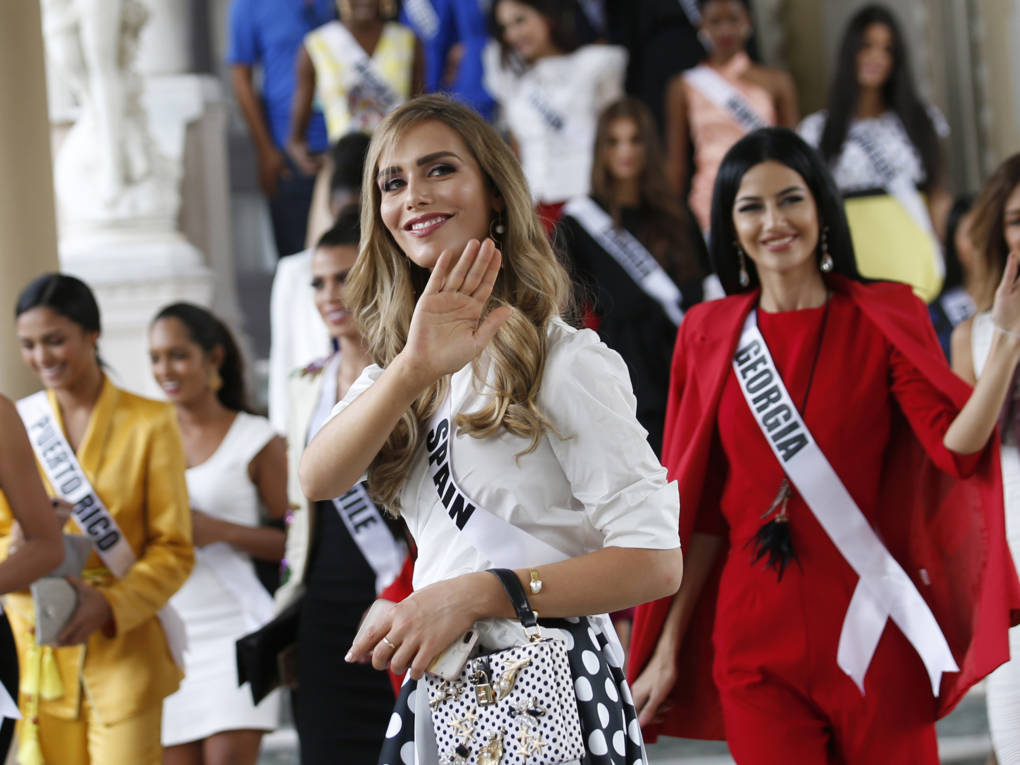
"description": "Angela Ponce, Miss Spain (center), is the first transgender contestant to compete for Miss Universe. She and other contestants are seen visiting the Government House in Bangkok last week.",
"title": "Angela Ponce, Miss Spain (center), is the first transgender contestant to compete for Miss Universe. She and other contestants are seen visiting the Government House in Bangkok last week.",
"credit": null,
"status": "inherit",
"isLoading": false,
"fetchFailed": false
},
"news_11710563": {
"type": "attachments",
"id": "news_11710563",
"meta": {
"index": "attachments_1716263798",
"site": "news",
"id": "11710563",
"found": true
},
"parent": 11710546,
"imgSizes": {
"twentyfourteen-full-width": {
"file": "https://ww2.kqed.org/app/uploads/sites/10/2018/12/GettyImages-975840050-e1544134714617-1038x576.jpg",
"width": 1038,
"mimeType": "image/jpeg",
"height": 576
},
"thumbnail": {
"file": "https://ww2.kqed.org/app/uploads/sites/10/2018/12/GettyImages-975840050-e1544134714617-160x107.jpg",
"width": 160,
"mimeType": "image/jpeg",
"height": 107
},
"post-thumbnail": {
"file": "https://ww2.kqed.org/app/uploads/sites/10/2018/12/GettyImages-975840050-e1544134714617-672x372.jpg",
"width": 672,
"mimeType": "image/jpeg",
"height": 372
},
"kqedFullSize": {
"file": "https://ww2.kqed.org/app/uploads/sites/10/2018/12/GettyImages-975840050-e1544134714617.jpg",
"width": 1920,
"height": 1280
},
"large": {
"file": "https://ww2.kqed.org/app/uploads/sites/10/2018/12/GettyImages-975840050-e1544134714617-1020x680.jpg",
"width": 1020,
"mimeType": "image/jpeg",
"height": 680
},
"complete_open_graph": {
"file": "https://ww2.kqed.org/app/uploads/sites/10/2018/12/GettyImages-975840050-e1544134714617-1200x800.jpg",
"width": 1200,
"mimeType": "image/jpeg",
"height": 800
},
"guest-author-50": {
"file": "https://ww2.kqed.org/app/uploads/sites/10/2018/12/GettyImages-975840050-e1544134714617-50x50.jpg",
"width": 50,
"mimeType": "image/jpeg",
"height": 50
},
"guest-author-96": {
"file": "https://ww2.kqed.org/app/uploads/sites/10/2018/12/GettyImages-975840050-e1544134714617-96x96.jpg",
"width": 96,
"mimeType": "image/jpeg",
"height": 96
},
"medium": {
"file": "https://ww2.kqed.org/app/uploads/sites/10/2018/12/GettyImages-975840050-e1544134714617-800x533.jpg",
"width": 800,
"mimeType": "image/jpeg",
"height": 533
},
"guest-author-64": {
"file": "https://ww2.kqed.org/app/uploads/sites/10/2018/12/GettyImages-975840050-e1544134714617-64x64.jpg",
"width": 64,
"mimeType": "image/jpeg",
"height": 64
},
"guest-author-32": {
"file": "https://ww2.kqed.org/app/uploads/sites/10/2018/12/GettyImages-975840050-e1544134714617-32x32.jpg",
"width": 32,
"mimeType": "image/jpeg",
"height": 32
},
"full-width": {
"file": "https://ww2.kqed.org/app/uploads/sites/10/2018/12/GettyImages-975840050-e1544134714617-1920x1280.jpg",
"width": 1920,
"mimeType": "image/jpeg",
"height": 1280
},
"detail": {
"file": "https://ww2.kqed.org/app/uploads/sites/10/2018/12/GettyImages-975840050-e1544134714617-150x150.jpg",
"width": 150,
"mimeType": "image/jpeg",
"height": 150
},
"guest-author-128": {
"file": "https://ww2.kqed.org/app/uploads/sites/10/2018/12/GettyImages-975840050-e1544134714617-128x128.jpg",
"width": 128,
"mimeType": "image/jpeg",
"height": 128
}
},
"publishDate": 1544134649,
"modified": 1544145070,
"caption": "A member of the Pink Unity Collective holds a poster demanding justice in the death of Honduran transgender woman Roxana Hernàndez, in San Pedro Sula, on June 3, 2018. ",
"description": "A member of the Pink Unity Collective holds a poster demanding justice in the death of Honduran transgender woman Roxana Hernàndez, in San Pedro Sula, on June 3, 2018. ",
"title": "HONDURAS-US-MIGRATION-LGBT",
"credit": "Orlando Sierra/AFP/Getty Images",
"status": "inherit",
"isLoading": false,
"fetchFailed": false
},
"futureofyou_445182": {
"type": "attachments",
"id": "futureofyou_445182",
"meta": {
"index": "attachments_1716263798",
"site": "futureofyou",
"id": "445182",
"found": true
},
"parent": 445179,
"imgSizes": {
"small": {
"file": "https://ww2.kqed.org/app/uploads/sites/13/2018/10/GettyImages-1058061434-520x347.jpg",
"width": 520,
"mimeType": "image/jpeg",
"height": 347
},
"twentyfourteen-full-width": {
"file": "https://ww2.kqed.org/app/uploads/sites/13/2018/10/GettyImages-1058061434-1038x576.jpg",
"width": 1038,
"mimeType": "image/jpeg",
"height": 576
},
"thumbnail": {
"file": "https://ww2.kqed.org/app/uploads/sites/13/2018/10/GettyImages-1058061434-160x107.jpg",
"width": 160,
"mimeType": "image/jpeg",
"height": 107
},
"fd-sm": {
"file": "https://ww2.kqed.org/app/uploads/sites/13/2018/10/GettyImages-1058061434-960x640.jpg",
"width": 960,
"mimeType": "image/jpeg",
"height": 640
},
"post-thumbnail": {
"file": "https://ww2.kqed.org/app/uploads/sites/13/2018/10/GettyImages-1058061434-672x372.jpg",
"width": 672,
"mimeType": "image/jpeg",
"height": 372
},
"xsmall": {
"file": "https://ww2.kqed.org/app/uploads/sites/13/2018/10/GettyImages-1058061434-375x250.jpg",
"width": 375,
"mimeType": "image/jpeg",
"height": 250
},
"kqedFullSize": {
"file": "https://ww2.kqed.org/app/uploads/sites/13/2018/10/GettyImages-1058061434-e1540420919406.jpg",
"width": 1920,
"height": 1280
},
"large": {
"file": "https://ww2.kqed.org/app/uploads/sites/13/2018/10/GettyImages-1058061434-1020x680.jpg",
"width": 1020,
"mimeType": "image/jpeg",
"height": 680
},
"xlarge": {
"file": "https://ww2.kqed.org/app/uploads/sites/13/2018/10/GettyImages-1058061434-1180x787.jpg",
"width": 1180,
"mimeType": "image/jpeg",
"height": 787
},
"complete_open_graph": {
"file": "https://ww2.kqed.org/app/uploads/sites/13/2018/10/GettyImages-1058061434-1200x800.jpg",
"width": 1200,
"mimeType": "image/jpeg",
"height": 800
},
"guest-author-50": {
"file": "https://ww2.kqed.org/app/uploads/sites/13/2018/10/GettyImages-1058061434-50x50.jpg",
"width": 50,
"mimeType": "image/jpeg",
"height": 50
},
"guest-author-96": {
"file": "https://ww2.kqed.org/app/uploads/sites/13/2018/10/GettyImages-1058061434-96x96.jpg",
"width": 96,
"mimeType": "image/jpeg",
"height": 96
},
"medium": {
"file": "https://ww2.kqed.org/app/uploads/sites/13/2018/10/GettyImages-1058061434-800x533.jpg",
"width": 800,
"mimeType": "image/jpeg",
"height": 533
},
"guest-author-64": {
"file": "https://ww2.kqed.org/app/uploads/sites/13/2018/10/GettyImages-1058061434-64x64.jpg",
"width": 64,
"mimeType": "image/jpeg",
"height": 64
},
"guest-author-32": {
"file": "https://ww2.kqed.org/app/uploads/sites/13/2018/10/GettyImages-1058061434-32x32.jpg",
"width": 32,
"mimeType": "image/jpeg",
"height": 32
},
"fd-lrg": {
"file": "https://ww2.kqed.org/app/uploads/sites/13/2018/10/GettyImages-1058061434-1920x1280.jpg",
"width": 1920,
"mimeType": "image/jpeg",
"height": 1280
},
"fd-med": {
"file": "https://ww2.kqed.org/app/uploads/sites/13/2018/10/GettyImages-1058061434-1180x787.jpg",
"width": 1180,
"mimeType": "image/jpeg",
"height": 787
},
"full-width": {
"file": "https://ww2.kqed.org/app/uploads/sites/13/2018/10/GettyImages-1058061434-1920x1280.jpg",
"width": 1920,
"mimeType": "image/jpeg",
"height": 1280
},
"detail": {
"file": "https://ww2.kqed.org/app/uploads/sites/13/2018/10/GettyImages-1058061434-150x150.jpg",
"width": 150,
"mimeType": "image/jpeg",
"height": 150
},
"medium_large": {
"file": "https://ww2.kqed.org/app/uploads/sites/13/2018/10/GettyImages-1058061434-768x512.jpg",
"width": 768,
"mimeType": "image/jpeg",
"height": 512
},
"guest-author-128": {
"file": "https://ww2.kqed.org/app/uploads/sites/13/2018/10/GettyImages-1058061434-128x128.jpg",
"width": 128,
"mimeType": "image/jpeg",
"height": 128
},
"xxsmall": {
"file": "https://ww2.kqed.org/app/uploads/sites/13/2018/10/GettyImages-1058061434-240x160.jpg",
"width": 240,
"mimeType": "image/jpeg",
"height": 160
}
},
"publishDate": 1540330201,
"modified": 1540330244,
"caption": "L.G.B.T. activists from the National Center for Transgender Equality, partner organizations and their supporters hold a 'We Will Not Be Erased' rally in front of the White House October 22, 2018 in Washington, DC. ",
"description": null,
"title": "Activists Rally For Transgender Rights Outside The White House",
"credit": "Chip Somodevilla/Getty Images",
"status": "inherit",
"isLoading": false,
"fetchFailed": false
},
"news_11700424": {
"type": "attachments",
"id": "news_11700424",
"meta": {
"index": "attachments_1716263798",
"site": "news",
"id": "11700424",
"found": true
},
"parent": 11700353,
"imgSizes": {
"small": {
"file": "https://ww2.kqed.org/app/uploads/sites/10/2018/10/redefining_082218_transflag_final-520x330.jpg",
"width": 520,
"mimeType": "image/jpeg",
"height": 330
},
"twentyfourteen-full-width": {
"file": "https://ww2.kqed.org/app/uploads/sites/10/2018/10/redefining_082218_transflag_final-1038x576.jpg",
"width": 1038,
"mimeType": "image/jpeg",
"height": 576
},
"thumbnail": {
"file": "https://ww2.kqed.org/app/uploads/sites/10/2018/10/redefining_082218_transflag_final-160x102.jpg",
"width": 160,
"mimeType": "image/jpeg",
"height": 102
},
"fd-sm": {
"file": "https://ww2.kqed.org/app/uploads/sites/10/2018/10/redefining_082218_transflag_final-960x610.jpg",
"width": 960,
"mimeType": "image/jpeg",
"height": 610
},
"post-thumbnail": {
"file": "https://ww2.kqed.org/app/uploads/sites/10/2018/10/redefining_082218_transflag_final-672x372.jpg",
"width": 672,
"mimeType": "image/jpeg",
"height": 372
},
"xsmall": {
"file": "https://ww2.kqed.org/app/uploads/sites/10/2018/10/redefining_082218_transflag_final-375x238.jpg",
"width": 375,
"mimeType": "image/jpeg",
"height": 238
},
"kqedFullSize": {
"file": "https://ww2.kqed.org/app/uploads/sites/10/2018/10/redefining_082218_transflag_final.jpg",
"width": 1920,
"height": 1220
},
"large": {
"file": "https://ww2.kqed.org/app/uploads/sites/10/2018/10/redefining_082218_transflag_final-1020x648.jpg",
"width": 1020,
"mimeType": "image/jpeg",
"height": 648
},
"xlarge": {
"file": "https://ww2.kqed.org/app/uploads/sites/10/2018/10/redefining_082218_transflag_final-1180x750.jpg",
"width": 1180,
"mimeType": "image/jpeg",
"height": 750
},
"complete_open_graph": {
"file": "https://ww2.kqed.org/app/uploads/sites/10/2018/10/redefining_082218_transflag_final-1200x763.jpg",
"width": 1200,
"mimeType": "image/jpeg",
"height": 763
},
"guest-author-50": {
"file": "https://ww2.kqed.org/app/uploads/sites/10/2018/10/redefining_082218_transflag_final-50x50.jpg",
"width": 50,
"mimeType": "image/jpeg",
"height": 50
},
"guest-author-96": {
"file": "https://ww2.kqed.org/app/uploads/sites/10/2018/10/redefining_082218_transflag_final-96x96.jpg",
"width": 96,
"mimeType": "image/jpeg",
"height": 96
},
"medium": {
"file": "https://ww2.kqed.org/app/uploads/sites/10/2018/10/redefining_082218_transflag_final-800x508.jpg",
"width": 800,
"mimeType": "image/jpeg",
"height": 508
},
"guest-author-64": {
"file": "https://ww2.kqed.org/app/uploads/sites/10/2018/10/redefining_082218_transflag_final-64x64.jpg",
"width": 64,
"mimeType": "image/jpeg",
"height": 64
},
"guest-author-32": {
"file": "https://ww2.kqed.org/app/uploads/sites/10/2018/10/redefining_082218_transflag_final-32x32.jpg",
"width": 32,
"mimeType": "image/jpeg",
"height": 32
},
"fd-lrg": {
"file": "https://ww2.kqed.org/app/uploads/sites/10/2018/10/redefining_082218_transflag_final-1920x1220.jpg",
"width": 1920,
"mimeType": "image/jpeg",
"height": 1220
},
"fd-med": {
"file": "https://ww2.kqed.org/app/uploads/sites/10/2018/10/redefining_082218_transflag_final-1180x750.jpg",
"width": 1180,
"mimeType": "image/jpeg",
"height": 750
},
"full-width": {
"file": "https://ww2.kqed.org/app/uploads/sites/10/2018/10/redefining_082218_transflag_final-1920x1220.jpg",
"width": 1920,
"mimeType": "image/jpeg",
"height": 1220
},
"detail": {
"file": "https://ww2.kqed.org/app/uploads/sites/10/2018/10/redefining_082218_transflag_final-150x150.jpg",
"width": 150,
"mimeType": "image/jpeg",
"height": 150
},
"guest-author-128": {
"file": "https://ww2.kqed.org/app/uploads/sites/10/2018/10/redefining_082218_transflag_final-128x128.jpg",
"width": 128,
"mimeType": "image/jpeg",
"height": 128
},
"xxsmall": {
"file": "https://ww2.kqed.org/app/uploads/sites/10/2018/10/redefining_082218_transflag_final-240x153.jpg",
"width": 240,
"mimeType": "image/jpeg",
"height": 153
}
},
"publishDate": 1540246231,
"modified": 1540246255,
"caption": null,
"description": null,
"title": "redefining_082218_transflag_final",
"credit": null,
"status": "inherit",
"isLoading": false,
"fetchFailed": false
},
"news_11700273": {
"type": "attachments",
"id": "news_11700273",
"meta": {
"index": "attachments_1716263798",
"site": "news",
"id": "11700273",
"found": true
},
"parent": 11700270,
"imgSizes": {
"small": {
"file": "https://ww2.kqed.org/app/uploads/sites/10/2018/10/RS28727_GettyImages-823239128-qut-520x347.jpg",
"width": 520,
"mimeType": "image/jpeg",
"height": 347
},
"twentyfourteen-full-width": {
"file": "https://ww2.kqed.org/app/uploads/sites/10/2018/10/RS28727_GettyImages-823239128-qut-1038x576.jpg",
"width": 1038,
"mimeType": "image/jpeg",
"height": 576
},
"thumbnail": {
"file": "https://ww2.kqed.org/app/uploads/sites/10/2018/10/RS28727_GettyImages-823239128-qut-160x107.jpg",
"width": 160,
"mimeType": "image/jpeg",
"height": 107
},
"fd-sm": {
"file": "https://ww2.kqed.org/app/uploads/sites/10/2018/10/RS28727_GettyImages-823239128-qut-960x640.jpg",
"width": 960,
"mimeType": "image/jpeg",
"height": 640
},
"post-thumbnail": {
"file": "https://ww2.kqed.org/app/uploads/sites/10/2018/10/RS28727_GettyImages-823239128-qut-672x372.jpg",
"width": 672,
"mimeType": "image/jpeg",
"height": 372
},
"xsmall": {
"file": "https://ww2.kqed.org/app/uploads/sites/10/2018/10/RS28727_GettyImages-823239128-qut-375x250.jpg",
"width": 375,
"mimeType": "image/jpeg",
"height": 250
},
"kqedFullSize": {
"file": "https://ww2.kqed.org/app/uploads/sites/10/2018/10/RS28727_GettyImages-823239128-qut.jpg",
"width": 1920,
"height": 1280
},
"large": {
"file": "https://ww2.kqed.org/app/uploads/sites/10/2018/10/RS28727_GettyImages-823239128-qut-1020x680.jpg",
"width": 1020,
"mimeType": "image/jpeg",
"height": 680
},
"xlarge": {
"file": "https://ww2.kqed.org/app/uploads/sites/10/2018/10/RS28727_GettyImages-823239128-qut-1180x787.jpg",
"width": 1180,
"mimeType": "image/jpeg",
"height": 787
},
"complete_open_graph": {
"file": "https://ww2.kqed.org/app/uploads/sites/10/2018/10/RS28727_GettyImages-823239128-qut-1200x800.jpg",
"width": 1200,
"mimeType": "image/jpeg",
"height": 800
},
"guest-author-50": {
"file": "https://ww2.kqed.org/app/uploads/sites/10/2018/10/RS28727_GettyImages-823239128-qut-50x50.jpg",
"width": 50,
"mimeType": "image/jpeg",
"height": 50
},
"guest-author-96": {
"file": "https://ww2.kqed.org/app/uploads/sites/10/2018/10/RS28727_GettyImages-823239128-qut-96x96.jpg",
"width": 96,
"mimeType": "image/jpeg",
"height": 96
},
"medium": {
"file": "https://ww2.kqed.org/app/uploads/sites/10/2018/10/RS28727_GettyImages-823239128-qut-800x533.jpg",
"width": 800,
"mimeType": "image/jpeg",
"height": 533
},
"guest-author-64": {
"file": "https://ww2.kqed.org/app/uploads/sites/10/2018/10/RS28727_GettyImages-823239128-qut-64x64.jpg",
"width": 64,
"mimeType": "image/jpeg",
"height": 64
},
"guest-author-32": {
"file": "https://ww2.kqed.org/app/uploads/sites/10/2018/10/RS28727_GettyImages-823239128-qut-32x32.jpg",
"width": 32,
"mimeType": "image/jpeg",
"height": 32
},
"fd-lrg": {
"file": "https://ww2.kqed.org/app/uploads/sites/10/2018/10/RS28727_GettyImages-823239128-qut-1920x1280.jpg",
"width": 1920,
"mimeType": "image/jpeg",
"height": 1280
},
"fd-med": {
"file": "https://ww2.kqed.org/app/uploads/sites/10/2018/10/RS28727_GettyImages-823239128-qut-1180x787.jpg",
"width": 1180,
"mimeType": "image/jpeg",
"height": 787
},
"full-width": {
"file": "https://ww2.kqed.org/app/uploads/sites/10/2018/10/RS28727_GettyImages-823239128-qut-1920x1280.jpg",
"width": 1920,
"mimeType": "image/jpeg",
"height": 1280
},
"detail": {
"file": "https://ww2.kqed.org/app/uploads/sites/10/2018/10/RS28727_GettyImages-823239128-qut-150x150.jpg",
"width": 150,
"mimeType": "image/jpeg",
"height": 150
},
"guest-author-128": {
"file": "https://ww2.kqed.org/app/uploads/sites/10/2018/10/RS28727_GettyImages-823239128-qut-128x128.jpg",
"width": 128,
"mimeType": "image/jpeg",
"height": 128
},
"xxsmall": {
"file": "https://ww2.kqed.org/app/uploads/sites/10/2018/10/RS28727_GettyImages-823239128-qut-240x160.jpg",
"width": 240,
"mimeType": "image/jpeg",
"height": 160
}
},
"publishDate": 1540161204,
"modified": 1540161252,
"caption": "Protesters display placards against President Donald Trump during a demonstration in front of the U.S. Army career center in Times Square, New York, on July 26, 2017.",
"description": "Protesters display placards against President Donald Trump during a demonstration in front of the U.S. Army career center in Times Square, New York, on July 26, 2017.",
"title": "US-POLITICS-MILITARY-TRANSGENDER-TRUMP-PROTEST",
"credit": "JEWEL SAMAD/AFP/Getty Images",
"status": "inherit",
"isLoading": false,
"fetchFailed": false
},
"futureofyou_441819": {
"type": "attachments",
"id": "futureofyou_441819",
"meta": {
"index": "attachments_1716263798",
"site": "futureofyou",
"id": "441819",
"found": true
},
"parent": 440851,
"imgSizes": {
"small": {
"file": "https://ww2.kqed.org/app/uploads/sites/13/2020/04/Gracie-520x347.jpg",
"width": 520,
"mimeType": "image/jpeg",
"height": 347
},
"twentyfourteen-full-width": {
"file": "https://ww2.kqed.org/app/uploads/sites/13/2020/04/Gracie-1038x576.jpg",
"width": 1038,
"mimeType": "image/jpeg",
"height": 576
},
"thumbnail": {
"file": "https://ww2.kqed.org/app/uploads/sites/13/2020/04/Gracie-160x107.jpg",
"width": 160,
"mimeType": "image/jpeg",
"height": 107
},
"fd-sm": {
"file": "https://ww2.kqed.org/app/uploads/sites/13/2020/04/Gracie-960x641.jpg",
"width": 960,
"mimeType": "image/jpeg",
"height": 641
},
"post-thumbnail": {
"file": "https://ww2.kqed.org/app/uploads/sites/13/2020/04/Gracie-672x372.jpg",
"width": 672,
"mimeType": "image/jpeg",
"height": 372
},
"xsmall": {
"file": "https://ww2.kqed.org/app/uploads/sites/13/2020/04/Gracie-375x250.jpg",
"width": 375,
"mimeType": "image/jpeg",
"height": 250
},
"kqedFullSize": {
"file": "https://ww2.kqed.org/app/uploads/sites/13/2020/04/Gracie.jpg",
"width": 1920,
"height": 1282
},
"large": {
"file": "https://ww2.kqed.org/app/uploads/sites/13/2020/04/Gracie-1020x681.jpg",
"width": 1020,
"mimeType": "image/jpeg",
"height": 681
},
"xlarge": {
"file": "https://ww2.kqed.org/app/uploads/sites/13/2020/04/Gracie-1180x788.jpg",
"width": 1180,
"mimeType": "image/jpeg",
"height": 788
},
"complete_open_graph": {
"file": "https://ww2.kqed.org/app/uploads/sites/13/2020/04/Gracie-1200x801.jpg",
"width": 1200,
"mimeType": "image/jpeg",
"height": 801
},
"guest-author-50": {
"file": "https://ww2.kqed.org/app/uploads/sites/13/2020/04/Gracie-50x50.jpg",
"width": 50,
"mimeType": "image/jpeg",
"height": 50
},
"guest-author-96": {
"file": "https://ww2.kqed.org/app/uploads/sites/13/2020/04/Gracie-96x96.jpg",
"width": 96,
"mimeType": "image/jpeg",
"height": 96
},
"medium": {
"file": "https://ww2.kqed.org/app/uploads/sites/13/2020/04/Gracie-800x534.jpg",
"width": 800,
"mimeType": "image/jpeg",
"height": 534
},
"guest-author-64": {
"file": "https://ww2.kqed.org/app/uploads/sites/13/2020/04/Gracie-64x64.jpg",
"width": 64,
"mimeType": "image/jpeg",
"height": 64
},
"guest-author-32": {
"file": "https://ww2.kqed.org/app/uploads/sites/13/2020/04/Gracie-32x32.jpg",
"width": 32,
"mimeType": "image/jpeg",
"height": 32
},
"fd-lrg": {
"file": "https://ww2.kqed.org/app/uploads/sites/13/2020/04/Gracie-1920x1282.jpg",
"width": 1920,
"mimeType": "image/jpeg",
"height": 1282
},
"fd-med": {
"file": "https://ww2.kqed.org/app/uploads/sites/13/2020/04/Gracie-1180x788.jpg",
"width": 1180,
"mimeType": "image/jpeg",
"height": 788
},
"full-width": {
"file": "https://ww2.kqed.org/app/uploads/sites/13/2020/04/Gracie-1920x1282.jpg",
"width": 1920,
"mimeType": "image/jpeg",
"height": 1282
},
"detail": {
"file": "https://ww2.kqed.org/app/uploads/sites/13/2020/04/Gracie-150x150.jpg",
"width": 150,
"mimeType": "image/jpeg",
"height": 150
},
"medium_large": {
"file": "https://ww2.kqed.org/app/uploads/sites/13/2020/04/Gracie-768x513.jpg",
"width": 768,
"mimeType": "image/jpeg",
"height": 513
},
"guest-author-128": {
"file": "https://ww2.kqed.org/app/uploads/sites/13/2020/04/Gracie-128x128.jpg",
"width": 128,
"mimeType": "image/jpeg",
"height": 128
},
"xxsmall": {
"file": "https://ww2.kqed.org/app/uploads/sites/13/2020/04/Gracie-240x160.jpg",
"width": 240,
"mimeType": "image/jpeg",
"height": 160
}
},
"publishDate": 1527009028,
"modified": 1527091311,
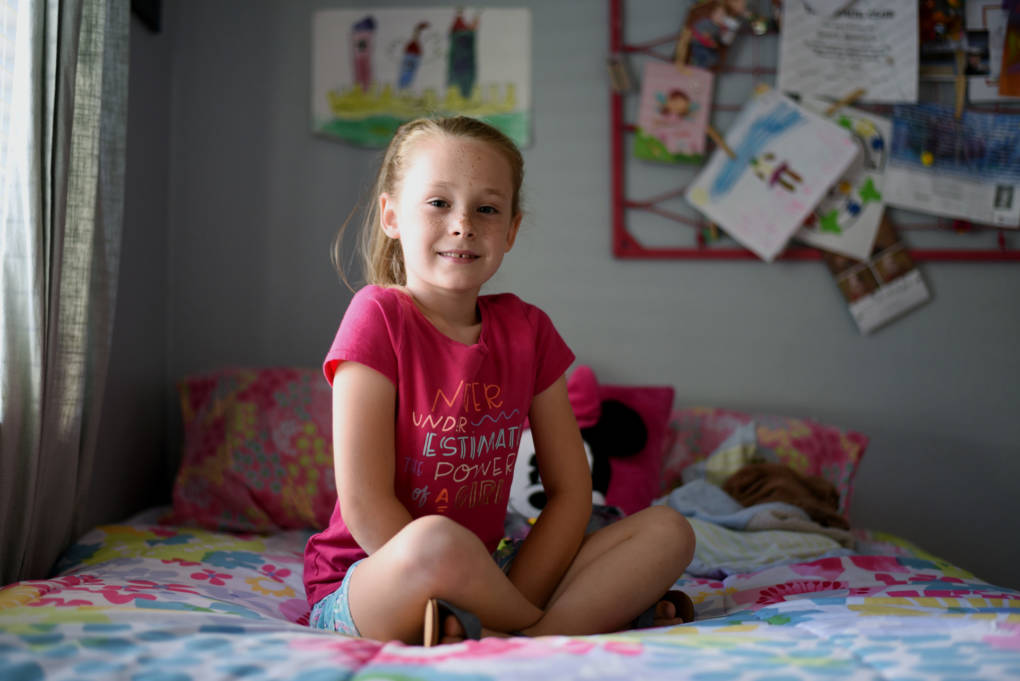
"caption": "Gracie, 7, poses for a picture in her room. Gracie is transgender; she socially transitioned to a girl at the age of 4. (Lauren Hanussak/KQED)",
"description": null,
"title": "TRANS",
"credit": null,
"status": "inherit",
"isLoading": false,
"fetchFailed": false
},
"news_11677749": {
"type": "attachments",
"id": "news_11677749",
"meta": {
"index": "attachments_1716263798",
"site": "news",
"id": "11677749",
"found": true
},
"parent": 11676014,
"imgSizes": {
"small": {
"file": "https://ww2.kqed.org/app/uploads/sites/10/2018/06/RS31631_alt_759-520x701.jpg",
"width": 520,
"mimeType": "image/jpeg",
"height": 701
},
"twentyfourteen-full-width": {
"file": "https://ww2.kqed.org/app/uploads/sites/10/2018/06/RS31631_alt_759-1038x576.jpg",
"width": 1038,
"mimeType": "image/jpeg",
"height": 576
},
"thumbnail": {
"file": "https://ww2.kqed.org/app/uploads/sites/10/2018/06/RS31631_alt_759-160x216.jpg",
"width": 160,
"mimeType": "image/jpeg",
"height": 216
},
"fd-sm": {
"file": "https://ww2.kqed.org/app/uploads/sites/10/2018/06/RS31631_alt_759-960x1294.jpg",
"width": 960,
"mimeType": "image/jpeg",
"height": 1294
},
"post-thumbnail": {
"file": "https://ww2.kqed.org/app/uploads/sites/10/2018/06/RS31631_alt_759-672x372.jpg",
"width": 672,
"mimeType": "image/jpeg",
"height": 372
},
"xsmall": {
"file": "https://ww2.kqed.org/app/uploads/sites/10/2018/06/RS31631_alt_759-375x505.jpg",
"width": 375,
"mimeType": "image/jpeg",
"height": 505
},
"kqedFullSize": {
"file": "https://ww2.kqed.org/app/uploads/sites/10/2018/06/RS31631_alt_759-e1530220647532.jpg",
"width": 1920,
"height": 2588
},
"large": {
"file": "https://ww2.kqed.org/app/uploads/sites/10/2018/06/RS31631_alt_759-1020x1375.jpg",
"width": 1020,
"mimeType": "image/jpeg",
"height": 1375
},
"xlarge": {
"file": "https://ww2.kqed.org/app/uploads/sites/10/2018/06/RS31631_alt_759-1180x1590.jpg",
"width": 1180,
"mimeType": "image/jpeg",
"height": 1590
},
"complete_open_graph": {
"file": "https://ww2.kqed.org/app/uploads/sites/10/2018/06/RS31631_alt_759-890x1200.jpg",
"width": 890,
"mimeType": "image/jpeg",
"height": 1200
},
"guest-author-50": {
"file": "https://ww2.kqed.org/app/uploads/sites/10/2018/06/RS31631_alt_759-50x50.jpg",
"width": 50,
"mimeType": "image/jpeg",
"height": 50
},
"guest-author-96": {
"file": "https://ww2.kqed.org/app/uploads/sites/10/2018/06/RS31631_alt_759-96x96.jpg",
"width": 96,
"mimeType": "image/jpeg",
"height": 96
},
"medium": {
"file": "https://ww2.kqed.org/app/uploads/sites/10/2018/06/RS31631_alt_759-800x1078.jpg",
"width": 800,
"mimeType": "image/jpeg",
"height": 1078
},
"guest-author-64": {
"file": "https://ww2.kqed.org/app/uploads/sites/10/2018/06/RS31631_alt_759-64x64.jpg",
"width": 64,
"mimeType": "image/jpeg",
"height": 64
},
"guest-author-32": {
"file": "https://ww2.kqed.org/app/uploads/sites/10/2018/06/RS31631_alt_759-32x32.jpg",
"width": 32,
"mimeType": "image/jpeg",
"height": 32
},
"fd-lrg": {
"file": "https://ww2.kqed.org/app/uploads/sites/10/2018/06/RS31631_alt_759-1920x2588.jpg",
"width": 1920,
"mimeType": "image/jpeg",
"height": 2588
},
"fd-med": {
"file": "https://ww2.kqed.org/app/uploads/sites/10/2018/06/RS31631_alt_759-1180x1590.jpg",
"width": 1180,
"mimeType": "image/jpeg",
"height": 1590
},
"full-width": {
"file": "https://ww2.kqed.org/app/uploads/sites/10/2018/06/RS31631_alt_759-1920x2588.jpg",
"width": 1920,
"mimeType": "image/jpeg",
"height": 2588
},
"detail": {
"file": "https://ww2.kqed.org/app/uploads/sites/10/2018/06/RS31631_alt_759-150x150.jpg",
"width": 150,
"mimeType": "image/jpeg",
"height": 150
},
"guest-author-128": {
"file": "https://ww2.kqed.org/app/uploads/sites/10/2018/06/RS31631_alt_759-128x128.jpg",
"width": 128,
"mimeType": "image/jpeg",
"height": 128
},
"xxsmall": {
"file": "https://ww2.kqed.org/app/uploads/sites/10/2018/06/RS31631_alt_759-240x323.jpg",
"width": 240,
"mimeType": "image/jpeg",
"height": 323
}
},
"publishDate": 1530138685,
"modified": 1530220634,
"caption": "Felicia A. Elizondo at a hotel in Chicago in 1969.",
"description": null,
"title": "RS31631_alt_759",
"credit": "Courtesy of Felicia A. Elizondo",
"status": "inherit",
"isLoading": false,
"fetchFailed": false
},
"news_11670996": {
"type": "attachments",
"id": "news_11670996",
"meta": {
"index": "attachments_1716263798",
"site": "news",
"id": "11670996",
"found": true
},
"parent": 11670652,
"imgSizes": {
"small": {
"file": "https://ww2.kqed.org/app/uploads/sites/10/2018/05/RS31098_TRANS_020-qut-520x347.jpg",
"width": 520,
"mimeType": "image/jpeg",
"height": 347
},
"twentyfourteen-full-width": {
"file": "https://ww2.kqed.org/app/uploads/sites/10/2018/05/RS31098_TRANS_020-qut-1038x576.jpg",
"width": 1038,
"mimeType": "image/jpeg",
"height": 576
},
"thumbnail": {
"file": "https://ww2.kqed.org/app/uploads/sites/10/2018/05/RS31098_TRANS_020-qut-160x107.jpg",
"width": 160,
"mimeType": "image/jpeg",
"height": 107
},
"fd-sm": {
"file": "https://ww2.kqed.org/app/uploads/sites/10/2018/05/RS31098_TRANS_020-qut-960x641.jpg",
"width": 960,
"mimeType": "image/jpeg",
"height": 641
},
"post-thumbnail": {
"file": "https://ww2.kqed.org/app/uploads/sites/10/2018/05/RS31098_TRANS_020-qut-672x372.jpg",
"width": 672,
"mimeType": "image/jpeg",
"height": 372
},
"xsmall": {
"file": "https://ww2.kqed.org/app/uploads/sites/10/2018/05/RS31098_TRANS_020-qut-375x250.jpg",
"width": 375,
"mimeType": "image/jpeg",
"height": 250
},
"kqedFullSize": {
"file": "https://ww2.kqed.org/app/uploads/sites/10/2018/05/RS31098_TRANS_020-qut.jpg",
"width": 1920,
"height": 1282
},
"large": {
"file": "https://ww2.kqed.org/app/uploads/sites/10/2018/05/RS31098_TRANS_020-qut-1020x681.jpg",
"width": 1020,
"mimeType": "image/jpeg",
"height": 681
},
"xlarge": {
"file": "https://ww2.kqed.org/app/uploads/sites/10/2018/05/RS31098_TRANS_020-qut-1180x788.jpg",
"width": 1180,
"mimeType": "image/jpeg",
"height": 788
},
"complete_open_graph": {
"file": "https://ww2.kqed.org/app/uploads/sites/10/2018/05/RS31098_TRANS_020-qut-1200x801.jpg",
"width": 1200,
"mimeType": "image/jpeg",
"height": 801
},
"guest-author-50": {
"file": "https://ww2.kqed.org/app/uploads/sites/10/2018/05/RS31098_TRANS_020-qut-50x50.jpg",
"width": 50,
"mimeType": "image/jpeg",
"height": 50
},
"guest-author-96": {
"file": "https://ww2.kqed.org/app/uploads/sites/10/2018/05/RS31098_TRANS_020-qut-96x96.jpg",
"width": 96,
"mimeType": "image/jpeg",
"height": 96
},
"medium": {
"file": "https://ww2.kqed.org/app/uploads/sites/10/2018/05/RS31098_TRANS_020-qut-800x534.jpg",
"width": 800,
"mimeType": "image/jpeg",
"height": 534
},
"guest-author-64": {
"file": "https://ww2.kqed.org/app/uploads/sites/10/2018/05/RS31098_TRANS_020-qut-64x64.jpg",
"width": 64,
"mimeType": "image/jpeg",
"height": 64
},
"guest-author-32": {
"file": "https://ww2.kqed.org/app/uploads/sites/10/2018/05/RS31098_TRANS_020-qut-32x32.jpg",
"width": 32,
"mimeType": "image/jpeg",
"height": 32
},
"fd-lrg": {
"file": "https://ww2.kqed.org/app/uploads/sites/10/2018/05/RS31098_TRANS_020-qut-1920x1282.jpg",
"width": 1920,
"mimeType": "image/jpeg",
"height": 1282
},
"fd-med": {
"file": "https://ww2.kqed.org/app/uploads/sites/10/2018/05/RS31098_TRANS_020-qut-1180x788.jpg",
"width": 1180,
"mimeType": "image/jpeg",
"height": 788
},
"full-width": {
"file": "https://ww2.kqed.org/app/uploads/sites/10/2018/05/RS31098_TRANS_020-qut-1920x1282.jpg",
"width": 1920,
"mimeType": "image/jpeg",
"height": 1282
},
"detail": {
"file": "https://ww2.kqed.org/app/uploads/sites/10/2018/05/RS31098_TRANS_020-qut-150x150.jpg",
"width": 150,
"mimeType": "image/jpeg",
"height": 150
},
"guest-author-128": {
"file": "https://ww2.kqed.org/app/uploads/sites/10/2018/05/RS31098_TRANS_020-qut-128x128.jpg",
"width": 128,
"mimeType": "image/jpeg",
"height": 128
},
"xxsmall": {
"file": "https://ww2.kqed.org/app/uploads/sites/10/2018/05/RS31098_TRANS_020-qut-240x160.jpg",
"width": 240,
"mimeType": "image/jpeg",
"height": 160
}
},
"publishDate": 1527382455,
"modified": 1527382637,
"caption": "Gracie (7) shows off her favorite dresses from her closet, which is her self-proclaimed favorite part of her room. She's transgender, and she started socially transitioning to a girl when she was four.",
"description": "Gracie (7) shows off her favorite dresses from her closet, which is her self-proclaimed favorite part of her room. She's transgender, and she started socially transitioning to a girl when she was four.",
"title": "Gracie",
"credit": "Lauren Hanussak/KQED",
"status": "inherit",
"isLoading": false,
"fetchFailed": false
},
"futureofyou_440815": {
"type": "attachments",
"id": "futureofyou_440815",
"meta": {
"index": "attachments_1716263798",
"site": "futureofyou",
"id": "440815",
"found": true
},
"parent": 440806,
"imgSizes": {
"small": {
"file": "https://ww2.kqed.org/app/uploads/sites/13/2018/04/Kristina-Olson-UW-750x500-520x278.gif",
"width": 520,
"mimeType": "image/gif",
"height": 278
},
"thumbnail": {
"file": "https://ww2.kqed.org/app/uploads/sites/13/2018/04/Kristina-Olson-UW-750x500-160x85.gif",
"width": 160,
"mimeType": "image/gif",
"height": 85
},
"post-thumbnail": {
"file": "https://ww2.kqed.org/app/uploads/sites/13/2018/04/Kristina-Olson-UW-750x500-672x372.gif",
"width": 672,
"mimeType": "image/gif",
"height": 372
},
"xsmall": {
"file": "https://ww2.kqed.org/app/uploads/sites/13/2018/04/Kristina-Olson-UW-750x500-375x200.gif",
"width": 375,
"mimeType": "image/gif",
"height": 200
},
"kqedFullSize": {
"file": "https://ww2.kqed.org/app/uploads/sites/13/2018/04/Kristina-Olson-UW-750x500.gif",
"width": 742,
"height": 396
},
"guest-author-50": {
"file": "https://ww2.kqed.org/app/uploads/sites/13/2018/04/Kristina-Olson-UW-750x500-50x50.gif",
"width": 50,
"mimeType": "image/gif",
"height": 50
},
"guest-author-96": {
"file": "https://ww2.kqed.org/app/uploads/sites/13/2018/04/Kristina-Olson-UW-750x500-96x96.gif",
"width": 96,
"mimeType": "image/gif",
"height": 96
},
"guest-author-64": {
"file": "https://ww2.kqed.org/app/uploads/sites/13/2018/04/Kristina-Olson-UW-750x500-64x64.gif",
"width": 64,
"mimeType": "image/gif",
"height": 64
},
"detail": {
"file": "https://ww2.kqed.org/app/uploads/sites/13/2018/04/Kristina-Olson-UW-750x500-150x150.gif",
"width": 150,
"mimeType": "image/gif",
"height": 150
},
"guest-author-32": {
"file": "https://ww2.kqed.org/app/uploads/sites/13/2018/04/Kristina-Olson-UW-750x500-32x32.gif",
"width": 32,
"mimeType": "image/gif",
"height": 32
},
"guest-author-128": {
"file": "https://ww2.kqed.org/app/uploads/sites/13/2018/04/Kristina-Olson-UW-750x500-128x128.gif",
"width": 128,
"mimeType": "image/gif",
"height": 128
},
"xxsmall": {
"file": "https://ww2.kqed.org/app/uploads/sites/13/2018/04/Kristina-Olson-UW-750x500-240x128.gif",
"width": 240,
"mimeType": "image/gif",
"height": 128
}
},
"publishDate": 1523664912,
"modified": 1523664934,
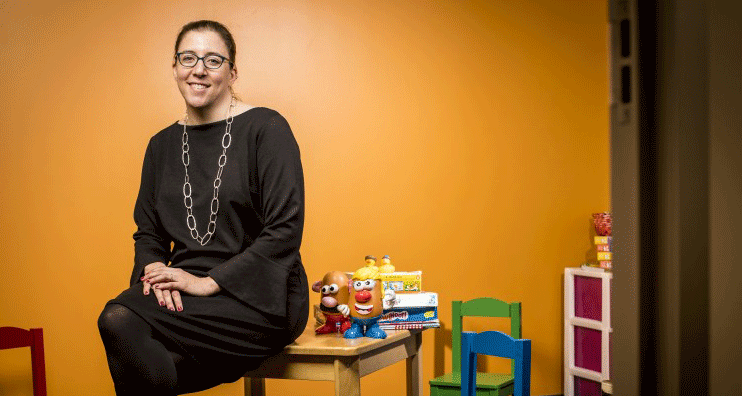
"caption": "Kristina Olson, associate professor of psychology at the University of Washington, has won the National Science Foundation’s Alan T. Waterman Award, given to one outstanding scientist under age 40.",
"description": null,
"title": "Kristina-Olson-UW-750x500",
"credit": "Dennis Wise/University of Washington",
"status": "inherit",
"isLoading": false,
"fetchFailed": false
}
},
"audioPlayerReducer": {
"postId": "stream_live",
"isPaused": true,
"isPlaying": false,
"pfsActive": false,
"pledgeModalIsOpen": true,
"playerDrawerIsOpen": false,
"liveAudioPlayStartedAt": 0,
"liveAudioPlayContext": ""
},
"authorsReducer": {
"byline_news_11719923": {
"type": "authors",
"id": "byline_news_11719923",
"meta": {
"override": true
},
"slug": "byline_news_11719923",
"name": "\u003cstrong>Bill Chappell\u003cbr />NPR\u003c/strong>",
"isLoading": false
},
"byline_news_11713238": {
"type": "authors",
"id": "byline_news_11713238",
"meta": {
"override": true
},
"slug": "byline_news_11713238",
"name": "\u003cstrong>Laurel Wamsley\u003c/br>NPR\u003c/strong>",
"isLoading": false
},
"byline_news_11710546": {
"type": "authors",
"id": "byline_news_11710546",
"meta": {
"override": true
},
"slug": "byline_news_11710546",
"name": "Susan Montoya Bryan\u003cbr>Associated Press",
"isLoading": false
},
"byline_futureofyou_445179": {
"type": "authors",
"id": "byline_futureofyou_445179",
"meta": {
"override": true
},
"slug": "byline_futureofyou_445179",
"name": "Ike Swetlitz, STAT",
"isLoading": false
},
"byline_news_11676014": {
"type": "authors",
"id": "byline_news_11676014",
"meta": {
"override": true
},
"slug": "byline_news_11676014",
"name": "\u003cstrong>Felicia A. Elizondo\u003c/strong>",
"isLoading": false
},
"byline_futureofyou_440806": {
"type": "authors",
"id": "byline_futureofyou_440806",
"meta": {
"override": true
},
"slug": "byline_futureofyou_440806",
"name": "David Crary\u003cbr />Associated Press",
"isLoading": false
},
"jbrooks": {
"type": "authors",
"id": "80",
"meta": {
"index": "authors_1716337520",
"id": "80",
"found": true
},
"name": "Jon Brooks",
"firstName": "Jon",
"lastName": "Brooks",
"slug": "jbrooks",
"email": "jbrooks@kqed.org",
"display_author_email": true,
"staff_mastheads": [
"science"
],
"title": "Digital Editor",
"bio": "Jon Brooks is a former Digital Editor for KQED Science. He is the former editor of KQED’s daily news blog, News Fix. In 2014, he won a California Journalism Award for his coverage of ride services like Uber and Lyft and the taxi industry. A veteran blogger, he previously worked for Yahoo! in various news writing and editing roles. Jon is also a playwright whose work has been produced in San Francisco, New York, Italy, and around the U.S. He has written about film for his own blog and studied film at Boston University.",
"avatar": "https://secure.gravatar.com/avatar/98887f7ed1c876ed414d4c915e969584?s=600&d=blank&r=g",
"twitter": "jbrooksfoy",
"facebook": null,
"instagram": null,
"linkedin": null,
"sites": [
{
"site": "arts",
"roles": [
"Contributor",
"editor"
]
},
{
"site": "news",
"roles": [
"author"
]
},
{
"site": "futureofyou",
"roles": [
"administrator"
]
},
{
"site": "mindshift",
"roles": [
"editor"
]
},
{
"site": "stateofhealth",
"roles": [
"editor"
]
},
{
"site": "science",
"roles": [
"administrator"
]
},
{
"site": "quest",
"roles": [
"editor"
]
}
],
"headData": {
"title": "Jon Brooks | KQED",
"description": "Digital Editor",
"ogImgSrc": "https://secure.gravatar.com/avatar/98887f7ed1c876ed414d4c915e969584?s=600&d=blank&r=g",
"twImgSrc": "https://secure.gravatar.com/avatar/98887f7ed1c876ed414d4c915e969584?s=600&d=blank&r=g"
},
"isLoading": false,
"link": "/author/jbrooks"
},
"shossaini": {
"type": "authors",
"id": "3214",
"meta": {
"index": "authors_1716337520",
"id": "3214",
"found": true
},
"name": "Sara Hossaini",
"firstName": "Sara",
"lastName": "Hossaini",
"slug": "shossaini",
"email": "shossaini@kqed.org",
"display_author_email": true,
"staff_mastheads": [
"news"
],
"title": "KQED Reporter",
"bio": "Sara Hossaini came to general assignment reporting at KQED in 2013 after two winters reporting at Wyoming Public Radio. She holds a bachelor's degree in broadcast journalism from the University of Nebraska-Lincoln. Her radio romance began after a bitter breakup with documentary film (Ok, maybe it's still complicated). Her first simultaneous jobs in San Francisco were as Associate Producer on a PBS film series through the Center for Asian American Media and as a butler. She likes to trot, plot and make things with her hands.",
"avatar": "https://secure.gravatar.com/avatar/060e9f56b9554e17942e89f413242774?s=600&d=blank&r=g",
"twitter": "mshossaini",
"facebook": null,
"instagram": null,
"linkedin": null,
"sites": [
{
"site": "news",
"roles": [
"author"
]
},
{
"site": "stateofhealth",
"roles": [
"author"
]
}
],
"headData": {
"title": "Sara Hossaini | KQED",
"description": "KQED Reporter",
"ogImgSrc": "https://secure.gravatar.com/avatar/060e9f56b9554e17942e89f413242774?s=600&d=blank&r=g",
"twImgSrc": "https://secure.gravatar.com/avatar/060e9f56b9554e17942e89f413242774?s=600&d=blank&r=g"
},
"isLoading": false,
"link": "/author/shossaini"
},
"markfiore": {
"type": "authors",
"id": "3236",
"meta": {
"index": "authors_1716337520",
"id": "3236",
"found": true
},
"name": "Mark Fiore",
"firstName": "Mark",
"lastName": "Fiore",
"slug": "markfiore",
"email": "mark@markfiore.com",
"display_author_email": false,
"staff_mastheads": [
"news"
],
"title": "KQED News Cartoonist",
"bio": "\u003ca href=\"http://www.MarkFiore.com\">MarkFiore.com\u003c/a> | \u003ca href=\"https://twitter.com/markfiore\">Follow on Twitter\u003c/a> | \u003ca href=\"https://www.facebook.com/pages/Mark-Fiore-Animated-Political-Cartoons/94451707396?ref=bookmarks\">Facebook\u003c/a> | \u003ca href=\"mailto:mark@markfiore.com\">email\u003c/a>\r\n\r\nPulitzer Prize-winner, Mark Fiore, who the Wall Street Journal has called “the undisputed guru of the form,” creates animated political cartoons in San Francisco, where his work has been featured regularly on the San Francisco Chronicle’s web site, SFGate.com. His work has appeared on Newsweek.com, Slate.com, CBSNews.com, MotherJones.com, DailyKos.com and NPR’s web site. Fiore’s political animation has appeared on CNN, Frontline, Bill Moyers Journal, Salon.com and cable and broadcast outlets across the globe.\r\n\r\nBeginning his professional life by drawing traditional political cartoons for newspapers, Fiore’s work appeared in publications ranging from the Washington Post to the Los Angeles Times. In the late 1990s, he began to experiment with animating political cartoons and, after a short stint at the San Jose Mercury News as their staff cartoonist, Fiore devoted all his energies to animation.\r\nGrowing up in California, Fiore also spent a good portion of his life in the backwoods of Idaho. It was this combination that shaped him politically. Mark majored in political science at Colorado College, where, in a perfect send-off for a cartoonist, he received his diploma in 1991 as commencement speaker Dick Cheney smiled approvingly.\r\nMark Fiore was awarded the Pulitzer Prize for political cartooning in 2010, a Robert F. Kennedy Journalism Award in 2004 and has twice received an Online Journalism Award for commentary from the Online News Association (2002, 2008). Fiore has received two awards for his work in new media from the National Cartoonists Society (2001, 2002), and in 2006 received The James Madison Freedom of Information Award from The Society of Professional Journalists.",
"avatar": "https://secure.gravatar.com/avatar/fc4e2a612b15b67bad0c6f0e1db4ca9b?s=600&d=blank&r=g",
"twitter": "MarkFiore",
"facebook": null,
"instagram": "https://www.instagram.com/markfiore/?hl=en",
"linkedin": null,
"sites": [
{
"site": "arts",
"roles": [
"contributor"
]
},
{
"site": "news",
"roles": [
"editor"
]
},
{
"site": "futureofyou",
"roles": [
"editor"
]
},
{
"site": "science",
"roles": [
"editor"
]
}
],
"headData": {
"title": "Mark Fiore | KQED",
"description": "KQED News Cartoonist",
"ogImgSrc": "https://secure.gravatar.com/avatar/fc4e2a612b15b67bad0c6f0e1db4ca9b?s=600&d=blank&r=g",
"twImgSrc": "https://secure.gravatar.com/avatar/fc4e2a612b15b67bad0c6f0e1db4ca9b?s=600&d=blank&r=g"
},
"isLoading": false,
"link": "/author/markfiore"
},
"lesleymcclurg": {
"type": "authors",
"id": "11229",
"meta": {
"index": "authors_1716337520",
"id": "11229",
"found": true
},
"name": "Lesley McClurg",
"firstName": "Lesley",
"lastName": "McClurg",
"slug": "lesleymcclurg",
"email": "lmcclurg@KQED.org",
"display_author_email": false,
"staff_mastheads": [
"news",
"science"
],
"title": "KQED Health Correspondent",
"bio": "Lesley McClurg is a health correspondent and fill-in host whose work is regularly rebroadcast on NPR and PBS programs. She’s earned multiple regional Emmy awards, a national and a regional Edward R. Murrow award, and was named Best Beat Reporter by the Association of Health Care Journalists. The Society of Professional Journalists has recognized her work several times, and the Society of Environmental Journalists spotlighted her coverage of California’s historic drought.\r\n\r\nBefore joining KQED in 2016, Lesley covered food and sustainability for Capital Public Radio, environmental issues for Colorado Public Radio, and reported for KUOW and KCTS 9 in Seattle. Away from the newsroom, she loves skiing with her daughter, mountain biking with her partner, and playing with Ollie, the family’s goldendoodle. On deadline, she runs almost entirely on chocolate chips.\r\n\r\n ",
"avatar": "https://secure.gravatar.com/avatar/bab49e972ea10c774fe0f5e29dba1722b158f7c0d58a360923d1389d380b2978?s=600&d=blank&r=g",
"twitter": "lesleywmcclurg",
"bluesky": null,
"facebook": null,
"instagram": null,
"linkedin": null,
"sites": [
{
"site": "arts",
"roles": [
"author"
]
},
{
"site": "news",
"roles": [
"editor"
]
},
{
"site": "futureofyou",
"roles": [
"editor"
]
},
{
"site": "stateofhealth",
"roles": [
"author"
]
},
{
"site": "science",
"roles": [
"editor"
]
},
{
"site": "quest",
"roles": [
"subscriber"
]
},
{
"site": "forum",
"roles": [
"administrator"
]
},
{
"site": "liveblog",
"roles": [
"author"
]
}
],
"headData": {
"title": "Lesley McClurg | KQED",
"description": "KQED Health Correspondent",
"ogImgSrc": "https://secure.gravatar.com/avatar/bab49e972ea10c774fe0f5e29dba1722b158f7c0d58a360923d1389d380b2978?s=600&d=blank&r=g",
"twImgSrc": "https://secure.gravatar.com/avatar/bab49e972ea10c774fe0f5e29dba1722b158f7c0d58a360923d1389d380b2978?s=600&d=blank&r=g"
},
"isLoading": false,
"link": "/author/lesleymcclurg"
},
"rlevi": {
"type": "authors",
"id": "11260",
"meta": {
"index": "authors_1716337520",
"id": "11260",
"found": true
},
"name": "Ryan Levi",
"firstName": "Ryan",
"lastName": "Levi",
"slug": "rlevi",
"email": "rlevi@KQED.org",
"display_author_email": false,
"staff_mastheads": [],
"title": "KQED Contributor",
"bio": "Ryan Levi was a reporter and podcast producer at KQED News from 2016-2019. He worked on \u003ca href=\"https://www.kqed.org/news/series/baycurious\">Bay Curious\u003c/a>, \u003ca href=\"https://www.kqed.org/news/tag/the-bay/\">The Bay, \u003c/a>and \u003ca href=\"https://podcasts.apple.com/us/podcast/the-california-report-magazine/id1314750545\">The California Report Magazine\u003c/a>, as well as hosting and producing the weekly \u003ca href=\"https://www.kqed.org/news/program/qedup/\">Q'ed Up podcast. \u003c/a>He also helped inaugurate KQED's weekend news coverage in 2017 as one of two original digital producers. Ryan holds degrees in multimedia journalism and Spanish from the University of Missouri.",
"avatar": "https://secure.gravatar.com/avatar/4cb2ddd028ac8807d1adf09609c5555d?s=600&d=blank&r=g",
"twitter": "ryan_levi",
"facebook": null,
"instagram": null,
"linkedin": null,
"sites": [
{
"site": "arts",
"roles": [
"editor"
]
},
{
"site": "news",
"roles": [
"subscriber"
]
},
{
"site": "stateofhealth",
"roles": [
"editor"
]
},
{
"site": "science",
"roles": [
"editor"
]
},
{
"site": "forum",
"roles": [
"administrator"
]
},
{
"site": "perspectives",
"roles": [
"administrator"
]
}
],
"headData": {
"title": "Ryan Levi | KQED",
"description": "KQED Contributor",
"ogImgSrc": "https://secure.gravatar.com/avatar/4cb2ddd028ac8807d1adf09609c5555d?s=600&d=blank&r=g",
"twImgSrc": "https://secure.gravatar.com/avatar/4cb2ddd028ac8807d1adf09609c5555d?s=600&d=blank&r=g"
},
"isLoading": false,
"link": "/author/rlevi"
}
},
"pagesReducer": {
"news_tag_transgender": {
"type": "terms",
"id": "news_2486",
"meta": {
"index": "terms_1716263798",
"site": "news",
"id": "2486",
"score": 8.665831
},
"featImg": null,
"name": "transgender",
"description": null,
"taxonomy": "tag",
"headData": {
"twImgId": null,
"twTitle": null,
"ogTitle": null,
"ogImgId": null,
"twDescription": null,
"description": null,
"title": "transgender Archives | KQED News",
"ogDescription": null
},
"ttid": 2501,
"slug": "transgender",
"isLoading": false,
"title": "transgender",
"pageMeta": {
"site": "news",
"WpPageTemplate": "page-topic-editorial",
"currentPage": 12
},
"blocks": [
{
"blockName": "kqed/post-list",
"attrs": {
"layout": "cardArticle2",
"query": "posts/news?tag=transgender",
"seeMore": false,
"paginated": true,
"page": 12
}
},
{
"blockName": "kqed/ad"
}
]
}
},
"pfsSessionReducer": {},
"postsReducer": {
"stream_live": {
"type": "live",
"id": "stream_live",
"audioUrl": "https://streams.kqed.org/kqedradio",
"title": "Live Stream",
"excerpt": "Live Stream information currently unavailable.",
"link": "/radio",
"featImg": "",
"label": {
"name": "KQED Live",
"link": "/"
}
},
"stream_kqedNewscast": {
"type": "posts",
"id": "stream_kqedNewscast",
"audioUrl": "https://www.kqed.org/.stream/anon/radio/RDnews/newscast.mp3?_=1",
"title": "KQED Newscast",
"featImg": "",
"label": {
"name": "88.5 FM",
"link": "/"
}
},
"news_11719923": {
"type": "posts",
"id": "news_11719923",
"meta": {
"index": "posts_1716263798",
"site": "news",
"id": "11719923",
"score": null,
"sort": [
1548185400000
]
},
"guestAuthors": [],
"slug": "supreme-court-revives-trumps-ban-on-transgender-military-personnel-for-now",
"title": "Supreme Court Revives Trump's Ban on Transgender Military Personnel for Now",
"publishDate": 1548185400,
"format": "standard",
"headTitle": "Supreme Court Revives Trump’s Ban on Transgender Military Personnel for Now | KQED",
"labelTerm": {},
"content": "\u003cp>\u003cstrong>Updated at 2:18 p.m. ET\u003c/strong>\u003c/p>\n\u003cp>The Supreme Court has reinstated President Trump’s ban on transgender service members in the military, granting a stay of two lower court injunctions that had blocked the president’s policy. The justices voted 5-4, reflecting the high court’s conservative majority.\u003c/p>\n\u003cp>The decision allows the Pentagon to bar transgender people from joining or, in some circumstances, remaining in the military while the lower court rulings are appealed. The justices did not allow the Trump administration to leapfrog the appeals court, as it had requested.\u003c/p>\n\u003cp>The two cases — \u003cem>Trump v. Karnoski\u003c/em> and \u003cem>Trump v. Stockman\u003c/em> — are currently working their way through the U.S. Court of Appeals for the 9th Circuit.\u003c/p>\n\u003cp>In both of those cases, Justices Ruth Bader Ginsburg, Stephen Breyer, Sonia Sotomayor and Elena Kagan would have maintained a stay on the ban, Tuesday’s Supreme Court order reads.\u003c/p>\n\u003cp>[ad fullwidth]\u003c/p>\n\u003cp>The transgender ban is being revived more than a year after a federal court in Washington, D.C., first blocked it in October 2017. U.S. District Judge Colleen Kollar-Kotelly ruled that trans members of the military had “a strong case that the president’s ban would violate their Fifth Amendment rights,” as \u003ca href=\"https://www.npr.org/sections/thetwo-way/2017/10/30/560847850/federal-judge-blocks-trumps-ban-on-transgender-service-members\">NPR reported\u003c/a>.\u003c/p>\n\u003cp>A three-judge panel of the U.S. Court of Appeals for the District of Columbia Circuit \u003ca href=\"https://thehill.com/policy/defense/423862-appeals-court-sides-with-trump-on-transgender-military-ban\">lifted Kollar-Kotelly’s injunction\u003c/a> earlier this month, concluding that the ban had been substantially revised by the time it was instituted by former Defense Secretary Jim Mattis in March 2018. But other federal courts had also ruled against the ban — and until Tuesday, those other injunctions remained in place.\u003c/p>\n\u003cp>The two outstanding cases come from California and Washington state, in the 9th Circuit’s jurisdiction.\u003c/p>\n\u003cp>The Human Rights Campaign, which is involved in the Karnoski case in Washington state, \u003ca href=\"https://twitter.com/HRC/status/1087725575303774210\">condemned the Supreme Court’s decision\u003c/a>, saying it “thrusts this administration’s discriminatory agenda onto a military that clearly doesn’t want it, and does so at the expense of transgender people’s careers and service.”\u003c/p>\n\u003cp>Shannon Minter, legal director of the San Francisco-based National Center for Lesbian Rights, one of the organizations representing plaintiffs in cases challenging the ban, called the court’s decision a “very sad day for our military, for transgender people in this country, certainly for the thousands of courageous dedicated transgender service members who were willing to make the ultimate sacrifice to protect our country.”\u003c/p>\n\u003cp>“It is definitely a body blow and a very traumatic moment for them to know that the United States Supreme Court has, however temporarily, allowed the Trump administration to enforce a ban that directly attacks them and falsely paints them as unfit for military service, even as they are every single day proving their fitness to serve,” Minter said in an interview with KQED.\u003c/p>\n\u003cp>While Minter was disappointed by the decision to grant the stay, he was encouraged that the Supreme Court is allowing the cases to proceed through the district courts.\u003c/p>\n\u003cp>“This is a temporary order,” Minter said. “It theoretically does allow the government now to enforce the ban while we all wait for the 9th Circuit to rule, which is going to happen any day now.”\u003c/p>\n\u003cp>Sen. Dianne Feinstein, D-California, called the Supreme Court’s decision to allow Trump’s transgender ban to temporarily take effect “deeply disappointing” and “creates unnecessary confusion for transgender individuals serving in the military.”\u003c/p>\n\u003cp>“The ban would essentially restore ‘Don’t Ask, Don’t Tell’ for transgender service members, only allowing them to serve if they hide their true identity,” Feinstein said in written statement. “That previous policy directed toward LGBT service members harmed our military then, just as this one will now.”\u003c/p>\n\u003cp>Trump announced his ban abruptly in the summer of 2017, \u003ca href=\"https://twitter.com/realDonaldTrump/status/890193981585444864?ref_src=twsrc%5Etfw%7Ctwcamp%5Etweetembed%7Ctwterm%5E890193981585444864&ref_url=https%3A%2F%2Fwww.npr.org%2F2017%2F07%2F27%2F539559582%2F5-unanswered-questions-about-trumps-ban-on-transgender-troops\">saying in a series of tweets\u003c/a> that “the United States Government will not accept or allow…… ….Transgender individuals to serve in any capacity in the U.S. Military.”\u003c/p>\n\u003cp>The decision seemed to take Defense Department officials by surprise, \u003ca href=\"https://www.npr.org/2017/07/27/539559582/5-unanswered-questions-about-trumps-ban-on-transgender-troops\">sparking confusion\u003c/a> despite Trump’s assertion that he had consulted “with my Generals and military experts.”\u003c/p>\n\u003cp>The tweets were followed by an official \u003ca href=\"https://www.whitehouse.gov/the-press-office/2017/08/25/presidential-memorandum-secretary-defense-and-secretary-homeland\">presidential memo\u003c/a> in August of that year, which gave the defense secretary (and for the Coast Guard, the Homeland Security secretary) the discretion to “determine how to address transgender individuals currently serving in the United States military.”\u003c/p>\n\u003cp>Trump’s ban was a sharp reversal of a Pentagon policy \u003ca href=\"https://www.npr.org/sections/thetwo-way/2016/06/30/484192442/pentagon-says-transgender-troops-can-now-serve-openly\">announced in June 2016\u003c/a>, when former Defense Secretary Ash Carter said, “Effective immediately, transgender Americans may serve openly, and they can no longer be discharged or otherwise separated from the military just for being transgender.”\u003c/p>\n\u003cp>That Obama-era policy was hailed as ending an era of legal and professional limbo for trans people in the U.S. armed service; Carter said the decision was made out of a desire to attract “all talent possible” to serve in the military.\u003c/p>\n\u003cp>At the time, researchers at the RAND Corporation think tank estimated there were as many as 7,000 active-duty transgender service members, with up to 4,000 more in the reserves.\u003c/p>\n\u003cp>Because of that policy and the lower-court injunctions, the first openly trans people were officially able to join the U.S. military \u003ca href=\"https://www.wbez.org/shows/wbez-news/with-ban-lifted-trans-chicago-man-hopes-to-aim-high-with-air-force/b2f35740-bed1-494e-be57-2c5cd96124ed\">on Jan. 1, 2018\u003c/a>. But now their status is once again in jeopardy.\u003c/p>\n\u003cp>Tuesday’s order states that if the 9th Circuit rules against the ban, the ban on trans people in the military would remain in effect until the Supreme Court justices either deny a request to hear the case (if such an application is made) or rule against the Trump administration’s policy.\u003c/p>\n\u003cp>\u003cem>NPR’s Domenico Montanaro and KQED’s Ted Goldberg contributed to this report.\u003c/em>\u003c/p>\n\u003cp>\u003c/p>\n\u003cp>Copyright 2019 NPR. To see more, visit https://www.npr.org.\u003c/p>\n\n",
"blocks": [],
"excerpt": "The court's decision allows the Pentagon to bar transgender people from joining the military while two lower court rulings that had blocked the policy are appealed.",
"status": "publish",
"parent": 0,
"modified": 1738777783,
"stats": {
"hasAudio": false,
"hasVideo": false,
"hasChartOrMap": false,
"iframeSrcs": [],
"hasGoogleForm": false,
"hasGallery": false,
"hasHearkenModule": false,
"hasPolis": false,
"paragraphCount": 27,
"wordCount": 1018
},
"headData": {
"title": "Supreme Court Revives Trump's Ban on Transgender Military Personnel for Now | KQED",
"description": "The court's decision allows the Pentagon to bar transgender people from joining the military while two lower court rulings that had blocked the policy are appealed.",
"ogTitle": "",
"ogDescription": "",
"ogImgId": "",
"twTitle": "",
"twDescription": "",
"twImgId": "",
"schema": {
"@context": "https://schema.org",
"@type": "NewsArticle",
"headline": "Supreme Court Revives Trump's Ban on Transgender Military Personnel for Now",
"datePublished": "2019-01-22T11:30:00-08:00",
"dateModified": "2025-02-05T09:49:43-08:00",
"image": "https://cdn.kqed.org/wp-content/uploads/2020/02/KQED-OG-Image@1x.png",
"isAccessibleForFree": "True",
"publisher": {
"@type": "NewsMediaOrganization",
"@id": "https://www.kqed.org/#organization",
"name": "KQED",
"logo": "https://cdn.kqed.org/wp-content/uploads/2020/02/KQED-OG-Image@1x.png",
"url": "https://www.kqed.org",
"sameAs": [
"https://www.facebook.com/KQED",
"https://twitter.com/KQED",
"https://www.instagram.com/kqed/",
"https://www.tiktok.com/@kqedofficial",
"https://www.linkedin.com/company/kqed",
"https://www.youtube.com/channel/UCeC0IOo7i1P_61zVUWbJ4nw"
]
}
}
},
"source": "NPR",
"sourceUrl": "https://www.npr.org/",
"sticky": false,
"nprImageCredit": "Al Drago",
"nprByline": "\u003cstrong>Bill Chappell\u003cbr />NPR\u003c/strong>",
"nprImageAgency": "Getty Images",
"nprStoryId": "687368145",
"nprApiLink": "http://api.npr.org/query?id=687368145&apiKey=MDAxOTAwOTE4MDEyMTkxMDAzNjczZDljZA004",
"nprHtmlLink": "https://www.npr.org/2019/01/22/687368145/supreme-court-revives-trumps-ban-on-transgender-military-personnel-for-now?ft=nprml&f=687368145",
"nprRetrievedStory": "1",
"nprPubDate": "Tue, 22 Jan 2019 14:18:00 -0500",
"nprStoryDate": "Tue, 22 Jan 2019 10:14:00 -0500",
"nprLastModifiedDate": "Tue, 22 Jan 2019 14:18:37 -0500",
"path": "/news/11719923/supreme-court-revives-trumps-ban-on-transgender-military-personnel-for-now",
"audioTrackLength": null,
"parsedContent": [
{
"type": "contentString",
"content": "\u003cdiv class=\"post-body\">\u003cp>\u003cp>\u003cstrong>Updated at 2:18 p.m. ET\u003c/strong>\u003c/p>\n\u003cp>The Supreme Court has reinstated President Trump’s ban on transgender service members in the military, granting a stay of two lower court injunctions that had blocked the president’s policy. The justices voted 5-4, reflecting the high court’s conservative majority.\u003c/p>\n\u003cp>The decision allows the Pentagon to bar transgender people from joining or, in some circumstances, remaining in the military while the lower court rulings are appealed. The justices did not allow the Trump administration to leapfrog the appeals court, as it had requested.\u003c/p>\n\u003cp>The two cases — \u003cem>Trump v. Karnoski\u003c/em> and \u003cem>Trump v. Stockman\u003c/em> — are currently working their way through the U.S. Court of Appeals for the 9th Circuit.\u003c/p>\n\u003cp>In both of those cases, Justices Ruth Bader Ginsburg, Stephen Breyer, Sonia Sotomayor and Elena Kagan would have maintained a stay on the ban, Tuesday’s Supreme Court order reads.\u003c/p>\n\u003cp>\u003c/p>\u003c/div>",
"attributes": {
"named": {},
"numeric": []
}
},
{
"type": "component",
"content": "",
"name": "ad",
"attributes": {
"named": {
"label": "fullwidth"
},
"numeric": [
"fullwidth"
]
}
},
{
"type": "contentString",
"content": "\u003cdiv class=\"post-body\">\u003cp>\u003c/p>\n\u003cp>The transgender ban is being revived more than a year after a federal court in Washington, D.C., first blocked it in October 2017. U.S. District Judge Colleen Kollar-Kotelly ruled that trans members of the military had “a strong case that the president’s ban would violate their Fifth Amendment rights,” as \u003ca href=\"https://www.npr.org/sections/thetwo-way/2017/10/30/560847850/federal-judge-blocks-trumps-ban-on-transgender-service-members\">NPR reported\u003c/a>.\u003c/p>\n\u003cp>A three-judge panel of the U.S. Court of Appeals for the District of Columbia Circuit \u003ca href=\"https://thehill.com/policy/defense/423862-appeals-court-sides-with-trump-on-transgender-military-ban\">lifted Kollar-Kotelly’s injunction\u003c/a> earlier this month, concluding that the ban had been substantially revised by the time it was instituted by former Defense Secretary Jim Mattis in March 2018. But other federal courts had also ruled against the ban — and until Tuesday, those other injunctions remained in place.\u003c/p>\n\u003cp>The two outstanding cases come from California and Washington state, in the 9th Circuit’s jurisdiction.\u003c/p>\n\u003cp>The Human Rights Campaign, which is involved in the Karnoski case in Washington state, \u003ca href=\"https://twitter.com/HRC/status/1087725575303774210\">condemned the Supreme Court’s decision\u003c/a>, saying it “thrusts this administration’s discriminatory agenda onto a military that clearly doesn’t want it, and does so at the expense of transgender people’s careers and service.”\u003c/p>\n\u003cp>Shannon Minter, legal director of the San Francisco-based National Center for Lesbian Rights, one of the organizations representing plaintiffs in cases challenging the ban, called the court’s decision a “very sad day for our military, for transgender people in this country, certainly for the thousands of courageous dedicated transgender service members who were willing to make the ultimate sacrifice to protect our country.”\u003c/p>\n\u003cp>“It is definitely a body blow and a very traumatic moment for them to know that the United States Supreme Court has, however temporarily, allowed the Trump administration to enforce a ban that directly attacks them and falsely paints them as unfit for military service, even as they are every single day proving their fitness to serve,” Minter said in an interview with KQED.\u003c/p>\n\u003cp>While Minter was disappointed by the decision to grant the stay, he was encouraged that the Supreme Court is allowing the cases to proceed through the district courts.\u003c/p>\n\u003cp>“This is a temporary order,” Minter said. “It theoretically does allow the government now to enforce the ban while we all wait for the 9th Circuit to rule, which is going to happen any day now.”\u003c/p>\n\u003cp>Sen. Dianne Feinstein, D-California, called the Supreme Court’s decision to allow Trump’s transgender ban to temporarily take effect “deeply disappointing” and “creates unnecessary confusion for transgender individuals serving in the military.”\u003c/p>\n\u003cp>“The ban would essentially restore ‘Don’t Ask, Don’t Tell’ for transgender service members, only allowing them to serve if they hide their true identity,” Feinstein said in written statement. “That previous policy directed toward LGBT service members harmed our military then, just as this one will now.”\u003c/p>\n\u003cp>Trump announced his ban abruptly in the summer of 2017, \u003ca href=\"https://twitter.com/realDonaldTrump/status/890193981585444864?ref_src=twsrc%5Etfw%7Ctwcamp%5Etweetembed%7Ctwterm%5E890193981585444864&ref_url=https%3A%2F%2Fwww.npr.org%2F2017%2F07%2F27%2F539559582%2F5-unanswered-questions-about-trumps-ban-on-transgender-troops\">saying in a series of tweets\u003c/a> that “the United States Government will not accept or allow…… ….Transgender individuals to serve in any capacity in the U.S. Military.”\u003c/p>\n\u003cp>The decision seemed to take Defense Department officials by surprise, \u003ca href=\"https://www.npr.org/2017/07/27/539559582/5-unanswered-questions-about-trumps-ban-on-transgender-troops\">sparking confusion\u003c/a> despite Trump’s assertion that he had consulted “with my Generals and military experts.”\u003c/p>\n\u003cp>The tweets were followed by an official \u003ca href=\"https://www.whitehouse.gov/the-press-office/2017/08/25/presidential-memorandum-secretary-defense-and-secretary-homeland\">presidential memo\u003c/a> in August of that year, which gave the defense secretary (and for the Coast Guard, the Homeland Security secretary) the discretion to “determine how to address transgender individuals currently serving in the United States military.”\u003c/p>\n\u003cp>Trump’s ban was a sharp reversal of a Pentagon policy \u003ca href=\"https://www.npr.org/sections/thetwo-way/2016/06/30/484192442/pentagon-says-transgender-troops-can-now-serve-openly\">announced in June 2016\u003c/a>, when former Defense Secretary Ash Carter said, “Effective immediately, transgender Americans may serve openly, and they can no longer be discharged or otherwise separated from the military just for being transgender.”\u003c/p>\n\u003cp>That Obama-era policy was hailed as ending an era of legal and professional limbo for trans people in the U.S. armed service; Carter said the decision was made out of a desire to attract “all talent possible” to serve in the military.\u003c/p>\n\u003cp>At the time, researchers at the RAND Corporation think tank estimated there were as many as 7,000 active-duty transgender service members, with up to 4,000 more in the reserves.\u003c/p>\n\u003cp>Because of that policy and the lower-court injunctions, the first openly trans people were officially able to join the U.S. military \u003ca href=\"https://www.wbez.org/shows/wbez-news/with-ban-lifted-trans-chicago-man-hopes-to-aim-high-with-air-force/b2f35740-bed1-494e-be57-2c5cd96124ed\">on Jan. 1, 2018\u003c/a>. But now their status is once again in jeopardy.\u003c/p>\n\u003cp>Tuesday’s order states that if the 9th Circuit rules against the ban, the ban on trans people in the military would remain in effect until the Supreme Court justices either deny a request to hear the case (if such an application is made) or rule against the Trump administration’s policy.\u003c/p>\n\u003cp>\u003cem>NPR’s Domenico Montanaro and KQED’s Ted Goldberg contributed to this report.\u003c/em>\u003c/p>\n\u003cp>\u003c/p>\n\u003cp>Copyright 2019 NPR. To see more, visit https://www.npr.org.\u003c/p>\n\n\u003c/div>\u003c/p>",
"attributes": {
"named": {},
"numeric": []
}
}
],
"link": "/news/11719923/supreme-court-revives-trumps-ban-on-transgender-military-personnel-for-now",
"authors": [
"byline_news_11719923"
],
"programs": [
"news_72"
],
"categories": [
"news_6188",
"news_8",
"news_33520",
"news_13"
],
"tags": [
"news_932",
"news_2486"
],
"affiliates": [
"news_253"
],
"featImg": "news_11719924",
"label": "source_news_11719923"
},
"news_11713470": {
"type": "posts",
"id": "news_11713470",
"meta": {
"index": "posts_1716263798",
"site": "news",
"id": "11713470",
"score": null,
"sort": [
1545854922000
]
},
"parent": 0,
"labelTerm": {
"site": "news",
"term": 72
},
"blocks": [],
"publishDate": 1545854922,
"format": "audio",
"disqusTitle": "For Transgender and Nonbinary Protections, California Came First",
"title": "For Transgender and Nonbinary Protections, California Came First",
"headTitle": "The California Report | KQED News",
"content": "\u003cp>It's easy to spot Dee Shull in a coffee shop in San Leandro: Shull is wearing a bright green T-shirt with big block letters reading, \"Too queer for your binary.\"\u003c/p>\n\u003cp>Shull is also clutching a purple purse with many colorful political statements, including one that says \"They/Them\" — which are Shull's preferred pronouns.\u003c/p>\n\u003cp>Like others who identify as nonbinary, gender-nonconforming or gender-queer, Shull's internal experience is somewhere along the gender spectrum rather than either male or female.\u003c/p>\n\u003cp>“My gender today is definitely kind of middle of the road,\" Shull says. \"What I tend to call a \u003cem>yes and\u003c/em> gender.”\u003c/p>\n\u003cp>After sipping on an iced coffee, Shull heads to the coffee shop's restroom.\u003c/p>\n\u003cp>[ad fullwidth]\u003c/p>\n\u003cp>“Their single-occupancy restrooms are marked 'all-gender' restrooms,\" Shull says. \"It's one of the reasons I like this coffee shop.\"\u003c/p>\n\u003cp>\u003cstrong>Gender-Neutral Bathrooms\u003c/strong>\u003c/p>\n\u003cp>Shull remembers how much of a relief it was when the state's groundbreaking \u003ca href=\"https://leginfo.legislature.ca.gov/faces/billNavClient.xhtml?bill_id=201520160AB1732\" target=\"_blank\" rel=\"noopener\">bathroom law\u003c/a> went into effect last year. California was the first state in the nation to require all public restrooms be updated with a single toilet or urinal to be labeled gender-neutral.\u003c/p>\n\u003cp>\"I'm not sitting there looking back and forth between the two of them going, 'Which one do I use?' \" Shull says, smiling.\u003c/p>\n\u003cp>\u003cstrong>DMV Adds Nonbinary Box\u003c/strong>\u003c/p>\n\u003cp>Shull is also taking advantage of another \u003ca href=\"https://leginfo.legislature.ca.gov/faces/billNavClient.xhtml?bill_id=201720180SB179\" target=\"_blank\" rel=\"noopener\">recent law\u003c/a> that allows residents to change their gender and name to align with their desired gender. They are thrilled that their name will no longer be a \"preferred\" name — it will soon be a legal name.\u003c/p>\n\u003cp>“You know, if I'm trending more masculine it could just be the initial D,\" says Shull. \"If I’m trending more feminine, it will match what will be on my license, which is D-E-E.”\u003c/p>\n\u003cp>Shull plans to head to the Department of Motor Vehicles for a new license on Jan. 1. That’s when a third gender option will be available on state-issued identity documents, including birth certificates. California was the first state to pass a law offering a third gender option: X.\u003c/p>\n\u003cp>“I cannot even handle the feeling of correctness and validation without just going out and partying a little bit about it,\" laughs Shull.\u003c/p>\n\u003cp>There’s a lot to celebrate, says Christy Mallory, state and local policy director at the \u003ca href=\"https://williamsinstitute.law.ucla.edu/\" target=\"_blank\" rel=\"noopener\">Williams Institute\u003c/a>, a gender-identity think tank at UCLA.\u003c/p>\n\u003cp>“Many people don't even think about how often they pull out their driver's license or show it,\" says Mallory. \"But just think about what that would mean if your driver's license did not accurately reflect who you are. Think about the types of fear you'd have in going out and using that ID, especially in certain circumstances like voting, serving as a juror, applying for a job or getting an apartment.\"\u003c/p>\n\u003cp>A \u003ca href=\"https://leginfo.legislature.ca.gov/faces/billNavClient.xhtml?bill_id=201720180SB396\" target=\"_blank\" rel=\"noopener\">2017 law\u003c/a> also requires employers to train supervisors on how to identify and prevent harassment based on gender identity, gender expression and sexual orientation, Mallory says. Employees are taught how to use appropriate pronouns and create inclusive dress codes.\u003c/p>\n\u003cp>\u003cstrong>Youth Protections\u003c/strong>\u003c/p>\n\u003cp>An increasing number of policies protecting transgender and nonbinary children are in place in the Golden State, too. California is the only state to mandate \u003cspan style=\"font-weight: 400\">access to gender-affirming health care, which includes mental health care, for transgender foster youth. The 2018 \u003ca href=\"https://leginfo.legislature.ca.gov/faces/billNavClient.xhtml?bill_id=201720180AB2119\" target=\"_blank\" rel=\"noopener\">law\u003c/a> includes access to medical services like counseling, hormone therapy and surgery.\u003c/span>\u003c/p>\n\u003cp>Diane Ehrensaft, director of mental health at UCSF's Child and Adolescent Gender Center, noted landmark \u003ca href=\"http://leginfo.legislature.ca.gov/faces/billNavClient.xhtml?bill_id=201320140AB1266\" target=\"_blank\" rel=\"noopener\">2013\u003c/a> legislation\u003ca href=\"http://leginfo.legislature.ca.gov/faces/billNavClient.xhtml?bill_id=201320140AB1266\" target=\"_blank\" rel=\"noopener\"> \u003c/a>allows children to use the bathroom, locker room — or participate on whichever sports team — they believe matches their gender identity.\u003c/p>\n\u003cp>“That makes a tremendous difference in someone’s gender being accepted, supported and protected all at the same time,\" says Ehrensaft.\u003c/p>\n\u003cfigure id=\"attachment_11318192\" class=\"wp-caption alignright\" style=\"max-width: 800px\">\u003cimg class=\"wp-image-11318192 size-medium\" src=\"https://ww2.kqed.org/news/wp-content/uploads/sites/10/2017/02/11318191-thumb-800x1200.jpg\" alt=\"\" width=\"800\" height=\"1200\" srcset=\"https://ww2.kqed.org/app/uploads/sites/10/2017/02/11318191-thumb.jpg 800w, https://ww2.kqed.org/app/uploads/sites/10/2017/02/11318191-thumb-160x240.jpg 160w, https://ww2.kqed.org/app/uploads/sites/10/2017/02/11318191-thumb-240x360.jpg 240w, https://ww2.kqed.org/app/uploads/sites/10/2017/02/11318191-thumb-375x563.jpg 375w, https://ww2.kqed.org/app/uploads/sites/10/2017/02/11318191-thumb-520x780.jpg 520w\" sizes=\"(max-width: 800px) 100vw, 800px\">\u003cfigcaption class=\"wp-caption-text\">Max, 13 years old, identifies as agender — neither male nor female. \u003ccite>(Bert Johnson/KQED)\u003c/cite>\u003c/figcaption>\u003c/figure>\n\u003cp>Over the past five years in her practice, Ehrensaft says she has witnessed kids' self-esteem rise. Take 15-year-old Max, for example, who identifies as nonbinary. Before the public school law took effect, Max used to use the boy's room but only during class, when it was less crowded, and only when desperate.\u003c/p>\n\u003cp>“And sometimes I just wouldn’t use the bathroom all day,\" says Max, whose last name is not being used for his protection.\u003c/p>\n\u003cp>The girls' room wasn’t an option either because Max always had a sinking feeling they were in the wrong place.\u003c/p>\n\u003cp>“You know I’m not supposed to be here. There’s something in your stomach — this just doesn’t feel right.”\u003c/p>\n\u003cp>Max now attends a school in Oakland that has a gender-neutral bathroom, which more and more California schools are providing.\u003c/p>\n\u003cp>\u003cstrong>Not Just Laws\u003c/strong>\u003c/p>\n\u003cp>In addition to innovative state policies, there are also unique services for California families with transgender children. Ehrensaft counsels some of these children in her highly progressive clinic. “We are definitely seeing children as young as 3, 4 and 5 years old who are socially transitioning from the gender everybody thought they were to the gender they say they are.\"\u003c/p>\n\u003cfigure id=\"attachment_11688951\" class=\"wp-caption alignright\" style=\"max-width: 800px\">\u003cimg class=\"wp-image-11688951 size-medium\" src=\"https://ww2.kqed.org/news/wp-content/uploads/sites/10/2018/08/ww2.kqed_.orgGracie-800x534-7f01db0d09d131933c8f203eb97d2927542aa1a8-800x534.jpg\" alt=\"\" width=\"800\" height=\"534\" srcset=\"https://ww2.kqed.org/app/uploads/sites/10/2018/08/ww2.kqed_.orgGracie-800x534-7f01db0d09d131933c8f203eb97d2927542aa1a8.jpg 800w, https://ww2.kqed.org/app/uploads/sites/10/2018/08/ww2.kqed_.orgGracie-800x534-7f01db0d09d131933c8f203eb97d2927542aa1a8-160x107.jpg 160w, https://ww2.kqed.org/app/uploads/sites/10/2018/08/ww2.kqed_.orgGracie-800x534-7f01db0d09d131933c8f203eb97d2927542aa1a8-240x160.jpg 240w, https://ww2.kqed.org/app/uploads/sites/10/2018/08/ww2.kqed_.orgGracie-800x534-7f01db0d09d131933c8f203eb97d2927542aa1a8-375x250.jpg 375w, https://ww2.kqed.org/app/uploads/sites/10/2018/08/ww2.kqed_.orgGracie-800x534-7f01db0d09d131933c8f203eb97d2927542aa1a8-520x347.jpg 520w\" sizes=\"(max-width: 800px) 100vw, 800px\">\u003cfigcaption class=\"wp-caption-text\">Gracie, 7, poses for a picture in her room. Gracie is transgender; she socially transitioned to a girl at the age of 4. \u003ccite>(Lauren Hanussak/KQED)\u003c/cite>\u003c/figcaption>\u003c/figure>\n\u003cp>Ehrensaft helps families navigate social changes like name changes and new attire, activities or toys that allow a child to live in the gender that feels most authentic to them. A social transition does not include any medical interventions.\u003c/p>\n\u003cp>Seven-year-old Gracie remembers what it was like when people treated her like a boy even though she felt like a girl.\u003c/p>\n\u003cp>“It was not right to me, and I didn’t want people to say that, but they said it,\" cringes Gracie. \"It hurted my feelings a lot.\"\u003c/p>\n\u003cp>She started socially transitioning from a boy to a girl when she was 3.\u003c/p>\n\u003cp>Did it make her angry?\u003c/p>\n\u003cp>“No, it just made me sad.”\u003c/p>\n\u003cp>How about now?\u003c/p>\n\u003cp>“It feels happy to me.”\u003c/p>\n\u003cp>At the end of the day, those are the magic words most parents desperately want to hear. Ehrensaft says she is working with more and more families who have recently moved from other parts of the U.S. to California in hopes of finding a more supportive environment for gender-expansive children.\u003c/p>\n\u003cp>“We are getting an influx of families who want to be here because it is the best fertilizer for their children,\" says Ehrensaft.\u003c/p>\n\u003cp>\u003cstrong>Backlash\u003c/strong>\u003c/p>\n\u003cp>California’s policies are not without controversy. There is a fierce \u003ca href=\"https://www.kqed.org/futureofyou/440851/can-you-really-know-that-a-3-year-old-is-transgender\" target=\"_blank\" rel=\"noopener\">debate\u003c/a> over whether to help children socially transition their gender at young ages.\u003c/p>\n\u003cp>“This has just been a breeding ground for a gender revolution,\" says Ehrensaft. \"So people either love it or hate us for it.\"\u003c/p>\n\u003cp>Liberal hubs like Washington or Oregon tend to follow California's lead. Both states recently passed rules allowing for a third-gender option on identity documents.\u003c/p>\n\u003cp>“As California passes new laws that protect LGBTQ people, we see two things happen across the country,\" says Samuel Garrett-Pate, spokesman for Equality California, an advocacy organization supporting LGBTQ people. \"First, we see a lot of states follow in our footsteps. We saw that on our ban on \u003ca href=\"https://www.dictionary.com/e/slang/conversion-therapy/\" target=\"_blank\" rel=\"noopener\">conversion therapy\u003c/a> several years ago. But we also see some states move in the opposite direction, unfortunately.”\u003c/p>\n\u003cp>[ad floatright]\u003c/p>\n\u003cp>This year, numerous states introduced anti-transgender legislation that would restrict bathroom access, allow discrimination in the adoption process or limit transgender students' rights at school. Even though most of these bills are either currently inactive or failed, Garrett-Pate expects discriminatory policies to continue to gain traction in conservative pockets of the country.\u003c/p>\n\n",
"disqusIdentifier": "11713470 https://ww2.kqed.org/news/?p=11713470",
"disqusUrl": "https://ww2.kqed.org/news/2018/12/26/for-transgender-and-non-binary-protections-california-came-first/",
"stats": {
"hasVideo": false,
"hasChartOrMap": false,
"hasAudio": false,
"hasPolis": false,
"wordCount": 1315,
"hasGoogleForm": false,
"hasGallery": false,
"hasHearkenModule": false,
"iframeSrcs": [],
"paragraphCount": 46
},
"modified": 1546971658,
"excerpt": "California has long set the pace for progressive transgender and nonbinary policies. But much of the country is trending the other way — at least for now. ",
"headData": {
"twImgId": "",
"twTitle": "",
"ogTitle": "",
"ogImgId": "",
"twDescription": "",
"description": "California has long set the pace for progressive transgender and nonbinary policies. But much of the country is trending the other way — at least for now. ",
"title": "For Transgender and Nonbinary Protections, California Came First | KQED",
"ogDescription": "",
"schema": {
"@context": "https://schema.org",
"@type": "NewsArticle",
"headline": "For Transgender and Nonbinary Protections, California Came First",
"datePublished": "2018-12-26T12:08:42-08:00",
"dateModified": "2019-01-08T10:20:58-08:00",
"image": "https://cdn.kqed.org/wp-content/uploads/2020/02/KQED-OG-Image@1x.png",
"isAccessibleForFree": "True",
"publisher": {
"@type": "NewsMediaOrganization",
"@id": "https://www.kqed.org/#organization",
"name": "KQED",
"logo": "https://cdn.kqed.org/wp-content/uploads/2020/02/KQED-OG-Image@1x.png",
"url": "https://www.kqed.org",
"sameAs": [
"https://www.facebook.com/KQED",
"https://twitter.com/KQED",
"https://www.instagram.com/kqed/",
"https://www.tiktok.com/@kqedofficial",
"https://www.linkedin.com/company/kqed",
"https://www.youtube.com/channel/UCeC0IOo7i1P_61zVUWbJ4nw"
]
}
}
},
"guestAuthors": [],
"slug": "for-transgender-and-non-binary-protections-california-came-first",
"status": "publish",
"audioUrl": "https://www.kqed.org/.stream/anon/radio/tcr/2018/12/McClurgGenderfluid.mp3",
"audioTrackLength": 369,
"path": "/news/11713470/for-transgender-and-non-binary-protections-california-came-first",
"audioDuration": 371000,
"parsedContent": [
{
"type": "contentString",
"content": "\u003cdiv class=\"post-body\">\u003cp>\u003cp>It's easy to spot Dee Shull in a coffee shop in San Leandro: Shull is wearing a bright green T-shirt with big block letters reading, \"Too queer for your binary.\"\u003c/p>\n\u003cp>Shull is also clutching a purple purse with many colorful political statements, including one that says \"They/Them\" — which are Shull's preferred pronouns.\u003c/p>\n\u003cp>Like others who identify as nonbinary, gender-nonconforming or gender-queer, Shull's internal experience is somewhere along the gender spectrum rather than either male or female.\u003c/p>\n\u003cp>“My gender today is definitely kind of middle of the road,\" Shull says. \"What I tend to call a \u003cem>yes and\u003c/em> gender.”\u003c/p>\n\u003cp>After sipping on an iced coffee, Shull heads to the coffee shop's restroom.\u003c/p>\n\u003cp>\u003c/p>\u003c/div>",
"attributes": {
"named": {},
"numeric": []
}
},
{
"type": "component",
"content": "",
"name": "ad",
"attributes": {
"named": {
"label": "fullwidth"
},
"numeric": [
"fullwidth"
]
}
},
{
"type": "contentString",
"content": "\u003cdiv class=\"post-body\">\u003cp>\u003c/p>\n\u003cp>“Their single-occupancy restrooms are marked 'all-gender' restrooms,\" Shull says. \"It's one of the reasons I like this coffee shop.\"\u003c/p>\n\u003cp>\u003cstrong>Gender-Neutral Bathrooms\u003c/strong>\u003c/p>\n\u003cp>Shull remembers how much of a relief it was when the state's groundbreaking \u003ca href=\"https://leginfo.legislature.ca.gov/faces/billNavClient.xhtml?bill_id=201520160AB1732\" target=\"_blank\" rel=\"noopener\">bathroom law\u003c/a> went into effect last year. California was the first state in the nation to require all public restrooms be updated with a single toilet or urinal to be labeled gender-neutral.\u003c/p>\n\u003cp>\"I'm not sitting there looking back and forth between the two of them going, 'Which one do I use?' \" Shull says, smiling.\u003c/p>\n\u003cp>\u003cstrong>DMV Adds Nonbinary Box\u003c/strong>\u003c/p>\n\u003cp>Shull is also taking advantage of another \u003ca href=\"https://leginfo.legislature.ca.gov/faces/billNavClient.xhtml?bill_id=201720180SB179\" target=\"_blank\" rel=\"noopener\">recent law\u003c/a> that allows residents to change their gender and name to align with their desired gender. They are thrilled that their name will no longer be a \"preferred\" name — it will soon be a legal name.\u003c/p>\n\u003cp>“You know, if I'm trending more masculine it could just be the initial D,\" says Shull. \"If I’m trending more feminine, it will match what will be on my license, which is D-E-E.”\u003c/p>\n\u003cp>Shull plans to head to the Department of Motor Vehicles for a new license on Jan. 1. That’s when a third gender option will be available on state-issued identity documents, including birth certificates. California was the first state to pass a law offering a third gender option: X.\u003c/p>\n\u003cp>“I cannot even handle the feeling of correctness and validation without just going out and partying a little bit about it,\" laughs Shull.\u003c/p>\n\u003cp>There’s a lot to celebrate, says Christy Mallory, state and local policy director at the \u003ca href=\"https://williamsinstitute.law.ucla.edu/\" target=\"_blank\" rel=\"noopener\">Williams Institute\u003c/a>, a gender-identity think tank at UCLA.\u003c/p>\n\u003cp>“Many people don't even think about how often they pull out their driver's license or show it,\" says Mallory. \"But just think about what that would mean if your driver's license did not accurately reflect who you are. Think about the types of fear you'd have in going out and using that ID, especially in certain circumstances like voting, serving as a juror, applying for a job or getting an apartment.\"\u003c/p>\n\u003cp>A \u003ca href=\"https://leginfo.legislature.ca.gov/faces/billNavClient.xhtml?bill_id=201720180SB396\" target=\"_blank\" rel=\"noopener\">2017 law\u003c/a> also requires employers to train supervisors on how to identify and prevent harassment based on gender identity, gender expression and sexual orientation, Mallory says. Employees are taught how to use appropriate pronouns and create inclusive dress codes.\u003c/p>\n\u003cp>\u003cstrong>Youth Protections\u003c/strong>\u003c/p>\n\u003cp>An increasing number of policies protecting transgender and nonbinary children are in place in the Golden State, too. California is the only state to mandate \u003cspan style=\"font-weight: 400\">access to gender-affirming health care, which includes mental health care, for transgender foster youth. The 2018 \u003ca href=\"https://leginfo.legislature.ca.gov/faces/billNavClient.xhtml?bill_id=201720180AB2119\" target=\"_blank\" rel=\"noopener\">law\u003c/a> includes access to medical services like counseling, hormone therapy and surgery.\u003c/span>\u003c/p>\n\u003cp>Diane Ehrensaft, director of mental health at UCSF's Child and Adolescent Gender Center, noted landmark \u003ca href=\"http://leginfo.legislature.ca.gov/faces/billNavClient.xhtml?bill_id=201320140AB1266\" target=\"_blank\" rel=\"noopener\">2013\u003c/a> legislation\u003ca href=\"http://leginfo.legislature.ca.gov/faces/billNavClient.xhtml?bill_id=201320140AB1266\" target=\"_blank\" rel=\"noopener\"> \u003c/a>allows children to use the bathroom, locker room — or participate on whichever sports team — they believe matches their gender identity.\u003c/p>\n\u003cp>“That makes a tremendous difference in someone’s gender being accepted, supported and protected all at the same time,\" says Ehrensaft.\u003c/p>\n\u003cfigure id=\"attachment_11318192\" class=\"wp-caption alignright\" style=\"max-width: 800px\">\u003cimg class=\"wp-image-11318192 size-medium\" src=\"https://ww2.kqed.org/news/wp-content/uploads/sites/10/2017/02/11318191-thumb-800x1200.jpg\" alt=\"\" width=\"800\" height=\"1200\" srcset=\"https://ww2.kqed.org/app/uploads/sites/10/2017/02/11318191-thumb.jpg 800w, https://ww2.kqed.org/app/uploads/sites/10/2017/02/11318191-thumb-160x240.jpg 160w, https://ww2.kqed.org/app/uploads/sites/10/2017/02/11318191-thumb-240x360.jpg 240w, https://ww2.kqed.org/app/uploads/sites/10/2017/02/11318191-thumb-375x563.jpg 375w, https://ww2.kqed.org/app/uploads/sites/10/2017/02/11318191-thumb-520x780.jpg 520w\" sizes=\"(max-width: 800px) 100vw, 800px\">\u003cfigcaption class=\"wp-caption-text\">Max, 13 years old, identifies as agender — neither male nor female. \u003ccite>(Bert Johnson/KQED)\u003c/cite>\u003c/figcaption>\u003c/figure>\n\u003cp>Over the past five years in her practice, Ehrensaft says she has witnessed kids' self-esteem rise. Take 15-year-old Max, for example, who identifies as nonbinary. Before the public school law took effect, Max used to use the boy's room but only during class, when it was less crowded, and only when desperate.\u003c/p>\n\u003cp>“And sometimes I just wouldn’t use the bathroom all day,\" says Max, whose last name is not being used for his protection.\u003c/p>\n\u003cp>The girls' room wasn’t an option either because Max always had a sinking feeling they were in the wrong place.\u003c/p>\n\u003cp>“You know I’m not supposed to be here. There’s something in your stomach — this just doesn’t feel right.”\u003c/p>\n\u003cp>Max now attends a school in Oakland that has a gender-neutral bathroom, which more and more California schools are providing.\u003c/p>\n\u003cp>\u003cstrong>Not Just Laws\u003c/strong>\u003c/p>\n\u003cp>In addition to innovative state policies, there are also unique services for California families with transgender children. Ehrensaft counsels some of these children in her highly progressive clinic. “We are definitely seeing children as young as 3, 4 and 5 years old who are socially transitioning from the gender everybody thought they were to the gender they say they are.\"\u003c/p>\n\u003cfigure id=\"attachment_11688951\" class=\"wp-caption alignright\" style=\"max-width: 800px\">\u003cimg class=\"wp-image-11688951 size-medium\" src=\"https://ww2.kqed.org/news/wp-content/uploads/sites/10/2018/08/ww2.kqed_.orgGracie-800x534-7f01db0d09d131933c8f203eb97d2927542aa1a8-800x534.jpg\" alt=\"\" width=\"800\" height=\"534\" srcset=\"https://ww2.kqed.org/app/uploads/sites/10/2018/08/ww2.kqed_.orgGracie-800x534-7f01db0d09d131933c8f203eb97d2927542aa1a8.jpg 800w, https://ww2.kqed.org/app/uploads/sites/10/2018/08/ww2.kqed_.orgGracie-800x534-7f01db0d09d131933c8f203eb97d2927542aa1a8-160x107.jpg 160w, https://ww2.kqed.org/app/uploads/sites/10/2018/08/ww2.kqed_.orgGracie-800x534-7f01db0d09d131933c8f203eb97d2927542aa1a8-240x160.jpg 240w, https://ww2.kqed.org/app/uploads/sites/10/2018/08/ww2.kqed_.orgGracie-800x534-7f01db0d09d131933c8f203eb97d2927542aa1a8-375x250.jpg 375w, https://ww2.kqed.org/app/uploads/sites/10/2018/08/ww2.kqed_.orgGracie-800x534-7f01db0d09d131933c8f203eb97d2927542aa1a8-520x347.jpg 520w\" sizes=\"(max-width: 800px) 100vw, 800px\">\u003cfigcaption class=\"wp-caption-text\">Gracie, 7, poses for a picture in her room. Gracie is transgender; she socially transitioned to a girl at the age of 4. \u003ccite>(Lauren Hanussak/KQED)\u003c/cite>\u003c/figcaption>\u003c/figure>\n\u003cp>Ehrensaft helps families navigate social changes like name changes and new attire, activities or toys that allow a child to live in the gender that feels most authentic to them. A social transition does not include any medical interventions.\u003c/p>\n\u003cp>Seven-year-old Gracie remembers what it was like when people treated her like a boy even though she felt like a girl.\u003c/p>\n\u003cp>“It was not right to me, and I didn’t want people to say that, but they said it,\" cringes Gracie. \"It hurted my feelings a lot.\"\u003c/p>\n\u003cp>She started socially transitioning from a boy to a girl when she was 3.\u003c/p>\n\u003cp>Did it make her angry?\u003c/p>\n\u003cp>“No, it just made me sad.”\u003c/p>\n\u003cp>How about now?\u003c/p>\n\u003cp>“It feels happy to me.”\u003c/p>\n\u003cp>At the end of the day, those are the magic words most parents desperately want to hear. Ehrensaft says she is working with more and more families who have recently moved from other parts of the U.S. to California in hopes of finding a more supportive environment for gender-expansive children.\u003c/p>\n\u003cp>“We are getting an influx of families who want to be here because it is the best fertilizer for their children,\" says Ehrensaft.\u003c/p>\n\u003cp>\u003cstrong>Backlash\u003c/strong>\u003c/p>\n\u003cp>California’s policies are not without controversy. There is a fierce \u003ca href=\"https://www.kqed.org/futureofyou/440851/can-you-really-know-that-a-3-year-old-is-transgender\" target=\"_blank\" rel=\"noopener\">debate\u003c/a> over whether to help children socially transition their gender at young ages.\u003c/p>\n\u003cp>“This has just been a breeding ground for a gender revolution,\" says Ehrensaft. \"So people either love it or hate us for it.\"\u003c/p>\n\u003cp>Liberal hubs like Washington or Oregon tend to follow California's lead. Both states recently passed rules allowing for a third-gender option on identity documents.\u003c/p>\n\u003cp>“As California passes new laws that protect LGBTQ people, we see two things happen across the country,\" says Samuel Garrett-Pate, spokesman for Equality California, an advocacy organization supporting LGBTQ people. \"First, we see a lot of states follow in our footsteps. We saw that on our ban on \u003ca href=\"https://www.dictionary.com/e/slang/conversion-therapy/\" target=\"_blank\" rel=\"noopener\">conversion therapy\u003c/a> several years ago. But we also see some states move in the opposite direction, unfortunately.”\u003c/p>\n\u003cp>\u003c/p>\u003c/div>",
"attributes": {
"named": {},
"numeric": []
}
},
{
"type": "component",
"content": "",
"name": "ad",
"attributes": {
"named": {
"label": "floatright"
},
"numeric": [
"floatright"
]
}
},
{
"type": "contentString",
"content": "\u003cdiv class=\"post-body\">\u003cp>\u003c/p>\n\u003cp>This year, numerous states introduced anti-transgender legislation that would restrict bathroom access, allow discrimination in the adoption process or limit transgender students' rights at school. Even though most of these bills are either currently inactive or failed, Garrett-Pate expects discriminatory policies to continue to gain traction in conservative pockets of the country.\u003c/p>\n\n\u003c/div>\u003c/p>",
"attributes": {
"named": {},
"numeric": []
}
}
],
"link": "/news/11713470/for-transgender-and-non-binary-protections-california-came-first",
"authors": [
"11229"
],
"programs": [
"news_72"
],
"categories": [
"news_457",
"news_6188"
],
"tags": [
"news_20228",
"news_24732",
"news_20851",
"news_2486"
],
"featImg": "news_11714415",
"label": "news_72"
},
"news_11713238": {
"type": "posts",
"id": "news_11713238",
"meta": {
"index": "posts_1716263798",
"site": "news",
"id": "11713238",
"score": null,
"sort": [
1545100357000
]
},
"guestAuthors": [],
"slug": "miss-universe-has-its-first-trans-contestant-while-miss-usa-stirs-criticism",
"title": "Miss Universe Has its First Trans Contestant — While Miss USA Stirs Criticism",
"publishDate": 1545100357,
"format": "image",
"headTitle": "Miss Universe Has its First Trans Contestant — While Miss USA Stirs Criticism | KQED",
"labelTerm": {},
"content": "\u003cp>If you didn’t catch this year’s Miss Universe competition — that’s just fine.\u003c/p>\n\u003cp>\u003cem>But\u003c/em> you missed a few happenings at the pageant in Bangkok, which crowned Miss Philippines, Catriona Gray, the winner Monday morning local time.\u003c/p>\n\u003cp>\u003cstrong>Miss Spain makes history\u003c/strong>\u003c/p>\n\u003cp>Spain’s Angela Ponce became the competition’s first transgender contestant. A model from Seville, Ponce beat 22 other contestants to be named Miss Spain. \u003c/p>\n\u003cp>“Trans women have been persecuted and erased for so long. I’m showing that trans women can be whatever they want,” Ponce \u003ca href=\"http://news.trust.org/item/20181212105351-ozrff\">told\u003c/a> the Thomson Reuters Foundation. “I am proud to have the opportunity to use this platform for a message of inclusion, tolerance and respect for the LGBT+ community.”\u003c/p>\n\u003cp>[ad fullwidth]\u003c/p>\n\u003cp>Ponce says she was all set to compete for the Miss World competition in 2015 when she learned that the pageant had a rule prohibiting trans women from winning. \u003c/p>\n\u003cp>“It crushed me,” she \u003ca href=\"http://time.com/5465550/angela-ponce-miss-universe/\">said in an interview\u003c/a> with \u003cem>Time\u003c/em> last month. “I had to go on and perform, and it felt horrible. But after I got to the Miss Universe final, Miss World changed their rules too. I changed the rules.”\u003c/p>\n\u003cp>Miss Universe \u003ca href=\"https://www.cnn.com/2012/04/10/showbiz/miss-universe-transgender/index.html\">lifted its ban\u003c/a> on transgender competitors in 2012. The pageant, then owned by Donald Trump, changed its policy following blowback after Canadian officials \u003ca href=\"https://www.npr.org/sections/thetwo-way/2012/04/10/150350652/miss-universe-pageant-will-allow-transgendered-women-to-compete\">disqualified a contestant\u003c/a> when they learned she was trans. \u003c/p>\n\u003cp>“I’m competing because it’s what I’ve wanted to do since I was a little girl,” Ponce told \u003cem>Time\u003c/em>. “I’m showing that trans women can be whatever they want to be: a teacher, a mother, a doctor, a politician and even Miss Universe.”\u003c/p>\n\u003cp>Ponce, 27, didn’t make it past the first round of the competition, but she was feted with a special tribute during the finals. A video showed Ponce’s path to the current moment, including her account of bullying she experienced as a child. At last, Ponce walked onto the stage and held her Spain sash aloft while she clutched her heart.\u003c/p>\n\u003cp>\u003cstrong>Miss USA says she is sorry\u003c/strong>\u003c/p>\n\u003cp>Meanwhile, Miss USA, Sarah Rose Summers, was criticized for remarks about two of her fellow contestants that struck some as condescending and xenophobic.\u003c/p>\n\u003cp>In an online video \u003ca href=\"https://www.cnn.com/2018/12/13/asia/miss-usa-comments-summers-intl/index.html\">posted Wednesday\u003c/a>, Summers and the contestants from Colombia and Australia \u003ca href=\"https://www.cnn.com/2018/12/13/asia/miss-usa-comments-summers-intl/index.html\">talk about Miss Vietnam\u003c/a>. \u003c/p>\n\u003cp>“She’s so cute,” Summers says. “And she pretends to know so much English, and then you ask her a question after having a whole conversation with her, and she goes [smiles blankly and nods]. She’s adorable.”\u003c/p>\n\u003cp>“Miss Cambodia is here and doesn’t speak any English and not a single other person speaks her language. Can you imagine?” Summers says in another clip. “Francesca [Miss Australia] said that would be so isolating, and I said yes, and just confusing all the time.”\u003c/p>\n\u003cp>“Poor Cambodia,” she says.\u003c/p>\n\u003cp>A prominent fashion Instagram account, Diet Prada, shared the video and \u003ca href=\"https://www.instagram.com/p/BrUHzaZlD9O/\">compared\u003c/a> Summers to \u003cem>Mean Girls\u003c/em> mean girl Regina George, writing: “This is basically what normalized xenophobia looks like. If she’s trying to show empathy, the condescending, intolerant tone tells a different story. A reminder that you’re participating in a competition in a country/continent where English is NOT the primary language.”\u003c/p>\n\u003cp>Summers later \u003ca href=\"https://www.instagram.com/p/BrVhYAEhq_8/\">posted a picture\u003c/a> to Instagram in which she is hugging Miss Cambodia, Rern Sinat, and said she had learned from the experience.\u003c/p>\n\u003cp>“In a moment where I intended to admire the courage of a few of my sisters, I said something that I now realize can be perceived as not respectful, and I apologize,” Summers wrote. “My life, friendships, and career revolve around me being a compassionate and empathetic woman. I would never intend to hurt another. I am grateful for opportunities to speak with Nat, Miss Cambodia, and H’Hen, Miss Vietnam, directly about this experience. These are the moments that matter most to me.” \u003c/p>\n\u003cp>\u003cstrong>Late for the ball, but right on time for the grand tour\u003c/strong>\u003c/p>\n\u003cp>The best story from this year’s pageant — and honestly, we have no idea how there is this much Miss Universe news — is the tale of a contestant who never stepped onto the stage.\u003c/p>\n\u003cp>Miss Sierra Leone, Marie Esther Bangura, had to travel to Ghana and then Nigeria to apply for a Thai visa. That took two weeks, and she arrived in Bangkok a few days too late to compete, \u003ca href=\"https://www.bangkokpost.com/lifestyle/social-and-lifestyle/1595246/thai-fans-fall-for-miss-sierra-leone\">according\u003c/a> to the \u003cem>Bangkok Post\u003c/em>. \u003c/p>\n\u003cp>But local Thais were sympathetic to her plight. One them gave Bangura a tour of Bangkok’s temples and \u003ca href=\"https://www.instagram.com/p/BrZvmn6H9hd/\">took photos\u003c/a> of her posing in traditional Thai clothing.\u003c/p>\n\u003cp>\u003c/p>\n\u003cp>“I always wanted to represent my country and that’s why I tried so hard to be here,” Bangura said, according to the \u003cem>Post\u003c/em>. “Since I’m not competing, I still feel good because I got to meet people and learn new things. I know everything you go through you learn a lesson, and I’ve learned a lesson. I’ve met different people. I feel so much loved and excited.” \u003c/p>\n\u003cdiv class=\"fullattribution\">Copyright 2018 NPR. To see more, visit https://www.npr.org.\u003cimg decoding=\"async\" src=\"https://www.google-analytics.com/__utm.gif?utmac=UA-5828686-4&utmdt=Miss+Universe+Has+Its+First+Trans+Contestant+%E2%80%94+While+Miss+USA+Stirs+Criticism&utme=8(APIKey)9(MDAxOTAwOTE4MDEyMTkxMDAzNjczZDljZA004)\">\u003c/div>\n\n",
"blocks": [],
"excerpt": "\"I'm showing that trans women can be whatever they want to be: a teacher, a mother, a doctor, a politician and even Miss Universe,\" Miss Spain, Angela Ponce, said recently.",
"status": "publish",
"parent": 0,
"modified": 1721105152,
"stats": {
"hasAudio": false,
"hasVideo": false,
"hasChartOrMap": false,
"iframeSrcs": [],
"hasGoogleForm": false,
"hasGallery": false,
"hasHearkenModule": false,
"hasPolis": false,
"paragraphCount": 26,
"wordCount": 895
},
"headData": {
"title": "Miss Universe Has its First Trans Contestant — While Miss USA Stirs Criticism | KQED",
"description": ""I'm showing that trans women can be whatever they want to be: a teacher, a mother, a doctor, a politician and even Miss Universe," Miss Spain, Angela Ponce, said recently.",
"ogTitle": "",
"ogDescription": "",
"ogImgId": "",
"twTitle": "",
"twDescription": "",
"twImgId": "",
"schema": {
"@context": "https://schema.org",
"@type": "NewsArticle",
"headline": "Miss Universe Has its First Trans Contestant — While Miss USA Stirs Criticism",
"datePublished": "2018-12-17T18:32:37-08:00",
"dateModified": "2024-07-15T21:45:52-07:00",
"image": "https://cdn.kqed.org/wp-content/uploads/2020/02/KQED-OG-Image@1x.png",
"isAccessibleForFree": "True",
"publisher": {
"@type": "NewsMediaOrganization",
"@id": "https://www.kqed.org/#organization",
"name": "KQED",
"logo": "https://cdn.kqed.org/wp-content/uploads/2020/02/KQED-OG-Image@1x.png",
"url": "https://www.kqed.org",
"sameAs": [
"https://www.facebook.com/KQED",
"https://twitter.com/KQED",
"https://www.instagram.com/kqed/",
"https://www.tiktok.com/@kqedofficial",
"https://www.linkedin.com/company/kqed",
"https://www.youtube.com/channel/UCeC0IOo7i1P_61zVUWbJ4nw"
]
}
}
},
"source": "NPR",
"sourceUrl": "https://www.npr.org/2018/12/17/677445454/miss-universe-has-its-first-trans-contestant-while-miss-usa-stirs-criticism",
"sticky": false,
"nprImageCredit": "Narong Sangnak",
"nprByline": "\u003cstrong>Laurel Wamsley\u003c/br>NPR\u003c/strong>",
"nprImageAgency": "AP",
"nprStoryId": "677445454",
"nprApiLink": "http://api.npr.org/query?id=677445454&apiKey=MDAxOTAwOTE4MDEyMTkxMDAzNjczZDljZA004",
"nprHtmlLink": "https://www.npr.org/2018/12/17/677445454/miss-universe-has-its-first-trans-contestant-while-miss-usa-stirs-criticism?ft=nprml&f=677445454",
"nprRetrievedStory": "1",
"nprPubDate": "Mon, 17 Dec 2018 17:32:00 -0500",
"nprStoryDate": "Mon, 17 Dec 2018 15:38:38 -0500",
"nprLastModifiedDate": "Mon, 17 Dec 2018 17:33:01 -0500",
"path": "/news/11713238/miss-universe-has-its-first-trans-contestant-while-miss-usa-stirs-criticism",
"audioTrackLength": null,
"parsedContent": [
{
"type": "contentString",
"content": "\u003cdiv class=\"post-body\">\u003cp>\u003cp>If you didn’t catch this year’s Miss Universe competition — that’s just fine.\u003c/p>\n\u003cp>\u003cem>But\u003c/em> you missed a few happenings at the pageant in Bangkok, which crowned Miss Philippines, Catriona Gray, the winner Monday morning local time.\u003c/p>\n\u003cp>\u003cstrong>Miss Spain makes history\u003c/strong>\u003c/p>\n\u003cp>Spain’s Angela Ponce became the competition’s first transgender contestant. A model from Seville, Ponce beat 22 other contestants to be named Miss Spain. \u003c/p>\n\u003cp>“Trans women have been persecuted and erased for so long. I’m showing that trans women can be whatever they want,” Ponce \u003ca href=\"http://news.trust.org/item/20181212105351-ozrff\">told\u003c/a> the Thomson Reuters Foundation. “I am proud to have the opportunity to use this platform for a message of inclusion, tolerance and respect for the LGBT+ community.”\u003c/p>\n\u003cp>\u003c/p>\u003c/div>",
"attributes": {
"named": {},
"numeric": []
}
},
{
"type": "component",
"content": "",
"name": "ad",
"attributes": {
"named": {
"label": "fullwidth"
},
"numeric": [
"fullwidth"
]
}
},
{
"type": "contentString",
"content": "\u003cdiv class=\"post-body\">\u003cp>\u003c/p>\n\u003cp>Ponce says she was all set to compete for the Miss World competition in 2015 when she learned that the pageant had a rule prohibiting trans women from winning. \u003c/p>\n\u003cp>“It crushed me,” she \u003ca href=\"http://time.com/5465550/angela-ponce-miss-universe/\">said in an interview\u003c/a> with \u003cem>Time\u003c/em> last month. “I had to go on and perform, and it felt horrible. But after I got to the Miss Universe final, Miss World changed their rules too. I changed the rules.”\u003c/p>\n\u003cp>Miss Universe \u003ca href=\"https://www.cnn.com/2012/04/10/showbiz/miss-universe-transgender/index.html\">lifted its ban\u003c/a> on transgender competitors in 2012. The pageant, then owned by Donald Trump, changed its policy following blowback after Canadian officials \u003ca href=\"https://www.npr.org/sections/thetwo-way/2012/04/10/150350652/miss-universe-pageant-will-allow-transgendered-women-to-compete\">disqualified a contestant\u003c/a> when they learned she was trans. \u003c/p>\n\u003cp>“I’m competing because it’s what I’ve wanted to do since I was a little girl,” Ponce told \u003cem>Time\u003c/em>. “I’m showing that trans women can be whatever they want to be: a teacher, a mother, a doctor, a politician and even Miss Universe.”\u003c/p>\n\u003cp>Ponce, 27, didn’t make it past the first round of the competition, but she was feted with a special tribute during the finals. A video showed Ponce’s path to the current moment, including her account of bullying she experienced as a child. At last, Ponce walked onto the stage and held her Spain sash aloft while she clutched her heart.\u003c/p>\n\u003cp>\u003cstrong>Miss USA says she is sorry\u003c/strong>\u003c/p>\n\u003cp>Meanwhile, Miss USA, Sarah Rose Summers, was criticized for remarks about two of her fellow contestants that struck some as condescending and xenophobic.\u003c/p>\n\u003cp>In an online video \u003ca href=\"https://www.cnn.com/2018/12/13/asia/miss-usa-comments-summers-intl/index.html\">posted Wednesday\u003c/a>, Summers and the contestants from Colombia and Australia \u003ca href=\"https://www.cnn.com/2018/12/13/asia/miss-usa-comments-summers-intl/index.html\">talk about Miss Vietnam\u003c/a>. \u003c/p>\n\u003cp>“She’s so cute,” Summers says. “And she pretends to know so much English, and then you ask her a question after having a whole conversation with her, and she goes [smiles blankly and nods]. She’s adorable.”\u003c/p>\n\u003cp>“Miss Cambodia is here and doesn’t speak any English and not a single other person speaks her language. Can you imagine?” Summers says in another clip. “Francesca [Miss Australia] said that would be so isolating, and I said yes, and just confusing all the time.”\u003c/p>\n\u003cp>“Poor Cambodia,” she says.\u003c/p>\n\u003cp>A prominent fashion Instagram account, Diet Prada, shared the video and \u003ca href=\"https://www.instagram.com/p/BrUHzaZlD9O/\">compared\u003c/a> Summers to \u003cem>Mean Girls\u003c/em> mean girl Regina George, writing: “This is basically what normalized xenophobia looks like. If she’s trying to show empathy, the condescending, intolerant tone tells a different story. A reminder that you’re participating in a competition in a country/continent where English is NOT the primary language.”\u003c/p>\n\u003cp>Summers later \u003ca href=\"https://www.instagram.com/p/BrVhYAEhq_8/\">posted a picture\u003c/a> to Instagram in which she is hugging Miss Cambodia, Rern Sinat, and said she had learned from the experience.\u003c/p>\n\u003cp>“In a moment where I intended to admire the courage of a few of my sisters, I said something that I now realize can be perceived as not respectful, and I apologize,” Summers wrote. “My life, friendships, and career revolve around me being a compassionate and empathetic woman. I would never intend to hurt another. I am grateful for opportunities to speak with Nat, Miss Cambodia, and H’Hen, Miss Vietnam, directly about this experience. These are the moments that matter most to me.” \u003c/p>\n\u003cp>\u003cstrong>Late for the ball, but right on time for the grand tour\u003c/strong>\u003c/p>\n\u003cp>The best story from this year’s pageant — and honestly, we have no idea how there is this much Miss Universe news — is the tale of a contestant who never stepped onto the stage.\u003c/p>\n\u003cp>Miss Sierra Leone, Marie Esther Bangura, had to travel to Ghana and then Nigeria to apply for a Thai visa. That took two weeks, and she arrived in Bangkok a few days too late to compete, \u003ca href=\"https://www.bangkokpost.com/lifestyle/social-and-lifestyle/1595246/thai-fans-fall-for-miss-sierra-leone\">according\u003c/a> to the \u003cem>Bangkok Post\u003c/em>. \u003c/p>\n\u003cp>But local Thais were sympathetic to her plight. One them gave Bangura a tour of Bangkok’s temples and \u003ca href=\"https://www.instagram.com/p/BrZvmn6H9hd/\">took photos\u003c/a> of her posing in traditional Thai clothing.\u003c/p>\n\u003cp>\u003c/p>\n\u003cp>“I always wanted to represent my country and that’s why I tried so hard to be here,” Bangura said, according to the \u003cem>Post\u003c/em>. “Since I’m not competing, I still feel good because I got to meet people and learn new things. I know everything you go through you learn a lesson, and I’ve learned a lesson. I’ve met different people. I feel so much loved and excited.” \u003c/p>\n\u003cdiv class=\"fullattribution\">Copyright 2018 NPR. To see more, visit https://www.npr.org.\u003cimg decoding=\"async\" src=\"https://www.google-analytics.com/__utm.gif?utmac=UA-5828686-4&utmdt=Miss+Universe+Has+Its+First+Trans+Contestant+%E2%80%94+While+Miss+USA+Stirs+Criticism&utme=8(APIKey)9(MDAxOTAwOTE4MDEyMTkxMDAzNjczZDljZA004)\">\u003c/div>\n\n\u003c/div>\u003c/p>",
"attributes": {
"named": {},
"numeric": []
}
}
],
"link": "/news/11713238/miss-universe-has-its-first-trans-contestant-while-miss-usa-stirs-criticism",
"authors": [
"byline_news_11713238"
],
"categories": [
"news_8"
],
"tags": [
"news_20004",
"news_2486"
],
"featImg": "news_11713239",
"label": "source_news_11713238"
},
"news_11710546": {
"type": "posts",
"id": "news_11710546",
"meta": {
"index": "posts_1716263798",
"site": "news",
"id": "11710546",
"score": null,
"sort": [
1544147959000
]
},
"parent": 0,
"labelTerm": {
"site": "news",
"term": 72
},
"blocks": [],
"publishDate": 1544147959,
"format": "standard",
"disqusTitle": "A Transgender Migrant Died in ICE Custody. Kamala Harris and New Mexico's Senators Want an Explanation",
"title": "A Transgender Migrant Died in ICE Custody. Kamala Harris and New Mexico's Senators Want an Explanation",
"headTitle": "The California Report | KQED News",
"content": "\u003cp>Three U.S. senators want federal officials to publicly release information about the circumstances surrounding the death of a Honduran transgender migrant who was in the custody of U.S. Immigration and Customs Enforcement.\u003c/p>\n\u003cp>Roxana Hernàndez, 33, died in May at an Albuquerque hospital where she was admitted after showing symptoms of pneumonia, dehydration and complications associated with HIV. The New Mexico Office of the Medical Investigator confirmed Thursday it has yet to complete an autopsy report.\u003c/p>\n\u003cp>Hernàndez arrived at the San Ysidro Port of Entry in the spring as part of a \u003ca href=\"https://www.kqed.org/news/11665383/buses-carrying-central-american-migrants-roll-to-us-border\">highly publicized caravan\u003c/a> of Central American asylum seekers. Her death sparked protests, with immigrant and LGBTQ advocates saying her case underscores concerns that transgender migrants in detention facilities often do not receive adequate medical care.\u003c/p>\n\u003cp>California Sen. Kamala Harris, along with Sens. Tom Udall and Martin Heinrich of New Mexico sent a letter this week to top officials with ICE and U.S. Customs and Border Protection.\u003c/p>\n\u003cp>\u003ciframe class=\"wp-embedded-content\" sandbox=\"allow-scripts\" security=\"restricted\" src=\"//www.documentcloud.org/documents/5448957-12-05-18-Roxana-Hernandez-Letter-1.html?embed=true&responsive=false&sidebar=false#?secret=ow9o339x7r\" data-secret=\"ow9o339x7r\" title=\"12 05 18 Roxana Hernandez Letter[1] (Hosted by DocumentCloud)\" frameborder=\"0\">\u003c/iframe>\u003c/p>\n\u003cp>[ad fullwidth]\u003c/p>\n\u003cp>The three Democrats contend that federal officials are responsible for publishing an initial report within 30 days when someone dies while in custody and that a final report is due within two months.\u003c/p>\n\u003cp>\"It has been over 180 days since Ms. Hernàndez was pronounced dead and no such report has been publicly released,\" their letter states. \"ICE's failure to release this report diminishes the systemic, traumatic, and in this case fatal, violence that transgender individuals experience daily as a result of their gender identity.\"\u003c/p>\n\u003caside class=\"alignright\">\n\u003ch3>\u003ca href=\"https://www.kqed.org/news/11705992/in-mexico-caravan-lgbtq-migrants-stick-together-for-safety\">In Mexico Caravan, LGBTQ Migrants Stick Together for Safety\u003c/a>\u003c/h3>\n\u003cfigure>\u003ca href=\"https://www.kqed.org/news/11705992/in-mexico-caravan-lgbtq-migrants-stick-together-for-safety\">\u003cimg src=\"https://ww2.kqed.org/news/wp-content/uploads/sites/10/2018/11/GettyImages-1056338190-1180x787.jpg\" alt=\"\">\u003c/a>\u003c/figure>\n\u003c/aside>\n\u003cp>Federal officials have said previously they were awaiting the results of the state autopsy.\u003c/p>\n\u003cp>The senators also requested documentation on the training that officers, agents and contractors undergo related to the processing, care and safety of transgender detainees.\u003c/p>\n\u003cp>The request comes after an attorney representing Hernàndez's family threatened to sue over claims she did not receive adequate medical care and was physically abused.\u003c/p>\n\u003cp>\"Reports suggest that while she was held at the San Ysidro Port of Entry, Ms. Hernàndez endured freezing temperatures and was denied adequate food, water and medical care,\" the senators' letter states. \"During her transport between facilities by ICE, she vomited to the extent other detainees begged authorities to provide her with water and proper medical care.\"\u003c/p>\n\u003cp>Immigration authorities have maintained that Hernàndez wasn't abused while in their custody.\u003c/p>\n\u003cfigure id=\"attachment_11710567\" class=\"wp-caption aligncenter\" style=\"max-width: 1920px\">\u003ca href=\"https://ww2.kqed.org/news/wp-content/uploads/sites/10/2018/12/GettyImages-968711672-e1544134857544.jpg\">\u003cimg class=\"size-full wp-image-11710567\" src=\"https://ww2.kqed.org/news/wp-content/uploads/sites/10/2018/12/GettyImages-968711672-e1544134857544.jpg\" alt=\"\" width=\"1920\" height=\"1280\" srcset=\"https://ww2.kqed.org/app/uploads/sites/10/2018/12/GettyImages-968711672-e1544134857544.jpg 1920w, https://ww2.kqed.org/app/uploads/sites/10/2018/12/GettyImages-968711672-e1544134857544-160x107.jpg 160w, https://ww2.kqed.org/app/uploads/sites/10/2018/12/GettyImages-968711672-e1544134857544-800x533.jpg 800w, https://ww2.kqed.org/app/uploads/sites/10/2018/12/GettyImages-968711672-e1544134857544-1020x680.jpg 1020w, https://ww2.kqed.org/app/uploads/sites/10/2018/12/GettyImages-968711672-e1544134857544-1200x800.jpg 1200w\" sizes=\"(max-width: 1920px) 100vw, 1920px\">\u003c/a>\u003cfigcaption class=\"wp-caption-text\">Members of the LGTB community and Pro-Migrants NGO's march in demand of justice for the death of Roxana Hernandez in downtown Tijuana, Mexico on June 06, 2018. \u003ccite>(Guillermo Arias/AFP/Getty Images)\u003c/cite>\u003c/figcaption>\u003c/figure>\n\u003cp>After arriving in the United States, Hernàndez was taken into custody in San Diego and later transferred to El Paso, Texas, before being taken to the Cibola County Detention Center in western New Mexico.\u003c/p>\n\u003cp>She was housed at the center's transgender unit for a day before being admitted to a local hospital. She was then transferred to the Albuquerque hospital, where she died several days later.\u003c/p>\n\u003cp>Federal officials announced Hernàndez's death May 25, saying she was the sixth detainee to die in custody since Oct. 1, 2017.\u003c/p>\n\u003cp>According to immigration authorities, Hernàndez illegally entered the United States twice between 2005 and 2009. She was allowed to return to Mexico each time because she claimed Mexican nationality when encountered by immigration officials.\u003c/p>\n\u003cp>In 2006 and 2009, she was convicted of theft, prostitution and other charges in two separate cases in Texas.\u003c/p>\n\u003cp>\u003c/p>\n\u003cp>In 2014, Hernàndez illegally re-entered the U.S. a third time and was arrested and removed.\u003c/p>\n\n",
"disqusIdentifier": "11710546 https://ww2.kqed.org/news/?p=11710546",
"disqusUrl": "https://ww2.kqed.org/news/2018/12/06/a-transgender-migrant-died-in-ice-custody-kamala-harris-and-new-mexicos-senators-want-an-explanation/",
"stats": {
"hasVideo": false,
"hasChartOrMap": false,
"hasAudio": false,
"hasPolis": false,
"wordCount": 603,
"hasGoogleForm": false,
"hasGallery": false,
"hasHearkenModule": false,
"iframeSrcs": [],
"paragraphCount": 20
},
"modified": 1544147959,
"excerpt": "Allegations claim Roxana Hernàndez endured freezing temperatures and was denied adequate food, water and medical care while she was in the custody of ICE and U.S. Customs and Border Protection.",
"headData": {
"twImgId": "",
"twTitle": "",
"ogTitle": "",
"ogImgId": "",
"twDescription": "",
"description": "Allegations claim Roxana Hernàndez endured freezing temperatures and was denied adequate food, water and medical care while she was in the custody of ICE and U.S. Customs and Border Protection.",
"title": "A Transgender Migrant Died in ICE Custody. Kamala Harris and New Mexico's Senators Want an Explanation | KQED",
"ogDescription": "",
"schema": {
"@context": "https://schema.org",
"@type": "NewsArticle",
"headline": "A Transgender Migrant Died in ICE Custody. Kamala Harris and New Mexico's Senators Want an Explanation",
"datePublished": "2018-12-06T17:59:19-08:00",
"dateModified": "2018-12-06T17:59:19-08:00",
"image": "https://cdn.kqed.org/wp-content/uploads/2020/02/KQED-OG-Image@1x.png",
"isAccessibleForFree": "True",
"publisher": {
"@type": "NewsMediaOrganization",
"@id": "https://www.kqed.org/#organization",
"name": "KQED",
"logo": "https://cdn.kqed.org/wp-content/uploads/2020/02/KQED-OG-Image@1x.png",
"url": "https://www.kqed.org",
"sameAs": [
"https://www.facebook.com/KQED",
"https://twitter.com/KQED",
"https://www.instagram.com/kqed/",
"https://www.tiktok.com/@kqedofficial",
"https://www.linkedin.com/company/kqed",
"https://www.youtube.com/channel/UCeC0IOo7i1P_61zVUWbJ4nw"
]
}
}
},
"guestAuthors": [],
"slug": "a-transgender-migrant-died-in-ice-custody-kamala-harris-and-new-mexicos-senators-want-an-explanation",
"status": "publish",
"nprByline": "Susan Montoya Bryan\u003cbr>Associated Press",
"path": "/news/11710546/a-transgender-migrant-died-in-ice-custody-kamala-harris-and-new-mexicos-senators-want-an-explanation",
"audioTrackLength": null,
"parsedContent": [
{
"type": "contentString",
"content": "\u003cdiv class=\"post-body\">\u003cp>\u003cp>Three U.S. senators want federal officials to publicly release information about the circumstances surrounding the death of a Honduran transgender migrant who was in the custody of U.S. Immigration and Customs Enforcement.\u003c/p>\n\u003cp>Roxana Hernàndez, 33, died in May at an Albuquerque hospital where she was admitted after showing symptoms of pneumonia, dehydration and complications associated with HIV. The New Mexico Office of the Medical Investigator confirmed Thursday it has yet to complete an autopsy report.\u003c/p>\n\u003cp>Hernàndez arrived at the San Ysidro Port of Entry in the spring as part of a \u003ca href=\"https://www.kqed.org/news/11665383/buses-carrying-central-american-migrants-roll-to-us-border\">highly publicized caravan\u003c/a> of Central American asylum seekers. Her death sparked protests, with immigrant and LGBTQ advocates saying her case underscores concerns that transgender migrants in detention facilities often do not receive adequate medical care.\u003c/p>\n\u003cp>California Sen. Kamala Harris, along with Sens. Tom Udall and Martin Heinrich of New Mexico sent a letter this week to top officials with ICE and U.S. Customs and Border Protection.\u003c/p>\n\u003cp>\u003ciframe class=\"wp-embedded-content\" sandbox=\"allow-scripts\" security=\"restricted\" src=\"//www.documentcloud.org/documents/5448957-12-05-18-Roxana-Hernandez-Letter-1.html?embed=true&responsive=false&sidebar=false#?secret=ow9o339x7r\" data-secret=\"ow9o339x7r\" title=\"12 05 18 Roxana Hernandez Letter[1] (Hosted by DocumentCloud)\" frameborder=\"0\">\u003c/iframe>\u003c/p>\n\u003cp>\u003c/p>\u003c/div>",
"attributes": {
"named": {},
"numeric": []
}
},
{
"type": "component",
"content": "",
"name": "ad",
"attributes": {
"named": {
"label": "fullwidth"
},
"numeric": [
"fullwidth"
]
}
},
{
"type": "contentString",
"content": "\u003cdiv class=\"post-body\">\u003cp>\u003c/p>\n\u003cp>The three Democrats contend that federal officials are responsible for publishing an initial report within 30 days when someone dies while in custody and that a final report is due within two months.\u003c/p>\n\u003cp>\"It has been over 180 days since Ms. Hernàndez was pronounced dead and no such report has been publicly released,\" their letter states. \"ICE's failure to release this report diminishes the systemic, traumatic, and in this case fatal, violence that transgender individuals experience daily as a result of their gender identity.\"\u003c/p>\n\u003caside class=\"alignright\">\n\u003ch3>\u003ca href=\"https://www.kqed.org/news/11705992/in-mexico-caravan-lgbtq-migrants-stick-together-for-safety\">In Mexico Caravan, LGBTQ Migrants Stick Together for Safety\u003c/a>\u003c/h3>\n\u003cfigure>\u003ca href=\"https://www.kqed.org/news/11705992/in-mexico-caravan-lgbtq-migrants-stick-together-for-safety\">\u003cimg src=\"https://ww2.kqed.org/news/wp-content/uploads/sites/10/2018/11/GettyImages-1056338190-1180x787.jpg\" alt=\"\">\u003c/a>\u003c/figure>\n\u003c/aside>\n\u003cp>Federal officials have said previously they were awaiting the results of the state autopsy.\u003c/p>\n\u003cp>The senators also requested documentation on the training that officers, agents and contractors undergo related to the processing, care and safety of transgender detainees.\u003c/p>\n\u003cp>The request comes after an attorney representing Hernàndez's family threatened to sue over claims she did not receive adequate medical care and was physically abused.\u003c/p>\n\u003cp>\"Reports suggest that while she was held at the San Ysidro Port of Entry, Ms. Hernàndez endured freezing temperatures and was denied adequate food, water and medical care,\" the senators' letter states. \"During her transport between facilities by ICE, she vomited to the extent other detainees begged authorities to provide her with water and proper medical care.\"\u003c/p>\n\u003cp>Immigration authorities have maintained that Hernàndez wasn't abused while in their custody.\u003c/p>\n\u003cfigure id=\"attachment_11710567\" class=\"wp-caption aligncenter\" style=\"max-width: 1920px\">\u003ca href=\"https://ww2.kqed.org/news/wp-content/uploads/sites/10/2018/12/GettyImages-968711672-e1544134857544.jpg\">\u003cimg class=\"size-full wp-image-11710567\" src=\"https://ww2.kqed.org/news/wp-content/uploads/sites/10/2018/12/GettyImages-968711672-e1544134857544.jpg\" alt=\"\" width=\"1920\" height=\"1280\" srcset=\"https://ww2.kqed.org/app/uploads/sites/10/2018/12/GettyImages-968711672-e1544134857544.jpg 1920w, https://ww2.kqed.org/app/uploads/sites/10/2018/12/GettyImages-968711672-e1544134857544-160x107.jpg 160w, https://ww2.kqed.org/app/uploads/sites/10/2018/12/GettyImages-968711672-e1544134857544-800x533.jpg 800w, https://ww2.kqed.org/app/uploads/sites/10/2018/12/GettyImages-968711672-e1544134857544-1020x680.jpg 1020w, https://ww2.kqed.org/app/uploads/sites/10/2018/12/GettyImages-968711672-e1544134857544-1200x800.jpg 1200w\" sizes=\"(max-width: 1920px) 100vw, 1920px\">\u003c/a>\u003cfigcaption class=\"wp-caption-text\">Members of the LGTB community and Pro-Migrants NGO's march in demand of justice for the death of Roxana Hernandez in downtown Tijuana, Mexico on June 06, 2018. \u003ccite>(Guillermo Arias/AFP/Getty Images)\u003c/cite>\u003c/figcaption>\u003c/figure>\n\u003cp>After arriving in the United States, Hernàndez was taken into custody in San Diego and later transferred to El Paso, Texas, before being taken to the Cibola County Detention Center in western New Mexico.\u003c/p>\n\u003cp>She was housed at the center's transgender unit for a day before being admitted to a local hospital. She was then transferred to the Albuquerque hospital, where she died several days later.\u003c/p>\n\u003cp>Federal officials announced Hernàndez's death May 25, saying she was the sixth detainee to die in custody since Oct. 1, 2017.\u003c/p>\n\u003cp>According to immigration authorities, Hernàndez illegally entered the United States twice between 2005 and 2009. She was allowed to return to Mexico each time because she claimed Mexican nationality when encountered by immigration officials.\u003c/p>\n\u003cp>In 2006 and 2009, she was convicted of theft, prostitution and other charges in two separate cases in Texas.\u003c/p>\n\u003cp>\u003c/p>\n\u003cp>In 2014, Hernàndez illegally re-entered the U.S. a third time and was arrested and removed.\u003c/p>\n\n\u003c/div>\u003c/p>",
"attributes": {
"named": {},
"numeric": []
}
}
],
"link": "/news/11710546/a-transgender-migrant-died-in-ice-custody-kamala-harris-and-new-mexicos-senators-want-an-explanation",
"authors": [
"byline_news_11710546"
],
"programs": [
"news_72"
],
"categories": [
"news_1169",
"news_6188",
"news_8",
"news_13"
],
"tags": [
"news_23087",
"news_21200",
"news_61",
"news_20004",
"news_23138",
"news_2486",
"news_20529"
],
"featImg": "news_11710563",
"label": "news_72"
},
"futureofyou_445189": {
"type": "posts",
"id": "futureofyou_445189",
"meta": {
"index": "posts_1716263798",
"site": "futureofyou",
"id": "445189",
"score": null,
"sort": [
1540415851000
]
},
"parent": 0,
"labelTerm": {
"site": "futureofyou"
},
"blocks": [],
"publishDate": 1540415851,
"format": "standard",
"disqusTitle": "Sex and Gender Memo by Trump Administration Is Wrong on All Counts, Say Experts",
"title": "Sex and Gender Memo by Trump Administration Is Wrong on All Counts, Say Experts",
"headTitle": "KQED Future of You | KQED Science",
"content": "\u003cp>Lately we've been noting the reality-bending statements made by President Trump and those in his administration on matters of the environment. \u003ca href=\"https://www.kqed.org/science/1929060/trumps-confusing-tweets-on-california-fires-now-appear-to-be-actual-policy\" target=\"_blank\" rel=\"noopener\">Fire\u003c/a>, \u003ca href=\"https://www.kqed.org/science/1928770/no-president-trump-calif-isnt-diverting-its-water-supply-away-from-wildfires\" target=\"_blank\" rel=\"noopener\">water\u003c/a>, \u003ca href=\"https://www.kqed.org/science/1929627/interior-secretary-ryan-zinke-says-california-fires-have-nothing-to-do-with-climate-change-hes-wrong\" target=\"_blank\" rel=\"noopener\">earth\u003c/a>, \u003ca href=\"http://www.sciencemag.org/news/2018/08/trump-s-effort-roll-back-auto-efficiency-rules-could-hinge-debate-over-safety\" target=\"_blank\" rel=\"noopener\">air\u003c/a> — you might say that for science journalists, fact-checking this presidency is now elemental.\u003c/p>\n\u003caside class=\"pullquote alignright\">'For decades, researchers have recognized that gender is not necessarily determined by a person’s biological sex assigned at birth, which can be physiologically uncertain in some cases.'\u003ccite>American Psychological Association\u003c/cite>\u003c/aside>\n\u003cp>Now comes a \u003ca href=\"https://www.nytimes.com/2018/10/21/us/politics/transgender-trump-administration-sex-definition.html\" target=\"_blank\" rel=\"noopener\">New York Times report\u003c/a> that the administration is wading into a new area: the complex interplay between biology and gender. On Sunday the paper said that the Dept. of Health and Human Services wants to establish a definition of a person's gender, one that is determined “on a biological basis that is clear, grounded in science, objective and administrable,” as the paper quoted an HHS memo.\u003c/p>\n\u003cp>“Sex means a person’s status as male or female based on immutable biological traits identifiable by or before birth,” the memo said. “The sex listed on a person’s birth certificate, as originally issued, shall constitute definitive proof of a person’s sex unless rebutted by reliable genetic evidence.”\u003c/p>\n\u003cp>In other words, your genitals at birth determine your gender. End of discussion.\u003c/p>\n\u003cp>The move aims to reverse civil rights protections granted to transgender people under the Obama administration, the Times said.\u003c/p>\n\u003cp>But it would also appear to create an official position by the United States government that transgender people simply don't, well, exist.\u003c/p>\n\u003cp>And that is going to be news to the roughly \u003ca href=\"http://williamsinstitute.law.ucla.edu/wp-content/uploads/How-Many-Adults-Identify-as-Transgender-in-the-United-States.pdf\" target=\"_blank\" rel=\"noopener\">1.4 million transgender individuals\u003c/a> in the country.\u003c/p>\n\u003cp>The American Psychological Association wasted no time in issuing a response to the report. On Monday, it said in a \u003ca href=\"https://www.apa.org/news/press/releases/2018/10/erase-transgender-definition.aspx\" target=\"_blank\" rel=\"noopener\">statement\u003c/a>:\u003c/p>\n\u003cp>“For decades, researchers have recognized that gender is not necessarily determined by a person’s biological sex assigned at birth, which can be physiologically uncertain in some cases. Purposely ignoring this body of evidence is indefensible and certain to add to the stress and discrimination already experienced by transgender people.”\u003c/p>\n\u003cp>Dr. Stephen Rosenthal, a pediatric endocrinologist and the medical director of UCSF's Child and Adolescent Gender Center, agrees.\u003c/p>\n\u003cp class=\"p1\">\"A\u003cspan class=\"s1\"> typical transgender person has genitalia that are not in any way obviously abnormal,\" he said. \"And not in any way a clue that that person is going to end up transgender.\"\u003c/span>\u003c/p>\n\u003cp>Genitalia, he said, does not always predict gender identity, and other physical characteristics most likely contribute to people's fundamental sense of whether they are male, female or some variant. Rosenthal cited a number of studies showing \u003cspan class=\"s1\">certain parts of the brain, shaped differently in men and women, that are more closely aligned with the gender identity of transgender individuals than with their natal sex. \u003c/span>\u003c/p>\n\u003cp>Other research suggests that \u003ca href=\"https://www.kqed.org/futureofyou/the-biological-roots-of-gender-identity\" target=\"_blank\" rel=\"noopener\">genetic and endocrinological differences \u003c/a>in transgender people play a role in forming a gender identity that is different than their external sexual characteristics might indicate.\u003c/p>\n\u003cp>The HHS memo's proposition that genetic testing would clear up any dispute around a person's gender is also wrongheaded, said Rosenthal.\u003c/p>\n\u003cp>\"A\u003cspan class=\"s1\">nyone, even high school students, know that there are plenty of examples of women with female bodies, female genitalia, let's say, and an unequivocal female gender identity, who happen to have XY chromosomes,\" he said, referring to the chromosomal pair typically found in males.\u003c/span>\u003c/p>\n\u003cp>The HHS memo would also seem to ignore intersex people — those individuals born with a mix of physical characteristics typically found in only males or females. A \u003ca href=\"http://www.academia.edu/21132481/How_sexually_dimorphic_are_we_Review_and_synthesis\" target=\"_blank\" rel=\"noopener\">2000 review\u003c/a> of the scientific literature by Brown University researchers looked at these deviations from the norm in people born from 1955 on. The survey took into account \u003cspan class=\"a\">chromosomes, gonadal structure, hormone lev\u003c/span>\u003cspan class=\"a\">els, internal genital structure and external geni\u003c/span>\u003cspan class=\"a\">tal\u003cspan class=\"l6\">ia, finding that as many as 2 percent of newborns contain some biological trait normally associated with the opposite sex. \u003c/span>\u003c/span>\u003c/p>\n\u003cp>One of the researchers, the biologist Ann Fausto Sterling, put it this way in a seminal 1993 \u003ca href=\"https://www.researchgate.net/profile/Anne_Fausto-Sterling/publication/239657377_The_Five_Sexes_Why_Male_and_Female_are_not_Enough/links/00b7d525802a725b6b000000/The-Five-Sexes-Why-Male-and-Female-are-not-Enough.pdf\" target=\"_blank\" rel=\"noopener\">essay\u003c/a>:\u003c/p>\n\u003cp>\u003cstrong>\"\u003c/strong>If the state and the legal system have an interest in maintaining a two-party sexual system, they are in defiance of nature. For biologically speaking, there are many gradations running from female to male; and depending on how one calls the shots, one can argue that along that spectrum lie at least five sexes — and perhaps even more.\"\u003c/p>\n\u003cp>Last year, \u003ca href=\"https://www.scientificamerican.com/article/the-new-science-of-sex-and-gender/?fbclid=IwAR01v8tv0iW4E7ve5UEXi-9SrR2ltvAzQBS9PoREKCXREKChBMp-62KoKDU\" target=\"_blank\" rel=\"noopener\">Scientific American\u003c/a> took note of the mounting evidence of a male-female biological spectrum. \"To varying extents, many of us are biological hybrids on a male-female continuum,\" wrote the editors. \"As science looks more closely ... it becomes increasingly clear that a pair of chromosomes do not always suffice to distinguish girl/boy — either from the standpoint of sex (biological traits) or of gender (social identity).\"\u003c/p>\n\u003cp>\u003cstrong>Gender Identity: Biopsychosocial\u003c/strong>\u003c/p>\n\u003cp>California, of course, has moved beyond tying individuals' biological sexual characteristics to their gender identity. Last year, the state made it easier to officially change genders and \u003ca href=\"https://www.kqed.org/futureofyou/436110/california-third-gender-nonbinary\" target=\"_blank\" rel=\"noopener\">added a new category\u003c/a> called \"\u003ca href=\"https://www.kqed.org/futureofyou/335790/boy-girl-both-neither-a-new-generation-overthrows-gender\" target=\"_blank\" rel=\"noopener\">nonbinary\u003c/a>\" to the \"male\" and \"female\" options.\u003c/p>\n\u003cp>Researchers often describe the roots of gender identity as a complex mix of factors that are \"biopsychosocial.\" Surveys in recent years have revealed younger generations as accepting of more customizable views of gender, with some individuals even eschewing the pronouns \"he\" and \"she\" in favor of \"they\" to indicate the duality or fluidity of their identity.\u003c/p>\n\u003cp>Charlotte Tate, a gender researcher at San Francisco State University, said it's time to move on from debates like the one the Trump administration is trying to foster.\u003c/p>\n\u003cp>\"Historically, science about gender has contained lots of errors that needed to be corrected or discarded,\" she wrote in an email. \"Pretending that gender identity can be reduced to a person’s genitals is one of those errors that we needed to discard in order to move forward in a way that is scientifically productive.\"\u003c/p>\n\u003cp>[ad fullwidth]\u003c/p>\n\u003cp>\u003c/p>\n",
"disqusIdentifier": "445189 https://ww2.kqed.org/futureofyou/?p=445189",
"disqusUrl": "https://ww2.kqed.org/futureofyou/2018/10/24/trump-administration-memo-on-sex-and-gender-is-wrong-on-all-counts-say-experts/",
"stats": {
"hasVideo": false,
"hasChartOrMap": false,
"hasAudio": false,
"hasPolis": false,
"wordCount": 993,
"hasGoogleForm": false,
"hasGallery": false,
"hasHearkenModule": false,
"iframeSrcs": [],
"paragraphCount": 25
},
"modified": 1545172942,
"excerpt": "The notion that a person's gender is forever defined by the sex listed on their birth certificate is at odds with everything we know about the way gender identity develops.",
"headData": {
"twImgId": "",
"twTitle": "",
"ogTitle": "",
"ogImgId": "",
"twDescription": "",
"description": "The notion that a person's gender is forever defined by the sex listed on their birth certificate is at odds with everything we know about the way gender identity develops.",
"title": "Sex and Gender Memo by Trump Administration Is Wrong on All Counts, Say Experts | KQED",
"ogDescription": "",
"schema": {
"@context": "https://schema.org",
"@type": "Article",
"headline": "Sex and Gender Memo by Trump Administration Is Wrong on All Counts, Say Experts",
"datePublished": "2018-10-24T14:17:31-07:00",
"dateModified": "2018-12-18T14:42:22-08:00",
"image": "https://cdn.kqed.org/wp-content/uploads/2020/02/KQED-OG-Image@1x.png"
}
},
"guestAuthors": [],
"slug": "trump-administration-memo-on-sex-and-gender-is-wrong-on-all-counts-say-experts",
"status": "publish",
"path": "/futureofyou/445189/trump-administration-memo-on-sex-and-gender-is-wrong-on-all-counts-say-experts",
"audioTrackLength": null,
"parsedContent": [
{
"type": "contentString",
"content": "\u003cdiv class=\"post-body\">\u003cp>\u003cp>Lately we've been noting the reality-bending statements made by President Trump and those in his administration on matters of the environment. \u003ca href=\"https://www.kqed.org/science/1929060/trumps-confusing-tweets-on-california-fires-now-appear-to-be-actual-policy\" target=\"_blank\" rel=\"noopener\">Fire\u003c/a>, \u003ca href=\"https://www.kqed.org/science/1928770/no-president-trump-calif-isnt-diverting-its-water-supply-away-from-wildfires\" target=\"_blank\" rel=\"noopener\">water\u003c/a>, \u003ca href=\"https://www.kqed.org/science/1929627/interior-secretary-ryan-zinke-says-california-fires-have-nothing-to-do-with-climate-change-hes-wrong\" target=\"_blank\" rel=\"noopener\">earth\u003c/a>, \u003ca href=\"http://www.sciencemag.org/news/2018/08/trump-s-effort-roll-back-auto-efficiency-rules-could-hinge-debate-over-safety\" target=\"_blank\" rel=\"noopener\">air\u003c/a> — you might say that for science journalists, fact-checking this presidency is now elemental.\u003c/p>\n\u003caside class=\"pullquote alignright\">'For decades, researchers have recognized that gender is not necessarily determined by a person’s biological sex assigned at birth, which can be physiologically uncertain in some cases.'\u003ccite>American Psychological Association\u003c/cite>\u003c/aside>\n\u003cp>Now comes a \u003ca href=\"https://www.nytimes.com/2018/10/21/us/politics/transgender-trump-administration-sex-definition.html\" target=\"_blank\" rel=\"noopener\">New York Times report\u003c/a> that the administration is wading into a new area: the complex interplay between biology and gender. On Sunday the paper said that the Dept. of Health and Human Services wants to establish a definition of a person's gender, one that is determined “on a biological basis that is clear, grounded in science, objective and administrable,” as the paper quoted an HHS memo.\u003c/p>\n\u003cp>“Sex means a person’s status as male or female based on immutable biological traits identifiable by or before birth,” the memo said. “The sex listed on a person’s birth certificate, as originally issued, shall constitute definitive proof of a person’s sex unless rebutted by reliable genetic evidence.”\u003c/p>\n\u003cp>In other words, your genitals at birth determine your gender. End of discussion.\u003c/p>\n\u003cp>The move aims to reverse civil rights protections granted to transgender people under the Obama administration, the Times said.\u003c/p>\n\u003cp>But it would also appear to create an official position by the United States government that transgender people simply don't, well, exist.\u003c/p>\n\u003cp>And that is going to be news to the roughly \u003ca href=\"http://williamsinstitute.law.ucla.edu/wp-content/uploads/How-Many-Adults-Identify-as-Transgender-in-the-United-States.pdf\" target=\"_blank\" rel=\"noopener\">1.4 million transgender individuals\u003c/a> in the country.\u003c/p>\n\u003cp>The American Psychological Association wasted no time in issuing a response to the report. On Monday, it said in a \u003ca href=\"https://www.apa.org/news/press/releases/2018/10/erase-transgender-definition.aspx\" target=\"_blank\" rel=\"noopener\">statement\u003c/a>:\u003c/p>\n\u003cp>“For decades, researchers have recognized that gender is not necessarily determined by a person’s biological sex assigned at birth, which can be physiologically uncertain in some cases. Purposely ignoring this body of evidence is indefensible and certain to add to the stress and discrimination already experienced by transgender people.”\u003c/p>\n\u003cp>Dr. Stephen Rosenthal, a pediatric endocrinologist and the medical director of UCSF's Child and Adolescent Gender Center, agrees.\u003c/p>\n\u003cp class=\"p1\">\"A\u003cspan class=\"s1\"> typical transgender person has genitalia that are not in any way obviously abnormal,\" he said. \"And not in any way a clue that that person is going to end up transgender.\"\u003c/span>\u003c/p>\n\u003cp>Genitalia, he said, does not always predict gender identity, and other physical characteristics most likely contribute to people's fundamental sense of whether they are male, female or some variant. Rosenthal cited a number of studies showing \u003cspan class=\"s1\">certain parts of the brain, shaped differently in men and women, that are more closely aligned with the gender identity of transgender individuals than with their natal sex. \u003c/span>\u003c/p>\n\u003cp>Other research suggests that \u003ca href=\"https://www.kqed.org/futureofyou/the-biological-roots-of-gender-identity\" target=\"_blank\" rel=\"noopener\">genetic and endocrinological differences \u003c/a>in transgender people play a role in forming a gender identity that is different than their external sexual characteristics might indicate.\u003c/p>\n\u003cp>The HHS memo's proposition that genetic testing would clear up any dispute around a person's gender is also wrongheaded, said Rosenthal.\u003c/p>\n\u003cp>\"A\u003cspan class=\"s1\">nyone, even high school students, know that there are plenty of examples of women with female bodies, female genitalia, let's say, and an unequivocal female gender identity, who happen to have XY chromosomes,\" he said, referring to the chromosomal pair typically found in males.\u003c/span>\u003c/p>\n\u003cp>The HHS memo would also seem to ignore intersex people — those individuals born with a mix of physical characteristics typically found in only males or females. A \u003ca href=\"http://www.academia.edu/21132481/How_sexually_dimorphic_are_we_Review_and_synthesis\" target=\"_blank\" rel=\"noopener\">2000 review\u003c/a> of the scientific literature by Brown University researchers looked at these deviations from the norm in people born from 1955 on. The survey took into account \u003cspan class=\"a\">chromosomes, gonadal structure, hormone lev\u003c/span>\u003cspan class=\"a\">els, internal genital structure and external geni\u003c/span>\u003cspan class=\"a\">tal\u003cspan class=\"l6\">ia, finding that as many as 2 percent of newborns contain some biological trait normally associated with the opposite sex. \u003c/span>\u003c/span>\u003c/p>\n\u003cp>One of the researchers, the biologist Ann Fausto Sterling, put it this way in a seminal 1993 \u003ca href=\"https://www.researchgate.net/profile/Anne_Fausto-Sterling/publication/239657377_The_Five_Sexes_Why_Male_and_Female_are_not_Enough/links/00b7d525802a725b6b000000/The-Five-Sexes-Why-Male-and-Female-are-not-Enough.pdf\" target=\"_blank\" rel=\"noopener\">essay\u003c/a>:\u003c/p>\n\u003cp>\u003cstrong>\"\u003c/strong>If the state and the legal system have an interest in maintaining a two-party sexual system, they are in defiance of nature. For biologically speaking, there are many gradations running from female to male; and depending on how one calls the shots, one can argue that along that spectrum lie at least five sexes — and perhaps even more.\"\u003c/p>\n\u003cp>Last year, \u003ca href=\"https://www.scientificamerican.com/article/the-new-science-of-sex-and-gender/?fbclid=IwAR01v8tv0iW4E7ve5UEXi-9SrR2ltvAzQBS9PoREKCXREKChBMp-62KoKDU\" target=\"_blank\" rel=\"noopener\">Scientific American\u003c/a> took note of the mounting evidence of a male-female biological spectrum. \"To varying extents, many of us are biological hybrids on a male-female continuum,\" wrote the editors. \"As science looks more closely ... it becomes increasingly clear that a pair of chromosomes do not always suffice to distinguish girl/boy — either from the standpoint of sex (biological traits) or of gender (social identity).\"\u003c/p>\n\u003cp>\u003cstrong>Gender Identity: Biopsychosocial\u003c/strong>\u003c/p>\n\u003cp>California, of course, has moved beyond tying individuals' biological sexual characteristics to their gender identity. Last year, the state made it easier to officially change genders and \u003ca href=\"https://www.kqed.org/futureofyou/436110/california-third-gender-nonbinary\" target=\"_blank\" rel=\"noopener\">added a new category\u003c/a> called \"\u003ca href=\"https://www.kqed.org/futureofyou/335790/boy-girl-both-neither-a-new-generation-overthrows-gender\" target=\"_blank\" rel=\"noopener\">nonbinary\u003c/a>\" to the \"male\" and \"female\" options.\u003c/p>\n\u003cp>Researchers often describe the roots of gender identity as a complex mix of factors that are \"biopsychosocial.\" Surveys in recent years have revealed younger generations as accepting of more customizable views of gender, with some individuals even eschewing the pronouns \"he\" and \"she\" in favor of \"they\" to indicate the duality or fluidity of their identity.\u003c/p>\n\u003cp>Charlotte Tate, a gender researcher at San Francisco State University, said it's time to move on from debates like the one the Trump administration is trying to foster.\u003c/p>\n\u003cp>\"Historically, science about gender has contained lots of errors that needed to be corrected or discarded,\" she wrote in an email. \"Pretending that gender identity can be reduced to a person’s genitals is one of those errors that we needed to discard in order to move forward in a way that is scientifically productive.\"\u003c/p>\n\u003cp>\u003c/p>\u003c/div>",
"attributes": {
"named": {},
"numeric": []
}
},
{
"type": "component",
"content": "",
"name": "ad",
"attributes": {
"named": {
"label": "fullwidth"
},
"numeric": [
"fullwidth"
]
}
},
{
"type": "contentString",
"content": "\u003cdiv class=\"post-body\">\u003cp>\u003c/p>\n\u003cp>\u003c/p>\n\u003c/div>\u003c/p>",
"attributes": {
"named": {},
"numeric": []
}
}
],
"link": "/futureofyou/445189/trump-administration-memo-on-sex-and-gender-is-wrong-on-all-counts-say-experts",
"authors": [
"80"
],
"categories": [
"futureofyou_452",
"futureofyou_1",
"futureofyou_73"
],
"tags": [
"futureofyou_80",
"futureofyou_1018"
],
"featImg": "futureofyou_445182",
"label": "futureofyou"
},
"futureofyou_445179": {
"type": "posts",
"id": "futureofyou_445179",
"meta": {
"index": "posts_1716263798",
"site": "futureofyou",
"id": "445179",
"score": null,
"sort": [
1540330432000
]
},
"parent": 0,
"labelTerm": {},
"blocks": [],
"publishDate": 1540330432,
"format": "standard",
"disqusTitle": "CDC Chair on Trump’s Transgender Proposal: Stigma is ‘Not in The Interest of Public Health’",
"title": "CDC Chair on Trump’s Transgender Proposal: Stigma is ‘Not in The Interest of Public Health’",
"headTitle": "KQED Future of You | KQED Science",
"content": "\u003cp>The director of the Centers for Disease Control and Prevention on Tuesday suggested a \u003ca href=\"https://www.kqed.org/news/11700270/trump-move-to-redefine-gender-could-lead-to-david-and-goliath-battle-with-transgender-californians\" rel=\"noopener\" target=\"_blank\">Trump administration proposal\u003c/a> that would define someone’s sex at birth risked heightening stigma around transgender people.\u003c/p>\n\u003cp>The director, Robert Redfield, did not directly criticize the proposal. But when asked whether any such effort might hamper efforts to treat HIV, especially among transgender women, he replied: “We need to understand that stigmatizing illness, stigmatizing individuals is not in the interest of public health.”[contextly_sidebar id=\"mVeGOCjwCxD05uYuQsgkbTz0xWyggdvD\"]\u003c/p>\n\u003cp>He made the remarks in an interview with STAT Executive Editor Rick Berke at the opening session of the Milken Institute’s Future of Health Summit.\u003c/p>\n\u003cp class=\"\">Redfield said he was not involved in developing \u003ca href=\"https://www.nytimes.com/2018/10/21/us/politics/transgender-trump-administration-sex-definition.html\" target=\"_blank\" rel=\"noopener\">the policy\u003c/a>, which was first reported by the New York Times.\u003c/p>\n\u003cp class=\"\">The proposal was criticized by scientists, who pointed out that it \u003ca href=\"https://www.statnews.com/2018/10/22/scientists-see-a-problem-with-trump-plan-on-defining-sex-biology/\">stands in contradiction to basic biology\u003c/a>, which recognizes that many individuals are born with sex chromosomes or genitalia that don’t conform to the social definitions of “male” and “female.”\u003c/p>\n\u003cp>[ad fullwidth]\u003c/p>\n\u003cp>Trump addressed the issue Monday, telling reporters that the administration is “looking at it.”\u003c/p>\n\u003cp>“We have a lot of different concepts right now,” Trump said. “They have a lot of different things happening with respect to transgender right now. You know that as well as I do and we’re looking at it very seriously.”\u003c/p>\n\u003cp>The Department of Health and Human Services, which oversees the CDC, has declined to comment on the substance of the proposal directly. On Monday, the Washington Post reported that, while \u003ca href=\"https://www.washingtonpost.com/national/trump-administration-considering-different-concepts-regarding-transgender-rights-with-some-pushing-back-internally/2018/10/22/0668f4da-d624-11e8-83a2-d1c3da28d6b6_story.html?utm_term=.5da392e86f59\" target=\"_blank\" rel=\"noopener\">HHS is backing the proposal\u003c/a>, the Department of Education is pushing back.\u003c/p>\n\u003cp>Redfield also argued that stigma is harmful more broadly, saying that it interferes with actually treating a disease, such as addiction to opioids.\u003c/p>\n\u003cp>He said that the stigma around opioid use now is greater than the stigma around AIDS.\u003c/p>\n\u003cp>“It’s nothing compared to what we’re confronting with drug use,” Redfield said.\u003c/p>\n\u003cp>For him, the issue is personal — his son has been in recovery for drug use for three years.[contextly_sidebar id=\"SSyvhjTE85ossB5jaH387kntcvQgQVWT\"]\u003c/p>\n\u003cp>“I pray for him every day,” Redfield said. “People don’t realize that addiction is a medical condition, it’s not a moral failing. People don’t realize it’s a chronic medical condition.”\u003c/p>\n\u003cp>Redfield compared it to another disease, like cancer. We don’t stigmatize people whose cancer goes into remission and then flares back up, he said, so why do we stigmatize people who relapse after treatment for drug use?\u003c/p>\n\u003cp>He said that treatment for addiction should be integrated into primary care.\u003c/p>\n\u003cp>\u003c/p>\n\u003cp>\u003ci>\u003cspan style=\"font-weight: 400\">This \u003c/span>\u003c/i>\u003ca href=\"https://www.statnews.com/2018/10/23/cdc-director-on-trump-transgender-proposal/\" target=\"_blank\" rel=\"noopener\">\u003ci>\u003cspan style=\"font-weight: 400\">story\u003c/span>\u003c/i>\u003c/a>\u003ci>\u003cspan style=\"font-weight: 400\"> was originally published by STAT, an online publication of Boston Globe Media that covers health, medicine, and scientific discovery.\u003c/span>\u003c/i>\u003c/p>\n\n",
"disqusIdentifier": "445179 https://ww2.kqed.org/futureofyou/?p=445179",
"disqusUrl": "https://ww2.kqed.org/futureofyou/2018/10/23/cdc-chair-on-trumps-transgender-proposal-stigma-is-not-in-the-interest-of-public-health/",
"stats": {
"hasVideo": false,
"hasChartOrMap": false,
"hasAudio": false,
"hasPolis": false,
"wordCount": 477,
"hasGoogleForm": false,
"hasGallery": false,
"hasHearkenModule": false,
"iframeSrcs": [],
"paragraphCount": 16
},
"modified": 1540332065,
"excerpt": "The proposal has been criticized by scientists, who point out that it stands in contradiction to basic biology.",
"headData": {
"twImgId": "",
"twTitle": "",
"ogTitle": "",
"ogImgId": "",
"twDescription": "",
"description": "The proposal has been criticized by scientists, who point out that it stands in contradiction to basic biology.",
"title": "CDC Chair on Trump’s Transgender Proposal: Stigma is ‘Not in The Interest of Public Health’ | KQED",
"ogDescription": "",
"schema": {
"@context": "https://schema.org",
"@type": "Article",
"headline": "CDC Chair on Trump’s Transgender Proposal: Stigma is ‘Not in The Interest of Public Health’",
"datePublished": "2018-10-23T14:33:52-07:00",
"dateModified": "2018-10-23T15:01:05-07:00",
"image": "https://cdn.kqed.org/wp-content/uploads/2020/02/KQED-OG-Image@1x.png"
}
},
"guestAuthors": [],
"slug": "cdc-chair-on-trumps-transgender-proposal-stigma-is-not-in-the-interest-of-public-health",
"status": "publish",
"nprByline": "Ike Swetlitz, STAT",
"source": "Health",
"path": "/futureofyou/445179/cdc-chair-on-trumps-transgender-proposal-stigma-is-not-in-the-interest-of-public-health",
"audioTrackLength": null,
"parsedContent": [
{
"type": "contentString",
"content": "\u003cdiv class=\"post-body\">\u003cp>\u003cp>The director of the Centers for Disease Control and Prevention on Tuesday suggested a \u003ca href=\"https://www.kqed.org/news/11700270/trump-move-to-redefine-gender-could-lead-to-david-and-goliath-battle-with-transgender-californians\" rel=\"noopener\" target=\"_blank\">Trump administration proposal\u003c/a> that would define someone’s sex at birth risked heightening stigma around transgender people.\u003c/p>\n\u003cp>The director, Robert Redfield, did not directly criticize the proposal. But when asked whether any such effort might hamper efforts to treat HIV, especially among transgender women, he replied: “We need to understand that stigmatizing illness, stigmatizing individuals is not in the interest of public health.”\u003c/p>\u003cp>\u003c/p>\u003cp>\u003c/p>\n\u003cp>He made the remarks in an interview with STAT Executive Editor Rick Berke at the opening session of the Milken Institute’s Future of Health Summit.\u003c/p>\n\u003cp class=\"\">Redfield said he was not involved in developing \u003ca href=\"https://www.nytimes.com/2018/10/21/us/politics/transgender-trump-administration-sex-definition.html\" target=\"_blank\" rel=\"noopener\">the policy\u003c/a>, which was first reported by the New York Times.\u003c/p>\n\u003cp class=\"\">The proposal was criticized by scientists, who pointed out that it \u003ca href=\"https://www.statnews.com/2018/10/22/scientists-see-a-problem-with-trump-plan-on-defining-sex-biology/\">stands in contradiction to basic biology\u003c/a>, which recognizes that many individuals are born with sex chromosomes or genitalia that don’t conform to the social definitions of “male” and “female.”\u003c/p>\n\u003cp>\u003c/p>\u003c/div>",
"attributes": {
"named": {},
"numeric": []
}
},
{
"type": "component",
"content": "",
"name": "ad",
"attributes": {
"named": {
"label": "fullwidth"
},
"numeric": [
"fullwidth"
]
}
},
{
"type": "contentString",
"content": "\u003cdiv class=\"post-body\">\u003cp>\u003c/p>\n\u003cp>Trump addressed the issue Monday, telling reporters that the administration is “looking at it.”\u003c/p>\n\u003cp>“We have a lot of different concepts right now,” Trump said. “They have a lot of different things happening with respect to transgender right now. You know that as well as I do and we’re looking at it very seriously.”\u003c/p>\n\u003cp>The Department of Health and Human Services, which oversees the CDC, has declined to comment on the substance of the proposal directly. On Monday, the Washington Post reported that, while \u003ca href=\"https://www.washingtonpost.com/national/trump-administration-considering-different-concepts-regarding-transgender-rights-with-some-pushing-back-internally/2018/10/22/0668f4da-d624-11e8-83a2-d1c3da28d6b6_story.html?utm_term=.5da392e86f59\" target=\"_blank\" rel=\"noopener\">HHS is backing the proposal\u003c/a>, the Department of Education is pushing back.\u003c/p>\n\u003cp>Redfield also argued that stigma is harmful more broadly, saying that it interferes with actually treating a disease, such as addiction to opioids.\u003c/p>\n\u003cp>He said that the stigma around opioid use now is greater than the stigma around AIDS.\u003c/p>\n\u003cp>“It’s nothing compared to what we’re confronting with drug use,” Redfield said.\u003c/p>\n\u003cp>For him, the issue is personal — his son has been in recovery for drug use for three years.\u003c/p>\u003cp>\u003c/p>\u003cp>\u003c/p>\n\u003cp>“I pray for him every day,” Redfield said. “People don’t realize that addiction is a medical condition, it’s not a moral failing. People don’t realize it’s a chronic medical condition.”\u003c/p>\n\u003cp>Redfield compared it to another disease, like cancer. We don’t stigmatize people whose cancer goes into remission and then flares back up, he said, so why do we stigmatize people who relapse after treatment for drug use?\u003c/p>\n\u003cp>He said that treatment for addiction should be integrated into primary care.\u003c/p>\n\u003cp>\u003c/p>\n\u003cp>\u003ci>\u003cspan style=\"font-weight: 400\">This \u003c/span>\u003c/i>\u003ca href=\"https://www.statnews.com/2018/10/23/cdc-director-on-trump-transgender-proposal/\" target=\"_blank\" rel=\"noopener\">\u003ci>\u003cspan style=\"font-weight: 400\">story\u003c/span>\u003c/i>\u003c/a>\u003ci>\u003cspan style=\"font-weight: 400\"> was originally published by STAT, an online publication of Boston Globe Media that covers health, medicine, and scientific discovery.\u003c/span>\u003c/i>\u003c/p>\n\n\u003c/div>\u003c/p>",
"attributes": {
"named": {},
"numeric": []
}
}
],
"link": "/futureofyou/445179/cdc-chair-on-trumps-transgender-proposal-stigma-is-not-in-the-interest-of-public-health",
"authors": [
"byline_futureofyou_445179"
],
"categories": [
"futureofyou_1",
"futureofyou_73"
],
"tags": [
"futureofyou_1521",
"futureofyou_1633",
"futureofyou_61",
"futureofyou_1018"
],
"featImg": "futureofyou_445182",
"label": "source_futureofyou_445179"
},
"news_11700353": {
"type": "posts",
"id": "news_11700353",
"meta": {
"index": "posts_1716263798",
"site": "news",
"id": "11700353",
"score": null,
"sort": [
1540239124000
]
},
"guestAuthors": [],
"slug": "redefining-rights-out-of-existence",
"title": "Redefining Rights Out of Existence",
"publishDate": 1540239124,
"format": "standard",
"headTitle": "Redefining Rights Out of Existence | KQED",
"labelTerm": {
"term": 18515,
"site": "news"
},
"content": "\u003cp>Alarmed at the Trump administration’s possible move to \u003ca href=\"http://bit.ly/fioregender\" target=\"_blank\" rel=\"noopener\">narrowly define gender\u003c/a>, State Sen. Scott Wiener (D-San Francisco) said, “the Trump administration is trying to erase transgender people out of existence.”\u003c/p>\n\u003cp>Wiener also referred to “the Administration’s effort to erase LGBT people from health surveys and the census.”\u003c/p>\n\u003cp>In 2017 the departments of Justice and Education reversed Obama-era protections for transgender students who use bathrooms that match their gender identities.\u003c/p>\n\u003cp>[ad fullwidth]\u003c/p>\u003cp>\u003c/p>\n",
"blocks": [],
"excerpt": "Alarmed at the Trump administration's possible move to narrowly define gender, State Sen. Scott Wiener said, 'the Trump administration is trying to erase transgender people out of existence.'",
"status": "publish",
"parent": 0,
"modified": 1738777788,
"stats": {
"hasAudio": false,
"hasVideo": false,
"hasChartOrMap": false,
"iframeSrcs": [],
"hasGoogleForm": false,
"hasGallery": false,
"hasHearkenModule": false,
"hasPolis": false,
"paragraphCount": 5,
"wordCount": 81
},
"headData": {
"title": "Redefining Rights Out of Existence | KQED",
"description": "Alarmed at the Trump administration's possible move to narrowly define gender, State Sen. Scott Wiener said, 'the Trump administration is trying to erase transgender people out of existence.'",
"ogTitle": "",
"ogDescription": "",
"ogImgId": "",
"twTitle": "",
"twDescription": "",
"twImgId": "",
"schema": {
"@context": "https://schema.org",
"@type": "NewsArticle",
"headline": "Redefining Rights Out of Existence",
"datePublished": "2018-10-22T13:12:04-07:00",
"dateModified": "2025-02-05T09:49:48-08:00",
"image": "https://cdn.kqed.org/wp-content/uploads/2020/02/KQED-OG-Image@1x.png",
"isAccessibleForFree": "True",
"publisher": {
"@type": "NewsMediaOrganization",
"@id": "https://www.kqed.org/#organization",
"name": "KQED",
"logo": "https://cdn.kqed.org/wp-content/uploads/2020/02/KQED-OG-Image@1x.png",
"url": "https://www.kqed.org",
"sameAs": [
"https://www.facebook.com/KQED",
"https://twitter.com/KQED",
"https://www.instagram.com/kqed/",
"https://www.tiktok.com/@kqedofficial",
"https://www.linkedin.com/company/kqed",
"https://www.youtube.com/channel/UCeC0IOo7i1P_61zVUWbJ4nw"
]
}
}
},
"sticky": false,
"path": "/news/11700353/redefining-rights-out-of-existence",
"audioTrackLength": null,
"parsedContent": [
{
"type": "contentString",
"content": "\u003cdiv class=\"post-body\">\u003cp>\u003cp>Alarmed at the Trump administration’s possible move to \u003ca href=\"http://bit.ly/fioregender\" target=\"_blank\" rel=\"noopener\">narrowly define gender\u003c/a>, State Sen. Scott Wiener (D-San Francisco) said, “the Trump administration is trying to erase transgender people out of existence.”\u003c/p>\n\u003cp>Wiener also referred to “the Administration’s effort to erase LGBT people from health surveys and the census.”\u003c/p>\n\u003cp>In 2017 the departments of Justice and Education reversed Obama-era protections for transgender students who use bathrooms that match their gender identities.\u003c/p>\n\u003cp>\u003c/p>\u003c/div>",
"attributes": {
"named": {},
"numeric": []
}
},
{
"type": "component",
"content": "",
"name": "ad",
"attributes": {
"named": {
"label": "fullwidth"
},
"numeric": [
"fullwidth"
]
}
},
{
"type": "contentString",
"content": "\u003cdiv class=\"post-body\">\u003cp>\u003c/p>\u003cp>\u003c/p>\n\u003c/div>\u003c/p>",
"attributes": {
"named": {},
"numeric": []
}
}
],
"link": "/news/11700353/redefining-rights-out-of-existence",
"authors": [
"3236"
],
"series": [
"news_18515"
],
"categories": [
"news_457",
"news_6188",
"news_8",
"news_13"
],
"tags": [
"news_1323",
"news_82",
"news_17896",
"news_20004",
"news_20949",
"news_1217",
"news_2486"
],
"featImg": "news_11700424",
"label": "news_18515"
},
"news_11700270": {
"type": "posts",
"id": "news_11700270",
"meta": {
"index": "posts_1716263798",
"site": "news",
"id": "11700270",
"score": null,
"sort": [
1540174489000
]
},
"parent": 0,
"labelTerm": {
"site": "news",
"term": 72
},
"blocks": [],
"publishDate": 1540174489,
"format": "standard",
"disqusTitle": "Move to Redefine Gender Could Lead to 'David and Goliath' Battle for Transgender Californians",
"title": "Move to Redefine Gender Could Lead to 'David and Goliath' Battle for Transgender Californians",
"headTitle": "The California Report | KQED News",
"content": "\u003cp>\u003cstrong>Updated 5:52 p.m., Monday:\u003c/strong>\u003c/p>\n\u003cp>A move reportedly under consideration by the Trump administration to narrowly define gender based on a person's genitalia at birth could lead to lawsuits and threaten protections in education, employment and health care for some transgender Californians.\u003c/p>\n\u003cp>The New York Times \u003ca href=\"https://www.nytimes.com/2018/10/21/us/politics/transgender-trump-administration-sex-definition.html\" target=\"_blank\" rel=\"noopener\">reported on Sunday\u003c/a> that the Department of Health and Human Services \"is spearheading an effort to establish a legal definition of sex under Title IX, the federal civil rights law that bans gender discrimination in education programs that receive government financial assistance,\" according to a memo obtained by the newspaper:\u003c/p>\n\u003cblockquote>\u003cp>The department argued in its memo that key government agencies needed to adopt an explicit and uniform definition of gender as determined “on a biological basis that is clear, grounded in science, objective and administrable.” The agency’s proposed definition would define sex as either male or female, unchangeable, and determined by the genitals that a person is born with, according to a draft reviewed by The Times. Any dispute about one’s sex would have to be clarified using genetic testing.\u003c/p>\u003c/blockquote>\n\u003cp>\"None of us were surprised by that memo,\" said Cecilia Chung, co-director of programs and policy with the Oakland-based Transgender Law Center.\u003c/p>\n\u003cp>It's the latest move by the Trump administration to limit or repeal protections and rights for transgender people. In February 2017, the Education and Justice departments reversed Obama-era protections for transgender students to \u003ca href=\"https://www.npr.org/sections/thetwo-way/2017/02/22/516664633/trump-administration-rescinds-obama-rule-on-transgender-students-bathroom-use\" target=\"_blank\" rel=\"noopener\">use the bathrooms\u003c/a> that match their gender identities, and in July 2017, Trump announced that transgender people would not be allowed to \u003ca href=\"https://www.kqed.org/news/11595066/you-dont-just-quit-california-hits-back-at-trumps-transgender-military-ban\" target=\"_blank\" rel=\"noopener\">serve in the military.\u003c/a>\u003c/p>\n\u003cp>[ad fullwidth]\u003c/p>\n\u003cp>According to the Times, \"The Department of Health and Human Services has called on the 'Big Four' agencies that enforce some part of Title IX — the Departments of Education, Justice, Health and Human Services, and Labor — to adopt its definition in regulations that will establish uniformity in the government and increase the likelihood that courts will accept it.\"\u003c/p>\n\u003cp>State Sen. Scott Wiener (D-San Francisco) expressed alarm about the report.\u003c/p>\n\u003cp>\"By defining gender as birth-assigned gender only, the Trump administration is trying to erase transgender people out of existence — consistent with the Administration's effort to erase LGBT people from health surveys and the census,\" Wiener said in a statement late Sunday.\u003c/p>\n\u003cp>\"This action will have profound consequences. More trans children will commit suicide. More trans people will be assaulted and murdered. Trans people will be less healthy and less visible,\" Wiener said.\u003c/p>\n\u003cp>\"Trump wants us to be invisible — to go away. We won't go away. And, California will continue to fully embrace our trans brothers and sisters and LGBT people generally,\" he said.\u003c/p>\n\u003cp>Chung said the impact of the move would be blunted in California due to protections for transgender people in health care, education, employment and housing that are enshrined in state law.\u003c/p>\n\u003cp>But, according to Chung, it could have other impacts, like making it harder for transgender people to access health services, such as HIV prevention and treatment. She said the Department of Health and Human Services allocates resources for those services based on which groups are most affected and changing the definition of gender to exclude transgender people would make it harder for them to be counted.\u003c/p>\n\u003cp>\"I don't think that it would make us extinct, but it would certainly make us more invisible,\" Chung said, \"and in that case, it becomes an equity issue because you can't allocate resources to an invisible community.\"\u003c/p>\n\u003cp>Chung said the potential change is most likely to have an impact in counties and cities that are more traditionally conservative, where schools in particular are less likely to have strong protections in place for transgender students.\u003c/p>\n\u003cp>She said the Transgender Law Center is willing to go to court if the policy leads to discrimination in California schools against transgender kids, and she's confident that the change would be deemed unconstitutional based on previous court rulings.\u003c/p>\n\u003cp>\"I think the best analogy I can give is to see the administration as this big bully, and since the transgender and gender non-confirming community is a minority, that sets up this whole David and Goliath dynamic,\" she said. \"But of course, in the end, we know that David wins. We are very confident that justice and the constitution are on our side.\"\u003c/p>\n\u003cp>Diane Ehrensaft, director of mental health at UCSF’s Child and Adolescent Gender Center Clinic in San Francisco, said the administration’s stance would end up harming transgender children.\u003c/p>\n\u003cp>“To tell them ‘You don’t exist and you can’t live your life accordingly, like using the bathroom to match who you are,’ is to increase the alarmingly high rates of risk that are there already,” she said.\u003c/p>\n\u003cp>Ehrensaft said transgender kids who are not supported will frequently experience anxiety, depression and impulses to self-harm.\u003c/p>\n\u003cp>“That’s not because they’re transgender, it’s because of how people treat them. This draft will ensure they are not treated well and their risk rates are going to go way up.”\u003c/p>\n\u003cp>On surveys, U.S. transgender adults have reported attempting suicide at a \u003ca href=\"https://williamsinstitute.law.ucla.edu/wp-content/uploads/AFSP-Williams-Suicide-Report-Final.pdf\" target=\"_blank\" rel=\"noopener\">rate of around 40 percent\u003c/a>.\u003c/p>\n\u003cp>One local parent of a 7-year-old transgender girl said she was \"horrified\" by the language of the administration's memorandum.\u003c/p>\n\u003cp>\"For [transgender children] to have to hear the words coming from their government that were sent out yesterday is heartbreaking,\" said Molly, who lives in the East Bay and didn't want her last name used for reasons of privacy.\u003c/p>\n\u003cp>\"I just want them to know that they are seen and celebrated and loved, and they exist, and that there is no way they're going away.\"\u003c/p>\n\u003cp>\u003c/p>\n\u003cp>\u003cem>This story has been updated. Jon Brooks contributed to this report.\u003c/em>\u003c/p>\n\n",
"disqusIdentifier": "11700270 https://ww2.kqed.org/news/?p=11700270",
"disqusUrl": "https://ww2.kqed.org/news/2018/10/21/trump-move-to-redefine-gender-could-lead-to-david-and-goliath-battle-with-transgender-californians/",
"stats": {
"hasVideo": false,
"hasChartOrMap": false,
"hasAudio": false,
"hasPolis": false,
"wordCount": 979,
"hasGoogleForm": false,
"hasGallery": false,
"hasHearkenModule": false,
"iframeSrcs": [],
"paragraphCount": 28
},
"modified": 1540260182,
"excerpt": "The Oakland-based Transgender Law Center said the impact of the move would be blunted in California due to protections for transgender people in health care, education, employment and housing that are enshrined in state law.",
"headData": {
"twImgId": "",
"twTitle": "",
"ogTitle": "",
"ogImgId": "",
"twDescription": "",
"description": "The Oakland-based Transgender Law Center said the impact of the move would be blunted in California due to protections for transgender people in health care, education, employment and housing that are enshrined in state law.",
"title": "Move to Redefine Gender Could Lead to 'David and Goliath' Battle for Transgender Californians | KQED",
"ogDescription": "",
"schema": {
"@context": "https://schema.org",
"@type": "NewsArticle",
"headline": "Move to Redefine Gender Could Lead to 'David and Goliath' Battle for Transgender Californians",
"datePublished": "2018-10-21T19:14:49-07:00",
"dateModified": "2018-10-22T19:03:02-07:00",
"image": "https://cdn.kqed.org/wp-content/uploads/2020/02/KQED-OG-Image@1x.png",
"isAccessibleForFree": "True",
"publisher": {
"@type": "NewsMediaOrganization",
"@id": "https://www.kqed.org/#organization",
"name": "KQED",
"logo": "https://cdn.kqed.org/wp-content/uploads/2020/02/KQED-OG-Image@1x.png",
"url": "https://www.kqed.org",
"sameAs": [
"https://www.facebook.com/KQED",
"https://twitter.com/KQED",
"https://www.instagram.com/kqed/",
"https://www.tiktok.com/@kqedofficial",
"https://www.linkedin.com/company/kqed",
"https://www.youtube.com/channel/UCeC0IOo7i1P_61zVUWbJ4nw"
]
}
}
},
"guestAuthors": [],
"slug": "trump-move-to-redefine-gender-could-lead-to-david-and-goliath-battle-with-transgender-californians",
"status": "publish",
"path": "/news/11700270/trump-move-to-redefine-gender-could-lead-to-david-and-goliath-battle-with-transgender-californians",
"audioTrackLength": null,
"parsedContent": [
{
"type": "contentString",
"content": "\u003cdiv class=\"post-body\">\u003cp>\u003cp>\u003cstrong>Updated 5:52 p.m., Monday:\u003c/strong>\u003c/p>\n\u003cp>A move reportedly under consideration by the Trump administration to narrowly define gender based on a person's genitalia at birth could lead to lawsuits and threaten protections in education, employment and health care for some transgender Californians.\u003c/p>\n\u003cp>The New York Times \u003ca href=\"https://www.nytimes.com/2018/10/21/us/politics/transgender-trump-administration-sex-definition.html\" target=\"_blank\" rel=\"noopener\">reported on Sunday\u003c/a> that the Department of Health and Human Services \"is spearheading an effort to establish a legal definition of sex under Title IX, the federal civil rights law that bans gender discrimination in education programs that receive government financial assistance,\" according to a memo obtained by the newspaper:\u003c/p>\n\u003cblockquote>\u003cp>The department argued in its memo that key government agencies needed to adopt an explicit and uniform definition of gender as determined “on a biological basis that is clear, grounded in science, objective and administrable.” The agency’s proposed definition would define sex as either male or female, unchangeable, and determined by the genitals that a person is born with, according to a draft reviewed by The Times. Any dispute about one’s sex would have to be clarified using genetic testing.\u003c/p>\u003c/blockquote>\n\u003cp>\"None of us were surprised by that memo,\" said Cecilia Chung, co-director of programs and policy with the Oakland-based Transgender Law Center.\u003c/p>\n\u003cp>It's the latest move by the Trump administration to limit or repeal protections and rights for transgender people. In February 2017, the Education and Justice departments reversed Obama-era protections for transgender students to \u003ca href=\"https://www.npr.org/sections/thetwo-way/2017/02/22/516664633/trump-administration-rescinds-obama-rule-on-transgender-students-bathroom-use\" target=\"_blank\" rel=\"noopener\">use the bathrooms\u003c/a> that match their gender identities, and in July 2017, Trump announced that transgender people would not be allowed to \u003ca href=\"https://www.kqed.org/news/11595066/you-dont-just-quit-california-hits-back-at-trumps-transgender-military-ban\" target=\"_blank\" rel=\"noopener\">serve in the military.\u003c/a>\u003c/p>\n\u003cp>\u003c/p>\u003c/div>",
"attributes": {
"named": {},
"numeric": []
}
},
{
"type": "component",
"content": "",
"name": "ad",
"attributes": {
"named": {
"label": "fullwidth"
},
"numeric": [
"fullwidth"
]
}
},
{
"type": "contentString",
"content": "\u003cdiv class=\"post-body\">\u003cp>\u003c/p>\n\u003cp>According to the Times, \"The Department of Health and Human Services has called on the 'Big Four' agencies that enforce some part of Title IX — the Departments of Education, Justice, Health and Human Services, and Labor — to adopt its definition in regulations that will establish uniformity in the government and increase the likelihood that courts will accept it.\"\u003c/p>\n\u003cp>State Sen. Scott Wiener (D-San Francisco) expressed alarm about the report.\u003c/p>\n\u003cp>\"By defining gender as birth-assigned gender only, the Trump administration is trying to erase transgender people out of existence — consistent with the Administration's effort to erase LGBT people from health surveys and the census,\" Wiener said in a statement late Sunday.\u003c/p>\n\u003cp>\"This action will have profound consequences. More trans children will commit suicide. More trans people will be assaulted and murdered. Trans people will be less healthy and less visible,\" Wiener said.\u003c/p>\n\u003cp>\"Trump wants us to be invisible — to go away. We won't go away. And, California will continue to fully embrace our trans brothers and sisters and LGBT people generally,\" he said.\u003c/p>\n\u003cp>Chung said the impact of the move would be blunted in California due to protections for transgender people in health care, education, employment and housing that are enshrined in state law.\u003c/p>\n\u003cp>But, according to Chung, it could have other impacts, like making it harder for transgender people to access health services, such as HIV prevention and treatment. She said the Department of Health and Human Services allocates resources for those services based on which groups are most affected and changing the definition of gender to exclude transgender people would make it harder for them to be counted.\u003c/p>\n\u003cp>\"I don't think that it would make us extinct, but it would certainly make us more invisible,\" Chung said, \"and in that case, it becomes an equity issue because you can't allocate resources to an invisible community.\"\u003c/p>\n\u003cp>Chung said the potential change is most likely to have an impact in counties and cities that are more traditionally conservative, where schools in particular are less likely to have strong protections in place for transgender students.\u003c/p>\n\u003cp>She said the Transgender Law Center is willing to go to court if the policy leads to discrimination in California schools against transgender kids, and she's confident that the change would be deemed unconstitutional based on previous court rulings.\u003c/p>\n\u003cp>\"I think the best analogy I can give is to see the administration as this big bully, and since the transgender and gender non-confirming community is a minority, that sets up this whole David and Goliath dynamic,\" she said. \"But of course, in the end, we know that David wins. We are very confident that justice and the constitution are on our side.\"\u003c/p>\n\u003cp>Diane Ehrensaft, director of mental health at UCSF’s Child and Adolescent Gender Center Clinic in San Francisco, said the administration’s stance would end up harming transgender children.\u003c/p>\n\u003cp>“To tell them ‘You don’t exist and you can’t live your life accordingly, like using the bathroom to match who you are,’ is to increase the alarmingly high rates of risk that are there already,” she said.\u003c/p>\n\u003cp>Ehrensaft said transgender kids who are not supported will frequently experience anxiety, depression and impulses to self-harm.\u003c/p>\n\u003cp>“That’s not because they’re transgender, it’s because of how people treat them. This draft will ensure they are not treated well and their risk rates are going to go way up.”\u003c/p>\n\u003cp>On surveys, U.S. transgender adults have reported attempting suicide at a \u003ca href=\"https://williamsinstitute.law.ucla.edu/wp-content/uploads/AFSP-Williams-Suicide-Report-Final.pdf\" target=\"_blank\" rel=\"noopener\">rate of around 40 percent\u003c/a>.\u003c/p>\n\u003cp>One local parent of a 7-year-old transgender girl said she was \"horrified\" by the language of the administration's memorandum.\u003c/p>\n\u003cp>\"For [transgender children] to have to hear the words coming from their government that were sent out yesterday is heartbreaking,\" said Molly, who lives in the East Bay and didn't want her last name used for reasons of privacy.\u003c/p>\n\u003cp>\"I just want them to know that they are seen and celebrated and loved, and they exist, and that there is no way they're going away.\"\u003c/p>\n\u003cp>\u003c/p>\n\u003cp>\u003cem>This story has been updated. Jon Brooks contributed to this report.\u003c/em>\u003c/p>\n\n\u003c/div>\u003c/p>",
"attributes": {
"named": {},
"numeric": []
}
}
],
"link": "/news/11700270/trump-move-to-redefine-gender-could-lead-to-david-and-goliath-battle-with-transgender-californians",
"authors": [
"3214",
"11260"
],
"programs": [
"news_72"
],
"categories": [
"news_457",
"news_6188",
"news_8",
"news_13"
],
"tags": [
"news_1323",
"news_19542",
"news_17041",
"news_2486"
],
"featImg": "news_11700273",
"label": "news_72"
},
"futureofyou_440851": {
"type": "posts",
"id": "futureofyou_440851",
"meta": {
"index": "posts_1716263798",
"site": "futureofyou",
"id": "440851",
"score": null,
"sort": [
1535312820000
]
},
"parent": 0,
"labelTerm": {},
"blocks": [],
"publishDate": 1535312820,
"format": "audio",
"disqusTitle": "Is Three Too Young for Children to Know They're a Different Gender? Transgender Researchers Disagree",
"title": "Is Three Too Young for Children to Know They're a Different Gender? Transgender Researchers Disagree",
"headTitle": "KQED Future of You | KQED Science",
"content": "\u003caside>\n\u003cul>\n\u003cli>Many gender clinicians now recommend parents 'socially transition' kids who persistently express a transgender identity.\u003c/li>\n\u003cli>But research has shown most children will give up their transgender identity by the time they are adolescents.\u003c/li>\n\u003cli>Not all researchers agree, though, that this research is valid.\u003c/li>\n\u003c/ul>\n\u003c/aside>\n\u003cp>Gracie is the youngest transgender person I've ever met. She's so young, she still likes to tack on \"and-a-half\" when giving her age, which is six. One day last summer, bouncing all over the grounds at day camp, she looked as delighted as you'd expect any kid would on \"Water Day.”\u003c/p>\n\u003caside class=\"alignright\">\u003ca href=\"https://www.kqed.org/futureofyou/441784/the-controversial-research-on-desistance-in-transgender-youth\">The Controversial Research on 'Desistance' in Transgender Youth\u003c/a>\u003c/aside>\n\u003cp>This is Rainbow Day Camp, in the East Bay town of El Cerrito. It was created specifically to be a safe place for transgender kids, and in fact, being transgender is so unremarkable here, when I asked Gracie what makes it “special,\" she shrugged and said:\u003c/p>\n\u003cp>“You get to do fun stuff.”\u003c/p>\n\u003cp>Her mother, Molly, tried to coax a reporter-friendly answer out of her.\u003c/p>\n\u003cp>“What is special about you, and the same as everybody else in the camp?” she prompted.\u003c/p>\n\u003cp>[ad fullwidth]\u003c/p>\n\u003cp>“I don’t know,” Gracie said.\u003c/p>\n\u003caside class=\"pullquote alignright\">'What if we let our son walk into the world in a dress with fairy wings, and crowns, and high heels, and even just in regular girl clothes … and then he changes his mind?'\u003ccite>Molly, whose 6-year-old daughter, Gracie, socially transitioned at age four\u003c/cite>\u003c/aside>\n\u003cp>“You’re transgender and there’s other kids that are transgender, too...”\u003c/p>\n\u003cp>“I’m transgender and there’s other kids that are transgender, too.”\u003c/p>\n\u003cp>Ah, kids. ... But when I asked Gracie how she \u003cem>used\u003c/em> to feel, when other people thought she was a boy, she got straight to the point.\u003c/p>\n\u003cp>“It was not right to me, and I didn’t want people to say that, but they said it,” she said. “It hurted my feelings a lot.\"\u003c/p>\n\u003cp>Did it make her angry?\u003c/p>\n\u003cp>“No, it just made me sad.”\u003c/p>\n\u003caside class=\"alignright\">\u003ca href=\"mailto:jbrooks@kqed.org\">Email the reporter\u003c/a>\u003c/aside>\n\u003cp>How about now?\u003c/p>\n\u003cp>“It feels happy to me.”\u003c/p>\n\u003cp>And that, in a child’s nutshell, sums up one side of a contentious debate about the right age for transgender children to begin what gender clinicians call “social transitioning.”\u003c/p>\n\u003cp>https://www.youtube.com/watch?v=IS5Yankf1GY\u003c/p>\n\u003cp>\u003cstrong>Even Three-Year-Olds\u003c/strong>\u003c/p>\n\u003cp>When I met Gracie, she was a few months out of kindergarten — pretty young for a transgender kid, I thought. Gracie lives with her parents and younger brother in a small city in the East Bay. She is already two years into her transition, having started her public life as a girl at four. The family began by discarding her boy name and referring to Gracie as “she” and “her.” She was also allowed to wear girl clothes outside the home, and her parents changed the gender on her birth certificate to avoid confusion at school.\u003c/p>\n\u003caside class=\"alignright noborder\">\u003cstrong>How young is too young?\u003c/strong>\u003cbr>\nUCSF’s Diane Ehrensaft, one of the leading proponents of socially transitioning transgender children, believes there is no minimum age, really, to pursue such a change.'For all of these interventions, our model is stages not ages,” she said. 'When a child is at the place in their life that they can get themselves in focus, help us see them, and are clear, consistent, and stable in both their representation of themselves, and also can express their desires of how they want to live their gender, that's the age.'We have seen some kids as young as two whose parents are bringing them in because they're beginning to say, ‘Me not boy. Me girl.’ Social transition can happen as soon as a child has language or the ability to communicate to us who they are.'\u003c/aside>\n\u003cp>Steps like these make up the “social” aspects of social, not medical, transitioning. The distinction is important: According to Endocrine Society \u003ca href=\"https://academic.oup.com/jcem/article/102/11/3869/4157558\" target=\"_blank\" rel=\"noopener\">guidelines\u003c/a>, patients who want to begin medical treatment like puberty blockers, hormones or surgery should be old enough to give “informed consent,” which the organization says is usually attained by 16.\u003c/p>\n\u003cp>Therapists at \u003ca href=\"https://www.ucsfbenioffchildrens.org/clinics/child_and_adolescent_gender_center/\" target=\"_blank\" rel=\"noopener\">UCSF’s Child and Adolescent Gender Center Clinic\u003c/a> in San Francisco told me they’ve socially transitioned kids as young as three.\u003c/p>\n\u003cp>Diane Ehrensaft, the San Francisco Center’s mental health director and a leading proponent of early social transitioning, acknowledges this approach has been controversial.\u003c/p>\n\u003cp>“There are some people that think folks like myself, and the people at our clinic, have fallen off the deep end,” she told me. She wasn’t just talking about the religious right, either. She was referring to other mental health professionals.\u003c/p>\n\u003cp>I myself experienced a fair bit of surprise when Ehrensaft told me how young these kids are. My first, reflexive comment was a simple, \"Wow.\" This was not an uncommon reaction when I discussed this story with people in my own life, even in the progressive Bay Area.\u003c/p>\n\u003cp>Yet, when I spoke with Gracie’s mom, Molly (the family didn't want their last name used for reasons of privacy), nothing about the decision to allow her then-son to publicly make the switch to a girl, at an age when many kids are still sucking their thumbs, sounded in the slightest bit rash.\u003c/p>\n\u003cp>We spoke at Rainbow Day Camp, in a classroom set aside for interviews. The children’s art adorning the walls, the shrimpy seats — it felt like a place to talk about kickball, not the gender identity of first graders.\u003c/p>\n\u003cp>Yet here we were.\u003c/p>\n\u003caside class=\"alignright\">\u003cstrong>The Biological Roots of Gender Identity\u003c/strong>\u003cbr>\nMolly is the mother of two children, a 3-year-old boy and a 7-year-old transgender girl. The younger child is the “stereotype of what I thought having a son would be like,” she said. “He loves trucks, cars, construction, superheroes and destroying the house.”Her first child, also born male, just did not develop in the same way. Rather, from the time he acquired language on, he protested that he was really a girl. (\u003ca href=\"https://www.kqed.org/futureofyou/the-biological-roots-of-gender-identity\" target=\"_blank\" rel=\"noopener\">Continue reading)\u003c/a>\u003c/aside>\n\u003cp>“What if we do this?” Molly recalled asking a gender therapist, back when they were debating the pros and cons of letting Gracie transition. “What if we let our son walk into the world in a dress with fairy wings, and crowns, and high heels, and even just in regular girl clothes … and then he changes his mind?”\u003c/p>\n\u003cp>\"That's not the question,” the therapist told Molly. “The question is, what if you don't do it?”\u003c/p>\n\u003cp>It was only semi-rhetorical. Some gender therapists say there are serious potential dangers if adults suppress a child’s desired transition. On surveys, American transgender adults have reported attempting suicide at the startling \u003ca href=\"https://williamsinstitute.law.ucla.edu/wp-content/uploads/AFSP-Williams-Suicide-Report-Final.pdf\" target=\"_blank\" rel=\"noopener\">rate\u003c/a> of around 40 percent.\u003c/p>\n\u003cp>The stakes couldn’t have been higher, Molly knew.\u003c/p>\n\u003cp>At Rainbow Day Camp, recalling that time, she started to cry.\u003c/p>\n\u003cp>“As soon as I knew there was even a chance that my kid could feel ashamed of who they are, there was no way … ” Her voice cracked into a higher register. “I had to support, I had to listen, and I had to let her steer, a little bit, the ship. Period. No matter what.”\u003c/p>\n\u003cfigure id=\"attachment_441862\" class=\"wp-caption aligncenter\" style=\"max-width: 640px\">\u003ca href=\"https://ww2.kqed.org/futureofyou/wp-content/uploads/sites/13/2020/04/gracie-sliding-water-1.jpg\">\u003cimg class=\"wp-image-441862 size-large\" src=\"https://ww2.kqed.org/futureofyou/wp-content/uploads/sites/13/2020/04/gracie-sliding-water-1-1020x527.jpg\" alt=\"\" width=\"640\" height=\"331\" srcset=\"https://ww2.kqed.org/app/uploads/sites/13/2020/04/gracie-sliding-water-1-1020x527.jpg 1020w, https://ww2.kqed.org/app/uploads/sites/13/2020/04/gracie-sliding-water-1-160x83.jpg 160w, https://ww2.kqed.org/app/uploads/sites/13/2020/04/gracie-sliding-water-1-800x414.jpg 800w, https://ww2.kqed.org/app/uploads/sites/13/2020/04/gracie-sliding-water-1-768x397.jpg 768w, https://ww2.kqed.org/app/uploads/sites/13/2020/04/gracie-sliding-water-1-1200x620.jpg 1200w, https://ww2.kqed.org/app/uploads/sites/13/2020/04/gracie-sliding-water-1-1180x610.jpg 1180w, https://ww2.kqed.org/app/uploads/sites/13/2020/04/gracie-sliding-water-1-960x496.jpg 960w, https://ww2.kqed.org/app/uploads/sites/13/2020/04/gracie-sliding-water-1-240x124.jpg 240w, https://ww2.kqed.org/app/uploads/sites/13/2020/04/gracie-sliding-water-1-375x194.jpg 375w, https://ww2.kqed.org/app/uploads/sites/13/2020/04/gracie-sliding-water-1-520x269.jpg 520w, https://ww2.kqed.org/app/uploads/sites/13/2020/04/gracie-sliding-water-1.jpg 1209w\" sizes=\"(max-width: 640px) 100vw, 640px\">\u003c/a>\u003cfigcaption class=\"wp-caption-text\">Gracie, six, on Water Day at Rainbow Day Camp, which was created as a safe space for transgender kids. \u003ccite>(KQED)\u003c/cite>\u003c/figcaption>\u003c/figure>\n\u003cp>\u003cstrong>‘I’m a Girl’\u003c/strong>\u003c/p>\n\u003cp>Ehrensaft calls children like Gracie “persistent, consistent, and insistent” in their declarations of cross-gender identity. For Gracie, this manifested through words, wishes, and, well, practically everything.\u003c/p>\n\u003caside class=\"pullquote alignright\">'Why would we deny for the vast majority of kids something that is basically suicide prevention?'\u003ccite>Diane Ehrensaft, UCSF\u003c/cite>\u003c/aside>\n\u003cp>Gracie was her parents' first child. From toddlerhood on, Molly said, their son had displayed a “constant obsession and fixation on all things girl. As soon as she could tell us, it was, ‘I'm a girl. I'm a sister. I'm a daughter. I'm that girl on that show. I'm that girl in that book.’”\u003c/p>\n\u003cp>Gracie's parents weren’t on board at first.\u003c/p>\n\u003cp>“We filled her world with trucks, and dinosaurs, and superheroes, and we refused girl things,” Molly said. “Like, ‘No, you can't be Elsa for Halloween. You have to be Superman. No, you can't have the dolls for Christmas. We're going to get you a pirate ship.’”\u003c/p>\n\u003cp>They also made a rule: No girl clothing outside the house.\u003c/p>\n\u003cp>Molly tells me: “That’s the part I’m ashamed of now.”\u003c/p>\n\u003cp>\u003cstrong>'These Kids Do Come Forward'\u003c/strong>\u003c/p>\n\u003cp>Molly and her husband finally relented — they just could not deny how much happier their child felt when recognized as a girl.\u003c/p>\n\u003cfigure id=\"attachment_441832\" class=\"wp-caption alignright\" style=\"max-width: 640px\">\u003ca href=\"https://ww2.kqed.org/futureofyou/wp-content/uploads/sites/13/2020/04/Phoenix5-e1527011026777.jpg\">\u003cimg class=\"size-large wp-image-441832\" src=\"https://ww2.kqed.org/futureofyou/wp-content/uploads/sites/13/2020/04/Phoenix5-1020x1530.jpg\" alt=\"\" width=\"640\" height=\"960\">\u003c/a>\u003cfigcaption class=\"wp-caption-text\">Phoenix, a transgender girl who began wearing dresses to school at age 5. She began made a complete social transition at the start of second grade. \u003ccite>(Courtesy of family)\u003c/cite>\u003c/figcaption>\u003c/figure>\n\u003cp>I asked: Has Gracie ever looked back?\u003c/p>\n\u003cp>Molly chuckled.\u003c/p>\n\u003cp>“If you think of gender as a spectrum, she is like a full, all-the-way girl.”\u003c/p>\n\u003cp>It’s not rocket science, Ehrensaft explained, if you really listen to the children. “A child will say: ‘Stop calling me Jane. Let me wear my dresses. Please call me she.’ That's a child making a clear statement.”\u003c/p>\n\u003cp>Kristina Olson, a University of Washington gender researcher, said parents do not always listen to what their kids are telling them.\u003c/p>\n\u003cp>“The ones that are most likely to transition are kids who for many years are very consistently saying this is who they are,” she said. ”We often see this happen for years before parents socially transition their kids.”\u003c/p>\n\u003cp>UCSF gender specialist Erica Anderson recently treated a five-year-old who had reached a point of desperation.\u003c/p>\n\u003cp>“In the bathtub, he would compare himself to his younger sister, and really start getting upset. At one point he went in the bathroom with a pair of shears — he was going to cut his penis off.”\u003c/p>\n\u003cp>“This child has been so clear for a couple of years,” Anderson said. “These kids do come forward.”\u003c/p>\n\u003cp>\u003cstrong>Changing Approaches\u003c/strong>\u003c/p>\n\u003cp>Gender clinicians who recommend social transition at such an early age call their model “gender affirmative,” and they believe their approach is now ascendant. Historically, clinicians more commonly treated transgender kids by discouraging cross-gender identity. The method was most famously practiced by longtime gender researcher Ken Zucker.\u003c/p>\n\u003cp>Zucker is now an extraordinarily controversial figure in the transgender community. He believed that an outcome in which a child becomes transgender should be avoided, if possible. You can get a glimpse of his methods in this \u003ca href=\"https://www.npr.org/2008/05/07/90247842/two-families-grapple-with-sons-gender-preferences\" target=\"_blank\" rel=\"noopener\">NPR story\u003c/a> from 2008. Zucker is counseling the family of a young boy he’d diagnosed with gender identity disorder, the term used for gender dysphoria before 2013.\u003c/p>\n\u003cblockquote>\u003cp>Zucker explained to Carol that she and her husband would have to radically change their parenting. Bradley would no longer be allowed to spend time with girls. He would no longer be allowed to play with girlish toys or pretend that he was a female character. Zucker said that all of these activities were dangerous to a kid with gender identity disorder. He explained that unless Carol and her husband helped the child to change his behavior, as Bradley grew older, he likely would be rejected by both peer groups.\u003c/p>\u003c/blockquote>\n\u003cp>Other researchers and transgender activists have criticized this approach as too close to the “conversion therapy” inflicted on gay and lesbian youth, a practice that is now illegal in a number of states, including \u003ca href=\"https://www.sfgate.com/news/article/State-bans-gay-repair-therapy-for-minors-3906032.php\" target=\"_blank\" rel=\"noopener\">California\u003c/a>.\u003c/p>\n\u003cp>[emailsignup newslettername='science' align='right']The World Professional Association for Transgender Health's guidelines for clinicians, called the \u003ca href=\"https://www.wpath.org/publications/soc\" target=\"_blank\" rel=\"noopener\">Standards of Care\u003c/a>, states that “treatment aimed at trying to change a person’s gender identity and expression to become more congruent with sex assigned at birth” is “no longer considered ethical.”\u003c/p>\n\u003cp>Zucker was the psychologist-in-chief and head of the gender identity clinic at a Toronto mental health hospital before administrators shut down the clinic in 2015, after a review of his practices. That was also \u003ca href=\"https://www.theglobeandmail.com/life/health-and-fitness/health/alleged-exchange-with-gender-identity-doctor-didnt-happen-camh-says/article28471923/\" target=\"_blank\" rel=\"noopener\">controversial\u003c/a>, and Zucker is suing his former employer for defamation. (Zucker declined to comment for this article. For a defense of his work, you can read Jesse Singal’s \u003ca href=\"https://www.thecut.com/2016/02/fight-over-trans-kids-got-a-researcher-fired.html\" target=\"_blank\" rel=\"noopener\">reporting\u003c/a> from 2016.)\u003c/p>\n\u003cp>\u003cstrong>Watchful Waiting\u003c/strong>\u003c/p>\n\u003cp>Zucker’s approach aside, there is another alternative to gender affirmative therapy. It’s the approach taken by the \u003ca href=\"https://www.vumc.com/branch/gender-dysphoria/\" target=\"_blank\" rel=\"noopener\">Center of Expertise on Gender Dysphoria\u003c/a> in Amsterdam, and gender specialists commonly refer to it as the “Dutch Model.”\u003c/p>\n\u003cp>This treatment sometimes involves the social transition of young children, according to Thomas Steensma, a researcher and clinician at the center. But for the most part, its counseling incorporates the idea that the vast majority of gender dysphoric children will eventually stop identifying as transgender.\u003c/p>\n\u003cp>The research literature calls these individuals “desistant.” The kids who retain their transgender identity as they grow up are dubbed “persistent.”\u003c/p>\n\u003cp>\u003cstrong>The Desistance Controversy\u003c/strong>\u003c/p>\n\u003cp>Nothing roils the world of transgender research like the topic of \u003ca href=\"https://www.kqed.org/futureofyou/441784/the-controversial-research-on-desistance-in-transgender-youth\" target=\"_blank\" rel=\"noopener\">desistance\u003c/a>. Brynn Tannehill, a transgender activist who follows the research closely, said the concept is often used by anti-LGBT groups to make the case that rejecting children’s transgender identity is in their best interests.\u003c/p>\n\u003caside class=\"pullquote alignright\">'[Desistance research] is used primarily as an attack on the validity of transgender identities, which usually quickly disintegrates into a debate on whether we should exist.' \u003ccite>Brynn Tannehill, transgender activist\u003c/cite>.\u003c/aside>\n\u003cp>“It is used primarily as an attack on the validity of transgender identities, which usually quickly disintegrates into a debate on whether we should exist,” Tannehill said.\u003c/p>\n\u003cp>And yet, the fact is that just about every published study on the topic to date has found that a majority of children who once reported various degrees of gender dysphoria ended up eventually giving up their transgender identity.\u003c/p>\n\u003cp>To grasp the implications of this, remember Molly’s anxious questioning of the gender therapist: What if we go through all this, and it turns out to be just a phase? Shouldn’t we wait?\u003c/p>\n\u003cp>The gender affirmative camp says no. That’s because it doesn’t believe that the body of research on desistance, some of it conducted by Zucker and his associates, is valid.\u003c/p>\n\u003cp>Many gender researchers maintain that the current criteria for diagnosing gender dysphoria are much more stringent than in the past. Therefore, many of the studies that found so many kids had \"grown out\" of their transgender identity were actually measuring children who were \u003cem>never really transgender\u003c/em> in the first place.\u003c/p>\n\u003cp>“Some of those studies are decades old,” said gender researcher Kristina Olson. “So if you had a son in the early 1980s who liked playing with dolls and wanted to occasionally wear a dress, even today maybe you would think to bring that child to talk to a doctor about it. But that child wouldn't necessarily be transgender, because that kid doesn't necessarily think of himself as a girl.\"\u003c/p>\n\u003cp>Ehrensaft said that her San Francisco clinic sees “a tiny, tiny proportion” of clients who stop identifying as transgender after transitioning.\u003c/p>\n\u003cp>Even the Amsterdam clinic’s Thomas Steensma, who firmly believes most gender dysphoric kids will \u003cem>not\u003c/em> grow up to be transgender, acknowledged the earlier studies probably included “milder cases” that are “hard to compare with the clinical samples we see now in our clinics.”\u003c/p>\n\u003cfigure id=\"attachment_441834\" class=\"wp-caption alignright\" style=\"max-width: 720px\">\u003ca href=\"https://ww2.kqed.org/futureofyou/wp-content/uploads/sites/13/2020/04/James.jpeg\">\u003cimg class=\"size-full wp-image-441834\" src=\"https://ww2.kqed.org/futureofyou/wp-content/uploads/sites/13/2020/04/James.jpeg\" alt=\"\" width=\"720\" height=\"960\" srcset=\"https://ww2.kqed.org/app/uploads/sites/13/2020/04/James.jpeg 720w, https://ww2.kqed.org/app/uploads/sites/13/2020/04/James-160x213.jpeg 160w, https://ww2.kqed.org/app/uploads/sites/13/2020/04/James-240x320.jpeg 240w, https://ww2.kqed.org/app/uploads/sites/13/2020/04/James-375x500.jpeg 375w, https://ww2.kqed.org/app/uploads/sites/13/2020/04/James-520x693.jpeg 520w\" sizes=\"(max-width: 720px) 100vw, 720px\">\u003c/a>\u003cfigcaption class=\"wp-caption-text\">Olivia, a transgender girl who socially transitioned when she was four, and her brother, James, who transitioned when he was eight. \u003ccite>(Courtesy of family)\u003c/cite>\u003c/figcaption>\u003c/figure>\n\u003cp>Nevertheless, he said, “The only evidence I have from studies and reports in the literature ... is that children who struggle with gender incongruence … will not all persist into adolescence.\"\u003c/p>\n\u003cp>Talking to Steensma over Skype, he seemed bemused by the fact that the “Dutch model” is now considered conservative compared to what has taken hold in America. After all, his Amsterdam clinic had been a pioneer in the medical treatment of transgender youth, especially in the use of puberty blockers, which delay the onset of secondary sex characteristics.\u003c/p>\n\u003cp>But what about the \u003cem>social transitioning\u003c/em> of young kids?\u003c/p>\n\u003cp>\"It's not a 'yes' or a 'no' in our opinion, but a 'maybe,' Steensma told me.\u003c/p>\n\u003cp>I wondered if there was any real argument between him and Ehrensaft, after all. So I described to him the case of persistent, insistent, consistent Gracie.\u003c/p>\n\u003cp>A slam dunk for social transition?\u003c/p>\n\u003cp>Steensma said no.\u003c/p>\n\u003cp>“We would counsel them ... that it's okay to express your feelings, your interests, to show your behaviors. But with certain steps like a name change, or a pronoun change, with a result that maybe others will only perceive you as a girl — that's somewhere where we say, ‘Okay, maybe you should explore things without taking steps that are hard to reverse.’”\u003c/p>\n\u003cp>There are mental health professionals in the U.S. who agree. Dr. Jack Drescher is a clinical professor of psychiatry at Columbia University; he served on the American Psychiatric Association's committee that revised the diagnosis of gender identity disorder in 2013. He said gender affirmative therapists have never proven they can successfully identify those kids who will stick with transgender identity.\u003c/p>\n\u003caside class=\"pullquote alignright\">'There are some people that think folks like myself, and the people at our clinic, have fallen off the deep end.”\u003ccite>Diane Ehrensaft, UCSF\u003c/cite>\u003c/aside>\n\u003cp>He also says there’s no evidence to back a corollary belief, that kids who might later need to “detransition” back to their original gender will not suffer any long-lasting psychological effects.\u003c/p>\n\u003cp>“This is what they believe, but it's not based on research,” he said of gender affirmative clinicians. “This is a meme, not really a piece of scientific finding.”\u003c/p>\n\u003cp>Steensma concurred: “If a child transitions, it is not just, ‘Oh, we do the transition and we go on with our life.’ It has a huge impact on the child, on the family and their environment.’”\u003c/p>\n\u003cp>The current Standards of Care, issued by the World Professional Association of Transgender Health in 2011, are more or less in accordance with this view, as even Ehrensaft acknowledges. The guidelines describe “relatively low persistence rates” as “relevant” to helping parents weigh the decision to socially transition. The standards also state that “a change back to the original gender role can be highly distressing.”\u003c/p>\n\u003cp>The one thing everyone in the field agrees on is more research is needed. Almost every gender specialist I spoke with cited Kristina Olson’s longitudinal study at the University of Washington as critical to answering some of these hotly debated unknowns. Olson recently received a $1 million grant from the National Science Foundation, which she's using to expand the study.\u003c/p>\n\u003cp>Preliminary research coming out of the project has already provided good news for the families of transgender kids. In a pair of studies published over the last several years, Olson and her colleagues found that socially transitioned children and adolescents between the ages of 3 and 14 did \u003ca href=\"https://www.kqed.org/stateofhealth/153172/transgender-children-living-openly-are-doing-well-study-shows\" target=\"_blank\" rel=\"noopener\">not experience\u003c/a> any more depression than separate control groups of peers and siblings, as well as the general population.\u003c/p>\n\u003cp>The transgender health association is now gearing up to revise the Standards of Care. Both Steensma, known for “watchful waiting,” and Ehrensaft, of the gender affirmative school, are on the committee in charge of the section about children. The jockeying to influence the direction of the committee has already begun, as evidenced by the critical \u003ca href=\"https://www.tandfonline.com/doi/full/10.1080/15532739.2018.1456390\" target=\"_blank\" rel=\"noopener\">commentaries\u003c/a> now appearing in academic \u003ca href=\"https://www.tandfonline.com/doi/abs/10.1080/15532739.2017.1414649\" target=\"_blank\" rel=\"noopener\">journals\u003c/a>.\u003c/p>\n\u003cp>“My prediction is that there will be more endorsement of social transitions at earlier ages, without the cautionary tales,” Ehrensaft said of the upcoming revision.\u003c/p>\n\u003cp>\u003cb>Not Just Numbers\u003c/b>\u003c/p>\n\u003cp>When it comes down to it, when we talk about the controversy over socially transitioning young kids, we are talking about risk analysis. Which is more disruptive and potentially harmful: to deny children their genuinely felt gender identity in the present moment, until the adults are \u003cem>absolutely sure\u003c/em> it will stick? Or to validate a child’s persistent, consistent and insistent protestations that ‘\u003cem>Hey, someone has made a terrible mistake here,\u003c/em>’ even if they eventually decide they no longer feel that way?\u003c/p>\n\u003cp>Ehrensaft, at least, is clear on the answer:\u003c/p>\n\u003cp>“Why would we deny for the vast majority of kids something that is basically suicide prevention?”\u003c/p>\n\u003cp>As a parent, I wonder: If my daughter became incandescently happy when allowed to change her name and take on other aspects of being transgender — as happy as Molly describes Gracie becoming when recognized as a girl — what would I do? If some statistics indicated my child might one day switch back, but my deepest parental instincts told me to trust her joyfulness, could I ignore the latter?\u003c/p>\n\u003cp>At Rainbow Day Camp, I spoke to James, a 9-year-old transgender boy who’d transitioned during second grade. He told me matter-of-factly that he’d been bullied by older kids, who’d called him an “It.”\u003c/p>\n\u003cp>After he transitioned, his mother said, “There was just this comfort that came about him, and comfort's something that you can't really fake. He’s [just] a happier kid.”\u003c/p>\n\u003cp>Similarly, before Gracie’s transition, family life was “lackluster,” Molly recalled. The constant tension drained the joy out of childhood for everybody.\u003c/p>\n\u003cp>“You never got to see that sort of sparkle, or that sort of magic of, like, a Christmas morning, or a Halloween, or just regular day-to-day happiness,” Molly said.\u003c/p>\n\u003cp>[ad floatright]\u003c/p>\n\u003cp>“Now she gets to really live.”\u003c/p>\n\n",
"disqusIdentifier": "440851 https://ww2.kqed.org/futureofyou/?p=440851",
"disqusUrl": "https://ww2.kqed.org/futureofyou/2018/08/26/can-you-really-know-that-a-3-year-old-is-transgender/",
"stats": {
"hasVideo": true,
"hasChartOrMap": false,
"hasAudio": false,
"hasPolis": false,
"wordCount": 3721,
"hasGoogleForm": false,
"hasGallery": false,
"hasHearkenModule": false,
"iframeSrcs": [],
"paragraphCount": 99
},
"modified": 1554749296,
"excerpt": "Many gender clinicians now recommend transgender kids as young as three be allowed to live publicly as the gender they identity with, even though studies have shown most kids won't stay transgender as they grow older. ",
"headData": {
"twImgId": "",
"twTitle": "",
"ogTitle": "",
"ogImgId": "",
"twDescription": "",
"description": "Many gender clinicians now recommend transgender kids as young as three be allowed to live publicly as the gender they identity with, even though studies have shown most kids won't stay transgender as they grow older. ",
"title": "Is Three Too Young for Children to Know They're a Different Gender? Transgender Researchers Disagree | KQED",
"ogDescription": "",
"schema": {
"@context": "https://schema.org",
"@type": "Article",
"headline": "Is Three Too Young for Children to Know They're a Different Gender? Transgender Researchers Disagree",
"datePublished": "2018-08-26T12:47:00-07:00",
"dateModified": "2019-04-08T11:48:16-07:00",
"image": "https://cdn.kqed.org/wp-content/uploads/2020/02/KQED-OG-Image@1x.png"
}
},
"guestAuthors": [],
"slug": "can-you-really-know-that-a-3-year-old-is-transgender",
"status": "publish",
"audioUrl": "https://www.kqed.org/.stream/anon/radio/RDnews/2018/08/brooks20180827.mp3",
"audioTrackLength": 423,
"source": "Transgender Issues",
"path": "/futureofyou/440851/can-you-really-know-that-a-3-year-old-is-transgender",
"parsedContent": [
{
"type": "contentString",
"content": "\u003cdiv class=\"post-body\">\u003cp>\u003caside>\n\u003cul>\n\u003cli>Many gender clinicians now recommend parents 'socially transition' kids who persistently express a transgender identity.\u003c/li>\n\u003cli>But research has shown most children will give up their transgender identity by the time they are adolescents.\u003c/li>\n\u003cli>Not all researchers agree, though, that this research is valid.\u003c/li>\n\u003c/ul>\n\u003c/aside>\n\u003cp>Gracie is the youngest transgender person I've ever met. She's so young, she still likes to tack on \"and-a-half\" when giving her age, which is six. One day last summer, bouncing all over the grounds at day camp, she looked as delighted as you'd expect any kid would on \"Water Day.”\u003c/p>\n\u003caside class=\"alignright\">\u003ca href=\"https://www.kqed.org/futureofyou/441784/the-controversial-research-on-desistance-in-transgender-youth\">The Controversial Research on 'Desistance' in Transgender Youth\u003c/a>\u003c/aside>\n\u003cp>This is Rainbow Day Camp, in the East Bay town of El Cerrito. It was created specifically to be a safe place for transgender kids, and in fact, being transgender is so unremarkable here, when I asked Gracie what makes it “special,\" she shrugged and said:\u003c/p>\n\u003cp>“You get to do fun stuff.”\u003c/p>\n\u003cp>Her mother, Molly, tried to coax a reporter-friendly answer out of her.\u003c/p>\n\u003cp>“What is special about you, and the same as everybody else in the camp?” she prompted.\u003c/p>\n\u003cp>\u003c/p>\u003c/div>",
"attributes": {
"named": {},
"numeric": []
}
},
{
"type": "component",
"content": "",
"name": "ad",
"attributes": {
"named": {
"label": "fullwidth"
},
"numeric": [
"fullwidth"
]
}
},
{
"type": "contentString",
"content": "\u003cdiv class=\"post-body\">\u003cp>\u003c/p>\n\u003cp>“I don’t know,” Gracie said.\u003c/p>\n\u003caside class=\"pullquote alignright\">'What if we let our son walk into the world in a dress with fairy wings, and crowns, and high heels, and even just in regular girl clothes … and then he changes his mind?'\u003ccite>Molly, whose 6-year-old daughter, Gracie, socially transitioned at age four\u003c/cite>\u003c/aside>\n\u003cp>“You’re transgender and there’s other kids that are transgender, too...”\u003c/p>\n\u003cp>“I’m transgender and there’s other kids that are transgender, too.”\u003c/p>\n\u003cp>Ah, kids. ... But when I asked Gracie how she \u003cem>used\u003c/em> to feel, when other people thought she was a boy, she got straight to the point.\u003c/p>\n\u003cp>“It was not right to me, and I didn’t want people to say that, but they said it,” she said. “It hurted my feelings a lot.\"\u003c/p>\n\u003cp>Did it make her angry?\u003c/p>\n\u003cp>“No, it just made me sad.”\u003c/p>\n\u003caside class=\"alignright\">\u003ca href=\"mailto:jbrooks@kqed.org\">Email the reporter\u003c/a>\u003c/aside>\n\u003cp>How about now?\u003c/p>\n\u003cp>“It feels happy to me.”\u003c/p>\n\u003cp>And that, in a child’s nutshell, sums up one side of a contentious debate about the right age for transgender children to begin what gender clinicians call “social transitioning.”\u003c/p>\u003c/p>\u003cp>\u003cspan class='utils-parseShortcode-shortcodes-__youtubeShortcode__embedYoutube'>\n \u003cspan class='utils-parseShortcode-shortcodes-__youtubeShortcode__embedYoutubeInside'>\n \u003ciframe\n loading='lazy'\n class='utils-parseShortcode-shortcodes-__youtubeShortcode__youtubePlayer'\n type='text/html'\n src='//www.youtube.com/embed/IS5Yankf1GY'\n title='//www.youtube.com/embed/IS5Yankf1GY'\n allowfullscreen='true'\n style='border:0;'>\u003c/iframe>\n \u003c/span>\n \u003c/span>\u003c/p>\u003cp>\u003cp>\u003cstrong>Even Three-Year-Olds\u003c/strong>\u003c/p>\n\u003cp>When I met Gracie, she was a few months out of kindergarten — pretty young for a transgender kid, I thought. Gracie lives with her parents and younger brother in a small city in the East Bay. She is already two years into her transition, having started her public life as a girl at four. The family began by discarding her boy name and referring to Gracie as “she” and “her.” She was also allowed to wear girl clothes outside the home, and her parents changed the gender on her birth certificate to avoid confusion at school.\u003c/p>\n\u003caside class=\"alignright noborder\">\u003cstrong>How young is too young?\u003c/strong>\u003cbr>\nUCSF’s Diane Ehrensaft, one of the leading proponents of socially transitioning transgender children, believes there is no minimum age, really, to pursue such a change.'For all of these interventions, our model is stages not ages,” she said. 'When a child is at the place in their life that they can get themselves in focus, help us see them, and are clear, consistent, and stable in both their representation of themselves, and also can express their desires of how they want to live their gender, that's the age.'We have seen some kids as young as two whose parents are bringing them in because they're beginning to say, ‘Me not boy. Me girl.’ Social transition can happen as soon as a child has language or the ability to communicate to us who they are.'\u003c/aside>\n\u003cp>Steps like these make up the “social” aspects of social, not medical, transitioning. The distinction is important: According to Endocrine Society \u003ca href=\"https://academic.oup.com/jcem/article/102/11/3869/4157558\" target=\"_blank\" rel=\"noopener\">guidelines\u003c/a>, patients who want to begin medical treatment like puberty blockers, hormones or surgery should be old enough to give “informed consent,” which the organization says is usually attained by 16.\u003c/p>\n\u003cp>Therapists at \u003ca href=\"https://www.ucsfbenioffchildrens.org/clinics/child_and_adolescent_gender_center/\" target=\"_blank\" rel=\"noopener\">UCSF’s Child and Adolescent Gender Center Clinic\u003c/a> in San Francisco told me they’ve socially transitioned kids as young as three.\u003c/p>\n\u003cp>Diane Ehrensaft, the San Francisco Center’s mental health director and a leading proponent of early social transitioning, acknowledges this approach has been controversial.\u003c/p>\n\u003cp>“There are some people that think folks like myself, and the people at our clinic, have fallen off the deep end,” she told me. She wasn’t just talking about the religious right, either. She was referring to other mental health professionals.\u003c/p>\n\u003cp>I myself experienced a fair bit of surprise when Ehrensaft told me how young these kids are. My first, reflexive comment was a simple, \"Wow.\" This was not an uncommon reaction when I discussed this story with people in my own life, even in the progressive Bay Area.\u003c/p>\n\u003cp>Yet, when I spoke with Gracie’s mom, Molly (the family didn't want their last name used for reasons of privacy), nothing about the decision to allow her then-son to publicly make the switch to a girl, at an age when many kids are still sucking their thumbs, sounded in the slightest bit rash.\u003c/p>\n\u003cp>We spoke at Rainbow Day Camp, in a classroom set aside for interviews. The children’s art adorning the walls, the shrimpy seats — it felt like a place to talk about kickball, not the gender identity of first graders.\u003c/p>\n\u003cp>Yet here we were.\u003c/p>\n\u003caside class=\"alignright\">\u003cstrong>The Biological Roots of Gender Identity\u003c/strong>\u003cbr>\nMolly is the mother of two children, a 3-year-old boy and a 7-year-old transgender girl. The younger child is the “stereotype of what I thought having a son would be like,” she said. “He loves trucks, cars, construction, superheroes and destroying the house.”Her first child, also born male, just did not develop in the same way. Rather, from the time he acquired language on, he protested that he was really a girl. (\u003ca href=\"https://www.kqed.org/futureofyou/the-biological-roots-of-gender-identity\" target=\"_blank\" rel=\"noopener\">Continue reading)\u003c/a>\u003c/aside>\n\u003cp>“What if we do this?” Molly recalled asking a gender therapist, back when they were debating the pros and cons of letting Gracie transition. “What if we let our son walk into the world in a dress with fairy wings, and crowns, and high heels, and even just in regular girl clothes … and then he changes his mind?”\u003c/p>\n\u003cp>\"That's not the question,” the therapist told Molly. “The question is, what if you don't do it?”\u003c/p>\n\u003cp>It was only semi-rhetorical. Some gender therapists say there are serious potential dangers if adults suppress a child’s desired transition. On surveys, American transgender adults have reported attempting suicide at the startling \u003ca href=\"https://williamsinstitute.law.ucla.edu/wp-content/uploads/AFSP-Williams-Suicide-Report-Final.pdf\" target=\"_blank\" rel=\"noopener\">rate\u003c/a> of around 40 percent.\u003c/p>\n\u003cp>The stakes couldn’t have been higher, Molly knew.\u003c/p>\n\u003cp>At Rainbow Day Camp, recalling that time, she started to cry.\u003c/p>\n\u003cp>“As soon as I knew there was even a chance that my kid could feel ashamed of who they are, there was no way … ” Her voice cracked into a higher register. “I had to support, I had to listen, and I had to let her steer, a little bit, the ship. Period. No matter what.”\u003c/p>\n\u003cfigure id=\"attachment_441862\" class=\"wp-caption aligncenter\" style=\"max-width: 640px\">\u003ca href=\"https://ww2.kqed.org/futureofyou/wp-content/uploads/sites/13/2020/04/gracie-sliding-water-1.jpg\">\u003cimg class=\"wp-image-441862 size-large\" src=\"https://ww2.kqed.org/futureofyou/wp-content/uploads/sites/13/2020/04/gracie-sliding-water-1-1020x527.jpg\" alt=\"\" width=\"640\" height=\"331\" srcset=\"https://ww2.kqed.org/app/uploads/sites/13/2020/04/gracie-sliding-water-1-1020x527.jpg 1020w, https://ww2.kqed.org/app/uploads/sites/13/2020/04/gracie-sliding-water-1-160x83.jpg 160w, https://ww2.kqed.org/app/uploads/sites/13/2020/04/gracie-sliding-water-1-800x414.jpg 800w, https://ww2.kqed.org/app/uploads/sites/13/2020/04/gracie-sliding-water-1-768x397.jpg 768w, https://ww2.kqed.org/app/uploads/sites/13/2020/04/gracie-sliding-water-1-1200x620.jpg 1200w, https://ww2.kqed.org/app/uploads/sites/13/2020/04/gracie-sliding-water-1-1180x610.jpg 1180w, https://ww2.kqed.org/app/uploads/sites/13/2020/04/gracie-sliding-water-1-960x496.jpg 960w, https://ww2.kqed.org/app/uploads/sites/13/2020/04/gracie-sliding-water-1-240x124.jpg 240w, https://ww2.kqed.org/app/uploads/sites/13/2020/04/gracie-sliding-water-1-375x194.jpg 375w, https://ww2.kqed.org/app/uploads/sites/13/2020/04/gracie-sliding-water-1-520x269.jpg 520w, https://ww2.kqed.org/app/uploads/sites/13/2020/04/gracie-sliding-water-1.jpg 1209w\" sizes=\"(max-width: 640px) 100vw, 640px\">\u003c/a>\u003cfigcaption class=\"wp-caption-text\">Gracie, six, on Water Day at Rainbow Day Camp, which was created as a safe space for transgender kids. \u003ccite>(KQED)\u003c/cite>\u003c/figcaption>\u003c/figure>\n\u003cp>\u003cstrong>‘I’m a Girl’\u003c/strong>\u003c/p>\n\u003cp>Ehrensaft calls children like Gracie “persistent, consistent, and insistent” in their declarations of cross-gender identity. For Gracie, this manifested through words, wishes, and, well, practically everything.\u003c/p>\n\u003caside class=\"pullquote alignright\">'Why would we deny for the vast majority of kids something that is basically suicide prevention?'\u003ccite>Diane Ehrensaft, UCSF\u003c/cite>\u003c/aside>\n\u003cp>Gracie was her parents' first child. From toddlerhood on, Molly said, their son had displayed a “constant obsession and fixation on all things girl. As soon as she could tell us, it was, ‘I'm a girl. I'm a sister. I'm a daughter. I'm that girl on that show. I'm that girl in that book.’”\u003c/p>\n\u003cp>Gracie's parents weren’t on board at first.\u003c/p>\n\u003cp>“We filled her world with trucks, and dinosaurs, and superheroes, and we refused girl things,” Molly said. “Like, ‘No, you can't be Elsa for Halloween. You have to be Superman. No, you can't have the dolls for Christmas. We're going to get you a pirate ship.’”\u003c/p>\n\u003cp>They also made a rule: No girl clothing outside the house.\u003c/p>\n\u003cp>Molly tells me: “That’s the part I’m ashamed of now.”\u003c/p>\n\u003cp>\u003cstrong>'These Kids Do Come Forward'\u003c/strong>\u003c/p>\n\u003cp>Molly and her husband finally relented — they just could not deny how much happier their child felt when recognized as a girl.\u003c/p>\n\u003cfigure id=\"attachment_441832\" class=\"wp-caption alignright\" style=\"max-width: 640px\">\u003ca href=\"https://ww2.kqed.org/futureofyou/wp-content/uploads/sites/13/2020/04/Phoenix5-e1527011026777.jpg\">\u003cimg class=\"size-large wp-image-441832\" src=\"https://ww2.kqed.org/futureofyou/wp-content/uploads/sites/13/2020/04/Phoenix5-1020x1530.jpg\" alt=\"\" width=\"640\" height=\"960\">\u003c/a>\u003cfigcaption class=\"wp-caption-text\">Phoenix, a transgender girl who began wearing dresses to school at age 5. She began made a complete social transition at the start of second grade. \u003ccite>(Courtesy of family)\u003c/cite>\u003c/figcaption>\u003c/figure>\n\u003cp>I asked: Has Gracie ever looked back?\u003c/p>\n\u003cp>Molly chuckled.\u003c/p>\n\u003cp>“If you think of gender as a spectrum, she is like a full, all-the-way girl.”\u003c/p>\n\u003cp>It’s not rocket science, Ehrensaft explained, if you really listen to the children. “A child will say: ‘Stop calling me Jane. Let me wear my dresses. Please call me she.’ That's a child making a clear statement.”\u003c/p>\n\u003cp>Kristina Olson, a University of Washington gender researcher, said parents do not always listen to what their kids are telling them.\u003c/p>\n\u003cp>“The ones that are most likely to transition are kids who for many years are very consistently saying this is who they are,” she said. ”We often see this happen for years before parents socially transition their kids.”\u003c/p>\n\u003cp>UCSF gender specialist Erica Anderson recently treated a five-year-old who had reached a point of desperation.\u003c/p>\n\u003cp>“In the bathtub, he would compare himself to his younger sister, and really start getting upset. At one point he went in the bathroom with a pair of shears — he was going to cut his penis off.”\u003c/p>\n\u003cp>“This child has been so clear for a couple of years,” Anderson said. “These kids do come forward.”\u003c/p>\n\u003cp>\u003cstrong>Changing Approaches\u003c/strong>\u003c/p>\n\u003cp>Gender clinicians who recommend social transition at such an early age call their model “gender affirmative,” and they believe their approach is now ascendant. Historically, clinicians more commonly treated transgender kids by discouraging cross-gender identity. The method was most famously practiced by longtime gender researcher Ken Zucker.\u003c/p>\n\u003cp>Zucker is now an extraordinarily controversial figure in the transgender community. He believed that an outcome in which a child becomes transgender should be avoided, if possible. You can get a glimpse of his methods in this \u003ca href=\"https://www.npr.org/2008/05/07/90247842/two-families-grapple-with-sons-gender-preferences\" target=\"_blank\" rel=\"noopener\">NPR story\u003c/a> from 2008. Zucker is counseling the family of a young boy he’d diagnosed with gender identity disorder, the term used for gender dysphoria before 2013.\u003c/p>\n\u003cblockquote>\u003cp>Zucker explained to Carol that she and her husband would have to radically change their parenting. Bradley would no longer be allowed to spend time with girls. He would no longer be allowed to play with girlish toys or pretend that he was a female character. Zucker said that all of these activities were dangerous to a kid with gender identity disorder. He explained that unless Carol and her husband helped the child to change his behavior, as Bradley grew older, he likely would be rejected by both peer groups.\u003c/p>\u003c/blockquote>\n\u003cp>Other researchers and transgender activists have criticized this approach as too close to the “conversion therapy” inflicted on gay and lesbian youth, a practice that is now illegal in a number of states, including \u003ca href=\"https://www.sfgate.com/news/article/State-bans-gay-repair-therapy-for-minors-3906032.php\" target=\"_blank\" rel=\"noopener\">California\u003c/a>.\u003c/p>\n\u003cp>\u003c/p>\u003c/div>",
"attributes": {
"named": {},
"numeric": []
}
},
{
"type": "component",
"content": "",
"name": "emailsignup",
"attributes": {
"named": {
"newslettername": "science",
"align": "right",
"label": ""
},
"numeric": []
}
},
{
"type": "contentString",
"content": "\u003cdiv class=\"post-body\">\u003cp>The World Professional Association for Transgender Health's guidelines for clinicians, called the \u003ca href=\"https://www.wpath.org/publications/soc\" target=\"_blank\" rel=\"noopener\">Standards of Care\u003c/a>, states that “treatment aimed at trying to change a person’s gender identity and expression to become more congruent with sex assigned at birth” is “no longer considered ethical.”\u003c/p>\n\u003cp>Zucker was the psychologist-in-chief and head of the gender identity clinic at a Toronto mental health hospital before administrators shut down the clinic in 2015, after a review of his practices. That was also \u003ca href=\"https://www.theglobeandmail.com/life/health-and-fitness/health/alleged-exchange-with-gender-identity-doctor-didnt-happen-camh-says/article28471923/\" target=\"_blank\" rel=\"noopener\">controversial\u003c/a>, and Zucker is suing his former employer for defamation. (Zucker declined to comment for this article. For a defense of his work, you can read Jesse Singal’s \u003ca href=\"https://www.thecut.com/2016/02/fight-over-trans-kids-got-a-researcher-fired.html\" target=\"_blank\" rel=\"noopener\">reporting\u003c/a> from 2016.)\u003c/p>\n\u003cp>\u003cstrong>Watchful Waiting\u003c/strong>\u003c/p>\n\u003cp>Zucker’s approach aside, there is another alternative to gender affirmative therapy. It’s the approach taken by the \u003ca href=\"https://www.vumc.com/branch/gender-dysphoria/\" target=\"_blank\" rel=\"noopener\">Center of Expertise on Gender Dysphoria\u003c/a> in Amsterdam, and gender specialists commonly refer to it as the “Dutch Model.”\u003c/p>\n\u003cp>This treatment sometimes involves the social transition of young children, according to Thomas Steensma, a researcher and clinician at the center. But for the most part, its counseling incorporates the idea that the vast majority of gender dysphoric children will eventually stop identifying as transgender.\u003c/p>\n\u003cp>The research literature calls these individuals “desistant.” The kids who retain their transgender identity as they grow up are dubbed “persistent.”\u003c/p>\n\u003cp>\u003cstrong>The Desistance Controversy\u003c/strong>\u003c/p>\n\u003cp>Nothing roils the world of transgender research like the topic of \u003ca href=\"https://www.kqed.org/futureofyou/441784/the-controversial-research-on-desistance-in-transgender-youth\" target=\"_blank\" rel=\"noopener\">desistance\u003c/a>. Brynn Tannehill, a transgender activist who follows the research closely, said the concept is often used by anti-LGBT groups to make the case that rejecting children’s transgender identity is in their best interests.\u003c/p>\n\u003caside class=\"pullquote alignright\">'[Desistance research] is used primarily as an attack on the validity of transgender identities, which usually quickly disintegrates into a debate on whether we should exist.' \u003ccite>Brynn Tannehill, transgender activist\u003c/cite>.\u003c/aside>\n\u003cp>“It is used primarily as an attack on the validity of transgender identities, which usually quickly disintegrates into a debate on whether we should exist,” Tannehill said.\u003c/p>\n\u003cp>And yet, the fact is that just about every published study on the topic to date has found that a majority of children who once reported various degrees of gender dysphoria ended up eventually giving up their transgender identity.\u003c/p>\n\u003cp>To grasp the implications of this, remember Molly’s anxious questioning of the gender therapist: What if we go through all this, and it turns out to be just a phase? Shouldn’t we wait?\u003c/p>\n\u003cp>The gender affirmative camp says no. That’s because it doesn’t believe that the body of research on desistance, some of it conducted by Zucker and his associates, is valid.\u003c/p>\n\u003cp>Many gender researchers maintain that the current criteria for diagnosing gender dysphoria are much more stringent than in the past. Therefore, many of the studies that found so many kids had \"grown out\" of their transgender identity were actually measuring children who were \u003cem>never really transgender\u003c/em> in the first place.\u003c/p>\n\u003cp>“Some of those studies are decades old,” said gender researcher Kristina Olson. “So if you had a son in the early 1980s who liked playing with dolls and wanted to occasionally wear a dress, even today maybe you would think to bring that child to talk to a doctor about it. But that child wouldn't necessarily be transgender, because that kid doesn't necessarily think of himself as a girl.\"\u003c/p>\n\u003cp>Ehrensaft said that her San Francisco clinic sees “a tiny, tiny proportion” of clients who stop identifying as transgender after transitioning.\u003c/p>\n\u003cp>Even the Amsterdam clinic’s Thomas Steensma, who firmly believes most gender dysphoric kids will \u003cem>not\u003c/em> grow up to be transgender, acknowledged the earlier studies probably included “milder cases” that are “hard to compare with the clinical samples we see now in our clinics.”\u003c/p>\n\u003cfigure id=\"attachment_441834\" class=\"wp-caption alignright\" style=\"max-width: 720px\">\u003ca href=\"https://ww2.kqed.org/futureofyou/wp-content/uploads/sites/13/2020/04/James.jpeg\">\u003cimg class=\"size-full wp-image-441834\" src=\"https://ww2.kqed.org/futureofyou/wp-content/uploads/sites/13/2020/04/James.jpeg\" alt=\"\" width=\"720\" height=\"960\" srcset=\"https://ww2.kqed.org/app/uploads/sites/13/2020/04/James.jpeg 720w, https://ww2.kqed.org/app/uploads/sites/13/2020/04/James-160x213.jpeg 160w, https://ww2.kqed.org/app/uploads/sites/13/2020/04/James-240x320.jpeg 240w, https://ww2.kqed.org/app/uploads/sites/13/2020/04/James-375x500.jpeg 375w, https://ww2.kqed.org/app/uploads/sites/13/2020/04/James-520x693.jpeg 520w\" sizes=\"(max-width: 720px) 100vw, 720px\">\u003c/a>\u003cfigcaption class=\"wp-caption-text\">Olivia, a transgender girl who socially transitioned when she was four, and her brother, James, who transitioned when he was eight. \u003ccite>(Courtesy of family)\u003c/cite>\u003c/figcaption>\u003c/figure>\n\u003cp>Nevertheless, he said, “The only evidence I have from studies and reports in the literature ... is that children who struggle with gender incongruence … will not all persist into adolescence.\"\u003c/p>\n\u003cp>Talking to Steensma over Skype, he seemed bemused by the fact that the “Dutch model” is now considered conservative compared to what has taken hold in America. After all, his Amsterdam clinic had been a pioneer in the medical treatment of transgender youth, especially in the use of puberty blockers, which delay the onset of secondary sex characteristics.\u003c/p>\n\u003cp>But what about the \u003cem>social transitioning\u003c/em> of young kids?\u003c/p>\n\u003cp>\"It's not a 'yes' or a 'no' in our opinion, but a 'maybe,' Steensma told me.\u003c/p>\n\u003cp>I wondered if there was any real argument between him and Ehrensaft, after all. So I described to him the case of persistent, insistent, consistent Gracie.\u003c/p>\n\u003cp>A slam dunk for social transition?\u003c/p>\n\u003cp>Steensma said no.\u003c/p>\n\u003cp>“We would counsel them ... that it's okay to express your feelings, your interests, to show your behaviors. But with certain steps like a name change, or a pronoun change, with a result that maybe others will only perceive you as a girl — that's somewhere where we say, ‘Okay, maybe you should explore things without taking steps that are hard to reverse.’”\u003c/p>\n\u003cp>There are mental health professionals in the U.S. who agree. Dr. Jack Drescher is a clinical professor of psychiatry at Columbia University; he served on the American Psychiatric Association's committee that revised the diagnosis of gender identity disorder in 2013. He said gender affirmative therapists have never proven they can successfully identify those kids who will stick with transgender identity.\u003c/p>\n\u003caside class=\"pullquote alignright\">'There are some people that think folks like myself, and the people at our clinic, have fallen off the deep end.”\u003ccite>Diane Ehrensaft, UCSF\u003c/cite>\u003c/aside>\n\u003cp>He also says there’s no evidence to back a corollary belief, that kids who might later need to “detransition” back to their original gender will not suffer any long-lasting psychological effects.\u003c/p>\n\u003cp>“This is what they believe, but it's not based on research,” he said of gender affirmative clinicians. “This is a meme, not really a piece of scientific finding.”\u003c/p>\n\u003cp>Steensma concurred: “If a child transitions, it is not just, ‘Oh, we do the transition and we go on with our life.’ It has a huge impact on the child, on the family and their environment.’”\u003c/p>\n\u003cp>The current Standards of Care, issued by the World Professional Association of Transgender Health in 2011, are more or less in accordance with this view, as even Ehrensaft acknowledges. The guidelines describe “relatively low persistence rates” as “relevant” to helping parents weigh the decision to socially transition. The standards also state that “a change back to the original gender role can be highly distressing.”\u003c/p>\n\u003cp>The one thing everyone in the field agrees on is more research is needed. Almost every gender specialist I spoke with cited Kristina Olson’s longitudinal study at the University of Washington as critical to answering some of these hotly debated unknowns. Olson recently received a $1 million grant from the National Science Foundation, which she's using to expand the study.\u003c/p>\n\u003cp>Preliminary research coming out of the project has already provided good news for the families of transgender kids. In a pair of studies published over the last several years, Olson and her colleagues found that socially transitioned children and adolescents between the ages of 3 and 14 did \u003ca href=\"https://www.kqed.org/stateofhealth/153172/transgender-children-living-openly-are-doing-well-study-shows\" target=\"_blank\" rel=\"noopener\">not experience\u003c/a> any more depression than separate control groups of peers and siblings, as well as the general population.\u003c/p>\n\u003cp>The transgender health association is now gearing up to revise the Standards of Care. Both Steensma, known for “watchful waiting,” and Ehrensaft, of the gender affirmative school, are on the committee in charge of the section about children. The jockeying to influence the direction of the committee has already begun, as evidenced by the critical \u003ca href=\"https://www.tandfonline.com/doi/full/10.1080/15532739.2018.1456390\" target=\"_blank\" rel=\"noopener\">commentaries\u003c/a> now appearing in academic \u003ca href=\"https://www.tandfonline.com/doi/abs/10.1080/15532739.2017.1414649\" target=\"_blank\" rel=\"noopener\">journals\u003c/a>.\u003c/p>\n\u003cp>“My prediction is that there will be more endorsement of social transitions at earlier ages, without the cautionary tales,” Ehrensaft said of the upcoming revision.\u003c/p>\n\u003cp>\u003cb>Not Just Numbers\u003c/b>\u003c/p>\n\u003cp>When it comes down to it, when we talk about the controversy over socially transitioning young kids, we are talking about risk analysis. Which is more disruptive and potentially harmful: to deny children their genuinely felt gender identity in the present moment, until the adults are \u003cem>absolutely sure\u003c/em> it will stick? Or to validate a child’s persistent, consistent and insistent protestations that ‘\u003cem>Hey, someone has made a terrible mistake here,\u003c/em>’ even if they eventually decide they no longer feel that way?\u003c/p>\n\u003cp>Ehrensaft, at least, is clear on the answer:\u003c/p>\n\u003cp>“Why would we deny for the vast majority of kids something that is basically suicide prevention?”\u003c/p>\n\u003cp>As a parent, I wonder: If my daughter became incandescently happy when allowed to change her name and take on other aspects of being transgender — as happy as Molly describes Gracie becoming when recognized as a girl — what would I do? If some statistics indicated my child might one day switch back, but my deepest parental instincts told me to trust her joyfulness, could I ignore the latter?\u003c/p>\n\u003cp>At Rainbow Day Camp, I spoke to James, a 9-year-old transgender boy who’d transitioned during second grade. He told me matter-of-factly that he’d been bullied by older kids, who’d called him an “It.”\u003c/p>\n\u003cp>After he transitioned, his mother said, “There was just this comfort that came about him, and comfort's something that you can't really fake. He’s [just] a happier kid.”\u003c/p>\n\u003cp>Similarly, before Gracie’s transition, family life was “lackluster,” Molly recalled. The constant tension drained the joy out of childhood for everybody.\u003c/p>\n\u003cp>“You never got to see that sort of sparkle, or that sort of magic of, like, a Christmas morning, or a Halloween, or just regular day-to-day happiness,” Molly said.\u003c/p>\n\u003cp>\u003c/p>\u003c/div>",
"attributes": {
"named": {},
"numeric": []
}
},
{
"type": "component",
"content": "",
"name": "ad",
"attributes": {
"named": {
"label": "floatright"
},
"numeric": [
"floatright"
]
}
},
{
"type": "contentString",
"content": "\u003cdiv class=\"post-body\">\u003cp>\u003c/p>\n\u003cp>“Now she gets to really live.”\u003c/p>\n\n\u003c/div>\u003c/p>",
"attributes": {
"named": {},
"numeric": []
}
}
],
"link": "/futureofyou/440851/can-you-really-know-that-a-3-year-old-is-transgender",
"authors": [
"80"
],
"categories": [
"futureofyou_452",
"futureofyou_1",
"futureofyou_73"
],
"tags": [
"futureofyou_491",
"futureofyou_1605",
"futureofyou_1275",
"futureofyou_80",
"futureofyou_1504",
"futureofyou_1018"
],
"featImg": "futureofyou_441819",
"label": "source_futureofyou_440851"
},
"news_11676014": {
"type": "posts",
"id": "news_11676014",
"meta": {
"index": "posts_1716263798",
"site": "news",
"id": "11676014",
"score": null,
"sort": [
1530311438000
]
},
"guestAuthors": [],
"slug": "letter-to-my-california-dreamer-finding-the-gay-mecca",
"title": "Letter to My California Dreamer: Finding the Gay Mecca",
"publishDate": 1530311438,
"format": "audio",
"headTitle": "Letter to My California Dreamer: Finding the Gay Mecca | KQED",
"labelTerm": {
"term": 72,
"site": "news"
},
"content": "\u003cp>\u003cem>\u003ca href=\"http://itunes.apple.com/us/podcast/the-california-report-magazine/id1314750545?mt=2\" target=\"_blank\" rel=\"noopener\">Listen to this and more in-depth storytelling by subscribing to The California Report Magazine podcast.\u003c/a>\u003c/em>\u003c/p>\n\u003cp>\u003cem>For a series we’re calling “\u003ca href=\"https://www.kqed.org/news/tag/letters-to-my-california-dreamer\" target=\"_blank\" rel=\"noopener\">Letter To My California Dreamer\u003c/a>,” we’re asking Californians from all walks of life to \u003ca href=\"https://docs.google.com/forms/d/e/1FAIpQLScVZ3sM0H_4keRP1D28mX4gSSd3IAYjzRgpMZ5xyQhF-5mxvA/viewform\" target=\"_blank\" rel=\"noopener\">write a short letter\u003c/a> to one of the first people in their family who came to the Golden State. The letter should explain:\u003c/em>\u003c/p>\n\u003cp>\u003cstrong>What was their California Dream?\u003c/strong>\u003cbr>\n\u003cstrong>What happened to it?\u003c/strong>\u003cbr>\n\u003cstrong>Is that California Dream still alive for you?\u003c/strong>\u003c/p>\n\u003cp>Here’s a letter from Felicia A. Elizondo to the LGBT Community of the World:\u003c/p>\n\u003cp style=\"font-family: courier\">Dear LGBT Community of the World,\u003c/p>\n\u003cp style=\"font-family: courier\">My California dream came true when I found out that I wasn’t the only queer in the world.\u003c/p>\n\u003cfigure id=\"attachment_11677752\" class=\"wp-caption alignnone\" style=\"max-width: 800px\">\u003cimg loading=\"lazy\" decoding=\"async\" class=\"size-medium wp-image-11677752\" src=\"https://ww2.kqed.org/news/wp-content/uploads/sites/10/2018/06/RS31628_alt_761-1-800x1078.jpg\" alt=\"\" width=\"800\" height=\"1078\" srcset=\"https://cdn.kqed.org/wp-content/uploads/sites/10/2018/06/RS31628_alt_761-1-800x1078.jpg 800w, https://cdn.kqed.org/wp-content/uploads/sites/10/2018/06/RS31628_alt_761-1-160x216.jpg 160w, https://cdn.kqed.org/wp-content/uploads/sites/10/2018/06/RS31628_alt_761-1-1020x1375.jpg 1020w, https://cdn.kqed.org/wp-content/uploads/sites/10/2018/06/RS31628_alt_761-1-890x1200.jpg 890w, https://cdn.kqed.org/wp-content/uploads/sites/10/2018/06/RS31628_alt_761-1-1920x2588.jpg 1920w, https://cdn.kqed.org/wp-content/uploads/sites/10/2018/06/RS31628_alt_761-1-1180x1591.jpg 1180w, https://cdn.kqed.org/wp-content/uploads/sites/10/2018/06/RS31628_alt_761-1-960x1294.jpg 960w, https://cdn.kqed.org/wp-content/uploads/sites/10/2018/06/RS31628_alt_761-1-240x324.jpg 240w, https://cdn.kqed.org/wp-content/uploads/sites/10/2018/06/RS31628_alt_761-1-375x506.jpg 375w, https://cdn.kqed.org/wp-content/uploads/sites/10/2018/06/RS31628_alt_761-1-520x701.jpg 520w\" sizes=\"(max-width: 800px) 100vw, 800px\">\u003cfigcaption class=\"wp-caption-text\">Felicia (then Felipe) Elizondo at 6 years old in San Angelo, Texas. \u003ccite>(Courtesy of Felicia Elizondo)\u003c/cite>\u003c/figcaption>\u003c/figure>\n\u003cp style=\"font-family: courier\">I came to the Tenderloin in San Francisco when I was in high school in 1962-1963. I found a world that I never knew existed growing up in San Angelo, Texas.\u003c/p>\n\u003cp style=\"font-family: courier\">The Tenderloin was the Gay Mecca in the 1960s. People came here to start a new life, a new identity.\u003c/p>\n\u003cp style=\"font-family: courier\">We were \u003cem>jotos\u003c/em>, sissies, queens, queers, lesbians, male hustlers, female impersonators, intersex. We were lost souls trying to understand what future was in store for us. We were out when being queer was against the law.\u003c/p>\n\u003cp style=\"font-family: courier\">To survive we had to turn to prostitution, sell drugs, clip tricks (robbing them) when we were desperate — to buy food and pay rent. If we didn’t have money, then we were on the streets.\u003c/p>\n\u003cp style=\"font-family: courier\">Compton’s Cafeteria was the center of the universe for us. It was the place to unite with each other. To make sure some of us had made it through the night.\u003c/p>\n\u003cfigure id=\"attachment_11677754\" class=\"wp-caption alignnone\" style=\"max-width: 800px\">\u003cimg loading=\"lazy\" decoding=\"async\" class=\"size-medium wp-image-11677754\" src=\"https://ww2.kqed.org/news/wp-content/uploads/sites/10/2018/06/RS31632_alt_758-800x894.jpg\" alt=\"\" width=\"800\" height=\"894\" srcset=\"https://cdn.kqed.org/wp-content/uploads/sites/10/2018/06/RS31632_alt_758-800x894.jpg 800w, https://cdn.kqed.org/wp-content/uploads/sites/10/2018/06/RS31632_alt_758-160x179.jpg 160w, https://cdn.kqed.org/wp-content/uploads/sites/10/2018/06/RS31632_alt_758-1020x1140.jpg 1020w, https://cdn.kqed.org/wp-content/uploads/sites/10/2018/06/RS31632_alt_758-1074x1200.jpg 1074w, https://cdn.kqed.org/wp-content/uploads/sites/10/2018/06/RS31632_alt_758-1920x2145.jpg 1920w, https://cdn.kqed.org/wp-content/uploads/sites/10/2018/06/RS31632_alt_758-1180x1319.jpg 1180w, https://cdn.kqed.org/wp-content/uploads/sites/10/2018/06/RS31632_alt_758-960x1073.jpg 960w, https://cdn.kqed.org/wp-content/uploads/sites/10/2018/06/RS31632_alt_758-240x268.jpg 240w, https://cdn.kqed.org/wp-content/uploads/sites/10/2018/06/RS31632_alt_758-375x419.jpg 375w, https://cdn.kqed.org/wp-content/uploads/sites/10/2018/06/RS31632_alt_758-520x581.jpg 520w\" sizes=\"(max-width: 800px) 100vw, 800px\">\u003cfigcaption class=\"wp-caption-text\">Felicia (then Felipe) Elizondo on the Coronado Naval Base, 1965. \u003ccite>(Courtesy of Felicia Elizondo)\u003c/cite>\u003c/figcaption>\u003c/figure>\n\u003cp style=\"font-family: courier\">What changed my life was when I went to see the movie, \u003ca href=\"https://www.imdb.com/title/tt0065549/\" target=\"_blank\" rel=\"noopener\">“The Christine Jorgensen Story” \u003c/a>about\u003ca href=\"https://www.imdb.com/title/tt0065549/\" target=\"_blank\" rel=\"noopener\"> \u003c/a>\u003ca href=\"https://en.wikipedia.org/wiki/Christine_Jorgensen\" target=\"_blank\" rel=\"noopener\">Christine Jorgensen. \u003c/a>She had been in the Army, and had the first sex change in 1951.\u003c/p>\n\u003cp style=\"font-family: courier\">I finally realized that this is who I am. I didn’t know how I was going to get there, but where there is a will, there is a way.\u003c/p>\n\u003cp style=\"font-family: courier\">I went from a little boy to transforming myself to the woman I am today.\u003c/p>\n\u003cfigure id=\"attachment_11677755\" class=\"wp-caption alignnone\" style=\"max-width: 800px\">\u003cimg loading=\"lazy\" decoding=\"async\" class=\"size-medium wp-image-11677755\" src=\"https://ww2.kqed.org/news/wp-content/uploads/sites/10/2018/06/RS31633_felicia_en-qut-800x1200.jpg\" alt=\"\" width=\"800\" height=\"1200\" srcset=\"https://cdn.kqed.org/wp-content/uploads/sites/10/2018/06/RS31633_felicia_en-qut-800x1200.jpg 800w, https://cdn.kqed.org/wp-content/uploads/sites/10/2018/06/RS31633_felicia_en-qut-160x240.jpg 160w, https://cdn.kqed.org/wp-content/uploads/sites/10/2018/06/RS31633_felicia_en-qut-960x1440.jpg 960w, https://cdn.kqed.org/wp-content/uploads/sites/10/2018/06/RS31633_felicia_en-qut-240x360.jpg 240w, https://cdn.kqed.org/wp-content/uploads/sites/10/2018/06/RS31633_felicia_en-qut-375x563.jpg 375w, https://cdn.kqed.org/wp-content/uploads/sites/10/2018/06/RS31633_felicia_en-qut-520x780.jpg 520w, https://cdn.kqed.org/wp-content/uploads/sites/10/2018/06/RS31633_felicia_en-qut.jpg 1000w\" sizes=\"(max-width: 800px) 100vw, 800px\">\u003cfigcaption class=\"wp-caption-text\">Felicia’s portrait was used on promotional materials for the 2013 Trans March in San Francisco. \u003ccite>(Courtesy of TransMarch)\u003c/cite>\u003c/figcaption>\u003c/figure>\n\u003cp style=\"font-family: courier\">I am now one of the organizers of a group of community members that started to make sure our gay history would never be forgotten. We got a plaque put up on Taylor Street to commemorate the \u003ca href=\"https://www.kqed.org/arts/13835520/a-new-generation-gathers-strength-from-the-courageous-queens-of-the-comptons-cafeteria-riot%20\" target=\"_blank\" rel=\"noopener\">Compton’s Cafeteria Riot\u003c/a>, which happened three years before Stonewall.\u003c/p>\n\u003cfigure id=\"attachment_11676023\" class=\"wp-caption alignnone\" style=\"max-width: 800px\">\u003cimg loading=\"lazy\" decoding=\"async\" class=\"size-medium wp-image-11676023\" src=\"https://ww2.kqed.org/news/wp-content/uploads/sites/10/2018/06/RS31519_Plaque_commemorating_Comptons_Cafeteria_riot-qut-800x704.jpg\" alt=\"\" width=\"800\" height=\"704\" srcset=\"https://cdn.kqed.org/wp-content/uploads/sites/10/2018/06/RS31519_Plaque_commemorating_Comptons_Cafeteria_riot-qut-800x704.jpg 800w, https://cdn.kqed.org/wp-content/uploads/sites/10/2018/06/RS31519_Plaque_commemorating_Comptons_Cafeteria_riot-qut-160x141.jpg 160w, https://cdn.kqed.org/wp-content/uploads/sites/10/2018/06/RS31519_Plaque_commemorating_Comptons_Cafeteria_riot-qut-1020x898.jpg 1020w, https://cdn.kqed.org/wp-content/uploads/sites/10/2018/06/RS31519_Plaque_commemorating_Comptons_Cafeteria_riot-qut-1200x1056.jpg 1200w, https://cdn.kqed.org/wp-content/uploads/sites/10/2018/06/RS31519_Plaque_commemorating_Comptons_Cafeteria_riot-qut-1180x1038.jpg 1180w, https://cdn.kqed.org/wp-content/uploads/sites/10/2018/06/RS31519_Plaque_commemorating_Comptons_Cafeteria_riot-qut-960x845.jpg 960w, https://cdn.kqed.org/wp-content/uploads/sites/10/2018/06/RS31519_Plaque_commemorating_Comptons_Cafeteria_riot-qut-240x211.jpg 240w, https://cdn.kqed.org/wp-content/uploads/sites/10/2018/06/RS31519_Plaque_commemorating_Comptons_Cafeteria_riot-qut-375x330.jpg 375w, https://cdn.kqed.org/wp-content/uploads/sites/10/2018/06/RS31519_Plaque_commemorating_Comptons_Cafeteria_riot-qut-520x458.jpg 520w, https://cdn.kqed.org/wp-content/uploads/sites/10/2018/06/RS31519_Plaque_commemorating_Comptons_Cafeteria_riot-qut.jpg 1384w\" sizes=\"(max-width: 800px) 100vw, 800px\">\u003cfigcaption class=\"wp-caption-text\">This plaque commemorates the 1966 Compton’s Cafeteria Riot, in which transgender women and gay men fought against police brutality. \u003ccite>(Wikimedia Commons: Gaylesf)\u003c/cite>\u003c/figcaption>\u003c/figure>\n\u003cp style=\"font-family: courier\">Please don’t forget all who came before you. You have to know where you have been to know where you are going.\u003c/p>\n\u003cp style=\"font-family: courier\">Sincerely,\u003c/p>\n\u003cp style=\"font-family: courier\">Felicia A. Elizondo, aka Felicia Flames\u003c/p>\n\u003cp style=\"font-family: courier\">Trailblazer, Historian, Activist, Tenderloin Queen, Pioneer, Legend, Icon, Diva, 31 years survivor of AIDS, Vietnam War Veteran.\u003c/p>\n\u003cp>\u003cem>We’d love to see your letter to your family’s California Dreamer. Maybe it was a parent, a great-great grandparent or maybe even you were the first in your family to come to California with a dream. \u003ca href=\"http://bit.ly/californiadreamletter\" target=\"_blank\" rel=\"noopener\">Fill out the form here\u003c/a> and share your story with us!\u003c/em>\u003c/p>\n\u003cp>[ad fullwidth]\u003c/p>\n\u003cp>\u003c/p>\n",
"blocks": [],
"excerpt": "\"I went from a little boy to transforming myself to the woman I am today.\"",
"status": "publish",
"parent": 0,
"modified": 1721116964,
"stats": {
"hasAudio": false,
"hasVideo": false,
"hasChartOrMap": false,
"iframeSrcs": [],
"hasGoogleForm": false,
"hasGallery": false,
"hasHearkenModule": false,
"hasPolis": false,
"paragraphCount": 7,
"wordCount": 594
},
"headData": {
"title": "Letter to My California Dreamer: Finding the Gay Mecca | KQED",
"description": ""I went from a little boy to transforming myself to the woman I am today."",
"ogTitle": "",
"ogDescription": "",
"ogImgId": "",
"twTitle": "",
"twDescription": "",
"twImgId": "",
"schema": {
"@context": "https://schema.org",
"@type": "NewsArticle",
"headline": "Letter to My California Dreamer: Finding the Gay Mecca",
"datePublished": "2018-06-29T15:30:38-07:00",
"dateModified": "2024-07-16T01:02:44-07:00",
"image": "https://cdn.kqed.org/wp-content/uploads/2020/02/KQED-OG-Image@1x.png",
"isAccessibleForFree": "True",
"publisher": {
"@type": "NewsMediaOrganization",
"@id": "https://www.kqed.org/#organization",
"name": "KQED",
"logo": "https://cdn.kqed.org/wp-content/uploads/2020/02/KQED-OG-Image@1x.png",
"url": "https://www.kqed.org",
"sameAs": [
"https://www.facebook.com/KQED",
"https://twitter.com/KQED",
"https://www.instagram.com/kqed/",
"https://www.tiktok.com/@kqedofficial",
"https://www.linkedin.com/company/kqed",
"https://www.youtube.com/channel/UCeC0IOo7i1P_61zVUWbJ4nw"
]
}
}
},
"audioUrl": "https://www.kqed.org/.stream/anon/radio/tcrmag/2018/06/TCRMag20180629c.mp3",
"sticky": false,
"nprByline": "\u003cstrong>Felicia A. Elizondo\u003c/strong>",
"audioTrackLength": 231,
"excludeFromSiteSearch": "Include",
"showOnAuthorArchivePages": "No",
"articleAge": "0",
"path": "/news/11676014/letter-to-my-california-dreamer-finding-the-gay-mecca",
"parsedContent": [
{
"type": "contentString",
"content": "\u003cdiv class=\"post-body\">\u003cp>\u003cp>\u003cem>\u003ca href=\"http://itunes.apple.com/us/podcast/the-california-report-magazine/id1314750545?mt=2\" target=\"_blank\" rel=\"noopener\">Listen to this and more in-depth storytelling by subscribing to The California Report Magazine podcast.\u003c/a>\u003c/em>\u003c/p>\n\u003cp>\u003cem>For a series we’re calling “\u003ca href=\"https://www.kqed.org/news/tag/letters-to-my-california-dreamer\" target=\"_blank\" rel=\"noopener\">Letter To My California Dreamer\u003c/a>,” we’re asking Californians from all walks of life to \u003ca href=\"https://docs.google.com/forms/d/e/1FAIpQLScVZ3sM0H_4keRP1D28mX4gSSd3IAYjzRgpMZ5xyQhF-5mxvA/viewform\" target=\"_blank\" rel=\"noopener\">write a short letter\u003c/a> to one of the first people in their family who came to the Golden State. The letter should explain:\u003c/em>\u003c/p>\n\u003cp>\u003cstrong>What was their California Dream?\u003c/strong>\u003cbr>\n\u003cstrong>What happened to it?\u003c/strong>\u003cbr>\n\u003cstrong>Is that California Dream still alive for you?\u003c/strong>\u003c/p>\n\u003cp>Here’s a letter from Felicia A. Elizondo to the LGBT Community of the World:\u003c/p>\n\u003cp style=\"font-family: courier\">Dear LGBT Community of the World,\u003c/p>\n\u003cp style=\"font-family: courier\">My California dream came true when I found out that I wasn’t the only queer in the world.\u003c/p>\n\u003cfigure id=\"attachment_11677752\" class=\"wp-caption alignnone\" style=\"max-width: 800px\">\u003cimg loading=\"lazy\" decoding=\"async\" class=\"size-medium wp-image-11677752\" src=\"https://ww2.kqed.org/news/wp-content/uploads/sites/10/2018/06/RS31628_alt_761-1-800x1078.jpg\" alt=\"\" width=\"800\" height=\"1078\" srcset=\"https://cdn.kqed.org/wp-content/uploads/sites/10/2018/06/RS31628_alt_761-1-800x1078.jpg 800w, https://cdn.kqed.org/wp-content/uploads/sites/10/2018/06/RS31628_alt_761-1-160x216.jpg 160w, https://cdn.kqed.org/wp-content/uploads/sites/10/2018/06/RS31628_alt_761-1-1020x1375.jpg 1020w, https://cdn.kqed.org/wp-content/uploads/sites/10/2018/06/RS31628_alt_761-1-890x1200.jpg 890w, https://cdn.kqed.org/wp-content/uploads/sites/10/2018/06/RS31628_alt_761-1-1920x2588.jpg 1920w, https://cdn.kqed.org/wp-content/uploads/sites/10/2018/06/RS31628_alt_761-1-1180x1591.jpg 1180w, https://cdn.kqed.org/wp-content/uploads/sites/10/2018/06/RS31628_alt_761-1-960x1294.jpg 960w, https://cdn.kqed.org/wp-content/uploads/sites/10/2018/06/RS31628_alt_761-1-240x324.jpg 240w, https://cdn.kqed.org/wp-content/uploads/sites/10/2018/06/RS31628_alt_761-1-375x506.jpg 375w, https://cdn.kqed.org/wp-content/uploads/sites/10/2018/06/RS31628_alt_761-1-520x701.jpg 520w\" sizes=\"(max-width: 800px) 100vw, 800px\">\u003cfigcaption class=\"wp-caption-text\">Felicia (then Felipe) Elizondo at 6 years old in San Angelo, Texas. \u003ccite>(Courtesy of Felicia Elizondo)\u003c/cite>\u003c/figcaption>\u003c/figure>\n\u003cp style=\"font-family: courier\">I came to the Tenderloin in San Francisco when I was in high school in 1962-1963. I found a world that I never knew existed growing up in San Angelo, Texas.\u003c/p>\n\u003cp style=\"font-family: courier\">The Tenderloin was the Gay Mecca in the 1960s. People came here to start a new life, a new identity.\u003c/p>\n\u003cp style=\"font-family: courier\">We were \u003cem>jotos\u003c/em>, sissies, queens, queers, lesbians, male hustlers, female impersonators, intersex. We were lost souls trying to understand what future was in store for us. We were out when being queer was against the law.\u003c/p>\n\u003cp style=\"font-family: courier\">To survive we had to turn to prostitution, sell drugs, clip tricks (robbing them) when we were desperate — to buy food and pay rent. If we didn’t have money, then we were on the streets.\u003c/p>\n\u003cp style=\"font-family: courier\">Compton’s Cafeteria was the center of the universe for us. It was the place to unite with each other. To make sure some of us had made it through the night.\u003c/p>\n\u003cfigure id=\"attachment_11677754\" class=\"wp-caption alignnone\" style=\"max-width: 800px\">\u003cimg loading=\"lazy\" decoding=\"async\" class=\"size-medium wp-image-11677754\" src=\"https://ww2.kqed.org/news/wp-content/uploads/sites/10/2018/06/RS31632_alt_758-800x894.jpg\" alt=\"\" width=\"800\" height=\"894\" srcset=\"https://cdn.kqed.org/wp-content/uploads/sites/10/2018/06/RS31632_alt_758-800x894.jpg 800w, https://cdn.kqed.org/wp-content/uploads/sites/10/2018/06/RS31632_alt_758-160x179.jpg 160w, https://cdn.kqed.org/wp-content/uploads/sites/10/2018/06/RS31632_alt_758-1020x1140.jpg 1020w, https://cdn.kqed.org/wp-content/uploads/sites/10/2018/06/RS31632_alt_758-1074x1200.jpg 1074w, https://cdn.kqed.org/wp-content/uploads/sites/10/2018/06/RS31632_alt_758-1920x2145.jpg 1920w, https://cdn.kqed.org/wp-content/uploads/sites/10/2018/06/RS31632_alt_758-1180x1319.jpg 1180w, https://cdn.kqed.org/wp-content/uploads/sites/10/2018/06/RS31632_alt_758-960x1073.jpg 960w, https://cdn.kqed.org/wp-content/uploads/sites/10/2018/06/RS31632_alt_758-240x268.jpg 240w, https://cdn.kqed.org/wp-content/uploads/sites/10/2018/06/RS31632_alt_758-375x419.jpg 375w, https://cdn.kqed.org/wp-content/uploads/sites/10/2018/06/RS31632_alt_758-520x581.jpg 520w\" sizes=\"(max-width: 800px) 100vw, 800px\">\u003cfigcaption class=\"wp-caption-text\">Felicia (then Felipe) Elizondo on the Coronado Naval Base, 1965. \u003ccite>(Courtesy of Felicia Elizondo)\u003c/cite>\u003c/figcaption>\u003c/figure>\n\u003cp style=\"font-family: courier\">What changed my life was when I went to see the movie, \u003ca href=\"https://www.imdb.com/title/tt0065549/\" target=\"_blank\" rel=\"noopener\">“The Christine Jorgensen Story” \u003c/a>about\u003ca href=\"https://www.imdb.com/title/tt0065549/\" target=\"_blank\" rel=\"noopener\"> \u003c/a>\u003ca href=\"https://en.wikipedia.org/wiki/Christine_Jorgensen\" target=\"_blank\" rel=\"noopener\">Christine Jorgensen. \u003c/a>She had been in the Army, and had the first sex change in 1951.\u003c/p>\n\u003cp style=\"font-family: courier\">I finally realized that this is who I am. I didn’t know how I was going to get there, but where there is a will, there is a way.\u003c/p>\n\u003cp style=\"font-family: courier\">I went from a little boy to transforming myself to the woman I am today.\u003c/p>\n\u003cfigure id=\"attachment_11677755\" class=\"wp-caption alignnone\" style=\"max-width: 800px\">\u003cimg loading=\"lazy\" decoding=\"async\" class=\"size-medium wp-image-11677755\" src=\"https://ww2.kqed.org/news/wp-content/uploads/sites/10/2018/06/RS31633_felicia_en-qut-800x1200.jpg\" alt=\"\" width=\"800\" height=\"1200\" srcset=\"https://cdn.kqed.org/wp-content/uploads/sites/10/2018/06/RS31633_felicia_en-qut-800x1200.jpg 800w, https://cdn.kqed.org/wp-content/uploads/sites/10/2018/06/RS31633_felicia_en-qut-160x240.jpg 160w, https://cdn.kqed.org/wp-content/uploads/sites/10/2018/06/RS31633_felicia_en-qut-960x1440.jpg 960w, https://cdn.kqed.org/wp-content/uploads/sites/10/2018/06/RS31633_felicia_en-qut-240x360.jpg 240w, https://cdn.kqed.org/wp-content/uploads/sites/10/2018/06/RS31633_felicia_en-qut-375x563.jpg 375w, https://cdn.kqed.org/wp-content/uploads/sites/10/2018/06/RS31633_felicia_en-qut-520x780.jpg 520w, https://cdn.kqed.org/wp-content/uploads/sites/10/2018/06/RS31633_felicia_en-qut.jpg 1000w\" sizes=\"(max-width: 800px) 100vw, 800px\">\u003cfigcaption class=\"wp-caption-text\">Felicia’s portrait was used on promotional materials for the 2013 Trans March in San Francisco. \u003ccite>(Courtesy of TransMarch)\u003c/cite>\u003c/figcaption>\u003c/figure>\n\u003cp style=\"font-family: courier\">I am now one of the organizers of a group of community members that started to make sure our gay history would never be forgotten. We got a plaque put up on Taylor Street to commemorate the \u003ca href=\"https://www.kqed.org/arts/13835520/a-new-generation-gathers-strength-from-the-courageous-queens-of-the-comptons-cafeteria-riot%20\" target=\"_blank\" rel=\"noopener\">Compton’s Cafeteria Riot\u003c/a>, which happened three years before Stonewall.\u003c/p>\n\u003cfigure id=\"attachment_11676023\" class=\"wp-caption alignnone\" style=\"max-width: 800px\">\u003cimg loading=\"lazy\" decoding=\"async\" class=\"size-medium wp-image-11676023\" src=\"https://ww2.kqed.org/news/wp-content/uploads/sites/10/2018/06/RS31519_Plaque_commemorating_Comptons_Cafeteria_riot-qut-800x704.jpg\" alt=\"\" width=\"800\" height=\"704\" srcset=\"https://cdn.kqed.org/wp-content/uploads/sites/10/2018/06/RS31519_Plaque_commemorating_Comptons_Cafeteria_riot-qut-800x704.jpg 800w, https://cdn.kqed.org/wp-content/uploads/sites/10/2018/06/RS31519_Plaque_commemorating_Comptons_Cafeteria_riot-qut-160x141.jpg 160w, https://cdn.kqed.org/wp-content/uploads/sites/10/2018/06/RS31519_Plaque_commemorating_Comptons_Cafeteria_riot-qut-1020x898.jpg 1020w, https://cdn.kqed.org/wp-content/uploads/sites/10/2018/06/RS31519_Plaque_commemorating_Comptons_Cafeteria_riot-qut-1200x1056.jpg 1200w, https://cdn.kqed.org/wp-content/uploads/sites/10/2018/06/RS31519_Plaque_commemorating_Comptons_Cafeteria_riot-qut-1180x1038.jpg 1180w, https://cdn.kqed.org/wp-content/uploads/sites/10/2018/06/RS31519_Plaque_commemorating_Comptons_Cafeteria_riot-qut-960x845.jpg 960w, https://cdn.kqed.org/wp-content/uploads/sites/10/2018/06/RS31519_Plaque_commemorating_Comptons_Cafeteria_riot-qut-240x211.jpg 240w, https://cdn.kqed.org/wp-content/uploads/sites/10/2018/06/RS31519_Plaque_commemorating_Comptons_Cafeteria_riot-qut-375x330.jpg 375w, https://cdn.kqed.org/wp-content/uploads/sites/10/2018/06/RS31519_Plaque_commemorating_Comptons_Cafeteria_riot-qut-520x458.jpg 520w, https://cdn.kqed.org/wp-content/uploads/sites/10/2018/06/RS31519_Plaque_commemorating_Comptons_Cafeteria_riot-qut.jpg 1384w\" sizes=\"(max-width: 800px) 100vw, 800px\">\u003cfigcaption class=\"wp-caption-text\">This plaque commemorates the 1966 Compton’s Cafeteria Riot, in which transgender women and gay men fought against police brutality. \u003ccite>(Wikimedia Commons: Gaylesf)\u003c/cite>\u003c/figcaption>\u003c/figure>\n\u003cp style=\"font-family: courier\">Please don’t forget all who came before you. You have to know where you have been to know where you are going.\u003c/p>\n\u003cp style=\"font-family: courier\">Sincerely,\u003c/p>\n\u003cp style=\"font-family: courier\">Felicia A. Elizondo, aka Felicia Flames\u003c/p>\n\u003cp style=\"font-family: courier\">Trailblazer, Historian, Activist, Tenderloin Queen, Pioneer, Legend, Icon, Diva, 31 years survivor of AIDS, Vietnam War Veteran.\u003c/p>\n\u003cp>\u003cem>We’d love to see your letter to your family’s California Dreamer. Maybe it was a parent, a great-great grandparent or maybe even you were the first in your family to come to California with a dream. \u003ca href=\"http://bit.ly/californiadreamletter\" target=\"_blank\" rel=\"noopener\">Fill out the form here\u003c/a> and share your story with us!\u003c/em>\u003c/p>\n\u003cp>\u003c/p>\u003c/div>",
"attributes": {
"named": {},
"numeric": []
}
},
{
"type": "component",
"content": "",
"name": "ad",
"attributes": {
"named": {
"label": "fullwidth"
},
"numeric": [
"fullwidth"
]
}
},
{
"type": "contentString",
"content": "\u003cdiv class=\"post-body\">\u003cp>\u003c/p>\n\u003cp>\u003c/p>\n\u003c/div>\u003c/p>",
"attributes": {
"named": {},
"numeric": []
}
}
],
"link": "/news/11676014/letter-to-my-california-dreamer-finding-the-gay-mecca",
"authors": [
"byline_news_11676014"
],
"programs": [
"news_72"
],
"series": [
"news_21879"
],
"categories": [
"news_8"
],
"tags": [
"news_23544",
"news_23351",
"news_19345",
"news_34161",
"news_38",
"news_3181",
"news_2486"
],
"featImg": "news_11677749",
"label": "news_72"
},
"news_11670652": {
"type": "posts",
"id": "news_11670652",
"meta": {
"index": "posts_1716263798",
"site": "news",
"id": "11670652",
"score": null,
"sort": [
1527476037000
]
},
"parent": 0,
"labelTerm": {},
"blocks": [],
"publishDate": 1527476037,
"format": "audio",
"disqusTitle": "How Young is 'Too Young' to Know You're Transgender?",
"title": "How Young is 'Too Young' to Know You're Transgender?",
"headTitle": "The California Report | KQED News",
"content": "\u003cp>\u003cem>Stay caught up with the best of KQED's reporting each week by subscribing to the \u003ca href=\"https://itunes.apple.com/us/podcast/qed-up/id1197721799?mt=2\" target=\"_blank\" rel=\"noopener\">Q'ed Up podcast\u003c/a>.\u003c/em>\u003c/p>\n\u003cp>Unlike the North Korea summit, all of this stuff definitely happened.\u003c/p>\n\u003ch2>1. \u003ca href=\"https://www.kqed.org/futureofyou/440851/can-you-really-know-that-a-3-year-old-is-transgender\" target=\"_blank\" rel=\"noopener\">Are 3-year-olds too young to socially transition? Transgender researchers disagree\u003c/a>\u003c/h2>\n\u003cfigure id=\"attachment_11670998\" class=\"wp-caption aligncenter\" style=\"max-width: 800px\">\u003cimg class=\"wp-image-11670998 size-medium\" src=\"https://ww2.kqed.org/news/wp-content/uploads/sites/10/2018/05/RS31096_TRANS_014-qut-800x534.jpg\" alt=\"Gracie (7) poses for a picture in her room surrounded by princess and Minnie Mouse imagery.\" width=\"800\" height=\"534\" srcset=\"https://ww2.kqed.org/app/uploads/sites/10/2018/05/RS31096_TRANS_014-qut-800x534.jpg 800w, https://ww2.kqed.org/app/uploads/sites/10/2018/05/RS31096_TRANS_014-qut-160x107.jpg 160w, https://ww2.kqed.org/app/uploads/sites/10/2018/05/RS31096_TRANS_014-qut-1020x681.jpg 1020w, https://ww2.kqed.org/app/uploads/sites/10/2018/05/RS31096_TRANS_014-qut-1200x801.jpg 1200w, https://ww2.kqed.org/app/uploads/sites/10/2018/05/RS31096_TRANS_014-qut.jpg 1920w, https://ww2.kqed.org/app/uploads/sites/10/2018/05/RS31096_TRANS_014-qut-1180x788.jpg 1180w, https://ww2.kqed.org/app/uploads/sites/10/2018/05/RS31096_TRANS_014-qut-960x641.jpg 960w, https://ww2.kqed.org/app/uploads/sites/10/2018/05/RS31096_TRANS_014-qut-240x160.jpg 240w, https://ww2.kqed.org/app/uploads/sites/10/2018/05/RS31096_TRANS_014-qut-375x250.jpg 375w, https://ww2.kqed.org/app/uploads/sites/10/2018/05/RS31096_TRANS_014-qut-520x347.jpg 520w\" sizes=\"(max-width: 800px) 100vw, 800px\">\u003cfigcaption class=\"wp-caption-text\">Gracie (7) poses for a picture in her room surrounded by princess and Minnie Mouse imagery. \u003ccite>(Lauren Hanussak/KQED)\u003c/cite>\u003c/figcaption>\u003c/figure>\n\u003cp>Gracie is like a lot of seven-year-old girls: She likes pink, dresses and Frozen. She's also transgender.\u003c/p>\n\u003cp>She started socially transitioning at age four -- her family started calling her Gracie, changed her pronouns, let her wear girl clothes outside of the house and changed the gender on her birth certificate.\u003c/p>\n\u003cp>KQED's Jon Brooks spent some time with Gracie and her mom as part of a \u003ca href=\"https://www.kqed.org/futureofyou/440851/can-you-really-know-that-a-3-year-old-is-transgender\" target=\"_blank\" rel=\"noopener\">deeper dive\u003c/a> into a controversial issue in the transgender and medical communities: When should kids be allowed to start socially transitioning?\u003c/p>\n\u003cp>[ad fullwidth]\u003c/p>\n\u003cp>One group follows what they call the \"gender affirmative\" model. Basically, if a kid is insistent that they're not the gender everyone says they are, adults should listen to them and support them.\u003c/p>\n\u003cp>On the other side are researchers who cite disputed research that shows the majority of young kids who say they're transgender don't stick with that identity through adolescence. They advocate supporting a kid's ability to express themselves how they wish, while avoiding more lasting changes like pronoun or name changes.\u003c/p>\n\u003cp>At the center of this debate are kids like Gracie. Her mom says that since she's started transitioning, she has become much happier.\u003c/p>\n\u003cp>“Now she gets to really live,\" she says.\u003c/p>\n\u003ch2>2. \u003ca href=\"https://www.kqed.org/news/11670165/art-of-peace-confiscated-guns-transformed-in-oakland-art-exhibition\" target=\"_blank\" rel=\"noopener\">When guns become art in Oakland\u003c/a>\u003c/h2>\n\u003cfigure id=\"attachment_11670100\" class=\"wp-caption aligncenter\" style=\"max-width: 800px\">\u003cimg class=\"size-medium wp-image-11670100\" src=\"https://ww2.kqed.org/news/wp-content/uploads/sites/10/2018/05/IMG_6523-800x533.jpg\" alt=\"Artists Natasha McCray-Zolp and Shameel Ali stand with '300 Shots Fired,' as part of the 'Art of Peace' exhibit.\" width=\"800\" height=\"533\">\u003cfigcaption class=\"wp-caption-text\">Artists Natasha McCray-Zolp and Shameel Ali stand with '300 Shots Fired,' as part of the 'Art of Peace' exhibit.\u003c/figcaption>\u003c/figure>\n\u003cp>Art is regularly used as way to make a statement on social issues like gun violence, but I've never seen an exhibit quite like \"Art of Peace.\"\u003c/p>\n\u003cp>It features art made out of hundreds of \u003ca href=\"https://www.kqed.org/news/11670165/art-of-peace-confiscated-guns-transformed-in-oakland-art-exhibition\" target=\"_blank\" rel=\"noopener\">confiscated and dismantled guns\u003c/a> provided by the Alameda County District Attorney's office to local artists like Natasha McCray-Zolp who, along with her husband, created a bicycle with handgun pedals and a shell-casing seat.\u003c/p>\n\u003cp>\"It dawned on me that I was looking down two double barrel shotguns,\" McCray-Zolp said about the process of making her piece. \"And I thought, you know, these quite possibly could have been pointed at somebody in this way before.\"\u003c/p>\n\u003ch2>3. \u003ca href=\"https://www.kqed.org/news/11669643/sheep-shearing-101-why-aspiring-shavers-flock-to-this-california-school\" target=\"_blank\" rel=\"noopener\">No baaaaaaaad haircuts here\u003c/a>\u003c/h2>\n\u003cfigure id=\"attachment_11669646\" class=\"wp-caption aligncenter\" style=\"max-width: 800px\">\u003cimg class=\"size-medium wp-image-11669646\" src=\"https://ww2.kqed.org/news/wp-content/uploads/sites/10/2018/05/RS31075_IMG_0793-qut-800x600.jpg\" alt=\"These sheep are next in line for a buzz from first-time shearers at the UC Cooperative Extension Sheep Shearing School in Hopland.\" width=\"800\" height=\"600\" srcset=\"https://ww2.kqed.org/app/uploads/sites/10/2018/05/RS31075_IMG_0793-qut-800x600.jpg 800w, https://ww2.kqed.org/app/uploads/sites/10/2018/05/RS31075_IMG_0793-qut-160x120.jpg 160w, https://ww2.kqed.org/app/uploads/sites/10/2018/05/RS31075_IMG_0793-qut-1020x765.jpg 1020w, https://ww2.kqed.org/app/uploads/sites/10/2018/05/RS31075_IMG_0793-qut-1200x900.jpg 1200w, https://ww2.kqed.org/app/uploads/sites/10/2018/05/RS31075_IMG_0793-qut.jpg 1920w, https://ww2.kqed.org/app/uploads/sites/10/2018/05/RS31075_IMG_0793-qut-1180x885.jpg 1180w, https://ww2.kqed.org/app/uploads/sites/10/2018/05/RS31075_IMG_0793-qut-960x720.jpg 960w, https://ww2.kqed.org/app/uploads/sites/10/2018/05/RS31075_IMG_0793-qut-240x180.jpg 240w, https://ww2.kqed.org/app/uploads/sites/10/2018/05/RS31075_IMG_0793-qut-375x281.jpg 375w, https://ww2.kqed.org/app/uploads/sites/10/2018/05/RS31075_IMG_0793-qut-520x390.jpg 520w\" sizes=\"(max-width: 800px) 100vw, 800px\">\u003cfigcaption class=\"wp-caption-text\">These sheep are next in line for a buzz from first-time shearers at the UC Cooperative Extension Sheep Shearing School in Hopland. \u003ccite>(Tiffany Camhi/KQED)\u003c/cite>\u003c/figcaption>\u003c/figure>\n\u003cp>It turns out that \u003ca href=\"https://www.kqed.org/news/11669643/sheep-shearing-101-why-aspiring-shavers-flock-to-this-california-school\" target=\"_blank\" rel=\"noopener\">giving a sheep a haircut\u003c/a> is a lot like dancing.\u003c/p>\n\u003cp>“We're dancing instructors,” says John Harper, head of the \u003ca href=\"http://cemendocino.ucanr.edu/Sheep_Shearing_School_/\" target=\"_blank\" rel=\"noopener\">UC Cooperative Extension Sheep Shearing School\u003c/a> in the Mendocino County town of Hopland. “It’s like 'Dancing With The Stars' on steroids, but with sheep.”\u003c/p>\n\u003cp>Apparently there's a worldwide shortage of sheep shearers and hundreds of thousands of sheep just in California that need their wool shaved off. Enter Harper's sheep shearing school, which has been training new baaaaaarbers for about 25 years.\u003c/p>\n\u003ch2>4. \u003ca href=\"https://www.kqed.org/news/11670565/deported-nurse-is-now-raising-her-oakland-kids-from-mexico\" target=\"_blank\" rel=\"noopener\">How do you keep parenting your kids after you've been deported?\u003c/a>\u003c/h2>\n\u003cfigure id=\"attachment_11670736\" class=\"wp-caption aligncenter\" style=\"max-width: 800px\">\u003cimg class=\"size-medium wp-image-11670736\" src=\"https://ww2.kqed.org/news/wp-content/uploads/sites/10/2018/05/WPR_RS26261__MG_3197-qut-800x533.jpg\" alt=\"Maria Mendoza-Sanchez sits on a couch in her Oakland home on Aug. 16, 2017, hours before she, her husband and son leave Oakland for Mexico City. Her daughter, Melin Sanchez, 21, cries as she watches her mother with concern.\" width=\"800\" height=\"533\" srcset=\"https://ww2.kqed.org/app/uploads/sites/10/2018/05/WPR_RS26261__MG_3197-qut-800x533.jpg 800w, https://ww2.kqed.org/app/uploads/sites/10/2018/05/WPR_RS26261__MG_3197-qut-160x107.jpg 160w, https://ww2.kqed.org/app/uploads/sites/10/2018/05/WPR_RS26261__MG_3197-qut-1020x680.jpg 1020w, https://ww2.kqed.org/app/uploads/sites/10/2018/05/WPR_RS26261__MG_3197-qut-1200x800.jpg 1200w, https://ww2.kqed.org/app/uploads/sites/10/2018/05/WPR_RS26261__MG_3197-qut.jpg 1920w, https://ww2.kqed.org/app/uploads/sites/10/2018/05/WPR_RS26261__MG_3197-qut-1180x787.jpg 1180w, https://ww2.kqed.org/app/uploads/sites/10/2018/05/WPR_RS26261__MG_3197-qut-960x640.jpg 960w, https://ww2.kqed.org/app/uploads/sites/10/2018/05/WPR_RS26261__MG_3197-qut-240x160.jpg 240w, https://ww2.kqed.org/app/uploads/sites/10/2018/05/WPR_RS26261__MG_3197-qut-375x250.jpg 375w, https://ww2.kqed.org/app/uploads/sites/10/2018/05/WPR_RS26261__MG_3197-qut-520x347.jpg 520w\" sizes=\"(max-width: 800px) 100vw, 800px\">\u003cfigcaption class=\"wp-caption-text\">Maria Mendoza-Sanchez sits on a couch in her Oakland home on Aug. 16, 2017, hours before she, her husband and son leave Oakland for Mexico City. Her daughter, Melin Sanchez, 21, cries as she watches her mother with concern. \u003ccite>(Deborah Svoboda/KQED)\u003c/cite>\u003c/figcaption>\u003c/figure>\n\u003cp>Being a working parent of four kids in the Bay Area is hard enough. Now imagine that your kids live in Oakland, while you and your spouse live in Mexico, legally barred from reconnecting with them in the United States.\u003c/p>\n\u003cp>That's the life Maria Mendoza and her husband Eusebio have been living for the last nine months since \u003ca href=\"https://www.kqed.org/news/11670565/deported-nurse-is-now-raising-her-oakland-kids-from-mexico\" target=\"_blank\" rel=\"noopener\">they were deported\u003c/a> as part of the Trump administration's crackdown on undocumented immigrants.\u003c/p>\n\u003cp>Their two oldest daughters are putting their educational ambitions aside to take care of their younger siblings, while Maria and Eusebio try to send what little money they can and do their parenting over daily video chats.\u003c/p>\n\u003ch2>5. \u003ca href=\"https://www.kqed.org/arts/13832672/remembering-a-warriors-superhero-on-and-off-the-court\" target=\"_blank\" rel=\"noopener\">Remembering a Warriors superhero\u003c/a>\u003c/h2>\n\u003cp>https://twitter.com/warriors/status/997193788882866178\u003c/p>\n\u003cp>I've always had a soft spot for professional sports mascots and the people who make them come alive.\u003c/p>\n\u003cp>We have a strong mascot culture in Minnesota where I grew up including the home run hitting TC Bear, the do-it-all Goldy the Gopher and the high-flying, slam-dunking Crunch.\u003c/p>\n\u003cp>\u003c/p>\n\u003cp>So even though I had never seen Sadiki Fuller perform as the Warriors' mascot Thunder in the late 90s and early 2000s, I felt an immediate respect and admiration for the man while reading Pendarvis Harshaw's \u003ca href=\"https://www.kqed.org/arts/13832672/remembering-a-warriors-superhero-on-and-off-the-court\" target=\"_blank\" rel=\"noopener\">heartfelt tribute.\u003c/a> Like many mascots, his presence wasn't just felt on the court or field hyping up the fans, but in the community where he brought joy and mentorship to so many.\u003c/p>\n\n",
"disqusIdentifier": "11670652 https://ww2.kqed.org/news/?p=11670652",
"disqusUrl": "https://ww2.kqed.org/news/2018/05/27/how-young-is-too-young-to-change-genders/",
"stats": {
"hasVideo": false,
"hasChartOrMap": false,
"hasAudio": false,
"hasPolis": false,
"wordCount": 839,
"hasGoogleForm": false,
"hasGallery": false,
"hasHearkenModule": false,
"iframeSrcs": [],
"paragraphCount": 23
},
"modified": 1530072890,
"excerpt": "Transgender kids as young as three are changing their public gender expression, but there's no consensus on whether that's a good idea.",
"headData": {
"twImgId": "",
"twTitle": "",
"ogTitle": "",
"ogImgId": "",
"twDescription": "",
"description": "Transgender kids as young as three are changing their public gender expression, but there's no consensus on whether that's a good idea.",
"title": "How Young is 'Too Young' to Know You're Transgender? | KQED",
"ogDescription": "",
"schema": {
"@context": "https://schema.org",
"@type": "NewsArticle",
"headline": "How Young is 'Too Young' to Know You're Transgender?",
"datePublished": "2018-05-27T19:53:57-07:00",
"dateModified": "2018-06-26T21:14:50-07:00",
"image": "https://cdn.kqed.org/wp-content/uploads/2020/02/KQED-OG-Image@1x.png",
"isAccessibleForFree": "True",
"publisher": {
"@type": "NewsMediaOrganization",
"@id": "https://www.kqed.org/#organization",
"name": "KQED",
"logo": "https://cdn.kqed.org/wp-content/uploads/2020/02/KQED-OG-Image@1x.png",
"url": "https://www.kqed.org",
"sameAs": [
"https://www.facebook.com/KQED",
"https://twitter.com/KQED",
"https://www.instagram.com/kqed/",
"https://www.tiktok.com/@kqedofficial",
"https://www.linkedin.com/company/kqed",
"https://www.youtube.com/channel/UCeC0IOo7i1P_61zVUWbJ4nw"
]
}
}
},
"guestAuthors": [],
"slug": "how-young-is-too-young-to-change-genders",
"status": "publish",
"sourceUrl": "https://www.kqed.org/news/program/qedup/",
"audioUrl": "https://www.kqed.org/.stream/anon/radio/qed-up/2018/05/QEDUP180527FINAL.mp3",
"source": "Q'ed Up",
"path": "/news/11670652/how-young-is-too-young-to-change-genders",
"audioDuration": 615000,
"audioTrackLength": null,
"parsedContent": [
{
"type": "contentString",
"content": "\u003cdiv class=\"post-body\">\u003cp>\u003cp>\u003cem>Stay caught up with the best of KQED's reporting each week by subscribing to the \u003ca href=\"https://itunes.apple.com/us/podcast/qed-up/id1197721799?mt=2\" target=\"_blank\" rel=\"noopener\">Q'ed Up podcast\u003c/a>.\u003c/em>\u003c/p>\n\u003cp>Unlike the North Korea summit, all of this stuff definitely happened.\u003c/p>\n\u003ch2>1. \u003ca href=\"https://www.kqed.org/futureofyou/440851/can-you-really-know-that-a-3-year-old-is-transgender\" target=\"_blank\" rel=\"noopener\">Are 3-year-olds too young to socially transition? Transgender researchers disagree\u003c/a>\u003c/h2>\n\u003cfigure id=\"attachment_11670998\" class=\"wp-caption aligncenter\" style=\"max-width: 800px\">\u003cimg class=\"wp-image-11670998 size-medium\" src=\"https://ww2.kqed.org/news/wp-content/uploads/sites/10/2018/05/RS31096_TRANS_014-qut-800x534.jpg\" alt=\"Gracie (7) poses for a picture in her room surrounded by princess and Minnie Mouse imagery.\" width=\"800\" height=\"534\" srcset=\"https://ww2.kqed.org/app/uploads/sites/10/2018/05/RS31096_TRANS_014-qut-800x534.jpg 800w, https://ww2.kqed.org/app/uploads/sites/10/2018/05/RS31096_TRANS_014-qut-160x107.jpg 160w, https://ww2.kqed.org/app/uploads/sites/10/2018/05/RS31096_TRANS_014-qut-1020x681.jpg 1020w, https://ww2.kqed.org/app/uploads/sites/10/2018/05/RS31096_TRANS_014-qut-1200x801.jpg 1200w, https://ww2.kqed.org/app/uploads/sites/10/2018/05/RS31096_TRANS_014-qut.jpg 1920w, https://ww2.kqed.org/app/uploads/sites/10/2018/05/RS31096_TRANS_014-qut-1180x788.jpg 1180w, https://ww2.kqed.org/app/uploads/sites/10/2018/05/RS31096_TRANS_014-qut-960x641.jpg 960w, https://ww2.kqed.org/app/uploads/sites/10/2018/05/RS31096_TRANS_014-qut-240x160.jpg 240w, https://ww2.kqed.org/app/uploads/sites/10/2018/05/RS31096_TRANS_014-qut-375x250.jpg 375w, https://ww2.kqed.org/app/uploads/sites/10/2018/05/RS31096_TRANS_014-qut-520x347.jpg 520w\" sizes=\"(max-width: 800px) 100vw, 800px\">\u003cfigcaption class=\"wp-caption-text\">Gracie (7) poses for a picture in her room surrounded by princess and Minnie Mouse imagery. \u003ccite>(Lauren Hanussak/KQED)\u003c/cite>\u003c/figcaption>\u003c/figure>\n\u003cp>Gracie is like a lot of seven-year-old girls: She likes pink, dresses and Frozen. She's also transgender.\u003c/p>\n\u003cp>She started socially transitioning at age four -- her family started calling her Gracie, changed her pronouns, let her wear girl clothes outside of the house and changed the gender on her birth certificate.\u003c/p>\n\u003cp>KQED's Jon Brooks spent some time with Gracie and her mom as part of a \u003ca href=\"https://www.kqed.org/futureofyou/440851/can-you-really-know-that-a-3-year-old-is-transgender\" target=\"_blank\" rel=\"noopener\">deeper dive\u003c/a> into a controversial issue in the transgender and medical communities: When should kids be allowed to start socially transitioning?\u003c/p>\n\u003cp>\u003c/p>\u003c/div>",
"attributes": {
"named": {},
"numeric": []
}
},
{
"type": "component",
"content": "",
"name": "ad",
"attributes": {
"named": {
"label": "fullwidth"
},
"numeric": [
"fullwidth"
]
}
},
{
"type": "contentString",
"content": "\u003cdiv class=\"post-body\">\u003cp>\u003c/p>\n\u003cp>One group follows what they call the \"gender affirmative\" model. Basically, if a kid is insistent that they're not the gender everyone says they are, adults should listen to them and support them.\u003c/p>\n\u003cp>On the other side are researchers who cite disputed research that shows the majority of young kids who say they're transgender don't stick with that identity through adolescence. They advocate supporting a kid's ability to express themselves how they wish, while avoiding more lasting changes like pronoun or name changes.\u003c/p>\n\u003cp>At the center of this debate are kids like Gracie. Her mom says that since she's started transitioning, she has become much happier.\u003c/p>\n\u003cp>“Now she gets to really live,\" she says.\u003c/p>\n\u003ch2>2. \u003ca href=\"https://www.kqed.org/news/11670165/art-of-peace-confiscated-guns-transformed-in-oakland-art-exhibition\" target=\"_blank\" rel=\"noopener\">When guns become art in Oakland\u003c/a>\u003c/h2>\n\u003cfigure id=\"attachment_11670100\" class=\"wp-caption aligncenter\" style=\"max-width: 800px\">\u003cimg class=\"size-medium wp-image-11670100\" src=\"https://ww2.kqed.org/news/wp-content/uploads/sites/10/2018/05/IMG_6523-800x533.jpg\" alt=\"Artists Natasha McCray-Zolp and Shameel Ali stand with '300 Shots Fired,' as part of the 'Art of Peace' exhibit.\" width=\"800\" height=\"533\">\u003cfigcaption class=\"wp-caption-text\">Artists Natasha McCray-Zolp and Shameel Ali stand with '300 Shots Fired,' as part of the 'Art of Peace' exhibit.\u003c/figcaption>\u003c/figure>\n\u003cp>Art is regularly used as way to make a statement on social issues like gun violence, but I've never seen an exhibit quite like \"Art of Peace.\"\u003c/p>\n\u003cp>It features art made out of hundreds of \u003ca href=\"https://www.kqed.org/news/11670165/art-of-peace-confiscated-guns-transformed-in-oakland-art-exhibition\" target=\"_blank\" rel=\"noopener\">confiscated and dismantled guns\u003c/a> provided by the Alameda County District Attorney's office to local artists like Natasha McCray-Zolp who, along with her husband, created a bicycle with handgun pedals and a shell-casing seat.\u003c/p>\n\u003cp>\"It dawned on me that I was looking down two double barrel shotguns,\" McCray-Zolp said about the process of making her piece. \"And I thought, you know, these quite possibly could have been pointed at somebody in this way before.\"\u003c/p>\n\u003ch2>3. \u003ca href=\"https://www.kqed.org/news/11669643/sheep-shearing-101-why-aspiring-shavers-flock-to-this-california-school\" target=\"_blank\" rel=\"noopener\">No baaaaaaaad haircuts here\u003c/a>\u003c/h2>\n\u003cfigure id=\"attachment_11669646\" class=\"wp-caption aligncenter\" style=\"max-width: 800px\">\u003cimg class=\"size-medium wp-image-11669646\" src=\"https://ww2.kqed.org/news/wp-content/uploads/sites/10/2018/05/RS31075_IMG_0793-qut-800x600.jpg\" alt=\"These sheep are next in line for a buzz from first-time shearers at the UC Cooperative Extension Sheep Shearing School in Hopland.\" width=\"800\" height=\"600\" srcset=\"https://ww2.kqed.org/app/uploads/sites/10/2018/05/RS31075_IMG_0793-qut-800x600.jpg 800w, https://ww2.kqed.org/app/uploads/sites/10/2018/05/RS31075_IMG_0793-qut-160x120.jpg 160w, https://ww2.kqed.org/app/uploads/sites/10/2018/05/RS31075_IMG_0793-qut-1020x765.jpg 1020w, https://ww2.kqed.org/app/uploads/sites/10/2018/05/RS31075_IMG_0793-qut-1200x900.jpg 1200w, https://ww2.kqed.org/app/uploads/sites/10/2018/05/RS31075_IMG_0793-qut.jpg 1920w, https://ww2.kqed.org/app/uploads/sites/10/2018/05/RS31075_IMG_0793-qut-1180x885.jpg 1180w, https://ww2.kqed.org/app/uploads/sites/10/2018/05/RS31075_IMG_0793-qut-960x720.jpg 960w, https://ww2.kqed.org/app/uploads/sites/10/2018/05/RS31075_IMG_0793-qut-240x180.jpg 240w, https://ww2.kqed.org/app/uploads/sites/10/2018/05/RS31075_IMG_0793-qut-375x281.jpg 375w, https://ww2.kqed.org/app/uploads/sites/10/2018/05/RS31075_IMG_0793-qut-520x390.jpg 520w\" sizes=\"(max-width: 800px) 100vw, 800px\">\u003cfigcaption class=\"wp-caption-text\">These sheep are next in line for a buzz from first-time shearers at the UC Cooperative Extension Sheep Shearing School in Hopland. \u003ccite>(Tiffany Camhi/KQED)\u003c/cite>\u003c/figcaption>\u003c/figure>\n\u003cp>It turns out that \u003ca href=\"https://www.kqed.org/news/11669643/sheep-shearing-101-why-aspiring-shavers-flock-to-this-california-school\" target=\"_blank\" rel=\"noopener\">giving a sheep a haircut\u003c/a> is a lot like dancing.\u003c/p>\n\u003cp>“We're dancing instructors,” says John Harper, head of the \u003ca href=\"http://cemendocino.ucanr.edu/Sheep_Shearing_School_/\" target=\"_blank\" rel=\"noopener\">UC Cooperative Extension Sheep Shearing School\u003c/a> in the Mendocino County town of Hopland. “It’s like 'Dancing With The Stars' on steroids, but with sheep.”\u003c/p>\n\u003cp>Apparently there's a worldwide shortage of sheep shearers and hundreds of thousands of sheep just in California that need their wool shaved off. Enter Harper's sheep shearing school, which has been training new baaaaaarbers for about 25 years.\u003c/p>\n\u003ch2>4. \u003ca href=\"https://www.kqed.org/news/11670565/deported-nurse-is-now-raising-her-oakland-kids-from-mexico\" target=\"_blank\" rel=\"noopener\">How do you keep parenting your kids after you've been deported?\u003c/a>\u003c/h2>\n\u003cfigure id=\"attachment_11670736\" class=\"wp-caption aligncenter\" style=\"max-width: 800px\">\u003cimg class=\"size-medium wp-image-11670736\" src=\"https://ww2.kqed.org/news/wp-content/uploads/sites/10/2018/05/WPR_RS26261__MG_3197-qut-800x533.jpg\" alt=\"Maria Mendoza-Sanchez sits on a couch in her Oakland home on Aug. 16, 2017, hours before she, her husband and son leave Oakland for Mexico City. Her daughter, Melin Sanchez, 21, cries as she watches her mother with concern.\" width=\"800\" height=\"533\" srcset=\"https://ww2.kqed.org/app/uploads/sites/10/2018/05/WPR_RS26261__MG_3197-qut-800x533.jpg 800w, https://ww2.kqed.org/app/uploads/sites/10/2018/05/WPR_RS26261__MG_3197-qut-160x107.jpg 160w, https://ww2.kqed.org/app/uploads/sites/10/2018/05/WPR_RS26261__MG_3197-qut-1020x680.jpg 1020w, https://ww2.kqed.org/app/uploads/sites/10/2018/05/WPR_RS26261__MG_3197-qut-1200x800.jpg 1200w, https://ww2.kqed.org/app/uploads/sites/10/2018/05/WPR_RS26261__MG_3197-qut.jpg 1920w, https://ww2.kqed.org/app/uploads/sites/10/2018/05/WPR_RS26261__MG_3197-qut-1180x787.jpg 1180w, https://ww2.kqed.org/app/uploads/sites/10/2018/05/WPR_RS26261__MG_3197-qut-960x640.jpg 960w, https://ww2.kqed.org/app/uploads/sites/10/2018/05/WPR_RS26261__MG_3197-qut-240x160.jpg 240w, https://ww2.kqed.org/app/uploads/sites/10/2018/05/WPR_RS26261__MG_3197-qut-375x250.jpg 375w, https://ww2.kqed.org/app/uploads/sites/10/2018/05/WPR_RS26261__MG_3197-qut-520x347.jpg 520w\" sizes=\"(max-width: 800px) 100vw, 800px\">\u003cfigcaption class=\"wp-caption-text\">Maria Mendoza-Sanchez sits on a couch in her Oakland home on Aug. 16, 2017, hours before she, her husband and son leave Oakland for Mexico City. Her daughter, Melin Sanchez, 21, cries as she watches her mother with concern. \u003ccite>(Deborah Svoboda/KQED)\u003c/cite>\u003c/figcaption>\u003c/figure>\n\u003cp>Being a working parent of four kids in the Bay Area is hard enough. Now imagine that your kids live in Oakland, while you and your spouse live in Mexico, legally barred from reconnecting with them in the United States.\u003c/p>\n\u003cp>That's the life Maria Mendoza and her husband Eusebio have been living for the last nine months since \u003ca href=\"https://www.kqed.org/news/11670565/deported-nurse-is-now-raising-her-oakland-kids-from-mexico\" target=\"_blank\" rel=\"noopener\">they were deported\u003c/a> as part of the Trump administration's crackdown on undocumented immigrants.\u003c/p>\n\u003cp>Their two oldest daughters are putting their educational ambitions aside to take care of their younger siblings, while Maria and Eusebio try to send what little money they can and do their parenting over daily video chats.\u003c/p>\n\u003ch2>5. \u003ca href=\"https://www.kqed.org/arts/13832672/remembering-a-warriors-superhero-on-and-off-the-court\" target=\"_blank\" rel=\"noopener\">Remembering a Warriors superhero\u003c/a>\u003c/h2>\u003c/p>\u003c/div>",
"attributes": {
"named": {},
"numeric": []
}
},
{
"type": "component",
"content": "",
"name": "singleTwitterStatus",
"attributes": {
"named": {
"id": "997193788882866178"
},
"numeric": []
}
},
{
"type": "contentString",
"content": "\u003cdiv class=\"post-body\">\u003cp>\n\u003cp>I've always had a soft spot for professional sports mascots and the people who make them come alive.\u003c/p>\n\u003cp>We have a strong mascot culture in Minnesota where I grew up including the home run hitting TC Bear, the do-it-all Goldy the Gopher and the high-flying, slam-dunking Crunch.\u003c/p>\n\u003cp>\u003c/p>\n\u003cp>So even though I had never seen Sadiki Fuller perform as the Warriors' mascot Thunder in the late 90s and early 2000s, I felt an immediate respect and admiration for the man while reading Pendarvis Harshaw's \u003ca href=\"https://www.kqed.org/arts/13832672/remembering-a-warriors-superhero-on-and-off-the-court\" target=\"_blank\" rel=\"noopener\">heartfelt tribute.\u003c/a> Like many mascots, his presence wasn't just felt on the court or field hyping up the fans, but in the community where he brought joy and mentorship to so many.\u003c/p>\n\n\u003c/div>\u003c/p>",
"attributes": {
"named": {},
"numeric": []
}
}
],
"link": "/news/11670652/how-young-is-too-young-to-change-genders",
"authors": [
"11260"
],
"programs": [
"news_20407",
"news_72"
],
"categories": [
"news_457",
"news_8",
"news_356"
],
"tags": [
"news_20564",
"news_2486"
],
"featImg": "news_11670996",
"label": "source_news_11670652"
},
"futureofyou_440806": {
"type": "posts",
"id": "futureofyou_440806",
"meta": {
"index": "posts_1716263798",
"site": "futureofyou",
"id": "440806",
"score": null,
"sort": [
1523656607000
]
},
"parent": 0,
"labelTerm": {},
"blocks": [],
"publishDate": 1523656607,
"format": "standard",
"disqusTitle": "Federal Government Awards $1 Million for Study of Transgender Children",
"title": "Federal Government Awards $1 Million for Study of Transgender Children",
"headTitle": "KQED Future of You | KQED Science",
"content": "\u003cp>The first large-scale, national study of transgender children, including some as young as 3, is poised to expand thanks to a five-year, $1 million grant awarded Thursday by the National Science Foundation to the professor leading the project.\u003c/p>\n\u003cp>University of Washington psychologist Kristina Olson, 36, was named winner of the NSF's annual Alan T. Waterman Award, the government's highest honor for scientists still in the early phases of their careers. The NSF said the choice was unanimous, and noted that pediatricians are already using her findings to raise awareness about gender diversity.\u003c/p>\n\u003cp>While the award citation honors Olson for a broad range of her research on children's perceptions, she has become best known as creator and leader of the TransYouth Project, which is widely considered the most ambitious long-term study of transgender children being conducted in the U.S.\u003c/p>\n\u003cp>Launched in 2013, the project has recruited more than 300 children ages 3-12 from 45 states, with the goal of tracking their development over 20 years. The NSF grant will help Olson maintain the study as many of the children go through adolescence; she hopes to continue it into their adulthood.\u003c/p>\n\u003cp>\"'Transgender children' is a category we have so little scientific knowledge about,\" says Olson. \"I'm interested in their experience of feeling you are in a social category that other people don't think you're a part of.\"\u003c/p>\n\u003cp>[ad fullwidth]\u003c/p>\n\u003cp>Some of the study's early findings were reported two years ago in the journal Pediatrics — notably that the 73 children being tracked at that time had rates of depression and anxiety no higher than non-transgender children in control groups. The trans children were supported by their families and allowed to live openly as the gender they identify with — suggesting to Olson that family support was a key to avoiding the mental health problems identified in studies of other transgender youths.\u003c/p>\n\u003cp>\"In a very scientific way, our study shows that this group of kids is doing really, really well,\" she said in a telephone interview.\u003c/p>\n\u003cp>She hopes the NSF grant will enable her to expand the study to encompass youths who are in the process of gender transition but haven't completed it. Some of the funds will be used for Olson's work on other topics, including race and inequality, and also to support research opportunities for undergraduates.\u003c/p>\n\u003cp>The TransYouth Project received positive coverage following the Pediatrics article, but Olson's research also has been the target of criticism. An article last year in The Federalist, a conservative online magazine, asserted that it was \"utterly ridiculous\" to open a study on gender identity to a 3-year-old child \"who is just learning to use the bathroom, spell his name, and the days of the week.\"\u003c/p>\n\u003cp>However, Olson said children of that age, whether transgender or not, show awareness of gender identity in many ways, through their self-descriptions, what they wear, who they prefer to play with.\u003c/p>\n\u003cp>\"People frequently compare early-identifying trans children with those who go through phases of believing they are cats or dinosaurs or who have imaginary friends,\" Olson wrote recently. \"Yet decades of work on gender development suggests these are precisely the ages at which nearly all kids are coming to understand their own and others' gender identities.\"\u003c/p>\n\u003cp>Olson said some critics incorrectly concluded that gender-altering surgery is being performed on the prepubescent children in her study.\u003c/p>\n\u003cp>She also stresses that the parents of the children already had decided to help them make a gender-identity transition — she's not the one advocating for that. Even before she met the children, they were identifying with a gender different from the one they were born with — often adopting a new name, and different clothing, toys, activities and friends.\u003c/p>\n\u003cp>Among those skeptical of the study is Andrew Walker, a parent of two small children who is director of policy studies for the Southern Baptist Convention's Ethics & Religious Liberty Commission.\u003c/p>\n\u003cp>\"I am highly suspect of allowing children to be mature agents in determining this level of self-understanding,\" he said. \"That seems to be highly problematic and borderline reckless... putting drastically catastrophic decisions about a child's life in the child's hands.\"\u003c/p>\n\u003cp>He also questioned the appropriateness of investing federal funds in \"what is ultimately an ideological, contestable issue — the notion of gender fluidity.\"\u003c/p>\n\u003cp>Olson said the vitriol directed at her, via email and social media, became so extreme that she avoided talking to the media for about eight months.\u003c/p>\n\u003cp>\"It doesn't feel good to have people saying negative things about you,\" she said. \"You just have to keep going.\"\u003c/p>\n\u003cp>Cheryl Kaiser, chair of the UW psychology department, described Olson's foray into the project as a \"striking act of bravery.\"\u003c/p>\n\u003cp>\u003c/p>\n\u003cp>Olson is the first psychologist to receive the Waterman Award, which was established by Congress in 1975.\u003c/p>\n\n",
"disqusIdentifier": "440806 https://ww2.kqed.org/futureofyou/?p=440806",
"disqusUrl": "https://ww2.kqed.org/futureofyou/2018/04/13/federal-government-awards-1-million-for-study-of-transgender-children/",
"stats": {
"hasVideo": false,
"hasChartOrMap": false,
"hasAudio": false,
"hasPolis": false,
"wordCount": 821,
"hasGoogleForm": false,
"hasGallery": false,
"hasHearkenModule": false,
"iframeSrcs": [],
"paragraphCount": 22
},
"modified": 1535389209,
"excerpt": "The first large-scale, national study of transgender children, including some as young as 3, is poised to expand thanks to a five-year, $1 million grant awarded Thursday by the National Science Foundation.",
"headData": {
"twImgId": "",
"twTitle": "",
"ogTitle": "",
"ogImgId": "",
"twDescription": "",
"description": "The first large-scale, national study of transgender children, including some as young as 3, is poised to expand thanks to a five-year, $1 million grant awarded Thursday by the National Science Foundation.",
"title": "Federal Government Awards $1 Million for Study of Transgender Children | KQED",
"ogDescription": "",
"schema": {
"@context": "https://schema.org",
"@type": "Article",
"headline": "Federal Government Awards $1 Million for Study of Transgender Children",
"datePublished": "2018-04-13T14:56:47-07:00",
"dateModified": "2018-08-27T10:00:09-07:00",
"image": "https://cdn.kqed.org/wp-content/uploads/2020/02/KQED-OG-Image@1x.png"
}
},
"guestAuthors": [],
"slug": "federal-government-awards-1-million-for-study-of-transgender-children",
"status": "publish",
"nprByline": "David Crary\u003cbr />Associated Press",
"source": "Health",
"path": "/futureofyou/440806/federal-government-awards-1-million-for-study-of-transgender-children",
"audioTrackLength": null,
"parsedContent": [
{
"type": "contentString",
"content": "\u003cdiv class=\"post-body\">\u003cp>\u003cp>The first large-scale, national study of transgender children, including some as young as 3, is poised to expand thanks to a five-year, $1 million grant awarded Thursday by the National Science Foundation to the professor leading the project.\u003c/p>\n\u003cp>University of Washington psychologist Kristina Olson, 36, was named winner of the NSF's annual Alan T. Waterman Award, the government's highest honor for scientists still in the early phases of their careers. The NSF said the choice was unanimous, and noted that pediatricians are already using her findings to raise awareness about gender diversity.\u003c/p>\n\u003cp>While the award citation honors Olson for a broad range of her research on children's perceptions, she has become best known as creator and leader of the TransYouth Project, which is widely considered the most ambitious long-term study of transgender children being conducted in the U.S.\u003c/p>\n\u003cp>Launched in 2013, the project has recruited more than 300 children ages 3-12 from 45 states, with the goal of tracking their development over 20 years. The NSF grant will help Olson maintain the study as many of the children go through adolescence; she hopes to continue it into their adulthood.\u003c/p>\n\u003cp>\"'Transgender children' is a category we have so little scientific knowledge about,\" says Olson. \"I'm interested in their experience of feeling you are in a social category that other people don't think you're a part of.\"\u003c/p>\n\u003cp>\u003c/p>\u003c/div>",
"attributes": {
"named": {},
"numeric": []
}
},
{
"type": "component",
"content": "",
"name": "ad",
"attributes": {
"named": {
"label": "fullwidth"
},
"numeric": [
"fullwidth"
]
}
},
{
"type": "contentString",
"content": "\u003cdiv class=\"post-body\">\u003cp>\u003c/p>\n\u003cp>Some of the study's early findings were reported two years ago in the journal Pediatrics — notably that the 73 children being tracked at that time had rates of depression and anxiety no higher than non-transgender children in control groups. The trans children were supported by their families and allowed to live openly as the gender they identify with — suggesting to Olson that family support was a key to avoiding the mental health problems identified in studies of other transgender youths.\u003c/p>\n\u003cp>\"In a very scientific way, our study shows that this group of kids is doing really, really well,\" she said in a telephone interview.\u003c/p>\n\u003cp>She hopes the NSF grant will enable her to expand the study to encompass youths who are in the process of gender transition but haven't completed it. Some of the funds will be used for Olson's work on other topics, including race and inequality, and also to support research opportunities for undergraduates.\u003c/p>\n\u003cp>The TransYouth Project received positive coverage following the Pediatrics article, but Olson's research also has been the target of criticism. An article last year in The Federalist, a conservative online magazine, asserted that it was \"utterly ridiculous\" to open a study on gender identity to a 3-year-old child \"who is just learning to use the bathroom, spell his name, and the days of the week.\"\u003c/p>\n\u003cp>However, Olson said children of that age, whether transgender or not, show awareness of gender identity in many ways, through their self-descriptions, what they wear, who they prefer to play with.\u003c/p>\n\u003cp>\"People frequently compare early-identifying trans children with those who go through phases of believing they are cats or dinosaurs or who have imaginary friends,\" Olson wrote recently. \"Yet decades of work on gender development suggests these are precisely the ages at which nearly all kids are coming to understand their own and others' gender identities.\"\u003c/p>\n\u003cp>Olson said some critics incorrectly concluded that gender-altering surgery is being performed on the prepubescent children in her study.\u003c/p>\n\u003cp>She also stresses that the parents of the children already had decided to help them make a gender-identity transition — she's not the one advocating for that. Even before she met the children, they were identifying with a gender different from the one they were born with — often adopting a new name, and different clothing, toys, activities and friends.\u003c/p>\n\u003cp>Among those skeptical of the study is Andrew Walker, a parent of two small children who is director of policy studies for the Southern Baptist Convention's Ethics & Religious Liberty Commission.\u003c/p>\n\u003cp>\"I am highly suspect of allowing children to be mature agents in determining this level of self-understanding,\" he said. \"That seems to be highly problematic and borderline reckless... putting drastically catastrophic decisions about a child's life in the child's hands.\"\u003c/p>\n\u003cp>He also questioned the appropriateness of investing federal funds in \"what is ultimately an ideological, contestable issue — the notion of gender fluidity.\"\u003c/p>\n\u003cp>Olson said the vitriol directed at her, via email and social media, became so extreme that she avoided talking to the media for about eight months.\u003c/p>\n\u003cp>\"It doesn't feel good to have people saying negative things about you,\" she said. \"You just have to keep going.\"\u003c/p>\n\u003cp>Cheryl Kaiser, chair of the UW psychology department, described Olson's foray into the project as a \"striking act of bravery.\"\u003c/p>\n\u003cp>\u003c/p>\n\u003cp>Olson is the first psychologist to receive the Waterman Award, which was established by Congress in 1975.\u003c/p>\n\n\u003c/div>\u003c/p>",
"attributes": {
"named": {},
"numeric": []
}
}
],
"link": "/futureofyou/440806/federal-government-awards-1-million-for-study-of-transgender-children",
"authors": [
"byline_futureofyou_440806"
],
"categories": [
"futureofyou_452",
"futureofyou_73"
],
"tags": [
"futureofyou_80",
"futureofyou_1482",
"futureofyou_1018"
],
"featImg": "futureofyou_440815",
"label": "source_futureofyou_440806"
}
},
"podcastsReducer": {
"isFetching": false,
"fetchFailed": false,
"hasFetched": false,
"podcasts": {}
},
"radioProgramsReducer": {
"isFetching": false,
"fetchFailed": false,
"hasFetched": false,
"radioPrograms": {}
},
"programsReducer": {
"all-things-considered": {
"id": "all-things-considered",
"title": "All Things Considered",
"info": "Every weekday, \u003cem>All Things Considered\u003c/em> hosts Robert Siegel, Audie Cornish, Ari Shapiro, and Kelly McEvers present the program's trademark mix of news, interviews, commentaries, reviews, and offbeat features. Michel Martin hosts on the weekends.",
"airtime": "MON-FRI 1pm-2pm, 4:30pm-6:30pm\u003cbr />SAT-SUN 5pm-6pm",
"imageSrc": "https://cdn.kqed.org/wp-content/uploads/2024/04/All-Things-Considered-Podcast-Tile-360x360-1.jpg",
"officialWebsiteLink": "https://www.npr.org/programs/all-things-considered/",
"meta": {
"site": "news",
"source": "npr"
},
"link": "/radio/program/all-things-considered"
},
"american-suburb-podcast": {
"id": "american-suburb-podcast",
"title": "American Suburb: The Podcast",
"tagline": "The flip side of gentrification, told through one town",
"info": "Gentrification is changing cities across America, forcing people from neighborhoods they have long called home. Call them the displaced. Now those priced out of the Bay Area are looking for a better life in an unlikely place. American Suburb follows this migration to one California town along the Delta, 45 miles from San Francisco. But is this once sleepy suburb ready for them?",
"imageSrc": "https://cdn.kqed.org/wp-content/uploads/2024/04/American-Suburb-Podcast-Tile-703x703-1.jpg",
"officialWebsiteLink": "/news/series/american-suburb-podcast",
"meta": {
"site": "news",
"source": "kqed",
"order": 19
},
"link": "/news/series/american-suburb-podcast/",
"subscribe": {
"npr": "https://rpb3r.app.goo.gl/RBrW",
"apple": "https://itunes.apple.com/WebObjects/MZStore.woa/wa/viewPodcast?mt=2&id=1287748328",
"tuneIn": "https://tunein.com/radio/American-Suburb-p1086805/",
"rss": "https://ww2.kqed.org/news/series/american-suburb-podcast/feed/podcast",
"google": "https://podcasts.google.com/feed/aHR0cHM6Ly9mZWVkcy5tZWdhcGhvbmUuZm0vS1FJTkMzMDExODgxNjA5"
}
},
"baycurious": {
"id": "baycurious",
"title": "Bay Curious",
"tagline": "Exploring the Bay Area, one question at a time",
"info": "KQED’s new podcast, Bay Curious, gets to the bottom of the mysteries — both profound and peculiar — that give the Bay Area its unique identity. And we’ll do it with your help! You ask the questions. You decide what Bay Curious investigates. And you join us on the journey to find the answers.",
"imageSrc": "https://cdn.kqed.org/wp-content/uploads/2024/04/Bay-Curious-Podcast-Tile-703x703-1.jpg",
"imageAlt": "KQED Bay Curious",
"officialWebsiteLink": "/news/series/baycurious",
"meta": {
"site": "news",
"source": "kqed",
"order": 3
},
"link": "/podcasts/baycurious",
"subscribe": {
"apple": "https://podcasts.apple.com/us/podcast/bay-curious/id1172473406",
"npr": "https://www.npr.org/podcasts/500557090/bay-curious",
"rss": "https://ww2.kqed.org/news/category/bay-curious-podcast/feed/podcast",
"amazon": "https://music.amazon.com/podcasts/9a90d476-aa04-455d-9a4c-0871ed6216d4/bay-curious",
"stitcher": "https://www.stitcher.com/podcast/kqed/bay-curious",
"spotify": "https://open.spotify.com/show/6O76IdmhixfijmhTZLIJ8k"
}
},
"bbc-world-service": {
"id": "bbc-world-service",
"title": "BBC World Service",
"info": "The day's top stories from BBC News compiled twice daily in the week, once at weekends.",
"airtime": "MON-FRI 9pm-10pm, TUE-FRI 1am-2am",
"imageSrc": "https://cdn.kqed.org/wp-content/uploads/2024/04/BBC-World-Service-Podcast-Tile-360x360-1.jpg",
"officialWebsiteLink": "https://www.bbc.co.uk/sounds/play/live:bbc_world_service",
"meta": {
"site": "news",
"source": "BBC World Service"
},
"link": "/radio/program/bbc-world-service",
"subscribe": {
"apple": "https://itunes.apple.com/us/podcast/global-news-podcast/id135067274?mt=2",
"tuneIn": "https://tunein.com/radio/BBC-World-Service-p455581/",
"rss": "https://podcasts.files.bbci.co.uk/p02nq0gn.rss"
}
},
"californiareport": {
"id": "californiareport",
"title": "The California Report",
"tagline": "California, day by day",
"info": "KQED’s statewide radio news program providing daily coverage of issues, trends and public policy decisions.",
"imageSrc": "https://cdn.kqed.org/wp-content/uploads/2024/04/The-California-Report-Podcast-Tile-703x703-1.jpg",
"imageAlt": "KQED The California Report",
"officialWebsiteLink": "/californiareport",
"meta": {
"site": "news",
"source": "kqed",
"order": 8
},
"link": "/californiareport",
"subscribe": {
"apple": "https://podcasts.apple.com/us/podcast/kqeds-the-california-report/id79681292",
"amazon": "https://music.amazon.com/podcasts/26099305-72af-4542-9dde-ac1807fe36d5/kqed-s-the-california-report",
"npr": "https://www.npr.org/podcasts/432285393/the-california-report",
"stitcher": "https://www.stitcher.com/podcast/kqedfm-kqeds-the-california-report-podcast-8838",
"rss": "https://ww2.kqed.org/news/tag/tcram/feed/podcast"
}
},
"californiareportmagazine": {
"id": "californiareportmagazine",
"title": "The California Report Magazine",
"tagline": "Your state, your stories",
"info": "Every week, The California Report Magazine takes you on a road trip for the ears: to visit the places and meet the people who make California unique. The in-depth storytelling podcast from the California Report.",
"airtime": "FRI 4:30pm-5pm, 6:30pm-7pm, 11pm-11:30pm",
"imageSrc": "https://cdn.kqed.org/wp-content/uploads/2024/04/The-California-Report-Magazine-Podcast-Tile-703x703-1.jpg",
"imageAlt": "KQED The California Report Magazine",
"officialWebsiteLink": "/californiareportmagazine",
"meta": {
"site": "news",
"source": "kqed",
"order": 10
},
"link": "/californiareportmagazine",
"subscribe": {
"apple": "https://podcasts.apple.com/us/podcast/the-california-report-magazine/id1314750545",
"google": "https://podcasts.google.com/feed/aHR0cHM6Ly9mZWVkcy5tZWdhcGhvbmUuZm0vS1FJTkM3NjkwNjk1OTAz",
"npr": "https://www.npr.org/podcasts/564733126/the-california-report-magazine",
"stitcher": "https://www.stitcher.com/podcast/kqed/the-california-report-magazine",
"rss": "https://ww2.kqed.org/news/tag/tcrmag/feed/podcast"
}
},
"city-arts": {
"id": "city-arts",
"title": "City Arts & Lectures",
"info": "A one-hour radio program to hear celebrated writers, artists and thinkers address contemporary ideas and values, often discussing the creative process. Please note: tapes or transcripts are not available",
"imageSrc": "https://ww2.kqed.org/radio/wp-content/uploads/sites/50/2018/05/cityartsandlecture-300x300.jpg",
"officialWebsiteLink": "https://www.cityarts.net/",
"airtime": "SUN 1pm-2pm, TUE 10pm, WED 1am",
"meta": {
"site": "news",
"source": "City Arts & Lectures"
},
"link": "https://www.cityarts.net",
"subscribe": {
"tuneIn": "https://tunein.com/radio/City-Arts-and-Lectures-p692/",
"rss": "https://www.cityarts.net/feed/"
}
},
"closealltabs": {
"id": "closealltabs",
"title": "Close All Tabs",
"tagline": "Your irreverent guide to the trends redefining our world",
"info": "Close All Tabs breaks down how digital culture shapes our world through thoughtful insights and irreverent humor.",
"imageSrc": "https://cdn.kqed.org/wp-content/uploads/2025/02/CAT_2_Tile-scaled.jpg",
"imageAlt": "KQED Close All Tabs",
"officialWebsiteLink": "/podcasts/closealltabs",
"meta": {
"site": "news",
"source": "kqed",
"order": 1
},
"link": "/podcasts/closealltabs",
"subscribe": {
"apple": "https://podcasts.apple.com/us/podcast/close-all-tabs/id214663465",
"rss": "https://feeds.megaphone.fm/KQINC6993880386",
"amazon": "https://music.amazon.com/podcasts/92d9d4ac-67a3-4eed-b10a-fb45d45b1ef2/close-all-tabs",
"spotify": "https://open.spotify.com/show/6LAJFHnGK1pYXYzv6SIol6?si=deb0cae19813417c"
}
},
"code-switch-life-kit": {
"id": "code-switch-life-kit",
"title": "Code Switch / Life Kit",
"info": "\u003cem>Code Switch\u003c/em>, which listeners will hear in the first part of the hour, has fearless and much-needed conversations about race. Hosted by journalists of color, the show tackles the subject of race head-on, exploring how it impacts every part of society — from politics and pop culture to history, sports and more.\u003cbr />\u003cbr />\u003cem>Life Kit\u003c/em>, which will be in the second part of the hour, guides you through spaces and feelings no one prepares you for — from finances to mental health, from workplace microaggressions to imposter syndrome, from relationships to parenting. The show features experts with real world experience and shares their knowledge. Because everyone needs a little help being human.\u003cbr />\u003cbr />\u003ca href=\"https://www.npr.org/podcasts/510312/codeswitch\">\u003cem>Code Switch\u003c/em> offical site and podcast\u003c/a>\u003cbr />\u003ca href=\"https://www.npr.org/lifekit\">\u003cem>Life Kit\u003c/em> offical site and podcast\u003c/a>\u003cbr />",
"airtime": "SUN 9pm-10pm",
"imageSrc": "https://cdn.kqed.org/wp-content/uploads/2024/04/Code-Switch-Life-Kit-Podcast-Tile-360x360-1.jpg",
"meta": {
"site": "radio",
"source": "npr"
},
"link": "/radio/program/code-switch-life-kit",
"subscribe": {
"apple": "https://podcasts.apple.com/podcast/1112190608?mt=2&at=11l79Y&ct=nprdirectory",
"google": "https://podcasts.google.com/feed/aHR0cHM6Ly93d3cubnByLm9yZy9yc3MvcG9kY2FzdC5waHA_aWQ9NTEwMzEy",
"spotify": "https://open.spotify.com/show/3bExJ9JQpkwNhoHvaIIuyV",
"rss": "https://feeds.npr.org/510312/podcast.xml"
}
},
"commonwealth-club": {
"id": "commonwealth-club",
"title": "Commonwealth Club of California Podcast",
"info": "The Commonwealth Club of California is the nation's oldest and largest public affairs forum. As a non-partisan forum, The Club brings to the public airwaves diverse viewpoints on important topics. The Club's weekly radio broadcast - the oldest in the U.S., dating back to 1924 - is carried across the nation on public radio stations and is now podcasting. Our website archive features audio of our recent programs, as well as selected speeches from our long and distinguished history. This podcast feed is usually updated twice a week and is always un-edited.",
"airtime": "THU 10pm, FRI 1am",
"imageSrc": "https://cdn.kqed.org/wp-content/uploads/2024/04/Commonwealth-Club-Podcast-Tile-360x360-1.jpg",
"officialWebsiteLink": "https://www.commonwealthclub.org/podcasts",
"meta": {
"site": "news",
"source": "Commonwealth Club of California"
},
"link": "/radio/program/commonwealth-club",
"subscribe": {
"apple": "https://itunes.apple.com/us/podcast/commonwealth-club-of-california-podcast/id976334034?mt=2",
"google": "https://podcasts.google.com/feed/aHR0cDovL3d3dy5jb21tb253ZWFsdGhjbHViLm9yZy9hdWRpby9wb2RjYXN0L3dlZWtseS54bWw",
"tuneIn": "https://tunein.com/radio/Commonwealth-Club-of-California-p1060/"
}
},
"forum": {
"id": "forum",
"title": "Forum",
"tagline": "The conversation starts here",
"info": "KQED’s live call-in program discussing local, state, national and international issues, as well as in-depth interviews.",
"airtime": "MON-FRI 9am-11am, 10pm-11pm",
"imageSrc": "https://cdn.kqed.org/wp-content/uploads/2024/04/Forum-Podcast-Tile-703x703-1.jpg",
"imageAlt": "KQED Forum with Mina Kim and Alexis Madrigal",
"officialWebsiteLink": "/forum",
"meta": {
"site": "news",
"source": "kqed",
"order": 9
},
"link": "/forum",
"subscribe": {
"apple": "https://podcasts.apple.com/us/podcast/kqeds-forum/id73329719",
"google": "https://podcasts.google.com/feed/aHR0cHM6Ly9mZWVkcy5tZWdhcGhvbmUuZm0vS1FJTkM5NTU3MzgxNjMz",
"npr": "https://www.npr.org/podcasts/432307980/forum",
"stitcher": "https://www.stitcher.com/podcast/kqedfm-kqeds-forum-podcast",
"rss": "https://feeds.megaphone.fm/KQINC9557381633"
}
},
"freakonomics-radio": {
"id": "freakonomics-radio",
"title": "Freakonomics Radio",
"info": "Freakonomics Radio is a one-hour award-winning podcast and public-radio project hosted by Stephen Dubner, with co-author Steve Levitt as a regular guest. It is produced in partnership with WNYC.",
"imageSrc": "https://ww2.kqed.org/news/wp-content/uploads/sites/10/2018/05/freakonomicsRadio.png",
"officialWebsiteLink": "http://freakonomics.com/",
"airtime": "SUN 1am-2am, SAT 3pm-4pm",
"meta": {
"site": "radio",
"source": "WNYC"
},
"link": "/radio/program/freakonomics-radio",
"subscribe": {
"npr": "https://rpb3r.app.goo.gl/4s8b",
"apple": "https://itunes.apple.com/us/podcast/freakonomics-radio/id354668519",
"tuneIn": "https://tunein.com/podcasts/WNYC-Podcasts/Freakonomics-Radio-p272293/",
"rss": "https://feeds.feedburner.com/freakonomicsradio"
}
},
"fresh-air": {
"id": "fresh-air",
"title": "Fresh Air",
"info": "Hosted by Terry Gross, \u003cem>Fresh Air from WHYY\u003c/em> is the Peabody Award-winning weekday magazine of contemporary arts and issues. One of public radio's most popular programs, Fresh Air features intimate conversations with today's biggest luminaries.",
"airtime": "MON-FRI 7pm-8pm",
"imageSrc": "https://cdn.kqed.org/wp-content/uploads/2024/04/Fresh-Air-Podcast-Tile-360x360-1.jpg",
"officialWebsiteLink": "https://www.npr.org/programs/fresh-air/",
"meta": {
"site": "radio",
"source": "npr"
},
"link": "/radio/program/fresh-air",
"subscribe": {
"npr": "https://rpb3r.app.goo.gl/4s8b",
"apple": "https://itunes.apple.com/WebObjects/MZStore.woa/wa/viewPodcast?s=143441&mt=2&id=214089682&at=11l79Y&ct=nprdirectory",
"tuneIn": "https://tunein.com/radio/Fresh-Air-p17/",
"rss": "https://feeds.npr.org/381444908/podcast.xml"
}
},
"here-and-now": {
"id": "here-and-now",
"title": "Here & Now",
"info": "A live production of NPR and WBUR Boston, in collaboration with stations across the country, Here & Now reflects the fluid world of news as it's happening in the middle of the day, with timely, in-depth news, interviews and conversation. Hosted by Robin Young, Jeremy Hobson and Tonya Mosley.",
"airtime": "MON-THU 11am-12pm",
"imageSrc": "https://cdn.kqed.org/wp-content/uploads/2024/04/Here-And-Now-Podcast-Tile-360x360-1.jpg",
"officialWebsiteLink": "http://www.wbur.org/hereandnow",
"meta": {
"site": "news",
"source": "npr"
},
"link": "/radio/program/here-and-now",
"subsdcribe": {
"apple": "https://itunes.apple.com/WebObjects/MZStore.woa/wa/viewPodcast?mt=2&id=426698661",
"tuneIn": "https://tunein.com/radio/Here--Now-p211/",
"rss": "https://feeds.npr.org/510051/podcast.xml"
}
},
"hidden-brain": {
"id": "hidden-brain",
"title": "Hidden Brain",
"info": "Shankar Vedantam uses science and storytelling to reveal the unconscious patterns that drive human behavior, shape our choices and direct our relationships.",
"imageSrc": "https://ww2.kqed.org/radio/wp-content/uploads/sites/50/2018/05/hiddenbrain.jpg",
"officialWebsiteLink": "https://www.npr.org/series/423302056/hidden-brain",
"airtime": "SUN 7pm-8pm",
"meta": {
"site": "news",
"source": "NPR"
},
"link": "/radio/program/hidden-brain",
"subscribe": {
"apple": "https://itunes.apple.com/us/podcast/hidden-brain/id1028908750?mt=2",
"tuneIn": "https://tunein.com/podcasts/Science-Podcasts/Hidden-Brain-p787503/",
"rss": "https://feeds.npr.org/510308/podcast.xml"
}
},
"how-i-built-this": {
"id": "how-i-built-this",
"title": "How I Built This with Guy Raz",
"info": "Guy Raz dives into the stories behind some of the world's best known companies. How I Built This weaves a narrative journey about innovators, entrepreneurs and idealists—and the movements they built.",
"imageSrc": "https://ww2.kqed.org/news/wp-content/uploads/sites/10/2018/05/howIBuiltThis.png",
"officialWebsiteLink": "https://www.npr.org/podcasts/510313/how-i-built-this",
"airtime": "SUN 7:30pm-8pm",
"meta": {
"site": "news",
"source": "npr"
},
"link": "/radio/program/how-i-built-this",
"subscribe": {
"npr": "https://rpb3r.app.goo.gl/3zxy",
"apple": "https://itunes.apple.com/us/podcast/how-i-built-this-with-guy-raz/id1150510297?mt=2",
"tuneIn": "https://tunein.com/podcasts/Arts--Culture-Podcasts/How-I-Built-This-p910896/",
"rss": "https://feeds.npr.org/510313/podcast.xml"
}
},
"hyphenacion": {
"id": "hyphenacion",
"title": "Hyphenación",
"tagline": "Where conversation and cultura meet",
"info": "What kind of no sabo word is Hyphenación? For us, it’s about living within a hyphenation. Like being a third-gen Mexican-American from the Texas border now living that Bay Area Chicano life. Like Xorje! Each week we bring together a couple of hyphenated Latinos to talk all about personal life choices: family, careers, relationships, belonging … everything is on the table. ",
"imageSrc": "https://cdn.kqed.org/wp-content/uploads/2025/03/Hyphenacion_FinalAssets_PodcastTile.png",
"imageAlt": "KQED Hyphenación",
"officialWebsiteLink": "/podcasts/hyphenacion",
"meta": {
"site": "news",
"source": "kqed",
"order": 15
},
"link": "/podcasts/hyphenacion",
"subscribe": {
"apple": "https://podcasts.apple.com/us/podcast/hyphenaci%C3%B3n/id1191591838",
"spotify": "https://open.spotify.com/show/2p3Fifq96nw9BPcmFdIq0o?si=39209f7b25774f38",
"youtube": "https://www.youtube.com/c/kqedarts",
"amazon": "https://music.amazon.com/podcasts/6c3dd23c-93fb-4aab-97ba-1725fa6315f1/hyphenaci%C3%B3n",
"rss": "https://feeds.megaphone.fm/KQINC2275451163"
}
},
"jerrybrown": {
"id": "jerrybrown",
"title": "The Political Mind of Jerry Brown",
"tagline": "Lessons from a lifetime in politics",
"info": "The Political Mind of Jerry Brown brings listeners the wisdom of the former Governor, Mayor, and presidential candidate. Scott Shafer interviewed Brown for more than 40 hours, covering the former governor's life and half-century in the political game – and Brown has some lessons he'd like to share. ",
"imageSrc": "https://cdn.kqed.org/wp-content/uploads/2024/04/The-Political-Mind-of-Jerry-Brown-Podcast-Tile-703x703-1.jpg",
"imageAlt": "KQED The Political Mind of Jerry Brown",
"officialWebsiteLink": "/podcasts/jerrybrown",
"meta": {
"site": "news",
"source": "kqed",
"order": 18
},
"link": "/podcasts/jerrybrown",
"subscribe": {
"npr": "https://www.npr.org/podcasts/790253322/the-political-mind-of-jerry-brown",
"apple": "https://itunes.apple.com/us/podcast/id1492194549",
"rss": "https://ww2.kqed.org/news/series/jerrybrown/feed/podcast/",
"tuneIn": "http://tun.in/pjGcK",
"stitcher": "https://www.stitcher.com/podcast/kqed/the-political-mind-of-jerry-brown",
"spotify": "https://open.spotify.com/show/54C1dmuyFyKMFttY6X2j6r?si=K8SgRCoISNK6ZbjpXrX5-w",
"amazon": "https://music.amazon.com/podcasts/44420f75-3b0e-4301-ab3b-16da6b09e543/the-political-mind-of-jerry-brown"
}
},
"latino-usa": {
"id": "latino-usa",
"title": "Latino USA",
"airtime": "MON 1am-2am, SUN 6pm-7pm",
"info": "Latino USA, the radio journal of news and culture, is the only national, English-language radio program produced from a Latino perspective.",
"imageSrc": "https://ww2.kqed.org/radio/wp-content/uploads/sites/50/2018/04/latinoUsa.jpg",
"officialWebsiteLink": "http://latinousa.org/",
"meta": {
"site": "news",
"source": "npr"
},
"link": "/radio/program/latino-usa",
"subscribe": {
"npr": "https://rpb3r.app.goo.gl/xtTd",
"apple": "https://itunes.apple.com/WebObjects/MZStore.woa/wa/viewPodcast?s=143441&mt=2&id=79681317&at=11l79Y&ct=nprdirectory",
"tuneIn": "https://tunein.com/radio/Latino-USA-p621/",
"rss": "https://feeds.npr.org/510016/podcast.xml"
}
},
"marketplace": {
"id": "marketplace",
"title": "Marketplace",
"info": "Our flagship program, helmed by Kai Ryssdal, examines what the day in money delivered, through stories, conversations, newsworthy numbers and more. Updated Monday through Friday at about 3:30 p.m. PT.",
"airtime": "MON-FRI 4pm-4:30pm, MON-WED 6:30pm-7pm",
"imageSrc": "https://cdn.kqed.org/wp-content/uploads/2024/04/Marketplace-Podcast-Tile-360x360-1.jpg",
"officialWebsiteLink": "https://www.marketplace.org/",
"meta": {
"site": "news",
"source": "American Public Media"
},
"link": "/radio/program/marketplace",
"subscribe": {
"apple": "https://itunes.apple.com/WebObjects/MZStore.woa/wa/viewPodcast?s=143441&mt=2&id=201853034&at=11l79Y&ct=nprdirectory",
"tuneIn": "https://tunein.com/radio/APM-Marketplace-p88/",
"rss": "https://feeds.publicradio.org/public_feeds/marketplace-pm/rss/rss"
}
},
"masters-of-scale": {
"id": "masters-of-scale",
"title": "Masters of Scale",
"info": "Masters of Scale is an original podcast in which LinkedIn co-founder and Greylock Partner Reid Hoffman sets out to describe and prove theories that explain how great entrepreneurs take their companies from zero to a gazillion in ingenious fashion.",
"airtime": "Every other Wednesday June 12 through October 16 at 8pm (repeats Thursdays at 2am)",
"imageSrc": "https://cdn.kqed.org/wp-content/uploads/2024/04/Masters-of-Scale-Podcast-Tile-360x360-1.jpg",
"officialWebsiteLink": "https://mastersofscale.com/",
"meta": {
"site": "radio",
"source": "WaitWhat"
},
"link": "/radio/program/masters-of-scale",
"subscribe": {
"apple": "http://mastersofscale.app.link/",
"rss": "https://rss.art19.com/masters-of-scale"
}
},
"mindshift": {
"id": "mindshift",
"title": "MindShift",
"tagline": "A podcast about the future of learning and how we raise our kids",
"info": "The MindShift podcast explores the innovations in education that are shaping how kids learn. Hosts Ki Sung and Katrina Schwartz introduce listeners to educators, researchers, parents and students who are developing effective ways to improve how kids learn. We cover topics like how fed-up administrators are developing surprising tactics to deal with classroom disruptions; how listening to podcasts are helping kids develop reading skills; the consequences of overparenting; and why interdisciplinary learning can engage students on all ends of the traditional achievement spectrum. This podcast is part of the MindShift education site, a division of KQED News. KQED is an NPR/PBS member station based in San Francisco. You can also visit the MindShift website for episodes and supplemental blog posts or tweet us \u003ca href=\"https://twitter.com/MindShiftKQED\">@MindShiftKQED\u003c/a> or visit us at \u003ca href=\"/mindshift\">MindShift.KQED.org\u003c/a>",
"imageSrc": "https://cdn.kqed.org/wp-content/uploads/2024/04/Mindshift-Podcast-Tile-703x703-1.jpg",
"imageAlt": "KQED MindShift: How We Will Learn",
"officialWebsiteLink": "/mindshift/",
"meta": {
"site": "news",
"source": "kqed",
"order": 12
},
"link": "/podcasts/mindshift",
"subscribe": {
"apple": "https://podcasts.apple.com/us/podcast/mindshift-podcast/id1078765985",
"google": "https://podcasts.google.com/feed/aHR0cHM6Ly9mZWVkcy5tZWdhcGhvbmUuZm0vS1FJTkM1NzY0NjAwNDI5",
"npr": "https://www.npr.org/podcasts/464615685/mind-shift-podcast",
"stitcher": "https://www.stitcher.com/podcast/kqed/stories-teachers-share",
"spotify": "https://open.spotify.com/show/0MxSpNYZKNprFLCl7eEtyx"
}
},
"morning-edition": {
"id": "morning-edition",
"title": "Morning Edition",
"info": "\u003cem>Morning Edition\u003c/em> takes listeners around the country and the world with multi-faceted stories and commentaries every weekday. Hosts Steve Inskeep, David Greene and Rachel Martin bring you the latest breaking news and features to prepare you for the day.",
"airtime": "MON-FRI 3am-9am",
"imageSrc": "https://cdn.kqed.org/wp-content/uploads/2024/04/Morning-Edition-Podcast-Tile-360x360-1.jpg",
"officialWebsiteLink": "https://www.npr.org/programs/morning-edition/",
"meta": {
"site": "news",
"source": "npr"
},
"link": "/radio/program/morning-edition"
},
"onourwatch": {
"id": "onourwatch",
"title": "On Our Watch",
"tagline": "Deeply-reported investigative journalism",
"info": "For decades, the process for how police police themselves has been inconsistent – if not opaque. In some states, like California, these proceedings were completely hidden. After a new police transparency law unsealed scores of internal affairs files, our reporters set out to examine these cases and the shadow world of police discipline. On Our Watch brings listeners into the rooms where officers are questioned and witnesses are interrogated to find out who this system is really protecting. Is it the officers, or the public they've sworn to serve?",
"imageSrc": "https://cdn.kqed.org/wp-content/uploads/2024/04/On-Our-Watch-Podcast-Tile-703x703-1.jpg",
"imageAlt": "On Our Watch from NPR and KQED",
"officialWebsiteLink": "/podcasts/onourwatch",
"meta": {
"site": "news",
"source": "kqed",
"order": 11
},
"link": "/podcasts/onourwatch",
"subscribe": {
"apple": "https://podcasts.apple.com/podcast/id1567098962",
"google": "https://podcasts.google.com/feed/aHR0cHM6Ly9mZWVkcy5ucHIub3JnLzUxMDM2MC9wb2RjYXN0LnhtbD9zYz1nb29nbGVwb2RjYXN0cw",
"npr": "https://rpb3r.app.goo.gl/onourwatch",
"spotify": "https://open.spotify.com/show/0OLWoyizopu6tY1XiuX70x",
"tuneIn": "https://tunein.com/radio/On-Our-Watch-p1436229/",
"stitcher": "https://www.stitcher.com/show/on-our-watch",
"rss": "https://feeds.npr.org/510360/podcast.xml"
}
},
"on-the-media": {
"id": "on-the-media",
"title": "On The Media",
"info": "Our weekly podcast explores how the media 'sausage' is made, casts an incisive eye on fluctuations in the marketplace of ideas, and examines threats to the freedom of information and expression in America and abroad. For one hour a week, the show tries to lift the veil from the process of \"making media,\" especially news media, because it's through that lens that we see the world and the world sees us",
"airtime": "SUN 2pm-3pm, MON 12am-1am",
"imageSrc": "https://ww2.kqed.org/radio/wp-content/uploads/sites/50/2018/04/onTheMedia.png",
"officialWebsiteLink": "https://www.wnycstudios.org/shows/otm",
"meta": {
"site": "news",
"source": "wnyc"
},
"link": "/radio/program/on-the-media",
"subscribe": {
"apple": "https://itunes.apple.com/us/podcast/on-the-media/id73330715?mt=2",
"tuneIn": "https://tunein.com/radio/On-the-Media-p69/",
"rss": "http://feeds.wnyc.org/onthemedia"
}
},
"pbs-newshour": {
"id": "pbs-newshour",
"title": "PBS NewsHour",
"info": "Analysis, background reports and updates from the PBS NewsHour putting today's news in context.",
"airtime": "MON-FRI 3pm-4pm",
"imageSrc": "https://cdn.kqed.org/wp-content/uploads/2024/04/PBS-News-Hour-Podcast-Tile-360x360-1.jpg",
"officialWebsiteLink": "https://www.pbs.org/newshour/",
"meta": {
"site": "news",
"source": "pbs"
},
"link": "/radio/program/pbs-newshour",
"subscribe": {
"apple": "https://itunes.apple.com/us/podcast/pbs-newshour-full-show/id394432287?mt=2",
"tuneIn": "https://tunein.com/radio/PBS-NewsHour---Full-Show-p425698/",
"rss": "https://www.pbs.org/newshour/feeds/rss/podcasts/show"
}
},
"perspectives": {
"id": "perspectives",
"title": "Perspectives",
"tagline": "KQED's series of daily listener commentaries since 1991",
"info": "KQED's series of daily listener commentaries since 1991.",
"imageSrc": "https://cdn.kqed.org/wp-content/uploads/2025/01/Perspectives_Tile_Final.jpg",
"imageAlt": "KQED Perspectives",
"officialWebsiteLink": "/perspectives/",
"meta": {
"site": "radio",
"source": "kqed",
"order": 14
},
"link": "/perspectives",
"subscribe": {
"apple": "https://podcasts.apple.com/us/podcast/id73801135",
"npr": "https://www.npr.org/podcasts/432309616/perspectives",
"rss": "https://ww2.kqed.org/perspectives/category/perspectives/feed/",
"google": "https://podcasts.google.com/feed/aHR0cHM6Ly93dzIua3FlZC5vcmcvcGVyc3BlY3RpdmVzL2NhdGVnb3J5L3BlcnNwZWN0aXZlcy9mZWVkLw"
}
},
"planet-money": {
"id": "planet-money",
"title": "Planet Money",
"info": "The economy explained. Imagine you could call up a friend and say, Meet me at the bar and tell me what's going on with the economy. Now imagine that's actually a fun evening.",
"airtime": "SUN 3pm-4pm",
"imageSrc": "https://ww2.kqed.org/radio/wp-content/uploads/sites/50/2018/04/planetmoney.jpg",
"officialWebsiteLink": "https://www.npr.org/sections/money/",
"meta": {
"site": "news",
"source": "npr"
},
"link": "/radio/program/planet-money",
"subscribe": {
"npr": "https://rpb3r.app.goo.gl/M4f5",
"apple": "https://itunes.apple.com/us/podcast/planet-money/id290783428?mt=2",
"tuneIn": "https://tunein.com/podcasts/Business--Economics-Podcasts/Planet-Money-p164680/",
"rss": "https://feeds.npr.org/510289/podcast.xml"
}
},
"politicalbreakdown": {
"id": "politicalbreakdown",
"title": "Political Breakdown",
"tagline": "Politics from a personal perspective",
"info": "Political Breakdown is a new series that explores the political intersection of California and the nation. Each week hosts Scott Shafer and Marisa Lagos are joined with a new special guest to unpack politics -- with personality — and offer an insider’s glimpse at how politics happens.",
"airtime": "THU 6:30pm-7pm",
"imageSrc": "https://cdn.kqed.org/wp-content/uploads/2024/04/Political-Breakdown-2024-Podcast-Tile-703x703-1.jpg",
"imageAlt": "KQED Political Breakdown",
"officialWebsiteLink": "/podcasts/politicalbreakdown",
"meta": {
"site": "radio",
"source": "kqed",
"order": 5
},
"link": "/podcasts/politicalbreakdown",
"subscribe": {
"apple": "https://podcasts.apple.com/us/podcast/political-breakdown/id1327641087",
"amazon": "https://music.amazon.com/podcasts/e0c2d153-ad36-4c8d-901d-f1da6a724824/political-breakdown",
"npr": "https://www.npr.org/podcasts/572155894/political-breakdown",
"stitcher": "https://www.stitcher.com/podcast/kqed/political-breakdown",
"spotify": "https://open.spotify.com/show/07RVyIjIdk2WDuVehvBMoN",
"rss": "https://ww2.kqed.org/news/tag/political-breakdown/feed/podcast"
}
},
"possible": {
"id": "possible",
"title": "Possible",
"info": "Possible is hosted by entrepreneur Reid Hoffman and writer Aria Finger. Together in Possible, Hoffman and Finger lead enlightening discussions about building a brighter collective future. The show features interviews with visionary guests like Trevor Noah, Sam Altman and Janette Sadik-Khan. Possible paints an optimistic portrait of the world we can create through science, policy, business, art and our shared humanity. It asks: What if everything goes right for once? How can we get there? Each episode also includes a short fiction story generated by advanced AI GPT-4, serving as a thought-provoking springboard to speculate how humanity could leverage technology for good.",
"airtime": "SUN 2pm",
"imageSrc": "https://cdn.kqed.org/wp-content/uploads/2024/04/Possible-Podcast-Tile-360x360-1.jpg",
"officialWebsiteLink": "https://www.possible.fm/",
"meta": {
"site": "news",
"source": "Possible"
},
"link": "/radio/program/possible",
"subscribe": {
"apple": "https://podcasts.apple.com/us/podcast/possible/id1677184070",
"spotify": "https://open.spotify.com/show/730YpdUSNlMyPQwNnyjp4k"
}
},
"pri-the-world": {
"id": "pri-the-world",
"title": "PRI's The World: Latest Edition",
"info": "Each weekday, host Marco Werman and his team of producers bring you the world's most interesting stories in an hour of radio that reminds us just how small our planet really is.",
"airtime": "MON-FRI 2pm-3pm",
"imageSrc": "https://cdn.kqed.org/wp-content/uploads/2024/04/The-World-Podcast-Tile-360x360-1.jpg",
"officialWebsiteLink": "https://www.pri.org/programs/the-world",
"meta": {
"site": "news",
"source": "PRI"
},
"link": "/radio/program/pri-the-world",
"subscribe": {
"apple": "https://itunes.apple.com/us/podcast/pris-the-world-latest-edition/id278196007?mt=2",
"tuneIn": "https://tunein.com/podcasts/News--Politics-Podcasts/PRIs-The-World-p24/",
"rss": "http://feeds.feedburner.com/pri/theworld"
}
},
"radiolab": {
"id": "radiolab",
"title": "Radiolab",
"info": "A two-time Peabody Award-winner, Radiolab is an investigation told through sounds and stories, and centered around one big idea. In the Radiolab world, information sounds like music and science and culture collide. Hosted by Jad Abumrad and Robert Krulwich, the show is designed for listeners who demand skepticism, but appreciate wonder. WNYC Studios is the producer of other leading podcasts including Freakonomics Radio, Death, Sex & Money, On the Media and many more.",
"airtime": "SUN 12am-1am, SAT 2pm-3pm",
"imageSrc": "https://ww2.kqed.org/radio/wp-content/uploads/sites/50/2018/04/radiolab1400.png",
"officialWebsiteLink": "https://www.wnycstudios.org/shows/radiolab/",
"meta": {
"site": "science",
"source": "WNYC"
},
"link": "/radio/program/radiolab",
"subscribe": {
"apple": "https://itunes.apple.com/us/podcast/radiolab/id152249110?mt=2",
"tuneIn": "https://tunein.com/radio/RadioLab-p68032/",
"rss": "https://feeds.wnyc.org/radiolab"
}
},
"reveal": {
"id": "reveal",
"title": "Reveal",
"info": "Created by The Center for Investigative Reporting and PRX, Reveal is public radios first one-hour weekly radio show and podcast dedicated to investigative reporting. Credible, fact based and without a partisan agenda, Reveal combines the power and artistry of driveway moment storytelling with data-rich reporting on critically important issues. The result is stories that inform and inspire, arming our listeners with information to right injustices, hold the powerful accountable and improve lives.Reveal is hosted by Al Letson and showcases the award-winning work of CIR and newsrooms large and small across the nation. In a radio and podcast market crowded with choices, Reveal focuses on important and often surprising stories that illuminate the world for our listeners.",
"airtime": "SAT 4pm-5pm",
"imageSrc": "https://ww2.kqed.org/radio/wp-content/uploads/sites/50/2018/04/reveal300px.png",
"officialWebsiteLink": "https://www.revealnews.org/episodes/",
"meta": {
"site": "news",
"source": "npr"
},
"link": "/radio/program/reveal",
"subscribe": {
"apple": "https://itunes.apple.com/us/podcast/reveal/id886009669",
"tuneIn": "https://tunein.com/radio/Reveal-p679597/",
"rss": "http://feeds.revealradio.org/revealpodcast"
}
},
"rightnowish": {
"id": "rightnowish",
"title": "Rightnowish",
"tagline": "Art is where you find it",
"info": "Rightnowish digs into life in the Bay Area right now… ish. Journalist Pendarvis Harshaw takes us to galleries painted on the sides of liquor stores in West Oakland. We'll dance in warehouses in the Bayview, make smoothies with kids in South Berkeley, and listen to classical music in a 1984 Cutlass Supreme in Richmond. Every week, Pen talks to movers and shakers about how the Bay Area shapes what they create, and how they shape the place we call home.",
"imageSrc": "https://cdn.kqed.org/wp-content/uploads/2024/04/Rightnowish-Podcast-Tile-500x500-1.jpg",
"imageAlt": "KQED Rightnowish with Pendarvis Harshaw",
"officialWebsiteLink": "/podcasts/rightnowish",
"meta": {
"site": "arts",
"source": "kqed",
"order": 16
},
"link": "/podcasts/rightnowish",
"subscribe": {
"npr": "https://www.npr.org/podcasts/721590300/rightnowish",
"rss": "https://ww2.kqed.org/arts/programs/rightnowish/feed/podcast",
"apple": "https://podcasts.apple.com/us/podcast/rightnowish/id1482187648",
"stitcher": "https://www.stitcher.com/podcast/kqed/rightnowish",
"google": "https://podcasts.google.com/feed/aHR0cHM6Ly9mZWVkcy5tZWdhcGhvbmUuZm0vS1FJTkMxMjU5MTY3NDc4",
"spotify": "https://open.spotify.com/show/7kEJuafTzTVan7B78ttz1I"
}
},
"science-friday": {
"id": "science-friday",
"title": "Science Friday",
"info": "Science Friday is a weekly science talk show, broadcast live over public radio stations nationwide. Each week, the show focuses on science topics that are in the news and tries to bring an educated, balanced discussion to bear on the scientific issues at hand. Panels of expert guests join host Ira Flatow, a veteran science journalist, to discuss science and to take questions from listeners during the call-in portion of the program.",
"airtime": "FRI 11am-1pm",
"imageSrc": "https://cdn.kqed.org/wp-content/uploads/2024/04/Science-Friday-Podcast-Tile-360x360-1.jpg",
"officialWebsiteLink": "https://www.wnycstudios.org/shows/science-friday",
"meta": {
"site": "news",
"source": "npr"
},
"link": "/radio/program/science-friday",
"subscribe": {
"apple": "https://itunes.apple.com/WebObjects/MZStore.woa/wa/viewPodcast?s=143441&mt=2&id=73329284&at=11l79Y&ct=nprdirectory",
"tuneIn": "https://tunein.com/radio/Science-Friday-p394/",
"rss": "http://feeds.wnyc.org/science-friday"
}
},
"snap-judgment": {
"id": "snap-judgment",
"title": "Snap Judgment",
"tagline": "Real stories with killer beats",
"info": "The Snap Judgment radio show and podcast mixes real stories with killer beats to produce cinematic, dramatic radio. Snap's musical brand of storytelling dares listeners to see the world through the eyes of another. This is storytelling... with a BEAT!! Snap first aired on public radio stations nationwide in July 2010. Today, Snap Judgment airs on over 450 public radio stations and is brought to the airwaves by KQED & PRX.",
"airtime": "SAT 1pm-2pm, 9pm-10pm",
"imageSrc": "https://cdn.kqed.org/wp-content/uploads/2024/05/Snap-Judgment-Podcast-Tile-703x703-1.jpg",
"imageAlt": "KQED Snap Judgment",
"officialWebsiteLink": "https://snapjudgment.org",
"meta": {
"site": "arts",
"source": "kqed",
"order": 4
},
"link": "https://snapjudgment.org",
"subscribe": {
"apple": "https://podcasts.apple.com/us/podcast/snap-judgment/id283657561",
"npr": "https://www.npr.org/podcasts/449018144/snap-judgment",
"stitcher": "https://www.pandora.com/podcast/snap-judgment/PC:241?source=stitcher-sunset",
"spotify": "https://open.spotify.com/show/3Cct7ZWmxHNAtLgBTqjC5v",
"rss": "https://snap.feed.snapjudgment.org/"
}
},
"soldout": {
"id": "soldout",
"title": "SOLD OUT: Rethinking Housing in America",
"tagline": "A new future for housing",
"info": "Sold Out: Rethinking Housing in America",
"imageSrc": "https://cdn.kqed.org/wp-content/uploads/2024/04/Sold-Out-Podcast-Tile-703x703-1.jpg",
"imageAlt": "KQED Sold Out: Rethinking Housing in America",
"officialWebsiteLink": "/podcasts/soldout",
"meta": {
"site": "news",
"source": "kqed",
"order": 13
},
"link": "/podcasts/soldout",
"subscribe": {
"npr": "https://www.npr.org/podcasts/911586047/s-o-l-d-o-u-t-a-new-future-for-housing",
"apple": "https://podcasts.apple.com/us/podcast/introducing-sold-out-rethinking-housing-in-america/id1531354937",
"rss": "https://feeds.megaphone.fm/soldout",
"spotify": "https://open.spotify.com/show/38dTBSk2ISFoPiyYNoKn1X",
"stitcher": "https://www.stitcher.com/podcast/kqed/sold-out-rethinking-housing-in-america",
"tunein": "https://tunein.com/radio/SOLD-OUT-Rethinking-Housing-in-America-p1365871/"
}
},
"spooked": {
"id": "spooked",
"title": "Spooked",
"tagline": "True-life supernatural stories",
"info": "",
"imageSrc": "https://cdn.kqed.org/wp-content/uploads/2024/10/Spooked-Podcast-Tile-703x703-1.jpg",
"imageAlt": "KQED Spooked",
"officialWebsiteLink": "https://spookedpodcast.org/",
"meta": {
"site": "news",
"source": "kqed",
"order": 7
},
"link": "https://spookedpodcast.org/",
"subscribe": {
"apple": "https://podcasts.apple.com/us/podcast/spooked/id1279361017",
"npr": "https://www.npr.org/podcasts/549547848/snap-judgment-presents-spooked",
"spotify": "https://open.spotify.com/show/76571Rfl3m7PLJQZKQIGCT",
"rss": "https://feeds.simplecast.com/TBotaapn"
}
},
"tech-nation": {
"id": "tech-nation",
"title": "Tech Nation Radio Podcast",
"info": "Tech Nation is a weekly public radio program, hosted by Dr. Moira Gunn. Founded in 1993, it has grown from a simple interview show to a multi-faceted production, featuring conversations with noted technology and science leaders, and a weekly science and technology-related commentary.",
"airtime": "FRI 10pm",
"imageSrc": "https://cdn.kqed.org/wp-content/uploads/2024/04/Tech-Nation-Radio-Podcast-Tile-360x360-1.jpg",
"officialWebsiteLink": "http://technation.podomatic.com/",
"meta": {
"site": "science",
"source": "Tech Nation Media"
},
"link": "/radio/program/tech-nation",
"subscribe": {
"rss": "https://technation.podomatic.com/rss2.xml"
}
},
"ted-radio-hour": {
"id": "ted-radio-hour",
"title": "TED Radio Hour",
"info": "The TED Radio Hour is a journey through fascinating ideas, astonishing inventions, fresh approaches to old problems, and new ways to think and create.",
"airtime": "SUN 3pm-4pm, SAT 10pm-11pm",
"imageSrc": "https://ww2.kqed.org/radio/wp-content/uploads/sites/50/2018/04/tedRadioHour.jpg",
"officialWebsiteLink": "https://www.npr.org/programs/ted-radio-hour/?showDate=2018-06-22",
"meta": {
"site": "news",
"source": "npr"
},
"link": "/radio/program/ted-radio-hour",
"subscribe": {
"npr": "https://rpb3r.app.goo.gl/8vsS",
"apple": "https://itunes.apple.com/WebObjects/MZStore.woa/wa/viewPodcast?s=143441&mt=2&id=523121474&at=11l79Y&ct=nprdirectory",
"tuneIn": "https://tunein.com/radio/TED-Radio-Hour-p418021/",
"rss": "https://feeds.npr.org/510298/podcast.xml"
}
},
"thebay": {
"id": "thebay",
"title": "The Bay",
"tagline": "Local news to keep you rooted",
"info": "Host Devin Katayama walks you through the biggest story of the day with reporters and newsmakers.",
"imageSrc": "https://cdn.kqed.org/wp-content/uploads/2024/04/The-Bay-Podcast-Tile-703x703-1.jpg",
"imageAlt": "KQED The Bay",
"officialWebsiteLink": "/podcasts/thebay",
"meta": {
"site": "radio",
"source": "kqed",
"order": 2
},
"link": "/podcasts/thebay",
"subscribe": {
"apple": "https://podcasts.apple.com/us/podcast/the-bay/id1350043452",
"amazon": "https://music.amazon.com/podcasts/d800ea4c-7a2c-42f2-b861-edaf78a5db0b/the-bay",
"npr": "https://www.npr.org/podcasts/586725995/the-bay",
"stitcher": "https://www.stitcher.com/podcast/kqed/the-bay",
"spotify": "https://open.spotify.com/show/4BIKBKIujizLHlIlBNaAqQ",
"rss": "https://feeds.megaphone.fm/KQINC8259786327"
}
},
"thelatest": {
"id": "thelatest",
"title": "The Latest",
"tagline": "Trusted local news in real time",
"info": "",
"imageSrc": "https://cdn.kqed.org/wp-content/uploads/2025/05/The-Latest-2025-Podcast-Tile-703x703-1.jpg",
"imageAlt": "KQED The Latest",
"officialWebsiteLink": "/thelatest",
"meta": {
"site": "news",
"source": "kqed",
"order": 6
},
"link": "/thelatest",
"subscribe": {
"apple": "https://podcasts.apple.com/us/podcast/the-latest-from-kqed/id1197721799",
"npr": "https://www.npr.org/podcasts/1257949365/the-latest-from-k-q-e-d",
"spotify": "https://open.spotify.com/show/5KIIXMgM9GTi5AepwOYvIZ?si=bd3053fec7244dba",
"rss": "https://feeds.megaphone.fm/KQINC9137121918"
}
},
"theleap": {
"id": "theleap",
"title": "The Leap",
"tagline": "What if you closed your eyes, and jumped?",
"info": "Stories about people making dramatic, risky changes, told by award-winning public radio reporter Judy Campbell.",
"imageSrc": "https://cdn.kqed.org/wp-content/uploads/2024/04/The-Leap-Podcast-Tile-703x703-1.jpg",
"imageAlt": "KQED The Leap",
"officialWebsiteLink": "/podcasts/theleap",
"meta": {
"site": "news",
"source": "kqed",
"order": 17
},
"link": "/podcasts/theleap",
"subscribe": {
"apple": "https://podcasts.apple.com/us/podcast/the-leap/id1046668171",
"npr": "https://www.npr.org/podcasts/447248267/the-leap",
"stitcher": "https://www.stitcher.com/podcast/kqed/the-leap",
"spotify": "https://open.spotify.com/show/3sSlVHHzU0ytLwuGs1SD1U",
"rss": "https://ww2.kqed.org/news/programs/the-leap/feed/podcast"
}
},
"the-moth-radio-hour": {
"id": "the-moth-radio-hour",
"title": "The Moth Radio Hour",
"info": "Since its launch in 1997, The Moth has presented thousands of true stories, told live and without notes, to standing-room-only crowds worldwide. Moth storytellers stand alone, under a spotlight, with only a microphone and a roomful of strangers. The storyteller and the audience embark on a high-wire act of shared experience which is both terrifying and exhilarating. Since 2008, The Moth podcast has featured many of our favorite stories told live on Moth stages around the country. For information on all of our programs and live events, visit themoth.org.",
"airtime": "SAT 8pm-9pm and SUN 11am-12pm",
"imageSrc": "https://ww2.kqed.org/radio/wp-content/uploads/sites/50/2018/04/theMoth.jpg",
"officialWebsiteLink": "https://themoth.org/",
"meta": {
"site": "arts",
"source": "prx"
},
"link": "/radio/program/the-moth-radio-hour",
"subscribe": {
"apple": "https://itunes.apple.com/us/podcast/the-moth-podcast/id275699983?mt=2",
"tuneIn": "https://tunein.com/radio/The-Moth-p273888/",
"rss": "http://feeds.themoth.org/themothpodcast"
}
},
"the-new-yorker-radio-hour": {
"id": "the-new-yorker-radio-hour",
"title": "The New Yorker Radio Hour",
"info": "The New Yorker Radio Hour is a weekly program presented by the magazine's editor, David Remnick, and produced by WNYC Studios and The New Yorker. Each episode features a diverse mix of interviews, profiles, storytelling, and an occasional burst of humor inspired by the magazine, and shaped by its writers, artists, and editors. This isn't a radio version of a magazine, but something all its own, reflecting the rich possibilities of audio storytelling and conversation. Theme music for the show was composed and performed by Merrill Garbus of tUnE-YArDs.",
"airtime": "SAT 10am-11am",
"imageSrc": "https://cdn.kqed.org/wp-content/uploads/2024/04/The-New-Yorker-Podcast-Tile-360x360-1.jpg",
"officialWebsiteLink": "https://www.wnycstudios.org/shows/tnyradiohour",
"meta": {
"site": "arts",
"source": "WNYC"
},
"link": "/radio/program/the-new-yorker-radio-hour",
"subscribe": {
"apple": "https://itunes.apple.com/us/podcast/id1050430296",
"tuneIn": "https://tunein.com/podcasts/WNYC-Podcasts/New-Yorker-Radio-Hour-p803804/",
"rss": "https://feeds.feedburner.com/newyorkerradiohour"
}
},
"the-sam-sanders-show": {
"id": "the-sam-sanders-show",
"title": "The Sam Sanders Show",
"info": "One of public radio's most dynamic voices, Sam Sanders helped launch The NPR Politics Podcast and hosted NPR's hit show It's Been A Minute. Now, the award-winning host returns with something brand new, The Sam Sanders Show. Every week, Sam Sanders and friends dig into the culture that shapes our lives: what's driving the biggest trends, how artists really think, and even the memes you can't stop scrolling past. Sam is beloved for his way of unpacking the world and bringing you up close to fresh currents and engaging conversations. The Sam Sanders Show is smart, funny and always a good time.",
"airtime": "FRI 12-1pm AND SAT 11am-12pm",
"imageSrc": "https://cdn.kqed.org/wp-content/uploads/2025/11/The-Sam-Sanders-Show-Podcast-Tile-400x400-1.jpg",
"officialWebsiteLink": "https://www.kcrw.com/shows/the-sam-sanders-show/latest",
"meta": {
"site": "arts",
"source": "KCRW"
},
"link": "https://www.kcrw.com/shows/the-sam-sanders-show/latest",
"subscribe": {
"rss": "https://feed.cdnstream1.com/zjb/feed/download/ac/28/59/ac28594c-e1d0-4231-8728-61865cdc80e8.xml"
}
},
"the-splendid-table": {
"id": "the-splendid-table",
"title": "The Splendid Table",
"info": "\u003cem>The Splendid Table\u003c/em> hosts our nation's conversations about cooking, sustainability and food culture.",
"imageSrc": "https://cdn.kqed.org/wp-content/uploads/2024/04/The-Splendid-Table-Podcast-Tile-360x360-1.jpg",
"officialWebsiteLink": "https://www.splendidtable.org/",
"airtime": "SUN 10-11 pm",
"meta": {
"site": "radio",
"source": "npr"
},
"link": "/radio/program/the-splendid-table"
},
"this-american-life": {
"id": "this-american-life",
"title": "This American Life",
"info": "This American Life is a weekly public radio show, heard by 2.2 million people on more than 500 stations. Another 2.5 million people download the weekly podcast. It is hosted by Ira Glass, produced in collaboration with Chicago Public Media, delivered to stations by PRX The Public Radio Exchange, and has won all of the major broadcasting awards.",
"airtime": "SAT 12pm-1pm, 7pm-8pm",
"imageSrc": "https://ww2.kqed.org/radio/wp-content/uploads/sites/50/2018/04/thisAmericanLife.png",
"officialWebsiteLink": "https://www.thisamericanlife.org/",
"meta": {
"site": "news",
"source": "wbez"
},
"link": "/radio/program/this-american-life",
"subscribe": {
"apple": "https://itunes.apple.com/WebObjects/MZStore.woa/wa/viewPodcast?s=143441&mt=2&id=201671138&at=11l79Y&ct=nprdirectory",
"rss": "https://www.thisamericanlife.org/podcast/rss.xml"
}
},
"tinydeskradio": {
"id": "tinydeskradio",
"title": "Tiny Desk Radio",
"info": "We're bringing the best of Tiny Desk to the airwaves, only on public radio.",
"airtime": "SUN 8pm and SAT 9pm",
"imageSrc": "https://cdn.kqed.org/wp-content/uploads/2025/04/300x300-For-Member-Station-Logo-Tiny-Desk-Radio-@2x.png",
"officialWebsiteLink": "https://www.npr.org/series/g-s1-52030/tiny-desk-radio",
"meta": {
"site": "news",
"source": "npr"
},
"link": "/radio/program/tinydeskradio",
"subscribe": {
"rss": "https://feeds.npr.org/g-s1-52030/rss.xml"
}
},
"wait-wait-dont-tell-me": {
"id": "wait-wait-dont-tell-me",
"title": "Wait Wait... Don't Tell Me!",
"info": "Peter Sagal and Bill Kurtis host the weekly NPR News quiz show alongside some of the best and brightest news and entertainment personalities.",
"airtime": "SUN 10am-11am, SAT 11am-12pm, SAT 6pm-7pm",
"imageSrc": "https://cdn.kqed.org/wp-content/uploads/2024/04/Wait-Wait-Podcast-Tile-300x300-1.jpg",
"officialWebsiteLink": "https://www.npr.org/programs/wait-wait-dont-tell-me/",
"meta": {
"site": "news",
"source": "npr"
},
"link": "/radio/program/wait-wait-dont-tell-me",
"subscribe": {
"npr": "https://rpb3r.app.goo.gl/Xogv",
"apple": "https://itunes.apple.com/WebObjects/MZStore.woa/wa/viewPodcast?s=143441&mt=2&id=121493804&at=11l79Y&ct=nprdirectory",
"tuneIn": "https://tunein.com/radio/Wait-Wait-Dont-Tell-Me-p46/",
"rss": "https://feeds.npr.org/344098539/podcast.xml"
}
},
"weekend-edition-saturday": {
"id": "weekend-edition-saturday",
"title": "Weekend Edition Saturday",
"info": "Weekend Edition Saturday wraps up the week's news and offers a mix of analysis and features on a wide range of topics, including arts, sports, entertainment, and human interest stories. The two-hour program is hosted by NPR's Peabody Award-winning Scott Simon.",
"airtime": "SAT 5am-10am",
"imageSrc": "https://cdn.kqed.org/wp-content/uploads/2024/04/Weekend-Edition-Podcast-Tile-360x360-1.jpg",
"officialWebsiteLink": "https://www.npr.org/programs/weekend-edition-saturday/",
"meta": {
"site": "news",
"source": "npr"
},
"link": "/radio/program/weekend-edition-saturday"
},
"weekend-edition-sunday": {
"id": "weekend-edition-sunday",
"title": "Weekend Edition Sunday",
"info": "Weekend Edition Sunday features interviews with newsmakers, artists, scientists, politicians, musicians, writers, theologians and historians. The program has covered news events from Nelson Mandela's 1990 release from a South African prison to the capture of Saddam Hussein.",
"airtime": "SUN 5am-10am",
"imageSrc": "https://cdn.kqed.org/wp-content/uploads/2024/04/Weekend-Edition-Podcast-Tile-360x360-1.jpg",
"officialWebsiteLink": "https://www.npr.org/programs/weekend-edition-sunday/",
"meta": {
"site": "news",
"source": "npr"
},
"link": "/radio/program/weekend-edition-sunday"
}
},
"racesReducer": {},
"racesGenElectionReducer": {},
"racesGenElection2026Reducer": {},
"radioSchedulesReducer": {},
"listsReducer": {
"posts/news?tag=transgender": {
"isFetching": false,
"latestQuery": {
"from": 132,
"size": 12
},
"vitalsOnly": false,
"totalRequested": 12,
"isLoading": false,
"isLoadingMore": true,
"total": {
"value": 181,
"relation": "eq"
},
"items": [
"news_11719923",
"news_11713470",
"news_11713238",
"news_11710546",
"futureofyou_445189",
"futureofyou_445179",
"news_11700353",
"news_11700270",
"futureofyou_440851",
"news_11676014",
"news_11670652",
"futureofyou_440806"
],
"complete": true
}
},
"recallGuideReducer": {
"intros": {},
"policy": {},
"candidates": {}
},
"savedArticleReducer": {
"articles": [],
"status": {}
},
"newslettersReducer": {
"isFetching": false,
"fetchFailed": false,
"hasFetched": false,
"newsletters": {},
"isSubscribing": false,
"isUnsubscribing": false,
"subscribedNewsletters": {}
},
"termsReducer": {
"about": {
"name": "About",
"type": "terms",
"id": "about",
"slug": "about",
"link": "/about",
"taxonomy": "site"
},
"arts": {
"name": "Arts & Culture",
"grouping": [
"arts",
"pop",
"trulyca"
],
"description": "KQED Arts provides daily in-depth coverage of the Bay Area's music, art, film, performing arts, literature and arts news, as well as cultural commentary and criticism.",
"type": "terms",
"id": "arts",
"slug": "arts",
"link": "/arts",
"taxonomy": "site"
},
"artschool": {
"name": "Art School",
"parent": "arts",
"type": "terms",
"id": "artschool",
"slug": "artschool",
"link": "/artschool",
"taxonomy": "site"
},
"bayareabites": {
"name": "KQED food",
"grouping": [
"food",
"bayareabites",
"checkplease"
],
"parent": "food",
"type": "terms",
"id": "bayareabites",
"slug": "bayareabites",
"link": "/food",
"taxonomy": "site"
},
"bayareahiphop": {
"name": "Bay Area Hiphop",
"type": "terms",
"id": "bayareahiphop",
"slug": "bayareahiphop",
"link": "/bayareahiphop",
"taxonomy": "site"
},
"campaign21": {
"name": "Campaign 21",
"type": "terms",
"id": "campaign21",
"slug": "campaign21",
"link": "/campaign21",
"taxonomy": "site"
},
"careers": {
"name": "Careers",
"type": "terms",
"id": "careers",
"slug": "careers",
"link": "/careers",
"taxonomy": "site"
},
"checkplease": {
"name": "KQED food",
"grouping": [
"food",
"bayareabites",
"checkplease"
],
"parent": "food",
"type": "terms",
"id": "checkplease",
"slug": "checkplease",
"link": "/food",
"taxonomy": "site"
},
"education": {
"name": "Education",
"grouping": [
"education"
],
"type": "terms",
"id": "education",
"slug": "education",
"link": "/education",
"taxonomy": "site"
},
"elections": {
"name": "Elections",
"type": "terms",
"id": "elections",
"slug": "elections",
"link": "/elections",
"taxonomy": "site"
},
"events": {
"name": "Events",
"type": "terms",
"id": "events",
"slug": "events",
"link": "/events",
"taxonomy": "site"
},
"event": {
"name": "Event",
"alias": "events",
"type": "terms",
"id": "event",
"slug": "event",
"link": "/event",
"taxonomy": "site"
},
"filmschoolshorts": {
"name": "Film School Shorts",
"type": "terms",
"id": "filmschoolshorts",
"slug": "filmschoolshorts",
"link": "/filmschoolshorts",
"taxonomy": "site"
},
"food": {
"name": "KQED food",
"grouping": [
"food",
"bayareabites",
"checkplease"
],
"type": "terms",
"id": "food",
"slug": "food",
"link": "/food",
"taxonomy": "site"
},
"forum": {
"name": "Forum",
"relatedContentQuery": "posts/forum?",
"parent": "news",
"type": "terms",
"id": "forum",
"slug": "forum",
"link": "/forum",
"taxonomy": "site"
},
"futureofyou": {
"name": "Future of You",
"grouping": [
"science",
"futureofyou"
],
"parent": "science",
"type": "terms",
"id": "futureofyou",
"slug": "futureofyou",
"link": "/futureofyou",
"taxonomy": "site"
},
"jpepinheart": {
"name": "KQED food",
"relatedContentQuery": "posts/food,bayareabites,checkplease",
"parent": "food",
"type": "terms",
"id": "jpepinheart",
"slug": "jpepinheart",
"link": "/food",
"taxonomy": "site"
},
"liveblog": {
"name": "Live Blog",
"type": "terms",
"id": "liveblog",
"slug": "liveblog",
"link": "/liveblog",
"taxonomy": "site"
},
"livetv": {
"name": "Live TV",
"parent": "tv",
"type": "terms",
"id": "livetv",
"slug": "livetv",
"link": "/livetv",
"taxonomy": "site"
},
"lowdown": {
"name": "The Lowdown",
"relatedContentQuery": "posts/lowdown?",
"parent": "news",
"type": "terms",
"id": "lowdown",
"slug": "lowdown",
"link": "/lowdown",
"taxonomy": "site"
},
"mindshift": {
"name": "Mindshift",
"parent": "news",
"description": "MindShift explores the future of education by highlighting the innovative – and sometimes counterintuitive – ways educators and parents are helping all children succeed.",
"type": "terms",
"id": "mindshift",
"slug": "mindshift",
"link": "/mindshift",
"taxonomy": "site"
},
"news": {
"name": "News",
"grouping": [
"news",
"forum"
],
"type": "terms",
"id": "news",
"slug": "news",
"link": "/news",
"taxonomy": "site"
},
"newsletters": {
"name": "newsletters",
"type": "terms",
"id": "newsletters",
"slug": "newsletters",
"link": "/newsletters",
"taxonomy": "site"
},
"perspectives": {
"name": "Perspectives",
"parent": "radio",
"type": "terms",
"id": "perspectives",
"slug": "perspectives",
"link": "/perspectives",
"taxonomy": "site"
},
"podcasts": {
"name": "Podcasts",
"type": "terms",
"id": "podcasts",
"slug": "podcasts",
"link": "/podcasts",
"taxonomy": "site"
},
"pop": {
"name": "Pop",
"parent": "arts",
"type": "terms",
"id": "pop",
"slug": "pop",
"link": "/pop",
"taxonomy": "site"
},
"pressroom": {
"name": "Pressroom",
"type": "terms",
"id": "pressroom",
"slug": "pressroom",
"link": "/pressroom",
"taxonomy": "site"
},
"quest": {
"name": "Quest",
"parent": "science",
"type": "terms",
"id": "quest",
"slug": "quest",
"link": "/quest",
"taxonomy": "site"
},
"radio": {
"name": "Radio",
"grouping": [
"forum",
"perspectives"
],
"description": "Listen to KQED Public Radio – home of Forum and The California Report – on 88.5 FM in San Francisco, 89.3 FM in Sacramento, 88.3 FM in Santa Rosa and 88.1 FM in Martinez.",
"type": "terms",
"id": "radio",
"slug": "radio",
"link": "/radio",
"taxonomy": "site"
},
"root": {
"name": "KQED",
"image": "https://ww2.kqed.org/app/uploads/2020/02/KQED-OG-Image@1x.png",
"imageWidth": 1200,
"imageHeight": 630,
"headData": {
"title": "KQED | News, Radio, Podcasts, TV | Public Media for Northern California",
"description": "KQED provides public radio, television, and independent reporting on issues that matter to the Bay Area. We’re the NPR and PBS member station for Northern California."
},
"type": "terms",
"id": "root",
"slug": "root",
"link": "/root",
"taxonomy": "site"
},
"science": {
"name": "Science",
"grouping": [
"science",
"futureofyou"
],
"description": "KQED Science brings you award-winning science and environment coverage from the Bay Area and beyond.",
"type": "terms",
"id": "science",
"slug": "science",
"link": "/science",
"taxonomy": "site"
},
"stateofhealth": {
"name": "State of Health",
"parent": "science",
"type": "terms",
"id": "stateofhealth",
"slug": "stateofhealth",
"link": "/stateofhealth",
"taxonomy": "site"
},
"support": {
"name": "Support",
"type": "terms",
"id": "support",
"slug": "support",
"link": "/support",
"taxonomy": "site"
},
"thedolist": {
"name": "The Do List",
"parent": "arts",
"type": "terms",
"id": "thedolist",
"slug": "thedolist",
"link": "/thedolist",
"taxonomy": "site"
},
"trulyca": {
"name": "Truly CA",
"grouping": [
"arts",
"pop",
"trulyca"
],
"parent": "arts",
"type": "terms",
"id": "trulyca",
"slug": "trulyca",
"link": "/trulyca",
"taxonomy": "site"
},
"tv": {
"name": "TV",
"type": "terms",
"id": "tv",
"slug": "tv",
"link": "/tv",
"taxonomy": "site"
},
"voterguide": {
"name": "Voter Guide",
"parent": "elections",
"alias": "elections",
"type": "terms",
"id": "voterguide",
"slug": "voterguide",
"link": "/voterguide",
"taxonomy": "site"
},
"guiaelectoral": {
"name": "Guia Electoral",
"parent": "elections",
"alias": "elections",
"type": "terms",
"id": "guiaelectoral",
"slug": "guiaelectoral",
"link": "/guiaelectoral",
"taxonomy": "site"
},
"news_tag_transgender": {
"isLoading": true
},
"news_2486": {
"type": "terms",
"id": "news_2486",
"meta": {
"index": "terms_1716263798",
"site": "news",
"id": "2486",
"found": true
},
"relationships": {},
"featImg": null,
"name": "transgender",
"description": null,
"taxonomy": "tag",
"headData": {
"twImgId": null,
"twTitle": null,
"ogTitle": null,
"ogImgId": null,
"twDescription": null,
"description": null,
"title": "transgender Archives | KQED News",
"ogDescription": null
},
"ttid": 2501,
"slug": "transgender",
"isLoading": false,
"link": "/news/tag/transgender"
},
"source_news_11719923": {
"type": "terms",
"id": "source_news_11719923",
"meta": {
"override": true
},
"name": "NPR",
"link": "https://www.npr.org/",
"isLoading": false
},
"source_news_11713238": {
"type": "terms",
"id": "source_news_11713238",
"meta": {
"override": true
},
"name": "NPR",
"link": "https://www.npr.org/2018/12/17/677445454/miss-universe-has-its-first-trans-contestant-while-miss-usa-stirs-criticism",
"isLoading": false
},
"source_futureofyou_445179": {
"type": "terms",
"id": "source_futureofyou_445179",
"meta": {
"override": true
},
"name": "Health",
"isLoading": false
},
"source_futureofyou_440851": {
"type": "terms",
"id": "source_futureofyou_440851",
"meta": {
"override": true
},
"name": "Transgender Issues",
"isLoading": false
},
"source_news_11670652": {
"type": "terms",
"id": "source_news_11670652",
"meta": {
"override": true
},
"name": "Q'ed Up",
"link": "https://www.kqed.org/news/program/qedup/",
"isLoading": false
},
"source_futureofyou_440806": {
"type": "terms",
"id": "source_futureofyou_440806",
"meta": {
"override": true
},
"name": "Health",
"isLoading": false
},
"news_72": {
"type": "terms",
"id": "news_72",
"meta": {
"index": "terms_1716263798",
"site": "news",
"id": "72",
"found": true
},
"relationships": {},
"featImg": "https://ww2.kqed.org/app/uploads/sites/10/2014/10/TCR-2-Logo-Web-Banners-03.png",
"name": "The California Report",
"description": null,
"taxonomy": "program",
"headData": {
"twImgId": null,
"twTitle": null,
"ogTitle": null,
"ogImgId": null,
"twDescription": null,
"description": null,
"title": "The California Report Archives | KQED News",
"ogDescription": null
},
"ttid": 6969,
"slug": "the-california-report",
"isLoading": false,
"link": "/news/program/the-california-report"
},
"news_6188": {
"type": "terms",
"id": "news_6188",
"meta": {
"index": "terms_1716263798",
"site": "news",
"id": "6188",
"found": true
},
"relationships": {},
"featImg": null,
"name": "Law and Justice",
"description": null,
"taxonomy": "category",
"headData": {
"twImgId": null,
"twTitle": null,
"ogTitle": null,
"ogImgId": null,
"twDescription": null,
"description": null,
"title": "Law and Justice Archives | KQED News",
"ogDescription": null
},
"ttid": 6212,
"slug": "law-and-justice",
"isLoading": false,
"link": "/news/category/law-and-justice"
},
"news_8": {
"type": "terms",
"id": "news_8",
"meta": {
"index": "terms_1716263798",
"site": "news",
"id": "8",
"found": true
},
"relationships": {},
"featImg": null,
"name": "News",
"description": null,
"taxonomy": "category",
"headData": {
"twImgId": null,
"twTitle": null,
"ogTitle": null,
"ogImgId": null,
"twDescription": null,
"description": null,
"title": "News Archives | KQED News",
"ogDescription": null
},
"ttid": 8,
"slug": "news",
"isLoading": false,
"link": "/news/category/news"
},
"news_33520": {
"type": "terms",
"id": "news_33520",
"meta": {
"index": "terms_1716263798",
"site": "news",
"id": "33520",
"found": true
},
"relationships": {},
"featImg": null,
"name": "Podcast",
"description": null,
"taxonomy": "category",
"headData": {
"twImgId": null,
"twTitle": null,
"ogTitle": null,
"ogImgId": null,
"twDescription": null,
"description": null,
"title": "Podcast Archives | KQED News",
"ogDescription": null
},
"ttid": 33537,
"slug": "podcast",
"isLoading": false,
"link": "/news/category/podcast"
},
"news_13": {
"type": "terms",
"id": "news_13",
"meta": {
"index": "terms_1716263798",
"site": "news",
"id": "13",
"found": true
},
"relationships": {},
"name": "Politics",
"slug": "politics",
"taxonomy": "category",
"description": null,
"featImg": null,
"headData": {
"title": "Politics | KQED News",
"description": null,
"ogTitle": null,
"ogDescription": null,
"ogImgId": null,
"twTitle": null,
"twDescription": null,
"twImgId": null
},
"ttid": 13,
"isLoading": false,
"link": "/news/category/politics"
},
"news_932": {
"type": "terms",
"id": "news_932",
"meta": {
"index": "terms_1716263798",
"site": "news",
"id": "932",
"found": true
},
"relationships": {},
"featImg": null,
"name": "supreme court",
"description": null,
"taxonomy": "tag",
"headData": {
"twImgId": null,
"twTitle": null,
"ogTitle": null,
"ogImgId": null,
"twDescription": null,
"description": null,
"title": "supreme court Archives | KQED News",
"ogDescription": null
},
"ttid": 942,
"slug": "supreme-court",
"isLoading": false,
"link": "/news/tag/supreme-court"
},
"news_253": {
"type": "terms",
"id": "news_253",
"meta": {
"index": "terms_1716263798",
"site": "news",
"id": "253",
"found": true
},
"relationships": {},
"featImg": null,
"name": "NPR",
"description": null,
"taxonomy": "affiliate",
"headData": {
"twImgId": null,
"twTitle": null,
"ogTitle": null,
"ogImgId": null,
"twDescription": null,
"description": "KQED is the NPR station for the Bay Area, providing award-winning news, programming, and community engagement.",
"title": "NPR Archives - Get the Latest News and Reports from California | KQED",
"ogDescription": null
},
"ttid": 7083,
"slug": "npr",
"isLoading": false,
"link": "/news/affiliate/npr"
},
"news_457": {
"type": "terms",
"id": "news_457",
"meta": {
"index": "terms_1716263798",
"site": "news",
"id": "457",
"found": true
},
"relationships": {},
"featImg": null,
"name": "Health",
"description": null,
"taxonomy": "category",
"headData": {
"twImgId": null,
"twTitle": null,
"ogTitle": null,
"ogImgId": null,
"twDescription": null,
"description": null,
"title": "Health Archives | KQED News",
"ogDescription": null
},
"ttid": 16998,
"slug": "health",
"isLoading": false,
"link": "/news/category/health"
},
"news_20228": {
"type": "terms",
"id": "news_20228",
"meta": {
"index": "terms_1716263798",
"site": "news",
"id": "20228",
"found": true
},
"relationships": {},
"featImg": null,
"name": "discrimination",
"description": null,
"taxonomy": "tag",
"headData": {
"twImgId": null,
"twTitle": null,
"ogTitle": null,
"ogImgId": null,
"twDescription": null,
"description": null,
"title": "discrimination Archives | KQED News",
"ogDescription": null
},
"ttid": 20245,
"slug": "discrimination",
"isLoading": false,
"link": "/news/tag/discrimination"
},
"news_24732": {
"type": "terms",
"id": "news_24732",
"meta": {
"index": "terms_1716263798",
"site": "news",
"id": "24732",
"found": true
},
"relationships": {},
"featImg": null,
"name": "nonbinary",
"description": null,
"taxonomy": "tag",
"headData": {
"twImgId": null,
"twTitle": null,
"ogTitle": null,
"ogImgId": null,
"twDescription": null,
"description": null,
"title": "nonbinary Archives | KQED News",
"ogDescription": null
},
"ttid": 24749,
"slug": "nonbinary",
"isLoading": false,
"link": "/news/tag/nonbinary"
},
"news_20851": {
"type": "terms",
"id": "news_20851",
"meta": {
"index": "terms_1716263798",
"site": "news",
"id": "20851",
"found": true
},
"relationships": {},
"featImg": null,
"name": "The California Report",
"description": null,
"taxonomy": "tag",
"headData": {
"twImgId": null,
"twTitle": null,
"ogTitle": null,
"ogImgId": null,
"twDescription": null,
"description": null,
"title": "The California Report Archives | KQED News",
"ogDescription": null
},
"ttid": 20868,
"slug": "the-california-report",
"isLoading": false,
"link": "/news/tag/the-california-report"
},
"news_20004": {
"type": "terms",
"id": "news_20004",
"meta": {
"index": "terms_1716263798",
"site": "news",
"id": "20004",
"found": true
},
"relationships": {},
"featImg": null,
"name": "LGBTQ",
"description": null,
"taxonomy": "tag",
"headData": {
"twImgId": null,
"twTitle": null,
"ogTitle": null,
"ogImgId": null,
"twDescription": null,
"description": null,
"title": "LGBTQ Archives | KQED News",
"ogDescription": null
},
"ttid": 20021,
"slug": "lgbtq",
"isLoading": false,
"link": "/news/tag/lgbtq"
},
"news_1169": {
"type": "terms",
"id": "news_1169",
"meta": {
"index": "terms_1716263798",
"site": "news",
"id": "1169",
"found": true
},
"relationships": {},
"featImg": null,
"name": "Immigration",
"description": null,
"taxonomy": "category",
"headData": {
"twImgId": null,
"twTitle": null,
"ogTitle": null,
"ogImgId": null,
"twDescription": null,
"description": null,
"title": "Immigration Archives | KQED News",
"ogDescription": null
},
"ttid": 1180,
"slug": "immigration",
"isLoading": false,
"link": "/news/category/immigration"
},
"news_23087": {
"type": "terms",
"id": "news_23087",
"meta": {
"index": "terms_1716263798",
"site": "news",
"id": "23087",
"found": true
},
"relationships": {},
"featImg": null,
"name": "Asylum",
"description": null,
"taxonomy": "tag",
"headData": {
"twImgId": null,
"twTitle": null,
"ogTitle": null,
"ogImgId": null,
"twDescription": null,
"description": null,
"title": "Asylum Archives | KQED News",
"ogDescription": null
},
"ttid": 23104,
"slug": "asylum",
"isLoading": false,
"link": "/news/tag/asylum"
},
"news_21200": {
"type": "terms",
"id": "news_21200",
"meta": {
"index": "terms_1716263798",
"site": "news",
"id": "21200",
"found": true
},
"relationships": {},
"featImg": null,
"name": "Customs and Border Protection",
"description": null,
"taxonomy": "tag",
"headData": {
"twImgId": null,
"twTitle": null,
"ogTitle": null,
"ogImgId": null,
"twDescription": null,
"description": null,
"title": "Customs and Border Protection Archives | KQED News",
"ogDescription": null
},
"ttid": 21217,
"slug": "customs-and-border-protection",
"isLoading": false,
"link": "/news/tag/customs-and-border-protection"
},
"news_61": {
"type": "terms",
"id": "news_61",
"meta": {
"index": "terms_1716263798",
"site": "news",
"id": "61",
"found": true
},
"relationships": {},
"name": "Kamala Harris",
"slug": "kamala-harris",
"taxonomy": "tag",
"description": "Browse all our stories on Vice President Kamala Harris, including archive coverage of her accomplishments — and controversies — during her time in Bay Area and California politics before 2020.\r\n\r\nThe Oakland-born, Berkeley-raised Harris was San Francisco district attorney from 2004–10, California attorney general from 2011–17 and United States senator for California from 2017–21. In 2020, she became the first woman, the first Black woman and the first South Asian woman to be elected to vice president.",
"featImg": null,
"headData": {
"title": "Kamala Harris Archives | KQED News",
"description": "Browse all our stories on Vice President Kamala Harris, including archive coverage of her accomplishments — and controversies — during her time in Bay Area and California politics before 2020. The Oakland-born, Berkeley-raised Harris was San Francisco district attorney from 2004–10, California attorney general from 2011–17 and United States senator for California from 2017–21. In 2020, she became the first woman, the first Black woman and the first South Asian woman to be elected to vice president.",
"ogTitle": null,
"ogDescription": null,
"ogImgId": null,
"twTitle": null,
"twDescription": null,
"twImgId": null
},
"ttid": 62,
"isLoading": false,
"link": "/news/tag/kamala-harris"
},
"news_23138": {
"type": "terms",
"id": "news_23138",
"meta": {
"index": "terms_1716263798",
"site": "news",
"id": "23138",
"found": true
},
"relationships": {},
"featImg": null,
"name": "migrant caravan",
"description": null,
"taxonomy": "tag",
"headData": {
"twImgId": null,
"twTitle": null,
"ogTitle": null,
"ogImgId": null,
"twDescription": null,
"description": null,
"title": "migrant caravan Archives | KQED News",
"ogDescription": null
},
"ttid": 23155,
"slug": "migrant-caravan",
"isLoading": false,
"link": "/news/tag/migrant-caravan"
},
"news_20529": {
"type": "terms",
"id": "news_20529",
"meta": {
"index": "terms_1716263798",
"site": "news",
"id": "20529",
"found": true
},
"relationships": {},
"featImg": null,
"name": "U.S. Immigration and Customs Enforcement",
"description": null,
"taxonomy": "tag",
"headData": {
"twImgId": null,
"twTitle": null,
"ogTitle": null,
"ogImgId": null,
"twDescription": null,
"description": null,
"title": "U.S. Immigration and Customs Enforcement Archives | KQED News",
"ogDescription": null
},
"ttid": 20546,
"slug": "u-s-immigration-and-customs-enforcement",
"isLoading": false,
"link": "/news/tag/u-s-immigration-and-customs-enforcement"
},
"futureofyou_452": {
"type": "terms",
"id": "futureofyou_452",
"meta": {
"index": "terms_1716263798",
"site": "futureofyou",
"id": "452",
"found": true
},
"relationships": {},
"featImg": null,
"name": "Health Policy",
"description": null,
"taxonomy": "category",
"headData": {
"twImgId": null,
"twTitle": null,
"ogTitle": null,
"ogImgId": null,
"twDescription": null,
"description": null,
"title": "Health Policy Archives | KQED Arts",
"ogDescription": null
},
"ttid": 452,
"slug": "health-policy",
"isLoading": false,
"link": "/futureofyou/category/health-policy"
},
"futureofyou_1": {
"type": "terms",
"id": "futureofyou_1",
"meta": {
"index": "terms_1716263798",
"site": "futureofyou",
"id": "1",
"found": true
},
"relationships": {},
"featImg": null,
"name": "KQED Future Of You",
"description": null,
"taxonomy": "category",
"headData": {
"twImgId": null,
"twTitle": null,
"ogTitle": null,
"ogImgId": null,
"twDescription": null,
"description": null,
"title": "KQED Future Of You Archives | KQED Arts",
"ogDescription": null
},
"ttid": 1,
"slug": "future-of-you",
"isLoading": false,
"link": "/futureofyou/category/future-of-you"
},
"futureofyou_73": {
"type": "terms",
"id": "futureofyou_73",
"meta": {
"index": "terms_1716263798",
"site": "futureofyou",
"id": "73",
"found": true
},
"relationships": {},
"featImg": null,
"name": "KQED News",
"description": null,
"taxonomy": "category",
"headData": {
"twImgId": null,
"twTitle": null,
"ogTitle": null,
"ogImgId": null,
"twDescription": null,
"description": null,
"title": "KQED News Archives | KQED Arts",
"ogDescription": null
},
"ttid": 73,
"slug": "kqed-news",
"isLoading": false,
"link": "/futureofyou/category/kqed-news"
},
"futureofyou_80": {
"type": "terms",
"id": "futureofyou_80",
"meta": {
"index": "terms_1716263798",
"site": "futureofyou",
"id": "80",
"found": true
},
"relationships": {},
"featImg": null,
"name": "kqedscience",
"description": null,
"taxonomy": "tag",
"headData": {
"twImgId": null,
"twTitle": null,
"ogTitle": null,
"ogImgId": null,
"twDescription": null,
"description": null,
"title": "kqedscience Archives | KQED Arts",
"ogDescription": null
},
"ttid": 80,
"slug": "kqedscience",
"isLoading": false,
"link": "/futureofyou/tag/kqedscience"
},
"futureofyou_1018": {
"type": "terms",
"id": "futureofyou_1018",
"meta": {
"index": "terms_1716263798",
"site": "futureofyou",
"id": "1018",
"found": true
},
"relationships": {},
"featImg": null,
"name": "transgender",
"description": null,
"taxonomy": "tag",
"headData": {
"twImgId": null,
"twTitle": null,
"ogTitle": null,
"ogImgId": null,
"twDescription": null,
"description": null,
"title": "transgender Archives | KQED Arts",
"ogDescription": null
},
"ttid": 1018,
"slug": "transgender",
"isLoading": false,
"link": "/futureofyou/tag/transgender"
},
"futureofyou_1521": {
"type": "terms",
"id": "futureofyou_1521",
"meta": {
"index": "terms_1716263798",
"site": "futureofyou",
"id": "1521",
"found": true
},
"relationships": {},
"featImg": null,
"name": "biology",
"description": null,
"taxonomy": "tag",
"headData": {
"twImgId": null,
"twTitle": null,
"ogTitle": null,
"ogImgId": null,
"twDescription": null,
"description": null,
"title": "biology Archives | KQED Arts",
"ogDescription": null
},
"ttid": 1521,
"slug": "biology",
"isLoading": false,
"link": "/futureofyou/tag/biology"
},
"futureofyou_1633": {
"type": "terms",
"id": "futureofyou_1633",
"meta": {
"index": "terms_1716263798",
"site": "futureofyou",
"id": "1633",
"found": true
},
"relationships": {},
"featImg": null,
"name": "discrimination",
"description": null,
"taxonomy": "tag",
"headData": {
"twImgId": null,
"twTitle": null,
"ogTitle": null,
"ogImgId": null,
"twDescription": null,
"description": null,
"title": "discrimination Archives | KQED Arts",
"ogDescription": null
},
"ttid": 1633,
"slug": "discrimination",
"isLoading": false,
"link": "/futureofyou/tag/discrimination"
},
"futureofyou_61": {
"type": "terms",
"id": "futureofyou_61",
"meta": {
"index": "terms_1716263798",
"site": "futureofyou",
"id": "61",
"found": true
},
"relationships": {},
"featImg": null,
"name": "Health",
"description": null,
"taxonomy": "tag",
"headData": {
"twImgId": null,
"twTitle": null,
"ogTitle": null,
"ogImgId": null,
"twDescription": null,
"description": null,
"title": "Health Archives | KQED Arts",
"ogDescription": null
},
"ttid": 61,
"slug": "health",
"isLoading": false,
"link": "/futureofyou/tag/health"
},
"news_18515": {
"type": "terms",
"id": "news_18515",
"meta": {
"index": "terms_1716263798",
"site": "news",
"id": "18515",
"found": true
},
"relationships": {},
"featImg": "https://ww2.kqed.org/app/uploads/sites/10/2015/09/DrawnBayHeader.jpg",
"name": "Mark Fiore: Drawn to the Bay",
"description": "\"Mark Fiore: Drawn to the Bay\" is a look at the Bay Area through the eyes of a longtime local cartoonist. Sometimes current, sometimes quirky, always interesting and engaging, you can find Drawn to the Bay here and on KQED’s Facebook, Twitter and Instagram feeds Monday through Friday. Mark Fiore is a Pulitzer Prize-winning political animator and cartoonist who hatched in California before the Intertubes were even invented.\r\n",
"taxonomy": "series",
"headData": {
"twImgId": null,
"twTitle": null,
"ogTitle": null,
"ogImgId": null,
"twDescription": null,
"description": "\"Mark Fiore: Drawn to the Bay\" is a look at the Bay Area through the eyes of a longtime local cartoonist. Sometimes current, sometimes quirky, always interesting and engaging, you can find Drawn to the Bay here and on KQED’s Facebook, Twitter and Instagram feeds Monday through Friday. Mark Fiore is a Pulitzer Prize-winning political animator and cartoonist who hatched in California before the Intertubes were even invented.",
"title": "Mark Fiore: Drawn to the Bay Archives | KQED News",
"ogDescription": null
},
"ttid": 18549,
"slug": "mark-fiore-drawn-to-the-bay",
"isLoading": false,
"link": "/news/series/mark-fiore-drawn-to-the-bay"
},
"news_1323": {
"type": "terms",
"id": "news_1323",
"meta": {
"index": "terms_1716263798",
"site": "news",
"id": "1323",
"found": true
},
"relationships": {},
"featImg": null,
"name": "Donald Trump",
"description": null,
"taxonomy": "tag",
"headData": {
"twImgId": null,
"twTitle": null,
"ogTitle": null,
"ogImgId": null,
"twDescription": null,
"description": null,
"title": "Donald Trump Archives | KQED News",
"ogDescription": null
},
"ttid": 1335,
"slug": "donald-trump",
"isLoading": false,
"link": "/news/tag/donald-trump"
},
"news_82": {
"type": "terms",
"id": "news_82",
"meta": {
"index": "terms_1716263798",
"site": "news",
"id": "82",
"found": true
},
"relationships": {},
"featImg": null,
"name": "LGBT",
"description": null,
"taxonomy": "tag",
"headData": {
"twImgId": null,
"twTitle": null,
"ogTitle": null,
"ogImgId": null,
"twDescription": null,
"description": null,
"title": "LGBT Archives | KQED News",
"ogDescription": null
},
"ttid": 83,
"slug": "lgbt",
"isLoading": false,
"link": "/news/tag/lgbt"
},
"news_17896": {
"type": "terms",
"id": "news_17896",
"meta": {
"index": "terms_1716263798",
"site": "news",
"id": "17896",
"found": true
},
"relationships": {},
"featImg": null,
"name": "LGBT rights",
"description": null,
"taxonomy": "tag",
"headData": {
"twImgId": null,
"twTitle": null,
"ogTitle": null,
"ogImgId": null,
"twDescription": null,
"description": null,
"title": "LGBT rights Archives | KQED News",
"ogDescription": null
},
"ttid": 17930,
"slug": "lgbt-rights",
"isLoading": false,
"link": "/news/tag/lgbt-rights"
},
"news_20949": {
"type": "terms",
"id": "news_20949",
"meta": {
"index": "terms_1716263798",
"site": "news",
"id": "20949",
"found": true
},
"relationships": {},
"featImg": null,
"name": "mark-fiore-drawn-to-the-bay-featured",
"description": null,
"taxonomy": "tag",
"headData": {
"twImgId": null,
"twTitle": null,
"ogTitle": null,
"ogImgId": null,
"twDescription": null,
"description": null,
"title": "mark-fiore-drawn-to-the-bay-featured Archives | KQED News",
"ogDescription": null
},
"ttid": 20966,
"slug": "mark-fiore-drawn-to-the-bay-featured",
"isLoading": false,
"link": "/news/tag/mark-fiore-drawn-to-the-bay-featured"
},
"news_1217": {
"type": "terms",
"id": "news_1217",
"meta": {
"index": "terms_1716263798",
"site": "news",
"id": "1217",
"found": true
},
"relationships": {},
"featImg": null,
"name": "Scott Wiener",
"description": null,
"taxonomy": "tag",
"headData": {
"twImgId": null,
"twTitle": null,
"ogTitle": null,
"ogImgId": null,
"twDescription": null,
"description": null,
"title": "Scott Wiener Archives | KQED News",
"ogDescription": null
},
"ttid": 1229,
"slug": "scott-wiener",
"isLoading": false,
"link": "/news/tag/scott-wiener"
},
"news_19542": {
"type": "terms",
"id": "news_19542",
"meta": {
"index": "terms_1716263798",
"site": "news",
"id": "19542",
"found": true
},
"relationships": {},
"featImg": null,
"name": "featured",
"description": null,
"taxonomy": "tag",
"headData": {
"twImgId": null,
"twTitle": null,
"ogTitle": null,
"ogImgId": null,
"twDescription": null,
"description": null,
"title": "featured Archives | KQED News",
"ogDescription": null
},
"ttid": 19559,
"slug": "featured",
"isLoading": false,
"link": "/news/tag/featured"
},
"news_17041": {
"type": "terms",
"id": "news_17041",
"meta": {
"index": "terms_1716263798",
"site": "news",
"id": "17041",
"found": true
},
"relationships": {},
"featImg": null,
"name": "the-california-report-featured",
"description": null,
"taxonomy": "tag",
"headData": {
"twImgId": null,
"twTitle": null,
"ogTitle": null,
"ogImgId": null,
"twDescription": null,
"description": null,
"title": "the-california-report-featured Archives | KQED News",
"ogDescription": null
},
"ttid": 17067,
"slug": "the-california-report-featured",
"isLoading": false,
"link": "/news/tag/the-california-report-featured"
},
"futureofyou_491": {
"type": "terms",
"id": "futureofyou_491",
"meta": {
"index": "terms_1716263798",
"site": "futureofyou",
"id": "491",
"found": true
},
"relationships": {},
"featImg": null,
"name": "children",
"description": null,
"taxonomy": "tag",
"headData": {
"twImgId": null,
"twTitle": null,
"ogTitle": null,
"ogImgId": null,
"twDescription": null,
"description": null,
"title": "children Archives | KQED Arts",
"ogDescription": null
},
"ttid": 491,
"slug": "children",
"isLoading": false,
"link": "/futureofyou/tag/children"
},
"futureofyou_1605": {
"type": "terms",
"id": "futureofyou_1605",
"meta": {
"index": "terms_1716263798",
"site": "futureofyou",
"id": "1605",
"found": true
},
"relationships": {},
"featImg": null,
"name": "exclude",
"description": null,
"taxonomy": "tag",
"headData": {
"twImgId": null,
"twTitle": null,
"ogTitle": null,
"ogImgId": null,
"twDescription": null,
"description": null,
"title": "exclude Archives | KQED Arts",
"ogDescription": null
},
"ttid": 1605,
"slug": "exclude",
"isLoading": false,
"link": "/futureofyou/tag/exclude"
},
"futureofyou_1275": {
"type": "terms",
"id": "futureofyou_1275",
"meta": {
"index": "terms_1716263798",
"site": "futureofyou",
"id": "1275",
"found": true
},
"relationships": {},
"featImg": null,
"name": "featured",
"description": null,
"taxonomy": "tag",
"headData": {
"twImgId": null,
"twTitle": null,
"ogTitle": null,
"ogImgId": null,
"twDescription": null,
"description": null,
"title": "featured Archives | KQED Arts",
"ogDescription": null
},
"ttid": 1275,
"slug": "featured",
"isLoading": false,
"link": "/futureofyou/tag/featured"
},
"futureofyou_1504": {
"type": "terms",
"id": "futureofyou_1504",
"meta": {
"index": "terms_1716263798",
"site": "futureofyou",
"id": "1504",
"found": true
},
"relationships": {},
"featImg": null,
"name": "social transitioning",
"description": null,
"taxonomy": "tag",
"headData": {
"twImgId": null,
"twTitle": null,
"ogTitle": null,
"ogImgId": null,
"twDescription": null,
"description": null,
"title": "social transitioning Archives | KQED Arts",
"ogDescription": null
},
"ttid": 1504,
"slug": "social-transitioning",
"isLoading": false,
"link": "/futureofyou/tag/social-transitioning"
},
"news_21879": {
"type": "terms",
"id": "news_21879",
"meta": {
"index": "terms_1716263798",
"site": "news",
"id": "21879",
"found": true
},
"relationships": {},
"featImg": "https://ww2.kqed.org/app/uploads/sites/10/2017/10/interstate-1920x1080-tight-crop.jpg",
"name": "The California Dream",
"description": "\u003ch1>The California Dream\u003c/h1>\r\nYou became a Californian because someone in your family believed in a dream. A strong public education. The promise of a job. The weather. (Ahhh, the weather.) In its long history, the California Dream has meant different things to different people. Today, the state’s identity is in marked contrast to the rest of the country. The dream may still be alive, but it’s challenged at every corner.\r\n\r\nWhat does it mean today?\r\n\r\nKQED and mission-driven media organizations around the state will explore the California Dream starting this year. Reporters and producers will tell the personal stories and discuss the ideas that make up the history, future and current state of the California Dream.\r\n\r\nIs the dream still attainable for most people who live here? \u003ca href=\"https://www.kqed.org/news/11671006/what-was-your-familys-california-dream\">\u003cstrong>Tell us your California Dream story\u003c/strong>\u003c/a>.\r\n\r\n\u003ca href=\"https://www.kqed.org/news/11671006/what-was-your-familys-california-dream\">\u003cimg class=\"aligncenter size-medium wp-image-11660152\" src=\"https://ww2.kqed.org/news/wp-content/uploads/sites/10/2018/04/CADreamBanner-1-800x219.jpg\" alt=\"\" width=\"800\" height=\"219\" />\u003c/a>",
"taxonomy": "series",
"headData": {
"twImgId": null,
"twTitle": null,
"ogTitle": null,
"ogImgId": null,
"twDescription": null,
"description": "The California Dream You became a Californian because someone in your family believed in a dream. A strong public education. The promise of a job. The weather. (Ahhh, the weather.) In its long history, the California Dream has meant different things to different people. Today, the state’s identity is in marked contrast to the rest of the country. The dream may still be alive, but it’s challenged at every corner. What does it mean today? KQED and mission-driven media organizations around the state will explore the California Dream starting this year. Reporters and producers will tell the personal stories and discuss the ideas that make up the history, future and current state of the California Dream. Is the dream still attainable for most people who live here? Tell us your California Dream story.",
"title": "The California Dream Archives | KQED News",
"ogDescription": null
},
"ttid": 21896,
"slug": "californiadream",
"isLoading": false,
"link": "/news/series/californiadream"
},
"news_23544": {
"type": "terms",
"id": "news_23544",
"meta": {
"index": "terms_1716263798",
"site": "news",
"id": "23544",
"found": true
},
"relationships": {},
"featImg": null,
"name": "Compton's Cafeteria Riot",
"description": null,
"taxonomy": "tag",
"headData": {
"twImgId": null,
"twTitle": null,
"ogTitle": null,
"ogImgId": null,
"twDescription": null,
"description": null,
"title": "Compton's Cafeteria Riot Archives | KQED News",
"ogDescription": null
},
"ttid": 23561,
"slug": "comptons-cafeteria-riot",
"isLoading": false,
"link": "/news/tag/comptons-cafeteria-riot"
},
"news_23351": {
"type": "terms",
"id": "news_23351",
"meta": {
"index": "terms_1716263798",
"site": "news",
"id": "23351",
"found": true
},
"relationships": {},
"featImg": null,
"name": "Letters to My California Dreamer",
"description": null,
"taxonomy": "tag",
"headData": {
"twImgId": null,
"twTitle": null,
"ogTitle": null,
"ogImgId": null,
"twDescription": null,
"description": null,
"title": "Letters to My California Dreamer Archives | KQED News",
"ogDescription": null
},
"ttid": 23368,
"slug": "letters-to-my-california-dreamer",
"isLoading": false,
"link": "/news/tag/letters-to-my-california-dreamer"
},
"news_19345": {
"type": "terms",
"id": "news_19345",
"meta": {
"index": "terms_1716263798",
"site": "news",
"id": "19345",
"found": true
},
"relationships": {},
"featImg": null,
"name": "LGBTQ rights",
"description": null,
"taxonomy": "tag",
"headData": {
"twImgId": null,
"twTitle": null,
"ogTitle": null,
"ogImgId": null,
"twDescription": null,
"description": null,
"title": "LGBTQ rights Archives | KQED News",
"ogDescription": null
},
"ttid": 19362,
"slug": "lgbtq-rights",
"isLoading": false,
"link": "/news/tag/lgbtq-rights"
},
"news_34161": {
"type": "terms",
"id": "news_34161",
"meta": {
"index": "terms_1716263798",
"site": "news",
"id": "34161",
"found": true
},
"relationships": {},
"name": "pride resources",
"slug": "pride-resources",
"taxonomy": "tag",
"description": null,
"featImg": null,
"headData": {
"title": "pride resources | KQED News",
"description": null,
"ogTitle": null,
"ogDescription": null,
"ogImgId": null,
"twTitle": null,
"twDescription": null,
"twImgId": null,
"metaRobotsNoIndex": "noindex"
},
"ttid": 34178,
"isLoading": false,
"link": "/news/tag/pride-resources"
},
"news_38": {
"type": "terms",
"id": "news_38",
"meta": {
"index": "terms_1716263798",
"site": "news",
"id": "38",
"found": true
},
"relationships": {},
"featImg": null,
"name": "San Francisco",
"description": null,
"taxonomy": "tag",
"headData": {
"twImgId": null,
"twTitle": null,
"ogTitle": null,
"ogImgId": null,
"twDescription": null,
"description": null,
"title": "San Francisco Archives | KQED News",
"ogDescription": null
},
"ttid": 58,
"slug": "san-francisco",
"isLoading": false,
"link": "/news/tag/san-francisco"
},
"news_3181": {
"type": "terms",
"id": "news_3181",
"meta": {
"index": "terms_1716263798",
"site": "news",
"id": "3181",
"found": true
},
"relationships": {},
"featImg": null,
"name": "Tenderloin",
"description": null,
"taxonomy": "tag",
"headData": {
"twImgId": null,
"twTitle": null,
"ogTitle": null,
"ogImgId": null,
"twDescription": null,
"description": null,
"title": "Tenderloin Archives | KQED News",
"ogDescription": null
},
"ttid": 3199,
"slug": "tenderloin",
"isLoading": false,
"link": "/news/tag/tenderloin"
},
"news_20407": {
"type": "terms",
"id": "news_20407",
"meta": {
"index": "terms_1716263798",
"site": "news",
"id": "20407",
"found": true
},
"relationships": {},
"featImg": "https://ww2.kqed.org/app/uploads/sites/10/2017/01/QedUp_HorizontalEdit_014.png",
"name": "Q'ed Up",
"description": "\u003caside>\r\n\u003cdiv style=\"width: 100%;padding-right: 20px\">\r\n\r\nQ’ed Up is a weekly podcast that delivers the best local news stories from KQED News directly to your ears. There’s a lot of news happening, and it can be easy to tune out or miss what’s going on outside of Washington D.C. Make sure you don’t miss the voices and stories that are important to your community by listening to Q’ed Up every week.\r\n\r\n\u003cspan class=\"alignleft\">\u003ca href=\"https://itunes.apple.com/us/podcast/id1197721799\">\u003cimg src=\"https://ww2.kqed.org/news/wp-content/uploads/sites/10/2016/11/DownloadOniTunes_100x100.png\" width=\"75px\" />\u003c/a> \u003ca href=\"https://play.google.com/music/m/Izrkn6uu75zcpstnzechu2pnqzu?t=Qed_Up\">\u003cimg src=\"https://ww2.kqed.org/news/wp-content/uploads/sites/10/2016/11/Google_Play_100x100.png\" width=\"75px\" />\u003c/a>\u003c/span>\r\n\r\n\u003c/div>\r\n\u003c/aside>",
"taxonomy": "program",
"headData": {
"twImgId": null,
"twTitle": null,
"ogTitle": null,
"ogImgId": null,
"twDescription": null,
"description": "Q'ed Up is a weekly podcast that delivers a comprehensive look at the week's local news and provides insights to break down what's happening in your community.",
"title": "Q'ed Up - Bay Area's Most Important Issues | KQED",
"ogDescription": null
},
"ttid": 20424,
"slug": "qedup",
"isLoading": false,
"link": "/news/program/qedup"
},
"news_356": {
"type": "terms",
"id": "news_356",
"meta": {
"index": "terms_1716263798",
"site": "news",
"id": "356",
"found": true
},
"relationships": {},
"featImg": null,
"name": "Science",
"description": null,
"taxonomy": "category",
"headData": {
"twImgId": null,
"twTitle": null,
"ogTitle": null,
"ogImgId": null,
"twDescription": null,
"description": null,
"title": "Science Archives | KQED News",
"ogDescription": null
},
"ttid": 364,
"slug": "science",
"isLoading": false,
"link": "/news/category/science"
},
"news_20564": {
"type": "terms",
"id": "news_20564",
"meta": {
"index": "terms_1716263798",
"site": "news",
"id": "20564",
"found": true
},
"relationships": {},
"featImg": null,
"name": "Q'ed Up",
"description": null,
"taxonomy": "tag",
"headData": {
"twImgId": null,
"twTitle": null,
"ogTitle": null,
"ogImgId": null,
"twDescription": null,
"description": null,
"title": "Q'ed Up Archives | KQED News",
"ogDescription": null
},
"ttid": 20581,
"slug": "qed-up",
"isLoading": false,
"link": "/news/tag/qed-up"
},
"futureofyou_1482": {
"type": "terms",
"id": "futureofyou_1482",
"meta": {
"index": "terms_1716263798",
"site": "futureofyou",
"id": "1482",
"found": true
},
"relationships": {},
"featImg": null,
"name": "Kristina Olson",
"description": null,
"taxonomy": "tag",
"headData": {
"twImgId": null,
"twTitle": null,
"ogTitle": null,
"ogImgId": null,
"twDescription": null,
"description": null,
"title": "Kristina Olson Archives | KQED Arts",
"ogDescription": null
},
"ttid": 1482,
"slug": "kristina-olson",
"isLoading": false,
"link": "/futureofyou/tag/kristina-olson"
}
},
"userPermissionsReducer": {
"wpLoggedIn": false
},
"eventsReducer": {},
"fssReducer": {},
"tvDailyScheduleReducer": {},
"tvWeeklyScheduleReducer": {},
"tvPrimetimeScheduleReducer": {},
"tvMonthlyScheduleReducer": {},
"userAccountReducer": {
"user": {
"email": null,
"emailStatus": "EMAIL_UNVALIDATED",
"loggedStatus": "LOGGED_OUT",
"loggingChecked": false,
"articles": [],
"firstName": null,
"lastName": null,
"phoneNumber": null,
"fetchingMembership": false,
"membershipError": false,
"memberships": [
{
"id": null,
"startDate": null,
"firstName": null,
"lastName": null,
"familyNumber": null,
"memberNumber": null,
"memberSince": null,
"expirationDate": null,
"pfsEligible": false,
"isSustaining": false,
"membershipLevel": "Prospect",
"membershipStatus": "Non Member",
"lastGiftDate": null,
"renewalDate": null,
"lastDonationAmount": null
}
]
},
"authModal": {
"isOpen": false,
"view": "LANDING_VIEW"
},
"error": null
},
"youthMediaReducer": {},
"checkPleaseReducer": {
"filterData": {
"region": {
"key": "Restaurant Region",
"filters": [
"Any Region"
]
},
"cuisine": {
"key": "Restaurant Cuisine",
"filters": [
"Any Cuisine"
]
}
},
"restaurantDataById": {},
"restaurantIdsSorted": [],
"error": null
},
"userAgentReducer": {
"userAgent": "Mozilla/5.0 AppleWebKit/537.36 (KHTML, like Gecko; compatible; ClaudeBot/1.0; +claudebot@anthropic.com)",
"isBot": true
}
}