window.__IS_SSR__=true
window.__INITIAL_STATE__={
"attachmentsReducer": {
"audio_0": {
"type": "attachments",
"id": "audio_0",
"imgSizes": {
"kqedFullSize": {
"file": "https://ww2.kqed.org/news/wp-content/themes/KQED-unified/img/audio_bgs/background0.jpg"
}
}
},
"audio_1": {
"type": "attachments",
"id": "audio_1",
"imgSizes": {
"kqedFullSize": {
"file": "https://ww2.kqed.org/news/wp-content/themes/KQED-unified/img/audio_bgs/background1.jpg"
}
}
},
"audio_2": {
"type": "attachments",
"id": "audio_2",
"imgSizes": {
"kqedFullSize": {
"file": "https://ww2.kqed.org/news/wp-content/themes/KQED-unified/img/audio_bgs/background2.jpg"
}
}
},
"audio_3": {
"type": "attachments",
"id": "audio_3",
"imgSizes": {
"kqedFullSize": {
"file": "https://ww2.kqed.org/news/wp-content/themes/KQED-unified/img/audio_bgs/background3.jpg"
}
}
},
"audio_4": {
"type": "attachments",
"id": "audio_4",
"imgSizes": {
"kqedFullSize": {
"file": "https://ww2.kqed.org/news/wp-content/themes/KQED-unified/img/audio_bgs/background4.jpg"
}
}
},
"placeholder": {
"type": "attachments",
"id": "placeholder",
"imgSizes": {
"thumbnail": {
"file": "https://cdn.kqed.org/wp-content/uploads/2024/12/KQED-Default-Image-816638274-2000x1333-1-160x107.jpg",
"width": 160,
"height": 107,
"mimeType": "image/jpeg"
},
"medium": {
"file": "https://cdn.kqed.org/wp-content/uploads/2024/12/KQED-Default-Image-816638274-2000x1333-1-800x533.jpg",
"width": 800,
"height": 533,
"mimeType": "image/jpeg"
},
"medium_large": {
"file": "https://cdn.kqed.org/wp-content/uploads/2024/12/KQED-Default-Image-816638274-2000x1333-1-768x512.jpg",
"width": 768,
"height": 512,
"mimeType": "image/jpeg"
},
"large": {
"file": "https://cdn.kqed.org/wp-content/uploads/2024/12/KQED-Default-Image-816638274-2000x1333-1-1020x680.jpg",
"width": 1020,
"height": 680,
"mimeType": "image/jpeg"
},
"1536x1536": {
"file": "https://cdn.kqed.org/wp-content/uploads/2024/12/KQED-Default-Image-816638274-2000x1333-1-1536x1024.jpg",
"width": 1536,
"height": 1024,
"mimeType": "image/jpeg"
},
"fd-lrg": {
"file": "https://cdn.kqed.org/wp-content/uploads/2024/12/KQED-Default-Image-816638274-2000x1333-1-1536x1024.jpg",
"width": 1536,
"height": 1024,
"mimeType": "image/jpeg"
},
"fd-med": {
"file": "https://cdn.kqed.org/wp-content/uploads/2024/12/KQED-Default-Image-816638274-2000x1333-1-1020x680.jpg",
"width": 1020,
"height": 680,
"mimeType": "image/jpeg"
},
"fd-sm": {
"file": "https://cdn.kqed.org/wp-content/uploads/2024/12/KQED-Default-Image-816638274-2000x1333-1-800x533.jpg",
"width": 800,
"height": 533,
"mimeType": "image/jpeg"
},
"post-thumbnail": {
"file": "https://cdn.kqed.org/wp-content/uploads/2024/12/KQED-Default-Image-816638274-2000x1333-1-672x372.jpg",
"width": 672,
"height": 372,
"mimeType": "image/jpeg"
},
"twentyfourteen-full-width": {
"file": "https://cdn.kqed.org/wp-content/uploads/2024/12/KQED-Default-Image-816638274-2000x1333-1-1038x576.jpg",
"width": 1038,
"height": 576,
"mimeType": "image/jpeg"
},
"xxsmall": {
"file": "https://cdn.kqed.org/wp-content/uploads/2024/12/KQED-Default-Image-816638274-2000x1333-1-160x107.jpg",
"width": 160,
"height": 107,
"mimeType": "image/jpeg"
},
"xsmall": {
"file": "https://cdn.kqed.org/wp-content/uploads/2024/12/KQED-Default-Image-816638274-2000x1333-1-672x372.jpg",
"width": 672,
"height": 372,
"mimeType": "image/jpeg"
},
"small": {
"file": "https://cdn.kqed.org/wp-content/uploads/2024/12/KQED-Default-Image-816638274-2000x1333-1-672x372.jpg",
"width": 672,
"height": 372,
"mimeType": "image/jpeg"
},
"xlarge": {
"file": "https://cdn.kqed.org/wp-content/uploads/2024/12/KQED-Default-Image-816638274-2000x1333-1-1020x680.jpg",
"width": 1020,
"height": 680,
"mimeType": "image/jpeg"
},
"full-width": {
"file": "https://cdn.kqed.org/wp-content/uploads/2024/12/KQED-Default-Image-816638274-2000x1333-1-1920x1280.jpg",
"width": 1920,
"height": 1280,
"mimeType": "image/jpeg"
},
"guest-author-32": {
"file": "https://cdn.kqed.org/wp-content/uploads/2025/01/KQED-Default-Image-816638274-1333x1333-1-160x160.jpg",
"width": 32,
"height": 32,
"mimeType": "image/jpeg"
},
"guest-author-50": {
"file": "https://cdn.kqed.org/wp-content/uploads/2025/01/KQED-Default-Image-816638274-1333x1333-1-160x160.jpg",
"width": 50,
"height": 50,
"mimeType": "image/jpeg"
},
"guest-author-64": {
"file": "https://cdn.kqed.org/wp-content/uploads/2025/01/KQED-Default-Image-816638274-1333x1333-1-160x160.jpg",
"width": 64,
"height": 64,
"mimeType": "image/jpeg"
},
"guest-author-96": {
"file": "https://cdn.kqed.org/wp-content/uploads/2025/01/KQED-Default-Image-816638274-1333x1333-1-160x160.jpg",
"width": 96,
"height": 96,
"mimeType": "image/jpeg"
},
"guest-author-128": {
"file": "https://cdn.kqed.org/wp-content/uploads/2025/01/KQED-Default-Image-816638274-1333x1333-1-160x160.jpg",
"width": 128,
"height": 128,
"mimeType": "image/jpeg"
},
"detail": {
"file": "https://cdn.kqed.org/wp-content/uploads/2025/01/KQED-Default-Image-816638274-1333x1333-1-160x160.jpg",
"width": 160,
"height": 160,
"mimeType": "image/jpeg"
},
"kqedFullSize": {
"file": "https://cdn.kqed.org/wp-content/uploads/2024/12/KQED-Default-Image-816638274-2000x1333-1.jpg",
"width": 2000,
"height": 1333
}
}
},
"news_10345732": {
"type": "attachments",
"id": "news_10345732",
"meta": {
"index": "attachments_1716263798",
"site": "news",
"id": "10345732",
"found": true
},
"parent": 10345725,
"imgSizes": {
"twentyfourteen-full-width": {
"file": "https://ww2.kqed.org/app/uploads/sites/10/2014/10/RS7242_136799870-1-lpr-1038x576.jpg",
"width": 1038,
"mimeType": "image/jpeg",
"height": 576
},
"thumbnail": {
"file": "https://ww2.kqed.org/app/uploads/sites/10/2014/10/RS7242_136799870-1-lpr-400x250.jpg",
"width": 400,
"mimeType": "image/jpeg",
"height": 250
},
"post-thumbnail": {
"file": "https://ww2.kqed.org/app/uploads/sites/10/2014/10/RS7242_136799870-1-lpr-672x372.jpg",
"width": 672,
"mimeType": "image/jpeg",
"height": 372
},
"kqedFullSize": {
"file": "https://ww2.kqed.org/app/uploads/sites/10/2014/10/RS7242_136799870-1-lpr-e1414603458633.jpg",
"width": 1440,
"height": 900
},
"large": {
"file": "https://ww2.kqed.org/app/uploads/sites/10/2014/10/RS7242_136799870-1-lpr-1440x900.jpg",
"width": 1440,
"mimeType": "image/jpeg",
"height": 900
},
"guest-author-96": {
"file": "https://ww2.kqed.org/app/uploads/sites/10/2014/10/RS7242_136799870-1-lpr-96x96.jpg",
"width": 96,
"mimeType": "image/jpeg",
"height": 96
},
"medium": {
"file": "https://ww2.kqed.org/app/uploads/sites/10/2014/10/RS7242_136799870-1-lpr-800x500.jpg",
"width": 800,
"mimeType": "image/jpeg",
"height": 500
},
"guest-author-64": {
"file": "https://ww2.kqed.org/app/uploads/sites/10/2014/10/RS7242_136799870-1-lpr-64x64.jpg",
"width": 64,
"mimeType": "image/jpeg",
"height": 64
},
"detail": {
"file": "https://ww2.kqed.org/app/uploads/sites/10/2014/10/RS7242_136799870-1-lpr-75x75.jpg",
"width": 75,
"mimeType": "image/jpeg",
"height": 75
},
"guest-author-32": {
"file": "https://ww2.kqed.org/app/uploads/sites/10/2014/10/RS7242_136799870-1-lpr-32x32.jpg",
"width": 32,
"mimeType": "image/jpeg",
"height": 32
},
"guest-author-128": {
"file": "https://ww2.kqed.org/app/uploads/sites/10/2014/10/RS7242_136799870-1-lpr-128x128.jpg",
"width": 128,
"mimeType": "image/jpeg",
"height": 128
}
},
"publishDate": 1414603444,
"modified": 1422305694,
"caption": "Shoppers at two Dollar Tree stores in Berkeley will no longer find sodas and sugary drinks on their shelves. ",
"description": "Soda cans. Shoppers at two Dollar Tree stores in Berkeley will no longer find sodas and sugary drinks on their shelves. ",
"title": "Soda Tax",
"credit": "Getty Images",
"status": "inherit",
"isLoading": false,
"fetchFailed": false
},
"news_10347335": {
"type": "attachments",
"id": "news_10347335",
"meta": {
"index": "attachments_1716263798",
"site": "news",
"id": "10347335",
"found": true
},
"parent": 10347294,
"imgSizes": {
"twentyfourteen-full-width": {
"file": "https://ww2.kqed.org/app/uploads/sites/10/2014/11/halloween-in-berkeley-1038x576.jpg",
"width": 1038,
"mimeType": "image/jpeg",
"height": 576
},
"thumbnail": {
"file": "https://ww2.kqed.org/app/uploads/sites/10/2014/11/halloween-in-berkeley-400x300.jpg",
"width": 400,
"mimeType": "image/jpeg",
"height": 300
},
"post-thumbnail": {
"file": "https://ww2.kqed.org/app/uploads/sites/10/2014/11/halloween-in-berkeley-672x372.jpg",
"width": 672,
"mimeType": "image/jpeg",
"height": 372
},
"kqedFullSize": {
"file": "https://ww2.kqed.org/app/uploads/sites/10/2014/11/halloween-in-berkeley-e1415244212262.jpg",
"width": 1440,
"height": 1080
},
"large": {
"file": "https://ww2.kqed.org/app/uploads/sites/10/2014/11/halloween-in-berkeley-1440x1080.jpg",
"width": 1440,
"mimeType": "image/jpeg",
"height": 1080
},
"guest-author-96": {
"file": "https://ww2.kqed.org/app/uploads/sites/10/2014/11/halloween-in-berkeley-96x96.jpg",
"width": 96,
"mimeType": "image/jpeg",
"height": 96
},
"medium": {
"file": "https://ww2.kqed.org/app/uploads/sites/10/2014/11/halloween-in-berkeley-800x600.jpg",
"width": 800,
"mimeType": "image/jpeg",
"height": 600
},
"guest-author-64": {
"file": "https://ww2.kqed.org/app/uploads/sites/10/2014/11/halloween-in-berkeley-64x64.jpg",
"width": 64,
"mimeType": "image/jpeg",
"height": 64
},
"detail": {
"file": "https://ww2.kqed.org/app/uploads/sites/10/2014/11/halloween-in-berkeley-75x75.jpg",
"width": 75,
"mimeType": "image/jpeg",
"height": 75
},
"guest-author-32": {
"file": "https://ww2.kqed.org/app/uploads/sites/10/2014/11/halloween-in-berkeley-32x32.jpg",
"width": 32,
"mimeType": "image/jpeg",
"height": 32
},
"guest-author-128": {
"file": "https://ww2.kqed.org/app/uploads/sites/10/2014/11/halloween-in-berkeley-128x128.jpg",
"width": 128,
"mimeType": "image/jpeg",
"height": 128
}
},
"publishDate": 1415244054,
"modified": 1415244188,
"caption": "Support for the soda tax was widespread in Berkeley, even in Halloween displays. (Patricia Yollin/KQED)",
"description": null,
"title": "halloween in berkeley",
"credit": null,
"status": "inherit",
"isLoading": false,
"fetchFailed": false
},
"news_10347252": {
"type": "attachments",
"id": "news_10347252",
"meta": {
"index": "attachments_1716263798",
"site": "news",
"id": "10347252",
"found": true
},
"parent": 10347251,
"imgSizes": {
"twentyfourteen-full-width": {
"file": "https://ww2.kqed.org/app/uploads/sites/10/2014/11/10347251-thumb-1038x576.jpg",
"width": 1038,
"mimeType": "image/jpeg",
"height": 576
},
"thumbnail": {
"file": "https://ww2.kqed.org/app/uploads/sites/10/2014/11/10347251-thumb-400x225.jpg",
"width": 400,
"mimeType": "image/jpeg",
"height": 225
},
"post-thumbnail": {
"file": "https://ww2.kqed.org/app/uploads/sites/10/2014/11/10347251-thumb-672x372.jpg",
"width": 672,
"mimeType": "image/jpeg",
"height": 372
},
"kqedFullSize": {
"file": "https://ww2.kqed.org/app/uploads/sites/10/2014/11/10347251-thumb.jpg",
"width": 1440,
"height": 810
},
"guest-author-96": {
"file": "https://ww2.kqed.org/app/uploads/sites/10/2014/11/10347251-thumb-96x96.jpg",
"width": 96,
"mimeType": "image/jpeg",
"height": 96
},
"medium": {
"file": "https://ww2.kqed.org/app/uploads/sites/10/2014/11/10347251-thumb-800x450.jpg",
"width": 800,
"mimeType": "image/jpeg",
"height": 450
},
"guest-author-64": {
"file": "https://ww2.kqed.org/app/uploads/sites/10/2014/11/10347251-thumb-64x64.jpg",
"width": 64,
"mimeType": "image/jpeg",
"height": 64
},
"detail": {
"file": "https://ww2.kqed.org/app/uploads/sites/10/2014/11/10347251-thumb-75x75.jpg",
"width": 75,
"mimeType": "image/jpeg",
"height": 75
},
"guest-author-32": {
"file": "https://ww2.kqed.org/app/uploads/sites/10/2014/11/10347251-thumb-32x32.jpg",
"width": 32,
"mimeType": "image/jpeg",
"height": 32
},
"guest-author-128": {
"file": "https://ww2.kqed.org/app/uploads/sites/10/2014/11/10347251-thumb-128x128.jpg",
"width": 128,
"mimeType": "image/jpeg",
"height": 128
}
},
"publishDate": 1415220560,
"modified": 1415220560,
"caption": null,
"description": null,
"title": "Thumbnail for 10347251",
"credit": null,
"status": "inherit",
"isLoading": false,
"fetchFailed": false
},
"news_10347221": {
"type": "attachments",
"id": "news_10347221",
"meta": {
"index": "attachments_1716263798",
"site": "news",
"id": "10347221",
"found": true
},
"parent": 10347220,
"imgSizes": {
"thumbnail": {
"file": "https://ww2.kqed.org/app/uploads/sites/10/2014/11/kids-and-sign-720x540-400x300.jpg",
"width": 400,
"mimeType": "image/jpeg",
"height": 300
},
"post-thumbnail": {
"file": "https://ww2.kqed.org/app/uploads/sites/10/2014/11/kids-and-sign-720x540-672x372.jpg",
"width": 672,
"mimeType": "image/jpeg",
"height": 372
},
"kqedFullSize": {
"file": "https://ww2.kqed.org/app/uploads/sites/10/2014/11/kids-and-sign-720x540.jpg",
"width": 720,
"height": 540
},
"guest-author-96": {
"file": "https://ww2.kqed.org/app/uploads/sites/10/2014/11/kids-and-sign-720x540-96x96.jpg",
"width": 96,
"mimeType": "image/jpeg",
"height": 96
},
"guest-author-64": {
"file": "https://ww2.kqed.org/app/uploads/sites/10/2014/11/kids-and-sign-720x540-64x64.jpg",
"width": 64,
"mimeType": "image/jpeg",
"height": 64
},
"detail": {
"file": "https://ww2.kqed.org/app/uploads/sites/10/2014/11/kids-and-sign-720x540-75x75.jpg",
"width": 75,
"mimeType": "image/jpeg",
"height": 75
},
"guest-author-32": {
"file": "https://ww2.kqed.org/app/uploads/sites/10/2014/11/kids-and-sign-720x540-32x32.jpg",
"width": 32,
"mimeType": "image/jpeg",
"height": 32
},
"guest-author-128": {
"file": "https://ww2.kqed.org/app/uploads/sites/10/2014/11/kids-and-sign-720x540-128x128.jpg",
"width": 128,
"mimeType": "image/jpeg",
"height": 128
}
},
"publishDate": 1415214625,
"modified": 1415214647,
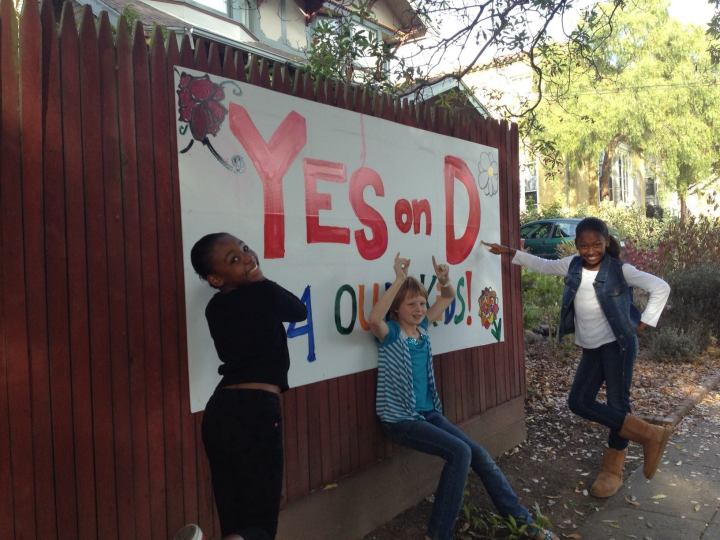
"caption": "Children pose outside a Yes on D sign put up by Jan Cecil outside her house on Ashby Avenue in Berkeley — one of many efforts in a city-wide pro-soda tax campaign which led to its overwhelming victory. (Courtesy: Berkeley vs Big Soda)",
"description": "Children pose outside a Yes on D sign put up by Jan Cecil outside her house on Ashby Avenue in Berkeley — one of many efforts in a city-wide pro-soda tax campaign which led to its overwhelming victory. Photo: Berkeley vs Big Soda",
"title": "kids-and-sign-720x540",
"credit": null,
"status": "inherit",
"isLoading": false,
"fetchFailed": false
},
"news_10346716": {
"type": "attachments",
"id": "news_10346716",
"meta": {
"index": "attachments_1716263798",
"site": "news",
"id": "10346716",
"found": true
},
"parent": 10346512,
"imgSizes": {
"twentyfourteen-full-width": {
"file": "https://ww2.kqed.org/app/uploads/sites/10/2014/11/pollingbooths-1440-1038x576.jpg",
"width": 1038,
"mimeType": "image/jpeg",
"height": 576
},
"thumbnail": {
"file": "https://ww2.kqed.org/app/uploads/sites/10/2014/11/pollingbooths-1440-400x250.jpg",
"width": 400,
"mimeType": "image/jpeg",
"height": 250
},
"post-thumbnail": {
"file": "https://ww2.kqed.org/app/uploads/sites/10/2014/11/pollingbooths-1440-672x372.jpg",
"width": 672,
"mimeType": "image/jpeg",
"height": 372
},
"kqedFullSize": {
"file": "https://ww2.kqed.org/app/uploads/sites/10/2014/11/pollingbooths-1440.jpg",
"width": 1440,
"height": 900
},
"guest-author-96": {
"file": "https://ww2.kqed.org/app/uploads/sites/10/2014/11/pollingbooths-1440-96x96.jpg",
"width": 96,
"mimeType": "image/jpeg",
"height": 96
},
"medium": {
"file": "https://ww2.kqed.org/app/uploads/sites/10/2014/11/pollingbooths-1440-800x500.jpg",
"width": 800,
"mimeType": "image/jpeg",
"height": 500
},
"guest-author-64": {
"file": "https://ww2.kqed.org/app/uploads/sites/10/2014/11/pollingbooths-1440-64x64.jpg",
"width": 64,
"mimeType": "image/jpeg",
"height": 64
},
"detail": {
"file": "https://ww2.kqed.org/app/uploads/sites/10/2014/11/pollingbooths-1440-75x75.jpg",
"width": 75,
"mimeType": "image/jpeg",
"height": 75
},
"guest-author-32": {
"file": "https://ww2.kqed.org/app/uploads/sites/10/2014/11/pollingbooths-1440-32x32.jpg",
"width": 32,
"mimeType": "image/jpeg",
"height": 32
},
"guest-author-128": {
"file": "https://ww2.kqed.org/app/uploads/sites/10/2014/11/pollingbooths-1440-128x128.jpg",
"width": 128,
"mimeType": "image/jpeg",
"height": 128
}
},
"publishDate": 1415061127,
"modified": 1415210293,
"caption": "Voting booths (Getty Images)",
"description": null,
"title": "pollingbooths-1440",
"credit": null,
"status": "inherit",
"isLoading": false,
"fetchFailed": false
},
"stateofhealth_22337": {
"type": "attachments",
"id": "stateofhealth_22337",
"meta": {
"index": "attachments_1716263798",
"site": "stateofhealth",
"id": "22337",
"found": true
},
"parent": 22328,
"imgSizes": {
"twentyfourteen-full-width": {
"file": "https://ww2.kqed.org/app/uploads/sites/27/2014/11/RS11267_177844339-e1415059485967-1038x576.jpg",
"width": 1038,
"mimeType": "image/jpeg",
"height": 576
},
"thumbnail": {
"file": "https://ww2.kqed.org/app/uploads/sites/27/2014/11/RS11267_177844339-e1415059485967-400x309.jpg",
"width": 400,
"mimeType": "image/jpeg",
"height": 309
},
"fd-sm": {
"file": "https://ww2.kqed.org/app/uploads/sites/27/2014/11/RS11267_177844339-e1415059485967-320x248.jpg",
"width": 320,
"mimeType": "image/jpeg",
"height": 248
},
"post-thumbnail": {
"file": "https://ww2.kqed.org/app/uploads/sites/27/2014/11/RS11267_177844339-e1415059485967-672x372.jpg",
"width": 672,
"mimeType": "image/jpeg",
"height": 372
},
"kqedFullSize": {
"file": "https://ww2.kqed.org/app/uploads/sites/27/2014/11/RS11267_177844339-e1415059485967.jpg",
"width": 1440,
"height": 1114
},
"large": {
"file": "https://ww2.kqed.org/app/uploads/sites/27/2014/11/RS11267_177844339-e1415059485967-1440x1114.jpg",
"width": 1440,
"mimeType": "image/jpeg",
"height": 1114
},
"guest-author-96": {
"file": "https://ww2.kqed.org/app/uploads/sites/27/2014/11/RS11267_177844339-e1415059485967-96x96.jpg",
"width": 96,
"mimeType": "image/jpeg",
"height": 96
},
"medium": {
"file": "https://ww2.kqed.org/app/uploads/sites/27/2014/11/RS11267_177844339-e1415059485967-800x619.jpg",
"width": 800,
"mimeType": "image/jpeg",
"height": 619
},
"guest-author-64": {
"file": "https://ww2.kqed.org/app/uploads/sites/27/2014/11/RS11267_177844339-e1415059485967-64x64.jpg",
"width": 64,
"mimeType": "image/jpeg",
"height": 64
},
"guest-author-32": {
"file": "https://ww2.kqed.org/app/uploads/sites/27/2014/11/RS11267_177844339-e1415059485967-32x32.jpg",
"width": 32,
"mimeType": "image/jpeg",
"height": 32
},
"fd-lrg": {
"file": "https://ww2.kqed.org/app/uploads/sites/27/2014/11/RS11267_177844339-e1415059485967-1180x913.jpg",
"width": 1180,
"mimeType": "image/jpeg",
"height": 913
},
"fd-med": {
"file": "https://ww2.kqed.org/app/uploads/sites/27/2014/11/RS11267_177844339-e1415059485967-768x594.jpg",
"width": 768,
"mimeType": "image/jpeg",
"height": 594
},
"detail": {
"file": "https://ww2.kqed.org/app/uploads/sites/27/2014/11/RS11267_177844339-e1415059485967-75x75.jpg",
"width": 75,
"mimeType": "image/jpeg",
"height": 75
},
"guest-author-128": {
"file": "https://ww2.kqed.org/app/uploads/sites/27/2014/11/RS11267_177844339-e1415059485967-128x128.jpg",
"width": 128,
"mimeType": "image/jpeg",
"height": 128
}
},
"publishDate": 1415059477,
"modified": 1415059477,
"caption": "(Getty Images)",
"description": "Cans of sweet drinks (or beer)",
"title": "RS11267_177844339",
"credit": null,
"status": "inherit",
"isLoading": false,
"fetchFailed": false
},
"news_10346271": {
"type": "attachments",
"id": "news_10346271",
"meta": {
"index": "attachments_1716263798",
"site": "news",
"id": "10346271",
"found": true
},
"parent": 10346219,
"imgSizes": {
"thumbnail": {
"file": "https://ww2.kqed.org/app/uploads/sites/10/2014/10/soda1-400x308.jpg",
"width": 400,
"mimeType": "image/jpeg",
"height": 308
},
"post-thumbnail": {
"file": "https://ww2.kqed.org/app/uploads/sites/10/2014/10/soda1-672x372.jpg",
"width": 672,
"mimeType": "image/jpeg",
"height": 372
},
"kqedFullSize": {
"file": "https://ww2.kqed.org/app/uploads/sites/10/2014/10/soda1.jpg",
"width": 720,
"height": 556
},
"guest-author-96": {
"file": "https://ww2.kqed.org/app/uploads/sites/10/2014/10/soda1-96x96.jpg",
"width": 96,
"mimeType": "image/jpeg",
"height": 96
},
"guest-author-64": {
"file": "https://ww2.kqed.org/app/uploads/sites/10/2014/10/soda1-64x64.jpg",
"width": 64,
"mimeType": "image/jpeg",
"height": 64
},
"detail": {
"file": "https://ww2.kqed.org/app/uploads/sites/10/2014/10/soda1-75x75.jpg",
"width": 75,
"mimeType": "image/jpeg",
"height": 75
},
"guest-author-32": {
"file": "https://ww2.kqed.org/app/uploads/sites/10/2014/10/soda1-32x32.jpg",
"width": 32,
"mimeType": "image/jpeg",
"height": 32
},
"guest-author-128": {
"file": "https://ww2.kqed.org/app/uploads/sites/10/2014/10/soda1-128x128.jpg",
"width": 128,
"mimeType": "image/jpeg",
"height": 128
}
},
"publishDate": 1414786508,
"modified": 1414786548,
"caption": "Two high-school students on their lunch break carry food and drink out of the McDonald’s on University Avenue in Berkeley. (Gael McKeon/Berkeleyside)",
"description": "Two high-school students on their lunch break carry food and drink out of the McDonald’s on University Avenue in Berkeley. (Gael McKeon/Berkeleyside)",
"title": "soda1",
"credit": null,
"status": "inherit",
"isLoading": false,
"fetchFailed": false
},
"stateofhealth_22123": {
"type": "attachments",
"id": "stateofhealth_22123",
"meta": {
"index": "attachments_1716263798",
"site": "stateofhealth",
"id": "22123",
"found": true
},
"parent": 22116,
"imgSizes": {
"thumbnail": {
"file": "https://ww2.kqed.org/app/uploads/sites/27/2014/10/Screen-Shot-2014-10-20-at-10.36.01-AM-e1413826601647-400x261.png",
"width": 400,
"mimeType": "image/png",
"height": 261
},
"fd-sm": {
"file": "https://ww2.kqed.org/app/uploads/sites/27/2014/10/Screen-Shot-2014-10-20-at-10.36.01-AM-e1413826601647-320x209.png",
"width": 320,
"mimeType": "image/png",
"height": 209
},
"post-thumbnail": {
"file": "https://ww2.kqed.org/app/uploads/sites/27/2014/10/Screen-Shot-2014-10-20-at-10.36.01-AM-e1413826601647-640x372.png",
"width": 640,
"mimeType": "image/png",
"height": 372
},
"kqedFullSize": {
"file": "https://ww2.kqed.org/app/uploads/sites/27/2014/10/Screen-Shot-2014-10-20-at-10.36.01-AM-e1413826601647.png",
"width": 640,
"height": 418
},
"guest-author-96": {
"file": "https://ww2.kqed.org/app/uploads/sites/27/2014/10/Screen-Shot-2014-10-20-at-10.36.01-AM-e1413826601647-96x96.png",
"width": 96,
"mimeType": "image/png",
"height": 96
},
"guest-author-64": {
"file": "https://ww2.kqed.org/app/uploads/sites/27/2014/10/Screen-Shot-2014-10-20-at-10.36.01-AM-e1413826601647-64x64.png",
"width": 64,
"mimeType": "image/png",
"height": 64
},
"detail": {
"file": "https://ww2.kqed.org/app/uploads/sites/27/2014/10/Screen-Shot-2014-10-20-at-10.36.01-AM-e1413826601647-75x75.png",
"width": 75,
"mimeType": "image/png",
"height": 75
},
"guest-author-32": {
"file": "https://ww2.kqed.org/app/uploads/sites/27/2014/10/Screen-Shot-2014-10-20-at-10.36.01-AM-e1413826601647-32x32.png",
"width": 32,
"mimeType": "image/png",
"height": 32
},
"guest-author-128": {
"file": "https://ww2.kqed.org/app/uploads/sites/27/2014/10/Screen-Shot-2014-10-20-at-10.36.01-AM-e1413826601647-128x128.png",
"width": 128,
"mimeType": "image/png",
"height": 128
}
},
"publishDate": 1413826589,
"modified": 1413826589,
"caption": "Mario Savio stands on top of police car in front of Sproul Hall on Oct 1. 1964. (Courtesy of UC Berkeley, The Bancroft Library).",
"description": "Mario Savio stands on top of police car in front of Sproul Hall on Oct 1. 1964. (Courtesy of UC Berkeley, The Bancroft Library).",
"title": "Screen Shot 2014-10-20 at 10.36.01 AM",
"credit": null,
"status": "inherit",
"isLoading": false,
"fetchFailed": false
},
"news_10344053": {
"type": "attachments",
"id": "news_10344053",
"meta": {
"index": "attachments_1716263798",
"site": "news",
"id": "10344053",
"found": true
},
"parent": 10344051,
"imgSizes": {
"twentyfourteen-full-width": {
"file": "https://ww2.kqed.org/app/uploads/sites/10/2014/10/soda-1038x576.jpg",
"width": 1038,
"mimeType": "image/jpeg",
"height": 576
},
"thumbnail": {
"file": "https://ww2.kqed.org/app/uploads/sites/10/2014/10/soda-400x266.jpg",
"width": 400,
"mimeType": "image/jpeg",
"height": 266
},
"post-thumbnail": {
"file": "https://ww2.kqed.org/app/uploads/sites/10/2014/10/soda-672x372.jpg",
"width": 672,
"mimeType": "image/jpeg",
"height": 372
},
"kqedFullSize": {
"file": "https://ww2.kqed.org/app/uploads/sites/10/2014/10/soda-e1413489430451.jpg",
"width": 1440,
"height": 960
},
"large": {
"file": "https://ww2.kqed.org/app/uploads/sites/10/2014/10/soda-1440x960.jpg",
"width": 1440,
"mimeType": "image/jpeg",
"height": 960
},
"guest-author-96": {
"file": "https://ww2.kqed.org/app/uploads/sites/10/2014/10/soda-96x96.jpg",
"width": 96,
"mimeType": "image/jpeg",
"height": 96
},
"medium": {
"file": "https://ww2.kqed.org/app/uploads/sites/10/2014/10/soda-800x533.jpg",
"width": 800,
"mimeType": "image/jpeg",
"height": 533
},
"guest-author-64": {
"file": "https://ww2.kqed.org/app/uploads/sites/10/2014/10/soda-64x64.jpg",
"width": 64,
"mimeType": "image/jpeg",
"height": 64
},
"detail": {
"file": "https://ww2.kqed.org/app/uploads/sites/10/2014/10/soda-75x75.jpg",
"width": 75,
"mimeType": "image/jpeg",
"height": 75
},
"guest-author-32": {
"file": "https://ww2.kqed.org/app/uploads/sites/10/2014/10/soda-32x32.jpg",
"width": 32,
"mimeType": "image/jpeg",
"height": 32
},
"guest-author-128": {
"file": "https://ww2.kqed.org/app/uploads/sites/10/2014/10/soda-128x128.jpg",
"width": 128,
"mimeType": "image/jpeg",
"height": 128
}
},
"publishDate": 1413483303,
"modified": 1413483303,
"caption": "Berkeley will vote on Measure D, the so-called Soda Tax, in November. (Vox Efx/Flickr)",
"description": null,
"title": "soda",
"credit": null,
"status": "inherit",
"isLoading": false,
"fetchFailed": false
},
"stateofhealth_10794": {
"type": "attachments",
"id": "stateofhealth_10794",
"meta": {
"index": "attachments_1716263798",
"site": "stateofhealth",
"id": "10794",
"found": true
},
"parent": 10790,
"imgSizes": {
"thumbnail": {
"file": "https://ww2.kqed.org/app/uploads/sites/27/2013/02/poolie_Flickr-e1393459178479-400x267.jpg",
"width": 400,
"mimeType": "image/jpeg",
"height": 267
},
"fd-sm": {
"file": "https://ww2.kqed.org/app/uploads/sites/27/2013/02/poolie_Flickr-e1393459178479-320x214.jpg",
"width": 320,
"mimeType": "image/jpeg",
"height": 214
},
"post-thumbnail": {
"file": "https://ww2.kqed.org/app/uploads/sites/27/2013/02/poolie_Flickr-e1393459178479-640x372.jpg",
"width": 640,
"mimeType": "image/jpeg",
"height": 372
},
"kqedFullSize": {
"file": "https://ww2.kqed.org/app/uploads/sites/27/2013/02/poolie_Flickr-e1393459178479.jpg",
"width": 640,
"height": 427
},
"guest-author-96": {
"file": "https://ww2.kqed.org/app/uploads/sites/27/2013/02/poolie_Flickr-e1393459178479-96x96.jpg",
"width": 96,
"mimeType": "image/jpeg",
"height": 96
},
"guest-author-64": {
"file": "https://ww2.kqed.org/app/uploads/sites/27/2013/02/poolie_Flickr-e1393459178479-64x64.jpg",
"width": 64,
"mimeType": "image/jpeg",
"height": 64
},
"detail": {
"file": "https://ww2.kqed.org/app/uploads/sites/27/2013/02/poolie_Flickr-e1393459178479-75x75.jpg",
"width": 75,
"mimeType": "image/jpeg",
"height": 75
},
"guest-author-32": {
"file": "https://ww2.kqed.org/app/uploads/sites/27/2013/02/poolie_Flickr-e1393459178479-32x32.jpg",
"width": 32,
"mimeType": "image/jpeg",
"height": 32
},
"guest-author-128": {
"file": "https://ww2.kqed.org/app/uploads/sites/27/2013/02/poolie_Flickr-e1393459178479-128x128.jpg",
"width": 128,
"mimeType": "image/jpeg",
"height": 128
}
},
"publishDate": 1361905687,
"modified": 1361905687,
"caption": "(poolie/Flickr)",
"description": "soda cans",
"title": "poolie_Flickr",
"credit": null,
"status": "inherit",
"isLoading": false,
"fetchFailed": false
},
"news_10343304": {
"type": "attachments",
"id": "news_10343304",
"meta": {
"index": "attachments_1716263798",
"site": "news",
"id": "10343304",
"found": true
},
"parent": 10343251,
"imgSizes": {
"thumbnail": {
"file": "https://ww2.kqed.org/app/uploads/sites/10/2014/10/berkeleymeasured-400x300.jpg",
"width": 400,
"mimeType": "image/jpeg",
"height": 300
},
"post-thumbnail": {
"file": "https://ww2.kqed.org/app/uploads/sites/10/2014/10/berkeleymeasured-640x372.jpg",
"width": 640,
"mimeType": "image/jpeg",
"height": 372
},
"kqedFullSize": {
"file": "https://ww2.kqed.org/app/uploads/sites/10/2014/10/berkeleymeasured.jpg",
"width": 640,
"height": 480
},
"guest-author-96": {
"file": "https://ww2.kqed.org/app/uploads/sites/10/2014/10/berkeleymeasured-96x96.jpg",
"width": 96,
"mimeType": "image/jpeg",
"height": 96
},
"guest-author-64": {
"file": "https://ww2.kqed.org/app/uploads/sites/10/2014/10/berkeleymeasured-64x64.jpg",
"width": 64,
"mimeType": "image/jpeg",
"height": 64
},
"detail": {
"file": "https://ww2.kqed.org/app/uploads/sites/10/2014/10/berkeleymeasured-75x75.jpg",
"width": 75,
"mimeType": "image/jpeg",
"height": 75
},
"guest-author-32": {
"file": "https://ww2.kqed.org/app/uploads/sites/10/2014/10/berkeleymeasured-32x32.jpg",
"width": 32,
"mimeType": "image/jpeg",
"height": 32
},
"guest-author-128": {
"file": "https://ww2.kqed.org/app/uploads/sites/10/2014/10/berkeleymeasured-128x128.jpg",
"width": 128,
"mimeType": "image/jpeg",
"height": 128
}
},
"publishDate": 1412973250,
"modified": 1412973250,
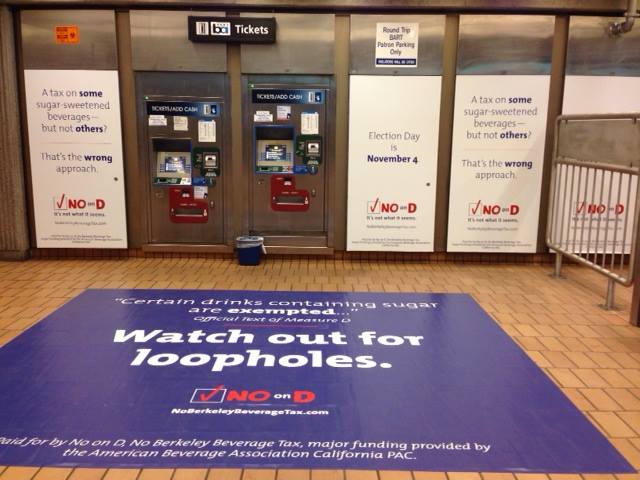
"caption": "The No on Measure D campaign has paid to plaster the Ashby BART station with signs. (Marian Mabel/Berkeleyside)",
"description": "The No on Measure D campaign on Oct. 8 covered the Ashby BART station with signs — on the floor, on the walls, and next to the ticket machines. BART workers accidentally took down some of the signs Wednesday night, but they will be reinstalled. (Marian Mabel/Berkeleyside)",
"title": "Berkeley Measure D-BART",
"credit": null,
"status": "inherit",
"isLoading": false,
"fetchFailed": false
},
"news_10342471": {
"type": "attachments",
"id": "news_10342471",
"meta": {
"index": "attachments_1716263798",
"site": "news",
"id": "10342471",
"found": true
},
"parent": 10342470,
"imgSizes": {
"thumbnail": {
"file": "https://ww2.kqed.org/app/uploads/sites/10/2014/09/10342470-thumb-400x225.jpg",
"width": 400,
"mimeType": "image/jpeg",
"height": 225
},
"post-thumbnail": {
"file": "https://ww2.kqed.org/app/uploads/sites/10/2014/09/10342470-thumb-672x372.jpg",
"width": 672,
"mimeType": "image/jpeg",
"height": 372
},
"kqedFullSize": {
"file": "https://ww2.kqed.org/app/uploads/sites/10/2014/09/10342470-thumb.jpg",
"width": 800,
"height": 450
},
"guest-author-96": {
"file": "https://ww2.kqed.org/app/uploads/sites/10/2014/09/10342470-thumb-96x96.jpg",
"width": 96,
"mimeType": "image/jpeg",
"height": 96
},
"guest-author-64": {
"file": "https://ww2.kqed.org/app/uploads/sites/10/2014/09/10342470-thumb-64x64.jpg",
"width": 64,
"mimeType": "image/jpeg",
"height": 64
},
"detail": {
"file": "https://ww2.kqed.org/app/uploads/sites/10/2014/09/10342470-thumb-75x75.jpg",
"width": 75,
"mimeType": "image/jpeg",
"height": 75
},
"guest-author-32": {
"file": "https://ww2.kqed.org/app/uploads/sites/10/2014/09/10342470-thumb-32x32.jpg",
"width": 32,
"mimeType": "image/jpeg",
"height": 32
},
"guest-author-128": {
"file": "https://ww2.kqed.org/app/uploads/sites/10/2014/09/10342470-thumb-128x128.jpg",
"width": 128,
"mimeType": "image/jpeg",
"height": 128
}
},
"publishDate": 1412381225,
"modified": 1412381225,
"caption": null,
"description": null,
"title": "Thumbnail for 10342470",
"credit": null,
"status": "inherit",
"isLoading": false,
"fetchFailed": false
}
},
"audioPlayerReducer": {
"postId": "stream_live",
"isPaused": true,
"isPlaying": false,
"pfsActive": false,
"pledgeModalIsOpen": true,
"playerDrawerIsOpen": false,
"liveAudioPlayStartedAt": 0,
"liveAudioPlayContext": ""
},
"authorsReducer": {
"byline_news_10416377": {
"type": "authors",
"id": "byline_news_10416377",
"meta": {
"override": true
},
"slug": "byline_news_10416377",
"name": "Seung Y. Lee \u003cbr />Berkeleyside",
"isLoading": false
},
"byline_news_10347220": {
"type": "authors",
"id": "byline_news_10347220",
"meta": {
"override": true
},
"slug": "byline_news_10347220",
"name": "\u003ca href=\"http://www.berkeleyside.com/author/frances/\">Frances Dinkelspiel\u003c/a>\u003cbr>Berkeleyside",
"isLoading": false
},
"byline_news_10346219": {
"type": "authors",
"id": "byline_news_10346219",
"meta": {
"override": true
},
"slug": "byline_news_10346219",
"name": "\u003ca href=\"http://www.berkeleyside.com/\">BerkeleysideEditors,\u003c/a>\u003cbr>Berkeleyside",
"isLoading": false
},
"byline_news_10344051": {
"type": "authors",
"id": "byline_news_10344051",
"meta": {
"override": true
},
"slug": "byline_news_10344051",
"name": "\u003cstrong>Frances Dinkelspiel\u003cbr /> \u003ca href=\"http://www.berkeleyside.com/\" target=\"_blank\">Berkeleyside\u003c/a>\u003c/strong>",
"isLoading": false
},
"byline_news_10343251": {
"type": "authors",
"id": "byline_news_10343251",
"meta": {
"override": true
},
"slug": "byline_news_10343251",
"name": "\u003ca href=\"http://www.berkeleyside.com/author/frances/\">Frances Dinkelspiel\u003c/a>\u003cbr />\u003ca href=\"http://www.berkeleyside.com/\">Berkeleyside\u003c/a>",
"isLoading": false
},
"kqed": {
"type": "authors",
"id": "236",
"meta": {
"index": "authors_1716337520",
"id": "236",
"found": true
},
"name": "KQED News Staff",
"firstName": "KQED News Staff",
"lastName": null,
"slug": "kqed",
"email": "faq@kqed.org",
"display_author_email": false,
"staff_mastheads": [],
"title": null,
"bio": null,
"avatar": "https://secure.gravatar.com/avatar/ef0e801a68c4c54afa9180db14084167?s=600&d=blank&r=g",
"twitter": null,
"facebook": null,
"instagram": null,
"linkedin": null,
"sites": [
{
"site": "arts",
"roles": [
"contributor"
]
},
{
"site": "news",
"roles": [
"editor"
]
},
{
"site": "futureofyou",
"roles": [
"author"
]
}
],
"headData": {
"title": "KQED News Staff | KQED",
"description": null,
"ogImgSrc": "https://secure.gravatar.com/avatar/ef0e801a68c4c54afa9180db14084167?s=600&d=blank&r=g",
"twImgSrc": "https://secure.gravatar.com/avatar/ef0e801a68c4c54afa9180db14084167?s=600&d=blank&r=g"
},
"isLoading": false,
"link": "/author/kqed"
},
"lisaaliferis": {
"type": "authors",
"id": "240",
"meta": {
"index": "authors_1716337520",
"id": "240",
"found": true
},
"name": "Lisa Aliferis",
"firstName": "Lisa",
"lastName": "Aliferis",
"slug": "lisaaliferis",
"email": "laliferis@kqed.org",
"display_author_email": false,
"staff_mastheads": [],
"title": "KQED Contributor",
"bio": "Lisa Aliferis is the founding editor of KQED's \u003cem>State of Health\u003c/em> blog. Since 2011, she's been writing and editing stories for the site. Before taking up blogging, she toiled for many years (more than we can count) producing health stories for television, including\u003cem> Dateline NBC\u003c/em> and San Francisco's CBS affiliate, KPIX-TV. She also wrote up a \u003ca title=\"http://www.kqed.org/news/health/obamacare/obamacare-guide.jsp\" href=\"http://www.kqed.org/news/health/obamacare/obamacare-guide.jsp\">handy guide to the Affordable Care Act\u003c/a>, especially for Californians. Her work has been honored for many awards. Most recently she was a finalist for \"Best Topical Reporting\" from the Online News Association. You can follow her on Twitter: \u003ca title=\"https://twitter.com/laliferis\" href=\"https://twitter.com/laliferis\">@laliferis\u003c/a>",
"avatar": "https://secure.gravatar.com/avatar/86c339d5cdcb0dcd2b6cf5d7c3f5886b?s=600&d=mm&r=g",
"twitter": "laliferis",
"facebook": null,
"instagram": null,
"linkedin": null,
"sites": [
{
"site": "news",
"roles": [
"subscriber"
]
},
{
"site": "futureofyou",
"roles": [
"subscriber"
]
},
{
"site": "stateofhealth",
"roles": [
"subscriber"
]
},
{
"site": "science",
"roles": [
"subscriber"
]
},
{
"site": "food",
"roles": []
}
],
"headData": {
"title": "Lisa Aliferis | KQED",
"description": "KQED Contributor",
"ogImgSrc": "https://secure.gravatar.com/avatar/86c339d5cdcb0dcd2b6cf5d7c3f5886b?s=600&d=mm&r=g",
"twImgSrc": "https://secure.gravatar.com/avatar/86c339d5cdcb0dcd2b6cf5d7c3f5886b?s=600&d=mm&r=g"
},
"isLoading": false,
"link": "/author/lisaaliferis"
},
"patyollin": {
"type": "authors",
"id": "247",
"meta": {
"index": "authors_1716337520",
"id": "247",
"found": true
},
"name": "Patricia Yollin",
"firstName": "Patricia",
"lastName": "Yollin",
"slug": "patyollin",
"email": "pyollin@kqed.org",
"display_author_email": false,
"staff_mastheads": [],
"title": "KQED Contributor",
"bio": "Pat Yollin has written about lots of stuff, including organ transplants, wayward penguins at the San Francisco Zoo, the comeback of the cream puff, New York on the fifth anniversary of 9/11, a Slow Food gathering in Italy, and the microcredit movement in Northern California. Among her favorite stories: an interview with George Lucas at Skywalker Ranch that broke the story about his plan to build a cultural museum, and a pirate Trader Joe's operation in Vancouver that prompted the grocery chain to sue -- and lose. She joined KQED in 2013 and was previously a reporter and editor at the San Francisco Chronicle, the Hearst-owned San Francisco Examiner and the Hayward Daily Review.",
"avatar": "https://secure.gravatar.com/avatar/0a18ac41a263665c04b25b2c7d6b817c?s=600&d=blank&r=g",
"twitter": null,
"facebook": null,
"instagram": null,
"linkedin": null,
"sites": [
{
"site": "arts",
"roles": [
"subscriber"
]
},
{
"site": "news",
"roles": [
"subscriber"
]
},
{
"site": "futureofyou",
"roles": [
"editor"
]
},
{
"site": "lowdown",
"roles": [
"editor"
]
},
{
"site": "stateofhealth",
"roles": [
"editor"
]
}
],
"headData": {
"title": "Patricia Yollin | KQED",
"description": "KQED Contributor",
"ogImgSrc": "https://secure.gravatar.com/avatar/0a18ac41a263665c04b25b2c7d6b817c?s=600&d=blank&r=g",
"twImgSrc": "https://secure.gravatar.com/avatar/0a18ac41a263665c04b25b2c7d6b817c?s=600&d=blank&r=g"
},
"isLoading": false,
"link": "/author/patyollin"
},
"state-of-health": {
"type": "authors",
"id": "8344",
"meta": {
"index": "authors_1716337520",
"id": "8344",
"found": true
},
"name": "State of Health",
"firstName": "State of Health",
"lastName": null,
"slug": "state-of-health",
"email": "stateofhealth@kqed.org",
"display_author_email": false,
"staff_mastheads": [],
"title": null,
"bio": null,
"avatar": "https://secure.gravatar.com/avatar/66de4bf6d331fa7402bba1ffe8135e17?s=600&d=blank&r=g",
"twitter": null,
"facebook": null,
"instagram": null,
"linkedin": null,
"sites": [
{
"site": "arts",
"roles": [
"author"
]
},
{
"site": "stateofhealth",
"roles": [
"editor"
]
}
],
"headData": {
"title": "State of Health | KQED",
"description": null,
"ogImgSrc": "https://secure.gravatar.com/avatar/66de4bf6d331fa7402bba1ffe8135e17?s=600&d=blank&r=g",
"twImgSrc": "https://secure.gravatar.com/avatar/66de4bf6d331fa7402bba1ffe8135e17?s=600&d=blank&r=g"
},
"isLoading": false,
"link": "/author/state-of-health"
}
},
"pagesReducer": {
"news_tag_taxes": {
"type": "terms",
"id": "news_423",
"meta": {
"index": "terms_1716263798",
"site": "news",
"id": "423",
"score": 8.795169
},
"featImg": null,
"name": "taxes",
"description": null,
"taxonomy": "tag",
"headData": {
"twImgId": null,
"twTitle": null,
"ogTitle": null,
"ogImgId": null,
"twDescription": null,
"description": null,
"title": "taxes Archives | KQED News",
"ogDescription": null
},
"ttid": 432,
"slug": "taxes",
"isLoading": false,
"title": "taxes",
"pageMeta": {
"site": "news",
"WpPageTemplate": "page-topic-editorial",
"currentPage": 12
},
"blocks": [
{
"blockName": "kqed/post-list",
"attrs": {
"layout": "cardArticle2",
"query": "posts/news?tag=taxes",
"seeMore": false,
"paginated": true,
"page": 12
}
},
{
"blockName": "kqed/ad"
}
]
}
},
"pfsSessionReducer": {},
"postsReducer": {
"stream_live": {
"type": "live",
"id": "stream_live",
"audioUrl": "https://streams.kqed.org/kqedradio",
"title": "Live Stream",
"excerpt": "Live Stream information currently unavailable.",
"link": "/radio",
"featImg": "",
"label": {
"name": "KQED Live",
"link": "/"
}
},
"stream_kqedNewscast": {
"type": "posts",
"id": "stream_kqedNewscast",
"audioUrl": "https://www.kqed.org/.stream/anon/radio/RDnews/newscast.mp3?_=1",
"title": "KQED Newscast",
"featImg": "",
"label": {
"name": "88.5 FM",
"link": "/"
}
},
"news_10416377": {
"type": "posts",
"id": "news_10416377",
"meta": {
"index": "posts_1716263798",
"site": "news",
"id": "10416377",
"score": null,
"sort": [
1422305700000
]
},
"parent": 0,
"labelTerm": {
"site": "news",
"term": 6944
},
"blocks": [],
"publishDate": 1422305700,
"format": "standard",
"disqusTitle": "Berkeley Dollar Tree Pulls Soda Off Shelves Due to Sugary Drink Tax",
"title": "Berkeley Dollar Tree Pulls Soda Off Shelves Due to Sugary Drink Tax",
"headTitle": "News Fix | KQED News",
"content": "\u003cp>Shoppers at the two Dollar Tree stores in Berkeley will no longer find sodas and sugary drinks on their shelves following the passage of the soda tax last November.\u003c/p>\n\u003cp>In the Dollar Tree discount store on 2440 Shattuck Ave., the refrigerators once full of soda bottles are now stocked with water. The other Dollar Tree store in Berkeley, on 1284 San Pablo Ave., has also removed its sugary drinks.\u003c/p>\n\u003cp>Dollar Tree — which sells a variety of products for $1 or less and has more than 5,200 stores in North America — decided to pull out sodas in its Berkeley stores when the soda tax went into effect on Jan. 1, according to Randy Guiler, vice president of investor relations.\u003c/p>\n\u003cp>“Due to the increased cost from the Berkeley sugary drinks and soda tax, we are no longer able to carry sugary drinks and soda at the one-dollar price point,” Guiler said.\u003c/p>\n\u003cp>But visitors to Dollar Tree stores can still get a sugar fix — of sorts. The store carries fruit juice, which is not subject to the tax of 1 cent per ounce.\u003c/p>\n\u003cp>[ad fullwidth]\u003c/p>\n\u003cp>Berkeley became the first city in the United States to pass a soda tax last November. Measure D, which drew national attention and supportive donors like former New York City Mayor Michael Bloomberg, passed overwhelmingly with 76 percent of the votes despite heavy opposition lobbying from the beverage industry.\u003c/p>\n\u003cp>Berkeley Ciy Councilman Laurie Capitelli, who has been a main proponent of Measure D, was relieved to see the Dollar Tree stores replacing its soda selections with water bottles.\u003c/p>\n\u003cp>“I’m actually thrilled,” Capitelli said. “I’m hoping other businesses will follow suit, and I hope they replace it with water bottles.”\u003c/p>\n\u003cp>On Jan. 9, Capitelli first found out the Dollar Tree’s changes and tweeted the following:\u003c/p>\n\u003cp>https://twitter.com/berkcap/status/553620669842616320\u003c/p>\n\u003cp>Those who opposed Measure D — whose campaign spent over $1.6 million backed by the beverage industry — showed little surprise at Dollar Tree’s decision, blaming the lack of clarity in the measure and how the tax adds an extra burden on Berkeley businesses.\u003c/p>\n\u003cp>“There were a lot of businesses coming up to us (during the campaign) saying the price of doing business in Berkeley was already high,” said Roger Salazar, the spokesman for No on Measure D. “Now another tax makes it harder.”\u003c/p>\n\u003cp>Like Salazar, customers filing out of the Dollar Tree store on Shattuck were not enthused about the removal of soda off the shelves. Although most said they rarely or never drink soda, they were concerned that there are now fewer places where they can buy soda drinks.\u003c/p>\n\u003cp>“I think it’s weird that people are targeting specific things,” said Cynthia Robinson, a Berkeley resident. “It’s a bit too Big Brother for me.”\u003c/p>\n\u003cp>Employees at the Dollar Tree shared a similar sentiment. While business had not dropped in the weeks after the removal of soda, Dollar Tree lost a small segment of customers who came in to buy a $1 drink to quench their thirst.\u003c/p>\n\u003cp>\u003c/p>\n\u003cp>“We have customers who come here all the time for a drink,” said a female employee at the San Pablo Dollar Tree store, who asked that her name not be used. “It’s a bummer for them, and it’s a bummer for us all.”\u003c/p>\n\n",
"disqusIdentifier": "10416377 http://ww2.kqed.org/news/?p=10416377",
"disqusUrl": "https://ww2.kqed.org/news/2015/01/26/berkeley-dollar-tree-pulls-soda-off-shelves-due-to-sugary-drink-tax/",
"stats": {
"hasVideo": false,
"hasChartOrMap": false,
"hasAudio": false,
"hasPolis": false,
"wordCount": 582,
"hasGoogleForm": false,
"hasGallery": false,
"hasHearkenModule": false,
"iframeSrcs": [],
"paragraphCount": 17
},
"modified": 1422312431,
"excerpt": "The discount store decided to stop selling sodas as of Jan. 1, when the tax went into effect.",
"headData": {
"twImgId": "",
"twTitle": "",
"ogTitle": "",
"ogImgId": "",
"twDescription": "",
"description": "The discount store decided to stop selling sodas as of Jan. 1, when the tax went into effect.",
"title": "Berkeley Dollar Tree Pulls Soda Off Shelves Due to Sugary Drink Tax | KQED",
"ogDescription": "",
"schema": {
"@context": "https://schema.org",
"@type": "NewsArticle",
"headline": "Berkeley Dollar Tree Pulls Soda Off Shelves Due to Sugary Drink Tax",
"datePublished": "2015-01-26T12:55:00-08:00",
"dateModified": "2015-01-26T14:47:11-08:00",
"image": "https://cdn.kqed.org/wp-content/uploads/2020/02/KQED-OG-Image@1x.png",
"isAccessibleForFree": "True",
"publisher": {
"@type": "NewsMediaOrganization",
"@id": "https://www.kqed.org/#organization",
"name": "KQED",
"logo": "https://cdn.kqed.org/wp-content/uploads/2020/02/KQED-OG-Image@1x.png",
"url": "https://www.kqed.org",
"sameAs": [
"https://www.facebook.com/KQED",
"https://twitter.com/KQED",
"https://www.instagram.com/kqed/",
"https://www.tiktok.com/@kqedofficial",
"https://www.linkedin.com/company/kqed",
"https://www.youtube.com/channel/UCeC0IOo7i1P_61zVUWbJ4nw"
]
}
}
},
"guestAuthors": [],
"slug": "berkeley-dollar-tree-pulls-soda-off-shelves-due-to-sugary-drink-tax",
"status": "publish",
"nprByline": "Seung Y. Lee \u003cbr />Berkeleyside",
"path": "/news/10416377/berkeley-dollar-tree-pulls-soda-off-shelves-due-to-sugary-drink-tax",
"audioTrackLength": null,
"parsedContent": [
{
"type": "contentString",
"content": "\u003cdiv class=\"post-body\">\u003cp>\u003cp>Shoppers at the two Dollar Tree stores in Berkeley will no longer find sodas and sugary drinks on their shelves following the passage of the soda tax last November.\u003c/p>\n\u003cp>In the Dollar Tree discount store on 2440 Shattuck Ave., the refrigerators once full of soda bottles are now stocked with water. The other Dollar Tree store in Berkeley, on 1284 San Pablo Ave., has also removed its sugary drinks.\u003c/p>\n\u003cp>Dollar Tree — which sells a variety of products for $1 or less and has more than 5,200 stores in North America — decided to pull out sodas in its Berkeley stores when the soda tax went into effect on Jan. 1, according to Randy Guiler, vice president of investor relations.\u003c/p>\n\u003cp>“Due to the increased cost from the Berkeley sugary drinks and soda tax, we are no longer able to carry sugary drinks and soda at the one-dollar price point,” Guiler said.\u003c/p>\n\u003cp>But visitors to Dollar Tree stores can still get a sugar fix — of sorts. The store carries fruit juice, which is not subject to the tax of 1 cent per ounce.\u003c/p>\n\u003cp>\u003c/p>\u003c/div>",
"attributes": {
"named": {},
"numeric": []
}
},
{
"type": "component",
"content": "",
"name": "ad",
"attributes": {
"named": {
"label": "fullwidth"
},
"numeric": [
"fullwidth"
]
}
},
{
"type": "contentString",
"content": "\u003cdiv class=\"post-body\">\u003cp>\u003c/p>\n\u003cp>Berkeley became the first city in the United States to pass a soda tax last November. Measure D, which drew national attention and supportive donors like former New York City Mayor Michael Bloomberg, passed overwhelmingly with 76 percent of the votes despite heavy opposition lobbying from the beverage industry.\u003c/p>\n\u003cp>Berkeley Ciy Councilman Laurie Capitelli, who has been a main proponent of Measure D, was relieved to see the Dollar Tree stores replacing its soda selections with water bottles.\u003c/p>\n\u003cp>“I’m actually thrilled,” Capitelli said. “I’m hoping other businesses will follow suit, and I hope they replace it with water bottles.”\u003c/p>\n\u003cp>On Jan. 9, Capitelli first found out the Dollar Tree’s changes and tweeted the following:\u003c/p>\u003c/p>\u003c/div>",
"attributes": {
"named": {},
"numeric": []
}
},
{
"type": "component",
"content": "",
"name": "singleTwitterStatus",
"attributes": {
"named": {
"id": "553620669842616320"
},
"numeric": []
}
},
{
"type": "contentString",
"content": "\u003cdiv class=\"post-body\">\u003cp>\n\u003cp>Those who opposed Measure D — whose campaign spent over $1.6 million backed by the beverage industry — showed little surprise at Dollar Tree’s decision, blaming the lack of clarity in the measure and how the tax adds an extra burden on Berkeley businesses.\u003c/p>\n\u003cp>“There were a lot of businesses coming up to us (during the campaign) saying the price of doing business in Berkeley was already high,” said Roger Salazar, the spokesman for No on Measure D. “Now another tax makes it harder.”\u003c/p>\n\u003cp>Like Salazar, customers filing out of the Dollar Tree store on Shattuck were not enthused about the removal of soda off the shelves. Although most said they rarely or never drink soda, they were concerned that there are now fewer places where they can buy soda drinks.\u003c/p>\n\u003cp>“I think it’s weird that people are targeting specific things,” said Cynthia Robinson, a Berkeley resident. “It’s a bit too Big Brother for me.”\u003c/p>\n\u003cp>Employees at the Dollar Tree shared a similar sentiment. While business had not dropped in the weeks after the removal of soda, Dollar Tree lost a small segment of customers who came in to buy a $1 drink to quench their thirst.\u003c/p>\n\u003cp>\u003c/p>\n\u003cp>“We have customers who come here all the time for a drink,” said a female employee at the San Pablo Dollar Tree store, who asked that her name not be used. “It’s a bummer for them, and it’s a bummer for us all.”\u003c/p>\n\n\u003c/div>\u003c/p>",
"attributes": {
"named": {},
"numeric": []
}
}
],
"link": "/news/10416377/berkeley-dollar-tree-pulls-soda-off-shelves-due-to-sugary-drink-tax",
"authors": [
"byline_news_10416377"
],
"programs": [
"news_6944"
],
"categories": [
"news_1758",
"news_457",
"news_13"
],
"tags": [
"news_129",
"news_19960",
"news_3448",
"news_423"
],
"affiliates": [
"news_5078"
],
"featImg": "news_10345732",
"label": "news_6944"
},
"news_10347294": {
"type": "posts",
"id": "news_10347294",
"meta": {
"index": "posts_1716263798",
"site": "news",
"id": "10347294",
"score": null,
"sort": [
1415289645000
]
},
"parent": 0,
"labelTerm": {
"site": "news",
"term": 6944
},
"blocks": [],
"publishDate": 1415289645,
"format": "standard",
"disqusTitle": "Making Sense of the Bay Area Vote",
"title": "Making Sense of the Bay Area Vote",
"headTitle": "California Election Watch 2014 | News Fix | KQED News",
"content": "\u003cp>[soundcloud url=\"https://api.soundcloud.com/tracks/175568366\" params=\"color=ff5500&inverse=false&auto_play=false&show_user=true\" width=\"100%\" height=\"20\" iframe=\"true\" /]\u003c/p>\n\u003cp>The aftermath of an election is a time to reflect and assess. It's also a time to look ahead. After all, the 2016 presidential election is only 732 days away.\u003c/p>\n\u003cp>That fact came courtesy of political analyst David McCuan, a political science professor at Sonoma State University.\u003c/p>\n\u003cp>\"Not that I'm counting,\" he said.\u003c/p>\n\u003cp>To make sense of what happened at the polls in the Bay Area on Nov. 4, \u003ca href=\"http://www.sonoma.edu/polisci/faculty/david-mccuan.html\" target=\"_blank\">McCuan\u003c/a> is a good person to talk to. One of the things he, and almost everyone else, is still talking about is Berkeley's overwhelming approval of the first soda tax in the United States.\u003c/p>\n\u003cp>[ad fullwidth]\u003c/p>\n\u003cp>Although opponents dismissed Berkeley as \"low-hanging fruit\" in terms of \u003ca href=\"http://www.berkeleyvsbigsoda.com\" target=\"_blank\">Measure D\u003c/a> and a place \"that doesn't look like mainstream America,\" McCuan anticipated a \"tremendous spillover effect\" around the country.\u003c/p>\n\u003cp>Otherwise, he asked, why would the American Beverage Association have spent so much money trying to defeat the soda tax? It totaled more than $11 million in Berkeley and San Francisco, where a similar measure won more than 50 percent support but failed to get the needed two-thirds majority.\u003c/p>\n\u003cp>The rebuff of Big Soda in Berkeley paralleled a repudiation of Big Oil in Richmond, where a mayoral candidate and three City Council candidates, all backed heavily by Chevron, \u003ca href=\"http://ww2.kqed.org/news/2014/11/04/richmond-mayoral-race-may-decide-citys-ideological-future/\" target=\"_blank\">managed to lose\u003c/a>.\u003c/p>\n\u003cp>Those races, McCuan said, hold important lessons for other issues, such as fracking, marijuana legalization and the right-to-die movement.\u003c/p>\n\u003cp>\"The conventional wisdom is that the best money in politics is spent on the 'no' side against measures, against issues,\" he said. \"And yet if you spend too much money, you actually engender a kind of backlash effect, where voters begin to move to the other side.\"\u003c/p>\n\u003cp>However, he noted that the electorates in Berkeley, Richmond and San Francisco were unusual -- more diverse and reflective of the population as a whole -- compared with what is normally seen in midterm elections, which tend to draw voters who are whiter, more affluent and more suburban, McCuan said.\u003c/p>\n\u003cp>Changing demographics at the state and local level might also be contributing to another trend: Female candidates all around California did well, winning seats on school boards, city councils, supervisorial boards and on up.\u003c/p>\n\u003cp>\"We are seeing a shift. Not only women but women of color,\" McCuan said. \"It's something to pay attention to moving forward. And we're going to see some changes by the GOP statewide to make Republicans more relevant to women -- especially in Central and Southern California. That's where their farm team is. \u003ca href=\"http://www.fresnobee.com/2014/11/04/4218339_fresno-mayor-in-tight-race-for.html?rh=1\" target=\"_blank\">Ashley Swearingen\u003c/a> wasn't successful (in her race for state controller), but we'll see more people like her.\"\u003c/p>\n\u003cp>The fiscal measures widely approved throughout the Bay Area continue a pattern that goes back at least a decade, said McCuan, who sees it as an indirect effect of the 1978 passage of Proposition 13, which decreased property taxes for many.\u003c/p>\n\u003cp>\"As a result, lots of other mechanisms have been created to raise revenue. In general, for the last several cycles, voters have been predisposed to approving them,\" said McCuan, who mentioned by way of example that 77 percent of all school bond measures were passed statewide in June, which is incredibly high for a primary off-year election.\u003c/p>\n\u003cp>The Bay Area often seems like a different country, compared with the rest of the United States. I asked McCuan if the election results Tuesday reinforced that feeling of apartness.\u003c/p>\n\u003cp>\"It's always been an island of deep, deep blue, regardless of how red the sea around it has changed,\" McCuan said. \"But there's also a Jekyll-and-Hyde sense of the voters. They want government to work, so they will vote for many things they believe improve their quality of life. On the other hand, they express incredible frustration, in survey after survey, with how government is run and how things happen at City Hall.\"\u003c/p>\n\u003cp>Among the biggest election surprises, McCuan said, was incumbent \u003ca href=\"http://www.sacbee.com/news/politics-government/election/article3569082.html\" target=\"_blank\">Tom Torlakson's victory\u003c/a> over Marshall Tuck as state school superintendent. \"If this election were held a month ago, he would have lost,\" he said. \"The California Teachers Association delivered him. He ran a lackluster campaign.\"\u003c/p>\n\u003cp>Actually, he said, labor didn't do badly in the Bay Area. \"They're always hit over the head as being dead, but they're not dead,\" he said. \"They're effective at delivering the vote.\"\u003c/p>\n\u003cp>\u003cspan style=\"line-height: 1.5\">Another surprise, he said, was the inability of technology to report election results. McCuan blamed the leadership of Secretary of State Debra Bowen and hopes that her successor, Alex Padilla, will do better.\u003c/span>\u003c/p>\n\u003cp>\"This was a relatively benign, low-information election,\" he said. \"Imagine if we had more things going on. There's a much better way to do this than what we've seen.\"\u003c/p>\n\u003cp>On Wednesday morning, KQED’S \u003cem>Forum\u003c/em> took a look at the winners and losers in California and Bay Area elections. One of the most startling outcomes was \u003ca href=\"http://www.sfgate.com/bayarea/article/Jean-Quan-loses-Oakland-mayor-s-job-to-Libby-5873406.php\" target=\"_blank\">Libby Schaaf’s emergence\u003c/a> as the next mayor of Oakland.\u003c/p>\n\u003cp>“A pretty remarkable loss, frankly, for Jean Quan,” said \u003ca href=\"http://www.usfca.edu/Magazine/Summer_2012/Corey_Cook_Q_A/\" target=\"_blank\">Corey Cook,\u003c/a> associate professor of politics at the University of San Francisco and director of its Leo T. McCarthy Center for Public Service and the Common Good.\u003c/p>\n\u003cp>He described the current mayor's third-place finish as a “stark rejection” of her reign in Oakland. He said Dan Siegel, her former adviser, cut into her progressive base and Rebecca Kaplan eroded her support among women, who had provided strong backing in 2010. Schaaf, meanwhile, garnered the votes of people living near Interstate 580 and in the Oakland hills.\u003c/p>\n\u003cp>“It’s a resounding victory” for Schaaf, said Cook, who added that she was barely registering in the polls even a month ago. He had viewed Gov. Jerry Brown’s endorsement a month before the election as too late, but he realized he was wrong: With so many undecideds, it was exactly the right timing, and it gave her momentum.\u003c/p>\n\u003cp>On Wednesday night, KQED Public Radio did a half-hour special election broadcast, hosted by Mina Kim. At the end of the show, the guests were asked for their biggest takeaways from the election.\u003c/p>\n\u003cp>\"The more that politicians feel compelled to play to the die-hard voters on either end of the political spectrum, the more they alienate everyone else,\" said Rachael Myrow, a reporter with KQED's Silicon Valley Desk. \"And with turnout dropping everywhere to levels 30 percent or below, it's frightening.\"\u003c/p>\n\u003cp>KQED News Fix blogger Dan Brekke said, \"The outcome of these corporate spending sprees in Richmond and Berkeley was surprising, and we're going to see this tested again when the plastic bag industry tries to pass a statewide referendum to overturn the plastic bag ban.\"\u003c/p>\n\u003cp>Cy Musiker of KQED was most struck by the fact that ranked-choice voting had worked, even though \"it may have been confusing when (people) filled out their ballots.\"\u003c/p>\n\u003cp>[ad floatright]\u003c/p>\n\u003cp>And Marisa Lagos, a reporter for the San Francisco Chronicle, said, \"The national wave of independent groups flooding campaigns with money is here and here to stay, locally.\"\u003c/p>\n\n",
"disqusIdentifier": "10347294 http://ww2.kqed.org/news/?p=10347294",
"disqusUrl": "https://ww2.kqed.org/news/2014/11/06/making-sense-of-the-bay-area-vote/",
"stats": {
"hasVideo": false,
"hasChartOrMap": false,
"hasAudio": false,
"hasPolis": false,
"wordCount": 1225,
"hasGoogleForm": false,
"hasGallery": false,
"hasHearkenModule": false,
"iframeSrcs": [],
"paragraphCount": 32
},
"modified": 1415315537,
"excerpt": "Rejection of Big Soda in Berkeley and Big Oil in Richmond might have the biggest ripple effects.",
"headData": {
"twImgId": "",
"twTitle": "",
"ogTitle": "",
"ogImgId": "",
"twDescription": "",
"description": "Rejection of Big Soda in Berkeley and Big Oil in Richmond might have the biggest ripple effects.",
"title": "Making Sense of the Bay Area Vote | KQED",
"ogDescription": "",
"schema": {
"@context": "https://schema.org",
"@type": "NewsArticle",
"headline": "Making Sense of the Bay Area Vote",
"datePublished": "2014-11-06T08:00:45-08:00",
"dateModified": "2014-11-06T15:12:17-08:00",
"image": "https://cdn.kqed.org/wp-content/uploads/2020/02/KQED-OG-Image@1x.png",
"isAccessibleForFree": "True",
"publisher": {
"@type": "NewsMediaOrganization",
"@id": "https://www.kqed.org/#organization",
"name": "KQED",
"logo": "https://cdn.kqed.org/wp-content/uploads/2020/02/KQED-OG-Image@1x.png",
"url": "https://www.kqed.org",
"sameAs": [
"https://www.facebook.com/KQED",
"https://twitter.com/KQED",
"https://www.instagram.com/kqed/",
"https://www.tiktok.com/@kqedofficial",
"https://www.linkedin.com/company/kqed",
"https://www.youtube.com/channel/UCeC0IOo7i1P_61zVUWbJ4nw"
]
}
}
},
"guestAuthors": [],
"slug": "making-sense-of-the-bay-area-vote",
"status": "publish",
"customPermalink": "2014/11/06/making-sense-of-the-bay-area-vote/",
"path": "/news/10347294/making-sense-of-the-bay-area-vote",
"audioTrackLength": null,
"parsedContent": [
{
"type": "contentString",
"content": "\u003cdiv class=\"post-body\">\u003cp>\u003cp>\u003c/p>\u003cp>\u003cdiv class='utils-parseShortcode-shortcodes-__shortcodes__shortcodeWrapper'>\n \u003ciframe width='100%' height='20'\n scrolling='no' frameborder='no'\n src='https://w.soundcloud.com/player/?url=https://api.soundcloud.com/tracks/175568366&visual=true&color=ff5500&inverse=false&auto_play=false&show_user=true'\n title='https://api.soundcloud.com/tracks/175568366'>\n \u003c/iframe>\n \u003c/div>\u003c/p>\u003cp>\u003c/p>\n\u003cp>The aftermath of an election is a time to reflect and assess. It's also a time to look ahead. After all, the 2016 presidential election is only 732 days away.\u003c/p>\n\u003cp>That fact came courtesy of political analyst David McCuan, a political science professor at Sonoma State University.\u003c/p>\n\u003cp>\"Not that I'm counting,\" he said.\u003c/p>\n\u003cp>To make sense of what happened at the polls in the Bay Area on Nov. 4, \u003ca href=\"http://www.sonoma.edu/polisci/faculty/david-mccuan.html\" target=\"_blank\">McCuan\u003c/a> is a good person to talk to. One of the things he, and almost everyone else, is still talking about is Berkeley's overwhelming approval of the first soda tax in the United States.\u003c/p>\n\u003cp>\u003c/p>\u003c/div>",
"attributes": {
"named": {},
"numeric": []
}
},
{
"type": "component",
"content": "",
"name": "ad",
"attributes": {
"named": {
"label": "fullwidth"
},
"numeric": [
"fullwidth"
]
}
},
{
"type": "contentString",
"content": "\u003cdiv class=\"post-body\">\u003cp>\u003c/p>\n\u003cp>Although opponents dismissed Berkeley as \"low-hanging fruit\" in terms of \u003ca href=\"http://www.berkeleyvsbigsoda.com\" target=\"_blank\">Measure D\u003c/a> and a place \"that doesn't look like mainstream America,\" McCuan anticipated a \"tremendous spillover effect\" around the country.\u003c/p>\n\u003cp>Otherwise, he asked, why would the American Beverage Association have spent so much money trying to defeat the soda tax? It totaled more than $11 million in Berkeley and San Francisco, where a similar measure won more than 50 percent support but failed to get the needed two-thirds majority.\u003c/p>\n\u003cp>The rebuff of Big Soda in Berkeley paralleled a repudiation of Big Oil in Richmond, where a mayoral candidate and three City Council candidates, all backed heavily by Chevron, \u003ca href=\"http://ww2.kqed.org/news/2014/11/04/richmond-mayoral-race-may-decide-citys-ideological-future/\" target=\"_blank\">managed to lose\u003c/a>.\u003c/p>\n\u003cp>Those races, McCuan said, hold important lessons for other issues, such as fracking, marijuana legalization and the right-to-die movement.\u003c/p>\n\u003cp>\"The conventional wisdom is that the best money in politics is spent on the 'no' side against measures, against issues,\" he said. \"And yet if you spend too much money, you actually engender a kind of backlash effect, where voters begin to move to the other side.\"\u003c/p>\n\u003cp>However, he noted that the electorates in Berkeley, Richmond and San Francisco were unusual -- more diverse and reflective of the population as a whole -- compared with what is normally seen in midterm elections, which tend to draw voters who are whiter, more affluent and more suburban, McCuan said.\u003c/p>\n\u003cp>Changing demographics at the state and local level might also be contributing to another trend: Female candidates all around California did well, winning seats on school boards, city councils, supervisorial boards and on up.\u003c/p>\n\u003cp>\"We are seeing a shift. Not only women but women of color,\" McCuan said. \"It's something to pay attention to moving forward. And we're going to see some changes by the GOP statewide to make Republicans more relevant to women -- especially in Central and Southern California. That's where their farm team is. \u003ca href=\"http://www.fresnobee.com/2014/11/04/4218339_fresno-mayor-in-tight-race-for.html?rh=1\" target=\"_blank\">Ashley Swearingen\u003c/a> wasn't successful (in her race for state controller), but we'll see more people like her.\"\u003c/p>\n\u003cp>The fiscal measures widely approved throughout the Bay Area continue a pattern that goes back at least a decade, said McCuan, who sees it as an indirect effect of the 1978 passage of Proposition 13, which decreased property taxes for many.\u003c/p>\n\u003cp>\"As a result, lots of other mechanisms have been created to raise revenue. In general, for the last several cycles, voters have been predisposed to approving them,\" said McCuan, who mentioned by way of example that 77 percent of all school bond measures were passed statewide in June, which is incredibly high for a primary off-year election.\u003c/p>\n\u003cp>The Bay Area often seems like a different country, compared with the rest of the United States. I asked McCuan if the election results Tuesday reinforced that feeling of apartness.\u003c/p>\n\u003cp>\"It's always been an island of deep, deep blue, regardless of how red the sea around it has changed,\" McCuan said. \"But there's also a Jekyll-and-Hyde sense of the voters. They want government to work, so they will vote for many things they believe improve their quality of life. On the other hand, they express incredible frustration, in survey after survey, with how government is run and how things happen at City Hall.\"\u003c/p>\n\u003cp>Among the biggest election surprises, McCuan said, was incumbent \u003ca href=\"http://www.sacbee.com/news/politics-government/election/article3569082.html\" target=\"_blank\">Tom Torlakson's victory\u003c/a> over Marshall Tuck as state school superintendent. \"If this election were held a month ago, he would have lost,\" he said. \"The California Teachers Association delivered him. He ran a lackluster campaign.\"\u003c/p>\n\u003cp>Actually, he said, labor didn't do badly in the Bay Area. \"They're always hit over the head as being dead, but they're not dead,\" he said. \"They're effective at delivering the vote.\"\u003c/p>\n\u003cp>\u003cspan style=\"line-height: 1.5\">Another surprise, he said, was the inability of technology to report election results. McCuan blamed the leadership of Secretary of State Debra Bowen and hopes that her successor, Alex Padilla, will do better.\u003c/span>\u003c/p>\n\u003cp>\"This was a relatively benign, low-information election,\" he said. \"Imagine if we had more things going on. There's a much better way to do this than what we've seen.\"\u003c/p>\n\u003cp>On Wednesday morning, KQED’S \u003cem>Forum\u003c/em> took a look at the winners and losers in California and Bay Area elections. One of the most startling outcomes was \u003ca href=\"http://www.sfgate.com/bayarea/article/Jean-Quan-loses-Oakland-mayor-s-job-to-Libby-5873406.php\" target=\"_blank\">Libby Schaaf’s emergence\u003c/a> as the next mayor of Oakland.\u003c/p>\n\u003cp>“A pretty remarkable loss, frankly, for Jean Quan,” said \u003ca href=\"http://www.usfca.edu/Magazine/Summer_2012/Corey_Cook_Q_A/\" target=\"_blank\">Corey Cook,\u003c/a> associate professor of politics at the University of San Francisco and director of its Leo T. McCarthy Center for Public Service and the Common Good.\u003c/p>\n\u003cp>He described the current mayor's third-place finish as a “stark rejection” of her reign in Oakland. He said Dan Siegel, her former adviser, cut into her progressive base and Rebecca Kaplan eroded her support among women, who had provided strong backing in 2010. Schaaf, meanwhile, garnered the votes of people living near Interstate 580 and in the Oakland hills.\u003c/p>\n\u003cp>“It’s a resounding victory” for Schaaf, said Cook, who added that she was barely registering in the polls even a month ago. He had viewed Gov. Jerry Brown’s endorsement a month before the election as too late, but he realized he was wrong: With so many undecideds, it was exactly the right timing, and it gave her momentum.\u003c/p>\n\u003cp>On Wednesday night, KQED Public Radio did a half-hour special election broadcast, hosted by Mina Kim. At the end of the show, the guests were asked for their biggest takeaways from the election.\u003c/p>\n\u003cp>\"The more that politicians feel compelled to play to the die-hard voters on either end of the political spectrum, the more they alienate everyone else,\" said Rachael Myrow, a reporter with KQED's Silicon Valley Desk. \"And with turnout dropping everywhere to levels 30 percent or below, it's frightening.\"\u003c/p>\n\u003cp>KQED News Fix blogger Dan Brekke said, \"The outcome of these corporate spending sprees in Richmond and Berkeley was surprising, and we're going to see this tested again when the plastic bag industry tries to pass a statewide referendum to overturn the plastic bag ban.\"\u003c/p>\n\u003cp>Cy Musiker of KQED was most struck by the fact that ranked-choice voting had worked, even though \"it may have been confusing when (people) filled out their ballots.\"\u003c/p>\n\u003cp>\u003c/p>\u003c/div>",
"attributes": {
"named": {},
"numeric": []
}
},
{
"type": "component",
"content": "",
"name": "ad",
"attributes": {
"named": {
"label": "floatright"
},
"numeric": [
"floatright"
]
}
},
{
"type": "contentString",
"content": "\u003cdiv class=\"post-body\">\u003cp>\u003c/p>\n\u003cp>And Marisa Lagos, a reporter for the San Francisco Chronicle, said, \"The national wave of independent groups flooding campaigns with money is here and here to stay, locally.\"\u003c/p>\n\n\u003c/div>\u003c/p>",
"attributes": {
"named": {},
"numeric": []
}
}
],
"link": "/news/10347294/making-sense-of-the-bay-area-vote",
"authors": [
"247"
],
"programs": [
"news_6944"
],
"series": [
"news_6304"
],
"categories": [
"news_8",
"news_13"
],
"tags": [
"news_6905",
"news_19960",
"news_3448",
"news_423"
],
"featImg": "news_10347335",
"label": "news_6944"
},
"news_10347251": {
"type": "posts",
"id": "news_10347251",
"meta": {
"index": "posts_1716263798",
"site": "news",
"id": "10347251",
"score": null,
"sort": [
1415227269000
]
},
"parent": 0,
"labelTerm": {
"site": "forum"
},
"blocks": [],
"publishDate": 1415227269,
"format": "standard",
"disqusTitle": "California, Bay Area Election Roundup: The Winners and Losers so Far",
"title": "California, Bay Area Election Roundup: The Winners and Losers so Far",
"headTitle": "California Election Watch 2014 | The California Report | KQED News",
"content": "\u003cp>Who's the new mayor of Oakland? Did Berkeley or San Francisco become the first city in the nation to pass a soda tax? And who prevailed in the heated \"doctors versus lawyers\" showdown over Proposition 46, the contentious medical malpractice initiative? We'll discuss the latest election results and get expert \u003ca href=\"http://www.kqed.org/epArchive/R201411050900?pid=RD19\" target=\"_blank\" rel=\"nofollow\" class=\"rssmi_more\">Read More ...\u003c/a> \u003c/p>\n\u003cp>Source: \u003ca href=\"http://www.kqed.org/epArchive/R201411050900?pid=RD19\" target=\"_blank\" title=\"Winners and Losers in California and Bay Area Elections\" rel=\"nofollow\">Forum Election Coverage\u003c/a>\u003c/p>\n\u003cp>[ad fullwidth]\u003c/p>\u003cp>\u003c/p>\n",
"disqusIdentifier": "10347251 http://ww2.kqed.org/news/?p=10347251",
"disqusUrl": "https://ww2.kqed.org/news/2014/11/05/california-bay-area-election-roundup-the-winners-and-losers-so-far/",
"stats": {
"hasVideo": false,
"hasChartOrMap": false,
"hasAudio": false,
"hasPolis": false,
"wordCount": 60,
"hasGoogleForm": false,
"hasGallery": false,
"hasHearkenModule": false,
"iframeSrcs": [],
"paragraphCount": 4
},
"modified": 1415227269,
"excerpt": "Listen to an overview of early state and local election results with a panel of political experts.",
"headData": {
"twImgId": "",
"twTitle": "",
"ogTitle": "",
"ogImgId": "",
"twDescription": "",
"description": "Listen to an overview of early state and local election results with a panel of political experts.",
"title": "California, Bay Area Election Roundup: The Winners and Losers so Far | KQED",
"ogDescription": "",
"schema": {
"@context": "https://schema.org",
"@type": "NewsArticle",
"headline": "California, Bay Area Election Roundup: The Winners and Losers so Far",
"datePublished": "2014-11-05T14:41:09-08:00",
"dateModified": "2014-11-05T14:41:09-08:00",
"image": "https://cdn.kqed.org/wp-content/uploads/2020/02/KQED-OG-Image@1x.png",
"isAccessibleForFree": "True",
"publisher": {
"@type": "NewsMediaOrganization",
"@id": "https://www.kqed.org/#organization",
"name": "KQED",
"logo": "https://cdn.kqed.org/wp-content/uploads/2020/02/KQED-OG-Image@1x.png",
"url": "https://www.kqed.org",
"sameAs": [
"https://www.facebook.com/KQED",
"https://twitter.com/KQED",
"https://www.instagram.com/kqed/",
"https://www.tiktok.com/@kqedofficial",
"https://www.linkedin.com/company/kqed",
"https://www.youtube.com/channel/UCeC0IOo7i1P_61zVUWbJ4nw"
]
}
}
},
"guestAuthors": [],
"slug": "california-bay-area-election-roundup-the-winners-and-losers-so-far",
"status": "publish",
"redirect": {
"type": "external",
"url": "http://www.kqed.org/epArchive/R201411050900?pid=RD19"
},
"rssmiSourceLink": "http://www.kqed.org/epArchive/R201411050900?pid=RD19",
"path": "/news/10347251/california-bay-area-election-roundup-the-winners-and-losers-so-far",
"audioTrackLength": null,
"parsedContent": [
{
"type": "contentString",
"content": "\u003cdiv class=\"post-body\">\u003cp>\u003cp>Who's the new mayor of Oakland? Did Berkeley or San Francisco become the first city in the nation to pass a soda tax? And who prevailed in the heated \"doctors versus lawyers\" showdown over Proposition 46, the contentious medical malpractice initiative? We'll discuss the latest election results and get expert \u003ca href=\"http://www.kqed.org/epArchive/R201411050900?pid=RD19\" target=\"_blank\" rel=\"nofollow\" class=\"rssmi_more\">Read More ...\u003c/a> \u003c/p>\n\u003cp>Source: \u003ca href=\"http://www.kqed.org/epArchive/R201411050900?pid=RD19\" target=\"_blank\" title=\"Winners and Losers in California and Bay Area Elections\" rel=\"nofollow\">Forum Election Coverage\u003c/a>\u003c/p>\n\u003cp>\u003c/p>\u003c/div>",
"attributes": {
"named": {},
"numeric": []
}
},
{
"type": "component",
"content": "",
"name": "ad",
"attributes": {
"named": {
"label": "fullwidth"
},
"numeric": [
"fullwidth"
]
}
},
{
"type": "contentString",
"content": "\u003cdiv class=\"post-body\">\u003cp>\u003c/p>\u003cp>\u003c/p>\n\u003c/div>\u003c/p>",
"attributes": {
"named": {},
"numeric": []
}
}
],
"link": "http://www.kqed.org/epArchive/R201411050900?pid=RD19",
"authors": [
"236"
],
"programs": [
"news_18537",
"news_6944",
"news_72"
],
"series": [
"news_6304"
],
"categories": [
"news_8",
"news_13"
],
"tags": [
"news_16947",
"news_210",
"news_19960",
"news_3448",
"news_423"
],
"featImg": "news_10347252",
"label": "news"
},
"news_10347220": {
"type": "posts",
"id": "news_10347220",
"meta": {
"index": "posts_1716263798",
"site": "news",
"id": "10347220",
"score": null,
"sort": [
1415215968000
]
},
"parent": 0,
"labelTerm": {
"site": "news",
"term": 6944
},
"blocks": [],
"publishDate": 1415215968,
"format": "standard",
"disqusTitle": "How Did Berkeley Pass Soda Tax When Other Cities Failed?",
"title": "How Did Berkeley Pass Soda Tax When Other Cities Failed?",
"headTitle": "California Election Watch 2014 | News Fix | KQED News",
"content": "\u003cp>The city of Berkeley was basking in glory Wednesday over its passage of the nation’s first soda tax, an accomplishment that the beverage industry dismissed as just a whacky – and inconsequential – victory.\u003c/p>\n\u003cp>Although the soda industry was quick to release a press statement Tuesday night after San Francisco’s defeat of a two-cent an ounce tax on soda, it took them hours to respond to the win in Berkeley, where voters \u003ca href=\"http://www.berkeleyside.com/2014/11/04/berkeley-2014-elections-tune-in-here-for-live-coverage/\" target=\"_blank\">passed Measure D with 75% of the vote\u003c/a>.\u003c/p>\n\u003cp>“The outcome of Measure D is unfortunate but not surprising , given some of the dubious measures that have come out of Berkeley,” Roger Salazar, a spokesman for the No on Measure D campaign said in a prepared statement that was sent out around 9 a.m. Wednesday. “Soda tax activists have been venue shopping for more than five years. Over that time more than 30 cities and states have rejected similar taxes. Berkeley was low-hanging fruit, and doesn’t look like mainstream America. If politicians want to stake their reputations on what Berkeley did, they do so at their own risk.”\u003c/p>\n\u003cp>Berkeley was the first city in the country to adopt many measures that have gone on to become mainstream, including voluntary integration of its public schools, benefits for domestic partners, a ban on Styrofoam cups, a ban on smoking in restaurants, a ballot measure drawing attention to global warming, and commercial rent control.\u003c/p>\n\u003cfigure id=\"attachment_10347222\" class=\"wp-caption alignright\" style=\"max-width: 400px\">\u003ca href=\"http://ww2.kqed.org/news/wp-content/uploads/sites/10/2014/11/Berkeley-vs-Big-soda-rally-outside-City-Hall-in-July-720x477.jpg\">\u003cimg class=\"size-thumbnail wp-image-10347222\" src=\"http://ww2.kqed.org/news/wp-content/uploads/sites/10/2014/11/Berkeley-vs-Big-soda-rally-outside-City-Hall-in-July-720x477-400x265.jpg\" alt=\"Vicky Alexander, co-chair of the Yes on D campaign, speaks at a pro-soda tax demo outside Old City Hall in July. (Courtesy: Berkeley vs Big Soda)\" width=\"400\" height=\"265\" srcset=\"https://ww2.kqed.org/app/uploads/sites/10/2014/11/Berkeley-vs-Big-soda-rally-outside-City-Hall-in-July-720x477-400x265.jpg 400w, https://ww2.kqed.org/app/uploads/sites/10/2014/11/Berkeley-vs-Big-soda-rally-outside-City-Hall-in-July-720x477.jpg 720w\" sizes=\"(max-width: 400px) 100vw, 400px\">\u003c/a>\u003cfigcaption class=\"wp-caption-text\">Vicki Alexander, co-chair of the Yes on D campaign, speaks at a pro-soda tax demo outside Old City Hall in July. (Courtesy: Berkeley vs Big Soda)\u003c/figcaption>\u003c/figure>\n\u003cp>When the returns started to pour in early Tuesday night showing that Measure D had a commanding lead, those that worked on the campaign vowed to take it to other cities around the country.\u003c/p>\n\u003cp>[ad fullwidth]\u003c/p>\n\u003cp>“Today is a historic day for our kids’ health,” Dr. Vicki Alexander, the co-chair of the Yes on Measure D campaign, said Tuesday. “Today is the day when the tide turns against Big Soda. Today is the day when the tide turns for the whole country. Big Soda knows this and that’s why it’s freaking out.”\u003c/p>\n\u003cp>Another commentator said the passage of the soda tax was a watershed moment for health activists and a Waterloo moment for the beverage industry.\u003c/p>\n\u003cp>Former New York City Mayor Michael R. Bloomberg, who spent $657,000 to pass the soda tax, (he also spent $10 million to pass a similar tax in Mexico) said he would now look to helping other municipalities.\u003c/p>\n\u003caside class=\"alignleft\">\n\u003cul>\n\u003cli>\u003ca href=\"http://blogs.kqed.org/stateofhealth/2014/10/29/heres-what-would-be-taxed-or-not-in-sf-berkeley-soda-tax-measures/\">Here’s What Would Be Taxed — or Not — in SF, Berkeley Soda Tax Measures\u003c/a>\u003c/li>\n\u003cli>\u003ca href=\"http://ww2.kqed.org/news/2014/11/01/Berkeley-soda-tax-measure-d-campaign-spending\">Berkeley’s Soda Tax Takes Center Stage This Election Season\u003c/a>\u003c/li>\n\u003c/ul>\n\u003c/aside>\n\u003cp>“Last night was a huge defeat for Big Soda and a historic victory for public health and all the advocates who worked so hard in Berkeley,” Bloomberg said in a statement. “The results will surely encourage other municipalities across the nation to pursue similar initiatives to fight obesity and diabetes. We stand ready to assess and assist other local efforts in the coming election cycle.”\u003c/p>\n\u003cp>The battle is not over. City Councilman Laurie Capitelli, who worked hard to pass Measure D, said the city expects the beverage industry to sue to stop the tax. It is unlikely that a judge will issue a temporary restraining order against a tax, he said. Berkeley will begin collecting the one-cent per ounce tax from distributors on Jan. 1, 2015, but won’t spend the proceeds until the legal issues are resolved.\u003c/p>\n\u003cp>\u003cstrong>Why the Tax Won in Berkeley\u003c/strong>\u003c/p>\n\u003cp>As soon as the poll results starting trickling in, those who worked to pass Measure D start to speculate on why Berkeley was successful where so many other cities were not.\u003c/p>\n\u003cp>Of course, the bar was lower for Berkeley, where the tax only needed a majority vote to pass. In San Francisco, Measure E needed two-thirds of a vote to pass since the tax revenues were going into a special fund. (Revenues from the Berkeley tax will go into the city’s general fund.) As it turns out, Measure D passed with much more than a two-thirds majority.\u003c/p>\n\u003cp>But only requiring a 50 percent vote also forced the beverage industry to reach more voters – which cost more.\u003c/p>\n\u003cp>Capitelli told the crowd assembled at the headquarters on Shattuck Avenue Tuesday night that Berkeley had learned a lot from the 2010 Richmond fight to pass a tax. Almost a year and a half ago, he and City Councilwoman Linda Maio sat down with Dr. Jeff Reiterman, a former Richmond City Councilman who spearheaded Richmond’s unsuccessful attempt to adopt a soda tax. They started a string of discussions about what succeeded and failed in Richmond. The soda industry spent about $2.3 million there to defeat the measure. (It spent about $2.4 million in Berkeley)\u003c/p>\n\u003cfigure id=\"attachment_10347225\" class=\"wp-caption alignleft\" style=\"max-width: 400px\">\u003ca href=\"http://ww2.kqed.org/news/wp-content/uploads/sites/10/2014/11/Dog-and-Big-Soda-720x720.jpg\">\u003cimg class=\"size-thumbnail wp-image-10347225\" src=\"http://ww2.kqed.org/news/wp-content/uploads/sites/10/2014/11/Dog-and-Big-Soda-720x720-400x400.jpg\" alt=\"One of the many Yes on D lawn signs that were seen all over Berkeley in the run-up to the Nov. 4 election. (Courtesy: Berkeley vs Big Soda)\" width=\"400\" height=\"400\" srcset=\"https://ww2.kqed.org/app/uploads/sites/10/2014/11/Dog-and-Big-Soda-720x720-400x400.jpg 400w, https://ww2.kqed.org/app/uploads/sites/10/2014/11/Dog-and-Big-Soda-720x720-32x32.jpg 32w, https://ww2.kqed.org/app/uploads/sites/10/2014/11/Dog-and-Big-Soda-720x720-64x64.jpg 64w, https://ww2.kqed.org/app/uploads/sites/10/2014/11/Dog-and-Big-Soda-720x720-96x96.jpg 96w, https://ww2.kqed.org/app/uploads/sites/10/2014/11/Dog-and-Big-Soda-720x720-128x128.jpg 128w, https://ww2.kqed.org/app/uploads/sites/10/2014/11/Dog-and-Big-Soda-720x720-75x75.jpg 75w, https://ww2.kqed.org/app/uploads/sites/10/2014/11/Dog-and-Big-Soda-720x720.jpg 720w\" sizes=\"(max-width: 400px) 100vw, 400px\">\u003c/a>\u003cfigcaption class=\"wp-caption-text\">One of the many Yes on D lawn signs that were seen all over Berkeley in the run-up to the Nov. 4 election. (Courtesy: Berkeley vs Big Soda)\u003c/figcaption>\u003c/figure>\n\u003cp>One of the primary takeaways was that the soda industry adopted a divide-and-conquer strategy in Richmond, offering money to churches and other groups to come out against the tax and paying people to boycott businesses that supported the tax. This strategy also worked in Philadelphia, where the beverage industry donated $10 million to the children’s hospital there in exchange for the City Council’s agreement not to impose a tax.\u003c/p>\n\u003cp>“Without the wisdom we gained from Richmond, there is no way we would have been successful here,” said Meleah Hall, who worked with Alexander in bringing together focus groups of African-American women.. \"We knew the tactics of Big Soda ahead of time. We went to the people and warned them, 'They are trying to buy you out. They are trying to buy your vote.' This is Berkeley. We don’t do that.\"\u003c/p>\n\u003cp>Berkeley started to build a diverse coalition early, and that was key to its success, according to many members of the campaign. There were more than 250 volunteers who handed out 2,000 lawn signs and got 10,000 people to commit to a yes vote before election day.\u003c/p>\n\u003cp>The coalition not only included every member of the Berkeley City Council, but historically black churches, Latino health groups, doctors, medical clinics, teachers, environmental groups, students, political groups and many more.\u003c/p>\n\u003cp>The Yes on D campaign also had the benefit of services from Larry Tramutola, an experienced and successful political strategist. Tramutola had a number of his employees work on the campaign –- for free, he said, adding he might get a bonus payment now that the measure has won.\u003c/p>\n\u003cp>The beverage industry undermined itself when it flooded Berkeley with so much money, said Tramutola. It used those funds for a blitz of advertising, focus groups, phone calls and on-the-street campaign workers.\u003c/p>\n\u003cp>“They had an unlimited checkbook,” said Tramutola. “There was nothing that couldn’t be bought. The combination of all that turned Berkeley voters off.”\u003c/p>\n\u003cp>The No on D campaign also tried to suggest that the soda tax effort was coming from the political fringe. Tramutola countered that by placing the long list of endorsers in a prominent spot on all the Yes on D mailers. The campaign also focused on the dramatic rise in childhood obesity, a message that resonated with Berkeley voters.\u003c/p>\n\u003cp>[ad floatright]\u003c/p>\n\u003cp>This shows that “communities do have the power to fight for their kids’ health and win against obscene amounts of outside money spent in its own interest,” said Martin Bourque, the executive director of the Berkeley's Ecology Center.\u003c/p>\n\n",
"disqusIdentifier": "10347220 http://ww2.kqed.org/news/?p=10347220",
"disqusUrl": "https://ww2.kqed.org/news/2014/11/05/how-did-berkeley-pass-a-soda-tax-when-other-cities-failed/",
"stats": {
"hasVideo": false,
"hasChartOrMap": false,
"hasAudio": false,
"hasPolis": false,
"wordCount": 1309,
"hasGoogleForm": false,
"hasGallery": false,
"hasHearkenModule": false,
"iframeSrcs": [],
"paragraphCount": 26
},
"modified": 1415294581,
"excerpt": "Measure D proponents say early tactical decisions and a diverse coalition were key to campaign's victory.",
"headData": {
"twImgId": "",
"twTitle": "",
"ogTitle": "",
"ogImgId": "",
"twDescription": "",
"description": "Measure D proponents say early tactical decisions and a diverse coalition were key to campaign's victory.",
"title": "How Did Berkeley Pass Soda Tax When Other Cities Failed? | KQED",
"ogDescription": "",
"schema": {
"@context": "https://schema.org",
"@type": "NewsArticle",
"headline": "How Did Berkeley Pass Soda Tax When Other Cities Failed?",
"datePublished": "2014-11-05T11:32:48-08:00",
"dateModified": "2014-11-06T09:23:01-08:00",
"image": "https://cdn.kqed.org/wp-content/uploads/2020/02/KQED-OG-Image@1x.png",
"isAccessibleForFree": "True",
"publisher": {
"@type": "NewsMediaOrganization",
"@id": "https://www.kqed.org/#organization",
"name": "KQED",
"logo": "https://cdn.kqed.org/wp-content/uploads/2020/02/KQED-OG-Image@1x.png",
"url": "https://www.kqed.org",
"sameAs": [
"https://www.facebook.com/KQED",
"https://twitter.com/KQED",
"https://www.instagram.com/kqed/",
"https://www.tiktok.com/@kqedofficial",
"https://www.linkedin.com/company/kqed",
"https://www.youtube.com/channel/UCeC0IOo7i1P_61zVUWbJ4nw"
]
}
}
},
"guestAuthors": [],
"slug": "how-did-berkeley-pass-a-soda-tax-when-other-cities-failed",
"status": "publish",
"customPermalink": "2014/11/05/Berkeley-successful-soda-tax-analysis/",
"nprByline": "\u003ca href=\"http://www.berkeleyside.com/author/frances/\">Frances Dinkelspiel\u003c/a>\u003cbr>Berkeleyside",
"path": "/news/10347220/how-did-berkeley-pass-a-soda-tax-when-other-cities-failed",
"audioTrackLength": null,
"parsedContent": [
{
"type": "contentString",
"content": "\u003cdiv class=\"post-body\">\u003cp>\u003cp>The city of Berkeley was basking in glory Wednesday over its passage of the nation’s first soda tax, an accomplishment that the beverage industry dismissed as just a whacky – and inconsequential – victory.\u003c/p>\n\u003cp>Although the soda industry was quick to release a press statement Tuesday night after San Francisco’s defeat of a two-cent an ounce tax on soda, it took them hours to respond to the win in Berkeley, where voters \u003ca href=\"http://www.berkeleyside.com/2014/11/04/berkeley-2014-elections-tune-in-here-for-live-coverage/\" target=\"_blank\">passed Measure D with 75% of the vote\u003c/a>.\u003c/p>\n\u003cp>“The outcome of Measure D is unfortunate but not surprising , given some of the dubious measures that have come out of Berkeley,” Roger Salazar, a spokesman for the No on Measure D campaign said in a prepared statement that was sent out around 9 a.m. Wednesday. “Soda tax activists have been venue shopping for more than five years. Over that time more than 30 cities and states have rejected similar taxes. Berkeley was low-hanging fruit, and doesn’t look like mainstream America. If politicians want to stake their reputations on what Berkeley did, they do so at their own risk.”\u003c/p>\n\u003cp>Berkeley was the first city in the country to adopt many measures that have gone on to become mainstream, including voluntary integration of its public schools, benefits for domestic partners, a ban on Styrofoam cups, a ban on smoking in restaurants, a ballot measure drawing attention to global warming, and commercial rent control.\u003c/p>\n\u003cfigure id=\"attachment_10347222\" class=\"wp-caption alignright\" style=\"max-width: 400px\">\u003ca href=\"http://ww2.kqed.org/news/wp-content/uploads/sites/10/2014/11/Berkeley-vs-Big-soda-rally-outside-City-Hall-in-July-720x477.jpg\">\u003cimg class=\"size-thumbnail wp-image-10347222\" src=\"http://ww2.kqed.org/news/wp-content/uploads/sites/10/2014/11/Berkeley-vs-Big-soda-rally-outside-City-Hall-in-July-720x477-400x265.jpg\" alt=\"Vicky Alexander, co-chair of the Yes on D campaign, speaks at a pro-soda tax demo outside Old City Hall in July. (Courtesy: Berkeley vs Big Soda)\" width=\"400\" height=\"265\" srcset=\"https://ww2.kqed.org/app/uploads/sites/10/2014/11/Berkeley-vs-Big-soda-rally-outside-City-Hall-in-July-720x477-400x265.jpg 400w, https://ww2.kqed.org/app/uploads/sites/10/2014/11/Berkeley-vs-Big-soda-rally-outside-City-Hall-in-July-720x477.jpg 720w\" sizes=\"(max-width: 400px) 100vw, 400px\">\u003c/a>\u003cfigcaption class=\"wp-caption-text\">Vicki Alexander, co-chair of the Yes on D campaign, speaks at a pro-soda tax demo outside Old City Hall in July. (Courtesy: Berkeley vs Big Soda)\u003c/figcaption>\u003c/figure>\n\u003cp>When the returns started to pour in early Tuesday night showing that Measure D had a commanding lead, those that worked on the campaign vowed to take it to other cities around the country.\u003c/p>\n\u003cp>\u003c/p>\u003c/div>",
"attributes": {
"named": {},
"numeric": []
}
},
{
"type": "component",
"content": "",
"name": "ad",
"attributes": {
"named": {
"label": "fullwidth"
},
"numeric": [
"fullwidth"
]
}
},
{
"type": "contentString",
"content": "\u003cdiv class=\"post-body\">\u003cp>\u003c/p>\n\u003cp>“Today is a historic day for our kids’ health,” Dr. Vicki Alexander, the co-chair of the Yes on Measure D campaign, said Tuesday. “Today is the day when the tide turns against Big Soda. Today is the day when the tide turns for the whole country. Big Soda knows this and that’s why it’s freaking out.”\u003c/p>\n\u003cp>Another commentator said the passage of the soda tax was a watershed moment for health activists and a Waterloo moment for the beverage industry.\u003c/p>\n\u003cp>Former New York City Mayor Michael R. Bloomberg, who spent $657,000 to pass the soda tax, (he also spent $10 million to pass a similar tax in Mexico) said he would now look to helping other municipalities.\u003c/p>\n\u003caside class=\"alignleft\">\n\u003cul>\n\u003cli>\u003ca href=\"http://blogs.kqed.org/stateofhealth/2014/10/29/heres-what-would-be-taxed-or-not-in-sf-berkeley-soda-tax-measures/\">Here’s What Would Be Taxed — or Not — in SF, Berkeley Soda Tax Measures\u003c/a>\u003c/li>\n\u003cli>\u003ca href=\"http://ww2.kqed.org/news/2014/11/01/Berkeley-soda-tax-measure-d-campaign-spending\">Berkeley’s Soda Tax Takes Center Stage This Election Season\u003c/a>\u003c/li>\n\u003c/ul>\n\u003c/aside>\n\u003cp>“Last night was a huge defeat for Big Soda and a historic victory for public health and all the advocates who worked so hard in Berkeley,” Bloomberg said in a statement. “The results will surely encourage other municipalities across the nation to pursue similar initiatives to fight obesity and diabetes. We stand ready to assess and assist other local efforts in the coming election cycle.”\u003c/p>\n\u003cp>The battle is not over. City Councilman Laurie Capitelli, who worked hard to pass Measure D, said the city expects the beverage industry to sue to stop the tax. It is unlikely that a judge will issue a temporary restraining order against a tax, he said. Berkeley will begin collecting the one-cent per ounce tax from distributors on Jan. 1, 2015, but won’t spend the proceeds until the legal issues are resolved.\u003c/p>\n\u003cp>\u003cstrong>Why the Tax Won in Berkeley\u003c/strong>\u003c/p>\n\u003cp>As soon as the poll results starting trickling in, those who worked to pass Measure D start to speculate on why Berkeley was successful where so many other cities were not.\u003c/p>\n\u003cp>Of course, the bar was lower for Berkeley, where the tax only needed a majority vote to pass. In San Francisco, Measure E needed two-thirds of a vote to pass since the tax revenues were going into a special fund. (Revenues from the Berkeley tax will go into the city’s general fund.) As it turns out, Measure D passed with much more than a two-thirds majority.\u003c/p>\n\u003cp>But only requiring a 50 percent vote also forced the beverage industry to reach more voters – which cost more.\u003c/p>\n\u003cp>Capitelli told the crowd assembled at the headquarters on Shattuck Avenue Tuesday night that Berkeley had learned a lot from the 2010 Richmond fight to pass a tax. Almost a year and a half ago, he and City Councilwoman Linda Maio sat down with Dr. Jeff Reiterman, a former Richmond City Councilman who spearheaded Richmond’s unsuccessful attempt to adopt a soda tax. They started a string of discussions about what succeeded and failed in Richmond. The soda industry spent about $2.3 million there to defeat the measure. (It spent about $2.4 million in Berkeley)\u003c/p>\n\u003cfigure id=\"attachment_10347225\" class=\"wp-caption alignleft\" style=\"max-width: 400px\">\u003ca href=\"http://ww2.kqed.org/news/wp-content/uploads/sites/10/2014/11/Dog-and-Big-Soda-720x720.jpg\">\u003cimg class=\"size-thumbnail wp-image-10347225\" src=\"http://ww2.kqed.org/news/wp-content/uploads/sites/10/2014/11/Dog-and-Big-Soda-720x720-400x400.jpg\" alt=\"One of the many Yes on D lawn signs that were seen all over Berkeley in the run-up to the Nov. 4 election. (Courtesy: Berkeley vs Big Soda)\" width=\"400\" height=\"400\" srcset=\"https://ww2.kqed.org/app/uploads/sites/10/2014/11/Dog-and-Big-Soda-720x720-400x400.jpg 400w, https://ww2.kqed.org/app/uploads/sites/10/2014/11/Dog-and-Big-Soda-720x720-32x32.jpg 32w, https://ww2.kqed.org/app/uploads/sites/10/2014/11/Dog-and-Big-Soda-720x720-64x64.jpg 64w, https://ww2.kqed.org/app/uploads/sites/10/2014/11/Dog-and-Big-Soda-720x720-96x96.jpg 96w, https://ww2.kqed.org/app/uploads/sites/10/2014/11/Dog-and-Big-Soda-720x720-128x128.jpg 128w, https://ww2.kqed.org/app/uploads/sites/10/2014/11/Dog-and-Big-Soda-720x720-75x75.jpg 75w, https://ww2.kqed.org/app/uploads/sites/10/2014/11/Dog-and-Big-Soda-720x720.jpg 720w\" sizes=\"(max-width: 400px) 100vw, 400px\">\u003c/a>\u003cfigcaption class=\"wp-caption-text\">One of the many Yes on D lawn signs that were seen all over Berkeley in the run-up to the Nov. 4 election. (Courtesy: Berkeley vs Big Soda)\u003c/figcaption>\u003c/figure>\n\u003cp>One of the primary takeaways was that the soda industry adopted a divide-and-conquer strategy in Richmond, offering money to churches and other groups to come out against the tax and paying people to boycott businesses that supported the tax. This strategy also worked in Philadelphia, where the beverage industry donated $10 million to the children’s hospital there in exchange for the City Council’s agreement not to impose a tax.\u003c/p>\n\u003cp>“Without the wisdom we gained from Richmond, there is no way we would have been successful here,” said Meleah Hall, who worked with Alexander in bringing together focus groups of African-American women.. \"We knew the tactics of Big Soda ahead of time. We went to the people and warned them, 'They are trying to buy you out. They are trying to buy your vote.' This is Berkeley. We don’t do that.\"\u003c/p>\n\u003cp>Berkeley started to build a diverse coalition early, and that was key to its success, according to many members of the campaign. There were more than 250 volunteers who handed out 2,000 lawn signs and got 10,000 people to commit to a yes vote before election day.\u003c/p>\n\u003cp>The coalition not only included every member of the Berkeley City Council, but historically black churches, Latino health groups, doctors, medical clinics, teachers, environmental groups, students, political groups and many more.\u003c/p>\n\u003cp>The Yes on D campaign also had the benefit of services from Larry Tramutola, an experienced and successful political strategist. Tramutola had a number of his employees work on the campaign –- for free, he said, adding he might get a bonus payment now that the measure has won.\u003c/p>\n\u003cp>The beverage industry undermined itself when it flooded Berkeley with so much money, said Tramutola. It used those funds for a blitz of advertising, focus groups, phone calls and on-the-street campaign workers.\u003c/p>\n\u003cp>“They had an unlimited checkbook,” said Tramutola. “There was nothing that couldn’t be bought. The combination of all that turned Berkeley voters off.”\u003c/p>\n\u003cp>The No on D campaign also tried to suggest that the soda tax effort was coming from the political fringe. Tramutola countered that by placing the long list of endorsers in a prominent spot on all the Yes on D mailers. The campaign also focused on the dramatic rise in childhood obesity, a message that resonated with Berkeley voters.\u003c/p>\n\u003cp>\u003c/p>\u003c/div>",
"attributes": {
"named": {},
"numeric": []
}
},
{
"type": "component",
"content": "",
"name": "ad",
"attributes": {
"named": {
"label": "floatright"
},
"numeric": [
"floatright"
]
}
},
{
"type": "contentString",
"content": "\u003cdiv class=\"post-body\">\u003cp>\u003c/p>\n\u003cp>This shows that “communities do have the power to fight for their kids’ health and win against obscene amounts of outside money spent in its own interest,” said Martin Bourque, the executive director of the Berkeley's Ecology Center.\u003c/p>\n\n\u003c/div>\u003c/p>",
"attributes": {
"named": {},
"numeric": []
}
}
],
"link": "/news/10347220/how-did-berkeley-pass-a-soda-tax-when-other-cities-failed",
"authors": [
"byline_news_10347220"
],
"programs": [
"news_6944"
],
"series": [
"news_6304"
],
"categories": [
"news_457",
"news_13"
],
"tags": [
"news_16947",
"news_19960",
"news_3448",
"news_423"
],
"affiliates": [
"news_5078"
],
"featImg": "news_10347221",
"label": "news_6944"
},
"news_10346512": {
"type": "posts",
"id": "news_10346512",
"meta": {
"index": "posts_1716263798",
"site": "news",
"id": "10346512",
"score": null,
"sort": [
1415206836000
]
},
"guestAuthors": [],
"slug": "california-election-watch-2014-bay-area-measures-and-propositions-were-following",
"title": "California Election Watch 2014: Bay Area Measures We're Following",
"publishDate": 1415206836,
"format": "standard",
"headTitle": "California Election Watch 2014: Bay Area Measures We’re Following | KQED",
"labelTerm": {
"term": 6944,
"site": "news"
},
"content": "\u003cp>\u003cstrong>Update, 5:30 p.m. Wednesday (Nov. 5)\u003c/strong>\u003c/p>\n\u003cp>\u003cem>Note: The voting outcomes below are unofficial and don’t include all vote-by-mail ballots. The City and County of San Francisco plans to continue to release updated counts each day at 4 p.m. The Santa Clara County registrar of voters updated election results at 5 p.m. today, and Alameda County updates are expected at 5 p.m. on Thursday.\u003cbr>\n\u003c/em>\u003c/p>\n\u003cp>From soda taxes to minimum wage hikes, Bay Area voters had a lot to weigh in on. We’ve selected some of the most important and interesting local ballot measures below.\u003c/p>\n\u003cp>For other races, check out our \u003ca href=\"http://ww2.kqed.org/news/series/election-watch-2014\" target=\"_blank\" rel=\"noopener\">Election Watch\u003c/a> page.\u003c/p>\n\u003ch2>\u003cstrong>\u003ca href=\"http://www.acgov.org/rov/elections/20141104/\" target=\"_blank\" rel=\"noopener\">Alameda County Ballot Measures\u003c/a>\u003c/strong>\u003c/h2>\n\u003cp>There are 30 ballot measures in Alameda County. Find election results for all measures at the \u003ca href=\"http://www.acgov.org/rov/current_election/226/index.htm\" target=\"_blank\" rel=\"noopener\">Alameda County election page.\u003c/a>\u003c/p>\n\u003cp>[ad fullwidth]\u003c/p>\n\u003cp>According to the Alameda County Registrar, updated results are expected to be announced by 5 p.m. Thursday.\u003c/p>\n\u003cp>\u003cstrong>\u003ca href=\"http://www.acgov.org/rov/elections/20141104/documents/MeasureBB-v5.pdf\" target=\"_blank\" rel=\"noopener\">Measure BB, Alameda County Transportation Sales Tax\u003c/a>\u003c/strong>, appears to have \u003cstrong>passed with 70 percent approval\u003c/strong>, doubling the transportation sales tax to 1 percent.\u003c/p>\n\u003cp>\u003ca href=\"http://ww2.kqed.org/news/wp-content/uploads/sites/10/2014/11/bart-bb.jpg\">\u003cimg loading=\"lazy\" decoding=\"async\" class=\"alignleft size-full wp-image-10346537\" src=\"http://ww2.kqed.org/news/wp-content/uploads/sites/10/2014/11/bart-bb.jpg\" alt=\"bart-bb\" width=\"200\" height=\"200\" srcset=\"https://cdn.kqed.org/wp-content/uploads/sites/10/2014/11/bart-bb.jpg 400w, https://cdn.kqed.org/wp-content/uploads/sites/10/2014/11/bart-bb-32x32.jpg 32w, https://cdn.kqed.org/wp-content/uploads/sites/10/2014/11/bart-bb-64x64.jpg 64w, https://cdn.kqed.org/wp-content/uploads/sites/10/2014/11/bart-bb-96x96.jpg 96w, https://cdn.kqed.org/wp-content/uploads/sites/10/2014/11/bart-bb-128x128.jpg 128w, https://cdn.kqed.org/wp-content/uploads/sites/10/2014/11/bart-bb-75x75.jpg 75w\" sizes=\"(max-width: 200px) 100vw, 200px\">\u003c/a>\u003c/p>\n\u003cp>The money raised from Measure BB will go to Alameda County’s 30-Year Transportation Expenditure Plan, which will expand and modernize BART in Alameda County; improve transit connections to jobs and schools; fix roads, improve highways and increase bicycle and pedestrian safety; reduce traffic congestion and improve air quality; and keep senior, student and disabled fares affordable. The measure needed two-thirds approval to pass.\u003c/p>\n\u003cp>\u003cstrong>\u003ca href=\"http://www.acgov.org/rov/elections/20141104/documents/MeasureD-v6.pdf\" target=\"_blank\" rel=\"noopener\">Measure D, City of Berkeley Soda Tax. \u003c/a>\u003c/strong>\u003ca href=\"http://blogs.kqed.org/stateofhealth/2014/11/04/will-berkeley-and-san-francisco-soda-tax-measures-set-precedent/\" target=\"_blank\" rel=\"noopener\">Voters in Berkeley have passed the nation’s first soda tax\u003c/a> with a \u003cstrong>resounding 75 percent of the vote\u003c/strong>. The measure needed a simple majority approval to pass.\u003c/p>\n\u003cp>More than 30 cities and states across the country have attempted such a tax, but have failed, at least in part because of big spending by the soda industry to defeat these measures.\u003c/p>\n\u003cp>\u003ca href=\"http://ww2.kqed.org/news/wp-content/uploads/sites/10/2014/11/sodatax-d.jpg\">\u003cimg loading=\"lazy\" decoding=\"async\" class=\"alignleft size-full wp-image-10346549\" src=\"http://ww2.kqed.org/news/wp-content/uploads/sites/10/2014/11/sodatax-d.jpg\" alt=\"sodatax-d\" width=\"200\" height=\"200\" srcset=\"https://cdn.kqed.org/wp-content/uploads/sites/10/2014/11/sodatax-d.jpg 400w, https://cdn.kqed.org/wp-content/uploads/sites/10/2014/11/sodatax-d-32x32.jpg 32w, https://cdn.kqed.org/wp-content/uploads/sites/10/2014/11/sodatax-d-64x64.jpg 64w, https://cdn.kqed.org/wp-content/uploads/sites/10/2014/11/sodatax-d-96x96.jpg 96w, https://cdn.kqed.org/wp-content/uploads/sites/10/2014/11/sodatax-d-128x128.jpg 128w, https://cdn.kqed.org/wp-content/uploads/sites/10/2014/11/sodatax-d-75x75.jpg 75w\" sizes=\"(max-width: 200px) 100vw, 200px\">\u003c/a>\u003c/p>\n\u003cp>By approving Measure D, a 1 cent ($0.01) per ounce general tax on sugar-sweetened beverages will be imposed in Berkeley. The tax will affect sales of sodas, energy drinks and presweetened teas. The tax exempts sweeteners, such as sugar, honey and syrups, typically distributed to grocery stores. It also exempts diet drinks, milk products, 100 percent juice, baby formula, alcohol or drinks taken for medical reasons. Learn more about \u003ca href=\"http://ww2.kqed.org/news/tag/soda-tax\" target=\"_blank\" rel=\"noopener\">“soda taxes.”\u003c/a>\u003c/p>\n\u003cp>On Wednesday, the No on Measure D campaign released a statement criticizing the measure:\u003c/p>\n\u003cp>“Soda tax activists have been venue shopping for more than five years … Berkeley was low-hanging fruit, and doesn’t look like mainstream America. If politicians want to stake their reputations on what Berkeley did, they do so at their own risk.”\u003c/p>\n\u003cp>\u003cstrong>\u003ca href=\"http://www.acgov.org/rov/elections/20141104/documents/MeasureZ-V3.pdf\" target=\"_blank\" rel=\"noopener\">Measure Z, A City Of Oakland Proposed Ordinance to Maintain a Parcel Tax and a Parking Tax Surcharge to Improve Public Safety\u003c/a>\u003c/strong>, has unofficially \u003cstrong>passed with 77 percent approval\u003c/strong>. The measure needed two-thirds approval to pass.\u003c/p>\n\u003cp>\u003ca href=\"http://ww2.kqed.org/news/wp-content/uploads/sites/10/2014/11/police-z.jpg\">\u003cimg loading=\"lazy\" decoding=\"async\" class=\"alignleft size-full wp-image-10346566\" src=\"http://ww2.kqed.org/news/wp-content/uploads/sites/10/2014/11/police-z.jpg\" alt=\"police-z\" width=\"200\" height=\"200\" srcset=\"https://cdn.kqed.org/wp-content/uploads/sites/10/2014/11/police-z.jpg 400w, https://cdn.kqed.org/wp-content/uploads/sites/10/2014/11/police-z-32x32.jpg 32w, https://cdn.kqed.org/wp-content/uploads/sites/10/2014/11/police-z-64x64.jpg 64w, https://cdn.kqed.org/wp-content/uploads/sites/10/2014/11/police-z-96x96.jpg 96w, https://cdn.kqed.org/wp-content/uploads/sites/10/2014/11/police-z-128x128.jpg 128w, https://cdn.kqed.org/wp-content/uploads/sites/10/2014/11/police-z-75x75.jpg 75w\" sizes=\"(max-width: 200px) 100vw, 200px\">\u003c/a>\u003c/p>\n\u003cp>By approving Measure Z, an existing parcel tax and parking tax will be extended for 10 years to improve public safety in Oakland. The money will be used to fund programs aimed at reducing gun violence, robberies and homicides, as well as funding improving 9-1-1 response times and supporting at-risk youth and young adults. \u003c/p>\n\u003cp>Money from the measure is also slated to improve police, fire and emergency response services and fund proven community programs such as school dropout prevention, crisis intervention and job placement and training. \u003c/p>\n\u003cp>\u003ca href=\"http://www.acgov.org/rov/elections/20141104/documents/MeasureFF-V3.pdf\" target=\"_blank\" rel=\"noopener\">\u003cstrong>Measure FF, City of Oakland Proposed Amendment to Establish a Minimum Wage\u003c/strong>\u003c/a>, has unofficially \u003cstrong>passed with 81 percent approval\u003c/strong>. A simple majority approval was needed to pass.\u003c/p>\n\u003cp>\u003ca href=\"http://ww2.kqed.org/news/wp-content/uploads/sites/10/2014/11/minimumwage-ff.jpg\">\u003cimg loading=\"lazy\" decoding=\"async\" class=\"alignleft size-full wp-image-10346580\" src=\"http://ww2.kqed.org/news/wp-content/uploads/sites/10/2014/11/minimumwage-ff.jpg\" alt=\"minimumwage-ff\" width=\"200\" height=\"200\" srcset=\"https://cdn.kqed.org/wp-content/uploads/sites/10/2014/11/minimumwage-ff.jpg 400w, https://cdn.kqed.org/wp-content/uploads/sites/10/2014/11/minimumwage-ff-32x32.jpg 32w, https://cdn.kqed.org/wp-content/uploads/sites/10/2014/11/minimumwage-ff-64x64.jpg 64w, https://cdn.kqed.org/wp-content/uploads/sites/10/2014/11/minimumwage-ff-96x96.jpg 96w, https://cdn.kqed.org/wp-content/uploads/sites/10/2014/11/minimumwage-ff-128x128.jpg 128w, https://cdn.kqed.org/wp-content/uploads/sites/10/2014/11/minimumwage-ff-75x75.jpg 75w\" sizes=\"(max-width: 200px) 100vw, 200px\">\u003c/a>\u003c/p>\n\u003cp>With the approval of Measure FF, Oakland will establish a minimum wage of $12.25 per hour beginning on March 2, 2015. The minimum wage will increase yearly on January 1, based on increases in the cost of living.\u003c/p>\n\u003cp>Under the new law, employers will be required to provide employees paid sick leave. Hotel, restaurant and banquet facility operators will also have to pay service charges, like room service or portage charges, to the employees providing those services. The proposition also gives employees the right to bring a lawsuit against employers for violation of this ordinance. \u003c/p>\n\u003cp>Based on unofficial results Wednesday morning, it appears \u003cstrong>Oakland voters have also approved Measure CC\u003c/strong>, strengthening the city’s Public Ethics Commission, with 72 percent approval, \u003cstrong>and Measure DD\u003c/strong>, which creates an independent redistricting commission in the city, with 60 percent approval.\u003c/p>\n\u003ch2>\u003cstrong>\u003ca href=\"http://sfgov2.org/index.aspx?page=4414\" target=\"_blank\" rel=\"noopener\">San Francisco Ballot Propositions\u003c/a>\u003c/strong>\u003c/h2>\n\u003cp>There are 12 ballot measures in the City and County of San Francisco. Find the latest election results for all measures \u003ca href=\"http://sfgov2.org/ftp/uploadedfiles/elections/ElectionsArchives/2014/Nov/Summary4.pdf\" target=\"_blank\" rel=\"noopener\">here\u003c/a>.\u003c/p>\n\u003cp>The San Francisco Department of Elections plans to update results at 4 p.m. throughout the rest of the week. \u003c/p>\n\u003cp>\u003cstrong>\u003ca href=\"http://sfgov2.org/ftp/uploadedfiles/elections/candidates/Nov2014/Nov2014_SugarSweetenedBeverages.pdf\" target=\"_blank\" rel=\"noopener\">\u003cstrong>Measure E, Tax on Sugar-Sweetened Beverages,\u003c/strong>\u003c/a>\u003c/strong> appears \u003cstrong>to have failed to reach the two-thirds approval needed\u003c/strong>, with 54.41 percent voting in favor and 45.59 percent against.\u003c/p>\n\u003cp>\u003ca href=\"http://ww2.kqed.org/news/wp-content/uploads/sites/10/2014/11/soda-e.jpg\">\u003cimg loading=\"lazy\" decoding=\"async\" class=\"alignleft size-full wp-image-10346636\" src=\"http://ww2.kqed.org/news/wp-content/uploads/sites/10/2014/11/soda-e.jpg\" alt=\"soda-e\" width=\"200\" height=\"200\" srcset=\"https://cdn.kqed.org/wp-content/uploads/sites/10/2014/11/soda-e.jpg 400w, https://cdn.kqed.org/wp-content/uploads/sites/10/2014/11/soda-e-32x32.jpg 32w, https://cdn.kqed.org/wp-content/uploads/sites/10/2014/11/soda-e-64x64.jpg 64w, https://cdn.kqed.org/wp-content/uploads/sites/10/2014/11/soda-e-96x96.jpg 96w, https://cdn.kqed.org/wp-content/uploads/sites/10/2014/11/soda-e-128x128.jpg 128w, https://cdn.kqed.org/wp-content/uploads/sites/10/2014/11/soda-e-75x75.jpg 75w\" sizes=\"(max-width: 200px) 100vw, 200px\">\u003c/a>\u003c/p>\n\u003cp>While \u003ca href=\"http://blogs.kqed.org/stateofhealth/2014/11/04/will-berkeley-and-san-francisco-soda-tax-measures-set-precedent/\" target=\"_blank\" rel=\"noopener\">the proposition did not pass\u003c/a>, supporters in San Francisco declared a victory of their own: more than half the voters approved the tax despite millions spent by the American Beverage Association to defeat it.\u003c/p>\n\u003cp>“The fact that we were able to overcome $10 million dollars,” said Proposition E co-author Supervisor Scott Wiener, “and it looks like a majority of San Franciscans — despite that $10 million — will vote ‘yes,’ is pretty extraordinary.” \u003c/p>\n\u003cp>Had Measure E passed, San Francisco would have collected a tax of 2 cents ($0.02) per ounce from the distribution of sugar-sweetened beverages. The tax would then have been used to fund health, physical education and active recreation programs. A similar measure passed in Berkeley (Measure D).\u003c/p>\n\u003cp>\u003cstrong>\u003ca href=\"http://sfgov2.org/ftp/uploadedfiles/elections/candidates/Nov2014/Nov2014_BusinessandTaxCode.pdf\" target=\"_blank\" rel=\"noopener\">Measure G, Additional Transfer Tax on Residential Property Sold Within 5 Years of Purchase\u003c/a>\u003c/strong>, \u003cstrong>appears to have failed\u003c/strong> to reach the simple majority needed for approval, with 45.71 percent voting yes compared to 54.29 percent voting no.\u003c/p>\n\u003cp>\u003ca href=\"http://ww2.kqed.org/news/wp-content/uploads/sites/10/2014/11/housing-g.jpg\">\u003cimg loading=\"lazy\" decoding=\"async\" class=\"alignleft size-full wp-image-10346642\" src=\"http://ww2.kqed.org/news/wp-content/uploads/sites/10/2014/11/housing-g.jpg\" alt=\"housing-g\" width=\"200\" height=\"200\" srcset=\"https://cdn.kqed.org/wp-content/uploads/sites/10/2014/11/housing-g.jpg 400w, https://cdn.kqed.org/wp-content/uploads/sites/10/2014/11/housing-g-32x32.jpg 32w, https://cdn.kqed.org/wp-content/uploads/sites/10/2014/11/housing-g-64x64.jpg 64w, https://cdn.kqed.org/wp-content/uploads/sites/10/2014/11/housing-g-96x96.jpg 96w, https://cdn.kqed.org/wp-content/uploads/sites/10/2014/11/housing-g-128x128.jpg 128w, https://cdn.kqed.org/wp-content/uploads/sites/10/2014/11/housing-g-75x75.jpg 75w\" sizes=\"(max-width: 200px) 100vw, 200px\">\u003c/a>\u003c/p>\n\u003cp>Measure G called for an additional tax between 14 percent and 24 percent on the total sale price of certain multiunit residential properties that are sold within five years of purchase or transfer. The additional tax would have applied to property sales on or after Jan. 1, 2015, with certain exceptions. Learn more information about \u003ca href=\"http://ww2.kqed.org/news/2014/10/17/san-francisco-ballot-measures-address-housing-affordability\" target=\"_blank\" rel=\"noopener\">Proposition G from KQED\u003c/a>.\u003c/p>\n\u003cp>\u003cstrong>\u003ca href=\"http://sfgov2.org/ftp/uploadedfiles/elections/candidates/Nov2014/Nov2014_AdministrativeMinimumWage.pdf\" target=\"_blank\" rel=\"noopener\">Measure J, Minimum Wage Increase,\u003cbr>\n\u003c/a>\u003c/strong>, appears to have \u003cstrong>passed with 76.76 percent approval\u003c/strong>. The measure needed only a simple majority approval to pass.\u003c/p>\n\u003cp>\u003ca href=\"http://ww2.kqed.org/news/wp-content/uploads/sites/10/2014/11/money-j.jpg\">\u003cimg loading=\"lazy\" decoding=\"async\" class=\"alignleft size-full wp-image-10346658\" src=\"http://ww2.kqed.org/news/wp-content/uploads/sites/10/2014/11/money-j.jpg\" alt=\"money-j\" width=\"200\" height=\"200\" srcset=\"https://cdn.kqed.org/wp-content/uploads/sites/10/2014/11/money-j.jpg 400w, https://cdn.kqed.org/wp-content/uploads/sites/10/2014/11/money-j-32x32.jpg 32w, https://cdn.kqed.org/wp-content/uploads/sites/10/2014/11/money-j-64x64.jpg 64w, https://cdn.kqed.org/wp-content/uploads/sites/10/2014/11/money-j-96x96.jpg 96w, https://cdn.kqed.org/wp-content/uploads/sites/10/2014/11/money-j-128x128.jpg 128w, https://cdn.kqed.org/wp-content/uploads/sites/10/2014/11/money-j-75x75.jpg 75w\" sizes=\"(max-width: 200px) 100vw, 200px\">\u003c/a>\u003c/p>\n\u003cp>By passing Measure J, San Francisco’s minimum wage will increase to $12.25 per hour on May 1, 2015, and then increase every July until it reaches $15 on July 1, 2018. The minimum wage would then increase annually based on inflation beginning on July 1, 2019. A similar minimum wage measure (FF) was also approved in Oakland. \u003c/p>\n\u003cp>\u003cstrong>\u003ca href=\"http://sfgov2.org/ftp/uploadedfiles/elections/candidates/Nov2014/Nov2014_AffordableHousing.pdf\" target=\"_blank\" rel=\"noopener\">Measure K, Affordable Housing,\u003cbr>\n\u003c/a>\u003c/strong> appears to have \u003cstrong>passed with 64.91 percent approval\u003c/strong>. The measure needed a simple majority approval to pass.\u003c/p>\n\u003cp>\u003ca href=\"http://ww2.kqed.org/news/wp-content/uploads/sites/10/2014/11/sf-k.jpg\">\u003cimg loading=\"lazy\" decoding=\"async\" class=\"alignleft size-full wp-image-10346678\" src=\"http://ww2.kqed.org/news/wp-content/uploads/sites/10/2014/11/sf-k.jpg\" alt=\"sf-k\" width=\"200\" height=\"200\" srcset=\"https://cdn.kqed.org/wp-content/uploads/sites/10/2014/11/sf-k.jpg 400w, https://cdn.kqed.org/wp-content/uploads/sites/10/2014/11/sf-k-32x32.jpg 32w, https://cdn.kqed.org/wp-content/uploads/sites/10/2014/11/sf-k-64x64.jpg 64w, https://cdn.kqed.org/wp-content/uploads/sites/10/2014/11/sf-k-96x96.jpg 96w, https://cdn.kqed.org/wp-content/uploads/sites/10/2014/11/sf-k-128x128.jpg 128w, https://cdn.kqed.org/wp-content/uploads/sites/10/2014/11/sf-k-75x75.jpg 75w\" sizes=\"(max-width: 200px) 100vw, 200px\">\u003c/a>\u003c/p>\n\u003cp>According to Measure K, San Francisco will construct or rehabilitate at least 30,000 homes by 2020. More than 50 percent are required to be affordable for middle-class households, with more than 33 percent affordable for low- and moderate-income households.\u003c/p>\n\u003cp>For more information about Proposition K from KQED, visit \u003ca href=\"http://ww2.kqed.org/news/2014/10/17/san-francisco-ballot-measures-address-housing-affordability\" target=\"_blank\" rel=\"noopener\">here\u003c/a>.\u003c/p>\n\u003cp>San Francisco voters also appear to have \u003cstrong>rejected Proposition H\u003c/strong>, and \u003cstrong>approved Proposition I\u003c/strong>, clearing a path for the installation of artificial turf and nighttime lighting at athletic fields in Golden Gate Park. Proposition H, which sought to block a multimillion dollar project at the park, was rejected by 54.29 percent of voters. Proposition I, a dueling measure which allows for the installation of lights and turf during park renovation, was approved by roughly 55 percent of voters.\u003c/p>\n\u003ch2>Santa Clara County\u003c/h2>\n\u003cp>There are 18 measures in Santa Clara County. Find election results for all measures at the \u003ca href=\"http://results.enr.clarityelections.com/CA/Santa_Clara/54209/144518/Web01/en/summary.html\" target=\"_blank\" rel=\"noopener\">Santa Clara County page\u003c/a>.\u003c/p>\n\u003cp>\u003cstrong>\u003ca href=\"http://votersedge.org/santa-clara-county-open-space-authority/ballot-measures/2014/november/measure-q?ed=2014-11-04&county=Santa%20Clara&jurisdictions=O1055.O1056.O1058.O1059.O1060.O1062.O1121.1.O1540.O2074.8.O2658.O2659.O2660.11.O60.O61.O62.O64.O2731.178.228.231.233.234.O2771.962.963.964.O2748.O2749.966.968.969.970.O2765.O2732.O2733.O2734.O2735.O2736.O2737.O2738.O2739.O2740.O2741.1094.1095.1096.O2746.O2747.1098.1099.1100.1101.1102.1103.1104.1105.1106.1107.1108.1109.1110.1111.1112.O2661.O2662.1113.O2768.O2769.1115.1116.M338.M339.M340.M341.M342.M343.M344.M345.M346.M347.M348.M349.M350.M351.M352.28.28-upper-ca#.VFg-KvTF_lo\" target=\"_blank\" rel=\"noopener\">Measure Q, Santa Clara Open Space Authority Parcel Tax\u003c/a>\u003c/strong>, is \u003cstrong>still barely passing\u003c/strong>. As of 5 p.m. Wednesday, voter approval of the measure grew slightly, now at 67.11 percent. The race remains too close to call, needing two-thirds approval to pass.\u003c/p>\n\u003cp>If voters approve Measure Q, the Santa Clara County Open Space Authority will levy a special tax of $24 annually per parcel for 15 years to protect and preserve natural open space areas for future generations by: improving parks, open spaces and trails; protecting land around creeks, rivers and streams to prevent pollution and improve local water quality; preserving wildlife habitat; expanding public access; enhancing environmental education; and protecting scenic hillsides. The measure need a two-thirds supermajority to pass.\u003c/p>\n\u003cp>[ad floatright]\u003c/p>\n\u003cp>For the remaining Bay Area counties, find information and election results below.\u003c/p>\n\u003cul>\n\u003cli>\u003ca href=\"http://www.cocovote.us/upcoming-election-05162014/?electionId=35#Election\" target=\"_blank\" rel=\"noopener\">Contra Costa County\u003c/a>\u003c/li>\n\u003cli>\u003ca href=\"http://www.marincounty.org/depts/rv/election-info/election-schedule\" target=\"_blank\" rel=\"noopener\">Marin County\u003c/a>\u003c/li>\n\u003cli>\u003ca href=\"http://www.countyofnapa.org/electionresults/\" target=\"_blank\" rel=\"noopener\">Napa County\u003c/a>\u003c/li>\n\u003cli>\u003ca href=\"https://www.shapethefuture.org/\" target=\"_blank\" rel=\"noopener\">San Mateo County\u003c/a>\u003c/li>\n\u003cli>\u003ca href=\"http://www.solanocounty.com/depts/rov/november_4th_2014___general_election/election_results/default.asp\" target=\"_blank\" rel=\"noopener\">Solano County\u003c/a>\u003c/li>\n\u003cli>\u003ca href=\"http://vote.sonoma-county.org/\" target=\"_blank\" rel=\"noopener\">Sonoma County\u003c/a>\u003c/li>\n\u003c/ul>\n\n",
"blocks": [],
"excerpt": "From soda taxes to minimum-wage increases, there are some important issues on Bay Area ballots.",
"status": "publish",
"parent": 0,
"modified": 1727987582,
"stats": {
"hasAudio": false,
"hasVideo": false,
"hasChartOrMap": false,
"iframeSrcs": [],
"hasGoogleForm": false,
"hasGallery": false,
"hasHearkenModule": false,
"hasPolis": false,
"paragraphCount": 48,
"wordCount": 1457
},
"headData": {
"title": "California Election Watch 2014: Bay Area Measures We're Following | KQED",
"description": "From soda taxes to minimum-wage increases, there are some important issues on Bay Area ballots.",
"ogTitle": "",
"ogDescription": "",
"ogImgId": "",
"twTitle": "",
"twDescription": "",
"twImgId": "",
"schema": {
"@context": "https://schema.org",
"@type": "NewsArticle",
"headline": "California Election Watch 2014: Bay Area Measures We're Following",
"datePublished": "2014-11-05T09:00:36-08:00",
"dateModified": "2024-10-03T13:33:02-07:00",
"image": "https://cdn.kqed.org/wp-content/uploads/2020/02/KQED-OG-Image@1x.png",
"isAccessibleForFree": "True",
"publisher": {
"@type": "NewsMediaOrganization",
"@id": "https://www.kqed.org/#organization",
"name": "KQED",
"logo": "https://cdn.kqed.org/wp-content/uploads/2020/02/KQED-OG-Image@1x.png",
"url": "https://www.kqed.org",
"sameAs": [
"https://www.facebook.com/KQED",
"https://twitter.com/KQED",
"https://www.instagram.com/kqed/",
"https://www.tiktok.com/@kqedofficial",
"https://www.linkedin.com/company/kqed",
"https://www.youtube.com/channel/UCeC0IOo7i1P_61zVUWbJ4nw"
]
}
}
},
"sticky": false,
"customPermalink": "2014/11/04/california-election-watch-2014-bay-area-measures-and-propositions-were-following/",
"path": "/news/10346512/california-election-watch-2014-bay-area-measures-and-propositions-were-following",
"audioTrackLength": null,
"parsedContent": [
{
"type": "contentString",
"content": "\u003cdiv class=\"post-body\">\u003cp>\u003cp>\u003cstrong>Update, 5:30 p.m. Wednesday (Nov. 5)\u003c/strong>\u003c/p>\n\u003cp>\u003cem>Note: The voting outcomes below are unofficial and don’t include all vote-by-mail ballots. The City and County of San Francisco plans to continue to release updated counts each day at 4 p.m. The Santa Clara County registrar of voters updated election results at 5 p.m. today, and Alameda County updates are expected at 5 p.m. on Thursday.\u003cbr>\n\u003c/em>\u003c/p>\n\u003cp>From soda taxes to minimum wage hikes, Bay Area voters had a lot to weigh in on. We’ve selected some of the most important and interesting local ballot measures below.\u003c/p>\n\u003cp>For other races, check out our \u003ca href=\"http://ww2.kqed.org/news/series/election-watch-2014\" target=\"_blank\" rel=\"noopener\">Election Watch\u003c/a> page.\u003c/p>\n\u003ch2>\u003cstrong>\u003ca href=\"http://www.acgov.org/rov/elections/20141104/\" target=\"_blank\" rel=\"noopener\">Alameda County Ballot Measures\u003c/a>\u003c/strong>\u003c/h2>\n\u003cp>There are 30 ballot measures in Alameda County. Find election results for all measures at the \u003ca href=\"http://www.acgov.org/rov/current_election/226/index.htm\" target=\"_blank\" rel=\"noopener\">Alameda County election page.\u003c/a>\u003c/p>\n\u003cp>\u003c/p>\u003c/div>",
"attributes": {
"named": {},
"numeric": []
}
},
{
"type": "component",
"content": "",
"name": "ad",
"attributes": {
"named": {
"label": "fullwidth"
},
"numeric": [
"fullwidth"
]
}
},
{
"type": "contentString",
"content": "\u003cdiv class=\"post-body\">\u003cp>\u003c/p>\n\u003cp>According to the Alameda County Registrar, updated results are expected to be announced by 5 p.m. Thursday.\u003c/p>\n\u003cp>\u003cstrong>\u003ca href=\"http://www.acgov.org/rov/elections/20141104/documents/MeasureBB-v5.pdf\" target=\"_blank\" rel=\"noopener\">Measure BB, Alameda County Transportation Sales Tax\u003c/a>\u003c/strong>, appears to have \u003cstrong>passed with 70 percent approval\u003c/strong>, doubling the transportation sales tax to 1 percent.\u003c/p>\n\u003cp>\u003ca href=\"http://ww2.kqed.org/news/wp-content/uploads/sites/10/2014/11/bart-bb.jpg\">\u003cimg loading=\"lazy\" decoding=\"async\" class=\"alignleft size-full wp-image-10346537\" src=\"http://ww2.kqed.org/news/wp-content/uploads/sites/10/2014/11/bart-bb.jpg\" alt=\"bart-bb\" width=\"200\" height=\"200\" srcset=\"https://cdn.kqed.org/wp-content/uploads/sites/10/2014/11/bart-bb.jpg 400w, https://cdn.kqed.org/wp-content/uploads/sites/10/2014/11/bart-bb-32x32.jpg 32w, https://cdn.kqed.org/wp-content/uploads/sites/10/2014/11/bart-bb-64x64.jpg 64w, https://cdn.kqed.org/wp-content/uploads/sites/10/2014/11/bart-bb-96x96.jpg 96w, https://cdn.kqed.org/wp-content/uploads/sites/10/2014/11/bart-bb-128x128.jpg 128w, https://cdn.kqed.org/wp-content/uploads/sites/10/2014/11/bart-bb-75x75.jpg 75w\" sizes=\"(max-width: 200px) 100vw, 200px\">\u003c/a>\u003c/p>\n\u003cp>The money raised from Measure BB will go to Alameda County’s 30-Year Transportation Expenditure Plan, which will expand and modernize BART in Alameda County; improve transit connections to jobs and schools; fix roads, improve highways and increase bicycle and pedestrian safety; reduce traffic congestion and improve air quality; and keep senior, student and disabled fares affordable. The measure needed two-thirds approval to pass.\u003c/p>\n\u003cp>\u003cstrong>\u003ca href=\"http://www.acgov.org/rov/elections/20141104/documents/MeasureD-v6.pdf\" target=\"_blank\" rel=\"noopener\">Measure D, City of Berkeley Soda Tax. \u003c/a>\u003c/strong>\u003ca href=\"http://blogs.kqed.org/stateofhealth/2014/11/04/will-berkeley-and-san-francisco-soda-tax-measures-set-precedent/\" target=\"_blank\" rel=\"noopener\">Voters in Berkeley have passed the nation’s first soda tax\u003c/a> with a \u003cstrong>resounding 75 percent of the vote\u003c/strong>. The measure needed a simple majority approval to pass.\u003c/p>\n\u003cp>More than 30 cities and states across the country have attempted such a tax, but have failed, at least in part because of big spending by the soda industry to defeat these measures.\u003c/p>\n\u003cp>\u003ca href=\"http://ww2.kqed.org/news/wp-content/uploads/sites/10/2014/11/sodatax-d.jpg\">\u003cimg loading=\"lazy\" decoding=\"async\" class=\"alignleft size-full wp-image-10346549\" src=\"http://ww2.kqed.org/news/wp-content/uploads/sites/10/2014/11/sodatax-d.jpg\" alt=\"sodatax-d\" width=\"200\" height=\"200\" srcset=\"https://cdn.kqed.org/wp-content/uploads/sites/10/2014/11/sodatax-d.jpg 400w, https://cdn.kqed.org/wp-content/uploads/sites/10/2014/11/sodatax-d-32x32.jpg 32w, https://cdn.kqed.org/wp-content/uploads/sites/10/2014/11/sodatax-d-64x64.jpg 64w, https://cdn.kqed.org/wp-content/uploads/sites/10/2014/11/sodatax-d-96x96.jpg 96w, https://cdn.kqed.org/wp-content/uploads/sites/10/2014/11/sodatax-d-128x128.jpg 128w, https://cdn.kqed.org/wp-content/uploads/sites/10/2014/11/sodatax-d-75x75.jpg 75w\" sizes=\"(max-width: 200px) 100vw, 200px\">\u003c/a>\u003c/p>\n\u003cp>By approving Measure D, a 1 cent ($0.01) per ounce general tax on sugar-sweetened beverages will be imposed in Berkeley. The tax will affect sales of sodas, energy drinks and presweetened teas. The tax exempts sweeteners, such as sugar, honey and syrups, typically distributed to grocery stores. It also exempts diet drinks, milk products, 100 percent juice, baby formula, alcohol or drinks taken for medical reasons. Learn more about \u003ca href=\"http://ww2.kqed.org/news/tag/soda-tax\" target=\"_blank\" rel=\"noopener\">“soda taxes.”\u003c/a>\u003c/p>\n\u003cp>On Wednesday, the No on Measure D campaign released a statement criticizing the measure:\u003c/p>\n\u003cp>“Soda tax activists have been venue shopping for more than five years … Berkeley was low-hanging fruit, and doesn’t look like mainstream America. If politicians want to stake their reputations on what Berkeley did, they do so at their own risk.”\u003c/p>\n\u003cp>\u003cstrong>\u003ca href=\"http://www.acgov.org/rov/elections/20141104/documents/MeasureZ-V3.pdf\" target=\"_blank\" rel=\"noopener\">Measure Z, A City Of Oakland Proposed Ordinance to Maintain a Parcel Tax and a Parking Tax Surcharge to Improve Public Safety\u003c/a>\u003c/strong>, has unofficially \u003cstrong>passed with 77 percent approval\u003c/strong>. The measure needed two-thirds approval to pass.\u003c/p>\n\u003cp>\u003ca href=\"http://ww2.kqed.org/news/wp-content/uploads/sites/10/2014/11/police-z.jpg\">\u003cimg loading=\"lazy\" decoding=\"async\" class=\"alignleft size-full wp-image-10346566\" src=\"http://ww2.kqed.org/news/wp-content/uploads/sites/10/2014/11/police-z.jpg\" alt=\"police-z\" width=\"200\" height=\"200\" srcset=\"https://cdn.kqed.org/wp-content/uploads/sites/10/2014/11/police-z.jpg 400w, https://cdn.kqed.org/wp-content/uploads/sites/10/2014/11/police-z-32x32.jpg 32w, https://cdn.kqed.org/wp-content/uploads/sites/10/2014/11/police-z-64x64.jpg 64w, https://cdn.kqed.org/wp-content/uploads/sites/10/2014/11/police-z-96x96.jpg 96w, https://cdn.kqed.org/wp-content/uploads/sites/10/2014/11/police-z-128x128.jpg 128w, https://cdn.kqed.org/wp-content/uploads/sites/10/2014/11/police-z-75x75.jpg 75w\" sizes=\"(max-width: 200px) 100vw, 200px\">\u003c/a>\u003c/p>\n\u003cp>By approving Measure Z, an existing parcel tax and parking tax will be extended for 10 years to improve public safety in Oakland. The money will be used to fund programs aimed at reducing gun violence, robberies and homicides, as well as funding improving 9-1-1 response times and supporting at-risk youth and young adults. \u003c/p>\n\u003cp>Money from the measure is also slated to improve police, fire and emergency response services and fund proven community programs such as school dropout prevention, crisis intervention and job placement and training. \u003c/p>\n\u003cp>\u003ca href=\"http://www.acgov.org/rov/elections/20141104/documents/MeasureFF-V3.pdf\" target=\"_blank\" rel=\"noopener\">\u003cstrong>Measure FF, City of Oakland Proposed Amendment to Establish a Minimum Wage\u003c/strong>\u003c/a>, has unofficially \u003cstrong>passed with 81 percent approval\u003c/strong>. A simple majority approval was needed to pass.\u003c/p>\n\u003cp>\u003ca href=\"http://ww2.kqed.org/news/wp-content/uploads/sites/10/2014/11/minimumwage-ff.jpg\">\u003cimg loading=\"lazy\" decoding=\"async\" class=\"alignleft size-full wp-image-10346580\" src=\"http://ww2.kqed.org/news/wp-content/uploads/sites/10/2014/11/minimumwage-ff.jpg\" alt=\"minimumwage-ff\" width=\"200\" height=\"200\" srcset=\"https://cdn.kqed.org/wp-content/uploads/sites/10/2014/11/minimumwage-ff.jpg 400w, https://cdn.kqed.org/wp-content/uploads/sites/10/2014/11/minimumwage-ff-32x32.jpg 32w, https://cdn.kqed.org/wp-content/uploads/sites/10/2014/11/minimumwage-ff-64x64.jpg 64w, https://cdn.kqed.org/wp-content/uploads/sites/10/2014/11/minimumwage-ff-96x96.jpg 96w, https://cdn.kqed.org/wp-content/uploads/sites/10/2014/11/minimumwage-ff-128x128.jpg 128w, https://cdn.kqed.org/wp-content/uploads/sites/10/2014/11/minimumwage-ff-75x75.jpg 75w\" sizes=\"(max-width: 200px) 100vw, 200px\">\u003c/a>\u003c/p>\n\u003cp>With the approval of Measure FF, Oakland will establish a minimum wage of $12.25 per hour beginning on March 2, 2015. The minimum wage will increase yearly on January 1, based on increases in the cost of living.\u003c/p>\n\u003cp>Under the new law, employers will be required to provide employees paid sick leave. Hotel, restaurant and banquet facility operators will also have to pay service charges, like room service or portage charges, to the employees providing those services. The proposition also gives employees the right to bring a lawsuit against employers for violation of this ordinance. \u003c/p>\n\u003cp>Based on unofficial results Wednesday morning, it appears \u003cstrong>Oakland voters have also approved Measure CC\u003c/strong>, strengthening the city’s Public Ethics Commission, with 72 percent approval, \u003cstrong>and Measure DD\u003c/strong>, which creates an independent redistricting commission in the city, with 60 percent approval.\u003c/p>\n\u003ch2>\u003cstrong>\u003ca href=\"http://sfgov2.org/index.aspx?page=4414\" target=\"_blank\" rel=\"noopener\">San Francisco Ballot Propositions\u003c/a>\u003c/strong>\u003c/h2>\n\u003cp>There are 12 ballot measures in the City and County of San Francisco. Find the latest election results for all measures \u003ca href=\"http://sfgov2.org/ftp/uploadedfiles/elections/ElectionsArchives/2014/Nov/Summary4.pdf\" target=\"_blank\" rel=\"noopener\">here\u003c/a>.\u003c/p>\n\u003cp>The San Francisco Department of Elections plans to update results at 4 p.m. throughout the rest of the week. \u003c/p>\n\u003cp>\u003cstrong>\u003ca href=\"http://sfgov2.org/ftp/uploadedfiles/elections/candidates/Nov2014/Nov2014_SugarSweetenedBeverages.pdf\" target=\"_blank\" rel=\"noopener\">\u003cstrong>Measure E, Tax on Sugar-Sweetened Beverages,\u003c/strong>\u003c/a>\u003c/strong> appears \u003cstrong>to have failed to reach the two-thirds approval needed\u003c/strong>, with 54.41 percent voting in favor and 45.59 percent against.\u003c/p>\n\u003cp>\u003ca href=\"http://ww2.kqed.org/news/wp-content/uploads/sites/10/2014/11/soda-e.jpg\">\u003cimg loading=\"lazy\" decoding=\"async\" class=\"alignleft size-full wp-image-10346636\" src=\"http://ww2.kqed.org/news/wp-content/uploads/sites/10/2014/11/soda-e.jpg\" alt=\"soda-e\" width=\"200\" height=\"200\" srcset=\"https://cdn.kqed.org/wp-content/uploads/sites/10/2014/11/soda-e.jpg 400w, https://cdn.kqed.org/wp-content/uploads/sites/10/2014/11/soda-e-32x32.jpg 32w, https://cdn.kqed.org/wp-content/uploads/sites/10/2014/11/soda-e-64x64.jpg 64w, https://cdn.kqed.org/wp-content/uploads/sites/10/2014/11/soda-e-96x96.jpg 96w, https://cdn.kqed.org/wp-content/uploads/sites/10/2014/11/soda-e-128x128.jpg 128w, https://cdn.kqed.org/wp-content/uploads/sites/10/2014/11/soda-e-75x75.jpg 75w\" sizes=\"(max-width: 200px) 100vw, 200px\">\u003c/a>\u003c/p>\n\u003cp>While \u003ca href=\"http://blogs.kqed.org/stateofhealth/2014/11/04/will-berkeley-and-san-francisco-soda-tax-measures-set-precedent/\" target=\"_blank\" rel=\"noopener\">the proposition did not pass\u003c/a>, supporters in San Francisco declared a victory of their own: more than half the voters approved the tax despite millions spent by the American Beverage Association to defeat it.\u003c/p>\n\u003cp>“The fact that we were able to overcome $10 million dollars,” said Proposition E co-author Supervisor Scott Wiener, “and it looks like a majority of San Franciscans — despite that $10 million — will vote ‘yes,’ is pretty extraordinary.” \u003c/p>\n\u003cp>Had Measure E passed, San Francisco would have collected a tax of 2 cents ($0.02) per ounce from the distribution of sugar-sweetened beverages. The tax would then have been used to fund health, physical education and active recreation programs. A similar measure passed in Berkeley (Measure D).\u003c/p>\n\u003cp>\u003cstrong>\u003ca href=\"http://sfgov2.org/ftp/uploadedfiles/elections/candidates/Nov2014/Nov2014_BusinessandTaxCode.pdf\" target=\"_blank\" rel=\"noopener\">Measure G, Additional Transfer Tax on Residential Property Sold Within 5 Years of Purchase\u003c/a>\u003c/strong>, \u003cstrong>appears to have failed\u003c/strong> to reach the simple majority needed for approval, with 45.71 percent voting yes compared to 54.29 percent voting no.\u003c/p>\n\u003cp>\u003ca href=\"http://ww2.kqed.org/news/wp-content/uploads/sites/10/2014/11/housing-g.jpg\">\u003cimg loading=\"lazy\" decoding=\"async\" class=\"alignleft size-full wp-image-10346642\" src=\"http://ww2.kqed.org/news/wp-content/uploads/sites/10/2014/11/housing-g.jpg\" alt=\"housing-g\" width=\"200\" height=\"200\" srcset=\"https://cdn.kqed.org/wp-content/uploads/sites/10/2014/11/housing-g.jpg 400w, https://cdn.kqed.org/wp-content/uploads/sites/10/2014/11/housing-g-32x32.jpg 32w, https://cdn.kqed.org/wp-content/uploads/sites/10/2014/11/housing-g-64x64.jpg 64w, https://cdn.kqed.org/wp-content/uploads/sites/10/2014/11/housing-g-96x96.jpg 96w, https://cdn.kqed.org/wp-content/uploads/sites/10/2014/11/housing-g-128x128.jpg 128w, https://cdn.kqed.org/wp-content/uploads/sites/10/2014/11/housing-g-75x75.jpg 75w\" sizes=\"(max-width: 200px) 100vw, 200px\">\u003c/a>\u003c/p>\n\u003cp>Measure G called for an additional tax between 14 percent and 24 percent on the total sale price of certain multiunit residential properties that are sold within five years of purchase or transfer. The additional tax would have applied to property sales on or after Jan. 1, 2015, with certain exceptions. Learn more information about \u003ca href=\"http://ww2.kqed.org/news/2014/10/17/san-francisco-ballot-measures-address-housing-affordability\" target=\"_blank\" rel=\"noopener\">Proposition G from KQED\u003c/a>.\u003c/p>\n\u003cp>\u003cstrong>\u003ca href=\"http://sfgov2.org/ftp/uploadedfiles/elections/candidates/Nov2014/Nov2014_AdministrativeMinimumWage.pdf\" target=\"_blank\" rel=\"noopener\">Measure J, Minimum Wage Increase,\u003cbr>\n\u003c/a>\u003c/strong>, appears to have \u003cstrong>passed with 76.76 percent approval\u003c/strong>. The measure needed only a simple majority approval to pass.\u003c/p>\n\u003cp>\u003ca href=\"http://ww2.kqed.org/news/wp-content/uploads/sites/10/2014/11/money-j.jpg\">\u003cimg loading=\"lazy\" decoding=\"async\" class=\"alignleft size-full wp-image-10346658\" src=\"http://ww2.kqed.org/news/wp-content/uploads/sites/10/2014/11/money-j.jpg\" alt=\"money-j\" width=\"200\" height=\"200\" srcset=\"https://cdn.kqed.org/wp-content/uploads/sites/10/2014/11/money-j.jpg 400w, https://cdn.kqed.org/wp-content/uploads/sites/10/2014/11/money-j-32x32.jpg 32w, https://cdn.kqed.org/wp-content/uploads/sites/10/2014/11/money-j-64x64.jpg 64w, https://cdn.kqed.org/wp-content/uploads/sites/10/2014/11/money-j-96x96.jpg 96w, https://cdn.kqed.org/wp-content/uploads/sites/10/2014/11/money-j-128x128.jpg 128w, https://cdn.kqed.org/wp-content/uploads/sites/10/2014/11/money-j-75x75.jpg 75w\" sizes=\"(max-width: 200px) 100vw, 200px\">\u003c/a>\u003c/p>\n\u003cp>By passing Measure J, San Francisco’s minimum wage will increase to $12.25 per hour on May 1, 2015, and then increase every July until it reaches $15 on July 1, 2018. The minimum wage would then increase annually based on inflation beginning on July 1, 2019. A similar minimum wage measure (FF) was also approved in Oakland. \u003c/p>\n\u003cp>\u003cstrong>\u003ca href=\"http://sfgov2.org/ftp/uploadedfiles/elections/candidates/Nov2014/Nov2014_AffordableHousing.pdf\" target=\"_blank\" rel=\"noopener\">Measure K, Affordable Housing,\u003cbr>\n\u003c/a>\u003c/strong> appears to have \u003cstrong>passed with 64.91 percent approval\u003c/strong>. The measure needed a simple majority approval to pass.\u003c/p>\n\u003cp>\u003ca href=\"http://ww2.kqed.org/news/wp-content/uploads/sites/10/2014/11/sf-k.jpg\">\u003cimg loading=\"lazy\" decoding=\"async\" class=\"alignleft size-full wp-image-10346678\" src=\"http://ww2.kqed.org/news/wp-content/uploads/sites/10/2014/11/sf-k.jpg\" alt=\"sf-k\" width=\"200\" height=\"200\" srcset=\"https://cdn.kqed.org/wp-content/uploads/sites/10/2014/11/sf-k.jpg 400w, https://cdn.kqed.org/wp-content/uploads/sites/10/2014/11/sf-k-32x32.jpg 32w, https://cdn.kqed.org/wp-content/uploads/sites/10/2014/11/sf-k-64x64.jpg 64w, https://cdn.kqed.org/wp-content/uploads/sites/10/2014/11/sf-k-96x96.jpg 96w, https://cdn.kqed.org/wp-content/uploads/sites/10/2014/11/sf-k-128x128.jpg 128w, https://cdn.kqed.org/wp-content/uploads/sites/10/2014/11/sf-k-75x75.jpg 75w\" sizes=\"(max-width: 200px) 100vw, 200px\">\u003c/a>\u003c/p>\n\u003cp>According to Measure K, San Francisco will construct or rehabilitate at least 30,000 homes by 2020. More than 50 percent are required to be affordable for middle-class households, with more than 33 percent affordable for low- and moderate-income households.\u003c/p>\n\u003cp>For more information about Proposition K from KQED, visit \u003ca href=\"http://ww2.kqed.org/news/2014/10/17/san-francisco-ballot-measures-address-housing-affordability\" target=\"_blank\" rel=\"noopener\">here\u003c/a>.\u003c/p>\n\u003cp>San Francisco voters also appear to have \u003cstrong>rejected Proposition H\u003c/strong>, and \u003cstrong>approved Proposition I\u003c/strong>, clearing a path for the installation of artificial turf and nighttime lighting at athletic fields in Golden Gate Park. Proposition H, which sought to block a multimillion dollar project at the park, was rejected by 54.29 percent of voters. Proposition I, a dueling measure which allows for the installation of lights and turf during park renovation, was approved by roughly 55 percent of voters.\u003c/p>\n\u003ch2>Santa Clara County\u003c/h2>\n\u003cp>There are 18 measures in Santa Clara County. Find election results for all measures at the \u003ca href=\"http://results.enr.clarityelections.com/CA/Santa_Clara/54209/144518/Web01/en/summary.html\" target=\"_blank\" rel=\"noopener\">Santa Clara County page\u003c/a>.\u003c/p>\n\u003cp>\u003cstrong>\u003ca href=\"http://votersedge.org/santa-clara-county-open-space-authority/ballot-measures/2014/november/measure-q?ed=2014-11-04&county=Santa%20Clara&jurisdictions=O1055.O1056.O1058.O1059.O1060.O1062.O1121.1.O1540.O2074.8.O2658.O2659.O2660.11.O60.O61.O62.O64.O2731.178.228.231.233.234.O2771.962.963.964.O2748.O2749.966.968.969.970.O2765.O2732.O2733.O2734.O2735.O2736.O2737.O2738.O2739.O2740.O2741.1094.1095.1096.O2746.O2747.1098.1099.1100.1101.1102.1103.1104.1105.1106.1107.1108.1109.1110.1111.1112.O2661.O2662.1113.O2768.O2769.1115.1116.M338.M339.M340.M341.M342.M343.M344.M345.M346.M347.M348.M349.M350.M351.M352.28.28-upper-ca#.VFg-KvTF_lo\" target=\"_blank\" rel=\"noopener\">Measure Q, Santa Clara Open Space Authority Parcel Tax\u003c/a>\u003c/strong>, is \u003cstrong>still barely passing\u003c/strong>. As of 5 p.m. Wednesday, voter approval of the measure grew slightly, now at 67.11 percent. The race remains too close to call, needing two-thirds approval to pass.\u003c/p>\n\u003cp>If voters approve Measure Q, the Santa Clara County Open Space Authority will levy a special tax of $24 annually per parcel for 15 years to protect and preserve natural open space areas for future generations by: improving parks, open spaces and trails; protecting land around creeks, rivers and streams to prevent pollution and improve local water quality; preserving wildlife habitat; expanding public access; enhancing environmental education; and protecting scenic hillsides. The measure need a two-thirds supermajority to pass.\u003c/p>\n\u003cp>\u003c/p>\u003c/div>",
"attributes": {
"named": {},
"numeric": []
}
},
{
"type": "component",
"content": "",
"name": "ad",
"attributes": {
"named": {
"label": "floatright"
},
"numeric": [
"floatright"
]
}
},
{
"type": "contentString",
"content": "\u003cdiv class=\"post-body\">\u003cp>\u003c/p>\n\u003cp>For the remaining Bay Area counties, find information and election results below.\u003c/p>\n\u003cul>\n\u003cli>\u003ca href=\"http://www.cocovote.us/upcoming-election-05162014/?electionId=35#Election\" target=\"_blank\" rel=\"noopener\">Contra Costa County\u003c/a>\u003c/li>\n\u003cli>\u003ca href=\"http://www.marincounty.org/depts/rv/election-info/election-schedule\" target=\"_blank\" rel=\"noopener\">Marin County\u003c/a>\u003c/li>\n\u003cli>\u003ca href=\"http://www.countyofnapa.org/electionresults/\" target=\"_blank\" rel=\"noopener\">Napa County\u003c/a>\u003c/li>\n\u003cli>\u003ca href=\"https://www.shapethefuture.org/\" target=\"_blank\" rel=\"noopener\">San Mateo County\u003c/a>\u003c/li>\n\u003cli>\u003ca href=\"http://www.solanocounty.com/depts/rov/november_4th_2014___general_election/election_results/default.asp\" target=\"_blank\" rel=\"noopener\">Solano County\u003c/a>\u003c/li>\n\u003cli>\u003ca href=\"http://vote.sonoma-county.org/\" target=\"_blank\" rel=\"noopener\">Sonoma County\u003c/a>\u003c/li>\n\u003c/ul>\n\n\u003c/div>\u003c/p>",
"attributes": {
"named": {},
"numeric": []
}
}
],
"link": "/news/10346512/california-election-watch-2014-bay-area-measures-and-propositions-were-following",
"authors": [
"236"
],
"programs": [
"news_6944"
],
"series": [
"news_6304"
],
"categories": [
"news_6266",
"news_8",
"news_13"
],
"tags": [
"news_3921",
"news_2141",
"news_19960",
"news_3448",
"news_423"
],
"featImg": "news_10346716",
"label": "news_6944"
},
"stateofhealth_22328": {
"type": "posts",
"id": "stateofhealth_22328",
"meta": {
"index": "posts_1716263798",
"site": "stateofhealth",
"id": "22328",
"score": null,
"sort": [
1415113259000
]
},
"parent": 0,
"labelTerm": {
"site": "stateofhealth"
},
"blocks": [],
"publishDate": 1415113259,
"format": "aside",
"disqusTitle": "Berkeley Passes Soda Tax; San Francisco Effort Fails",
"title": "Berkeley Passes Soda Tax; San Francisco Effort Fails",
"headTitle": "State of Health | KQED News",
"content": "\u003cfigure id=\"attachment_22337\" class=\"wp-caption aligncenter\" style=\"max-width: 640px\">\u003ca href=\"http://ww2.kqed.org/stateofhealth/wp-content/uploads/sites/27/2014/11/RS11267_177844339-e1415059485967.jpg\">\u003cimg class=\"size-large wp-image-22337\" title=\"\" src=\"http://ww2.kqed.org/stateofhealth/wp-content/uploads/sites/27/2014/11/RS11267_177844339-640x495.jpg\" alt=\"(Getty Images)\" width=\"640\" height=\"495\">\u003c/a>\u003cfigcaption class=\"wp-caption-text\">(Getty Images)\u003c/figcaption>\u003c/figure>\n\u003cp>\u003cstrong>Update: 2:30am 11/5/2014\u003c/strong>\u003c/p>\n\u003cp>Voters in Berkeley have passed the nation's first soda tax with a resounding 75 percent of the vote. More than 30 cities and states across the country have attempted such a tax, but have failed, at least in part because of big spending by the soda industry to defeat these measures.\u003c/p>\n\u003cp>But across the bay in San Francisco, a similar proposal failed to get the two-thirds supermajority it needed.\u003c/p>\n\u003cp>Berkeley's Measure D needed only a simple majority to pass. It will levy a penny-per-ounce tax on \u003ca title=\"http://ww2.kqed.org/stateofhealth/2014/10/29/heres-what-would-be-taxed-or-not-in-sf-berkeley-soda-tax-measures/#more-22233\" href=\"http://ww2.kqed.org/stateofhealth/2014/10/29/heres-what-would-be-taxed-or-not-in-sf-berkeley-soda-tax-measures/#more-22233\" target=\"_blank\">most sugar-sweetened beverages\u003c/a> and is estimated to raise more than a million dollars per year. Proceeds will go to the general fund; Measure D calls for the creation of a health panel to advise Berkeley's City Council on appropriate health programs to receive funding.\u003c!--more-->\u003c/p>\n\u003cp>Campaign co-chair Josh Daniels called Berkeley's win a tipping point. \"I think you will now see many, many other cities and communities around the country looking at this as a genuine public policy to address the diabetes and obesity crisis that we face,\" he said.\u003c/p>\n\u003cp>[ad fullwidth]\u003c/p>\n\u003cp>While the San Francisco proposition did not pass, supporters there declared a victory of their own: more than half the voters approved the tax despite millions spent by the American Beverage Association to defeat it. \"So the fact that we were able to overcome $10 million dollars,\" said Proposition E co-author Supervisor Scott Wiener, \"and it looks like a majority of San Franciscans -- despite that $10 million -- will vote 'yes,' is pretty extraordinary.\"\u003c/p>\n\u003cp>Roger Salazar, a spokesman for both opposition campaigns, funded primarily by the beverage association, called Berkeley \"an anomaly\" and said that to expect to pass such a tax elsewhere in California was \"foolhardy.\"\u003c/p>\n\u003cp>Advocates are convinced he's wrong. Harold Goldstein is executive director with the California Center for Public Health Advocacy, and called the measure's passage \"remarkable.\"\u003c/p>\n\u003cp>\"What we learned here in Berkeley,\" he said, \"is that when voters learn the truth about sugary beverages, when they learn that they are one of the central causes of the growing diabetes epidemic, they want to tax it, they want to regulate these products.\"\u003c/p>\n\u003cp>Indeed, sugar-sweetened beverages are the primary source of added sugar in the American diet, and that added sugar is linked to increasing rates of diabetes.\u003c/p>\n\u003cp>Berkeley has a history of being first to a new cause that's later embraced more broadly, said Lori Dorfman, executive director for the Berkeley Media Studies Group. She noted that Berkeley was the first city to pass a clean indoor air ordinance. \"In the mid-70's, Berkeley made the first 'curb cut,' and now people in wheelchairs all over the country are not trapped in their homes any more.\"\u003c/p>\n\u003cp>Mexico enacted a soda tax earlier this year on January 1, and by summer, consumption had dropped 10 percent.\u003c/p>\n\u003cp>Kelly Brownell, dean of Duke University's school of public policy \u003ca title=\"http://www.yaleruddcenter.org/resources/upload/docs/press/ruddnews/OpEdNYTimesTaxes1994.pdf\" href=\"http://www.yaleruddcenter.org/resources/upload/docs/press/ruddnews/OpEdNYTimesTaxes1994.pdf\" target=\"_blank\">first proposed a soda tax\u003c/a> in the early 1990's. He called the votes in both Berkeley and San Francisco \"historic\" and, like other advocates, predicted other cities will soon follow suit, despite what soda companies might say publicly.\u003c/p>\n\u003cp>\"My guess is that inside their boardrooms, they know very well these taxes are the beginning of the future,\" he said. \"This is a wave starting to crest.\"\u003c/p>\n\u003cp>Brownell said that half the costs of diabetes and obesity are born by taxpayers, through the government health insurance programs Medicare and Medicaid. Those public costs \"justify the government getting involved, just like tobacco taxes,\" he said.\u003c/p>\n\u003cp>\u003cstrong>Update: 12:25am 11/5\u003c/strong>\u003c/p>\n\u003cp>With 80 percent of precincts reported, Berkeley's Measure D has 75 percent \"yes\" to 25 percent \"no\" votes. It needs a simple majority to pass.\u003c/p>\n\u003cp>In San Francisco, 100 percent of precincts are now reporting. Proposition E needed a two-thirds supermajority to pass. It received 54.5 percent \"yes\" to 45.5 percent \"no.\"\u003c/p>\n\u003cp>\u003cstrong>Original Post:\u003c/strong>\u003c/p>\n\u003cp>Many have tried, but none has yet succeeded.\u003c/p>\n\u003caside class=\"pullquote alignleft\">Would 'send shudders through the soft drink industry.' \u003c/aside>\n\u003cp>Tuesday, voters in San Francisco or Berkeley will decide whether to impose a tax on sugar-sweetened beverages, the so-called soda tax. Similar attempts have failed more than two dozen times nationwide, including in the California cities of Richmond and El Monte in 2012 and in Telluride, Colorado, last year.\u003c/p>\n\u003cp>Sugar-sweetened beverages account for \u003ca title=\"http://www.cdc.gov/nccdphp/dnpa/nutrition/pdf/r2p_sweetend_beverages.pdf\" href=\"http://www.cdc.gov/nccdphp/dnpa/nutrition/pdf/r2p_sweetend_beverages.pdf\" target=\"_blank\">one-third of the added sugar \u003c/a>in the average American's diet, and advocates say that increasing consumption of sugar is driving up rates of Type 2 diabetes, heart disease and other health ills.\u003c/p>\n\u003cp>Opponents insist that the tax would disproportionately hurt people who are low income and that taxing people for what they choose to eat or drink is just bad policy.\u003c/p>\n\u003cp>And the opponents are spending big to drive those messages home. The \"no\" campaigns in both cities are funded largely by the American Beverage Association, which has spent more than a whopping $11 million to defeat the two measures -- $9 million in San Francisco and more than $2 million in Berkeley. Proponents have spent a mere fraction of those amounts. The biggest donor by far to either campaign is former New York City mayor Michael Bloomberg, who gave more than $600,000 and \u003ca title=\"https://www.youtube.com/watch?v=fIC4KXjgQII\" href=\"https://www.youtube.com/watch?v=fIC4KXjgQII\" target=\"_blank\">funded a TV ad \u003c/a>that aired during the World Series.\u003c/p>\n\u003cp>[contextly_sidebar id=\"KVgksnAHQh4qGNYQaT88s4v51T0kBbxe\"]\u003c/p>\n\u003cp>San Francisco's Proposition E would levy a 2-cents-an-ounce tax, raising the price of a can of soda by 24 cents and a 12-pack almost $3. The revenue, estimated at $35 million to $54 million, is earmarked to be spent specifically on nutrition and physical activity programs. Because the tax is earmarked, it requires a two-thirds majority to pass.\u003c/p>\n\u003cp>That two-thirds majority is \"a very high hurdle,\" says Michael Jacobsen, executive director of the Washington, DC-based Center for Science in the Public Interest, but \"if San Francisco gets even 50 percent of the vote, that would be quite remarkable, and I think would send shudders through the soft drink industry.\"\u003c/p>\n\u003cp>Meanwhile, Berkeley's tax is 1-cent-an-ounce. The measure would raise more than $1 million, but the funds would go into the city's general fund -- which means it needs only a simple majority to pass.\u003c/p>\n\u003cp>Roger Salazar, spokesman for both anti-tax campaigns,\u003ca title=\"http://mashable.com/2014/11/03/bay-area-soda-tax/\" href=\"http://mashable.com/2014/11/03/bay-area-soda-tax/\" target=\"_blank\"> admits the race is tight\u003c/a>, but insists that Berkeley is no bellwether for the rest of the country.\u003c/p>\n\u003cp>Jacobsen disagrees. While Berkeley is a very progressive community, if the tax passes, \"it's a population accepting and taxing itself,\" he said. \"I think that will be an encouragement to other progressive cities and states. You can imagine Vermont, Madison, maybe Boston, thinking 'well, if they can do it in Berkeley, maybe we can do it here.'\"\u003c/p>\n\u003cp>[ad floatright]\u003c/p>\n\u003cp>Mexico enacted a similar tax on January 1, and consumption of sugar-sweetened beverages dropped 10 percent by the summer.\u003c/p>\n\n",
"disqusIdentifier": "22328 http://blogs.kqed.org/stateofhealth/?p=22328",
"disqusUrl": "https://ww2.kqed.org/stateofhealth/2014/11/04/will-berkeley-and-san-francisco-soda-tax-measures-set-precedent/",
"stats": {
"hasVideo": false,
"hasChartOrMap": false,
"hasAudio": false,
"hasPolis": false,
"wordCount": 1164,
"hasGoogleForm": false,
"hasGallery": false,
"hasHearkenModule": false,
"iframeSrcs": [],
"paragraphCount": 33
},
"modified": 1475177671,
"excerpt": "The American Beverage Association has spent $11 million to defeat the two measures.",
"headData": {
"twImgId": "",
"twTitle": "",
"ogTitle": "",
"ogImgId": "",
"twDescription": "",
"description": "The American Beverage Association has spent $11 million to defeat the two measures.",
"title": "Berkeley Passes Soda Tax; San Francisco Effort Fails | KQED",
"ogDescription": "",
"schema": {
"@context": "https://schema.org",
"@type": "Article",
"headline": "Berkeley Passes Soda Tax; San Francisco Effort Fails",
"datePublished": "2014-11-04T07:00:59-08:00",
"dateModified": "2016-09-29T12:34:31-07:00",
"image": "https://cdn.kqed.org/wp-content/uploads/2020/02/KQED-OG-Image@1x.png"
}
},
"guestAuthors": [],
"slug": "will-berkeley-and-san-francisco-soda-tax-measures-set-precedent",
"status": "publish",
"path": "/stateofhealth/22328/will-berkeley-and-san-francisco-soda-tax-measures-set-precedent",
"audioTrackLength": null,
"parsedContent": [
{
"type": "contentString",
"content": "\u003cdiv class=\"post-body\">\u003cp>\u003cfigure id=\"attachment_22337\" class=\"wp-caption aligncenter\" style=\"max-width: 640px\">\u003ca href=\"http://ww2.kqed.org/stateofhealth/wp-content/uploads/sites/27/2014/11/RS11267_177844339-e1415059485967.jpg\">\u003cimg class=\"size-large wp-image-22337\" title=\"\" src=\"http://ww2.kqed.org/stateofhealth/wp-content/uploads/sites/27/2014/11/RS11267_177844339-640x495.jpg\" alt=\"(Getty Images)\" width=\"640\" height=\"495\">\u003c/a>\u003cfigcaption class=\"wp-caption-text\">(Getty Images)\u003c/figcaption>\u003c/figure>\n\u003cp>\u003cstrong>Update: 2:30am 11/5/2014\u003c/strong>\u003c/p>\n\u003cp>Voters in Berkeley have passed the nation's first soda tax with a resounding 75 percent of the vote. More than 30 cities and states across the country have attempted such a tax, but have failed, at least in part because of big spending by the soda industry to defeat these measures.\u003c/p>\n\u003cp>But across the bay in San Francisco, a similar proposal failed to get the two-thirds supermajority it needed.\u003c/p>\n\u003cp>Berkeley's Measure D needed only a simple majority to pass. It will levy a penny-per-ounce tax on \u003ca title=\"http://ww2.kqed.org/stateofhealth/2014/10/29/heres-what-would-be-taxed-or-not-in-sf-berkeley-soda-tax-measures/#more-22233\" href=\"http://ww2.kqed.org/stateofhealth/2014/10/29/heres-what-would-be-taxed-or-not-in-sf-berkeley-soda-tax-measures/#more-22233\" target=\"_blank\">most sugar-sweetened beverages\u003c/a> and is estimated to raise more than a million dollars per year. Proceeds will go to the general fund; Measure D calls for the creation of a health panel to advise Berkeley's City Council on appropriate health programs to receive funding.\u003c!--more-->\u003c/p>\n\u003cp>Campaign co-chair Josh Daniels called Berkeley's win a tipping point. \"I think you will now see many, many other cities and communities around the country looking at this as a genuine public policy to address the diabetes and obesity crisis that we face,\" he said.\u003c/p>\n\u003cp>\u003c/p>\u003c/div>",
"attributes": {
"named": {},
"numeric": []
}
},
{
"type": "component",
"content": "",
"name": "ad",
"attributes": {
"named": {
"label": "fullwidth"
},
"numeric": [
"fullwidth"
]
}
},
{
"type": "contentString",
"content": "\u003cdiv class=\"post-body\">\u003cp>\u003c/p>\n\u003cp>While the San Francisco proposition did not pass, supporters there declared a victory of their own: more than half the voters approved the tax despite millions spent by the American Beverage Association to defeat it. \"So the fact that we were able to overcome $10 million dollars,\" said Proposition E co-author Supervisor Scott Wiener, \"and it looks like a majority of San Franciscans -- despite that $10 million -- will vote 'yes,' is pretty extraordinary.\"\u003c/p>\n\u003cp>Roger Salazar, a spokesman for both opposition campaigns, funded primarily by the beverage association, called Berkeley \"an anomaly\" and said that to expect to pass such a tax elsewhere in California was \"foolhardy.\"\u003c/p>\n\u003cp>Advocates are convinced he's wrong. Harold Goldstein is executive director with the California Center for Public Health Advocacy, and called the measure's passage \"remarkable.\"\u003c/p>\n\u003cp>\"What we learned here in Berkeley,\" he said, \"is that when voters learn the truth about sugary beverages, when they learn that they are one of the central causes of the growing diabetes epidemic, they want to tax it, they want to regulate these products.\"\u003c/p>\n\u003cp>Indeed, sugar-sweetened beverages are the primary source of added sugar in the American diet, and that added sugar is linked to increasing rates of diabetes.\u003c/p>\n\u003cp>Berkeley has a history of being first to a new cause that's later embraced more broadly, said Lori Dorfman, executive director for the Berkeley Media Studies Group. She noted that Berkeley was the first city to pass a clean indoor air ordinance. \"In the mid-70's, Berkeley made the first 'curb cut,' and now people in wheelchairs all over the country are not trapped in their homes any more.\"\u003c/p>\n\u003cp>Mexico enacted a soda tax earlier this year on January 1, and by summer, consumption had dropped 10 percent.\u003c/p>\n\u003cp>Kelly Brownell, dean of Duke University's school of public policy \u003ca title=\"http://www.yaleruddcenter.org/resources/upload/docs/press/ruddnews/OpEdNYTimesTaxes1994.pdf\" href=\"http://www.yaleruddcenter.org/resources/upload/docs/press/ruddnews/OpEdNYTimesTaxes1994.pdf\" target=\"_blank\">first proposed a soda tax\u003c/a> in the early 1990's. He called the votes in both Berkeley and San Francisco \"historic\" and, like other advocates, predicted other cities will soon follow suit, despite what soda companies might say publicly.\u003c/p>\n\u003cp>\"My guess is that inside their boardrooms, they know very well these taxes are the beginning of the future,\" he said. \"This is a wave starting to crest.\"\u003c/p>\n\u003cp>Brownell said that half the costs of diabetes and obesity are born by taxpayers, through the government health insurance programs Medicare and Medicaid. Those public costs \"justify the government getting involved, just like tobacco taxes,\" he said.\u003c/p>\n\u003cp>\u003cstrong>Update: 12:25am 11/5\u003c/strong>\u003c/p>\n\u003cp>With 80 percent of precincts reported, Berkeley's Measure D has 75 percent \"yes\" to 25 percent \"no\" votes. It needs a simple majority to pass.\u003c/p>\n\u003cp>In San Francisco, 100 percent of precincts are now reporting. Proposition E needed a two-thirds supermajority to pass. It received 54.5 percent \"yes\" to 45.5 percent \"no.\"\u003c/p>\n\u003cp>\u003cstrong>Original Post:\u003c/strong>\u003c/p>\n\u003cp>Many have tried, but none has yet succeeded.\u003c/p>\n\u003caside class=\"pullquote alignleft\">Would 'send shudders through the soft drink industry.' \u003c/aside>\n\u003cp>Tuesday, voters in San Francisco or Berkeley will decide whether to impose a tax on sugar-sweetened beverages, the so-called soda tax. Similar attempts have failed more than two dozen times nationwide, including in the California cities of Richmond and El Monte in 2012 and in Telluride, Colorado, last year.\u003c/p>\n\u003cp>Sugar-sweetened beverages account for \u003ca title=\"http://www.cdc.gov/nccdphp/dnpa/nutrition/pdf/r2p_sweetend_beverages.pdf\" href=\"http://www.cdc.gov/nccdphp/dnpa/nutrition/pdf/r2p_sweetend_beverages.pdf\" target=\"_blank\">one-third of the added sugar \u003c/a>in the average American's diet, and advocates say that increasing consumption of sugar is driving up rates of Type 2 diabetes, heart disease and other health ills.\u003c/p>\n\u003cp>Opponents insist that the tax would disproportionately hurt people who are low income and that taxing people for what they choose to eat or drink is just bad policy.\u003c/p>\n\u003cp>And the opponents are spending big to drive those messages home. The \"no\" campaigns in both cities are funded largely by the American Beverage Association, which has spent more than a whopping $11 million to defeat the two measures -- $9 million in San Francisco and more than $2 million in Berkeley. Proponents have spent a mere fraction of those amounts. The biggest donor by far to either campaign is former New York City mayor Michael Bloomberg, who gave more than $600,000 and \u003ca title=\"https://www.youtube.com/watch?v=fIC4KXjgQII\" href=\"https://www.youtube.com/watch?v=fIC4KXjgQII\" target=\"_blank\">funded a TV ad \u003c/a>that aired during the World Series.\u003c/p>\n\u003cp>\u003c/p>\u003cp>\u003c/p>\u003cp>\u003c/p>\n\u003cp>San Francisco's Proposition E would levy a 2-cents-an-ounce tax, raising the price of a can of soda by 24 cents and a 12-pack almost $3. The revenue, estimated at $35 million to $54 million, is earmarked to be spent specifically on nutrition and physical activity programs. Because the tax is earmarked, it requires a two-thirds majority to pass.\u003c/p>\n\u003cp>That two-thirds majority is \"a very high hurdle,\" says Michael Jacobsen, executive director of the Washington, DC-based Center for Science in the Public Interest, but \"if San Francisco gets even 50 percent of the vote, that would be quite remarkable, and I think would send shudders through the soft drink industry.\"\u003c/p>\n\u003cp>Meanwhile, Berkeley's tax is 1-cent-an-ounce. The measure would raise more than $1 million, but the funds would go into the city's general fund -- which means it needs only a simple majority to pass.\u003c/p>\n\u003cp>Roger Salazar, spokesman for both anti-tax campaigns,\u003ca title=\"http://mashable.com/2014/11/03/bay-area-soda-tax/\" href=\"http://mashable.com/2014/11/03/bay-area-soda-tax/\" target=\"_blank\"> admits the race is tight\u003c/a>, but insists that Berkeley is no bellwether for the rest of the country.\u003c/p>\n\u003cp>Jacobsen disagrees. While Berkeley is a very progressive community, if the tax passes, \"it's a population accepting and taxing itself,\" he said. \"I think that will be an encouragement to other progressive cities and states. You can imagine Vermont, Madison, maybe Boston, thinking 'well, if they can do it in Berkeley, maybe we can do it here.'\"\u003c/p>\n\u003cp>\u003c/p>\u003c/div>",
"attributes": {
"named": {},
"numeric": []
}
},
{
"type": "component",
"content": "",
"name": "ad",
"attributes": {
"named": {
"label": "floatright"
},
"numeric": [
"floatright"
]
}
},
{
"type": "contentString",
"content": "\u003cdiv class=\"post-body\">\u003cp>\u003c/p>\n\u003cp>Mexico enacted a similar tax on January 1, and consumption of sugar-sweetened beverages dropped 10 percent by the summer.\u003c/p>\n\n\u003c/div>\u003c/p>",
"attributes": {
"named": {},
"numeric": []
}
}
],
"link": "/stateofhealth/22328/will-berkeley-and-san-francisco-soda-tax-measures-set-precedent",
"authors": [
"240"
],
"categories": [
"stateofhealth_11",
"stateofhealth_14",
"stateofhealth_2746"
],
"tags": [
"stateofhealth_2925",
"stateofhealth_859",
"stateofhealth_75"
],
"featImg": "stateofhealth_22337",
"label": "stateofhealth"
},
"news_10346219": {
"type": "posts",
"id": "news_10346219",
"meta": {
"index": "posts_1716263798",
"site": "news",
"id": "10346219",
"score": null,
"sort": [
1414951207000
]
},
"parent": 0,
"labelTerm": {
"site": "news",
"term": 6944
},
"blocks": [],
"publishDate": 1414951207,
"format": "standard",
"disqusTitle": "Berkeley's Soda Tax Takes Center Stage This Election Season",
"title": "Berkeley's Soda Tax Takes Center Stage This Election Season",
"headTitle": "California Election Watch 2014 | News Fix | KQED News",
"content": "\u003cp>On Nov. 4, Berkeley voters will show where they stand on Measure D, the so-called soda tax. The proposed tax on sugary beverages has been one of the most hotly debated Berkeley issues in the city’s history, and certainly one that has brought in record levels of campaign expenditures. The No on Measure D lobby has spent $2.3 million in an attempt to defeat the tax, according to campaign finance reports.\u003c/p>\n\u003cp>Former New York mayor Michael Bloomberg has contributed $532,071 in support of the soda tax. (That includes $265,235 for network advertising for commercials during the World Series, $96,836 for cable ads, and a cash donation of $170,000 to the Yes on Measure D effort.) UC Berkeley’s Robert Reich has been vocal in his views — writing a blog post about the issue titled “In its battle with Big Soda, Berkeley may once again make history,” and shooting a video on the same subject.\u003c/p>\n\u003cp>\u003cstrong>Gael McKeon\u003c/strong> has spent several weeks documenting both sides of the campaign with his camera to create this photo essay of a pivotal moment in Berkeley’s political history, one that may set the stage for change nationwide. (The No on D campaign declined to participate in this story.)\u003c/p>\n\u003cp>\u003ca href=\"http://ww2.kqed.org/news/wp-content/uploads/sites/10/2014/10/soda2.jpg\">\u003cimg class=\"aligncenter size-full wp-image-10346260\" src=\"http://ww2.kqed.org/news/wp-content/uploads/sites/10/2014/10/soda2.jpg\" alt=\"soda2\" width=\"720\" height=\"513\" srcset=\"https://ww2.kqed.org/app/uploads/sites/10/2014/10/soda2.jpg 720w, https://ww2.kqed.org/app/uploads/sites/10/2014/10/soda2-400x285.jpg 400w\" sizes=\"(max-width: 720px) 100vw, 720px\">\u003c/a>\u003c/p>\n\u003cp>Kad Smith, administrative assistant to the Education and Engagement Program at the Ecology Center, and volunteer for Berkeley vs. Big Soda, talks to a Berkeley resident and registered voter about Measure D: “I was raised in District 2 by my grandmother, who is diabetic. I’ve seen the impact the disease has had on her quality of life, and it’s a part of the reason I got involved in Food Justice work and The Measure D campaign.”\u003c/p>\n\u003cp>[ad fullwidth]\u003c/p>\n\u003cp>\u003ca href=\"http://ww2.kqed.org/news/wp-content/uploads/sites/10/2014/10/soda3.jpg\">\u003cimg class=\"aligncenter size-full wp-image-10346263\" src=\"http://ww2.kqed.org/news/wp-content/uploads/sites/10/2014/10/soda3.jpg\" alt=\"soda3\" width=\"720\" height=\"480\" srcset=\"https://ww2.kqed.org/app/uploads/sites/10/2014/10/soda3.jpg 720w, https://ww2.kqed.org/app/uploads/sites/10/2014/10/soda3-400x266.jpg 400w\" sizes=\"(max-width: 720px) 100vw, 720px\">\u003c/a>\u003c/p>\n\u003cp>Lolis Ramirez, Ali Archer, Michael Guadamuz and Maria Tellez (left to right) spend a Saturday morning preparing materials for volunteers who will be canvassing for the Berkeley vs. Big Soda campaign.\u003c/p>\n\u003cp>\u003ca href=\"http://ww2.kqed.org/news/wp-content/uploads/sites/10/2014/10/soda4.jpg\">\u003cimg class=\"aligncenter size-full wp-image-10346261\" src=\"http://ww2.kqed.org/news/wp-content/uploads/sites/10/2014/10/soda4.jpg\" alt=\"soda4\" width=\"720\" height=\"576\" srcset=\"https://ww2.kqed.org/app/uploads/sites/10/2014/10/soda4.jpg 720w, https://ww2.kqed.org/app/uploads/sites/10/2014/10/soda4-400x320.jpg 400w\" sizes=\"(max-width: 720px) 100vw, 720px\">\u003c/a>\u003c/p>\n\u003cp>An opponent of the soda tax, Roy Mowrouzi, stands inside Café Rio, his restaurant at 2148 Center St. in Berkeley.\u003c/p>\n\u003cp>\u003ca href=\"http://ww2.kqed.org/news/wp-content/uploads/sites/10/2014/11/6-Big-Tabaco.jpg\">\u003cimg src=\"http://ww2.kqed.org/news/wp-content/uploads/sites/10/2014/11/6-Big-Tabaco.jpg\" alt=\"6-Big-Tabaco\" width=\"720\" height=\"720\" class=\"aligncenter size-full wp-image-10346697\" srcset=\"https://ww2.kqed.org/app/uploads/sites/10/2014/11/6-Big-Tabaco.jpg 720w, https://ww2.kqed.org/app/uploads/sites/10/2014/11/6-Big-Tabaco-400x400.jpg 400w, https://ww2.kqed.org/app/uploads/sites/10/2014/11/6-Big-Tabaco-32x32.jpg 32w, https://ww2.kqed.org/app/uploads/sites/10/2014/11/6-Big-Tabaco-64x64.jpg 64w, https://ww2.kqed.org/app/uploads/sites/10/2014/11/6-Big-Tabaco-96x96.jpg 96w, https://ww2.kqed.org/app/uploads/sites/10/2014/11/6-Big-Tabaco-128x128.jpg 128w, https://ww2.kqed.org/app/uploads/sites/10/2014/11/6-Big-Tabaco-75x75.jpg 75w\" sizes=\"(max-width: 720px) 100vw, 720px\">\u003c/a>\u003c/p>\n\u003cp>Mark Pertschuk is director of Grassroots Change, and former President and Executive Director of Americans for Nonsmokers’ Rights in Berkeley, California (1986–2007), during which time he ran a grassroots campaign to ban smoking on all commercial airline flights in the United States. At a public event in UC Berkeley’s Boalt Hall, Pertschuk demonstrates the symmetries between big Tobacco and Big Soda’s political strategies.\u003c/p>\n\u003cp>\u003ca href=\"http://ww2.kqed.org/news/wp-content/uploads/sites/10/2014/10/soda5.jpg\">\u003cimg class=\"aligncenter size-full wp-image-10346265\" src=\"http://ww2.kqed.org/news/wp-content/uploads/sites/10/2014/10/soda5.jpg\" alt=\"soda5\" width=\"720\" height=\"720\" srcset=\"https://ww2.kqed.org/app/uploads/sites/10/2014/10/soda5.jpg 720w, https://ww2.kqed.org/app/uploads/sites/10/2014/10/soda5-400x400.jpg 400w, https://ww2.kqed.org/app/uploads/sites/10/2014/10/soda5-32x32.jpg 32w, https://ww2.kqed.org/app/uploads/sites/10/2014/10/soda5-64x64.jpg 64w, https://ww2.kqed.org/app/uploads/sites/10/2014/10/soda5-96x96.jpg 96w, https://ww2.kqed.org/app/uploads/sites/10/2014/10/soda5-128x128.jpg 128w, https://ww2.kqed.org/app/uploads/sites/10/2014/10/soda5-75x75.jpg 75w\" sizes=\"(max-width: 720px) 100vw, 720px\">\u003c/a>\u003c/p>\n\u003cp>Implementing a strategy of saturated advertising (with unprecedented political campaign contributions from the American Beverage Association) and blanketing the city with its message, No on D has bought all of the available ad space in the Ashby BART Station.\u003c/p>\n\u003cp>\u003ca href=\"http://ww2.kqed.org/news/wp-content/uploads/sites/10/2014/10/soda6.jpg\">\u003cimg class=\"aligncenter size-full wp-image-10346266\" src=\"http://ww2.kqed.org/news/wp-content/uploads/sites/10/2014/10/soda6.jpg\" alt=\"soda6\" width=\"720\" height=\"576\" srcset=\"https://ww2.kqed.org/app/uploads/sites/10/2014/10/soda6.jpg 720w, https://ww2.kqed.org/app/uploads/sites/10/2014/10/soda6-400x320.jpg 400w\" sizes=\"(max-width: 720px) 100vw, 720px\">\u003c/a>\u003c/p>\n\u003cp>Employed by the No on D campaign, and funded by the American Beverage Association California PAC, a team of canvassers approaches BART riders with pamphlets and fliers. Though the canvassers would not engage in conversation, one of them communicated that they had been instructed not to speak with members of the press.\u003c/p>\n\u003cp>\u003ca href=\"http://ww2.kqed.org/news/wp-content/uploads/sites/10/2014/10/soda7.jpg\">\u003cimg class=\"aligncenter size-full wp-image-10346268\" src=\"http://ww2.kqed.org/news/wp-content/uploads/sites/10/2014/10/soda7.jpg\" alt=\"soda7\" width=\"720\" height=\"480\" srcset=\"https://ww2.kqed.org/app/uploads/sites/10/2014/10/soda7.jpg 720w, https://ww2.kqed.org/app/uploads/sites/10/2014/10/soda7-400x266.jpg 400w\" sizes=\"(max-width: 720px) 100vw, 720px\">\u003c/a>\u003c/p>\n\u003cp>Jennifer Skidmore, sales manager at J&J Vending Inc., among the company’s warehoused inventory of beverages. “I just don’t think the tax is going to solve childhood diabetes…,” she said. “If I believed the tax was going to go to help the children, I’d be all about it. The truth of the matter is that it’ll just go to the consumer anyway, just like any other tax does. They don’t have a plan for the tax. It’s a tax without education.” Skidmore, whose grandfather and father started the business in 1978 out of their garage, is also a board member of the California Automatic Vending Council.\u003c/p>\n\u003cp>\u003ca href=\"http://ww2.kqed.org/news/wp-content/uploads/sites/10/2014/10/soda8.jpg\">\u003cimg class=\"aligncenter size-full wp-image-10346270\" src=\"http://ww2.kqed.org/news/wp-content/uploads/sites/10/2014/10/soda8.jpg\" alt=\"soda8\" width=\"720\" height=\"480\" srcset=\"https://ww2.kqed.org/app/uploads/sites/10/2014/10/soda8.jpg 720w, https://ww2.kqed.org/app/uploads/sites/10/2014/10/soda8-400x266.jpg 400w\" sizes=\"(max-width: 720px) 100vw, 720px\">\u003c/a>\u003c/p>\n\u003cp>Teamsters Local 70’s Recording Secretary Ruben Bustillos (left), and Business Agent Lou Marchetti (right), have aligned themselves with the soda companies on this issue. They stress that the tax is a regressive one, and that government continues to hand out tax breaks to the rich, while taxing the average working person. Under the Teamsters Local 70 contract, entry-level positions at the beverage companies pay between $15 and $20/hour — some reaching $25 within the first year. These jobs provide pensions and health and welfare plans. Marchetti is concerned that the public doesn’t realize that good jobs are provided by the industry for young adults who can’t afford college, with some companies even offering tuition reimbursement programs.\u003c/p>\n\u003cp>\u003ca href=\"http://ww2.kqed.org/news/wp-content/uploads/sites/10/2014/11/soda-truck.jpg\">\u003cimg src=\"http://ww2.kqed.org/news/wp-content/uploads/sites/10/2014/11/soda-truck.jpg\" alt=\"soda truck\" width=\"720\" height=\"480\" class=\"aligncenter size-full wp-image-10346699\" srcset=\"https://ww2.kqed.org/app/uploads/sites/10/2014/11/soda-truck.jpg 720w, https://ww2.kqed.org/app/uploads/sites/10/2014/11/soda-truck-400x266.jpg 400w\" sizes=\"(max-width: 720px) 100vw, 720px\">\u003c/a>\u003c/p>\n\u003cp>John Maze, 29, is a delivery driver employed by 7Up, and under Teamsters Local No.70 contract. He worries everyday about the toll the tax will take on his work hours. \u003c/p>\n\u003cp>\u003ca href=\"http://ww2.kqed.org/news/wp-content/uploads/sites/10/2014/11/11-Darryl-Moore.jpg\">\u003cimg src=\"http://ww2.kqed.org/news/wp-content/uploads/sites/10/2014/11/11-Darryl-Moore.jpg\" alt=\"11-Darryl-Moore\" width=\"556\" height=\"720\" class=\"aligncenter size-full wp-image-10346717\" srcset=\"https://ww2.kqed.org/app/uploads/sites/10/2014/11/11-Darryl-Moore.jpg 556w, https://ww2.kqed.org/app/uploads/sites/10/2014/11/11-Darryl-Moore-400x517.jpg 400w\" sizes=\"(max-width: 556px) 100vw, 556px\">\u003c/a>\u003c/p>\n\u003cp>Councilmember Darryl Moore, who represents City Council District 2 in the City of Berkeley. “I suffer from type two diabetes, as have my uncles and cousins. I’ve had aunts who’ve lost limbs and an uncle who went blind because of diabetes. So, this soda tax is very important to me… We know the taxes we have on tobacco have led to a decrease in tobacco smoking. I’m hoping, and think, that it will lead to a reduction in the consumption of sugar sweetened beverages.”\u003c/p>\n\u003cp>\u003ca href=\"http://ww2.kqed.org/news/wp-content/uploads/sites/10/2014/11/13-Dr.-Lynch.jpg\">\u003cimg src=\"http://ww2.kqed.org/news/wp-content/uploads/sites/10/2014/11/13-Dr.-Lynch.jpg\" alt=\"13-Dr.-Lynch\" width=\"720\" height=\"580\" class=\"aligncenter size-full wp-image-10346719\" srcset=\"https://ww2.kqed.org/app/uploads/sites/10/2014/11/13-Dr.-Lynch.jpg 720w, https://ww2.kqed.org/app/uploads/sites/10/2014/11/13-Dr.-Lynch-400x322.jpg 400w\" sizes=\"(max-width: 720px) 100vw, 720px\">\u003c/a>\u003c/p>\n\u003cp>Dr. Marty Lynch, Director of Lifelong Medical Center, has been with the center since 1980. Since then, he’s seen a tremendous increase in the amount of children’s diabetes in the population. “We’re a healthcare provider, especially for low-income people. We’re all in favor [of the tax] because we see the kids with diabetes. We see the elder people with health problems. Getting people to eat healthier is a good thing, and soda is not high on my list of healthy foods.”\u003c/p>\n\u003cp>\u003ca href=\"http://ww2.kqed.org/news/wp-content/uploads/sites/10/2014/10/soda9.jpg\">\u003cimg class=\"aligncenter size-full wp-image-10346269\" src=\"http://ww2.kqed.org/news/wp-content/uploads/sites/10/2014/10/soda9.jpg\" alt=\"soda9\" width=\"720\" height=\"480\" srcset=\"https://ww2.kqed.org/app/uploads/sites/10/2014/10/soda9.jpg 720w, https://ww2.kqed.org/app/uploads/sites/10/2014/10/soda9-400x266.jpg 400w\" sizes=\"(max-width: 720px) 100vw, 720px\">\u003c/a>\u003c/p>\n\u003cp>Executive director of the Latino Coalition for a Healthy California, and Berkeley vs. Big Soda volunteer, Xavier Morales stands outside his Berkeley home.\u003c/p>\n\u003cp>\u003ca href=\"http://ww2.kqed.org/news/wp-content/uploads/sites/10/2014/11/14-Sokas-office.jpg\">\u003cimg src=\"http://ww2.kqed.org/news/wp-content/uploads/sites/10/2014/11/14-Sokas-office.jpg\" alt=\"14-Sokas-office\" width=\"720\" height=\"480\" class=\"aligncenter size-full wp-image-10346722\" srcset=\"https://ww2.kqed.org/app/uploads/sites/10/2014/11/14-Sokas-office.jpg 720w, https://ww2.kqed.org/app/uploads/sites/10/2014/11/14-Sokas-office-400x266.jpg 400w\" sizes=\"(max-width: 720px) 100vw, 720px\">\u003c/a>\u003c/p>\n\u003cp>Sara Soka, campaign manager for Berkeley vs. Big Soda, works late at the Yes campaign’s headquarters in downtown Berkeley, with a small team of telephone canvassers volunteering below her makeshift second-story office. Soka, who holds a master’s degree in population health sciences from the University of Wisconsin-Madison, said: “Unless we take action, 40 percent of all kids in the U.S. will get Type II diabetes in their lifetime. The rate is even higher for African-American and Latino kids, at one in two. Science shows soda and other sugary drinks are clearly tied to an increased risk of diabetes, while the beverage industry spends billions marketing to kids, especially in communities of color. I want fewer families to have to watch a loved one suffer from this disease, or lose someone early due to its complications. As a nation, we have to stand up. We’ll do it one city at a time.”\u003c/p>\n\u003cp>[ad floatright]\u003c/p>\n\u003cp>\u003cem>KQED News Associate \u003ca href=\"http://berkeleyside.com\" target=\"_blank\">Berkeleyside\u003c/a> is an independently owned news website based in Berkeley, Calif. \u003ca href=\"http://eepurl.com/lh_3b\" target=\"_blank\">Click here\u003c/a> if you would you like to receive the latest Berkeley news in your inbox once a day for free with Berkeleyside's Daily Briefing email.\u003c/em>\u003c/p>\n\n",
"disqusIdentifier": "10346219 http://ww2.kqed.org/news/?p=10346219",
"disqusUrl": "https://ww2.kqed.org/news/2014/11/02/berkeleys-soda-tax-takes-center-stage-this-election-season/",
"stats": {
"hasVideo": false,
"hasChartOrMap": false,
"hasAudio": false,
"hasPolis": false,
"wordCount": 1206,
"hasGoogleForm": false,
"hasGallery": false,
"hasHearkenModule": false,
"iframeSrcs": [],
"paragraphCount": 32
},
"modified": 1415061487,
"excerpt": "Signs for and against the measure on Berkeley's ballot are dominating the visual landscape of the city.",
"headData": {
"twImgId": "",
"twTitle": "",
"ogTitle": "",
"ogImgId": "",
"twDescription": "",
"description": "Signs for and against the measure on Berkeley's ballot are dominating the visual landscape of the city.",
"title": "Berkeley's Soda Tax Takes Center Stage This Election Season | KQED",
"ogDescription": "",
"schema": {
"@context": "https://schema.org",
"@type": "NewsArticle",
"headline": "Berkeley's Soda Tax Takes Center Stage This Election Season",
"datePublished": "2014-11-02T10:00:07-08:00",
"dateModified": "2014-11-03T16:38:07-08:00",
"image": "https://cdn.kqed.org/wp-content/uploads/2020/02/KQED-OG-Image@1x.png",
"isAccessibleForFree": "True",
"publisher": {
"@type": "NewsMediaOrganization",
"@id": "https://www.kqed.org/#organization",
"name": "KQED",
"logo": "https://cdn.kqed.org/wp-content/uploads/2020/02/KQED-OG-Image@1x.png",
"url": "https://www.kqed.org",
"sameAs": [
"https://www.facebook.com/KQED",
"https://twitter.com/KQED",
"https://www.instagram.com/kqed/",
"https://www.tiktok.com/@kqedofficial",
"https://www.linkedin.com/company/kqed",
"https://www.youtube.com/channel/UCeC0IOo7i1P_61zVUWbJ4nw"
]
}
}
},
"guestAuthors": [],
"slug": "berkeleys-soda-tax-takes-center-stage-this-election-season",
"status": "publish",
"customPermalink": "2014/11/01/Berkeley-soda-tax-measure-d-campaign-spending/",
"nprByline": "\u003ca href=\"http://www.berkeleyside.com/\">BerkeleysideEditors,\u003c/a>\u003cbr>Berkeleyside",
"path": "/news/10346219/berkeleys-soda-tax-takes-center-stage-this-election-season",
"audioTrackLength": null,
"parsedContent": [
{
"type": "contentString",
"content": "\u003cdiv class=\"post-body\">\u003cp>\u003cp>On Nov. 4, Berkeley voters will show where they stand on Measure D, the so-called soda tax. The proposed tax on sugary beverages has been one of the most hotly debated Berkeley issues in the city’s history, and certainly one that has brought in record levels of campaign expenditures. The No on Measure D lobby has spent $2.3 million in an attempt to defeat the tax, according to campaign finance reports.\u003c/p>\n\u003cp>Former New York mayor Michael Bloomberg has contributed $532,071 in support of the soda tax. (That includes $265,235 for network advertising for commercials during the World Series, $96,836 for cable ads, and a cash donation of $170,000 to the Yes on Measure D effort.) UC Berkeley’s Robert Reich has been vocal in his views — writing a blog post about the issue titled “In its battle with Big Soda, Berkeley may once again make history,” and shooting a video on the same subject.\u003c/p>\n\u003cp>\u003cstrong>Gael McKeon\u003c/strong> has spent several weeks documenting both sides of the campaign with his camera to create this photo essay of a pivotal moment in Berkeley’s political history, one that may set the stage for change nationwide. (The No on D campaign declined to participate in this story.)\u003c/p>\n\u003cp>\u003ca href=\"http://ww2.kqed.org/news/wp-content/uploads/sites/10/2014/10/soda2.jpg\">\u003cimg class=\"aligncenter size-full wp-image-10346260\" src=\"http://ww2.kqed.org/news/wp-content/uploads/sites/10/2014/10/soda2.jpg\" alt=\"soda2\" width=\"720\" height=\"513\" srcset=\"https://ww2.kqed.org/app/uploads/sites/10/2014/10/soda2.jpg 720w, https://ww2.kqed.org/app/uploads/sites/10/2014/10/soda2-400x285.jpg 400w\" sizes=\"(max-width: 720px) 100vw, 720px\">\u003c/a>\u003c/p>\n\u003cp>Kad Smith, administrative assistant to the Education and Engagement Program at the Ecology Center, and volunteer for Berkeley vs. Big Soda, talks to a Berkeley resident and registered voter about Measure D: “I was raised in District 2 by my grandmother, who is diabetic. I’ve seen the impact the disease has had on her quality of life, and it’s a part of the reason I got involved in Food Justice work and The Measure D campaign.”\u003c/p>\n\u003cp>\u003c/p>\u003c/div>",
"attributes": {
"named": {},
"numeric": []
}
},
{
"type": "component",
"content": "",
"name": "ad",
"attributes": {
"named": {
"label": "fullwidth"
},
"numeric": [
"fullwidth"
]
}
},
{
"type": "contentString",
"content": "\u003cdiv class=\"post-body\">\u003cp>\u003c/p>\n\u003cp>\u003ca href=\"http://ww2.kqed.org/news/wp-content/uploads/sites/10/2014/10/soda3.jpg\">\u003cimg class=\"aligncenter size-full wp-image-10346263\" src=\"http://ww2.kqed.org/news/wp-content/uploads/sites/10/2014/10/soda3.jpg\" alt=\"soda3\" width=\"720\" height=\"480\" srcset=\"https://ww2.kqed.org/app/uploads/sites/10/2014/10/soda3.jpg 720w, https://ww2.kqed.org/app/uploads/sites/10/2014/10/soda3-400x266.jpg 400w\" sizes=\"(max-width: 720px) 100vw, 720px\">\u003c/a>\u003c/p>\n\u003cp>Lolis Ramirez, Ali Archer, Michael Guadamuz and Maria Tellez (left to right) spend a Saturday morning preparing materials for volunteers who will be canvassing for the Berkeley vs. Big Soda campaign.\u003c/p>\n\u003cp>\u003ca href=\"http://ww2.kqed.org/news/wp-content/uploads/sites/10/2014/10/soda4.jpg\">\u003cimg class=\"aligncenter size-full wp-image-10346261\" src=\"http://ww2.kqed.org/news/wp-content/uploads/sites/10/2014/10/soda4.jpg\" alt=\"soda4\" width=\"720\" height=\"576\" srcset=\"https://ww2.kqed.org/app/uploads/sites/10/2014/10/soda4.jpg 720w, https://ww2.kqed.org/app/uploads/sites/10/2014/10/soda4-400x320.jpg 400w\" sizes=\"(max-width: 720px) 100vw, 720px\">\u003c/a>\u003c/p>\n\u003cp>An opponent of the soda tax, Roy Mowrouzi, stands inside Café Rio, his restaurant at 2148 Center St. in Berkeley.\u003c/p>\n\u003cp>\u003ca href=\"http://ww2.kqed.org/news/wp-content/uploads/sites/10/2014/11/6-Big-Tabaco.jpg\">\u003cimg src=\"http://ww2.kqed.org/news/wp-content/uploads/sites/10/2014/11/6-Big-Tabaco.jpg\" alt=\"6-Big-Tabaco\" width=\"720\" height=\"720\" class=\"aligncenter size-full wp-image-10346697\" srcset=\"https://ww2.kqed.org/app/uploads/sites/10/2014/11/6-Big-Tabaco.jpg 720w, https://ww2.kqed.org/app/uploads/sites/10/2014/11/6-Big-Tabaco-400x400.jpg 400w, https://ww2.kqed.org/app/uploads/sites/10/2014/11/6-Big-Tabaco-32x32.jpg 32w, https://ww2.kqed.org/app/uploads/sites/10/2014/11/6-Big-Tabaco-64x64.jpg 64w, https://ww2.kqed.org/app/uploads/sites/10/2014/11/6-Big-Tabaco-96x96.jpg 96w, https://ww2.kqed.org/app/uploads/sites/10/2014/11/6-Big-Tabaco-128x128.jpg 128w, https://ww2.kqed.org/app/uploads/sites/10/2014/11/6-Big-Tabaco-75x75.jpg 75w\" sizes=\"(max-width: 720px) 100vw, 720px\">\u003c/a>\u003c/p>\n\u003cp>Mark Pertschuk is director of Grassroots Change, and former President and Executive Director of Americans for Nonsmokers’ Rights in Berkeley, California (1986–2007), during which time he ran a grassroots campaign to ban smoking on all commercial airline flights in the United States. At a public event in UC Berkeley’s Boalt Hall, Pertschuk demonstrates the symmetries between big Tobacco and Big Soda’s political strategies.\u003c/p>\n\u003cp>\u003ca href=\"http://ww2.kqed.org/news/wp-content/uploads/sites/10/2014/10/soda5.jpg\">\u003cimg class=\"aligncenter size-full wp-image-10346265\" src=\"http://ww2.kqed.org/news/wp-content/uploads/sites/10/2014/10/soda5.jpg\" alt=\"soda5\" width=\"720\" height=\"720\" srcset=\"https://ww2.kqed.org/app/uploads/sites/10/2014/10/soda5.jpg 720w, https://ww2.kqed.org/app/uploads/sites/10/2014/10/soda5-400x400.jpg 400w, https://ww2.kqed.org/app/uploads/sites/10/2014/10/soda5-32x32.jpg 32w, https://ww2.kqed.org/app/uploads/sites/10/2014/10/soda5-64x64.jpg 64w, https://ww2.kqed.org/app/uploads/sites/10/2014/10/soda5-96x96.jpg 96w, https://ww2.kqed.org/app/uploads/sites/10/2014/10/soda5-128x128.jpg 128w, https://ww2.kqed.org/app/uploads/sites/10/2014/10/soda5-75x75.jpg 75w\" sizes=\"(max-width: 720px) 100vw, 720px\">\u003c/a>\u003c/p>\n\u003cp>Implementing a strategy of saturated advertising (with unprecedented political campaign contributions from the American Beverage Association) and blanketing the city with its message, No on D has bought all of the available ad space in the Ashby BART Station.\u003c/p>\n\u003cp>\u003ca href=\"http://ww2.kqed.org/news/wp-content/uploads/sites/10/2014/10/soda6.jpg\">\u003cimg class=\"aligncenter size-full wp-image-10346266\" src=\"http://ww2.kqed.org/news/wp-content/uploads/sites/10/2014/10/soda6.jpg\" alt=\"soda6\" width=\"720\" height=\"576\" srcset=\"https://ww2.kqed.org/app/uploads/sites/10/2014/10/soda6.jpg 720w, https://ww2.kqed.org/app/uploads/sites/10/2014/10/soda6-400x320.jpg 400w\" sizes=\"(max-width: 720px) 100vw, 720px\">\u003c/a>\u003c/p>\n\u003cp>Employed by the No on D campaign, and funded by the American Beverage Association California PAC, a team of canvassers approaches BART riders with pamphlets and fliers. Though the canvassers would not engage in conversation, one of them communicated that they had been instructed not to speak with members of the press.\u003c/p>\n\u003cp>\u003ca href=\"http://ww2.kqed.org/news/wp-content/uploads/sites/10/2014/10/soda7.jpg\">\u003cimg class=\"aligncenter size-full wp-image-10346268\" src=\"http://ww2.kqed.org/news/wp-content/uploads/sites/10/2014/10/soda7.jpg\" alt=\"soda7\" width=\"720\" height=\"480\" srcset=\"https://ww2.kqed.org/app/uploads/sites/10/2014/10/soda7.jpg 720w, https://ww2.kqed.org/app/uploads/sites/10/2014/10/soda7-400x266.jpg 400w\" sizes=\"(max-width: 720px) 100vw, 720px\">\u003c/a>\u003c/p>\n\u003cp>Jennifer Skidmore, sales manager at J&J Vending Inc., among the company’s warehoused inventory of beverages. “I just don’t think the tax is going to solve childhood diabetes…,” she said. “If I believed the tax was going to go to help the children, I’d be all about it. The truth of the matter is that it’ll just go to the consumer anyway, just like any other tax does. They don’t have a plan for the tax. It’s a tax without education.” Skidmore, whose grandfather and father started the business in 1978 out of their garage, is also a board member of the California Automatic Vending Council.\u003c/p>\n\u003cp>\u003ca href=\"http://ww2.kqed.org/news/wp-content/uploads/sites/10/2014/10/soda8.jpg\">\u003cimg class=\"aligncenter size-full wp-image-10346270\" src=\"http://ww2.kqed.org/news/wp-content/uploads/sites/10/2014/10/soda8.jpg\" alt=\"soda8\" width=\"720\" height=\"480\" srcset=\"https://ww2.kqed.org/app/uploads/sites/10/2014/10/soda8.jpg 720w, https://ww2.kqed.org/app/uploads/sites/10/2014/10/soda8-400x266.jpg 400w\" sizes=\"(max-width: 720px) 100vw, 720px\">\u003c/a>\u003c/p>\n\u003cp>Teamsters Local 70’s Recording Secretary Ruben Bustillos (left), and Business Agent Lou Marchetti (right), have aligned themselves with the soda companies on this issue. They stress that the tax is a regressive one, and that government continues to hand out tax breaks to the rich, while taxing the average working person. Under the Teamsters Local 70 contract, entry-level positions at the beverage companies pay between $15 and $20/hour — some reaching $25 within the first year. These jobs provide pensions and health and welfare plans. Marchetti is concerned that the public doesn’t realize that good jobs are provided by the industry for young adults who can’t afford college, with some companies even offering tuition reimbursement programs.\u003c/p>\n\u003cp>\u003ca href=\"http://ww2.kqed.org/news/wp-content/uploads/sites/10/2014/11/soda-truck.jpg\">\u003cimg src=\"http://ww2.kqed.org/news/wp-content/uploads/sites/10/2014/11/soda-truck.jpg\" alt=\"soda truck\" width=\"720\" height=\"480\" class=\"aligncenter size-full wp-image-10346699\" srcset=\"https://ww2.kqed.org/app/uploads/sites/10/2014/11/soda-truck.jpg 720w, https://ww2.kqed.org/app/uploads/sites/10/2014/11/soda-truck-400x266.jpg 400w\" sizes=\"(max-width: 720px) 100vw, 720px\">\u003c/a>\u003c/p>\n\u003cp>John Maze, 29, is a delivery driver employed by 7Up, and under Teamsters Local No.70 contract. He worries everyday about the toll the tax will take on his work hours. \u003c/p>\n\u003cp>\u003ca href=\"http://ww2.kqed.org/news/wp-content/uploads/sites/10/2014/11/11-Darryl-Moore.jpg\">\u003cimg src=\"http://ww2.kqed.org/news/wp-content/uploads/sites/10/2014/11/11-Darryl-Moore.jpg\" alt=\"11-Darryl-Moore\" width=\"556\" height=\"720\" class=\"aligncenter size-full wp-image-10346717\" srcset=\"https://ww2.kqed.org/app/uploads/sites/10/2014/11/11-Darryl-Moore.jpg 556w, https://ww2.kqed.org/app/uploads/sites/10/2014/11/11-Darryl-Moore-400x517.jpg 400w\" sizes=\"(max-width: 556px) 100vw, 556px\">\u003c/a>\u003c/p>\n\u003cp>Councilmember Darryl Moore, who represents City Council District 2 in the City of Berkeley. “I suffer from type two diabetes, as have my uncles and cousins. I’ve had aunts who’ve lost limbs and an uncle who went blind because of diabetes. So, this soda tax is very important to me… We know the taxes we have on tobacco have led to a decrease in tobacco smoking. I’m hoping, and think, that it will lead to a reduction in the consumption of sugar sweetened beverages.”\u003c/p>\n\u003cp>\u003ca href=\"http://ww2.kqed.org/news/wp-content/uploads/sites/10/2014/11/13-Dr.-Lynch.jpg\">\u003cimg src=\"http://ww2.kqed.org/news/wp-content/uploads/sites/10/2014/11/13-Dr.-Lynch.jpg\" alt=\"13-Dr.-Lynch\" width=\"720\" height=\"580\" class=\"aligncenter size-full wp-image-10346719\" srcset=\"https://ww2.kqed.org/app/uploads/sites/10/2014/11/13-Dr.-Lynch.jpg 720w, https://ww2.kqed.org/app/uploads/sites/10/2014/11/13-Dr.-Lynch-400x322.jpg 400w\" sizes=\"(max-width: 720px) 100vw, 720px\">\u003c/a>\u003c/p>\n\u003cp>Dr. Marty Lynch, Director of Lifelong Medical Center, has been with the center since 1980. Since then, he’s seen a tremendous increase in the amount of children’s diabetes in the population. “We’re a healthcare provider, especially for low-income people. We’re all in favor [of the tax] because we see the kids with diabetes. We see the elder people with health problems. Getting people to eat healthier is a good thing, and soda is not high on my list of healthy foods.”\u003c/p>\n\u003cp>\u003ca href=\"http://ww2.kqed.org/news/wp-content/uploads/sites/10/2014/10/soda9.jpg\">\u003cimg class=\"aligncenter size-full wp-image-10346269\" src=\"http://ww2.kqed.org/news/wp-content/uploads/sites/10/2014/10/soda9.jpg\" alt=\"soda9\" width=\"720\" height=\"480\" srcset=\"https://ww2.kqed.org/app/uploads/sites/10/2014/10/soda9.jpg 720w, https://ww2.kqed.org/app/uploads/sites/10/2014/10/soda9-400x266.jpg 400w\" sizes=\"(max-width: 720px) 100vw, 720px\">\u003c/a>\u003c/p>\n\u003cp>Executive director of the Latino Coalition for a Healthy California, and Berkeley vs. Big Soda volunteer, Xavier Morales stands outside his Berkeley home.\u003c/p>\n\u003cp>\u003ca href=\"http://ww2.kqed.org/news/wp-content/uploads/sites/10/2014/11/14-Sokas-office.jpg\">\u003cimg src=\"http://ww2.kqed.org/news/wp-content/uploads/sites/10/2014/11/14-Sokas-office.jpg\" alt=\"14-Sokas-office\" width=\"720\" height=\"480\" class=\"aligncenter size-full wp-image-10346722\" srcset=\"https://ww2.kqed.org/app/uploads/sites/10/2014/11/14-Sokas-office.jpg 720w, https://ww2.kqed.org/app/uploads/sites/10/2014/11/14-Sokas-office-400x266.jpg 400w\" sizes=\"(max-width: 720px) 100vw, 720px\">\u003c/a>\u003c/p>\n\u003cp>Sara Soka, campaign manager for Berkeley vs. Big Soda, works late at the Yes campaign’s headquarters in downtown Berkeley, with a small team of telephone canvassers volunteering below her makeshift second-story office. Soka, who holds a master’s degree in population health sciences from the University of Wisconsin-Madison, said: “Unless we take action, 40 percent of all kids in the U.S. will get Type II diabetes in their lifetime. The rate is even higher for African-American and Latino kids, at one in two. Science shows soda and other sugary drinks are clearly tied to an increased risk of diabetes, while the beverage industry spends billions marketing to kids, especially in communities of color. I want fewer families to have to watch a loved one suffer from this disease, or lose someone early due to its complications. As a nation, we have to stand up. We’ll do it one city at a time.”\u003c/p>\n\u003cp>\u003c/p>\u003c/div>",
"attributes": {
"named": {},
"numeric": []
}
},
{
"type": "component",
"content": "",
"name": "ad",
"attributes": {
"named": {
"label": "floatright"
},
"numeric": [
"floatright"
]
}
},
{
"type": "contentString",
"content": "\u003cdiv class=\"post-body\">\u003cp>\u003c/p>\n\u003cp>\u003cem>KQED News Associate \u003ca href=\"http://berkeleyside.com\" target=\"_blank\">Berkeleyside\u003c/a> is an independently owned news website based in Berkeley, Calif. \u003ca href=\"http://eepurl.com/lh_3b\" target=\"_blank\">Click here\u003c/a> if you would you like to receive the latest Berkeley news in your inbox once a day for free with Berkeleyside's Daily Briefing email.\u003c/em>\u003c/p>\n\n\u003c/div>\u003c/p>",
"attributes": {
"named": {},
"numeric": []
}
}
],
"link": "/news/10346219/berkeleys-soda-tax-takes-center-stage-this-election-season",
"authors": [
"byline_news_10346219"
],
"programs": [
"news_6944"
],
"series": [
"news_6304"
],
"categories": [
"news_13"
],
"tags": [
"news_16947",
"news_19960",
"news_3448",
"news_423"
],
"affiliates": [
"news_5078"
],
"featImg": "news_10346271",
"label": "news_6944"
},
"stateofhealth_22116": {
"type": "posts",
"id": "stateofhealth_22116",
"meta": {
"index": "posts_1716263798",
"site": "stateofhealth",
"id": "22116",
"score": null,
"sort": [
1413826764000
]
},
"parent": 0,
"labelTerm": {
"site": "stateofhealth"
},
"blocks": [],
"publishDate": 1413826764,
"format": "aside",
"disqusTitle": "In Berkeley, Soda Tax Measure Is New Front in Social Activism",
"title": "In Berkeley, Soda Tax Measure Is New Front in Social Activism",
"headTitle": "State of Health | KQED News",
"content": "\u003cfigure id=\"attachment_22123\" class=\"wp-caption aligncenter\" style=\"max-width: 640px\">\u003ca href=\"http://ww2.kqed.org/stateofhealth/wp-content/uploads/sites/27/2014/10/Screen-Shot-2014-10-20-at-10.36.01-AM-e1413826601647.png\">\u003cimg class=\"size-large wp-image-22123\" title=\"\" src=\"http://ww2.kqed.org/stateofhealth/wp-content/uploads/sites/27/2014/10/Screen-Shot-2014-10-20-at-10.36.01-AM-640x417.png\" alt=\"Mario Savio stands on top of police car in front of Sproul Hall on Oct 1. 1964. (Courtesy of UC Berkeley, The Bancroft Library).\" width=\"640\" height=\"417\">\u003c/a>\u003cfigcaption class=\"wp-caption-text\">Mario Savio stands on top of police car in front of UC Berkeley's Sproul Hall on Oct 1. 1964. The protest is considered the birth of the Free Speech Movement. (Courtesy of UC Berkeley, The Bancroft Library).\u003c/figcaption>\u003c/figure>\n\u003cp>\u003cstrong>By Erika Kelly\u003c/strong>\u003c/p>\n\u003cp>Berkeley, the originator of movements ranging from Free Speech to Healthy Eating has a new cause: taking on the soft drink industry. On November 4th, the city's voters will decide whether to tax sodas and other sugar-sweetened beverages.\u003c/p>\n\u003caside class=\"pullquote alignleft\">'My entire family has been a part of activism around Berkeley.'\u003cbr> -- Dr. Vicki Alexander\u003c/aside>\n\u003cp>No such tax has ever passed anywhere in the nation.\u003c/p>\n\u003cp>The effort is bringing out progressives in Berkeley who have lobbied for social change for decades. Berkeley city leaders and health advocates have joined a coalition to support the measure, in hopes of igniting a nationwide fight against soda consumption. Meanwhile, the beverage industry is spending big to defeat the measure.\u003c!--more-->\u003c/p>\n\u003cp>\u003cstrong>A History of Activism\u003c/strong>\u003c/p>\n\u003cp>[ad fullwidth]\u003c/p>\n\u003cp>The supporters of Measure D see it as the next chapter in Berkeley’s history of social activism. Dr. Vicki Alexander has been working on public health and other social issues in this community for half a century.\u003c/p>\n\u003cp>“My entire family has been a part of activism around Berkeley,\" says Alexander. \"The Free Speech Movement the Free Mandela Movement -- just one after another after another -- we were involved.\"\u003c/p>\n\u003cp>Alexander was there 50 years ago at UC Berkeley confrontation at Sproul Hall between students and the administration -- a confrontation credited with launching the Free Speech Movement. Berkeley also helped launch an effort toward healthy eating, led by Alice Waters and Berkeley's schoolyard gardens.\u003c/p>\n\u003cp>Two years ago, funding cuts threatened some of those gardens, and the seed was planted for the beverage tax, says Alexander.\u003c/p>\n\u003cp>“The parents of the kids who benefited from the gardens in the schools,\" Alexander says, \"and people in the community who benefited from the gardens started [asking], 'How can we have a source of funding that's ongoing?'”\u003c/p>\n\u003cp>\u003cstrong>Building A Coalition\u003c/strong>\u003c/p>\n\u003cp>They knew they were taking on a tough opponent -- the beverage industry. Beverage taxes have been tried in 30 cities and states. They've all failed.\u003c/p>\n\u003cp>The opposition often successfully argues that this kind of tax would hurt low-income minority communities. So early on Berkeley activists began building a \u003ca title=\"http://www.berkeleyvsbigsoda.com/supporters\" href=\"http://www.berkeleyvsbigsoda.com/supporters\" target=\"_blank\">coalition that included African-Americans and Latinos\u003c/a>.\u003c/p>\n\u003cp>[soundcloud url=\"https://api.soundcloud.com/tracks/173030570\" params=\"color=ff5500&auto_play=false&hide_related=false&show_comments=true&show_user=true&show_reposts=false\" width=\"100%\" height=\"166\" iframe=\"true\" /]\u003c/p>\n\u003cp>Carol McGruder works with the Berkeley chapter of the NAACP. She says she's involved as part of her focus on health in the African-American community. She says she was \"very disappointed\" when New York City's local NAACP sided against the ban on large servings of soda that was proposed there.\u003c/p>\n\u003cp>“And in Richmond I know that big soda hired a lot of people from the community, from minority groups, to do telephone polling against it,“ McGruder says.\u003c/p>\n\u003cp>The Berkeley pro-tax campaign is also tapping into a broad network of\u003ca title=\"http://www.berkeleyvsbigsoda.com/supporters\" href=\"http://www.berkeleyvsbigsoda.com/supporters\" target=\"_blank\"> community groups\u003c/a>. Take the Ecology Center. It's been around for more than 40 years, and is known for pioneering Berkeley's curbside recycling program.\u003c/p>\n\u003cp>The Ecology Center marshaled resources including campaign foot soldiers like 22-year-old Kad Smith, who works on nutrition programs for the center. He’s spending weekends canvassing, and his evenings phone banking.\u003c/p>\n\u003cp>“Our message is that there is an overwhelming and urgent health crisis in our community,” says Smith. \"We see those disparities especially in south and west Berkeley, which is a low-income community, which is also populated by a lot of people of color. It’s an overwhelming health crisis with obesity, diabetes.”\u003c/p>\n\u003cp>The \"yes\" campaign is also drawing support from outside the community. Former New York City Mayor Michael Bloomberg, who tried and failed to put a cap on the size of sodas sold in that city, recently donated $85,000 to the Berkeley effort.\u003c/p>\n\u003cp>\u003cstrong>Big Money From a Big Opponent\u003c/strong>\u003c/p>\n\u003cp>Drive around Berkeley and you will see bright red “Yes on D” signs blooming in yard after yard, suggesting the measure's success is at hand. But the beverage industry is very good at fighting this fight, very good at sowing doubt about the benefits of this kind of tax. So far they've \u003ca title=\"http://ww2.kqed.org/news/2014/10/10/beverage-industry-spends-big-to-defeat-berkeley-measure-d\" href=\"http://ww2.kqed.org/news/2014/10/10/beverage-industry-spends-big-to-defeat-berkeley-measure-d\" target=\"_blank\">spent more than $1.6 million dollars\u003c/a> in Berkeley.\u003c/p>\n\u003cp>At the Ashby BART station, it’s easy to see where some of that money is going. There are signs everywhere that say, “Measure D is not what is seems.” A bunch of them have a big piece of glossy fruit that on the outside looks like an apple and on the inside looks like an orange. The tagline says, “On November 4th, vote no on Measure D.”\u003c/p>\n\u003cp>[contextly_sidebar id=\"UB8RkOYJaiQH1WslpAfI0RKMkE32mdwG\"]\u003c/p>\n\u003cp>Katie Merrill is a democratic political strategist based in Berkeley. She says the beverage industry's tactics work. It’s easier to kill this kind of measure than to pass it.\u003c/p>\n\u003cp>“You're hearing the measure is flawed, it won't do what it says it will; the money won't be spent in the way that the proponents say it will.” says Merrill.\u003c/p>\n\u003cp>The beverage industry argues there's no guarantee the tax income will support school gardens or other health programs. Instead it will end up in Berkeley's general fund, where it could be used to pay for anything.\u003c/p>\n\u003cp>Campaign spokesman Roger Salazar says the anti-tax support is coming from some unions and small businesses.\u003c/p>\n\u003cp>Joshua Kemper owns one of those small businesses, Smokey J’s BBQ on Shattuck Avenue. Campaign fliers for No on D cover the tables in his small restaurant. He says the tax could hurt his business.\u003c/p>\n\u003cp>“It would be passed onto the people that buy stuff here,\" Kemper says. \"That’s increasing the cost of the overall food. They’re spending more money when they come here, but I don’t see any of that.”\u003c/p>\n\u003cp>To get their message out, \u003ca title=\"http://noberkeleybeveragetax.com\" href=\"http://noberkeleybeveragetax.com\" target=\"_blank\">the no campaign\u003c/a> is also paying teams of young people, some from as far away as Hayward, who are going door to door, every day until the election. They're articulate and very persuasive. Salazar says they're relying on that kind of street outreach.\u003c/p>\n\u003cp>“They go out, share the information that we have,” says Salazar. “Encourage them to read the initiative for themselves.”\u003c/p>\n\u003cp>\u003cstrong>Is Big Soda The Next Big Tobacco?\u003c/strong>\u003c/p>\n\u003cp>“Berkeley vs. Big Soda” is the official tag line of the Yes on D campaign. The slogan is featured on their t-shirts, their yard signs, and is even the \u003ca title=\"http://www.berkeleyvsbigsoda.com\" href=\"http://www.berkeleyvsbigsoda.com\" target=\"_blank\">campaign's website URL\u003c/a>. Proponents argue that there are parallels between the soda industry and tobacco companies.\u003c/p>\n\u003cp>The Yes on D campaign even hosted a forum called “Is Soda The New Tobacco,” featuring Stan Glantz, a UCSF professor of medicine who has long fought for public health policies, including tobacco taxes to reduce smoking.\u003c/p>\n\u003cp>Political strategist Katie Merrill says those who think they can take on the soda industry should consider it a long haul.\u003c/p>\n\u003cp>“The soda industry is not the tobacco industry, it's not the oil industry,” says Merrill. “People haven't spent 30 years in high visibility battles against the soda industry”\u003c/p>\n\u003cp>[ad floatright]\u003c/p>\n\u003cp>Still, it's just that kind of battle that Berkeley activists say they're known for.\u003c/p>\n\n",
"disqusIdentifier": "22116 http://blogs.kqed.org/stateofhealth/?p=22116",
"disqusUrl": "https://ww2.kqed.org/stateofhealth/2014/10/20/in-berkeley-soda-tax-measure-is-new-front-in-social-activism/",
"stats": {
"hasVideo": false,
"hasChartOrMap": false,
"hasAudio": false,
"hasPolis": false,
"wordCount": 1275,
"hasGoogleForm": false,
"hasGallery": false,
"hasHearkenModule": false,
"iframeSrcs": [],
"paragraphCount": 40
},
"modified": 1475177716,
"excerpt": "Proponents have built a coalition; the beverage industry is fighting back hard. ",
"headData": {
"twImgId": "",
"twTitle": "",
"ogTitle": "",
"ogImgId": "",
"twDescription": "",
"description": "Proponents have built a coalition; the beverage industry is fighting back hard. ",
"title": "In Berkeley, Soda Tax Measure Is New Front in Social Activism | KQED",
"ogDescription": "",
"schema": {
"@context": "https://schema.org",
"@type": "Article",
"headline": "In Berkeley, Soda Tax Measure Is New Front in Social Activism",
"datePublished": "2014-10-20T10:39:24-07:00",
"dateModified": "2016-09-29T12:35:16-07:00",
"image": "https://cdn.kqed.org/wp-content/uploads/2020/02/KQED-OG-Image@1x.png"
}
},
"guestAuthors": [],
"slug": "in-berkeley-soda-tax-measure-is-new-front-in-social-activism",
"status": "publish",
"path": "/stateofhealth/22116/in-berkeley-soda-tax-measure-is-new-front-in-social-activism",
"audioTrackLength": null,
"parsedContent": [
{
"type": "contentString",
"content": "\u003cdiv class=\"post-body\">\u003cp>\u003cfigure id=\"attachment_22123\" class=\"wp-caption aligncenter\" style=\"max-width: 640px\">\u003ca href=\"http://ww2.kqed.org/stateofhealth/wp-content/uploads/sites/27/2014/10/Screen-Shot-2014-10-20-at-10.36.01-AM-e1413826601647.png\">\u003cimg class=\"size-large wp-image-22123\" title=\"\" src=\"http://ww2.kqed.org/stateofhealth/wp-content/uploads/sites/27/2014/10/Screen-Shot-2014-10-20-at-10.36.01-AM-640x417.png\" alt=\"Mario Savio stands on top of police car in front of Sproul Hall on Oct 1. 1964. (Courtesy of UC Berkeley, The Bancroft Library).\" width=\"640\" height=\"417\">\u003c/a>\u003cfigcaption class=\"wp-caption-text\">Mario Savio stands on top of police car in front of UC Berkeley's Sproul Hall on Oct 1. 1964. The protest is considered the birth of the Free Speech Movement. (Courtesy of UC Berkeley, The Bancroft Library).\u003c/figcaption>\u003c/figure>\n\u003cp>\u003cstrong>By Erika Kelly\u003c/strong>\u003c/p>\n\u003cp>Berkeley, the originator of movements ranging from Free Speech to Healthy Eating has a new cause: taking on the soft drink industry. On November 4th, the city's voters will decide whether to tax sodas and other sugar-sweetened beverages.\u003c/p>\n\u003caside class=\"pullquote alignleft\">'My entire family has been a part of activism around Berkeley.'\u003cbr> -- Dr. Vicki Alexander\u003c/aside>\n\u003cp>No such tax has ever passed anywhere in the nation.\u003c/p>\n\u003cp>The effort is bringing out progressives in Berkeley who have lobbied for social change for decades. Berkeley city leaders and health advocates have joined a coalition to support the measure, in hopes of igniting a nationwide fight against soda consumption. Meanwhile, the beverage industry is spending big to defeat the measure.\u003c!--more-->\u003c/p>\n\u003cp>\u003cstrong>A History of Activism\u003c/strong>\u003c/p>\n\u003cp>\u003c/p>\u003c/div>",
"attributes": {
"named": {},
"numeric": []
}
},
{
"type": "component",
"content": "",
"name": "ad",
"attributes": {
"named": {
"label": "fullwidth"
},
"numeric": [
"fullwidth"
]
}
},
{
"type": "contentString",
"content": "\u003cdiv class=\"post-body\">\u003cp>\u003c/p>\n\u003cp>The supporters of Measure D see it as the next chapter in Berkeley’s history of social activism. Dr. Vicki Alexander has been working on public health and other social issues in this community for half a century.\u003c/p>\n\u003cp>“My entire family has been a part of activism around Berkeley,\" says Alexander. \"The Free Speech Movement the Free Mandela Movement -- just one after another after another -- we were involved.\"\u003c/p>\n\u003cp>Alexander was there 50 years ago at UC Berkeley confrontation at Sproul Hall between students and the administration -- a confrontation credited with launching the Free Speech Movement. Berkeley also helped launch an effort toward healthy eating, led by Alice Waters and Berkeley's schoolyard gardens.\u003c/p>\n\u003cp>Two years ago, funding cuts threatened some of those gardens, and the seed was planted for the beverage tax, says Alexander.\u003c/p>\n\u003cp>“The parents of the kids who benefited from the gardens in the schools,\" Alexander says, \"and people in the community who benefited from the gardens started [asking], 'How can we have a source of funding that's ongoing?'”\u003c/p>\n\u003cp>\u003cstrong>Building A Coalition\u003c/strong>\u003c/p>\n\u003cp>They knew they were taking on a tough opponent -- the beverage industry. Beverage taxes have been tried in 30 cities and states. They've all failed.\u003c/p>\n\u003cp>The opposition often successfully argues that this kind of tax would hurt low-income minority communities. So early on Berkeley activists began building a \u003ca title=\"http://www.berkeleyvsbigsoda.com/supporters\" href=\"http://www.berkeleyvsbigsoda.com/supporters\" target=\"_blank\">coalition that included African-Americans and Latinos\u003c/a>.\u003c/p>\n\u003cp>\u003c/p>\u003cp>\u003cdiv class='utils-parseShortcode-shortcodes-__shortcodes__shortcodeWrapper'>\n \u003ciframe width='100%' height='166'\n scrolling='no' frameborder='no'\n src='https://w.soundcloud.com/player/?url=https://api.soundcloud.com/tracks/173030570&visual=true&color=ff5500&auto_play=false&hide_related=false&show_comments=true&show_user=true&show_reposts=false'\n title='https://api.soundcloud.com/tracks/173030570'>\n \u003c/iframe>\n \u003c/div>\u003c/p>\u003cp>\u003c/p>\n\u003cp>Carol McGruder works with the Berkeley chapter of the NAACP. She says she's involved as part of her focus on health in the African-American community. She says she was \"very disappointed\" when New York City's local NAACP sided against the ban on large servings of soda that was proposed there.\u003c/p>\n\u003cp>“And in Richmond I know that big soda hired a lot of people from the community, from minority groups, to do telephone polling against it,“ McGruder says.\u003c/p>\n\u003cp>The Berkeley pro-tax campaign is also tapping into a broad network of\u003ca title=\"http://www.berkeleyvsbigsoda.com/supporters\" href=\"http://www.berkeleyvsbigsoda.com/supporters\" target=\"_blank\"> community groups\u003c/a>. Take the Ecology Center. It's been around for more than 40 years, and is known for pioneering Berkeley's curbside recycling program.\u003c/p>\n\u003cp>The Ecology Center marshaled resources including campaign foot soldiers like 22-year-old Kad Smith, who works on nutrition programs for the center. He’s spending weekends canvassing, and his evenings phone banking.\u003c/p>\n\u003cp>“Our message is that there is an overwhelming and urgent health crisis in our community,” says Smith. \"We see those disparities especially in south and west Berkeley, which is a low-income community, which is also populated by a lot of people of color. It’s an overwhelming health crisis with obesity, diabetes.”\u003c/p>\n\u003cp>The \"yes\" campaign is also drawing support from outside the community. Former New York City Mayor Michael Bloomberg, who tried and failed to put a cap on the size of sodas sold in that city, recently donated $85,000 to the Berkeley effort.\u003c/p>\n\u003cp>\u003cstrong>Big Money From a Big Opponent\u003c/strong>\u003c/p>\n\u003cp>Drive around Berkeley and you will see bright red “Yes on D” signs blooming in yard after yard, suggesting the measure's success is at hand. But the beverage industry is very good at fighting this fight, very good at sowing doubt about the benefits of this kind of tax. So far they've \u003ca title=\"http://ww2.kqed.org/news/2014/10/10/beverage-industry-spends-big-to-defeat-berkeley-measure-d\" href=\"http://ww2.kqed.org/news/2014/10/10/beverage-industry-spends-big-to-defeat-berkeley-measure-d\" target=\"_blank\">spent more than $1.6 million dollars\u003c/a> in Berkeley.\u003c/p>\n\u003cp>At the Ashby BART station, it’s easy to see where some of that money is going. There are signs everywhere that say, “Measure D is not what is seems.” A bunch of them have a big piece of glossy fruit that on the outside looks like an apple and on the inside looks like an orange. The tagline says, “On November 4th, vote no on Measure D.”\u003c/p>\n\u003cp>\u003c/p>\u003cp>\u003c/p>\u003cp>\u003c/p>\n\u003cp>Katie Merrill is a democratic political strategist based in Berkeley. She says the beverage industry's tactics work. It’s easier to kill this kind of measure than to pass it.\u003c/p>\n\u003cp>“You're hearing the measure is flawed, it won't do what it says it will; the money won't be spent in the way that the proponents say it will.” says Merrill.\u003c/p>\n\u003cp>The beverage industry argues there's no guarantee the tax income will support school gardens or other health programs. Instead it will end up in Berkeley's general fund, where it could be used to pay for anything.\u003c/p>\n\u003cp>Campaign spokesman Roger Salazar says the anti-tax support is coming from some unions and small businesses.\u003c/p>\n\u003cp>Joshua Kemper owns one of those small businesses, Smokey J’s BBQ on Shattuck Avenue. Campaign fliers for No on D cover the tables in his small restaurant. He says the tax could hurt his business.\u003c/p>\n\u003cp>“It would be passed onto the people that buy stuff here,\" Kemper says. \"That’s increasing the cost of the overall food. They’re spending more money when they come here, but I don’t see any of that.”\u003c/p>\n\u003cp>To get their message out, \u003ca title=\"http://noberkeleybeveragetax.com\" href=\"http://noberkeleybeveragetax.com\" target=\"_blank\">the no campaign\u003c/a> is also paying teams of young people, some from as far away as Hayward, who are going door to door, every day until the election. They're articulate and very persuasive. Salazar says they're relying on that kind of street outreach.\u003c/p>\n\u003cp>“They go out, share the information that we have,” says Salazar. “Encourage them to read the initiative for themselves.”\u003c/p>\n\u003cp>\u003cstrong>Is Big Soda The Next Big Tobacco?\u003c/strong>\u003c/p>\n\u003cp>“Berkeley vs. Big Soda” is the official tag line of the Yes on D campaign. The slogan is featured on their t-shirts, their yard signs, and is even the \u003ca title=\"http://www.berkeleyvsbigsoda.com\" href=\"http://www.berkeleyvsbigsoda.com\" target=\"_blank\">campaign's website URL\u003c/a>. Proponents argue that there are parallels between the soda industry and tobacco companies.\u003c/p>\n\u003cp>The Yes on D campaign even hosted a forum called “Is Soda The New Tobacco,” featuring Stan Glantz, a UCSF professor of medicine who has long fought for public health policies, including tobacco taxes to reduce smoking.\u003c/p>\n\u003cp>Political strategist Katie Merrill says those who think they can take on the soda industry should consider it a long haul.\u003c/p>\n\u003cp>“The soda industry is not the tobacco industry, it's not the oil industry,” says Merrill. “People haven't spent 30 years in high visibility battles against the soda industry”\u003c/p>\n\u003cp>\u003c/p>\u003c/div>",
"attributes": {
"named": {},
"numeric": []
}
},
{
"type": "component",
"content": "",
"name": "ad",
"attributes": {
"named": {
"label": "floatright"
},
"numeric": [
"floatright"
]
}
},
{
"type": "contentString",
"content": "\u003cdiv class=\"post-body\">\u003cp>\u003c/p>\n\u003cp>Still, it's just that kind of battle that Berkeley activists say they're known for.\u003c/p>\n\n\u003c/div>\u003c/p>",
"attributes": {
"named": {},
"numeric": []
}
}
],
"link": "/stateofhealth/22116/in-berkeley-soda-tax-measure-is-new-front-in-social-activism",
"authors": [
"8344"
],
"categories": [
"stateofhealth_11",
"stateofhealth_14",
"stateofhealth_2746"
],
"tags": [
"stateofhealth_2925",
"stateofhealth_859",
"stateofhealth_75"
],
"featImg": "stateofhealth_22123",
"label": "stateofhealth"
},
"news_10344051": {
"type": "posts",
"id": "news_10344051",
"meta": {
"index": "posts_1716263798",
"site": "news",
"id": "10344051",
"score": null,
"sort": [
1413490776000
]
},
"parent": 0,
"labelTerm": {
"site": "news",
"term": 6944
},
"blocks": [],
"publishDate": 1413490776,
"format": "standard",
"disqusTitle": "Michael Bloomberg Gives $83,000 to Support Berkeley’s Proposed Soda Tax",
"title": "Michael Bloomberg Gives $83,000 to Support Berkeley’s Proposed Soda Tax",
"headTitle": "California Election Watch 2014 | News Fix | KQED News",
"content": "\u003cp>Former New York City Mayor Michael Bloomberg, who fought unsuccessfully to establish a cap on the size of soda portions sold in that city, has donated $83,000 to the \u003ca href=\"http://www.berkeleyside.com/tag/yes-on-measure-d/\" target=\"_blank\">Yes on Measure D\u003c/a> campaign.\u003c/p>\n\u003cp>His contribution – the largest the soda tax advocates have gotten to date – is one of three significant donations made by national groups in recent days, according to Josh Daniels, the campaign's co-chair. The American Heart Association recently gave $23,000 and the Center for Science in the Public Interest kicked in $15,000.\u003c/p>\n\u003cp>The national donations “recognize that this has become a national issue and Berkeley is in the spotlight because of it,” said Daniels. “In the last couple of weeks we have not only seen the press coverage of what the beverage association has been spending, but also the fact that we continue to be very successful. That’s why these advocates, including Bloomberg, see us as this tipping point. We will be the first city in the country to do this and they want to make sure that our victory is solidified.”\u003c/p>\n\u003cp>The \u003ca href=\"http://www.berkeleyvsbigsoda.com/\" target=\"_blank\">Yes on Measure D campaign\u003c/a> has raised about $257,585, according to campaign filings. The \u003ca href=\"http://www.berkeleyside.com/tag/no-on-measure-d/\" target=\"_blank\">No on Measure D campaign\u003c/a> has spent $1.675 million to fight a proposed one-cent per ounce soda tax that would be levied on distributors. All of those funds have come from the American Beverage Association California PAC.\u003c/p>\n\u003cp>In 2012, Bloomberg proposed a law that would have prevented restaurants, movie theaters, stadiums and arenas in New York City from selling sugary drinks that were larger than 16 ounces. The New York City Board of Health unanimously adopted the law, but the beverage industry immediately challenged the law.\u003c/p>\n\u003cp>[ad fullwidth]\u003c/p>\n\u003cp>Courts ruled that the law was arbitrary and capricious since it did not ban convenience and other stores from selling large portions of soda and other sugary drinks. In 2014, the New York State Court of Appeals negated the law, saying only legislative bodies, like the New York City Council, and not places like the Health Board, had the power to make laws like that.\u003c/p>\n\u003cp>Despite the defeat, Bloomberg has worked on other efforts to curtail soda consumption, including supporting Mexico in its efforts to tax soda.\u003c/p>\n\u003cp>“We supported the Mexico Soda Tax and now Measure D because they are good public policies proved to improve children’s health,” Howard Wolfson, an advisor to Michael Bloomberg, said in a prepared statement.\u003c/p>\n\u003cp>Daniels said the Yes on Measure D campaign will use the new national funds to send out mailers, pay staff, and get the word out on the campaign.\u003c/p>\n\u003cp>The \u003ca href=\"http://noberkeleybeveragetax.com/\" target=\"_blank\">No on Measure D\u003c/a> campaign has used ‘saturation advertising” all over Berkeley to promote its message that the soda tax is unnecessary. They have put ads on the floors, walls, and ticket booths in the North Berkeley and Ashby BART stations, put ads in bus shelters and in local media, including Berkeleyside, The Daily Californian, The Berkeley Times and SF Gate, among others.\u003c/p>\n\u003cp>Opponents of the tax have said they think eduction, not government regulation, is the best way to help people reduce their consumption of sugary drinks.\u003c/p>\n\u003cp>“This is a local, grassroots campaign, but we are grateful for our friends in the larger movement,” said Martin Bourque, executive director of Berkeley’s Ecology Center in a prepared statement. The Ecology Center has given $11,000 in cash and also made many in-kind donations. “We have learned much from our allies who fought Big Soda in Richmond and Mexico. The American Beverage Association is trying to crush all of us who are proactively fighting the diabetes epidemic. But we’re in it for the long haul. Sooner or later, the tide is going to turn.”\u003c/p>\n\u003cp>\u003c/p>\n\u003cp>\u003cem>Berkeleyside publishes many articles every day. To see all our stories in chronological order, and read ones you may have missed, check out \u003ca href=\"http://www.berkeleyside.com/all-the-news/\" target=\"_blank\">All the News\u003c/a>.\u003c/em>\u003c/p>\n\n",
"disqusIdentifier": "10344051 http://ww2.kqed.org/news/?p=10344051",
"disqusUrl": "https://ww2.kqed.org/news/2014/10/16/michael-bloomberg-gives-83000-to-support-berkeleys-proposed-soda-tax/",
"stats": {
"hasVideo": false,
"hasChartOrMap": false,
"hasAudio": false,
"hasPolis": false,
"wordCount": 667,
"hasGoogleForm": false,
"hasGallery": false,
"hasHearkenModule": false,
"iframeSrcs": [],
"paragraphCount": 15
},
"modified": 1413490842,
"excerpt": "As soda industry spends heavily to beat measure, media mogul aids cause he backed as New York mayor.",
"headData": {
"twImgId": "",
"twTitle": "",
"ogTitle": "",
"ogImgId": "",
"twDescription": "",
"description": "It's the largest donation the Yes on Measure D campaign has received.",
"title": "Michael Bloomberg Gives $83,000 to Support Berkeley’s Proposed Soda Tax | KQED",
"ogDescription": "",
"schema": {
"@context": "https://schema.org",
"@type": "NewsArticle",
"headline": "Michael Bloomberg Gives $83,000 to Support Berkeley’s Proposed Soda Tax",
"datePublished": "2014-10-16T13:19:36-07:00",
"dateModified": "2014-10-16T13:20:42-07:00",
"image": "https://cdn.kqed.org/wp-content/uploads/2020/02/KQED-OG-Image@1x.png",
"isAccessibleForFree": "True",
"publisher": {
"@type": "NewsMediaOrganization",
"@id": "https://www.kqed.org/#organization",
"name": "KQED",
"logo": "https://cdn.kqed.org/wp-content/uploads/2020/02/KQED-OG-Image@1x.png",
"url": "https://www.kqed.org",
"sameAs": [
"https://www.facebook.com/KQED",
"https://twitter.com/KQED",
"https://www.instagram.com/kqed/",
"https://www.tiktok.com/@kqedofficial",
"https://www.linkedin.com/company/kqed",
"https://www.youtube.com/channel/UCeC0IOo7i1P_61zVUWbJ4nw"
]
}
}
},
"guestAuthors": [],
"slug": "michael-bloomberg-gives-83000-to-support-berkeleys-proposed-soda-tax",
"status": "publish",
"customPermalink": "2014/10/16/Bloomberg-Berkeley-soda-tax-donation/",
"nprByline": "\u003cstrong>Frances Dinkelspiel\u003cbr /> \u003ca href=\"http://www.berkeleyside.com/\" target=\"_blank\">Berkeleyside\u003c/a>\u003c/strong>",
"path": "/news/10344051/michael-bloomberg-gives-83000-to-support-berkeleys-proposed-soda-tax",
"audioTrackLength": null,
"parsedContent": [
{
"type": "contentString",
"content": "\u003cdiv class=\"post-body\">\u003cp>\u003cp>Former New York City Mayor Michael Bloomberg, who fought unsuccessfully to establish a cap on the size of soda portions sold in that city, has donated $83,000 to the \u003ca href=\"http://www.berkeleyside.com/tag/yes-on-measure-d/\" target=\"_blank\">Yes on Measure D\u003c/a> campaign.\u003c/p>\n\u003cp>His contribution – the largest the soda tax advocates have gotten to date – is one of three significant donations made by national groups in recent days, according to Josh Daniels, the campaign's co-chair. The American Heart Association recently gave $23,000 and the Center for Science in the Public Interest kicked in $15,000.\u003c/p>\n\u003cp>The national donations “recognize that this has become a national issue and Berkeley is in the spotlight because of it,” said Daniels. “In the last couple of weeks we have not only seen the press coverage of what the beverage association has been spending, but also the fact that we continue to be very successful. That’s why these advocates, including Bloomberg, see us as this tipping point. We will be the first city in the country to do this and they want to make sure that our victory is solidified.”\u003c/p>\n\u003cp>The \u003ca href=\"http://www.berkeleyvsbigsoda.com/\" target=\"_blank\">Yes on Measure D campaign\u003c/a> has raised about $257,585, according to campaign filings. The \u003ca href=\"http://www.berkeleyside.com/tag/no-on-measure-d/\" target=\"_blank\">No on Measure D campaign\u003c/a> has spent $1.675 million to fight a proposed one-cent per ounce soda tax that would be levied on distributors. All of those funds have come from the American Beverage Association California PAC.\u003c/p>\n\u003cp>In 2012, Bloomberg proposed a law that would have prevented restaurants, movie theaters, stadiums and arenas in New York City from selling sugary drinks that were larger than 16 ounces. The New York City Board of Health unanimously adopted the law, but the beverage industry immediately challenged the law.\u003c/p>\n\u003cp>\u003c/p>\u003c/div>",
"attributes": {
"named": {},
"numeric": []
}
},
{
"type": "component",
"content": "",
"name": "ad",
"attributes": {
"named": {
"label": "fullwidth"
},
"numeric": [
"fullwidth"
]
}
},
{
"type": "contentString",
"content": "\u003cdiv class=\"post-body\">\u003cp>\u003c/p>\n\u003cp>Courts ruled that the law was arbitrary and capricious since it did not ban convenience and other stores from selling large portions of soda and other sugary drinks. In 2014, the New York State Court of Appeals negated the law, saying only legislative bodies, like the New York City Council, and not places like the Health Board, had the power to make laws like that.\u003c/p>\n\u003cp>Despite the defeat, Bloomberg has worked on other efforts to curtail soda consumption, including supporting Mexico in its efforts to tax soda.\u003c/p>\n\u003cp>“We supported the Mexico Soda Tax and now Measure D because they are good public policies proved to improve children’s health,” Howard Wolfson, an advisor to Michael Bloomberg, said in a prepared statement.\u003c/p>\n\u003cp>Daniels said the Yes on Measure D campaign will use the new national funds to send out mailers, pay staff, and get the word out on the campaign.\u003c/p>\n\u003cp>The \u003ca href=\"http://noberkeleybeveragetax.com/\" target=\"_blank\">No on Measure D\u003c/a> campaign has used ‘saturation advertising” all over Berkeley to promote its message that the soda tax is unnecessary. They have put ads on the floors, walls, and ticket booths in the North Berkeley and Ashby BART stations, put ads in bus shelters and in local media, including Berkeleyside, The Daily Californian, The Berkeley Times and SF Gate, among others.\u003c/p>\n\u003cp>Opponents of the tax have said they think eduction, not government regulation, is the best way to help people reduce their consumption of sugary drinks.\u003c/p>\n\u003cp>“This is a local, grassroots campaign, but we are grateful for our friends in the larger movement,” said Martin Bourque, executive director of Berkeley’s Ecology Center in a prepared statement. The Ecology Center has given $11,000 in cash and also made many in-kind donations. “We have learned much from our allies who fought Big Soda in Richmond and Mexico. The American Beverage Association is trying to crush all of us who are proactively fighting the diabetes epidemic. But we’re in it for the long haul. Sooner or later, the tide is going to turn.”\u003c/p>\n\u003cp>\u003c/p>\n\u003cp>\u003cem>Berkeleyside publishes many articles every day. To see all our stories in chronological order, and read ones you may have missed, check out \u003ca href=\"http://www.berkeleyside.com/all-the-news/\" target=\"_blank\">All the News\u003c/a>.\u003c/em>\u003c/p>\n\n\u003c/div>\u003c/p>",
"attributes": {
"named": {},
"numeric": []
}
}
],
"link": "/news/10344051/michael-bloomberg-gives-83000-to-support-berkeleys-proposed-soda-tax",
"authors": [
"byline_news_10344051"
],
"programs": [
"news_6944"
],
"series": [
"news_6304"
],
"categories": [
"news_457"
],
"tags": [
"news_16947",
"news_19960",
"news_3448",
"news_423"
],
"affiliates": [
"news_5078"
],
"featImg": "news_10344053",
"label": "news_6944"
},
"stateofhealth_22029": {
"type": "posts",
"id": "stateofhealth_22029",
"meta": {
"index": "posts_1716263798",
"site": "stateofhealth",
"id": "22029",
"score": null,
"sort": [
1413384452000
]
},
"parent": 0,
"labelTerm": {
"site": "stateofhealth"
},
"blocks": [],
"publishDate": 1413384452,
"format": "aside",
"disqusTitle": "Election 2014: San Francisco, Berkeley Consider Soda Taxes",
"title": "Election 2014: San Francisco, Berkeley Consider Soda Taxes",
"headTitle": "State of Health | KQED News",
"content": "\u003cfigure id=\"attachment_10794\" class=\"wp-caption aligncenter\" style=\"max-width: 620px\">\u003ca href=\"http://ww2.kqed.org/stateofhealth/wp-content/uploads/sites/27/2013/02/poolie_Flickr-e1393459178479.jpg\">\u003cimg class=\"size-large wp-image-10794\" title=\"\" src=\"http://ww2.kqed.org/stateofhealth/wp-content/uploads/sites/27/2013/02/poolie_Flickr-620x413.jpg\" alt=\"(poolie/Flickr)\" width=\"620\" height=\"413\">\u003c/a>\u003cfigcaption class=\"wp-caption-text\">(poolie/Flickr)\u003c/figcaption>\u003c/figure>\n\u003cp>When it comes to the 2014 election, the Bay Area is ground zero on a fight being watched across the country. Both Berkeley and San Francisco voters are considering soda taxes.\u003c/p>\n\u003cp>They're not the first cities to try to slap a tax on sugary beverages. In California alone Richmond and El Monte tried similar measures in 2012 -- and failed. New York City tried to ban large servings -- and failed.\u003c/p>\n\u003cp>If either one of the current measures passes it will be first in the country. The two proposals are similar, yet key differences might make one or the other more likely to be passed.\u003c!--more-->\u003c/p>\n\u003cp>\u003cstrong>San Francisco's Proposition E\u003c/strong>\u003c/p>\n\u003cp>Let's start with San Francisco.\u003c/p>\n\u003cp>[ad fullwidth]\u003c/p>\n\u003cp>Last summer, the Board of Supervisors put \u003ca title=\"http://sfgov2.org/ftp/uploadedfiles/elections/candidates/Nov2014/Nov2014_SugarSweetenedBeverages.pdf\" href=\"http://sfgov2.org/ftp/uploadedfiles/elections/candidates/Nov2014/Nov2014_SugarSweetenedBeverages.pdf\" target=\"_blank\">Prop. E\u003c/a> on the ballot -- a 2 cents an ounce tax on sugar-sweetened beverages. And just as it has in multiple places across the country that have tried taxes, warning labels or bans on extra-large drinks, the American Beverage Association swooped in and opened its wallet.\u003c/p>\n\u003cp>San Francisco is currently \u003ca title=\"https://www.youtube.com/channel/UCYNWmXSqx3UKU2JImXqpX_Q\" href=\"https://www.youtube.com/channel/UCYNWmXSqx3UKU2JImXqpX_Q\" target=\"_blank\">flooded with TV and radio ads\u003c/a> paid for by the beverage association. It has poured in $7 million and counting, on track to be the most corporate money ever in any San Francisco campaign.\u003c/p>\n\u003cp>So why are cities so intent on taxing sugary drinks? They say it's a health issue. Dr. Robert Lustig specializes in pediatric endocrinology at UC San Francisco where he treats a lot of children with diabetes. To Lustig, sugar is the enemy of good health. \"Sugar goes to your liver and makes your liver fat which causes all the chronic metabolic diseases we know about,\" he says, including \"type 2 diabetes, heart disease, hypertension, lipid problems.\"\u003c/p>\n\u003cp>Sugar-sweetened beverages are concentrated doses of sugar. For example, a can of Coke has nine teaspoons' worth. That extra sugar is helping drive up the rate of type 2 diabetes, among other illnesses, Lustig says.\u003c/p>\n\u003cp>The idea of a sugary-beverage tax is to make those drinks -- not just sodas, but other beverages such as energy and sports drinks -- more expensive. Then consumption will go down, says Prop. E co-author San Francisco Supervisor Scott Wiener. That's what happened in Mexico after its soda tax took effect on January 1.\u003c/p>\n\u003cp>\u003cstrong>Soda Tax Affect on Consumption\u003c/strong>\u003c/p>\n\u003cp>\"Mexico with a smaller soda tax experienced a quick 10 percent drop in consumption,\" Wiener said. Since San Francisco's tax is bigger than Mexico's, the consumption could decline as much as 31 percent, \u003ca href=\"http://sfcontroller.org/Modules/ShowDocument.aspx?documentid=5492\" target=\"_blank\">according to an analysis \u003c/a>from the city and county's office of economic analysis. Wiener said that effect would be \"huge.\"\u003c/p>\n\u003cp>A huge drop in consumption could lead to a huge drop in revenue for beverage companies. The American Beverage Association's spokesman in the Bay Area is Roger Salazar. \"We think taxing people for the food and beverage choices they make is just bad policy in and of itself,\" Salazar said.\u003c/p>\n\u003cp>He argues that a tax leads to job loss. The beverage association also \u003ca title=\"http://www.affordablesf.com/wp-content/uploads/2014/10/SanFran-Report-Sugar-Bev-rev2.pdf\" href=\"http://www.affordablesf.com/wp-content/uploads/2014/10/SanFran-Report-Sugar-Bev-rev2.pdf\" target=\"_blank\">paid for an economic analysis,\u003c/a> which forecast the tax would cost 1,000 jobs in San Francisco. Salazar says people running corner grocery stores, for example, work on tight margins and any extra expense can cost jobs.\u003c/p>\n\u003cp>Then there's the revenue side. San Francisco's tax is estimated to bring in $35-54 million a year. Supervisor Wiener says that money is specifically earmarked for nutrition and physical activity programs, mainly in schools and parks. \"It will actually create jobs in those areas,\" he said. Wiener says the \u003ca title=\"http://sfcontroller.org/Modules/ShowDocument.aspx?documentid=5492\" href=\"http://sfcontroller.org/Modules/ShowDocument.aspx?documentid=5492\" target=\"_blank\">city's own economic analysis\u003c/a> found only limited job loss.\u003c/p>\n\u003cp>But because Prop. E's funds are earmarked funds, a two-thirds \u003ca href=\"http://ballotpedia.org/Supermajority_requirement\" target=\"_blank\">supermajority\u003c/a> of San Francisco voters needs to approve it. That's different from the soda tax measure across the bay in Berkeley.\u003c/p>\n\u003cp>[soundcloud url=\"https://api.soundcloud.com/tracks/172297504\" params=\"color=ff5500&auto_play=false&hide_related=false&show_comments=true&show_user=true&show_reposts=false\" width=\"100%\" height='166' iframe=\"true\" /]\u003c/p>\n\u003cp>\u003cstrong>Measure D in Berkeley\u003c/strong>\u003c/p>\n\u003cp>\u003ca title=\"http://www.cityofberkeley.info/Clerk/Elections/Election__2014_Ballot_Measure_Page.aspx\" href=\"http://www.cityofberkeley.info/Clerk/Elections/Election__2014_Ballot_Measure_Page.aspx\" target=\"_blank\">Berkeley's Measure D\u003c/a> would mandate a penny-an-ounce tax. Unlike San Francisco, the proceeds, estimated at a million dollars per year, are not earmarked. That means Measure D needs only a simple majority to pass -- 50 percent plus one vote.\u003c/p>\n\u003cp>That approach failed in the California cities of \u003ca title=\"http://www.kqed.org/news/story/2012/11/07/110752/richmond_soda_tax_unpalatable_to_voters?category=politics\" href=\"http://www.kqed.org/news/story/2012/11/07/110752/richmond_soda_tax_unpalatable_to_voters?category=politics\" target=\"_blank\">Richmond \u003c/a>and \u003ca title=\"http://www.sgvtribune.com/government-and-politics/20121107/voters-overwhelmingly-reject-el-montes-soda-tax-measure\" href=\"http://www.sgvtribune.com/government-and-politics/20121107/voters-overwhelmingly-reject-el-montes-soda-tax-measure\" target=\"_blank\">El Monte\u003c/a> in 2012. Many people didn't trust the money would be spent on health programs. Berkeley's Measure D does create a panel of health experts to advise the City Council on health programs worth funding. But this promise doesn't satisfy self-described liberal Jill Hershman. The longtime Berkeley resident says she is voting against Measure D. \"Even though the city council has promised that they intend on spending the money on school and health programs,\" Hershman said, \"in the end, they don't really have to, and there's no guarantee that this measure will fund anything that helps kids.\"\u003c/p>\n\u003cp>Still, every major candidate running for office in Berkeley -- and \u003ca title=\"http://www.berkeleyvsbigsoda.com/supporters\" href=\"http://www.berkeleyvsbigsoda.com/supporters\" target=\"_blank\">a long list of health and community groups\u003c/a> -- support the measure.\u003c/p>\n\u003cp>In an effort to get its message out, the beverage association is \u003ca title=\"http://ww2.kqed.org/news/2014/10/10/beverage-industry-spends-big-to-defeat-berkeley-measure-d\" href=\"http://ww2.kqed.org/news/2014/10/10/beverage-industry-spends-big-to-defeat-berkeley-measure-d\" target=\"_blank\">spending big in Berkeley\u003c/a>, too, close to $1.5 million so far. Spokesman Salazar makes a similar argument that critics made in Richmond two years ago: that this tax hits low-income people the hardest. \"There are ways in which we can promote healthy lifestyle choices,\" he says, \"but taxing people, especially in a way that impacts the lowest income of our residents is not the way to go about it.\"\u003c/p>\n\u003cp>Supervisor Wiener counters that it is diabetes and other health problems that are regressive. \"We know the soda industry targets low income people, targets communities of color with its marketing,\" he said, \"and the diabetes explosion that is fueled by these drinks is worse in communities of color than it is in the broader community.\"\u003c/p>\n\u003cp>[ad floatright]\u003c/p>\n\u003cp>Come election day, whatever voters decide will resound nationally. A \"yes\" vote would signal that voters think of sugar-sweetened beverages in a similar way as other health-harming products like cigarettes and alcohol. But if the liberal, health-conscious voters of Berkeley and San Francisco vote \"no,\" it's likely to make people across the country wonder, \"If it can't pass there, can it pass anywhere?\"\u003c/p>\n\n",
"disqusIdentifier": "22029 http://blogs.kqed.org/stateofhealth/?p=22029",
"disqusUrl": "https://ww2.kqed.org/stateofhealth/2014/10/15/election-2014-san-francisco-berkeley-consider-soda-taxes/",
"stats": {
"hasVideo": false,
"hasChartOrMap": false,
"hasAudio": false,
"hasPolis": false,
"wordCount": 1072,
"hasGoogleForm": false,
"hasGallery": false,
"hasHearkenModule": false,
"iframeSrcs": [],
"paragraphCount": 26
},
"modified": 1475177822,
"excerpt": "If either measure passes, it will be the first soda tax in the country.",
"headData": {
"twImgId": "",
"twTitle": "",
"ogTitle": "",
"ogImgId": "",
"twDescription": "",
"description": "If either measure passes, it will be the first soda tax in the country.",
"title": "Election 2014: San Francisco, Berkeley Consider Soda Taxes | KQED",
"ogDescription": "",
"schema": {
"@context": "https://schema.org",
"@type": "Article",
"headline": "Election 2014: San Francisco, Berkeley Consider Soda Taxes",
"datePublished": "2014-10-15T07:47:32-07:00",
"dateModified": "2016-09-29T12:37:02-07:00",
"image": "https://cdn.kqed.org/wp-content/uploads/2020/02/KQED-OG-Image@1x.png"
}
},
"guestAuthors": [],
"slug": "election-2014-san-francisco-berkeley-consider-soda-taxes",
"status": "publish",
"path": "/stateofhealth/22029/election-2014-san-francisco-berkeley-consider-soda-taxes",
"audioTrackLength": null,
"parsedContent": [
{
"type": "contentString",
"content": "\u003cdiv class=\"post-body\">\u003cp>\u003cfigure id=\"attachment_10794\" class=\"wp-caption aligncenter\" style=\"max-width: 620px\">\u003ca href=\"http://ww2.kqed.org/stateofhealth/wp-content/uploads/sites/27/2013/02/poolie_Flickr-e1393459178479.jpg\">\u003cimg class=\"size-large wp-image-10794\" title=\"\" src=\"http://ww2.kqed.org/stateofhealth/wp-content/uploads/sites/27/2013/02/poolie_Flickr-620x413.jpg\" alt=\"(poolie/Flickr)\" width=\"620\" height=\"413\">\u003c/a>\u003cfigcaption class=\"wp-caption-text\">(poolie/Flickr)\u003c/figcaption>\u003c/figure>\n\u003cp>When it comes to the 2014 election, the Bay Area is ground zero on a fight being watched across the country. Both Berkeley and San Francisco voters are considering soda taxes.\u003c/p>\n\u003cp>They're not the first cities to try to slap a tax on sugary beverages. In California alone Richmond and El Monte tried similar measures in 2012 -- and failed. New York City tried to ban large servings -- and failed.\u003c/p>\n\u003cp>If either one of the current measures passes it will be first in the country. The two proposals are similar, yet key differences might make one or the other more likely to be passed.\u003c!--more-->\u003c/p>\n\u003cp>\u003cstrong>San Francisco's Proposition E\u003c/strong>\u003c/p>\n\u003cp>Let's start with San Francisco.\u003c/p>\n\u003cp>\u003c/p>\u003c/div>",
"attributes": {
"named": {},
"numeric": []
}
},
{
"type": "component",
"content": "",
"name": "ad",
"attributes": {
"named": {
"label": "fullwidth"
},
"numeric": [
"fullwidth"
]
}
},
{
"type": "contentString",
"content": "\u003cdiv class=\"post-body\">\u003cp>\u003c/p>\n\u003cp>Last summer, the Board of Supervisors put \u003ca title=\"http://sfgov2.org/ftp/uploadedfiles/elections/candidates/Nov2014/Nov2014_SugarSweetenedBeverages.pdf\" href=\"http://sfgov2.org/ftp/uploadedfiles/elections/candidates/Nov2014/Nov2014_SugarSweetenedBeverages.pdf\" target=\"_blank\">Prop. E\u003c/a> on the ballot -- a 2 cents an ounce tax on sugar-sweetened beverages. And just as it has in multiple places across the country that have tried taxes, warning labels or bans on extra-large drinks, the American Beverage Association swooped in and opened its wallet.\u003c/p>\n\u003cp>San Francisco is currently \u003ca title=\"https://www.youtube.com/channel/UCYNWmXSqx3UKU2JImXqpX_Q\" href=\"https://www.youtube.com/channel/UCYNWmXSqx3UKU2JImXqpX_Q\" target=\"_blank\">flooded with TV and radio ads\u003c/a> paid for by the beverage association. It has poured in $7 million and counting, on track to be the most corporate money ever in any San Francisco campaign.\u003c/p>\n\u003cp>So why are cities so intent on taxing sugary drinks? They say it's a health issue. Dr. Robert Lustig specializes in pediatric endocrinology at UC San Francisco where he treats a lot of children with diabetes. To Lustig, sugar is the enemy of good health. \"Sugar goes to your liver and makes your liver fat which causes all the chronic metabolic diseases we know about,\" he says, including \"type 2 diabetes, heart disease, hypertension, lipid problems.\"\u003c/p>\n\u003cp>Sugar-sweetened beverages are concentrated doses of sugar. For example, a can of Coke has nine teaspoons' worth. That extra sugar is helping drive up the rate of type 2 diabetes, among other illnesses, Lustig says.\u003c/p>\n\u003cp>The idea of a sugary-beverage tax is to make those drinks -- not just sodas, but other beverages such as energy and sports drinks -- more expensive. Then consumption will go down, says Prop. E co-author San Francisco Supervisor Scott Wiener. That's what happened in Mexico after its soda tax took effect on January 1.\u003c/p>\n\u003cp>\u003cstrong>Soda Tax Affect on Consumption\u003c/strong>\u003c/p>\n\u003cp>\"Mexico with a smaller soda tax experienced a quick 10 percent drop in consumption,\" Wiener said. Since San Francisco's tax is bigger than Mexico's, the consumption could decline as much as 31 percent, \u003ca href=\"http://sfcontroller.org/Modules/ShowDocument.aspx?documentid=5492\" target=\"_blank\">according to an analysis \u003c/a>from the city and county's office of economic analysis. Wiener said that effect would be \"huge.\"\u003c/p>\n\u003cp>A huge drop in consumption could lead to a huge drop in revenue for beverage companies. The American Beverage Association's spokesman in the Bay Area is Roger Salazar. \"We think taxing people for the food and beverage choices they make is just bad policy in and of itself,\" Salazar said.\u003c/p>\n\u003cp>He argues that a tax leads to job loss. The beverage association also \u003ca title=\"http://www.affordablesf.com/wp-content/uploads/2014/10/SanFran-Report-Sugar-Bev-rev2.pdf\" href=\"http://www.affordablesf.com/wp-content/uploads/2014/10/SanFran-Report-Sugar-Bev-rev2.pdf\" target=\"_blank\">paid for an economic analysis,\u003c/a> which forecast the tax would cost 1,000 jobs in San Francisco. Salazar says people running corner grocery stores, for example, work on tight margins and any extra expense can cost jobs.\u003c/p>\n\u003cp>Then there's the revenue side. San Francisco's tax is estimated to bring in $35-54 million a year. Supervisor Wiener says that money is specifically earmarked for nutrition and physical activity programs, mainly in schools and parks. \"It will actually create jobs in those areas,\" he said. Wiener says the \u003ca title=\"http://sfcontroller.org/Modules/ShowDocument.aspx?documentid=5492\" href=\"http://sfcontroller.org/Modules/ShowDocument.aspx?documentid=5492\" target=\"_blank\">city's own economic analysis\u003c/a> found only limited job loss.\u003c/p>\n\u003cp>But because Prop. E's funds are earmarked funds, a two-thirds \u003ca href=\"http://ballotpedia.org/Supermajority_requirement\" target=\"_blank\">supermajority\u003c/a> of San Francisco voters needs to approve it. That's different from the soda tax measure across the bay in Berkeley.\u003c/p>\n\u003cp>\u003c/p>\u003cp>\u003cdiv class='utils-parseShortcode-shortcodes-__shortcodes__shortcodeWrapper'>\n \u003ciframe width='100%' height='166'\n scrolling='no' frameborder='no'\n src='https://w.soundcloud.com/player/?url=https://api.soundcloud.com/tracks/172297504&visual=true&color=ff5500&auto_play=false&hide_related=false&show_comments=true&show_user=true&show_reposts=false'\n title='https://api.soundcloud.com/tracks/172297504'>\n \u003c/iframe>\n \u003c/div>\u003c/p>\u003cp>\u003c/p>\n\u003cp>\u003cstrong>Measure D in Berkeley\u003c/strong>\u003c/p>\n\u003cp>\u003ca title=\"http://www.cityofberkeley.info/Clerk/Elections/Election__2014_Ballot_Measure_Page.aspx\" href=\"http://www.cityofberkeley.info/Clerk/Elections/Election__2014_Ballot_Measure_Page.aspx\" target=\"_blank\">Berkeley's Measure D\u003c/a> would mandate a penny-an-ounce tax. Unlike San Francisco, the proceeds, estimated at a million dollars per year, are not earmarked. That means Measure D needs only a simple majority to pass -- 50 percent plus one vote.\u003c/p>\n\u003cp>That approach failed in the California cities of \u003ca title=\"http://www.kqed.org/news/story/2012/11/07/110752/richmond_soda_tax_unpalatable_to_voters?category=politics\" href=\"http://www.kqed.org/news/story/2012/11/07/110752/richmond_soda_tax_unpalatable_to_voters?category=politics\" target=\"_blank\">Richmond \u003c/a>and \u003ca title=\"http://www.sgvtribune.com/government-and-politics/20121107/voters-overwhelmingly-reject-el-montes-soda-tax-measure\" href=\"http://www.sgvtribune.com/government-and-politics/20121107/voters-overwhelmingly-reject-el-montes-soda-tax-measure\" target=\"_blank\">El Monte\u003c/a> in 2012. Many people didn't trust the money would be spent on health programs. Berkeley's Measure D does create a panel of health experts to advise the City Council on health programs worth funding. But this promise doesn't satisfy self-described liberal Jill Hershman. The longtime Berkeley resident says she is voting against Measure D. \"Even though the city council has promised that they intend on spending the money on school and health programs,\" Hershman said, \"in the end, they don't really have to, and there's no guarantee that this measure will fund anything that helps kids.\"\u003c/p>\n\u003cp>Still, every major candidate running for office in Berkeley -- and \u003ca title=\"http://www.berkeleyvsbigsoda.com/supporters\" href=\"http://www.berkeleyvsbigsoda.com/supporters\" target=\"_blank\">a long list of health and community groups\u003c/a> -- support the measure.\u003c/p>\n\u003cp>In an effort to get its message out, the beverage association is \u003ca title=\"http://ww2.kqed.org/news/2014/10/10/beverage-industry-spends-big-to-defeat-berkeley-measure-d\" href=\"http://ww2.kqed.org/news/2014/10/10/beverage-industry-spends-big-to-defeat-berkeley-measure-d\" target=\"_blank\">spending big in Berkeley\u003c/a>, too, close to $1.5 million so far. Spokesman Salazar makes a similar argument that critics made in Richmond two years ago: that this tax hits low-income people the hardest. \"There are ways in which we can promote healthy lifestyle choices,\" he says, \"but taxing people, especially in a way that impacts the lowest income of our residents is not the way to go about it.\"\u003c/p>\n\u003cp>Supervisor Wiener counters that it is diabetes and other health problems that are regressive. \"We know the soda industry targets low income people, targets communities of color with its marketing,\" he said, \"and the diabetes explosion that is fueled by these drinks is worse in communities of color than it is in the broader community.\"\u003c/p>\n\u003cp>\u003c/p>\u003c/div>",
"attributes": {
"named": {},
"numeric": []
}
},
{
"type": "component",
"content": "",
"name": "ad",
"attributes": {
"named": {
"label": "floatright"
},
"numeric": [
"floatright"
]
}
},
{
"type": "contentString",
"content": "\u003cdiv class=\"post-body\">\u003cp>\u003c/p>\n\u003cp>Come election day, whatever voters decide will resound nationally. A \"yes\" vote would signal that voters think of sugar-sweetened beverages in a similar way as other health-harming products like cigarettes and alcohol. But if the liberal, health-conscious voters of Berkeley and San Francisco vote \"no,\" it's likely to make people across the country wonder, \"If it can't pass there, can it pass anywhere?\"\u003c/p>\n\n\u003c/div>\u003c/p>",
"attributes": {
"named": {},
"numeric": []
}
}
],
"link": "/stateofhealth/22029/election-2014-san-francisco-berkeley-consider-soda-taxes",
"authors": [
"240"
],
"categories": [
"stateofhealth_14",
"stateofhealth_2746"
],
"tags": [
"stateofhealth_2925",
"stateofhealth_859",
"stateofhealth_75"
],
"featImg": "stateofhealth_10794",
"label": "stateofhealth"
},
"news_10343251": {
"type": "posts",
"id": "news_10343251",
"meta": {
"index": "posts_1716263798",
"site": "news",
"id": "10343251",
"score": null,
"sort": [
1412974219000
]
},
"parent": 0,
"labelTerm": {
"site": "news",
"term": 6944
},
"blocks": [],
"publishDate": 1412974219,
"format": "standard",
"disqusTitle": "Beverage Industry Spends Big to Beat Berkeley Soda Tax",
"title": "Beverage Industry Spends Big to Beat Berkeley Soda Tax",
"headTitle": "California Election Watch 2014 | News Fix | KQED News",
"content": "\u003cp>Anyone who walked into the Ashby BART station Wednesday night would have been barraged by “No on Measure D” ads. They were plastered on the walls across from the trains, pinned to spaces near the ticket machine, and laid out on the floor of the station.\u003c/p>\n\u003cp>It’s known as saturation advertising and the No on Measure D campaign is using it across Berkeley to get its message across. There are ads in bus shelters. There are ads on Berkeleyside. There are ads in the Daily Californian and on SFGate. There are campaign signs pinned to posts and stuck in medians around town.\u003c/p>\n\u003cp>Get used to it. Newly filed finance reports show that the No on Measure D campaign has spent $1.675 million so far trying to defeat a 1-cent-per-ounce tax on sugary beverages, which is about $275,000 more than was previously disclosed.\u003c/p>\n\u003caside class=\"pullquote alignright\">'When one side has more than 10 times as many resources as another, it starts to make a mockery of what our democracy is supposed to be like.'\u003ccite>Daniel Newman\u003cbr>\nPresident, Maplight.org\u003c/cite>\u003c/aside>\n\u003cp>The American Beverage Association California PAC, which is funding the campaign, donated $1.4 million but has actually spent more. The campaign is also carrying $947,433 in accrued expenses. The bulk of the money is going to campaign literature, advertising, a website and campaign, and public relations consultants.\u003c/p>\n\u003cp>That comes to $21.43 for each of Berkeley’s 78,144 registered voters. In comparison, the beverage industry is spending $15.50 per registered voter in San Francisco, \u003ca href=\"http://www.sfgate.com/default/article/Soda-industry-spends-7-7-million-to-defeat-SF-5807057.php\" target=\"_blank\">according to the San Francisco Chronicle\u003c/a>. (The stakes for soda manufacturers are higher in Berkeley, where the measure only needs a simple \"50 percent plus one\" majority to pass; in San Francisco, a two-thirds majority vote is needed.)\u003c/p>\n\u003cp>[ad fullwidth]\u003c/p>\n\u003cp>The amount of money spent dwarfs previous Berkeley political campaigns, and distorts the electoral process, according to Daniel Newman, the president and co-founder of \u003ca href=\"http://maplight.org/\" target=\"_blank\">MapLight\u003c/a>, a nonpartisan research organization in Berkeley that tracks money in politics.\u003c/p>\n\u003cp>“When one side has more than 10 times as many resources as another, it starts to make a mockery of what our democracy is supposed to be like,” Newman said. “If one side has 10 times more money to send mailers, and pay people to have conversations with voters, it creates distorted conditions for voters to effectively decide on what laws they want.”\u003c/p>\n\u003cp>Roger Salazar, a spokesman for the No on D campaign, would not directly answer whether the amount of money the beverage industry is spending in Berkeley would turn off voters. He pointed out that the Yes on D campaign is also using seasoned campaign consultants and that all the city officials running for re-election are using their bully pulpit to push the tax. The beverage industry must overcome that, he said. In addition, the Berkeley City Council spent $60,000 to conduct a poll about the proposed 1-cent-tax-per-ounce measure, he said.\u003c/p>\n\u003cp>“They’ve got government sponsorship,” Salazar said. “We are going to be informing voters about the flaws and impacts of this misguided venture.”\u003c/p>\n\u003cp>(The City Council did spend $60,000 on two polls, but the questions that were posed covered a range of issues, not just the soda tax.)\u003c/p>\n\u003cp>Only a small portion of the $1.675 million declared recently was actually spent in Berkeley, according to campaign finance documents reviewed by Berkeleyside.\u003c/p>\n\u003cp>Dustan Batton, who works for Rodriguez Strategies, the Los Angeles-based consulting firm that is running the Berkeley campaign, paid $622 to stay at the Durant Hotel, according to campaign filings. The campaign has paid Wong Property Management $11,040 for rent and $1,020 to Parking Concepts for parking.\u003c/p>\n\u003cp>Two print shops were paid for printing campaign literature: Zee Zee Copy and Alliance Graphic got a combined $4,239. The campaign has paid Berkeleyside $9,393 for advertising. It has also taken out ads that cover two full pages in the Daily Californian.\u003c/p>\n\u003cp>Here are some of the major expenditures, according to campaign filings:\u003c/p>\n\u003cfigure id=\"attachment_10343289\" class=\"wp-caption aligncenter\" style=\"max-width: 600px\">\u003ca href=\"http://ww2.kqed.org/news/wp-content/uploads/sites/10/2014/10/No-on-D-expenditures.png\">\u003cimg src=\"http://ww2.kqed.org/news/wp-content/uploads/sites/10/2014/10/No-on-D-expenditures.png\" alt=\"Expenditures by the No on Measure D campaign. (Berkeleyside)\" width=\"600\" height=\"801\" class=\"size-full wp-image-10343289\" srcset=\"https://ww2.kqed.org/app/uploads/sites/10/2014/10/No-on-D-expenditures.png 600w, https://ww2.kqed.org/app/uploads/sites/10/2014/10/No-on-D-expenditures-400x534.png 400w\" sizes=\"(max-width: 600px) 100vw, 600px\">\u003c/a>\u003cfigcaption class=\"wp-caption-text\">Expenditures by the No on Measure D campaign. (Berkeleyside)\u003c/figcaption>\u003c/figure>\n\u003cp>In addition to blitzing the Bay Area with ads, the No on D campaign has sent out at least seven mass mailings, defined by Berkeley election law as those going to more than 200 households.\u003c/p>\n\u003cp>In recent days, the No on D campaign has also been passing out a flyer that features excerpts from two anti-soda tax op-eds that were published on Berkeleyside in the Opinionator section. Berkeleyside’s logo is prominently featured at the top of the page. Many Berkeley residents have been confused by that campaign literature, and have asked Berkeleyside whether the news site has taken a position to oppose Measure D. Berkeleyside does not take editorial positions. The flyer is a production of the No on Measure D campaign. (\u003ca href=\"http://www.berkeleyside.com/2014/10/10/berkeleyside-does-not-endorse-candidates-measures/\" target=\"_blank\">Read more \u003c/a>about Berkeleyside’s position on endorsements.)\u003c/p>\n\u003caside class=\"pullquote alignleft\">'From our perspective, it’s bad public policy. There are ways you can promote healthy lifestyles. We don’t believe taxing people is the way to do it.'\u003ccite>Roger Salazar,\u003cbr>\nNo on D spokesman\u003c/cite>\u003c/aside>\n\u003cp>The proliferation of campaign signs has also been a problem. The city of Berkeley has sent the No on Measure D campaign two letters informing it that its signs are illegally placed in Berkeley. Berkeley’s sign ordinance does not allow campaign signs on wooden utility poles, public sidewalks, median strips, fire hydrants, curbs, or any traffic control fixture.\u003c/p>\n\u003cp>On Oct. 2 and then again on Oct. 6, Berkeley noted that there were No on Measure D signs on at least six different roundabouts or median strips.\u003c/p>\n\u003cp>The willingness of the beverage industry to pour close to $2 million into the campaign to defeat the proposed soda tax should come as no surprise. The beverage industry has spent $117 million since 2009 to quash or roll back soda taxes, \u003ca href=\"http://www.nytimes.com/2014/10/08/us/berkeley-officials-outspent-but-optimistic-in-battle-over-soda-tax.html?_r=0\" target=\"_blank\">according to the New York Times\u003c/a>. The beverage industry has defeated more than 30 initiatives around the United States in those years.\u003c/p>\n\u003cp>Nationwide, the fight has been funded by political action committees of the American Beverage Association, a trade organization made up of the world’s largest beverage companies and businesses that sell their products. They include the Coca-Cola Company, PepsiCo, Dr. Pepper-Royal Crown Bottling Co., Canada Dry Bottling Co. of New York, the Can Manufacturers Institute, 7-Eleven Convenience Stores, and Yum! Brands (KFC, Pizza Hut and Taco Bell).\u003c/p>\n\u003cp>The brands include Honest Tea, Snapple, Tropicana, Minute Maid, Aquafina, Mountain Dew, Starbucks coffee drinks, Fuze Tea, Odwalla, Glacéau Vitaminwater, Hawaiian Punch, 7-Up, Coca–Cola and many more.\u003c/p>\n\u003cp>Salazar said the beverage industry wants to help people reduce their sugar consumption, just not through local legislation. The soda industry has reduced the calories in many of its drinks by 10 percent in the last 10 years, and just recently pledged to reduce it an additional 20 percent, he said.\u003c/p>\n\u003cp>“From our perspective, it’s bad public policy,” Salazar said of local legislation. “There are ways you can promote healthy lifestyles. We don’t believe taxing people is the way to do it.”\u003c/p>\n\u003cp>[ad floatright]\u003c/p>\n\u003cp>\u003cstrong>Berkeleyside publishes many articles every day. To see all our stories in chronological order, and read ones you may have missed, check out \u003ca href=\"http://www.berkeleyside.com/all-the-news/\" target=\"_blank\">All the News\u003c/a>.\u003c/strong>\u003c/p>\n\n",
"disqusIdentifier": "10343251 http://ww2.kqed.org/news/?p=10343251",
"disqusUrl": "https://ww2.kqed.org/news/2014/10/10/beverage-industry-spends-big-to-beat-berkeley-soda-tax/",
"stats": {
"hasVideo": false,
"hasChartOrMap": false,
"hasAudio": false,
"hasPolis": false,
"wordCount": 1240,
"hasGoogleForm": false,
"hasGallery": false,
"hasHearkenModule": false,
"iframeSrcs": [],
"paragraphCount": 26
},
"modified": 1415132366,
"excerpt": "Report shows firms have spent $1.675 million so far -- $21.43 per Berkeley voter -- to defeat measure.",
"headData": {
"twImgId": "",
"twTitle": "",
"ogTitle": "",
"ogImgId": "",
"twDescription": "",
"description": "Report shows firms have spent $1.675 million so far -- $21.43 per Berkeley voter -- to defeat measure.",
"title": "Beverage Industry Spends Big to Beat Berkeley Soda Tax | KQED",
"ogDescription": "",
"schema": {
"@context": "https://schema.org",
"@type": "NewsArticle",
"headline": "Beverage Industry Spends Big to Beat Berkeley Soda Tax",
"datePublished": "2014-10-10T13:50:19-07:00",
"dateModified": "2014-11-04T12:19:26-08:00",
"image": "https://cdn.kqed.org/wp-content/uploads/2020/02/KQED-OG-Image@1x.png",
"isAccessibleForFree": "True",
"publisher": {
"@type": "NewsMediaOrganization",
"@id": "https://www.kqed.org/#organization",
"name": "KQED",
"logo": "https://cdn.kqed.org/wp-content/uploads/2020/02/KQED-OG-Image@1x.png",
"url": "https://www.kqed.org",
"sameAs": [
"https://www.facebook.com/KQED",
"https://twitter.com/KQED",
"https://www.instagram.com/kqed/",
"https://www.tiktok.com/@kqedofficial",
"https://www.linkedin.com/company/kqed",
"https://www.youtube.com/channel/UCeC0IOo7i1P_61zVUWbJ4nw"
]
}
}
},
"guestAuthors": [],
"slug": "beverage-industry-spends-big-to-beat-berkeley-soda-tax",
"status": "publish",
"customPermalink": "2014/10/10/beverage-industry-spends-big-to-defeat-berkeley-measure-d/",
"nprByline": "\u003ca href=\"http://www.berkeleyside.com/author/frances/\">Frances Dinkelspiel\u003c/a>\u003cbr />\u003ca href=\"http://www.berkeleyside.com/\">Berkeleyside\u003c/a>",
"path": "/news/10343251/beverage-industry-spends-big-to-beat-berkeley-soda-tax",
"audioTrackLength": null,
"parsedContent": [
{
"type": "contentString",
"content": "\u003cdiv class=\"post-body\">\u003cp>\u003cp>Anyone who walked into the Ashby BART station Wednesday night would have been barraged by “No on Measure D” ads. They were plastered on the walls across from the trains, pinned to spaces near the ticket machine, and laid out on the floor of the station.\u003c/p>\n\u003cp>It’s known as saturation advertising and the No on Measure D campaign is using it across Berkeley to get its message across. There are ads in bus shelters. There are ads on Berkeleyside. There are ads in the Daily Californian and on SFGate. There are campaign signs pinned to posts and stuck in medians around town.\u003c/p>\n\u003cp>Get used to it. Newly filed finance reports show that the No on Measure D campaign has spent $1.675 million so far trying to defeat a 1-cent-per-ounce tax on sugary beverages, which is about $275,000 more than was previously disclosed.\u003c/p>\n\u003caside class=\"pullquote alignright\">'When one side has more than 10 times as many resources as another, it starts to make a mockery of what our democracy is supposed to be like.'\u003ccite>Daniel Newman\u003cbr>\nPresident, Maplight.org\u003c/cite>\u003c/aside>\n\u003cp>The American Beverage Association California PAC, which is funding the campaign, donated $1.4 million but has actually spent more. The campaign is also carrying $947,433 in accrued expenses. The bulk of the money is going to campaign literature, advertising, a website and campaign, and public relations consultants.\u003c/p>\n\u003cp>That comes to $21.43 for each of Berkeley’s 78,144 registered voters. In comparison, the beverage industry is spending $15.50 per registered voter in San Francisco, \u003ca href=\"http://www.sfgate.com/default/article/Soda-industry-spends-7-7-million-to-defeat-SF-5807057.php\" target=\"_blank\">according to the San Francisco Chronicle\u003c/a>. (The stakes for soda manufacturers are higher in Berkeley, where the measure only needs a simple \"50 percent plus one\" majority to pass; in San Francisco, a two-thirds majority vote is needed.)\u003c/p>\n\u003cp>\u003c/p>\u003c/div>",
"attributes": {
"named": {},
"numeric": []
}
},
{
"type": "component",
"content": "",
"name": "ad",
"attributes": {
"named": {
"label": "fullwidth"
},
"numeric": [
"fullwidth"
]
}
},
{
"type": "contentString",
"content": "\u003cdiv class=\"post-body\">\u003cp>\u003c/p>\n\u003cp>The amount of money spent dwarfs previous Berkeley political campaigns, and distorts the electoral process, according to Daniel Newman, the president and co-founder of \u003ca href=\"http://maplight.org/\" target=\"_blank\">MapLight\u003c/a>, a nonpartisan research organization in Berkeley that tracks money in politics.\u003c/p>\n\u003cp>“When one side has more than 10 times as many resources as another, it starts to make a mockery of what our democracy is supposed to be like,” Newman said. “If one side has 10 times more money to send mailers, and pay people to have conversations with voters, it creates distorted conditions for voters to effectively decide on what laws they want.”\u003c/p>\n\u003cp>Roger Salazar, a spokesman for the No on D campaign, would not directly answer whether the amount of money the beverage industry is spending in Berkeley would turn off voters. He pointed out that the Yes on D campaign is also using seasoned campaign consultants and that all the city officials running for re-election are using their bully pulpit to push the tax. The beverage industry must overcome that, he said. In addition, the Berkeley City Council spent $60,000 to conduct a poll about the proposed 1-cent-tax-per-ounce measure, he said.\u003c/p>\n\u003cp>“They’ve got government sponsorship,” Salazar said. “We are going to be informing voters about the flaws and impacts of this misguided venture.”\u003c/p>\n\u003cp>(The City Council did spend $60,000 on two polls, but the questions that were posed covered a range of issues, not just the soda tax.)\u003c/p>\n\u003cp>Only a small portion of the $1.675 million declared recently was actually spent in Berkeley, according to campaign finance documents reviewed by Berkeleyside.\u003c/p>\n\u003cp>Dustan Batton, who works for Rodriguez Strategies, the Los Angeles-based consulting firm that is running the Berkeley campaign, paid $622 to stay at the Durant Hotel, according to campaign filings. The campaign has paid Wong Property Management $11,040 for rent and $1,020 to Parking Concepts for parking.\u003c/p>\n\u003cp>Two print shops were paid for printing campaign literature: Zee Zee Copy and Alliance Graphic got a combined $4,239. The campaign has paid Berkeleyside $9,393 for advertising. It has also taken out ads that cover two full pages in the Daily Californian.\u003c/p>\n\u003cp>Here are some of the major expenditures, according to campaign filings:\u003c/p>\n\u003cfigure id=\"attachment_10343289\" class=\"wp-caption aligncenter\" style=\"max-width: 600px\">\u003ca href=\"http://ww2.kqed.org/news/wp-content/uploads/sites/10/2014/10/No-on-D-expenditures.png\">\u003cimg src=\"http://ww2.kqed.org/news/wp-content/uploads/sites/10/2014/10/No-on-D-expenditures.png\" alt=\"Expenditures by the No on Measure D campaign. (Berkeleyside)\" width=\"600\" height=\"801\" class=\"size-full wp-image-10343289\" srcset=\"https://ww2.kqed.org/app/uploads/sites/10/2014/10/No-on-D-expenditures.png 600w, https://ww2.kqed.org/app/uploads/sites/10/2014/10/No-on-D-expenditures-400x534.png 400w\" sizes=\"(max-width: 600px) 100vw, 600px\">\u003c/a>\u003cfigcaption class=\"wp-caption-text\">Expenditures by the No on Measure D campaign. (Berkeleyside)\u003c/figcaption>\u003c/figure>\n\u003cp>In addition to blitzing the Bay Area with ads, the No on D campaign has sent out at least seven mass mailings, defined by Berkeley election law as those going to more than 200 households.\u003c/p>\n\u003cp>In recent days, the No on D campaign has also been passing out a flyer that features excerpts from two anti-soda tax op-eds that were published on Berkeleyside in the Opinionator section. Berkeleyside’s logo is prominently featured at the top of the page. Many Berkeley residents have been confused by that campaign literature, and have asked Berkeleyside whether the news site has taken a position to oppose Measure D. Berkeleyside does not take editorial positions. The flyer is a production of the No on Measure D campaign. (\u003ca href=\"http://www.berkeleyside.com/2014/10/10/berkeleyside-does-not-endorse-candidates-measures/\" target=\"_blank\">Read more \u003c/a>about Berkeleyside’s position on endorsements.)\u003c/p>\n\u003caside class=\"pullquote alignleft\">'From our perspective, it’s bad public policy. There are ways you can promote healthy lifestyles. We don’t believe taxing people is the way to do it.'\u003ccite>Roger Salazar,\u003cbr>\nNo on D spokesman\u003c/cite>\u003c/aside>\n\u003cp>The proliferation of campaign signs has also been a problem. The city of Berkeley has sent the No on Measure D campaign two letters informing it that its signs are illegally placed in Berkeley. Berkeley’s sign ordinance does not allow campaign signs on wooden utility poles, public sidewalks, median strips, fire hydrants, curbs, or any traffic control fixture.\u003c/p>\n\u003cp>On Oct. 2 and then again on Oct. 6, Berkeley noted that there were No on Measure D signs on at least six different roundabouts or median strips.\u003c/p>\n\u003cp>The willingness of the beverage industry to pour close to $2 million into the campaign to defeat the proposed soda tax should come as no surprise. The beverage industry has spent $117 million since 2009 to quash or roll back soda taxes, \u003ca href=\"http://www.nytimes.com/2014/10/08/us/berkeley-officials-outspent-but-optimistic-in-battle-over-soda-tax.html?_r=0\" target=\"_blank\">according to the New York Times\u003c/a>. The beverage industry has defeated more than 30 initiatives around the United States in those years.\u003c/p>\n\u003cp>Nationwide, the fight has been funded by political action committees of the American Beverage Association, a trade organization made up of the world’s largest beverage companies and businesses that sell their products. They include the Coca-Cola Company, PepsiCo, Dr. Pepper-Royal Crown Bottling Co., Canada Dry Bottling Co. of New York, the Can Manufacturers Institute, 7-Eleven Convenience Stores, and Yum! Brands (KFC, Pizza Hut and Taco Bell).\u003c/p>\n\u003cp>The brands include Honest Tea, Snapple, Tropicana, Minute Maid, Aquafina, Mountain Dew, Starbucks coffee drinks, Fuze Tea, Odwalla, Glacéau Vitaminwater, Hawaiian Punch, 7-Up, Coca–Cola and many more.\u003c/p>\n\u003cp>Salazar said the beverage industry wants to help people reduce their sugar consumption, just not through local legislation. The soda industry has reduced the calories in many of its drinks by 10 percent in the last 10 years, and just recently pledged to reduce it an additional 20 percent, he said.\u003c/p>\n\u003cp>“From our perspective, it’s bad public policy,” Salazar said of local legislation. “There are ways you can promote healthy lifestyles. We don’t believe taxing people is the way to do it.”\u003c/p>\n\u003cp>\u003c/p>\u003c/div>",
"attributes": {
"named": {},
"numeric": []
}
},
{
"type": "component",
"content": "",
"name": "ad",
"attributes": {
"named": {
"label": "floatright"
},
"numeric": [
"floatright"
]
}
},
{
"type": "contentString",
"content": "\u003cdiv class=\"post-body\">\u003cp>\u003c/p>\n\u003cp>\u003cstrong>Berkeleyside publishes many articles every day. To see all our stories in chronological order, and read ones you may have missed, check out \u003ca href=\"http://www.berkeleyside.com/all-the-news/\" target=\"_blank\">All the News\u003c/a>.\u003c/strong>\u003c/p>\n\n\u003c/div>\u003c/p>",
"attributes": {
"named": {},
"numeric": []
}
}
],
"link": "/news/10343251/beverage-industry-spends-big-to-beat-berkeley-soda-tax",
"authors": [
"byline_news_10343251"
],
"programs": [
"news_6944"
],
"series": [
"news_6304"
],
"categories": [
"news_13"
],
"tags": [
"news_129",
"news_19960",
"news_3448",
"news_423"
],
"affiliates": [
"news_5078"
],
"featImg": "news_10343304",
"label": "news_6944"
},
"news_10342470": {
"type": "posts",
"id": "news_10342470",
"meta": {
"index": "posts_1716263798",
"site": "news",
"id": "10342470",
"score": null,
"sort": [
1412013778000
]
},
"parent": 0,
"labelTerm": {
"site": "forum"
},
"blocks": [],
"publishDate": 1412013778,
"format": "standard",
"disqusTitle": "SF's Proposition E and Berkeley's Measure D: Soda Taxes",
"title": "SF's Proposition E and Berkeley's Measure D: Soda Taxes",
"headTitle": "California Election Watch 2014 | News Fix | KQED News",
"content": "\u003cp>If voters in liberal cities like Berkeley and San Francisco reject a tax on soda this November, do such measures have hope of passing anywhere else? The beverage industry is hoping the answer is no, which is why a lot is riding on the upcoming election for both sides. In \u003ca href=\"http://www.kqed.org/epArchive/R201409290900?pid=RD19\" target=\"_blank\" class=\"rssmi_more\">Read More ...\u003c/a> \u003c/p>\n\u003cp>Source: \u003ca href=\"http://www.kqed.org/epArchive/R201409290900?pid=RD19\" target=\"_blank\" title=\"SF's Proposition E and Berkeley's Measure D: Soda Taxes\">Forum Election Coverage\u003c/a>\u003c/p>\n\u003cp>[ad fullwidth]\u003c/p>\u003cp>\u003c/p>\n",
"disqusIdentifier": "10342470 http://ww2.kqed.org/news/?p=10342470",
"disqusUrl": "https://ww2.kqed.org/news/2014/09/29/sfs-proposition-e-and-berkeleys-measure-d-soda-taxes/",
"stats": {
"hasVideo": false,
"hasChartOrMap": false,
"hasAudio": false,
"hasPolis": false,
"wordCount": 58,
"hasGoogleForm": false,
"hasGallery": false,
"hasHearkenModule": false,
"iframeSrcs": [],
"paragraphCount": 4
},
"modified": 1413326344,
"excerpt": "If voters in liberal cities like Berkeley and San Francisco reject a tax on soda this November, do such measures have hope of passing anywhere else? The beverage industry is hoping the answer is no, which is why a lot is riding on the upcoming election for both sides. In \u003ca href=\"http://www.kqed.org/epArchive/R201409290900?pid=RD19\" target=\"_blank\" class=\"rssmi_more\">Read More ...\u003c/a>",
"headData": {
"twImgId": "",
"twTitle": "",
"ogTitle": "",
"ogImgId": "",
"twDescription": "",
"description": "If voters in liberal cities like Berkeley and San Francisco reject a tax on soda this November, do such measures have hope of passing anywhere else? The beverage industry is hoping the answer is no, which is why a lot is riding on the upcoming election for both sides. In Read More ...",
"title": "SF's Proposition E and Berkeley's Measure D: Soda Taxes | KQED",
"ogDescription": "",
"schema": {
"@context": "https://schema.org",
"@type": "NewsArticle",
"headline": "SF's Proposition E and Berkeley's Measure D: Soda Taxes",
"datePublished": "2014-09-29T11:02:58-07:00",
"dateModified": "2014-10-14T15:39:04-07:00",
"image": "https://cdn.kqed.org/wp-content/uploads/2020/02/KQED-OG-Image@1x.png",
"isAccessibleForFree": "True",
"publisher": {
"@type": "NewsMediaOrganization",
"@id": "https://www.kqed.org/#organization",
"name": "KQED",
"logo": "https://cdn.kqed.org/wp-content/uploads/2020/02/KQED-OG-Image@1x.png",
"url": "https://www.kqed.org",
"sameAs": [
"https://www.facebook.com/KQED",
"https://twitter.com/KQED",
"https://www.instagram.com/kqed/",
"https://www.tiktok.com/@kqedofficial",
"https://www.linkedin.com/company/kqed",
"https://www.youtube.com/channel/UCeC0IOo7i1P_61zVUWbJ4nw"
]
}
}
},
"guestAuthors": [],
"slug": "sfs-proposition-e-and-berkeleys-measure-d-soda-taxes",
"status": "publish",
"redirect": {
"type": "external",
"url": "http://www.kqed.org/epArchive/R201409290900?pid=RD19"
},
"rssmiSourceLink": "http://www.kqed.org/epArchive/R201409290900?pid=RD19",
"path": "/news/10342470/sfs-proposition-e-and-berkeleys-measure-d-soda-taxes",
"audioTrackLength": null,
"parsedContent": [
{
"type": "contentString",
"content": "\u003cdiv class=\"post-body\">\u003cp>\u003cp>If voters in liberal cities like Berkeley and San Francisco reject a tax on soda this November, do such measures have hope of passing anywhere else? The beverage industry is hoping the answer is no, which is why a lot is riding on the upcoming election for both sides. In \u003ca href=\"http://www.kqed.org/epArchive/R201409290900?pid=RD19\" target=\"_blank\" class=\"rssmi_more\">Read More ...\u003c/a> \u003c/p>\n\u003cp>Source: \u003ca href=\"http://www.kqed.org/epArchive/R201409290900?pid=RD19\" target=\"_blank\" title=\"SF's Proposition E and Berkeley's Measure D: Soda Taxes\">Forum Election Coverage\u003c/a>\u003c/p>\n\u003cp>\u003c/p>\u003c/div>",
"attributes": {
"named": {},
"numeric": []
}
},
{
"type": "component",
"content": "",
"name": "ad",
"attributes": {
"named": {
"label": "fullwidth"
},
"numeric": [
"fullwidth"
]
}
},
{
"type": "contentString",
"content": "\u003cdiv class=\"post-body\">\u003cp>\u003c/p>\u003cp>\u003c/p>\n\u003c/div>\u003c/p>",
"attributes": {
"named": {},
"numeric": []
}
}
],
"link": "http://www.kqed.org/epArchive/R201409290900?pid=RD19",
"authors": [
"236"
],
"programs": [
"news_6944"
],
"series": [
"news_6304"
],
"categories": [
"news_8"
],
"tags": [
"news_19960",
"news_3448",
"news_423"
],
"featImg": "news_10342471",
"label": "news"
}
},
"podcastsReducer": {
"isFetching": false,
"fetchFailed": false,
"hasFetched": false,
"podcasts": {}
},
"radioProgramsReducer": {
"isFetching": false,
"fetchFailed": false,
"hasFetched": false,
"radioPrograms": {}
},
"radioSearchSegmentsReducer": {},
"programsReducer": {
"all-things-considered": {
"id": "all-things-considered",
"title": "All Things Considered",
"info": "Every weekday, \u003cem>All Things Considered\u003c/em> hosts Robert Siegel, Audie Cornish, Ari Shapiro, and Kelly McEvers present the program's trademark mix of news, interviews, commentaries, reviews, and offbeat features. Michel Martin hosts on the weekends.",
"airtime": "MON-FRI 1pm-2pm, 4:30pm-6:30pm\u003cbr />SAT-SUN 5pm-6pm",
"imageSrc": "https://cdn.kqed.org/wp-content/uploads/2024/04/All-Things-Considered-Podcast-Tile-360x360-1.jpg",
"officialWebsiteLink": "https://www.npr.org/programs/all-things-considered/",
"meta": {
"site": "news",
"source": "npr"
},
"link": "/radio/program/all-things-considered"
},
"american-suburb-podcast": {
"id": "american-suburb-podcast",
"title": "American Suburb: The Podcast",
"tagline": "The flip side of gentrification, told through one town",
"info": "Gentrification is changing cities across America, forcing people from neighborhoods they have long called home. Call them the displaced. Now those priced out of the Bay Area are looking for a better life in an unlikely place. American Suburb follows this migration to one California town along the Delta, 45 miles from San Francisco. But is this once sleepy suburb ready for them?",
"imageSrc": "https://cdn.kqed.org/wp-content/uploads/2024/04/American-Suburb-Podcast-Tile-703x703-1.jpg",
"officialWebsiteLink": "/news/series/american-suburb-podcast",
"meta": {
"site": "news",
"source": "kqed",
"order": 19
},
"link": "/news/series/american-suburb-podcast/",
"subscribe": {
"npr": "https://rpb3r.app.goo.gl/RBrW",
"apple": "https://itunes.apple.com/WebObjects/MZStore.woa/wa/viewPodcast?mt=2&id=1287748328",
"tuneIn": "https://tunein.com/radio/American-Suburb-p1086805/",
"rss": "https://ww2.kqed.org/news/series/american-suburb-podcast/feed/podcast",
"google": "https://podcasts.google.com/feed/aHR0cHM6Ly9mZWVkcy5tZWdhcGhvbmUuZm0vS1FJTkMzMDExODgxNjA5"
}
},
"baycurious": {
"id": "baycurious",
"title": "Bay Curious",
"tagline": "Exploring the Bay Area, one question at a time",
"info": "KQED’s new podcast, Bay Curious, gets to the bottom of the mysteries — both profound and peculiar — that give the Bay Area its unique identity. And we’ll do it with your help! You ask the questions. You decide what Bay Curious investigates. And you join us on the journey to find the answers.",
"imageSrc": "https://cdn.kqed.org/wp-content/uploads/2024/04/Bay-Curious-Podcast-Tile-703x703-1.jpg",
"imageAlt": "KQED Bay Curious",
"officialWebsiteLink": "/news/series/baycurious",
"meta": {
"site": "news",
"source": "kqed",
"order": 3
},
"link": "/podcasts/baycurious",
"subscribe": {
"apple": "https://podcasts.apple.com/us/podcast/bay-curious/id1172473406",
"npr": "https://www.npr.org/podcasts/500557090/bay-curious",
"rss": "https://ww2.kqed.org/news/category/bay-curious-podcast/feed/podcast",
"amazon": "https://music.amazon.com/podcasts/9a90d476-aa04-455d-9a4c-0871ed6216d4/bay-curious",
"stitcher": "https://www.stitcher.com/podcast/kqed/bay-curious",
"spotify": "https://open.spotify.com/show/6O76IdmhixfijmhTZLIJ8k"
}
},
"bbc-world-service": {
"id": "bbc-world-service",
"title": "BBC World Service",
"info": "The day's top stories from BBC News compiled twice daily in the week, once at weekends.",
"airtime": "MON-FRI 9pm-10pm, TUE-FRI 1am-2am",
"imageSrc": "https://cdn.kqed.org/wp-content/uploads/2024/04/BBC-World-Service-Podcast-Tile-360x360-1.jpg",
"officialWebsiteLink": "https://www.bbc.co.uk/sounds/play/live:bbc_world_service",
"meta": {
"site": "news",
"source": "BBC World Service"
},
"link": "/radio/program/bbc-world-service",
"subscribe": {
"apple": "https://itunes.apple.com/us/podcast/global-news-podcast/id135067274?mt=2",
"tuneIn": "https://tunein.com/radio/BBC-World-Service-p455581/",
"rss": "https://podcasts.files.bbci.co.uk/p02nq0gn.rss"
}
},
"californiareport": {
"id": "californiareport",
"title": "The California Report",
"tagline": "California, day by day",
"info": "KQED’s statewide radio news program providing daily coverage of issues, trends and public policy decisions.",
"imageSrc": "https://cdn.kqed.org/wp-content/uploads/2024/04/The-California-Report-Podcast-Tile-703x703-1.jpg",
"imageAlt": "KQED The California Report",
"officialWebsiteLink": "/californiareport",
"meta": {
"site": "news",
"source": "kqed",
"order": 8
},
"link": "/californiareport",
"subscribe": {
"apple": "https://podcasts.apple.com/us/podcast/kqeds-the-california-report/id79681292",
"amazon": "https://music.amazon.com/podcasts/26099305-72af-4542-9dde-ac1807fe36d5/kqed-s-the-california-report",
"npr": "https://www.npr.org/podcasts/432285393/the-california-report",
"stitcher": "https://www.stitcher.com/podcast/kqedfm-kqeds-the-california-report-podcast-8838",
"rss": "https://ww2.kqed.org/news/tag/tcram/feed/podcast"
}
},
"californiareportmagazine": {
"id": "californiareportmagazine",
"title": "The California Report Magazine",
"tagline": "Your state, your stories",
"info": "Every week, The California Report Magazine takes you on a road trip for the ears: to visit the places and meet the people who make California unique. The in-depth storytelling podcast from the California Report.",
"airtime": "FRI 4:30pm-5pm, 6:30pm-7pm, 11pm-11:30pm",
"imageSrc": "https://cdn.kqed.org/wp-content/uploads/2024/04/The-California-Report-Magazine-Podcast-Tile-703x703-1.jpg",
"imageAlt": "KQED The California Report Magazine",
"officialWebsiteLink": "/californiareportmagazine",
"meta": {
"site": "news",
"source": "kqed",
"order": 10
},
"link": "/californiareportmagazine",
"subscribe": {
"apple": "https://podcasts.apple.com/us/podcast/the-california-report-magazine/id1314750545",
"google": "https://podcasts.google.com/feed/aHR0cHM6Ly9mZWVkcy5tZWdhcGhvbmUuZm0vS1FJTkM3NjkwNjk1OTAz",
"npr": "https://www.npr.org/podcasts/564733126/the-california-report-magazine",
"stitcher": "https://www.stitcher.com/podcast/kqed/the-california-report-magazine",
"rss": "https://ww2.kqed.org/news/tag/tcrmag/feed/podcast"
}
},
"city-arts": {
"id": "city-arts",
"title": "City Arts & Lectures",
"info": "A one-hour radio program to hear celebrated writers, artists and thinkers address contemporary ideas and values, often discussing the creative process. Please note: tapes or transcripts are not available",
"imageSrc": "https://ww2.kqed.org/radio/wp-content/uploads/sites/50/2018/05/cityartsandlecture-300x300.jpg",
"officialWebsiteLink": "https://www.cityarts.net/",
"airtime": "SUN 1pm-2pm, TUE 10pm, WED 1am",
"meta": {
"site": "news",
"source": "City Arts & Lectures"
},
"link": "https://www.cityarts.net",
"subscribe": {
"tuneIn": "https://tunein.com/radio/City-Arts-and-Lectures-p692/",
"rss": "https://www.cityarts.net/feed/"
}
},
"closealltabs": {
"id": "closealltabs",
"title": "Close All Tabs",
"tagline": "Your irreverent guide to the trends redefining our world",
"info": "Close All Tabs breaks down how digital culture shapes our world through thoughtful insights and irreverent humor.",
"imageSrc": "https://cdn.kqed.org/wp-content/uploads/2025/02/CAT_2_Tile-scaled.jpg",
"imageAlt": "KQED Close All Tabs",
"officialWebsiteLink": "/podcasts/closealltabs",
"meta": {
"site": "news",
"source": "kqed",
"order": 1
},
"link": "/podcasts/closealltabs",
"subscribe": {
"apple": "https://podcasts.apple.com/us/podcast/close-all-tabs/id214663465",
"rss": "https://feeds.megaphone.fm/KQINC6993880386",
"amazon": "https://music.amazon.com/podcasts/92d9d4ac-67a3-4eed-b10a-fb45d45b1ef2/close-all-tabs",
"spotify": "https://open.spotify.com/show/6LAJFHnGK1pYXYzv6SIol6?si=deb0cae19813417c"
}
},
"code-switch-life-kit": {
"id": "code-switch-life-kit",
"title": "Code Switch / Life Kit",
"info": "\u003cem>Code Switch\u003c/em>, which listeners will hear in the first part of the hour, has fearless and much-needed conversations about race. Hosted by journalists of color, the show tackles the subject of race head-on, exploring how it impacts every part of society — from politics and pop culture to history, sports and more.\u003cbr />\u003cbr />\u003cem>Life Kit\u003c/em>, which will be in the second part of the hour, guides you through spaces and feelings no one prepares you for — from finances to mental health, from workplace microaggressions to imposter syndrome, from relationships to parenting. The show features experts with real world experience and shares their knowledge. Because everyone needs a little help being human.\u003cbr />\u003cbr />\u003ca href=\"https://www.npr.org/podcasts/510312/codeswitch\">\u003cem>Code Switch\u003c/em> offical site and podcast\u003c/a>\u003cbr />\u003ca href=\"https://www.npr.org/lifekit\">\u003cem>Life Kit\u003c/em> offical site and podcast\u003c/a>\u003cbr />",
"airtime": "SUN 9pm-10pm",
"imageSrc": "https://cdn.kqed.org/wp-content/uploads/2024/04/Code-Switch-Life-Kit-Podcast-Tile-360x360-1.jpg",
"meta": {
"site": "radio",
"source": "npr"
},
"link": "/radio/program/code-switch-life-kit",
"subscribe": {
"apple": "https://podcasts.apple.com/podcast/1112190608?mt=2&at=11l79Y&ct=nprdirectory",
"google": "https://podcasts.google.com/feed/aHR0cHM6Ly93d3cubnByLm9yZy9yc3MvcG9kY2FzdC5waHA_aWQ9NTEwMzEy",
"spotify": "https://open.spotify.com/show/3bExJ9JQpkwNhoHvaIIuyV",
"rss": "https://feeds.npr.org/510312/podcast.xml"
}
},
"commonwealth-club": {
"id": "commonwealth-club",
"title": "Commonwealth Club of California Podcast",
"info": "The Commonwealth Club of California is the nation's oldest and largest public affairs forum. As a non-partisan forum, The Club brings to the public airwaves diverse viewpoints on important topics. The Club's weekly radio broadcast - the oldest in the U.S., dating back to 1924 - is carried across the nation on public radio stations and is now podcasting. Our website archive features audio of our recent programs, as well as selected speeches from our long and distinguished history. This podcast feed is usually updated twice a week and is always un-edited.",
"airtime": "THU 10pm, FRI 1am",
"imageSrc": "https://cdn.kqed.org/wp-content/uploads/2024/04/Commonwealth-Club-Podcast-Tile-360x360-1.jpg",
"officialWebsiteLink": "https://www.commonwealthclub.org/podcasts",
"meta": {
"site": "news",
"source": "Commonwealth Club of California"
},
"link": "/radio/program/commonwealth-club",
"subscribe": {
"apple": "https://itunes.apple.com/us/podcast/commonwealth-club-of-california-podcast/id976334034?mt=2",
"google": "https://podcasts.google.com/feed/aHR0cDovL3d3dy5jb21tb253ZWFsdGhjbHViLm9yZy9hdWRpby9wb2RjYXN0L3dlZWtseS54bWw",
"tuneIn": "https://tunein.com/radio/Commonwealth-Club-of-California-p1060/"
}
},
"forum": {
"id": "forum",
"title": "Forum",
"tagline": "The conversation starts here",
"info": "KQED’s live call-in program discussing local, state, national and international issues, as well as in-depth interviews.",
"airtime": "MON-FRI 9am-11am, 10pm-11pm",
"imageSrc": "https://cdn.kqed.org/wp-content/uploads/2024/04/Forum-Podcast-Tile-703x703-1.jpg",
"imageAlt": "KQED Forum with Mina Kim and Alexis Madrigal",
"officialWebsiteLink": "/forum",
"meta": {
"site": "news",
"source": "kqed",
"order": 9
},
"link": "/forum",
"subscribe": {
"apple": "https://podcasts.apple.com/us/podcast/kqeds-forum/id73329719",
"google": "https://podcasts.google.com/feed/aHR0cHM6Ly9mZWVkcy5tZWdhcGhvbmUuZm0vS1FJTkM5NTU3MzgxNjMz",
"npr": "https://www.npr.org/podcasts/432307980/forum",
"stitcher": "https://www.stitcher.com/podcast/kqedfm-kqeds-forum-podcast",
"rss": "https://feeds.megaphone.fm/KQINC9557381633"
}
},
"freakonomics-radio": {
"id": "freakonomics-radio",
"title": "Freakonomics Radio",
"info": "Freakonomics Radio is a one-hour award-winning podcast and public-radio project hosted by Stephen Dubner, with co-author Steve Levitt as a regular guest. It is produced in partnership with WNYC.",
"imageSrc": "https://ww2.kqed.org/news/wp-content/uploads/sites/10/2018/05/freakonomicsRadio.png",
"officialWebsiteLink": "http://freakonomics.com/",
"airtime": "SUN 1am-2am, SAT 3pm-4pm",
"meta": {
"site": "radio",
"source": "WNYC"
},
"link": "/radio/program/freakonomics-radio",
"subscribe": {
"npr": "https://rpb3r.app.goo.gl/4s8b",
"apple": "https://itunes.apple.com/us/podcast/freakonomics-radio/id354668519",
"tuneIn": "https://tunein.com/podcasts/WNYC-Podcasts/Freakonomics-Radio-p272293/",
"rss": "https://feeds.feedburner.com/freakonomicsradio"
}
},
"fresh-air": {
"id": "fresh-air",
"title": "Fresh Air",
"info": "Hosted by Terry Gross, \u003cem>Fresh Air from WHYY\u003c/em> is the Peabody Award-winning weekday magazine of contemporary arts and issues. One of public radio's most popular programs, Fresh Air features intimate conversations with today's biggest luminaries.",
"airtime": "MON-FRI 7pm-8pm",
"imageSrc": "https://cdn.kqed.org/wp-content/uploads/2024/04/Fresh-Air-Podcast-Tile-360x360-1.jpg",
"officialWebsiteLink": "https://www.npr.org/programs/fresh-air/",
"meta": {
"site": "radio",
"source": "npr"
},
"link": "/radio/program/fresh-air",
"subscribe": {
"npr": "https://rpb3r.app.goo.gl/4s8b",
"apple": "https://itunes.apple.com/WebObjects/MZStore.woa/wa/viewPodcast?s=143441&mt=2&id=214089682&at=11l79Y&ct=nprdirectory",
"tuneIn": "https://tunein.com/radio/Fresh-Air-p17/",
"rss": "https://feeds.npr.org/381444908/podcast.xml"
}
},
"here-and-now": {
"id": "here-and-now",
"title": "Here & Now",
"info": "A live production of NPR and WBUR Boston, in collaboration with stations across the country, Here & Now reflects the fluid world of news as it's happening in the middle of the day, with timely, in-depth news, interviews and conversation. Hosted by Robin Young, Jeremy Hobson and Tonya Mosley.",
"airtime": "MON-THU 11am-12pm",
"imageSrc": "https://cdn.kqed.org/wp-content/uploads/2024/04/Here-And-Now-Podcast-Tile-360x360-1.jpg",
"officialWebsiteLink": "http://www.wbur.org/hereandnow",
"meta": {
"site": "news",
"source": "npr"
},
"link": "/radio/program/here-and-now",
"subsdcribe": {
"apple": "https://itunes.apple.com/WebObjects/MZStore.woa/wa/viewPodcast?mt=2&id=426698661",
"tuneIn": "https://tunein.com/radio/Here--Now-p211/",
"rss": "https://feeds.npr.org/510051/podcast.xml"
}
},
"hidden-brain": {
"id": "hidden-brain",
"title": "Hidden Brain",
"info": "Shankar Vedantam uses science and storytelling to reveal the unconscious patterns that drive human behavior, shape our choices and direct our relationships.",
"imageSrc": "https://ww2.kqed.org/radio/wp-content/uploads/sites/50/2018/05/hiddenbrain.jpg",
"officialWebsiteLink": "https://www.npr.org/series/423302056/hidden-brain",
"airtime": "SUN 7pm-8pm",
"meta": {
"site": "news",
"source": "NPR"
},
"link": "/radio/program/hidden-brain",
"subscribe": {
"apple": "https://itunes.apple.com/us/podcast/hidden-brain/id1028908750?mt=2",
"tuneIn": "https://tunein.com/podcasts/Science-Podcasts/Hidden-Brain-p787503/",
"rss": "https://feeds.npr.org/510308/podcast.xml"
}
},
"how-i-built-this": {
"id": "how-i-built-this",
"title": "How I Built This with Guy Raz",
"info": "Guy Raz dives into the stories behind some of the world's best known companies. How I Built This weaves a narrative journey about innovators, entrepreneurs and idealists—and the movements they built.",
"imageSrc": "https://ww2.kqed.org/news/wp-content/uploads/sites/10/2018/05/howIBuiltThis.png",
"officialWebsiteLink": "https://www.npr.org/podcasts/510313/how-i-built-this",
"airtime": "SUN 7:30pm-8pm",
"meta": {
"site": "news",
"source": "npr"
},
"link": "/radio/program/how-i-built-this",
"subscribe": {
"npr": "https://rpb3r.app.goo.gl/3zxy",
"apple": "https://itunes.apple.com/us/podcast/how-i-built-this-with-guy-raz/id1150510297?mt=2",
"tuneIn": "https://tunein.com/podcasts/Arts--Culture-Podcasts/How-I-Built-This-p910896/",
"rss": "https://feeds.npr.org/510313/podcast.xml"
}
},
"hyphenacion": {
"id": "hyphenacion",
"title": "Hyphenación",
"tagline": "Where conversation and cultura meet",
"info": "What kind of no sabo word is Hyphenación? For us, it’s about living within a hyphenation. Like being a third-gen Mexican-American from the Texas border now living that Bay Area Chicano life. Like Xorje! Each week we bring together a couple of hyphenated Latinos to talk all about personal life choices: family, careers, relationships, belonging … everything is on the table. ",
"imageSrc": "https://cdn.kqed.org/wp-content/uploads/2025/03/Hyphenacion_FinalAssets_PodcastTile.png",
"imageAlt": "KQED Hyphenación",
"officialWebsiteLink": "/podcasts/hyphenacion",
"meta": {
"site": "news",
"source": "kqed",
"order": 15
},
"link": "/podcasts/hyphenacion",
"subscribe": {
"apple": "https://podcasts.apple.com/us/podcast/hyphenaci%C3%B3n/id1191591838",
"spotify": "https://open.spotify.com/show/2p3Fifq96nw9BPcmFdIq0o?si=39209f7b25774f38",
"youtube": "https://www.youtube.com/c/kqedarts",
"amazon": "https://music.amazon.com/podcasts/6c3dd23c-93fb-4aab-97ba-1725fa6315f1/hyphenaci%C3%B3n",
"rss": "https://feeds.megaphone.fm/KQINC2275451163"
}
},
"jerrybrown": {
"id": "jerrybrown",
"title": "The Political Mind of Jerry Brown",
"tagline": "Lessons from a lifetime in politics",
"info": "The Political Mind of Jerry Brown brings listeners the wisdom of the former Governor, Mayor, and presidential candidate. Scott Shafer interviewed Brown for more than 40 hours, covering the former governor's life and half-century in the political game – and Brown has some lessons he'd like to share. ",
"imageSrc": "https://cdn.kqed.org/wp-content/uploads/2024/04/The-Political-Mind-of-Jerry-Brown-Podcast-Tile-703x703-1.jpg",
"imageAlt": "KQED The Political Mind of Jerry Brown",
"officialWebsiteLink": "/podcasts/jerrybrown",
"meta": {
"site": "news",
"source": "kqed",
"order": 18
},
"link": "/podcasts/jerrybrown",
"subscribe": {
"npr": "https://www.npr.org/podcasts/790253322/the-political-mind-of-jerry-brown",
"apple": "https://itunes.apple.com/us/podcast/id1492194549",
"rss": "https://ww2.kqed.org/news/series/jerrybrown/feed/podcast/",
"tuneIn": "http://tun.in/pjGcK",
"stitcher": "https://www.stitcher.com/podcast/kqed/the-political-mind-of-jerry-brown",
"spotify": "https://open.spotify.com/show/54C1dmuyFyKMFttY6X2j6r?si=K8SgRCoISNK6ZbjpXrX5-w",
"amazon": "https://music.amazon.com/podcasts/44420f75-3b0e-4301-ab3b-16da6b09e543/the-political-mind-of-jerry-brown"
}
},
"latino-usa": {
"id": "latino-usa",
"title": "Latino USA",
"airtime": "MON 1am-2am, SUN 6pm-7pm",
"info": "Latino USA, the radio journal of news and culture, is the only national, English-language radio program produced from a Latino perspective.",
"imageSrc": "https://ww2.kqed.org/radio/wp-content/uploads/sites/50/2018/04/latinoUsa.jpg",
"officialWebsiteLink": "http://latinousa.org/",
"meta": {
"site": "news",
"source": "npr"
},
"link": "/radio/program/latino-usa",
"subscribe": {
"npr": "https://rpb3r.app.goo.gl/xtTd",
"apple": "https://itunes.apple.com/WebObjects/MZStore.woa/wa/viewPodcast?s=143441&mt=2&id=79681317&at=11l79Y&ct=nprdirectory",
"tuneIn": "https://tunein.com/radio/Latino-USA-p621/",
"rss": "https://feeds.npr.org/510016/podcast.xml"
}
},
"marketplace": {
"id": "marketplace",
"title": "Marketplace",
"info": "Our flagship program, helmed by Kai Ryssdal, examines what the day in money delivered, through stories, conversations, newsworthy numbers and more. Updated Monday through Friday at about 3:30 p.m. PT.",
"airtime": "MON-FRI 4pm-4:30pm, MON-WED 6:30pm-7pm",
"imageSrc": "https://cdn.kqed.org/wp-content/uploads/2024/04/Marketplace-Podcast-Tile-360x360-1.jpg",
"officialWebsiteLink": "https://www.marketplace.org/",
"meta": {
"site": "news",
"source": "American Public Media"
},
"link": "/radio/program/marketplace",
"subscribe": {
"apple": "https://itunes.apple.com/WebObjects/MZStore.woa/wa/viewPodcast?s=143441&mt=2&id=201853034&at=11l79Y&ct=nprdirectory",
"tuneIn": "https://tunein.com/radio/APM-Marketplace-p88/",
"rss": "https://feeds.publicradio.org/public_feeds/marketplace-pm/rss/rss"
}
},
"masters-of-scale": {
"id": "masters-of-scale",
"title": "Masters of Scale",
"info": "Masters of Scale is an original podcast in which LinkedIn co-founder and Greylock Partner Reid Hoffman sets out to describe and prove theories that explain how great entrepreneurs take their companies from zero to a gazillion in ingenious fashion.",
"airtime": "Every other Wednesday June 12 through October 16 at 8pm (repeats Thursdays at 2am)",
"imageSrc": "https://cdn.kqed.org/wp-content/uploads/2024/04/Masters-of-Scale-Podcast-Tile-360x360-1.jpg",
"officialWebsiteLink": "https://mastersofscale.com/",
"meta": {
"site": "radio",
"source": "WaitWhat"
},
"link": "/radio/program/masters-of-scale",
"subscribe": {
"apple": "http://mastersofscale.app.link/",
"rss": "https://rss.art19.com/masters-of-scale"
}
},
"mindshift": {
"id": "mindshift",
"title": "MindShift",
"tagline": "A podcast about the future of learning and how we raise our kids",
"info": "The MindShift podcast explores the innovations in education that are shaping how kids learn. Hosts Ki Sung and Katrina Schwartz introduce listeners to educators, researchers, parents and students who are developing effective ways to improve how kids learn. We cover topics like how fed-up administrators are developing surprising tactics to deal with classroom disruptions; how listening to podcasts are helping kids develop reading skills; the consequences of overparenting; and why interdisciplinary learning can engage students on all ends of the traditional achievement spectrum. This podcast is part of the MindShift education site, a division of KQED News. KQED is an NPR/PBS member station based in San Francisco. You can also visit the MindShift website for episodes and supplemental blog posts or tweet us \u003ca href=\"https://twitter.com/MindShiftKQED\">@MindShiftKQED\u003c/a> or visit us at \u003ca href=\"/mindshift\">MindShift.KQED.org\u003c/a>",
"imageSrc": "https://cdn.kqed.org/wp-content/uploads/2024/04/Mindshift-Podcast-Tile-703x703-1.jpg",
"imageAlt": "KQED MindShift: How We Will Learn",
"officialWebsiteLink": "/mindshift/",
"meta": {
"site": "news",
"source": "kqed",
"order": 12
},
"link": "/podcasts/mindshift",
"subscribe": {
"apple": "https://podcasts.apple.com/us/podcast/mindshift-podcast/id1078765985",
"google": "https://podcasts.google.com/feed/aHR0cHM6Ly9mZWVkcy5tZWdhcGhvbmUuZm0vS1FJTkM1NzY0NjAwNDI5",
"npr": "https://www.npr.org/podcasts/464615685/mind-shift-podcast",
"stitcher": "https://www.stitcher.com/podcast/kqed/stories-teachers-share",
"spotify": "https://open.spotify.com/show/0MxSpNYZKNprFLCl7eEtyx"
}
},
"morning-edition": {
"id": "morning-edition",
"title": "Morning Edition",
"info": "\u003cem>Morning Edition\u003c/em> takes listeners around the country and the world with multi-faceted stories and commentaries every weekday. Hosts Steve Inskeep, David Greene and Rachel Martin bring you the latest breaking news and features to prepare you for the day.",
"airtime": "MON-FRI 3am-9am",
"imageSrc": "https://cdn.kqed.org/wp-content/uploads/2024/04/Morning-Edition-Podcast-Tile-360x360-1.jpg",
"officialWebsiteLink": "https://www.npr.org/programs/morning-edition/",
"meta": {
"site": "news",
"source": "npr"
},
"link": "/radio/program/morning-edition"
},
"onourwatch": {
"id": "onourwatch",
"title": "On Our Watch",
"tagline": "Deeply-reported investigative journalism",
"info": "For decades, the process for how police police themselves has been inconsistent – if not opaque. In some states, like California, these proceedings were completely hidden. After a new police transparency law unsealed scores of internal affairs files, our reporters set out to examine these cases and the shadow world of police discipline. On Our Watch brings listeners into the rooms where officers are questioned and witnesses are interrogated to find out who this system is really protecting. Is it the officers, or the public they've sworn to serve?",
"imageSrc": "https://cdn.kqed.org/wp-content/uploads/2024/04/On-Our-Watch-Podcast-Tile-703x703-1.jpg",
"imageAlt": "On Our Watch from NPR and KQED",
"officialWebsiteLink": "/podcasts/onourwatch",
"meta": {
"site": "news",
"source": "kqed",
"order": 11
},
"link": "/podcasts/onourwatch",
"subscribe": {
"apple": "https://podcasts.apple.com/podcast/id1567098962",
"google": "https://podcasts.google.com/feed/aHR0cHM6Ly9mZWVkcy5ucHIub3JnLzUxMDM2MC9wb2RjYXN0LnhtbD9zYz1nb29nbGVwb2RjYXN0cw",
"npr": "https://rpb3r.app.goo.gl/onourwatch",
"spotify": "https://open.spotify.com/show/0OLWoyizopu6tY1XiuX70x",
"tuneIn": "https://tunein.com/radio/On-Our-Watch-p1436229/",
"stitcher": "https://www.stitcher.com/show/on-our-watch",
"rss": "https://feeds.npr.org/510360/podcast.xml"
}
},
"on-the-media": {
"id": "on-the-media",
"title": "On The Media",
"info": "Our weekly podcast explores how the media 'sausage' is made, casts an incisive eye on fluctuations in the marketplace of ideas, and examines threats to the freedom of information and expression in America and abroad. For one hour a week, the show tries to lift the veil from the process of \"making media,\" especially news media, because it's through that lens that we see the world and the world sees us",
"airtime": "SUN 2pm-3pm, MON 12am-1am",
"imageSrc": "https://ww2.kqed.org/radio/wp-content/uploads/sites/50/2018/04/onTheMedia.png",
"officialWebsiteLink": "https://www.wnycstudios.org/shows/otm",
"meta": {
"site": "news",
"source": "wnyc"
},
"link": "/radio/program/on-the-media",
"subscribe": {
"apple": "https://itunes.apple.com/us/podcast/on-the-media/id73330715?mt=2",
"tuneIn": "https://tunein.com/radio/On-the-Media-p69/",
"rss": "http://feeds.wnyc.org/onthemedia"
}
},
"pbs-newshour": {
"id": "pbs-newshour",
"title": "PBS NewsHour",
"info": "Analysis, background reports and updates from the PBS NewsHour putting today's news in context.",
"airtime": "MON-FRI 3pm-4pm",
"imageSrc": "https://cdn.kqed.org/wp-content/uploads/2024/04/PBS-News-Hour-Podcast-Tile-360x360-1.jpg",
"officialWebsiteLink": "https://www.pbs.org/newshour/",
"meta": {
"site": "news",
"source": "pbs"
},
"link": "/radio/program/pbs-newshour",
"subscribe": {
"apple": "https://itunes.apple.com/us/podcast/pbs-newshour-full-show/id394432287?mt=2",
"tuneIn": "https://tunein.com/radio/PBS-NewsHour---Full-Show-p425698/",
"rss": "https://www.pbs.org/newshour/feeds/rss/podcasts/show"
}
},
"perspectives": {
"id": "perspectives",
"title": "Perspectives",
"tagline": "KQED's series of daily listener commentaries since 1991",
"info": "KQED's series of daily listener commentaries since 1991.",
"imageSrc": "https://cdn.kqed.org/wp-content/uploads/2025/01/Perspectives_Tile_Final.jpg",
"imageAlt": "KQED Perspectives",
"officialWebsiteLink": "/perspectives/",
"meta": {
"site": "radio",
"source": "kqed",
"order": 14
},
"link": "/perspectives",
"subscribe": {
"apple": "https://podcasts.apple.com/us/podcast/id73801135",
"npr": "https://www.npr.org/podcasts/432309616/perspectives",
"rss": "https://ww2.kqed.org/perspectives/category/perspectives/feed/",
"google": "https://podcasts.google.com/feed/aHR0cHM6Ly93dzIua3FlZC5vcmcvcGVyc3BlY3RpdmVzL2NhdGVnb3J5L3BlcnNwZWN0aXZlcy9mZWVkLw"
}
},
"planet-money": {
"id": "planet-money",
"title": "Planet Money",
"info": "The economy explained. Imagine you could call up a friend and say, Meet me at the bar and tell me what's going on with the economy. Now imagine that's actually a fun evening.",
"airtime": "SUN 3pm-4pm",
"imageSrc": "https://ww2.kqed.org/radio/wp-content/uploads/sites/50/2018/04/planetmoney.jpg",
"officialWebsiteLink": "https://www.npr.org/sections/money/",
"meta": {
"site": "news",
"source": "npr"
},
"link": "/radio/program/planet-money",
"subscribe": {
"npr": "https://rpb3r.app.goo.gl/M4f5",
"apple": "https://itunes.apple.com/us/podcast/planet-money/id290783428?mt=2",
"tuneIn": "https://tunein.com/podcasts/Business--Economics-Podcasts/Planet-Money-p164680/",
"rss": "https://feeds.npr.org/510289/podcast.xml"
}
},
"politicalbreakdown": {
"id": "politicalbreakdown",
"title": "Political Breakdown",
"tagline": "Politics from a personal perspective",
"info": "Political Breakdown is a new series that explores the political intersection of California and the nation. Each week hosts Scott Shafer and Marisa Lagos are joined with a new special guest to unpack politics -- with personality — and offer an insider’s glimpse at how politics happens.",
"airtime": "THU 6:30pm-7pm",
"imageSrc": "https://cdn.kqed.org/wp-content/uploads/2024/04/Political-Breakdown-2024-Podcast-Tile-703x703-1.jpg",
"imageAlt": "KQED Political Breakdown",
"officialWebsiteLink": "/podcasts/politicalbreakdown",
"meta": {
"site": "radio",
"source": "kqed",
"order": 5
},
"link": "/podcasts/politicalbreakdown",
"subscribe": {
"apple": "https://podcasts.apple.com/us/podcast/political-breakdown/id1327641087",
"amazon": "https://music.amazon.com/podcasts/e0c2d153-ad36-4c8d-901d-f1da6a724824/political-breakdown",
"npr": "https://www.npr.org/podcasts/572155894/political-breakdown",
"stitcher": "https://www.stitcher.com/podcast/kqed/political-breakdown",
"spotify": "https://open.spotify.com/show/07RVyIjIdk2WDuVehvBMoN",
"rss": "https://ww2.kqed.org/news/tag/political-breakdown/feed/podcast"
}
},
"possible": {
"id": "possible",
"title": "Possible",
"info": "Possible is hosted by entrepreneur Reid Hoffman and writer Aria Finger. Together in Possible, Hoffman and Finger lead enlightening discussions about building a brighter collective future. The show features interviews with visionary guests like Trevor Noah, Sam Altman and Janette Sadik-Khan. Possible paints an optimistic portrait of the world we can create through science, policy, business, art and our shared humanity. It asks: What if everything goes right for once? How can we get there? Each episode also includes a short fiction story generated by advanced AI GPT-4, serving as a thought-provoking springboard to speculate how humanity could leverage technology for good.",
"airtime": "SUN 2pm",
"imageSrc": "https://cdn.kqed.org/wp-content/uploads/2024/04/Possible-Podcast-Tile-360x360-1.jpg",
"officialWebsiteLink": "https://www.possible.fm/",
"meta": {
"site": "news",
"source": "Possible"
},
"link": "/radio/program/possible",
"subscribe": {
"apple": "https://podcasts.apple.com/us/podcast/possible/id1677184070",
"spotify": "https://open.spotify.com/show/730YpdUSNlMyPQwNnyjp4k"
}
},
"pri-the-world": {
"id": "pri-the-world",
"title": "PRI's The World: Latest Edition",
"info": "Each weekday, host Marco Werman and his team of producers bring you the world's most interesting stories in an hour of radio that reminds us just how small our planet really is.",
"airtime": "MON-FRI 2pm-3pm",
"imageSrc": "https://cdn.kqed.org/wp-content/uploads/2024/04/The-World-Podcast-Tile-360x360-1.jpg",
"officialWebsiteLink": "https://www.pri.org/programs/the-world",
"meta": {
"site": "news",
"source": "PRI"
},
"link": "/radio/program/pri-the-world",
"subscribe": {
"apple": "https://itunes.apple.com/us/podcast/pris-the-world-latest-edition/id278196007?mt=2",
"tuneIn": "https://tunein.com/podcasts/News--Politics-Podcasts/PRIs-The-World-p24/",
"rss": "http://feeds.feedburner.com/pri/theworld"
}
},
"radiolab": {
"id": "radiolab",
"title": "Radiolab",
"info": "A two-time Peabody Award-winner, Radiolab is an investigation told through sounds and stories, and centered around one big idea. In the Radiolab world, information sounds like music and science and culture collide. Hosted by Jad Abumrad and Robert Krulwich, the show is designed for listeners who demand skepticism, but appreciate wonder. WNYC Studios is the producer of other leading podcasts including Freakonomics Radio, Death, Sex & Money, On the Media and many more.",
"airtime": "SUN 12am-1am, SAT 2pm-3pm",
"imageSrc": "https://ww2.kqed.org/radio/wp-content/uploads/sites/50/2018/04/radiolab1400.png",
"officialWebsiteLink": "https://www.wnycstudios.org/shows/radiolab/",
"meta": {
"site": "science",
"source": "WNYC"
},
"link": "/radio/program/radiolab",
"subscribe": {
"apple": "https://itunes.apple.com/us/podcast/radiolab/id152249110?mt=2",
"tuneIn": "https://tunein.com/radio/RadioLab-p68032/",
"rss": "https://feeds.wnyc.org/radiolab"
}
},
"reveal": {
"id": "reveal",
"title": "Reveal",
"info": "Created by The Center for Investigative Reporting and PRX, Reveal is public radios first one-hour weekly radio show and podcast dedicated to investigative reporting. Credible, fact based and without a partisan agenda, Reveal combines the power and artistry of driveway moment storytelling with data-rich reporting on critically important issues. The result is stories that inform and inspire, arming our listeners with information to right injustices, hold the powerful accountable and improve lives.Reveal is hosted by Al Letson and showcases the award-winning work of CIR and newsrooms large and small across the nation. In a radio and podcast market crowded with choices, Reveal focuses on important and often surprising stories that illuminate the world for our listeners.",
"airtime": "SAT 4pm-5pm",
"imageSrc": "https://ww2.kqed.org/radio/wp-content/uploads/sites/50/2018/04/reveal300px.png",
"officialWebsiteLink": "https://www.revealnews.org/episodes/",
"meta": {
"site": "news",
"source": "npr"
},
"link": "/radio/program/reveal",
"subscribe": {
"apple": "https://itunes.apple.com/us/podcast/reveal/id886009669",
"tuneIn": "https://tunein.com/radio/Reveal-p679597/",
"rss": "http://feeds.revealradio.org/revealpodcast"
}
},
"rightnowish": {
"id": "rightnowish",
"title": "Rightnowish",
"tagline": "Art is where you find it",
"info": "Rightnowish digs into life in the Bay Area right now… ish. Journalist Pendarvis Harshaw takes us to galleries painted on the sides of liquor stores in West Oakland. We'll dance in warehouses in the Bayview, make smoothies with kids in South Berkeley, and listen to classical music in a 1984 Cutlass Supreme in Richmond. Every week, Pen talks to movers and shakers about how the Bay Area shapes what they create, and how they shape the place we call home.",
"imageSrc": "https://cdn.kqed.org/wp-content/uploads/2024/04/Rightnowish-Podcast-Tile-500x500-1.jpg",
"imageAlt": "KQED Rightnowish with Pendarvis Harshaw",
"officialWebsiteLink": "/podcasts/rightnowish",
"meta": {
"site": "arts",
"source": "kqed",
"order": 16
},
"link": "/podcasts/rightnowish",
"subscribe": {
"npr": "https://www.npr.org/podcasts/721590300/rightnowish",
"rss": "https://ww2.kqed.org/arts/programs/rightnowish/feed/podcast",
"apple": "https://podcasts.apple.com/us/podcast/rightnowish/id1482187648",
"stitcher": "https://www.stitcher.com/podcast/kqed/rightnowish",
"google": "https://podcasts.google.com/feed/aHR0cHM6Ly9mZWVkcy5tZWdhcGhvbmUuZm0vS1FJTkMxMjU5MTY3NDc4",
"spotify": "https://open.spotify.com/show/7kEJuafTzTVan7B78ttz1I"
}
},
"science-friday": {
"id": "science-friday",
"title": "Science Friday",
"info": "Science Friday is a weekly science talk show, broadcast live over public radio stations nationwide. Each week, the show focuses on science topics that are in the news and tries to bring an educated, balanced discussion to bear on the scientific issues at hand. Panels of expert guests join host Ira Flatow, a veteran science journalist, to discuss science and to take questions from listeners during the call-in portion of the program.",
"airtime": "FRI 11am-1pm",
"imageSrc": "https://cdn.kqed.org/wp-content/uploads/2024/04/Science-Friday-Podcast-Tile-360x360-1.jpg",
"officialWebsiteLink": "https://www.wnycstudios.org/shows/science-friday",
"meta": {
"site": "news",
"source": "npr"
},
"link": "/radio/program/science-friday",
"subscribe": {
"apple": "https://itunes.apple.com/WebObjects/MZStore.woa/wa/viewPodcast?s=143441&mt=2&id=73329284&at=11l79Y&ct=nprdirectory",
"tuneIn": "https://tunein.com/radio/Science-Friday-p394/",
"rss": "http://feeds.wnyc.org/science-friday"
}
},
"snap-judgment": {
"id": "snap-judgment",
"title": "Snap Judgment",
"tagline": "Real stories with killer beats",
"info": "The Snap Judgment radio show and podcast mixes real stories with killer beats to produce cinematic, dramatic radio. Snap's musical brand of storytelling dares listeners to see the world through the eyes of another. This is storytelling... with a BEAT!! Snap first aired on public radio stations nationwide in July 2010. Today, Snap Judgment airs on over 450 public radio stations and is brought to the airwaves by KQED & PRX.",
"airtime": "SAT 1pm-2pm, 9pm-10pm",
"imageSrc": "https://cdn.kqed.org/wp-content/uploads/2024/05/Snap-Judgment-Podcast-Tile-703x703-1.jpg",
"imageAlt": "KQED Snap Judgment",
"officialWebsiteLink": "https://snapjudgment.org",
"meta": {
"site": "arts",
"source": "kqed",
"order": 4
},
"link": "https://snapjudgment.org",
"subscribe": {
"apple": "https://podcasts.apple.com/us/podcast/snap-judgment/id283657561",
"npr": "https://www.npr.org/podcasts/449018144/snap-judgment",
"stitcher": "https://www.pandora.com/podcast/snap-judgment/PC:241?source=stitcher-sunset",
"spotify": "https://open.spotify.com/show/3Cct7ZWmxHNAtLgBTqjC5v",
"rss": "https://snap.feed.snapjudgment.org/"
}
},
"soldout": {
"id": "soldout",
"title": "SOLD OUT: Rethinking Housing in America",
"tagline": "A new future for housing",
"info": "Sold Out: Rethinking Housing in America",
"imageSrc": "https://cdn.kqed.org/wp-content/uploads/2024/04/Sold-Out-Podcast-Tile-703x703-1.jpg",
"imageAlt": "KQED Sold Out: Rethinking Housing in America",
"officialWebsiteLink": "/podcasts/soldout",
"meta": {
"site": "news",
"source": "kqed",
"order": 13
},
"link": "/podcasts/soldout",
"subscribe": {
"npr": "https://www.npr.org/podcasts/911586047/s-o-l-d-o-u-t-a-new-future-for-housing",
"apple": "https://podcasts.apple.com/us/podcast/introducing-sold-out-rethinking-housing-in-america/id1531354937",
"rss": "https://feeds.megaphone.fm/soldout",
"spotify": "https://open.spotify.com/show/38dTBSk2ISFoPiyYNoKn1X",
"stitcher": "https://www.stitcher.com/podcast/kqed/sold-out-rethinking-housing-in-america",
"tunein": "https://tunein.com/radio/SOLD-OUT-Rethinking-Housing-in-America-p1365871/"
}
},
"spooked": {
"id": "spooked",
"title": "Spooked",
"tagline": "True-life supernatural stories",
"info": "",
"imageSrc": "https://cdn.kqed.org/wp-content/uploads/2024/10/Spooked-Podcast-Tile-703x703-1.jpg",
"imageAlt": "KQED Spooked",
"officialWebsiteLink": "https://spookedpodcast.org/",
"meta": {
"site": "news",
"source": "kqed",
"order": 7
},
"link": "https://spookedpodcast.org/",
"subscribe": {
"apple": "https://podcasts.apple.com/us/podcast/spooked/id1279361017",
"npr": "https://www.npr.org/podcasts/549547848/snap-judgment-presents-spooked",
"spotify": "https://open.spotify.com/show/76571Rfl3m7PLJQZKQIGCT",
"rss": "https://feeds.simplecast.com/TBotaapn"
}
},
"tech-nation": {
"id": "tech-nation",
"title": "Tech Nation Radio Podcast",
"info": "Tech Nation is a weekly public radio program, hosted by Dr. Moira Gunn. Founded in 1993, it has grown from a simple interview show to a multi-faceted production, featuring conversations with noted technology and science leaders, and a weekly science and technology-related commentary.",
"airtime": "FRI 10pm",
"imageSrc": "https://cdn.kqed.org/wp-content/uploads/2024/04/Tech-Nation-Radio-Podcast-Tile-360x360-1.jpg",
"officialWebsiteLink": "http://technation.podomatic.com/",
"meta": {
"site": "science",
"source": "Tech Nation Media"
},
"link": "/radio/program/tech-nation",
"subscribe": {
"rss": "https://technation.podomatic.com/rss2.xml"
}
},
"ted-radio-hour": {
"id": "ted-radio-hour",
"title": "TED Radio Hour",
"info": "The TED Radio Hour is a journey through fascinating ideas, astonishing inventions, fresh approaches to old problems, and new ways to think and create.",
"airtime": "SUN 3pm-4pm, SAT 10pm-11pm",
"imageSrc": "https://ww2.kqed.org/radio/wp-content/uploads/sites/50/2018/04/tedRadioHour.jpg",
"officialWebsiteLink": "https://www.npr.org/programs/ted-radio-hour/?showDate=2018-06-22",
"meta": {
"site": "news",
"source": "npr"
},
"link": "/radio/program/ted-radio-hour",
"subscribe": {
"npr": "https://rpb3r.app.goo.gl/8vsS",
"apple": "https://itunes.apple.com/WebObjects/MZStore.woa/wa/viewPodcast?s=143441&mt=2&id=523121474&at=11l79Y&ct=nprdirectory",
"tuneIn": "https://tunein.com/radio/TED-Radio-Hour-p418021/",
"rss": "https://feeds.npr.org/510298/podcast.xml"
}
},
"thebay": {
"id": "thebay",
"title": "The Bay",
"tagline": "Local news to keep you rooted",
"info": "Host Devin Katayama walks you through the biggest story of the day with reporters and newsmakers.",
"imageSrc": "https://cdn.kqed.org/wp-content/uploads/2024/04/The-Bay-Podcast-Tile-703x703-1.jpg",
"imageAlt": "KQED The Bay",
"officialWebsiteLink": "/podcasts/thebay",
"meta": {
"site": "radio",
"source": "kqed",
"order": 2
},
"link": "/podcasts/thebay",
"subscribe": {
"apple": "https://podcasts.apple.com/us/podcast/the-bay/id1350043452",
"amazon": "https://music.amazon.com/podcasts/d800ea4c-7a2c-42f2-b861-edaf78a5db0b/the-bay",
"npr": "https://www.npr.org/podcasts/586725995/the-bay",
"stitcher": "https://www.stitcher.com/podcast/kqed/the-bay",
"spotify": "https://open.spotify.com/show/4BIKBKIujizLHlIlBNaAqQ",
"rss": "https://feeds.megaphone.fm/KQINC8259786327"
}
},
"thelatest": {
"id": "thelatest",
"title": "The Latest",
"tagline": "Trusted local news in real time",
"info": "",
"imageSrc": "https://cdn.kqed.org/wp-content/uploads/2025/05/The-Latest-2025-Podcast-Tile-703x703-1.jpg",
"imageAlt": "KQED The Latest",
"officialWebsiteLink": "/thelatest",
"meta": {
"site": "news",
"source": "kqed",
"order": 6
},
"link": "/thelatest",
"subscribe": {
"apple": "https://podcasts.apple.com/us/podcast/the-latest-from-kqed/id1197721799",
"npr": "https://www.npr.org/podcasts/1257949365/the-latest-from-k-q-e-d",
"spotify": "https://open.spotify.com/show/5KIIXMgM9GTi5AepwOYvIZ?si=bd3053fec7244dba",
"rss": "https://feeds.megaphone.fm/KQINC9137121918"
}
},
"theleap": {
"id": "theleap",
"title": "The Leap",
"tagline": "What if you closed your eyes, and jumped?",
"info": "Stories about people making dramatic, risky changes, told by award-winning public radio reporter Judy Campbell.",
"imageSrc": "https://cdn.kqed.org/wp-content/uploads/2024/04/The-Leap-Podcast-Tile-703x703-1.jpg",
"imageAlt": "KQED The Leap",
"officialWebsiteLink": "/podcasts/theleap",
"meta": {
"site": "news",
"source": "kqed",
"order": 17
},
"link": "/podcasts/theleap",
"subscribe": {
"apple": "https://podcasts.apple.com/us/podcast/the-leap/id1046668171",
"npr": "https://www.npr.org/podcasts/447248267/the-leap",
"stitcher": "https://www.stitcher.com/podcast/kqed/the-leap",
"spotify": "https://open.spotify.com/show/3sSlVHHzU0ytLwuGs1SD1U",
"rss": "https://ww2.kqed.org/news/programs/the-leap/feed/podcast"
}
},
"the-moth-radio-hour": {
"id": "the-moth-radio-hour",
"title": "The Moth Radio Hour",
"info": "Since its launch in 1997, The Moth has presented thousands of true stories, told live and without notes, to standing-room-only crowds worldwide. Moth storytellers stand alone, under a spotlight, with only a microphone and a roomful of strangers. The storyteller and the audience embark on a high-wire act of shared experience which is both terrifying and exhilarating. Since 2008, The Moth podcast has featured many of our favorite stories told live on Moth stages around the country. For information on all of our programs and live events, visit themoth.org.",
"airtime": "SAT 8pm-9pm and SUN 11am-12pm",
"imageSrc": "https://ww2.kqed.org/radio/wp-content/uploads/sites/50/2018/04/theMoth.jpg",
"officialWebsiteLink": "https://themoth.org/",
"meta": {
"site": "arts",
"source": "prx"
},
"link": "/radio/program/the-moth-radio-hour",
"subscribe": {
"apple": "https://itunes.apple.com/us/podcast/the-moth-podcast/id275699983?mt=2",
"tuneIn": "https://tunein.com/radio/The-Moth-p273888/",
"rss": "http://feeds.themoth.org/themothpodcast"
}
},
"the-new-yorker-radio-hour": {
"id": "the-new-yorker-radio-hour",
"title": "The New Yorker Radio Hour",
"info": "The New Yorker Radio Hour is a weekly program presented by the magazine's editor, David Remnick, and produced by WNYC Studios and The New Yorker. Each episode features a diverse mix of interviews, profiles, storytelling, and an occasional burst of humor inspired by the magazine, and shaped by its writers, artists, and editors. This isn't a radio version of a magazine, but something all its own, reflecting the rich possibilities of audio storytelling and conversation. Theme music for the show was composed and performed by Merrill Garbus of tUnE-YArDs.",
"airtime": "SAT 10am-11am",
"imageSrc": "https://cdn.kqed.org/wp-content/uploads/2024/04/The-New-Yorker-Podcast-Tile-360x360-1.jpg",
"officialWebsiteLink": "https://www.wnycstudios.org/shows/tnyradiohour",
"meta": {
"site": "arts",
"source": "WNYC"
},
"link": "/radio/program/the-new-yorker-radio-hour",
"subscribe": {
"apple": "https://itunes.apple.com/us/podcast/id1050430296",
"tuneIn": "https://tunein.com/podcasts/WNYC-Podcasts/New-Yorker-Radio-Hour-p803804/",
"rss": "https://feeds.feedburner.com/newyorkerradiohour"
}
},
"the-sam-sanders-show": {
"id": "the-sam-sanders-show",
"title": "The Sam Sanders Show",
"info": "One of public radio's most dynamic voices, Sam Sanders helped launch The NPR Politics Podcast and hosted NPR's hit show It's Been A Minute. Now, the award-winning host returns with something brand new, The Sam Sanders Show. Every week, Sam Sanders and friends dig into the culture that shapes our lives: what's driving the biggest trends, how artists really think, and even the memes you can't stop scrolling past. Sam is beloved for his way of unpacking the world and bringing you up close to fresh currents and engaging conversations. The Sam Sanders Show is smart, funny and always a good time.",
"airtime": "FRI 12-1pm AND SAT 11am-12pm",
"imageSrc": "https://cdn.kqed.org/wp-content/uploads/2025/11/The-Sam-Sanders-Show-Podcast-Tile-400x400-1.jpg",
"officialWebsiteLink": "https://www.kcrw.com/shows/the-sam-sanders-show/latest",
"meta": {
"site": "arts",
"source": "KCRW"
},
"link": "https://www.kcrw.com/shows/the-sam-sanders-show/latest",
"subscribe": {
"rss": "https://feed.cdnstream1.com/zjb/feed/download/ac/28/59/ac28594c-e1d0-4231-8728-61865cdc80e8.xml"
}
},
"the-splendid-table": {
"id": "the-splendid-table",
"title": "The Splendid Table",
"info": "\u003cem>The Splendid Table\u003c/em> hosts our nation's conversations about cooking, sustainability and food culture.",
"imageSrc": "https://cdn.kqed.org/wp-content/uploads/2024/04/The-Splendid-Table-Podcast-Tile-360x360-1.jpg",
"officialWebsiteLink": "https://www.splendidtable.org/",
"airtime": "SUN 10-11 pm",
"meta": {
"site": "radio",
"source": "npr"
},
"link": "/radio/program/the-splendid-table"
},
"this-american-life": {
"id": "this-american-life",
"title": "This American Life",
"info": "This American Life is a weekly public radio show, heard by 2.2 million people on more than 500 stations. Another 2.5 million people download the weekly podcast. It is hosted by Ira Glass, produced in collaboration with Chicago Public Media, delivered to stations by PRX The Public Radio Exchange, and has won all of the major broadcasting awards.",
"airtime": "SAT 12pm-1pm, 7pm-8pm",
"imageSrc": "https://ww2.kqed.org/radio/wp-content/uploads/sites/50/2018/04/thisAmericanLife.png",
"officialWebsiteLink": "https://www.thisamericanlife.org/",
"meta": {
"site": "news",
"source": "wbez"
},
"link": "/radio/program/this-american-life",
"subscribe": {
"apple": "https://itunes.apple.com/WebObjects/MZStore.woa/wa/viewPodcast?s=143441&mt=2&id=201671138&at=11l79Y&ct=nprdirectory",
"rss": "https://www.thisamericanlife.org/podcast/rss.xml"
}
},
"tinydeskradio": {
"id": "tinydeskradio",
"title": "Tiny Desk Radio",
"info": "We're bringing the best of Tiny Desk to the airwaves, only on public radio.",
"airtime": "SUN 8pm and SAT 9pm",
"imageSrc": "https://cdn.kqed.org/wp-content/uploads/2025/04/300x300-For-Member-Station-Logo-Tiny-Desk-Radio-@2x.png",
"officialWebsiteLink": "https://www.npr.org/series/g-s1-52030/tiny-desk-radio",
"meta": {
"site": "news",
"source": "npr"
},
"link": "/radio/program/tinydeskradio",
"subscribe": {
"rss": "https://feeds.npr.org/g-s1-52030/rss.xml"
}
},
"wait-wait-dont-tell-me": {
"id": "wait-wait-dont-tell-me",
"title": "Wait Wait... Don't Tell Me!",
"info": "Peter Sagal and Bill Kurtis host the weekly NPR News quiz show alongside some of the best and brightest news and entertainment personalities.",
"airtime": "SUN 10am-11am, SAT 11am-12pm, SAT 6pm-7pm",
"imageSrc": "https://cdn.kqed.org/wp-content/uploads/2024/04/Wait-Wait-Podcast-Tile-300x300-1.jpg",
"officialWebsiteLink": "https://www.npr.org/programs/wait-wait-dont-tell-me/",
"meta": {
"site": "news",
"source": "npr"
},
"link": "/radio/program/wait-wait-dont-tell-me",
"subscribe": {
"npr": "https://rpb3r.app.goo.gl/Xogv",
"apple": "https://itunes.apple.com/WebObjects/MZStore.woa/wa/viewPodcast?s=143441&mt=2&id=121493804&at=11l79Y&ct=nprdirectory",
"tuneIn": "https://tunein.com/radio/Wait-Wait-Dont-Tell-Me-p46/",
"rss": "https://feeds.npr.org/344098539/podcast.xml"
}
},
"weekend-edition-saturday": {
"id": "weekend-edition-saturday",
"title": "Weekend Edition Saturday",
"info": "Weekend Edition Saturday wraps up the week's news and offers a mix of analysis and features on a wide range of topics, including arts, sports, entertainment, and human interest stories. The two-hour program is hosted by NPR's Peabody Award-winning Scott Simon.",
"airtime": "SAT 5am-10am",
"imageSrc": "https://cdn.kqed.org/wp-content/uploads/2024/04/Weekend-Edition-Podcast-Tile-360x360-1.jpg",
"officialWebsiteLink": "https://www.npr.org/programs/weekend-edition-saturday/",
"meta": {
"site": "news",
"source": "npr"
},
"link": "/radio/program/weekend-edition-saturday"
},
"weekend-edition-sunday": {
"id": "weekend-edition-sunday",
"title": "Weekend Edition Sunday",
"info": "Weekend Edition Sunday features interviews with newsmakers, artists, scientists, politicians, musicians, writers, theologians and historians. The program has covered news events from Nelson Mandela's 1990 release from a South African prison to the capture of Saddam Hussein.",
"airtime": "SUN 5am-10am",
"imageSrc": "https://cdn.kqed.org/wp-content/uploads/2024/04/Weekend-Edition-Podcast-Tile-360x360-1.jpg",
"officialWebsiteLink": "https://www.npr.org/programs/weekend-edition-sunday/",
"meta": {
"site": "news",
"source": "npr"
},
"link": "/radio/program/weekend-edition-sunday"
}
},
"racesReducer": {},
"racesGenElectionReducer": {},
"racesGenElection2026Reducer": {},
"racesGenElection2026PresidentialReducer": {},
"radioSchedulesReducer": {},
"listsReducer": {
"posts/news?tag=taxes": {
"isFetching": false,
"latestQuery": {
"from": 132,
"size": 12
},
"vitalsOnly": false,
"totalRequested": 12,
"isLoading": false,
"isLoadingMore": true,
"total": {
"value": 181,
"relation": "eq"
},
"items": [
"news_10416377",
"news_10347294",
"news_10347251",
"news_10347220",
"news_10346512",
"stateofhealth_22328",
"news_10346219",
"stateofhealth_22116",
"news_10344051",
"stateofhealth_22029",
"news_10343251",
"news_10342470"
],
"complete": true
}
},
"recallGuideReducer": {
"intros": {},
"policy": {},
"candidates": {}
},
"savedArticleReducer": {
"articles": [],
"status": {}
},
"newslettersReducer": {
"isFetching": false,
"fetchFailed": false,
"hasFetched": false,
"newsletters": {},
"isSubscribing": false,
"isUnsubscribing": false,
"subscribedNewsletters": {}
},
"termsReducer": {
"about": {
"name": "About",
"type": "terms",
"id": "about",
"slug": "about",
"link": "/about",
"taxonomy": "site"
},
"arts": {
"name": "Arts & Culture",
"grouping": [
"arts",
"pop",
"trulyca"
],
"description": "KQED Arts provides daily in-depth coverage of the Bay Area's music, art, film, performing arts, literature and arts news, as well as cultural commentary and criticism.",
"type": "terms",
"id": "arts",
"slug": "arts",
"link": "/arts",
"taxonomy": "site"
},
"artschool": {
"name": "Art School",
"parent": "arts",
"type": "terms",
"id": "artschool",
"slug": "artschool",
"link": "/artschool",
"taxonomy": "site"
},
"bayareabites": {
"name": "KQED food",
"grouping": [
"food",
"bayareabites",
"checkplease"
],
"parent": "food",
"type": "terms",
"id": "bayareabites",
"slug": "bayareabites",
"link": "/food",
"taxonomy": "site"
},
"bayareahiphop": {
"name": "Bay Area Hiphop",
"type": "terms",
"id": "bayareahiphop",
"slug": "bayareahiphop",
"link": "/bayareahiphop",
"taxonomy": "site"
},
"campaign21": {
"name": "Campaign 21",
"type": "terms",
"id": "campaign21",
"slug": "campaign21",
"link": "/campaign21",
"taxonomy": "site"
},
"careers": {
"name": "Careers",
"type": "terms",
"id": "careers",
"slug": "careers",
"link": "/careers",
"taxonomy": "site"
},
"checkplease": {
"name": "KQED food",
"grouping": [
"food",
"bayareabites",
"checkplease"
],
"parent": "food",
"type": "terms",
"id": "checkplease",
"slug": "checkplease",
"link": "/food",
"taxonomy": "site"
},
"education": {
"name": "Education",
"grouping": [
"education"
],
"type": "terms",
"id": "education",
"slug": "education",
"link": "/education",
"taxonomy": "site"
},
"elections": {
"name": "Elections",
"type": "terms",
"id": "elections",
"slug": "elections",
"link": "/elections",
"taxonomy": "site"
},
"events": {
"name": "Events",
"type": "terms",
"id": "events",
"slug": "events",
"link": "/events",
"taxonomy": "site"
},
"event": {
"name": "Event",
"alias": "events",
"type": "terms",
"id": "event",
"slug": "event",
"link": "/event",
"taxonomy": "site"
},
"filmschoolshorts": {
"name": "Film School Shorts",
"type": "terms",
"id": "filmschoolshorts",
"slug": "filmschoolshorts",
"link": "/filmschoolshorts",
"taxonomy": "site"
},
"food": {
"name": "KQED food",
"grouping": [
"food",
"bayareabites",
"checkplease"
],
"type": "terms",
"id": "food",
"slug": "food",
"link": "/food",
"taxonomy": "site"
},
"forum": {
"name": "Forum",
"relatedContentQuery": "posts/forum?",
"parent": "news",
"type": "terms",
"id": "forum",
"slug": "forum",
"link": "/forum",
"taxonomy": "site"
},
"futureofyou": {
"name": "Future of You",
"grouping": [
"science",
"futureofyou"
],
"parent": "science",
"type": "terms",
"id": "futureofyou",
"slug": "futureofyou",
"link": "/futureofyou",
"taxonomy": "site"
},
"jpepinheart": {
"name": "KQED food",
"relatedContentQuery": "posts/food,bayareabites,checkplease",
"parent": "food",
"type": "terms",
"id": "jpepinheart",
"slug": "jpepinheart",
"link": "/food",
"taxonomy": "site"
},
"liveblog": {
"name": "Live Blog",
"type": "terms",
"id": "liveblog",
"slug": "liveblog",
"link": "/liveblog",
"taxonomy": "site"
},
"livetv": {
"name": "Live TV",
"parent": "tv",
"type": "terms",
"id": "livetv",
"slug": "livetv",
"link": "/livetv",
"taxonomy": "site"
},
"lowdown": {
"name": "The Lowdown",
"relatedContentQuery": "posts/lowdown?",
"parent": "news",
"type": "terms",
"id": "lowdown",
"slug": "lowdown",
"link": "/lowdown",
"taxonomy": "site"
},
"mindshift": {
"name": "Mindshift",
"parent": "news",
"description": "MindShift explores the future of education by highlighting the innovative – and sometimes counterintuitive – ways educators and parents are helping all children succeed.",
"type": "terms",
"id": "mindshift",
"slug": "mindshift",
"link": "/mindshift",
"taxonomy": "site"
},
"news": {
"name": "News",
"grouping": [
"news",
"forum"
],
"type": "terms",
"id": "news",
"slug": "news",
"link": "/news",
"taxonomy": "site"
},
"newsletters": {
"name": "newsletters",
"type": "terms",
"id": "newsletters",
"slug": "newsletters",
"link": "/newsletters",
"taxonomy": "site"
},
"perspectives": {
"name": "Perspectives",
"parent": "radio",
"type": "terms",
"id": "perspectives",
"slug": "perspectives",
"link": "/perspectives",
"taxonomy": "site"
},
"podcasts": {
"name": "Podcasts",
"type": "terms",
"id": "podcasts",
"slug": "podcasts",
"link": "/podcasts",
"taxonomy": "site"
},
"pop": {
"name": "Pop",
"parent": "arts",
"type": "terms",
"id": "pop",
"slug": "pop",
"link": "/pop",
"taxonomy": "site"
},
"pressroom": {
"name": "Pressroom",
"type": "terms",
"id": "pressroom",
"slug": "pressroom",
"link": "/pressroom",
"taxonomy": "site"
},
"quest": {
"name": "Quest",
"parent": "science",
"type": "terms",
"id": "quest",
"slug": "quest",
"link": "/quest",
"taxonomy": "site"
},
"radio": {
"name": "Radio",
"grouping": [
"forum",
"perspectives"
],
"description": "Listen to KQED Public Radio – home of Forum and The California Report – on 88.5 FM in San Francisco, 89.3 FM in Sacramento, 88.3 FM in Santa Rosa and 88.1 FM in Martinez.",
"type": "terms",
"id": "radio",
"slug": "radio",
"link": "/radio",
"taxonomy": "site"
},
"root": {
"name": "KQED",
"image": "https://ww2.kqed.org/app/uploads/2020/02/KQED-OG-Image@1x.png",
"imageWidth": 1200,
"imageHeight": 630,
"headData": {
"title": "KQED | News, Radio, Podcasts, TV | Public Media for Northern California",
"description": "KQED provides public radio, television, and independent reporting on issues that matter to the Bay Area. We’re the NPR and PBS member station for Northern California."
},
"type": "terms",
"id": "root",
"slug": "root",
"link": "/root",
"taxonomy": "site"
},
"science": {
"name": "Science",
"grouping": [
"science",
"futureofyou"
],
"description": "KQED Science brings you award-winning science and environment coverage from the Bay Area and beyond.",
"type": "terms",
"id": "science",
"slug": "science",
"link": "/science",
"taxonomy": "site"
},
"stateofhealth": {
"name": "State of Health",
"parent": "science",
"type": "terms",
"id": "stateofhealth",
"slug": "stateofhealth",
"link": "/stateofhealth",
"taxonomy": "site"
},
"support": {
"name": "Support",
"type": "terms",
"id": "support",
"slug": "support",
"link": "/support",
"taxonomy": "site"
},
"thedolist": {
"name": "The Do List",
"parent": "arts",
"type": "terms",
"id": "thedolist",
"slug": "thedolist",
"link": "/thedolist",
"taxonomy": "site"
},
"trulyca": {
"name": "Truly CA",
"grouping": [
"arts",
"pop",
"trulyca"
],
"parent": "arts",
"type": "terms",
"id": "trulyca",
"slug": "trulyca",
"link": "/trulyca",
"taxonomy": "site"
},
"tv": {
"name": "TV",
"type": "terms",
"id": "tv",
"slug": "tv",
"link": "/tv",
"taxonomy": "site"
},
"voterguide": {
"name": "Voter Guide",
"parent": "elections",
"alias": "elections",
"type": "terms",
"id": "voterguide",
"slug": "voterguide",
"link": "/voterguide",
"taxonomy": "site"
},
"guiaelectoral": {
"name": "Guia Electoral",
"parent": "elections",
"alias": "elections",
"type": "terms",
"id": "guiaelectoral",
"slug": "guiaelectoral",
"link": "/guiaelectoral",
"taxonomy": "site"
},
"news_tag_taxes": {
"isLoading": true
},
"news_423": {
"type": "terms",
"id": "news_423",
"meta": {
"index": "terms_1716263798",
"site": "news",
"id": "423",
"found": true
},
"relationships": {},
"featImg": null,
"name": "taxes",
"description": null,
"taxonomy": "tag",
"headData": {
"twImgId": null,
"twTitle": null,
"ogTitle": null,
"ogImgId": null,
"twDescription": null,
"description": null,
"title": "taxes Archives | KQED News",
"ogDescription": null
},
"ttid": 432,
"slug": "taxes",
"isLoading": false,
"link": "/news/tag/taxes"
},
"news_6944": {
"type": "terms",
"id": "news_6944",
"meta": {
"index": "terms_1716263798",
"site": "news",
"id": "6944",
"found": true
},
"relationships": {},
"featImg": "https://ww2.kqed.org/app/uploads/sites/10/2014/10/News-Fix-Logo-Web-Banners-04.png",
"name": "News Fix",
"description": null,
"taxonomy": "program",
"headData": {
"twImgId": null,
"twTitle": null,
"ogTitle": null,
"ogImgId": null,
"twDescription": null,
"description": "The News Fix is a daily news podcast from KQED that breaks down the latest headlines and provides in-depth analysis of the stories that matter to the Bay Area.",
"title": "News Fix - Daily Dose of Bay Area News | KQED",
"ogDescription": null
},
"ttid": 6968,
"slug": "news-fix",
"isLoading": false,
"link": "/news/program/news-fix"
},
"news_1758": {
"type": "terms",
"id": "news_1758",
"meta": {
"index": "terms_1716263798",
"site": "news",
"id": "1758",
"found": true
},
"relationships": {},
"featImg": null,
"name": "Economy",
"description": null,
"taxonomy": "category",
"headData": {
"twImgId": null,
"twTitle": null,
"ogTitle": null,
"ogImgId": null,
"twDescription": null,
"description": "Full coverage of the economy",
"title": "Economy Archives | KQED News",
"ogDescription": null
},
"ttid": 2648,
"slug": "economy",
"isLoading": false,
"link": "/news/category/economy"
},
"news_457": {
"type": "terms",
"id": "news_457",
"meta": {
"index": "terms_1716263798",
"site": "news",
"id": "457",
"found": true
},
"relationships": {},
"featImg": null,
"name": "Health",
"description": null,
"taxonomy": "category",
"headData": {
"twImgId": null,
"twTitle": null,
"ogTitle": null,
"ogImgId": null,
"twDescription": null,
"description": null,
"title": "Health Archives | KQED News",
"ogDescription": null
},
"ttid": 16998,
"slug": "health",
"isLoading": false,
"link": "/news/category/health"
},
"news_13": {
"type": "terms",
"id": "news_13",
"meta": {
"index": "terms_1716263798",
"site": "news",
"id": "13",
"found": true
},
"relationships": {},
"name": "Politics",
"slug": "politics",
"taxonomy": "category",
"description": null,
"featImg": null,
"headData": {
"title": "Politics | KQED News",
"description": null,
"ogTitle": null,
"ogDescription": null,
"ogImgId": null,
"twTitle": null,
"twDescription": null,
"twImgId": null
},
"ttid": 13,
"isLoading": false,
"link": "/news/category/politics"
},
"news_129": {
"type": "terms",
"id": "news_129",
"meta": {
"index": "terms_1716263798",
"site": "news",
"id": "129",
"found": true
},
"relationships": {},
"featImg": null,
"name": "Berkeley",
"description": null,
"taxonomy": "tag",
"headData": {
"twImgId": null,
"twTitle": null,
"ogTitle": null,
"ogImgId": null,
"twDescription": null,
"description": null,
"title": "Berkeley Archives | KQED News",
"ogDescription": null
},
"ttid": 133,
"slug": "berkeley",
"isLoading": false,
"link": "/news/tag/berkeley"
},
"news_19960": {
"type": "terms",
"id": "news_19960",
"meta": {
"index": "terms_1716263798",
"site": "news",
"id": "19960",
"found": true
},
"relationships": {},
"featImg": null,
"name": "public health",
"description": null,
"taxonomy": "tag",
"headData": {
"twImgId": null,
"twTitle": null,
"ogTitle": null,
"ogImgId": null,
"twDescription": null,
"description": null,
"title": "public health Archives | KQED News",
"ogDescription": null
},
"ttid": 19977,
"slug": "public-health",
"isLoading": false,
"link": "/news/tag/public-health"
},
"news_3448": {
"type": "terms",
"id": "news_3448",
"meta": {
"index": "terms_1716263798",
"site": "news",
"id": "3448",
"found": true
},
"relationships": {},
"featImg": null,
"name": "soda tax",
"description": "Berkeley will became the first city in America to impose a soda tax after the passage of Measure D. A similar measure was defeated in San Francisco. ",
"taxonomy": "tag",
"headData": {
"twImgId": null,
"twTitle": null,
"ogTitle": null,
"ogImgId": null,
"twDescription": null,
"description": "Berkeley will became the first city in America to impose a soda tax after the passage of Measure D. A similar measure was defeated in San Francisco.",
"title": "soda tax Archives | KQED News",
"ogDescription": null
},
"ttid": 3466,
"slug": "soda-tax",
"isLoading": false,
"link": "/news/tag/soda-tax"
},
"news_5078": {
"type": "terms",
"id": "news_5078",
"meta": {
"index": "terms_1716263798",
"site": "news",
"id": "5078",
"found": true
},
"relationships": {},
"featImg": null,
"name": "Berkeleyside",
"description": "Berkeleyside is Berkeley, California’s independently owned local news site. We report on the extraordinary diversity of people, issues, events, food and environment in our city on the Bay.",
"taxonomy": "affiliate",
"headData": {
"twImgId": null,
"twTitle": null,
"ogTitle": null,
"ogImgId": null,
"twDescription": null,
"description": "Berkeleyside is Berkeley, California’s independently owned local news site. We report on the extraordinary diversity of people, issues, events, food and environment in our city on the Bay.",
"title": "Berkeleyside Archives | KQED Arts",
"ogDescription": null
},
"ttid": 5099,
"slug": "berkeleyside-2",
"isLoading": false,
"link": "/news/affiliate/berkeleyside-2"
},
"news_6304": {
"type": "terms",
"id": "news_6304",
"meta": {
"index": "terms_1716263798",
"site": "news",
"id": "6304",
"found": true
},
"relationships": {},
"featImg": null,
"name": "California Election Watch 2014",
"description": "\u003cstyle>\r\n.column-left{ float: left; width: 33%; }\r\n.column-right{ float: right; width: 33%; }\r\n.column-center{ display: inline-block; width: 33%; }\r\n.archive-title{display:none;}\r\n@media screen and (max-width: 680px) {\r\n.column-left, .column-right, .column-center { float: none; width: auto; }\r\n}\r\n\u003c/style>\r\n\u003cimg class=\"aligncenter size-medium wp-image-10343791\" src=\"http://u.s.kqed.net/2014/10/14/cewseries.png\" alt=\"\" width=\"500px\" />\r\n\u003cdiv class=\"column-left\">\r\n\u003ch3>Get The Latest\u003c/h3>\r\n\u003cul>\r\n\u003cli>\u003ca href=\"https://twitter.com/kqednews\" target=\"_blank\">Follow @KQEDNews\u003c/a>\u003c/li>\r\n\u003c/ul>\r\n\u003ch3>Propositions\u003c/h3>\r\n\u003cul>\r\n\u003cli>\u003ca href=\"http://ww2.kqed.org/news/tag/proposition-1/\" target=\"_blank\">Prop 1\u003c/a>\u003c/li>\r\n\u003cli>\u003ca href=\"http://ww2.kqed.org/news/tag/proposition-2/\" target=\"_blank\">Prop 2\u003c/a>\u003c/li>\r\n\u003cli>\u003ca href=\"http://ww2.kqed.org/news/tag/proposition-45/\" target=\"_blank\">Prop 45\u003c/a>\u003c/li>\r\n\u003cli>\u003ca href=\"http://ww2.kqed.org/news/tag/proposition-46/\" target=\"_blank\">Prop 46\u003c/a>\u003c/li>\r\n\u003cli>\u003ca href=\"http://ww2.kqed.org/news/tag/proposition-47/\" target=\"_blank\">Prop 47\u003c/a>\u003c/li>\r\n\u003cli>\u003ca href=\"http://ww2.kqed.org/news/tag/proposition-48/\" target=\"_blank\">Prop 48\u003c/a>\u003c/li>\r\n\u003c/ul>\r\n\u003c/div>\r\n\u003cdiv class=\"column-center\">\r\n\u003ch3>Statewide Races\u003c/h3>\r\n\u003cul>\r\n\u003cli>\u003ca href=\"http://ww2.kqed.org/news/tag/governor/\" target=\"_blank\">Governor\u003c/a>\u003c/li>\r\n\u003cli>\u003ca href=\"http://ww2.kqed.org/news/tag/lieutenant-governor/\" target=\"_blank\">Lieutenant Governor\u003c/a>\u003c/li>\r\n\u003cli>\u003ca href=\"http://ww2.kqed.org/news/tag/attorney-general/\" target=\"_blank\">Attorney General\u003c/a>\u003c/li>\r\n\u003cli>\u003ca href=\"http://ww2.kqed.org/news/tag/secretary-of-state\" target=\"_blank\">Secretary of State\u003c/a>\u003c/li>\r\n\u003cli>\u003ca href=\"http://ww2.kqed.org/news/tag/controller\" target=\"_blank\">Controller\u003c/a>\u003c/li>\r\n\u003cli>\u003ca href=\"http://ww2.kqed.org/news/tag/treasurer\" target=\"_blank\">Treasurer\u003c/a>\u003c/li>\r\n\u003cli>\u003ca href=\"http://ww2.kqed.org/news/tag/insurance-commissioner\" target=\"_blank\">Insurance Commissioner\u003c/a>\u003c/li>\r\n\u003cli>\u003ca href=\"http://ww2.kqed.org/news/tag/Superintendent-of-Public-Instruction\" target=\"_blank\">Superintendent of Public Instruction\u003c/a>\u003c/li>\r\n\u003c/ul>\r\n\u003c/div>\r\n\u003cdiv class=\"column-right\">\r\n\u003ch3>Local Measures & Races\u003c/h3>\r\n\u003cul>\r\n\u003cli>\u003ca href=\"http://ww2.kqed.org/news/tag/soda-tax\" target=\"_blank\">Soda Tax\u003c/a>\u003c/li>\r\n\u003cli>\u003ca href=\"http://ww2.kqed.org/news/tag/17th-congressional-district\" target=\"_blank\">Congressional District 17\u003c/a>\u003c/li>\r\n\u003cli>\u003ca href=\"http://ww2.kqed.org/news/tag/district-17\" target=\"_blank\">Assembly District 17\u003c/a>\u003c/li>\r\n\u003cli>\u003ca href=\"http://ww2.kqed.org/news/tag/oakland-mayor\" target=\"_blank\">Oakland Mayoral\u003c/a>\u003c/li>\r\n\u003cli>\u003ca href=\"http://ww2.kqed.org/news/tag/san-jose-mayor\" target=\"_blank\">San Jose Mayoral\u003c/a>\u003c/li>\r\n\u003c/ul>\r\n\u003ch3>Guides\u003c/h3>\r\n\u003cul>\r\n\u003cli>\u003ca href=\"http://ww2.kqed.org/news/2014/10/03/california-watch-2014-election-guide\" target=\"_blank\">KQED Election Guide\u003c/a>\u003c/li>\r\n\u003cbr />\r\n\u003c/ul>\r\n\u003c/div>\r\n\u003ch2>Latest Coverage\u003c/h2>",
"taxonomy": "series",
"headData": {
"twImgId": null,
"twTitle": null,
"ogTitle": null,
"ogImgId": null,
"twDescription": null,
"description": "Get The Latest Follow @KQEDNews Propositions Prop 1 Prop 2 Prop 45 Prop 46 Prop 47 Prop 48 Statewide Races Governor Lieutenant Governor Attorney General Secretary of State Controller Treasurer Insurance Commissioner Superintendent of Public Instruction Local Measures & Races Soda Tax Congressional District 17 Assembly District 17 Oakland Mayoral San Jose Mayoral Guides KQED Election Guide Latest Coverage",
"title": "California Election Watch 2014 Archives | KQED News",
"ogDescription": null
},
"ttid": 6328,
"slug": "election-watch-2014",
"isLoading": false,
"link": "/news/series/election-watch-2014"
},
"news_8": {
"type": "terms",
"id": "news_8",
"meta": {
"index": "terms_1716263798",
"site": "news",
"id": "8",
"found": true
},
"relationships": {},
"featImg": null,
"name": "News",
"description": null,
"taxonomy": "category",
"headData": {
"twImgId": null,
"twTitle": null,
"ogTitle": null,
"ogImgId": null,
"twDescription": null,
"description": null,
"title": "News Archives | KQED News",
"ogDescription": null
},
"ttid": 8,
"slug": "news",
"isLoading": false,
"link": "/news/category/news"
},
"news_6905": {
"type": "terms",
"id": "news_6905",
"meta": {
"index": "terms_1716263798",
"site": "news",
"id": "6905",
"found": true
},
"relationships": {},
"featImg": null,
"name": "Libby Schaaf",
"description": null,
"taxonomy": "tag",
"headData": {
"twImgId": null,
"twTitle": null,
"ogTitle": null,
"ogImgId": null,
"twDescription": null,
"description": null,
"title": "Libby Schaaf Archives | KQED News",
"ogDescription": null
},
"ttid": 6929,
"slug": "libby-schaaf",
"isLoading": false,
"link": "/news/tag/libby-schaaf"
},
"news_18537": {
"type": "terms",
"id": "news_18537",
"meta": {
"index": "terms_1716263798",
"site": "news",
"id": "18537",
"found": true
},
"relationships": {},
"featImg": "https://ww2.kqed.org/app/uploads/sites/10/2014/10/Forum-Logo-Web-Banners-06.png",
"name": "Forum",
"description": null,
"taxonomy": "program",
"headData": {
"twImgId": null,
"twTitle": null,
"ogTitle": null,
"ogImgId": null,
"twDescription": null,
"description": null,
"title": "Forum Archives | KQED News",
"ogDescription": null
},
"ttid": 7076,
"slug": "forum",
"isLoading": false,
"link": "/news/program/forum"
},
"news_72": {
"type": "terms",
"id": "news_72",
"meta": {
"index": "terms_1716263798",
"site": "news",
"id": "72",
"found": true
},
"relationships": {},
"featImg": "https://ww2.kqed.org/app/uploads/sites/10/2014/10/TCR-2-Logo-Web-Banners-03.png",
"name": "The California Report",
"description": null,
"taxonomy": "program",
"headData": {
"twImgId": null,
"twTitle": null,
"ogTitle": null,
"ogImgId": null,
"twDescription": null,
"description": null,
"title": "The California Report Archives | KQED News",
"ogDescription": null
},
"ttid": 6969,
"slug": "the-california-report",
"isLoading": false,
"link": "/news/program/the-california-report"
},
"news_16947": {
"type": "terms",
"id": "news_16947",
"meta": {
"index": "terms_1716263798",
"site": "news",
"id": "16947",
"found": true
},
"relationships": {},
"featImg": null,
"name": "Berkeley soda tax",
"description": null,
"taxonomy": "tag",
"headData": {
"twImgId": null,
"twTitle": null,
"ogTitle": null,
"ogImgId": null,
"twDescription": null,
"description": null,
"title": "Berkeley soda tax Archives | KQED News",
"ogDescription": null
},
"ttid": 16971,
"slug": "berkeley-soda-tax",
"isLoading": false,
"link": "/news/tag/berkeley-soda-tax"
},
"news_210": {
"type": "terms",
"id": "news_210",
"meta": {
"index": "terms_1716263798",
"site": "news",
"id": "210",
"found": true
},
"relationships": {},
"name": "Oakland Mayor Election",
"slug": "oakland-mayor-election",
"taxonomy": "tag",
"description": null,
"featImg": null,
"headData": {
"title": "Oakland Mayor Election | KQED News",
"description": null,
"ogTitle": null,
"ogDescription": null,
"ogImgId": null,
"twTitle": null,
"twDescription": null,
"twImgId": null
},
"ttid": 218,
"isLoading": false,
"link": "/news/tag/oakland-mayor-election"
},
"news_6266": {
"type": "terms",
"id": "news_6266",
"meta": {
"index": "terms_1716263798",
"site": "news",
"id": "6266",
"found": true
},
"relationships": {},
"featImg": null,
"name": "Housing",
"description": null,
"taxonomy": "category",
"headData": {
"twImgId": null,
"twTitle": null,
"ogTitle": null,
"ogImgId": null,
"twDescription": null,
"description": null,
"title": "Housing Archives | KQED News",
"ogDescription": null
},
"ttid": 6290,
"slug": "housing",
"isLoading": false,
"link": "/news/category/housing"
},
"news_3921": {
"type": "terms",
"id": "news_3921",
"meta": {
"index": "terms_1716263798",
"site": "news",
"id": "3921",
"found": true
},
"relationships": {},
"featImg": null,
"name": "affordable housing",
"description": null,
"taxonomy": "tag",
"headData": {
"twImgId": null,
"twTitle": null,
"ogTitle": null,
"ogImgId": null,
"twDescription": null,
"description": null,
"title": "affordable housing Archives | KQED News",
"ogDescription": null
},
"ttid": 3940,
"slug": "affordable-housing",
"isLoading": false,
"link": "/news/tag/affordable-housing"
},
"news_2141": {
"type": "terms",
"id": "news_2141",
"meta": {
"index": "terms_1716263798",
"site": "news",
"id": "2141",
"found": true
},
"relationships": {},
"featImg": null,
"name": "minimum wage",
"description": null,
"taxonomy": "tag",
"headData": {
"twImgId": null,
"twTitle": null,
"ogTitle": null,
"ogImgId": null,
"twDescription": null,
"description": null,
"title": "minimum wage Archives | KQED News",
"ogDescription": null
},
"ttid": 2156,
"slug": "minimum-wage",
"isLoading": false,
"link": "/news/tag/minimum-wage"
},
"stateofhealth_11": {
"type": "terms",
"id": "stateofhealth_11",
"meta": {
"index": "terms_1716263798",
"site": "stateofhealth",
"id": "11",
"found": true
},
"relationships": {},
"featImg": null,
"name": "Community Health",
"description": "\r\n\r\nFrom rural California to urban neighborhoods, where you live affects your health",
"taxonomy": "category",
"headData": {
"twImgId": null,
"twTitle": null,
"ogTitle": null,
"ogImgId": null,
"twDescription": null,
"description": "From rural California to urban neighborhoods, where you live affects your health",
"title": "Community Health Archives | KQED Arts",
"ogDescription": null
},
"ttid": 11,
"slug": "place-matters",
"isLoading": false,
"link": "/stateofhealth/category/place-matters"
},
"stateofhealth_14": {
"type": "terms",
"id": "stateofhealth_14",
"meta": {
"index": "terms_1716263798",
"site": "stateofhealth",
"id": "14",
"found": true
},
"relationships": {},
"featImg": null,
"name": "Policy",
"description": "Actions by people in power – lawmakers, regulators and the like – can make a difference to your health, for better or for worse. We keep you informed",
"taxonomy": "category",
"headData": {
"twImgId": null,
"twTitle": null,
"ogTitle": null,
"ogImgId": null,
"twDescription": null,
"description": "Actions by people in power – lawmakers, regulators and the like – can make a difference to your health, for better or for worse. We keep you informed",
"title": "Policy Archives | KQED Arts",
"ogDescription": null
},
"ttid": 14,
"slug": "policy",
"isLoading": false,
"link": "/stateofhealth/category/policy"
},
"stateofhealth_2746": {
"type": "terms",
"id": "stateofhealth_2746",
"meta": {
"index": "terms_1716263798",
"site": "stateofhealth",
"id": "2746",
"found": true
},
"relationships": {},
"featImg": null,
"name": "Public Health",
"description": null,
"taxonomy": "category",
"headData": {
"twImgId": null,
"twTitle": null,
"ogTitle": null,
"ogImgId": null,
"twDescription": null,
"description": null,
"title": "Public Health Archives | KQED Arts",
"ogDescription": null
},
"ttid": 2755,
"slug": "public-health",
"isLoading": false,
"link": "/stateofhealth/category/public-health"
},
"stateofhealth_2925": {
"type": "terms",
"id": "stateofhealth_2925",
"meta": {
"index": "terms_1716263798",
"site": "stateofhealth",
"id": "2925",
"found": true
},
"relationships": {},
"featImg": null,
"name": "Election 2016",
"description": null,
"taxonomy": "tag",
"headData": {
"twImgId": null,
"twTitle": null,
"ogTitle": null,
"ogImgId": null,
"twDescription": null,
"description": null,
"title": "Election 2016 Archives | KQED Arts",
"ogDescription": null
},
"ttid": 2934,
"slug": "election-2016",
"isLoading": false,
"link": "/stateofhealth/tag/election-2016"
},
"stateofhealth_859": {
"type": "terms",
"id": "stateofhealth_859",
"meta": {
"index": "terms_1716263798",
"site": "stateofhealth",
"id": "859",
"found": true
},
"relationships": {},
"featImg": null,
"name": "Measure D",
"description": null,
"taxonomy": "tag",
"headData": {
"twImgId": null,
"twTitle": null,
"ogTitle": null,
"ogImgId": null,
"twDescription": null,
"description": null,
"title": "Measure D Archives | KQED Arts",
"ogDescription": null
},
"ttid": 862,
"slug": "measure-d",
"isLoading": false,
"link": "/stateofhealth/tag/measure-d"
},
"stateofhealth_75": {
"type": "terms",
"id": "stateofhealth_75",
"meta": {
"index": "terms_1716263798",
"site": "stateofhealth",
"id": "75",
"found": true
},
"relationships": {},
"featImg": null,
"name": "Soda Tax",
"description": null,
"taxonomy": "tag",
"headData": {
"twImgId": null,
"twTitle": null,
"ogTitle": null,
"ogImgId": null,
"twDescription": null,
"description": null,
"title": "Soda Tax Archives | KQED Arts",
"ogDescription": null
},
"ttid": 75,
"slug": "soda-tax",
"isLoading": false,
"link": "/stateofhealth/tag/soda-tax"
}
},
"userPermissionsReducer": {
"wpLoggedIn": false
},
"eventsReducer": {},
"fssReducer": {},
"tvDailyScheduleReducer": {},
"tvWeeklyScheduleReducer": {},
"tvPrimetimeScheduleReducer": {},
"tvMonthlyScheduleReducer": {},
"userAccountReducer": {
"user": {
"email": null,
"emailStatus": "EMAIL_UNVALIDATED",
"loggedStatus": "LOGGED_OUT",
"loggingChecked": false,
"articles": [],
"firstName": null,
"lastName": null,
"phoneNumber": null,
"fetchingMembership": false,
"membershipError": false,
"memberships": [
{
"id": null,
"startDate": null,
"firstName": null,
"lastName": null,
"familyNumber": null,
"memberNumber": null,
"memberSince": null,
"expirationDate": null,
"pfsEligible": false,
"isSustaining": false,
"membershipLevel": "Prospect",
"membershipStatus": "Non Member",
"lastGiftDate": null,
"renewalDate": null,
"lastDonationAmount": null
}
]
},
"authModal": {
"isOpen": false,
"view": "LANDING_VIEW"
},
"error": null
},
"youthMediaReducer": {},
"checkPleaseReducer": {
"filterData": {
"region": {
"key": "Restaurant Region",
"filters": [
"Any Region"
]
},
"cuisine": {
"key": "Restaurant Cuisine",
"filters": [
"Any Cuisine"
]
}
},
"restaurantDataById": {},
"restaurantIdsSorted": [],
"error": null
},
"userAgentReducer": {
"userAgent": "Mozilla/5.0 AppleWebKit/537.36 (KHTML, like Gecko; compatible; ClaudeBot/1.0; +claudebot@anthropic.com)",
"isBot": true
},
"requestOutcomesReducer": {
"notFound": []
}
}