window.__IS_SSR__=true
window.__INITIAL_STATE__={
"attachmentsReducer": {
"audio_0": {
"type": "attachments",
"id": "audio_0",
"imgSizes": {
"kqedFullSize": {
"file": "https://ww2.kqed.org/news/wp-content/themes/KQED-unified/img/audio_bgs/background0.jpg"
}
}
},
"audio_1": {
"type": "attachments",
"id": "audio_1",
"imgSizes": {
"kqedFullSize": {
"file": "https://ww2.kqed.org/news/wp-content/themes/KQED-unified/img/audio_bgs/background1.jpg"
}
}
},
"audio_2": {
"type": "attachments",
"id": "audio_2",
"imgSizes": {
"kqedFullSize": {
"file": "https://ww2.kqed.org/news/wp-content/themes/KQED-unified/img/audio_bgs/background2.jpg"
}
}
},
"audio_3": {
"type": "attachments",
"id": "audio_3",
"imgSizes": {
"kqedFullSize": {
"file": "https://ww2.kqed.org/news/wp-content/themes/KQED-unified/img/audio_bgs/background3.jpg"
}
}
},
"audio_4": {
"type": "attachments",
"id": "audio_4",
"imgSizes": {
"kqedFullSize": {
"file": "https://ww2.kqed.org/news/wp-content/themes/KQED-unified/img/audio_bgs/background4.jpg"
}
}
},
"placeholder": {
"type": "attachments",
"id": "placeholder",
"imgSizes": {
"thumbnail": {
"file": "https://cdn.kqed.org/wp-content/uploads/2024/12/KQED-Default-Image-816638274-2000x1333-1-160x107.jpg",
"width": 160,
"height": 107,
"mimeType": "image/jpeg"
},
"medium": {
"file": "https://cdn.kqed.org/wp-content/uploads/2024/12/KQED-Default-Image-816638274-2000x1333-1-800x533.jpg",
"width": 800,
"height": 533,
"mimeType": "image/jpeg"
},
"medium_large": {
"file": "https://cdn.kqed.org/wp-content/uploads/2024/12/KQED-Default-Image-816638274-2000x1333-1-768x512.jpg",
"width": 768,
"height": 512,
"mimeType": "image/jpeg"
},
"large": {
"file": "https://cdn.kqed.org/wp-content/uploads/2024/12/KQED-Default-Image-816638274-2000x1333-1-1020x680.jpg",
"width": 1020,
"height": 680,
"mimeType": "image/jpeg"
},
"1536x1536": {
"file": "https://cdn.kqed.org/wp-content/uploads/2024/12/KQED-Default-Image-816638274-2000x1333-1-1536x1024.jpg",
"width": 1536,
"height": 1024,
"mimeType": "image/jpeg"
},
"fd-lrg": {
"file": "https://cdn.kqed.org/wp-content/uploads/2024/12/KQED-Default-Image-816638274-2000x1333-1-1536x1024.jpg",
"width": 1536,
"height": 1024,
"mimeType": "image/jpeg"
},
"fd-med": {
"file": "https://cdn.kqed.org/wp-content/uploads/2024/12/KQED-Default-Image-816638274-2000x1333-1-1020x680.jpg",
"width": 1020,
"height": 680,
"mimeType": "image/jpeg"
},
"fd-sm": {
"file": "https://cdn.kqed.org/wp-content/uploads/2024/12/KQED-Default-Image-816638274-2000x1333-1-800x533.jpg",
"width": 800,
"height": 533,
"mimeType": "image/jpeg"
},
"post-thumbnail": {
"file": "https://cdn.kqed.org/wp-content/uploads/2024/12/KQED-Default-Image-816638274-2000x1333-1-672x372.jpg",
"width": 672,
"height": 372,
"mimeType": "image/jpeg"
},
"twentyfourteen-full-width": {
"file": "https://cdn.kqed.org/wp-content/uploads/2024/12/KQED-Default-Image-816638274-2000x1333-1-1038x576.jpg",
"width": 1038,
"height": 576,
"mimeType": "image/jpeg"
},
"xxsmall": {
"file": "https://cdn.kqed.org/wp-content/uploads/2024/12/KQED-Default-Image-816638274-2000x1333-1-160x107.jpg",
"width": 160,
"height": 107,
"mimeType": "image/jpeg"
},
"xsmall": {
"file": "https://cdn.kqed.org/wp-content/uploads/2024/12/KQED-Default-Image-816638274-2000x1333-1-672x372.jpg",
"width": 672,
"height": 372,
"mimeType": "image/jpeg"
},
"small": {
"file": "https://cdn.kqed.org/wp-content/uploads/2024/12/KQED-Default-Image-816638274-2000x1333-1-672x372.jpg",
"width": 672,
"height": 372,
"mimeType": "image/jpeg"
},
"xlarge": {
"file": "https://cdn.kqed.org/wp-content/uploads/2024/12/KQED-Default-Image-816638274-2000x1333-1-1020x680.jpg",
"width": 1020,
"height": 680,
"mimeType": "image/jpeg"
},
"full-width": {
"file": "https://cdn.kqed.org/wp-content/uploads/2024/12/KQED-Default-Image-816638274-2000x1333-1-1920x1280.jpg",
"width": 1920,
"height": 1280,
"mimeType": "image/jpeg"
},
"guest-author-32": {
"file": "https://cdn.kqed.org/wp-content/uploads/2025/01/KQED-Default-Image-816638274-1333x1333-1-160x160.jpg",
"width": 32,
"height": 32,
"mimeType": "image/jpeg"
},
"guest-author-50": {
"file": "https://cdn.kqed.org/wp-content/uploads/2025/01/KQED-Default-Image-816638274-1333x1333-1-160x160.jpg",
"width": 50,
"height": 50,
"mimeType": "image/jpeg"
},
"guest-author-64": {
"file": "https://cdn.kqed.org/wp-content/uploads/2025/01/KQED-Default-Image-816638274-1333x1333-1-160x160.jpg",
"width": 64,
"height": 64,
"mimeType": "image/jpeg"
},
"guest-author-96": {
"file": "https://cdn.kqed.org/wp-content/uploads/2025/01/KQED-Default-Image-816638274-1333x1333-1-160x160.jpg",
"width": 96,
"height": 96,
"mimeType": "image/jpeg"
},
"guest-author-128": {
"file": "https://cdn.kqed.org/wp-content/uploads/2025/01/KQED-Default-Image-816638274-1333x1333-1-160x160.jpg",
"width": 128,
"height": 128,
"mimeType": "image/jpeg"
},
"detail": {
"file": "https://cdn.kqed.org/wp-content/uploads/2025/01/KQED-Default-Image-816638274-1333x1333-1-160x160.jpg",
"width": 160,
"height": 160,
"mimeType": "image/jpeg"
},
"kqedFullSize": {
"file": "https://cdn.kqed.org/wp-content/uploads/2024/12/KQED-Default-Image-816638274-2000x1333-1.jpg",
"width": 2000,
"height": 1333
}
}
},
"news_11563889": {
"type": "attachments",
"id": "news_11563889",
"meta": {
"index": "attachments_1716263798",
"site": "news",
"id": "11563889",
"found": true
},
"parent": 11563885,
"imgSizes": {
"small": {
"file": "https://ww2.kqed.org/app/uploads/sites/10/2017/07/SmokingManGGBR-520x339.jpg",
"width": 520,
"mimeType": "image/jpeg",
"height": 339
},
"twentyfourteen-full-width": {
"file": "https://ww2.kqed.org/app/uploads/sites/10/2017/07/SmokingManGGBR-1038x576.jpg",
"width": 1038,
"mimeType": "image/jpeg",
"height": 576
},
"thumbnail": {
"file": "https://ww2.kqed.org/app/uploads/sites/10/2017/07/SmokingManGGBR-160x104.jpg",
"width": 160,
"mimeType": "image/jpeg",
"height": 104
},
"fd-sm": {
"file": "https://ww2.kqed.org/app/uploads/sites/10/2017/07/SmokingManGGBR-960x626.jpg",
"width": 960,
"mimeType": "image/jpeg",
"height": 626
},
"post-thumbnail": {
"file": "https://ww2.kqed.org/app/uploads/sites/10/2017/07/SmokingManGGBR-672x372.jpg",
"width": 672,
"mimeType": "image/jpeg",
"height": 372
},
"xsmall": {
"file": "https://ww2.kqed.org/app/uploads/sites/10/2017/07/SmokingManGGBR-375x244.jpg",
"width": 375,
"mimeType": "image/jpeg",
"height": 244
},
"kqedFullSize": {
"file": "https://ww2.kqed.org/app/uploads/sites/10/2017/07/SmokingManGGBR.jpg",
"width": 1920,
"height": 1251
},
"large": {
"file": "https://ww2.kqed.org/app/uploads/sites/10/2017/07/SmokingManGGBR-1020x665.jpg",
"width": 1020,
"mimeType": "image/jpeg",
"height": 665
},
"xlarge": {
"file": "https://ww2.kqed.org/app/uploads/sites/10/2017/07/SmokingManGGBR-1180x769.jpg",
"width": 1180,
"mimeType": "image/jpeg",
"height": 769
},
"guest-author-50": {
"file": "https://ww2.kqed.org/app/uploads/sites/10/2017/07/SmokingManGGBR-50x50.jpg",
"width": 50,
"mimeType": "image/jpeg",
"height": 50
},
"guest-author-96": {
"file": "https://ww2.kqed.org/app/uploads/sites/10/2017/07/SmokingManGGBR-96x96.jpg",
"width": 96,
"mimeType": "image/jpeg",
"height": 96
},
"medium": {
"file": "https://ww2.kqed.org/app/uploads/sites/10/2017/07/SmokingManGGBR-800x521.jpg",
"width": 800,
"mimeType": "image/jpeg",
"height": 521
},
"guest-author-64": {
"file": "https://ww2.kqed.org/app/uploads/sites/10/2017/07/SmokingManGGBR-64x64.jpg",
"width": 64,
"mimeType": "image/jpeg",
"height": 64
},
"guest-author-32": {
"file": "https://ww2.kqed.org/app/uploads/sites/10/2017/07/SmokingManGGBR-32x32.jpg",
"width": 32,
"mimeType": "image/jpeg",
"height": 32
},
"fd-lrg": {
"file": "https://ww2.kqed.org/app/uploads/sites/10/2017/07/SmokingManGGBR-1920x1251.jpg",
"width": 1920,
"mimeType": "image/jpeg",
"height": 1251
},
"fd-med": {
"file": "https://ww2.kqed.org/app/uploads/sites/10/2017/07/SmokingManGGBR-1180x769.jpg",
"width": 1180,
"mimeType": "image/jpeg",
"height": 769
},
"full-width": {
"file": "https://ww2.kqed.org/app/uploads/sites/10/2017/07/SmokingManGGBR-1920x1251.jpg",
"width": 1920,
"mimeType": "image/jpeg",
"height": 1251
},
"detail": {
"file": "https://ww2.kqed.org/app/uploads/sites/10/2017/07/SmokingManGGBR-150x150.jpg",
"width": 150,
"mimeType": "image/jpeg",
"height": 150
},
"guest-author-128": {
"file": "https://ww2.kqed.org/app/uploads/sites/10/2017/07/SmokingManGGBR-128x128.jpg",
"width": 128,
"mimeType": "image/jpeg",
"height": 128
},
"xxsmall": {
"file": "https://ww2.kqed.org/app/uploads/sites/10/2017/07/SmokingManGGBR-240x156.jpg",
"width": 240,
"mimeType": "image/jpeg",
"height": 156
}
},
"publishDate": 1499883854,
"modified": 1499883905,
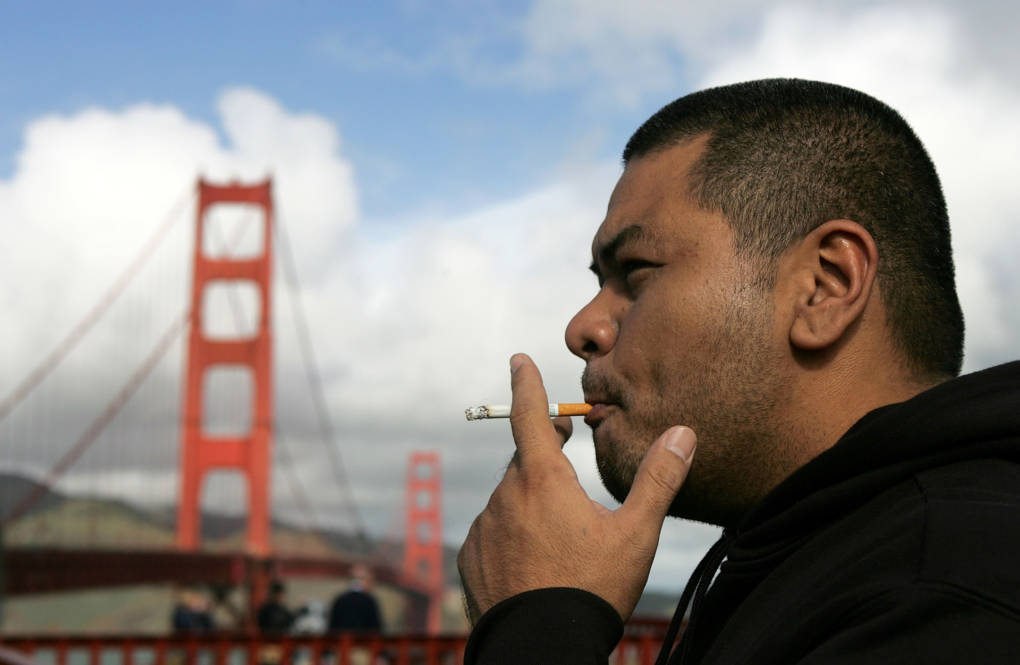
"caption": "A man smokes a cigarette near the Golden Gate Bridge.",
"description": null,
"title": "SmokingManGGBR",
"credit": "Justin Sullivan/Getty Images",
"status": "inherit",
"isLoading": false,
"fetchFailed": false
},
"news_11540946": {
"type": "attachments",
"id": "news_11540946",
"meta": {
"index": "attachments_1716263798",
"site": "news",
"id": "11540946",
"found": true
},
"parent": 11540912,
"imgSizes": {
"small": {
"file": "https://ww2.kqed.org/app/uploads/sites/10/2017/06/GIG-WORKER-Photos-1-Uber-520x293.jpg",
"width": 520,
"mimeType": "image/jpeg",
"height": 293
},
"twentyfourteen-full-width": {
"file": "https://ww2.kqed.org/app/uploads/sites/10/2017/06/GIG-WORKER-Photos-1-Uber-1038x576.jpg",
"width": 1038,
"mimeType": "image/jpeg",
"height": 576
},
"thumbnail": {
"file": "https://ww2.kqed.org/app/uploads/sites/10/2017/06/GIG-WORKER-Photos-1-Uber-160x90.jpg",
"width": 160,
"mimeType": "image/jpeg",
"height": 90
},
"fd-sm": {
"file": "https://ww2.kqed.org/app/uploads/sites/10/2017/06/GIG-WORKER-Photos-1-Uber-960x540.jpg",
"width": 960,
"mimeType": "image/jpeg",
"height": 540
},
"post-thumbnail": {
"file": "https://ww2.kqed.org/app/uploads/sites/10/2017/06/GIG-WORKER-Photos-1-Uber-672x372.jpg",
"width": 672,
"mimeType": "image/jpeg",
"height": 372
},
"xsmall": {
"file": "https://ww2.kqed.org/app/uploads/sites/10/2017/06/GIG-WORKER-Photos-1-Uber-375x211.jpg",
"width": 375,
"mimeType": "image/jpeg",
"height": 211
},
"kqedFullSize": {
"file": "https://ww2.kqed.org/app/uploads/sites/10/2017/06/GIG-WORKER-Photos-1-Uber-e1498850086919.jpg",
"width": 1920,
"height": 1080
},
"large": {
"file": "https://ww2.kqed.org/app/uploads/sites/10/2017/06/GIG-WORKER-Photos-1-Uber-1020x574.jpg",
"width": 1020,
"mimeType": "image/jpeg",
"height": 574
},
"xlarge": {
"file": "https://ww2.kqed.org/app/uploads/sites/10/2017/06/GIG-WORKER-Photos-1-Uber-1180x664.jpg",
"width": 1180,
"mimeType": "image/jpeg",
"height": 664
},
"guest-author-50": {
"file": "https://ww2.kqed.org/app/uploads/sites/10/2017/06/GIG-WORKER-Photos-1-Uber-50x50.jpg",
"width": 50,
"mimeType": "image/jpeg",
"height": 50
},
"guest-author-96": {
"file": "https://ww2.kqed.org/app/uploads/sites/10/2017/06/GIG-WORKER-Photos-1-Uber-96x96.jpg",
"width": 96,
"mimeType": "image/jpeg",
"height": 96
},
"medium": {
"file": "https://ww2.kqed.org/app/uploads/sites/10/2017/06/GIG-WORKER-Photos-1-Uber-800x450.jpg",
"width": 800,
"mimeType": "image/jpeg",
"height": 450
},
"guest-author-64": {
"file": "https://ww2.kqed.org/app/uploads/sites/10/2017/06/GIG-WORKER-Photos-1-Uber-64x64.jpg",
"width": 64,
"mimeType": "image/jpeg",
"height": 64
},
"guest-author-32": {
"file": "https://ww2.kqed.org/app/uploads/sites/10/2017/06/GIG-WORKER-Photos-1-Uber-32x32.jpg",
"width": 32,
"mimeType": "image/jpeg",
"height": 32
},
"fd-lrg": {
"file": "https://ww2.kqed.org/app/uploads/sites/10/2017/06/GIG-WORKER-Photos-1-Uber-1920x1080.jpg",
"width": 1920,
"mimeType": "image/jpeg",
"height": 1080
},
"fd-med": {
"file": "https://ww2.kqed.org/app/uploads/sites/10/2017/06/GIG-WORKER-Photos-1-Uber-1180x664.jpg",
"width": 1180,
"mimeType": "image/jpeg",
"height": 664
},
"full-width": {
"file": "https://ww2.kqed.org/app/uploads/sites/10/2017/06/GIG-WORKER-Photos-1-Uber-1920x1080.jpg",
"width": 1920,
"mimeType": "image/jpeg",
"height": 1080
},
"detail": {
"file": "https://ww2.kqed.org/app/uploads/sites/10/2017/06/GIG-WORKER-Photos-1-Uber-150x150.jpg",
"width": 150,
"mimeType": "image/jpeg",
"height": 150
},
"guest-author-128": {
"file": "https://ww2.kqed.org/app/uploads/sites/10/2017/06/GIG-WORKER-Photos-1-Uber-128x128.jpg",
"width": 128,
"mimeType": "image/jpeg",
"height": 128
},
"xxsmall": {
"file": "https://ww2.kqed.org/app/uploads/sites/10/2017/06/GIG-WORKER-Photos-1-Uber-240x135.jpg",
"width": 240,
"mimeType": "image/jpeg",
"height": 135
}
},
"publishDate": 1498849986,
"modified": 1498850007,
"caption": "An Uber drives gives a passenger a ride.",
"description": null,
"title": "GIG WORKER Photos 1 (Uber)",
"credit": "Alexander Torrenegra via Wikimedia Commons",
"status": "inherit",
"isLoading": false,
"fetchFailed": false
},
"news_11439022": {
"type": "attachments",
"id": "news_11439022",
"meta": {
"index": "attachments_1716263798",
"site": "news",
"id": "11439022",
"found": true
},
"parent": 11438840,
"imgSizes": {
"small": {
"file": "https://ww2.kqed.org/app/uploads/sites/10/2017/05/RefineryFlaring-520x349.jpg",
"width": 520,
"mimeType": "image/jpeg",
"height": 349
},
"twentyfourteen-full-width": {
"file": "https://ww2.kqed.org/app/uploads/sites/10/2017/05/RefineryFlaring-1038x576.jpg",
"width": 1038,
"mimeType": "image/jpeg",
"height": 576
},
"thumbnail": {
"file": "https://ww2.kqed.org/app/uploads/sites/10/2017/05/RefineryFlaring-160x107.jpg",
"width": 160,
"mimeType": "image/jpeg",
"height": 107
},
"fd-sm": {
"file": "https://ww2.kqed.org/app/uploads/sites/10/2017/05/RefineryFlaring-960x644.jpg",
"width": 960,
"mimeType": "image/jpeg",
"height": 644
},
"post-thumbnail": {
"file": "https://ww2.kqed.org/app/uploads/sites/10/2017/05/RefineryFlaring-672x372.jpg",
"width": 672,
"mimeType": "image/jpeg",
"height": 372
},
"xsmall": {
"file": "https://ww2.kqed.org/app/uploads/sites/10/2017/05/RefineryFlaring-375x252.jpg",
"width": 375,
"mimeType": "image/jpeg",
"height": 252
},
"kqedFullSize": {
"file": "https://ww2.kqed.org/app/uploads/sites/10/2017/05/RefineryFlaring.jpg",
"width": 1920,
"height": 1288
},
"large": {
"file": "https://ww2.kqed.org/app/uploads/sites/10/2017/05/RefineryFlaring-1020x684.jpg",
"width": 1020,
"mimeType": "image/jpeg",
"height": 684
},
"xlarge": {
"file": "https://ww2.kqed.org/app/uploads/sites/10/2017/05/RefineryFlaring-1180x792.jpg",
"width": 1180,
"mimeType": "image/jpeg",
"height": 792
},
"guest-author-50": {
"file": "https://ww2.kqed.org/app/uploads/sites/10/2017/05/RefineryFlaring-50x50.jpg",
"width": 50,
"mimeType": "image/jpeg",
"height": 50
},
"guest-author-96": {
"file": "https://ww2.kqed.org/app/uploads/sites/10/2017/05/RefineryFlaring-96x96.jpg",
"width": 96,
"mimeType": "image/jpeg",
"height": 96
},
"medium": {
"file": "https://ww2.kqed.org/app/uploads/sites/10/2017/05/RefineryFlaring-800x537.jpg",
"width": 800,
"mimeType": "image/jpeg",
"height": 537
},
"guest-author-64": {
"file": "https://ww2.kqed.org/app/uploads/sites/10/2017/05/RefineryFlaring-64x64.jpg",
"width": 64,
"mimeType": "image/jpeg",
"height": 64
},
"guest-author-32": {
"file": "https://ww2.kqed.org/app/uploads/sites/10/2017/05/RefineryFlaring-32x32.jpg",
"width": 32,
"mimeType": "image/jpeg",
"height": 32
},
"fd-lrg": {
"file": "https://ww2.kqed.org/app/uploads/sites/10/2017/05/RefineryFlaring-1920x1288.jpg",
"width": 1920,
"mimeType": "image/jpeg",
"height": 1288
},
"fd-med": {
"file": "https://ww2.kqed.org/app/uploads/sites/10/2017/05/RefineryFlaring-1180x792.jpg",
"width": 1180,
"mimeType": "image/jpeg",
"height": 792
},
"full-width": {
"file": "https://ww2.kqed.org/app/uploads/sites/10/2017/05/RefineryFlaring-1920x1288.jpg",
"width": 1920,
"mimeType": "image/jpeg",
"height": 1288
},
"detail": {
"file": "https://ww2.kqed.org/app/uploads/sites/10/2017/05/RefineryFlaring-150x150.jpg",
"width": 150,
"mimeType": "image/jpeg",
"height": 150
},
"guest-author-128": {
"file": "https://ww2.kqed.org/app/uploads/sites/10/2017/05/RefineryFlaring-128x128.jpg",
"width": 128,
"mimeType": "image/jpeg",
"height": 128
},
"xxsmall": {
"file": "https://ww2.kqed.org/app/uploads/sites/10/2017/05/RefineryFlaring-240x161.jpg",
"width": 240,
"mimeType": "image/jpeg",
"height": 161
}
},
"publishDate": 1493851197,
"modified": 1493851360,
"caption": "A few words buried within a decision affirming the constitutionality of California’s policy of charging polluters are causing a stir among some state budget experts.",
"description": "A few words buried within a decision affirming the constitutionality of California’s policy of charging polluters are causing a stir among some state budget experts.",
"title": "RefineryFlaring",
"credit": "Craig Miller/KQED",
"status": "inherit",
"isLoading": false,
"fetchFailed": false
},
"news_11406735": {
"type": "attachments",
"id": "news_11406735",
"meta": {
"index": "attachments_1716263798",
"site": "news",
"id": "11406735",
"found": true
},
"parent": 11406728,
"imgSizes": {
"small": {
"file": "https://ww2.kqed.org/app/uploads/sites/10/2017/04/1040Form-520x333.jpg",
"width": 520,
"mimeType": "image/jpeg",
"height": 333
},
"twentyfourteen-full-width": {
"file": "https://ww2.kqed.org/app/uploads/sites/10/2017/04/1040Form-1038x576.jpg",
"width": 1038,
"mimeType": "image/jpeg",
"height": 576
},
"thumbnail": {
"file": "https://ww2.kqed.org/app/uploads/sites/10/2017/04/1040Form-160x102.jpg",
"width": 160,
"mimeType": "image/jpeg",
"height": 102
},
"fd-sm": {
"file": "https://ww2.kqed.org/app/uploads/sites/10/2017/04/1040Form-960x614.jpg",
"width": 960,
"mimeType": "image/jpeg",
"height": 614
},
"post-thumbnail": {
"file": "https://ww2.kqed.org/app/uploads/sites/10/2017/04/1040Form-672x372.jpg",
"width": 672,
"mimeType": "image/jpeg",
"height": 372
},
"xsmall": {
"file": "https://ww2.kqed.org/app/uploads/sites/10/2017/04/1040Form-375x240.jpg",
"width": 375,
"mimeType": "image/jpeg",
"height": 240
},
"kqedFullSize": {
"file": "https://ww2.kqed.org/app/uploads/sites/10/2017/04/1040Form.jpg",
"width": 1920,
"height": 1228
},
"large": {
"file": "https://ww2.kqed.org/app/uploads/sites/10/2017/04/1040Form-1020x652.jpg",
"width": 1020,
"mimeType": "image/jpeg",
"height": 652
},
"xlarge": {
"file": "https://ww2.kqed.org/app/uploads/sites/10/2017/04/1040Form-1180x755.jpg",
"width": 1180,
"mimeType": "image/jpeg",
"height": 755
},
"guest-author-50": {
"file": "https://ww2.kqed.org/app/uploads/sites/10/2017/04/1040Form-50x50.jpg",
"width": 50,
"mimeType": "image/jpeg",
"height": 50
},
"guest-author-96": {
"file": "https://ww2.kqed.org/app/uploads/sites/10/2017/04/1040Form-96x96.jpg",
"width": 96,
"mimeType": "image/jpeg",
"height": 96
},
"medium": {
"file": "https://ww2.kqed.org/app/uploads/sites/10/2017/04/1040Form-800x512.jpg",
"width": 800,
"mimeType": "image/jpeg",
"height": 512
},
"guest-author-64": {
"file": "https://ww2.kqed.org/app/uploads/sites/10/2017/04/1040Form-64x64.jpg",
"width": 64,
"mimeType": "image/jpeg",
"height": 64
},
"guest-author-32": {
"file": "https://ww2.kqed.org/app/uploads/sites/10/2017/04/1040Form-32x32.jpg",
"width": 32,
"mimeType": "image/jpeg",
"height": 32
},
"fd-lrg": {
"file": "https://ww2.kqed.org/app/uploads/sites/10/2017/04/1040Form-1920x1228.jpg",
"width": 1920,
"mimeType": "image/jpeg",
"height": 1228
},
"fd-med": {
"file": "https://ww2.kqed.org/app/uploads/sites/10/2017/04/1040Form-1180x755.jpg",
"width": 1180,
"mimeType": "image/jpeg",
"height": 755
},
"full-width": {
"file": "https://ww2.kqed.org/app/uploads/sites/10/2017/04/1040Form-1920x1228.jpg",
"width": 1920,
"mimeType": "image/jpeg",
"height": 1228
},
"detail": {
"file": "https://ww2.kqed.org/app/uploads/sites/10/2017/04/1040Form-150x150.jpg",
"width": 150,
"mimeType": "image/jpeg",
"height": 150
},
"guest-author-128": {
"file": "https://ww2.kqed.org/app/uploads/sites/10/2017/04/1040Form-128x128.jpg",
"width": 128,
"mimeType": "image/jpeg",
"height": 128
},
"xxsmall": {
"file": "https://ww2.kqed.org/app/uploads/sites/10/2017/04/1040Form-240x154.jpg",
"width": 240,
"mimeType": "image/jpeg",
"height": 154
}
},
"publishDate": 1492107254,
"modified": 1492118756,
"caption": "1040 tax forms are plentiful around this time of year.",
"description": null,
"title": "1040Form",
"credit": "Tim Boyle/Getty Images",
"status": "inherit",
"isLoading": false,
"fetchFailed": false
},
"news_11156601": {
"type": "attachments",
"id": "news_11156601",
"meta": {
"index": "attachments_1716263798",
"site": "news",
"id": "11156601",
"found": true
},
"parent": 11149858,
"imgSizes": {
"small": {
"file": "https://ww2.kqed.org/app/uploads/sites/10/2016/10/RS21720_IMG_34501-qut-520x390.jpg",
"width": 520,
"mimeType": "image/jpeg",
"height": 390
},
"twentyfourteen-full-width": {
"file": "https://ww2.kqed.org/app/uploads/sites/10/2016/10/RS21720_IMG_34501-qut-1038x576.jpg",
"width": 1038,
"mimeType": "image/jpeg",
"height": 576
},
"thumbnail": {
"file": "https://ww2.kqed.org/app/uploads/sites/10/2016/10/RS21720_IMG_34501-qut-160x120.jpg",
"width": 160,
"mimeType": "image/jpeg",
"height": 120
},
"fd-sm": {
"file": "https://ww2.kqed.org/app/uploads/sites/10/2016/10/RS21720_IMG_34501-qut-960x720.jpg",
"width": 960,
"mimeType": "image/jpeg",
"height": 720
},
"post-thumbnail": {
"file": "https://ww2.kqed.org/app/uploads/sites/10/2016/10/RS21720_IMG_34501-qut-672x372.jpg",
"width": 672,
"mimeType": "image/jpeg",
"height": 372
},
"xsmall": {
"file": "https://ww2.kqed.org/app/uploads/sites/10/2016/10/RS21720_IMG_34501-qut-375x281.jpg",
"width": 375,
"mimeType": "image/jpeg",
"height": 281
},
"kqedFullSize": {
"file": "https://ww2.kqed.org/app/uploads/sites/10/2016/10/RS21720_IMG_34501-qut.jpg",
"width": 1920,
"height": 1440
},
"large": {
"file": "https://ww2.kqed.org/app/uploads/sites/10/2016/10/RS21720_IMG_34501-qut-1020x765.jpg",
"width": 1020,
"mimeType": "image/jpeg",
"height": 765
},
"xlarge": {
"file": "https://ww2.kqed.org/app/uploads/sites/10/2016/10/RS21720_IMG_34501-qut-1180x885.jpg",
"width": 1180,
"mimeType": "image/jpeg",
"height": 885
},
"guest-author-50": {
"file": "https://ww2.kqed.org/app/uploads/sites/10/2016/10/RS21720_IMG_34501-qut-50x50.jpg",
"width": 50,
"mimeType": "image/jpeg",
"height": 50
},
"guest-author-96": {
"file": "https://ww2.kqed.org/app/uploads/sites/10/2016/10/RS21720_IMG_34501-qut-96x96.jpg",
"width": 96,
"mimeType": "image/jpeg",
"height": 96
},
"medium": {
"file": "https://ww2.kqed.org/app/uploads/sites/10/2016/10/RS21720_IMG_34501-qut-800x600.jpg",
"width": 800,
"mimeType": "image/jpeg",
"height": 600
},
"guest-author-64": {
"file": "https://ww2.kqed.org/app/uploads/sites/10/2016/10/RS21720_IMG_34501-qut-64x64.jpg",
"width": 64,
"mimeType": "image/jpeg",
"height": 64
},
"guest-author-32": {
"file": "https://ww2.kqed.org/app/uploads/sites/10/2016/10/RS21720_IMG_34501-qut-32x32.jpg",
"width": 32,
"mimeType": "image/jpeg",
"height": 32
},
"jmtc-small-thumb": {
"file": "https://ww2.kqed.org/app/uploads/sites/10/2016/10/RS21720_IMG_34501-qut-280x150.jpg",
"width": 280,
"mimeType": "image/jpeg",
"height": 150
},
"fd-lrg": {
"file": "https://ww2.kqed.org/app/uploads/sites/10/2016/10/RS21720_IMG_34501-qut-1920x1440.jpg",
"width": 1920,
"mimeType": "image/jpeg",
"height": 1440
},
"fd-med": {
"file": "https://ww2.kqed.org/app/uploads/sites/10/2016/10/RS21720_IMG_34501-qut-1180x885.jpg",
"width": 1180,
"mimeType": "image/jpeg",
"height": 885
},
"full-width": {
"file": "https://ww2.kqed.org/app/uploads/sites/10/2016/10/RS21720_IMG_34501-qut-1920x1440.jpg",
"width": 1920,
"mimeType": "image/jpeg",
"height": 1440
},
"detail": {
"file": "https://ww2.kqed.org/app/uploads/sites/10/2016/10/RS21720_IMG_34501-qut-150x150.jpg",
"width": 150,
"mimeType": "image/jpeg",
"height": 150
},
"guest-author-128": {
"file": "https://ww2.kqed.org/app/uploads/sites/10/2016/10/RS21720_IMG_34501-qut-128x128.jpg",
"width": 128,
"mimeType": "image/jpeg",
"height": 128
},
"xxsmall": {
"file": "https://ww2.kqed.org/app/uploads/sites/10/2016/10/RS21720_IMG_34501-qut-240x180.jpg",
"width": 240,
"mimeType": "image/jpeg",
"height": 180
}
},
"publishDate": 1478114344,
"modified": 1478220072,
"caption": "Children play at Horace Mann Elementary in San Jose Unified, which is going for its first parcel tax this year.",
"description": null,
"title": "rs21720_img_34501-qut",
"credit": "Zaidee Stavely/KQED",
"status": "inherit",
"isLoading": false,
"fetchFailed": false
},
"news_11097463": {
"type": "attachments",
"id": "news_11097463",
"meta": {
"index": "attachments_1716263798",
"site": "news",
"id": "11097463",
"found": true
},
"title": "CigaretteButts",
"publishDate": 1474494079,
"status": "inherit",
"parent": 11097450,
"modified": 1779121607,
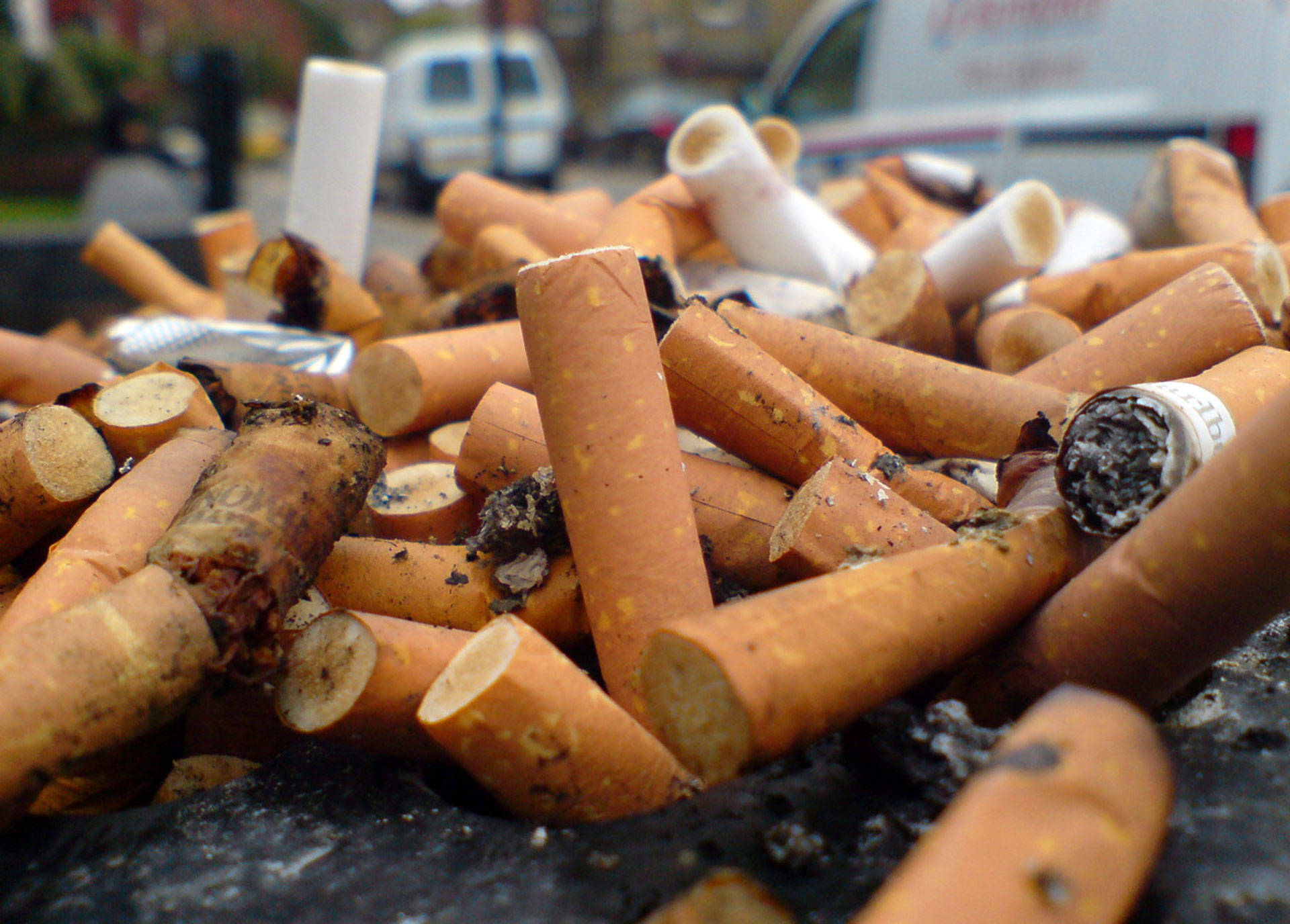
"caption": "A pile of cigarette stubs.",
"credit": "clyde tombaugh/Flickr",
"altTag": "Cigarette butts",
"description": "Backers of Proposition 56 hope to hit people hard enough in the wallet that they quit smoking.",
"imgSizes": {
"thumbnail": {
"file": "https://cdn.kqed.org/wp-content/uploads/sites/10/2016/09/CigaretteButts-400x287.jpg",
"width": 400,
"height": 287,
"mimeType": "image/jpeg"
},
"medium": {
"file": "https://cdn.kqed.org/wp-content/uploads/sites/10/2016/09/CigaretteButts-800x573.jpg",
"width": 800,
"height": 573,
"mimeType": "image/jpeg"
},
"large": {
"file": "https://cdn.kqed.org/wp-content/uploads/sites/10/2016/09/CigaretteButts-1920x1376.jpg",
"width": 1920,
"height": 1376,
"mimeType": "image/jpeg"
},
"fd-lrg": {
"file": "https://cdn.kqed.org/wp-content/uploads/sites/10/2016/09/CigaretteButts-1920x1376.jpg",
"width": 1920,
"height": 1376,
"mimeType": "image/jpeg"
},
"fd-med": {
"file": "https://cdn.kqed.org/wp-content/uploads/sites/10/2016/09/CigaretteButts-1180x846.jpg",
"width": 1180,
"height": 846,
"mimeType": "image/jpeg"
},
"fd-sm": {
"file": "https://cdn.kqed.org/wp-content/uploads/sites/10/2016/09/CigaretteButts-960x688.jpg",
"width": 960,
"height": 688,
"mimeType": "image/jpeg"
},
"post-thumbnail": {
"file": "https://cdn.kqed.org/wp-content/uploads/sites/10/2016/09/CigaretteButts-672x372.jpg",
"width": 672,
"height": 372,
"mimeType": "image/jpeg"
},
"twentyfourteen-full-width": {
"file": "https://cdn.kqed.org/wp-content/uploads/sites/10/2016/09/CigaretteButts-1038x576.jpg",
"width": 1038,
"height": 576,
"mimeType": "image/jpeg"
},
"guest-author-32": {
"file": "https://cdn.kqed.org/wp-content/uploads/sites/10/2016/09/CigaretteButts-32x32.jpg",
"width": 32,
"height": 32,
"mimeType": "image/jpeg"
},
"guest-author-50": {
"file": "https://cdn.kqed.org/wp-content/uploads/sites/10/2016/09/CigaretteButts-50x50.jpg",
"width": 50,
"height": 50,
"mimeType": "image/jpeg"
},
"guest-author-64": {
"file": "https://cdn.kqed.org/wp-content/uploads/sites/10/2016/09/CigaretteButts-64x64.jpg",
"width": 64,
"height": 64,
"mimeType": "image/jpeg"
},
"guest-author-96": {
"file": "https://cdn.kqed.org/wp-content/uploads/sites/10/2016/09/CigaretteButts-96x96.jpg",
"width": 96,
"height": 96,
"mimeType": "image/jpeg"
},
"guest-author-128": {
"file": "https://cdn.kqed.org/wp-content/uploads/sites/10/2016/09/CigaretteButts-128x128.jpg",
"width": 128,
"height": 128,
"mimeType": "image/jpeg"
},
"detail": {
"file": "https://cdn.kqed.org/wp-content/uploads/sites/10/2016/09/CigaretteButts-150x150.jpg",
"width": 150,
"height": 150,
"mimeType": "image/jpeg"
},
"jmtc-small-thumb": {
"file": "https://cdn.kqed.org/wp-content/uploads/sites/10/2016/09/CigaretteButts-280x150.jpg",
"width": 280,
"height": 150,
"mimeType": "image/jpeg"
},
"kqedFullSize": {
"file": "https://cdn.kqed.org/wp-content/uploads/sites/10/2016/09/CigaretteButts.jpg",
"width": 1920,
"height": 1376
}
},
"isLoading": false,
"fetchFailed": false
},
"forum_2010101856592": {
"type": "attachments",
"id": "forum_2010101856592",
"meta": {
"index": "attachments_1716263798",
"site": "forum",
"id": "2010101856592",
"found": true
},
"parent": 2010101856591,
"imgSizes": {
"twentyfourteen-full-width": {
"file": "https://ww2.kqed.org/app/uploads/sites/43/2016/09/soda-bottles-for-website-1038x576.jpg",
"width": 1038,
"mimeType": "image/jpeg",
"height": 576
},
"thumbnail": {
"file": "https://ww2.kqed.org/app/uploads/sites/43/2016/09/soda-bottles-for-website-400x225.jpg",
"width": 400,
"mimeType": "image/jpeg",
"height": 225
},
"fd-sm": {
"file": "https://ww2.kqed.org/app/uploads/sites/43/2016/09/soda-bottles-for-website-960x541.jpg",
"width": 960,
"mimeType": "image/jpeg",
"height": 541
},
"post-thumbnail": {
"file": "https://ww2.kqed.org/app/uploads/sites/43/2016/09/soda-bottles-for-website-672x372.jpg",
"width": 672,
"mimeType": "image/jpeg",
"height": 372
},
"kqedFullSize": {
"file": "https://ww2.kqed.org/app/uploads/sites/43/2016/09/soda-bottles-for-website.jpg",
"width": 1920,
"height": 1081
},
"large": {
"file": "https://ww2.kqed.org/app/uploads/sites/43/2016/09/soda-bottles-for-website-1180x664.jpg",
"width": 1180,
"mimeType": "image/jpeg",
"height": 664
},
"guest-author-50": {
"file": "https://ww2.kqed.org/app/uploads/sites/43/2016/09/soda-bottles-for-website-50x50.jpg",
"width": 50,
"mimeType": "image/jpeg",
"height": 50
},
"guest-author-96": {
"file": "https://ww2.kqed.org/app/uploads/sites/43/2016/09/soda-bottles-for-website-96x96.jpg",
"width": 96,
"mimeType": "image/jpeg",
"height": 96
},
"medium": {
"file": "https://ww2.kqed.org/app/uploads/sites/43/2016/09/soda-bottles-for-website-800x450.jpg",
"width": 800,
"mimeType": "image/jpeg",
"height": 450
},
"guest-author-64": {
"file": "https://ww2.kqed.org/app/uploads/sites/43/2016/09/soda-bottles-for-website-64x64.jpg",
"width": 64,
"mimeType": "image/jpeg",
"height": 64
},
"guest-author-32": {
"file": "https://ww2.kqed.org/app/uploads/sites/43/2016/09/soda-bottles-for-website-32x32.jpg",
"width": 32,
"mimeType": "image/jpeg",
"height": 32
},
"fd-lrg": {
"file": "https://ww2.kqed.org/app/uploads/sites/43/2016/09/soda-bottles-for-website-1920x1081.jpg",
"width": 1920,
"mimeType": "image/jpeg",
"height": 1081
},
"fd-med": {
"file": "https://ww2.kqed.org/app/uploads/sites/43/2016/09/soda-bottles-for-website-1180x664.jpg",
"width": 1180,
"mimeType": "image/jpeg",
"height": 664
},
"detail": {
"file": "https://ww2.kqed.org/app/uploads/sites/43/2016/09/soda-bottles-for-website-150x150.jpg",
"width": 150,
"mimeType": "image/jpeg",
"height": 150
},
"medium_large": {
"file": "https://ww2.kqed.org/app/uploads/sites/43/2016/09/soda-bottles-for-website-768x432.jpg",
"width": 768,
"mimeType": "image/jpeg",
"height": 432
},
"guest-author-128": {
"file": "https://ww2.kqed.org/app/uploads/sites/43/2016/09/soda-bottles-for-website-128x128.jpg",
"width": 128,
"mimeType": "image/jpeg",
"height": 128
}
},
"publishDate": 1473378320,
"modified": 1473378367,
"caption": null,
"description": null,
"title": "soda-bottles-for-website",
"credit": "Photo: Justin Sullivan/Getty Images",
"status": "inherit",
"isLoading": false,
"fetchFailed": false
},
"stateofhealth_231890": {
"type": "attachments",
"id": "stateofhealth_231890",
"meta": {
"index": "attachments_1716263798",
"site": "stateofhealth",
"id": "231890",
"found": true
},
"parent": 231871,
"imgSizes": {
"twentyfourteen-full-width": {
"file": "https://ww2.kqed.org/app/uploads/sites/27/2016/09/GettyImages-452534952-1038x576.jpg",
"width": 1038,
"mimeType": "image/jpeg",
"height": 576
},
"thumbnail": {
"file": "https://ww2.kqed.org/app/uploads/sites/27/2016/09/GettyImages-452534952-400x255.jpg",
"width": 400,
"mimeType": "image/jpeg",
"height": 255
},
"fd-sm": {
"file": "https://ww2.kqed.org/app/uploads/sites/27/2016/09/GettyImages-452534952-960x613.jpg",
"width": 960,
"mimeType": "image/jpeg",
"height": 613
},
"post-thumbnail": {
"file": "https://ww2.kqed.org/app/uploads/sites/27/2016/09/GettyImages-452534952-672x372.jpg",
"width": 672,
"mimeType": "image/jpeg",
"height": 372
},
"kqedFullSize": {
"file": "https://ww2.kqed.org/app/uploads/sites/27/2016/09/GettyImages-452534952.jpg",
"width": 1920,
"height": 1226
},
"large": {
"file": "https://ww2.kqed.org/app/uploads/sites/27/2016/09/GettyImages-452534952-1440x920.jpg",
"width": 1440,
"mimeType": "image/jpeg",
"height": 920
},
"guest-author-50": {
"file": "https://ww2.kqed.org/app/uploads/sites/27/2016/09/GettyImages-452534952-50x50.jpg",
"width": 50,
"mimeType": "image/jpeg",
"height": 50
},
"guest-author-96": {
"file": "https://ww2.kqed.org/app/uploads/sites/27/2016/09/GettyImages-452534952-96x96.jpg",
"width": 96,
"mimeType": "image/jpeg",
"height": 96
},
"medium": {
"file": "https://ww2.kqed.org/app/uploads/sites/27/2016/09/GettyImages-452534952-800x511.jpg",
"width": 800,
"mimeType": "image/jpeg",
"height": 511
},
"guest-author-64": {
"file": "https://ww2.kqed.org/app/uploads/sites/27/2016/09/GettyImages-452534952-64x64.jpg",
"width": 64,
"mimeType": "image/jpeg",
"height": 64
},
"guest-author-32": {
"file": "https://ww2.kqed.org/app/uploads/sites/27/2016/09/GettyImages-452534952-32x32.jpg",
"width": 32,
"mimeType": "image/jpeg",
"height": 32
},
"jmtc-small-thumb": {
"file": "https://ww2.kqed.org/app/uploads/sites/27/2016/09/GettyImages-452534952-280x150.jpg",
"width": 280,
"mimeType": "image/jpeg",
"height": 150
},
"fd-lrg": {
"file": "https://ww2.kqed.org/app/uploads/sites/27/2016/09/GettyImages-452534952-1920x1226.jpg",
"width": 1920,
"mimeType": "image/jpeg",
"height": 1226
},
"fd-med": {
"file": "https://ww2.kqed.org/app/uploads/sites/27/2016/09/GettyImages-452534952-1180x753.jpg",
"width": 1180,
"mimeType": "image/jpeg",
"height": 753
},
"detail": {
"file": "https://ww2.kqed.org/app/uploads/sites/27/2016/09/GettyImages-452534952-150x150.jpg",
"width": 150,
"mimeType": "image/jpeg",
"height": 150
},
"medium_large": {
"file": "https://ww2.kqed.org/app/uploads/sites/27/2016/09/GettyImages-452534952-768x490.jpg",
"width": 768,
"mimeType": "image/jpeg",
"height": 490
},
"guest-author-128": {
"file": "https://ww2.kqed.org/app/uploads/sites/27/2016/09/GettyImages-452534952-128x128.jpg",
"width": 128,
"mimeType": "image/jpeg",
"height": 128
}
},
"publishDate": 1472758091,
"modified": 1472758179,
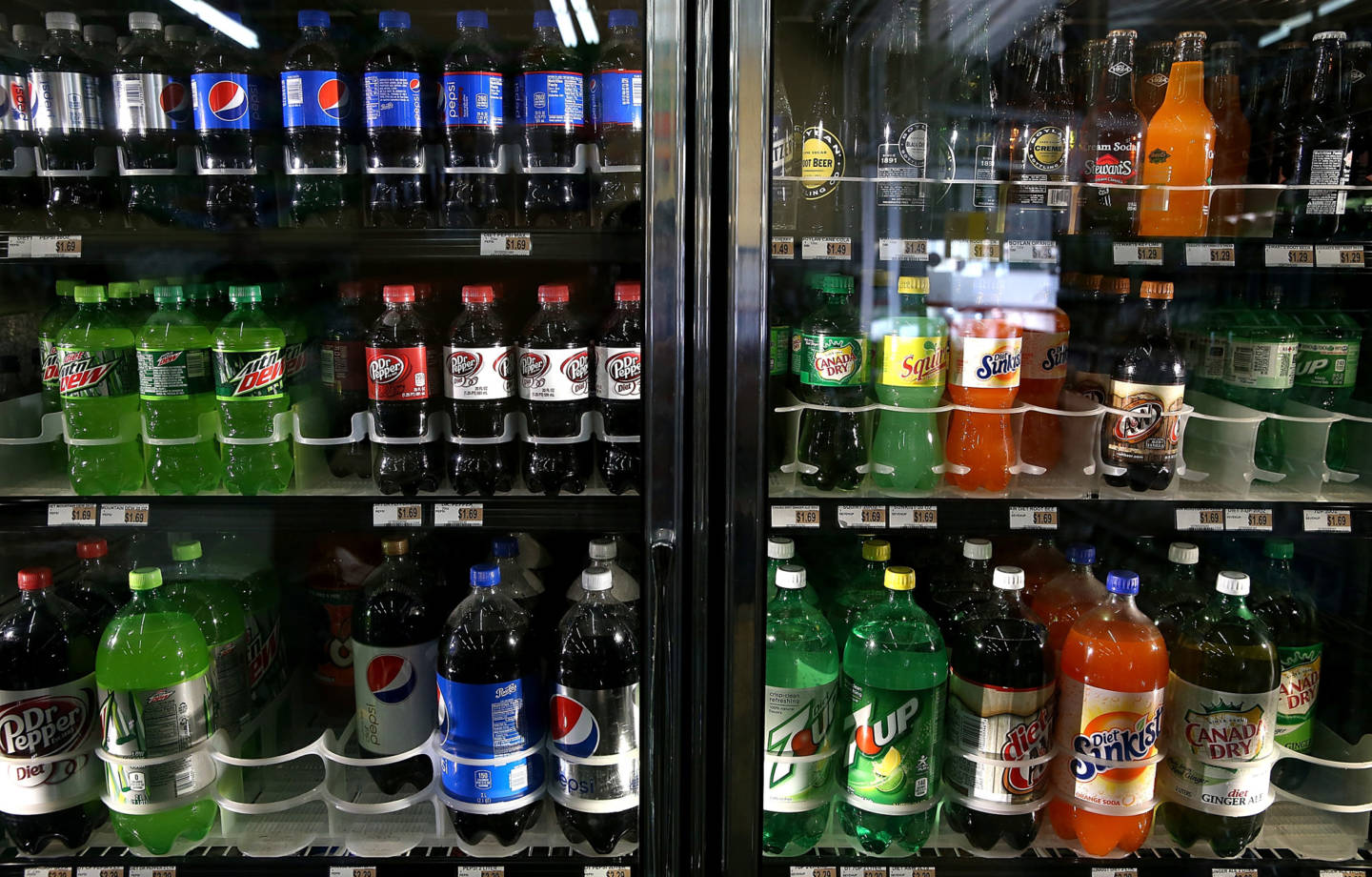
"caption": "Various bottles of soda are displayed in a cooler at Marina Supermarket in San Francisco, California. ",
"description": null,
"title": "GettyImages-452534952",
"credit": "Justin Sullivan/Getty Images",
"status": "inherit",
"isLoading": false,
"fetchFailed": false
},
"news_10969592": {
"type": "attachments",
"id": "news_10969592",
"meta": {
"index": "attachments_1716263798",
"site": "news",
"id": "10969592",
"found": true
},
"parent": 10969589,
"imgSizes": {
"twentyfourteen-full-width": {
"file": "https://ww2.kqed.org/app/uploads/sites/10/2016/05/look-down-street-of-potholes-1038x576.jpg",
"width": 1038,
"mimeType": "image/jpeg",
"height": 576
},
"thumbnail": {
"file": "https://ww2.kqed.org/app/uploads/sites/10/2016/05/look-down-street-of-potholes-400x225.jpg",
"width": 400,
"mimeType": "image/jpeg",
"height": 225
},
"fd-sm": {
"file": "https://ww2.kqed.org/app/uploads/sites/10/2016/05/look-down-street-of-potholes-960x541.jpg",
"width": 960,
"mimeType": "image/jpeg",
"height": 541
},
"post-thumbnail": {
"file": "https://ww2.kqed.org/app/uploads/sites/10/2016/05/look-down-street-of-potholes-672x372.jpg",
"width": 672,
"mimeType": "image/jpeg",
"height": 372
},
"kqedFullSize": {
"file": "https://ww2.kqed.org/app/uploads/sites/10/2016/05/look-down-street-of-potholes.jpg",
"width": 1920,
"height": 1081
},
"large": {
"file": "https://ww2.kqed.org/app/uploads/sites/10/2016/05/look-down-street-of-potholes-1920x1081.jpg",
"width": 1920,
"mimeType": "image/jpeg",
"height": 1081
},
"guest-author-50": {
"file": "https://ww2.kqed.org/app/uploads/sites/10/2016/05/look-down-street-of-potholes-50x50.jpg",
"width": 50,
"mimeType": "image/jpeg",
"height": 50
},
"guest-author-96": {
"file": "https://ww2.kqed.org/app/uploads/sites/10/2016/05/look-down-street-of-potholes-96x96.jpg",
"width": 96,
"mimeType": "image/jpeg",
"height": 96
},
"medium": {
"file": "https://ww2.kqed.org/app/uploads/sites/10/2016/05/look-down-street-of-potholes-800x450.jpg",
"width": 800,
"mimeType": "image/jpeg",
"height": 450
},
"guest-author-64": {
"file": "https://ww2.kqed.org/app/uploads/sites/10/2016/05/look-down-street-of-potholes-64x64.jpg",
"width": 64,
"mimeType": "image/jpeg",
"height": 64
},
"guest-author-32": {
"file": "https://ww2.kqed.org/app/uploads/sites/10/2016/05/look-down-street-of-potholes-32x32.jpg",
"width": 32,
"mimeType": "image/jpeg",
"height": 32
},
"jmtc-small-thumb": {
"file": "https://ww2.kqed.org/app/uploads/sites/10/2016/05/look-down-street-of-potholes-280x150.jpg",
"width": 280,
"mimeType": "image/jpeg",
"height": 150
},
"fd-lrg": {
"file": "https://ww2.kqed.org/app/uploads/sites/10/2016/05/look-down-street-of-potholes-1920x1081.jpg",
"width": 1920,
"mimeType": "image/jpeg",
"height": 1081
},
"fd-med": {
"file": "https://ww2.kqed.org/app/uploads/sites/10/2016/05/look-down-street-of-potholes-1180x664.jpg",
"width": 1180,
"mimeType": "image/jpeg",
"height": 664
},
"detail": {
"file": "https://ww2.kqed.org/app/uploads/sites/10/2016/05/look-down-street-of-potholes-150x150.jpg",
"width": 150,
"mimeType": "image/jpeg",
"height": 150
},
"guest-author-128": {
"file": "https://ww2.kqed.org/app/uploads/sites/10/2016/05/look-down-street-of-potholes-128x128.jpg",
"width": 128,
"mimeType": "image/jpeg",
"height": 128
}
},
"publishDate": 1464374772,
"modified": 1464394446,
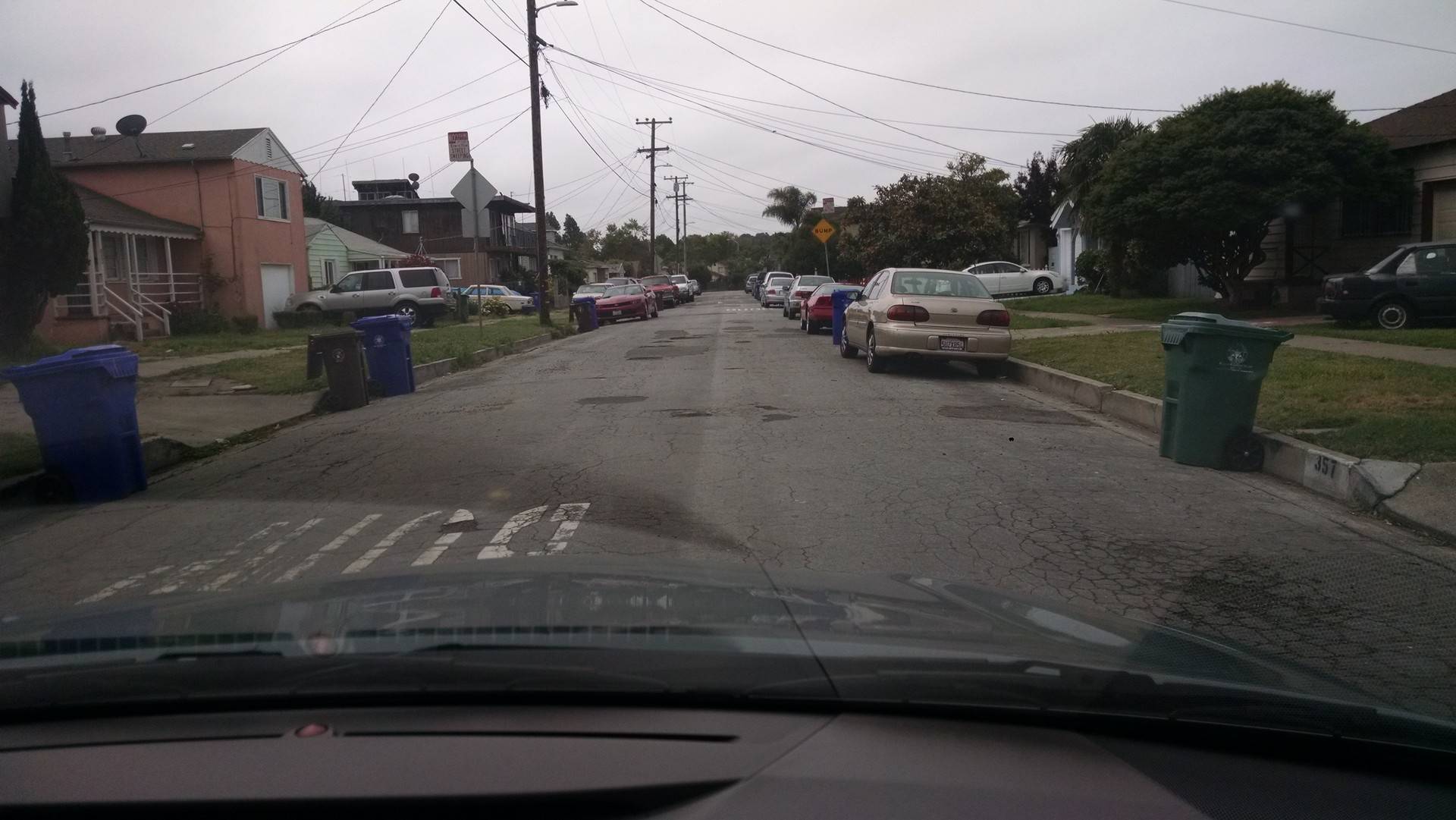
"caption": "A pothole-filled street in Richmond.",
"description": null,
"title": "look down street of potholes",
"credit": "Andrew Stelzer/KQED",
"status": "inherit",
"isLoading": false,
"fetchFailed": false
},
"news_10960001": {
"type": "attachments",
"id": "news_10960001",
"meta": {
"index": "attachments_1716263798",
"site": "news",
"id": "10960001",
"found": true
},
"parent": 10958891,
"imgSizes": {
"twentyfourteen-full-width": {
"file": "https://ww2.kqed.org/app/uploads/sites/10/2016/05/HomelessLA-1038x576.jpg",
"width": 1038,
"mimeType": "image/jpeg",
"height": 576
},
"thumbnail": {
"file": "https://ww2.kqed.org/app/uploads/sites/10/2016/05/HomelessLA-400x213.jpg",
"width": 400,
"mimeType": "image/jpeg",
"height": 213
},
"fd-sm": {
"file": "https://ww2.kqed.org/app/uploads/sites/10/2016/05/HomelessLA-960x511.jpg",
"width": 960,
"mimeType": "image/jpeg",
"height": 511
},
"post-thumbnail": {
"file": "https://ww2.kqed.org/app/uploads/sites/10/2016/05/HomelessLA-672x372.jpg",
"width": 672,
"mimeType": "image/jpeg",
"height": 372
},
"kqedFullSize": {
"file": "https://ww2.kqed.org/app/uploads/sites/10/2016/05/HomelessLA.jpg",
"width": 1920,
"height": 1022
},
"large": {
"file": "https://ww2.kqed.org/app/uploads/sites/10/2016/05/HomelessLA-1920x1022.jpg",
"width": 1920,
"mimeType": "image/jpeg",
"height": 1022
},
"guest-author-50": {
"file": "https://ww2.kqed.org/app/uploads/sites/10/2016/05/HomelessLA-50x50.jpg",
"width": 50,
"mimeType": "image/jpeg",
"height": 50
},
"guest-author-96": {
"file": "https://ww2.kqed.org/app/uploads/sites/10/2016/05/HomelessLA-96x96.jpg",
"width": 96,
"mimeType": "image/jpeg",
"height": 96
},
"medium": {
"file": "https://ww2.kqed.org/app/uploads/sites/10/2016/05/HomelessLA-800x426.jpg",
"width": 800,
"mimeType": "image/jpeg",
"height": 426
},
"guest-author-64": {
"file": "https://ww2.kqed.org/app/uploads/sites/10/2016/05/HomelessLA-64x64.jpg",
"width": 64,
"mimeType": "image/jpeg",
"height": 64
},
"guest-author-32": {
"file": "https://ww2.kqed.org/app/uploads/sites/10/2016/05/HomelessLA-32x32.jpg",
"width": 32,
"mimeType": "image/jpeg",
"height": 32
},
"jmtc-small-thumb": {
"file": "https://ww2.kqed.org/app/uploads/sites/10/2016/05/HomelessLA-280x150.jpg",
"width": 280,
"mimeType": "image/jpeg",
"height": 150
},
"fd-lrg": {
"file": "https://ww2.kqed.org/app/uploads/sites/10/2016/05/HomelessLA-1920x1022.jpg",
"width": 1920,
"mimeType": "image/jpeg",
"height": 1022
},
"fd-med": {
"file": "https://ww2.kqed.org/app/uploads/sites/10/2016/05/HomelessLA-1180x628.jpg",
"width": 1180,
"mimeType": "image/jpeg",
"height": 628
},
"detail": {
"file": "https://ww2.kqed.org/app/uploads/sites/10/2016/05/HomelessLA-150x150.jpg",
"width": 150,
"mimeType": "image/jpeg",
"height": 150
},
"guest-author-128": {
"file": "https://ww2.kqed.org/app/uploads/sites/10/2016/05/HomelessLA-128x128.jpg",
"width": 128,
"mimeType": "image/jpeg",
"height": 128
}
},
"publishDate": 1463618731,
"modified": 1463618769,
"caption": "A homeless man waits to get in line for food distribution in Los Angeles.",
"description": "A homeless man waits to get in line for food distribution in Los Angeles.",
"title": "HomelessLA",
"credit": "HECTOR MATA/AFP/Getty Images",
"status": "inherit",
"isLoading": false,
"fetchFailed": false
},
"stateofhealth_23175": {
"type": "attachments",
"id": "stateofhealth_23175",
"meta": {
"index": "attachments_1716263798",
"site": "stateofhealth",
"id": "23175",
"found": true
},
"parent": 23171,
"imgSizes": {
"twentyfourteen-full-width": {
"file": "https://ww2.kqed.org/app/uploads/sites/27/2014/12/RS11135_450828518-lpr-e1419288401900-1038x576.jpg",
"width": 1038,
"mimeType": "image/jpeg",
"height": 576
},
"thumbnail": {
"file": "https://ww2.kqed.org/app/uploads/sites/27/2014/12/RS11135_450828518-lpr-e1419288401900-400x247.jpg",
"width": 400,
"mimeType": "image/jpeg",
"height": 247
},
"fd-sm": {
"file": "https://ww2.kqed.org/app/uploads/sites/27/2014/12/RS11135_450828518-lpr-e1419288401900-320x198.jpg",
"width": 320,
"mimeType": "image/jpeg",
"height": 198
},
"post-thumbnail": {
"file": "https://ww2.kqed.org/app/uploads/sites/27/2014/12/RS11135_450828518-lpr-e1419288401900-672x372.jpg",
"width": 672,
"mimeType": "image/jpeg",
"height": 372
},
"kqedFullSize": {
"file": "https://ww2.kqed.org/app/uploads/sites/27/2014/12/RS11135_450828518-lpr-e1419288401900.jpg",
"width": 1440,
"height": 890
},
"large": {
"file": "https://ww2.kqed.org/app/uploads/sites/27/2014/12/RS11135_450828518-lpr-e1419288401900-1440x890.jpg",
"width": 1440,
"mimeType": "image/jpeg",
"height": 890
},
"guest-author-96": {
"file": "https://ww2.kqed.org/app/uploads/sites/27/2014/12/RS11135_450828518-lpr-e1419288401900-96x96.jpg",
"width": 96,
"mimeType": "image/jpeg",
"height": 96
},
"medium": {
"file": "https://ww2.kqed.org/app/uploads/sites/27/2014/12/RS11135_450828518-lpr-e1419288401900-800x494.jpg",
"width": 800,
"mimeType": "image/jpeg",
"height": 494
},
"guest-author-64": {
"file": "https://ww2.kqed.org/app/uploads/sites/27/2014/12/RS11135_450828518-lpr-e1419288401900-64x64.jpg",
"width": 64,
"mimeType": "image/jpeg",
"height": 64
},
"guest-author-32": {
"file": "https://ww2.kqed.org/app/uploads/sites/27/2014/12/RS11135_450828518-lpr-e1419288401900-32x32.jpg",
"width": 32,
"mimeType": "image/jpeg",
"height": 32
},
"fd-lrg": {
"file": "https://ww2.kqed.org/app/uploads/sites/27/2014/12/RS11135_450828518-lpr-e1419288401900-1180x729.jpg",
"width": 1180,
"mimeType": "image/jpeg",
"height": 729
},
"fd-med": {
"file": "https://ww2.kqed.org/app/uploads/sites/27/2014/12/RS11135_450828518-lpr-e1419288401900-768x475.jpg",
"width": 768,
"mimeType": "image/jpeg",
"height": 475
},
"detail": {
"file": "https://ww2.kqed.org/app/uploads/sites/27/2014/12/RS11135_450828518-lpr-e1419288401900-75x75.jpg",
"width": 75,
"mimeType": "image/jpeg",
"height": 75
},
"guest-author-128": {
"file": "https://ww2.kqed.org/app/uploads/sites/27/2014/12/RS11135_450828518-lpr-e1419288401900-128x128.jpg",
"width": 128,
"mimeType": "image/jpeg",
"height": 128
}
},
"publishDate": 1419288351,
"modified": 1463083353,
"caption": null,
"description": "soda, soda tax",
"title": "RS11135_450828518-lpr",
"credit": "Frederic J. Brown/AFP/Getty Images",
"status": "inherit",
"isLoading": false,
"fetchFailed": false
},
"news_10932963": {
"type": "attachments",
"id": "news_10932963",
"meta": {
"index": "attachments_1716263798",
"site": "news",
"id": "10932963",
"found": true
},
"parent": 10932956,
"imgSizes": {
"twentyfourteen-full-width": {
"file": "https://ww2.kqed.org/app/uploads/sites/10/2016/04/GettyImages-98452319-1-1038x576.jpg",
"width": 1038,
"mimeType": "image/jpeg",
"height": 576
},
"thumbnail": {
"file": "https://ww2.kqed.org/app/uploads/sites/10/2016/04/GettyImages-98452319-1-400x267.jpg",
"width": 400,
"mimeType": "image/jpeg",
"height": 267
},
"fd-sm": {
"file": "https://ww2.kqed.org/app/uploads/sites/10/2016/04/GettyImages-98452319-1-960x640.jpg",
"width": 960,
"mimeType": "image/jpeg",
"height": 640
},
"post-thumbnail": {
"file": "https://ww2.kqed.org/app/uploads/sites/10/2016/04/GettyImages-98452319-1-672x372.jpg",
"width": 672,
"mimeType": "image/jpeg",
"height": 372
},
"kqedFullSize": {
"file": "https://ww2.kqed.org/app/uploads/sites/10/2016/04/GettyImages-98452319-1-e1461013939648.jpg",
"width": 1920,
"height": 1280
},
"large": {
"file": "https://ww2.kqed.org/app/uploads/sites/10/2016/04/GettyImages-98452319-1-1920x1280.jpg",
"width": 1920,
"mimeType": "image/jpeg",
"height": 1280
},
"guest-author-96": {
"file": "https://ww2.kqed.org/app/uploads/sites/10/2016/04/GettyImages-98452319-1-96x96.jpg",
"width": 96,
"mimeType": "image/jpeg",
"height": 96
},
"medium": {
"file": "https://ww2.kqed.org/app/uploads/sites/10/2016/04/GettyImages-98452319-1-800x533.jpg",
"width": 800,
"mimeType": "image/jpeg",
"height": 533
},
"guest-author-64": {
"file": "https://ww2.kqed.org/app/uploads/sites/10/2016/04/GettyImages-98452319-1-64x64.jpg",
"width": 64,
"mimeType": "image/jpeg",
"height": 64
},
"guest-author-32": {
"file": "https://ww2.kqed.org/app/uploads/sites/10/2016/04/GettyImages-98452319-1-32x32.jpg",
"width": 32,
"mimeType": "image/jpeg",
"height": 32
},
"jmtc-small-thumb": {
"file": "https://ww2.kqed.org/app/uploads/sites/10/2016/04/GettyImages-98452319-1-280x150.jpg",
"width": 280,
"mimeType": "image/jpeg",
"height": 150
},
"fd-lrg": {
"file": "https://ww2.kqed.org/app/uploads/sites/10/2016/04/GettyImages-98452319-1-1920x1280.jpg",
"width": 1920,
"mimeType": "image/jpeg",
"height": 1280
},
"fd-med": {
"file": "https://ww2.kqed.org/app/uploads/sites/10/2016/04/GettyImages-98452319-1-1180x787.jpg",
"width": 1180,
"mimeType": "image/jpeg",
"height": 787
},
"detail": {
"file": "https://ww2.kqed.org/app/uploads/sites/10/2016/04/GettyImages-98452319-1-75x75.jpg",
"width": 75,
"mimeType": "image/jpeg",
"height": 75
},
"guest-author-128": {
"file": "https://ww2.kqed.org/app/uploads/sites/10/2016/04/GettyImages-98452319-1-128x128.jpg",
"width": 128,
"mimeType": "image/jpeg",
"height": 128
}
},
"publishDate": 1461013844,
"modified": 1461013927,
"caption": "A man advertising for a tax preparation service in Miami. ",
"description": null,
"title": "Income Tax",
"credit": "Joe Raedle/Getty Images",
"status": "inherit",
"isLoading": false,
"fetchFailed": false
}
},
"audioPlayerReducer": {
"postId": "stream_live",
"isPaused": true,
"isPlaying": false,
"pfsActive": false,
"pledgeModalIsOpen": true,
"playerDrawerIsOpen": false,
"liveAudioPlayStartedAt": 0,
"liveAudioPlayContext": ""
},
"authorsReducer": {
"byline_news_11563885": {
"type": "authors",
"id": "byline_news_11563885",
"meta": {
"override": true
},
"slug": "byline_news_11563885",
"name": "\u003cstrong>\u003ca href=\"https://calmatters.org/articles/author/matt-levin/\">Matt Levin\u003c/a>\u003c/strong>",
"isLoading": false
},
"byline_news_11540912": {
"type": "authors",
"id": "byline_news_11540912",
"meta": {
"override": true
},
"slug": "byline_news_11540912",
"name": "\u003cstrong>\u003ca href=\"https://calmatters.org/articles/author/ben-christopher/\">Ben Christopher\u003ca/>\u003cbr>CALmatters\u003ca href=\"https://calmatters.org/articles/california-gives-gig-workers-break-just-little-one-start/\"\u003c/a>\u003c/strong>",
"isLoading": false
},
"byline_news_11438840": {
"type": "authors",
"id": "byline_news_11438840",
"meta": {
"override": true
},
"slug": "byline_news_11438840",
"name": "\u003cstrong>\u003ca href=\"https://calmatters.org/articles/author/ben-christopher/\">Ben Christopher\u003c/a>\u003c/strong>",
"isLoading": false
},
"byline_news_11406728": {
"type": "authors",
"id": "byline_news_11406728",
"meta": {
"override": true
},
"slug": "byline_news_11406728",
"name": "\u003cstrong>\u003ca href=\"http://www.scpr.org/about/people/staff/ben-bergman\">Ben Bergman\u003c/a>\u003cbr>\u003ca href=\"http://www.scpr.org/\">KPCC\u003c/a>\u003c/strong>",
"isLoading": false
},
"byline_stateofhealth_231871": {
"type": "authors",
"id": "byline_stateofhealth_231871",
"meta": {
"override": true
},
"slug": "byline_stateofhealth_231871",
"name": "\u003cstrong>Frank Bass\u003cbr />\u003ca href=\"http://maplight.org/\">MapLight\u003c/a>\u003c/strong>",
"isLoading": false
},
"andrewstelzer": {
"type": "authors",
"id": "213",
"meta": {
"index": "authors_1716337520",
"id": "213",
"found": true
},
"name": "Andrew Stelzer",
"firstName": "Andrew",
"lastName": "Stelzer",
"slug": "andrewstelzer",
"email": "andrewstelzer@gmail.com",
"display_author_email": false,
"staff_mastheads": [],
"title": null,
"bio": "Andrew Stelzer has been reporting for KQED since 2010, and is a producer at \u003ca href=\"http://www.radioproject.org\" target=\"_blank\">Making Contact\u003c/a> in Oakland.. His work has been featured on programs including \u003ca href=\"http://www.npr.org/templates/story/story.php?storyId=5010\" target=\"_blank\">NPR’s Weekend Edition\u003c/a>, \u003ca href=\"http://www.theworld.org/\" target=\"_blank\">PRI’s The World\u003c/a>, \u003ca href=\"http://www.studio360.org/\" target=\"_blank\">Studio 360\u003c/a>, \u003ca href=\"http://marketplace.publicradio.org/\" target=\"_blank\">Marketplace\u003c/a>,\u003ca href=\"http://www.loe.org/\" target=\"_blank\">Living on Earth\u003c/a>, \u003ca href=\"http://www.onthemedia.org/\" target=\"_blank\">On the Media\u003c/a>, \u003ca href=\"http://www.latinousa.org/index.html\" target=\"_blank\">Latino USA,\u003c/a> \u003ca href=\"http://www.onlyagame.org/\" rel=\"tag\">Only a Game,\u003c/a> \u003ca href=\"http://www.tswi.org/\" target=\"_blank\">Radio Netherlands,\u003c/a> \u003ca href=\"http://worldradio.ch/index.shtml\" target=\"_blank\">World Radio Switzerland,\u003c/a> and \u003ca href=\"http://www.rfi.fr/langues/statiques/rfi_anglais.asp\" target=\"_blank\">Radio France International\u003c/a>. Andrew has written for publications including \u003ca href=\"http://www.inthesetimes.com/site/about/author/2369\" target=\"_blank\">In These Times\u003c/a>, \u003ca href=\"http://www.progressive.org/\" target=\"_blank\">The Progressive\u003c/a>, \u003ca href=\"http://ipsnews.net/\" target=\"_blank\">Interpress Service\u003c/a>, \u003ca href=\"http://www.tampabay.com/\" target=\"_blank\">The St. Petersburg Times\u003c/a>, and \u003ca href=\"http://www.eastbayexpress.com/ebx/Home\" target=\"_blank\">The East Bay Express\u003c/a>.\r\n\r\nAndrew’s work has received numerous awards from the Society of Professional Journalists, the National Lesbian and Gay Journalists Association, and the National Council on Crime and Delinquency.\r\n\r\nHe previously was a reporter at \u003ca href=\"http://www.wmnf.org/\" target=\"_blank\">WMNF\u003c/a> radio in Tampa, FL, and reporter and youth advocate st \u003ca href=\"http://www.kboo.org/\" target=\"_blank\">KBOO \u003c/a> in Portland, Oregon. Andrew has conducted radio production trainings around the world, from Algeria, to New Orleans, to the desert of Southern Jordan.",
"avatar": "https://secure.gravatar.com/avatar/14c7e75469395cb2468d45c9f6896ca9?s=600&d=blank&r=g",
"twitter": null,
"facebook": null,
"instagram": null,
"linkedin": null,
"sites": [
{
"site": "arts",
"roles": [
"contributor"
]
},
{
"site": "news",
"roles": [
"author"
]
},
{
"site": "stateofhealth",
"roles": [
"author"
]
}
],
"headData": {
"title": "Andrew Stelzer | KQED",
"description": null,
"ogImgSrc": "https://secure.gravatar.com/avatar/14c7e75469395cb2468d45c9f6896ca9?s=600&d=blank&r=g",
"twImgSrc": "https://secure.gravatar.com/avatar/14c7e75469395cb2468d45c9f6896ca9?s=600&d=blank&r=g"
},
"isLoading": false,
"link": "/author/andrewstelzer"
},
"danbrekke": {
"type": "authors",
"id": "222",
"meta": {
"index": "authors_1716337520",
"id": "222",
"found": true
},
"name": "Dan Brekke",
"firstName": "Dan",
"lastName": "Brekke",
"slug": "danbrekke",
"email": "dbrekke@kqed.org",
"display_author_email": true,
"staff_mastheads": [
"news",
"science"
],
"title": "KQED Editor and Reporter",
"bio": "Dan Brekke is a reporter and editor for KQED News, responsible for coverage of topics ranging from California water issues to the Bay Area's transportation challenges. In a newsroom career that began in Chicago in 1972, Dan has worked for \u003cem>The San Francisco Examiner,\u003c/em> Wired and TechTV and has been published in The New York Times, The New York Times Magazine, Business 2.0, Salon and elsewhere.\r\n\r\nSince joining KQED in 2007, Dan has reported, edited and produced both radio and online features and breaking news pieces. He has shared as both editor and reporter in four Society of Professional Journalists Norcal Excellence in Journalism awards and one Edward R. Murrow regional award. He was chosen for a spring 2017 residency at the Mesa Refuge to advance his research on California salmon.\r\n\r\nEmail Dan at: \u003ca href=\"mailto:dbrekke@kqed.org\">dbrekke@kqed.org\u003c/a>\r\n\r\n\u003cstrong>Twitter:\u003c/strong> \u003ca href=\"https://twitter.com/danbrekke\" rel=\"noopener noreferrer\">twitter.com/danbrekke\u003c/a>\r\n\u003cstrong>Facebook:\u003c/strong> \u003ca href=\"https://www.facebook.com/danbrekke\" rel=\"noopener noreferrer\">www.facebook.com/danbrekke\u003c/a>\r\n\u003cstrong>LinkedIn:\u003c/strong> \u003ca href=\"https://www.linkedin.com/in/danbrekke\" rel=\"noopener noreferrer\">www.linkedin.com/in/danbrekke\u003c/a>",
"avatar": "https://secure.gravatar.com/avatar/8f1f0d2a978fb3b23426c922c7e2af558fa36905b49c4ce76a97dc3c72d27226?s=600&d=mm&r=g",
"twitter": "danbrekke",
"bluesky": null,
"facebook": null,
"instagram": "https://www.instagram.com/dan.brekke/",
"linkedin": "https://www.linkedin.com/in/danbrekke/",
"sites": [
{
"site": "news",
"roles": [
"administrator",
"create_posts"
]
},
{
"site": "stateofhealth",
"roles": [
"editor"
]
},
{
"site": "science",
"roles": [
"editor"
]
},
{
"site": "quest",
"roles": [
"contributor"
]
},
{
"site": "food",
"roles": [
"contributor"
]
},
{
"site": "forum",
"roles": [
"contributor"
]
},
{
"site": "elections",
"roles": [
"editor"
]
},
{
"site": "liveblog",
"roles": [
"editor"
]
}
],
"headData": {
"title": "Dan Brekke | KQED",
"description": "KQED Editor and Reporter",
"ogImgSrc": "https://secure.gravatar.com/avatar/8f1f0d2a978fb3b23426c922c7e2af558fa36905b49c4ce76a97dc3c72d27226?s=600&d=mm&r=g",
"twImgSrc": "https://secure.gravatar.com/avatar/8f1f0d2a978fb3b23426c922c7e2af558fa36905b49c4ce76a97dc3c72d27226?s=600&d=mm&r=g"
},
"isLoading": false,
"link": "/author/danbrekke"
},
"lisaaliferis": {
"type": "authors",
"id": "240",
"meta": {
"index": "authors_1716337520",
"id": "240",
"found": true
},
"name": "Lisa Aliferis",
"firstName": "Lisa",
"lastName": "Aliferis",
"slug": "lisaaliferis",
"email": "laliferis@kqed.org",
"display_author_email": false,
"staff_mastheads": [],
"title": "KQED Contributor",
"bio": "Lisa Aliferis is the founding editor of KQED's \u003cem>State of Health\u003c/em> blog. Since 2011, she's been writing and editing stories for the site. Before taking up blogging, she toiled for many years (more than we can count) producing health stories for television, including\u003cem> Dateline NBC\u003c/em> and San Francisco's CBS affiliate, KPIX-TV. She also wrote up a \u003ca title=\"http://www.kqed.org/news/health/obamacare/obamacare-guide.jsp\" href=\"http://www.kqed.org/news/health/obamacare/obamacare-guide.jsp\">handy guide to the Affordable Care Act\u003c/a>, especially for Californians. Her work has been honored for many awards. Most recently she was a finalist for \"Best Topical Reporting\" from the Online News Association. You can follow her on Twitter: \u003ca title=\"https://twitter.com/laliferis\" href=\"https://twitter.com/laliferis\">@laliferis\u003c/a>",
"avatar": "https://secure.gravatar.com/avatar/86c339d5cdcb0dcd2b6cf5d7c3f5886b?s=600&d=mm&r=g",
"twitter": "laliferis",
"facebook": null,
"instagram": null,
"linkedin": null,
"sites": [
{
"site": "news",
"roles": [
"subscriber"
]
},
{
"site": "futureofyou",
"roles": [
"subscriber"
]
},
{
"site": "stateofhealth",
"roles": [
"subscriber"
]
},
{
"site": "science",
"roles": [
"subscriber"
]
},
{
"site": "food",
"roles": []
}
],
"headData": {
"title": "Lisa Aliferis | KQED",
"description": "KQED Contributor",
"ogImgSrc": "https://secure.gravatar.com/avatar/86c339d5cdcb0dcd2b6cf5d7c3f5886b?s=600&d=mm&r=g",
"twImgSrc": "https://secure.gravatar.com/avatar/86c339d5cdcb0dcd2b6cf5d7c3f5886b?s=600&d=mm&r=g"
},
"isLoading": false,
"link": "/author/lisaaliferis"
},
"minakim": {
"type": "authors",
"id": "243",
"meta": {
"index": "authors_1716337520",
"id": "243",
"found": true
},
"name": "Mina Kim",
"firstName": "Mina",
"lastName": "Kim",
"slug": "minakim",
"email": "mkim@kqed.org",
"display_author_email": false,
"staff_mastheads": [
"news"
],
"title": "Host, Forum",
"bio": "Mina Kim is host of the 10 a.m. statewide hour of Forum; a live daily talk show for curious Californians on issues that matter to the state and nation, with a particular emphasis on race and equity.\r\n\r\nBefore joining the Forum team, Mina was KQED’s evening news anchor, and health reporter for The California Report. Her award-winning work has included natural disasters in Napa and gun violence in Oakland. Mina grew up in St. John’s, Newfoundland.",
"avatar": "https://secure.gravatar.com/avatar/145ce657a2d08cb86d93686beb958982?s=600&d=blank&r=g",
"twitter": "mkimreporter",
"facebook": null,
"instagram": null,
"linkedin": null,
"sites": [
{
"site": "news",
"roles": [
"contributor"
]
},
{
"site": "stateofhealth",
"roles": [
"author"
]
},
{
"site": "forum",
"roles": [
"editor"
]
}
],
"headData": {
"title": "Mina Kim | KQED",
"description": "Host, Forum",
"ogImgSrc": "https://secure.gravatar.com/avatar/145ce657a2d08cb86d93686beb958982?s=600&d=blank&r=g",
"twImgSrc": "https://secure.gravatar.com/avatar/145ce657a2d08cb86d93686beb958982?s=600&d=blank&r=g"
},
"isLoading": false,
"link": "/author/minakim"
},
"scuevas": {
"type": "authors",
"id": "2600",
"meta": {
"index": "authors_1716337520",
"id": "2600",
"found": true
},
"name": "Steven Cuevas",
"firstName": "Steven",
"lastName": "Cuevas",
"slug": "scuevas",
"email": "scuevas@kqed.org",
"display_author_email": false,
"staff_mastheads": [],
"title": "KQED Contributor",
"bio": "Steven is a former Los Angeles bureau chief for The California Report.\r\n\r\nHe reports on an array of issues across the Southland, from immigration and regional politics to religion, the performing arts and pop culture.\r\n\r\nPrior to joining KQED in 2012, Steven covered Inland southern California for KPCC in Pasadena. He also helped establish the first newsroom at \u003ca href=\"http://kut.org/\">KUT\u003c/a> in Austin, Texas where he was a general assignment reporter.\r\n\r\nSteven has received numerous awards for his reporting including an RTNDA Edward R. Murrow Award for investigative reporting in addition to awards from the LA Press Club, the Associated Press and the Society for Professional Journalists.\r\n\r\nSteven grew up in and around San Francisco and now lives in Pasadena just a short jog from the foot of the San Gabriel Mountains.",
"avatar": "https://secure.gravatar.com/avatar/2d253580794f8e026100fae05cfabbbd4889b4fe15146146cacb82a01974c538?s=600&d=blank&r=g",
"twitter": null,
"bluesky": null,
"facebook": null,
"instagram": null,
"linkedin": null,
"sites": [
{
"site": "news",
"roles": [
"subscriber"
]
}
],
"headData": {
"title": "Steven Cuevas | KQED",
"description": "KQED Contributor",
"ogImgSrc": "https://secure.gravatar.com/avatar/2d253580794f8e026100fae05cfabbbd4889b4fe15146146cacb82a01974c538?s=600&d=blank&r=g",
"twImgSrc": "https://secure.gravatar.com/avatar/2d253580794f8e026100fae05cfabbbd4889b4fe15146146cacb82a01974c538?s=600&d=blank&r=g"
},
"isLoading": false,
"link": "/author/scuevas"
},
"adembosky": {
"type": "authors",
"id": "3205",
"meta": {
"index": "authors_1716337520",
"id": "3205",
"found": true
},
"name": "April Dembosky",
"firstName": "April",
"lastName": "Dembosky",
"slug": "adembosky",
"email": "adembosky@kqed.org",
"display_author_email": false,
"staff_mastheads": [
"news",
"science"
],
"title": "KQED Health Correspondent",
"bio": "April Dembosky is the health correspondent for KQED News and a regular contributor to NPR. She specializes in covering altered states of mind, from postpartum depression to methamphetamine-induced psychosis to the insanity defense. Her investigative series on insurance companies sidestepping mental health laws won multiple awards, including first place in beat reporting from the national Association of Health Care Journalists. She is the recipient of numerous other prizes and fellowships, including a national Edward R. Murrow award for investigative reporting, a Society of Professional Journalists award for long-form storytelling, and a Carter Center Fellowship for Mental Health Journalism.\r\n\r\nDembosky reported and produced \u003cem>Soundtrack of Silence\u003c/em>, an audio documentary about music and memory that is currently being made into a feature film by Paramount Pictures.\r\n\r\nBefore joining KQED in 2013, Dembosky covered technology and Silicon Valley for \u003cem>The Financial Times of London,\u003c/em> and contributed business and arts stories to \u003cem>Marketplace \u003c/em>and \u003cem>The New York Times.\u003c/em> She got her undergraduate degree in philosophy from Smith College and her master's in journalism from the University of California, Berkeley. She is a classically trained violinist and proud alum of the first symphony orchestra at Burning Man.",
"avatar": "https://secure.gravatar.com/avatar/d6593cd737b732102fe0b6250b5351c2d3bc9b2987566514aa3c9a106494d684?s=600&d=blank&r=g",
"twitter": "adembosky",
"bluesky": null,
"facebook": null,
"instagram": null,
"linkedin": null,
"sites": [
{
"site": "arts",
"roles": [
"author"
]
},
{
"site": "news",
"roles": [
"editor"
]
},
{
"site": "futureofyou",
"roles": [
"author"
]
},
{
"site": "stateofhealth",
"roles": [
"editor"
]
},
{
"site": "science",
"roles": [
"editor"
]
},
{
"site": "forum",
"roles": [
"editor"
]
}
],
"headData": {
"title": "April Dembosky | KQED",
"description": "KQED Health Correspondent",
"ogImgSrc": "https://secure.gravatar.com/avatar/d6593cd737b732102fe0b6250b5351c2d3bc9b2987566514aa3c9a106494d684?s=600&d=blank&r=g",
"twImgSrc": "https://secure.gravatar.com/avatar/d6593cd737b732102fe0b6250b5351c2d3bc9b2987566514aa3c9a106494d684?s=600&d=blank&r=g"
},
"isLoading": false,
"link": "/author/adembosky"
},
"zstavely": {
"type": "authors",
"id": "3225",
"meta": {
"index": "authors_1716337520",
"id": "3225",
"found": true
},
"name": "Zaidee Stavely",
"firstName": "Zaidee",
"lastName": "Stavely",
"slug": "zstavely",
"email": "zstavely@gmail.com",
"display_author_email": false,
"staff_mastheads": [],
"title": "KQED Contributor",
"bio": "Zaidee Stavely is an award-winning reporter who writes about race, equity, immigration, and education.",
"avatar": "https://secure.gravatar.com/avatar/5154b3ee56a721c916ca429372ae629c?s=600&d=blank&r=g",
"twitter": null,
"facebook": null,
"instagram": null,
"linkedin": null,
"sites": [
{
"site": "news",
"roles": [
"subscriber"
]
},
{
"site": "mindshift",
"roles": [
"contributor"
]
}
],
"headData": {
"title": "Zaidee Stavely | KQED",
"description": "KQED Contributor",
"ogImgSrc": "https://secure.gravatar.com/avatar/5154b3ee56a721c916ca429372ae629c?s=600&d=blank&r=g",
"twImgSrc": "https://secure.gravatar.com/avatar/5154b3ee56a721c916ca429372ae629c?s=600&d=blank&r=g"
},
"isLoading": false,
"link": "/author/zstavely"
}
},
"pagesReducer": {
"news_tag_taxes": {
"type": "terms",
"id": "news_423",
"meta": {
"index": "terms_1716263798",
"site": "news",
"id": "423",
"score": 8.79519
},
"featImg": null,
"name": "taxes",
"description": null,
"taxonomy": "tag",
"headData": {
"twImgId": null,
"twTitle": null,
"ogTitle": null,
"ogImgId": null,
"twDescription": null,
"description": null,
"title": "taxes Archives | KQED News",
"ogDescription": null
},
"ttid": 432,
"slug": "taxes",
"isLoading": false,
"title": "taxes",
"pageMeta": {
"site": "news",
"WpPageTemplate": "page-topic-editorial",
"currentPage": 10
},
"blocks": [
{
"blockName": "kqed/post-list",
"attrs": {
"layout": "cardArticle2",
"query": "posts/news?tag=taxes",
"seeMore": false,
"paginated": true,
"page": 10
}
},
{
"blockName": "kqed/ad"
}
]
}
},
"pfsSessionReducer": {},
"postsReducer": {
"stream_live": {
"type": "live",
"id": "stream_live",
"audioUrl": "https://streams.kqed.org/kqedradio",
"title": "Live Stream",
"excerpt": "Live Stream information currently unavailable.",
"link": "/radio",
"featImg": "",
"label": {
"name": "KQED Live",
"link": "/"
}
},
"stream_kqedNewscast": {
"type": "posts",
"id": "stream_kqedNewscast",
"audioUrl": "https://www.kqed.org/.stream/anon/radio/RDnews/newscast.mp3?_=1",
"title": "KQED Newscast",
"featImg": "",
"label": {
"name": "88.5 FM",
"link": "/"
}
},
"news_11563885": {
"type": "posts",
"id": "news_11563885",
"meta": {
"index": "posts_1716263798",
"site": "news",
"id": "11563885",
"score": null,
"sort": [
1499885624000
]
},
"parent": 0,
"labelTerm": {},
"blocks": [],
"publishDate": 1499885624,
"format": "standard",
"disqusTitle": "Is the New Tobacco Tax Causing a Drop in Smoking? Big Time, Indicators Suggest",
"title": "Is the New Tobacco Tax Causing a Drop in Smoking? Big Time, Indicators Suggest",
"headTitle": "The California Report | KQED News",
"content": "\u003cp>Last fall, California voters approved the biggest increase in cigarette taxes since the state first began levying tobacco in the 1950s. Advocates for Proposition 56, which passed with a fairly overwhelming 64 percent of the vote, argued that a $2-per-pack tax hike would hurt pocketbooks enough to nudge millions of California smokers to quit, or at least to light up less frequently.\u003c/p>\n\u003cp>When the tax went into effect in April, smokers saw the average cost of a pack of cigarettes soar from under $6 to up to $9, making California one of the most expensive states in which to buy cigarettes. But the question then: Was that enough to force smokers to kick an increasingly expensive habit?\u003c/p>\n\u003cp>The early data suggest that yes, California cigarette sales have declined significantly since prices went up. In fact, the drop is even sharper than the state anticipated -- which could spell trouble for state coffers.\u003c/p>\n\u003cp>[cigtax]\u003c/p>\n\u003cp>Cigarette pack \"distributions\" -- tax lingo for a pack of cigarettes typically sold from a distributor to a retailer, and a good proxy for consumption -- dropped 56 percent year-over-year in the two months following the tax increase, according to data obtained from the California Department of Tax and Fee Administration and analyzed by CALmatters. That’s a decline of nearly 82 million packs.\u003c/p>\n\u003cp>[ad fullwidth]\u003c/p>\n\u003cp>“This is a big effect,” said Dr. Stanton Glantz, a researcher at UCSF's Center for Tobacco Control Research and Education. “I have felt for a long time where we’re getting to the point in California where smoking is so low that a couple of good shoves like this one, and we might be rid of it.”\u003c/p>\n\u003cp>Glantz and other tobacco experts cautioned that it is still far too early to make definitive conclusions: It’s difficult to draw inferences from two months of data, as both suppliers and consumers are still figuring out what they can and can’t afford.\u003c/p>\n\u003cp>Knowing that prices were about to rise, tobacco distributors and smokers also rushed to stockpile as many cigarettes as possible the month preceding the tax hike, deflating the April and May figures. California cigarette distributors sold nearly 104 million cigarette packs in March, by far the most of any month in the last two years.\u003c/p>\n\u003cp>[contextly_sidebar id=\"7wYFkDkJqpG5LX8BPIbgWZ6c23FJqkpm\"]\u003c/p>\n\u003cp>But even after adjusting for stockpiling, the tax hike appears to be having a major impact: Cigarette sales still dropped 23 percent year-over-year for the three-month period, including the pretax run-up.\u003c/p>\n\u003cp>Experts say cigarette consumption will likely rise slightly in the months ahead, before stabilizing in the next four to five months. Lower-income and younger smokers are typically the first to cut back in response to a tax hike.\u003c/p>\n\u003cp>But what’s beneficial for public health isn’t necessarily good for the state budget, at least in the near term.\u003c/p>\n\u003cp>Proposition 56 was supposed to generate an additional $1.3 billion in revenue for the state to shore up Medi-Cal, the state health insurance program for low-income Californians. In the two months since the tax has been in place, the state has raised a total of $182 million -- below what the Brown administration was expecting.\u003c/p>\n\u003cp>\"Sales are still more sluggish than had been originally anticipated,\" H.D. Palmer, spokesman for the Department of Finance, said via email. \"Given that we only have two months of data, it is too early to predict a trend. If the current trend holds, we would likely make a revision to our expected decline in consumption.\"\u003c/p>\n\u003cp>[contextly_sidebar id=\"B6j14NxRMaFQ9SqSivOZuj8kr97QZdE1\"]\u003c/p>\n\u003cp>How the new cigarette tax revenue would be spent became a \u003ca href=\"http://www.latimes.com/politics/la-pol-sac-tobacco-tax-budget-20170316-story.html\" target=\"_blank\" rel=\"noopener noreferrer\">hot-button issue\u003c/a> in state budget negotiations last month. Ultimately, legislators and Gov. Jerry Brown agreed to divide the new revenue between increased payments to physicians and general Medi-Cal expenses.\u003c/p>\n\u003cp>Palmer said that if cigarette tax revenues continue to come in lower than anticipated, the administration would need to identify an alternative revenue source or propose cutbacks to Medi-Cal.\u003c/p>\n\u003cp>Of course, tax revenue is just one side of the equation when it comes to the fiscal effects of the new cigarette tax. Savings from lower health care costs as more low-income smokers quit are not factored into the revenue side of the state budget.\u003c/p>\n\u003cp>\u003c/p>\n\u003cp>\u003cem>\u003ca href=\"https://calmatters.org/\" target=\"_blank\" rel=\"noopener noreferrer\">CALmatters.org\u003c/a> is a nonprofit, nonpartisan media venture explaining California policies and politic\u003c/em>s.\u003c/p>\n\n",
"disqusIdentifier": "11563885 https://ww2.kqed.org/news/?p=11563885",
"disqusUrl": "https://ww2.kqed.org/news/2017/07/12/is-the-new-tobacco-tax-causing-a-drop-in-smoking-big-time-indicators-suggest/",
"stats": {
"hasVideo": false,
"hasChartOrMap": false,
"hasAudio": false,
"hasPolis": false,
"wordCount": 732,
"hasGoogleForm": false,
"hasGallery": false,
"hasHearkenModule": false,
"iframeSrcs": [],
"paragraphCount": 21
},
"modified": 1499903494,
"excerpt": "Two months after California enacted a new $2-per-pack tax, one cigarette sales indicator has dropped 56 percent -- further than the state expected.",
"headData": {
"twImgId": "",
"twTitle": "",
"ogTitle": "",
"ogImgId": "",
"twDescription": "",
"description": "Two months after California enacted a new $2-per-pack tax, one cigarette sales indicator has dropped 56 percent -- further than the state expected.",
"title": "Is the New Tobacco Tax Causing a Drop in Smoking? Big Time, Indicators Suggest | KQED",
"ogDescription": "",
"schema": {
"@context": "https://schema.org",
"@type": "NewsArticle",
"headline": "Is the New Tobacco Tax Causing a Drop in Smoking? Big Time, Indicators Suggest",
"datePublished": "2017-07-12T11:53:44-07:00",
"dateModified": "2017-07-12T16:51:34-07:00",
"image": "https://cdn.kqed.org/wp-content/uploads/2020/02/KQED-OG-Image@1x.png",
"isAccessibleForFree": "True",
"publisher": {
"@type": "NewsMediaOrganization",
"@id": "https://www.kqed.org/#organization",
"name": "KQED",
"logo": "https://cdn.kqed.org/wp-content/uploads/2020/02/KQED-OG-Image@1x.png",
"url": "https://www.kqed.org",
"sameAs": [
"https://www.facebook.com/KQED",
"https://twitter.com/KQED",
"https://www.instagram.com/kqed/",
"https://www.tiktok.com/@kqedofficial",
"https://www.linkedin.com/company/kqed",
"https://www.youtube.com/channel/UCeC0IOo7i1P_61zVUWbJ4nw"
]
}
}
},
"guestAuthors": [],
"slug": "is-the-new-tobacco-tax-causing-a-drop-in-smoking-big-time-indicators-suggest",
"status": "publish",
"sourceUrl": "https://calmatters.org/",
"nprByline": "\u003cstrong>\u003ca href=\"https://calmatters.org/articles/author/matt-levin/\">Matt Levin\u003c/a>\u003c/strong>",
"source": "CALmatters",
"path": "/news/11563885/is-the-new-tobacco-tax-causing-a-drop-in-smoking-big-time-indicators-suggest",
"audioTrackLength": null,
"parsedContent": [
{
"type": "contentString",
"content": "\u003cdiv class=\"post-body\">\u003cp>\u003cp>Last fall, California voters approved the biggest increase in cigarette taxes since the state first began levying tobacco in the 1950s. Advocates for Proposition 56, which passed with a fairly overwhelming 64 percent of the vote, argued that a $2-per-pack tax hike would hurt pocketbooks enough to nudge millions of California smokers to quit, or at least to light up less frequently.\u003c/p>\n\u003cp>When the tax went into effect in April, smokers saw the average cost of a pack of cigarettes soar from under $6 to up to $9, making California one of the most expensive states in which to buy cigarettes. But the question then: Was that enough to force smokers to kick an increasingly expensive habit?\u003c/p>\n\u003cp>The early data suggest that yes, California cigarette sales have declined significantly since prices went up. In fact, the drop is even sharper than the state anticipated -- which could spell trouble for state coffers.\u003c/p>\n\u003cp>[cigtax]\u003c/p>\n\u003cp>Cigarette pack \"distributions\" -- tax lingo for a pack of cigarettes typically sold from a distributor to a retailer, and a good proxy for consumption -- dropped 56 percent year-over-year in the two months following the tax increase, according to data obtained from the California Department of Tax and Fee Administration and analyzed by CALmatters. That’s a decline of nearly 82 million packs.\u003c/p>\n\u003cp>\u003c/p>\u003c/div>",
"attributes": {
"named": {},
"numeric": []
}
},
{
"type": "component",
"content": "",
"name": "ad",
"attributes": {
"named": {
"label": "fullwidth"
},
"numeric": [
"fullwidth"
]
}
},
{
"type": "contentString",
"content": "\u003cdiv class=\"post-body\">\u003cp>\u003c/p>\n\u003cp>“This is a big effect,” said Dr. Stanton Glantz, a researcher at UCSF's Center for Tobacco Control Research and Education. “I have felt for a long time where we’re getting to the point in California where smoking is so low that a couple of good shoves like this one, and we might be rid of it.”\u003c/p>\n\u003cp>Glantz and other tobacco experts cautioned that it is still far too early to make definitive conclusions: It’s difficult to draw inferences from two months of data, as both suppliers and consumers are still figuring out what they can and can’t afford.\u003c/p>\n\u003cp>Knowing that prices were about to rise, tobacco distributors and smokers also rushed to stockpile as many cigarettes as possible the month preceding the tax hike, deflating the April and May figures. California cigarette distributors sold nearly 104 million cigarette packs in March, by far the most of any month in the last two years.\u003c/p>\n\u003cp>\u003c/p>\u003cp>\u003c/p>\u003cp>\u003c/p>\n\u003cp>But even after adjusting for stockpiling, the tax hike appears to be having a major impact: Cigarette sales still dropped 23 percent year-over-year for the three-month period, including the pretax run-up.\u003c/p>\n\u003cp>Experts say cigarette consumption will likely rise slightly in the months ahead, before stabilizing in the next four to five months. Lower-income and younger smokers are typically the first to cut back in response to a tax hike.\u003c/p>\n\u003cp>But what’s beneficial for public health isn’t necessarily good for the state budget, at least in the near term.\u003c/p>\n\u003cp>Proposition 56 was supposed to generate an additional $1.3 billion in revenue for the state to shore up Medi-Cal, the state health insurance program for low-income Californians. In the two months since the tax has been in place, the state has raised a total of $182 million -- below what the Brown administration was expecting.\u003c/p>\n\u003cp>\"Sales are still more sluggish than had been originally anticipated,\" H.D. Palmer, spokesman for the Department of Finance, said via email. \"Given that we only have two months of data, it is too early to predict a trend. If the current trend holds, we would likely make a revision to our expected decline in consumption.\"\u003c/p>\n\u003cp>\u003c/p>\u003cp>\u003c/p>\u003cp>\u003c/p>\n\u003cp>How the new cigarette tax revenue would be spent became a \u003ca href=\"http://www.latimes.com/politics/la-pol-sac-tobacco-tax-budget-20170316-story.html\" target=\"_blank\" rel=\"noopener noreferrer\">hot-button issue\u003c/a> in state budget negotiations last month. Ultimately, legislators and Gov. Jerry Brown agreed to divide the new revenue between increased payments to physicians and general Medi-Cal expenses.\u003c/p>\n\u003cp>Palmer said that if cigarette tax revenues continue to come in lower than anticipated, the administration would need to identify an alternative revenue source or propose cutbacks to Medi-Cal.\u003c/p>\n\u003cp>Of course, tax revenue is just one side of the equation when it comes to the fiscal effects of the new cigarette tax. Savings from lower health care costs as more low-income smokers quit are not factored into the revenue side of the state budget.\u003c/p>\n\u003cp>\u003c/p>\n\u003cp>\u003cem>\u003ca href=\"https://calmatters.org/\" target=\"_blank\" rel=\"noopener noreferrer\">CALmatters.org\u003c/a> is a nonprofit, nonpartisan media venture explaining California policies and politic\u003c/em>s.\u003c/p>\n\n\u003c/div>\u003c/p>",
"attributes": {
"named": {},
"numeric": []
}
}
],
"link": "/news/11563885/is-the-new-tobacco-tax-causing-a-drop-in-smoking-big-time-indicators-suggest",
"authors": [
"byline_news_11563885"
],
"programs": [
"news_6944",
"news_72"
],
"categories": [
"news_1758",
"news_457",
"news_8",
"news_13"
],
"tags": [
"news_458",
"news_423",
"news_17286",
"news_2561"
],
"affiliates": [
"news_18481"
],
"featImg": "news_11563889",
"label": "source_news_11563885"
},
"news_11540912": {
"type": "posts",
"id": "news_11540912",
"meta": {
"index": "posts_1716263798",
"site": "news",
"id": "11540912",
"score": null,
"sort": [
1498917608000
]
},
"parent": 0,
"labelTerm": {},
"blocks": [],
"publishDate": 1498917608,
"format": "standard",
"disqusTitle": "California Gives Gig Workers a Break—But Just a Little One",
"title": "California Gives Gig Workers a Break—But Just a Little One",
"headTitle": "The California Report | KQED News",
"content": "\u003cp class=\"p2\">\u003cb>\u003c/b>\u003cspan class=\"s1\">Angelo Henry describes himself as \"unemployed,\" but that isn't entirely right. Under California labor law, he's a self-starting freelancer. An entrepreneur.\u003c/span>\u003c/p>\n\u003cp class=\"p3\">\u003cspan class=\"s1\">A 25-year-old with a mechanical engineering degree from the University of Southern California, Henry is a semi-reluctant tenant at his mother's Pasadena house in search of full-time work. In the meantime, like an increasing number of Californians with four wheels and not enough cash, he’s a weekend chauffeur-for-digital-hire with Lyft and Uber.\u003c/span>\u003c/p>\n\u003cp class=\"p3\">\u003cspan class=\"s1\">\"It's not ideal, honestly,\" he said. \"It's just a means to pay my student loans, my bills, my credit card. And I have to pay my mom something too, because I can’t just live at home and not pay anything.\"\u003c/span>\u003c/p>\n\u003cp class=\"p3\">\u003cspan class=\"s1\">Henry said he earns $800 per month after accounting for gas and other driving expenses. The gig offers flexibility. No set schedules, no obligations, no demanding bosses. Also: no safety net. Henry is on his mom's health insurance plan, an option he'll have through the Affordable Care Act until his next birthday. But as for workers compensation, retirement savings, minimum wage, and sick leave? There Henry,\u003ca href=\"http://laborcenter.berkeley.edu/what-do-we-know-about-gig-work-in-california/\"> \u003cspan class=\"s2\">along\u003c/span>\u003c/a> with one out of every 12 Californians, is on his own.\u003c/span>\u003c/p>\n\u003cp class=\"p3\">\u003cspan class=\"s1\">At least for now.\u003c/span>\u003c/p>\n\u003cp>[ad fullwidth]\u003c/p>\n\u003cp class=\"p3\">\u003cspan class=\"s1\">This week, Gov. Jerry Brown signed a new budget that will expand the state's earned income tax credit—one of the state's premier anti-poverty programs—to the self-employed. The credit is directed\u003ca href=\"https://www.ftb.ca.gov/businesses/Economic_Development_Incentives/EITCReport2016.pdf\"> \u003cspan class=\"s2\">primarily\u003c/span>\u003c/a> at poor families with children. And gig workers like Henry now stand to benefit too, though in his case it will mean only an extra $60 for the year.\u003c/span>\u003c/p>\n\u003cp class=\"p3\">\u003cspan class=\"s1\">Financially speaking, that’s slim pickings. The most generous annual credit for a family of three kids or more is around $2,700.\u003cspan class=\"Apple-converted-space\"> \u003c/span>But for a group that is often denied the income support programs, labor protections and other benefits regularly afforded traditional employees, that extra pocket change represents a significant political win. It’s one of a string of recent legislative efforts to redefine the legal status of independent contractors, provide gig economy workers with new rights and benefits, and introduce state-sponsored benefit programs for the self- or precariously employed. The expanded credit is the most successful push yet from lawmakers and advocates who want to remake the 20th century social safety net for the 21st century labor force.\u003c/span>\u003c/p>\n\u003cp>[gigeconomy]\u003c/p>\n\u003cp class=\"p3\">\u003cspan class=\"s1\">“We have a lot more activity in our economy in these ‘other’ categories, and we’re leaving those folks behind,” said Chris Hoene, executive director of the \u003ca href=\"http://calbudgetcenter.org/\" target=\"_blank\" rel=\"noopener noreferrer\">California Budget & Policy Center\u003c/a>, a nonpartisan think tank. “Our traditional definitions of work basically exclude them from the types of support that we provide to other people.”\u003c/span>\u003c/p>\n\u003cp class=\"p3\">\u003cspan class=\"s1\">How many of these \"other\" workers actually exist?\u003c/span>\u003c/p>\n\u003cp class=\"p3\">\u003cspan class=\"s1\">According to a recent\u003ca href=\"http://laborcenter.berkeley.edu/what-do-we-know-about-gig-work-in-california/\" target=\"_blank\" rel=\"noopener noreferrer\"> \u003cspan class=\"s2\">study\u003c/span>\u003c/a> from the Center for Labor Research and Education at the University of California, Berkeley, 8.5 percent of California's workforce falls into the category of “unincorporated self-employed.\" Many more Californians work odd jobs on the side—nationwide, an\u003ca href=\"https://www.treasury.gov/resource-center/tax-policy/tax-analysis/Documents/WP-114.pdf\" target=\"_blank\" rel=\"noopener noreferrer\"> \u003cspan class=\"s2\">estimated\u003c/span>\u003c/a> 6 percent do that.\u003c/span>\u003c/p>\n\u003cp class=\"p3\">\u003cspan class=\"s1\">Despite all the attention to the boom in on-demand labor platforms like Uber and TaskRabbit, the study’s authors say they actually represent a tiny portion of the “gig economy.” To the contrary, the overall share of self-employed Californians has remained relatively stable over the last two decades.\u003c/span>\u003c/p>\n\u003cp class=\"p3\">\u003cspan class=\"s1\">Still, Silicon Valley’s economic influence—coupled with a decades-long\u003ca href=\"http://www.npr.org/sections/money/2015/02/23/385843576/50-years-of-shrinking-union-membership-in-one-map\" target=\"_blank\" rel=\"noopener noreferrer\"> \u003cspan class=\"s2\">decline\u003c/span>\u003c/a> in unionization rates, falling pension\u003ca href=\"https://www.ssa.gov/policy/docs/ssb/v69n3/v69n3p1.html\" target=\"_blank\" rel=\"noopener noreferrer\"> \u003cspan class=\"s2\">coverage\u003c/span>\u003c/a>, and\u003ca href=\"http://www.healthsystemtracker.org/interactive/?display=As%2520a%2520%2525%2520of%2520GDP&service=Hospitals%252CPhysicians%2520%2526%2520Clinics%252CPrescription%2520Drug\" target=\"_blank\" rel=\"noopener noreferrer\"> \u003cspan class=\"s2\">rising\u003c/span>\u003c/a> health care costs—raises new questions about what workforce protections and benefits should look like for the \"gig economy.\"\u003c/span>\u003c/p>\n\u003cp class=\"p3\">\u003cspan class=\"s1\">“We’re trying to figure this out before it comes a real issue,” said Assemblywoman Lorena Gonzalez Fletcher, chair of the Appropriations Committee. “I don’t feel like there’s been enough thought in a lot of circles about the economy that we’re creating and what that will do for the safety net of the state.”\u003c/span>\u003c/p>\n\u003cp class=\"p3\">\u003cspan class=\"s1\">The expansion of the earned income tax credit suggests one possible way forward.\u003c/span>\u003c/p>\n\u003cp class=\"p3\">\u003cspan class=\"s1\">By design, the credit provides additional resources to low-income Californians, while also encouraging them work. When introduced in 2015, the credit was restricted to wage and salary earners as a fraud prevention measure.\u003c/span>\u003c/p>\n\u003cp class=\"p3\">\u003cspan class=\"s1\">The new expansion, which extends eligibility to those earning up to $22,300, is expected to cost $140 million annually. Low income, self-employed Californians will be able to claim the credit when they file their income taxes next spring.\u003c/span>\u003c/p>\n\u003cp class=\"p3\">\u003cspan class=\"s1\">Gonzalez Fletcher agrees that expanding the credit to non-employees is a “really exciting” development. But, she argues, it shouldn’t necessarily serve as a model for how to provide independent contractors with financial security.\u003c/span>\u003c/p>\n\u003cp class=\"p3\">\u003cspan class=\"s1\">“It is an admission that we as a state are going to pick up the slack, that we’re going to supplement the income of the poor,” she said. “In doing that, what level of responsibility are we giving to these companies?”\u003c/span>\u003c/p>\n\u003cp class=\"p3\">\u003cspan class=\"s1\">Gonzalez Fletcher has instead introduced a host of bills in the last few years that would grant gig workers new rights and protections, largely at the expense of the companies that hire them. These include proposals to\u003ca href=\"https://leginfo.legislature.ca.gov/faces/billTextClient.xhtml?bill_id=201520160AB1727\" target=\"_blank\" rel=\"noopener noreferrer\"> \u003cspan class=\"s2\">give\u003c/span>\u003c/a> independent contractors the right to collectively bargain, to\u003ca href=\"http://leginfo.legislature.ca.gov/faces/billStatusClient.xhtml?bill_id=201720180AB206\" target=\"_blank\" rel=\"noopener noreferrer\"> \u003cspan class=\"s2\">expand\u003c/span>\u003c/a> workers compensation insurance to short-term day laborers, to\u003ca href=\"https://leginfo.legislature.ca.gov/faces/billNavClient.xhtml?bill_id=201520160AB202\" target=\"_blank\" rel=\"noopener noreferrer\"> \u003cspan class=\"s2\">re-classify\u003c/span>\u003c/a> professional cheerleaders as employees, and to\u003ca href=\"https://leginfo.legislature.ca.gov/faces/billTextClient.xhtml?bill_id=201720180AB1099\" target=\"_blank\" rel=\"noopener noreferrer\"> \u003cspan class=\"s2\">force\u003c/span>\u003c/a> app-based services to provide a tipping option.\u003c/span>\u003c/p>\n\u003cp class=\"p3\">\u003cspan class=\"s1\">So far, the results have been mixed. \u003ca href=\"http://www.espn.com/espn/story/_/id/13263516/new-california-law-recognizes-cheerleaders-employees\" target=\"_blank\" rel=\"noopener noreferrer\">The cheerleader bill was signed into law in 2015\u003c/a>. Uber, which famously did not offer its users the option to tip, for a variety of reasons\u003cspan class=\"Apple-converted-space\"> \u003c/span>announced a\u003ca href=\"https://pages.et.uber.com/180-days/\" target=\"_blank\" rel=\"noopener noreferrer\"> \u003cspan class=\"s2\">change\u003c/span>\u003c/a> of policy this month. But the collective bargaining provision was killed last year and the day laborer bill is currently idling in committee.\u003c/span>\u003c/p>\n\u003cp class=\"p3\">\u003cspan class=\"s1\">Gonzalez Fletcher attributes some of the uneven progress to the industry's cachet.\u003c/span>\u003c/p>\n\u003cp class=\"p3\">\u003cspan class=\"s1\">“They’re saying, ‘We have tech, we have innovation, we have Silicon Valley,’ and that’s all cool,” she said. “It’s not cool to be the skunk at the garden party.”\u003c/span>\u003c/p>\n\u003cp class=\"p3\">\u003cspan class=\"s1\">\u003ca href=\"https://internetassociation.org/\" target=\"_blank\" rel=\"noopener noreferrer\">The Internet Association\u003c/a>, a trade group that lobbies on behalf of sharing-economy titans like Uber, Lyft, Etsy, and AirBnB, responded to a request for comment by pointing to the association’s opposition letter to Gonzalez Fletcher’s tipping bill.\u003c/span>\u003c/p>\n\u003cp class=\"p3\">\u003cspan class=\"s1\">“The state should not be mandating business decisions of this kind in the first place,” the letter said. “This is especially true in the fiercely competitive internet-enabled sharing economy, where the market best dictates these decisions.”\u003c/span>\u003c/p>\n\u003cp class=\"p3\">\u003cspan class=\"s1\">“This proved true...with Uber's decision to accept gratuities,” communications director Noah Theran said in an email.\u003c/span>\u003c/p>\n\u003cp class=\"p3\">\u003cspan class=\"s1\">While the industry may not be keen on redefining the arrangement it currently enjoys with its workforce of independent contractors, some tech leaders have endorsed a new model of employer benefits. The aim: to cover independent contractors regardless of where they work or how many jobs they have.\u003c/span>\u003c/p>\n\u003cp class=\"p3\">\u003cspan class=\"s1\">“Maybe the old employer-employee negotiated benefit model is out of date,” said Hoene of the Budget & Policy Center, who suggests a \"portable benefits\" system might be more appropriate in an economy of freelancers. Rather than tying benefits to a specific job, he describes a “state-sponsored system that workers can port with them as they move from work to non-work, or from one kind of work to another.”\u003c/span>\u003c/p>\n\u003cp class=\"p3\">\u003cspan class=\"s1\">In practice, this might mean that a company would pay for the benefits of its independent contractors in proportion to the hours they work, or that the state might provide the benefits.\u003c/span>\u003c/p>\n\u003cp class=\"p3\">\u003cspan class=\"s1\">The lack of specifics has made the concept of \"portable benefits\" popular with a\u003ca href=\"https://medium.com/the-wtf-economy/common-ground-for-independent-workers-83f3fbcf548f\" target=\"_blank\" rel=\"noopener noreferrer\"> \u003cspan class=\"s2\">diverse\u003c/span>\u003c/a> group of labor policy wonks, tech industry leaders, and labor advocates. When Democratic U.S. Sen. Mark Warner of Virginia\u003ca href=\"https://www.warner.senate.gov/public/index.cfm/2017/5/legislation-to-test-drive-portable-benefit-models-introduced-in-the-house-and-senate\" target=\"_blank\" rel=\"noopener noreferrer\"> \u003cspan class=\"s2\">introduced\u003c/span>\u003c/a> a federal bill last May that would set up a portable benefit pilot program for independent contractors and other workers who don’t get benefits through their jobs, both Lyft and on-demand courier service Postmates backed the proposal.\u003c/span>\u003c/p>\n\u003cp class=\"p3\">\u003cspan class=\"s1\">But in Sacramento, efforts to sever the link between benefits and workplace haven’t taken off.\u003c/span>\u003c/p>\n\u003cfigure id=\"attachment_11540945\" class=\"wp-caption aligncenter\" style=\"max-width: 1920px\">\u003ca href=\"https://ww2.kqed.org/news/wp-content/uploads/sites/10/2017/06/GIG-WORKERS-Photo-2-freelancing-in-coffee-shop-e1498850059933.jpg\">\u003cimg class=\"size-full wp-image-11540945\" src=\"https://ww2.kqed.org/news/wp-content/uploads/sites/10/2017/06/GIG-WORKERS-Photo-2-freelancing-in-coffee-shop-e1498850059933.jpg\" alt=\"\" width=\"1920\" height=\"1280\">\u003c/a>\u003cfigcaption class=\"wp-caption-text\">Details\u003cbr>Description\u003cbr>One in 12 Californians work independently, so-called gig economy workers. \u003ccite>(Photo via Pexels)\u003c/cite>\u003c/figcaption>\u003c/figure>\n\u003cp class=\"p3\">\u003cspan class=\"s1\">The state is developing a program to offer retirement savings accounts to workers who lack that option through their jobs. But the State Treasurer’s office, which hopes to launch that \u003ca href=\"http://www.treasurer.ca.gov/scib/\" target=\"_blank\" rel=\"noopener noreferrer\">“Secure Choice”\u003c/a> program by 2019, has yet to decide whether to allow self-employed Californians to opt-in. Meanwhile, a single-payer bill to provide state-funded health insurance to all Californians—employees, contractors, and the unemployed alike—passed the state Senate but stalled out in the Assembly.\u003c/span>\u003c/p>\n\u003cp class=\"p3\">\u003cspan class=\"s1\">Not everyone is convinced that the solution lies in transforming benefits.\u003c/span>\u003c/p>\n\u003cp class=\"p3\">\u003cspan class=\"s1\">\"We need to create a situation where there is not an incentive to use independent contractors to get around labor standards and to avoid paying taxes,\" said Ken Jacobs, chair of the labor research center at UC Berkeley. Rather than reinvent California labor law, he said, state lawmakers should focus on ensuring that workers aren't being wrongly classified as independent contractors.\u003c/span>\u003c/p>\n\u003cp class=\"p3\">\u003cspan class=\"s1\">For all the focus on the gig workers of the tech industry, as he points out, these on-demand platform workers only make up about 1 percent of the labor force in most of California’s big cities. \u003c/span>\u003c/p>\n\u003cp class=\"p3\">\u003cspan class=\"s1\">As a whole, independent contractors are a broad mix of workers: lawyers and architects, day laborers and janitors, freelance artists and journalists, and, yes, rideshare drivers.\u003c/span>\u003c/p>\n\u003cp class=\"p3\">\u003cspan class=\"s1\">It's a mix that also includes Tonia McMillian.\u003c/span>\u003c/p>\n\u003cp class=\"p3\">\u003cspan class=\"s1\">McMillian, who has been operating a childcare center out of her home in Bellflower for the last 24 years, doesn't get paid through an app and doesn't find her clients online. But she is an independent contractor with an unstable salary—a growing concern for her now that she is approaching the end of her working years.\u003c/span>\u003c/p>\n\u003cp class=\"p3\">\u003cspan class=\"s1\">\"I woke up one day and realized I have no retirement,\" she said. And if she gets injured on the job, \"I can't get disability, I can't get workers' comp, I'm just on my own.\"\u003c/span>\u003c/p>\n\u003cp class=\"p3\">\u003cspan class=\"s1\">McMillian, who serves as treasurer at Service Employees International Union Local 99, a union of teachers and childcare workers in Los Angeles, applauds the expansion of the earned income tax credit. But with its income cap of a little over $15,000 for individuals without dependent children, she said the policy “is neither here nor there” for her. \u003c/span>\u003c/p>\n\u003cp class=\"p3\">\u003cspan class=\"s1\">That, she said, in a country that celebrates entrepreneurs, is a “shame.”\u003c/span>\u003c/p>\n\u003cp>[ad floatright]\u003c/p>\n\u003cp class=\"p3\">\u003cspan class=\"s2\">\u003ca href=\"http://calmatters.org\">\u003ci>CALmatters.org\u003c/i>\u003c/a>\u003c/span>\u003cspan class=\"s1\">\u003ci> is a nonprofit, nonpartisan media venture explaining California policies and politics.\u003c/i>\u003c/span>\u003c/p>\n\n",
"disqusIdentifier": "11540912 https://ww2.kqed.org/news/?p=11540912",
"disqusUrl": "https://ww2.kqed.org/news/2017/07/01/california-gives-gig-workers-a-break-but-just-a-little-one/",
"stats": {
"hasVideo": false,
"hasChartOrMap": false,
"hasAudio": false,
"hasPolis": false,
"wordCount": 1840,
"hasGoogleForm": false,
"hasGallery": false,
"hasHearkenModule": false,
"iframeSrcs": [],
"paragraphCount": 3
},
"modified": 1498876738,
"excerpt": "California's earned income tax credit could be expanded to the self-employed, but does that fully address the needs of a changing workforce?",
"headData": {
"twImgId": "",
"twTitle": "",
"ogTitle": "",
"ogImgId": "",
"twDescription": "",
"description": "California's earned income tax credit could be expanded to the self-employed, but does that fully address the needs of a changing workforce?",
"title": "California Gives Gig Workers a Break—But Just a Little One | KQED",
"ogDescription": "",
"schema": {
"@context": "https://schema.org",
"@type": "NewsArticle",
"headline": "California Gives Gig Workers a Break—But Just a Little One",
"datePublished": "2017-07-01T07:00:08-07:00",
"dateModified": "2017-06-30T19:38:58-07:00",
"image": "https://cdn.kqed.org/wp-content/uploads/2020/02/KQED-OG-Image@1x.png",
"isAccessibleForFree": "True",
"publisher": {
"@type": "NewsMediaOrganization",
"@id": "https://www.kqed.org/#organization",
"name": "KQED",
"logo": "https://cdn.kqed.org/wp-content/uploads/2020/02/KQED-OG-Image@1x.png",
"url": "https://www.kqed.org",
"sameAs": [
"https://www.facebook.com/KQED",
"https://twitter.com/KQED",
"https://www.instagram.com/kqed/",
"https://www.tiktok.com/@kqedofficial",
"https://www.linkedin.com/company/kqed",
"https://www.youtube.com/channel/UCeC0IOo7i1P_61zVUWbJ4nw"
]
}
}
},
"guestAuthors": [],
"slug": "california-gives-gig-workers-a-break-but-just-a-little-one",
"status": "publish",
"sourceUrl": "https://calmatters.org/articles/california-gives-gig-workers-break-just-little-one-start/",
"nprByline": "\u003cstrong>\u003ca href=\"https://calmatters.org/articles/author/ben-christopher/\">Ben Christopher\u003ca/>\u003cbr>CALmatters\u003ca href=\"https://calmatters.org/articles/california-gives-gig-workers-break-just-little-one-start/\"\u003c/a>\u003c/strong>",
"source": "CALmatters",
"path": "/news/11540912/california-gives-gig-workers-a-break-but-just-a-little-one",
"audioTrackLength": null,
"parsedContent": [
{
"type": "contentString",
"content": "\u003cdiv class=\"post-body\">\u003cp>\u003cp class=\"p2\">\u003cb>\u003c/b>\u003cspan class=\"s1\">Angelo Henry describes himself as \"unemployed,\" but that isn't entirely right. Under California labor law, he's a self-starting freelancer. An entrepreneur.\u003c/span>\u003c/p>\n\u003cp class=\"p3\">\u003cspan class=\"s1\">A 25-year-old with a mechanical engineering degree from the University of Southern California, Henry is a semi-reluctant tenant at his mother's Pasadena house in search of full-time work. In the meantime, like an increasing number of Californians with four wheels and not enough cash, he’s a weekend chauffeur-for-digital-hire with Lyft and Uber.\u003c/span>\u003c/p>\n\u003cp class=\"p3\">\u003cspan class=\"s1\">\"It's not ideal, honestly,\" he said. \"It's just a means to pay my student loans, my bills, my credit card. And I have to pay my mom something too, because I can’t just live at home and not pay anything.\"\u003c/span>\u003c/p>\n\u003cp class=\"p3\">\u003cspan class=\"s1\">Henry said he earns $800 per month after accounting for gas and other driving expenses. The gig offers flexibility. No set schedules, no obligations, no demanding bosses. Also: no safety net. Henry is on his mom's health insurance plan, an option he'll have through the Affordable Care Act until his next birthday. But as for workers compensation, retirement savings, minimum wage, and sick leave? There Henry,\u003ca href=\"http://laborcenter.berkeley.edu/what-do-we-know-about-gig-work-in-california/\"> \u003cspan class=\"s2\">along\u003c/span>\u003c/a> with one out of every 12 Californians, is on his own.\u003c/span>\u003c/p>\n\u003cp class=\"p3\">\u003cspan class=\"s1\">At least for now.\u003c/span>\u003c/p>\n\u003cp>\u003c/p>\u003c/div>",
"attributes": {
"named": {},
"numeric": []
}
},
{
"type": "component",
"content": "",
"name": "ad",
"attributes": {
"named": {
"label": "fullwidth"
},
"numeric": [
"fullwidth"
]
}
},
{
"type": "contentString",
"content": "\u003cdiv class=\"post-body\">\u003cp>\u003c/p>\n\u003cp class=\"p3\">\u003cspan class=\"s1\">This week, Gov. Jerry Brown signed a new budget that will expand the state's earned income tax credit—one of the state's premier anti-poverty programs—to the self-employed. The credit is directed\u003ca href=\"https://www.ftb.ca.gov/businesses/Economic_Development_Incentives/EITCReport2016.pdf\"> \u003cspan class=\"s2\">primarily\u003c/span>\u003c/a> at poor families with children. And gig workers like Henry now stand to benefit too, though in his case it will mean only an extra $60 for the year.\u003c/span>\u003c/p>\n\u003cp class=\"p3\">\u003cspan class=\"s1\">Financially speaking, that’s slim pickings. The most generous annual credit for a family of three kids or more is around $2,700.\u003cspan class=\"Apple-converted-space\"> \u003c/span>But for a group that is often denied the income support programs, labor protections and other benefits regularly afforded traditional employees, that extra pocket change represents a significant political win. It’s one of a string of recent legislative efforts to redefine the legal status of independent contractors, provide gig economy workers with new rights and benefits, and introduce state-sponsored benefit programs for the self- or precariously employed. The expanded credit is the most successful push yet from lawmakers and advocates who want to remake the 20th century social safety net for the 21st century labor force.\u003c/span>\u003c/p>\n\u003cp>[gigeconomy]\u003c/p>\n\u003cp class=\"p3\">\u003cspan class=\"s1\">“We have a lot more activity in our economy in these ‘other’ categories, and we’re leaving those folks behind,” said Chris Hoene, executive director of the \u003ca href=\"http://calbudgetcenter.org/\" target=\"_blank\" rel=\"noopener noreferrer\">California Budget & Policy Center\u003c/a>, a nonpartisan think tank. “Our traditional definitions of work basically exclude them from the types of support that we provide to other people.”\u003c/span>\u003c/p>\n\u003cp class=\"p3\">\u003cspan class=\"s1\">How many of these \"other\" workers actually exist?\u003c/span>\u003c/p>\n\u003cp class=\"p3\">\u003cspan class=\"s1\">According to a recent\u003ca href=\"http://laborcenter.berkeley.edu/what-do-we-know-about-gig-work-in-california/\" target=\"_blank\" rel=\"noopener noreferrer\"> \u003cspan class=\"s2\">study\u003c/span>\u003c/a> from the Center for Labor Research and Education at the University of California, Berkeley, 8.5 percent of California's workforce falls into the category of “unincorporated self-employed.\" Many more Californians work odd jobs on the side—nationwide, an\u003ca href=\"https://www.treasury.gov/resource-center/tax-policy/tax-analysis/Documents/WP-114.pdf\" target=\"_blank\" rel=\"noopener noreferrer\"> \u003cspan class=\"s2\">estimated\u003c/span>\u003c/a> 6 percent do that.\u003c/span>\u003c/p>\n\u003cp class=\"p3\">\u003cspan class=\"s1\">Despite all the attention to the boom in on-demand labor platforms like Uber and TaskRabbit, the study’s authors say they actually represent a tiny portion of the “gig economy.” To the contrary, the overall share of self-employed Californians has remained relatively stable over the last two decades.\u003c/span>\u003c/p>\n\u003cp class=\"p3\">\u003cspan class=\"s1\">Still, Silicon Valley’s economic influence—coupled with a decades-long\u003ca href=\"http://www.npr.org/sections/money/2015/02/23/385843576/50-years-of-shrinking-union-membership-in-one-map\" target=\"_blank\" rel=\"noopener noreferrer\"> \u003cspan class=\"s2\">decline\u003c/span>\u003c/a> in unionization rates, falling pension\u003ca href=\"https://www.ssa.gov/policy/docs/ssb/v69n3/v69n3p1.html\" target=\"_blank\" rel=\"noopener noreferrer\"> \u003cspan class=\"s2\">coverage\u003c/span>\u003c/a>, and\u003ca href=\"http://www.healthsystemtracker.org/interactive/?display=As%2520a%2520%2525%2520of%2520GDP&service=Hospitals%252CPhysicians%2520%2526%2520Clinics%252CPrescription%2520Drug\" target=\"_blank\" rel=\"noopener noreferrer\"> \u003cspan class=\"s2\">rising\u003c/span>\u003c/a> health care costs—raises new questions about what workforce protections and benefits should look like for the \"gig economy.\"\u003c/span>\u003c/p>\n\u003cp class=\"p3\">\u003cspan class=\"s1\">“We’re trying to figure this out before it comes a real issue,” said Assemblywoman Lorena Gonzalez Fletcher, chair of the Appropriations Committee. “I don’t feel like there’s been enough thought in a lot of circles about the economy that we’re creating and what that will do for the safety net of the state.”\u003c/span>\u003c/p>\n\u003cp class=\"p3\">\u003cspan class=\"s1\">The expansion of the earned income tax credit suggests one possible way forward.\u003c/span>\u003c/p>\n\u003cp class=\"p3\">\u003cspan class=\"s1\">By design, the credit provides additional resources to low-income Californians, while also encouraging them work. When introduced in 2015, the credit was restricted to wage and salary earners as a fraud prevention measure.\u003c/span>\u003c/p>\n\u003cp class=\"p3\">\u003cspan class=\"s1\">The new expansion, which extends eligibility to those earning up to $22,300, is expected to cost $140 million annually. Low income, self-employed Californians will be able to claim the credit when they file their income taxes next spring.\u003c/span>\u003c/p>\n\u003cp class=\"p3\">\u003cspan class=\"s1\">Gonzalez Fletcher agrees that expanding the credit to non-employees is a “really exciting” development. But, she argues, it shouldn’t necessarily serve as a model for how to provide independent contractors with financial security.\u003c/span>\u003c/p>\n\u003cp class=\"p3\">\u003cspan class=\"s1\">“It is an admission that we as a state are going to pick up the slack, that we’re going to supplement the income of the poor,” she said. “In doing that, what level of responsibility are we giving to these companies?”\u003c/span>\u003c/p>\n\u003cp class=\"p3\">\u003cspan class=\"s1\">Gonzalez Fletcher has instead introduced a host of bills in the last few years that would grant gig workers new rights and protections, largely at the expense of the companies that hire them. These include proposals to\u003ca href=\"https://leginfo.legislature.ca.gov/faces/billTextClient.xhtml?bill_id=201520160AB1727\" target=\"_blank\" rel=\"noopener noreferrer\"> \u003cspan class=\"s2\">give\u003c/span>\u003c/a> independent contractors the right to collectively bargain, to\u003ca href=\"http://leginfo.legislature.ca.gov/faces/billStatusClient.xhtml?bill_id=201720180AB206\" target=\"_blank\" rel=\"noopener noreferrer\"> \u003cspan class=\"s2\">expand\u003c/span>\u003c/a> workers compensation insurance to short-term day laborers, to\u003ca href=\"https://leginfo.legislature.ca.gov/faces/billNavClient.xhtml?bill_id=201520160AB202\" target=\"_blank\" rel=\"noopener noreferrer\"> \u003cspan class=\"s2\">re-classify\u003c/span>\u003c/a> professional cheerleaders as employees, and to\u003ca href=\"https://leginfo.legislature.ca.gov/faces/billTextClient.xhtml?bill_id=201720180AB1099\" target=\"_blank\" rel=\"noopener noreferrer\"> \u003cspan class=\"s2\">force\u003c/span>\u003c/a> app-based services to provide a tipping option.\u003c/span>\u003c/p>\n\u003cp class=\"p3\">\u003cspan class=\"s1\">So far, the results have been mixed. \u003ca href=\"http://www.espn.com/espn/story/_/id/13263516/new-california-law-recognizes-cheerleaders-employees\" target=\"_blank\" rel=\"noopener noreferrer\">The cheerleader bill was signed into law in 2015\u003c/a>. Uber, which famously did not offer its users the option to tip, for a variety of reasons\u003cspan class=\"Apple-converted-space\"> \u003c/span>announced a\u003ca href=\"https://pages.et.uber.com/180-days/\" target=\"_blank\" rel=\"noopener noreferrer\"> \u003cspan class=\"s2\">change\u003c/span>\u003c/a> of policy this month. But the collective bargaining provision was killed last year and the day laborer bill is currently idling in committee.\u003c/span>\u003c/p>\n\u003cp class=\"p3\">\u003cspan class=\"s1\">Gonzalez Fletcher attributes some of the uneven progress to the industry's cachet.\u003c/span>\u003c/p>\n\u003cp class=\"p3\">\u003cspan class=\"s1\">“They’re saying, ‘We have tech, we have innovation, we have Silicon Valley,’ and that’s all cool,” she said. “It’s not cool to be the skunk at the garden party.”\u003c/span>\u003c/p>\n\u003cp class=\"p3\">\u003cspan class=\"s1\">\u003ca href=\"https://internetassociation.org/\" target=\"_blank\" rel=\"noopener noreferrer\">The Internet Association\u003c/a>, a trade group that lobbies on behalf of sharing-economy titans like Uber, Lyft, Etsy, and AirBnB, responded to a request for comment by pointing to the association’s opposition letter to Gonzalez Fletcher’s tipping bill.\u003c/span>\u003c/p>\n\u003cp class=\"p3\">\u003cspan class=\"s1\">“The state should not be mandating business decisions of this kind in the first place,” the letter said. “This is especially true in the fiercely competitive internet-enabled sharing economy, where the market best dictates these decisions.”\u003c/span>\u003c/p>\n\u003cp class=\"p3\">\u003cspan class=\"s1\">“This proved true...with Uber's decision to accept gratuities,” communications director Noah Theran said in an email.\u003c/span>\u003c/p>\n\u003cp class=\"p3\">\u003cspan class=\"s1\">While the industry may not be keen on redefining the arrangement it currently enjoys with its workforce of independent contractors, some tech leaders have endorsed a new model of employer benefits. The aim: to cover independent contractors regardless of where they work or how many jobs they have.\u003c/span>\u003c/p>\n\u003cp class=\"p3\">\u003cspan class=\"s1\">“Maybe the old employer-employee negotiated benefit model is out of date,” said Hoene of the Budget & Policy Center, who suggests a \"portable benefits\" system might be more appropriate in an economy of freelancers. Rather than tying benefits to a specific job, he describes a “state-sponsored system that workers can port with them as they move from work to non-work, or from one kind of work to another.”\u003c/span>\u003c/p>\n\u003cp class=\"p3\">\u003cspan class=\"s1\">In practice, this might mean that a company would pay for the benefits of its independent contractors in proportion to the hours they work, or that the state might provide the benefits.\u003c/span>\u003c/p>\n\u003cp class=\"p3\">\u003cspan class=\"s1\">The lack of specifics has made the concept of \"portable benefits\" popular with a\u003ca href=\"https://medium.com/the-wtf-economy/common-ground-for-independent-workers-83f3fbcf548f\" target=\"_blank\" rel=\"noopener noreferrer\"> \u003cspan class=\"s2\">diverse\u003c/span>\u003c/a> group of labor policy wonks, tech industry leaders, and labor advocates. When Democratic U.S. Sen. Mark Warner of Virginia\u003ca href=\"https://www.warner.senate.gov/public/index.cfm/2017/5/legislation-to-test-drive-portable-benefit-models-introduced-in-the-house-and-senate\" target=\"_blank\" rel=\"noopener noreferrer\"> \u003cspan class=\"s2\">introduced\u003c/span>\u003c/a> a federal bill last May that would set up a portable benefit pilot program for independent contractors and other workers who don’t get benefits through their jobs, both Lyft and on-demand courier service Postmates backed the proposal.\u003c/span>\u003c/p>\n\u003cp class=\"p3\">\u003cspan class=\"s1\">But in Sacramento, efforts to sever the link between benefits and workplace haven’t taken off.\u003c/span>\u003c/p>\n\u003cfigure id=\"attachment_11540945\" class=\"wp-caption aligncenter\" style=\"max-width: 1920px\">\u003ca href=\"https://ww2.kqed.org/news/wp-content/uploads/sites/10/2017/06/GIG-WORKERS-Photo-2-freelancing-in-coffee-shop-e1498850059933.jpg\">\u003cimg class=\"size-full wp-image-11540945\" src=\"https://ww2.kqed.org/news/wp-content/uploads/sites/10/2017/06/GIG-WORKERS-Photo-2-freelancing-in-coffee-shop-e1498850059933.jpg\" alt=\"\" width=\"1920\" height=\"1280\">\u003c/a>\u003cfigcaption class=\"wp-caption-text\">Details\u003cbr>Description\u003cbr>One in 12 Californians work independently, so-called gig economy workers. \u003ccite>(Photo via Pexels)\u003c/cite>\u003c/figcaption>\u003c/figure>\n\u003cp class=\"p3\">\u003cspan class=\"s1\">The state is developing a program to offer retirement savings accounts to workers who lack that option through their jobs. But the State Treasurer’s office, which hopes to launch that \u003ca href=\"http://www.treasurer.ca.gov/scib/\" target=\"_blank\" rel=\"noopener noreferrer\">“Secure Choice”\u003c/a> program by 2019, has yet to decide whether to allow self-employed Californians to opt-in. Meanwhile, a single-payer bill to provide state-funded health insurance to all Californians—employees, contractors, and the unemployed alike—passed the state Senate but stalled out in the Assembly.\u003c/span>\u003c/p>\n\u003cp class=\"p3\">\u003cspan class=\"s1\">Not everyone is convinced that the solution lies in transforming benefits.\u003c/span>\u003c/p>\n\u003cp class=\"p3\">\u003cspan class=\"s1\">\"We need to create a situation where there is not an incentive to use independent contractors to get around labor standards and to avoid paying taxes,\" said Ken Jacobs, chair of the labor research center at UC Berkeley. Rather than reinvent California labor law, he said, state lawmakers should focus on ensuring that workers aren't being wrongly classified as independent contractors.\u003c/span>\u003c/p>\n\u003cp class=\"p3\">\u003cspan class=\"s1\">For all the focus on the gig workers of the tech industry, as he points out, these on-demand platform workers only make up about 1 percent of the labor force in most of California’s big cities. \u003c/span>\u003c/p>\n\u003cp class=\"p3\">\u003cspan class=\"s1\">As a whole, independent contractors are a broad mix of workers: lawyers and architects, day laborers and janitors, freelance artists and journalists, and, yes, rideshare drivers.\u003c/span>\u003c/p>\n\u003cp class=\"p3\">\u003cspan class=\"s1\">It's a mix that also includes Tonia McMillian.\u003c/span>\u003c/p>\n\u003cp class=\"p3\">\u003cspan class=\"s1\">McMillian, who has been operating a childcare center out of her home in Bellflower for the last 24 years, doesn't get paid through an app and doesn't find her clients online. But she is an independent contractor with an unstable salary—a growing concern for her now that she is approaching the end of her working years.\u003c/span>\u003c/p>\n\u003cp class=\"p3\">\u003cspan class=\"s1\">\"I woke up one day and realized I have no retirement,\" she said. And if she gets injured on the job, \"I can't get disability, I can't get workers' comp, I'm just on my own.\"\u003c/span>\u003c/p>\n\u003cp class=\"p3\">\u003cspan class=\"s1\">McMillian, who serves as treasurer at Service Employees International Union Local 99, a union of teachers and childcare workers in Los Angeles, applauds the expansion of the earned income tax credit. But with its income cap of a little over $15,000 for individuals without dependent children, she said the policy “is neither here nor there” for her. \u003c/span>\u003c/p>\n\u003cp class=\"p3\">\u003cspan class=\"s1\">That, she said, in a country that celebrates entrepreneurs, is a “shame.”\u003c/span>\u003c/p>\n\u003cp>\u003c/p>\u003c/div>",
"attributes": {
"named": {},
"numeric": []
}
},
{
"type": "component",
"content": "",
"name": "ad",
"attributes": {
"named": {
"label": "floatright"
},
"numeric": [
"floatright"
]
}
},
{
"type": "contentString",
"content": "\u003cdiv class=\"post-body\">\u003cp>\u003c/p>\n\u003cp class=\"p3\">\u003cspan class=\"s2\">\u003ca href=\"http://calmatters.org\">\u003ci>CALmatters.org\u003c/i>\u003c/a>\u003c/span>\u003cspan class=\"s1\">\u003ci> is a nonprofit, nonpartisan media venture explaining California policies and politics.\u003c/i>\u003c/span>\u003c/p>\n\n\u003c/div>\u003c/p>",
"attributes": {
"named": {},
"numeric": []
}
}
],
"link": "/news/11540912/california-gives-gig-workers-a-break-but-just-a-little-one",
"authors": [
"byline_news_11540912"
],
"programs": [
"news_72"
],
"categories": [
"news_1758",
"news_8",
"news_13",
"news_248"
],
"tags": [
"news_17994",
"news_30",
"news_4524",
"news_423",
"news_17286",
"news_4523"
],
"affiliates": [
"news_18481"
],
"featImg": "news_11540946",
"label": "source_news_11540912"
},
"news_11438840": {
"type": "posts",
"id": "news_11438840",
"meta": {
"index": "posts_1716263798",
"site": "news",
"id": "11438840",
"score": null,
"sort": [
1493881542000
]
},
"parent": 0,
"labelTerm": {},
"blocks": [],
"publishDate": 1493881542,
"format": "image",
"disqusTitle": "Did a Court Just Create a New Pathway to 'Tax' Californians?",
"title": "Did a Court Just Create a New Pathway to 'Tax' Californians?",
"headTitle": "The California Report | KQED News",
"content": "\u003cp>Could a few words buried within a recent court ruling make it easier for the state to raise money from Californians?\u003c/p>\n\u003cp>The words -- contained within a decision \u003ca href=\"http://www.courts.ca.gov/opinions/documents/C075930.PDF\">affirming\u003c/a> the constitutionality of California’s policy of charging polluters -- are causing a stir among some state budget experts, who wonder if the ruling could be used to pry loose constitutional constraints that have long restricted lawmakers’ ability to increase taxes.\u003c/p>\n\u003cp>In its 2-1 ruling, California’s 3rd District Court of Appeal declared that the state’s \u003ca href=\"https://vimeo.com/133691850\">cap-and-trade\u003c/a> climate program is neither a tax nor a fee -- the two categories into which state jurists have traditionally slotted all revenue raisers -- but falls into a mysterious \u003cem>none of the above\u003c/em> category.\u003c/p>\n\u003cp>Such semantic distinctions matter in California because the state constitution puts tight restrictions on lawmakers' ability to raise money from taxpayers. Voters in 1978 passed the most famous of these restrictions, property-tax-cutting \u003ca href=\"https://www.hjta.org/propositions/proposition-13/original-proposition-13/\">Proposition 13\u003c/a>, which also lifted the legislative threshold for new state and local tax hikes from a simple majority to a two-thirds “supermajority.”\u003c/p>\n\u003cp>The suit, filed by the California Chamber of Commerce and other business groups, contended that when the Legislature created the cap-and-trade program in 2006, it introduced a new tax with only a simple majority vote -- violating the two-thirds vote requirements of Proposition 13. (Since then, the auctions have generated $4.4 billion for the state.)\u003c/p>\n\u003cp>[ad fullwidth]\u003c/p>\n\u003cp>[contextly_sidebar id=\"iLj5jUbECqekfaKH9rqV3bc5RjwlKX2Q\"]\u003c/p>\n\u003cp>But what is a tax? In explaining its decision, the court offered a new, narrower definition of the word: “A tax has two hallmarks: (1) it is compulsory, and (2) it does not grant any special benefit to the payor.”\u003c/p>\n\u003cp>According to Tony Francois from the Pacific Legal Foundation, which represents one of the plaintiffs in the case, that definition leaves out many of the levies that most Californians would be surprised to learn aren’t “taxes.”\u003c/p>\n\u003cp>“Under (the court’s) analysis, any transaction-based tax, such as the sales tax or the gasoline tax, is voluntary instead of compulsory,” he says. “Anyone can choose whether to drive their own car and buy gas for it or not. And, all of these transaction taxes provide something of value to the payer.”\u003c/p>\n\u003cp>Seemingly anticipating that broad interpretation, the court’s majority opinion insisted there was an obvious distinction between a payment made for a thing of value (in this case, an allowance for emitting greenhouse gases) and a sales tax, which one pays “but receives nothing of particular value for the tax.”\u003c/p>\n\u003cp>But some conservatives find that distinction too blurry for comfort.\u003c/p>\n\u003cp>“All the Legislature has to do is say, ‘We’re not taxing the purchase of the commodity, we’re just selling you the right to purchase the commodity,’ ” says Mike Genest, who directed the Department of Finance under Gov. Arnold Schwarzenegger and is the founding partner at Capitol Matrix Consulting. “If you take that logic and apply it liberally, you could probably apply it to any tax.”\u003c/p>\n\u003cfigure id=\"attachment_10845734\" class=\"wp-caption aligncenter\" style=\"max-width: 800px\">\u003cimg class=\"size-medium wp-image-10845734\" src=\"https://ww2.kqed.org/news/wp-content/uploads/sites/10/2016/01/PumpingGas-800x518.jpg\" alt=\"A customer prepares to pump gas into his truck at a Valero gas station in Mill Valley.\" width=\"800\" height=\"518\" srcset=\"https://ww2.kqed.org/app/uploads/sites/10/2016/01/PumpingGas-800x518.jpg 800w, https://ww2.kqed.org/app/uploads/sites/10/2016/01/PumpingGas-400x259.jpg 400w, https://ww2.kqed.org/app/uploads/sites/10/2016/01/PumpingGas-768x497.jpg 768w, https://ww2.kqed.org/app/uploads/sites/10/2016/01/PumpingGas-1440x932.jpg 1440w, https://ww2.kqed.org/app/uploads/sites/10/2016/01/PumpingGas.jpg 1920w, https://ww2.kqed.org/app/uploads/sites/10/2016/01/PumpingGas-1180x763.jpg 1180w, https://ww2.kqed.org/app/uploads/sites/10/2016/01/PumpingGas-960x621.jpg 960w\" sizes=\"(max-width: 800px) 100vw, 800px\">\u003cfigcaption class=\"wp-caption-text\">A customer prepares to pump gas into his truck at a Valero gas station in Mill Valley. \u003ccite>(Justin Sullivan/Getty Images)\u003c/cite>\u003c/figcaption>\u003c/figure>\n\u003cp>The court has “invalidated the Proposition 13 two-thirds requirement,” he says. Even, he argues, as it applies to the income tax: “You just purchased the right to live and work in California for only 13 percent of your income -- congratulations!”\u003c/p>\n\u003cp>Many legal analysts, policy advocates and lawmakers disagree that the ruling is quite so earth-shattering. A spokesperson for the Department of Finance says that they are still reviewing the ruling and its implications. And although the offices of both Assembly Speaker Anthony Rendon and Senate President Pro Tem Kevin de León declined to comment, numerous legislative staff members around the Capitol said that they do not expect to see a raft of new tax-hiking legislation emerge on the basis of this ruling, both because the ruling was narrowly focused on cap and trade, and because the case is being \u003ca href=\"https://www.pacificlegal.org/releases/release-4/14/17-ab32-Morning-Star-1-1408\">appealed\u003c/a> to the California Supreme Court.\u003c/p>\n\u003cp>“I wouldn’t take one appellate court ruling as a landslide,” says Danny Cullenward, a lawyer and energy economist at Stanford University and a research associate with the nonprofit Near Zero. “If one is convinced, as the plaintiffs are, that this fundamentally changes the line, I think there’s good reason to believe that the state Supreme Court would at least look into the question.”\u003c/p>\n\u003cp>But many are not convinced that this ruling fundamentally changes anything.\u003c/p>\n\u003cp>“This is not some sort of revolution,” says Cara Horowitz, co-executive director of the Emmett Institute on Climate Change and the Environment at UCLA School of Law, who also filed an amicus\u003ca href=\"https://www.edf.org/sites/default/files/content/amicus_brief_nature_conservancy_final.pdf\"> brief\u003c/a> in support of the program.\u003c/p>\n\u003cp>“It’s not really reversing what we used to think. It’s really just figuring out for the first time what a cap-and-trade auction really is in the context of tax law,” she says. The court may have broken from \u003ca href=\"http://www.caltax.org/sinclair.htm\">precedent\u003c/a> by establishing a “neither tax nor fee” classification of revenue generator, but Horowitz says that the cap-and-trade program is so unique it’s hard to imagine how this new third category could be applied to much else.\u003c/p>\n\u003cp>“There are no instances that jump out at me of other California regulations that I now think of differently in light of this opinion,” she says.\u003c/p>\n\u003cp>Plus, even if the ruling does undermine Proposition 13, there are other constraints on lawmakers’ ability to raise taxes.\u003c/p>\n\u003cp>In 2010, voters approved \u003ca href=\"http://www.boe.ca.gov/lawguides/property/current/ptlg/ccp/XIII-A-3.html\">Proposition 26\u003c/a>, a chamber-sponsored measure that significantly broadened the definition of tax, leaving only a few, specific exceptions. Prop. 26 didn’t enter into the court’s ruling this time around because the Legislature voted to enact the cap-and-trade program before voters approved the initiated constitutional amendment\u003c/p>\n\u003cp>“There’s so little case law developing the idea of how Proposition 26 defines a tax, it’s really hard to say what the courts will conclude,” says Horowitz.\u003c/p>\n\u003cp>That’s a question that will have to be answered before too long.\u003c/p>\n\u003cp>Under current law, California’s cap-and-trade program phases out in 2020. As Democratic lawmakers in both chambers introduce various extension proposals, the Brown administration has demanded a two-thirds vote to put any questions about the legal validity of the program in the rear view mirror.\u003c/p>\n\u003cp>But even if Gov. Jerry Brown sees a supermajority as politically necessary, it might not be legally so.\u003c/p>\n\u003cp>The Office of Legislative Counsel, which prepares summaries on all new bills and serves as the Legislature’s official lawyer, has designated the two \u003ca href=\"https://leginfo.legislature.ca.gov/faces/billTextClient.xhtml?bill_id=201720180AB151\">extension\u003c/a> \u003ca href=\"https://leginfo.legislature.ca.gov/faces/billTextClient.xhtml?bill_id=201720180AB378\">bills\u003c/a> in the Assembly as simple majority votes. Not coincidentally, a third \u003ca href=\"https://leginfo.legislature.ca.gov/faces/billTextClient.xhtml?bill_id=201720180SB775\">bill\u003c/a>, introduced in the Senate this week, has been written to require a two-thirds vote.\u003c/p>\n\u003cp>In other words, even if the appellate court’s ruling does blow a hole in Proposition 13 and even if it is upheld by the Supreme Court, Proposition 26 still reigns. Or at the very least, that may be a question for a later day in court.\u003c/p>\n\u003cp>[ad floatright]\u003c/p>\n\u003cp>\u003cem>CALmatters.org is a nonprofit, nonpartisan media venture explaining California policies and politics.\u003c/em>\u003c/p>\n\n",
"disqusIdentifier": "11438840 https://ww2.kqed.org/news/?p=11438840",
"disqusUrl": "https://ww2.kqed.org/news/2017/05/04/did-a-court-just-create-a-new-pathway-to-tax-californians/",
"stats": {
"hasVideo": false,
"hasChartOrMap": false,
"hasAudio": false,
"hasPolis": false,
"wordCount": 1248,
"hasGoogleForm": false,
"hasGallery": false,
"hasHearkenModule": false,
"iframeSrcs": [],
"paragraphCount": 30
},
"modified": 1493859534,
"excerpt": "A few words buried in a decision affirming the constitutionality of cap-and-trade are causing a stir among some state budget experts.",
"headData": {
"twImgId": "",
"twTitle": "",
"ogTitle": "",
"ogImgId": "",
"twDescription": "",
"description": "A few words buried in a decision affirming the constitutionality of cap-and-trade are causing a stir among some state budget experts.",
"title": "Did a Court Just Create a New Pathway to 'Tax' Californians? | KQED",
"ogDescription": "",
"schema": {
"@context": "https://schema.org",
"@type": "NewsArticle",
"headline": "Did a Court Just Create a New Pathway to 'Tax' Californians?",
"datePublished": "2017-05-04T00:05:42-07:00",
"dateModified": "2017-05-03T17:58:54-07:00",
"image": "https://cdn.kqed.org/wp-content/uploads/2020/02/KQED-OG-Image@1x.png",
"isAccessibleForFree": "True",
"publisher": {
"@type": "NewsMediaOrganization",
"@id": "https://www.kqed.org/#organization",
"name": "KQED",
"logo": "https://cdn.kqed.org/wp-content/uploads/2020/02/KQED-OG-Image@1x.png",
"url": "https://www.kqed.org",
"sameAs": [
"https://www.facebook.com/KQED",
"https://twitter.com/KQED",
"https://www.instagram.com/kqed/",
"https://www.tiktok.com/@kqedofficial",
"https://www.linkedin.com/company/kqed",
"https://www.youtube.com/channel/UCeC0IOo7i1P_61zVUWbJ4nw"
]
}
}
},
"guestAuthors": [],
"slug": "did-a-court-just-create-a-new-pathway-to-tax-californians",
"status": "publish",
"sourceUrl": "https://calmatters.org/",
"nprByline": "\u003cstrong>\u003ca href=\"https://calmatters.org/articles/author/ben-christopher/\">Ben Christopher\u003c/a>\u003c/strong>",
"source": "CALmatters",
"path": "/news/11438840/did-a-court-just-create-a-new-pathway-to-tax-californians",
"audioTrackLength": null,
"parsedContent": [
{
"type": "contentString",
"content": "\u003cdiv class=\"post-body\">\u003cp>\u003cp>Could a few words buried within a recent court ruling make it easier for the state to raise money from Californians?\u003c/p>\n\u003cp>The words -- contained within a decision \u003ca href=\"http://www.courts.ca.gov/opinions/documents/C075930.PDF\">affirming\u003c/a> the constitutionality of California’s policy of charging polluters -- are causing a stir among some state budget experts, who wonder if the ruling could be used to pry loose constitutional constraints that have long restricted lawmakers’ ability to increase taxes.\u003c/p>\n\u003cp>In its 2-1 ruling, California’s 3rd District Court of Appeal declared that the state’s \u003ca href=\"https://vimeo.com/133691850\">cap-and-trade\u003c/a> climate program is neither a tax nor a fee -- the two categories into which state jurists have traditionally slotted all revenue raisers -- but falls into a mysterious \u003cem>none of the above\u003c/em> category.\u003c/p>\n\u003cp>Such semantic distinctions matter in California because the state constitution puts tight restrictions on lawmakers' ability to raise money from taxpayers. Voters in 1978 passed the most famous of these restrictions, property-tax-cutting \u003ca href=\"https://www.hjta.org/propositions/proposition-13/original-proposition-13/\">Proposition 13\u003c/a>, which also lifted the legislative threshold for new state and local tax hikes from a simple majority to a two-thirds “supermajority.”\u003c/p>\n\u003cp>The suit, filed by the California Chamber of Commerce and other business groups, contended that when the Legislature created the cap-and-trade program in 2006, it introduced a new tax with only a simple majority vote -- violating the two-thirds vote requirements of Proposition 13. (Since then, the auctions have generated $4.4 billion for the state.)\u003c/p>\n\u003cp>\u003c/p>\u003c/div>",
"attributes": {
"named": {},
"numeric": []
}
},
{
"type": "component",
"content": "",
"name": "ad",
"attributes": {
"named": {
"label": "fullwidth"
},
"numeric": [
"fullwidth"
]
}
},
{
"type": "contentString",
"content": "\u003cdiv class=\"post-body\">\u003cp>\u003c/p>\n\u003cp>\u003c/p>\u003cp>\u003c/p>\u003cp>\u003c/p>\n\u003cp>But what is a tax? In explaining its decision, the court offered a new, narrower definition of the word: “A tax has two hallmarks: (1) it is compulsory, and (2) it does not grant any special benefit to the payor.”\u003c/p>\n\u003cp>According to Tony Francois from the Pacific Legal Foundation, which represents one of the plaintiffs in the case, that definition leaves out many of the levies that most Californians would be surprised to learn aren’t “taxes.”\u003c/p>\n\u003cp>“Under (the court’s) analysis, any transaction-based tax, such as the sales tax or the gasoline tax, is voluntary instead of compulsory,” he says. “Anyone can choose whether to drive their own car and buy gas for it or not. And, all of these transaction taxes provide something of value to the payer.”\u003c/p>\n\u003cp>Seemingly anticipating that broad interpretation, the court’s majority opinion insisted there was an obvious distinction between a payment made for a thing of value (in this case, an allowance for emitting greenhouse gases) and a sales tax, which one pays “but receives nothing of particular value for the tax.”\u003c/p>\n\u003cp>But some conservatives find that distinction too blurry for comfort.\u003c/p>\n\u003cp>“All the Legislature has to do is say, ‘We’re not taxing the purchase of the commodity, we’re just selling you the right to purchase the commodity,’ ” says Mike Genest, who directed the Department of Finance under Gov. Arnold Schwarzenegger and is the founding partner at Capitol Matrix Consulting. “If you take that logic and apply it liberally, you could probably apply it to any tax.”\u003c/p>\n\u003cfigure id=\"attachment_10845734\" class=\"wp-caption aligncenter\" style=\"max-width: 800px\">\u003cimg class=\"size-medium wp-image-10845734\" src=\"https://ww2.kqed.org/news/wp-content/uploads/sites/10/2016/01/PumpingGas-800x518.jpg\" alt=\"A customer prepares to pump gas into his truck at a Valero gas station in Mill Valley.\" width=\"800\" height=\"518\" srcset=\"https://ww2.kqed.org/app/uploads/sites/10/2016/01/PumpingGas-800x518.jpg 800w, https://ww2.kqed.org/app/uploads/sites/10/2016/01/PumpingGas-400x259.jpg 400w, https://ww2.kqed.org/app/uploads/sites/10/2016/01/PumpingGas-768x497.jpg 768w, https://ww2.kqed.org/app/uploads/sites/10/2016/01/PumpingGas-1440x932.jpg 1440w, https://ww2.kqed.org/app/uploads/sites/10/2016/01/PumpingGas.jpg 1920w, https://ww2.kqed.org/app/uploads/sites/10/2016/01/PumpingGas-1180x763.jpg 1180w, https://ww2.kqed.org/app/uploads/sites/10/2016/01/PumpingGas-960x621.jpg 960w\" sizes=\"(max-width: 800px) 100vw, 800px\">\u003cfigcaption class=\"wp-caption-text\">A customer prepares to pump gas into his truck at a Valero gas station in Mill Valley. \u003ccite>(Justin Sullivan/Getty Images)\u003c/cite>\u003c/figcaption>\u003c/figure>\n\u003cp>The court has “invalidated the Proposition 13 two-thirds requirement,” he says. Even, he argues, as it applies to the income tax: “You just purchased the right to live and work in California for only 13 percent of your income -- congratulations!”\u003c/p>\n\u003cp>Many legal analysts, policy advocates and lawmakers disagree that the ruling is quite so earth-shattering. A spokesperson for the Department of Finance says that they are still reviewing the ruling and its implications. And although the offices of both Assembly Speaker Anthony Rendon and Senate President Pro Tem Kevin de León declined to comment, numerous legislative staff members around the Capitol said that they do not expect to see a raft of new tax-hiking legislation emerge on the basis of this ruling, both because the ruling was narrowly focused on cap and trade, and because the case is being \u003ca href=\"https://www.pacificlegal.org/releases/release-4/14/17-ab32-Morning-Star-1-1408\">appealed\u003c/a> to the California Supreme Court.\u003c/p>\n\u003cp>“I wouldn’t take one appellate court ruling as a landslide,” says Danny Cullenward, a lawyer and energy economist at Stanford University and a research associate with the nonprofit Near Zero. “If one is convinced, as the plaintiffs are, that this fundamentally changes the line, I think there’s good reason to believe that the state Supreme Court would at least look into the question.”\u003c/p>\n\u003cp>But many are not convinced that this ruling fundamentally changes anything.\u003c/p>\n\u003cp>“This is not some sort of revolution,” says Cara Horowitz, co-executive director of the Emmett Institute on Climate Change and the Environment at UCLA School of Law, who also filed an amicus\u003ca href=\"https://www.edf.org/sites/default/files/content/amicus_brief_nature_conservancy_final.pdf\"> brief\u003c/a> in support of the program.\u003c/p>\n\u003cp>“It’s not really reversing what we used to think. It’s really just figuring out for the first time what a cap-and-trade auction really is in the context of tax law,” she says. The court may have broken from \u003ca href=\"http://www.caltax.org/sinclair.htm\">precedent\u003c/a> by establishing a “neither tax nor fee” classification of revenue generator, but Horowitz says that the cap-and-trade program is so unique it’s hard to imagine how this new third category could be applied to much else.\u003c/p>\n\u003cp>“There are no instances that jump out at me of other California regulations that I now think of differently in light of this opinion,” she says.\u003c/p>\n\u003cp>Plus, even if the ruling does undermine Proposition 13, there are other constraints on lawmakers’ ability to raise taxes.\u003c/p>\n\u003cp>In 2010, voters approved \u003ca href=\"http://www.boe.ca.gov/lawguides/property/current/ptlg/ccp/XIII-A-3.html\">Proposition 26\u003c/a>, a chamber-sponsored measure that significantly broadened the definition of tax, leaving only a few, specific exceptions. Prop. 26 didn’t enter into the court’s ruling this time around because the Legislature voted to enact the cap-and-trade program before voters approved the initiated constitutional amendment\u003c/p>\n\u003cp>“There’s so little case law developing the idea of how Proposition 26 defines a tax, it’s really hard to say what the courts will conclude,” says Horowitz.\u003c/p>\n\u003cp>That’s a question that will have to be answered before too long.\u003c/p>\n\u003cp>Under current law, California’s cap-and-trade program phases out in 2020. As Democratic lawmakers in both chambers introduce various extension proposals, the Brown administration has demanded a two-thirds vote to put any questions about the legal validity of the program in the rear view mirror.\u003c/p>\n\u003cp>But even if Gov. Jerry Brown sees a supermajority as politically necessary, it might not be legally so.\u003c/p>\n\u003cp>The Office of Legislative Counsel, which prepares summaries on all new bills and serves as the Legislature’s official lawyer, has designated the two \u003ca href=\"https://leginfo.legislature.ca.gov/faces/billTextClient.xhtml?bill_id=201720180AB151\">extension\u003c/a> \u003ca href=\"https://leginfo.legislature.ca.gov/faces/billTextClient.xhtml?bill_id=201720180AB378\">bills\u003c/a> in the Assembly as simple majority votes. Not coincidentally, a third \u003ca href=\"https://leginfo.legislature.ca.gov/faces/billTextClient.xhtml?bill_id=201720180SB775\">bill\u003c/a>, introduced in the Senate this week, has been written to require a two-thirds vote.\u003c/p>\n\u003cp>In other words, even if the appellate court’s ruling does blow a hole in Proposition 13 and even if it is upheld by the Supreme Court, Proposition 26 still reigns. Or at the very least, that may be a question for a later day in court.\u003c/p>\n\u003cp>\u003c/p>\u003c/div>",
"attributes": {
"named": {},
"numeric": []
}
},
{
"type": "component",
"content": "",
"name": "ad",
"attributes": {
"named": {
"label": "floatright"
},
"numeric": [
"floatright"
]
}
},
{
"type": "contentString",
"content": "\u003cdiv class=\"post-body\">\u003cp>\u003c/p>\n\u003cp>\u003cem>CALmatters.org is a nonprofit, nonpartisan media venture explaining California policies and politics.\u003c/em>\u003c/p>\n\n\u003c/div>\u003c/p>",
"attributes": {
"named": {},
"numeric": []
}
}
],
"link": "/news/11438840/did-a-court-just-create-a-new-pathway-to-tax-californians",
"authors": [
"byline_news_11438840"
],
"programs": [
"news_6944",
"news_72"
],
"categories": [
"news_1758",
"news_8",
"news_13",
"news_356"
],
"tags": [
"news_782",
"news_725",
"news_164",
"news_423",
"news_17286"
],
"affiliates": [
"news_18481"
],
"featImg": "news_11439022",
"label": "source_news_11438840"
},
"news_11406728": {
"type": "posts",
"id": "news_11406728",
"meta": {
"index": "posts_1716263798",
"site": "news",
"id": "11406728",
"score": null,
"sort": [
1492107803000
]
},
"parent": 0,
"labelTerm": {
"site": "news",
"term": 72
},
"blocks": [],
"publishDate": 1492107803,
"format": "audio",
"disqusTitle": "Don't Leave Those Low-Income Tax Credits on the Table",
"title": "Don't Leave Those Low-Income Tax Credits on the Table",
"headTitle": "The California Report | KQED News",
"content": "\u003cp>When Guadalupe Villegas filed her taxes recently she received a pleasant surprise: a refund of more than $6,000 thanks to the state and federal earned income tax credits.\u003c/p>\n\u003cp>\"I got so excited, because I needed some extra help,\" said Villegas, a single mother of two who lives in South Los Angeles. \"It was the first time I had heard about it.”\u003c/p>\n\u003cp>Villegas found out about the credit only because she received assistance from the Koreatown Youth and Community Center's Volunteer Income Tax Assistance Program, which is sponsored by a \u003ca href=\"http://www.scpr.org/news/2016/06/14/61636/why-la-county-wants-poor-residents-to-file-their-t/\">Los Angeles County initiative to educate low-income residents about the tax credit. \u003c/a>\u003c/p>\n\u003cp>L.A. County says nearly $600 million in federal earned income tax credits go unclaimed each year. And a lot of people are leaving the state version of the tax credit on the table as well.\u003c/p>\n\u003cp>California introduced a state earned income credit for the 2015 tax year; it went unclaimed by about 40 percent of eligible L.A. County filers. This year's participation is on track to be worse. \u003ca href=\"https://www.ftb.ca.gov/aboutFTB/press/2017/05-03132017.pdf\">According to the most recent state statistics\u003c/a>, 5 percent fewer Californians have taken advantage of the state tax credit on their 2016 tax returns.\u003c/p>\n\u003cp>[ad fullwidth]\u003c/p>\n\u003cp>Villegas used the money she got to help pay rent on a new apartment and to buy furniture, a microwave and a TV.\u003c/p>\n\u003cp>\"It helped get me on my feet,\" she said.\u003c/p>\n\u003cp>Many low-income residents don't file taxes because they don't know about the earned income tax credit, or that they could get money back that has been withheld by their employers, according to Audrey Casillas, economic development specialist at the Koreatown Youth and Community Center.\u003c/p>\n\u003cp>She said some people who have received tax credits after using a paid tax preparer wrongly assume that they got the money because the preparer was doing them a favor.\u003c/p>\n\u003cp>\"We really want to try to get EITC to be a household name,\" Casillas said.\u003c/p>\n\u003cp>Single residents making less than $14,880 a year \u003ca href=\"https://www.irs.gov/credits-deductions/individuals/earned-income-tax-credit/eitc-income-limits-maximum-credit-amounts\">qualify for a $506 federal credit.\u003c/a> A taxpayer who makes less than $39,296 per year with one dependent qualifies for $3,373.\u003c/p>\n\u003cp>\u003ca href=\"https://www.ftb.ca.gov/individuals/faq/net/900.shtml\">To get up to a $217 state credit,\u003c/a> a single Californian with no children must earn less than $6,717 per year. A parent with two children earning less than $14,161 can get a state credit of up to $2,406.\u003c/p>\n\u003cp>This year's tax filing deadline is April 18.\u003c/p>\n\u003cp>\u003c/p>\n\u003cp>The city and county of L.A. sponsor \u003ca href=\"https://www.freetaxprepla.com/\">Free Tax Prep Los Angeles\u003c/a>, which provides free tax preparation help to qualified individuals at nearly two dozen locations. Its website also has an earned income tax credit calculator.\u003c/p>\n\n",
"disqusIdentifier": "11406728 https://ww2.kqed.org/news/?p=11406728",
"disqusUrl": "https://ww2.kqed.org/news/2017/04/13/dont-leave-those-low-income-tax-credits-on-the-table/",
"stats": {
"hasVideo": false,
"hasChartOrMap": false,
"hasAudio": false,
"hasPolis": false,
"wordCount": 451,
"hasGoogleForm": false,
"hasGallery": false,
"hasHearkenModule": false,
"iframeSrcs": [],
"paragraphCount": 16
},
"modified": 1492118819,
"excerpt": "In L.A. County alone, nearly $600 million in federal earned income tax credits go unclaimed each year. And people are leaving the state version of the credit on the table as well.",
"headData": {
"twImgId": "",
"twTitle": "",
"ogTitle": "",
"ogImgId": "",
"twDescription": "",
"description": "In L.A. County alone, nearly $600 million in federal earned income tax credits go unclaimed each year. And people are leaving the state version of the credit on the table as well.",
"title": "Don't Leave Those Low-Income Tax Credits on the Table | KQED",
"ogDescription": "",
"schema": {
"@context": "https://schema.org",
"@type": "NewsArticle",
"headline": "Don't Leave Those Low-Income Tax Credits on the Table",
"datePublished": "2017-04-13T11:23:23-07:00",
"dateModified": "2017-04-13T14:26:59-07:00",
"image": "https://cdn.kqed.org/wp-content/uploads/2020/02/KQED-OG-Image@1x.png",
"isAccessibleForFree": "True",
"publisher": {
"@type": "NewsMediaOrganization",
"@id": "https://www.kqed.org/#organization",
"name": "KQED",
"logo": "https://cdn.kqed.org/wp-content/uploads/2020/02/KQED-OG-Image@1x.png",
"url": "https://www.kqed.org",
"sameAs": [
"https://www.facebook.com/KQED",
"https://twitter.com/KQED",
"https://www.instagram.com/kqed/",
"https://www.tiktok.com/@kqedofficial",
"https://www.linkedin.com/company/kqed",
"https://www.youtube.com/channel/UCeC0IOo7i1P_61zVUWbJ4nw"
]
}
}
},
"guestAuthors": [],
"slug": "dont-leave-those-low-income-tax-credits-on-the-table",
"status": "publish",
"audioUrl": "http://www.kqed.org/.stream/anon/radio/tcr/2017/04/2017-04-13c-tcr.mp3",
"nprByline": "\u003cstrong>\u003ca href=\"http://www.scpr.org/about/people/staff/ben-bergman\">Ben Bergman\u003c/a>\u003cbr>\u003ca href=\"http://www.scpr.org/\">KPCC\u003c/a>\u003c/strong>",
"guestFields": "0",
"path": "/news/11406728/dont-leave-those-low-income-tax-credits-on-the-table",
"audioTrackLength": null,
"parsedContent": [
{
"type": "contentString",
"content": "\u003cdiv class=\"post-body\">\u003cp>\u003cp>When Guadalupe Villegas filed her taxes recently she received a pleasant surprise: a refund of more than $6,000 thanks to the state and federal earned income tax credits.\u003c/p>\n\u003cp>\"I got so excited, because I needed some extra help,\" said Villegas, a single mother of two who lives in South Los Angeles. \"It was the first time I had heard about it.”\u003c/p>\n\u003cp>Villegas found out about the credit only because she received assistance from the Koreatown Youth and Community Center's Volunteer Income Tax Assistance Program, which is sponsored by a \u003ca href=\"http://www.scpr.org/news/2016/06/14/61636/why-la-county-wants-poor-residents-to-file-their-t/\">Los Angeles County initiative to educate low-income residents about the tax credit. \u003c/a>\u003c/p>\n\u003cp>L.A. County says nearly $600 million in federal earned income tax credits go unclaimed each year. And a lot of people are leaving the state version of the tax credit on the table as well.\u003c/p>\n\u003cp>California introduced a state earned income credit for the 2015 tax year; it went unclaimed by about 40 percent of eligible L.A. County filers. This year's participation is on track to be worse. \u003ca href=\"https://www.ftb.ca.gov/aboutFTB/press/2017/05-03132017.pdf\">According to the most recent state statistics\u003c/a>, 5 percent fewer Californians have taken advantage of the state tax credit on their 2016 tax returns.\u003c/p>\n\u003cp>\u003c/p>\u003c/div>",
"attributes": {
"named": {},
"numeric": []
}
},
{
"type": "component",
"content": "",
"name": "ad",
"attributes": {
"named": {
"label": "fullwidth"
},
"numeric": [
"fullwidth"
]
}
},
{
"type": "contentString",
"content": "\u003cdiv class=\"post-body\">\u003cp>\u003c/p>\n\u003cp>Villegas used the money she got to help pay rent on a new apartment and to buy furniture, a microwave and a TV.\u003c/p>\n\u003cp>\"It helped get me on my feet,\" she said.\u003c/p>\n\u003cp>Many low-income residents don't file taxes because they don't know about the earned income tax credit, or that they could get money back that has been withheld by their employers, according to Audrey Casillas, economic development specialist at the Koreatown Youth and Community Center.\u003c/p>\n\u003cp>She said some people who have received tax credits after using a paid tax preparer wrongly assume that they got the money because the preparer was doing them a favor.\u003c/p>\n\u003cp>\"We really want to try to get EITC to be a household name,\" Casillas said.\u003c/p>\n\u003cp>Single residents making less than $14,880 a year \u003ca href=\"https://www.irs.gov/credits-deductions/individuals/earned-income-tax-credit/eitc-income-limits-maximum-credit-amounts\">qualify for a $506 federal credit.\u003c/a> A taxpayer who makes less than $39,296 per year with one dependent qualifies for $3,373.\u003c/p>\n\u003cp>\u003ca href=\"https://www.ftb.ca.gov/individuals/faq/net/900.shtml\">To get up to a $217 state credit,\u003c/a> a single Californian with no children must earn less than $6,717 per year. A parent with two children earning less than $14,161 can get a state credit of up to $2,406.\u003c/p>\n\u003cp>This year's tax filing deadline is April 18.\u003c/p>\n\u003cp>\u003c/p>\n\u003cp>The city and county of L.A. sponsor \u003ca href=\"https://www.freetaxprepla.com/\">Free Tax Prep Los Angeles\u003c/a>, which provides free tax preparation help to qualified individuals at nearly two dozen locations. Its website also has an earned income tax credit calculator.\u003c/p>\n\n\u003c/div>\u003c/p>",
"attributes": {
"named": {},
"numeric": []
}
}
],
"link": "/news/11406728/dont-leave-those-low-income-tax-credits-on-the-table",
"authors": [
"byline_news_11406728"
],
"programs": [
"news_72"
],
"categories": [
"news_1758",
"news_8"
],
"tags": [
"news_423",
"news_17286"
],
"affiliates": [
"news_7055"
],
"featImg": "news_11406735",
"label": "news_72"
},
"news_11149858": {
"type": "posts",
"id": "news_11149858",
"meta": {
"index": "posts_1716263798",
"site": "news",
"id": "11149858",
"score": null,
"sort": [
1478244933000
]
},
"guestAuthors": [],
"slug": "record-number-of-local-school-measures-on-this-years-ballots",
"title": "Record Number of Local School Measures on This Year's Ballots",
"publishDate": 1478244933,
"format": "standard",
"headTitle": "Record Number of Local School Measures on This Year’s Ballots | KQED",
"labelTerm": {
"term": 72,
"site": "news"
},
"content": "\u003cp>Have you noticed more local bond and parcel tax measures on your ballot? There are \u003ca href=\"http://www.californiacityfinance.com/Votes1611preview.pdf\" target=\"_blank\" rel=\"noopener\">a record number of them\u003c/a> this year in California, more than in any presidential or gubernatorial election in the past 10 years, according to the California Local Government Finance Almanac. More than half of these measures are for schools.\u003c/p>\n\u003cp>School districts all over the state propose bonds, but parcel taxes are mostly a Bay Area thing. Most school districts are proposing to renew taxes that are set to expire in the next few years.\u003c/p>\n\u003cp>[soundcloud url=”https://api.soundcloud.com/tracks/290998707″ params=”color=ff5500&auto_play=false&hide_related=false&show_comments=true&show_user=true&show_reposts=false” width=”100%” height=”166″ iframe=”true” /]\u003c/p>\n\u003cp>\u003ca href=\"http://sjusd.org/\" target=\"_blank\" rel=\"noopener\">San Jose Unified School District\u003c/a> is proposing its very first parcel tax. School board member Susan Ellenberg said her district faces a big challenge: recruiting and retaining quality teachers.\u003c/p>\n\u003cp>“When teachers leave our district, it tends to be because the cost of living is so incredibly high here,” Ellenberg said. “They’re moving occasionally to districts in the surrounding areas where they are paid significantly more.”\u003c/p>\n\u003cfigure id=\"attachment_11156602\" class=\"wp-caption alignleft\" style=\"max-width: 800px\">\u003cimg loading=\"lazy\" decoding=\"async\" class=\"size-medium wp-image-11156602\" src=\"http://ww2.kqed.org/news/wp-content/uploads/sites/10/2016/10/RS21717_IMG_34591-qut-800x600.jpg\" alt=\"Children play at Horace Mann Elementary in San Jose Unified School District. \" width=\"800\" height=\"600\" srcset=\"https://cdn.kqed.org/wp-content/uploads/sites/10/2016/10/RS21717_IMG_34591-qut-800x600.jpg 800w, https://cdn.kqed.org/wp-content/uploads/sites/10/2016/10/RS21717_IMG_34591-qut-160x120.jpg 160w, https://cdn.kqed.org/wp-content/uploads/sites/10/2016/10/RS21717_IMG_34591-qut-1020x765.jpg 1020w, https://cdn.kqed.org/wp-content/uploads/sites/10/2016/10/RS21717_IMG_34591-qut.jpg 1920w, https://cdn.kqed.org/wp-content/uploads/sites/10/2016/10/RS21717_IMG_34591-qut-1180x885.jpg 1180w, https://cdn.kqed.org/wp-content/uploads/sites/10/2016/10/RS21717_IMG_34591-qut-960x720.jpg 960w, https://cdn.kqed.org/wp-content/uploads/sites/10/2016/10/RS21717_IMG_34591-qut-240x180.jpg 240w, https://cdn.kqed.org/wp-content/uploads/sites/10/2016/10/RS21717_IMG_34591-qut-375x281.jpg 375w, https://cdn.kqed.org/wp-content/uploads/sites/10/2016/10/RS21717_IMG_34591-qut-520x390.jpg 520w\" sizes=\"(max-width: 800px) 100vw, 800px\">\u003cfigcaption class=\"wp-caption-text\">Children play at Horace Mann Elementary in San Jose Unified School District. \u003ccite>(KQED/Zaidee Stavely)\u003c/cite>\u003c/figcaption>\u003c/figure>\n\u003cp>Ellenberg says many surrounding districts have an advantage, because they either have parcel tax revenue or are in such affluent communities that they get extra property tax revenue, beyond the state’s baseline funding. In some cases, they have both.\u003c/p>\n\u003cp>[ad fullwidth]\u003c/p>\n\u003cp>Unlike bonds, which are used for building new schools or renovating old ones, parcel taxes can be used for anything — from music and art to teacher salaries. They’re more common in the Bay Area than anywhere else in the state. But they require a two-thirds majority of votes to pass.\u003c/p>\n\u003cp>“Proposition 13 limits property taxes. And these parcel taxes are one of the only loopholes around that Prop. 13 restriction,” said Eric McGhee of the Public Policy Institute of California. He’s co-author of a \u003ca href=\"http://www.ppic.org/content/pubs/atissue/AI_913EMAI.pdf\" target=\"_blank\" rel=\"noopener\">report about school parcel taxes\u003c/a> in the state.\u003c/p>\n\u003cp>Voters in San Jose Unified rejected a parcel tax proposal back in 2003. But this November, district leaders think they have a chance to get the supermajority they need. They’re asking voters to pass a measure that would allow the district to collect $72 a year for eight years from all property owners.\u003c/p>\n\u003cp>It’s facing some opposition.\u003c/p>\n\u003cp>“Already about 50 percent of the money that goes into the school budget does not reach the classrooms,” said Mark Hinkle, president of the \u003ca href=\"http://www.svtaxpayers.org/\" target=\"_blank\" rel=\"noopener\">Silicon Valley Taxpayers Association\u003c/a>, who wrote the argument opposing the measure. “A big chunk of the money is going to administration, bureaucracy and bloated pensions. That’s not helping the students at all.”\u003c/p>\n\u003cp>In the Bay Area alone, there are 17 school parcel taxes, as well as 25 school bond measures, on local ballots.\u003c/p>\n\u003cp>Oakland Unified School District is going for its third parcel tax. The district already has one permanent parcel tax in place. \u003ca href=\"https://ballotpedia.org/Oakland_Unified_School_District_parcel_tax,_Measure_G_(February_2008)\" target=\"_blank\" rel=\"noopener\">Measure G passed in 2008\u003c/a>, and pays for teacher recruitment and retention, school libraries, art, music and classes needed to apply for college. Oakland also has a 10-year parcel tax, \u003ca href=\"https://ballotpedia.org/Oakland_Unified_School_District_Parcel_Tax,_Measure_N_(November_2014)\" target=\"_blank\" rel=\"noopener\">Measure N\u003c/a>, to pay for job training and preparing high school students for college. It expires in 2024.\u003c/p>\n\u003cp>The new Oakland measure, G1, would pay for middle school enrichment and could be used to increase teacher salaries, which are among the lowest in the Bay Area. The measure has been opposed by some parent and teacher groups because it would give a portion of the funds to charter schools.\u003c/p>\n\u003cp>Voters in Berkeley are being asked to replace an expiring school parcel tax with a new larger one. It would yield an estimated $28 million annually, making it the largest on any Bay Area ballot this year. Berkeley’s parcel tax currently provides about 20 percent of the district’s budget, paying for many classroom teachers, school libraries, music programs and other services.\u003c/p>\n\u003cp>Berkeley was one of five districts in the state with the largest proportion of revenue coming from parcel taxes in 2011-12, according to \u003ca href=\"https://edsource.org/wp-content/publications/pub13-ParcelTaxesFinal.pdf\" target=\"_blank\" rel=\"noopener\">information compiled \u003c/a>by EdSource. The others were: Piedmont City Unified, Kentfield Elementary, Mill Valley Elementary and Emery Unified.\u003c/p>\n\u003cp>“Wealthy school districts are much more likely to have passed one of these taxes, and to have put one of these things on the ballot in the first place,” McGhee said. He says the Bay Area has more parcel taxes than other part of the state because of the high cost of living, which requires higher teacher salaries, and because voters in the generally liberal Bay Area are often more willing to raise taxes on themselves.\u003c/p>\n\u003cp>School districts are proposing more bond measures this year, too. The biggest one is San Francisco, which would issue $744 million in bonds to renovate existing schools, build two new ones and put some money toward affordable housing for teachers.\u003c/p>\n\u003cp>Most bond measures need only 55 percent of the vote to pass.\u003c/p>\n\u003cp>McGhee says it’s possible that they are easier to pass than parcel taxes, because it may not be clear to voters how much they will end up paying in added property tax to repay the bonds.\u003c/p>\n\u003cp>One reason there are so many local bond measures on the ballot this year is because of \u003ca href=\"http://elections.kqed.org/article/2010101856774/prop-51-seeks-9-billion-in-bonds-for-public-school-construction-projects\" target=\"_blank\" rel=\"noopener\">Proposition 51\u003c/a>, which would provide construction funds to school districts that can come up with matching funds.\u003c/p>\n\u003cp>\u003c/p>\n\u003cp>“So you can make the case, ‘Hey, we’re just getting a piece of this state pie. If we pass our construction bond, we’ll get extra money from the state, and it’ll be even better,’ ” McGhee said.\u003c/p>\n\n",
"blocks": [],
"excerpt": "District leaders hope voters will approve bonds and parcel taxes to bring added funds to Bay Area schools.",
"status": "publish",
"parent": 0,
"modified": 1721109255,
"stats": {
"hasAudio": false,
"hasVideo": false,
"hasChartOrMap": false,
"iframeSrcs": [],
"hasGoogleForm": false,
"hasGallery": false,
"hasHearkenModule": false,
"hasPolis": false,
"paragraphCount": 24,
"wordCount": 997
},
"headData": {
"title": "Record Number of Local School Measures on This Year's Ballots | KQED",
"description": "District leaders hope voters will approve bonds and parcel taxes to bring added funds to Bay Area schools.",
"ogTitle": "",
"ogDescription": "",
"ogImgId": "",
"twTitle": "",
"twDescription": "",
"twImgId": "",
"schema": {
"@context": "https://schema.org",
"@type": "NewsArticle",
"headline": "Record Number of Local School Measures on This Year's Ballots",
"datePublished": "2016-11-04T00:35:33-07:00",
"dateModified": "2024-07-15T22:54:15-07:00",
"image": "https://cdn.kqed.org/wp-content/uploads/2020/02/KQED-OG-Image@1x.png",
"isAccessibleForFree": "True",
"publisher": {
"@type": "NewsMediaOrganization",
"@id": "https://www.kqed.org/#organization",
"name": "KQED",
"logo": "https://cdn.kqed.org/wp-content/uploads/2020/02/KQED-OG-Image@1x.png",
"url": "https://www.kqed.org",
"sameAs": [
"https://www.facebook.com/KQED",
"https://twitter.com/KQED",
"https://www.instagram.com/kqed/",
"https://www.tiktok.com/@kqedofficial",
"https://www.linkedin.com/company/kqed",
"https://www.youtube.com/channel/UCeC0IOo7i1P_61zVUWbJ4nw"
]
}
}
},
"sticky": false,
"path": "/news/11149858/record-number-of-local-school-measures-on-this-years-ballots",
"audioTrackLength": null,
"parsedContent": [
{
"type": "contentString",
"content": "\u003cdiv class=\"post-body\">\u003cp>\u003cp>Have you noticed more local bond and parcel tax measures on your ballot? There are \u003ca href=\"http://www.californiacityfinance.com/Votes1611preview.pdf\" target=\"_blank\" rel=\"noopener\">a record number of them\u003c/a> this year in California, more than in any presidential or gubernatorial election in the past 10 years, according to the California Local Government Finance Almanac. More than half of these measures are for schools.\u003c/p>\n\u003cp>School districts all over the state propose bonds, but parcel taxes are mostly a Bay Area thing. Most school districts are proposing to renew taxes that are set to expire in the next few years.\u003c/p>\n\u003cp>\u003c/p>\u003cp>\u003cdiv class='utils-parseShortcode-shortcodes-__shortcodes__shortcodeWrapper'>\n \u003ciframe width='”100%”' height='”166″'\n scrolling='no' frameborder='no'\n src='https://w.soundcloud.com/player/?url=”https://api.soundcloud.com/tracks/290998707″&visual=true&”color=ff5500&auto_play=false&hide_related=false&show_comments=true&show_user=true&show_reposts=false”'\n title='”https://api.soundcloud.com/tracks/290998707″'>\n \u003c/iframe>\n \u003c/div>\u003c/p>\u003cp>\u003c/p>\n\u003cp>\u003ca href=\"http://sjusd.org/\" target=\"_blank\" rel=\"noopener\">San Jose Unified School District\u003c/a> is proposing its very first parcel tax. School board member Susan Ellenberg said her district faces a big challenge: recruiting and retaining quality teachers.\u003c/p>\n\u003cp>“When teachers leave our district, it tends to be because the cost of living is so incredibly high here,” Ellenberg said. “They’re moving occasionally to districts in the surrounding areas where they are paid significantly more.”\u003c/p>\n\u003cfigure id=\"attachment_11156602\" class=\"wp-caption alignleft\" style=\"max-width: 800px\">\u003cimg loading=\"lazy\" decoding=\"async\" class=\"size-medium wp-image-11156602\" src=\"http://ww2.kqed.org/news/wp-content/uploads/sites/10/2016/10/RS21717_IMG_34591-qut-800x600.jpg\" alt=\"Children play at Horace Mann Elementary in San Jose Unified School District. \" width=\"800\" height=\"600\" srcset=\"https://cdn.kqed.org/wp-content/uploads/sites/10/2016/10/RS21717_IMG_34591-qut-800x600.jpg 800w, https://cdn.kqed.org/wp-content/uploads/sites/10/2016/10/RS21717_IMG_34591-qut-160x120.jpg 160w, https://cdn.kqed.org/wp-content/uploads/sites/10/2016/10/RS21717_IMG_34591-qut-1020x765.jpg 1020w, https://cdn.kqed.org/wp-content/uploads/sites/10/2016/10/RS21717_IMG_34591-qut.jpg 1920w, https://cdn.kqed.org/wp-content/uploads/sites/10/2016/10/RS21717_IMG_34591-qut-1180x885.jpg 1180w, https://cdn.kqed.org/wp-content/uploads/sites/10/2016/10/RS21717_IMG_34591-qut-960x720.jpg 960w, https://cdn.kqed.org/wp-content/uploads/sites/10/2016/10/RS21717_IMG_34591-qut-240x180.jpg 240w, https://cdn.kqed.org/wp-content/uploads/sites/10/2016/10/RS21717_IMG_34591-qut-375x281.jpg 375w, https://cdn.kqed.org/wp-content/uploads/sites/10/2016/10/RS21717_IMG_34591-qut-520x390.jpg 520w\" sizes=\"(max-width: 800px) 100vw, 800px\">\u003cfigcaption class=\"wp-caption-text\">Children play at Horace Mann Elementary in San Jose Unified School District. \u003ccite>(KQED/Zaidee Stavely)\u003c/cite>\u003c/figcaption>\u003c/figure>\n\u003cp>Ellenberg says many surrounding districts have an advantage, because they either have parcel tax revenue or are in such affluent communities that they get extra property tax revenue, beyond the state’s baseline funding. In some cases, they have both.\u003c/p>\n\u003cp>\u003c/p>\u003c/div>",
"attributes": {
"named": {},
"numeric": []
}
},
{
"type": "component",
"content": "",
"name": "ad",
"attributes": {
"named": {
"label": "fullwidth"
},
"numeric": [
"fullwidth"
]
}
},
{
"type": "contentString",
"content": "\u003cdiv class=\"post-body\">\u003cp>\u003c/p>\n\u003cp>Unlike bonds, which are used for building new schools or renovating old ones, parcel taxes can be used for anything — from music and art to teacher salaries. They’re more common in the Bay Area than anywhere else in the state. But they require a two-thirds majority of votes to pass.\u003c/p>\n\u003cp>“Proposition 13 limits property taxes. And these parcel taxes are one of the only loopholes around that Prop. 13 restriction,” said Eric McGhee of the Public Policy Institute of California. He’s co-author of a \u003ca href=\"http://www.ppic.org/content/pubs/atissue/AI_913EMAI.pdf\" target=\"_blank\" rel=\"noopener\">report about school parcel taxes\u003c/a> in the state.\u003c/p>\n\u003cp>Voters in San Jose Unified rejected a parcel tax proposal back in 2003. But this November, district leaders think they have a chance to get the supermajority they need. They’re asking voters to pass a measure that would allow the district to collect $72 a year for eight years from all property owners.\u003c/p>\n\u003cp>It’s facing some opposition.\u003c/p>\n\u003cp>“Already about 50 percent of the money that goes into the school budget does not reach the classrooms,” said Mark Hinkle, president of the \u003ca href=\"http://www.svtaxpayers.org/\" target=\"_blank\" rel=\"noopener\">Silicon Valley Taxpayers Association\u003c/a>, who wrote the argument opposing the measure. “A big chunk of the money is going to administration, bureaucracy and bloated pensions. That’s not helping the students at all.”\u003c/p>\n\u003cp>In the Bay Area alone, there are 17 school parcel taxes, as well as 25 school bond measures, on local ballots.\u003c/p>\n\u003cp>Oakland Unified School District is going for its third parcel tax. The district already has one permanent parcel tax in place. \u003ca href=\"https://ballotpedia.org/Oakland_Unified_School_District_parcel_tax,_Measure_G_(February_2008)\" target=\"_blank\" rel=\"noopener\">Measure G passed in 2008\u003c/a>, and pays for teacher recruitment and retention, school libraries, art, music and classes needed to apply for college. Oakland also has a 10-year parcel tax, \u003ca href=\"https://ballotpedia.org/Oakland_Unified_School_District_Parcel_Tax,_Measure_N_(November_2014)\" target=\"_blank\" rel=\"noopener\">Measure N\u003c/a>, to pay for job training and preparing high school students for college. It expires in 2024.\u003c/p>\n\u003cp>The new Oakland measure, G1, would pay for middle school enrichment and could be used to increase teacher salaries, which are among the lowest in the Bay Area. The measure has been opposed by some parent and teacher groups because it would give a portion of the funds to charter schools.\u003c/p>\n\u003cp>Voters in Berkeley are being asked to replace an expiring school parcel tax with a new larger one. It would yield an estimated $28 million annually, making it the largest on any Bay Area ballot this year. Berkeley’s parcel tax currently provides about 20 percent of the district’s budget, paying for many classroom teachers, school libraries, music programs and other services.\u003c/p>\n\u003cp>Berkeley was one of five districts in the state with the largest proportion of revenue coming from parcel taxes in 2011-12, according to \u003ca href=\"https://edsource.org/wp-content/publications/pub13-ParcelTaxesFinal.pdf\" target=\"_blank\" rel=\"noopener\">information compiled \u003c/a>by EdSource. The others were: Piedmont City Unified, Kentfield Elementary, Mill Valley Elementary and Emery Unified.\u003c/p>\n\u003cp>“Wealthy school districts are much more likely to have passed one of these taxes, and to have put one of these things on the ballot in the first place,” McGhee said. He says the Bay Area has more parcel taxes than other part of the state because of the high cost of living, which requires higher teacher salaries, and because voters in the generally liberal Bay Area are often more willing to raise taxes on themselves.\u003c/p>\n\u003cp>School districts are proposing more bond measures this year, too. The biggest one is San Francisco, which would issue $744 million in bonds to renovate existing schools, build two new ones and put some money toward affordable housing for teachers.\u003c/p>\n\u003cp>Most bond measures need only 55 percent of the vote to pass.\u003c/p>\n\u003cp>McGhee says it’s possible that they are easier to pass than parcel taxes, because it may not be clear to voters how much they will end up paying in added property tax to repay the bonds.\u003c/p>\n\u003cp>One reason there are so many local bond measures on the ballot this year is because of \u003ca href=\"http://elections.kqed.org/article/2010101856774/prop-51-seeks-9-billion-in-bonds-for-public-school-construction-projects\" target=\"_blank\" rel=\"noopener\">Proposition 51\u003c/a>, which would provide construction funds to school districts that can come up with matching funds.\u003c/p>\n\u003cp>\u003c/p>\n\u003cp>“So you can make the case, ‘Hey, we’re just getting a piece of this state pie. If we pass our construction bond, we’ll get extra money from the state, and it’ll be even better,’ ” McGhee said.\u003c/p>\n\n\u003c/div>\u003c/p>",
"attributes": {
"named": {},
"numeric": []
}
}
],
"link": "/news/11149858/record-number-of-local-school-measures-on-this-years-ballots",
"authors": [
"3225"
],
"programs": [
"news_6944",
"news_72"
],
"series": [
"news_19101"
],
"categories": [
"news_18540",
"news_8"
],
"tags": [
"news_20013",
"news_423"
],
"featImg": "news_11156601",
"label": "news_72"
},
"news_11097450": {
"type": "posts",
"id": "news_11097450",
"meta": {
"index": "posts_1716263798",
"site": "news",
"id": "11097450",
"score": null,
"sort": [
1474527947000
]
},
"parent": 0,
"labelTerm": {
"site": "news",
"term": 72
},
"blocks": [],
"publishDate": 1474527947,
"format": "image",
"disqusTitle": "Would California's Proposed Tobacco Tax Hike Reduce Smoking? Just Ask New Yorkers",
"title": "Would California's Proposed Tobacco Tax Hike Reduce Smoking? Just Ask New Yorkers",
"headTitle": "Election 2016 | The California Report | KQED News",
"content": "\u003cp>Each time New York increased its tobacco tax -- now at $4.35 a pack -- calls to the state's Quitline spiked.\u003c/p>\n\u003cp>In New York City, Mayor Michael Bloomberg \u003ca href=\"http://www.wnyc.org/story/bloomberg-pushed-new-yorkers-health-and-often-they-pushed-back/\">raised the tax even more\u003c/a>.\u003c/p>\n\u003cp>“I was so angry with him, I could hardly afford it,” says Elizabeth Lane, a Harlem resident who paid $12 a pack. “I had to beg, borrow and steal to get money to buy cigarettes.”\u003c/p>\n\u003cp>At first, Lane managed to cut down from seven packs a week to four. But sometimes she still didn’t have money to buy laundry detergent or toilet paper. In 2013, after smoking for 40 years, the price tag, her doctor’s warnings and her daughter’s guilt trips -- it all came together.\u003c/p>\n\u003cp>She quit.\u003c/p>\n\u003cp>[ad fullwidth]\u003c/p>\n\u003cp>“I said, ‘Lord, I’ve been waiting a long time for this. When will you answer my prayer?’ ” she says. “And he answered this time.\"\u003c/p>\n\u003cp>[soundcloud url=\"https://api.soundcloud.com/tracks/284110040\" params=\"color=ff5500&auto_play=false&hide_related=false&show_comments=true&show_user=true&show_reposts=false\" width=\"100%\" height=\"166\" iframe=\"true\" /]\u003c/p>\n\u003cp>California currently has one of the lowest cigarette taxes in the country: 87 cents per pack. If voters pass \u003ca href=\"https://www.oag.ca.gov/system/files/initiatives/pdfs/15-0081%20(Tobacco%20Tax%20V3).pdf?\">Proposition 56\u003c/a> in November, the tax would go up to $2.87 a pack. Backers of the measure, including the American Cancer Society and the American Lung Association, hope to hit people hard enough in the wallet that they quit smoking, or never start.\u003c/p>\n\u003cp>Studies support the goal. For every 10 percent increase in the price of cigarettes, smoking goes down 4 percent, according to the 2014 \u003ca href=\"http://www.surgeongeneral.gov/library/reports/50-years-of-progress/index.html\">Surgeon General’s Report\u003c/a>.\u003c/p>\n\u003cp>“Part of that is people quitting. Part of that is people cutting down,” says Stanton Glantz, a professor of medicine at UCSF and director of the Center for Tobacco Control Research and Education.\u003c/p>\n\u003cp>In New York City, smoking rates declined from 22 percent of the local population to 15 percent in the decade that the tax, and a ban on smoking in restaurants and bars, was implemented.\u003c/p>\n\u003cp>California's smoking rate is about 12 percent, the second lowest in the country after Utah. Most people here who do smoke, Glantz says, don’t smoke that much.\u003c/p>\n\u003cp>“It may be that a price increase that will follow Prop. 56 will be enough to just get these light, intermittent smokers to just say, 'Forget it,'\" he says.\u003c/p>\n\u003cp>Glantz’s colleague, behavioral economist Justin White, explains the psychology behind this. He says the vast majority of smokers wish they could quit. They know it’s bad for them. But addiction is a powerful force.\u003c/p>\n\u003cp>“There’s this universal tendency towards immediate gratification,” White says.\u003c/p>\n\u003cfigure id=\"attachment_11097648\" class=\"wp-caption aligncenter\" style=\"max-width: 800px\">\u003cimg class=\"size-medium wp-image-11097648\" src=\"http://ww2.kqed.org/news/wp-content/uploads/sites/10/2016/09/NYCSmokin-800x544.jpg\" alt=\"A man smokes a cigarette in New York City, where the current tobacco tax is $4.35 a pack.\" width=\"800\" height=\"544\" srcset=\"https://ww2.kqed.org/app/uploads/sites/10/2016/09/NYCSmokin-800x544.jpg 800w, https://ww2.kqed.org/app/uploads/sites/10/2016/09/NYCSmokin-400x272.jpg 400w, https://ww2.kqed.org/app/uploads/sites/10/2016/09/NYCSmokin.jpg 1920w, https://ww2.kqed.org/app/uploads/sites/10/2016/09/NYCSmokin-1180x802.jpg 1180w, https://ww2.kqed.org/app/uploads/sites/10/2016/09/NYCSmokin-960x653.jpg 960w\" sizes=\"(max-width: 800px) 100vw, 800px\">\u003cfigcaption class=\"wp-caption-text\">A man smokes a cigarette in New York City, where the current tobacco tax is $4.35 a pack. \u003ccite>(T. Carrigan/Flickr)\u003c/cite>\u003c/figcaption>\u003c/figure>\n\u003cp>The craving for a cigarette right now easily overwhelms fears of heart disease or lung cancer in the future. But, White says, a cigarette tax can flip that. A tax also hits right now, and that has the power to compete with the desire for a cigarette.\u003c/p>\n\u003cp>“Increasing taxes is a way to really bring that back to equilibrium, the cost in the future versus the benefits now,” White says.\u003c/p>\n\u003cp>The question is, how much. He says a $1 or $2 tax is enough to sway smokers with a mild self-control problem. But for smokers with a strong addiction, the tax needs to be between $5 and $10 to work.\u003c/p>\n\u003cp>Either way, White says, a tax is most effective when paired with support from a cessation program.\u003c/p>\n\u003cp>And this is where opponents have been digging into Proposition 56. The No on 56 campaign, backed by tobacco companies R.J, Reynolds and Philip Morris, have raised $56 million to defeat the measure. Supporters have raised $17.5 million.\u003c/p>\n\u003caside class=\"pullquote alignright\">'It may be that a price increase will be enough to just get these light, intermittent smokers to just say, 'Forget it.''\u003ccite>Stanton Glantz, professor of medicine at UCSF\u003c/cite>\u003c/aside>\n\u003cp>Opponents are investing in \u003ca href=\"http://audio.californiareport.org/archive/R201609160850/b\">radio ads\u003c/a> that say proponents “are telling us Proposition 56 is all about helping people stop smoking. But follow the money, and you’ll find out that only 13 percent of the new taxes would actually help people quit.”\u003c/p>\n\u003cp>This is true. Of the \u003ca href=\"http://www.lao.ca.gov/BallotAnalysis/Proposition?number=56&year=2016\">$1.4 billion\u003c/a> that Proposition 56 is expected to raise from the tax, 13 percent would go to the state’s cessation programs.\u003c/p>\n\u003cp>But UCSF professor Stanton Glantz says that’s still $100 million, and that’s enough to fully serve all would-be quitters who need help. The rest of the tax money would go to Medi-Cal, the state’s low-income health care program, which covers care for one in three Californians.\u003c/p>\n\u003cp>Opponents ultimately reject the tax, no matter how the revenues would be spent.\u003c/p>\n\u003cp>“I’m opposed to every manner of taxing,” says Steven Greenhut, Western Region director for the R Street Institute, a free market think tank that promotes limited government. “Let people make their own choices.”\u003c/p>\n\u003cp>He doesn’t like that Proposition 56 would tax e-cigarettes, too.\u003c/p>\n\u003cp>“Vaping is not entirely safe,” he says. “But it’s pretty clear that vaping is far less harmful than smoking.”\u003c/p>\n\u003cfigure id=\"attachment_11097727\" class=\"wp-caption aligncenter\" style=\"max-width: 800px\">\u003cimg class=\"size-medium wp-image-11097727\" src=\"http://ww2.kqed.org/news/wp-content/uploads/sites/10/2016/09/Vapin-800x533.jpg\" alt=\"A man blows vapor from an e-cigarette at a vape lounge in San Francisco.\" width=\"800\" height=\"533\" srcset=\"https://ww2.kqed.org/app/uploads/sites/10/2016/09/Vapin-800x533.jpg 800w, https://ww2.kqed.org/app/uploads/sites/10/2016/09/Vapin-400x267.jpg 400w, https://ww2.kqed.org/app/uploads/sites/10/2016/09/Vapin.jpg 1920w, https://ww2.kqed.org/app/uploads/sites/10/2016/09/Vapin-1180x787.jpg 1180w, https://ww2.kqed.org/app/uploads/sites/10/2016/09/Vapin-960x640.jpg 960w\" sizes=\"(max-width: 800px) 100vw, 800px\">\u003cfigcaption class=\"wp-caption-text\">A man blows vapor from an e-cigarette at a vape lounge in San Francisco. \u003ccite>(Justin Sullivan/Getty Images)\u003c/cite>\u003c/figcaption>\u003c/figure>\n\u003cp>Early studies do show that e-cigarettes may have fewer health impacts. But to what degree is unsettled. Either way, Greenhut says it’s premature to tax them.\u003c/p>\n\u003cp>“If you’re going to try to get people to stop smoking, why would you hammer a product that is arguably used to reduce smoking?” he says.\u003c/p>\n\u003cp>The science on this question is even more uncertain. \u003ca href=\"https://www.sciencedaily.com/releases/2016/07/160711092301.htm\">Some studies\u003c/a> show teens who vape are more likely to smoke cigarettes, anywhere from two to six times more likely. But some \u003ca href=\"https://www.gov.uk/government/uploads/system/uploads/attachment_data/file/456704/McNeill-Hajek_report_authors_note_on_evidence_for_95_estimate.pdf\">British studies\u003c/a> have found that e-cigarettes can help people quit smoking.\u003c/p>\n\u003cp>No e-cigarette company has filed an application with the FDA to qualify their product as a cessation device. If they did and they succeeded, they would be exempt from the Proposition 56 tax, as is the case with nicotine gun and patches.\u003c/p>\n\u003cp>For Elizabeth Lane in New York, the nicotine patch was her ticket to quitting. Now, she no longer huffs and puffs when she walks.\u003c/p>\n\u003cp>“I can walk up stairs. I don’t cough,” she says. “And the circulation in my legs has improved.”\u003c/p>\n\u003cp>She says now she saves the money that she used to spend on cigarettes so she can buy birthday and Christmas presents for her daughter and granddaughter.\u003c/p>\n\u003cp>“Instead of being on the receiving end all the time, you know, give me, give me, give me,” she says, “I can give now.”\u003c/p>\n\u003cp>\u003cem>Additional reporting by \u003ca href=\"http://www.wnyc.org/people/fred-mogul/\">Fred Mogul\u003c/a> from WNYC.\u003c/em>\u003c/p>\n\u003cp>[ad floatright]\u003c/p>\n\u003cp>\u003cem>California Counts is a collaboration with four public media organizations in California to cover the 2016 election. This includes \u003ca href=\"http://www.scpr.org/\" target=\"_blank\">KPCC in Los Angeles\u003c/a>, \u003ca href=\"http://www.kqed.org/\" target=\"_blank\">KQED in San Francisco\u003c/a>, \u003ca href=\"http://www.capradio.org/\" target=\"_blank\">Capital Public Radio in Sacramento\u003c/a> and \u003ca href=\"http://www.kpbs.org/\" target=\"_blank\">KPBS in San Diego\u003c/a>.\u003c/em>\u003c/p>\n\n",
"disqusIdentifier": "11097450 http://ww2.kqed.org/news/?p=11097450",
"disqusUrl": "https://ww2.kqed.org/news/2016/09/22/would-californias-proposed-tobacco-tax-hike-reduce-smoking-just-ask-new-yorkers/",
"stats": {
"hasVideo": false,
"hasChartOrMap": false,
"hasAudio": false,
"hasPolis": false,
"wordCount": 1225,
"hasGoogleForm": false,
"hasGallery": false,
"hasHearkenModule": false,
"iframeSrcs": [],
"paragraphCount": 39
},
"modified": 1474667358,
"excerpt": "California has one of the lowest tobacco taxes in the nation. If voters pass Proposition 56 in November, it would rise from 87 cents to $2.87 a pack.",
"headData": {
"twImgId": "",
"twTitle": "",
"ogTitle": "",
"ogImgId": "",
"twDescription": "",
"description": "California has one of the lowest tobacco taxes in the nation. If voters pass Proposition 56 in November, it would rise from 87 cents to $2.87 a pack.",
"title": "Would California's Proposed Tobacco Tax Hike Reduce Smoking? Just Ask New Yorkers | KQED",
"ogDescription": "",
"schema": {
"@context": "https://schema.org",
"@type": "NewsArticle",
"headline": "Would California's Proposed Tobacco Tax Hike Reduce Smoking? Just Ask New Yorkers",
"datePublished": "2016-09-22T00:05:47-07:00",
"dateModified": "2016-09-23T14:49:18-07:00",
"image": "https://cdn.kqed.org/wp-content/uploads/2020/02/KQED-OG-Image@1x.png",
"isAccessibleForFree": "True",
"publisher": {
"@type": "NewsMediaOrganization",
"@id": "https://www.kqed.org/#organization",
"name": "KQED",
"logo": "https://cdn.kqed.org/wp-content/uploads/2020/02/KQED-OG-Image@1x.png",
"url": "https://www.kqed.org",
"sameAs": [
"https://www.facebook.com/KQED",
"https://twitter.com/KQED",
"https://www.instagram.com/kqed/",
"https://www.tiktok.com/@kqedofficial",
"https://www.linkedin.com/company/kqed",
"https://www.youtube.com/channel/UCeC0IOo7i1P_61zVUWbJ4nw"
]
}
}
},
"guestAuthors": [],
"slug": "would-californias-proposed-tobacco-tax-hike-reduce-smoking-just-ask-new-yorkers",
"status": "publish",
"nprStoryId": "494979298",
"path": "/news/11097450/would-californias-proposed-tobacco-tax-hike-reduce-smoking-just-ask-new-yorkers",
"audioTrackLength": null,
"parsedContent": [
{
"type": "contentString",
"content": "\u003cdiv class=\"post-body\">\u003cp>\u003cp>Each time New York increased its tobacco tax -- now at $4.35 a pack -- calls to the state's Quitline spiked.\u003c/p>\n\u003cp>In New York City, Mayor Michael Bloomberg \u003ca href=\"http://www.wnyc.org/story/bloomberg-pushed-new-yorkers-health-and-often-they-pushed-back/\">raised the tax even more\u003c/a>.\u003c/p>\n\u003cp>“I was so angry with him, I could hardly afford it,” says Elizabeth Lane, a Harlem resident who paid $12 a pack. “I had to beg, borrow and steal to get money to buy cigarettes.”\u003c/p>\n\u003cp>At first, Lane managed to cut down from seven packs a week to four. But sometimes she still didn’t have money to buy laundry detergent or toilet paper. In 2013, after smoking for 40 years, the price tag, her doctor’s warnings and her daughter’s guilt trips -- it all came together.\u003c/p>\n\u003cp>She quit.\u003c/p>\n\u003cp>\u003c/p>\u003c/div>",
"attributes": {
"named": {},
"numeric": []
}
},
{
"type": "component",
"content": "",
"name": "ad",
"attributes": {
"named": {
"label": "fullwidth"
},
"numeric": [
"fullwidth"
]
}
},
{
"type": "contentString",
"content": "\u003cdiv class=\"post-body\">\u003cp>\u003c/p>\n\u003cp>“I said, ‘Lord, I’ve been waiting a long time for this. When will you answer my prayer?’ ” she says. “And he answered this time.\"\u003c/p>\n\u003cp>\u003c/p>\u003cp>\u003cdiv class='utils-parseShortcode-shortcodes-__shortcodes__shortcodeWrapper'>\n \u003ciframe width='100%' height='166'\n scrolling='no' frameborder='no'\n src='https://w.soundcloud.com/player/?url=https://api.soundcloud.com/tracks/284110040&visual=true&color=ff5500&auto_play=false&hide_related=false&show_comments=true&show_user=true&show_reposts=false'\n title='https://api.soundcloud.com/tracks/284110040'>\n \u003c/iframe>\n \u003c/div>\u003c/p>\u003cp>\u003c/p>\n\u003cp>California currently has one of the lowest cigarette taxes in the country: 87 cents per pack. If voters pass \u003ca href=\"https://www.oag.ca.gov/system/files/initiatives/pdfs/15-0081%20(Tobacco%20Tax%20V3).pdf?\">Proposition 56\u003c/a> in November, the tax would go up to $2.87 a pack. Backers of the measure, including the American Cancer Society and the American Lung Association, hope to hit people hard enough in the wallet that they quit smoking, or never start.\u003c/p>\n\u003cp>Studies support the goal. For every 10 percent increase in the price of cigarettes, smoking goes down 4 percent, according to the 2014 \u003ca href=\"http://www.surgeongeneral.gov/library/reports/50-years-of-progress/index.html\">Surgeon General’s Report\u003c/a>.\u003c/p>\n\u003cp>“Part of that is people quitting. Part of that is people cutting down,” says Stanton Glantz, a professor of medicine at UCSF and director of the Center for Tobacco Control Research and Education.\u003c/p>\n\u003cp>In New York City, smoking rates declined from 22 percent of the local population to 15 percent in the decade that the tax, and a ban on smoking in restaurants and bars, was implemented.\u003c/p>\n\u003cp>California's smoking rate is about 12 percent, the second lowest in the country after Utah. Most people here who do smoke, Glantz says, don’t smoke that much.\u003c/p>\n\u003cp>“It may be that a price increase that will follow Prop. 56 will be enough to just get these light, intermittent smokers to just say, 'Forget it,'\" he says.\u003c/p>\n\u003cp>Glantz’s colleague, behavioral economist Justin White, explains the psychology behind this. He says the vast majority of smokers wish they could quit. They know it’s bad for them. But addiction is a powerful force.\u003c/p>\n\u003cp>“There’s this universal tendency towards immediate gratification,” White says.\u003c/p>\n\u003cfigure id=\"attachment_11097648\" class=\"wp-caption aligncenter\" style=\"max-width: 800px\">\u003cimg class=\"size-medium wp-image-11097648\" src=\"http://ww2.kqed.org/news/wp-content/uploads/sites/10/2016/09/NYCSmokin-800x544.jpg\" alt=\"A man smokes a cigarette in New York City, where the current tobacco tax is $4.35 a pack.\" width=\"800\" height=\"544\" srcset=\"https://ww2.kqed.org/app/uploads/sites/10/2016/09/NYCSmokin-800x544.jpg 800w, https://ww2.kqed.org/app/uploads/sites/10/2016/09/NYCSmokin-400x272.jpg 400w, https://ww2.kqed.org/app/uploads/sites/10/2016/09/NYCSmokin.jpg 1920w, https://ww2.kqed.org/app/uploads/sites/10/2016/09/NYCSmokin-1180x802.jpg 1180w, https://ww2.kqed.org/app/uploads/sites/10/2016/09/NYCSmokin-960x653.jpg 960w\" sizes=\"(max-width: 800px) 100vw, 800px\">\u003cfigcaption class=\"wp-caption-text\">A man smokes a cigarette in New York City, where the current tobacco tax is $4.35 a pack. \u003ccite>(T. Carrigan/Flickr)\u003c/cite>\u003c/figcaption>\u003c/figure>\n\u003cp>The craving for a cigarette right now easily overwhelms fears of heart disease or lung cancer in the future. But, White says, a cigarette tax can flip that. A tax also hits right now, and that has the power to compete with the desire for a cigarette.\u003c/p>\n\u003cp>“Increasing taxes is a way to really bring that back to equilibrium, the cost in the future versus the benefits now,” White says.\u003c/p>\n\u003cp>The question is, how much. He says a $1 or $2 tax is enough to sway smokers with a mild self-control problem. But for smokers with a strong addiction, the tax needs to be between $5 and $10 to work.\u003c/p>\n\u003cp>Either way, White says, a tax is most effective when paired with support from a cessation program.\u003c/p>\n\u003cp>And this is where opponents have been digging into Proposition 56. The No on 56 campaign, backed by tobacco companies R.J, Reynolds and Philip Morris, have raised $56 million to defeat the measure. Supporters have raised $17.5 million.\u003c/p>\n\u003caside class=\"pullquote alignright\">'It may be that a price increase will be enough to just get these light, intermittent smokers to just say, 'Forget it.''\u003ccite>Stanton Glantz, professor of medicine at UCSF\u003c/cite>\u003c/aside>\n\u003cp>Opponents are investing in \u003ca href=\"http://audio.californiareport.org/archive/R201609160850/b\">radio ads\u003c/a> that say proponents “are telling us Proposition 56 is all about helping people stop smoking. But follow the money, and you’ll find out that only 13 percent of the new taxes would actually help people quit.”\u003c/p>\n\u003cp>This is true. Of the \u003ca href=\"http://www.lao.ca.gov/BallotAnalysis/Proposition?number=56&year=2016\">$1.4 billion\u003c/a> that Proposition 56 is expected to raise from the tax, 13 percent would go to the state’s cessation programs.\u003c/p>\n\u003cp>But UCSF professor Stanton Glantz says that’s still $100 million, and that’s enough to fully serve all would-be quitters who need help. The rest of the tax money would go to Medi-Cal, the state’s low-income health care program, which covers care for one in three Californians.\u003c/p>\n\u003cp>Opponents ultimately reject the tax, no matter how the revenues would be spent.\u003c/p>\n\u003cp>“I’m opposed to every manner of taxing,” says Steven Greenhut, Western Region director for the R Street Institute, a free market think tank that promotes limited government. “Let people make their own choices.”\u003c/p>\n\u003cp>He doesn’t like that Proposition 56 would tax e-cigarettes, too.\u003c/p>\n\u003cp>“Vaping is not entirely safe,” he says. “But it’s pretty clear that vaping is far less harmful than smoking.”\u003c/p>\n\u003cfigure id=\"attachment_11097727\" class=\"wp-caption aligncenter\" style=\"max-width: 800px\">\u003cimg class=\"size-medium wp-image-11097727\" src=\"http://ww2.kqed.org/news/wp-content/uploads/sites/10/2016/09/Vapin-800x533.jpg\" alt=\"A man blows vapor from an e-cigarette at a vape lounge in San Francisco.\" width=\"800\" height=\"533\" srcset=\"https://ww2.kqed.org/app/uploads/sites/10/2016/09/Vapin-800x533.jpg 800w, https://ww2.kqed.org/app/uploads/sites/10/2016/09/Vapin-400x267.jpg 400w, https://ww2.kqed.org/app/uploads/sites/10/2016/09/Vapin.jpg 1920w, https://ww2.kqed.org/app/uploads/sites/10/2016/09/Vapin-1180x787.jpg 1180w, https://ww2.kqed.org/app/uploads/sites/10/2016/09/Vapin-960x640.jpg 960w\" sizes=\"(max-width: 800px) 100vw, 800px\">\u003cfigcaption class=\"wp-caption-text\">A man blows vapor from an e-cigarette at a vape lounge in San Francisco. \u003ccite>(Justin Sullivan/Getty Images)\u003c/cite>\u003c/figcaption>\u003c/figure>\n\u003cp>Early studies do show that e-cigarettes may have fewer health impacts. But to what degree is unsettled. Either way, Greenhut says it’s premature to tax them.\u003c/p>\n\u003cp>“If you’re going to try to get people to stop smoking, why would you hammer a product that is arguably used to reduce smoking?” he says.\u003c/p>\n\u003cp>The science on this question is even more uncertain. \u003ca href=\"https://www.sciencedaily.com/releases/2016/07/160711092301.htm\">Some studies\u003c/a> show teens who vape are more likely to smoke cigarettes, anywhere from two to six times more likely. But some \u003ca href=\"https://www.gov.uk/government/uploads/system/uploads/attachment_data/file/456704/McNeill-Hajek_report_authors_note_on_evidence_for_95_estimate.pdf\">British studies\u003c/a> have found that e-cigarettes can help people quit smoking.\u003c/p>\n\u003cp>No e-cigarette company has filed an application with the FDA to qualify their product as a cessation device. If they did and they succeeded, they would be exempt from the Proposition 56 tax, as is the case with nicotine gun and patches.\u003c/p>\n\u003cp>For Elizabeth Lane in New York, the nicotine patch was her ticket to quitting. Now, she no longer huffs and puffs when she walks.\u003c/p>\n\u003cp>“I can walk up stairs. I don’t cough,” she says. “And the circulation in my legs has improved.”\u003c/p>\n\u003cp>She says now she saves the money that she used to spend on cigarettes so she can buy birthday and Christmas presents for her daughter and granddaughter.\u003c/p>\n\u003cp>“Instead of being on the receiving end all the time, you know, give me, give me, give me,” she says, “I can give now.”\u003c/p>\n\u003cp>\u003cem>Additional reporting by \u003ca href=\"http://www.wnyc.org/people/fred-mogul/\">Fred Mogul\u003c/a> from WNYC.\u003c/em>\u003c/p>\n\u003cp>\u003c/p>\u003c/div>",
"attributes": {
"named": {},
"numeric": []
}
},
{
"type": "component",
"content": "",
"name": "ad",
"attributes": {
"named": {
"label": "floatright"
},
"numeric": [
"floatright"
]
}
},
{
"type": "contentString",
"content": "\u003cdiv class=\"post-body\">\u003cp>\u003c/p>\n\u003cp>\u003cem>California Counts is a collaboration with four public media organizations in California to cover the 2016 election. This includes \u003ca href=\"http://www.scpr.org/\" target=\"_blank\">KPCC in Los Angeles\u003c/a>, \u003ca href=\"http://www.kqed.org/\" target=\"_blank\">KQED in San Francisco\u003c/a>, \u003ca href=\"http://www.capradio.org/\" target=\"_blank\">Capital Public Radio in Sacramento\u003c/a> and \u003ca href=\"http://www.kpbs.org/\" target=\"_blank\">KPBS in San Diego\u003c/a>.\u003c/em>\u003c/p>\n\n\u003c/div>\u003c/p>",
"attributes": {
"named": {},
"numeric": []
}
}
],
"link": "/news/11097450/would-californias-proposed-tobacco-tax-hike-reduce-smoking-just-ask-new-yorkers",
"authors": [
"3205"
],
"programs": [
"news_6944",
"news_72"
],
"series": [
"news_19101"
],
"categories": [
"news_457",
"news_8",
"news_13"
],
"tags": [
"news_19217",
"news_19916",
"news_19960",
"news_423",
"news_17286",
"news_17041",
"news_2629",
"news_2561"
],
"featImg": "news_11097463",
"label": "news_72"
},
"forum_2010101856591": {
"type": "posts",
"id": "forum_2010101856591",
"meta": {
"index": "posts_1716263798",
"site": "forum",
"id": "2010101856591",
"score": null,
"sort": [
1473438600000
]
},
"parent": 0,
"labelTerm": {
"site": "forum",
"term": 3
},
"blocks": [],
"publishDate": 1473378401,
"format": "audio",
"title": "SF, Oakland and Albany to Vote on Soda Taxes",
"headTitle": "SF, Oakland and Albany to Vote on Soda Taxes | KQED",
"content": "\u003cp>Voters in San Francisco, Oakland and Albany will decide in November whether or not to impose a one cent per ounce tax on distributors of soda and other sugary beverages. This is the second such tax that San Franciscans will vote on — the city rejected a two cent soda tax in 2014. Supporters of the taxes say they are an essential tool in the fight against rising diabetes and obesity rates. But opponents say the measures are actually a “grocery tax” that disproportionately targets low-income communities. We’ll speak with advocates from each side of the issue.\u003c/p>\n\u003cp>\u003cstrong>Related Links:\u003c/strong>\u003c/p>\n\u003cul>\n\u003cli>\u003ca href=\"https://ww2.kqed.org/news/series/election-2016/\">Election 2016\u003c/a> (KQED)\u003c/li>\n\u003c/ul>\n\u003cp>[ad fullwidth]\u003c/p>\u003cp>\u003c/p>\n",
"stats": {
"hasVideo": false,
"hasChartOrMap": false,
"hasAudio": false,
"hasPolis": false,
"wordCount": 114,
"hasGoogleForm": false,
"hasGallery": false,
"hasHearkenModule": false,
"iframeSrcs": [],
"paragraphCount": 4
},
"modified": 1704435113,
"excerpt": "Voters in San Francisco, Oakland and Albany will decide in November whether or not to impose a one cent per ounce tax on distributors of soda and other sugary beverages. This is the second such tax that San Franciscans will vote on -- the city rejected a two cent soda tax in 2014. Supporters of the taxes say they are an essential tool in the fight against rising diabetes and obesity rates. But opponents say the measures are actually a \"grocery tax\" that disproportionately targets low-income communities. We'll speak with advocates from each side of the issue.",
"headData": {
"twImgId": "",
"twTitle": "",
"ogTitle": "",
"ogImgId": "",
"twDescription": "",
"description": "Voters in San Francisco, Oakland and Albany will decide in November whether or not to impose a one cent per ounce tax on distributors of soda and other sugary beverages. This is the second such tax that San Franciscans will vote on -- the city rejected a two cent soda tax in 2014. Supporters of the taxes say they are an essential tool in the fight against rising diabetes and obesity rates. But opponents say the measures are actually a "grocery tax" that disproportionately targets low-income communities. We'll speak with advocates from each side of the issue.",
"title": "SF, Oakland and Albany to Vote on Soda Taxes | KQED",
"ogDescription": "",
"schema": {
"@context": "https://schema.org",
"@type": "Article",
"headline": "SF, Oakland and Albany to Vote on Soda Taxes",
"datePublished": "2016-09-08T16:46:41-07:00",
"dateModified": "2024-01-04T22:11:53-08:00",
"image": "https://cdn.kqed.org/wp-content/uploads/2020/02/KQED-OG-Image@1x.png"
}
},
"guestAuthors": [],
"slug": "sf-oakland-and-albany-to-vote-on-soda-tax",
"status": "publish",
"audioUrl": "https://www.kqed.org/.stream/mp3splice/radio/forum/2016/09/Forum20160909ab.mp3",
"forumGuests": [
{
"name": "Malia Cohen ",
"bio": "member, San Francisco Board of Supervisors, representing District 10"
},
{
"name": "Joe Arellano",
"bio": "founder and principal, Joe Arellano Communications"
}
],
"airdate": 1473438600,
"sticky": false,
"nprStoryId": "493190785",
"path": "/forum/2010101856591/sf-oakland-and-albany-to-vote-on-soda-tax",
"audioDuration": 1680000,
"audioTrackLength": null,
"parsedContent": [
{
"type": "contentString",
"content": "\u003cdiv class=\"post-body\">\u003cp>\u003cp>Voters in San Francisco, Oakland and Albany will decide in November whether or not to impose a one cent per ounce tax on distributors of soda and other sugary beverages. This is the second such tax that San Franciscans will vote on — the city rejected a two cent soda tax in 2014. Supporters of the taxes say they are an essential tool in the fight against rising diabetes and obesity rates. But opponents say the measures are actually a “grocery tax” that disproportionately targets low-income communities. We’ll speak with advocates from each side of the issue.\u003c/p>\n\u003cp>\u003cstrong>Related Links:\u003c/strong>\u003c/p>\n\u003cul>\n\u003cli>\u003ca href=\"https://ww2.kqed.org/news/series/election-2016/\">Election 2016\u003c/a> (KQED)\u003c/li>\n\u003c/ul>\n\u003cp>\u003c/p>\u003c/div>",
"attributes": {
"named": {},
"numeric": []
}
},
{
"type": "component",
"content": "",
"name": "ad",
"attributes": {
"named": {
"label": "fullwidth"
},
"numeric": [
"fullwidth"
]
}
},
{
"type": "contentString",
"content": "\u003cdiv class=\"post-body\">\u003cp>\u003c/p>\u003cp>\u003c/p>\n\u003c/div>\u003c/p>",
"attributes": {
"named": {},
"numeric": []
}
}
],
"link": "/forum/2010101856591/sf-oakland-and-albany-to-vote-on-soda-tax",
"authors": [
"243"
],
"programs": [
"forum_3"
],
"series": [
"forum_157"
],
"categories": [
"forum_1623"
],
"tags": [
"forum_170",
"forum_296"
],
"featImg": "forum_2010101856592",
"label": "forum_3"
},
"stateofhealth_231871": {
"type": "posts",
"id": "stateofhealth_231871",
"meta": {
"index": "posts_1716263798",
"site": "stateofhealth",
"id": "231871",
"score": null,
"sort": [
1472759154000
]
},
"parent": 0,
"labelTerm": {
"site": "stateofhealth"
},
"blocks": [],
"publishDate": 1472759154,
"format": "standard",
"disqusTitle": "Soda Tax Fundraising Flat -- For Now",
"title": "Soda Tax Fundraising Flat -- For Now",
"headTitle": "State of Health | KQED News",
"content": "\u003cp>Has the fight over soda taxes gone flat?\u003c/p>\n\u003cp>Fundraising by campaigns battling over taxes on sugar-sweetened beverages in four U.S. cities has topped the seven-figure mark, but still falls far short of the dollars spent on the last two major soda tax initiatives, according to a \u003ca href=\"http://maplight.org/content/soda-tax-fundraising-flat-for-now\">MapLight analysis\u003c/a>.\u003c/p>\n\u003cp>Groups for and against the taxes have raised $1.4 million in the four cities so far. The amount represents about 15 percent of the $9.5 million raised in the battle over a failed 2014 San Francisco initiative that would have added a two-penny-an-ounce soda tax, according to city records.\u003c/p>\n\u003cp>The slowdown in funding is unusual, because the fight over sugar-sweetened beverages marks a potential turning point in American politics. While public health advocates have battled powerful industries, such as tobacco and coal, those fights have generally been settled by legislatures or courts. The attempt to slow sales of the $278 billion soft-drink industry represents one of the rare occasions when voters can directly address a public health controversy.\u003c/p>\n\u003cp>“We may see more public health measures via community-led signature-gathering campaigns in the future,” San Francisco Supervisor Eric Mar said in an email. “Communities…can pass much stronger laws at the ballot box than legislating by the board of supervisors and mayor.”\u003c/p>\n\u003cp>[ad fullwidth]\u003c/p>\n\u003cp>[contextly_sidebar id=\"YbUVpLIvFMgTsbGdsQNByRf5SCgvYSw0\"]\u003c/p>\n\u003cp>A trio of organizations battling over a San Francisco measure have combined to raise nearly $800,000 during 2016, according to city records. The total raised so far exceeds the amounts raised in two other California cities -- Oakland and Albany -- with similar initiatives on their November ballots. Boulder, Colorado is considering a similar tax on sugar-sweetened beverages. At least $615,000 has been raised for and against the Oakland measure, while $10,000 has been raised in support of the Colorado measure.\u003c/p>\n\u003cp>\u003cstrong>The Mayor and The Big Gulp\u003c/strong>\u003c/p>\n\u003cp>The politics of soda emerged as a national issue in May 2012, when then-New York Mayor Michael Bloomberg imposed a ban on large sugar-sweetened beverages at restaurants, movie theaters and street carts in an effort to combat the city’s obesity epidemic. The prohibition outraged libertarians and the soft-drink industry, which has seen sales decline for more than a decade.\u003c/p>\n\u003cp>The mayor, who had spearheaded a 2003 ban on smoking in city restaurants and bars, was roundly criticized for the soda ban, which residents erroneously thought included the 7-Eleven chain’s super-sized “Big Gulp” drinks. Sixty percent of city residents opposed the idea. The state’s highest court overturned the ban in June 2014.\u003c/p>\n\u003cp>Despite that rejection, other cities began taking action to curb soda consumption. In 2014, \u003ca href=\"https://ww2.kqed.org/stateofhealth/2014/11/04/will-berkeley-and-san-francisco-soda-tax-measures-set-precedent/\">Berkeley became the first city \u003c/a>in the nation to pass a measure to tax sugary beverages, with 76 percent of voters approving a penny-an-ounce tax. During the campaign, the American Beverage Association contributed more than $2.4 million to fight the initiative. Supporters were able to raise about $930,000, including more than $600,000 in donations from Bloomberg, a billionaire who founded one of the largest financial data companies in the nation.\u003c/p>\n\u003cp>About 55 percent of San Francisco voters in 2014 supported a proposed two-cent-per-ounce tax on sodas and other sugar-sweetened drinks. The measure failed, in part because it specified that money from the tax would be spent on nutrition and health programs. Under state law, taxes applied to specific purposes require a two-thirds majority vote.\u003c/p>\n\u003cp>The Berkeley tax has been linked to a 21 percent decrease in sugar-sweetened beverage consumption among lower-income residents, according to a study published last week by the American Journal of Public Health. Researchers also found a 4 percent increase in soda consumption in adjacent San Francisco and Oakland.\u003c/p>\n\u003cp>\u003cstrong>Second Serving\u003c/strong>\u003c/p>\n\u003cp>The \u003ca href=\"http://www.ameribev.org/\">American Beverage Association\u003c/a> has been the largest financial opponent of soda taxes in 2016, according to public records. The industry group, which includes Coca Cola, PepsiCo, and Sunny Delight, has poured $545,000 into a political action committee (PAC) to battle San Francisco’s measure -- a fraction of the $9.2 million it dropped in the city in 2014.\u003c/p>\n\u003cp>Two organizations have provided most of the money in support of the tax. About $250,000 has been raised by San Franciscans United to Reduce Diabetes, a political action committee. John Arnold, a billionaire hedge fund founder, and his wife Laura, contributed $60,000 of that total through a social welfare organization they created, Action Now Initiative. The organization also contributed money to support the 2014 Berkeley measure. (Disclosure: The Laura and John Arnold Foundation is a donor to MapLight.)\u003c/p>\n\u003cp>The beverage PAC has also raised $600,000 to fight the Oakland ballot measure, which would add a one-cent tax to sodas. It is using the money to buy ads that frame the initiative as a tax on groceries and that feature halal and Asian grocers. The ads suggest the beverage industry is using the results from the 2014 San Francisco campaign to inform its current strategy: then there was little support for the proposed tax in neighborhoods with more lower-income and minority voters.\u003c/p>\n\u003cp>Desley Brooks, an Oakland council member supporting the measure, claimed the soda industry “is targeting people of color, and they have no shame when it comes to spreading falsehoods.” But Lauren Kane, a spokeswoman for the beverage industry association, described the proposals as “regressive and discriminatory.”\u003c/p>\n\u003cp>“Singling out one item in a grocery cart is discriminatory,” said Kane, adding that 43 soda tax proposals have been rejected by local governments since 2008. And while Kane wouldn’t discuss the industry’s strategy for fighting the four ballot measures, she said there’s plenty of time between now and November for the industry to make its case to voters.\u003c/p>\n\u003cp>Citizens for Healthy Oakland Children, which advocates for the new tax, has only raised $18,545 -- $1 for every $32 collected by opponents.\u003c/p>\n\u003cp>\u003cstrong>Brotherly Love\u003c/strong>\u003c/p>\n\u003cp>Advocates of soda taxes were heartened by \u003ca href=\"https://ww2.kqed.org/stateofhealth/2016/06/16/philadelphia-first-major-u-s-city-to-pass-soda-tax/\">a June vote\u003c/a> in the Philadelphia City Council that placed a 1.5 cent-per-ounce tax on sodas to provide $400 million in funds for pre-kindergarten and recreation programs. Earlier efforts had failed, stymied in part by the industry’s $10 million gift to the Children’s Hospital of Philadelphia in 2011.\u003c/p>\n\u003cp>Although the Philadelphia tax was passed by a government vote rather than a ballot, money figured heavily in the battle. Philadelphians for a Fair Future, a “dark money” group that is not required to reveal its donors, spent heavily to back the new tax. Bloomberg gave the group about $1.5 million, and the Arnolds’ Action Now Initiative chipped in another $400,000. The beverage industry spent $4.2 million on advertising and is mounting a legal battle to overturn the tax.\u003c/p>\n\u003cp>Sarah Roache, a fellow at the O’Neill Institute for National and Global Health Law at Georgetown University Law Center, said it’s possible that the beverage industry may simply be waiting to raise larger sums of money until just before the California and Colorado votes. Roache, whose research includes potential policy solutions to unhealthy diets, said the industry waited until days before a crucial city council vote in Philadelphia to unleash an unsuccessful advertising blitz.\u003c/p>\n\u003cp>The financial stakes have been much lower in Albany, a Bay Area suburb of 18,500 that’s nestled against the northern boundary of Berkeley. The city clerk’s office has reported no contributions or expenditures relating to the proposed penny-per-ounce soda tax.\u003c/p>\n\u003cp>The Colorado Beverage Association is backing a challenge to a similar proposal in Boulder, Colorado. The group argued unsuccessfully to city officials that the petition to put the measure on the ballot didn’t abide by state laws requiring voters to be notified that the soda tax is, in fact, a tax increase.\u003c/p>\n\u003cp>City records show that Healthy Boulder Kids, an organization composed primarily of public health advocates, has raised about $10,350. Another organization, No Boulder Grocery Tax, has not reported any contributions, but said it had spent $7,500.\u003c/p>\n\u003cp>\u003cem>Methodology: MapLight analysis of contributions to committees supporting and opposing ballot measures that would tax sugar-sweetened beverages in the November 2014 and 2016 elections using the latest data available from local campaign finance reports as of Aug. 29, 2016.\u003c/em>\u003c/p>\n\u003cp>[ad floatright]\u003c/p>\n\u003cp>\u003cstrong>About MapLight\u003c/strong>\u003cbr>\n\u003cem>MapLight is a 501(c)(3) nonprofit, nonpartisan research organization that tracks money in politics. More information about MapLight can be found \u003ca href=\"http://maplight.org/content/about-maplight\" target=\"_blank\">here\u003c/a>.\u003c/em>\u003c/p>\n\n",
"disqusIdentifier": "231871 http://ww2.kqed.org/stateofhealth/?p=231871",
"disqusUrl": "https://ww2.kqed.org/stateofhealth/2016/09/01/soda-tax-fundraising-flat-for-now/",
"stats": {
"hasVideo": false,
"hasChartOrMap": false,
"hasAudio": false,
"hasPolis": false,
"wordCount": 1444,
"hasGoogleForm": false,
"hasGallery": false,
"hasHearkenModule": false,
"iframeSrcs": [],
"paragraphCount": 31
},
"modified": 1475012916,
"excerpt": "Soda tax proponents in four cities have only raised 15 percent of the funds they did in 2014's San Francisco's initiative.",
"headData": {
"twImgId": "",
"twTitle": "",
"ogTitle": "",
"ogImgId": "",
"twDescription": "",
"description": "Soda tax proponents in four cities have only raised 15 percent of the funds they did in 2014's San Francisco's initiative.",
"title": "Soda Tax Fundraising Flat -- For Now | KQED",
"ogDescription": "",
"schema": {
"@context": "https://schema.org",
"@type": "Article",
"headline": "Soda Tax Fundraising Flat -- For Now",
"datePublished": "2016-09-01T12:45:54-07:00",
"dateModified": "2016-09-27T14:48:36-07:00",
"image": "https://cdn.kqed.org/wp-content/uploads/2020/02/KQED-OG-Image@1x.png"
}
},
"guestAuthors": [],
"slug": "soda-tax-fundraising-flat-for-now",
"status": "publish",
"nprByline": "\u003cstrong>Frank Bass\u003cbr />\u003ca href=\"http://maplight.org/\">MapLight\u003c/a>\u003c/strong>",
"path": "/stateofhealth/231871/soda-tax-fundraising-flat-for-now",
"audioTrackLength": null,
"parsedContent": [
{
"type": "contentString",
"content": "\u003cdiv class=\"post-body\">\u003cp>\u003cp>Has the fight over soda taxes gone flat?\u003c/p>\n\u003cp>Fundraising by campaigns battling over taxes on sugar-sweetened beverages in four U.S. cities has topped the seven-figure mark, but still falls far short of the dollars spent on the last two major soda tax initiatives, according to a \u003ca href=\"http://maplight.org/content/soda-tax-fundraising-flat-for-now\">MapLight analysis\u003c/a>.\u003c/p>\n\u003cp>Groups for and against the taxes have raised $1.4 million in the four cities so far. The amount represents about 15 percent of the $9.5 million raised in the battle over a failed 2014 San Francisco initiative that would have added a two-penny-an-ounce soda tax, according to city records.\u003c/p>\n\u003cp>The slowdown in funding is unusual, because the fight over sugar-sweetened beverages marks a potential turning point in American politics. While public health advocates have battled powerful industries, such as tobacco and coal, those fights have generally been settled by legislatures or courts. The attempt to slow sales of the $278 billion soft-drink industry represents one of the rare occasions when voters can directly address a public health controversy.\u003c/p>\n\u003cp>“We may see more public health measures via community-led signature-gathering campaigns in the future,” San Francisco Supervisor Eric Mar said in an email. “Communities…can pass much stronger laws at the ballot box than legislating by the board of supervisors and mayor.”\u003c/p>\n\u003cp>\u003c/p>\u003c/div>",
"attributes": {
"named": {},
"numeric": []
}
},
{
"type": "component",
"content": "",
"name": "ad",
"attributes": {
"named": {
"label": "fullwidth"
},
"numeric": [
"fullwidth"
]
}
},
{
"type": "contentString",
"content": "\u003cdiv class=\"post-body\">\u003cp>\u003c/p>\n\u003cp>\u003c/p>\u003cp>\u003c/p>\u003cp>\u003c/p>\n\u003cp>A trio of organizations battling over a San Francisco measure have combined to raise nearly $800,000 during 2016, according to city records. The total raised so far exceeds the amounts raised in two other California cities -- Oakland and Albany -- with similar initiatives on their November ballots. Boulder, Colorado is considering a similar tax on sugar-sweetened beverages. At least $615,000 has been raised for and against the Oakland measure, while $10,000 has been raised in support of the Colorado measure.\u003c/p>\n\u003cp>\u003cstrong>The Mayor and The Big Gulp\u003c/strong>\u003c/p>\n\u003cp>The politics of soda emerged as a national issue in May 2012, when then-New York Mayor Michael Bloomberg imposed a ban on large sugar-sweetened beverages at restaurants, movie theaters and street carts in an effort to combat the city’s obesity epidemic. The prohibition outraged libertarians and the soft-drink industry, which has seen sales decline for more than a decade.\u003c/p>\n\u003cp>The mayor, who had spearheaded a 2003 ban on smoking in city restaurants and bars, was roundly criticized for the soda ban, which residents erroneously thought included the 7-Eleven chain’s super-sized “Big Gulp” drinks. Sixty percent of city residents opposed the idea. The state’s highest court overturned the ban in June 2014.\u003c/p>\n\u003cp>Despite that rejection, other cities began taking action to curb soda consumption. In 2014, \u003ca href=\"https://ww2.kqed.org/stateofhealth/2014/11/04/will-berkeley-and-san-francisco-soda-tax-measures-set-precedent/\">Berkeley became the first city \u003c/a>in the nation to pass a measure to tax sugary beverages, with 76 percent of voters approving a penny-an-ounce tax. During the campaign, the American Beverage Association contributed more than $2.4 million to fight the initiative. Supporters were able to raise about $930,000, including more than $600,000 in donations from Bloomberg, a billionaire who founded one of the largest financial data companies in the nation.\u003c/p>\n\u003cp>About 55 percent of San Francisco voters in 2014 supported a proposed two-cent-per-ounce tax on sodas and other sugar-sweetened drinks. The measure failed, in part because it specified that money from the tax would be spent on nutrition and health programs. Under state law, taxes applied to specific purposes require a two-thirds majority vote.\u003c/p>\n\u003cp>The Berkeley tax has been linked to a 21 percent decrease in sugar-sweetened beverage consumption among lower-income residents, according to a study published last week by the American Journal of Public Health. Researchers also found a 4 percent increase in soda consumption in adjacent San Francisco and Oakland.\u003c/p>\n\u003cp>\u003cstrong>Second Serving\u003c/strong>\u003c/p>\n\u003cp>The \u003ca href=\"http://www.ameribev.org/\">American Beverage Association\u003c/a> has been the largest financial opponent of soda taxes in 2016, according to public records. The industry group, which includes Coca Cola, PepsiCo, and Sunny Delight, has poured $545,000 into a political action committee (PAC) to battle San Francisco’s measure -- a fraction of the $9.2 million it dropped in the city in 2014.\u003c/p>\n\u003cp>Two organizations have provided most of the money in support of the tax. About $250,000 has been raised by San Franciscans United to Reduce Diabetes, a political action committee. John Arnold, a billionaire hedge fund founder, and his wife Laura, contributed $60,000 of that total through a social welfare organization they created, Action Now Initiative. The organization also contributed money to support the 2014 Berkeley measure. (Disclosure: The Laura and John Arnold Foundation is a donor to MapLight.)\u003c/p>\n\u003cp>The beverage PAC has also raised $600,000 to fight the Oakland ballot measure, which would add a one-cent tax to sodas. It is using the money to buy ads that frame the initiative as a tax on groceries and that feature halal and Asian grocers. The ads suggest the beverage industry is using the results from the 2014 San Francisco campaign to inform its current strategy: then there was little support for the proposed tax in neighborhoods with more lower-income and minority voters.\u003c/p>\n\u003cp>Desley Brooks, an Oakland council member supporting the measure, claimed the soda industry “is targeting people of color, and they have no shame when it comes to spreading falsehoods.” But Lauren Kane, a spokeswoman for the beverage industry association, described the proposals as “regressive and discriminatory.”\u003c/p>\n\u003cp>“Singling out one item in a grocery cart is discriminatory,” said Kane, adding that 43 soda tax proposals have been rejected by local governments since 2008. And while Kane wouldn’t discuss the industry’s strategy for fighting the four ballot measures, she said there’s plenty of time between now and November for the industry to make its case to voters.\u003c/p>\n\u003cp>Citizens for Healthy Oakland Children, which advocates for the new tax, has only raised $18,545 -- $1 for every $32 collected by opponents.\u003c/p>\n\u003cp>\u003cstrong>Brotherly Love\u003c/strong>\u003c/p>\n\u003cp>Advocates of soda taxes were heartened by \u003ca href=\"https://ww2.kqed.org/stateofhealth/2016/06/16/philadelphia-first-major-u-s-city-to-pass-soda-tax/\">a June vote\u003c/a> in the Philadelphia City Council that placed a 1.5 cent-per-ounce tax on sodas to provide $400 million in funds for pre-kindergarten and recreation programs. Earlier efforts had failed, stymied in part by the industry’s $10 million gift to the Children’s Hospital of Philadelphia in 2011.\u003c/p>\n\u003cp>Although the Philadelphia tax was passed by a government vote rather than a ballot, money figured heavily in the battle. Philadelphians for a Fair Future, a “dark money” group that is not required to reveal its donors, spent heavily to back the new tax. Bloomberg gave the group about $1.5 million, and the Arnolds’ Action Now Initiative chipped in another $400,000. The beverage industry spent $4.2 million on advertising and is mounting a legal battle to overturn the tax.\u003c/p>\n\u003cp>Sarah Roache, a fellow at the O’Neill Institute for National and Global Health Law at Georgetown University Law Center, said it’s possible that the beverage industry may simply be waiting to raise larger sums of money until just before the California and Colorado votes. Roache, whose research includes potential policy solutions to unhealthy diets, said the industry waited until days before a crucial city council vote in Philadelphia to unleash an unsuccessful advertising blitz.\u003c/p>\n\u003cp>The financial stakes have been much lower in Albany, a Bay Area suburb of 18,500 that’s nestled against the northern boundary of Berkeley. The city clerk’s office has reported no contributions or expenditures relating to the proposed penny-per-ounce soda tax.\u003c/p>\n\u003cp>The Colorado Beverage Association is backing a challenge to a similar proposal in Boulder, Colorado. The group argued unsuccessfully to city officials that the petition to put the measure on the ballot didn’t abide by state laws requiring voters to be notified that the soda tax is, in fact, a tax increase.\u003c/p>\n\u003cp>City records show that Healthy Boulder Kids, an organization composed primarily of public health advocates, has raised about $10,350. Another organization, No Boulder Grocery Tax, has not reported any contributions, but said it had spent $7,500.\u003c/p>\n\u003cp>\u003cem>Methodology: MapLight analysis of contributions to committees supporting and opposing ballot measures that would tax sugar-sweetened beverages in the November 2014 and 2016 elections using the latest data available from local campaign finance reports as of Aug. 29, 2016.\u003c/em>\u003c/p>\n\u003cp>\u003c/p>\u003c/div>",
"attributes": {
"named": {},
"numeric": []
}
},
{
"type": "component",
"content": "",
"name": "ad",
"attributes": {
"named": {
"label": "floatright"
},
"numeric": [
"floatright"
]
}
},
{
"type": "contentString",
"content": "\u003cdiv class=\"post-body\">\u003cp>\u003c/p>\n\u003cp>\u003cstrong>About MapLight\u003c/strong>\u003cbr>\n\u003cem>MapLight is a 501(c)(3) nonprofit, nonpartisan research organization that tracks money in politics. More information about MapLight can be found \u003ca href=\"http://maplight.org/content/about-maplight\" target=\"_blank\">here\u003c/a>.\u003c/em>\u003c/p>\n\n\u003c/div>\u003c/p>",
"attributes": {
"named": {},
"numeric": []
}
}
],
"link": "/stateofhealth/231871/soda-tax-fundraising-flat-for-now",
"authors": [
"byline_stateofhealth_231871"
],
"categories": [
"stateofhealth_14",
"stateofhealth_2746"
],
"tags": [
"stateofhealth_2925",
"stateofhealth_2808",
"stateofhealth_2519",
"stateofhealth_75"
],
"featImg": "stateofhealth_231890",
"label": "stateofhealth"
},
"news_10969589": {
"type": "posts",
"id": "news_10969589",
"meta": {
"index": "posts_1716263798",
"site": "news",
"id": "10969589",
"score": null,
"sort": [
1464692411000
]
},
"parent": 0,
"labelTerm": {
"site": "news",
"term": 6944
},
"blocks": [],
"publishDate": 1464692411,
"format": "standard",
"disqusTitle": "False Promises of Fixed Streets in Richmond?",
"title": "False Promises of Fixed Streets in Richmond?",
"headTitle": "News Fix | KQED News",
"content": "\u003cp>Gail Anderson is driving around her Richmond neighborhood, checking out all the best spots -- for potholes. She says they’re actually not very hard to find.\u003c/p>\n\u003cp>\"See these cracks in here. ... A whole line just tore up. ... They go anywhere from 2 to 3 inches deep,\" Anderson explains, as she swerves to stay on flat ground.\u003c/p>\n\u003cp>Anderson is frustrated about the \u003ca href=\"http://www.ci.richmond.ca.us/DocumentCenter/View/29481\" target=\"_blank\">state of the streets\u003c/a>, but she’s even more upset about the mattresses, furniture and other trash piled up on the sidewalks, and a tree branch that fell on her house last year -- she’s afraid the whole tree will fall soon. On all of these issues, the city has not given this life-long Richmond resident the help she thinks citizens deserve.\u003c/p>\n\u003cp>“They’re not taking care of the citizens of this city. The graffiti, the holes in the road, the dumping which is just outrageous. It just makes the city look unclean, “ says Anderson.\u003c/p>\n\u003cfigure id=\"attachment_10969635\" class=\"wp-caption alignright\" style=\"max-width: 800px\">\u003cimg class=\"wp-image-10969635 size-medium\" src=\"http://ww2.kqed.org/news/wp-content/uploads/sites/10/2016/05/Anderson-and-pothole-800x450.jpg\" alt=\"Gail Anderson and a pothole in front of her house.\" width=\"800\" height=\"450\" srcset=\"https://ww2.kqed.org/app/uploads/sites/10/2016/05/Anderson-and-pothole-800x450.jpg 800w, https://ww2.kqed.org/app/uploads/sites/10/2016/05/Anderson-and-pothole-400x225.jpg 400w, https://ww2.kqed.org/app/uploads/sites/10/2016/05/Anderson-and-pothole.jpg 1920w, https://ww2.kqed.org/app/uploads/sites/10/2016/05/Anderson-and-pothole-1180x664.jpg 1180w, https://ww2.kqed.org/app/uploads/sites/10/2016/05/Anderson-and-pothole-960x541.jpg 960w\" sizes=\"(max-width: 800px) 100vw, 800px\">\u003cfigcaption class=\"wp-caption-text\">Gail Anderson and a pothole in front of her house. \u003ccite>(Andrew Stelzer/KQED)\u003c/cite>\u003c/figcaption>\u003c/figure>\n\u003cp>“This is embarrassing to me that we can’t keep our city together. They call it a city of pride and purpose, but it’s pathetic and pitiful to me,” she added.\u003c/p>\n\u003cp>[ad fullwidth]\u003c/p>\n\u003cp>Although Richmond’s crime rate has significantly improved in the last few years, it’s not necessarily sharing in the Bay Area's economic boom. New businesses have been slow to invest, and wealthy newcomers have been gravitating toward other East Bay cities, like Berkeley and Oakland.\u003c/p>\n\u003cp>In 2014, Richmond came up with a potential new revenue source: a half-cent sales tax called \u003ca href=\"https://ballotpedia.org/City_of_Richmond_Sales_Tax,_Measure_U_(November_2014)\" target=\"_blank\">Measure U\u003c/a>. In \u003ca href=\"http://www.tombutt.com/forum/2014/e-forum%20template%202014_clip_image038_0004.jpg\">informational mailers paid for by the city\u003c/a>, Measure U was promoted as a way to help fund improvements to roads, as well as public safety and youth programs. However, Mayor Tom Butt says it didn’t quite turn out as planned.\u003c/p>\n\u003cp>“Measure U was actually born with the idea that it would provide additional revenue, some of which could be \u003ca href=\"http://www.tombutt.com/forum/2014/14-11-01a.html\" target=\"_blank\">used for streets\u003c/a>. And as it developed, we came to realize that it probably wasn’t all gonna be used for streets,” Butt explained.\u003c/p>\n\u003cp>All of the money raised through the tax \u003ca href=\"http://www.mercurynews.com/my-town/ci_28339604/richmond-looks-use-road-fund-money-balance-budget\" target=\"_blank\">has gone straight into the city’s general fund\u003c/a>. The way the initiative was worded, that's \u003ca href=\"http://www.smartvoter.org/2014/11/04/ca/cc/meas/U/\" target=\"_blank\">completely within the law\u003c/a>. But Jack Weir, president of the \u003ca href=\"https://www.google.com/url?sa=t&rct=j&q=&esrc=s&source=web&cd=1&ved=0ahUKEwij14nS_frMAhVK8GMKHd5uCRkQFggdMAA&url=http%3A%2F%2Fwww.cocotax.org%2F&usg=AFQjCNGGQqH9_gKkK9MM5C67mkd_66uILg&sig2=IQaNa4veVMV7BfalWXX2TA\" target=\"_blank\">Contra Costa Taxpayers Association, \u003c/a>said it’s a bad way to run city government.\u003c/p>\n\u003cp>\"The whole controversy about Measure U. It's not just about that they didn’t use the money the way they said,\" said Weir.\u003c/p>\n\u003cfigure id=\"attachment_10969638\" class=\"wp-caption alignleft\" style=\"max-width: 774px\">\u003cimg class=\"wp-image-10969638 size-full\" src=\"http://ww2.kqed.org/news/wp-content/uploads/sites/10/2016/05/measure-u-flyer-best.jpg\" alt=\"An 2014 election season mailer, touting how measure U would improve Richmond's streets and other city servives.\" width=\"774\" height=\"914\" srcset=\"https://ww2.kqed.org/app/uploads/sites/10/2016/05/measure-u-flyer-best.jpg 774w, https://ww2.kqed.org/app/uploads/sites/10/2016/05/measure-u-flyer-best-400x472.jpg 400w\" sizes=\"(max-width: 774px) 100vw, 774px\">\u003cfigcaption class=\"wp-caption-text\">A 2014 election season mailer, touting how Measure U would improve Richmond's streets and other city services.\u003c/figcaption>\u003c/figure>\n\u003cp>“If the roads aren’t properly maintained over time, taxpayers wind up having to pay way more to keep the infrastructure capable of fulfilling its expected useful life. And that’s bad management, both from a policy perspective and from a fiscal perspective,” he added.\u003c/p>\n\u003cp>Richmond is \u003ca href=\"http://richmondstandard.com/2016/04/31289/\" target=\"_blank\">in a tough place\u003c/a>. It's been facing budget deficits for years. Last year \u003ca href=\"https://www.moodys.com/research/Moodys-downgrades-Richmond-CA-issuer-rating-to-Baa1-from-A1--PR_325368\" target=\"_blank\">Moody’s downgraded Richmond’s bond rating\u003c/a>, and the California State Controller’s Office \u003ca href=\"http://www.mercurynews.com/breaking-news/ci_29188200/richmond-list-california-cities-rated-at-high-risk?source=infinite-up\" target=\"_blank\">briefly opened an investigation into the city’s finances\u003c/a>. To try and keep its financial reputation afloat, the city's 2016-17 draft budget again routes all the Measure U revenue, almost $8 million, into the city’s general fund. Nothing is earmarked for streets.\u003c/p>\n\u003cp>Richmond City Manager Bill Lindsay admits no one is tracking how the Measure U money is being spent, but says, \"The Measure U story really isn't done yet.”\u003c/p>\n\u003cp>Lindsay says population growth should lead to more sales tax revenue in the next few years, which could free up the City Council to fund things that the Measure U campaign promised.\u003c/p>\n\u003cp>“Two, three years, four years down the road, looking back, I expect our pavement condition index is going to be better, and my hope is that the voters feel like it was a good investment,” said Lindsay.\u003c/p>\n\u003cp>\u003c/p>\n\u003cp>But in the meantime, there may be more new taxes coming soon. \u003ca href=\"http://richmondstandard.com/2016/01/richmond-mayor-to-pursue-taxes-and-fees-on-soda-litter-marijuana/\" target=\"_blank\">Mayor Butt is pursuing a hike in the city's real estate transfer tax and a “litter” fee on cigarettes\u003c/a>, to appear on the November ballot. Both of those pots of money, he says, would go to the general fund as well.\u003c/p>\n\n",
"disqusIdentifier": "10969589 http://ww2.kqed.org/news/?p=10969589",
"disqusUrl": "https://ww2.kqed.org/news/2016/05/31/false-promises-of-fixed-streets-in-richmond/",
"stats": {
"hasVideo": false,
"hasChartOrMap": false,
"hasAudio": false,
"hasPolis": false,
"wordCount": 761,
"hasGoogleForm": false,
"hasGallery": false,
"hasHearkenModule": false,
"iframeSrcs": [],
"paragraphCount": 18
},
"modified": 1464395587,
"excerpt": "Measure U was supposed to help fix Richmond's pothole-filled streets. But the money isn't being tracked, and it's not clear whether any of it actually goes to fix the roads. ",
"headData": {
"twImgId": "",
"twTitle": "",
"ogTitle": "",
"ogImgId": "",
"twDescription": "",
"description": "Measure U was supposed to help fix Richmond's pothole-filled streets. But the money isn't being tracked, and it's not clear whether any of it actually goes to fix the roads. ",
"title": "False Promises of Fixed Streets in Richmond? | KQED",
"ogDescription": "",
"schema": {
"@context": "https://schema.org",
"@type": "NewsArticle",
"headline": "False Promises of Fixed Streets in Richmond?",
"datePublished": "2016-05-31T04:00:11-07:00",
"dateModified": "2016-05-27T17:33:07-07:00",
"image": "https://cdn.kqed.org/wp-content/uploads/2020/02/KQED-OG-Image@1x.png",
"isAccessibleForFree": "True",
"publisher": {
"@type": "NewsMediaOrganization",
"@id": "https://www.kqed.org/#organization",
"name": "KQED",
"logo": "https://cdn.kqed.org/wp-content/uploads/2020/02/KQED-OG-Image@1x.png",
"url": "https://www.kqed.org",
"sameAs": [
"https://www.facebook.com/KQED",
"https://twitter.com/KQED",
"https://www.instagram.com/kqed/",
"https://www.tiktok.com/@kqedofficial",
"https://www.linkedin.com/company/kqed",
"https://www.youtube.com/channel/UCeC0IOo7i1P_61zVUWbJ4nw"
]
}
}
},
"guestAuthors": [],
"slug": "false-promises-of-fixed-streets-in-richmond",
"status": "publish",
"nprStoryId": "480110604",
"path": "/news/10969589/false-promises-of-fixed-streets-in-richmond",
"audioTrackLength": null,
"parsedContent": [
{
"type": "contentString",
"content": "\u003cdiv class=\"post-body\">\u003cp>\u003cp>Gail Anderson is driving around her Richmond neighborhood, checking out all the best spots -- for potholes. She says they’re actually not very hard to find.\u003c/p>\n\u003cp>\"See these cracks in here. ... A whole line just tore up. ... They go anywhere from 2 to 3 inches deep,\" Anderson explains, as she swerves to stay on flat ground.\u003c/p>\n\u003cp>Anderson is frustrated about the \u003ca href=\"http://www.ci.richmond.ca.us/DocumentCenter/View/29481\" target=\"_blank\">state of the streets\u003c/a>, but she’s even more upset about the mattresses, furniture and other trash piled up on the sidewalks, and a tree branch that fell on her house last year -- she’s afraid the whole tree will fall soon. On all of these issues, the city has not given this life-long Richmond resident the help she thinks citizens deserve.\u003c/p>\n\u003cp>“They’re not taking care of the citizens of this city. The graffiti, the holes in the road, the dumping which is just outrageous. It just makes the city look unclean, “ says Anderson.\u003c/p>\n\u003cfigure id=\"attachment_10969635\" class=\"wp-caption alignright\" style=\"max-width: 800px\">\u003cimg class=\"wp-image-10969635 size-medium\" src=\"http://ww2.kqed.org/news/wp-content/uploads/sites/10/2016/05/Anderson-and-pothole-800x450.jpg\" alt=\"Gail Anderson and a pothole in front of her house.\" width=\"800\" height=\"450\" srcset=\"https://ww2.kqed.org/app/uploads/sites/10/2016/05/Anderson-and-pothole-800x450.jpg 800w, https://ww2.kqed.org/app/uploads/sites/10/2016/05/Anderson-and-pothole-400x225.jpg 400w, https://ww2.kqed.org/app/uploads/sites/10/2016/05/Anderson-and-pothole.jpg 1920w, https://ww2.kqed.org/app/uploads/sites/10/2016/05/Anderson-and-pothole-1180x664.jpg 1180w, https://ww2.kqed.org/app/uploads/sites/10/2016/05/Anderson-and-pothole-960x541.jpg 960w\" sizes=\"(max-width: 800px) 100vw, 800px\">\u003cfigcaption class=\"wp-caption-text\">Gail Anderson and a pothole in front of her house. \u003ccite>(Andrew Stelzer/KQED)\u003c/cite>\u003c/figcaption>\u003c/figure>\n\u003cp>“This is embarrassing to me that we can’t keep our city together. They call it a city of pride and purpose, but it’s pathetic and pitiful to me,” she added.\u003c/p>\n\u003cp>\u003c/p>\u003c/div>",
"attributes": {
"named": {},
"numeric": []
}
},
{
"type": "component",
"content": "",
"name": "ad",
"attributes": {
"named": {
"label": "fullwidth"
},
"numeric": [
"fullwidth"
]
}
},
{
"type": "contentString",
"content": "\u003cdiv class=\"post-body\">\u003cp>\u003c/p>\n\u003cp>Although Richmond’s crime rate has significantly improved in the last few years, it’s not necessarily sharing in the Bay Area's economic boom. New businesses have been slow to invest, and wealthy newcomers have been gravitating toward other East Bay cities, like Berkeley and Oakland.\u003c/p>\n\u003cp>In 2014, Richmond came up with a potential new revenue source: a half-cent sales tax called \u003ca href=\"https://ballotpedia.org/City_of_Richmond_Sales_Tax,_Measure_U_(November_2014)\" target=\"_blank\">Measure U\u003c/a>. In \u003ca href=\"http://www.tombutt.com/forum/2014/e-forum%20template%202014_clip_image038_0004.jpg\">informational mailers paid for by the city\u003c/a>, Measure U was promoted as a way to help fund improvements to roads, as well as public safety and youth programs. However, Mayor Tom Butt says it didn’t quite turn out as planned.\u003c/p>\n\u003cp>“Measure U was actually born with the idea that it would provide additional revenue, some of which could be \u003ca href=\"http://www.tombutt.com/forum/2014/14-11-01a.html\" target=\"_blank\">used for streets\u003c/a>. And as it developed, we came to realize that it probably wasn’t all gonna be used for streets,” Butt explained.\u003c/p>\n\u003cp>All of the money raised through the tax \u003ca href=\"http://www.mercurynews.com/my-town/ci_28339604/richmond-looks-use-road-fund-money-balance-budget\" target=\"_blank\">has gone straight into the city’s general fund\u003c/a>. The way the initiative was worded, that's \u003ca href=\"http://www.smartvoter.org/2014/11/04/ca/cc/meas/U/\" target=\"_blank\">completely within the law\u003c/a>. But Jack Weir, president of the \u003ca href=\"https://www.google.com/url?sa=t&rct=j&q=&esrc=s&source=web&cd=1&ved=0ahUKEwij14nS_frMAhVK8GMKHd5uCRkQFggdMAA&url=http%3A%2F%2Fwww.cocotax.org%2F&usg=AFQjCNGGQqH9_gKkK9MM5C67mkd_66uILg&sig2=IQaNa4veVMV7BfalWXX2TA\" target=\"_blank\">Contra Costa Taxpayers Association, \u003c/a>said it’s a bad way to run city government.\u003c/p>\n\u003cp>\"The whole controversy about Measure U. It's not just about that they didn’t use the money the way they said,\" said Weir.\u003c/p>\n\u003cfigure id=\"attachment_10969638\" class=\"wp-caption alignleft\" style=\"max-width: 774px\">\u003cimg class=\"wp-image-10969638 size-full\" src=\"http://ww2.kqed.org/news/wp-content/uploads/sites/10/2016/05/measure-u-flyer-best.jpg\" alt=\"An 2014 election season mailer, touting how measure U would improve Richmond's streets and other city servives.\" width=\"774\" height=\"914\" srcset=\"https://ww2.kqed.org/app/uploads/sites/10/2016/05/measure-u-flyer-best.jpg 774w, https://ww2.kqed.org/app/uploads/sites/10/2016/05/measure-u-flyer-best-400x472.jpg 400w\" sizes=\"(max-width: 774px) 100vw, 774px\">\u003cfigcaption class=\"wp-caption-text\">A 2014 election season mailer, touting how Measure U would improve Richmond's streets and other city services.\u003c/figcaption>\u003c/figure>\n\u003cp>“If the roads aren’t properly maintained over time, taxpayers wind up having to pay way more to keep the infrastructure capable of fulfilling its expected useful life. And that’s bad management, both from a policy perspective and from a fiscal perspective,” he added.\u003c/p>\n\u003cp>Richmond is \u003ca href=\"http://richmondstandard.com/2016/04/31289/\" target=\"_blank\">in a tough place\u003c/a>. It's been facing budget deficits for years. Last year \u003ca href=\"https://www.moodys.com/research/Moodys-downgrades-Richmond-CA-issuer-rating-to-Baa1-from-A1--PR_325368\" target=\"_blank\">Moody’s downgraded Richmond’s bond rating\u003c/a>, and the California State Controller’s Office \u003ca href=\"http://www.mercurynews.com/breaking-news/ci_29188200/richmond-list-california-cities-rated-at-high-risk?source=infinite-up\" target=\"_blank\">briefly opened an investigation into the city’s finances\u003c/a>. To try and keep its financial reputation afloat, the city's 2016-17 draft budget again routes all the Measure U revenue, almost $8 million, into the city’s general fund. Nothing is earmarked for streets.\u003c/p>\n\u003cp>Richmond City Manager Bill Lindsay admits no one is tracking how the Measure U money is being spent, but says, \"The Measure U story really isn't done yet.”\u003c/p>\n\u003cp>Lindsay says population growth should lead to more sales tax revenue in the next few years, which could free up the City Council to fund things that the Measure U campaign promised.\u003c/p>\n\u003cp>“Two, three years, four years down the road, looking back, I expect our pavement condition index is going to be better, and my hope is that the voters feel like it was a good investment,” said Lindsay.\u003c/p>\n\u003cp>\u003c/p>\n\u003cp>But in the meantime, there may be more new taxes coming soon. \u003ca href=\"http://richmondstandard.com/2016/01/richmond-mayor-to-pursue-taxes-and-fees-on-soda-litter-marijuana/\" target=\"_blank\">Mayor Butt is pursuing a hike in the city's real estate transfer tax and a “litter” fee on cigarettes\u003c/a>, to appear on the November ballot. Both of those pots of money, he says, would go to the general fund as well.\u003c/p>\n\n\u003c/div>\u003c/p>",
"attributes": {
"named": {},
"numeric": []
}
}
],
"link": "/news/10969589/false-promises-of-fixed-streets-in-richmond",
"authors": [
"213"
],
"programs": [
"news_6944"
],
"categories": [
"news_1758",
"news_13",
"news_1397"
],
"tags": [
"news_1467",
"news_1585",
"news_579",
"news_78",
"news_423"
],
"featImg": "news_10969592",
"label": "news_6944"
},
"news_10958891": {
"type": "posts",
"id": "news_10958891",
"meta": {
"index": "posts_1716263798",
"site": "news",
"id": "10958891",
"score": null,
"sort": [
1463641547000
]
},
"guestAuthors": [],
"slug": "l-a-county-pushes-millionaires-tax-to-help-homeless",
"title": "L.A. County Pushes ‘Millionaire's Tax’ to Help Homeless",
"publishDate": 1463641547,
"format": "image",
"headTitle": "L.A. County Pushes ‘Millionaire’s Tax’ to Help Homeless | KQED",
"labelTerm": {
"term": 72,
"site": "news"
},
"content": "\u003cp>Los Angeles County supervisors moved a step closer on Tuesday to placing a so-called \u003ca href=\"http://file.lacounty.gov/bos/supdocs/103824.pdf\">millionaire’s tax \u003c/a>on the November ballot. The .5 percent levy on residents earning over $1 million a year could bring in more than $250 million a year in revenue, according to the county’s own calculations. The money would be used to expand services for the county’s roughly 47,000 homeless residents.\u003c/p>\n\u003cp>It’s nothing new for a county or local municipality to impose a sales or tourism tax to help pay for day-to-day operating costs. But trying to impose a personal income tax to help finance a specific need is nothing if not unusual. \u003c/p>\n\u003caside class=\"aligncenter\">\n\u003cstrong>Homelessness is a complex issue. \u003ca href=\"http://ww2.kqed.org/news/series/sf-homeless-project\" target=\"_blank\" rel=\"noopener\">Learn more >>\u003c/a>\u003c/strong>\n\u003cp>\u003ca href=\"http://ww2.kqed.org/news/series/sf-homeless-project\" target=\"_blank\" rel=\"noopener\">\u003cimg loading=\"lazy\" decoding=\"async\" src=\"http://ww2.kqed.org/news/wp-content/uploads/sites/10/2016/06/sfproject3-800x240.jpg\" alt=\"sfproject3\" width=\"800\" height=\"240\" class=\"aligncenter size-medium wp-image-11004769\" srcset=\"https://cdn.kqed.org/wp-content/uploads/sites/10/2016/06/sfproject3.jpg 800w, https://cdn.kqed.org/wp-content/uploads/sites/10/2016/06/sfproject3-400x120.jpg 400w\" sizes=\"(max-width: 800px) 100vw, 800px\">\u003c/a>\u003c/p>\u003c/aside>\n\u003cp>For one, L.A. doesn’t have the authority to do it on its own. What Tuesday’s narrow 3-2 vote does is clear the way for the county to seek a state amendment allowing California counties to impose such a tax. So, before L.A. County can impose the tax, it needs the backing of the state Legislature and Gov. Jerry Brown.\u003c/p>\n\u003cp>The governor has already signaled a willingness to help combat surges of homelessness in the Los Angeles metropolitan area, the Bay Area and other parts of California. Last week he backed a massive $2 billion bond effort focused on housing the state’s mentally ill homeless residents. The bonds would be repaid over time with revenue from \u003ca href=\"http://prop63.org/\">Proposition 63\u003c/a>, the state’s own \u003ca href=\"http://www.latimes.com/local/lanow/la-me-ln-millionaires-tax-20160510-story.html\">“millionaire’s tax”\u003c/a> approved by voters in 2004.\u003c/p>\n\u003cp>[contextly_sidebar id=”mcI3sVGdwSohUkfOuKdoxUZ5iH8xhUwW”]\u003c/p>\n\u003cp>“And now it’s time for us to seek every conceivable way possible to fund rent subsidies, rapid rehousing, the whole range of services that are needed for those who are suffering,” says L.A. County Supervisor Mark Ridley-Thomas, who co-authored the county’s tax proposal.\u003c/p>\n\u003cp>[ad fullwidth]\u003c/p>\n\u003cp>“All of us know that we can and we should engage in a significant way,” says Ridley-Thomas.\u003c/p>\n\u003cp>Opponents of the county “millionaire’s tax,” including Supervisor Mike Antonovich, complain it would hurt high-income county taxpayers and businesses. California millionaires already pay among the highest state income tax in the nation at just over 13 percent. Antonovich says the county measure also fails to address the underlying economic pressures that often contribute to homelessness.\u003c/p>\n\u003cp>\u003c/p>\n\u003cp>Should L.A. County’s “millionaire’s tax” proposal make it to the November ballot, it will require a two-thirds majority for passage.\u003c/p>\n\n",
"blocks": [],
"excerpt": "What Tuesday’s narrow 3-2 vote does is clear the way for the county to seek a state amendment allowing California counties to impose such a tax.",
"status": "publish",
"parent": 0,
"modified": 1725926632,
"stats": {
"hasAudio": false,
"hasVideo": false,
"hasChartOrMap": false,
"iframeSrcs": [],
"hasGoogleForm": false,
"hasGallery": false,
"hasHearkenModule": false,
"hasPolis": false,
"paragraphCount": 12,
"wordCount": 442
},
"headData": {
"title": "L.A. County Pushes ‘Millionaire's Tax’ to Help Homeless | KQED",
"description": "What Tuesday’s narrow 3-2 vote does is clear the way for the county to seek a state amendment allowing California counties to impose such a tax.",
"ogTitle": "",
"ogDescription": "",
"ogImgId": "",
"twTitle": "",
"twDescription": "",
"twImgId": "",
"schema": {
"@context": "https://schema.org",
"@type": "NewsArticle",
"headline": "L.A. County Pushes ‘Millionaire's Tax’ to Help Homeless",
"datePublished": "2016-05-19T00:05:47-07:00",
"dateModified": "2024-09-09T17:03:52-07:00",
"image": "https://cdn.kqed.org/wp-content/uploads/2020/02/KQED-OG-Image@1x.png",
"isAccessibleForFree": "True",
"publisher": {
"@type": "NewsMediaOrganization",
"@id": "https://www.kqed.org/#organization",
"name": "KQED",
"logo": "https://cdn.kqed.org/wp-content/uploads/2020/02/KQED-OG-Image@1x.png",
"url": "https://www.kqed.org",
"sameAs": [
"https://www.facebook.com/KQED",
"https://twitter.com/KQED",
"https://www.instagram.com/kqed/",
"https://www.tiktok.com/@kqedofficial",
"https://www.linkedin.com/company/kqed",
"https://www.youtube.com/channel/UCeC0IOo7i1P_61zVUWbJ4nw"
]
}
}
},
"sticky": false,
"nprStoryId": "478640405",
"path": "/news/10958891/l-a-county-pushes-millionaires-tax-to-help-homeless",
"audioTrackLength": null,
"parsedContent": [
{
"type": "contentString",
"content": "\u003cdiv class=\"post-body\">\u003cp>\u003cp>Los Angeles County supervisors moved a step closer on Tuesday to placing a so-called \u003ca href=\"http://file.lacounty.gov/bos/supdocs/103824.pdf\">millionaire’s tax \u003c/a>on the November ballot. The .5 percent levy on residents earning over $1 million a year could bring in more than $250 million a year in revenue, according to the county’s own calculations. The money would be used to expand services for the county’s roughly 47,000 homeless residents.\u003c/p>\n\u003cp>It’s nothing new for a county or local municipality to impose a sales or tourism tax to help pay for day-to-day operating costs. But trying to impose a personal income tax to help finance a specific need is nothing if not unusual. \u003c/p>\n\u003caside class=\"aligncenter\">\n\u003cstrong>Homelessness is a complex issue. \u003ca href=\"http://ww2.kqed.org/news/series/sf-homeless-project\" target=\"_blank\" rel=\"noopener\">Learn more >>\u003c/a>\u003c/strong>\n\u003cp>\u003ca href=\"http://ww2.kqed.org/news/series/sf-homeless-project\" target=\"_blank\" rel=\"noopener\">\u003cimg loading=\"lazy\" decoding=\"async\" src=\"http://ww2.kqed.org/news/wp-content/uploads/sites/10/2016/06/sfproject3-800x240.jpg\" alt=\"sfproject3\" width=\"800\" height=\"240\" class=\"aligncenter size-medium wp-image-11004769\" srcset=\"https://cdn.kqed.org/wp-content/uploads/sites/10/2016/06/sfproject3.jpg 800w, https://cdn.kqed.org/wp-content/uploads/sites/10/2016/06/sfproject3-400x120.jpg 400w\" sizes=\"(max-width: 800px) 100vw, 800px\">\u003c/a>\u003c/p>\u003c/aside>\n\u003cp>For one, L.A. doesn’t have the authority to do it on its own. What Tuesday’s narrow 3-2 vote does is clear the way for the county to seek a state amendment allowing California counties to impose such a tax. So, before L.A. County can impose the tax, it needs the backing of the state Legislature and Gov. Jerry Brown.\u003c/p>\n\u003cp>The governor has already signaled a willingness to help combat surges of homelessness in the Los Angeles metropolitan area, the Bay Area and other parts of California. Last week he backed a massive $2 billion bond effort focused on housing the state’s mentally ill homeless residents. The bonds would be repaid over time with revenue from \u003ca href=\"http://prop63.org/\">Proposition 63\u003c/a>, the state’s own \u003ca href=\"http://www.latimes.com/local/lanow/la-me-ln-millionaires-tax-20160510-story.html\">“millionaire’s tax”\u003c/a> approved by voters in 2004.\u003c/p>\n\u003cp>\u003c/p>\u003cp>\u003c/p>\u003cp>\u003c/p>\n\u003cp>“And now it’s time for us to seek every conceivable way possible to fund rent subsidies, rapid rehousing, the whole range of services that are needed for those who are suffering,” says L.A. County Supervisor Mark Ridley-Thomas, who co-authored the county’s tax proposal.\u003c/p>\n\u003cp>\u003c/p>\u003c/div>",
"attributes": {
"named": {},
"numeric": []
}
},
{
"type": "component",
"content": "",
"name": "ad",
"attributes": {
"named": {
"label": "fullwidth"
},
"numeric": [
"fullwidth"
]
}
},
{
"type": "contentString",
"content": "\u003cdiv class=\"post-body\">\u003cp>\u003c/p>\n\u003cp>“All of us know that we can and we should engage in a significant way,” says Ridley-Thomas.\u003c/p>\n\u003cp>Opponents of the county “millionaire’s tax,” including Supervisor Mike Antonovich, complain it would hurt high-income county taxpayers and businesses. California millionaires already pay among the highest state income tax in the nation at just over 13 percent. Antonovich says the county measure also fails to address the underlying economic pressures that often contribute to homelessness.\u003c/p>\n\u003cp>\u003c/p>\n\u003cp>Should L.A. County’s “millionaire’s tax” proposal make it to the November ballot, it will require a two-thirds majority for passage.\u003c/p>\n\n\u003c/div>\u003c/p>",
"attributes": {
"named": {},
"numeric": []
}
}
],
"link": "/news/10958891/l-a-county-pushes-millionaires-tax-to-help-homeless",
"authors": [
"2600"
],
"programs": [
"news_72"
],
"series": [
"news_19101",
"news_19491"
],
"categories": [
"news_6266",
"news_8",
"news_13"
],
"tags": [
"news_4020",
"news_30",
"news_4",
"news_423",
"news_17286"
],
"featImg": "news_10960001",
"label": "news_72"
},
"stateofhealth_183799": {
"type": "posts",
"id": "stateofhealth_183799",
"meta": {
"index": "posts_1716263798",
"site": "stateofhealth",
"id": "183799",
"score": null,
"sort": [
1463089256000
]
},
"parent": 0,
"labelTerm": {
"site": "stateofhealth"
},
"blocks": [],
"publishDate": 1463089256,
"format": "standard",
"disqusTitle": "San Francisco Soda Tax Proponents Scrambling -- Signatures Submitted Day Late",
"title": "San Francisco Soda Tax Proponents Scrambling -- Signatures Submitted Day Late",
"headTitle": "State of Health | KQED News",
"content": "\u003cp>\u003cstrong>Update: 2:30 p.m.\u003c/strong>\u003c/p>\n\u003cp>Soda tax proponents in San Francisco said at a City Hall press conference this morning that they had gathered twice the number of signatures needed to place a penny-per-ounce soda tax on the November ballot.\u003c/p>\n\u003cp>Just one problem -- the deadline to submit the signatures was yesterday at 5 p.m.\u003c/p>\n\u003cp>\"The code is clear, the petition shall be void,\" John Arntz, San Francisco's director of elections, told me.\u003c/p>\n\u003cp>But proponents are undeterred by what they are calling a \"technical error.\"\u003c/p>\n\u003cp>[ad fullwidth]\u003c/p>\n\u003cp>Yoyo Chan, spokesperson for San Francisco Supervisor Malia Cohen, said the supervisor plans to introduce a measure to the board later this month.\u003c/p>\n\u003cp>\"The plan is to do a four-signature initiative,\" Chan said. \"So it only requires four members of the Board of Supervisors.\" The board would be required to hold a public hearing, but a full vote is not needed.\u003c/p>\n\u003cp>In 2014, San Francisco's board also placed a measure on the ballot, but that was through what Chan called a \"legislative function,\" requiring multiple hearings and a majority vote.\u003c/p>\n\u003cp>\"In this case,\" Chan said, \"we submit it, and that's it.\" The deadline to submit is June 21.\u003c/p>\n\u003cp>Chan declined to say which other members of the board would introduce the bill with Cohen. But Supervisors Scott Wiener, John Avalos, Eric Mar and Mark Farrell all backed the signature effort.\u003c/p>\n\u003cp>Chan and Monica Chinchilla, spokesperson for the Campaign Against Diabetes, which spearheaded the signature drive, both declined to say how the deadline was missed.\u003c/p>\n\u003cp>Arntz said his department sent the campaign a letter last November with the city attorney's title and summary for the proposed measure. The letter clearly stated the timeframe for signature gathering and deadline as follows:\u003c/p>\n\u003cblockquote>\u003cp>You must file your petition within 180 days from the date of the City Attorney's Title and Summary, November 13, 2015. This means your petition must be turned in to our office by 5:00pm, May 11, 2016. You will need 9, 711 valid signatures to qualify for the ballot.\u003c/p>\u003c/blockquote>\n\u003cp>\u003cstrong>Original post:\u003c/strong>\u003c/p>\n\u003cp>SAN FRANCISCO (AP) — San Francisco's elections director said Thursday he will reject a petition to place a sugary drink tax on the November ballot, after it missed a key deadline by one day.\u003c/p>\n\u003cp>Backers of a tax on sugary sweetened beverages announced earlier in the morning that they had collected more than 18,000 signatures for the petition, well over the 9,485 required.\u003c/p>\n\u003cp>But elections director John Arntz, whose office verifies the signatures, said the campaign missed the deadline to submit those signatures.\u003c/p>\n\u003cp>Representatives for the campaign could not be reached immediately for comment.\u003c/p>\n\u003cp>Earlier in the day, they vowed to beat soda companies whose products they say contribute to obesity, diabetes and a host of other health ills.\u003c/p>\n\u003cp>Berkeley, California, became the first city in the country to approve a soda tax, in 2014. That year, a San Francisco campaign for a sugary drink tax failed at the ballot, as it did not get the two-thirds approval needed for a dedicated tax.\u003c/p>\n\u003cp>This year's petition is a general tax, which needs a simple majority.\u003c/p>\n\u003cp>Oakland officials have placed a sugary sweetened drink tax on the November ballot.\u003c/p>\n\u003cp>\u003c/p>\n\u003cp>\u003cem>This story will be updated.\u003c/em>\u003c/p>\n\n",
"disqusIdentifier": "183799 http://ww2.kqed.org/stateofhealth/?p=183799",
"disqusUrl": "https://ww2.kqed.org/stateofhealth/2016/05/12/san-francisco-soda-tax-in-jeopardy-signatures-submitted-day-late/",
"stats": {
"hasVideo": false,
"hasChartOrMap": false,
"hasAudio": false,
"hasPolis": false,
"wordCount": 544,
"hasGoogleForm": false,
"hasGallery": false,
"hasHearkenModule": false,
"iframeSrcs": [],
"paragraphCount": 25
},
"modified": 1475176578,
"excerpt": "Proponents had gathered twice the signatures needed to place the measure on the November ballot. The deadline was Wednesday, 5pm.",
"headData": {
"twImgId": "",
"twTitle": "",
"ogTitle": "",
"ogImgId": "",
"twDescription": "",
"description": "Proponents had gathered twice the signatures needed to place the measure on the November ballot. The deadline was Wednesday, 5pm.",
"title": "San Francisco Soda Tax Proponents Scrambling -- Signatures Submitted Day Late | KQED",
"ogDescription": "",
"schema": {
"@context": "https://schema.org",
"@type": "Article",
"headline": "San Francisco Soda Tax Proponents Scrambling -- Signatures Submitted Day Late",
"datePublished": "2016-05-12T14:40:56-07:00",
"dateModified": "2016-09-29T12:16:18-07:00",
"image": "https://cdn.kqed.org/wp-content/uploads/2020/02/KQED-OG-Image@1x.png"
}
},
"guestAuthors": [],
"slug": "san-francisco-soda-tax-in-jeopardy-signatures-submitted-day-late",
"status": "publish",
"path": "/stateofhealth/183799/san-francisco-soda-tax-in-jeopardy-signatures-submitted-day-late",
"audioTrackLength": null,
"parsedContent": [
{
"type": "contentString",
"content": "\u003cdiv class=\"post-body\">\u003cp>\u003cp>\u003cstrong>Update: 2:30 p.m.\u003c/strong>\u003c/p>\n\u003cp>Soda tax proponents in San Francisco said at a City Hall press conference this morning that they had gathered twice the number of signatures needed to place a penny-per-ounce soda tax on the November ballot.\u003c/p>\n\u003cp>Just one problem -- the deadline to submit the signatures was yesterday at 5 p.m.\u003c/p>\n\u003cp>\"The code is clear, the petition shall be void,\" John Arntz, San Francisco's director of elections, told me.\u003c/p>\n\u003cp>But proponents are undeterred by what they are calling a \"technical error.\"\u003c/p>\n\u003cp>\u003c/p>\u003c/div>",
"attributes": {
"named": {},
"numeric": []
}
},
{
"type": "component",
"content": "",
"name": "ad",
"attributes": {
"named": {
"label": "fullwidth"
},
"numeric": [
"fullwidth"
]
}
},
{
"type": "contentString",
"content": "\u003cdiv class=\"post-body\">\u003cp>\u003c/p>\n\u003cp>Yoyo Chan, spokesperson for San Francisco Supervisor Malia Cohen, said the supervisor plans to introduce a measure to the board later this month.\u003c/p>\n\u003cp>\"The plan is to do a four-signature initiative,\" Chan said. \"So it only requires four members of the Board of Supervisors.\" The board would be required to hold a public hearing, but a full vote is not needed.\u003c/p>\n\u003cp>In 2014, San Francisco's board also placed a measure on the ballot, but that was through what Chan called a \"legislative function,\" requiring multiple hearings and a majority vote.\u003c/p>\n\u003cp>\"In this case,\" Chan said, \"we submit it, and that's it.\" The deadline to submit is June 21.\u003c/p>\n\u003cp>Chan declined to say which other members of the board would introduce the bill with Cohen. But Supervisors Scott Wiener, John Avalos, Eric Mar and Mark Farrell all backed the signature effort.\u003c/p>\n\u003cp>Chan and Monica Chinchilla, spokesperson for the Campaign Against Diabetes, which spearheaded the signature drive, both declined to say how the deadline was missed.\u003c/p>\n\u003cp>Arntz said his department sent the campaign a letter last November with the city attorney's title and summary for the proposed measure. The letter clearly stated the timeframe for signature gathering and deadline as follows:\u003c/p>\n\u003cblockquote>\u003cp>You must file your petition within 180 days from the date of the City Attorney's Title and Summary, November 13, 2015. This means your petition must be turned in to our office by 5:00pm, May 11, 2016. You will need 9, 711 valid signatures to qualify for the ballot.\u003c/p>\u003c/blockquote>\n\u003cp>\u003cstrong>Original post:\u003c/strong>\u003c/p>\n\u003cp>SAN FRANCISCO (AP) — San Francisco's elections director said Thursday he will reject a petition to place a sugary drink tax on the November ballot, after it missed a key deadline by one day.\u003c/p>\n\u003cp>Backers of a tax on sugary sweetened beverages announced earlier in the morning that they had collected more than 18,000 signatures for the petition, well over the 9,485 required.\u003c/p>\n\u003cp>But elections director John Arntz, whose office verifies the signatures, said the campaign missed the deadline to submit those signatures.\u003c/p>\n\u003cp>Representatives for the campaign could not be reached immediately for comment.\u003c/p>\n\u003cp>Earlier in the day, they vowed to beat soda companies whose products they say contribute to obesity, diabetes and a host of other health ills.\u003c/p>\n\u003cp>Berkeley, California, became the first city in the country to approve a soda tax, in 2014. That year, a San Francisco campaign for a sugary drink tax failed at the ballot, as it did not get the two-thirds approval needed for a dedicated tax.\u003c/p>\n\u003cp>This year's petition is a general tax, which needs a simple majority.\u003c/p>\n\u003cp>Oakland officials have placed a sugary sweetened drink tax on the November ballot.\u003c/p>\n\u003cp>\u003c/p>\n\u003cp>\u003cem>This story will be updated.\u003c/em>\u003c/p>\n\n\u003c/div>\u003c/p>",
"attributes": {
"named": {},
"numeric": []
}
}
],
"link": "/stateofhealth/183799/san-francisco-soda-tax-in-jeopardy-signatures-submitted-day-late",
"authors": [
"240"
],
"categories": [
"stateofhealth_14",
"stateofhealth_2746"
],
"tags": [
"stateofhealth_2925",
"stateofhealth_2519",
"stateofhealth_75"
],
"featImg": "stateofhealth_23175",
"label": "stateofhealth"
},
"news_10932956": {
"type": "posts",
"id": "news_10932956",
"meta": {
"index": "posts_1716263798",
"site": "news",
"id": "10932956",
"score": null,
"sort": [
1461015147000
]
},
"guestAuthors": [],
"slug": "four-bay-area-post-offices-open-late-for-tax-filers",
"title": "Four Bay Area Post Offices Open Monday Evening for Last-Minute Tax Filers",
"publishDate": 1461015147,
"format": "standard",
"headTitle": "Four Bay Area Post Offices Open Monday Evening for Last-Minute Tax Filers | KQED",
"labelTerm": {
"term": 6944,
"site": "news"
},
"content": "\u003cp>We still have Tax Day — known universally as the last day to pay federal and state income taxes (or ask for an extension) without getting in hot water. For reasons arising from the \u003ca href=\"http://www.timeanddate.com/holidays/us/emancipation-day-dc\" target=\"_blank\" rel=\"noopener\">local holiday calendar\u003c/a> in Washington, D.C., the date has moved to April 18 from the traditional April 15.\u003c/p>\n\u003cp>Although we still have the deadline, one thing we no longer have is Tax Night — an evening when some local post offices stayed open until midnight so that last-minute filers could get their paperwork in the mail on time.\u003c/p>\n\u003cp>As the Taxing Hour approached at my closest post office, in downtown Berkeley, the scene at some post offices was always a little frenzied, drivers pulling up, handing off envelopes stuffed with their paper returns to postal workers waiting on the curb. Some people could be seen jogging the last couple of blocks as the final minutes to the deadline ticked by.\u003c/p>\n\u003caside class=\"alignright\">\n\u003ch4>If You’re Mailing Your Tax Returns\u003c/h4>\n\u003cp>They are:\u003c/p>\n\u003cul>\n\u003cli>\u003cstrong>Oakland Main Post Office\u003c/strong>\u003cbr>\nOpen Monday until 8 p.m.\u003cbr>\n1675 7th St., just west of Peralta Street in West Oakland.\u003c/li>\n\u003cli>\u003cstrong>San Jose Main Post Office\u003c/strong>\u003cbr>\nOpen Monday until 8 p.m.\u003cbr>\n1750 Lundy Ave., north of Hostetter Road in the Berryessa District.\u003c/li>\n\u003cli>\u003cstrong>San Francisco Processing & Distribution Center\u003c/strong>\u003cbr>\nOpen Monday until 8:30 p.m.\u003cbr>\n1300 Evans Ave., east of Third Street in the Bayview-Hunters Point neighborhood.\u003c/li>\n\u003cli>\u003cstrong>Airport Mail Center\u003c/strong>\u003cbr>\nOpen Monday until 10 p.m., with curbside dropoff from 5 p.m.-10 p.m.\u003cbr>\n660 W. Field Rd., off N. McDonnell Road, adjacent to San Francisco International Airport.\u003c/li>\n\u003c/ul>\n\u003c/aside>\n\u003cp>The workers themselves always seemed unusually cheerful. They might have been scoring some decent overtime, I guess; and indirectly, the arriving crowds were paying their salaries.\u003c/p>\n\u003cp>There was something about arriving at the post office with hundreds of others late at night that seemed a little like a party: maybe from a shared relief at finishing a dreaded task, maybe from realizing you had a lot of company, or maybe from realizing you’d be getting a tax refund, after all.\u003c/p>\n\u003cp>[ad fullwidth]\u003c/p>\n\u003cp>“We created that circus,” says Gus Ruiz, U.S. Postal Service spokesman for the Bay Area. “People knew we’d stay open late, so we created the procrastinators.”\u003c/p>\n\u003cp>Of course, that’s all history, now, a ritual finished off by the convenience of online filing. Ruiz says he guesses that now, most latecomers have procrastinated because they owe money to the IRS or state.\u003c/p>\n\u003cp>\u003c/p>\n\u003cp>Last year, the Internal Revenue Service reported about 91 percent of individual tax returns were filed electronically. That means there’s no more need for special midnight hours at local post offices — though Ruiz says there are four in the Bay Area that are open after regular business hours. See the box above, and may the refund be with you.\u003c/p>\n\n",
"blocks": [],
"excerpt": "The old Tax Night ritual of post offices staying open till midnight is over, thanks to electronic filing. Here's where you can mail your returns as late as 10 p.m.",
"status": "publish",
"parent": 0,
"modified": 1721108605,
"stats": {
"hasAudio": false,
"hasVideo": false,
"hasChartOrMap": false,
"iframeSrcs": [],
"hasGoogleForm": false,
"hasGallery": false,
"hasHearkenModule": false,
"hasPolis": false,
"paragraphCount": 11,
"wordCount": 484
},
"headData": {
"title": "Four Bay Area Post Offices Open Monday Evening for Last-Minute Tax Filers | KQED",
"description": "The old Tax Night ritual of post offices staying open till midnight is over, thanks to electronic filing. Here's where you can mail your returns as late as 10 p.m.",
"ogTitle": "",
"ogDescription": "",
"ogImgId": "",
"twTitle": "",
"twDescription": "",
"twImgId": "",
"schema": {
"@context": "https://schema.org",
"@type": "NewsArticle",
"headline": "Four Bay Area Post Offices Open Monday Evening for Last-Minute Tax Filers",
"datePublished": "2016-04-18T14:32:27-07:00",
"dateModified": "2024-07-15T22:43:25-07:00",
"image": "https://cdn.kqed.org/wp-content/uploads/2020/02/KQED-OG-Image@1x.png",
"isAccessibleForFree": "True",
"publisher": {
"@type": "NewsMediaOrganization",
"@id": "https://www.kqed.org/#organization",
"name": "KQED",
"logo": "https://cdn.kqed.org/wp-content/uploads/2020/02/KQED-OG-Image@1x.png",
"url": "https://www.kqed.org",
"sameAs": [
"https://www.facebook.com/KQED",
"https://twitter.com/KQED",
"https://www.instagram.com/kqed/",
"https://www.tiktok.com/@kqedofficial",
"https://www.linkedin.com/company/kqed",
"https://www.youtube.com/channel/UCeC0IOo7i1P_61zVUWbJ4nw"
]
}
}
},
"sticky": false,
"path": "/news/10932956/four-bay-area-post-offices-open-late-for-tax-filers",
"audioTrackLength": null,
"parsedContent": [
{
"type": "contentString",
"content": "\u003cdiv class=\"post-body\">\u003cp>\u003cp>We still have Tax Day — known universally as the last day to pay federal and state income taxes (or ask for an extension) without getting in hot water. For reasons arising from the \u003ca href=\"http://www.timeanddate.com/holidays/us/emancipation-day-dc\" target=\"_blank\" rel=\"noopener\">local holiday calendar\u003c/a> in Washington, D.C., the date has moved to April 18 from the traditional April 15.\u003c/p>\n\u003cp>Although we still have the deadline, one thing we no longer have is Tax Night — an evening when some local post offices stayed open until midnight so that last-minute filers could get their paperwork in the mail on time.\u003c/p>\n\u003cp>As the Taxing Hour approached at my closest post office, in downtown Berkeley, the scene at some post offices was always a little frenzied, drivers pulling up, handing off envelopes stuffed with their paper returns to postal workers waiting on the curb. Some people could be seen jogging the last couple of blocks as the final minutes to the deadline ticked by.\u003c/p>\n\u003caside class=\"alignright\">\n\u003ch4>If You’re Mailing Your Tax Returns\u003c/h4>\n\u003cp>They are:\u003c/p>\n\u003cul>\n\u003cli>\u003cstrong>Oakland Main Post Office\u003c/strong>\u003cbr>\nOpen Monday until 8 p.m.\u003cbr>\n1675 7th St., just west of Peralta Street in West Oakland.\u003c/li>\n\u003cli>\u003cstrong>San Jose Main Post Office\u003c/strong>\u003cbr>\nOpen Monday until 8 p.m.\u003cbr>\n1750 Lundy Ave., north of Hostetter Road in the Berryessa District.\u003c/li>\n\u003cli>\u003cstrong>San Francisco Processing & Distribution Center\u003c/strong>\u003cbr>\nOpen Monday until 8:30 p.m.\u003cbr>\n1300 Evans Ave., east of Third Street in the Bayview-Hunters Point neighborhood.\u003c/li>\n\u003cli>\u003cstrong>Airport Mail Center\u003c/strong>\u003cbr>\nOpen Monday until 10 p.m., with curbside dropoff from 5 p.m.-10 p.m.\u003cbr>\n660 W. Field Rd., off N. McDonnell Road, adjacent to San Francisco International Airport.\u003c/li>\n\u003c/ul>\n\u003c/aside>\n\u003cp>The workers themselves always seemed unusually cheerful. They might have been scoring some decent overtime, I guess; and indirectly, the arriving crowds were paying their salaries.\u003c/p>\n\u003cp>There was something about arriving at the post office with hundreds of others late at night that seemed a little like a party: maybe from a shared relief at finishing a dreaded task, maybe from realizing you had a lot of company, or maybe from realizing you’d be getting a tax refund, after all.\u003c/p>\n\u003cp>\u003c/p>\u003c/div>",
"attributes": {
"named": {},
"numeric": []
}
},
{
"type": "component",
"content": "",
"name": "ad",
"attributes": {
"named": {
"label": "fullwidth"
},
"numeric": [
"fullwidth"
]
}
},
{
"type": "contentString",
"content": "\u003cdiv class=\"post-body\">\u003cp>\u003c/p>\n\u003cp>“We created that circus,” says Gus Ruiz, U.S. Postal Service spokesman for the Bay Area. “People knew we’d stay open late, so we created the procrastinators.”\u003c/p>\n\u003cp>Of course, that’s all history, now, a ritual finished off by the convenience of online filing. Ruiz says he guesses that now, most latecomers have procrastinated because they owe money to the IRS or state.\u003c/p>\n\u003cp>\u003c/p>\n\u003cp>Last year, the Internal Revenue Service reported about 91 percent of individual tax returns were filed electronically. That means there’s no more need for special midnight hours at local post offices — though Ruiz says there are four in the Bay Area that are open after regular business hours. See the box above, and may the refund be with you.\u003c/p>\n\n\u003c/div>\u003c/p>",
"attributes": {
"named": {},
"numeric": []
}
}
],
"link": "/news/10932956/four-bay-area-post-offices-open-late-for-tax-filers",
"authors": [
"222"
],
"programs": [
"news_6944"
],
"categories": [
"news_8"
],
"tags": [
"news_25464",
"news_423"
],
"featImg": "news_10932963",
"label": "news_6944"
}
},
"podcastsReducer": {
"isFetching": false,
"fetchFailed": false,
"hasFetched": false,
"podcasts": {}
},
"radioProgramsReducer": {
"isFetching": false,
"fetchFailed": false,
"hasFetched": false,
"radioPrograms": {}
},
"radioSearchSegmentsReducer": {},
"programsReducer": {
"all-things-considered": {
"id": "all-things-considered",
"title": "All Things Considered",
"info": "Every weekday, \u003cem>All Things Considered\u003c/em> hosts Robert Siegel, Audie Cornish, Ari Shapiro, and Kelly McEvers present the program's trademark mix of news, interviews, commentaries, reviews, and offbeat features. Michel Martin hosts on the weekends.",
"airtime": "MON-FRI 1pm-2pm, 4:30pm-6:30pm\u003cbr />SAT-SUN 5pm-6pm",
"imageSrc": "https://cdn.kqed.org/wp-content/uploads/2024/04/All-Things-Considered-Podcast-Tile-360x360-1.jpg",
"officialWebsiteLink": "https://www.npr.org/programs/all-things-considered/",
"meta": {
"site": "news",
"source": "npr"
},
"link": "/radio/program/all-things-considered"
},
"american-suburb-podcast": {
"id": "american-suburb-podcast",
"title": "American Suburb: The Podcast",
"tagline": "The flip side of gentrification, told through one town",
"info": "Gentrification is changing cities across America, forcing people from neighborhoods they have long called home. Call them the displaced. Now those priced out of the Bay Area are looking for a better life in an unlikely place. American Suburb follows this migration to one California town along the Delta, 45 miles from San Francisco. But is this once sleepy suburb ready for them?",
"imageSrc": "https://cdn.kqed.org/wp-content/uploads/2024/04/American-Suburb-Podcast-Tile-703x703-1.jpg",
"officialWebsiteLink": "/news/series/american-suburb-podcast",
"meta": {
"site": "news",
"source": "kqed",
"order": 19
},
"link": "/news/series/american-suburb-podcast/",
"subscribe": {
"npr": "https://rpb3r.app.goo.gl/RBrW",
"apple": "https://itunes.apple.com/WebObjects/MZStore.woa/wa/viewPodcast?mt=2&id=1287748328",
"tuneIn": "https://tunein.com/radio/American-Suburb-p1086805/",
"rss": "https://ww2.kqed.org/news/series/american-suburb-podcast/feed/podcast",
"google": "https://podcasts.google.com/feed/aHR0cHM6Ly9mZWVkcy5tZWdhcGhvbmUuZm0vS1FJTkMzMDExODgxNjA5"
}
},
"baycurious": {
"id": "baycurious",
"title": "Bay Curious",
"tagline": "Exploring the Bay Area, one question at a time",
"info": "KQED’s new podcast, Bay Curious, gets to the bottom of the mysteries — both profound and peculiar — that give the Bay Area its unique identity. And we’ll do it with your help! You ask the questions. You decide what Bay Curious investigates. And you join us on the journey to find the answers.",
"imageSrc": "https://cdn.kqed.org/wp-content/uploads/2024/04/Bay-Curious-Podcast-Tile-703x703-1.jpg",
"imageAlt": "KQED Bay Curious",
"officialWebsiteLink": "/news/series/baycurious",
"meta": {
"site": "news",
"source": "kqed",
"order": 3
},
"link": "/podcasts/baycurious",
"subscribe": {
"apple": "https://podcasts.apple.com/us/podcast/bay-curious/id1172473406",
"npr": "https://www.npr.org/podcasts/500557090/bay-curious",
"rss": "https://ww2.kqed.org/news/category/bay-curious-podcast/feed/podcast",
"amazon": "https://music.amazon.com/podcasts/9a90d476-aa04-455d-9a4c-0871ed6216d4/bay-curious",
"stitcher": "https://www.stitcher.com/podcast/kqed/bay-curious",
"spotify": "https://open.spotify.com/show/6O76IdmhixfijmhTZLIJ8k"
}
},
"bbc-world-service": {
"id": "bbc-world-service",
"title": "BBC World Service",
"info": "The day's top stories from BBC News compiled twice daily in the week, once at weekends.",
"airtime": "MON-FRI 9pm-10pm, TUE-FRI 1am-2am",
"imageSrc": "https://cdn.kqed.org/wp-content/uploads/2024/04/BBC-World-Service-Podcast-Tile-360x360-1.jpg",
"officialWebsiteLink": "https://www.bbc.co.uk/sounds/play/live:bbc_world_service",
"meta": {
"site": "news",
"source": "BBC World Service"
},
"link": "/radio/program/bbc-world-service",
"subscribe": {
"apple": "https://itunes.apple.com/us/podcast/global-news-podcast/id135067274?mt=2",
"tuneIn": "https://tunein.com/radio/BBC-World-Service-p455581/",
"rss": "https://podcasts.files.bbci.co.uk/p02nq0gn.rss"
}
},
"californiareport": {
"id": "californiareport",
"title": "The California Report",
"tagline": "California, day by day",
"info": "KQED’s statewide radio news program providing daily coverage of issues, trends and public policy decisions.",
"imageSrc": "https://cdn.kqed.org/wp-content/uploads/2024/04/The-California-Report-Podcast-Tile-703x703-1.jpg",
"imageAlt": "KQED The California Report",
"officialWebsiteLink": "/californiareport",
"meta": {
"site": "news",
"source": "kqed",
"order": 8
},
"link": "/californiareport",
"subscribe": {
"apple": "https://podcasts.apple.com/us/podcast/kqeds-the-california-report/id79681292",
"amazon": "https://music.amazon.com/podcasts/26099305-72af-4542-9dde-ac1807fe36d5/kqed-s-the-california-report",
"npr": "https://www.npr.org/podcasts/432285393/the-california-report",
"stitcher": "https://www.stitcher.com/podcast/kqedfm-kqeds-the-california-report-podcast-8838",
"rss": "https://ww2.kqed.org/news/tag/tcram/feed/podcast"
}
},
"californiareportmagazine": {
"id": "californiareportmagazine",
"title": "The California Report Magazine",
"tagline": "Your state, your stories",
"info": "Every week, The California Report Magazine takes you on a road trip for the ears: to visit the places and meet the people who make California unique. The in-depth storytelling podcast from the California Report.",
"airtime": "FRI 4:30pm-5pm, 6:30pm-7pm, 11pm-11:30pm",
"imageSrc": "https://cdn.kqed.org/wp-content/uploads/2024/04/The-California-Report-Magazine-Podcast-Tile-703x703-1.jpg",
"imageAlt": "KQED The California Report Magazine",
"officialWebsiteLink": "/californiareportmagazine",
"meta": {
"site": "news",
"source": "kqed",
"order": 10
},
"link": "/californiareportmagazine",
"subscribe": {
"apple": "https://podcasts.apple.com/us/podcast/the-california-report-magazine/id1314750545",
"google": "https://podcasts.google.com/feed/aHR0cHM6Ly9mZWVkcy5tZWdhcGhvbmUuZm0vS1FJTkM3NjkwNjk1OTAz",
"npr": "https://www.npr.org/podcasts/564733126/the-california-report-magazine",
"stitcher": "https://www.stitcher.com/podcast/kqed/the-california-report-magazine",
"rss": "https://ww2.kqed.org/news/tag/tcrmag/feed/podcast"
}
},
"city-arts": {
"id": "city-arts",
"title": "City Arts & Lectures",
"info": "A one-hour radio program to hear celebrated writers, artists and thinkers address contemporary ideas and values, often discussing the creative process. Please note: tapes or transcripts are not available",
"imageSrc": "https://ww2.kqed.org/radio/wp-content/uploads/sites/50/2018/05/cityartsandlecture-300x300.jpg",
"officialWebsiteLink": "https://www.cityarts.net/",
"airtime": "SUN 1pm-2pm, TUE 10pm, WED 1am",
"meta": {
"site": "news",
"source": "City Arts & Lectures"
},
"link": "https://www.cityarts.net",
"subscribe": {
"tuneIn": "https://tunein.com/radio/City-Arts-and-Lectures-p692/",
"rss": "https://www.cityarts.net/feed/"
}
},
"closealltabs": {
"id": "closealltabs",
"title": "Close All Tabs",
"tagline": "Your irreverent guide to the trends redefining our world",
"info": "Close All Tabs breaks down how digital culture shapes our world through thoughtful insights and irreverent humor.",
"imageSrc": "https://cdn.kqed.org/wp-content/uploads/2025/02/CAT_2_Tile-scaled.jpg",
"imageAlt": "KQED Close All Tabs",
"officialWebsiteLink": "/podcasts/closealltabs",
"meta": {
"site": "news",
"source": "kqed",
"order": 1
},
"link": "/podcasts/closealltabs",
"subscribe": {
"apple": "https://podcasts.apple.com/us/podcast/close-all-tabs/id214663465",
"rss": "https://feeds.megaphone.fm/KQINC6993880386",
"amazon": "https://music.amazon.com/podcasts/92d9d4ac-67a3-4eed-b10a-fb45d45b1ef2/close-all-tabs",
"spotify": "https://open.spotify.com/show/6LAJFHnGK1pYXYzv6SIol6?si=deb0cae19813417c"
}
},
"code-switch-life-kit": {
"id": "code-switch-life-kit",
"title": "Code Switch / Life Kit",
"info": "\u003cem>Code Switch\u003c/em>, which listeners will hear in the first part of the hour, has fearless and much-needed conversations about race. Hosted by journalists of color, the show tackles the subject of race head-on, exploring how it impacts every part of society — from politics and pop culture to history, sports and more.\u003cbr />\u003cbr />\u003cem>Life Kit\u003c/em>, which will be in the second part of the hour, guides you through spaces and feelings no one prepares you for — from finances to mental health, from workplace microaggressions to imposter syndrome, from relationships to parenting. The show features experts with real world experience and shares their knowledge. Because everyone needs a little help being human.\u003cbr />\u003cbr />\u003ca href=\"https://www.npr.org/podcasts/510312/codeswitch\">\u003cem>Code Switch\u003c/em> offical site and podcast\u003c/a>\u003cbr />\u003ca href=\"https://www.npr.org/lifekit\">\u003cem>Life Kit\u003c/em> offical site and podcast\u003c/a>\u003cbr />",
"airtime": "SUN 9pm-10pm",
"imageSrc": "https://cdn.kqed.org/wp-content/uploads/2024/04/Code-Switch-Life-Kit-Podcast-Tile-360x360-1.jpg",
"meta": {
"site": "radio",
"source": "npr"
},
"link": "/radio/program/code-switch-life-kit",
"subscribe": {
"apple": "https://podcasts.apple.com/podcast/1112190608?mt=2&at=11l79Y&ct=nprdirectory",
"google": "https://podcasts.google.com/feed/aHR0cHM6Ly93d3cubnByLm9yZy9yc3MvcG9kY2FzdC5waHA_aWQ9NTEwMzEy",
"spotify": "https://open.spotify.com/show/3bExJ9JQpkwNhoHvaIIuyV",
"rss": "https://feeds.npr.org/510312/podcast.xml"
}
},
"commonwealth-club": {
"id": "commonwealth-club",
"title": "Commonwealth Club of California Podcast",
"info": "The Commonwealth Club of California is the nation's oldest and largest public affairs forum. As a non-partisan forum, The Club brings to the public airwaves diverse viewpoints on important topics. The Club's weekly radio broadcast - the oldest in the U.S., dating back to 1924 - is carried across the nation on public radio stations and is now podcasting. Our website archive features audio of our recent programs, as well as selected speeches from our long and distinguished history. This podcast feed is usually updated twice a week and is always un-edited.",
"airtime": "THU 10pm, FRI 1am",
"imageSrc": "https://cdn.kqed.org/wp-content/uploads/2024/04/Commonwealth-Club-Podcast-Tile-360x360-1.jpg",
"officialWebsiteLink": "https://www.commonwealthclub.org/podcasts",
"meta": {
"site": "news",
"source": "Commonwealth Club of California"
},
"link": "/radio/program/commonwealth-club",
"subscribe": {
"apple": "https://itunes.apple.com/us/podcast/commonwealth-club-of-california-podcast/id976334034?mt=2",
"google": "https://podcasts.google.com/feed/aHR0cDovL3d3dy5jb21tb253ZWFsdGhjbHViLm9yZy9hdWRpby9wb2RjYXN0L3dlZWtseS54bWw",
"tuneIn": "https://tunein.com/radio/Commonwealth-Club-of-California-p1060/"
}
},
"forum": {
"id": "forum",
"title": "Forum",
"tagline": "The conversation starts here",
"info": "KQED’s live call-in program discussing local, state, national and international issues, as well as in-depth interviews.",
"airtime": "MON-FRI 9am-11am, 10pm-11pm",
"imageSrc": "https://cdn.kqed.org/wp-content/uploads/2024/04/Forum-Podcast-Tile-703x703-1.jpg",
"imageAlt": "KQED Forum with Mina Kim and Alexis Madrigal",
"officialWebsiteLink": "/forum",
"meta": {
"site": "news",
"source": "kqed",
"order": 9
},
"link": "/forum",
"subscribe": {
"apple": "https://podcasts.apple.com/us/podcast/kqeds-forum/id73329719",
"google": "https://podcasts.google.com/feed/aHR0cHM6Ly9mZWVkcy5tZWdhcGhvbmUuZm0vS1FJTkM5NTU3MzgxNjMz",
"npr": "https://www.npr.org/podcasts/432307980/forum",
"stitcher": "https://www.stitcher.com/podcast/kqedfm-kqeds-forum-podcast",
"rss": "https://feeds.megaphone.fm/KQINC9557381633"
}
},
"freakonomics-radio": {
"id": "freakonomics-radio",
"title": "Freakonomics Radio",
"info": "Freakonomics Radio is a one-hour award-winning podcast and public-radio project hosted by Stephen Dubner, with co-author Steve Levitt as a regular guest. It is produced in partnership with WNYC.",
"imageSrc": "https://ww2.kqed.org/news/wp-content/uploads/sites/10/2018/05/freakonomicsRadio.png",
"officialWebsiteLink": "http://freakonomics.com/",
"airtime": "SUN 1am-2am, SAT 3pm-4pm",
"meta": {
"site": "radio",
"source": "WNYC"
},
"link": "/radio/program/freakonomics-radio",
"subscribe": {
"npr": "https://rpb3r.app.goo.gl/4s8b",
"apple": "https://itunes.apple.com/us/podcast/freakonomics-radio/id354668519",
"tuneIn": "https://tunein.com/podcasts/WNYC-Podcasts/Freakonomics-Radio-p272293/",
"rss": "https://feeds.feedburner.com/freakonomicsradio"
}
},
"fresh-air": {
"id": "fresh-air",
"title": "Fresh Air",
"info": "Hosted by Terry Gross, \u003cem>Fresh Air from WHYY\u003c/em> is the Peabody Award-winning weekday magazine of contemporary arts and issues. One of public radio's most popular programs, Fresh Air features intimate conversations with today's biggest luminaries.",
"airtime": "MON-FRI 7pm-8pm",
"imageSrc": "https://cdn.kqed.org/wp-content/uploads/2024/04/Fresh-Air-Podcast-Tile-360x360-1.jpg",
"officialWebsiteLink": "https://www.npr.org/programs/fresh-air/",
"meta": {
"site": "radio",
"source": "npr"
},
"link": "/radio/program/fresh-air",
"subscribe": {
"npr": "https://rpb3r.app.goo.gl/4s8b",
"apple": "https://itunes.apple.com/WebObjects/MZStore.woa/wa/viewPodcast?s=143441&mt=2&id=214089682&at=11l79Y&ct=nprdirectory",
"tuneIn": "https://tunein.com/radio/Fresh-Air-p17/",
"rss": "https://feeds.npr.org/381444908/podcast.xml"
}
},
"here-and-now": {
"id": "here-and-now",
"title": "Here & Now",
"info": "A live production of NPR and WBUR Boston, in collaboration with stations across the country, Here & Now reflects the fluid world of news as it's happening in the middle of the day, with timely, in-depth news, interviews and conversation. Hosted by Robin Young, Jeremy Hobson and Tonya Mosley.",
"airtime": "MON-THU 11am-12pm",
"imageSrc": "https://cdn.kqed.org/wp-content/uploads/2024/04/Here-And-Now-Podcast-Tile-360x360-1.jpg",
"officialWebsiteLink": "http://www.wbur.org/hereandnow",
"meta": {
"site": "news",
"source": "npr"
},
"link": "/radio/program/here-and-now",
"subsdcribe": {
"apple": "https://itunes.apple.com/WebObjects/MZStore.woa/wa/viewPodcast?mt=2&id=426698661",
"tuneIn": "https://tunein.com/radio/Here--Now-p211/",
"rss": "https://feeds.npr.org/510051/podcast.xml"
}
},
"hidden-brain": {
"id": "hidden-brain",
"title": "Hidden Brain",
"info": "Shankar Vedantam uses science and storytelling to reveal the unconscious patterns that drive human behavior, shape our choices and direct our relationships.",
"imageSrc": "https://ww2.kqed.org/radio/wp-content/uploads/sites/50/2018/05/hiddenbrain.jpg",
"officialWebsiteLink": "https://www.npr.org/series/423302056/hidden-brain",
"airtime": "SUN 7pm-8pm",
"meta": {
"site": "news",
"source": "NPR"
},
"link": "/radio/program/hidden-brain",
"subscribe": {
"apple": "https://itunes.apple.com/us/podcast/hidden-brain/id1028908750?mt=2",
"tuneIn": "https://tunein.com/podcasts/Science-Podcasts/Hidden-Brain-p787503/",
"rss": "https://feeds.npr.org/510308/podcast.xml"
}
},
"how-i-built-this": {
"id": "how-i-built-this",
"title": "How I Built This with Guy Raz",
"info": "Guy Raz dives into the stories behind some of the world's best known companies. How I Built This weaves a narrative journey about innovators, entrepreneurs and idealists—and the movements they built.",
"imageSrc": "https://ww2.kqed.org/news/wp-content/uploads/sites/10/2018/05/howIBuiltThis.png",
"officialWebsiteLink": "https://www.npr.org/podcasts/510313/how-i-built-this",
"airtime": "SUN 7:30pm-8pm",
"meta": {
"site": "news",
"source": "npr"
},
"link": "/radio/program/how-i-built-this",
"subscribe": {
"npr": "https://rpb3r.app.goo.gl/3zxy",
"apple": "https://itunes.apple.com/us/podcast/how-i-built-this-with-guy-raz/id1150510297?mt=2",
"tuneIn": "https://tunein.com/podcasts/Arts--Culture-Podcasts/How-I-Built-This-p910896/",
"rss": "https://feeds.npr.org/510313/podcast.xml"
}
},
"hyphenacion": {
"id": "hyphenacion",
"title": "Hyphenación",
"tagline": "Where conversation and cultura meet",
"info": "What kind of no sabo word is Hyphenación? For us, it’s about living within a hyphenation. Like being a third-gen Mexican-American from the Texas border now living that Bay Area Chicano life. Like Xorje! Each week we bring together a couple of hyphenated Latinos to talk all about personal life choices: family, careers, relationships, belonging … everything is on the table. ",
"imageSrc": "https://cdn.kqed.org/wp-content/uploads/2025/03/Hyphenacion_FinalAssets_PodcastTile.png",
"imageAlt": "KQED Hyphenación",
"officialWebsiteLink": "/podcasts/hyphenacion",
"meta": {
"site": "news",
"source": "kqed",
"order": 15
},
"link": "/podcasts/hyphenacion",
"subscribe": {
"apple": "https://podcasts.apple.com/us/podcast/hyphenaci%C3%B3n/id1191591838",
"spotify": "https://open.spotify.com/show/2p3Fifq96nw9BPcmFdIq0o?si=39209f7b25774f38",
"youtube": "https://www.youtube.com/c/kqedarts",
"amazon": "https://music.amazon.com/podcasts/6c3dd23c-93fb-4aab-97ba-1725fa6315f1/hyphenaci%C3%B3n",
"rss": "https://feeds.megaphone.fm/KQINC2275451163"
}
},
"jerrybrown": {
"id": "jerrybrown",
"title": "The Political Mind of Jerry Brown",
"tagline": "Lessons from a lifetime in politics",
"info": "The Political Mind of Jerry Brown brings listeners the wisdom of the former Governor, Mayor, and presidential candidate. Scott Shafer interviewed Brown for more than 40 hours, covering the former governor's life and half-century in the political game – and Brown has some lessons he'd like to share. ",
"imageSrc": "https://cdn.kqed.org/wp-content/uploads/2024/04/The-Political-Mind-of-Jerry-Brown-Podcast-Tile-703x703-1.jpg",
"imageAlt": "KQED The Political Mind of Jerry Brown",
"officialWebsiteLink": "/podcasts/jerrybrown",
"meta": {
"site": "news",
"source": "kqed",
"order": 18
},
"link": "/podcasts/jerrybrown",
"subscribe": {
"npr": "https://www.npr.org/podcasts/790253322/the-political-mind-of-jerry-brown",
"apple": "https://itunes.apple.com/us/podcast/id1492194549",
"rss": "https://ww2.kqed.org/news/series/jerrybrown/feed/podcast/",
"tuneIn": "http://tun.in/pjGcK",
"stitcher": "https://www.stitcher.com/podcast/kqed/the-political-mind-of-jerry-brown",
"spotify": "https://open.spotify.com/show/54C1dmuyFyKMFttY6X2j6r?si=K8SgRCoISNK6ZbjpXrX5-w",
"amazon": "https://music.amazon.com/podcasts/44420f75-3b0e-4301-ab3b-16da6b09e543/the-political-mind-of-jerry-brown"
}
},
"latino-usa": {
"id": "latino-usa",
"title": "Latino USA",
"airtime": "MON 1am-2am, SUN 6pm-7pm",
"info": "Latino USA, the radio journal of news and culture, is the only national, English-language radio program produced from a Latino perspective.",
"imageSrc": "https://ww2.kqed.org/radio/wp-content/uploads/sites/50/2018/04/latinoUsa.jpg",
"officialWebsiteLink": "http://latinousa.org/",
"meta": {
"site": "news",
"source": "npr"
},
"link": "/radio/program/latino-usa",
"subscribe": {
"npr": "https://rpb3r.app.goo.gl/xtTd",
"apple": "https://itunes.apple.com/WebObjects/MZStore.woa/wa/viewPodcast?s=143441&mt=2&id=79681317&at=11l79Y&ct=nprdirectory",
"tuneIn": "https://tunein.com/radio/Latino-USA-p621/",
"rss": "https://feeds.npr.org/510016/podcast.xml"
}
},
"marketplace": {
"id": "marketplace",
"title": "Marketplace",
"info": "Our flagship program, helmed by Kai Ryssdal, examines what the day in money delivered, through stories, conversations, newsworthy numbers and more. Updated Monday through Friday at about 3:30 p.m. PT.",
"airtime": "MON-FRI 4pm-4:30pm, MON-WED 6:30pm-7pm",
"imageSrc": "https://cdn.kqed.org/wp-content/uploads/2024/04/Marketplace-Podcast-Tile-360x360-1.jpg",
"officialWebsiteLink": "https://www.marketplace.org/",
"meta": {
"site": "news",
"source": "American Public Media"
},
"link": "/radio/program/marketplace",
"subscribe": {
"apple": "https://itunes.apple.com/WebObjects/MZStore.woa/wa/viewPodcast?s=143441&mt=2&id=201853034&at=11l79Y&ct=nprdirectory",
"tuneIn": "https://tunein.com/radio/APM-Marketplace-p88/",
"rss": "https://feeds.publicradio.org/public_feeds/marketplace-pm/rss/rss"
}
},
"masters-of-scale": {
"id": "masters-of-scale",
"title": "Masters of Scale",
"info": "Masters of Scale is an original podcast in which LinkedIn co-founder and Greylock Partner Reid Hoffman sets out to describe and prove theories that explain how great entrepreneurs take their companies from zero to a gazillion in ingenious fashion.",
"airtime": "Every other Wednesday June 12 through October 16 at 8pm (repeats Thursdays at 2am)",
"imageSrc": "https://cdn.kqed.org/wp-content/uploads/2024/04/Masters-of-Scale-Podcast-Tile-360x360-1.jpg",
"officialWebsiteLink": "https://mastersofscale.com/",
"meta": {
"site": "radio",
"source": "WaitWhat"
},
"link": "/radio/program/masters-of-scale",
"subscribe": {
"apple": "http://mastersofscale.app.link/",
"rss": "https://rss.art19.com/masters-of-scale"
}
},
"mindshift": {
"id": "mindshift",
"title": "MindShift",
"tagline": "A podcast about the future of learning and how we raise our kids",
"info": "The MindShift podcast explores the innovations in education that are shaping how kids learn. Hosts Ki Sung and Katrina Schwartz introduce listeners to educators, researchers, parents and students who are developing effective ways to improve how kids learn. We cover topics like how fed-up administrators are developing surprising tactics to deal with classroom disruptions; how listening to podcasts are helping kids develop reading skills; the consequences of overparenting; and why interdisciplinary learning can engage students on all ends of the traditional achievement spectrum. This podcast is part of the MindShift education site, a division of KQED News. KQED is an NPR/PBS member station based in San Francisco. You can also visit the MindShift website for episodes and supplemental blog posts or tweet us \u003ca href=\"https://twitter.com/MindShiftKQED\">@MindShiftKQED\u003c/a> or visit us at \u003ca href=\"/mindshift\">MindShift.KQED.org\u003c/a>",
"imageSrc": "https://cdn.kqed.org/wp-content/uploads/2024/04/Mindshift-Podcast-Tile-703x703-1.jpg",
"imageAlt": "KQED MindShift: How We Will Learn",
"officialWebsiteLink": "/mindshift/",
"meta": {
"site": "news",
"source": "kqed",
"order": 12
},
"link": "/podcasts/mindshift",
"subscribe": {
"apple": "https://podcasts.apple.com/us/podcast/mindshift-podcast/id1078765985",
"google": "https://podcasts.google.com/feed/aHR0cHM6Ly9mZWVkcy5tZWdhcGhvbmUuZm0vS1FJTkM1NzY0NjAwNDI5",
"npr": "https://www.npr.org/podcasts/464615685/mind-shift-podcast",
"stitcher": "https://www.stitcher.com/podcast/kqed/stories-teachers-share",
"spotify": "https://open.spotify.com/show/0MxSpNYZKNprFLCl7eEtyx"
}
},
"morning-edition": {
"id": "morning-edition",
"title": "Morning Edition",
"info": "\u003cem>Morning Edition\u003c/em> takes listeners around the country and the world with multi-faceted stories and commentaries every weekday. Hosts Steve Inskeep, David Greene and Rachel Martin bring you the latest breaking news and features to prepare you for the day.",
"airtime": "MON-FRI 3am-9am",
"imageSrc": "https://cdn.kqed.org/wp-content/uploads/2024/04/Morning-Edition-Podcast-Tile-360x360-1.jpg",
"officialWebsiteLink": "https://www.npr.org/programs/morning-edition/",
"meta": {
"site": "news",
"source": "npr"
},
"link": "/radio/program/morning-edition"
},
"onourwatch": {
"id": "onourwatch",
"title": "On Our Watch",
"tagline": "Deeply-reported investigative journalism",
"info": "For decades, the process for how police police themselves has been inconsistent – if not opaque. In some states, like California, these proceedings were completely hidden. After a new police transparency law unsealed scores of internal affairs files, our reporters set out to examine these cases and the shadow world of police discipline. On Our Watch brings listeners into the rooms where officers are questioned and witnesses are interrogated to find out who this system is really protecting. Is it the officers, or the public they've sworn to serve?",
"imageSrc": "https://cdn.kqed.org/wp-content/uploads/2024/04/On-Our-Watch-Podcast-Tile-703x703-1.jpg",
"imageAlt": "On Our Watch from NPR and KQED",
"officialWebsiteLink": "/podcasts/onourwatch",
"meta": {
"site": "news",
"source": "kqed",
"order": 11
},
"link": "/podcasts/onourwatch",
"subscribe": {
"apple": "https://podcasts.apple.com/podcast/id1567098962",
"google": "https://podcasts.google.com/feed/aHR0cHM6Ly9mZWVkcy5ucHIub3JnLzUxMDM2MC9wb2RjYXN0LnhtbD9zYz1nb29nbGVwb2RjYXN0cw",
"npr": "https://rpb3r.app.goo.gl/onourwatch",
"spotify": "https://open.spotify.com/show/0OLWoyizopu6tY1XiuX70x",
"tuneIn": "https://tunein.com/radio/On-Our-Watch-p1436229/",
"stitcher": "https://www.stitcher.com/show/on-our-watch",
"rss": "https://feeds.npr.org/510360/podcast.xml"
}
},
"on-the-media": {
"id": "on-the-media",
"title": "On The Media",
"info": "Our weekly podcast explores how the media 'sausage' is made, casts an incisive eye on fluctuations in the marketplace of ideas, and examines threats to the freedom of information and expression in America and abroad. For one hour a week, the show tries to lift the veil from the process of \"making media,\" especially news media, because it's through that lens that we see the world and the world sees us",
"airtime": "SUN 2pm-3pm, MON 12am-1am",
"imageSrc": "https://ww2.kqed.org/radio/wp-content/uploads/sites/50/2018/04/onTheMedia.png",
"officialWebsiteLink": "https://www.wnycstudios.org/shows/otm",
"meta": {
"site": "news",
"source": "wnyc"
},
"link": "/radio/program/on-the-media",
"subscribe": {
"apple": "https://itunes.apple.com/us/podcast/on-the-media/id73330715?mt=2",
"tuneIn": "https://tunein.com/radio/On-the-Media-p69/",
"rss": "http://feeds.wnyc.org/onthemedia"
}
},
"pbs-newshour": {
"id": "pbs-newshour",
"title": "PBS NewsHour",
"info": "Analysis, background reports and updates from the PBS NewsHour putting today's news in context.",
"airtime": "MON-FRI 3pm-4pm",
"imageSrc": "https://cdn.kqed.org/wp-content/uploads/2024/04/PBS-News-Hour-Podcast-Tile-360x360-1.jpg",
"officialWebsiteLink": "https://www.pbs.org/newshour/",
"meta": {
"site": "news",
"source": "pbs"
},
"link": "/radio/program/pbs-newshour",
"subscribe": {
"apple": "https://itunes.apple.com/us/podcast/pbs-newshour-full-show/id394432287?mt=2",
"tuneIn": "https://tunein.com/radio/PBS-NewsHour---Full-Show-p425698/",
"rss": "https://www.pbs.org/newshour/feeds/rss/podcasts/show"
}
},
"perspectives": {
"id": "perspectives",
"title": "Perspectives",
"tagline": "KQED's series of daily listener commentaries since 1991",
"info": "KQED's series of daily listener commentaries since 1991.",
"imageSrc": "https://cdn.kqed.org/wp-content/uploads/2025/01/Perspectives_Tile_Final.jpg",
"imageAlt": "KQED Perspectives",
"officialWebsiteLink": "/perspectives/",
"meta": {
"site": "radio",
"source": "kqed",
"order": 14
},
"link": "/perspectives",
"subscribe": {
"apple": "https://podcasts.apple.com/us/podcast/id73801135",
"npr": "https://www.npr.org/podcasts/432309616/perspectives",
"rss": "https://ww2.kqed.org/perspectives/category/perspectives/feed/",
"google": "https://podcasts.google.com/feed/aHR0cHM6Ly93dzIua3FlZC5vcmcvcGVyc3BlY3RpdmVzL2NhdGVnb3J5L3BlcnNwZWN0aXZlcy9mZWVkLw"
}
},
"planet-money": {
"id": "planet-money",
"title": "Planet Money",
"info": "The economy explained. Imagine you could call up a friend and say, Meet me at the bar and tell me what's going on with the economy. Now imagine that's actually a fun evening.",
"airtime": "SUN 3pm-4pm",
"imageSrc": "https://ww2.kqed.org/radio/wp-content/uploads/sites/50/2018/04/planetmoney.jpg",
"officialWebsiteLink": "https://www.npr.org/sections/money/",
"meta": {
"site": "news",
"source": "npr"
},
"link": "/radio/program/planet-money",
"subscribe": {
"npr": "https://rpb3r.app.goo.gl/M4f5",
"apple": "https://itunes.apple.com/us/podcast/planet-money/id290783428?mt=2",
"tuneIn": "https://tunein.com/podcasts/Business--Economics-Podcasts/Planet-Money-p164680/",
"rss": "https://feeds.npr.org/510289/podcast.xml"
}
},
"politicalbreakdown": {
"id": "politicalbreakdown",
"title": "Political Breakdown",
"tagline": "Politics from a personal perspective",
"info": "Political Breakdown is a new series that explores the political intersection of California and the nation. Each week hosts Scott Shafer and Marisa Lagos are joined with a new special guest to unpack politics -- with personality — and offer an insider’s glimpse at how politics happens.",
"airtime": "THU 6:30pm-7pm",
"imageSrc": "https://cdn.kqed.org/wp-content/uploads/2024/04/Political-Breakdown-2024-Podcast-Tile-703x703-1.jpg",
"imageAlt": "KQED Political Breakdown",
"officialWebsiteLink": "/podcasts/politicalbreakdown",
"meta": {
"site": "radio",
"source": "kqed",
"order": 5
},
"link": "/podcasts/politicalbreakdown",
"subscribe": {
"apple": "https://podcasts.apple.com/us/podcast/political-breakdown/id1327641087",
"amazon": "https://music.amazon.com/podcasts/e0c2d153-ad36-4c8d-901d-f1da6a724824/political-breakdown",
"npr": "https://www.npr.org/podcasts/572155894/political-breakdown",
"stitcher": "https://www.stitcher.com/podcast/kqed/political-breakdown",
"spotify": "https://open.spotify.com/show/07RVyIjIdk2WDuVehvBMoN",
"rss": "https://ww2.kqed.org/news/tag/political-breakdown/feed/podcast"
}
},
"possible": {
"id": "possible",
"title": "Possible",
"info": "Possible is hosted by entrepreneur Reid Hoffman and writer Aria Finger. Together in Possible, Hoffman and Finger lead enlightening discussions about building a brighter collective future. The show features interviews with visionary guests like Trevor Noah, Sam Altman and Janette Sadik-Khan. Possible paints an optimistic portrait of the world we can create through science, policy, business, art and our shared humanity. It asks: What if everything goes right for once? How can we get there? Each episode also includes a short fiction story generated by advanced AI GPT-4, serving as a thought-provoking springboard to speculate how humanity could leverage technology for good.",
"airtime": "SUN 2pm",
"imageSrc": "https://cdn.kqed.org/wp-content/uploads/2024/04/Possible-Podcast-Tile-360x360-1.jpg",
"officialWebsiteLink": "https://www.possible.fm/",
"meta": {
"site": "news",
"source": "Possible"
},
"link": "/radio/program/possible",
"subscribe": {
"apple": "https://podcasts.apple.com/us/podcast/possible/id1677184070",
"spotify": "https://open.spotify.com/show/730YpdUSNlMyPQwNnyjp4k"
}
},
"pri-the-world": {
"id": "pri-the-world",
"title": "PRI's The World: Latest Edition",
"info": "Each weekday, host Marco Werman and his team of producers bring you the world's most interesting stories in an hour of radio that reminds us just how small our planet really is.",
"airtime": "MON-FRI 2pm-3pm",
"imageSrc": "https://cdn.kqed.org/wp-content/uploads/2024/04/The-World-Podcast-Tile-360x360-1.jpg",
"officialWebsiteLink": "https://www.pri.org/programs/the-world",
"meta": {
"site": "news",
"source": "PRI"
},
"link": "/radio/program/pri-the-world",
"subscribe": {
"apple": "https://itunes.apple.com/us/podcast/pris-the-world-latest-edition/id278196007?mt=2",
"tuneIn": "https://tunein.com/podcasts/News--Politics-Podcasts/PRIs-The-World-p24/",
"rss": "http://feeds.feedburner.com/pri/theworld"
}
},
"radiolab": {
"id": "radiolab",
"title": "Radiolab",
"info": "A two-time Peabody Award-winner, Radiolab is an investigation told through sounds and stories, and centered around one big idea. In the Radiolab world, information sounds like music and science and culture collide. Hosted by Jad Abumrad and Robert Krulwich, the show is designed for listeners who demand skepticism, but appreciate wonder. WNYC Studios is the producer of other leading podcasts including Freakonomics Radio, Death, Sex & Money, On the Media and many more.",
"airtime": "SUN 12am-1am, SAT 2pm-3pm",
"imageSrc": "https://ww2.kqed.org/radio/wp-content/uploads/sites/50/2018/04/radiolab1400.png",
"officialWebsiteLink": "https://www.wnycstudios.org/shows/radiolab/",
"meta": {
"site": "science",
"source": "WNYC"
},
"link": "/radio/program/radiolab",
"subscribe": {
"apple": "https://itunes.apple.com/us/podcast/radiolab/id152249110?mt=2",
"tuneIn": "https://tunein.com/radio/RadioLab-p68032/",
"rss": "https://feeds.wnyc.org/radiolab"
}
},
"reveal": {
"id": "reveal",
"title": "Reveal",
"info": "Created by The Center for Investigative Reporting and PRX, Reveal is public radios first one-hour weekly radio show and podcast dedicated to investigative reporting. Credible, fact based and without a partisan agenda, Reveal combines the power and artistry of driveway moment storytelling with data-rich reporting on critically important issues. The result is stories that inform and inspire, arming our listeners with information to right injustices, hold the powerful accountable and improve lives.Reveal is hosted by Al Letson and showcases the award-winning work of CIR and newsrooms large and small across the nation. In a radio and podcast market crowded with choices, Reveal focuses on important and often surprising stories that illuminate the world for our listeners.",
"airtime": "SAT 4pm-5pm",
"imageSrc": "https://ww2.kqed.org/radio/wp-content/uploads/sites/50/2018/04/reveal300px.png",
"officialWebsiteLink": "https://www.revealnews.org/episodes/",
"meta": {
"site": "news",
"source": "npr"
},
"link": "/radio/program/reveal",
"subscribe": {
"apple": "https://itunes.apple.com/us/podcast/reveal/id886009669",
"tuneIn": "https://tunein.com/radio/Reveal-p679597/",
"rss": "http://feeds.revealradio.org/revealpodcast"
}
},
"rightnowish": {
"id": "rightnowish",
"title": "Rightnowish",
"tagline": "Art is where you find it",
"info": "Rightnowish digs into life in the Bay Area right now… ish. Journalist Pendarvis Harshaw takes us to galleries painted on the sides of liquor stores in West Oakland. We'll dance in warehouses in the Bayview, make smoothies with kids in South Berkeley, and listen to classical music in a 1984 Cutlass Supreme in Richmond. Every week, Pen talks to movers and shakers about how the Bay Area shapes what they create, and how they shape the place we call home.",
"imageSrc": "https://cdn.kqed.org/wp-content/uploads/2024/04/Rightnowish-Podcast-Tile-500x500-1.jpg",
"imageAlt": "KQED Rightnowish with Pendarvis Harshaw",
"officialWebsiteLink": "/podcasts/rightnowish",
"meta": {
"site": "arts",
"source": "kqed",
"order": 16
},
"link": "/podcasts/rightnowish",
"subscribe": {
"npr": "https://www.npr.org/podcasts/721590300/rightnowish",
"rss": "https://ww2.kqed.org/arts/programs/rightnowish/feed/podcast",
"apple": "https://podcasts.apple.com/us/podcast/rightnowish/id1482187648",
"stitcher": "https://www.stitcher.com/podcast/kqed/rightnowish",
"google": "https://podcasts.google.com/feed/aHR0cHM6Ly9mZWVkcy5tZWdhcGhvbmUuZm0vS1FJTkMxMjU5MTY3NDc4",
"spotify": "https://open.spotify.com/show/7kEJuafTzTVan7B78ttz1I"
}
},
"science-friday": {
"id": "science-friday",
"title": "Science Friday",
"info": "Science Friday is a weekly science talk show, broadcast live over public radio stations nationwide. Each week, the show focuses on science topics that are in the news and tries to bring an educated, balanced discussion to bear on the scientific issues at hand. Panels of expert guests join host Ira Flatow, a veteran science journalist, to discuss science and to take questions from listeners during the call-in portion of the program.",
"airtime": "FRI 11am-1pm",
"imageSrc": "https://cdn.kqed.org/wp-content/uploads/2024/04/Science-Friday-Podcast-Tile-360x360-1.jpg",
"officialWebsiteLink": "https://www.wnycstudios.org/shows/science-friday",
"meta": {
"site": "news",
"source": "npr"
},
"link": "/radio/program/science-friday",
"subscribe": {
"apple": "https://itunes.apple.com/WebObjects/MZStore.woa/wa/viewPodcast?s=143441&mt=2&id=73329284&at=11l79Y&ct=nprdirectory",
"tuneIn": "https://tunein.com/radio/Science-Friday-p394/",
"rss": "http://feeds.wnyc.org/science-friday"
}
},
"snap-judgment": {
"id": "snap-judgment",
"title": "Snap Judgment",
"tagline": "Real stories with killer beats",
"info": "The Snap Judgment radio show and podcast mixes real stories with killer beats to produce cinematic, dramatic radio. Snap's musical brand of storytelling dares listeners to see the world through the eyes of another. This is storytelling... with a BEAT!! Snap first aired on public radio stations nationwide in July 2010. Today, Snap Judgment airs on over 450 public radio stations and is brought to the airwaves by KQED & PRX.",
"airtime": "SAT 1pm-2pm, 9pm-10pm",
"imageSrc": "https://cdn.kqed.org/wp-content/uploads/2024/05/Snap-Judgment-Podcast-Tile-703x703-1.jpg",
"imageAlt": "KQED Snap Judgment",
"officialWebsiteLink": "https://snapjudgment.org",
"meta": {
"site": "arts",
"source": "kqed",
"order": 4
},
"link": "https://snapjudgment.org",
"subscribe": {
"apple": "https://podcasts.apple.com/us/podcast/snap-judgment/id283657561",
"npr": "https://www.npr.org/podcasts/449018144/snap-judgment",
"stitcher": "https://www.pandora.com/podcast/snap-judgment/PC:241?source=stitcher-sunset",
"spotify": "https://open.spotify.com/show/3Cct7ZWmxHNAtLgBTqjC5v",
"rss": "https://snap.feed.snapjudgment.org/"
}
},
"soldout": {
"id": "soldout",
"title": "SOLD OUT: Rethinking Housing in America",
"tagline": "A new future for housing",
"info": "Sold Out: Rethinking Housing in America",
"imageSrc": "https://cdn.kqed.org/wp-content/uploads/2024/04/Sold-Out-Podcast-Tile-703x703-1.jpg",
"imageAlt": "KQED Sold Out: Rethinking Housing in America",
"officialWebsiteLink": "/podcasts/soldout",
"meta": {
"site": "news",
"source": "kqed",
"order": 13
},
"link": "/podcasts/soldout",
"subscribe": {
"npr": "https://www.npr.org/podcasts/911586047/s-o-l-d-o-u-t-a-new-future-for-housing",
"apple": "https://podcasts.apple.com/us/podcast/introducing-sold-out-rethinking-housing-in-america/id1531354937",
"rss": "https://feeds.megaphone.fm/soldout",
"spotify": "https://open.spotify.com/show/38dTBSk2ISFoPiyYNoKn1X",
"stitcher": "https://www.stitcher.com/podcast/kqed/sold-out-rethinking-housing-in-america",
"tunein": "https://tunein.com/radio/SOLD-OUT-Rethinking-Housing-in-America-p1365871/"
}
},
"spooked": {
"id": "spooked",
"title": "Spooked",
"tagline": "True-life supernatural stories",
"info": "",
"imageSrc": "https://cdn.kqed.org/wp-content/uploads/2024/10/Spooked-Podcast-Tile-703x703-1.jpg",
"imageAlt": "KQED Spooked",
"officialWebsiteLink": "https://spookedpodcast.org/",
"meta": {
"site": "news",
"source": "kqed",
"order": 7
},
"link": "https://spookedpodcast.org/",
"subscribe": {
"apple": "https://podcasts.apple.com/us/podcast/spooked/id1279361017",
"npr": "https://www.npr.org/podcasts/549547848/snap-judgment-presents-spooked",
"spotify": "https://open.spotify.com/show/76571Rfl3m7PLJQZKQIGCT",
"rss": "https://feeds.simplecast.com/TBotaapn"
}
},
"tech-nation": {
"id": "tech-nation",
"title": "Tech Nation Radio Podcast",
"info": "Tech Nation is a weekly public radio program, hosted by Dr. Moira Gunn. Founded in 1993, it has grown from a simple interview show to a multi-faceted production, featuring conversations with noted technology and science leaders, and a weekly science and technology-related commentary.",
"airtime": "FRI 10pm",
"imageSrc": "https://cdn.kqed.org/wp-content/uploads/2024/04/Tech-Nation-Radio-Podcast-Tile-360x360-1.jpg",
"officialWebsiteLink": "http://technation.podomatic.com/",
"meta": {
"site": "science",
"source": "Tech Nation Media"
},
"link": "/radio/program/tech-nation",
"subscribe": {
"rss": "https://technation.podomatic.com/rss2.xml"
}
},
"ted-radio-hour": {
"id": "ted-radio-hour",
"title": "TED Radio Hour",
"info": "The TED Radio Hour is a journey through fascinating ideas, astonishing inventions, fresh approaches to old problems, and new ways to think and create.",
"airtime": "SUN 3pm-4pm, SAT 10pm-11pm",
"imageSrc": "https://ww2.kqed.org/radio/wp-content/uploads/sites/50/2018/04/tedRadioHour.jpg",
"officialWebsiteLink": "https://www.npr.org/programs/ted-radio-hour/?showDate=2018-06-22",
"meta": {
"site": "news",
"source": "npr"
},
"link": "/radio/program/ted-radio-hour",
"subscribe": {
"npr": "https://rpb3r.app.goo.gl/8vsS",
"apple": "https://itunes.apple.com/WebObjects/MZStore.woa/wa/viewPodcast?s=143441&mt=2&id=523121474&at=11l79Y&ct=nprdirectory",
"tuneIn": "https://tunein.com/radio/TED-Radio-Hour-p418021/",
"rss": "https://feeds.npr.org/510298/podcast.xml"
}
},
"thebay": {
"id": "thebay",
"title": "The Bay",
"tagline": "Local news to keep you rooted",
"info": "Host Devin Katayama walks you through the biggest story of the day with reporters and newsmakers.",
"imageSrc": "https://cdn.kqed.org/wp-content/uploads/2024/04/The-Bay-Podcast-Tile-703x703-1.jpg",
"imageAlt": "KQED The Bay",
"officialWebsiteLink": "/podcasts/thebay",
"meta": {
"site": "radio",
"source": "kqed",
"order": 2
},
"link": "/podcasts/thebay",
"subscribe": {
"apple": "https://podcasts.apple.com/us/podcast/the-bay/id1350043452",
"amazon": "https://music.amazon.com/podcasts/d800ea4c-7a2c-42f2-b861-edaf78a5db0b/the-bay",
"npr": "https://www.npr.org/podcasts/586725995/the-bay",
"stitcher": "https://www.stitcher.com/podcast/kqed/the-bay",
"spotify": "https://open.spotify.com/show/4BIKBKIujizLHlIlBNaAqQ",
"rss": "https://feeds.megaphone.fm/KQINC8259786327"
}
},
"thelatest": {
"id": "thelatest",
"title": "The Latest",
"tagline": "Trusted local news in real time",
"info": "",
"imageSrc": "https://cdn.kqed.org/wp-content/uploads/2025/05/The-Latest-2025-Podcast-Tile-703x703-1.jpg",
"imageAlt": "KQED The Latest",
"officialWebsiteLink": "/thelatest",
"meta": {
"site": "news",
"source": "kqed",
"order": 6
},
"link": "/thelatest",
"subscribe": {
"apple": "https://podcasts.apple.com/us/podcast/the-latest-from-kqed/id1197721799",
"npr": "https://www.npr.org/podcasts/1257949365/the-latest-from-k-q-e-d",
"spotify": "https://open.spotify.com/show/5KIIXMgM9GTi5AepwOYvIZ?si=bd3053fec7244dba",
"rss": "https://feeds.megaphone.fm/KQINC9137121918"
}
},
"theleap": {
"id": "theleap",
"title": "The Leap",
"tagline": "What if you closed your eyes, and jumped?",
"info": "Stories about people making dramatic, risky changes, told by award-winning public radio reporter Judy Campbell.",
"imageSrc": "https://cdn.kqed.org/wp-content/uploads/2024/04/The-Leap-Podcast-Tile-703x703-1.jpg",
"imageAlt": "KQED The Leap",
"officialWebsiteLink": "/podcasts/theleap",
"meta": {
"site": "news",
"source": "kqed",
"order": 17
},
"link": "/podcasts/theleap",
"subscribe": {
"apple": "https://podcasts.apple.com/us/podcast/the-leap/id1046668171",
"npr": "https://www.npr.org/podcasts/447248267/the-leap",
"stitcher": "https://www.stitcher.com/podcast/kqed/the-leap",
"spotify": "https://open.spotify.com/show/3sSlVHHzU0ytLwuGs1SD1U",
"rss": "https://ww2.kqed.org/news/programs/the-leap/feed/podcast"
}
},
"the-moth-radio-hour": {
"id": "the-moth-radio-hour",
"title": "The Moth Radio Hour",
"info": "Since its launch in 1997, The Moth has presented thousands of true stories, told live and without notes, to standing-room-only crowds worldwide. Moth storytellers stand alone, under a spotlight, with only a microphone and a roomful of strangers. The storyteller and the audience embark on a high-wire act of shared experience which is both terrifying and exhilarating. Since 2008, The Moth podcast has featured many of our favorite stories told live on Moth stages around the country. For information on all of our programs and live events, visit themoth.org.",
"airtime": "SAT 8pm-9pm and SUN 11am-12pm",
"imageSrc": "https://ww2.kqed.org/radio/wp-content/uploads/sites/50/2018/04/theMoth.jpg",
"officialWebsiteLink": "https://themoth.org/",
"meta": {
"site": "arts",
"source": "prx"
},
"link": "/radio/program/the-moth-radio-hour",
"subscribe": {
"apple": "https://itunes.apple.com/us/podcast/the-moth-podcast/id275699983?mt=2",
"tuneIn": "https://tunein.com/radio/The-Moth-p273888/",
"rss": "http://feeds.themoth.org/themothpodcast"
}
},
"the-new-yorker-radio-hour": {
"id": "the-new-yorker-radio-hour",
"title": "The New Yorker Radio Hour",
"info": "The New Yorker Radio Hour is a weekly program presented by the magazine's editor, David Remnick, and produced by WNYC Studios and The New Yorker. Each episode features a diverse mix of interviews, profiles, storytelling, and an occasional burst of humor inspired by the magazine, and shaped by its writers, artists, and editors. This isn't a radio version of a magazine, but something all its own, reflecting the rich possibilities of audio storytelling and conversation. Theme music for the show was composed and performed by Merrill Garbus of tUnE-YArDs.",
"airtime": "SAT 10am-11am",
"imageSrc": "https://cdn.kqed.org/wp-content/uploads/2024/04/The-New-Yorker-Podcast-Tile-360x360-1.jpg",
"officialWebsiteLink": "https://www.wnycstudios.org/shows/tnyradiohour",
"meta": {
"site": "arts",
"source": "WNYC"
},
"link": "/radio/program/the-new-yorker-radio-hour",
"subscribe": {
"apple": "https://itunes.apple.com/us/podcast/id1050430296",
"tuneIn": "https://tunein.com/podcasts/WNYC-Podcasts/New-Yorker-Radio-Hour-p803804/",
"rss": "https://feeds.feedburner.com/newyorkerradiohour"
}
},
"the-sam-sanders-show": {
"id": "the-sam-sanders-show",
"title": "The Sam Sanders Show",
"info": "One of public radio's most dynamic voices, Sam Sanders helped launch The NPR Politics Podcast and hosted NPR's hit show It's Been A Minute. Now, the award-winning host returns with something brand new, The Sam Sanders Show. Every week, Sam Sanders and friends dig into the culture that shapes our lives: what's driving the biggest trends, how artists really think, and even the memes you can't stop scrolling past. Sam is beloved for his way of unpacking the world and bringing you up close to fresh currents and engaging conversations. The Sam Sanders Show is smart, funny and always a good time.",
"airtime": "FRI 12-1pm AND SAT 11am-12pm",
"imageSrc": "https://cdn.kqed.org/wp-content/uploads/2025/11/The-Sam-Sanders-Show-Podcast-Tile-400x400-1.jpg",
"officialWebsiteLink": "https://www.kcrw.com/shows/the-sam-sanders-show/latest",
"meta": {
"site": "arts",
"source": "KCRW"
},
"link": "https://www.kcrw.com/shows/the-sam-sanders-show/latest",
"subscribe": {
"rss": "https://feed.cdnstream1.com/zjb/feed/download/ac/28/59/ac28594c-e1d0-4231-8728-61865cdc80e8.xml"
}
},
"the-splendid-table": {
"id": "the-splendid-table",
"title": "The Splendid Table",
"info": "\u003cem>The Splendid Table\u003c/em> hosts our nation's conversations about cooking, sustainability and food culture.",
"imageSrc": "https://cdn.kqed.org/wp-content/uploads/2024/04/The-Splendid-Table-Podcast-Tile-360x360-1.jpg",
"officialWebsiteLink": "https://www.splendidtable.org/",
"airtime": "SUN 10-11 pm",
"meta": {
"site": "radio",
"source": "npr"
},
"link": "/radio/program/the-splendid-table"
},
"this-american-life": {
"id": "this-american-life",
"title": "This American Life",
"info": "This American Life is a weekly public radio show, heard by 2.2 million people on more than 500 stations. Another 2.5 million people download the weekly podcast. It is hosted by Ira Glass, produced in collaboration with Chicago Public Media, delivered to stations by PRX The Public Radio Exchange, and has won all of the major broadcasting awards.",
"airtime": "SAT 12pm-1pm, 7pm-8pm",
"imageSrc": "https://ww2.kqed.org/radio/wp-content/uploads/sites/50/2018/04/thisAmericanLife.png",
"officialWebsiteLink": "https://www.thisamericanlife.org/",
"meta": {
"site": "news",
"source": "wbez"
},
"link": "/radio/program/this-american-life",
"subscribe": {
"apple": "https://itunes.apple.com/WebObjects/MZStore.woa/wa/viewPodcast?s=143441&mt=2&id=201671138&at=11l79Y&ct=nprdirectory",
"rss": "https://www.thisamericanlife.org/podcast/rss.xml"
}
},
"tinydeskradio": {
"id": "tinydeskradio",
"title": "Tiny Desk Radio",
"info": "We're bringing the best of Tiny Desk to the airwaves, only on public radio.",
"airtime": "SUN 8pm and SAT 9pm",
"imageSrc": "https://cdn.kqed.org/wp-content/uploads/2025/04/300x300-For-Member-Station-Logo-Tiny-Desk-Radio-@2x.png",
"officialWebsiteLink": "https://www.npr.org/series/g-s1-52030/tiny-desk-radio",
"meta": {
"site": "news",
"source": "npr"
},
"link": "/radio/program/tinydeskradio",
"subscribe": {
"rss": "https://feeds.npr.org/g-s1-52030/rss.xml"
}
},
"wait-wait-dont-tell-me": {
"id": "wait-wait-dont-tell-me",
"title": "Wait Wait... Don't Tell Me!",
"info": "Peter Sagal and Bill Kurtis host the weekly NPR News quiz show alongside some of the best and brightest news and entertainment personalities.",
"airtime": "SUN 10am-11am, SAT 11am-12pm, SAT 6pm-7pm",
"imageSrc": "https://cdn.kqed.org/wp-content/uploads/2024/04/Wait-Wait-Podcast-Tile-300x300-1.jpg",
"officialWebsiteLink": "https://www.npr.org/programs/wait-wait-dont-tell-me/",
"meta": {
"site": "news",
"source": "npr"
},
"link": "/radio/program/wait-wait-dont-tell-me",
"subscribe": {
"npr": "https://rpb3r.app.goo.gl/Xogv",
"apple": "https://itunes.apple.com/WebObjects/MZStore.woa/wa/viewPodcast?s=143441&mt=2&id=121493804&at=11l79Y&ct=nprdirectory",
"tuneIn": "https://tunein.com/radio/Wait-Wait-Dont-Tell-Me-p46/",
"rss": "https://feeds.npr.org/344098539/podcast.xml"
}
},
"weekend-edition-saturday": {
"id": "weekend-edition-saturday",
"title": "Weekend Edition Saturday",
"info": "Weekend Edition Saturday wraps up the week's news and offers a mix of analysis and features on a wide range of topics, including arts, sports, entertainment, and human interest stories. The two-hour program is hosted by NPR's Peabody Award-winning Scott Simon.",
"airtime": "SAT 5am-10am",
"imageSrc": "https://cdn.kqed.org/wp-content/uploads/2024/04/Weekend-Edition-Podcast-Tile-360x360-1.jpg",
"officialWebsiteLink": "https://www.npr.org/programs/weekend-edition-saturday/",
"meta": {
"site": "news",
"source": "npr"
},
"link": "/radio/program/weekend-edition-saturday"
},
"weekend-edition-sunday": {
"id": "weekend-edition-sunday",
"title": "Weekend Edition Sunday",
"info": "Weekend Edition Sunday features interviews with newsmakers, artists, scientists, politicians, musicians, writers, theologians and historians. The program has covered news events from Nelson Mandela's 1990 release from a South African prison to the capture of Saddam Hussein.",
"airtime": "SUN 5am-10am",
"imageSrc": "https://cdn.kqed.org/wp-content/uploads/2024/04/Weekend-Edition-Podcast-Tile-360x360-1.jpg",
"officialWebsiteLink": "https://www.npr.org/programs/weekend-edition-sunday/",
"meta": {
"site": "news",
"source": "npr"
},
"link": "/radio/program/weekend-edition-sunday"
}
},
"racesReducer": {},
"racesGenElectionReducer": {},
"racesGenElection2026Reducer": {},
"racesGenElection2026PresidentialReducer": {},
"radioSchedulesReducer": {},
"listsReducer": {
"posts/news?tag=taxes": {
"isFetching": false,
"latestQuery": {
"from": 108,
"size": 12
},
"vitalsOnly": false,
"totalRequested": 12,
"isLoading": false,
"isLoadingMore": true,
"total": {
"value": 181,
"relation": "eq"
},
"items": [
"news_11563885",
"news_11540912",
"news_11438840",
"news_11406728",
"news_11149858",
"news_11097450",
"forum_2010101856591",
"stateofhealth_231871",
"news_10969589",
"news_10958891",
"stateofhealth_183799",
"news_10932956"
],
"complete": true
}
},
"recallGuideReducer": {
"intros": {},
"policy": {},
"candidates": {}
},
"savedArticleReducer": {
"articles": [],
"status": {}
},
"newslettersReducer": {
"isFetching": false,
"fetchFailed": false,
"hasFetched": false,
"newsletters": {},
"isSubscribing": false,
"isUnsubscribing": false,
"subscribedNewsletters": {}
},
"termsReducer": {
"about": {
"name": "About",
"type": "terms",
"id": "about",
"slug": "about",
"link": "/about",
"taxonomy": "site"
},
"arts": {
"name": "Arts & Culture",
"grouping": [
"arts",
"pop",
"trulyca"
],
"description": "KQED Arts provides daily in-depth coverage of the Bay Area's music, art, film, performing arts, literature and arts news, as well as cultural commentary and criticism.",
"type": "terms",
"id": "arts",
"slug": "arts",
"link": "/arts",
"taxonomy": "site"
},
"artschool": {
"name": "Art School",
"parent": "arts",
"type": "terms",
"id": "artschool",
"slug": "artschool",
"link": "/artschool",
"taxonomy": "site"
},
"bayareabites": {
"name": "KQED food",
"grouping": [
"food",
"bayareabites",
"checkplease"
],
"parent": "food",
"type": "terms",
"id": "bayareabites",
"slug": "bayareabites",
"link": "/food",
"taxonomy": "site"
},
"bayareahiphop": {
"name": "Bay Area Hiphop",
"type": "terms",
"id": "bayareahiphop",
"slug": "bayareahiphop",
"link": "/bayareahiphop",
"taxonomy": "site"
},
"campaign21": {
"name": "Campaign 21",
"type": "terms",
"id": "campaign21",
"slug": "campaign21",
"link": "/campaign21",
"taxonomy": "site"
},
"careers": {
"name": "Careers",
"type": "terms",
"id": "careers",
"slug": "careers",
"link": "/careers",
"taxonomy": "site"
},
"checkplease": {
"name": "KQED food",
"grouping": [
"food",
"bayareabites",
"checkplease"
],
"parent": "food",
"type": "terms",
"id": "checkplease",
"slug": "checkplease",
"link": "/food",
"taxonomy": "site"
},
"education": {
"name": "Education",
"grouping": [
"education"
],
"type": "terms",
"id": "education",
"slug": "education",
"link": "/education",
"taxonomy": "site"
},
"elections": {
"name": "Elections",
"type": "terms",
"id": "elections",
"slug": "elections",
"link": "/elections",
"taxonomy": "site"
},
"events": {
"name": "Events",
"type": "terms",
"id": "events",
"slug": "events",
"link": "/events",
"taxonomy": "site"
},
"event": {
"name": "Event",
"alias": "events",
"type": "terms",
"id": "event",
"slug": "event",
"link": "/event",
"taxonomy": "site"
},
"filmschoolshorts": {
"name": "Film School Shorts",
"type": "terms",
"id": "filmschoolshorts",
"slug": "filmschoolshorts",
"link": "/filmschoolshorts",
"taxonomy": "site"
},
"food": {
"name": "KQED food",
"grouping": [
"food",
"bayareabites",
"checkplease"
],
"type": "terms",
"id": "food",
"slug": "food",
"link": "/food",
"taxonomy": "site"
},
"forum": {
"name": "Forum",
"relatedContentQuery": "posts/forum?",
"parent": "news",
"type": "terms",
"id": "forum",
"slug": "forum",
"link": "/forum",
"taxonomy": "site"
},
"futureofyou": {
"name": "Future of You",
"grouping": [
"science",
"futureofyou"
],
"parent": "science",
"type": "terms",
"id": "futureofyou",
"slug": "futureofyou",
"link": "/futureofyou",
"taxonomy": "site"
},
"jpepinheart": {
"name": "KQED food",
"relatedContentQuery": "posts/food,bayareabites,checkplease",
"parent": "food",
"type": "terms",
"id": "jpepinheart",
"slug": "jpepinheart",
"link": "/food",
"taxonomy": "site"
},
"liveblog": {
"name": "Live Blog",
"type": "terms",
"id": "liveblog",
"slug": "liveblog",
"link": "/liveblog",
"taxonomy": "site"
},
"livetv": {
"name": "Live TV",
"parent": "tv",
"type": "terms",
"id": "livetv",
"slug": "livetv",
"link": "/livetv",
"taxonomy": "site"
},
"lowdown": {
"name": "The Lowdown",
"relatedContentQuery": "posts/lowdown?",
"parent": "news",
"type": "terms",
"id": "lowdown",
"slug": "lowdown",
"link": "/lowdown",
"taxonomy": "site"
},
"mindshift": {
"name": "Mindshift",
"parent": "news",
"description": "MindShift explores the future of education by highlighting the innovative – and sometimes counterintuitive – ways educators and parents are helping all children succeed.",
"type": "terms",
"id": "mindshift",
"slug": "mindshift",
"link": "/mindshift",
"taxonomy": "site"
},
"news": {
"name": "News",
"grouping": [
"news",
"forum"
],
"type": "terms",
"id": "news",
"slug": "news",
"link": "/news",
"taxonomy": "site"
},
"newsletters": {
"name": "newsletters",
"type": "terms",
"id": "newsletters",
"slug": "newsletters",
"link": "/newsletters",
"taxonomy": "site"
},
"perspectives": {
"name": "Perspectives",
"parent": "radio",
"type": "terms",
"id": "perspectives",
"slug": "perspectives",
"link": "/perspectives",
"taxonomy": "site"
},
"podcasts": {
"name": "Podcasts",
"type": "terms",
"id": "podcasts",
"slug": "podcasts",
"link": "/podcasts",
"taxonomy": "site"
},
"pop": {
"name": "Pop",
"parent": "arts",
"type": "terms",
"id": "pop",
"slug": "pop",
"link": "/pop",
"taxonomy": "site"
},
"pressroom": {
"name": "Pressroom",
"type": "terms",
"id": "pressroom",
"slug": "pressroom",
"link": "/pressroom",
"taxonomy": "site"
},
"quest": {
"name": "Quest",
"parent": "science",
"type": "terms",
"id": "quest",
"slug": "quest",
"link": "/quest",
"taxonomy": "site"
},
"radio": {
"name": "Radio",
"grouping": [
"forum",
"perspectives"
],
"description": "Listen to KQED Public Radio – home of Forum and The California Report – on 88.5 FM in San Francisco, 89.3 FM in Sacramento, 88.3 FM in Santa Rosa and 88.1 FM in Martinez.",
"type": "terms",
"id": "radio",
"slug": "radio",
"link": "/radio",
"taxonomy": "site"
},
"root": {
"name": "KQED",
"image": "https://ww2.kqed.org/app/uploads/2020/02/KQED-OG-Image@1x.png",
"imageWidth": 1200,
"imageHeight": 630,
"headData": {
"title": "KQED | News, Radio, Podcasts, TV | Public Media for Northern California",
"description": "KQED provides public radio, television, and independent reporting on issues that matter to the Bay Area. We’re the NPR and PBS member station for Northern California."
},
"type": "terms",
"id": "root",
"slug": "root",
"link": "/root",
"taxonomy": "site"
},
"science": {
"name": "Science",
"grouping": [
"science",
"futureofyou"
],
"description": "KQED Science brings you award-winning science and environment coverage from the Bay Area and beyond.",
"type": "terms",
"id": "science",
"slug": "science",
"link": "/science",
"taxonomy": "site"
},
"stateofhealth": {
"name": "State of Health",
"parent": "science",
"type": "terms",
"id": "stateofhealth",
"slug": "stateofhealth",
"link": "/stateofhealth",
"taxonomy": "site"
},
"support": {
"name": "Support",
"type": "terms",
"id": "support",
"slug": "support",
"link": "/support",
"taxonomy": "site"
},
"thedolist": {
"name": "The Do List",
"parent": "arts",
"type": "terms",
"id": "thedolist",
"slug": "thedolist",
"link": "/thedolist",
"taxonomy": "site"
},
"trulyca": {
"name": "Truly CA",
"grouping": [
"arts",
"pop",
"trulyca"
],
"parent": "arts",
"type": "terms",
"id": "trulyca",
"slug": "trulyca",
"link": "/trulyca",
"taxonomy": "site"
},
"tv": {
"name": "TV",
"type": "terms",
"id": "tv",
"slug": "tv",
"link": "/tv",
"taxonomy": "site"
},
"voterguide": {
"name": "Voter Guide",
"parent": "elections",
"alias": "elections",
"type": "terms",
"id": "voterguide",
"slug": "voterguide",
"link": "/voterguide",
"taxonomy": "site"
},
"guiaelectoral": {
"name": "Guia Electoral",
"parent": "elections",
"alias": "elections",
"type": "terms",
"id": "guiaelectoral",
"slug": "guiaelectoral",
"link": "/guiaelectoral",
"taxonomy": "site"
},
"news_tag_taxes": {
"isLoading": true
},
"news_423": {
"type": "terms",
"id": "news_423",
"meta": {
"index": "terms_1716263798",
"site": "news",
"id": "423",
"found": true
},
"relationships": {},
"featImg": null,
"name": "taxes",
"description": null,
"taxonomy": "tag",
"headData": {
"twImgId": null,
"twTitle": null,
"ogTitle": null,
"ogImgId": null,
"twDescription": null,
"description": null,
"title": "taxes Archives | KQED News",
"ogDescription": null
},
"ttid": 432,
"slug": "taxes",
"isLoading": false,
"link": "/news/tag/taxes"
},
"source_news_11563885": {
"type": "terms",
"id": "source_news_11563885",
"meta": {
"override": true
},
"name": "CALmatters",
"link": "https://calmatters.org/",
"isLoading": false
},
"source_news_11540912": {
"type": "terms",
"id": "source_news_11540912",
"meta": {
"override": true
},
"name": "CALmatters",
"link": "https://calmatters.org/articles/california-gives-gig-workers-break-just-little-one-start/",
"isLoading": false
},
"source_news_11438840": {
"type": "terms",
"id": "source_news_11438840",
"meta": {
"override": true
},
"name": "CALmatters",
"link": "https://calmatters.org/",
"isLoading": false
},
"news_6944": {
"type": "terms",
"id": "news_6944",
"meta": {
"index": "terms_1716263798",
"site": "news",
"id": "6944",
"found": true
},
"relationships": {},
"featImg": "https://ww2.kqed.org/app/uploads/sites/10/2014/10/News-Fix-Logo-Web-Banners-04.png",
"name": "News Fix",
"description": null,
"taxonomy": "program",
"headData": {
"twImgId": null,
"twTitle": null,
"ogTitle": null,
"ogImgId": null,
"twDescription": null,
"description": "The News Fix is a daily news podcast from KQED that breaks down the latest headlines and provides in-depth analysis of the stories that matter to the Bay Area.",
"title": "News Fix - Daily Dose of Bay Area News | KQED",
"ogDescription": null
},
"ttid": 6968,
"slug": "news-fix",
"isLoading": false,
"link": "/news/program/news-fix"
},
"news_72": {
"type": "terms",
"id": "news_72",
"meta": {
"index": "terms_1716263798",
"site": "news",
"id": "72",
"found": true
},
"relationships": {},
"featImg": "https://ww2.kqed.org/app/uploads/sites/10/2014/10/TCR-2-Logo-Web-Banners-03.png",
"name": "The California Report",
"description": null,
"taxonomy": "program",
"headData": {
"twImgId": null,
"twTitle": null,
"ogTitle": null,
"ogImgId": null,
"twDescription": null,
"description": null,
"title": "The California Report Archives | KQED News",
"ogDescription": null
},
"ttid": 6969,
"slug": "the-california-report",
"isLoading": false,
"link": "/news/program/the-california-report"
},
"news_1758": {
"type": "terms",
"id": "news_1758",
"meta": {
"index": "terms_1716263798",
"site": "news",
"id": "1758",
"found": true
},
"relationships": {},
"featImg": null,
"name": "Economy",
"description": null,
"taxonomy": "category",
"headData": {
"twImgId": null,
"twTitle": null,
"ogTitle": null,
"ogImgId": null,
"twDescription": null,
"description": "Full coverage of the economy",
"title": "Economy Archives | KQED News",
"ogDescription": null
},
"ttid": 2648,
"slug": "economy",
"isLoading": false,
"link": "/news/category/economy"
},
"news_457": {
"type": "terms",
"id": "news_457",
"meta": {
"index": "terms_1716263798",
"site": "news",
"id": "457",
"found": true
},
"relationships": {},
"featImg": null,
"name": "Health",
"description": null,
"taxonomy": "category",
"headData": {
"twImgId": null,
"twTitle": null,
"ogTitle": null,
"ogImgId": null,
"twDescription": null,
"description": null,
"title": "Health Archives | KQED News",
"ogDescription": null
},
"ttid": 16998,
"slug": "health",
"isLoading": false,
"link": "/news/category/health"
},
"news_8": {
"type": "terms",
"id": "news_8",
"meta": {
"index": "terms_1716263798",
"site": "news",
"id": "8",
"found": true
},
"relationships": {},
"featImg": null,
"name": "News",
"description": null,
"taxonomy": "category",
"headData": {
"twImgId": null,
"twTitle": null,
"ogTitle": null,
"ogImgId": null,
"twDescription": null,
"description": null,
"title": "News Archives | KQED News",
"ogDescription": null
},
"ttid": 8,
"slug": "news",
"isLoading": false,
"link": "/news/category/news"
},
"news_13": {
"type": "terms",
"id": "news_13",
"meta": {
"index": "terms_1716263798",
"site": "news",
"id": "13",
"found": true
},
"relationships": {},
"name": "Politics",
"slug": "politics",
"taxonomy": "category",
"description": null,
"featImg": null,
"headData": {
"title": "Politics | KQED News",
"description": null,
"ogTitle": null,
"ogDescription": null,
"ogImgId": null,
"twTitle": null,
"twDescription": null,
"twImgId": null
},
"ttid": 13,
"isLoading": false,
"link": "/news/category/politics"
},
"news_458": {
"type": "terms",
"id": "news_458",
"meta": {
"index": "terms_1716263798",
"site": "news",
"id": "458",
"found": true
},
"relationships": {},
"featImg": null,
"name": "smoking",
"description": null,
"taxonomy": "tag",
"headData": {
"twImgId": null,
"twTitle": null,
"ogTitle": null,
"ogImgId": null,
"twDescription": null,
"description": null,
"title": "smoking Archives | KQED News",
"ogDescription": null
},
"ttid": 467,
"slug": "smoking",
"isLoading": false,
"link": "/news/tag/smoking"
},
"news_17286": {
"type": "terms",
"id": "news_17286",
"meta": {
"index": "terms_1716263798",
"site": "news",
"id": "17286",
"found": true
},
"relationships": {},
"featImg": null,
"name": "tcr",
"description": null,
"taxonomy": "tag",
"headData": {
"twImgId": null,
"twTitle": null,
"ogTitle": null,
"ogImgId": null,
"twDescription": null,
"description": null,
"title": "tcr Archives | KQED News",
"ogDescription": null
},
"ttid": 17318,
"slug": "tcr",
"isLoading": false,
"link": "/news/tag/tcr"
},
"news_2561": {
"type": "terms",
"id": "news_2561",
"meta": {
"index": "terms_1716263798",
"site": "news",
"id": "2561",
"found": true
},
"relationships": {},
"featImg": null,
"name": "tobacco tax",
"description": null,
"taxonomy": "tag",
"headData": {
"twImgId": null,
"twTitle": null,
"ogTitle": null,
"ogImgId": null,
"twDescription": null,
"description": null,
"title": "tobacco tax Archives | KQED News",
"ogDescription": null
},
"ttid": 2576,
"slug": "tobacco-tax",
"isLoading": false,
"link": "/news/tag/tobacco-tax"
},
"news_18481": {
"type": "terms",
"id": "news_18481",
"meta": {
"index": "terms_1716263798",
"site": "news",
"id": "18481",
"found": true
},
"relationships": {},
"featImg": null,
"name": "CALmatters",
"description": null,
"taxonomy": "affiliate",
"headData": {
"twImgId": null,
"twTitle": null,
"ogTitle": null,
"ogImgId": null,
"twDescription": null,
"description": null,
"title": "CALmatters Archives | KQED Arts",
"ogDescription": null
},
"ttid": 18515,
"slug": "calmatters",
"isLoading": false,
"link": "/news/affiliate/calmatters"
},
"news_248": {
"type": "terms",
"id": "news_248",
"meta": {
"index": "terms_1716263798",
"site": "news",
"id": "248",
"found": true
},
"relationships": {},
"featImg": null,
"name": "Technology",
"description": null,
"taxonomy": "category",
"headData": {
"twImgId": null,
"twTitle": null,
"ogTitle": null,
"ogImgId": null,
"twDescription": null,
"description": null,
"title": "Technology Archives | KQED News",
"ogDescription": null
},
"ttid": 256,
"slug": "technology",
"isLoading": false,
"link": "/news/category/technology"
},
"news_17994": {
"type": "terms",
"id": "news_17994",
"meta": {
"index": "terms_1716263798",
"site": "news",
"id": "17994",
"found": true
},
"relationships": {},
"featImg": null,
"name": "gig economy",
"description": null,
"taxonomy": "tag",
"headData": {
"twImgId": null,
"twTitle": null,
"ogTitle": null,
"ogImgId": null,
"twDescription": null,
"description": null,
"title": "gig economy Archives | KQED News",
"ogDescription": null
},
"ttid": 18028,
"slug": "gig-economy",
"isLoading": false,
"link": "/news/tag/gig-economy"
},
"news_30": {
"type": "terms",
"id": "news_30",
"meta": {
"index": "terms_1716263798",
"site": "news",
"id": "30",
"found": true
},
"relationships": {},
"featImg": null,
"name": "Jerry Brown",
"description": null,
"taxonomy": "tag",
"headData": {
"twImgId": null,
"twTitle": null,
"ogTitle": null,
"ogImgId": null,
"twDescription": null,
"description": null,
"title": "Jerry Brown Archives | KQED News",
"ogDescription": null
},
"ttid": 30,
"slug": "jerry-brown",
"isLoading": false,
"link": "/news/tag/jerry-brown"
},
"news_4524": {
"type": "terms",
"id": "news_4524",
"meta": {
"index": "terms_1716263798",
"site": "news",
"id": "4524",
"found": true
},
"relationships": {},
"featImg": null,
"name": "Lyft",
"description": null,
"taxonomy": "tag",
"headData": {
"twImgId": null,
"twTitle": null,
"ogTitle": null,
"ogImgId": null,
"twDescription": null,
"description": null,
"title": "Lyft Archives | KQED News",
"ogDescription": null
},
"ttid": 4543,
"slug": "lyft",
"isLoading": false,
"link": "/news/tag/lyft"
},
"news_4523": {
"type": "terms",
"id": "news_4523",
"meta": {
"index": "terms_1716263798",
"site": "news",
"id": "4523",
"found": true
},
"relationships": {},
"featImg": null,
"name": "Uber",
"description": null,
"taxonomy": "tag",
"headData": {
"twImgId": null,
"twTitle": null,
"ogTitle": null,
"ogImgId": null,
"twDescription": null,
"description": null,
"title": "Uber Archives | KQED News",
"ogDescription": null
},
"ttid": 4542,
"slug": "uber",
"isLoading": false,
"link": "/news/tag/uber"
},
"news_356": {
"type": "terms",
"id": "news_356",
"meta": {
"index": "terms_1716263798",
"site": "news",
"id": "356",
"found": true
},
"relationships": {},
"featImg": null,
"name": "Science",
"description": null,
"taxonomy": "category",
"headData": {
"twImgId": null,
"twTitle": null,
"ogTitle": null,
"ogImgId": null,
"twDescription": null,
"description": null,
"title": "Science Archives | KQED News",
"ogDescription": null
},
"ttid": 364,
"slug": "science",
"isLoading": false,
"link": "/news/category/science"
},
"news_782": {
"type": "terms",
"id": "news_782",
"meta": {
"index": "terms_1716263798",
"site": "news",
"id": "782",
"found": true
},
"relationships": {},
"featImg": null,
"name": "cap and trade",
"description": null,
"taxonomy": "tag",
"headData": {
"twImgId": null,
"twTitle": null,
"ogTitle": null,
"ogImgId": null,
"twDescription": null,
"description": null,
"title": "cap and trade Archives | KQED News",
"ogDescription": null
},
"ttid": 791,
"slug": "cap-and-trade",
"isLoading": false,
"link": "/news/tag/cap-and-trade"
},
"news_725": {
"type": "terms",
"id": "news_725",
"meta": {
"index": "terms_1716263798",
"site": "news",
"id": "725",
"found": true
},
"relationships": {},
"featImg": null,
"name": "Proposition 13",
"description": null,
"taxonomy": "tag",
"headData": {
"twImgId": null,
"twTitle": null,
"ogTitle": null,
"ogImgId": null,
"twDescription": null,
"description": null,
"title": "Proposition 13 Archives | KQED News",
"ogDescription": null
},
"ttid": 734,
"slug": "proposition-13",
"isLoading": false,
"link": "/news/tag/proposition-13"
},
"news_164": {
"type": "terms",
"id": "news_164",
"meta": {
"index": "terms_1716263798",
"site": "news",
"id": "164",
"found": true
},
"relationships": {},
"featImg": null,
"name": "Proposition 26",
"description": null,
"taxonomy": "tag",
"headData": {
"twImgId": null,
"twTitle": null,
"ogTitle": null,
"ogImgId": null,
"twDescription": null,
"description": null,
"title": "Proposition 26 Archives | KQED News",
"ogDescription": null
},
"ttid": 171,
"slug": "proposition-26",
"isLoading": false,
"link": "/news/tag/proposition-26"
},
"news_7055": {
"type": "terms",
"id": "news_7055",
"meta": {
"index": "terms_1716263798",
"site": "news",
"id": "7055",
"found": true
},
"relationships": {},
"featImg": null,
"name": "KPCC",
"description": null,
"taxonomy": "affiliate",
"headData": {
"twImgId": null,
"twTitle": null,
"ogTitle": null,
"ogImgId": null,
"twDescription": null,
"description": null,
"title": "KPCC Archives | KQED Arts",
"ogDescription": null
},
"ttid": 7082,
"slug": "kpcc",
"isLoading": false,
"link": "/news/affiliate/kpcc"
},
"news_19101": {
"type": "terms",
"id": "news_19101",
"meta": {
"index": "terms_1716263798",
"site": "news",
"id": "19101",
"found": true
},
"relationships": {},
"featImg": "https://ww2.kqed.org/app/uploads/sites/10/2016/04/election2016_hor.png",
"name": "Election 2016",
"description": null,
"taxonomy": "series",
"headData": {
"twImgId": null,
"twTitle": null,
"ogTitle": null,
"ogImgId": null,
"twDescription": null,
"description": null,
"title": "Election 2016 Archives | KQED News",
"ogDescription": null
},
"ttid": 19118,
"slug": "election-2016",
"isLoading": false,
"link": "/news/series/election-2016"
},
"news_18540": {
"type": "terms",
"id": "news_18540",
"meta": {
"index": "terms_1716263798",
"site": "news",
"id": "18540",
"found": true
},
"relationships": {},
"featImg": null,
"name": "Education",
"description": null,
"taxonomy": "category",
"headData": {
"twImgId": null,
"twTitle": null,
"ogTitle": null,
"ogImgId": null,
"twDescription": null,
"description": null,
"title": "Education Archives | KQED News",
"ogDescription": null
},
"ttid": 2595,
"slug": "education",
"isLoading": false,
"link": "/news/category/education"
},
"news_20013": {
"type": "terms",
"id": "news_20013",
"meta": {
"index": "terms_1716263798",
"site": "news",
"id": "20013",
"found": true
},
"relationships": {},
"featImg": null,
"name": "education",
"description": null,
"taxonomy": "tag",
"headData": {
"twImgId": null,
"twTitle": null,
"ogTitle": null,
"ogImgId": null,
"twDescription": null,
"description": null,
"title": "education Archives | KQED News",
"ogDescription": null
},
"ttid": 20030,
"slug": "education",
"isLoading": false,
"link": "/news/tag/education"
},
"news_19217": {
"type": "terms",
"id": "news_19217",
"meta": {
"index": "terms_1716263798",
"site": "news",
"id": "19217",
"found": true
},
"relationships": {},
"featImg": null,
"name": "CACounts",
"description": null,
"taxonomy": "tag",
"headData": {
"twImgId": null,
"twTitle": null,
"ogTitle": null,
"ogImgId": null,
"twDescription": null,
"description": null,
"title": "CACounts Archives | KQED News",
"ogDescription": null
},
"ttid": 19234,
"slug": "cacounts",
"isLoading": false,
"link": "/news/tag/cacounts"
},
"news_19916": {
"type": "terms",
"id": "news_19916",
"meta": {
"index": "terms_1716263798",
"site": "news",
"id": "19916",
"found": true
},
"relationships": {},
"featImg": null,
"name": "Proposition 56",
"description": null,
"taxonomy": "tag",
"headData": {
"twImgId": null,
"twTitle": null,
"ogTitle": null,
"ogImgId": null,
"twDescription": null,
"description": null,
"title": "Proposition 56 Archives | KQED News",
"ogDescription": null
},
"ttid": 19933,
"slug": "proposition-56",
"isLoading": false,
"link": "/news/tag/proposition-56"
},
"news_19960": {
"type": "terms",
"id": "news_19960",
"meta": {
"index": "terms_1716263798",
"site": "news",
"id": "19960",
"found": true
},
"relationships": {},
"featImg": null,
"name": "public health",
"description": null,
"taxonomy": "tag",
"headData": {
"twImgId": null,
"twTitle": null,
"ogTitle": null,
"ogImgId": null,
"twDescription": null,
"description": null,
"title": "public health Archives | KQED News",
"ogDescription": null
},
"ttid": 19977,
"slug": "public-health",
"isLoading": false,
"link": "/news/tag/public-health"
},
"news_17041": {
"type": "terms",
"id": "news_17041",
"meta": {
"index": "terms_1716263798",
"site": "news",
"id": "17041",
"found": true
},
"relationships": {},
"featImg": null,
"name": "the-california-report-featured",
"description": null,
"taxonomy": "tag",
"headData": {
"twImgId": null,
"twTitle": null,
"ogTitle": null,
"ogImgId": null,
"twDescription": null,
"description": null,
"title": "the-california-report-featured Archives | KQED News",
"ogDescription": null
},
"ttid": 17067,
"slug": "the-california-report-featured",
"isLoading": false,
"link": "/news/tag/the-california-report-featured"
},
"news_2629": {
"type": "terms",
"id": "news_2629",
"meta": {
"index": "terms_1716263798",
"site": "news",
"id": "2629",
"found": true
},
"relationships": {},
"featImg": null,
"name": "tobacco",
"description": null,
"taxonomy": "tag",
"headData": {
"twImgId": null,
"twTitle": null,
"ogTitle": null,
"ogImgId": null,
"twDescription": null,
"description": null,
"title": "tobacco Archives | KQED News",
"ogDescription": null
},
"ttid": 2645,
"slug": "tobacco",
"isLoading": false,
"link": "/news/tag/tobacco"
},
"forum_3": {
"type": "terms",
"id": "forum_3",
"meta": {
"index": "terms_1716263798",
"site": "forum",
"id": "3",
"found": true
},
"relationships": {},
"name": "Forum",
"slug": "forum",
"taxonomy": "program",
"description": "\u003cem>Forum\u003c/em> finds the most interesting stories about where we live and who we are, and charts where our region and world are headed. Hosts Mina Kim and Alexis Madrigal invite communities in the Bay Area and California to engage in meaningful conversation in a two-hour live show that informs and challenges listeners with big ideas and different viewpoints.\r\n\r\nAt 9 a.m., Alexis gives the mic to the Bay Area, from San Rafael to San Jose, and at 10 a.m. with Mina, the perspective widens to all of California.Want to call/submit your comments during our live \u003cem>Forum\u003c/em> program Mon-Fri, 9am-11am? We'd love to hear from you! Please dial 866.SF.FORUM or \u003cstrong>(866) 733-6786\u003c/strong>, email \u003ca href=\"mailto:forum@kqed.org\" target=\"_blank\" rel=\"noreferrer noopener\">forum@kqed.org\u003c/a>, \u003ca href=\"https://twitter.com/search?q=%40kqedforum\" target=\"_blank\" rel=\"noreferrer noopener\">tweet\u003c/a>, or post on \u003ca href=\"https://www.facebook.com/KQEDForum/\" target=\"_blank\" rel=\"noreferrer noopener\">Facebook\u003c/a>.",
"featImg": null,
"headData": {
"title": "Forum - Forum",
"description": "Forum finds the most interesting stories about where we live and who we are, and charts where our region and world are headed. Hosts Mina Kim and Alexis Madrigal invite communities in the Bay Area and California to engage in meaningful conversation in a two-hour live show that informs and challenges listeners with big ideas and different viewpoints. At 9 a.m., Alexis gives the mic to the Bay Area, from San Rafael to San Jose, and at 10 a.m. with Mina, the perspective widens to all of California.Want to call/submit your comments during our live Forum program Mon-Fri, 9am-11am? We'd love to hear from you! Please dial 866.SF.FORUM or (866) 733-6786, email forum@kqed.org, tweet, or post on Facebook.",
"ogTitle": null,
"ogDescription": null,
"ogImgId": null,
"twTitle": null,
"twDescription": null,
"twImgId": null
},
"ttid": 3,
"isLoading": false,
"link": "/forum/program/forum"
},
"forum_157": {
"type": "terms",
"id": "forum_157",
"meta": {
"index": "terms_1716263798",
"site": "forum",
"id": "157",
"found": true
},
"relationships": {},
"featImg": null,
"name": "Election 2016",
"description": null,
"taxonomy": "series",
"headData": {
"twImgId": null,
"twTitle": null,
"ogTitle": null,
"ogImgId": null,
"twDescription": null,
"description": null,
"title": "Election 2016 Archives | KQED Arts",
"ogDescription": null
},
"ttid": 157,
"slug": "election-2016",
"isLoading": false,
"link": "/forum/series/election-2016"
},
"forum_1623": {
"type": "terms",
"id": "forum_1623",
"meta": {
"index": "terms_1716263798",
"site": "forum",
"id": "1623",
"found": true
},
"relationships": {},
"featImg": null,
"name": "Podcast",
"description": null,
"taxonomy": "category",
"headData": {
"twImgId": null,
"twTitle": null,
"ogTitle": null,
"ogImgId": null,
"twDescription": null,
"description": null,
"title": "Podcast Archives - KQED Forum",
"ogDescription": null
},
"ttid": 1623,
"slug": "podcast",
"isLoading": false,
"link": "/forum/category/podcast"
},
"forum_170": {
"type": "terms",
"id": "forum_170",
"meta": {
"index": "terms_1716263798",
"site": "forum",
"id": "170",
"found": true
},
"relationships": {},
"featImg": null,
"name": "Election 2016",
"description": null,
"taxonomy": "tag",
"headData": {
"twImgId": null,
"twTitle": null,
"ogTitle": null,
"ogImgId": null,
"twDescription": null,
"description": null,
"title": "Election 2016 Archives | KQED Forum",
"ogDescription": null
},
"ttid": 170,
"slug": "election-2016",
"isLoading": false,
"link": "/forum/tag/election-2016"
},
"forum_296": {
"type": "terms",
"id": "forum_296",
"meta": {
"index": "terms_1716263798",
"site": "forum",
"id": "296",
"found": true
},
"relationships": {},
"featImg": null,
"name": "soda tax",
"description": null,
"taxonomy": "tag",
"headData": {
"twImgId": null,
"twTitle": null,
"ogTitle": null,
"ogImgId": null,
"twDescription": null,
"description": null,
"title": "soda tax Archives | KQED Forum",
"ogDescription": null
},
"ttid": 296,
"slug": "soda-tax",
"isLoading": false,
"link": "/forum/tag/soda-tax"
},
"stateofhealth_14": {
"type": "terms",
"id": "stateofhealth_14",
"meta": {
"index": "terms_1716263798",
"site": "stateofhealth",
"id": "14",
"found": true
},
"relationships": {},
"featImg": null,
"name": "Policy",
"description": "Actions by people in power – lawmakers, regulators and the like – can make a difference to your health, for better or for worse. We keep you informed",
"taxonomy": "category",
"headData": {
"twImgId": null,
"twTitle": null,
"ogTitle": null,
"ogImgId": null,
"twDescription": null,
"description": "Actions by people in power – lawmakers, regulators and the like – can make a difference to your health, for better or for worse. We keep you informed",
"title": "Policy Archives | KQED Arts",
"ogDescription": null
},
"ttid": 14,
"slug": "policy",
"isLoading": false,
"link": "/stateofhealth/category/policy"
},
"stateofhealth_2746": {
"type": "terms",
"id": "stateofhealth_2746",
"meta": {
"index": "terms_1716263798",
"site": "stateofhealth",
"id": "2746",
"found": true
},
"relationships": {},
"featImg": null,
"name": "Public Health",
"description": null,
"taxonomy": "category",
"headData": {
"twImgId": null,
"twTitle": null,
"ogTitle": null,
"ogImgId": null,
"twDescription": null,
"description": null,
"title": "Public Health Archives | KQED Arts",
"ogDescription": null
},
"ttid": 2755,
"slug": "public-health",
"isLoading": false,
"link": "/stateofhealth/category/public-health"
},
"stateofhealth_2925": {
"type": "terms",
"id": "stateofhealth_2925",
"meta": {
"index": "terms_1716263798",
"site": "stateofhealth",
"id": "2925",
"found": true
},
"relationships": {},
"featImg": null,
"name": "Election 2016",
"description": null,
"taxonomy": "tag",
"headData": {
"twImgId": null,
"twTitle": null,
"ogTitle": null,
"ogImgId": null,
"twDescription": null,
"description": null,
"title": "Election 2016 Archives | KQED Arts",
"ogDescription": null
},
"ttid": 2934,
"slug": "election-2016",
"isLoading": false,
"link": "/stateofhealth/tag/election-2016"
},
"stateofhealth_2808": {
"type": "terms",
"id": "stateofhealth_2808",
"meta": {
"index": "terms_1716263798",
"site": "stateofhealth",
"id": "2808",
"found": true
},
"relationships": {},
"featImg": null,
"name": "featured",
"description": null,
"taxonomy": "tag",
"headData": {
"twImgId": null,
"twTitle": null,
"ogTitle": null,
"ogImgId": null,
"twDescription": null,
"description": null,
"title": "featured Archives | KQED Arts",
"ogDescription": null
},
"ttid": 2817,
"slug": "featured",
"isLoading": false,
"link": "/stateofhealth/tag/featured"
},
"stateofhealth_2519": {
"type": "terms",
"id": "stateofhealth_2519",
"meta": {
"index": "terms_1716263798",
"site": "stateofhealth",
"id": "2519",
"found": true
},
"relationships": {},
"featImg": null,
"name": "News",
"description": null,
"taxonomy": "tag",
"headData": {
"twImgId": null,
"twTitle": null,
"ogTitle": null,
"ogImgId": null,
"twDescription": null,
"description": null,
"title": "News Archives | KQED Arts",
"ogDescription": null
},
"ttid": 2528,
"slug": "news",
"isLoading": false,
"link": "/stateofhealth/tag/news"
},
"stateofhealth_75": {
"type": "terms",
"id": "stateofhealth_75",
"meta": {
"index": "terms_1716263798",
"site": "stateofhealth",
"id": "75",
"found": true
},
"relationships": {},
"featImg": null,
"name": "Soda Tax",
"description": null,
"taxonomy": "tag",
"headData": {
"twImgId": null,
"twTitle": null,
"ogTitle": null,
"ogImgId": null,
"twDescription": null,
"description": null,
"title": "Soda Tax Archives | KQED Arts",
"ogDescription": null
},
"ttid": 75,
"slug": "soda-tax",
"isLoading": false,
"link": "/stateofhealth/tag/soda-tax"
},
"news_1397": {
"type": "terms",
"id": "news_1397",
"meta": {
"index": "terms_1716263798",
"site": "news",
"id": "1397",
"found": true
},
"relationships": {},
"featImg": null,
"name": "Transportation",
"description": null,
"taxonomy": "category",
"headData": {
"twImgId": null,
"twTitle": null,
"ogTitle": null,
"ogImgId": null,
"twDescription": null,
"description": null,
"title": "Transportation Archives | KQED News",
"ogDescription": null
},
"ttid": 1409,
"slug": "transportation",
"isLoading": false,
"link": "/news/category/transportation"
},
"news_1467": {
"type": "terms",
"id": "news_1467",
"meta": {
"index": "terms_1716263798",
"site": "news",
"id": "1467",
"found": true
},
"relationships": {},
"featImg": null,
"name": "Contra Costa County",
"description": null,
"taxonomy": "tag",
"headData": {
"twImgId": null,
"twTitle": null,
"ogTitle": null,
"ogImgId": null,
"twDescription": null,
"description": null,
"title": "Contra Costa County Archives | KQED News",
"ogDescription": null
},
"ttid": 1479,
"slug": "contra-costa-county",
"isLoading": false,
"link": "/news/tag/contra-costa-county"
},
"news_1585": {
"type": "terms",
"id": "news_1585",
"meta": {
"index": "terms_1716263798",
"site": "news",
"id": "1585",
"found": true
},
"relationships": {},
"featImg": null,
"name": "poverty",
"description": null,
"taxonomy": "tag",
"headData": {
"twImgId": null,
"twTitle": null,
"ogTitle": null,
"ogImgId": null,
"twDescription": null,
"description": null,
"title": "poverty Archives | KQED News",
"ogDescription": null
},
"ttid": 1597,
"slug": "poverty",
"isLoading": false,
"link": "/news/tag/poverty"
},
"news_579": {
"type": "terms",
"id": "news_579",
"meta": {
"index": "terms_1716263798",
"site": "news",
"id": "579",
"found": true
},
"relationships": {},
"featImg": null,
"name": "Richmond",
"description": null,
"taxonomy": "tag",
"headData": {
"twImgId": null,
"twTitle": null,
"ogTitle": null,
"ogImgId": null,
"twDescription": null,
"description": null,
"title": "Richmond Archives | KQED News",
"ogDescription": null
},
"ttid": 2717,
"slug": "richmond",
"isLoading": false,
"link": "/news/tag/richmond"
},
"news_78": {
"type": "terms",
"id": "news_78",
"meta": {
"index": "terms_1716263798",
"site": "news",
"id": "78",
"found": true
},
"relationships": {},
"featImg": null,
"name": "roads",
"description": null,
"taxonomy": "tag",
"headData": {
"twImgId": null,
"twTitle": null,
"ogTitle": null,
"ogImgId": null,
"twDescription": null,
"description": null,
"title": "roads Archives | KQED News",
"ogDescription": null
},
"ttid": 79,
"slug": "roads",
"isLoading": false,
"link": "/news/tag/roads"
},
"news_19491": {
"type": "terms",
"id": "news_19491",
"meta": {
"index": "terms_1716263798",
"site": "news",
"id": "19491",
"found": true
},
"relationships": {},
"featImg": "https://ww2.kqed.org/app/uploads/sites/10/2016/06/SFHomeless_long_Horizontal-02-e1467163328567.png",
"name": "SF Homeless Project",
"description": "Thousands of people are homeless in San Francisco, and even more throughout the Bay Area. Despite years of concern and millions of dollars of investment, the problem persists.\r\n\r\nWho are the people who live on the streets and on the edge of homelessness? Why have we failed to create lasting change? And are there solutions that offer hope for the future? \u003cstrong>As part of a collaboration with dozens of Bay Area news organizations, KQED is exploring these questions, and more.\u003c/strong>",
"taxonomy": "series",
"headData": {
"twImgId": null,
"twTitle": null,
"ogTitle": null,
"ogImgId": null,
"twDescription": null,
"description": "KQED's SF Homeless Project is an in-depth look at homelessness in SF. We explore the causes, the challenges, and the efforts being made to address this crisis.",
"title": "SF Homeless Project: Diving into Homelessness in SF | KQED",
"ogDescription": null
},
"ttid": 19508,
"slug": "sf-homeless-project",
"isLoading": false,
"link": "/news/series/sf-homeless-project"
},
"news_6266": {
"type": "terms",
"id": "news_6266",
"meta": {
"index": "terms_1716263798",
"site": "news",
"id": "6266",
"found": true
},
"relationships": {},
"featImg": null,
"name": "Housing",
"description": null,
"taxonomy": "category",
"headData": {
"twImgId": null,
"twTitle": null,
"ogTitle": null,
"ogImgId": null,
"twDescription": null,
"description": null,
"title": "Housing Archives | KQED News",
"ogDescription": null
},
"ttid": 6290,
"slug": "housing",
"isLoading": false,
"link": "/news/category/housing"
},
"news_4020": {
"type": "terms",
"id": "news_4020",
"meta": {
"index": "terms_1716263798",
"site": "news",
"id": "4020",
"found": true
},
"relationships": {},
"name": "Homelessness",
"slug": "homelessness",
"taxonomy": "tag",
"description": null,
"featImg": null,
"headData": {
"title": "Homelessness | KQED News",
"description": null,
"ogTitle": null,
"ogDescription": null,
"ogImgId": null,
"twTitle": null,
"twDescription": null,
"twImgId": null,
"metaRobotsNoIndex": "index"
},
"ttid": 4039,
"isLoading": false,
"link": "/news/tag/homelessness"
},
"news_4": {
"type": "terms",
"id": "news_4",
"meta": {
"index": "terms_1716263798",
"site": "news",
"id": "4",
"found": true
},
"relationships": {},
"featImg": null,
"name": "los angeles",
"description": null,
"taxonomy": "tag",
"headData": {
"twImgId": null,
"twTitle": null,
"ogTitle": null,
"ogImgId": null,
"twDescription": null,
"description": null,
"title": "los angeles Archives | KQED News",
"ogDescription": null
},
"ttid": 4,
"slug": "los-angeles",
"isLoading": false,
"link": "/news/tag/los-angeles"
},
"news_25464": {
"type": "terms",
"id": "news_25464",
"meta": {
"index": "terms_1716263798",
"site": "news",
"id": "25464",
"found": true
},
"relationships": {},
"featImg": null,
"name": "IRS",
"description": null,
"taxonomy": "tag",
"headData": {
"twImgId": null,
"twTitle": null,
"ogTitle": null,
"ogImgId": null,
"twDescription": null,
"description": null,
"title": "IRS Archives | KQED News",
"ogDescription": null
},
"ttid": 25481,
"slug": "irs",
"isLoading": false,
"link": "/news/tag/irs"
}
},
"userPermissionsReducer": {
"wpLoggedIn": false
},
"eventsReducer": {},
"fssReducer": {},
"tvDailyScheduleReducer": {},
"tvWeeklyScheduleReducer": {},
"tvPrimetimeScheduleReducer": {},
"tvMonthlyScheduleReducer": {},
"userAccountReducer": {
"user": {
"email": null,
"emailStatus": "EMAIL_UNVALIDATED",
"loggedStatus": "LOGGED_OUT",
"loggingChecked": false,
"articles": [],
"firstName": null,
"lastName": null,
"phoneNumber": null,
"fetchingMembership": false,
"membershipError": false,
"memberships": [
{
"id": null,
"startDate": null,
"firstName": null,
"lastName": null,
"familyNumber": null,
"memberNumber": null,
"memberSince": null,
"expirationDate": null,
"pfsEligible": false,
"isSustaining": false,
"membershipLevel": "Prospect",
"membershipStatus": "Non Member",
"lastGiftDate": null,
"renewalDate": null,
"lastDonationAmount": null
}
]
},
"authModal": {
"isOpen": false,
"view": "LANDING_VIEW"
},
"error": null
},
"youthMediaReducer": {},
"checkPleaseReducer": {
"filterData": {
"region": {
"key": "Restaurant Region",
"filters": [
"Any Region"
]
},
"cuisine": {
"key": "Restaurant Cuisine",
"filters": [
"Any Cuisine"
]
}
},
"restaurantDataById": {},
"restaurantIdsSorted": [],
"error": null
},
"userAgentReducer": {
"userAgent": "Mozilla/5.0 AppleWebKit/537.36 (KHTML, like Gecko; compatible; ClaudeBot/1.0; +claudebot@anthropic.com)",
"isBot": true
},
"requestOutcomesReducer": {
"notFound": []
}
}