window.__IS_SSR__=true
window.__INITIAL_STATE__={
"attachmentsReducer": {
"audio_0": {
"type": "attachments",
"id": "audio_0",
"imgSizes": {
"kqedFullSize": {
"file": "https://ww2.kqed.org/news/wp-content/themes/KQED-unified/img/audio_bgs/background0.jpg"
}
}
},
"audio_1": {
"type": "attachments",
"id": "audio_1",
"imgSizes": {
"kqedFullSize": {
"file": "https://ww2.kqed.org/news/wp-content/themes/KQED-unified/img/audio_bgs/background1.jpg"
}
}
},
"audio_2": {
"type": "attachments",
"id": "audio_2",
"imgSizes": {
"kqedFullSize": {
"file": "https://ww2.kqed.org/news/wp-content/themes/KQED-unified/img/audio_bgs/background2.jpg"
}
}
},
"audio_3": {
"type": "attachments",
"id": "audio_3",
"imgSizes": {
"kqedFullSize": {
"file": "https://ww2.kqed.org/news/wp-content/themes/KQED-unified/img/audio_bgs/background3.jpg"
}
}
},
"audio_4": {
"type": "attachments",
"id": "audio_4",
"imgSizes": {
"kqedFullSize": {
"file": "https://ww2.kqed.org/news/wp-content/themes/KQED-unified/img/audio_bgs/background4.jpg"
}
}
},
"placeholder": {
"type": "attachments",
"id": "placeholder",
"imgSizes": {
"thumbnail": {
"file": "https://cdn.kqed.org/wp-content/uploads/2024/12/KQED-Default-Image-816638274-2000x1333-1-160x107.jpg",
"width": 160,
"height": 107,
"mimeType": "image/jpeg"
},
"medium": {
"file": "https://cdn.kqed.org/wp-content/uploads/2024/12/KQED-Default-Image-816638274-2000x1333-1-800x533.jpg",
"width": 800,
"height": 533,
"mimeType": "image/jpeg"
},
"medium_large": {
"file": "https://cdn.kqed.org/wp-content/uploads/2024/12/KQED-Default-Image-816638274-2000x1333-1-768x512.jpg",
"width": 768,
"height": 512,
"mimeType": "image/jpeg"
},
"large": {
"file": "https://cdn.kqed.org/wp-content/uploads/2024/12/KQED-Default-Image-816638274-2000x1333-1-1020x680.jpg",
"width": 1020,
"height": 680,
"mimeType": "image/jpeg"
},
"1536x1536": {
"file": "https://cdn.kqed.org/wp-content/uploads/2024/12/KQED-Default-Image-816638274-2000x1333-1-1536x1024.jpg",
"width": 1536,
"height": 1024,
"mimeType": "image/jpeg"
},
"fd-lrg": {
"file": "https://cdn.kqed.org/wp-content/uploads/2024/12/KQED-Default-Image-816638274-2000x1333-1-1536x1024.jpg",
"width": 1536,
"height": 1024,
"mimeType": "image/jpeg"
},
"fd-med": {
"file": "https://cdn.kqed.org/wp-content/uploads/2024/12/KQED-Default-Image-816638274-2000x1333-1-1020x680.jpg",
"width": 1020,
"height": 680,
"mimeType": "image/jpeg"
},
"fd-sm": {
"file": "https://cdn.kqed.org/wp-content/uploads/2024/12/KQED-Default-Image-816638274-2000x1333-1-800x533.jpg",
"width": 800,
"height": 533,
"mimeType": "image/jpeg"
},
"post-thumbnail": {
"file": "https://cdn.kqed.org/wp-content/uploads/2024/12/KQED-Default-Image-816638274-2000x1333-1-672x372.jpg",
"width": 672,
"height": 372,
"mimeType": "image/jpeg"
},
"twentyfourteen-full-width": {
"file": "https://cdn.kqed.org/wp-content/uploads/2024/12/KQED-Default-Image-816638274-2000x1333-1-1038x576.jpg",
"width": 1038,
"height": 576,
"mimeType": "image/jpeg"
},
"xxsmall": {
"file": "https://cdn.kqed.org/wp-content/uploads/2024/12/KQED-Default-Image-816638274-2000x1333-1-160x107.jpg",
"width": 160,
"height": 107,
"mimeType": "image/jpeg"
},
"xsmall": {
"file": "https://cdn.kqed.org/wp-content/uploads/2024/12/KQED-Default-Image-816638274-2000x1333-1-672x372.jpg",
"width": 672,
"height": 372,
"mimeType": "image/jpeg"
},
"small": {
"file": "https://cdn.kqed.org/wp-content/uploads/2024/12/KQED-Default-Image-816638274-2000x1333-1-672x372.jpg",
"width": 672,
"height": 372,
"mimeType": "image/jpeg"
},
"xlarge": {
"file": "https://cdn.kqed.org/wp-content/uploads/2024/12/KQED-Default-Image-816638274-2000x1333-1-1020x680.jpg",
"width": 1020,
"height": 680,
"mimeType": "image/jpeg"
},
"full-width": {
"file": "https://cdn.kqed.org/wp-content/uploads/2024/12/KQED-Default-Image-816638274-2000x1333-1-1920x1280.jpg",
"width": 1920,
"height": 1280,
"mimeType": "image/jpeg"
},
"guest-author-32": {
"file": "https://cdn.kqed.org/wp-content/uploads/2025/01/KQED-Default-Image-816638274-1333x1333-1-160x160.jpg",
"width": 32,
"height": 32,
"mimeType": "image/jpeg"
},
"guest-author-50": {
"file": "https://cdn.kqed.org/wp-content/uploads/2025/01/KQED-Default-Image-816638274-1333x1333-1-160x160.jpg",
"width": 50,
"height": 50,
"mimeType": "image/jpeg"
},
"guest-author-64": {
"file": "https://cdn.kqed.org/wp-content/uploads/2025/01/KQED-Default-Image-816638274-1333x1333-1-160x160.jpg",
"width": 64,
"height": 64,
"mimeType": "image/jpeg"
},
"guest-author-96": {
"file": "https://cdn.kqed.org/wp-content/uploads/2025/01/KQED-Default-Image-816638274-1333x1333-1-160x160.jpg",
"width": 96,
"height": 96,
"mimeType": "image/jpeg"
},
"guest-author-128": {
"file": "https://cdn.kqed.org/wp-content/uploads/2025/01/KQED-Default-Image-816638274-1333x1333-1-160x160.jpg",
"width": 128,
"height": 128,
"mimeType": "image/jpeg"
},
"detail": {
"file": "https://cdn.kqed.org/wp-content/uploads/2025/01/KQED-Default-Image-816638274-1333x1333-1-160x160.jpg",
"width": 160,
"height": 160,
"mimeType": "image/jpeg"
},
"kqedFullSize": {
"file": "https://cdn.kqed.org/wp-content/uploads/2024/12/KQED-Default-Image-816638274-2000x1333-1.jpg",
"width": 2000,
"height": 1333
}
}
},
"news_12063708": {
"type": "attachments",
"id": "news_12063708",
"meta": {
"index": "attachments_1716263798",
"site": "news",
"id": "12063708",
"found": true
},
"title": "240111-TransitFile-06-BL_qed",
"publishDate": 1762818697,
"status": "inherit",
"parent": 12063703,
"modified": 1762818706,
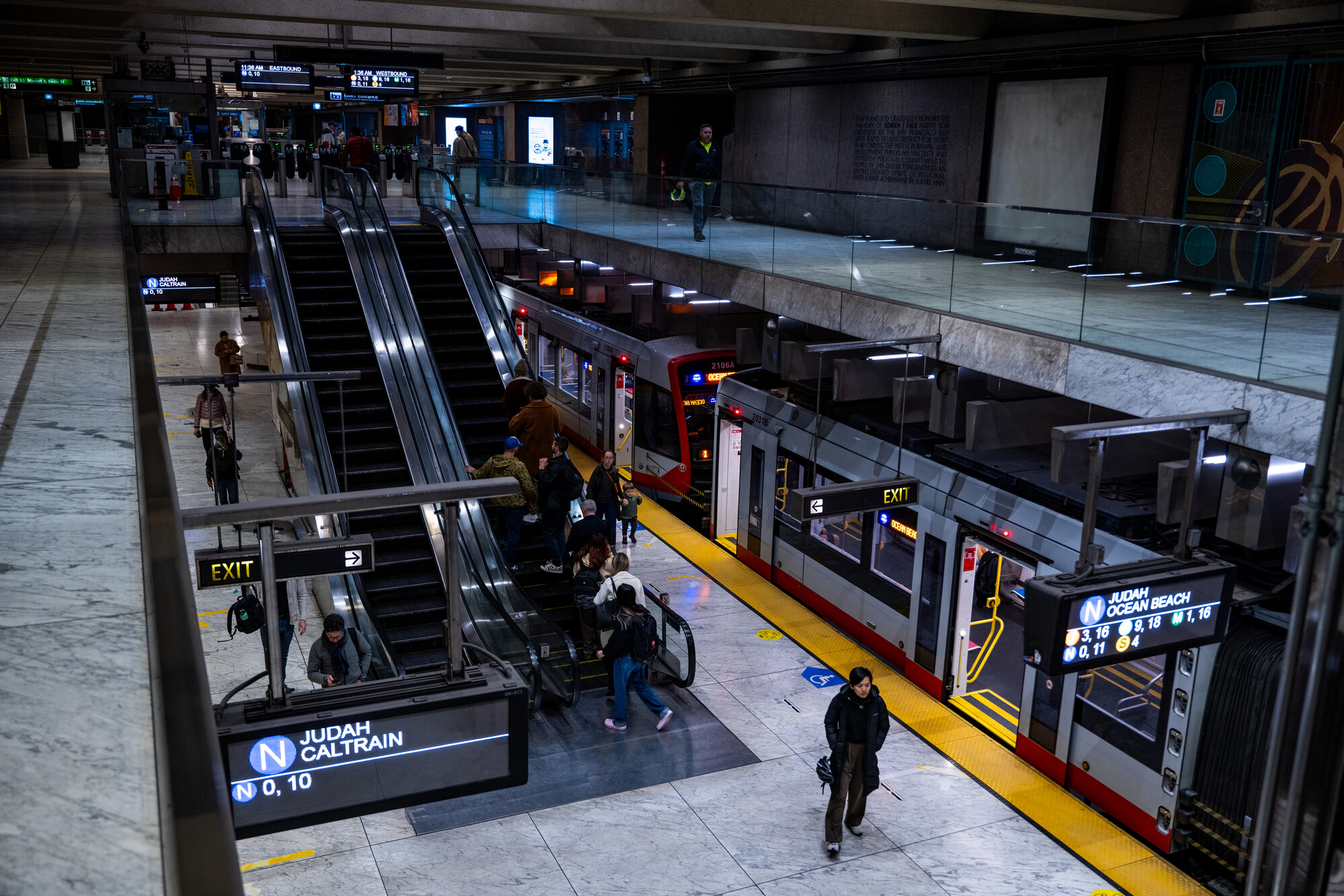
"caption": "A MUNI train stops at the Embarcadero Station in San Francisco on Jan. 11, 2024. Downtown San Francisco-bound passengers aboard the N Judah in September had their usual morning commute upended when the train sped through a stop.",
"credit": "Beth LaBerge/KQED",
"altTag": null,
"description": null,
"imgSizes": {
"thumbnail": {
"file": "https://cdn.kqed.org/wp-content/uploads/sites/10/2025/11/240111-TransitFile-06-BL_qed-160x107.jpg",
"width": 160,
"height": 107,
"mimeType": "image/jpeg"
},
"1536x1536": {
"file": "https://cdn.kqed.org/wp-content/uploads/sites/10/2025/11/240111-TransitFile-06-BL_qed-1536x1024.jpg",
"width": 1536,
"height": 1024,
"mimeType": "image/jpeg"
},
"post-thumbnail": {
"file": "https://cdn.kqed.org/wp-content/uploads/sites/10/2025/11/240111-TransitFile-06-BL_qed-672x372.jpg",
"width": 672,
"height": 372,
"mimeType": "image/jpeg"
},
"twentyfourteen-full-width": {
"file": "https://cdn.kqed.org/wp-content/uploads/sites/10/2025/11/240111-TransitFile-06-BL_qed-1038x576.jpg",
"width": 1038,
"height": 576,
"mimeType": "image/jpeg"
},
"npr-cds-wide": {
"file": "https://cdn.kqed.org/wp-content/uploads/sites/10/2025/11/240111-TransitFile-06-BL_qed-1200x675.jpg",
"width": 1200,
"height": 675,
"mimeType": "image/jpeg"
},
"kqedFullSize": {
"file": "https://cdn.kqed.org/wp-content/uploads/sites/10/2025/11/240111-TransitFile-06-BL_qed.jpg",
"width": 1999,
"height": 1333
}
},
"isLoading": false,
"fetchFailed": false
},
"news_12060014": {
"type": "attachments",
"id": "news_12060014",
"meta": {
"index": "attachments_1716263798",
"site": "news",
"id": "12060014",
"found": true
},
"title": "Muni",
"publishDate": 1760555914,
"status": "inherit",
"parent": 12060004,
"modified": 1760555923,
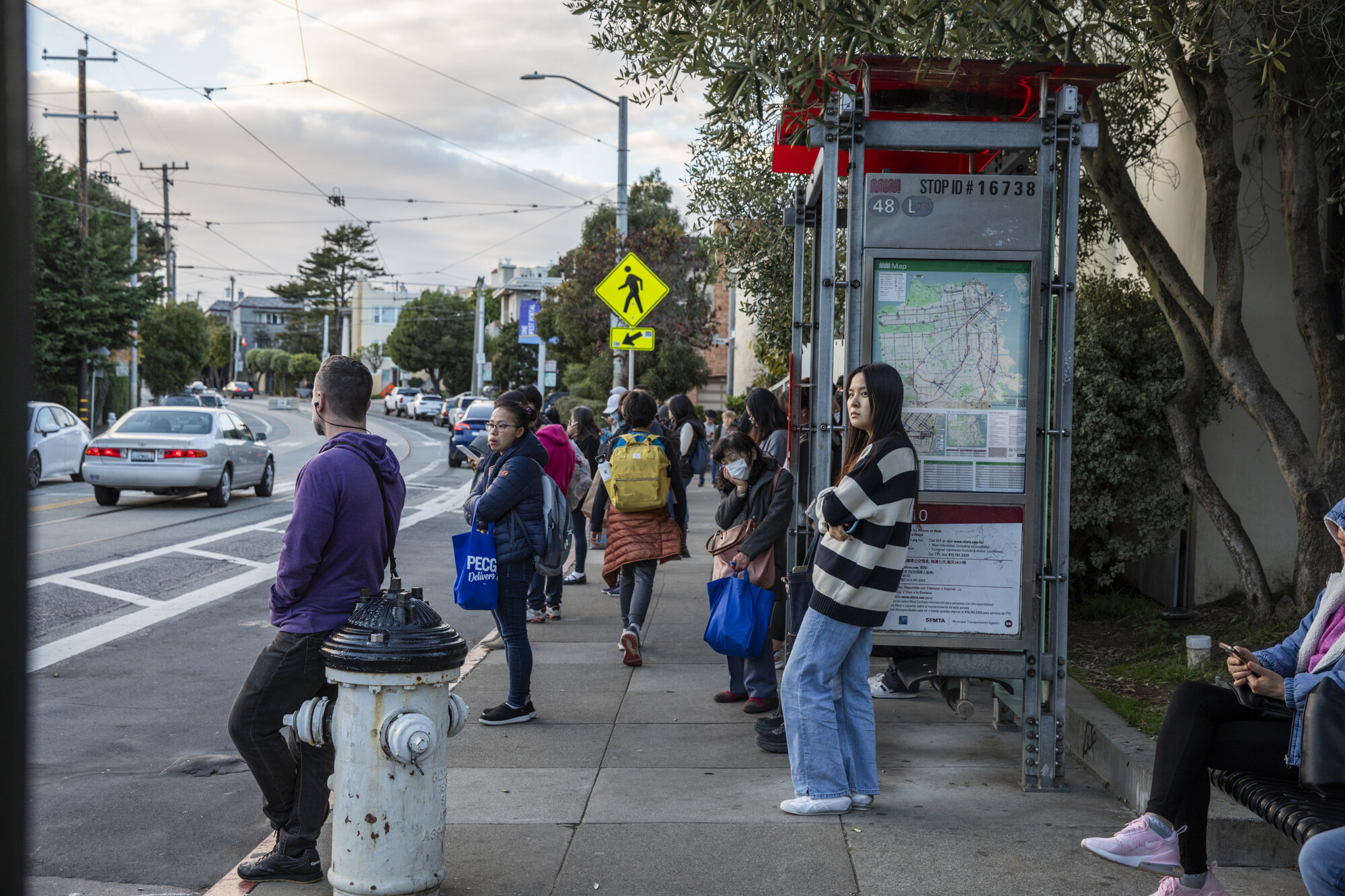
"caption": "Muni riders wait for the bus outside West Portal Station in San Francisco on Tuesday, Nov. 28, 2023.",
"credit": "Juliana Yamada/KQED",
"altTag": null,
"description": null,
"imgSizes": {
"thumbnail": {
"file": "https://cdn.kqed.org/wp-content/uploads/sites/10/2025/10/20231128-Muni-025-JY_qed-160x107.jpg",
"width": 160,
"height": 107,
"mimeType": "image/jpeg"
},
"1536x1536": {
"file": "https://cdn.kqed.org/wp-content/uploads/sites/10/2025/10/20231128-Muni-025-JY_qed-1536x1024.jpg",
"width": 1536,
"height": 1024,
"mimeType": "image/jpeg"
},
"post-thumbnail": {
"file": "https://cdn.kqed.org/wp-content/uploads/sites/10/2025/10/20231128-Muni-025-JY_qed-672x372.jpg",
"width": 672,
"height": 372,
"mimeType": "image/jpeg"
},
"twentyfourteen-full-width": {
"file": "https://cdn.kqed.org/wp-content/uploads/sites/10/2025/10/20231128-Muni-025-JY_qed-1038x576.jpg",
"width": 1038,
"height": 576,
"mimeType": "image/jpeg"
},
"kqedFullSize": {
"file": "https://cdn.kqed.org/wp-content/uploads/sites/10/2025/10/20231128-Muni-025-JY_qed.jpg",
"width": 2000,
"height": 1333
}
},
"isLoading": false,
"fetchFailed": false
},
"news_12051549": {
"type": "attachments",
"id": "news_12051549",
"meta": {
"index": "attachments_1716263798",
"site": "news",
"id": "12051549",
"found": true
},
"title": "250808-MOPEDDEATH-16-KQED",
"publishDate": 1754686672,
"status": "inherit",
"parent": 0,
"modified": 1754686722,
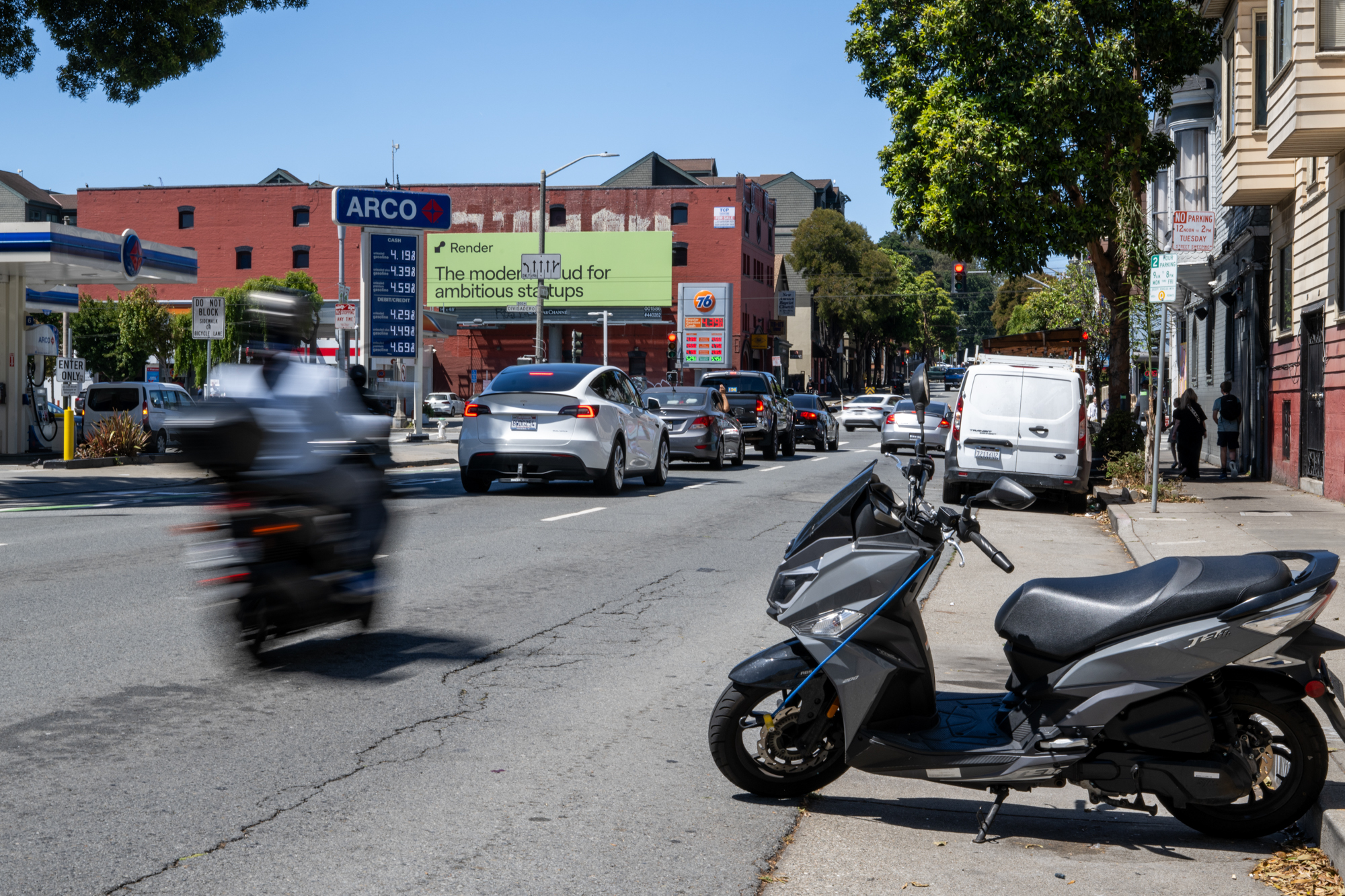
"caption": "A scooter drives along Fell Street at the intersection with Divisadero Street in San Francisco’s Panhandle neighborhood on Aug. 8, 2025.",
"credit": "Beth LaBerge/KQED",
"altTag": null,
"description": null,
"imgSizes": {
"thumbnail": {
"file": "https://cdn.kqed.org/wp-content/uploads/sites/10/2025/08/250808-MOPEDDEATH-16-KQED-160x107.jpg",
"width": 160,
"height": 107,
"mimeType": "image/jpeg"
},
"1536x1536": {
"file": "https://cdn.kqed.org/wp-content/uploads/sites/10/2025/08/250808-MOPEDDEATH-16-KQED-1536x1024.jpg",
"width": 1536,
"height": 1024,
"mimeType": "image/jpeg"
},
"post-thumbnail": {
"file": "https://cdn.kqed.org/wp-content/uploads/sites/10/2025/08/250808-MOPEDDEATH-16-KQED-672x372.jpg",
"width": 672,
"height": 372,
"mimeType": "image/jpeg"
},
"twentyfourteen-full-width": {
"file": "https://cdn.kqed.org/wp-content/uploads/sites/10/2025/08/250808-MOPEDDEATH-16-KQED-1038x576.jpg",
"width": 1038,
"height": 576,
"mimeType": "image/jpeg"
},
"kqedFullSize": {
"file": "https://cdn.kqed.org/wp-content/uploads/sites/10/2025/08/250808-MOPEDDEATH-16-KQED.jpg",
"width": 2000,
"height": 1333
}
},
"isLoading": false,
"fetchFailed": false
},
"news_12049213": {
"type": "attachments",
"id": "news_12049213",
"meta": {
"index": "attachments_1716263798",
"site": "news",
"id": "12049213",
"found": true
},
"title": "250722-DEADCOMUNI_00014_TV-KQED",
"publishDate": 1753213865,
"status": "inherit",
"parent": 0,
"modified": 1753222205,
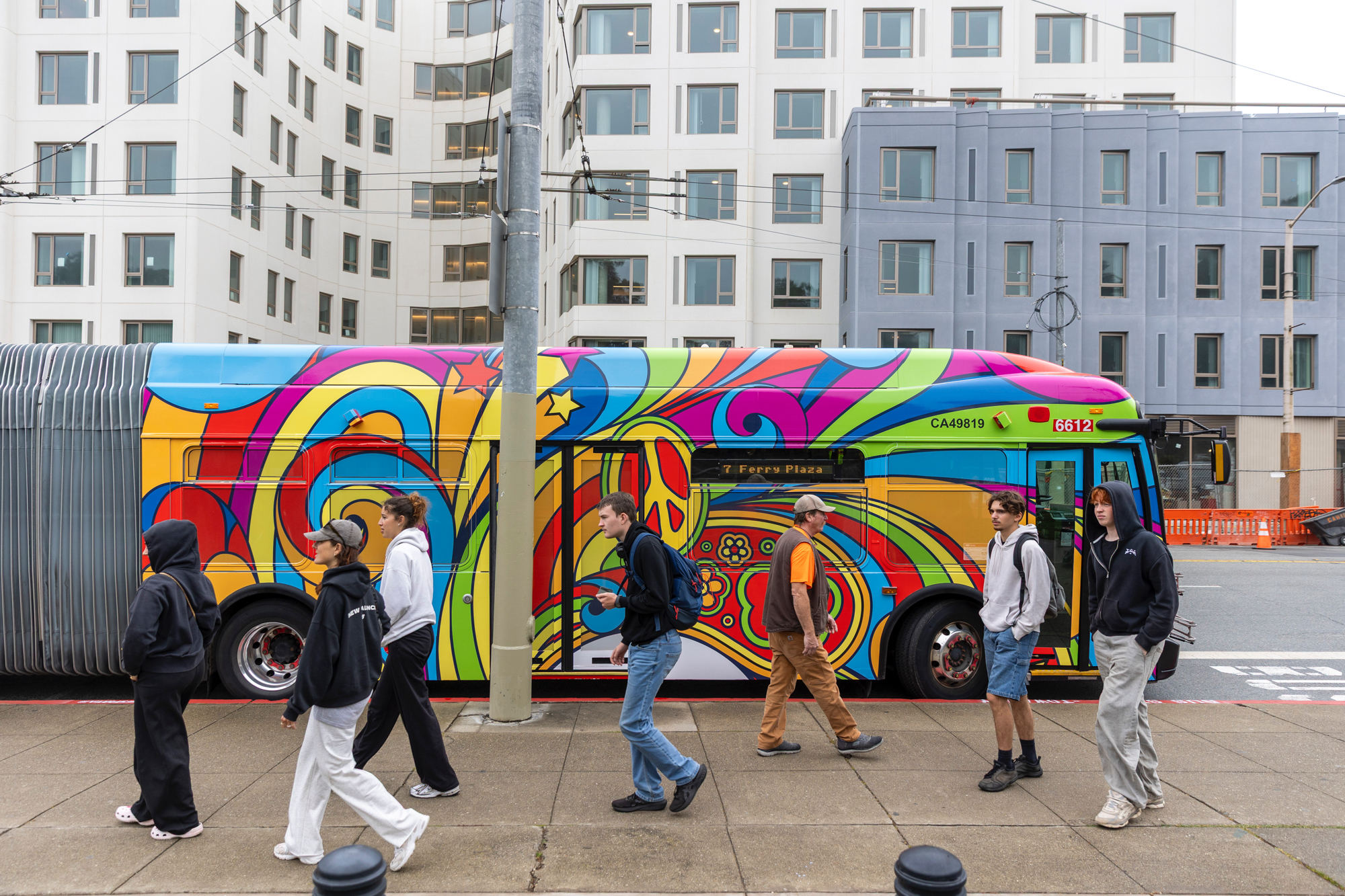
"caption": "Pedestrians walk past one of the psychedelic-themed buses in the Haight Ashbury District in San Francisco on July 22, 2025. Mayor Daniel Lurie and the SFMTA unveil one of several tie-dye Muni buses in celebration of the Dead & Company 60th anniversary concert.",
"credit": "Tâm Vũ/KQED",
"altTag": null,
"description": null,
"imgSizes": {
"thumbnail": {
"file": "https://cdn.kqed.org/wp-content/uploads/sites/10/2025/07/250722-DEADCOMUNI_00014_TV-KQED-160x107.jpg",
"width": 160,
"height": 107,
"mimeType": "image/jpeg"
},
"1536x1536": {
"file": "https://cdn.kqed.org/wp-content/uploads/sites/10/2025/07/250722-DEADCOMUNI_00014_TV-KQED-1536x1024.jpg",
"width": 1536,
"height": 1024,
"mimeType": "image/jpeg"
},
"post-thumbnail": {
"file": "https://cdn.kqed.org/wp-content/uploads/sites/10/2025/07/250722-DEADCOMUNI_00014_TV-KQED-672x372.jpg",
"width": 672,
"height": 372,
"mimeType": "image/jpeg"
},
"twentyfourteen-full-width": {
"file": "https://cdn.kqed.org/wp-content/uploads/sites/10/2025/07/250722-DEADCOMUNI_00014_TV-KQED-1038x576.jpg",
"width": 1038,
"height": 576,
"mimeType": "image/jpeg"
},
"kqedFullSize": {
"file": "https://cdn.kqed.org/wp-content/uploads/sites/10/2025/07/250722-DEADCOMUNI_00014_TV-KQED.jpg",
"width": 2000,
"height": 1333
}
},
"isLoading": false,
"fetchFailed": false
},
"news_12025128": {
"type": "attachments",
"id": "news_12025128",
"meta": {
"index": "attachments_1716263798",
"site": "news",
"id": "12025128",
"found": true
},
"title": "241217-DaylightingLaws-01-BL_qed",
"publishDate": 1738356744,
"status": "inherit",
"parent": 12025187,
"modified": 1738367248,
"caption": "A red curb indicates a no parking area near a crosswalk on San Carlos Street in San Francisco on Dec. 17, 2024.",
"credit": "Beth LaBerge/KQED",
"altTag": null,
"description": null,
"imgSizes": {
"medium": {
"file": "https://cdn.kqed.org/wp-content/uploads/sites/10/2025/01/241217-DaylightingLaws-01-BL_qed-800x533.jpg",
"width": 800,
"height": 533,
"mimeType": "image/jpeg"
},
"large": {
"file": "https://cdn.kqed.org/wp-content/uploads/sites/10/2025/01/241217-DaylightingLaws-01-BL_qed-1020x680.jpg",
"width": 1020,
"height": 680,
"mimeType": "image/jpeg"
},
"thumbnail": {
"file": "https://cdn.kqed.org/wp-content/uploads/sites/10/2025/01/241217-DaylightingLaws-01-BL_qed-160x107.jpg",
"width": 160,
"height": 107,
"mimeType": "image/jpeg"
},
"1536x1536": {
"file": "https://cdn.kqed.org/wp-content/uploads/sites/10/2025/01/241217-DaylightingLaws-01-BL_qed-1536x1024.jpg",
"width": 1536,
"height": 1024,
"mimeType": "image/jpeg"
},
"post-thumbnail": {
"file": "https://cdn.kqed.org/wp-content/uploads/sites/10/2025/01/241217-DaylightingLaws-01-BL_qed-672x372.jpg",
"width": 672,
"height": 372,
"mimeType": "image/jpeg"
},
"twentyfourteen-full-width": {
"file": "https://cdn.kqed.org/wp-content/uploads/sites/10/2025/01/241217-DaylightingLaws-01-BL_qed-1038x576.jpg",
"width": 1038,
"height": 576,
"mimeType": "image/jpeg"
},
"full-width": {
"file": "https://cdn.kqed.org/wp-content/uploads/sites/10/2025/01/241217-DaylightingLaws-01-BL_qed-1920x1280.jpg",
"width": 1920,
"height": 1280,
"mimeType": "image/jpeg"
},
"kqedFullSize": {
"file": "https://cdn.kqed.org/wp-content/uploads/sites/10/2025/01/241217-DaylightingLaws-01-BL_qed.jpg",
"width": 2000,
"height": 1333
}
},
"isLoading": false,
"fetchFailed": false
},
"news_12043965": {
"type": "attachments",
"id": "news_12043965",
"meta": {
"index": "attachments_1716263798",
"site": "news",
"id": "12043965",
"found": true
},
"title": "07312024-RVRESIDENTSWINSTON-ET-PU-22-KQED",
"publishDate": 1749754732,
"status": "inherit",
"parent": 0,
"modified": 1761867353,
"caption": "Veronica Cañas affectionately holds her one-year-old son next to their RV in San Francisco, on Wednesday, July 31, 2024. “We are waiting to see where we can stay — I feel like we aren’t bothering anyone,” Cañas said, who lives with her husband and two small children. Cañas and others anxiously wait on the city’s next steps for a safe parking site. RV residents organized a caravan to attempt to occupy an empty lot at the San Francisco Zoo on Monday night. RV residents say that San Francisco Police officers told them they can move to a side street near the zoo as a temporary alternative.",
"credit": "Pablo Unzueta for El Tecolote/CatchLight Local",
"altTag": null,
"description": null,
"imgSizes": {
"thumbnail": {
"file": "https://cdn.kqed.org/wp-content/uploads/sites/10/2025/06/07312024-RVRESIDENTSWINSTON-ET-PU-22-KQED-160x106.jpg",
"width": 160,
"height": 106,
"mimeType": "image/jpeg"
},
"1536x1536": {
"file": "https://cdn.kqed.org/wp-content/uploads/sites/10/2025/06/07312024-RVRESIDENTSWINSTON-ET-PU-22-KQED-1536x1022.jpg",
"width": 1536,
"height": 1022,
"mimeType": "image/jpeg"
},
"post-thumbnail": {
"file": "https://cdn.kqed.org/wp-content/uploads/sites/10/2025/06/07312024-RVRESIDENTSWINSTON-ET-PU-22-KQED-672x372.jpg",
"width": 672,
"height": 372,
"mimeType": "image/jpeg"
},
"twentyfourteen-full-width": {
"file": "https://cdn.kqed.org/wp-content/uploads/sites/10/2025/06/07312024-RVRESIDENTSWINSTON-ET-PU-22-KQED-1038x576.jpg",
"width": 1038,
"height": 576,
"mimeType": "image/jpeg"
},
"kqedFullSize": {
"file": "https://cdn.kqed.org/wp-content/uploads/sites/10/2025/06/07312024-RVRESIDENTSWINSTON-ET-PU-22-KQED.jpg",
"width": 2000,
"height": 1331
}
},
"isLoading": false,
"fetchFailed": false
},
"news_12041827": {
"type": "attachments",
"id": "news_12041827",
"meta": {
"index": "attachments_1716263798",
"site": "news",
"id": "12041827",
"found": true
},
"title": "006_KQED_SanFrancisco_Muni_04062020_qed",
"publishDate": 1748456618,
"status": "inherit",
"parent": 12041824,
"modified": 1748807984,
"caption": "A fleet of Muni buses in San Francisco on April 6, 2020.",
"credit": "Beth LaBerge/KQED",
"altTag": "A fleet of buses with red stripes in a parking lot.",
"description": null,
"imgSizes": {
"medium": {
"file": "https://cdn.kqed.org/wp-content/uploads/sites/10/2025/05/006_KQED_SanFrancisco_Muni_04062020_qed-800x533.jpg",
"width": 800,
"height": 533,
"mimeType": "image/jpeg"
},
"large": {
"file": "https://cdn.kqed.org/wp-content/uploads/sites/10/2025/05/006_KQED_SanFrancisco_Muni_04062020_qed-1020x680.jpg",
"width": 1020,
"height": 680,
"mimeType": "image/jpeg"
},
"thumbnail": {
"file": "https://cdn.kqed.org/wp-content/uploads/sites/10/2025/05/006_KQED_SanFrancisco_Muni_04062020_qed-160x107.jpg",
"width": 160,
"height": 107,
"mimeType": "image/jpeg"
},
"1536x1536": {
"file": "https://cdn.kqed.org/wp-content/uploads/sites/10/2025/05/006_KQED_SanFrancisco_Muni_04062020_qed-1536x1024.jpg",
"width": 1536,
"height": 1024,
"mimeType": "image/jpeg"
},
"post-thumbnail": {
"file": "https://cdn.kqed.org/wp-content/uploads/sites/10/2025/05/006_KQED_SanFrancisco_Muni_04062020_qed-672x372.jpg",
"width": 672,
"height": 372,
"mimeType": "image/jpeg"
},
"twentyfourteen-full-width": {
"file": "https://cdn.kqed.org/wp-content/uploads/sites/10/2025/05/006_KQED_SanFrancisco_Muni_04062020_qed-1038x576.jpg",
"width": 1038,
"height": 576,
"mimeType": "image/jpeg"
},
"full-width": {
"file": "https://cdn.kqed.org/wp-content/uploads/sites/10/2025/05/006_KQED_SanFrancisco_Muni_04062020_qed-1920x1280.jpg",
"width": 1920,
"height": 1280,
"mimeType": "image/jpeg"
},
"kqedFullSize": {
"file": "https://cdn.kqed.org/wp-content/uploads/sites/10/2025/05/006_KQED_SanFrancisco_Muni_04062020_qed.jpg",
"width": 2000,
"height": 1333
}
},
"isLoading": false,
"fetchFailed": false
},
"news_12040819": {
"type": "attachments",
"id": "news_12040819",
"meta": {
"index": "attachments_1716263798",
"site": "news",
"id": "12040819",
"found": true
},
"title": "250519-VISIONZEROACTIVISM-15-BL-KQED",
"publishDate": 1747695824,
"status": "inherit",
"parent": 12067175,
"modified": 1765845895,
"caption": "Traffic safety advocates from Walk San Francisco, Families for Safe Streets, and the Vision Zero Coalition gather on the steps of San Francisco City Hall on May 19, 2025, to demand the adoption of a new Vision Zero policy by July 30. The demonstrators placed white shoes on the steps, symbolizing the pedestrians who have lost their lives in traffic crashes.",
"credit": "Beth LaBerge/KQED",
"altTag": null,
"description": null,
"imgSizes": {
"medium": {
"file": "https://cdn.kqed.org/wp-content/uploads/sites/10/2025/05/250519-VISIONZEROACTIVISM-15-BL-KQED-800x533.jpg",
"width": 800,
"height": 533,
"mimeType": "image/jpeg"
},
"large": {
"file": "https://cdn.kqed.org/wp-content/uploads/sites/10/2025/05/250519-VISIONZEROACTIVISM-15-BL-KQED-1020x680.jpg",
"width": 1020,
"height": 680,
"mimeType": "image/jpeg"
},
"thumbnail": {
"file": "https://cdn.kqed.org/wp-content/uploads/sites/10/2025/05/250519-VISIONZEROACTIVISM-15-BL-KQED-160x107.jpg",
"width": 160,
"height": 107,
"mimeType": "image/jpeg"
},
"1536x1536": {
"file": "https://cdn.kqed.org/wp-content/uploads/sites/10/2025/05/250519-VISIONZEROACTIVISM-15-BL-KQED-1536x1024.jpg",
"width": 1536,
"height": 1024,
"mimeType": "image/jpeg"
},
"post-thumbnail": {
"file": "https://cdn.kqed.org/wp-content/uploads/sites/10/2025/05/250519-VISIONZEROACTIVISM-15-BL-KQED-672x372.jpg",
"width": 672,
"height": 372,
"mimeType": "image/jpeg"
},
"twentyfourteen-full-width": {
"file": "https://cdn.kqed.org/wp-content/uploads/sites/10/2025/05/250519-VISIONZEROACTIVISM-15-BL-KQED-1038x576.jpg",
"width": 1038,
"height": 576,
"mimeType": "image/jpeg"
},
"full-width": {
"file": "https://cdn.kqed.org/wp-content/uploads/sites/10/2025/05/250519-VISIONZEROACTIVISM-15-BL-KQED-1920x1280.jpg",
"width": 1920,
"height": 1280,
"mimeType": "image/jpeg"
},
"kqedFullSize": {
"file": "https://cdn.kqed.org/wp-content/uploads/sites/10/2025/05/250519-VISIONZEROACTIVISM-15-BL-KQED.jpg",
"width": 2000,
"height": 1333
}
},
"isLoading": false,
"fetchFailed": false
},
"news_12040186": {
"type": "attachments",
"id": "news_12040186",
"meta": {
"index": "attachments_1716263798",
"site": "news",
"id": "12040186",
"found": true
},
"title": "20241204-BART-JY-002_qed",
"publishDate": 1747263386,
"status": "inherit",
"parent": 0,
"modified": 1757194100,
"caption": "A BART car approaches the platform at Daly City Station in Daly City, on Dec. 4, 2024.",
"credit": "Juliana Yamada/KQED",
"altTag": null,
"description": null,
"imgSizes": {
"medium": {
"file": "https://cdn.kqed.org/wp-content/uploads/sites/10/2025/05/20241204-BART-JY-002_qed-800x533.jpg",
"width": 800,
"height": 533,
"mimeType": "image/jpeg"
},
"large": {
"file": "https://cdn.kqed.org/wp-content/uploads/sites/10/2025/05/20241204-BART-JY-002_qed-1020x680.jpg",
"width": 1020,
"height": 680,
"mimeType": "image/jpeg"
},
"thumbnail": {
"file": "https://cdn.kqed.org/wp-content/uploads/sites/10/2025/05/20241204-BART-JY-002_qed-160x107.jpg",
"width": 160,
"height": 107,
"mimeType": "image/jpeg"
},
"1536x1536": {
"file": "https://cdn.kqed.org/wp-content/uploads/sites/10/2025/05/20241204-BART-JY-002_qed-1536x1024.jpg",
"width": 1536,
"height": 1024,
"mimeType": "image/jpeg"
},
"post-thumbnail": {
"file": "https://cdn.kqed.org/wp-content/uploads/sites/10/2025/05/20241204-BART-JY-002_qed-672x372.jpg",
"width": 672,
"height": 372,
"mimeType": "image/jpeg"
},
"twentyfourteen-full-width": {
"file": "https://cdn.kqed.org/wp-content/uploads/sites/10/2025/05/20241204-BART-JY-002_qed-1038x576.jpg",
"width": 1038,
"height": 576,
"mimeType": "image/jpeg"
},
"full-width": {
"file": "https://cdn.kqed.org/wp-content/uploads/sites/10/2025/05/20241204-BART-JY-002_qed-1920x1280.jpg",
"width": 1920,
"height": 1280,
"mimeType": "image/jpeg"
},
"kqedFullSize": {
"file": "https://cdn.kqed.org/wp-content/uploads/sites/10/2025/05/20241204-BART-JY-002_qed.jpg",
"width": 2000,
"height": 1333
}
},
"isLoading": false,
"fetchFailed": false
},
"news_12032140": {
"type": "attachments",
"id": "news_12032140",
"meta": {
"index": "attachments_1716263798",
"site": "news",
"id": "12032140",
"found": true
},
"title": "Speed cameras on Geary St. in San Francisco on March 19, 2025.",
"publishDate": 1742423081,
"status": "inherit",
"parent": 12032036,
"modified": 1742500032,
"caption": "A speed camera on Geary Street in San Francisco on March 19, 2025.",
"credit": "Martin do Nascimento/KQED",
"altTag": null,
"description": null,
"imgSizes": {
"medium": {
"file": "https://cdn.kqed.org/wp-content/uploads/sites/10/2025/03/250319-SF-SPEED-CAMERAS-MD-03-KQED-800x533.jpg",
"width": 800,
"height": 533,
"mimeType": "image/jpeg"
},
"large": {
"file": "https://cdn.kqed.org/wp-content/uploads/sites/10/2025/03/250319-SF-SPEED-CAMERAS-MD-03-KQED-1020x680.jpg",
"width": 1020,
"height": 680,
"mimeType": "image/jpeg"
},
"thumbnail": {
"file": "https://cdn.kqed.org/wp-content/uploads/sites/10/2025/03/250319-SF-SPEED-CAMERAS-MD-03-KQED-160x107.jpg",
"width": 160,
"height": 107,
"mimeType": "image/jpeg"
},
"1536x1536": {
"file": "https://cdn.kqed.org/wp-content/uploads/sites/10/2025/03/250319-SF-SPEED-CAMERAS-MD-03-KQED-1536x1024.jpg",
"width": 1536,
"height": 1024,
"mimeType": "image/jpeg"
},
"post-thumbnail": {
"file": "https://cdn.kqed.org/wp-content/uploads/sites/10/2025/03/250319-SF-SPEED-CAMERAS-MD-03-KQED-672x372.jpg",
"width": 672,
"height": 372,
"mimeType": "image/jpeg"
},
"twentyfourteen-full-width": {
"file": "https://cdn.kqed.org/wp-content/uploads/sites/10/2025/03/250319-SF-SPEED-CAMERAS-MD-03-KQED-1038x576.jpg",
"width": 1038,
"height": 576,
"mimeType": "image/jpeg"
},
"full-width": {
"file": "https://cdn.kqed.org/wp-content/uploads/sites/10/2025/03/250319-SF-SPEED-CAMERAS-MD-03-KQED-1920x1280.jpg",
"width": 1920,
"height": 1280,
"mimeType": "image/jpeg"
},
"kqedFullSize": {
"file": "https://cdn.kqed.org/wp-content/uploads/sites/10/2025/03/250319-SF-SPEED-CAMERAS-MD-03-KQED.jpg",
"width": 2000,
"height": 1333
}
},
"isLoading": false,
"fetchFailed": false
},
"news_11932694": {
"type": "attachments",
"id": "news_11932694",
"meta": {
"index": "attachments_1716263798",
"site": "news",
"id": "11932694",
"found": true
},
"title": "Rockridge-BART-cropped",
"publishDate": 1668796508,
"status": "inherit",
"parent": 11932690,
"modified": 1746835406,
"caption": "A Bay Area Rapid Transit (BART) train pulls away from Oakland's Rockridge station on Aug. 2, 2013.",
"credit": "Justin Sullivan/Getty Images",
"altTag": "A BART train pulls out of an above-ground station. Cars whiz by alongside and the city of San Francisco looms in the background.",
"description": null,
"imgSizes": {
"medium": {
"file": "https://cdn.kqed.org/wp-content/uploads/sites/10/2022/11/Rockridge-BART-cropped-800x492.jpg",
"width": 800,
"height": 492,
"mimeType": "image/jpeg"
},
"large": {
"file": "https://cdn.kqed.org/wp-content/uploads/sites/10/2022/11/Rockridge-BART-cropped-1020x627.jpg",
"width": 1020,
"height": 627,
"mimeType": "image/jpeg"
},
"thumbnail": {
"file": "https://cdn.kqed.org/wp-content/uploads/sites/10/2022/11/Rockridge-BART-cropped-160x98.jpg",
"width": 160,
"height": 98,
"mimeType": "image/jpeg"
},
"1536x1536": {
"file": "https://cdn.kqed.org/wp-content/uploads/sites/10/2022/11/Rockridge-BART-cropped-1536x944.jpg",
"width": 1536,
"height": 944,
"mimeType": "image/jpeg"
},
"post-thumbnail": {
"file": "https://cdn.kqed.org/wp-content/uploads/sites/10/2022/11/Rockridge-BART-cropped-672x372.jpg",
"width": 672,
"height": 372,
"mimeType": "image/jpeg"
},
"twentyfourteen-full-width": {
"file": "https://cdn.kqed.org/wp-content/uploads/sites/10/2022/11/Rockridge-BART-cropped-1038x576.jpg",
"width": 1038,
"height": 576,
"mimeType": "image/jpeg"
},
"kqedFullSize": {
"file": "https://cdn.kqed.org/wp-content/uploads/sites/10/2022/11/Rockridge-BART-cropped.jpg",
"width": 1920,
"height": 1180
}
},
"isLoading": false,
"fetchFailed": false
},
"news_12037658": {
"type": "attachments",
"id": "news_12037658",
"meta": {
"index": "attachments_1716263798",
"site": "news",
"id": "12037658",
"found": true
},
"title": "Muni",
"publishDate": 1745603535,
"status": "inherit",
"parent": 12046678,
"modified": 1751395267,
"caption": "Passengers wait to board the L Bus outside of West Portal Station in San Francisco on Tuesday, Nov. 28, 2023.",
"credit": "Juliana Yamada/KQED",
"altTag": null,
"description": null,
"imgSizes": {
"medium": {
"file": "https://cdn.kqed.org/wp-content/uploads/sites/10/2025/04/20231128-Muni-013-JY_qed-1-800x533.jpg",
"width": 800,
"height": 533,
"mimeType": "image/jpeg"
},
"large": {
"file": "https://cdn.kqed.org/wp-content/uploads/sites/10/2025/04/20231128-Muni-013-JY_qed-1-1020x680.jpg",
"width": 1020,
"height": 680,
"mimeType": "image/jpeg"
},
"thumbnail": {
"file": "https://cdn.kqed.org/wp-content/uploads/sites/10/2025/04/20231128-Muni-013-JY_qed-1-160x107.jpg",
"width": 160,
"height": 107,
"mimeType": "image/jpeg"
},
"1536x1536": {
"file": "https://cdn.kqed.org/wp-content/uploads/sites/10/2025/04/20231128-Muni-013-JY_qed-1-1536x1024.jpg",
"width": 1536,
"height": 1024,
"mimeType": "image/jpeg"
},
"post-thumbnail": {
"file": "https://cdn.kqed.org/wp-content/uploads/sites/10/2025/04/20231128-Muni-013-JY_qed-1-672x372.jpg",
"width": 672,
"height": 372,
"mimeType": "image/jpeg"
},
"twentyfourteen-full-width": {
"file": "https://cdn.kqed.org/wp-content/uploads/sites/10/2025/04/20231128-Muni-013-JY_qed-1-1038x576.jpg",
"width": 1038,
"height": 576,
"mimeType": "image/jpeg"
},
"full-width": {
"file": "https://cdn.kqed.org/wp-content/uploads/sites/10/2025/04/20231128-Muni-013-JY_qed-1-1920x1280.jpg",
"width": 1920,
"height": 1280,
"mimeType": "image/jpeg"
},
"kqedFullSize": {
"file": "https://cdn.kqed.org/wp-content/uploads/sites/10/2025/04/20231128-Muni-013-JY_qed-1.jpg",
"width": 2000,
"height": 1333
}
},
"isLoading": false,
"fetchFailed": false
}
},
"audioPlayerReducer": {
"postId": "stream_live",
"isPaused": true,
"isPlaying": false,
"pfsActive": false,
"pledgeModalIsOpen": true,
"playerDrawerIsOpen": false,
"liveAudioPlayStartedAt": 0,
"liveAudioPlayContext": ""
},
"authorsReducer": {
"byline_news_12043940": {
"type": "authors",
"id": "byline_news_12043940",
"meta": {
"override": true
},
"slug": "byline_news_12043940",
"name": "Yesica Prado and Erika Carlos",
"isLoading": false
},
"danbrekke": {
"type": "authors",
"id": "222",
"meta": {
"index": "authors_1716337520",
"id": "222",
"found": true
},
"name": "Dan Brekke",
"firstName": "Dan",
"lastName": "Brekke",
"slug": "danbrekke",
"email": "dbrekke@kqed.org",
"display_author_email": true,
"staff_mastheads": [
"news",
"science"
],
"title": "KQED Editor and Reporter",
"bio": "Dan Brekke is a reporter and editor for KQED News, responsible for coverage of topics ranging from California water issues to the Bay Area's transportation challenges. In a newsroom career that began in Chicago in 1972, Dan has worked for \u003cem>The San Francisco Examiner,\u003c/em> Wired and TechTV and has been published in The New York Times, The New York Times Magazine, Business 2.0, Salon and elsewhere.\r\n\r\nSince joining KQED in 2007, Dan has reported, edited and produced both radio and online features and breaking news pieces. He has shared as both editor and reporter in four Society of Professional Journalists Norcal Excellence in Journalism awards and one Edward R. Murrow regional award. He was chosen for a spring 2017 residency at the Mesa Refuge to advance his research on California salmon.\r\n\r\nEmail Dan at: \u003ca href=\"mailto:dbrekke@kqed.org\">dbrekke@kqed.org\u003c/a>\r\n\r\n\u003cstrong>Twitter:\u003c/strong> \u003ca href=\"https://twitter.com/danbrekke\" rel=\"noopener noreferrer\">twitter.com/danbrekke\u003c/a>\r\n\u003cstrong>Facebook:\u003c/strong> \u003ca href=\"https://www.facebook.com/danbrekke\" rel=\"noopener noreferrer\">www.facebook.com/danbrekke\u003c/a>\r\n\u003cstrong>LinkedIn:\u003c/strong> \u003ca href=\"https://www.linkedin.com/in/danbrekke\" rel=\"noopener noreferrer\">www.linkedin.com/in/danbrekke\u003c/a>",
"avatar": "https://secure.gravatar.com/avatar/8f1f0d2a978fb3b23426c922c7e2af558fa36905b49c4ce76a97dc3c72d27226?s=600&d=mm&r=g",
"twitter": "danbrekke",
"bluesky": null,
"facebook": null,
"instagram": "https://www.instagram.com/dan.brekke/",
"linkedin": "https://www.linkedin.com/in/danbrekke/",
"sites": [
{
"site": "news",
"roles": [
"administrator",
"create_posts"
]
},
{
"site": "stateofhealth",
"roles": [
"editor"
]
},
{
"site": "science",
"roles": [
"editor"
]
},
{
"site": "quest",
"roles": [
"contributor"
]
},
{
"site": "food",
"roles": [
"contributor"
]
},
{
"site": "forum",
"roles": [
"contributor"
]
},
{
"site": "elections",
"roles": [
"editor"
]
},
{
"site": "liveblog",
"roles": [
"editor"
]
}
],
"headData": {
"title": "Dan Brekke | KQED",
"description": "KQED Editor and Reporter",
"ogImgSrc": "https://secure.gravatar.com/avatar/8f1f0d2a978fb3b23426c922c7e2af558fa36905b49c4ce76a97dc3c72d27226?s=600&d=mm&r=g",
"twImgSrc": "https://secure.gravatar.com/avatar/8f1f0d2a978fb3b23426c922c7e2af558fa36905b49c4ce76a97dc3c72d27226?s=600&d=mm&r=g"
},
"isLoading": false,
"link": "/author/danbrekke"
},
"adahlstromeckman": {
"type": "authors",
"id": "11785",
"meta": {
"index": "authors_1716337520",
"id": "11785",
"found": true
},
"name": "Azul Dahlstrom-Eckman",
"firstName": "Azul",
"lastName": "Dahlstrom-Eckman",
"slug": "adahlstromeckman",
"email": "adahlstrom-eckman@kqed.org",
"display_author_email": true,
"staff_mastheads": [],
"title": "Reporter",
"bio": "Azul is a reporter for KQED focusing on transportation and features. He joined KQED in 2021 as an alumna of KALW's Audio Academy radio journalism training program.",
"avatar": "https://secure.gravatar.com/avatar/9cb750298435add7815a777f55bf1f46845c1386bb8452555c60a7b820b5aba3?s=600&d=blank&r=g",
"twitter": "@zuliemann",
"bluesky": "@azul415.bsky.social",
"facebook": null,
"instagram": null,
"linkedin": null,
"sites": [
{
"site": "arts",
"roles": [
"editor"
]
},
{
"site": "news",
"roles": [
"editor"
]
},
{
"site": "science",
"roles": [
"editor"
]
},
{
"site": "liveblog",
"roles": [
"author"
]
}
],
"headData": {
"title": "Azul Dahlstrom-Eckman | KQED",
"description": "Reporter",
"ogImgSrc": "https://secure.gravatar.com/avatar/9cb750298435add7815a777f55bf1f46845c1386bb8452555c60a7b820b5aba3?s=600&d=blank&r=g",
"twImgSrc": "https://secure.gravatar.com/avatar/9cb750298435add7815a777f55bf1f46845c1386bb8452555c60a7b820b5aba3?s=600&d=blank&r=g"
},
"isLoading": false,
"link": "/author/adahlstromeckman"
},
"kdebenedetti": {
"type": "authors",
"id": "11913",
"meta": {
"index": "authors_1716337520",
"id": "11913",
"found": true
},
"name": "Katie DeBenedetti",
"firstName": "Katie",
"lastName": "DeBenedetti",
"slug": "kdebenedetti",
"email": "kdebenedetti@kqed.org",
"display_author_email": false,
"staff_mastheads": [
"news",
"science"
],
"title": "KQED Contributor",
"bio": "Katie DeBenedetti is a digital reporter covering daily news for the Express Desk. Prior to joining KQED as a culture reporting intern in January 2024, she covered education and city government for the Napa Valley Register.",
"avatar": "https://secure.gravatar.com/avatar/6e31073cb8f7e4214ab03f42771d0f45?s=600&d=blank&r=g",
"twitter": null,
"facebook": null,
"instagram": null,
"linkedin": null,
"sites": [
{
"site": "news",
"roles": [
"author"
]
},
{
"site": "science",
"roles": [
"author"
]
},
{
"site": "liveblog",
"roles": [
"author"
]
}
],
"headData": {
"title": "Katie DeBenedetti | KQED",
"description": "KQED Contributor",
"ogImgSrc": "https://secure.gravatar.com/avatar/6e31073cb8f7e4214ab03f42771d0f45?s=600&d=blank&r=g",
"twImgSrc": "https://secure.gravatar.com/avatar/6e31073cb8f7e4214ab03f42771d0f45?s=600&d=blank&r=g"
},
"isLoading": false,
"link": "/author/kdebenedetti"
},
"slim": {
"type": "authors",
"id": "11920",
"meta": {
"index": "authors_1716337520",
"id": "11920",
"found": true
},
"name": "Samantha Lim",
"firstName": "Samantha",
"lastName": "Lim",
"slug": "slim",
"email": "slim@KQED.org",
"display_author_email": false,
"staff_mastheads": [],
"title": "KQED Contributor",
"bio": null,
"avatar": "https://secure.gravatar.com/avatar/82e592e6c15fe1a04d385e8ad0fb0b4e?s=600&d=blank&r=g",
"twitter": null,
"facebook": null,
"instagram": null,
"linkedin": null,
"sites": [
{
"site": "news",
"roles": []
}
],
"headData": {
"title": "Samantha Lim | KQED",
"description": "KQED Contributor",
"ogImgSrc": "https://secure.gravatar.com/avatar/82e592e6c15fe1a04d385e8ad0fb0b4e?s=600&d=blank&r=g",
"twImgSrc": "https://secure.gravatar.com/avatar/82e592e6c15fe1a04d385e8ad0fb0b4e?s=600&d=blank&r=g"
},
"isLoading": false,
"link": "/author/slim"
},
"rcooke": {
"type": "authors",
"id": "11921",
"meta": {
"index": "authors_1716337520",
"id": "11921",
"found": true
},
"name": "Riley Cooke",
"firstName": "Riley",
"lastName": "Cooke",
"slug": "rcooke",
"email": "rcooke@kqed.org",
"display_author_email": true,
"staff_mastheads": [
"news"
],
"title": "KQED Contributor",
"bio": "Riley is a senior at UC Berkeley, where she studies political science and journalism. Her work has appeared in SFGate, NBC Bay Area, Local News Matters and more. She enjoys reporting on politics, housing and homelessness — and using as many em dashes as her editors will allow.",
"avatar": "https://secure.gravatar.com/avatar/792f98c126cc5e270a8a96f77f7224ea?s=600&d=blank&r=g",
"twitter": "rrileycooke",
"facebook": null,
"instagram": null,
"linkedin": null,
"sites": [
{
"site": "arts",
"roles": [
"author"
]
},
{
"site": "news",
"roles": [
"author"
]
}
],
"headData": {
"title": "Riley Cooke | KQED",
"description": "KQED Contributor",
"ogImgSrc": "https://secure.gravatar.com/avatar/792f98c126cc5e270a8a96f77f7224ea?s=600&d=blank&r=g",
"twImgSrc": "https://secure.gravatar.com/avatar/792f98c126cc5e270a8a96f77f7224ea?s=600&d=blank&r=g"
},
"isLoading": false,
"link": "/author/rcooke"
},
"emanoukian": {
"type": "authors",
"id": "11925",
"meta": {
"index": "authors_1716337520",
"id": "11925",
"found": true
},
"name": "Elize Manoukian",
"firstName": "Elize",
"lastName": "Manoukian",
"slug": "emanoukian",
"email": "emanoukian@KQED.org",
"display_author_email": false,
"staff_mastheads": [
"news"
],
"title": "Digital News Editor",
"bio": "Elize Manoukian is an award-winning audio producer and Senior Editor on the Express Desk, KQED's digital news platform. Her work has appeared on KPFA, Interlochen Public Radio, Oregon Public Broadcast, the New York Daily News, LA Times and the San Diego Union-Tribune.",
"avatar": "https://secure.gravatar.com/avatar/4525f1a8e46ccb30933b32653d9772064cfefe3fa655eb45b3b3a80341f6bdad?s=600&d=blank&r=g",
"twitter": null,
"bluesky": null,
"facebook": null,
"instagram": null,
"linkedin": null,
"sites": [
{
"site": "arts",
"roles": [
"editor"
]
},
{
"site": "news",
"roles": [
"editor"
]
},
{
"site": "science",
"roles": [
"editor"
]
}
],
"headData": {
"title": "Elize Manoukian | KQED",
"description": "Digital News Editor",
"ogImgSrc": "https://secure.gravatar.com/avatar/4525f1a8e46ccb30933b32653d9772064cfefe3fa655eb45b3b3a80341f6bdad?s=600&d=blank&r=g",
"twImgSrc": "https://secure.gravatar.com/avatar/4525f1a8e46ccb30933b32653d9772064cfefe3fa655eb45b3b3a80341f6bdad?s=600&d=blank&r=g"
},
"isLoading": false,
"link": "/author/emanoukian"
},
"gzada": {
"type": "authors",
"id": "11929",
"meta": {
"index": "authors_1716337520",
"id": "11929",
"found": true
},
"name": "Gilare Zada",
"firstName": "Gilare",
"lastName": "Zada",
"slug": "gzada",
"email": "gzada@kqed.org",
"display_author_email": true,
"staff_mastheads": [
"news"
],
"title": null,
"bio": "Gilare Zada is a Kurdish-American from San Diego, CA. Storytelling, fitness, and binge reading are some of her passions outside of news reporting. Her work has appeared in Mission Local, the Peninsula Press, the San Francisco Press Club, and more. She also writes as a class correspondent for the Stanford Magazine - go Card!",
"avatar": "https://secure.gravatar.com/avatar/33a75f2b947669a488a805edec3fbf3838c1cedaedda710e983770633b4d6a75?s=600&d=blank&r=g",
"twitter": null,
"bluesky": null,
"facebook": null,
"instagram": null,
"linkedin": null,
"sites": [
{
"site": "",
"roles": [
"editor"
]
},
{
"site": "arts",
"roles": [
"editor"
]
},
{
"site": "news",
"roles": [
"administrator"
]
},
{
"site": "science",
"roles": [
"editor"
]
}
],
"headData": {
"title": "Gilare Zada | KQED",
"description": null,
"ogImgSrc": "https://secure.gravatar.com/avatar/33a75f2b947669a488a805edec3fbf3838c1cedaedda710e983770633b4d6a75?s=600&d=blank&r=g",
"twImgSrc": "https://secure.gravatar.com/avatar/33a75f2b947669a488a805edec3fbf3838c1cedaedda710e983770633b4d6a75?s=600&d=blank&r=g"
},
"isLoading": false,
"link": "/author/gzada"
}
},
"pagesReducer": {
"news_tag_sfmta": {
"type": "terms",
"id": "news_1334",
"meta": {
"index": "terms_1716263798",
"site": "news",
"id": "1334",
"score": 9.55733
},
"featImg": null,
"name": "SFMTA",
"description": null,
"taxonomy": "tag",
"headData": {
"twImgId": null,
"twTitle": null,
"ogTitle": null,
"ogImgId": null,
"twDescription": null,
"description": null,
"title": "SFMTA Archives | KQED News",
"ogDescription": null
},
"ttid": 1346,
"slug": "sfmta",
"isLoading": false,
"title": "SFMTA",
"pageMeta": {
"site": "news",
"WpPageTemplate": "page-topic-editorial",
"currentPage": 2
},
"blocks": [
{
"blockName": "kqed/post-list",
"attrs": {
"layout": "cardArticle2",
"query": "posts/news?tag=sfmta",
"seeMore": false,
"paginated": true,
"page": 2
}
},
{
"blockName": "kqed/ad"
}
]
}
},
"pfsSessionReducer": {},
"postsReducer": {
"stream_live": {
"type": "live",
"id": "stream_live",
"audioUrl": "https://streams.kqed.org/kqedradio",
"title": "Live Stream",
"excerpt": "Live Stream information currently unavailable.",
"link": "/radio",
"featImg": "",
"label": {
"name": "KQED Live",
"link": "/"
}
},
"stream_kqedNewscast": {
"type": "posts",
"id": "stream_kqedNewscast",
"audioUrl": "https://www.kqed.org/.stream/anon/radio/RDnews/newscast.mp3?_=1",
"title": "KQED Newscast",
"featImg": "",
"label": {
"name": "88.5 FM",
"link": "/"
}
},
"news_12063703": {
"type": "posts",
"id": "news_12063703",
"meta": {
"index": "posts_1716263798",
"site": "news",
"id": "12063703",
"score": null,
"sort": [
1762821137000
]
},
"guestAuthors": [],
"slug": "video-appears-to-show-muni-driver-asleep-at-controls-during-frightening-september-incident",
"title": "Video Appears to Show MUNI Driver Asleep at Controls During ‘Frightening’ September Incident",
"publishDate": 1762821137,
"format": "standard",
"headTitle": "Video Appears to Show MUNI Driver Asleep at Controls During ‘Frightening’ September Incident | KQED",
"labelTerm": {
"site": "news"
},
"content": "\u003cp>Minutes before the \u003ca href=\"https://www.kqed.org/news/12057465/sf-muni-riders-say-morning-train-barreled-through-stop-felt-like-it-could-derail\">N Judah train barrelled through a stop\u003c/a> in September, rattling passengers and prompting \u003ca href=\"https://www.kqed.org/news/12058145/frightening-incident-on-sf-muni-train-is-under-investigation-by-state-regulators\">a state investigation\u003c/a>, the driver was leaned back in the operator’s booth with her head down, snapping to attention after the train jolted passengers at top speed.\u003c/p>\n\u003cp>Seconds before the train began to take a series of curves at high speeds, causing commotion and knocking over riders, \u003ca href=\"https://www.youtube.com/watch?v=edOHnZFP1yU&t=92s\">video footage\u003c/a> obtained by KQED shows the operator appearing to drift off, her head falling forward. Minutes earlier, at a stop, she appeared leaned over, with her head resting on the control board.\u003c/p>\n\u003cp>The San Francisco Municipal Transit Agency said in a statement that it had confirmed that the error was a result of “operator fatigue.” It said it was “addressing the matter in accordance with internal protocols and the relevant contract, which included placing the operator on nondriving status.”\u003c/p>\n\u003cp>[ad fullwidth]\u003c/p>\n\u003cp>“Safety is always our top priority,” SFMTA Director Julie Kirschbaum said in a statement. “We are committed to accountability in response to this specific unacceptable incident and we are taking all necessary steps to keep Muni safe and reliable for all riders and the public.”\u003c/p>\n\u003cp>On Sept. 24, riders aboard the N Judah headed east had their usual morning commute upended after the train sped through its Duboce Ave. and Noe Street stop at the east end of the Sunset Tunnel, instead picking up speed and merging onto Duboce Avenue before halting abruptly about a half block later.\u003c/p>\n\u003cp>https://www.youtube.com/watch?v=edOHnZFP1yU&t=92s\u003c/p>\n\u003cp>Riders told KQED at the time that they were prepared to crash or derail as seconds seemed to pass without any effort to slow the vehicle down.\u003c/p>\n\u003cp>The video shows the train picking up significant speed in the tunnel, reaching 50 miles per hour just before it emerged. As its track veers right, passengers were jolted to the left. Some yelled out as the conductor appeared to come to attention and repeatedly press a button on the control board. Over the next few seconds, the train speed slows, dropping to about 25 miles per hour before it reaches the road and cuts off a car driving west.\u003c/p>\n\u003cp>Muni’s average speed is between \u003ca href=\"https://web.archive.org/web/20090205230220/http:/www.sfmta.com/cms/cmta/documents/MuniUniqueCostOpenEnv.pdf\">eight and 10 miles per hour\u003c/a>.[aside postID=news_12057465 hero='https://cdn.kqed.org/wp-content/uploads/sites/10/2025/09/250325-ApartmentsonWestside-21-BL_qed.jpg']“I had people fall on me as we were going around the first curve. There were a couple loud yells, but then the train didn’t really stop immediately,” Jack Logar, who was on his way to work downtown, told KQED at the time. “It definitely seemed like for at least five seconds, maybe longer, the train was just flying.”\u003c/p>\n\u003cp>Once the vehicle comes to a stop in front of Duboce Park Cafe, video footage shows the operator enter the front car, saying repeatedly that the vehicle “wouldn’t stop” and that the “emergency brake wouldn’t even hit.”\u003c/p>\n\u003cp>“I’m sorry. Relax, relax, relax,” she says in the footage. Later, speaking to another Muni employee, she says she was trying to slow down the train as it was emerging from the tunnel, but that it continued to pick up speed.\u003c/p>\n\u003cp>Muni said shortly after the incident that its preliminary investigation found no issues with the train, first raising questions of human error. The agency confirmed Monday that the braking system performed as designed.\u003c/p>\n\u003cp>It also said it has reinforced existing training on watching for signs of fatigue, and was beginning to work with manufacturers or software that could limit speeds in specific locations.\u003c/p>\n\u003cp>“It’s really, really concerning,” Kenny Sandon, who was on board, said Monday. “I really hope this is like a smoking gun for Muni to take action and make sure this doesn’t happen again.”\u003c/p>\n\u003cp>\u003c/p>\n",
"blocks": [],
"excerpt": "Downtown San Francisco-bound passengers aboard the N Judah had their usual morning commute upended when the train sped through a stop.",
"status": "publish",
"parent": 0,
"modified": 1762823044,
"stats": {
"hasAudio": false,
"hasVideo": true,
"hasChartOrMap": false,
"iframeSrcs": [],
"hasGoogleForm": false,
"hasGallery": false,
"hasHearkenModule": false,
"hasPolis": false,
"paragraphCount": 15,
"wordCount": 664
},
"headData": {
"title": "Video Appears to Show MUNI Driver Asleep at Controls During ‘Frightening’ September Incident | KQED",
"description": "Downtown San Francisco-bound passengers aboard the N Judah had their usual morning commute upended when the train sped through a stop.",
"ogTitle": "",
"ogDescription": "",
"ogImgId": "",
"twTitle": "",
"twDescription": "",
"twImgId": "",
"schema": {
"@context": "https://schema.org",
"@type": "NewsArticle",
"headline": "Video Appears to Show MUNI Driver Asleep at Controls During ‘Frightening’ September Incident",
"datePublished": "2025-11-10T16:32:17-08:00",
"dateModified": "2025-11-10T17:04:04-08:00",
"image": "https://cdn.kqed.org/wp-content/uploads/2020/02/KQED-OG-Image@1x.png",
"isAccessibleForFree": "True",
"publisher": {
"@type": "NewsMediaOrganization",
"@id": "https://www.kqed.org/#organization",
"name": "KQED",
"logo": "https://cdn.kqed.org/wp-content/uploads/2020/02/KQED-OG-Image@1x.png",
"url": "https://www.kqed.org",
"sameAs": [
"https://www.facebook.com/KQED",
"https://twitter.com/KQED",
"https://www.instagram.com/kqed/",
"https://www.tiktok.com/@kqedofficial",
"https://www.linkedin.com/company/kqed",
"https://www.youtube.com/channel/UCeC0IOo7i1P_61zVUWbJ4nw"
]
}
}
},
"primaryCategory": {
"termId": 1397,
"slug": "transportation",
"name": "Transportation"
},
"sticky": false,
"nprStoryId": "kqed-12063703",
"templateType": "standard",
"featuredImageType": "standard",
"excludeFromSiteSearch": "Include",
"articleAge": "0",
"path": "/news/12063703/video-appears-to-show-muni-driver-asleep-at-controls-during-frightening-september-incident",
"audioTrackLength": null,
"parsedContent": [
{
"type": "contentString",
"content": "\u003cdiv class=\"post-body\">\u003cp>\u003cp>Minutes before the \u003ca href=\"https://www.kqed.org/news/12057465/sf-muni-riders-say-morning-train-barreled-through-stop-felt-like-it-could-derail\">N Judah train barrelled through a stop\u003c/a> in September, rattling passengers and prompting \u003ca href=\"https://www.kqed.org/news/12058145/frightening-incident-on-sf-muni-train-is-under-investigation-by-state-regulators\">a state investigation\u003c/a>, the driver was leaned back in the operator’s booth with her head down, snapping to attention after the train jolted passengers at top speed.\u003c/p>\n\u003cp>Seconds before the train began to take a series of curves at high speeds, causing commotion and knocking over riders, \u003ca href=\"https://www.youtube.com/watch?v=edOHnZFP1yU&t=92s\">video footage\u003c/a> obtained by KQED shows the operator appearing to drift off, her head falling forward. Minutes earlier, at a stop, she appeared leaned over, with her head resting on the control board.\u003c/p>\n\u003cp>The San Francisco Municipal Transit Agency said in a statement that it had confirmed that the error was a result of “operator fatigue.” It said it was “addressing the matter in accordance with internal protocols and the relevant contract, which included placing the operator on nondriving status.”\u003c/p>\n\u003cp>\u003c/p>\u003c/div>",
"attributes": {
"named": {},
"numeric": []
}
},
{
"type": "component",
"content": "",
"name": "ad",
"attributes": {
"named": {
"label": "fullwidth"
},
"numeric": [
"fullwidth"
]
}
},
{
"type": "contentString",
"content": "\u003cdiv class=\"post-body\">\u003cp>\u003c/p>\n\u003cp>“Safety is always our top priority,” SFMTA Director Julie Kirschbaum said in a statement. “We are committed to accountability in response to this specific unacceptable incident and we are taking all necessary steps to keep Muni safe and reliable for all riders and the public.”\u003c/p>\n\u003cp>On Sept. 24, riders aboard the N Judah headed east had their usual morning commute upended after the train sped through its Duboce Ave. and Noe Street stop at the east end of the Sunset Tunnel, instead picking up speed and merging onto Duboce Avenue before halting abruptly about a half block later.\u003c/p>\u003c/p>\u003cp>\u003cspan class='utils-parseShortcode-shortcodes-__youtubeShortcode__embedYoutube'>\n \u003cspan class='utils-parseShortcode-shortcodes-__youtubeShortcode__embedYoutubeInside'>\n \u003ciframe\n loading='lazy'\n class='utils-parseShortcode-shortcodes-__youtubeShortcode__youtubePlayer'\n type='text/html'\n src='//www.youtube.com/embed/edOHnZFP1yU'\n title='//www.youtube.com/embed/edOHnZFP1yU'\n allowfullscreen='true'\n style='border:0;'>\u003c/iframe>\n \u003c/span>\n \u003c/span>\u003c/p>\u003cp>\u003cp>Riders told KQED at the time that they were prepared to crash or derail as seconds seemed to pass without any effort to slow the vehicle down.\u003c/p>\n\u003cp>The video shows the train picking up significant speed in the tunnel, reaching 50 miles per hour just before it emerged. As its track veers right, passengers were jolted to the left. Some yelled out as the conductor appeared to come to attention and repeatedly press a button on the control board. Over the next few seconds, the train speed slows, dropping to about 25 miles per hour before it reaches the road and cuts off a car driving west.\u003c/p>\n\u003cp>Muni’s average speed is between \u003ca href=\"https://web.archive.org/web/20090205230220/http:/www.sfmta.com/cms/cmta/documents/MuniUniqueCostOpenEnv.pdf\">eight and 10 miles per hour\u003c/a>.\u003c/p>\u003c/div>",
"attributes": {
"named": {},
"numeric": []
}
},
{
"type": "component",
"content": "",
"name": "aside",
"attributes": {
"named": {
"postid": "news_12057465",
"hero": "https://cdn.kqed.org/wp-content/uploads/sites/10/2025/09/250325-ApartmentsonWestside-21-BL_qed.jpg",
"label": ""
},
"numeric": []
}
},
{
"type": "contentString",
"content": "\u003cdiv class=\"post-body\">\u003cp>“I had people fall on me as we were going around the first curve. There were a couple loud yells, but then the train didn’t really stop immediately,” Jack Logar, who was on his way to work downtown, told KQED at the time. “It definitely seemed like for at least five seconds, maybe longer, the train was just flying.”\u003c/p>\n\u003cp>Once the vehicle comes to a stop in front of Duboce Park Cafe, video footage shows the operator enter the front car, saying repeatedly that the vehicle “wouldn’t stop” and that the “emergency brake wouldn’t even hit.”\u003c/p>\n\u003cp>“I’m sorry. Relax, relax, relax,” she says in the footage. Later, speaking to another Muni employee, she says she was trying to slow down the train as it was emerging from the tunnel, but that it continued to pick up speed.\u003c/p>\n\u003cp>Muni said shortly after the incident that its preliminary investigation found no issues with the train, first raising questions of human error. The agency confirmed Monday that the braking system performed as designed.\u003c/p>\n\u003cp>It also said it has reinforced existing training on watching for signs of fatigue, and was beginning to work with manufacturers or software that could limit speeds in specific locations.\u003c/p>\n\u003cp>“It’s really, really concerning,” Kenny Sandon, who was on board, said Monday. “I really hope this is like a smoking gun for Muni to take action and make sure this doesn’t happen again.”\u003c/p>\n\u003cp>\u003c/p>\n\u003c/div>\u003c/p>",
"attributes": {
"named": {},
"numeric": []
}
}
],
"link": "/news/12063703/video-appears-to-show-muni-driver-asleep-at-controls-during-frightening-september-incident",
"authors": [
"11913"
],
"categories": [
"news_28250",
"news_8",
"news_1397"
],
"tags": [
"news_320",
"news_22456",
"news_1764",
"news_1533",
"news_38",
"news_1334",
"news_20517"
],
"featImg": "news_12063708",
"label": "news"
},
"news_12060004": {
"type": "posts",
"id": "news_12060004",
"meta": {
"index": "posts_1716263798",
"site": "news",
"id": "12060004",
"score": null,
"sort": [
1760567011000
]
},
"guestAuthors": [],
"slug": "san-francisco-completes-redesign-of-west-portal-station-after-tragic-2024-crash",
"title": "San Francisco Completes Redesign of West Portal Station After Tragic 2024 Crash",
"publishDate": 1760567011,
"format": "standard",
"headTitle": "San Francisco Completes Redesign of West Portal Station After Tragic 2024 Crash | KQED",
"labelTerm": {
"site": "news"
},
"content": "\u003cp>A year and a half after a \u003ca href=\"https://www.kqed.org/news/11981195/in-wake-of-deadly-west-portal-collision-breed-announces-initiatives-to-improve-traffic-safety\">devastating 2024 car crash\u003c/a> that killed a family of four outside Muni’s West Portal station and shook San Francisco, city officials on Wednesday touted the completion of a long-awaited redesign of the streetscape.\u003c/p>\n\u003cp>The project features new barriers, a bike-share station and polka-dot street murals designating pedestrian zones around “the horseshoe,” the half-circle outside the station at Ulloa Street and West Portal Avenue. It is intended to provide safer and “more welcoming access” for the 5,000 daily riders who board at West Portal, according to the San Francisco Municipal Transportation Agency.\u003c/p>\n\u003cp>“In addition to it being safer, it is more beautiful. So you are standing on this great design that the folks at the MTA came up with, and I love it,” Supervisor Myrna Melgar, whose district includes the neighborhood, said as trains chirped in and out of the Twin Peaks Tunnel.\u003c/p>\n\u003cp>[ad fullwidth]\u003c/p>\n\u003cp>West Portal station is a key connection point in San Francisco’s transportation system. Three rail lines and two bus routes serving \u003ca href=\"https://www.sfmta.com/press-releases/press-release-san-francisco-city-leaders-join-west-portal-community-announce-completion-street-and-traffic-safety-and-beautification-improvements\">55,000\u003c/a> daily passengers pass through the station, where the tunnel links the light rail lines to the Market Street Subway, according to the SFMTA.\u003c/p>\n\u003cp>Melgar, who recently authored \u003ca href=\"https://www.kqed.org/news/12055304/after-vision-zero-san-francisco-looks-to-a-new-approach-to-traffic-safety\">the city’s new Street Safety Act\u003c/a>, and former Mayor London Breed asked SFMTA to \u003ca href=\"https://www.sfmta.com/projects/west-portal-station-safety-and-community-space-improvements\">reconfigure\u003c/a> the intersection last year after the tragic crash on March 16, 2024.\u003c/p>\n\u003cfigure id=\"attachment_12021180\" class=\"wp-caption aligncenter\" style=\"max-width: 2000px\">\u003cimg loading=\"lazy\" decoding=\"async\" class=\"size-full wp-image-12021180\" src=\"https://cdn.kqed.org/wp-content/uploads/sites/10/2025/01/20231128-Muni-013-JY_qed.jpg\" alt=\"\" width=\"2000\" height=\"1333\" srcset=\"https://cdn.kqed.org/wp-content/uploads/sites/10/2025/01/20231128-Muni-013-JY_qed.jpg 2000w, https://cdn.kqed.org/wp-content/uploads/sites/10/2025/01/20231128-Muni-013-JY_qed-800x533.jpg 800w, https://cdn.kqed.org/wp-content/uploads/sites/10/2025/01/20231128-Muni-013-JY_qed-1020x680.jpg 1020w, https://cdn.kqed.org/wp-content/uploads/sites/10/2025/01/20231128-Muni-013-JY_qed-160x107.jpg 160w, https://cdn.kqed.org/wp-content/uploads/sites/10/2025/01/20231128-Muni-013-JY_qed-1536x1024.jpg 1536w, https://cdn.kqed.org/wp-content/uploads/sites/10/2025/01/20231128-Muni-013-JY_qed-1920x1280.jpg 1920w\" sizes=\"auto, (max-width: 2000px) 100vw, 2000px\">\u003cfigcaption class=\"wp-caption-text\">Passengers wait to board the L Bus outside of West Portal Station in San Francisco on Nov. 28, 2023. \u003ccite>(Juliana Yamada/KQED)\u003c/cite>\u003c/figcaption>\u003c/figure>\n\u003cp>That was the day driver Mary Fong Lau, then 78, struck and killed a family waiting for a bus to the San Francisco Zoo. The victims were identified as Diego Cardoso de Oliveira, Matilde Moncada Ramos Pinto and their two young sons, 1-year-old Joaquin Ramos Pinto de Oliveira and 3-month-old Cauê Ramos Pinto do Oliveira, the \u003ca href=\"https://www.sfchronicle.com/bayarea/article/west-portal-driver-charges-19552262.php\">\u003cem>San Francisco Chronicle\u003c/em>\u003c/a> reported.\u003c/p>\n\u003cp>Prosecutors said Lau, who was charged with felony vehicular manslaughter, was driving her Mercedes SUV between 65 and 72 mph at the time of the collision. Lau pleaded not guilty in July, according to the \u003ca href=\"https://sfstandard.com/2024/07/05/mary-fong-lau-west-portal-crash-pleads-not-guilty/\">\u003cem>San Francisco Standard\u003c/em>\u003c/a>\u003cem>.\u003c/em>\u003c/p>\n\u003cp>The crash drew public outcry over the stop’s lack of street safety improvements and renewed criticism over the city’s failure to curb pedestrian traffic fatalities under the Vision Zero initiative, which expired at the end of last year.\u003c/p>\n\u003cp>In response, transit officials proposed safety upgrades to the intersection, which have rolled out \u003ca href=\"https://abc7news.com/post/changes-come-san-francisco-west-portal-intersection-year-family-4-killed-crash/16048064/\">slowly\u003c/a> throughout the year.[aside postID=news_11992918 hero='https://cdn.kqed.org/wp-content/uploads/sites/10/2024/07/20231128-Muni-010-JY_qed-1020x680.jpg']Some \u003ca href=\"https://www.kqed.org/news/11992918/san-francisco-driver-78-arrested-months-after-crash-that-killed-family-of-4\">local businesses and residents opposed the plan\u003c/a>, saying safety improvements would restrict car traffic. Melgar, SFMTA staff and members of the West Portal Merchants Association all addressed the controversy over the changes at the event, which speakers said was — somewhat — resolved through compromise.\u003c/p>\n\u003cp>“When you go to mediation, you come out a little unhappy, a little happy,” said Kerry Riordan Sykes, a West Portal business owner and neighbor who served on a \u003ca href=\"https://www.sfmta.com/press-releases/press-release-san-francisco-city-leaders-join-west-portal-community-announce-completion-street-and-traffic-safety-and-beautification-improvements\">committee\u003c/a> approving the changes. “And that’s kind of how we came out with this. But overall … if the goal was … holistically, to make West Portal safer and the traffic calmer out here, has that goal been reached? Yes.”\u003c/p>\n\u003cp>The project drew to a close just days after the city’s 13th pedestrian fatality this year. On Oct. 4, 30-year-old Binod Budhathoki, a Nepalese immigrant, was crossing Cortland Avenue at Anderson Street when he was struck by a hit-and-run driver, according to San Francisco police and the Office of the Chief Medical Examiner. Budhathoki was walking home from a celebration of Dashain, one of Nepal’s most important festivals, at the time of the crash, according to a \u003ca href=\"https://www.gofundme.com/f/in-loving-memory-of-Binoj-budhathoki-support-for-family\">GoFundMe campaign \u003c/a>launched by the Non-Resident Nepali Association of California.\u003c/p>\n\u003cp>Perla Rosario Henriquez Ulloa, 21, of San Francisco, was arrested and charged with felony hit-and-run, hit-and-run incident that results in death, vehicular manslaughter, destroying or concealing evidence and basic speed law, according to the SFPD.\u003c/p>\n\u003cp>Last year, 24 pedestrians were killed in vehicle crashes, the highest number in nearly two decades.\u003c/p>\n\u003cp>\u003cem>KQED’s \u003c/em>\u003ca href=\"https://www.kqed.org/author/shotchkiss\">\u003cem>Sarah Hotchkiss\u003c/em>\u003c/a>\u003cem> contributed to this report.\u003c/em>\u003c/p>\n\u003cp>\u003c/p>\n",
"blocks": [],
"excerpt": "City officials unveiled traffic safety improvements at the West Portal Muni station, where a family of four was hit and killed last year, galvanizing efforts to reduce pedestrian fatalities. ",
"status": "publish",
"parent": 0,
"modified": 1760569894,
"stats": {
"hasAudio": false,
"hasVideo": false,
"hasChartOrMap": false,
"iframeSrcs": [],
"hasGoogleForm": false,
"hasGallery": false,
"hasHearkenModule": false,
"hasPolis": false,
"paragraphCount": 16,
"wordCount": 732
},
"headData": {
"title": "San Francisco Completes Redesign of West Portal Station After Tragic 2024 Crash | KQED",
"description": "City officials unveiled traffic safety improvements at the West Portal Muni station, where a family of four was hit and killed last year, galvanizing efforts to reduce pedestrian fatalities. ",
"ogTitle": "",
"ogDescription": "",
"ogImgId": "",
"twTitle": "",
"twDescription": "",
"twImgId": "",
"schema": {
"@context": "https://schema.org",
"@type": "NewsArticle",
"headline": "San Francisco Completes Redesign of West Portal Station After Tragic 2024 Crash",
"datePublished": "2025-10-15T15:23:31-07:00",
"dateModified": "2025-10-15T16:11:34-07:00",
"image": "https://cdn.kqed.org/wp-content/uploads/2020/02/KQED-OG-Image@1x.png",
"isAccessibleForFree": "True",
"publisher": {
"@type": "NewsMediaOrganization",
"@id": "https://www.kqed.org/#organization",
"name": "KQED",
"logo": "https://cdn.kqed.org/wp-content/uploads/2020/02/KQED-OG-Image@1x.png",
"url": "https://www.kqed.org",
"sameAs": [
"https://www.facebook.com/KQED",
"https://twitter.com/KQED",
"https://www.instagram.com/kqed/",
"https://www.tiktok.com/@kqedofficial",
"https://www.linkedin.com/company/kqed",
"https://www.youtube.com/channel/UCeC0IOo7i1P_61zVUWbJ4nw"
]
}
}
},
"primaryCategory": {
"termId": 1397,
"slug": "transportation",
"name": "Transportation"
},
"sticky": false,
"nprStoryId": "kqed-12060004",
"templateType": "standard",
"featuredImageType": "standard",
"excludeFromSiteSearch": "Include",
"articleAge": "0",
"path": "/news/12060004/san-francisco-completes-redesign-of-west-portal-station-after-tragic-2024-crash",
"audioTrackLength": null,
"parsedContent": [
{
"type": "contentString",
"content": "\u003cdiv class=\"post-body\">\u003cp>\u003cp>A year and a half after a \u003ca href=\"https://www.kqed.org/news/11981195/in-wake-of-deadly-west-portal-collision-breed-announces-initiatives-to-improve-traffic-safety\">devastating 2024 car crash\u003c/a> that killed a family of four outside Muni’s West Portal station and shook San Francisco, city officials on Wednesday touted the completion of a long-awaited redesign of the streetscape.\u003c/p>\n\u003cp>The project features new barriers, a bike-share station and polka-dot street murals designating pedestrian zones around “the horseshoe,” the half-circle outside the station at Ulloa Street and West Portal Avenue. It is intended to provide safer and “more welcoming access” for the 5,000 daily riders who board at West Portal, according to the San Francisco Municipal Transportation Agency.\u003c/p>\n\u003cp>“In addition to it being safer, it is more beautiful. So you are standing on this great design that the folks at the MTA came up with, and I love it,” Supervisor Myrna Melgar, whose district includes the neighborhood, said as trains chirped in and out of the Twin Peaks Tunnel.\u003c/p>\n\u003cp>\u003c/p>\u003c/div>",
"attributes": {
"named": {},
"numeric": []
}
},
{
"type": "component",
"content": "",
"name": "ad",
"attributes": {
"named": {
"label": "fullwidth"
},
"numeric": [
"fullwidth"
]
}
},
{
"type": "contentString",
"content": "\u003cdiv class=\"post-body\">\u003cp>\u003c/p>\n\u003cp>West Portal station is a key connection point in San Francisco’s transportation system. Three rail lines and two bus routes serving \u003ca href=\"https://www.sfmta.com/press-releases/press-release-san-francisco-city-leaders-join-west-portal-community-announce-completion-street-and-traffic-safety-and-beautification-improvements\">55,000\u003c/a> daily passengers pass through the station, where the tunnel links the light rail lines to the Market Street Subway, according to the SFMTA.\u003c/p>\n\u003cp>Melgar, who recently authored \u003ca href=\"https://www.kqed.org/news/12055304/after-vision-zero-san-francisco-looks-to-a-new-approach-to-traffic-safety\">the city’s new Street Safety Act\u003c/a>, and former Mayor London Breed asked SFMTA to \u003ca href=\"https://www.sfmta.com/projects/west-portal-station-safety-and-community-space-improvements\">reconfigure\u003c/a> the intersection last year after the tragic crash on March 16, 2024.\u003c/p>\n\u003cfigure id=\"attachment_12021180\" class=\"wp-caption aligncenter\" style=\"max-width: 2000px\">\u003cimg loading=\"lazy\" decoding=\"async\" class=\"size-full wp-image-12021180\" src=\"https://cdn.kqed.org/wp-content/uploads/sites/10/2025/01/20231128-Muni-013-JY_qed.jpg\" alt=\"\" width=\"2000\" height=\"1333\" srcset=\"https://cdn.kqed.org/wp-content/uploads/sites/10/2025/01/20231128-Muni-013-JY_qed.jpg 2000w, https://cdn.kqed.org/wp-content/uploads/sites/10/2025/01/20231128-Muni-013-JY_qed-800x533.jpg 800w, https://cdn.kqed.org/wp-content/uploads/sites/10/2025/01/20231128-Muni-013-JY_qed-1020x680.jpg 1020w, https://cdn.kqed.org/wp-content/uploads/sites/10/2025/01/20231128-Muni-013-JY_qed-160x107.jpg 160w, https://cdn.kqed.org/wp-content/uploads/sites/10/2025/01/20231128-Muni-013-JY_qed-1536x1024.jpg 1536w, https://cdn.kqed.org/wp-content/uploads/sites/10/2025/01/20231128-Muni-013-JY_qed-1920x1280.jpg 1920w\" sizes=\"auto, (max-width: 2000px) 100vw, 2000px\">\u003cfigcaption class=\"wp-caption-text\">Passengers wait to board the L Bus outside of West Portal Station in San Francisco on Nov. 28, 2023. \u003ccite>(Juliana Yamada/KQED)\u003c/cite>\u003c/figcaption>\u003c/figure>\n\u003cp>That was the day driver Mary Fong Lau, then 78, struck and killed a family waiting for a bus to the San Francisco Zoo. The victims were identified as Diego Cardoso de Oliveira, Matilde Moncada Ramos Pinto and their two young sons, 1-year-old Joaquin Ramos Pinto de Oliveira and 3-month-old Cauê Ramos Pinto do Oliveira, the \u003ca href=\"https://www.sfchronicle.com/bayarea/article/west-portal-driver-charges-19552262.php\">\u003cem>San Francisco Chronicle\u003c/em>\u003c/a> reported.\u003c/p>\n\u003cp>Prosecutors said Lau, who was charged with felony vehicular manslaughter, was driving her Mercedes SUV between 65 and 72 mph at the time of the collision. Lau pleaded not guilty in July, according to the \u003ca href=\"https://sfstandard.com/2024/07/05/mary-fong-lau-west-portal-crash-pleads-not-guilty/\">\u003cem>San Francisco Standard\u003c/em>\u003c/a>\u003cem>.\u003c/em>\u003c/p>\n\u003cp>The crash drew public outcry over the stop’s lack of street safety improvements and renewed criticism over the city’s failure to curb pedestrian traffic fatalities under the Vision Zero initiative, which expired at the end of last year.\u003c/p>\n\u003cp>In response, transit officials proposed safety upgrades to the intersection, which have rolled out \u003ca href=\"https://abc7news.com/post/changes-come-san-francisco-west-portal-intersection-year-family-4-killed-crash/16048064/\">slowly\u003c/a> throughout the year.\u003c/p>\u003c/div>",
"attributes": {
"named": {},
"numeric": []
}
},
{
"type": "component",
"content": "",
"name": "aside",
"attributes": {
"named": {
"postid": "news_11992918",
"hero": "https://cdn.kqed.org/wp-content/uploads/sites/10/2024/07/20231128-Muni-010-JY_qed-1020x680.jpg",
"label": ""
},
"numeric": []
}
},
{
"type": "contentString",
"content": "\u003cdiv class=\"post-body\">\u003cp>Some \u003ca href=\"https://www.kqed.org/news/11992918/san-francisco-driver-78-arrested-months-after-crash-that-killed-family-of-4\">local businesses and residents opposed the plan\u003c/a>, saying safety improvements would restrict car traffic. Melgar, SFMTA staff and members of the West Portal Merchants Association all addressed the controversy over the changes at the event, which speakers said was — somewhat — resolved through compromise.\u003c/p>\n\u003cp>“When you go to mediation, you come out a little unhappy, a little happy,” said Kerry Riordan Sykes, a West Portal business owner and neighbor who served on a \u003ca href=\"https://www.sfmta.com/press-releases/press-release-san-francisco-city-leaders-join-west-portal-community-announce-completion-street-and-traffic-safety-and-beautification-improvements\">committee\u003c/a> approving the changes. “And that’s kind of how we came out with this. But overall … if the goal was … holistically, to make West Portal safer and the traffic calmer out here, has that goal been reached? Yes.”\u003c/p>\n\u003cp>The project drew to a close just days after the city’s 13th pedestrian fatality this year. On Oct. 4, 30-year-old Binod Budhathoki, a Nepalese immigrant, was crossing Cortland Avenue at Anderson Street when he was struck by a hit-and-run driver, according to San Francisco police and the Office of the Chief Medical Examiner. Budhathoki was walking home from a celebration of Dashain, one of Nepal’s most important festivals, at the time of the crash, according to a \u003ca href=\"https://www.gofundme.com/f/in-loving-memory-of-Binoj-budhathoki-support-for-family\">GoFundMe campaign \u003c/a>launched by the Non-Resident Nepali Association of California.\u003c/p>\n\u003cp>Perla Rosario Henriquez Ulloa, 21, of San Francisco, was arrested and charged with felony hit-and-run, hit-and-run incident that results in death, vehicular manslaughter, destroying or concealing evidence and basic speed law, according to the SFPD.\u003c/p>\n\u003cp>Last year, 24 pedestrians were killed in vehicle crashes, the highest number in nearly two decades.\u003c/p>\n\u003cp>\u003cem>KQED’s \u003c/em>\u003ca href=\"https://www.kqed.org/author/shotchkiss\">\u003cem>Sarah Hotchkiss\u003c/em>\u003c/a>\u003cem> contributed to this report.\u003c/em>\u003c/p>\n\u003cp>\u003c/p>\n\u003c/div>\u003c/p>",
"attributes": {
"named": {},
"numeric": []
}
}
],
"link": "/news/12060004/san-francisco-completes-redesign-of-west-portal-station-after-tragic-2024-crash",
"authors": [
"11925"
],
"categories": [
"news_8",
"news_1397"
],
"tags": [
"news_320",
"news_5535",
"news_22456",
"news_1764",
"news_1533",
"news_38",
"news_4096",
"news_1334",
"news_20517"
],
"featImg": "news_12060014",
"label": "news"
},
"news_12051245": {
"type": "posts",
"id": "news_12051245",
"meta": {
"index": "posts_1716263798",
"site": "news",
"id": "12051245",
"score": null,
"sort": [
1754737214000
]
},
"guestAuthors": [],
"slug": "deadly-electric-motor-vehicle-collisions-in-san-francisco-prompt-calls-for-regulation",
"title": "Deadly Electric-Motor Vehicle Collisions in San Francisco Prompt Calls for Regulation",
"publishDate": 1754737214,
"format": "standard",
"headTitle": "Deadly Electric-Motor Vehicle Collisions in San Francisco Prompt Calls for Regulation | KQED",
"labelTerm": {
"site": "news"
},
"content": "\u003cp>On July 21, Janarden Dangi was working a dinner shift at Nepa Indian Cuisine, a restaurant near Divisadero and Fell streets in San Francisco’s Panhandle neighborhood, when he saw flashing police lights.\u003c/p>\n\u003cp>Outside, he joined a small crowd looking out at a gruesome scene — a crash between two pedestrians and a rider of an electric-powered vehicle — near the intersection around 11 p.m.\u003c/p>\n\u003cp>Dangi saw a “white-haired” man lying on the pavement.\u003c/p>\n\u003cp>[ad fullwidth]\u003c/p>\n\u003cp>“He was half covered by his helmet,” Dangi said. “It was really bad.”\u003c/p>\n\u003cp>In its initial report, San Francisco Police stated that the person, identified as Matthias Mederer, 64, was riding an e-bike at the time of the crash, which also injured two people.\u003c/p>\n\u003cfigure id=\"attachment_12051548\" class=\"wp-caption aligncenter\" style=\"max-width: 2000px\">\u003ca href=\"https://cdn.kqed.org/wp-content/uploads/sites/10/2025/08/250808-MOPEDDEATH-05-KQED.jpg\">\u003cimg loading=\"lazy\" decoding=\"async\" class=\"size-full wp-image-12051548\" src=\"https://cdn.kqed.org/wp-content/uploads/sites/10/2025/08/250808-MOPEDDEATH-05-KQED.jpg\" alt=\"\" width=\"2000\" height=\"1333\" srcset=\"https://cdn.kqed.org/wp-content/uploads/sites/10/2025/08/250808-MOPEDDEATH-05-KQED.jpg 2000w, https://cdn.kqed.org/wp-content/uploads/sites/10/2025/08/250808-MOPEDDEATH-05-KQED-160x107.jpg 160w, https://cdn.kqed.org/wp-content/uploads/sites/10/2025/08/250808-MOPEDDEATH-05-KQED-1536x1024.jpg 1536w\" sizes=\"auto, (max-width: 2000px) 100vw, 2000px\">\u003c/a>\u003cfigcaption class=\"wp-caption-text\">The intersection of Fell and Divisadero streets in San Francisco’s Panhandle neighborhood on Aug. 8, 2025. \u003ccite>(Beth LaBerge/KQED)\u003c/cite>\u003c/figcaption>\u003c/figure>\n\u003cp>But in the days and weeks following, confusion arose: was it an e-bike, which doesn’t require a special license to operate — or something else?\u003c/p>\n\u003cp>Following multiple fatalities caused by electric devices in San Francisco, traffic safety advocates are pointing to a need for stronger regulation and classification for electric-powered or motorized modes of transportation.\u003c/p>\n\u003cp>The stakes, said Christopher White, executive director of the San Francisco Bike Coalition, can be life or death.\u003c/p>\n\u003cp>“We just want to make sure that the public has the information that is true and accurate,” White said. “That is what should be guiding policies that develop to keep people safer on the streets.”\u003c/p>\n\u003cp>In a subsequent statement to KQED on Aug. 8, SFPD again reiterated that the crash involved an e-bike.[aside postID=news_12049286 hero='https://cdn.kqed.org/wp-content/uploads/sites/10/2019/10/GettyImages-947735006-1020x682.jpg']The San Francisco Bike Coalition, however, said that based on eyewitness accounts and videos \u003ca href=\"https://www.reddit.com/r/sanfrancisco/comments/1m7mqdq/ebike_barrels_into_pedestrian_at_fell_and/\">circulating\u003c/a> online, they believe Mederer was riding a more powerful, faster vehicle, most likely an e-moped, which requires a motorcycle license.\u003c/p>\n\u003cp>Dangi also told KQED that the vehicle in question appeared to be “a modified moped.”\u003c/p>\n\u003cp>“It was not a proper motorbike,” Dangi said. “It was modified with a big sound.”\u003c/p>\n\u003cp>Dangi added that the corner is often busy and that “people have to be very careful in this intersection.”\u003c/p>\n\u003cp>The tragedy unfolded against the backdrop of ongoing conversations among state legislators on the prevalence of e-bikes and motorized scooters, and a possible need for increased safety laws.\u003c/p>\n\u003cp>Under California law, the term “e-bike” can only apply to three classes of electric bicycles with pedals that are capped at 28 miles per hour.\u003c/p>\n\u003cp>White said they’re commonly confused and misreported as e-mopeds and e-motorbikes: vehicles that go way above that speed and require a motorcycle license.\u003c/p>\n\u003cp>“It can propagate narratives in the minds of the public that are not true about the safety or lack of safety of different devices,” White said.\u003c/p>\n\u003cp>White pointed to a fatal collision on Market and Sixth streets just days before the fatal accident on July 21 as a case study: an elderly pedestrian was \u003ca href=\"https://www.kqed.org/news/12049286/77-year-old-pedestrian-dies-in-sf-after-being-struck-by-an-electric-scooter\">struck by an electric scooter\u003c/a> on July 18 while he crossed the intersection, later succumbing to his injuries at a local hospital.\u003c/p>\n\u003cfigure id=\"attachment_12051547\" class=\"wp-caption aligncenter\" style=\"max-width: 2000px\">\u003ca href=\"https://cdn.kqed.org/wp-content/uploads/sites/10/2025/08/250808-MOPEDDEATH-03-KQED.jpg\">\u003cimg loading=\"lazy\" decoding=\"async\" class=\"size-full wp-image-12051547\" src=\"https://cdn.kqed.org/wp-content/uploads/sites/10/2025/08/250808-MOPEDDEATH-03-KQED.jpg\" alt=\"\" width=\"2000\" height=\"1333\" srcset=\"https://cdn.kqed.org/wp-content/uploads/sites/10/2025/08/250808-MOPEDDEATH-03-KQED.jpg 2000w, https://cdn.kqed.org/wp-content/uploads/sites/10/2025/08/250808-MOPEDDEATH-03-KQED-160x107.jpg 160w, https://cdn.kqed.org/wp-content/uploads/sites/10/2025/08/250808-MOPEDDEATH-03-KQED-1536x1024.jpg 1536w\" sizes=\"auto, (max-width: 2000px) 100vw, 2000px\">\u003c/a>\u003cfigcaption class=\"wp-caption-text\">A Muni bus waits at the intersection of Fell and Divisadero streets in San Francisco’s Panhandle neighborhood on Aug. 8, 2025. \u003ccite>(Beth LaBerge/KQED)\u003c/cite>\u003c/figcaption>\u003c/figure>\n\u003cp>When SFPD initially responded to the scene, it reported that the vehicle involved was a Lime e-scooter, but \u003ca href=\"https://sfbike.org/news/pedestrian-killed-at-intersection-of-market-and-6th-street/\">later\u003c/a> said it remained unclear what kind of scooter it was. Lime also confirmed that the rider was not on one of the company’s electric scooters.\u003c/p>\n\u003cp>The distinction is significant, White said, because electric scooters have their own classification and the California DMV mandates a 15 mph limit for motorized scooters.\u003c/p>\n\u003cp>But still, with reports on all sides unconfirmed, the gray area in how motorized devices are classified is starkly apparent.\u003c/p>\n\u003cp>White recommended that the city develop what he called a “hierarchy of road vulnerability,” or an awareness campaign about the kinds of vehicles on streets and what dangers they pose to pedestrians.\u003c/p>\n\u003cp>“Those on the streets who can cause more harm to others because of the speed or the heaviness of their vehicles or devices, bear greater responsibility,” White said. “To keep more vulnerable road users, whether that’s pedestrians, seniors, people with disabilities, safe in how they behave.”[aside postID=news_12050882 hero='https://cdn.kqed.org/wp-content/uploads/sites/10/2025/08/250805_SPEED-CAMERAS-FOLO_-0003_GH-KQED.jpg']In a \u003ca href=\"https://www.calbike.org/e-bikes-on-the-agenda-for-california-legislature-in-2025/\">statement\u003c/a> posted to its website, the California Bicycle Coalition’s Jared Sanchez pointed to a greater need for “cleaning up the gray areas in e-bike classification.”\u003c/p>\n\u003cp>The coalition, also called CalBike, said it saw promise in a bill from state Sen. Catherine Blakespear (D-San Diego), SB 455, which did not survive the Senate Appropriations Committee back in May.\u003c/p>\n\u003cp>SB 455 would have strengthened existing e-bike regulations, as well as penalized manufacturers who sell high-speed motorized bikes to underage riders as e-bikes.\u003c/p>\n\u003cp>White echoed CalBike’s focus on the role that manufacturers play in street safety. He said that frequently, they don’t share enough information about what they’re actually selling to the public.\u003c/p>\n\u003cp>“We would love to see greater oversight of that at the state level,” White said. “To make sure that people understand what they are buying and understand the rules of the road related to those devices.”\u003c/p>\n\u003cp>The pedestrian safety advocacy group Walk SF this week released a statement that three-quarters of the 11 pedestrian fatalities so far in 2025 have been senior citizens. This followed the death of an 83-year-old hit on Aug. 2 in the city’s Ingleside neighborhood, Walk SF \u003ca href=\"https://walksf.org/news/for-reporters/press-releases/media-advisory-ocean-lee-pedestrian-death-2025/\">reported\u003c/a>.\u003c/p>\n\u003cp>In June, Walk SF spokesperson Marta Lindsey told KQED that the fact that most of the deaths have been senior citizens only points more to how traffic safety affects the city’s most vulnerable populations.\u003c/p>\n\u003cp>“What kind of city is San Francisco when our seniors are getting hit and killed?” Lindsey said. “Investing in the changes needed on our streets to make sure everyone of every age is actually safe is a win for everyone.”\u003c/p>\n\u003cp>\u003cem>KQED’s \u003c/em>\u003ca href=\"https://www.kqed.org/author/carlysevern\">\u003cem>Carly Severn\u003c/em>\u003c/a> \u003cem> contributed to this report.\u003c/em>\u003c/p>\n\u003cp>\u003c/p>\n",
"blocks": [],
"excerpt": "With two fatal accidents occurring just days apart, San Francisco traffic safety groups point to a lack of regulation and classification for electric vehicles, ranging from e-bikes to e-mopeds. ",
"status": "publish",
"parent": 0,
"modified": 1758677146,
"stats": {
"hasAudio": false,
"hasVideo": false,
"hasChartOrMap": false,
"iframeSrcs": [],
"hasGoogleForm": false,
"hasGallery": false,
"hasHearkenModule": false,
"hasPolis": false,
"paragraphCount": 33,
"wordCount": 1093
},
"headData": {
"title": "Deadly Electric-Motor Vehicle Collisions in San Francisco Prompt Calls for Regulation | KQED",
"description": "With two fatal accidents occurring just days apart, San Francisco traffic safety groups point to a lack of regulation and classification for electric vehicles, ranging from e-bikes to e-mopeds. ",
"ogTitle": "",
"ogDescription": "",
"ogImgId": "",
"twTitle": "",
"twDescription": "",
"twImgId": "",
"schema": {
"@context": "https://schema.org",
"@type": "NewsArticle",
"headline": "Deadly Electric-Motor Vehicle Collisions in San Francisco Prompt Calls for Regulation",
"datePublished": "2025-08-09T04:00:14-07:00",
"dateModified": "2025-09-23T18:25:46-07:00",
"image": "https://cdn.kqed.org/wp-content/uploads/2020/02/KQED-OG-Image@1x.png",
"isAccessibleForFree": "True",
"publisher": {
"@type": "NewsMediaOrganization",
"@id": "https://www.kqed.org/#organization",
"name": "KQED",
"logo": "https://cdn.kqed.org/wp-content/uploads/2020/02/KQED-OG-Image@1x.png",
"url": "https://www.kqed.org",
"sameAs": [
"https://www.facebook.com/KQED",
"https://twitter.com/KQED",
"https://www.instagram.com/kqed/",
"https://www.tiktok.com/@kqedofficial",
"https://www.linkedin.com/company/kqed",
"https://www.youtube.com/channel/UCeC0IOo7i1P_61zVUWbJ4nw"
]
}
}
},
"primaryCategory": {
"termId": 8,
"slug": "news",
"name": "News"
},
"sticky": false,
"nprStoryId": "kqed-12051245",
"templateType": "standard",
"featuredImageType": "standard",
"excludeFromSiteSearch": "Include",
"articleAge": "0",
"path": "/news/12051245/deadly-electric-motor-vehicle-collisions-in-san-francisco-prompt-calls-for-regulation",
"audioTrackLength": null,
"parsedContent": [
{
"type": "contentString",
"content": "\u003cdiv class=\"post-body\">\u003cp>\u003cp>On July 21, Janarden Dangi was working a dinner shift at Nepa Indian Cuisine, a restaurant near Divisadero and Fell streets in San Francisco’s Panhandle neighborhood, when he saw flashing police lights.\u003c/p>\n\u003cp>Outside, he joined a small crowd looking out at a gruesome scene — a crash between two pedestrians and a rider of an electric-powered vehicle — near the intersection around 11 p.m.\u003c/p>\n\u003cp>Dangi saw a “white-haired” man lying on the pavement.\u003c/p>\n\u003cp>\u003c/p>\u003c/div>",
"attributes": {
"named": {},
"numeric": []
}
},
{
"type": "component",
"content": "",
"name": "ad",
"attributes": {
"named": {
"label": "fullwidth"
},
"numeric": [
"fullwidth"
]
}
},
{
"type": "contentString",
"content": "\u003cdiv class=\"post-body\">\u003cp>\u003c/p>\n\u003cp>“He was half covered by his helmet,” Dangi said. “It was really bad.”\u003c/p>\n\u003cp>In its initial report, San Francisco Police stated that the person, identified as Matthias Mederer, 64, was riding an e-bike at the time of the crash, which also injured two people.\u003c/p>\n\u003cfigure id=\"attachment_12051548\" class=\"wp-caption aligncenter\" style=\"max-width: 2000px\">\u003ca href=\"https://cdn.kqed.org/wp-content/uploads/sites/10/2025/08/250808-MOPEDDEATH-05-KQED.jpg\">\u003cimg loading=\"lazy\" decoding=\"async\" class=\"size-full wp-image-12051548\" src=\"https://cdn.kqed.org/wp-content/uploads/sites/10/2025/08/250808-MOPEDDEATH-05-KQED.jpg\" alt=\"\" width=\"2000\" height=\"1333\" srcset=\"https://cdn.kqed.org/wp-content/uploads/sites/10/2025/08/250808-MOPEDDEATH-05-KQED.jpg 2000w, https://cdn.kqed.org/wp-content/uploads/sites/10/2025/08/250808-MOPEDDEATH-05-KQED-160x107.jpg 160w, https://cdn.kqed.org/wp-content/uploads/sites/10/2025/08/250808-MOPEDDEATH-05-KQED-1536x1024.jpg 1536w\" sizes=\"auto, (max-width: 2000px) 100vw, 2000px\">\u003c/a>\u003cfigcaption class=\"wp-caption-text\">The intersection of Fell and Divisadero streets in San Francisco’s Panhandle neighborhood on Aug. 8, 2025. \u003ccite>(Beth LaBerge/KQED)\u003c/cite>\u003c/figcaption>\u003c/figure>\n\u003cp>But in the days and weeks following, confusion arose: was it an e-bike, which doesn’t require a special license to operate — or something else?\u003c/p>\n\u003cp>Following multiple fatalities caused by electric devices in San Francisco, traffic safety advocates are pointing to a need for stronger regulation and classification for electric-powered or motorized modes of transportation.\u003c/p>\n\u003cp>The stakes, said Christopher White, executive director of the San Francisco Bike Coalition, can be life or death.\u003c/p>\n\u003cp>“We just want to make sure that the public has the information that is true and accurate,” White said. “That is what should be guiding policies that develop to keep people safer on the streets.”\u003c/p>\n\u003cp>In a subsequent statement to KQED on Aug. 8, SFPD again reiterated that the crash involved an e-bike.\u003c/p>\u003c/div>",
"attributes": {
"named": {},
"numeric": []
}
},
{
"type": "component",
"content": "",
"name": "aside",
"attributes": {
"named": {
"postid": "news_12049286",
"hero": "https://cdn.kqed.org/wp-content/uploads/sites/10/2019/10/GettyImages-947735006-1020x682.jpg",
"label": ""
},
"numeric": []
}
},
{
"type": "contentString",
"content": "\u003cdiv class=\"post-body\">\u003cp>The San Francisco Bike Coalition, however, said that based on eyewitness accounts and videos \u003ca href=\"https://www.reddit.com/r/sanfrancisco/comments/1m7mqdq/ebike_barrels_into_pedestrian_at_fell_and/\">circulating\u003c/a> online, they believe Mederer was riding a more powerful, faster vehicle, most likely an e-moped, which requires a motorcycle license.\u003c/p>\n\u003cp>Dangi also told KQED that the vehicle in question appeared to be “a modified moped.”\u003c/p>\n\u003cp>“It was not a proper motorbike,” Dangi said. “It was modified with a big sound.”\u003c/p>\n\u003cp>Dangi added that the corner is often busy and that “people have to be very careful in this intersection.”\u003c/p>\n\u003cp>The tragedy unfolded against the backdrop of ongoing conversations among state legislators on the prevalence of e-bikes and motorized scooters, and a possible need for increased safety laws.\u003c/p>\n\u003cp>Under California law, the term “e-bike” can only apply to three classes of electric bicycles with pedals that are capped at 28 miles per hour.\u003c/p>\n\u003cp>White said they’re commonly confused and misreported as e-mopeds and e-motorbikes: vehicles that go way above that speed and require a motorcycle license.\u003c/p>\n\u003cp>“It can propagate narratives in the minds of the public that are not true about the safety or lack of safety of different devices,” White said.\u003c/p>\n\u003cp>White pointed to a fatal collision on Market and Sixth streets just days before the fatal accident on July 21 as a case study: an elderly pedestrian was \u003ca href=\"https://www.kqed.org/news/12049286/77-year-old-pedestrian-dies-in-sf-after-being-struck-by-an-electric-scooter\">struck by an electric scooter\u003c/a> on July 18 while he crossed the intersection, later succumbing to his injuries at a local hospital.\u003c/p>\n\u003cfigure id=\"attachment_12051547\" class=\"wp-caption aligncenter\" style=\"max-width: 2000px\">\u003ca href=\"https://cdn.kqed.org/wp-content/uploads/sites/10/2025/08/250808-MOPEDDEATH-03-KQED.jpg\">\u003cimg loading=\"lazy\" decoding=\"async\" class=\"size-full wp-image-12051547\" src=\"https://cdn.kqed.org/wp-content/uploads/sites/10/2025/08/250808-MOPEDDEATH-03-KQED.jpg\" alt=\"\" width=\"2000\" height=\"1333\" srcset=\"https://cdn.kqed.org/wp-content/uploads/sites/10/2025/08/250808-MOPEDDEATH-03-KQED.jpg 2000w, https://cdn.kqed.org/wp-content/uploads/sites/10/2025/08/250808-MOPEDDEATH-03-KQED-160x107.jpg 160w, https://cdn.kqed.org/wp-content/uploads/sites/10/2025/08/250808-MOPEDDEATH-03-KQED-1536x1024.jpg 1536w\" sizes=\"auto, (max-width: 2000px) 100vw, 2000px\">\u003c/a>\u003cfigcaption class=\"wp-caption-text\">A Muni bus waits at the intersection of Fell and Divisadero streets in San Francisco’s Panhandle neighborhood on Aug. 8, 2025. \u003ccite>(Beth LaBerge/KQED)\u003c/cite>\u003c/figcaption>\u003c/figure>\n\u003cp>When SFPD initially responded to the scene, it reported that the vehicle involved was a Lime e-scooter, but \u003ca href=\"https://sfbike.org/news/pedestrian-killed-at-intersection-of-market-and-6th-street/\">later\u003c/a> said it remained unclear what kind of scooter it was. Lime also confirmed that the rider was not on one of the company’s electric scooters.\u003c/p>\n\u003cp>The distinction is significant, White said, because electric scooters have their own classification and the California DMV mandates a 15 mph limit for motorized scooters.\u003c/p>\n\u003cp>But still, with reports on all sides unconfirmed, the gray area in how motorized devices are classified is starkly apparent.\u003c/p>\n\u003cp>White recommended that the city develop what he called a “hierarchy of road vulnerability,” or an awareness campaign about the kinds of vehicles on streets and what dangers they pose to pedestrians.\u003c/p>\n\u003cp>“Those on the streets who can cause more harm to others because of the speed or the heaviness of their vehicles or devices, bear greater responsibility,” White said. “To keep more vulnerable road users, whether that’s pedestrians, seniors, people with disabilities, safe in how they behave.”\u003c/p>\u003c/div>",
"attributes": {
"named": {},
"numeric": []
}
},
{
"type": "component",
"content": "",
"name": "aside",
"attributes": {
"named": {
"postid": "news_12050882",
"hero": "https://cdn.kqed.org/wp-content/uploads/sites/10/2025/08/250805_SPEED-CAMERAS-FOLO_-0003_GH-KQED.jpg",
"label": ""
},
"numeric": []
}
},
{
"type": "contentString",
"content": "\u003cdiv class=\"post-body\">\u003cp>In a \u003ca href=\"https://www.calbike.org/e-bikes-on-the-agenda-for-california-legislature-in-2025/\">statement\u003c/a> posted to its website, the California Bicycle Coalition’s Jared Sanchez pointed to a greater need for “cleaning up the gray areas in e-bike classification.”\u003c/p>\n\u003cp>The coalition, also called CalBike, said it saw promise in a bill from state Sen. Catherine Blakespear (D-San Diego), SB 455, which did not survive the Senate Appropriations Committee back in May.\u003c/p>\n\u003cp>SB 455 would have strengthened existing e-bike regulations, as well as penalized manufacturers who sell high-speed motorized bikes to underage riders as e-bikes.\u003c/p>\n\u003cp>White echoed CalBike’s focus on the role that manufacturers play in street safety. He said that frequently, they don’t share enough information about what they’re actually selling to the public.\u003c/p>\n\u003cp>“We would love to see greater oversight of that at the state level,” White said. “To make sure that people understand what they are buying and understand the rules of the road related to those devices.”\u003c/p>\n\u003cp>The pedestrian safety advocacy group Walk SF this week released a statement that three-quarters of the 11 pedestrian fatalities so far in 2025 have been senior citizens. This followed the death of an 83-year-old hit on Aug. 2 in the city’s Ingleside neighborhood, Walk SF \u003ca href=\"https://walksf.org/news/for-reporters/press-releases/media-advisory-ocean-lee-pedestrian-death-2025/\">reported\u003c/a>.\u003c/p>\n\u003cp>In June, Walk SF spokesperson Marta Lindsey told KQED that the fact that most of the deaths have been senior citizens only points more to how traffic safety affects the city’s most vulnerable populations.\u003c/p>\n\u003cp>“What kind of city is San Francisco when our seniors are getting hit and killed?” Lindsey said. “Investing in the changes needed on our streets to make sure everyone of every age is actually safe is a win for everyone.”\u003c/p>\n\u003cp>\u003cem>KQED’s \u003c/em>\u003ca href=\"https://www.kqed.org/author/carlysevern\">\u003cem>Carly Severn\u003c/em>\u003c/a> \u003cem> contributed to this report.\u003c/em>\u003c/p>\n\u003cp>\u003c/p>\n\u003c/div>\u003c/p>",
"attributes": {
"named": {},
"numeric": []
}
}
],
"link": "/news/12051245/deadly-electric-motor-vehicle-collisions-in-san-francisco-prompt-calls-for-regulation",
"authors": [
"11929",
"11925"
],
"categories": [
"news_28250",
"news_8",
"news_1397"
],
"tags": [
"news_1386",
"news_18538",
"news_22434",
"news_35477",
"news_27626",
"news_17660",
"news_5535",
"news_22456",
"news_38",
"news_4096",
"news_22983",
"news_1334"
],
"featImg": "news_12051549",
"label": "news"
},
"news_12049174": {
"type": "posts",
"id": "news_12049174",
"meta": {
"index": "posts_1716263798",
"site": "news",
"id": "12049174",
"score": null,
"sort": [
1753221902000
]
},
"guestAuthors": [],
"slug": "catch-them-if-you-can-man-sfmta-rolls-out-grateful-dead-inspired-muni-buses",
"title": "Catch Them If You Can, Man: SFMTA Rolls Out Grateful Dead-Inspired Muni Buses",
"publishDate": 1753221902,
"format": "standard",
"headTitle": "Catch Them If You Can, Man: SFMTA Rolls Out Grateful Dead-Inspired Muni Buses | KQED",
"labelTerm": {
"site": "news"
},
"content": "\u003cp>All aboard the “Trippy Train.”\u003c/p>\n\u003cp>Beginning Tuesday, the San Francisco Municipal Transit Agency is rolling out three Grateful Dead-inspired Muni vehicles, wrapped in fluorescent florals and psychedelic-inspired graphics, ready to transport riders back to the Summer of Love.\u003c/p>\n\u003cp>“There’s no better place to celebrate 60 years of the Grateful Dead than right here in San Francisco, and now that legacy is rolling through our neighborhoods literally,” Mayor Daniel Lurie said at a press conference on Tuesday morning.\u003c/p>\n\u003cp>[ad fullwidth]\u003c/p>\n\u003cp>San Franciscans riding the 5 Fulton, 7 Haight/Noriega or N Judah routes might get lucky enough to take a long, strange trip on one of the ‘60s-inspired, tie-dye vehicles now through the end of the Dead & Company’s highly-anticipated run of outdoor concerts at Golden Gate Park’s Polo Fields Aug. 1–3.\u003c/p>\n\u003cp>The two “Psychedeli-Buses” and the “Trippy” Metro Train will be a part of the fleets on those standard routes for the next three weeks, and a few of the dozens of vehicles Muni plans to run to and from the shows, which are expected to draw tens of thousands to the city per night.\u003c/p>\n\u003cfigure id=\"attachment_12049214\" class=\"wp-caption aligncenter\" style=\"max-width: 2000px\">\u003ca href=\"https://cdn.kqed.org/wp-content/uploads/sites/10/2025/07/250722-DEADCOMUNI_00045_TV-KQED.jpg\">\u003cimg loading=\"lazy\" decoding=\"async\" class=\"size-full wp-image-12049214\" src=\"https://cdn.kqed.org/wp-content/uploads/sites/10/2025/07/250722-DEADCOMUNI_00045_TV-KQED.jpg\" alt=\"\" width=\"2000\" height=\"1333\" srcset=\"https://cdn.kqed.org/wp-content/uploads/sites/10/2025/07/250722-DEADCOMUNI_00045_TV-KQED.jpg 2000w, https://cdn.kqed.org/wp-content/uploads/sites/10/2025/07/250722-DEADCOMUNI_00045_TV-KQED-160x107.jpg 160w, https://cdn.kqed.org/wp-content/uploads/sites/10/2025/07/250722-DEADCOMUNI_00045_TV-KQED-1536x1024.jpg 1536w\" sizes=\"auto, (max-width: 2000px) 100vw, 2000px\">\u003c/a>\u003cfigcaption class=\"wp-caption-text\">Captain and Field Operations Bureau of the Golden Gate Division Angela Wilhelm (left) and Mayor Daniel Lurie (right) chat before boarding one of the psychedelic-themed buses in the Haight Ashbury District in San Francisco on July 22, 2025. Mayor Daniel Lurie and the SFMTA unveil one of several tie-dye Muni buses in celebration of the Dead & Company 60th anniversary concert. \u003ccite>(Tâm Vũ/KQED)\u003c/cite>\u003c/figcaption>\u003c/figure>\n\u003cp>Most Muni wrap campaigns are targeted advertising — Kraft Heinz ran a more-than-$300,000 campaign in 2022 to cover 30 buses in Lunchable-inspired stacks of crackers, ham and cheese, according to a report by the \u003ca href=\"https://www.sfexaminer.com/news/the-city/how-much-money-muni-gets-for-those-lunchables-ads-and-why-it-matters/article_975e9704-4355-11ed-b1fb-ab8d1fce0497.html\">\u003cem>San Francisco Examiner\u003c/em>\u003c/a>.\u003c/p>\n\u003cp>Muni is financing these Grateful Dead vehicles from the agency’s own marketing budget. SFMTA did not respond to questions about how much the three-bus campaign will cost, which comes as Muni is in a tight position financially. The transit agency is currently projecting annual deficits above \u003ca href=\"https://www.kqed.org/news/12037653/sfmta-launches-major-reorganization-to-address-mounting-budget-shortfall\">$300 million \u003c/a>beginning in 2026, fueled by low post-pandemic ridership and decreased funding sources, as it makes cuts to staff and services.[aside postID=arts_13978193 hero='https://cdn.kqed.org/wp-content/uploads/sites/2/2025/07/0-2000x1333.jpg']The funky additions to the fleet may be a part of a push to reach younger residents, a strategy that has included the launch of \u003ca href=\"https://themunistore.com/\">merchandise\u003c/a> with its iconic worm logo earlier this year and partnering with the \u003ca href=\"https://shop.sfcityfc.com/collections/jerseys\">SF City FC soccer club\u003c/a> on a new line of jerseys with the signature emblem across the chest. A special tie-dye Muni shirt is available in honor of the wrapped buses and shows.\u003c/p>\n\u003cp>Lurie said the concerts — and multitude of city events built up around them — are bringing visitors, and Muni riders, to the city, boosting the city’s economy and tourism industry.\u003c/p>\n\u003cp>“This is not just about the music,” he said. “These events are going to generate major economic revenue for the city of San Francisco … Hotel demand for Thursday, July 31 to Sunday, Aug. 3rd, is up an average of 53%, tourism industry leaders are reporting bookings from fans across the country and the world and small business owners right here on Haight say their sales have already seen a noticeable increase in foot traffic.”\u003c/p>\n\u003cp>With their limited run, a ride on the hippie bus may be as coveted as concert passes themselves. With three-day tickets starting at $635, VIP passes to the festival — which will also feature special guests Sturgill Simpson, Billy Strings and the Trey Anastasio Band — are listed \u003ca href=\"https://www.stubhub.com/dead-company-san-francisco-tickets-8-1-2025/event/158351685/?quantity=2\">for as much as $10,000\u003c/a> apiece on the resale site StubHub.\u003c/p>\n\u003cp>\u003c/p>\n",
"blocks": [],
"excerpt": "Deadheads rejoice: a trio of Grateful Dead-themed MUNI vehicles are hitting San Francisco streets. ",
"status": "publish",
"parent": 0,
"modified": 1753224213,
"stats": {
"hasAudio": false,
"hasVideo": false,
"hasChartOrMap": false,
"iframeSrcs": [],
"hasGoogleForm": false,
"hasGallery": false,
"hasHearkenModule": false,
"hasPolis": false,
"paragraphCount": 12,
"wordCount": 652
},
"headData": {
"title": "Catch Them If You Can, Man: SFMTA Rolls Out Grateful Dead-Inspired Muni Buses | KQED",
"description": "Deadheads rejoice: a trio of Grateful Dead-themed MUNI vehicles are hitting San Francisco streets. ",
"ogTitle": "",
"ogDescription": "",
"ogImgId": "",
"twTitle": "",
"twDescription": "",
"twImgId": "",
"schema": {
"@context": "https://schema.org",
"@type": "NewsArticle",
"headline": "Catch Them If You Can, Man: SFMTA Rolls Out Grateful Dead-Inspired Muni Buses",
"datePublished": "2025-07-22T15:05:02-07:00",
"dateModified": "2025-07-22T15:43:33-07:00",
"image": "https://cdn.kqed.org/wp-content/uploads/2020/02/KQED-OG-Image@1x.png",
"isAccessibleForFree": "True",
"publisher": {
"@type": "NewsMediaOrganization",
"@id": "https://www.kqed.org/#organization",
"name": "KQED",
"logo": "https://cdn.kqed.org/wp-content/uploads/2020/02/KQED-OG-Image@1x.png",
"url": "https://www.kqed.org",
"sameAs": [
"https://www.facebook.com/KQED",
"https://twitter.com/KQED",
"https://www.instagram.com/kqed/",
"https://www.tiktok.com/@kqedofficial",
"https://www.linkedin.com/company/kqed",
"https://www.youtube.com/channel/UCeC0IOo7i1P_61zVUWbJ4nw"
]
}
}
},
"primaryCategory": {
"termId": 8,
"slug": "news",
"name": "News"
},
"sticky": false,
"nprStoryId": "kqed-12049174",
"templateType": "standard",
"featuredImageType": "standard",
"excludeFromSiteSearch": "Include",
"articleAge": "0",
"path": "/news/12049174/catch-them-if-you-can-man-sfmta-rolls-out-grateful-dead-inspired-muni-buses",
"audioTrackLength": null,
"parsedContent": [
{
"type": "contentString",
"content": "\u003cdiv class=\"post-body\">\u003cp>\u003cp>All aboard the “Trippy Train.”\u003c/p>\n\u003cp>Beginning Tuesday, the San Francisco Municipal Transit Agency is rolling out three Grateful Dead-inspired Muni vehicles, wrapped in fluorescent florals and psychedelic-inspired graphics, ready to transport riders back to the Summer of Love.\u003c/p>\n\u003cp>“There’s no better place to celebrate 60 years of the Grateful Dead than right here in San Francisco, and now that legacy is rolling through our neighborhoods literally,” Mayor Daniel Lurie said at a press conference on Tuesday morning.\u003c/p>\n\u003cp>\u003c/p>\u003c/div>",
"attributes": {
"named": {},
"numeric": []
}
},
{
"type": "component",
"content": "",
"name": "ad",
"attributes": {
"named": {
"label": "fullwidth"
},
"numeric": [
"fullwidth"
]
}
},
{
"type": "contentString",
"content": "\u003cdiv class=\"post-body\">\u003cp>\u003c/p>\n\u003cp>San Franciscans riding the 5 Fulton, 7 Haight/Noriega or N Judah routes might get lucky enough to take a long, strange trip on one of the ‘60s-inspired, tie-dye vehicles now through the end of the Dead & Company’s highly-anticipated run of outdoor concerts at Golden Gate Park’s Polo Fields Aug. 1–3.\u003c/p>\n\u003cp>The two “Psychedeli-Buses” and the “Trippy” Metro Train will be a part of the fleets on those standard routes for the next three weeks, and a few of the dozens of vehicles Muni plans to run to and from the shows, which are expected to draw tens of thousands to the city per night.\u003c/p>\n\u003cfigure id=\"attachment_12049214\" class=\"wp-caption aligncenter\" style=\"max-width: 2000px\">\u003ca href=\"https://cdn.kqed.org/wp-content/uploads/sites/10/2025/07/250722-DEADCOMUNI_00045_TV-KQED.jpg\">\u003cimg loading=\"lazy\" decoding=\"async\" class=\"size-full wp-image-12049214\" src=\"https://cdn.kqed.org/wp-content/uploads/sites/10/2025/07/250722-DEADCOMUNI_00045_TV-KQED.jpg\" alt=\"\" width=\"2000\" height=\"1333\" srcset=\"https://cdn.kqed.org/wp-content/uploads/sites/10/2025/07/250722-DEADCOMUNI_00045_TV-KQED.jpg 2000w, https://cdn.kqed.org/wp-content/uploads/sites/10/2025/07/250722-DEADCOMUNI_00045_TV-KQED-160x107.jpg 160w, https://cdn.kqed.org/wp-content/uploads/sites/10/2025/07/250722-DEADCOMUNI_00045_TV-KQED-1536x1024.jpg 1536w\" sizes=\"auto, (max-width: 2000px) 100vw, 2000px\">\u003c/a>\u003cfigcaption class=\"wp-caption-text\">Captain and Field Operations Bureau of the Golden Gate Division Angela Wilhelm (left) and Mayor Daniel Lurie (right) chat before boarding one of the psychedelic-themed buses in the Haight Ashbury District in San Francisco on July 22, 2025. Mayor Daniel Lurie and the SFMTA unveil one of several tie-dye Muni buses in celebration of the Dead & Company 60th anniversary concert. \u003ccite>(Tâm Vũ/KQED)\u003c/cite>\u003c/figcaption>\u003c/figure>\n\u003cp>Most Muni wrap campaigns are targeted advertising — Kraft Heinz ran a more-than-$300,000 campaign in 2022 to cover 30 buses in Lunchable-inspired stacks of crackers, ham and cheese, according to a report by the \u003ca href=\"https://www.sfexaminer.com/news/the-city/how-much-money-muni-gets-for-those-lunchables-ads-and-why-it-matters/article_975e9704-4355-11ed-b1fb-ab8d1fce0497.html\">\u003cem>San Francisco Examiner\u003c/em>\u003c/a>.\u003c/p>\n\u003cp>Muni is financing these Grateful Dead vehicles from the agency’s own marketing budget. SFMTA did not respond to questions about how much the three-bus campaign will cost, which comes as Muni is in a tight position financially. The transit agency is currently projecting annual deficits above \u003ca href=\"https://www.kqed.org/news/12037653/sfmta-launches-major-reorganization-to-address-mounting-budget-shortfall\">$300 million \u003c/a>beginning in 2026, fueled by low post-pandemic ridership and decreased funding sources, as it makes cuts to staff and services.\u003c/p>\u003c/div>",
"attributes": {
"named": {},
"numeric": []
}
},
{
"type": "component",
"content": "",
"name": "aside",
"attributes": {
"named": {
"postid": "arts_13978193",
"hero": "https://cdn.kqed.org/wp-content/uploads/sites/2/2025/07/0-2000x1333.jpg",
"label": ""
},
"numeric": []
}
},
{
"type": "contentString",
"content": "\u003cdiv class=\"post-body\">\u003cp>The funky additions to the fleet may be a part of a push to reach younger residents, a strategy that has included the launch of \u003ca href=\"https://themunistore.com/\">merchandise\u003c/a> with its iconic worm logo earlier this year and partnering with the \u003ca href=\"https://shop.sfcityfc.com/collections/jerseys\">SF City FC soccer club\u003c/a> on a new line of jerseys with the signature emblem across the chest. A special tie-dye Muni shirt is available in honor of the wrapped buses and shows.\u003c/p>\n\u003cp>Lurie said the concerts — and multitude of city events built up around them — are bringing visitors, and Muni riders, to the city, boosting the city’s economy and tourism industry.\u003c/p>\n\u003cp>“This is not just about the music,” he said. “These events are going to generate major economic revenue for the city of San Francisco … Hotel demand for Thursday, July 31 to Sunday, Aug. 3rd, is up an average of 53%, tourism industry leaders are reporting bookings from fans across the country and the world and small business owners right here on Haight say their sales have already seen a noticeable increase in foot traffic.”\u003c/p>\n\u003cp>With their limited run, a ride on the hippie bus may be as coveted as concert passes themselves. With three-day tickets starting at $635, VIP passes to the festival — which will also feature special guests Sturgill Simpson, Billy Strings and the Trey Anastasio Band — are listed \u003ca href=\"https://www.stubhub.com/dead-company-san-francisco-tickets-8-1-2025/event/158351685/?quantity=2\">for as much as $10,000\u003c/a> apiece on the resale site StubHub.\u003c/p>\n\u003cp>\u003c/p>\n\u003c/div>\u003c/p>",
"attributes": {
"named": {},
"numeric": []
}
}
],
"link": "/news/12049174/catch-them-if-you-can-man-sfmta-rolls-out-grateful-dead-inspired-muni-buses",
"authors": [
"11913"
],
"categories": [
"news_29992",
"news_8",
"news_1397"
],
"tags": [
"news_1386",
"news_17768",
"news_823",
"news_2472",
"news_320",
"news_1425",
"news_1764",
"news_1533",
"news_38",
"news_4096",
"news_1334",
"news_21156",
"news_20517"
],
"featImg": "news_12049213",
"label": "news"
},
"news_12046690": {
"type": "posts",
"id": "news_12046690",
"meta": {
"index": "posts_1716263798",
"site": "news",
"id": "12046690",
"score": null,
"sort": [
1751463024000
]
},
"guestAuthors": [],
"slug": "sfmta-coming-up-short-on-daylighting-sfs-red-curbs-parents-say",
"title": "SFMTA Coming Up Short on Daylighting SF’s Red Curbs, Parents Say",
"publishDate": 1751463024,
"format": "standard",
"headTitle": "SFMTA Coming Up Short on Daylighting SF’s Red Curbs, Parents Say | KQED",
"labelTerm": {
"site": "news"
},
"content": "\u003cp>Frustrated San Francisco parents are calling on city leaders to address what they say is the\u003ca href=\"https://www.kqed.org/news/tag/sfmta\"> San Francisco Municipal Transportation Agency’s\u003c/a> noncompliance with the \u003ca href=\"https://www.kqed.org/news/12019725/daylighting-laws-will-be-enforced-in-the-bay-area-in-2025-heres-how-to-avoid-a-ticket\">state’s daylighting law\u003c/a>.\u003c/p>\n\u003cp>Assembly Bill 413, which went into effect last year, makes it illegal for drivers to park or stop their vehicles within 20 feet of a crosswalk or within 15 feet of a curb extension. The practice makes people crossing the street more visible to drivers — reducing the risk of someone getting hit.\u003c/p>\n\u003cp>As part of their enforcement, San Francisco transportation officials have begun painting curbs red to indicate where parking is prohibited, with a plan to daylight all intersections by the end of 2026.\u003c/p>\n\u003cp>[ad fullwidth]\u003c/p>\n\u003cp>But since the city began enforcing the law earlier this year, some parents have reported seeing painted curbs extending to just 10 feet or less, even in areas considered high risk.\u003c/p>\n\u003cp>Jen Nossokoff, a mother of two who lives in the Inner Richmond, said she reached out to the city after she noticed that four of the eight no-parking “buffers” near her child’s elementary school were of insufficient length.\u003c/p>\n\u003cfigure id=\"attachment_12019140\" class=\"wp-caption aligncenter\" style=\"max-width: 2000px\">\u003cimg loading=\"lazy\" decoding=\"async\" class=\"size-full wp-image-12019140\" src=\"https://cdn.kqed.org/wp-content/uploads/sites/10/2024/12/241218-DaylightingLaws-22-BL.jpg\" alt=\"\" width=\"2000\" height=\"1332\" srcset=\"https://cdn.kqed.org/wp-content/uploads/sites/10/2024/12/241218-DaylightingLaws-22-BL.jpg 2000w, https://cdn.kqed.org/wp-content/uploads/sites/10/2024/12/241218-DaylightingLaws-22-BL-800x533.jpg 800w, https://cdn.kqed.org/wp-content/uploads/sites/10/2024/12/241218-DaylightingLaws-22-BL-1020x679.jpg 1020w, https://cdn.kqed.org/wp-content/uploads/sites/10/2024/12/241218-DaylightingLaws-22-BL-160x107.jpg 160w, https://cdn.kqed.org/wp-content/uploads/sites/10/2024/12/241218-DaylightingLaws-22-BL-1536x1023.jpg 1536w, https://cdn.kqed.org/wp-content/uploads/sites/10/2024/12/241218-DaylightingLaws-22-BL-1920x1279.jpg 1920w\" sizes=\"auto, (max-width: 2000px) 100vw, 2000px\">\u003cfigcaption class=\"wp-caption-text\">A red curb designates a no-parking area at the intersection of Sutter and Leavenworth Streets in San Francisco on Dec. 18, 2024.\u003c/figcaption>\u003c/figure>\n\u003cp>After a brief back-and-forth with the city’s traffic engineer, which Nossokoff said “was fruitless,” she and other parents formally requested that the SFMTA conduct a review of the curbs to determine whether they are in compliance with the daylighting law and next steps if they are not.\u003c/p>\n\u003cp>According to Nossokoff, officials with the transportation agency said they would get the intersections under compliance, but made no mention of addressing curbs in other parts of the city. No changes have been made to the curbs near the school either, she said.[aside postID=news_12045959 hero='https://cdn.kqed.org/wp-content/uploads/sites/10/2025/06/250228-WaterCitiesSF-06-BL_qed.jpg']“Nobody appears to be doing anything, and that’s where my frustration as a parent comes from,” Nossokoff said.\u003c/p>\n\u003cp>In a statement, SFMTA said daylighting lengths throughout the city’s high-collision areas vary based on engineering reviews that show how much space is necessary to maintain street safety. To be more consistent and “in compliance with state law,” the agency said it will move forward with 20-foot daylighting zones throughout the city.\u003c/p>\n\u003cp>Under AB 314, local authorities are allowed to establish a different distance for the approach if the change is marked by paint or a sign. An ordinance must also be passed that explicitly includes data proving that the shortened distance is justified by existing safety standards.\u003c/p>\n\u003cp>Other community members have also said they have expressed concerns about the curbs to the SFMTA, and the dangers created by parked cars near intersections. Danielle Jezienicki, a mother of three who also lives in the Richmond, was waiting for her husband to pick their son up from school when she received news that the 6-year-old was involved in a life-threatening crash.\u003c/p>\n\u003cp>The crash, which happened in October, took place only 100 feet away from her child’s elementary school. The boy’s father had just picked him up on the family’s bike when a distracted driver struck the pair at the intersection of 7th Avenue and Balboa Street.\u003c/p>\n\u003cfigure id=\"attachment_12025207\" class=\"wp-caption aligncenter\" style=\"max-width: 1920px\">\u003cimg loading=\"lazy\" decoding=\"async\" class=\"size-full wp-image-12025207\" src=\"https://cdn.kqed.org/wp-content/uploads/sites/10/2025/02/IMG_5889-2-scaled-e1738366873752.jpg\" alt=\"\" width=\"1920\" height=\"1330\" srcset=\"https://cdn.kqed.org/wp-content/uploads/sites/10/2025/02/IMG_5889-2-scaled-e1738366873752.jpg 1920w, https://cdn.kqed.org/wp-content/uploads/sites/10/2025/02/IMG_5889-2-scaled-e1738366873752-800x554.jpg 800w, https://cdn.kqed.org/wp-content/uploads/sites/10/2025/02/IMG_5889-2-scaled-e1738366873752-1020x707.jpg 1020w, https://cdn.kqed.org/wp-content/uploads/sites/10/2025/02/IMG_5889-2-scaled-e1738366873752-160x111.jpg 160w, https://cdn.kqed.org/wp-content/uploads/sites/10/2025/02/IMG_5889-2-scaled-e1738366873752-1536x1064.jpg 1536w\" sizes=\"auto, (max-width: 1920px) 100vw, 1920px\">\u003cfigcaption class=\"wp-caption-text\">A curb at the intersection of 19th Avenue and Balboa Street in San Francisco’s Richmond District. The curb had previously been painted red by an unknown source, but was soon repainted by the city (as shown here). \u003ccite>(Azul Dahlstrom-Eckman/KQED)\u003c/cite>\u003c/figcaption>\u003c/figure>\n\u003cp>The curb where Jezienicki’s son was hit is one of the buffer zones that is painted to less than 20 feet, Nossokoff noted. The intersection is also part of \u003ca href=\"https://www.kqed.org/news/12041243/san-franciscos-streets-still-deadly-advocates-want-lurie-to-do-more\">San Francisco’s high-injury network\u003c/a>, a collection of streets with the highest percentage of serious injuries and fatalities caused by car crashes.\u003c/p>\n\u003cp>Jezienicki said she doesn’t know whether daylighting law enforcement would have prevented the driver from veering into her husband and son, but noted that it could have given the driver more time to see them.\u003c/p>\n\u003cp>The city needs to enforce laws that protect pedestrians and cyclists, especially in areas that are already considered high-collision corridors, such as Balboa Street, she said.[aside postID=news_12041243 hero='https://cdn.kqed.org/wp-content/uploads/sites/10/2025/05/250519-VISIONZEROACTIVISM-15-BL-KQED-1020x680.jpg']“Daylighting costs almost nothing,” Jezienicki said. “Logic would lead you to believe that if they just implemented safety measures they know would work, you can reduce accidents and fatalities.”\u003c/p>\n\u003cp>“Our son would have been killed if he wasn’t wearing a helmet,” she continued. “It’s very frustrating to hear that they can’t enforce things that have no reason not to be enforced, especially in school districts.”\u003c/p>\n\u003cp>Nossokoff said she and other parents are demanding that the Board of Supervisors step in if the SFMTA fails to fix the compliance issues with the curbs. She also wants to see education campaigns teaching residents and drivers about the daylighting law and why it’s important for pedestrian safety.\u003c/p>\n\u003cp>Fortunately, Jezienicki’s child has made what appears to be a full recovery, she said.\u003c/p>\n\u003cp>But her family has not used the bike since the crash, she said, and she feels paranoid every time she crosses the street. Jezienicki said she also struggles with crossing the intersection at Balboa Street when she picks her son up or drops him off at school.\u003c/p>\n\u003cp>“It’s just an unpleasant reminder of the worst day and moments of my life,” she said.\u003c/p>\n\u003cp>Haunted by reminders of the accident, Jezienicki is now working with groups such as Walk San Francisco to advocate for safer streets.\u003c/p>\n\u003cp>\u003c/p>\n",
"blocks": [],
"excerpt": "San Francisco’s transit agency says it will change its daylighting policy to ensure compliance with a California traffic safety law intended to protect pedestrians and cyclists. ",
"status": "publish",
"parent": 0,
"modified": 1751414296,
"stats": {
"hasAudio": false,
"hasVideo": false,
"hasChartOrMap": false,
"iframeSrcs": [],
"hasGoogleForm": false,
"hasGallery": false,
"hasHearkenModule": false,
"hasPolis": false,
"paragraphCount": 22,
"wordCount": 992
},
"headData": {
"title": "SFMTA Coming Up Short on Daylighting SF’s Red Curbs, Parents Say | KQED",
"description": "San Francisco’s transit agency says it will change its daylighting policy to ensure compliance with a California traffic safety law intended to protect pedestrians and cyclists. ",
"ogTitle": "",
"ogDescription": "",
"ogImgId": "",
"twTitle": "",
"twDescription": "",
"twImgId": "",
"schema": {
"@context": "https://schema.org",
"@type": "NewsArticle",
"headline": "SFMTA Coming Up Short on Daylighting SF’s Red Curbs, Parents Say",
"datePublished": "2025-07-02T06:30:24-07:00",
"dateModified": "2025-07-01T16:58:16-07:00",
"image": "https://cdn.kqed.org/wp-content/uploads/2020/02/KQED-OG-Image@1x.png",
"isAccessibleForFree": "True",
"publisher": {
"@type": "NewsMediaOrganization",
"@id": "https://www.kqed.org/#organization",
"name": "KQED",
"logo": "https://cdn.kqed.org/wp-content/uploads/2020/02/KQED-OG-Image@1x.png",
"url": "https://www.kqed.org",
"sameAs": [
"https://www.facebook.com/KQED",
"https://twitter.com/KQED",
"https://www.instagram.com/kqed/",
"https://www.tiktok.com/@kqedofficial",
"https://www.linkedin.com/company/kqed",
"https://www.youtube.com/channel/UCeC0IOo7i1P_61zVUWbJ4nw"
]
}
}
},
"primaryCategory": {
"termId": 8,
"slug": "news",
"name": "News"
},
"sticky": false,
"templateType": "standard",
"featuredImageType": "standard",
"excludeFromSiteSearch": "Include",
"articleAge": "0",
"path": "/news/12046690/sfmta-coming-up-short-on-daylighting-sfs-red-curbs-parents-say",
"audioTrackLength": null,
"parsedContent": [
{
"type": "contentString",
"content": "\u003cdiv class=\"post-body\">\u003cp>\u003cp>Frustrated San Francisco parents are calling on city leaders to address what they say is the\u003ca href=\"https://www.kqed.org/news/tag/sfmta\"> San Francisco Municipal Transportation Agency’s\u003c/a> noncompliance with the \u003ca href=\"https://www.kqed.org/news/12019725/daylighting-laws-will-be-enforced-in-the-bay-area-in-2025-heres-how-to-avoid-a-ticket\">state’s daylighting law\u003c/a>.\u003c/p>\n\u003cp>Assembly Bill 413, which went into effect last year, makes it illegal for drivers to park or stop their vehicles within 20 feet of a crosswalk or within 15 feet of a curb extension. The practice makes people crossing the street more visible to drivers — reducing the risk of someone getting hit.\u003c/p>\n\u003cp>As part of their enforcement, San Francisco transportation officials have begun painting curbs red to indicate where parking is prohibited, with a plan to daylight all intersections by the end of 2026.\u003c/p>\n\u003cp>\u003c/p>\u003c/div>",
"attributes": {
"named": {},
"numeric": []
}
},
{
"type": "component",
"content": "",
"name": "ad",
"attributes": {
"named": {
"label": "fullwidth"
},
"numeric": [
"fullwidth"
]
}
},
{
"type": "contentString",
"content": "\u003cdiv class=\"post-body\">\u003cp>\u003c/p>\n\u003cp>But since the city began enforcing the law earlier this year, some parents have reported seeing painted curbs extending to just 10 feet or less, even in areas considered high risk.\u003c/p>\n\u003cp>Jen Nossokoff, a mother of two who lives in the Inner Richmond, said she reached out to the city after she noticed that four of the eight no-parking “buffers” near her child’s elementary school were of insufficient length.\u003c/p>\n\u003cfigure id=\"attachment_12019140\" class=\"wp-caption aligncenter\" style=\"max-width: 2000px\">\u003cimg loading=\"lazy\" decoding=\"async\" class=\"size-full wp-image-12019140\" src=\"https://cdn.kqed.org/wp-content/uploads/sites/10/2024/12/241218-DaylightingLaws-22-BL.jpg\" alt=\"\" width=\"2000\" height=\"1332\" srcset=\"https://cdn.kqed.org/wp-content/uploads/sites/10/2024/12/241218-DaylightingLaws-22-BL.jpg 2000w, https://cdn.kqed.org/wp-content/uploads/sites/10/2024/12/241218-DaylightingLaws-22-BL-800x533.jpg 800w, https://cdn.kqed.org/wp-content/uploads/sites/10/2024/12/241218-DaylightingLaws-22-BL-1020x679.jpg 1020w, https://cdn.kqed.org/wp-content/uploads/sites/10/2024/12/241218-DaylightingLaws-22-BL-160x107.jpg 160w, https://cdn.kqed.org/wp-content/uploads/sites/10/2024/12/241218-DaylightingLaws-22-BL-1536x1023.jpg 1536w, https://cdn.kqed.org/wp-content/uploads/sites/10/2024/12/241218-DaylightingLaws-22-BL-1920x1279.jpg 1920w\" sizes=\"auto, (max-width: 2000px) 100vw, 2000px\">\u003cfigcaption class=\"wp-caption-text\">A red curb designates a no-parking area at the intersection of Sutter and Leavenworth Streets in San Francisco on Dec. 18, 2024.\u003c/figcaption>\u003c/figure>\n\u003cp>After a brief back-and-forth with the city’s traffic engineer, which Nossokoff said “was fruitless,” she and other parents formally requested that the SFMTA conduct a review of the curbs to determine whether they are in compliance with the daylighting law and next steps if they are not.\u003c/p>\n\u003cp>According to Nossokoff, officials with the transportation agency said they would get the intersections under compliance, but made no mention of addressing curbs in other parts of the city. No changes have been made to the curbs near the school either, she said.\u003c/p>\u003c/div>",
"attributes": {
"named": {},
"numeric": []
}
},
{
"type": "component",
"content": "",
"name": "aside",
"attributes": {
"named": {
"postid": "news_12045959",
"hero": "https://cdn.kqed.org/wp-content/uploads/sites/10/2025/06/250228-WaterCitiesSF-06-BL_qed.jpg",
"label": ""
},
"numeric": []
}
},
{
"type": "contentString",
"content": "\u003cdiv class=\"post-body\">\u003cp>“Nobody appears to be doing anything, and that’s where my frustration as a parent comes from,” Nossokoff said.\u003c/p>\n\u003cp>In a statement, SFMTA said daylighting lengths throughout the city’s high-collision areas vary based on engineering reviews that show how much space is necessary to maintain street safety. To be more consistent and “in compliance with state law,” the agency said it will move forward with 20-foot daylighting zones throughout the city.\u003c/p>\n\u003cp>Under AB 314, local authorities are allowed to establish a different distance for the approach if the change is marked by paint or a sign. An ordinance must also be passed that explicitly includes data proving that the shortened distance is justified by existing safety standards.\u003c/p>\n\u003cp>Other community members have also said they have expressed concerns about the curbs to the SFMTA, and the dangers created by parked cars near intersections. Danielle Jezienicki, a mother of three who also lives in the Richmond, was waiting for her husband to pick their son up from school when she received news that the 6-year-old was involved in a life-threatening crash.\u003c/p>\n\u003cp>The crash, which happened in October, took place only 100 feet away from her child’s elementary school. The boy’s father had just picked him up on the family’s bike when a distracted driver struck the pair at the intersection of 7th Avenue and Balboa Street.\u003c/p>\n\u003cfigure id=\"attachment_12025207\" class=\"wp-caption aligncenter\" style=\"max-width: 1920px\">\u003cimg loading=\"lazy\" decoding=\"async\" class=\"size-full wp-image-12025207\" src=\"https://cdn.kqed.org/wp-content/uploads/sites/10/2025/02/IMG_5889-2-scaled-e1738366873752.jpg\" alt=\"\" width=\"1920\" height=\"1330\" srcset=\"https://cdn.kqed.org/wp-content/uploads/sites/10/2025/02/IMG_5889-2-scaled-e1738366873752.jpg 1920w, https://cdn.kqed.org/wp-content/uploads/sites/10/2025/02/IMG_5889-2-scaled-e1738366873752-800x554.jpg 800w, https://cdn.kqed.org/wp-content/uploads/sites/10/2025/02/IMG_5889-2-scaled-e1738366873752-1020x707.jpg 1020w, https://cdn.kqed.org/wp-content/uploads/sites/10/2025/02/IMG_5889-2-scaled-e1738366873752-160x111.jpg 160w, https://cdn.kqed.org/wp-content/uploads/sites/10/2025/02/IMG_5889-2-scaled-e1738366873752-1536x1064.jpg 1536w\" sizes=\"auto, (max-width: 1920px) 100vw, 1920px\">\u003cfigcaption class=\"wp-caption-text\">A curb at the intersection of 19th Avenue and Balboa Street in San Francisco’s Richmond District. The curb had previously been painted red by an unknown source, but was soon repainted by the city (as shown here). \u003ccite>(Azul Dahlstrom-Eckman/KQED)\u003c/cite>\u003c/figcaption>\u003c/figure>\n\u003cp>The curb where Jezienicki’s son was hit is one of the buffer zones that is painted to less than 20 feet, Nossokoff noted. The intersection is also part of \u003ca href=\"https://www.kqed.org/news/12041243/san-franciscos-streets-still-deadly-advocates-want-lurie-to-do-more\">San Francisco’s high-injury network\u003c/a>, a collection of streets with the highest percentage of serious injuries and fatalities caused by car crashes.\u003c/p>\n\u003cp>Jezienicki said she doesn’t know whether daylighting law enforcement would have prevented the driver from veering into her husband and son, but noted that it could have given the driver more time to see them.\u003c/p>\n\u003cp>The city needs to enforce laws that protect pedestrians and cyclists, especially in areas that are already considered high-collision corridors, such as Balboa Street, she said.\u003c/p>\u003c/div>",
"attributes": {
"named": {},
"numeric": []
}
},
{
"type": "component",
"content": "",
"name": "aside",
"attributes": {
"named": {
"postid": "news_12041243",
"hero": "https://cdn.kqed.org/wp-content/uploads/sites/10/2025/05/250519-VISIONZEROACTIVISM-15-BL-KQED-1020x680.jpg",
"label": ""
},
"numeric": []
}
},
{
"type": "contentString",
"content": "\u003cdiv class=\"post-body\">\u003cp>“Daylighting costs almost nothing,” Jezienicki said. “Logic would lead you to believe that if they just implemented safety measures they know would work, you can reduce accidents and fatalities.”\u003c/p>\n\u003cp>“Our son would have been killed if he wasn’t wearing a helmet,” she continued. “It’s very frustrating to hear that they can’t enforce things that have no reason not to be enforced, especially in school districts.”\u003c/p>\n\u003cp>Nossokoff said she and other parents are demanding that the Board of Supervisors step in if the SFMTA fails to fix the compliance issues with the curbs. She also wants to see education campaigns teaching residents and drivers about the daylighting law and why it’s important for pedestrian safety.\u003c/p>\n\u003cp>Fortunately, Jezienicki’s child has made what appears to be a full recovery, she said.\u003c/p>\n\u003cp>But her family has not used the bike since the crash, she said, and she feels paranoid every time she crosses the street. Jezienicki said she also struggles with crossing the intersection at Balboa Street when she picks her son up or drops him off at school.\u003c/p>\n\u003cp>“It’s just an unpleasant reminder of the worst day and moments of my life,” she said.\u003c/p>\n\u003cp>Haunted by reminders of the accident, Jezienicki is now working with groups such as Walk San Francisco to advocate for safer streets.\u003c/p>\n\u003cp>\u003c/p>\n\u003c/div>\u003c/p>",
"attributes": {
"named": {},
"numeric": []
}
}
],
"link": "/news/12046690/sfmta-coming-up-short-on-daylighting-sfs-red-curbs-parents-say",
"authors": [
"11920"
],
"categories": [
"news_31795",
"news_6188",
"news_28250",
"news_8"
],
"tags": [
"news_1386",
"news_18538",
"news_27626",
"news_5535",
"news_22456",
"news_38",
"news_1334"
],
"featImg": "news_12025128",
"label": "news"
},
"news_12043940": {
"type": "posts",
"id": "news_12043940",
"meta": {
"index": "posts_1716263798",
"site": "news",
"id": "12043940",
"score": null,
"sort": [
1750168831000
]
},
"guestAuthors": [],
"slug": "sfs-rv-crackdown-backfired-6-takeaways-from-el-tecolotes-investigation",
"title": "SF’s RV Crackdown Backfired: 6 Takeaways From El Tecolote’s Investigation",
"publishDate": 1750168831,
"format": "standard",
"headTitle": "SF’s RV Crackdown Backfired: 6 Takeaways From El Tecolote’s Investigation | KQED",
"labelTerm": {},
"content": "\u003cp>\u003cem>\u003cstrong>An \u003ca href=\"https://eltecolote.org/content/en/sf-rv-crackdown-weaponized-parking/\">El Tecolote investigation\u003c/a> reveals how officials quietly coordinated a crackdown, using parking laws and construction projects to push out RV residents.\u003c/strong> \u003c/em>\u003c/p>\n\u003cp>For years, dozens of working-class families living in RVs along Winston Drive built a stable, self-reliant community on San Francisco’s west side. But in 2024, new city policies tore it apart.\u003c/p>\n\u003cp>An \u003cem>El Tecolote\u003c/em> investigation — based on thousands of internal emails, city records and firsthand accounts — reveals how officials quietly coordinated a crackdown, using parking laws and construction projects to push out RV residents even when safe alternatives didn’t exist.\u003c/p>\n\u003cp>Behind closed doors, staff warned the crackdown would likely fail and destabilize vulnerable residents. But officials moved forward anyway — citing political pressure, optics and infrastructure plans.\u003c/p>\n\u003cp>[ad fullwidth]\u003c/p>\n\u003cp>“We still need a reasonable, feasible answer to the question, ‘Where will all these people go if they can’t park here?’” SFMTA’s policy analyst Andy Thornley wrote in a \u003ca href=\"https://eltecolote.org/content/wp-content/uploads/2025/04/05-23-23_Melgar-understands-risks.jpg\">May 2023 email\u003c/a> to homelessness director Emily Cohen.\u003c/p>\n\u003cp>He added that Supervisor Melgar “understands fully” the risks of mass displacement.\u003c/p>\n\u003cp>Officials framed the evictions as public safety measures or routine maintenance. But records show a broader pattern. These five takeaways reveal how the crackdown unfolded — and how it became San Francisco’s playbook for displacing RV communities.\u003c/p>\n\u003cfigure id=\"attachment_12043961\" class=\"wp-caption aligncenter\" style=\"max-width: 2000px\">\u003cimg loading=\"lazy\" decoding=\"async\" class=\"size-full wp-image-12043961\" src=\"https://cdn.kqed.org/wp-content/uploads/sites/10/2025/06/04172024-RVBUCKINGHAMWAY-ET-PU-15-KQED.jpg\" alt=\"\" width=\"2000\" height=\"1322\" srcset=\"https://cdn.kqed.org/wp-content/uploads/sites/10/2025/06/04172024-RVBUCKINGHAMWAY-ET-PU-15-KQED.jpg 2000w, https://cdn.kqed.org/wp-content/uploads/sites/10/2025/06/04172024-RVBUCKINGHAMWAY-ET-PU-15-KQED-160x106.jpg 160w, https://cdn.kqed.org/wp-content/uploads/sites/10/2025/06/04172024-RVBUCKINGHAMWAY-ET-PU-15-KQED-1536x1015.jpg 1536w\" sizes=\"auto, (max-width: 2000px) 100vw, 2000px\">\u003cfigcaption class=\"wp-caption-text\">RVs line up on Winston Drive near San Francisco State University in San Francisco, on April 17, 2024. \u003ccite>(Pablo Unzueta for El Tecolote/CatchLight Local)\u003c/cite>\u003c/figcaption>\u003c/figure>\n\u003ch2>1. A crackdown driven by politics, not safety\u003c/h2>\n\u003cp>Publicly, city leaders said the Winston Drive displacement was about safety and the need for more parking near San Francisco State University. SFSU official Jason Porth \u003ca href=\"https://eltecolote.org/content/wp-content/uploads/2025/06/07-26-23_Jason_SFSU.jpg\">cited\u003c/a> “syringes with needles, broken beer bottles, a chair.” Supervisor Melgar echoed those concerns, requesting 4-hour parking limits to protect schools and pedestrians.[aside postID=news_12043516 hero='https://cdn.kqed.org/wp-content/uploads/sites/10/2025/05/250520-BERKELEYRVBUYBACK-25-BL-KQED.jpg']\u003c/p>\n\u003cp>But internal emails tell a different story. SFMTA staff \u003ca href=\"https://eltecolote.org/content/wp-content/uploads/2025/06/Shelter-vehicle-encampment-on-SFSU-vicinity-streets.docx-Google-Docs.pdf\" target=\"_blank\" rel=\"noopener\">noted\u003c/a> that most RV residents on Winston were “mostly obeying parking rules,” staying registered, moving their vehicles for street cleaning, and keeping the area tidy. Even so, Melgar and SFMTA moved ahead with new 4-hour parking restrictions designed to force residents out.\u003c/p>\n\u003cp>Residents say the deepest betrayal came from Melgar — the city’s only Latina supervisor at the time — who had personally visited the community and promised families they wouldn’t be displaced without alternatives.\u003c/p>\n\u003cp>“We trusted [Melgar] a lot,” said Angela Arostegui, who lived in an RV on Winston with her husband and two daughters. “She gave us false hope. She played with us.”\u003c/p>\n\u003cp>Melgar, in a \u003ca href=\"https://eltecolote.org/content/wp-content/uploads/2025/05/El-Tecolote-Mail-Request-for-Comment_-Investigative-Report-on-RV-Enforcement-Policies.pdf\" target=\"_blank\" rel=\"noopener\">written response\u003c/a> to \u003cem>El Tecolote’s\u003c/em> investigative findings, rejected claims that her office misled RV residents.\u003c/p>\n\u003cp>“My staff and I worked for 3 years to find safe alternatives for the folks living on Winston and Buckingham drives. It took great effort,” wrote Melgar on April 28, 2025. “However, the goal was always to restore the public right of way, and I never said anything to the contrary.”\u003c/p>\n\u003cfigure id=\"attachment_12043968\" class=\"wp-caption aligncenter\" style=\"max-width: 2000px\">\u003cimg loading=\"lazy\" decoding=\"async\" class=\"size-full wp-image-12043968\" src=\"https://cdn.kqed.org/wp-content/uploads/sites/10/2025/06/08082024-RVRESIDENTSZOOROAD-ET-PU-9-COPY-KQED.jpg\" alt=\"\" width=\"2000\" height=\"1331\" srcset=\"https://cdn.kqed.org/wp-content/uploads/sites/10/2025/06/08082024-RVRESIDENTSZOOROAD-ET-PU-9-COPY-KQED.jpg 2000w, https://cdn.kqed.org/wp-content/uploads/sites/10/2025/06/08082024-RVRESIDENTSZOOROAD-ET-PU-9-COPY-KQED-160x106.jpg 160w, https://cdn.kqed.org/wp-content/uploads/sites/10/2025/06/08082024-RVRESIDENTSZOOROAD-ET-PU-9-COPY-KQED-1536x1022.jpg 1536w\" sizes=\"auto, (max-width: 2000px) 100vw, 2000px\">\u003cfigcaption class=\"wp-caption-text\">Carlos Lopez reacts in disbelief, as one of their neighbor’s RV was towed away on Zoo Road in San Francisco, on Aug. 8, 2024. \u003ccite>(Pablo Unzueta for El Tecolote/CatchLight Local)\u003c/cite>\u003c/figcaption>\u003c/figure>\n\u003ch2>2. When tickets didn’t work, the city turned to construction — and optics\u003c/h2>\n\u003cp>A July 2024 \u003ca href=\"https://law.justia.com/cases/california/court-of-appeal/2023/a164180.html\">court ruling\u003c/a> blocked San Francisco from towing legally parked vehicles for unpaid tickets. With towing off the table, officials looked for other tactics.\u003c/p>\n\u003cp>Melgar pushed for 4-hour limits on Winston, even though SFMTA staff noted enforcement would be difficult.[aside postID=news_11999643 hero='https://cdn.kqed.org/wp-content/uploads/sites/10/2024/08/SFZooRVs-1020x683.jpg']“Bear in mind that this enforcement will not result in towing,” SFMTA liaison Joél Ramos wrote in a July 2024 email. “It is the Supervisor’s hope that the threat and/or issuance of parking citations alone will result in people moving the RVs.”\u003c/p>\n\u003cp>When tickets didn’t work, officials used a street repaving project to clear RVs, citing safety and logistics. The project became a public-facing justification that masked what internal emails described as political urgency.\u003c/p>\n\u003cp>The strategy worked. Families were pushed out. The press framed the evictions as development-driven.\u003c/p>\n\u003cp>Three days before the city’s July 2024 deadline to clear Winston Drive, more than 20 RVs \u003ca href=\"https://eltecolote.org/content/en/winston-drive-rv-sf-zoo/\">caravanned\u003c/a> to an empty private lot near the San Francisco Zoo in an attempt to pressure the city to provide an alternative safe parking site. That same night, police and park rangers redirected them to Zoo Road, near the Pomeroy Center.\u003c/p>\n\u003cp>That same strategy — combining parking restrictions and construction — was quickly replicated on Zoo Road.\u003c/p>\n\u003cp>SFMTA began enforcing the 72-hour parking rule. But internal emails questioned its use.\u003c/p>\n\u003cp>“The purpose of [the] 72-hour rule is to ensure vehicles are not abandoned,” \u003ca href=\"https://eltecolote.org/content/wp-content/uploads/2025/05/07-31-24_72-hour-not-applicable.jpg\">wrote\u003c/a> SFMTA’s Chadwick Lee. “I do not believe it’s applicable in this case.”\u003c/p>\n\u003cfigure id=\"attachment_12043967\" class=\"wp-caption aligncenter\" style=\"max-width: 2000px\">\u003cimg loading=\"lazy\" decoding=\"async\" class=\"size-full wp-image-12043967\" src=\"https://cdn.kqed.org/wp-content/uploads/sites/10/2025/06/08082024-RVRESIDENTSZOOROAD-ET-PU-1-COPY-KQED.jpg\" alt=\"\" width=\"2000\" height=\"1331\" srcset=\"https://cdn.kqed.org/wp-content/uploads/sites/10/2025/06/08082024-RVRESIDENTSZOOROAD-ET-PU-1-COPY-KQED.jpg 2000w, https://cdn.kqed.org/wp-content/uploads/sites/10/2025/06/08082024-RVRESIDENTSZOOROAD-ET-PU-1-COPY-KQED-160x106.jpg 160w, https://cdn.kqed.org/wp-content/uploads/sites/10/2025/06/08082024-RVRESIDENTSZOOROAD-ET-PU-1-COPY-KQED-1536x1022.jpg 1536w\" sizes=\"auto, (max-width: 2000px) 100vw, 2000px\">\u003cfigcaption class=\"wp-caption-text\">Families who live in RVs stressfully wait to see if their vehicles will be towed on Zoo Road during the morning time in San Francisco, on Aug. 8, 2024. \u003ccite>(Pablo Unzueta for El Tecolote/CatchLight Local)\u003c/cite>\u003c/figcaption>\u003c/figure>\n\u003cp>Director of Parking Enforcement Scott Edwards said in another \u003ca href=\"https://eltecolote.org/content/wp-content/uploads/2025/05/08-05-24-chalk-policy-zoo-rd.pdf\" target=\"_blank\" rel=\"noopener\">email\u003c/a>: “If a vehicle moves an inch, then it cannot be cited or towed.”\u003c/p>\n\u003cp>To work around this limitation, SFMTA signed a work order for curb painting and restriping on Zoo Road, using the same contract from Winston. Advocates questioned whether the work was even necessary.\u003c/p>\n\u003cp>“Families who did not qualify for housing who were promised safe parking for 3 years by [the] city are being evicted again,” read a Coalition on Homelessness \u003ca href=\"https://www.instagram.com/p/C-lBVOsPcoE/?img_index=2&igsh=NTc4MTIwNjQ2YQ%3D%3D\">Instagram post\u003c/a>. “We spoke to workers who confirmed the [restriping] work has been completed so why exactly does the city require them to move?”\u003c/p>\n\u003ch2>3. Evictions resulted in predictable consequences\u003c/h2>\n\u003cp>Even before enforcement began, internal emails flagged likely fallout: displaced families would scatter across the city.\u003c/p>\n\u003cp>As early as March 2023, SFMTA policy manager Hank Wilson flagged in an \u003ca href=\"https://eltecolote.org/content/wp-content/uploads/2025/04/04-20-23_4-hour-policy-internal-reviews.jpg\">email\u003c/a> to Melgar’s office the likely fallout: “as we all know, the proposed 4-hour time limits would impact the large number of vehicles (120 or so).” He added that “It likely will push those folks living in vehicles to other blocks in the City.”\u003c/p>\n\u003cp>That’s exactly what happened. As RVs were cleared from Winston and Zoo Road, they appeared on John Muir Drive, Vidal, 19th Avenue, the Bayview neighborhood, and beyond. Neighbors complained. Supervisors called for new restrictions.\u003c/p>\n\u003cp>“As many predicted, displacing these vehicles from Winston Drive has merely moved the problem to other areas,” wrote an anonymous constituent to District 4 Supervisor Joe Engardio on Aug. 9, 2024. “Each day more and more RVs, vans, trailers, and trucks are showing up in front of Rolph Nicol Park and around the Merced Manor Reservoir.”\u003c/p>\n\u003cp>“We obviously need a bigger citywide plan and process,” \u003ca href=\"https://eltecolote.org/content/wp-content/uploads/2025/05/RE-Phelps-st-RVs.pdf\" target=\"_blank\" rel=\"noopener\">wrote\u003c/a> Thornley on Aug. 21, responding to a complaint on Phelps Street. “Or we’ll just keep pushing large vehicles around from neighborhood to neighborhood — not good for anyone.”\u003c/p>\n\u003cfigure id=\"attachment_12043966\" class=\"wp-caption aligncenter\" style=\"max-width: 2000px\">\u003cimg loading=\"lazy\" decoding=\"async\" class=\"size-full wp-image-12043966\" src=\"https://cdn.kqed.org/wp-content/uploads/sites/10/2025/06/07312024-RVRESIDENTSWINSTON-ET-PU-25-KQED.jpg\" alt=\"\" width=\"2000\" height=\"1331\" srcset=\"https://cdn.kqed.org/wp-content/uploads/sites/10/2025/06/07312024-RVRESIDENTSWINSTON-ET-PU-25-KQED.jpg 2000w, https://cdn.kqed.org/wp-content/uploads/sites/10/2025/06/07312024-RVRESIDENTSWINSTON-ET-PU-25-KQED-160x106.jpg 160w, https://cdn.kqed.org/wp-content/uploads/sites/10/2025/06/07312024-RVRESIDENTSWINSTON-ET-PU-25-KQED-1536x1022.jpg 1536w\" sizes=\"auto, (max-width: 2000px) 100vw, 2000px\">\u003cfigcaption class=\"wp-caption-text\">Juan Carlo, 36, drives through the street where RVs are parked in San Francisco, on Wednesday, July 31, 2024. Carlo was a 4-year RV resident on Winston Drive. ‘It’s difficult what we are living through,’ Carlo said. ‘Mentally, it makes you feel depressed.’ \u003ccite>(Pablo Unzueta for El Tecolote/CatchLight Local)\u003c/cite>\u003c/figcaption>\u003c/figure>\n\u003ch2>4. Winston became the city’s de-facto eviction playbook\u003c/h2>\n\u003cp>After Winston and Zoo Road, SFMTA began using the same enforcement blueprint across the city.\u003c/p>\n\u003cp>By December 2024, 19th Avenue had become the next target. “Question might be how will we handle enforcement,” \u003ca href=\"https://eltecolote.org/content/wp-content/uploads/2025/05/Re-Webex-link-to-this-afternoon_s-MTAB-meeting-please.pdf\" target=\"_blank\" rel=\"noopener\">wrote (PDF)\u003c/a> SFMTA’s Director of Streets Viktoriya Wise to Thornley. “My plan is to say we would handle it similar to Winston. Do you agree?”\u003c/p>\n\u003cp>Thornley \u003ca href=\"https://eltecolote.org/content/wp-content/uploads/2025/05/Re-Webex-link-to-this-afternoons-MTAB-meeting-please.pdf\" target=\"_blank\" rel=\"noopener\">replied\u003c/a> with a now-refined strategy: legislate the restriction, coordinate sign installation, post multilingual flyers, allow a two-week grace period and begin enforcement — while looping the homeless department and other agencies to manage fallout. But he also flagged the limits of this strategy: “Vidal Drive is more parked-up than it’s ever been,” he wrote. “It’s a stark illustration of our limitations, to put it mildly.”\u003c/p>\n\u003cp>In a statement to \u003cem>El Tecolote\u003c/em>, SFMTA said: “We’ll continue working with the Department of Homelessness and Supportive Housing, SFPD, and the Mayor’s Office to make sure that anyone living on our streets or in recreational vehicles (RVs) has information about the many city services and resources available to them.”\u003c/p>\n\u003cfigure id=\"attachment_12043962\" class=\"wp-caption aligncenter\" style=\"max-width: 2000px\">\u003cimg loading=\"lazy\" decoding=\"async\" class=\"size-full wp-image-12043962\" src=\"https://cdn.kqed.org/wp-content/uploads/sites/10/2025/06/06112024-RVWINSTONPRESSER-ET-PU-4-KQED.jpg\" alt=\"\" width=\"2000\" height=\"1333\" srcset=\"https://cdn.kqed.org/wp-content/uploads/sites/10/2025/06/06112024-RVWINSTONPRESSER-ET-PU-4-KQED.jpg 2000w, https://cdn.kqed.org/wp-content/uploads/sites/10/2025/06/06112024-RVWINSTONPRESSER-ET-PU-4-KQED-160x107.jpg 160w, https://cdn.kqed.org/wp-content/uploads/sites/10/2025/06/06112024-RVWINSTONPRESSER-ET-PU-4-KQED-1536x1024.jpg 1536w\" sizes=\"auto, (max-width: 2000px) 100vw, 2000px\">\u003cfigcaption class=\"wp-caption-text\">Veronica Cañas, an RV resident, speaks to the media while holding her 1-year old son on Winston Drive, to appeal to the city to find a safe parking site for the RV community before a parking enforcement deadline, in San Francisco, on June 11, 2024. \u003ccite>(Pablo Unzueta for El Tecolote/CatchLight Local)\u003c/cite>\u003c/figcaption>\u003c/figure>\n\u003ch2>5. Immigrant families suffered most\u003c/h2>\n\u003cp>Throughout the eviction process, it was working-class immigrant families who were hit hardest.\u003c/p>\n\u003cp>San Francisco offered the Arostegui family a city subsidy in Parkmerced. Their rent is income-based, with support lasting up to three years. “Time flies,” said Angela Arostegui. “We’re already trying to find a more permanent option.”\u003c/p>\n\u003cp>Other relatives weren’t as lucky. Angela’s cousin Marlon remains in an RV nearby. Her nephew Lisandro, who couldn’t move in time, sold his RV and left San Francisco. He and his wife slept in their car before settling in Las Vegas. “At least in Winston, I had my family close,” Lisandro said. “We were helping each other. That made it easier.”\u003c/p>\n\u003cp>The Rosales family now lives under the shadow of another looming eviction. Verónica Cañas and her mother Eusebia were offered the same subsidy program to move into Parkmerced, but said they are being pressured to pay more rent soon, despite their inability to find stable work.\u003c/p>\n\u003cp>“If they kick us out,” Eusebia said, “we’ll return to our RVs again.”\u003c/p>\n\u003cp>For Angela Arostegui, who was leaving Zoo Road in August 2024, relentless pressure from city workers left the families exhausted and feeling coerced into signing rental agreements they didn’t fully understand or might have declined under different circumstances.\u003c/p>\n\u003cp>“The city has us at the brink of the abyss,” said Angela Arostegui. “First on Winston, they gave us 4-hour parking rules. Then on Zoo Road, there wasn’t a day without a ticket or a knock on the door.”\u003c/p>\n\u003cp>While several families moved out from Zoo Road into subsidized rentals at Parkmerced, other RV residents from Winston Drive remain uncertain about where they will park next.\u003c/p>\n\u003cp>“The city did nothing for us,” said Marcivon Oliviera, 46, an Uber and Lyft driver from Brazil. He said about twenty other RV residents from Winston Drive are now parking in Palo Alto, forced to move every 72 hours in a continuous search for a new street on which to park.\u003c/p>\n\u003cfigure id=\"attachment_12043963\" class=\"wp-caption aligncenter\" style=\"max-width: 2000px\">\u003cimg loading=\"lazy\" decoding=\"async\" class=\"size-full wp-image-12043963\" src=\"https://cdn.kqed.org/wp-content/uploads/sites/10/2025/06/07312024-RVRESIDENTSWINSTON-ET-PU-21-COPY-KQED.jpg\" alt=\"\" width=\"2000\" height=\"1331\" srcset=\"https://cdn.kqed.org/wp-content/uploads/sites/10/2025/06/07312024-RVRESIDENTSWINSTON-ET-PU-21-COPY-KQED.jpg 2000w, https://cdn.kqed.org/wp-content/uploads/sites/10/2025/06/07312024-RVRESIDENTSWINSTON-ET-PU-21-COPY-KQED-160x106.jpg 160w, https://cdn.kqed.org/wp-content/uploads/sites/10/2025/06/07312024-RVRESIDENTSWINSTON-ET-PU-21-COPY-KQED-1536x1022.jpg 1536w\" sizes=\"auto, (max-width: 2000px) 100vw, 2000px\">\u003cfigcaption class=\"wp-caption-text\">Veronica Cañas puts her hand on the window as her 1-year-old son looks out from their RV in San Francisco, on Wednesday, July 31, 2024. \u003ccite>(Pablo Unzueta for El Tecolote/CatchLight Local)\u003c/cite>\u003c/figcaption>\u003c/figure>\n\u003ch2>6. The city is doubling down on the same strategy\u003c/h2>\n\u003cp>On Tuesday, Mayor Daniel Lurie unveiled a sweeping new policy that would expand the tactics used on Winston Drive into a citywide mandate. His new legislation, introduced with support from Supervisor Melgar and others, would impose 24/7 two-hour parking limits for large vehicles across San Francisco.\u003c/p>\n\u003cp>Framed as part of Lurie’s “Breaking the Cycle” homelessness plan, the bill pledges $13 million for housing subsidies, a vehicle buyback program and specialized outreach teams. It would also create a temporary permit for people actively working with case managers to avoid displacement.\u003c/p>\n\u003cp>Supporters say the plan balances compassion with accountability. But advocates argue it formalizes the same enforcement-first model that scattered RV families from block to block, and now risks pushing even more residents into crisis.\u003c/p>\n\u003cp>\u003ca href=\"https://eltecolote.org/content/en/sf-rv-crackdown-weaponized-parking/\">\u003cem>Read part one of El Tecolote’s investigation here\u003c/em>\u003c/a>.\u003c/p>\n\u003cp>[ad floatright]\u003c/p>\n",
"blocks": [],
"excerpt": "An El Tecolote investigation — based on thousands of internal emails, city records and firsthand accounts — reveals how San Francisco officials quietly coordinated a crackdown to push out RV residents even when safe alternatives didn’t exist. ",
"status": "publish",
"parent": 0,
"modified": 1749865205,
"stats": {
"hasAudio": false,
"hasVideo": false,
"hasChartOrMap": false,
"iframeSrcs": [],
"hasGoogleForm": false,
"hasGallery": false,
"hasHearkenModule": false,
"hasPolis": false,
"paragraphCount": 48,
"wordCount": 2118
},
"headData": {
"title": "SF’s RV Crackdown Backfired: 6 Takeaways From El Tecolote’s Investigation | KQED",
"description": "An El Tecolote investigation — based on thousands of internal emails, city records and firsthand accounts — reveals how San Francisco officials quietly coordinated a crackdown to push out RV residents even when safe alternatives didn’t exist. ",
"ogTitle": "",
"ogDescription": "",
"ogImgId": "",
"twTitle": "",
"twDescription": "",
"twImgId": "",
"schema": {
"@context": "https://schema.org",
"@type": "NewsArticle",
"headline": "SF’s RV Crackdown Backfired: 6 Takeaways From El Tecolote’s Investigation",
"datePublished": "2025-06-17T07:00:31-07:00",
"dateModified": "2025-06-13T18:40:05-07:00",
"image": "https://cdn.kqed.org/wp-content/uploads/2020/02/KQED-OG-Image@1x.png",
"isAccessibleForFree": "True",
"publisher": {
"@type": "NewsMediaOrganization",
"@id": "https://www.kqed.org/#organization",
"name": "KQED",
"logo": "https://cdn.kqed.org/wp-content/uploads/2020/02/KQED-OG-Image@1x.png",
"url": "https://www.kqed.org",
"sameAs": [
"https://www.facebook.com/KQED",
"https://twitter.com/KQED",
"https://www.instagram.com/kqed/",
"https://www.tiktok.com/@kqedofficial",
"https://www.linkedin.com/company/kqed",
"https://www.youtube.com/channel/UCeC0IOo7i1P_61zVUWbJ4nw"
]
}
}
},
"source": "El Tecolote",
"sticky": false,
"nprByline": "Yesica Prado and Erika Carlos",
"templateType": "standard",
"featuredImageType": "standard",
"excludeFromSiteSearch": "Include",
"showOnAuthorArchivePages": "No",
"articleAge": "0",
"path": "/news/12043940/sfs-rv-crackdown-backfired-6-takeaways-from-el-tecolotes-investigation",
"audioTrackLength": null,
"parsedContent": [
{
"type": "contentString",
"content": "\u003cdiv class=\"post-body\">\u003cp>\u003cp>\u003cem>\u003cstrong>An \u003ca href=\"https://eltecolote.org/content/en/sf-rv-crackdown-weaponized-parking/\">El Tecolote investigation\u003c/a> reveals how officials quietly coordinated a crackdown, using parking laws and construction projects to push out RV residents.\u003c/strong> \u003c/em>\u003c/p>\n\u003cp>For years, dozens of working-class families living in RVs along Winston Drive built a stable, self-reliant community on San Francisco’s west side. But in 2024, new city policies tore it apart.\u003c/p>\n\u003cp>An \u003cem>El Tecolote\u003c/em> investigation — based on thousands of internal emails, city records and firsthand accounts — reveals how officials quietly coordinated a crackdown, using parking laws and construction projects to push out RV residents even when safe alternatives didn’t exist.\u003c/p>\n\u003cp>Behind closed doors, staff warned the crackdown would likely fail and destabilize vulnerable residents. But officials moved forward anyway — citing political pressure, optics and infrastructure plans.\u003c/p>\n\u003cp>\u003c/p>\u003c/div>",
"attributes": {
"named": {},
"numeric": []
}
},
{
"type": "component",
"content": "",
"name": "ad",
"attributes": {
"named": {
"label": "fullwidth"
},
"numeric": [
"fullwidth"
]
}
},
{
"type": "contentString",
"content": "\u003cdiv class=\"post-body\">\u003cp>\u003c/p>\n\u003cp>“We still need a reasonable, feasible answer to the question, ‘Where will all these people go if they can’t park here?’” SFMTA’s policy analyst Andy Thornley wrote in a \u003ca href=\"https://eltecolote.org/content/wp-content/uploads/2025/04/05-23-23_Melgar-understands-risks.jpg\">May 2023 email\u003c/a> to homelessness director Emily Cohen.\u003c/p>\n\u003cp>He added that Supervisor Melgar “understands fully” the risks of mass displacement.\u003c/p>\n\u003cp>Officials framed the evictions as public safety measures or routine maintenance. But records show a broader pattern. These five takeaways reveal how the crackdown unfolded — and how it became San Francisco’s playbook for displacing RV communities.\u003c/p>\n\u003cfigure id=\"attachment_12043961\" class=\"wp-caption aligncenter\" style=\"max-width: 2000px\">\u003cimg loading=\"lazy\" decoding=\"async\" class=\"size-full wp-image-12043961\" src=\"https://cdn.kqed.org/wp-content/uploads/sites/10/2025/06/04172024-RVBUCKINGHAMWAY-ET-PU-15-KQED.jpg\" alt=\"\" width=\"2000\" height=\"1322\" srcset=\"https://cdn.kqed.org/wp-content/uploads/sites/10/2025/06/04172024-RVBUCKINGHAMWAY-ET-PU-15-KQED.jpg 2000w, https://cdn.kqed.org/wp-content/uploads/sites/10/2025/06/04172024-RVBUCKINGHAMWAY-ET-PU-15-KQED-160x106.jpg 160w, https://cdn.kqed.org/wp-content/uploads/sites/10/2025/06/04172024-RVBUCKINGHAMWAY-ET-PU-15-KQED-1536x1015.jpg 1536w\" sizes=\"auto, (max-width: 2000px) 100vw, 2000px\">\u003cfigcaption class=\"wp-caption-text\">RVs line up on Winston Drive near San Francisco State University in San Francisco, on April 17, 2024. \u003ccite>(Pablo Unzueta for El Tecolote/CatchLight Local)\u003c/cite>\u003c/figcaption>\u003c/figure>\n\u003ch2>1. A crackdown driven by politics, not safety\u003c/h2>\n\u003cp>Publicly, city leaders said the Winston Drive displacement was about safety and the need for more parking near San Francisco State University. SFSU official Jason Porth \u003ca href=\"https://eltecolote.org/content/wp-content/uploads/2025/06/07-26-23_Jason_SFSU.jpg\">cited\u003c/a> “syringes with needles, broken beer bottles, a chair.” Supervisor Melgar echoed those concerns, requesting 4-hour parking limits to protect schools and pedestrians.\u003c/p>\u003c/div>",
"attributes": {
"named": {},
"numeric": []
}
},
{
"type": "component",
"content": "",
"name": "aside",
"attributes": {
"named": {
"postid": "news_12043516",
"hero": "https://cdn.kqed.org/wp-content/uploads/sites/10/2025/05/250520-BERKELEYRVBUYBACK-25-BL-KQED.jpg",
"label": ""
},
"numeric": []
}
},
{
"type": "contentString",
"content": "\u003cdiv class=\"post-body\">\u003cp>\u003c/p>\n\u003cp>But internal emails tell a different story. SFMTA staff \u003ca href=\"https://eltecolote.org/content/wp-content/uploads/2025/06/Shelter-vehicle-encampment-on-SFSU-vicinity-streets.docx-Google-Docs.pdf\" target=\"_blank\" rel=\"noopener\">noted\u003c/a> that most RV residents on Winston were “mostly obeying parking rules,” staying registered, moving their vehicles for street cleaning, and keeping the area tidy. Even so, Melgar and SFMTA moved ahead with new 4-hour parking restrictions designed to force residents out.\u003c/p>\n\u003cp>Residents say the deepest betrayal came from Melgar — the city’s only Latina supervisor at the time — who had personally visited the community and promised families they wouldn’t be displaced without alternatives.\u003c/p>\n\u003cp>“We trusted [Melgar] a lot,” said Angela Arostegui, who lived in an RV on Winston with her husband and two daughters. “She gave us false hope. She played with us.”\u003c/p>\n\u003cp>Melgar, in a \u003ca href=\"https://eltecolote.org/content/wp-content/uploads/2025/05/El-Tecolote-Mail-Request-for-Comment_-Investigative-Report-on-RV-Enforcement-Policies.pdf\" target=\"_blank\" rel=\"noopener\">written response\u003c/a> to \u003cem>El Tecolote’s\u003c/em> investigative findings, rejected claims that her office misled RV residents.\u003c/p>\n\u003cp>“My staff and I worked for 3 years to find safe alternatives for the folks living on Winston and Buckingham drives. It took great effort,” wrote Melgar on April 28, 2025. “However, the goal was always to restore the public right of way, and I never said anything to the contrary.”\u003c/p>\n\u003cfigure id=\"attachment_12043968\" class=\"wp-caption aligncenter\" style=\"max-width: 2000px\">\u003cimg loading=\"lazy\" decoding=\"async\" class=\"size-full wp-image-12043968\" src=\"https://cdn.kqed.org/wp-content/uploads/sites/10/2025/06/08082024-RVRESIDENTSZOOROAD-ET-PU-9-COPY-KQED.jpg\" alt=\"\" width=\"2000\" height=\"1331\" srcset=\"https://cdn.kqed.org/wp-content/uploads/sites/10/2025/06/08082024-RVRESIDENTSZOOROAD-ET-PU-9-COPY-KQED.jpg 2000w, https://cdn.kqed.org/wp-content/uploads/sites/10/2025/06/08082024-RVRESIDENTSZOOROAD-ET-PU-9-COPY-KQED-160x106.jpg 160w, https://cdn.kqed.org/wp-content/uploads/sites/10/2025/06/08082024-RVRESIDENTSZOOROAD-ET-PU-9-COPY-KQED-1536x1022.jpg 1536w\" sizes=\"auto, (max-width: 2000px) 100vw, 2000px\">\u003cfigcaption class=\"wp-caption-text\">Carlos Lopez reacts in disbelief, as one of their neighbor’s RV was towed away on Zoo Road in San Francisco, on Aug. 8, 2024. \u003ccite>(Pablo Unzueta for El Tecolote/CatchLight Local)\u003c/cite>\u003c/figcaption>\u003c/figure>\n\u003ch2>2. When tickets didn’t work, the city turned to construction — and optics\u003c/h2>\n\u003cp>A July 2024 \u003ca href=\"https://law.justia.com/cases/california/court-of-appeal/2023/a164180.html\">court ruling\u003c/a> blocked San Francisco from towing legally parked vehicles for unpaid tickets. With towing off the table, officials looked for other tactics.\u003c/p>\n\u003cp>Melgar pushed for 4-hour limits on Winston, even though SFMTA staff noted enforcement would be difficult.\u003c/p>\u003c/div>",
"attributes": {
"named": {},
"numeric": []
}
},
{
"type": "component",
"content": "",
"name": "aside",
"attributes": {
"named": {
"postid": "news_11999643",
"hero": "https://cdn.kqed.org/wp-content/uploads/sites/10/2024/08/SFZooRVs-1020x683.jpg",
"label": ""
},
"numeric": []
}
},
{
"type": "contentString",
"content": "\u003cdiv class=\"post-body\">\u003cp>“Bear in mind that this enforcement will not result in towing,” SFMTA liaison Joél Ramos wrote in a July 2024 email. “It is the Supervisor’s hope that the threat and/or issuance of parking citations alone will result in people moving the RVs.”\u003c/p>\n\u003cp>When tickets didn’t work, officials used a street repaving project to clear RVs, citing safety and logistics. The project became a public-facing justification that masked what internal emails described as political urgency.\u003c/p>\n\u003cp>The strategy worked. Families were pushed out. The press framed the evictions as development-driven.\u003c/p>\n\u003cp>Three days before the city’s July 2024 deadline to clear Winston Drive, more than 20 RVs \u003ca href=\"https://eltecolote.org/content/en/winston-drive-rv-sf-zoo/\">caravanned\u003c/a> to an empty private lot near the San Francisco Zoo in an attempt to pressure the city to provide an alternative safe parking site. That same night, police and park rangers redirected them to Zoo Road, near the Pomeroy Center.\u003c/p>\n\u003cp>That same strategy — combining parking restrictions and construction — was quickly replicated on Zoo Road.\u003c/p>\n\u003cp>SFMTA began enforcing the 72-hour parking rule. But internal emails questioned its use.\u003c/p>\n\u003cp>“The purpose of [the] 72-hour rule is to ensure vehicles are not abandoned,” \u003ca href=\"https://eltecolote.org/content/wp-content/uploads/2025/05/07-31-24_72-hour-not-applicable.jpg\">wrote\u003c/a> SFMTA’s Chadwick Lee. “I do not believe it’s applicable in this case.”\u003c/p>\n\u003cfigure id=\"attachment_12043967\" class=\"wp-caption aligncenter\" style=\"max-width: 2000px\">\u003cimg loading=\"lazy\" decoding=\"async\" class=\"size-full wp-image-12043967\" src=\"https://cdn.kqed.org/wp-content/uploads/sites/10/2025/06/08082024-RVRESIDENTSZOOROAD-ET-PU-1-COPY-KQED.jpg\" alt=\"\" width=\"2000\" height=\"1331\" srcset=\"https://cdn.kqed.org/wp-content/uploads/sites/10/2025/06/08082024-RVRESIDENTSZOOROAD-ET-PU-1-COPY-KQED.jpg 2000w, https://cdn.kqed.org/wp-content/uploads/sites/10/2025/06/08082024-RVRESIDENTSZOOROAD-ET-PU-1-COPY-KQED-160x106.jpg 160w, https://cdn.kqed.org/wp-content/uploads/sites/10/2025/06/08082024-RVRESIDENTSZOOROAD-ET-PU-1-COPY-KQED-1536x1022.jpg 1536w\" sizes=\"auto, (max-width: 2000px) 100vw, 2000px\">\u003cfigcaption class=\"wp-caption-text\">Families who live in RVs stressfully wait to see if their vehicles will be towed on Zoo Road during the morning time in San Francisco, on Aug. 8, 2024. \u003ccite>(Pablo Unzueta for El Tecolote/CatchLight Local)\u003c/cite>\u003c/figcaption>\u003c/figure>\n\u003cp>Director of Parking Enforcement Scott Edwards said in another \u003ca href=\"https://eltecolote.org/content/wp-content/uploads/2025/05/08-05-24-chalk-policy-zoo-rd.pdf\" target=\"_blank\" rel=\"noopener\">email\u003c/a>: “If a vehicle moves an inch, then it cannot be cited or towed.”\u003c/p>\n\u003cp>To work around this limitation, SFMTA signed a work order for curb painting and restriping on Zoo Road, using the same contract from Winston. Advocates questioned whether the work was even necessary.\u003c/p>\n\u003cp>“Families who did not qualify for housing who were promised safe parking for 3 years by [the] city are being evicted again,” read a Coalition on Homelessness \u003ca href=\"https://www.instagram.com/p/C-lBVOsPcoE/?img_index=2&igsh=NTc4MTIwNjQ2YQ%3D%3D\">Instagram post\u003c/a>. “We spoke to workers who confirmed the [restriping] work has been completed so why exactly does the city require them to move?”\u003c/p>\n\u003ch2>3. Evictions resulted in predictable consequences\u003c/h2>\n\u003cp>Even before enforcement began, internal emails flagged likely fallout: displaced families would scatter across the city.\u003c/p>\n\u003cp>As early as March 2023, SFMTA policy manager Hank Wilson flagged in an \u003ca href=\"https://eltecolote.org/content/wp-content/uploads/2025/04/04-20-23_4-hour-policy-internal-reviews.jpg\">email\u003c/a> to Melgar’s office the likely fallout: “as we all know, the proposed 4-hour time limits would impact the large number of vehicles (120 or so).” He added that “It likely will push those folks living in vehicles to other blocks in the City.”\u003c/p>\n\u003cp>That’s exactly what happened. As RVs were cleared from Winston and Zoo Road, they appeared on John Muir Drive, Vidal, 19th Avenue, the Bayview neighborhood, and beyond. Neighbors complained. Supervisors called for new restrictions.\u003c/p>\n\u003cp>“As many predicted, displacing these vehicles from Winston Drive has merely moved the problem to other areas,” wrote an anonymous constituent to District 4 Supervisor Joe Engardio on Aug. 9, 2024. “Each day more and more RVs, vans, trailers, and trucks are showing up in front of Rolph Nicol Park and around the Merced Manor Reservoir.”\u003c/p>\n\u003cp>“We obviously need a bigger citywide plan and process,” \u003ca href=\"https://eltecolote.org/content/wp-content/uploads/2025/05/RE-Phelps-st-RVs.pdf\" target=\"_blank\" rel=\"noopener\">wrote\u003c/a> Thornley on Aug. 21, responding to a complaint on Phelps Street. “Or we’ll just keep pushing large vehicles around from neighborhood to neighborhood — not good for anyone.”\u003c/p>\n\u003cfigure id=\"attachment_12043966\" class=\"wp-caption aligncenter\" style=\"max-width: 2000px\">\u003cimg loading=\"lazy\" decoding=\"async\" class=\"size-full wp-image-12043966\" src=\"https://cdn.kqed.org/wp-content/uploads/sites/10/2025/06/07312024-RVRESIDENTSWINSTON-ET-PU-25-KQED.jpg\" alt=\"\" width=\"2000\" height=\"1331\" srcset=\"https://cdn.kqed.org/wp-content/uploads/sites/10/2025/06/07312024-RVRESIDENTSWINSTON-ET-PU-25-KQED.jpg 2000w, https://cdn.kqed.org/wp-content/uploads/sites/10/2025/06/07312024-RVRESIDENTSWINSTON-ET-PU-25-KQED-160x106.jpg 160w, https://cdn.kqed.org/wp-content/uploads/sites/10/2025/06/07312024-RVRESIDENTSWINSTON-ET-PU-25-KQED-1536x1022.jpg 1536w\" sizes=\"auto, (max-width: 2000px) 100vw, 2000px\">\u003cfigcaption class=\"wp-caption-text\">Juan Carlo, 36, drives through the street where RVs are parked in San Francisco, on Wednesday, July 31, 2024. Carlo was a 4-year RV resident on Winston Drive. ‘It’s difficult what we are living through,’ Carlo said. ‘Mentally, it makes you feel depressed.’ \u003ccite>(Pablo Unzueta for El Tecolote/CatchLight Local)\u003c/cite>\u003c/figcaption>\u003c/figure>\n\u003ch2>4. Winston became the city’s de-facto eviction playbook\u003c/h2>\n\u003cp>After Winston and Zoo Road, SFMTA began using the same enforcement blueprint across the city.\u003c/p>\n\u003cp>By December 2024, 19th Avenue had become the next target. “Question might be how will we handle enforcement,” \u003ca href=\"https://eltecolote.org/content/wp-content/uploads/2025/05/Re-Webex-link-to-this-afternoon_s-MTAB-meeting-please.pdf\" target=\"_blank\" rel=\"noopener\">wrote (PDF)\u003c/a> SFMTA’s Director of Streets Viktoriya Wise to Thornley. “My plan is to say we would handle it similar to Winston. Do you agree?”\u003c/p>\n\u003cp>Thornley \u003ca href=\"https://eltecolote.org/content/wp-content/uploads/2025/05/Re-Webex-link-to-this-afternoons-MTAB-meeting-please.pdf\" target=\"_blank\" rel=\"noopener\">replied\u003c/a> with a now-refined strategy: legislate the restriction, coordinate sign installation, post multilingual flyers, allow a two-week grace period and begin enforcement — while looping the homeless department and other agencies to manage fallout. But he also flagged the limits of this strategy: “Vidal Drive is more parked-up than it’s ever been,” he wrote. “It’s a stark illustration of our limitations, to put it mildly.”\u003c/p>\n\u003cp>In a statement to \u003cem>El Tecolote\u003c/em>, SFMTA said: “We’ll continue working with the Department of Homelessness and Supportive Housing, SFPD, and the Mayor’s Office to make sure that anyone living on our streets or in recreational vehicles (RVs) has information about the many city services and resources available to them.”\u003c/p>\n\u003cfigure id=\"attachment_12043962\" class=\"wp-caption aligncenter\" style=\"max-width: 2000px\">\u003cimg loading=\"lazy\" decoding=\"async\" class=\"size-full wp-image-12043962\" src=\"https://cdn.kqed.org/wp-content/uploads/sites/10/2025/06/06112024-RVWINSTONPRESSER-ET-PU-4-KQED.jpg\" alt=\"\" width=\"2000\" height=\"1333\" srcset=\"https://cdn.kqed.org/wp-content/uploads/sites/10/2025/06/06112024-RVWINSTONPRESSER-ET-PU-4-KQED.jpg 2000w, https://cdn.kqed.org/wp-content/uploads/sites/10/2025/06/06112024-RVWINSTONPRESSER-ET-PU-4-KQED-160x107.jpg 160w, https://cdn.kqed.org/wp-content/uploads/sites/10/2025/06/06112024-RVWINSTONPRESSER-ET-PU-4-KQED-1536x1024.jpg 1536w\" sizes=\"auto, (max-width: 2000px) 100vw, 2000px\">\u003cfigcaption class=\"wp-caption-text\">Veronica Cañas, an RV resident, speaks to the media while holding her 1-year old son on Winston Drive, to appeal to the city to find a safe parking site for the RV community before a parking enforcement deadline, in San Francisco, on June 11, 2024. \u003ccite>(Pablo Unzueta for El Tecolote/CatchLight Local)\u003c/cite>\u003c/figcaption>\u003c/figure>\n\u003ch2>5. Immigrant families suffered most\u003c/h2>\n\u003cp>Throughout the eviction process, it was working-class immigrant families who were hit hardest.\u003c/p>\n\u003cp>San Francisco offered the Arostegui family a city subsidy in Parkmerced. Their rent is income-based, with support lasting up to three years. “Time flies,” said Angela Arostegui. “We’re already trying to find a more permanent option.”\u003c/p>\n\u003cp>Other relatives weren’t as lucky. Angela’s cousin Marlon remains in an RV nearby. Her nephew Lisandro, who couldn’t move in time, sold his RV and left San Francisco. He and his wife slept in their car before settling in Las Vegas. “At least in Winston, I had my family close,” Lisandro said. “We were helping each other. That made it easier.”\u003c/p>\n\u003cp>The Rosales family now lives under the shadow of another looming eviction. Verónica Cañas and her mother Eusebia were offered the same subsidy program to move into Parkmerced, but said they are being pressured to pay more rent soon, despite their inability to find stable work.\u003c/p>\n\u003cp>“If they kick us out,” Eusebia said, “we’ll return to our RVs again.”\u003c/p>\n\u003cp>For Angela Arostegui, who was leaving Zoo Road in August 2024, relentless pressure from city workers left the families exhausted and feeling coerced into signing rental agreements they didn’t fully understand or might have declined under different circumstances.\u003c/p>\n\u003cp>“The city has us at the brink of the abyss,” said Angela Arostegui. “First on Winston, they gave us 4-hour parking rules. Then on Zoo Road, there wasn’t a day without a ticket or a knock on the door.”\u003c/p>\n\u003cp>While several families moved out from Zoo Road into subsidized rentals at Parkmerced, other RV residents from Winston Drive remain uncertain about where they will park next.\u003c/p>\n\u003cp>“The city did nothing for us,” said Marcivon Oliviera, 46, an Uber and Lyft driver from Brazil. He said about twenty other RV residents from Winston Drive are now parking in Palo Alto, forced to move every 72 hours in a continuous search for a new street on which to park.\u003c/p>\n\u003cfigure id=\"attachment_12043963\" class=\"wp-caption aligncenter\" style=\"max-width: 2000px\">\u003cimg loading=\"lazy\" decoding=\"async\" class=\"size-full wp-image-12043963\" src=\"https://cdn.kqed.org/wp-content/uploads/sites/10/2025/06/07312024-RVRESIDENTSWINSTON-ET-PU-21-COPY-KQED.jpg\" alt=\"\" width=\"2000\" height=\"1331\" srcset=\"https://cdn.kqed.org/wp-content/uploads/sites/10/2025/06/07312024-RVRESIDENTSWINSTON-ET-PU-21-COPY-KQED.jpg 2000w, https://cdn.kqed.org/wp-content/uploads/sites/10/2025/06/07312024-RVRESIDENTSWINSTON-ET-PU-21-COPY-KQED-160x106.jpg 160w, https://cdn.kqed.org/wp-content/uploads/sites/10/2025/06/07312024-RVRESIDENTSWINSTON-ET-PU-21-COPY-KQED-1536x1022.jpg 1536w\" sizes=\"auto, (max-width: 2000px) 100vw, 2000px\">\u003cfigcaption class=\"wp-caption-text\">Veronica Cañas puts her hand on the window as her 1-year-old son looks out from their RV in San Francisco, on Wednesday, July 31, 2024. \u003ccite>(Pablo Unzueta for El Tecolote/CatchLight Local)\u003c/cite>\u003c/figcaption>\u003c/figure>\n\u003ch2>6. The city is doubling down on the same strategy\u003c/h2>\n\u003cp>On Tuesday, Mayor Daniel Lurie unveiled a sweeping new policy that would expand the tactics used on Winston Drive into a citywide mandate. His new legislation, introduced with support from Supervisor Melgar and others, would impose 24/7 two-hour parking limits for large vehicles across San Francisco.\u003c/p>\n\u003cp>Framed as part of Lurie’s “Breaking the Cycle” homelessness plan, the bill pledges $13 million for housing subsidies, a vehicle buyback program and specialized outreach teams. It would also create a temporary permit for people actively working with case managers to avoid displacement.\u003c/p>\n\u003cp>Supporters say the plan balances compassion with accountability. But advocates argue it formalizes the same enforcement-first model that scattered RV families from block to block, and now risks pushing even more residents into crisis.\u003c/p>\n\u003cp>\u003ca href=\"https://eltecolote.org/content/en/sf-rv-crackdown-weaponized-parking/\">\u003cem>Read part one of El Tecolote’s investigation here\u003c/em>\u003c/a>.\u003c/p>\n\u003cp>\u003c/p>\u003c/div>",
"attributes": {
"named": {},
"numeric": []
}
},
{
"type": "component",
"content": "",
"name": "ad",
"attributes": {
"named": {
"label": "floatright"
},
"numeric": [
"floatright"
]
}
},
{
"type": "contentString",
"content": "\u003cdiv class=\"post-body\">\u003cp>\u003c/p>\n\u003c/div>\u003c/p>",
"attributes": {
"named": {},
"numeric": []
}
}
],
"link": "/news/12043940/sfs-rv-crackdown-backfired-6-takeaways-from-el-tecolotes-investigation",
"authors": [
"byline_news_12043940"
],
"categories": [
"news_31795",
"news_6266",
"news_8"
],
"tags": [
"news_27626",
"news_4020",
"news_24635",
"news_38",
"news_2200",
"news_168",
"news_1334"
],
"affiliates": [
"news_28184"
],
"featImg": "news_12043965",
"label": "source_news_12043940"
},
"news_12041824": {
"type": "posts",
"id": "news_12041824",
"meta": {
"index": "posts_1716263798",
"site": "news",
"id": "12041824",
"score": null,
"sort": [
1748696455000
]
},
"guestAuthors": [],
"slug": "bay-area-transit-faces-a-fiscal-crisis-newsoms-budget-plan-could-make-it-worse",
"title": "Bay Area Transit Faces a Fiscal Crisis. Newsom’s Budget Plan Could Make It Worse",
"publishDate": 1748696455,
"format": "standard",
"headTitle": "Bay Area Transit Faces a Fiscal Crisis. Newsom’s Budget Plan Could Make It Worse | KQED",
"labelTerm": {
"site": "news"
},
"content": "\u003cp>Bay Area transportation officials, advocates and elected leaders are expressing concern about Gov. Gavin Newsom’s latest \u003ca href=\"https://www.kqed.org/news/12040025/newsom-blames-trump-california-budget-deficit-aims-cap-undocumented-health-care\">budget proposal\u003c/a>, which they say could deepen the imminent financial crisis facing transit operators across the region.\u003c/p>\n\u003cp>At issue is \u003ca href=\"https://www.kqed.org/news/12041217/cap-and-trade-debate-includes-controversial-proposals\">Newsom’s move\u003c/a> to shift $1.5 billion in revenue from the state’s cap-and-trade climate program to Cal Fire, while omitting funds that had been committed to both day-to-day transit operations and longer-term capital projects under previous budget agreements.\u003c/p>\n\u003cp>State Sen. Scott Wiener, D-San Francisco, sounded the alarm on the proposal in \u003ca href=\"https://bsky.app/profile/scottwiener.bsky.social/post/3lps2m3ezec2h\">a social media post\u003c/a>, warning that the state’s biggest transit agencies, including BART and San Francisco’s Muni, could each be big losers if the governor’s proposal stands.\u003c/p>\n\u003cp>[ad fullwidth]\u003c/p>\n\u003cp>“Diverting this money will take hundreds of millions of dollars away from Muni, hundreds of millions of dollars away from BART, and it’ll take money away from transit systems around the state,” Wiener said in an interview. “And that is going in the opposite direction that we’ve been trying to go, which is to increase support for transit so that we avoid service cuts.”\u003c/p>\n\u003cp>The California Transit Association estimates $3 billion in transit funding could be at risk over the next five years. Most of that would have gone to a range of projects to improve service over the long run, including a program that pays for agencies to purchase zero-emission vehicles.\u003c/p>\n\u003cfigure id=\"attachment_12040953\" class=\"wp-caption aligncenter\" style=\"max-width: 2000px\">\u003cimg loading=\"lazy\" decoding=\"async\" class=\"size-full wp-image-12040953\" src=\"https://cdn.kqed.org/wp-content/uploads/sites/10/2025/05/20241204-BART-JY-033_qed.jpg\" alt=\"\" width=\"2000\" height=\"1333\" srcset=\"https://cdn.kqed.org/wp-content/uploads/sites/10/2025/05/20241204-BART-JY-033_qed.jpg 2000w, https://cdn.kqed.org/wp-content/uploads/sites/10/2025/05/20241204-BART-JY-033_qed-800x533.jpg 800w, https://cdn.kqed.org/wp-content/uploads/sites/10/2025/05/20241204-BART-JY-033_qed-1020x680.jpg 1020w, https://cdn.kqed.org/wp-content/uploads/sites/10/2025/05/20241204-BART-JY-033_qed-160x107.jpg 160w, https://cdn.kqed.org/wp-content/uploads/sites/10/2025/05/20241204-BART-JY-033_qed-1536x1024.jpg 1536w, https://cdn.kqed.org/wp-content/uploads/sites/10/2025/05/20241204-BART-JY-033_qed-1920x1280.jpg 1920w\" sizes=\"auto, (max-width: 2000px) 100vw, 2000px\">\u003cfigcaption class=\"wp-caption-text\">People walk through Montgomery BART Station in San Francisco on Dec. 4, 2024. \u003ccite>(Juliana Yamada/KQED)\u003c/cite>\u003c/figcaption>\u003c/figure>\n\u003cp>The potential loss of funds comes as the Bay Area’s largest transit agencies face deficits that, if unsolved, will result in \u003ca href=\"https://www.kqed.org/news/12039394/last-ditch-effort-fund-bay-area-transit-tries-pick-up-support\">major service cuts\u003c/a>.\u003c/p>\n\u003cp>An analysis presented to the Metropolitan Transportation Commission this week reported that five of the agencies — BART, Muni, AC Transit, Caltrain and Golden Gate Transit — face a combined $3.7 billion deficit between mid-2026 and mid-2030. Muni and BART account for the majority of that total, each forecasting total deficits of more than $1.4 billion during that period.\u003c/p>\n\u003cp>The deficits are a legacy of the pandemic, which triggered steep declines in ridership and fare revenue, and also lowered the sales tax revenue that flows to many transit operators.[aside postID=news_12040951 hero='https://cdn.kqed.org/wp-content/uploads/sites/10/2025/05/20241204-BART-JY-028_qed-1020x680.jpg']As part of a budget presentation last week, BART finance official Pamela Herhold said the cuts in Newsom’s proposal could involve funds that the agency is counting on to balance its budget in the coming year.\u003c/p>\n\u003cp>BART had been planning to use $350 million of the capital funding that’s now at risk for its core-capacity project. That’s a program that’s been years in the making to modernize its train-control system and significantly increase the frequency of trains. An additional $375 million that could now disappear had been committed to the BART-VTA extension through downtown San José.\u003c/p>\n\u003cp>“So, a lot is up in the air right now, and we’re actively monitoring the situation,” Herhold said. “It’s concerning, but it’s not a done deal.”\u003c/p>\n\u003cp>Wiener, serving this session as chair of the Senate Budget Committee, said, “There’s a lot of support for reversing this cut” through negotiations with the governor’s office.\u003c/p>\n\u003cp>Newsom’s latest budget proposal also ignored \u003ca href=\"https://www.kqed.org/news/12026627/with-bay-area-transit-crisis-looming-lawmaker-pushes-for-urgent-state-funding\">an urgent request\u003c/a> from Bay Area lawmakers for an additional $2 billion in emergency funding that could be used by transit agencies facing hundreds of millions of dollars in deficits beginning in mid-2026.\u003c/p>\n\u003cfigure id=\"attachment_12027563\" class=\"wp-caption aligncenter\" style=\"max-width: 2000px\">\u003cimg loading=\"lazy\" decoding=\"async\" class=\"size-full wp-image-12027563\" src=\"https://cdn.kqed.org/wp-content/uploads/sites/10/2025/02/250218-SFDowntown-04-BL.jpg\" alt=\"\" width=\"2000\" height=\"1333\" srcset=\"https://cdn.kqed.org/wp-content/uploads/sites/10/2025/02/250218-SFDowntown-04-BL.jpg 2000w, https://cdn.kqed.org/wp-content/uploads/sites/10/2025/02/250218-SFDowntown-04-BL-800x533.jpg 800w, https://cdn.kqed.org/wp-content/uploads/sites/10/2025/02/250218-SFDowntown-04-BL-1020x680.jpg 1020w, https://cdn.kqed.org/wp-content/uploads/sites/10/2025/02/250218-SFDowntown-04-BL-160x107.jpg 160w, https://cdn.kqed.org/wp-content/uploads/sites/10/2025/02/250218-SFDowntown-04-BL-1536x1024.jpg 1536w, https://cdn.kqed.org/wp-content/uploads/sites/10/2025/02/250218-SFDowntown-04-BL-1920x1280.jpg 1920w\" sizes=\"auto, (max-width: 2000px) 100vw, 2000px\">\u003cfigcaption class=\"wp-caption-text\">Senator Scott Wiener speaks during a press conference announcing legislation to increase nightlife in Downtown San Francisco to help the recovery of the neighborhood, in Union Square, San Francisco, on Tuesday, Feb. 18, 2025. \u003ccite>(Beth LaBerge/KQED)\u003c/cite>\u003c/figcaption>\u003c/figure>\n\u003cp>Wiener said that the proposal isn’t dead, though getting emergency aid will be a struggle given the state’s need to address crises in health care, \u003ca href=\"https://www.kqed.org/news/12041926/newsom-local-leaders-scuffle-over-homelessness-solutions\">housing and homelessness\u003c/a> funding.\u003c/p>\n\u003cp>Newsom’s proposal to cancel transit funding from the cap-and-trade program “makes it more challenging, because now you’re digging out of a hole, because that was a cut to existing funds,” Wiener said. “But there is definitely a lot of support in California for making sure that we have strong public transportation systems.”\u003c/p>\n\u003cp>In response to a request for comment from the governor’s office, California State Transportation Agency spokesperson Kimberly Erickson acknowledged challenges facing transit and said the administration is committed to negotiations with the Legislature.\u003c/p>\n\u003cp>“Transit ridership in California has been declining for many years, and the lingering impacts of COVID-19 have only heightened this challenge,” Erickson said in an emailed statement. “Despite substantial investments, increasing ridership remains the most pressing challenge for many transit agencies across the state.”\u003c/p>\n\u003cp>She said the goal of negotiations over cap-and-trade resources “is to align limited funding with shared statewide priorities while considering regional differences in need and fiscal capacity.”\u003c/p>\n\u003cp>The Legislature faces a June 15 deadline to approve a balanced budget.\u003c/p>\n\u003cp>\u003c/p>\n",
"blocks": [],
"excerpt": "Gov. Gavin Newsom's latest budget plan omits funding from cap-and-trade revenue that train, bus and ferry operators are depending on.",
"status": "publish",
"parent": 0,
"modified": 1748647025,
"stats": {
"hasAudio": false,
"hasVideo": false,
"hasChartOrMap": false,
"iframeSrcs": [],
"hasGoogleForm": false,
"hasGallery": false,
"hasHearkenModule": false,
"hasPolis": false,
"paragraphCount": 20,
"wordCount": 889
},
"headData": {
"title": "Bay Area Transit Faces a Fiscal Crisis. Newsom’s Budget Plan Could Make It Worse | KQED",
"description": "Gov. Gavin Newsom's latest budget plan omits funding from cap-and-trade revenue that train, bus and ferry operators are depending on.",
"ogTitle": "",
"ogDescription": "",
"ogImgId": "",
"twTitle": "",
"twDescription": "",
"twImgId": "",
"schema": {
"@context": "https://schema.org",
"@type": "NewsArticle",
"headline": "Bay Area Transit Faces a Fiscal Crisis. Newsom’s Budget Plan Could Make It Worse",
"datePublished": "2025-05-31T06:00:55-07:00",
"dateModified": "2025-05-30T16:17:05-07:00",
"image": "https://cdn.kqed.org/wp-content/uploads/2020/02/KQED-OG-Image@1x.png",
"isAccessibleForFree": "True",
"publisher": {
"@type": "NewsMediaOrganization",
"@id": "https://www.kqed.org/#organization",
"name": "KQED",
"logo": "https://cdn.kqed.org/wp-content/uploads/2020/02/KQED-OG-Image@1x.png",
"url": "https://www.kqed.org",
"sameAs": [
"https://www.facebook.com/KQED",
"https://twitter.com/KQED",
"https://www.instagram.com/kqed/",
"https://www.tiktok.com/@kqedofficial",
"https://www.linkedin.com/company/kqed",
"https://www.youtube.com/channel/UCeC0IOo7i1P_61zVUWbJ4nw"
]
}
}
},
"sticky": false,
"templateType": "standard",
"featuredImageType": "standard",
"excludeFromSiteSearch": "Include",
"articleAge": "0",
"path": "/news/12041824/bay-area-transit-faces-a-fiscal-crisis-newsoms-budget-plan-could-make-it-worse",
"audioTrackLength": null,
"parsedContent": [
{
"type": "contentString",
"content": "\u003cdiv class=\"post-body\">\u003cp>\u003cp>Bay Area transportation officials, advocates and elected leaders are expressing concern about Gov. Gavin Newsom’s latest \u003ca href=\"https://www.kqed.org/news/12040025/newsom-blames-trump-california-budget-deficit-aims-cap-undocumented-health-care\">budget proposal\u003c/a>, which they say could deepen the imminent financial crisis facing transit operators across the region.\u003c/p>\n\u003cp>At issue is \u003ca href=\"https://www.kqed.org/news/12041217/cap-and-trade-debate-includes-controversial-proposals\">Newsom’s move\u003c/a> to shift $1.5 billion in revenue from the state’s cap-and-trade climate program to Cal Fire, while omitting funds that had been committed to both day-to-day transit operations and longer-term capital projects under previous budget agreements.\u003c/p>\n\u003cp>State Sen. Scott Wiener, D-San Francisco, sounded the alarm on the proposal in \u003ca href=\"https://bsky.app/profile/scottwiener.bsky.social/post/3lps2m3ezec2h\">a social media post\u003c/a>, warning that the state’s biggest transit agencies, including BART and San Francisco’s Muni, could each be big losers if the governor’s proposal stands.\u003c/p>\n\u003cp>\u003c/p>\u003c/div>",
"attributes": {
"named": {},
"numeric": []
}
},
{
"type": "component",
"content": "",
"name": "ad",
"attributes": {
"named": {
"label": "fullwidth"
},
"numeric": [
"fullwidth"
]
}
},
{
"type": "contentString",
"content": "\u003cdiv class=\"post-body\">\u003cp>\u003c/p>\n\u003cp>“Diverting this money will take hundreds of millions of dollars away from Muni, hundreds of millions of dollars away from BART, and it’ll take money away from transit systems around the state,” Wiener said in an interview. “And that is going in the opposite direction that we’ve been trying to go, which is to increase support for transit so that we avoid service cuts.”\u003c/p>\n\u003cp>The California Transit Association estimates $3 billion in transit funding could be at risk over the next five years. Most of that would have gone to a range of projects to improve service over the long run, including a program that pays for agencies to purchase zero-emission vehicles.\u003c/p>\n\u003cfigure id=\"attachment_12040953\" class=\"wp-caption aligncenter\" style=\"max-width: 2000px\">\u003cimg loading=\"lazy\" decoding=\"async\" class=\"size-full wp-image-12040953\" src=\"https://cdn.kqed.org/wp-content/uploads/sites/10/2025/05/20241204-BART-JY-033_qed.jpg\" alt=\"\" width=\"2000\" height=\"1333\" srcset=\"https://cdn.kqed.org/wp-content/uploads/sites/10/2025/05/20241204-BART-JY-033_qed.jpg 2000w, https://cdn.kqed.org/wp-content/uploads/sites/10/2025/05/20241204-BART-JY-033_qed-800x533.jpg 800w, https://cdn.kqed.org/wp-content/uploads/sites/10/2025/05/20241204-BART-JY-033_qed-1020x680.jpg 1020w, https://cdn.kqed.org/wp-content/uploads/sites/10/2025/05/20241204-BART-JY-033_qed-160x107.jpg 160w, https://cdn.kqed.org/wp-content/uploads/sites/10/2025/05/20241204-BART-JY-033_qed-1536x1024.jpg 1536w, https://cdn.kqed.org/wp-content/uploads/sites/10/2025/05/20241204-BART-JY-033_qed-1920x1280.jpg 1920w\" sizes=\"auto, (max-width: 2000px) 100vw, 2000px\">\u003cfigcaption class=\"wp-caption-text\">People walk through Montgomery BART Station in San Francisco on Dec. 4, 2024. \u003ccite>(Juliana Yamada/KQED)\u003c/cite>\u003c/figcaption>\u003c/figure>\n\u003cp>The potential loss of funds comes as the Bay Area’s largest transit agencies face deficits that, if unsolved, will result in \u003ca href=\"https://www.kqed.org/news/12039394/last-ditch-effort-fund-bay-area-transit-tries-pick-up-support\">major service cuts\u003c/a>.\u003c/p>\n\u003cp>An analysis presented to the Metropolitan Transportation Commission this week reported that five of the agencies — BART, Muni, AC Transit, Caltrain and Golden Gate Transit — face a combined $3.7 billion deficit between mid-2026 and mid-2030. Muni and BART account for the majority of that total, each forecasting total deficits of more than $1.4 billion during that period.\u003c/p>\n\u003cp>The deficits are a legacy of the pandemic, which triggered steep declines in ridership and fare revenue, and also lowered the sales tax revenue that flows to many transit operators.\u003c/p>\u003c/div>",
"attributes": {
"named": {},
"numeric": []
}
},
{
"type": "component",
"content": "",
"name": "aside",
"attributes": {
"named": {
"postid": "news_12040951",
"hero": "https://cdn.kqed.org/wp-content/uploads/sites/10/2025/05/20241204-BART-JY-028_qed-1020x680.jpg",
"label": ""
},
"numeric": []
}
},
{
"type": "contentString",
"content": "\u003cdiv class=\"post-body\">\u003cp>As part of a budget presentation last week, BART finance official Pamela Herhold said the cuts in Newsom’s proposal could involve funds that the agency is counting on to balance its budget in the coming year.\u003c/p>\n\u003cp>BART had been planning to use $350 million of the capital funding that’s now at risk for its core-capacity project. That’s a program that’s been years in the making to modernize its train-control system and significantly increase the frequency of trains. An additional $375 million that could now disappear had been committed to the BART-VTA extension through downtown San José.\u003c/p>\n\u003cp>“So, a lot is up in the air right now, and we’re actively monitoring the situation,” Herhold said. “It’s concerning, but it’s not a done deal.”\u003c/p>\n\u003cp>Wiener, serving this session as chair of the Senate Budget Committee, said, “There’s a lot of support for reversing this cut” through negotiations with the governor’s office.\u003c/p>\n\u003cp>Newsom’s latest budget proposal also ignored \u003ca href=\"https://www.kqed.org/news/12026627/with-bay-area-transit-crisis-looming-lawmaker-pushes-for-urgent-state-funding\">an urgent request\u003c/a> from Bay Area lawmakers for an additional $2 billion in emergency funding that could be used by transit agencies facing hundreds of millions of dollars in deficits beginning in mid-2026.\u003c/p>\n\u003cfigure id=\"attachment_12027563\" class=\"wp-caption aligncenter\" style=\"max-width: 2000px\">\u003cimg loading=\"lazy\" decoding=\"async\" class=\"size-full wp-image-12027563\" src=\"https://cdn.kqed.org/wp-content/uploads/sites/10/2025/02/250218-SFDowntown-04-BL.jpg\" alt=\"\" width=\"2000\" height=\"1333\" srcset=\"https://cdn.kqed.org/wp-content/uploads/sites/10/2025/02/250218-SFDowntown-04-BL.jpg 2000w, https://cdn.kqed.org/wp-content/uploads/sites/10/2025/02/250218-SFDowntown-04-BL-800x533.jpg 800w, https://cdn.kqed.org/wp-content/uploads/sites/10/2025/02/250218-SFDowntown-04-BL-1020x680.jpg 1020w, https://cdn.kqed.org/wp-content/uploads/sites/10/2025/02/250218-SFDowntown-04-BL-160x107.jpg 160w, https://cdn.kqed.org/wp-content/uploads/sites/10/2025/02/250218-SFDowntown-04-BL-1536x1024.jpg 1536w, https://cdn.kqed.org/wp-content/uploads/sites/10/2025/02/250218-SFDowntown-04-BL-1920x1280.jpg 1920w\" sizes=\"auto, (max-width: 2000px) 100vw, 2000px\">\u003cfigcaption class=\"wp-caption-text\">Senator Scott Wiener speaks during a press conference announcing legislation to increase nightlife in Downtown San Francisco to help the recovery of the neighborhood, in Union Square, San Francisco, on Tuesday, Feb. 18, 2025. \u003ccite>(Beth LaBerge/KQED)\u003c/cite>\u003c/figcaption>\u003c/figure>\n\u003cp>Wiener said that the proposal isn’t dead, though getting emergency aid will be a struggle given the state’s need to address crises in health care, \u003ca href=\"https://www.kqed.org/news/12041926/newsom-local-leaders-scuffle-over-homelessness-solutions\">housing and homelessness\u003c/a> funding.\u003c/p>\n\u003cp>Newsom’s proposal to cancel transit funding from the cap-and-trade program “makes it more challenging, because now you’re digging out of a hole, because that was a cut to existing funds,” Wiener said. “But there is definitely a lot of support in California for making sure that we have strong public transportation systems.”\u003c/p>\n\u003cp>In response to a request for comment from the governor’s office, California State Transportation Agency spokesperson Kimberly Erickson acknowledged challenges facing transit and said the administration is committed to negotiations with the Legislature.\u003c/p>\n\u003cp>“Transit ridership in California has been declining for many years, and the lingering impacts of COVID-19 have only heightened this challenge,” Erickson said in an emailed statement. “Despite substantial investments, increasing ridership remains the most pressing challenge for many transit agencies across the state.”\u003c/p>\n\u003cp>She said the goal of negotiations over cap-and-trade resources “is to align limited funding with shared statewide priorities while considering regional differences in need and fiscal capacity.”\u003c/p>\n\u003cp>The Legislature faces a June 15 deadline to approve a balanced budget.\u003c/p>\n\u003cp>\u003c/p>\n\u003c/div>\u003c/p>",
"attributes": {
"named": {},
"numeric": []
}
}
],
"link": "/news/12041824/bay-area-transit-faces-a-fiscal-crisis-newsoms-budget-plan-could-make-it-worse",
"authors": [
"222"
],
"categories": [
"news_28250",
"news_8",
"news_1397"
],
"tags": [
"news_269",
"news_1386",
"news_34186",
"news_27626",
"news_320",
"news_1764",
"news_1533",
"news_1334",
"news_20517"
],
"featImg": "news_12041827",
"label": "news"
},
"news_12041243": {
"type": "posts",
"id": "news_12041243",
"meta": {
"index": "posts_1716263798",
"site": "news",
"id": "12041243",
"score": null,
"sort": [
1748097022000
]
},
"guestAuthors": [],
"slug": "san-franciscos-streets-still-deadly-advocates-want-lurie-to-do-more",
"title": "San Francisco’s Streets Are Still Deadly. These Advocates Want Lurie to Do More About It",
"publishDate": 1748097022,
"format": "standard",
"headTitle": "San Francisco’s Streets Are Still Deadly. These Advocates Want Lurie to Do More About It | KQED",
"labelTerm": {
"site": "news"
},
"content": "\u003cp>More than seven years ago, Christian Rose was \u003ca href=\"https://www.kqed.org/news/tag/cycling\">cycling\u003c/a> down his usual route in San Francisco’s Richmond District on his way to a tune-up when the day he had long feared became a reality.\u003c/p>\n\u003cp>A car was barreling toward the bike lane on Arguello Boulevard. He yelled out, but the car hit him and sent him flying over its hood. His bike crushed and helmet scraped from the gravelly street, he landed on his right hip.\u003c/p>\n\u003cp>Rose was freshly through his emergency medicine residency at UCSF, and he said he had an immediate and sinking feeling that the hip that took the brunt of the impact was broken.\u003c/p>\n\u003cp>“Being an emergency physician training at San Francisco General, seeing tons of bike crashes, pedestrian crashes, car crashes, I used to leave those shifts sometimes joking … ‘Hopefully, today is not the day that I’ll come back to work before I’m supposed to,’” he said.\u003c/p>\n\u003cp>[ad fullwidth]\u003c/p>\n\u003cp>“So, just at the time I remember the sort of collapsing world of being like, ‘I expected this, I knew this would come at some point, and I just can’t believe it’s today,’” he continued.\u003c/p>\n\u003cp>The intersection where Rose was hit is on San Francisco’s high-injury network, which indicates streets that have the highest percentage of severe and fatal injuries from vehicle crashes, and where the San Francisco Municipal Transportation Agency said it should invest the majority of its resources to prevent future crashes.\u003c/p>\n\u003cp>Rose’s crash occurred three years into the city’s \u003ca href=\"https://www.kqed.org/news/tag/vision-zero\">Vision Zero campaign\u003c/a>, a 10-year effort to end traffic fatalities by making changes to infrastructure and driver behavior. That campaign officially ended in December, far from its goal. Now, transportation safety advocates are pushing Mayor Daniel Lurie and city officials to do more.\u003c/p>\n\u003cfigure id=\"attachment_12040818\" class=\"wp-caption aligncenter\" style=\"max-width: 2000px\">\u003cimg loading=\"lazy\" decoding=\"async\" class=\"size-full wp-image-12040818\" src=\"https://cdn.kqed.org/wp-content/uploads/sites/10/2025/05/250519-VISIONZEROACTIVISM-12-BL-KQED.jpg\" alt=\"\" width=\"2000\" height=\"1333\" srcset=\"https://cdn.kqed.org/wp-content/uploads/sites/10/2025/05/250519-VISIONZEROACTIVISM-12-BL-KQED.jpg 2000w, https://cdn.kqed.org/wp-content/uploads/sites/10/2025/05/250519-VISIONZEROACTIVISM-12-BL-KQED-800x533.jpg 800w, https://cdn.kqed.org/wp-content/uploads/sites/10/2025/05/250519-VISIONZEROACTIVISM-12-BL-KQED-1020x680.jpg 1020w, https://cdn.kqed.org/wp-content/uploads/sites/10/2025/05/250519-VISIONZEROACTIVISM-12-BL-KQED-160x107.jpg 160w, https://cdn.kqed.org/wp-content/uploads/sites/10/2025/05/250519-VISIONZEROACTIVISM-12-BL-KQED-1536x1024.jpg 1536w, https://cdn.kqed.org/wp-content/uploads/sites/10/2025/05/250519-VISIONZEROACTIVISM-12-BL-KQED-1920x1280.jpg 1920w\" sizes=\"auto, (max-width: 2000px) 100vw, 2000px\">\u003cfigcaption class=\"wp-caption-text\">Traffic safety advocates from Walk San Francisco, Families for Safe Streets and the Vision Zero Coalition gather on the steps of San Francisco City Hall on May 19, 2025, to demand the adoption of a new Vision Zero policy by July 30. \u003ccite>(Beth LaBerge/KQED)\u003c/cite>\u003c/figcaption>\u003c/figure>\n\u003cp>Eight years into Vision Zero, another cyclist was struck and killed less than half a mile north of where Rose was on Arguello Boulevard, at another intersection marked high risk.\u003c/p>\n\u003cp>Despite both crashes, the intersection at Cornwall and Arguello, Rose said, looked exactly the same when he rode past it Friday.\u003c/p>\n\u003cp>“Nothing has changed on the entire section,” he told KQED. “There’s only construction going on right now on the upper section, and the lower section hasn’t had any adjustments made either. There are no new traffic signs or anything in that intersection.”\u003c/p>\n\u003ch2>A commitment to ending traffic deaths\u003c/h2>\n\u003cp>In 2014, then-Supervisor Norman Yee, who had survived a crash himself in 2006, shepherded Vision Zero into San Francisco, promising to coordinate city agencies around creating safer intersections for pedestrians and cyclists, and redesigning city streets to curb crash deaths.[aside postID=news_12039914 hero='https://cdn.kqed.org/wp-content/uploads/sites/10/2025/03/250319-SF-SPEED-CAMERAS-MD-03-KQED-1020x680.jpg']The policy’s first action plan the following year had lofty goals: implement safety treatments along at least 13 miles of roadways on the high-injury network each year; assess which speed humps or signage slowed traffic and prevented accidents most effectively; and slow road speeds.\u003c/p>\n\u003cp>When Vision Zero was introduced in San Francisco, the city struggled with an average of about 20 pedestrian deaths and hundreds of critical injuries due to vehicle crashes each year.\u003c/p>\n\u003cp>“The result of this collaborative, citywide effort will be safer, more livable streets as we work to eliminate traffic fatalities by 2024,” the plan reads.\u003c/p>\n\u003cp>Despite high hopes, when the policy sunsetted in December, it came at the end of one of the \u003ca href=\"https://www.kqed.org/news/12020559/can-san-francisco-stop-traffic-violence-so-far-efforts-failing\">deadliest years yet\u003c/a> on San Francisco streets.\u003c/p>\n\u003ch2>Vision Zero expires with little to celebrate\u003c/h2>\n\u003cp>“The biggest tragedy is that 2024 was the worst year for traffic violence, and particularly for pedestrians, it was the worst year for traffic deaths for pedestrians since 2007,” said Jodie Medeiros, the executive director of pedestrian advocacy group Walk SF.\u003c/p>\n\u003cp>According to the nonprofit, 24 people were killed in crashes while walking last year, including a family of four who were waiting at a bus stop when they were \u003ca href=\"https://www.kqed.org/news/11992918/san-francisco-driver-78-arrested-months-after-crash-that-killed-family-of-4\">hit by a vehicle\u003c/a> that veered off the road in West Portal and onto the sidewalk.\u003c/p>\n\u003cp>Collectively, 42 people died in vehicle crashes while walking, biking and driving in 2024, and hundreds were injured.\u003c/p>\n\u003cp>\u003c!-- iframe plugin v.4.3 wordpress.org/plugins/iframe/ -->\u003cbr>\n\u003ciframe loading=\"lazy\" src=\"https://datawrapper.dwcdn.net/Vc9hv/8/\" width=\"1000\" height=\"710\" scrolling=\"yes\" class=\"iframe-class\" frameborder=\"0\">\u003c/iframe>\u003c/p>\n\u003cp>Medeiros said that since 2014, the city has made progress redesigning streets and adding traffic-slowing measures, including \u003ca href=\"https://www.kqed.org/news/12032036/sf-speed-cameras-first-in-state-turn-on-today-heres-where-they-are\">speed cameras\u003c/a> that began to go online last month. But one of the reasons she believes San Francisco is continuing to have a high number of injuries and deaths is because policy change has moved at a glacial pace, and agencies aren’t collaborating the way they should.\u003c/p>\n\u003cp>“It’s important to know that the city is not organized. The agencies haven’t been well coordinated,” Medeiros told KQED.\u003c/p>\n\u003cp>At a street safety hearing in the city’s Land Use and Transportation Committee this month, the Department of Public Health presented traffic death and injury data from 2023 — the most recent the agency had completed, representatives told supervisors. Its most recent high-injury network map is from 2021.\u003c/p>\n\u003cp>SFMTA also revealed that it is lagging on safety improvements that were supposed to be complete along those streets last December, Medeiros said.\u003c/p>\n\u003ch2>The next 10 years of Vision Zero\u003c/h2>\n\u003cp>On the morning of the hearing, Medeiros and other traffic safety advocates gathered on the steps of City Hall to place white sneakers, flats and boots in rows in a somber protest. The 10 pairs of “ghost shoes” represented 10 people who have already died in vehicle crashes in 2025, since Vision Zero expired.\u003c/p>\n\u003cp>The group held signs calling out the lapse in street safety policy and urging Lurie to take up the task of reviving it.\u003c/p>\n\u003cp>In a letter Walk SF sent to Lurie the same day, advocates demanded that he finalize a new policy by July 30, and have an interagency traffic safety plan codified by the end of September for the five agencies responsible for carrying it out: SFMTA, the departments of public health and public works, and the police and fire departments.\u003c/p>\n\u003cfigure id=\"attachment_12040816\" class=\"wp-caption aligncenter\" style=\"max-width: 2000px\">\u003cimg loading=\"lazy\" decoding=\"async\" class=\"size-full wp-image-12040816\" src=\"https://cdn.kqed.org/wp-content/uploads/sites/10/2025/05/250519-VISIONZEROACTIVISM-02-BL-KQED.jpg\" alt=\"\" width=\"2000\" height=\"1333\" srcset=\"https://cdn.kqed.org/wp-content/uploads/sites/10/2025/05/250519-VISIONZEROACTIVISM-02-BL-KQED.jpg 2000w, https://cdn.kqed.org/wp-content/uploads/sites/10/2025/05/250519-VISIONZEROACTIVISM-02-BL-KQED-800x533.jpg 800w, https://cdn.kqed.org/wp-content/uploads/sites/10/2025/05/250519-VISIONZEROACTIVISM-02-BL-KQED-1020x680.jpg 1020w, https://cdn.kqed.org/wp-content/uploads/sites/10/2025/05/250519-VISIONZEROACTIVISM-02-BL-KQED-160x107.jpg 160w, https://cdn.kqed.org/wp-content/uploads/sites/10/2025/05/250519-VISIONZEROACTIVISM-02-BL-KQED-1536x1024.jpg 1536w, https://cdn.kqed.org/wp-content/uploads/sites/10/2025/05/250519-VISIONZEROACTIVISM-02-BL-KQED-1920x1280.jpg 1920w\" sizes=\"auto, (max-width: 2000px) 100vw, 2000px\">\u003cfigcaption class=\"wp-caption-text\">Jodie Medeiros, Executive Director of Walk San Francisco, places flowers on a memorial of white shoes during a rally with traffic safety advocates from Walk SF, Families for Safe Streets, and the Vision Zero Coalition on the steps of San Francisco City Hall on May 19, 2025, to demand the adoption of a new Vision Zero policy by July 30. The white shoes symbolize the pedestrians who have lost their lives in traffic crashes. \u003ccite>(Beth LaBerge/KQED)\u003c/cite>\u003c/figcaption>\u003c/figure>\n\u003cp>“We feel like this is a fair amount of time for him to be in office, to understand the agencies, to understand the challenges, what’s worked, what’s not worked, and to really create and have a robust, thoughtful new Vision Zero,” Medeiros said.\u003c/p>\n\u003cp>The letter also lays out what Walk SF and Bay Area Families for Safer Streets, another advocacy group made up of crash survivors, want to see prioritized in the new policy.\u003c/p>\n\u003cp>One of their main focuses is speeding.\u003c/p>\n\u003cp>“Dangerous speeding is a risk factor,” said advocate Jenny Yu, whose mother was in a severe crash in 2011.\u003c/p>\n\u003cp>“She was crossing the street on Park Presidio and Anza in Golden Gate Park, and a driver was turning left, speeding,” she recalled. “The SUV struck her body and swung her body across the street.”\u003c/p>\n\u003cp>City data shows that 1 in 5 crashes are related to excessive speed, and as speed increases, so does the risk of severe injury and death. If a car traveling 20 mph hits a pedestrian, the risk of a fatality is 10%. If that car is going 40 mph, the risk surges to 80%.[aside postID=news_12028444 hero='https://cdn.kqed.org/wp-content/uploads/sites/10/2015/04/RS13995_5682289311_963280efff_o-1440x961.jpg']“Now, there’s people going more than 20 miles an hour over the speed limit,” Yu said. “So speeding is definitely a factor that [the new] traffic safety plan has to have elements to address.”\u003c/p>\n\u003cp>Just this week, San Francisco released the data from its first month operating speed-monitoring cameras that are meant to ticket drivers traveling more than 10 mph above the speed limit on certain roads. About 20 cameras sent out a collective 31,000 warnings to drivers on high-injury network streets in April, SFMTA reported.\u003c/p>\n\u003cp>Once all 33 of the city’s cameras have been active for 60 days, the cameras will start administering tickets, which Medeiros said she believed can have a real effect on driver behavior.\u003c/p>\n\u003cp>She pointed to the success of similar technology in New York: “The cameras have reduced crashes, reduced speeds, and have been part of their program for Vision Zero,” she said.\u003c/p>\n\u003cp>Walk SF’s letter to Lurie also requests that the new Vision Zero policy lower the speed limits on all high-injury network and commercial streets by 5 mph by 2027 and pursue state legislation to reduce speed limits on residential streets across the city to 20 mph the following year.\u003c/p>\n\u003cp>It also reiterates the importance of redesigning high-injury network streets.\u003c/p>\n\u003cp>“A great example is to look at the Tenderloin,” Medeiros said. “In the current high-injury network map, every single street on the Tenderloin is considered a dangerous street.”\u003c/p>\n\u003cfigure id=\"attachment_11982336\" class=\"wp-caption aligncenter\" style=\"max-width: 1920px\">\u003cimg loading=\"lazy\" decoding=\"async\" class=\"size-full wp-image-11982336\" src=\"https://cdn.kqed.org/wp-content/uploads/sites/10/2024/04/240405-District5BOSRedistricting-014-BL_qut.jpg\" alt=\"A bicyclist rides in the street by parked cars and stores.\" width=\"1920\" height=\"1280\" srcset=\"https://cdn.kqed.org/wp-content/uploads/sites/10/2024/04/240405-District5BOSRedistricting-014-BL_qut.jpg 1920w, https://cdn.kqed.org/wp-content/uploads/sites/10/2024/04/240405-District5BOSRedistricting-014-BL_qut-800x533.jpg 800w, https://cdn.kqed.org/wp-content/uploads/sites/10/2024/04/240405-District5BOSRedistricting-014-BL_qut-1020x680.jpg 1020w, https://cdn.kqed.org/wp-content/uploads/sites/10/2024/04/240405-District5BOSRedistricting-014-BL_qut-160x107.jpg 160w, https://cdn.kqed.org/wp-content/uploads/sites/10/2024/04/240405-District5BOSRedistricting-014-BL_qut-1536x1024.jpg 1536w\" sizes=\"auto, (max-width: 1920px) 100vw, 1920px\">\u003cfigcaption class=\"wp-caption-text\">A bicyclist rides by the Tilted Brim in the Tenderloin neighborhood, a part of the 5th Supervisorial District, in San Francisco on April 5, 2024. \u003ccite>(Beth LaBerge/KQED)\u003c/cite>\u003c/figcaption>\u003c/figure>\n\u003cp>Over the last five years, she said, the Tenderloin saw speed limits reduced to 20 mph; added pedestrian safety zones and daylighting, which makes it illegal to park a car within 20 feet of a pedestrian crosswalk; and removed lanes from the widest streets with the worst speeding problems.\u003c/p>\n\u003cp>“These things were applied universally in the neighborhood. They were applied at scale. And what we’ve really seen is crash rates and close calls have dropped, and speeds have come down,” she told KQED.\u003c/p>\n\u003cp>For those results to be more widespread throughout the city, Medeiros said, there needs to be better collaboration and accountability between city agencies.\u003c/p>\n\u003cp>What has been missing so far, she said, is a mayoral administration that makes Vision Zero a priority.\u003c/p>\n\u003cp>“Vision Zero cities are where the mayors have embraced it and held agencies accountable for citywide change,” she said. “We are really looking at Mayor Lurie for taking a stand, embracing Vision Zero and holding these agencies accountable to make citywide changes to intersections and bringing down dangerous speeds and designing our streets for the most vulnerable people that are using them.”\u003c/p>\n\u003ch2>‘In leading Vision Zero cities, it’s the mayors’\u003c/h2>\n\u003cp>Vision Zero has plenty of promises that remain unrealized.\u003c/p>\n\u003cp>Miles of the high-injury network remain dangerous. Only \u003ca href=\"https://www.kqed.org/news/12039914/just-over-half-sfs-speed-cameras-operational-whats-with-slowdown\">21 of the city’s 33 speed cameras have been set up\u003c/a>, despite the original March launch date. And while safety advocates had championed taking cars off Market Street in 2020, earlier this year, Lurie announced that autonomous vehicle company Waymo would \u003ca href=\"https://www.kqed.org/news/12035348/mayor-lurie-allows-waymo-on-sfs-car-free-market-street\">begin operating\u003c/a> on the downtown thoroughfare.\u003c/p>\n\u003cfigure id=\"attachment_12032139\" class=\"wp-caption aligncenter\" style=\"max-width: 2000px\">\u003cimg loading=\"lazy\" decoding=\"async\" class=\"size-full wp-image-12032139\" src=\"https://cdn.kqed.org/wp-content/uploads/sites/10/2025/03/250319-SF-SPEED-CAMERAS-MD-02-KQED.jpg\" alt=\"\" width=\"2000\" height=\"1333\" srcset=\"https://cdn.kqed.org/wp-content/uploads/sites/10/2025/03/250319-SF-SPEED-CAMERAS-MD-02-KQED.jpg 2000w, https://cdn.kqed.org/wp-content/uploads/sites/10/2025/03/250319-SF-SPEED-CAMERAS-MD-02-KQED-800x533.jpg 800w, https://cdn.kqed.org/wp-content/uploads/sites/10/2025/03/250319-SF-SPEED-CAMERAS-MD-02-KQED-1020x680.jpg 1020w, https://cdn.kqed.org/wp-content/uploads/sites/10/2025/03/250319-SF-SPEED-CAMERAS-MD-02-KQED-160x107.jpg 160w, https://cdn.kqed.org/wp-content/uploads/sites/10/2025/03/250319-SF-SPEED-CAMERAS-MD-02-KQED-1536x1024.jpg 1536w, https://cdn.kqed.org/wp-content/uploads/sites/10/2025/03/250319-SF-SPEED-CAMERAS-MD-02-KQED-1920x1280.jpg 1920w\" sizes=\"auto, (max-width: 2000px) 100vw, 2000px\">\u003cfigcaption class=\"wp-caption-text\">A speed camera on Geary Street in San Francisco on March 19, 2025. \u003ccite>(Martin do Nascimento/KQED)\u003c/cite>\u003c/figcaption>\u003c/figure>\n\u003cp>The city also scrapped plans to begin enforcing daylighting in March, after California passed legislation requiring the buffer zones at all intersections in 2023. SFMTA said it would hold off issuing citations until it was able to paint red all of the curbs the daylighting law applies to, which it estimated will take 18 months.\u003c/p>\n\u003cp>“Who has been held accountable? I have no evidence that anyone has been held accountable for any of the safe street issues,” Rose said. “Someone has to ultimately be responsible for enacting the changes and making sure that they happen, otherwise it just falls on deaf ears.”\u003c/p>\n\u003cp>Advocates hope that person will be Lurie, who assured them at the unveiling of the first speed cameras in April that pedestrian safety is part of his public safety agenda.\u003c/p>\n\u003cp>“It’s been a leadership void on this, to be frank,” Medeiros said. “We really did advocate for this with Mayor Breed, and we’re back advocating this for Mayor Lurie … the ingredient that is currently missing is Mayor Lurie holding these agencies accountable in getting the work done.”\u003c/p>\n\u003cp>[ad floatright]\u003c/p>\n",
"blocks": [],
"excerpt": "The city’s Vision Zero campaign to end traffic fatalities came to a close at the end of 2024 with arguably little progress on its lofty goals. Advocates have a list of requests for its next phase.",
"status": "publish",
"parent": 0,
"modified": 1748045052,
"stats": {
"hasAudio": false,
"hasVideo": false,
"hasChartOrMap": true,
"iframeSrcs": [
"https://datawrapper.dwcdn.net/Vc9hv/8/"
],
"hasGoogleForm": false,
"hasGallery": false,
"hasHearkenModule": false,
"hasPolis": false,
"paragraphCount": 50,
"wordCount": 2152
},
"headData": {
"title": "San Francisco’s Streets Are Still Deadly. These Advocates Want Lurie to Do More About It | KQED",
"description": "The city’s Vision Zero campaign to end traffic fatalities came to a close at the end of 2024 with arguably little progress on its lofty goals. Advocates have a list of requests for its next phase.",
"ogTitle": "",
"ogDescription": "",
"ogImgId": "",
"twTitle": "",
"twDescription": "",
"twImgId": "",
"schema": {
"@context": "https://schema.org",
"@type": "NewsArticle",
"headline": "San Francisco’s Streets Are Still Deadly. These Advocates Want Lurie to Do More About It",
"datePublished": "2025-05-24T07:30:22-07:00",
"dateModified": "2025-05-23T17:04:12-07:00",
"image": "https://cdn.kqed.org/wp-content/uploads/2020/02/KQED-OG-Image@1x.png",
"isAccessibleForFree": "True",
"publisher": {
"@type": "NewsMediaOrganization",
"@id": "https://www.kqed.org/#organization",
"name": "KQED",
"logo": "https://cdn.kqed.org/wp-content/uploads/2020/02/KQED-OG-Image@1x.png",
"url": "https://www.kqed.org",
"sameAs": [
"https://www.facebook.com/KQED",
"https://twitter.com/KQED",
"https://www.instagram.com/kqed/",
"https://www.tiktok.com/@kqedofficial",
"https://www.linkedin.com/company/kqed",
"https://www.youtube.com/channel/UCeC0IOo7i1P_61zVUWbJ4nw"
]
}
}
},
"sticky": false,
"templateType": "standard",
"featuredImageType": "standard",
"excludeFromSiteSearch": "Include",
"articleAge": "0",
"path": "/news/12041243/san-franciscos-streets-still-deadly-advocates-want-lurie-to-do-more",
"audioTrackLength": null,
"parsedContent": [
{
"type": "contentString",
"content": "\u003cdiv class=\"post-body\">\u003cp>\u003cp>More than seven years ago, Christian Rose was \u003ca href=\"https://www.kqed.org/news/tag/cycling\">cycling\u003c/a> down his usual route in San Francisco’s Richmond District on his way to a tune-up when the day he had long feared became a reality.\u003c/p>\n\u003cp>A car was barreling toward the bike lane on Arguello Boulevard. He yelled out, but the car hit him and sent him flying over its hood. His bike crushed and helmet scraped from the gravelly street, he landed on his right hip.\u003c/p>\n\u003cp>Rose was freshly through his emergency medicine residency at UCSF, and he said he had an immediate and sinking feeling that the hip that took the brunt of the impact was broken.\u003c/p>\n\u003cp>“Being an emergency physician training at San Francisco General, seeing tons of bike crashes, pedestrian crashes, car crashes, I used to leave those shifts sometimes joking … ‘Hopefully, today is not the day that I’ll come back to work before I’m supposed to,’” he said.\u003c/p>\n\u003cp>\u003c/p>\u003c/div>",
"attributes": {
"named": {},
"numeric": []
}
},
{
"type": "component",
"content": "",
"name": "ad",
"attributes": {
"named": {
"label": "fullwidth"
},
"numeric": [
"fullwidth"
]
}
},
{
"type": "contentString",
"content": "\u003cdiv class=\"post-body\">\u003cp>\u003c/p>\n\u003cp>“So, just at the time I remember the sort of collapsing world of being like, ‘I expected this, I knew this would come at some point, and I just can’t believe it’s today,’” he continued.\u003c/p>\n\u003cp>The intersection where Rose was hit is on San Francisco’s high-injury network, which indicates streets that have the highest percentage of severe and fatal injuries from vehicle crashes, and where the San Francisco Municipal Transportation Agency said it should invest the majority of its resources to prevent future crashes.\u003c/p>\n\u003cp>Rose’s crash occurred three years into the city’s \u003ca href=\"https://www.kqed.org/news/tag/vision-zero\">Vision Zero campaign\u003c/a>, a 10-year effort to end traffic fatalities by making changes to infrastructure and driver behavior. That campaign officially ended in December, far from its goal. Now, transportation safety advocates are pushing Mayor Daniel Lurie and city officials to do more.\u003c/p>\n\u003cfigure id=\"attachment_12040818\" class=\"wp-caption aligncenter\" style=\"max-width: 2000px\">\u003cimg loading=\"lazy\" decoding=\"async\" class=\"size-full wp-image-12040818\" src=\"https://cdn.kqed.org/wp-content/uploads/sites/10/2025/05/250519-VISIONZEROACTIVISM-12-BL-KQED.jpg\" alt=\"\" width=\"2000\" height=\"1333\" srcset=\"https://cdn.kqed.org/wp-content/uploads/sites/10/2025/05/250519-VISIONZEROACTIVISM-12-BL-KQED.jpg 2000w, https://cdn.kqed.org/wp-content/uploads/sites/10/2025/05/250519-VISIONZEROACTIVISM-12-BL-KQED-800x533.jpg 800w, https://cdn.kqed.org/wp-content/uploads/sites/10/2025/05/250519-VISIONZEROACTIVISM-12-BL-KQED-1020x680.jpg 1020w, https://cdn.kqed.org/wp-content/uploads/sites/10/2025/05/250519-VISIONZEROACTIVISM-12-BL-KQED-160x107.jpg 160w, https://cdn.kqed.org/wp-content/uploads/sites/10/2025/05/250519-VISIONZEROACTIVISM-12-BL-KQED-1536x1024.jpg 1536w, https://cdn.kqed.org/wp-content/uploads/sites/10/2025/05/250519-VISIONZEROACTIVISM-12-BL-KQED-1920x1280.jpg 1920w\" sizes=\"auto, (max-width: 2000px) 100vw, 2000px\">\u003cfigcaption class=\"wp-caption-text\">Traffic safety advocates from Walk San Francisco, Families for Safe Streets and the Vision Zero Coalition gather on the steps of San Francisco City Hall on May 19, 2025, to demand the adoption of a new Vision Zero policy by July 30. \u003ccite>(Beth LaBerge/KQED)\u003c/cite>\u003c/figcaption>\u003c/figure>\n\u003cp>Eight years into Vision Zero, another cyclist was struck and killed less than half a mile north of where Rose was on Arguello Boulevard, at another intersection marked high risk.\u003c/p>\n\u003cp>Despite both crashes, the intersection at Cornwall and Arguello, Rose said, looked exactly the same when he rode past it Friday.\u003c/p>\n\u003cp>“Nothing has changed on the entire section,” he told KQED. “There’s only construction going on right now on the upper section, and the lower section hasn’t had any adjustments made either. There are no new traffic signs or anything in that intersection.”\u003c/p>\n\u003ch2>A commitment to ending traffic deaths\u003c/h2>\n\u003cp>In 2014, then-Supervisor Norman Yee, who had survived a crash himself in 2006, shepherded Vision Zero into San Francisco, promising to coordinate city agencies around creating safer intersections for pedestrians and cyclists, and redesigning city streets to curb crash deaths.\u003c/p>\u003c/div>",
"attributes": {
"named": {},
"numeric": []
}
},
{
"type": "component",
"content": "",
"name": "aside",
"attributes": {
"named": {
"postid": "news_12039914",
"hero": "https://cdn.kqed.org/wp-content/uploads/sites/10/2025/03/250319-SF-SPEED-CAMERAS-MD-03-KQED-1020x680.jpg",
"label": ""
},
"numeric": []
}
},
{
"type": "contentString",
"content": "\u003cdiv class=\"post-body\">\u003cp>The policy’s first action plan the following year had lofty goals: implement safety treatments along at least 13 miles of roadways on the high-injury network each year; assess which speed humps or signage slowed traffic and prevented accidents most effectively; and slow road speeds.\u003c/p>\n\u003cp>When Vision Zero was introduced in San Francisco, the city struggled with an average of about 20 pedestrian deaths and hundreds of critical injuries due to vehicle crashes each year.\u003c/p>\n\u003cp>“The result of this collaborative, citywide effort will be safer, more livable streets as we work to eliminate traffic fatalities by 2024,” the plan reads.\u003c/p>\n\u003cp>Despite high hopes, when the policy sunsetted in December, it came at the end of one of the \u003ca href=\"https://www.kqed.org/news/12020559/can-san-francisco-stop-traffic-violence-so-far-efforts-failing\">deadliest years yet\u003c/a> on San Francisco streets.\u003c/p>\n\u003ch2>Vision Zero expires with little to celebrate\u003c/h2>\n\u003cp>“The biggest tragedy is that 2024 was the worst year for traffic violence, and particularly for pedestrians, it was the worst year for traffic deaths for pedestrians since 2007,” said Jodie Medeiros, the executive director of pedestrian advocacy group Walk SF.\u003c/p>\n\u003cp>According to the nonprofit, 24 people were killed in crashes while walking last year, including a family of four who were waiting at a bus stop when they were \u003ca href=\"https://www.kqed.org/news/11992918/san-francisco-driver-78-arrested-months-after-crash-that-killed-family-of-4\">hit by a vehicle\u003c/a> that veered off the road in West Portal and onto the sidewalk.\u003c/p>\n\u003cp>Collectively, 42 people died in vehicle crashes while walking, biking and driving in 2024, and hundreds were injured.\u003c/p>\n\u003cp>\u003c!-- iframe plugin v.4.3 wordpress.org/plugins/iframe/ -->\u003cbr>\n\u003ciframe loading=\"lazy\" src=\"https://datawrapper.dwcdn.net/Vc9hv/8/\" width=\"1000\" height=\"710\" scrolling=\"yes\" class=\"iframe-class\" frameborder=\"0\">\u003c/iframe>\u003c/p>\n\u003cp>Medeiros said that since 2014, the city has made progress redesigning streets and adding traffic-slowing measures, including \u003ca href=\"https://www.kqed.org/news/12032036/sf-speed-cameras-first-in-state-turn-on-today-heres-where-they-are\">speed cameras\u003c/a> that began to go online last month. But one of the reasons she believes San Francisco is continuing to have a high number of injuries and deaths is because policy change has moved at a glacial pace, and agencies aren’t collaborating the way they should.\u003c/p>\n\u003cp>“It’s important to know that the city is not organized. The agencies haven’t been well coordinated,” Medeiros told KQED.\u003c/p>\n\u003cp>At a street safety hearing in the city’s Land Use and Transportation Committee this month, the Department of Public Health presented traffic death and injury data from 2023 — the most recent the agency had completed, representatives told supervisors. Its most recent high-injury network map is from 2021.\u003c/p>\n\u003cp>SFMTA also revealed that it is lagging on safety improvements that were supposed to be complete along those streets last December, Medeiros said.\u003c/p>\n\u003ch2>The next 10 years of Vision Zero\u003c/h2>\n\u003cp>On the morning of the hearing, Medeiros and other traffic safety advocates gathered on the steps of City Hall to place white sneakers, flats and boots in rows in a somber protest. The 10 pairs of “ghost shoes” represented 10 people who have already died in vehicle crashes in 2025, since Vision Zero expired.\u003c/p>\n\u003cp>The group held signs calling out the lapse in street safety policy and urging Lurie to take up the task of reviving it.\u003c/p>\n\u003cp>In a letter Walk SF sent to Lurie the same day, advocates demanded that he finalize a new policy by July 30, and have an interagency traffic safety plan codified by the end of September for the five agencies responsible for carrying it out: SFMTA, the departments of public health and public works, and the police and fire departments.\u003c/p>\n\u003cfigure id=\"attachment_12040816\" class=\"wp-caption aligncenter\" style=\"max-width: 2000px\">\u003cimg loading=\"lazy\" decoding=\"async\" class=\"size-full wp-image-12040816\" src=\"https://cdn.kqed.org/wp-content/uploads/sites/10/2025/05/250519-VISIONZEROACTIVISM-02-BL-KQED.jpg\" alt=\"\" width=\"2000\" height=\"1333\" srcset=\"https://cdn.kqed.org/wp-content/uploads/sites/10/2025/05/250519-VISIONZEROACTIVISM-02-BL-KQED.jpg 2000w, https://cdn.kqed.org/wp-content/uploads/sites/10/2025/05/250519-VISIONZEROACTIVISM-02-BL-KQED-800x533.jpg 800w, https://cdn.kqed.org/wp-content/uploads/sites/10/2025/05/250519-VISIONZEROACTIVISM-02-BL-KQED-1020x680.jpg 1020w, https://cdn.kqed.org/wp-content/uploads/sites/10/2025/05/250519-VISIONZEROACTIVISM-02-BL-KQED-160x107.jpg 160w, https://cdn.kqed.org/wp-content/uploads/sites/10/2025/05/250519-VISIONZEROACTIVISM-02-BL-KQED-1536x1024.jpg 1536w, https://cdn.kqed.org/wp-content/uploads/sites/10/2025/05/250519-VISIONZEROACTIVISM-02-BL-KQED-1920x1280.jpg 1920w\" sizes=\"auto, (max-width: 2000px) 100vw, 2000px\">\u003cfigcaption class=\"wp-caption-text\">Jodie Medeiros, Executive Director of Walk San Francisco, places flowers on a memorial of white shoes during a rally with traffic safety advocates from Walk SF, Families for Safe Streets, and the Vision Zero Coalition on the steps of San Francisco City Hall on May 19, 2025, to demand the adoption of a new Vision Zero policy by July 30. The white shoes symbolize the pedestrians who have lost their lives in traffic crashes. \u003ccite>(Beth LaBerge/KQED)\u003c/cite>\u003c/figcaption>\u003c/figure>\n\u003cp>“We feel like this is a fair amount of time for him to be in office, to understand the agencies, to understand the challenges, what’s worked, what’s not worked, and to really create and have a robust, thoughtful new Vision Zero,” Medeiros said.\u003c/p>\n\u003cp>The letter also lays out what Walk SF and Bay Area Families for Safer Streets, another advocacy group made up of crash survivors, want to see prioritized in the new policy.\u003c/p>\n\u003cp>One of their main focuses is speeding.\u003c/p>\n\u003cp>“Dangerous speeding is a risk factor,” said advocate Jenny Yu, whose mother was in a severe crash in 2011.\u003c/p>\n\u003cp>“She was crossing the street on Park Presidio and Anza in Golden Gate Park, and a driver was turning left, speeding,” she recalled. “The SUV struck her body and swung her body across the street.”\u003c/p>\n\u003cp>City data shows that 1 in 5 crashes are related to excessive speed, and as speed increases, so does the risk of severe injury and death. If a car traveling 20 mph hits a pedestrian, the risk of a fatality is 10%. If that car is going 40 mph, the risk surges to 80%.\u003c/p>\u003c/div>",
"attributes": {
"named": {},
"numeric": []
}
},
{
"type": "component",
"content": "",
"name": "aside",
"attributes": {
"named": {
"postid": "news_12028444",
"hero": "https://cdn.kqed.org/wp-content/uploads/sites/10/2015/04/RS13995_5682289311_963280efff_o-1440x961.jpg",
"label": ""
},
"numeric": []
}
},
{
"type": "contentString",
"content": "\u003cdiv class=\"post-body\">\u003cp>“Now, there’s people going more than 20 miles an hour over the speed limit,” Yu said. “So speeding is definitely a factor that [the new] traffic safety plan has to have elements to address.”\u003c/p>\n\u003cp>Just this week, San Francisco released the data from its first month operating speed-monitoring cameras that are meant to ticket drivers traveling more than 10 mph above the speed limit on certain roads. About 20 cameras sent out a collective 31,000 warnings to drivers on high-injury network streets in April, SFMTA reported.\u003c/p>\n\u003cp>Once all 33 of the city’s cameras have been active for 60 days, the cameras will start administering tickets, which Medeiros said she believed can have a real effect on driver behavior.\u003c/p>\n\u003cp>She pointed to the success of similar technology in New York: “The cameras have reduced crashes, reduced speeds, and have been part of their program for Vision Zero,” she said.\u003c/p>\n\u003cp>Walk SF’s letter to Lurie also requests that the new Vision Zero policy lower the speed limits on all high-injury network and commercial streets by 5 mph by 2027 and pursue state legislation to reduce speed limits on residential streets across the city to 20 mph the following year.\u003c/p>\n\u003cp>It also reiterates the importance of redesigning high-injury network streets.\u003c/p>\n\u003cp>“A great example is to look at the Tenderloin,” Medeiros said. “In the current high-injury network map, every single street on the Tenderloin is considered a dangerous street.”\u003c/p>\n\u003cfigure id=\"attachment_11982336\" class=\"wp-caption aligncenter\" style=\"max-width: 1920px\">\u003cimg loading=\"lazy\" decoding=\"async\" class=\"size-full wp-image-11982336\" src=\"https://cdn.kqed.org/wp-content/uploads/sites/10/2024/04/240405-District5BOSRedistricting-014-BL_qut.jpg\" alt=\"A bicyclist rides in the street by parked cars and stores.\" width=\"1920\" height=\"1280\" srcset=\"https://cdn.kqed.org/wp-content/uploads/sites/10/2024/04/240405-District5BOSRedistricting-014-BL_qut.jpg 1920w, https://cdn.kqed.org/wp-content/uploads/sites/10/2024/04/240405-District5BOSRedistricting-014-BL_qut-800x533.jpg 800w, https://cdn.kqed.org/wp-content/uploads/sites/10/2024/04/240405-District5BOSRedistricting-014-BL_qut-1020x680.jpg 1020w, https://cdn.kqed.org/wp-content/uploads/sites/10/2024/04/240405-District5BOSRedistricting-014-BL_qut-160x107.jpg 160w, https://cdn.kqed.org/wp-content/uploads/sites/10/2024/04/240405-District5BOSRedistricting-014-BL_qut-1536x1024.jpg 1536w\" sizes=\"auto, (max-width: 1920px) 100vw, 1920px\">\u003cfigcaption class=\"wp-caption-text\">A bicyclist rides by the Tilted Brim in the Tenderloin neighborhood, a part of the 5th Supervisorial District, in San Francisco on April 5, 2024. \u003ccite>(Beth LaBerge/KQED)\u003c/cite>\u003c/figcaption>\u003c/figure>\n\u003cp>Over the last five years, she said, the Tenderloin saw speed limits reduced to 20 mph; added pedestrian safety zones and daylighting, which makes it illegal to park a car within 20 feet of a pedestrian crosswalk; and removed lanes from the widest streets with the worst speeding problems.\u003c/p>\n\u003cp>“These things were applied universally in the neighborhood. They were applied at scale. And what we’ve really seen is crash rates and close calls have dropped, and speeds have come down,” she told KQED.\u003c/p>\n\u003cp>For those results to be more widespread throughout the city, Medeiros said, there needs to be better collaboration and accountability between city agencies.\u003c/p>\n\u003cp>What has been missing so far, she said, is a mayoral administration that makes Vision Zero a priority.\u003c/p>\n\u003cp>“Vision Zero cities are where the mayors have embraced it and held agencies accountable for citywide change,” she said. “We are really looking at Mayor Lurie for taking a stand, embracing Vision Zero and holding these agencies accountable to make citywide changes to intersections and bringing down dangerous speeds and designing our streets for the most vulnerable people that are using them.”\u003c/p>\n\u003ch2>‘In leading Vision Zero cities, it’s the mayors’\u003c/h2>\n\u003cp>Vision Zero has plenty of promises that remain unrealized.\u003c/p>\n\u003cp>Miles of the high-injury network remain dangerous. Only \u003ca href=\"https://www.kqed.org/news/12039914/just-over-half-sfs-speed-cameras-operational-whats-with-slowdown\">21 of the city’s 33 speed cameras have been set up\u003c/a>, despite the original March launch date. And while safety advocates had championed taking cars off Market Street in 2020, earlier this year, Lurie announced that autonomous vehicle company Waymo would \u003ca href=\"https://www.kqed.org/news/12035348/mayor-lurie-allows-waymo-on-sfs-car-free-market-street\">begin operating\u003c/a> on the downtown thoroughfare.\u003c/p>\n\u003cfigure id=\"attachment_12032139\" class=\"wp-caption aligncenter\" style=\"max-width: 2000px\">\u003cimg loading=\"lazy\" decoding=\"async\" class=\"size-full wp-image-12032139\" src=\"https://cdn.kqed.org/wp-content/uploads/sites/10/2025/03/250319-SF-SPEED-CAMERAS-MD-02-KQED.jpg\" alt=\"\" width=\"2000\" height=\"1333\" srcset=\"https://cdn.kqed.org/wp-content/uploads/sites/10/2025/03/250319-SF-SPEED-CAMERAS-MD-02-KQED.jpg 2000w, https://cdn.kqed.org/wp-content/uploads/sites/10/2025/03/250319-SF-SPEED-CAMERAS-MD-02-KQED-800x533.jpg 800w, https://cdn.kqed.org/wp-content/uploads/sites/10/2025/03/250319-SF-SPEED-CAMERAS-MD-02-KQED-1020x680.jpg 1020w, https://cdn.kqed.org/wp-content/uploads/sites/10/2025/03/250319-SF-SPEED-CAMERAS-MD-02-KQED-160x107.jpg 160w, https://cdn.kqed.org/wp-content/uploads/sites/10/2025/03/250319-SF-SPEED-CAMERAS-MD-02-KQED-1536x1024.jpg 1536w, https://cdn.kqed.org/wp-content/uploads/sites/10/2025/03/250319-SF-SPEED-CAMERAS-MD-02-KQED-1920x1280.jpg 1920w\" sizes=\"auto, (max-width: 2000px) 100vw, 2000px\">\u003cfigcaption class=\"wp-caption-text\">A speed camera on Geary Street in San Francisco on March 19, 2025. \u003ccite>(Martin do Nascimento/KQED)\u003c/cite>\u003c/figcaption>\u003c/figure>\n\u003cp>The city also scrapped plans to begin enforcing daylighting in March, after California passed legislation requiring the buffer zones at all intersections in 2023. SFMTA said it would hold off issuing citations until it was able to paint red all of the curbs the daylighting law applies to, which it estimated will take 18 months.\u003c/p>\n\u003cp>“Who has been held accountable? I have no evidence that anyone has been held accountable for any of the safe street issues,” Rose said. “Someone has to ultimately be responsible for enacting the changes and making sure that they happen, otherwise it just falls on deaf ears.”\u003c/p>\n\u003cp>Advocates hope that person will be Lurie, who assured them at the unveiling of the first speed cameras in April that pedestrian safety is part of his public safety agenda.\u003c/p>\n\u003cp>“It’s been a leadership void on this, to be frank,” Medeiros said. “We really did advocate for this with Mayor Breed, and we’re back advocating this for Mayor Lurie … the ingredient that is currently missing is Mayor Lurie holding these agencies accountable in getting the work done.”\u003c/p>\n\u003cp>\u003c/p>\u003c/div>",
"attributes": {
"named": {},
"numeric": []
}
},
{
"type": "component",
"content": "",
"name": "ad",
"attributes": {
"named": {
"label": "floatright"
},
"numeric": [
"floatright"
]
}
},
{
"type": "contentString",
"content": "\u003cdiv class=\"post-body\">\u003cp>\u003c/p>\n\u003c/div>\u003c/p>",
"attributes": {
"named": {},
"numeric": []
}
}
],
"link": "/news/12041243/san-franciscos-streets-still-deadly-advocates-want-lurie-to-do-more",
"authors": [
"11913"
],
"categories": [
"news_28250",
"news_8",
"news_13"
],
"tags": [
"news_21077",
"news_1386",
"news_34055",
"news_5535",
"news_17968",
"news_22456",
"news_38",
"news_1334",
"news_18120",
"news_31838"
],
"featImg": "news_12040819",
"label": "news"
},
"news_12040042": {
"type": "posts",
"id": "news_12040042",
"meta": {
"index": "posts_1716263798",
"site": "news",
"id": "12040042",
"score": null,
"sort": [
1747314033000
]
},
"guestAuthors": [],
"slug": "transit-advocates-warn-fiscal-crisis-after-newsom-passes-on-emergency-funding",
"title": "Transit Advocates Warn of Fiscal Crisis After Newsom Passes on Emergency Funding",
"publishDate": 1747314033,
"format": "standard",
"headTitle": "Transit Advocates Warn of Fiscal Crisis After Newsom Passes on Emergency Funding | KQED",
"labelTerm": {
"site": "news"
},
"content": "\u003cp>As Bay Area transit systems ride on the edge of financial catastrophe, some state leaders and transit advocates were disappointed to see that Gov. Gavin Newsom did not include a funding boost in his \u003ca href=\"https://www.kqed.org/news/12040025/newsom-blames-trump-california-budget-deficit-aims-cap-undocumented-health-care\">revised budget proposal\u003c/a> on Wednesday.\u003c/p>\n\u003cp>State Sens. Scott Wiener, D-San Francisco, and Jesse Arreguín, D-Berkeley, had asked for $2 billion in \u003ca href=\"https://www.kqed.org/news/12039394/last-ditch-effort-fund-bay-area-transit-tries-pick-up-support\">emergency funding\u003c/a> for transit agencies, a stopgap solution ahead of their proposed sales tax measure for the November 2026 ballot that would raise much-needed money.\u003c/p>\n\u003cp>Bay Area transit agencies, including BART, Muni, AC Transit and Caltrain, face a combined budget deficit of more than $800 million in the next fiscal year. Without immediate funding, some supporters are worried that the agencies may be forced to reduce operations before a sales tax measure can be voted on.\u003c/p>\n\u003cp>[ad fullwidth]\u003c/p>\n\u003cp>“It’s critical that we include in the adopted budget funding to keep transit agencies in operation in California,” Arreguín said. “We’re at the edge of a fiscal cliff, and the impact this will have on our state and particularly the Bay Area, will be significant.”\u003c/p>\n\u003cp>He added, however, that Newsom’s decision not to include transit funds in the revised state budget was not surprising. California now faces a $12 billion budget deficit in the coming fiscal year, according to the governor’s revised proposal, and the Trump administration’s hostilities threaten to further exacerbate the state’s economic uncertainty.\u003c/p>\n\u003cfigure id=\"attachment_12040183\" class=\"wp-caption aligncenter\" style=\"max-width: 1533px\">\u003cimg loading=\"lazy\" decoding=\"async\" class=\"size-full wp-image-12040183\" src=\"https://cdn.kqed.org/wp-content/uploads/sites/10/2025/05/IMAGE-6-KQED.jpg\" alt=\"\" width=\"1533\" height=\"1154\" srcset=\"https://cdn.kqed.org/wp-content/uploads/sites/10/2025/05/IMAGE-6-KQED.jpg 1533w, https://cdn.kqed.org/wp-content/uploads/sites/10/2025/05/IMAGE-6-KQED-800x602.jpg 800w, https://cdn.kqed.org/wp-content/uploads/sites/10/2025/05/IMAGE-6-KQED-1020x768.jpg 1020w, https://cdn.kqed.org/wp-content/uploads/sites/10/2025/05/IMAGE-6-KQED-160x120.jpg 160w\" sizes=\"auto, (max-width: 1533px) 100vw, 1533px\">\u003cfigcaption class=\"wp-caption-text\">A banner reading “Gavin: Fund Transit” hangs from the pedestrian bridge over US-101 at Utah and 18th streets in San Francisco on Tuesday, May 13, 2025. Public transit advocates in 12 cities across California dropped banners over highway overpasses to demand that Gov. Newsom include $2 billion in the upcoming state budget revision to keep transit systems running over the next two years. \u003ccite>(Courtesy of Fund California Public Transit.)\u003c/cite>\u003c/figcaption>\u003c/figure>\n\u003cp>“We knew when we submitted our budget request that it would be challenging,” Arreguín said. “We’re not going to expect that the federal government’s going to save us here, so it’s up to the state. We’re going to work harder over the next few weeks to make our case.”\u003c/p>\n\u003cp>While Newsom’s revised budget proposal does not include the emergency transit funding, the state Legislature may decide to add it before the budget is finalized in June, Arreguín noted.\u003c/p>\n\u003cp>If the money doesn’t come through, Arreguín warned that problems like last week’s \u003ca href=\"https://www.kqed.org/news/12039472/bart-shuts-down-entire-train-service-due-to-computer-networking-problem\">hourslong BART outage\u003c/a> that resulted in massive traffic jams and frustrated commuters could become more common.[aside postID=news_12040025 hero='https://cdn.kqed.org/wp-content/uploads/sites/10/2025/05/GavinNewsom2025AP2-1020x680.jpg']Cyrus Hall, a transportation activist, urged state legislators to reconsider the emergency funding. Without the $2 billion requested by Wiener and Arreguín, transit agencies are going to struggle to survive, he said. Many of them, such as BART and Muni, will have to drastically reduce services, which could mean slashing weekend operations and running fewer trains.\u003c/p>\n\u003cp>Alternatively, transit agencies could also decide to sustain themselves by reallocating funds, Hall said, adding that money typically spent on upkeep may be moved around in order to keep buses running, which could lead to unexpected failures. It’s not sustainable, he said.\u003c/p>\n\u003cp>“Public transit is that linchpin that allows people to get to work, to get to school. Without it, particularly here in the Bay Area with our geography, transportation will collapse,” Hall said. “We need to find the money in order to keep the system running.”\u003c/p>\n\u003cp>Rebecca Long, director of legislation and public affairs at the Metropolitan Transportation Commission, said that because state funding is unreliable, Bay Area residents should prioritize long-term solutions such as the tax measure proposed by Wiener and Arreguín.\u003c/p>\n\u003cp>According to Long, while funds resulting from the measure wouldn’t be available until 2027, transit agencies could take out loans against the anticipated funding to prevent service reductions in the meantime.\u003c/p>\n\u003cp>\u003cem>KQED’s \u003c/em>\u003ca href=\"https://www.kqed.org/author/jlara\">\u003cem>Juan Carlos Lara\u003c/em>\u003c/a>\u003cem> contributed to this report.\u003c/em>\u003c/p>\n\u003cp>\u003c/p>\n",
"blocks": [],
"excerpt": "Two Bay Area lawmakers had urged Gov. Gavin Newsom to include $2 billion in emergency transit funding in his revised budget proposal. He declined, but the Legislature could still add it.",
"status": "publish",
"parent": 0,
"modified": 1747270499,
"stats": {
"hasAudio": false,
"hasVideo": false,
"hasChartOrMap": false,
"iframeSrcs": [],
"hasGoogleForm": false,
"hasGallery": false,
"hasHearkenModule": false,
"hasPolis": false,
"paragraphCount": 15,
"wordCount": 707
},
"headData": {
"title": "Transit Advocates Warn of Fiscal Crisis After Newsom Passes on Emergency Funding | KQED",
"description": "Two Bay Area lawmakers had urged Gov. Gavin Newsom to include $2 billion in emergency transit funding in his revised budget proposal. He declined, but the Legislature could still add it.",
"ogTitle": "",
"ogDescription": "",
"ogImgId": "",
"twTitle": "",
"twDescription": "",
"twImgId": "",
"schema": {
"@context": "https://schema.org",
"@type": "NewsArticle",
"headline": "Transit Advocates Warn of Fiscal Crisis After Newsom Passes on Emergency Funding",
"datePublished": "2025-05-15T06:00:33-07:00",
"dateModified": "2025-05-14T17:54:59-07:00",
"image": "https://cdn.kqed.org/wp-content/uploads/2020/02/KQED-OG-Image@1x.png",
"isAccessibleForFree": "True",
"publisher": {
"@type": "NewsMediaOrganization",
"@id": "https://www.kqed.org/#organization",
"name": "KQED",
"logo": "https://cdn.kqed.org/wp-content/uploads/2020/02/KQED-OG-Image@1x.png",
"url": "https://www.kqed.org",
"sameAs": [
"https://www.facebook.com/KQED",
"https://twitter.com/KQED",
"https://www.instagram.com/kqed/",
"https://www.tiktok.com/@kqedofficial",
"https://www.linkedin.com/company/kqed",
"https://www.youtube.com/channel/UCeC0IOo7i1P_61zVUWbJ4nw"
]
}
}
},
"sticky": false,
"templateType": "standard",
"featuredImageType": "standard",
"excludeFromSiteSearch": "Include",
"articleAge": "0",
"path": "/news/12040042/transit-advocates-warn-fiscal-crisis-after-newsom-passes-on-emergency-funding",
"audioTrackLength": null,
"parsedContent": [
{
"type": "contentString",
"content": "\u003cdiv class=\"post-body\">\u003cp>\u003cp>As Bay Area transit systems ride on the edge of financial catastrophe, some state leaders and transit advocates were disappointed to see that Gov. Gavin Newsom did not include a funding boost in his \u003ca href=\"https://www.kqed.org/news/12040025/newsom-blames-trump-california-budget-deficit-aims-cap-undocumented-health-care\">revised budget proposal\u003c/a> on Wednesday.\u003c/p>\n\u003cp>State Sens. Scott Wiener, D-San Francisco, and Jesse Arreguín, D-Berkeley, had asked for $2 billion in \u003ca href=\"https://www.kqed.org/news/12039394/last-ditch-effort-fund-bay-area-transit-tries-pick-up-support\">emergency funding\u003c/a> for transit agencies, a stopgap solution ahead of their proposed sales tax measure for the November 2026 ballot that would raise much-needed money.\u003c/p>\n\u003cp>Bay Area transit agencies, including BART, Muni, AC Transit and Caltrain, face a combined budget deficit of more than $800 million in the next fiscal year. Without immediate funding, some supporters are worried that the agencies may be forced to reduce operations before a sales tax measure can be voted on.\u003c/p>\n\u003cp>\u003c/p>\u003c/div>",
"attributes": {
"named": {},
"numeric": []
}
},
{
"type": "component",
"content": "",
"name": "ad",
"attributes": {
"named": {
"label": "fullwidth"
},
"numeric": [
"fullwidth"
]
}
},
{
"type": "contentString",
"content": "\u003cdiv class=\"post-body\">\u003cp>\u003c/p>\n\u003cp>“It’s critical that we include in the adopted budget funding to keep transit agencies in operation in California,” Arreguín said. “We’re at the edge of a fiscal cliff, and the impact this will have on our state and particularly the Bay Area, will be significant.”\u003c/p>\n\u003cp>He added, however, that Newsom’s decision not to include transit funds in the revised state budget was not surprising. California now faces a $12 billion budget deficit in the coming fiscal year, according to the governor’s revised proposal, and the Trump administration’s hostilities threaten to further exacerbate the state’s economic uncertainty.\u003c/p>\n\u003cfigure id=\"attachment_12040183\" class=\"wp-caption aligncenter\" style=\"max-width: 1533px\">\u003cimg loading=\"lazy\" decoding=\"async\" class=\"size-full wp-image-12040183\" src=\"https://cdn.kqed.org/wp-content/uploads/sites/10/2025/05/IMAGE-6-KQED.jpg\" alt=\"\" width=\"1533\" height=\"1154\" srcset=\"https://cdn.kqed.org/wp-content/uploads/sites/10/2025/05/IMAGE-6-KQED.jpg 1533w, https://cdn.kqed.org/wp-content/uploads/sites/10/2025/05/IMAGE-6-KQED-800x602.jpg 800w, https://cdn.kqed.org/wp-content/uploads/sites/10/2025/05/IMAGE-6-KQED-1020x768.jpg 1020w, https://cdn.kqed.org/wp-content/uploads/sites/10/2025/05/IMAGE-6-KQED-160x120.jpg 160w\" sizes=\"auto, (max-width: 1533px) 100vw, 1533px\">\u003cfigcaption class=\"wp-caption-text\">A banner reading “Gavin: Fund Transit” hangs from the pedestrian bridge over US-101 at Utah and 18th streets in San Francisco on Tuesday, May 13, 2025. Public transit advocates in 12 cities across California dropped banners over highway overpasses to demand that Gov. Newsom include $2 billion in the upcoming state budget revision to keep transit systems running over the next two years. \u003ccite>(Courtesy of Fund California Public Transit.)\u003c/cite>\u003c/figcaption>\u003c/figure>\n\u003cp>“We knew when we submitted our budget request that it would be challenging,” Arreguín said. “We’re not going to expect that the federal government’s going to save us here, so it’s up to the state. We’re going to work harder over the next few weeks to make our case.”\u003c/p>\n\u003cp>While Newsom’s revised budget proposal does not include the emergency transit funding, the state Legislature may decide to add it before the budget is finalized in June, Arreguín noted.\u003c/p>\n\u003cp>If the money doesn’t come through, Arreguín warned that problems like last week’s \u003ca href=\"https://www.kqed.org/news/12039472/bart-shuts-down-entire-train-service-due-to-computer-networking-problem\">hourslong BART outage\u003c/a> that resulted in massive traffic jams and frustrated commuters could become more common.\u003c/p>\u003c/div>",
"attributes": {
"named": {},
"numeric": []
}
},
{
"type": "component",
"content": "",
"name": "aside",
"attributes": {
"named": {
"postid": "news_12040025",
"hero": "https://cdn.kqed.org/wp-content/uploads/sites/10/2025/05/GavinNewsom2025AP2-1020x680.jpg",
"label": ""
},
"numeric": []
}
},
{
"type": "contentString",
"content": "\u003cdiv class=\"post-body\">\u003cp>Cyrus Hall, a transportation activist, urged state legislators to reconsider the emergency funding. Without the $2 billion requested by Wiener and Arreguín, transit agencies are going to struggle to survive, he said. Many of them, such as BART and Muni, will have to drastically reduce services, which could mean slashing weekend operations and running fewer trains.\u003c/p>\n\u003cp>Alternatively, transit agencies could also decide to sustain themselves by reallocating funds, Hall said, adding that money typically spent on upkeep may be moved around in order to keep buses running, which could lead to unexpected failures. It’s not sustainable, he said.\u003c/p>\n\u003cp>“Public transit is that linchpin that allows people to get to work, to get to school. Without it, particularly here in the Bay Area with our geography, transportation will collapse,” Hall said. “We need to find the money in order to keep the system running.”\u003c/p>\n\u003cp>Rebecca Long, director of legislation and public affairs at the Metropolitan Transportation Commission, said that because state funding is unreliable, Bay Area residents should prioritize long-term solutions such as the tax measure proposed by Wiener and Arreguín.\u003c/p>\n\u003cp>According to Long, while funds resulting from the measure wouldn’t be available until 2027, transit agencies could take out loans against the anticipated funding to prevent service reductions in the meantime.\u003c/p>\n\u003cp>\u003cem>KQED’s \u003c/em>\u003ca href=\"https://www.kqed.org/author/jlara\">\u003cem>Juan Carlos Lara\u003c/em>\u003c/a>\u003cem> contributed to this report.\u003c/em>\u003c/p>\n\u003cp>\u003c/p>\n\u003c/div>\u003c/p>",
"attributes": {
"named": {},
"numeric": []
}
}
],
"link": "/news/12040042/transit-advocates-warn-fiscal-crisis-after-newsom-passes-on-emergency-funding",
"authors": [
"11920"
],
"categories": [
"news_31795",
"news_8",
"news_1397"
],
"tags": [
"news_269",
"news_1386",
"news_18538",
"news_22178",
"news_17768",
"news_1323",
"news_16",
"news_320",
"news_1764",
"news_34336",
"news_1334",
"news_23908",
"news_20517"
],
"featImg": "news_12040186",
"label": "news"
},
"news_12039914": {
"type": "posts",
"id": "news_12039914",
"meta": {
"index": "posts_1716263798",
"site": "news",
"id": "12039914",
"score": null,
"sort": [
1747265319000
]
},
"guestAuthors": [],
"slug": "just-over-half-sfs-speed-cameras-operational-whats-with-slowdown",
"title": "Just Over Half of SF’s Speed Cameras Are Operational. What’s With the Slowdown?",
"publishDate": 1747265319,
"format": "standard",
"headTitle": "Just Over Half of SF’s Speed Cameras Are Operational. What’s With the Slowdown? | KQED",
"labelTerm": {
"site": "news"
},
"content": "\u003cp>Nearly two months after San Francisco \u003ca href=\"https://www.kqed.org/news/12032036/sf-speed-cameras-first-in-state-turn-on-today-heres-where-they-are\">installed the first\u003c/a> of 33 speed safety cameras throughout the city, city transit officials told KQED there is no expected date for all the cameras to be made fully operational.\u003c/p>\n\u003cp>That means that the cameras will continue to issue $0 warning citations, instead of fines, for the foreseeable future, according to Shannon Hake, the Speed Safety Camera program manager for the San Francisco Municipal Transportation Agency.\u003c/p>\n\u003cp>In a bid to make streets safer, San Francisco is attempting a five-year pilot of \u003ca href=\"https://www.sfmta.com/projects/speed-safety-cameras\">speed safety cameras\u003c/a> after a 2023 bill — AB 645 — authorized six cities in the state to install cameras that automatically ticket drivers for speeding. Transit safety advocates have hailed the program as an effective tool to help reduce collisions on city streets. But delays are frustrating those same advocates who say there’s no time to waste in making streets safer.\u003c/p>\n\u003cp>[ad fullwidth]\u003c/p>\n\u003cp>Hake said the reason for the project’s uncertain completion date is due to a new permit process the city is undertaking with PG&E to hook up the new cameras.\u003c/p>\n\u003cp>“ This is the first time that any city in California is connecting speed cameras to an overall system. We’re excited, but that also means there’s no clear process for how to do this,” Hake said. “We’ve been working with PG&E very closely for months now to develop a process that makes sure that our cameras won’t overload their system.”\u003c/p>\n\u003cfigure id=\"attachment_12022122\" class=\"wp-caption aligncenter\" style=\"max-width: 1999px\">\u003cimg loading=\"lazy\" decoding=\"async\" class=\"size-full wp-image-12022122\" src=\"https://cdn.kqed.org/wp-content/uploads/sites/10/2025/01/006_KQED_CarFreeMarketSt_01222020_8373_qed.jpg\" alt=\"\" width=\"1999\" height=\"1333\" srcset=\"https://cdn.kqed.org/wp-content/uploads/sites/10/2025/01/006_KQED_CarFreeMarketSt_01222020_8373_qed.jpg 1999w, https://cdn.kqed.org/wp-content/uploads/sites/10/2025/01/006_KQED_CarFreeMarketSt_01222020_8373_qed-800x533.jpg 800w, https://cdn.kqed.org/wp-content/uploads/sites/10/2025/01/006_KQED_CarFreeMarketSt_01222020_8373_qed-1020x680.jpg 1020w, https://cdn.kqed.org/wp-content/uploads/sites/10/2025/01/006_KQED_CarFreeMarketSt_01222020_8373_qed-160x107.jpg 160w, https://cdn.kqed.org/wp-content/uploads/sites/10/2025/01/006_KQED_CarFreeMarketSt_01222020_8373_qed-1536x1024.jpg 1536w, https://cdn.kqed.org/wp-content/uploads/sites/10/2025/01/006_KQED_CarFreeMarketSt_01222020_8373_qed-1920x1280.jpg 1920w\" sizes=\"auto, (max-width: 1999px) 100vw, 1999px\">\u003cfigcaption class=\"wp-caption-text\">Starting in March, speed cameras will be installed at different locations around San Francisco. Advocates hope it’ll make San Francisco streets safer. \u003ccite>(Beth LaBerge/KQED)\u003c/cite>\u003c/figcaption>\u003c/figure>\n\u003cp>PG&E spokesperson Megan McFarland said that the San Francisco Public Utilities Commission is requesting to install the cameras under a “\u003ca href=\"https://www.pge.com/assets/pge/docs/about/doing-business-with-pge/wd-tariff.pdf\">wholesale distribution tariff\u003c/a>,” as opposed to under retail service, and that requires extra steps to “ensure community safety.”\u003c/p>\n\u003cp>“These types of connections are not allowed under the wholesale distribution tariff. PG&E agreed to provide SFPUC with an exception to the wholesale tariff and allow SFPUC to apply for wholesale service for the speed cameras — while PG&E negotiates an agreement to expedite this process in the future,” McFarland said.\u003c/p>\n\u003cp>According to McFarland, PG&E has provided the San Francisco Public Utilities Commission with a list of requirements for the safe installation of cameras, including “submitting requests through their online portal and providing a badge number for which speed cameras will be installed on which assets.”[aside postID=news_12032036 hero='https://cdn.kqed.org/wp-content/uploads/sites/10/2025/03/250319-SF-SPEED-CAMERAS-MD-02-KQED-1020x680.jpg']“Once we have this information, PG&E looks forward to proceeding with this project safely and efficiently,” McFarland said.\u003c/p>\n\u003cp>AB 645 mandates that newly installed cameras must give out $0 warning citations for at least 60 days before they begin to issue citations. Currently, just 18 of the system’s total 33 cameras are operational. The system launched on March 20 with 12 cameras.\u003c/p>\n\u003cp>Hake said the agency will wait until all 33 of the cameras pass the 60-day warning period before issuing citations to avoid potential confusion among drivers.\u003c/p>\n\u003cp>“ Our intent from the beginning of the program has always been to have one moment when every camera switches from the warning period to the citation period,” Hake said.\u003c/p>\n\u003cp>SFMTA has said that speed is the\u003ca href=\"https://www.sfmta.com/media/39052/download?inline\"> leading cause of death\u003c/a> and serious injury on San Francisco’s streets, and that speed safety cameras are a “proven tool to address excessive speeding and reduce severe and fatal injury traffic collisions.”\u003c/p>\n\u003cp>Six pedestrians have been killed in San Francisco so far this year. One was fatally struck by a hit-and-run driver in the city’s Bayview neighborhood this week.\u003c/p>\n\u003cfigure id=\"attachment_12022941\" class=\"wp-caption aligncenter\" style=\"max-width: 2000px\">\u003cimg loading=\"lazy\" decoding=\"async\" class=\"size-full wp-image-12022941\" src=\"https://cdn.kqed.org/wp-content/uploads/sites/10/2025/01/250107-PedestrianDeathStepback-15_qed-1.jpg\" alt=\"\" width=\"2000\" height=\"1333\" srcset=\"https://cdn.kqed.org/wp-content/uploads/sites/10/2025/01/250107-PedestrianDeathStepback-15_qed-1.jpg 2000w, https://cdn.kqed.org/wp-content/uploads/sites/10/2025/01/250107-PedestrianDeathStepback-15_qed-1-800x533.jpg 800w, https://cdn.kqed.org/wp-content/uploads/sites/10/2025/01/250107-PedestrianDeathStepback-15_qed-1-1020x680.jpg 1020w, https://cdn.kqed.org/wp-content/uploads/sites/10/2025/01/250107-PedestrianDeathStepback-15_qed-1-160x107.jpg 160w, https://cdn.kqed.org/wp-content/uploads/sites/10/2025/01/250107-PedestrianDeathStepback-15_qed-1-1536x1024.jpg 1536w, https://cdn.kqed.org/wp-content/uploads/sites/10/2025/01/250107-PedestrianDeathStepback-15_qed-1-1920x1280.jpg 1920w\" sizes=\"auto, (max-width: 2000px) 100vw, 2000px\">\u003cfigcaption class=\"wp-caption-text\">A memorial sign hangs at the site of San Francisco’s first pedestrian fatality of 2025 at the intersection of Colby Street and Silver Avenue in the Portola neighborhood of San Francisco on Jan. 7, 2025. \u003ccite>(Beth LaBerge/KQED)\u003c/cite>\u003c/figcaption>\u003c/figure>\n\u003cp>Since 2014, San Francisco has had a goal of \u003ca href=\"https://www.kqed.org/news/12010882/tragic-sf-pedestrian-death-raises-question-vision-zero-failure\">zero traffic deaths\u003c/a> in the city, but 2024 was \u003ca href=\"https://www.kqed.org/news/12020559/can-san-francisco-stop-traffic-violence-so-far-efforts-failing\">the deadliest year on city streets\u003c/a> for nearly 2 decades, with the city recording 42 traffic fatalities that year.\u003c/p>\n\u003cp>“Every day these aren’t fully activated is painful because we know how high the stakes are,” said Jodie Medeiros, the executive director of Walk SF, “Speed kills. We desperately need speed cameras to start doing their job in reducing dangerous driver behavior and saving lives.”\u003c/p>\n\u003cp>Hake said the cameras are currently recording about 1,000 warnings a day.[aside postID=news_12020559 hero='https://cdn.kqed.org/wp-content/uploads/sites/10/2025/01/250107-PedestrianDeathStepback-26-1020x680.jpg']“ The overall goal here is changing behavior. We’re not trying to issue citations,” Hake said. “So we see this warning period as an opportunity to just continue to spread the word,”\u003c/p>\n\u003cp>Once all cameras begin issuing citations, motorists caught driving 11 miles per hour to 15 miles per hour over the posted speed limit will receive a $50 citation.\u003c/p>\n\u003cp>Citations can reach up to $500 if a motorist is caught driving over 100 mph. In October of last year, SFMTA contracted Verra Mobility, a smart transportation company based in Mesa, Arizona, to install and maintain the cameras, as well as process the tickets issued by the cameras.\u003c/p>\n\u003cp>Hake said SFMTA is making progress towards getting all the cameras online. She said over the past week, the agency installed four additional cameras, and that they have preliminary approvals for eight more. Those should be up by the end of May, leaving the remaining cameras left to be installed in the single digits.\u003c/p>\n\u003cp>“ We know that this is life-saving technology and that every time we have a speed camera activated, it’s making the street around it much safer,” Hake said. “So we want all of our cameras to be online as quickly as we can.”\u003c/p>\n\u003cp>\u003c/p>\n",
"blocks": [],
"excerpt": "The cameras will issue $0 citations for the foreseeable future, while San Francisco will try to get all the cameras online. ",
"status": "publish",
"parent": 0,
"modified": 1747329784,
"stats": {
"hasAudio": false,
"hasVideo": false,
"hasChartOrMap": false,
"iframeSrcs": [],
"hasGoogleForm": false,
"hasGallery": false,
"hasHearkenModule": false,
"hasPolis": false,
"paragraphCount": 22,
"wordCount": 1040
},
"headData": {
"title": "Just Over Half of SF’s Speed Cameras Are Operational. What’s With the Slowdown? | KQED",
"description": "The cameras will issue $0 citations for the foreseeable future, while San Francisco will try to get all the cameras online. ",
"ogTitle": "",
"ogDescription": "",
"ogImgId": "",
"twTitle": "",
"twDescription": "",
"twImgId": "",
"schema": {
"@context": "https://schema.org",
"@type": "NewsArticle",
"headline": "Just Over Half of SF’s Speed Cameras Are Operational. What’s With the Slowdown?",
"datePublished": "2025-05-14T16:28:39-07:00",
"dateModified": "2025-05-15T10:23:04-07:00",
"image": "https://cdn.kqed.org/wp-content/uploads/2020/02/KQED-OG-Image@1x.png",
"isAccessibleForFree": "True",
"publisher": {
"@type": "NewsMediaOrganization",
"@id": "https://www.kqed.org/#organization",
"name": "KQED",
"logo": "https://cdn.kqed.org/wp-content/uploads/2020/02/KQED-OG-Image@1x.png",
"url": "https://www.kqed.org",
"sameAs": [
"https://www.facebook.com/KQED",
"https://twitter.com/KQED",
"https://www.instagram.com/kqed/",
"https://www.tiktok.com/@kqedofficial",
"https://www.linkedin.com/company/kqed",
"https://www.youtube.com/channel/UCeC0IOo7i1P_61zVUWbJ4nw"
]
}
}
},
"sticky": false,
"nprStoryId": "kqed-12039914",
"templateType": "standard",
"featuredImageType": "standard",
"excludeFromSiteSearch": "Include",
"articleAge": "0",
"path": "/news/12039914/just-over-half-sfs-speed-cameras-operational-whats-with-slowdown",
"audioTrackLength": null,
"parsedContent": [
{
"type": "contentString",
"content": "\u003cdiv class=\"post-body\">\u003cp>\u003cp>Nearly two months after San Francisco \u003ca href=\"https://www.kqed.org/news/12032036/sf-speed-cameras-first-in-state-turn-on-today-heres-where-they-are\">installed the first\u003c/a> of 33 speed safety cameras throughout the city, city transit officials told KQED there is no expected date for all the cameras to be made fully operational.\u003c/p>\n\u003cp>That means that the cameras will continue to issue $0 warning citations, instead of fines, for the foreseeable future, according to Shannon Hake, the Speed Safety Camera program manager for the San Francisco Municipal Transportation Agency.\u003c/p>\n\u003cp>In a bid to make streets safer, San Francisco is attempting a five-year pilot of \u003ca href=\"https://www.sfmta.com/projects/speed-safety-cameras\">speed safety cameras\u003c/a> after a 2023 bill — AB 645 — authorized six cities in the state to install cameras that automatically ticket drivers for speeding. Transit safety advocates have hailed the program as an effective tool to help reduce collisions on city streets. But delays are frustrating those same advocates who say there’s no time to waste in making streets safer.\u003c/p>\n\u003cp>\u003c/p>\u003c/div>",
"attributes": {
"named": {},
"numeric": []
}
},
{
"type": "component",
"content": "",
"name": "ad",
"attributes": {
"named": {
"label": "fullwidth"
},
"numeric": [
"fullwidth"
]
}
},
{
"type": "contentString",
"content": "\u003cdiv class=\"post-body\">\u003cp>\u003c/p>\n\u003cp>Hake said the reason for the project’s uncertain completion date is due to a new permit process the city is undertaking with PG&E to hook up the new cameras.\u003c/p>\n\u003cp>“ This is the first time that any city in California is connecting speed cameras to an overall system. We’re excited, but that also means there’s no clear process for how to do this,” Hake said. “We’ve been working with PG&E very closely for months now to develop a process that makes sure that our cameras won’t overload their system.”\u003c/p>\n\u003cfigure id=\"attachment_12022122\" class=\"wp-caption aligncenter\" style=\"max-width: 1999px\">\u003cimg loading=\"lazy\" decoding=\"async\" class=\"size-full wp-image-12022122\" src=\"https://cdn.kqed.org/wp-content/uploads/sites/10/2025/01/006_KQED_CarFreeMarketSt_01222020_8373_qed.jpg\" alt=\"\" width=\"1999\" height=\"1333\" srcset=\"https://cdn.kqed.org/wp-content/uploads/sites/10/2025/01/006_KQED_CarFreeMarketSt_01222020_8373_qed.jpg 1999w, https://cdn.kqed.org/wp-content/uploads/sites/10/2025/01/006_KQED_CarFreeMarketSt_01222020_8373_qed-800x533.jpg 800w, https://cdn.kqed.org/wp-content/uploads/sites/10/2025/01/006_KQED_CarFreeMarketSt_01222020_8373_qed-1020x680.jpg 1020w, https://cdn.kqed.org/wp-content/uploads/sites/10/2025/01/006_KQED_CarFreeMarketSt_01222020_8373_qed-160x107.jpg 160w, https://cdn.kqed.org/wp-content/uploads/sites/10/2025/01/006_KQED_CarFreeMarketSt_01222020_8373_qed-1536x1024.jpg 1536w, https://cdn.kqed.org/wp-content/uploads/sites/10/2025/01/006_KQED_CarFreeMarketSt_01222020_8373_qed-1920x1280.jpg 1920w\" sizes=\"auto, (max-width: 1999px) 100vw, 1999px\">\u003cfigcaption class=\"wp-caption-text\">Starting in March, speed cameras will be installed at different locations around San Francisco. Advocates hope it’ll make San Francisco streets safer. \u003ccite>(Beth LaBerge/KQED)\u003c/cite>\u003c/figcaption>\u003c/figure>\n\u003cp>PG&E spokesperson Megan McFarland said that the San Francisco Public Utilities Commission is requesting to install the cameras under a “\u003ca href=\"https://www.pge.com/assets/pge/docs/about/doing-business-with-pge/wd-tariff.pdf\">wholesale distribution tariff\u003c/a>,” as opposed to under retail service, and that requires extra steps to “ensure community safety.”\u003c/p>\n\u003cp>“These types of connections are not allowed under the wholesale distribution tariff. PG&E agreed to provide SFPUC with an exception to the wholesale tariff and allow SFPUC to apply for wholesale service for the speed cameras — while PG&E negotiates an agreement to expedite this process in the future,” McFarland said.\u003c/p>\n\u003cp>According to McFarland, PG&E has provided the San Francisco Public Utilities Commission with a list of requirements for the safe installation of cameras, including “submitting requests through their online portal and providing a badge number for which speed cameras will be installed on which assets.”\u003c/p>\u003c/div>",
"attributes": {
"named": {},
"numeric": []
}
},
{
"type": "component",
"content": "",
"name": "aside",
"attributes": {
"named": {
"postid": "news_12032036",
"hero": "https://cdn.kqed.org/wp-content/uploads/sites/10/2025/03/250319-SF-SPEED-CAMERAS-MD-02-KQED-1020x680.jpg",
"label": ""
},
"numeric": []
}
},
{
"type": "contentString",
"content": "\u003cdiv class=\"post-body\">\u003cp>“Once we have this information, PG&E looks forward to proceeding with this project safely and efficiently,” McFarland said.\u003c/p>\n\u003cp>AB 645 mandates that newly installed cameras must give out $0 warning citations for at least 60 days before they begin to issue citations. Currently, just 18 of the system’s total 33 cameras are operational. The system launched on March 20 with 12 cameras.\u003c/p>\n\u003cp>Hake said the agency will wait until all 33 of the cameras pass the 60-day warning period before issuing citations to avoid potential confusion among drivers.\u003c/p>\n\u003cp>“ Our intent from the beginning of the program has always been to have one moment when every camera switches from the warning period to the citation period,” Hake said.\u003c/p>\n\u003cp>SFMTA has said that speed is the\u003ca href=\"https://www.sfmta.com/media/39052/download?inline\"> leading cause of death\u003c/a> and serious injury on San Francisco’s streets, and that speed safety cameras are a “proven tool to address excessive speeding and reduce severe and fatal injury traffic collisions.”\u003c/p>\n\u003cp>Six pedestrians have been killed in San Francisco so far this year. One was fatally struck by a hit-and-run driver in the city’s Bayview neighborhood this week.\u003c/p>\n\u003cfigure id=\"attachment_12022941\" class=\"wp-caption aligncenter\" style=\"max-width: 2000px\">\u003cimg loading=\"lazy\" decoding=\"async\" class=\"size-full wp-image-12022941\" src=\"https://cdn.kqed.org/wp-content/uploads/sites/10/2025/01/250107-PedestrianDeathStepback-15_qed-1.jpg\" alt=\"\" width=\"2000\" height=\"1333\" srcset=\"https://cdn.kqed.org/wp-content/uploads/sites/10/2025/01/250107-PedestrianDeathStepback-15_qed-1.jpg 2000w, https://cdn.kqed.org/wp-content/uploads/sites/10/2025/01/250107-PedestrianDeathStepback-15_qed-1-800x533.jpg 800w, https://cdn.kqed.org/wp-content/uploads/sites/10/2025/01/250107-PedestrianDeathStepback-15_qed-1-1020x680.jpg 1020w, https://cdn.kqed.org/wp-content/uploads/sites/10/2025/01/250107-PedestrianDeathStepback-15_qed-1-160x107.jpg 160w, https://cdn.kqed.org/wp-content/uploads/sites/10/2025/01/250107-PedestrianDeathStepback-15_qed-1-1536x1024.jpg 1536w, https://cdn.kqed.org/wp-content/uploads/sites/10/2025/01/250107-PedestrianDeathStepback-15_qed-1-1920x1280.jpg 1920w\" sizes=\"auto, (max-width: 2000px) 100vw, 2000px\">\u003cfigcaption class=\"wp-caption-text\">A memorial sign hangs at the site of San Francisco’s first pedestrian fatality of 2025 at the intersection of Colby Street and Silver Avenue in the Portola neighborhood of San Francisco on Jan. 7, 2025. \u003ccite>(Beth LaBerge/KQED)\u003c/cite>\u003c/figcaption>\u003c/figure>\n\u003cp>Since 2014, San Francisco has had a goal of \u003ca href=\"https://www.kqed.org/news/12010882/tragic-sf-pedestrian-death-raises-question-vision-zero-failure\">zero traffic deaths\u003c/a> in the city, but 2024 was \u003ca href=\"https://www.kqed.org/news/12020559/can-san-francisco-stop-traffic-violence-so-far-efforts-failing\">the deadliest year on city streets\u003c/a> for nearly 2 decades, with the city recording 42 traffic fatalities that year.\u003c/p>\n\u003cp>“Every day these aren’t fully activated is painful because we know how high the stakes are,” said Jodie Medeiros, the executive director of Walk SF, “Speed kills. We desperately need speed cameras to start doing their job in reducing dangerous driver behavior and saving lives.”\u003c/p>\n\u003cp>Hake said the cameras are currently recording about 1,000 warnings a day.\u003c/p>\u003c/div>",
"attributes": {
"named": {},
"numeric": []
}
},
{
"type": "component",
"content": "",
"name": "aside",
"attributes": {
"named": {
"postid": "news_12020559",
"hero": "https://cdn.kqed.org/wp-content/uploads/sites/10/2025/01/250107-PedestrianDeathStepback-26-1020x680.jpg",
"label": ""
},
"numeric": []
}
},
{
"type": "contentString",
"content": "\u003cdiv class=\"post-body\">\u003cp>“ The overall goal here is changing behavior. We’re not trying to issue citations,” Hake said. “So we see this warning period as an opportunity to just continue to spread the word,”\u003c/p>\n\u003cp>Once all cameras begin issuing citations, motorists caught driving 11 miles per hour to 15 miles per hour over the posted speed limit will receive a $50 citation.\u003c/p>\n\u003cp>Citations can reach up to $500 if a motorist is caught driving over 100 mph. In October of last year, SFMTA contracted Verra Mobility, a smart transportation company based in Mesa, Arizona, to install and maintain the cameras, as well as process the tickets issued by the cameras.\u003c/p>\n\u003cp>Hake said SFMTA is making progress towards getting all the cameras online. She said over the past week, the agency installed four additional cameras, and that they have preliminary approvals for eight more. Those should be up by the end of May, leaving the remaining cameras left to be installed in the single digits.\u003c/p>\n\u003cp>“ We know that this is life-saving technology and that every time we have a speed camera activated, it’s making the street around it much safer,” Hake said. “So we want all of our cameras to be online as quickly as we can.”\u003c/p>\n\u003cp>\u003c/p>\n\u003c/div>\u003c/p>",
"attributes": {
"named": {},
"numeric": []
}
}
],
"link": "/news/12039914/just-over-half-sfs-speed-cameras-operational-whats-with-slowdown",
"authors": [
"11785"
],
"categories": [
"news_28250",
"news_8",
"news_248",
"news_1397"
],
"tags": [
"news_32939",
"news_17725",
"news_5535",
"news_22456",
"news_38",
"news_4096",
"news_1334",
"news_20517"
],
"featImg": "news_12032140",
"label": "news"
},
"news_12039394": {
"type": "posts",
"id": "news_12039394",
"meta": {
"index": "posts_1716263798",
"site": "news",
"id": "12039394",
"score": null,
"sort": [
1746887414000
]
},
"guestAuthors": [],
"slug": "last-ditch-effort-fund-bay-area-transit-tries-pick-up-support",
"title": "A Last-Ditch Effort to Fund Bay Area Transit Tries to Pick Up Support",
"publishDate": 1746887414,
"format": "standard",
"headTitle": "A Last-Ditch Effort to Fund Bay Area Transit Tries to Pick Up Support | KQED",
"labelTerm": {
"site": "news"
},
"content": "\u003cp>Afternoon rush hour brought the sounds of hundreds, if not thousands, of people \u003ca href=\"https://www.kqed.org/news/11997857/barts-new-evasion-resistant-gates-arrive-in-san-francisco-for-the-first-time\">tagging their Clipper cards\u003c/a> and pushing their way through turnstiles on a recent Thursday at Embarcadero station in downtown San Francisco.\u003c/p>\n\u003cp>Among the crowds was Anna Kondolf, from the town of Fairfax in Marin County, who was on her way to a dinner date in the city.\u003c/p>\n\u003cp>“ I thought, why don’t we do this more? Because it was just so great to take the ferry here and then take BART,” Kondolf said. “It all kind of works.”\u003c/p>\n\u003cp>[ad fullwidth]\u003c/p>\n\u003cp>It works, for now, but that interconnected network of transit could soon be severely reduced. Transit agencies across the Bay Area are forecasting \u003ca href=\"https://www.kqed.org/news/12021178/sf-muni-reducing-bus-light-rail-service-amid-fiscal-crisis-more-cuts-loom\">drastic service cuts\u003c/a> if nothing is done to alleviate multimillion-dollar budget deficits set to begin in 2026.\u003c/p>\n\u003cp>State Sens. Scott Wiener, D-San Francisco, and Jesse Arreguín, D-Berkeley, earlier this year \u003ca href=\"https://www.kqed.org/news/12032607/first-look-at-2026-tax-proposal-to-keep-bay-area-transit-running\">introduced a bill\u003c/a>, set to be heard Monday in the state Senate Appropriations Committee, that would put a sales tax on the ballot in some Bay Area counties next year in order to help fund these agencies and save the region’s public transit network as we know it.\u003c/p>\n\u003cp>“We all need to work together and lock arms and understand that if our transit systems collapse, if we see catastrophic service cuts at Muni, BART, AC Transit and Caltrain, that’s terrible for the entire region,” Wiener told KQED.\u003c/p>\n\u003ch2>A slimmed-down tax proposal\u003c/h2>\n\u003cp>As it is currently written, Wiener and Arreguín’s \u003ca href=\"https://leginfo.legislature.ca.gov/faces/billTextClient.xhtml?bill_id=202520260SB63\">SB 63\u003c/a> would put a measure on the November 2026 ballot to impose a 0.5% sales tax in Alameda and Contra counties, and a 0.5% to 1% sales tax in San Francisco County.\u003c/p>\n\u003cp>Revenue from the tax would primarily go toward funding San Francisco’s Muni, BART, AC Transit and Caltrain. Smaller transit agencies in the East Bay would also be eligible to receive funds.\u003c/p>\n\u003cfigure id=\"attachment_11254007\" class=\"wp-caption aligncenter\" style=\"max-width: 1920px\">\u003cimg loading=\"lazy\" decoding=\"async\" class=\"size-full wp-image-11254007\" src=\"https://cdn.kqed.org/wp-content/uploads/sites/10/2017/01/31909760916_d88814d339_o-e1483581327477.jpg\" alt=\"The side of a Caltrain train as it enters a station.\" width=\"1920\" height=\"1440\">\u003cfigcaption class=\"wp-caption-text\">Caltrain cars at San José’s Diridon Station, December 2016. \u003ccite>(Dan Brekke/KQED)\u003c/cite>\u003c/figcaption>\u003c/figure>\n\u003cp>An analysis by the Metropolitan Transportation Commission found that the tax could generate between roughly $440 million and $550 million a year, depending on the tax rate.\u003c/p>\n\u003cp>Wiener pulled a similar but farther-reaching bill from consideration last year in the face of \u003ca href=\"https://www.kqed.org/news/11988365/a-bill-to-save-bay-area-transit-from-fiscal-disaster-is-dead-at-least-for-now\">widespread opposition\u003c/a>. That effort would have covered all nine Bay Area counties and aimed to raise $1.5 billion for a wide variety of transit, street and highway improvements.\u003c/p>\n\u003cp>This year, the bill was narrowed down to just three counties, though it also includes a provision for San Mateo and Santa Clara counties to opt in by a July 31 deadline.\u003c/p>\n\u003cp>“ I’m cautiously optimistic about the bill’s prospects, but it ain’t over until it’s over,” Wiener said.\u003c/p>\n\u003ch2>Service cuts with deep implications\u003c/h2>\n\u003cp>Of all the Bay Area’s main transit agencies, BART has the biggest deficit and is forecasting the most severe cuts.\u003c/p>\n\u003cp>Beginning in fiscal year 2026, BART said its budget deficit will balloon to around $385 million. If SB 63 fails, the agency is considering cost-saving scenarios, including cutting two lines entirely, closing on weekends and shutting down the system at 9 p.m.\u003c/p>\n\u003cfigure id=\"attachment_12039661\" class=\"wp-caption aligncenter\" style=\"max-width: 1976px\">\u003cimg loading=\"lazy\" decoding=\"async\" class=\"wp-image-12039661 size-full\" src=\"https://cdn.kqed.org/wp-content/uploads/sites/10/2025/05/bart-strike20130804_qed.jpg\" alt=\"\" width=\"1976\" height=\"1333\" srcset=\"https://cdn.kqed.org/wp-content/uploads/sites/10/2025/05/bart-strike20130804_qed.jpg 1976w, https://cdn.kqed.org/wp-content/uploads/sites/10/2025/05/bart-strike20130804_qed-800x540.jpg 800w, https://cdn.kqed.org/wp-content/uploads/sites/10/2025/05/bart-strike20130804_qed-1020x688.jpg 1020w, https://cdn.kqed.org/wp-content/uploads/sites/10/2025/05/bart-strike20130804_qed-160x108.jpg 160w, https://cdn.kqed.org/wp-content/uploads/sites/10/2025/05/bart-strike20130804_qed-1536x1036.jpg 1536w, https://cdn.kqed.org/wp-content/uploads/sites/10/2025/05/bart-strike20130804_qed-1920x1295.jpg 1920w\" sizes=\"auto, (max-width: 1976px) 100vw, 1976px\">\u003cfigcaption class=\"wp-caption-text\">A Bay Area Rapid Transit (BART) train sits idle at the Millbrae station on July 3, 2013, in Millbrae, California. \u003ccite>(Justin Sullivan/Getty Images)\u003c/cite>\u003c/figcaption>\u003c/figure>\n\u003cp>“We’re not talking about their ability to continue to sustain the service that they have today by any stretch,” said Rebecca Long, director of legislation and public affairs at the Metropolitan Transportation Commission.\u003c/p>\n\u003cp>The effects of those cuts would not only be isolated to people who take public transit.\u003c/p>\n\u003cp>“If BART runs out of funding, drivers will sit in traffic for an extra 12 or more hours per week on average,” Laura Tolkoff, transportation policy director at the planning and urban research nonprofit SPUR, said at a media briefing.\u003c/p>\n\u003cp>Shades of that were seen Friday morning when a \u003ca href=\"https://www.kqed.org/news/12039472/bart-shuts-down-entire-train-service-due-to-computer-networking-problem\">computer networking problem\u003c/a> completely shut down BART for hours. Traffic on roads and bridges was snarled, with hundreds more Bay Bridge crossings recorded than the Friday before.\u003c/p>\n\u003cp>A group of activists who support SB 63 took it as an opportunity to remind drivers what’s at stake if transit funding dries up, gathering at the backed-up Interstate 80 westbound off-ramp on Fremont Street in San Francisco with signs in support of BART and Muni.\u003c/p>\n\u003cp>“Without sufficient funding, these kinds of problems are going to get worse,” transportation activist Cyrus Hall said. “BART’s been running on a shoestring for years, and we need to fix that now.”\u003c/p>\n\u003cfigure id=\"attachment_12039665\" class=\"wp-caption aligncenter\" style=\"max-width: 1695px\">\u003cimg loading=\"lazy\" decoding=\"async\" class=\"size-full wp-image-12039665\" src=\"https://cdn.kqed.org/wp-content/uploads/sites/10/2025/05/MUNI-with-GBUS.png\" alt=\"\" width=\"1695\" height=\"1158\" srcset=\"https://cdn.kqed.org/wp-content/uploads/sites/10/2025/05/MUNI-with-GBUS.png 1695w, https://cdn.kqed.org/wp-content/uploads/sites/10/2025/05/MUNI-with-GBUS-800x547.png 800w, https://cdn.kqed.org/wp-content/uploads/sites/10/2025/05/MUNI-with-GBUS-1020x697.png 1020w, https://cdn.kqed.org/wp-content/uploads/sites/10/2025/05/MUNI-with-GBUS-160x109.png 160w, https://cdn.kqed.org/wp-content/uploads/sites/10/2025/05/MUNI-with-GBUS-1536x1049.png 1536w\" sizes=\"auto, (max-width: 1695px) 100vw, 1695px\">\u003cfigcaption class=\"wp-caption-text\">Bay Area lawmakers are pushing for a regional sales tax measure to stave off drastic transit service cuts, as agencies across the region face mounting budget shortfalls starting in 2026. \u003ccite>(Mark Wilson/Getty Images)\u003c/cite>\u003c/figcaption>\u003c/figure>\n\u003cp>Muni, which is facing a deficit of around $320 million beginning July 2026, has discussed the need to cut up to 20 bus lines and reduce service on up to 28 bus and train routes if SB 63 fails, according to a Senate analysis.\u003c/p>\n\u003cp>AC Transit and Caltrain have smaller deficits (around $30 million and $80 million, respectively) but are still forecasting service cuts without help.\u003c/p>\n\u003cp>Together, the four agencies represent around 80% of all Bay Area public transit trips, according to Long.\u003c/p>\n\u003cp>While most transit agencies, but BART and Caltrain in particular, have historically relied on fares to fund operations, these agencies saw ridership plummet by 70% to 98% due to the pandemic, Long said. And although ridership is \u003ca href=\"https://www.bart.gov/news/articles/2025/news20250421#:~:text=Larger%20systems%20also%20saw%20significant,while%20Muni%20increased%20by%204%25.\">slowly recovering\u003c/a>, it still hasn’t returned to pre-pandemic levels.\u003c/p>\n\u003cp>“Essentially, we need to rebuild the business model for transit,” Long said.\u003c/p>\n\u003ch2>‘Different needs, different desires’\u003c/h2>\n\u003cp>Wiener said he is focused on “trying to build as much regional support as possible.”\u003c/p>\n\u003cp>“ It’s complicated because all the different counties have different needs, different desires,” Wiener said.\u003c/p>\n\u003cp>Transit agencies’ boards have been meeting in recent weeks to discuss whether to back the measure. The Peninsula Corridor Joint Powers Board, which oversees Caltrain, voted May 1 to endorse it.\u003c/p>\n\u003cfigure id=\"attachment_12039671\" class=\"wp-caption aligncenter\" style=\"max-width: 2000px\">\u003cimg loading=\"lazy\" decoding=\"async\" class=\"size-full wp-image-12039671\" src=\"https://cdn.kqed.org/wp-content/uploads/sites/10/2025/05/250218-SFDowntown-03-BL_qed.jpg\" alt=\"\" width=\"2000\" height=\"1333\" srcset=\"https://cdn.kqed.org/wp-content/uploads/sites/10/2025/05/250218-SFDowntown-03-BL_qed.jpg 2000w, https://cdn.kqed.org/wp-content/uploads/sites/10/2025/05/250218-SFDowntown-03-BL_qed-800x533.jpg 800w, https://cdn.kqed.org/wp-content/uploads/sites/10/2025/05/250218-SFDowntown-03-BL_qed-1020x680.jpg 1020w, https://cdn.kqed.org/wp-content/uploads/sites/10/2025/05/250218-SFDowntown-03-BL_qed-160x107.jpg 160w, https://cdn.kqed.org/wp-content/uploads/sites/10/2025/05/250218-SFDowntown-03-BL_qed-1536x1024.jpg 1536w, https://cdn.kqed.org/wp-content/uploads/sites/10/2025/05/250218-SFDowntown-03-BL_qed-1920x1280.jpg 1920w\" sizes=\"auto, (max-width: 2000px) 100vw, 2000px\">\u003cfigcaption class=\"wp-caption-text\">Sen. Scott Wiener speaks during a press conference in Union Square, San Francisco, on Feb. 18, 2025. \u003ccite>(Beth LaBerge/KQED)\u003c/cite>\u003c/figcaption>\u003c/figure>\n\u003cp>The board that oversees the Santa Clara Valley Transportation Authority, or VTA, is still weighing whether to endorse Santa Clara County joining the regional sales tax measure.\u003c/p>\n\u003cp>At a May 1 board meeting, some members expressed concern that Santa Clara County will not get a fair amount of revenue.\u003c/p>\n\u003cp>Meanwhile, polling commissioned by AC Transit showed that 54% of voters surveyed support a possible future parcel tax, separate from SB 63, to fund operations in the East Bay agency’s district alone.[aside postID=news_12039472 hero='https://cdn.kqed.org/wp-content/uploads/sites/10/2025/05/250509-BARTOUTAGE-03-BL-KQED-1020x680.jpg']The bill must be approved by the Senate by June 6 to make it to the Assembly floor. If it survives the Legislature and makes it onto the November 2026 ballot, it would need a simple majority from voters to pass.\u003c/p>\n\u003cp>A \u003ca href=\"https://mtc.ca.gov/news/new-poll-indicates-majority-support-transit-revenue-and-reform-measure\">poll of voters\u003c/a> in Alameda, Contra Costa, San Francisco and San Mateo counties, commissioned by the Metropolitan Transportation Commission and released in February, found that 54% of voters would vote yes on a half-cent sales tax to avoid major transit cuts.\u003c/p>\n\u003cp>Wiener said he is working with other lawmakers on a budget request worth $2 billion to fund public transit statewide in the meantime.\u003c/p>\n\u003cp>“If the regional measure is successful, the cash will start coming in in 2027,” Wiener said, “The idea is to make sure that we don’t have to have service cuts before then.”\u003c/p>\n\u003cp>Advocates are stressing the importance of public transit for the overall health of the Bay Area economy, as the region continues to struggle to recover from the economic devastation wrought by the pandemic.\u003c/p>\n\u003cp>“It’s the scaffolding for our economy,” said Tolkoff of SPUR. “When we think of how many organizations are trying to mandate people coming back into the office four or five days a week, we’re hearing that just won’t be possible if people can’t get to work on transit.”\u003c/p>\n\u003cp>[ad floatright]\u003c/p>\n",
"blocks": [],
"excerpt": "With Bay Area transit agencies facing future budget shortfalls in the hundreds of millions of dollars, lawmakers are looking to a sales tax measure to prevent drastic service cuts. ",
"status": "publish",
"parent": 0,
"modified": 1746836864,
"stats": {
"hasAudio": false,
"hasVideo": false,
"hasChartOrMap": false,
"iframeSrcs": [],
"hasGoogleForm": false,
"hasGallery": false,
"hasHearkenModule": false,
"hasPolis": false,
"paragraphCount": 38,
"wordCount": 1412
},
"headData": {
"title": "A Last-Ditch Effort to Fund Bay Area Transit Tries to Pick Up Support | KQED",
"description": "With Bay Area transit agencies facing future budget shortfalls in the hundreds of millions of dollars, lawmakers are looking to a sales tax measure to prevent drastic service cuts. ",
"ogTitle": "",
"ogDescription": "",
"ogImgId": "",
"twTitle": "",
"twDescription": "",
"twImgId": "",
"schema": {
"@context": "https://schema.org",
"@type": "NewsArticle",
"headline": "A Last-Ditch Effort to Fund Bay Area Transit Tries to Pick Up Support",
"datePublished": "2025-05-10T07:30:14-07:00",
"dateModified": "2025-05-09T17:27:44-07:00",
"image": "https://cdn.kqed.org/wp-content/uploads/2020/02/KQED-OG-Image@1x.png",
"isAccessibleForFree": "True",
"publisher": {
"@type": "NewsMediaOrganization",
"@id": "https://www.kqed.org/#organization",
"name": "KQED",
"logo": "https://cdn.kqed.org/wp-content/uploads/2020/02/KQED-OG-Image@1x.png",
"url": "https://www.kqed.org",
"sameAs": [
"https://www.facebook.com/KQED",
"https://twitter.com/KQED",
"https://www.instagram.com/kqed/",
"https://www.tiktok.com/@kqedofficial",
"https://www.linkedin.com/company/kqed",
"https://www.youtube.com/channel/UCeC0IOo7i1P_61zVUWbJ4nw"
]
}
}
},
"audioUrl": "https://traffic.omny.fm/d/clips/0af137ef-751e-4b19-a055-aaef00d2d578/ffca7e9f-6831-41c5-bcaf-aaef00f5a073/a6517768-1b8e-4337-a231-b2d501025dfb/audio.mp3",
"sticky": false,
"templateType": "standard",
"featuredImageType": "standard",
"excludeFromSiteSearch": "Include",
"articleAge": "0",
"path": "/news/12039394/last-ditch-effort-fund-bay-area-transit-tries-pick-up-support",
"audioTrackLength": null,
"parsedContent": [
{
"type": "contentString",
"content": "\u003cdiv class=\"post-body\">\u003cp>\u003cp>Afternoon rush hour brought the sounds of hundreds, if not thousands, of people \u003ca href=\"https://www.kqed.org/news/11997857/barts-new-evasion-resistant-gates-arrive-in-san-francisco-for-the-first-time\">tagging their Clipper cards\u003c/a> and pushing their way through turnstiles on a recent Thursday at Embarcadero station in downtown San Francisco.\u003c/p>\n\u003cp>Among the crowds was Anna Kondolf, from the town of Fairfax in Marin County, who was on her way to a dinner date in the city.\u003c/p>\n\u003cp>“ I thought, why don’t we do this more? Because it was just so great to take the ferry here and then take BART,” Kondolf said. “It all kind of works.”\u003c/p>\n\u003cp>\u003c/p>\u003c/div>",
"attributes": {
"named": {},
"numeric": []
}
},
{
"type": "component",
"content": "",
"name": "ad",
"attributes": {
"named": {
"label": "fullwidth"
},
"numeric": [
"fullwidth"
]
}
},
{
"type": "contentString",
"content": "\u003cdiv class=\"post-body\">\u003cp>\u003c/p>\n\u003cp>It works, for now, but that interconnected network of transit could soon be severely reduced. Transit agencies across the Bay Area are forecasting \u003ca href=\"https://www.kqed.org/news/12021178/sf-muni-reducing-bus-light-rail-service-amid-fiscal-crisis-more-cuts-loom\">drastic service cuts\u003c/a> if nothing is done to alleviate multimillion-dollar budget deficits set to begin in 2026.\u003c/p>\n\u003cp>State Sens. Scott Wiener, D-San Francisco, and Jesse Arreguín, D-Berkeley, earlier this year \u003ca href=\"https://www.kqed.org/news/12032607/first-look-at-2026-tax-proposal-to-keep-bay-area-transit-running\">introduced a bill\u003c/a>, set to be heard Monday in the state Senate Appropriations Committee, that would put a sales tax on the ballot in some Bay Area counties next year in order to help fund these agencies and save the region’s public transit network as we know it.\u003c/p>\n\u003cp>“We all need to work together and lock arms and understand that if our transit systems collapse, if we see catastrophic service cuts at Muni, BART, AC Transit and Caltrain, that’s terrible for the entire region,” Wiener told KQED.\u003c/p>\n\u003ch2>A slimmed-down tax proposal\u003c/h2>\n\u003cp>As it is currently written, Wiener and Arreguín’s \u003ca href=\"https://leginfo.legislature.ca.gov/faces/billTextClient.xhtml?bill_id=202520260SB63\">SB 63\u003c/a> would put a measure on the November 2026 ballot to impose a 0.5% sales tax in Alameda and Contra counties, and a 0.5% to 1% sales tax in San Francisco County.\u003c/p>\n\u003cp>Revenue from the tax would primarily go toward funding San Francisco’s Muni, BART, AC Transit and Caltrain. Smaller transit agencies in the East Bay would also be eligible to receive funds.\u003c/p>\n\u003cfigure id=\"attachment_11254007\" class=\"wp-caption aligncenter\" style=\"max-width: 1920px\">\u003cimg loading=\"lazy\" decoding=\"async\" class=\"size-full wp-image-11254007\" src=\"https://cdn.kqed.org/wp-content/uploads/sites/10/2017/01/31909760916_d88814d339_o-e1483581327477.jpg\" alt=\"The side of a Caltrain train as it enters a station.\" width=\"1920\" height=\"1440\">\u003cfigcaption class=\"wp-caption-text\">Caltrain cars at San José’s Diridon Station, December 2016. \u003ccite>(Dan Brekke/KQED)\u003c/cite>\u003c/figcaption>\u003c/figure>\n\u003cp>An analysis by the Metropolitan Transportation Commission found that the tax could generate between roughly $440 million and $550 million a year, depending on the tax rate.\u003c/p>\n\u003cp>Wiener pulled a similar but farther-reaching bill from consideration last year in the face of \u003ca href=\"https://www.kqed.org/news/11988365/a-bill-to-save-bay-area-transit-from-fiscal-disaster-is-dead-at-least-for-now\">widespread opposition\u003c/a>. That effort would have covered all nine Bay Area counties and aimed to raise $1.5 billion for a wide variety of transit, street and highway improvements.\u003c/p>\n\u003cp>This year, the bill was narrowed down to just three counties, though it also includes a provision for San Mateo and Santa Clara counties to opt in by a July 31 deadline.\u003c/p>\n\u003cp>“ I’m cautiously optimistic about the bill’s prospects, but it ain’t over until it’s over,” Wiener said.\u003c/p>\n\u003ch2>Service cuts with deep implications\u003c/h2>\n\u003cp>Of all the Bay Area’s main transit agencies, BART has the biggest deficit and is forecasting the most severe cuts.\u003c/p>\n\u003cp>Beginning in fiscal year 2026, BART said its budget deficit will balloon to around $385 million. If SB 63 fails, the agency is considering cost-saving scenarios, including cutting two lines entirely, closing on weekends and shutting down the system at 9 p.m.\u003c/p>\n\u003cfigure id=\"attachment_12039661\" class=\"wp-caption aligncenter\" style=\"max-width: 1976px\">\u003cimg loading=\"lazy\" decoding=\"async\" class=\"wp-image-12039661 size-full\" src=\"https://cdn.kqed.org/wp-content/uploads/sites/10/2025/05/bart-strike20130804_qed.jpg\" alt=\"\" width=\"1976\" height=\"1333\" srcset=\"https://cdn.kqed.org/wp-content/uploads/sites/10/2025/05/bart-strike20130804_qed.jpg 1976w, https://cdn.kqed.org/wp-content/uploads/sites/10/2025/05/bart-strike20130804_qed-800x540.jpg 800w, https://cdn.kqed.org/wp-content/uploads/sites/10/2025/05/bart-strike20130804_qed-1020x688.jpg 1020w, https://cdn.kqed.org/wp-content/uploads/sites/10/2025/05/bart-strike20130804_qed-160x108.jpg 160w, https://cdn.kqed.org/wp-content/uploads/sites/10/2025/05/bart-strike20130804_qed-1536x1036.jpg 1536w, https://cdn.kqed.org/wp-content/uploads/sites/10/2025/05/bart-strike20130804_qed-1920x1295.jpg 1920w\" sizes=\"auto, (max-width: 1976px) 100vw, 1976px\">\u003cfigcaption class=\"wp-caption-text\">A Bay Area Rapid Transit (BART) train sits idle at the Millbrae station on July 3, 2013, in Millbrae, California. \u003ccite>(Justin Sullivan/Getty Images)\u003c/cite>\u003c/figcaption>\u003c/figure>\n\u003cp>“We’re not talking about their ability to continue to sustain the service that they have today by any stretch,” said Rebecca Long, director of legislation and public affairs at the Metropolitan Transportation Commission.\u003c/p>\n\u003cp>The effects of those cuts would not only be isolated to people who take public transit.\u003c/p>\n\u003cp>“If BART runs out of funding, drivers will sit in traffic for an extra 12 or more hours per week on average,” Laura Tolkoff, transportation policy director at the planning and urban research nonprofit SPUR, said at a media briefing.\u003c/p>\n\u003cp>Shades of that were seen Friday morning when a \u003ca href=\"https://www.kqed.org/news/12039472/bart-shuts-down-entire-train-service-due-to-computer-networking-problem\">computer networking problem\u003c/a> completely shut down BART for hours. Traffic on roads and bridges was snarled, with hundreds more Bay Bridge crossings recorded than the Friday before.\u003c/p>\n\u003cp>A group of activists who support SB 63 took it as an opportunity to remind drivers what’s at stake if transit funding dries up, gathering at the backed-up Interstate 80 westbound off-ramp on Fremont Street in San Francisco with signs in support of BART and Muni.\u003c/p>\n\u003cp>“Without sufficient funding, these kinds of problems are going to get worse,” transportation activist Cyrus Hall said. “BART’s been running on a shoestring for years, and we need to fix that now.”\u003c/p>\n\u003cfigure id=\"attachment_12039665\" class=\"wp-caption aligncenter\" style=\"max-width: 1695px\">\u003cimg loading=\"lazy\" decoding=\"async\" class=\"size-full wp-image-12039665\" src=\"https://cdn.kqed.org/wp-content/uploads/sites/10/2025/05/MUNI-with-GBUS.png\" alt=\"\" width=\"1695\" height=\"1158\" srcset=\"https://cdn.kqed.org/wp-content/uploads/sites/10/2025/05/MUNI-with-GBUS.png 1695w, https://cdn.kqed.org/wp-content/uploads/sites/10/2025/05/MUNI-with-GBUS-800x547.png 800w, https://cdn.kqed.org/wp-content/uploads/sites/10/2025/05/MUNI-with-GBUS-1020x697.png 1020w, https://cdn.kqed.org/wp-content/uploads/sites/10/2025/05/MUNI-with-GBUS-160x109.png 160w, https://cdn.kqed.org/wp-content/uploads/sites/10/2025/05/MUNI-with-GBUS-1536x1049.png 1536w\" sizes=\"auto, (max-width: 1695px) 100vw, 1695px\">\u003cfigcaption class=\"wp-caption-text\">Bay Area lawmakers are pushing for a regional sales tax measure to stave off drastic transit service cuts, as agencies across the region face mounting budget shortfalls starting in 2026. \u003ccite>(Mark Wilson/Getty Images)\u003c/cite>\u003c/figcaption>\u003c/figure>\n\u003cp>Muni, which is facing a deficit of around $320 million beginning July 2026, has discussed the need to cut up to 20 bus lines and reduce service on up to 28 bus and train routes if SB 63 fails, according to a Senate analysis.\u003c/p>\n\u003cp>AC Transit and Caltrain have smaller deficits (around $30 million and $80 million, respectively) but are still forecasting service cuts without help.\u003c/p>\n\u003cp>Together, the four agencies represent around 80% of all Bay Area public transit trips, according to Long.\u003c/p>\n\u003cp>While most transit agencies, but BART and Caltrain in particular, have historically relied on fares to fund operations, these agencies saw ridership plummet by 70% to 98% due to the pandemic, Long said. And although ridership is \u003ca href=\"https://www.bart.gov/news/articles/2025/news20250421#:~:text=Larger%20systems%20also%20saw%20significant,while%20Muni%20increased%20by%204%25.\">slowly recovering\u003c/a>, it still hasn’t returned to pre-pandemic levels.\u003c/p>\n\u003cp>“Essentially, we need to rebuild the business model for transit,” Long said.\u003c/p>\n\u003ch2>‘Different needs, different desires’\u003c/h2>\n\u003cp>Wiener said he is focused on “trying to build as much regional support as possible.”\u003c/p>\n\u003cp>“ It’s complicated because all the different counties have different needs, different desires,” Wiener said.\u003c/p>\n\u003cp>Transit agencies’ boards have been meeting in recent weeks to discuss whether to back the measure. The Peninsula Corridor Joint Powers Board, which oversees Caltrain, voted May 1 to endorse it.\u003c/p>\n\u003cfigure id=\"attachment_12039671\" class=\"wp-caption aligncenter\" style=\"max-width: 2000px\">\u003cimg loading=\"lazy\" decoding=\"async\" class=\"size-full wp-image-12039671\" src=\"https://cdn.kqed.org/wp-content/uploads/sites/10/2025/05/250218-SFDowntown-03-BL_qed.jpg\" alt=\"\" width=\"2000\" height=\"1333\" srcset=\"https://cdn.kqed.org/wp-content/uploads/sites/10/2025/05/250218-SFDowntown-03-BL_qed.jpg 2000w, https://cdn.kqed.org/wp-content/uploads/sites/10/2025/05/250218-SFDowntown-03-BL_qed-800x533.jpg 800w, https://cdn.kqed.org/wp-content/uploads/sites/10/2025/05/250218-SFDowntown-03-BL_qed-1020x680.jpg 1020w, https://cdn.kqed.org/wp-content/uploads/sites/10/2025/05/250218-SFDowntown-03-BL_qed-160x107.jpg 160w, https://cdn.kqed.org/wp-content/uploads/sites/10/2025/05/250218-SFDowntown-03-BL_qed-1536x1024.jpg 1536w, https://cdn.kqed.org/wp-content/uploads/sites/10/2025/05/250218-SFDowntown-03-BL_qed-1920x1280.jpg 1920w\" sizes=\"auto, (max-width: 2000px) 100vw, 2000px\">\u003cfigcaption class=\"wp-caption-text\">Sen. Scott Wiener speaks during a press conference in Union Square, San Francisco, on Feb. 18, 2025. \u003ccite>(Beth LaBerge/KQED)\u003c/cite>\u003c/figcaption>\u003c/figure>\n\u003cp>The board that oversees the Santa Clara Valley Transportation Authority, or VTA, is still weighing whether to endorse Santa Clara County joining the regional sales tax measure.\u003c/p>\n\u003cp>At a May 1 board meeting, some members expressed concern that Santa Clara County will not get a fair amount of revenue.\u003c/p>\n\u003cp>Meanwhile, polling commissioned by AC Transit showed that 54% of voters surveyed support a possible future parcel tax, separate from SB 63, to fund operations in the East Bay agency’s district alone.\u003c/p>\u003c/div>",
"attributes": {
"named": {},
"numeric": []
}
},
{
"type": "component",
"content": "",
"name": "aside",
"attributes": {
"named": {
"postid": "news_12039472",
"hero": "https://cdn.kqed.org/wp-content/uploads/sites/10/2025/05/250509-BARTOUTAGE-03-BL-KQED-1020x680.jpg",
"label": ""
},
"numeric": []
}
},
{
"type": "contentString",
"content": "\u003cdiv class=\"post-body\">\u003cp>The bill must be approved by the Senate by June 6 to make it to the Assembly floor. If it survives the Legislature and makes it onto the November 2026 ballot, it would need a simple majority from voters to pass.\u003c/p>\n\u003cp>A \u003ca href=\"https://mtc.ca.gov/news/new-poll-indicates-majority-support-transit-revenue-and-reform-measure\">poll of voters\u003c/a> in Alameda, Contra Costa, San Francisco and San Mateo counties, commissioned by the Metropolitan Transportation Commission and released in February, found that 54% of voters would vote yes on a half-cent sales tax to avoid major transit cuts.\u003c/p>\n\u003cp>Wiener said he is working with other lawmakers on a budget request worth $2 billion to fund public transit statewide in the meantime.\u003c/p>\n\u003cp>“If the regional measure is successful, the cash will start coming in in 2027,” Wiener said, “The idea is to make sure that we don’t have to have service cuts before then.”\u003c/p>\n\u003cp>Advocates are stressing the importance of public transit for the overall health of the Bay Area economy, as the region continues to struggle to recover from the economic devastation wrought by the pandemic.\u003c/p>\n\u003cp>“It’s the scaffolding for our economy,” said Tolkoff of SPUR. “When we think of how many organizations are trying to mandate people coming back into the office four or five days a week, we’re hearing that just won’t be possible if people can’t get to work on transit.”\u003c/p>\n\u003cp>\u003c/p>\u003c/div>",
"attributes": {
"named": {},
"numeric": []
}
},
{
"type": "component",
"content": "",
"name": "ad",
"attributes": {
"named": {
"label": "floatright"
},
"numeric": [
"floatright"
]
}
},
{
"type": "contentString",
"content": "\u003cdiv class=\"post-body\">\u003cp>\u003c/p>\n\u003c/div>\u003c/p>",
"attributes": {
"named": {},
"numeric": []
}
}
],
"link": "/news/12039394/last-ditch-effort-fund-bay-area-transit-tries-pick-up-support",
"authors": [
"11785"
],
"categories": [
"news_28250",
"news_8",
"news_1397"
],
"tags": [
"news_269",
"news_1386",
"news_510",
"news_17768",
"news_27626",
"news_35063",
"news_6243",
"news_320",
"news_17968",
"news_1764",
"news_1533",
"news_38",
"news_1217",
"news_1334",
"news_20517"
],
"featImg": "news_11932694",
"label": "news"
},
"news_12037653": {
"type": "posts",
"id": "news_12037653",
"meta": {
"index": "posts_1716263798",
"site": "news",
"id": "12037653",
"score": null,
"sort": [
1745622203000
]
},
"guestAuthors": [],
"slug": "sfmta-launches-major-reorganization-to-address-mounting-budget-shortfall",
"title": "SFMTA Launches Major Reorganization to Address Mounting Budget Shortfall",
"publishDate": 1745622203,
"format": "standard",
"headTitle": "SFMTA Launches Major Reorganization to Address Mounting Budget Shortfall | KQED",
"labelTerm": {
"site": "news"
},
"content": "\u003cp>After laying off 12 managers on Wednesday, \u003ca href=\"https://www.kqed.org/news/tag/sfmta\">the San Francisco Municipal Transportation Agency\u003c/a> is consolidating divisions as part of a restructuring effort amid a looming \u003ca href=\"https://www.kqed.org/news/12014573/sf-muni-dire-need-funding-without-cuts-could-be-devastating\">$322 million budget deficit\u003c/a>.\u003c/p>\n\u003cp>In a memo sent to staff on Friday, Director of Transportation Julie Kirschbaum said that the reorganization reduces the number of her direct reports from 10 to six.\u003c/p>\n\u003cp>“We do not have the luxury of time,” Kirschbaum wrote. “We faced immense challenges in the pandemic and navigated them with creativity and innovation. Now, San Francisco’s recovery depends on a financially stable SFMTA and a reliable, safe and clean Muni system.”\u003c/p>\n\u003cp>[ad fullwidth]\u003c/p>\n\u003cp>The\u003ca href=\"https://cdn.kqed.org/wp-content/uploads/sites/10/2025/04/SFMTA-Agency-Divisional-Overview-April-2025-Copy.pdf\" target=\"_blank\" rel=\"noopener\"> restructuring\u003c/a> involves the creation of a new administration division led by Virginia Harmon, who is currently the interim director of SFMTA’s Office of Civil Rights.\u003c/p>\n\u003cp>Kirschbaum collapsed multiple communications offices — including the Office of the Chief Strategy Officer and the Communications, Marketing, & Outreach Division — into the Chief of Staff & External Affairs Division. Judson True will lead the new division, replacing acting Chief of Staff Kamini Lall, who will now serve as deputy chief of staff.\u003c/p>\n\u003cp>“By bringing those teams together along with our Chief of Staff office, we now have a single group focusing on how to continue to build trust with community stakeholders as well as to make sure everybody within the agency knows about all of the great work that we’re doing,” Kirschbaum told KQED.\u003c/p>\n\u003cfigure id=\"attachment_12037785\" class=\"wp-caption aligncenter\" style=\"max-width: 1200px\">\u003cimg loading=\"lazy\" decoding=\"async\" class=\"wp-image-12037785 size-full\" src=\"https://cdn.kqed.org/wp-content/uploads/sites/10/2025/04/image-1.png\" alt=\"\" width=\"1200\" height=\"686\" srcset=\"https://cdn.kqed.org/wp-content/uploads/sites/10/2025/04/image-1.png 1200w, https://cdn.kqed.org/wp-content/uploads/sites/10/2025/04/image-1-800x457.png 800w, https://cdn.kqed.org/wp-content/uploads/sites/10/2025/04/image-1-1020x583.png 1020w, https://cdn.kqed.org/wp-content/uploads/sites/10/2025/04/image-1-160x91.png 160w\" sizes=\"auto, (max-width: 1200px) 100vw, 1200px\">\u003cfigcaption class=\"wp-caption-text\">The San Francisco Municipal Transportation Agency’s organizational chart as of Jan. 14, 2025. \u003ccite>(SFMTA)\u003c/cite>\u003c/figcaption>\u003c/figure>\n\u003cp> \u003c/p>\n\u003cfigure id=\"attachment_12037784\" class=\"wp-caption aligncenter\" style=\"max-width: 2000px\">\u003cimg loading=\"lazy\" decoding=\"async\" class=\"size-full wp-image-12037784\" src=\"https://cdn.kqed.org/wp-content/uploads/sites/10/2025/04/Untitled-design-5.jpg\" alt=\"\" width=\"2000\" height=\"1333\" srcset=\"https://cdn.kqed.org/wp-content/uploads/sites/10/2025/04/Untitled-design-5.jpg 2000w, https://cdn.kqed.org/wp-content/uploads/sites/10/2025/04/Untitled-design-5-800x533.jpg 800w, https://cdn.kqed.org/wp-content/uploads/sites/10/2025/04/Untitled-design-5-1020x680.jpg 1020w, https://cdn.kqed.org/wp-content/uploads/sites/10/2025/04/Untitled-design-5-160x107.jpg 160w, https://cdn.kqed.org/wp-content/uploads/sites/10/2025/04/Untitled-design-5-1536x1024.jpg 1536w, https://cdn.kqed.org/wp-content/uploads/sites/10/2025/04/Untitled-design-5-1920x1280.jpg 1920w\" sizes=\"auto, (max-width: 2000px) 100vw, 2000px\">\u003cfigcaption class=\"wp-caption-text\">The San Francisco Municipal Transportation Agency’s organizational chart as of April 28, 2025. \u003ccite>(SFMTA Staff Memo April 25, 2025)\u003c/cite>\u003c/figcaption>\u003c/figure>\n\u003cp>In a Wednesday staff memo announcing the release of 12 managers, Kirschbaum said the main goal of the restructuring was to reduce redundancies within the agency.\u003c/p>\n\u003cp>“These changes are necessary to reduce duplicative roles and the confusion that comes from overlapping and unclear responsibilities,” she wrote.[aside postID=news_12035348 hero='https://cdn.kqed.org/wp-content/uploads/sites/10/2023/11/230921-TaxiDriver-10-BL-1020x680.jpg']Other divisions that have been absorbed or consolidated include Human Resources, which is moving under the new Administration Division; Finance & IT, which will become the Finance Division; and Taxis, Access & Mobility Services, which will now be under the Streets Division.\u003c/p>\n\u003cp>The restructuring announcement comes just after Kirschbaum’s term hit the 100-day mark. She previously served as acting director of transportation until Mayor Daniel Lurie appointed her to the position permanently in February.\u003c/p>\n\u003cp>Her biggest challenge is the $50 million deficit for the 2025–26 fiscal year, which she described in the Friday staff memo as the agency’s “most formidable task.” The deficit could balloon to $322 million by the 2026–27 fiscal year, which could force SFMTA to make major cuts and hike service fees, in addition to those already approved earlier this month.\u003c/p>\n\u003cp>The consolidated Finance Division will have a new unit focused on revenue growth, Kirschbaum said in the Friday staff memo. She said the team will “build strong partnerships and drive the complex analytical work required to pick up where the Muni Funding Working Group left off to work toward a balanced budget.”\u003c/p>\n\u003cp>“The safety of everyone using our streets depends on our delivery of multimodal improvements across the city. We need to organize our work to meet these goals,” she wrote.\u003c/p>\n\u003cp>\u003c/p>\n",
"blocks": [],
"excerpt": "Director of Transportation Julie Kirschbaum told staff that the main goal of the restructuring was to reduce redundancies within the agency.",
"status": "publish",
"parent": 0,
"modified": 1745624902,
"stats": {
"hasAudio": false,
"hasVideo": false,
"hasChartOrMap": false,
"iframeSrcs": [],
"hasGoogleForm": false,
"hasGallery": false,
"hasHearkenModule": false,
"hasPolis": false,
"paragraphCount": 14,
"wordCount": 583
},
"headData": {
"title": "SFMTA Launches Major Reorganization to Address Mounting Budget Shortfall | KQED",
"description": "Director of Transportation Julie Kirschbaum told staff that the main goal of the restructuring was to reduce redundancies within the agency.",
"ogTitle": "",
"ogDescription": "",
"ogImgId": "",
"twTitle": "",
"twDescription": "",
"twImgId": "",
"schema": {
"@context": "https://schema.org",
"@type": "NewsArticle",
"headline": "SFMTA Launches Major Reorganization to Address Mounting Budget Shortfall",
"datePublished": "2025-04-25T16:03:23-07:00",
"dateModified": "2025-04-25T16:48:22-07:00",
"image": "https://cdn.kqed.org/wp-content/uploads/2020/02/KQED-OG-Image@1x.png",
"isAccessibleForFree": "True",
"publisher": {
"@type": "NewsMediaOrganization",
"@id": "https://www.kqed.org/#organization",
"name": "KQED",
"logo": "https://cdn.kqed.org/wp-content/uploads/2020/02/KQED-OG-Image@1x.png",
"url": "https://www.kqed.org",
"sameAs": [
"https://www.facebook.com/KQED",
"https://twitter.com/KQED",
"https://www.instagram.com/kqed/",
"https://www.tiktok.com/@kqedofficial",
"https://www.linkedin.com/company/kqed",
"https://www.youtube.com/channel/UCeC0IOo7i1P_61zVUWbJ4nw"
]
}
}
},
"sticky": false,
"nprStoryId": "kqed-12037653",
"templateType": "standard",
"featuredImageType": "standard",
"excludeFromSiteSearch": "Include",
"articleAge": "0",
"path": "/news/12037653/sfmta-launches-major-reorganization-to-address-mounting-budget-shortfall",
"audioTrackLength": null,
"parsedContent": [
{
"type": "contentString",
"content": "\u003cdiv class=\"post-body\">\u003cp>\u003cp>After laying off 12 managers on Wednesday, \u003ca href=\"https://www.kqed.org/news/tag/sfmta\">the San Francisco Municipal Transportation Agency\u003c/a> is consolidating divisions as part of a restructuring effort amid a looming \u003ca href=\"https://www.kqed.org/news/12014573/sf-muni-dire-need-funding-without-cuts-could-be-devastating\">$322 million budget deficit\u003c/a>.\u003c/p>\n\u003cp>In a memo sent to staff on Friday, Director of Transportation Julie Kirschbaum said that the reorganization reduces the number of her direct reports from 10 to six.\u003c/p>\n\u003cp>“We do not have the luxury of time,” Kirschbaum wrote. “We faced immense challenges in the pandemic and navigated them with creativity and innovation. Now, San Francisco’s recovery depends on a financially stable SFMTA and a reliable, safe and clean Muni system.”\u003c/p>\n\u003cp>\u003c/p>\u003c/div>",
"attributes": {
"named": {},
"numeric": []
}
},
{
"type": "component",
"content": "",
"name": "ad",
"attributes": {
"named": {
"label": "fullwidth"
},
"numeric": [
"fullwidth"
]
}
},
{
"type": "contentString",
"content": "\u003cdiv class=\"post-body\">\u003cp>\u003c/p>\n\u003cp>The\u003ca href=\"https://cdn.kqed.org/wp-content/uploads/sites/10/2025/04/SFMTA-Agency-Divisional-Overview-April-2025-Copy.pdf\" target=\"_blank\" rel=\"noopener\"> restructuring\u003c/a> involves the creation of a new administration division led by Virginia Harmon, who is currently the interim director of SFMTA’s Office of Civil Rights.\u003c/p>\n\u003cp>Kirschbaum collapsed multiple communications offices — including the Office of the Chief Strategy Officer and the Communications, Marketing, & Outreach Division — into the Chief of Staff & External Affairs Division. Judson True will lead the new division, replacing acting Chief of Staff Kamini Lall, who will now serve as deputy chief of staff.\u003c/p>\n\u003cp>“By bringing those teams together along with our Chief of Staff office, we now have a single group focusing on how to continue to build trust with community stakeholders as well as to make sure everybody within the agency knows about all of the great work that we’re doing,” Kirschbaum told KQED.\u003c/p>\n\u003cfigure id=\"attachment_12037785\" class=\"wp-caption aligncenter\" style=\"max-width: 1200px\">\u003cimg loading=\"lazy\" decoding=\"async\" class=\"wp-image-12037785 size-full\" src=\"https://cdn.kqed.org/wp-content/uploads/sites/10/2025/04/image-1.png\" alt=\"\" width=\"1200\" height=\"686\" srcset=\"https://cdn.kqed.org/wp-content/uploads/sites/10/2025/04/image-1.png 1200w, https://cdn.kqed.org/wp-content/uploads/sites/10/2025/04/image-1-800x457.png 800w, https://cdn.kqed.org/wp-content/uploads/sites/10/2025/04/image-1-1020x583.png 1020w, https://cdn.kqed.org/wp-content/uploads/sites/10/2025/04/image-1-160x91.png 160w\" sizes=\"auto, (max-width: 1200px) 100vw, 1200px\">\u003cfigcaption class=\"wp-caption-text\">The San Francisco Municipal Transportation Agency’s organizational chart as of Jan. 14, 2025. \u003ccite>(SFMTA)\u003c/cite>\u003c/figcaption>\u003c/figure>\n\u003cp> \u003c/p>\n\u003cfigure id=\"attachment_12037784\" class=\"wp-caption aligncenter\" style=\"max-width: 2000px\">\u003cimg loading=\"lazy\" decoding=\"async\" class=\"size-full wp-image-12037784\" src=\"https://cdn.kqed.org/wp-content/uploads/sites/10/2025/04/Untitled-design-5.jpg\" alt=\"\" width=\"2000\" height=\"1333\" srcset=\"https://cdn.kqed.org/wp-content/uploads/sites/10/2025/04/Untitled-design-5.jpg 2000w, https://cdn.kqed.org/wp-content/uploads/sites/10/2025/04/Untitled-design-5-800x533.jpg 800w, https://cdn.kqed.org/wp-content/uploads/sites/10/2025/04/Untitled-design-5-1020x680.jpg 1020w, https://cdn.kqed.org/wp-content/uploads/sites/10/2025/04/Untitled-design-5-160x107.jpg 160w, https://cdn.kqed.org/wp-content/uploads/sites/10/2025/04/Untitled-design-5-1536x1024.jpg 1536w, https://cdn.kqed.org/wp-content/uploads/sites/10/2025/04/Untitled-design-5-1920x1280.jpg 1920w\" sizes=\"auto, (max-width: 2000px) 100vw, 2000px\">\u003cfigcaption class=\"wp-caption-text\">The San Francisco Municipal Transportation Agency’s organizational chart as of April 28, 2025. \u003ccite>(SFMTA Staff Memo April 25, 2025)\u003c/cite>\u003c/figcaption>\u003c/figure>\n\u003cp>In a Wednesday staff memo announcing the release of 12 managers, Kirschbaum said the main goal of the restructuring was to reduce redundancies within the agency.\u003c/p>\n\u003cp>“These changes are necessary to reduce duplicative roles and the confusion that comes from overlapping and unclear responsibilities,” she wrote.\u003c/p>\u003c/div>",
"attributes": {
"named": {},
"numeric": []
}
},
{
"type": "component",
"content": "",
"name": "aside",
"attributes": {
"named": {
"postid": "news_12035348",
"hero": "https://cdn.kqed.org/wp-content/uploads/sites/10/2023/11/230921-TaxiDriver-10-BL-1020x680.jpg",
"label": ""
},
"numeric": []
}
},
{
"type": "contentString",
"content": "\u003cdiv class=\"post-body\">\u003cp>Other divisions that have been absorbed or consolidated include Human Resources, which is moving under the new Administration Division; Finance & IT, which will become the Finance Division; and Taxis, Access & Mobility Services, which will now be under the Streets Division.\u003c/p>\n\u003cp>The restructuring announcement comes just after Kirschbaum’s term hit the 100-day mark. She previously served as acting director of transportation until Mayor Daniel Lurie appointed her to the position permanently in February.\u003c/p>\n\u003cp>Her biggest challenge is the $50 million deficit for the 2025–26 fiscal year, which she described in the Friday staff memo as the agency’s “most formidable task.” The deficit could balloon to $322 million by the 2026–27 fiscal year, which could force SFMTA to make major cuts and hike service fees, in addition to those already approved earlier this month.\u003c/p>\n\u003cp>The consolidated Finance Division will have a new unit focused on revenue growth, Kirschbaum said in the Friday staff memo. She said the team will “build strong partnerships and drive the complex analytical work required to pick up where the Muni Funding Working Group left off to work toward a balanced budget.”\u003c/p>\n\u003cp>“The safety of everyone using our streets depends on our delivery of multimodal improvements across the city. We need to organize our work to meet these goals,” she wrote.\u003c/p>\n\u003cp>\u003c/p>\n\u003c/div>\u003c/p>",
"attributes": {
"named": {},
"numeric": []
}
}
],
"link": "/news/12037653/sfmta-launches-major-reorganization-to-address-mounting-budget-shortfall",
"authors": [
"11921"
],
"categories": [
"news_34551",
"news_28250",
"news_8",
"news_1397"
],
"tags": [
"news_1386",
"news_19904",
"news_1533",
"news_38",
"news_4096",
"news_1334",
"news_20517"
],
"featImg": "news_12037658",
"label": "news"
}
},
"podcastsReducer": {
"isFetching": false,
"fetchFailed": false,
"hasFetched": false,
"podcasts": {}
},
"radioProgramsReducer": {
"isFetching": false,
"fetchFailed": false,
"hasFetched": false,
"radioPrograms": {}
},
"radioSearchSegmentsReducer": {},
"programsReducer": {
"all-things-considered": {
"id": "all-things-considered",
"title": "All Things Considered",
"info": "Every weekday, \u003cem>All Things Considered\u003c/em> hosts Robert Siegel, Audie Cornish, Ari Shapiro, and Kelly McEvers present the program's trademark mix of news, interviews, commentaries, reviews, and offbeat features. Michel Martin hosts on the weekends.",
"airtime": "MON-FRI 1pm-2pm, 4:30pm-6:30pm\u003cbr />SAT-SUN 5pm-6pm",
"imageSrc": "https://cdn.kqed.org/wp-content/uploads/2024/04/All-Things-Considered-Podcast-Tile-360x360-1.jpg",
"officialWebsiteLink": "https://www.npr.org/programs/all-things-considered/",
"meta": {
"site": "news",
"source": "npr"
},
"link": "/radio/program/all-things-considered"
},
"american-suburb-podcast": {
"id": "american-suburb-podcast",
"title": "American Suburb: The Podcast",
"tagline": "The flip side of gentrification, told through one town",
"info": "Gentrification is changing cities across America, forcing people from neighborhoods they have long called home. Call them the displaced. Now those priced out of the Bay Area are looking for a better life in an unlikely place. American Suburb follows this migration to one California town along the Delta, 45 miles from San Francisco. But is this once sleepy suburb ready for them?",
"imageSrc": "https://cdn.kqed.org/wp-content/uploads/2024/04/American-Suburb-Podcast-Tile-703x703-1.jpg",
"officialWebsiteLink": "/news/series/american-suburb-podcast",
"meta": {
"site": "news",
"source": "kqed",
"order": 19
},
"link": "/news/series/american-suburb-podcast/",
"subscribe": {
"npr": "https://rpb3r.app.goo.gl/RBrW",
"apple": "https://itunes.apple.com/WebObjects/MZStore.woa/wa/viewPodcast?mt=2&id=1287748328",
"tuneIn": "https://tunein.com/radio/American-Suburb-p1086805/",
"rss": "https://ww2.kqed.org/news/series/american-suburb-podcast/feed/podcast",
"google": "https://podcasts.google.com/feed/aHR0cHM6Ly9mZWVkcy5tZWdhcGhvbmUuZm0vS1FJTkMzMDExODgxNjA5"
}
},
"baycurious": {
"id": "baycurious",
"title": "Bay Curious",
"tagline": "Exploring the Bay Area, one question at a time",
"info": "KQED’s new podcast, Bay Curious, gets to the bottom of the mysteries — both profound and peculiar — that give the Bay Area its unique identity. And we’ll do it with your help! You ask the questions. You decide what Bay Curious investigates. And you join us on the journey to find the answers.",
"imageSrc": "https://cdn.kqed.org/wp-content/uploads/2024/04/Bay-Curious-Podcast-Tile-703x703-1.jpg",
"imageAlt": "KQED Bay Curious",
"officialWebsiteLink": "/news/series/baycurious",
"meta": {
"site": "news",
"source": "kqed",
"order": 3
},
"link": "/podcasts/baycurious",
"subscribe": {
"apple": "https://podcasts.apple.com/us/podcast/bay-curious/id1172473406",
"npr": "https://www.npr.org/podcasts/500557090/bay-curious",
"rss": "https://ww2.kqed.org/news/category/bay-curious-podcast/feed/podcast",
"amazon": "https://music.amazon.com/podcasts/9a90d476-aa04-455d-9a4c-0871ed6216d4/bay-curious",
"stitcher": "https://www.stitcher.com/podcast/kqed/bay-curious",
"spotify": "https://open.spotify.com/show/6O76IdmhixfijmhTZLIJ8k"
}
},
"bbc-world-service": {
"id": "bbc-world-service",
"title": "BBC World Service",
"info": "The day's top stories from BBC News compiled twice daily in the week, once at weekends.",
"airtime": "MON-FRI 9pm-10pm, TUE-FRI 1am-2am",
"imageSrc": "https://cdn.kqed.org/wp-content/uploads/2024/04/BBC-World-Service-Podcast-Tile-360x360-1.jpg",
"officialWebsiteLink": "https://www.bbc.co.uk/sounds/play/live:bbc_world_service",
"meta": {
"site": "news",
"source": "BBC World Service"
},
"link": "/radio/program/bbc-world-service",
"subscribe": {
"apple": "https://itunes.apple.com/us/podcast/global-news-podcast/id135067274?mt=2",
"tuneIn": "https://tunein.com/radio/BBC-World-Service-p455581/",
"rss": "https://podcasts.files.bbci.co.uk/p02nq0gn.rss"
}
},
"californiareport": {
"id": "californiareport",
"title": "The California Report",
"tagline": "California, day by day",
"info": "KQED’s statewide radio news program providing daily coverage of issues, trends and public policy decisions.",
"imageSrc": "https://cdn.kqed.org/wp-content/uploads/2024/04/The-California-Report-Podcast-Tile-703x703-1.jpg",
"imageAlt": "KQED The California Report",
"officialWebsiteLink": "/californiareport",
"meta": {
"site": "news",
"source": "kqed",
"order": 8
},
"link": "/californiareport",
"subscribe": {
"apple": "https://podcasts.apple.com/us/podcast/kqeds-the-california-report/id79681292",
"amazon": "https://music.amazon.com/podcasts/26099305-72af-4542-9dde-ac1807fe36d5/kqed-s-the-california-report",
"npr": "https://www.npr.org/podcasts/432285393/the-california-report",
"stitcher": "https://www.stitcher.com/podcast/kqedfm-kqeds-the-california-report-podcast-8838",
"rss": "https://ww2.kqed.org/news/tag/tcram/feed/podcast"
}
},
"californiareportmagazine": {
"id": "californiareportmagazine",
"title": "The California Report Magazine",
"tagline": "Your state, your stories",
"info": "Every week, The California Report Magazine takes you on a road trip for the ears: to visit the places and meet the people who make California unique. The in-depth storytelling podcast from the California Report.",
"airtime": "FRI 4:30pm-5pm, 6:30pm-7pm, 11pm-11:30pm",
"imageSrc": "https://cdn.kqed.org/wp-content/uploads/2024/04/The-California-Report-Magazine-Podcast-Tile-703x703-1.jpg",
"imageAlt": "KQED The California Report Magazine",
"officialWebsiteLink": "/californiareportmagazine",
"meta": {
"site": "news",
"source": "kqed",
"order": 10
},
"link": "/californiareportmagazine",
"subscribe": {
"apple": "https://podcasts.apple.com/us/podcast/the-california-report-magazine/id1314750545",
"google": "https://podcasts.google.com/feed/aHR0cHM6Ly9mZWVkcy5tZWdhcGhvbmUuZm0vS1FJTkM3NjkwNjk1OTAz",
"npr": "https://www.npr.org/podcasts/564733126/the-california-report-magazine",
"stitcher": "https://www.stitcher.com/podcast/kqed/the-california-report-magazine",
"rss": "https://ww2.kqed.org/news/tag/tcrmag/feed/podcast"
}
},
"city-arts": {
"id": "city-arts",
"title": "City Arts & Lectures",
"info": "A one-hour radio program to hear celebrated writers, artists and thinkers address contemporary ideas and values, often discussing the creative process. Please note: tapes or transcripts are not available",
"imageSrc": "https://ww2.kqed.org/radio/wp-content/uploads/sites/50/2018/05/cityartsandlecture-300x300.jpg",
"officialWebsiteLink": "https://www.cityarts.net/",
"airtime": "SUN 1pm-2pm, TUE 10pm, WED 1am",
"meta": {
"site": "news",
"source": "City Arts & Lectures"
},
"link": "https://www.cityarts.net",
"subscribe": {
"tuneIn": "https://tunein.com/radio/City-Arts-and-Lectures-p692/",
"rss": "https://www.cityarts.net/feed/"
}
},
"closealltabs": {
"id": "closealltabs",
"title": "Close All Tabs",
"tagline": "Your irreverent guide to the trends redefining our world",
"info": "Close All Tabs breaks down how digital culture shapes our world through thoughtful insights and irreverent humor.",
"imageSrc": "https://cdn.kqed.org/wp-content/uploads/2025/02/CAT_2_Tile-scaled.jpg",
"imageAlt": "KQED Close All Tabs",
"officialWebsiteLink": "/podcasts/closealltabs",
"meta": {
"site": "news",
"source": "kqed",
"order": 1
},
"link": "/podcasts/closealltabs",
"subscribe": {
"apple": "https://podcasts.apple.com/us/podcast/close-all-tabs/id214663465",
"rss": "https://feeds.megaphone.fm/KQINC6993880386",
"amazon": "https://music.amazon.com/podcasts/92d9d4ac-67a3-4eed-b10a-fb45d45b1ef2/close-all-tabs",
"spotify": "https://open.spotify.com/show/6LAJFHnGK1pYXYzv6SIol6?si=deb0cae19813417c"
}
},
"code-switch-life-kit": {
"id": "code-switch-life-kit",
"title": "Code Switch / Life Kit",
"info": "\u003cem>Code Switch\u003c/em>, which listeners will hear in the first part of the hour, has fearless and much-needed conversations about race. Hosted by journalists of color, the show tackles the subject of race head-on, exploring how it impacts every part of society — from politics and pop culture to history, sports and more.\u003cbr />\u003cbr />\u003cem>Life Kit\u003c/em>, which will be in the second part of the hour, guides you through spaces and feelings no one prepares you for — from finances to mental health, from workplace microaggressions to imposter syndrome, from relationships to parenting. The show features experts with real world experience and shares their knowledge. Because everyone needs a little help being human.\u003cbr />\u003cbr />\u003ca href=\"https://www.npr.org/podcasts/510312/codeswitch\">\u003cem>Code Switch\u003c/em> offical site and podcast\u003c/a>\u003cbr />\u003ca href=\"https://www.npr.org/lifekit\">\u003cem>Life Kit\u003c/em> offical site and podcast\u003c/a>\u003cbr />",
"airtime": "SUN 9pm-10pm",
"imageSrc": "https://cdn.kqed.org/wp-content/uploads/2024/04/Code-Switch-Life-Kit-Podcast-Tile-360x360-1.jpg",
"meta": {
"site": "radio",
"source": "npr"
},
"link": "/radio/program/code-switch-life-kit",
"subscribe": {
"apple": "https://podcasts.apple.com/podcast/1112190608?mt=2&at=11l79Y&ct=nprdirectory",
"google": "https://podcasts.google.com/feed/aHR0cHM6Ly93d3cubnByLm9yZy9yc3MvcG9kY2FzdC5waHA_aWQ9NTEwMzEy",
"spotify": "https://open.spotify.com/show/3bExJ9JQpkwNhoHvaIIuyV",
"rss": "https://feeds.npr.org/510312/podcast.xml"
}
},
"commonwealth-club": {
"id": "commonwealth-club",
"title": "Commonwealth Club of California Podcast",
"info": "The Commonwealth Club of California is the nation's oldest and largest public affairs forum. As a non-partisan forum, The Club brings to the public airwaves diverse viewpoints on important topics. The Club's weekly radio broadcast - the oldest in the U.S., dating back to 1924 - is carried across the nation on public radio stations and is now podcasting. Our website archive features audio of our recent programs, as well as selected speeches from our long and distinguished history. This podcast feed is usually updated twice a week and is always un-edited.",
"airtime": "THU 10pm, FRI 1am",
"imageSrc": "https://cdn.kqed.org/wp-content/uploads/2024/04/Commonwealth-Club-Podcast-Tile-360x360-1.jpg",
"officialWebsiteLink": "https://www.commonwealthclub.org/podcasts",
"meta": {
"site": "news",
"source": "Commonwealth Club of California"
},
"link": "/radio/program/commonwealth-club",
"subscribe": {
"apple": "https://itunes.apple.com/us/podcast/commonwealth-club-of-california-podcast/id976334034?mt=2",
"google": "https://podcasts.google.com/feed/aHR0cDovL3d3dy5jb21tb253ZWFsdGhjbHViLm9yZy9hdWRpby9wb2RjYXN0L3dlZWtseS54bWw",
"tuneIn": "https://tunein.com/radio/Commonwealth-Club-of-California-p1060/"
}
},
"forum": {
"id": "forum",
"title": "Forum",
"tagline": "The conversation starts here",
"info": "KQED’s live call-in program discussing local, state, national and international issues, as well as in-depth interviews.",
"airtime": "MON-FRI 9am-11am, 10pm-11pm",
"imageSrc": "https://cdn.kqed.org/wp-content/uploads/2024/04/Forum-Podcast-Tile-703x703-1.jpg",
"imageAlt": "KQED Forum with Mina Kim and Alexis Madrigal",
"officialWebsiteLink": "/forum",
"meta": {
"site": "news",
"source": "kqed",
"order": 9
},
"link": "/forum",
"subscribe": {
"apple": "https://podcasts.apple.com/us/podcast/kqeds-forum/id73329719",
"google": "https://podcasts.google.com/feed/aHR0cHM6Ly9mZWVkcy5tZWdhcGhvbmUuZm0vS1FJTkM5NTU3MzgxNjMz",
"npr": "https://www.npr.org/podcasts/432307980/forum",
"stitcher": "https://www.stitcher.com/podcast/kqedfm-kqeds-forum-podcast",
"rss": "https://feeds.megaphone.fm/KQINC9557381633"
}
},
"freakonomics-radio": {
"id": "freakonomics-radio",
"title": "Freakonomics Radio",
"info": "Freakonomics Radio is a one-hour award-winning podcast and public-radio project hosted by Stephen Dubner, with co-author Steve Levitt as a regular guest. It is produced in partnership with WNYC.",
"imageSrc": "https://ww2.kqed.org/news/wp-content/uploads/sites/10/2018/05/freakonomicsRadio.png",
"officialWebsiteLink": "http://freakonomics.com/",
"airtime": "SUN 1am-2am, SAT 3pm-4pm",
"meta": {
"site": "radio",
"source": "WNYC"
},
"link": "/radio/program/freakonomics-radio",
"subscribe": {
"npr": "https://rpb3r.app.goo.gl/4s8b",
"apple": "https://itunes.apple.com/us/podcast/freakonomics-radio/id354668519",
"tuneIn": "https://tunein.com/podcasts/WNYC-Podcasts/Freakonomics-Radio-p272293/",
"rss": "https://feeds.feedburner.com/freakonomicsradio"
}
},
"fresh-air": {
"id": "fresh-air",
"title": "Fresh Air",
"info": "Hosted by Terry Gross, \u003cem>Fresh Air from WHYY\u003c/em> is the Peabody Award-winning weekday magazine of contemporary arts and issues. One of public radio's most popular programs, Fresh Air features intimate conversations with today's biggest luminaries.",
"airtime": "MON-FRI 7pm-8pm",
"imageSrc": "https://cdn.kqed.org/wp-content/uploads/2024/04/Fresh-Air-Podcast-Tile-360x360-1.jpg",
"officialWebsiteLink": "https://www.npr.org/programs/fresh-air/",
"meta": {
"site": "radio",
"source": "npr"
},
"link": "/radio/program/fresh-air",
"subscribe": {
"npr": "https://rpb3r.app.goo.gl/4s8b",
"apple": "https://itunes.apple.com/WebObjects/MZStore.woa/wa/viewPodcast?s=143441&mt=2&id=214089682&at=11l79Y&ct=nprdirectory",
"tuneIn": "https://tunein.com/radio/Fresh-Air-p17/",
"rss": "https://feeds.npr.org/381444908/podcast.xml"
}
},
"here-and-now": {
"id": "here-and-now",
"title": "Here & Now",
"info": "A live production of NPR and WBUR Boston, in collaboration with stations across the country, Here & Now reflects the fluid world of news as it's happening in the middle of the day, with timely, in-depth news, interviews and conversation. Hosted by Robin Young, Jeremy Hobson and Tonya Mosley.",
"airtime": "MON-THU 11am-12pm",
"imageSrc": "https://cdn.kqed.org/wp-content/uploads/2024/04/Here-And-Now-Podcast-Tile-360x360-1.jpg",
"officialWebsiteLink": "http://www.wbur.org/hereandnow",
"meta": {
"site": "news",
"source": "npr"
},
"link": "/radio/program/here-and-now",
"subsdcribe": {
"apple": "https://itunes.apple.com/WebObjects/MZStore.woa/wa/viewPodcast?mt=2&id=426698661",
"tuneIn": "https://tunein.com/radio/Here--Now-p211/",
"rss": "https://feeds.npr.org/510051/podcast.xml"
}
},
"hidden-brain": {
"id": "hidden-brain",
"title": "Hidden Brain",
"info": "Shankar Vedantam uses science and storytelling to reveal the unconscious patterns that drive human behavior, shape our choices and direct our relationships.",
"imageSrc": "https://ww2.kqed.org/radio/wp-content/uploads/sites/50/2018/05/hiddenbrain.jpg",
"officialWebsiteLink": "https://www.npr.org/series/423302056/hidden-brain",
"airtime": "SUN 7pm-8pm",
"meta": {
"site": "news",
"source": "NPR"
},
"link": "/radio/program/hidden-brain",
"subscribe": {
"apple": "https://itunes.apple.com/us/podcast/hidden-brain/id1028908750?mt=2",
"tuneIn": "https://tunein.com/podcasts/Science-Podcasts/Hidden-Brain-p787503/",
"rss": "https://feeds.npr.org/510308/podcast.xml"
}
},
"how-i-built-this": {
"id": "how-i-built-this",
"title": "How I Built This with Guy Raz",
"info": "Guy Raz dives into the stories behind some of the world's best known companies. How I Built This weaves a narrative journey about innovators, entrepreneurs and idealists—and the movements they built.",
"imageSrc": "https://ww2.kqed.org/news/wp-content/uploads/sites/10/2018/05/howIBuiltThis.png",
"officialWebsiteLink": "https://www.npr.org/podcasts/510313/how-i-built-this",
"airtime": "SUN 7:30pm-8pm",
"meta": {
"site": "news",
"source": "npr"
},
"link": "/radio/program/how-i-built-this",
"subscribe": {
"npr": "https://rpb3r.app.goo.gl/3zxy",
"apple": "https://itunes.apple.com/us/podcast/how-i-built-this-with-guy-raz/id1150510297?mt=2",
"tuneIn": "https://tunein.com/podcasts/Arts--Culture-Podcasts/How-I-Built-This-p910896/",
"rss": "https://feeds.npr.org/510313/podcast.xml"
}
},
"hyphenacion": {
"id": "hyphenacion",
"title": "Hyphenación",
"tagline": "Where conversation and cultura meet",
"info": "What kind of no sabo word is Hyphenación? For us, it’s about living within a hyphenation. Like being a third-gen Mexican-American from the Texas border now living that Bay Area Chicano life. Like Xorje! Each week we bring together a couple of hyphenated Latinos to talk all about personal life choices: family, careers, relationships, belonging … everything is on the table. ",
"imageSrc": "https://cdn.kqed.org/wp-content/uploads/2025/03/Hyphenacion_FinalAssets_PodcastTile.png",
"imageAlt": "KQED Hyphenación",
"officialWebsiteLink": "/podcasts/hyphenacion",
"meta": {
"site": "news",
"source": "kqed",
"order": 15
},
"link": "/podcasts/hyphenacion",
"subscribe": {
"apple": "https://podcasts.apple.com/us/podcast/hyphenaci%C3%B3n/id1191591838",
"spotify": "https://open.spotify.com/show/2p3Fifq96nw9BPcmFdIq0o?si=39209f7b25774f38",
"youtube": "https://www.youtube.com/c/kqedarts",
"amazon": "https://music.amazon.com/podcasts/6c3dd23c-93fb-4aab-97ba-1725fa6315f1/hyphenaci%C3%B3n",
"rss": "https://feeds.megaphone.fm/KQINC2275451163"
}
},
"jerrybrown": {
"id": "jerrybrown",
"title": "The Political Mind of Jerry Brown",
"tagline": "Lessons from a lifetime in politics",
"info": "The Political Mind of Jerry Brown brings listeners the wisdom of the former Governor, Mayor, and presidential candidate. Scott Shafer interviewed Brown for more than 40 hours, covering the former governor's life and half-century in the political game – and Brown has some lessons he'd like to share. ",
"imageSrc": "https://cdn.kqed.org/wp-content/uploads/2024/04/The-Political-Mind-of-Jerry-Brown-Podcast-Tile-703x703-1.jpg",
"imageAlt": "KQED The Political Mind of Jerry Brown",
"officialWebsiteLink": "/podcasts/jerrybrown",
"meta": {
"site": "news",
"source": "kqed",
"order": 18
},
"link": "/podcasts/jerrybrown",
"subscribe": {
"npr": "https://www.npr.org/podcasts/790253322/the-political-mind-of-jerry-brown",
"apple": "https://itunes.apple.com/us/podcast/id1492194549",
"rss": "https://ww2.kqed.org/news/series/jerrybrown/feed/podcast/",
"tuneIn": "http://tun.in/pjGcK",
"stitcher": "https://www.stitcher.com/podcast/kqed/the-political-mind-of-jerry-brown",
"spotify": "https://open.spotify.com/show/54C1dmuyFyKMFttY6X2j6r?si=K8SgRCoISNK6ZbjpXrX5-w",
"amazon": "https://music.amazon.com/podcasts/44420f75-3b0e-4301-ab3b-16da6b09e543/the-political-mind-of-jerry-brown"
}
},
"latino-usa": {
"id": "latino-usa",
"title": "Latino USA",
"airtime": "MON 1am-2am, SUN 6pm-7pm",
"info": "Latino USA, the radio journal of news and culture, is the only national, English-language radio program produced from a Latino perspective.",
"imageSrc": "https://ww2.kqed.org/radio/wp-content/uploads/sites/50/2018/04/latinoUsa.jpg",
"officialWebsiteLink": "http://latinousa.org/",
"meta": {
"site": "news",
"source": "npr"
},
"link": "/radio/program/latino-usa",
"subscribe": {
"npr": "https://rpb3r.app.goo.gl/xtTd",
"apple": "https://itunes.apple.com/WebObjects/MZStore.woa/wa/viewPodcast?s=143441&mt=2&id=79681317&at=11l79Y&ct=nprdirectory",
"tuneIn": "https://tunein.com/radio/Latino-USA-p621/",
"rss": "https://feeds.npr.org/510016/podcast.xml"
}
},
"marketplace": {
"id": "marketplace",
"title": "Marketplace",
"info": "Our flagship program, helmed by Kai Ryssdal, examines what the day in money delivered, through stories, conversations, newsworthy numbers and more. Updated Monday through Friday at about 3:30 p.m. PT.",
"airtime": "MON-FRI 4pm-4:30pm, MON-WED 6:30pm-7pm",
"imageSrc": "https://cdn.kqed.org/wp-content/uploads/2024/04/Marketplace-Podcast-Tile-360x360-1.jpg",
"officialWebsiteLink": "https://www.marketplace.org/",
"meta": {
"site": "news",
"source": "American Public Media"
},
"link": "/radio/program/marketplace",
"subscribe": {
"apple": "https://itunes.apple.com/WebObjects/MZStore.woa/wa/viewPodcast?s=143441&mt=2&id=201853034&at=11l79Y&ct=nprdirectory",
"tuneIn": "https://tunein.com/radio/APM-Marketplace-p88/",
"rss": "https://feeds.publicradio.org/public_feeds/marketplace-pm/rss/rss"
}
},
"masters-of-scale": {
"id": "masters-of-scale",
"title": "Masters of Scale",
"info": "Masters of Scale is an original podcast in which LinkedIn co-founder and Greylock Partner Reid Hoffman sets out to describe and prove theories that explain how great entrepreneurs take their companies from zero to a gazillion in ingenious fashion.",
"airtime": "Every other Wednesday June 12 through October 16 at 8pm (repeats Thursdays at 2am)",
"imageSrc": "https://cdn.kqed.org/wp-content/uploads/2024/04/Masters-of-Scale-Podcast-Tile-360x360-1.jpg",
"officialWebsiteLink": "https://mastersofscale.com/",
"meta": {
"site": "radio",
"source": "WaitWhat"
},
"link": "/radio/program/masters-of-scale",
"subscribe": {
"apple": "http://mastersofscale.app.link/",
"rss": "https://rss.art19.com/masters-of-scale"
}
},
"mindshift": {
"id": "mindshift",
"title": "MindShift",
"tagline": "A podcast about the future of learning and how we raise our kids",
"info": "The MindShift podcast explores the innovations in education that are shaping how kids learn. Hosts Ki Sung and Katrina Schwartz introduce listeners to educators, researchers, parents and students who are developing effective ways to improve how kids learn. We cover topics like how fed-up administrators are developing surprising tactics to deal with classroom disruptions; how listening to podcasts are helping kids develop reading skills; the consequences of overparenting; and why interdisciplinary learning can engage students on all ends of the traditional achievement spectrum. This podcast is part of the MindShift education site, a division of KQED News. KQED is an NPR/PBS member station based in San Francisco. You can also visit the MindShift website for episodes and supplemental blog posts or tweet us \u003ca href=\"https://twitter.com/MindShiftKQED\">@MindShiftKQED\u003c/a> or visit us at \u003ca href=\"/mindshift\">MindShift.KQED.org\u003c/a>",
"imageSrc": "https://cdn.kqed.org/wp-content/uploads/2024/04/Mindshift-Podcast-Tile-703x703-1.jpg",
"imageAlt": "KQED MindShift: How We Will Learn",
"officialWebsiteLink": "/mindshift/",
"meta": {
"site": "news",
"source": "kqed",
"order": 12
},
"link": "/podcasts/mindshift",
"subscribe": {
"apple": "https://podcasts.apple.com/us/podcast/mindshift-podcast/id1078765985",
"google": "https://podcasts.google.com/feed/aHR0cHM6Ly9mZWVkcy5tZWdhcGhvbmUuZm0vS1FJTkM1NzY0NjAwNDI5",
"npr": "https://www.npr.org/podcasts/464615685/mind-shift-podcast",
"stitcher": "https://www.stitcher.com/podcast/kqed/stories-teachers-share",
"spotify": "https://open.spotify.com/show/0MxSpNYZKNprFLCl7eEtyx"
}
},
"morning-edition": {
"id": "morning-edition",
"title": "Morning Edition",
"info": "\u003cem>Morning Edition\u003c/em> takes listeners around the country and the world with multi-faceted stories and commentaries every weekday. Hosts Steve Inskeep, David Greene and Rachel Martin bring you the latest breaking news and features to prepare you for the day.",
"airtime": "MON-FRI 3am-9am",
"imageSrc": "https://cdn.kqed.org/wp-content/uploads/2024/04/Morning-Edition-Podcast-Tile-360x360-1.jpg",
"officialWebsiteLink": "https://www.npr.org/programs/morning-edition/",
"meta": {
"site": "news",
"source": "npr"
},
"link": "/radio/program/morning-edition"
},
"onourwatch": {
"id": "onourwatch",
"title": "On Our Watch",
"tagline": "Deeply-reported investigative journalism",
"info": "For decades, the process for how police police themselves has been inconsistent – if not opaque. In some states, like California, these proceedings were completely hidden. After a new police transparency law unsealed scores of internal affairs files, our reporters set out to examine these cases and the shadow world of police discipline. On Our Watch brings listeners into the rooms where officers are questioned and witnesses are interrogated to find out who this system is really protecting. Is it the officers, or the public they've sworn to serve?",
"imageSrc": "https://cdn.kqed.org/wp-content/uploads/2024/04/On-Our-Watch-Podcast-Tile-703x703-1.jpg",
"imageAlt": "On Our Watch from NPR and KQED",
"officialWebsiteLink": "/podcasts/onourwatch",
"meta": {
"site": "news",
"source": "kqed",
"order": 11
},
"link": "/podcasts/onourwatch",
"subscribe": {
"apple": "https://podcasts.apple.com/podcast/id1567098962",
"google": "https://podcasts.google.com/feed/aHR0cHM6Ly9mZWVkcy5ucHIub3JnLzUxMDM2MC9wb2RjYXN0LnhtbD9zYz1nb29nbGVwb2RjYXN0cw",
"npr": "https://rpb3r.app.goo.gl/onourwatch",
"spotify": "https://open.spotify.com/show/0OLWoyizopu6tY1XiuX70x",
"tuneIn": "https://tunein.com/radio/On-Our-Watch-p1436229/",
"stitcher": "https://www.stitcher.com/show/on-our-watch",
"rss": "https://feeds.npr.org/510360/podcast.xml"
}
},
"on-the-media": {
"id": "on-the-media",
"title": "On The Media",
"info": "Our weekly podcast explores how the media 'sausage' is made, casts an incisive eye on fluctuations in the marketplace of ideas, and examines threats to the freedom of information and expression in America and abroad. For one hour a week, the show tries to lift the veil from the process of \"making media,\" especially news media, because it's through that lens that we see the world and the world sees us",
"airtime": "SUN 2pm-3pm, MON 12am-1am",
"imageSrc": "https://ww2.kqed.org/radio/wp-content/uploads/sites/50/2018/04/onTheMedia.png",
"officialWebsiteLink": "https://www.wnycstudios.org/shows/otm",
"meta": {
"site": "news",
"source": "wnyc"
},
"link": "/radio/program/on-the-media",
"subscribe": {
"apple": "https://itunes.apple.com/us/podcast/on-the-media/id73330715?mt=2",
"tuneIn": "https://tunein.com/radio/On-the-Media-p69/",
"rss": "http://feeds.wnyc.org/onthemedia"
}
},
"pbs-newshour": {
"id": "pbs-newshour",
"title": "PBS NewsHour",
"info": "Analysis, background reports and updates from the PBS NewsHour putting today's news in context.",
"airtime": "MON-FRI 3pm-4pm",
"imageSrc": "https://cdn.kqed.org/wp-content/uploads/2024/04/PBS-News-Hour-Podcast-Tile-360x360-1.jpg",
"officialWebsiteLink": "https://www.pbs.org/newshour/",
"meta": {
"site": "news",
"source": "pbs"
},
"link": "/radio/program/pbs-newshour",
"subscribe": {
"apple": "https://itunes.apple.com/us/podcast/pbs-newshour-full-show/id394432287?mt=2",
"tuneIn": "https://tunein.com/radio/PBS-NewsHour---Full-Show-p425698/",
"rss": "https://www.pbs.org/newshour/feeds/rss/podcasts/show"
}
},
"perspectives": {
"id": "perspectives",
"title": "Perspectives",
"tagline": "KQED's series of daily listener commentaries since 1991",
"info": "KQED's series of daily listener commentaries since 1991.",
"imageSrc": "https://cdn.kqed.org/wp-content/uploads/2025/01/Perspectives_Tile_Final.jpg",
"imageAlt": "KQED Perspectives",
"officialWebsiteLink": "/perspectives/",
"meta": {
"site": "radio",
"source": "kqed",
"order": 14
},
"link": "/perspectives",
"subscribe": {
"apple": "https://podcasts.apple.com/us/podcast/id73801135",
"npr": "https://www.npr.org/podcasts/432309616/perspectives",
"rss": "https://ww2.kqed.org/perspectives/category/perspectives/feed/",
"google": "https://podcasts.google.com/feed/aHR0cHM6Ly93dzIua3FlZC5vcmcvcGVyc3BlY3RpdmVzL2NhdGVnb3J5L3BlcnNwZWN0aXZlcy9mZWVkLw"
}
},
"planet-money": {
"id": "planet-money",
"title": "Planet Money",
"info": "The economy explained. Imagine you could call up a friend and say, Meet me at the bar and tell me what's going on with the economy. Now imagine that's actually a fun evening.",
"airtime": "SUN 3pm-4pm",
"imageSrc": "https://ww2.kqed.org/radio/wp-content/uploads/sites/50/2018/04/planetmoney.jpg",
"officialWebsiteLink": "https://www.npr.org/sections/money/",
"meta": {
"site": "news",
"source": "npr"
},
"link": "/radio/program/planet-money",
"subscribe": {
"npr": "https://rpb3r.app.goo.gl/M4f5",
"apple": "https://itunes.apple.com/us/podcast/planet-money/id290783428?mt=2",
"tuneIn": "https://tunein.com/podcasts/Business--Economics-Podcasts/Planet-Money-p164680/",
"rss": "https://feeds.npr.org/510289/podcast.xml"
}
},
"politicalbreakdown": {
"id": "politicalbreakdown",
"title": "Political Breakdown",
"tagline": "Politics from a personal perspective",
"info": "Political Breakdown is a new series that explores the political intersection of California and the nation. Each week hosts Scott Shafer and Marisa Lagos are joined with a new special guest to unpack politics -- with personality — and offer an insider’s glimpse at how politics happens.",
"airtime": "THU 6:30pm-7pm",
"imageSrc": "https://cdn.kqed.org/wp-content/uploads/2024/04/Political-Breakdown-2024-Podcast-Tile-703x703-1.jpg",
"imageAlt": "KQED Political Breakdown",
"officialWebsiteLink": "/podcasts/politicalbreakdown",
"meta": {
"site": "radio",
"source": "kqed",
"order": 5
},
"link": "/podcasts/politicalbreakdown",
"subscribe": {
"apple": "https://podcasts.apple.com/us/podcast/political-breakdown/id1327641087",
"amazon": "https://music.amazon.com/podcasts/e0c2d153-ad36-4c8d-901d-f1da6a724824/political-breakdown",
"npr": "https://www.npr.org/podcasts/572155894/political-breakdown",
"stitcher": "https://www.stitcher.com/podcast/kqed/political-breakdown",
"spotify": "https://open.spotify.com/show/07RVyIjIdk2WDuVehvBMoN",
"rss": "https://ww2.kqed.org/news/tag/political-breakdown/feed/podcast"
}
},
"possible": {
"id": "possible",
"title": "Possible",
"info": "Possible is hosted by entrepreneur Reid Hoffman and writer Aria Finger. Together in Possible, Hoffman and Finger lead enlightening discussions about building a brighter collective future. The show features interviews with visionary guests like Trevor Noah, Sam Altman and Janette Sadik-Khan. Possible paints an optimistic portrait of the world we can create through science, policy, business, art and our shared humanity. It asks: What if everything goes right for once? How can we get there? Each episode also includes a short fiction story generated by advanced AI GPT-4, serving as a thought-provoking springboard to speculate how humanity could leverage technology for good.",
"airtime": "SUN 2pm",
"imageSrc": "https://cdn.kqed.org/wp-content/uploads/2024/04/Possible-Podcast-Tile-360x360-1.jpg",
"officialWebsiteLink": "https://www.possible.fm/",
"meta": {
"site": "news",
"source": "Possible"
},
"link": "/radio/program/possible",
"subscribe": {
"apple": "https://podcasts.apple.com/us/podcast/possible/id1677184070",
"spotify": "https://open.spotify.com/show/730YpdUSNlMyPQwNnyjp4k"
}
},
"pri-the-world": {
"id": "pri-the-world",
"title": "PRI's The World: Latest Edition",
"info": "Each weekday, host Marco Werman and his team of producers bring you the world's most interesting stories in an hour of radio that reminds us just how small our planet really is.",
"airtime": "MON-FRI 2pm-3pm",
"imageSrc": "https://cdn.kqed.org/wp-content/uploads/2024/04/The-World-Podcast-Tile-360x360-1.jpg",
"officialWebsiteLink": "https://www.pri.org/programs/the-world",
"meta": {
"site": "news",
"source": "PRI"
},
"link": "/radio/program/pri-the-world",
"subscribe": {
"apple": "https://itunes.apple.com/us/podcast/pris-the-world-latest-edition/id278196007?mt=2",
"tuneIn": "https://tunein.com/podcasts/News--Politics-Podcasts/PRIs-The-World-p24/",
"rss": "http://feeds.feedburner.com/pri/theworld"
}
},
"radiolab": {
"id": "radiolab",
"title": "Radiolab",
"info": "A two-time Peabody Award-winner, Radiolab is an investigation told through sounds and stories, and centered around one big idea. In the Radiolab world, information sounds like music and science and culture collide. Hosted by Jad Abumrad and Robert Krulwich, the show is designed for listeners who demand skepticism, but appreciate wonder. WNYC Studios is the producer of other leading podcasts including Freakonomics Radio, Death, Sex & Money, On the Media and many more.",
"airtime": "SUN 12am-1am, SAT 2pm-3pm",
"imageSrc": "https://ww2.kqed.org/radio/wp-content/uploads/sites/50/2018/04/radiolab1400.png",
"officialWebsiteLink": "https://www.wnycstudios.org/shows/radiolab/",
"meta": {
"site": "science",
"source": "WNYC"
},
"link": "/radio/program/radiolab",
"subscribe": {
"apple": "https://itunes.apple.com/us/podcast/radiolab/id152249110?mt=2",
"tuneIn": "https://tunein.com/radio/RadioLab-p68032/",
"rss": "https://feeds.wnyc.org/radiolab"
}
},
"reveal": {
"id": "reveal",
"title": "Reveal",
"info": "Created by The Center for Investigative Reporting and PRX, Reveal is public radios first one-hour weekly radio show and podcast dedicated to investigative reporting. Credible, fact based and without a partisan agenda, Reveal combines the power and artistry of driveway moment storytelling with data-rich reporting on critically important issues. The result is stories that inform and inspire, arming our listeners with information to right injustices, hold the powerful accountable and improve lives.Reveal is hosted by Al Letson and showcases the award-winning work of CIR and newsrooms large and small across the nation. In a radio and podcast market crowded with choices, Reveal focuses on important and often surprising stories that illuminate the world for our listeners.",
"airtime": "SAT 4pm-5pm",
"imageSrc": "https://ww2.kqed.org/radio/wp-content/uploads/sites/50/2018/04/reveal300px.png",
"officialWebsiteLink": "https://www.revealnews.org/episodes/",
"meta": {
"site": "news",
"source": "npr"
},
"link": "/radio/program/reveal",
"subscribe": {
"apple": "https://itunes.apple.com/us/podcast/reveal/id886009669",
"tuneIn": "https://tunein.com/radio/Reveal-p679597/",
"rss": "http://feeds.revealradio.org/revealpodcast"
}
},
"rightnowish": {
"id": "rightnowish",
"title": "Rightnowish",
"tagline": "Art is where you find it",
"info": "Rightnowish digs into life in the Bay Area right now… ish. Journalist Pendarvis Harshaw takes us to galleries painted on the sides of liquor stores in West Oakland. We'll dance in warehouses in the Bayview, make smoothies with kids in South Berkeley, and listen to classical music in a 1984 Cutlass Supreme in Richmond. Every week, Pen talks to movers and shakers about how the Bay Area shapes what they create, and how they shape the place we call home.",
"imageSrc": "https://cdn.kqed.org/wp-content/uploads/2024/04/Rightnowish-Podcast-Tile-500x500-1.jpg",
"imageAlt": "KQED Rightnowish with Pendarvis Harshaw",
"officialWebsiteLink": "/podcasts/rightnowish",
"meta": {
"site": "arts",
"source": "kqed",
"order": 16
},
"link": "/podcasts/rightnowish",
"subscribe": {
"npr": "https://www.npr.org/podcasts/721590300/rightnowish",
"rss": "https://ww2.kqed.org/arts/programs/rightnowish/feed/podcast",
"apple": "https://podcasts.apple.com/us/podcast/rightnowish/id1482187648",
"stitcher": "https://www.stitcher.com/podcast/kqed/rightnowish",
"google": "https://podcasts.google.com/feed/aHR0cHM6Ly9mZWVkcy5tZWdhcGhvbmUuZm0vS1FJTkMxMjU5MTY3NDc4",
"spotify": "https://open.spotify.com/show/7kEJuafTzTVan7B78ttz1I"
}
},
"science-friday": {
"id": "science-friday",
"title": "Science Friday",
"info": "Science Friday is a weekly science talk show, broadcast live over public radio stations nationwide. Each week, the show focuses on science topics that are in the news and tries to bring an educated, balanced discussion to bear on the scientific issues at hand. Panels of expert guests join host Ira Flatow, a veteran science journalist, to discuss science and to take questions from listeners during the call-in portion of the program.",
"airtime": "FRI 11am-1pm",
"imageSrc": "https://cdn.kqed.org/wp-content/uploads/2024/04/Science-Friday-Podcast-Tile-360x360-1.jpg",
"officialWebsiteLink": "https://www.wnycstudios.org/shows/science-friday",
"meta": {
"site": "news",
"source": "npr"
},
"link": "/radio/program/science-friday",
"subscribe": {
"apple": "https://itunes.apple.com/WebObjects/MZStore.woa/wa/viewPodcast?s=143441&mt=2&id=73329284&at=11l79Y&ct=nprdirectory",
"tuneIn": "https://tunein.com/radio/Science-Friday-p394/",
"rss": "http://feeds.wnyc.org/science-friday"
}
},
"snap-judgment": {
"id": "snap-judgment",
"title": "Snap Judgment",
"tagline": "Real stories with killer beats",
"info": "The Snap Judgment radio show and podcast mixes real stories with killer beats to produce cinematic, dramatic radio. Snap's musical brand of storytelling dares listeners to see the world through the eyes of another. This is storytelling... with a BEAT!! Snap first aired on public radio stations nationwide in July 2010. Today, Snap Judgment airs on over 450 public radio stations and is brought to the airwaves by KQED & PRX.",
"airtime": "SAT 1pm-2pm, 9pm-10pm",
"imageSrc": "https://cdn.kqed.org/wp-content/uploads/2024/05/Snap-Judgment-Podcast-Tile-703x703-1.jpg",
"imageAlt": "KQED Snap Judgment",
"officialWebsiteLink": "https://snapjudgment.org",
"meta": {
"site": "arts",
"source": "kqed",
"order": 4
},
"link": "https://snapjudgment.org",
"subscribe": {
"apple": "https://podcasts.apple.com/us/podcast/snap-judgment/id283657561",
"npr": "https://www.npr.org/podcasts/449018144/snap-judgment",
"stitcher": "https://www.pandora.com/podcast/snap-judgment/PC:241?source=stitcher-sunset",
"spotify": "https://open.spotify.com/show/3Cct7ZWmxHNAtLgBTqjC5v",
"rss": "https://snap.feed.snapjudgment.org/"
}
},
"soldout": {
"id": "soldout",
"title": "SOLD OUT: Rethinking Housing in America",
"tagline": "A new future for housing",
"info": "Sold Out: Rethinking Housing in America",
"imageSrc": "https://cdn.kqed.org/wp-content/uploads/2024/04/Sold-Out-Podcast-Tile-703x703-1.jpg",
"imageAlt": "KQED Sold Out: Rethinking Housing in America",
"officialWebsiteLink": "/podcasts/soldout",
"meta": {
"site": "news",
"source": "kqed",
"order": 13
},
"link": "/podcasts/soldout",
"subscribe": {
"npr": "https://www.npr.org/podcasts/911586047/s-o-l-d-o-u-t-a-new-future-for-housing",
"apple": "https://podcasts.apple.com/us/podcast/introducing-sold-out-rethinking-housing-in-america/id1531354937",
"rss": "https://feeds.megaphone.fm/soldout",
"spotify": "https://open.spotify.com/show/38dTBSk2ISFoPiyYNoKn1X",
"stitcher": "https://www.stitcher.com/podcast/kqed/sold-out-rethinking-housing-in-america",
"tunein": "https://tunein.com/radio/SOLD-OUT-Rethinking-Housing-in-America-p1365871/"
}
},
"spooked": {
"id": "spooked",
"title": "Spooked",
"tagline": "True-life supernatural stories",
"info": "",
"imageSrc": "https://cdn.kqed.org/wp-content/uploads/2024/10/Spooked-Podcast-Tile-703x703-1.jpg",
"imageAlt": "KQED Spooked",
"officialWebsiteLink": "https://spookedpodcast.org/",
"meta": {
"site": "news",
"source": "kqed",
"order": 7
},
"link": "https://spookedpodcast.org/",
"subscribe": {
"apple": "https://podcasts.apple.com/us/podcast/spooked/id1279361017",
"npr": "https://www.npr.org/podcasts/549547848/snap-judgment-presents-spooked",
"spotify": "https://open.spotify.com/show/76571Rfl3m7PLJQZKQIGCT",
"rss": "https://feeds.simplecast.com/TBotaapn"
}
},
"tech-nation": {
"id": "tech-nation",
"title": "Tech Nation Radio Podcast",
"info": "Tech Nation is a weekly public radio program, hosted by Dr. Moira Gunn. Founded in 1993, it has grown from a simple interview show to a multi-faceted production, featuring conversations with noted technology and science leaders, and a weekly science and technology-related commentary.",
"airtime": "FRI 10pm",
"imageSrc": "https://cdn.kqed.org/wp-content/uploads/2024/04/Tech-Nation-Radio-Podcast-Tile-360x360-1.jpg",
"officialWebsiteLink": "http://technation.podomatic.com/",
"meta": {
"site": "science",
"source": "Tech Nation Media"
},
"link": "/radio/program/tech-nation",
"subscribe": {
"rss": "https://technation.podomatic.com/rss2.xml"
}
},
"ted-radio-hour": {
"id": "ted-radio-hour",
"title": "TED Radio Hour",
"info": "The TED Radio Hour is a journey through fascinating ideas, astonishing inventions, fresh approaches to old problems, and new ways to think and create.",
"airtime": "SUN 3pm-4pm, SAT 10pm-11pm",
"imageSrc": "https://ww2.kqed.org/radio/wp-content/uploads/sites/50/2018/04/tedRadioHour.jpg",
"officialWebsiteLink": "https://www.npr.org/programs/ted-radio-hour/?showDate=2018-06-22",
"meta": {
"site": "news",
"source": "npr"
},
"link": "/radio/program/ted-radio-hour",
"subscribe": {
"npr": "https://rpb3r.app.goo.gl/8vsS",
"apple": "https://itunes.apple.com/WebObjects/MZStore.woa/wa/viewPodcast?s=143441&mt=2&id=523121474&at=11l79Y&ct=nprdirectory",
"tuneIn": "https://tunein.com/radio/TED-Radio-Hour-p418021/",
"rss": "https://feeds.npr.org/510298/podcast.xml"
}
},
"thebay": {
"id": "thebay",
"title": "The Bay",
"tagline": "Local news to keep you rooted",
"info": "Host Devin Katayama walks you through the biggest story of the day with reporters and newsmakers.",
"imageSrc": "https://cdn.kqed.org/wp-content/uploads/2024/04/The-Bay-Podcast-Tile-703x703-1.jpg",
"imageAlt": "KQED The Bay",
"officialWebsiteLink": "/podcasts/thebay",
"meta": {
"site": "radio",
"source": "kqed",
"order": 2
},
"link": "/podcasts/thebay",
"subscribe": {
"apple": "https://podcasts.apple.com/us/podcast/the-bay/id1350043452",
"amazon": "https://music.amazon.com/podcasts/d800ea4c-7a2c-42f2-b861-edaf78a5db0b/the-bay",
"npr": "https://www.npr.org/podcasts/586725995/the-bay",
"stitcher": "https://www.stitcher.com/podcast/kqed/the-bay",
"spotify": "https://open.spotify.com/show/4BIKBKIujizLHlIlBNaAqQ",
"rss": "https://feeds.megaphone.fm/KQINC8259786327"
}
},
"thelatest": {
"id": "thelatest",
"title": "The Latest",
"tagline": "Trusted local news in real time",
"info": "",
"imageSrc": "https://cdn.kqed.org/wp-content/uploads/2025/05/The-Latest-2025-Podcast-Tile-703x703-1.jpg",
"imageAlt": "KQED The Latest",
"officialWebsiteLink": "/thelatest",
"meta": {
"site": "news",
"source": "kqed",
"order": 6
},
"link": "/thelatest",
"subscribe": {
"apple": "https://podcasts.apple.com/us/podcast/the-latest-from-kqed/id1197721799",
"npr": "https://www.npr.org/podcasts/1257949365/the-latest-from-k-q-e-d",
"spotify": "https://open.spotify.com/show/5KIIXMgM9GTi5AepwOYvIZ?si=bd3053fec7244dba",
"rss": "https://feeds.megaphone.fm/KQINC9137121918"
}
},
"theleap": {
"id": "theleap",
"title": "The Leap",
"tagline": "What if you closed your eyes, and jumped?",
"info": "Stories about people making dramatic, risky changes, told by award-winning public radio reporter Judy Campbell.",
"imageSrc": "https://cdn.kqed.org/wp-content/uploads/2024/04/The-Leap-Podcast-Tile-703x703-1.jpg",
"imageAlt": "KQED The Leap",
"officialWebsiteLink": "/podcasts/theleap",
"meta": {
"site": "news",
"source": "kqed",
"order": 17
},
"link": "/podcasts/theleap",
"subscribe": {
"apple": "https://podcasts.apple.com/us/podcast/the-leap/id1046668171",
"npr": "https://www.npr.org/podcasts/447248267/the-leap",
"stitcher": "https://www.stitcher.com/podcast/kqed/the-leap",
"spotify": "https://open.spotify.com/show/3sSlVHHzU0ytLwuGs1SD1U",
"rss": "https://ww2.kqed.org/news/programs/the-leap/feed/podcast"
}
},
"the-moth-radio-hour": {
"id": "the-moth-radio-hour",
"title": "The Moth Radio Hour",
"info": "Since its launch in 1997, The Moth has presented thousands of true stories, told live and without notes, to standing-room-only crowds worldwide. Moth storytellers stand alone, under a spotlight, with only a microphone and a roomful of strangers. The storyteller and the audience embark on a high-wire act of shared experience which is both terrifying and exhilarating. Since 2008, The Moth podcast has featured many of our favorite stories told live on Moth stages around the country. For information on all of our programs and live events, visit themoth.org.",
"airtime": "SAT 8pm-9pm and SUN 11am-12pm",
"imageSrc": "https://ww2.kqed.org/radio/wp-content/uploads/sites/50/2018/04/theMoth.jpg",
"officialWebsiteLink": "https://themoth.org/",
"meta": {
"site": "arts",
"source": "prx"
},
"link": "/radio/program/the-moth-radio-hour",
"subscribe": {
"apple": "https://itunes.apple.com/us/podcast/the-moth-podcast/id275699983?mt=2",
"tuneIn": "https://tunein.com/radio/The-Moth-p273888/",
"rss": "http://feeds.themoth.org/themothpodcast"
}
},
"the-new-yorker-radio-hour": {
"id": "the-new-yorker-radio-hour",
"title": "The New Yorker Radio Hour",
"info": "The New Yorker Radio Hour is a weekly program presented by the magazine's editor, David Remnick, and produced by WNYC Studios and The New Yorker. Each episode features a diverse mix of interviews, profiles, storytelling, and an occasional burst of humor inspired by the magazine, and shaped by its writers, artists, and editors. This isn't a radio version of a magazine, but something all its own, reflecting the rich possibilities of audio storytelling and conversation. Theme music for the show was composed and performed by Merrill Garbus of tUnE-YArDs.",
"airtime": "SAT 10am-11am",
"imageSrc": "https://cdn.kqed.org/wp-content/uploads/2024/04/The-New-Yorker-Podcast-Tile-360x360-1.jpg",
"officialWebsiteLink": "https://www.wnycstudios.org/shows/tnyradiohour",
"meta": {
"site": "arts",
"source": "WNYC"
},
"link": "/radio/program/the-new-yorker-radio-hour",
"subscribe": {
"apple": "https://itunes.apple.com/us/podcast/id1050430296",
"tuneIn": "https://tunein.com/podcasts/WNYC-Podcasts/New-Yorker-Radio-Hour-p803804/",
"rss": "https://feeds.feedburner.com/newyorkerradiohour"
}
},
"the-sam-sanders-show": {
"id": "the-sam-sanders-show",
"title": "The Sam Sanders Show",
"info": "One of public radio's most dynamic voices, Sam Sanders helped launch The NPR Politics Podcast and hosted NPR's hit show It's Been A Minute. Now, the award-winning host returns with something brand new, The Sam Sanders Show. Every week, Sam Sanders and friends dig into the culture that shapes our lives: what's driving the biggest trends, how artists really think, and even the memes you can't stop scrolling past. Sam is beloved for his way of unpacking the world and bringing you up close to fresh currents and engaging conversations. The Sam Sanders Show is smart, funny and always a good time.",
"airtime": "FRI 12-1pm AND SAT 11am-12pm",
"imageSrc": "https://cdn.kqed.org/wp-content/uploads/2025/11/The-Sam-Sanders-Show-Podcast-Tile-400x400-1.jpg",
"officialWebsiteLink": "https://www.kcrw.com/shows/the-sam-sanders-show/latest",
"meta": {
"site": "arts",
"source": "KCRW"
},
"link": "https://www.kcrw.com/shows/the-sam-sanders-show/latest",
"subscribe": {
"rss": "https://feed.cdnstream1.com/zjb/feed/download/ac/28/59/ac28594c-e1d0-4231-8728-61865cdc80e8.xml"
}
},
"the-splendid-table": {
"id": "the-splendid-table",
"title": "The Splendid Table",
"info": "\u003cem>The Splendid Table\u003c/em> hosts our nation's conversations about cooking, sustainability and food culture.",
"imageSrc": "https://cdn.kqed.org/wp-content/uploads/2024/04/The-Splendid-Table-Podcast-Tile-360x360-1.jpg",
"officialWebsiteLink": "https://www.splendidtable.org/",
"airtime": "SUN 10-11 pm",
"meta": {
"site": "radio",
"source": "npr"
},
"link": "/radio/program/the-splendid-table"
},
"this-american-life": {
"id": "this-american-life",
"title": "This American Life",
"info": "This American Life is a weekly public radio show, heard by 2.2 million people on more than 500 stations. Another 2.5 million people download the weekly podcast. It is hosted by Ira Glass, produced in collaboration with Chicago Public Media, delivered to stations by PRX The Public Radio Exchange, and has won all of the major broadcasting awards.",
"airtime": "SAT 12pm-1pm, 7pm-8pm",
"imageSrc": "https://ww2.kqed.org/radio/wp-content/uploads/sites/50/2018/04/thisAmericanLife.png",
"officialWebsiteLink": "https://www.thisamericanlife.org/",
"meta": {
"site": "news",
"source": "wbez"
},
"link": "/radio/program/this-american-life",
"subscribe": {
"apple": "https://itunes.apple.com/WebObjects/MZStore.woa/wa/viewPodcast?s=143441&mt=2&id=201671138&at=11l79Y&ct=nprdirectory",
"rss": "https://www.thisamericanlife.org/podcast/rss.xml"
}
},
"tinydeskradio": {
"id": "tinydeskradio",
"title": "Tiny Desk Radio",
"info": "We're bringing the best of Tiny Desk to the airwaves, only on public radio.",
"airtime": "SUN 8pm and SAT 9pm",
"imageSrc": "https://cdn.kqed.org/wp-content/uploads/2025/04/300x300-For-Member-Station-Logo-Tiny-Desk-Radio-@2x.png",
"officialWebsiteLink": "https://www.npr.org/series/g-s1-52030/tiny-desk-radio",
"meta": {
"site": "news",
"source": "npr"
},
"link": "/radio/program/tinydeskradio",
"subscribe": {
"rss": "https://feeds.npr.org/g-s1-52030/rss.xml"
}
},
"wait-wait-dont-tell-me": {
"id": "wait-wait-dont-tell-me",
"title": "Wait Wait... Don't Tell Me!",
"info": "Peter Sagal and Bill Kurtis host the weekly NPR News quiz show alongside some of the best and brightest news and entertainment personalities.",
"airtime": "SUN 10am-11am, SAT 11am-12pm, SAT 6pm-7pm",
"imageSrc": "https://cdn.kqed.org/wp-content/uploads/2024/04/Wait-Wait-Podcast-Tile-300x300-1.jpg",
"officialWebsiteLink": "https://www.npr.org/programs/wait-wait-dont-tell-me/",
"meta": {
"site": "news",
"source": "npr"
},
"link": "/radio/program/wait-wait-dont-tell-me",
"subscribe": {
"npr": "https://rpb3r.app.goo.gl/Xogv",
"apple": "https://itunes.apple.com/WebObjects/MZStore.woa/wa/viewPodcast?s=143441&mt=2&id=121493804&at=11l79Y&ct=nprdirectory",
"tuneIn": "https://tunein.com/radio/Wait-Wait-Dont-Tell-Me-p46/",
"rss": "https://feeds.npr.org/344098539/podcast.xml"
}
},
"weekend-edition-saturday": {
"id": "weekend-edition-saturday",
"title": "Weekend Edition Saturday",
"info": "Weekend Edition Saturday wraps up the week's news and offers a mix of analysis and features on a wide range of topics, including arts, sports, entertainment, and human interest stories. The two-hour program is hosted by NPR's Peabody Award-winning Scott Simon.",
"airtime": "SAT 5am-10am",
"imageSrc": "https://cdn.kqed.org/wp-content/uploads/2024/04/Weekend-Edition-Podcast-Tile-360x360-1.jpg",
"officialWebsiteLink": "https://www.npr.org/programs/weekend-edition-saturday/",
"meta": {
"site": "news",
"source": "npr"
},
"link": "/radio/program/weekend-edition-saturday"
},
"weekend-edition-sunday": {
"id": "weekend-edition-sunday",
"title": "Weekend Edition Sunday",
"info": "Weekend Edition Sunday features interviews with newsmakers, artists, scientists, politicians, musicians, writers, theologians and historians. The program has covered news events from Nelson Mandela's 1990 release from a South African prison to the capture of Saddam Hussein.",
"airtime": "SUN 5am-10am",
"imageSrc": "https://cdn.kqed.org/wp-content/uploads/2024/04/Weekend-Edition-Podcast-Tile-360x360-1.jpg",
"officialWebsiteLink": "https://www.npr.org/programs/weekend-edition-sunday/",
"meta": {
"site": "news",
"source": "npr"
},
"link": "/radio/program/weekend-edition-sunday"
}
},
"racesReducer": {},
"racesGenElectionReducer": {},
"racesGenElection2026Reducer": {},
"racesGenElection2026PresidentialReducer": {},
"radioSchedulesReducer": {},
"listsReducer": {
"posts/news?tag=sfmta": {
"isFetching": false,
"latestQuery": {
"from": 12,
"size": 12
},
"vitalsOnly": false,
"totalRequested": 12,
"isLoading": false,
"isLoadingMore": true,
"total": {
"value": 94,
"relation": "eq"
},
"items": [
"news_12063703",
"news_12060004",
"news_12051245",
"news_12049174",
"news_12046690",
"news_12043940",
"news_12041824",
"news_12041243",
"news_12040042",
"news_12039914",
"news_12039394",
"news_12037653"
],
"complete": true
}
},
"recallGuideReducer": {
"intros": {},
"policy": {},
"candidates": {}
},
"savedArticleReducer": {
"articles": [],
"status": {}
},
"newslettersReducer": {
"isFetching": false,
"fetchFailed": false,
"hasFetched": false,
"newsletters": {},
"isSubscribing": false,
"isUnsubscribing": false,
"subscribedNewsletters": {}
},
"termsReducer": {
"about": {
"name": "About",
"type": "terms",
"id": "about",
"slug": "about",
"link": "/about",
"taxonomy": "site"
},
"arts": {
"name": "Arts & Culture",
"grouping": [
"arts",
"pop",
"trulyca"
],
"description": "KQED Arts provides daily in-depth coverage of the Bay Area's music, art, film, performing arts, literature and arts news, as well as cultural commentary and criticism.",
"type": "terms",
"id": "arts",
"slug": "arts",
"link": "/arts",
"taxonomy": "site"
},
"artschool": {
"name": "Art School",
"parent": "arts",
"type": "terms",
"id": "artschool",
"slug": "artschool",
"link": "/artschool",
"taxonomy": "site"
},
"bayareabites": {
"name": "KQED food",
"grouping": [
"food",
"bayareabites",
"checkplease"
],
"parent": "food",
"type": "terms",
"id": "bayareabites",
"slug": "bayareabites",
"link": "/food",
"taxonomy": "site"
},
"bayareahiphop": {
"name": "Bay Area Hiphop",
"type": "terms",
"id": "bayareahiphop",
"slug": "bayareahiphop",
"link": "/bayareahiphop",
"taxonomy": "site"
},
"campaign21": {
"name": "Campaign 21",
"type": "terms",
"id": "campaign21",
"slug": "campaign21",
"link": "/campaign21",
"taxonomy": "site"
},
"careers": {
"name": "Careers",
"type": "terms",
"id": "careers",
"slug": "careers",
"link": "/careers",
"taxonomy": "site"
},
"checkplease": {
"name": "KQED food",
"grouping": [
"food",
"bayareabites",
"checkplease"
],
"parent": "food",
"type": "terms",
"id": "checkplease",
"slug": "checkplease",
"link": "/food",
"taxonomy": "site"
},
"education": {
"name": "Education",
"grouping": [
"education"
],
"type": "terms",
"id": "education",
"slug": "education",
"link": "/education",
"taxonomy": "site"
},
"elections": {
"name": "Elections",
"type": "terms",
"id": "elections",
"slug": "elections",
"link": "/elections",
"taxonomy": "site"
},
"events": {
"name": "Events",
"type": "terms",
"id": "events",
"slug": "events",
"link": "/events",
"taxonomy": "site"
},
"event": {
"name": "Event",
"alias": "events",
"type": "terms",
"id": "event",
"slug": "event",
"link": "/event",
"taxonomy": "site"
},
"filmschoolshorts": {
"name": "Film School Shorts",
"type": "terms",
"id": "filmschoolshorts",
"slug": "filmschoolshorts",
"link": "/filmschoolshorts",
"taxonomy": "site"
},
"food": {
"name": "KQED food",
"grouping": [
"food",
"bayareabites",
"checkplease"
],
"type": "terms",
"id": "food",
"slug": "food",
"link": "/food",
"taxonomy": "site"
},
"forum": {
"name": "Forum",
"relatedContentQuery": "posts/forum?",
"parent": "news",
"type": "terms",
"id": "forum",
"slug": "forum",
"link": "/forum",
"taxonomy": "site"
},
"futureofyou": {
"name": "Future of You",
"grouping": [
"science",
"futureofyou"
],
"parent": "science",
"type": "terms",
"id": "futureofyou",
"slug": "futureofyou",
"link": "/futureofyou",
"taxonomy": "site"
},
"jpepinheart": {
"name": "KQED food",
"relatedContentQuery": "posts/food,bayareabites,checkplease",
"parent": "food",
"type": "terms",
"id": "jpepinheart",
"slug": "jpepinheart",
"link": "/food",
"taxonomy": "site"
},
"liveblog": {
"name": "Live Blog",
"type": "terms",
"id": "liveblog",
"slug": "liveblog",
"link": "/liveblog",
"taxonomy": "site"
},
"livetv": {
"name": "Live TV",
"parent": "tv",
"type": "terms",
"id": "livetv",
"slug": "livetv",
"link": "/livetv",
"taxonomy": "site"
},
"lowdown": {
"name": "The Lowdown",
"relatedContentQuery": "posts/lowdown?",
"parent": "news",
"type": "terms",
"id": "lowdown",
"slug": "lowdown",
"link": "/lowdown",
"taxonomy": "site"
},
"mindshift": {
"name": "Mindshift",
"parent": "news",
"description": "MindShift explores the future of education by highlighting the innovative – and sometimes counterintuitive – ways educators and parents are helping all children succeed.",
"type": "terms",
"id": "mindshift",
"slug": "mindshift",
"link": "/mindshift",
"taxonomy": "site"
},
"news": {
"name": "News",
"grouping": [
"news",
"forum"
],
"type": "terms",
"id": "news",
"slug": "news",
"link": "/news",
"taxonomy": "site"
},
"newsletters": {
"name": "newsletters",
"type": "terms",
"id": "newsletters",
"slug": "newsletters",
"link": "/newsletters",
"taxonomy": "site"
},
"perspectives": {
"name": "Perspectives",
"parent": "radio",
"type": "terms",
"id": "perspectives",
"slug": "perspectives",
"link": "/perspectives",
"taxonomy": "site"
},
"podcasts": {
"name": "Podcasts",
"type": "terms",
"id": "podcasts",
"slug": "podcasts",
"link": "/podcasts",
"taxonomy": "site"
},
"pop": {
"name": "Pop",
"parent": "arts",
"type": "terms",
"id": "pop",
"slug": "pop",
"link": "/pop",
"taxonomy": "site"
},
"pressroom": {
"name": "Pressroom",
"type": "terms",
"id": "pressroom",
"slug": "pressroom",
"link": "/pressroom",
"taxonomy": "site"
},
"quest": {
"name": "Quest",
"parent": "science",
"type": "terms",
"id": "quest",
"slug": "quest",
"link": "/quest",
"taxonomy": "site"
},
"radio": {
"name": "Radio",
"grouping": [
"forum",
"perspectives"
],
"description": "Listen to KQED Public Radio – home of Forum and The California Report – on 88.5 FM in San Francisco, 89.3 FM in Sacramento, 88.3 FM in Santa Rosa and 88.1 FM in Martinez.",
"type": "terms",
"id": "radio",
"slug": "radio",
"link": "/radio",
"taxonomy": "site"
},
"root": {
"name": "KQED",
"image": "https://ww2.kqed.org/app/uploads/2020/02/KQED-OG-Image@1x.png",
"imageWidth": 1200,
"imageHeight": 630,
"headData": {
"title": "KQED | News, Radio, Podcasts, TV | Public Media for Northern California",
"description": "KQED provides public radio, television, and independent reporting on issues that matter to the Bay Area. We’re the NPR and PBS member station for Northern California."
},
"type": "terms",
"id": "root",
"slug": "root",
"link": "/root",
"taxonomy": "site"
},
"science": {
"name": "Science",
"grouping": [
"science",
"futureofyou"
],
"description": "KQED Science brings you award-winning science and environment coverage from the Bay Area and beyond.",
"type": "terms",
"id": "science",
"slug": "science",
"link": "/science",
"taxonomy": "site"
},
"stateofhealth": {
"name": "State of Health",
"parent": "science",
"type": "terms",
"id": "stateofhealth",
"slug": "stateofhealth",
"link": "/stateofhealth",
"taxonomy": "site"
},
"support": {
"name": "Support",
"type": "terms",
"id": "support",
"slug": "support",
"link": "/support",
"taxonomy": "site"
},
"thedolist": {
"name": "The Do List",
"parent": "arts",
"type": "terms",
"id": "thedolist",
"slug": "thedolist",
"link": "/thedolist",
"taxonomy": "site"
},
"trulyca": {
"name": "Truly CA",
"grouping": [
"arts",
"pop",
"trulyca"
],
"parent": "arts",
"type": "terms",
"id": "trulyca",
"slug": "trulyca",
"link": "/trulyca",
"taxonomy": "site"
},
"tv": {
"name": "TV",
"type": "terms",
"id": "tv",
"slug": "tv",
"link": "/tv",
"taxonomy": "site"
},
"voterguide": {
"name": "Voter Guide",
"parent": "elections",
"alias": "elections",
"type": "terms",
"id": "voterguide",
"slug": "voterguide",
"link": "/voterguide",
"taxonomy": "site"
},
"guiaelectoral": {
"name": "Guia Electoral",
"parent": "elections",
"alias": "elections",
"type": "terms",
"id": "guiaelectoral",
"slug": "guiaelectoral",
"link": "/guiaelectoral",
"taxonomy": "site"
},
"news_tag_sfmta": {
"isLoading": true
},
"news_1334": {
"type": "terms",
"id": "news_1334",
"meta": {
"index": "terms_1716263798",
"site": "news",
"id": "1334",
"found": true
},
"relationships": {},
"featImg": null,
"name": "SFMTA",
"description": null,
"taxonomy": "tag",
"headData": {
"twImgId": null,
"twTitle": null,
"ogTitle": null,
"ogImgId": null,
"twDescription": null,
"description": null,
"title": "SFMTA Archives | KQED News",
"ogDescription": null
},
"ttid": 1346,
"slug": "sfmta",
"isLoading": false,
"link": "/news/tag/sfmta"
},
"source_news_12043940": {
"type": "terms",
"id": "source_news_12043940",
"meta": {
"override": true
},
"name": "El Tecolote",
"isLoading": false
},
"news_28250": {
"type": "terms",
"id": "news_28250",
"meta": {
"index": "terms_1716263798",
"site": "news",
"id": "28250",
"found": true
},
"relationships": {},
"featImg": null,
"name": "Local",
"description": null,
"taxonomy": "category",
"headData": {
"twImgId": null,
"twTitle": null,
"ogTitle": null,
"ogImgId": null,
"twDescription": null,
"description": null,
"title": "Local Archives | KQED News",
"ogDescription": null
},
"ttid": 28267,
"slug": "local",
"isLoading": false,
"link": "/news/category/local"
},
"news_8": {
"type": "terms",
"id": "news_8",
"meta": {
"index": "terms_1716263798",
"site": "news",
"id": "8",
"found": true
},
"relationships": {},
"featImg": null,
"name": "News",
"description": null,
"taxonomy": "category",
"headData": {
"twImgId": null,
"twTitle": null,
"ogTitle": null,
"ogImgId": null,
"twDescription": null,
"description": null,
"title": "News Archives | KQED News",
"ogDescription": null
},
"ttid": 8,
"slug": "news",
"isLoading": false,
"link": "/news/category/news"
},
"news_1397": {
"type": "terms",
"id": "news_1397",
"meta": {
"index": "terms_1716263798",
"site": "news",
"id": "1397",
"found": true
},
"relationships": {},
"featImg": null,
"name": "Transportation",
"description": null,
"taxonomy": "category",
"headData": {
"twImgId": null,
"twTitle": null,
"ogTitle": null,
"ogImgId": null,
"twDescription": null,
"description": null,
"title": "Transportation Archives | KQED News",
"ogDescription": null
},
"ttid": 1409,
"slug": "transportation",
"isLoading": false,
"link": "/news/category/transportation"
},
"news_320": {
"type": "terms",
"id": "news_320",
"meta": {
"index": "terms_1716263798",
"site": "news",
"id": "320",
"found": true
},
"relationships": {},
"featImg": null,
"name": "Muni",
"description": null,
"taxonomy": "tag",
"headData": {
"twImgId": null,
"twTitle": null,
"ogTitle": null,
"ogImgId": null,
"twDescription": null,
"description": null,
"title": "Muni Archives | KQED News",
"ogDescription": null
},
"ttid": 328,
"slug": "muni",
"isLoading": false,
"link": "/news/tag/muni"
},
"news_22456": {
"type": "terms",
"id": "news_22456",
"meta": {
"index": "terms_1716263798",
"site": "news",
"id": "22456",
"found": true
},
"relationships": {},
"featImg": null,
"name": "public safety",
"description": null,
"taxonomy": "tag",
"headData": {
"twImgId": null,
"twTitle": null,
"ogTitle": null,
"ogImgId": null,
"twDescription": null,
"description": null,
"title": "public safety Archives | KQED News",
"ogDescription": null
},
"ttid": 22473,
"slug": "public-safety",
"isLoading": false,
"link": "/news/tag/public-safety"
},
"news_1764": {
"type": "terms",
"id": "news_1764",
"meta": {
"index": "terms_1716263798",
"site": "news",
"id": "1764",
"found": true
},
"relationships": {},
"featImg": null,
"name": "public transit",
"description": null,
"taxonomy": "tag",
"headData": {
"twImgId": null,
"twTitle": null,
"ogTitle": null,
"ogImgId": null,
"twDescription": null,
"description": null,
"title": "public transit Archives | KQED News",
"ogDescription": null
},
"ttid": 1777,
"slug": "public-transit",
"isLoading": false,
"link": "/news/tag/public-transit"
},
"news_1533": {
"type": "terms",
"id": "news_1533",
"meta": {
"index": "terms_1716263798",
"site": "news",
"id": "1533",
"found": true
},
"relationships": {},
"featImg": null,
"name": "public transportation",
"description": null,
"taxonomy": "tag",
"headData": {
"twImgId": null,
"twTitle": null,
"ogTitle": null,
"ogImgId": null,
"twDescription": null,
"description": null,
"title": "public transportation Archives | KQED News",
"ogDescription": null
},
"ttid": 1545,
"slug": "public-transportation",
"isLoading": false,
"link": "/news/tag/public-transportation"
},
"news_38": {
"type": "terms",
"id": "news_38",
"meta": {
"index": "terms_1716263798",
"site": "news",
"id": "38",
"found": true
},
"relationships": {},
"featImg": null,
"name": "San Francisco",
"description": null,
"taxonomy": "tag",
"headData": {
"twImgId": null,
"twTitle": null,
"ogTitle": null,
"ogImgId": null,
"twDescription": null,
"description": null,
"title": "San Francisco Archives | KQED News",
"ogDescription": null
},
"ttid": 58,
"slug": "san-francisco",
"isLoading": false,
"link": "/news/tag/san-francisco"
},
"news_20517": {
"type": "terms",
"id": "news_20517",
"meta": {
"index": "terms_1716263798",
"site": "news",
"id": "20517",
"found": true
},
"relationships": {},
"featImg": null,
"name": "transportation",
"description": null,
"taxonomy": "tag",
"headData": {
"twImgId": null,
"twTitle": null,
"ogTitle": null,
"ogImgId": null,
"twDescription": null,
"description": null,
"title": "transportation Archives | KQED News",
"ogDescription": null
},
"ttid": 20534,
"slug": "transportation",
"isLoading": false,
"link": "/news/tag/transportation"
},
"news_33733": {
"type": "terms",
"id": "news_33733",
"meta": {
"index": "terms_1716263798",
"site": "news",
"id": "33733",
"found": true
},
"relationships": {},
"featImg": null,
"name": "News",
"description": null,
"taxonomy": "interest",
"headData": {
"twImgId": null,
"twTitle": null,
"ogTitle": null,
"ogImgId": null,
"twDescription": null,
"description": null,
"title": "News Archives | KQED News",
"ogDescription": null
},
"ttid": 33750,
"slug": "news",
"isLoading": false,
"link": "/news/interest/news"
},
"news_33729": {
"type": "terms",
"id": "news_33729",
"meta": {
"index": "terms_1716263798",
"site": "news",
"id": "33729",
"found": true
},
"relationships": {},
"featImg": null,
"name": "San Francisco",
"description": null,
"taxonomy": "interest",
"headData": {
"twImgId": null,
"twTitle": null,
"ogTitle": null,
"ogImgId": null,
"twDescription": null,
"description": null,
"title": "San Francisco Archives | KQED News",
"ogDescription": null
},
"ttid": 33746,
"slug": "san-francisco",
"isLoading": false,
"link": "/news/interest/san-francisco"
},
"news_5535": {
"type": "terms",
"id": "news_5535",
"meta": {
"index": "terms_1716263798",
"site": "news",
"id": "5535",
"found": true
},
"relationships": {},
"featImg": null,
"name": "pedestrian safety",
"description": null,
"taxonomy": "tag",
"headData": {
"twImgId": null,
"twTitle": null,
"ogTitle": null,
"ogImgId": null,
"twDescription": null,
"description": null,
"title": "pedestrian safety Archives | KQED News",
"ogDescription": null
},
"ttid": 5558,
"slug": "pedestrian-safety",
"isLoading": false,
"link": "/news/tag/pedestrian-safety"
},
"news_4096": {
"type": "terms",
"id": "news_4096",
"meta": {
"index": "terms_1716263798",
"site": "news",
"id": "4096",
"found": true
},
"relationships": {},
"featImg": null,
"name": "San Francisco Municipal Transportation Agency",
"description": null,
"taxonomy": "tag",
"headData": {
"twImgId": null,
"twTitle": null,
"ogTitle": null,
"ogImgId": null,
"twDescription": null,
"description": null,
"title": "San Francisco Municipal Transportation Agency Archives | KQED News",
"ogDescription": null
},
"ttid": 4115,
"slug": "san-francisco-municipal-transportation-agency",
"isLoading": false,
"link": "/news/tag/san-francisco-municipal-transportation-agency"
},
"news_1386": {
"type": "terms",
"id": "news_1386",
"meta": {
"index": "terms_1716263798",
"site": "news",
"id": "1386",
"found": true
},
"relationships": {},
"featImg": null,
"name": "Bay Area",
"description": null,
"taxonomy": "tag",
"headData": {
"twImgId": null,
"twTitle": null,
"ogTitle": null,
"ogImgId": null,
"twDescription": null,
"description": null,
"title": "Bay Area Archives | KQED News",
"ogDescription": null
},
"ttid": 1398,
"slug": "bay-area",
"isLoading": false,
"link": "/news/tag/bay-area"
},
"news_18538": {
"type": "terms",
"id": "news_18538",
"meta": {
"index": "terms_1716263798",
"site": "news",
"id": "18538",
"found": true
},
"relationships": {},
"featImg": null,
"name": "California",
"description": null,
"taxonomy": "tag",
"headData": {
"twImgId": null,
"twTitle": null,
"ogTitle": null,
"ogImgId": null,
"twDescription": null,
"description": null,
"title": "California Archives | KQED News",
"ogDescription": null
},
"ttid": 31,
"slug": "california",
"isLoading": false,
"link": "/news/tag/california"
},
"news_22434": {
"type": "terms",
"id": "news_22434",
"meta": {
"index": "terms_1716263798",
"site": "news",
"id": "22434",
"found": true
},
"relationships": {},
"featImg": null,
"name": "death",
"description": null,
"taxonomy": "tag",
"headData": {
"twImgId": null,
"twTitle": null,
"ogTitle": null,
"ogImgId": null,
"twDescription": null,
"description": null,
"title": "death Archives | KQED News",
"ogDescription": null
},
"ttid": 22451,
"slug": "death",
"isLoading": false,
"link": "/news/tag/death"
},
"news_35477": {
"type": "terms",
"id": "news_35477",
"meta": {
"index": "terms_1716263798",
"site": "news",
"id": "35477",
"found": true
},
"relationships": {},
"name": "electric vehicle",
"slug": "electric-vehicle",
"taxonomy": "tag",
"description": null,
"featImg": null,
"headData": {
"title": "electric vehicle | KQED News",
"description": null,
"ogTitle": null,
"ogDescription": null,
"ogImgId": null,
"twTitle": null,
"twDescription": null,
"twImgId": null
},
"ttid": 35494,
"isLoading": false,
"link": "/news/tag/electric-vehicle"
},
"news_27626": {
"type": "terms",
"id": "news_27626",
"meta": {
"index": "terms_1716263798",
"site": "news",
"id": "27626",
"found": true
},
"relationships": {},
"featImg": null,
"name": "featured-news",
"description": null,
"taxonomy": "tag",
"headData": {
"twImgId": null,
"twTitle": null,
"ogTitle": null,
"ogImgId": null,
"twDescription": null,
"description": null,
"title": "featured-news Archives | KQED News",
"ogDescription": null
},
"ttid": 27643,
"slug": "featured-news",
"isLoading": false,
"link": "/news/tag/featured-news"
},
"news_17660": {
"type": "terms",
"id": "news_17660",
"meta": {
"index": "terms_1716263798",
"site": "news",
"id": "17660",
"found": true
},
"relationships": {},
"featImg": null,
"name": "Market Street",
"description": null,
"taxonomy": "tag",
"headData": {
"twImgId": null,
"twTitle": null,
"ogTitle": null,
"ogImgId": null,
"twDescription": null,
"description": null,
"title": "Market Street Archives | KQED News",
"ogDescription": null
},
"ttid": 17694,
"slug": "market-street",
"isLoading": false,
"link": "/news/tag/market-street"
},
"news_22983": {
"type": "terms",
"id": "news_22983",
"meta": {
"index": "terms_1716263798",
"site": "news",
"id": "22983",
"found": true
},
"relationships": {},
"featImg": null,
"name": "scooters",
"description": null,
"taxonomy": "tag",
"headData": {
"twImgId": null,
"twTitle": null,
"ogTitle": null,
"ogImgId": null,
"twDescription": null,
"description": null,
"title": "scooters Archives | KQED News",
"ogDescription": null
},
"ttid": 23000,
"slug": "scooters",
"isLoading": false,
"link": "/news/tag/scooters"
},
"news_29992": {
"type": "terms",
"id": "news_29992",
"meta": {
"index": "terms_1716263798",
"site": "news",
"id": "29992",
"found": true
},
"relationships": {},
"featImg": null,
"name": "Arts",
"description": null,
"taxonomy": "category",
"headData": {
"twImgId": null,
"twTitle": null,
"ogTitle": null,
"ogImgId": null,
"twDescription": null,
"description": null,
"title": "Arts Archives | KQED News",
"ogDescription": null
},
"ttid": 30009,
"slug": "arts",
"isLoading": false,
"link": "/news/category/arts"
},
"news_17768": {
"type": "terms",
"id": "news_17768",
"meta": {
"index": "terms_1716263798",
"site": "news",
"id": "17768",
"found": true
},
"relationships": {},
"featImg": null,
"name": "commuting",
"description": null,
"taxonomy": "tag",
"headData": {
"twImgId": null,
"twTitle": null,
"ogTitle": null,
"ogImgId": null,
"twDescription": null,
"description": null,
"title": "commuting Archives | KQED News",
"ogDescription": null
},
"ttid": 17802,
"slug": "commuting",
"isLoading": false,
"link": "/news/tag/commuting"
},
"news_823": {
"type": "terms",
"id": "news_823",
"meta": {
"index": "terms_1716263798",
"site": "news",
"id": "823",
"found": true
},
"relationships": {},
"featImg": null,
"name": "Golden Gate Park",
"description": null,
"taxonomy": "tag",
"headData": {
"twImgId": null,
"twTitle": null,
"ogTitle": null,
"ogImgId": null,
"twDescription": null,
"description": null,
"title": "Golden Gate Park Archives | KQED News",
"ogDescription": null
},
"ttid": 833,
"slug": "golden-gate-park",
"isLoading": false,
"link": "/news/tag/golden-gate-park"
},
"news_2472": {
"type": "terms",
"id": "news_2472",
"meta": {
"index": "terms_1716263798",
"site": "news",
"id": "2472",
"found": true
},
"relationships": {},
"featImg": null,
"name": "Grateful Dead",
"description": null,
"taxonomy": "tag",
"headData": {
"twImgId": null,
"twTitle": null,
"ogTitle": null,
"ogImgId": null,
"twDescription": null,
"description": null,
"title": "Grateful Dead Archives | KQED News",
"ogDescription": null
},
"ttid": 2487,
"slug": "grateful-dead",
"isLoading": false,
"link": "/news/tag/grateful-dead"
},
"news_1425": {
"type": "terms",
"id": "news_1425",
"meta": {
"index": "terms_1716263798",
"site": "news",
"id": "1425",
"found": true
},
"relationships": {},
"featImg": null,
"name": "music",
"description": null,
"taxonomy": "tag",
"headData": {
"twImgId": null,
"twTitle": null,
"ogTitle": null,
"ogImgId": null,
"twDescription": null,
"description": null,
"title": "music Archives | KQED News",
"ogDescription": null
},
"ttid": 1437,
"slug": "music",
"isLoading": false,
"link": "/news/tag/music"
},
"news_21156": {
"type": "terms",
"id": "news_21156",
"meta": {
"index": "terms_1716263798",
"site": "news",
"id": "21156",
"found": true
},
"relationships": {},
"featImg": null,
"name": "The Grateful Dead",
"description": null,
"taxonomy": "tag",
"headData": {
"twImgId": null,
"twTitle": null,
"ogTitle": null,
"ogImgId": null,
"twDescription": null,
"description": null,
"title": "The Grateful Dead Archives | KQED News",
"ogDescription": null
},
"ttid": 21173,
"slug": "the-grateful-dead",
"isLoading": false,
"link": "/news/tag/the-grateful-dead"
},
"news_33736": {
"type": "terms",
"id": "news_33736",
"meta": {
"index": "terms_1716263798",
"site": "news",
"id": "33736",
"found": true
},
"relationships": {},
"featImg": null,
"name": "Arts and Culture",
"description": null,
"taxonomy": "interest",
"headData": {
"twImgId": null,
"twTitle": null,
"ogTitle": null,
"ogImgId": null,
"twDescription": null,
"description": null,
"title": "Arts and Culture Archives | KQED News",
"ogDescription": null
},
"ttid": 33753,
"slug": "arts-and-culture",
"isLoading": false,
"link": "/news/interest/arts-and-culture"
},
"news_33749": {
"type": "terms",
"id": "news_33749",
"meta": {
"index": "terms_1716263798",
"site": "news",
"id": "33749",
"found": true
},
"relationships": {},
"featImg": null,
"name": "Entertainment",
"description": null,
"taxonomy": "interest",
"headData": {
"twImgId": null,
"twTitle": null,
"ogTitle": null,
"ogImgId": null,
"twDescription": null,
"description": null,
"title": "Entertainment Archives | KQED News",
"ogDescription": null
},
"ttid": 33766,
"slug": "entertainment",
"isLoading": false,
"link": "/news/interest/entertainment"
},
"news_31795": {
"type": "terms",
"id": "news_31795",
"meta": {
"index": "terms_1716263798",
"site": "news",
"id": "31795",
"found": true
},
"relationships": {},
"featImg": null,
"name": "California",
"description": null,
"taxonomy": "category",
"headData": {
"twImgId": null,
"twTitle": null,
"ogTitle": null,
"ogImgId": null,
"twDescription": null,
"description": null,
"title": "California Archives | KQED News",
"ogDescription": null
},
"ttid": 31812,
"slug": "california",
"isLoading": false,
"link": "/news/category/california"
},
"news_6188": {
"type": "terms",
"id": "news_6188",
"meta": {
"index": "terms_1716263798",
"site": "news",
"id": "6188",
"found": true
},
"relationships": {},
"featImg": null,
"name": "Law and Justice",
"description": null,
"taxonomy": "category",
"headData": {
"twImgId": null,
"twTitle": null,
"ogTitle": null,
"ogImgId": null,
"twDescription": null,
"description": null,
"title": "Law and Justice Archives | KQED News",
"ogDescription": null
},
"ttid": 6212,
"slug": "law-and-justice",
"isLoading": false,
"link": "/news/category/law-and-justice"
},
"news_33738": {
"type": "terms",
"id": "news_33738",
"meta": {
"index": "terms_1716263798",
"site": "news",
"id": "33738",
"found": true
},
"relationships": {},
"featImg": null,
"name": "California",
"description": null,
"taxonomy": "interest",
"headData": {
"twImgId": null,
"twTitle": null,
"ogTitle": null,
"ogImgId": null,
"twDescription": null,
"description": null,
"title": "California Archives | KQED News",
"ogDescription": null
},
"ttid": 33755,
"slug": "california",
"isLoading": false,
"link": "/news/interest/california"
},
"news_6266": {
"type": "terms",
"id": "news_6266",
"meta": {
"index": "terms_1716263798",
"site": "news",
"id": "6266",
"found": true
},
"relationships": {},
"featImg": null,
"name": "Housing",
"description": null,
"taxonomy": "category",
"headData": {
"twImgId": null,
"twTitle": null,
"ogTitle": null,
"ogImgId": null,
"twDescription": null,
"description": null,
"title": "Housing Archives | KQED News",
"ogDescription": null
},
"ttid": 6290,
"slug": "housing",
"isLoading": false,
"link": "/news/category/housing"
},
"news_4020": {
"type": "terms",
"id": "news_4020",
"meta": {
"index": "terms_1716263798",
"site": "news",
"id": "4020",
"found": true
},
"relationships": {},
"name": "Homelessness",
"slug": "homelessness",
"taxonomy": "tag",
"description": null,
"featImg": null,
"headData": {
"title": "Homelessness | KQED News",
"description": null,
"ogTitle": null,
"ogDescription": null,
"ogImgId": null,
"twTitle": null,
"twDescription": null,
"twImgId": null,
"metaRobotsNoIndex": "index"
},
"ttid": 4039,
"isLoading": false,
"link": "/news/tag/homelessness"
},
"news_24635": {
"type": "terms",
"id": "news_24635",
"meta": {
"index": "terms_1716263798",
"site": "news",
"id": "24635",
"found": true
},
"relationships": {},
"featImg": null,
"name": "RVs",
"description": null,
"taxonomy": "tag",
"headData": {
"twImgId": null,
"twTitle": null,
"ogTitle": null,
"ogImgId": null,
"twDescription": null,
"description": null,
"title": "RVs Archives | KQED News",
"ogDescription": null
},
"ttid": 24652,
"slug": "rvs",
"isLoading": false,
"link": "/news/tag/rvs"
},
"news_2200": {
"type": "terms",
"id": "news_2200",
"meta": {
"index": "terms_1716263798",
"site": "news",
"id": "2200",
"found": true
},
"relationships": {},
"featImg": null,
"name": "San Francisco State University",
"description": null,
"taxonomy": "tag",
"headData": {
"twImgId": null,
"twTitle": null,
"ogTitle": null,
"ogImgId": null,
"twDescription": null,
"description": null,
"title": "San Francisco State University Archives | KQED News",
"ogDescription": null
},
"ttid": 2215,
"slug": "san-francisco-state-university",
"isLoading": false,
"link": "/news/tag/san-francisco-state-university"
},
"news_168": {
"type": "terms",
"id": "news_168",
"meta": {
"index": "terms_1716263798",
"site": "news",
"id": "168",
"found": true
},
"relationships": {},
"featImg": null,
"name": "San Francisco Supervisors",
"description": null,
"taxonomy": "tag",
"headData": {
"twImgId": null,
"twTitle": null,
"ogTitle": null,
"ogImgId": null,
"twDescription": null,
"description": null,
"title": "San Francisco Supervisors Archives | KQED News",
"ogDescription": null
},
"ttid": 175,
"slug": "san-francisco-supervisors",
"isLoading": false,
"link": "/news/tag/san-francisco-supervisors"
},
"news_28184": {
"type": "terms",
"id": "news_28184",
"meta": {
"index": "terms_1716263798",
"site": "news",
"id": "28184",
"found": true
},
"relationships": {},
"featImg": null,
"name": "El Tecolote",
"description": null,
"taxonomy": "affiliate",
"headData": {
"twImgId": null,
"twTitle": null,
"ogTitle": null,
"ogImgId": null,
"twDescription": null,
"description": null,
"title": "El Tecolote Archives | KQED Arts",
"ogDescription": null
},
"ttid": 28201,
"slug": "el-tecolote",
"isLoading": false,
"link": "/news/affiliate/el-tecolote"
},
"news_33742": {
"type": "terms",
"id": "news_33742",
"meta": {
"index": "terms_1716263798",
"site": "news",
"id": "33742",
"found": true
},
"relationships": {},
"featImg": null,
"name": "Berkeley",
"description": null,
"taxonomy": "interest",
"headData": {
"twImgId": null,
"twTitle": null,
"ogTitle": null,
"ogImgId": null,
"twDescription": null,
"description": null,
"title": "Berkeley Archives | KQED News",
"ogDescription": null
},
"ttid": 33759,
"slug": "berkeley",
"isLoading": false,
"link": "/news/interest/berkeley"
},
"news_33741": {
"type": "terms",
"id": "news_33741",
"meta": {
"index": "terms_1716263798",
"site": "news",
"id": "33741",
"found": true
},
"relationships": {},
"featImg": null,
"name": "East Bay",
"description": null,
"taxonomy": "interest",
"headData": {
"twImgId": null,
"twTitle": null,
"ogTitle": null,
"ogImgId": null,
"twDescription": null,
"description": null,
"title": "East Bay Archives | KQED News",
"ogDescription": null
},
"ttid": 33758,
"slug": "east-bay",
"isLoading": false,
"link": "/news/interest/east-bay"
},
"news_33739": {
"type": "terms",
"id": "news_33739",
"meta": {
"index": "terms_1716263798",
"site": "news",
"id": "33739",
"found": true
},
"relationships": {},
"featImg": null,
"name": "Housing",
"description": null,
"taxonomy": "interest",
"headData": {
"twImgId": null,
"twTitle": null,
"ogTitle": null,
"ogImgId": null,
"twDescription": null,
"description": null,
"title": "Housing Archives | KQED News",
"ogDescription": null
},
"ttid": 33756,
"slug": "housing",
"isLoading": false,
"link": "/news/interest/housing"
},
"news_33743": {
"type": "terms",
"id": "news_33743",
"meta": {
"index": "terms_1716263798",
"site": "news",
"id": "33743",
"found": true
},
"relationships": {},
"featImg": null,
"name": "North Bay",
"description": null,
"taxonomy": "interest",
"headData": {
"twImgId": null,
"twTitle": null,
"ogTitle": null,
"ogImgId": null,
"twDescription": null,
"description": null,
"title": "North Bay Archives | KQED News",
"ogDescription": null
},
"ttid": 33760,
"slug": "north-bay",
"isLoading": false,
"link": "/news/interest/north-bay"
},
"news_269": {
"type": "terms",
"id": "news_269",
"meta": {
"index": "terms_1716263798",
"site": "news",
"id": "269",
"found": true
},
"relationships": {},
"featImg": null,
"name": "BART",
"description": null,
"taxonomy": "tag",
"headData": {
"twImgId": null,
"twTitle": null,
"ogTitle": null,
"ogImgId": null,
"twDescription": null,
"description": null,
"title": "BART Archives | KQED News",
"ogDescription": null
},
"ttid": 277,
"slug": "bart",
"isLoading": false,
"link": "/news/tag/bart"
},
"news_34186": {
"type": "terms",
"id": "news_34186",
"meta": {
"index": "terms_1716263798",
"site": "news",
"id": "34186",
"found": true
},
"relationships": {},
"name": "budget deficit",
"slug": "budget-deficit",
"taxonomy": "tag",
"description": null,
"featImg": null,
"headData": {
"title": "budget deficit Archives | KQED News",
"description": null,
"ogTitle": null,
"ogDescription": null,
"ogImgId": null,
"twTitle": null,
"twDescription": null,
"twImgId": null
},
"ttid": 34203,
"isLoading": false,
"link": "/news/tag/budget-deficit"
},
"news_13": {
"type": "terms",
"id": "news_13",
"meta": {
"index": "terms_1716263798",
"site": "news",
"id": "13",
"found": true
},
"relationships": {},
"name": "Politics",
"slug": "politics",
"taxonomy": "category",
"description": null,
"featImg": null,
"headData": {
"title": "Politics | KQED News",
"description": null,
"ogTitle": null,
"ogDescription": null,
"ogImgId": null,
"twTitle": null,
"twDescription": null,
"twImgId": null
},
"ttid": 13,
"isLoading": false,
"link": "/news/category/politics"
},
"news_21077": {
"type": "terms",
"id": "news_21077",
"meta": {
"index": "terms_1716263798",
"site": "news",
"id": "21077",
"found": true
},
"relationships": {},
"featImg": null,
"name": "activism",
"description": null,
"taxonomy": "tag",
"headData": {
"twImgId": null,
"twTitle": null,
"ogTitle": null,
"ogImgId": null,
"twDescription": null,
"description": null,
"title": "activism Archives | KQED News",
"ogDescription": null
},
"ttid": 21094,
"slug": "activism",
"isLoading": false,
"link": "/news/tag/activism"
},
"news_34055": {
"type": "terms",
"id": "news_34055",
"meta": {
"index": "terms_1716263798",
"site": "news",
"id": "34055",
"found": true
},
"relationships": {},
"name": "Daniel Lurie",
"slug": "daniel-lurie",
"taxonomy": "tag",
"description": null,
"featImg": null,
"headData": {
"title": "Daniel Lurie | KQED News",
"description": null,
"ogTitle": null,
"ogDescription": null,
"ogImgId": null,
"twTitle": null,
"twDescription": null,
"twImgId": null
},
"ttid": 34072,
"isLoading": false,
"link": "/news/tag/daniel-lurie"
},
"news_17968": {
"type": "terms",
"id": "news_17968",
"meta": {
"index": "terms_1716263798",
"site": "news",
"id": "17968",
"found": true
},
"relationships": {},
"name": "Politics",
"slug": "politics",
"taxonomy": "tag",
"description": null,
"featImg": null,
"headData": {
"title": "Politics | KQED News",
"description": null,
"ogTitle": null,
"ogDescription": null,
"ogImgId": null,
"twTitle": null,
"twDescription": null,
"twImgId": null
},
"ttid": 18002,
"isLoading": false,
"link": "/news/tag/politics"
},
"news_18120": {
"type": "terms",
"id": "news_18120",
"meta": {
"index": "terms_1716263798",
"site": "news",
"id": "18120",
"found": true
},
"relationships": {},
"featImg": null,
"name": "Vision Zero",
"description": null,
"taxonomy": "tag",
"headData": {
"twImgId": null,
"twTitle": null,
"ogTitle": null,
"ogImgId": null,
"twDescription": null,
"description": null,
"title": "Vision Zero Archives | KQED News",
"ogDescription": null
},
"ttid": 18154,
"slug": "vision-zero",
"isLoading": false,
"link": "/news/tag/vision-zero"
},
"news_31838": {
"type": "terms",
"id": "news_31838",
"meta": {
"index": "terms_1716263798",
"site": "news",
"id": "31838",
"found": true
},
"relationships": {},
"featImg": null,
"name": "Vision Zero SF",
"description": null,
"taxonomy": "tag",
"headData": {
"twImgId": null,
"twTitle": null,
"ogTitle": null,
"ogImgId": null,
"twDescription": null,
"description": null,
"title": "Vision Zero SF Archives | KQED News",
"ogDescription": null
},
"ttid": 31855,
"slug": "vision-zero-sf",
"isLoading": false,
"link": "/news/tag/vision-zero-sf"
},
"news_33734": {
"type": "terms",
"id": "news_33734",
"meta": {
"index": "terms_1716263798",
"site": "news",
"id": "33734",
"found": true
},
"relationships": {},
"featImg": null,
"name": "Local Politics",
"description": null,
"taxonomy": "interest",
"headData": {
"twImgId": null,
"twTitle": null,
"ogTitle": null,
"ogImgId": null,
"twDescription": null,
"description": null,
"title": "Local Politics Archives | KQED News",
"ogDescription": null
},
"ttid": 33751,
"slug": "local-politics",
"isLoading": false,
"link": "/news/interest/local-politics"
},
"news_22178": {
"type": "terms",
"id": "news_22178",
"meta": {
"index": "terms_1716263798",
"site": "news",
"id": "22178",
"found": true
},
"relationships": {},
"featImg": null,
"name": "California State Budget",
"description": null,
"taxonomy": "tag",
"headData": {
"twImgId": null,
"twTitle": null,
"ogTitle": null,
"ogImgId": null,
"twDescription": null,
"description": null,
"title": "California State Budget Archives | KQED News",
"ogDescription": null
},
"ttid": 22195,
"slug": "california-state-budget",
"isLoading": false,
"link": "/news/tag/california-state-budget"
},
"news_1323": {
"type": "terms",
"id": "news_1323",
"meta": {
"index": "terms_1716263798",
"site": "news",
"id": "1323",
"found": true
},
"relationships": {},
"featImg": null,
"name": "Donald Trump",
"description": null,
"taxonomy": "tag",
"headData": {
"twImgId": null,
"twTitle": null,
"ogTitle": null,
"ogImgId": null,
"twDescription": null,
"description": null,
"title": "Donald Trump Archives | KQED News",
"ogDescription": null
},
"ttid": 1335,
"slug": "donald-trump",
"isLoading": false,
"link": "/news/tag/donald-trump"
},
"news_16": {
"type": "terms",
"id": "news_16",
"meta": {
"index": "terms_1716263798",
"site": "news",
"id": "16",
"found": true
},
"relationships": {},
"featImg": null,
"name": "Gavin Newsom",
"description": null,
"taxonomy": "tag",
"headData": {
"twImgId": null,
"twTitle": null,
"ogTitle": null,
"ogImgId": null,
"twDescription": null,
"description": null,
"title": "Gavin Newsom Archives | KQED News",
"ogDescription": null
},
"ttid": 16,
"slug": "gavin-newsom",
"isLoading": false,
"link": "/news/tag/gavin-newsom"
},
"news_34336": {
"type": "terms",
"id": "news_34336",
"meta": {
"index": "terms_1716263798",
"site": "news",
"id": "34336",
"found": true
},
"relationships": {},
"name": "San Francisco Bay Rapid Transit",
"slug": "san-francisco-bay-rapid-transit",
"taxonomy": "tag",
"description": null,
"featImg": null,
"headData": {
"title": "San Francisco Bay Rapid Transit Archives | KQED News",
"description": null,
"ogTitle": null,
"ogDescription": null,
"ogImgId": null,
"twTitle": null,
"twDescription": null,
"twImgId": null
},
"ttid": 34353,
"isLoading": false,
"link": "/news/tag/san-francisco-bay-rapid-transit"
},
"news_23908": {
"type": "terms",
"id": "news_23908",
"meta": {
"index": "terms_1716263798",
"site": "news",
"id": "23908",
"found": true
},
"relationships": {},
"featImg": null,
"name": "tariffs",
"description": null,
"taxonomy": "tag",
"headData": {
"twImgId": null,
"twTitle": null,
"ogTitle": null,
"ogImgId": null,
"twDescription": null,
"description": null,
"title": "tariffs Archives | KQED News",
"ogDescription": null
},
"ttid": 23925,
"slug": "tariffs",
"isLoading": false,
"link": "/news/tag/tariffs"
},
"news_248": {
"type": "terms",
"id": "news_248",
"meta": {
"index": "terms_1716263798",
"site": "news",
"id": "248",
"found": true
},
"relationships": {},
"featImg": null,
"name": "Technology",
"description": null,
"taxonomy": "category",
"headData": {
"twImgId": null,
"twTitle": null,
"ogTitle": null,
"ogImgId": null,
"twDescription": null,
"description": null,
"title": "Technology Archives | KQED News",
"ogDescription": null
},
"ttid": 256,
"slug": "technology",
"isLoading": false,
"link": "/news/category/technology"
},
"news_32939": {
"type": "terms",
"id": "news_32939",
"meta": {
"index": "terms_1716263798",
"site": "news",
"id": "32939",
"found": true
},
"relationships": {},
"featImg": null,
"name": "automated speeding tickets",
"description": null,
"taxonomy": "tag",
"headData": {
"twImgId": null,
"twTitle": null,
"ogTitle": null,
"ogImgId": null,
"twDescription": null,
"description": null,
"title": "automated speeding tickets Archives | KQED News",
"ogDescription": null
},
"ttid": 32956,
"slug": "automated-speeding-tickets",
"isLoading": false,
"link": "/news/tag/automated-speeding-tickets"
},
"news_17725": {
"type": "terms",
"id": "news_17725",
"meta": {
"index": "terms_1716263798",
"site": "news",
"id": "17725",
"found": true
},
"relationships": {},
"featImg": null,
"name": "criminal justice",
"description": null,
"taxonomy": "tag",
"headData": {
"twImgId": null,
"twTitle": null,
"ogTitle": null,
"ogImgId": null,
"twDescription": null,
"description": null,
"title": "criminal justice Archives | KQED News",
"ogDescription": null
},
"ttid": 17759,
"slug": "criminal-justice",
"isLoading": false,
"link": "/news/tag/criminal-justice"
},
"news_33745": {
"type": "terms",
"id": "news_33745",
"meta": {
"index": "terms_1716263798",
"site": "news",
"id": "33745",
"found": true
},
"relationships": {},
"featImg": null,
"name": "Criminal Justice",
"description": null,
"taxonomy": "interest",
"headData": {
"twImgId": null,
"twTitle": null,
"ogTitle": null,
"ogImgId": null,
"twDescription": null,
"description": null,
"title": "Criminal Justice Archives | KQED News",
"ogDescription": null
},
"ttid": 33762,
"slug": "criminal-justice",
"isLoading": false,
"link": "/news/interest/criminal-justice"
},
"news_510": {
"type": "terms",
"id": "news_510",
"meta": {
"index": "terms_1716263798",
"site": "news",
"id": "510",
"found": true
},
"relationships": {},
"featImg": null,
"name": "Caltrain",
"description": null,
"taxonomy": "tag",
"headData": {
"twImgId": null,
"twTitle": null,
"ogTitle": null,
"ogImgId": null,
"twDescription": null,
"description": null,
"title": "Caltrain Archives | KQED News",
"ogDescription": null
},
"ttid": 519,
"slug": "caltrain",
"isLoading": false,
"link": "/news/tag/caltrain"
},
"news_35063": {
"type": "terms",
"id": "news_35063",
"meta": {
"index": "terms_1716263798",
"site": "news",
"id": "35063",
"found": true
},
"relationships": {},
"name": "federal funding",
"slug": "federal-funding",
"taxonomy": "tag",
"description": null,
"featImg": null,
"headData": {
"title": "federal funding | KQED News",
"description": null,
"ogTitle": null,
"ogDescription": null,
"ogImgId": null,
"twTitle": null,
"twDescription": null,
"twImgId": null
},
"ttid": 35080,
"isLoading": false,
"link": "/news/tag/federal-funding"
},
"news_6243": {
"type": "terms",
"id": "news_6243",
"meta": {
"index": "terms_1716263798",
"site": "news",
"id": "6243",
"found": true
},
"relationships": {},
"featImg": null,
"name": "Jesse Arreguin",
"description": null,
"taxonomy": "tag",
"headData": {
"twImgId": null,
"twTitle": null,
"ogTitle": null,
"ogImgId": null,
"twDescription": null,
"description": null,
"title": "Jesse Arreguin Archives | KQED News",
"ogDescription": null
},
"ttid": 6267,
"slug": "jesse-arreguin",
"isLoading": false,
"link": "/news/tag/jesse-arreguin"
},
"news_1217": {
"type": "terms",
"id": "news_1217",
"meta": {
"index": "terms_1716263798",
"site": "news",
"id": "1217",
"found": true
},
"relationships": {},
"featImg": null,
"name": "Scott Wiener",
"description": null,
"taxonomy": "tag",
"headData": {
"twImgId": null,
"twTitle": null,
"ogTitle": null,
"ogImgId": null,
"twDescription": null,
"description": null,
"title": "Scott Wiener Archives | KQED News",
"ogDescription": null
},
"ttid": 1229,
"slug": "scott-wiener",
"isLoading": false,
"link": "/news/tag/scott-wiener"
},
"news_34551": {
"type": "terms",
"id": "news_34551",
"meta": {
"index": "terms_1716263798",
"site": "news",
"id": "34551",
"found": true
},
"relationships": {},
"name": "Labor",
"slug": "labor",
"taxonomy": "category",
"description": "We examine worker safety, workplace regulation, employment trends and union organizing.",
"featImg": null,
"headData": {
"title": "Labor | KQED News",
"description": "We examine worker safety, workplace regulation, employment trends and union organizing.",
"ogTitle": null,
"ogDescription": null,
"ogImgId": null,
"twTitle": null,
"twDescription": null,
"twImgId": null
},
"ttid": 34568,
"isLoading": false,
"link": "/news/category/labor"
},
"news_19904": {
"type": "terms",
"id": "news_19904",
"meta": {
"index": "terms_1716263798",
"site": "news",
"id": "19904",
"found": true
},
"relationships": {},
"name": "Labor",
"slug": "labor",
"taxonomy": "tag",
"description": null,
"featImg": null,
"headData": {
"title": "Labor | KQED News",
"description": null,
"ogTitle": null,
"ogDescription": null,
"ogImgId": null,
"twTitle": null,
"twDescription": null,
"twImgId": null
},
"ttid": 19921,
"isLoading": false,
"link": "/news/tag/labor"
}
},
"userPermissionsReducer": {
"wpLoggedIn": false
},
"eventsReducer": {},
"fssReducer": {},
"tvDailyScheduleReducer": {},
"tvWeeklyScheduleReducer": {},
"tvPrimetimeScheduleReducer": {},
"tvMonthlyScheduleReducer": {},
"userAccountReducer": {
"user": {
"email": null,
"emailStatus": "EMAIL_UNVALIDATED",
"loggedStatus": "LOGGED_OUT",
"loggingChecked": false,
"articles": [],
"firstName": null,
"lastName": null,
"phoneNumber": null,
"fetchingMembership": false,
"membershipError": false,
"memberships": [
{
"id": null,
"startDate": null,
"firstName": null,
"lastName": null,
"familyNumber": null,
"memberNumber": null,
"memberSince": null,
"expirationDate": null,
"pfsEligible": false,
"isSustaining": false,
"membershipLevel": "Prospect",
"membershipStatus": "Non Member",
"lastGiftDate": null,
"renewalDate": null,
"lastDonationAmount": null
}
]
},
"authModal": {
"isOpen": false,
"view": "LANDING_VIEW"
},
"error": null
},
"youthMediaReducer": {},
"checkPleaseReducer": {
"filterData": {
"region": {
"key": "Restaurant Region",
"filters": [
"Any Region"
]
},
"cuisine": {
"key": "Restaurant Cuisine",
"filters": [
"Any Cuisine"
]
}
},
"restaurantDataById": {},
"restaurantIdsSorted": [],
"error": null
},
"userAgentReducer": {
"userAgent": "Mozilla/5.0 AppleWebKit/537.36 (KHTML, like Gecko; compatible; ClaudeBot/1.0; +claudebot@anthropic.com)",
"isBot": true
},
"requestOutcomesReducer": {
"notFound": []
}
}