window.__IS_SSR__=true
window.__INITIAL_STATE__={
"attachmentsReducer": {
"audio_0": {
"type": "attachments",
"id": "audio_0",
"imgSizes": {
"kqedFullSize": {
"file": "https://ww2.kqed.org/news/wp-content/themes/KQED-unified/img/audio_bgs/background0.jpg"
}
}
},
"audio_1": {
"type": "attachments",
"id": "audio_1",
"imgSizes": {
"kqedFullSize": {
"file": "https://ww2.kqed.org/news/wp-content/themes/KQED-unified/img/audio_bgs/background1.jpg"
}
}
},
"audio_2": {
"type": "attachments",
"id": "audio_2",
"imgSizes": {
"kqedFullSize": {
"file": "https://ww2.kqed.org/news/wp-content/themes/KQED-unified/img/audio_bgs/background2.jpg"
}
}
},
"audio_3": {
"type": "attachments",
"id": "audio_3",
"imgSizes": {
"kqedFullSize": {
"file": "https://ww2.kqed.org/news/wp-content/themes/KQED-unified/img/audio_bgs/background3.jpg"
}
}
},
"audio_4": {
"type": "attachments",
"id": "audio_4",
"imgSizes": {
"kqedFullSize": {
"file": "https://ww2.kqed.org/news/wp-content/themes/KQED-unified/img/audio_bgs/background4.jpg"
}
}
},
"placeholder": {
"type": "attachments",
"id": "placeholder",
"imgSizes": {
"thumbnail": {
"file": "https://cdn.kqed.org/wp-content/uploads/2024/12/KQED-Default-Image-816638274-2000x1333-1-160x107.jpg",
"width": 160,
"height": 107,
"mimeType": "image/jpeg"
},
"medium": {
"file": "https://cdn.kqed.org/wp-content/uploads/2024/12/KQED-Default-Image-816638274-2000x1333-1-800x533.jpg",
"width": 800,
"height": 533,
"mimeType": "image/jpeg"
},
"medium_large": {
"file": "https://cdn.kqed.org/wp-content/uploads/2024/12/KQED-Default-Image-816638274-2000x1333-1-768x512.jpg",
"width": 768,
"height": 512,
"mimeType": "image/jpeg"
},
"large": {
"file": "https://cdn.kqed.org/wp-content/uploads/2024/12/KQED-Default-Image-816638274-2000x1333-1-1020x680.jpg",
"width": 1020,
"height": 680,
"mimeType": "image/jpeg"
},
"1536x1536": {
"file": "https://cdn.kqed.org/wp-content/uploads/2024/12/KQED-Default-Image-816638274-2000x1333-1-1536x1024.jpg",
"width": 1536,
"height": 1024,
"mimeType": "image/jpeg"
},
"fd-lrg": {
"file": "https://cdn.kqed.org/wp-content/uploads/2024/12/KQED-Default-Image-816638274-2000x1333-1-1536x1024.jpg",
"width": 1536,
"height": 1024,
"mimeType": "image/jpeg"
},
"fd-med": {
"file": "https://cdn.kqed.org/wp-content/uploads/2024/12/KQED-Default-Image-816638274-2000x1333-1-1020x680.jpg",
"width": 1020,
"height": 680,
"mimeType": "image/jpeg"
},
"fd-sm": {
"file": "https://cdn.kqed.org/wp-content/uploads/2024/12/KQED-Default-Image-816638274-2000x1333-1-800x533.jpg",
"width": 800,
"height": 533,
"mimeType": "image/jpeg"
},
"post-thumbnail": {
"file": "https://cdn.kqed.org/wp-content/uploads/2024/12/KQED-Default-Image-816638274-2000x1333-1-672x372.jpg",
"width": 672,
"height": 372,
"mimeType": "image/jpeg"
},
"twentyfourteen-full-width": {
"file": "https://cdn.kqed.org/wp-content/uploads/2024/12/KQED-Default-Image-816638274-2000x1333-1-1038x576.jpg",
"width": 1038,
"height": 576,
"mimeType": "image/jpeg"
},
"xxsmall": {
"file": "https://cdn.kqed.org/wp-content/uploads/2024/12/KQED-Default-Image-816638274-2000x1333-1-160x107.jpg",
"width": 160,
"height": 107,
"mimeType": "image/jpeg"
},
"xsmall": {
"file": "https://cdn.kqed.org/wp-content/uploads/2024/12/KQED-Default-Image-816638274-2000x1333-1-672x372.jpg",
"width": 672,
"height": 372,
"mimeType": "image/jpeg"
},
"small": {
"file": "https://cdn.kqed.org/wp-content/uploads/2024/12/KQED-Default-Image-816638274-2000x1333-1-672x372.jpg",
"width": 672,
"height": 372,
"mimeType": "image/jpeg"
},
"xlarge": {
"file": "https://cdn.kqed.org/wp-content/uploads/2024/12/KQED-Default-Image-816638274-2000x1333-1-1020x680.jpg",
"width": 1020,
"height": 680,
"mimeType": "image/jpeg"
},
"full-width": {
"file": "https://cdn.kqed.org/wp-content/uploads/2024/12/KQED-Default-Image-816638274-2000x1333-1-1920x1280.jpg",
"width": 1920,
"height": 1280,
"mimeType": "image/jpeg"
},
"guest-author-32": {
"file": "https://cdn.kqed.org/wp-content/uploads/2025/01/KQED-Default-Image-816638274-1333x1333-1-160x160.jpg",
"width": 32,
"height": 32,
"mimeType": "image/jpeg"
},
"guest-author-50": {
"file": "https://cdn.kqed.org/wp-content/uploads/2025/01/KQED-Default-Image-816638274-1333x1333-1-160x160.jpg",
"width": 50,
"height": 50,
"mimeType": "image/jpeg"
},
"guest-author-64": {
"file": "https://cdn.kqed.org/wp-content/uploads/2025/01/KQED-Default-Image-816638274-1333x1333-1-160x160.jpg",
"width": 64,
"height": 64,
"mimeType": "image/jpeg"
},
"guest-author-96": {
"file": "https://cdn.kqed.org/wp-content/uploads/2025/01/KQED-Default-Image-816638274-1333x1333-1-160x160.jpg",
"width": 96,
"height": 96,
"mimeType": "image/jpeg"
},
"guest-author-128": {
"file": "https://cdn.kqed.org/wp-content/uploads/2025/01/KQED-Default-Image-816638274-1333x1333-1-160x160.jpg",
"width": 128,
"height": 128,
"mimeType": "image/jpeg"
},
"detail": {
"file": "https://cdn.kqed.org/wp-content/uploads/2025/01/KQED-Default-Image-816638274-1333x1333-1-160x160.jpg",
"width": 160,
"height": 160,
"mimeType": "image/jpeg"
},
"kqedFullSize": {
"file": "https://cdn.kqed.org/wp-content/uploads/2024/12/KQED-Default-Image-816638274-2000x1333-1.jpg",
"width": 2000,
"height": 1333
}
}
},
"news_11984710": {
"type": "attachments",
"id": "news_11984710",
"meta": {
"index": "attachments_1716263798",
"site": "news",
"id": "11984710",
"found": true
},
"parent": 11984495,
"imgSizes": {
"twentyfourteen-full-width": {
"file": "https://cdn.kqed.org/wp-content/uploads/sites/10/2024/05/GettyImages-2078569925-2-1024x576.jpg",
"width": 1024,
"mimeType": "image/jpeg",
"height": 576
},
"thumbnail": {
"file": "https://cdn.kqed.org/wp-content/uploads/sites/10/2024/05/GettyImages-2078569925-2-160x117.jpg",
"width": 160,
"mimeType": "image/jpeg",
"height": 117
},
"post-thumbnail": {
"file": "https://cdn.kqed.org/wp-content/uploads/sites/10/2024/05/GettyImages-2078569925-2-672x372.jpg",
"width": 672,
"mimeType": "image/jpeg",
"height": 372
},
"kqedFullSize": {
"file": "https://cdn.kqed.org/wp-content/uploads/sites/10/2024/05/GettyImages-2078569925-2.jpg",
"width": 1024,
"height": 750
},
"large": {
"file": "https://cdn.kqed.org/wp-content/uploads/sites/10/2024/05/GettyImages-2078569925-2-1020x747.jpg",
"width": 1020,
"mimeType": "image/jpeg",
"height": 747
},
"medium": {
"file": "https://cdn.kqed.org/wp-content/uploads/sites/10/2024/05/GettyImages-2078569925-2-800x586.jpg",
"width": 800,
"mimeType": "image/jpeg",
"height": 586
}
},
"publishDate": 1714604918,
"modified": 1714609788,
"caption": "California Assemblymember Evan Low (D- Campbell) speaks onstage at the Coalition of Asian Pacifics in Entertainment's Radiance Gala at Wilshire Ebell Theatre on March 11, 2024, in Los Angeles.",
"description": null,
"title": "CAPE's Radiance Gala Celebrating API Women & Non-Binary Achievement In Entertainment",
"credit": "Rodin Eckenroth/Getty Images",
"status": "inherit",
"altTag": "A young Asian person wearing a black suit and tie speaks into a mic at a clear podium on a stage.",
"isLoading": false,
"fetchFailed": false
},
"news_11984097": {
"type": "attachments",
"id": "news_11984097",
"meta": {
"index": "attachments_1716263798",
"site": "news",
"id": "11984097",
"found": true
},
"title": "SAN JOSE LICENSE PLATE READERS-11-KQED",
"publishDate": 1714086991,
"status": "inherit",
"parent": 11983813,
"modified": 1766004900,
"caption": "A Flock Safety worker holds up a new automated license plate reader that was being installed in East San José on April 23, 2024.",
"credit": "Joseph Geha/KQED",
"altTag": "A man with a fluorescent yellow coat holds a black machine.",
"description": null,
"imgSizes": {
"medium": {
"file": "https://cdn.kqed.org/wp-content/uploads/sites/10/2024/04/SAN-JOSE-LICENSE-PLATE-READERS-11-KQED-800x533.jpg",
"width": 800,
"height": 533,
"mimeType": "image/jpeg"
},
"large": {
"file": "https://cdn.kqed.org/wp-content/uploads/sites/10/2024/04/SAN-JOSE-LICENSE-PLATE-READERS-11-KQED-1020x680.jpg",
"width": 1020,
"height": 680,
"mimeType": "image/jpeg"
},
"thumbnail": {
"file": "https://cdn.kqed.org/wp-content/uploads/sites/10/2024/04/SAN-JOSE-LICENSE-PLATE-READERS-11-KQED-160x107.jpg",
"width": 160,
"height": 107,
"mimeType": "image/jpeg"
},
"1536x1536": {
"file": "https://cdn.kqed.org/wp-content/uploads/sites/10/2024/04/SAN-JOSE-LICENSE-PLATE-READERS-11-KQED-1536x1024.jpg",
"width": 1536,
"height": 1024,
"mimeType": "image/jpeg"
},
"post-thumbnail": {
"file": "https://cdn.kqed.org/wp-content/uploads/sites/10/2024/04/SAN-JOSE-LICENSE-PLATE-READERS-11-KQED-672x372.jpg",
"width": 672,
"height": 372,
"mimeType": "image/jpeg"
},
"twentyfourteen-full-width": {
"file": "https://cdn.kqed.org/wp-content/uploads/sites/10/2024/04/SAN-JOSE-LICENSE-PLATE-READERS-11-KQED-1038x576.jpg",
"width": 1038,
"height": 576,
"mimeType": "image/jpeg"
},
"full-width": {
"file": "https://cdn.kqed.org/wp-content/uploads/sites/10/2024/04/SAN-JOSE-LICENSE-PLATE-READERS-11-KQED-1920x1280.jpg",
"width": 1920,
"height": 1280,
"mimeType": "image/jpeg"
},
"kqedFullSize": {
"file": "https://cdn.kqed.org/wp-content/uploads/sites/10/2024/04/SAN-JOSE-LICENSE-PLATE-READERS-11-KQED.jpg",
"width": 2000,
"height": 1333
}
},
"isLoading": false,
"fetchFailed": false
},
"news_11983130": {
"type": "attachments",
"id": "news_11983130",
"meta": {
"index": "attachments_1716263798",
"site": "news",
"id": "11983130",
"found": true
},
"title": "City Hall in San José, Calif., on Tuesday, August 1, 2023.",
"publishDate": 1713295220,
"status": "inherit",
"parent": 11983119,
"modified": 1745619397,
"caption": "City Hall in San José, California, on Aug. 1, 2023.",
"credit": "Juliana Yamada/KQED",
"altTag": null,
"description": null,
"imgSizes": {
"medium": {
"file": "https://cdn.kqed.org/wp-content/uploads/sites/10/2024/04/20230801-SJCityHall-27-JY_qut-1-800x533.jpg",
"width": 800,
"height": 533,
"mimeType": "image/jpeg"
},
"large": {
"file": "https://cdn.kqed.org/wp-content/uploads/sites/10/2024/04/20230801-SJCityHall-27-JY_qut-1-1020x680.jpg",
"width": 1020,
"height": 680,
"mimeType": "image/jpeg"
},
"thumbnail": {
"file": "https://cdn.kqed.org/wp-content/uploads/sites/10/2024/04/20230801-SJCityHall-27-JY_qut-1-160x107.jpg",
"width": 160,
"height": 107,
"mimeType": "image/jpeg"
},
"1536x1536": {
"file": "https://cdn.kqed.org/wp-content/uploads/sites/10/2024/04/20230801-SJCityHall-27-JY_qut-1-1536x1024.jpg",
"width": 1536,
"height": 1024,
"mimeType": "image/jpeg"
},
"post-thumbnail": {
"file": "https://cdn.kqed.org/wp-content/uploads/sites/10/2024/04/20230801-SJCityHall-27-JY_qut-1-672x372.jpg",
"width": 672,
"height": 372,
"mimeType": "image/jpeg"
},
"twentyfourteen-full-width": {
"file": "https://cdn.kqed.org/wp-content/uploads/sites/10/2024/04/20230801-SJCityHall-27-JY_qut-1-1038x576.jpg",
"width": 1038,
"height": 576,
"mimeType": "image/jpeg"
},
"kqedFullSize": {
"file": "https://cdn.kqed.org/wp-content/uploads/sites/10/2024/04/20230801-SJCityHall-27-JY_qut-1.jpg",
"width": 1920,
"height": 1280
}
},
"isLoading": false,
"fetchFailed": false
},
"news_11983110": {
"type": "attachments",
"id": "news_11983110",
"meta": {
"index": "attachments_1716263798",
"site": "news",
"id": "11983110",
"found": true
},
"parent": 11983106,
"imgSizes": {
"twentyfourteen-full-width": {
"file": "https://cdn.kqed.org/wp-content/uploads/sites/10/2024/04/SanJosePolice01-1038x576.jpg",
"width": 1038,
"mimeType": "image/jpeg",
"height": 576
},
"thumbnail": {
"file": "https://cdn.kqed.org/wp-content/uploads/sites/10/2024/04/SanJosePolice01-160x107.jpg",
"width": 160,
"mimeType": "image/jpeg",
"height": 107
},
"post-thumbnail": {
"file": "https://cdn.kqed.org/wp-content/uploads/sites/10/2024/04/SanJosePolice01-672x372.jpg",
"width": 672,
"mimeType": "image/jpeg",
"height": 372
},
"kqedFullSize": {
"file": "https://cdn.kqed.org/wp-content/uploads/sites/10/2024/04/SanJosePolice01.jpg",
"width": 1920,
"height": 1280
},
"large": {
"file": "https://cdn.kqed.org/wp-content/uploads/sites/10/2024/04/SanJosePolice01-1020x680.jpg",
"width": 1020,
"mimeType": "image/jpeg",
"height": 680
},
"1536x1536": {
"file": "https://cdn.kqed.org/wp-content/uploads/sites/10/2024/04/SanJosePolice01-1536x1024.jpg",
"width": 1536,
"mimeType": "image/jpeg",
"height": 1024
},
"medium": {
"file": "https://cdn.kqed.org/wp-content/uploads/sites/10/2024/04/SanJosePolice01-800x533.jpg",
"width": 800,
"mimeType": "image/jpeg",
"height": 533
}
},
"publishDate": 1713289292,
"modified": 1713289871,
"caption": "An officer looks on as people protest the police killing of George Floyd on East Santa Clara Street in downtown San José on Friday, May 29, 2020.",
"description": null,
"title": "San Jose George Floyd Protests",
"credit": "Randy Vazquez/MediaNews Group/The Mercury News via Getty Images",
"status": "inherit",
"altTag": null,
"isLoading": false,
"fetchFailed": false
},
"news_11982448": {
"type": "attachments",
"id": "news_11982448",
"meta": {
"index": "attachments_1716263798",
"site": "news",
"id": "11982448",
"found": true
},
"parent": 11982379,
"imgSizes": {
"twentyfourteen-full-width": {
"file": "https://cdn.kqed.org/wp-content/uploads/sites/10/2024/04/240409-SJEncampmentBan-020-BL_qut-1038x576.jpg",
"width": 1038,
"mimeType": "image/jpeg",
"height": 576
},
"thumbnail": {
"file": "https://cdn.kqed.org/wp-content/uploads/sites/10/2024/04/240409-SJEncampmentBan-020-BL_qut-160x107.jpg",
"width": 160,
"mimeType": "image/jpeg",
"height": 107
},
"post-thumbnail": {
"file": "https://cdn.kqed.org/wp-content/uploads/sites/10/2024/04/240409-SJEncampmentBan-020-BL_qut-672x372.jpg",
"width": 672,
"mimeType": "image/jpeg",
"height": 372
},
"kqedFullSize": {
"file": "https://cdn.kqed.org/wp-content/uploads/sites/10/2024/04/240409-SJEncampmentBan-020-BL_qut.jpg",
"width": 1920,
"height": 1280
},
"large": {
"file": "https://cdn.kqed.org/wp-content/uploads/sites/10/2024/04/240409-SJEncampmentBan-020-BL_qut-1020x680.jpg",
"width": 1020,
"mimeType": "image/jpeg",
"height": 680
},
"1536x1536": {
"file": "https://cdn.kqed.org/wp-content/uploads/sites/10/2024/04/240409-SJEncampmentBan-020-BL_qut-1536x1024.jpg",
"width": 1536,
"mimeType": "image/jpeg",
"height": 1024
},
"medium": {
"file": "https://cdn.kqed.org/wp-content/uploads/sites/10/2024/04/240409-SJEncampmentBan-020-BL_qut-800x533.jpg",
"width": 800,
"mimeType": "image/jpeg",
"height": 533
}
},
"publishDate": 1712704788,
"modified": 1712770902,
"caption": "A school bus passes an RV on Educational Park Drive near Independence High School in San José on April 9, 2024.",
"description": null,
"title": "240409-SJEncampmentBan-020-BL_qut",
"credit": "Beth LaBerge/KQED",
"status": "inherit",
"altTag": "A yellow school bus on the road near an RV.",
"isLoading": false,
"fetchFailed": false
},
"news_11982284": {
"type": "attachments",
"id": "news_11982284",
"meta": {
"index": "attachments_1716263798",
"site": "news",
"id": "11982284",
"found": true
},
"parent": 11982237,
"imgSizes": {
"twentyfourteen-full-width": {
"file": "https://cdn.kqed.org/wp-content/uploads/sites/10/2024/04/012_Oakland_LakeviewVillageTinyHomes_11032021_qut-1038x576.jpg",
"width": 1038,
"mimeType": "image/jpeg",
"height": 576
},
"thumbnail": {
"file": "https://cdn.kqed.org/wp-content/uploads/sites/10/2024/04/012_Oakland_LakeviewVillageTinyHomes_11032021_qut-160x107.jpg",
"width": 160,
"mimeType": "image/jpeg",
"height": 107
},
"post-thumbnail": {
"file": "https://cdn.kqed.org/wp-content/uploads/sites/10/2024/04/012_Oakland_LakeviewVillageTinyHomes_11032021_qut-672x372.jpg",
"width": 672,
"mimeType": "image/jpeg",
"height": 372
},
"kqedFullSize": {
"file": "https://cdn.kqed.org/wp-content/uploads/sites/10/2024/04/012_Oakland_LakeviewVillageTinyHomes_11032021_qut.jpg",
"width": 1920,
"height": 1280
},
"large": {
"file": "https://cdn.kqed.org/wp-content/uploads/sites/10/2024/04/012_Oakland_LakeviewVillageTinyHomes_11032021_qut-1020x680.jpg",
"width": 1020,
"mimeType": "image/jpeg",
"height": 680
},
"1536x1536": {
"file": "https://cdn.kqed.org/wp-content/uploads/sites/10/2024/04/012_Oakland_LakeviewVillageTinyHomes_11032021_qut-1536x1024.jpg",
"width": 1536,
"mimeType": "image/jpeg",
"height": 1024
},
"medium": {
"file": "https://cdn.kqed.org/wp-content/uploads/sites/10/2024/04/012_Oakland_LakeviewVillageTinyHomes_11032021_qut-800x533.jpg",
"width": 800,
"mimeType": "image/jpeg",
"height": 533
}
},
"publishDate": 1712616483,
"modified": 1712616720,
"caption": "A tent encampment borders the side of Lakeview Village, a community that can house 71 people, in Oakland near Lake Merritt on Nov. 3, 2021.",
"description": null,
"title": "012_Oakland_LakeviewVillageTinyHomes_11032021_qut",
"credit": "Beth LaBerge/KQED",
"status": "inherit",
"altTag": null,
"isLoading": false,
"fetchFailed": false
},
"news_11979492": {
"type": "attachments",
"id": "news_11979492",
"meta": {
"index": "attachments_1716263798",
"site": "news",
"id": "11979492",
"found": true
},
"parent": 11979482,
"imgSizes": {
"twentyfourteen-full-width": {
"file": "https://cdn.kqed.org/wp-content/uploads/sites/10/2024/03/GettyImages-1246023661-1024x576.jpg",
"width": 1024,
"mimeType": "image/jpeg",
"height": 576
},
"thumbnail": {
"file": "https://cdn.kqed.org/wp-content/uploads/sites/10/2024/03/GettyImages-1246023661-160x107.jpg",
"width": 160,
"mimeType": "image/jpeg",
"height": 107
},
"post-thumbnail": {
"file": "https://cdn.kqed.org/wp-content/uploads/sites/10/2024/03/GettyImages-1246023661-672x372.jpg",
"width": 672,
"mimeType": "image/jpeg",
"height": 372
},
"kqedFullSize": {
"file": "https://cdn.kqed.org/wp-content/uploads/sites/10/2024/03/GettyImages-1246023661.jpg",
"width": 1024,
"height": 683
},
"large": {
"file": "https://cdn.kqed.org/wp-content/uploads/sites/10/2024/03/GettyImages-1246023661-1020x680.jpg",
"width": 1020,
"mimeType": "image/jpeg",
"height": 680
},
"medium": {
"file": "https://cdn.kqed.org/wp-content/uploads/sites/10/2024/03/GettyImages-1246023661-800x534.jpg",
"width": 800,
"mimeType": "image/jpeg",
"height": 534
}
},
"publishDate": 1710452024,
"modified": 1710452183,
"caption": "San José Mayor Matt Mahan speaks during a press conference on Jan. 4, 2023, in San José.",
"description": null,
"title": "Bay Area Storm",
"credit": "Dai Sugano/MediaNews Group/The Mercury News via Getty Images",
"status": "inherit",
"altTag": "A middle-aged white man with a hat that reads \"SJFD\" speaks at a press conference outdoors, with two blurred men behind him.",
"isLoading": false,
"fetchFailed": false
},
"news_11975333": {
"type": "attachments",
"id": "news_11975333",
"meta": {
"index": "attachments_1716263798",
"site": "news",
"id": "11975333",
"found": true
},
"parent": 11975319,
"imgSizes": {
"twentyfourteen-full-width": {
"file": "https://cdn.kqed.org/wp-content/uploads/sites/10/2024/02/image-1-1038x576.png",
"width": 1038,
"mimeType": "image/png",
"height": 576
},
"thumbnail": {
"file": "https://cdn.kqed.org/wp-content/uploads/sites/10/2024/02/image-1-160x107.png",
"width": 160,
"mimeType": "image/png",
"height": 107
},
"post-thumbnail": {
"file": "https://cdn.kqed.org/wp-content/uploads/sites/10/2024/02/image-1-672x372.png",
"width": 672,
"mimeType": "image/png",
"height": 372
},
"kqedFullSize": {
"file": "https://cdn.kqed.org/wp-content/uploads/sites/10/2024/02/image-1.png",
"width": 1280,
"height": 853
},
"large": {
"file": "https://cdn.kqed.org/wp-content/uploads/sites/10/2024/02/image-1-1020x680.png",
"width": 1020,
"mimeType": "image/png",
"height": 680
},
"medium": {
"file": "https://cdn.kqed.org/wp-content/uploads/sites/10/2024/02/image-1-800x533.png",
"width": 800,
"mimeType": "image/png",
"height": 533
}
},
"publishDate": 1707528792,
"modified": 1707530102,
"caption": "San José Mayor Matt Mahan (left) joined Governor Gavin Newsom at Cal Expo in Sacramento on March 16, 2023, for the announcement of a program gifting small homes to California jurisdictions to house people experiencing homelessness.",
"description": null,
"title": "image (1)",
"credit": "Courtesy of the Governor's Office",
"status": "inherit",
"altTag": "Two men in suits, including Gov. Newsom, consult with a group of people in a tent.",
"isLoading": false,
"fetchFailed": false
},
"news_11974187": {
"type": "attachments",
"id": "news_11974187",
"meta": {
"index": "attachments_1716263798",
"site": "news",
"id": "11974187",
"found": true
},
"parent": 11974081,
"imgSizes": {
"twentyfourteen-full-width": {
"file": "https://cdn.kqed.org/wp-content/uploads/sites/10/2024/01/240129-KAMALA-HARRIS-SAN-JOSE-MD-13-KQED-1038x576.jpg",
"width": 1038,
"mimeType": "image/jpeg",
"height": 576
},
"thumbnail": {
"file": "https://cdn.kqed.org/wp-content/uploads/sites/10/2024/01/240129-KAMALA-HARRIS-SAN-JOSE-MD-13-KQED-160x107.jpg",
"width": 160,
"mimeType": "image/jpeg",
"height": 107
},
"post-thumbnail": {
"file": "https://cdn.kqed.org/wp-content/uploads/sites/10/2024/01/240129-KAMALA-HARRIS-SAN-JOSE-MD-13-KQED-672x372.jpg",
"width": 672,
"mimeType": "image/jpeg",
"height": 372
},
"kqedFullSize": {
"file": "https://cdn.kqed.org/wp-content/uploads/sites/10/2024/01/240129-KAMALA-HARRIS-SAN-JOSE-MD-13-KQED.jpg",
"width": 2000,
"height": 1333
},
"large": {
"file": "https://cdn.kqed.org/wp-content/uploads/sites/10/2024/01/240129-KAMALA-HARRIS-SAN-JOSE-MD-13-KQED-1020x680.jpg",
"width": 1020,
"mimeType": "image/jpeg",
"height": 680
},
"1536x1536": {
"file": "https://cdn.kqed.org/wp-content/uploads/sites/10/2024/01/240129-KAMALA-HARRIS-SAN-JOSE-MD-13-KQED-1536x1024.jpg",
"width": 1536,
"mimeType": "image/jpeg",
"height": 1024
},
"full-width": {
"file": "https://cdn.kqed.org/wp-content/uploads/sites/10/2024/01/240129-KAMALA-HARRIS-SAN-JOSE-MD-13-KQED-1920x1280.jpg",
"width": 1920,
"mimeType": "image/jpeg",
"height": 1280
},
"medium": {
"file": "https://cdn.kqed.org/wp-content/uploads/sites/10/2024/01/240129-KAMALA-HARRIS-SAN-JOSE-MD-13-KQED-800x533.jpg",
"width": 800,
"mimeType": "image/jpeg",
"height": 533
}
},
"publishDate": 1706576508,
"modified": 1706576530,
"caption": "Vice President Kamala Harris speaks during the 'Fight for Reproductive Freedoms' tour at Mexican Heritage Plaza in San José on Jan. 29, 2024.",
"description": null,
"title": "240129-KAMALA HARRIS SAN JOSE-MD-13-KQED",
"credit": "Martin do Nascimento/KQED",
"status": "inherit",
"altTag": "Vice President Kamala Harris is pictured sitting in a yellow seat on a stage.",
"isLoading": false,
"fetchFailed": false
},
"news_11970320": {
"type": "attachments",
"id": "news_11970320",
"meta": {
"index": "attachments_1716263798",
"site": "news",
"id": "11970320",
"found": true
},
"parent": 0,
"imgSizes": {
"twentyfourteen-full-width": {
"file": "https://cdn.kqed.org/wp-content/uploads/sites/10/2023/12/231218-YIP-Lede-MD-02-KQED-1038x576.jpg",
"width": 1038,
"mimeType": "image/jpeg",
"height": 576
},
"thumbnail": {
"file": "https://cdn.kqed.org/wp-content/uploads/sites/10/2023/12/231218-YIP-Lede-MD-02-KQED-160x107.jpg",
"width": 160,
"mimeType": "image/jpeg",
"height": 107
},
"post-thumbnail": {
"file": "https://cdn.kqed.org/wp-content/uploads/sites/10/2023/12/231218-YIP-Lede-MD-02-KQED-672x372.jpg",
"width": 672,
"mimeType": "image/jpeg",
"height": 372
},
"kqedFullSize": {
"file": "https://cdn.kqed.org/wp-content/uploads/sites/10/2023/12/231218-YIP-Lede-MD-02-KQED.jpg",
"width": 2000,
"height": 1333
},
"large": {
"file": "https://cdn.kqed.org/wp-content/uploads/sites/10/2023/12/231218-YIP-Lede-MD-02-KQED-1020x680.jpg",
"width": 1020,
"mimeType": "image/jpeg",
"height": 680
},
"1536x1536": {
"file": "https://cdn.kqed.org/wp-content/uploads/sites/10/2023/12/231218-YIP-Lede-MD-02-KQED-1536x1024.jpg",
"width": 1536,
"mimeType": "image/jpeg",
"height": 1024
},
"full-width": {
"file": "https://cdn.kqed.org/wp-content/uploads/sites/10/2023/12/231218-YIP-Lede-MD-02-KQED-1920x1280.jpg",
"width": 1920,
"mimeType": "image/jpeg",
"height": 1280
},
"medium": {
"file": "https://cdn.kqed.org/wp-content/uploads/sites/10/2023/12/231218-YIP-Lede-MD-02-KQED-800x533.jpg",
"width": 800,
"mimeType": "image/jpeg",
"height": 533
}
},
"publishDate": 1702931704,
"modified": 1702939529,
"caption": null,
"description": null,
"title": "231218-Year In Photos Lede-MD-02-KQED",
"credit": null,
"status": "inherit",
"altTag": "A collage of nine photos made over the course of 2023.",
"isLoading": false,
"fetchFailed": false
},
"news_11967496": {
"type": "attachments",
"id": "news_11967496",
"meta": {
"index": "attachments_1716263798",
"site": "news",
"id": "11967496",
"found": true
},
"parent": 11967490,
"imgSizes": {
"twentyfourteen-full-width": {
"file": "https://ww2.kqed.org/app/uploads/sites/10/2023/11/IMG_0477-1020x659-1-1020x576.jpeg",
"width": 1020,
"mimeType": "image/jpeg",
"height": 576
},
"thumbnail": {
"file": "https://ww2.kqed.org/app/uploads/sites/10/2023/11/IMG_0477-1020x659-1-160x103.jpeg",
"width": 160,
"mimeType": "image/jpeg",
"height": 103
},
"post-thumbnail": {
"file": "https://ww2.kqed.org/app/uploads/sites/10/2023/11/IMG_0477-1020x659-1-672x372.jpeg",
"width": 672,
"mimeType": "image/jpeg",
"height": 372
},
"kqedFullSize": {
"file": "https://ww2.kqed.org/app/uploads/sites/10/2023/11/IMG_0477-1020x659-1.jpeg",
"width": 1020,
"height": 659
},
"medium": {
"file": "https://ww2.kqed.org/app/uploads/sites/10/2023/11/IMG_0477-1020x659-1-800x517.jpeg",
"width": 800,
"mimeType": "image/jpeg",
"height": 517
}
},
"publishDate": 1700095995,
"modified": 1700096064,
"caption": null,
"description": null,
"title": "IMG_0477-1020x659",
"credit": "Anna Vignet/KQED",
"status": "inherit",
"altTag": "An illustration showing an idealized urban environment featuring apartments, a bike lane, light rail, big sidewalks and a roadway.",
"isLoading": false,
"fetchFailed": false
},
"news_11967417": {
"type": "attachments",
"id": "news_11967417",
"meta": {
"index": "attachments_1716263798",
"site": "news",
"id": "11967417",
"found": true
},
"parent": 11967395,
"imgSizes": {
"thumbnail": {
"file": "https://ww2.kqed.org/app/uploads/sites/10/2023/11/mahan-3-160x89.jpeg",
"width": 160,
"mimeType": "image/jpeg",
"height": 89
},
"post-thumbnail": {
"file": "https://ww2.kqed.org/app/uploads/sites/10/2023/11/mahan-3-672x372.jpeg",
"width": 672,
"mimeType": "image/jpeg",
"height": 372
},
"kqedFullSize": {
"file": "https://ww2.kqed.org/app/uploads/sites/10/2023/11/mahan-3.jpeg",
"width": 1038,
"height": 576
},
"large": {
"file": "https://ww2.kqed.org/app/uploads/sites/10/2023/11/mahan-3-1020x566.jpeg",
"width": 1020,
"mimeType": "image/jpeg",
"height": 566
},
"medium": {
"file": "https://ww2.kqed.org/app/uploads/sites/10/2023/11/mahan-3-800x444.jpeg",
"width": 800,
"mimeType": "image/jpeg",
"height": 444
}
},
"publishDate": 1700076784,
"modified": 1700077789,
"caption": "Matt Mahan, then a San José mayoral candidate, high-fives a campaign staffer at his campaign headquarters on Election Day, Nov. 8, 2022.",
"description": null,
"title": "mahan",
"credit": "Beth LaBerge/KQED",
"status": "inherit",
"altTag": "A bearded white man in a maroon sweater high-fives someone.",
"isLoading": false,
"fetchFailed": false
}
},
"audioPlayerReducer": {
"postId": "stream_live",
"isPaused": true,
"isPlaying": false,
"pfsActive": false,
"pledgeModalIsOpen": true,
"playerDrawerIsOpen": false,
"liveAudioPlayStartedAt": 0,
"liveAudioPlayContext": ""
},
"authorsReducer": {
"byline_news_11970292": {
"type": "authors",
"id": "byline_news_11970292",
"meta": {
"override": true
},
"slug": "byline_news_11970292",
"name": "KQED Photo Team",
"isLoading": false
},
"ohubertallen": {
"type": "authors",
"id": "102",
"meta": {
"index": "authors_1716337520",
"id": "102",
"found": true
},
"name": "Olivia Allen-Price",
"firstName": "Olivia",
"lastName": "Allen-Price",
"slug": "ohubertallen",
"email": "oallenprice@kqed.org",
"display_author_email": false,
"staff_mastheads": [
"news"
],
"title": "Senior Editor",
"bio": "Olivia Allen-Price is senior editor and host of the award-winning Bay Curious podcast. Prior to joining KQED in 2013, Olivia worked at The Baltimore Sun and The Virginian-Pilot in Norfolk, Va. She holds degrees in journalism and political science from Elon University. Her work has earned awards from the Society of Professional Journalists, the Hearst Foundation and Hearken. She loves to talk about running and curly hair.\r\n\r\nFollow: \u003ca href=\"https://twitter.com/oallenprice\">@oallenprice\u003c/a>\r\nEmail: \u003ca href=\"mailto:oallenprice@kqed.org\">oallenprice@kqed.org\u003c/a>",
"avatar": "https://secure.gravatar.com/avatar/07f7803c1f6be56f3be58ef276dfa64dce898502e0554408ef4858451a8294f7?s=600&d=blank&r=g",
"twitter": "oallenprice",
"bluesky": null,
"facebook": null,
"instagram": null,
"linkedin": null,
"sites": [
{
"site": "",
"roles": [
"editor"
]
},
{
"site": "arts",
"roles": [
"subscriber"
]
},
{
"site": "news",
"roles": [
"administrator"
]
},
{
"site": "pop",
"roles": [
"administrator"
]
},
{
"site": "bayareabites",
"roles": [
"contributor"
]
},
{
"site": "stateofhealth",
"roles": [
"administrator"
]
},
{
"site": "science",
"roles": [
"editor"
]
}
],
"headData": {
"title": "Olivia Allen-Price | KQED",
"description": "Senior Editor",
"ogImgSrc": "https://secure.gravatar.com/avatar/07f7803c1f6be56f3be58ef276dfa64dce898502e0554408ef4858451a8294f7?s=600&d=blank&r=g",
"twImgSrc": "https://secure.gravatar.com/avatar/07f7803c1f6be56f3be58ef276dfa64dce898502e0554408ef4858451a8294f7?s=600&d=blank&r=g"
},
"isLoading": false,
"link": "/author/ohubertallen"
},
"gmarzorati": {
"type": "authors",
"id": "227",
"meta": {
"index": "authors_1716337520",
"id": "227",
"found": true
},
"name": "Guy Marzorati",
"firstName": "Guy",
"lastName": "Marzorati",
"slug": "gmarzorati",
"email": "gmarzorati@KQED.org",
"display_author_email": true,
"staff_mastheads": [
"news"
],
"title": "Correspondent",
"bio": "Guy Marzorati is a correspondent on KQED's California Politics and Government Desk, based in San Jose. A graduate of Santa Clara University, Guy joined KQED in 2013. He reports on state and local politics and produces KQED's digital voter guide.",
"avatar": "https://secure.gravatar.com/avatar/e7038b8dbfd55b104369b76b1cd0b9de?s=600&d=blank&r=g",
"twitter": "guymarzorati",
"facebook": null,
"instagram": null,
"linkedin": null,
"sites": [
{
"site": "",
"roles": [
"editor"
]
},
{
"site": "news",
"roles": [
"editor"
]
},
{
"site": "science",
"roles": [
"editor"
]
},
{
"site": "forum",
"roles": [
"editor"
]
},
{
"site": "elections",
"roles": [
"editor"
]
},
{
"site": "liveblog",
"roles": [
"editor"
]
}
],
"headData": {
"title": "Guy Marzorati | KQED",
"description": "Correspondent",
"ogImgSrc": "https://secure.gravatar.com/avatar/e7038b8dbfd55b104369b76b1cd0b9de?s=600&d=blank&r=g",
"twImgSrc": "https://secure.gravatar.com/avatar/e7038b8dbfd55b104369b76b1cd0b9de?s=600&d=blank&r=g"
},
"isLoading": false,
"link": "/author/gmarzorati"
},
"vrancano": {
"type": "authors",
"id": "11276",
"meta": {
"index": "authors_1716337520",
"id": "11276",
"found": true
},
"name": "Vanessa Rancaño",
"firstName": "Vanessa",
"lastName": "Rancaño",
"slug": "vrancano",
"email": "vrancano@kqed.org",
"display_author_email": false,
"staff_mastheads": [
"news"
],
"title": "Reporter",
"bio": "Vanessa Rancaño is a features reporter for KQED. She’s also covered homelessness and education for the station and reported from the Central Valley. Her work has aired across public radio, from flagship national news shows to longform narrative podcasts. Before taking up a mic, she worked as a freelance print journalist. She’s been recognized with a number of national and regional awards. Vanessa grew up in California's Central Valley. She's a former NPR Kroc Fellow, and a graduate of the UC Berkeley Graduate School of Journalism.",
"avatar": "https://secure.gravatar.com/avatar/b3a383dfb0e7ee1c17568f2cf067904ab654d6e3de9743fc661f3c788ade1bed?s=600&d=blank&r=g",
"twitter": "vanessarancano",
"bluesky": null,
"facebook": null,
"instagram": null,
"linkedin": null,
"sites": [
{
"site": "arts",
"roles": [
"editor"
]
},
{
"site": "news",
"roles": [
"editor"
]
},
{
"site": "liveblog",
"roles": [
"contributor"
]
}
],
"headData": {
"title": "Vanessa Rancaño | KQED",
"description": "Reporter",
"ogImgSrc": "https://secure.gravatar.com/avatar/b3a383dfb0e7ee1c17568f2cf067904ab654d6e3de9743fc661f3c788ade1bed?s=600&d=blank&r=g",
"twImgSrc": "https://secure.gravatar.com/avatar/b3a383dfb0e7ee1c17568f2cf067904ab654d6e3de9743fc661f3c788ade1bed?s=600&d=blank&r=g"
},
"isLoading": false,
"link": "/author/vrancano"
},
"abandlamudi": {
"type": "authors",
"id": "11672",
"meta": {
"index": "authors_1716337520",
"id": "11672",
"found": true
},
"name": "Adhiti Bandlamudi",
"firstName": "Adhiti",
"lastName": "Bandlamudi",
"slug": "abandlamudi",
"email": "abandlamudi@kqed.org",
"display_author_email": false,
"staff_mastheads": [
"news"
],
"title": "KQED Housing Reporter",
"bio": "Adhiti Bandlamudi reports for KQED's Housing desk. She focuses on how housing gets built across the Bay Area. Before joining KQED in 2020, she reported for WUNC in Durham, North Carolina, WABE in Atlanta, Georgia and Capital Public Radio in Sacramento. In 2017, she was awarded a Kroc Fellowship at NPR where she reported on everything from sprinkles to the Golden State Killer's arrest. When she's not reporting, she's baking new recipes in her kitchen or watching movies with friends and family. She's originally from Georgia and has strong opinions about Great British Bake Off.",
"avatar": "https://secure.gravatar.com/avatar/868129c8b257bb99a3500e2c86a65400?s=600&d=mm&r=g",
"twitter": "oddity_adhiti",
"facebook": null,
"instagram": null,
"linkedin": null,
"sites": [
{
"site": "arts",
"roles": [
"author"
]
},
{
"site": "news",
"roles": [
"editor"
]
},
{
"site": "liveblog",
"roles": [
"author"
]
}
],
"headData": {
"title": "Adhiti Bandlamudi | KQED",
"description": "KQED Housing Reporter",
"ogImgSrc": "https://secure.gravatar.com/avatar/868129c8b257bb99a3500e2c86a65400?s=600&d=mm&r=g",
"twImgSrc": "https://secure.gravatar.com/avatar/868129c8b257bb99a3500e2c86a65400?s=600&d=mm&r=g"
},
"isLoading": false,
"link": "/author/abandlamudi"
},
"jgeha": {
"type": "authors",
"id": "11906",
"meta": {
"index": "authors_1716337520",
"id": "11906",
"found": true
},
"name": "Joseph Geha",
"firstName": "Joseph",
"lastName": "Geha",
"slug": "jgeha",
"email": "jgeha@kqed.org",
"display_author_email": false,
"staff_mastheads": [
"news",
"science"
],
"title": "KQED Contributor",
"bio": null,
"avatar": "https://secure.gravatar.com/avatar/ea84d2b6dd93d6369d453edf19dd583f117cd1759d2d9c9c92f9de77017354fe?s=600&d=blank&r=g",
"twitter": null,
"bluesky": null,
"facebook": null,
"instagram": null,
"linkedin": null,
"sites": [
{
"site": "news",
"roles": [
"editor"
]
},
{
"site": "liveblog",
"roles": [
"author"
]
}
],
"headData": {
"title": "Joseph Geha | KQED",
"description": "KQED Contributor",
"ogImgSrc": "https://secure.gravatar.com/avatar/ea84d2b6dd93d6369d453edf19dd583f117cd1759d2d9c9c92f9de77017354fe?s=600&d=blank&r=g",
"twImgSrc": "https://secure.gravatar.com/avatar/ea84d2b6dd93d6369d453edf19dd583f117cd1759d2d9c9c92f9de77017354fe?s=600&d=blank&r=g"
},
"isLoading": false,
"link": "/author/jgeha"
}
},
"pagesReducer": {
"news_tag_san-jose": {
"type": "terms",
"id": "news_18541",
"meta": {
"index": "terms_1716263798",
"site": "news",
"id": "18541",
"score": 8.005292
},
"featImg": null,
"name": "San Jose",
"description": null,
"taxonomy": "tag",
"headData": {
"twImgId": null,
"twTitle": null,
"ogTitle": null,
"ogImgId": null,
"twDescription": null,
"description": null,
"title": "San Jose Archives | KQED News",
"ogDescription": null
},
"ttid": 91,
"slug": "san-jose",
"isLoading": false,
"title": "San Jose",
"pageMeta": {
"site": "news",
"WpPageTemplate": "page-topic-editorial",
"currentPage": 22
},
"blocks": [
{
"blockName": "kqed/post-list",
"attrs": {
"layout": "cardArticle2",
"query": "posts/news?tag=san-jose",
"seeMore": false,
"paginated": true,
"page": 22
}
},
{
"blockName": "kqed/ad"
}
]
}
},
"pfsSessionReducer": {},
"postsReducer": {
"stream_live": {
"type": "live",
"id": "stream_live",
"audioUrl": "https://streams.kqed.org/kqedradio",
"title": "Live Stream",
"excerpt": "Live Stream information currently unavailable.",
"link": "/radio",
"featImg": "",
"label": {
"name": "KQED Live",
"link": "/"
}
},
"stream_kqedNewscast": {
"type": "posts",
"id": "stream_kqedNewscast",
"audioUrl": "https://www.kqed.org/.stream/anon/radio/RDnews/newscast.mp3?_=1",
"title": "KQED Newscast",
"featImg": "",
"label": {
"name": "88.5 FM",
"link": "/"
}
},
"news_11984495": {
"type": "posts",
"id": "news_11984495",
"meta": {
"index": "posts_1716263798",
"site": "news",
"id": "11984495",
"score": null,
"sort": [
1714604412000
]
},
"guestAuthors": [],
"slug": "evan-low-takes-second-place-in-silicon-valley-congressional-race-after-recount-breaks-historic-tie",
"title": "Evan Low Advances in Silicon Valley Congressional Race, After Recount Breaks Historic Tie",
"publishDate": 1714604412,
"format": "standard",
"headTitle": "Evan Low Advances in Silicon Valley Congressional Race, After Recount Breaks Historic Tie | KQED",
"labelTerm": {
"site": "news"
},
"content": "\u003cp>California Assemblymember Evan Low claimed second place in the primary election for California’s 16th Congressional District on Wednesday by five votes after the completion of a recount that broke a historic tie between him and Santa Clara County Supervisor Joe Simitian.\u003c/p>\n\u003cp>Low (D-Campbell) will now face fellow Democrat Sam Liccardo, the former mayor of San José, in the November general election to fill the seat long held by Rep. Anna Eshoo, \u003ca href=\"https://www.kqed.org/news/11975950/open-house-seat-in-silicon-valley-triggers-a-robust-race-to-replace-eshoo\">who is not running for \u003c/a>another term.\u003c/p>\n\u003cp>“My team and I knew that succeeding the esteemed Anna Eshoo would be challenging, so we see a race ending in a tie followed by a recount as character building for your next representative in Congress,” Low wrote on X.\u003c/p>\n\u003cp>The result brings to a close a\u003ca href=\"https://www.kqed.org/news/11982090/unpredictable-race-for-silicon-valley-congressional-seat-after-unprecedented-tie\"> nail-biting primary\u003c/a> replete with political intrigue, legal quandaries and a 13-day recount in parts of Santa Clara and San Mateo counties.\u003c/p>\n\u003cp>Simitian, whose run for Congress came after stints representing the South Bay at the county and state level, said in a statement that he was “disappointed, but not sad.”\u003c/p>\n\u003cp>“I’m disappointed on a personal level because I had looked forward to running in November and serving in Congress. I’m disappointed because I couldn’t deliver a win for the oh-so-many folks who gave their time, effort, energy and resources to our campaign,” Simitian said. “And frankly, I’m disappointed because I won’t have the opportunity to bring a fresh take to our nation’s capital— where we urgently need a renewed sense of purpose and a commitment to maintaining and sustaining our democracy.”[aside label=\"related coverage\" tag=\"evan-low,joe-simitian\"]The recount was \u003ca href=\"https://www.kqed.org/news/11982501/requests-for-recount-could-upend-silicon-valley-race-for-congress\">requested last month\u003c/a> by Jonathan Padilla, a tech entrepreneur and former Liccardo campaign staffer, who donated $1,000 to Liccardo’s congressional campaign in December. Those ties led to criticisms from Low and his allies that Liccardo and his supporters were orchestrating the recount to narrow the field to two candidates.\u003c/p>\n\u003cp>Padilla said his efforts, which included helping to start a political committee to raise money for the recount’s costs, were intended to both ensure a proper count and to prevent a three-way general election in which a candidate could claim the seat with less than 50% of the vote.\u003c/p>\n\u003cp>“I have not spoken to Mr. Liccardo about this. I have not spoken to anybody in the campaign about this,” Padilla told KQED early in the recount. “I’ve had no meaningful contact with anybody in the Liccardo campaign since I made my donation at the end of December.”\u003c/p>\n\u003cp>The independent expenditure committee that Padilla helped create, called Count the Vote, paid over $300,000 for a machine recount in Santa Clara and San Mateo counties, as California does not have a law to trigger an automatic government-funded recount.\u003c/p>\n\u003cp>Padilla requested the recount on behalf of Low, even though the candidate said he opposed the effort. Lawyers for California’s Secretary of State’s office ruled last week that Padilla could not recoup his costs even if Low finished ahead of Simitian because Low would already be heading to the general election by virtue of the tie.\u003c/p>\n\u003cp>A group of lawyers with the Santa Clara County Government Attorneys Association filed a complaint with the Federal Elections Commission last week, arguing that recount backers coordinated their efforts with Liccardo without disclosing their activities as in-kind contributions to Liccardo’s campaign.\u003c/p>\n\u003cp>The recount committee has until July 15 to report its donors, \u003ca href=\"https://www.eac.gov/sites/default/files/eac_assets/1/6/EMG_chapt_15_august_26_2010.pdf\">per federal guidelines\u003c/a>.\u003c/p>\n\u003cp>Liccardo’s campaign has denied any involvement in the recount. On Tuesday, Liccardo \u003ca href=\"https://www.sanjoseinside.com/opinion/sam-liccardo-its-the-counting/\" target=\"_blank\" rel=\"noopener\">wrote in an op-ed in San Jose Inside, \u003c/a>“Neither I nor anyone in my campaign has communicated with Padilla or his donors about the recount.”\u003c/p>\n\u003cp>“The fact that Padilla is a supporter of mine is not remarkable; every independent expenditure committee in history has been created by a candidate’s supporter,” Liccardo added.\u003c/p>\n\u003cp>Liccardo commended election officials on Wednesday for working to ensure an accurate result.\u003c/p>\n\u003cp>Election officials\u003ca href=\"https://www.kqed.org/news/11982871/evan-low-joe-simitian-recount-16th-congressional-district\"> began the process\u003c/a> of recounting ballots earlier this month, which involved running them back through counting machines.\u003c/p>\n\u003cp>Padilla’s lawyers also challenged a number of ballots that were left out of the initial count after being deemed ineligible by election officials. These included ballots received without a postmark date and others that were cast by individuals who registered to vote on the same day they cast a ballot — and who did not check a box attesting to their U.S. citizenship.\u003c/p>\n\u003cp>Of the 45 uncounted ballots that were challenged in Santa Clara County, seven were ultimately included in the recount. Additionally, 19 ballots that the registrar said it had “not tallied due to human errors by the tabulation machine operators” were included in the final count, while three ballots mistakenly counted twice were removed.\u003c/p>\n\u003cp>In San Mateo County, 28 ballots were challenged, 16 of which were challenged because of their postmark date and when they actually arrived at the elections office. Seven of those ballots ultimately added to the tally, giving Low one additional vote.\u003c/p>\n\u003cp>[ad fullwidth]\u003c/p>\n\u003cp>\u003c/p>\n",
"blocks": [],
"excerpt": "Low narrowly pulled ahead of Santa Clara County Supervisor Joe Simitian — by five votes — and will face fellow Democrat Sam Liccardo, the former mayor of San José, in the November general election.",
"status": "publish",
"parent": 0,
"modified": 1729027228,
"stats": {
"hasAudio": false,
"hasVideo": false,
"hasChartOrMap": false,
"iframeSrcs": [],
"hasGoogleForm": false,
"hasGallery": false,
"hasHearkenModule": false,
"hasPolis": false,
"paragraphCount": 21,
"wordCount": 883
},
"headData": {
"title": "Evan Low Advances in Silicon Valley Congressional Race, After Recount Breaks Historic Tie | KQED",
"description": "Low narrowly pulled ahead of Santa Clara County Supervisor Joe Simitian — by five votes — and will face fellow Democrat Sam Liccardo, the former mayor of San José, in the November general election.",
"ogTitle": "",
"ogDescription": "",
"ogImgId": "",
"twTitle": "",
"twDescription": "",
"twImgId": "",
"schema": {
"@context": "https://schema.org",
"@type": "NewsArticle",
"headline": "Evan Low Advances in Silicon Valley Congressional Race, After Recount Breaks Historic Tie",
"datePublished": "2024-05-01T16:00:12-07:00",
"dateModified": "2024-10-15T14:20:28-07:00",
"image": "https://cdn.kqed.org/wp-content/uploads/2020/02/KQED-OG-Image@1x.png",
"isAccessibleForFree": "True",
"publisher": {
"@type": "NewsMediaOrganization",
"@id": "https://www.kqed.org/#organization",
"name": "KQED",
"logo": "https://cdn.kqed.org/wp-content/uploads/2020/02/KQED-OG-Image@1x.png",
"url": "https://www.kqed.org",
"sameAs": [
"https://www.facebook.com/KQED",
"https://twitter.com/KQED",
"https://www.instagram.com/kqed/",
"https://www.tiktok.com/@kqedofficial",
"https://www.linkedin.com/company/kqed",
"https://www.youtube.com/channel/UCeC0IOo7i1P_61zVUWbJ4nw"
]
}
}
},
"sticky": false,
"nprStoryId": "kqed-11984495",
"excludeFromSiteSearch": "Include",
"articleAge": "0",
"path": "/news/11984495/evan-low-takes-second-place-in-silicon-valley-congressional-race-after-recount-breaks-historic-tie",
"audioTrackLength": null,
"parsedContent": [
{
"type": "contentString",
"content": "\u003cdiv class=\"post-body\">\u003cp>\u003cp>California Assemblymember Evan Low claimed second place in the primary election for California’s 16th Congressional District on Wednesday by five votes after the completion of a recount that broke a historic tie between him and Santa Clara County Supervisor Joe Simitian.\u003c/p>\n\u003cp>Low (D-Campbell) will now face fellow Democrat Sam Liccardo, the former mayor of San José, in the November general election to fill the seat long held by Rep. Anna Eshoo, \u003ca href=\"https://www.kqed.org/news/11975950/open-house-seat-in-silicon-valley-triggers-a-robust-race-to-replace-eshoo\">who is not running for \u003c/a>another term.\u003c/p>\n\u003cp>“My team and I knew that succeeding the esteemed Anna Eshoo would be challenging, so we see a race ending in a tie followed by a recount as character building for your next representative in Congress,” Low wrote on X.\u003c/p>\n\u003cp>The result brings to a close a\u003ca href=\"https://www.kqed.org/news/11982090/unpredictable-race-for-silicon-valley-congressional-seat-after-unprecedented-tie\"> nail-biting primary\u003c/a> replete with political intrigue, legal quandaries and a 13-day recount in parts of Santa Clara and San Mateo counties.\u003c/p>\n\u003cp>Simitian, whose run for Congress came after stints representing the South Bay at the county and state level, said in a statement that he was “disappointed, but not sad.”\u003c/p>\n\u003cp>“I’m disappointed on a personal level because I had looked forward to running in November and serving in Congress. I’m disappointed because I couldn’t deliver a win for the oh-so-many folks who gave their time, effort, energy and resources to our campaign,” Simitian said. “And frankly, I’m disappointed because I won’t have the opportunity to bring a fresh take to our nation’s capital— where we urgently need a renewed sense of purpose and a commitment to maintaining and sustaining our democracy.”\u003c/p>\u003c/div>",
"attributes": {
"named": {},
"numeric": []
}
},
{
"type": "component",
"content": "",
"name": "aside",
"attributes": {
"named": {
"label": "related coverage ",
"tag": "evan-low,joe-simitian"
},
"numeric": []
}
},
{
"type": "contentString",
"content": "\u003cdiv class=\"post-body\">\u003cp>The recount was \u003ca href=\"https://www.kqed.org/news/11982501/requests-for-recount-could-upend-silicon-valley-race-for-congress\">requested last month\u003c/a> by Jonathan Padilla, a tech entrepreneur and former Liccardo campaign staffer, who donated $1,000 to Liccardo’s congressional campaign in December. Those ties led to criticisms from Low and his allies that Liccardo and his supporters were orchestrating the recount to narrow the field to two candidates.\u003c/p>\n\u003cp>Padilla said his efforts, which included helping to start a political committee to raise money for the recount’s costs, were intended to both ensure a proper count and to prevent a three-way general election in which a candidate could claim the seat with less than 50% of the vote.\u003c/p>\n\u003cp>“I have not spoken to Mr. Liccardo about this. I have not spoken to anybody in the campaign about this,” Padilla told KQED early in the recount. “I’ve had no meaningful contact with anybody in the Liccardo campaign since I made my donation at the end of December.”\u003c/p>\n\u003cp>The independent expenditure committee that Padilla helped create, called Count the Vote, paid over $300,000 for a machine recount in Santa Clara and San Mateo counties, as California does not have a law to trigger an automatic government-funded recount.\u003c/p>\n\u003cp>Padilla requested the recount on behalf of Low, even though the candidate said he opposed the effort. Lawyers for California’s Secretary of State’s office ruled last week that Padilla could not recoup his costs even if Low finished ahead of Simitian because Low would already be heading to the general election by virtue of the tie.\u003c/p>\n\u003cp>A group of lawyers with the Santa Clara County Government Attorneys Association filed a complaint with the Federal Elections Commission last week, arguing that recount backers coordinated their efforts with Liccardo without disclosing their activities as in-kind contributions to Liccardo’s campaign.\u003c/p>\n\u003cp>The recount committee has until July 15 to report its donors, \u003ca href=\"https://www.eac.gov/sites/default/files/eac_assets/1/6/EMG_chapt_15_august_26_2010.pdf\">per federal guidelines\u003c/a>.\u003c/p>\n\u003cp>Liccardo’s campaign has denied any involvement in the recount. On Tuesday, Liccardo \u003ca href=\"https://www.sanjoseinside.com/opinion/sam-liccardo-its-the-counting/\" target=\"_blank\" rel=\"noopener\">wrote in an op-ed in San Jose Inside, \u003c/a>“Neither I nor anyone in my campaign has communicated with Padilla or his donors about the recount.”\u003c/p>\n\u003cp>“The fact that Padilla is a supporter of mine is not remarkable; every independent expenditure committee in history has been created by a candidate’s supporter,” Liccardo added.\u003c/p>\n\u003cp>Liccardo commended election officials on Wednesday for working to ensure an accurate result.\u003c/p>\n\u003cp>Election officials\u003ca href=\"https://www.kqed.org/news/11982871/evan-low-joe-simitian-recount-16th-congressional-district\"> began the process\u003c/a> of recounting ballots earlier this month, which involved running them back through counting machines.\u003c/p>\n\u003cp>Padilla’s lawyers also challenged a number of ballots that were left out of the initial count after being deemed ineligible by election officials. These included ballots received without a postmark date and others that were cast by individuals who registered to vote on the same day they cast a ballot — and who did not check a box attesting to their U.S. citizenship.\u003c/p>\n\u003cp>Of the 45 uncounted ballots that were challenged in Santa Clara County, seven were ultimately included in the recount. Additionally, 19 ballots that the registrar said it had “not tallied due to human errors by the tabulation machine operators” were included in the final count, while three ballots mistakenly counted twice were removed.\u003c/p>\n\u003cp>In San Mateo County, 28 ballots were challenged, 16 of which were challenged because of their postmark date and when they actually arrived at the elections office. Seven of those ballots ultimately added to the tally, giving Low one additional vote.\u003c/p>\n\u003cp>\u003c/p>\u003c/div>",
"attributes": {
"named": {},
"numeric": []
}
},
{
"type": "component",
"content": "",
"name": "ad",
"attributes": {
"named": {
"label": "fullwidth"
},
"numeric": [
"fullwidth"
]
}
},
{
"type": "contentString",
"content": "\u003cdiv class=\"post-body\">\u003cp>\u003c/p>\n\u003cp>\u003c/p>\n\u003c/div>\u003c/p>",
"attributes": {
"named": {},
"numeric": []
}
}
],
"link": "/news/11984495/evan-low-takes-second-place-in-silicon-valley-congressional-race-after-recount-breaks-historic-tie",
"authors": [
"227"
],
"categories": [
"news_13",
"news_248"
],
"tags": [
"news_21275",
"news_32839",
"news_27626",
"news_29808",
"news_17968",
"news_6413",
"news_18541",
"news_1631"
],
"featImg": "news_11984710",
"label": "news"
},
"news_11983813": {
"type": "posts",
"id": "news_11983813",
"meta": {
"index": "posts_1716263798",
"site": "news",
"id": "11983813",
"score": null,
"sort": [
1714141802000
]
},
"guestAuthors": [],
"slug": "san-jose-adding-hundreds-of-license-plate-readers-amid-privacy-and-efficacy-concerns",
"title": "San José Adding Hundreds of License Plate Readers Amid Privacy and Efficacy Concerns",
"publishDate": 1714141802,
"format": "standard",
"headTitle": "San José Adding Hundreds of License Plate Readers Amid Privacy and Efficacy Concerns | KQED",
"labelTerm": {
"site": "news"
},
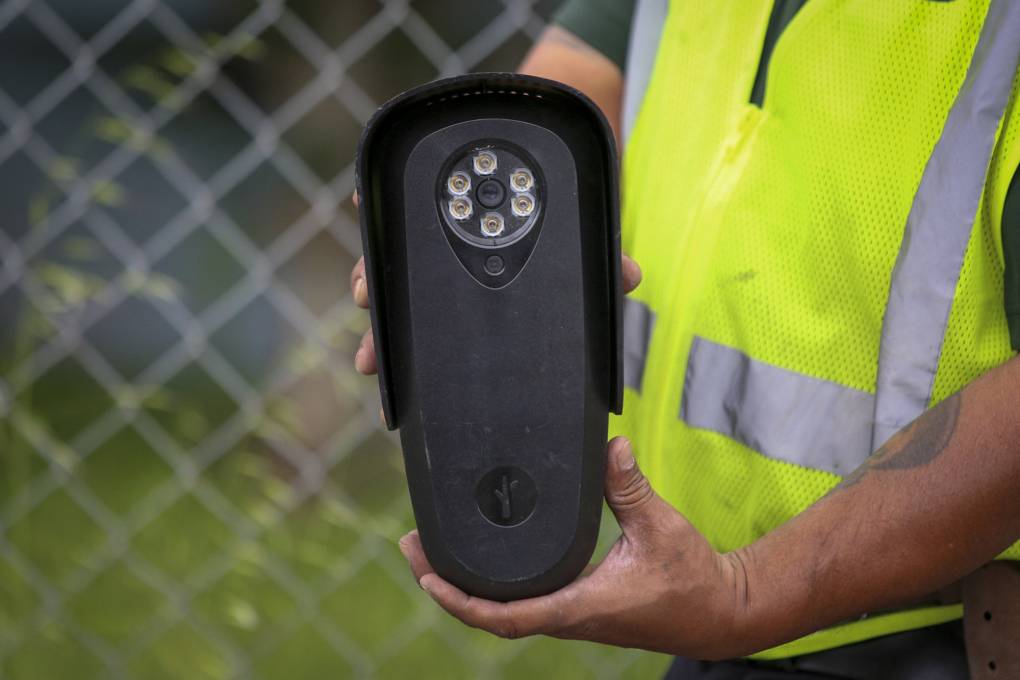
"content": "\u003cp>In an effort to address crime, San José is rapidly blanketing the city with hundreds of automated license plate readers.\u003c/p>\n\u003cp>Mayor Matt Mahan helped install the city’s 235th device this week and said San José aims to have 500 up and running by the summer. Leaders say the ALPRs from Atlanta-based Flock Safety are a critical support for investigators.\u003c/p>\n\u003cp>“It has already proven an incredible tool for our thinly staffed police department,” Mahan said Tuesday during a press conference in East San José where a new ALPR was being installed.\u003c/p>\n\u003cp>He said the network of cameras in 2023 alone helped recover $2 million worth of stolen vehicles and led to the arrests of nearly 200 people suspected of crimes.\u003c/p>\n\u003cp>Acting Police Chief Paul Joseph said the ALPRs have been invaluable.\u003c/p>\n\u003cp>[ad fullwidth]\u003c/p>\n\u003cp>“These cameras make a difference by helping to identify and apprehend suspects, curbing criminal activity and providing crime victims with a feeling of closure and justice,” Joseph said.\u003c/p>\n\u003cp>However, some privacy advocates and residents say the cameras aren’t actually effective at reducing crime and instead create massive logs about the movements of locals and visitors. They worry about the amount of data police are keeping, the length of time it’s retained, and how it is shared across law enforcement agencies.\u003c/p>\n\u003cp>“Complicated issues like safety deserve really well thought out and focused solutions,” said Nick Hidalgo, a staff attorney for the American Civil Liberties Union of Northern California.\u003c/p>\n\u003cp>“Installing hundreds of expensive devices that effectively turn San José into a surveillance city is like using a bazooka instead of a fly swatter. It’s expensive, unnecessary, ineffective and does a lot more harm than good.”\u003c/p>\n\u003cp>The Flock devices capture not only license plates but also a car’s make and model and other characteristics like customizations or bumper stickers. Flock’s software pings police when a car matching a “hotlist” crosses the path of the cameras, and police can also search the data logs for specific cars and plates.\u003c/p>\n\u003cp>Officials say the cameras do not have facial recognition features, nor do they photograph inside a car. City officials said they are proud of the data privacy protections San José follows and noted that the data, under state law requirements, is only shared with other California law enforcement agencies and is prohibited from being used for immigration enforcement.\u003c/p>\n\u003cp>Danny Garza, a 65-year resident of East San José’s Plata Arroyo neighborhood, trusted the police to handle the information securely and said he and others have requested cameras be put up in the area for years.\u003c/p>\n\u003cp>“We’re asking that these license plate readers help protect layer upon layer of community gains,” Garza said. “All we’re interested in is community safety. We’ve had shootings in the past, and they’ve gotten away. Nobody knows where they went.”\u003c/p>\n\u003cp>Though police leaders say the technology is effective and has helped capture people suspected of car theft, rape, and homicide, among other crimes, the department declined to use a specific metric to measure the success of the program over time.\u003c/p>\n\u003cfigure id=\"attachment_11984099\" class=\"wp-caption alignnone\" style=\"max-width: 2000px\">\u003cimg loading=\"lazy\" decoding=\"async\" class=\"size-full wp-image-11984099\" src=\"https://cdn.kqed.org/wp-content/uploads/sites/10/2024/04/San-Jose-License-Plate-Readers-08.jpg\" alt=\"A white middle aged man speaks into microphones wearing a blue suit and a white collared shirt with no tie.\" width=\"2000\" height=\"1333\" srcset=\"https://cdn.kqed.org/wp-content/uploads/sites/10/2024/04/San-Jose-License-Plate-Readers-08.jpg 2000w, https://cdn.kqed.org/wp-content/uploads/sites/10/2024/04/San-Jose-License-Plate-Readers-08-800x533.jpg 800w, https://cdn.kqed.org/wp-content/uploads/sites/10/2024/04/San-Jose-License-Plate-Readers-08-1020x680.jpg 1020w, https://cdn.kqed.org/wp-content/uploads/sites/10/2024/04/San-Jose-License-Plate-Readers-08-160x107.jpg 160w, https://cdn.kqed.org/wp-content/uploads/sites/10/2024/04/San-Jose-License-Plate-Readers-08-1536x1024.jpg 1536w, https://cdn.kqed.org/wp-content/uploads/sites/10/2024/04/San-Jose-License-Plate-Readers-08-1920x1280.jpg 1920w\" sizes=\"(max-width: 2000px) 100vw, 2000px\">\u003cfigcaption class=\"wp-caption-text\">San José Mayor Matt Mahan during a press conference in East San José where a new ALPR was being installed on Tuesday, April 23, 2024. \u003ccite>(Joseph Geha/KQED)\u003c/cite>\u003c/figcaption>\u003c/figure>\n\u003cp>“We like to measure our success in terms of usefulness in our pursuit of public safety by solving and reducing crime,” Sgt. Jorge Garibay, a department spokesperson, told KQED in an email.\u003c/p>\n\u003cp>“Crime trends fluctuate, as do crime types. What most of these have in common is a mode of transportation to and from the scene of crime. When that mode is a vehicle, ALPR success is achieved when a hit has been broadcasted and officers have a tangible lead to follow up on.”\u003c/p>\n\u003cp>The cameras installed to date — 241 of them as of this writing — are already amassing huge troves of data about the cars driving in San José. The current camera network has detected nearly 3 million unique cars per month, according to the city’s Flock portal.\u003c/p>\n\u003cp>In just an 18-day period in December 2022, the city’s cameras captured nearly 16 million total scans, which can include multiple scans of the same vehicle in different locations, according to police. The total scans will only increase as the city’s arsenal of cameras more than doubles.\u003c/p>\n\u003cp>“It casts a net over the entire community, tracking where drivers go and allowing law enforcement to, if they chose, create maps of where drivers work, live, worship, seek medical care, and travel,” said Hidalgo of ACLU Northern California.\u003c/p>\n\u003cp>His research into San José’s ALPR program from 2022 showed that more than 99.99% of the plates scanned do not match any hotlists for police. If the car or plate is not implicated in an investigation, the SJPD then keeps every plate scanned for a year before purging it.\u003c/p>\n\u003cp>Many law enforcement agencies using similar Flock systems purge license plate data every 30 days.\u003c/p>\n\u003cp>Hidalgo said it’s not just invasive that police track that much data on people who aren’t suspected of any crimes, but by keeping it for a year, the city puts the data at further risk for misuse or to be inadvertently disclosed in a data breach.\u003c/p>\n\u003cp>Joseph, the police chief, said the department keeps the data for one year based on the recommendation of the city attorney’s office, indicating the law requires it.\u003c/p>\n\u003cp>[aside label=\"Related Stories\" postID=\"news_11983106,news_11983119,news_11966615\"]Albert Gehami, San José’s privacy officer, said the city is aware other agencies do not keep similar data for as long as San José does.\u003c/p>\n\u003cp>“When it has nothing to do with an investigation, a year is excessive,” Gehami said of the data. “Police departments up and down, everyone that we speak to, [say] there is no need for that information. It is strictly what our attorney’s office has decided is the current interpretation.”\u003c/p>\n\u003cp>City Attorney Nora Frimann said the retention period has been in place for more than a decade, going back to when the police department trialed other license plate reader technology and before the state required cities to have formal ALPR policies in place.\u003c/p>\n\u003cp>“It just made sense to keep it for a year,” Frimann said. However, she noted the retention time is a policy question that the city council can change if it sees fit. “As a city, we can revisit the time frame,” she said.\u003c/p>\n\u003cp>The extra time San José police choose to keep the data also costs the city more money.\u003c/p>\n\u003cp>San José police could not immediately provide total cost estimates for the program but noted that each camera costs the city about $2,500 per year to lease from Flock, along with a $350 one-time fee.\u003c/p>\n\u003cp>Flock’s head of policy and communication, Josh Thomas, said San José pays an extra $300 per camera each year for the longer data retention periods.\u003c/p>\n\u003cp>[ad floatright]\u003c/p>\n",
"blocks": [],
"excerpt": "The city’s cameras scan millions of license plates per month and helped recover $2 million in stolen vehicles last year. However, privacy advocates say they don’t help reduce crime.",
"status": "publish",
"parent": 0,
"modified": 1729027240,
"stats": {
"hasAudio": false,
"hasVideo": false,
"hasChartOrMap": false,
"iframeSrcs": [],
"hasGoogleForm": false,
"hasGallery": false,
"hasHearkenModule": false,
"hasPolis": false,
"paragraphCount": 32,
"wordCount": 1220
},
"headData": {
"title": "San José Adding Hundreds of License Plate Readers Amid Privacy and Efficacy Concerns | KQED",
"description": "The city’s cameras scan millions of license plates per month and helped recover $2 million in stolen vehicles last year. However, privacy advocates say they don’t help reduce crime.",
"ogTitle": "",
"ogDescription": "",
"ogImgId": "",
"twTitle": "",
"twDescription": "",
"twImgId": "",
"schema": {
"@context": "https://schema.org",
"@type": "NewsArticle",
"headline": "San José Adding Hundreds of License Plate Readers Amid Privacy and Efficacy Concerns",
"datePublished": "2024-04-26T07:30:02-07:00",
"dateModified": "2024-10-15T14:20:40-07:00",
"image": "https://cdn.kqed.org/wp-content/uploads/2020/02/KQED-OG-Image@1x.png",
"isAccessibleForFree": "True",
"publisher": {
"@type": "NewsMediaOrganization",
"@id": "https://www.kqed.org/#organization",
"name": "KQED",
"logo": "https://cdn.kqed.org/wp-content/uploads/2020/02/KQED-OG-Image@1x.png",
"url": "https://www.kqed.org",
"sameAs": [
"https://www.facebook.com/KQED",
"https://twitter.com/KQED",
"https://www.instagram.com/kqed/",
"https://www.tiktok.com/@kqedofficial",
"https://www.linkedin.com/company/kqed",
"https://www.youtube.com/channel/UCeC0IOo7i1P_61zVUWbJ4nw"
]
}
}
},
"sticky": false,
"excludeFromSiteSearch": "Include",
"articleAge": "0",
"path": "/news/11983813/san-jose-adding-hundreds-of-license-plate-readers-amid-privacy-and-efficacy-concerns",
"audioTrackLength": null,
"parsedContent": [
{
"type": "contentString",
"content": "\u003cdiv class=\"post-body\">\u003cp>\u003cp>In an effort to address crime, San José is rapidly blanketing the city with hundreds of automated license plate readers.\u003c/p>\n\u003cp>Mayor Matt Mahan helped install the city’s 235th device this week and said San José aims to have 500 up and running by the summer. Leaders say the ALPRs from Atlanta-based Flock Safety are a critical support for investigators.\u003c/p>\n\u003cp>“It has already proven an incredible tool for our thinly staffed police department,” Mahan said Tuesday during a press conference in East San José where a new ALPR was being installed.\u003c/p>\n\u003cp>He said the network of cameras in 2023 alone helped recover $2 million worth of stolen vehicles and led to the arrests of nearly 200 people suspected of crimes.\u003c/p>\n\u003cp>Acting Police Chief Paul Joseph said the ALPRs have been invaluable.\u003c/p>\n\u003cp>\u003c/p>\u003c/div>",
"attributes": {
"named": {},
"numeric": []
}
},
{
"type": "component",
"content": "",
"name": "ad",
"attributes": {
"named": {
"label": "fullwidth"
},
"numeric": [
"fullwidth"
]
}
},
{
"type": "contentString",
"content": "\u003cdiv class=\"post-body\">\u003cp>\u003c/p>\n\u003cp>“These cameras make a difference by helping to identify and apprehend suspects, curbing criminal activity and providing crime victims with a feeling of closure and justice,” Joseph said.\u003c/p>\n\u003cp>However, some privacy advocates and residents say the cameras aren’t actually effective at reducing crime and instead create massive logs about the movements of locals and visitors. They worry about the amount of data police are keeping, the length of time it’s retained, and how it is shared across law enforcement agencies.\u003c/p>\n\u003cp>“Complicated issues like safety deserve really well thought out and focused solutions,” said Nick Hidalgo, a staff attorney for the American Civil Liberties Union of Northern California.\u003c/p>\n\u003cp>“Installing hundreds of expensive devices that effectively turn San José into a surveillance city is like using a bazooka instead of a fly swatter. It’s expensive, unnecessary, ineffective and does a lot more harm than good.”\u003c/p>\n\u003cp>The Flock devices capture not only license plates but also a car’s make and model and other characteristics like customizations or bumper stickers. Flock’s software pings police when a car matching a “hotlist” crosses the path of the cameras, and police can also search the data logs for specific cars and plates.\u003c/p>\n\u003cp>Officials say the cameras do not have facial recognition features, nor do they photograph inside a car. City officials said they are proud of the data privacy protections San José follows and noted that the data, under state law requirements, is only shared with other California law enforcement agencies and is prohibited from being used for immigration enforcement.\u003c/p>\n\u003cp>Danny Garza, a 65-year resident of East San José’s Plata Arroyo neighborhood, trusted the police to handle the information securely and said he and others have requested cameras be put up in the area for years.\u003c/p>\n\u003cp>“We’re asking that these license plate readers help protect layer upon layer of community gains,” Garza said. “All we’re interested in is community safety. We’ve had shootings in the past, and they’ve gotten away. Nobody knows where they went.”\u003c/p>\n\u003cp>Though police leaders say the technology is effective and has helped capture people suspected of car theft, rape, and homicide, among other crimes, the department declined to use a specific metric to measure the success of the program over time.\u003c/p>\n\u003cfigure id=\"attachment_11984099\" class=\"wp-caption alignnone\" style=\"max-width: 2000px\">\u003cimg loading=\"lazy\" decoding=\"async\" class=\"size-full wp-image-11984099\" src=\"https://cdn.kqed.org/wp-content/uploads/sites/10/2024/04/San-Jose-License-Plate-Readers-08.jpg\" alt=\"A white middle aged man speaks into microphones wearing a blue suit and a white collared shirt with no tie.\" width=\"2000\" height=\"1333\" srcset=\"https://cdn.kqed.org/wp-content/uploads/sites/10/2024/04/San-Jose-License-Plate-Readers-08.jpg 2000w, https://cdn.kqed.org/wp-content/uploads/sites/10/2024/04/San-Jose-License-Plate-Readers-08-800x533.jpg 800w, https://cdn.kqed.org/wp-content/uploads/sites/10/2024/04/San-Jose-License-Plate-Readers-08-1020x680.jpg 1020w, https://cdn.kqed.org/wp-content/uploads/sites/10/2024/04/San-Jose-License-Plate-Readers-08-160x107.jpg 160w, https://cdn.kqed.org/wp-content/uploads/sites/10/2024/04/San-Jose-License-Plate-Readers-08-1536x1024.jpg 1536w, https://cdn.kqed.org/wp-content/uploads/sites/10/2024/04/San-Jose-License-Plate-Readers-08-1920x1280.jpg 1920w\" sizes=\"(max-width: 2000px) 100vw, 2000px\">\u003cfigcaption class=\"wp-caption-text\">San José Mayor Matt Mahan during a press conference in East San José where a new ALPR was being installed on Tuesday, April 23, 2024. \u003ccite>(Joseph Geha/KQED)\u003c/cite>\u003c/figcaption>\u003c/figure>\n\u003cp>“We like to measure our success in terms of usefulness in our pursuit of public safety by solving and reducing crime,” Sgt. Jorge Garibay, a department spokesperson, told KQED in an email.\u003c/p>\n\u003cp>“Crime trends fluctuate, as do crime types. What most of these have in common is a mode of transportation to and from the scene of crime. When that mode is a vehicle, ALPR success is achieved when a hit has been broadcasted and officers have a tangible lead to follow up on.”\u003c/p>\n\u003cp>The cameras installed to date — 241 of them as of this writing — are already amassing huge troves of data about the cars driving in San José. The current camera network has detected nearly 3 million unique cars per month, according to the city’s Flock portal.\u003c/p>\n\u003cp>In just an 18-day period in December 2022, the city’s cameras captured nearly 16 million total scans, which can include multiple scans of the same vehicle in different locations, according to police. The total scans will only increase as the city’s arsenal of cameras more than doubles.\u003c/p>\n\u003cp>“It casts a net over the entire community, tracking where drivers go and allowing law enforcement to, if they chose, create maps of where drivers work, live, worship, seek medical care, and travel,” said Hidalgo of ACLU Northern California.\u003c/p>\n\u003cp>His research into San José’s ALPR program from 2022 showed that more than 99.99% of the plates scanned do not match any hotlists for police. If the car or plate is not implicated in an investigation, the SJPD then keeps every plate scanned for a year before purging it.\u003c/p>\n\u003cp>Many law enforcement agencies using similar Flock systems purge license plate data every 30 days.\u003c/p>\n\u003cp>Hidalgo said it’s not just invasive that police track that much data on people who aren’t suspected of any crimes, but by keeping it for a year, the city puts the data at further risk for misuse or to be inadvertently disclosed in a data breach.\u003c/p>\n\u003cp>Joseph, the police chief, said the department keeps the data for one year based on the recommendation of the city attorney’s office, indicating the law requires it.\u003c/p>\n\u003cp>\u003c/p>\u003c/div>",
"attributes": {
"named": {},
"numeric": []
}
},
{
"type": "component",
"content": "",
"name": "aside",
"attributes": {
"named": {
"label": "Related Stories ",
"postid": "news_11983106,news_11983119,news_11966615"
},
"numeric": []
}
},
{
"type": "contentString",
"content": "\u003cdiv class=\"post-body\">\u003cp>Albert Gehami, San José’s privacy officer, said the city is aware other agencies do not keep similar data for as long as San José does.\u003c/p>\n\u003cp>“When it has nothing to do with an investigation, a year is excessive,” Gehami said of the data. “Police departments up and down, everyone that we speak to, [say] there is no need for that information. It is strictly what our attorney’s office has decided is the current interpretation.”\u003c/p>\n\u003cp>City Attorney Nora Frimann said the retention period has been in place for more than a decade, going back to when the police department trialed other license plate reader technology and before the state required cities to have formal ALPR policies in place.\u003c/p>\n\u003cp>“It just made sense to keep it for a year,” Frimann said. However, she noted the retention time is a policy question that the city council can change if it sees fit. “As a city, we can revisit the time frame,” she said.\u003c/p>\n\u003cp>The extra time San José police choose to keep the data also costs the city more money.\u003c/p>\n\u003cp>San José police could not immediately provide total cost estimates for the program but noted that each camera costs the city about $2,500 per year to lease from Flock, along with a $350 one-time fee.\u003c/p>\n\u003cp>Flock’s head of policy and communication, Josh Thomas, said San José pays an extra $300 per camera each year for the longer data retention periods.\u003c/p>\n\u003cp>\u003c/p>\u003c/div>",
"attributes": {
"named": {},
"numeric": []
}
},
{
"type": "component",
"content": "",
"name": "ad",
"attributes": {
"named": {
"label": "floatright"
},
"numeric": [
"floatright"
]
}
},
{
"type": "contentString",
"content": "\u003cdiv class=\"post-body\">\u003cp>\u003c/p>\n\u003c/div>\u003c/p>",
"attributes": {
"named": {},
"numeric": []
}
}
],
"link": "/news/11983813/san-jose-adding-hundreds-of-license-plate-readers-amid-privacy-and-efficacy-concerns",
"authors": [
"11906"
],
"categories": [
"news_31795",
"news_8",
"news_248"
],
"tags": [
"news_18538",
"news_27626",
"news_16",
"news_31197",
"news_18541",
"news_667",
"news_21285",
"news_1631",
"news_20517"
],
"featImg": "news_11984097",
"label": "news"
},
"news_11983119": {
"type": "posts",
"id": "news_11983119",
"meta": {
"index": "posts_1716263798",
"site": "news",
"id": "11983119",
"score": null,
"sort": [
1713301219000
]
},
"guestAuthors": [],
"slug": "san-jose-city-council-appoints-new-independent-police-auditor",
"title": "San José City Council Appoints New Independent Police Auditor",
"publishDate": 1713301219,
"format": "standard",
"headTitle": "San José City Council Appoints New Independent Police Auditor | KQED",
"labelTerm": {
"site": "news"
},
"content": "\u003cp>\u003cem>\u003cstrong>This story was updated on April 16, 2024 at 4:45 p.m.\u003c/strong>\u003c/em>\u003c/p>\n\u003cp>San José leaders appointed a former police officer as the city’s new independent police auditor on Tuesday, less than a year after the previous auditor retired abruptly.\u003c/p>\n\u003cp>Eddie Aubrey, who currently investigates police misconduct as the civilian manager in the office of professional accountability for the Richmond Police Department, will take over as San José’s IPA on May 6, the city announced in a statement.\u003c/p>\n\u003cp>Aubrey served more than a decade as a police officer in Southern California in the 1980s and 1990s, including for the Los Angeles Police Department, according to the city and his LinkedIn profile.\u003c/p>\n\u003cfigure id=\"attachment_11983170\" class=\"wp-caption alignnone\" style=\"max-width: 2000px\">\u003cimg loading=\"lazy\" decoding=\"async\" class=\"wp-image-11983170 size-full\" src=\"https://cdn.kqed.org/wp-content/uploads/sites/10/2024/04/SJ-NEW-INDEPENDENT-POLICE-AUDITOR-4-GH-KQED.jpg\" alt=\"\" width=\"2000\" height=\"1333\" srcset=\"https://cdn.kqed.org/wp-content/uploads/sites/10/2024/04/SJ-NEW-INDEPENDENT-POLICE-AUDITOR-4-GH-KQED.jpg 2000w, https://cdn.kqed.org/wp-content/uploads/sites/10/2024/04/SJ-NEW-INDEPENDENT-POLICE-AUDITOR-4-GH-KQED-800x533.jpg 800w, https://cdn.kqed.org/wp-content/uploads/sites/10/2024/04/SJ-NEW-INDEPENDENT-POLICE-AUDITOR-4-GH-KQED-1020x680.jpg 1020w, https://cdn.kqed.org/wp-content/uploads/sites/10/2024/04/SJ-NEW-INDEPENDENT-POLICE-AUDITOR-4-GH-KQED-160x107.jpg 160w, https://cdn.kqed.org/wp-content/uploads/sites/10/2024/04/SJ-NEW-INDEPENDENT-POLICE-AUDITOR-4-GH-KQED-1536x1024.jpg 1536w, https://cdn.kqed.org/wp-content/uploads/sites/10/2024/04/SJ-NEW-INDEPENDENT-POLICE-AUDITOR-4-GH-KQED-1920x1280.jpg 1920w\" sizes=\"(max-width: 2000px) 100vw, 2000px\">\u003cfigcaption class=\"wp-caption-text\">Eddie Aubrey, who currently investigates police misconduct as the civilian manager for the Richmond Police Department, will take over as San José’s IPA on May 6. \u003ccite>(Joseph Geha/KQED)\u003c/cite>\u003c/figcaption>\u003c/figure>\n\u003cp>His other law enforcement and police oversight experience includes stints as the chief prosecuting attorney for Renton, Washington, the Independent Reviewer in charge of civilian oversight of police in Fresno and seven years as a pro tem judge in Washington. He has also run a law firm and headed up a college public safety department and risk management department in Tacoma, Washington.\u003c/p>\n\u003cp>“I am honored and privileged to assume the role of your next independent police auditor,” Aubrey said in the city statement. “I look forward to the opportunity to engage with the diverse communities in San José, advancing police accountability and enhancing police services.”\u003c/p>\n\u003cp>Aubrey, during a press conference on Tuesday afternoon, addressed potential concern over a former police officer taking the lead role in police oversight in San José. He said his commitment is to fair and unbiased oversight.\u003c/p>\n\u003cp>[ad fullwidth]\u003c/p>\n\u003cp>“My demonstrated history shows that I have held officers accountable. Officers have been terminated; they have been suspended,” he said. He also noted officers in other cases he worked on were exonerated. “So they have a 15-year track record to look at.”\u003c/p>\n\u003cp>San José Mayor Matt Mahan said in a statement that Aubrey will help maintain trust between residents and the Police Department.\u003c/p>\n\u003cp>“We’re incredibly fortunate to have a new independent police auditor with extensive experience both working within and overseeing the conduct of law enforcement agencies,” he said.\u003c/p>\n\u003cp>Aubrey said he grew up with an African American father and a Korean mother in South Central Los Angeles and was on the police force during the violence and civil unrest taking place after the police beating of Rodney King.\u003c/p>\n\u003cp>“I’m looking at my neighborhood burned down, shots being fired, in the middle of the night, cars [are being] overturned,” he said. “And I asked myself, ‘Am I doing enough in the role of police officer?’ I said, ‘I’m doing a lot, but I can do a lot more.’ And that’s what made me decide that I wanted to change and be a lawyer.”\u003c/p>\n\u003cp>Aubrey will replace interim Independent Police Auditor Karyn Sinunu-Towery, who has held the position since last summer, a time of turmoil for the office.\u003c/p>\n\u003cp>Sinunu-Towery, a former 30-year prosecutor in Santa Clara County, was appointed to the temporary role following former IPA Shivaun Nurre’s unexpected retirement in June after nearly five years in the role.\u003c/p>\n\u003cp>It was later revealed that just before she retired, Nurre got into a heated verbal argument with a San José police officer at a public event while she was drunk. [aside postID=news_11983106 hero='https://cdn.kqed.org/wp-content/uploads/sites/10/2024/04/SanJosePolice01-1020x680.jpg']A few months later, the assistant IPA, Eva Roa, resigned and wrote a letter lambasting city management and officials for largely ignoring the IPA’s office and criticizing Sinunu-Towery for being too trusting of police department investigators.\u003c/p>\n\u003cp>Before Nurre’s retirement, she advocated for the city to grant expanded powers to the IPA’s office, including the right to directly conduct civilian investigations into alleged police misconduct instead of only auditing internal police investigations.\u003c/p>\n\u003cp>Former Mayor Sam Liccardo backed the proposal but later stalled without enough support.\u003c/p>\n\u003cp>In November last year, the City Council voted 8–2 against expanding the IPA’s powers. Sinunu-Towery, when she first took on the role, said she supported the idea of more power for the office but later reversed course, saying the office needed to take better advantage of the powers it already has.\u003c/p>\n\u003cp>Aubrey said Tuesday that he thinks San José’s oversight program is a “really excellent model,” though he left open the possibility of change.\u003c/p>\n\u003cp>“Right now, what I’m looking at is what do we have, what can we use and how effectively can we use that model in the things that we’re doing there,” he said. “And then, we’re always open to entertaining other options there.”\u003c/p>\n\u003cp>\u003c/p>\n",
"blocks": [],
"excerpt": "Eddie Aubrey, who currently investigates police misconduct in Richmond, will take over as San José’s new police watchdog on May 6.",
"status": "publish",
"parent": 0,
"modified": 1719448014,
"stats": {
"hasAudio": false,
"hasVideo": false,
"hasChartOrMap": false,
"iframeSrcs": [],
"hasGoogleForm": false,
"hasGallery": false,
"hasHearkenModule": false,
"hasPolis": false,
"paragraphCount": 22,
"wordCount": 851
},
"headData": {
"title": "San José City Council Appoints New Independent Police Auditor | KQED",
"description": "Eddie Aubrey, who currently investigates police misconduct in Richmond, will take over as San José’s new police watchdog on May 6.",
"ogTitle": "",
"ogDescription": "",
"ogImgId": "",
"twTitle": "",
"twDescription": "",
"twImgId": "",
"schema": {
"@context": "https://schema.org",
"@type": "NewsArticle",
"headline": "San José City Council Appoints New Independent Police Auditor",
"datePublished": "2024-04-16T14:00:19-07:00",
"dateModified": "2024-06-26T17:26:54-07:00",
"image": "https://cdn.kqed.org/wp-content/uploads/2020/02/KQED-OG-Image@1x.png",
"isAccessibleForFree": "True",
"publisher": {
"@type": "NewsMediaOrganization",
"@id": "https://www.kqed.org/#organization",
"name": "KQED",
"logo": "https://cdn.kqed.org/wp-content/uploads/2020/02/KQED-OG-Image@1x.png",
"url": "https://www.kqed.org",
"sameAs": [
"https://www.facebook.com/KQED",
"https://twitter.com/KQED",
"https://www.instagram.com/kqed/",
"https://www.tiktok.com/@kqedofficial",
"https://www.linkedin.com/company/kqed",
"https://www.youtube.com/channel/UCeC0IOo7i1P_61zVUWbJ4nw"
]
}
}
},
"sticky": false,
"excludeFromSiteSearch": "Include",
"articleAge": "0",
"path": "/news/11983119/san-jose-city-council-appoints-new-independent-police-auditor",
"audioTrackLength": null,
"parsedContent": [
{
"type": "contentString",
"content": "\u003cdiv class=\"post-body\">\u003cp>\u003cp>\u003cem>\u003cstrong>This story was updated on April 16, 2024 at 4:45 p.m.\u003c/strong>\u003c/em>\u003c/p>\n\u003cp>San José leaders appointed a former police officer as the city’s new independent police auditor on Tuesday, less than a year after the previous auditor retired abruptly.\u003c/p>\n\u003cp>Eddie Aubrey, who currently investigates police misconduct as the civilian manager in the office of professional accountability for the Richmond Police Department, will take over as San José’s IPA on May 6, the city announced in a statement.\u003c/p>\n\u003cp>Aubrey served more than a decade as a police officer in Southern California in the 1980s and 1990s, including for the Los Angeles Police Department, according to the city and his LinkedIn profile.\u003c/p>\n\u003cfigure id=\"attachment_11983170\" class=\"wp-caption alignnone\" style=\"max-width: 2000px\">\u003cimg loading=\"lazy\" decoding=\"async\" class=\"wp-image-11983170 size-full\" src=\"https://cdn.kqed.org/wp-content/uploads/sites/10/2024/04/SJ-NEW-INDEPENDENT-POLICE-AUDITOR-4-GH-KQED.jpg\" alt=\"\" width=\"2000\" height=\"1333\" srcset=\"https://cdn.kqed.org/wp-content/uploads/sites/10/2024/04/SJ-NEW-INDEPENDENT-POLICE-AUDITOR-4-GH-KQED.jpg 2000w, https://cdn.kqed.org/wp-content/uploads/sites/10/2024/04/SJ-NEW-INDEPENDENT-POLICE-AUDITOR-4-GH-KQED-800x533.jpg 800w, https://cdn.kqed.org/wp-content/uploads/sites/10/2024/04/SJ-NEW-INDEPENDENT-POLICE-AUDITOR-4-GH-KQED-1020x680.jpg 1020w, https://cdn.kqed.org/wp-content/uploads/sites/10/2024/04/SJ-NEW-INDEPENDENT-POLICE-AUDITOR-4-GH-KQED-160x107.jpg 160w, https://cdn.kqed.org/wp-content/uploads/sites/10/2024/04/SJ-NEW-INDEPENDENT-POLICE-AUDITOR-4-GH-KQED-1536x1024.jpg 1536w, https://cdn.kqed.org/wp-content/uploads/sites/10/2024/04/SJ-NEW-INDEPENDENT-POLICE-AUDITOR-4-GH-KQED-1920x1280.jpg 1920w\" sizes=\"(max-width: 2000px) 100vw, 2000px\">\u003cfigcaption class=\"wp-caption-text\">Eddie Aubrey, who currently investigates police misconduct as the civilian manager for the Richmond Police Department, will take over as San José’s IPA on May 6. \u003ccite>(Joseph Geha/KQED)\u003c/cite>\u003c/figcaption>\u003c/figure>\n\u003cp>His other law enforcement and police oversight experience includes stints as the chief prosecuting attorney for Renton, Washington, the Independent Reviewer in charge of civilian oversight of police in Fresno and seven years as a pro tem judge in Washington. He has also run a law firm and headed up a college public safety department and risk management department in Tacoma, Washington.\u003c/p>\n\u003cp>“I am honored and privileged to assume the role of your next independent police auditor,” Aubrey said in the city statement. “I look forward to the opportunity to engage with the diverse communities in San José, advancing police accountability and enhancing police services.”\u003c/p>\n\u003cp>Aubrey, during a press conference on Tuesday afternoon, addressed potential concern over a former police officer taking the lead role in police oversight in San José. He said his commitment is to fair and unbiased oversight.\u003c/p>\n\u003cp>\u003c/p>\u003c/div>",
"attributes": {
"named": {},
"numeric": []
}
},
{
"type": "component",
"content": "",
"name": "ad",
"attributes": {
"named": {
"label": "fullwidth"
},
"numeric": [
"fullwidth"
]
}
},
{
"type": "contentString",
"content": "\u003cdiv class=\"post-body\">\u003cp>\u003c/p>\n\u003cp>“My demonstrated history shows that I have held officers accountable. Officers have been terminated; they have been suspended,” he said. He also noted officers in other cases he worked on were exonerated. “So they have a 15-year track record to look at.”\u003c/p>\n\u003cp>San José Mayor Matt Mahan said in a statement that Aubrey will help maintain trust between residents and the Police Department.\u003c/p>\n\u003cp>“We’re incredibly fortunate to have a new independent police auditor with extensive experience both working within and overseeing the conduct of law enforcement agencies,” he said.\u003c/p>\n\u003cp>Aubrey said he grew up with an African American father and a Korean mother in South Central Los Angeles and was on the police force during the violence and civil unrest taking place after the police beating of Rodney King.\u003c/p>\n\u003cp>“I’m looking at my neighborhood burned down, shots being fired, in the middle of the night, cars [are being] overturned,” he said. “And I asked myself, ‘Am I doing enough in the role of police officer?’ I said, ‘I’m doing a lot, but I can do a lot more.’ And that’s what made me decide that I wanted to change and be a lawyer.”\u003c/p>\n\u003cp>Aubrey will replace interim Independent Police Auditor Karyn Sinunu-Towery, who has held the position since last summer, a time of turmoil for the office.\u003c/p>\n\u003cp>Sinunu-Towery, a former 30-year prosecutor in Santa Clara County, was appointed to the temporary role following former IPA Shivaun Nurre’s unexpected retirement in June after nearly five years in the role.\u003c/p>\n\u003cp>It was later revealed that just before she retired, Nurre got into a heated verbal argument with a San José police officer at a public event while she was drunk. \u003c/p>\u003c/div>",
"attributes": {
"named": {},
"numeric": []
}
},
{
"type": "component",
"content": "",
"name": "aside",
"attributes": {
"named": {
"postid": "news_11983106",
"hero": "https://cdn.kqed.org/wp-content/uploads/sites/10/2024/04/SanJosePolice01-1020x680.jpg",
"label": ""
},
"numeric": []
}
},
{
"type": "contentString",
"content": "\u003cdiv class=\"post-body\">\u003cp>A few months later, the assistant IPA, Eva Roa, resigned and wrote a letter lambasting city management and officials for largely ignoring the IPA’s office and criticizing Sinunu-Towery for being too trusting of police department investigators.\u003c/p>\n\u003cp>Before Nurre’s retirement, she advocated for the city to grant expanded powers to the IPA’s office, including the right to directly conduct civilian investigations into alleged police misconduct instead of only auditing internal police investigations.\u003c/p>\n\u003cp>Former Mayor Sam Liccardo backed the proposal but later stalled without enough support.\u003c/p>\n\u003cp>In November last year, the City Council voted 8–2 against expanding the IPA’s powers. Sinunu-Towery, when she first took on the role, said she supported the idea of more power for the office but later reversed course, saying the office needed to take better advantage of the powers it already has.\u003c/p>\n\u003cp>Aubrey said Tuesday that he thinks San José’s oversight program is a “really excellent model,” though he left open the possibility of change.\u003c/p>\n\u003cp>“Right now, what I’m looking at is what do we have, what can we use and how effectively can we use that model in the things that we’re doing there,” he said. “And then, we’re always open to entertaining other options there.”\u003c/p>\n\u003cp>\u003c/p>\n\u003c/div>\u003c/p>",
"attributes": {
"named": {},
"numeric": []
}
}
],
"link": "/news/11983119/san-jose-city-council-appoints-new-independent-police-auditor",
"authors": [
"11906"
],
"categories": [
"news_8"
],
"tags": [
"news_17725",
"news_19954",
"news_116",
"news_20081",
"news_18541",
"news_667",
"news_21285"
],
"featImg": "news_11983130",
"label": "news"
},
"news_11983106": {
"type": "posts",
"id": "news_11983106",
"meta": {
"index": "posts_1716263798",
"site": "news",
"id": "11983106",
"score": null,
"sort": [
1713294039000
]
},
"guestAuthors": [],
"slug": "san-jose-police-department-sees-drop-in-officer-complaints",
"title": "San José Police Department Sees Drop in Officer Complaints",
"publishDate": 1713294039,
"format": "standard",
"headTitle": "San José Police Department Sees Drop in Officer Complaints | KQED",
"labelTerm": {
"site": "news"
},
"content": "\u003cp>\u003ca href=\"https://www.kqed.org/news/11963782/qa-new-investigation-finds-most-people-injured-killed-by-san-jose-police-are-mentally-ill-or-intoxicated\">San José’s Police Department\u003c/a> saw a decrease in complaints against officers in 2023, following three straight years of increases, a new watchdog report found.\u003c/p>\n\u003cp>In all, San José’s Police Department received 367 complaints about its officers in 2023, with 47 of those generated by the department, according to an annual oversight report from the San José Independent Police Auditor’s Office. [pullquote size=\"medium\" align=\"right\" citation=\"Sgt. Jorge Garibay, spokesperson, San José Police Department\"]‘The department has, and continues to, reinforce its commitment to officer accountability.’[/pullquote]By the end of 2023, the report said 285 officers received at least one conduct complaint, accounting for about 27% of San José’s 1,059 sworn officers. That represents a 6% reduction from 2022, when about a third of all officers received at least one conduct complaint.\u003c/p>\n\u003cp>The report, which was set to be discussed at the San José City Council meeting on Tuesday, is the first issued by Karyn Sinunu-Towery, the interim police auditor appointed after the city’s former IPA abruptly retired last year.\u003c/p>\n\u003cp>Sgt. Jorge Garibay, a spokesperson for SJPD, told KQED in an email the decrease in complaints “is a direct reflection of increased training and officer accountability.”\u003c/p>\n\u003cp>Garibay highlighted a monthly newsletter sent to the department by Internal Affairs since June 2022 to share current trends and “remind department members of the policies and procedures governing the agency.”\u003c/p>\n\u003cp>The department also recognizes the number of complaints received annually is based on several factors, Garibay said. “The department has, and continues to, reinforce its commitment to officer accountability.”\u003c/p>\n\u003cp>[ad fullwidth]\u003c/p>\n\u003cp>While the percentage of overall complaints received in 2023 was down 6% from the year before, the rate at which complaints lodged against officers were determined to likely be true, increased by 6% from the year prior, the report said.\u003c/p>\n\u003cp>About 24% of complaints from members of the public about the conduct of officers were sustained, meaning they were found more likely than not to be true. That is the highest percentage of sustained complaints recorded by the IPA’s office in the past two decades, according to a review of previous years’ data by KQED News.\u003c/p>\n\u003cp>In San José, the Police Department’s Internal Affairs division investigates such complaints, which are reviewed by the IPA’s office. The report shows 306 conduct complaints were reviewed in 2023, with 74 closed as sustained. [aside postID=news_11966615 hero='https://ww2.kqed.org/app/uploads/sites/10/2023/11/231106-SAN-JOSE-POLICE-01-KQED-1020x680.jpg']Complaints reviewed and tabulated for annual reports are not necessarily tied to complaints received that same year, as the investigation and auditing process can take up to a year in some cases.\u003c/p>\n\u003cp>The Police Department declined to say what might be causing the increase in sustained complaints but noted it could also depend on many factors, including the nature and types of complaints reviewed.\u003c/p>\n\u003cp>“The allegations contained within the complaints also vary and range widely from rare, major misconduct to the frequent minor transgressions,” Garibay said.\u003c/p>\n\u003cp>Sinunu-Towery told KQED that the department is a “really young” one, which could play a role in the sustained complaints increase.\u003c/p>\n\u003cp>“The officers that are really on the ground, in the field dealing with citizens, the majority of those officers are still pretty young,” she said. “In the first five years, an officer is on duty, he or she is more likely to make mistakes than a seasoned officer.”\u003c/p>\n\u003cp>Sinunu-Towery’s oversight report is significantly shorter and includes much less information than most prior year reports authored under other auditors. [pullquote size=\"medium\" align=\"right\" citation=\"Karyn Sinunu-Towery, interim police auditor, City of San José\"]‘In the first five years an officer is on duty, he or she is more likely to make mistakes than a seasoned officer.’[/pullquote]Sinunu-Towery’s report, for example, declined to include breakdowns of how many officers received multiple complaints — and how many complaints they each received.\u003c/p>\n\u003cp>And though she suggested in an interview that the level of experience of officers on the streets might play a role in the number and types of complaints a department receives, her report did not include information on the experience level of officers named in complaints in 2023.\u003c/p>\n\u003cp>She also did not include the ethnicities or other demographic information about the people bringing complaints against officers. She attributed her report’s differences, compared to prior-year reports, to a difference in “style.”\u003c/p>\n\u003cp>Sinunu-Towery, a former 30-year Santa Clara County prosecutor, was appointed last summer to replace Shivaun Nurre, a longtime IPA employee who helmed the office from 2018 through June 2023.\u003c/p>\n\u003cp>Nurre’s unexpected retirement came about without much public notice, raising questions about her departure. It was later revealed that just before she retired, Nurre got into a heated verbal argument with a San José police officer at a public event \u003ca href=\"https://sanjosespotlight.com/san-jose-police-watchdog-had-drunken-argument-with-police-ahead-of-retirement/\">while she was drunk\u003c/a>.\u003c/p>\n\u003cp>A few months later, the assistant IPA, Eva Roa, resigned and wrote a letter lambasting city management and officials for largely ignoring the IPA’s office and criticizing Sinunu-Towery for being too trusting of police department investigators.\u003c/p>\n\u003cp>A new permanent IPA is expected to be named during Tuesday’s meeting by the City Council.\u003c/p>\n\u003cp>\u003c/p>\n",
"blocks": [],
"excerpt": "The Independent Police Auditor’s annual report showed fewer complaints about officer conduct in 2023 after three consecutive years of increases.",
"status": "publish",
"parent": 0,
"modified": 1719448001,
"stats": {
"hasAudio": false,
"hasVideo": false,
"hasChartOrMap": false,
"iframeSrcs": [],
"hasGoogleForm": false,
"hasGallery": false,
"hasHearkenModule": false,
"hasPolis": false,
"paragraphCount": 22,
"wordCount": 921
},
"headData": {
"title": "San José Police Department Sees Drop in Officer Complaints | KQED",
"description": "The Independent Police Auditor’s annual report showed fewer complaints about officer conduct in 2023 after three consecutive years of increases.",
"ogTitle": "",
"ogDescription": "",
"ogImgId": "",
"twTitle": "",
"twDescription": "",
"twImgId": "",
"schema": {
"@context": "https://schema.org",
"@type": "NewsArticle",
"headline": "San José Police Department Sees Drop in Officer Complaints",
"datePublished": "2024-04-16T12:00:39-07:00",
"dateModified": "2024-06-26T17:26:41-07:00",
"image": "https://cdn.kqed.org/wp-content/uploads/2020/02/KQED-OG-Image@1x.png",
"isAccessibleForFree": "True",
"publisher": {
"@type": "NewsMediaOrganization",
"@id": "https://www.kqed.org/#organization",
"name": "KQED",
"logo": "https://cdn.kqed.org/wp-content/uploads/2020/02/KQED-OG-Image@1x.png",
"url": "https://www.kqed.org",
"sameAs": [
"https://www.facebook.com/KQED",
"https://twitter.com/KQED",
"https://www.instagram.com/kqed/",
"https://www.tiktok.com/@kqedofficial",
"https://www.linkedin.com/company/kqed",
"https://www.youtube.com/channel/UCeC0IOo7i1P_61zVUWbJ4nw"
]
}
}
},
"sticky": false,
"excludeFromSiteSearch": "Include",
"articleAge": "0",
"path": "/news/11983106/san-jose-police-department-sees-drop-in-officer-complaints",
"audioTrackLength": null,
"parsedContent": [
{
"type": "contentString",
"content": "\u003cdiv class=\"post-body\">\u003cp>\u003cp>\u003ca href=\"https://www.kqed.org/news/11963782/qa-new-investigation-finds-most-people-injured-killed-by-san-jose-police-are-mentally-ill-or-intoxicated\">San José’s Police Department\u003c/a> saw a decrease in complaints against officers in 2023, following three straight years of increases, a new watchdog report found.\u003c/p>\n\u003cp>In all, San José’s Police Department received 367 complaints about its officers in 2023, with 47 of those generated by the department, according to an annual oversight report from the San José Independent Police Auditor’s Office. \u003c/p>\u003c/div>",
"attributes": {
"named": {},
"numeric": []
}
},
{
"type": "component",
"content": "‘The department has, and continues to, reinforce its commitment to officer accountability.’",
"name": "pullquote",
"attributes": {
"named": {
"size": "medium",
"align": "right",
"citation": "Sgt. Jorge Garibay, spokesperson, San José Police Department",
"label": ""
},
"numeric": []
}
},
{
"type": "contentString",
"content": "\u003cdiv class=\"post-body\">\u003cp>By the end of 2023, the report said 285 officers received at least one conduct complaint, accounting for about 27% of San José’s 1,059 sworn officers. That represents a 6% reduction from 2022, when about a third of all officers received at least one conduct complaint.\u003c/p>\n\u003cp>The report, which was set to be discussed at the San José City Council meeting on Tuesday, is the first issued by Karyn Sinunu-Towery, the interim police auditor appointed after the city’s former IPA abruptly retired last year.\u003c/p>\n\u003cp>Sgt. Jorge Garibay, a spokesperson for SJPD, told KQED in an email the decrease in complaints “is a direct reflection of increased training and officer accountability.”\u003c/p>\n\u003cp>Garibay highlighted a monthly newsletter sent to the department by Internal Affairs since June 2022 to share current trends and “remind department members of the policies and procedures governing the agency.”\u003c/p>\n\u003cp>The department also recognizes the number of complaints received annually is based on several factors, Garibay said. “The department has, and continues to, reinforce its commitment to officer accountability.”\u003c/p>\n\u003cp>\u003c/p>\u003c/div>",
"attributes": {
"named": {},
"numeric": []
}
},
{
"type": "component",
"content": "",
"name": "ad",
"attributes": {
"named": {
"label": "fullwidth"
},
"numeric": [
"fullwidth"
]
}
},
{
"type": "contentString",
"content": "\u003cdiv class=\"post-body\">\u003cp>\u003c/p>\n\u003cp>While the percentage of overall complaints received in 2023 was down 6% from the year before, the rate at which complaints lodged against officers were determined to likely be true, increased by 6% from the year prior, the report said.\u003c/p>\n\u003cp>About 24% of complaints from members of the public about the conduct of officers were sustained, meaning they were found more likely than not to be true. That is the highest percentage of sustained complaints recorded by the IPA’s office in the past two decades, according to a review of previous years’ data by KQED News.\u003c/p>\n\u003cp>In San José, the Police Department’s Internal Affairs division investigates such complaints, which are reviewed by the IPA’s office. The report shows 306 conduct complaints were reviewed in 2023, with 74 closed as sustained. \u003c/p>\u003c/div>",
"attributes": {
"named": {},
"numeric": []
}
},
{
"type": "component",
"content": "",
"name": "aside",
"attributes": {
"named": {
"postid": "news_11966615",
"hero": "https://ww2.kqed.org/app/uploads/sites/10/2023/11/231106-SAN-JOSE-POLICE-01-KQED-1020x680.jpg",
"label": ""
},
"numeric": []
}
},
{
"type": "contentString",
"content": "\u003cdiv class=\"post-body\">\u003cp>Complaints reviewed and tabulated for annual reports are not necessarily tied to complaints received that same year, as the investigation and auditing process can take up to a year in some cases.\u003c/p>\n\u003cp>The Police Department declined to say what might be causing the increase in sustained complaints but noted it could also depend on many factors, including the nature and types of complaints reviewed.\u003c/p>\n\u003cp>“The allegations contained within the complaints also vary and range widely from rare, major misconduct to the frequent minor transgressions,” Garibay said.\u003c/p>\n\u003cp>Sinunu-Towery told KQED that the department is a “really young” one, which could play a role in the sustained complaints increase.\u003c/p>\n\u003cp>“The officers that are really on the ground, in the field dealing with citizens, the majority of those officers are still pretty young,” she said. “In the first five years, an officer is on duty, he or she is more likely to make mistakes than a seasoned officer.”\u003c/p>\n\u003cp>Sinunu-Towery’s oversight report is significantly shorter and includes much less information than most prior year reports authored under other auditors. \u003c/p>\u003c/div>",
"attributes": {
"named": {},
"numeric": []
}
},
{
"type": "component",
"content": "‘In the first five years an officer is on duty, he or she is more likely to make mistakes than a seasoned officer.’",
"name": "pullquote",
"attributes": {
"named": {
"size": "medium",
"align": "right",
"citation": "Karyn Sinunu-Towery, interim police auditor, City of San José",
"label": ""
},
"numeric": []
}
},
{
"type": "contentString",
"content": "\u003cdiv class=\"post-body\">\u003cp>Sinunu-Towery’s report, for example, declined to include breakdowns of how many officers received multiple complaints — and how many complaints they each received.\u003c/p>\n\u003cp>And though she suggested in an interview that the level of experience of officers on the streets might play a role in the number and types of complaints a department receives, her report did not include information on the experience level of officers named in complaints in 2023.\u003c/p>\n\u003cp>She also did not include the ethnicities or other demographic information about the people bringing complaints against officers. She attributed her report’s differences, compared to prior-year reports, to a difference in “style.”\u003c/p>\n\u003cp>Sinunu-Towery, a former 30-year Santa Clara County prosecutor, was appointed last summer to replace Shivaun Nurre, a longtime IPA employee who helmed the office from 2018 through June 2023.\u003c/p>\n\u003cp>Nurre’s unexpected retirement came about without much public notice, raising questions about her departure. It was later revealed that just before she retired, Nurre got into a heated verbal argument with a San José police officer at a public event \u003ca href=\"https://sanjosespotlight.com/san-jose-police-watchdog-had-drunken-argument-with-police-ahead-of-retirement/\">while she was drunk\u003c/a>.\u003c/p>\n\u003cp>A few months later, the assistant IPA, Eva Roa, resigned and wrote a letter lambasting city management and officials for largely ignoring the IPA’s office and criticizing Sinunu-Towery for being too trusting of police department investigators.\u003c/p>\n\u003cp>A new permanent IPA is expected to be named during Tuesday’s meeting by the City Council.\u003c/p>\n\u003cp>\u003c/p>\n\u003c/div>\u003c/p>",
"attributes": {
"named": {},
"numeric": []
}
}
],
"link": "/news/11983106/san-jose-police-department-sees-drop-in-officer-complaints",
"authors": [
"11906"
],
"categories": [
"news_8"
],
"tags": [
"news_17725",
"news_27626",
"news_19954",
"news_20081",
"news_18046",
"news_18541",
"news_667",
"news_21285"
],
"featImg": "news_11983110",
"label": "news"
},
"news_11982379": {
"type": "posts",
"id": "news_11982379",
"meta": {
"index": "posts_1716263798",
"site": "news",
"id": "11982379",
"score": null,
"sort": [
1712709574000
]
},
"guestAuthors": [],
"slug": "san-jose-leaders-ban-homeless-encampments-near-schools",
"title": "San José Leaders Ban Homeless Encampments Near Schools",
"publishDate": 1712709574,
"format": "standard",
"headTitle": "San José Leaders Ban Homeless Encampments Near Schools | KQED",
"labelTerm": {
"site": "news"
},
"content": "\u003cp>San José leaders approved new rules on Tuesday barring people experiencing homelessness from living near schools and greenlit new limits on where people in RVs can park.[pullquote size=\"medium\" align=\"right\" citation=\"Jennifer Loving, CEO of Destination: Home\"]‘We shouldn’t make it harder for those that have been pushed into our streets to survive.’[/pullquote]\u003c/p>\n\u003cp>While city officials say the changes are motivated by an immediate need to address the feeling of safety for students, homeless advocates say the move by the San José City Council lays the groundwork for more widespread restrictions against people living in tents, RVs and cars in the future.\u003c/p>\n\u003cp>“You are criminalizing the unhoused people because they don’t have a home,” Gail Osmer, a homeless advocate in San José, told the council on Tuesday. “Maybe they shouldn’t be near schools, OK? But there is no place for them to go.”\u003c/p>\n\u003cfigure id=\"attachment_11982492\" class=\"wp-caption alignnone\" style=\"max-width: 800px\">\u003cimg loading=\"lazy\" decoding=\"async\" class=\"size-medium wp-image-11982492\" src=\"https://cdn.kqed.org/wp-content/uploads/sites/10/2024/04/240409-SJEncampmentBan-019-BL_qut-800x533.jpg\" alt=\"Pink and blue paint on an RV with a sign that says 'Welcome'\" width=\"800\" height=\"533\" srcset=\"https://cdn.kqed.org/wp-content/uploads/sites/10/2024/04/240409-SJEncampmentBan-019-BL_qut-800x533.jpg 800w, https://cdn.kqed.org/wp-content/uploads/sites/10/2024/04/240409-SJEncampmentBan-019-BL_qut-1020x680.jpg 1020w, https://cdn.kqed.org/wp-content/uploads/sites/10/2024/04/240409-SJEncampmentBan-019-BL_qut-160x107.jpg 160w, https://cdn.kqed.org/wp-content/uploads/sites/10/2024/04/240409-SJEncampmentBan-019-BL_qut-1536x1024.jpg 1536w, https://cdn.kqed.org/wp-content/uploads/sites/10/2024/04/240409-SJEncampmentBan-019-BL_qut.jpg 1920w\" sizes=\"(max-width: 800px) 100vw, 800px\">\u003cfigcaption class=\"wp-caption-text\">An RV is decorated with a ‘Welcome’ sign in East San José on April 9, 2024. \u003ccite>(Beth LaBerge/KQED)\u003c/cite>\u003c/figcaption>\u003c/figure>\n\u003cp>The council voted unanimously in favor of the restrictions, though for them to become official, a second reading of the rules needs to be approved at the April 23 council meeting. Officials said they would take effect 30 days after that.\u003c/p>\n\u003cp>Under the new local laws, the city will ban all homeless encampments within 150 feet of K-12 schools citywide by establishing “School Clearance Zones.” Officials said the rules formalize and slightly expand on a similar policy the city already has in place. City staff reports said anyone violating the rule would not be subject to any “criminal enforcement” but would be given a $0 administrative citation.[aside tag=\"housing\" label=\"More Housing Coverage\"]\u003c/p>\n\u003cp>The council’s action also gives the police and other city workers broad power to tow or remove large vehicles, such as RVs, when they are parked in areas the council designates as prohibited. But first, city officials must complete a traffic study to determine if the vehicles cause safety hazards in a given area and would need to post “no overnight parking” or “no large vehicle parking” signs before any enforcement could take place.\u003c/p>\n\u003cp>Officials said the city would start with a pilot program to enforce RV restrictions around three schools: KIPP San José Collegiate, which is on the campus of Independence High School; Shirakawa Elementary School; and Challenger School in Berryessa.\u003c/p>\n\u003cp>The rules could be expanded and enforced in more areas if the council decides and if the budget for enforcement and planning can be allocated, officials said.\u003c/p>\n\u003cfigure id=\"attachment_11982454\" class=\"wp-caption alignnone\" style=\"max-width: 800px\">\u003cimg loading=\"lazy\" decoding=\"async\" class=\"size-medium wp-image-11982454\" src=\"https://cdn.kqed.org/wp-content/uploads/sites/10/2024/04/240409-SJEncampmentBan-013-BL_qut-800x533.jpg\" alt=\"A woman sweeps the sidewalk near an RV while a dog stands nearby.\" width=\"800\" height=\"533\" srcset=\"https://cdn.kqed.org/wp-content/uploads/sites/10/2024/04/240409-SJEncampmentBan-013-BL_qut-800x533.jpg 800w, https://cdn.kqed.org/wp-content/uploads/sites/10/2024/04/240409-SJEncampmentBan-013-BL_qut-1020x680.jpg 1020w, https://cdn.kqed.org/wp-content/uploads/sites/10/2024/04/240409-SJEncampmentBan-013-BL_qut-160x107.jpg 160w, https://cdn.kqed.org/wp-content/uploads/sites/10/2024/04/240409-SJEncampmentBan-013-BL_qut-1536x1024.jpg 1536w, https://cdn.kqed.org/wp-content/uploads/sites/10/2024/04/240409-SJEncampmentBan-013-BL_qut.jpg 1920w\" sizes=\"(max-width: 800px) 100vw, 800px\">\u003cfigcaption class=\"wp-caption-text\">Ana Lilia Guerrero, 37, takes her dog, Duke, outside the RV where she lives in East San José near Independence High School on April 9, 2024. \u003ccite>(Beth LaBerge/KQED)\u003c/cite>\u003c/figcaption>\u003c/figure>\n\u003cp>Ana Lilia Guerrero, 37, lives in an RV near Independence High School in East San José. She has been living in the RV for a year and a half after she lost a job cleaning homes and her apartment rent increased.\u003c/p>\n\u003cp>Living in an RV makes everyday necessities like cooking, cleaning and bathing harder to manage, Guerrero said in Spanish through an interpreter, and the new rules won’t make anything easier.\u003c/p>\n\u003cp>“We’re gonna have to scatter out, another difficulty for us to find a place to go,” Guerrero told KQED. She’s grown frustrated with city and county officials who have long talked publicly about the need to help people experiencing homelessness.\u003c/p>\n\u003cp>“All they do is promise us things, and they don’t come through with it,” she said.[pullquote size=\"medium\" align=\"right\" citation=\"Ana Lilia Guerrero, lives in an RV after she lost her job and her apartment rent increased\"]‘We’re gonna have to scatter out, another difficulty for us to find a place to go.’[/pullquote]\u003c/p>\n\u003cp>Tuesday’s approval is several months in the making after Mayor Matt Mahan and District 5 City Councilmember Peter Ortiz highlighted concerns in August from students at public charter high school, KIPP San José Collegiate.\u003c/p>\n\u003cp>The students reportedly told officials they sometimes feel unsafe coming to and from school, find needles on campus, and have been verbally harassed by people living on the street near their campus.\u003c/p>\n\u003cp>“While we are working to build basic dignified shelters, safe parking sites and more affordable housing, (students) should not have to deal with those conditions right next to their school every day,” Mahan said to reporters on Tuesday.\u003c/p>\n\u003cp>Mahan said more \u003ca href=\"https://www.kqed.org/news/11979482/san-jose-mayor-matt-mahan-calls-for-urgent-action-on-homelessness-in-city-budget-plan\">statewide and regional coordination is needed\u003c/a> to create enough interim and permanent housing solutions for people in need.\u003c/p>\n\u003cp>Homelessness \u003ca href=\"https://www.kqed.org/news/11982237/california-audit-questions-state-homelessness-spending-san-jose\">increased in San José between 2015 to 2022, from just over 4,000 to 6,650\u003c/a>. The population dipped slightly in 2023 to 6,340 — which Mahan attributes to the city’s investment in interim housing.\u003c/p>\n\u003cp>\u003c!-- iframe plugin v.4.3 wordpress.org/plugins/iframe/ -->\u003cbr>\n\u003ciframe loading=\"lazy\" title=\"Sheltered and Unsheltered Homelessness in San Jose\" aria-label=\"Stacked Bars\" id=\"datawrapper-chart-Dw8zM\" src=\"https://datawrapper.dwcdn.net/Dw8zM/1/\" scrolling=\"no\" frameborder=\"0\" style=\"width: 0; min-width: 100% !important; border: none;\" height=\"385\" width=\"100%\" class=\"iframe-class\">\u003c/iframe>\u003cbr>\n[datawrapper]\u003c/p>\n\u003cp>The city opened one safe parking site last year at the Santa Teresa VTA light rail station with space for about 45 cars and plans to open a larger site at 1300 Berryessa Road later this year, which could accommodate about 85 vehicles.\u003c/p>\n\u003cp>Jennifer Loving, the CEO of Destination: Home, a key public-private partnership working to end homelessness in Santa Clara County, said people experiencing homelessness are still desperately struggling in this region.\u003c/p>\n\u003cp>“Homelessness is a crisis for everybody in a community, but punitive approaches to managing homelessness are not effective if we’re not also making sure that we’re creating more and more places for people to go,” Loving said. “We shouldn’t make it harder for those that have been pushed into our streets to survive.”\u003c/p>\n\u003cfigure id=\"attachment_11982494\" class=\"wp-caption alignnone\" style=\"max-width: 800px\">\u003cimg loading=\"lazy\" decoding=\"async\" class=\"size-medium wp-image-11982494\" src=\"https://cdn.kqed.org/wp-content/uploads/sites/10/2024/04/240409-SJEncampmentBan-032-BL_qut-800x533.jpg\" alt=\"Purple agapantha flowers in the forefront and a row of RVs lined up next to the street in the background.\" width=\"800\" height=\"533\" srcset=\"https://cdn.kqed.org/wp-content/uploads/sites/10/2024/04/240409-SJEncampmentBan-032-BL_qut-800x533.jpg 800w, https://cdn.kqed.org/wp-content/uploads/sites/10/2024/04/240409-SJEncampmentBan-032-BL_qut-1020x680.jpg 1020w, https://cdn.kqed.org/wp-content/uploads/sites/10/2024/04/240409-SJEncampmentBan-032-BL_qut-160x107.jpg 160w, https://cdn.kqed.org/wp-content/uploads/sites/10/2024/04/240409-SJEncampmentBan-032-BL_qut-1536x1024.jpg 1536w, https://cdn.kqed.org/wp-content/uploads/sites/10/2024/04/240409-SJEncampmentBan-032-BL_qut.jpg 1920w\" sizes=\"(max-width: 800px) 100vw, 800px\">\u003cfigcaption class=\"wp-caption-text\">A row of RVs are parked on Educational Park Drive in San José on April 9, 2024. \u003ccite>(Beth LaBerge/KQED)\u003c/cite>\u003c/figcaption>\u003c/figure>\n\u003cp>[ad fullwidth]\u003c/p>\n\u003cp>\u003c/p>\n",
"blocks": [],
"excerpt": "The new rules also restrict where people living in RVs can park and sleep overnight.",
"status": "publish",
"parent": 0,
"modified": 1729027259,
"stats": {
"hasAudio": false,
"hasVideo": false,
"hasChartOrMap": true,
"iframeSrcs": [
"https://datawrapper.dwcdn.net/Dw8zM/1/"
],
"hasGoogleForm": false,
"hasGallery": false,
"hasHearkenModule": false,
"hasPolis": false,
"paragraphCount": 23,
"wordCount": 992
},
"headData": {
"title": "San José Leaders Ban Homeless Encampments Near Schools | KQED",
"description": "The new rules also restrict where people living in RVs can park and sleep overnight.",
"ogTitle": "",
"ogDescription": "",
"ogImgId": "",
"twTitle": "",
"twDescription": "",
"twImgId": "",
"schema": {
"@context": "https://schema.org",
"@type": "NewsArticle",
"headline": "San José Leaders Ban Homeless Encampments Near Schools",
"datePublished": "2024-04-09T17:39:34-07:00",
"dateModified": "2024-10-15T14:20:59-07:00",
"image": "https://cdn.kqed.org/wp-content/uploads/2020/02/KQED-OG-Image@1x.png",
"isAccessibleForFree": "True",
"publisher": {
"@type": "NewsMediaOrganization",
"@id": "https://www.kqed.org/#organization",
"name": "KQED",
"logo": "https://cdn.kqed.org/wp-content/uploads/2020/02/KQED-OG-Image@1x.png",
"url": "https://www.kqed.org",
"sameAs": [
"https://www.facebook.com/KQED",
"https://twitter.com/KQED",
"https://www.instagram.com/kqed/",
"https://www.tiktok.com/@kqedofficial",
"https://www.linkedin.com/company/kqed",
"https://www.youtube.com/channel/UCeC0IOo7i1P_61zVUWbJ4nw"
]
}
}
},
"sticky": false,
"excludeFromSiteSearch": "Include",
"articleAge": "0",
"path": "/news/11982379/san-jose-leaders-ban-homeless-encampments-near-schools",
"audioTrackLength": null,
"parsedContent": [
{
"type": "contentString",
"content": "\u003cdiv class=\"post-body\">\u003cp>\u003cp>San José leaders approved new rules on Tuesday barring people experiencing homelessness from living near schools and greenlit new limits on where people in RVs can park.\u003c/p>\u003c/div>",
"attributes": {
"named": {},
"numeric": []
}
},
{
"type": "component",
"content": "‘We shouldn’t make it harder for those that have been pushed into our streets to survive.’",
"name": "pullquote",
"attributes": {
"named": {
"size": "medium",
"align": "right",
"citation": "Jennifer Loving, CEO of Destination: Home",
"label": ""
},
"numeric": []
}
},
{
"type": "contentString",
"content": "\u003cdiv class=\"post-body\">\u003cp>\u003c/p>\n\u003cp>While city officials say the changes are motivated by an immediate need to address the feeling of safety for students, homeless advocates say the move by the San José City Council lays the groundwork for more widespread restrictions against people living in tents, RVs and cars in the future.\u003c/p>\n\u003cp>“You are criminalizing the unhoused people because they don’t have a home,” Gail Osmer, a homeless advocate in San José, told the council on Tuesday. “Maybe they shouldn’t be near schools, OK? But there is no place for them to go.”\u003c/p>\n\u003cfigure id=\"attachment_11982492\" class=\"wp-caption alignnone\" style=\"max-width: 800px\">\u003cimg loading=\"lazy\" decoding=\"async\" class=\"size-medium wp-image-11982492\" src=\"https://cdn.kqed.org/wp-content/uploads/sites/10/2024/04/240409-SJEncampmentBan-019-BL_qut-800x533.jpg\" alt=\"Pink and blue paint on an RV with a sign that says 'Welcome'\" width=\"800\" height=\"533\" srcset=\"https://cdn.kqed.org/wp-content/uploads/sites/10/2024/04/240409-SJEncampmentBan-019-BL_qut-800x533.jpg 800w, https://cdn.kqed.org/wp-content/uploads/sites/10/2024/04/240409-SJEncampmentBan-019-BL_qut-1020x680.jpg 1020w, https://cdn.kqed.org/wp-content/uploads/sites/10/2024/04/240409-SJEncampmentBan-019-BL_qut-160x107.jpg 160w, https://cdn.kqed.org/wp-content/uploads/sites/10/2024/04/240409-SJEncampmentBan-019-BL_qut-1536x1024.jpg 1536w, https://cdn.kqed.org/wp-content/uploads/sites/10/2024/04/240409-SJEncampmentBan-019-BL_qut.jpg 1920w\" sizes=\"(max-width: 800px) 100vw, 800px\">\u003cfigcaption class=\"wp-caption-text\">An RV is decorated with a ‘Welcome’ sign in East San José on April 9, 2024. \u003ccite>(Beth LaBerge/KQED)\u003c/cite>\u003c/figcaption>\u003c/figure>\n\u003cp>The council voted unanimously in favor of the restrictions, though for them to become official, a second reading of the rules needs to be approved at the April 23 council meeting. Officials said they would take effect 30 days after that.\u003c/p>\n\u003cp>Under the new local laws, the city will ban all homeless encampments within 150 feet of K-12 schools citywide by establishing “School Clearance Zones.” Officials said the rules formalize and slightly expand on a similar policy the city already has in place. City staff reports said anyone violating the rule would not be subject to any “criminal enforcement” but would be given a $0 administrative citation.\u003c/p>\u003c/div>",
"attributes": {
"named": {},
"numeric": []
}
},
{
"type": "component",
"content": "",
"name": "aside",
"attributes": {
"named": {
"tag": "housing",
"label": "More Housing Coverage "
},
"numeric": []
}
},
{
"type": "contentString",
"content": "\u003cdiv class=\"post-body\">\u003cp>\u003c/p>\n\u003cp>The council’s action also gives the police and other city workers broad power to tow or remove large vehicles, such as RVs, when they are parked in areas the council designates as prohibited. But first, city officials must complete a traffic study to determine if the vehicles cause safety hazards in a given area and would need to post “no overnight parking” or “no large vehicle parking” signs before any enforcement could take place.\u003c/p>\n\u003cp>Officials said the city would start with a pilot program to enforce RV restrictions around three schools: KIPP San José Collegiate, which is on the campus of Independence High School; Shirakawa Elementary School; and Challenger School in Berryessa.\u003c/p>\n\u003cp>The rules could be expanded and enforced in more areas if the council decides and if the budget for enforcement and planning can be allocated, officials said.\u003c/p>\n\u003cfigure id=\"attachment_11982454\" class=\"wp-caption alignnone\" style=\"max-width: 800px\">\u003cimg loading=\"lazy\" decoding=\"async\" class=\"size-medium wp-image-11982454\" src=\"https://cdn.kqed.org/wp-content/uploads/sites/10/2024/04/240409-SJEncampmentBan-013-BL_qut-800x533.jpg\" alt=\"A woman sweeps the sidewalk near an RV while a dog stands nearby.\" width=\"800\" height=\"533\" srcset=\"https://cdn.kqed.org/wp-content/uploads/sites/10/2024/04/240409-SJEncampmentBan-013-BL_qut-800x533.jpg 800w, https://cdn.kqed.org/wp-content/uploads/sites/10/2024/04/240409-SJEncampmentBan-013-BL_qut-1020x680.jpg 1020w, https://cdn.kqed.org/wp-content/uploads/sites/10/2024/04/240409-SJEncampmentBan-013-BL_qut-160x107.jpg 160w, https://cdn.kqed.org/wp-content/uploads/sites/10/2024/04/240409-SJEncampmentBan-013-BL_qut-1536x1024.jpg 1536w, https://cdn.kqed.org/wp-content/uploads/sites/10/2024/04/240409-SJEncampmentBan-013-BL_qut.jpg 1920w\" sizes=\"(max-width: 800px) 100vw, 800px\">\u003cfigcaption class=\"wp-caption-text\">Ana Lilia Guerrero, 37, takes her dog, Duke, outside the RV where she lives in East San José near Independence High School on April 9, 2024. \u003ccite>(Beth LaBerge/KQED)\u003c/cite>\u003c/figcaption>\u003c/figure>\n\u003cp>Ana Lilia Guerrero, 37, lives in an RV near Independence High School in East San José. She has been living in the RV for a year and a half after she lost a job cleaning homes and her apartment rent increased.\u003c/p>\n\u003cp>Living in an RV makes everyday necessities like cooking, cleaning and bathing harder to manage, Guerrero said in Spanish through an interpreter, and the new rules won’t make anything easier.\u003c/p>\n\u003cp>“We’re gonna have to scatter out, another difficulty for us to find a place to go,” Guerrero told KQED. She’s grown frustrated with city and county officials who have long talked publicly about the need to help people experiencing homelessness.\u003c/p>\n\u003cp>“All they do is promise us things, and they don’t come through with it,” she said.\u003c/p>\u003c/div>",
"attributes": {
"named": {},
"numeric": []
}
},
{
"type": "component",
"content": "‘We’re gonna have to scatter out, another difficulty for us to find a place to go.’",
"name": "pullquote",
"attributes": {
"named": {
"size": "medium",
"align": "right",
"citation": "Ana Lilia Guerrero, lives in an RV after she lost her job and her apartment rent increased",
"label": ""
},
"numeric": []
}
},
{
"type": "contentString",
"content": "\u003cdiv class=\"post-body\">\u003cp>\u003c/p>\n\u003cp>Tuesday’s approval is several months in the making after Mayor Matt Mahan and District 5 City Councilmember Peter Ortiz highlighted concerns in August from students at public charter high school, KIPP San José Collegiate.\u003c/p>\n\u003cp>The students reportedly told officials they sometimes feel unsafe coming to and from school, find needles on campus, and have been verbally harassed by people living on the street near their campus.\u003c/p>\n\u003cp>“While we are working to build basic dignified shelters, safe parking sites and more affordable housing, (students) should not have to deal with those conditions right next to their school every day,” Mahan said to reporters on Tuesday.\u003c/p>\n\u003cp>Mahan said more \u003ca href=\"https://www.kqed.org/news/11979482/san-jose-mayor-matt-mahan-calls-for-urgent-action-on-homelessness-in-city-budget-plan\">statewide and regional coordination is needed\u003c/a> to create enough interim and permanent housing solutions for people in need.\u003c/p>\n\u003cp>Homelessness \u003ca href=\"https://www.kqed.org/news/11982237/california-audit-questions-state-homelessness-spending-san-jose\">increased in San José between 2015 to 2022, from just over 4,000 to 6,650\u003c/a>. The population dipped slightly in 2023 to 6,340 — which Mahan attributes to the city’s investment in interim housing.\u003c/p>\n\u003cp>\u003c!-- iframe plugin v.4.3 wordpress.org/plugins/iframe/ -->\u003cbr>\n\u003ciframe loading=\"lazy\" title=\"Sheltered and Unsheltered Homelessness in San Jose\" aria-label=\"Stacked Bars\" id=\"datawrapper-chart-Dw8zM\" src=\"https://datawrapper.dwcdn.net/Dw8zM/1/\" scrolling=\"no\" frameborder=\"0\" style=\"width: 0; min-width: 100% !important; border: none;\" height=\"385\" width=\"100%\" class=\"iframe-class\">\u003c/iframe>\u003cbr>\n\u003c/p>\u003c/div>",
"attributes": {
"named": {},
"numeric": []
}
},
{
"type": "component",
"content": "",
"name": "datawrapper",
"attributes": {
"named": {
"label": ""
},
"numeric": []
}
},
{
"type": "contentString",
"content": "\u003cdiv class=\"post-body\">\u003cp>\u003c/p>\n\u003cp>The city opened one safe parking site last year at the Santa Teresa VTA light rail station with space for about 45 cars and plans to open a larger site at 1300 Berryessa Road later this year, which could accommodate about 85 vehicles.\u003c/p>\n\u003cp>Jennifer Loving, the CEO of Destination: Home, a key public-private partnership working to end homelessness in Santa Clara County, said people experiencing homelessness are still desperately struggling in this region.\u003c/p>\n\u003cp>“Homelessness is a crisis for everybody in a community, but punitive approaches to managing homelessness are not effective if we’re not also making sure that we’re creating more and more places for people to go,” Loving said. “We shouldn’t make it harder for those that have been pushed into our streets to survive.”\u003c/p>\n\u003cfigure id=\"attachment_11982494\" class=\"wp-caption alignnone\" style=\"max-width: 800px\">\u003cimg loading=\"lazy\" decoding=\"async\" class=\"size-medium wp-image-11982494\" src=\"https://cdn.kqed.org/wp-content/uploads/sites/10/2024/04/240409-SJEncampmentBan-032-BL_qut-800x533.jpg\" alt=\"Purple agapantha flowers in the forefront and a row of RVs lined up next to the street in the background.\" width=\"800\" height=\"533\" srcset=\"https://cdn.kqed.org/wp-content/uploads/sites/10/2024/04/240409-SJEncampmentBan-032-BL_qut-800x533.jpg 800w, https://cdn.kqed.org/wp-content/uploads/sites/10/2024/04/240409-SJEncampmentBan-032-BL_qut-1020x680.jpg 1020w, https://cdn.kqed.org/wp-content/uploads/sites/10/2024/04/240409-SJEncampmentBan-032-BL_qut-160x107.jpg 160w, https://cdn.kqed.org/wp-content/uploads/sites/10/2024/04/240409-SJEncampmentBan-032-BL_qut-1536x1024.jpg 1536w, https://cdn.kqed.org/wp-content/uploads/sites/10/2024/04/240409-SJEncampmentBan-032-BL_qut.jpg 1920w\" sizes=\"(max-width: 800px) 100vw, 800px\">\u003cfigcaption class=\"wp-caption-text\">A row of RVs are parked on Educational Park Drive in San José on April 9, 2024. \u003ccite>(Beth LaBerge/KQED)\u003c/cite>\u003c/figcaption>\u003c/figure>\n\u003cp>\u003c/p>\u003c/div>",
"attributes": {
"named": {},
"numeric": []
}
},
{
"type": "component",
"content": "",
"name": "ad",
"attributes": {
"named": {
"label": "fullwidth"
},
"numeric": [
"fullwidth"
]
}
},
{
"type": "contentString",
"content": "\u003cdiv class=\"post-body\">\u003cp>\u003c/p>\n\u003cp>\u003c/p>\n\u003c/div>\u003c/p>",
"attributes": {
"named": {},
"numeric": []
}
}
],
"link": "/news/11982379/san-jose-leaders-ban-homeless-encampments-near-schools",
"authors": [
"11906"
],
"categories": [
"news_31795",
"news_6266",
"news_6188",
"news_28250",
"news_8",
"news_248"
],
"tags": [
"news_27626",
"news_4020",
"news_1775",
"news_21358",
"news_24635",
"news_18541",
"news_21285",
"news_1631",
"news_29607"
],
"featImg": "news_11982448",
"label": "news"
},
"news_11982237": {
"type": "posts",
"id": "news_11982237",
"meta": {
"index": "posts_1716263798",
"site": "news",
"id": "11982237",
"score": null,
"sort": [
1712686009000
]
},
"guestAuthors": [],
"slug": "california-audit-questions-state-homelessness-spending-san-jose",
"title": "California's $20 Billion Effort to Combat Homelessness Fails to Curb Rising Unhoused Population",
"publishDate": 1712686009,
"format": "standard",
"headTitle": "California’s $20 Billion Effort to Combat Homelessness Fails to Curb Rising Unhoused Population | KQED",
"labelTerm": {
"site": "news"
},
"content": "\u003cp>California is not doing enough to track and evaluate efforts to address homelessness — despite billions of dollars spent to address the crisis, a state auditor found in a report released Tuesday.\u003c/p>\n\u003cp>The audit looked at spending in fiscal years 2020 through 2023 across California, as well as within the cities of San José and San Diego. It found a revolving door of homelessness, with most people who access services placed in interim housing. Of those, just 13% ended up with a permanent place to live, while 44% returned to homelessness.\u003c/p>\n\u003cp>State Sen. Dave Cortese (D-San José) \u003ca href=\"https://sd15.senate.ca.gov/news/senator-cortese-and-supervisor-chavez-initiate-audit-request-state-funding-san-joses-homeless\">requested the audit \u003c/a>in November 2022 after touring a sprawling San José encampment that has since been cleared. The audit request was approved in March 2023.[pullquote size=\"medium\" align=\"right\" citation=\"California Sen. Dave Cortese, D-San José, who requested the audit\"]‘There are not clear plans in place even at the local level to establish goals that would eradicate homelessness.’[/pullquote]On Tuesday, he said the audit revealed a “data desert” and added that there clearly wasn’t enough capacity — either planned or built — to ensure that people living on the streets could get permanent housing.\u003c/p>\n\u003cp>“There are not clear plans in place even at the local level to establish goals that would eradicate homelessness … on a bed-by-bed, project-by-project level,” Cortese said. “Basically, you have a system where cities are putting money out … but not based on a concrete plan.”\u003c/p>\n\u003cp>The report comes as homelessness in the state reached new heights. California now accounts for a third of the country’s unhoused population and half of its unsheltered homeless citizens. \u003ca href=\"https://docs.google.com/viewer?url=https%3A%2F%2Fwww.huduser.gov%2Fportal%2Fsites%2Fdefault%2Ffiles%2Fpdf%2F2023-AHAR-Part-1.pdf\">Over 181,000 Californians were unhoused (DOC)\u003c/a> in 2023, a nearly 20% uptick since 2019.\u003c/p>\n\u003cp>[ad fullwidth]\u003c/p>\n\u003cp>That’s despite an unprecedented nearly \u003ca href=\"https://lao.ca.gov/handouts/socservices/2023/2023-24-Budget-Housing-Homelessness-Proposed-Budget-Changes-032923.pdf\">$24 billion in state spending on homelessness over the same period (PDF)\u003c/a>, in addition to local and federal investments, according to the audit.\u003c/p>\n\u003cp>“California is facing a concerning paradox: despite an exorbitant amount of dollars spent, the state’s homeless population is not slowing down,” Sen. Roger Niello (R-Fair Oaks), vice chair of the Senate Budget Committee, said in a statement. “These audit results are a wake-up call for a shift toward solutions that prioritize self-sufficiency and cost-effectiveness.”\u003c/p>\n\u003cp>\u003c!-- iframe plugin v.4.3 wordpress.org/plugins/iframe/ -->\u003cbr>\n\u003ciframe loading=\"lazy\" title=\"California's Homeless Population, In Thousands\" aria-label=\"Column Chart\" id=\"datawrapper-chart-gPa5h\" src=\"https://datawrapper.dwcdn.net/gPa5h/3/\" scrolling=\"no\" frameborder=\"0\" style=\"width: 0; min-width: 100% !important; border: none;\" height=\"487\" data-external=\"1\" width=\"100%\" class=\"iframe-class\">\u003c/iframe>\u003c/p>\n\u003cp>At the state level, the auditor’s office focused on the California Interagency Council on Homelessness (Cal ICH) and reviewed five state-funded homelessness programs to assess cost-effectiveness. The review found the state lacks information in three of the five programs about how much they cost and whether or not they’re working — and doesn’t even have a consistent system for collecting this information for individual programs.\u003c/p>\n\u003cp>The auditor’s office found the Department of Housing and Community Development’s Homekey program and the California Department of Social Services’ CalWORKs Housing Support Program is cost‑effective but couldn’t determine whether the other three programs it studied — the State Rental Assistance Program, the Encampment Resolution Funding Program, and the Homeless Housing, Assistance and Prevention Grant Program — were because the state hasn’t collected enough data on outcomes.[aside postID=news_11981737 hero='https://cdn.kqed.org/wp-content/uploads/sites/10/2024/04/vallejo-nav-center-rendering-2-1020x680.jpg']“In the absence of this information, the State cannot determine whether these programs represent the best use of its funds,” the report states.\u003c/p>\n\u003cp>At the local level, neither city studied could account for all of its homelessness-related funding and spending despite receiving hundreds of millions of dollars, according to the report. The auditor blames a failure to establish a system for tracking and reporting spending.\u003c/p>\n\u003cp>“The absence of such a mechanism limits the transparency and accountability of the cities’ uses of funding to address homelessness,” State Auditor Grant Parks wrote in a letter to the governor and legislators.\u003c/p>\n\u003cp>The cities weren’t tracking how effective their contracts with service providers were or holding them to clear performance measures, the audit found.\u003c/p>\n\u003cp>And, despite clear evidence that placing people in permanent housing leads to better outcomes, both cities have invested heavily in developing temporary shelters and still lack the capacity to house their homeless residents at those sites. While both cities are developing permanent housing, neither “has a clear, long‑term plan to ensure that they have the housing necessary,” according to the report.\u003c/p>\n\u003cp>Susannah Parsons, director of policy and legislation for All Home, a Bay Area-based nonprofit, said that without ongoing funding to build housing at scale for people exiting homelessness, cities will continue to fall short. She was heartened, she said, by a proposed $10-$20 billion regional affordable housing bond for the Bay Area that \u003ca href=\"https://bayareahousingforall.org/frequently-asked-questions/\">could appear on the November ballot\u003c/a>.\u003c/p>\n\u003cp>“Without the ability to really fund more permanent housing solutions, folks will be stuck waiting outside for that permanent housing solution, or they will be moving inside to interim solutions, but without anywhere to go,” she said.\u003c/p>\n\u003ch2>Some other report findings included:\u003c/h2>\n\u003cul>\n\u003cli>The state agency in charge of coordinating and tracking the effectiveness of its programs — the California Interagency Council on Homelessness (Cal ICH) — has not tracked or reported on the state’s funding for homelessness programs since 2023, when it issued a report covering fiscal years 2018 through 2021. Currently, it has no plans to perform a similar assessment in the future, according to the report.\u003c/li>\n\u003cli>Cal ICH’s actions are not aligned with goals mandated by the Legislature. The report notes that without this alignment, the agency “lacks assurance that the actions it takes will effectively enable it to reach those goals.”\u003c/li>\n\u003cli>Cal ICH has no consistent method for gathering information on homelessness programs’ costs and outcomes. “As a result,” the report noted, “the state lacks information that would allow it to make data‑driven policy decisions and identify gaps in services.”\u003c/li>\n\u003cli>Cal ICH doesn’t know whether the data it gathers is accurate, nor has it used that data to evaluate whether programs to address homelessness are working.\u003c/li>\n\u003cli>The report found that 86% of people placed in housing statewide moved into interim housing rather than permanent housing.\u003c/li>\n\u003cli>When people left interim housing, only 13% moved into permanent housing. By contrast, 44% of the people who left interim housing returned to homelessness.\u003c/li>\n\u003cli>When people were placed in permanent housing, they returned to homelessness 4% of the time.\u003c/li>\n\u003c/ul>\n\u003cp>As street homelessness becomes increasingly visible, public skepticism of the state’s response has grown.\u003c/p>\n\u003cp>A demonstration of that skepticism came during the March election, when \u003ca href=\"https://www.kqed.org/news/11980236/california-voters-pass-proposition-1-requiring-counties-to-fund-programs-tackling-homelessness\">voters approved Gov. Gavin Newsom’s latest effort to tackle the homelessness crisis by the thinnest margins\u003c/a>.\u003c/p>\n\u003cp>Newsom raised more than $13 million promoting Proposition 1, which will compel county behavioral health departments to spend some of their funding on housing and drug treatment programs.[aside postID=news_11981595 hero='https://cdn.kqed.org/wp-content/uploads/sites/10/2019/08/RS37791__DSC0888-qut-1020x681.jpg']Californians continue to name homelessness as one of their \u003ca href=\"https://www.ppic.org/publication/ppic-statewide-survey-californians-and-their-government-february-2024/\">top concerns in polls\u003c/a>, and officials are increasingly responding to the pressure with calls for greater accountability over spending. Newsom has paired new funding with demands for greater oversight, while a federal judge in Los Angeles is \u003ca href=\"https://www.latimes.com/california/story/2024-03-08/federal-judge-seeks-audit-of-mayors-signature-program-inside-safe\">seeking an audit\u003c/a> of homelessness programs in the city, and auditors in \u003ca href=\"https://www.kqed.org/news/11981767/audit-finds-sf-homeless-housing-provider-misspent-taxpayer-money\">San Francisco\u003c/a> and \u003ca href=\"https://www.pressdemocrat.com/article/news/report-finds-homeless-service-provider-dema-unable-to-account-for-about-40/\">Sonoma County\u003c/a> recently investigated homeless services providers.\u003c/p>\n\u003cp>A \u003ca href=\"https://apnews.com/domestic-news-domestic-news-general-news-dac338003e3f78986bc9369430cddd0b\">scathing 2021 audit\u003c/a> found California’s management of homelessness was disjointed and lacked a centralized way to track spending or determine where efforts are duplicative. The report recommended California follow the example of other states in assigning oversight to a single entity tasked with developing a statewide strategic plan.\u003c/p>\n\u003cp>In San José, where more than 6,000 people are unhoused, Mayor Matt Mahan and his predecessor Sam Liccardo have pushed for the city to invest in interim housing as a way to quickly move unhoused residents off the streets.\u003c/p>\n\u003cp>\u003c!-- iframe plugin v.4.3 wordpress.org/plugins/iframe/ -->\u003cbr>\n\u003ciframe loading=\"lazy\" title=\"Sheltered and Unsheltered Homelessness in San Jose\" aria-label=\"Stacked Bars\" id=\"datawrapper-chart-Dw8zM\" src=\"https://datawrapper.dwcdn.net/Dw8zM/1/\" scrolling=\"no\" frameborder=\"0\" style=\"width: 0; min-width: 100% !important; border: none;\" height=\"385\" data-external=\"1\" width=\"100%\" class=\"iframe-class\">\u003c/iframe>\u003c/p>\n\u003cp>Homelessness increased in San José between 2015 to 2022, from just over 4,000 to 6,650. The population dipped slightly in 2023 to 6,340 — an accomplishment Mahan attributes to the city’s investment in interim housing.\u003c/p>\n\u003cp>In his budget proposal last month, \u003ca href=\"https://www.kqed.org/news/11979482/san-jose-mayor-matt-mahan-calls-for-urgent-action-on-homelessness-in-city-budget-plan\">Mahan proposed an increase in funding for temporary housing\u003c/a> and shelter, a shift that could result in fewer investments in building affordable housing.\u003c/p>\n\u003cp>A \u003ca href=\"https://www.kqed.org/news/11952913/san-jose-council-approves-modest-shift-toward-temporary-homeless-housing\">similar effort from the mayor was met with some resistance \u003c/a>from the council last year, but Mahan argued that a new mandate from regional water officials to clear encampments from the city’s river beds added urgency to his focus on short-term housing.\u003c/p>\n\u003cp>[aside tag=\"housing,homeless\" label=\"More Housing Stories\"]“More than anything, it seems like the audit calls for us to do more,” said Ray Bramson, chief operating officer for Destination Home, a research and advocacy organization that helps implement Santa Clara County’s plan to end homelessness. “That costs money, and at a time where we’re seeing the funds that we’re getting be reduced or cut.”\u003c/p>\n\u003cp>While local taxes and bonds have raised money in recent years, Bramson pointed out that federal housing and homelessness funding has been stagnant.\u003c/p>\n\u003cp>“This has been decades and decades of disinvestment in our poorest residents at both the state and the federal levels,” he said, reiterating a common refrain calling for ongoing — as opposed to one-time — state funding. “While there’s been more investments recently, we really need some permanent, reliable sources if we’re going to implement these big system changes.”\u003c/p>\n\u003cp>The audit report recommended the Legislature amend state law to require Cal ICH, by March 2025, to mandate reporting by state agencies on the costs and outcomes of its programs related to homelessness. To do that, Cal ICH has to establish guidelines for the agency to follow when it collects that information.\u003c/p>\n\u003cp>[pullquote size=\"medium\" align=\"right\" citation=\"Ray Bramson, chief operating officer, Destination Home\"]‘While there’s been more investments recently, we really need some permanent, reliable sources if we’re going to implement these big system changes.’[/pullquote]The audit also recommends Cal ICH determine how much it would cost to collect and publish this information annually and request the necessary funding. By September 2025, the agency should begin publishing this data on costs and outcomes annually and create a scorecard showing how well each program is doing.\u003c/p>\n\u003cp>The state is facing an estimated $73 billion budget, according to the Legislative Analysts’ Office. But despite this shortfall, Cortese said now was not the time to hold back on funding for homelessness programs.\u003c/p>\n\u003cp>“That said, it’s really really important that this [data] system that the state stood up last year starts delivering to us immediately the state’s analysis of the effectiveness of those dollars,” he said.\u003c/p>\n\u003cp>In response, Cal ICH Executive Officer Meghan Marshall said the agency “generally agrees” with the auditor’s recommendations and “will take appropriate measures to implement where possible.”\u003c/p>\n\u003cp>\u003cem>KQED correspondent \u003ca href=\"https://www.kqed.org/author/gmarzorati\">Guy Marzorati\u003c/a> contributed to this report. \u003c/em>\u003c/p>\n\u003cp>[ad floatright]\u003c/p>\n",
"blocks": [],
"excerpt": "Despite allocating about $20 billion to address homelessness in California since 2019, the state experienced a 19% increase in unhoused residents, surpassing 181,000 individuals in 2023. A state auditor reviewed both statewide and San José-specific spending.",
"status": "publish",
"parent": 0,
"modified": 1721152793,
"stats": {
"hasAudio": false,
"hasVideo": false,
"hasChartOrMap": true,
"iframeSrcs": [
"https://datawrapper.dwcdn.net/gPa5h/3/",
"https://datawrapper.dwcdn.net/Dw8zM/1/"
],
"hasGoogleForm": false,
"hasGallery": false,
"hasHearkenModule": false,
"hasPolis": false,
"paragraphCount": 36,
"wordCount": 1908
},
"headData": {
"title": "California's $20 Billion Effort to Combat Homelessness Fails to Curb Rising Unhoused Population | KQED",
"description": "Despite allocating about $20 billion to address homelessness in California since 2019, the state experienced a 19% increase in unhoused residents, surpassing 181,000 individuals in 2023. A state auditor reviewed both statewide and San José-specific spending.",
"ogTitle": "",
"ogDescription": "",
"ogImgId": "",
"twTitle": "",
"twDescription": "",
"twImgId": "",
"schema": {
"@context": "https://schema.org",
"@type": "NewsArticle",
"headline": "California's $20 Billion Effort to Combat Homelessness Fails to Curb Rising Unhoused Population",
"datePublished": "2024-04-09T11:06:49-07:00",
"dateModified": "2024-07-16T10:59:53-07:00",
"image": "https://cdn.kqed.org/wp-content/uploads/2020/02/KQED-OG-Image@1x.png",
"isAccessibleForFree": "True",
"publisher": {
"@type": "NewsMediaOrganization",
"@id": "https://www.kqed.org/#organization",
"name": "KQED",
"logo": "https://cdn.kqed.org/wp-content/uploads/2020/02/KQED-OG-Image@1x.png",
"url": "https://www.kqed.org",
"sameAs": [
"https://www.facebook.com/KQED",
"https://twitter.com/KQED",
"https://www.instagram.com/kqed/",
"https://www.tiktok.com/@kqedofficial",
"https://www.linkedin.com/company/kqed",
"https://www.youtube.com/channel/UCeC0IOo7i1P_61zVUWbJ4nw"
]
}
}
},
"sticky": false,
"excludeFromSiteSearch": "Include",
"articleAge": "0",
"path": "/news/11982237/california-audit-questions-state-homelessness-spending-san-jose",
"audioTrackLength": null,
"parsedContent": [
{
"type": "contentString",
"content": "\u003cdiv class=\"post-body\">\u003cp>\u003cp>California is not doing enough to track and evaluate efforts to address homelessness — despite billions of dollars spent to address the crisis, a state auditor found in a report released Tuesday.\u003c/p>\n\u003cp>The audit looked at spending in fiscal years 2020 through 2023 across California, as well as within the cities of San José and San Diego. It found a revolving door of homelessness, with most people who access services placed in interim housing. Of those, just 13% ended up with a permanent place to live, while 44% returned to homelessness.\u003c/p>\n\u003cp>State Sen. Dave Cortese (D-San José) \u003ca href=\"https://sd15.senate.ca.gov/news/senator-cortese-and-supervisor-chavez-initiate-audit-request-state-funding-san-joses-homeless\">requested the audit \u003c/a>in November 2022 after touring a sprawling San José encampment that has since been cleared. The audit request was approved in March 2023.\u003c/p>\u003c/div>",
"attributes": {
"named": {},
"numeric": []
}
},
{
"type": "component",
"content": "‘There are not clear plans in place even at the local level to establish goals that would eradicate homelessness.’",
"name": "pullquote",
"attributes": {
"named": {
"size": "medium",
"align": "right",
"citation": "California Sen. Dave Cortese, D-San José, who requested the audit",
"label": ""
},
"numeric": []
}
},
{
"type": "contentString",
"content": "\u003cdiv class=\"post-body\">\u003cp>On Tuesday, he said the audit revealed a “data desert” and added that there clearly wasn’t enough capacity — either planned or built — to ensure that people living on the streets could get permanent housing.\u003c/p>\n\u003cp>“There are not clear plans in place even at the local level to establish goals that would eradicate homelessness … on a bed-by-bed, project-by-project level,” Cortese said. “Basically, you have a system where cities are putting money out … but not based on a concrete plan.”\u003c/p>\n\u003cp>The report comes as homelessness in the state reached new heights. California now accounts for a third of the country’s unhoused population and half of its unsheltered homeless citizens. \u003ca href=\"https://docs.google.com/viewer?url=https%3A%2F%2Fwww.huduser.gov%2Fportal%2Fsites%2Fdefault%2Ffiles%2Fpdf%2F2023-AHAR-Part-1.pdf\">Over 181,000 Californians were unhoused (DOC)\u003c/a> in 2023, a nearly 20% uptick since 2019.\u003c/p>\n\u003cp>\u003c/p>\u003c/div>",
"attributes": {
"named": {},
"numeric": []
}
},
{
"type": "component",
"content": "",
"name": "ad",
"attributes": {
"named": {
"label": "fullwidth"
},
"numeric": [
"fullwidth"
]
}
},
{
"type": "contentString",
"content": "\u003cdiv class=\"post-body\">\u003cp>\u003c/p>\n\u003cp>That’s despite an unprecedented nearly \u003ca href=\"https://lao.ca.gov/handouts/socservices/2023/2023-24-Budget-Housing-Homelessness-Proposed-Budget-Changes-032923.pdf\">$24 billion in state spending on homelessness over the same period (PDF)\u003c/a>, in addition to local and federal investments, according to the audit.\u003c/p>\n\u003cp>“California is facing a concerning paradox: despite an exorbitant amount of dollars spent, the state’s homeless population is not slowing down,” Sen. Roger Niello (R-Fair Oaks), vice chair of the Senate Budget Committee, said in a statement. “These audit results are a wake-up call for a shift toward solutions that prioritize self-sufficiency and cost-effectiveness.”\u003c/p>\n\u003cp>\u003c!-- iframe plugin v.4.3 wordpress.org/plugins/iframe/ -->\u003cbr>\n\u003ciframe loading=\"lazy\" title=\"California's Homeless Population, In Thousands\" aria-label=\"Column Chart\" id=\"datawrapper-chart-gPa5h\" src=\"https://datawrapper.dwcdn.net/gPa5h/3/\" scrolling=\"no\" frameborder=\"0\" style=\"width: 0; min-width: 100% !important; border: none;\" height=\"487\" data-external=\"1\" width=\"100%\" class=\"iframe-class\">\u003c/iframe>\u003c/p>\n\u003cp>At the state level, the auditor’s office focused on the California Interagency Council on Homelessness (Cal ICH) and reviewed five state-funded homelessness programs to assess cost-effectiveness. The review found the state lacks information in three of the five programs about how much they cost and whether or not they’re working — and doesn’t even have a consistent system for collecting this information for individual programs.\u003c/p>\n\u003cp>The auditor’s office found the Department of Housing and Community Development’s Homekey program and the California Department of Social Services’ CalWORKs Housing Support Program is cost‑effective but couldn’t determine whether the other three programs it studied — the State Rental Assistance Program, the Encampment Resolution Funding Program, and the Homeless Housing, Assistance and Prevention Grant Program — were because the state hasn’t collected enough data on outcomes.\u003c/p>\u003c/div>",
"attributes": {
"named": {},
"numeric": []
}
},
{
"type": "component",
"content": "",
"name": "aside",
"attributes": {
"named": {
"postid": "news_11981737",
"hero": "https://cdn.kqed.org/wp-content/uploads/sites/10/2024/04/vallejo-nav-center-rendering-2-1020x680.jpg",
"label": ""
},
"numeric": []
}
},
{
"type": "contentString",
"content": "\u003cdiv class=\"post-body\">\u003cp>“In the absence of this information, the State cannot determine whether these programs represent the best use of its funds,” the report states.\u003c/p>\n\u003cp>At the local level, neither city studied could account for all of its homelessness-related funding and spending despite receiving hundreds of millions of dollars, according to the report. The auditor blames a failure to establish a system for tracking and reporting spending.\u003c/p>\n\u003cp>“The absence of such a mechanism limits the transparency and accountability of the cities’ uses of funding to address homelessness,” State Auditor Grant Parks wrote in a letter to the governor and legislators.\u003c/p>\n\u003cp>The cities weren’t tracking how effective their contracts with service providers were or holding them to clear performance measures, the audit found.\u003c/p>\n\u003cp>And, despite clear evidence that placing people in permanent housing leads to better outcomes, both cities have invested heavily in developing temporary shelters and still lack the capacity to house their homeless residents at those sites. While both cities are developing permanent housing, neither “has a clear, long‑term plan to ensure that they have the housing necessary,” according to the report.\u003c/p>\n\u003cp>Susannah Parsons, director of policy and legislation for All Home, a Bay Area-based nonprofit, said that without ongoing funding to build housing at scale for people exiting homelessness, cities will continue to fall short. She was heartened, she said, by a proposed $10-$20 billion regional affordable housing bond for the Bay Area that \u003ca href=\"https://bayareahousingforall.org/frequently-asked-questions/\">could appear on the November ballot\u003c/a>.\u003c/p>\n\u003cp>“Without the ability to really fund more permanent housing solutions, folks will be stuck waiting outside for that permanent housing solution, or they will be moving inside to interim solutions, but without anywhere to go,” she said.\u003c/p>\n\u003ch2>Some other report findings included:\u003c/h2>\n\u003cul>\n\u003cli>The state agency in charge of coordinating and tracking the effectiveness of its programs — the California Interagency Council on Homelessness (Cal ICH) — has not tracked or reported on the state’s funding for homelessness programs since 2023, when it issued a report covering fiscal years 2018 through 2021. Currently, it has no plans to perform a similar assessment in the future, according to the report.\u003c/li>\n\u003cli>Cal ICH’s actions are not aligned with goals mandated by the Legislature. The report notes that without this alignment, the agency “lacks assurance that the actions it takes will effectively enable it to reach those goals.”\u003c/li>\n\u003cli>Cal ICH has no consistent method for gathering information on homelessness programs’ costs and outcomes. “As a result,” the report noted, “the state lacks information that would allow it to make data‑driven policy decisions and identify gaps in services.”\u003c/li>\n\u003cli>Cal ICH doesn’t know whether the data it gathers is accurate, nor has it used that data to evaluate whether programs to address homelessness are working.\u003c/li>\n\u003cli>The report found that 86% of people placed in housing statewide moved into interim housing rather than permanent housing.\u003c/li>\n\u003cli>When people left interim housing, only 13% moved into permanent housing. By contrast, 44% of the people who left interim housing returned to homelessness.\u003c/li>\n\u003cli>When people were placed in permanent housing, they returned to homelessness 4% of the time.\u003c/li>\n\u003c/ul>\n\u003cp>As street homelessness becomes increasingly visible, public skepticism of the state’s response has grown.\u003c/p>\n\u003cp>A demonstration of that skepticism came during the March election, when \u003ca href=\"https://www.kqed.org/news/11980236/california-voters-pass-proposition-1-requiring-counties-to-fund-programs-tackling-homelessness\">voters approved Gov. Gavin Newsom’s latest effort to tackle the homelessness crisis by the thinnest margins\u003c/a>.\u003c/p>\n\u003cp>Newsom raised more than $13 million promoting Proposition 1, which will compel county behavioral health departments to spend some of their funding on housing and drug treatment programs.\u003c/p>\u003c/div>",
"attributes": {
"named": {},
"numeric": []
}
},
{
"type": "component",
"content": "",
"name": "aside",
"attributes": {
"named": {
"postid": "news_11981595",
"hero": "https://cdn.kqed.org/wp-content/uploads/sites/10/2019/08/RS37791__DSC0888-qut-1020x681.jpg",
"label": ""
},
"numeric": []
}
},
{
"type": "contentString",
"content": "\u003cdiv class=\"post-body\">\u003cp>Californians continue to name homelessness as one of their \u003ca href=\"https://www.ppic.org/publication/ppic-statewide-survey-californians-and-their-government-february-2024/\">top concerns in polls\u003c/a>, and officials are increasingly responding to the pressure with calls for greater accountability over spending. Newsom has paired new funding with demands for greater oversight, while a federal judge in Los Angeles is \u003ca href=\"https://www.latimes.com/california/story/2024-03-08/federal-judge-seeks-audit-of-mayors-signature-program-inside-safe\">seeking an audit\u003c/a> of homelessness programs in the city, and auditors in \u003ca href=\"https://www.kqed.org/news/11981767/audit-finds-sf-homeless-housing-provider-misspent-taxpayer-money\">San Francisco\u003c/a> and \u003ca href=\"https://www.pressdemocrat.com/article/news/report-finds-homeless-service-provider-dema-unable-to-account-for-about-40/\">Sonoma County\u003c/a> recently investigated homeless services providers.\u003c/p>\n\u003cp>A \u003ca href=\"https://apnews.com/domestic-news-domestic-news-general-news-dac338003e3f78986bc9369430cddd0b\">scathing 2021 audit\u003c/a> found California’s management of homelessness was disjointed and lacked a centralized way to track spending or determine where efforts are duplicative. The report recommended California follow the example of other states in assigning oversight to a single entity tasked with developing a statewide strategic plan.\u003c/p>\n\u003cp>In San José, where more than 6,000 people are unhoused, Mayor Matt Mahan and his predecessor Sam Liccardo have pushed for the city to invest in interim housing as a way to quickly move unhoused residents off the streets.\u003c/p>\n\u003cp>\u003c!-- iframe plugin v.4.3 wordpress.org/plugins/iframe/ -->\u003cbr>\n\u003ciframe loading=\"lazy\" title=\"Sheltered and Unsheltered Homelessness in San Jose\" aria-label=\"Stacked Bars\" id=\"datawrapper-chart-Dw8zM\" src=\"https://datawrapper.dwcdn.net/Dw8zM/1/\" scrolling=\"no\" frameborder=\"0\" style=\"width: 0; min-width: 100% !important; border: none;\" height=\"385\" data-external=\"1\" width=\"100%\" class=\"iframe-class\">\u003c/iframe>\u003c/p>\n\u003cp>Homelessness increased in San José between 2015 to 2022, from just over 4,000 to 6,650. The population dipped slightly in 2023 to 6,340 — an accomplishment Mahan attributes to the city’s investment in interim housing.\u003c/p>\n\u003cp>In his budget proposal last month, \u003ca href=\"https://www.kqed.org/news/11979482/san-jose-mayor-matt-mahan-calls-for-urgent-action-on-homelessness-in-city-budget-plan\">Mahan proposed an increase in funding for temporary housing\u003c/a> and shelter, a shift that could result in fewer investments in building affordable housing.\u003c/p>\n\u003cp>A \u003ca href=\"https://www.kqed.org/news/11952913/san-jose-council-approves-modest-shift-toward-temporary-homeless-housing\">similar effort from the mayor was met with some resistance \u003c/a>from the council last year, but Mahan argued that a new mandate from regional water officials to clear encampments from the city’s river beds added urgency to his focus on short-term housing.\u003c/p>\n\u003cp>\u003c/p>\u003c/div>",
"attributes": {
"named": {},
"numeric": []
}
},
{
"type": "component",
"content": "",
"name": "aside",
"attributes": {
"named": {
"tag": "housing,homeless",
"label": "More Housing Stories "
},
"numeric": []
}
},
{
"type": "contentString",
"content": "\u003cdiv class=\"post-body\">\u003cp>“More than anything, it seems like the audit calls for us to do more,” said Ray Bramson, chief operating officer for Destination Home, a research and advocacy organization that helps implement Santa Clara County’s plan to end homelessness. “That costs money, and at a time where we’re seeing the funds that we’re getting be reduced or cut.”\u003c/p>\n\u003cp>While local taxes and bonds have raised money in recent years, Bramson pointed out that federal housing and homelessness funding has been stagnant.\u003c/p>\n\u003cp>“This has been decades and decades of disinvestment in our poorest residents at both the state and the federal levels,” he said, reiterating a common refrain calling for ongoing — as opposed to one-time — state funding. “While there’s been more investments recently, we really need some permanent, reliable sources if we’re going to implement these big system changes.”\u003c/p>\n\u003cp>The audit report recommended the Legislature amend state law to require Cal ICH, by March 2025, to mandate reporting by state agencies on the costs and outcomes of its programs related to homelessness. To do that, Cal ICH has to establish guidelines for the agency to follow when it collects that information.\u003c/p>\n\u003cp>\u003c/p>\u003c/div>",
"attributes": {
"named": {},
"numeric": []
}
},
{
"type": "component",
"content": "‘While there’s been more investments recently, we really need some permanent, reliable sources if we’re going to implement these big system changes.’",
"name": "pullquote",
"attributes": {
"named": {
"size": "medium",
"align": "right",
"citation": "Ray Bramson, chief operating officer, Destination Home",
"label": ""
},
"numeric": []
}
},
{
"type": "contentString",
"content": "\u003cdiv class=\"post-body\">\u003cp>The audit also recommends Cal ICH determine how much it would cost to collect and publish this information annually and request the necessary funding. By September 2025, the agency should begin publishing this data on costs and outcomes annually and create a scorecard showing how well each program is doing.\u003c/p>\n\u003cp>The state is facing an estimated $73 billion budget, according to the Legislative Analysts’ Office. But despite this shortfall, Cortese said now was not the time to hold back on funding for homelessness programs.\u003c/p>\n\u003cp>“That said, it’s really really important that this [data] system that the state stood up last year starts delivering to us immediately the state’s analysis of the effectiveness of those dollars,” he said.\u003c/p>\n\u003cp>In response, Cal ICH Executive Officer Meghan Marshall said the agency “generally agrees” with the auditor’s recommendations and “will take appropriate measures to implement where possible.”\u003c/p>\n\u003cp>\u003cem>KQED correspondent \u003ca href=\"https://www.kqed.org/author/gmarzorati\">Guy Marzorati\u003c/a> contributed to this report. \u003c/em>\u003c/p>\n\u003cp>\u003c/p>\u003c/div>",
"attributes": {
"named": {},
"numeric": []
}
},
{
"type": "component",
"content": "",
"name": "ad",
"attributes": {
"named": {
"label": "floatright"
},
"numeric": [
"floatright"
]
}
},
{
"type": "contentString",
"content": "\u003cdiv class=\"post-body\">\u003cp>\u003c/p>\n\u003c/div>\u003c/p>",
"attributes": {
"named": {},
"numeric": []
}
}
],
"link": "/news/11982237/california-audit-questions-state-homelessness-spending-san-jose",
"authors": [
"11276"
],
"categories": [
"news_6266",
"news_8"
],
"tags": [
"news_18538",
"news_27626",
"news_4020",
"news_1775",
"news_38",
"news_18541",
"news_4981"
],
"featImg": "news_11982284",
"label": "news"
},
"news_11979482": {
"type": "posts",
"id": "news_11979482",
"meta": {
"index": "posts_1716263798",
"site": "news",
"id": "11979482",
"score": null,
"sort": [
1710453652000
]
},
"parent": 0,
"labelTerm": {
"site": "news"
},
"blocks": [],
"publishDate": 1710453652,
"format": "standard",
"title": "San José Mayor Matt Mahan Calls For 'Urgent Action' on Homelessness in City Budget Plan",
"headTitle": "San José Mayor Matt Mahan Calls For ‘Urgent Action’ on Homelessness in City Budget Plan | KQED",
"content": "\u003cp>Days after \u003ca href=\"https://www.kqed.org/liveblog/election-2024#matt-mahan-sails-to-second-term-as-mayor-of-san-jose\">winning reelection to a four-year term beginning next year\u003c/a>, San José Mayor Matt Mahan doubled down on his push to spend more city dollars to move residents experiencing homelessness into temporary housing and shelter — potentially at the cost of funding permanent affordable housing.\u003c/p>\n\u003cp>The budget plan unveiled by Mahan on Wednesday is likely to breathe new life into the debate over the best approach to reducing homelessness in San José. That fight was central to budget discussions last year when the council \u003ca href=\"https://www.kqed.org/news/11952913/san-jose-council-approves-modest-shift-toward-temporary-homeless-housing\">agreed to shift some funds from building apartments to standing up\u003c/a> interim housing facilities.\u003c/p>\n\u003cp>Under San José’s governance structure, the mayor has one vote on ordinances before the council but has broader powers in the budget process to shape city spending. Mahan’s budget proposal, which lays out his spending vision, will go before the council for a vote next week.\u003c/p>\n\u003cp>Compared to other large cities around the Bay Area, San José is in good fiscal shape. City analysts projected a small $3.4 million deficit in the budget year beginning on July 1. But Mahan and the council could face some complications: the city manager said an urgent $25 million cleanup of homeless encampments is needed to avoid fines from water regulators, and many city programs that were funded on a one-time basis last year, to the tune of $23.5 million, are not included in this year’s base budget.\u003c/p>\n\u003cp>[ad fullwidth]\u003c/p>\n\u003cp>Mahan sat down with KQED’s Politics & Government Correspondent Guy Marzorati to discuss his spending plan.\u003c/p>\n\u003cp>\u003cem>This interview has been edited for length and clarity. \u003c/em>\u003c/p>\n\u003cp>\u003cstrong>Guy Marzorati: It seemed like the budget was more or less balanced, and then the city manager said there has to be immediate action taken at a cost of potentially up to $25 million to reduce pollutants coming from encampments into waterways. What has to be done now, and what’s at stake for the city in this? \u003c/strong>\u003c/p>\n\u003cp>\u003cstrong>Matt Mahan: \u003c/strong>Well, there’s a lot at stake, Guy. The regional board [San Francisco Bay Regional Water Quality Control Board] has told us that we are not on track to being compliant with the requirements of our stormwater permit. This is serious business. This is about whether or not we’re complying with the nation’s Clean Water Act. If we are found over time to be out of compliance, the board can actually fine us up to $60,000 per day per pollutant found in the waterway. And what they pointed to in this latest rejection of our plan was the encampments along the waterways.\u003c/p>\n\u003cp>Our own independent analysis shows that about 90% of the trash and biowaste going into the waterways is due to unmanaged encampments. And so essentially, the water board is going to force us to do what I think is the right thing. It will not be easy. It will not be cheap. But, I frankly welcome the accountability because we have got to do a better job of providing safe, managed alternatives to encampments for the homeless residents in our community. And this, I hope, is the push that we needed, that our county, water district and other partners needed to scale up basic, dignified shelter and require that people come indoors.\u003c/p>\n\u003cp>\u003cstrong>In this budget proposal, you are putting forward a potential shift within a pot of money dedicated to reducing homelessness — the Measure E transfer tax — from paying for permanent housing to interim housing and shelter. This \u003c/strong>\u003ca href=\"https://www.kqed.org/news/11953006/sf-san-jose-mayors-push-to-fund-shelters-as-pressure-builds-on-encampments\">\u003cstrong>was a huge debate in the budget process last year\u003c/strong>\u003c/a>\u003cstrong>. From a policy perspective, but then also maybe from a tactical or political perspective, how are you approaching this differently this year?\u003c/strong>\u003c/p>\n\u003cp>What I’m trying to do is give the council a genuine choice. There are different ways to fund the urgent action we need on homelessness. If the council prefers to reduce service levels in other departments and cut other city programs, depending on what those are, that may be something I can support and maybe the direction that we collectively go in.\u003c/p>\n\u003cp>[pullquote align=\"right\" size=\"medium\" citation=\"San José Mayor Matt Mahan\"]‘There are a lot of other things we need to put money into, but I think that we have to treat the homelessness crisis truly as a crisis and take emergency action.’[/pullquote]The alternative, as I pointed out last year, is to take the dollars we already have for addressing homelessness and use them in more efficient and scalable ways. And don’t get me wrong, these trade-offs aren’t easy. We need more affordable housing. We need more money for prevention. There are a lot of other things we need to put money into, but I think that we have to treat the homelessness crisis truly as a crisis and take emergency action. We have to scale up basic, dignified shelter and get people indoors.\u003c/p>\n\u003cp>I suppose the third option would be raising revenue, but frankly, for most forms of new revenue, you have to go to the voters, and the community already feels that they’re overtaxed and maybe not getting as much impact and the outcomes they want for the dollars that they’re already sending government.\u003c/p>\n\u003cp>\u003cstrong>You’re also proposing a safe sleeping site in this budget, known in some forms as a managed encampment. I wonder if that’s an implicit acknowledgment that interim housing, which you and other supporters have referred to as “quick-build,” is maybe not getting built quickly enough? \u003c/strong>\u003c/p>\n\u003cp>Well, it’s a lot quicker than what we were doing. So what we’ve been spending most of our money on is brand new apartment buildings, which unfortunately take $1 million a door of public subsidy and over five years to build. So that’s about as slow as it gets. Then we pivoted to these modular units, but they still take a year easily, sometimes longer. And when you’re all in with the site development, utility hookups, parking, common space, it can easily be $100,000 a door.\u003c/p>\n\u003cfigure id=\"attachment_11979494\" class=\"wp-caption alignright\" style=\"max-width: 1920px\">\u003cimg loading=\"lazy\" decoding=\"async\" class=\"size-full wp-image-11979494\" src=\"https://cdn.kqed.org/wp-content/uploads/sites/10/2024/03/231219-Homeless-Deaths-Data-MD-11_qut.jpg\" alt=\"A white middle-aged man stands in a moment of silence with mural behind him outdoors under a tent.\" width=\"1920\" height=\"1280\" srcset=\"https://cdn.kqed.org/wp-content/uploads/sites/10/2024/03/231219-Homeless-Deaths-Data-MD-11_qut.jpg 1920w, https://cdn.kqed.org/wp-content/uploads/sites/10/2024/03/231219-Homeless-Deaths-Data-MD-11_qut-800x533.jpg 800w, https://cdn.kqed.org/wp-content/uploads/sites/10/2024/03/231219-Homeless-Deaths-Data-MD-11_qut-1020x680.jpg 1020w, https://cdn.kqed.org/wp-content/uploads/sites/10/2024/03/231219-Homeless-Deaths-Data-MD-11_qut-160x107.jpg 160w, https://cdn.kqed.org/wp-content/uploads/sites/10/2024/03/231219-Homeless-Deaths-Data-MD-11_qut-1536x1024.jpg 1536w\" sizes=\"(max-width: 1920px) 100vw, 1920px\">\u003cfigcaption class=\"wp-caption-text\">San José Mayor Matt Mahan attends a memorial at the Home First offices in San José commemorating the 201 unhoused people who died in Santa Clara County in 2023 on Dec. 19, 2023. \u003ccite>(Martin do Nascimento/KQED)\u003c/cite>\u003c/figcaption>\u003c/figure>\n\u003cp>And when you look at the scale of the crisis, if we’re going to truly treat this as an emergency and say, ‘We need to triage the situation, get people stabilized, give people access to services, including basic sanitation, a safe place to sleep at night,’ [then] we need solutions that are on the scale of thousands of people.\u003c/p>\n\u003cp>The truth is, we need more scalable forms of shelter. And we have to look at things like safe sleeping and safe parking. We cannot let the perfect be the enemy of the good.\u003c/p>\n\u003cp>\u003cstrong>When it comes to safe sleeping sites or sanctioned encampments, won’t you face the same challenges in finding sites that you do for interim housing?\u003c/strong>\u003c/p>\n\u003cp>Well, we will. I think the reality is that we don’t have a choice if we’re going to come into compliance with the Clean Water Act and retain our stormwater permit and not face what would be crippling fines and liability; we are going to have to find places for people to go as we move folks away from the waterways.\u003c/p>\n\u003cp>We have two choices. As a community, we can either simply say, you can’t live along the waterways and good luck, and you’ll end up in neighborhoods and parks, commercial districts, industrial districts, wherever else. Or we can take responsibility for providing basic, dignified shelter, safe places to sleep with some very basic services like sanitation and security. And hopefully, over time, we can scale the case management and behavioral health services in partnership with the county.\u003c/p>\n\u003cp>\u003cstrong>There’s an interesting proposal in this budget around city parks. You want to potentially go to the ballot in November and ask voters to let the city lease park land for retail or commercial establishments in order to bring in new revenue. What’s an example of what this could potentially look like in San José? \u003c/strong>\u003c/p>\n\u003cp>Yes, well, I want to study it. I think it’s something for us to look at. Our parks, as I point out in the budget message, have a deferred maintenance backlog that runs into the hundreds of millions of dollars. We hear from people that they want parks to be cleaner, to have more amenities and that they feel they’ve been underinvested in.\u003c/p>\n\u003cp>[aside label=\"Related Stories\" postID=\"forum_2010101904386,news_11977258,forum_2010101904706\"]As we just pointed out, we’re in a budget crunch this year, particularly because of what we need to do around our stormwater permit. And so, we need to look at other ways of providing amenities, activating our parks and funding their long-term maintenance. When you go to New York, you visit Bryant Park, that has long-term commercial leases and commercial uses, but it also adds to the vibrancy of the park. It’s beloved; it’s heavily utilized.\u003c/p>\n\u003cp>I think, particularly for downtown urban parks near large venues in our entertainment district in the downtown — having private operators run a restaurant a cafe, adding amenities and being able to charge a reasonable rate to the public to be able to operate added amenities is a way to activate the space, make our parks more interesting for folks and then fund their operations and maintenance.\u003c/p>\n\u003cp>[ad floatright]\u003c/p>\n",
"stats": {
"hasVideo": false,
"hasChartOrMap": false,
"hasAudio": false,
"hasPolis": false,
"wordCount": 1640,
"hasGoogleForm": false,
"hasGallery": false,
"hasHearkenModule": false,
"iframeSrcs": [],
"paragraphCount": 26
},
"modified": 1710457337,
"excerpt": "Mahan discusses the budget proposal he unveiled on Wednesday, doubling down on shifting funding toward temporary housing and shelter.",
"headData": {
"twImgId": "",
"twTitle": "",
"ogTitle": "",
"ogImgId": "",
"twDescription": "",
"description": "Mahan discusses the budget proposal he unveiled on Wednesday, doubling down on shifting funding toward temporary housing and shelter.",
"title": "San José Mayor Matt Mahan Calls For 'Urgent Action' on Homelessness in City Budget Plan | KQED",
"ogDescription": "",
"schema": {
"@context": "https://schema.org",
"@type": "NewsArticle",
"headline": "San José Mayor Matt Mahan Calls For 'Urgent Action' on Homelessness in City Budget Plan",
"datePublished": "2024-03-14T15:00:52-07:00",
"dateModified": "2024-03-14T16:02:17-07:00",
"image": "https://cdn.kqed.org/wp-content/uploads/2020/02/KQED-OG-Image@1x.png",
"isAccessibleForFree": "True",
"publisher": {
"@type": "NewsMediaOrganization",
"@id": "https://www.kqed.org/#organization",
"name": "KQED",
"logo": "https://cdn.kqed.org/wp-content/uploads/2020/02/KQED-OG-Image@1x.png",
"url": "https://www.kqed.org",
"sameAs": [
"https://www.facebook.com/KQED",
"https://twitter.com/KQED",
"https://www.instagram.com/kqed/",
"https://www.tiktok.com/@kqedofficial",
"https://www.linkedin.com/company/kqed",
"https://www.youtube.com/channel/UCeC0IOo7i1P_61zVUWbJ4nw"
]
}
}
},
"guestAuthors": [],
"slug": "san-jose-mayor-matt-mahan-calls-for-urgent-action-on-homelessness-in-city-budget-plan",
"status": "publish",
"excludeFromSiteSearch": "Include",
"sticky": false,
"articleAge": "0",
"path": "/news/11979482/san-jose-mayor-matt-mahan-calls-for-urgent-action-on-homelessness-in-city-budget-plan",
"audioTrackLength": null,
"parsedContent": [
{
"type": "contentString",
"content": "\u003cdiv class=\"post-body\">\u003cp>\u003cp>Days after \u003ca href=\"https://www.kqed.org/liveblog/election-2024#matt-mahan-sails-to-second-term-as-mayor-of-san-jose\">winning reelection to a four-year term beginning next year\u003c/a>, San José Mayor Matt Mahan doubled down on his push to spend more city dollars to move residents experiencing homelessness into temporary housing and shelter — potentially at the cost of funding permanent affordable housing.\u003c/p>\n\u003cp>The budget plan unveiled by Mahan on Wednesday is likely to breathe new life into the debate over the best approach to reducing homelessness in San José. That fight was central to budget discussions last year when the council \u003ca href=\"https://www.kqed.org/news/11952913/san-jose-council-approves-modest-shift-toward-temporary-homeless-housing\">agreed to shift some funds from building apartments to standing up\u003c/a> interim housing facilities.\u003c/p>\n\u003cp>Under San José’s governance structure, the mayor has one vote on ordinances before the council but has broader powers in the budget process to shape city spending. Mahan’s budget proposal, which lays out his spending vision, will go before the council for a vote next week.\u003c/p>\n\u003cp>Compared to other large cities around the Bay Area, San José is in good fiscal shape. City analysts projected a small $3.4 million deficit in the budget year beginning on July 1. But Mahan and the council could face some complications: the city manager said an urgent $25 million cleanup of homeless encampments is needed to avoid fines from water regulators, and many city programs that were funded on a one-time basis last year, to the tune of $23.5 million, are not included in this year’s base budget.\u003c/p>\n\u003cp>\u003c/p>\u003c/div>",
"attributes": {
"named": {},
"numeric": []
}
},
{
"type": "component",
"content": "",
"name": "ad",
"attributes": {
"named": {
"label": "fullwidth"
},
"numeric": [
"fullwidth"
]
}
},
{
"type": "contentString",
"content": "\u003cdiv class=\"post-body\">\u003cp>\u003c/p>\n\u003cp>Mahan sat down with KQED’s Politics & Government Correspondent Guy Marzorati to discuss his spending plan.\u003c/p>\n\u003cp>\u003cem>This interview has been edited for length and clarity. \u003c/em>\u003c/p>\n\u003cp>\u003cstrong>Guy Marzorati: It seemed like the budget was more or less balanced, and then the city manager said there has to be immediate action taken at a cost of potentially up to $25 million to reduce pollutants coming from encampments into waterways. What has to be done now, and what’s at stake for the city in this? \u003c/strong>\u003c/p>\n\u003cp>\u003cstrong>Matt Mahan: \u003c/strong>Well, there’s a lot at stake, Guy. The regional board [San Francisco Bay Regional Water Quality Control Board] has told us that we are not on track to being compliant with the requirements of our stormwater permit. This is serious business. This is about whether or not we’re complying with the nation’s Clean Water Act. If we are found over time to be out of compliance, the board can actually fine us up to $60,000 per day per pollutant found in the waterway. And what they pointed to in this latest rejection of our plan was the encampments along the waterways.\u003c/p>\n\u003cp>Our own independent analysis shows that about 90% of the trash and biowaste going into the waterways is due to unmanaged encampments. And so essentially, the water board is going to force us to do what I think is the right thing. It will not be easy. It will not be cheap. But, I frankly welcome the accountability because we have got to do a better job of providing safe, managed alternatives to encampments for the homeless residents in our community. And this, I hope, is the push that we needed, that our county, water district and other partners needed to scale up basic, dignified shelter and require that people come indoors.\u003c/p>\n\u003cp>\u003cstrong>In this budget proposal, you are putting forward a potential shift within a pot of money dedicated to reducing homelessness — the Measure E transfer tax — from paying for permanent housing to interim housing and shelter. This \u003c/strong>\u003ca href=\"https://www.kqed.org/news/11953006/sf-san-jose-mayors-push-to-fund-shelters-as-pressure-builds-on-encampments\">\u003cstrong>was a huge debate in the budget process last year\u003c/strong>\u003c/a>\u003cstrong>. From a policy perspective, but then also maybe from a tactical or political perspective, how are you approaching this differently this year?\u003c/strong>\u003c/p>\n\u003cp>What I’m trying to do is give the council a genuine choice. There are different ways to fund the urgent action we need on homelessness. If the council prefers to reduce service levels in other departments and cut other city programs, depending on what those are, that may be something I can support and maybe the direction that we collectively go in.\u003c/p>\n\u003cp>\u003c/p>\u003c/div>",
"attributes": {
"named": {},
"numeric": []
}
},
{
"type": "component",
"content": "‘There are a lot of other things we need to put money into, but I think that we have to treat the homelessness crisis truly as a crisis and take emergency action.’",
"name": "pullquote",
"attributes": {
"named": {
"align": "right",
"size": "medium",
"citation": "San José Mayor Matt Mahan",
"label": ""
},
"numeric": []
}
},
{
"type": "contentString",
"content": "\u003cdiv class=\"post-body\">\u003cp>The alternative, as I pointed out last year, is to take the dollars we already have for addressing homelessness and use them in more efficient and scalable ways. And don’t get me wrong, these trade-offs aren’t easy. We need more affordable housing. We need more money for prevention. There are a lot of other things we need to put money into, but I think that we have to treat the homelessness crisis truly as a crisis and take emergency action. We have to scale up basic, dignified shelter and get people indoors.\u003c/p>\n\u003cp>I suppose the third option would be raising revenue, but frankly, for most forms of new revenue, you have to go to the voters, and the community already feels that they’re overtaxed and maybe not getting as much impact and the outcomes they want for the dollars that they’re already sending government.\u003c/p>\n\u003cp>\u003cstrong>You’re also proposing a safe sleeping site in this budget, known in some forms as a managed encampment. I wonder if that’s an implicit acknowledgment that interim housing, which you and other supporters have referred to as “quick-build,” is maybe not getting built quickly enough? \u003c/strong>\u003c/p>\n\u003cp>Well, it’s a lot quicker than what we were doing. So what we’ve been spending most of our money on is brand new apartment buildings, which unfortunately take $1 million a door of public subsidy and over five years to build. So that’s about as slow as it gets. Then we pivoted to these modular units, but they still take a year easily, sometimes longer. And when you’re all in with the site development, utility hookups, parking, common space, it can easily be $100,000 a door.\u003c/p>\n\u003cfigure id=\"attachment_11979494\" class=\"wp-caption alignright\" style=\"max-width: 1920px\">\u003cimg loading=\"lazy\" decoding=\"async\" class=\"size-full wp-image-11979494\" src=\"https://cdn.kqed.org/wp-content/uploads/sites/10/2024/03/231219-Homeless-Deaths-Data-MD-11_qut.jpg\" alt=\"A white middle-aged man stands in a moment of silence with mural behind him outdoors under a tent.\" width=\"1920\" height=\"1280\" srcset=\"https://cdn.kqed.org/wp-content/uploads/sites/10/2024/03/231219-Homeless-Deaths-Data-MD-11_qut.jpg 1920w, https://cdn.kqed.org/wp-content/uploads/sites/10/2024/03/231219-Homeless-Deaths-Data-MD-11_qut-800x533.jpg 800w, https://cdn.kqed.org/wp-content/uploads/sites/10/2024/03/231219-Homeless-Deaths-Data-MD-11_qut-1020x680.jpg 1020w, https://cdn.kqed.org/wp-content/uploads/sites/10/2024/03/231219-Homeless-Deaths-Data-MD-11_qut-160x107.jpg 160w, https://cdn.kqed.org/wp-content/uploads/sites/10/2024/03/231219-Homeless-Deaths-Data-MD-11_qut-1536x1024.jpg 1536w\" sizes=\"(max-width: 1920px) 100vw, 1920px\">\u003cfigcaption class=\"wp-caption-text\">San José Mayor Matt Mahan attends a memorial at the Home First offices in San José commemorating the 201 unhoused people who died in Santa Clara County in 2023 on Dec. 19, 2023. \u003ccite>(Martin do Nascimento/KQED)\u003c/cite>\u003c/figcaption>\u003c/figure>\n\u003cp>And when you look at the scale of the crisis, if we’re going to truly treat this as an emergency and say, ‘We need to triage the situation, get people stabilized, give people access to services, including basic sanitation, a safe place to sleep at night,’ [then] we need solutions that are on the scale of thousands of people.\u003c/p>\n\u003cp>The truth is, we need more scalable forms of shelter. And we have to look at things like safe sleeping and safe parking. We cannot let the perfect be the enemy of the good.\u003c/p>\n\u003cp>\u003cstrong>When it comes to safe sleeping sites or sanctioned encampments, won’t you face the same challenges in finding sites that you do for interim housing?\u003c/strong>\u003c/p>\n\u003cp>Well, we will. I think the reality is that we don’t have a choice if we’re going to come into compliance with the Clean Water Act and retain our stormwater permit and not face what would be crippling fines and liability; we are going to have to find places for people to go as we move folks away from the waterways.\u003c/p>\n\u003cp>We have two choices. As a community, we can either simply say, you can’t live along the waterways and good luck, and you’ll end up in neighborhoods and parks, commercial districts, industrial districts, wherever else. Or we can take responsibility for providing basic, dignified shelter, safe places to sleep with some very basic services like sanitation and security. And hopefully, over time, we can scale the case management and behavioral health services in partnership with the county.\u003c/p>\n\u003cp>\u003cstrong>There’s an interesting proposal in this budget around city parks. You want to potentially go to the ballot in November and ask voters to let the city lease park land for retail or commercial establishments in order to bring in new revenue. What’s an example of what this could potentially look like in San José? \u003c/strong>\u003c/p>\n\u003cp>Yes, well, I want to study it. I think it’s something for us to look at. Our parks, as I point out in the budget message, have a deferred maintenance backlog that runs into the hundreds of millions of dollars. We hear from people that they want parks to be cleaner, to have more amenities and that they feel they’ve been underinvested in.\u003c/p>\n\u003cp>\u003c/p>\u003c/div>",
"attributes": {
"named": {},
"numeric": []
}
},
{
"type": "component",
"content": "",
"name": "aside",
"attributes": {
"named": {
"label": "Related Stories ",
"postid": "forum_2010101904386,news_11977258,forum_2010101904706"
},
"numeric": []
}
},
{
"type": "contentString",
"content": "\u003cdiv class=\"post-body\">\u003cp>As we just pointed out, we’re in a budget crunch this year, particularly because of what we need to do around our stormwater permit. And so, we need to look at other ways of providing amenities, activating our parks and funding their long-term maintenance. When you go to New York, you visit Bryant Park, that has long-term commercial leases and commercial uses, but it also adds to the vibrancy of the park. It’s beloved; it’s heavily utilized.\u003c/p>\n\u003cp>I think, particularly for downtown urban parks near large venues in our entertainment district in the downtown — having private operators run a restaurant a cafe, adding amenities and being able to charge a reasonable rate to the public to be able to operate added amenities is a way to activate the space, make our parks more interesting for folks and then fund their operations and maintenance.\u003c/p>\n\u003cp>\u003c/p>\u003c/div>",
"attributes": {
"named": {},
"numeric": []
}
},
{
"type": "component",
"content": "",
"name": "ad",
"attributes": {
"named": {
"label": "floatright"
},
"numeric": [
"floatright"
]
}
},
{
"type": "contentString",
"content": "\u003cdiv class=\"post-body\">\u003cp>\u003c/p>\n\u003c/div>\u003c/p>",
"attributes": {
"named": {},
"numeric": []
}
}
],
"link": "/news/11979482/san-jose-mayor-matt-mahan-calls-for-urgent-action-on-homelessness-in-city-budget-plan",
"authors": [
"227"
],
"categories": [
"news_6266",
"news_8",
"news_13"
],
"tags": [
"news_4020",
"news_1775",
"news_31197",
"news_18541"
],
"featImg": "news_11979492",
"label": "news"
},
"news_11975319": {
"type": "posts",
"id": "news_11975319",
"meta": {
"index": "posts_1716263798",
"site": "news",
"id": "11975319",
"score": null,
"sort": [
1707739204000
]
},
"parent": 0,
"labelTerm": {
"site": "news"
},
"blocks": [],
"publishDate": 1707739204,
"format": "standard",
"title": "Newsom Reneges on Sending San José Free Tiny Homes for the Unhoused",
"headTitle": "Newsom Reneges on Sending San José Free Tiny Homes for the Unhoused | KQED",
"content": "\u003cp>In March 2023, Gov. Gavin Newsom gathered with the mayors of San José and Sacramento at Cal Expo, home of the state fair, to announce a generous gift \u003ca href=\"https://www.kqed.org/news/11943746/newsom-will-mobilize-national-guard-to-deliver-1200-tiny-homes-to-address-homelessness-crisis\">to alleviate homelessness\u003c/a> in the state’s largest cities. The Newsom administration would send four jurisdictions a total of 1,200 tiny homes — pre-modular sheds that could serve as a stepping stone for unhoused individuals on the path from tents to permanent housing.\u003c/p>\n\u003cp>Perhaps the best part of the deal for cities like San José: the homes would arrive already built, free of charge.\u003c/p>\n\u003cp>“The California National Guard will assist in the preparation and delivery of 1,200 small homes to Los Angeles, San Diego County, San José and Sacramento, free of charge and ready for occupancy,” \u003ca href=\"https://www.gov.ca.gov/2023/03/16/governor-newsom-announces-1-billion-in-homelessness-funding-launches-states-largest-mobilization-of-small-homes/\">read a press release from Newsom’s office\u003c/a>.\u003c/p>\n\u003cp>But nearly a year later, the governor’s promise is coming with new costs for San José taxpayers.\u003c/p>\n\u003cp>A memo reviewed by the city council last week revealed that the governor’s office no longer plans to construct or deliver the 200 prefabricated homes to San José. Instead, the administration will send the city a fixed payment of $12.7 million that city officials estimate won’t cover the full cost of constructing the interim housing. The change in plans leaves the city on the hook for new costs and could further stretch the timeline of opening a long-delayed homeless housing site in north San José.\u003c/p>\n\u003cp>[aside postID=news_11964985 hero='https://cdn.kqed.org/wp-content/uploads/sites/10/2023/10/100323-DignityMoves-Tiny-Homes-LE-CM-08-1020x680.jpg']“We’re going to roll with the punches,” San José Mayor Matt Mahan said in an interview. “We need the interim units, and I’m grateful to the state for kicking in most of the cost, and we’re going to fill that gap.”\u003c/p>\n\u003cp>The city planned to put the units at the Santa Clara Valley Transportation Authority’s Cerone Yard, near Highway 237 and Zanker Road. Mahan has \u003ca href=\"https://www.kqed.org/news/11953155/california-mayors-increasingly-turn-to-temporary-housing-solutions\">championed the interim housing program as a way to provide shelter\u003c/a> for people experiencing unsheltered homelessness in the city — a population last tallied at 4,411, according to the city’s 2023 point-in-time count.\u003c/p>\n\u003cp>The governor’s office did not respond directly to questions of why the state was sending San José a payment instead of the 200 homes.\u003c/p>\n\u003cp>A spokesperson for the governor’s office said \u003ca href=\"https://www.kqed.org/news/11972474/newsom-administration-makes-progress-on-tiny-home-promise\">the Department of General Services reached agreements with several small home vendors\u003c/a>, which will allow cities like San José to purchase the homes at the state-negotiated rate.\u003c/p>\n\u003cp>“The state has supplied the framework, leverage, and financial support for our local partners to deliver their share of small homes for people experiencing homelessness,” the spokesperson said in a statement.\u003c/p>\n\u003cp>San José officials said they first learned in December that the state was changing its plan. Now, the city will need to source the units for the Cerone site as it works to build a handful of other short-term housing sites approved by the city council.\u003c/p>\n\u003cp>“The $12.7 million from the state will not be sufficient to construct units for 200 people at Cerone,” said the memo from city staff. “While staff continues to evaluate building and design options, additional financial contributions likely ranging from $5 to $10 million from the city or other funding sources will be necessary.”\u003c/p>\n\u003cp>The need for new funds to build short-term housing at the Cerone site comes as the city is confronting the rising costs of providing temporary housing and shelter to people experiencing homelessness. Recent city estimates put the cost of San Jose’s Emergency Interim Housing program at $38 million in the upcoming budget year, rising to $70 million by 2028–29.\u003c/p>\n\u003cp>In north San José, efforts to build interim housing have hit repeated speed bumps. After an earlier proposal was squashed due to neighborhood opposition, the city council signed off on the Cerone site in November 2022.\u003c/p>\n\u003cp>Months of negotiations with the VTA ensued as transit employee unions voiced concerns about hosting formerly unhoused individuals at their work site.\u003c/p>\n\u003cp>Finally, in October, \u003ca href=\"https://omny.fm/shows/kqed-segmented-audio/kqed-newscast-f0f0921e-c32d-4b74-a5a8-254f0339113e?t=47s\">the VTA board of directors signed off on the housing plan\u003c/a>, and on Tuesday, the San José council voted to move ahead with a lease agreement.\u003c/p>\n\u003cp>“The Cerone site is really important in our long-term plans to address street homelessness,” District 4 City Councilmember David Cohen said. “We need a site in north San José in order to offer places to people that are living in our part of the city to move away from creeks and neighborhoods and off of our roads and into something better.”\u003c/p>\n\u003cp>Cohen said it’s unclear whether the Newsom administration’s pivot away from direct delivery of the housing could lengthen the timeline to opening the Cerone site — or whether the city will save time by handling the design and construction of the site without state involvement.\u003c/p>\n\u003cp>“I was just slightly concerned that given that the city public works department is engineering three different [interim housing] sites all at the same time, that if the state wasn’t there to help with the engineering at the site, then there may be a slippage in timeline,” Cohen added. “But that remains to be seen.”\u003c/p>\n\u003cp>In Sacramento, the Newsom administration \u003ca href=\"https://apnews.com/article/california-governor-gavin-newsom-tiny-homes-4ff201e339631cfb6190c78a5014774e\">announced late last year that 175 tiny homes will be placed in an abandoned office park\u003c/a> — the first batch of units to be delivered through the Small Homes Initiative.\u003c/p>\n\u003cp>[ad fullwidth]\u003c/p>\n\u003cp>\u003c/p>\n",
"stats": {
"hasVideo": false,
"hasChartOrMap": false,
"hasAudio": false,
"hasPolis": false,
"wordCount": 966,
"hasGoogleForm": false,
"hasGallery": false,
"hasHearkenModule": false,
"iframeSrcs": [],
"paragraphCount": 22
},
"modified": 1709166737,
"excerpt": "After promising 200 units “already built, free of charge,” the administration is instead sending the city partial payment that won’t cover the project's full cost.",
"headData": {
"twImgId": "",
"twTitle": "",
"ogTitle": "",
"ogImgId": "",
"twDescription": "",
"description": "After promising 200 units “already built, free of charge,” the administration is instead sending the city partial payment that won’t cover the project's full cost.",
"title": "Newsom Reneges on Sending San José Free Tiny Homes for the Unhoused | KQED",
"ogDescription": "",
"schema": {
"@context": "https://schema.org",
"@type": "NewsArticle",
"headline": "Newsom Reneges on Sending San José Free Tiny Homes for the Unhoused",
"datePublished": "2024-02-12T04:00:04-08:00",
"dateModified": "2024-02-28T16:32:17-08:00",
"image": "https://cdn.kqed.org/wp-content/uploads/2020/02/KQED-OG-Image@1x.png",
"isAccessibleForFree": "True",
"publisher": {
"@type": "NewsMediaOrganization",
"@id": "https://www.kqed.org/#organization",
"name": "KQED",
"logo": "https://cdn.kqed.org/wp-content/uploads/2020/02/KQED-OG-Image@1x.png",
"url": "https://www.kqed.org",
"sameAs": [
"https://www.facebook.com/KQED",
"https://twitter.com/KQED",
"https://www.instagram.com/kqed/",
"https://www.tiktok.com/@kqedofficial",
"https://www.linkedin.com/company/kqed",
"https://www.youtube.com/channel/UCeC0IOo7i1P_61zVUWbJ4nw"
]
}
}
},
"guestAuthors": [],
"slug": "newsom-reneges-on-sending-san-jose-tiny-homes-for-the-unhoused",
"status": "publish",
"excludeFromSiteSearch": "Include",
"sticky": false,
"articleAge": "0",
"path": "/news/11975319/newsom-reneges-on-sending-san-jose-tiny-homes-for-the-unhoused",
"audioTrackLength": null,
"parsedContent": [
{
"type": "contentString",
"content": "\u003cdiv class=\"post-body\">\u003cp>\u003cp>In March 2023, Gov. Gavin Newsom gathered with the mayors of San José and Sacramento at Cal Expo, home of the state fair, to announce a generous gift \u003ca href=\"https://www.kqed.org/news/11943746/newsom-will-mobilize-national-guard-to-deliver-1200-tiny-homes-to-address-homelessness-crisis\">to alleviate homelessness\u003c/a> in the state’s largest cities. The Newsom administration would send four jurisdictions a total of 1,200 tiny homes — pre-modular sheds that could serve as a stepping stone for unhoused individuals on the path from tents to permanent housing.\u003c/p>\n\u003cp>Perhaps the best part of the deal for cities like San José: the homes would arrive already built, free of charge.\u003c/p>\n\u003cp>“The California National Guard will assist in the preparation and delivery of 1,200 small homes to Los Angeles, San Diego County, San José and Sacramento, free of charge and ready for occupancy,” \u003ca href=\"https://www.gov.ca.gov/2023/03/16/governor-newsom-announces-1-billion-in-homelessness-funding-launches-states-largest-mobilization-of-small-homes/\">read a press release from Newsom’s office\u003c/a>.\u003c/p>\n\u003cp>But nearly a year later, the governor’s promise is coming with new costs for San José taxpayers.\u003c/p>\n\u003cp>A memo reviewed by the city council last week revealed that the governor’s office no longer plans to construct or deliver the 200 prefabricated homes to San José. Instead, the administration will send the city a fixed payment of $12.7 million that city officials estimate won’t cover the full cost of constructing the interim housing. The change in plans leaves the city on the hook for new costs and could further stretch the timeline of opening a long-delayed homeless housing site in north San José.\u003c/p>\n\u003cp>\u003c/p>\u003c/div>",
"attributes": {
"named": {},
"numeric": []
}
},
{
"type": "component",
"content": "",
"name": "aside",
"attributes": {
"named": {
"postid": "news_11964985",
"hero": "https://cdn.kqed.org/wp-content/uploads/sites/10/2023/10/100323-DignityMoves-Tiny-Homes-LE-CM-08-1020x680.jpg",
"label": ""
},
"numeric": []
}
},
{
"type": "contentString",
"content": "\u003cdiv class=\"post-body\">\u003cp>“We’re going to roll with the punches,” San José Mayor Matt Mahan said in an interview. “We need the interim units, and I’m grateful to the state for kicking in most of the cost, and we’re going to fill that gap.”\u003c/p>\n\u003cp>The city planned to put the units at the Santa Clara Valley Transportation Authority’s Cerone Yard, near Highway 237 and Zanker Road. Mahan has \u003ca href=\"https://www.kqed.org/news/11953155/california-mayors-increasingly-turn-to-temporary-housing-solutions\">championed the interim housing program as a way to provide shelter\u003c/a> for people experiencing unsheltered homelessness in the city — a population last tallied at 4,411, according to the city’s 2023 point-in-time count.\u003c/p>\n\u003cp>The governor’s office did not respond directly to questions of why the state was sending San José a payment instead of the 200 homes.\u003c/p>\n\u003cp>A spokesperson for the governor’s office said \u003ca href=\"https://www.kqed.org/news/11972474/newsom-administration-makes-progress-on-tiny-home-promise\">the Department of General Services reached agreements with several small home vendors\u003c/a>, which will allow cities like San José to purchase the homes at the state-negotiated rate.\u003c/p>\n\u003cp>“The state has supplied the framework, leverage, and financial support for our local partners to deliver their share of small homes for people experiencing homelessness,” the spokesperson said in a statement.\u003c/p>\n\u003cp>San José officials said they first learned in December that the state was changing its plan. Now, the city will need to source the units for the Cerone site as it works to build a handful of other short-term housing sites approved by the city council.\u003c/p>\n\u003cp>“The $12.7 million from the state will not be sufficient to construct units for 200 people at Cerone,” said the memo from city staff. “While staff continues to evaluate building and design options, additional financial contributions likely ranging from $5 to $10 million from the city or other funding sources will be necessary.”\u003c/p>\n\u003cp>The need for new funds to build short-term housing at the Cerone site comes as the city is confronting the rising costs of providing temporary housing and shelter to people experiencing homelessness. Recent city estimates put the cost of San Jose’s Emergency Interim Housing program at $38 million in the upcoming budget year, rising to $70 million by 2028–29.\u003c/p>\n\u003cp>In north San José, efforts to build interim housing have hit repeated speed bumps. After an earlier proposal was squashed due to neighborhood opposition, the city council signed off on the Cerone site in November 2022.\u003c/p>\n\u003cp>Months of negotiations with the VTA ensued as transit employee unions voiced concerns about hosting formerly unhoused individuals at their work site.\u003c/p>\n\u003cp>Finally, in October, \u003ca href=\"https://omny.fm/shows/kqed-segmented-audio/kqed-newscast-f0f0921e-c32d-4b74-a5a8-254f0339113e?t=47s\">the VTA board of directors signed off on the housing plan\u003c/a>, and on Tuesday, the San José council voted to move ahead with a lease agreement.\u003c/p>\n\u003cp>“The Cerone site is really important in our long-term plans to address street homelessness,” District 4 City Councilmember David Cohen said. “We need a site in north San José in order to offer places to people that are living in our part of the city to move away from creeks and neighborhoods and off of our roads and into something better.”\u003c/p>\n\u003cp>Cohen said it’s unclear whether the Newsom administration’s pivot away from direct delivery of the housing could lengthen the timeline to opening the Cerone site — or whether the city will save time by handling the design and construction of the site without state involvement.\u003c/p>\n\u003cp>“I was just slightly concerned that given that the city public works department is engineering three different [interim housing] sites all at the same time, that if the state wasn’t there to help with the engineering at the site, then there may be a slippage in timeline,” Cohen added. “But that remains to be seen.”\u003c/p>\n\u003cp>In Sacramento, the Newsom administration \u003ca href=\"https://apnews.com/article/california-governor-gavin-newsom-tiny-homes-4ff201e339631cfb6190c78a5014774e\">announced late last year that 175 tiny homes will be placed in an abandoned office park\u003c/a> — the first batch of units to be delivered through the Small Homes Initiative.\u003c/p>\n\u003cp>\u003c/p>\u003c/div>",
"attributes": {
"named": {},
"numeric": []
}
},
{
"type": "component",
"content": "",
"name": "ad",
"attributes": {
"named": {
"label": "fullwidth"
},
"numeric": [
"fullwidth"
]
}
},
{
"type": "contentString",
"content": "\u003cdiv class=\"post-body\">\u003cp>\u003c/p>\n\u003cp>\u003c/p>\n\u003c/div>\u003c/p>",
"attributes": {
"named": {},
"numeric": []
}
}
],
"link": "/news/11975319/newsom-reneges-on-sending-san-jose-tiny-homes-for-the-unhoused",
"authors": [
"227"
],
"categories": [
"news_6266",
"news_8"
],
"tags": [
"news_27626",
"news_16",
"news_4020",
"news_1775",
"news_17968",
"news_18541",
"news_22864"
],
"featImg": "news_11975333",
"label": "news"
},
"news_11974081": {
"type": "posts",
"id": "news_11974081",
"meta": {
"index": "posts_1716263798",
"site": "news",
"id": "11974081",
"score": null,
"sort": [
1706565839000
]
},
"parent": 0,
"labelTerm": {
"site": "news"
},
"blocks": [],
"publishDate": 1706565839,
"format": "standard",
"title": "Protesters Demand Permanent Cease-Fire, Interrupting VP Harris' Stop in San José",
"headTitle": "Protesters Demand Permanent Cease-Fire, Interrupting VP Harris’ Stop in San José | KQED",
"content": "\u003cp>Vice President Kamala Harris’ push to rally voters in San José around support for reproductive rights ran headlong into protests Monday, demanding an immediate cease-fire in the Israel-Hamas War in Gaza. [pullquote size=\"medium\" align=\"right\" citation=\"U.S. Vice President Kamala Harris\"]‘Let me say, in a real democracy, everyone has a right to have their voice heard. The President and I are working on that every single day.’[/pullquote]At times, protest chants of “cease-fire now” broke out during the rally, interrupting Harris’ speech at least four times. Outside, dozens of protesters lined up along King Road and Alum Rock Avenue, waving signs outside Mexican Heritage Plaza.\u003c/p>\n\u003cp>“Let me say, in a real democracy, everyone has a right to have their voice heard,” Harris told the crowd after protests broke out inside, adding “We all want this conflict to end as soon as possible and the president and I are working on that every single day.”\u003c/p>\n\u003cp>The colliding forces at the Harris rally exposed a key election year challenge for Democrats: many of the younger, progressive voters who the party hopes to win over with a platform of protecting abortion rights are deeply dissatisfied with the Biden administration’s support of Israel.\u003c/p>\n\u003cfigure id=\"attachment_11974090\" class=\"wp-caption aligncenter\" style=\"max-width: 2000px\">\u003cimg loading=\"lazy\" decoding=\"async\" class=\"size-full wp-image-11974090\" src=\"https://ww2.kqed.org/app/uploads/sites/10/2024/01/240129-KAMALA-HARRIS-SAN-JOSE-MD-01-KQED.jpg\" alt='Dozens of protesters with signs calling for a \"cease-fire.\"' width=\"2000\" height=\"1333\" srcset=\"https://cdn.kqed.org/wp-content/uploads/sites/10/2024/01/240129-KAMALA-HARRIS-SAN-JOSE-MD-01-KQED.jpg 2000w, https://cdn.kqed.org/wp-content/uploads/sites/10/2024/01/240129-KAMALA-HARRIS-SAN-JOSE-MD-01-KQED-800x533.jpg 800w, https://cdn.kqed.org/wp-content/uploads/sites/10/2024/01/240129-KAMALA-HARRIS-SAN-JOSE-MD-01-KQED-1020x680.jpg 1020w, https://cdn.kqed.org/wp-content/uploads/sites/10/2024/01/240129-KAMALA-HARRIS-SAN-JOSE-MD-01-KQED-160x107.jpg 160w, https://cdn.kqed.org/wp-content/uploads/sites/10/2024/01/240129-KAMALA-HARRIS-SAN-JOSE-MD-01-KQED-1536x1024.jpg 1536w, https://cdn.kqed.org/wp-content/uploads/sites/10/2024/01/240129-KAMALA-HARRIS-SAN-JOSE-MD-01-KQED-1920x1280.jpg 1920w\" sizes=\"(max-width: 2000px) 100vw, 2000px\">\u003cfigcaption class=\"wp-caption-text\">Seema Badar (center) and others chant ‘cease-fire now’ outside of Mexican Heritage Plaza in San José, where Vice President Kamala Harris is scheduled to speak on Jan. 29, 2024. \u003ccite>(Martin do Nascimento/KQED)\u003c/cite>\u003c/figcaption>\u003c/figure>\n\u003cp>Holding signs and banners bearing “Free Palestine” and “End U.S. Aid to Israel,” members from the Council on American-Islamic Relations joined a coalition of multi-faith, multiracial organizations with other supporters to demand a permanent cease-fire in Gaza.\u003c/p>\n\u003cp>Allie Felker said she was invited to the Harris event for her work advocating for prenatal care to prevent stillbirths.\u003cbr>\n[pullquote size=\"medium\" align=\"right\" citation=\"Allie Felker, advocate who attended the event\"]‘I can’t come here and advocate for reproductive justice without also standing with Palestine, standing with the women and children of Gaza …’[/pullquote]But less than three minutes into Harris’ on-stage conversation with actress and activist Sophia Bush, Felker stood up and joined in calls for a cease-fire. Felker told KQED she was motivated by the risks to pregnant women caused by the Israeli invasion.\u003c/p>\n\u003cp>“I can’t come here and advocate for reproductive justice without also standing with Palestine, standing with the women and children of Gaza and saying that the reproductive justice we’re seeking in this country needs to also be equated with what’s happening in Gaza,” Felker told KQED.\u003c/p>\n\u003cp>Harris’ stop in San José was a part of her nationwide “Fight for Reproductive Freedoms” tour. Democrats are hoping to continue their run of electoral success on the issue of reproductive rights after the 2022 Supreme Court ruling that overturned a constitutional right to an abortion.\u003c/p>\n\u003cfigure id=\"attachment_11974147\" class=\"wp-caption aligncenter\" style=\"max-width: 2000px\">\u003cimg loading=\"lazy\" decoding=\"async\" class=\"size-full wp-image-11974147\" src=\"https://cdn.kqed.org/wp-content/uploads/sites/10/2024/01/240129-KAMALA-HARRIS-SAN-JOSE-MD-04-KQED.jpg\" alt=\"A protestor holds up a Palestinian flag in red, black, white and green colors inside an event where the Vice President was speaking in San Jose.\" width=\"2000\" height=\"1333\" srcset=\"https://cdn.kqed.org/wp-content/uploads/sites/10/2024/01/240129-KAMALA-HARRIS-SAN-JOSE-MD-04-KQED.jpg 2000w, https://cdn.kqed.org/wp-content/uploads/sites/10/2024/01/240129-KAMALA-HARRIS-SAN-JOSE-MD-04-KQED-800x533.jpg 800w, https://cdn.kqed.org/wp-content/uploads/sites/10/2024/01/240129-KAMALA-HARRIS-SAN-JOSE-MD-04-KQED-1020x680.jpg 1020w, https://cdn.kqed.org/wp-content/uploads/sites/10/2024/01/240129-KAMALA-HARRIS-SAN-JOSE-MD-04-KQED-160x107.jpg 160w, https://cdn.kqed.org/wp-content/uploads/sites/10/2024/01/240129-KAMALA-HARRIS-SAN-JOSE-MD-04-KQED-1536x1024.jpg 1536w, https://cdn.kqed.org/wp-content/uploads/sites/10/2024/01/240129-KAMALA-HARRIS-SAN-JOSE-MD-04-KQED-1920x1280.jpg 1920w\" sizes=\"(max-width: 2000px) 100vw, 2000px\">\u003cfigcaption class=\"wp-caption-text\">Protesters interrupted Vice President Kamala Harris during an event at Mexican Heritage Plaza in San José to demand a cease-fire in Gaza on Jan. 29, 2024. \u003ccite>(Martin do Nascimento/KQED)\u003c/cite>\u003c/figcaption>\u003c/figure>\n\u003cp>More than 500 people lined up around the plaza for a chance to hear from the vice president. Dozens more were turned away at the door after the theater was filled to capacity. Supporters of the vice president chanted “M-V-P” (Madam Vice President) and “Four more years!” to drown out the pro-cease-fire protests. [aside postID=news_11973881 hero='https://cdn.kqed.org/wp-content/uploads/sites/10/2024/01/240126-GazaLawsuit-13-BL-1020x680.jpg'] “She’s a woman, specifically, who can speak to this,” said Vanessa Grijalva, a board member with the Latina Coalition of Silicon Valley. “We’ve had so many men speak on women’s health and our bodies and things like that, so I think it’s just important for her to come out here … and it’s so important for us people of color to come out and to rock the vote this year and for her doing that in our community, it just highlights the importance of that.”\u003c/p>\n\u003cp>After the court overturned Roe v. Wade, ballot measures to protect abortion rights have passed in states from California to Kansas, and Democrats were able to use the issue to blunt Republican gains in the 2022 midterm elections.\u003c/p>\n\u003cp>The issue has also galvanized the young voters Biden and Harris will need to keep the White House. \u003ca href=\"https://news.gallup.com/poll/246206/abortion-trends-age.aspx\">Polling by Gallup shows\u003c/a> that the share of voters under age 30 who identify as “pro-choice” has risen to 64%, while the share of those young voters identifying as “pro-life” has fallen to 29%.\u003c/p>\n\u003cp>On Monday, Harris warned that state protections in liberal areas of the country might not withstand Republican victories at the ballot box. [pullquote size=\"medium\" align=\"right\" citation=\"Zahra Billoo, executive director, CAIR’s San Francisco Bay Area office\"]‘So long as President Biden and Vice President Harris ignore that call [for a cease-fire] they are complicit in genocide, but they are also demonstrating their disconnect with the electorate.’[/pullquote]“If these folks have their way and they’ve already articulated as part of their agenda, they’ll get a national ban,” she said. “So let’s understand, none of us can afford to sit back and say, ‘Thank God we’re in California.’”\u003c/p>\n\u003cp>However, the ongoing war in Gaza has proven costly to the Biden administration among young voters. A Gallup poll from December found that 50% of Americans under 35 believe the U.S. is giving “too much” support to Israel — compared to 21% who believe the country is lending “too little” support to Israel.\u003c/p>\n\u003cp>“So long as President Biden and Vice President Harris ignore that call [for a cease-fire], they are complicit in genocide, but they are also demonstrating their disconnect with the electorate,” said Zahra Billoo, executive director of CAIR’s San Francisco Bay Area office.\u003c/p>\n\u003cp>\u003cem>KQED’s \u003ca href=\"https://www.kqed.org/author/msolomon\">Molly Solomon\u003c/a> contributed to this report.\u003c/em>\u003c/p>\n\u003cp>[ad fullwidth]\u003c/p>\n\u003cp>\u003c/p>\n",
"stats": {
"hasVideo": false,
"hasChartOrMap": false,
"hasAudio": false,
"hasPolis": false,
"wordCount": 1064,
"hasGoogleForm": false,
"hasGallery": false,
"hasHearkenModule": false,
"iframeSrcs": [],
"paragraphCount": 16
},
"modified": 1706637764,
"excerpt": "Vice President Kamala Harris stopped at Mexican Heritage Plaza in San José as a part of her nationwide 'Fight for Reproductive Freedoms' tour. The event is expected to highlight what states like California have done to protect abortion access since the U.S. Supreme Court decision to overturn Roe v. Wade.",
"headData": {
"twImgId": "",
"twTitle": "",
"ogTitle": "",
"ogImgId": "",
"twDescription": "",
"description": "Vice President Kamala Harris stopped at Mexican Heritage Plaza in San José as a part of her nationwide 'Fight for Reproductive Freedoms' tour. The event is expected to highlight what states like California have done to protect abortion access since the U.S. Supreme Court decision to overturn Roe v. Wade.",
"title": "Protesters Demand Permanent Cease-Fire, Interrupting VP Harris' Stop in San José | KQED",
"ogDescription": "",
"schema": {
"@context": "https://schema.org",
"@type": "NewsArticle",
"headline": "Protesters Demand Permanent Cease-Fire, Interrupting VP Harris' Stop in San José",
"datePublished": "2024-01-29T14:03:59-08:00",
"dateModified": "2024-01-30T10:02:44-08:00",
"image": "https://cdn.kqed.org/wp-content/uploads/2020/02/KQED-OG-Image@1x.png",
"isAccessibleForFree": "True",
"publisher": {
"@type": "NewsMediaOrganization",
"@id": "https://www.kqed.org/#organization",
"name": "KQED",
"logo": "https://cdn.kqed.org/wp-content/uploads/2020/02/KQED-OG-Image@1x.png",
"url": "https://www.kqed.org",
"sameAs": [
"https://www.facebook.com/KQED",
"https://twitter.com/KQED",
"https://www.instagram.com/kqed/",
"https://www.tiktok.com/@kqedofficial",
"https://www.linkedin.com/company/kqed",
"https://www.youtube.com/channel/UCeC0IOo7i1P_61zVUWbJ4nw"
]
}
}
},
"guestAuthors": [],
"slug": "protesters-demand-permanent-cease-fire-interrupting-vp-harris-stop-in-san-jose",
"status": "publish",
"excludeFromSiteSearch": "Include",
"sticky": false,
"articleAge": "0",
"path": "/news/11974081/protesters-demand-permanent-cease-fire-interrupting-vp-harris-stop-in-san-jose",
"audioTrackLength": null,
"parsedContent": [
{
"type": "contentString",
"content": "\u003cdiv class=\"post-body\">\u003cp>\u003cp>Vice President Kamala Harris’ push to rally voters in San José around support for reproductive rights ran headlong into protests Monday, demanding an immediate cease-fire in the Israel-Hamas War in Gaza. \u003c/p>\u003c/div>",
"attributes": {
"named": {},
"numeric": []
}
},
{
"type": "component",
"content": "‘Let me say, in a real democracy, everyone has a right to have their voice heard. The President and I are working on that every single day.’",
"name": "pullquote",
"attributes": {
"named": {
"size": "medium",
"align": "right",
"citation": "U.S. Vice President Kamala Harris",
"label": ""
},
"numeric": []
}
},
{
"type": "contentString",
"content": "\u003cdiv class=\"post-body\">\u003cp>At times, protest chants of “cease-fire now” broke out during the rally, interrupting Harris’ speech at least four times. Outside, dozens of protesters lined up along King Road and Alum Rock Avenue, waving signs outside Mexican Heritage Plaza.\u003c/p>\n\u003cp>“Let me say, in a real democracy, everyone has a right to have their voice heard,” Harris told the crowd after protests broke out inside, adding “We all want this conflict to end as soon as possible and the president and I are working on that every single day.”\u003c/p>\n\u003cp>The colliding forces at the Harris rally exposed a key election year challenge for Democrats: many of the younger, progressive voters who the party hopes to win over with a platform of protecting abortion rights are deeply dissatisfied with the Biden administration’s support of Israel.\u003c/p>\n\u003cfigure id=\"attachment_11974090\" class=\"wp-caption aligncenter\" style=\"max-width: 2000px\">\u003cimg loading=\"lazy\" decoding=\"async\" class=\"size-full wp-image-11974090\" src=\"https://ww2.kqed.org/app/uploads/sites/10/2024/01/240129-KAMALA-HARRIS-SAN-JOSE-MD-01-KQED.jpg\" alt='Dozens of protesters with signs calling for a \"cease-fire.\"' width=\"2000\" height=\"1333\" srcset=\"https://cdn.kqed.org/wp-content/uploads/sites/10/2024/01/240129-KAMALA-HARRIS-SAN-JOSE-MD-01-KQED.jpg 2000w, https://cdn.kqed.org/wp-content/uploads/sites/10/2024/01/240129-KAMALA-HARRIS-SAN-JOSE-MD-01-KQED-800x533.jpg 800w, https://cdn.kqed.org/wp-content/uploads/sites/10/2024/01/240129-KAMALA-HARRIS-SAN-JOSE-MD-01-KQED-1020x680.jpg 1020w, https://cdn.kqed.org/wp-content/uploads/sites/10/2024/01/240129-KAMALA-HARRIS-SAN-JOSE-MD-01-KQED-160x107.jpg 160w, https://cdn.kqed.org/wp-content/uploads/sites/10/2024/01/240129-KAMALA-HARRIS-SAN-JOSE-MD-01-KQED-1536x1024.jpg 1536w, https://cdn.kqed.org/wp-content/uploads/sites/10/2024/01/240129-KAMALA-HARRIS-SAN-JOSE-MD-01-KQED-1920x1280.jpg 1920w\" sizes=\"(max-width: 2000px) 100vw, 2000px\">\u003cfigcaption class=\"wp-caption-text\">Seema Badar (center) and others chant ‘cease-fire now’ outside of Mexican Heritage Plaza in San José, where Vice President Kamala Harris is scheduled to speak on Jan. 29, 2024. \u003ccite>(Martin do Nascimento/KQED)\u003c/cite>\u003c/figcaption>\u003c/figure>\n\u003cp>Holding signs and banners bearing “Free Palestine” and “End U.S. Aid to Israel,” members from the Council on American-Islamic Relations joined a coalition of multi-faith, multiracial organizations with other supporters to demand a permanent cease-fire in Gaza.\u003c/p>\n\u003cp>Allie Felker said she was invited to the Harris event for her work advocating for prenatal care to prevent stillbirths.\u003cbr>\n\u003c/p>\u003c/div>",
"attributes": {
"named": {},
"numeric": []
}
},
{
"type": "component",
"content": "‘I can’t come here and advocate for reproductive justice without also standing with Palestine, standing with the women and children of Gaza …’",
"name": "pullquote",
"attributes": {
"named": {
"size": "medium",
"align": "right",
"citation": "Allie Felker, advocate who attended the event",
"label": ""
},
"numeric": []
}
},
{
"type": "contentString",
"content": "\u003cdiv class=\"post-body\">\u003cp>But less than three minutes into Harris’ on-stage conversation with actress and activist Sophia Bush, Felker stood up and joined in calls for a cease-fire. Felker told KQED she was motivated by the risks to pregnant women caused by the Israeli invasion.\u003c/p>\n\u003cp>“I can’t come here and advocate for reproductive justice without also standing with Palestine, standing with the women and children of Gaza and saying that the reproductive justice we’re seeking in this country needs to also be equated with what’s happening in Gaza,” Felker told KQED.\u003c/p>\n\u003cp>Harris’ stop in San José was a part of her nationwide “Fight for Reproductive Freedoms” tour. Democrats are hoping to continue their run of electoral success on the issue of reproductive rights after the 2022 Supreme Court ruling that overturned a constitutional right to an abortion.\u003c/p>\n\u003cfigure id=\"attachment_11974147\" class=\"wp-caption aligncenter\" style=\"max-width: 2000px\">\u003cimg loading=\"lazy\" decoding=\"async\" class=\"size-full wp-image-11974147\" src=\"https://cdn.kqed.org/wp-content/uploads/sites/10/2024/01/240129-KAMALA-HARRIS-SAN-JOSE-MD-04-KQED.jpg\" alt=\"A protestor holds up a Palestinian flag in red, black, white and green colors inside an event where the Vice President was speaking in San Jose.\" width=\"2000\" height=\"1333\" srcset=\"https://cdn.kqed.org/wp-content/uploads/sites/10/2024/01/240129-KAMALA-HARRIS-SAN-JOSE-MD-04-KQED.jpg 2000w, https://cdn.kqed.org/wp-content/uploads/sites/10/2024/01/240129-KAMALA-HARRIS-SAN-JOSE-MD-04-KQED-800x533.jpg 800w, https://cdn.kqed.org/wp-content/uploads/sites/10/2024/01/240129-KAMALA-HARRIS-SAN-JOSE-MD-04-KQED-1020x680.jpg 1020w, https://cdn.kqed.org/wp-content/uploads/sites/10/2024/01/240129-KAMALA-HARRIS-SAN-JOSE-MD-04-KQED-160x107.jpg 160w, https://cdn.kqed.org/wp-content/uploads/sites/10/2024/01/240129-KAMALA-HARRIS-SAN-JOSE-MD-04-KQED-1536x1024.jpg 1536w, https://cdn.kqed.org/wp-content/uploads/sites/10/2024/01/240129-KAMALA-HARRIS-SAN-JOSE-MD-04-KQED-1920x1280.jpg 1920w\" sizes=\"(max-width: 2000px) 100vw, 2000px\">\u003cfigcaption class=\"wp-caption-text\">Protesters interrupted Vice President Kamala Harris during an event at Mexican Heritage Plaza in San José to demand a cease-fire in Gaza on Jan. 29, 2024. \u003ccite>(Martin do Nascimento/KQED)\u003c/cite>\u003c/figcaption>\u003c/figure>\n\u003cp>More than 500 people lined up around the plaza for a chance to hear from the vice president. Dozens more were turned away at the door after the theater was filled to capacity. Supporters of the vice president chanted “M-V-P” (Madam Vice President) and “Four more years!” to drown out the pro-cease-fire protests. \u003c/p>\u003c/div>",
"attributes": {
"named": {},
"numeric": []
}
},
{
"type": "component",
"content": "",
"name": "aside",
"attributes": {
"named": {
"postid": "news_11973881",
"hero": "https://cdn.kqed.org/wp-content/uploads/sites/10/2024/01/240126-GazaLawsuit-13-BL-1020x680.jpg",
"label": ""
},
"numeric": []
}
},
{
"type": "contentString",
"content": "\u003cdiv class=\"post-body\">\u003cp> “She’s a woman, specifically, who can speak to this,” said Vanessa Grijalva, a board member with the Latina Coalition of Silicon Valley. “We’ve had so many men speak on women’s health and our bodies and things like that, so I think it’s just important for her to come out here … and it’s so important for us people of color to come out and to rock the vote this year and for her doing that in our community, it just highlights the importance of that.”\u003c/p>\n\u003cp>After the court overturned Roe v. Wade, ballot measures to protect abortion rights have passed in states from California to Kansas, and Democrats were able to use the issue to blunt Republican gains in the 2022 midterm elections.\u003c/p>\n\u003cp>The issue has also galvanized the young voters Biden and Harris will need to keep the White House. \u003ca href=\"https://news.gallup.com/poll/246206/abortion-trends-age.aspx\">Polling by Gallup shows\u003c/a> that the share of voters under age 30 who identify as “pro-choice” has risen to 64%, while the share of those young voters identifying as “pro-life” has fallen to 29%.\u003c/p>\n\u003cp>On Monday, Harris warned that state protections in liberal areas of the country might not withstand Republican victories at the ballot box. \u003c/p>\u003c/div>",
"attributes": {
"named": {},
"numeric": []
}
},
{
"type": "component",
"content": "‘So long as President Biden and Vice President Harris ignore that call [for a cease-fire] they are complicit in genocide, but they are also demonstrating their disconnect with the electorate.’",
"name": "pullquote",
"attributes": {
"named": {
"size": "medium",
"align": "right",
"citation": "Zahra Billoo, executive director, CAIR’s San Francisco Bay Area office",
"label": ""
},
"numeric": []
}
},
{
"type": "contentString",
"content": "\u003cdiv class=\"post-body\">\u003cp>“If these folks have their way and they’ve already articulated as part of their agenda, they’ll get a national ban,” she said. “So let’s understand, none of us can afford to sit back and say, ‘Thank God we’re in California.’”\u003c/p>\n\u003cp>However, the ongoing war in Gaza has proven costly to the Biden administration among young voters. A Gallup poll from December found that 50% of Americans under 35 believe the U.S. is giving “too much” support to Israel — compared to 21% who believe the country is lending “too little” support to Israel.\u003c/p>\n\u003cp>“So long as President Biden and Vice President Harris ignore that call [for a cease-fire], they are complicit in genocide, but they are also demonstrating their disconnect with the electorate,” said Zahra Billoo, executive director of CAIR’s San Francisco Bay Area office.\u003c/p>\n\u003cp>\u003cem>KQED’s \u003ca href=\"https://www.kqed.org/author/msolomon\">Molly Solomon\u003c/a> contributed to this report.\u003c/em>\u003c/p>\n\u003cp>\u003c/p>\u003c/div>",
"attributes": {
"named": {},
"numeric": []
}
},
{
"type": "component",
"content": "",
"name": "ad",
"attributes": {
"named": {
"label": "fullwidth"
},
"numeric": [
"fullwidth"
]
}
},
{
"type": "contentString",
"content": "\u003cdiv class=\"post-body\">\u003cp>\u003c/p>\n\u003cp>\u003c/p>\n\u003c/div>\u003c/p>",
"attributes": {
"named": {},
"numeric": []
}
}
],
"link": "/news/11974081/protesters-demand-permanent-cease-fire-interrupting-vp-harris-stop-in-san-jose",
"authors": [
"227"
],
"categories": [
"news_8",
"news_13"
],
"tags": [
"news_30251",
"news_18538",
"news_33706",
"news_32839",
"news_27626",
"news_6631",
"news_61",
"news_17968",
"news_23688",
"news_18541"
],
"featImg": "news_11974187",
"label": "news"
},
"news_11970292": {
"type": "posts",
"id": "news_11970292",
"meta": {
"index": "posts_1716263798",
"site": "news",
"id": "11970292",
"score": null,
"sort": [
1703620837000
]
},
"guestAuthors": [],
"slug": "2023-in-photos-moments-that-shaped-the-bay-area-and-beyond",
"title": "2023 in Photos: Moments That Shaped the Bay Area and Beyond",
"publishDate": 1703620837,
"format": "standard",
"headTitle": "2023 in Photos: Moments That Shaped the Bay Area and Beyond | KQED",
"labelTerm": {
"site": "news"
},
"content": "\u003cp>\u003cspan style=\"font-weight: 400\">As 2023 draws to a close, we look back on a year that has been nothing short of \u003c/span>\u003cspan style=\"font-weight: 400\">extraordinary. In our annual “Year in Photos” feature, we invite you to journey through the moments, both monumental and minute, that have defined the past 12 months. \u003c/span>\u003c/p>\n\u003cp>\u003cspan style=\"font-weight: 400\">Across the nine Bay Area counties and beyond, our team captured glimpses of the vivid tapestry of life in Northern California — flooded streets in San Francisco, an East Oakland track team in the Junior Olympics, jam-packed stalls at the Berryessa Flea Market, the Bay Bridge blocked by protesters. At times, we documented celebrations of the joy and resilience of communities — and at times, we witnessed devastation and loss. \u003c/span>\u003c/p>\n\u003cp>\u003cspan style=\"font-weight: 400\">Each image reminds us of the challenges we’ve faced and the milestones we’ve celebrated. These photographs not only reflect the events of 2023 but also the emotions and experiences that will shape our region for years to come.\u003c/span>\u003c/p>\n\u003cp>[ad fullwidth]\u003c/p>\n\u003cfigure id=\"attachment_11970045\" class=\"wp-caption aligncenter\" style=\"max-width: 1920px\">\u003cimg loading=\"lazy\" decoding=\"async\" class=\"size-full wp-image-11970045\" src=\"https://cdn.kqed.org/wp-content/uploads/sites/10/2023/12/022_KQED_StormSanFrancisco_01102023-qut.jpg\" alt=\"Two people stand in deep water working with long tools in an urban setting.\" width=\"1920\" height=\"1280\" srcset=\"https://cdn.kqed.org/wp-content/uploads/sites/10/2023/12/022_KQED_StormSanFrancisco_01102023-qut.jpg 1920w, https://cdn.kqed.org/wp-content/uploads/sites/10/2023/12/022_KQED_StormSanFrancisco_01102023-qut-800x533.jpg 800w, https://cdn.kqed.org/wp-content/uploads/sites/10/2023/12/022_KQED_StormSanFrancisco_01102023-qut-1020x680.jpg 1020w, https://cdn.kqed.org/wp-content/uploads/sites/10/2023/12/022_KQED_StormSanFrancisco_01102023-qut-160x107.jpg 160w, https://cdn.kqed.org/wp-content/uploads/sites/10/2023/12/022_KQED_StormSanFrancisco_01102023-qut-1536x1024.jpg 1536w\" sizes=\"(max-width: 1920px) 100vw, 1920px\">\u003cfigcaption class=\"wp-caption-text\">Two Mission District residents work to open a clogged drain on Mission and 21st Streets in San Francisco on Jan. 10, 2023. \u003ccite>(Beth LaBerge/KQED)\u003c/cite>\u003c/figcaption>\u003c/figure>\n\u003cfigure id=\"attachment_11970081\" class=\"wp-caption aligncenter\" style=\"max-width: 2500px\">\u003cimg loading=\"lazy\" decoding=\"async\" class=\"size-full wp-image-11970081\" src=\"https://cdn.kqed.org/wp-content/uploads/sites/10/2023/12/231215-2023-YIP-1-KQED.jpg\" alt=\"Two photos: On the left, a large group of people marches holding signs at night. On the right, a large group of people marches holding signs at during the day.\" width=\"2500\" height=\"826\" srcset=\"https://cdn.kqed.org/wp-content/uploads/sites/10/2023/12/231215-2023-YIP-1-KQED.jpg 2500w, https://cdn.kqed.org/wp-content/uploads/sites/10/2023/12/231215-2023-YIP-1-KQED-800x264.jpg 800w, https://cdn.kqed.org/wp-content/uploads/sites/10/2023/12/231215-2023-YIP-1-KQED-1020x337.jpg 1020w, https://cdn.kqed.org/wp-content/uploads/sites/10/2023/12/231215-2023-YIP-1-KQED-160x53.jpg 160w, https://cdn.kqed.org/wp-content/uploads/sites/10/2023/12/231215-2023-YIP-1-KQED-1536x507.jpg 1536w, https://cdn.kqed.org/wp-content/uploads/sites/10/2023/12/231215-2023-YIP-1-KQED-2048x677.jpg 2048w, https://cdn.kqed.org/wp-content/uploads/sites/10/2023/12/231215-2023-YIP-1-KQED-1920x634.jpg 1920w\" sizes=\"(max-width: 2500px) 100vw, 2500px\">\u003cfigcaption class=\"wp-caption-text\">Left: Sloane Noel-Johnson, with the Black Organizing Project, marches with demonstrators against the Memphis police killing of Tyre Nichols in Oakland on Jan. 29, 2023. Right: Faye Crosley, center left, walks down Highland Ave in Richmond, California, with a group of friends, neighbors and family to protest her eviction from her home of several decades on Feb. 12, 2023. \u003ccite>(Beth LaBerge/ KQED; Kori Suzuki/KQED)\u003c/cite>\u003c/figcaption>\u003c/figure>\n\u003cfigure id=\"attachment_11944322\" class=\"wp-caption aligncenter\" style=\"max-width: 1920px\">\u003cimg loading=\"lazy\" decoding=\"async\" class=\"size-full wp-image-11944322\" src=\"https://cdn.kqed.org/wp-content/uploads/sites/10/2023/03/RS63633_03122023_kqed_fameservice-256-qut.jpg\" alt=\"An African American woman wearing a pink jumpsuit stands with both hands raised among several people who are seated in a building.\" width=\"1920\" height=\"1282\" srcset=\"https://cdn.kqed.org/wp-content/uploads/sites/10/2023/03/RS63633_03122023_kqed_fameservice-256-qut.jpg 1920w, https://cdn.kqed.org/wp-content/uploads/sites/10/2023/03/RS63633_03122023_kqed_fameservice-256-qut-800x534.jpg 800w, https://cdn.kqed.org/wp-content/uploads/sites/10/2023/03/RS63633_03122023_kqed_fameservice-256-qut-1020x681.jpg 1020w, https://cdn.kqed.org/wp-content/uploads/sites/10/2023/03/RS63633_03122023_kqed_fameservice-256-qut-160x107.jpg 160w, https://cdn.kqed.org/wp-content/uploads/sites/10/2023/03/RS63633_03122023_kqed_fameservice-256-qut-1536x1026.jpg 1536w\" sizes=\"(max-width: 1920px) 100vw, 1920px\">\u003cfigcaption class=\"wp-caption-text\">Debra Chambers, 56, bows her head during the First African Methodist Episcopal Church congregation’s Sunday service, temporarily being held at Temple Beth Abraham in Oakland on March 12, 2023. \u003ccite>(Kori Suzuki/KQED)\u003c/cite>\u003c/figcaption>\u003c/figure>\n\u003cfigure id=\"attachment_11944304\" class=\"wp-caption aligncenter\" style=\"max-width: 1920px\">\u003cimg loading=\"lazy\" decoding=\"async\" class=\"size-full wp-image-11944304\" src=\"https://cdn.kqed.org/wp-content/uploads/sites/10/2023/03/RS63704_03192023_kqed_pajarobridge-107-qut.jpg\" alt=\"A group of people stand behind police caution tape.\" width=\"1920\" height=\"1277\" srcset=\"https://cdn.kqed.org/wp-content/uploads/sites/10/2023/03/RS63704_03192023_kqed_pajarobridge-107-qut.jpg 1920w, https://cdn.kqed.org/wp-content/uploads/sites/10/2023/03/RS63704_03192023_kqed_pajarobridge-107-qut-800x532.jpg 800w, https://cdn.kqed.org/wp-content/uploads/sites/10/2023/03/RS63704_03192023_kqed_pajarobridge-107-qut-1020x678.jpg 1020w, https://cdn.kqed.org/wp-content/uploads/sites/10/2023/03/RS63704_03192023_kqed_pajarobridge-107-qut-160x106.jpg 160w, https://cdn.kqed.org/wp-content/uploads/sites/10/2023/03/RS63704_03192023_kqed_pajarobridge-107-qut-1536x1022.jpg 1536w\" sizes=\"(max-width: 1920px) 100vw, 1920px\">\u003cfigcaption class=\"wp-caption-text\">Residents of Pajaro, the unincorporated area in Monterey County that flooded due to a levee breach, gather just across the river in Watsonville, on March 19, 2023, waiting for authorities to let them return home. \u003ccite>(Kori Suzuki/KQED)\u003c/cite>\u003c/figcaption>\u003c/figure>\n\u003cfigure id=\"attachment_11970047\" class=\"wp-caption aligncenter\" style=\"max-width: 1920px\">\u003cimg loading=\"lazy\" decoding=\"async\" class=\"size-full wp-image-11970047\" src=\"https://cdn.kqed.org/wp-content/uploads/sites/10/2023/12/04282023_pajaroupdate-599-qut.jpg\" alt=\"A young person wearing rubber boots stands in a small galley kitchen, where appliances on piled on the counter, looking at a mud-caked floor and beside an older person looking at the camera.\" width=\"1920\" height=\"1277\" srcset=\"https://cdn.kqed.org/wp-content/uploads/sites/10/2023/12/04282023_pajaroupdate-599-qut.jpg 1920w, https://cdn.kqed.org/wp-content/uploads/sites/10/2023/12/04282023_pajaroupdate-599-qut-800x532.jpg 800w, https://cdn.kqed.org/wp-content/uploads/sites/10/2023/12/04282023_pajaroupdate-599-qut-1020x678.jpg 1020w, https://cdn.kqed.org/wp-content/uploads/sites/10/2023/12/04282023_pajaroupdate-599-qut-160x106.jpg 160w, https://cdn.kqed.org/wp-content/uploads/sites/10/2023/12/04282023_pajaroupdate-599-qut-1536x1022.jpg 1536w\" sizes=\"(max-width: 1920px) 100vw, 1920px\">\u003cfigcaption class=\"wp-caption-text\">Denia Escutia and her mother, Carla, pose for a portrait inside the family’s home in Pajaro on April 28, 2023. \u003ccite>(Kori Suzuki/KQED)\u003c/cite>\u003c/figcaption>\u003c/figure>\n\u003cfigure id=\"attachment_11970083\" class=\"wp-caption aligncenter\" style=\"max-width: 2500px\">\u003cimg loading=\"lazy\" decoding=\"async\" class=\"size-full wp-image-11970083\" src=\"https://cdn.kqed.org/wp-content/uploads/sites/10/2023/12/231215-2023-YIP-2-KQED.jpg\" alt=\"Two photos: On the left, a person with long hair is interviewed by reporters in front of a large official-looking building. On the right, bright purple flowers bloom on a hillside.\" width=\"2500\" height=\"826\" srcset=\"https://cdn.kqed.org/wp-content/uploads/sites/10/2023/12/231215-2023-YIP-2-KQED.jpg 2500w, https://cdn.kqed.org/wp-content/uploads/sites/10/2023/12/231215-2023-YIP-2-KQED-800x264.jpg 800w, https://cdn.kqed.org/wp-content/uploads/sites/10/2023/12/231215-2023-YIP-2-KQED-1020x337.jpg 1020w, https://cdn.kqed.org/wp-content/uploads/sites/10/2023/12/231215-2023-YIP-2-KQED-160x53.jpg 160w, https://cdn.kqed.org/wp-content/uploads/sites/10/2023/12/231215-2023-YIP-2-KQED-1536x507.jpg 1536w, https://cdn.kqed.org/wp-content/uploads/sites/10/2023/12/231215-2023-YIP-2-KQED-2048x677.jpg 2048w, https://cdn.kqed.org/wp-content/uploads/sites/10/2023/12/231215-2023-YIP-2-KQED-1920x634.jpg 1920w\" sizes=\"(max-width: 2500px) 100vw, 2500px\">\u003cfigcaption class=\"wp-caption-text\">Left: Oakland Mayor Sheng Thao speaks to reporters in front of city hall during a city-led “Welcome Back Wednesday” event to promote the recovery of the city’s downtown area on April 5, 2023. Right: Stems of purple lupine blossom along Grizzly Peak Boulevard in Berkeley on April 26, 2023. \u003ccite>(Kori Suzuki/KQED)\u003c/cite>\u003c/figcaption>\u003c/figure>\n\u003cfigure id=\"attachment_11946233\" class=\"wp-caption aligncenter\" style=\"max-width: 1920px\">\u003cimg loading=\"lazy\" decoding=\"async\" class=\"size-full wp-image-11946233\" src=\"https://cdn.kqed.org/wp-content/uploads/sites/10/2023/04/029_KQED_WoodStreetCommonsEviction_04102023.jpg\" alt=\"A woman with short, black hair and a purple bandana tied around her forehead looks distraught as tears stream down her cheeks. A crowd of blurred faces are in the background.\" width=\"1920\" height=\"1280\" srcset=\"https://cdn.kqed.org/wp-content/uploads/sites/10/2023/04/029_KQED_WoodStreetCommonsEviction_04102023.jpg 1920w, https://cdn.kqed.org/wp-content/uploads/sites/10/2023/04/029_KQED_WoodStreetCommonsEviction_04102023-800x533.jpg 800w, https://cdn.kqed.org/wp-content/uploads/sites/10/2023/04/029_KQED_WoodStreetCommonsEviction_04102023-1020x680.jpg 1020w, https://cdn.kqed.org/wp-content/uploads/sites/10/2023/04/029_KQED_WoodStreetCommonsEviction_04102023-160x107.jpg 160w, https://cdn.kqed.org/wp-content/uploads/sites/10/2023/04/029_KQED_WoodStreetCommonsEviction_04102023-1536x1024.jpg 1536w\" sizes=\"(max-width: 1920px) 100vw, 1920px\">\u003cfigcaption class=\"wp-caption-text\">Wood Street resident Mayana Sparks cries while watching the city of Oakland begin to evict the encampment in West Oakland on April 10, 2023. \u003ccite>(Beth LaBerge/KQED)\u003c/cite>\u003c/figcaption>\u003c/figure>\n\u003cfigure id=\"attachment_11970048\" class=\"wp-caption aligncenter\" style=\"max-width: 1920px\">\u003cimg loading=\"lazy\" decoding=\"async\" class=\"size-full wp-image-11970048\" src=\"https://cdn.kqed.org/wp-content/uploads/sites/10/2023/12/027_KQED_HetchHetchyCentennial_05022023-qut.jpg\" alt=\"A person speaks at a podium beside a large body of water set in a mountainous area.\" width=\"1920\" height=\"1280\" srcset=\"https://cdn.kqed.org/wp-content/uploads/sites/10/2023/12/027_KQED_HetchHetchyCentennial_05022023-qut.jpg 1920w, https://cdn.kqed.org/wp-content/uploads/sites/10/2023/12/027_KQED_HetchHetchyCentennial_05022023-qut-800x533.jpg 800w, https://cdn.kqed.org/wp-content/uploads/sites/10/2023/12/027_KQED_HetchHetchyCentennial_05022023-qut-1020x680.jpg 1020w, https://cdn.kqed.org/wp-content/uploads/sites/10/2023/12/027_KQED_HetchHetchyCentennial_05022023-qut-160x107.jpg 160w, https://cdn.kqed.org/wp-content/uploads/sites/10/2023/12/027_KQED_HetchHetchyCentennial_05022023-qut-1536x1024.jpg 1536w\" sizes=\"(max-width: 1920px) 100vw, 1920px\">\u003cfigcaption class=\"wp-caption-text\">San Francisco Mayor London Breed speaks during a centennial celebration of the Hetch Hetchy Reservoir in Yosemite National Park on May 2, 2023. \u003ccite>(Beth LaBerge/KQED)\u003c/cite>\u003c/figcaption>\u003c/figure>\n\u003cfigure id=\"attachment_11970084\" class=\"wp-caption aligncenter\" style=\"max-width: 2500px\">\u003cimg loading=\"lazy\" decoding=\"async\" class=\"size-full wp-image-11970084\" src=\"https://cdn.kqed.org/wp-content/uploads/sites/10/2023/12/231215-2023-YIP-3-KQED.jpg\" alt=\"Two photos: On the left, A group of colorfully dressed people ride a cable care waving pride flags. On the right, A crowd of people pack a city street.\" width=\"2500\" height=\"826\" srcset=\"https://cdn.kqed.org/wp-content/uploads/sites/10/2023/12/231215-2023-YIP-3-KQED.jpg 2500w, https://cdn.kqed.org/wp-content/uploads/sites/10/2023/12/231215-2023-YIP-3-KQED-800x264.jpg 800w, https://cdn.kqed.org/wp-content/uploads/sites/10/2023/12/231215-2023-YIP-3-KQED-1020x337.jpg 1020w, https://cdn.kqed.org/wp-content/uploads/sites/10/2023/12/231215-2023-YIP-3-KQED-160x53.jpg 160w, https://cdn.kqed.org/wp-content/uploads/sites/10/2023/12/231215-2023-YIP-3-KQED-1536x507.jpg 1536w, https://cdn.kqed.org/wp-content/uploads/sites/10/2023/12/231215-2023-YIP-3-KQED-2048x677.jpg 2048w, https://cdn.kqed.org/wp-content/uploads/sites/10/2023/12/231215-2023-YIP-3-KQED-1920x634.jpg 1920w\" sizes=\"(max-width: 2500px) 100vw, 2500px\">\u003cfigcaption class=\"wp-caption-text\">Left: San Francisco Mayor London Breed, center, waves a Pride flag from the side of a cable car as the 2023 Pride parade passes down Market Street in downtown San Francisco on June 25, 2023. Right: Bay to Breakers participants surge down Hayes Street in San Francisco on May 21, 2023. \u003ccite>(Kori Suzuki/KQED)\u003c/cite>\u003c/figcaption>\u003c/figure>\n\u003cfigure id=\"attachment_11970057\" class=\"wp-caption aligncenter\" style=\"max-width: 1920px\">\u003cimg loading=\"lazy\" decoding=\"async\" class=\"size-full wp-image-11970057\" src=\"https://cdn.kqed.org/wp-content/uploads/sites/10/2023/12/013_KQED_LongCOVIDCharlieMcCone_05182023-qut.jpg\" alt=\"A white man with light brown curly hair and eyeglasses has a steam inhaler in his mouth as he laws reclines against a sofa in his living room.\" width=\"1920\" height=\"1280\" srcset=\"https://cdn.kqed.org/wp-content/uploads/sites/10/2023/12/013_KQED_LongCOVIDCharlieMcCone_05182023-qut.jpg 1920w, https://cdn.kqed.org/wp-content/uploads/sites/10/2023/12/013_KQED_LongCOVIDCharlieMcCone_05182023-qut-800x533.jpg 800w, https://cdn.kqed.org/wp-content/uploads/sites/10/2023/12/013_KQED_LongCOVIDCharlieMcCone_05182023-qut-1020x680.jpg 1020w, https://cdn.kqed.org/wp-content/uploads/sites/10/2023/12/013_KQED_LongCOVIDCharlieMcCone_05182023-qut-160x107.jpg 160w, https://cdn.kqed.org/wp-content/uploads/sites/10/2023/12/013_KQED_LongCOVIDCharlieMcCone_05182023-qut-1536x1024.jpg 1536w\" sizes=\"(max-width: 1920px) 100vw, 1920px\">\u003cfigcaption class=\"wp-caption-text\">Long COVID patient Charlie McCone uses a steam inhaler at his home in San Francisco on May 18, 2023. \u003ccite>(Beth LaBerge/KQED)\u003c/cite>\u003c/figcaption>\u003c/figure>\n\u003cfigure id=\"attachment_11950737\" class=\"wp-caption aligncenter\" style=\"max-width: 1920px\">\u003cimg loading=\"lazy\" decoding=\"async\" class=\"size-full wp-image-11950737\" src=\"https://cdn.kqed.org/wp-content/uploads/sites/10/2023/05/RS65885_05252023_bankobrownfuneral-486-qut.jpg\" alt=\"African American men carry a white coffin to a hearse outside a church.\" width=\"1920\" height=\"1278\" srcset=\"https://cdn.kqed.org/wp-content/uploads/sites/10/2023/05/RS65885_05252023_bankobrownfuneral-486-qut.jpg 1920w, https://cdn.kqed.org/wp-content/uploads/sites/10/2023/05/RS65885_05252023_bankobrownfuneral-486-qut-800x533.jpg 800w, https://cdn.kqed.org/wp-content/uploads/sites/10/2023/05/RS65885_05252023_bankobrownfuneral-486-qut-1020x679.jpg 1020w, https://cdn.kqed.org/wp-content/uploads/sites/10/2023/05/RS65885_05252023_bankobrownfuneral-486-qut-160x107.jpg 160w, https://cdn.kqed.org/wp-content/uploads/sites/10/2023/05/RS65885_05252023_bankobrownfuneral-486-qut-1536x1022.jpg 1536w\" sizes=\"(max-width: 1920px) 100vw, 1920px\">\u003cfigcaption class=\"wp-caption-text\">Calvin Breedlove, Banko Brown’s cousin, and other pallbearers escort Brown’s coffin out of the historic Third Baptist Church in San Francisco on May 25, 2023. \u003ccite>(Kori Suzuki/KQED)\u003c/cite>\u003c/figcaption>\u003c/figure>\n\u003cfigure id=\"attachment_11970085\" class=\"wp-caption aligncenter\" style=\"max-width: 2500px\">\u003cimg loading=\"lazy\" decoding=\"async\" class=\"size-full wp-image-11970085\" src=\"https://cdn.kqed.org/wp-content/uploads/sites/10/2023/12/231215-2023-YIP-4-KQED.jpg\" alt=\"Two photos: On the left, a person with long hair standing in the doorway to a restaurant. On the right, a person with a bald head and blue jumpsuit stands beside a door in front of a large gate covered in concertina wire.\" width=\"2500\" height=\"826\" srcset=\"https://cdn.kqed.org/wp-content/uploads/sites/10/2023/12/231215-2023-YIP-4-KQED.jpg 2500w, https://cdn.kqed.org/wp-content/uploads/sites/10/2023/12/231215-2023-YIP-4-KQED-800x264.jpg 800w, https://cdn.kqed.org/wp-content/uploads/sites/10/2023/12/231215-2023-YIP-4-KQED-1020x337.jpg 1020w, https://cdn.kqed.org/wp-content/uploads/sites/10/2023/12/231215-2023-YIP-4-KQED-160x53.jpg 160w, https://cdn.kqed.org/wp-content/uploads/sites/10/2023/12/231215-2023-YIP-4-KQED-1536x507.jpg 1536w, https://cdn.kqed.org/wp-content/uploads/sites/10/2023/12/231215-2023-YIP-4-KQED-2048x677.jpg 2048w, https://cdn.kqed.org/wp-content/uploads/sites/10/2023/12/231215-2023-YIP-4-KQED-1920x634.jpg 1920w\" sizes=\"(max-width: 2500px) 100vw, 2500px\">\u003cfigcaption class=\"wp-caption-text\">Left: Lena Turner, 93, poses for a portrait in her restaurant, Chika and Sake, in San Francisco’s Japantown on Thursday, July 27, 2023. Right: Steve Brooks, Editor in Chief of San Quentin News, stands outside of the media center at San Quentin State Prison on July 26, 2023. \u003ccite>(Juliana Yamada/ KQED; Martin do Nascimento/KQED)\u003c/cite>\u003c/figcaption>\u003c/figure>\n\u003cfigure id=\"attachment_11970058\" class=\"wp-caption aligncenter\" style=\"max-width: 1920px\">\u003cimg loading=\"lazy\" decoding=\"async\" class=\"size-full wp-image-11970058\" src=\"https://cdn.kqed.org/wp-content/uploads/sites/10/2023/12/230720-HEINOLDS-MHN-08-KQED-qut.jpg\" alt=\"A bar tender speaks to two customers from behind a slanted bar.\" width=\"1920\" height=\"1280\" srcset=\"https://cdn.kqed.org/wp-content/uploads/sites/10/2023/12/230720-HEINOLDS-MHN-08-KQED-qut.jpg 1920w, https://cdn.kqed.org/wp-content/uploads/sites/10/2023/12/230720-HEINOLDS-MHN-08-KQED-qut-800x533.jpg 800w, https://cdn.kqed.org/wp-content/uploads/sites/10/2023/12/230720-HEINOLDS-MHN-08-KQED-qut-1020x680.jpg 1020w, https://cdn.kqed.org/wp-content/uploads/sites/10/2023/12/230720-HEINOLDS-MHN-08-KQED-qut-160x107.jpg 160w, https://cdn.kqed.org/wp-content/uploads/sites/10/2023/12/230720-HEINOLDS-MHN-08-KQED-qut-1536x1024.jpg 1536w\" sizes=\"(max-width: 1920px) 100vw, 1920px\">\u003cfigcaption class=\"wp-caption-text\">Lauren Barrett tends the bar at Heinold’s First and Last Chance Saloon in Oakland on July 20, 2023. \u003ccite>(Martin do Nascimento/KQED)\u003c/cite>\u003c/figcaption>\u003c/figure>\n\u003cfigure id=\"attachment_11957360\" class=\"wp-caption aligncenter\" style=\"max-width: 2000px\">\u003cimg loading=\"lazy\" decoding=\"async\" class=\"size-full wp-image-11957360\" src=\"https://cdn.kqed.org/wp-content/uploads/sites/10/2023/08/RS67667_230729-BERRYESSA-FLEA-MARKET-RT-06-KQED.jpg\" alt=\"Two people stand in front of a stall full of wares.\" width=\"2000\" height=\"1333\" srcset=\"https://cdn.kqed.org/wp-content/uploads/sites/10/2023/08/RS67667_230729-BERRYESSA-FLEA-MARKET-RT-06-KQED.jpg 2000w, https://cdn.kqed.org/wp-content/uploads/sites/10/2023/08/RS67667_230729-BERRYESSA-FLEA-MARKET-RT-06-KQED-800x533.jpg 800w, https://cdn.kqed.org/wp-content/uploads/sites/10/2023/08/RS67667_230729-BERRYESSA-FLEA-MARKET-RT-06-KQED-1020x680.jpg 1020w, https://cdn.kqed.org/wp-content/uploads/sites/10/2023/08/RS67667_230729-BERRYESSA-FLEA-MARKET-RT-06-KQED-160x107.jpg 160w, https://cdn.kqed.org/wp-content/uploads/sites/10/2023/08/RS67667_230729-BERRYESSA-FLEA-MARKET-RT-06-KQED-1536x1024.jpg 1536w, https://cdn.kqed.org/wp-content/uploads/sites/10/2023/08/RS67667_230729-BERRYESSA-FLEA-MARKET-RT-06-KQED-1920x1280.jpg 1920w\" sizes=\"(max-width: 2000px) 100vw, 2000px\">\u003cfigcaption class=\"wp-caption-text\">Hector Garcia (left) and Lizeth Valtierra (right) working at the BayFresh Piñateria, located in the Berryessa Flea Market in San José on July 29, 2023. \u003ccite>(Raphaël Timmons/KQED)\u003c/cite>\u003c/figcaption>\u003c/figure>\n\u003cfigure id=\"attachment_11957050\" class=\"wp-caption aligncenter\" style=\"max-width: 2000px\">\u003cimg loading=\"lazy\" decoding=\"async\" class=\"size-full wp-image-11957050\" src=\"https://cdn.kqed.org/wp-content/uploads/sites/10/2023/08/RS67509_230730-MariachiBonitasWedding-63-BL-KQED.jpg\" alt=\"Women wearing ornate white outfits and holding instruments in an indoor setting.\" width=\"2000\" height=\"1333\" srcset=\"https://cdn.kqed.org/wp-content/uploads/sites/10/2023/08/RS67509_230730-MariachiBonitasWedding-63-BL-KQED.jpg 2000w, https://cdn.kqed.org/wp-content/uploads/sites/10/2023/08/RS67509_230730-MariachiBonitasWedding-63-BL-KQED-800x533.jpg 800w, https://cdn.kqed.org/wp-content/uploads/sites/10/2023/08/RS67509_230730-MariachiBonitasWedding-63-BL-KQED-1020x680.jpg 1020w, https://cdn.kqed.org/wp-content/uploads/sites/10/2023/08/RS67509_230730-MariachiBonitasWedding-63-BL-KQED-160x107.jpg 160w, https://cdn.kqed.org/wp-content/uploads/sites/10/2023/08/RS67509_230730-MariachiBonitasWedding-63-BL-KQED-1536x1024.jpg 1536w, https://cdn.kqed.org/wp-content/uploads/sites/10/2023/08/RS67509_230730-MariachiBonitasWedding-63-BL-KQED-1920x1280.jpg 1920w\" sizes=\"(max-width: 2000px) 100vw, 2000px\">\u003cfigcaption class=\"wp-caption-text\">The group Mariachi Bonitas line up on a staircase for a group photo during a break from playing a wedding at Grand Island Mansion in Walnut Grove, Calif., on July 30, 2023. \u003ccite>(Beth LaBerge/KQED)\u003c/cite>\u003c/figcaption>\u003c/figure>\n\u003cfigure id=\"attachment_11970086\" class=\"wp-caption aligncenter\" style=\"max-width: 2500px\">\u003cimg loading=\"lazy\" decoding=\"async\" class=\"size-full wp-image-11970086\" src=\"https://cdn.kqed.org/wp-content/uploads/sites/10/2023/12/231215-2023-YIP-5-KQED.jpg\" alt=\"Two photos: On the left, an adult helps a child lace up their shots. On the right, the shadows of two children running are seen on a racetrack.\" width=\"2500\" height=\"826\" srcset=\"https://cdn.kqed.org/wp-content/uploads/sites/10/2023/12/231215-2023-YIP-5-KQED.jpg 2500w, https://cdn.kqed.org/wp-content/uploads/sites/10/2023/12/231215-2023-YIP-5-KQED-800x264.jpg 800w, https://cdn.kqed.org/wp-content/uploads/sites/10/2023/12/231215-2023-YIP-5-KQED-1020x337.jpg 1020w, https://cdn.kqed.org/wp-content/uploads/sites/10/2023/12/231215-2023-YIP-5-KQED-160x53.jpg 160w, https://cdn.kqed.org/wp-content/uploads/sites/10/2023/12/231215-2023-YIP-5-KQED-1536x507.jpg 1536w, https://cdn.kqed.org/wp-content/uploads/sites/10/2023/12/231215-2023-YIP-5-KQED-2048x677.jpg 2048w, https://cdn.kqed.org/wp-content/uploads/sites/10/2023/12/231215-2023-YIP-5-KQED-1920x634.jpg 1920w\" sizes=\"(max-width: 2500px) 100vw, 2500px\">\u003cfigcaption class=\"wp-caption-text\">Left: East Oakland Track Gems Coach Traivon Soto-Johnson (right) helps Kayden Thompson (left) tie his shoes at Castlemont High School in Oakland on July 31, 2023. Right: Kaden Remson (left) and John Howard III (right) run a drill on the track at Castlemont High School in Oakland on July 31, 2023. \u003ccite>(Juliana Yamada/ KQED)\u003c/cite>\u003c/figcaption>\u003c/figure>\n\u003cfigure id=\"attachment_11957034\" class=\"wp-caption aligncenter\" style=\"max-width: 2000px\">\u003cimg loading=\"lazy\" decoding=\"async\" class=\"size-full wp-image-11957034\" src=\"https://cdn.kqed.org/wp-content/uploads/sites/10/2023/08/RS67469_20230731-EastOaklandTrackGems-43-JY-KQED.jpg\" alt=\"A boy poses for a photo with medals hanging from around his neck.\" width=\"2000\" height=\"1333\" srcset=\"https://cdn.kqed.org/wp-content/uploads/sites/10/2023/08/RS67469_20230731-EastOaklandTrackGems-43-JY-KQED.jpg 2000w, https://cdn.kqed.org/wp-content/uploads/sites/10/2023/08/RS67469_20230731-EastOaklandTrackGems-43-JY-KQED-800x533.jpg 800w, https://cdn.kqed.org/wp-content/uploads/sites/10/2023/08/RS67469_20230731-EastOaklandTrackGems-43-JY-KQED-1020x680.jpg 1020w, https://cdn.kqed.org/wp-content/uploads/sites/10/2023/08/RS67469_20230731-EastOaklandTrackGems-43-JY-KQED-160x107.jpg 160w, https://cdn.kqed.org/wp-content/uploads/sites/10/2023/08/RS67469_20230731-EastOaklandTrackGems-43-JY-KQED-1536x1024.jpg 1536w, https://cdn.kqed.org/wp-content/uploads/sites/10/2023/08/RS67469_20230731-EastOaklandTrackGems-43-JY-KQED-1920x1280.jpg 1920w\" sizes=\"(max-width: 2000px) 100vw, 2000px\">\u003cfigcaption class=\"wp-caption-text\">Kaden Remson, 9, poses for a portrait with his track medals during track practice at Castlemont High School in Oakland on July 31, 2023. \u003ccite>(Juliana Yamada/KQED)\u003c/cite>\u003c/figcaption>\u003c/figure>\n\u003cfigure id=\"attachment_11970060\" class=\"wp-caption aligncenter\" style=\"max-width: 1920px\">\u003cimg loading=\"lazy\" decoding=\"async\" class=\"size-full wp-image-11970060\" src=\"https://cdn.kqed.org/wp-content/uploads/sites/10/2023/12/20230826-BonPop-45-JY-qut.jpg\" alt=\"People dance in KOHO’s BonPop Obon in the Japantown Peace Plaza in San Francisco on Saturday, August 26, 2023. This is KOHO’s second year holding Obon in Japantown, a traditional Japanese holiday that honors one’s ancestors.\" width=\"1920\" height=\"1280\" srcset=\"https://cdn.kqed.org/wp-content/uploads/sites/10/2023/12/20230826-BonPop-45-JY-qut.jpg 1920w, https://cdn.kqed.org/wp-content/uploads/sites/10/2023/12/20230826-BonPop-45-JY-qut-800x533.jpg 800w, https://cdn.kqed.org/wp-content/uploads/sites/10/2023/12/20230826-BonPop-45-JY-qut-1020x680.jpg 1020w, https://cdn.kqed.org/wp-content/uploads/sites/10/2023/12/20230826-BonPop-45-JY-qut-160x107.jpg 160w, https://cdn.kqed.org/wp-content/uploads/sites/10/2023/12/20230826-BonPop-45-JY-qut-1536x1024.jpg 1536w\" sizes=\"(max-width: 1920px) 100vw, 1920px\">\u003cfigcaption class=\"wp-caption-text\">People dance in KOHO’s BonPop Obon in the Japantown Peace Plaza in San Francisco on Aug. 26, 2023. This is KOHO’s second year holding Obon in Japantown, a traditional Japanese holiday that honors one’s ancestors. \u003ccite>(Juliana Yamada/KQED)\u003c/cite>\u003c/figcaption>\u003c/figure>\n\u003cfigure id=\"attachment_11970087\" class=\"wp-caption aligncenter\" style=\"max-width: 2500px\">\u003cimg loading=\"lazy\" decoding=\"async\" class=\"wp-image-11970087 size-full\" src=\"https://cdn.kqed.org/wp-content/uploads/sites/10/2023/12/231215-2023-YIP-6-KQED.jpg\" alt=\"Two photos: On the left, a group of people strikes expressive poses as they dance outdoors. On the right, a group of people wearing ornate clothing dances outdoors.\" width=\"2500\" height=\"826\" srcset=\"https://cdn.kqed.org/wp-content/uploads/sites/10/2023/12/231215-2023-YIP-6-KQED.jpg 2500w, https://cdn.kqed.org/wp-content/uploads/sites/10/2023/12/231215-2023-YIP-6-KQED-800x264.jpg 800w, https://cdn.kqed.org/wp-content/uploads/sites/10/2023/12/231215-2023-YIP-6-KQED-1020x337.jpg 1020w, https://cdn.kqed.org/wp-content/uploads/sites/10/2023/12/231215-2023-YIP-6-KQED-160x53.jpg 160w, https://cdn.kqed.org/wp-content/uploads/sites/10/2023/12/231215-2023-YIP-6-KQED-1536x507.jpg 1536w, https://cdn.kqed.org/wp-content/uploads/sites/10/2023/12/231215-2023-YIP-6-KQED-2048x677.jpg 2048w, https://cdn.kqed.org/wp-content/uploads/sites/10/2023/12/231215-2023-YIP-6-KQED-1920x634.jpg 1920w\" sizes=\"(max-width: 2500px) 100vw, 2500px\">\u003cfigcaption class=\"wp-caption-text\">Left: Partygoers dancing in front of the Lake Merritt Pergola at Days Like This in Oakland on Aug. 25, 2023. Right: Linus Lancaster (left) and Mari Lancaster (center) dance at KOHO’s BonPop Obon in the Japantown Peace Plaza in San Francisco on Aug. 26, 2023. \u003ccite>(Raphael Timmons/KQED; Juliana Yamada/ KQED)\u003c/cite>\u003c/figcaption>\u003c/figure>\n\u003cfigure id=\"attachment_11970064\" class=\"wp-caption aligncenter\" style=\"max-width: 1920px\">\u003cimg loading=\"lazy\" decoding=\"async\" class=\"size-full wp-image-11970064\" src=\"https://cdn.kqed.org/wp-content/uploads/sites/10/2023/12/230830-BeyonceFans-21-BL-qut.jpg\" alt=\"A person wears a disco ball on their head with a white sequined body suit.\" width=\"1920\" height=\"1280\" srcset=\"https://cdn.kqed.org/wp-content/uploads/sites/10/2023/12/230830-BeyonceFans-21-BL-qut.jpg 1920w, https://cdn.kqed.org/wp-content/uploads/sites/10/2023/12/230830-BeyonceFans-21-BL-qut-800x533.jpg 800w, https://cdn.kqed.org/wp-content/uploads/sites/10/2023/12/230830-BeyonceFans-21-BL-qut-1020x680.jpg 1020w, https://cdn.kqed.org/wp-content/uploads/sites/10/2023/12/230830-BeyonceFans-21-BL-qut-160x107.jpg 160w, https://cdn.kqed.org/wp-content/uploads/sites/10/2023/12/230830-BeyonceFans-21-BL-qut-1536x1024.jpg 1536w\" sizes=\"(max-width: 1920px) 100vw, 1920px\">\u003cfigcaption class=\"wp-caption-text\">West Walker, also known as the Disco Cowboy of San Francisco and ‘Wild West,’ kicks a sequined boot into the air before getting in line for Beyoncé at Levi’s Stadium in Santa Clara on Aug. 30, 2023. \u003ccite>(Beth LaBerge/KQED)\u003c/cite>\u003c/figcaption>\u003c/figure>\n\u003cfigure id=\"attachment_11960676\" class=\"wp-caption aligncenter\" style=\"max-width: 2000px\">\u003cimg loading=\"lazy\" decoding=\"async\" class=\"size-full wp-image-11960676\" src=\"https://cdn.kqed.org/wp-content/uploads/sites/10/2023/09/091023-CAMBODIAN-MENTAL-HEALTH-MD-01-KQED.jpg\" alt=\"A boy holds his hands together in prayer while sitting in a large group of people doing the same indoors.\" width=\"2000\" height=\"1333\" srcset=\"https://cdn.kqed.org/wp-content/uploads/sites/10/2023/09/091023-CAMBODIAN-MENTAL-HEALTH-MD-01-KQED.jpg 2000w, https://cdn.kqed.org/wp-content/uploads/sites/10/2023/09/091023-CAMBODIAN-MENTAL-HEALTH-MD-01-KQED-800x533.jpg 800w, https://cdn.kqed.org/wp-content/uploads/sites/10/2023/09/091023-CAMBODIAN-MENTAL-HEALTH-MD-01-KQED-1020x680.jpg 1020w, https://cdn.kqed.org/wp-content/uploads/sites/10/2023/09/091023-CAMBODIAN-MENTAL-HEALTH-MD-01-KQED-160x107.jpg 160w, https://cdn.kqed.org/wp-content/uploads/sites/10/2023/09/091023-CAMBODIAN-MENTAL-HEALTH-MD-01-KQED-1536x1024.jpg 1536w, https://cdn.kqed.org/wp-content/uploads/sites/10/2023/09/091023-CAMBODIAN-MENTAL-HEALTH-MD-01-KQED-1920x1280.jpg 1920w\" sizes=\"(max-width: 2000px) 100vw, 2000px\">\u003cfigcaption class=\"wp-caption-text\">Tyler Neang (center) prays alongside his family at the Fresno Cambodian Buddhist Society temple on Sept. 9, 2023. \u003ccite>(Martin do Nascimento/KQED)\u003c/cite>\u003c/figcaption>\u003c/figure>\n\u003cfigure id=\"attachment_11963112\" class=\"wp-caption aligncenter\" style=\"max-width: 2000px\">\u003cimg loading=\"lazy\" decoding=\"async\" class=\"size-full wp-image-11963112\" src=\"https://cdn.kqed.org/wp-content/uploads/sites/10/2023/10/231002-TULUWAT-ISLAND-01-KQED.jpg\" alt=\"Two people stand together in an outdoor setting looking at the camera.\" width=\"2000\" height=\"1333\" srcset=\"https://cdn.kqed.org/wp-content/uploads/sites/10/2023/10/231002-TULUWAT-ISLAND-01-KQED.jpg 2000w, https://cdn.kqed.org/wp-content/uploads/sites/10/2023/10/231002-TULUWAT-ISLAND-01-KQED-800x533.jpg 800w, https://cdn.kqed.org/wp-content/uploads/sites/10/2023/10/231002-TULUWAT-ISLAND-01-KQED-1020x680.jpg 1020w, https://cdn.kqed.org/wp-content/uploads/sites/10/2023/10/231002-TULUWAT-ISLAND-01-KQED-160x107.jpg 160w, https://cdn.kqed.org/wp-content/uploads/sites/10/2023/10/231002-TULUWAT-ISLAND-01-KQED-1536x1024.jpg 1536w, https://cdn.kqed.org/wp-content/uploads/sites/10/2023/10/231002-TULUWAT-ISLAND-01-KQED-1920x1280.jpg 1920w\" sizes=\"(max-width: 2000px) 100vw, 2000px\">\u003cfigcaption class=\"wp-caption-text\">Cheryl Seidner (right) and her grand-niece Hilanea Wilkinson in Loleta on Sept. 22, 2023. \u003ccite>(Alexandra Hootnick for KQED)\u003c/cite>\u003c/figcaption>\u003c/figure>\n\u003cfigure id=\"attachment_11962031\" class=\"wp-caption aligncenter\" style=\"max-width: 2000px\">\u003cimg loading=\"lazy\" decoding=\"async\" class=\"size-full wp-image-11962031\" src=\"https://cdn.kqed.org/wp-content/uploads/sites/10/2023/09/230920-OAKLAND-AIR-QUALITY-MD-08-KQED.jpg\" alt=\"A city shrouded in haze.\" width=\"2000\" height=\"1333\" srcset=\"https://cdn.kqed.org/wp-content/uploads/sites/10/2023/09/230920-OAKLAND-AIR-QUALITY-MD-08-KQED.jpg 2000w, https://cdn.kqed.org/wp-content/uploads/sites/10/2023/09/230920-OAKLAND-AIR-QUALITY-MD-08-KQED-800x533.jpg 800w, https://cdn.kqed.org/wp-content/uploads/sites/10/2023/09/230920-OAKLAND-AIR-QUALITY-MD-08-KQED-1020x680.jpg 1020w, https://cdn.kqed.org/wp-content/uploads/sites/10/2023/09/230920-OAKLAND-AIR-QUALITY-MD-08-KQED-160x107.jpg 160w, https://cdn.kqed.org/wp-content/uploads/sites/10/2023/09/230920-OAKLAND-AIR-QUALITY-MD-08-KQED-1536x1024.jpg 1536w, https://cdn.kqed.org/wp-content/uploads/sites/10/2023/09/230920-OAKLAND-AIR-QUALITY-MD-08-KQED-1920x1280.jpg 1920w\" sizes=\"(max-width: 2000px) 100vw, 2000px\">\u003cfigcaption class=\"wp-caption-text\">Downtown Oakland is seen through the wildfire-caused haze on Sept. 20, 2023. \u003ccite>(Martin do Nascimento/KQED)\u003c/cite>\u003c/figcaption>\u003c/figure>\n\u003cfigure id=\"attachment_11963467\" class=\"wp-caption aligncenter\" style=\"max-width: 2000px\">\u003cimg loading=\"lazy\" decoding=\"async\" class=\"size-full wp-image-11963467\" src=\"https://cdn.kqed.org/wp-content/uploads/sites/10/2023/10/20231004-Feinstein-Lying-in-State-006-JY-KQED.jpg\" alt='A large group of people salute a casket draped in an American flag as it enters a building with the words \"City Hall\" over the door.' width=\"2000\" height=\"1333\" srcset=\"https://cdn.kqed.org/wp-content/uploads/sites/10/2023/10/20231004-Feinstein-Lying-in-State-006-JY-KQED.jpg 2000w, https://cdn.kqed.org/wp-content/uploads/sites/10/2023/10/20231004-Feinstein-Lying-in-State-006-JY-KQED-800x533.jpg 800w, https://cdn.kqed.org/wp-content/uploads/sites/10/2023/10/20231004-Feinstein-Lying-in-State-006-JY-KQED-1020x680.jpg 1020w, https://cdn.kqed.org/wp-content/uploads/sites/10/2023/10/20231004-Feinstein-Lying-in-State-006-JY-KQED-160x107.jpg 160w, https://cdn.kqed.org/wp-content/uploads/sites/10/2023/10/20231004-Feinstein-Lying-in-State-006-JY-KQED-1536x1024.jpg 1536w, https://cdn.kqed.org/wp-content/uploads/sites/10/2023/10/20231004-Feinstein-Lying-in-State-006-JY-KQED-1920x1280.jpg 1920w\" sizes=\"(max-width: 2000px) 100vw, 2000px\">\u003cfigcaption class=\"wp-caption-text\">The body of Sen. Dianne Feinstein is carried into City Hall to lie in state in San Francisco on Oct. 4, 2023. Feinstein was the longest-serving female senator and longest-serving senator from California before her passing. \u003ccite>(Juliana Yamada/KQED)\u003c/cite>\u003c/figcaption>\u003c/figure>\n\u003cfigure id=\"attachment_11970088\" class=\"wp-caption aligncenter\" style=\"max-width: 2500px\">\u003cimg loading=\"lazy\" decoding=\"async\" class=\"size-full wp-image-11970088\" src=\"https://cdn.kqed.org/wp-content/uploads/sites/10/2023/12/231215-2023-YIP-7-KQED.jpg\" alt=\"Two photos: On the left, A person in a blue sport coat cries in front of a flag-draped casket. On the right, a flag draped casket in a large darkened room.\" width=\"2500\" height=\"826\" srcset=\"https://cdn.kqed.org/wp-content/uploads/sites/10/2023/12/231215-2023-YIP-7-KQED.jpg 2500w, https://cdn.kqed.org/wp-content/uploads/sites/10/2023/12/231215-2023-YIP-7-KQED-800x264.jpg 800w, https://cdn.kqed.org/wp-content/uploads/sites/10/2023/12/231215-2023-YIP-7-KQED-1020x337.jpg 1020w, https://cdn.kqed.org/wp-content/uploads/sites/10/2023/12/231215-2023-YIP-7-KQED-160x53.jpg 160w, https://cdn.kqed.org/wp-content/uploads/sites/10/2023/12/231215-2023-YIP-7-KQED-1536x507.jpg 1536w, https://cdn.kqed.org/wp-content/uploads/sites/10/2023/12/231215-2023-YIP-7-KQED-2048x677.jpg 2048w, https://cdn.kqed.org/wp-content/uploads/sites/10/2023/12/231215-2023-YIP-7-KQED-1920x634.jpg 1920w\" sizes=\"(max-width: 2500px) 100vw, 2500px\">\u003cfigcaption class=\"wp-caption-text\">Left: House Speaker Emerita Nancy Pelosi holds her hands to her face as she pays respect to Sen. Dianne Feinstein as she lies in state for public viewing at City Hall in San Francisco on Oct. 4, 2023. Right: The body of Senator Dianne Feinstein lies in state at City Hall in San Francisco on Oct. 4, 2023. \u003ccite>(Beth LaBerge/KQED; Juliana Yamada/KQED)\u003c/cite>\u003c/figcaption>\u003c/figure>\n\u003cfigure id=\"attachment_11970066\" class=\"wp-caption aligncenter\" style=\"max-width: 1920px\">\u003cimg loading=\"lazy\" decoding=\"async\" class=\"size-full wp-image-11970066\" src=\"https://cdn.kqed.org/wp-content/uploads/sites/10/2023/12/231008-ZUMBI-VIGIL-MD-04-qut.jpg\" alt=\"A person wearing a baseball cap looks down at a candle in their hands while standing in a large group of people.\" width=\"1920\" height=\"1280\" srcset=\"https://cdn.kqed.org/wp-content/uploads/sites/10/2023/12/231008-ZUMBI-VIGIL-MD-04-qut.jpg 1920w, https://cdn.kqed.org/wp-content/uploads/sites/10/2023/12/231008-ZUMBI-VIGIL-MD-04-qut-800x533.jpg 800w, https://cdn.kqed.org/wp-content/uploads/sites/10/2023/12/231008-ZUMBI-VIGIL-MD-04-qut-1020x680.jpg 1020w, https://cdn.kqed.org/wp-content/uploads/sites/10/2023/12/231008-ZUMBI-VIGIL-MD-04-qut-160x107.jpg 160w, https://cdn.kqed.org/wp-content/uploads/sites/10/2023/12/231008-ZUMBI-VIGIL-MD-04-qut-1536x1024.jpg 1536w\" sizes=\"(max-width: 1920px) 100vw, 1920px\">\u003cfigcaption class=\"wp-caption-text\">The Grouch (right), a collaborator of the rapper Zumbi, who died in 2021 at the hands of Alta Bates staff and security, attends a vigil in front of Alta Bates Summit Medical Center in Berkeley on Oct. 8, 2023. \u003ccite>(Martin do Nascimento/KQED)\u003c/cite>\u003c/figcaption>\u003c/figure>\n\u003cfigure id=\"attachment_11970067\" class=\"wp-caption aligncenter\" style=\"max-width: 1920px\">\u003cimg loading=\"lazy\" decoding=\"async\" class=\"wp-image-11970067 size-full\" src=\"https://cdn.kqed.org/wp-content/uploads/sites/10/2023/12/E-40-81-qut.jpg\" alt='An African American man holds a sign up that says \"E-40 Way.\"' width=\"1920\" height=\"1281\" srcset=\"https://cdn.kqed.org/wp-content/uploads/sites/10/2023/12/E-40-81-qut.jpg 1920w, https://cdn.kqed.org/wp-content/uploads/sites/10/2023/12/E-40-81-qut-800x534.jpg 800w, https://cdn.kqed.org/wp-content/uploads/sites/10/2023/12/E-40-81-qut-1020x681.jpg 1020w, https://cdn.kqed.org/wp-content/uploads/sites/10/2023/12/E-40-81-qut-160x107.jpg 160w, https://cdn.kqed.org/wp-content/uploads/sites/10/2023/12/E-40-81-qut-1536x1025.jpg 1536w\" sizes=\"(max-width: 1920px) 100vw, 1920px\">\u003cfigcaption class=\"wp-caption-text\">Earl “E-40” Stevens stands for a portrait outside his childhood home in Magazine St, aka E-40 Way, after the honorary ceremony on Oct. 21, 2023, in Vallejo. \u003ccite>(Michaela Vatcheva for KQED)\u003c/cite>\u003c/figcaption>\u003c/figure>\n\u003cfigure id=\"attachment_11970068\" class=\"wp-caption aligncenter\" style=\"max-width: 1920px\">\u003cimg loading=\"lazy\" decoding=\"async\" class=\"size-full wp-image-11970068\" src=\"https://cdn.kqed.org/wp-content/uploads/sites/10/2023/12/231019-MYCHAL-THREETS-MD-04-qut.jpg\" alt='A person with their hair in an afro stands in front of a building with the word \"Library\" written over the entrance.' width=\"1920\" height=\"1280\" srcset=\"https://cdn.kqed.org/wp-content/uploads/sites/10/2023/12/231019-MYCHAL-THREETS-MD-04-qut.jpg 1920w, https://cdn.kqed.org/wp-content/uploads/sites/10/2023/12/231019-MYCHAL-THREETS-MD-04-qut-800x533.jpg 800w, https://cdn.kqed.org/wp-content/uploads/sites/10/2023/12/231019-MYCHAL-THREETS-MD-04-qut-1020x680.jpg 1020w, https://cdn.kqed.org/wp-content/uploads/sites/10/2023/12/231019-MYCHAL-THREETS-MD-04-qut-160x107.jpg 160w, https://cdn.kqed.org/wp-content/uploads/sites/10/2023/12/231019-MYCHAL-THREETS-MD-04-qut-1536x1024.jpg 1536w\" sizes=\"(max-width: 1920px) 100vw, 1920px\">\u003cfigcaption class=\"wp-caption-text\">Mychal Threets at the Fairfield Civic Center Library in Fairfield on Oct. 19, 2023. \u003ccite>(Martin do Nascimento/KQED)\u003c/cite>\u003c/figcaption>\u003c/figure>\n\u003cfigure id=\"attachment_11970089\" class=\"wp-caption aligncenter\" style=\"max-width: 2500px\">\u003cimg loading=\"lazy\" decoding=\"async\" class=\"size-full wp-image-11970089\" src=\"https://cdn.kqed.org/wp-content/uploads/sites/10/2023/12/231215-2023-YIP-8-KQED.jpg\" alt=\"hold signs and mark. On the right, a person with a beard holds up a sign in front of a large building.\" width=\"2500\" height=\"826\" srcset=\"https://cdn.kqed.org/wp-content/uploads/sites/10/2023/12/231215-2023-YIP-8-KQED.jpg 2500w, https://cdn.kqed.org/wp-content/uploads/sites/10/2023/12/231215-2023-YIP-8-KQED-800x264.jpg 800w, https://cdn.kqed.org/wp-content/uploads/sites/10/2023/12/231215-2023-YIP-8-KQED-1020x337.jpg 1020w, https://cdn.kqed.org/wp-content/uploads/sites/10/2023/12/231215-2023-YIP-8-KQED-160x53.jpg 160w, https://cdn.kqed.org/wp-content/uploads/sites/10/2023/12/231215-2023-YIP-8-KQED-1536x507.jpg 1536w, https://cdn.kqed.org/wp-content/uploads/sites/10/2023/12/231215-2023-YIP-8-KQED-2048x677.jpg 2048w, https://cdn.kqed.org/wp-content/uploads/sites/10/2023/12/231215-2023-YIP-8-KQED-1920x634.jpg 1920w\" sizes=\"(max-width: 2500px) 100vw, 2500px\">\u003cfigcaption class=\"wp-caption-text\">Left: Kaiser workers strike in front of the Kaiser Permanente Oakland Medical Center in Oakland on Oct. 4, 2023. Right: Michael Jones and others strike at the Kaiser Permanente Oakland Medical Center in Oakland on Oct. 4, 2023. \u003ccite>(Martin do Nascimento/KQED)\u003c/cite>\u003c/figcaption>\u003c/figure>\n\u003cfigure id=\"attachment_11967609\" class=\"wp-caption aligncenter\" style=\"max-width: 1920px\">\u003cimg loading=\"lazy\" decoding=\"async\" class=\"size-full wp-image-11967609\" src=\"https://cdn.kqed.org/wp-content/uploads/sites/10/2023/11/231116-BayBridgeShutdown-003-BL-1.jpg\" alt=\"A woman yells into megaphone surrounding by protesters on a bridge. Police are in the background.\" width=\"1920\" height=\"1280\" srcset=\"https://cdn.kqed.org/wp-content/uploads/sites/10/2023/11/231116-BayBridgeShutdown-003-BL-1.jpg 1920w, https://cdn.kqed.org/wp-content/uploads/sites/10/2023/11/231116-BayBridgeShutdown-003-BL-1-800x533.jpg 800w, https://cdn.kqed.org/wp-content/uploads/sites/10/2023/11/231116-BayBridgeShutdown-003-BL-1-1020x680.jpg 1020w, https://cdn.kqed.org/wp-content/uploads/sites/10/2023/11/231116-BayBridgeShutdown-003-BL-1-160x107.jpg 160w, https://cdn.kqed.org/wp-content/uploads/sites/10/2023/11/231116-BayBridgeShutdown-003-BL-1-1536x1024.jpg 1536w\" sizes=\"(max-width: 1920px) 100vw, 1920px\">\u003cfigcaption class=\"wp-caption-text\">Protesters demanding a cease-fire in the Israel-Hamas war in Gaza block all westbound lanes of the Bay Bridge, unfurling banners reading “stop genocide” and “no US military aid to Israel” on Nov. 16, 2023. \u003ccite>(Beth LaBerge/KQED)\u003c/cite>\u003c/figcaption>\u003c/figure>\n\u003cfigure id=\"attachment_11970091\" class=\"wp-caption aligncenter\" style=\"max-width: 2500px\">\u003cimg loading=\"lazy\" decoding=\"async\" class=\"size-full wp-image-11970091\" src=\"https://cdn.kqed.org/wp-content/uploads/sites/10/2023/12/231215-2023-YIP-9-KQED.jpg\" alt=\"Two photos: On the left, a large group of people waving flags and holding signs. On the right, the reflection of a large group of people in the sunglasses of a person wearing a clear full face mask.\" width=\"2500\" height=\"826\" srcset=\"https://cdn.kqed.org/wp-content/uploads/sites/10/2023/12/231215-2023-YIP-9-KQED.jpg 2500w, https://cdn.kqed.org/wp-content/uploads/sites/10/2023/12/231215-2023-YIP-9-KQED-800x264.jpg 800w, https://cdn.kqed.org/wp-content/uploads/sites/10/2023/12/231215-2023-YIP-9-KQED-1020x337.jpg 1020w, https://cdn.kqed.org/wp-content/uploads/sites/10/2023/12/231215-2023-YIP-9-KQED-160x53.jpg 160w, https://cdn.kqed.org/wp-content/uploads/sites/10/2023/12/231215-2023-YIP-9-KQED-1536x507.jpg 1536w, https://cdn.kqed.org/wp-content/uploads/sites/10/2023/12/231215-2023-YIP-9-KQED-2048x677.jpg 2048w, https://cdn.kqed.org/wp-content/uploads/sites/10/2023/12/231215-2023-YIP-9-KQED-1920x634.jpg 1920w\" sizes=\"(max-width: 2500px) 100vw, 2500px\">\u003cfigcaption class=\"wp-caption-text\">Left: Amaani Cassim marches in Downtown San Francisco on Nov. 12, 2023, in opposition to the APEC international economic summit. Right: Protesters demanding a cease-fire in the Israel-Hamas war in Gaza are seen reflected in the glasses of a law enforcement officer as they block all westbound lanes of the Bay Bridge Nov. 16, 2023. \u003ccite>(Beth LaBerge/KQED)\u003c/cite>\u003c/figcaption>\u003c/figure>\n\u003cfigure id=\"attachment_11970069\" class=\"wp-caption aligncenter\" style=\"max-width: 1920px\">\u003cimg loading=\"lazy\" decoding=\"async\" class=\"size-full wp-image-11970069\" src=\"https://cdn.kqed.org/wp-content/uploads/sites/10/2023/12/231129-PALESTINE-SOLIDARITY-DAY-MD-07-qut.jpg\" alt=\"A group of people marches through the high-rises of an urban area.\" width=\"1920\" height=\"1280\" srcset=\"https://cdn.kqed.org/wp-content/uploads/sites/10/2023/12/231129-PALESTINE-SOLIDARITY-DAY-MD-07-qut.jpg 1920w, https://cdn.kqed.org/wp-content/uploads/sites/10/2023/12/231129-PALESTINE-SOLIDARITY-DAY-MD-07-qut-800x533.jpg 800w, https://cdn.kqed.org/wp-content/uploads/sites/10/2023/12/231129-PALESTINE-SOLIDARITY-DAY-MD-07-qut-1020x680.jpg 1020w, https://cdn.kqed.org/wp-content/uploads/sites/10/2023/12/231129-PALESTINE-SOLIDARITY-DAY-MD-07-qut-160x107.jpg 160w, https://cdn.kqed.org/wp-content/uploads/sites/10/2023/12/231129-PALESTINE-SOLIDARITY-DAY-MD-07-qut-1536x1024.jpg 1536w\" sizes=\"(max-width: 1920px) 100vw, 1920px\">\u003cfigcaption class=\"wp-caption-text\">Emad Abdulrahim (center) marches through downtown San Francisco on the International Day of Solidarity With the Palestinian People to demand a permanent cease-fire between Israel and Hamas on Nov. 29, 2023. \u003ccite>(Martin do Nascimento/KQED)\u003c/cite>\u003c/figcaption>\u003c/figure>\n\u003cfigure id=\"attachment_11968878\" class=\"wp-caption aligncenter\" style=\"max-width: 1920px\">\u003cimg loading=\"lazy\" decoding=\"async\" class=\"size-full wp-image-11968878\" src=\"https://cdn.kqed.org/wp-content/uploads/sites/10/2023/12/231202-SFIsADrag-25-BL.jpg\" alt=\"A drag performer in a white dress singing on a traffic island as cars go by.\" width=\"1920\" height=\"1280\" srcset=\"https://cdn.kqed.org/wp-content/uploads/sites/10/2023/12/231202-SFIsADrag-25-BL.jpg 1920w, https://cdn.kqed.org/wp-content/uploads/sites/10/2023/12/231202-SFIsADrag-25-BL-800x533.jpg 800w, https://cdn.kqed.org/wp-content/uploads/sites/10/2023/12/231202-SFIsADrag-25-BL-1020x680.jpg 1020w, https://cdn.kqed.org/wp-content/uploads/sites/10/2023/12/231202-SFIsADrag-25-BL-160x107.jpg 160w, https://cdn.kqed.org/wp-content/uploads/sites/10/2023/12/231202-SFIsADrag-25-BL-1536x1024.jpg 1536w\" sizes=\"(max-width: 1920px) 100vw, 1920px\">\u003cfigcaption class=\"wp-caption-text\">Dulce De Leche performs on Columbus Avenue during the San Francisco is a Drag! event on Saturday, Dec. 2, 2023. \u003ccite>(Beth LaBerge/KQED)\u003c/cite>\u003c/figcaption>\u003c/figure>\n\u003cp>[ad floatright]\u003c/p>\n",
"blocks": [],
"excerpt": "Reflecting on 2023: KQED’s ‘Year in Photos’ captures the Bay Area’s vivid tapestry, from flooded streets to celebrations and loss. Each image embodies the challenges and milestones shaping our region for years to come.",
"status": "publish",
"parent": 0,
"modified": 1726000602,
"stats": {
"hasAudio": false,
"hasVideo": false,
"hasChartOrMap": false,
"iframeSrcs": [],
"hasGoogleForm": false,
"hasGallery": false,
"hasHearkenModule": false,
"hasPolis": false,
"paragraphCount": 5,
"wordCount": 1408
},
"headData": {
"title": "2023 in Photos: Moments That Shaped the Bay Area and Beyond | KQED",
"description": "Reflecting on 2023: KQED’s ‘Year in Photos’ captures the Bay Area’s vivid tapestry, from flooded streets to celebrations and loss. Each image embodies the challenges and milestones shaping our region for years to come.",
"ogTitle": "",
"ogDescription": "",
"ogImgId": "",
"twTitle": "",
"twDescription": "",
"twImgId": "",
"schema": {
"@context": "https://schema.org",
"@type": "NewsArticle",
"headline": "2023 in Photos: Moments That Shaped the Bay Area and Beyond",
"datePublished": "2023-12-26T12:00:37-08:00",
"dateModified": "2024-09-10T13:36:42-07:00",
"image": "https://cdn.kqed.org/wp-content/uploads/2020/02/KQED-OG-Image@1x.png",
"isAccessibleForFree": "True",
"publisher": {
"@type": "NewsMediaOrganization",
"@id": "https://www.kqed.org/#organization",
"name": "KQED",
"logo": "https://cdn.kqed.org/wp-content/uploads/2020/02/KQED-OG-Image@1x.png",
"url": "https://www.kqed.org",
"sameAs": [
"https://www.facebook.com/KQED",
"https://twitter.com/KQED",
"https://www.instagram.com/kqed/",
"https://www.tiktok.com/@kqedofficial",
"https://www.linkedin.com/company/kqed",
"https://www.youtube.com/channel/UCeC0IOo7i1P_61zVUWbJ4nw"
]
}
}
},
"sticky": false,
"nprByline": "KQED Photo Team",
"excludeFromSiteSearch": "Include",
"showOnAuthorArchivePages": "No",
"articleAge": "0",
"path": "/news/11970292/2023-in-photos-moments-that-shaped-the-bay-area-and-beyond",
"audioTrackLength": null,
"parsedContent": [
{
"type": "contentString",
"content": "\u003cdiv class=\"post-body\">\u003cp>\u003cp>\u003cspan style=\"font-weight: 400\">As 2023 draws to a close, we look back on a year that has been nothing short of \u003c/span>\u003cspan style=\"font-weight: 400\">extraordinary. In our annual “Year in Photos” feature, we invite you to journey through the moments, both monumental and minute, that have defined the past 12 months. \u003c/span>\u003c/p>\n\u003cp>\u003cspan style=\"font-weight: 400\">Across the nine Bay Area counties and beyond, our team captured glimpses of the vivid tapestry of life in Northern California — flooded streets in San Francisco, an East Oakland track team in the Junior Olympics, jam-packed stalls at the Berryessa Flea Market, the Bay Bridge blocked by protesters. At times, we documented celebrations of the joy and resilience of communities — and at times, we witnessed devastation and loss. \u003c/span>\u003c/p>\n\u003cp>\u003cspan style=\"font-weight: 400\">Each image reminds us of the challenges we’ve faced and the milestones we’ve celebrated. These photographs not only reflect the events of 2023 but also the emotions and experiences that will shape our region for years to come.\u003c/span>\u003c/p>\n\u003cp>\u003c/p>\u003c/div>",
"attributes": {
"named": {},
"numeric": []
}
},
{
"type": "component",
"content": "",
"name": "ad",
"attributes": {
"named": {
"label": "fullwidth"
},
"numeric": [
"fullwidth"
]
}
},
{
"type": "contentString",
"content": "\u003cdiv class=\"post-body\">\u003cp>\u003c/p>\n\u003cfigure id=\"attachment_11970045\" class=\"wp-caption aligncenter\" style=\"max-width: 1920px\">\u003cimg loading=\"lazy\" decoding=\"async\" class=\"size-full wp-image-11970045\" src=\"https://cdn.kqed.org/wp-content/uploads/sites/10/2023/12/022_KQED_StormSanFrancisco_01102023-qut.jpg\" alt=\"Two people stand in deep water working with long tools in an urban setting.\" width=\"1920\" height=\"1280\" srcset=\"https://cdn.kqed.org/wp-content/uploads/sites/10/2023/12/022_KQED_StormSanFrancisco_01102023-qut.jpg 1920w, https://cdn.kqed.org/wp-content/uploads/sites/10/2023/12/022_KQED_StormSanFrancisco_01102023-qut-800x533.jpg 800w, https://cdn.kqed.org/wp-content/uploads/sites/10/2023/12/022_KQED_StormSanFrancisco_01102023-qut-1020x680.jpg 1020w, https://cdn.kqed.org/wp-content/uploads/sites/10/2023/12/022_KQED_StormSanFrancisco_01102023-qut-160x107.jpg 160w, https://cdn.kqed.org/wp-content/uploads/sites/10/2023/12/022_KQED_StormSanFrancisco_01102023-qut-1536x1024.jpg 1536w\" sizes=\"(max-width: 1920px) 100vw, 1920px\">\u003cfigcaption class=\"wp-caption-text\">Two Mission District residents work to open a clogged drain on Mission and 21st Streets in San Francisco on Jan. 10, 2023. \u003ccite>(Beth LaBerge/KQED)\u003c/cite>\u003c/figcaption>\u003c/figure>\n\u003cfigure id=\"attachment_11970081\" class=\"wp-caption aligncenter\" style=\"max-width: 2500px\">\u003cimg loading=\"lazy\" decoding=\"async\" class=\"size-full wp-image-11970081\" src=\"https://cdn.kqed.org/wp-content/uploads/sites/10/2023/12/231215-2023-YIP-1-KQED.jpg\" alt=\"Two photos: On the left, a large group of people marches holding signs at night. On the right, a large group of people marches holding signs at during the day.\" width=\"2500\" height=\"826\" srcset=\"https://cdn.kqed.org/wp-content/uploads/sites/10/2023/12/231215-2023-YIP-1-KQED.jpg 2500w, https://cdn.kqed.org/wp-content/uploads/sites/10/2023/12/231215-2023-YIP-1-KQED-800x264.jpg 800w, https://cdn.kqed.org/wp-content/uploads/sites/10/2023/12/231215-2023-YIP-1-KQED-1020x337.jpg 1020w, https://cdn.kqed.org/wp-content/uploads/sites/10/2023/12/231215-2023-YIP-1-KQED-160x53.jpg 160w, https://cdn.kqed.org/wp-content/uploads/sites/10/2023/12/231215-2023-YIP-1-KQED-1536x507.jpg 1536w, https://cdn.kqed.org/wp-content/uploads/sites/10/2023/12/231215-2023-YIP-1-KQED-2048x677.jpg 2048w, https://cdn.kqed.org/wp-content/uploads/sites/10/2023/12/231215-2023-YIP-1-KQED-1920x634.jpg 1920w\" sizes=\"(max-width: 2500px) 100vw, 2500px\">\u003cfigcaption class=\"wp-caption-text\">Left: Sloane Noel-Johnson, with the Black Organizing Project, marches with demonstrators against the Memphis police killing of Tyre Nichols in Oakland on Jan. 29, 2023. Right: Faye Crosley, center left, walks down Highland Ave in Richmond, California, with a group of friends, neighbors and family to protest her eviction from her home of several decades on Feb. 12, 2023. \u003ccite>(Beth LaBerge/ KQED; Kori Suzuki/KQED)\u003c/cite>\u003c/figcaption>\u003c/figure>\n\u003cfigure id=\"attachment_11944322\" class=\"wp-caption aligncenter\" style=\"max-width: 1920px\">\u003cimg loading=\"lazy\" decoding=\"async\" class=\"size-full wp-image-11944322\" src=\"https://cdn.kqed.org/wp-content/uploads/sites/10/2023/03/RS63633_03122023_kqed_fameservice-256-qut.jpg\" alt=\"An African American woman wearing a pink jumpsuit stands with both hands raised among several people who are seated in a building.\" width=\"1920\" height=\"1282\" srcset=\"https://cdn.kqed.org/wp-content/uploads/sites/10/2023/03/RS63633_03122023_kqed_fameservice-256-qut.jpg 1920w, https://cdn.kqed.org/wp-content/uploads/sites/10/2023/03/RS63633_03122023_kqed_fameservice-256-qut-800x534.jpg 800w, https://cdn.kqed.org/wp-content/uploads/sites/10/2023/03/RS63633_03122023_kqed_fameservice-256-qut-1020x681.jpg 1020w, https://cdn.kqed.org/wp-content/uploads/sites/10/2023/03/RS63633_03122023_kqed_fameservice-256-qut-160x107.jpg 160w, https://cdn.kqed.org/wp-content/uploads/sites/10/2023/03/RS63633_03122023_kqed_fameservice-256-qut-1536x1026.jpg 1536w\" sizes=\"(max-width: 1920px) 100vw, 1920px\">\u003cfigcaption class=\"wp-caption-text\">Debra Chambers, 56, bows her head during the First African Methodist Episcopal Church congregation’s Sunday service, temporarily being held at Temple Beth Abraham in Oakland on March 12, 2023. \u003ccite>(Kori Suzuki/KQED)\u003c/cite>\u003c/figcaption>\u003c/figure>\n\u003cfigure id=\"attachment_11944304\" class=\"wp-caption aligncenter\" style=\"max-width: 1920px\">\u003cimg loading=\"lazy\" decoding=\"async\" class=\"size-full wp-image-11944304\" src=\"https://cdn.kqed.org/wp-content/uploads/sites/10/2023/03/RS63704_03192023_kqed_pajarobridge-107-qut.jpg\" alt=\"A group of people stand behind police caution tape.\" width=\"1920\" height=\"1277\" srcset=\"https://cdn.kqed.org/wp-content/uploads/sites/10/2023/03/RS63704_03192023_kqed_pajarobridge-107-qut.jpg 1920w, https://cdn.kqed.org/wp-content/uploads/sites/10/2023/03/RS63704_03192023_kqed_pajarobridge-107-qut-800x532.jpg 800w, https://cdn.kqed.org/wp-content/uploads/sites/10/2023/03/RS63704_03192023_kqed_pajarobridge-107-qut-1020x678.jpg 1020w, https://cdn.kqed.org/wp-content/uploads/sites/10/2023/03/RS63704_03192023_kqed_pajarobridge-107-qut-160x106.jpg 160w, https://cdn.kqed.org/wp-content/uploads/sites/10/2023/03/RS63704_03192023_kqed_pajarobridge-107-qut-1536x1022.jpg 1536w\" sizes=\"(max-width: 1920px) 100vw, 1920px\">\u003cfigcaption class=\"wp-caption-text\">Residents of Pajaro, the unincorporated area in Monterey County that flooded due to a levee breach, gather just across the river in Watsonville, on March 19, 2023, waiting for authorities to let them return home. \u003ccite>(Kori Suzuki/KQED)\u003c/cite>\u003c/figcaption>\u003c/figure>\n\u003cfigure id=\"attachment_11970047\" class=\"wp-caption aligncenter\" style=\"max-width: 1920px\">\u003cimg loading=\"lazy\" decoding=\"async\" class=\"size-full wp-image-11970047\" src=\"https://cdn.kqed.org/wp-content/uploads/sites/10/2023/12/04282023_pajaroupdate-599-qut.jpg\" alt=\"A young person wearing rubber boots stands in a small galley kitchen, where appliances on piled on the counter, looking at a mud-caked floor and beside an older person looking at the camera.\" width=\"1920\" height=\"1277\" srcset=\"https://cdn.kqed.org/wp-content/uploads/sites/10/2023/12/04282023_pajaroupdate-599-qut.jpg 1920w, https://cdn.kqed.org/wp-content/uploads/sites/10/2023/12/04282023_pajaroupdate-599-qut-800x532.jpg 800w, https://cdn.kqed.org/wp-content/uploads/sites/10/2023/12/04282023_pajaroupdate-599-qut-1020x678.jpg 1020w, https://cdn.kqed.org/wp-content/uploads/sites/10/2023/12/04282023_pajaroupdate-599-qut-160x106.jpg 160w, https://cdn.kqed.org/wp-content/uploads/sites/10/2023/12/04282023_pajaroupdate-599-qut-1536x1022.jpg 1536w\" sizes=\"(max-width: 1920px) 100vw, 1920px\">\u003cfigcaption class=\"wp-caption-text\">Denia Escutia and her mother, Carla, pose for a portrait inside the family’s home in Pajaro on April 28, 2023. \u003ccite>(Kori Suzuki/KQED)\u003c/cite>\u003c/figcaption>\u003c/figure>\n\u003cfigure id=\"attachment_11970083\" class=\"wp-caption aligncenter\" style=\"max-width: 2500px\">\u003cimg loading=\"lazy\" decoding=\"async\" class=\"size-full wp-image-11970083\" src=\"https://cdn.kqed.org/wp-content/uploads/sites/10/2023/12/231215-2023-YIP-2-KQED.jpg\" alt=\"Two photos: On the left, a person with long hair is interviewed by reporters in front of a large official-looking building. On the right, bright purple flowers bloom on a hillside.\" width=\"2500\" height=\"826\" srcset=\"https://cdn.kqed.org/wp-content/uploads/sites/10/2023/12/231215-2023-YIP-2-KQED.jpg 2500w, https://cdn.kqed.org/wp-content/uploads/sites/10/2023/12/231215-2023-YIP-2-KQED-800x264.jpg 800w, https://cdn.kqed.org/wp-content/uploads/sites/10/2023/12/231215-2023-YIP-2-KQED-1020x337.jpg 1020w, https://cdn.kqed.org/wp-content/uploads/sites/10/2023/12/231215-2023-YIP-2-KQED-160x53.jpg 160w, https://cdn.kqed.org/wp-content/uploads/sites/10/2023/12/231215-2023-YIP-2-KQED-1536x507.jpg 1536w, https://cdn.kqed.org/wp-content/uploads/sites/10/2023/12/231215-2023-YIP-2-KQED-2048x677.jpg 2048w, https://cdn.kqed.org/wp-content/uploads/sites/10/2023/12/231215-2023-YIP-2-KQED-1920x634.jpg 1920w\" sizes=\"(max-width: 2500px) 100vw, 2500px\">\u003cfigcaption class=\"wp-caption-text\">Left: Oakland Mayor Sheng Thao speaks to reporters in front of city hall during a city-led “Welcome Back Wednesday” event to promote the recovery of the city’s downtown area on April 5, 2023. Right: Stems of purple lupine blossom along Grizzly Peak Boulevard in Berkeley on April 26, 2023. \u003ccite>(Kori Suzuki/KQED)\u003c/cite>\u003c/figcaption>\u003c/figure>\n\u003cfigure id=\"attachment_11946233\" class=\"wp-caption aligncenter\" style=\"max-width: 1920px\">\u003cimg loading=\"lazy\" decoding=\"async\" class=\"size-full wp-image-11946233\" src=\"https://cdn.kqed.org/wp-content/uploads/sites/10/2023/04/029_KQED_WoodStreetCommonsEviction_04102023.jpg\" alt=\"A woman with short, black hair and a purple bandana tied around her forehead looks distraught as tears stream down her cheeks. A crowd of blurred faces are in the background.\" width=\"1920\" height=\"1280\" srcset=\"https://cdn.kqed.org/wp-content/uploads/sites/10/2023/04/029_KQED_WoodStreetCommonsEviction_04102023.jpg 1920w, https://cdn.kqed.org/wp-content/uploads/sites/10/2023/04/029_KQED_WoodStreetCommonsEviction_04102023-800x533.jpg 800w, https://cdn.kqed.org/wp-content/uploads/sites/10/2023/04/029_KQED_WoodStreetCommonsEviction_04102023-1020x680.jpg 1020w, https://cdn.kqed.org/wp-content/uploads/sites/10/2023/04/029_KQED_WoodStreetCommonsEviction_04102023-160x107.jpg 160w, https://cdn.kqed.org/wp-content/uploads/sites/10/2023/04/029_KQED_WoodStreetCommonsEviction_04102023-1536x1024.jpg 1536w\" sizes=\"(max-width: 1920px) 100vw, 1920px\">\u003cfigcaption class=\"wp-caption-text\">Wood Street resident Mayana Sparks cries while watching the city of Oakland begin to evict the encampment in West Oakland on April 10, 2023. \u003ccite>(Beth LaBerge/KQED)\u003c/cite>\u003c/figcaption>\u003c/figure>\n\u003cfigure id=\"attachment_11970048\" class=\"wp-caption aligncenter\" style=\"max-width: 1920px\">\u003cimg loading=\"lazy\" decoding=\"async\" class=\"size-full wp-image-11970048\" src=\"https://cdn.kqed.org/wp-content/uploads/sites/10/2023/12/027_KQED_HetchHetchyCentennial_05022023-qut.jpg\" alt=\"A person speaks at a podium beside a large body of water set in a mountainous area.\" width=\"1920\" height=\"1280\" srcset=\"https://cdn.kqed.org/wp-content/uploads/sites/10/2023/12/027_KQED_HetchHetchyCentennial_05022023-qut.jpg 1920w, https://cdn.kqed.org/wp-content/uploads/sites/10/2023/12/027_KQED_HetchHetchyCentennial_05022023-qut-800x533.jpg 800w, https://cdn.kqed.org/wp-content/uploads/sites/10/2023/12/027_KQED_HetchHetchyCentennial_05022023-qut-1020x680.jpg 1020w, https://cdn.kqed.org/wp-content/uploads/sites/10/2023/12/027_KQED_HetchHetchyCentennial_05022023-qut-160x107.jpg 160w, https://cdn.kqed.org/wp-content/uploads/sites/10/2023/12/027_KQED_HetchHetchyCentennial_05022023-qut-1536x1024.jpg 1536w\" sizes=\"(max-width: 1920px) 100vw, 1920px\">\u003cfigcaption class=\"wp-caption-text\">San Francisco Mayor London Breed speaks during a centennial celebration of the Hetch Hetchy Reservoir in Yosemite National Park on May 2, 2023. \u003ccite>(Beth LaBerge/KQED)\u003c/cite>\u003c/figcaption>\u003c/figure>\n\u003cfigure id=\"attachment_11970084\" class=\"wp-caption aligncenter\" style=\"max-width: 2500px\">\u003cimg loading=\"lazy\" decoding=\"async\" class=\"size-full wp-image-11970084\" src=\"https://cdn.kqed.org/wp-content/uploads/sites/10/2023/12/231215-2023-YIP-3-KQED.jpg\" alt=\"Two photos: On the left, A group of colorfully dressed people ride a cable care waving pride flags. On the right, A crowd of people pack a city street.\" width=\"2500\" height=\"826\" srcset=\"https://cdn.kqed.org/wp-content/uploads/sites/10/2023/12/231215-2023-YIP-3-KQED.jpg 2500w, https://cdn.kqed.org/wp-content/uploads/sites/10/2023/12/231215-2023-YIP-3-KQED-800x264.jpg 800w, https://cdn.kqed.org/wp-content/uploads/sites/10/2023/12/231215-2023-YIP-3-KQED-1020x337.jpg 1020w, https://cdn.kqed.org/wp-content/uploads/sites/10/2023/12/231215-2023-YIP-3-KQED-160x53.jpg 160w, https://cdn.kqed.org/wp-content/uploads/sites/10/2023/12/231215-2023-YIP-3-KQED-1536x507.jpg 1536w, https://cdn.kqed.org/wp-content/uploads/sites/10/2023/12/231215-2023-YIP-3-KQED-2048x677.jpg 2048w, https://cdn.kqed.org/wp-content/uploads/sites/10/2023/12/231215-2023-YIP-3-KQED-1920x634.jpg 1920w\" sizes=\"(max-width: 2500px) 100vw, 2500px\">\u003cfigcaption class=\"wp-caption-text\">Left: San Francisco Mayor London Breed, center, waves a Pride flag from the side of a cable car as the 2023 Pride parade passes down Market Street in downtown San Francisco on June 25, 2023. Right: Bay to Breakers participants surge down Hayes Street in San Francisco on May 21, 2023. \u003ccite>(Kori Suzuki/KQED)\u003c/cite>\u003c/figcaption>\u003c/figure>\n\u003cfigure id=\"attachment_11970057\" class=\"wp-caption aligncenter\" style=\"max-width: 1920px\">\u003cimg loading=\"lazy\" decoding=\"async\" class=\"size-full wp-image-11970057\" src=\"https://cdn.kqed.org/wp-content/uploads/sites/10/2023/12/013_KQED_LongCOVIDCharlieMcCone_05182023-qut.jpg\" alt=\"A white man with light brown curly hair and eyeglasses has a steam inhaler in his mouth as he laws reclines against a sofa in his living room.\" width=\"1920\" height=\"1280\" srcset=\"https://cdn.kqed.org/wp-content/uploads/sites/10/2023/12/013_KQED_LongCOVIDCharlieMcCone_05182023-qut.jpg 1920w, https://cdn.kqed.org/wp-content/uploads/sites/10/2023/12/013_KQED_LongCOVIDCharlieMcCone_05182023-qut-800x533.jpg 800w, https://cdn.kqed.org/wp-content/uploads/sites/10/2023/12/013_KQED_LongCOVIDCharlieMcCone_05182023-qut-1020x680.jpg 1020w, https://cdn.kqed.org/wp-content/uploads/sites/10/2023/12/013_KQED_LongCOVIDCharlieMcCone_05182023-qut-160x107.jpg 160w, https://cdn.kqed.org/wp-content/uploads/sites/10/2023/12/013_KQED_LongCOVIDCharlieMcCone_05182023-qut-1536x1024.jpg 1536w\" sizes=\"(max-width: 1920px) 100vw, 1920px\">\u003cfigcaption class=\"wp-caption-text\">Long COVID patient Charlie McCone uses a steam inhaler at his home in San Francisco on May 18, 2023. \u003ccite>(Beth LaBerge/KQED)\u003c/cite>\u003c/figcaption>\u003c/figure>\n\u003cfigure id=\"attachment_11950737\" class=\"wp-caption aligncenter\" style=\"max-width: 1920px\">\u003cimg loading=\"lazy\" decoding=\"async\" class=\"size-full wp-image-11950737\" src=\"https://cdn.kqed.org/wp-content/uploads/sites/10/2023/05/RS65885_05252023_bankobrownfuneral-486-qut.jpg\" alt=\"African American men carry a white coffin to a hearse outside a church.\" width=\"1920\" height=\"1278\" srcset=\"https://cdn.kqed.org/wp-content/uploads/sites/10/2023/05/RS65885_05252023_bankobrownfuneral-486-qut.jpg 1920w, https://cdn.kqed.org/wp-content/uploads/sites/10/2023/05/RS65885_05252023_bankobrownfuneral-486-qut-800x533.jpg 800w, https://cdn.kqed.org/wp-content/uploads/sites/10/2023/05/RS65885_05252023_bankobrownfuneral-486-qut-1020x679.jpg 1020w, https://cdn.kqed.org/wp-content/uploads/sites/10/2023/05/RS65885_05252023_bankobrownfuneral-486-qut-160x107.jpg 160w, https://cdn.kqed.org/wp-content/uploads/sites/10/2023/05/RS65885_05252023_bankobrownfuneral-486-qut-1536x1022.jpg 1536w\" sizes=\"(max-width: 1920px) 100vw, 1920px\">\u003cfigcaption class=\"wp-caption-text\">Calvin Breedlove, Banko Brown’s cousin, and other pallbearers escort Brown’s coffin out of the historic Third Baptist Church in San Francisco on May 25, 2023. \u003ccite>(Kori Suzuki/KQED)\u003c/cite>\u003c/figcaption>\u003c/figure>\n\u003cfigure id=\"attachment_11970085\" class=\"wp-caption aligncenter\" style=\"max-width: 2500px\">\u003cimg loading=\"lazy\" decoding=\"async\" class=\"size-full wp-image-11970085\" src=\"https://cdn.kqed.org/wp-content/uploads/sites/10/2023/12/231215-2023-YIP-4-KQED.jpg\" alt=\"Two photos: On the left, a person with long hair standing in the doorway to a restaurant. On the right, a person with a bald head and blue jumpsuit stands beside a door in front of a large gate covered in concertina wire.\" width=\"2500\" height=\"826\" srcset=\"https://cdn.kqed.org/wp-content/uploads/sites/10/2023/12/231215-2023-YIP-4-KQED.jpg 2500w, https://cdn.kqed.org/wp-content/uploads/sites/10/2023/12/231215-2023-YIP-4-KQED-800x264.jpg 800w, https://cdn.kqed.org/wp-content/uploads/sites/10/2023/12/231215-2023-YIP-4-KQED-1020x337.jpg 1020w, https://cdn.kqed.org/wp-content/uploads/sites/10/2023/12/231215-2023-YIP-4-KQED-160x53.jpg 160w, https://cdn.kqed.org/wp-content/uploads/sites/10/2023/12/231215-2023-YIP-4-KQED-1536x507.jpg 1536w, https://cdn.kqed.org/wp-content/uploads/sites/10/2023/12/231215-2023-YIP-4-KQED-2048x677.jpg 2048w, https://cdn.kqed.org/wp-content/uploads/sites/10/2023/12/231215-2023-YIP-4-KQED-1920x634.jpg 1920w\" sizes=\"(max-width: 2500px) 100vw, 2500px\">\u003cfigcaption class=\"wp-caption-text\">Left: Lena Turner, 93, poses for a portrait in her restaurant, Chika and Sake, in San Francisco’s Japantown on Thursday, July 27, 2023. Right: Steve Brooks, Editor in Chief of San Quentin News, stands outside of the media center at San Quentin State Prison on July 26, 2023. \u003ccite>(Juliana Yamada/ KQED; Martin do Nascimento/KQED)\u003c/cite>\u003c/figcaption>\u003c/figure>\n\u003cfigure id=\"attachment_11970058\" class=\"wp-caption aligncenter\" style=\"max-width: 1920px\">\u003cimg loading=\"lazy\" decoding=\"async\" class=\"size-full wp-image-11970058\" src=\"https://cdn.kqed.org/wp-content/uploads/sites/10/2023/12/230720-HEINOLDS-MHN-08-KQED-qut.jpg\" alt=\"A bar tender speaks to two customers from behind a slanted bar.\" width=\"1920\" height=\"1280\" srcset=\"https://cdn.kqed.org/wp-content/uploads/sites/10/2023/12/230720-HEINOLDS-MHN-08-KQED-qut.jpg 1920w, https://cdn.kqed.org/wp-content/uploads/sites/10/2023/12/230720-HEINOLDS-MHN-08-KQED-qut-800x533.jpg 800w, https://cdn.kqed.org/wp-content/uploads/sites/10/2023/12/230720-HEINOLDS-MHN-08-KQED-qut-1020x680.jpg 1020w, https://cdn.kqed.org/wp-content/uploads/sites/10/2023/12/230720-HEINOLDS-MHN-08-KQED-qut-160x107.jpg 160w, https://cdn.kqed.org/wp-content/uploads/sites/10/2023/12/230720-HEINOLDS-MHN-08-KQED-qut-1536x1024.jpg 1536w\" sizes=\"(max-width: 1920px) 100vw, 1920px\">\u003cfigcaption class=\"wp-caption-text\">Lauren Barrett tends the bar at Heinold’s First and Last Chance Saloon in Oakland on July 20, 2023. \u003ccite>(Martin do Nascimento/KQED)\u003c/cite>\u003c/figcaption>\u003c/figure>\n\u003cfigure id=\"attachment_11957360\" class=\"wp-caption aligncenter\" style=\"max-width: 2000px\">\u003cimg loading=\"lazy\" decoding=\"async\" class=\"size-full wp-image-11957360\" src=\"https://cdn.kqed.org/wp-content/uploads/sites/10/2023/08/RS67667_230729-BERRYESSA-FLEA-MARKET-RT-06-KQED.jpg\" alt=\"Two people stand in front of a stall full of wares.\" width=\"2000\" height=\"1333\" srcset=\"https://cdn.kqed.org/wp-content/uploads/sites/10/2023/08/RS67667_230729-BERRYESSA-FLEA-MARKET-RT-06-KQED.jpg 2000w, https://cdn.kqed.org/wp-content/uploads/sites/10/2023/08/RS67667_230729-BERRYESSA-FLEA-MARKET-RT-06-KQED-800x533.jpg 800w, https://cdn.kqed.org/wp-content/uploads/sites/10/2023/08/RS67667_230729-BERRYESSA-FLEA-MARKET-RT-06-KQED-1020x680.jpg 1020w, https://cdn.kqed.org/wp-content/uploads/sites/10/2023/08/RS67667_230729-BERRYESSA-FLEA-MARKET-RT-06-KQED-160x107.jpg 160w, https://cdn.kqed.org/wp-content/uploads/sites/10/2023/08/RS67667_230729-BERRYESSA-FLEA-MARKET-RT-06-KQED-1536x1024.jpg 1536w, https://cdn.kqed.org/wp-content/uploads/sites/10/2023/08/RS67667_230729-BERRYESSA-FLEA-MARKET-RT-06-KQED-1920x1280.jpg 1920w\" sizes=\"(max-width: 2000px) 100vw, 2000px\">\u003cfigcaption class=\"wp-caption-text\">Hector Garcia (left) and Lizeth Valtierra (right) working at the BayFresh Piñateria, located in the Berryessa Flea Market in San José on July 29, 2023. \u003ccite>(Raphaël Timmons/KQED)\u003c/cite>\u003c/figcaption>\u003c/figure>\n\u003cfigure id=\"attachment_11957050\" class=\"wp-caption aligncenter\" style=\"max-width: 2000px\">\u003cimg loading=\"lazy\" decoding=\"async\" class=\"size-full wp-image-11957050\" src=\"https://cdn.kqed.org/wp-content/uploads/sites/10/2023/08/RS67509_230730-MariachiBonitasWedding-63-BL-KQED.jpg\" alt=\"Women wearing ornate white outfits and holding instruments in an indoor setting.\" width=\"2000\" height=\"1333\" srcset=\"https://cdn.kqed.org/wp-content/uploads/sites/10/2023/08/RS67509_230730-MariachiBonitasWedding-63-BL-KQED.jpg 2000w, https://cdn.kqed.org/wp-content/uploads/sites/10/2023/08/RS67509_230730-MariachiBonitasWedding-63-BL-KQED-800x533.jpg 800w, https://cdn.kqed.org/wp-content/uploads/sites/10/2023/08/RS67509_230730-MariachiBonitasWedding-63-BL-KQED-1020x680.jpg 1020w, https://cdn.kqed.org/wp-content/uploads/sites/10/2023/08/RS67509_230730-MariachiBonitasWedding-63-BL-KQED-160x107.jpg 160w, https://cdn.kqed.org/wp-content/uploads/sites/10/2023/08/RS67509_230730-MariachiBonitasWedding-63-BL-KQED-1536x1024.jpg 1536w, https://cdn.kqed.org/wp-content/uploads/sites/10/2023/08/RS67509_230730-MariachiBonitasWedding-63-BL-KQED-1920x1280.jpg 1920w\" sizes=\"(max-width: 2000px) 100vw, 2000px\">\u003cfigcaption class=\"wp-caption-text\">The group Mariachi Bonitas line up on a staircase for a group photo during a break from playing a wedding at Grand Island Mansion in Walnut Grove, Calif., on July 30, 2023. \u003ccite>(Beth LaBerge/KQED)\u003c/cite>\u003c/figcaption>\u003c/figure>\n\u003cfigure id=\"attachment_11970086\" class=\"wp-caption aligncenter\" style=\"max-width: 2500px\">\u003cimg loading=\"lazy\" decoding=\"async\" class=\"size-full wp-image-11970086\" src=\"https://cdn.kqed.org/wp-content/uploads/sites/10/2023/12/231215-2023-YIP-5-KQED.jpg\" alt=\"Two photos: On the left, an adult helps a child lace up their shots. On the right, the shadows of two children running are seen on a racetrack.\" width=\"2500\" height=\"826\" srcset=\"https://cdn.kqed.org/wp-content/uploads/sites/10/2023/12/231215-2023-YIP-5-KQED.jpg 2500w, https://cdn.kqed.org/wp-content/uploads/sites/10/2023/12/231215-2023-YIP-5-KQED-800x264.jpg 800w, https://cdn.kqed.org/wp-content/uploads/sites/10/2023/12/231215-2023-YIP-5-KQED-1020x337.jpg 1020w, https://cdn.kqed.org/wp-content/uploads/sites/10/2023/12/231215-2023-YIP-5-KQED-160x53.jpg 160w, https://cdn.kqed.org/wp-content/uploads/sites/10/2023/12/231215-2023-YIP-5-KQED-1536x507.jpg 1536w, https://cdn.kqed.org/wp-content/uploads/sites/10/2023/12/231215-2023-YIP-5-KQED-2048x677.jpg 2048w, https://cdn.kqed.org/wp-content/uploads/sites/10/2023/12/231215-2023-YIP-5-KQED-1920x634.jpg 1920w\" sizes=\"(max-width: 2500px) 100vw, 2500px\">\u003cfigcaption class=\"wp-caption-text\">Left: East Oakland Track Gems Coach Traivon Soto-Johnson (right) helps Kayden Thompson (left) tie his shoes at Castlemont High School in Oakland on July 31, 2023. Right: Kaden Remson (left) and John Howard III (right) run a drill on the track at Castlemont High School in Oakland on July 31, 2023. \u003ccite>(Juliana Yamada/ KQED)\u003c/cite>\u003c/figcaption>\u003c/figure>\n\u003cfigure id=\"attachment_11957034\" class=\"wp-caption aligncenter\" style=\"max-width: 2000px\">\u003cimg loading=\"lazy\" decoding=\"async\" class=\"size-full wp-image-11957034\" src=\"https://cdn.kqed.org/wp-content/uploads/sites/10/2023/08/RS67469_20230731-EastOaklandTrackGems-43-JY-KQED.jpg\" alt=\"A boy poses for a photo with medals hanging from around his neck.\" width=\"2000\" height=\"1333\" srcset=\"https://cdn.kqed.org/wp-content/uploads/sites/10/2023/08/RS67469_20230731-EastOaklandTrackGems-43-JY-KQED.jpg 2000w, https://cdn.kqed.org/wp-content/uploads/sites/10/2023/08/RS67469_20230731-EastOaklandTrackGems-43-JY-KQED-800x533.jpg 800w, https://cdn.kqed.org/wp-content/uploads/sites/10/2023/08/RS67469_20230731-EastOaklandTrackGems-43-JY-KQED-1020x680.jpg 1020w, https://cdn.kqed.org/wp-content/uploads/sites/10/2023/08/RS67469_20230731-EastOaklandTrackGems-43-JY-KQED-160x107.jpg 160w, https://cdn.kqed.org/wp-content/uploads/sites/10/2023/08/RS67469_20230731-EastOaklandTrackGems-43-JY-KQED-1536x1024.jpg 1536w, https://cdn.kqed.org/wp-content/uploads/sites/10/2023/08/RS67469_20230731-EastOaklandTrackGems-43-JY-KQED-1920x1280.jpg 1920w\" sizes=\"(max-width: 2000px) 100vw, 2000px\">\u003cfigcaption class=\"wp-caption-text\">Kaden Remson, 9, poses for a portrait with his track medals during track practice at Castlemont High School in Oakland on July 31, 2023. \u003ccite>(Juliana Yamada/KQED)\u003c/cite>\u003c/figcaption>\u003c/figure>\n\u003cfigure id=\"attachment_11970060\" class=\"wp-caption aligncenter\" style=\"max-width: 1920px\">\u003cimg loading=\"lazy\" decoding=\"async\" class=\"size-full wp-image-11970060\" src=\"https://cdn.kqed.org/wp-content/uploads/sites/10/2023/12/20230826-BonPop-45-JY-qut.jpg\" alt=\"People dance in KOHO’s BonPop Obon in the Japantown Peace Plaza in San Francisco on Saturday, August 26, 2023. This is KOHO’s second year holding Obon in Japantown, a traditional Japanese holiday that honors one’s ancestors.\" width=\"1920\" height=\"1280\" srcset=\"https://cdn.kqed.org/wp-content/uploads/sites/10/2023/12/20230826-BonPop-45-JY-qut.jpg 1920w, https://cdn.kqed.org/wp-content/uploads/sites/10/2023/12/20230826-BonPop-45-JY-qut-800x533.jpg 800w, https://cdn.kqed.org/wp-content/uploads/sites/10/2023/12/20230826-BonPop-45-JY-qut-1020x680.jpg 1020w, https://cdn.kqed.org/wp-content/uploads/sites/10/2023/12/20230826-BonPop-45-JY-qut-160x107.jpg 160w, https://cdn.kqed.org/wp-content/uploads/sites/10/2023/12/20230826-BonPop-45-JY-qut-1536x1024.jpg 1536w\" sizes=\"(max-width: 1920px) 100vw, 1920px\">\u003cfigcaption class=\"wp-caption-text\">People dance in KOHO’s BonPop Obon in the Japantown Peace Plaza in San Francisco on Aug. 26, 2023. This is KOHO’s second year holding Obon in Japantown, a traditional Japanese holiday that honors one’s ancestors. \u003ccite>(Juliana Yamada/KQED)\u003c/cite>\u003c/figcaption>\u003c/figure>\n\u003cfigure id=\"attachment_11970087\" class=\"wp-caption aligncenter\" style=\"max-width: 2500px\">\u003cimg loading=\"lazy\" decoding=\"async\" class=\"wp-image-11970087 size-full\" src=\"https://cdn.kqed.org/wp-content/uploads/sites/10/2023/12/231215-2023-YIP-6-KQED.jpg\" alt=\"Two photos: On the left, a group of people strikes expressive poses as they dance outdoors. On the right, a group of people wearing ornate clothing dances outdoors.\" width=\"2500\" height=\"826\" srcset=\"https://cdn.kqed.org/wp-content/uploads/sites/10/2023/12/231215-2023-YIP-6-KQED.jpg 2500w, https://cdn.kqed.org/wp-content/uploads/sites/10/2023/12/231215-2023-YIP-6-KQED-800x264.jpg 800w, https://cdn.kqed.org/wp-content/uploads/sites/10/2023/12/231215-2023-YIP-6-KQED-1020x337.jpg 1020w, https://cdn.kqed.org/wp-content/uploads/sites/10/2023/12/231215-2023-YIP-6-KQED-160x53.jpg 160w, https://cdn.kqed.org/wp-content/uploads/sites/10/2023/12/231215-2023-YIP-6-KQED-1536x507.jpg 1536w, https://cdn.kqed.org/wp-content/uploads/sites/10/2023/12/231215-2023-YIP-6-KQED-2048x677.jpg 2048w, https://cdn.kqed.org/wp-content/uploads/sites/10/2023/12/231215-2023-YIP-6-KQED-1920x634.jpg 1920w\" sizes=\"(max-width: 2500px) 100vw, 2500px\">\u003cfigcaption class=\"wp-caption-text\">Left: Partygoers dancing in front of the Lake Merritt Pergola at Days Like This in Oakland on Aug. 25, 2023. Right: Linus Lancaster (left) and Mari Lancaster (center) dance at KOHO’s BonPop Obon in the Japantown Peace Plaza in San Francisco on Aug. 26, 2023. \u003ccite>(Raphael Timmons/KQED; Juliana Yamada/ KQED)\u003c/cite>\u003c/figcaption>\u003c/figure>\n\u003cfigure id=\"attachment_11970064\" class=\"wp-caption aligncenter\" style=\"max-width: 1920px\">\u003cimg loading=\"lazy\" decoding=\"async\" class=\"size-full wp-image-11970064\" src=\"https://cdn.kqed.org/wp-content/uploads/sites/10/2023/12/230830-BeyonceFans-21-BL-qut.jpg\" alt=\"A person wears a disco ball on their head with a white sequined body suit.\" width=\"1920\" height=\"1280\" srcset=\"https://cdn.kqed.org/wp-content/uploads/sites/10/2023/12/230830-BeyonceFans-21-BL-qut.jpg 1920w, https://cdn.kqed.org/wp-content/uploads/sites/10/2023/12/230830-BeyonceFans-21-BL-qut-800x533.jpg 800w, https://cdn.kqed.org/wp-content/uploads/sites/10/2023/12/230830-BeyonceFans-21-BL-qut-1020x680.jpg 1020w, https://cdn.kqed.org/wp-content/uploads/sites/10/2023/12/230830-BeyonceFans-21-BL-qut-160x107.jpg 160w, https://cdn.kqed.org/wp-content/uploads/sites/10/2023/12/230830-BeyonceFans-21-BL-qut-1536x1024.jpg 1536w\" sizes=\"(max-width: 1920px) 100vw, 1920px\">\u003cfigcaption class=\"wp-caption-text\">West Walker, also known as the Disco Cowboy of San Francisco and ‘Wild West,’ kicks a sequined boot into the air before getting in line for Beyoncé at Levi’s Stadium in Santa Clara on Aug. 30, 2023. \u003ccite>(Beth LaBerge/KQED)\u003c/cite>\u003c/figcaption>\u003c/figure>\n\u003cfigure id=\"attachment_11960676\" class=\"wp-caption aligncenter\" style=\"max-width: 2000px\">\u003cimg loading=\"lazy\" decoding=\"async\" class=\"size-full wp-image-11960676\" src=\"https://cdn.kqed.org/wp-content/uploads/sites/10/2023/09/091023-CAMBODIAN-MENTAL-HEALTH-MD-01-KQED.jpg\" alt=\"A boy holds his hands together in prayer while sitting in a large group of people doing the same indoors.\" width=\"2000\" height=\"1333\" srcset=\"https://cdn.kqed.org/wp-content/uploads/sites/10/2023/09/091023-CAMBODIAN-MENTAL-HEALTH-MD-01-KQED.jpg 2000w, https://cdn.kqed.org/wp-content/uploads/sites/10/2023/09/091023-CAMBODIAN-MENTAL-HEALTH-MD-01-KQED-800x533.jpg 800w, https://cdn.kqed.org/wp-content/uploads/sites/10/2023/09/091023-CAMBODIAN-MENTAL-HEALTH-MD-01-KQED-1020x680.jpg 1020w, https://cdn.kqed.org/wp-content/uploads/sites/10/2023/09/091023-CAMBODIAN-MENTAL-HEALTH-MD-01-KQED-160x107.jpg 160w, https://cdn.kqed.org/wp-content/uploads/sites/10/2023/09/091023-CAMBODIAN-MENTAL-HEALTH-MD-01-KQED-1536x1024.jpg 1536w, https://cdn.kqed.org/wp-content/uploads/sites/10/2023/09/091023-CAMBODIAN-MENTAL-HEALTH-MD-01-KQED-1920x1280.jpg 1920w\" sizes=\"(max-width: 2000px) 100vw, 2000px\">\u003cfigcaption class=\"wp-caption-text\">Tyler Neang (center) prays alongside his family at the Fresno Cambodian Buddhist Society temple on Sept. 9, 2023. \u003ccite>(Martin do Nascimento/KQED)\u003c/cite>\u003c/figcaption>\u003c/figure>\n\u003cfigure id=\"attachment_11963112\" class=\"wp-caption aligncenter\" style=\"max-width: 2000px\">\u003cimg loading=\"lazy\" decoding=\"async\" class=\"size-full wp-image-11963112\" src=\"https://cdn.kqed.org/wp-content/uploads/sites/10/2023/10/231002-TULUWAT-ISLAND-01-KQED.jpg\" alt=\"Two people stand together in an outdoor setting looking at the camera.\" width=\"2000\" height=\"1333\" srcset=\"https://cdn.kqed.org/wp-content/uploads/sites/10/2023/10/231002-TULUWAT-ISLAND-01-KQED.jpg 2000w, https://cdn.kqed.org/wp-content/uploads/sites/10/2023/10/231002-TULUWAT-ISLAND-01-KQED-800x533.jpg 800w, https://cdn.kqed.org/wp-content/uploads/sites/10/2023/10/231002-TULUWAT-ISLAND-01-KQED-1020x680.jpg 1020w, https://cdn.kqed.org/wp-content/uploads/sites/10/2023/10/231002-TULUWAT-ISLAND-01-KQED-160x107.jpg 160w, https://cdn.kqed.org/wp-content/uploads/sites/10/2023/10/231002-TULUWAT-ISLAND-01-KQED-1536x1024.jpg 1536w, https://cdn.kqed.org/wp-content/uploads/sites/10/2023/10/231002-TULUWAT-ISLAND-01-KQED-1920x1280.jpg 1920w\" sizes=\"(max-width: 2000px) 100vw, 2000px\">\u003cfigcaption class=\"wp-caption-text\">Cheryl Seidner (right) and her grand-niece Hilanea Wilkinson in Loleta on Sept. 22, 2023. \u003ccite>(Alexandra Hootnick for KQED)\u003c/cite>\u003c/figcaption>\u003c/figure>\n\u003cfigure id=\"attachment_11962031\" class=\"wp-caption aligncenter\" style=\"max-width: 2000px\">\u003cimg loading=\"lazy\" decoding=\"async\" class=\"size-full wp-image-11962031\" src=\"https://cdn.kqed.org/wp-content/uploads/sites/10/2023/09/230920-OAKLAND-AIR-QUALITY-MD-08-KQED.jpg\" alt=\"A city shrouded in haze.\" width=\"2000\" height=\"1333\" srcset=\"https://cdn.kqed.org/wp-content/uploads/sites/10/2023/09/230920-OAKLAND-AIR-QUALITY-MD-08-KQED.jpg 2000w, https://cdn.kqed.org/wp-content/uploads/sites/10/2023/09/230920-OAKLAND-AIR-QUALITY-MD-08-KQED-800x533.jpg 800w, https://cdn.kqed.org/wp-content/uploads/sites/10/2023/09/230920-OAKLAND-AIR-QUALITY-MD-08-KQED-1020x680.jpg 1020w, https://cdn.kqed.org/wp-content/uploads/sites/10/2023/09/230920-OAKLAND-AIR-QUALITY-MD-08-KQED-160x107.jpg 160w, https://cdn.kqed.org/wp-content/uploads/sites/10/2023/09/230920-OAKLAND-AIR-QUALITY-MD-08-KQED-1536x1024.jpg 1536w, https://cdn.kqed.org/wp-content/uploads/sites/10/2023/09/230920-OAKLAND-AIR-QUALITY-MD-08-KQED-1920x1280.jpg 1920w\" sizes=\"(max-width: 2000px) 100vw, 2000px\">\u003cfigcaption class=\"wp-caption-text\">Downtown Oakland is seen through the wildfire-caused haze on Sept. 20, 2023. \u003ccite>(Martin do Nascimento/KQED)\u003c/cite>\u003c/figcaption>\u003c/figure>\n\u003cfigure id=\"attachment_11963467\" class=\"wp-caption aligncenter\" style=\"max-width: 2000px\">\u003cimg loading=\"lazy\" decoding=\"async\" class=\"size-full wp-image-11963467\" src=\"https://cdn.kqed.org/wp-content/uploads/sites/10/2023/10/20231004-Feinstein-Lying-in-State-006-JY-KQED.jpg\" alt='A large group of people salute a casket draped in an American flag as it enters a building with the words \"City Hall\" over the door.' width=\"2000\" height=\"1333\" srcset=\"https://cdn.kqed.org/wp-content/uploads/sites/10/2023/10/20231004-Feinstein-Lying-in-State-006-JY-KQED.jpg 2000w, https://cdn.kqed.org/wp-content/uploads/sites/10/2023/10/20231004-Feinstein-Lying-in-State-006-JY-KQED-800x533.jpg 800w, https://cdn.kqed.org/wp-content/uploads/sites/10/2023/10/20231004-Feinstein-Lying-in-State-006-JY-KQED-1020x680.jpg 1020w, https://cdn.kqed.org/wp-content/uploads/sites/10/2023/10/20231004-Feinstein-Lying-in-State-006-JY-KQED-160x107.jpg 160w, https://cdn.kqed.org/wp-content/uploads/sites/10/2023/10/20231004-Feinstein-Lying-in-State-006-JY-KQED-1536x1024.jpg 1536w, https://cdn.kqed.org/wp-content/uploads/sites/10/2023/10/20231004-Feinstein-Lying-in-State-006-JY-KQED-1920x1280.jpg 1920w\" sizes=\"(max-width: 2000px) 100vw, 2000px\">\u003cfigcaption class=\"wp-caption-text\">The body of Sen. Dianne Feinstein is carried into City Hall to lie in state in San Francisco on Oct. 4, 2023. Feinstein was the longest-serving female senator and longest-serving senator from California before her passing. \u003ccite>(Juliana Yamada/KQED)\u003c/cite>\u003c/figcaption>\u003c/figure>\n\u003cfigure id=\"attachment_11970088\" class=\"wp-caption aligncenter\" style=\"max-width: 2500px\">\u003cimg loading=\"lazy\" decoding=\"async\" class=\"size-full wp-image-11970088\" src=\"https://cdn.kqed.org/wp-content/uploads/sites/10/2023/12/231215-2023-YIP-7-KQED.jpg\" alt=\"Two photos: On the left, A person in a blue sport coat cries in front of a flag-draped casket. On the right, a flag draped casket in a large darkened room.\" width=\"2500\" height=\"826\" srcset=\"https://cdn.kqed.org/wp-content/uploads/sites/10/2023/12/231215-2023-YIP-7-KQED.jpg 2500w, https://cdn.kqed.org/wp-content/uploads/sites/10/2023/12/231215-2023-YIP-7-KQED-800x264.jpg 800w, https://cdn.kqed.org/wp-content/uploads/sites/10/2023/12/231215-2023-YIP-7-KQED-1020x337.jpg 1020w, https://cdn.kqed.org/wp-content/uploads/sites/10/2023/12/231215-2023-YIP-7-KQED-160x53.jpg 160w, https://cdn.kqed.org/wp-content/uploads/sites/10/2023/12/231215-2023-YIP-7-KQED-1536x507.jpg 1536w, https://cdn.kqed.org/wp-content/uploads/sites/10/2023/12/231215-2023-YIP-7-KQED-2048x677.jpg 2048w, https://cdn.kqed.org/wp-content/uploads/sites/10/2023/12/231215-2023-YIP-7-KQED-1920x634.jpg 1920w\" sizes=\"(max-width: 2500px) 100vw, 2500px\">\u003cfigcaption class=\"wp-caption-text\">Left: House Speaker Emerita Nancy Pelosi holds her hands to her face as she pays respect to Sen. Dianne Feinstein as she lies in state for public viewing at City Hall in San Francisco on Oct. 4, 2023. Right: The body of Senator Dianne Feinstein lies in state at City Hall in San Francisco on Oct. 4, 2023. \u003ccite>(Beth LaBerge/KQED; Juliana Yamada/KQED)\u003c/cite>\u003c/figcaption>\u003c/figure>\n\u003cfigure id=\"attachment_11970066\" class=\"wp-caption aligncenter\" style=\"max-width: 1920px\">\u003cimg loading=\"lazy\" decoding=\"async\" class=\"size-full wp-image-11970066\" src=\"https://cdn.kqed.org/wp-content/uploads/sites/10/2023/12/231008-ZUMBI-VIGIL-MD-04-qut.jpg\" alt=\"A person wearing a baseball cap looks down at a candle in their hands while standing in a large group of people.\" width=\"1920\" height=\"1280\" srcset=\"https://cdn.kqed.org/wp-content/uploads/sites/10/2023/12/231008-ZUMBI-VIGIL-MD-04-qut.jpg 1920w, https://cdn.kqed.org/wp-content/uploads/sites/10/2023/12/231008-ZUMBI-VIGIL-MD-04-qut-800x533.jpg 800w, https://cdn.kqed.org/wp-content/uploads/sites/10/2023/12/231008-ZUMBI-VIGIL-MD-04-qut-1020x680.jpg 1020w, https://cdn.kqed.org/wp-content/uploads/sites/10/2023/12/231008-ZUMBI-VIGIL-MD-04-qut-160x107.jpg 160w, https://cdn.kqed.org/wp-content/uploads/sites/10/2023/12/231008-ZUMBI-VIGIL-MD-04-qut-1536x1024.jpg 1536w\" sizes=\"(max-width: 1920px) 100vw, 1920px\">\u003cfigcaption class=\"wp-caption-text\">The Grouch (right), a collaborator of the rapper Zumbi, who died in 2021 at the hands of Alta Bates staff and security, attends a vigil in front of Alta Bates Summit Medical Center in Berkeley on Oct. 8, 2023. \u003ccite>(Martin do Nascimento/KQED)\u003c/cite>\u003c/figcaption>\u003c/figure>\n\u003cfigure id=\"attachment_11970067\" class=\"wp-caption aligncenter\" style=\"max-width: 1920px\">\u003cimg loading=\"lazy\" decoding=\"async\" class=\"wp-image-11970067 size-full\" src=\"https://cdn.kqed.org/wp-content/uploads/sites/10/2023/12/E-40-81-qut.jpg\" alt='An African American man holds a sign up that says \"E-40 Way.\"' width=\"1920\" height=\"1281\" srcset=\"https://cdn.kqed.org/wp-content/uploads/sites/10/2023/12/E-40-81-qut.jpg 1920w, https://cdn.kqed.org/wp-content/uploads/sites/10/2023/12/E-40-81-qut-800x534.jpg 800w, https://cdn.kqed.org/wp-content/uploads/sites/10/2023/12/E-40-81-qut-1020x681.jpg 1020w, https://cdn.kqed.org/wp-content/uploads/sites/10/2023/12/E-40-81-qut-160x107.jpg 160w, https://cdn.kqed.org/wp-content/uploads/sites/10/2023/12/E-40-81-qut-1536x1025.jpg 1536w\" sizes=\"(max-width: 1920px) 100vw, 1920px\">\u003cfigcaption class=\"wp-caption-text\">Earl “E-40” Stevens stands for a portrait outside his childhood home in Magazine St, aka E-40 Way, after the honorary ceremony on Oct. 21, 2023, in Vallejo. \u003ccite>(Michaela Vatcheva for KQED)\u003c/cite>\u003c/figcaption>\u003c/figure>\n\u003cfigure id=\"attachment_11970068\" class=\"wp-caption aligncenter\" style=\"max-width: 1920px\">\u003cimg loading=\"lazy\" decoding=\"async\" class=\"size-full wp-image-11970068\" src=\"https://cdn.kqed.org/wp-content/uploads/sites/10/2023/12/231019-MYCHAL-THREETS-MD-04-qut.jpg\" alt='A person with their hair in an afro stands in front of a building with the word \"Library\" written over the entrance.' width=\"1920\" height=\"1280\" srcset=\"https://cdn.kqed.org/wp-content/uploads/sites/10/2023/12/231019-MYCHAL-THREETS-MD-04-qut.jpg 1920w, https://cdn.kqed.org/wp-content/uploads/sites/10/2023/12/231019-MYCHAL-THREETS-MD-04-qut-800x533.jpg 800w, https://cdn.kqed.org/wp-content/uploads/sites/10/2023/12/231019-MYCHAL-THREETS-MD-04-qut-1020x680.jpg 1020w, https://cdn.kqed.org/wp-content/uploads/sites/10/2023/12/231019-MYCHAL-THREETS-MD-04-qut-160x107.jpg 160w, https://cdn.kqed.org/wp-content/uploads/sites/10/2023/12/231019-MYCHAL-THREETS-MD-04-qut-1536x1024.jpg 1536w\" sizes=\"(max-width: 1920px) 100vw, 1920px\">\u003cfigcaption class=\"wp-caption-text\">Mychal Threets at the Fairfield Civic Center Library in Fairfield on Oct. 19, 2023. \u003ccite>(Martin do Nascimento/KQED)\u003c/cite>\u003c/figcaption>\u003c/figure>\n\u003cfigure id=\"attachment_11970089\" class=\"wp-caption aligncenter\" style=\"max-width: 2500px\">\u003cimg loading=\"lazy\" decoding=\"async\" class=\"size-full wp-image-11970089\" src=\"https://cdn.kqed.org/wp-content/uploads/sites/10/2023/12/231215-2023-YIP-8-KQED.jpg\" alt=\"hold signs and mark. On the right, a person with a beard holds up a sign in front of a large building.\" width=\"2500\" height=\"826\" srcset=\"https://cdn.kqed.org/wp-content/uploads/sites/10/2023/12/231215-2023-YIP-8-KQED.jpg 2500w, https://cdn.kqed.org/wp-content/uploads/sites/10/2023/12/231215-2023-YIP-8-KQED-800x264.jpg 800w, https://cdn.kqed.org/wp-content/uploads/sites/10/2023/12/231215-2023-YIP-8-KQED-1020x337.jpg 1020w, https://cdn.kqed.org/wp-content/uploads/sites/10/2023/12/231215-2023-YIP-8-KQED-160x53.jpg 160w, https://cdn.kqed.org/wp-content/uploads/sites/10/2023/12/231215-2023-YIP-8-KQED-1536x507.jpg 1536w, https://cdn.kqed.org/wp-content/uploads/sites/10/2023/12/231215-2023-YIP-8-KQED-2048x677.jpg 2048w, https://cdn.kqed.org/wp-content/uploads/sites/10/2023/12/231215-2023-YIP-8-KQED-1920x634.jpg 1920w\" sizes=\"(max-width: 2500px) 100vw, 2500px\">\u003cfigcaption class=\"wp-caption-text\">Left: Kaiser workers strike in front of the Kaiser Permanente Oakland Medical Center in Oakland on Oct. 4, 2023. Right: Michael Jones and others strike at the Kaiser Permanente Oakland Medical Center in Oakland on Oct. 4, 2023. \u003ccite>(Martin do Nascimento/KQED)\u003c/cite>\u003c/figcaption>\u003c/figure>\n\u003cfigure id=\"attachment_11967609\" class=\"wp-caption aligncenter\" style=\"max-width: 1920px\">\u003cimg loading=\"lazy\" decoding=\"async\" class=\"size-full wp-image-11967609\" src=\"https://cdn.kqed.org/wp-content/uploads/sites/10/2023/11/231116-BayBridgeShutdown-003-BL-1.jpg\" alt=\"A woman yells into megaphone surrounding by protesters on a bridge. Police are in the background.\" width=\"1920\" height=\"1280\" srcset=\"https://cdn.kqed.org/wp-content/uploads/sites/10/2023/11/231116-BayBridgeShutdown-003-BL-1.jpg 1920w, https://cdn.kqed.org/wp-content/uploads/sites/10/2023/11/231116-BayBridgeShutdown-003-BL-1-800x533.jpg 800w, https://cdn.kqed.org/wp-content/uploads/sites/10/2023/11/231116-BayBridgeShutdown-003-BL-1-1020x680.jpg 1020w, https://cdn.kqed.org/wp-content/uploads/sites/10/2023/11/231116-BayBridgeShutdown-003-BL-1-160x107.jpg 160w, https://cdn.kqed.org/wp-content/uploads/sites/10/2023/11/231116-BayBridgeShutdown-003-BL-1-1536x1024.jpg 1536w\" sizes=\"(max-width: 1920px) 100vw, 1920px\">\u003cfigcaption class=\"wp-caption-text\">Protesters demanding a cease-fire in the Israel-Hamas war in Gaza block all westbound lanes of the Bay Bridge, unfurling banners reading “stop genocide” and “no US military aid to Israel” on Nov. 16, 2023. \u003ccite>(Beth LaBerge/KQED)\u003c/cite>\u003c/figcaption>\u003c/figure>\n\u003cfigure id=\"attachment_11970091\" class=\"wp-caption aligncenter\" style=\"max-width: 2500px\">\u003cimg loading=\"lazy\" decoding=\"async\" class=\"size-full wp-image-11970091\" src=\"https://cdn.kqed.org/wp-content/uploads/sites/10/2023/12/231215-2023-YIP-9-KQED.jpg\" alt=\"Two photos: On the left, a large group of people waving flags and holding signs. On the right, the reflection of a large group of people in the sunglasses of a person wearing a clear full face mask.\" width=\"2500\" height=\"826\" srcset=\"https://cdn.kqed.org/wp-content/uploads/sites/10/2023/12/231215-2023-YIP-9-KQED.jpg 2500w, https://cdn.kqed.org/wp-content/uploads/sites/10/2023/12/231215-2023-YIP-9-KQED-800x264.jpg 800w, https://cdn.kqed.org/wp-content/uploads/sites/10/2023/12/231215-2023-YIP-9-KQED-1020x337.jpg 1020w, https://cdn.kqed.org/wp-content/uploads/sites/10/2023/12/231215-2023-YIP-9-KQED-160x53.jpg 160w, https://cdn.kqed.org/wp-content/uploads/sites/10/2023/12/231215-2023-YIP-9-KQED-1536x507.jpg 1536w, https://cdn.kqed.org/wp-content/uploads/sites/10/2023/12/231215-2023-YIP-9-KQED-2048x677.jpg 2048w, https://cdn.kqed.org/wp-content/uploads/sites/10/2023/12/231215-2023-YIP-9-KQED-1920x634.jpg 1920w\" sizes=\"(max-width: 2500px) 100vw, 2500px\">\u003cfigcaption class=\"wp-caption-text\">Left: Amaani Cassim marches in Downtown San Francisco on Nov. 12, 2023, in opposition to the APEC international economic summit. Right: Protesters demanding a cease-fire in the Israel-Hamas war in Gaza are seen reflected in the glasses of a law enforcement officer as they block all westbound lanes of the Bay Bridge Nov. 16, 2023. \u003ccite>(Beth LaBerge/KQED)\u003c/cite>\u003c/figcaption>\u003c/figure>\n\u003cfigure id=\"attachment_11970069\" class=\"wp-caption aligncenter\" style=\"max-width: 1920px\">\u003cimg loading=\"lazy\" decoding=\"async\" class=\"size-full wp-image-11970069\" src=\"https://cdn.kqed.org/wp-content/uploads/sites/10/2023/12/231129-PALESTINE-SOLIDARITY-DAY-MD-07-qut.jpg\" alt=\"A group of people marches through the high-rises of an urban area.\" width=\"1920\" height=\"1280\" srcset=\"https://cdn.kqed.org/wp-content/uploads/sites/10/2023/12/231129-PALESTINE-SOLIDARITY-DAY-MD-07-qut.jpg 1920w, https://cdn.kqed.org/wp-content/uploads/sites/10/2023/12/231129-PALESTINE-SOLIDARITY-DAY-MD-07-qut-800x533.jpg 800w, https://cdn.kqed.org/wp-content/uploads/sites/10/2023/12/231129-PALESTINE-SOLIDARITY-DAY-MD-07-qut-1020x680.jpg 1020w, https://cdn.kqed.org/wp-content/uploads/sites/10/2023/12/231129-PALESTINE-SOLIDARITY-DAY-MD-07-qut-160x107.jpg 160w, https://cdn.kqed.org/wp-content/uploads/sites/10/2023/12/231129-PALESTINE-SOLIDARITY-DAY-MD-07-qut-1536x1024.jpg 1536w\" sizes=\"(max-width: 1920px) 100vw, 1920px\">\u003cfigcaption class=\"wp-caption-text\">Emad Abdulrahim (center) marches through downtown San Francisco on the International Day of Solidarity With the Palestinian People to demand a permanent cease-fire between Israel and Hamas on Nov. 29, 2023. \u003ccite>(Martin do Nascimento/KQED)\u003c/cite>\u003c/figcaption>\u003c/figure>\n\u003cfigure id=\"attachment_11968878\" class=\"wp-caption aligncenter\" style=\"max-width: 1920px\">\u003cimg loading=\"lazy\" decoding=\"async\" class=\"size-full wp-image-11968878\" src=\"https://cdn.kqed.org/wp-content/uploads/sites/10/2023/12/231202-SFIsADrag-25-BL.jpg\" alt=\"A drag performer in a white dress singing on a traffic island as cars go by.\" width=\"1920\" height=\"1280\" srcset=\"https://cdn.kqed.org/wp-content/uploads/sites/10/2023/12/231202-SFIsADrag-25-BL.jpg 1920w, https://cdn.kqed.org/wp-content/uploads/sites/10/2023/12/231202-SFIsADrag-25-BL-800x533.jpg 800w, https://cdn.kqed.org/wp-content/uploads/sites/10/2023/12/231202-SFIsADrag-25-BL-1020x680.jpg 1020w, https://cdn.kqed.org/wp-content/uploads/sites/10/2023/12/231202-SFIsADrag-25-BL-160x107.jpg 160w, https://cdn.kqed.org/wp-content/uploads/sites/10/2023/12/231202-SFIsADrag-25-BL-1536x1024.jpg 1536w\" sizes=\"(max-width: 1920px) 100vw, 1920px\">\u003cfigcaption class=\"wp-caption-text\">Dulce De Leche performs on Columbus Avenue during the San Francisco is a Drag! event on Saturday, Dec. 2, 2023. \u003ccite>(Beth LaBerge/KQED)\u003c/cite>\u003c/figcaption>\u003c/figure>\n\u003cp>\u003c/p>\u003c/div>",
"attributes": {
"named": {},
"numeric": []
}
},
{
"type": "component",
"content": "",
"name": "ad",
"attributes": {
"named": {
"label": "floatright"
},
"numeric": [
"floatright"
]
}
},
{
"type": "contentString",
"content": "\u003cdiv class=\"post-body\">\u003cp>\u003c/p>\n\u003c/div>\u003c/p>",
"attributes": {
"named": {},
"numeric": []
}
}
],
"link": "/news/11970292/2023-in-photos-moments-that-shaped-the-bay-area-and-beyond",
"authors": [
"byline_news_11970292"
],
"categories": [
"news_34165",
"news_8"
],
"tags": [
"news_18538",
"news_255",
"news_17725",
"news_20013",
"news_27626",
"news_6631",
"news_5930",
"news_2672",
"news_17968",
"news_38",
"news_18541",
"news_3187"
],
"featImg": "news_11970320",
"label": "news"
},
"news_11967490": {
"type": "posts",
"id": "news_11967490",
"meta": {
"index": "posts_1716263798",
"site": "news",
"id": "11967490",
"score": null,
"sort": [
1700132447000
]
},
"guestAuthors": [],
"slug": "the-american-dream-led-san-jose-to-urban-sprawl-but-the-future-requires-density",
"title": "The 'American Dream' Led San José to Urban Sprawl, but the Future Requires Density",
"publishDate": 1700132447,
"format": "standard",
"headTitle": "The ‘American Dream’ Led San José to Urban Sprawl, but the Future Requires Density | KQED",
"labelTerm": {},
"content": "\u003cp>\u003ca href=\"#episode-transcript\">\u003cem>Read a transcript of this episode. \u003c/em>\u003c/a>\u003c/p>\n\u003cp>Housing in the Bay Area is a \u003cem>hot\u003c/em> topic, so it’s no wonder that \u003ca href=\"https://baycurious.org/\">Bay Curious\u003c/a> gets a lot of listener questions about it. Why is it so expensive? How do middle-class people afford homes here? Is the housing shortage really an overpopulation problem? While we’ve answered some of these over the years, we often direct people to KQED’s \u003ca href=\"https://www.kqed.org/podcasts/soldout\">Sold Out podcast\u003c/a>, a seasonal show focused specifically on these issues. Today, we’re presenting an episode from their latest season, which examines the intersection of the housing crisis and climate change.\u003c/p>\n\u003cp>This episode answers the question: What is San \u003cspan style=\"font-weight: 400\">José\u003c/span> doing about urban sprawl?\u003c/p>\n\u003cp>You can read \u003ca href=\"https://www.kqed.org/news/11966342/how-the-bay-areas-biggest-city-wants-to-overcome-its-sprawl\">Sold Out’s web story here\u003c/a>, or listen to the episode and read our episode transcript below.\u003c/p>\n\u003cp>\u003c!-- iframe plugin v.4.3 wordpress.org/plugins/iframe/ -->\u003cbr>\n\u003ciframe loading=\"lazy\" frameborder=\"0\" height=\"200\" scrolling=\"no\" src=\"https://playlist.megaphone.fm/?e=KQINC8701615319&light=true\" width=\"100%\" class=\"iframe-class\">\u003c/iframe>\u003c/p>\n\u003ch2 id=\"episode-transcript\">Episode Transcript\u003c/h2>\n\u003cp>\u003cstrong>Olivia Allen-Price:\u003c/strong> \u003cspan style=\"font-weight: 400\">Hey everyone, Olivia Allen-Price here and this is Bay Curious. We’re starting off this week in San José. It’s \u003c/span>\u003ci>\u003cspan style=\"font-weight: 400\">the\u003c/span>\u003c/i>\u003cspan style=\"font-weight: 400\"> most populated city in the Bay Area … one million people live within city limits. That’s more than twice the population of Oakland. And yet, for a city its size … it’s remarkably spread out. It doesn’t \u003c/span>\u003ci>\u003cspan style=\"font-weight: 400\">feel\u003c/span>\u003c/i>\u003cspan style=\"font-weight: 400\"> like a big city when you’re walking around…\u003c/span>\u003cspan style=\"font-weight: 400\">\u003cbr>\n\u003c/span>\u003c/p>\n\u003cp>[ad fullwidth]\u003c/p>\n\u003cp>\u003cb>Olivia Allen-Price:\u003c/b>\u003cspan style=\"font-weight: 400\"> That’s largely because of \u003c/span>\u003ci>\u003cspan style=\"font-weight: 400\">when \u003c/span>\u003c/i>\u003cspan style=\"font-weight: 400\">San José had its biggest development boom…\u003c/span>\u003cspan style=\"font-weight: 400\">\u003cbr>\n\u003c/span>\u003c/p>\n\u003cp>\u003cb>Archival audio: \u003c/b>\u003cspan style=\"font-weight: 400\">It is now possible to have the individual styling every family wants in its home. And still have all the benefits of mass production.\u003c/span>\u003c/p>\n\u003cp>\u003cb>Olivia Allen-Price: \u003c/b>\u003cspan style=\"font-weight: 400\">In the years after World War II, millions of soldiers returned home, got married, and started looking to buy property… you know, that whole American Dream thing.\u003c/span>\u003c/p>\n\u003cp>\u003cb>Archival audio: \u003c/b>\u003cspan style=\"font-weight: 400\">Homebuilders anticipated the needs of newlyweds and young families. They built new suburbs that appealed to countless first time homebuyers. \u003c/span>\u003c/p>\n\u003cp>\u003cb>Olivia Allen-Price: \u003c/b>\u003cspan style=\"font-weight: 400\">Up until then about two-thirds of Americans lived in cities. That’s where the jobs were. But with the availability of spacious, new homes — at least for white buyers — people left those cities. \u003c/span>\u003c/p>\n\u003cp>\u003cb>Archival audio: \u003c/b>\u003cspan style=\"font-weight: 400\">At the center … an efficient kitchen … serving of meals.\u003c/span>\u003c/p>\n\u003cp>\u003cb>Olivia Allen-Price:\u003c/b>\u003cspan style=\"font-weight: 400\"> And all of this was made possible with another big change. The interstate highway system.\u003c/span>\u003c/p>\n\u003cp>\u003cb>Archival audio: \u003c/b>\u003cspan style=\"font-weight: 400\">Most of these roads will be four, six, even eight lane expressways. \u003c/span>\u003cspan style=\"font-weight: 400\"> \u003c/span>\u003c/p>\n\u003cp>\u003cb>Olivia Allen-Price: \u003c/b>\u003cspan style=\"font-weight: 400\">These two ideas — suburbs and highways — went hand in hand. A perfect cocktail for the kind of urban sprawl we see in cities like San José. \u003c/span>\u003cspan style=\"font-weight: 400\">\u003cbr>\n\u003c/span>\u003cspan style=\"font-weight: 400\">\u003cbr>\n\u003c/span>\u003cb>Olivia Allen-Price: \u003c/b>\u003cspan style=\"font-weight: 400\">That kind of sprawl that has turned out to have some pretty big problems. First off, all that driving has not been good for climate change. Cars and trucks account for nearly half of California’s total carbon emissions. And then there’s another problem. Once all the single family lots are full, how can you house a population that’s still growing?\u003c/span>\u003c/p>\n\u003cp>\u003cb>Olivia Allen-Price:\u003c/b>\u003cspan style=\"font-weight: 400\"> Today, we are presenting an episode from KQED’s podcast: SOLD OUT: Rethinking Housing in America. We’ll look at how leaders in San José are trying to reimagine how residents live … and how they get around. We’ll be right back with that story. \u003c/span>\u003c/p>\n\u003cp>\u003cb>SPONSOR MESSAGE\u003c/b>\u003c/p>\n\u003cp>\u003cb>Olivia Allen-Price: \u003c/b>\u003cspan style=\"font-weight: 400\">San José was built for single family homes and cars. Housing reporter Adhiti Bandlamudi walks us through how they’re now trying to build for a denser, greener future …\u003c/span>\u003cspan style=\"font-weight: 400\">\u003cbr>\n\u003c/span>\u003cspan style=\"font-weight: 400\">\u003cbr>\n\u003c/span>\u003ci>\u003cspan style=\"font-weight: 400\">Ambient sound from Berryessa BART station\u003c/span>\u003c/i>\u003c/p>\n\u003cp>\u003cb>Adhiti Bandlamudi: \u003c/b>\u003cspan style=\"font-weight: 400\">It’s a warm evening and I’m hanging at the BART train station in San José. For the past few weeks, I’ve been looking to interview someone who thinks a lot about housing and public transit. And I keep striking out. Either people are too busy or they see my big microphone and just walk the other way. But then, I spot Monika Rivera. She rides into the station, dressed all in black, on a shiny gray bike. And she doesn’t run away from me when I approach her.\u003c/span>\u003c/p>\n\u003cp>\u003cb>\u003c/b>\u003cb>Monika Rivera:\u003c/b>\u003cspan style=\"font-weight: 400\"> Honestly, I tell people making your commute, like either biking or walking, it makes such a big difference in how you feel throughout the day. \u003c/span>\u003c/p>\n\u003cp>\u003cb>Adhiti Bandlamudi:\u003c/b>\u003cspan style=\"font-weight: 400\"> She’s still facing a 45 minute commute on the train, but she’s so energetic. \u003c/span>\u003c/p>\n\u003cp>\u003cb>Monika Rivera:\u003c/b>\u003cspan style=\"font-weight: 400\"> It makes you feel like more connected to the community, too, because you’re like biking by businesses, you like are biking by your neighbors and you just see more people. And when you’re in the car, you’re just you’re not as focused on like what’s going on around you.\u003c/span>\u003c/p>\n\u003cp>\u003cb>Adhiti Bandlamudi:\u003c/b>\u003cspan style=\"font-weight: 400\"> A couple days a week, Monika wakes up at 5:30, bikes from her apartment to the train station, takes the train to San José and then bikes to City Hall, where she helps manage the city’s recycling program. It sounds like a lot to me. \u003c/span>\u003c/p>\n\u003cp>\u003cb>Monika Rivera:\u003c/b>\u003cspan style=\"font-weight: 400\"> To me, it makes a big difference for the environment, knowing that I’m not putting all those pollutants into the air every day.\u003c/span>\u003c/p>\n\u003cp>\u003ci>\u003cspan style=\"font-weight: 400\">Music\u003c/span>\u003c/i>\u003c/p>\n\u003cp>\u003cb>Adhiti Bandlamudi:\u003c/b>\u003cspan style=\"font-weight: 400\"> Monika and I are a lot alike. We’re both 29, recently married. We care about the environment, love being outside. And we both want to settle down in the same kind of house, in the same kind neighborhood.\u003c/span>\u003c/p>\n\u003cp>\u003cb>Monika Rivera:\u003c/b>\u003cspan style=\"font-weight: 400\"> I would want a home that’s in a neighborhood that’s walking distance to things like we could go to a restaurant or a coffee shop or like a grocery store, you know, and be able to be within like a ten minute walk, um ideally be close to whatever job I have.\u003c/span>\u003c/p>\n\u003cp>\u003cb>Adhiti Bandlamudi:\u003c/b>\u003cspan style=\"font-weight: 400\"> She and her husband have been trying to find that in the Bay Area, but homes in those kinds of neighborhoods are way out of her price range. The homes they can afford aren’t much bigger than the studio apartment they’re renting. \u003c/span>\u003c/p>\n\u003cp>\u003cb>Monika Rivera:\u003c/b>\u003cspan style=\"font-weight: 400\"> If we buy a home, I don’t want to go just from one tiny place to another tiny place.\u003c/span>\u003c/p>\n\u003cp>\u003cb>Adhiti Bandlamudi:\u003c/b>\u003cspan style=\"font-weight: 400\"> Buying a home is really important to Monika because of how she grew up. \u003c/span>\u003c/p>\n\u003cp>\u003cb>Monika Rivera:\u003c/b>\u003cspan style=\"font-weight: 400\"> I grew up in a small– like with my family and my sibling– like a tiny two bedroom house that they were renting.\u003c/span>\u003c/p>\n\u003cp>\u003cb>Adhiti Bandlamudi:\u003c/b>\u003cspan style=\"font-weight: 400\"> So she and her husband started looking for a place to buy. \u003c/span>\u003c/p>\n\u003cp>\u003cb>Monika Rivera:\u003c/b>\u003cspan style=\"font-weight: 400\"> I wanted to prove to myself, you know, that I could reach that.\u003c/span>\u003c/p>\n\u003cp>\u003cb>Adhiti Bandlamudi:\u003c/b>\u003cspan style=\"font-weight: 400\"> After months of house hunting, she found a home in Lathrop, about a 2 hour drive from San José in California’s Central Valley. \u003c/span>\u003c/p>\n\u003cp>\u003cb>Monika Rivera:\u003c/b>\u003cspan style=\"font-weight: 400\"> It’s three bedrooms, two baths, it has a nice backyard, has some grass, some trees and plants. We have an orange tree and a lemon tree, which is really nice. \u003c/span>\u003c/p>\n\u003cp>\u003cb>Adhiti Bandlamudi:\u003c/b>\u003cspan style=\"font-weight: 400\"> She said it was a relief to finally sign the papers. \u003c/span>\u003c/p>\n\u003cp>\u003cb>Monika Rivera:\u003c/b>\u003cspan style=\"font-weight: 400\"> It felt good. Yeah, it felt really good. I mean, I’ve been saving for years now, and, like, just all of the sacrifices that we’ve made.\u003c/span>\u003c/p>\n\u003cp>\u003cb>Adhiti Bandlamudi:\u003c/b>\u003cspan style=\"font-weight: 400\"> But she had to compromise – because biking to work, walking around her neighborhood– she can’t really do that in Lathrop. Nothing is within walking distance. \u003c/span>\u003c/p>\n\u003cp>\u003cb>Monika Rivera:\u003c/b>\u003cspan style=\"font-weight: 400\"> Even being able to go to like a coffee shop in the morning, or if you forget something at the store, you have to get in the car to go.\u003c/span>\u003c/p>\n\u003cp>\u003cb>Adhiti Bandlamudi:\u003c/b>\u003cspan style=\"font-weight: 400\"> When she did live in the Bay Area, she loved going to the city everyday or to the beach on the weekends.\u003c/span>\u003c/p>\n\u003cp>\u003cb>Monika Rivera:\u003c/b>\u003cspan style=\"font-weight: 400\"> Now it’s like to reach any of those destinations. I have to add like an hour, which is a small price to pay. You know, like you need to make sacrifices, but it’s still just something that I’m going to have to get used to.\u003c/span>\u003c/p>\n\u003cp>\u003cb>Adhiti Bandlamudi:\u003c/b>\u003cspan style=\"font-weight: 400\"> Another thing she’s getting used to: the heat. For the past few years, Lathrop has seen record high temperatures in the summer. Soon after they moved in, Monika got COVID.\u003c/span>\u003c/p>\n\u003cp>\u003cb>Monika Rivera:\u003c/b>\u003cspan style=\"font-weight: 400\"> Oh, I was sick in 100 degree heat. We, like, didn’t have blinds on our windows yet, and it was just a nightmare. I’m not used to it.\u003c/span>\u003c/p>\n\u003cp>\u003ci>\u003cspan style=\"font-weight: 400\">Music\u003c/span>\u003c/i>\u003c/p>\n\u003cp>\u003cb>Adhiti Bandlamudi:\u003c/b>\u003cspan style=\"font-weight: 400\"> Here’s the paradox: cities like Lathrop are one of the few places in California where housing is being built– housing that’s affordable for people like Monika. But at the same time, temperatures in California’s Central Valley are soaring higher and higher each summer.\u003c/span>\u003c/p>\n\u003cp>\u003cb>Adhiti Bandlamudi:\u003c/b>\u003cspan style=\"font-weight: 400\"> Lathrop wasn’t Monika’s first choice. She was really hoping to find a place where she could keep riding her bike and taking the train, but with what she could afford, Lathrop felt like her only choice.\u003c/span>\u003c/p>\n\u003cp>\u003cb>Monika Rivera:\u003c/b>\u003cspan style=\"font-weight: 400\"> Why? Why is our society like, encouraging this or allowing it to happen?\u003c/span>\u003c/p>\n\u003cp>\u003cb>Adhiti Bandlamudi:\u003c/b>\u003cspan style=\"font-weight: 400\"> This is an urgent problem. As the housing crisis pushes people further away from big cities, they drive more and emit more carbon. That makes climate change worse. So, instead of continuing to sprawl, why not build more homes in the city? Close to public transit and in neighborhoods where people could walk more? \u003c/span>\u003c/p>\n\u003cp>\u003cb>Adhiti Bandlamudi:\u003c/b>\u003cspan style=\"font-weight: 400\"> I used to live in San José, so when I heard the city was trying to make this a reality, I was really curious about it. Before I moved there from the East Coast, I had this image of a bustling metropolis. But it’s actually pretty quiet. \u003c/span>\u003c/p>\n\u003cp>\u003cb>Adhiti Bandlamudi:\u003c/b>\u003cspan style=\"font-weight: 400\"> A lot of people live there, but they’re all spread out. So, what would it mean if this city made good on this promise? \u003c/span>\u003c/p>\n\u003cp>\u003ci>\u003cspan style=\"font-weight: 400\">Music fades out. Ambient sound of Facchino district.\u003c/span>\u003c/i>\u003c/p>\n\u003cp>\u003cb>Erik Schoennauer: \u003c/b>\u003cspan style=\"font-weight: 400\">I’d love to just sort of get a lay of the land. Like what? You know what it’s going to look like one day from here.\u003c/span>\u003c/p>\n\u003cp>\u003cb>Adhiti Bandlamudi:\u003c/b>\u003cspan style=\"font-weight: 400\"> Erik Schoennauer points toward an old wooden fence surrounding a big vacant lot \u003c/span>\u003cspan style=\"font-weight: 400\">\u003cbr>\n\u003c/span>\u003cspan style=\"font-weight: 400\">\u003cbr>\n\u003c/span>\u003cb>Erik Schoennauer: \u003c/b>\u003cspan style=\"font-weight: 400\">And what is inside of the site right now? Just trucks and equipment.\u003c/span>\u003c/p>\n\u003cp>\u003cb>Adhiti Bandlamudi:\u003c/b>\u003cspan style=\"font-weight: 400\"> Erik’s technical title is land use consultant. For more than 20 years, he’s been working with developers and the city to build more housing in San José. And he wants to transform this area into a thriving urban neighborhood. \u003c/span>\u003c/p>\n\u003cp>\u003cb>Erik Schoennauer: \u003c/b>\u003cspan style=\"font-weight: 400\">High density housing, high density jobs, retail, parks, mixed use neighborhoods.\u003c/span>\u003c/p>\n\u003cp>\u003cb>Adhiti Bandlamudi:\u003c/b>\u003cspan style=\"font-weight: 400\"> Three years ago, BART opened a train station nearby\u003c/span>\u003ci>\u003cspan style=\"font-weight: 400\">– \u003c/span>\u003c/i>\u003cspan style=\"font-weight: 400\">where I met Monika. And the city figured it would be the perfect place for more\u003c/span> \u003cspan style=\"font-weight: 400\">housing. \u003c/span>\u003c/p>\n\u003cp>\u003cb>Erik Schoennauer: \u003c/b>\u003cspan style=\"font-weight: 400\">We have to everywhere make cities that are not reliant on fossil fuels to get around.\u003c/span>\u003c/p>\n\u003cp>\u003cb>Adhiti Bandlamudi:\u003c/b>\u003cspan style=\"font-weight: 400\"> This is all part of San José’s larger goal to combat sprawl. More than 10 years ago, city officials noticed that too many people were getting priced out. City workers had commutes up to 2 hours long. So they came up with a plan to build 60 urban villages across San José. \u003c/span>\u003c/p>\n\u003cp>\u003cb>Adhiti Bandlamudi:\u003c/b>\u003cspan style=\"font-weight: 400\"> State Assembly Member Ash Kalra represents the city and was one of the loudest advocates for the plan. Here he is selling the idea in a promotional video.\u003c/span>\u003c/p>\n\u003cp>\u003cb>Sam Liccardo: \u003c/b>\u003cspan style=\"font-weight: 400\">Urban villages have a lot of benefits. First of all, by bringing people together, both in terms of their housing and their jobs and the stores and restaurants they go to, you’re being much more efficient with your use of land.\u003c/span>\u003c/p>\n\u003cp>\u003cb>Adhiti Bandlamudi:\u003c/b>\u003cspan style=\"font-weight: 400\"> Imagine tall apartment buildings with shops on the bottom and a train line running through the middle. A pedestrian’s paradise.\u003c/span>\u003c/p>\n\u003cp>\u003ci>\u003cspan style=\"font-weight: 400\">Music\u003c/span>\u003c/i>\u003c/p>\n\u003cp>\u003cb>Adhiti Bandlamudi:\u003c/b>\u003cspan style=\"font-weight: 400\"> This new housing would be a big change for San José. It’s the 12th largest city in the country, but it feels like a giant suburb– all the homes are spread out.And that’s because of its history. \u003c/span>\u003c/p>\n\u003cp>\u003cb>Adhiti Bandlamudi:\u003c/b>\u003cspan style=\"font-weight: 400\"> Between the 1950s and 1970s, highway expansion set the tone for city planning. Sam Assefa runs California’s Office for Planning and Research — that’s basically the state’s own think tank to solve its toughest problems, like sprawl.\u003c/span>\u003c/p>\n\u003cp>\u003cb>Sam Assefa:\u003c/b>\u003cspan style=\"font-weight: 400\"> Sprawl was literally on steroids with single family developments quickly gobbling up farmland, open space and spreading out.\u003c/span>\u003c/p>\n\u003cp>\u003cb>Adhiti Bandlamudi:\u003c/b>\u003cspan style=\"font-weight: 400\"> In the early 1900s, San José was a small city of only 17 square miles. Today it’s 181 square miles. And most of it is dominated by single family homes — a house that’s home to only one family. \u003c/span>\u003c/p>\n\u003cp>\u003cb>Sam Assefa:\u003c/b>\u003cspan style=\"font-weight: 400\"> This is the American dream. And we know that single family homes generally perpetuate sprawl.\u003c/span>\u003c/p>\n\u003cp>\u003cb>Adhiti Bandlamudi:\u003c/b>\u003cspan style=\"font-weight: 400\"> More than 90% of San José’s land is zoned for single family homes. For decades, it was illegal to build other kinds of housing — like apartments and duplexes — in most of the city.\u003c/span> \u003cspan style=\"font-weight: 400\">That history created a lot of housing inequity. \u003c/span>\u003c/p>\n\u003cp>\u003cb>Adhiti Bandlamudi:\u003c/b>\u003cspan style=\"font-weight: 400\"> Starting in the early 1950s, white families were moving into San José from bigger cities like San Francisco and Oakland. Fair housing laws hadn’t been passed yet, so a lot of the new homes were off limits to practically anyone who wasn’t white.\u003c/span>\u003cspan style=\"font-weight: 400\"> Scars from that history are still visible today. Black and Latinx residents of San José are far less likely to own their homes than white and Asian residents. \u003c/span>\u003cspan style=\"font-weight: 400\">San José wants to right some of those wrongs. And the urban villages could help. They are supposed to include some affordable housing, bring more jobs and give more people the opportunity to live here.\u003c/span>\u003c/p>\n\u003cp>\u003ci>\u003cspan style=\"font-weight: 400\">Sound of walking around Berryessa Urban Village\u003c/span>\u003c/i>\u003c/p>\n\u003cp>\u003cb>Adhiti Bandlamudi:\u003c/b>\u003cspan style=\"font-weight: 400\"> But this whole urban village dream is really slow going. It’s been more than 10 years since San José officials said they wanted urban villages all over the city. \u003c/span>\u003cspan style=\"font-weight: 400\">So far, only a handful have been built. There’s already part of an urban village next to the BART Station.\u003c/span> \u003cspan style=\"font-weight: 400\">There’s a tall apartment building with hundreds of units. But walking around that area…\u003c/span>\u003c/p>\n\u003cp>\u003cb>Adhiti Bandlamudi (in the field): \u003c/b>\u003cspan style=\"font-weight: 400\">So I just had to cross a one, two, three, four, five, six lane road to get to the other side.\u003c/span>\u003c/p>\n\u003cp>\u003cb>Adhiti Bandlamudi:\u003c/b>\u003cspan style=\"font-weight: 400\"> It’s just not that easy. This is one obstacle San José is up against. It’s trying to build a pedestrian-friendly neighborhood in a place planned around cars. Sidewalks run alongside the apartment building, but it’s just not very welcoming to walk next to a busy road. There is a Safeway and a Dunkin Donuts, but you have to cross a huge parking lot and another four-lane road to get there. \u003c/span>\u003c/p>\n\u003cp>\u003cb>Adhiti Bandlamudi:\u003c/b>\u003cspan style=\"font-weight: 400\"> The apartment building was built with shop and restaurant space on the ground floor, to make it more convenient and interesting to live here — but it’s mostly vacant. That’s partly because demand is down post pandemic. \u003c/span>\u003c/p>\n\u003cp>\u003cb>Adhiti Bandlamudi:\u003c/b>\u003cspan style=\"font-weight: 400\"> There’s barely anyone walking around. I finally run into Juan Carlos Navarro. He lives in a townhome a few blocks away and is out with his dogs. I’m so excited to see someone, I’m fumbling over myself. \u003c/span>\u003c/p>\n\u003cp>\u003cb>Adhiti Bandlamudi, in the field interviewing Carlos Navarro: \u003c/b>\u003cspan style=\"font-weight: 400\">How do you feel about all of this new development coming and the…\u003c/span>\u003c/p>\n\u003cp>\u003cb>Carlos Navarro: \u003c/b>\u003cspan style=\"font-weight: 400\">And let me call you back, okay? (hangs up phone) Oh, sorry.\u003c/span>\u003c/p>\n\u003cp>\u003cb>Adhiti Bandlamudi:\u003c/b>\u003cspan style=\"font-weight: 400\"> He says this area used to be a bit of a ghost town, but that’s starting to change.\u003c/span>\u003cspan style=\"font-weight: 400\"> \u003c/span>\u003c/p>\n\u003cp>\u003cb>Carlos Navarro: \u003c/b>\u003cspan style=\"font-weight: 400\">We definitely like it because it’s uh– we feel better. We feel secure now walking along the block because this was all empty before. And it wasn’t– it wasn’t as good as it is now. So we definitely like it.\u003c/span>\u003cb>\u003cbr>\n\u003c/b>\u003cb>\u003cbr>\n\u003c/b>\u003cb>Adhiti Bandlamudi:\u003c/b>\u003cspan style=\"font-weight: 400\"> He hopes it becomes more lively as more housing gets built and more shops get filled. \u003c/span>\u003c/p>\n\u003cp>\u003cb>Carlos Navarro: I hope to see more people, more, you know, entertainment areas, stores and [00:10:40] I would hope to see that. \u003c/b>\u003c/p>\n\u003cp>\u003ci>\u003cspan style=\"font-weight: 400\">Music\u003c/span>\u003c/i>\u003c/p>\n\u003cp>\u003cb>Adhiti Bandlamudi:\u003c/b>\u003cspan style=\"font-weight: 400\"> As San José tries to make good on its urban village promise, it’s kinda handcuffed by some of its own policies. And you can see it in the plans for Erik Schoennauer’s development. He has a vision for tall apartment buildings, but what’s the first thing he’s going to build?\u003c/span>\u003c/p>\n\u003cp>\u003cb>Erik Schoennauer: \u003c/b>\u003cspan style=\"font-weight: 400\">Single family and townhomes.\u003c/span>\u003c/p>\n\u003cp>\u003cb>Adhiti Bandlamudi:\u003c/b>\u003cspan style=\"font-weight: 400\"> Yeah. The first thing Erik is going to build is more standalone houses. That’s because the neighborhood around the empty lot is already full of single family homes. And city policy doesn’t allow tall buildings to be built right next to them. Because it might cast a shadow. So Erik has to build a buffer. \u003c/span>\u003c/p>\n\u003cp>\u003cb>Erik Schoennauer: \u003c/b>\u003cspan style=\"font-weight: 400\">Put a row of lower density housing units up against the existing single family and put the taller buildings more internal on the site.\u003c/span>\u003c/p>\n\u003cp>\u003cb>Adhiti Bandlamudi:\u003c/b>\u003cspan style=\"font-weight: 400\"> Cities across California have laws like these which protect single family homes and prevent denser housing like apartments and condos from being built nearby.\u003c/span>\u003c/p>\n\u003cp>\u003cb>Adhiti Bandlamudi:\u003c/b>\u003cspan style=\"font-weight: 400\"> What’s more, apartment buildings are riskier because developers have to build the whole thing before they can rent or sell any of the units.\u003c/span>\u003c/p>\n\u003cp>\u003cb>Erik Schoennauer: \u003c/b>Whereas single family and townhomes, you can build and sell as you go.\u003c/p>\n\u003cp>\u003cb>Adhiti Bandlamudi:\u003c/b>\u003cspan style=\"font-weight: 400\"> Even though the city wants to see more dense development, they’re not the ones building it — it’s up to developers. And it has to make sense to their bottom line. Right now, it doesn’t. Interest rates and construction costs have soared and there’s less demand for office and retail space. Erik hopes another developer will eventually build the apartments — but he’s uncertain as to when that might happen. \u003c/span>\u003c/p>\n\u003cp>\u003cb>Erik Schoennauer: \u003c/b>\u003cspan style=\"font-weight: 400\">I believe it’s an inevitable evolution to move towards denser, more mixed use development. It’s all evolving in the right direction, but it takes time.\u003c/span>\u003c/p>\n\u003cp>\u003ci>\u003cspan style=\"font-weight: 400\">Fade Music Out Here\u003c/span>\u003c/i>\u003c/p>\n\u003cp>\u003cb>Adhiti Bandlamudi:\u003c/b>\u003cspan style=\"font-weight: 400\"> Evolution takes a long time.\u003c/span>\u003c/p>\n\u003cp>\u003cb>Kelly Snider: \u003c/b>\u003cspan style=\"font-weight: 400\">It’s just waiting. I mean, everyone’s waiting. There’s no- it’s not happening.\u003c/span>\u003c/p>\n\u003cp>\u003cb>Adhiti Bandlamudi:\u003c/b>\u003cspan style=\"font-weight: 400\"> Kelly Snider has been living in San José since 1999. She teaches Real Estate Development at San Jose State and is really frustrated with the city’s progress with their urban village plan. \u003c/span>\u003c/p>\n\u003cp>\u003cb>Adhiti Bandlamudi:\u003c/b>\u003cspan style=\"font-weight: 400\"> She thinks there’s a different way to get more housing built. \u003c/span>\u003c/p>\n\u003cp>\u003cb>Adhiti Bandlamudi:\u003c/b>\u003cspan style=\"font-weight: 400\"> I meet her in a quiet neighborhood filled with small bungalows, each with their own front lawn. \u003c/span>\u003c/p>\n\u003cp>\u003cb>Kelly Snider: \u003c/b>\u003cspan style=\"font-weight: 400\">So, where are we? Where are we right now? We are in downtown San José, outskirts of downtown San José.\u003c/span>\u003c/p>\n\u003cp>\u003cb>Adhiti Bandlamudi:\u003c/b>\u003cspan style=\"font-weight: 400\"> It’s a little brown house with bright blue accents around the windows. It’s got three bedrooms, two bathrooms and a big backyard. At the end of the block, there’s a train station where you can catch a ride to downtown San José. \u003c/span>\u003c/p>\n\u003cp>\u003cb>Kelly Snider: \u003c/b>\u003cspan style=\"font-weight: 400\">We have a fantastic public elementary school on this corner. \u003c/span>\u003c/p>\n\u003cp>\u003cb>Adhiti Bandlamudi:\u003c/b>\u003cspan style=\"font-weight: 400\"> This house is Kelly’s pilot project. She bought it from Raul Lozano, a local activist who wanted to see more housing built here. He wanted to split his home into two separate units, but was struggling with the process. And at the same time, Kelly, who is an experienced developer, wanted to help. \u003c/span>\u003c/p>\n\u003cp>\u003cb>Kelly Snider: \u003c/b>\u003cspan style=\"font-weight: 400\">This front unit is a one bedroom, so it’s got a living room and a nice kitchen, a full bathroom, and then a nice bedroom. And we charge $1500 a month for this. And that includes utilities.\u003c/span>\u003c/p>\n\u003cp>\u003cb>Adhiti Bandlamudi:\u003c/b>\u003cspan style=\"font-weight: 400\"> $1,500 for all that is a steal in the Bay Area. And Kelly didn’t stop there. She also built a small two bedroom house in the backyard, where Raul lived until he passed away in February. It’s now home to two of Raul’s friends who were dealing with housing insecurity. \u003c/span>\u003c/p>\n\u003cp>\u003cb>Kelly Snider: \u003c/b>\u003cspan style=\"font-weight: 400\">They would often, you know, spend time with family in the valley and then sleep in their cars one or two nights a week here. We approached the mother and said, Would you like to move into this house? And she said, yes. And she and her son live here now.\u003c/span>\u003c/p>\n\u003cp>\u003cb>Adhiti Bandlamudi:\u003c/b>\u003cspan style=\"font-weight: 400\"> That small house is technically called an ADU, or an accessory dwelling unit. You might know it as a granny flat or a casita. And it’s the hottest thing in California housing. \u003c/span>\u003c/p>\n\u003cp>\u003cb>Adhiti Bandlamudi:\u003c/b>\u003cspan style=\"font-weight: 400\"> Recent state and local laws have made them easier to build. There are even grant programs that will cover some of the costs. And San José has really embraced them. Last year, the city issued over 500 permits to build new ADUs. There’s still some space on Kelly’s lot. And she wants to build a duplex there — so even more homes on a plot of land that used to just have one. Kelly knows there are skeptics. \u003c/span>\u003c/p>\n\u003cp>\u003cb>Kelly Snider: \u003c/b>\u003cspan style=\"font-weight: 400\">One of the reasons why I wanted to do this is because every time I bring someone here they’re like, Well, that’s just a tiny little lot. You can’t fit a whole new house on there. And I’m like, Oh, I can fit a whole house on there.\u003c/span>\u003c/p>\n\u003cp>\u003cb>Adhiti Bandlamudi:\u003c/b>\u003cspan style=\"font-weight: 400\"> Even if she can build it, not everyone wants it. Many of the people who moved to San José came for the backyard and the quiet neighborhood with tree-lined streets.\u003c/span> \u003cspan style=\"font-weight: 400\">But Kelly wants to show people, you can still have that and add more housing. After buying Raul’s place, she formed a company to help more people split their homes. \u003c/span>\u003c/p>\n\u003cp>\u003cb>Kelly Snider: \u003c/b>\u003cspan style=\"font-weight: 400\">Everyone who comes to see it says, Oh, I didn’t know it would look this nice. I didn’t know you could fit all of this.\u003c/span>\u003c/p>\n\u003cp>\u003ci>\u003cspan style=\"font-weight: 400\">Music\u003c/span>\u003c/i>\u003c/p>\n\u003cp>\u003cb>Adhiti Bandlamudi:\u003c/b>\u003cspan style=\"font-weight: 400\"> And for what it’s worth, it doesn’t feel crowded. This is still a quiet street and there isn’t a tall building in sight. Kelly thinks San José is moving in the right direction with ADUs and just needs to keep making it cheaper and easier to build them.\u003c/span>\u003cspan style=\"font-weight: 400\"> \u003c/span>\u003c/p>\n\u003cp>\u003cb>Kelly Snider: \u003c/b>\u003cspan style=\"font-weight: 400\">They know the knob to switch and they’ve already started twisting it. They just need to twist it further.\u003c/span>\u003c/p>\n\u003cp>\u003ci>\u003cspan style=\"font-weight: 400\">Music\u003c/span>\u003c/i>\u003c/p>\n\u003cp>\u003cb>Adhiti Bandlamudi:\u003c/b>\u003cspan style=\"font-weight: 400\"> I know I’ve been picking on San José, but the thing is, it’s like a lot of cities in California. They were all built on an idea that sounded great at the time — a spacious home with a yard of your own. A car that could take you anywhere. But that idea has led California into its housing and climate crisis. \u003c/span>\u003c/p>\n\u003cp>\u003cb>Adhiti Bandlamudi:\u003c/b>\u003cspan style=\"font-weight: 400\"> So, maybe it’s time to embrace some new ideas for how our cities are built and how we’ll create a sustainable future. It might mean living closer to each other, driving less, walking more. And, if you ask me, that actually sounds pretty great. \u003c/span>\u003c/p>\n\u003cp>\u003cb>Olivia Allen-Price\u003c/b>\u003cspan style=\"font-weight: 400\">: That was KQED housing reporter Adhiti Bandlamudi. This story is from the KQED podcast: SOLD OUT, Rethinking Housing in America. Their latest season explores the intersection of climate and the housing crisis. Another episode you might enjoy is called “Electric Avenue” and it follows a group of neighbors in Oakland who are working together to make their homes more efficient and climate resilient. Find Sold Out wherever you listen.\u003c/span>\u003c/p>\n\u003cp>\u003cb>Olivia Allen-Price\u003c/b>\u003cspan style=\"font-weight: 400\">: This story was edited by Erika Kelly and Kevin Stark. Sold Out is hosted by Erin Baldassari. Jen Chien was a contributing editor. Sound engineering by Brendan Willard. Cedric Wilson wrote the Sold Out theme song. Thanks also to Katie Sprenger, Cesar Saldaña, Maha Sanad, Ethan Toven-Lindsey, Holly Kernan, Otis Taylor Jr., Molly Solomon, Amanda Font, Christopher Beale and the whole KQED Family.\u003c/span>\u003c/p>\n\u003cp>\u003cb>Olivia Allen-Price\u003c/b>\u003cspan style=\"font-weight: 400\">: I’m Olivia Allen-Price. Bay Curious is going to be dark next week for the Thanksgiving holiday, so I’ll say this now… We are so thankful that you listen to our show … it is truly an honor and privilege. And we hope you have a joy-filled week, whatever that looks like to you. \u003c/span>\u003c/p>\n\u003cp>\u003cspan style=\"font-weight: 400\">Have a good one.\u003c/span>\u003c/p>\n\u003cp>[ad floatright]\u003c/p>\n\u003cp>\u003ci>\u003cspan style=\"font-weight: 400\">Music fades\u003c/span>\u003c/i>\u003c/p>\n\n",
"blocks": [],
"excerpt": "San José is the biggest city in the Bay Area, but among the least dense. The city is working to change that, and bring in new, multifamily developments oriented around public transit. ",
"status": "publish",
"parent": 0,
"modified": 1725922155,
"stats": {
"hasAudio": true,
"hasVideo": false,
"hasChartOrMap": false,
"iframeSrcs": [],
"hasGoogleForm": false,
"hasGallery": false,
"hasHearkenModule": false,
"hasPolis": false,
"paragraphCount": 121,
"wordCount": 4275
},
"headData": {
"title": "The 'American Dream' Led San José to Urban Sprawl, but the Future Requires Density | KQED",
"description": "San José is the biggest city in the Bay Area, but among the least dense. The city is working to change that, and bring in new, multifamily developments oriented around public transit. ",
"ogTitle": "",
"ogDescription": "",
"ogImgId": "",
"twTitle": "",
"twDescription": "",
"twImgId": "",
"schema": {
"@context": "https://schema.org",
"@type": "NewsArticle",
"headline": "The 'American Dream' Led San José to Urban Sprawl, but the Future Requires Density",
"datePublished": "2023-11-16T03:00:47-08:00",
"dateModified": "2024-09-09T15:49:15-07:00",
"image": "https://cdn.kqed.org/wp-content/uploads/2020/02/KQED-OG-Image@1x.png",
"isAccessibleForFree": "True",
"publisher": {
"@type": "NewsMediaOrganization",
"@id": "https://www.kqed.org/#organization",
"name": "KQED",
"logo": "https://cdn.kqed.org/wp-content/uploads/2020/02/KQED-OG-Image@1x.png",
"url": "https://www.kqed.org",
"sameAs": [
"https://www.facebook.com/KQED",
"https://twitter.com/KQED",
"https://www.instagram.com/kqed/",
"https://www.tiktok.com/@kqedofficial",
"https://www.linkedin.com/company/kqed",
"https://www.youtube.com/channel/UCeC0IOo7i1P_61zVUWbJ4nw"
]
}
}
},
"source": "Bay Curious",
"sourceUrl": "https://www.kqed.org/podcasts/baycurious/",
"audioUrl": "https://www.podtrac.com/pts/redirect.mp3/pdst.fm/e/chrt.fm/track/G6C7C3/traffic.megaphone.fm/KQINC8701615319.mp3?updated=1700096490",
"sticky": false,
"excludeFromSiteSearch": "Include",
"articleAge": "0",
"path": "/news/11967490/the-american-dream-led-san-jose-to-urban-sprawl-but-the-future-requires-density",
"audioTrackLength": null,
"parsedContent": [
{
"type": "contentString",
"content": "\u003cdiv class=\"post-body\">\u003cp>\u003cp>\u003ca href=\"#episode-transcript\">\u003cem>Read a transcript of this episode. \u003c/em>\u003c/a>\u003c/p>\n\u003cp>Housing in the Bay Area is a \u003cem>hot\u003c/em> topic, so it’s no wonder that \u003ca href=\"https://baycurious.org/\">Bay Curious\u003c/a> gets a lot of listener questions about it. Why is it so expensive? How do middle-class people afford homes here? Is the housing shortage really an overpopulation problem? While we’ve answered some of these over the years, we often direct people to KQED’s \u003ca href=\"https://www.kqed.org/podcasts/soldout\">Sold Out podcast\u003c/a>, a seasonal show focused specifically on these issues. Today, we’re presenting an episode from their latest season, which examines the intersection of the housing crisis and climate change.\u003c/p>\n\u003cp>This episode answers the question: What is San \u003cspan style=\"font-weight: 400\">José\u003c/span> doing about urban sprawl?\u003c/p>\n\u003cp>You can read \u003ca href=\"https://www.kqed.org/news/11966342/how-the-bay-areas-biggest-city-wants-to-overcome-its-sprawl\">Sold Out’s web story here\u003c/a>, or listen to the episode and read our episode transcript below.\u003c/p>\n\u003cp>\u003c!-- iframe plugin v.4.3 wordpress.org/plugins/iframe/ -->\u003cbr>\n\u003ciframe loading=\"lazy\" frameborder=\"0\" height=\"200\" scrolling=\"no\" src=\"https://playlist.megaphone.fm/?e=KQINC8701615319&light=true\" width=\"100%\" class=\"iframe-class\">\u003c/iframe>\u003c/div>",
"attributes": {
"named": {},
"numeric": []
}
},
{
"type": "contentString",
"content": "\u003cdiv class=\"post-content post-body\">\u003ch2 id=\"episode-transcript\">Episode Transcript\u003c/h2>\n\u003cp>\u003cstrong>Olivia Allen-Price:\u003c/strong> \u003cspan style=\"font-weight: 400\">Hey everyone, Olivia Allen-Price here and this is Bay Curious. We’re starting off this week in San José. It’s \u003c/span>\u003ci>\u003cspan style=\"font-weight: 400\">the\u003c/span>\u003c/i>\u003cspan style=\"font-weight: 400\"> most populated city in the Bay Area … one million people live within city limits. That’s more than twice the population of Oakland. And yet, for a city its size … it’s remarkably spread out. It doesn’t \u003c/span>\u003ci>\u003cspan style=\"font-weight: 400\">feel\u003c/span>\u003c/i>\u003cspan style=\"font-weight: 400\"> like a big city when you’re walking around…\u003c/span>\u003cspan style=\"font-weight: 400\">\u003cbr>\n\u003c/span>\u003c/p>\n\u003cp>\u003c/p>\n\u003cp>\u003cb>Olivia Allen-Price:\u003c/b>\u003cspan style=\"font-weight: 400\"> That’s largely because of \u003c/span>\u003ci>\u003cspan style=\"font-weight: 400\">when \u003c/span>\u003c/i>\u003cspan style=\"font-weight: 400\">San José had its biggest development boom…\u003c/span>\u003cspan style=\"font-weight: 400\">\u003cbr>\n\u003c/span>\u003c/p>\n\u003cp>\u003cb>Archival audio: \u003c/b>\u003cspan style=\"font-weight: 400\">It is now possible to have the individual styling every family wants in its home. And still have all the benefits of mass production.\u003c/span>\u003c/p>\n\u003cp>\u003cb>Olivia Allen-Price: \u003c/b>\u003cspan style=\"font-weight: 400\">In the years after World War II, millions of soldiers returned home, got married, and started looking to buy property… you know, that whole American Dream thing.\u003c/span>\u003c/p>\n\u003cp>\u003cb>Archival audio: \u003c/b>\u003cspan style=\"font-weight: 400\">Homebuilders anticipated the needs of newlyweds and young families. They built new suburbs that appealed to countless first time homebuyers. \u003c/span>\u003c/p>\n\u003cp>\u003cb>Olivia Allen-Price: \u003c/b>\u003cspan style=\"font-weight: 400\">Up until then about two-thirds of Americans lived in cities. That’s where the jobs were. But with the availability of spacious, new homes — at least for white buyers — people left those cities. \u003c/span>\u003c/p>\n\u003cp>\u003cb>Archival audio: \u003c/b>\u003cspan style=\"font-weight: 400\">At the center … an efficient kitchen … serving of meals.\u003c/span>\u003c/p>\n\u003cp>\u003cb>Olivia Allen-Price:\u003c/b>\u003cspan style=\"font-weight: 400\"> And all of this was made possible with another big change. The interstate highway system.\u003c/span>\u003c/p>\n\u003cp>\u003cb>Archival audio: \u003c/b>\u003cspan style=\"font-weight: 400\">Most of these roads will be four, six, even eight lane expressways. \u003c/span>\u003cspan style=\"font-weight: 400\"> \u003c/span>\u003c/p>\n\u003cp>\u003cb>Olivia Allen-Price: \u003c/b>\u003cspan style=\"font-weight: 400\">These two ideas — suburbs and highways — went hand in hand. A perfect cocktail for the kind of urban sprawl we see in cities like San José. \u003c/span>\u003cspan style=\"font-weight: 400\">\u003cbr>\n\u003c/span>\u003cspan style=\"font-weight: 400\">\u003cbr>\n\u003c/span>\u003cb>Olivia Allen-Price: \u003c/b>\u003cspan style=\"font-weight: 400\">That kind of sprawl that has turned out to have some pretty big problems. First off, all that driving has not been good for climate change. Cars and trucks account for nearly half of California’s total carbon emissions. And then there’s another problem. Once all the single family lots are full, how can you house a population that’s still growing?\u003c/span>\u003c/p>\n\u003cp>\u003cb>Olivia Allen-Price:\u003c/b>\u003cspan style=\"font-weight: 400\"> Today, we are presenting an episode from KQED’s podcast: SOLD OUT: Rethinking Housing in America. We’ll look at how leaders in San José are trying to reimagine how residents live … and how they get around. We’ll be right back with that story. \u003c/span>\u003c/p>\n\u003cp>\u003cb>SPONSOR MESSAGE\u003c/b>\u003c/p>\n\u003cp>\u003cb>Olivia Allen-Price: \u003c/b>\u003cspan style=\"font-weight: 400\">San José was built for single family homes and cars. Housing reporter Adhiti Bandlamudi walks us through how they’re now trying to build for a denser, greener future …\u003c/span>\u003cspan style=\"font-weight: 400\">\u003cbr>\n\u003c/span>\u003cspan style=\"font-weight: 400\">\u003cbr>\n\u003c/span>\u003ci>\u003cspan style=\"font-weight: 400\">Ambient sound from Berryessa BART station\u003c/span>\u003c/i>\u003c/p>\n\u003cp>\u003cb>Adhiti Bandlamudi: \u003c/b>\u003cspan style=\"font-weight: 400\">It’s a warm evening and I’m hanging at the BART train station in San José. For the past few weeks, I’ve been looking to interview someone who thinks a lot about housing and public transit. And I keep striking out. Either people are too busy or they see my big microphone and just walk the other way. But then, I spot Monika Rivera. She rides into the station, dressed all in black, on a shiny gray bike. And she doesn’t run away from me when I approach her.\u003c/span>\u003c/p>\n\u003cp>\u003cb>\u003c/b>\u003cb>Monika Rivera:\u003c/b>\u003cspan style=\"font-weight: 400\"> Honestly, I tell people making your commute, like either biking or walking, it makes such a big difference in how you feel throughout the day. \u003c/span>\u003c/p>\n\u003cp>\u003cb>Adhiti Bandlamudi:\u003c/b>\u003cspan style=\"font-weight: 400\"> She’s still facing a 45 minute commute on the train, but she’s so energetic. \u003c/span>\u003c/p>\n\u003cp>\u003cb>Monika Rivera:\u003c/b>\u003cspan style=\"font-weight: 400\"> It makes you feel like more connected to the community, too, because you’re like biking by businesses, you like are biking by your neighbors and you just see more people. And when you’re in the car, you’re just you’re not as focused on like what’s going on around you.\u003c/span>\u003c/p>\n\u003cp>\u003cb>Adhiti Bandlamudi:\u003c/b>\u003cspan style=\"font-weight: 400\"> A couple days a week, Monika wakes up at 5:30, bikes from her apartment to the train station, takes the train to San José and then bikes to City Hall, where she helps manage the city’s recycling program. It sounds like a lot to me. \u003c/span>\u003c/p>\n\u003cp>\u003cb>Monika Rivera:\u003c/b>\u003cspan style=\"font-weight: 400\"> To me, it makes a big difference for the environment, knowing that I’m not putting all those pollutants into the air every day.\u003c/span>\u003c/p>\n\u003cp>\u003ci>\u003cspan style=\"font-weight: 400\">Music\u003c/span>\u003c/i>\u003c/p>\n\u003cp>\u003cb>Adhiti Bandlamudi:\u003c/b>\u003cspan style=\"font-weight: 400\"> Monika and I are a lot alike. We’re both 29, recently married. We care about the environment, love being outside. And we both want to settle down in the same kind of house, in the same kind neighborhood.\u003c/span>\u003c/p>\n\u003cp>\u003cb>Monika Rivera:\u003c/b>\u003cspan style=\"font-weight: 400\"> I would want a home that’s in a neighborhood that’s walking distance to things like we could go to a restaurant or a coffee shop or like a grocery store, you know, and be able to be within like a ten minute walk, um ideally be close to whatever job I have.\u003c/span>\u003c/p>\n\u003cp>\u003cb>Adhiti Bandlamudi:\u003c/b>\u003cspan style=\"font-weight: 400\"> She and her husband have been trying to find that in the Bay Area, but homes in those kinds of neighborhoods are way out of her price range. The homes they can afford aren’t much bigger than the studio apartment they’re renting. \u003c/span>\u003c/p>\n\u003cp>\u003cb>Monika Rivera:\u003c/b>\u003cspan style=\"font-weight: 400\"> If we buy a home, I don’t want to go just from one tiny place to another tiny place.\u003c/span>\u003c/p>\n\u003cp>\u003cb>Adhiti Bandlamudi:\u003c/b>\u003cspan style=\"font-weight: 400\"> Buying a home is really important to Monika because of how she grew up. \u003c/span>\u003c/p>\n\u003cp>\u003cb>Monika Rivera:\u003c/b>\u003cspan style=\"font-weight: 400\"> I grew up in a small– like with my family and my sibling– like a tiny two bedroom house that they were renting.\u003c/span>\u003c/p>\n\u003cp>\u003cb>Adhiti Bandlamudi:\u003c/b>\u003cspan style=\"font-weight: 400\"> So she and her husband started looking for a place to buy. \u003c/span>\u003c/p>\n\u003cp>\u003cb>Monika Rivera:\u003c/b>\u003cspan style=\"font-weight: 400\"> I wanted to prove to myself, you know, that I could reach that.\u003c/span>\u003c/p>\n\u003cp>\u003cb>Adhiti Bandlamudi:\u003c/b>\u003cspan style=\"font-weight: 400\"> After months of house hunting, she found a home in Lathrop, about a 2 hour drive from San José in California’s Central Valley. \u003c/span>\u003c/p>\n\u003cp>\u003cb>Monika Rivera:\u003c/b>\u003cspan style=\"font-weight: 400\"> It’s three bedrooms, two baths, it has a nice backyard, has some grass, some trees and plants. We have an orange tree and a lemon tree, which is really nice. \u003c/span>\u003c/p>\n\u003cp>\u003cb>Adhiti Bandlamudi:\u003c/b>\u003cspan style=\"font-weight: 400\"> She said it was a relief to finally sign the papers. \u003c/span>\u003c/p>\n\u003cp>\u003cb>Monika Rivera:\u003c/b>\u003cspan style=\"font-weight: 400\"> It felt good. Yeah, it felt really good. I mean, I’ve been saving for years now, and, like, just all of the sacrifices that we’ve made.\u003c/span>\u003c/p>\n\u003cp>\u003cb>Adhiti Bandlamudi:\u003c/b>\u003cspan style=\"font-weight: 400\"> But she had to compromise – because biking to work, walking around her neighborhood– she can’t really do that in Lathrop. Nothing is within walking distance. \u003c/span>\u003c/p>\n\u003cp>\u003cb>Monika Rivera:\u003c/b>\u003cspan style=\"font-weight: 400\"> Even being able to go to like a coffee shop in the morning, or if you forget something at the store, you have to get in the car to go.\u003c/span>\u003c/p>\n\u003cp>\u003cb>Adhiti Bandlamudi:\u003c/b>\u003cspan style=\"font-weight: 400\"> When she did live in the Bay Area, she loved going to the city everyday or to the beach on the weekends.\u003c/span>\u003c/p>\n\u003cp>\u003cb>Monika Rivera:\u003c/b>\u003cspan style=\"font-weight: 400\"> Now it’s like to reach any of those destinations. I have to add like an hour, which is a small price to pay. You know, like you need to make sacrifices, but it’s still just something that I’m going to have to get used to.\u003c/span>\u003c/p>\n\u003cp>\u003cb>Adhiti Bandlamudi:\u003c/b>\u003cspan style=\"font-weight: 400\"> Another thing she’s getting used to: the heat. For the past few years, Lathrop has seen record high temperatures in the summer. Soon after they moved in, Monika got COVID.\u003c/span>\u003c/p>\n\u003cp>\u003cb>Monika Rivera:\u003c/b>\u003cspan style=\"font-weight: 400\"> Oh, I was sick in 100 degree heat. We, like, didn’t have blinds on our windows yet, and it was just a nightmare. I’m not used to it.\u003c/span>\u003c/p>\n\u003cp>\u003ci>\u003cspan style=\"font-weight: 400\">Music\u003c/span>\u003c/i>\u003c/p>\n\u003cp>\u003cb>Adhiti Bandlamudi:\u003c/b>\u003cspan style=\"font-weight: 400\"> Here’s the paradox: cities like Lathrop are one of the few places in California where housing is being built– housing that’s affordable for people like Monika. But at the same time, temperatures in California’s Central Valley are soaring higher and higher each summer.\u003c/span>\u003c/p>\n\u003cp>\u003cb>Adhiti Bandlamudi:\u003c/b>\u003cspan style=\"font-weight: 400\"> Lathrop wasn’t Monika’s first choice. She was really hoping to find a place where she could keep riding her bike and taking the train, but with what she could afford, Lathrop felt like her only choice.\u003c/span>\u003c/p>\n\u003cp>\u003cb>Monika Rivera:\u003c/b>\u003cspan style=\"font-weight: 400\"> Why? Why is our society like, encouraging this or allowing it to happen?\u003c/span>\u003c/p>\n\u003cp>\u003cb>Adhiti Bandlamudi:\u003c/b>\u003cspan style=\"font-weight: 400\"> This is an urgent problem. As the housing crisis pushes people further away from big cities, they drive more and emit more carbon. That makes climate change worse. So, instead of continuing to sprawl, why not build more homes in the city? Close to public transit and in neighborhoods where people could walk more? \u003c/span>\u003c/p>\n\u003cp>\u003cb>Adhiti Bandlamudi:\u003c/b>\u003cspan style=\"font-weight: 400\"> I used to live in San José, so when I heard the city was trying to make this a reality, I was really curious about it. Before I moved there from the East Coast, I had this image of a bustling metropolis. But it’s actually pretty quiet. \u003c/span>\u003c/p>\n\u003cp>\u003cb>Adhiti Bandlamudi:\u003c/b>\u003cspan style=\"font-weight: 400\"> A lot of people live there, but they’re all spread out. So, what would it mean if this city made good on this promise? \u003c/span>\u003c/p>\n\u003cp>\u003ci>\u003cspan style=\"font-weight: 400\">Music fades out. Ambient sound of Facchino district.\u003c/span>\u003c/i>\u003c/p>\n\u003cp>\u003cb>Erik Schoennauer: \u003c/b>\u003cspan style=\"font-weight: 400\">I’d love to just sort of get a lay of the land. Like what? You know what it’s going to look like one day from here.\u003c/span>\u003c/p>\n\u003cp>\u003cb>Adhiti Bandlamudi:\u003c/b>\u003cspan style=\"font-weight: 400\"> Erik Schoennauer points toward an old wooden fence surrounding a big vacant lot \u003c/span>\u003cspan style=\"font-weight: 400\">\u003cbr>\n\u003c/span>\u003cspan style=\"font-weight: 400\">\u003cbr>\n\u003c/span>\u003cb>Erik Schoennauer: \u003c/b>\u003cspan style=\"font-weight: 400\">And what is inside of the site right now? Just trucks and equipment.\u003c/span>\u003c/p>\n\u003cp>\u003cb>Adhiti Bandlamudi:\u003c/b>\u003cspan style=\"font-weight: 400\"> Erik’s technical title is land use consultant. For more than 20 years, he’s been working with developers and the city to build more housing in San José. And he wants to transform this area into a thriving urban neighborhood. \u003c/span>\u003c/p>\n\u003cp>\u003cb>Erik Schoennauer: \u003c/b>\u003cspan style=\"font-weight: 400\">High density housing, high density jobs, retail, parks, mixed use neighborhoods.\u003c/span>\u003c/p>\n\u003cp>\u003cb>Adhiti Bandlamudi:\u003c/b>\u003cspan style=\"font-weight: 400\"> Three years ago, BART opened a train station nearby\u003c/span>\u003ci>\u003cspan style=\"font-weight: 400\">– \u003c/span>\u003c/i>\u003cspan style=\"font-weight: 400\">where I met Monika. And the city figured it would be the perfect place for more\u003c/span> \u003cspan style=\"font-weight: 400\">housing. \u003c/span>\u003c/p>\n\u003cp>\u003cb>Erik Schoennauer: \u003c/b>\u003cspan style=\"font-weight: 400\">We have to everywhere make cities that are not reliant on fossil fuels to get around.\u003c/span>\u003c/p>\n\u003cp>\u003cb>Adhiti Bandlamudi:\u003c/b>\u003cspan style=\"font-weight: 400\"> This is all part of San José’s larger goal to combat sprawl. More than 10 years ago, city officials noticed that too many people were getting priced out. City workers had commutes up to 2 hours long. So they came up with a plan to build 60 urban villages across San José. \u003c/span>\u003c/p>\n\u003cp>\u003cb>Adhiti Bandlamudi:\u003c/b>\u003cspan style=\"font-weight: 400\"> State Assembly Member Ash Kalra represents the city and was one of the loudest advocates for the plan. Here he is selling the idea in a promotional video.\u003c/span>\u003c/p>\n\u003cp>\u003cb>Sam Liccardo: \u003c/b>\u003cspan style=\"font-weight: 400\">Urban villages have a lot of benefits. First of all, by bringing people together, both in terms of their housing and their jobs and the stores and restaurants they go to, you’re being much more efficient with your use of land.\u003c/span>\u003c/p>\n\u003cp>\u003cb>Adhiti Bandlamudi:\u003c/b>\u003cspan style=\"font-weight: 400\"> Imagine tall apartment buildings with shops on the bottom and a train line running through the middle. A pedestrian’s paradise.\u003c/span>\u003c/p>\n\u003cp>\u003ci>\u003cspan style=\"font-weight: 400\">Music\u003c/span>\u003c/i>\u003c/p>\n\u003cp>\u003cb>Adhiti Bandlamudi:\u003c/b>\u003cspan style=\"font-weight: 400\"> This new housing would be a big change for San José. It’s the 12th largest city in the country, but it feels like a giant suburb– all the homes are spread out.And that’s because of its history. \u003c/span>\u003c/p>\n\u003cp>\u003cb>Adhiti Bandlamudi:\u003c/b>\u003cspan style=\"font-weight: 400\"> Between the 1950s and 1970s, highway expansion set the tone for city planning. Sam Assefa runs California’s Office for Planning and Research — that’s basically the state’s own think tank to solve its toughest problems, like sprawl.\u003c/span>\u003c/p>\n\u003cp>\u003cb>Sam Assefa:\u003c/b>\u003cspan style=\"font-weight: 400\"> Sprawl was literally on steroids with single family developments quickly gobbling up farmland, open space and spreading out.\u003c/span>\u003c/p>\n\u003cp>\u003cb>Adhiti Bandlamudi:\u003c/b>\u003cspan style=\"font-weight: 400\"> In the early 1900s, San José was a small city of only 17 square miles. Today it’s 181 square miles. And most of it is dominated by single family homes — a house that’s home to only one family. \u003c/span>\u003c/p>\n\u003cp>\u003cb>Sam Assefa:\u003c/b>\u003cspan style=\"font-weight: 400\"> This is the American dream. And we know that single family homes generally perpetuate sprawl.\u003c/span>\u003c/p>\n\u003cp>\u003cb>Adhiti Bandlamudi:\u003c/b>\u003cspan style=\"font-weight: 400\"> More than 90% of San José’s land is zoned for single family homes. For decades, it was illegal to build other kinds of housing — like apartments and duplexes — in most of the city.\u003c/span> \u003cspan style=\"font-weight: 400\">That history created a lot of housing inequity. \u003c/span>\u003c/p>\n\u003cp>\u003cb>Adhiti Bandlamudi:\u003c/b>\u003cspan style=\"font-weight: 400\"> Starting in the early 1950s, white families were moving into San José from bigger cities like San Francisco and Oakland. Fair housing laws hadn’t been passed yet, so a lot of the new homes were off limits to practically anyone who wasn’t white.\u003c/span>\u003cspan style=\"font-weight: 400\"> Scars from that history are still visible today. Black and Latinx residents of San José are far less likely to own their homes than white and Asian residents. \u003c/span>\u003cspan style=\"font-weight: 400\">San José wants to right some of those wrongs. And the urban villages could help. They are supposed to include some affordable housing, bring more jobs and give more people the opportunity to live here.\u003c/span>\u003c/p>\n\u003cp>\u003ci>\u003cspan style=\"font-weight: 400\">Sound of walking around Berryessa Urban Village\u003c/span>\u003c/i>\u003c/p>\n\u003cp>\u003cb>Adhiti Bandlamudi:\u003c/b>\u003cspan style=\"font-weight: 400\"> But this whole urban village dream is really slow going. It’s been more than 10 years since San José officials said they wanted urban villages all over the city. \u003c/span>\u003cspan style=\"font-weight: 400\">So far, only a handful have been built. There’s already part of an urban village next to the BART Station.\u003c/span> \u003cspan style=\"font-weight: 400\">There’s a tall apartment building with hundreds of units. But walking around that area…\u003c/span>\u003c/p>\n\u003cp>\u003cb>Adhiti Bandlamudi (in the field): \u003c/b>\u003cspan style=\"font-weight: 400\">So I just had to cross a one, two, three, four, five, six lane road to get to the other side.\u003c/span>\u003c/p>\n\u003cp>\u003cb>Adhiti Bandlamudi:\u003c/b>\u003cspan style=\"font-weight: 400\"> It’s just not that easy. This is one obstacle San José is up against. It’s trying to build a pedestrian-friendly neighborhood in a place planned around cars. Sidewalks run alongside the apartment building, but it’s just not very welcoming to walk next to a busy road. There is a Safeway and a Dunkin Donuts, but you have to cross a huge parking lot and another four-lane road to get there. \u003c/span>\u003c/p>\n\u003cp>\u003cb>Adhiti Bandlamudi:\u003c/b>\u003cspan style=\"font-weight: 400\"> The apartment building was built with shop and restaurant space on the ground floor, to make it more convenient and interesting to live here — but it’s mostly vacant. That’s partly because demand is down post pandemic. \u003c/span>\u003c/p>\n\u003cp>\u003cb>Adhiti Bandlamudi:\u003c/b>\u003cspan style=\"font-weight: 400\"> There’s barely anyone walking around. I finally run into Juan Carlos Navarro. He lives in a townhome a few blocks away and is out with his dogs. I’m so excited to see someone, I’m fumbling over myself. \u003c/span>\u003c/p>\n\u003cp>\u003cb>Adhiti Bandlamudi, in the field interviewing Carlos Navarro: \u003c/b>\u003cspan style=\"font-weight: 400\">How do you feel about all of this new development coming and the…\u003c/span>\u003c/p>\n\u003cp>\u003cb>Carlos Navarro: \u003c/b>\u003cspan style=\"font-weight: 400\">And let me call you back, okay? (hangs up phone) Oh, sorry.\u003c/span>\u003c/p>\n\u003cp>\u003cb>Adhiti Bandlamudi:\u003c/b>\u003cspan style=\"font-weight: 400\"> He says this area used to be a bit of a ghost town, but that’s starting to change.\u003c/span>\u003cspan style=\"font-weight: 400\"> \u003c/span>\u003c/p>\n\u003cp>\u003cb>Carlos Navarro: \u003c/b>\u003cspan style=\"font-weight: 400\">We definitely like it because it’s uh– we feel better. We feel secure now walking along the block because this was all empty before. And it wasn’t– it wasn’t as good as it is now. So we definitely like it.\u003c/span>\u003cb>\u003cbr>\n\u003c/b>\u003cb>\u003cbr>\n\u003c/b>\u003cb>Adhiti Bandlamudi:\u003c/b>\u003cspan style=\"font-weight: 400\"> He hopes it becomes more lively as more housing gets built and more shops get filled. \u003c/span>\u003c/p>\n\u003cp>\u003cb>Carlos Navarro: I hope to see more people, more, you know, entertainment areas, stores and [00:10:40] I would hope to see that. \u003c/b>\u003c/p>\n\u003cp>\u003ci>\u003cspan style=\"font-weight: 400\">Music\u003c/span>\u003c/i>\u003c/p>\n\u003cp>\u003cb>Adhiti Bandlamudi:\u003c/b>\u003cspan style=\"font-weight: 400\"> As San José tries to make good on its urban village promise, it’s kinda handcuffed by some of its own policies. And you can see it in the plans for Erik Schoennauer’s development. He has a vision for tall apartment buildings, but what’s the first thing he’s going to build?\u003c/span>\u003c/p>\n\u003cp>\u003cb>Erik Schoennauer: \u003c/b>\u003cspan style=\"font-weight: 400\">Single family and townhomes.\u003c/span>\u003c/p>\n\u003cp>\u003cb>Adhiti Bandlamudi:\u003c/b>\u003cspan style=\"font-weight: 400\"> Yeah. The first thing Erik is going to build is more standalone houses. That’s because the neighborhood around the empty lot is already full of single family homes. And city policy doesn’t allow tall buildings to be built right next to them. Because it might cast a shadow. So Erik has to build a buffer. \u003c/span>\u003c/p>\n\u003cp>\u003cb>Erik Schoennauer: \u003c/b>\u003cspan style=\"font-weight: 400\">Put a row of lower density housing units up against the existing single family and put the taller buildings more internal on the site.\u003c/span>\u003c/p>\n\u003cp>\u003cb>Adhiti Bandlamudi:\u003c/b>\u003cspan style=\"font-weight: 400\"> Cities across California have laws like these which protect single family homes and prevent denser housing like apartments and condos from being built nearby.\u003c/span>\u003c/p>\n\u003cp>\u003cb>Adhiti Bandlamudi:\u003c/b>\u003cspan style=\"font-weight: 400\"> What’s more, apartment buildings are riskier because developers have to build the whole thing before they can rent or sell any of the units.\u003c/span>\u003c/p>\n\u003cp>\u003cb>Erik Schoennauer: \u003c/b>Whereas single family and townhomes, you can build and sell as you go.\u003c/p>\n\u003cp>\u003cb>Adhiti Bandlamudi:\u003c/b>\u003cspan style=\"font-weight: 400\"> Even though the city wants to see more dense development, they’re not the ones building it — it’s up to developers. And it has to make sense to their bottom line. Right now, it doesn’t. Interest rates and construction costs have soared and there’s less demand for office and retail space. Erik hopes another developer will eventually build the apartments — but he’s uncertain as to when that might happen. \u003c/span>\u003c/p>\n\u003cp>\u003cb>Erik Schoennauer: \u003c/b>\u003cspan style=\"font-weight: 400\">I believe it’s an inevitable evolution to move towards denser, more mixed use development. It’s all evolving in the right direction, but it takes time.\u003c/span>\u003c/p>\n\u003cp>\u003ci>\u003cspan style=\"font-weight: 400\">Fade Music Out Here\u003c/span>\u003c/i>\u003c/p>\n\u003cp>\u003cb>Adhiti Bandlamudi:\u003c/b>\u003cspan style=\"font-weight: 400\"> Evolution takes a long time.\u003c/span>\u003c/p>\n\u003cp>\u003cb>Kelly Snider: \u003c/b>\u003cspan style=\"font-weight: 400\">It’s just waiting. I mean, everyone’s waiting. There’s no- it’s not happening.\u003c/span>\u003c/p>\n\u003cp>\u003cb>Adhiti Bandlamudi:\u003c/b>\u003cspan style=\"font-weight: 400\"> Kelly Snider has been living in San José since 1999. She teaches Real Estate Development at San Jose State and is really frustrated with the city’s progress with their urban village plan. \u003c/span>\u003c/p>\n\u003cp>\u003cb>Adhiti Bandlamudi:\u003c/b>\u003cspan style=\"font-weight: 400\"> She thinks there’s a different way to get more housing built. \u003c/span>\u003c/p>\n\u003cp>\u003cb>Adhiti Bandlamudi:\u003c/b>\u003cspan style=\"font-weight: 400\"> I meet her in a quiet neighborhood filled with small bungalows, each with their own front lawn. \u003c/span>\u003c/p>\n\u003cp>\u003cb>Kelly Snider: \u003c/b>\u003cspan style=\"font-weight: 400\">So, where are we? Where are we right now? We are in downtown San José, outskirts of downtown San José.\u003c/span>\u003c/p>\n\u003cp>\u003cb>Adhiti Bandlamudi:\u003c/b>\u003cspan style=\"font-weight: 400\"> It’s a little brown house with bright blue accents around the windows. It’s got three bedrooms, two bathrooms and a big backyard. At the end of the block, there’s a train station where you can catch a ride to downtown San José. \u003c/span>\u003c/p>\n\u003cp>\u003cb>Kelly Snider: \u003c/b>\u003cspan style=\"font-weight: 400\">We have a fantastic public elementary school on this corner. \u003c/span>\u003c/p>\n\u003cp>\u003cb>Adhiti Bandlamudi:\u003c/b>\u003cspan style=\"font-weight: 400\"> This house is Kelly’s pilot project. She bought it from Raul Lozano, a local activist who wanted to see more housing built here. He wanted to split his home into two separate units, but was struggling with the process. And at the same time, Kelly, who is an experienced developer, wanted to help. \u003c/span>\u003c/p>\n\u003cp>\u003cb>Kelly Snider: \u003c/b>\u003cspan style=\"font-weight: 400\">This front unit is a one bedroom, so it’s got a living room and a nice kitchen, a full bathroom, and then a nice bedroom. And we charge $1500 a month for this. And that includes utilities.\u003c/span>\u003c/p>\n\u003cp>\u003cb>Adhiti Bandlamudi:\u003c/b>\u003cspan style=\"font-weight: 400\"> $1,500 for all that is a steal in the Bay Area. And Kelly didn’t stop there. She also built a small two bedroom house in the backyard, where Raul lived until he passed away in February. It’s now home to two of Raul’s friends who were dealing with housing insecurity. \u003c/span>\u003c/p>\n\u003cp>\u003cb>Kelly Snider: \u003c/b>\u003cspan style=\"font-weight: 400\">They would often, you know, spend time with family in the valley and then sleep in their cars one or two nights a week here. We approached the mother and said, Would you like to move into this house? And she said, yes. And she and her son live here now.\u003c/span>\u003c/p>\n\u003cp>\u003cb>Adhiti Bandlamudi:\u003c/b>\u003cspan style=\"font-weight: 400\"> That small house is technically called an ADU, or an accessory dwelling unit. You might know it as a granny flat or a casita. And it’s the hottest thing in California housing. \u003c/span>\u003c/p>\n\u003cp>\u003cb>Adhiti Bandlamudi:\u003c/b>\u003cspan style=\"font-weight: 400\"> Recent state and local laws have made them easier to build. There are even grant programs that will cover some of the costs. And San José has really embraced them. Last year, the city issued over 500 permits to build new ADUs. There’s still some space on Kelly’s lot. And she wants to build a duplex there — so even more homes on a plot of land that used to just have one. Kelly knows there are skeptics. \u003c/span>\u003c/p>\n\u003cp>\u003cb>Kelly Snider: \u003c/b>\u003cspan style=\"font-weight: 400\">One of the reasons why I wanted to do this is because every time I bring someone here they’re like, Well, that’s just a tiny little lot. You can’t fit a whole new house on there. And I’m like, Oh, I can fit a whole house on there.\u003c/span>\u003c/p>\n\u003cp>\u003cb>Adhiti Bandlamudi:\u003c/b>\u003cspan style=\"font-weight: 400\"> Even if she can build it, not everyone wants it. Many of the people who moved to San José came for the backyard and the quiet neighborhood with tree-lined streets.\u003c/span> \u003cspan style=\"font-weight: 400\">But Kelly wants to show people, you can still have that and add more housing. After buying Raul’s place, she formed a company to help more people split their homes. \u003c/span>\u003c/p>\n\u003cp>\u003cb>Kelly Snider: \u003c/b>\u003cspan style=\"font-weight: 400\">Everyone who comes to see it says, Oh, I didn’t know it would look this nice. I didn’t know you could fit all of this.\u003c/span>\u003c/p>\n\u003cp>\u003ci>\u003cspan style=\"font-weight: 400\">Music\u003c/span>\u003c/i>\u003c/p>\n\u003cp>\u003cb>Adhiti Bandlamudi:\u003c/b>\u003cspan style=\"font-weight: 400\"> And for what it’s worth, it doesn’t feel crowded. This is still a quiet street and there isn’t a tall building in sight. Kelly thinks San José is moving in the right direction with ADUs and just needs to keep making it cheaper and easier to build them.\u003c/span>\u003cspan style=\"font-weight: 400\"> \u003c/span>\u003c/p>\n\u003cp>\u003cb>Kelly Snider: \u003c/b>\u003cspan style=\"font-weight: 400\">They know the knob to switch and they’ve already started twisting it. They just need to twist it further.\u003c/span>\u003c/p>\n\u003cp>\u003ci>\u003cspan style=\"font-weight: 400\">Music\u003c/span>\u003c/i>\u003c/p>\n\u003cp>\u003cb>Adhiti Bandlamudi:\u003c/b>\u003cspan style=\"font-weight: 400\"> I know I’ve been picking on San José, but the thing is, it’s like a lot of cities in California. They were all built on an idea that sounded great at the time — a spacious home with a yard of your own. A car that could take you anywhere. But that idea has led California into its housing and climate crisis. \u003c/span>\u003c/p>\n\u003cp>\u003cb>Adhiti Bandlamudi:\u003c/b>\u003cspan style=\"font-weight: 400\"> So, maybe it’s time to embrace some new ideas for how our cities are built and how we’ll create a sustainable future. It might mean living closer to each other, driving less, walking more. And, if you ask me, that actually sounds pretty great. \u003c/span>\u003c/p>\n\u003cp>\u003cb>Olivia Allen-Price\u003c/b>\u003cspan style=\"font-weight: 400\">: That was KQED housing reporter Adhiti Bandlamudi. This story is from the KQED podcast: SOLD OUT, Rethinking Housing in America. Their latest season explores the intersection of climate and the housing crisis. Another episode you might enjoy is called “Electric Avenue” and it follows a group of neighbors in Oakland who are working together to make their homes more efficient and climate resilient. Find Sold Out wherever you listen.\u003c/span>\u003c/p>\n\u003cp>\u003cb>Olivia Allen-Price\u003c/b>\u003cspan style=\"font-weight: 400\">: This story was edited by Erika Kelly and Kevin Stark. Sold Out is hosted by Erin Baldassari. Jen Chien was a contributing editor. Sound engineering by Brendan Willard. Cedric Wilson wrote the Sold Out theme song. Thanks also to Katie Sprenger, Cesar Saldaña, Maha Sanad, Ethan Toven-Lindsey, Holly Kernan, Otis Taylor Jr., Molly Solomon, Amanda Font, Christopher Beale and the whole KQED Family.\u003c/span>\u003c/p>\n\u003cp>\u003cb>Olivia Allen-Price\u003c/b>\u003cspan style=\"font-weight: 400\">: I’m Olivia Allen-Price. Bay Curious is going to be dark next week for the Thanksgiving holiday, so I’ll say this now… We are so thankful that you listen to our show … it is truly an honor and privilege. And we hope you have a joy-filled week, whatever that looks like to you. \u003c/span>\u003c/p>\n\u003cp>\u003cspan style=\"font-weight: 400\">Have a good one.\u003c/span>\u003c/p>\n\u003cp>\u003c/p>\n\u003cp>\u003ci>\u003cspan style=\"font-weight: 400\">Music fades\u003c/span>\u003c/i>\u003c/p>\n\n\u003c/div>"
}
],
"link": "/news/11967490/the-american-dream-led-san-jose-to-urban-sprawl-but-the-future-requires-density",
"authors": [
"102",
"11672"
],
"programs": [
"news_33523"
],
"series": [
"news_17986"
],
"categories": [
"news_6266",
"news_8",
"news_33520"
],
"tags": [
"news_1775",
"news_1730",
"news_18541"
],
"featImg": "news_11967496",
"label": "source_news_11967490"
},
"news_11967395": {
"type": "posts",
"id": "news_11967395",
"meta": {
"index": "posts_1716263798",
"site": "news",
"id": "11967395",
"score": null,
"sort": [
1700085649000
]
},
"guestAuthors": [],
"slug": "san-jose-labor-groups-dont-like-mayor-matt-mahan-so-why-does-his-re-election-seem-assured",
"title": "San José Labor Groups Don't Like Mayor Matt Mahan. So Why Does His Reelection Seem Assured?",
"publishDate": 1700085649,
"format": "standard",
"headTitle": "San José Labor Groups Don’t Like Mayor Matt Mahan. So Why Does His Reelection Seem Assured? | KQED",
"labelTerm": {
"site": "news"
},
"content": "\u003cp>San José Mayor \u003ca href=\"https://www.kqed.org/news/11962814/matt-mahan-on-zuckerbergs-advice-and-homeless-housing-in-san-jose\">Matt Mahan’s first year in office\u003c/a> has been marked by a series of confrontations with his opponents, chiefly the city’s powerful labor unions.\u003c/p>\n\u003cp>Those groups denounced Mahan’s proposal to hold special elections to fill vacant City Council seats, \u003ca href=\"https://www.kqed.org/news/11952913/san-jose-council-approves-modest-shift-toward-temporary-homeless-housing\">decried his plan to redirect affordable housing funding toward homeless shelters\u003c/a>, and \u003ca href=\"https://www.kqed.org/news/11958290/san-jose-city-council-approves-agreements-with-unions-to-avoid-strike\">castigated his vote against raises\u003c/a> for city employees.\u003c/p>\n\u003cp>But now it seems increasingly likely that they could let Mahan waltz into a second term in office.\u003c/p>\n\u003cp>With just over three weeks until the deadline to file, no high-profile candidate has stepped forward to challenge Mahan in the March 5 mayoral election.\u003c/p>\n\u003cp>San José’s recent mayoral contests have typically pitted a progressive candidate supported by labor unions against a more moderate candidate supported by the business community. But at this point, few local labor-aligned politicians have the name recognition to quickly stand up a campaign — and changes to the election calendar have truncated the timeline to raise money and orchestrate a citywide campaign.\u003c/p>\n\u003cp>[ad fullwidth]\u003c/p>\n\u003cp>Some political observers in the city think Mahan’s opponents are forfeiting their best opportunity to halt the mayor’s political rise.\u003c/p>\n\u003cp>“I think, for me, it would be easier to put up a challenge against Matt because he’s only two years in,” said Lan Diep, a former city council member. “It’s tougher once he’s had another four years under his belt because he will have a longer record, he’ll have done more for the community, he’ll have built deeper ties to neighborhoods all across the city.”\u003c/p>\n\u003cp>Many progressives hoped Santa Clara County Supervisor Cindy Chavez, a household name in the South Bay labor movement, would seek a rematch against Mahan after \u003ca href=\"https://www.kqed.org/news/11932432/cindy-chavez-concedes-race-for-san-jose-mayor-to-matt-mahan\">losing last year’s tightly-contested mayoral election\u003c/a>. But earlier this month, Chavez told her supporters she would not make a third run for San José’s top job.\u003c/p>\n\u003cp>Prospective candidates still have until Dec. 8 to launch a campaign, and Jean Cohen, executive officer of the South Bay Labor Council, said she expects someone to challenge Mahan on the ballot.\u003c/p>\n\u003cp>[aside label=\"related coverage\" tag=\"matt-mahan\"]“I think because there is so much dissatisfaction, there is a great desire to ensure a public dialog occurs as voters determine who they want to select as mayor next year,” Cohen said.\u003c/p>\n\u003cp>But the window to launch an effective challenge is closing. Voting will begin in early February, giving any new candidates less than a month after the holidays to make their case to voters.\u003c/p>\n\u003cp>That compressed election calendar is partly of labor’s own making.\u003c/p>\n\u003cp>Last year, in an effort to boost turnout in future mayoral elections, unions in the city successfully pushed a ballot measure that moved future races for San José mayor to align with presidential elections. But labor leaders didn’t expect the beneficiary of those changes to be Mahan, who will be back on the ballot just two years after his initial upset victory and could then have the opportunity to run for a second four-year term in 2028.\u003c/p>\n\u003cp>Adding to the time pressure is California’s early primary in presidential election years. While a labor-backed candidate could be bolstered by outside spending from union super PACs, South Bay political strategist Brian Parvizshahi said few candidates have the connections to raise the $1 million to $2 million he estimates they’ll need before March.\u003c/p>\n\u003cp>“Fundraising started in August, and traditionally, this season right now is the hardest time to raise any type of funds,” Parvizshahi said. “So it is a very short turnaround time for any candidate that would run for office.”\u003c/p>\n\u003cp>For his part, Mahan returns to voters after a year as something of a happy warrior who has often eschewed compromise and sought to draw clear contrasts with his opponents.\u003c/p>\n\u003cp>“When I go back before voters, the message is that we are following through on my promise of being more focused,” Mahan said. “That was the number one thing I ran on — was that we were going to focus on reducing unsheltered homelessness, making the city safer and making the city cleaner.”\u003c/p>\n\u003cp>“So I’m not really running a campaign so much as focusing on solving problems and doing my day job, which is getting San José back on track,” he added.\u003c/p>\n\u003cp>But a \u003ca href=\"https://sanjose.legistar.com/View.ashx?M=F&ID=12403808&GUID=A44BACA2-6E84-405C-A658-6E1B925214BC\">dashboard of statistics\u003c/a> piloted by Mahan in late October showed mixed results on his top priorities. The report highlighted new public safety investments, such as license-plate readers, and showcased survey data showing that most residents feel safe. But it also showed that San José’s police department continues to be plagued with a high vacancy rate, particularly in field patrol and traffic enforcement units.\u003c/p>\n\u003cp>Mahan has touted a decrease in the number of unhoused people on San José streets. And the city’s most recent annual \u003ca href=\"https://news.santaclaracounty.gov/news-release/county-santa-clara-and-city-san-jose-release-preliminary-results-2023-point-time\">point-in-time homeless survey\u003c/a>, released in May, shows that city programs to prevent homelessness appear to be working: Roughly 95% of households receiving aid to avoid homelessness retained their housing a year later. And a similar share of households who moved from the streets into permanent or temporary shelters remained housed.\u003c/p>\n\u003cp>But that count reflects work done before Mahan took office in January. And the mayor’s push to open new temporary shelters has moved painfully slow. To date, Mahan has only reached about 30% of his goal to create 1,000 new shelter spaces in 2023 — and is only about halfway toward his related goal of opening 1,000 temporary housing units by the end of the year.\u003c/p>\n\u003cp>But without a tough reelection fight, as appears increasingly likely, Mahan can turn his attention to toppling the labor-backed majority on the council, said Diep, the former city council member. Competitive seats in the North San José and Evergreen neighborhoods are up for grabs, and labor groups are eyeing an opportunity to win the District 6 seat in Willow Glen, currently held by termed-out Councilmember Dev Davis, a moderate.\u003c/p>\n\u003cp>[ad floatright]\u003c/p>\n\u003cp>“This election is going to be about picking up allies so he can finally get around to doing the things that the voters have sort of put him there to do,” Diep said.\u003c/p>\n\n",
"blocks": [],
"excerpt": "City labor leaders have been outspokenly critical of the mayor, but with less than a month until the filing deadline, no high-profile candidate has stepped up to challenge him in the March 5 election.",
"status": "publish",
"parent": 0,
"modified": 1721135042,
"stats": {
"hasAudio": false,
"hasVideo": false,
"hasChartOrMap": false,
"iframeSrcs": [],
"hasGoogleForm": false,
"hasGallery": false,
"hasHearkenModule": false,
"hasPolis": false,
"paragraphCount": 25,
"wordCount": 1085
},
"headData": {
"title": "San José Labor Groups Don't Like Mayor Matt Mahan. So Why Does His Reelection Seem Assured? | KQED",
"description": "City labor leaders have been outspokenly critical of the mayor, but with less than a month until the filing deadline, no high-profile candidate has stepped up to challenge him in the March 5 election.",
"ogTitle": "",
"ogDescription": "",
"ogImgId": "",
"twTitle": "",
"twDescription": "",
"twImgId": "",
"schema": {
"@context": "https://schema.org",
"@type": "NewsArticle",
"headline": "San José Labor Groups Don't Like Mayor Matt Mahan. So Why Does His Reelection Seem Assured?",
"datePublished": "2023-11-15T14:00:49-08:00",
"dateModified": "2024-07-16T06:04:02-07:00",
"image": "https://cdn.kqed.org/wp-content/uploads/2020/02/KQED-OG-Image@1x.png",
"isAccessibleForFree": "True",
"publisher": {
"@type": "NewsMediaOrganization",
"@id": "https://www.kqed.org/#organization",
"name": "KQED",
"logo": "https://cdn.kqed.org/wp-content/uploads/2020/02/KQED-OG-Image@1x.png",
"url": "https://www.kqed.org",
"sameAs": [
"https://www.facebook.com/KQED",
"https://twitter.com/KQED",
"https://www.instagram.com/kqed/",
"https://www.tiktok.com/@kqedofficial",
"https://www.linkedin.com/company/kqed",
"https://www.youtube.com/channel/UCeC0IOo7i1P_61zVUWbJ4nw"
]
}
}
},
"sticky": false,
"excludeFromSiteSearch": "Include",
"articleAge": "0",
"path": "/news/11967395/san-jose-labor-groups-dont-like-mayor-matt-mahan-so-why-does-his-re-election-seem-assured",
"audioTrackLength": null,
"parsedContent": [
{
"type": "contentString",
"content": "\u003cdiv class=\"post-body\">\u003cp>\u003cp>San José Mayor \u003ca href=\"https://www.kqed.org/news/11962814/matt-mahan-on-zuckerbergs-advice-and-homeless-housing-in-san-jose\">Matt Mahan’s first year in office\u003c/a> has been marked by a series of confrontations with his opponents, chiefly the city’s powerful labor unions.\u003c/p>\n\u003cp>Those groups denounced Mahan’s proposal to hold special elections to fill vacant City Council seats, \u003ca href=\"https://www.kqed.org/news/11952913/san-jose-council-approves-modest-shift-toward-temporary-homeless-housing\">decried his plan to redirect affordable housing funding toward homeless shelters\u003c/a>, and \u003ca href=\"https://www.kqed.org/news/11958290/san-jose-city-council-approves-agreements-with-unions-to-avoid-strike\">castigated his vote against raises\u003c/a> for city employees.\u003c/p>\n\u003cp>But now it seems increasingly likely that they could let Mahan waltz into a second term in office.\u003c/p>\n\u003cp>With just over three weeks until the deadline to file, no high-profile candidate has stepped forward to challenge Mahan in the March 5 mayoral election.\u003c/p>\n\u003cp>San José’s recent mayoral contests have typically pitted a progressive candidate supported by labor unions against a more moderate candidate supported by the business community. But at this point, few local labor-aligned politicians have the name recognition to quickly stand up a campaign — and changes to the election calendar have truncated the timeline to raise money and orchestrate a citywide campaign.\u003c/p>\n\u003cp>\u003c/p>\u003c/div>",
"attributes": {
"named": {},
"numeric": []
}
},
{
"type": "component",
"content": "",
"name": "ad",
"attributes": {
"named": {
"label": "fullwidth"
},
"numeric": [
"fullwidth"
]
}
},
{
"type": "contentString",
"content": "\u003cdiv class=\"post-body\">\u003cp>\u003c/p>\n\u003cp>Some political observers in the city think Mahan’s opponents are forfeiting their best opportunity to halt the mayor’s political rise.\u003c/p>\n\u003cp>“I think, for me, it would be easier to put up a challenge against Matt because he’s only two years in,” said Lan Diep, a former city council member. “It’s tougher once he’s had another four years under his belt because he will have a longer record, he’ll have done more for the community, he’ll have built deeper ties to neighborhoods all across the city.”\u003c/p>\n\u003cp>Many progressives hoped Santa Clara County Supervisor Cindy Chavez, a household name in the South Bay labor movement, would seek a rematch against Mahan after \u003ca href=\"https://www.kqed.org/news/11932432/cindy-chavez-concedes-race-for-san-jose-mayor-to-matt-mahan\">losing last year’s tightly-contested mayoral election\u003c/a>. But earlier this month, Chavez told her supporters she would not make a third run for San José’s top job.\u003c/p>\n\u003cp>Prospective candidates still have until Dec. 8 to launch a campaign, and Jean Cohen, executive officer of the South Bay Labor Council, said she expects someone to challenge Mahan on the ballot.\u003c/p>\n\u003cp>\u003c/p>\u003c/div>",
"attributes": {
"named": {},
"numeric": []
}
},
{
"type": "component",
"content": "",
"name": "aside",
"attributes": {
"named": {
"label": "related coverage ",
"tag": "matt-mahan"
},
"numeric": []
}
},
{
"type": "contentString",
"content": "\u003cdiv class=\"post-body\">\u003cp>“I think because there is so much dissatisfaction, there is a great desire to ensure a public dialog occurs as voters determine who they want to select as mayor next year,” Cohen said.\u003c/p>\n\u003cp>But the window to launch an effective challenge is closing. Voting will begin in early February, giving any new candidates less than a month after the holidays to make their case to voters.\u003c/p>\n\u003cp>That compressed election calendar is partly of labor’s own making.\u003c/p>\n\u003cp>Last year, in an effort to boost turnout in future mayoral elections, unions in the city successfully pushed a ballot measure that moved future races for San José mayor to align with presidential elections. But labor leaders didn’t expect the beneficiary of those changes to be Mahan, who will be back on the ballot just two years after his initial upset victory and could then have the opportunity to run for a second four-year term in 2028.\u003c/p>\n\u003cp>Adding to the time pressure is California’s early primary in presidential election years. While a labor-backed candidate could be bolstered by outside spending from union super PACs, South Bay political strategist Brian Parvizshahi said few candidates have the connections to raise the $1 million to $2 million he estimates they’ll need before March.\u003c/p>\n\u003cp>“Fundraising started in August, and traditionally, this season right now is the hardest time to raise any type of funds,” Parvizshahi said. “So it is a very short turnaround time for any candidate that would run for office.”\u003c/p>\n\u003cp>For his part, Mahan returns to voters after a year as something of a happy warrior who has often eschewed compromise and sought to draw clear contrasts with his opponents.\u003c/p>\n\u003cp>“When I go back before voters, the message is that we are following through on my promise of being more focused,” Mahan said. “That was the number one thing I ran on — was that we were going to focus on reducing unsheltered homelessness, making the city safer and making the city cleaner.”\u003c/p>\n\u003cp>“So I’m not really running a campaign so much as focusing on solving problems and doing my day job, which is getting San José back on track,” he added.\u003c/p>\n\u003cp>But a \u003ca href=\"https://sanjose.legistar.com/View.ashx?M=F&ID=12403808&GUID=A44BACA2-6E84-405C-A658-6E1B925214BC\">dashboard of statistics\u003c/a> piloted by Mahan in late October showed mixed results on his top priorities. The report highlighted new public safety investments, such as license-plate readers, and showcased survey data showing that most residents feel safe. But it also showed that San José’s police department continues to be plagued with a high vacancy rate, particularly in field patrol and traffic enforcement units.\u003c/p>\n\u003cp>Mahan has touted a decrease in the number of unhoused people on San José streets. And the city’s most recent annual \u003ca href=\"https://news.santaclaracounty.gov/news-release/county-santa-clara-and-city-san-jose-release-preliminary-results-2023-point-time\">point-in-time homeless survey\u003c/a>, released in May, shows that city programs to prevent homelessness appear to be working: Roughly 95% of households receiving aid to avoid homelessness retained their housing a year later. And a similar share of households who moved from the streets into permanent or temporary shelters remained housed.\u003c/p>\n\u003cp>But that count reflects work done before Mahan took office in January. And the mayor’s push to open new temporary shelters has moved painfully slow. To date, Mahan has only reached about 30% of his goal to create 1,000 new shelter spaces in 2023 — and is only about halfway toward his related goal of opening 1,000 temporary housing units by the end of the year.\u003c/p>\n\u003cp>But without a tough reelection fight, as appears increasingly likely, Mahan can turn his attention to toppling the labor-backed majority on the council, said Diep, the former city council member. Competitive seats in the North San José and Evergreen neighborhoods are up for grabs, and labor groups are eyeing an opportunity to win the District 6 seat in Willow Glen, currently held by termed-out Councilmember Dev Davis, a moderate.\u003c/p>\n\u003cp>\u003c/p>\u003c/div>",
"attributes": {
"named": {},
"numeric": []
}
},
{
"type": "component",
"content": "",
"name": "ad",
"attributes": {
"named": {
"label": "floatright"
},
"numeric": [
"floatright"
]
}
},
{
"type": "contentString",
"content": "\u003cdiv class=\"post-body\">\u003cp>\u003c/p>\n\u003cp>“This election is going to be about picking up allies so he can finally get around to doing the things that the voters have sort of put him there to do,” Diep said.\u003c/p>\n\n\u003c/div>\u003c/p>",
"attributes": {
"named": {},
"numeric": []
}
}
],
"link": "/news/11967395/san-jose-labor-groups-dont-like-mayor-matt-mahan-so-why-does-his-re-election-seem-assured",
"authors": [
"227"
],
"categories": [
"news_8",
"news_13"
],
"tags": [
"news_32839",
"news_27626",
"news_20482",
"news_31197",
"news_17968",
"news_18541"
],
"featImg": "news_11967417",
"label": "news"
}
},
"podcastsReducer": {
"isFetching": false,
"fetchFailed": false,
"hasFetched": false,
"podcasts": {}
},
"radioProgramsReducer": {
"isFetching": false,
"fetchFailed": false,
"hasFetched": false,
"radioPrograms": {}
},
"radioSearchSegmentsReducer": {},
"programsReducer": {
"all-things-considered": {
"id": "all-things-considered",
"title": "All Things Considered",
"info": "Every weekday, \u003cem>All Things Considered\u003c/em> hosts Robert Siegel, Audie Cornish, Ari Shapiro, and Kelly McEvers present the program's trademark mix of news, interviews, commentaries, reviews, and offbeat features. Michel Martin hosts on the weekends.",
"airtime": "MON-FRI 1pm-2pm, 4:30pm-6:30pm\u003cbr />SAT-SUN 5pm-6pm",
"imageSrc": "https://cdn.kqed.org/wp-content/uploads/2024/04/All-Things-Considered-Podcast-Tile-360x360-1.jpg",
"officialWebsiteLink": "https://www.npr.org/programs/all-things-considered/",
"meta": {
"site": "news",
"source": "npr"
},
"link": "/radio/program/all-things-considered"
},
"american-suburb-podcast": {
"id": "american-suburb-podcast",
"title": "American Suburb: The Podcast",
"tagline": "The flip side of gentrification, told through one town",
"info": "Gentrification is changing cities across America, forcing people from neighborhoods they have long called home. Call them the displaced. Now those priced out of the Bay Area are looking for a better life in an unlikely place. American Suburb follows this migration to one California town along the Delta, 45 miles from San Francisco. But is this once sleepy suburb ready for them?",
"imageSrc": "https://cdn.kqed.org/wp-content/uploads/2024/04/American-Suburb-Podcast-Tile-703x703-1.jpg",
"officialWebsiteLink": "/news/series/american-suburb-podcast",
"meta": {
"site": "news",
"source": "kqed",
"order": 19
},
"link": "/news/series/american-suburb-podcast/",
"subscribe": {
"npr": "https://rpb3r.app.goo.gl/RBrW",
"apple": "https://itunes.apple.com/WebObjects/MZStore.woa/wa/viewPodcast?mt=2&id=1287748328",
"tuneIn": "https://tunein.com/radio/American-Suburb-p1086805/",
"rss": "https://ww2.kqed.org/news/series/american-suburb-podcast/feed/podcast",
"google": "https://podcasts.google.com/feed/aHR0cHM6Ly9mZWVkcy5tZWdhcGhvbmUuZm0vS1FJTkMzMDExODgxNjA5"
}
},
"baycurious": {
"id": "baycurious",
"title": "Bay Curious",
"tagline": "Exploring the Bay Area, one question at a time",
"info": "KQED’s new podcast, Bay Curious, gets to the bottom of the mysteries — both profound and peculiar — that give the Bay Area its unique identity. And we’ll do it with your help! You ask the questions. You decide what Bay Curious investigates. And you join us on the journey to find the answers.",
"imageSrc": "https://cdn.kqed.org/wp-content/uploads/2024/04/Bay-Curious-Podcast-Tile-703x703-1.jpg",
"imageAlt": "KQED Bay Curious",
"officialWebsiteLink": "/news/series/baycurious",
"meta": {
"site": "news",
"source": "kqed",
"order": 3
},
"link": "/podcasts/baycurious",
"subscribe": {
"apple": "https://podcasts.apple.com/us/podcast/bay-curious/id1172473406",
"npr": "https://www.npr.org/podcasts/500557090/bay-curious",
"rss": "https://ww2.kqed.org/news/category/bay-curious-podcast/feed/podcast",
"amazon": "https://music.amazon.com/podcasts/9a90d476-aa04-455d-9a4c-0871ed6216d4/bay-curious",
"stitcher": "https://www.stitcher.com/podcast/kqed/bay-curious",
"spotify": "https://open.spotify.com/show/6O76IdmhixfijmhTZLIJ8k"
}
},
"bbc-world-service": {
"id": "bbc-world-service",
"title": "BBC World Service",
"info": "The day's top stories from BBC News compiled twice daily in the week, once at weekends.",
"airtime": "MON-FRI 9pm-10pm, TUE-FRI 1am-2am",
"imageSrc": "https://cdn.kqed.org/wp-content/uploads/2024/04/BBC-World-Service-Podcast-Tile-360x360-1.jpg",
"officialWebsiteLink": "https://www.bbc.co.uk/sounds/play/live:bbc_world_service",
"meta": {
"site": "news",
"source": "BBC World Service"
},
"link": "/radio/program/bbc-world-service",
"subscribe": {
"apple": "https://itunes.apple.com/us/podcast/global-news-podcast/id135067274?mt=2",
"tuneIn": "https://tunein.com/radio/BBC-World-Service-p455581/",
"rss": "https://podcasts.files.bbci.co.uk/p02nq0gn.rss"
}
},
"californiareport": {
"id": "californiareport",
"title": "The California Report",
"tagline": "California, day by day",
"info": "KQED’s statewide radio news program providing daily coverage of issues, trends and public policy decisions.",
"imageSrc": "https://cdn.kqed.org/wp-content/uploads/2024/04/The-California-Report-Podcast-Tile-703x703-1.jpg",
"imageAlt": "KQED The California Report",
"officialWebsiteLink": "/californiareport",
"meta": {
"site": "news",
"source": "kqed",
"order": 8
},
"link": "/californiareport",
"subscribe": {
"apple": "https://podcasts.apple.com/us/podcast/kqeds-the-california-report/id79681292",
"amazon": "https://music.amazon.com/podcasts/26099305-72af-4542-9dde-ac1807fe36d5/kqed-s-the-california-report",
"npr": "https://www.npr.org/podcasts/432285393/the-california-report",
"stitcher": "https://www.stitcher.com/podcast/kqedfm-kqeds-the-california-report-podcast-8838",
"rss": "https://ww2.kqed.org/news/tag/tcram/feed/podcast"
}
},
"californiareportmagazine": {
"id": "californiareportmagazine",
"title": "The California Report Magazine",
"tagline": "Your state, your stories",
"info": "Every week, The California Report Magazine takes you on a road trip for the ears: to visit the places and meet the people who make California unique. The in-depth storytelling podcast from the California Report.",
"airtime": "FRI 4:30pm-5pm, 6:30pm-7pm, 11pm-11:30pm",
"imageSrc": "https://cdn.kqed.org/wp-content/uploads/2024/04/The-California-Report-Magazine-Podcast-Tile-703x703-1.jpg",
"imageAlt": "KQED The California Report Magazine",
"officialWebsiteLink": "/californiareportmagazine",
"meta": {
"site": "news",
"source": "kqed",
"order": 10
},
"link": "/californiareportmagazine",
"subscribe": {
"apple": "https://podcasts.apple.com/us/podcast/the-california-report-magazine/id1314750545",
"google": "https://podcasts.google.com/feed/aHR0cHM6Ly9mZWVkcy5tZWdhcGhvbmUuZm0vS1FJTkM3NjkwNjk1OTAz",
"npr": "https://www.npr.org/podcasts/564733126/the-california-report-magazine",
"stitcher": "https://www.stitcher.com/podcast/kqed/the-california-report-magazine",
"rss": "https://ww2.kqed.org/news/tag/tcrmag/feed/podcast"
}
},
"city-arts": {
"id": "city-arts",
"title": "City Arts & Lectures",
"info": "A one-hour radio program to hear celebrated writers, artists and thinkers address contemporary ideas and values, often discussing the creative process. Please note: tapes or transcripts are not available",
"imageSrc": "https://ww2.kqed.org/radio/wp-content/uploads/sites/50/2018/05/cityartsandlecture-300x300.jpg",
"officialWebsiteLink": "https://www.cityarts.net/",
"airtime": "SUN 1pm-2pm, TUE 10pm, WED 1am",
"meta": {
"site": "news",
"source": "City Arts & Lectures"
},
"link": "https://www.cityarts.net",
"subscribe": {
"tuneIn": "https://tunein.com/radio/City-Arts-and-Lectures-p692/",
"rss": "https://www.cityarts.net/feed/"
}
},
"closealltabs": {
"id": "closealltabs",
"title": "Close All Tabs",
"tagline": "Your irreverent guide to the trends redefining our world",
"info": "Close All Tabs breaks down how digital culture shapes our world through thoughtful insights and irreverent humor.",
"imageSrc": "https://cdn.kqed.org/wp-content/uploads/2025/02/CAT_2_Tile-scaled.jpg",
"imageAlt": "KQED Close All Tabs",
"officialWebsiteLink": "/podcasts/closealltabs",
"meta": {
"site": "news",
"source": "kqed",
"order": 1
},
"link": "/podcasts/closealltabs",
"subscribe": {
"apple": "https://podcasts.apple.com/us/podcast/close-all-tabs/id214663465",
"rss": "https://feeds.megaphone.fm/KQINC6993880386",
"amazon": "https://music.amazon.com/podcasts/92d9d4ac-67a3-4eed-b10a-fb45d45b1ef2/close-all-tabs",
"spotify": "https://open.spotify.com/show/6LAJFHnGK1pYXYzv6SIol6?si=deb0cae19813417c"
}
},
"code-switch-life-kit": {
"id": "code-switch-life-kit",
"title": "Code Switch / Life Kit",
"info": "\u003cem>Code Switch\u003c/em>, which listeners will hear in the first part of the hour, has fearless and much-needed conversations about race. Hosted by journalists of color, the show tackles the subject of race head-on, exploring how it impacts every part of society — from politics and pop culture to history, sports and more.\u003cbr />\u003cbr />\u003cem>Life Kit\u003c/em>, which will be in the second part of the hour, guides you through spaces and feelings no one prepares you for — from finances to mental health, from workplace microaggressions to imposter syndrome, from relationships to parenting. The show features experts with real world experience and shares their knowledge. Because everyone needs a little help being human.\u003cbr />\u003cbr />\u003ca href=\"https://www.npr.org/podcasts/510312/codeswitch\">\u003cem>Code Switch\u003c/em> offical site and podcast\u003c/a>\u003cbr />\u003ca href=\"https://www.npr.org/lifekit\">\u003cem>Life Kit\u003c/em> offical site and podcast\u003c/a>\u003cbr />",
"airtime": "SUN 9pm-10pm",
"imageSrc": "https://cdn.kqed.org/wp-content/uploads/2024/04/Code-Switch-Life-Kit-Podcast-Tile-360x360-1.jpg",
"meta": {
"site": "radio",
"source": "npr"
},
"link": "/radio/program/code-switch-life-kit",
"subscribe": {
"apple": "https://podcasts.apple.com/podcast/1112190608?mt=2&at=11l79Y&ct=nprdirectory",
"google": "https://podcasts.google.com/feed/aHR0cHM6Ly93d3cubnByLm9yZy9yc3MvcG9kY2FzdC5waHA_aWQ9NTEwMzEy",
"spotify": "https://open.spotify.com/show/3bExJ9JQpkwNhoHvaIIuyV",
"rss": "https://feeds.npr.org/510312/podcast.xml"
}
},
"commonwealth-club": {
"id": "commonwealth-club",
"title": "Commonwealth Club of California Podcast",
"info": "The Commonwealth Club of California is the nation's oldest and largest public affairs forum. As a non-partisan forum, The Club brings to the public airwaves diverse viewpoints on important topics. The Club's weekly radio broadcast - the oldest in the U.S., dating back to 1924 - is carried across the nation on public radio stations and is now podcasting. Our website archive features audio of our recent programs, as well as selected speeches from our long and distinguished history. This podcast feed is usually updated twice a week and is always un-edited.",
"airtime": "THU 10pm, FRI 1am",
"imageSrc": "https://cdn.kqed.org/wp-content/uploads/2024/04/Commonwealth-Club-Podcast-Tile-360x360-1.jpg",
"officialWebsiteLink": "https://www.commonwealthclub.org/podcasts",
"meta": {
"site": "news",
"source": "Commonwealth Club of California"
},
"link": "/radio/program/commonwealth-club",
"subscribe": {
"apple": "https://itunes.apple.com/us/podcast/commonwealth-club-of-california-podcast/id976334034?mt=2",
"google": "https://podcasts.google.com/feed/aHR0cDovL3d3dy5jb21tb253ZWFsdGhjbHViLm9yZy9hdWRpby9wb2RjYXN0L3dlZWtseS54bWw",
"tuneIn": "https://tunein.com/radio/Commonwealth-Club-of-California-p1060/"
}
},
"forum": {
"id": "forum",
"title": "Forum",
"tagline": "The conversation starts here",
"info": "KQED’s live call-in program discussing local, state, national and international issues, as well as in-depth interviews.",
"airtime": "MON-FRI 9am-11am, 10pm-11pm",
"imageSrc": "https://cdn.kqed.org/wp-content/uploads/2024/04/Forum-Podcast-Tile-703x703-1.jpg",
"imageAlt": "KQED Forum with Mina Kim and Alexis Madrigal",
"officialWebsiteLink": "/forum",
"meta": {
"site": "news",
"source": "kqed",
"order": 9
},
"link": "/forum",
"subscribe": {
"apple": "https://podcasts.apple.com/us/podcast/kqeds-forum/id73329719",
"google": "https://podcasts.google.com/feed/aHR0cHM6Ly9mZWVkcy5tZWdhcGhvbmUuZm0vS1FJTkM5NTU3MzgxNjMz",
"npr": "https://www.npr.org/podcasts/432307980/forum",
"stitcher": "https://www.stitcher.com/podcast/kqedfm-kqeds-forum-podcast",
"rss": "https://feeds.megaphone.fm/KQINC9557381633"
}
},
"freakonomics-radio": {
"id": "freakonomics-radio",
"title": "Freakonomics Radio",
"info": "Freakonomics Radio is a one-hour award-winning podcast and public-radio project hosted by Stephen Dubner, with co-author Steve Levitt as a regular guest. It is produced in partnership with WNYC.",
"imageSrc": "https://ww2.kqed.org/news/wp-content/uploads/sites/10/2018/05/freakonomicsRadio.png",
"officialWebsiteLink": "http://freakonomics.com/",
"airtime": "SUN 1am-2am, SAT 3pm-4pm",
"meta": {
"site": "radio",
"source": "WNYC"
},
"link": "/radio/program/freakonomics-radio",
"subscribe": {
"npr": "https://rpb3r.app.goo.gl/4s8b",
"apple": "https://itunes.apple.com/us/podcast/freakonomics-radio/id354668519",
"tuneIn": "https://tunein.com/podcasts/WNYC-Podcasts/Freakonomics-Radio-p272293/",
"rss": "https://feeds.feedburner.com/freakonomicsradio"
}
},
"fresh-air": {
"id": "fresh-air",
"title": "Fresh Air",
"info": "Hosted by Terry Gross, \u003cem>Fresh Air from WHYY\u003c/em> is the Peabody Award-winning weekday magazine of contemporary arts and issues. One of public radio's most popular programs, Fresh Air features intimate conversations with today's biggest luminaries.",
"airtime": "MON-FRI 7pm-8pm",
"imageSrc": "https://cdn.kqed.org/wp-content/uploads/2024/04/Fresh-Air-Podcast-Tile-360x360-1.jpg",
"officialWebsiteLink": "https://www.npr.org/programs/fresh-air/",
"meta": {
"site": "radio",
"source": "npr"
},
"link": "/radio/program/fresh-air",
"subscribe": {
"npr": "https://rpb3r.app.goo.gl/4s8b",
"apple": "https://itunes.apple.com/WebObjects/MZStore.woa/wa/viewPodcast?s=143441&mt=2&id=214089682&at=11l79Y&ct=nprdirectory",
"tuneIn": "https://tunein.com/radio/Fresh-Air-p17/",
"rss": "https://feeds.npr.org/381444908/podcast.xml"
}
},
"here-and-now": {
"id": "here-and-now",
"title": "Here & Now",
"info": "A live production of NPR and WBUR Boston, in collaboration with stations across the country, Here & Now reflects the fluid world of news as it's happening in the middle of the day, with timely, in-depth news, interviews and conversation. Hosted by Robin Young, Jeremy Hobson and Tonya Mosley.",
"airtime": "MON-THU 11am-12pm",
"imageSrc": "https://cdn.kqed.org/wp-content/uploads/2024/04/Here-And-Now-Podcast-Tile-360x360-1.jpg",
"officialWebsiteLink": "http://www.wbur.org/hereandnow",
"meta": {
"site": "news",
"source": "npr"
},
"link": "/radio/program/here-and-now",
"subsdcribe": {
"apple": "https://itunes.apple.com/WebObjects/MZStore.woa/wa/viewPodcast?mt=2&id=426698661",
"tuneIn": "https://tunein.com/radio/Here--Now-p211/",
"rss": "https://feeds.npr.org/510051/podcast.xml"
}
},
"hidden-brain": {
"id": "hidden-brain",
"title": "Hidden Brain",
"info": "Shankar Vedantam uses science and storytelling to reveal the unconscious patterns that drive human behavior, shape our choices and direct our relationships.",
"imageSrc": "https://ww2.kqed.org/radio/wp-content/uploads/sites/50/2018/05/hiddenbrain.jpg",
"officialWebsiteLink": "https://www.npr.org/series/423302056/hidden-brain",
"airtime": "SUN 7pm-8pm",
"meta": {
"site": "news",
"source": "NPR"
},
"link": "/radio/program/hidden-brain",
"subscribe": {
"apple": "https://itunes.apple.com/us/podcast/hidden-brain/id1028908750?mt=2",
"tuneIn": "https://tunein.com/podcasts/Science-Podcasts/Hidden-Brain-p787503/",
"rss": "https://feeds.npr.org/510308/podcast.xml"
}
},
"how-i-built-this": {
"id": "how-i-built-this",
"title": "How I Built This with Guy Raz",
"info": "Guy Raz dives into the stories behind some of the world's best known companies. How I Built This weaves a narrative journey about innovators, entrepreneurs and idealists—and the movements they built.",
"imageSrc": "https://ww2.kqed.org/news/wp-content/uploads/sites/10/2018/05/howIBuiltThis.png",
"officialWebsiteLink": "https://www.npr.org/podcasts/510313/how-i-built-this",
"airtime": "SUN 7:30pm-8pm",
"meta": {
"site": "news",
"source": "npr"
},
"link": "/radio/program/how-i-built-this",
"subscribe": {
"npr": "https://rpb3r.app.goo.gl/3zxy",
"apple": "https://itunes.apple.com/us/podcast/how-i-built-this-with-guy-raz/id1150510297?mt=2",
"tuneIn": "https://tunein.com/podcasts/Arts--Culture-Podcasts/How-I-Built-This-p910896/",
"rss": "https://feeds.npr.org/510313/podcast.xml"
}
},
"hyphenacion": {
"id": "hyphenacion",
"title": "Hyphenación",
"tagline": "Where conversation and cultura meet",
"info": "What kind of no sabo word is Hyphenación? For us, it’s about living within a hyphenation. Like being a third-gen Mexican-American from the Texas border now living that Bay Area Chicano life. Like Xorje! Each week we bring together a couple of hyphenated Latinos to talk all about personal life choices: family, careers, relationships, belonging … everything is on the table. ",
"imageSrc": "https://cdn.kqed.org/wp-content/uploads/2025/03/Hyphenacion_FinalAssets_PodcastTile.png",
"imageAlt": "KQED Hyphenación",
"officialWebsiteLink": "/podcasts/hyphenacion",
"meta": {
"site": "news",
"source": "kqed",
"order": 15
},
"link": "/podcasts/hyphenacion",
"subscribe": {
"apple": "https://podcasts.apple.com/us/podcast/hyphenaci%C3%B3n/id1191591838",
"spotify": "https://open.spotify.com/show/2p3Fifq96nw9BPcmFdIq0o?si=39209f7b25774f38",
"youtube": "https://www.youtube.com/c/kqedarts",
"amazon": "https://music.amazon.com/podcasts/6c3dd23c-93fb-4aab-97ba-1725fa6315f1/hyphenaci%C3%B3n",
"rss": "https://feeds.megaphone.fm/KQINC2275451163"
}
},
"jerrybrown": {
"id": "jerrybrown",
"title": "The Political Mind of Jerry Brown",
"tagline": "Lessons from a lifetime in politics",
"info": "The Political Mind of Jerry Brown brings listeners the wisdom of the former Governor, Mayor, and presidential candidate. Scott Shafer interviewed Brown for more than 40 hours, covering the former governor's life and half-century in the political game – and Brown has some lessons he'd like to share. ",
"imageSrc": "https://cdn.kqed.org/wp-content/uploads/2024/04/The-Political-Mind-of-Jerry-Brown-Podcast-Tile-703x703-1.jpg",
"imageAlt": "KQED The Political Mind of Jerry Brown",
"officialWebsiteLink": "/podcasts/jerrybrown",
"meta": {
"site": "news",
"source": "kqed",
"order": 18
},
"link": "/podcasts/jerrybrown",
"subscribe": {
"npr": "https://www.npr.org/podcasts/790253322/the-political-mind-of-jerry-brown",
"apple": "https://itunes.apple.com/us/podcast/id1492194549",
"rss": "https://ww2.kqed.org/news/series/jerrybrown/feed/podcast/",
"tuneIn": "http://tun.in/pjGcK",
"stitcher": "https://www.stitcher.com/podcast/kqed/the-political-mind-of-jerry-brown",
"spotify": "https://open.spotify.com/show/54C1dmuyFyKMFttY6X2j6r?si=K8SgRCoISNK6ZbjpXrX5-w",
"amazon": "https://music.amazon.com/podcasts/44420f75-3b0e-4301-ab3b-16da6b09e543/the-political-mind-of-jerry-brown"
}
},
"latino-usa": {
"id": "latino-usa",
"title": "Latino USA",
"airtime": "MON 1am-2am, SUN 6pm-7pm",
"info": "Latino USA, the radio journal of news and culture, is the only national, English-language radio program produced from a Latino perspective.",
"imageSrc": "https://ww2.kqed.org/radio/wp-content/uploads/sites/50/2018/04/latinoUsa.jpg",
"officialWebsiteLink": "http://latinousa.org/",
"meta": {
"site": "news",
"source": "npr"
},
"link": "/radio/program/latino-usa",
"subscribe": {
"npr": "https://rpb3r.app.goo.gl/xtTd",
"apple": "https://itunes.apple.com/WebObjects/MZStore.woa/wa/viewPodcast?s=143441&mt=2&id=79681317&at=11l79Y&ct=nprdirectory",
"tuneIn": "https://tunein.com/radio/Latino-USA-p621/",
"rss": "https://feeds.npr.org/510016/podcast.xml"
}
},
"marketplace": {
"id": "marketplace",
"title": "Marketplace",
"info": "Our flagship program, helmed by Kai Ryssdal, examines what the day in money delivered, through stories, conversations, newsworthy numbers and more. Updated Monday through Friday at about 3:30 p.m. PT.",
"airtime": "MON-FRI 4pm-4:30pm, MON-WED 6:30pm-7pm",
"imageSrc": "https://cdn.kqed.org/wp-content/uploads/2024/04/Marketplace-Podcast-Tile-360x360-1.jpg",
"officialWebsiteLink": "https://www.marketplace.org/",
"meta": {
"site": "news",
"source": "American Public Media"
},
"link": "/radio/program/marketplace",
"subscribe": {
"apple": "https://itunes.apple.com/WebObjects/MZStore.woa/wa/viewPodcast?s=143441&mt=2&id=201853034&at=11l79Y&ct=nprdirectory",
"tuneIn": "https://tunein.com/radio/APM-Marketplace-p88/",
"rss": "https://feeds.publicradio.org/public_feeds/marketplace-pm/rss/rss"
}
},
"masters-of-scale": {
"id": "masters-of-scale",
"title": "Masters of Scale",
"info": "Masters of Scale is an original podcast in which LinkedIn co-founder and Greylock Partner Reid Hoffman sets out to describe and prove theories that explain how great entrepreneurs take their companies from zero to a gazillion in ingenious fashion.",
"airtime": "Every other Wednesday June 12 through October 16 at 8pm (repeats Thursdays at 2am)",
"imageSrc": "https://cdn.kqed.org/wp-content/uploads/2024/04/Masters-of-Scale-Podcast-Tile-360x360-1.jpg",
"officialWebsiteLink": "https://mastersofscale.com/",
"meta": {
"site": "radio",
"source": "WaitWhat"
},
"link": "/radio/program/masters-of-scale",
"subscribe": {
"apple": "http://mastersofscale.app.link/",
"rss": "https://rss.art19.com/masters-of-scale"
}
},
"mindshift": {
"id": "mindshift",
"title": "MindShift",
"tagline": "A podcast about the future of learning and how we raise our kids",
"info": "The MindShift podcast explores the innovations in education that are shaping how kids learn. Hosts Ki Sung and Katrina Schwartz introduce listeners to educators, researchers, parents and students who are developing effective ways to improve how kids learn. We cover topics like how fed-up administrators are developing surprising tactics to deal with classroom disruptions; how listening to podcasts are helping kids develop reading skills; the consequences of overparenting; and why interdisciplinary learning can engage students on all ends of the traditional achievement spectrum. This podcast is part of the MindShift education site, a division of KQED News. KQED is an NPR/PBS member station based in San Francisco. You can also visit the MindShift website for episodes and supplemental blog posts or tweet us \u003ca href=\"https://twitter.com/MindShiftKQED\">@MindShiftKQED\u003c/a> or visit us at \u003ca href=\"/mindshift\">MindShift.KQED.org\u003c/a>",
"imageSrc": "https://cdn.kqed.org/wp-content/uploads/2024/04/Mindshift-Podcast-Tile-703x703-1.jpg",
"imageAlt": "KQED MindShift: How We Will Learn",
"officialWebsiteLink": "/mindshift/",
"meta": {
"site": "news",
"source": "kqed",
"order": 12
},
"link": "/podcasts/mindshift",
"subscribe": {
"apple": "https://podcasts.apple.com/us/podcast/mindshift-podcast/id1078765985",
"google": "https://podcasts.google.com/feed/aHR0cHM6Ly9mZWVkcy5tZWdhcGhvbmUuZm0vS1FJTkM1NzY0NjAwNDI5",
"npr": "https://www.npr.org/podcasts/464615685/mind-shift-podcast",
"stitcher": "https://www.stitcher.com/podcast/kqed/stories-teachers-share",
"spotify": "https://open.spotify.com/show/0MxSpNYZKNprFLCl7eEtyx"
}
},
"morning-edition": {
"id": "morning-edition",
"title": "Morning Edition",
"info": "\u003cem>Morning Edition\u003c/em> takes listeners around the country and the world with multi-faceted stories and commentaries every weekday. Hosts Steve Inskeep, David Greene and Rachel Martin bring you the latest breaking news and features to prepare you for the day.",
"airtime": "MON-FRI 3am-9am",
"imageSrc": "https://cdn.kqed.org/wp-content/uploads/2024/04/Morning-Edition-Podcast-Tile-360x360-1.jpg",
"officialWebsiteLink": "https://www.npr.org/programs/morning-edition/",
"meta": {
"site": "news",
"source": "npr"
},
"link": "/radio/program/morning-edition"
},
"onourwatch": {
"id": "onourwatch",
"title": "On Our Watch",
"tagline": "Deeply-reported investigative journalism",
"info": "For decades, the process for how police police themselves has been inconsistent – if not opaque. In some states, like California, these proceedings were completely hidden. After a new police transparency law unsealed scores of internal affairs files, our reporters set out to examine these cases and the shadow world of police discipline. On Our Watch brings listeners into the rooms where officers are questioned and witnesses are interrogated to find out who this system is really protecting. Is it the officers, or the public they've sworn to serve?",
"imageSrc": "https://cdn.kqed.org/wp-content/uploads/2024/04/On-Our-Watch-Podcast-Tile-703x703-1.jpg",
"imageAlt": "On Our Watch from NPR and KQED",
"officialWebsiteLink": "/podcasts/onourwatch",
"meta": {
"site": "news",
"source": "kqed",
"order": 11
},
"link": "/podcasts/onourwatch",
"subscribe": {
"apple": "https://podcasts.apple.com/podcast/id1567098962",
"google": "https://podcasts.google.com/feed/aHR0cHM6Ly9mZWVkcy5ucHIub3JnLzUxMDM2MC9wb2RjYXN0LnhtbD9zYz1nb29nbGVwb2RjYXN0cw",
"npr": "https://rpb3r.app.goo.gl/onourwatch",
"spotify": "https://open.spotify.com/show/0OLWoyizopu6tY1XiuX70x",
"tuneIn": "https://tunein.com/radio/On-Our-Watch-p1436229/",
"stitcher": "https://www.stitcher.com/show/on-our-watch",
"rss": "https://feeds.npr.org/510360/podcast.xml"
}
},
"on-the-media": {
"id": "on-the-media",
"title": "On The Media",
"info": "Our weekly podcast explores how the media 'sausage' is made, casts an incisive eye on fluctuations in the marketplace of ideas, and examines threats to the freedom of information and expression in America and abroad. For one hour a week, the show tries to lift the veil from the process of \"making media,\" especially news media, because it's through that lens that we see the world and the world sees us",
"airtime": "SUN 2pm-3pm, MON 12am-1am",
"imageSrc": "https://ww2.kqed.org/radio/wp-content/uploads/sites/50/2018/04/onTheMedia.png",
"officialWebsiteLink": "https://www.wnycstudios.org/shows/otm",
"meta": {
"site": "news",
"source": "wnyc"
},
"link": "/radio/program/on-the-media",
"subscribe": {
"apple": "https://itunes.apple.com/us/podcast/on-the-media/id73330715?mt=2",
"tuneIn": "https://tunein.com/radio/On-the-Media-p69/",
"rss": "http://feeds.wnyc.org/onthemedia"
}
},
"pbs-newshour": {
"id": "pbs-newshour",
"title": "PBS NewsHour",
"info": "Analysis, background reports and updates from the PBS NewsHour putting today's news in context.",
"airtime": "MON-FRI 3pm-4pm",
"imageSrc": "https://cdn.kqed.org/wp-content/uploads/2024/04/PBS-News-Hour-Podcast-Tile-360x360-1.jpg",
"officialWebsiteLink": "https://www.pbs.org/newshour/",
"meta": {
"site": "news",
"source": "pbs"
},
"link": "/radio/program/pbs-newshour",
"subscribe": {
"apple": "https://itunes.apple.com/us/podcast/pbs-newshour-full-show/id394432287?mt=2",
"tuneIn": "https://tunein.com/radio/PBS-NewsHour---Full-Show-p425698/",
"rss": "https://www.pbs.org/newshour/feeds/rss/podcasts/show"
}
},
"perspectives": {
"id": "perspectives",
"title": "Perspectives",
"tagline": "KQED's series of daily listener commentaries since 1991",
"info": "KQED's series of daily listener commentaries since 1991.",
"imageSrc": "https://cdn.kqed.org/wp-content/uploads/2025/01/Perspectives_Tile_Final.jpg",
"imageAlt": "KQED Perspectives",
"officialWebsiteLink": "/perspectives/",
"meta": {
"site": "radio",
"source": "kqed",
"order": 14
},
"link": "/perspectives",
"subscribe": {
"apple": "https://podcasts.apple.com/us/podcast/id73801135",
"npr": "https://www.npr.org/podcasts/432309616/perspectives",
"rss": "https://ww2.kqed.org/perspectives/category/perspectives/feed/",
"google": "https://podcasts.google.com/feed/aHR0cHM6Ly93dzIua3FlZC5vcmcvcGVyc3BlY3RpdmVzL2NhdGVnb3J5L3BlcnNwZWN0aXZlcy9mZWVkLw"
}
},
"planet-money": {
"id": "planet-money",
"title": "Planet Money",
"info": "The economy explained. Imagine you could call up a friend and say, Meet me at the bar and tell me what's going on with the economy. Now imagine that's actually a fun evening.",
"airtime": "SUN 3pm-4pm",
"imageSrc": "https://ww2.kqed.org/radio/wp-content/uploads/sites/50/2018/04/planetmoney.jpg",
"officialWebsiteLink": "https://www.npr.org/sections/money/",
"meta": {
"site": "news",
"source": "npr"
},
"link": "/radio/program/planet-money",
"subscribe": {
"npr": "https://rpb3r.app.goo.gl/M4f5",
"apple": "https://itunes.apple.com/us/podcast/planet-money/id290783428?mt=2",
"tuneIn": "https://tunein.com/podcasts/Business--Economics-Podcasts/Planet-Money-p164680/",
"rss": "https://feeds.npr.org/510289/podcast.xml"
}
},
"politicalbreakdown": {
"id": "politicalbreakdown",
"title": "Political Breakdown",
"tagline": "Politics from a personal perspective",
"info": "Political Breakdown is a new series that explores the political intersection of California and the nation. Each week hosts Scott Shafer and Marisa Lagos are joined with a new special guest to unpack politics -- with personality — and offer an insider’s glimpse at how politics happens.",
"airtime": "THU 6:30pm-7pm",
"imageSrc": "https://cdn.kqed.org/wp-content/uploads/2024/04/Political-Breakdown-2024-Podcast-Tile-703x703-1.jpg",
"imageAlt": "KQED Political Breakdown",
"officialWebsiteLink": "/podcasts/politicalbreakdown",
"meta": {
"site": "radio",
"source": "kqed",
"order": 5
},
"link": "/podcasts/politicalbreakdown",
"subscribe": {
"apple": "https://podcasts.apple.com/us/podcast/political-breakdown/id1327641087",
"amazon": "https://music.amazon.com/podcasts/e0c2d153-ad36-4c8d-901d-f1da6a724824/political-breakdown",
"npr": "https://www.npr.org/podcasts/572155894/political-breakdown",
"stitcher": "https://www.stitcher.com/podcast/kqed/political-breakdown",
"spotify": "https://open.spotify.com/show/07RVyIjIdk2WDuVehvBMoN",
"rss": "https://ww2.kqed.org/news/tag/political-breakdown/feed/podcast"
}
},
"possible": {
"id": "possible",
"title": "Possible",
"info": "Possible is hosted by entrepreneur Reid Hoffman and writer Aria Finger. Together in Possible, Hoffman and Finger lead enlightening discussions about building a brighter collective future. The show features interviews with visionary guests like Trevor Noah, Sam Altman and Janette Sadik-Khan. Possible paints an optimistic portrait of the world we can create through science, policy, business, art and our shared humanity. It asks: What if everything goes right for once? How can we get there? Each episode also includes a short fiction story generated by advanced AI GPT-4, serving as a thought-provoking springboard to speculate how humanity could leverage technology for good.",
"airtime": "SUN 2pm",
"imageSrc": "https://cdn.kqed.org/wp-content/uploads/2024/04/Possible-Podcast-Tile-360x360-1.jpg",
"officialWebsiteLink": "https://www.possible.fm/",
"meta": {
"site": "news",
"source": "Possible"
},
"link": "/radio/program/possible",
"subscribe": {
"apple": "https://podcasts.apple.com/us/podcast/possible/id1677184070",
"spotify": "https://open.spotify.com/show/730YpdUSNlMyPQwNnyjp4k"
}
},
"pri-the-world": {
"id": "pri-the-world",
"title": "PRI's The World: Latest Edition",
"info": "Each weekday, host Marco Werman and his team of producers bring you the world's most interesting stories in an hour of radio that reminds us just how small our planet really is.",
"airtime": "MON-FRI 2pm-3pm",
"imageSrc": "https://cdn.kqed.org/wp-content/uploads/2024/04/The-World-Podcast-Tile-360x360-1.jpg",
"officialWebsiteLink": "https://www.pri.org/programs/the-world",
"meta": {
"site": "news",
"source": "PRI"
},
"link": "/radio/program/pri-the-world",
"subscribe": {
"apple": "https://itunes.apple.com/us/podcast/pris-the-world-latest-edition/id278196007?mt=2",
"tuneIn": "https://tunein.com/podcasts/News--Politics-Podcasts/PRIs-The-World-p24/",
"rss": "http://feeds.feedburner.com/pri/theworld"
}
},
"radiolab": {
"id": "radiolab",
"title": "Radiolab",
"info": "A two-time Peabody Award-winner, Radiolab is an investigation told through sounds and stories, and centered around one big idea. In the Radiolab world, information sounds like music and science and culture collide. Hosted by Jad Abumrad and Robert Krulwich, the show is designed for listeners who demand skepticism, but appreciate wonder. WNYC Studios is the producer of other leading podcasts including Freakonomics Radio, Death, Sex & Money, On the Media and many more.",
"airtime": "SUN 12am-1am, SAT 2pm-3pm",
"imageSrc": "https://ww2.kqed.org/radio/wp-content/uploads/sites/50/2018/04/radiolab1400.png",
"officialWebsiteLink": "https://www.wnycstudios.org/shows/radiolab/",
"meta": {
"site": "science",
"source": "WNYC"
},
"link": "/radio/program/radiolab",
"subscribe": {
"apple": "https://itunes.apple.com/us/podcast/radiolab/id152249110?mt=2",
"tuneIn": "https://tunein.com/radio/RadioLab-p68032/",
"rss": "https://feeds.wnyc.org/radiolab"
}
},
"reveal": {
"id": "reveal",
"title": "Reveal",
"info": "Created by The Center for Investigative Reporting and PRX, Reveal is public radios first one-hour weekly radio show and podcast dedicated to investigative reporting. Credible, fact based and without a partisan agenda, Reveal combines the power and artistry of driveway moment storytelling with data-rich reporting on critically important issues. The result is stories that inform and inspire, arming our listeners with information to right injustices, hold the powerful accountable and improve lives.Reveal is hosted by Al Letson and showcases the award-winning work of CIR and newsrooms large and small across the nation. In a radio and podcast market crowded with choices, Reveal focuses on important and often surprising stories that illuminate the world for our listeners.",
"airtime": "SAT 4pm-5pm",
"imageSrc": "https://ww2.kqed.org/radio/wp-content/uploads/sites/50/2018/04/reveal300px.png",
"officialWebsiteLink": "https://www.revealnews.org/episodes/",
"meta": {
"site": "news",
"source": "npr"
},
"link": "/radio/program/reveal",
"subscribe": {
"apple": "https://itunes.apple.com/us/podcast/reveal/id886009669",
"tuneIn": "https://tunein.com/radio/Reveal-p679597/",
"rss": "http://feeds.revealradio.org/revealpodcast"
}
},
"rightnowish": {
"id": "rightnowish",
"title": "Rightnowish",
"tagline": "Art is where you find it",
"info": "Rightnowish digs into life in the Bay Area right now… ish. Journalist Pendarvis Harshaw takes us to galleries painted on the sides of liquor stores in West Oakland. We'll dance in warehouses in the Bayview, make smoothies with kids in South Berkeley, and listen to classical music in a 1984 Cutlass Supreme in Richmond. Every week, Pen talks to movers and shakers about how the Bay Area shapes what they create, and how they shape the place we call home.",
"imageSrc": "https://cdn.kqed.org/wp-content/uploads/2024/04/Rightnowish-Podcast-Tile-500x500-1.jpg",
"imageAlt": "KQED Rightnowish with Pendarvis Harshaw",
"officialWebsiteLink": "/podcasts/rightnowish",
"meta": {
"site": "arts",
"source": "kqed",
"order": 16
},
"link": "/podcasts/rightnowish",
"subscribe": {
"npr": "https://www.npr.org/podcasts/721590300/rightnowish",
"rss": "https://ww2.kqed.org/arts/programs/rightnowish/feed/podcast",
"apple": "https://podcasts.apple.com/us/podcast/rightnowish/id1482187648",
"stitcher": "https://www.stitcher.com/podcast/kqed/rightnowish",
"google": "https://podcasts.google.com/feed/aHR0cHM6Ly9mZWVkcy5tZWdhcGhvbmUuZm0vS1FJTkMxMjU5MTY3NDc4",
"spotify": "https://open.spotify.com/show/7kEJuafTzTVan7B78ttz1I"
}
},
"science-friday": {
"id": "science-friday",
"title": "Science Friday",
"info": "Science Friday is a weekly science talk show, broadcast live over public radio stations nationwide. Each week, the show focuses on science topics that are in the news and tries to bring an educated, balanced discussion to bear on the scientific issues at hand. Panels of expert guests join host Ira Flatow, a veteran science journalist, to discuss science and to take questions from listeners during the call-in portion of the program.",
"airtime": "FRI 11am-1pm",
"imageSrc": "https://cdn.kqed.org/wp-content/uploads/2024/04/Science-Friday-Podcast-Tile-360x360-1.jpg",
"officialWebsiteLink": "https://www.wnycstudios.org/shows/science-friday",
"meta": {
"site": "news",
"source": "npr"
},
"link": "/radio/program/science-friday",
"subscribe": {
"apple": "https://itunes.apple.com/WebObjects/MZStore.woa/wa/viewPodcast?s=143441&mt=2&id=73329284&at=11l79Y&ct=nprdirectory",
"tuneIn": "https://tunein.com/radio/Science-Friday-p394/",
"rss": "http://feeds.wnyc.org/science-friday"
}
},
"snap-judgment": {
"id": "snap-judgment",
"title": "Snap Judgment",
"tagline": "Real stories with killer beats",
"info": "The Snap Judgment radio show and podcast mixes real stories with killer beats to produce cinematic, dramatic radio. Snap's musical brand of storytelling dares listeners to see the world through the eyes of another. This is storytelling... with a BEAT!! Snap first aired on public radio stations nationwide in July 2010. Today, Snap Judgment airs on over 450 public radio stations and is brought to the airwaves by KQED & PRX.",
"airtime": "SAT 1pm-2pm, 9pm-10pm",
"imageSrc": "https://cdn.kqed.org/wp-content/uploads/2024/05/Snap-Judgment-Podcast-Tile-703x703-1.jpg",
"imageAlt": "KQED Snap Judgment",
"officialWebsiteLink": "https://snapjudgment.org",
"meta": {
"site": "arts",
"source": "kqed",
"order": 4
},
"link": "https://snapjudgment.org",
"subscribe": {
"apple": "https://podcasts.apple.com/us/podcast/snap-judgment/id283657561",
"npr": "https://www.npr.org/podcasts/449018144/snap-judgment",
"stitcher": "https://www.pandora.com/podcast/snap-judgment/PC:241?source=stitcher-sunset",
"spotify": "https://open.spotify.com/show/3Cct7ZWmxHNAtLgBTqjC5v",
"rss": "https://snap.feed.snapjudgment.org/"
}
},
"soldout": {
"id": "soldout",
"title": "SOLD OUT: Rethinking Housing in America",
"tagline": "A new future for housing",
"info": "Sold Out: Rethinking Housing in America",
"imageSrc": "https://cdn.kqed.org/wp-content/uploads/2024/04/Sold-Out-Podcast-Tile-703x703-1.jpg",
"imageAlt": "KQED Sold Out: Rethinking Housing in America",
"officialWebsiteLink": "/podcasts/soldout",
"meta": {
"site": "news",
"source": "kqed",
"order": 13
},
"link": "/podcasts/soldout",
"subscribe": {
"npr": "https://www.npr.org/podcasts/911586047/s-o-l-d-o-u-t-a-new-future-for-housing",
"apple": "https://podcasts.apple.com/us/podcast/introducing-sold-out-rethinking-housing-in-america/id1531354937",
"rss": "https://feeds.megaphone.fm/soldout",
"spotify": "https://open.spotify.com/show/38dTBSk2ISFoPiyYNoKn1X",
"stitcher": "https://www.stitcher.com/podcast/kqed/sold-out-rethinking-housing-in-america",
"tunein": "https://tunein.com/radio/SOLD-OUT-Rethinking-Housing-in-America-p1365871/"
}
},
"spooked": {
"id": "spooked",
"title": "Spooked",
"tagline": "True-life supernatural stories",
"info": "",
"imageSrc": "https://cdn.kqed.org/wp-content/uploads/2024/10/Spooked-Podcast-Tile-703x703-1.jpg",
"imageAlt": "KQED Spooked",
"officialWebsiteLink": "https://spookedpodcast.org/",
"meta": {
"site": "news",
"source": "kqed",
"order": 7
},
"link": "https://spookedpodcast.org/",
"subscribe": {
"apple": "https://podcasts.apple.com/us/podcast/spooked/id1279361017",
"npr": "https://www.npr.org/podcasts/549547848/snap-judgment-presents-spooked",
"spotify": "https://open.spotify.com/show/76571Rfl3m7PLJQZKQIGCT",
"rss": "https://feeds.simplecast.com/TBotaapn"
}
},
"tech-nation": {
"id": "tech-nation",
"title": "Tech Nation Radio Podcast",
"info": "Tech Nation is a weekly public radio program, hosted by Dr. Moira Gunn. Founded in 1993, it has grown from a simple interview show to a multi-faceted production, featuring conversations with noted technology and science leaders, and a weekly science and technology-related commentary.",
"airtime": "FRI 10pm",
"imageSrc": "https://cdn.kqed.org/wp-content/uploads/2024/04/Tech-Nation-Radio-Podcast-Tile-360x360-1.jpg",
"officialWebsiteLink": "http://technation.podomatic.com/",
"meta": {
"site": "science",
"source": "Tech Nation Media"
},
"link": "/radio/program/tech-nation",
"subscribe": {
"rss": "https://technation.podomatic.com/rss2.xml"
}
},
"ted-radio-hour": {
"id": "ted-radio-hour",
"title": "TED Radio Hour",
"info": "The TED Radio Hour is a journey through fascinating ideas, astonishing inventions, fresh approaches to old problems, and new ways to think and create.",
"airtime": "SUN 3pm-4pm, SAT 10pm-11pm",
"imageSrc": "https://ww2.kqed.org/radio/wp-content/uploads/sites/50/2018/04/tedRadioHour.jpg",
"officialWebsiteLink": "https://www.npr.org/programs/ted-radio-hour/?showDate=2018-06-22",
"meta": {
"site": "news",
"source": "npr"
},
"link": "/radio/program/ted-radio-hour",
"subscribe": {
"npr": "https://rpb3r.app.goo.gl/8vsS",
"apple": "https://itunes.apple.com/WebObjects/MZStore.woa/wa/viewPodcast?s=143441&mt=2&id=523121474&at=11l79Y&ct=nprdirectory",
"tuneIn": "https://tunein.com/radio/TED-Radio-Hour-p418021/",
"rss": "https://feeds.npr.org/510298/podcast.xml"
}
},
"thebay": {
"id": "thebay",
"title": "The Bay",
"tagline": "Local news to keep you rooted",
"info": "Host Devin Katayama walks you through the biggest story of the day with reporters and newsmakers.",
"imageSrc": "https://cdn.kqed.org/wp-content/uploads/2024/04/The-Bay-Podcast-Tile-703x703-1.jpg",
"imageAlt": "KQED The Bay",
"officialWebsiteLink": "/podcasts/thebay",
"meta": {
"site": "radio",
"source": "kqed",
"order": 2
},
"link": "/podcasts/thebay",
"subscribe": {
"apple": "https://podcasts.apple.com/us/podcast/the-bay/id1350043452",
"amazon": "https://music.amazon.com/podcasts/d800ea4c-7a2c-42f2-b861-edaf78a5db0b/the-bay",
"npr": "https://www.npr.org/podcasts/586725995/the-bay",
"stitcher": "https://www.stitcher.com/podcast/kqed/the-bay",
"spotify": "https://open.spotify.com/show/4BIKBKIujizLHlIlBNaAqQ",
"rss": "https://feeds.megaphone.fm/KQINC8259786327"
}
},
"thelatest": {
"id": "thelatest",
"title": "The Latest",
"tagline": "Trusted local news in real time",
"info": "",
"imageSrc": "https://cdn.kqed.org/wp-content/uploads/2025/05/The-Latest-2025-Podcast-Tile-703x703-1.jpg",
"imageAlt": "KQED The Latest",
"officialWebsiteLink": "/thelatest",
"meta": {
"site": "news",
"source": "kqed",
"order": 6
},
"link": "/thelatest",
"subscribe": {
"apple": "https://podcasts.apple.com/us/podcast/the-latest-from-kqed/id1197721799",
"npr": "https://www.npr.org/podcasts/1257949365/the-latest-from-k-q-e-d",
"spotify": "https://open.spotify.com/show/5KIIXMgM9GTi5AepwOYvIZ?si=bd3053fec7244dba",
"rss": "https://feeds.megaphone.fm/KQINC9137121918"
}
},
"theleap": {
"id": "theleap",
"title": "The Leap",
"tagline": "What if you closed your eyes, and jumped?",
"info": "Stories about people making dramatic, risky changes, told by award-winning public radio reporter Judy Campbell.",
"imageSrc": "https://cdn.kqed.org/wp-content/uploads/2024/04/The-Leap-Podcast-Tile-703x703-1.jpg",
"imageAlt": "KQED The Leap",
"officialWebsiteLink": "/podcasts/theleap",
"meta": {
"site": "news",
"source": "kqed",
"order": 17
},
"link": "/podcasts/theleap",
"subscribe": {
"apple": "https://podcasts.apple.com/us/podcast/the-leap/id1046668171",
"npr": "https://www.npr.org/podcasts/447248267/the-leap",
"stitcher": "https://www.stitcher.com/podcast/kqed/the-leap",
"spotify": "https://open.spotify.com/show/3sSlVHHzU0ytLwuGs1SD1U",
"rss": "https://ww2.kqed.org/news/programs/the-leap/feed/podcast"
}
},
"the-moth-radio-hour": {
"id": "the-moth-radio-hour",
"title": "The Moth Radio Hour",
"info": "Since its launch in 1997, The Moth has presented thousands of true stories, told live and without notes, to standing-room-only crowds worldwide. Moth storytellers stand alone, under a spotlight, with only a microphone and a roomful of strangers. The storyteller and the audience embark on a high-wire act of shared experience which is both terrifying and exhilarating. Since 2008, The Moth podcast has featured many of our favorite stories told live on Moth stages around the country. For information on all of our programs and live events, visit themoth.org.",
"airtime": "SAT 8pm-9pm and SUN 11am-12pm",
"imageSrc": "https://ww2.kqed.org/radio/wp-content/uploads/sites/50/2018/04/theMoth.jpg",
"officialWebsiteLink": "https://themoth.org/",
"meta": {
"site": "arts",
"source": "prx"
},
"link": "/radio/program/the-moth-radio-hour",
"subscribe": {
"apple": "https://itunes.apple.com/us/podcast/the-moth-podcast/id275699983?mt=2",
"tuneIn": "https://tunein.com/radio/The-Moth-p273888/",
"rss": "http://feeds.themoth.org/themothpodcast"
}
},
"the-new-yorker-radio-hour": {
"id": "the-new-yorker-radio-hour",
"title": "The New Yorker Radio Hour",
"info": "The New Yorker Radio Hour is a weekly program presented by the magazine's editor, David Remnick, and produced by WNYC Studios and The New Yorker. Each episode features a diverse mix of interviews, profiles, storytelling, and an occasional burst of humor inspired by the magazine, and shaped by its writers, artists, and editors. This isn't a radio version of a magazine, but something all its own, reflecting the rich possibilities of audio storytelling and conversation. Theme music for the show was composed and performed by Merrill Garbus of tUnE-YArDs.",
"airtime": "SAT 10am-11am",
"imageSrc": "https://cdn.kqed.org/wp-content/uploads/2024/04/The-New-Yorker-Podcast-Tile-360x360-1.jpg",
"officialWebsiteLink": "https://www.wnycstudios.org/shows/tnyradiohour",
"meta": {
"site": "arts",
"source": "WNYC"
},
"link": "/radio/program/the-new-yorker-radio-hour",
"subscribe": {
"apple": "https://itunes.apple.com/us/podcast/id1050430296",
"tuneIn": "https://tunein.com/podcasts/WNYC-Podcasts/New-Yorker-Radio-Hour-p803804/",
"rss": "https://feeds.feedburner.com/newyorkerradiohour"
}
},
"the-sam-sanders-show": {
"id": "the-sam-sanders-show",
"title": "The Sam Sanders Show",
"info": "One of public radio's most dynamic voices, Sam Sanders helped launch The NPR Politics Podcast and hosted NPR's hit show It's Been A Minute. Now, the award-winning host returns with something brand new, The Sam Sanders Show. Every week, Sam Sanders and friends dig into the culture that shapes our lives: what's driving the biggest trends, how artists really think, and even the memes you can't stop scrolling past. Sam is beloved for his way of unpacking the world and bringing you up close to fresh currents and engaging conversations. The Sam Sanders Show is smart, funny and always a good time.",
"airtime": "FRI 12-1pm AND SAT 11am-12pm",
"imageSrc": "https://cdn.kqed.org/wp-content/uploads/2025/11/The-Sam-Sanders-Show-Podcast-Tile-400x400-1.jpg",
"officialWebsiteLink": "https://www.kcrw.com/shows/the-sam-sanders-show/latest",
"meta": {
"site": "arts",
"source": "KCRW"
},
"link": "https://www.kcrw.com/shows/the-sam-sanders-show/latest",
"subscribe": {
"rss": "https://feed.cdnstream1.com/zjb/feed/download/ac/28/59/ac28594c-e1d0-4231-8728-61865cdc80e8.xml"
}
},
"the-splendid-table": {
"id": "the-splendid-table",
"title": "The Splendid Table",
"info": "\u003cem>The Splendid Table\u003c/em> hosts our nation's conversations about cooking, sustainability and food culture.",
"imageSrc": "https://cdn.kqed.org/wp-content/uploads/2024/04/The-Splendid-Table-Podcast-Tile-360x360-1.jpg",
"officialWebsiteLink": "https://www.splendidtable.org/",
"airtime": "SUN 10-11 pm",
"meta": {
"site": "radio",
"source": "npr"
},
"link": "/radio/program/the-splendid-table"
},
"this-american-life": {
"id": "this-american-life",
"title": "This American Life",
"info": "This American Life is a weekly public radio show, heard by 2.2 million people on more than 500 stations. Another 2.5 million people download the weekly podcast. It is hosted by Ira Glass, produced in collaboration with Chicago Public Media, delivered to stations by PRX The Public Radio Exchange, and has won all of the major broadcasting awards.",
"airtime": "SAT 12pm-1pm, 7pm-8pm",
"imageSrc": "https://ww2.kqed.org/radio/wp-content/uploads/sites/50/2018/04/thisAmericanLife.png",
"officialWebsiteLink": "https://www.thisamericanlife.org/",
"meta": {
"site": "news",
"source": "wbez"
},
"link": "/radio/program/this-american-life",
"subscribe": {
"apple": "https://itunes.apple.com/WebObjects/MZStore.woa/wa/viewPodcast?s=143441&mt=2&id=201671138&at=11l79Y&ct=nprdirectory",
"rss": "https://www.thisamericanlife.org/podcast/rss.xml"
}
},
"tinydeskradio": {
"id": "tinydeskradio",
"title": "Tiny Desk Radio",
"info": "We're bringing the best of Tiny Desk to the airwaves, only on public radio.",
"airtime": "SUN 8pm and SAT 9pm",
"imageSrc": "https://cdn.kqed.org/wp-content/uploads/2025/04/300x300-For-Member-Station-Logo-Tiny-Desk-Radio-@2x.png",
"officialWebsiteLink": "https://www.npr.org/series/g-s1-52030/tiny-desk-radio",
"meta": {
"site": "news",
"source": "npr"
},
"link": "/radio/program/tinydeskradio",
"subscribe": {
"rss": "https://feeds.npr.org/g-s1-52030/rss.xml"
}
},
"wait-wait-dont-tell-me": {
"id": "wait-wait-dont-tell-me",
"title": "Wait Wait... Don't Tell Me!",
"info": "Peter Sagal and Bill Kurtis host the weekly NPR News quiz show alongside some of the best and brightest news and entertainment personalities.",
"airtime": "SUN 10am-11am, SAT 11am-12pm, SAT 6pm-7pm",
"imageSrc": "https://cdn.kqed.org/wp-content/uploads/2024/04/Wait-Wait-Podcast-Tile-300x300-1.jpg",
"officialWebsiteLink": "https://www.npr.org/programs/wait-wait-dont-tell-me/",
"meta": {
"site": "news",
"source": "npr"
},
"link": "/radio/program/wait-wait-dont-tell-me",
"subscribe": {
"npr": "https://rpb3r.app.goo.gl/Xogv",
"apple": "https://itunes.apple.com/WebObjects/MZStore.woa/wa/viewPodcast?s=143441&mt=2&id=121493804&at=11l79Y&ct=nprdirectory",
"tuneIn": "https://tunein.com/radio/Wait-Wait-Dont-Tell-Me-p46/",
"rss": "https://feeds.npr.org/344098539/podcast.xml"
}
},
"weekend-edition-saturday": {
"id": "weekend-edition-saturday",
"title": "Weekend Edition Saturday",
"info": "Weekend Edition Saturday wraps up the week's news and offers a mix of analysis and features on a wide range of topics, including arts, sports, entertainment, and human interest stories. The two-hour program is hosted by NPR's Peabody Award-winning Scott Simon.",
"airtime": "SAT 5am-10am",
"imageSrc": "https://cdn.kqed.org/wp-content/uploads/2024/04/Weekend-Edition-Podcast-Tile-360x360-1.jpg",
"officialWebsiteLink": "https://www.npr.org/programs/weekend-edition-saturday/",
"meta": {
"site": "news",
"source": "npr"
},
"link": "/radio/program/weekend-edition-saturday"
},
"weekend-edition-sunday": {
"id": "weekend-edition-sunday",
"title": "Weekend Edition Sunday",
"info": "Weekend Edition Sunday features interviews with newsmakers, artists, scientists, politicians, musicians, writers, theologians and historians. The program has covered news events from Nelson Mandela's 1990 release from a South African prison to the capture of Saddam Hussein.",
"airtime": "SUN 5am-10am",
"imageSrc": "https://cdn.kqed.org/wp-content/uploads/2024/04/Weekend-Edition-Podcast-Tile-360x360-1.jpg",
"officialWebsiteLink": "https://www.npr.org/programs/weekend-edition-sunday/",
"meta": {
"site": "news",
"source": "npr"
},
"link": "/radio/program/weekend-edition-sunday"
}
},
"racesReducer": {},
"racesGenElectionReducer": {},
"racesGenElection2026Reducer": {},
"radioSchedulesReducer": {},
"listsReducer": {
"posts/news?tag=san-jose": {
"isFetching": false,
"latestQuery": {
"from": 252,
"size": 12
},
"vitalsOnly": false,
"totalRequested": 12,
"isLoading": false,
"isLoadingMore": true,
"total": {
"value": 687,
"relation": "eq"
},
"items": [
"news_11984495",
"news_11983813",
"news_11983119",
"news_11983106",
"news_11982379",
"news_11982237",
"news_11979482",
"news_11975319",
"news_11974081",
"news_11970292",
"news_11967490",
"news_11967395"
],
"complete": true
}
},
"recallGuideReducer": {
"intros": {},
"policy": {},
"candidates": {}
},
"savedArticleReducer": {
"articles": [],
"status": {}
},
"newslettersReducer": {
"isFetching": false,
"fetchFailed": false,
"hasFetched": false,
"newsletters": {},
"isSubscribing": false,
"isUnsubscribing": false,
"subscribedNewsletters": {}
},
"termsReducer": {
"about": {
"name": "About",
"type": "terms",
"id": "about",
"slug": "about",
"link": "/about",
"taxonomy": "site"
},
"arts": {
"name": "Arts & Culture",
"grouping": [
"arts",
"pop",
"trulyca"
],
"description": "KQED Arts provides daily in-depth coverage of the Bay Area's music, art, film, performing arts, literature and arts news, as well as cultural commentary and criticism.",
"type": "terms",
"id": "arts",
"slug": "arts",
"link": "/arts",
"taxonomy": "site"
},
"artschool": {
"name": "Art School",
"parent": "arts",
"type": "terms",
"id": "artschool",
"slug": "artschool",
"link": "/artschool",
"taxonomy": "site"
},
"bayareabites": {
"name": "KQED food",
"grouping": [
"food",
"bayareabites",
"checkplease"
],
"parent": "food",
"type": "terms",
"id": "bayareabites",
"slug": "bayareabites",
"link": "/food",
"taxonomy": "site"
},
"bayareahiphop": {
"name": "Bay Area Hiphop",
"type": "terms",
"id": "bayareahiphop",
"slug": "bayareahiphop",
"link": "/bayareahiphop",
"taxonomy": "site"
},
"campaign21": {
"name": "Campaign 21",
"type": "terms",
"id": "campaign21",
"slug": "campaign21",
"link": "/campaign21",
"taxonomy": "site"
},
"careers": {
"name": "Careers",
"type": "terms",
"id": "careers",
"slug": "careers",
"link": "/careers",
"taxonomy": "site"
},
"checkplease": {
"name": "KQED food",
"grouping": [
"food",
"bayareabites",
"checkplease"
],
"parent": "food",
"type": "terms",
"id": "checkplease",
"slug": "checkplease",
"link": "/food",
"taxonomy": "site"
},
"education": {
"name": "Education",
"grouping": [
"education"
],
"type": "terms",
"id": "education",
"slug": "education",
"link": "/education",
"taxonomy": "site"
},
"elections": {
"name": "Elections",
"type": "terms",
"id": "elections",
"slug": "elections",
"link": "/elections",
"taxonomy": "site"
},
"events": {
"name": "Events",
"type": "terms",
"id": "events",
"slug": "events",
"link": "/events",
"taxonomy": "site"
},
"event": {
"name": "Event",
"alias": "events",
"type": "terms",
"id": "event",
"slug": "event",
"link": "/event",
"taxonomy": "site"
},
"filmschoolshorts": {
"name": "Film School Shorts",
"type": "terms",
"id": "filmschoolshorts",
"slug": "filmschoolshorts",
"link": "/filmschoolshorts",
"taxonomy": "site"
},
"food": {
"name": "KQED food",
"grouping": [
"food",
"bayareabites",
"checkplease"
],
"type": "terms",
"id": "food",
"slug": "food",
"link": "/food",
"taxonomy": "site"
},
"forum": {
"name": "Forum",
"relatedContentQuery": "posts/forum?",
"parent": "news",
"type": "terms",
"id": "forum",
"slug": "forum",
"link": "/forum",
"taxonomy": "site"
},
"futureofyou": {
"name": "Future of You",
"grouping": [
"science",
"futureofyou"
],
"parent": "science",
"type": "terms",
"id": "futureofyou",
"slug": "futureofyou",
"link": "/futureofyou",
"taxonomy": "site"
},
"jpepinheart": {
"name": "KQED food",
"relatedContentQuery": "posts/food,bayareabites,checkplease",
"parent": "food",
"type": "terms",
"id": "jpepinheart",
"slug": "jpepinheart",
"link": "/food",
"taxonomy": "site"
},
"liveblog": {
"name": "Live Blog",
"type": "terms",
"id": "liveblog",
"slug": "liveblog",
"link": "/liveblog",
"taxonomy": "site"
},
"livetv": {
"name": "Live TV",
"parent": "tv",
"type": "terms",
"id": "livetv",
"slug": "livetv",
"link": "/livetv",
"taxonomy": "site"
},
"lowdown": {
"name": "The Lowdown",
"relatedContentQuery": "posts/lowdown?",
"parent": "news",
"type": "terms",
"id": "lowdown",
"slug": "lowdown",
"link": "/lowdown",
"taxonomy": "site"
},
"mindshift": {
"name": "Mindshift",
"parent": "news",
"description": "MindShift explores the future of education by highlighting the innovative – and sometimes counterintuitive – ways educators and parents are helping all children succeed.",
"type": "terms",
"id": "mindshift",
"slug": "mindshift",
"link": "/mindshift",
"taxonomy": "site"
},
"news": {
"name": "News",
"grouping": [
"news",
"forum"
],
"type": "terms",
"id": "news",
"slug": "news",
"link": "/news",
"taxonomy": "site"
},
"newsletters": {
"name": "newsletters",
"type": "terms",
"id": "newsletters",
"slug": "newsletters",
"link": "/newsletters",
"taxonomy": "site"
},
"perspectives": {
"name": "Perspectives",
"parent": "radio",
"type": "terms",
"id": "perspectives",
"slug": "perspectives",
"link": "/perspectives",
"taxonomy": "site"
},
"podcasts": {
"name": "Podcasts",
"type": "terms",
"id": "podcasts",
"slug": "podcasts",
"link": "/podcasts",
"taxonomy": "site"
},
"pop": {
"name": "Pop",
"parent": "arts",
"type": "terms",
"id": "pop",
"slug": "pop",
"link": "/pop",
"taxonomy": "site"
},
"pressroom": {
"name": "Pressroom",
"type": "terms",
"id": "pressroom",
"slug": "pressroom",
"link": "/pressroom",
"taxonomy": "site"
},
"quest": {
"name": "Quest",
"parent": "science",
"type": "terms",
"id": "quest",
"slug": "quest",
"link": "/quest",
"taxonomy": "site"
},
"radio": {
"name": "Radio",
"grouping": [
"forum",
"perspectives"
],
"description": "Listen to KQED Public Radio – home of Forum and The California Report – on 88.5 FM in San Francisco, 89.3 FM in Sacramento, 88.3 FM in Santa Rosa and 88.1 FM in Martinez.",
"type": "terms",
"id": "radio",
"slug": "radio",
"link": "/radio",
"taxonomy": "site"
},
"root": {
"name": "KQED",
"image": "https://ww2.kqed.org/app/uploads/2020/02/KQED-OG-Image@1x.png",
"imageWidth": 1200,
"imageHeight": 630,
"headData": {
"title": "KQED | News, Radio, Podcasts, TV | Public Media for Northern California",
"description": "KQED provides public radio, television, and independent reporting on issues that matter to the Bay Area. We’re the NPR and PBS member station for Northern California."
},
"type": "terms",
"id": "root",
"slug": "root",
"link": "/root",
"taxonomy": "site"
},
"science": {
"name": "Science",
"grouping": [
"science",
"futureofyou"
],
"description": "KQED Science brings you award-winning science and environment coverage from the Bay Area and beyond.",
"type": "terms",
"id": "science",
"slug": "science",
"link": "/science",
"taxonomy": "site"
},
"stateofhealth": {
"name": "State of Health",
"parent": "science",
"type": "terms",
"id": "stateofhealth",
"slug": "stateofhealth",
"link": "/stateofhealth",
"taxonomy": "site"
},
"support": {
"name": "Support",
"type": "terms",
"id": "support",
"slug": "support",
"link": "/support",
"taxonomy": "site"
},
"thedolist": {
"name": "The Do List",
"parent": "arts",
"type": "terms",
"id": "thedolist",
"slug": "thedolist",
"link": "/thedolist",
"taxonomy": "site"
},
"trulyca": {
"name": "Truly CA",
"grouping": [
"arts",
"pop",
"trulyca"
],
"parent": "arts",
"type": "terms",
"id": "trulyca",
"slug": "trulyca",
"link": "/trulyca",
"taxonomy": "site"
},
"tv": {
"name": "TV",
"type": "terms",
"id": "tv",
"slug": "tv",
"link": "/tv",
"taxonomy": "site"
},
"voterguide": {
"name": "Voter Guide",
"parent": "elections",
"alias": "elections",
"type": "terms",
"id": "voterguide",
"slug": "voterguide",
"link": "/voterguide",
"taxonomy": "site"
},
"guiaelectoral": {
"name": "Guia Electoral",
"parent": "elections",
"alias": "elections",
"type": "terms",
"id": "guiaelectoral",
"slug": "guiaelectoral",
"link": "/guiaelectoral",
"taxonomy": "site"
},
"news_tag_san-jose": {
"isLoading": true
},
"news_18541": {
"type": "terms",
"id": "news_18541",
"meta": {
"index": "terms_1716263798",
"site": "news",
"id": "18541",
"found": true
},
"relationships": {},
"featImg": null,
"name": "San Jose",
"description": null,
"taxonomy": "tag",
"headData": {
"twImgId": null,
"twTitle": null,
"ogTitle": null,
"ogImgId": null,
"twDescription": null,
"description": null,
"title": "San Jose Archives | KQED News",
"ogDescription": null
},
"ttid": 91,
"slug": "san-jose",
"isLoading": false,
"link": "/news/tag/san-jose"
},
"source_news_11967490": {
"type": "terms",
"id": "source_news_11967490",
"meta": {
"override": true
},
"name": "Bay Curious",
"link": "https://www.kqed.org/podcasts/baycurious/",
"isLoading": false
},
"news_13": {
"type": "terms",
"id": "news_13",
"meta": {
"index": "terms_1716263798",
"site": "news",
"id": "13",
"found": true
},
"relationships": {},
"name": "Politics",
"slug": "politics",
"taxonomy": "category",
"description": null,
"featImg": null,
"headData": {
"title": "Politics | KQED News",
"description": null,
"ogTitle": null,
"ogDescription": null,
"ogImgId": null,
"twTitle": null,
"twDescription": null,
"twImgId": null
},
"ttid": 13,
"isLoading": false,
"link": "/news/category/politics"
},
"news_248": {
"type": "terms",
"id": "news_248",
"meta": {
"index": "terms_1716263798",
"site": "news",
"id": "248",
"found": true
},
"relationships": {},
"featImg": null,
"name": "Technology",
"description": null,
"taxonomy": "category",
"headData": {
"twImgId": null,
"twTitle": null,
"ogTitle": null,
"ogImgId": null,
"twDescription": null,
"description": null,
"title": "Technology Archives | KQED News",
"ogDescription": null
},
"ttid": 256,
"slug": "technology",
"isLoading": false,
"link": "/news/category/technology"
},
"news_21275": {
"type": "terms",
"id": "news_21275",
"meta": {
"index": "terms_1716263798",
"site": "news",
"id": "21275",
"found": true
},
"relationships": {},
"featImg": null,
"name": "anna eshoo",
"description": null,
"taxonomy": "tag",
"headData": {
"twImgId": null,
"twTitle": null,
"ogTitle": null,
"ogImgId": null,
"twDescription": null,
"description": null,
"title": "anna eshoo Archives | KQED News",
"ogDescription": null
},
"ttid": 21292,
"slug": "anna-eshoo",
"isLoading": false,
"link": "/news/tag/anna-eshoo"
},
"news_32839": {
"type": "terms",
"id": "news_32839",
"meta": {
"index": "terms_1716263798",
"site": "news",
"id": "32839",
"found": true
},
"relationships": {},
"featImg": null,
"name": "Election 2024",
"description": null,
"taxonomy": "tag",
"headData": {
"twImgId": null,
"twTitle": null,
"ogTitle": null,
"ogImgId": null,
"twDescription": null,
"description": null,
"title": "Election 2024 Archives | KQED News",
"ogDescription": null
},
"ttid": 32856,
"slug": "election-2024",
"isLoading": false,
"link": "/news/tag/election-2024"
},
"news_27626": {
"type": "terms",
"id": "news_27626",
"meta": {
"index": "terms_1716263798",
"site": "news",
"id": "27626",
"found": true
},
"relationships": {},
"featImg": null,
"name": "featured-news",
"description": null,
"taxonomy": "tag",
"headData": {
"twImgId": null,
"twTitle": null,
"ogTitle": null,
"ogImgId": null,
"twDescription": null,
"description": null,
"title": "featured-news Archives | KQED News",
"ogDescription": null
},
"ttid": 27643,
"slug": "featured-news",
"isLoading": false,
"link": "/news/tag/featured-news"
},
"news_29808": {
"type": "terms",
"id": "news_29808",
"meta": {
"index": "terms_1716263798",
"site": "news",
"id": "29808",
"found": true
},
"relationships": {},
"featImg": null,
"name": "Joe Simitian",
"description": null,
"taxonomy": "tag",
"headData": {
"twImgId": null,
"twTitle": null,
"ogTitle": null,
"ogImgId": null,
"twDescription": null,
"description": null,
"title": "Joe Simitian Archives | KQED News",
"ogDescription": null
},
"ttid": 29825,
"slug": "joe-simitian",
"isLoading": false,
"link": "/news/tag/joe-simitian"
},
"news_17968": {
"type": "terms",
"id": "news_17968",
"meta": {
"index": "terms_1716263798",
"site": "news",
"id": "17968",
"found": true
},
"relationships": {},
"name": "Politics",
"slug": "politics",
"taxonomy": "tag",
"description": null,
"featImg": null,
"headData": {
"title": "Politics | KQED News",
"description": null,
"ogTitle": null,
"ogDescription": null,
"ogImgId": null,
"twTitle": null,
"twDescription": null,
"twImgId": null
},
"ttid": 18002,
"isLoading": false,
"link": "/news/tag/politics"
},
"news_6413": {
"type": "terms",
"id": "news_6413",
"meta": {
"index": "terms_1716263798",
"site": "news",
"id": "6413",
"found": true
},
"relationships": {},
"featImg": null,
"name": "Sam Liccardo",
"description": null,
"taxonomy": "tag",
"headData": {
"twImgId": null,
"twTitle": null,
"ogTitle": null,
"ogImgId": null,
"twDescription": null,
"description": null,
"title": "Sam Liccardo Archives | KQED News",
"ogDescription": null
},
"ttid": 6437,
"slug": "sam-liccardo",
"isLoading": false,
"link": "/news/tag/sam-liccardo"
},
"news_1631": {
"type": "terms",
"id": "news_1631",
"meta": {
"index": "terms_1716263798",
"site": "news",
"id": "1631",
"found": true
},
"relationships": {},
"name": "Technology",
"slug": "technology",
"taxonomy": "tag",
"description": null,
"featImg": null,
"headData": {
"title": "Technology | KQED News",
"description": null,
"ogTitle": null,
"ogDescription": null,
"ogImgId": null,
"twTitle": null,
"twDescription": null,
"twImgId": null
},
"ttid": 1643,
"isLoading": false,
"link": "/news/tag/technology"
},
"news_33734": {
"type": "terms",
"id": "news_33734",
"meta": {
"index": "terms_1716263798",
"site": "news",
"id": "33734",
"found": true
},
"relationships": {},
"featImg": null,
"name": "Local Politics",
"description": null,
"taxonomy": "interest",
"headData": {
"twImgId": null,
"twTitle": null,
"ogTitle": null,
"ogImgId": null,
"twDescription": null,
"description": null,
"title": "Local Politics Archives | KQED News",
"ogDescription": null
},
"ttid": 33751,
"slug": "local-politics",
"isLoading": false,
"link": "/news/interest/local-politics"
},
"news_33731": {
"type": "terms",
"id": "news_33731",
"meta": {
"index": "terms_1716263798",
"site": "news",
"id": "33731",
"found": true
},
"relationships": {},
"featImg": null,
"name": "South Bay",
"description": null,
"taxonomy": "interest",
"headData": {
"twImgId": null,
"twTitle": null,
"ogTitle": null,
"ogImgId": null,
"twDescription": null,
"description": null,
"title": "South Bay Archives | KQED News",
"ogDescription": null
},
"ttid": 33748,
"slug": "south-bay",
"isLoading": false,
"link": "/news/interest/south-bay"
},
"news_31795": {
"type": "terms",
"id": "news_31795",
"meta": {
"index": "terms_1716263798",
"site": "news",
"id": "31795",
"found": true
},
"relationships": {},
"featImg": null,
"name": "California",
"description": null,
"taxonomy": "category",
"headData": {
"twImgId": null,
"twTitle": null,
"ogTitle": null,
"ogImgId": null,
"twDescription": null,
"description": null,
"title": "California Archives | KQED News",
"ogDescription": null
},
"ttid": 31812,
"slug": "california",
"isLoading": false,
"link": "/news/category/california"
},
"news_8": {
"type": "terms",
"id": "news_8",
"meta": {
"index": "terms_1716263798",
"site": "news",
"id": "8",
"found": true
},
"relationships": {},
"featImg": null,
"name": "News",
"description": null,
"taxonomy": "category",
"headData": {
"twImgId": null,
"twTitle": null,
"ogTitle": null,
"ogImgId": null,
"twDescription": null,
"description": null,
"title": "News Archives | KQED News",
"ogDescription": null
},
"ttid": 8,
"slug": "news",
"isLoading": false,
"link": "/news/category/news"
},
"news_18538": {
"type": "terms",
"id": "news_18538",
"meta": {
"index": "terms_1716263798",
"site": "news",
"id": "18538",
"found": true
},
"relationships": {},
"featImg": null,
"name": "California",
"description": null,
"taxonomy": "tag",
"headData": {
"twImgId": null,
"twTitle": null,
"ogTitle": null,
"ogImgId": null,
"twDescription": null,
"description": null,
"title": "California Archives | KQED News",
"ogDescription": null
},
"ttid": 31,
"slug": "california",
"isLoading": false,
"link": "/news/tag/california"
},
"news_16": {
"type": "terms",
"id": "news_16",
"meta": {
"index": "terms_1716263798",
"site": "news",
"id": "16",
"found": true
},
"relationships": {},
"featImg": null,
"name": "Gavin Newsom",
"description": null,
"taxonomy": "tag",
"headData": {
"twImgId": null,
"twTitle": null,
"ogTitle": null,
"ogImgId": null,
"twDescription": null,
"description": null,
"title": "Gavin Newsom Archives | KQED News",
"ogDescription": null
},
"ttid": 16,
"slug": "gavin-newsom",
"isLoading": false,
"link": "/news/tag/gavin-newsom"
},
"news_31197": {
"type": "terms",
"id": "news_31197",
"meta": {
"index": "terms_1716263798",
"site": "news",
"id": "31197",
"found": true
},
"relationships": {},
"name": "Matt Mahan",
"slug": "matt-mahan",
"taxonomy": "tag",
"description": null,
"featImg": null,
"headData": {
"title": "Matt Mahan | KQED News",
"description": null,
"ogTitle": null,
"ogDescription": null,
"ogImgId": null,
"twTitle": null,
"twDescription": null,
"twImgId": null
},
"ttid": 31214,
"isLoading": false,
"link": "/news/tag/matt-mahan"
},
"news_667": {
"type": "terms",
"id": "news_667",
"meta": {
"index": "terms_1716263798",
"site": "news",
"id": "667",
"found": true
},
"relationships": {},
"featImg": null,
"name": "San Jose police",
"description": null,
"taxonomy": "tag",
"headData": {
"twImgId": null,
"twTitle": null,
"ogTitle": null,
"ogImgId": null,
"twDescription": null,
"description": null,
"title": "San Jose police Archives | KQED News",
"ogDescription": null
},
"ttid": 676,
"slug": "san-jose-police",
"isLoading": false,
"link": "/news/tag/san-jose-police"
},
"news_21285": {
"type": "terms",
"id": "news_21285",
"meta": {
"index": "terms_1716263798",
"site": "news",
"id": "21285",
"found": true
},
"relationships": {},
"featImg": null,
"name": "South Bay",
"description": null,
"taxonomy": "tag",
"headData": {
"twImgId": null,
"twTitle": null,
"ogTitle": null,
"ogImgId": null,
"twDescription": null,
"description": null,
"title": "South Bay Archives | KQED News",
"ogDescription": null
},
"ttid": 21302,
"slug": "south-bay",
"isLoading": false,
"link": "/news/tag/south-bay"
},
"news_20517": {
"type": "terms",
"id": "news_20517",
"meta": {
"index": "terms_1716263798",
"site": "news",
"id": "20517",
"found": true
},
"relationships": {},
"featImg": null,
"name": "transportation",
"description": null,
"taxonomy": "tag",
"headData": {
"twImgId": null,
"twTitle": null,
"ogTitle": null,
"ogImgId": null,
"twDescription": null,
"description": null,
"title": "transportation Archives | KQED News",
"ogDescription": null
},
"ttid": 20534,
"slug": "transportation",
"isLoading": false,
"link": "/news/tag/transportation"
},
"news_33738": {
"type": "terms",
"id": "news_33738",
"meta": {
"index": "terms_1716263798",
"site": "news",
"id": "33738",
"found": true
},
"relationships": {},
"featImg": null,
"name": "California",
"description": null,
"taxonomy": "interest",
"headData": {
"twImgId": null,
"twTitle": null,
"ogTitle": null,
"ogImgId": null,
"twDescription": null,
"description": null,
"title": "California Archives | KQED News",
"ogDescription": null
},
"ttid": 33755,
"slug": "california",
"isLoading": false,
"link": "/news/interest/california"
},
"news_33733": {
"type": "terms",
"id": "news_33733",
"meta": {
"index": "terms_1716263798",
"site": "news",
"id": "33733",
"found": true
},
"relationships": {},
"featImg": null,
"name": "News",
"description": null,
"taxonomy": "interest",
"headData": {
"twImgId": null,
"twTitle": null,
"ogTitle": null,
"ogImgId": null,
"twDescription": null,
"description": null,
"title": "News Archives | KQED News",
"ogDescription": null
},
"ttid": 33750,
"slug": "news",
"isLoading": false,
"link": "/news/interest/news"
},
"news_17725": {
"type": "terms",
"id": "news_17725",
"meta": {
"index": "terms_1716263798",
"site": "news",
"id": "17725",
"found": true
},
"relationships": {},
"featImg": null,
"name": "criminal justice",
"description": null,
"taxonomy": "tag",
"headData": {
"twImgId": null,
"twTitle": null,
"ogTitle": null,
"ogImgId": null,
"twDescription": null,
"description": null,
"title": "criminal justice Archives | KQED News",
"ogDescription": null
},
"ttid": 17759,
"slug": "criminal-justice",
"isLoading": false,
"link": "/news/tag/criminal-justice"
},
"news_19954": {
"type": "terms",
"id": "news_19954",
"meta": {
"index": "terms_1716263798",
"site": "news",
"id": "19954",
"found": true
},
"relationships": {},
"featImg": null,
"name": "Law and Justice",
"description": null,
"taxonomy": "tag",
"headData": {
"twImgId": null,
"twTitle": null,
"ogTitle": null,
"ogImgId": null,
"twDescription": null,
"description": null,
"title": "Law and Justice Archives | KQED News",
"ogDescription": null
},
"ttid": 19971,
"slug": "law-and-justice",
"isLoading": false,
"link": "/news/tag/law-and-justice"
},
"news_116": {
"type": "terms",
"id": "news_116",
"meta": {
"index": "terms_1716263798",
"site": "news",
"id": "116",
"found": true
},
"relationships": {},
"featImg": null,
"name": "police",
"description": null,
"taxonomy": "tag",
"headData": {
"twImgId": null,
"twTitle": null,
"ogTitle": null,
"ogImgId": null,
"twDescription": null,
"description": null,
"title": "police Archives | KQED News",
"ogDescription": null
},
"ttid": 120,
"slug": "police",
"isLoading": false,
"link": "/news/tag/police"
},
"news_20081": {
"type": "terms",
"id": "news_20081",
"meta": {
"index": "terms_1716263798",
"site": "news",
"id": "20081",
"found": true
},
"relationships": {},
"featImg": null,
"name": "police reform",
"description": null,
"taxonomy": "tag",
"headData": {
"twImgId": null,
"twTitle": null,
"ogTitle": null,
"ogImgId": null,
"twDescription": null,
"description": null,
"title": "police reform Archives | KQED News",
"ogDescription": null
},
"ttid": 20098,
"slug": "police-reform",
"isLoading": false,
"link": "/news/tag/police-reform"
},
"news_18046": {
"type": "terms",
"id": "news_18046",
"meta": {
"index": "terms_1716263798",
"site": "news",
"id": "18046",
"found": true
},
"relationships": {},
"featImg": null,
"name": "police violence",
"description": null,
"taxonomy": "tag",
"headData": {
"twImgId": null,
"twTitle": null,
"ogTitle": null,
"ogImgId": null,
"twDescription": null,
"description": null,
"title": "police violence Archives | KQED News",
"ogDescription": null
},
"ttid": 18080,
"slug": "police-violence",
"isLoading": false,
"link": "/news/tag/police-violence"
},
"news_6266": {
"type": "terms",
"id": "news_6266",
"meta": {
"index": "terms_1716263798",
"site": "news",
"id": "6266",
"found": true
},
"relationships": {},
"featImg": null,
"name": "Housing",
"description": null,
"taxonomy": "category",
"headData": {
"twImgId": null,
"twTitle": null,
"ogTitle": null,
"ogImgId": null,
"twDescription": null,
"description": null,
"title": "Housing Archives | KQED News",
"ogDescription": null
},
"ttid": 6290,
"slug": "housing",
"isLoading": false,
"link": "/news/category/housing"
},
"news_6188": {
"type": "terms",
"id": "news_6188",
"meta": {
"index": "terms_1716263798",
"site": "news",
"id": "6188",
"found": true
},
"relationships": {},
"featImg": null,
"name": "Law and Justice",
"description": null,
"taxonomy": "category",
"headData": {
"twImgId": null,
"twTitle": null,
"ogTitle": null,
"ogImgId": null,
"twDescription": null,
"description": null,
"title": "Law and Justice Archives | KQED News",
"ogDescription": null
},
"ttid": 6212,
"slug": "law-and-justice",
"isLoading": false,
"link": "/news/category/law-and-justice"
},
"news_28250": {
"type": "terms",
"id": "news_28250",
"meta": {
"index": "terms_1716263798",
"site": "news",
"id": "28250",
"found": true
},
"relationships": {},
"featImg": null,
"name": "Local",
"description": null,
"taxonomy": "category",
"headData": {
"twImgId": null,
"twTitle": null,
"ogTitle": null,
"ogImgId": null,
"twDescription": null,
"description": null,
"title": "Local Archives | KQED News",
"ogDescription": null
},
"ttid": 28267,
"slug": "local",
"isLoading": false,
"link": "/news/category/local"
},
"news_4020": {
"type": "terms",
"id": "news_4020",
"meta": {
"index": "terms_1716263798",
"site": "news",
"id": "4020",
"found": true
},
"relationships": {},
"name": "Homelessness",
"slug": "homelessness",
"taxonomy": "tag",
"description": null,
"featImg": null,
"headData": {
"title": "Homelessness | KQED News",
"description": null,
"ogTitle": null,
"ogDescription": null,
"ogImgId": null,
"twTitle": null,
"twDescription": null,
"twImgId": null,
"metaRobotsNoIndex": "index"
},
"ttid": 4039,
"isLoading": false,
"link": "/news/tag/homelessness"
},
"news_1775": {
"type": "terms",
"id": "news_1775",
"meta": {
"index": "terms_1716263798",
"site": "news",
"id": "1775",
"found": true
},
"relationships": {},
"featImg": null,
"name": "housing",
"description": null,
"taxonomy": "tag",
"headData": {
"twImgId": null,
"twTitle": null,
"ogTitle": null,
"ogImgId": null,
"twDescription": null,
"description": null,
"title": "housing Archives | KQED News",
"ogDescription": null
},
"ttid": 1790,
"slug": "housing",
"isLoading": false,
"link": "/news/tag/housing"
},
"news_21358": {
"type": "terms",
"id": "news_21358",
"meta": {
"index": "terms_1716263798",
"site": "news",
"id": "21358",
"found": true
},
"relationships": {},
"featImg": null,
"name": "housing crisis",
"description": null,
"taxonomy": "tag",
"headData": {
"twImgId": null,
"twTitle": null,
"ogTitle": null,
"ogImgId": null,
"twDescription": null,
"description": null,
"title": "housing crisis Archives | KQED News",
"ogDescription": null
},
"ttid": 21375,
"slug": "housing-crisis",
"isLoading": false,
"link": "/news/tag/housing-crisis"
},
"news_24635": {
"type": "terms",
"id": "news_24635",
"meta": {
"index": "terms_1716263798",
"site": "news",
"id": "24635",
"found": true
},
"relationships": {},
"featImg": null,
"name": "RVs",
"description": null,
"taxonomy": "tag",
"headData": {
"twImgId": null,
"twTitle": null,
"ogTitle": null,
"ogImgId": null,
"twDescription": null,
"description": null,
"title": "RVs Archives | KQED News",
"ogDescription": null
},
"ttid": 24652,
"slug": "rvs",
"isLoading": false,
"link": "/news/tag/rvs"
},
"news_29607": {
"type": "terms",
"id": "news_29607",
"meta": {
"index": "terms_1716263798",
"site": "news",
"id": "29607",
"found": true
},
"relationships": {},
"featImg": null,
"name": "unhoused",
"description": null,
"taxonomy": "tag",
"headData": {
"twImgId": null,
"twTitle": null,
"ogTitle": null,
"ogImgId": null,
"twDescription": null,
"description": null,
"title": "unhoused Archives | KQED News",
"ogDescription": null
},
"ttid": 29624,
"slug": "unhoused",
"isLoading": false,
"link": "/news/tag/unhoused"
},
"news_33739": {
"type": "terms",
"id": "news_33739",
"meta": {
"index": "terms_1716263798",
"site": "news",
"id": "33739",
"found": true
},
"relationships": {},
"featImg": null,
"name": "Housing",
"description": null,
"taxonomy": "interest",
"headData": {
"twImgId": null,
"twTitle": null,
"ogTitle": null,
"ogImgId": null,
"twDescription": null,
"description": null,
"title": "Housing Archives | KQED News",
"ogDescription": null
},
"ttid": 33756,
"slug": "housing",
"isLoading": false,
"link": "/news/interest/housing"
},
"news_38": {
"type": "terms",
"id": "news_38",
"meta": {
"index": "terms_1716263798",
"site": "news",
"id": "38",
"found": true
},
"relationships": {},
"featImg": null,
"name": "San Francisco",
"description": null,
"taxonomy": "tag",
"headData": {
"twImgId": null,
"twTitle": null,
"ogTitle": null,
"ogImgId": null,
"twDescription": null,
"description": null,
"title": "San Francisco Archives | KQED News",
"ogDescription": null
},
"ttid": 58,
"slug": "san-francisco",
"isLoading": false,
"link": "/news/tag/san-francisco"
},
"news_4981": {
"type": "terms",
"id": "news_4981",
"meta": {
"index": "terms_1716263798",
"site": "news",
"id": "4981",
"found": true
},
"relationships": {},
"featImg": null,
"name": "Sonoma County",
"description": null,
"taxonomy": "tag",
"headData": {
"twImgId": null,
"twTitle": null,
"ogTitle": null,
"ogImgId": null,
"twDescription": null,
"description": null,
"title": "Sonoma County Archives | KQED News",
"ogDescription": null
},
"ttid": 5000,
"slug": "sonoma-county",
"isLoading": false,
"link": "/news/tag/sonoma-county"
},
"news_22864": {
"type": "terms",
"id": "news_22864",
"meta": {
"index": "terms_1716263798",
"site": "news",
"id": "22864",
"found": true
},
"relationships": {},
"featImg": null,
"name": "Tiny Homes",
"description": null,
"taxonomy": "tag",
"headData": {
"twImgId": null,
"twTitle": null,
"ogTitle": null,
"ogImgId": null,
"twDescription": null,
"description": null,
"title": "Tiny Homes Archives | KQED News",
"ogDescription": null
},
"ttid": 22881,
"slug": "tiny-homes",
"isLoading": false,
"link": "/news/tag/tiny-homes"
},
"news_30251": {
"type": "terms",
"id": "news_30251",
"meta": {
"index": "terms_1716263798",
"site": "news",
"id": "30251",
"found": true
},
"relationships": {},
"featImg": null,
"name": "abortion access",
"description": null,
"taxonomy": "tag",
"headData": {
"twImgId": null,
"twTitle": null,
"ogTitle": null,
"ogImgId": null,
"twDescription": null,
"description": null,
"title": "abortion access Archives | KQED News",
"ogDescription": null
},
"ttid": 30268,
"slug": "abortion-access",
"isLoading": false,
"link": "/news/tag/abortion-access"
},
"news_33706": {
"type": "terms",
"id": "news_33706",
"meta": {
"index": "terms_1716263798",
"site": "news",
"id": "33706",
"found": true
},
"relationships": {},
"featImg": null,
"name": "ceasefire",
"description": null,
"taxonomy": "tag",
"headData": {
"twImgId": null,
"twTitle": null,
"ogTitle": null,
"ogImgId": null,
"twDescription": null,
"description": null,
"title": "ceasefire Archives | KQED News",
"ogDescription": null
},
"ttid": 33723,
"slug": "ceasefire",
"isLoading": false,
"link": "/news/tag/ceasefire"
},
"news_6631": {
"type": "terms",
"id": "news_6631",
"meta": {
"index": "terms_1716263798",
"site": "news",
"id": "6631",
"found": true
},
"relationships": {},
"featImg": null,
"name": "Gaza",
"description": null,
"taxonomy": "tag",
"headData": {
"twImgId": null,
"twTitle": null,
"ogTitle": null,
"ogImgId": null,
"twDescription": null,
"description": null,
"title": "Gaza Archives | KQED News",
"ogDescription": null
},
"ttid": 6655,
"slug": "gaza",
"isLoading": false,
"link": "/news/tag/gaza"
},
"news_61": {
"type": "terms",
"id": "news_61",
"meta": {
"index": "terms_1716263798",
"site": "news",
"id": "61",
"found": true
},
"relationships": {},
"name": "Kamala Harris",
"slug": "kamala-harris",
"taxonomy": "tag",
"description": "Browse all our stories on Vice President Kamala Harris, including archive coverage of her accomplishments — and controversies — during her time in Bay Area and California politics before 2020.\r\n\r\nThe Oakland-born, Berkeley-raised Harris was San Francisco district attorney from 2004–10, California attorney general from 2011–17 and United States senator for California from 2017–21. In 2020, she became the first woman, the first Black woman and the first South Asian woman to be elected to vice president.",
"featImg": null,
"headData": {
"title": "Kamala Harris Archives | KQED News",
"description": "Browse all our stories on Vice President Kamala Harris, including archive coverage of her accomplishments — and controversies — during her time in Bay Area and California politics before 2020. The Oakland-born, Berkeley-raised Harris was San Francisco district attorney from 2004–10, California attorney general from 2011–17 and United States senator for California from 2017–21. In 2020, she became the first woman, the first Black woman and the first South Asian woman to be elected to vice president.",
"ogTitle": null,
"ogDescription": null,
"ogImgId": null,
"twTitle": null,
"twDescription": null,
"twImgId": null
},
"ttid": 62,
"isLoading": false,
"link": "/news/tag/kamala-harris"
},
"news_23688": {
"type": "terms",
"id": "news_23688",
"meta": {
"index": "terms_1716263798",
"site": "news",
"id": "23688",
"found": true
},
"relationships": {},
"featImg": null,
"name": "roe v. wade",
"description": null,
"taxonomy": "tag",
"headData": {
"twImgId": null,
"twTitle": null,
"ogTitle": null,
"ogImgId": null,
"twDescription": null,
"description": null,
"title": "roe v. wade Archives | KQED News",
"ogDescription": null
},
"ttid": 23705,
"slug": "roe-v-wade",
"isLoading": false,
"link": "/news/tag/roe-v-wade"
},
"news_34165": {
"type": "terms",
"id": "news_34165",
"meta": {
"index": "terms_1716263798",
"site": "news",
"id": "34165",
"found": true
},
"relationships": {},
"name": "Climate",
"slug": "climate",
"taxonomy": "category",
"description": null,
"featImg": null,
"headData": {
"title": "Climate Archives | KQED News",
"description": null,
"ogTitle": null,
"ogDescription": null,
"ogImgId": null,
"twTitle": null,
"twDescription": null,
"twImgId": null
},
"ttid": 34182,
"isLoading": false,
"link": "/news/category/climate"
},
"news_255": {
"type": "terms",
"id": "news_255",
"meta": {
"index": "terms_1716263798",
"site": "news",
"id": "255",
"found": true
},
"relationships": {},
"featImg": null,
"name": "climate change",
"description": null,
"taxonomy": "tag",
"headData": {
"twImgId": null,
"twTitle": null,
"ogTitle": null,
"ogImgId": null,
"twDescription": null,
"description": null,
"title": "climate change Archives | KQED News",
"ogDescription": null
},
"ttid": 263,
"slug": "climate-change",
"isLoading": false,
"link": "/news/tag/climate-change"
},
"news_20013": {
"type": "terms",
"id": "news_20013",
"meta": {
"index": "terms_1716263798",
"site": "news",
"id": "20013",
"found": true
},
"relationships": {},
"featImg": null,
"name": "education",
"description": null,
"taxonomy": "tag",
"headData": {
"twImgId": null,
"twTitle": null,
"ogTitle": null,
"ogImgId": null,
"twDescription": null,
"description": null,
"title": "education Archives | KQED News",
"ogDescription": null
},
"ttid": 20030,
"slug": "education",
"isLoading": false,
"link": "/news/tag/education"
},
"news_5930": {
"type": "terms",
"id": "news_5930",
"meta": {
"index": "terms_1716263798",
"site": "news",
"id": "5930",
"found": true
},
"relationships": {},
"featImg": null,
"name": "Northern California",
"description": null,
"taxonomy": "tag",
"headData": {
"twImgId": null,
"twTitle": null,
"ogTitle": null,
"ogImgId": null,
"twDescription": null,
"description": null,
"title": "Northern California Archives | KQED News",
"ogDescription": null
},
"ttid": 5954,
"slug": "northern-california",
"isLoading": false,
"link": "/news/tag/northern-california"
},
"news_2672": {
"type": "terms",
"id": "news_2672",
"meta": {
"index": "terms_1716263798",
"site": "news",
"id": "2672",
"found": true
},
"relationships": {},
"featImg": null,
"name": "Photography",
"description": "Witness the Bay Area through captivating images and compelling narratives. Explore the latest visually-driven storytelling by KQED and immerse yourself in the heart of our community.",
"taxonomy": "tag",
"headData": {
"twImgId": null,
"twTitle": null,
"ogTitle": null,
"ogImgId": null,
"twDescription": null,
"description": "Witness the Bay Area through captivating images and compelling narratives. Explore the latest visually-driven storytelling by KQED and immerse yourself in the heart of our community.",
"title": "Photography Archives | KQED News",
"ogDescription": null
},
"ttid": 2689,
"slug": "photography",
"isLoading": false,
"link": "/news/tag/photography"
},
"news_3187": {
"type": "terms",
"id": "news_3187",
"meta": {
"index": "terms_1716263798",
"site": "news",
"id": "3187",
"found": true
},
"relationships": {},
"featImg": null,
"name": "science",
"description": null,
"taxonomy": "tag",
"headData": {
"twImgId": null,
"twTitle": null,
"ogTitle": null,
"ogImgId": null,
"twDescription": null,
"description": null,
"title": "science Archives | KQED News",
"ogDescription": null
},
"ttid": 3205,
"slug": "science-2",
"isLoading": false,
"link": "/news/tag/science-2"
},
"news_33523": {
"type": "terms",
"id": "news_33523",
"meta": {
"index": "terms_1716263798",
"site": "news",
"id": "33523",
"found": true
},
"relationships": {},
"featImg": null,
"name": "Bay Curious",
"description": null,
"taxonomy": "program",
"headData": {
"twImgId": null,
"twTitle": null,
"ogTitle": null,
"ogImgId": null,
"twDescription": null,
"description": null,
"title": "Bay Curious Archives | KQED News",
"ogDescription": null
},
"ttid": 33540,
"slug": "bay-curious",
"isLoading": false,
"link": "/news/program/bay-curious"
},
"news_17986": {
"type": "terms",
"id": "news_17986",
"meta": {
"index": "terms_1716263798",
"site": "news",
"id": "17986",
"found": true
},
"relationships": {},
"featImg": "https://ww2.kqed.org/app/uploads/sites/10/2016/11/BayCuriousLogoFinal01-e1493662037229.png",
"name": "Bay Curious",
"description": "\u003ch2>A podcast exploring the Bay Area one question at a time\u003c/h2>\r\n\r\n\u003caside>\r\n\u003cdiv style=\"width: 100%; padding-right: 20px;\">\r\n\r\nKQED’s \u003cstrong>Bay Curious\u003c/strong> gets to the bottom of the mysteries — both profound and peculiar — that give the Bay Area its unique identity. And we’ll do it with your help! You ask the questions. You decide what Bay Curious investigates. And you join us on the journey to find the answers.\r\n\u003cbr />\r\n\u003cspan class=\"alignleft\">\u003ca href=\"https://itunes.apple.com/us/podcast/id1172473406\">\u003cimg width=\"75px\" src=\"https://ww2.kqed.org/news/wp-content/uploads/sites/10/2016/11/DownloadOniTunes_100x100.png\">\u003c/a> \u003ca href=\"https://goo.gl/app/playmusic?ibi=com.google.PlayMusic&isi=691797987&ius=googleplaymusic&link=https://play.google.com/music/m/Ipi2mc5aqfen4nr2daayiziiyuy?t%3DBay_Curious\">\u003cimg width=\"75px\" src=\"https://ww2.kqed.org/news/wp-content/uploads/sites/10/2016/11/Google_Play_100x100.png\">\u003c/a>\u003c/span>\u003c/div>\r\n\u003c/aside> \r\n\u003ch2>What's your question?\u003c/h2>\r\n\u003cdiv id=\"huxq6\" class=\"curiosity-module\" data-pym-src=\"//modules.wearehearken.com/kqed/curiosity_modules/133\">\u003c/div>\r\n\u003cscript src=\"//assets.wearehearken.com/production/thirdparty/p.m.js\">\u003c/script>\r\n\u003ch2>Bay Curious monthly newsletter\u003c/h2>\r\nWe're launching it soon! \u003ca href=\"https://docs.google.com/forms/d/e/1FAIpQLSdEtzbyNbSQkRHCCAkKhoGiAl3Bd0zWxhk0ZseJ1KH_o_ZDjQ/viewform\" target=\"_blank\">Sign up\u003c/a> so you don't miss it when it drops.\r\n",
"taxonomy": "series",
"headData": {
"twImgId": null,
"twTitle": null,
"ogTitle": null,
"ogImgId": null,
"twDescription": null,
"description": "A podcast exploring the Bay Area one question at a time KQED’s Bay Curious gets to the bottom of the mysteries — both profound and peculiar — that give the Bay Area its unique identity. And we’ll do it with your help! You ask the questions. You decide what Bay Curious investigates. And you join us on the journey to find the answers. What's your question? Bay Curious monthly newsletter We're launching it soon! Sign up so you don't miss it when it drops.",
"title": "Bay Curious Archives | KQED News",
"ogDescription": null
},
"ttid": 18020,
"slug": "baycurious",
"isLoading": false,
"link": "/news/series/baycurious"
},
"news_33520": {
"type": "terms",
"id": "news_33520",
"meta": {
"index": "terms_1716263798",
"site": "news",
"id": "33520",
"found": true
},
"relationships": {},
"featImg": null,
"name": "Podcast",
"description": null,
"taxonomy": "category",
"headData": {
"twImgId": null,
"twTitle": null,
"ogTitle": null,
"ogImgId": null,
"twDescription": null,
"description": null,
"title": "Podcast Archives | KQED News",
"ogDescription": null
},
"ttid": 33537,
"slug": "podcast",
"isLoading": false,
"link": "/news/category/podcast"
},
"news_1730": {
"type": "terms",
"id": "news_1730",
"meta": {
"index": "terms_1716263798",
"site": "news",
"id": "1730",
"found": true
},
"relationships": {},
"featImg": null,
"name": "infrastructure",
"description": null,
"taxonomy": "tag",
"headData": {
"twImgId": null,
"twTitle": null,
"ogTitle": null,
"ogImgId": null,
"twDescription": null,
"description": null,
"title": "infrastructure Archives | KQED News",
"ogDescription": null
},
"ttid": 1742,
"slug": "infrastructure",
"isLoading": false,
"link": "/news/tag/infrastructure"
},
"news_20482": {
"type": "terms",
"id": "news_20482",
"meta": {
"index": "terms_1716263798",
"site": "news",
"id": "20482",
"found": true
},
"relationships": {},
"featImg": null,
"name": "labor unions",
"description": null,
"taxonomy": "tag",
"headData": {
"twImgId": null,
"twTitle": null,
"ogTitle": null,
"ogImgId": null,
"twDescription": null,
"description": null,
"title": "labor unions Archives | KQED News",
"ogDescription": null
},
"ttid": 20499,
"slug": "labor-unions",
"isLoading": false,
"link": "/news/tag/labor-unions"
}
},
"userPermissionsReducer": {
"wpLoggedIn": false
},
"eventsReducer": {},
"fssReducer": {},
"tvDailyScheduleReducer": {},
"tvWeeklyScheduleReducer": {},
"tvPrimetimeScheduleReducer": {},
"tvMonthlyScheduleReducer": {},
"userAccountReducer": {
"user": {
"email": null,
"emailStatus": "EMAIL_UNVALIDATED",
"loggedStatus": "LOGGED_OUT",
"loggingChecked": false,
"articles": [],
"firstName": null,
"lastName": null,
"phoneNumber": null,
"fetchingMembership": false,
"membershipError": false,
"memberships": [
{
"id": null,
"startDate": null,
"firstName": null,
"lastName": null,
"familyNumber": null,
"memberNumber": null,
"memberSince": null,
"expirationDate": null,
"pfsEligible": false,
"isSustaining": false,
"membershipLevel": "Prospect",
"membershipStatus": "Non Member",
"lastGiftDate": null,
"renewalDate": null,
"lastDonationAmount": null
}
]
},
"authModal": {
"isOpen": false,
"view": "LANDING_VIEW"
},
"error": null
},
"youthMediaReducer": {},
"checkPleaseReducer": {
"filterData": {
"region": {
"key": "Restaurant Region",
"filters": [
"Any Region"
]
},
"cuisine": {
"key": "Restaurant Cuisine",
"filters": [
"Any Cuisine"
]
}
},
"restaurantDataById": {},
"restaurantIdsSorted": [],
"error": null
},
"userAgentReducer": {
"userAgent": "Mozilla/5.0 AppleWebKit/537.36 (KHTML, like Gecko; compatible; ClaudeBot/1.0; +claudebot@anthropic.com)",
"isBot": true
},
"requestOutcomesReducer": {
"notFound": []
}
}