window.__IS_SSR__=true
window.__INITIAL_STATE__={
"attachmentsReducer": {
"audio_0": {
"type": "attachments",
"id": "audio_0",
"imgSizes": {
"kqedFullSize": {
"file": "https://ww2.kqed.org/news/wp-content/themes/KQED-unified/img/audio_bgs/background0.jpg"
}
}
},
"audio_1": {
"type": "attachments",
"id": "audio_1",
"imgSizes": {
"kqedFullSize": {
"file": "https://ww2.kqed.org/news/wp-content/themes/KQED-unified/img/audio_bgs/background1.jpg"
}
}
},
"audio_2": {
"type": "attachments",
"id": "audio_2",
"imgSizes": {
"kqedFullSize": {
"file": "https://ww2.kqed.org/news/wp-content/themes/KQED-unified/img/audio_bgs/background2.jpg"
}
}
},
"audio_3": {
"type": "attachments",
"id": "audio_3",
"imgSizes": {
"kqedFullSize": {
"file": "https://ww2.kqed.org/news/wp-content/themes/KQED-unified/img/audio_bgs/background3.jpg"
}
}
},
"audio_4": {
"type": "attachments",
"id": "audio_4",
"imgSizes": {
"kqedFullSize": {
"file": "https://ww2.kqed.org/news/wp-content/themes/KQED-unified/img/audio_bgs/background4.jpg"
}
}
},
"placeholder": {
"type": "attachments",
"id": "placeholder",
"imgSizes": {
"thumbnail": {
"file": "https://cdn.kqed.org/wp-content/uploads/2024/12/KQED-Default-Image-816638274-2000x1333-1-160x107.jpg",
"width": 160,
"height": 107,
"mimeType": "image/jpeg"
},
"medium": {
"file": "https://cdn.kqed.org/wp-content/uploads/2024/12/KQED-Default-Image-816638274-2000x1333-1-800x533.jpg",
"width": 800,
"height": 533,
"mimeType": "image/jpeg"
},
"medium_large": {
"file": "https://cdn.kqed.org/wp-content/uploads/2024/12/KQED-Default-Image-816638274-2000x1333-1-768x512.jpg",
"width": 768,
"height": 512,
"mimeType": "image/jpeg"
},
"large": {
"file": "https://cdn.kqed.org/wp-content/uploads/2024/12/KQED-Default-Image-816638274-2000x1333-1-1020x680.jpg",
"width": 1020,
"height": 680,
"mimeType": "image/jpeg"
},
"1536x1536": {
"file": "https://cdn.kqed.org/wp-content/uploads/2024/12/KQED-Default-Image-816638274-2000x1333-1-1536x1024.jpg",
"width": 1536,
"height": 1024,
"mimeType": "image/jpeg"
},
"fd-lrg": {
"file": "https://cdn.kqed.org/wp-content/uploads/2024/12/KQED-Default-Image-816638274-2000x1333-1-1536x1024.jpg",
"width": 1536,
"height": 1024,
"mimeType": "image/jpeg"
},
"fd-med": {
"file": "https://cdn.kqed.org/wp-content/uploads/2024/12/KQED-Default-Image-816638274-2000x1333-1-1020x680.jpg",
"width": 1020,
"height": 680,
"mimeType": "image/jpeg"
},
"fd-sm": {
"file": "https://cdn.kqed.org/wp-content/uploads/2024/12/KQED-Default-Image-816638274-2000x1333-1-800x533.jpg",
"width": 800,
"height": 533,
"mimeType": "image/jpeg"
},
"post-thumbnail": {
"file": "https://cdn.kqed.org/wp-content/uploads/2024/12/KQED-Default-Image-816638274-2000x1333-1-672x372.jpg",
"width": 672,
"height": 372,
"mimeType": "image/jpeg"
},
"twentyfourteen-full-width": {
"file": "https://cdn.kqed.org/wp-content/uploads/2024/12/KQED-Default-Image-816638274-2000x1333-1-1038x576.jpg",
"width": 1038,
"height": 576,
"mimeType": "image/jpeg"
},
"xxsmall": {
"file": "https://cdn.kqed.org/wp-content/uploads/2024/12/KQED-Default-Image-816638274-2000x1333-1-160x107.jpg",
"width": 160,
"height": 107,
"mimeType": "image/jpeg"
},
"xsmall": {
"file": "https://cdn.kqed.org/wp-content/uploads/2024/12/KQED-Default-Image-816638274-2000x1333-1-672x372.jpg",
"width": 672,
"height": 372,
"mimeType": "image/jpeg"
},
"small": {
"file": "https://cdn.kqed.org/wp-content/uploads/2024/12/KQED-Default-Image-816638274-2000x1333-1-672x372.jpg",
"width": 672,
"height": 372,
"mimeType": "image/jpeg"
},
"xlarge": {
"file": "https://cdn.kqed.org/wp-content/uploads/2024/12/KQED-Default-Image-816638274-2000x1333-1-1020x680.jpg",
"width": 1020,
"height": 680,
"mimeType": "image/jpeg"
},
"full-width": {
"file": "https://cdn.kqed.org/wp-content/uploads/2024/12/KQED-Default-Image-816638274-2000x1333-1-1920x1280.jpg",
"width": 1920,
"height": 1280,
"mimeType": "image/jpeg"
},
"guest-author-32": {
"file": "https://cdn.kqed.org/wp-content/uploads/2025/01/KQED-Default-Image-816638274-1333x1333-1-160x160.jpg",
"width": 32,
"height": 32,
"mimeType": "image/jpeg"
},
"guest-author-50": {
"file": "https://cdn.kqed.org/wp-content/uploads/2025/01/KQED-Default-Image-816638274-1333x1333-1-160x160.jpg",
"width": 50,
"height": 50,
"mimeType": "image/jpeg"
},
"guest-author-64": {
"file": "https://cdn.kqed.org/wp-content/uploads/2025/01/KQED-Default-Image-816638274-1333x1333-1-160x160.jpg",
"width": 64,
"height": 64,
"mimeType": "image/jpeg"
},
"guest-author-96": {
"file": "https://cdn.kqed.org/wp-content/uploads/2025/01/KQED-Default-Image-816638274-1333x1333-1-160x160.jpg",
"width": 96,
"height": 96,
"mimeType": "image/jpeg"
},
"guest-author-128": {
"file": "https://cdn.kqed.org/wp-content/uploads/2025/01/KQED-Default-Image-816638274-1333x1333-1-160x160.jpg",
"width": 128,
"height": 128,
"mimeType": "image/jpeg"
},
"detail": {
"file": "https://cdn.kqed.org/wp-content/uploads/2025/01/KQED-Default-Image-816638274-1333x1333-1-160x160.jpg",
"width": 160,
"height": 160,
"mimeType": "image/jpeg"
},
"kqedFullSize": {
"file": "https://cdn.kqed.org/wp-content/uploads/2024/12/KQED-Default-Image-816638274-2000x1333-1.jpg",
"width": 2000,
"height": 1333
}
}
},
"news_11991678": {
"type": "attachments",
"id": "news_11991678",
"meta": {
"index": "attachments_1716263798",
"site": "news",
"id": "11991678",
"found": true
},
"title": "SanJoseRegionalMedCenter",
"publishDate": 1719251522,
"status": "inherit",
"parent": 11991654,
"modified": 1719251592,
"caption": "Regional Medical Center in East San José on May 24, 2024.",
"credit": "Joseph Geha/KQED",
"altTag": null,
"description": null,
"imgSizes": {
"medium": {
"file": "https://cdn.kqed.org/wp-content/uploads/sites/10/2024/06/SanJoseRegionalMedCenter-800x533.jpg",
"width": 800,
"height": 533,
"mimeType": "image/jpeg"
},
"large": {
"file": "https://cdn.kqed.org/wp-content/uploads/sites/10/2024/06/SanJoseRegionalMedCenter-1020x679.jpg",
"width": 1020,
"height": 679,
"mimeType": "image/jpeg"
},
"thumbnail": {
"file": "https://cdn.kqed.org/wp-content/uploads/sites/10/2024/06/SanJoseRegionalMedCenter-160x107.jpg",
"width": 160,
"height": 107,
"mimeType": "image/jpeg"
},
"1536x1536": {
"file": "https://cdn.kqed.org/wp-content/uploads/sites/10/2024/06/SanJoseRegionalMedCenter-1536x1023.jpg",
"width": 1536,
"height": 1023,
"mimeType": "image/jpeg"
},
"post-thumbnail": {
"file": "https://cdn.kqed.org/wp-content/uploads/sites/10/2024/06/SanJoseRegionalMedCenter-672x372.jpg",
"width": 672,
"height": 372,
"mimeType": "image/jpeg"
},
"twentyfourteen-full-width": {
"file": "https://cdn.kqed.org/wp-content/uploads/sites/10/2024/06/SanJoseRegionalMedCenter-1038x576.jpg",
"width": 1038,
"height": 576,
"mimeType": "image/jpeg"
},
"kqedFullSize": {
"file": "https://cdn.kqed.org/wp-content/uploads/sites/10/2024/06/SanJoseRegionalMedCenter.jpg",
"width": 1920,
"height": 1279
}
},
"isLoading": false,
"fetchFailed": false
},
"news_11991059": {
"type": "attachments",
"id": "news_11991059",
"meta": {
"index": "attachments_1716263798",
"site": "news",
"id": "11991059",
"found": true
},
"title": "061824-Lionel-Rubalcava-01-KQED-1020x765",
"publishDate": 1718760636,
"status": "inherit",
"parent": 11990929,
"modified": 1718760661,
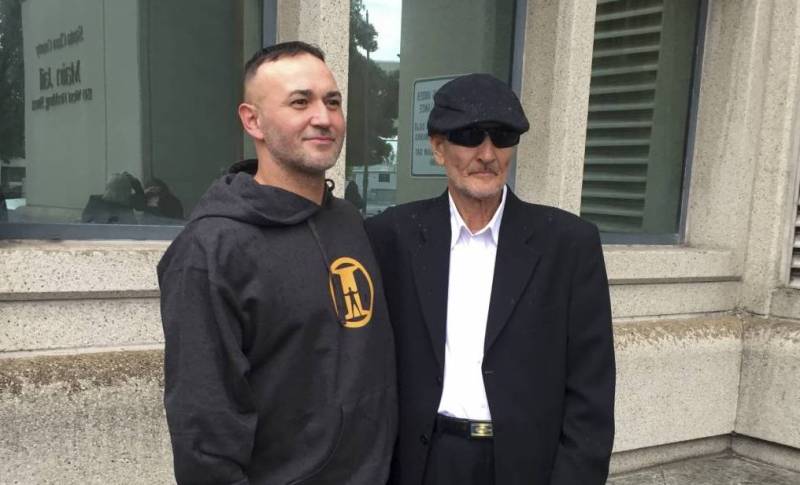
"caption": "Lionel Rubalcava (left) with his father outside the Santa Clara County Main Jail Complex in San José on May 15, 2019, following his release. Rubalcava will receive a $12 million payout from the city of San José to settle a wrongful conviction lawsuit he filed in 2020 after serving 17 years in prison for a drive-by shooting for which he was later exonerated.",
"credit": "Courtesy of Northern California Innocence Project",
"altTag": "A younger man poses outside next to an older man (his father).",
"description": null,
"imgSizes": {
"medium": {
"file": "https://cdn.kqed.org/wp-content/uploads/sites/10/2024/06/061824-Lionel-Rubalcava-01-KQED-1020x765-1-800x485.jpeg",
"width": 800,
"height": 485,
"mimeType": "image/jpeg"
},
"thumbnail": {
"file": "https://cdn.kqed.org/wp-content/uploads/sites/10/2024/06/061824-Lionel-Rubalcava-01-KQED-1020x765-1-160x97.jpeg",
"width": 160,
"height": 97,
"mimeType": "image/jpeg"
},
"post-thumbnail": {
"file": "https://cdn.kqed.org/wp-content/uploads/sites/10/2024/06/061824-Lionel-Rubalcava-01-KQED-1020x765-1-672x372.jpeg",
"width": 672,
"height": 372,
"mimeType": "image/jpeg"
},
"twentyfourteen-full-width": {
"file": "https://cdn.kqed.org/wp-content/uploads/sites/10/2024/06/061824-Lionel-Rubalcava-01-KQED-1020x765-1-1016x576.jpeg",
"width": 1016,
"height": 576,
"mimeType": "image/jpeg"
},
"kqedFullSize": {
"file": "https://cdn.kqed.org/wp-content/uploads/sites/10/2024/06/061824-Lionel-Rubalcava-01-KQED-1020x765-1.jpeg",
"width": 1016,
"height": 616
}
},
"isLoading": false,
"fetchFailed": false
},
"news_11990515": {
"type": "attachments",
"id": "news_11990515",
"meta": {
"index": "attachments_1716263798",
"site": "news",
"id": "11990515",
"found": true
},
"title": "240614-VTAGROUNDBREAKING-JG-01_qut",
"publishDate": 1718404276,
"status": "inherit",
"parent": 0,
"modified": 1749491424,
"caption": "South Bay leaders, transit officials and regional boosters take part in a ceremonial groundbreaking for VTA's BART Silicon Valley Phase II project in Santa Clara in June 2024.",
"credit": "Joseph Geha/KQED",
"altTag": null,
"description": null,
"imgSizes": {
"medium": {
"file": "https://cdn.kqed.org/wp-content/uploads/sites/10/2024/06/240614-VTAGROUNDBREAKING-JG-01_qut-800x533.jpg",
"width": 800,
"height": 533,
"mimeType": "image/jpeg"
},
"large": {
"file": "https://cdn.kqed.org/wp-content/uploads/sites/10/2024/06/240614-VTAGROUNDBREAKING-JG-01_qut-1020x680.jpg",
"width": 1020,
"height": 680,
"mimeType": "image/jpeg"
},
"thumbnail": {
"file": "https://cdn.kqed.org/wp-content/uploads/sites/10/2024/06/240614-VTAGROUNDBREAKING-JG-01_qut-160x107.jpg",
"width": 160,
"height": 107,
"mimeType": "image/jpeg"
},
"1536x1536": {
"file": "https://cdn.kqed.org/wp-content/uploads/sites/10/2024/06/240614-VTAGROUNDBREAKING-JG-01_qut-1536x1024.jpg",
"width": 1536,
"height": 1024,
"mimeType": "image/jpeg"
},
"post-thumbnail": {
"file": "https://cdn.kqed.org/wp-content/uploads/sites/10/2024/06/240614-VTAGROUNDBREAKING-JG-01_qut-672x372.jpg",
"width": 672,
"height": 372,
"mimeType": "image/jpeg"
},
"twentyfourteen-full-width": {
"file": "https://cdn.kqed.org/wp-content/uploads/sites/10/2024/06/240614-VTAGROUNDBREAKING-JG-01_qut-1038x576.jpg",
"width": 1038,
"height": 576,
"mimeType": "image/jpeg"
},
"kqedFullSize": {
"file": "https://cdn.kqed.org/wp-content/uploads/sites/10/2024/06/240614-VTAGROUNDBREAKING-JG-01_qut.jpg",
"width": 1920,
"height": 1280
}
},
"isLoading": false,
"fetchFailed": false
},
"news_11990294": {
"type": "attachments",
"id": "news_11990294",
"meta": {
"index": "attachments_1716263798",
"site": "news",
"id": "11990294",
"found": true
},
"title": "240613-REGIONALMED-JG-3",
"publishDate": 1718317321,
"status": "inherit",
"parent": 0,
"modified": 1718317386,
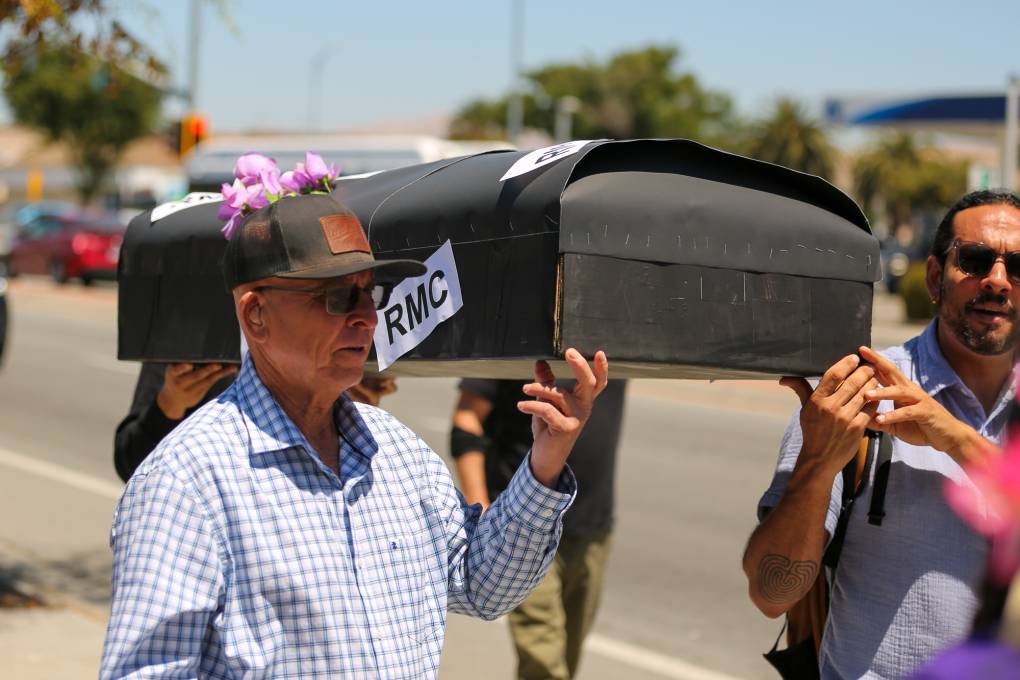
"caption": "Advocates pushing to stop the closure of Regional Medical Center's trauma center carry a box made to look like a casket just outside the hospital in East San José on June 13.",
"credit": "Joseph Geha/KQED",
"altTag": null,
"description": null,
"imgSizes": {
"medium": {
"file": "https://cdn.kqed.org/wp-content/uploads/sites/10/2024/06/240613-REGIONALMED-JG-3-800x533.jpg",
"width": 800,
"height": 533,
"mimeType": "image/jpeg"
},
"large": {
"file": "https://cdn.kqed.org/wp-content/uploads/sites/10/2024/06/240613-REGIONALMED-JG-3-1020x680.jpg",
"width": 1020,
"height": 680,
"mimeType": "image/jpeg"
},
"thumbnail": {
"file": "https://cdn.kqed.org/wp-content/uploads/sites/10/2024/06/240613-REGIONALMED-JG-3-160x107.jpg",
"width": 160,
"height": 107,
"mimeType": "image/jpeg"
},
"1536x1536": {
"file": "https://cdn.kqed.org/wp-content/uploads/sites/10/2024/06/240613-REGIONALMED-JG-3-1536x1024.jpg",
"width": 1536,
"height": 1024,
"mimeType": "image/jpeg"
},
"post-thumbnail": {
"file": "https://cdn.kqed.org/wp-content/uploads/sites/10/2024/06/240613-REGIONALMED-JG-3-672x372.jpg",
"width": 672,
"height": 372,
"mimeType": "image/jpeg"
},
"twentyfourteen-full-width": {
"file": "https://cdn.kqed.org/wp-content/uploads/sites/10/2024/06/240613-REGIONALMED-JG-3-1038x576.jpg",
"width": 1038,
"height": 576,
"mimeType": "image/jpeg"
},
"full-width": {
"file": "https://cdn.kqed.org/wp-content/uploads/sites/10/2024/06/240613-REGIONALMED-JG-3-1920x1280.jpg",
"width": 1920,
"height": 1280,
"mimeType": "image/jpeg"
},
"kqedFullSize": {
"file": "https://cdn.kqed.org/wp-content/uploads/sites/10/2024/06/240613-REGIONALMED-JG-3.jpg",
"width": 2000,
"height": 1333
}
},
"isLoading": false,
"fetchFailed": false
},
"news_11989996": {
"type": "attachments",
"id": "news_11989996",
"meta": {
"index": "attachments_1716263798",
"site": "news",
"id": "11989996",
"found": true
},
"title": "TacoBellWalkOutSanJose01",
"publishDate": 1718225619,
"status": "inherit",
"parent": 11989975,
"modified": 1718225694,
"caption": "Taco Bell and KFC workers in San José walked off the job on Wednesday, June 12, 2024, protesting unsafe working conditions and cuts to their hours.",
"credit": "Courtesy the California Fast Food Workers Union",
"altTag": "Fast food workers from KFC and Taco Bell march behind a huge red and yellow banner that reads, \"San Joe fast food workers.\" Some demonstrators hold flags and signs.",
"description": null,
"imgSizes": {
"medium": {
"file": "https://cdn.kqed.org/wp-content/uploads/sites/10/2024/06/TacoBellWalkOutSanJose01-800x600.jpg",
"width": 800,
"height": 600,
"mimeType": "image/jpeg"
},
"large": {
"file": "https://cdn.kqed.org/wp-content/uploads/sites/10/2024/06/TacoBellWalkOutSanJose01-1020x765.jpg",
"width": 1020,
"height": 765,
"mimeType": "image/jpeg"
},
"thumbnail": {
"file": "https://cdn.kqed.org/wp-content/uploads/sites/10/2024/06/TacoBellWalkOutSanJose01-160x120.jpg",
"width": 160,
"height": 120,
"mimeType": "image/jpeg"
},
"1536x1536": {
"file": "https://cdn.kqed.org/wp-content/uploads/sites/10/2024/06/TacoBellWalkOutSanJose01-1536x1152.jpg",
"width": 1536,
"height": 1152,
"mimeType": "image/jpeg"
},
"post-thumbnail": {
"file": "https://cdn.kqed.org/wp-content/uploads/sites/10/2024/06/TacoBellWalkOutSanJose01-672x372.jpg",
"width": 672,
"height": 372,
"mimeType": "image/jpeg"
},
"twentyfourteen-full-width": {
"file": "https://cdn.kqed.org/wp-content/uploads/sites/10/2024/06/TacoBellWalkOutSanJose01-1038x576.jpg",
"width": 1038,
"height": 576,
"mimeType": "image/jpeg"
},
"kqedFullSize": {
"file": "https://cdn.kqed.org/wp-content/uploads/sites/10/2024/06/TacoBellWalkOutSanJose01.jpg",
"width": 1920,
"height": 1440
}
},
"isLoading": false,
"fetchFailed": false
},
"news_11989941": {
"type": "attachments",
"id": "news_11989941",
"meta": {
"index": "attachments_1716263798",
"site": "news",
"id": "11989941",
"found": true
},
"title": "240409-MAHAN HOMELESS-JG-01_qut",
"publishDate": 1718216228,
"status": "inherit",
"parent": 11989926,
"modified": 1718216259,
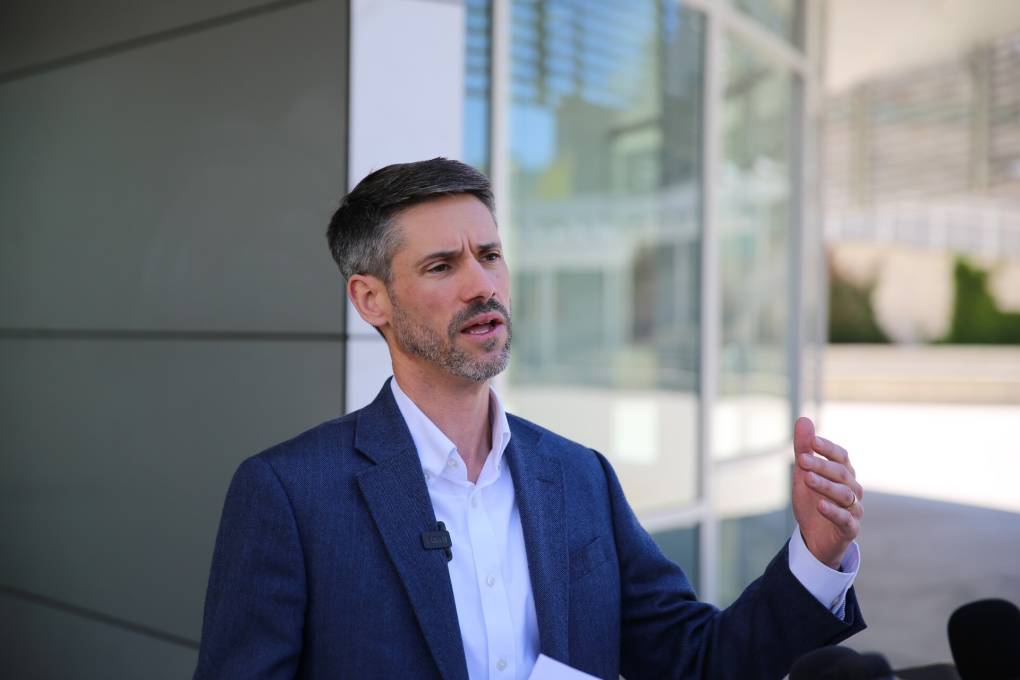
"caption": "San José Mayor Matt Mahan speaks about a state audit of spending on homelessness outside City Hall on April 9, 2024.",
"credit": "Joseph Geha/KQED",
"altTag": null,
"description": null,
"imgSizes": {
"medium": {
"file": "https://cdn.kqed.org/wp-content/uploads/sites/10/2024/06/240409-MAHAN-HOMELESS-JG-01_qut-800x533.jpg",
"width": 800,
"height": 533,
"mimeType": "image/jpeg"
},
"large": {
"file": "https://cdn.kqed.org/wp-content/uploads/sites/10/2024/06/240409-MAHAN-HOMELESS-JG-01_qut-1020x680.jpg",
"width": 1020,
"height": 680,
"mimeType": "image/jpeg"
},
"thumbnail": {
"file": "https://cdn.kqed.org/wp-content/uploads/sites/10/2024/06/240409-MAHAN-HOMELESS-JG-01_qut-160x107.jpg",
"width": 160,
"height": 107,
"mimeType": "image/jpeg"
},
"1536x1536": {
"file": "https://cdn.kqed.org/wp-content/uploads/sites/10/2024/06/240409-MAHAN-HOMELESS-JG-01_qut-1536x1024.jpg",
"width": 1536,
"height": 1024,
"mimeType": "image/jpeg"
},
"post-thumbnail": {
"file": "https://cdn.kqed.org/wp-content/uploads/sites/10/2024/06/240409-MAHAN-HOMELESS-JG-01_qut-672x372.jpg",
"width": 672,
"height": 372,
"mimeType": "image/jpeg"
},
"twentyfourteen-full-width": {
"file": "https://cdn.kqed.org/wp-content/uploads/sites/10/2024/06/240409-MAHAN-HOMELESS-JG-01_qut-1038x576.jpg",
"width": 1038,
"height": 576,
"mimeType": "image/jpeg"
},
"kqedFullSize": {
"file": "https://cdn.kqed.org/wp-content/uploads/sites/10/2024/06/240409-MAHAN-HOMELESS-JG-01_qut.jpg",
"width": 1920,
"height": 1280
}
},
"isLoading": false,
"fetchFailed": false
},
"news_11988820": {
"type": "attachments",
"id": "news_11988820",
"meta": {
"index": "attachments_1716263798",
"site": "news",
"id": "11988820",
"found": true
},
"title": "013_KQED_SanJoseInterimHousing_01302023_qut",
"publishDate": 1717454635,
"status": "inherit",
"parent": 11988728,
"modified": 1717454673,
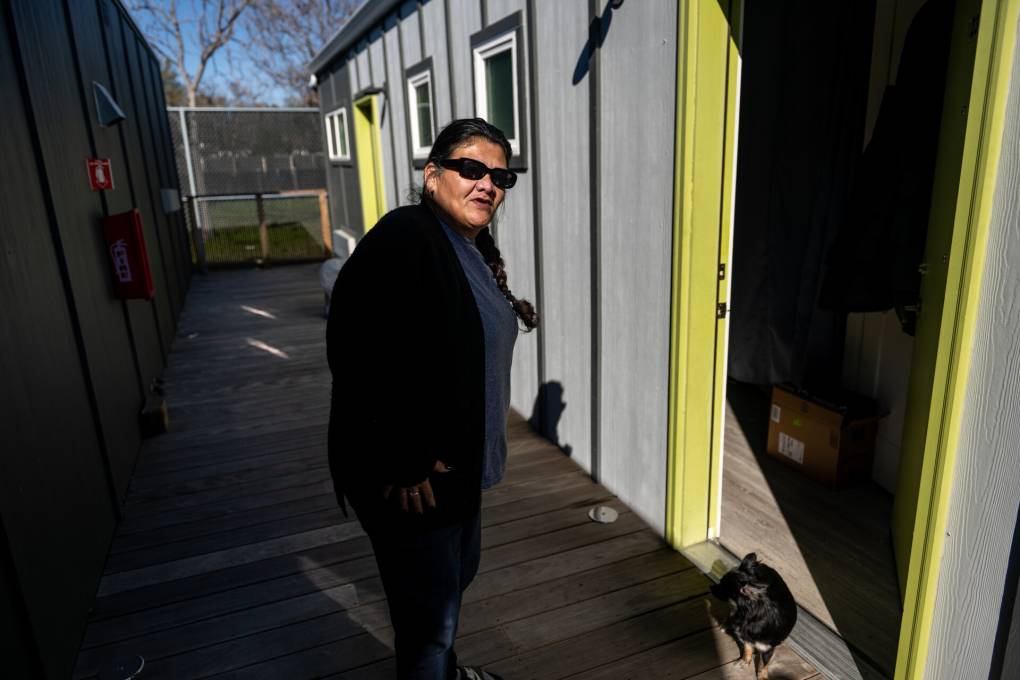
"caption": "Amanda Mora stands outside of her temporary home at Evans Lane housing, an interim housing facility located on city-owned land, in San José on Jan. 30, 2023.",
"credit": "Beth LaBerge/KQED",
"altTag": "A woman wearing sunglasses stands outside the door of a grey tiny home.",
"description": null,
"imgSizes": {
"medium": {
"file": "https://cdn.kqed.org/wp-content/uploads/sites/10/2024/06/013_KQED_SanJoseInterimHousing_01302023_qut-800x533.jpg",
"width": 800,
"height": 533,
"mimeType": "image/jpeg"
},
"large": {
"file": "https://cdn.kqed.org/wp-content/uploads/sites/10/2024/06/013_KQED_SanJoseInterimHousing_01302023_qut-1020x680.jpg",
"width": 1020,
"height": 680,
"mimeType": "image/jpeg"
},
"thumbnail": {
"file": "https://cdn.kqed.org/wp-content/uploads/sites/10/2024/06/013_KQED_SanJoseInterimHousing_01302023_qut-160x107.jpg",
"width": 160,
"height": 107,
"mimeType": "image/jpeg"
},
"1536x1536": {
"file": "https://cdn.kqed.org/wp-content/uploads/sites/10/2024/06/013_KQED_SanJoseInterimHousing_01302023_qut-1536x1024.jpg",
"width": 1536,
"height": 1024,
"mimeType": "image/jpeg"
},
"post-thumbnail": {
"file": "https://cdn.kqed.org/wp-content/uploads/sites/10/2024/06/013_KQED_SanJoseInterimHousing_01302023_qut-672x372.jpg",
"width": 672,
"height": 372,
"mimeType": "image/jpeg"
},
"twentyfourteen-full-width": {
"file": "https://cdn.kqed.org/wp-content/uploads/sites/10/2024/06/013_KQED_SanJoseInterimHousing_01302023_qut-1038x576.jpg",
"width": 1038,
"height": 576,
"mimeType": "image/jpeg"
},
"kqedFullSize": {
"file": "https://cdn.kqed.org/wp-content/uploads/sites/10/2024/06/013_KQED_SanJoseInterimHousing_01302023_qut.jpg",
"width": 1920,
"height": 1280
}
},
"isLoading": false,
"fetchFailed": false
},
"news_11988812": {
"type": "attachments",
"id": "news_11988812",
"meta": {
"index": "attachments_1716263798",
"site": "news",
"id": "11988812",
"found": true
},
"title": "IMG_7876_qut",
"publishDate": 1717453713,
"status": "inherit",
"parent": 11988728,
"modified": 1717454965,
"caption": "Carlos Ruben Jacobo, 48, poses for a portrait at the Guadalupe Emergency Interim Housing site in San José on April 10, 2024. Jacobo, who had been unhoused, was initially reluctant to accept a room because he'd heard bad things about other kinds of shelters. But now he says it feels like home.",
"credit": "Vanessa Rancaño/KQED",
"altTag": "A young man with sunglasses and a plaid shirt poses for a photo standing in a walkway between two rows of grey tiny houses.",
"description": null,
"imgSizes": {
"medium": {
"file": "https://cdn.kqed.org/wp-content/uploads/sites/10/2024/06/IMG_7876_qut-800x600.jpg",
"width": 800,
"height": 600,
"mimeType": "image/jpeg"
},
"large": {
"file": "https://cdn.kqed.org/wp-content/uploads/sites/10/2024/06/IMG_7876_qut-1020x765.jpg",
"width": 1020,
"height": 765,
"mimeType": "image/jpeg"
},
"thumbnail": {
"file": "https://cdn.kqed.org/wp-content/uploads/sites/10/2024/06/IMG_7876_qut-160x120.jpg",
"width": 160,
"height": 120,
"mimeType": "image/jpeg"
},
"1536x1536": {
"file": "https://cdn.kqed.org/wp-content/uploads/sites/10/2024/06/IMG_7876_qut-1536x1152.jpg",
"width": 1536,
"height": 1152,
"mimeType": "image/jpeg"
},
"post-thumbnail": {
"file": "https://cdn.kqed.org/wp-content/uploads/sites/10/2024/06/IMG_7876_qut-672x372.jpg",
"width": 672,
"height": 372,
"mimeType": "image/jpeg"
},
"twentyfourteen-full-width": {
"file": "https://cdn.kqed.org/wp-content/uploads/sites/10/2024/06/IMG_7876_qut-1038x576.jpg",
"width": 1038,
"height": 576,
"mimeType": "image/jpeg"
},
"kqedFullSize": {
"file": "https://cdn.kqed.org/wp-content/uploads/sites/10/2024/06/IMG_7876_qut.jpg",
"width": 1920,
"height": 1440
}
},
"isLoading": false,
"fetchFailed": false
},
"news_11987729": {
"type": "attachments",
"id": "news_11987729",
"meta": {
"index": "attachments_1716263798",
"site": "news",
"id": "11987729",
"found": true
},
"title": "240524-REGIONALMEDICAL-JG-1_qut",
"publishDate": 1716584537,
"status": "inherit",
"parent": 0,
"modified": 1716584739,
"caption": "Regional Medical Center in East San José on May 24.",
"credit": "Joseph Geha/KQED",
"altTag": null,
"description": null,
"imgSizes": {
"medium": {
"file": "https://cdn.kqed.org/wp-content/uploads/sites/10/2024/05/240524-REGIONALMEDICAL-JG-1_qut-800x533.jpg",
"width": 800,
"height": 533,
"mimeType": "image/jpeg"
},
"large": {
"file": "https://cdn.kqed.org/wp-content/uploads/sites/10/2024/05/240524-REGIONALMEDICAL-JG-1_qut-1020x680.jpg",
"width": 1020,
"height": 680,
"mimeType": "image/jpeg"
},
"thumbnail": {
"file": "https://cdn.kqed.org/wp-content/uploads/sites/10/2024/05/240524-REGIONALMEDICAL-JG-1_qut-160x107.jpg",
"width": 160,
"height": 107,
"mimeType": "image/jpeg"
},
"1536x1536": {
"file": "https://cdn.kqed.org/wp-content/uploads/sites/10/2024/05/240524-REGIONALMEDICAL-JG-1_qut-1536x1024.jpg",
"width": 1536,
"height": 1024,
"mimeType": "image/jpeg"
},
"post-thumbnail": {
"file": "https://cdn.kqed.org/wp-content/uploads/sites/10/2024/05/240524-REGIONALMEDICAL-JG-1_qut-672x372.jpg",
"width": 672,
"height": 372,
"mimeType": "image/jpeg"
},
"twentyfourteen-full-width": {
"file": "https://cdn.kqed.org/wp-content/uploads/sites/10/2024/05/240524-REGIONALMEDICAL-JG-1_qut-1038x576.jpg",
"width": 1038,
"height": 576,
"mimeType": "image/jpeg"
},
"kqedFullSize": {
"file": "https://cdn.kqed.org/wp-content/uploads/sites/10/2024/05/240524-REGIONALMEDICAL-JG-1_qut.jpg",
"width": 1920,
"height": 1280
}
},
"isLoading": false,
"fetchFailed": false
},
"news_11988518": {
"type": "attachments",
"id": "news_11988518",
"meta": {
"index": "attachments_1716263798",
"site": "news",
"id": "11988518",
"found": true
},
"title": "240531-SEGOVIACASE-JG-2_qut",
"publishDate": 1717195890,
"status": "inherit",
"parent": 0,
"modified": 1728412159,
"caption": "Joanne Segovia (left) and her attorney, Adam Gasner, walk out of the federal courthouse in San José on May 31, 2024, following her first court appearance since being charged over a year ago with attempting to illegally import opioids.",
"credit": "Joseph Geha/KQED",
"altTag": "A middle-aged white woman with blond hair walks through a courtyard next to a middle-aged man wearing a suit and carrying a briefcase.",
"description": null,
"imgSizes": {
"medium": {
"file": "https://cdn.kqed.org/wp-content/uploads/sites/10/2024/05/240531-SEGOVIACASE-JG-2_qut-800x549.jpg",
"width": 800,
"height": 549,
"mimeType": "image/jpeg"
},
"large": {
"file": "https://cdn.kqed.org/wp-content/uploads/sites/10/2024/05/240531-SEGOVIACASE-JG-2_qut-1020x700.jpg",
"width": 1020,
"height": 700,
"mimeType": "image/jpeg"
},
"thumbnail": {
"file": "https://cdn.kqed.org/wp-content/uploads/sites/10/2024/05/240531-SEGOVIACASE-JG-2_qut-160x110.jpg",
"width": 160,
"height": 110,
"mimeType": "image/jpeg"
},
"1536x1536": {
"file": "https://cdn.kqed.org/wp-content/uploads/sites/10/2024/05/240531-SEGOVIACASE-JG-2_qut-1536x1055.jpg",
"width": 1536,
"height": 1055,
"mimeType": "image/jpeg"
},
"post-thumbnail": {
"file": "https://cdn.kqed.org/wp-content/uploads/sites/10/2024/05/240531-SEGOVIACASE-JG-2_qut-672x372.jpg",
"width": 672,
"height": 372,
"mimeType": "image/jpeg"
},
"twentyfourteen-full-width": {
"file": "https://cdn.kqed.org/wp-content/uploads/sites/10/2024/05/240531-SEGOVIACASE-JG-2_qut-1038x576.jpg",
"width": 1038,
"height": 576,
"mimeType": "image/jpeg"
},
"kqedFullSize": {
"file": "https://cdn.kqed.org/wp-content/uploads/sites/10/2024/05/240531-SEGOVIACASE-JG-2_qut.jpg",
"width": 1873,
"height": 1286
}
},
"isLoading": false,
"fetchFailed": false
},
"news_11987726": {
"type": "attachments",
"id": "news_11987726",
"meta": {
"index": "attachments_1716263798",
"site": "news",
"id": "11987726",
"found": true
},
"title": "240524-REGIONALMEDICAL-JG-4_qut",
"publishDate": 1716584526,
"status": "inherit",
"parent": 0,
"modified": 1716588534,
"caption": "Dr. Raj Gupta, director of stroke and neuroscience services at Regional Medical Center, speaks during a rally outside of the hospital on May 24. Gupta said the decision to eliminate the hospital's trauma center and other services is shameful.",
"credit": "Joseph Geha/KQED",
"altTag": null,
"description": null,
"imgSizes": {
"medium": {
"file": "https://cdn.kqed.org/wp-content/uploads/sites/10/2024/05/240524-REGIONALMEDICAL-JG-4_qut-800x533.jpg",
"width": 800,
"height": 533,
"mimeType": "image/jpeg"
},
"large": {
"file": "https://cdn.kqed.org/wp-content/uploads/sites/10/2024/05/240524-REGIONALMEDICAL-JG-4_qut-1020x680.jpg",
"width": 1020,
"height": 680,
"mimeType": "image/jpeg"
},
"thumbnail": {
"file": "https://cdn.kqed.org/wp-content/uploads/sites/10/2024/05/240524-REGIONALMEDICAL-JG-4_qut-160x107.jpg",
"width": 160,
"height": 107,
"mimeType": "image/jpeg"
},
"1536x1536": {
"file": "https://cdn.kqed.org/wp-content/uploads/sites/10/2024/05/240524-REGIONALMEDICAL-JG-4_qut-1536x1024.jpg",
"width": 1536,
"height": 1024,
"mimeType": "image/jpeg"
},
"post-thumbnail": {
"file": "https://cdn.kqed.org/wp-content/uploads/sites/10/2024/05/240524-REGIONALMEDICAL-JG-4_qut-672x372.jpg",
"width": 672,
"height": 372,
"mimeType": "image/jpeg"
},
"twentyfourteen-full-width": {
"file": "https://cdn.kqed.org/wp-content/uploads/sites/10/2024/05/240524-REGIONALMEDICAL-JG-4_qut-1038x576.jpg",
"width": 1038,
"height": 576,
"mimeType": "image/jpeg"
},
"kqedFullSize": {
"file": "https://cdn.kqed.org/wp-content/uploads/sites/10/2024/05/240524-REGIONALMEDICAL-JG-4_qut.jpg",
"width": 1920,
"height": 1280
}
},
"isLoading": false,
"fetchFailed": false
},
"news_11987071": {
"type": "attachments",
"id": "news_11987071",
"meta": {
"index": "attachments_1716263798",
"site": "news",
"id": "11987071",
"found": true
},
"title": "240520-SJPD SHOOTING-JG-05_qut",
"publishDate": 1716251943,
"status": "inherit",
"parent": 11986891,
"modified": 1729631063,
"caption": "San José acting Police Chief Paul Joseph speaks during a May 20, 2024, press conference about a police shooting in the city's East Side.",
"credit": "Joseph Geha/KQED",
"altTag": "A police officer stands in front of a podium.",
"description": null,
"imgSizes": {
"medium": {
"file": "https://cdn.kqed.org/wp-content/uploads/sites/10/2024/05/240520-SJPD-SHOOTING-JG-05_qut-800x533.jpg",
"width": 800,
"height": 533,
"mimeType": "image/jpeg"
},
"large": {
"file": "https://cdn.kqed.org/wp-content/uploads/sites/10/2024/05/240520-SJPD-SHOOTING-JG-05_qut-1020x680.jpg",
"width": 1020,
"height": 680,
"mimeType": "image/jpeg"
},
"thumbnail": {
"file": "https://cdn.kqed.org/wp-content/uploads/sites/10/2024/05/240520-SJPD-SHOOTING-JG-05_qut-160x107.jpg",
"width": 160,
"height": 107,
"mimeType": "image/jpeg"
},
"1536x1536": {
"file": "https://cdn.kqed.org/wp-content/uploads/sites/10/2024/05/240520-SJPD-SHOOTING-JG-05_qut-1536x1024.jpg",
"width": 1536,
"height": 1024,
"mimeType": "image/jpeg"
},
"post-thumbnail": {
"file": "https://cdn.kqed.org/wp-content/uploads/sites/10/2024/05/240520-SJPD-SHOOTING-JG-05_qut-672x372.jpg",
"width": 672,
"height": 372,
"mimeType": "image/jpeg"
},
"twentyfourteen-full-width": {
"file": "https://cdn.kqed.org/wp-content/uploads/sites/10/2024/05/240520-SJPD-SHOOTING-JG-05_qut-1038x576.jpg",
"width": 1038,
"height": 576,
"mimeType": "image/jpeg"
},
"kqedFullSize": {
"file": "https://cdn.kqed.org/wp-content/uploads/sites/10/2024/05/240520-SJPD-SHOOTING-JG-05_qut.jpg",
"width": 1920,
"height": 1280
}
},
"isLoading": false,
"fetchFailed": false
}
},
"audioPlayerReducer": {
"postId": "stream_live",
"isPaused": true,
"isPlaying": false,
"pfsActive": false,
"pledgeModalIsOpen": true,
"playerDrawerIsOpen": false,
"liveAudioPlayStartedAt": 0,
"liveAudioPlayContext": ""
},
"authorsReducer": {
"byline_news_11988440": {
"type": "authors",
"id": "byline_news_11988440",
"meta": {
"override": true
},
"slug": "byline_news_11988440",
"name": "Ericka Cruz Guevarra, Joseph Geha, Alan Montecillo, Maria Esquinca, Tamuna Chkareuli",
"isLoading": false
},
"gmarzorati": {
"type": "authors",
"id": "227",
"meta": {
"index": "authors_1716337520",
"id": "227",
"found": true
},
"name": "Guy Marzorati",
"firstName": "Guy",
"lastName": "Marzorati",
"slug": "gmarzorati",
"email": "gmarzorati@KQED.org",
"display_author_email": true,
"staff_mastheads": [
"news"
],
"title": "Correspondent",
"bio": "Guy Marzorati is a correspondent on KQED's California Politics and Government Desk, based in San Jose. A graduate of Santa Clara University, Guy joined KQED in 2013. He reports on state and local politics and produces KQED's digital voter guide.",
"avatar": "https://secure.gravatar.com/avatar/e7038b8dbfd55b104369b76b1cd0b9de?s=600&d=blank&r=g",
"twitter": "guymarzorati",
"facebook": null,
"instagram": null,
"linkedin": null,
"sites": [
{
"site": "",
"roles": [
"editor"
]
},
{
"site": "news",
"roles": [
"editor"
]
},
{
"site": "science",
"roles": [
"editor"
]
},
{
"site": "forum",
"roles": [
"editor"
]
},
{
"site": "elections",
"roles": [
"editor"
]
},
{
"site": "liveblog",
"roles": [
"editor"
]
}
],
"headData": {
"title": "Guy Marzorati | KQED",
"description": "Correspondent",
"ogImgSrc": "https://secure.gravatar.com/avatar/e7038b8dbfd55b104369b76b1cd0b9de?s=600&d=blank&r=g",
"twImgSrc": "https://secure.gravatar.com/avatar/e7038b8dbfd55b104369b76b1cd0b9de?s=600&d=blank&r=g"
},
"isLoading": false,
"link": "/author/gmarzorati"
},
"vrancano": {
"type": "authors",
"id": "11276",
"meta": {
"index": "authors_1716337520",
"id": "11276",
"found": true
},
"name": "Vanessa Rancaño",
"firstName": "Vanessa",
"lastName": "Rancaño",
"slug": "vrancano",
"email": "vrancano@kqed.org",
"display_author_email": false,
"staff_mastheads": [
"news"
],
"title": "Reporter",
"bio": "Vanessa Rancaño is a features reporter for KQED. She’s also covered homelessness and education for the station and reported from the Central Valley. Her work has aired across public radio, from flagship national news shows to longform narrative podcasts. Before taking up a mic, she worked as a freelance print journalist. She’s been recognized with a number of national and regional awards. Vanessa grew up in California's Central Valley. She's a former NPR Kroc Fellow, and a graduate of the UC Berkeley Graduate School of Journalism.",
"avatar": "https://secure.gravatar.com/avatar/b3a383dfb0e7ee1c17568f2cf067904ab654d6e3de9743fc661f3c788ade1bed?s=600&d=blank&r=g",
"twitter": "vanessarancano",
"bluesky": null,
"facebook": null,
"instagram": null,
"linkedin": null,
"sites": [
{
"site": "arts",
"roles": [
"editor"
]
},
{
"site": "news",
"roles": [
"editor"
]
},
{
"site": "liveblog",
"roles": [
"contributor"
]
}
],
"headData": {
"title": "Vanessa Rancaño | KQED",
"description": "Reporter",
"ogImgSrc": "https://secure.gravatar.com/avatar/b3a383dfb0e7ee1c17568f2cf067904ab654d6e3de9743fc661f3c788ade1bed?s=600&d=blank&r=g",
"twImgSrc": "https://secure.gravatar.com/avatar/b3a383dfb0e7ee1c17568f2cf067904ab654d6e3de9743fc661f3c788ade1bed?s=600&d=blank&r=g"
},
"isLoading": false,
"link": "/author/vrancano"
},
"kmizuguchi": {
"type": "authors",
"id": "11739",
"meta": {
"index": "authors_1716337520",
"id": "11739",
"found": true
},
"name": "Keith Mizuguchi",
"firstName": "Keith",
"lastName": "Mizuguchi",
"slug": "kmizuguchi",
"email": "kmizuguchi@kqed.org",
"display_author_email": false,
"staff_mastheads": [],
"title": "KQED Contributor",
"bio": null,
"avatar": "https://secure.gravatar.com/avatar/64d8a7de0723d4099b9fe4e915136103febcc20809abce228ee4415bcb237023?s=600&d=blank&r=g",
"twitter": null,
"bluesky": null,
"facebook": null,
"instagram": null,
"linkedin": null,
"sites": [
{
"site": "news",
"roles": [
"editor"
]
},
{
"site": "science",
"roles": [
"editor"
]
}
],
"headData": {
"title": "Keith Mizuguchi | KQED",
"description": "KQED Contributor",
"ogImgSrc": "https://secure.gravatar.com/avatar/64d8a7de0723d4099b9fe4e915136103febcc20809abce228ee4415bcb237023?s=600&d=blank&r=g",
"twImgSrc": "https://secure.gravatar.com/avatar/64d8a7de0723d4099b9fe4e915136103febcc20809abce228ee4415bcb237023?s=600&d=blank&r=g"
},
"isLoading": false,
"link": "/author/kmizuguchi"
},
"jgeha": {
"type": "authors",
"id": "11906",
"meta": {
"index": "authors_1716337520",
"id": "11906",
"found": true
},
"name": "Joseph Geha",
"firstName": "Joseph",
"lastName": "Geha",
"slug": "jgeha",
"email": "jgeha@kqed.org",
"display_author_email": false,
"staff_mastheads": [
"news",
"science"
],
"title": "KQED Contributor",
"bio": null,
"avatar": "https://secure.gravatar.com/avatar/ea84d2b6dd93d6369d453edf19dd583f117cd1759d2d9c9c92f9de77017354fe?s=600&d=blank&r=g",
"twitter": null,
"bluesky": null,
"facebook": null,
"instagram": null,
"linkedin": null,
"sites": [
{
"site": "news",
"roles": [
"editor"
]
},
{
"site": "liveblog",
"roles": [
"author"
]
}
],
"headData": {
"title": "Joseph Geha | KQED",
"description": "KQED Contributor",
"ogImgSrc": "https://secure.gravatar.com/avatar/ea84d2b6dd93d6369d453edf19dd583f117cd1759d2d9c9c92f9de77017354fe?s=600&d=blank&r=g",
"twImgSrc": "https://secure.gravatar.com/avatar/ea84d2b6dd93d6369d453edf19dd583f117cd1759d2d9c9c92f9de77017354fe?s=600&d=blank&r=g"
},
"isLoading": false,
"link": "/author/jgeha"
},
"kdebenedetti": {
"type": "authors",
"id": "11913",
"meta": {
"index": "authors_1716337520",
"id": "11913",
"found": true
},
"name": "Katie DeBenedetti",
"firstName": "Katie",
"lastName": "DeBenedetti",
"slug": "kdebenedetti",
"email": "kdebenedetti@kqed.org",
"display_author_email": false,
"staff_mastheads": [
"news",
"science"
],
"title": "KQED Contributor",
"bio": "Katie DeBenedetti is a digital reporter covering daily news for the Express Desk. Prior to joining KQED as a culture reporting intern in January 2024, she covered education and city government for the Napa Valley Register.",
"avatar": "https://secure.gravatar.com/avatar/6e31073cb8f7e4214ab03f42771d0f45?s=600&d=blank&r=g",
"twitter": null,
"facebook": null,
"instagram": null,
"linkedin": null,
"sites": [
{
"site": "news",
"roles": [
"author"
]
},
{
"site": "science",
"roles": [
"author"
]
},
{
"site": "liveblog",
"roles": [
"author"
]
}
],
"headData": {
"title": "Katie DeBenedetti | KQED",
"description": "KQED Contributor",
"ogImgSrc": "https://secure.gravatar.com/avatar/6e31073cb8f7e4214ab03f42771d0f45?s=600&d=blank&r=g",
"twImgSrc": "https://secure.gravatar.com/avatar/6e31073cb8f7e4214ab03f42771d0f45?s=600&d=blank&r=g"
},
"isLoading": false,
"link": "/author/kdebenedetti"
}
},
"pagesReducer": {
"news_tag_san-jose": {
"type": "terms",
"id": "news_18541",
"meta": {
"index": "terms_1716263798",
"site": "news",
"id": "18541",
"score": 8.005292
},
"featImg": null,
"name": "San Jose",
"description": null,
"taxonomy": "tag",
"headData": {
"twImgId": null,
"twTitle": null,
"ogTitle": null,
"ogImgId": null,
"twDescription": null,
"description": null,
"title": "San Jose Archives | KQED News",
"ogDescription": null
},
"ttid": 91,
"slug": "san-jose",
"isLoading": false,
"title": "San Jose",
"pageMeta": {
"site": "news",
"WpPageTemplate": "page-topic-editorial",
"currentPage": 21
},
"blocks": [
{
"blockName": "kqed/post-list",
"attrs": {
"layout": "cardArticle2",
"query": "posts/news?tag=san-jose",
"seeMore": false,
"paginated": true,
"page": 21
}
},
{
"blockName": "kqed/ad"
}
]
}
},
"pfsSessionReducer": {},
"postsReducer": {
"stream_live": {
"type": "live",
"id": "stream_live",
"audioUrl": "https://streams.kqed.org/kqedradio",
"title": "Live Stream",
"excerpt": "Live Stream information currently unavailable.",
"link": "/radio",
"featImg": "",
"label": {
"name": "KQED Live",
"link": "/"
}
},
"stream_kqedNewscast": {
"type": "posts",
"id": "stream_kqedNewscast",
"audioUrl": "https://www.kqed.org/.stream/anon/radio/RDnews/newscast.mp3?_=1",
"title": "KQED Newscast",
"featImg": "",
"label": {
"name": "88.5 FM",
"link": "/"
}
},
"news_11991654": {
"type": "posts",
"id": "news_11991654",
"meta": {
"index": "posts_1716263798",
"site": "news",
"id": "11991654",
"score": null,
"sort": [
1719274448000
]
},
"guestAuthors": [],
"slug": "state-department-of-public-health-wont-intervene-in-upcoming-closure-of-east-san-jose-trauma-center",
"title": "State Department of Public Health Won't Intervene in Upcoming Closure of East San José Trauma Center",
"publishDate": 1719274448,
"format": "standard",
"headTitle": "State Department of Public Health Won’t Intervene in Upcoming Closure of East San José Trauma Center | KQED",
"labelTerm": {
"site": "news"
},
"content": "\u003cp>In the ongoing fight to stop the planned closure of the \u003ca href=\"https://www.kqed.org/news/11988440/advocates-protest-planned-closure-of-east-san-jose-trauma-center\">only trauma center on the east side of Santa Clara County\u003c/a>, the state has dealt a blow to advocates and elected officials.\u003c/p>\n\u003cp>The California Department of Public Health shot down a request from a group of state Assembly members asking the agency to intervene in \u003ca href=\"https://www.kqed.org/news/11990284/doctors-community-leaders-ramp-up-efforts-to-halt-closure-of-east-san-jose-trauma-center\">Regional Medical Center’s closure of its trauma center\u003c/a> and cuts to other services, set to take effect Aug. 12.\u003c/p>\n\u003cp>Assemblymembers Ash Kalra, Marc Berman, Alex Lee, Evan Low and Gail Pellerin penned a June 17 letter asking CDPH to stop HCA Healthcare, the owner of Regional Medical Center, from closing its trauma center, eliminating its severe heart attack treatment program and downgrading its stroke services.\u003c/p>\n\u003cp>The CDPH, in a response to the legislators, said it has no authority to stop the planned cuts, because the services on the chopping block are considered supplemental, and fall outside a set of prescribed offerings the state mandates general acute care hospitals maintain, according to Kalra’s office.\u003c/p>\n\u003cp>[ad fullwidth]\u003c/p>\n\u003cp>In a statement emailed to KQED, the public health agency said it supports equitable access to hospital care for all communities but noted the law only requires CDPH and other agencies to be notified about hospitals’ intent to cut services or close departments.\u003c/p>\n\u003cp>“While any reduction of supplemental services is concerning, CDPH cannot compel facilities to provide them,” the statement said. “CDPH is monitoring this situation, and basic services at [Regional Medical Center] continue to be provided.”\u003c/p>\n\u003cp>The cuts “will have negative impacts on health care services for disadvantaged communities in East San José and further strain the County’s health care system,” the legislators wrote. “Our delegation has serious concerns about how this will cause further harm to historically underserved and marginalized members of our communities, potentially leading to preventable fatalities.”\u003c/p>\n\u003cp>While the legislators sent their letter to CDPH and got a response within about a week, the County Board of Supervisors approved sending a similar request to intervene to CDPH in April, though county staff told KQED the county has not yet received an official response.\u003c/p>\n\u003cp>As the clock on the closures and cuts at Regional Medical Center ticks, the denial from CDPH further narrows a slim list of potential reprieves for those hoping to avert the loss of services.\u003c/p>\n\u003cp>Since May, patient advocates, doctors, nurses and elected officials have called on Attorney General Rob Bonta and Gov. Gavin Newsom to intervene, but it’s unclear if any action will be taken.\u003c/p>\n\u003cp>Because Regional Medical Center was previously a nonprofit hospital before being purchased by HCA in 2002, local officials say Bonta has the authority to stop service cuts at the hospital if they would have a “discriminatory” impact.\u003c/p>\n\u003cp>Bonta’s office previously told KQED it is reviewing the matter but cannot comment on a potential or ongoing investigation “to protect its integrity.”\u003c/p>\n\u003cp>A spokesperson for the governor’s office previously deferred comment to the California Health and Human Services Agency, which has not responded to requests for comment.\u003c/p>\n\u003cp>Carmella Gutierrez, a spokesperson for HCA’s Far West Division, said in a prior statement that the campaign against the hospital is choosing “exaggeration to generate a false fear” in the community.\u003c/p>\n\u003cp>HCA said in a letter to the county’s emergency services department that it has seen a 38% reduction in patients at Regional Medical Center’s trauma center since 2019.\u003c/p>\n\u003cp>And while a county report found that the trauma center handles an average of 2,450 trauma patients annually, about a quarter of all reported cases for the trauma system in the county, Gutierrez said only 1,466 met National Trauma Data Bank criteria.\u003c/p>\n\u003cp>Regional Medical Center is the only comprehensive stroke center on the northeast, east and southeast side of the county — and a county report said that 20% of all stroke patients arrive there.\u003c/p>\n\u003cp>Gutierrez said that although the hospital is cutting its severe heart attack services and downgrading its stroke services, it has strong and considerate transition plans that ensure patients are treated “in a timely manner.”\u003c/p>\n\u003cp>Another potential option is for the county to buy Regional Medical Center. The county previously purchased O’Connor Hospital in San José and St. Louise Regional Hospital in Gilroy as its previous owner, Verity Health, filed for bankruptcy.\u003c/p>\n\u003cp>It’s unclear whether such a deal could happen with Regional Medical Center. County officials have held closed-door meetings with the hospital’s ownership, but details remain confidential.\u003c/p>\n\u003cp>Santa Clara County Supervisor Cindy Chavez said last month that she hopes HCA Healthcare will decide not to cut services at Regional Medical Center in San José on its own.\u003c/p>\n\u003cp>“If they don’t do that, the county and other public entities are going to have to look at what we can do to protect the health and well-being of our citizens. And I assure you, we are doing that,” Chavez said.\u003c/p>\n\u003cp>\u003c/p>\n",
"blocks": [],
"excerpt": "The California Department of Public Health denied a request from a group of state legislators to halt the closure of an East San José trauma center. ",
"status": "publish",
"parent": 0,
"modified": 1738186171,
"stats": {
"hasAudio": false,
"hasVideo": false,
"hasChartOrMap": false,
"iframeSrcs": [],
"hasGoogleForm": false,
"hasGallery": false,
"hasHearkenModule": false,
"hasPolis": false,
"paragraphCount": 24,
"wordCount": 852
},
"headData": {
"title": "State Department of Public Health Won't Intervene in Upcoming Closure of East San José Trauma Center | KQED",
"description": "The California Department of Public Health denied a request from a group of state legislators to halt the closure of an East San José trauma center. ",
"ogTitle": "",
"ogDescription": "",
"ogImgId": "",
"twTitle": "",
"twDescription": "",
"twImgId": "",
"schema": {
"@context": "https://schema.org",
"@type": "NewsArticle",
"headline": "State Department of Public Health Won't Intervene in Upcoming Closure of East San José Trauma Center",
"datePublished": "2024-06-24T17:14:08-07:00",
"dateModified": "2025-01-29T13:29:31-08:00",
"image": "https://cdn.kqed.org/wp-content/uploads/2020/02/KQED-OG-Image@1x.png",
"isAccessibleForFree": "True",
"publisher": {
"@type": "NewsMediaOrganization",
"@id": "https://www.kqed.org/#organization",
"name": "KQED",
"logo": "https://cdn.kqed.org/wp-content/uploads/2020/02/KQED-OG-Image@1x.png",
"url": "https://www.kqed.org",
"sameAs": [
"https://www.facebook.com/KQED",
"https://twitter.com/KQED",
"https://www.instagram.com/kqed/",
"https://www.tiktok.com/@kqedofficial",
"https://www.linkedin.com/company/kqed",
"https://www.youtube.com/channel/UCeC0IOo7i1P_61zVUWbJ4nw"
]
}
}
},
"sticky": false,
"nprStoryId": "kqed-11991654",
"excludeFromSiteSearch": "Include",
"articleAge": "0",
"path": "/news/11991654/state-department-of-public-health-wont-intervene-in-upcoming-closure-of-east-san-jose-trauma-center",
"audioTrackLength": null,
"parsedContent": [
{
"type": "contentString",
"content": "\u003cdiv class=\"post-body\">\u003cp>\u003cp>In the ongoing fight to stop the planned closure of the \u003ca href=\"https://www.kqed.org/news/11988440/advocates-protest-planned-closure-of-east-san-jose-trauma-center\">only trauma center on the east side of Santa Clara County\u003c/a>, the state has dealt a blow to advocates and elected officials.\u003c/p>\n\u003cp>The California Department of Public Health shot down a request from a group of state Assembly members asking the agency to intervene in \u003ca href=\"https://www.kqed.org/news/11990284/doctors-community-leaders-ramp-up-efforts-to-halt-closure-of-east-san-jose-trauma-center\">Regional Medical Center’s closure of its trauma center\u003c/a> and cuts to other services, set to take effect Aug. 12.\u003c/p>\n\u003cp>Assemblymembers Ash Kalra, Marc Berman, Alex Lee, Evan Low and Gail Pellerin penned a June 17 letter asking CDPH to stop HCA Healthcare, the owner of Regional Medical Center, from closing its trauma center, eliminating its severe heart attack treatment program and downgrading its stroke services.\u003c/p>\n\u003cp>The CDPH, in a response to the legislators, said it has no authority to stop the planned cuts, because the services on the chopping block are considered supplemental, and fall outside a set of prescribed offerings the state mandates general acute care hospitals maintain, according to Kalra’s office.\u003c/p>\n\u003cp>\u003c/p>\u003c/div>",
"attributes": {
"named": {},
"numeric": []
}
},
{
"type": "component",
"content": "",
"name": "ad",
"attributes": {
"named": {
"label": "fullwidth"
},
"numeric": [
"fullwidth"
]
}
},
{
"type": "contentString",
"content": "\u003cdiv class=\"post-body\">\u003cp>\u003c/p>\n\u003cp>In a statement emailed to KQED, the public health agency said it supports equitable access to hospital care for all communities but noted the law only requires CDPH and other agencies to be notified about hospitals’ intent to cut services or close departments.\u003c/p>\n\u003cp>“While any reduction of supplemental services is concerning, CDPH cannot compel facilities to provide them,” the statement said. “CDPH is monitoring this situation, and basic services at [Regional Medical Center] continue to be provided.”\u003c/p>\n\u003cp>The cuts “will have negative impacts on health care services for disadvantaged communities in East San José and further strain the County’s health care system,” the legislators wrote. “Our delegation has serious concerns about how this will cause further harm to historically underserved and marginalized members of our communities, potentially leading to preventable fatalities.”\u003c/p>\n\u003cp>While the legislators sent their letter to CDPH and got a response within about a week, the County Board of Supervisors approved sending a similar request to intervene to CDPH in April, though county staff told KQED the county has not yet received an official response.\u003c/p>\n\u003cp>As the clock on the closures and cuts at Regional Medical Center ticks, the denial from CDPH further narrows a slim list of potential reprieves for those hoping to avert the loss of services.\u003c/p>\n\u003cp>Since May, patient advocates, doctors, nurses and elected officials have called on Attorney General Rob Bonta and Gov. Gavin Newsom to intervene, but it’s unclear if any action will be taken.\u003c/p>\n\u003cp>Because Regional Medical Center was previously a nonprofit hospital before being purchased by HCA in 2002, local officials say Bonta has the authority to stop service cuts at the hospital if they would have a “discriminatory” impact.\u003c/p>\n\u003cp>Bonta’s office previously told KQED it is reviewing the matter but cannot comment on a potential or ongoing investigation “to protect its integrity.”\u003c/p>\n\u003cp>A spokesperson for the governor’s office previously deferred comment to the California Health and Human Services Agency, which has not responded to requests for comment.\u003c/p>\n\u003cp>Carmella Gutierrez, a spokesperson for HCA’s Far West Division, said in a prior statement that the campaign against the hospital is choosing “exaggeration to generate a false fear” in the community.\u003c/p>\n\u003cp>HCA said in a letter to the county’s emergency services department that it has seen a 38% reduction in patients at Regional Medical Center’s trauma center since 2019.\u003c/p>\n\u003cp>And while a county report found that the trauma center handles an average of 2,450 trauma patients annually, about a quarter of all reported cases for the trauma system in the county, Gutierrez said only 1,466 met National Trauma Data Bank criteria.\u003c/p>\n\u003cp>Regional Medical Center is the only comprehensive stroke center on the northeast, east and southeast side of the county — and a county report said that 20% of all stroke patients arrive there.\u003c/p>\n\u003cp>Gutierrez said that although the hospital is cutting its severe heart attack services and downgrading its stroke services, it has strong and considerate transition plans that ensure patients are treated “in a timely manner.”\u003c/p>\n\u003cp>Another potential option is for the county to buy Regional Medical Center. The county previously purchased O’Connor Hospital in San José and St. Louise Regional Hospital in Gilroy as its previous owner, Verity Health, filed for bankruptcy.\u003c/p>\n\u003cp>It’s unclear whether such a deal could happen with Regional Medical Center. County officials have held closed-door meetings with the hospital’s ownership, but details remain confidential.\u003c/p>\n\u003cp>Santa Clara County Supervisor Cindy Chavez said last month that she hopes HCA Healthcare will decide not to cut services at Regional Medical Center in San José on its own.\u003c/p>\n\u003cp>“If they don’t do that, the county and other public entities are going to have to look at what we can do to protect the health and well-being of our citizens. And I assure you, we are doing that,” Chavez said.\u003c/p>\n\u003cp>\u003c/p>\n\u003c/div>\u003c/p>",
"attributes": {
"named": {},
"numeric": []
}
}
],
"link": "/news/11991654/state-department-of-public-health-wont-intervene-in-upcoming-closure-of-east-san-jose-trauma-center",
"authors": [
"11906"
],
"categories": [
"news_457",
"news_8"
],
"tags": [
"news_1153",
"news_27626",
"news_18543",
"news_24939",
"news_21770",
"news_18541",
"news_21285"
],
"featImg": "news_11991678",
"label": "news"
},
"news_11990929": {
"type": "posts",
"id": "news_11990929",
"meta": {
"index": "posts_1716263798",
"site": "news",
"id": "11990929",
"score": null,
"sort": [
1718756072000
]
},
"guestAuthors": [],
"slug": "san-jose-paying-12-million-to-exonerated-man-in-wrongful-conviction-suit",
"title": "San José to Pay $12 Million to Exonerated Man in Wrongful Conviction Suit",
"publishDate": 1718756072,
"format": "standard",
"headTitle": "San José to Pay $12 Million to Exonerated Man in Wrongful Conviction Suit | KQED",
"labelTerm": {
"site": "news"
},
"content": "\u003cp>A San José man will receive a $12 million settlement from the city after he was imprisoned for 17 years for a drive-by shooting for which he was later exonerated.\u003c/p>\n\u003cp>The San José City Council voted Tuesday to approve the payout to Lionel Rubalcava, 46. The settlement is among the largest payouts for a police misconduct claim in the city’s history. The vote was 8–1, with the lone vote against the move cast by Councilmember Bien Doan.\u003c/p>\n\u003cp>He was exonerated in 2019 with the help of the Northern California Innocence Project at Santa Clara University School of Law, which found that eyewitness identifications were unreliable and that Rubalcava should never have been convicted. Later that year, he was declared “factually innocent” by the \u003ca href=\"https://ncip.org/lionel-rubalcava/\" target=\"_blank\" rel=\"noopener\">Santa Clara County Superior Court\u003c/a>.\u003c/p>\n\u003cp>\u003ca href=\"https://www.mercurynews.com/2020/06/29/san-jose-man-exonerated-after-17-years-behind-bars-sues-for-wrongful-conviction/\">Rubalcava sued the city in 2020\u003c/a>, claiming he was wrongfully convicted. His attorneys said the conviction was based largely on the identifications San Jose police garnered by threatening, pressuring and coercing witnesses, including the victim of the shooting.\u003c/p>\n\u003cp>“We are supposed to be able to trust police officers for our protection and safety,” Rubalcava said in a statement on Tuesday. “In my case, the San José Police Department singled me out and framed me for a crime I didn’t commit. My family and I are grateful we can now put this nightmare behind us.”\u003c/p>\n\u003cp>[ad fullwidth]\u003c/p>\n\u003cp>There was no physical evidence or motive tying Rubalcava to the 2002 shooting on Mastic Street, south of downtown, that left a man paralyzed. He was convicted despite his strong alibi, backed by cell phone data, that he was headed to a date in Hollister when the shooting occurred.\u003c/p>\n\u003cp>Rubalcava’s attorneys asserted in the lawsuit that police investigators “fabricated police reports” that claimed three witnesses identified him “instantaneously and without any police suggestion.” In reality, “none of the witnesses independently made positive identifications of anyone, let alone the innocent Rubalcava,” his attorneys argued.[aside label=\"related coverage\" tag=\"san-jose-police\"]Witnesses also later admitted that police pressured them to make their statements, the lawsuit claimed.\u003c/p>\n\u003cp>Nick Brustin, one of Rubalcava’s attorneys, called his client an amazing and resilient person.\u003c/p>\n\u003cp>“With all the things that he has been through, a lot of people would have lost hope and would be angry. He’s none of those things,” Brustin said. “He came out of prison and completely rebuilt his life. He’s got two businesses, he’s rebuilding his family, and he’s taking care of his parents. So to be able to see this resolve for him is just an incredible feeling.”\u003c/p>\n\u003cp>The city attempted to have the entire case thrown out, but \u003ca href=\"https://www.courthousenews.com/san-jose-cops-to-face-trial-on-falsifying-evidence-claims/\">a federal judge in March\u003c/a> allowed the lawsuit against San José Police Detective Joe Perez and Officers Steven Spillman and Topui Fonua, who investigated the case, to go to trial.\u003c/p>\n\u003cp>“A jury reasonably could infer that Perez, Fonua, and Spillman falsified the police reports for the purpose of depriving Rubalcava of constitutional rights,” U.S. District Court Judge Beth Labson Freeman noted in her March order.\u003c/p>\n\u003cp>“The city strongly believes the officers who investigated this case did so objectively and fairly,” San José City Attorney Nora Frimann said in an email on Tuesday after the vote. “Unfortunately, police officers often become the object of blame and are really the only people in the system against whom a lawsuit can be brought.”\u003c/p>\n\u003cp>Frimann said because the monetary awards in wrongful conviction cases “have the potential to have a devastating impact to city budgets, it is prudent for cities to manage these claims by resolving them as best they can.”\u003c/p>\n\u003cp>Brustin said the money compensates Rubalcava for all he has been through and will help him readjust to his new life.\u003c/p>\n\u003cp>“We have to acknowledge that the city has finally done the right thing and has compensated Lionel, and that sends a strong message both on his innocence and what happened to him,” Brustin said. “But for many years, they fought tooth and nail, wouldn’t concede his innocence, attacked him and his character in ways that just were not helpful.”\u003c/p>\n\u003cp>Brustin said the large payout should be painful for the city and should push its leaders to openly assess their internal practices to identify systemic issues that may have affected other cases.\u003c/p>\n\u003cp>Frimann said in the years since the Rubalcava’s criminal trial, “investigative techniques and practices have evolved and changed, but not in response to this case.” She said the review by the Santa Clara County District Attorney’s Office that led to Rubalcava being found factually innocent “did not conclude that police acted wrongfully.”\u003c/p>\n\u003cp>Santa Clara University law professor Linda Starr, co-founder of the Northern California Innocence Project, who oversaw research on Rubalcava’s case, said she is extremely happy this long and arduous chapter in his life is finally over, though she is cognizant that no amount of money can give back so much lost time.\u003c/p>\n\u003cp>\u003c/p>\n\u003cp>“I think that’s a wonderful thing,” Starr said. “It’s time for him to be able to just live his life.”\u003c/p>\n\n",
"blocks": [],
"excerpt": "The San José City Council approved the settlement payment to Lionel Rubalcava, 46, who spent 17 years behind bars for his alleged involvement in a drive-by shooting, a conviction that was later found to be based on shaky eyewitness statements coerced by police investigators.",
"status": "publish",
"parent": 0,
"modified": 1719447468,
"stats": {
"hasAudio": false,
"hasVideo": false,
"hasChartOrMap": false,
"iframeSrcs": [],
"hasGoogleForm": false,
"hasGallery": false,
"hasHearkenModule": false,
"hasPolis": false,
"paragraphCount": 21,
"wordCount": 900
},
"headData": {
"title": "San José to Pay $12 Million to Exonerated Man in Wrongful Conviction Suit | KQED",
"description": "The San José City Council approved the settlement payment to Lionel Rubalcava, 46, who spent 17 years behind bars for his alleged involvement in a drive-by shooting, a conviction that was later found to be based on shaky eyewitness statements coerced by police investigators.",
"ogTitle": "",
"ogDescription": "",
"ogImgId": "",
"twTitle": "",
"twDescription": "",
"twImgId": "",
"schema": {
"@context": "https://schema.org",
"@type": "NewsArticle",
"headline": "San José to Pay $12 Million to Exonerated Man in Wrongful Conviction Suit",
"datePublished": "2024-06-18T17:14:32-07:00",
"dateModified": "2024-06-26T17:17:48-07:00",
"image": "https://cdn.kqed.org/wp-content/uploads/2020/02/KQED-OG-Image@1x.png",
"isAccessibleForFree": "True",
"publisher": {
"@type": "NewsMediaOrganization",
"@id": "https://www.kqed.org/#organization",
"name": "KQED",
"logo": "https://cdn.kqed.org/wp-content/uploads/2020/02/KQED-OG-Image@1x.png",
"url": "https://www.kqed.org",
"sameAs": [
"https://www.facebook.com/KQED",
"https://twitter.com/KQED",
"https://www.instagram.com/kqed/",
"https://www.tiktok.com/@kqedofficial",
"https://www.linkedin.com/company/kqed",
"https://www.youtube.com/channel/UCeC0IOo7i1P_61zVUWbJ4nw"
]
}
}
},
"sticky": false,
"nprStoryId": "kqed-11990929",
"excludeFromSiteSearch": "Include",
"articleAge": "0",
"path": "/news/11990929/san-jose-paying-12-million-to-exonerated-man-in-wrongful-conviction-suit",
"audioTrackLength": null,
"parsedContent": [
{
"type": "contentString",
"content": "\u003cdiv class=\"post-body\">\u003cp>\u003cp>A San José man will receive a $12 million settlement from the city after he was imprisoned for 17 years for a drive-by shooting for which he was later exonerated.\u003c/p>\n\u003cp>The San José City Council voted Tuesday to approve the payout to Lionel Rubalcava, 46. The settlement is among the largest payouts for a police misconduct claim in the city’s history. The vote was 8–1, with the lone vote against the move cast by Councilmember Bien Doan.\u003c/p>\n\u003cp>He was exonerated in 2019 with the help of the Northern California Innocence Project at Santa Clara University School of Law, which found that eyewitness identifications were unreliable and that Rubalcava should never have been convicted. Later that year, he was declared “factually innocent” by the \u003ca href=\"https://ncip.org/lionel-rubalcava/\" target=\"_blank\" rel=\"noopener\">Santa Clara County Superior Court\u003c/a>.\u003c/p>\n\u003cp>\u003ca href=\"https://www.mercurynews.com/2020/06/29/san-jose-man-exonerated-after-17-years-behind-bars-sues-for-wrongful-conviction/\">Rubalcava sued the city in 2020\u003c/a>, claiming he was wrongfully convicted. His attorneys said the conviction was based largely on the identifications San Jose police garnered by threatening, pressuring and coercing witnesses, including the victim of the shooting.\u003c/p>\n\u003cp>“We are supposed to be able to trust police officers for our protection and safety,” Rubalcava said in a statement on Tuesday. “In my case, the San José Police Department singled me out and framed me for a crime I didn’t commit. My family and I are grateful we can now put this nightmare behind us.”\u003c/p>\n\u003cp>\u003c/p>\u003c/div>",
"attributes": {
"named": {},
"numeric": []
}
},
{
"type": "component",
"content": "",
"name": "ad",
"attributes": {
"named": {
"label": "fullwidth"
},
"numeric": [
"fullwidth"
]
}
},
{
"type": "contentString",
"content": "\u003cdiv class=\"post-body\">\u003cp>\u003c/p>\n\u003cp>There was no physical evidence or motive tying Rubalcava to the 2002 shooting on Mastic Street, south of downtown, that left a man paralyzed. He was convicted despite his strong alibi, backed by cell phone data, that he was headed to a date in Hollister when the shooting occurred.\u003c/p>\n\u003cp>Rubalcava’s attorneys asserted in the lawsuit that police investigators “fabricated police reports” that claimed three witnesses identified him “instantaneously and without any police suggestion.” In reality, “none of the witnesses independently made positive identifications of anyone, let alone the innocent Rubalcava,” his attorneys argued.\u003c/p>\u003c/div>",
"attributes": {
"named": {},
"numeric": []
}
},
{
"type": "component",
"content": "",
"name": "aside",
"attributes": {
"named": {
"label": "related coverage ",
"tag": "san-jose-police"
},
"numeric": []
}
},
{
"type": "contentString",
"content": "\u003cdiv class=\"post-body\">\u003cp>Witnesses also later admitted that police pressured them to make their statements, the lawsuit claimed.\u003c/p>\n\u003cp>Nick Brustin, one of Rubalcava’s attorneys, called his client an amazing and resilient person.\u003c/p>\n\u003cp>“With all the things that he has been through, a lot of people would have lost hope and would be angry. He’s none of those things,” Brustin said. “He came out of prison and completely rebuilt his life. He’s got two businesses, he’s rebuilding his family, and he’s taking care of his parents. So to be able to see this resolve for him is just an incredible feeling.”\u003c/p>\n\u003cp>The city attempted to have the entire case thrown out, but \u003ca href=\"https://www.courthousenews.com/san-jose-cops-to-face-trial-on-falsifying-evidence-claims/\">a federal judge in March\u003c/a> allowed the lawsuit against San José Police Detective Joe Perez and Officers Steven Spillman and Topui Fonua, who investigated the case, to go to trial.\u003c/p>\n\u003cp>“A jury reasonably could infer that Perez, Fonua, and Spillman falsified the police reports for the purpose of depriving Rubalcava of constitutional rights,” U.S. District Court Judge Beth Labson Freeman noted in her March order.\u003c/p>\n\u003cp>“The city strongly believes the officers who investigated this case did so objectively and fairly,” San José City Attorney Nora Frimann said in an email on Tuesday after the vote. “Unfortunately, police officers often become the object of blame and are really the only people in the system against whom a lawsuit can be brought.”\u003c/p>\n\u003cp>Frimann said because the monetary awards in wrongful conviction cases “have the potential to have a devastating impact to city budgets, it is prudent for cities to manage these claims by resolving them as best they can.”\u003c/p>\n\u003cp>Brustin said the money compensates Rubalcava for all he has been through and will help him readjust to his new life.\u003c/p>\n\u003cp>“We have to acknowledge that the city has finally done the right thing and has compensated Lionel, and that sends a strong message both on his innocence and what happened to him,” Brustin said. “But for many years, they fought tooth and nail, wouldn’t concede his innocence, attacked him and his character in ways that just were not helpful.”\u003c/p>\n\u003cp>Brustin said the large payout should be painful for the city and should push its leaders to openly assess their internal practices to identify systemic issues that may have affected other cases.\u003c/p>\n\u003cp>Frimann said in the years since the Rubalcava’s criminal trial, “investigative techniques and practices have evolved and changed, but not in response to this case.” She said the review by the Santa Clara County District Attorney’s Office that led to Rubalcava being found factually innocent “did not conclude that police acted wrongfully.”\u003c/p>\n\u003cp>Santa Clara University law professor Linda Starr, co-founder of the Northern California Innocence Project, who oversaw research on Rubalcava’s case, said she is extremely happy this long and arduous chapter in his life is finally over, though she is cognizant that no amount of money can give back so much lost time.\u003c/p>\n\u003cp>\u003c/p>\n\u003cp>“I think that’s a wonderful thing,” Starr said. “It’s time for him to be able to just live his life.”\u003c/p>\n\n\u003c/div>\u003c/p>",
"attributes": {
"named": {},
"numeric": []
}
}
],
"link": "/news/11990929/san-jose-paying-12-million-to-exonerated-man-in-wrongful-conviction-suit",
"authors": [
"11906"
],
"categories": [
"news_8"
],
"tags": [
"news_17725",
"news_27626",
"news_18541",
"news_667",
"news_21285"
],
"featImg": "news_11991059",
"label": "news"
},
"news_11990508": {
"type": "posts",
"id": "news_11990508",
"meta": {
"index": "posts_1716263798",
"site": "news",
"id": "11990508",
"score": null,
"sort": [
1718404258000
]
},
"guestAuthors": [],
"slug": "vta-breaks-ground-on-12-7-billion-bart-extension-through-south-bay",
"title": "VTA Breaks Ground on $12.7 Billion BART Extension Through South Bay",
"publishDate": 1718404258,
"format": "standard",
"headTitle": "VTA Breaks Ground on $12.7 Billion BART Extension Through South Bay | KQED",
"labelTerm": {
"site": "news"
},
"content": "\u003cp>The journey of a thousand miles begins with a single step, the old saying goes.\u003c/p>\n\u003cp>And on Friday, the first scoop of dirt was taken out of the ground in what has been a decadeslong journey of planning and fundraising to run six new miles of BART track through the South Bay.\u003c/p>\n\u003cp>Santa Clara Valley Transportation Authority, known as VTA, held a groundbreaking on Friday to celebrate the beginning of heavy construction work on its BART Silicon Valley Phase II project.\u003c/p>\n\u003cp>“The project is a critical step in fulfilling the longstanding vision of ringing the Bay with high-quality, green-transit passenger rail,” Carolyn Gonot, VTA’s general manager, said.\u003c/p>\n\u003cfigure id=\"attachment_11990511\" class=\"wp-caption alignnone\" style=\"max-width: 1920px\">\u003cimg loading=\"lazy\" decoding=\"async\" class=\"size-full wp-image-11990511\" src=\"https://cdn.kqed.org/wp-content/uploads/sites/10/2024/06/240614-VTAGROUNDBREAKING-JG-09_qut.jpg\" alt=\"\" width=\"1920\" height=\"1280\" srcset=\"https://cdn.kqed.org/wp-content/uploads/sites/10/2024/06/240614-VTAGROUNDBREAKING-JG-09_qut.jpg 1920w, https://cdn.kqed.org/wp-content/uploads/sites/10/2024/06/240614-VTAGROUNDBREAKING-JG-09_qut-800x533.jpg 800w, https://cdn.kqed.org/wp-content/uploads/sites/10/2024/06/240614-VTAGROUNDBREAKING-JG-09_qut-1020x680.jpg 1020w, https://cdn.kqed.org/wp-content/uploads/sites/10/2024/06/240614-VTAGROUNDBREAKING-JG-09_qut-160x107.jpg 160w, https://cdn.kqed.org/wp-content/uploads/sites/10/2024/06/240614-VTAGROUNDBREAKING-JG-09_qut-1536x1024.jpg 1536w\" sizes=\"(max-width: 1920px) 100vw, 1920px\">\u003cfigcaption class=\"wp-caption-text\">VTA General Manager Carolyn Gonot speaks during the agency’s BART Silicon Valley Phase II project groundbreaking event on Friday. \u003ccite>(Joseph Geha/KQED)\u003c/cite>\u003c/figcaption>\u003c/figure>\n\u003cp>The $12.7 billion undertaking will extend BART from its current end of the line at Berryessa Station in North San José and will run west to create four new stations: 28th Street/Little Portugal near East San José, Downtown San José, Diridon and Santa Clara.\u003c/p>\n\u003cp>“This project is more than a transit expansion. It’s a catalyst for sustainable urban development and promoting affordable housing and equitable access to education, to health care, to jobs, to opportunities and strengthening neighborhoods for generations to come,” Gonot said.\u003c/p>\n\u003cp>South Bay officials at the groundbreaking emphasized how big transportation projects require collective efforts and steadfast commitment to a vision over many years to complete.\u003c/p>\n\u003cp>[ad fullwidth]\u003c/p>\n\u003cp>San José Mayor Matt Mahan said people are still benefiting from services like Caltrain today due to forward-looking investments made in the past. He noted he used the rail line to commute to run his former business in San Francisco while living in San José and a bus line in his youth to traverse Highway 17.\u003c/p>\n\u003cp>“Transit changed my life. It allowed me to get where I needed to go again and again, and it was a gift from past generations,” Mahan said. “We need to give that same gift to the next generation, and the one after that, and the one after that. Because transit connectivity creates opportunity.”\u003c/p>\n\u003cfigure id=\"attachment_11990510\" class=\"wp-caption alignnone\" style=\"max-width: 1920px\">\u003cimg loading=\"lazy\" decoding=\"async\" class=\"size-full wp-image-11990510\" src=\"https://cdn.kqed.org/wp-content/uploads/sites/10/2024/06/240614-VTAGROUNDBREAKING-JG-11_qut.jpg\" alt=\"\" width=\"1920\" height=\"1280\" srcset=\"https://cdn.kqed.org/wp-content/uploads/sites/10/2024/06/240614-VTAGROUNDBREAKING-JG-11_qut.jpg 1920w, https://cdn.kqed.org/wp-content/uploads/sites/10/2024/06/240614-VTAGROUNDBREAKING-JG-11_qut-800x533.jpg 800w, https://cdn.kqed.org/wp-content/uploads/sites/10/2024/06/240614-VTAGROUNDBREAKING-JG-11_qut-1020x680.jpg 1020w, https://cdn.kqed.org/wp-content/uploads/sites/10/2024/06/240614-VTAGROUNDBREAKING-JG-11_qut-160x107.jpg 160w, https://cdn.kqed.org/wp-content/uploads/sites/10/2024/06/240614-VTAGROUNDBREAKING-JG-11_qut-1536x1024.jpg 1536w\" sizes=\"(max-width: 1920px) 100vw, 1920px\">\u003cfigcaption class=\"wp-caption-text\">San José Mayor Matt Mahan said transit projects take collective effort and vision to complete during a groundbreaking event for VTA’s BART Silicon Valley Phase II project in Santa Clara on Friday. \u003ccite>(Joseph Geha/KQED)\u003c/cite>\u003c/figcaption>\u003c/figure>\n\u003cp>The project has faced significant timeline delays and massive cost increases long before any of the golden-colored shovels wielded by politicians and project leaders hit the ground on Friday in the hot sun.\u003c/p>\n\u003cp>An original VTA estimate in 2014 put the project cost at $4.7 billion, hoping to open the new stations to riders by 2026, which is more than two-and-a-half times cheaper than the current estimate and about 11 years sooner.\u003c/p>\n\u003cp>Between 2020 and 2021, the cost increased to $6.9 billion, then to $9.1 billion, in part due to evaluations from federal officials overseeing the project. VTA later revised its own estimate to $12.2 billion in October 2023, and another federal estimate earlier this year pegged the current cost and timeline, which VTA has not refuted.\u003c/p>\n\u003cp>[aside label=\"Related Stories\" postID=\"news_11989983,news_11988365,news_11986396\"]But local and regional leaders have largely held firm in calling for the project to push ahead, despite the hurdles and fumbles.\u003c/p>\n\u003cp>“We can’t imagine what our valley will look like in 50 or 100 years, but we can be confident that connecting rail around the Bay and helping millions of people access the heart of Silicon Valley, where most of the region’s growth is expected to happen in the coming decades, is going to create opportunity for so many,” Mahan said.\u003c/p>\n\u003cp>In addition to a new BART station, the site of the groundbreaking in Santa Clara near the border of San José is where a huge hole will be dug to eventually allow a $76 million tunnel boring machine being assembled in Germany to be dropped into the ground.\u003c/p>\n\u003cp>Once in place, it will begin eating away at millions of cubic yards of dirt to make way for the largely underground extension. The muck removed from the tunneling effort and digging for other station construction is set to be used to help benefit tidal marsh restoration efforts in the bay.\u003c/p>\n\u003cp>Santa Clara County Supervisor Cindy Chavez said that breaking ground on projects such as the BART extension and the recent start of construction of an elevated light rail extension through a heavily trafficked part of East San José shows a commitment to advancement.\u003c/p>\n\u003cfigure id=\"attachment_11990512\" class=\"wp-caption alignnone\" style=\"max-width: 1920px\">\u003cimg loading=\"lazy\" decoding=\"async\" class=\"size-full wp-image-11990512\" src=\"https://cdn.kqed.org/wp-content/uploads/sites/10/2024/06/240614-VTAGROUNDBREAKING-JG-06_qut.jpg\" alt=\"\" width=\"1920\" height=\"1280\" srcset=\"https://cdn.kqed.org/wp-content/uploads/sites/10/2024/06/240614-VTAGROUNDBREAKING-JG-06_qut.jpg 1920w, https://cdn.kqed.org/wp-content/uploads/sites/10/2024/06/240614-VTAGROUNDBREAKING-JG-06_qut-800x533.jpg 800w, https://cdn.kqed.org/wp-content/uploads/sites/10/2024/06/240614-VTAGROUNDBREAKING-JG-06_qut-1020x680.jpg 1020w, https://cdn.kqed.org/wp-content/uploads/sites/10/2024/06/240614-VTAGROUNDBREAKING-JG-06_qut-160x107.jpg 160w, https://cdn.kqed.org/wp-content/uploads/sites/10/2024/06/240614-VTAGROUNDBREAKING-JG-06_qut-1536x1024.jpg 1536w\" sizes=\"(max-width: 1920px) 100vw, 1920px\">\u003cfigcaption class=\"wp-caption-text\">Santa Clara County Supervisor and VTA Board Chair Cindy Chavez thanks VTA General Manager Carolyn Gonot (right) for her efforts to guide the agency’s BART Silicon Valley Phase II project on Friday. \u003ccite>(Joseph Geha/KQED)\u003c/cite>\u003c/figcaption>\u003c/figure>\n\u003cp>“We deserve world-class transportation in one of the most important economic hubs in the world,” Chavez said.\u003c/p>\n\u003cp>“It is a recognition of not just the importance of this community, but a recognition that we in this region are not stopping, we’re going to keep growing,” she said. “We’re not slowing down. We’re going to continue to be the center of innovation.”\u003c/p>\n\u003cp>\u003c/p>\n",
"blocks": [],
"excerpt": "Transit leaders and regional officials celebrated the groundbreaking of the new 6-mile BART extension through Silicon Valley on Friday, and emphasized the need to remain committed to major projects to benefit the region in the long run. ",
"status": "publish",
"parent": 0,
"modified": 1729027165,
"stats": {
"hasAudio": false,
"hasVideo": false,
"hasChartOrMap": false,
"iframeSrcs": [],
"hasGoogleForm": false,
"hasGallery": false,
"hasHearkenModule": false,
"hasPolis": false,
"paragraphCount": 21,
"wordCount": 897
},
"headData": {
"title": "VTA Breaks Ground on $12.7 Billion BART Extension Through South Bay | KQED",
"description": "Transit leaders and regional officials celebrated the groundbreaking of the new 6-mile BART extension through Silicon Valley on Friday, and emphasized the need to remain committed to major projects to benefit the region in the long run. ",
"ogTitle": "",
"ogDescription": "",
"ogImgId": "",
"twTitle": "",
"twDescription": "",
"twImgId": "",
"schema": {
"@context": "https://schema.org",
"@type": "NewsArticle",
"headline": "VTA Breaks Ground on $12.7 Billion BART Extension Through South Bay",
"datePublished": "2024-06-14T15:30:58-07:00",
"dateModified": "2024-10-15T14:19:25-07:00",
"image": "https://cdn.kqed.org/wp-content/uploads/2020/02/KQED-OG-Image@1x.png",
"isAccessibleForFree": "True",
"publisher": {
"@type": "NewsMediaOrganization",
"@id": "https://www.kqed.org/#organization",
"name": "KQED",
"logo": "https://cdn.kqed.org/wp-content/uploads/2020/02/KQED-OG-Image@1x.png",
"url": "https://www.kqed.org",
"sameAs": [
"https://www.facebook.com/KQED",
"https://twitter.com/KQED",
"https://www.instagram.com/kqed/",
"https://www.tiktok.com/@kqedofficial",
"https://www.linkedin.com/company/kqed",
"https://www.youtube.com/channel/UCeC0IOo7i1P_61zVUWbJ4nw"
]
}
}
},
"sticky": false,
"nprStoryId": "kqed-11990508",
"excludeFromSiteSearch": "Include",
"articleAge": "0",
"path": "/news/11990508/vta-breaks-ground-on-12-7-billion-bart-extension-through-south-bay",
"audioTrackLength": null,
"parsedContent": [
{
"type": "contentString",
"content": "\u003cdiv class=\"post-body\">\u003cp>\u003cp>The journey of a thousand miles begins with a single step, the old saying goes.\u003c/p>\n\u003cp>And on Friday, the first scoop of dirt was taken out of the ground in what has been a decadeslong journey of planning and fundraising to run six new miles of BART track through the South Bay.\u003c/p>\n\u003cp>Santa Clara Valley Transportation Authority, known as VTA, held a groundbreaking on Friday to celebrate the beginning of heavy construction work on its BART Silicon Valley Phase II project.\u003c/p>\n\u003cp>“The project is a critical step in fulfilling the longstanding vision of ringing the Bay with high-quality, green-transit passenger rail,” Carolyn Gonot, VTA’s general manager, said.\u003c/p>\n\u003cfigure id=\"attachment_11990511\" class=\"wp-caption alignnone\" style=\"max-width: 1920px\">\u003cimg loading=\"lazy\" decoding=\"async\" class=\"size-full wp-image-11990511\" src=\"https://cdn.kqed.org/wp-content/uploads/sites/10/2024/06/240614-VTAGROUNDBREAKING-JG-09_qut.jpg\" alt=\"\" width=\"1920\" height=\"1280\" srcset=\"https://cdn.kqed.org/wp-content/uploads/sites/10/2024/06/240614-VTAGROUNDBREAKING-JG-09_qut.jpg 1920w, https://cdn.kqed.org/wp-content/uploads/sites/10/2024/06/240614-VTAGROUNDBREAKING-JG-09_qut-800x533.jpg 800w, https://cdn.kqed.org/wp-content/uploads/sites/10/2024/06/240614-VTAGROUNDBREAKING-JG-09_qut-1020x680.jpg 1020w, https://cdn.kqed.org/wp-content/uploads/sites/10/2024/06/240614-VTAGROUNDBREAKING-JG-09_qut-160x107.jpg 160w, https://cdn.kqed.org/wp-content/uploads/sites/10/2024/06/240614-VTAGROUNDBREAKING-JG-09_qut-1536x1024.jpg 1536w\" sizes=\"(max-width: 1920px) 100vw, 1920px\">\u003cfigcaption class=\"wp-caption-text\">VTA General Manager Carolyn Gonot speaks during the agency’s BART Silicon Valley Phase II project groundbreaking event on Friday. \u003ccite>(Joseph Geha/KQED)\u003c/cite>\u003c/figcaption>\u003c/figure>\n\u003cp>The $12.7 billion undertaking will extend BART from its current end of the line at Berryessa Station in North San José and will run west to create four new stations: 28th Street/Little Portugal near East San José, Downtown San José, Diridon and Santa Clara.\u003c/p>\n\u003cp>“This project is more than a transit expansion. It’s a catalyst for sustainable urban development and promoting affordable housing and equitable access to education, to health care, to jobs, to opportunities and strengthening neighborhoods for generations to come,” Gonot said.\u003c/p>\n\u003cp>South Bay officials at the groundbreaking emphasized how big transportation projects require collective efforts and steadfast commitment to a vision over many years to complete.\u003c/p>\n\u003cp>\u003c/p>\u003c/div>",
"attributes": {
"named": {},
"numeric": []
}
},
{
"type": "component",
"content": "",
"name": "ad",
"attributes": {
"named": {
"label": "fullwidth"
},
"numeric": [
"fullwidth"
]
}
},
{
"type": "contentString",
"content": "\u003cdiv class=\"post-body\">\u003cp>\u003c/p>\n\u003cp>San José Mayor Matt Mahan said people are still benefiting from services like Caltrain today due to forward-looking investments made in the past. He noted he used the rail line to commute to run his former business in San Francisco while living in San José and a bus line in his youth to traverse Highway 17.\u003c/p>\n\u003cp>“Transit changed my life. It allowed me to get where I needed to go again and again, and it was a gift from past generations,” Mahan said. “We need to give that same gift to the next generation, and the one after that, and the one after that. Because transit connectivity creates opportunity.”\u003c/p>\n\u003cfigure id=\"attachment_11990510\" class=\"wp-caption alignnone\" style=\"max-width: 1920px\">\u003cimg loading=\"lazy\" decoding=\"async\" class=\"size-full wp-image-11990510\" src=\"https://cdn.kqed.org/wp-content/uploads/sites/10/2024/06/240614-VTAGROUNDBREAKING-JG-11_qut.jpg\" alt=\"\" width=\"1920\" height=\"1280\" srcset=\"https://cdn.kqed.org/wp-content/uploads/sites/10/2024/06/240614-VTAGROUNDBREAKING-JG-11_qut.jpg 1920w, https://cdn.kqed.org/wp-content/uploads/sites/10/2024/06/240614-VTAGROUNDBREAKING-JG-11_qut-800x533.jpg 800w, https://cdn.kqed.org/wp-content/uploads/sites/10/2024/06/240614-VTAGROUNDBREAKING-JG-11_qut-1020x680.jpg 1020w, https://cdn.kqed.org/wp-content/uploads/sites/10/2024/06/240614-VTAGROUNDBREAKING-JG-11_qut-160x107.jpg 160w, https://cdn.kqed.org/wp-content/uploads/sites/10/2024/06/240614-VTAGROUNDBREAKING-JG-11_qut-1536x1024.jpg 1536w\" sizes=\"(max-width: 1920px) 100vw, 1920px\">\u003cfigcaption class=\"wp-caption-text\">San José Mayor Matt Mahan said transit projects take collective effort and vision to complete during a groundbreaking event for VTA’s BART Silicon Valley Phase II project in Santa Clara on Friday. \u003ccite>(Joseph Geha/KQED)\u003c/cite>\u003c/figcaption>\u003c/figure>\n\u003cp>The project has faced significant timeline delays and massive cost increases long before any of the golden-colored shovels wielded by politicians and project leaders hit the ground on Friday in the hot sun.\u003c/p>\n\u003cp>An original VTA estimate in 2014 put the project cost at $4.7 billion, hoping to open the new stations to riders by 2026, which is more than two-and-a-half times cheaper than the current estimate and about 11 years sooner.\u003c/p>\n\u003cp>Between 2020 and 2021, the cost increased to $6.9 billion, then to $9.1 billion, in part due to evaluations from federal officials overseeing the project. VTA later revised its own estimate to $12.2 billion in October 2023, and another federal estimate earlier this year pegged the current cost and timeline, which VTA has not refuted.\u003c/p>\n\u003cp>\u003c/p>\u003c/div>",
"attributes": {
"named": {},
"numeric": []
}
},
{
"type": "component",
"content": "",
"name": "aside",
"attributes": {
"named": {
"label": "Related Stories ",
"postid": "news_11989983,news_11988365,news_11986396"
},
"numeric": []
}
},
{
"type": "contentString",
"content": "\u003cdiv class=\"post-body\">\u003cp>But local and regional leaders have largely held firm in calling for the project to push ahead, despite the hurdles and fumbles.\u003c/p>\n\u003cp>“We can’t imagine what our valley will look like in 50 or 100 years, but we can be confident that connecting rail around the Bay and helping millions of people access the heart of Silicon Valley, where most of the region’s growth is expected to happen in the coming decades, is going to create opportunity for so many,” Mahan said.\u003c/p>\n\u003cp>In addition to a new BART station, the site of the groundbreaking in Santa Clara near the border of San José is where a huge hole will be dug to eventually allow a $76 million tunnel boring machine being assembled in Germany to be dropped into the ground.\u003c/p>\n\u003cp>Once in place, it will begin eating away at millions of cubic yards of dirt to make way for the largely underground extension. The muck removed from the tunneling effort and digging for other station construction is set to be used to help benefit tidal marsh restoration efforts in the bay.\u003c/p>\n\u003cp>Santa Clara County Supervisor Cindy Chavez said that breaking ground on projects such as the BART extension and the recent start of construction of an elevated light rail extension through a heavily trafficked part of East San José shows a commitment to advancement.\u003c/p>\n\u003cfigure id=\"attachment_11990512\" class=\"wp-caption alignnone\" style=\"max-width: 1920px\">\u003cimg loading=\"lazy\" decoding=\"async\" class=\"size-full wp-image-11990512\" src=\"https://cdn.kqed.org/wp-content/uploads/sites/10/2024/06/240614-VTAGROUNDBREAKING-JG-06_qut.jpg\" alt=\"\" width=\"1920\" height=\"1280\" srcset=\"https://cdn.kqed.org/wp-content/uploads/sites/10/2024/06/240614-VTAGROUNDBREAKING-JG-06_qut.jpg 1920w, https://cdn.kqed.org/wp-content/uploads/sites/10/2024/06/240614-VTAGROUNDBREAKING-JG-06_qut-800x533.jpg 800w, https://cdn.kqed.org/wp-content/uploads/sites/10/2024/06/240614-VTAGROUNDBREAKING-JG-06_qut-1020x680.jpg 1020w, https://cdn.kqed.org/wp-content/uploads/sites/10/2024/06/240614-VTAGROUNDBREAKING-JG-06_qut-160x107.jpg 160w, https://cdn.kqed.org/wp-content/uploads/sites/10/2024/06/240614-VTAGROUNDBREAKING-JG-06_qut-1536x1024.jpg 1536w\" sizes=\"(max-width: 1920px) 100vw, 1920px\">\u003cfigcaption class=\"wp-caption-text\">Santa Clara County Supervisor and VTA Board Chair Cindy Chavez thanks VTA General Manager Carolyn Gonot (right) for her efforts to guide the agency’s BART Silicon Valley Phase II project on Friday. \u003ccite>(Joseph Geha/KQED)\u003c/cite>\u003c/figcaption>\u003c/figure>\n\u003cp>“We deserve world-class transportation in one of the most important economic hubs in the world,” Chavez said.\u003c/p>\n\u003cp>“It is a recognition of not just the importance of this community, but a recognition that we in this region are not stopping, we’re going to keep growing,” she said. “We’re not slowing down. We’re going to continue to be the center of innovation.”\u003c/p>\n\u003cp>\u003c/p>\n\u003c/div>\u003c/p>",
"attributes": {
"named": {},
"numeric": []
}
}
],
"link": "/news/11990508/vta-breaks-ground-on-12-7-billion-bart-extension-through-south-bay",
"authors": [
"11906"
],
"categories": [
"news_8",
"news_248",
"news_1397"
],
"tags": [
"news_269",
"news_31197",
"news_18541",
"news_1749",
"news_21285",
"news_1631",
"news_20675"
],
"featImg": "news_11990515",
"label": "news"
},
"news_11990284": {
"type": "posts",
"id": "news_11990284",
"meta": {
"index": "posts_1716263798",
"site": "news",
"id": "11990284",
"score": null,
"sort": [
1718319615000
]
},
"guestAuthors": [],
"slug": "doctors-community-leaders-ramp-up-efforts-to-halt-closure-of-east-san-jose-trauma-center",
"title": "Doctors, Community Leaders Ramp Up Efforts to Halt Closure of East San José Trauma Center",
"publishDate": 1718319615,
"format": "standard",
"headTitle": "Doctors, Community Leaders Ramp Up Efforts to Halt Closure of East San José Trauma Center | KQED",
"labelTerm": {
"site": "news"
},
"content": "\u003cp>As the planned closure of the only trauma center on the east side of Santa Clara County draws nearer, a coalition of health care workers, advocates and community leaders are ramping up their efforts to halt it.\u003c/p>\n\u003cp>Backed by thousands of people who have signed \u003ca href=\"https://www.change.org/p/stop-closure-of-trauma-comp-stroke-code-heart-at-regional-med-ctr-san-jose-immediately\" rel=\"noopener\" target=\"_blank\">an online petition\u003c/a>, the group is urging Gov. Gavin Newsom to step in and prevent what they call the life-threatening closure of the trauma center and other service cuts at Regional Medical Center, a hospital in East San José.\u003c/p>\n\u003cp>“We don’t have a choice but to fight,” Santa Clara County Supervisor Cindy Chavez said Thursday at a rally just steps from the entrance to Regional Medical Center. “Because if the state understood the impacts to this community, they already would have weighed in to say no to HCA removing these critical services.”\u003c/p>\n\u003cfigure id=\"attachment_11990292\" class=\"wp-caption alignnone\" style=\"max-width: 2000px\">\u003cimg loading=\"lazy\" decoding=\"async\" class=\"size-full wp-image-11990292\" src=\"https://cdn.kqed.org/wp-content/uploads/sites/10/2024/06/240613-REGIONALMED-JG-5.jpg\" alt=\"\" width=\"2000\" height=\"1333\" srcset=\"https://cdn.kqed.org/wp-content/uploads/sites/10/2024/06/240613-REGIONALMED-JG-5.jpg 2000w, https://cdn.kqed.org/wp-content/uploads/sites/10/2024/06/240613-REGIONALMED-JG-5-800x533.jpg 800w, https://cdn.kqed.org/wp-content/uploads/sites/10/2024/06/240613-REGIONALMED-JG-5-1020x680.jpg 1020w, https://cdn.kqed.org/wp-content/uploads/sites/10/2024/06/240613-REGIONALMED-JG-5-160x107.jpg 160w, https://cdn.kqed.org/wp-content/uploads/sites/10/2024/06/240613-REGIONALMED-JG-5-1536x1024.jpg 1536w, https://cdn.kqed.org/wp-content/uploads/sites/10/2024/06/240613-REGIONALMED-JG-5-1920x1280.jpg 1920w\" sizes=\"auto, (max-width: 2000px) 100vw, 2000px\">\u003cfigcaption class=\"wp-caption-text\">Santa Clara County Supervisor Cindy Chavez speaks at a rally outside Regional Medical Center in East San José on Thursday. Chavez and a coalition of advocates are calling on Gov. Gavin Newsom to halt the closure of the hospital’s trauma center. \u003ccite>(Joseph Geha/KQED)\u003c/cite>\u003c/figcaption>\u003c/figure>\n\u003cp>The hospital’s ownership group, Hospital Corporation of America, or HCA Healthcare, is planning on Aug. 12 to shutter the Level II trauma center at Regional and eliminate its ST-elevation myocardial infarction (STEMI) program, which handles severe heart attacks.\u003c/p>\n\u003cp>The company also plans to downgrade its stroke services from the “comprehensive” level, which can care for all types of stroke patients and has 24/7 availability for complex neurosurgery, to “primary.”\u003c/p>\n\u003cp>Dozens of staff members, including surgeons, doctors and other medical personnel at the hospital, recently started receiving termination notices tied to the planned cuts.\u003c/p>\n\u003cp>[ad fullwidth]\u003c/p>\n\u003cp>If the closure were to proceed, patients who needed such services would need to be transported to Santa Clara Valley Medical Center, run by the county, or Stanford Hospital, which would have a “negative cascading effect” on the county health care system, the county said previously.\u003c/p>\n\u003cp>The calls on Thursday to halt the cuts follow earlier requests by the group and county officials asking \u003ca href=\"https://www.kqed.org/news/11987665/advocates-urge-state-to-intervene-in-closure-of-san-jose-trauma-center\" rel=\"noopener\" target=\"_blank\">Attorney General Rob Bonta\u003c/a> and the California Department of Public Health to investigate the planned cuts and to intervene.\u003c/p>\n\u003cp>The attorney general’s office on Thursday said it is reviewing the matter but is unable to comment on a potential or ongoing investigation “to protect its integrity.”\u003c/p>\n\u003cp>A spokesperson for the Governor’s office deferred comment to the California Health and Human Services Agency, who did not immediately respond.\u003c/p>\n\u003cp>Chavez, as well as other elected leaders, doctors, nurses and patient advocates, are raising alarms over the cuts, which they say will lead to more deaths and worse health outcomes for people all over the region who rely on the critical services.\u003c/p>\n\u003cfigure id=\"attachment_11990289\" class=\"wp-caption alignnone\" style=\"max-width: 2000px\">\u003cimg loading=\"lazy\" decoding=\"async\" class=\"size-full wp-image-11990289\" src=\"https://cdn.kqed.org/wp-content/uploads/sites/10/2024/06/240613-REGIONALMED-JG-1.jpg\" alt=\"\" width=\"2000\" height=\"1333\" srcset=\"https://cdn.kqed.org/wp-content/uploads/sites/10/2024/06/240613-REGIONALMED-JG-1.jpg 2000w, https://cdn.kqed.org/wp-content/uploads/sites/10/2024/06/240613-REGIONALMED-JG-1-800x533.jpg 800w, https://cdn.kqed.org/wp-content/uploads/sites/10/2024/06/240613-REGIONALMED-JG-1-1020x680.jpg 1020w, https://cdn.kqed.org/wp-content/uploads/sites/10/2024/06/240613-REGIONALMED-JG-1-160x107.jpg 160w, https://cdn.kqed.org/wp-content/uploads/sites/10/2024/06/240613-REGIONALMED-JG-1-1536x1024.jpg 1536w, https://cdn.kqed.org/wp-content/uploads/sites/10/2024/06/240613-REGIONALMED-JG-1-1920x1280.jpg 1920w\" sizes=\"auto, (max-width: 2000px) 100vw, 2000px\">\u003cfigcaption class=\"wp-caption-text\">Regional Medical Center in East San José is planning to close its trauma center and cut back other critical services on Aug. 12. \u003ccite>(Joseph Geha/KQED)\u003c/cite>\u003c/figcaption>\u003c/figure>\n\u003cp>The changes happening are discriminatory, the group said, as they will hit hardest in the area around the hospital, an area of the county with larger proportions of families with low income and of people of color who are more likely to have a harder time accessing health care in general.\u003c/p>\n\u003cp>Meanwhile, on the west side of San José, HCA is planning a major expansion and remodel of its Good Samaritan Hospital near the Cambrian Park neighborhood, where there are more hospitals to address health care needs in the area.\u003c/p>\n\u003cp>“HCA has yet again decided to place profits over patients,” Melissa Gong, a registered nurse at Regional Medical Center, said.\u003c/p>\n\u003cp>She said many East San José residents have no insurance or are underinsured, have lower health literacy, and often face language barriers.\u003c/p>\n\u003cp>“As a result, many of these patients have chronic health conditions such as heart disease, high blood pressure, and diabetes, and resulting comorbidities. All comorbidities that require the use of stroke, STEMI, and trauma services,” she said.\u003c/p>\n\u003cp>In a written statement issued Thursday, Carmella Gutierrez, a spokesperson for HCA’s Far West Division, said the campaign against the hospital is choosing “exaggeration to generate a false fear” in the community.\u003c/p>\n\u003cfigure id=\"attachment_11990293\" class=\"wp-caption alignnone\" style=\"max-width: 2000px\">\u003cimg loading=\"lazy\" decoding=\"async\" class=\"size-full wp-image-11990293\" src=\"https://cdn.kqed.org/wp-content/uploads/sites/10/2024/06/240613-REGIONALMED-JG-4.jpg\" alt=\"\" width=\"2000\" height=\"1333\" srcset=\"https://cdn.kqed.org/wp-content/uploads/sites/10/2024/06/240613-REGIONALMED-JG-4.jpg 2000w, https://cdn.kqed.org/wp-content/uploads/sites/10/2024/06/240613-REGIONALMED-JG-4-800x533.jpg 800w, https://cdn.kqed.org/wp-content/uploads/sites/10/2024/06/240613-REGIONALMED-JG-4-1020x680.jpg 1020w, https://cdn.kqed.org/wp-content/uploads/sites/10/2024/06/240613-REGIONALMED-JG-4-160x107.jpg 160w, https://cdn.kqed.org/wp-content/uploads/sites/10/2024/06/240613-REGIONALMED-JG-4-1536x1024.jpg 1536w, https://cdn.kqed.org/wp-content/uploads/sites/10/2024/06/240613-REGIONALMED-JG-4-1920x1280.jpg 1920w\" sizes=\"auto, (max-width: 2000px) 100vw, 2000px\">\u003cfigcaption class=\"wp-caption-text\">Jessica Diangson, a member of Defensoras, a patient organizing committee with health nonprofit Latinas Contra Cancer, speaks at a rally outside Regional Medical Center in East San José on June 13. \u003ccite>(Joseph Geha/KQED)\u003c/cite>\u003c/figcaption>\u003c/figure>\n\u003cp>“Supervisor Cindy Chavez knows better. Yet, she has chosen to divide the community with grand-standing photo ops rather than engage in a conversation about sustainable healthcare and the facts,” the statement said.\u003c/p>\n\u003cp>HCA said in a letter to the county’s emergency services department that it has seen a 38% reduction in patients at Regional Medical Center’s trauma center.\u003c/p>\n\u003cp>And while a county report said the trauma center handles an average of 2,450 trauma patients annually, about a quarter of all reported trauma cases for the trauma system in the county, HCA disagreed.\u003c/p>\n\u003cp>“The reported volumes in the County’s impact statement are overstated and do not align with the reality at RMC,” the letter from HCA said. “We average four trauma patients per day.”\u003c/p>\n\u003cfigure id=\"attachment_11990290\" class=\"wp-caption alignnone\" style=\"max-width: 2000px\">\u003cimg loading=\"lazy\" decoding=\"async\" class=\"size-full wp-image-11990290\" src=\"https://cdn.kqed.org/wp-content/uploads/sites/10/2024/06/240613-REGIONALMED-JG-2.jpg\" alt=\"\" width=\"2000\" height=\"1333\" srcset=\"https://cdn.kqed.org/wp-content/uploads/sites/10/2024/06/240613-REGIONALMED-JG-2.jpg 2000w, https://cdn.kqed.org/wp-content/uploads/sites/10/2024/06/240613-REGIONALMED-JG-2-800x533.jpg 800w, https://cdn.kqed.org/wp-content/uploads/sites/10/2024/06/240613-REGIONALMED-JG-2-1020x680.jpg 1020w, https://cdn.kqed.org/wp-content/uploads/sites/10/2024/06/240613-REGIONALMED-JG-2-160x107.jpg 160w, https://cdn.kqed.org/wp-content/uploads/sites/10/2024/06/240613-REGIONALMED-JG-2-1536x1024.jpg 1536w, https://cdn.kqed.org/wp-content/uploads/sites/10/2024/06/240613-REGIONALMED-JG-2-1920x1280.jpg 1920w\" sizes=\"auto, (max-width: 2000px) 100vw, 2000px\">\u003cfigcaption class=\"wp-caption-text\">Advocates pushing to stop the closure of Regional Medical Center’s trauma center carry a box made to look like a casket just outside the hospital in East San José on June 13. \u003ccite>(Joseph Geha/KQED)\u003c/cite>\u003c/figcaption>\u003c/figure>\n\u003cp>The company also said that the county’s requirements for operating the trauma center are costly because they go beyond what the American College of Surgeons recommends, including having a neurological surgery backup physician, more training and education for physicians and nurses, and higher fees.\u003c/p>\n\u003cp>The hospital also said it expects to lose more trauma patients as Washington Hospital in Fremont, in Alameda County, comes online as a trauma center.\u003c/p>\n\u003cp>Gong, the nurse, said HCA calling the campaign to stop the cuts exaggerated is deflecting from the heart of the matter.\u003c/p>\n\u003cp>“They’re gaslighting everybody,” Gong said. “We’re going to cut all the services that treat this side of town and underserved populations. And then when people fight back, we’re going to say, ‘Oh, but you’re upset that we’re taking away your services, well it’s how you’re receiving it, not what we’re doing.’”\u003c/p>\n\u003cp>[aside label=\"Related Stories\" postID=\"news_11987665,news_11988440\"]During the rally on Thursday, members of the coalition enacted a “funeral procession,” carrying black boxes made to look like caskets for 15 minutes near the hospital. The procession symbolizes the extra time it might take a patient to reach another trauma center in an emergency if the Regional Medical Center’s trauma center closes.\u003c/p>\n\u003cp>Dr. Raj Gupta, the head of neurology and stroke services at the hospital, \u003ca href=\"https://www.kqed.org/news/11988440/advocates-protest-planned-closure-of-east-san-jose-trauma-center\" rel=\"noopener\" target=\"_blank\">who has spoken out\u003c/a> against the cuts, said he doesn’t like the greediness of HCA Healthcare, which made $5.2 billion in profit last year.\u003c/p>\n\u003cp>He and his colleagues are participating in the rallies to try to stop them or, at minimum, raise awareness of the cuts that could be coming.\u003c/p>\n\u003cp>“I can close my eyes and let it happen, right?” he said. “But the public will not know until Aug. 12, when a crisis occurs.”\u003c/p>\n\u003cp>[ad floatright]\u003c/p>\n",
"blocks": [],
"excerpt": "A group of doctors, nurses, patient advocates and community leaders are urging Gov. Gavin Newsom to help stop the planned closure of the only trauma center on the east side of Santa Clara County. ",
"status": "publish",
"parent": 0,
"modified": 1738186187,
"stats": {
"hasAudio": false,
"hasVideo": false,
"hasChartOrMap": false,
"iframeSrcs": [],
"hasGoogleForm": false,
"hasGallery": false,
"hasHearkenModule": false,
"hasPolis": false,
"paragraphCount": 31,
"wordCount": 1251
},
"headData": {
"title": "Doctors, Community Leaders Ramp Up Efforts to Halt Closure of East San José Trauma Center | KQED",
"description": "A group of doctors, nurses, patient advocates and community leaders are urging Gov. Gavin Newsom to help stop the planned closure of the only trauma center on the east side of Santa Clara County. ",
"ogTitle": "",
"ogDescription": "",
"ogImgId": "",
"twTitle": "",
"twDescription": "",
"twImgId": "",
"schema": {
"@context": "https://schema.org",
"@type": "NewsArticle",
"headline": "Doctors, Community Leaders Ramp Up Efforts to Halt Closure of East San José Trauma Center",
"datePublished": "2024-06-13T16:00:15-07:00",
"dateModified": "2025-01-29T13:29:47-08:00",
"image": "https://cdn.kqed.org/wp-content/uploads/2020/02/KQED-OG-Image@1x.png",
"isAccessibleForFree": "True",
"publisher": {
"@type": "NewsMediaOrganization",
"@id": "https://www.kqed.org/#organization",
"name": "KQED",
"logo": "https://cdn.kqed.org/wp-content/uploads/2020/02/KQED-OG-Image@1x.png",
"url": "https://www.kqed.org",
"sameAs": [
"https://www.facebook.com/KQED",
"https://twitter.com/KQED",
"https://www.instagram.com/kqed/",
"https://www.tiktok.com/@kqedofficial",
"https://www.linkedin.com/company/kqed",
"https://www.youtube.com/channel/UCeC0IOo7i1P_61zVUWbJ4nw"
]
}
}
},
"sticky": false,
"nprStoryId": "kqed-11990284",
"excludeFromSiteSearch": "Include",
"articleAge": "0",
"path": "/news/11990284/doctors-community-leaders-ramp-up-efforts-to-halt-closure-of-east-san-jose-trauma-center",
"audioTrackLength": null,
"parsedContent": [
{
"type": "contentString",
"content": "\u003cdiv class=\"post-body\">\u003cp>\u003cp>As the planned closure of the only trauma center on the east side of Santa Clara County draws nearer, a coalition of health care workers, advocates and community leaders are ramping up their efforts to halt it.\u003c/p>\n\u003cp>Backed by thousands of people who have signed \u003ca href=\"https://www.change.org/p/stop-closure-of-trauma-comp-stroke-code-heart-at-regional-med-ctr-san-jose-immediately\" rel=\"noopener\" target=\"_blank\">an online petition\u003c/a>, the group is urging Gov. Gavin Newsom to step in and prevent what they call the life-threatening closure of the trauma center and other service cuts at Regional Medical Center, a hospital in East San José.\u003c/p>\n\u003cp>“We don’t have a choice but to fight,” Santa Clara County Supervisor Cindy Chavez said Thursday at a rally just steps from the entrance to Regional Medical Center. “Because if the state understood the impacts to this community, they already would have weighed in to say no to HCA removing these critical services.”\u003c/p>\n\u003cfigure id=\"attachment_11990292\" class=\"wp-caption alignnone\" style=\"max-width: 2000px\">\u003cimg loading=\"lazy\" decoding=\"async\" class=\"size-full wp-image-11990292\" src=\"https://cdn.kqed.org/wp-content/uploads/sites/10/2024/06/240613-REGIONALMED-JG-5.jpg\" alt=\"\" width=\"2000\" height=\"1333\" srcset=\"https://cdn.kqed.org/wp-content/uploads/sites/10/2024/06/240613-REGIONALMED-JG-5.jpg 2000w, https://cdn.kqed.org/wp-content/uploads/sites/10/2024/06/240613-REGIONALMED-JG-5-800x533.jpg 800w, https://cdn.kqed.org/wp-content/uploads/sites/10/2024/06/240613-REGIONALMED-JG-5-1020x680.jpg 1020w, https://cdn.kqed.org/wp-content/uploads/sites/10/2024/06/240613-REGIONALMED-JG-5-160x107.jpg 160w, https://cdn.kqed.org/wp-content/uploads/sites/10/2024/06/240613-REGIONALMED-JG-5-1536x1024.jpg 1536w, https://cdn.kqed.org/wp-content/uploads/sites/10/2024/06/240613-REGIONALMED-JG-5-1920x1280.jpg 1920w\" sizes=\"auto, (max-width: 2000px) 100vw, 2000px\">\u003cfigcaption class=\"wp-caption-text\">Santa Clara County Supervisor Cindy Chavez speaks at a rally outside Regional Medical Center in East San José on Thursday. Chavez and a coalition of advocates are calling on Gov. Gavin Newsom to halt the closure of the hospital’s trauma center. \u003ccite>(Joseph Geha/KQED)\u003c/cite>\u003c/figcaption>\u003c/figure>\n\u003cp>The hospital’s ownership group, Hospital Corporation of America, or HCA Healthcare, is planning on Aug. 12 to shutter the Level II trauma center at Regional and eliminate its ST-elevation myocardial infarction (STEMI) program, which handles severe heart attacks.\u003c/p>\n\u003cp>The company also plans to downgrade its stroke services from the “comprehensive” level, which can care for all types of stroke patients and has 24/7 availability for complex neurosurgery, to “primary.”\u003c/p>\n\u003cp>Dozens of staff members, including surgeons, doctors and other medical personnel at the hospital, recently started receiving termination notices tied to the planned cuts.\u003c/p>\n\u003cp>\u003c/p>\u003c/div>",
"attributes": {
"named": {},
"numeric": []
}
},
{
"type": "component",
"content": "",
"name": "ad",
"attributes": {
"named": {
"label": "fullwidth"
},
"numeric": [
"fullwidth"
]
}
},
{
"type": "contentString",
"content": "\u003cdiv class=\"post-body\">\u003cp>\u003c/p>\n\u003cp>If the closure were to proceed, patients who needed such services would need to be transported to Santa Clara Valley Medical Center, run by the county, or Stanford Hospital, which would have a “negative cascading effect” on the county health care system, the county said previously.\u003c/p>\n\u003cp>The calls on Thursday to halt the cuts follow earlier requests by the group and county officials asking \u003ca href=\"https://www.kqed.org/news/11987665/advocates-urge-state-to-intervene-in-closure-of-san-jose-trauma-center\" rel=\"noopener\" target=\"_blank\">Attorney General Rob Bonta\u003c/a> and the California Department of Public Health to investigate the planned cuts and to intervene.\u003c/p>\n\u003cp>The attorney general’s office on Thursday said it is reviewing the matter but is unable to comment on a potential or ongoing investigation “to protect its integrity.”\u003c/p>\n\u003cp>A spokesperson for the Governor’s office deferred comment to the California Health and Human Services Agency, who did not immediately respond.\u003c/p>\n\u003cp>Chavez, as well as other elected leaders, doctors, nurses and patient advocates, are raising alarms over the cuts, which they say will lead to more deaths and worse health outcomes for people all over the region who rely on the critical services.\u003c/p>\n\u003cfigure id=\"attachment_11990289\" class=\"wp-caption alignnone\" style=\"max-width: 2000px\">\u003cimg loading=\"lazy\" decoding=\"async\" class=\"size-full wp-image-11990289\" src=\"https://cdn.kqed.org/wp-content/uploads/sites/10/2024/06/240613-REGIONALMED-JG-1.jpg\" alt=\"\" width=\"2000\" height=\"1333\" srcset=\"https://cdn.kqed.org/wp-content/uploads/sites/10/2024/06/240613-REGIONALMED-JG-1.jpg 2000w, https://cdn.kqed.org/wp-content/uploads/sites/10/2024/06/240613-REGIONALMED-JG-1-800x533.jpg 800w, https://cdn.kqed.org/wp-content/uploads/sites/10/2024/06/240613-REGIONALMED-JG-1-1020x680.jpg 1020w, https://cdn.kqed.org/wp-content/uploads/sites/10/2024/06/240613-REGIONALMED-JG-1-160x107.jpg 160w, https://cdn.kqed.org/wp-content/uploads/sites/10/2024/06/240613-REGIONALMED-JG-1-1536x1024.jpg 1536w, https://cdn.kqed.org/wp-content/uploads/sites/10/2024/06/240613-REGIONALMED-JG-1-1920x1280.jpg 1920w\" sizes=\"auto, (max-width: 2000px) 100vw, 2000px\">\u003cfigcaption class=\"wp-caption-text\">Regional Medical Center in East San José is planning to close its trauma center and cut back other critical services on Aug. 12. \u003ccite>(Joseph Geha/KQED)\u003c/cite>\u003c/figcaption>\u003c/figure>\n\u003cp>The changes happening are discriminatory, the group said, as they will hit hardest in the area around the hospital, an area of the county with larger proportions of families with low income and of people of color who are more likely to have a harder time accessing health care in general.\u003c/p>\n\u003cp>Meanwhile, on the west side of San José, HCA is planning a major expansion and remodel of its Good Samaritan Hospital near the Cambrian Park neighborhood, where there are more hospitals to address health care needs in the area.\u003c/p>\n\u003cp>“HCA has yet again decided to place profits over patients,” Melissa Gong, a registered nurse at Regional Medical Center, said.\u003c/p>\n\u003cp>She said many East San José residents have no insurance or are underinsured, have lower health literacy, and often face language barriers.\u003c/p>\n\u003cp>“As a result, many of these patients have chronic health conditions such as heart disease, high blood pressure, and diabetes, and resulting comorbidities. All comorbidities that require the use of stroke, STEMI, and trauma services,” she said.\u003c/p>\n\u003cp>In a written statement issued Thursday, Carmella Gutierrez, a spokesperson for HCA’s Far West Division, said the campaign against the hospital is choosing “exaggeration to generate a false fear” in the community.\u003c/p>\n\u003cfigure id=\"attachment_11990293\" class=\"wp-caption alignnone\" style=\"max-width: 2000px\">\u003cimg loading=\"lazy\" decoding=\"async\" class=\"size-full wp-image-11990293\" src=\"https://cdn.kqed.org/wp-content/uploads/sites/10/2024/06/240613-REGIONALMED-JG-4.jpg\" alt=\"\" width=\"2000\" height=\"1333\" srcset=\"https://cdn.kqed.org/wp-content/uploads/sites/10/2024/06/240613-REGIONALMED-JG-4.jpg 2000w, https://cdn.kqed.org/wp-content/uploads/sites/10/2024/06/240613-REGIONALMED-JG-4-800x533.jpg 800w, https://cdn.kqed.org/wp-content/uploads/sites/10/2024/06/240613-REGIONALMED-JG-4-1020x680.jpg 1020w, https://cdn.kqed.org/wp-content/uploads/sites/10/2024/06/240613-REGIONALMED-JG-4-160x107.jpg 160w, https://cdn.kqed.org/wp-content/uploads/sites/10/2024/06/240613-REGIONALMED-JG-4-1536x1024.jpg 1536w, https://cdn.kqed.org/wp-content/uploads/sites/10/2024/06/240613-REGIONALMED-JG-4-1920x1280.jpg 1920w\" sizes=\"auto, (max-width: 2000px) 100vw, 2000px\">\u003cfigcaption class=\"wp-caption-text\">Jessica Diangson, a member of Defensoras, a patient organizing committee with health nonprofit Latinas Contra Cancer, speaks at a rally outside Regional Medical Center in East San José on June 13. \u003ccite>(Joseph Geha/KQED)\u003c/cite>\u003c/figcaption>\u003c/figure>\n\u003cp>“Supervisor Cindy Chavez knows better. Yet, she has chosen to divide the community with grand-standing photo ops rather than engage in a conversation about sustainable healthcare and the facts,” the statement said.\u003c/p>\n\u003cp>HCA said in a letter to the county’s emergency services department that it has seen a 38% reduction in patients at Regional Medical Center’s trauma center.\u003c/p>\n\u003cp>And while a county report said the trauma center handles an average of 2,450 trauma patients annually, about a quarter of all reported trauma cases for the trauma system in the county, HCA disagreed.\u003c/p>\n\u003cp>“The reported volumes in the County’s impact statement are overstated and do not align with the reality at RMC,” the letter from HCA said. “We average four trauma patients per day.”\u003c/p>\n\u003cfigure id=\"attachment_11990290\" class=\"wp-caption alignnone\" style=\"max-width: 2000px\">\u003cimg loading=\"lazy\" decoding=\"async\" class=\"size-full wp-image-11990290\" src=\"https://cdn.kqed.org/wp-content/uploads/sites/10/2024/06/240613-REGIONALMED-JG-2.jpg\" alt=\"\" width=\"2000\" height=\"1333\" srcset=\"https://cdn.kqed.org/wp-content/uploads/sites/10/2024/06/240613-REGIONALMED-JG-2.jpg 2000w, https://cdn.kqed.org/wp-content/uploads/sites/10/2024/06/240613-REGIONALMED-JG-2-800x533.jpg 800w, https://cdn.kqed.org/wp-content/uploads/sites/10/2024/06/240613-REGIONALMED-JG-2-1020x680.jpg 1020w, https://cdn.kqed.org/wp-content/uploads/sites/10/2024/06/240613-REGIONALMED-JG-2-160x107.jpg 160w, https://cdn.kqed.org/wp-content/uploads/sites/10/2024/06/240613-REGIONALMED-JG-2-1536x1024.jpg 1536w, https://cdn.kqed.org/wp-content/uploads/sites/10/2024/06/240613-REGIONALMED-JG-2-1920x1280.jpg 1920w\" sizes=\"auto, (max-width: 2000px) 100vw, 2000px\">\u003cfigcaption class=\"wp-caption-text\">Advocates pushing to stop the closure of Regional Medical Center’s trauma center carry a box made to look like a casket just outside the hospital in East San José on June 13. \u003ccite>(Joseph Geha/KQED)\u003c/cite>\u003c/figcaption>\u003c/figure>\n\u003cp>The company also said that the county’s requirements for operating the trauma center are costly because they go beyond what the American College of Surgeons recommends, including having a neurological surgery backup physician, more training and education for physicians and nurses, and higher fees.\u003c/p>\n\u003cp>The hospital also said it expects to lose more trauma patients as Washington Hospital in Fremont, in Alameda County, comes online as a trauma center.\u003c/p>\n\u003cp>Gong, the nurse, said HCA calling the campaign to stop the cuts exaggerated is deflecting from the heart of the matter.\u003c/p>\n\u003cp>“They’re gaslighting everybody,” Gong said. “We’re going to cut all the services that treat this side of town and underserved populations. And then when people fight back, we’re going to say, ‘Oh, but you’re upset that we’re taking away your services, well it’s how you’re receiving it, not what we’re doing.’”\u003c/p>\n\u003cp>\u003c/p>\u003c/div>",
"attributes": {
"named": {},
"numeric": []
}
},
{
"type": "component",
"content": "",
"name": "aside",
"attributes": {
"named": {
"label": "Related Stories ",
"postid": "news_11987665,news_11988440"
},
"numeric": []
}
},
{
"type": "contentString",
"content": "\u003cdiv class=\"post-body\">\u003cp>During the rally on Thursday, members of the coalition enacted a “funeral procession,” carrying black boxes made to look like caskets for 15 minutes near the hospital. The procession symbolizes the extra time it might take a patient to reach another trauma center in an emergency if the Regional Medical Center’s trauma center closes.\u003c/p>\n\u003cp>Dr. Raj Gupta, the head of neurology and stroke services at the hospital, \u003ca href=\"https://www.kqed.org/news/11988440/advocates-protest-planned-closure-of-east-san-jose-trauma-center\" rel=\"noopener\" target=\"_blank\">who has spoken out\u003c/a> against the cuts, said he doesn’t like the greediness of HCA Healthcare, which made $5.2 billion in profit last year.\u003c/p>\n\u003cp>He and his colleagues are participating in the rallies to try to stop them or, at minimum, raise awareness of the cuts that could be coming.\u003c/p>\n\u003cp>“I can close my eyes and let it happen, right?” he said. “But the public will not know until Aug. 12, when a crisis occurs.”\u003c/p>\n\u003cp>\u003c/p>\u003c/div>",
"attributes": {
"named": {},
"numeric": []
}
},
{
"type": "component",
"content": "",
"name": "ad",
"attributes": {
"named": {
"label": "floatright"
},
"numeric": [
"floatright"
]
}
},
{
"type": "contentString",
"content": "\u003cdiv class=\"post-body\">\u003cp>\u003c/p>\n\u003c/div>\u003c/p>",
"attributes": {
"named": {},
"numeric": []
}
}
],
"link": "/news/11990284/doctors-community-leaders-ramp-up-efforts-to-halt-closure-of-east-san-jose-trauma-center",
"authors": [
"11906"
],
"categories": [
"news_457",
"news_8"
],
"tags": [
"news_31196",
"news_18543",
"news_18659",
"news_18541",
"news_18188",
"news_21285",
"news_2138"
],
"featImg": "news_11990294",
"label": "news"
},
"news_11989975": {
"type": "posts",
"id": "news_11989975",
"meta": {
"index": "posts_1716263798",
"site": "news",
"id": "11989975",
"score": null,
"sort": [
1718231703000
]
},
"guestAuthors": [],
"slug": "taco-bell-kfc-workers-in-san-jose-walk-out-over-hot-dangerous-conditions",
"title": "Taco Bell, KFC Workers in San José Walk Out Over Hot, Dangerous Conditions",
"publishDate": 1718231703,
"format": "standard",
"headTitle": "Taco Bell, KFC Workers in San José Walk Out Over Hot, Dangerous Conditions | KQED",
"labelTerm": {
"site": "news"
},
"content": "\u003cp>Employees at a Taco Bell and KFC location in San José walked off the job Wednesday afternoon, protesting high kitchen temperatures and other unsafe working conditions ahead of a vote by state regulators on indoor heat protections for workers.\u003c/p>\n\u003cp>Staff members at the joint franchise allege that they have been forced to work in unsafe conditions, including 90-degree kitchen temperatures and a potential gas leak, and faced shift reductions since California \u003ca href=\"https://www.kqed.org/news/11985277/impact-of-california-fast-food-worker-wage-increase-still-too-early-to-gauge\">increased fast-food workers’ minimum wage\u003c/a> to $20 an hour in April.\u003c/p>\n\u003cp>Employees Marcelo Tagle and Daisy Arrano alleged in a complaint filed Tuesday with the California Division of Occupational Safety and Health, or Cal/OSHA, that the kitchen temperature reached 90 degrees this month. This is the third complaint the workers have lodged with Cal/OSHA over excessive heat since last August.\u003c/p>\n\u003cp>[ad fullwidth]\u003c/p>\n\u003cp>“The kitchen can get so hot that [Tagle] feels suffocated like he cannot get enough air, and [Arrano] feels like it is often hotter inside than it is outside,” the complaint reads.\u003c/p>\n\u003cp>It alleges that management told employees the air conditioner in KFC and Taco Bell’s shared kitchen was repaired following the initial complaints, but temperatures remain high.\u003c/p>\n\u003cp>In a statement, Taco Bell told KQED that “the safety and well-being of team members is our top priority at Taco Bell. The franchise owner and operator of this location is currently looking into and working to address any team member concerns.”\u003c/p>\n\u003cfigure id=\"attachment_11989997\" class=\"wp-caption alignleft\" style=\"max-width: 600px\">\u003cimg loading=\"lazy\" decoding=\"async\" class=\"size-full wp-image-11989997\" src=\"https://cdn.kqed.org/wp-content/uploads/sites/10/2024/06/tacobell2.png\" alt='Two workers at a Taco Bell-KFC stand outside the location protesting unsafe working conditions. They hold signs that read, \"Huelga, Huelga, Huela\" and \"On Strike.\"' width=\"600\" height=\"800\" srcset=\"https://cdn.kqed.org/wp-content/uploads/sites/10/2024/06/tacobell2.png 600w, https://cdn.kqed.org/wp-content/uploads/sites/10/2024/06/tacobell2-160x213.png 160w\" sizes=\"(max-width: 600px) 100vw, 600px\">\u003cfigcaption class=\"wp-caption-text\">Marcelo Tagle (left) and Daisy Arrano (right) stand outside of a Taco Bell-KFC location in San José on June 12. The workers allege that unsafe heat conditions have made them feel suffocated and resulted in visibly red and clammy skin. \u003ccite>(Courtesy the California Fast Food Workers Union)\u003c/cite>\u003c/figcaption>\u003c/figure>\n\u003cp>The franchise owners, Harman Management Corp. and KFC did not immediately respond to requests for comment.\u003c/p>\n\u003cp>The walkout comes as a California safety board is \u003ca href=\"https://www.dir.ca.gov/oshsb/documents/agendaJun2024.pdf\">set to vote\u003c/a> next week on new indoor heat illness prevention rules. The standards from the Occupational Safety and Health Standards Board would prohibit workplaces from having indoor temperatures exceeding 87 degrees Fahrenheit.\u003c/p>\n\u003cp>These standards have been expected since 2019, when state workplace safety regulators were \u003ca href=\"https://www.kqed.org/news/11983396/prison-workers-excluded-from-indoor-heat-protections-by-california-regulators\">supposed\u003c/a> to propose a set of rules to protect tens of thousands of workers at risk of heat hazards at warehouses, restaurants, packing houses and other indoor workplaces. They missed that deadline, and the debate surrounding the rules has continued for five years since.\u003c/p>\n\u003cp>In March, the board was expected to finally vote on protections, but it delayed a decision due to last-minute cost estimates. If the standards pass on June 20, workplaces will be required to maintain lower indoor temperatures and provide cooling zones when temperatures are over 82 degrees.\u003c/p>\n\u003cp>“I ask those officials to vote in support of those rules because they’re very important for us workers,” Tagle told KQED. “A lot of people think working in a restaurant is easy, but it’s a job that’s difficult, and you often have to deal with uncomfortable temperatures because owners don’t put enough attention into the problems in their companies.”\u003c/p>\n\u003cp>Heat illness, when the body struggles to cope with high temperatures, can lead to cramps, exhaustion, dizziness, stroke and even death. In California, at least \u003ca href=\"https://www.rand.org/pubs/working_papers/WRA1386-1.html\">seven workers died\u003c/a> from causes related to indoor heat exposure between 2010 and 2017.[aside postID=news_11989885 hero='https://cdn.kqed.org/wp-content/uploads/sites/10/2024/03/240322-INDOOR-HEAT-GETTY-02-KQED-1020x623.jpg']The Taco Bell employees are requesting repairs to the store’s air conditioner, cooling and water breaks, and training to prevent, identify, and respond to heat-related illnesses. Their complaint also calls on Cal/OSHA to investigate a potential gas leak the employees have detected, citing a smell of gas near the kitchen’s water heater.\u003c/p>\n\u003cp>They are also calling for their work hours to be restored. A second complaint against the same location was filed Monday with San José’s Office of Equality Assurance, accusing KFC of reducing employees’ hours while hiring four new workers. Tagle and Luis Mendez allege that their hours have been cut since shortly after California raised the statewide \u003ca href=\"https://leginfo.legislature.ca.gov/faces/billTextClient.xhtml?bill_id=202320240AB1228\">minimum wage\u003c/a> for fast-food workers to $20 an hour in April.\u003c/p>\n\u003cp>“We expected our incomes would go up,” the complaint states. “Management cut our schedules and illegally gave our hours to newly-hired workers.”\u003c/p>\n\u003cp>Tagle said that his schedule has been gradually reduced from 25 hours a week to just one day a week since April, while four new employees have recently been hired at the location. He and Mendez believe that it violates San José’s “Opportunity to Work” ordinance for current employees to not be offered increased hours before hiring new staff or to have their hours reduced while the restaurant takes on new employees.\u003c/p>\n\u003cp>Wednesday’s walkout comes just two days after employees at a McDonald’s in San José \u003ca href=\"https://twitter.com/CAFastFoodUnion/status/1800235720495559090\">walked off the job\u003c/a>, also protesting hours reductions.\u003c/p>\n\u003cp>\u003cem>KQED’s \u003ca href=\"https://www.kqed.org/author/jlara\">Juan Carlos Lara\u003c/a> contributed to this report \u003ci>\u003cspan style=\"font-weight: 400;\">and \u003ca href=\"https://www.kqed.org/author/fjhabvala\">Farida Jhabvala Romero\u003c/a> contributed to this report\u003c/span>\u003c/i>. \u003c/em>\u003c/p>\n\u003cp>\u003c/p>\n",
"blocks": [],
"excerpt": "The employees, who also allege their hours were cut after California increased fast-food workers’ minimum wage, walked out ahead of a state board’s vote on workplace heat rules.",
"status": "publish",
"parent": 0,
"modified": 1719343518,
"stats": {
"hasAudio": false,
"hasVideo": false,
"hasChartOrMap": false,
"iframeSrcs": [],
"hasGoogleForm": false,
"hasGallery": false,
"hasHearkenModule": false,
"hasPolis": false,
"paragraphCount": 19,
"wordCount": 872
},
"headData": {
"title": "Taco Bell, KFC Workers in San José Walk Out Over Hot, Dangerous Conditions | KQED",
"description": "The employees, who also allege their hours were cut after California increased fast-food workers’ minimum wage, walked out ahead of a state board’s vote on workplace heat rules.",
"ogTitle": "",
"ogDescription": "",
"ogImgId": "",
"twTitle": "",
"twDescription": "",
"twImgId": "",
"schema": {
"@context": "https://schema.org",
"@type": "NewsArticle",
"headline": "Taco Bell, KFC Workers in San José Walk Out Over Hot, Dangerous Conditions",
"datePublished": "2024-06-12T15:35:03-07:00",
"dateModified": "2024-06-25T12:25:18-07:00",
"image": "https://cdn.kqed.org/wp-content/uploads/2020/02/KQED-OG-Image@1x.png",
"isAccessibleForFree": "True",
"publisher": {
"@type": "NewsMediaOrganization",
"@id": "https://www.kqed.org/#organization",
"name": "KQED",
"logo": "https://cdn.kqed.org/wp-content/uploads/2020/02/KQED-OG-Image@1x.png",
"url": "https://www.kqed.org",
"sameAs": [
"https://www.facebook.com/KQED",
"https://twitter.com/KQED",
"https://www.instagram.com/kqed/",
"https://www.tiktok.com/@kqedofficial",
"https://www.linkedin.com/company/kqed",
"https://www.youtube.com/channel/UCeC0IOo7i1P_61zVUWbJ4nw"
]
}
}
},
"sticky": false,
"nprStoryId": "kqed-11989975",
"excludeFromSiteSearch": "Include",
"showOnAuthorArchivePages": "No",
"articleAge": "0",
"path": "/news/11989975/taco-bell-kfc-workers-in-san-jose-walk-out-over-hot-dangerous-conditions",
"audioTrackLength": null,
"parsedContent": [
{
"type": "contentString",
"content": "\u003cdiv class=\"post-body\">\u003cp>\u003cp>Employees at a Taco Bell and KFC location in San José walked off the job Wednesday afternoon, protesting high kitchen temperatures and other unsafe working conditions ahead of a vote by state regulators on indoor heat protections for workers.\u003c/p>\n\u003cp>Staff members at the joint franchise allege that they have been forced to work in unsafe conditions, including 90-degree kitchen temperatures and a potential gas leak, and faced shift reductions since California \u003ca href=\"https://www.kqed.org/news/11985277/impact-of-california-fast-food-worker-wage-increase-still-too-early-to-gauge\">increased fast-food workers’ minimum wage\u003c/a> to $20 an hour in April.\u003c/p>\n\u003cp>Employees Marcelo Tagle and Daisy Arrano alleged in a complaint filed Tuesday with the California Division of Occupational Safety and Health, or Cal/OSHA, that the kitchen temperature reached 90 degrees this month. This is the third complaint the workers have lodged with Cal/OSHA over excessive heat since last August.\u003c/p>\n\u003cp>\u003c/p>\u003c/div>",
"attributes": {
"named": {},
"numeric": []
}
},
{
"type": "component",
"content": "",
"name": "ad",
"attributes": {
"named": {
"label": "fullwidth"
},
"numeric": [
"fullwidth"
]
}
},
{
"type": "contentString",
"content": "\u003cdiv class=\"post-body\">\u003cp>\u003c/p>\n\u003cp>“The kitchen can get so hot that [Tagle] feels suffocated like he cannot get enough air, and [Arrano] feels like it is often hotter inside than it is outside,” the complaint reads.\u003c/p>\n\u003cp>It alleges that management told employees the air conditioner in KFC and Taco Bell’s shared kitchen was repaired following the initial complaints, but temperatures remain high.\u003c/p>\n\u003cp>In a statement, Taco Bell told KQED that “the safety and well-being of team members is our top priority at Taco Bell. The franchise owner and operator of this location is currently looking into and working to address any team member concerns.”\u003c/p>\n\u003cfigure id=\"attachment_11989997\" class=\"wp-caption alignleft\" style=\"max-width: 600px\">\u003cimg loading=\"lazy\" decoding=\"async\" class=\"size-full wp-image-11989997\" src=\"https://cdn.kqed.org/wp-content/uploads/sites/10/2024/06/tacobell2.png\" alt='Two workers at a Taco Bell-KFC stand outside the location protesting unsafe working conditions. They hold signs that read, \"Huelga, Huelga, Huela\" and \"On Strike.\"' width=\"600\" height=\"800\" srcset=\"https://cdn.kqed.org/wp-content/uploads/sites/10/2024/06/tacobell2.png 600w, https://cdn.kqed.org/wp-content/uploads/sites/10/2024/06/tacobell2-160x213.png 160w\" sizes=\"(max-width: 600px) 100vw, 600px\">\u003cfigcaption class=\"wp-caption-text\">Marcelo Tagle (left) and Daisy Arrano (right) stand outside of a Taco Bell-KFC location in San José on June 12. The workers allege that unsafe heat conditions have made them feel suffocated and resulted in visibly red and clammy skin. \u003ccite>(Courtesy the California Fast Food Workers Union)\u003c/cite>\u003c/figcaption>\u003c/figure>\n\u003cp>The franchise owners, Harman Management Corp. and KFC did not immediately respond to requests for comment.\u003c/p>\n\u003cp>The walkout comes as a California safety board is \u003ca href=\"https://www.dir.ca.gov/oshsb/documents/agendaJun2024.pdf\">set to vote\u003c/a> next week on new indoor heat illness prevention rules. The standards from the Occupational Safety and Health Standards Board would prohibit workplaces from having indoor temperatures exceeding 87 degrees Fahrenheit.\u003c/p>\n\u003cp>These standards have been expected since 2019, when state workplace safety regulators were \u003ca href=\"https://www.kqed.org/news/11983396/prison-workers-excluded-from-indoor-heat-protections-by-california-regulators\">supposed\u003c/a> to propose a set of rules to protect tens of thousands of workers at risk of heat hazards at warehouses, restaurants, packing houses and other indoor workplaces. They missed that deadline, and the debate surrounding the rules has continued for five years since.\u003c/p>\n\u003cp>In March, the board was expected to finally vote on protections, but it delayed a decision due to last-minute cost estimates. If the standards pass on June 20, workplaces will be required to maintain lower indoor temperatures and provide cooling zones when temperatures are over 82 degrees.\u003c/p>\n\u003cp>“I ask those officials to vote in support of those rules because they’re very important for us workers,” Tagle told KQED. “A lot of people think working in a restaurant is easy, but it’s a job that’s difficult, and you often have to deal with uncomfortable temperatures because owners don’t put enough attention into the problems in their companies.”\u003c/p>\n\u003cp>Heat illness, when the body struggles to cope with high temperatures, can lead to cramps, exhaustion, dizziness, stroke and even death. In California, at least \u003ca href=\"https://www.rand.org/pubs/working_papers/WRA1386-1.html\">seven workers died\u003c/a> from causes related to indoor heat exposure between 2010 and 2017.\u003c/p>\u003c/div>",
"attributes": {
"named": {},
"numeric": []
}
},
{
"type": "component",
"content": "",
"name": "aside",
"attributes": {
"named": {
"postid": "news_11989885",
"hero": "https://cdn.kqed.org/wp-content/uploads/sites/10/2024/03/240322-INDOOR-HEAT-GETTY-02-KQED-1020x623.jpg",
"label": ""
},
"numeric": []
}
},
{
"type": "contentString",
"content": "\u003cdiv class=\"post-body\">\u003cp>The Taco Bell employees are requesting repairs to the store’s air conditioner, cooling and water breaks, and training to prevent, identify, and respond to heat-related illnesses. Their complaint also calls on Cal/OSHA to investigate a potential gas leak the employees have detected, citing a smell of gas near the kitchen’s water heater.\u003c/p>\n\u003cp>They are also calling for their work hours to be restored. A second complaint against the same location was filed Monday with San José’s Office of Equality Assurance, accusing KFC of reducing employees’ hours while hiring four new workers. Tagle and Luis Mendez allege that their hours have been cut since shortly after California raised the statewide \u003ca href=\"https://leginfo.legislature.ca.gov/faces/billTextClient.xhtml?bill_id=202320240AB1228\">minimum wage\u003c/a> for fast-food workers to $20 an hour in April.\u003c/p>\n\u003cp>“We expected our incomes would go up,” the complaint states. “Management cut our schedules and illegally gave our hours to newly-hired workers.”\u003c/p>\n\u003cp>Tagle said that his schedule has been gradually reduced from 25 hours a week to just one day a week since April, while four new employees have recently been hired at the location. He and Mendez believe that it violates San José’s “Opportunity to Work” ordinance for current employees to not be offered increased hours before hiring new staff or to have their hours reduced while the restaurant takes on new employees.\u003c/p>\n\u003cp>Wednesday’s walkout comes just two days after employees at a McDonald’s in San José \u003ca href=\"https://twitter.com/CAFastFoodUnion/status/1800235720495559090\">walked off the job\u003c/a>, also protesting hours reductions.\u003c/p>\n\u003cp>\u003cem>KQED’s \u003ca href=\"https://www.kqed.org/author/jlara\">Juan Carlos Lara\u003c/a> contributed to this report \u003ci>\u003cspan style=\"font-weight: 400;\">and \u003ca href=\"https://www.kqed.org/author/fjhabvala\">Farida Jhabvala Romero\u003c/a> contributed to this report\u003c/span>\u003c/i>. \u003c/em>\u003c/p>\n\u003cp>\u003c/p>\n\u003c/div>\u003c/p>",
"attributes": {
"named": {},
"numeric": []
}
}
],
"link": "/news/11989975/taco-bell-kfc-workers-in-san-jose-walk-out-over-hot-dangerous-conditions",
"authors": [
"11913"
],
"categories": [
"news_8"
],
"tags": [
"news_32236",
"news_29044",
"news_27626",
"news_333",
"news_31551",
"news_18541",
"news_18208",
"news_3733",
"news_23063",
"news_33132"
],
"featImg": "news_11989996",
"label": "news"
},
"news_11989926": {
"type": "posts",
"id": "news_11989926",
"meta": {
"index": "posts_1716263798",
"site": "news",
"id": "11989926",
"score": null,
"sort": [
1718216587000
]
},
"guestAuthors": [],
"slug": "san-jose-council-approves-budget-with-historic-shift-in-unhoused-spending",
"title": "San José Council Approves Budget, with 'Historic' Shift in Unhoused Spending",
"publishDate": 1718216587,
"format": "standard",
"headTitle": "San José Council Approves Budget, with ‘Historic’ Shift in Unhoused Spending | KQED",
"labelTerm": {
"site": "news"
},
"content": "\u003cp>San José’s City Council approved a budget on Tuesday with a landmark shift in unhoused spending — delivering a signature victory to Mayor Matt Mahan in his \u003ca href=\"https://www.kqed.org/news/11979482/san-jose-mayor-matt-mahan-calls-for-urgent-action-on-homelessness-in-city-budget-plan\">effort to change the city’s strategy\u003c/a> for reducing its unsheltered population.\u003c/p>\n\u003cp>Most of the earmarked unhoused funding in the $5.3 billion spending plan will now be spent on constructing interim housing and establishing sanctioned lots for residents to live in RVs or tents — instead of building affordable apartments. Mahan \u003ca href=\"https://www.kqed.org/news/11952913/san-jose-council-approves-modest-shift-toward-temporary-homeless-housing\">failed to pass a similar spending pivot in last year’s budget\u003c/a>. But a year later, with the same council, he secured a unanimous vote.\u003c/p>\n\u003cp>“This is the most strategic investment we’ve ever made in ending unsheltered homelessness, this era of encampments we’ve been plagued with in San José,” Mahan told KQED after the vote.\u003c/p>\n\u003cp>Affordable housing advocates expressed feeling whiplash. In 2020, San José voters approved Measure E, a tax on the transfer of real estate valued at $2 million or more.\u003c/p>\n\u003cp>[ad fullwidth]\u003c/p>\n\u003cp>Although the funding was technically unrestricted, the council initially earmarked 90% of the tax revenue for building new affordable housing. Now, 65% of Measure E revenue, projected at $30.7 million in the coming year, will go toward interim housing and shelter. Just a quarter, or $12 million, will go toward affordable housing.\u003c/p>\n\u003cp>“It’s historic, and it’s devastating,” said Jennifer Loving, CEO of Destination: Home, a South Bay housing nonprofit. “Even worse, I think we did this in three years, maybe four [since the passage of Measure E]? We got here fast.”\u003c/p>\n\u003cp>Across California, big-city mayors have shifted\u003ca href=\"https://www.kqed.org/news/11953006/sf-san-jose-mayors-push-to-fund-shelters-as-pressure-builds-on-encampments\"> their focus toward housing unsheltered residents\u003c/a> who are visibly experiencing homelessness on sidewalks and along local waterways — often at the expense of building new affordable units. Few have been as deliberate in this approach as Mahan, who won \u003ca href=\"https://www.kqed.org/liveblog/election-2024#matt-mahan-sails-to-second-term-as-mayor-of-san-jose\">two elections in the span of 16 months\u003c/a> with a call to focus city dollars on short-term solutions to unsheltered living.\u003c/p>\n\u003cp>In his first year in office, \u003ca href=\"https://www.kqed.org/news/11949797/in-controversial-plan-san-jose-mayor-seeks-to-use-homelessness-dollars-to-build-more-temporary-shelters-instead-of-permanent-housing\">Mahan’s calls for a seismic shift in city unhoused spending\u003c/a> were met with organized resistance from housing advocates and local progressives. The council rejected his Measure E proposal last June and \u003ca href=\"https://www.kqed.org/news/11952913/san-jose-council-approves-modest-shift-toward-temporary-homeless-housing\">instead approved a modest increase in funding for temporary housing\u003c/a>.\u003c/p>\n\u003cp>As mayor, Mahan initiates the budget process but has only one vote on the final spending plan, and any change to Measure E spending requires an eight-vote supermajority.\u003c/p>\n\u003cp>A turning point in the debate came in January.\u003c/p>\n\u003cp>The San Francisco Bay Regional Water Quality Control Board rejected a piece of San José’s stormwater permit for the third time, decreeing that the city was not doing enough to prevent trash and human waste from encampments from entering local waterways. Mahan argued that a pivot toward funding shelter was necessary to avoid potential lawsuits or fines.[aside postID=news_11988728 hero='https://cdn.kqed.org/wp-content/uploads/sites/10/2024/06/IMG_7876_qut-1020x765.jpg']A new water permit was only recently accepted “when we laid out very clearly through the budget process what we were going to do to get people out of unmanaged encampments near our waterways,” Mahan said Tuesday. “They wanted to see that plan.”\u003c/p>\n\u003cp>The city manager estimated that compliance with the permit would cost nearly $27 million in the fiscal year beginning July 1: to abate existing encampments, establish managed encampments (known as safe sleeping sites) and maintain police patrols along the Coyote Creek and Guadalupe River trails.\u003c/p>\n\u003cp>“It was a surprise that we had to deal with immediately because it’s critical we obtain a stormwater permit and then we avoid any future penalties,” Councilmember Pam Foley said. “The pressure on us was really from the stormwater permit, and that was an unexpected expense.”\u003c/p>\n\u003cp>Further supporting Mahan’s case was the council’s commitment to fund the operation of its temporary housing units, known as emergency interim housing, through the general fund. As the program expands, so too does the cost to the city, which could reach $70 million by 2029.\u003c/p>\n\u003cp>Across the entire budget, the shortfall facing the council was a manageable $4.5 million. However, the council needed to solve for a $50 million shortfall when taking into account the needed stormwater investments and several programs with funding set to expire.\u003c/p>\n\u003cp>Although a recent uptick in local sales tax revenue led city analysts to brighten their projections and increase funding for affordable housing, critics of the plan said cuts still fell disproportionately on those programs. Funding for the construction of rental housing will be $23.6 million less than under the previous Measure E spending formula. Advocates argue the funding loss will leave approved projects stuck in limbo.\u003c/p>\n\u003cp>“This was the mayor’s campaign promise, he’s been able to change Measure E,” Loving said. “It’s not rooted in policy or research or data that this is an effective strategy in the absence of affordable housing.”\u003c/p>\n\u003cp>Councilmember Peter Ortiz offered the sharpest critiques, saying the stormwater issue “twisted our arms and forced us to cough up funding to implement this plan.”\u003c/p>\n\u003cp>“The current strategy of prioritizing EIHs [emergency interim housing] over affordable housing isn’t ending the crisis of homelessness, it’s hiding it,” Ortiz said. “Let’s call it what it is, it is a bridge to nowhere.”\u003c/p>\n\u003cp>Ortiz co-authored an amendment to reinstate Measure E’s previous emphasis on affordable housing when the council enters next year’s budget planning.\u003c/p>\n\u003cp>\u003c/p>\n",
"blocks": [],
"excerpt": "Mayor Matt Mahan celebrated a win for his plan to reduce the number of people living without shelter, while affordable housing advocates blasted the changes to Measure E.",
"status": "publish",
"parent": 0,
"modified": 1740516491,
"stats": {
"hasAudio": false,
"hasVideo": false,
"hasChartOrMap": false,
"iframeSrcs": [],
"hasGoogleForm": false,
"hasGallery": false,
"hasHearkenModule": false,
"hasPolis": false,
"paragraphCount": 22,
"wordCount": 956
},
"headData": {
"title": "San José Council Approves Budget, with 'Historic' Shift in Unhoused Spending | KQED",
"description": "Mayor Matt Mahan celebrated a win for his plan to reduce the number of people living without shelter, while affordable housing advocates blasted the changes to Measure E.",
"ogTitle": "",
"ogDescription": "",
"ogImgId": "",
"twTitle": "",
"twDescription": "",
"twImgId": "",
"schema": {
"@context": "https://schema.org",
"@type": "NewsArticle",
"headline": "San José Council Approves Budget, with 'Historic' Shift in Unhoused Spending",
"datePublished": "2024-06-12T11:23:07-07:00",
"dateModified": "2025-02-25T12:48:11-08:00",
"image": "https://cdn.kqed.org/wp-content/uploads/2020/02/KQED-OG-Image@1x.png",
"isAccessibleForFree": "True",
"publisher": {
"@type": "NewsMediaOrganization",
"@id": "https://www.kqed.org/#organization",
"name": "KQED",
"logo": "https://cdn.kqed.org/wp-content/uploads/2020/02/KQED-OG-Image@1x.png",
"url": "https://www.kqed.org",
"sameAs": [
"https://www.facebook.com/KQED",
"https://twitter.com/KQED",
"https://www.instagram.com/kqed/",
"https://www.tiktok.com/@kqedofficial",
"https://www.linkedin.com/company/kqed",
"https://www.youtube.com/channel/UCeC0IOo7i1P_61zVUWbJ4nw"
]
}
}
},
"sticky": false,
"nprStoryId": "kqed-11989926",
"excludeFromSiteSearch": "Include",
"articleAge": "0",
"path": "/news/11989926/san-jose-council-approves-budget-with-historic-shift-in-unhoused-spending",
"audioTrackLength": null,
"parsedContent": [
{
"type": "contentString",
"content": "\u003cdiv class=\"post-body\">\u003cp>\u003cp>San José’s City Council approved a budget on Tuesday with a landmark shift in unhoused spending — delivering a signature victory to Mayor Matt Mahan in his \u003ca href=\"https://www.kqed.org/news/11979482/san-jose-mayor-matt-mahan-calls-for-urgent-action-on-homelessness-in-city-budget-plan\">effort to change the city’s strategy\u003c/a> for reducing its unsheltered population.\u003c/p>\n\u003cp>Most of the earmarked unhoused funding in the $5.3 billion spending plan will now be spent on constructing interim housing and establishing sanctioned lots for residents to live in RVs or tents — instead of building affordable apartments. Mahan \u003ca href=\"https://www.kqed.org/news/11952913/san-jose-council-approves-modest-shift-toward-temporary-homeless-housing\">failed to pass a similar spending pivot in last year’s budget\u003c/a>. But a year later, with the same council, he secured a unanimous vote.\u003c/p>\n\u003cp>“This is the most strategic investment we’ve ever made in ending unsheltered homelessness, this era of encampments we’ve been plagued with in San José,” Mahan told KQED after the vote.\u003c/p>\n\u003cp>Affordable housing advocates expressed feeling whiplash. In 2020, San José voters approved Measure E, a tax on the transfer of real estate valued at $2 million or more.\u003c/p>\n\u003cp>\u003c/p>\u003c/div>",
"attributes": {
"named": {},
"numeric": []
}
},
{
"type": "component",
"content": "",
"name": "ad",
"attributes": {
"named": {
"label": "fullwidth"
},
"numeric": [
"fullwidth"
]
}
},
{
"type": "contentString",
"content": "\u003cdiv class=\"post-body\">\u003cp>\u003c/p>\n\u003cp>Although the funding was technically unrestricted, the council initially earmarked 90% of the tax revenue for building new affordable housing. Now, 65% of Measure E revenue, projected at $30.7 million in the coming year, will go toward interim housing and shelter. Just a quarter, or $12 million, will go toward affordable housing.\u003c/p>\n\u003cp>“It’s historic, and it’s devastating,” said Jennifer Loving, CEO of Destination: Home, a South Bay housing nonprofit. “Even worse, I think we did this in three years, maybe four [since the passage of Measure E]? We got here fast.”\u003c/p>\n\u003cp>Across California, big-city mayors have shifted\u003ca href=\"https://www.kqed.org/news/11953006/sf-san-jose-mayors-push-to-fund-shelters-as-pressure-builds-on-encampments\"> their focus toward housing unsheltered residents\u003c/a> who are visibly experiencing homelessness on sidewalks and along local waterways — often at the expense of building new affordable units. Few have been as deliberate in this approach as Mahan, who won \u003ca href=\"https://www.kqed.org/liveblog/election-2024#matt-mahan-sails-to-second-term-as-mayor-of-san-jose\">two elections in the span of 16 months\u003c/a> with a call to focus city dollars on short-term solutions to unsheltered living.\u003c/p>\n\u003cp>In his first year in office, \u003ca href=\"https://www.kqed.org/news/11949797/in-controversial-plan-san-jose-mayor-seeks-to-use-homelessness-dollars-to-build-more-temporary-shelters-instead-of-permanent-housing\">Mahan’s calls for a seismic shift in city unhoused spending\u003c/a> were met with organized resistance from housing advocates and local progressives. The council rejected his Measure E proposal last June and \u003ca href=\"https://www.kqed.org/news/11952913/san-jose-council-approves-modest-shift-toward-temporary-homeless-housing\">instead approved a modest increase in funding for temporary housing\u003c/a>.\u003c/p>\n\u003cp>As mayor, Mahan initiates the budget process but has only one vote on the final spending plan, and any change to Measure E spending requires an eight-vote supermajority.\u003c/p>\n\u003cp>A turning point in the debate came in January.\u003c/p>\n\u003cp>The San Francisco Bay Regional Water Quality Control Board rejected a piece of San José’s stormwater permit for the third time, decreeing that the city was not doing enough to prevent trash and human waste from encampments from entering local waterways. Mahan argued that a pivot toward funding shelter was necessary to avoid potential lawsuits or fines.\u003c/p>\u003c/div>",
"attributes": {
"named": {},
"numeric": []
}
},
{
"type": "component",
"content": "",
"name": "aside",
"attributes": {
"named": {
"postid": "news_11988728",
"hero": "https://cdn.kqed.org/wp-content/uploads/sites/10/2024/06/IMG_7876_qut-1020x765.jpg",
"label": ""
},
"numeric": []
}
},
{
"type": "contentString",
"content": "\u003cdiv class=\"post-body\">\u003cp>A new water permit was only recently accepted “when we laid out very clearly through the budget process what we were going to do to get people out of unmanaged encampments near our waterways,” Mahan said Tuesday. “They wanted to see that plan.”\u003c/p>\n\u003cp>The city manager estimated that compliance with the permit would cost nearly $27 million in the fiscal year beginning July 1: to abate existing encampments, establish managed encampments (known as safe sleeping sites) and maintain police patrols along the Coyote Creek and Guadalupe River trails.\u003c/p>\n\u003cp>“It was a surprise that we had to deal with immediately because it’s critical we obtain a stormwater permit and then we avoid any future penalties,” Councilmember Pam Foley said. “The pressure on us was really from the stormwater permit, and that was an unexpected expense.”\u003c/p>\n\u003cp>Further supporting Mahan’s case was the council’s commitment to fund the operation of its temporary housing units, known as emergency interim housing, through the general fund. As the program expands, so too does the cost to the city, which could reach $70 million by 2029.\u003c/p>\n\u003cp>Across the entire budget, the shortfall facing the council was a manageable $4.5 million. However, the council needed to solve for a $50 million shortfall when taking into account the needed stormwater investments and several programs with funding set to expire.\u003c/p>\n\u003cp>Although a recent uptick in local sales tax revenue led city analysts to brighten their projections and increase funding for affordable housing, critics of the plan said cuts still fell disproportionately on those programs. Funding for the construction of rental housing will be $23.6 million less than under the previous Measure E spending formula. Advocates argue the funding loss will leave approved projects stuck in limbo.\u003c/p>\n\u003cp>“This was the mayor’s campaign promise, he’s been able to change Measure E,” Loving said. “It’s not rooted in policy or research or data that this is an effective strategy in the absence of affordable housing.”\u003c/p>\n\u003cp>Councilmember Peter Ortiz offered the sharpest critiques, saying the stormwater issue “twisted our arms and forced us to cough up funding to implement this plan.”\u003c/p>\n\u003cp>“The current strategy of prioritizing EIHs [emergency interim housing] over affordable housing isn’t ending the crisis of homelessness, it’s hiding it,” Ortiz said. “Let’s call it what it is, it is a bridge to nowhere.”\u003c/p>\n\u003cp>Ortiz co-authored an amendment to reinstate Measure E’s previous emphasis on affordable housing when the council enters next year’s budget planning.\u003c/p>\n\u003cp>\u003c/p>\n\u003c/div>\u003c/p>",
"attributes": {
"named": {},
"numeric": []
}
}
],
"link": "/news/11989926/san-jose-council-approves-budget-with-historic-shift-in-unhoused-spending",
"authors": [
"227"
],
"categories": [
"news_6266",
"news_8"
],
"tags": [
"news_3921",
"news_4020",
"news_1775",
"news_31197",
"news_17968",
"news_18541",
"news_29607"
],
"featImg": "news_11989941",
"label": "news"
},
"news_11988775": {
"type": "posts",
"id": "news_11988775",
"meta": {
"index": "posts_1716263798",
"site": "news",
"id": "11988775",
"score": null,
"sort": [
1717527619000
]
},
"guestAuthors": [],
"slug": "are-tiny-homes-a-viable-solution-to-help-with-homelessness-crisis",
"title": "Are Tiny Homes A Viable Solution To Help With Homelessness Crisis?",
"publishDate": 1717527619,
"format": "audio",
"headTitle": "Are Tiny Homes A Viable Solution To Help With Homelessness Crisis? | KQED",
"labelTerm": {},
"content": "\u003cp>\u003cb>Here are the morning’s top stories on Tuesday, June 4, 2024:\u003c/b>\u003c/p>\n\u003cul>\n\u003cli style=\"font-weight: 400\">\u003cspan style=\"font-weight: 400\">The city of San Jose has embraced the idea of tiny homes as a way of getting more unhoused people off the street. There’s no statewide data tallying these homes — the term has become shorthand for everything from rudimentary sheds to multi-story modular housing — but cities across California, from \u003c/span>\u003ca href=\"https://app.powerbi.com/view?r=eyJrIjoiMzVmZDBjYTctNjQ0OS00ZDE3LTg2ODAtNGM2MjkwMDgzODY1IiwidCI6IjBiYWU1NDliLTUyZDgtNGEzYi1hYTE5LWQ1MDY2MmIzMDg5NyIsImMiOjZ9&pageName=ReportSection\">\u003cspan style=\"font-weight: 400\">Los Angeles\u003c/span>\u003c/a>\u003cspan style=\"font-weight: 400\"> to Sacramento to \u003c/span>\u003ca href=\"https://www.oaklandca.gov/news/city-of-oakland-opens-100-bed-cabin-shelter-program-at-wood-street\">\u003cspan style=\"font-weight: 400\">Oakland\u003c/span>\u003c/a>\u003cspan style=\"font-weight: 400\">, have each added scores of them in recent years. But should the state do the same?\u003c/span>\u003c/li>\n\u003cli style=\"font-weight: 400\">\u003cspan style=\"font-weight: 400\">For the second time in recent weeks, the state’s Public Employment Relations Board has \u003c/span>\u003ca href=\"https://www.kqed.org/news/11988823/state-board-upholds-uc-workers-right-to-strike-over-response-to-campus-protests\">\u003cspan style=\"font-weight: 400\">denied a request\u003c/span>\u003c/a>\u003cspan style=\"font-weight: 400\"> from the University of California, for an injunction against an ongoing strike by graduate students and other academic workers. UC maintains the strike is illegal. A statement from the union says, quote – “it’s time for UC to face reality” and negotiate with the union on issues relating to campus protests and free speech.\u003c/span>\u003c/li>\n\u003cli>California’s newest congressman has been \u003ca href=\"https://www.kvpr.org/live-updates/kvpr-news-headlines#vince-fong-officially-becomes-member-of-congress\">sworn in\u003c/a>. Vince Fong took the oath of office on the House floor Monday. He’s serving the remainder of the term of former House Speaker \u003ca href=\"https://www.kqed.org/news/11969228/kevin-mccarthy-surprise-resignation-sets-off-mad-scramble-to-replace-him\">Kevin McCarthy\u003c/a> in the 20th Congressional District.\u003c/li>\n\u003c/ul>\n\u003ch2>\u003ca href=\"https://www.kqed.org/news/11988728/should-california-double-down-on-building-tiny-homes-for-people-experiencing-homelessness\">\u003cb>Should California Double Down on Building Tiny Homes for People Experiencing Homelessness?\u003c/b>\u003c/a>\u003c/h2>\n\u003cp>\u003cspan style=\"font-weight: 400\">More than 1,600 people have lived in a tiny home in San Jose — a city that has embraced this type of temporary housing more aggressively than nearly any other in the state. There’s no statewide data tallying the homes — the term has become shorthand for everything from rudimentary sheds to multi-story modular housing — but cities across California, from \u003c/span>\u003ca href=\"https://app.powerbi.com/view?r=eyJrIjoiMzVmZDBjYTctNjQ0OS00ZDE3LTg2ODAtNGM2MjkwMDgzODY1IiwidCI6IjBiYWU1NDliLTUyZDgtNGEzYi1hYTE5LWQ1MDY2MmIzMDg5NyIsImMiOjZ9&pageName=ReportSection\">\u003cspan style=\"font-weight: 400\">Los Angeles\u003c/span>\u003c/a>\u003cspan style=\"font-weight: 400\"> to Sacramento to \u003c/span>\u003ca href=\"https://www.oaklandca.gov/news/city-of-oakland-opens-100-bed-cabin-shelter-program-at-wood-street\">\u003cspan style=\"font-weight: 400\">Oakland\u003c/span>\u003c/a>\u003cspan style=\"font-weight: 400\">, have each added scores of them in recent years.\u003c/span>\u003c/p>\n\u003cp>\u003cspan style=\"font-weight: 400\">Last year, Gov. Gavin Newsom signaled his support for the approach when \u003c/span>\u003ca href=\"https://www.kqed.org/news/11987494/newsom-promised-1200-tiny-homes-for-unhoused-californians-but-a-year-later-none-have-opened\">\u003cspan style=\"font-weight: 400\">he promised\u003c/span>\u003c/a>\u003cspan style=\"font-weight: 400\"> to distribute 1,200 more to select cities, including San Jose. But that promise \u003c/span>\u003ca href=\"https://calmatters.org/housing/homelessness/2024/05/tiny-homes-not-filled/\">\u003cspan style=\"font-weight: 400\">has not come to fruition.\u003c/span>\u003c/a>\u003c/p>\n\u003cp>\u003cspan style=\"font-weight: 400\">Now lawmakers are considering a plan to expedite their construction. A \u003c/span>\u003ca href=\"https://leginfo.legislature.ca.gov/faces/billTextClient.xhtml?bill_id=202320240SB1395\">\u003cspan style=\"font-weight: 400\">proposed state law\u003c/span>\u003c/a>\u003cspan style=\"font-weight: 400\">, SB 1395, would make it easier to build tiny home villages by clearing some of the red tape that slows new projects.\u003c/span>\u003c/p>\n\u003ch2>\u003ca href=\"https://www.kqed.org/news/11988823/state-board-upholds-uc-workers-right-to-strike-over-response-to-campus-protests\">\u003cb>State Board Upholds UC Workers’ Right to Strike Over Response to Campus Protest\u003c/b>\u003c/a>\u003cb>s\u003c/b>\u003c/h2>\n\u003cp>\u003cspan style=\"font-weight: 400\">State regulators denied the University of California’s claim that recent academic workers’ strikes are illegal, clearing the way for thousands of graduate teaching assistants, researchers and others to continue walking off the job as the union expands its strikes this week.\u003c/span>\u003c/p>\n\u003cp>[ad fullwidth]\u003c/p>\n\u003cp>\u003cspan style=\"font-weight: 400\">The decision by the California Public Employment Relations Board, or PERB, found the UC did not demonstrate “sufficient grounds” for bringing its complaint, the \u003c/span>\u003ca href=\"https://www.kqed.org/news/11987737/academic-workers-strike-will-roll-on-as-ucs-request-for-court-order-is-denied\">\u003cspan style=\"font-weight: 400\">second time in recent weeks\u003c/span>\u003c/a>\u003cspan style=\"font-weight: 400\"> that it declined to order an immediate end to the strike.\u003c/span>\u003c/p>\n\u003cp>Before this week, academic workers were already striking at UC Santa Cruz, \u003ca href=\"https://www.kqed.org/news/11987499/academic-workers-at-ucla-davis-are-next-to-strike-over-response-to-protests\">UCLA and UC Davis\u003c/a>. UC Santa Barbara and UC San Diego followed suit on Monday and UC Irvine is expected to join the strike on Wednesday.\u003c/p>\n\u003ch2>\u003cb>Republican Vince Fong Takes Oath Of Office To Complete McCarthy’s Term\u003c/b>\u003c/h2>\n\u003cp>\u003cspan style=\"font-weight: 400\">Republican Vince Fong of California was sworn into Congress on Monday after winning a special election to complete the remainder of the term of deposed \u003c/span>\u003ca href=\"https://www.kqed.org/news/11963286/kevin-mccarthy-becomes-first-speaker-removed-by-us-house-vote\">\u003cspan style=\"font-weight: 400\">former U.S. House Speaker Kevin McCarthy\u003c/span>\u003c/a>\u003cspan style=\"font-weight: 400\">.\u003c/span>\u003c/p>\n\u003cp>\u003cspan style=\"font-weight: 400\">Fong was a member of the California State Assembly before running for the House. He was backed by former President Donald Trump and McCarthy, who watched the ceremony in person from the House floor. Fong’s swearing-in gives Republicans a 218-213 majority.\u003c/span>\u003c/p>\n\u003cp>\u003c/p>\n\u003cp>\u003cspan style=\"font-weight: 400\">Fong said that as he has traveled his Central Valley-based congressional district, he heard that Congress must do more to address the U.S.-Mexico border, stop the rising cost of everyday essentials and work to keep communities safe, among other priorities.\u003c/span>\u003c/p>\n\n",
"blocks": [],
"excerpt": null,
"status": "publish",
"parent": 0,
"modified": 1740517028,
"stats": {
"hasAudio": false,
"hasVideo": false,
"hasChartOrMap": false,
"iframeSrcs": [],
"hasGoogleForm": false,
"hasGallery": false,
"hasHearkenModule": false,
"hasPolis": false,
"paragraphCount": 12,
"wordCount": 642
},
"headData": {
"title": "Are Tiny Homes A Viable Solution To Help With Homelessness Crisis? | KQED",
"description": "Here are the morning's top stories on Tuesday, June 4, 2024: The city of San Jose has embraced the idea of tiny homes as a way of getting more unhoused people off the street. There’s no statewide data tallying these homes — the term has become shorthand for everything from rudimentary sheds to multi-story modular housing — but cities across California, from Los Angeles to Sacramento to Oakland, have each added scores of them in recent years. But should the state do the same? For the second time in recent weeks, the state's Public Employment Relations Board has denied a",
"ogTitle": "",
"ogDescription": "",
"ogImgId": "",
"twTitle": "",
"twDescription": "",
"twImgId": "",
"schema": {
"@context": "https://schema.org",
"@type": "NewsArticle",
"headline": "Are Tiny Homes A Viable Solution To Help With Homelessness Crisis?",
"datePublished": "2024-06-04T12:00:19-07:00",
"dateModified": "2025-02-25T12:57:08-08:00",
"image": "https://cdn.kqed.org/wp-content/uploads/2020/02/KQED-OG-Image@1x.png",
"isAccessibleForFree": "True",
"publisher": {
"@type": "NewsMediaOrganization",
"@id": "https://www.kqed.org/#organization",
"name": "KQED",
"logo": "https://cdn.kqed.org/wp-content/uploads/2020/02/KQED-OG-Image@1x.png",
"url": "https://www.kqed.org",
"sameAs": [
"https://www.facebook.com/KQED",
"https://twitter.com/KQED",
"https://www.instagram.com/kqed/",
"https://www.tiktok.com/@kqedofficial",
"https://www.linkedin.com/company/kqed",
"https://www.youtube.com/channel/UCeC0IOo7i1P_61zVUWbJ4nw"
]
}
}
},
"source": "Morning Report",
"sourceUrl": "https://www.kqed.org/news/tag/tcrarchive/",
"audioUrl": "https://www.podtrac.com/pts/redirect.mp3/chrt.fm/track/G6C7C3/traffic.megaphone.fm/KQINC3995740433.mp3?updated=1717512011",
"sticky": false,
"nprStoryId": "kqed-11988775",
"excludeFromSiteSearch": "Include",
"articleAge": "0",
"path": "/news/11988775/are-tiny-homes-a-viable-solution-to-help-with-homelessness-crisis",
"audioTrackLength": null,
"parsedContent": [
{
"type": "contentString",
"content": "\u003cdiv class=\"post-body\">\u003cp>\u003cp>\u003cb>Here are the morning’s top stories on Tuesday, June 4, 2024:\u003c/b>\u003c/p>\n\u003cul>\n\u003cli style=\"font-weight: 400\">\u003cspan style=\"font-weight: 400\">The city of San Jose has embraced the idea of tiny homes as a way of getting more unhoused people off the street. There’s no statewide data tallying these homes — the term has become shorthand for everything from rudimentary sheds to multi-story modular housing — but cities across California, from \u003c/span>\u003ca href=\"https://app.powerbi.com/view?r=eyJrIjoiMzVmZDBjYTctNjQ0OS00ZDE3LTg2ODAtNGM2MjkwMDgzODY1IiwidCI6IjBiYWU1NDliLTUyZDgtNGEzYi1hYTE5LWQ1MDY2MmIzMDg5NyIsImMiOjZ9&pageName=ReportSection\">\u003cspan style=\"font-weight: 400\">Los Angeles\u003c/span>\u003c/a>\u003cspan style=\"font-weight: 400\"> to Sacramento to \u003c/span>\u003ca href=\"https://www.oaklandca.gov/news/city-of-oakland-opens-100-bed-cabin-shelter-program-at-wood-street\">\u003cspan style=\"font-weight: 400\">Oakland\u003c/span>\u003c/a>\u003cspan style=\"font-weight: 400\">, have each added scores of them in recent years. But should the state do the same?\u003c/span>\u003c/li>\n\u003cli style=\"font-weight: 400\">\u003cspan style=\"font-weight: 400\">For the second time in recent weeks, the state’s Public Employment Relations Board has \u003c/span>\u003ca href=\"https://www.kqed.org/news/11988823/state-board-upholds-uc-workers-right-to-strike-over-response-to-campus-protests\">\u003cspan style=\"font-weight: 400\">denied a request\u003c/span>\u003c/a>\u003cspan style=\"font-weight: 400\"> from the University of California, for an injunction against an ongoing strike by graduate students and other academic workers. UC maintains the strike is illegal. A statement from the union says, quote – “it’s time for UC to face reality” and negotiate with the union on issues relating to campus protests and free speech.\u003c/span>\u003c/li>\n\u003cli>California’s newest congressman has been \u003ca href=\"https://www.kvpr.org/live-updates/kvpr-news-headlines#vince-fong-officially-becomes-member-of-congress\">sworn in\u003c/a>. Vince Fong took the oath of office on the House floor Monday. He’s serving the remainder of the term of former House Speaker \u003ca href=\"https://www.kqed.org/news/11969228/kevin-mccarthy-surprise-resignation-sets-off-mad-scramble-to-replace-him\">Kevin McCarthy\u003c/a> in the 20th Congressional District.\u003c/li>\n\u003c/ul>\n\u003ch2>\u003ca href=\"https://www.kqed.org/news/11988728/should-california-double-down-on-building-tiny-homes-for-people-experiencing-homelessness\">\u003cb>Should California Double Down on Building Tiny Homes for People Experiencing Homelessness?\u003c/b>\u003c/a>\u003c/h2>\n\u003cp>\u003cspan style=\"font-weight: 400\">More than 1,600 people have lived in a tiny home in San Jose — a city that has embraced this type of temporary housing more aggressively than nearly any other in the state. There’s no statewide data tallying the homes — the term has become shorthand for everything from rudimentary sheds to multi-story modular housing — but cities across California, from \u003c/span>\u003ca href=\"https://app.powerbi.com/view?r=eyJrIjoiMzVmZDBjYTctNjQ0OS00ZDE3LTg2ODAtNGM2MjkwMDgzODY1IiwidCI6IjBiYWU1NDliLTUyZDgtNGEzYi1hYTE5LWQ1MDY2MmIzMDg5NyIsImMiOjZ9&pageName=ReportSection\">\u003cspan style=\"font-weight: 400\">Los Angeles\u003c/span>\u003c/a>\u003cspan style=\"font-weight: 400\"> to Sacramento to \u003c/span>\u003ca href=\"https://www.oaklandca.gov/news/city-of-oakland-opens-100-bed-cabin-shelter-program-at-wood-street\">\u003cspan style=\"font-weight: 400\">Oakland\u003c/span>\u003c/a>\u003cspan style=\"font-weight: 400\">, have each added scores of them in recent years.\u003c/span>\u003c/p>\n\u003cp>\u003cspan style=\"font-weight: 400\">Last year, Gov. Gavin Newsom signaled his support for the approach when \u003c/span>\u003ca href=\"https://www.kqed.org/news/11987494/newsom-promised-1200-tiny-homes-for-unhoused-californians-but-a-year-later-none-have-opened\">\u003cspan style=\"font-weight: 400\">he promised\u003c/span>\u003c/a>\u003cspan style=\"font-weight: 400\"> to distribute 1,200 more to select cities, including San Jose. But that promise \u003c/span>\u003ca href=\"https://calmatters.org/housing/homelessness/2024/05/tiny-homes-not-filled/\">\u003cspan style=\"font-weight: 400\">has not come to fruition.\u003c/span>\u003c/a>\u003c/p>\n\u003cp>\u003cspan style=\"font-weight: 400\">Now lawmakers are considering a plan to expedite their construction. A \u003c/span>\u003ca href=\"https://leginfo.legislature.ca.gov/faces/billTextClient.xhtml?bill_id=202320240SB1395\">\u003cspan style=\"font-weight: 400\">proposed state law\u003c/span>\u003c/a>\u003cspan style=\"font-weight: 400\">, SB 1395, would make it easier to build tiny home villages by clearing some of the red tape that slows new projects.\u003c/span>\u003c/p>\n\u003ch2>\u003ca href=\"https://www.kqed.org/news/11988823/state-board-upholds-uc-workers-right-to-strike-over-response-to-campus-protests\">\u003cb>State Board Upholds UC Workers’ Right to Strike Over Response to Campus Protest\u003c/b>\u003c/a>\u003cb>s\u003c/b>\u003c/h2>\n\u003cp>\u003cspan style=\"font-weight: 400\">State regulators denied the University of California’s claim that recent academic workers’ strikes are illegal, clearing the way for thousands of graduate teaching assistants, researchers and others to continue walking off the job as the union expands its strikes this week.\u003c/span>\u003c/p>\n\u003cp>\u003c/p>\u003c/div>",
"attributes": {
"named": {},
"numeric": []
}
},
{
"type": "component",
"content": "",
"name": "ad",
"attributes": {
"named": {
"label": "fullwidth"
},
"numeric": [
"fullwidth"
]
}
},
{
"type": "contentString",
"content": "\u003cdiv class=\"post-body\">\u003cp>\u003c/p>\n\u003cp>\u003cspan style=\"font-weight: 400\">The decision by the California Public Employment Relations Board, or PERB, found the UC did not demonstrate “sufficient grounds” for bringing its complaint, the \u003c/span>\u003ca href=\"https://www.kqed.org/news/11987737/academic-workers-strike-will-roll-on-as-ucs-request-for-court-order-is-denied\">\u003cspan style=\"font-weight: 400\">second time in recent weeks\u003c/span>\u003c/a>\u003cspan style=\"font-weight: 400\"> that it declined to order an immediate end to the strike.\u003c/span>\u003c/p>\n\u003cp>Before this week, academic workers were already striking at UC Santa Cruz, \u003ca href=\"https://www.kqed.org/news/11987499/academic-workers-at-ucla-davis-are-next-to-strike-over-response-to-protests\">UCLA and UC Davis\u003c/a>. UC Santa Barbara and UC San Diego followed suit on Monday and UC Irvine is expected to join the strike on Wednesday.\u003c/p>\n\u003ch2>\u003cb>Republican Vince Fong Takes Oath Of Office To Complete McCarthy’s Term\u003c/b>\u003c/h2>\n\u003cp>\u003cspan style=\"font-weight: 400\">Republican Vince Fong of California was sworn into Congress on Monday after winning a special election to complete the remainder of the term of deposed \u003c/span>\u003ca href=\"https://www.kqed.org/news/11963286/kevin-mccarthy-becomes-first-speaker-removed-by-us-house-vote\">\u003cspan style=\"font-weight: 400\">former U.S. House Speaker Kevin McCarthy\u003c/span>\u003c/a>\u003cspan style=\"font-weight: 400\">.\u003c/span>\u003c/p>\n\u003cp>\u003cspan style=\"font-weight: 400\">Fong was a member of the California State Assembly before running for the House. He was backed by former President Donald Trump and McCarthy, who watched the ceremony in person from the House floor. Fong’s swearing-in gives Republicans a 218-213 majority.\u003c/span>\u003c/p>\n\u003cp>\u003c/p>\n\u003cp>\u003cspan style=\"font-weight: 400\">Fong said that as he has traveled his Central Valley-based congressional district, he heard that Congress must do more to address the U.S.-Mexico border, stop the rising cost of everyday essentials and work to keep communities safe, among other priorities.\u003c/span>\u003c/p>\n\n\u003c/div>\u003c/p>",
"attributes": {
"named": {},
"numeric": []
}
}
],
"link": "/news/11988775/are-tiny-homes-a-viable-solution-to-help-with-homelessness-crisis",
"authors": [
"11739"
],
"programs": [
"news_72"
],
"categories": [
"news_33520",
"news_34018"
],
"tags": [
"news_4020",
"news_19904",
"news_18541",
"news_2759",
"news_21998",
"news_21268",
"news_22864",
"news_379",
"news_34086"
],
"featImg": "news_11988820",
"label": "source_news_11988775"
},
"news_11988728": {
"type": "posts",
"id": "news_11988728",
"meta": {
"index": "posts_1716263798",
"site": "news",
"id": "11988728",
"score": null,
"sort": [
1717498824000
]
},
"guestAuthors": [],
"slug": "should-california-double-down-on-building-tiny-homes-for-people-experiencing-homelessness",
"title": "Should California Double Down on Building Tiny Homes for People Experiencing Homelessness?",
"publishDate": 1717498824,
"format": "standard",
"headTitle": "Should California Double Down on Building Tiny Homes for People Experiencing Homelessness? | KQED",
"labelTerm": {
"term": 72,
"site": "news"
},
"content": "\u003cp>When 48-year-old Carlos Ruben Jacobo was living on the streets, he preferred to sleep in the park than take a bed at one of San José’s group shelters.\u003c/p>\n\u003cp>“There were just too many horror stories for me to go there — staff robbing you, people robbing you,” he said. “Bad people there.”\u003c/p>\n\u003cp>So, when a caseworker offered him a spot at one of the city’s newest tiny home villages, he was skeptical.\u003c/p>\n\u003cp>He changed his mind when he learned he’d get his own room with a bathroom and air conditioning, and when he saw photos of the colorful shipping container-like buildings arranged around a courtyard with shaded tables, gated dog runs and a communal kitchen that offered three free meals a day.\u003c/p>\n\u003cp>“Once I got in here, I [felt] safe,” he said. “It really feels like home.”\u003c/p>\n\u003cp>[ad fullwidth]\u003c/p>\n\u003cp>Jacobo is one of more than 1,600 people who’ve lived in a tiny home in San José — a city that has embraced this type of temporary housing more aggressively than nearly any other in the state. There’s no statewide data tallying the homes — the term has become shorthand for everything from rudimentary sheds to multi-story modular housing — but cities across California, from \u003ca href=\"https://app.powerbi.com/view?r=eyJrIjoiMzVmZDBjYTctNjQ0OS00ZDE3LTg2ODAtNGM2MjkwMDgzODY1IiwidCI6IjBiYWU1NDliLTUyZDgtNGEzYi1hYTE5LWQ1MDY2MmIzMDg5NyIsImMiOjZ9&pageName=ReportSection\">Los Angeles\u003c/a> to Sacramento to \u003ca href=\"https://www.oaklandca.gov/news/city-of-oakland-opens-100-bed-cabin-shelter-program-at-wood-street\">Oakland\u003c/a>, have each added scores of them in recent years.\u003c/p>\n\u003cp>Last year, Gov. Gavin Newsom signaled his support for the approach when \u003ca href=\"https://www.kqed.org/news/11987494/newsom-promised-1200-tiny-homes-for-unhoused-californians-but-a-year-later-none-have-opened\">he promised\u003c/a> to distribute 1,200 more to select cities, including San José. Supporters have heralded the individual accommodations as a \u003ca href=\"https://www.kqed.org/news/11943746/newsom-will-mobilize-national-guard-to-deliver-1200-tiny-homes-to-address-homelessness-crisis\">faster, cheaper, and more humane\u003c/a> way to whisk people off the streets.\u003c/p>\n\u003cp>At a moment when unsheltered homelessness in California has reached epidemic proportions, and the devastating mental and \u003ca href=\"https://www.healthaffairs.org/doi/full/10.1377/hlthaff.2023.01039\">physical consequences\u003c/a> of living outdoors have never been more clear, tiny homes offer an alternative to group shelters.\u003c/p>\n\u003cp>Now lawmakers are considering a plan to expedite their construction. A \u003ca href=\"https://leginfo.legislature.ca.gov/faces/billTextClient.xhtml?bill_id=202320240SB1395\">proposed state law\u003c/a>, SB 1395, would make it easier to build tiny home villages by clearing some of the red tape that slows new projects.\u003c/p>\n\u003cp>“We’ve seen this dramatic increase in people dying on our streets,” said state Sen. Josh Becker (D-Menlo Park), who introduced the bill. “We have to get people off the streets. This is an extremely cost effective way to do that.”\u003c/p>\n\u003cfigure id=\"attachment_11988811\" class=\"wp-caption alignnone\" style=\"max-width: 1920px\">\u003ca href=\"https://cdn.kqed.org/wp-content/uploads/sites/10/2024/06/006_KQED_SanJoseInterimHousing_01302023_qut.jpg\">\u003cimg loading=\"lazy\" decoding=\"async\" class=\"size-full wp-image-11988811\" src=\"https://cdn.kqed.org/wp-content/uploads/sites/10/2024/06/006_KQED_SanJoseInterimHousing_01302023_qut.jpg\" alt=\"A site with multiple grey tiny homes.\" width=\"1920\" height=\"1280\" srcset=\"https://cdn.kqed.org/wp-content/uploads/sites/10/2024/06/006_KQED_SanJoseInterimHousing_01302023_qut.jpg 1920w, https://cdn.kqed.org/wp-content/uploads/sites/10/2024/06/006_KQED_SanJoseInterimHousing_01302023_qut-800x533.jpg 800w, https://cdn.kqed.org/wp-content/uploads/sites/10/2024/06/006_KQED_SanJoseInterimHousing_01302023_qut-1020x680.jpg 1020w, https://cdn.kqed.org/wp-content/uploads/sites/10/2024/06/006_KQED_SanJoseInterimHousing_01302023_qut-160x107.jpg 160w, https://cdn.kqed.org/wp-content/uploads/sites/10/2024/06/006_KQED_SanJoseInterimHousing_01302023_qut-1536x1024.jpg 1536w\" sizes=\"(max-width: 1920px) 100vw, 1920px\">\u003c/a>\u003cfigcaption class=\"wp-caption-text\">Shipping containers converted to homes line the perimeter of Evans Lane housing, an interim housing facility located on city-owned land, in San Jose on Jan. 30, 2023. \u003ccite>(Beth LaBerge/KQED)\u003c/cite>\u003c/figcaption>\u003c/figure>\n\u003cp>But there are longstanding concerns surrounding the model. Data around outcomes is mixed, with rates of success at getting people into permanent homes varying from city to city and site to site. And skeptics are wary that tiny homes risk normalizing substandard housing, arguing they do nothing to either prevent homelessness or solve it.\u003c/p>\n\u003cp>Meanwhile, \u003ca href=\"https://www.kqed.org/news/11982237/california-audit-questions-state-homelessness-spending-san-jose\">a recent state audit\u003c/a> blasted the Newsom administration, along with local governments, for failing to track whether the $24 billion spent on reducing homelessness in recent years is actually working — calling into question whether tiny homes like the one where Jacobo lives are worth their cost.\u003c/p>\n\u003cp>“If half of American renters can’t pay their rent, is a tiny home the answer?” said Jennifer Loving, CEO of Destination Home, a Silicon Valley organization, \u003ca href=\"https://www.jchs.harvard.edu/americas-rental-housing-2024\">referring to a recent report\u003c/a> from Harvard University’s Joint Center for Housing Studies. “It’s better than somebody being on the streets, but it’s not an answer to homelessness.”\u003c/p>\n\u003ch2>\u003cstrong>The promise\u003c/strong>\u003c/h2>\n\u003cp>The tiny home village where Jacobo lives in San José, called the Guadalupe Emergency Interim Housing site, employs many of the field’s best practices, gleaned from \u003ca href=\"https://www.pdx.edu/homelessness/sites/homelessness.web.wdt.pdx.edu/files/2022-04/PSU%20HRAC%20Village%20Research%20%26%20How-To%20Guide%20-%2004%204%202022%20copy%202.pdf\">studies of existing sites\u003c/a> and \u003ca href=\"https://endhomelessness.org/wp-content/uploads/2022/12/DOC__ReimaginingInterimHousing_StagesActionAreas_FINAL.pdf\">focus groups\u003c/a> with people who’ve experienced homelessness.\u003c/p>\n\u003cp>The 96-room village was designed with input from formerly unhoused people who told developers it should be colorful, dog friendly and free of curfews or limits on how long people can live there. Case managers help clients track down documents, access benefits, and find jobs and housing. Many residents are enrolled in an employment training program run by Goodwill of Silicon Valley.\u003c/p>\n\u003cp>“That is the model that is going to be the most successful anywhere,” said Jocelyn Michelsen, associate vice president of LifeMoves, the nonprofit that operates the site and others across the city.\u003c/p>\n\u003cfigure id=\"attachment_11988815\" class=\"wp-caption alignnone\" style=\"max-width: 1920px\">\u003ca href=\"https://cdn.kqed.org/wp-content/uploads/sites/10/2024/06/IMG_7886_qut.jpg\">\u003cimg loading=\"lazy\" decoding=\"async\" class=\"wp-image-11988815 size-full\" src=\"https://cdn.kqed.org/wp-content/uploads/sites/10/2024/06/IMG_7886_qut.jpg\" alt=\"A young man with sunglasses and a plaid shirt poses for a photo, with a housing complex in the background.\" width=\"1920\" height=\"1440\" srcset=\"https://cdn.kqed.org/wp-content/uploads/sites/10/2024/06/IMG_7886_qut.jpg 1920w, https://cdn.kqed.org/wp-content/uploads/sites/10/2024/06/IMG_7886_qut-800x600.jpg 800w, https://cdn.kqed.org/wp-content/uploads/sites/10/2024/06/IMG_7886_qut-1020x765.jpg 1020w, https://cdn.kqed.org/wp-content/uploads/sites/10/2024/06/IMG_7886_qut-160x120.jpg 160w, https://cdn.kqed.org/wp-content/uploads/sites/10/2024/06/IMG_7886_qut-1536x1152.jpg 1536w\" sizes=\"(max-width: 1920px) 100vw, 1920px\">\u003c/a>\u003cfigcaption class=\"wp-caption-text\">Carlos Ruben Jacobo at the Guadalupe Emergency Interim Housing site in San José on April 10, 2024. \u003ccite>(Vanessa Rancano/KQED)\u003c/cite>\u003c/figcaption>\u003c/figure>\n\u003cp>Jacobo has been in his tiny home for about a year, longer than what Michelsen said is the typical stay of around nine months. Here, he plans to take advantage of job training he hopes will prepare him to work as a security guard. In the meantime, Jacobo said his city-assigned case manager is helping him apply for housing.\u003c/p>\n\u003cp>“I’m nervous because it’s a new journey,” he said. “But I’m excited at the same time because I want financial independence.”\u003c/p>\n\u003cp>San José Mayor Matt Mahan credits the city’s tiny homes with \u003ca href=\"https://news.santaclaracounty.gov/news-release/county-santa-clara-and-city-san-jose-release-preliminary-results-2023-point-time\">reducing unsheltered homelessness by 10%\u003c/a> from 2022 to 2023, even as it \u003ca href=\"https://www.ppic.org/blog/an-update-on-homelessness-in-california/#:~:text=Among%20the%2029%20CoCs%20reporting,was%2012.8%25%20higher%20in%202023.\">increased by roughly the same amount\u003c/a> statewide and nationally over that period.\u003c/p>\n\u003cp>The city doesn’t keep tabs on how often people accept offers of shelter at tiny home sites, but a city spokesperson said there’s a waitlist. And other research has demonstrated that people are more likely to accept offers of shelter at tiny homes, motels, or similar accommodations when residents get an individual room and the privacy it affords.\u003c/p>\n\u003cfigure id=\"attachment_11988816\" class=\"wp-caption alignnone\" style=\"max-width: 1920px\">\u003ca href=\"https://cdn.kqed.org/wp-content/uploads/sites/10/2024/06/002_Oakland_LakeviewVillageTinyHomes_11032021_qut.jpg\">\u003cimg loading=\"lazy\" decoding=\"async\" class=\"size-full wp-image-11988816\" src=\"https://cdn.kqed.org/wp-content/uploads/sites/10/2024/06/002_Oakland_LakeviewVillageTinyHomes_11032021_qut.jpg\" alt=\"A row of small white houses on an semi-developed site, with a larger apartment building in the background.\" width=\"1920\" height=\"1280\" srcset=\"https://cdn.kqed.org/wp-content/uploads/sites/10/2024/06/002_Oakland_LakeviewVillageTinyHomes_11032021_qut.jpg 1920w, https://cdn.kqed.org/wp-content/uploads/sites/10/2024/06/002_Oakland_LakeviewVillageTinyHomes_11032021_qut-800x533.jpg 800w, https://cdn.kqed.org/wp-content/uploads/sites/10/2024/06/002_Oakland_LakeviewVillageTinyHomes_11032021_qut-1020x680.jpg 1020w, https://cdn.kqed.org/wp-content/uploads/sites/10/2024/06/002_Oakland_LakeviewVillageTinyHomes_11032021_qut-160x107.jpg 160w, https://cdn.kqed.org/wp-content/uploads/sites/10/2024/06/002_Oakland_LakeviewVillageTinyHomes_11032021_qut-1536x1024.jpg 1536w\" sizes=\"(max-width: 1920px) 100vw, 1920px\">\u003c/a>\u003cfigcaption class=\"wp-caption-text\">Rows of tiny homes line Lakeview Village, a community that can house 71 people in Oakland near Lake Merritt on Nov. 3, 2021. The tiny home community will provide transitional housing for unhoused people in the area. \u003ccite>(Beth LaBerge/KQED)\u003c/cite>\u003c/figcaption>\u003c/figure>\n\u003cp>\u003ca href=\"https://www.abtglobal.com/prk\">One study\u003c/a> noted that it enabled some to get health care treatment for the first time since becoming unhoused. Another found that motel or hotel rooms lowered the mortality rate among residents, including from overdoses, and reduced interpersonal conflicts, police responses and \u003ca href=\"https://jamanetwork.com/journals/jamanetworkopen/fullarticle/2794705\">hospital stays.\u003c/a>\u003c/p>\n\u003cp>But enhanced privacy comes with a higher price tag. Pallet, a leading producer of tiny homes that has sold over 1,900 units in California over the past four years, has seen increasing interest from cities in units with ensuite bathrooms, according to CEO Amy King. But, she noted, individual plumbing hikes prices significantly.[aside label=\"more housing coverage\" tag=\"affordable-housing\"]“[Cities] are not following through with purchases of those unit types, with us or other vendors, at scale,” she said.\u003c/p>\n\u003cp>In San José, each new tiny home costs between $75,000 and $175,000 to build, according to Mackenzie Mossing, Mahan’s chief policy officer. The price tags vary depending on unit size and whether bathrooms are private or shared, among other factors. That’s significantly more than new congregate shelters in the Bay Area, which \u003ca href=\"https://www.allhomeca.org/2023/03/20/strengthening-interim-housing/\">average around $43,000\u003c/a> per bed.\u003c/p>\n\u003cp>But while they are often more costly to build, they can be less costly to operate than traditional shelters. San José’s tiny homes range from just over $10,000 to nearly $29,000 per bed annually. By comparison, most of the local congregate shelters cost the county between around $17,000 and $35,000 per bed each year.\u003c/p>\n\u003ch2>\u003cstrong>Different sites, disparate outcomes\u003c/strong>\u003c/h2>\n\u003cp>When it comes to how likely residents are to move out of these communities and into permanent homes, the data is inconclusive: Figures vary dramatically across cities and even across different tiny home sites within the same city.\u003c/p>\n\u003cp>As part of a \u003ca href=\"https://www.bcsh.ca.gov/calich/landscape_assessment/\">state-commissioned study\u003c/a> released last year, UC Berkeley Terner Center researcher Ryan Finnigan visited tiny home sites across the state, surveyed service providers and talked to people experiencing homelessness. He found some tiny house communities offer robust services, while others are understaffed; their reputations varied accordingly.\u003c/p>\n\u003cp>“There’s just such variation in the model,” Finnigan said. “Sometimes people have just heard bad things.”\u003c/p>\n\u003cp>In Oakland, John Janosko has few good things to say about the Wood Street Community Cabins, where he lived for almost a year. He said the shared bathroom facilities were frequently broken, and while he was grateful for free meals, he said the site provided paltry services.\u003c/p>\n\u003cp>A spokesperson for the city pointed out the site was designed with input from future residents and said officials are working with the nonprofit that manages the program to address concerns.\u003c/p>\n\u003cp>“I’ve seen everyone’s mental state, their emotional state, their spiritual state, their physical state deteriorate,” Janosko said of his fellow residents, who he lived with in an encampment before moving into the cabins. “There’s nothing here to keep them … afloat.”\u003c/p>\n\u003cfigure id=\"attachment_11988818\" class=\"wp-caption alignnone\" style=\"max-width: 1920px\">\u003ca href=\"https://cdn.kqed.org/wp-content/uploads/sites/10/2024/06/005_KQED_WoodStreet_12162022_qut.jpg\">\u003cimg loading=\"lazy\" decoding=\"async\" class=\"size-full wp-image-11988818\" src=\"https://cdn.kqed.org/wp-content/uploads/sites/10/2024/06/005_KQED_WoodStreet_12162022_qut.jpg\" alt=\"A tiny home being transported on a trailer by a tow truck.\" width=\"1920\" height=\"1280\" srcset=\"https://cdn.kqed.org/wp-content/uploads/sites/10/2024/06/005_KQED_WoodStreet_12162022_qut.jpg 1920w, https://cdn.kqed.org/wp-content/uploads/sites/10/2024/06/005_KQED_WoodStreet_12162022_qut-800x533.jpg 800w, https://cdn.kqed.org/wp-content/uploads/sites/10/2024/06/005_KQED_WoodStreet_12162022_qut-1020x680.jpg 1020w, https://cdn.kqed.org/wp-content/uploads/sites/10/2024/06/005_KQED_WoodStreet_12162022_qut-160x107.jpg 160w, https://cdn.kqed.org/wp-content/uploads/sites/10/2024/06/005_KQED_WoodStreet_12162022_qut-1536x1024.jpg 1536w\" sizes=\"(max-width: 1920px) 100vw, 1920px\">\u003c/a>\u003cfigcaption class=\"wp-caption-text\">A tiny home is trucked into the Wood Street Cabin Community, a planned 100-bed shelter program on the second portion of the Game Changer lot located at 2601 Wood Street, in Oakland on Dec. 16, 2022. \u003ccite>(Beth LaBerge/KQED)\u003c/cite>\u003c/figcaption>\u003c/figure>\n\u003cp>Oakland got a \u003ca href=\"https://www.mercurynews.com/2023/03/11/oakland-nabs-1-million-in-homelessness-funds-to-fix-poor-outcomes-at-tiny-homes/\">$1 million grant last year\u003c/a> for one of its cabin community sites to quickly transition its residents to permanent housing after an \u003ca href=\"https://www.oaklandauditor.com/wp-content/uploads/2022/09/20220919_Performance-Audit_The-City-of-Oaklands-Homelessness-Services_Final.pdf\">audit\u003c/a> found that fewer than one in three residents left the sites for a permanent home. That’s an improvement over group shelters serving single adults in Oakland — though some years, only modestly. During the same time period, the proportion of people leaving group shelters for permanent housing ranged from a high of 24% in fiscal year 2018 to a low of 7% in fiscal year 2019.\u003c/p>\n\u003cp>Janosko said more support would make a difference. “These villages, they need people supporting them 24 hours a day, wraparound services,” he said.\u003c/p>\n\u003cp>Still, even at San José’s Guadalupe site, the outcomes are not much better. Since the site opened a year ago, only about 30% of residents who have left the facility moved into permanent housing. Over a quarter returned to homelessness.\u003c/p>\n\u003cp>And since 2020, across San José’s six city-funded tiny home communities, the percentage of people who ended up in permanent homes varies widely, from a low of 18% at the Felipe Avenue site, to a high of 77% at its tiny home village for families, called Evans Lane.\u003c/p>\n\u003cfigure id=\"attachment_11988819\" class=\"wp-caption alignnone\" style=\"max-width: 1920px\">\u003ca href=\"https://cdn.kqed.org/wp-content/uploads/sites/10/2024/06/010_KQED_SanJoseInterimHousing_01302023_qut.jpg\">\u003cimg loading=\"lazy\" decoding=\"async\" class=\"size-full wp-image-11988819\" src=\"https://cdn.kqed.org/wp-content/uploads/sites/10/2024/06/010_KQED_SanJoseInterimHousing_01302023_qut.jpg\" alt=\"A row of grey tiny homes, with a child's red and yellow push car sitting in the walkway.\" width=\"1920\" height=\"1280\" srcset=\"https://cdn.kqed.org/wp-content/uploads/sites/10/2024/06/010_KQED_SanJoseInterimHousing_01302023_qut.jpg 1920w, https://cdn.kqed.org/wp-content/uploads/sites/10/2024/06/010_KQED_SanJoseInterimHousing_01302023_qut-800x533.jpg 800w, https://cdn.kqed.org/wp-content/uploads/sites/10/2024/06/010_KQED_SanJoseInterimHousing_01302023_qut-1020x680.jpg 1020w, https://cdn.kqed.org/wp-content/uploads/sites/10/2024/06/010_KQED_SanJoseInterimHousing_01302023_qut-160x107.jpg 160w, https://cdn.kqed.org/wp-content/uploads/sites/10/2024/06/010_KQED_SanJoseInterimHousing_01302023_qut-1536x1024.jpg 1536w\" sizes=\"(max-width: 1920px) 100vw, 1920px\">\u003c/a>\u003cfigcaption class=\"wp-caption-text\">Shipping containers converted to homes line the perimeter of Evans Lane housing, an interim housing facility located on city-owned land, in San José on Jan. 30, 2023. \u003ccite>(Beth LaBerge/KQED)\u003c/cite>\u003c/figcaption>\u003c/figure>\n\u003cp>City staff point out that the site with the worst outcomes requires people to leave after four months, unlike the others, where people can stay longer.\u003c/p>\n\u003cp>If there isn’t an affordable home for residents to move to, service providers say many simply return to the streets. But it’s not just about the availability of housing, it’s also how to pay for it.\u003c/p>\n\u003cp>\u003ca href=\"https://destinationhomesv.org/documents/2024/02/2023-year-end-progress-report.pdf/\">Three out of four people\u003c/a> who leave temporary housing in Santa Clara County for permanent homes do so using federal vouchers for subsidized rent. But those vouchers are scarce: The waiting list in Santa Clara County has around 37,000 people on it. The county housing authority estimates it’s able to serve about one in six eligible residents.\u003c/p>\n\u003cp>“Even if the tiny home facility is amazing, it’s hard for [residents] to move into housing if there’s no housing to move into,” Finnigan said, adding that success “depends as much on the availability of permanent housing as it does on what the shelter does.”\u003c/p>\n\u003ch2>\u003cstrong>Doubling down on tiny homes \u003c/strong>\u003c/h2>\n\u003cp>Despite the varying outcomes across tiny home sites in San José, Mayor Mahan is on track to more than double the number of tiny home beds in the city. As he does, he’s coming under fire for pushing to use money earmarked for permanent affordable housing to pay for the temporary units. The city’s \u003ca href=\"https://www.sanjoseca.gov/home/showpublisheddocument/111495/638504154810170000\">most recent budget proposal\u003c/a> could divert the entirety of its \u003ca href=\"https://www.sanjoseca.gov/your-government/departments-offices/housing/resource-library/housing-investment-plans-and-policy/measure-e-real-property-transfer-tax\">Measure E fund\u003c/a> away from new housing construction.\u003c/p>\n\u003cp>Consuelo Hernandez, director of the Santa Clara County Office of Supportive Housing, is bracing for the impact. Without a strong investment in new affordable housing, she said, “We are just putting people in these little boxes with no plan. … People need an exit strategy.”\u003c/p>\n\u003cp>Shifting funds toward temporary solutions has also meant less money for prevention efforts. The county \u003ca href=\"https://osh.sccgov.org/sites/g/files/exjcpb671/files/documents/2023-year-end-progress-report.pdf\">saw a spike in the number of new people\u003c/a> falling into homelessness last year, and some observers note that trend corresponded with a decision by city leaders to fund more temporary housing.\u003c/p>\n\u003cfigure id=\"attachment_11988820\" class=\"wp-caption alignnone\" style=\"max-width: 1920px\">\u003ca href=\"https://cdn.kqed.org/wp-content/uploads/sites/10/2024/06/013_KQED_SanJoseInterimHousing_01302023_qut.jpg\">\u003cimg loading=\"lazy\" decoding=\"async\" class=\"size-full wp-image-11988820\" src=\"https://cdn.kqed.org/wp-content/uploads/sites/10/2024/06/013_KQED_SanJoseInterimHousing_01302023_qut.jpg\" alt=\"A woman wearing sunglasses stands outside the door of a grey tiny home.\" width=\"1920\" height=\"1280\" srcset=\"https://cdn.kqed.org/wp-content/uploads/sites/10/2024/06/013_KQED_SanJoseInterimHousing_01302023_qut.jpg 1920w, https://cdn.kqed.org/wp-content/uploads/sites/10/2024/06/013_KQED_SanJoseInterimHousing_01302023_qut-800x533.jpg 800w, https://cdn.kqed.org/wp-content/uploads/sites/10/2024/06/013_KQED_SanJoseInterimHousing_01302023_qut-1020x680.jpg 1020w, https://cdn.kqed.org/wp-content/uploads/sites/10/2024/06/013_KQED_SanJoseInterimHousing_01302023_qut-160x107.jpg 160w, https://cdn.kqed.org/wp-content/uploads/sites/10/2024/06/013_KQED_SanJoseInterimHousing_01302023_qut-1536x1024.jpg 1536w\" sizes=\"(max-width: 1920px) 100vw, 1920px\">\u003c/a>\u003cfigcaption class=\"wp-caption-text\">Amanda Mora stands outside of her temporary home at Evans Lane housing, an interim housing facility located on city-owned land, in San José on Jan. 30, 2023. \u003ccite>(Beth LaBerge/KQED)\u003c/cite>\u003c/figcaption>\u003c/figure>\n\u003cp>Still, Mahan wants other cities to follow his lead. He’s co-sponsoring SB 1395, the state bill that would help clear the way for more tiny home projects. The bill would ensure such projects are eligible for streamlined zoning under the Shelter Crisis Act, which allows for expedited development, and free up state money for this type of housing.\u003c/p>\n\u003cp>Mahan argues the change is needed to accelerate the time it takes to develop the projects, which has stretched from around four months to about a year, he said, ever since emergency provisions that expedited development during the pandemic were dropped.\u003c/p>\n\u003cp>To remedy this, the City Council last year backed him in \u003ca href=\"https://sanjose.legistar.com/LegislationDetail.aspx?ID=6378017&GUID=E71DE1F2-BA21-4419-8CA2-8E2B84D78C48\">declaring a shelter emergency\u003c/a> that tweaked land-use rules and building codes, changes expected to shrink construction time significantly.\u003c/p>\n\u003cp>Under the loosened rules in San José, \u003ca href=\"https://sanjose.legistar.com/View.ashx?M=F&ID=12367591&GUID=BB074D4B-D265-4ED4-95EF-BF2F3EDAFC6B\">sites aren’t required to have running water\u003c/a>, just mobile showers and portable toilets.\u003c/p>\n\u003cp>That raises concerns for some observers.\u003c/p>\n\u003cp>“These are meant to be really short-term emergency spaces where folks quickly move into permanent housing,” Finnigan, of the Terner Center, said. But given the reality that people may spend months or even years living in them, “There’s a real need to make the spaces where people are living for much longer than a couple of months dignified and healthy and stable and safe.”\u003c/p>\n\u003cp>Sen. Becker points out that any tiny house is subject to state building codes, and is an improvement over the status quo.\u003c/p>\n\u003cp>The bill passed out of the Senate earlier this month with broad support.\u003c/p>\n\u003cp>“We can’t wait for that to solve the problem,” Becker said. “Sometimes you get in this area where you have the perfect get in the way of the great.”\u003c/p>\n\u003cp>\u003cem>Correction (June 4): The original version of this story stated that since 2020, only about 30% of residents who have left the Guadalupe Emergency Interim Housing site have moved into permanent housing. That is incorrect, as the site only opened about a year ago. In that time 26% of residents exited to homelessness, not nearly 40%. \u003c/em>\u003c/p>\n\u003cp>[ad floatright]\u003c/p>\n\u003cp>\u003cem>Correction (June 13): The original version of this story misspelled Ryan Finnigan’s surname. It is Finnigan, not Finnegan. \u003c/em>\u003c/p>\n\n",
"blocks": [],
"excerpt": "With unsheltered homelessness in California reaching epidemic proportions, lawmakers are considering legislation that would make it easier to build tiny home villages by clearing some of the red tape that slows new projects.",
"status": "publish",
"parent": 0,
"modified": 1718297177,
"stats": {
"hasAudio": false,
"hasVideo": false,
"hasChartOrMap": false,
"iframeSrcs": [],
"hasGoogleForm": false,
"hasGallery": false,
"hasHearkenModule": false,
"hasPolis": false,
"paragraphCount": 54,
"wordCount": 2555
},
"headData": {
"title": "Should California Double Down on Building Tiny Homes for People Experiencing Homelessness? | KQED",
"description": "With unsheltered homelessness in California reaching epidemic proportions, lawmakers are considering legislation that would make it easier to build tiny home villages by clearing some of the red tape that slows new projects.",
"ogTitle": "",
"ogDescription": "",
"ogImgId": "",
"twTitle": "",
"twDescription": "",
"twImgId": "",
"schema": {
"@context": "https://schema.org",
"@type": "NewsArticle",
"headline": "Should California Double Down on Building Tiny Homes for People Experiencing Homelessness?",
"datePublished": "2024-06-04T04:00:24-07:00",
"dateModified": "2024-06-13T09:46:17-07:00",
"image": "https://cdn.kqed.org/wp-content/uploads/2020/02/KQED-OG-Image@1x.png",
"isAccessibleForFree": "True",
"publisher": {
"@type": "NewsMediaOrganization",
"@id": "https://www.kqed.org/#organization",
"name": "KQED",
"logo": "https://cdn.kqed.org/wp-content/uploads/2020/02/KQED-OG-Image@1x.png",
"url": "https://www.kqed.org",
"sameAs": [
"https://www.facebook.com/KQED",
"https://twitter.com/KQED",
"https://www.instagram.com/kqed/",
"https://www.tiktok.com/@kqedofficial",
"https://www.linkedin.com/company/kqed",
"https://www.youtube.com/channel/UCeC0IOo7i1P_61zVUWbJ4nw"
]
}
}
},
"audioUrl": "https://traffic.omny.fm/d/clips/0af137ef-751e-4b19-a055-aaef00d2d578/ffca7e9f-6831-41c5-bcaf-aaef00f5a073/daf6dc85-e364-44ea-9b55-b1850103ed90/audio.mp3",
"sticky": false,
"nprStoryId": "kqed-11988728",
"excludeFromSiteSearch": "Include",
"articleAge": "0",
"path": "/news/11988728/should-california-double-down-on-building-tiny-homes-for-people-experiencing-homelessness",
"audioTrackLength": null,
"parsedContent": [
{
"type": "contentString",
"content": "\u003cdiv class=\"post-body\">\u003cp>\u003cp>When 48-year-old Carlos Ruben Jacobo was living on the streets, he preferred to sleep in the park than take a bed at one of San José’s group shelters.\u003c/p>\n\u003cp>“There were just too many horror stories for me to go there — staff robbing you, people robbing you,” he said. “Bad people there.”\u003c/p>\n\u003cp>So, when a caseworker offered him a spot at one of the city’s newest tiny home villages, he was skeptical.\u003c/p>\n\u003cp>He changed his mind when he learned he’d get his own room with a bathroom and air conditioning, and when he saw photos of the colorful shipping container-like buildings arranged around a courtyard with shaded tables, gated dog runs and a communal kitchen that offered three free meals a day.\u003c/p>\n\u003cp>“Once I got in here, I [felt] safe,” he said. “It really feels like home.”\u003c/p>\n\u003cp>\u003c/p>\u003c/div>",
"attributes": {
"named": {},
"numeric": []
}
},
{
"type": "component",
"content": "",
"name": "ad",
"attributes": {
"named": {
"label": "fullwidth"
},
"numeric": [
"fullwidth"
]
}
},
{
"type": "contentString",
"content": "\u003cdiv class=\"post-body\">\u003cp>\u003c/p>\n\u003cp>Jacobo is one of more than 1,600 people who’ve lived in a tiny home in San José — a city that has embraced this type of temporary housing more aggressively than nearly any other in the state. There’s no statewide data tallying the homes — the term has become shorthand for everything from rudimentary sheds to multi-story modular housing — but cities across California, from \u003ca href=\"https://app.powerbi.com/view?r=eyJrIjoiMzVmZDBjYTctNjQ0OS00ZDE3LTg2ODAtNGM2MjkwMDgzODY1IiwidCI6IjBiYWU1NDliLTUyZDgtNGEzYi1hYTE5LWQ1MDY2MmIzMDg5NyIsImMiOjZ9&pageName=ReportSection\">Los Angeles\u003c/a> to Sacramento to \u003ca href=\"https://www.oaklandca.gov/news/city-of-oakland-opens-100-bed-cabin-shelter-program-at-wood-street\">Oakland\u003c/a>, have each added scores of them in recent years.\u003c/p>\n\u003cp>Last year, Gov. Gavin Newsom signaled his support for the approach when \u003ca href=\"https://www.kqed.org/news/11987494/newsom-promised-1200-tiny-homes-for-unhoused-californians-but-a-year-later-none-have-opened\">he promised\u003c/a> to distribute 1,200 more to select cities, including San José. Supporters have heralded the individual accommodations as a \u003ca href=\"https://www.kqed.org/news/11943746/newsom-will-mobilize-national-guard-to-deliver-1200-tiny-homes-to-address-homelessness-crisis\">faster, cheaper, and more humane\u003c/a> way to whisk people off the streets.\u003c/p>\n\u003cp>At a moment when unsheltered homelessness in California has reached epidemic proportions, and the devastating mental and \u003ca href=\"https://www.healthaffairs.org/doi/full/10.1377/hlthaff.2023.01039\">physical consequences\u003c/a> of living outdoors have never been more clear, tiny homes offer an alternative to group shelters.\u003c/p>\n\u003cp>Now lawmakers are considering a plan to expedite their construction. A \u003ca href=\"https://leginfo.legislature.ca.gov/faces/billTextClient.xhtml?bill_id=202320240SB1395\">proposed state law\u003c/a>, SB 1395, would make it easier to build tiny home villages by clearing some of the red tape that slows new projects.\u003c/p>\n\u003cp>“We’ve seen this dramatic increase in people dying on our streets,” said state Sen. Josh Becker (D-Menlo Park), who introduced the bill. “We have to get people off the streets. This is an extremely cost effective way to do that.”\u003c/p>\n\u003cfigure id=\"attachment_11988811\" class=\"wp-caption alignnone\" style=\"max-width: 1920px\">\u003ca href=\"https://cdn.kqed.org/wp-content/uploads/sites/10/2024/06/006_KQED_SanJoseInterimHousing_01302023_qut.jpg\">\u003cimg loading=\"lazy\" decoding=\"async\" class=\"size-full wp-image-11988811\" src=\"https://cdn.kqed.org/wp-content/uploads/sites/10/2024/06/006_KQED_SanJoseInterimHousing_01302023_qut.jpg\" alt=\"A site with multiple grey tiny homes.\" width=\"1920\" height=\"1280\" srcset=\"https://cdn.kqed.org/wp-content/uploads/sites/10/2024/06/006_KQED_SanJoseInterimHousing_01302023_qut.jpg 1920w, https://cdn.kqed.org/wp-content/uploads/sites/10/2024/06/006_KQED_SanJoseInterimHousing_01302023_qut-800x533.jpg 800w, https://cdn.kqed.org/wp-content/uploads/sites/10/2024/06/006_KQED_SanJoseInterimHousing_01302023_qut-1020x680.jpg 1020w, https://cdn.kqed.org/wp-content/uploads/sites/10/2024/06/006_KQED_SanJoseInterimHousing_01302023_qut-160x107.jpg 160w, https://cdn.kqed.org/wp-content/uploads/sites/10/2024/06/006_KQED_SanJoseInterimHousing_01302023_qut-1536x1024.jpg 1536w\" sizes=\"(max-width: 1920px) 100vw, 1920px\">\u003c/a>\u003cfigcaption class=\"wp-caption-text\">Shipping containers converted to homes line the perimeter of Evans Lane housing, an interim housing facility located on city-owned land, in San Jose on Jan. 30, 2023. \u003ccite>(Beth LaBerge/KQED)\u003c/cite>\u003c/figcaption>\u003c/figure>\n\u003cp>But there are longstanding concerns surrounding the model. Data around outcomes is mixed, with rates of success at getting people into permanent homes varying from city to city and site to site. And skeptics are wary that tiny homes risk normalizing substandard housing, arguing they do nothing to either prevent homelessness or solve it.\u003c/p>\n\u003cp>Meanwhile, \u003ca href=\"https://www.kqed.org/news/11982237/california-audit-questions-state-homelessness-spending-san-jose\">a recent state audit\u003c/a> blasted the Newsom administration, along with local governments, for failing to track whether the $24 billion spent on reducing homelessness in recent years is actually working — calling into question whether tiny homes like the one where Jacobo lives are worth their cost.\u003c/p>\n\u003cp>“If half of American renters can’t pay their rent, is a tiny home the answer?” said Jennifer Loving, CEO of Destination Home, a Silicon Valley organization, \u003ca href=\"https://www.jchs.harvard.edu/americas-rental-housing-2024\">referring to a recent report\u003c/a> from Harvard University’s Joint Center for Housing Studies. “It’s better than somebody being on the streets, but it’s not an answer to homelessness.”\u003c/p>\n\u003ch2>\u003cstrong>The promise\u003c/strong>\u003c/h2>\n\u003cp>The tiny home village where Jacobo lives in San José, called the Guadalupe Emergency Interim Housing site, employs many of the field’s best practices, gleaned from \u003ca href=\"https://www.pdx.edu/homelessness/sites/homelessness.web.wdt.pdx.edu/files/2022-04/PSU%20HRAC%20Village%20Research%20%26%20How-To%20Guide%20-%2004%204%202022%20copy%202.pdf\">studies of existing sites\u003c/a> and \u003ca href=\"https://endhomelessness.org/wp-content/uploads/2022/12/DOC__ReimaginingInterimHousing_StagesActionAreas_FINAL.pdf\">focus groups\u003c/a> with people who’ve experienced homelessness.\u003c/p>\n\u003cp>The 96-room village was designed with input from formerly unhoused people who told developers it should be colorful, dog friendly and free of curfews or limits on how long people can live there. Case managers help clients track down documents, access benefits, and find jobs and housing. Many residents are enrolled in an employment training program run by Goodwill of Silicon Valley.\u003c/p>\n\u003cp>“That is the model that is going to be the most successful anywhere,” said Jocelyn Michelsen, associate vice president of LifeMoves, the nonprofit that operates the site and others across the city.\u003c/p>\n\u003cfigure id=\"attachment_11988815\" class=\"wp-caption alignnone\" style=\"max-width: 1920px\">\u003ca href=\"https://cdn.kqed.org/wp-content/uploads/sites/10/2024/06/IMG_7886_qut.jpg\">\u003cimg loading=\"lazy\" decoding=\"async\" class=\"wp-image-11988815 size-full\" src=\"https://cdn.kqed.org/wp-content/uploads/sites/10/2024/06/IMG_7886_qut.jpg\" alt=\"A young man with sunglasses and a plaid shirt poses for a photo, with a housing complex in the background.\" width=\"1920\" height=\"1440\" srcset=\"https://cdn.kqed.org/wp-content/uploads/sites/10/2024/06/IMG_7886_qut.jpg 1920w, https://cdn.kqed.org/wp-content/uploads/sites/10/2024/06/IMG_7886_qut-800x600.jpg 800w, https://cdn.kqed.org/wp-content/uploads/sites/10/2024/06/IMG_7886_qut-1020x765.jpg 1020w, https://cdn.kqed.org/wp-content/uploads/sites/10/2024/06/IMG_7886_qut-160x120.jpg 160w, https://cdn.kqed.org/wp-content/uploads/sites/10/2024/06/IMG_7886_qut-1536x1152.jpg 1536w\" sizes=\"(max-width: 1920px) 100vw, 1920px\">\u003c/a>\u003cfigcaption class=\"wp-caption-text\">Carlos Ruben Jacobo at the Guadalupe Emergency Interim Housing site in San José on April 10, 2024. \u003ccite>(Vanessa Rancano/KQED)\u003c/cite>\u003c/figcaption>\u003c/figure>\n\u003cp>Jacobo has been in his tiny home for about a year, longer than what Michelsen said is the typical stay of around nine months. Here, he plans to take advantage of job training he hopes will prepare him to work as a security guard. In the meantime, Jacobo said his city-assigned case manager is helping him apply for housing.\u003c/p>\n\u003cp>“I’m nervous because it’s a new journey,” he said. “But I’m excited at the same time because I want financial independence.”\u003c/p>\n\u003cp>San José Mayor Matt Mahan credits the city’s tiny homes with \u003ca href=\"https://news.santaclaracounty.gov/news-release/county-santa-clara-and-city-san-jose-release-preliminary-results-2023-point-time\">reducing unsheltered homelessness by 10%\u003c/a> from 2022 to 2023, even as it \u003ca href=\"https://www.ppic.org/blog/an-update-on-homelessness-in-california/#:~:text=Among%20the%2029%20CoCs%20reporting,was%2012.8%25%20higher%20in%202023.\">increased by roughly the same amount\u003c/a> statewide and nationally over that period.\u003c/p>\n\u003cp>The city doesn’t keep tabs on how often people accept offers of shelter at tiny home sites, but a city spokesperson said there’s a waitlist. And other research has demonstrated that people are more likely to accept offers of shelter at tiny homes, motels, or similar accommodations when residents get an individual room and the privacy it affords.\u003c/p>\n\u003cfigure id=\"attachment_11988816\" class=\"wp-caption alignnone\" style=\"max-width: 1920px\">\u003ca href=\"https://cdn.kqed.org/wp-content/uploads/sites/10/2024/06/002_Oakland_LakeviewVillageTinyHomes_11032021_qut.jpg\">\u003cimg loading=\"lazy\" decoding=\"async\" class=\"size-full wp-image-11988816\" src=\"https://cdn.kqed.org/wp-content/uploads/sites/10/2024/06/002_Oakland_LakeviewVillageTinyHomes_11032021_qut.jpg\" alt=\"A row of small white houses on an semi-developed site, with a larger apartment building in the background.\" width=\"1920\" height=\"1280\" srcset=\"https://cdn.kqed.org/wp-content/uploads/sites/10/2024/06/002_Oakland_LakeviewVillageTinyHomes_11032021_qut.jpg 1920w, https://cdn.kqed.org/wp-content/uploads/sites/10/2024/06/002_Oakland_LakeviewVillageTinyHomes_11032021_qut-800x533.jpg 800w, https://cdn.kqed.org/wp-content/uploads/sites/10/2024/06/002_Oakland_LakeviewVillageTinyHomes_11032021_qut-1020x680.jpg 1020w, https://cdn.kqed.org/wp-content/uploads/sites/10/2024/06/002_Oakland_LakeviewVillageTinyHomes_11032021_qut-160x107.jpg 160w, https://cdn.kqed.org/wp-content/uploads/sites/10/2024/06/002_Oakland_LakeviewVillageTinyHomes_11032021_qut-1536x1024.jpg 1536w\" sizes=\"(max-width: 1920px) 100vw, 1920px\">\u003c/a>\u003cfigcaption class=\"wp-caption-text\">Rows of tiny homes line Lakeview Village, a community that can house 71 people in Oakland near Lake Merritt on Nov. 3, 2021. The tiny home community will provide transitional housing for unhoused people in the area. \u003ccite>(Beth LaBerge/KQED)\u003c/cite>\u003c/figcaption>\u003c/figure>\n\u003cp>\u003ca href=\"https://www.abtglobal.com/prk\">One study\u003c/a> noted that it enabled some to get health care treatment for the first time since becoming unhoused. Another found that motel or hotel rooms lowered the mortality rate among residents, including from overdoses, and reduced interpersonal conflicts, police responses and \u003ca href=\"https://jamanetwork.com/journals/jamanetworkopen/fullarticle/2794705\">hospital stays.\u003c/a>\u003c/p>\n\u003cp>But enhanced privacy comes with a higher price tag. Pallet, a leading producer of tiny homes that has sold over 1,900 units in California over the past four years, has seen increasing interest from cities in units with ensuite bathrooms, according to CEO Amy King. But, she noted, individual plumbing hikes prices significantly.\u003c/p>\u003c/div>",
"attributes": {
"named": {},
"numeric": []
}
},
{
"type": "component",
"content": "",
"name": "aside",
"attributes": {
"named": {
"label": "more housing coverage ",
"tag": "affordable-housing"
},
"numeric": []
}
},
{
"type": "contentString",
"content": "\u003cdiv class=\"post-body\">\u003cp>“[Cities] are not following through with purchases of those unit types, with us or other vendors, at scale,” she said.\u003c/p>\n\u003cp>In San José, each new tiny home costs between $75,000 and $175,000 to build, according to Mackenzie Mossing, Mahan’s chief policy officer. The price tags vary depending on unit size and whether bathrooms are private or shared, among other factors. That’s significantly more than new congregate shelters in the Bay Area, which \u003ca href=\"https://www.allhomeca.org/2023/03/20/strengthening-interim-housing/\">average around $43,000\u003c/a> per bed.\u003c/p>\n\u003cp>But while they are often more costly to build, they can be less costly to operate than traditional shelters. San José’s tiny homes range from just over $10,000 to nearly $29,000 per bed annually. By comparison, most of the local congregate shelters cost the county between around $17,000 and $35,000 per bed each year.\u003c/p>\n\u003ch2>\u003cstrong>Different sites, disparate outcomes\u003c/strong>\u003c/h2>\n\u003cp>When it comes to how likely residents are to move out of these communities and into permanent homes, the data is inconclusive: Figures vary dramatically across cities and even across different tiny home sites within the same city.\u003c/p>\n\u003cp>As part of a \u003ca href=\"https://www.bcsh.ca.gov/calich/landscape_assessment/\">state-commissioned study\u003c/a> released last year, UC Berkeley Terner Center researcher Ryan Finnigan visited tiny home sites across the state, surveyed service providers and talked to people experiencing homelessness. He found some tiny house communities offer robust services, while others are understaffed; their reputations varied accordingly.\u003c/p>\n\u003cp>“There’s just such variation in the model,” Finnigan said. “Sometimes people have just heard bad things.”\u003c/p>\n\u003cp>In Oakland, John Janosko has few good things to say about the Wood Street Community Cabins, where he lived for almost a year. He said the shared bathroom facilities were frequently broken, and while he was grateful for free meals, he said the site provided paltry services.\u003c/p>\n\u003cp>A spokesperson for the city pointed out the site was designed with input from future residents and said officials are working with the nonprofit that manages the program to address concerns.\u003c/p>\n\u003cp>“I’ve seen everyone’s mental state, their emotional state, their spiritual state, their physical state deteriorate,” Janosko said of his fellow residents, who he lived with in an encampment before moving into the cabins. “There’s nothing here to keep them … afloat.”\u003c/p>\n\u003cfigure id=\"attachment_11988818\" class=\"wp-caption alignnone\" style=\"max-width: 1920px\">\u003ca href=\"https://cdn.kqed.org/wp-content/uploads/sites/10/2024/06/005_KQED_WoodStreet_12162022_qut.jpg\">\u003cimg loading=\"lazy\" decoding=\"async\" class=\"size-full wp-image-11988818\" src=\"https://cdn.kqed.org/wp-content/uploads/sites/10/2024/06/005_KQED_WoodStreet_12162022_qut.jpg\" alt=\"A tiny home being transported on a trailer by a tow truck.\" width=\"1920\" height=\"1280\" srcset=\"https://cdn.kqed.org/wp-content/uploads/sites/10/2024/06/005_KQED_WoodStreet_12162022_qut.jpg 1920w, https://cdn.kqed.org/wp-content/uploads/sites/10/2024/06/005_KQED_WoodStreet_12162022_qut-800x533.jpg 800w, https://cdn.kqed.org/wp-content/uploads/sites/10/2024/06/005_KQED_WoodStreet_12162022_qut-1020x680.jpg 1020w, https://cdn.kqed.org/wp-content/uploads/sites/10/2024/06/005_KQED_WoodStreet_12162022_qut-160x107.jpg 160w, https://cdn.kqed.org/wp-content/uploads/sites/10/2024/06/005_KQED_WoodStreet_12162022_qut-1536x1024.jpg 1536w\" sizes=\"(max-width: 1920px) 100vw, 1920px\">\u003c/a>\u003cfigcaption class=\"wp-caption-text\">A tiny home is trucked into the Wood Street Cabin Community, a planned 100-bed shelter program on the second portion of the Game Changer lot located at 2601 Wood Street, in Oakland on Dec. 16, 2022. \u003ccite>(Beth LaBerge/KQED)\u003c/cite>\u003c/figcaption>\u003c/figure>\n\u003cp>Oakland got a \u003ca href=\"https://www.mercurynews.com/2023/03/11/oakland-nabs-1-million-in-homelessness-funds-to-fix-poor-outcomes-at-tiny-homes/\">$1 million grant last year\u003c/a> for one of its cabin community sites to quickly transition its residents to permanent housing after an \u003ca href=\"https://www.oaklandauditor.com/wp-content/uploads/2022/09/20220919_Performance-Audit_The-City-of-Oaklands-Homelessness-Services_Final.pdf\">audit\u003c/a> found that fewer than one in three residents left the sites for a permanent home. That’s an improvement over group shelters serving single adults in Oakland — though some years, only modestly. During the same time period, the proportion of people leaving group shelters for permanent housing ranged from a high of 24% in fiscal year 2018 to a low of 7% in fiscal year 2019.\u003c/p>\n\u003cp>Janosko said more support would make a difference. “These villages, they need people supporting them 24 hours a day, wraparound services,” he said.\u003c/p>\n\u003cp>Still, even at San José’s Guadalupe site, the outcomes are not much better. Since the site opened a year ago, only about 30% of residents who have left the facility moved into permanent housing. Over a quarter returned to homelessness.\u003c/p>\n\u003cp>And since 2020, across San José’s six city-funded tiny home communities, the percentage of people who ended up in permanent homes varies widely, from a low of 18% at the Felipe Avenue site, to a high of 77% at its tiny home village for families, called Evans Lane.\u003c/p>\n\u003cfigure id=\"attachment_11988819\" class=\"wp-caption alignnone\" style=\"max-width: 1920px\">\u003ca href=\"https://cdn.kqed.org/wp-content/uploads/sites/10/2024/06/010_KQED_SanJoseInterimHousing_01302023_qut.jpg\">\u003cimg loading=\"lazy\" decoding=\"async\" class=\"size-full wp-image-11988819\" src=\"https://cdn.kqed.org/wp-content/uploads/sites/10/2024/06/010_KQED_SanJoseInterimHousing_01302023_qut.jpg\" alt=\"A row of grey tiny homes, with a child's red and yellow push car sitting in the walkway.\" width=\"1920\" height=\"1280\" srcset=\"https://cdn.kqed.org/wp-content/uploads/sites/10/2024/06/010_KQED_SanJoseInterimHousing_01302023_qut.jpg 1920w, https://cdn.kqed.org/wp-content/uploads/sites/10/2024/06/010_KQED_SanJoseInterimHousing_01302023_qut-800x533.jpg 800w, https://cdn.kqed.org/wp-content/uploads/sites/10/2024/06/010_KQED_SanJoseInterimHousing_01302023_qut-1020x680.jpg 1020w, https://cdn.kqed.org/wp-content/uploads/sites/10/2024/06/010_KQED_SanJoseInterimHousing_01302023_qut-160x107.jpg 160w, https://cdn.kqed.org/wp-content/uploads/sites/10/2024/06/010_KQED_SanJoseInterimHousing_01302023_qut-1536x1024.jpg 1536w\" sizes=\"(max-width: 1920px) 100vw, 1920px\">\u003c/a>\u003cfigcaption class=\"wp-caption-text\">Shipping containers converted to homes line the perimeter of Evans Lane housing, an interim housing facility located on city-owned land, in San José on Jan. 30, 2023. \u003ccite>(Beth LaBerge/KQED)\u003c/cite>\u003c/figcaption>\u003c/figure>\n\u003cp>City staff point out that the site with the worst outcomes requires people to leave after four months, unlike the others, where people can stay longer.\u003c/p>\n\u003cp>If there isn’t an affordable home for residents to move to, service providers say many simply return to the streets. But it’s not just about the availability of housing, it’s also how to pay for it.\u003c/p>\n\u003cp>\u003ca href=\"https://destinationhomesv.org/documents/2024/02/2023-year-end-progress-report.pdf/\">Three out of four people\u003c/a> who leave temporary housing in Santa Clara County for permanent homes do so using federal vouchers for subsidized rent. But those vouchers are scarce: The waiting list in Santa Clara County has around 37,000 people on it. The county housing authority estimates it’s able to serve about one in six eligible residents.\u003c/p>\n\u003cp>“Even if the tiny home facility is amazing, it’s hard for [residents] to move into housing if there’s no housing to move into,” Finnigan said, adding that success “depends as much on the availability of permanent housing as it does on what the shelter does.”\u003c/p>\n\u003ch2>\u003cstrong>Doubling down on tiny homes \u003c/strong>\u003c/h2>\n\u003cp>Despite the varying outcomes across tiny home sites in San José, Mayor Mahan is on track to more than double the number of tiny home beds in the city. As he does, he’s coming under fire for pushing to use money earmarked for permanent affordable housing to pay for the temporary units. The city’s \u003ca href=\"https://www.sanjoseca.gov/home/showpublisheddocument/111495/638504154810170000\">most recent budget proposal\u003c/a> could divert the entirety of its \u003ca href=\"https://www.sanjoseca.gov/your-government/departments-offices/housing/resource-library/housing-investment-plans-and-policy/measure-e-real-property-transfer-tax\">Measure E fund\u003c/a> away from new housing construction.\u003c/p>\n\u003cp>Consuelo Hernandez, director of the Santa Clara County Office of Supportive Housing, is bracing for the impact. Without a strong investment in new affordable housing, she said, “We are just putting people in these little boxes with no plan. … People need an exit strategy.”\u003c/p>\n\u003cp>Shifting funds toward temporary solutions has also meant less money for prevention efforts. The county \u003ca href=\"https://osh.sccgov.org/sites/g/files/exjcpb671/files/documents/2023-year-end-progress-report.pdf\">saw a spike in the number of new people\u003c/a> falling into homelessness last year, and some observers note that trend corresponded with a decision by city leaders to fund more temporary housing.\u003c/p>\n\u003cfigure id=\"attachment_11988820\" class=\"wp-caption alignnone\" style=\"max-width: 1920px\">\u003ca href=\"https://cdn.kqed.org/wp-content/uploads/sites/10/2024/06/013_KQED_SanJoseInterimHousing_01302023_qut.jpg\">\u003cimg loading=\"lazy\" decoding=\"async\" class=\"size-full wp-image-11988820\" src=\"https://cdn.kqed.org/wp-content/uploads/sites/10/2024/06/013_KQED_SanJoseInterimHousing_01302023_qut.jpg\" alt=\"A woman wearing sunglasses stands outside the door of a grey tiny home.\" width=\"1920\" height=\"1280\" srcset=\"https://cdn.kqed.org/wp-content/uploads/sites/10/2024/06/013_KQED_SanJoseInterimHousing_01302023_qut.jpg 1920w, https://cdn.kqed.org/wp-content/uploads/sites/10/2024/06/013_KQED_SanJoseInterimHousing_01302023_qut-800x533.jpg 800w, https://cdn.kqed.org/wp-content/uploads/sites/10/2024/06/013_KQED_SanJoseInterimHousing_01302023_qut-1020x680.jpg 1020w, https://cdn.kqed.org/wp-content/uploads/sites/10/2024/06/013_KQED_SanJoseInterimHousing_01302023_qut-160x107.jpg 160w, https://cdn.kqed.org/wp-content/uploads/sites/10/2024/06/013_KQED_SanJoseInterimHousing_01302023_qut-1536x1024.jpg 1536w\" sizes=\"(max-width: 1920px) 100vw, 1920px\">\u003c/a>\u003cfigcaption class=\"wp-caption-text\">Amanda Mora stands outside of her temporary home at Evans Lane housing, an interim housing facility located on city-owned land, in San José on Jan. 30, 2023. \u003ccite>(Beth LaBerge/KQED)\u003c/cite>\u003c/figcaption>\u003c/figure>\n\u003cp>Still, Mahan wants other cities to follow his lead. He’s co-sponsoring SB 1395, the state bill that would help clear the way for more tiny home projects. The bill would ensure such projects are eligible for streamlined zoning under the Shelter Crisis Act, which allows for expedited development, and free up state money for this type of housing.\u003c/p>\n\u003cp>Mahan argues the change is needed to accelerate the time it takes to develop the projects, which has stretched from around four months to about a year, he said, ever since emergency provisions that expedited development during the pandemic were dropped.\u003c/p>\n\u003cp>To remedy this, the City Council last year backed him in \u003ca href=\"https://sanjose.legistar.com/LegislationDetail.aspx?ID=6378017&GUID=E71DE1F2-BA21-4419-8CA2-8E2B84D78C48\">declaring a shelter emergency\u003c/a> that tweaked land-use rules and building codes, changes expected to shrink construction time significantly.\u003c/p>\n\u003cp>Under the loosened rules in San José, \u003ca href=\"https://sanjose.legistar.com/View.ashx?M=F&ID=12367591&GUID=BB074D4B-D265-4ED4-95EF-BF2F3EDAFC6B\">sites aren’t required to have running water\u003c/a>, just mobile showers and portable toilets.\u003c/p>\n\u003cp>That raises concerns for some observers.\u003c/p>\n\u003cp>“These are meant to be really short-term emergency spaces where folks quickly move into permanent housing,” Finnigan, of the Terner Center, said. But given the reality that people may spend months or even years living in them, “There’s a real need to make the spaces where people are living for much longer than a couple of months dignified and healthy and stable and safe.”\u003c/p>\n\u003cp>Sen. Becker points out that any tiny house is subject to state building codes, and is an improvement over the status quo.\u003c/p>\n\u003cp>The bill passed out of the Senate earlier this month with broad support.\u003c/p>\n\u003cp>“We can’t wait for that to solve the problem,” Becker said. “Sometimes you get in this area where you have the perfect get in the way of the great.”\u003c/p>\n\u003cp>\u003cem>Correction (June 4): The original version of this story stated that since 2020, only about 30% of residents who have left the Guadalupe Emergency Interim Housing site have moved into permanent housing. That is incorrect, as the site only opened about a year ago. In that time 26% of residents exited to homelessness, not nearly 40%. \u003c/em>\u003c/p>\n\u003cp>\u003c/p>\u003c/div>",
"attributes": {
"named": {},
"numeric": []
}
},
{
"type": "component",
"content": "",
"name": "ad",
"attributes": {
"named": {
"label": "floatright"
},
"numeric": [
"floatright"
]
}
},
{
"type": "contentString",
"content": "\u003cdiv class=\"post-body\">\u003cp>\u003c/p>\n\u003cp>\u003cem>Correction (June 13): The original version of this story misspelled Ryan Finnigan’s surname. It is Finnigan, not Finnegan. \u003c/em>\u003c/p>\n\n\u003c/div>\u003c/p>",
"attributes": {
"named": {},
"numeric": []
}
}
],
"link": "/news/11988728/should-california-double-down-on-building-tiny-homes-for-people-experiencing-homelessness",
"authors": [
"11276"
],
"programs": [
"news_72"
],
"categories": [
"news_6266",
"news_8"
],
"tags": [
"news_3921",
"news_27626",
"news_1775",
"news_31197",
"news_18541",
"news_22864"
],
"featImg": "news_11988812",
"label": "news_72"
},
"news_11988440": {
"type": "posts",
"id": "news_11988440",
"meta": {
"index": "posts_1716263798",
"site": "news",
"id": "11988440",
"score": null,
"sort": [
1717408838000
]
},
"guestAuthors": [],
"slug": "advocates-protest-planned-closure-of-east-san-jose-trauma-center",
"title": "Advocates Protest Planned Closure of East San José Trauma Center",
"publishDate": 1717408838,
"format": "audio",
"headTitle": "Advocates Protest Planned Closure of East San José Trauma Center | KQED",
"labelTerm": {},
"content": "\u003cp>\u003ca href=\"#episode-transcript\">\u003ci>View the full episode transcript.\u003c/i>\u003c/a>\u003c/p>\n\u003cp>\u003cspan style=\"font-weight: 400\">The company that owns the Regional Medical Center of San José says it plans to close the hospital’s trauma center on August 12. The trauma center is the only one of its kind on Santa Clara County’s east side.\u003c/span>\u003c/p>\n\u003cp>\u003cspan style=\"font-weight: 400\">Now, local leaders, patient advocates, and even some doctors from the hospital want the state to intervene, warning that this closure will have devastating ripple effects on the entire region.\u003c/span>\u003c/p>\n\u003cp>\u003c!-- iframe plugin v.4.3 wordpress.org/plugins/iframe/ -->\u003cbr>\n\u003ciframe loading=\"lazy\" frameborder=\"0\" height=\"200\" scrolling=\"no\" src=\"https://playlist.megaphone.fm/?e=KQINC5886912034\" width=\"100%\" class=\"iframe-class\">\u003c/iframe>\u003c/p>\n\u003cp>\u003cb>Links:\u003c/b>\u003c/p>\n\u003cul>\n\u003cli>\u003ca href=\"https://www.kqed.org/news/11987665/advocates-urge-state-to-intervene-in-closure-of-san-jose-trauma-center\">Advocates Urge State to Intervene in Closure of San Jose Trauma Center\u003c/a>\u003c/li>\n\u003c/ul>\n\u003ch2 id=\"episode-transcript\">Episode Transcript\u003c/h2>\n\u003cp class=\"p1\">\u003ci>This is a computer-generated transcript. While our team has reviewed it, there may be errors.\u003c/i>\u003c/p>\n\u003cp>[ad fullwidth]\u003c/p>\n\u003cp>\u003cstrong>Ericka Cruz Guevarra: \u003c/strong>I’m Ericka Cruz Guevarra and welcome to the bay. Local news to keep you rooted. The regional medical center of San Jose is months away from losing its trauma center. It’s the only place of its kind treating severe and unexpected medical emergencies. On the east side of Santa Clara County. And community members are warning that its planned closure this August is a matter of life and death for the county’s low income communities of color.\u003c/p>\n\u003cp>\u003cstrong>Raj Gupta: \u003c/strong>And if you take this lifeline of where would these people go? Every day, there’ll be at least 5 to 7 patients who will either have increased mortality or morbidity.\u003c/p>\n\u003cp>\u003cstrong>Ericka Cruz Guevarra: \u003c/strong>South Bay leaders, advocates and health care workers are now asking the state to step in. Today, what the trauma centers closure could mean for the entire county.\u003c/p>\n\u003cp>\u003cstrong>Joseph Geha: \u003c/strong>Trauma centers in general. While each case can be different, they provide care for people who are in traumatic injuries.\u003c/p>\n\u003cp>\u003cstrong>Ericka Cruz Guevarra: \u003c/strong>Joseph Geha is a South Bay digital editor for KQED.\u003c/p>\n\u003cp>\u003cstrong>Joseph Geha: \u003c/strong>They are dealing with life threatening and serious injuries that can sometimes result from major car accidents or a shooting or other kinds of calamities that are generally unexpected but very severe.\u003c/p>\n\u003cp>\u003cstrong>Ericka Cruz Guevarra: \u003c/strong>Joseph, I wonder if you can just first describe for me in broad strokes the role that the regional medical center in San Jose plays in the health care ecosystem of Santa Clara County?\u003c/p>\n\u003cp>\u003cstrong>Joseph Geha: \u003c/strong>It’s situated near East San Jose in the eastern part of Santa Clara County. And it serves a lot of patients in a lot of different capacities. This is where historically there have been communities of color, people who have been underserved by other parts of public life. The trauma center handles about 2450 trauma patients annually, according to a county report.\u003c/p>\n\u003cp>\u003cstrong>Joseph Geha: \u003c/strong>And that’s about a quarter of all the trauma cases for the trauma system in the county. They also handle a considerable portion of stroke patients in the county with no insurance. It’s about 65%. 20% of all stroke cases in the county arrive at Regional Medical Center. It’s the only comprehensive stroke center on the northeast, east and southeast side of the county.\u003c/p>\n\u003cp>\u003cstrong>Ericka Cruz Guevarra: \u003c/strong>This medical center plays a really significant role in the health care ecosystem there. But there are some pretty big changes coming to the hospital. Right? What’s happening?\u003c/p>\n\u003cp>\u003cstrong>Joseph Geha: \u003c/strong>Yeah. So the hospital’s ownership, it’s a company called Hospital Corporation of America, and the parent company is HCA Health Care. And the owners of this hospital are proposing some closures and some cuts at the hospital. So while the hospital itself will remain open, they are proposing a closure of their level two trauma center.\u003c/p>\n\u003cp>\u003cstrong>Joseph Geha: \u003c/strong>They are also proposing to eliminate their serious heart attack treatment program. It’s called the Stemi program. It stands for Elevation Myocardial Infarction. It’s essentially a very severe heart attack that requires specialized, quick treatment. And they’re going to eliminate that from their service portfolio as well. And they’re talking about reducing their stroke services.\u003c/p>\n\u003cp>\u003cstrong>Joseph Geha: \u003c/strong>Essentially, what they’re talking about is lessening the specialization of their stroke care. So they’re going from what is called a comprehensive stroke center to a primary stroke center. So as of now, the date that HCA health care has announced for these closures to take effect and for these cuts to take effect is August 12th.\u003c/p>\n\u003cp>\u003cstrong>Ericka Cruz Guevarra: \u003c/strong>Well, why is the hospital making this change? Like, why did they decide to do this?\u003c/p>\n\u003cp>\u003cstrong>Joseph Geha: \u003c/strong>What HCA Healthcare has said in its limited public statements about this is that this is about seeing less patients in their trauma center at Regional Medical Center and seeing less patients making use of or needing the care of their severe heart attack program for their stroke services.\u003c/p>\n\u003cp>\u003cstrong>Joseph Geha: \u003c/strong>They haven’t really said whether or not those patient numbers are dropping, but it seems that in general, most of the cuts and closures that HCA is proposing and has done in the past, they are attributing them to less patients using those services. And so it appears to be a cost saving measure.\u003c/p>\n\u003cp>\u003cstrong>Ericka Cruz Guevarra: \u003c/strong>You just described, Joseph. How important of a role regional medical center plays and these really big changes that are coming as a result? I mean, what’s been the reaction to the news.\u003c/p>\n\u003cp>\u003cstrong>Joseph Geha: \u003c/strong>Since Regional Medical Center and HCA health care announced this planned closure? Alarm bells have been going off around the county. People are raising major concerns about this and they’re not being shy about speaking to what they believe will be a very severe impact.\u003c/p>\n\u003cp>\u003cstrong>Joseph Geha: \u003c/strong>You have everybody from patient advocates to county leaders like Supervisor Cindy Chavez has been very outspoken about this. The county board of supervisors themselves has been hearing reports in public about the severe potential impact of this closures and cuts.\u003c/p>\n\u003cp>\u003cstrong>Joseph Geha: \u003c/strong>And then you’ve got doctors themselves just very recently last week, doctors who work at this hospital standing 100 yards from the entrance, decrying what they call shameful and irresponsible closures and cuts.\u003c/p>\n\u003cp>\u003cstrong>Raj Gupta: \u003c/strong>Is a big, big step backwards.\u003c/p>\n\u003cp>\u003cstrong>Joseph Geha: \u003c/strong>One of the doctors who spoke very extensively about his concerns was Dr. Raj Gupta, who’s the director of stroke and neuroscience services at Regional Medical Center, speaking against his own hospital’s decision to go for these closures and cuts.\u003c/p>\n\u003cp>\u003cstrong>Raj Gupta: \u003c/strong>If you look at all the studies, when any major trauma center is closed, the mortality mortality in the population increases by 29%.\u003c/p>\n\u003cp>\u003cstrong>Joseph Geha: \u003c/strong>And he said it’s going to greatly impact the health of patients who would otherwise be coming to this hospital, who now might have to be driven farther afield to Valley Medical Center, a county hospital about eight miles away and maybe 15 or 20 minutes away in in good traffic, or Stanford Medical Center up the peninsula. And, you know, more than 20 miles away.\u003c/p>\n\u003cp>\u003cstrong>Raj Gupta: \u003c/strong>A regional medical center. It is covering one third of the population of the county, almost 600,000 population. And if you look at the west side of the town, you’re covering 1.2 million and you have eight hospitals. It’s such an unequal distribution of resources to begin with. And if you take this lifeline of where would these people go?\u003c/p>\n\u003cp>\u003cstrong>Joseph Geha: \u003c/strong>He called this irresponsible and shameful, and he said it’s going to greatly impact the health of patients who would otherwise be coming to this hospital.\u003c/p>\n\u003cp>\u003cstrong>Raj Gupta: \u003c/strong>We do believe in first rule in medicine to not harm. And this action will harm our patients, our community. It’s everybody is impacted.\u003c/p>\n\u003cp>\u003cstrong>Ericka Cruz Guevarra: \u003c/strong>And you mentioned elected officials are really worried about this, too. What are they saying and what are they hoping to do about this?\u003c/p>\n\u003cp>\u003cstrong>Joseph Geha: \u003c/strong>You have a major figure in Santa Clara County and South Bay politics supervisor Cindy Chavez, who’s been around for a long time and has a long record of experience and has overseen other major health issues in the county health system.\u003c/p>\n\u003cp>\u003cstrong>Cindy Chavez \u003c/strong>We are one of the largest municipal areas in the country, and we will have fewer trauma center rooms and trauma center beds than any other major metropolitan area in the United States.\u003c/p>\n\u003cp>\u003cstrong>Joseph Geha: \u003c/strong>And she is so concerned about what’s happening that, you know, she has taken part in a rally recently asking Attorney General Rob Bonta to step in and stop this proposed closure and cuts.\u003c/p>\n\u003cp>\u003cstrong>Cindy Chavez \u003c/strong>We’re asking Attorney General Rob Bonta to investigate the predatory practices of HCA.\u003c/p>\n\u003cp>\u003cstrong>Joseph Geha: \u003c/strong>And, you know, she’s gone as far as to say that if what they’re doing is not against the law herself and other advocates need to be working to make it against the law, because she characterized this move as putting people’s lives at risk.\u003c/p>\n\u003cp>\u003cstrong>Ericka Cruz Guevarra: \u003c/strong>Coming up, what advocates and local leaders want Attorney General Rob Bonta to do about this. Stay with us.\u003c/p>\n\u003cp>\u003cstrong>Ericka Cruz Guevarra: \u003c/strong>How exactly do they want to see Attorney General Rob Bonta step in? What do they want him to actually do in response to the potential closure of this trauma center?\u003c/p>\n\u003cp>\u003cstrong>Joseph Geha: \u003c/strong>The advocates and the elected leaders are hoping that Attorney General Bonta will use his authority, which they say he has, because this hospital was once a nonprofit hospital before it was bought by HCA in 2002. They are saying that Attorney General Rob Bonta has the authority to step in and stop these cuts and closures because they would have a discriminatory impact.\u003c/p>\n\u003cp>\u003cstrong>Joseph Geha: \u003c/strong>So this isn’t the first action that leaders and advocates have taken to get a higher authority involved. In April, the entire county Board of Supervisors sent a case to the California Department of Public Health to ask them to step in and deny this closure of the trauma center and these cuts.\u003c/p>\n\u003cp>\u003cstrong>Ericka Cruz Guevarra: \u003c/strong>I mean, how has the Hospital Corporation of America responded to these criticisms by patient advocates and and local leaders?\u003c/p>\n\u003cp>\u003cstrong>Joseph Geha: \u003c/strong>HCA has been kind of quiet about this. What they’re saying is we have evaluated our options carefully and this is what we think is best to continue serving the community. They’ve also recently reacted to these calls by people like Supervisor Cindy Chavez in a negative fashion.\u003c/p>\n\u003cp>\u003cstrong>Joseph Geha: \u003c/strong>A spokesperson said that they were disappointed by the actions of supervisor Cindy Chavez and City Council member Peter Ortiz for rallying outside of the hospital and decrying the HCA, as, you know, proposed cuts. They have noted that over the past decade, HCA claims it has invested $186 million in emergency services in this community.\u003c/p>\n\u003cp>\u003cstrong>Joseph Geha: \u003c/strong>And a spokesperson said the Hospital Regional Medical Center intends to spend an additional 10 million this year to grow its emergency department from 43 beds to 63 beds. So there they’re pointing to some other investments they’re making to say, look, we’re not completely divesting.\u003c/p>\n\u003cp>\u003cstrong>Joseph Geha: \u003c/strong>However, those other investments that they’re making have not changed. The concerns that have been raised by the people, like the advocates and the city and county leaders who are saying the services that you are choosing to cut are going to have a greater impact despite these other expansions or these other past investments.\u003c/p>\n\u003cp>\u003cstrong>Ericka Cruz Guevarra: \u003c/strong>Well, Joseph, what is next here? Any response from Attorney General Rob Bonta at this time about whether he will, in fact, step in?\u003c/p>\n\u003cp>\u003cstrong>Joseph Geha: \u003c/strong>It’s unclear. We’ve reached out to him for comment, but haven’t heard back. But one of the advocates who signed on to a letter to Attorney General Bonta suggested that he was receptive to it and that he had committed to them in a phone call that he would do what is right and that he would do what he needs to do to protect the community health in this area. But what that outcome might look like and how deep those commitments are, you know, it’s it’s too soon to say.\u003c/p>\n\u003cp>\u003cstrong>Ericka Cruz Guevarra: \u003c/strong>If Bonta doesn’t agree to intervene. There is still this request that county leaders made to the State Department of Public Health. I mean, what’s going on with that? And like what other options are on the table?\u003c/p>\n\u003cp>\u003cstrong>Joseph Geha: \u003c/strong>There are other options still on the table. And one of them, though it might be a big step, is that the county could potentially try to purchase this hospital from HCA health care and make it part of the county health care system.\u003c/p>\n\u003cp>\u003cstrong>Joseph Geha: \u003c/strong>What’s unclear, though, is whether or not regional medical center is open to a purchase offer. There have been discussions between regional medical center officials and county officials, but those are happening behind closed doors because they’re confidential.\u003c/p>\n\u003cp>\u003cstrong>Joseph Geha: \u003c/strong>So it’s unclear how serious the county is at this moment about potentially purchasing this hospital to keep these critical services in the community and to continue to ensure that there is a a lifeline, a literal lifeline for East San Jose and East Santa Clara County residents in this area.\u003c/p>\n\u003cp>\u003cstrong>Ericka Cruz Guevarra: \u003c/strong>I mean, I do want to come back to what this all means for the residents of this area. I mean, let’s say August rolls around and this trauma center does close. I mean, if you’re someone living nearby and you need health care immediately, I mean, what does that mean for you.\u003c/p>\n\u003cp>\u003cstrong>Joseph Geha: \u003c/strong>If these closures and these cuts are to take effect? What I’m hearing from folks who live in this area who are most concerned, who are raising the alarms, is that they are going to literally have their lives put up for sale, essentially. They are going to see a much greater struggle to get immediate and necessary emergency and other traumatic kind of health care needs addressed.\u003c/p>\n\u003cp>\u003cstrong>Joseph Geha: \u003c/strong>They’re going to have to travel farther distances. They might lose precious minutes in the time that is needed for their immediate treatment. And they’re worried in general about the members of their community who live and work in this area. They’re worried that people are going to die.\u003c/p>\n\u003cp>\u003cstrong>Ericka Cruz Guevarra: \u003c/strong>Joseph, thank you so much for joining us on the show.\u003c/p>\n\u003cp>\u003cstrong>Joseph Geha: \u003c/strong>Thank you for having me.\u003c/p>\n\u003cp>\u003cstrong>Ericka Cruz Guevarra: \u003c/strong>That was Joseph Geha, who covers the South Bay for KQED. This 33 minute conversation with Joseph was cut down and edited by Tamuna Chkareuli and senior editor Alan Montecillo. Maria Esquinca scored this episode and added all the tape music courtesy of the audio network.\u003c/p>\n\u003cp>\u003cstrong>Ericka Cruz Guevarra: \u003c/strong>By the way, before we go, today is producer Maria Esquinca’s last day working with us. Maria is one of three folks who work on this show every day. So when someone leaves, it’s a really, really, really big deal for us here. We appreciate all the work Maria has done for this show in the last two years, especially her episodes during National Poetry Month.\u003c/p>\n\u003cp>[ad floatright]\u003c/p>\n\u003cp>\u003cstrong>Ericka Cruz Guevarra: \u003c/strong>Maria As we set you back out into the world as one of the few people who know what it really takes to make this show, we wish you all the best on your next adventure. The Bay is a production of listener supported KQED in San Francisco. I’m Ericka Cruz Guevarra. Thanks for listening. Talk to you next time.\u003c/p>\n\n",
"blocks": [],
"excerpt": null,
"status": "publish",
"parent": 0,
"modified": 1729290279,
"stats": {
"hasAudio": true,
"hasVideo": false,
"hasChartOrMap": false,
"iframeSrcs": [],
"hasGoogleForm": false,
"hasGallery": false,
"hasHearkenModule": false,
"hasPolis": false,
"paragraphCount": 63,
"wordCount": 2663
},
"headData": {
"title": "Advocates Protest Planned Closure of East San José Trauma Center | KQED",
"description": "View the full episode transcript. The company that owns the Regional Medical Center of San José says it plans to close the hospital’s trauma center on August 12. The trauma center is the only one of its kind on Santa Clara County’s east side. Now, local leaders, patient advocates, and even some doctors from the hospital want the state to intervene, warning that this closure will have devastating ripple effects on the entire region. Links: Advocates Urge State to Intervene in Closure of San Jose Trauma Center Episode Transcript This is a computer-generated transcript. While our team has reviewed it,",
"ogTitle": "",
"ogDescription": "",
"ogImgId": "",
"twTitle": "",
"twDescription": "",
"twImgId": "",
"schema": {
"@context": "https://schema.org",
"@type": "NewsArticle",
"headline": "Advocates Protest Planned Closure of East San José Trauma Center",
"datePublished": "2024-06-03T03:00:38-07:00",
"dateModified": "2024-10-18T15:24:39-07:00",
"image": "https://cdn.kqed.org/wp-content/uploads/2020/02/KQED-OG-Image@1x.png",
"isAccessibleForFree": "True",
"publisher": {
"@type": "NewsMediaOrganization",
"@id": "https://www.kqed.org/#organization",
"name": "KQED",
"logo": "https://cdn.kqed.org/wp-content/uploads/2020/02/KQED-OG-Image@1x.png",
"url": "https://www.kqed.org",
"sameAs": [
"https://www.facebook.com/KQED",
"https://twitter.com/KQED",
"https://www.instagram.com/kqed/",
"https://www.tiktok.com/@kqedofficial",
"https://www.linkedin.com/company/kqed",
"https://www.youtube.com/channel/UCeC0IOo7i1P_61zVUWbJ4nw"
]
}
}
},
"source": "The Bay",
"sourceUrl": "https://www.kqed.org/podcasts/thebay",
"audioUrl": "https://www.podtrac.com/pts/redirect.mp3/chrt.fm/track/G6C7C3/traffic.megaphone.fm/KQINC5886912034.mp3?updated=1717184798",
"sticky": false,
"nprByline": "Ericka Cruz Guevarra, Joseph Geha, Alan Montecillo, Maria Esquinca, Tamuna Chkareuli",
"nprStoryId": "kqed-11988440",
"excludeFromSiteSearch": "Include",
"showOnAuthorArchivePages": "No",
"articleAge": "0",
"path": "/news/11988440/advocates-protest-planned-closure-of-east-san-jose-trauma-center",
"audioTrackLength": null,
"parsedContent": [
{
"type": "contentString",
"content": "\u003cdiv class=\"post-body\">\u003cp>\u003cp>\u003ca href=\"#episode-transcript\">\u003ci>View the full episode transcript.\u003c/i>\u003c/a>\u003c/p>\n\u003cp>\u003cspan style=\"font-weight: 400\">The company that owns the Regional Medical Center of San José says it plans to close the hospital’s trauma center on August 12. The trauma center is the only one of its kind on Santa Clara County’s east side.\u003c/span>\u003c/p>\n\u003cp>\u003cspan style=\"font-weight: 400\">Now, local leaders, patient advocates, and even some doctors from the hospital want the state to intervene, warning that this closure will have devastating ripple effects on the entire region.\u003c/span>\u003c/p>\n\u003cp>\u003c!-- iframe plugin v.4.3 wordpress.org/plugins/iframe/ -->\u003cbr>\n\u003ciframe loading=\"lazy\" frameborder=\"0\" height=\"200\" scrolling=\"no\" src=\"https://playlist.megaphone.fm/?e=KQINC5886912034\" width=\"100%\" class=\"iframe-class\">\u003c/iframe>\u003c/p>\n\u003cp>\u003cb>Links:\u003c/b>\u003c/p>\n\u003cul>\n\u003cli>\u003ca href=\"https://www.kqed.org/news/11987665/advocates-urge-state-to-intervene-in-closure-of-san-jose-trauma-center\">Advocates Urge State to Intervene in Closure of San Jose Trauma Center\u003c/a>\u003c/li>\n\u003c/ul>\u003c/div>",
"attributes": {
"named": {},
"numeric": []
}
},
{
"type": "contentString",
"content": "\u003cdiv class=\"post-content post-body\">\u003ch2 id=\"episode-transcript\">Episode Transcript\u003c/h2>\n\u003cp class=\"p1\">\u003ci>This is a computer-generated transcript. While our team has reviewed it, there may be errors.\u003c/i>\u003c/p>\n\u003cp>\u003c/p>\n\u003cp>\u003cstrong>Ericka Cruz Guevarra: \u003c/strong>I’m Ericka Cruz Guevarra and welcome to the bay. Local news to keep you rooted. The regional medical center of San Jose is months away from losing its trauma center. It’s the only place of its kind treating severe and unexpected medical emergencies. On the east side of Santa Clara County. And community members are warning that its planned closure this August is a matter of life and death for the county’s low income communities of color.\u003c/p>\n\u003cp>\u003cstrong>Raj Gupta: \u003c/strong>And if you take this lifeline of where would these people go? Every day, there’ll be at least 5 to 7 patients who will either have increased mortality or morbidity.\u003c/p>\n\u003cp>\u003cstrong>Ericka Cruz Guevarra: \u003c/strong>South Bay leaders, advocates and health care workers are now asking the state to step in. Today, what the trauma centers closure could mean for the entire county.\u003c/p>\n\u003cp>\u003cstrong>Joseph Geha: \u003c/strong>Trauma centers in general. While each case can be different, they provide care for people who are in traumatic injuries.\u003c/p>\n\u003cp>\u003cstrong>Ericka Cruz Guevarra: \u003c/strong>Joseph Geha is a South Bay digital editor for KQED.\u003c/p>\n\u003cp>\u003cstrong>Joseph Geha: \u003c/strong>They are dealing with life threatening and serious injuries that can sometimes result from major car accidents or a shooting or other kinds of calamities that are generally unexpected but very severe.\u003c/p>\n\u003cp>\u003cstrong>Ericka Cruz Guevarra: \u003c/strong>Joseph, I wonder if you can just first describe for me in broad strokes the role that the regional medical center in San Jose plays in the health care ecosystem of Santa Clara County?\u003c/p>\n\u003cp>\u003cstrong>Joseph Geha: \u003c/strong>It’s situated near East San Jose in the eastern part of Santa Clara County. And it serves a lot of patients in a lot of different capacities. This is where historically there have been communities of color, people who have been underserved by other parts of public life. The trauma center handles about 2450 trauma patients annually, according to a county report.\u003c/p>\n\u003cp>\u003cstrong>Joseph Geha: \u003c/strong>And that’s about a quarter of all the trauma cases for the trauma system in the county. They also handle a considerable portion of stroke patients in the county with no insurance. It’s about 65%. 20% of all stroke cases in the county arrive at Regional Medical Center. It’s the only comprehensive stroke center on the northeast, east and southeast side of the county.\u003c/p>\n\u003cp>\u003cstrong>Ericka Cruz Guevarra: \u003c/strong>This medical center plays a really significant role in the health care ecosystem there. But there are some pretty big changes coming to the hospital. Right? What’s happening?\u003c/p>\n\u003cp>\u003cstrong>Joseph Geha: \u003c/strong>Yeah. So the hospital’s ownership, it’s a company called Hospital Corporation of America, and the parent company is HCA Health Care. And the owners of this hospital are proposing some closures and some cuts at the hospital. So while the hospital itself will remain open, they are proposing a closure of their level two trauma center.\u003c/p>\n\u003cp>\u003cstrong>Joseph Geha: \u003c/strong>They are also proposing to eliminate their serious heart attack treatment program. It’s called the Stemi program. It stands for Elevation Myocardial Infarction. It’s essentially a very severe heart attack that requires specialized, quick treatment. And they’re going to eliminate that from their service portfolio as well. And they’re talking about reducing their stroke services.\u003c/p>\n\u003cp>\u003cstrong>Joseph Geha: \u003c/strong>Essentially, what they’re talking about is lessening the specialization of their stroke care. So they’re going from what is called a comprehensive stroke center to a primary stroke center. So as of now, the date that HCA health care has announced for these closures to take effect and for these cuts to take effect is August 12th.\u003c/p>\n\u003cp>\u003cstrong>Ericka Cruz Guevarra: \u003c/strong>Well, why is the hospital making this change? Like, why did they decide to do this?\u003c/p>\n\u003cp>\u003cstrong>Joseph Geha: \u003c/strong>What HCA Healthcare has said in its limited public statements about this is that this is about seeing less patients in their trauma center at Regional Medical Center and seeing less patients making use of or needing the care of their severe heart attack program for their stroke services.\u003c/p>\n\u003cp>\u003cstrong>Joseph Geha: \u003c/strong>They haven’t really said whether or not those patient numbers are dropping, but it seems that in general, most of the cuts and closures that HCA is proposing and has done in the past, they are attributing them to less patients using those services. And so it appears to be a cost saving measure.\u003c/p>\n\u003cp>\u003cstrong>Ericka Cruz Guevarra: \u003c/strong>You just described, Joseph. How important of a role regional medical center plays and these really big changes that are coming as a result? I mean, what’s been the reaction to the news.\u003c/p>\n\u003cp>\u003cstrong>Joseph Geha: \u003c/strong>Since Regional Medical Center and HCA health care announced this planned closure? Alarm bells have been going off around the county. People are raising major concerns about this and they’re not being shy about speaking to what they believe will be a very severe impact.\u003c/p>\n\u003cp>\u003cstrong>Joseph Geha: \u003c/strong>You have everybody from patient advocates to county leaders like Supervisor Cindy Chavez has been very outspoken about this. The county board of supervisors themselves has been hearing reports in public about the severe potential impact of this closures and cuts.\u003c/p>\n\u003cp>\u003cstrong>Joseph Geha: \u003c/strong>And then you’ve got doctors themselves just very recently last week, doctors who work at this hospital standing 100 yards from the entrance, decrying what they call shameful and irresponsible closures and cuts.\u003c/p>\n\u003cp>\u003cstrong>Raj Gupta: \u003c/strong>Is a big, big step backwards.\u003c/p>\n\u003cp>\u003cstrong>Joseph Geha: \u003c/strong>One of the doctors who spoke very extensively about his concerns was Dr. Raj Gupta, who’s the director of stroke and neuroscience services at Regional Medical Center, speaking against his own hospital’s decision to go for these closures and cuts.\u003c/p>\n\u003cp>\u003cstrong>Raj Gupta: \u003c/strong>If you look at all the studies, when any major trauma center is closed, the mortality mortality in the population increases by 29%.\u003c/p>\n\u003cp>\u003cstrong>Joseph Geha: \u003c/strong>And he said it’s going to greatly impact the health of patients who would otherwise be coming to this hospital, who now might have to be driven farther afield to Valley Medical Center, a county hospital about eight miles away and maybe 15 or 20 minutes away in in good traffic, or Stanford Medical Center up the peninsula. And, you know, more than 20 miles away.\u003c/p>\n\u003cp>\u003cstrong>Raj Gupta: \u003c/strong>A regional medical center. It is covering one third of the population of the county, almost 600,000 population. And if you look at the west side of the town, you’re covering 1.2 million and you have eight hospitals. It’s such an unequal distribution of resources to begin with. And if you take this lifeline of where would these people go?\u003c/p>\n\u003cp>\u003cstrong>Joseph Geha: \u003c/strong>He called this irresponsible and shameful, and he said it’s going to greatly impact the health of patients who would otherwise be coming to this hospital.\u003c/p>\n\u003cp>\u003cstrong>Raj Gupta: \u003c/strong>We do believe in first rule in medicine to not harm. And this action will harm our patients, our community. It’s everybody is impacted.\u003c/p>\n\u003cp>\u003cstrong>Ericka Cruz Guevarra: \u003c/strong>And you mentioned elected officials are really worried about this, too. What are they saying and what are they hoping to do about this?\u003c/p>\n\u003cp>\u003cstrong>Joseph Geha: \u003c/strong>You have a major figure in Santa Clara County and South Bay politics supervisor Cindy Chavez, who’s been around for a long time and has a long record of experience and has overseen other major health issues in the county health system.\u003c/p>\n\u003cp>\u003cstrong>Cindy Chavez \u003c/strong>We are one of the largest municipal areas in the country, and we will have fewer trauma center rooms and trauma center beds than any other major metropolitan area in the United States.\u003c/p>\n\u003cp>\u003cstrong>Joseph Geha: \u003c/strong>And she is so concerned about what’s happening that, you know, she has taken part in a rally recently asking Attorney General Rob Bonta to step in and stop this proposed closure and cuts.\u003c/p>\n\u003cp>\u003cstrong>Cindy Chavez \u003c/strong>We’re asking Attorney General Rob Bonta to investigate the predatory practices of HCA.\u003c/p>\n\u003cp>\u003cstrong>Joseph Geha: \u003c/strong>And, you know, she’s gone as far as to say that if what they’re doing is not against the law herself and other advocates need to be working to make it against the law, because she characterized this move as putting people’s lives at risk.\u003c/p>\n\u003cp>\u003cstrong>Ericka Cruz Guevarra: \u003c/strong>Coming up, what advocates and local leaders want Attorney General Rob Bonta to do about this. Stay with us.\u003c/p>\n\u003cp>\u003cstrong>Ericka Cruz Guevarra: \u003c/strong>How exactly do they want to see Attorney General Rob Bonta step in? What do they want him to actually do in response to the potential closure of this trauma center?\u003c/p>\n\u003cp>\u003cstrong>Joseph Geha: \u003c/strong>The advocates and the elected leaders are hoping that Attorney General Bonta will use his authority, which they say he has, because this hospital was once a nonprofit hospital before it was bought by HCA in 2002. They are saying that Attorney General Rob Bonta has the authority to step in and stop these cuts and closures because they would have a discriminatory impact.\u003c/p>\n\u003cp>\u003cstrong>Joseph Geha: \u003c/strong>So this isn’t the first action that leaders and advocates have taken to get a higher authority involved. In April, the entire county Board of Supervisors sent a case to the California Department of Public Health to ask them to step in and deny this closure of the trauma center and these cuts.\u003c/p>\n\u003cp>\u003cstrong>Ericka Cruz Guevarra: \u003c/strong>I mean, how has the Hospital Corporation of America responded to these criticisms by patient advocates and and local leaders?\u003c/p>\n\u003cp>\u003cstrong>Joseph Geha: \u003c/strong>HCA has been kind of quiet about this. What they’re saying is we have evaluated our options carefully and this is what we think is best to continue serving the community. They’ve also recently reacted to these calls by people like Supervisor Cindy Chavez in a negative fashion.\u003c/p>\n\u003cp>\u003cstrong>Joseph Geha: \u003c/strong>A spokesperson said that they were disappointed by the actions of supervisor Cindy Chavez and City Council member Peter Ortiz for rallying outside of the hospital and decrying the HCA, as, you know, proposed cuts. They have noted that over the past decade, HCA claims it has invested $186 million in emergency services in this community.\u003c/p>\n\u003cp>\u003cstrong>Joseph Geha: \u003c/strong>And a spokesperson said the Hospital Regional Medical Center intends to spend an additional 10 million this year to grow its emergency department from 43 beds to 63 beds. So there they’re pointing to some other investments they’re making to say, look, we’re not completely divesting.\u003c/p>\n\u003cp>\u003cstrong>Joseph Geha: \u003c/strong>However, those other investments that they’re making have not changed. The concerns that have been raised by the people, like the advocates and the city and county leaders who are saying the services that you are choosing to cut are going to have a greater impact despite these other expansions or these other past investments.\u003c/p>\n\u003cp>\u003cstrong>Ericka Cruz Guevarra: \u003c/strong>Well, Joseph, what is next here? Any response from Attorney General Rob Bonta at this time about whether he will, in fact, step in?\u003c/p>\n\u003cp>\u003cstrong>Joseph Geha: \u003c/strong>It’s unclear. We’ve reached out to him for comment, but haven’t heard back. But one of the advocates who signed on to a letter to Attorney General Bonta suggested that he was receptive to it and that he had committed to them in a phone call that he would do what is right and that he would do what he needs to do to protect the community health in this area. But what that outcome might look like and how deep those commitments are, you know, it’s it’s too soon to say.\u003c/p>\n\u003cp>\u003cstrong>Ericka Cruz Guevarra: \u003c/strong>If Bonta doesn’t agree to intervene. There is still this request that county leaders made to the State Department of Public Health. I mean, what’s going on with that? And like what other options are on the table?\u003c/p>\n\u003cp>\u003cstrong>Joseph Geha: \u003c/strong>There are other options still on the table. And one of them, though it might be a big step, is that the county could potentially try to purchase this hospital from HCA health care and make it part of the county health care system.\u003c/p>\n\u003cp>\u003cstrong>Joseph Geha: \u003c/strong>What’s unclear, though, is whether or not regional medical center is open to a purchase offer. There have been discussions between regional medical center officials and county officials, but those are happening behind closed doors because they’re confidential.\u003c/p>\n\u003cp>\u003cstrong>Joseph Geha: \u003c/strong>So it’s unclear how serious the county is at this moment about potentially purchasing this hospital to keep these critical services in the community and to continue to ensure that there is a a lifeline, a literal lifeline for East San Jose and East Santa Clara County residents in this area.\u003c/p>\n\u003cp>\u003cstrong>Ericka Cruz Guevarra: \u003c/strong>I mean, I do want to come back to what this all means for the residents of this area. I mean, let’s say August rolls around and this trauma center does close. I mean, if you’re someone living nearby and you need health care immediately, I mean, what does that mean for you.\u003c/p>\n\u003cp>\u003cstrong>Joseph Geha: \u003c/strong>If these closures and these cuts are to take effect? What I’m hearing from folks who live in this area who are most concerned, who are raising the alarms, is that they are going to literally have their lives put up for sale, essentially. They are going to see a much greater struggle to get immediate and necessary emergency and other traumatic kind of health care needs addressed.\u003c/p>\n\u003cp>\u003cstrong>Joseph Geha: \u003c/strong>They’re going to have to travel farther distances. They might lose precious minutes in the time that is needed for their immediate treatment. And they’re worried in general about the members of their community who live and work in this area. They’re worried that people are going to die.\u003c/p>\n\u003cp>\u003cstrong>Ericka Cruz Guevarra: \u003c/strong>Joseph, thank you so much for joining us on the show.\u003c/p>\n\u003cp>\u003cstrong>Joseph Geha: \u003c/strong>Thank you for having me.\u003c/p>\n\u003cp>\u003cstrong>Ericka Cruz Guevarra: \u003c/strong>That was Joseph Geha, who covers the South Bay for KQED. This 33 minute conversation with Joseph was cut down and edited by Tamuna Chkareuli and senior editor Alan Montecillo. Maria Esquinca scored this episode and added all the tape music courtesy of the audio network.\u003c/p>\n\u003cp>\u003cstrong>Ericka Cruz Guevarra: \u003c/strong>By the way, before we go, today is producer Maria Esquinca’s last day working with us. Maria is one of three folks who work on this show every day. So when someone leaves, it’s a really, really, really big deal for us here. We appreciate all the work Maria has done for this show in the last two years, especially her episodes during National Poetry Month.\u003c/p>\n\u003cp>\u003c/p>\n\u003cp>\u003cstrong>Ericka Cruz Guevarra: \u003c/strong>Maria As we set you back out into the world as one of the few people who know what it really takes to make this show, we wish you all the best on your next adventure. The Bay is a production of listener supported KQED in San Francisco. I’m Ericka Cruz Guevarra. Thanks for listening. Talk to you next time.\u003c/p>\n\n\u003c/div>"
}
],
"link": "/news/11988440/advocates-protest-planned-closure-of-east-san-jose-trauma-center",
"authors": [
"byline_news_11988440"
],
"categories": [
"news_8"
],
"tags": [
"news_33812",
"news_18541",
"news_22598"
],
"featImg": "news_11987729",
"label": "source_news_11988440"
},
"news_11988510": {
"type": "posts",
"id": "news_11988510",
"meta": {
"index": "posts_1716263798",
"site": "news",
"id": "11988510",
"score": null,
"sort": [
1717199331000
]
},
"guestAuthors": [],
"slug": "case-of-former-san-jose-police-union-official-charged-with-attempting-to-import-illegal-drugs-could-resolve-by-august",
"title": "Case of Former San José Police Union Official Charged With Attempting to Import Illegal Drugs Could Be Resolved by August",
"publishDate": 1717199331,
"format": "standard",
"headTitle": "Case of Former San José Police Union Official Charged With Attempting to Import Illegal Drugs Could Be Resolved by August | KQED",
"labelTerm": {
"site": "news"
},
"content": "\u003cp>The long-running case of a former San José police union employee charged with attempting to illegally import drugs to the U.S. could be resolved by August.\u003c/p>\n\u003cp>Joanne Segovia, the former longtime executive director at the San José Police Officers’ Association, appeared in federal court today in San José for the first time since her initial hearing in March 2023.\u003c/p>\n\u003cp>Segovia, now 65, was charged in connection with an apparent international drug ring scheming to bring illicit opioids into the Bay Area and the U.S. She came to the attention of Homeland Security Investigations agents who were pursuing leads in the case.\u003c/p>\n\u003cp>At the time of her charging, officials said she could face up to 20 years in prison if convicted, though it appears the case could be headed toward a plea bargain, according to legal filings and statements by attorneys in court.\u003c/p>\n\u003cp>[ad fullwidth]\u003c/p>\n\u003cp>Magistrate Judge Nathanael Cousins told prosecutors and Segovia’s defense attorneys on Tuesday they’d need to appear in court Friday to give a status update on the case, which has been continued 14 times while the two sides discussed facts and circumstances of the case.\u003c/p>\n\u003cp>Many of the requests by attorneys for time extensions came just hours before a hearing was scheduled to begin.\u003c/p>\n\u003cp>Cousins reminded the attorneys of the public interest in the “prompt disposition of criminal cases.”\u003c/p>\n\u003cp>“The 14 continuances made me think then and now that the public’s interest was not being satisfied,” Cousins said.\u003c/p>\n\u003cp>Assistant U.S. Attorney Joseph Tartakovsky, the lead prosecutor on the case, told Cousins the government is “keenly interested” in bringing the case to a resolution.\u003c/p>\n\u003cp>“It hasn’t happened yet, despite extensive discussions, because there are a number of very unusual factual issues that this case presents,” Tartakovsky said.\u003c/p>\n\u003cp>He asked the court for a month more time but said he wouldn’t seek another extension after that.\u003c/p>\n\u003cp>“One last extension. At that point, the government will either present the court with a resolution or the government will indict. But that will be the end of the line,” Tartakovsky said.\u003c/p>\n\u003cp>Part of the reason for the extensions in the case is “differences in the government’s and the defendant’s views of the facts,” Segovia’s attorney, Will Edelman, wrote in a court filing.\u003c/p>\n\u003cp>Edelman, citing health issues and personal difficulties, is withdrawing from the case and Segovia will be represented by attorney Adam Gasner. Edelman noted in his filing that finding a new attorney for Segovia and transitioning the case to Gasner required additional time.\u003c/p>\n\u003cp>Nonetheless, “the parties have engaged in extensive back-and-forth discussions about such potential resolutions, including multiple meetings, presentations, and detailed correspondence,” Edelman wrote. He characterized the talks as productive.\u003c/p>\n\u003cp>“A potential case resolution that has been discussed and refined extensively remains a possibility,” he wrote.\u003c/p>\n\u003cp>Gasner asked the court to schedule the next hearing for August 15 to ensure he has time to review all the details of the case, and Cousins granted the request.\u003c/p>\n\u003cp>Julia Jayne, a white-collar criminal defense attorney based in Berkeley, said the length of this case is not exceptional, as two sides are trying to find a middle ground.\u003c/p>\n\u003cp>“This is what should be done in every case, right? If you want to potentially resolve it, you go back and forth, you talk about it, to try to figure out a resolution. Sometimes that takes time,” Jayne said. “(The attorneys) are basically saying ‘it’s not like we’ve been sitting around doing nothing.’”\u003c/p>\n\u003cp>Tartakovsky, Gasner and Segovia all declined to comment when leaving the courthouse Friday.\u003c/p>\n\u003cp>While prosecutors listed just one alleged crime in a March 2023 criminal complaint against Segovia, a supporting report written by a Homeland Security special agent laid out a series of alleged actions by Segovia over several years, which officials said are consistent with the shipping, receiving and distributing of illicit drugs.\u003c/p>\n\u003cp>Segovia used both her personal computer and a computer at the police union office to order thousands of opioids and other pills to her San José home “and agreed to distribute the drugs elsewhere in the United States,” the U.S. Attorney’s Office said previously.\u003c/p>\n\u003cp>From October 2015 to January 2023, Segovia had at least 61 shipments mailed to her home, originating from various other nations. While the shipping information for the packages claimed they contained things like “Wedding Party Favors,” “Gift Makeup,” or “Chocolate and Sweets,” investigators believe they contained drugs.\u003c/p>\n\u003cp>“Between July 2019 and January 2023, officials intercepted and opened five of these shipments and found that they contained thousands of pills of controlled substances, including the synthetic opioids Tramadol and Tapentadol,” the U.S. Attorney’s Office said. Investigators seized drugs at both her home and office, including hundreds of Tapentadol pills at her police union office.\u003c/p>\n\u003cp>Investigators said Segovia used CashApp and PayPal to send money to people in various countries and WhatsApp to send and receive hundreds of logistics messages and photos to a person with an Indian country code phone number.\u003c/p>\n\u003cp>In one image she allegedly sent showing a PayPal payment confirmation of $999.99, her work computer monitor can be seen along with a San José Police Officers’ Association letter opener and one of her police union business cards below the monitor.\u003c/p>\n\u003cp>[aside label=\"Related Stories\" postID=\"news_11945256,news_11983119,news_11983106\"]When initially confronted about the alleged drug shipments, federal investigators said Segovia lied to them about her activities and tried to shift blame onto her housekeeper. Though Segovia is not a police officer and was an administrative employee for the union representing roughly 1,100 San José police officers, investigators said she claimed at one point to “work for the police department.”\u003c/p>\n\u003cp>Segovia is alleged to have continued ordering drugs after being interviewed by federal authorities in February 2023. A package sent from China in March 2023 addressed to her and labeled as containing a “clock” was seized by federal agents in Kentucky. The attorney’s office said the package actually contained valeryl fentanyl.\u003c/p>\n\u003cp>Attorneys in the case have not commented on what a possible deal might look like.\u003c/p>\n\u003cp>“Where a case involves serious drugs, that involves any kind of distribution, somebody is often looking at prison time,” Jayne said. She noted the amounts of drugs involved and mitigating issues like addiction could also factor into any potential deal.\u003c/p>\n\u003cp>In the roughly 14 months after Segovia’s first court hearing, federal judges approved some travel for her, allowing her to attend family events out of state and go on vacation. She was not permitted to travel internationally, according to court documents.\u003c/p>\n\u003cp>Segovia was fired by the police union on April 7, 2023, after an initial internal investigation by police union executives. In the wake of the drug charge revelations, union officials claimed there were no other union employees or police officers involved in the alleged drug crimes and that no one knew about Segovia’s behavior.\u003c/p>\n\u003cp>Police union leaders said last year that the organization would also hire an outside investigator to look into Segovia’s alleged actions and examine the union’s own internal processes to see if there were steps that could have been taken to identify her alleged behavior sooner.\u003c/p>\n\u003cp>[ad floatright]\u003c/p>\n",
"blocks": [],
"excerpt": "Attorneys in the case told a federal judge there have been 'extensive' discussions about a resolution to the drug smuggling case of former police union employee Joanne Segovia.",
"status": "publish",
"parent": 0,
"modified": 1737487140,
"stats": {
"hasAudio": false,
"hasVideo": false,
"hasChartOrMap": false,
"iframeSrcs": [],
"hasGoogleForm": false,
"hasGallery": false,
"hasHearkenModule": false,
"hasPolis": false,
"paragraphCount": 35,
"wordCount": 1265
},
"headData": {
"title": "Case of Former San José Police Union Official Charged With Attempting to Import Illegal Drugs Could Be Resolved by August | KQED",
"description": "Attorneys in the case told a federal judge there have been 'extensive' discussions about a resolution to the drug smuggling case of former police union employee Joanne Segovia.",
"ogTitle": "",
"ogDescription": "",
"ogImgId": "",
"twTitle": "",
"twDescription": "",
"twImgId": "",
"schema": {
"@context": "https://schema.org",
"@type": "NewsArticle",
"headline": "Case of Former San José Police Union Official Charged With Attempting to Import Illegal Drugs Could Be Resolved by August",
"datePublished": "2024-05-31T16:48:51-07:00",
"dateModified": "2025-01-21T11:19:00-08:00",
"image": "https://cdn.kqed.org/wp-content/uploads/2020/02/KQED-OG-Image@1x.png",
"isAccessibleForFree": "True",
"publisher": {
"@type": "NewsMediaOrganization",
"@id": "https://www.kqed.org/#organization",
"name": "KQED",
"logo": "https://cdn.kqed.org/wp-content/uploads/2020/02/KQED-OG-Image@1x.png",
"url": "https://www.kqed.org",
"sameAs": [
"https://www.facebook.com/KQED",
"https://twitter.com/KQED",
"https://www.instagram.com/kqed/",
"https://www.tiktok.com/@kqedofficial",
"https://www.linkedin.com/company/kqed",
"https://www.youtube.com/channel/UCeC0IOo7i1P_61zVUWbJ4nw"
]
}
}
},
"sticky": false,
"nprStoryId": "kqed-11988510",
"excludeFromSiteSearch": "Include",
"articleAge": "0",
"path": "/news/11988510/case-of-former-san-jose-police-union-official-charged-with-attempting-to-import-illegal-drugs-could-resolve-by-august",
"audioTrackLength": null,
"parsedContent": [
{
"type": "contentString",
"content": "\u003cdiv class=\"post-body\">\u003cp>\u003cp>The long-running case of a former San José police union employee charged with attempting to illegally import drugs to the U.S. could be resolved by August.\u003c/p>\n\u003cp>Joanne Segovia, the former longtime executive director at the San José Police Officers’ Association, appeared in federal court today in San José for the first time since her initial hearing in March 2023.\u003c/p>\n\u003cp>Segovia, now 65, was charged in connection with an apparent international drug ring scheming to bring illicit opioids into the Bay Area and the U.S. She came to the attention of Homeland Security Investigations agents who were pursuing leads in the case.\u003c/p>\n\u003cp>At the time of her charging, officials said she could face up to 20 years in prison if convicted, though it appears the case could be headed toward a plea bargain, according to legal filings and statements by attorneys in court.\u003c/p>\n\u003cp>\u003c/p>\u003c/div>",
"attributes": {
"named": {},
"numeric": []
}
},
{
"type": "component",
"content": "",
"name": "ad",
"attributes": {
"named": {
"label": "fullwidth"
},
"numeric": [
"fullwidth"
]
}
},
{
"type": "contentString",
"content": "\u003cdiv class=\"post-body\">\u003cp>\u003c/p>\n\u003cp>Magistrate Judge Nathanael Cousins told prosecutors and Segovia’s defense attorneys on Tuesday they’d need to appear in court Friday to give a status update on the case, which has been continued 14 times while the two sides discussed facts and circumstances of the case.\u003c/p>\n\u003cp>Many of the requests by attorneys for time extensions came just hours before a hearing was scheduled to begin.\u003c/p>\n\u003cp>Cousins reminded the attorneys of the public interest in the “prompt disposition of criminal cases.”\u003c/p>\n\u003cp>“The 14 continuances made me think then and now that the public’s interest was not being satisfied,” Cousins said.\u003c/p>\n\u003cp>Assistant U.S. Attorney Joseph Tartakovsky, the lead prosecutor on the case, told Cousins the government is “keenly interested” in bringing the case to a resolution.\u003c/p>\n\u003cp>“It hasn’t happened yet, despite extensive discussions, because there are a number of very unusual factual issues that this case presents,” Tartakovsky said.\u003c/p>\n\u003cp>He asked the court for a month more time but said he wouldn’t seek another extension after that.\u003c/p>\n\u003cp>“One last extension. At that point, the government will either present the court with a resolution or the government will indict. But that will be the end of the line,” Tartakovsky said.\u003c/p>\n\u003cp>Part of the reason for the extensions in the case is “differences in the government’s and the defendant’s views of the facts,” Segovia’s attorney, Will Edelman, wrote in a court filing.\u003c/p>\n\u003cp>Edelman, citing health issues and personal difficulties, is withdrawing from the case and Segovia will be represented by attorney Adam Gasner. Edelman noted in his filing that finding a new attorney for Segovia and transitioning the case to Gasner required additional time.\u003c/p>\n\u003cp>Nonetheless, “the parties have engaged in extensive back-and-forth discussions about such potential resolutions, including multiple meetings, presentations, and detailed correspondence,” Edelman wrote. He characterized the talks as productive.\u003c/p>\n\u003cp>“A potential case resolution that has been discussed and refined extensively remains a possibility,” he wrote.\u003c/p>\n\u003cp>Gasner asked the court to schedule the next hearing for August 15 to ensure he has time to review all the details of the case, and Cousins granted the request.\u003c/p>\n\u003cp>Julia Jayne, a white-collar criminal defense attorney based in Berkeley, said the length of this case is not exceptional, as two sides are trying to find a middle ground.\u003c/p>\n\u003cp>“This is what should be done in every case, right? If you want to potentially resolve it, you go back and forth, you talk about it, to try to figure out a resolution. Sometimes that takes time,” Jayne said. “(The attorneys) are basically saying ‘it’s not like we’ve been sitting around doing nothing.’”\u003c/p>\n\u003cp>Tartakovsky, Gasner and Segovia all declined to comment when leaving the courthouse Friday.\u003c/p>\n\u003cp>While prosecutors listed just one alleged crime in a March 2023 criminal complaint against Segovia, a supporting report written by a Homeland Security special agent laid out a series of alleged actions by Segovia over several years, which officials said are consistent with the shipping, receiving and distributing of illicit drugs.\u003c/p>\n\u003cp>Segovia used both her personal computer and a computer at the police union office to order thousands of opioids and other pills to her San José home “and agreed to distribute the drugs elsewhere in the United States,” the U.S. Attorney’s Office said previously.\u003c/p>\n\u003cp>From October 2015 to January 2023, Segovia had at least 61 shipments mailed to her home, originating from various other nations. While the shipping information for the packages claimed they contained things like “Wedding Party Favors,” “Gift Makeup,” or “Chocolate and Sweets,” investigators believe they contained drugs.\u003c/p>\n\u003cp>“Between July 2019 and January 2023, officials intercepted and opened five of these shipments and found that they contained thousands of pills of controlled substances, including the synthetic opioids Tramadol and Tapentadol,” the U.S. Attorney’s Office said. Investigators seized drugs at both her home and office, including hundreds of Tapentadol pills at her police union office.\u003c/p>\n\u003cp>Investigators said Segovia used CashApp and PayPal to send money to people in various countries and WhatsApp to send and receive hundreds of logistics messages and photos to a person with an Indian country code phone number.\u003c/p>\n\u003cp>In one image she allegedly sent showing a PayPal payment confirmation of $999.99, her work computer monitor can be seen along with a San José Police Officers’ Association letter opener and one of her police union business cards below the monitor.\u003c/p>\n\u003cp>\u003c/p>\u003c/div>",
"attributes": {
"named": {},
"numeric": []
}
},
{
"type": "component",
"content": "",
"name": "aside",
"attributes": {
"named": {
"label": "Related Stories ",
"postid": "news_11945256,news_11983119,news_11983106"
},
"numeric": []
}
},
{
"type": "contentString",
"content": "\u003cdiv class=\"post-body\">\u003cp>When initially confronted about the alleged drug shipments, federal investigators said Segovia lied to them about her activities and tried to shift blame onto her housekeeper. Though Segovia is not a police officer and was an administrative employee for the union representing roughly 1,100 San José police officers, investigators said she claimed at one point to “work for the police department.”\u003c/p>\n\u003cp>Segovia is alleged to have continued ordering drugs after being interviewed by federal authorities in February 2023. A package sent from China in March 2023 addressed to her and labeled as containing a “clock” was seized by federal agents in Kentucky. The attorney’s office said the package actually contained valeryl fentanyl.\u003c/p>\n\u003cp>Attorneys in the case have not commented on what a possible deal might look like.\u003c/p>\n\u003cp>“Where a case involves serious drugs, that involves any kind of distribution, somebody is often looking at prison time,” Jayne said. She noted the amounts of drugs involved and mitigating issues like addiction could also factor into any potential deal.\u003c/p>\n\u003cp>In the roughly 14 months after Segovia’s first court hearing, federal judges approved some travel for her, allowing her to attend family events out of state and go on vacation. She was not permitted to travel internationally, according to court documents.\u003c/p>\n\u003cp>Segovia was fired by the police union on April 7, 2023, after an initial internal investigation by police union executives. In the wake of the drug charge revelations, union officials claimed there were no other union employees or police officers involved in the alleged drug crimes and that no one knew about Segovia’s behavior.\u003c/p>\n\u003cp>Police union leaders said last year that the organization would also hire an outside investigator to look into Segovia’s alleged actions and examine the union’s own internal processes to see if there were steps that could have been taken to identify her alleged behavior sooner.\u003c/p>\n\u003cp>\u003c/p>\u003c/div>",
"attributes": {
"named": {},
"numeric": []
}
},
{
"type": "component",
"content": "",
"name": "ad",
"attributes": {
"named": {
"label": "floatright"
},
"numeric": [
"floatright"
]
}
},
{
"type": "contentString",
"content": "\u003cdiv class=\"post-body\">\u003cp>\u003c/p>\n\u003c/div>\u003c/p>",
"attributes": {
"named": {},
"numeric": []
}
}
],
"link": "/news/11988510/case-of-former-san-jose-police-union-official-charged-with-attempting-to-import-illegal-drugs-could-resolve-by-august",
"authors": [
"11906"
],
"categories": [
"news_6188",
"news_8"
],
"tags": [
"news_2587",
"news_27626",
"news_34898",
"news_18541",
"news_667",
"news_21285"
],
"featImg": "news_11988518",
"label": "news"
},
"news_11987665": {
"type": "posts",
"id": "news_11987665",
"meta": {
"index": "posts_1716263798",
"site": "news",
"id": "11987665",
"score": null,
"sort": [
1716576798000
]
},
"guestAuthors": [],
"slug": "advocates-urge-state-to-intervene-in-closure-of-san-jose-trauma-center",
"title": "Advocates Urge State to Intervene in Closure of San Jose Trauma Center",
"publishDate": 1716576798,
"format": "standard",
"headTitle": "Advocates Urge State to Intervene in Closure of San Jose Trauma Center | KQED",
"labelTerm": {
"site": "news"
},
"content": "\u003cp>\u003cem>Updated 3:10 p.m. Friday\u003c/em>\u003c/p>\n\u003cp>A group of South Bay leaders, healthcare workers and patient advocates is calling on California Attorney General Rob Bonta to intervene in the planned closure of the only trauma center on the east side of Santa Clara County.\u003c/p>\n\u003cp>The plans by Regional Medical Center of San Jose to shutter its trauma center, eliminate its serious heart attack treatment services and downgrade its stroke services are discriminatory and will harm the health outcomes of some of the most marginalized people in the community, according to the coalition.\u003c/p>\n\u003cp>In a letter sent to Bonta this week, Darcie Green, head of health nonprofit Latinas Contra Cancer, and Maria Noel Fernandez, the head of labor and equity group Working Partnerships USA, said the cuts will “inevitably” lead to an increase in deaths “predominantly affecting the working poor and communities of color.”\u003c/p>\n\u003cp>“The proposed downgrade in services will require these patients with the most critical health care needs to be transported further distances, resulting in significant delays in the provision of life-saving care,” the letter reads.\u003c/p>\n\u003cp>[ad fullwidth]\u003c/p>\n\u003cp>The hospital, owned by for-profit Hospital Corporation of America, or HCA, announced its intentions in a short statement in February, citing a “decline in utilization” over the last several years of its Level II Trauma Center services and its ST-elevation myocardial infarction (STEMI) program, which handles severe heart attacks, though it didn’t provide specific numbers.\u003c/p>\n\u003cp>It did not elaborate on the decision to downgrade its stroke services from the “comprehensive” level, which can care for all types of stroke patients and has 24/7 availability for complex neurosurgery, to “primary.”\u003c/p>\n\u003cp>The cuts are scheduled to take effect on Aug. 12. They would come roughly four years after Regional Medical Center closed its labor and delivery unit as well.\u003c/p>\n\u003cp>In the letter to Bonta, Green and Fernandez said HCA has a track record of making decisions prioritizing profits over people, resulting in discriminatory impacts.\u003c/p>\n\u003cp>“If HCA healthcare is allowed to continue to increase their profits on the backs of our loved ones with the most critical health needs and proceed with these closures, we will all be less healthy and we will all be less safe,” Green said Friday during a rally outside the hospital.\u003c/p>\n\u003cp>Santa Clara County Supervisor Cindy Chavez and San Jose Councilmember Peter Ortiz also gathered at the rally, along with Dr. Raj Gupta, the director of stroke and neuroscience services at Regional Medical Center, to highlight these concerns and ask Bonta to step in.\u003c/p>\n\u003cp>“If in fact what they’re doing is not against the law, then the next thing we should be thinking about is how to make it against the law to literally put lives on the line or lives at risk,” Chavez said of HCA’s actions. “Frankly, they have been doing it in our community for so long that I have very little trust that HCA will do the right thing.”\u003c/p>\n\u003cfigure id=\"attachment_11987728\" class=\"wp-caption aligncenter\" style=\"max-width: 1920px\">\u003cimg loading=\"lazy\" decoding=\"async\" class=\"wp-image-11987728 size-full\" src=\"https://cdn.kqed.org/wp-content/uploads/sites/10/2024/05/240524-REGIONALMEDICAL-JG-6_qut.jpg\" alt=\"\" width=\"1920\" height=\"1280\" srcset=\"https://cdn.kqed.org/wp-content/uploads/sites/10/2024/05/240524-REGIONALMEDICAL-JG-6_qut.jpg 1920w, https://cdn.kqed.org/wp-content/uploads/sites/10/2024/05/240524-REGIONALMEDICAL-JG-6_qut-800x533.jpg 800w, https://cdn.kqed.org/wp-content/uploads/sites/10/2024/05/240524-REGIONALMEDICAL-JG-6_qut-1020x680.jpg 1020w, https://cdn.kqed.org/wp-content/uploads/sites/10/2024/05/240524-REGIONALMEDICAL-JG-6_qut-160x107.jpg 160w, https://cdn.kqed.org/wp-content/uploads/sites/10/2024/05/240524-REGIONALMEDICAL-JG-6_qut-1536x1024.jpg 1536w\" sizes=\"auto, (max-width: 1920px) 100vw, 1920px\">\u003cfigcaption class=\"wp-caption-text\">Santa Clara County Supervisor Cindy Chavez speaks during a rally outside of Regional Medical Center in East San José on May 24. Chavez and others called on Attorney General Rob Bonta to halt service cuts planned by the hospital’s ownership. \u003ccite>(Joseph Geha/KQED)\u003c/cite>\u003c/figcaption>\u003c/figure>\n\u003cp>Chavez called attention to the disparities in healthcare and hospital service between East San Jose and the west side of the city. HCA is planning a major expansion and remodel of its Good Samaritan Hospital near the Cambrian Park neighborhood, while cutting critical services at Regional Medical Center.\u003c/p>\n\u003cp>In a statement, HCA spokesperson Jack Finn said Regional Medical Center is “disappointed by the actions” of Chavez and Ortiz.\u003c/p>\n\u003cp>“The fact is, we are responding to the patient care needs of our community so we can continue to care for our community’s health for the long term,” Finn said. He added that Regional has invested $186 million over a decade in emergency services, and intends to invest $10 million this year to grow its emergency department capacity from 43 beds to 63.\u003c/p>\n\u003cp>In a brief interview, Finn said the medical staff at the hospital is “not going to be distracted by outside noise” as they go about their work.\u003c/p>\n\u003cp>[aside label=\"more health coverage\" tag=\"health\"]Meanwhile, Dr. Gupta, part of the medical staff at HCA, said it’s “irresponsible and shameful” to cut services at Regional Medical Center, and the decision will add pressure to the rest of the healthcare system.\u003c/p>\n\u003cp>“Valley Medical Center will feel the heat. Good Samaritan will feel the heat. All other hospitals. “We are opposing it because we do believe in the first rule in medicine, do no harm,” Gupta said at the rally. “And this action will harm our patients, our community.”\u003c/p>\n\u003cp>Because Regional Medical Center was previously a nonprofit hospital before being purchased by HCA in 2002, local officials say Bonta has the authority to stop discriminatory service cuts. They cited similar actions by North Carolina’s attorney general, who sued HCA last year for “not providing the quality, consistent emergency and cancer care” it committed to offering.\u003c/p>\n\u003cp>A county report last month said that the Regional Medical Center is the primary destination for one in four stroke patients transported by ambulance in the region, and it serves 65% of stroke patients in the county with no insurance.\u003c/p>\n\u003cp>\u003c/p>\n\u003cp>Its trauma center sees an average of 2,450 patients annually, about a quarter of all trauma cases in the county. If the closure were to proceed, such patients would have to be transported to Santa Clara Valley Medical Center, run by the county, or Stanford Hospital, which would have a “negative cascading effect” on the county healthcare system, officials said in a statement.\u003c/p>\n\n",
"blocks": [],
"excerpt": "Planned cuts by Regional Medical Center will lead to more deaths among lower-income people of color, group says to California attorney general.",
"status": "publish",
"parent": 0,
"modified": 1738186218,
"stats": {
"hasAudio": false,
"hasVideo": false,
"hasChartOrMap": false,
"iframeSrcs": [],
"hasGoogleForm": false,
"hasGallery": false,
"hasHearkenModule": false,
"hasPolis": false,
"paragraphCount": 23,
"wordCount": 988
},
"headData": {
"title": "Advocates Urge State to Intervene in Closure of San Jose Trauma Center | KQED",
"description": "Planned cuts by Regional Medical Center will lead to more deaths among lower-income people of color, group says to California attorney general.",
"ogTitle": "",
"ogDescription": "",
"ogImgId": "",
"twTitle": "",
"twDescription": "",
"twImgId": "",
"schema": {
"@context": "https://schema.org",
"@type": "NewsArticle",
"headline": "Advocates Urge State to Intervene in Closure of San Jose Trauma Center",
"datePublished": "2024-05-24T11:53:18-07:00",
"dateModified": "2025-01-29T13:30:18-08:00",
"image": "https://cdn.kqed.org/wp-content/uploads/2020/02/KQED-OG-Image@1x.png",
"isAccessibleForFree": "True",
"publisher": {
"@type": "NewsMediaOrganization",
"@id": "https://www.kqed.org/#organization",
"name": "KQED",
"logo": "https://cdn.kqed.org/wp-content/uploads/2020/02/KQED-OG-Image@1x.png",
"url": "https://www.kqed.org",
"sameAs": [
"https://www.facebook.com/KQED",
"https://twitter.com/KQED",
"https://www.instagram.com/kqed/",
"https://www.tiktok.com/@kqedofficial",
"https://www.linkedin.com/company/kqed",
"https://www.youtube.com/channel/UCeC0IOo7i1P_61zVUWbJ4nw"
]
}
}
},
"sticky": false,
"nprStoryId": "kqed-11987665",
"excludeFromSiteSearch": "Include",
"articleAge": "0",
"path": "/news/11987665/advocates-urge-state-to-intervene-in-closure-of-san-jose-trauma-center",
"audioTrackLength": null,
"parsedContent": [
{
"type": "contentString",
"content": "\u003cdiv class=\"post-body\">\u003cp>\u003cp>\u003cem>Updated 3:10 p.m. Friday\u003c/em>\u003c/p>\n\u003cp>A group of South Bay leaders, healthcare workers and patient advocates is calling on California Attorney General Rob Bonta to intervene in the planned closure of the only trauma center on the east side of Santa Clara County.\u003c/p>\n\u003cp>The plans by Regional Medical Center of San Jose to shutter its trauma center, eliminate its serious heart attack treatment services and downgrade its stroke services are discriminatory and will harm the health outcomes of some of the most marginalized people in the community, according to the coalition.\u003c/p>\n\u003cp>In a letter sent to Bonta this week, Darcie Green, head of health nonprofit Latinas Contra Cancer, and Maria Noel Fernandez, the head of labor and equity group Working Partnerships USA, said the cuts will “inevitably” lead to an increase in deaths “predominantly affecting the working poor and communities of color.”\u003c/p>\n\u003cp>“The proposed downgrade in services will require these patients with the most critical health care needs to be transported further distances, resulting in significant delays in the provision of life-saving care,” the letter reads.\u003c/p>\n\u003cp>\u003c/p>\u003c/div>",
"attributes": {
"named": {},
"numeric": []
}
},
{
"type": "component",
"content": "",
"name": "ad",
"attributes": {
"named": {
"label": "fullwidth"
},
"numeric": [
"fullwidth"
]
}
},
{
"type": "contentString",
"content": "\u003cdiv class=\"post-body\">\u003cp>\u003c/p>\n\u003cp>The hospital, owned by for-profit Hospital Corporation of America, or HCA, announced its intentions in a short statement in February, citing a “decline in utilization” over the last several years of its Level II Trauma Center services and its ST-elevation myocardial infarction (STEMI) program, which handles severe heart attacks, though it didn’t provide specific numbers.\u003c/p>\n\u003cp>It did not elaborate on the decision to downgrade its stroke services from the “comprehensive” level, which can care for all types of stroke patients and has 24/7 availability for complex neurosurgery, to “primary.”\u003c/p>\n\u003cp>The cuts are scheduled to take effect on Aug. 12. They would come roughly four years after Regional Medical Center closed its labor and delivery unit as well.\u003c/p>\n\u003cp>In the letter to Bonta, Green and Fernandez said HCA has a track record of making decisions prioritizing profits over people, resulting in discriminatory impacts.\u003c/p>\n\u003cp>“If HCA healthcare is allowed to continue to increase their profits on the backs of our loved ones with the most critical health needs and proceed with these closures, we will all be less healthy and we will all be less safe,” Green said Friday during a rally outside the hospital.\u003c/p>\n\u003cp>Santa Clara County Supervisor Cindy Chavez and San Jose Councilmember Peter Ortiz also gathered at the rally, along with Dr. Raj Gupta, the director of stroke and neuroscience services at Regional Medical Center, to highlight these concerns and ask Bonta to step in.\u003c/p>\n\u003cp>“If in fact what they’re doing is not against the law, then the next thing we should be thinking about is how to make it against the law to literally put lives on the line or lives at risk,” Chavez said of HCA’s actions. “Frankly, they have been doing it in our community for so long that I have very little trust that HCA will do the right thing.”\u003c/p>\n\u003cfigure id=\"attachment_11987728\" class=\"wp-caption aligncenter\" style=\"max-width: 1920px\">\u003cimg loading=\"lazy\" decoding=\"async\" class=\"wp-image-11987728 size-full\" src=\"https://cdn.kqed.org/wp-content/uploads/sites/10/2024/05/240524-REGIONALMEDICAL-JG-6_qut.jpg\" alt=\"\" width=\"1920\" height=\"1280\" srcset=\"https://cdn.kqed.org/wp-content/uploads/sites/10/2024/05/240524-REGIONALMEDICAL-JG-6_qut.jpg 1920w, https://cdn.kqed.org/wp-content/uploads/sites/10/2024/05/240524-REGIONALMEDICAL-JG-6_qut-800x533.jpg 800w, https://cdn.kqed.org/wp-content/uploads/sites/10/2024/05/240524-REGIONALMEDICAL-JG-6_qut-1020x680.jpg 1020w, https://cdn.kqed.org/wp-content/uploads/sites/10/2024/05/240524-REGIONALMEDICAL-JG-6_qut-160x107.jpg 160w, https://cdn.kqed.org/wp-content/uploads/sites/10/2024/05/240524-REGIONALMEDICAL-JG-6_qut-1536x1024.jpg 1536w\" sizes=\"auto, (max-width: 1920px) 100vw, 1920px\">\u003cfigcaption class=\"wp-caption-text\">Santa Clara County Supervisor Cindy Chavez speaks during a rally outside of Regional Medical Center in East San José on May 24. Chavez and others called on Attorney General Rob Bonta to halt service cuts planned by the hospital’s ownership. \u003ccite>(Joseph Geha/KQED)\u003c/cite>\u003c/figcaption>\u003c/figure>\n\u003cp>Chavez called attention to the disparities in healthcare and hospital service between East San Jose and the west side of the city. HCA is planning a major expansion and remodel of its Good Samaritan Hospital near the Cambrian Park neighborhood, while cutting critical services at Regional Medical Center.\u003c/p>\n\u003cp>In a statement, HCA spokesperson Jack Finn said Regional Medical Center is “disappointed by the actions” of Chavez and Ortiz.\u003c/p>\n\u003cp>“The fact is, we are responding to the patient care needs of our community so we can continue to care for our community’s health for the long term,” Finn said. He added that Regional has invested $186 million over a decade in emergency services, and intends to invest $10 million this year to grow its emergency department capacity from 43 beds to 63.\u003c/p>\n\u003cp>In a brief interview, Finn said the medical staff at the hospital is “not going to be distracted by outside noise” as they go about their work.\u003c/p>\n\u003cp>\u003c/p>\u003c/div>",
"attributes": {
"named": {},
"numeric": []
}
},
{
"type": "component",
"content": "",
"name": "aside",
"attributes": {
"named": {
"label": "more health coverage ",
"tag": "health"
},
"numeric": []
}
},
{
"type": "contentString",
"content": "\u003cdiv class=\"post-body\">\u003cp>Meanwhile, Dr. Gupta, part of the medical staff at HCA, said it’s “irresponsible and shameful” to cut services at Regional Medical Center, and the decision will add pressure to the rest of the healthcare system.\u003c/p>\n\u003cp>“Valley Medical Center will feel the heat. Good Samaritan will feel the heat. All other hospitals. “We are opposing it because we do believe in the first rule in medicine, do no harm,” Gupta said at the rally. “And this action will harm our patients, our community.”\u003c/p>\n\u003cp>Because Regional Medical Center was previously a nonprofit hospital before being purchased by HCA in 2002, local officials say Bonta has the authority to stop discriminatory service cuts. They cited similar actions by North Carolina’s attorney general, who sued HCA last year for “not providing the quality, consistent emergency and cancer care” it committed to offering.\u003c/p>\n\u003cp>A county report last month said that the Regional Medical Center is the primary destination for one in four stroke patients transported by ambulance in the region, and it serves 65% of stroke patients in the county with no insurance.\u003c/p>\n\u003cp>\u003c/p>\n\u003cp>Its trauma center sees an average of 2,450 patients annually, about a quarter of all trauma cases in the county. If the closure were to proceed, such patients would have to be transported to Santa Clara Valley Medical Center, run by the county, or Stanford Hospital, which would have a “negative cascading effect” on the county healthcare system, officials said in a statement.\u003c/p>\n\n\u003c/div>\u003c/p>",
"attributes": {
"named": {},
"numeric": []
}
}
],
"link": "/news/11987665/advocates-urge-state-to-intervene-in-closure-of-san-jose-trauma-center",
"authors": [
"11906"
],
"categories": [
"news_457",
"news_8"
],
"tags": [
"news_18543",
"news_18659",
"news_3674",
"news_18541",
"news_21285"
],
"featImg": "news_11987726",
"label": "news"
},
"news_11986891": {
"type": "posts",
"id": "news_11986891",
"meta": {
"index": "posts_1716263798",
"site": "news",
"id": "11986891",
"score": null,
"sort": [
1716251451000
]
},
"guestAuthors": [],
"slug": "suspected-gunman-hospitalized-after-san-jose-police-shooting",
"title": "Suspected Gunman Remains Hospitalized After Shootout on Sunday With San José Police",
"publishDate": 1716251451,
"format": "standard",
"headTitle": "Suspected Gunman Remains Hospitalized After Shootout on Sunday With San José Police | KQED",
"labelTerm": {
"site": "news"
},
"content": "\u003cp>\u003cem>Updated 5:30 p.m. Monday\u003c/em>\u003c/p>\n\u003cp>San José police are revealing more details about a gun battle that erupted between three officers and a man on Sunday afternoon in the city’s East Side.\u003c/p>\n\u003cp>The officers fired their guns at 41-year-old Ricardo Villareal in an apartment complex parking lot after he shot at two officers and pointed his gun at a third, according to police.\u003c/p>\n\u003cp>Villareal is currently hospitalized and being treated for multiple gunshot wounds, police said.\u003c/p>\n\u003cp>No officers were injured in the encounter.\u003c/p>\n\u003cp>[ad fullwidth]\u003c/p>\n\u003cp>“Our officers responded selflessly, placing themselves between vulnerable people and a violent individual,” Paul Joseph, San José’s acting police chief, said Monday during a press conference.\u003c/p>\n\u003cp>Around 4:11 p.m. on Sunday, \u003ca href=\"https://twitter.com/SJPD_PIO/status/1792366907917807714?ref_src=twsrc%5Egoogle%7Ctwcamp%5Eserp%7Ctwgr%5Etweet\">police responded to an anonymous report\u003c/a> describing “someone shooting bullets from a van” in an apartment complex lot in the 2700 block of Kollmar Drive. It wasn’t immediately clear why Villareal was in the complex or why he was shooting a gun.\u003c/p>\n\u003cp>Two officers arrived at the scene and, after locating Villareal, radioed that he was shooting at them, Joseph said. Both officers returned fire, but it’s unclear if they struck Villareal at that point.\u003c/p>\n\u003cp>[aside label=\"related coverage\" tag=\"san-jose-police\"]Villareal then reloaded his gun and ran north through the apartment complex lot, where he encountered additional officers.\u003c/p>\n\u003cp>“The suspect then pointed his firearm at one of the responding officers while aggressively advancing towards him. This prompted a separate officer to discharge his firearm, striking the suspect,” Joseph said.\u003c/p>\n\u003cp>Villareal was arrested at 4:21 p.m., Joseph said, noting that Villareal has an “extensive criminal history” and is on active probation, and is prohibited from owning a gun.\u003c/p>\n\u003cp>One of his prior convictions was for assault with a deadly weapon on a peace officer while also being in possession of a shotgun and a stolen vehicle, Joseph said.\u003c/p>\n\u003cp>Police officials did not name the three officers who shot their weapons. All three have been placed on paid administrative leave while the case is being investigated by the department and the Santa Clara County District Attorney’s Office.\u003c/p>\n\u003cp>San José Mayor Matt Mahan lauded the officers for their work.\u003c/p>\n\u003cp>“Our residents called for help, and our officers responded quickly and bravely to ensure everyone was kept safe. I’m deeply grateful for their courage,” Mahan said at Monday’s briefing. “They’re part of an exceptional police department full of selfless people who sacrifice their own safety in pursuit of a safer city for everyone.”\u003c/p>\n\u003cp style=\"text-align: left\">This is the third police shooting in San José this year. Earlier this month, two officers were wounded in a \u003ca href=\"https://www.cbsnews.com/amp/sanfrancisco/news/san-jose-police-shooting-officer-critically-hurt-san-ignacio-avenue/\">shootout with a man at a South San José hotel\u003c/a> while responding to a domestic violence call. The man was also wounded and arrested.\u003c/p>\n\u003cp style=\"text-align: left\">One of the officers in that incident is still hospitalized, police said.\u003c/p>\n\u003cp>\u003c/p>\n\u003cp>\u003cem>This story includes reporting from KQED’s Katie DeBenedetti.\u003c/em>\u003c/p>\n\n",
"blocks": [],
"excerpt": "San José police shot a man who was suspected of firing a gun in the city’s East Side neighborhood Sunday afternoon, according to police. The incident marks the city's third police shooting this year.",
"status": "publish",
"parent": 0,
"modified": 1719448051,
"stats": {
"hasAudio": false,
"hasVideo": false,
"hasChartOrMap": false,
"iframeSrcs": [],
"hasGoogleForm": false,
"hasGallery": false,
"hasHearkenModule": false,
"hasPolis": false,
"paragraphCount": 18,
"wordCount": 514
},
"headData": {
"title": "Suspected Gunman Remains Hospitalized After Shootout on Sunday With San José Police | KQED",
"description": "San José police shot a man who was suspected of firing a gun in the city’s East Side neighborhood Sunday afternoon, according to police. The incident marks the city's third police shooting this year.",
"ogTitle": "",
"ogDescription": "",
"ogImgId": "",
"twTitle": "",
"twDescription": "",
"twImgId": "",
"schema": {
"@context": "https://schema.org",
"@type": "NewsArticle",
"headline": "Suspected Gunman Remains Hospitalized After Shootout on Sunday With San José Police",
"datePublished": "2024-05-20T17:30:51-07:00",
"dateModified": "2024-06-26T17:27:31-07:00",
"image": "https://cdn.kqed.org/wp-content/uploads/2020/02/KQED-OG-Image@1x.png",
"isAccessibleForFree": "True",
"publisher": {
"@type": "NewsMediaOrganization",
"@id": "https://www.kqed.org/#organization",
"name": "KQED",
"logo": "https://cdn.kqed.org/wp-content/uploads/2020/02/KQED-OG-Image@1x.png",
"url": "https://www.kqed.org",
"sameAs": [
"https://www.facebook.com/KQED",
"https://twitter.com/KQED",
"https://www.instagram.com/kqed/",
"https://www.tiktok.com/@kqedofficial",
"https://www.linkedin.com/company/kqed",
"https://www.youtube.com/channel/UCeC0IOo7i1P_61zVUWbJ4nw"
]
}
}
},
"sticky": false,
"nprStoryId": "kqed-11986891",
"excludeFromSiteSearch": "Include",
"showOnAuthorArchivePages": "No",
"articleAge": "0",
"path": "/news/11986891/suspected-gunman-hospitalized-after-san-jose-police-shooting",
"audioTrackLength": null,
"parsedContent": [
{
"type": "contentString",
"content": "\u003cdiv class=\"post-body\">\u003cp>\u003cp>\u003cem>Updated 5:30 p.m. Monday\u003c/em>\u003c/p>\n\u003cp>San José police are revealing more details about a gun battle that erupted between three officers and a man on Sunday afternoon in the city’s East Side.\u003c/p>\n\u003cp>The officers fired their guns at 41-year-old Ricardo Villareal in an apartment complex parking lot after he shot at two officers and pointed his gun at a third, according to police.\u003c/p>\n\u003cp>Villareal is currently hospitalized and being treated for multiple gunshot wounds, police said.\u003c/p>\n\u003cp>No officers were injured in the encounter.\u003c/p>\n\u003cp>\u003c/p>\u003c/div>",
"attributes": {
"named": {},
"numeric": []
}
},
{
"type": "component",
"content": "",
"name": "ad",
"attributes": {
"named": {
"label": "fullwidth"
},
"numeric": [
"fullwidth"
]
}
},
{
"type": "contentString",
"content": "\u003cdiv class=\"post-body\">\u003cp>\u003c/p>\n\u003cp>“Our officers responded selflessly, placing themselves between vulnerable people and a violent individual,” Paul Joseph, San José’s acting police chief, said Monday during a press conference.\u003c/p>\n\u003cp>Around 4:11 p.m. on Sunday, \u003ca href=\"https://twitter.com/SJPD_PIO/status/1792366907917807714?ref_src=twsrc%5Egoogle%7Ctwcamp%5Eserp%7Ctwgr%5Etweet\">police responded to an anonymous report\u003c/a> describing “someone shooting bullets from a van” in an apartment complex lot in the 2700 block of Kollmar Drive. It wasn’t immediately clear why Villareal was in the complex or why he was shooting a gun.\u003c/p>\n\u003cp>Two officers arrived at the scene and, after locating Villareal, radioed that he was shooting at them, Joseph said. Both officers returned fire, but it’s unclear if they struck Villareal at that point.\u003c/p>\n\u003cp>\u003c/p>\u003c/div>",
"attributes": {
"named": {},
"numeric": []
}
},
{
"type": "component",
"content": "",
"name": "aside",
"attributes": {
"named": {
"label": "related coverage ",
"tag": "san-jose-police"
},
"numeric": []
}
},
{
"type": "contentString",
"content": "\u003cdiv class=\"post-body\">\u003cp>Villareal then reloaded his gun and ran north through the apartment complex lot, where he encountered additional officers.\u003c/p>\n\u003cp>“The suspect then pointed his firearm at one of the responding officers while aggressively advancing towards him. This prompted a separate officer to discharge his firearm, striking the suspect,” Joseph said.\u003c/p>\n\u003cp>Villareal was arrested at 4:21 p.m., Joseph said, noting that Villareal has an “extensive criminal history” and is on active probation, and is prohibited from owning a gun.\u003c/p>\n\u003cp>One of his prior convictions was for assault with a deadly weapon on a peace officer while also being in possession of a shotgun and a stolen vehicle, Joseph said.\u003c/p>\n\u003cp>Police officials did not name the three officers who shot their weapons. All three have been placed on paid administrative leave while the case is being investigated by the department and the Santa Clara County District Attorney’s Office.\u003c/p>\n\u003cp>San José Mayor Matt Mahan lauded the officers for their work.\u003c/p>\n\u003cp>“Our residents called for help, and our officers responded quickly and bravely to ensure everyone was kept safe. I’m deeply grateful for their courage,” Mahan said at Monday’s briefing. “They’re part of an exceptional police department full of selfless people who sacrifice their own safety in pursuit of a safer city for everyone.”\u003c/p>\n\u003cp style=\"text-align: left\">This is the third police shooting in San José this year. Earlier this month, two officers were wounded in a \u003ca href=\"https://www.cbsnews.com/amp/sanfrancisco/news/san-jose-police-shooting-officer-critically-hurt-san-ignacio-avenue/\">shootout with a man at a South San José hotel\u003c/a> while responding to a domestic violence call. The man was also wounded and arrested.\u003c/p>\n\u003cp style=\"text-align: left\">One of the officers in that incident is still hospitalized, police said.\u003c/p>\n\u003cp>\u003c/p>\n\u003cp>\u003cem>This story includes reporting from KQED’s Katie DeBenedetti.\u003c/em>\u003c/p>\n\n\u003c/div>\u003c/p>",
"attributes": {
"named": {},
"numeric": []
}
}
],
"link": "/news/11986891/suspected-gunman-hospitalized-after-san-jose-police-shooting",
"authors": [
"11906"
],
"categories": [
"news_8"
],
"tags": [
"news_4379",
"news_18541",
"news_667",
"news_21285"
],
"featImg": "news_11987071",
"label": "news"
}
},
"podcastsReducer": {
"isFetching": false,
"fetchFailed": false,
"hasFetched": false,
"podcasts": {}
},
"radioProgramsReducer": {
"isFetching": false,
"fetchFailed": false,
"hasFetched": false,
"radioPrograms": {}
},
"radioSearchSegmentsReducer": {},
"programsReducer": {
"all-things-considered": {
"id": "all-things-considered",
"title": "All Things Considered",
"info": "Every weekday, \u003cem>All Things Considered\u003c/em> hosts Robert Siegel, Audie Cornish, Ari Shapiro, and Kelly McEvers present the program's trademark mix of news, interviews, commentaries, reviews, and offbeat features. Michel Martin hosts on the weekends.",
"airtime": "MON-FRI 1pm-2pm, 4:30pm-6:30pm\u003cbr />SAT-SUN 5pm-6pm",
"imageSrc": "https://cdn.kqed.org/wp-content/uploads/2024/04/All-Things-Considered-Podcast-Tile-360x360-1.jpg",
"officialWebsiteLink": "https://www.npr.org/programs/all-things-considered/",
"meta": {
"site": "news",
"source": "npr"
},
"link": "/radio/program/all-things-considered"
},
"american-suburb-podcast": {
"id": "american-suburb-podcast",
"title": "American Suburb: The Podcast",
"tagline": "The flip side of gentrification, told through one town",
"info": "Gentrification is changing cities across America, forcing people from neighborhoods they have long called home. Call them the displaced. Now those priced out of the Bay Area are looking for a better life in an unlikely place. American Suburb follows this migration to one California town along the Delta, 45 miles from San Francisco. But is this once sleepy suburb ready for them?",
"imageSrc": "https://cdn.kqed.org/wp-content/uploads/2024/04/American-Suburb-Podcast-Tile-703x703-1.jpg",
"officialWebsiteLink": "/news/series/american-suburb-podcast",
"meta": {
"site": "news",
"source": "kqed",
"order": 19
},
"link": "/news/series/american-suburb-podcast/",
"subscribe": {
"npr": "https://rpb3r.app.goo.gl/RBrW",
"apple": "https://itunes.apple.com/WebObjects/MZStore.woa/wa/viewPodcast?mt=2&id=1287748328",
"tuneIn": "https://tunein.com/radio/American-Suburb-p1086805/",
"rss": "https://ww2.kqed.org/news/series/american-suburb-podcast/feed/podcast",
"google": "https://podcasts.google.com/feed/aHR0cHM6Ly9mZWVkcy5tZWdhcGhvbmUuZm0vS1FJTkMzMDExODgxNjA5"
}
},
"baycurious": {
"id": "baycurious",
"title": "Bay Curious",
"tagline": "Exploring the Bay Area, one question at a time",
"info": "KQED’s new podcast, Bay Curious, gets to the bottom of the mysteries — both profound and peculiar — that give the Bay Area its unique identity. And we’ll do it with your help! You ask the questions. You decide what Bay Curious investigates. And you join us on the journey to find the answers.",
"imageSrc": "https://cdn.kqed.org/wp-content/uploads/2024/04/Bay-Curious-Podcast-Tile-703x703-1.jpg",
"imageAlt": "KQED Bay Curious",
"officialWebsiteLink": "/news/series/baycurious",
"meta": {
"site": "news",
"source": "kqed",
"order": 3
},
"link": "/podcasts/baycurious",
"subscribe": {
"apple": "https://podcasts.apple.com/us/podcast/bay-curious/id1172473406",
"npr": "https://www.npr.org/podcasts/500557090/bay-curious",
"rss": "https://ww2.kqed.org/news/category/bay-curious-podcast/feed/podcast",
"amazon": "https://music.amazon.com/podcasts/9a90d476-aa04-455d-9a4c-0871ed6216d4/bay-curious",
"stitcher": "https://www.stitcher.com/podcast/kqed/bay-curious",
"spotify": "https://open.spotify.com/show/6O76IdmhixfijmhTZLIJ8k"
}
},
"bbc-world-service": {
"id": "bbc-world-service",
"title": "BBC World Service",
"info": "The day's top stories from BBC News compiled twice daily in the week, once at weekends.",
"airtime": "MON-FRI 9pm-10pm, TUE-FRI 1am-2am",
"imageSrc": "https://cdn.kqed.org/wp-content/uploads/2024/04/BBC-World-Service-Podcast-Tile-360x360-1.jpg",
"officialWebsiteLink": "https://www.bbc.co.uk/sounds/play/live:bbc_world_service",
"meta": {
"site": "news",
"source": "BBC World Service"
},
"link": "/radio/program/bbc-world-service",
"subscribe": {
"apple": "https://itunes.apple.com/us/podcast/global-news-podcast/id135067274?mt=2",
"tuneIn": "https://tunein.com/radio/BBC-World-Service-p455581/",
"rss": "https://podcasts.files.bbci.co.uk/p02nq0gn.rss"
}
},
"californiareport": {
"id": "californiareport",
"title": "The California Report",
"tagline": "California, day by day",
"info": "KQED’s statewide radio news program providing daily coverage of issues, trends and public policy decisions.",
"imageSrc": "https://cdn.kqed.org/wp-content/uploads/2024/04/The-California-Report-Podcast-Tile-703x703-1.jpg",
"imageAlt": "KQED The California Report",
"officialWebsiteLink": "/californiareport",
"meta": {
"site": "news",
"source": "kqed",
"order": 8
},
"link": "/californiareport",
"subscribe": {
"apple": "https://podcasts.apple.com/us/podcast/kqeds-the-california-report/id79681292",
"amazon": "https://music.amazon.com/podcasts/26099305-72af-4542-9dde-ac1807fe36d5/kqed-s-the-california-report",
"npr": "https://www.npr.org/podcasts/432285393/the-california-report",
"stitcher": "https://www.stitcher.com/podcast/kqedfm-kqeds-the-california-report-podcast-8838",
"rss": "https://ww2.kqed.org/news/tag/tcram/feed/podcast"
}
},
"californiareportmagazine": {
"id": "californiareportmagazine",
"title": "The California Report Magazine",
"tagline": "Your state, your stories",
"info": "Every week, The California Report Magazine takes you on a road trip for the ears: to visit the places and meet the people who make California unique. The in-depth storytelling podcast from the California Report.",
"airtime": "FRI 4:30pm-5pm, 6:30pm-7pm, 11pm-11:30pm",
"imageSrc": "https://cdn.kqed.org/wp-content/uploads/2024/04/The-California-Report-Magazine-Podcast-Tile-703x703-1.jpg",
"imageAlt": "KQED The California Report Magazine",
"officialWebsiteLink": "/californiareportmagazine",
"meta": {
"site": "news",
"source": "kqed",
"order": 10
},
"link": "/californiareportmagazine",
"subscribe": {
"apple": "https://podcasts.apple.com/us/podcast/the-california-report-magazine/id1314750545",
"google": "https://podcasts.google.com/feed/aHR0cHM6Ly9mZWVkcy5tZWdhcGhvbmUuZm0vS1FJTkM3NjkwNjk1OTAz",
"npr": "https://www.npr.org/podcasts/564733126/the-california-report-magazine",
"stitcher": "https://www.stitcher.com/podcast/kqed/the-california-report-magazine",
"rss": "https://ww2.kqed.org/news/tag/tcrmag/feed/podcast"
}
},
"city-arts": {
"id": "city-arts",
"title": "City Arts & Lectures",
"info": "A one-hour radio program to hear celebrated writers, artists and thinkers address contemporary ideas and values, often discussing the creative process. Please note: tapes or transcripts are not available",
"imageSrc": "https://ww2.kqed.org/radio/wp-content/uploads/sites/50/2018/05/cityartsandlecture-300x300.jpg",
"officialWebsiteLink": "https://www.cityarts.net/",
"airtime": "SUN 1pm-2pm, TUE 10pm, WED 1am",
"meta": {
"site": "news",
"source": "City Arts & Lectures"
},
"link": "https://www.cityarts.net",
"subscribe": {
"tuneIn": "https://tunein.com/radio/City-Arts-and-Lectures-p692/",
"rss": "https://www.cityarts.net/feed/"
}
},
"closealltabs": {
"id": "closealltabs",
"title": "Close All Tabs",
"tagline": "Your irreverent guide to the trends redefining our world",
"info": "Close All Tabs breaks down how digital culture shapes our world through thoughtful insights and irreverent humor.",
"imageSrc": "https://cdn.kqed.org/wp-content/uploads/2025/02/CAT_2_Tile-scaled.jpg",
"imageAlt": "KQED Close All Tabs",
"officialWebsiteLink": "/podcasts/closealltabs",
"meta": {
"site": "news",
"source": "kqed",
"order": 1
},
"link": "/podcasts/closealltabs",
"subscribe": {
"apple": "https://podcasts.apple.com/us/podcast/close-all-tabs/id214663465",
"rss": "https://feeds.megaphone.fm/KQINC6993880386",
"amazon": "https://music.amazon.com/podcasts/92d9d4ac-67a3-4eed-b10a-fb45d45b1ef2/close-all-tabs",
"spotify": "https://open.spotify.com/show/6LAJFHnGK1pYXYzv6SIol6?si=deb0cae19813417c"
}
},
"code-switch-life-kit": {
"id": "code-switch-life-kit",
"title": "Code Switch / Life Kit",
"info": "\u003cem>Code Switch\u003c/em>, which listeners will hear in the first part of the hour, has fearless and much-needed conversations about race. Hosted by journalists of color, the show tackles the subject of race head-on, exploring how it impacts every part of society — from politics and pop culture to history, sports and more.\u003cbr />\u003cbr />\u003cem>Life Kit\u003c/em>, which will be in the second part of the hour, guides you through spaces and feelings no one prepares you for — from finances to mental health, from workplace microaggressions to imposter syndrome, from relationships to parenting. The show features experts with real world experience and shares their knowledge. Because everyone needs a little help being human.\u003cbr />\u003cbr />\u003ca href=\"https://www.npr.org/podcasts/510312/codeswitch\">\u003cem>Code Switch\u003c/em> offical site and podcast\u003c/a>\u003cbr />\u003ca href=\"https://www.npr.org/lifekit\">\u003cem>Life Kit\u003c/em> offical site and podcast\u003c/a>\u003cbr />",
"airtime": "SUN 9pm-10pm",
"imageSrc": "https://cdn.kqed.org/wp-content/uploads/2024/04/Code-Switch-Life-Kit-Podcast-Tile-360x360-1.jpg",
"meta": {
"site": "radio",
"source": "npr"
},
"link": "/radio/program/code-switch-life-kit",
"subscribe": {
"apple": "https://podcasts.apple.com/podcast/1112190608?mt=2&at=11l79Y&ct=nprdirectory",
"google": "https://podcasts.google.com/feed/aHR0cHM6Ly93d3cubnByLm9yZy9yc3MvcG9kY2FzdC5waHA_aWQ9NTEwMzEy",
"spotify": "https://open.spotify.com/show/3bExJ9JQpkwNhoHvaIIuyV",
"rss": "https://feeds.npr.org/510312/podcast.xml"
}
},
"commonwealth-club": {
"id": "commonwealth-club",
"title": "Commonwealth Club of California Podcast",
"info": "The Commonwealth Club of California is the nation's oldest and largest public affairs forum. As a non-partisan forum, The Club brings to the public airwaves diverse viewpoints on important topics. The Club's weekly radio broadcast - the oldest in the U.S., dating back to 1924 - is carried across the nation on public radio stations and is now podcasting. Our website archive features audio of our recent programs, as well as selected speeches from our long and distinguished history. This podcast feed is usually updated twice a week and is always un-edited.",
"airtime": "THU 10pm, FRI 1am",
"imageSrc": "https://cdn.kqed.org/wp-content/uploads/2024/04/Commonwealth-Club-Podcast-Tile-360x360-1.jpg",
"officialWebsiteLink": "https://www.commonwealthclub.org/podcasts",
"meta": {
"site": "news",
"source": "Commonwealth Club of California"
},
"link": "/radio/program/commonwealth-club",
"subscribe": {
"apple": "https://itunes.apple.com/us/podcast/commonwealth-club-of-california-podcast/id976334034?mt=2",
"google": "https://podcasts.google.com/feed/aHR0cDovL3d3dy5jb21tb253ZWFsdGhjbHViLm9yZy9hdWRpby9wb2RjYXN0L3dlZWtseS54bWw",
"tuneIn": "https://tunein.com/radio/Commonwealth-Club-of-California-p1060/"
}
},
"forum": {
"id": "forum",
"title": "Forum",
"tagline": "The conversation starts here",
"info": "KQED’s live call-in program discussing local, state, national and international issues, as well as in-depth interviews.",
"airtime": "MON-FRI 9am-11am, 10pm-11pm",
"imageSrc": "https://cdn.kqed.org/wp-content/uploads/2024/04/Forum-Podcast-Tile-703x703-1.jpg",
"imageAlt": "KQED Forum with Mina Kim and Alexis Madrigal",
"officialWebsiteLink": "/forum",
"meta": {
"site": "news",
"source": "kqed",
"order": 9
},
"link": "/forum",
"subscribe": {
"apple": "https://podcasts.apple.com/us/podcast/kqeds-forum/id73329719",
"google": "https://podcasts.google.com/feed/aHR0cHM6Ly9mZWVkcy5tZWdhcGhvbmUuZm0vS1FJTkM5NTU3MzgxNjMz",
"npr": "https://www.npr.org/podcasts/432307980/forum",
"stitcher": "https://www.stitcher.com/podcast/kqedfm-kqeds-forum-podcast",
"rss": "https://feeds.megaphone.fm/KQINC9557381633"
}
},
"freakonomics-radio": {
"id": "freakonomics-radio",
"title": "Freakonomics Radio",
"info": "Freakonomics Radio is a one-hour award-winning podcast and public-radio project hosted by Stephen Dubner, with co-author Steve Levitt as a regular guest. It is produced in partnership with WNYC.",
"imageSrc": "https://ww2.kqed.org/news/wp-content/uploads/sites/10/2018/05/freakonomicsRadio.png",
"officialWebsiteLink": "http://freakonomics.com/",
"airtime": "SUN 1am-2am, SAT 3pm-4pm",
"meta": {
"site": "radio",
"source": "WNYC"
},
"link": "/radio/program/freakonomics-radio",
"subscribe": {
"npr": "https://rpb3r.app.goo.gl/4s8b",
"apple": "https://itunes.apple.com/us/podcast/freakonomics-radio/id354668519",
"tuneIn": "https://tunein.com/podcasts/WNYC-Podcasts/Freakonomics-Radio-p272293/",
"rss": "https://feeds.feedburner.com/freakonomicsradio"
}
},
"fresh-air": {
"id": "fresh-air",
"title": "Fresh Air",
"info": "Hosted by Terry Gross, \u003cem>Fresh Air from WHYY\u003c/em> is the Peabody Award-winning weekday magazine of contemporary arts and issues. One of public radio's most popular programs, Fresh Air features intimate conversations with today's biggest luminaries.",
"airtime": "MON-FRI 7pm-8pm",
"imageSrc": "https://cdn.kqed.org/wp-content/uploads/2024/04/Fresh-Air-Podcast-Tile-360x360-1.jpg",
"officialWebsiteLink": "https://www.npr.org/programs/fresh-air/",
"meta": {
"site": "radio",
"source": "npr"
},
"link": "/radio/program/fresh-air",
"subscribe": {
"npr": "https://rpb3r.app.goo.gl/4s8b",
"apple": "https://itunes.apple.com/WebObjects/MZStore.woa/wa/viewPodcast?s=143441&mt=2&id=214089682&at=11l79Y&ct=nprdirectory",
"tuneIn": "https://tunein.com/radio/Fresh-Air-p17/",
"rss": "https://feeds.npr.org/381444908/podcast.xml"
}
},
"here-and-now": {
"id": "here-and-now",
"title": "Here & Now",
"info": "A live production of NPR and WBUR Boston, in collaboration with stations across the country, Here & Now reflects the fluid world of news as it's happening in the middle of the day, with timely, in-depth news, interviews and conversation. Hosted by Robin Young, Jeremy Hobson and Tonya Mosley.",
"airtime": "MON-THU 11am-12pm",
"imageSrc": "https://cdn.kqed.org/wp-content/uploads/2024/04/Here-And-Now-Podcast-Tile-360x360-1.jpg",
"officialWebsiteLink": "http://www.wbur.org/hereandnow",
"meta": {
"site": "news",
"source": "npr"
},
"link": "/radio/program/here-and-now",
"subsdcribe": {
"apple": "https://itunes.apple.com/WebObjects/MZStore.woa/wa/viewPodcast?mt=2&id=426698661",
"tuneIn": "https://tunein.com/radio/Here--Now-p211/",
"rss": "https://feeds.npr.org/510051/podcast.xml"
}
},
"hidden-brain": {
"id": "hidden-brain",
"title": "Hidden Brain",
"info": "Shankar Vedantam uses science and storytelling to reveal the unconscious patterns that drive human behavior, shape our choices and direct our relationships.",
"imageSrc": "https://ww2.kqed.org/radio/wp-content/uploads/sites/50/2018/05/hiddenbrain.jpg",
"officialWebsiteLink": "https://www.npr.org/series/423302056/hidden-brain",
"airtime": "SUN 7pm-8pm",
"meta": {
"site": "news",
"source": "NPR"
},
"link": "/radio/program/hidden-brain",
"subscribe": {
"apple": "https://itunes.apple.com/us/podcast/hidden-brain/id1028908750?mt=2",
"tuneIn": "https://tunein.com/podcasts/Science-Podcasts/Hidden-Brain-p787503/",
"rss": "https://feeds.npr.org/510308/podcast.xml"
}
},
"how-i-built-this": {
"id": "how-i-built-this",
"title": "How I Built This with Guy Raz",
"info": "Guy Raz dives into the stories behind some of the world's best known companies. How I Built This weaves a narrative journey about innovators, entrepreneurs and idealists—and the movements they built.",
"imageSrc": "https://ww2.kqed.org/news/wp-content/uploads/sites/10/2018/05/howIBuiltThis.png",
"officialWebsiteLink": "https://www.npr.org/podcasts/510313/how-i-built-this",
"airtime": "SUN 7:30pm-8pm",
"meta": {
"site": "news",
"source": "npr"
},
"link": "/radio/program/how-i-built-this",
"subscribe": {
"npr": "https://rpb3r.app.goo.gl/3zxy",
"apple": "https://itunes.apple.com/us/podcast/how-i-built-this-with-guy-raz/id1150510297?mt=2",
"tuneIn": "https://tunein.com/podcasts/Arts--Culture-Podcasts/How-I-Built-This-p910896/",
"rss": "https://feeds.npr.org/510313/podcast.xml"
}
},
"hyphenacion": {
"id": "hyphenacion",
"title": "Hyphenación",
"tagline": "Where conversation and cultura meet",
"info": "What kind of no sabo word is Hyphenación? For us, it’s about living within a hyphenation. Like being a third-gen Mexican-American from the Texas border now living that Bay Area Chicano life. Like Xorje! Each week we bring together a couple of hyphenated Latinos to talk all about personal life choices: family, careers, relationships, belonging … everything is on the table. ",
"imageSrc": "https://cdn.kqed.org/wp-content/uploads/2025/03/Hyphenacion_FinalAssets_PodcastTile.png",
"imageAlt": "KQED Hyphenación",
"officialWebsiteLink": "/podcasts/hyphenacion",
"meta": {
"site": "news",
"source": "kqed",
"order": 15
},
"link": "/podcasts/hyphenacion",
"subscribe": {
"apple": "https://podcasts.apple.com/us/podcast/hyphenaci%C3%B3n/id1191591838",
"spotify": "https://open.spotify.com/show/2p3Fifq96nw9BPcmFdIq0o?si=39209f7b25774f38",
"youtube": "https://www.youtube.com/c/kqedarts",
"amazon": "https://music.amazon.com/podcasts/6c3dd23c-93fb-4aab-97ba-1725fa6315f1/hyphenaci%C3%B3n",
"rss": "https://feeds.megaphone.fm/KQINC2275451163"
}
},
"jerrybrown": {
"id": "jerrybrown",
"title": "The Political Mind of Jerry Brown",
"tagline": "Lessons from a lifetime in politics",
"info": "The Political Mind of Jerry Brown brings listeners the wisdom of the former Governor, Mayor, and presidential candidate. Scott Shafer interviewed Brown for more than 40 hours, covering the former governor's life and half-century in the political game – and Brown has some lessons he'd like to share. ",
"imageSrc": "https://cdn.kqed.org/wp-content/uploads/2024/04/The-Political-Mind-of-Jerry-Brown-Podcast-Tile-703x703-1.jpg",
"imageAlt": "KQED The Political Mind of Jerry Brown",
"officialWebsiteLink": "/podcasts/jerrybrown",
"meta": {
"site": "news",
"source": "kqed",
"order": 18
},
"link": "/podcasts/jerrybrown",
"subscribe": {
"npr": "https://www.npr.org/podcasts/790253322/the-political-mind-of-jerry-brown",
"apple": "https://itunes.apple.com/us/podcast/id1492194549",
"rss": "https://ww2.kqed.org/news/series/jerrybrown/feed/podcast/",
"tuneIn": "http://tun.in/pjGcK",
"stitcher": "https://www.stitcher.com/podcast/kqed/the-political-mind-of-jerry-brown",
"spotify": "https://open.spotify.com/show/54C1dmuyFyKMFttY6X2j6r?si=K8SgRCoISNK6ZbjpXrX5-w",
"amazon": "https://music.amazon.com/podcasts/44420f75-3b0e-4301-ab3b-16da6b09e543/the-political-mind-of-jerry-brown"
}
},
"latino-usa": {
"id": "latino-usa",
"title": "Latino USA",
"airtime": "MON 1am-2am, SUN 6pm-7pm",
"info": "Latino USA, the radio journal of news and culture, is the only national, English-language radio program produced from a Latino perspective.",
"imageSrc": "https://ww2.kqed.org/radio/wp-content/uploads/sites/50/2018/04/latinoUsa.jpg",
"officialWebsiteLink": "http://latinousa.org/",
"meta": {
"site": "news",
"source": "npr"
},
"link": "/radio/program/latino-usa",
"subscribe": {
"npr": "https://rpb3r.app.goo.gl/xtTd",
"apple": "https://itunes.apple.com/WebObjects/MZStore.woa/wa/viewPodcast?s=143441&mt=2&id=79681317&at=11l79Y&ct=nprdirectory",
"tuneIn": "https://tunein.com/radio/Latino-USA-p621/",
"rss": "https://feeds.npr.org/510016/podcast.xml"
}
},
"marketplace": {
"id": "marketplace",
"title": "Marketplace",
"info": "Our flagship program, helmed by Kai Ryssdal, examines what the day in money delivered, through stories, conversations, newsworthy numbers and more. Updated Monday through Friday at about 3:30 p.m. PT.",
"airtime": "MON-FRI 4pm-4:30pm, MON-WED 6:30pm-7pm",
"imageSrc": "https://cdn.kqed.org/wp-content/uploads/2024/04/Marketplace-Podcast-Tile-360x360-1.jpg",
"officialWebsiteLink": "https://www.marketplace.org/",
"meta": {
"site": "news",
"source": "American Public Media"
},
"link": "/radio/program/marketplace",
"subscribe": {
"apple": "https://itunes.apple.com/WebObjects/MZStore.woa/wa/viewPodcast?s=143441&mt=2&id=201853034&at=11l79Y&ct=nprdirectory",
"tuneIn": "https://tunein.com/radio/APM-Marketplace-p88/",
"rss": "https://feeds.publicradio.org/public_feeds/marketplace-pm/rss/rss"
}
},
"masters-of-scale": {
"id": "masters-of-scale",
"title": "Masters of Scale",
"info": "Masters of Scale is an original podcast in which LinkedIn co-founder and Greylock Partner Reid Hoffman sets out to describe and prove theories that explain how great entrepreneurs take their companies from zero to a gazillion in ingenious fashion.",
"airtime": "Every other Wednesday June 12 through October 16 at 8pm (repeats Thursdays at 2am)",
"imageSrc": "https://cdn.kqed.org/wp-content/uploads/2024/04/Masters-of-Scale-Podcast-Tile-360x360-1.jpg",
"officialWebsiteLink": "https://mastersofscale.com/",
"meta": {
"site": "radio",
"source": "WaitWhat"
},
"link": "/radio/program/masters-of-scale",
"subscribe": {
"apple": "http://mastersofscale.app.link/",
"rss": "https://rss.art19.com/masters-of-scale"
}
},
"mindshift": {
"id": "mindshift",
"title": "MindShift",
"tagline": "A podcast about the future of learning and how we raise our kids",
"info": "The MindShift podcast explores the innovations in education that are shaping how kids learn. Hosts Ki Sung and Katrina Schwartz introduce listeners to educators, researchers, parents and students who are developing effective ways to improve how kids learn. We cover topics like how fed-up administrators are developing surprising tactics to deal with classroom disruptions; how listening to podcasts are helping kids develop reading skills; the consequences of overparenting; and why interdisciplinary learning can engage students on all ends of the traditional achievement spectrum. This podcast is part of the MindShift education site, a division of KQED News. KQED is an NPR/PBS member station based in San Francisco. You can also visit the MindShift website for episodes and supplemental blog posts or tweet us \u003ca href=\"https://twitter.com/MindShiftKQED\">@MindShiftKQED\u003c/a> or visit us at \u003ca href=\"/mindshift\">MindShift.KQED.org\u003c/a>",
"imageSrc": "https://cdn.kqed.org/wp-content/uploads/2024/04/Mindshift-Podcast-Tile-703x703-1.jpg",
"imageAlt": "KQED MindShift: How We Will Learn",
"officialWebsiteLink": "/mindshift/",
"meta": {
"site": "news",
"source": "kqed",
"order": 12
},
"link": "/podcasts/mindshift",
"subscribe": {
"apple": "https://podcasts.apple.com/us/podcast/mindshift-podcast/id1078765985",
"google": "https://podcasts.google.com/feed/aHR0cHM6Ly9mZWVkcy5tZWdhcGhvbmUuZm0vS1FJTkM1NzY0NjAwNDI5",
"npr": "https://www.npr.org/podcasts/464615685/mind-shift-podcast",
"stitcher": "https://www.stitcher.com/podcast/kqed/stories-teachers-share",
"spotify": "https://open.spotify.com/show/0MxSpNYZKNprFLCl7eEtyx"
}
},
"morning-edition": {
"id": "morning-edition",
"title": "Morning Edition",
"info": "\u003cem>Morning Edition\u003c/em> takes listeners around the country and the world with multi-faceted stories and commentaries every weekday. Hosts Steve Inskeep, David Greene and Rachel Martin bring you the latest breaking news and features to prepare you for the day.",
"airtime": "MON-FRI 3am-9am",
"imageSrc": "https://cdn.kqed.org/wp-content/uploads/2024/04/Morning-Edition-Podcast-Tile-360x360-1.jpg",
"officialWebsiteLink": "https://www.npr.org/programs/morning-edition/",
"meta": {
"site": "news",
"source": "npr"
},
"link": "/radio/program/morning-edition"
},
"onourwatch": {
"id": "onourwatch",
"title": "On Our Watch",
"tagline": "Deeply-reported investigative journalism",
"info": "For decades, the process for how police police themselves has been inconsistent – if not opaque. In some states, like California, these proceedings were completely hidden. After a new police transparency law unsealed scores of internal affairs files, our reporters set out to examine these cases and the shadow world of police discipline. On Our Watch brings listeners into the rooms where officers are questioned and witnesses are interrogated to find out who this system is really protecting. Is it the officers, or the public they've sworn to serve?",
"imageSrc": "https://cdn.kqed.org/wp-content/uploads/2024/04/On-Our-Watch-Podcast-Tile-703x703-1.jpg",
"imageAlt": "On Our Watch from NPR and KQED",
"officialWebsiteLink": "/podcasts/onourwatch",
"meta": {
"site": "news",
"source": "kqed",
"order": 11
},
"link": "/podcasts/onourwatch",
"subscribe": {
"apple": "https://podcasts.apple.com/podcast/id1567098962",
"google": "https://podcasts.google.com/feed/aHR0cHM6Ly9mZWVkcy5ucHIub3JnLzUxMDM2MC9wb2RjYXN0LnhtbD9zYz1nb29nbGVwb2RjYXN0cw",
"npr": "https://rpb3r.app.goo.gl/onourwatch",
"spotify": "https://open.spotify.com/show/0OLWoyizopu6tY1XiuX70x",
"tuneIn": "https://tunein.com/radio/On-Our-Watch-p1436229/",
"stitcher": "https://www.stitcher.com/show/on-our-watch",
"rss": "https://feeds.npr.org/510360/podcast.xml"
}
},
"on-the-media": {
"id": "on-the-media",
"title": "On The Media",
"info": "Our weekly podcast explores how the media 'sausage' is made, casts an incisive eye on fluctuations in the marketplace of ideas, and examines threats to the freedom of information and expression in America and abroad. For one hour a week, the show tries to lift the veil from the process of \"making media,\" especially news media, because it's through that lens that we see the world and the world sees us",
"airtime": "SUN 2pm-3pm, MON 12am-1am",
"imageSrc": "https://ww2.kqed.org/radio/wp-content/uploads/sites/50/2018/04/onTheMedia.png",
"officialWebsiteLink": "https://www.wnycstudios.org/shows/otm",
"meta": {
"site": "news",
"source": "wnyc"
},
"link": "/radio/program/on-the-media",
"subscribe": {
"apple": "https://itunes.apple.com/us/podcast/on-the-media/id73330715?mt=2",
"tuneIn": "https://tunein.com/radio/On-the-Media-p69/",
"rss": "http://feeds.wnyc.org/onthemedia"
}
},
"pbs-newshour": {
"id": "pbs-newshour",
"title": "PBS NewsHour",
"info": "Analysis, background reports and updates from the PBS NewsHour putting today's news in context.",
"airtime": "MON-FRI 3pm-4pm",
"imageSrc": "https://cdn.kqed.org/wp-content/uploads/2024/04/PBS-News-Hour-Podcast-Tile-360x360-1.jpg",
"officialWebsiteLink": "https://www.pbs.org/newshour/",
"meta": {
"site": "news",
"source": "pbs"
},
"link": "/radio/program/pbs-newshour",
"subscribe": {
"apple": "https://itunes.apple.com/us/podcast/pbs-newshour-full-show/id394432287?mt=2",
"tuneIn": "https://tunein.com/radio/PBS-NewsHour---Full-Show-p425698/",
"rss": "https://www.pbs.org/newshour/feeds/rss/podcasts/show"
}
},
"perspectives": {
"id": "perspectives",
"title": "Perspectives",
"tagline": "KQED's series of daily listener commentaries since 1991",
"info": "KQED's series of daily listener commentaries since 1991.",
"imageSrc": "https://cdn.kqed.org/wp-content/uploads/2025/01/Perspectives_Tile_Final.jpg",
"imageAlt": "KQED Perspectives",
"officialWebsiteLink": "/perspectives/",
"meta": {
"site": "radio",
"source": "kqed",
"order": 14
},
"link": "/perspectives",
"subscribe": {
"apple": "https://podcasts.apple.com/us/podcast/id73801135",
"npr": "https://www.npr.org/podcasts/432309616/perspectives",
"rss": "https://ww2.kqed.org/perspectives/category/perspectives/feed/",
"google": "https://podcasts.google.com/feed/aHR0cHM6Ly93dzIua3FlZC5vcmcvcGVyc3BlY3RpdmVzL2NhdGVnb3J5L3BlcnNwZWN0aXZlcy9mZWVkLw"
}
},
"planet-money": {
"id": "planet-money",
"title": "Planet Money",
"info": "The economy explained. Imagine you could call up a friend and say, Meet me at the bar and tell me what's going on with the economy. Now imagine that's actually a fun evening.",
"airtime": "SUN 3pm-4pm",
"imageSrc": "https://ww2.kqed.org/radio/wp-content/uploads/sites/50/2018/04/planetmoney.jpg",
"officialWebsiteLink": "https://www.npr.org/sections/money/",
"meta": {
"site": "news",
"source": "npr"
},
"link": "/radio/program/planet-money",
"subscribe": {
"npr": "https://rpb3r.app.goo.gl/M4f5",
"apple": "https://itunes.apple.com/us/podcast/planet-money/id290783428?mt=2",
"tuneIn": "https://tunein.com/podcasts/Business--Economics-Podcasts/Planet-Money-p164680/",
"rss": "https://feeds.npr.org/510289/podcast.xml"
}
},
"politicalbreakdown": {
"id": "politicalbreakdown",
"title": "Political Breakdown",
"tagline": "Politics from a personal perspective",
"info": "Political Breakdown is a new series that explores the political intersection of California and the nation. Each week hosts Scott Shafer and Marisa Lagos are joined with a new special guest to unpack politics -- with personality — and offer an insider’s glimpse at how politics happens.",
"airtime": "THU 6:30pm-7pm",
"imageSrc": "https://cdn.kqed.org/wp-content/uploads/2024/04/Political-Breakdown-2024-Podcast-Tile-703x703-1.jpg",
"imageAlt": "KQED Political Breakdown",
"officialWebsiteLink": "/podcasts/politicalbreakdown",
"meta": {
"site": "radio",
"source": "kqed",
"order": 5
},
"link": "/podcasts/politicalbreakdown",
"subscribe": {
"apple": "https://podcasts.apple.com/us/podcast/political-breakdown/id1327641087",
"amazon": "https://music.amazon.com/podcasts/e0c2d153-ad36-4c8d-901d-f1da6a724824/political-breakdown",
"npr": "https://www.npr.org/podcasts/572155894/political-breakdown",
"stitcher": "https://www.stitcher.com/podcast/kqed/political-breakdown",
"spotify": "https://open.spotify.com/show/07RVyIjIdk2WDuVehvBMoN",
"rss": "https://ww2.kqed.org/news/tag/political-breakdown/feed/podcast"
}
},
"possible": {
"id": "possible",
"title": "Possible",
"info": "Possible is hosted by entrepreneur Reid Hoffman and writer Aria Finger. Together in Possible, Hoffman and Finger lead enlightening discussions about building a brighter collective future. The show features interviews with visionary guests like Trevor Noah, Sam Altman and Janette Sadik-Khan. Possible paints an optimistic portrait of the world we can create through science, policy, business, art and our shared humanity. It asks: What if everything goes right for once? How can we get there? Each episode also includes a short fiction story generated by advanced AI GPT-4, serving as a thought-provoking springboard to speculate how humanity could leverage technology for good.",
"airtime": "SUN 2pm",
"imageSrc": "https://cdn.kqed.org/wp-content/uploads/2024/04/Possible-Podcast-Tile-360x360-1.jpg",
"officialWebsiteLink": "https://www.possible.fm/",
"meta": {
"site": "news",
"source": "Possible"
},
"link": "/radio/program/possible",
"subscribe": {
"apple": "https://podcasts.apple.com/us/podcast/possible/id1677184070",
"spotify": "https://open.spotify.com/show/730YpdUSNlMyPQwNnyjp4k"
}
},
"pri-the-world": {
"id": "pri-the-world",
"title": "PRI's The World: Latest Edition",
"info": "Each weekday, host Marco Werman and his team of producers bring you the world's most interesting stories in an hour of radio that reminds us just how small our planet really is.",
"airtime": "MON-FRI 2pm-3pm",
"imageSrc": "https://cdn.kqed.org/wp-content/uploads/2024/04/The-World-Podcast-Tile-360x360-1.jpg",
"officialWebsiteLink": "https://www.pri.org/programs/the-world",
"meta": {
"site": "news",
"source": "PRI"
},
"link": "/radio/program/pri-the-world",
"subscribe": {
"apple": "https://itunes.apple.com/us/podcast/pris-the-world-latest-edition/id278196007?mt=2",
"tuneIn": "https://tunein.com/podcasts/News--Politics-Podcasts/PRIs-The-World-p24/",
"rss": "http://feeds.feedburner.com/pri/theworld"
}
},
"radiolab": {
"id": "radiolab",
"title": "Radiolab",
"info": "A two-time Peabody Award-winner, Radiolab is an investigation told through sounds and stories, and centered around one big idea. In the Radiolab world, information sounds like music and science and culture collide. Hosted by Jad Abumrad and Robert Krulwich, the show is designed for listeners who demand skepticism, but appreciate wonder. WNYC Studios is the producer of other leading podcasts including Freakonomics Radio, Death, Sex & Money, On the Media and many more.",
"airtime": "SUN 12am-1am, SAT 2pm-3pm",
"imageSrc": "https://ww2.kqed.org/radio/wp-content/uploads/sites/50/2018/04/radiolab1400.png",
"officialWebsiteLink": "https://www.wnycstudios.org/shows/radiolab/",
"meta": {
"site": "science",
"source": "WNYC"
},
"link": "/radio/program/radiolab",
"subscribe": {
"apple": "https://itunes.apple.com/us/podcast/radiolab/id152249110?mt=2",
"tuneIn": "https://tunein.com/radio/RadioLab-p68032/",
"rss": "https://feeds.wnyc.org/radiolab"
}
},
"reveal": {
"id": "reveal",
"title": "Reveal",
"info": "Created by The Center for Investigative Reporting and PRX, Reveal is public radios first one-hour weekly radio show and podcast dedicated to investigative reporting. Credible, fact based and without a partisan agenda, Reveal combines the power and artistry of driveway moment storytelling with data-rich reporting on critically important issues. The result is stories that inform and inspire, arming our listeners with information to right injustices, hold the powerful accountable and improve lives.Reveal is hosted by Al Letson and showcases the award-winning work of CIR and newsrooms large and small across the nation. In a radio and podcast market crowded with choices, Reveal focuses on important and often surprising stories that illuminate the world for our listeners.",
"airtime": "SAT 4pm-5pm",
"imageSrc": "https://ww2.kqed.org/radio/wp-content/uploads/sites/50/2018/04/reveal300px.png",
"officialWebsiteLink": "https://www.revealnews.org/episodes/",
"meta": {
"site": "news",
"source": "npr"
},
"link": "/radio/program/reveal",
"subscribe": {
"apple": "https://itunes.apple.com/us/podcast/reveal/id886009669",
"tuneIn": "https://tunein.com/radio/Reveal-p679597/",
"rss": "http://feeds.revealradio.org/revealpodcast"
}
},
"rightnowish": {
"id": "rightnowish",
"title": "Rightnowish",
"tagline": "Art is where you find it",
"info": "Rightnowish digs into life in the Bay Area right now… ish. Journalist Pendarvis Harshaw takes us to galleries painted on the sides of liquor stores in West Oakland. We'll dance in warehouses in the Bayview, make smoothies with kids in South Berkeley, and listen to classical music in a 1984 Cutlass Supreme in Richmond. Every week, Pen talks to movers and shakers about how the Bay Area shapes what they create, and how they shape the place we call home.",
"imageSrc": "https://cdn.kqed.org/wp-content/uploads/2024/04/Rightnowish-Podcast-Tile-500x500-1.jpg",
"imageAlt": "KQED Rightnowish with Pendarvis Harshaw",
"officialWebsiteLink": "/podcasts/rightnowish",
"meta": {
"site": "arts",
"source": "kqed",
"order": 16
},
"link": "/podcasts/rightnowish",
"subscribe": {
"npr": "https://www.npr.org/podcasts/721590300/rightnowish",
"rss": "https://ww2.kqed.org/arts/programs/rightnowish/feed/podcast",
"apple": "https://podcasts.apple.com/us/podcast/rightnowish/id1482187648",
"stitcher": "https://www.stitcher.com/podcast/kqed/rightnowish",
"google": "https://podcasts.google.com/feed/aHR0cHM6Ly9mZWVkcy5tZWdhcGhvbmUuZm0vS1FJTkMxMjU5MTY3NDc4",
"spotify": "https://open.spotify.com/show/7kEJuafTzTVan7B78ttz1I"
}
},
"science-friday": {
"id": "science-friday",
"title": "Science Friday",
"info": "Science Friday is a weekly science talk show, broadcast live over public radio stations nationwide. Each week, the show focuses on science topics that are in the news and tries to bring an educated, balanced discussion to bear on the scientific issues at hand. Panels of expert guests join host Ira Flatow, a veteran science journalist, to discuss science and to take questions from listeners during the call-in portion of the program.",
"airtime": "FRI 11am-1pm",
"imageSrc": "https://cdn.kqed.org/wp-content/uploads/2024/04/Science-Friday-Podcast-Tile-360x360-1.jpg",
"officialWebsiteLink": "https://www.wnycstudios.org/shows/science-friday",
"meta": {
"site": "news",
"source": "npr"
},
"link": "/radio/program/science-friday",
"subscribe": {
"apple": "https://itunes.apple.com/WebObjects/MZStore.woa/wa/viewPodcast?s=143441&mt=2&id=73329284&at=11l79Y&ct=nprdirectory",
"tuneIn": "https://tunein.com/radio/Science-Friday-p394/",
"rss": "http://feeds.wnyc.org/science-friday"
}
},
"snap-judgment": {
"id": "snap-judgment",
"title": "Snap Judgment",
"tagline": "Real stories with killer beats",
"info": "The Snap Judgment radio show and podcast mixes real stories with killer beats to produce cinematic, dramatic radio. Snap's musical brand of storytelling dares listeners to see the world through the eyes of another. This is storytelling... with a BEAT!! Snap first aired on public radio stations nationwide in July 2010. Today, Snap Judgment airs on over 450 public radio stations and is brought to the airwaves by KQED & PRX.",
"airtime": "SAT 1pm-2pm, 9pm-10pm",
"imageSrc": "https://cdn.kqed.org/wp-content/uploads/2024/05/Snap-Judgment-Podcast-Tile-703x703-1.jpg",
"imageAlt": "KQED Snap Judgment",
"officialWebsiteLink": "https://snapjudgment.org",
"meta": {
"site": "arts",
"source": "kqed",
"order": 4
},
"link": "https://snapjudgment.org",
"subscribe": {
"apple": "https://podcasts.apple.com/us/podcast/snap-judgment/id283657561",
"npr": "https://www.npr.org/podcasts/449018144/snap-judgment",
"stitcher": "https://www.pandora.com/podcast/snap-judgment/PC:241?source=stitcher-sunset",
"spotify": "https://open.spotify.com/show/3Cct7ZWmxHNAtLgBTqjC5v",
"rss": "https://snap.feed.snapjudgment.org/"
}
},
"soldout": {
"id": "soldout",
"title": "SOLD OUT: Rethinking Housing in America",
"tagline": "A new future for housing",
"info": "Sold Out: Rethinking Housing in America",
"imageSrc": "https://cdn.kqed.org/wp-content/uploads/2024/04/Sold-Out-Podcast-Tile-703x703-1.jpg",
"imageAlt": "KQED Sold Out: Rethinking Housing in America",
"officialWebsiteLink": "/podcasts/soldout",
"meta": {
"site": "news",
"source": "kqed",
"order": 13
},
"link": "/podcasts/soldout",
"subscribe": {
"npr": "https://www.npr.org/podcasts/911586047/s-o-l-d-o-u-t-a-new-future-for-housing",
"apple": "https://podcasts.apple.com/us/podcast/introducing-sold-out-rethinking-housing-in-america/id1531354937",
"rss": "https://feeds.megaphone.fm/soldout",
"spotify": "https://open.spotify.com/show/38dTBSk2ISFoPiyYNoKn1X",
"stitcher": "https://www.stitcher.com/podcast/kqed/sold-out-rethinking-housing-in-america",
"tunein": "https://tunein.com/radio/SOLD-OUT-Rethinking-Housing-in-America-p1365871/"
}
},
"spooked": {
"id": "spooked",
"title": "Spooked",
"tagline": "True-life supernatural stories",
"info": "",
"imageSrc": "https://cdn.kqed.org/wp-content/uploads/2024/10/Spooked-Podcast-Tile-703x703-1.jpg",
"imageAlt": "KQED Spooked",
"officialWebsiteLink": "https://spookedpodcast.org/",
"meta": {
"site": "news",
"source": "kqed",
"order": 7
},
"link": "https://spookedpodcast.org/",
"subscribe": {
"apple": "https://podcasts.apple.com/us/podcast/spooked/id1279361017",
"npr": "https://www.npr.org/podcasts/549547848/snap-judgment-presents-spooked",
"spotify": "https://open.spotify.com/show/76571Rfl3m7PLJQZKQIGCT",
"rss": "https://feeds.simplecast.com/TBotaapn"
}
},
"tech-nation": {
"id": "tech-nation",
"title": "Tech Nation Radio Podcast",
"info": "Tech Nation is a weekly public radio program, hosted by Dr. Moira Gunn. Founded in 1993, it has grown from a simple interview show to a multi-faceted production, featuring conversations with noted technology and science leaders, and a weekly science and technology-related commentary.",
"airtime": "FRI 10pm",
"imageSrc": "https://cdn.kqed.org/wp-content/uploads/2024/04/Tech-Nation-Radio-Podcast-Tile-360x360-1.jpg",
"officialWebsiteLink": "http://technation.podomatic.com/",
"meta": {
"site": "science",
"source": "Tech Nation Media"
},
"link": "/radio/program/tech-nation",
"subscribe": {
"rss": "https://technation.podomatic.com/rss2.xml"
}
},
"ted-radio-hour": {
"id": "ted-radio-hour",
"title": "TED Radio Hour",
"info": "The TED Radio Hour is a journey through fascinating ideas, astonishing inventions, fresh approaches to old problems, and new ways to think and create.",
"airtime": "SUN 3pm-4pm, SAT 10pm-11pm",
"imageSrc": "https://ww2.kqed.org/radio/wp-content/uploads/sites/50/2018/04/tedRadioHour.jpg",
"officialWebsiteLink": "https://www.npr.org/programs/ted-radio-hour/?showDate=2018-06-22",
"meta": {
"site": "news",
"source": "npr"
},
"link": "/radio/program/ted-radio-hour",
"subscribe": {
"npr": "https://rpb3r.app.goo.gl/8vsS",
"apple": "https://itunes.apple.com/WebObjects/MZStore.woa/wa/viewPodcast?s=143441&mt=2&id=523121474&at=11l79Y&ct=nprdirectory",
"tuneIn": "https://tunein.com/radio/TED-Radio-Hour-p418021/",
"rss": "https://feeds.npr.org/510298/podcast.xml"
}
},
"thebay": {
"id": "thebay",
"title": "The Bay",
"tagline": "Local news to keep you rooted",
"info": "Host Devin Katayama walks you through the biggest story of the day with reporters and newsmakers.",
"imageSrc": "https://cdn.kqed.org/wp-content/uploads/2024/04/The-Bay-Podcast-Tile-703x703-1.jpg",
"imageAlt": "KQED The Bay",
"officialWebsiteLink": "/podcasts/thebay",
"meta": {
"site": "radio",
"source": "kqed",
"order": 2
},
"link": "/podcasts/thebay",
"subscribe": {
"apple": "https://podcasts.apple.com/us/podcast/the-bay/id1350043452",
"amazon": "https://music.amazon.com/podcasts/d800ea4c-7a2c-42f2-b861-edaf78a5db0b/the-bay",
"npr": "https://www.npr.org/podcasts/586725995/the-bay",
"stitcher": "https://www.stitcher.com/podcast/kqed/the-bay",
"spotify": "https://open.spotify.com/show/4BIKBKIujizLHlIlBNaAqQ",
"rss": "https://feeds.megaphone.fm/KQINC8259786327"
}
},
"thelatest": {
"id": "thelatest",
"title": "The Latest",
"tagline": "Trusted local news in real time",
"info": "",
"imageSrc": "https://cdn.kqed.org/wp-content/uploads/2025/05/The-Latest-2025-Podcast-Tile-703x703-1.jpg",
"imageAlt": "KQED The Latest",
"officialWebsiteLink": "/thelatest",
"meta": {
"site": "news",
"source": "kqed",
"order": 6
},
"link": "/thelatest",
"subscribe": {
"apple": "https://podcasts.apple.com/us/podcast/the-latest-from-kqed/id1197721799",
"npr": "https://www.npr.org/podcasts/1257949365/the-latest-from-k-q-e-d",
"spotify": "https://open.spotify.com/show/5KIIXMgM9GTi5AepwOYvIZ?si=bd3053fec7244dba",
"rss": "https://feeds.megaphone.fm/KQINC9137121918"
}
},
"theleap": {
"id": "theleap",
"title": "The Leap",
"tagline": "What if you closed your eyes, and jumped?",
"info": "Stories about people making dramatic, risky changes, told by award-winning public radio reporter Judy Campbell.",
"imageSrc": "https://cdn.kqed.org/wp-content/uploads/2024/04/The-Leap-Podcast-Tile-703x703-1.jpg",
"imageAlt": "KQED The Leap",
"officialWebsiteLink": "/podcasts/theleap",
"meta": {
"site": "news",
"source": "kqed",
"order": 17
},
"link": "/podcasts/theleap",
"subscribe": {
"apple": "https://podcasts.apple.com/us/podcast/the-leap/id1046668171",
"npr": "https://www.npr.org/podcasts/447248267/the-leap",
"stitcher": "https://www.stitcher.com/podcast/kqed/the-leap",
"spotify": "https://open.spotify.com/show/3sSlVHHzU0ytLwuGs1SD1U",
"rss": "https://ww2.kqed.org/news/programs/the-leap/feed/podcast"
}
},
"the-moth-radio-hour": {
"id": "the-moth-radio-hour",
"title": "The Moth Radio Hour",
"info": "Since its launch in 1997, The Moth has presented thousands of true stories, told live and without notes, to standing-room-only crowds worldwide. Moth storytellers stand alone, under a spotlight, with only a microphone and a roomful of strangers. The storyteller and the audience embark on a high-wire act of shared experience which is both terrifying and exhilarating. Since 2008, The Moth podcast has featured many of our favorite stories told live on Moth stages around the country. For information on all of our programs and live events, visit themoth.org.",
"airtime": "SAT 8pm-9pm and SUN 11am-12pm",
"imageSrc": "https://ww2.kqed.org/radio/wp-content/uploads/sites/50/2018/04/theMoth.jpg",
"officialWebsiteLink": "https://themoth.org/",
"meta": {
"site": "arts",
"source": "prx"
},
"link": "/radio/program/the-moth-radio-hour",
"subscribe": {
"apple": "https://itunes.apple.com/us/podcast/the-moth-podcast/id275699983?mt=2",
"tuneIn": "https://tunein.com/radio/The-Moth-p273888/",
"rss": "http://feeds.themoth.org/themothpodcast"
}
},
"the-new-yorker-radio-hour": {
"id": "the-new-yorker-radio-hour",
"title": "The New Yorker Radio Hour",
"info": "The New Yorker Radio Hour is a weekly program presented by the magazine's editor, David Remnick, and produced by WNYC Studios and The New Yorker. Each episode features a diverse mix of interviews, profiles, storytelling, and an occasional burst of humor inspired by the magazine, and shaped by its writers, artists, and editors. This isn't a radio version of a magazine, but something all its own, reflecting the rich possibilities of audio storytelling and conversation. Theme music for the show was composed and performed by Merrill Garbus of tUnE-YArDs.",
"airtime": "SAT 10am-11am",
"imageSrc": "https://cdn.kqed.org/wp-content/uploads/2024/04/The-New-Yorker-Podcast-Tile-360x360-1.jpg",
"officialWebsiteLink": "https://www.wnycstudios.org/shows/tnyradiohour",
"meta": {
"site": "arts",
"source": "WNYC"
},
"link": "/radio/program/the-new-yorker-radio-hour",
"subscribe": {
"apple": "https://itunes.apple.com/us/podcast/id1050430296",
"tuneIn": "https://tunein.com/podcasts/WNYC-Podcasts/New-Yorker-Radio-Hour-p803804/",
"rss": "https://feeds.feedburner.com/newyorkerradiohour"
}
},
"the-sam-sanders-show": {
"id": "the-sam-sanders-show",
"title": "The Sam Sanders Show",
"info": "One of public radio's most dynamic voices, Sam Sanders helped launch The NPR Politics Podcast and hosted NPR's hit show It's Been A Minute. Now, the award-winning host returns with something brand new, The Sam Sanders Show. Every week, Sam Sanders and friends dig into the culture that shapes our lives: what's driving the biggest trends, how artists really think, and even the memes you can't stop scrolling past. Sam is beloved for his way of unpacking the world and bringing you up close to fresh currents and engaging conversations. The Sam Sanders Show is smart, funny and always a good time.",
"airtime": "FRI 12-1pm AND SAT 11am-12pm",
"imageSrc": "https://cdn.kqed.org/wp-content/uploads/2025/11/The-Sam-Sanders-Show-Podcast-Tile-400x400-1.jpg",
"officialWebsiteLink": "https://www.kcrw.com/shows/the-sam-sanders-show/latest",
"meta": {
"site": "arts",
"source": "KCRW"
},
"link": "https://www.kcrw.com/shows/the-sam-sanders-show/latest",
"subscribe": {
"rss": "https://feed.cdnstream1.com/zjb/feed/download/ac/28/59/ac28594c-e1d0-4231-8728-61865cdc80e8.xml"
}
},
"the-splendid-table": {
"id": "the-splendid-table",
"title": "The Splendid Table",
"info": "\u003cem>The Splendid Table\u003c/em> hosts our nation's conversations about cooking, sustainability and food culture.",
"imageSrc": "https://cdn.kqed.org/wp-content/uploads/2024/04/The-Splendid-Table-Podcast-Tile-360x360-1.jpg",
"officialWebsiteLink": "https://www.splendidtable.org/",
"airtime": "SUN 10-11 pm",
"meta": {
"site": "radio",
"source": "npr"
},
"link": "/radio/program/the-splendid-table"
},
"this-american-life": {
"id": "this-american-life",
"title": "This American Life",
"info": "This American Life is a weekly public radio show, heard by 2.2 million people on more than 500 stations. Another 2.5 million people download the weekly podcast. It is hosted by Ira Glass, produced in collaboration with Chicago Public Media, delivered to stations by PRX The Public Radio Exchange, and has won all of the major broadcasting awards.",
"airtime": "SAT 12pm-1pm, 7pm-8pm",
"imageSrc": "https://ww2.kqed.org/radio/wp-content/uploads/sites/50/2018/04/thisAmericanLife.png",
"officialWebsiteLink": "https://www.thisamericanlife.org/",
"meta": {
"site": "news",
"source": "wbez"
},
"link": "/radio/program/this-american-life",
"subscribe": {
"apple": "https://itunes.apple.com/WebObjects/MZStore.woa/wa/viewPodcast?s=143441&mt=2&id=201671138&at=11l79Y&ct=nprdirectory",
"rss": "https://www.thisamericanlife.org/podcast/rss.xml"
}
},
"tinydeskradio": {
"id": "tinydeskradio",
"title": "Tiny Desk Radio",
"info": "We're bringing the best of Tiny Desk to the airwaves, only on public radio.",
"airtime": "SUN 8pm and SAT 9pm",
"imageSrc": "https://cdn.kqed.org/wp-content/uploads/2025/04/300x300-For-Member-Station-Logo-Tiny-Desk-Radio-@2x.png",
"officialWebsiteLink": "https://www.npr.org/series/g-s1-52030/tiny-desk-radio",
"meta": {
"site": "news",
"source": "npr"
},
"link": "/radio/program/tinydeskradio",
"subscribe": {
"rss": "https://feeds.npr.org/g-s1-52030/rss.xml"
}
},
"wait-wait-dont-tell-me": {
"id": "wait-wait-dont-tell-me",
"title": "Wait Wait... Don't Tell Me!",
"info": "Peter Sagal and Bill Kurtis host the weekly NPR News quiz show alongside some of the best and brightest news and entertainment personalities.",
"airtime": "SUN 10am-11am, SAT 11am-12pm, SAT 6pm-7pm",
"imageSrc": "https://cdn.kqed.org/wp-content/uploads/2024/04/Wait-Wait-Podcast-Tile-300x300-1.jpg",
"officialWebsiteLink": "https://www.npr.org/programs/wait-wait-dont-tell-me/",
"meta": {
"site": "news",
"source": "npr"
},
"link": "/radio/program/wait-wait-dont-tell-me",
"subscribe": {
"npr": "https://rpb3r.app.goo.gl/Xogv",
"apple": "https://itunes.apple.com/WebObjects/MZStore.woa/wa/viewPodcast?s=143441&mt=2&id=121493804&at=11l79Y&ct=nprdirectory",
"tuneIn": "https://tunein.com/radio/Wait-Wait-Dont-Tell-Me-p46/",
"rss": "https://feeds.npr.org/344098539/podcast.xml"
}
},
"weekend-edition-saturday": {
"id": "weekend-edition-saturday",
"title": "Weekend Edition Saturday",
"info": "Weekend Edition Saturday wraps up the week's news and offers a mix of analysis and features on a wide range of topics, including arts, sports, entertainment, and human interest stories. The two-hour program is hosted by NPR's Peabody Award-winning Scott Simon.",
"airtime": "SAT 5am-10am",
"imageSrc": "https://cdn.kqed.org/wp-content/uploads/2024/04/Weekend-Edition-Podcast-Tile-360x360-1.jpg",
"officialWebsiteLink": "https://www.npr.org/programs/weekend-edition-saturday/",
"meta": {
"site": "news",
"source": "npr"
},
"link": "/radio/program/weekend-edition-saturday"
},
"weekend-edition-sunday": {
"id": "weekend-edition-sunday",
"title": "Weekend Edition Sunday",
"info": "Weekend Edition Sunday features interviews with newsmakers, artists, scientists, politicians, musicians, writers, theologians and historians. The program has covered news events from Nelson Mandela's 1990 release from a South African prison to the capture of Saddam Hussein.",
"airtime": "SUN 5am-10am",
"imageSrc": "https://cdn.kqed.org/wp-content/uploads/2024/04/Weekend-Edition-Podcast-Tile-360x360-1.jpg",
"officialWebsiteLink": "https://www.npr.org/programs/weekend-edition-sunday/",
"meta": {
"site": "news",
"source": "npr"
},
"link": "/radio/program/weekend-edition-sunday"
}
},
"racesReducer": {},
"racesGenElectionReducer": {},
"racesGenElection2026Reducer": {},
"radioSchedulesReducer": {},
"listsReducer": {
"posts/news?tag=san-jose": {
"isFetching": false,
"latestQuery": {
"from": 240,
"size": 12
},
"vitalsOnly": false,
"totalRequested": 12,
"isLoading": false,
"isLoadingMore": true,
"total": {
"value": 687,
"relation": "eq"
},
"items": [
"news_11991654",
"news_11990929",
"news_11990508",
"news_11990284",
"news_11989975",
"news_11989926",
"news_11988775",
"news_11988728",
"news_11988440",
"news_11988510",
"news_11987665",
"news_11986891"
],
"complete": true
}
},
"recallGuideReducer": {
"intros": {},
"policy": {},
"candidates": {}
},
"savedArticleReducer": {
"articles": [],
"status": {}
},
"newslettersReducer": {
"isFetching": false,
"fetchFailed": false,
"hasFetched": false,
"newsletters": {},
"isSubscribing": false,
"isUnsubscribing": false,
"subscribedNewsletters": {}
},
"termsReducer": {
"about": {
"name": "About",
"type": "terms",
"id": "about",
"slug": "about",
"link": "/about",
"taxonomy": "site"
},
"arts": {
"name": "Arts & Culture",
"grouping": [
"arts",
"pop",
"trulyca"
],
"description": "KQED Arts provides daily in-depth coverage of the Bay Area's music, art, film, performing arts, literature and arts news, as well as cultural commentary and criticism.",
"type": "terms",
"id": "arts",
"slug": "arts",
"link": "/arts",
"taxonomy": "site"
},
"artschool": {
"name": "Art School",
"parent": "arts",
"type": "terms",
"id": "artschool",
"slug": "artschool",
"link": "/artschool",
"taxonomy": "site"
},
"bayareabites": {
"name": "KQED food",
"grouping": [
"food",
"bayareabites",
"checkplease"
],
"parent": "food",
"type": "terms",
"id": "bayareabites",
"slug": "bayareabites",
"link": "/food",
"taxonomy": "site"
},
"bayareahiphop": {
"name": "Bay Area Hiphop",
"type": "terms",
"id": "bayareahiphop",
"slug": "bayareahiphop",
"link": "/bayareahiphop",
"taxonomy": "site"
},
"campaign21": {
"name": "Campaign 21",
"type": "terms",
"id": "campaign21",
"slug": "campaign21",
"link": "/campaign21",
"taxonomy": "site"
},
"careers": {
"name": "Careers",
"type": "terms",
"id": "careers",
"slug": "careers",
"link": "/careers",
"taxonomy": "site"
},
"checkplease": {
"name": "KQED food",
"grouping": [
"food",
"bayareabites",
"checkplease"
],
"parent": "food",
"type": "terms",
"id": "checkplease",
"slug": "checkplease",
"link": "/food",
"taxonomy": "site"
},
"education": {
"name": "Education",
"grouping": [
"education"
],
"type": "terms",
"id": "education",
"slug": "education",
"link": "/education",
"taxonomy": "site"
},
"elections": {
"name": "Elections",
"type": "terms",
"id": "elections",
"slug": "elections",
"link": "/elections",
"taxonomy": "site"
},
"events": {
"name": "Events",
"type": "terms",
"id": "events",
"slug": "events",
"link": "/events",
"taxonomy": "site"
},
"event": {
"name": "Event",
"alias": "events",
"type": "terms",
"id": "event",
"slug": "event",
"link": "/event",
"taxonomy": "site"
},
"filmschoolshorts": {
"name": "Film School Shorts",
"type": "terms",
"id": "filmschoolshorts",
"slug": "filmschoolshorts",
"link": "/filmschoolshorts",
"taxonomy": "site"
},
"food": {
"name": "KQED food",
"grouping": [
"food",
"bayareabites",
"checkplease"
],
"type": "terms",
"id": "food",
"slug": "food",
"link": "/food",
"taxonomy": "site"
},
"forum": {
"name": "Forum",
"relatedContentQuery": "posts/forum?",
"parent": "news",
"type": "terms",
"id": "forum",
"slug": "forum",
"link": "/forum",
"taxonomy": "site"
},
"futureofyou": {
"name": "Future of You",
"grouping": [
"science",
"futureofyou"
],
"parent": "science",
"type": "terms",
"id": "futureofyou",
"slug": "futureofyou",
"link": "/futureofyou",
"taxonomy": "site"
},
"jpepinheart": {
"name": "KQED food",
"relatedContentQuery": "posts/food,bayareabites,checkplease",
"parent": "food",
"type": "terms",
"id": "jpepinheart",
"slug": "jpepinheart",
"link": "/food",
"taxonomy": "site"
},
"liveblog": {
"name": "Live Blog",
"type": "terms",
"id": "liveblog",
"slug": "liveblog",
"link": "/liveblog",
"taxonomy": "site"
},
"livetv": {
"name": "Live TV",
"parent": "tv",
"type": "terms",
"id": "livetv",
"slug": "livetv",
"link": "/livetv",
"taxonomy": "site"
},
"lowdown": {
"name": "The Lowdown",
"relatedContentQuery": "posts/lowdown?",
"parent": "news",
"type": "terms",
"id": "lowdown",
"slug": "lowdown",
"link": "/lowdown",
"taxonomy": "site"
},
"mindshift": {
"name": "Mindshift",
"parent": "news",
"description": "MindShift explores the future of education by highlighting the innovative – and sometimes counterintuitive – ways educators and parents are helping all children succeed.",
"type": "terms",
"id": "mindshift",
"slug": "mindshift",
"link": "/mindshift",
"taxonomy": "site"
},
"news": {
"name": "News",
"grouping": [
"news",
"forum"
],
"type": "terms",
"id": "news",
"slug": "news",
"link": "/news",
"taxonomy": "site"
},
"newsletters": {
"name": "newsletters",
"type": "terms",
"id": "newsletters",
"slug": "newsletters",
"link": "/newsletters",
"taxonomy": "site"
},
"perspectives": {
"name": "Perspectives",
"parent": "radio",
"type": "terms",
"id": "perspectives",
"slug": "perspectives",
"link": "/perspectives",
"taxonomy": "site"
},
"podcasts": {
"name": "Podcasts",
"type": "terms",
"id": "podcasts",
"slug": "podcasts",
"link": "/podcasts",
"taxonomy": "site"
},
"pop": {
"name": "Pop",
"parent": "arts",
"type": "terms",
"id": "pop",
"slug": "pop",
"link": "/pop",
"taxonomy": "site"
},
"pressroom": {
"name": "Pressroom",
"type": "terms",
"id": "pressroom",
"slug": "pressroom",
"link": "/pressroom",
"taxonomy": "site"
},
"quest": {
"name": "Quest",
"parent": "science",
"type": "terms",
"id": "quest",
"slug": "quest",
"link": "/quest",
"taxonomy": "site"
},
"radio": {
"name": "Radio",
"grouping": [
"forum",
"perspectives"
],
"description": "Listen to KQED Public Radio – home of Forum and The California Report – on 88.5 FM in San Francisco, 89.3 FM in Sacramento, 88.3 FM in Santa Rosa and 88.1 FM in Martinez.",
"type": "terms",
"id": "radio",
"slug": "radio",
"link": "/radio",
"taxonomy": "site"
},
"root": {
"name": "KQED",
"image": "https://ww2.kqed.org/app/uploads/2020/02/KQED-OG-Image@1x.png",
"imageWidth": 1200,
"imageHeight": 630,
"headData": {
"title": "KQED | News, Radio, Podcasts, TV | Public Media for Northern California",
"description": "KQED provides public radio, television, and independent reporting on issues that matter to the Bay Area. We’re the NPR and PBS member station for Northern California."
},
"type": "terms",
"id": "root",
"slug": "root",
"link": "/root",
"taxonomy": "site"
},
"science": {
"name": "Science",
"grouping": [
"science",
"futureofyou"
],
"description": "KQED Science brings you award-winning science and environment coverage from the Bay Area and beyond.",
"type": "terms",
"id": "science",
"slug": "science",
"link": "/science",
"taxonomy": "site"
},
"stateofhealth": {
"name": "State of Health",
"parent": "science",
"type": "terms",
"id": "stateofhealth",
"slug": "stateofhealth",
"link": "/stateofhealth",
"taxonomy": "site"
},
"support": {
"name": "Support",
"type": "terms",
"id": "support",
"slug": "support",
"link": "/support",
"taxonomy": "site"
},
"thedolist": {
"name": "The Do List",
"parent": "arts",
"type": "terms",
"id": "thedolist",
"slug": "thedolist",
"link": "/thedolist",
"taxonomy": "site"
},
"trulyca": {
"name": "Truly CA",
"grouping": [
"arts",
"pop",
"trulyca"
],
"parent": "arts",
"type": "terms",
"id": "trulyca",
"slug": "trulyca",
"link": "/trulyca",
"taxonomy": "site"
},
"tv": {
"name": "TV",
"type": "terms",
"id": "tv",
"slug": "tv",
"link": "/tv",
"taxonomy": "site"
},
"voterguide": {
"name": "Voter Guide",
"parent": "elections",
"alias": "elections",
"type": "terms",
"id": "voterguide",
"slug": "voterguide",
"link": "/voterguide",
"taxonomy": "site"
},
"guiaelectoral": {
"name": "Guia Electoral",
"parent": "elections",
"alias": "elections",
"type": "terms",
"id": "guiaelectoral",
"slug": "guiaelectoral",
"link": "/guiaelectoral",
"taxonomy": "site"
},
"news_tag_san-jose": {
"isLoading": true
},
"news_18541": {
"type": "terms",
"id": "news_18541",
"meta": {
"index": "terms_1716263798",
"site": "news",
"id": "18541",
"found": true
},
"relationships": {},
"featImg": null,
"name": "San Jose",
"description": null,
"taxonomy": "tag",
"headData": {
"twImgId": null,
"twTitle": null,
"ogTitle": null,
"ogImgId": null,
"twDescription": null,
"description": null,
"title": "San Jose Archives | KQED News",
"ogDescription": null
},
"ttid": 91,
"slug": "san-jose",
"isLoading": false,
"link": "/news/tag/san-jose"
},
"source_news_11988775": {
"type": "terms",
"id": "source_news_11988775",
"meta": {
"override": true
},
"name": "Morning Report",
"link": "https://www.kqed.org/news/tag/tcrarchive/",
"isLoading": false
},
"source_news_11988440": {
"type": "terms",
"id": "source_news_11988440",
"meta": {
"override": true
},
"name": "The Bay",
"link": "https://www.kqed.org/podcasts/thebay",
"isLoading": false
},
"news_457": {
"type": "terms",
"id": "news_457",
"meta": {
"index": "terms_1716263798",
"site": "news",
"id": "457",
"found": true
},
"relationships": {},
"featImg": null,
"name": "Health",
"description": null,
"taxonomy": "category",
"headData": {
"twImgId": null,
"twTitle": null,
"ogTitle": null,
"ogImgId": null,
"twDescription": null,
"description": null,
"title": "Health Archives | KQED News",
"ogDescription": null
},
"ttid": 16998,
"slug": "health",
"isLoading": false,
"link": "/news/category/health"
},
"news_8": {
"type": "terms",
"id": "news_8",
"meta": {
"index": "terms_1716263798",
"site": "news",
"id": "8",
"found": true
},
"relationships": {},
"featImg": null,
"name": "News",
"description": null,
"taxonomy": "category",
"headData": {
"twImgId": null,
"twTitle": null,
"ogTitle": null,
"ogImgId": null,
"twDescription": null,
"description": null,
"title": "News Archives | KQED News",
"ogDescription": null
},
"ttid": 8,
"slug": "news",
"isLoading": false,
"link": "/news/category/news"
},
"news_1153": {
"type": "terms",
"id": "news_1153",
"meta": {
"index": "terms_1716263798",
"site": "news",
"id": "1153",
"found": true
},
"relationships": {},
"featImg": null,
"name": "California Department of Public Health",
"description": null,
"taxonomy": "tag",
"headData": {
"twImgId": null,
"twTitle": null,
"ogTitle": null,
"ogImgId": null,
"twDescription": null,
"description": null,
"title": "California Department of Public Health Archives | KQED News",
"ogDescription": null
},
"ttid": 1164,
"slug": "california-department-of-public-health",
"isLoading": false,
"link": "/news/tag/california-department-of-public-health"
},
"news_27626": {
"type": "terms",
"id": "news_27626",
"meta": {
"index": "terms_1716263798",
"site": "news",
"id": "27626",
"found": true
},
"relationships": {},
"featImg": null,
"name": "featured-news",
"description": null,
"taxonomy": "tag",
"headData": {
"twImgId": null,
"twTitle": null,
"ogTitle": null,
"ogImgId": null,
"twDescription": null,
"description": null,
"title": "featured-news Archives | KQED News",
"ogDescription": null
},
"ttid": 27643,
"slug": "featured-news",
"isLoading": false,
"link": "/news/tag/featured-news"
},
"news_18543": {
"type": "terms",
"id": "news_18543",
"meta": {
"index": "terms_1716263798",
"site": "news",
"id": "18543",
"found": true
},
"relationships": {},
"featImg": null,
"name": "Health",
"description": null,
"taxonomy": "tag",
"headData": {
"twImgId": null,
"twTitle": null,
"ogTitle": null,
"ogImgId": null,
"twDescription": null,
"description": null,
"title": "Health Archives | KQED News",
"ogDescription": null
},
"ttid": 466,
"slug": "health",
"isLoading": false,
"link": "/news/tag/health"
},
"news_24939": {
"type": "terms",
"id": "news_24939",
"meta": {
"index": "terms_1716263798",
"site": "news",
"id": "24939",
"found": true
},
"relationships": {},
"featImg": null,
"name": "health care workers",
"description": null,
"taxonomy": "tag",
"headData": {
"twImgId": null,
"twTitle": null,
"ogTitle": null,
"ogImgId": null,
"twDescription": null,
"description": null,
"title": "health care workers Archives | KQED News",
"ogDescription": null
},
"ttid": 24956,
"slug": "health-care-workers",
"isLoading": false,
"link": "/news/tag/health-care-workers"
},
"news_21770": {
"type": "terms",
"id": "news_21770",
"meta": {
"index": "terms_1716263798",
"site": "news",
"id": "21770",
"found": true
},
"relationships": {},
"featImg": null,
"name": "hospital",
"description": null,
"taxonomy": "tag",
"headData": {
"twImgId": null,
"twTitle": null,
"ogTitle": null,
"ogImgId": null,
"twDescription": null,
"description": null,
"title": "hospital Archives | KQED News",
"ogDescription": null
},
"ttid": 21787,
"slug": "hospital",
"isLoading": false,
"link": "/news/tag/hospital"
},
"news_21285": {
"type": "terms",
"id": "news_21285",
"meta": {
"index": "terms_1716263798",
"site": "news",
"id": "21285",
"found": true
},
"relationships": {},
"featImg": null,
"name": "South Bay",
"description": null,
"taxonomy": "tag",
"headData": {
"twImgId": null,
"twTitle": null,
"ogTitle": null,
"ogImgId": null,
"twDescription": null,
"description": null,
"title": "South Bay Archives | KQED News",
"ogDescription": null
},
"ttid": 21302,
"slug": "south-bay",
"isLoading": false,
"link": "/news/tag/south-bay"
},
"news_33747": {
"type": "terms",
"id": "news_33747",
"meta": {
"index": "terms_1716263798",
"site": "news",
"id": "33747",
"found": true
},
"relationships": {},
"featImg": null,
"name": "Health",
"description": null,
"taxonomy": "interest",
"headData": {
"twImgId": null,
"twTitle": null,
"ogTitle": null,
"ogImgId": null,
"twDescription": null,
"description": null,
"title": "Health Archives | KQED News",
"ogDescription": null
},
"ttid": 33764,
"slug": "health",
"isLoading": false,
"link": "/news/interest/health"
},
"news_33733": {
"type": "terms",
"id": "news_33733",
"meta": {
"index": "terms_1716263798",
"site": "news",
"id": "33733",
"found": true
},
"relationships": {},
"featImg": null,
"name": "News",
"description": null,
"taxonomy": "interest",
"headData": {
"twImgId": null,
"twTitle": null,
"ogTitle": null,
"ogImgId": null,
"twDescription": null,
"description": null,
"title": "News Archives | KQED News",
"ogDescription": null
},
"ttid": 33750,
"slug": "news",
"isLoading": false,
"link": "/news/interest/news"
},
"news_33731": {
"type": "terms",
"id": "news_33731",
"meta": {
"index": "terms_1716263798",
"site": "news",
"id": "33731",
"found": true
},
"relationships": {},
"featImg": null,
"name": "South Bay",
"description": null,
"taxonomy": "interest",
"headData": {
"twImgId": null,
"twTitle": null,
"ogTitle": null,
"ogImgId": null,
"twDescription": null,
"description": null,
"title": "South Bay Archives | KQED News",
"ogDescription": null
},
"ttid": 33748,
"slug": "south-bay",
"isLoading": false,
"link": "/news/interest/south-bay"
},
"news_17725": {
"type": "terms",
"id": "news_17725",
"meta": {
"index": "terms_1716263798",
"site": "news",
"id": "17725",
"found": true
},
"relationships": {},
"featImg": null,
"name": "criminal justice",
"description": null,
"taxonomy": "tag",
"headData": {
"twImgId": null,
"twTitle": null,
"ogTitle": null,
"ogImgId": null,
"twDescription": null,
"description": null,
"title": "criminal justice Archives | KQED News",
"ogDescription": null
},
"ttid": 17759,
"slug": "criminal-justice",
"isLoading": false,
"link": "/news/tag/criminal-justice"
},
"news_667": {
"type": "terms",
"id": "news_667",
"meta": {
"index": "terms_1716263798",
"site": "news",
"id": "667",
"found": true
},
"relationships": {},
"featImg": null,
"name": "San Jose police",
"description": null,
"taxonomy": "tag",
"headData": {
"twImgId": null,
"twTitle": null,
"ogTitle": null,
"ogImgId": null,
"twDescription": null,
"description": null,
"title": "San Jose police Archives | KQED News",
"ogDescription": null
},
"ttid": 676,
"slug": "san-jose-police",
"isLoading": false,
"link": "/news/tag/san-jose-police"
},
"news_33745": {
"type": "terms",
"id": "news_33745",
"meta": {
"index": "terms_1716263798",
"site": "news",
"id": "33745",
"found": true
},
"relationships": {},
"featImg": null,
"name": "Criminal Justice",
"description": null,
"taxonomy": "interest",
"headData": {
"twImgId": null,
"twTitle": null,
"ogTitle": null,
"ogImgId": null,
"twDescription": null,
"description": null,
"title": "Criminal Justice Archives | KQED News",
"ogDescription": null
},
"ttid": 33762,
"slug": "criminal-justice",
"isLoading": false,
"link": "/news/interest/criminal-justice"
},
"news_248": {
"type": "terms",
"id": "news_248",
"meta": {
"index": "terms_1716263798",
"site": "news",
"id": "248",
"found": true
},
"relationships": {},
"featImg": null,
"name": "Technology",
"description": null,
"taxonomy": "category",
"headData": {
"twImgId": null,
"twTitle": null,
"ogTitle": null,
"ogImgId": null,
"twDescription": null,
"description": null,
"title": "Technology Archives | KQED News",
"ogDescription": null
},
"ttid": 256,
"slug": "technology",
"isLoading": false,
"link": "/news/category/technology"
},
"news_1397": {
"type": "terms",
"id": "news_1397",
"meta": {
"index": "terms_1716263798",
"site": "news",
"id": "1397",
"found": true
},
"relationships": {},
"featImg": null,
"name": "Transportation",
"description": null,
"taxonomy": "category",
"headData": {
"twImgId": null,
"twTitle": null,
"ogTitle": null,
"ogImgId": null,
"twDescription": null,
"description": null,
"title": "Transportation Archives | KQED News",
"ogDescription": null
},
"ttid": 1409,
"slug": "transportation",
"isLoading": false,
"link": "/news/category/transportation"
},
"news_269": {
"type": "terms",
"id": "news_269",
"meta": {
"index": "terms_1716263798",
"site": "news",
"id": "269",
"found": true
},
"relationships": {},
"featImg": null,
"name": "BART",
"description": null,
"taxonomy": "tag",
"headData": {
"twImgId": null,
"twTitle": null,
"ogTitle": null,
"ogImgId": null,
"twDescription": null,
"description": null,
"title": "BART Archives | KQED News",
"ogDescription": null
},
"ttid": 277,
"slug": "bart",
"isLoading": false,
"link": "/news/tag/bart"
},
"news_31197": {
"type": "terms",
"id": "news_31197",
"meta": {
"index": "terms_1716263798",
"site": "news",
"id": "31197",
"found": true
},
"relationships": {},
"name": "Matt Mahan",
"slug": "matt-mahan",
"taxonomy": "tag",
"description": null,
"featImg": null,
"headData": {
"title": "Matt Mahan | KQED News",
"description": null,
"ogTitle": null,
"ogDescription": null,
"ogImgId": null,
"twTitle": null,
"twDescription": null,
"twImgId": null
},
"ttid": 31214,
"isLoading": false,
"link": "/news/tag/matt-mahan"
},
"news_1749": {
"type": "terms",
"id": "news_1749",
"meta": {
"index": "terms_1716263798",
"site": "news",
"id": "1749",
"found": true
},
"relationships": {},
"featImg": null,
"name": "Santa Clara",
"description": null,
"taxonomy": "tag",
"headData": {
"twImgId": null,
"twTitle": null,
"ogTitle": null,
"ogImgId": null,
"twDescription": null,
"description": null,
"title": "Santa Clara Archives | KQED News",
"ogDescription": null
},
"ttid": 1761,
"slug": "santa-clara",
"isLoading": false,
"link": "/news/tag/santa-clara"
},
"news_1631": {
"type": "terms",
"id": "news_1631",
"meta": {
"index": "terms_1716263798",
"site": "news",
"id": "1631",
"found": true
},
"relationships": {},
"name": "Technology",
"slug": "technology",
"taxonomy": "tag",
"description": null,
"featImg": null,
"headData": {
"title": "Technology | KQED News",
"description": null,
"ogTitle": null,
"ogDescription": null,
"ogImgId": null,
"twTitle": null,
"twDescription": null,
"twImgId": null
},
"ttid": 1643,
"isLoading": false,
"link": "/news/tag/technology"
},
"news_20675": {
"type": "terms",
"id": "news_20675",
"meta": {
"index": "terms_1716263798",
"site": "news",
"id": "20675",
"found": true
},
"relationships": {},
"featImg": null,
"name": "VTA",
"description": null,
"taxonomy": "tag",
"headData": {
"twImgId": null,
"twTitle": null,
"ogTitle": null,
"ogImgId": null,
"twDescription": null,
"description": null,
"title": "VTA Archives | KQED News",
"ogDescription": null
},
"ttid": 20692,
"slug": "vta",
"isLoading": false,
"link": "/news/tag/vta"
},
"news_31196": {
"type": "terms",
"id": "news_31196",
"meta": {
"index": "terms_1716263798",
"site": "news",
"id": "31196",
"found": true
},
"relationships": {},
"featImg": null,
"name": "cindy chavez",
"description": null,
"taxonomy": "tag",
"headData": {
"twImgId": null,
"twTitle": null,
"ogTitle": null,
"ogImgId": null,
"twDescription": null,
"description": null,
"title": "cindy chavez Archives | KQED News",
"ogDescription": null
},
"ttid": 31213,
"slug": "cindy-chavez",
"isLoading": false,
"link": "/news/tag/cindy-chavez"
},
"news_18659": {
"type": "terms",
"id": "news_18659",
"meta": {
"index": "terms_1716263798",
"site": "news",
"id": "18659",
"found": true
},
"relationships": {},
"featImg": null,
"name": "hospitals",
"description": null,
"taxonomy": "tag",
"headData": {
"twImgId": null,
"twTitle": null,
"ogTitle": null,
"ogImgId": null,
"twDescription": null,
"description": null,
"title": "hospitals Archives | KQED News",
"ogDescription": null
},
"ttid": 18676,
"slug": "hospitals",
"isLoading": false,
"link": "/news/tag/hospitals"
},
"news_18188": {
"type": "terms",
"id": "news_18188",
"meta": {
"index": "terms_1716263798",
"site": "news",
"id": "18188",
"found": true
},
"relationships": {},
"featImg": null,
"name": "Santa Clara County",
"description": null,
"taxonomy": "tag",
"headData": {
"twImgId": null,
"twTitle": null,
"ogTitle": null,
"ogImgId": null,
"twDescription": null,
"description": null,
"title": "Santa Clara County Archives | KQED News",
"ogDescription": null
},
"ttid": 18222,
"slug": "santa-clara-county",
"isLoading": false,
"link": "/news/tag/santa-clara-county"
},
"news_2138": {
"type": "terms",
"id": "news_2138",
"meta": {
"index": "terms_1716263798",
"site": "news",
"id": "2138",
"found": true
},
"relationships": {},
"featImg": null,
"name": "trauma",
"description": null,
"taxonomy": "tag",
"headData": {
"twImgId": null,
"twTitle": null,
"ogTitle": null,
"ogImgId": null,
"twDescription": null,
"description": null,
"title": "trauma Archives | KQED News",
"ogDescription": null
},
"ttid": 2153,
"slug": "trauma",
"isLoading": false,
"link": "/news/tag/trauma"
},
"news_32236": {
"type": "terms",
"id": "news_32236",
"meta": {
"index": "terms_1716263798",
"site": "news",
"id": "32236",
"found": true
},
"relationships": {},
"featImg": null,
"name": "fast food wages",
"description": null,
"taxonomy": "tag",
"headData": {
"twImgId": null,
"twTitle": null,
"ogTitle": null,
"ogImgId": null,
"twDescription": null,
"description": null,
"title": "fast food wages Archives | KQED News",
"ogDescription": null
},
"ttid": 32253,
"slug": "fast-food-wages",
"isLoading": false,
"link": "/news/tag/fast-food-wages"
},
"news_29044": {
"type": "terms",
"id": "news_29044",
"meta": {
"index": "terms_1716263798",
"site": "news",
"id": "29044",
"found": true
},
"relationships": {},
"featImg": null,
"name": "fast food workers",
"description": null,
"taxonomy": "tag",
"headData": {
"twImgId": null,
"twTitle": null,
"ogTitle": null,
"ogImgId": null,
"twDescription": null,
"description": null,
"title": "fast food workers Archives | KQED News",
"ogDescription": null
},
"ttid": 29061,
"slug": "fast-food-workers",
"isLoading": false,
"link": "/news/tag/fast-food-workers"
},
"news_333": {
"type": "terms",
"id": "news_333",
"meta": {
"index": "terms_1716263798",
"site": "news",
"id": "333",
"found": true
},
"relationships": {},
"featImg": null,
"name": "Food",
"description": null,
"taxonomy": "tag",
"headData": {
"twImgId": null,
"twTitle": null,
"ogTitle": null,
"ogImgId": null,
"twDescription": null,
"description": null,
"title": "Food Archives | KQED News",
"ogDescription": null
},
"ttid": 341,
"slug": "food",
"isLoading": false,
"link": "/news/tag/food"
},
"news_31551": {
"type": "terms",
"id": "news_31551",
"meta": {
"index": "terms_1716263798",
"site": "news",
"id": "31551",
"found": true
},
"relationships": {},
"featImg": null,
"name": "heat illness",
"description": null,
"taxonomy": "tag",
"headData": {
"twImgId": null,
"twTitle": null,
"ogTitle": null,
"ogImgId": null,
"twDescription": null,
"description": null,
"title": "heat illness Archives | KQED News",
"ogDescription": null
},
"ttid": 31568,
"slug": "heat-illness",
"isLoading": false,
"link": "/news/tag/heat-illness"
},
"news_18208": {
"type": "terms",
"id": "news_18208",
"meta": {
"index": "terms_1716263798",
"site": "news",
"id": "18208",
"found": true
},
"relationships": {},
"featImg": null,
"name": "wage theft",
"description": null,
"taxonomy": "tag",
"headData": {
"twImgId": null,
"twTitle": null,
"ogTitle": null,
"ogImgId": null,
"twDescription": null,
"description": null,
"title": "wage theft Archives | KQED News",
"ogDescription": null
},
"ttid": 18242,
"slug": "wage-theft",
"isLoading": false,
"link": "/news/tag/wage-theft"
},
"news_3733": {
"type": "terms",
"id": "news_3733",
"meta": {
"index": "terms_1716263798",
"site": "news",
"id": "3733",
"found": true
},
"relationships": {},
"featImg": null,
"name": "wages",
"description": null,
"taxonomy": "tag",
"headData": {
"twImgId": null,
"twTitle": null,
"ogTitle": null,
"ogImgId": null,
"twDescription": null,
"description": null,
"title": "wages Archives | KQED News",
"ogDescription": null
},
"ttid": 3751,
"slug": "wages",
"isLoading": false,
"link": "/news/tag/wages"
},
"news_23063": {
"type": "terms",
"id": "news_23063",
"meta": {
"index": "terms_1716263798",
"site": "news",
"id": "23063",
"found": true
},
"relationships": {},
"featImg": null,
"name": "workplace safety",
"description": null,
"taxonomy": "tag",
"headData": {
"twImgId": null,
"twTitle": null,
"ogTitle": null,
"ogImgId": null,
"twDescription": null,
"description": null,
"title": "workplace safety Archives | KQED News",
"ogDescription": null
},
"ttid": 23080,
"slug": "workplace-safety",
"isLoading": false,
"link": "/news/tag/workplace-safety"
},
"news_33132": {
"type": "terms",
"id": "news_33132",
"meta": {
"index": "terms_1716263798",
"site": "news",
"id": "33132",
"found": true
},
"relationships": {},
"name": "workplace violence",
"slug": "workplace-violence",
"taxonomy": "tag",
"description": null,
"featImg": null,
"headData": {
"title": "workplace violence | KQED News",
"description": null,
"ogTitle": null,
"ogDescription": null,
"ogImgId": null,
"twTitle": null,
"twDescription": null,
"twImgId": null,
"metaRobotsNoIndex": "noindex"
},
"ttid": 33149,
"isLoading": false,
"link": "/news/tag/workplace-violence"
},
"news_33735": {
"type": "terms",
"id": "news_33735",
"meta": {
"index": "terms_1716263798",
"site": "news",
"id": "33735",
"found": true
},
"relationships": {},
"featImg": null,
"name": "Food and Drink",
"description": null,
"taxonomy": "interest",
"headData": {
"twImgId": null,
"twTitle": null,
"ogTitle": null,
"ogImgId": null,
"twDescription": null,
"description": null,
"title": "Food and Drink Archives | KQED News",
"ogDescription": null
},
"ttid": 33752,
"slug": "food-and-drink",
"isLoading": false,
"link": "/news/interest/food-and-drink"
},
"news_6266": {
"type": "terms",
"id": "news_6266",
"meta": {
"index": "terms_1716263798",
"site": "news",
"id": "6266",
"found": true
},
"relationships": {},
"featImg": null,
"name": "Housing",
"description": null,
"taxonomy": "category",
"headData": {
"twImgId": null,
"twTitle": null,
"ogTitle": null,
"ogImgId": null,
"twDescription": null,
"description": null,
"title": "Housing Archives | KQED News",
"ogDescription": null
},
"ttid": 6290,
"slug": "housing",
"isLoading": false,
"link": "/news/category/housing"
},
"news_3921": {
"type": "terms",
"id": "news_3921",
"meta": {
"index": "terms_1716263798",
"site": "news",
"id": "3921",
"found": true
},
"relationships": {},
"featImg": null,
"name": "affordable housing",
"description": null,
"taxonomy": "tag",
"headData": {
"twImgId": null,
"twTitle": null,
"ogTitle": null,
"ogImgId": null,
"twDescription": null,
"description": null,
"title": "affordable housing Archives | KQED News",
"ogDescription": null
},
"ttid": 3940,
"slug": "affordable-housing",
"isLoading": false,
"link": "/news/tag/affordable-housing"
},
"news_4020": {
"type": "terms",
"id": "news_4020",
"meta": {
"index": "terms_1716263798",
"site": "news",
"id": "4020",
"found": true
},
"relationships": {},
"name": "Homelessness",
"slug": "homelessness",
"taxonomy": "tag",
"description": null,
"featImg": null,
"headData": {
"title": "Homelessness | KQED News",
"description": null,
"ogTitle": null,
"ogDescription": null,
"ogImgId": null,
"twTitle": null,
"twDescription": null,
"twImgId": null,
"metaRobotsNoIndex": "index"
},
"ttid": 4039,
"isLoading": false,
"link": "/news/tag/homelessness"
},
"news_1775": {
"type": "terms",
"id": "news_1775",
"meta": {
"index": "terms_1716263798",
"site": "news",
"id": "1775",
"found": true
},
"relationships": {},
"featImg": null,
"name": "housing",
"description": null,
"taxonomy": "tag",
"headData": {
"twImgId": null,
"twTitle": null,
"ogTitle": null,
"ogImgId": null,
"twDescription": null,
"description": null,
"title": "housing Archives | KQED News",
"ogDescription": null
},
"ttid": 1790,
"slug": "housing",
"isLoading": false,
"link": "/news/tag/housing"
},
"news_17968": {
"type": "terms",
"id": "news_17968",
"meta": {
"index": "terms_1716263798",
"site": "news",
"id": "17968",
"found": true
},
"relationships": {},
"name": "Politics",
"slug": "politics",
"taxonomy": "tag",
"description": null,
"featImg": null,
"headData": {
"title": "Politics | KQED News",
"description": null,
"ogTitle": null,
"ogDescription": null,
"ogImgId": null,
"twTitle": null,
"twDescription": null,
"twImgId": null
},
"ttid": 18002,
"isLoading": false,
"link": "/news/tag/politics"
},
"news_29607": {
"type": "terms",
"id": "news_29607",
"meta": {
"index": "terms_1716263798",
"site": "news",
"id": "29607",
"found": true
},
"relationships": {},
"featImg": null,
"name": "unhoused",
"description": null,
"taxonomy": "tag",
"headData": {
"twImgId": null,
"twTitle": null,
"ogTitle": null,
"ogImgId": null,
"twDescription": null,
"description": null,
"title": "unhoused Archives | KQED News",
"ogDescription": null
},
"ttid": 29624,
"slug": "unhoused",
"isLoading": false,
"link": "/news/tag/unhoused"
},
"news_33734": {
"type": "terms",
"id": "news_33734",
"meta": {
"index": "terms_1716263798",
"site": "news",
"id": "33734",
"found": true
},
"relationships": {},
"featImg": null,
"name": "Local Politics",
"description": null,
"taxonomy": "interest",
"headData": {
"twImgId": null,
"twTitle": null,
"ogTitle": null,
"ogImgId": null,
"twDescription": null,
"description": null,
"title": "Local Politics Archives | KQED News",
"ogDescription": null
},
"ttid": 33751,
"slug": "local-politics",
"isLoading": false,
"link": "/news/interest/local-politics"
},
"news_72": {
"type": "terms",
"id": "news_72",
"meta": {
"index": "terms_1716263798",
"site": "news",
"id": "72",
"found": true
},
"relationships": {},
"featImg": "https://ww2.kqed.org/app/uploads/sites/10/2014/10/TCR-2-Logo-Web-Banners-03.png",
"name": "The California Report",
"description": null,
"taxonomy": "program",
"headData": {
"twImgId": null,
"twTitle": null,
"ogTitle": null,
"ogImgId": null,
"twDescription": null,
"description": null,
"title": "The California Report Archives | KQED News",
"ogDescription": null
},
"ttid": 6969,
"slug": "the-california-report",
"isLoading": false,
"link": "/news/program/the-california-report"
},
"news_33520": {
"type": "terms",
"id": "news_33520",
"meta": {
"index": "terms_1716263798",
"site": "news",
"id": "33520",
"found": true
},
"relationships": {},
"featImg": null,
"name": "Podcast",
"description": null,
"taxonomy": "category",
"headData": {
"twImgId": null,
"twTitle": null,
"ogTitle": null,
"ogImgId": null,
"twDescription": null,
"description": null,
"title": "Podcast Archives | KQED News",
"ogDescription": null
},
"ttid": 33537,
"slug": "podcast",
"isLoading": false,
"link": "/news/category/podcast"
},
"news_34018": {
"type": "terms",
"id": "news_34018",
"meta": {
"index": "terms_1716263798",
"site": "news",
"id": "34018",
"found": true
},
"relationships": {},
"featImg": null,
"name": "tcr",
"description": null,
"taxonomy": "category",
"headData": {
"twImgId": null,
"twTitle": null,
"ogTitle": null,
"ogImgId": null,
"twDescription": null,
"description": null,
"title": "tcr Archives | KQED News",
"ogDescription": null
},
"ttid": 34035,
"slug": "tcr",
"isLoading": false,
"link": "/news/category/tcr"
},
"news_19904": {
"type": "terms",
"id": "news_19904",
"meta": {
"index": "terms_1716263798",
"site": "news",
"id": "19904",
"found": true
},
"relationships": {},
"name": "Labor",
"slug": "labor",
"taxonomy": "tag",
"description": null,
"featImg": null,
"headData": {
"title": "Labor | KQED News",
"description": null,
"ogTitle": null,
"ogDescription": null,
"ogImgId": null,
"twTitle": null,
"twDescription": null,
"twImgId": null
},
"ttid": 19921,
"isLoading": false,
"link": "/news/tag/labor"
},
"news_2759": {
"type": "terms",
"id": "news_2759",
"meta": {
"index": "terms_1716263798",
"site": "news",
"id": "2759",
"found": true
},
"relationships": {},
"featImg": null,
"name": "Strike",
"description": null,
"taxonomy": "tag",
"headData": {
"twImgId": null,
"twTitle": null,
"ogTitle": null,
"ogImgId": null,
"twDescription": null,
"description": null,
"title": "Strike Archives | KQED News",
"ogDescription": null
},
"ttid": 2777,
"slug": "strike",
"isLoading": false,
"link": "/news/tag/strike"
},
"news_21998": {
"type": "terms",
"id": "news_21998",
"meta": {
"index": "terms_1716263798",
"site": "news",
"id": "21998",
"found": true
},
"relationships": {},
"featImg": null,
"name": "TCRAM",
"description": null,
"taxonomy": "tag",
"headData": {
"twImgId": null,
"twTitle": null,
"ogTitle": null,
"ogImgId": null,
"twDescription": null,
"description": null,
"title": "TCRAM Archives | KQED News",
"ogDescription": null
},
"ttid": 22015,
"slug": "tcram",
"isLoading": false,
"link": "/news/tag/tcram"
},
"news_21268": {
"type": "terms",
"id": "news_21268",
"meta": {
"index": "terms_1716263798",
"site": "news",
"id": "21268",
"found": true
},
"relationships": {},
"featImg": null,
"name": "tcrarchive",
"description": null,
"taxonomy": "tag",
"headData": {
"twImgId": null,
"twTitle": null,
"ogTitle": null,
"ogImgId": null,
"twDescription": null,
"description": null,
"title": "tcrarchive Archives | KQED News",
"ogDescription": null
},
"ttid": 21285,
"slug": "tcrarchive",
"isLoading": false,
"link": "/news/tag/tcrarchive"
},
"news_22864": {
"type": "terms",
"id": "news_22864",
"meta": {
"index": "terms_1716263798",
"site": "news",
"id": "22864",
"found": true
},
"relationships": {},
"featImg": null,
"name": "Tiny Homes",
"description": null,
"taxonomy": "tag",
"headData": {
"twImgId": null,
"twTitle": null,
"ogTitle": null,
"ogImgId": null,
"twDescription": null,
"description": null,
"title": "Tiny Homes Archives | KQED News",
"ogDescription": null
},
"ttid": 22881,
"slug": "tiny-homes",
"isLoading": false,
"link": "/news/tag/tiny-homes"
},
"news_379": {
"type": "terms",
"id": "news_379",
"meta": {
"index": "terms_1716263798",
"site": "news",
"id": "379",
"found": true
},
"relationships": {},
"featImg": null,
"name": "UC",
"description": null,
"taxonomy": "tag",
"headData": {
"twImgId": null,
"twTitle": null,
"ogTitle": null,
"ogImgId": null,
"twDescription": null,
"description": null,
"title": "UC Archives | KQED News",
"ogDescription": null
},
"ttid": 387,
"slug": "uc",
"isLoading": false,
"link": "/news/tag/uc"
},
"news_34086": {
"type": "terms",
"id": "news_34086",
"meta": {
"index": "terms_1716263798",
"site": "news",
"id": "34086",
"found": true
},
"relationships": {},
"name": "Vince Fong",
"slug": "vince-fong",
"taxonomy": "tag",
"description": null,
"featImg": null,
"headData": {
"title": "Vince Fong | KQED News",
"description": null,
"ogTitle": null,
"ogDescription": null,
"ogImgId": null,
"twTitle": null,
"twDescription": null,
"twImgId": null,
"metaRobotsNoIndex": "noindex"
},
"ttid": 34103,
"isLoading": false,
"link": "/news/tag/vince-fong"
},
"news_33738": {
"type": "terms",
"id": "news_33738",
"meta": {
"index": "terms_1716263798",
"site": "news",
"id": "33738",
"found": true
},
"relationships": {},
"featImg": null,
"name": "California",
"description": null,
"taxonomy": "interest",
"headData": {
"twImgId": null,
"twTitle": null,
"ogTitle": null,
"ogImgId": null,
"twDescription": null,
"description": null,
"title": "California Archives | KQED News",
"ogDescription": null
},
"ttid": 33755,
"slug": "california",
"isLoading": false,
"link": "/news/interest/california"
},
"news_33739": {
"type": "terms",
"id": "news_33739",
"meta": {
"index": "terms_1716263798",
"site": "news",
"id": "33739",
"found": true
},
"relationships": {},
"featImg": null,
"name": "Housing",
"description": null,
"taxonomy": "interest",
"headData": {
"twImgId": null,
"twTitle": null,
"ogTitle": null,
"ogImgId": null,
"twDescription": null,
"description": null,
"title": "Housing Archives | KQED News",
"ogDescription": null
},
"ttid": 33756,
"slug": "housing",
"isLoading": false,
"link": "/news/interest/housing"
},
"news_33812": {
"type": "terms",
"id": "news_33812",
"meta": {
"index": "terms_1716263798",
"site": "news",
"id": "33812",
"found": true
},
"relationships": {},
"featImg": null,
"name": "Interests",
"description": null,
"taxonomy": "tag",
"headData": {
"twImgId": null,
"twTitle": null,
"ogTitle": null,
"ogImgId": null,
"twDescription": null,
"description": null,
"title": "Interests Archives | KQED News",
"ogDescription": null
},
"ttid": 33829,
"slug": "interests",
"isLoading": false,
"link": "/news/tag/interests"
},
"news_22598": {
"type": "terms",
"id": "news_22598",
"meta": {
"index": "terms_1716263798",
"site": "news",
"id": "22598",
"found": true
},
"relationships": {},
"featImg": null,
"name": "The Bay",
"description": "\u003cimg class=\"alignnone size-medium wp-image-11638190\" src=\"https://ww2.kqed.org/news/wp-content/uploads/sites/10/2018/02/TheBay_1200x6301.png\" alt=\"\" />\r\n\u003cbr/>\r\n\r\nEvery good story starts local. So that’s where we start. \u003ci>The Bay\u003c/i> is storytelling for daily news. KQED host Devin Katayama talks with reporters to help us make sense of what’s happening in the Bay Area. One story. One conversation. One idea.\r\n\r\n\u003cstrong>Subscribe to The Bay:\u003c/strong>\r\n\r\n\u003ca href=\"https://itunes.apple.com/us/podcast/the-bay/id1350043452?mt=2\">\u003cimg src=\"https://ww2.kqed.org/news/wp-content/uploads/sites/10/2018/01/Listen_on_Apple_Podcasts_sRGB_US-e1515635079510.png\" />\u003c/a>",
"taxonomy": "tag",
"headData": {
"twImgId": null,
"twTitle": null,
"ogTitle": null,
"ogImgId": null,
"twDescription": null,
"description": "Every good story starts local. So that’s where we start. The Bay is storytelling for daily news. KQED host Devin Katayama talks with reporters to help us make sense of what’s happening in the Bay Area. One story. One conversation. One idea. Subscribe to The Bay:",
"title": "The Bay Archives | KQED News",
"ogDescription": null
},
"ttid": 22615,
"slug": "the-bay",
"isLoading": false,
"link": "/news/tag/the-bay"
},
"news_6188": {
"type": "terms",
"id": "news_6188",
"meta": {
"index": "terms_1716263798",
"site": "news",
"id": "6188",
"found": true
},
"relationships": {},
"featImg": null,
"name": "Law and Justice",
"description": null,
"taxonomy": "category",
"headData": {
"twImgId": null,
"twTitle": null,
"ogTitle": null,
"ogImgId": null,
"twDescription": null,
"description": null,
"title": "Law and Justice Archives | KQED News",
"ogDescription": null
},
"ttid": 6212,
"slug": "law-and-justice",
"isLoading": false,
"link": "/news/category/law-and-justice"
},
"news_2587": {
"type": "terms",
"id": "news_2587",
"meta": {
"index": "terms_1716263798",
"site": "news",
"id": "2587",
"found": true
},
"relationships": {},
"featImg": null,
"name": "drugs",
"description": null,
"taxonomy": "tag",
"headData": {
"twImgId": null,
"twTitle": null,
"ogTitle": null,
"ogImgId": null,
"twDescription": null,
"description": null,
"title": "drugs Archives | KQED News",
"ogDescription": null
},
"ttid": 2603,
"slug": "drugs",
"isLoading": false,
"link": "/news/tag/drugs"
},
"news_34898": {
"type": "terms",
"id": "news_34898",
"meta": {
"index": "terms_1716263798",
"site": "news",
"id": "34898",
"found": true
},
"relationships": {},
"name": "joanne segovia",
"slug": "joanne-segovia",
"taxonomy": "tag",
"description": null,
"featImg": null,
"headData": {
"title": "joanne segovia | KQED News",
"description": null,
"ogTitle": null,
"ogDescription": null,
"ogImgId": null,
"twTitle": null,
"twDescription": null,
"twImgId": null
},
"ttid": 34915,
"isLoading": false,
"link": "/news/tag/joanne-segovia"
},
"news_3674": {
"type": "terms",
"id": "news_3674",
"meta": {
"index": "terms_1716263798",
"site": "news",
"id": "3674",
"found": true
},
"relationships": {},
"featImg": null,
"name": "Rob Bonta",
"description": null,
"taxonomy": "tag",
"headData": {
"twImgId": null,
"twTitle": null,
"ogTitle": null,
"ogImgId": null,
"twDescription": null,
"description": null,
"title": "Rob Bonta Archives | KQED News",
"ogDescription": null
},
"ttid": 3692,
"slug": "rob-bonta",
"isLoading": false,
"link": "/news/tag/rob-bonta"
},
"news_4379": {
"type": "terms",
"id": "news_4379",
"meta": {
"index": "terms_1716263798",
"site": "news",
"id": "4379",
"found": true
},
"relationships": {},
"featImg": null,
"name": "police shootings",
"description": null,
"taxonomy": "tag",
"headData": {
"twImgId": null,
"twTitle": null,
"ogTitle": null,
"ogImgId": null,
"twDescription": null,
"description": null,
"title": "police shootings Archives | KQED News",
"ogDescription": null
},
"ttid": 4398,
"slug": "police-shootings",
"isLoading": false,
"link": "/news/tag/police-shootings"
}
},
"userPermissionsReducer": {
"wpLoggedIn": false
},
"eventsReducer": {},
"fssReducer": {},
"tvDailyScheduleReducer": {},
"tvWeeklyScheduleReducer": {},
"tvPrimetimeScheduleReducer": {},
"tvMonthlyScheduleReducer": {},
"userAccountReducer": {
"user": {
"email": null,
"emailStatus": "EMAIL_UNVALIDATED",
"loggedStatus": "LOGGED_OUT",
"loggingChecked": false,
"articles": [],
"firstName": null,
"lastName": null,
"phoneNumber": null,
"fetchingMembership": false,
"membershipError": false,
"memberships": [
{
"id": null,
"startDate": null,
"firstName": null,
"lastName": null,
"familyNumber": null,
"memberNumber": null,
"memberSince": null,
"expirationDate": null,
"pfsEligible": false,
"isSustaining": false,
"membershipLevel": "Prospect",
"membershipStatus": "Non Member",
"lastGiftDate": null,
"renewalDate": null,
"lastDonationAmount": null
}
]
},
"authModal": {
"isOpen": false,
"view": "LANDING_VIEW"
},
"error": null
},
"youthMediaReducer": {},
"checkPleaseReducer": {
"filterData": {
"region": {
"key": "Restaurant Region",
"filters": [
"Any Region"
]
},
"cuisine": {
"key": "Restaurant Cuisine",
"filters": [
"Any Cuisine"
]
}
},
"restaurantDataById": {},
"restaurantIdsSorted": [],
"error": null
},
"userAgentReducer": {
"userAgent": "Mozilla/5.0 AppleWebKit/537.36 (KHTML, like Gecko; compatible; ClaudeBot/1.0; +claudebot@anthropic.com)",
"isBot": true
},
"requestOutcomesReducer": {
"notFound": []
}
}