window.__IS_SSR__=true
window.__INITIAL_STATE__={
"attachmentsReducer": {
"audio_0": {
"type": "attachments",
"id": "audio_0",
"imgSizes": {
"kqedFullSize": {
"file": "https://ww2.kqed.org/news/wp-content/themes/KQED-unified/img/audio_bgs/background0.jpg"
}
}
},
"audio_1": {
"type": "attachments",
"id": "audio_1",
"imgSizes": {
"kqedFullSize": {
"file": "https://ww2.kqed.org/news/wp-content/themes/KQED-unified/img/audio_bgs/background1.jpg"
}
}
},
"audio_2": {
"type": "attachments",
"id": "audio_2",
"imgSizes": {
"kqedFullSize": {
"file": "https://ww2.kqed.org/news/wp-content/themes/KQED-unified/img/audio_bgs/background2.jpg"
}
}
},
"audio_3": {
"type": "attachments",
"id": "audio_3",
"imgSizes": {
"kqedFullSize": {
"file": "https://ww2.kqed.org/news/wp-content/themes/KQED-unified/img/audio_bgs/background3.jpg"
}
}
},
"audio_4": {
"type": "attachments",
"id": "audio_4",
"imgSizes": {
"kqedFullSize": {
"file": "https://ww2.kqed.org/news/wp-content/themes/KQED-unified/img/audio_bgs/background4.jpg"
}
}
},
"placeholder": {
"type": "attachments",
"id": "placeholder",
"imgSizes": {
"thumbnail": {
"file": "https://cdn.kqed.org/wp-content/uploads/2024/12/KQED-Default-Image-816638274-2000x1333-1-160x107.jpg",
"width": 160,
"height": 107,
"mimeType": "image/jpeg"
},
"medium": {
"file": "https://cdn.kqed.org/wp-content/uploads/2024/12/KQED-Default-Image-816638274-2000x1333-1-800x533.jpg",
"width": 800,
"height": 533,
"mimeType": "image/jpeg"
},
"medium_large": {
"file": "https://cdn.kqed.org/wp-content/uploads/2024/12/KQED-Default-Image-816638274-2000x1333-1-768x512.jpg",
"width": 768,
"height": 512,
"mimeType": "image/jpeg"
},
"large": {
"file": "https://cdn.kqed.org/wp-content/uploads/2024/12/KQED-Default-Image-816638274-2000x1333-1-1020x680.jpg",
"width": 1020,
"height": 680,
"mimeType": "image/jpeg"
},
"1536x1536": {
"file": "https://cdn.kqed.org/wp-content/uploads/2024/12/KQED-Default-Image-816638274-2000x1333-1-1536x1024.jpg",
"width": 1536,
"height": 1024,
"mimeType": "image/jpeg"
},
"fd-lrg": {
"file": "https://cdn.kqed.org/wp-content/uploads/2024/12/KQED-Default-Image-816638274-2000x1333-1-1536x1024.jpg",
"width": 1536,
"height": 1024,
"mimeType": "image/jpeg"
},
"fd-med": {
"file": "https://cdn.kqed.org/wp-content/uploads/2024/12/KQED-Default-Image-816638274-2000x1333-1-1020x680.jpg",
"width": 1020,
"height": 680,
"mimeType": "image/jpeg"
},
"fd-sm": {
"file": "https://cdn.kqed.org/wp-content/uploads/2024/12/KQED-Default-Image-816638274-2000x1333-1-800x533.jpg",
"width": 800,
"height": 533,
"mimeType": "image/jpeg"
},
"post-thumbnail": {
"file": "https://cdn.kqed.org/wp-content/uploads/2024/12/KQED-Default-Image-816638274-2000x1333-1-672x372.jpg",
"width": 672,
"height": 372,
"mimeType": "image/jpeg"
},
"twentyfourteen-full-width": {
"file": "https://cdn.kqed.org/wp-content/uploads/2024/12/KQED-Default-Image-816638274-2000x1333-1-1038x576.jpg",
"width": 1038,
"height": 576,
"mimeType": "image/jpeg"
},
"xxsmall": {
"file": "https://cdn.kqed.org/wp-content/uploads/2024/12/KQED-Default-Image-816638274-2000x1333-1-160x107.jpg",
"width": 160,
"height": 107,
"mimeType": "image/jpeg"
},
"xsmall": {
"file": "https://cdn.kqed.org/wp-content/uploads/2024/12/KQED-Default-Image-816638274-2000x1333-1-672x372.jpg",
"width": 672,
"height": 372,
"mimeType": "image/jpeg"
},
"small": {
"file": "https://cdn.kqed.org/wp-content/uploads/2024/12/KQED-Default-Image-816638274-2000x1333-1-672x372.jpg",
"width": 672,
"height": 372,
"mimeType": "image/jpeg"
},
"xlarge": {
"file": "https://cdn.kqed.org/wp-content/uploads/2024/12/KQED-Default-Image-816638274-2000x1333-1-1020x680.jpg",
"width": 1020,
"height": 680,
"mimeType": "image/jpeg"
},
"full-width": {
"file": "https://cdn.kqed.org/wp-content/uploads/2024/12/KQED-Default-Image-816638274-2000x1333-1-1920x1280.jpg",
"width": 1920,
"height": 1280,
"mimeType": "image/jpeg"
},
"guest-author-32": {
"file": "https://cdn.kqed.org/wp-content/uploads/2025/01/KQED-Default-Image-816638274-1333x1333-1-160x160.jpg",
"width": 32,
"height": 32,
"mimeType": "image/jpeg"
},
"guest-author-50": {
"file": "https://cdn.kqed.org/wp-content/uploads/2025/01/KQED-Default-Image-816638274-1333x1333-1-160x160.jpg",
"width": 50,
"height": 50,
"mimeType": "image/jpeg"
},
"guest-author-64": {
"file": "https://cdn.kqed.org/wp-content/uploads/2025/01/KQED-Default-Image-816638274-1333x1333-1-160x160.jpg",
"width": 64,
"height": 64,
"mimeType": "image/jpeg"
},
"guest-author-96": {
"file": "https://cdn.kqed.org/wp-content/uploads/2025/01/KQED-Default-Image-816638274-1333x1333-1-160x160.jpg",
"width": 96,
"height": 96,
"mimeType": "image/jpeg"
},
"guest-author-128": {
"file": "https://cdn.kqed.org/wp-content/uploads/2025/01/KQED-Default-Image-816638274-1333x1333-1-160x160.jpg",
"width": 128,
"height": 128,
"mimeType": "image/jpeg"
},
"detail": {
"file": "https://cdn.kqed.org/wp-content/uploads/2025/01/KQED-Default-Image-816638274-1333x1333-1-160x160.jpg",
"width": 160,
"height": 160,
"mimeType": "image/jpeg"
},
"kqedFullSize": {
"file": "https://cdn.kqed.org/wp-content/uploads/2024/12/KQED-Default-Image-816638274-2000x1333-1.jpg",
"width": 2000,
"height": 1333
}
}
},
"news_11966695": {
"type": "attachments",
"id": "news_11966695",
"meta": {
"index": "attachments_1716263798",
"site": "news",
"id": "11966695",
"found": true
},
"parent": 11966693,
"imgSizes": {
"twentyfourteen-full-width": {
"file": "https://ww2.kqed.org/app/uploads/sites/10/2023/11/02172023_ksuzuki_tkprogress-157-qut-1-1038x576.jpg",
"width": 1038,
"mimeType": "image/jpeg",
"height": 576
},
"thumbnail": {
"file": "https://ww2.kqed.org/app/uploads/sites/10/2023/11/02172023_ksuzuki_tkprogress-157-qut-1-160x106.jpg",
"width": 160,
"mimeType": "image/jpeg",
"height": 106
},
"post-thumbnail": {
"file": "https://ww2.kqed.org/app/uploads/sites/10/2023/11/02172023_ksuzuki_tkprogress-157-qut-1-672x372.jpg",
"width": 672,
"mimeType": "image/jpeg",
"height": 372
},
"kqedFullSize": {
"file": "https://ww2.kqed.org/app/uploads/sites/10/2023/11/02172023_ksuzuki_tkprogress-157-qut-1.jpg",
"width": 1920,
"height": 1277
},
"large": {
"file": "https://ww2.kqed.org/app/uploads/sites/10/2023/11/02172023_ksuzuki_tkprogress-157-qut-1-1020x678.jpg",
"width": 1020,
"mimeType": "image/jpeg",
"height": 678
},
"1536x1536": {
"file": "https://ww2.kqed.org/app/uploads/sites/10/2023/11/02172023_ksuzuki_tkprogress-157-qut-1-1536x1022.jpg",
"width": 1536,
"mimeType": "image/jpeg",
"height": 1022
},
"medium": {
"file": "https://ww2.kqed.org/app/uploads/sites/10/2023/11/02172023_ksuzuki_tkprogress-157-qut-1-800x532.jpg",
"width": 800,
"mimeType": "image/jpeg",
"height": 532
}
},
"publishDate": 1699394498,
"modified": 1699394542,
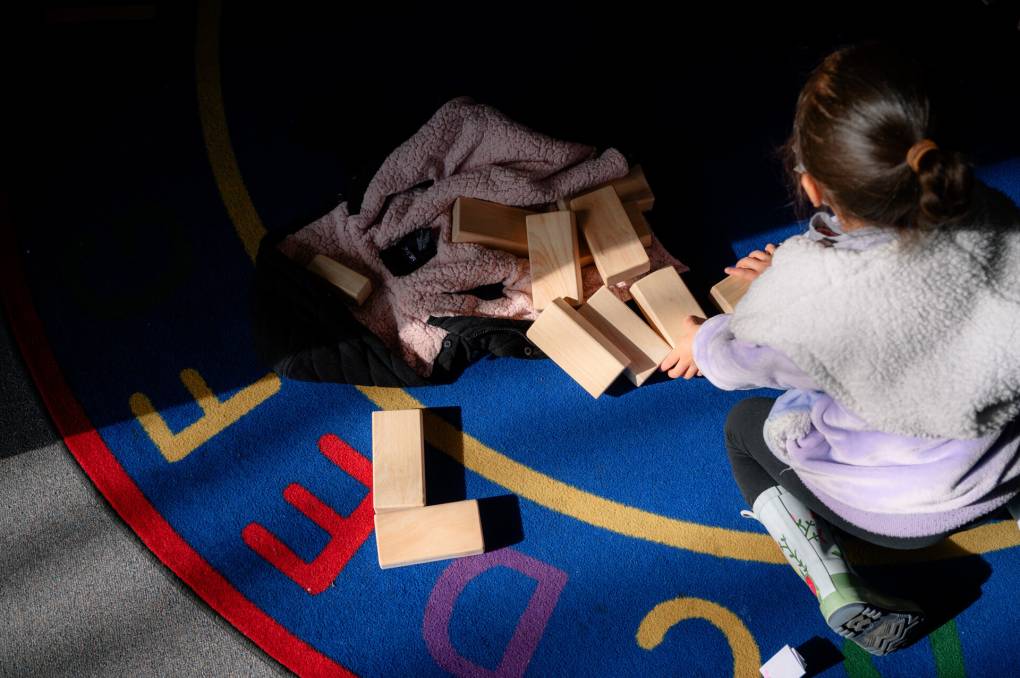
"caption": "Wooden blocks and tiny jackets rest on the rug during playtime at a transitional kindergarten class at Cesar Chavez Elementary School in East San Jose.",
"description": null,
"title": "02172023_ksuzuki_tkprogress 157-qut",
"credit": "Kori Suzuki/KQED",
"status": "inherit",
"altTag": null,
"isLoading": false,
"fetchFailed": false
},
"news_11966347": {
"type": "attachments",
"id": "news_11966347",
"meta": {
"index": "attachments_1716263798",
"site": "news",
"id": "11966347",
"found": true
},
"parent": 11966342,
"imgSizes": {
"twentyfourteen-full-width": {
"file": "https://ww2.kqed.org/app/uploads/sites/10/2023/11/IMG_0477-1038x576.jpg",
"width": 1038,
"mimeType": "image/jpeg",
"height": 576
},
"thumbnail": {
"file": "https://ww2.kqed.org/app/uploads/sites/10/2023/11/IMG_0477-160x103.jpg",
"width": 160,
"mimeType": "image/jpeg",
"height": 103
},
"post-thumbnail": {
"file": "https://ww2.kqed.org/app/uploads/sites/10/2023/11/IMG_0477-672x372.jpg",
"width": 672,
"mimeType": "image/jpeg",
"height": 372
},
"kqedFullSize": {
"file": "https://ww2.kqed.org/app/uploads/sites/10/2023/11/IMG_0477.jpg",
"width": 1920,
"height": 1240
},
"large": {
"file": "https://ww2.kqed.org/app/uploads/sites/10/2023/11/IMG_0477-1020x659.jpg",
"width": 1020,
"mimeType": "image/jpeg",
"height": 659
},
"1536x1536": {
"file": "https://ww2.kqed.org/app/uploads/sites/10/2023/11/IMG_0477-1536x992.jpg",
"width": 1536,
"mimeType": "image/jpeg",
"height": 992
},
"medium": {
"file": "https://ww2.kqed.org/app/uploads/sites/10/2023/11/IMG_0477-800x517.jpg",
"width": 800,
"mimeType": "image/jpeg",
"height": 517
}
},
"publishDate": 1699045451,
"modified": 1699045474,
"caption": null,
"description": null,
"title": "IMG_0477",
"credit": "Anna Vignet/KQED",
"status": "inherit",
"altTag": null,
"isLoading": false,
"fetchFailed": false
},
"news_11965694": {
"type": "attachments",
"id": "news_11965694",
"meta": {
"index": "attachments_1716263798",
"site": "news",
"id": "11965694",
"found": true
},
"parent": 0,
"imgSizes": {
"twentyfourteen-full-width": {
"file": "https://ww2.kqed.org/app/uploads/sites/10/2023/10/02172023_ksuzuki_tkprogress-010-qut-1038x576.jpg",
"width": 1038,
"mimeType": "image/jpeg",
"height": 576
},
"thumbnail": {
"file": "https://ww2.kqed.org/app/uploads/sites/10/2023/10/02172023_ksuzuki_tkprogress-010-qut-160x106.jpg",
"width": 160,
"mimeType": "image/jpeg",
"height": 106
},
"post-thumbnail": {
"file": "https://ww2.kqed.org/app/uploads/sites/10/2023/10/02172023_ksuzuki_tkprogress-010-qut-672x372.jpg",
"width": 672,
"mimeType": "image/jpeg",
"height": 372
},
"kqedFullSize": {
"file": "https://ww2.kqed.org/app/uploads/sites/10/2023/10/02172023_ksuzuki_tkprogress-010-qut.jpg",
"width": 1920,
"height": 1277
},
"large": {
"file": "https://ww2.kqed.org/app/uploads/sites/10/2023/10/02172023_ksuzuki_tkprogress-010-qut-1020x678.jpg",
"width": 1020,
"mimeType": "image/jpeg",
"height": 678
},
"1536x1536": {
"file": "https://ww2.kqed.org/app/uploads/sites/10/2023/10/02172023_ksuzuki_tkprogress-010-qut-1536x1022.jpg",
"width": 1536,
"mimeType": "image/jpeg",
"height": 1022
},
"medium": {
"file": "https://ww2.kqed.org/app/uploads/sites/10/2023/10/02172023_ksuzuki_tkprogress-010-qut-800x532.jpg",
"width": 800,
"mimeType": "image/jpeg",
"height": 532
}
},
"publishDate": 1698344365,
"modified": 1698344495,
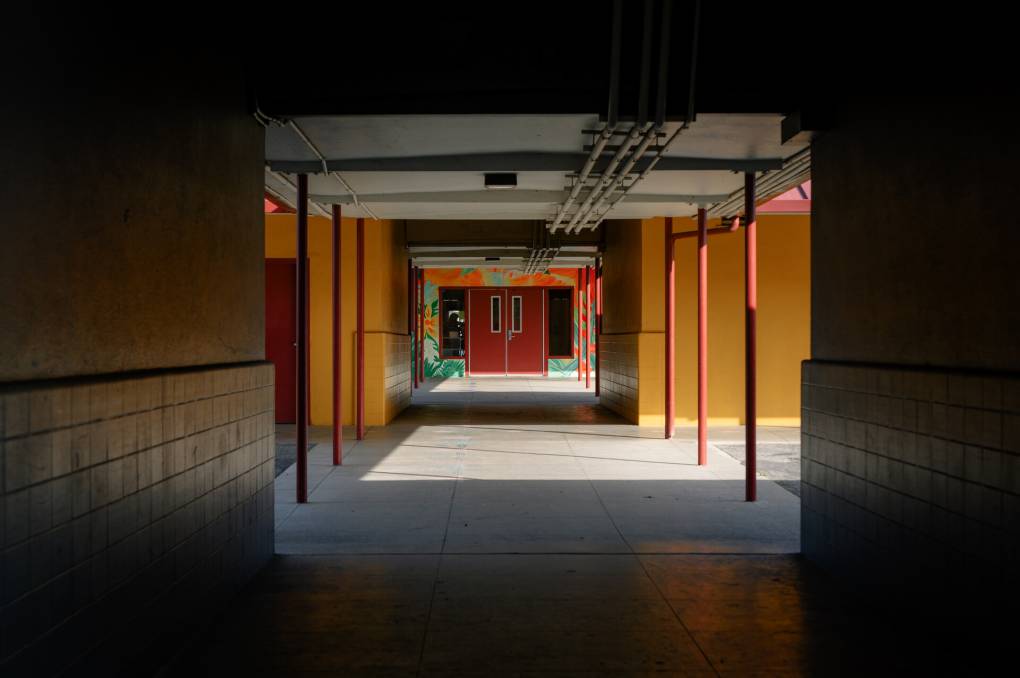
"caption": "A walkway at Cesar Chavez Elementary School in East San José.",
"description": null,
"title": "02172023_ksuzuki_tkprogress 010-qut",
"credit": "Kori Suzuki/KQED",
"status": "inherit",
"altTag": "A darkened walkway at Cesar Chavez Elementary School in East San José.",
"isLoading": false,
"fetchFailed": false
},
"news_11964912": {
"type": "attachments",
"id": "news_11964912",
"meta": {
"index": "attachments_1716263798",
"site": "news",
"id": "11964912",
"found": true
},
"parent": 0,
"imgSizes": {
"twentyfourteen-full-width": {
"file": "https://ww2.kqed.org/app/uploads/sites/10/2023/10/231017-CosentinoFarm-016-BL-KQED-1038x576.jpg",
"width": 1038,
"mimeType": "image/jpeg",
"height": 576
},
"thumbnail": {
"file": "https://ww2.kqed.org/app/uploads/sites/10/2023/10/231017-CosentinoFarm-016-BL-KQED-160x107.jpg",
"width": 160,
"mimeType": "image/jpeg",
"height": 107
},
"post-thumbnail": {
"file": "https://ww2.kqed.org/app/uploads/sites/10/2023/10/231017-CosentinoFarm-016-BL-KQED-672x372.jpg",
"width": 672,
"mimeType": "image/jpeg",
"height": 372
},
"kqedFullSize": {
"file": "https://ww2.kqed.org/app/uploads/sites/10/2023/10/231017-CosentinoFarm-016-BL-KQED.jpg",
"width": 2000,
"height": 1333
},
"large": {
"file": "https://ww2.kqed.org/app/uploads/sites/10/2023/10/231017-CosentinoFarm-016-BL-KQED-1020x680.jpg",
"width": 1020,
"mimeType": "image/jpeg",
"height": 680
},
"1536x1536": {
"file": "https://ww2.kqed.org/app/uploads/sites/10/2023/10/231017-CosentinoFarm-016-BL-KQED-1536x1024.jpg",
"width": 1536,
"mimeType": "image/jpeg",
"height": 1024
},
"full-width": {
"file": "https://ww2.kqed.org/app/uploads/sites/10/2023/10/231017-CosentinoFarm-016-BL-KQED-1920x1280.jpg",
"width": 1920,
"mimeType": "image/jpeg",
"height": 1280
},
"medium": {
"file": "https://ww2.kqed.org/app/uploads/sites/10/2023/10/231017-CosentinoFarm-016-BL-KQED-800x533.jpg",
"width": 800,
"mimeType": "image/jpeg",
"height": 533
}
},
"publishDate": 1697667311,
"modified": 1697668105,
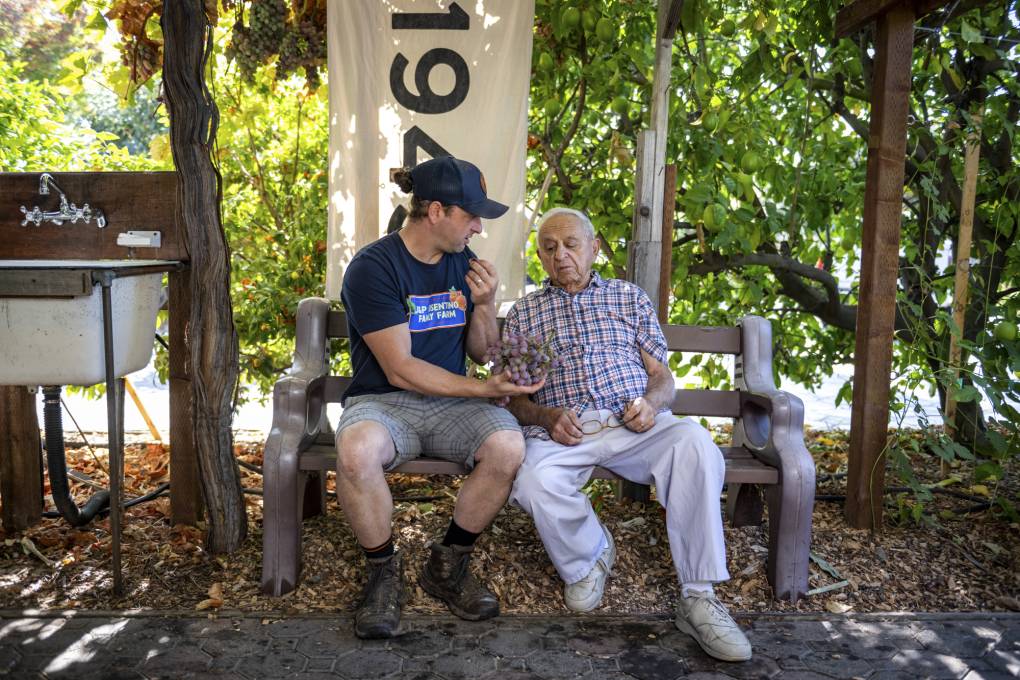
"caption": "Jason Cosentino sits with his grandfather Phil Cosentino while holding freshly picked grapes at J&P Cosentino Family Farm in San Jose on Oct. 17, 2023.",
"description": null,
"title": "231017-CosentinoFarm-016-BL-KQED",
"credit": "Beth LaBerge/KQED",
"status": "inherit",
"altTag": "A person in a baseball cap offers another person sitting beside them some grapes.",
"isLoading": false,
"fetchFailed": false
},
"news_11963334": {
"type": "attachments",
"id": "news_11963334",
"meta": {
"index": "attachments_1716263798",
"site": "news",
"id": "11963334",
"found": true
},
"parent": 11963206,
"imgSizes": {
"twentyfourteen-full-width": {
"file": "https://ww2.kqed.org/app/uploads/sites/10/2023/10/GettyImages-1236199193-1038x576.jpg",
"width": 1038,
"mimeType": "image/jpeg",
"height": 576
},
"thumbnail": {
"file": "https://ww2.kqed.org/app/uploads/sites/10/2023/10/GettyImages-1236199193-160x107.jpg",
"width": 160,
"mimeType": "image/jpeg",
"height": 107
},
"post-thumbnail": {
"file": "https://ww2.kqed.org/app/uploads/sites/10/2023/10/GettyImages-1236199193-672x372.jpg",
"width": 672,
"mimeType": "image/jpeg",
"height": 372
},
"kqedFullSize": {
"file": "https://ww2.kqed.org/app/uploads/sites/10/2023/10/GettyImages-1236199193-scaled.jpg",
"width": 2560,
"height": 1707
},
"2048x2048": {
"file": "https://ww2.kqed.org/app/uploads/sites/10/2023/10/GettyImages-1236199193-2048x1365.jpg",
"width": 2048,
"mimeType": "image/jpeg",
"height": 1365
},
"large": {
"file": "https://ww2.kqed.org/app/uploads/sites/10/2023/10/GettyImages-1236199193-1020x680.jpg",
"width": 1020,
"mimeType": "image/jpeg",
"height": 680
},
"1536x1536": {
"file": "https://ww2.kqed.org/app/uploads/sites/10/2023/10/GettyImages-1236199193-1536x1024.jpg",
"width": 1536,
"mimeType": "image/jpeg",
"height": 1024
},
"full-width": {
"file": "https://ww2.kqed.org/app/uploads/sites/10/2023/10/GettyImages-1236199193-1920x1280.jpg",
"width": 1920,
"mimeType": "image/jpeg",
"height": 1280
},
"medium": {
"file": "https://ww2.kqed.org/app/uploads/sites/10/2023/10/GettyImages-1236199193-800x533.jpg",
"width": 800,
"mimeType": "image/jpeg",
"height": 533
}
},
"publishDate": 1696378841,
"modified": 1696379359,
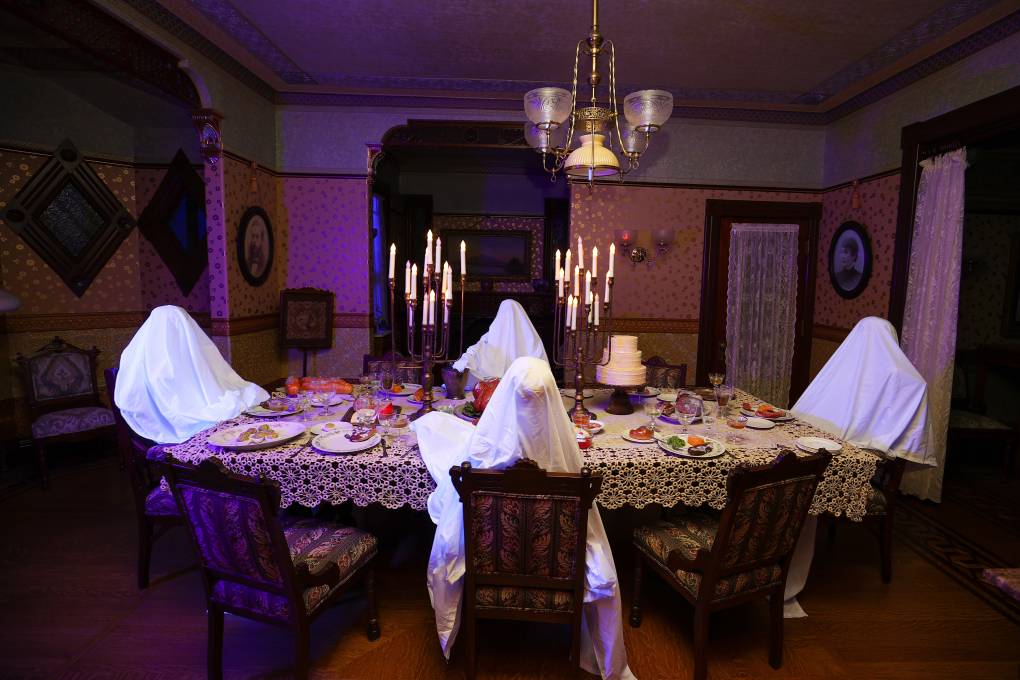
"caption": "The Winchester Mystery House holds a special All Hallows Eve event in October 2021, where they really lean into the idea of the house being haunted. ",
"description": null,
"title": "All Hallowsâ Eve at the Winchester Mystery House",
"credit": "Tayfun Coskun/Anadolu Agency via Getty Images",
"status": "inherit",
"altTag": "An ornately decorated Victorian dining room with a table in the center. Around the table are seating 4 fake ghosts, covered in white sheets. There are two large candelabras on the table as well as a fake dinner.",
"isLoading": false,
"fetchFailed": false
},
"news_11964065": {
"type": "attachments",
"id": "news_11964065",
"meta": {
"index": "attachments_1716263798",
"site": "news",
"id": "11964065",
"found": true
},
"parent": 11964064,
"imgSizes": {
"twentyfourteen-full-width": {
"file": "https://ww2.kqed.org/app/uploads/sites/10/2023/10/peso-pluma-CU-w-glasses-1020x576.jpg",
"width": 1020,
"mimeType": "image/jpeg",
"height": 576
},
"thumbnail": {
"file": "https://ww2.kqed.org/app/uploads/sites/10/2023/10/peso-pluma-CU-w-glasses-160x107.jpg",
"width": 160,
"mimeType": "image/jpeg",
"height": 107
},
"post-thumbnail": {
"file": "https://ww2.kqed.org/app/uploads/sites/10/2023/10/peso-pluma-CU-w-glasses-672x372.jpg",
"width": 672,
"mimeType": "image/jpeg",
"height": 372
},
"kqedFullSize": {
"file": "https://ww2.kqed.org/app/uploads/sites/10/2023/10/peso-pluma-CU-w-glasses.jpg",
"width": 1020,
"height": 680
},
"medium": {
"file": "https://ww2.kqed.org/app/uploads/sites/10/2023/10/peso-pluma-CU-w-glasses-800x533.jpg",
"width": 800,
"mimeType": "image/jpeg",
"height": 533
}
},
"publishDate": 1696991443,
"modified": 1697095675,
"caption": "Peso Pluma se presentó en el escenario durante los MTV Video Music Awards 2023 en el Prudential Center el 12 de septiembre de 2023 en Newark, Nueva Jersey.",
"description": null,
"title": "peso pluma CU w-glasses",
"credit": "Mike Coppola/Getty Images para MTV",
"status": "inherit",
"altTag": "Peso Pluma canta en un enorme y moderno escenario. Lleva puesto gafas de sol y un abrigo negro muy grande.",
"isLoading": false,
"fetchFailed": false
},
"news_11963790": {
"type": "attachments",
"id": "news_11963790",
"meta": {
"index": "attachments_1716263798",
"site": "news",
"id": "11963790",
"found": true
},
"parent": 11963782,
"imgSizes": {
"twentyfourteen-full-width": {
"file": "https://ww2.kqed.org/app/uploads/sites/10/2023/10/491213158_af42d77b95_o-1038x576.jpg",
"width": 1038,
"mimeType": "image/jpeg",
"height": 576
},
"thumbnail": {
"file": "https://ww2.kqed.org/app/uploads/sites/10/2023/10/491213158_af42d77b95_o-160x98.jpg",
"width": 160,
"mimeType": "image/jpeg",
"height": 98
},
"post-thumbnail": {
"file": "https://ww2.kqed.org/app/uploads/sites/10/2023/10/491213158_af42d77b95_o-672x372.jpg",
"width": 672,
"mimeType": "image/jpeg",
"height": 372
},
"kqedFullSize": {
"file": "https://ww2.kqed.org/app/uploads/sites/10/2023/10/491213158_af42d77b95_o.jpg",
"width": 2048,
"height": 1259
},
"large": {
"file": "https://ww2.kqed.org/app/uploads/sites/10/2023/10/491213158_af42d77b95_o-1020x627.jpg",
"width": 1020,
"mimeType": "image/jpeg",
"height": 627
},
"1536x1536": {
"file": "https://ww2.kqed.org/app/uploads/sites/10/2023/10/491213158_af42d77b95_o-1536x944.jpg",
"width": 1536,
"mimeType": "image/jpeg",
"height": 944
},
"full-width": {
"file": "https://ww2.kqed.org/app/uploads/sites/10/2023/10/491213158_af42d77b95_o-1920x1180.jpg",
"width": 1920,
"mimeType": "image/jpeg",
"height": 1180
},
"medium": {
"file": "https://ww2.kqed.org/app/uploads/sites/10/2023/10/491213158_af42d77b95_o-800x492.jpg",
"width": 800,
"mimeType": "image/jpeg",
"height": 492
}
},
"publishDate": 1696721309,
"modified": 1696721422,
"caption": "A San José police vehicle from Oct. 23, 2014, in San José.",
"description": null,
"title": "491213158_af42d77b95_o",
"credit": "Thomas Hawk/Flickr",
"status": "inherit",
"altTag": "A police car with San Jose Police written on the back.",
"isLoading": false,
"fetchFailed": false
},
"news_11963325": {
"type": "attachments",
"id": "news_11963325",
"meta": {
"index": "attachments_1716263798",
"site": "news",
"id": "11963325",
"found": true
},
"parent": 0,
"imgSizes": {
"twentyfourteen-full-width": {
"file": "https://ww2.kqed.org/app/uploads/sites/10/2023/10/WMH_Front-at-Sunset-1038x576.jpg",
"width": 1038,
"mimeType": "image/jpeg",
"height": 576
},
"thumbnail": {
"file": "https://ww2.kqed.org/app/uploads/sites/10/2023/10/WMH_Front-at-Sunset-160x106.jpg",
"width": 160,
"mimeType": "image/jpeg",
"height": 106
},
"post-thumbnail": {
"file": "https://ww2.kqed.org/app/uploads/sites/10/2023/10/WMH_Front-at-Sunset-672x372.jpg",
"width": 672,
"mimeType": "image/jpeg",
"height": 372
},
"kqedFullSize": {
"file": "https://ww2.kqed.org/app/uploads/sites/10/2023/10/WMH_Front-at-Sunset-scaled.jpg",
"width": 2560,
"height": 1695
},
"2048x2048": {
"file": "https://ww2.kqed.org/app/uploads/sites/10/2023/10/WMH_Front-at-Sunset-2048x1356.jpg",
"width": 2048,
"mimeType": "image/jpeg",
"height": 1356
},
"large": {
"file": "https://ww2.kqed.org/app/uploads/sites/10/2023/10/WMH_Front-at-Sunset-1020x675.jpg",
"width": 1020,
"mimeType": "image/jpeg",
"height": 675
},
"1536x1536": {
"file": "https://ww2.kqed.org/app/uploads/sites/10/2023/10/WMH_Front-at-Sunset-1536x1017.jpg",
"width": 1536,
"mimeType": "image/jpeg",
"height": 1017
},
"full-width": {
"file": "https://ww2.kqed.org/app/uploads/sites/10/2023/10/WMH_Front-at-Sunset-1920x1272.jpg",
"width": 1920,
"mimeType": "image/jpeg",
"height": 1272
},
"medium": {
"file": "https://ww2.kqed.org/app/uploads/sites/10/2023/10/WMH_Front-at-Sunset-800x530.jpg",
"width": 800,
"mimeType": "image/jpeg",
"height": 530
}
},
"publishDate": 1696377027,
"modified": 1696447013,
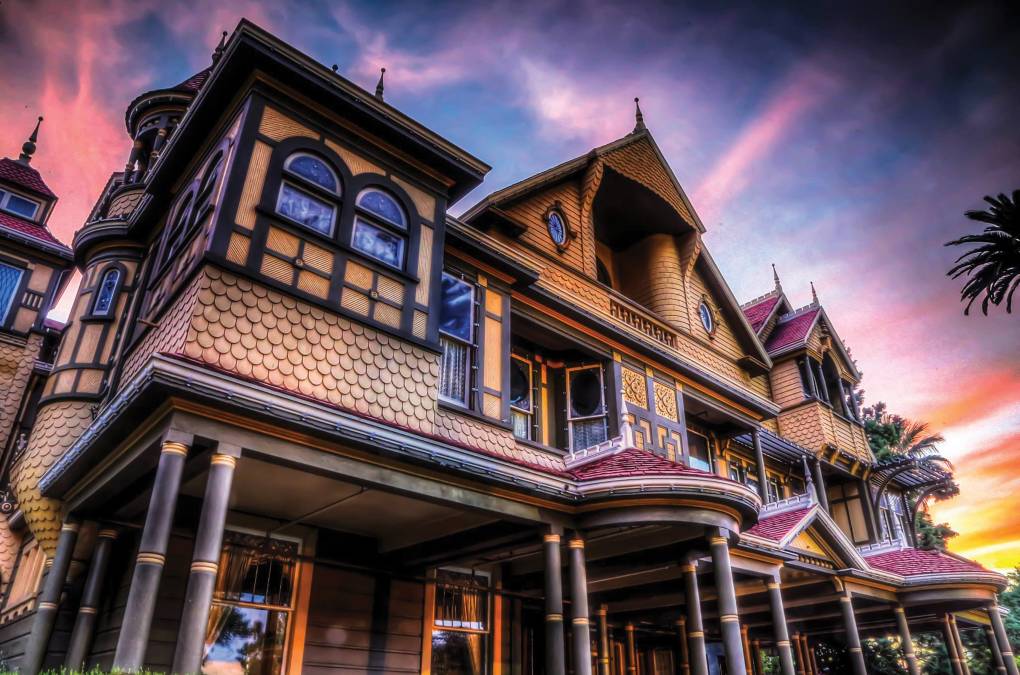
"caption": "The Winchester Mystery House at sunset.",
"description": null,
"title": "WMH_Front at Sunset",
"credit": "Courtesy of the Winchester Mystery House",
"status": "inherit",
"altTag": "Looking up at an elaborate Victorian mansion with yellow, black and purple detailing. The sky behind the house is lit with the colors of a sunset.",
"isLoading": false,
"fetchFailed": false
},
"news_11962830": {
"type": "attachments",
"id": "news_11962830",
"meta": {
"index": "attachments_1716263798",
"site": "news",
"id": "11962830",
"found": true
},
"parent": 11962814,
"imgSizes": {
"twentyfourteen-full-width": {
"file": "https://ww2.kqed.org/app/uploads/sites/10/2023/09/025_KQED_MattMahanSanJose_11082022-qut-1038x576.jpg",
"width": 1038,
"mimeType": "image/jpeg",
"height": 576
},
"thumbnail": {
"file": "https://ww2.kqed.org/app/uploads/sites/10/2023/09/025_KQED_MattMahanSanJose_11082022-qut-160x107.jpg",
"width": 160,
"mimeType": "image/jpeg",
"height": 107
},
"post-thumbnail": {
"file": "https://ww2.kqed.org/app/uploads/sites/10/2023/09/025_KQED_MattMahanSanJose_11082022-qut-672x372.jpg",
"width": 672,
"mimeType": "image/jpeg",
"height": 372
},
"kqedFullSize": {
"file": "https://ww2.kqed.org/app/uploads/sites/10/2023/09/025_KQED_MattMahanSanJose_11082022-qut.jpg",
"width": 1920,
"height": 1280
},
"large": {
"file": "https://ww2.kqed.org/app/uploads/sites/10/2023/09/025_KQED_MattMahanSanJose_11082022-qut-1020x680.jpg",
"width": 1020,
"mimeType": "image/jpeg",
"height": 680
},
"1536x1536": {
"file": "https://ww2.kqed.org/app/uploads/sites/10/2023/09/025_KQED_MattMahanSanJose_11082022-qut-1536x1024.jpg",
"width": 1536,
"mimeType": "image/jpeg",
"height": 1024
},
"medium": {
"file": "https://ww2.kqed.org/app/uploads/sites/10/2023/09/025_KQED_MattMahanSanJose_11082022-qut-800x533.jpg",
"width": 800,
"mimeType": "image/jpeg",
"height": 533
}
},
"publishDate": 1695944622,
"modified": 1695944656,
"caption": "San Jose Mayor Matt Mahan, pictured at his campaign headquarters on Election Day, Nov. 8, 2022.",
"description": null,
"title": "025_KQED_MattMahanSanJose_11082022-qut",
"credit": "Beth LaBerge/KQED",
"status": "inherit",
"altTag": null,
"isLoading": false,
"fetchFailed": false
},
"news_11960270": {
"type": "attachments",
"id": "news_11960270",
"meta": {
"index": "attachments_1716263798",
"site": "news",
"id": "11960270",
"found": true
},
"parent": 11960306,
"imgSizes": {
"twentyfourteen-full-width": {
"file": "https://ww2.kqed.org/app/uploads/sites/10/2023/09/230906-850-SINGLETON-RD-MD-02-KQED-1038x576.jpg",
"width": 1038,
"mimeType": "image/jpeg",
"height": 576
},
"thumbnail": {
"file": "https://ww2.kqed.org/app/uploads/sites/10/2023/09/230906-850-SINGLETON-RD-MD-02-KQED-160x107.jpg",
"width": 160,
"mimeType": "image/jpeg",
"height": 107
},
"post-thumbnail": {
"file": "https://ww2.kqed.org/app/uploads/sites/10/2023/09/230906-850-SINGLETON-RD-MD-02-KQED-672x372.jpg",
"width": 672,
"mimeType": "image/jpeg",
"height": 372
},
"kqedFullSize": {
"file": "https://ww2.kqed.org/app/uploads/sites/10/2023/09/230906-850-SINGLETON-RD-MD-02-KQED.jpg",
"width": 2000,
"height": 1333
},
"large": {
"file": "https://ww2.kqed.org/app/uploads/sites/10/2023/09/230906-850-SINGLETON-RD-MD-02-KQED-1020x680.jpg",
"width": 1020,
"mimeType": "image/jpeg",
"height": 680
},
"1536x1536": {
"file": "https://ww2.kqed.org/app/uploads/sites/10/2023/09/230906-850-SINGLETON-RD-MD-02-KQED-1536x1024.jpg",
"width": 1536,
"mimeType": "image/jpeg",
"height": 1024
},
"full-width": {
"file": "https://ww2.kqed.org/app/uploads/sites/10/2023/09/230906-850-SINGLETON-RD-MD-02-KQED-1920x1280.jpg",
"width": 1920,
"mimeType": "image/jpeg",
"height": 1280
},
"medium": {
"file": "https://ww2.kqed.org/app/uploads/sites/10/2023/09/230906-850-SINGLETON-RD-MD-02-KQED-800x533.jpg",
"width": 800,
"mimeType": "image/jpeg",
"height": 533
}
},
"publishDate": 1694043027,
"modified": 1694110145,
"caption": "A methane release structure at 850 Singleton Rd. in San José on Sept. 6, 2023.",
"description": null,
"title": "A methane release structure at 850 Singleton Rd. in San José on Sept. 6, 2023.",
"credit": "Martin do Nascimento/KQED",
"status": "inherit",
"altTag": "A small structure with a large smokestack is seen from behind a chainlink fence in the center of a large field.",
"isLoading": false,
"fetchFailed": false
},
"news_11957563": {
"type": "attachments",
"id": "news_11957563",
"meta": {
"index": "attachments_1716263798",
"site": "news",
"id": "11957563",
"found": true
},
"parent": 0,
"imgSizes": {
"twentyfourteen-full-width": {
"file": "https://ww2.kqed.org/app/uploads/sites/10/2023/08/RS67526_20230801-SJCityHall-01-JYKQED-1038x576.jpg",
"width": 1038,
"mimeType": "image/jpeg",
"height": 576
},
"thumbnail": {
"file": "https://ww2.kqed.org/app/uploads/sites/10/2023/08/RS67526_20230801-SJCityHall-01-JYKQED-160x107.jpg",
"width": 160,
"mimeType": "image/jpeg",
"height": 107
},
"post-thumbnail": {
"file": "https://ww2.kqed.org/app/uploads/sites/10/2023/08/RS67526_20230801-SJCityHall-01-JYKQED-672x372.jpg",
"width": 672,
"mimeType": "image/jpeg",
"height": 372
},
"kqedFullSize": {
"file": "https://ww2.kqed.org/app/uploads/sites/10/2023/08/RS67526_20230801-SJCityHall-01-JYKQED.jpg",
"width": 2000,
"height": 1333
},
"large": {
"file": "https://ww2.kqed.org/app/uploads/sites/10/2023/08/RS67526_20230801-SJCityHall-01-JYKQED-1020x680.jpg",
"width": 1020,
"mimeType": "image/jpeg",
"height": 680
},
"1536x1536": {
"file": "https://ww2.kqed.org/app/uploads/sites/10/2023/08/RS67526_20230801-SJCityHall-01-JYKQED-1536x1024.jpg",
"width": 1536,
"mimeType": "image/jpeg",
"height": 1024
},
"full-width": {
"file": "https://ww2.kqed.org/app/uploads/sites/10/2023/08/RS67526_20230801-SJCityHall-01-JYKQED-1920x1280.jpg",
"width": 1920,
"mimeType": "image/jpeg",
"height": 1280
},
"medium": {
"file": "https://ww2.kqed.org/app/uploads/sites/10/2023/08/RS67526_20230801-SJCityHall-01-JYKQED-800x533.jpg",
"width": 800,
"mimeType": "image/jpeg",
"height": 533
}
},
"publishDate": 1691431355,
"modified": 1692146238,
"caption": "City Hall in San José on Aug. 1, 2023.",
"description": null,
"title": "City Hall in San Jose, Calif., on Tuesday, August 1, 2023.",
"credit": "Juliana Yamada/KQED",
"status": "inherit",
"altTag": "A sign on a building reading \"San Jose City Hall.\"",
"isLoading": false,
"fetchFailed": false
},
"news_11960272": {
"type": "attachments",
"id": "news_11960272",
"meta": {
"index": "attachments_1716263798",
"site": "news",
"id": "11960272",
"found": true
},
"parent": 0,
"imgSizes": {
"twentyfourteen-full-width": {
"file": "https://ww2.kqed.org/app/uploads/sites/10/2023/09/230906-850-SINGLETON-RD-MD-07-KQED-1038x576.jpg",
"width": 1038,
"mimeType": "image/jpeg",
"height": 576
},
"thumbnail": {
"file": "https://ww2.kqed.org/app/uploads/sites/10/2023/09/230906-850-SINGLETON-RD-MD-07-KQED-160x107.jpg",
"width": 160,
"mimeType": "image/jpeg",
"height": 107
},
"post-thumbnail": {
"file": "https://ww2.kqed.org/app/uploads/sites/10/2023/09/230906-850-SINGLETON-RD-MD-07-KQED-672x372.jpg",
"width": 672,
"mimeType": "image/jpeg",
"height": 372
},
"kqedFullSize": {
"file": "https://ww2.kqed.org/app/uploads/sites/10/2023/09/230906-850-SINGLETON-RD-MD-07-KQED.jpg",
"width": 2000,
"height": 1333
},
"large": {
"file": "https://ww2.kqed.org/app/uploads/sites/10/2023/09/230906-850-SINGLETON-RD-MD-07-KQED-1020x680.jpg",
"width": 1020,
"mimeType": "image/jpeg",
"height": 680
},
"1536x1536": {
"file": "https://ww2.kqed.org/app/uploads/sites/10/2023/09/230906-850-SINGLETON-RD-MD-07-KQED-1536x1024.jpg",
"width": 1536,
"mimeType": "image/jpeg",
"height": 1024
},
"full-width": {
"file": "https://ww2.kqed.org/app/uploads/sites/10/2023/09/230906-850-SINGLETON-RD-MD-07-KQED-1920x1280.jpg",
"width": 1920,
"mimeType": "image/jpeg",
"height": 1280
},
"medium": {
"file": "https://ww2.kqed.org/app/uploads/sites/10/2023/09/230906-850-SINGLETON-RD-MD-07-KQED-800x533.jpg",
"width": 800,
"mimeType": "image/jpeg",
"height": 533
}
},
"publishDate": 1694043041,
"modified": 1694116664,
"caption": "With the legendary San José Berryessa Flea Market known as La Pulga set to close in the coming years, city officials see the landfill at 850 Singleton Road as uniquely suited for a sprawling bazaar housing hundreds of small businesses that are in need of a new place to sell their goods.",
"description": null,
"title": "The landfill at 850 Singleton Rd. in San José on Sept. 6, 2023.",
"credit": "Martin do Nascimento/KQED",
"status": "inherit",
"altTag": "An aerial view of a large open field surrounded by neighborhoods and trees.",
"isLoading": false,
"fetchFailed": false
}
},
"audioPlayerReducer": {
"postId": "stream_live",
"isPaused": true,
"isPlaying": false,
"pfsActive": false,
"pledgeModalIsOpen": true,
"playerDrawerIsOpen": false,
"liveAudioPlayStartedAt": 0,
"liveAudioPlayContext": ""
},
"authorsReducer": {
"gmarzorati": {
"type": "authors",
"id": "227",
"meta": {
"index": "authors_1716337520",
"id": "227",
"found": true
},
"name": "Guy Marzorati",
"firstName": "Guy",
"lastName": "Marzorati",
"slug": "gmarzorati",
"email": "gmarzorati@KQED.org",
"display_author_email": true,
"staff_mastheads": [
"news"
],
"title": "Correspondent",
"bio": "Guy Marzorati is a correspondent on KQED's California Politics and Government Desk, based in San Jose. A graduate of Santa Clara University, Guy joined KQED in 2013. He reports on state and local politics and produces KQED's digital voter guide.",
"avatar": "https://secure.gravatar.com/avatar/e7038b8dbfd55b104369b76b1cd0b9de?s=600&d=blank&r=g",
"twitter": "guymarzorati",
"facebook": null,
"instagram": null,
"linkedin": null,
"sites": [
{
"site": "",
"roles": [
"editor"
]
},
{
"site": "news",
"roles": [
"editor"
]
},
{
"site": "science",
"roles": [
"editor"
]
},
{
"site": "forum",
"roles": [
"editor"
]
},
{
"site": "elections",
"roles": [
"editor"
]
},
{
"site": "liveblog",
"roles": [
"editor"
]
}
],
"headData": {
"title": "Guy Marzorati | KQED",
"description": "Correspondent",
"ogImgSrc": "https://secure.gravatar.com/avatar/e7038b8dbfd55b104369b76b1cd0b9de?s=600&d=blank&r=g",
"twImgSrc": "https://secure.gravatar.com/avatar/e7038b8dbfd55b104369b76b1cd0b9de?s=600&d=blank&r=g"
},
"isLoading": false,
"link": "/author/gmarzorati"
},
"scottshafer": {
"type": "authors",
"id": "255",
"meta": {
"index": "authors_1716337520",
"id": "255",
"found": true
},
"name": "Scott Shafer",
"firstName": "Scott",
"lastName": "Shafer",
"slug": "scottshafer",
"email": "sshafer@kqed.org",
"display_author_email": false,
"staff_mastheads": [
"news"
],
"title": "KQED Contributor",
"bio": "Scott Shafer is a senior editor with the KQED Politics and Government desk. He is co-host of Political Breakdown, the award-winning radio show and podcast with a personal take on the world of politics. Scott came to KQED in 1998 to host the statewide\u003cem> California Report\u003c/em>. Prior to that he had extended stints in politics and government\u003cem>.\u003c/em> He uses that inside experience at KQED in his, reporting, hosting and analysis for the politics desk. Scott collaborated \u003cem>Political Breakdown a\u003c/em>nd on \u003cem>The Political Mind of Jerry Brown, \u003c/em>an eight-part series about the life and extraordinary political career of the former governor. For fun, he plays water polo with the San Francisco Tsunami.",
"avatar": "https://secure.gravatar.com/avatar/a62ebae45b79d7aed1a39a0e3bf68104?s=600&d=blank&r=g",
"twitter": "scottshafer",
"bluesky": null,
"facebook": null,
"instagram": null,
"linkedin": null,
"sites": [
{
"site": "news",
"roles": [
"editor"
]
},
{
"site": "stateofhealth",
"roles": [
"author"
]
},
{
"site": "science",
"roles": [
"author"
]
},
{
"site": "forum",
"roles": [
"subscriber"
]
},
{
"site": "liveblog",
"roles": [
"author"
]
}
],
"headData": {
"title": "Scott Shafer | KQED",
"description": "KQED Contributor",
"ogImgSrc": "https://secure.gravatar.com/avatar/a62ebae45b79d7aed1a39a0e3bf68104?s=600&d=blank&r=g",
"twImgSrc": "https://secure.gravatar.com/avatar/a62ebae45b79d7aed1a39a0e3bf68104?s=600&d=blank&r=g"
},
"isLoading": false,
"link": "/author/scottshafer"
},
"mlagos": {
"type": "authors",
"id": "3239",
"meta": {
"index": "authors_1716337520",
"id": "3239",
"found": true
},
"name": "Marisa Lagos",
"firstName": "Marisa",
"lastName": "Lagos",
"slug": "mlagos",
"email": "mlagos@kqed.org",
"display_author_email": false,
"staff_mastheads": [
"news"
],
"title": "KQED Contributor",
"bio": "Marisa Lagos is a correspondent for KQED’s California Politics and Government Desk and co-hosts the award-winning show and podcast, Political Breakdown. At KQED, Lagos also conducts reporting, analysis and investigations into state, local and national politics for radio, TV, online and onstage. In 2022, she and co-host, Scott Shafer, moderated the only gubernatorial debate in California. In 2020, the \u003ci>Washington Post\u003c/i> named her one of the top political journalists in California; she was nominated for a Peabody and won several other awards for her work investigating the 2017 California wildfires. She has worked at the \u003ci>San Francisco Chronicle\u003c/i>, \u003ci>San Francisco Examiner\u003c/i> and \u003ci>Los Angeles Times\u003c/i>. A UC Santa Barbara graduate, she lives in San Francisco with her two sons and husband.",
"avatar": "https://secure.gravatar.com/avatar/a261a0d3696fc066871ef96b85b5e7d2?s=600&d=blank&r=g",
"twitter": "@mlagos",
"facebook": null,
"instagram": null,
"linkedin": null,
"sites": [
{
"site": "arts",
"roles": [
"author"
]
},
{
"site": "news",
"roles": [
"editor"
]
},
{
"site": "science",
"roles": [
"editor"
]
},
{
"site": "forum",
"roles": [
"author"
]
},
{
"site": "liveblog",
"roles": [
"author"
]
}
],
"headData": {
"title": "Marisa Lagos | KQED",
"description": "KQED Contributor",
"ogImgSrc": "https://secure.gravatar.com/avatar/a261a0d3696fc066871ef96b85b5e7d2?s=600&d=blank&r=g",
"twImgSrc": "https://secure.gravatar.com/avatar/a261a0d3696fc066871ef96b85b5e7d2?s=600&d=blank&r=g"
},
"isLoading": false,
"link": "/author/mlagos"
},
"carlysevern": {
"type": "authors",
"id": "3243",
"meta": {
"index": "authors_1716337520",
"id": "3243",
"found": true
},
"name": "Carly Severn",
"firstName": "Carly",
"lastName": "Severn",
"slug": "carlysevern",
"email": "csevern@kqed.org",
"display_author_email": false,
"staff_mastheads": [
"news"
],
"title": "Senior Editor, Audience News ",
"bio": "Carly is KQED's Senior Editor of Audience News on the Digital News team, and has reported for the California Report Magazine, Bay Curious and KQED Arts. She's formerly the host of \u003ca href=\"http://ww2.kqed.org/pop/category/the-cooler/\" rel=\"noopener noreferrer\">The Cooler\u003c/a> podcast.",
"avatar": "https://secure.gravatar.com/avatar/54037bf5c128fe678f0ef26cec97a93f2e7f220a22d7285703328f12c42c1b1d?s=600&d=blank&r=g",
"twitter": "teacupinthebay",
"bluesky": null,
"facebook": null,
"instagram": null,
"linkedin": null,
"sites": [
{
"site": "",
"roles": [
"editor"
]
},
{
"site": "arts",
"roles": [
"editor"
]
},
{
"site": "news",
"roles": [
"administrator"
]
},
{
"site": "pop",
"roles": [
"editor"
]
},
{
"site": "futureofyou",
"roles": [
"editor"
]
},
{
"site": "about",
"roles": [
"administrator"
]
},
{
"site": "mindshift",
"roles": [
"editor"
]
},
{
"site": "bayareabites",
"roles": [
"editor"
]
},
{
"site": "stateofhealth",
"roles": [
"editor"
]
},
{
"site": "science",
"roles": [
"editor"
]
},
{
"site": "food",
"roles": [
"contributor"
]
},
{
"site": "forum",
"roles": [
"editor"
]
},
{
"site": "perspectives",
"roles": [
"administrator"
]
},
{
"site": "liveblog",
"roles": [
"editor"
]
}
],
"headData": {
"title": "Carly Severn | KQED",
"description": "Senior Editor, Audience News ",
"ogImgSrc": "https://secure.gravatar.com/avatar/54037bf5c128fe678f0ef26cec97a93f2e7f220a22d7285703328f12c42c1b1d?s=600&d=blank&r=g",
"twImgSrc": "https://secure.gravatar.com/avatar/54037bf5c128fe678f0ef26cec97a93f2e7f220a22d7285703328f12c42c1b1d?s=600&d=blank&r=g"
},
"isLoading": false,
"link": "/author/carlysevern"
},
"ecruzguevarra": {
"type": "authors",
"id": "8654",
"meta": {
"index": "authors_1716337520",
"id": "8654",
"found": true
},
"name": "Ericka Cruz Guevarra",
"firstName": "Ericka",
"lastName": "Cruz Guevarra",
"slug": "ecruzguevarra",
"email": "ecruzguevarra@kqed.org",
"display_author_email": true,
"staff_mastheads": [
"news"
],
"title": "Producer, The Bay Podcast",
"bio": "Ericka Cruz Guevarra is host of \u003ca href=\"https://www.kqed.org/podcasts/thebay\">\u003cem>The Bay\u003c/em>\u003c/a> podcast at KQED. Before host, she was the show’s producer. Her work in that capacity includes a three-part reported series on policing in Vallejo, which won a 2020 excellence in journalism award from the Society of Professional Journalists. Ericka has worked as a breaking news reporter at Oregon Public Broadcasting, helped produce the Code Switch podcast, and was KQED’s inaugural Raul Ramirez Diversity Fund intern. She’s also an alumna of NPR’s Next Generation Radio program. Send her an email if you have strong feelings about whether Fairfield and Suisun City are the Bay. Ericka is represented by SAG-AFTRA.",
"avatar": "https://secure.gravatar.com/avatar/accefc1de4bafc7e234b69bcb9b6f6536c130fd84709bc3069ef11a78787e1bb?s=600&d=blank&r=g",
"twitter": "NotoriousECG",
"bluesky": null,
"facebook": null,
"instagram": null,
"linkedin": null,
"sites": [
{
"site": "arts",
"roles": [
"subscriber"
]
},
{
"site": "news",
"roles": [
"editor",
"manage_categories"
]
},
{
"site": "futureofyou",
"roles": [
"subscriber"
]
},
{
"site": "stateofhealth",
"roles": [
"subscriber"
]
},
{
"site": "science",
"roles": [
"editor"
]
},
{
"site": "forum",
"roles": [
"subscriber"
]
}
],
"headData": {
"title": "Ericka Cruz Guevarra | KQED",
"description": "Producer, The Bay Podcast",
"ogImgSrc": "https://secure.gravatar.com/avatar/accefc1de4bafc7e234b69bcb9b6f6536c130fd84709bc3069ef11a78787e1bb?s=600&d=blank&r=g",
"twImgSrc": "https://secure.gravatar.com/avatar/accefc1de4bafc7e234b69bcb9b6f6536c130fd84709bc3069ef11a78787e1bb?s=600&d=blank&r=g"
},
"isLoading": false,
"link": "/author/ecruzguevarra"
},
"amontecillo": {
"type": "authors",
"id": "11649",
"meta": {
"index": "authors_1716337520",
"id": "11649",
"found": true
},
"name": "Alan Montecillo",
"firstName": "Alan",
"lastName": "Montecillo",
"slug": "amontecillo",
"email": "amontecillo@kqed.org",
"display_author_email": false,
"staff_mastheads": [
"news"
],
"title": "KQED Contributor",
"bio": "Alan Montecillo is the senior editor of \u003cem>\u003ca href=\"http://kqed.org/thebay\">The Bay\u003c/a>, \u003c/em> KQED's local news podcast. Before moving to the Bay Area, he worked as a senior talk show producer for WILL in Champaign-Urbana, Illinois and at Oregon Public Broadcasting in Portland, Oregon. He has won journalism awards from the Society of Professional Journalists Northern California, the Public Media Journalists Association, The Signal Awards, and has also received a regional Edward R. Murrow award. Alan is a Filipino American from Hong Kong and a graduate of Reed College.",
"avatar": "https://secure.gravatar.com/avatar/268f53a2066899ea9efdd8a5900218b17c822d9862cbc9326cccec53ef41d349?s=600&d=blank&r=g",
"twitter": "alanmontecillo",
"bluesky": null,
"facebook": null,
"instagram": null,
"linkedin": null,
"sites": [
{
"site": "",
"roles": [
"editor"
]
},
{
"site": "news",
"roles": [
"editor",
"manage_categories"
]
}
],
"headData": {
"title": "Alan Montecillo | KQED",
"description": "KQED Contributor",
"ogImgSrc": "https://secure.gravatar.com/avatar/268f53a2066899ea9efdd8a5900218b17c822d9862cbc9326cccec53ef41d349?s=600&d=blank&r=g",
"twImgSrc": "https://secure.gravatar.com/avatar/268f53a2066899ea9efdd8a5900218b17c822d9862cbc9326cccec53ef41d349?s=600&d=blank&r=g"
},
"isLoading": false,
"link": "/author/amontecillo"
},
"abandlamudi": {
"type": "authors",
"id": "11672",
"meta": {
"index": "authors_1716337520",
"id": "11672",
"found": true
},
"name": "Adhiti Bandlamudi",
"firstName": "Adhiti",
"lastName": "Bandlamudi",
"slug": "abandlamudi",
"email": "abandlamudi@kqed.org",
"display_author_email": false,
"staff_mastheads": [
"news"
],
"title": "KQED Housing Reporter",
"bio": "Adhiti Bandlamudi reports for KQED's Housing desk. She focuses on how housing gets built across the Bay Area. Before joining KQED in 2020, she reported for WUNC in Durham, North Carolina, WABE in Atlanta, Georgia and Capital Public Radio in Sacramento. In 2017, she was awarded a Kroc Fellowship at NPR where she reported on everything from sprinkles to the Golden State Killer's arrest. When she's not reporting, she's baking new recipes in her kitchen or watching movies with friends and family. She's originally from Georgia and has strong opinions about Great British Bake Off.",
"avatar": "https://secure.gravatar.com/avatar/868129c8b257bb99a3500e2c86a65400?s=600&d=mm&r=g",
"twitter": "oddity_adhiti",
"facebook": null,
"instagram": null,
"linkedin": null,
"sites": [
{
"site": "arts",
"roles": [
"author"
]
},
{
"site": "news",
"roles": [
"editor"
]
},
{
"site": "liveblog",
"roles": [
"author"
]
}
],
"headData": {
"title": "Adhiti Bandlamudi | KQED",
"description": "KQED Housing Reporter",
"ogImgSrc": "https://secure.gravatar.com/avatar/868129c8b257bb99a3500e2c86a65400?s=600&d=mm&r=g",
"twImgSrc": "https://secure.gravatar.com/avatar/868129c8b257bb99a3500e2c86a65400?s=600&d=mm&r=g"
},
"isLoading": false,
"link": "/author/abandlamudi"
},
"ccabreralomeli": {
"type": "authors",
"id": "11708",
"meta": {
"index": "authors_1716337520",
"id": "11708",
"found": true
},
"name": "Carlos Cabrera-Lomelí",
"firstName": "Carlos",
"lastName": "Cabrera-Lomelí",
"slug": "ccabreralomeli",
"email": "ccabreralomeli@KQED.org",
"display_author_email": true,
"staff_mastheads": [
"news"
],
"title": "Community Reporter",
"bio": "Carlos Cabrera-Lomelí is a community reporter with KQED's digital engagement team. He also reports and co-produces for KQED's bilingual news hub KQED en Español. He grew up in San Francisco's Mission District and has previously worked with Univision, 48 Hills and REFORMA in Mexico City.",
"avatar": "https://secure.gravatar.com/avatar/c309be9665e484f887b818c89e273ecc673004f426f36b24d00a4d813a2e0518?s=600&d=blank&r=g",
"twitter": "@LomeliCabrera",
"bluesky": null,
"facebook": null,
"instagram": null,
"linkedin": null,
"sites": [
{
"site": "arts",
"roles": [
"editor"
]
},
{
"site": "news",
"roles": [
"editor"
]
},
{
"site": "about",
"roles": [
"editor"
]
},
{
"site": "science",
"roles": [
"editor"
]
},
{
"site": "perspectives",
"roles": [
"editor"
]
},
{
"site": "elections",
"roles": [
"editor"
]
},
{
"site": "liveblog",
"roles": [
"contributor"
]
}
],
"headData": {
"title": "Carlos Cabrera-Lomelí | KQED",
"description": "Community Reporter",
"ogImgSrc": "https://secure.gravatar.com/avatar/c309be9665e484f887b818c89e273ecc673004f426f36b24d00a4d813a2e0518?s=600&d=blank&r=g",
"twImgSrc": "https://secure.gravatar.com/avatar/c309be9665e484f887b818c89e273ecc673004f426f36b24d00a4d813a2e0518?s=600&d=blank&r=g"
},
"isLoading": false,
"link": "/author/ccabreralomeli"
},
"mesquinca": {
"type": "authors",
"id": "11802",
"meta": {
"index": "authors_1716337520",
"id": "11802",
"found": true
},
"name": "Maria Esquinca",
"firstName": "Maria",
"lastName": "Esquinca",
"slug": "mesquinca",
"email": "mesquinca@kqed.org",
"display_author_email": false,
"staff_mastheads": [],
"title": "Producer, The Bay",
"bio": "María Esquinca is a producer of The Bay. Before that, she was a New York Women’s Foundation IGNITE Fellow at Latino USA. She worked at Radio Bilingue where she covered the San Joaquin Valley. Maria has interned at WLRN, News 21, The New York Times Student Journalism Institute and at Crain’s Detroit Business as a Dow Jones News Fund Business Reporting Intern. She is an MFA graduate from the University of Miami. In 2017, she graduated from the Walter Cronkite School of Journalism and Mass Communication with a Master of Mass Communication. A fronteriza, she was born in Ciudad Juárez, Chihuahua, Mexico and grew up in El Paso, Texas.",
"avatar": "https://secure.gravatar.com/avatar/77cedba18aae91da775038ba06dcd8d0?s=600&d=blank&r=g",
"twitter": "@m_esquinca",
"facebook": null,
"instagram": null,
"linkedin": null,
"sites": [
{
"site": "news",
"roles": []
}
],
"headData": {
"title": "Maria Esquinca | KQED",
"description": "Producer, The Bay",
"ogImgSrc": "https://secure.gravatar.com/avatar/77cedba18aae91da775038ba06dcd8d0?s=600&d=blank&r=g",
"twImgSrc": "https://secure.gravatar.com/avatar/77cedba18aae91da775038ba06dcd8d0?s=600&d=blank&r=g"
},
"isLoading": false,
"link": "/author/mesquinca"
},
"dyoung": {
"type": "authors",
"id": "11811",
"meta": {
"index": "authors_1716337520",
"id": "11811",
"found": true
},
"name": "Daphne Young",
"firstName": "Daphne",
"lastName": "Young",
"slug": "dyoung",
"email": "dyoung@kqed.org",
"display_author_email": false,
"staff_mastheads": [
"news"
],
"title": "KQED Contributor",
"bio": null,
"avatar": "https://secure.gravatar.com/avatar/21c035b7180f70e980c60055bf25070b?s=600&d=blank&r=g",
"twitter": null,
"facebook": null,
"instagram": null,
"linkedin": null,
"sites": [
{
"site": "news",
"roles": []
}
],
"headData": {
"title": "Daphne Young | KQED",
"description": "KQED Contributor",
"ogImgSrc": "https://secure.gravatar.com/avatar/21c035b7180f70e980c60055bf25070b?s=600&d=blank&r=g",
"twImgSrc": "https://secure.gravatar.com/avatar/21c035b7180f70e980c60055bf25070b?s=600&d=blank&r=g"
},
"isLoading": false,
"link": "/author/dyoung"
},
"rvasquez": {
"type": "authors",
"id": "11860",
"meta": {
"index": "authors_1716337520",
"id": "11860",
"found": true
},
"name": "Rachael Vasquez",
"firstName": "Rachael",
"lastName": "Vasquez",
"slug": "rvasquez",
"email": "rvasquez@KQED.org",
"display_author_email": false,
"staff_mastheads": [
"news"
],
"title": "KQED Contributor",
"bio": "Rachael Vasquez is a weekend host and editor at KQED. She’s worked in public radio for years, most recently at Wisconsin Public Radio in Madison, Wis. where she woke up very early as a producer for the network’s statewide \"Morning Edition\" broadcast, later serving as a producer for the stations’s afternoon talk show \"Central Time,\" and going on to report on business and economics during the coronavirus pandemic. In addition to hearing her anchor the afternoon newscasts every weekend at KQED, you can find her working with a number of different teams including the weekday newsroom and \"Forum.\" Rachael is an East Bay native who loves watching old movies and cooking her abuelita’s recipes.",
"avatar": "https://secure.gravatar.com/avatar/a1defdae97cbdde04c13baacacd7c94a?s=600&d=blank&r=g",
"twitter": null,
"facebook": null,
"instagram": null,
"linkedin": null,
"sites": [
{
"site": "news",
"roles": [
"editor"
]
}
],
"headData": {
"title": "Rachael Vasquez | KQED",
"description": "KQED Contributor",
"ogImgSrc": "https://secure.gravatar.com/avatar/a1defdae97cbdde04c13baacacd7c94a?s=600&d=blank&r=g",
"twImgSrc": "https://secure.gravatar.com/avatar/a1defdae97cbdde04c13baacacd7c94a?s=600&d=blank&r=g"
},
"isLoading": false,
"link": "/author/rvasquez"
}
},
"pagesReducer": {
"news_tag_san-jose": {
"type": "terms",
"id": "news_18541",
"meta": {
"index": "terms_1716263798",
"site": "news",
"id": "18541",
"score": 8.005273
},
"featImg": null,
"name": "San Jose",
"description": null,
"taxonomy": "tag",
"headData": {
"twImgId": null,
"twTitle": null,
"ogTitle": null,
"ogImgId": null,
"twDescription": null,
"description": null,
"title": "San Jose Archives | KQED News",
"ogDescription": null
},
"ttid": 91,
"slug": "san-jose",
"isLoading": false,
"title": "San Jose",
"pageMeta": {
"site": "news",
"WpPageTemplate": "page-topic-editorial",
"currentPage": 23
},
"blocks": [
{
"blockName": "kqed/post-list",
"attrs": {
"layout": "cardArticle2",
"query": "posts/news?tag=san-jose",
"seeMore": false,
"paginated": true,
"page": 23
}
},
{
"blockName": "kqed/ad"
}
]
}
},
"pfsSessionReducer": {},
"postsReducer": {
"stream_live": {
"type": "live",
"id": "stream_live",
"audioUrl": "https://streams.kqed.org/kqedradio",
"title": "Live Stream",
"excerpt": "Live Stream information currently unavailable.",
"link": "/radio",
"featImg": "",
"label": {
"name": "KQED Live",
"link": "/"
}
},
"stream_kqedNewscast": {
"type": "posts",
"id": "stream_kqedNewscast",
"audioUrl": "https://www.kqed.org/.stream/anon/radio/RDnews/newscast.mp3?_=1",
"title": "KQED Newscast",
"featImg": "",
"label": {
"name": "88.5 FM",
"link": "/"
}
},
"news_11966693": {
"type": "posts",
"id": "news_11966693",
"meta": {
"index": "posts_1716263798",
"site": "news",
"id": "11966693",
"score": null,
"sort": [
1699441246000
]
},
"parent": 0,
"labelTerm": {},
"blocks": [],
"publishDate": 1699441246,
"format": "audio",
"title": "South Bay Conservatives Are Trying to Gain a Foothold on Local School Boards",
"headTitle": "South Bay Conservatives Are Trying to Gain a Foothold on Local School Boards | KQED",
"content": "\u003cp>\u003ca href=\"#episode-transcript\">\u003ci>\u003cspan style=\"font-weight: 400\">View the full episode transcript.\u003c/span>\u003c/i>\u003c/a>\u003c/p>\n\u003cp>\u003cspan style=\"font-weight: 400\">As red states pass laws targeting transgender rights and LGBTQ-inclusive education, conservatives in the South Bay have formed their own strategy: focusing on local, nonpartisan school board races.\u003c/span>\u003c/p>\n\u003cp>\u003c!-- iframe plugin v.4.3 wordpress.org/plugins/iframe/ -->\u003cbr>\n\u003ciframe loading=\"lazy\" frameborder=\"0\" height=\"200\" scrolling=\"no\" src=\"https://playlist.megaphone.fm/?e=KQINC7626700938\" width=\"100%\" class=\"iframe-class\">\u003c/iframe>\u003c/p>\n\u003ch2 id=\"episode-transcript\">Episode Transcript\u003c/h2>\n\u003cp>\u003ci>\u003cspan style=\"font-weight: 400\">This is a computer-generated transcript. While our team has reviewed it, there may be errors.\u003c/span>\u003c/i>\u003c/p>\n\u003cp>\u003cstrong>Ericka Cruz Guevarra: \u003c/strong>Hey, it’s Ericka. Quick little note. The bay is looking for an intern. This is a 16 hour a week paid opportunity to help us make this show. The internship runs from January through June of 2024. So if you’ve got love for local news, the Bay Area and podcasting. Let’s chat. The deadline to apply is November 17th. We’ll leave you a link to the application in our show notes. All right. Here’s the show. I’m Ericka Cruz GuevarRa and welcome to the bay. Local news to keep you rooted.\u003c/p>\n\u003cp>[ad fullwidth]\u003c/p>\n\u003cp>\u003cstrong>Ericka Cruz Guevarra: \u003c/strong>Back in August, a group of people gathered inside a local church, a little south of Willow Glen in San Jose. They opened the meeting with a prayer. But this wasn’t a church meeting. It was a gathering hosted by the Silicon Valley Association of Republican Women about what’s getting taught in public schools.\u003c/p>\n\u003cp>*audio from meeting*\u003c/p>\n\u003cp>\u003cstrong>Ericka Cruz Guevarra: \u003c/strong>The prayer was part of a call to bring like minded conservatives together and prepare them for public office in particular, to try and encourage more conservatives to get into the management and oversight of public schools in the South Bay. By running for school board.\u003c/p>\n\u003cp>\u003cstrong>Ericka Cruz Guevarra: \u003c/strong>Today, the conservative groups in the South Bay who want to take control of public schools.\u003c/p>\n\u003cp>\u003cstrong>Guy Marzorati: \u003c/strong>What really fascinated me about the meeting was it kind of gave a peek behind the curtain of how these groups are talking, you know, behind closed doors.\u003c/p>\n\u003cp>\u003cstrong>Ericka Cruz Guevarra: \u003c/strong>Guy Marzorati is a political correspondent for KQED.\u003c/p>\n\u003cp>\u003cstrong>Guy Marzorati: \u003c/strong>So at the meeting, you had Silicon Valley Association of Republican Women, some of the successful conservative school board candidates in the South Bay. And then this leader of a local group that’s called Informed Parents of Silicon Valley.\u003c/p>\n\u003cp>\u003cstrong>Ericka Cruz Guevarra: \u003c/strong>Yeah, tell me about them. I know they were there. Who was there representing that group and what was he talking about?\u003c/p>\n\u003cp>\u003cstrong>Guy Marzorati: \u003c/strong>Right. So you had Larry Pegram, who’s the head of informed Parents of Silicon Valley.\u003c/p>\n\u003cp>\u003cstrong>Larry Pegram: \u003c/strong>We are here to restore parental rights, to regain parental control, to oppose, CRT, to oppose.\u003c/p>\n\u003cp>\u003cstrong>Guy Marzorati: \u003c/strong>He’s a former San Jose City Council member who served in the seventies and really for the decades since has been a big activist locally against gay rights. He fought against anti-discrimination ordinances in the eighties. He fought against gay marriage. And so his group right now is focused on encouraging parents to opt their kids out of sex ed.\u003c/p>\n\u003cp>\u003cstrong>Larry Pegram: \u003c/strong>We do support health based sex education, and that teaches the reproductive cycle. Biology. Is a concept.\u003c/p>\n\u003cp>\u003cstrong>Guy Marzorati: \u003c/strong>Not only was he there encouraging and supporting people to run for office, but he kind of really laid out the link between what his group was doing around curriculum and then getting people to run for school board.\u003c/p>\n\u003cp>\u003cstrong>Larry Pegram: \u003c/strong>The Importance of parents organizations. Hugely important because when this gentleman and this gentleman decide that they want to stand up and be a school board member, they need help.\u003c/p>\n\u003cp>\u003cstrong>Guy Marzorati: \u003c/strong>And Pegram said his hope is that all these parents kind of connect and then form local groups in their district, these parent groups. And then when a conservative candidate runs for office, these parent groups are going to kind of serve as a backbone for the campaign.\u003c/p>\n\u003cp>\u003cstrong>Larry Pegram: \u003c/strong>And here’s the one I like. You have to create a volunteer army.\u003c/p>\n\u003cp>\u003cstrong>Ericka Cruz Guevarra: \u003c/strong>And I know one candidate who’d actually won a school board seat. Linda Chavez, was at this meeting. Who is she and what did she have to say at the meeting?\u003c/p>\n\u003cp>\u003cstrong>Guy Marzorati: \u003c/strong>So Linda Chavez is basically an example of someone who has built political power at the school board level.\u003c/p>\n\u003cp>\u003cstrong>Linda Chavez: \u003c/strong>You are only running against yourself. You can either win or lose. And I guess what I’m like losing. I’m a sore loser. I hate losting, losing if for losers.\u003c/p>\n\u003cp>\u003cstrong>Guy Marzorati: \u003c/strong>She won a seat as a trustee in the Alamo Park Elementary School District on San Jose’s East Side back in 2018. So she’s been kind of a success story of this local conservative movement. When Chavez ran, she had three priorities. Number one, focus on student achievement. Number two, rebuild the trust of our community. And number three, work with everyone toward a common goal. That sounds pretty innocuous. It sounds like, you know, everyone could get behind those three priorities. But when she was speaking at the meeting to potential candidates and talking about why she had run in the first place, she said it was the, quote, gay stuff that was happening in the school district.\u003c/p>\n\u003cp>\u003cstrong>Linda Chavez: \u003c/strong>So I decided I’m going to run. Why? Because they were hurting the children. They had just finished passing all of this stuff. And this is one of the first districts did it. And I looked around and says, this is all going to go this way. Not on my watch.\u003c/p>\n\u003cp>\u003cstrong>Ericka Cruz Guevarra: \u003c/strong>So, Guy, these groups are having meetings like this to try and rally folks of similar minds and goals to run for school board seats. But why school board seats?\u003c/p>\n\u003cp>\u003cstrong>Guy Marzorati: \u003c/strong>I think there’s no doubt that it’s been a national effort among conservatives to build power at the school board level. This is especially a focus in California, because, look, conservatives have not done well electorally in this state writ large. But the thing about school board is it’s not a partizan race. You’re not running with an R next your name or a D next to your name. So the state Republican Party has made a concerted effort to win school board seats, really, because there’s an opening in which conservatives can, you know, get on the ballot in a low information election. It’s not something people are particularly paying attention to and they’re not weighed down by the designation of being a Republican candidate.\u003c/p>\n\u003cp>\u003cstrong>Ericka Cruz Guevarra: \u003c/strong>Well, based on what we heard from the meeting, these organizations and these candidates sound very hostile to LGBTQ people. I mean, talking about passing all this, quote unquote, gay stuff. What do these groups have to say about that and what are they advocating for in public?\u003c/p>\n\u003cp>\u003cstrong>Guy Marzorati: \u003c/strong>Yeah, so informed parents of Silicon Valley. Their stated goal is to teach parents about their ability to remove kids from classes they view as inappropriate. And what they’re really targeting is comprehensive sex education, which in California also includes like LGBTQ class, inclusive language, and also HIV AIDS prevention education. That’s really where they’re trying to say, like parents, try to opt your kids out of these classes. And in the case of comprehensive sex ed, these are classes that are required under state law. But the state is also already required to tell parents you have the ability to opt out. So that’s what their stated goal is.\u003c/p>\n\u003cp>\u003cstrong>Larry Pegram: \u003c/strong>We are not involved in politics.\u003c/p>\n\u003cp>\u003cstrong>Guy Marzorati: \u003c/strong>When I interviewed Larry Pegram, who runs a group, he said, Our group is not about politics. We’re not involved in any of this. We’re strictly just to disseminate information.\u003c/p>\n\u003cp>\u003cstrong>Larry Pegram: \u003c/strong>We’re involved in parents rights and the responsibilities of parents to raise their children. I didn’t speak with prospective candidates. I talked about what our organization was doing.\u003c/p>\n\u003cp>\u003cstrong>Guy Marzorati: \u003c/strong>But this meeting offered a really different window into their aims and kind of stated goals.\u003c/p>\n\u003cp>\u003cstrong>Larry Pegram: \u003c/strong>Our organization for Parents of Silicon Valley is dedicated to helping you candidates get elected. That’s that’s what we’re about now. We’re a51 C3 organization. We don’t do this intake. We do not. Endorse any candidate. But people that think like us. We’re an education organization and we can help educate.\u003c/p>\n\u003cp>\u003cstrong>Guy Marzorati: \u003c/strong>Pegram is up there in this meeting giving candidates advice and really talking through how his group and the activities of his group are connected to electing more conservative school board members.\u003c/p>\n\u003cp>\u003cstrong>Ericka Cruz Guevarra: \u003c/strong>How successful have they been so far actually gaining ground in Silicon Valley, actually winning school board seats?\u003c/p>\n\u003cp>\u003cstrong>Guy Marzorati: \u003c/strong>Last year, there were four school board candidates that were backed by this Republican women’s group who actually won in the South Bay. So that in itself might be kind of surprising. Like this is a liberal area for school board candidates. One on the other hand, like there are more than a hundred school board members in the South Bay. So the conservative members are making up a pretty small fraction of that. But I would say school boards, it’s in many cases like a five member board. You only have to win a few candidates in a specific district to really exert a lot of control and make a lot of difference on issues like curriculum.\u003c/p>\n\u003cp>\u003cstrong>Ericka Cruz Guevarra: \u003c/strong>Coming up, what happened when San Jose could no longer ignore informed parents of Silicon Valley? Stay with us.\u003c/p>\n\u003cp>\u003cstrong>Ericka Cruz Guevarra: \u003c/strong>This is still the Bay Area and I have to imagine a lot of parents and elected leaders would be pretty angry to hear about these efforts by informed parents. How do people start to become aware of these groups and what they’re doing?\u003c/p>\n\u003cp>\u003cstrong>Guy Marzorati: \u003c/strong>Yes, So informed parents really got on the radar of local elected officials at the start of this school year. You had volunteers with the group going to school sites and handing out leaflets. They look kind of like bookmarks that were encouraging parents to pull their kids out of sex ed. But the bookmarks had really harsh language on them, saying things like, your children are at risk. Schools are teaching gender confusion. And that’s when the backlash against these groups really, you know, kicked off and went to another level.\u003c/p>\n\u003cp>\u003cstrong>Guy Marzorati: \u003c/strong>So a couple weeks ago, the San Jose City Council met to take up a resolution that on its face was about supporting the city’s LGBTQ plus community. But once the discussion really started, it was clear that the real purpose and genesis of this resolution was to denounce the Informed parents group.\u003c/p>\n\u003cp>\u003cstrong>Pam Foley: \u003c/strong>We must not let them win or even think they win. These fliers contain misinformation and hateful dog whistles that target our LGBTQ community.\u003c/p>\n\u003cp>\u003cstrong>Guy Marzorati: \u003c/strong>So you had Pam Foley, a councilmember who co-wrote the resolution, really speaking out about the canvasing activity of inform parents, the ways in which they distributed this literature, the ways in which they described what was happening in schools.\u003c/p>\n\u003cp>\u003cstrong>Pam Foley: \u003c/strong>I’ve asked the clerk to project the two sided pamphlets that were being passed out by these individuals at Bagby. One says Your children are at risk. Talks about teachers indoctrinating children. I was on the school board for 14 years. That isn’t true. And to all the teachers in the room, I know that’s not true. The schools are a safe place.\u003c/p>\n\u003cp>\u003cstrong>Ericka Cruz Guevarra: \u003c/strong>And I know one council member in particular was actually really emotional about this issue. Can you tell me about City council member Omar Torres?\u003c/p>\n\u003cp>\u003cstrong>Guy Marzorati: \u003c/strong>Yeah. Omar Torres is the first openly gay Latino councilmember in San Jose’s history. He also coauthored this resolution. And a few times he just was overwhelmed when he began to speak on this issue.\u003c/p>\n\u003cp>\u003cstrong>Omar Torres: \u003c/strong>I’m trying to regain my composure, though.\u003c/p>\n\u003cp>\u003cstrong>Guy Marzorati: \u003c/strong>I think you had other council members kind of going over to him on the dais and like patting him on the back, consoling him.\u003c/p>\n\u003cp>\u003cstrong>Guy Marzorati: \u003c/strong>Ultimately, he he spoke and he spoke really personally about the issue and the ways in which he sees these efforts by conservative groups as an effort to push LGBTQ students, as he put it, back into the closet.\u003c/p>\n\u003cp>\u003cstrong>Omar Torres: \u003c/strong>As a gay brown male. I’ve experienced the struggle of of of trying to be proud of who I am in the face of adversity. And I stand here crying not only as a council member, but as a human who has been the target of hate solely because of my sexual orientation.\u003c/p>\n\u003cp>\u003cstrong>Ericka Cruz Guevarra: \u003c/strong>Well, what ultimately was the result of the meeting and what does it mean exactly?\u003c/p>\n\u003cp>\u003cstrong>Guy Marzorati: \u003c/strong>Ultimately, on a unanimous vote, the council approved this resolution. The meeting itself showed that, you know, these elected officials wanted to put these conservative groups in the spotlight. They wanted to bring out, you know, supporters of the LGBTQ community in the city to speak in public comment, which happens. And I think this is really going to be kind of setting the stage for school board campaigns in 2024, which is perhaps an effort by, you know, allies of the of San Jose’s and the South Bay’s LGBTQ community to really spotlight these school board races and what’s happening in schools. Oftentimes school board elections go under the radar.\u003c/p>\n\u003cp>\u003cstrong>Guy Marzorati: \u003c/strong>And I think the council wanted to make sure they were kind of planting the flag. And to me, it kind of set the stage for the kind of confrontations, because there were folks who came to the meeting and spoke in support of some of these conservative groups, setting up the kind of confrontations we might see on the ballot next year.\u003c/p>\n\u003cp>\u003cstrong>Ericka Cruz Guevarra: \u003c/strong>Well, guys, it strikes me that this is sort of, I guess, the Bay Area’s version of what we’ve seen in red states with, you know, the passage of all these anti LGBTQ laws, many of them targeted at schools and kids. And like, what do you think this ultimately means for voters as we were thinking about, you know, 2024?\u003c/p>\n\u003cp>\u003cstrong>Guy Marzorati: \u003c/strong>Yeah, I mean, I think what you’re seeing happening on the school board level in the Bay Area is, you know, in the minds of some just the latest iteration of pushback against the LGBTQ community.\u003c/p>\n\u003cp>\u003cstrong>Dr. Melissa Michelson: \u003c/strong>It’s the same playbook that was used to say gay people are scary. We don’t want people grooming our children to think that they’re gay or lesbian.\u003c/p>\n\u003cp>\u003cstrong>Guy Marzorati: \u003c/strong>I talked to Dr. Melissa Michelson, who is a political science professor at Menlo College, and she laid it out as the latest iteration of the culture wars.\u003c/p>\n\u003cp>\u003cstrong>Dr. Melissa Michelson: \u003c/strong>The culture wars are all about finding that new thing that divides and tries to, you know, to pull away from the opposition’s coalition.\u003c/p>\n\u003cp>\u003cstrong>Guy Marzorati: \u003c/strong>She compared it to, you know, the pushback against gay rights and gay marriage more than a decade ago.\u003c/p>\n\u003cp>\u003cstrong>Dr. Melissa Michelson: \u003c/strong>It’s old, it’s new, and things are always kind of more susceptible to being exploited as a culture war issue when it comes to vulnerable populations like small children.\u003c/p>\n\u003cp>\u003cstrong>Guy Marzorati: \u003c/strong>What’s going on in schools? What books are available in school libraries? What’s the curriculum that’s being taught? How are we treating transgender students? That’s become kind of the new frontier that can inflame parents are ultimately inflame voters.\u003c/p>\n\u003cp>\u003cstrong>Ericka Cruz Guevarra: \u003c/strong>Well, Guy, thank you so much.\u003c/p>\n\u003cp>\u003cstrong>Guy Marzorati: \u003c/strong>My pleasure.\u003c/p>\n\u003cp>[ad floatright]\u003c/p>\n\u003cp>\u003cstrong>Ericka Cruz Guevarra: \u003c/strong>That was Guy Marzorati, a political correspondent for KQED. This 26 minute conversation with Guy was cut down and edited by producer Maria Esquinca. Alan Montecillo is our senior editor. He scored this episode and added all the tape music courtesy of the audio network. The Bay is a production of member supported KQED in San Francisco. I’m Ericka Cruz Guevarra, thanks for listening. Talk to you next time.\u003c/p>\n\n",
"stats": {
"hasVideo": false,
"hasChartOrMap": false,
"hasAudio": true,
"hasPolis": false,
"wordCount": 2788,
"hasGoogleForm": false,
"hasGallery": false,
"hasHearkenModule": false,
"iframeSrcs": [],
"paragraphCount": 67
},
"modified": 1700688969,
"excerpt": "Conservatives in the South Bay are focusing their efforts on local, nonpartisan school board races.",
"headData": {
"twImgId": "",
"twTitle": "",
"ogTitle": "",
"ogImgId": "",
"twDescription": "",
"description": "Conservatives in the South Bay are focusing their efforts on local, nonpartisan school board races.",
"title": "South Bay Conservatives Are Trying to Gain a Foothold on Local School Boards | KQED",
"ogDescription": "",
"schema": {
"@context": "https://schema.org",
"@type": "NewsArticle",
"headline": "South Bay Conservatives Are Trying to Gain a Foothold on Local School Boards",
"datePublished": "2023-11-08T03:00:46-08:00",
"dateModified": "2023-11-22T13:36:09-08:00",
"image": "https://cdn.kqed.org/wp-content/uploads/2020/02/KQED-OG-Image@1x.png",
"isAccessibleForFree": "True",
"publisher": {
"@type": "NewsMediaOrganization",
"@id": "https://www.kqed.org/#organization",
"name": "KQED",
"logo": "https://cdn.kqed.org/wp-content/uploads/2020/02/KQED-OG-Image@1x.png",
"url": "https://www.kqed.org",
"sameAs": [
"https://www.facebook.com/KQED",
"https://twitter.com/KQED",
"https://www.instagram.com/kqed/",
"https://www.tiktok.com/@kqedofficial",
"https://www.linkedin.com/company/kqed",
"https://www.youtube.com/channel/UCeC0IOo7i1P_61zVUWbJ4nw"
]
}
}
},
"guestAuthors": [],
"slug": "south-bay-conservatives-are-trying-to-gain-a-foothold-on-local-school-boards",
"status": "publish",
"sourceUrl": "https://www.kqed.org/podcasts/thebay",
"audioUrl": "https://www.podtrac.com/pts/redirect.mp3/chrt.fm/track/G6C7C3/traffic.megaphone.fm/KQINC7626700938.mp3?updated=1699395149",
"excludeFromSiteSearch": "Include",
"source": "The Bay",
"articleAge": "0",
"path": "/news/11966693/south-bay-conservatives-are-trying-to-gain-a-foothold-on-local-school-boards",
"audioTrackLength": null,
"parsedContent": [
{
"type": "contentString",
"content": "\u003cdiv class=\"post-body\">\u003cp>\u003cp>\u003ca href=\"#episode-transcript\">\u003ci>\u003cspan style=\"font-weight: 400\">View the full episode transcript.\u003c/span>\u003c/i>\u003c/a>\u003c/p>\n\u003cp>\u003cspan style=\"font-weight: 400\">As red states pass laws targeting transgender rights and LGBTQ-inclusive education, conservatives in the South Bay have formed their own strategy: focusing on local, nonpartisan school board races.\u003c/span>\u003c/p>\n\u003cp>\u003c!-- iframe plugin v.4.3 wordpress.org/plugins/iframe/ -->\u003cbr>\n\u003ciframe loading=\"lazy\" frameborder=\"0\" height=\"200\" scrolling=\"no\" src=\"https://playlist.megaphone.fm/?e=KQINC7626700938\" width=\"100%\" class=\"iframe-class\">\u003c/iframe>\u003c/div>",
"attributes": {
"named": {},
"numeric": []
}
},
{
"type": "contentString",
"content": "\u003cdiv class=\"post-content post-body\">\u003ch2 id=\"episode-transcript\">Episode Transcript\u003c/h2>\n\u003cp>\u003ci>\u003cspan style=\"font-weight: 400\">This is a computer-generated transcript. While our team has reviewed it, there may be errors.\u003c/span>\u003c/i>\u003c/p>\n\u003cp>\u003cstrong>Ericka Cruz Guevarra: \u003c/strong>Hey, it’s Ericka. Quick little note. The bay is looking for an intern. This is a 16 hour a week paid opportunity to help us make this show. The internship runs from January through June of 2024. So if you’ve got love for local news, the Bay Area and podcasting. Let’s chat. The deadline to apply is November 17th. We’ll leave you a link to the application in our show notes. All right. Here’s the show. I’m Ericka Cruz GuevarRa and welcome to the bay. Local news to keep you rooted.\u003c/p>\n\u003cp>\u003c/p>\n\u003cp>\u003cstrong>Ericka Cruz Guevarra: \u003c/strong>Back in August, a group of people gathered inside a local church, a little south of Willow Glen in San Jose. They opened the meeting with a prayer. But this wasn’t a church meeting. It was a gathering hosted by the Silicon Valley Association of Republican Women about what’s getting taught in public schools.\u003c/p>\n\u003cp>*audio from meeting*\u003c/p>\n\u003cp>\u003cstrong>Ericka Cruz Guevarra: \u003c/strong>The prayer was part of a call to bring like minded conservatives together and prepare them for public office in particular, to try and encourage more conservatives to get into the management and oversight of public schools in the South Bay. By running for school board.\u003c/p>\n\u003cp>\u003cstrong>Ericka Cruz Guevarra: \u003c/strong>Today, the conservative groups in the South Bay who want to take control of public schools.\u003c/p>\n\u003cp>\u003cstrong>Guy Marzorati: \u003c/strong>What really fascinated me about the meeting was it kind of gave a peek behind the curtain of how these groups are talking, you know, behind closed doors.\u003c/p>\n\u003cp>\u003cstrong>Ericka Cruz Guevarra: \u003c/strong>Guy Marzorati is a political correspondent for KQED.\u003c/p>\n\u003cp>\u003cstrong>Guy Marzorati: \u003c/strong>So at the meeting, you had Silicon Valley Association of Republican Women, some of the successful conservative school board candidates in the South Bay. And then this leader of a local group that’s called Informed Parents of Silicon Valley.\u003c/p>\n\u003cp>\u003cstrong>Ericka Cruz Guevarra: \u003c/strong>Yeah, tell me about them. I know they were there. Who was there representing that group and what was he talking about?\u003c/p>\n\u003cp>\u003cstrong>Guy Marzorati: \u003c/strong>Right. So you had Larry Pegram, who’s the head of informed Parents of Silicon Valley.\u003c/p>\n\u003cp>\u003cstrong>Larry Pegram: \u003c/strong>We are here to restore parental rights, to regain parental control, to oppose, CRT, to oppose.\u003c/p>\n\u003cp>\u003cstrong>Guy Marzorati: \u003c/strong>He’s a former San Jose City Council member who served in the seventies and really for the decades since has been a big activist locally against gay rights. He fought against anti-discrimination ordinances in the eighties. He fought against gay marriage. And so his group right now is focused on encouraging parents to opt their kids out of sex ed.\u003c/p>\n\u003cp>\u003cstrong>Larry Pegram: \u003c/strong>We do support health based sex education, and that teaches the reproductive cycle. Biology. Is a concept.\u003c/p>\n\u003cp>\u003cstrong>Guy Marzorati: \u003c/strong>Not only was he there encouraging and supporting people to run for office, but he kind of really laid out the link between what his group was doing around curriculum and then getting people to run for school board.\u003c/p>\n\u003cp>\u003cstrong>Larry Pegram: \u003c/strong>The Importance of parents organizations. Hugely important because when this gentleman and this gentleman decide that they want to stand up and be a school board member, they need help.\u003c/p>\n\u003cp>\u003cstrong>Guy Marzorati: \u003c/strong>And Pegram said his hope is that all these parents kind of connect and then form local groups in their district, these parent groups. And then when a conservative candidate runs for office, these parent groups are going to kind of serve as a backbone for the campaign.\u003c/p>\n\u003cp>\u003cstrong>Larry Pegram: \u003c/strong>And here’s the one I like. You have to create a volunteer army.\u003c/p>\n\u003cp>\u003cstrong>Ericka Cruz Guevarra: \u003c/strong>And I know one candidate who’d actually won a school board seat. Linda Chavez, was at this meeting. Who is she and what did she have to say at the meeting?\u003c/p>\n\u003cp>\u003cstrong>Guy Marzorati: \u003c/strong>So Linda Chavez is basically an example of someone who has built political power at the school board level.\u003c/p>\n\u003cp>\u003cstrong>Linda Chavez: \u003c/strong>You are only running against yourself. You can either win or lose. And I guess what I’m like losing. I’m a sore loser. I hate losting, losing if for losers.\u003c/p>\n\u003cp>\u003cstrong>Guy Marzorati: \u003c/strong>She won a seat as a trustee in the Alamo Park Elementary School District on San Jose’s East Side back in 2018. So she’s been kind of a success story of this local conservative movement. When Chavez ran, she had three priorities. Number one, focus on student achievement. Number two, rebuild the trust of our community. And number three, work with everyone toward a common goal. That sounds pretty innocuous. It sounds like, you know, everyone could get behind those three priorities. But when she was speaking at the meeting to potential candidates and talking about why she had run in the first place, she said it was the, quote, gay stuff that was happening in the school district.\u003c/p>\n\u003cp>\u003cstrong>Linda Chavez: \u003c/strong>So I decided I’m going to run. Why? Because they were hurting the children. They had just finished passing all of this stuff. And this is one of the first districts did it. And I looked around and says, this is all going to go this way. Not on my watch.\u003c/p>\n\u003cp>\u003cstrong>Ericka Cruz Guevarra: \u003c/strong>So, Guy, these groups are having meetings like this to try and rally folks of similar minds and goals to run for school board seats. But why school board seats?\u003c/p>\n\u003cp>\u003cstrong>Guy Marzorati: \u003c/strong>I think there’s no doubt that it’s been a national effort among conservatives to build power at the school board level. This is especially a focus in California, because, look, conservatives have not done well electorally in this state writ large. But the thing about school board is it’s not a partizan race. You’re not running with an R next your name or a D next to your name. So the state Republican Party has made a concerted effort to win school board seats, really, because there’s an opening in which conservatives can, you know, get on the ballot in a low information election. It’s not something people are particularly paying attention to and they’re not weighed down by the designation of being a Republican candidate.\u003c/p>\n\u003cp>\u003cstrong>Ericka Cruz Guevarra: \u003c/strong>Well, based on what we heard from the meeting, these organizations and these candidates sound very hostile to LGBTQ people. I mean, talking about passing all this, quote unquote, gay stuff. What do these groups have to say about that and what are they advocating for in public?\u003c/p>\n\u003cp>\u003cstrong>Guy Marzorati: \u003c/strong>Yeah, so informed parents of Silicon Valley. Their stated goal is to teach parents about their ability to remove kids from classes they view as inappropriate. And what they’re really targeting is comprehensive sex education, which in California also includes like LGBTQ class, inclusive language, and also HIV AIDS prevention education. That’s really where they’re trying to say, like parents, try to opt your kids out of these classes. And in the case of comprehensive sex ed, these are classes that are required under state law. But the state is also already required to tell parents you have the ability to opt out. So that’s what their stated goal is.\u003c/p>\n\u003cp>\u003cstrong>Larry Pegram: \u003c/strong>We are not involved in politics.\u003c/p>\n\u003cp>\u003cstrong>Guy Marzorati: \u003c/strong>When I interviewed Larry Pegram, who runs a group, he said, Our group is not about politics. We’re not involved in any of this. We’re strictly just to disseminate information.\u003c/p>\n\u003cp>\u003cstrong>Larry Pegram: \u003c/strong>We’re involved in parents rights and the responsibilities of parents to raise their children. I didn’t speak with prospective candidates. I talked about what our organization was doing.\u003c/p>\n\u003cp>\u003cstrong>Guy Marzorati: \u003c/strong>But this meeting offered a really different window into their aims and kind of stated goals.\u003c/p>\n\u003cp>\u003cstrong>Larry Pegram: \u003c/strong>Our organization for Parents of Silicon Valley is dedicated to helping you candidates get elected. That’s that’s what we’re about now. We’re a51 C3 organization. We don’t do this intake. We do not. Endorse any candidate. But people that think like us. We’re an education organization and we can help educate.\u003c/p>\n\u003cp>\u003cstrong>Guy Marzorati: \u003c/strong>Pegram is up there in this meeting giving candidates advice and really talking through how his group and the activities of his group are connected to electing more conservative school board members.\u003c/p>\n\u003cp>\u003cstrong>Ericka Cruz Guevarra: \u003c/strong>How successful have they been so far actually gaining ground in Silicon Valley, actually winning school board seats?\u003c/p>\n\u003cp>\u003cstrong>Guy Marzorati: \u003c/strong>Last year, there were four school board candidates that were backed by this Republican women’s group who actually won in the South Bay. So that in itself might be kind of surprising. Like this is a liberal area for school board candidates. One on the other hand, like there are more than a hundred school board members in the South Bay. So the conservative members are making up a pretty small fraction of that. But I would say school boards, it’s in many cases like a five member board. You only have to win a few candidates in a specific district to really exert a lot of control and make a lot of difference on issues like curriculum.\u003c/p>\n\u003cp>\u003cstrong>Ericka Cruz Guevarra: \u003c/strong>Coming up, what happened when San Jose could no longer ignore informed parents of Silicon Valley? Stay with us.\u003c/p>\n\u003cp>\u003cstrong>Ericka Cruz Guevarra: \u003c/strong>This is still the Bay Area and I have to imagine a lot of parents and elected leaders would be pretty angry to hear about these efforts by informed parents. How do people start to become aware of these groups and what they’re doing?\u003c/p>\n\u003cp>\u003cstrong>Guy Marzorati: \u003c/strong>Yes, So informed parents really got on the radar of local elected officials at the start of this school year. You had volunteers with the group going to school sites and handing out leaflets. They look kind of like bookmarks that were encouraging parents to pull their kids out of sex ed. But the bookmarks had really harsh language on them, saying things like, your children are at risk. Schools are teaching gender confusion. And that’s when the backlash against these groups really, you know, kicked off and went to another level.\u003c/p>\n\u003cp>\u003cstrong>Guy Marzorati: \u003c/strong>So a couple weeks ago, the San Jose City Council met to take up a resolution that on its face was about supporting the city’s LGBTQ plus community. But once the discussion really started, it was clear that the real purpose and genesis of this resolution was to denounce the Informed parents group.\u003c/p>\n\u003cp>\u003cstrong>Pam Foley: \u003c/strong>We must not let them win or even think they win. These fliers contain misinformation and hateful dog whistles that target our LGBTQ community.\u003c/p>\n\u003cp>\u003cstrong>Guy Marzorati: \u003c/strong>So you had Pam Foley, a councilmember who co-wrote the resolution, really speaking out about the canvasing activity of inform parents, the ways in which they distributed this literature, the ways in which they described what was happening in schools.\u003c/p>\n\u003cp>\u003cstrong>Pam Foley: \u003c/strong>I’ve asked the clerk to project the two sided pamphlets that were being passed out by these individuals at Bagby. One says Your children are at risk. Talks about teachers indoctrinating children. I was on the school board for 14 years. That isn’t true. And to all the teachers in the room, I know that’s not true. The schools are a safe place.\u003c/p>\n\u003cp>\u003cstrong>Ericka Cruz Guevarra: \u003c/strong>And I know one council member in particular was actually really emotional about this issue. Can you tell me about City council member Omar Torres?\u003c/p>\n\u003cp>\u003cstrong>Guy Marzorati: \u003c/strong>Yeah. Omar Torres is the first openly gay Latino councilmember in San Jose’s history. He also coauthored this resolution. And a few times he just was overwhelmed when he began to speak on this issue.\u003c/p>\n\u003cp>\u003cstrong>Omar Torres: \u003c/strong>I’m trying to regain my composure, though.\u003c/p>\n\u003cp>\u003cstrong>Guy Marzorati: \u003c/strong>I think you had other council members kind of going over to him on the dais and like patting him on the back, consoling him.\u003c/p>\n\u003cp>\u003cstrong>Guy Marzorati: \u003c/strong>Ultimately, he he spoke and he spoke really personally about the issue and the ways in which he sees these efforts by conservative groups as an effort to push LGBTQ students, as he put it, back into the closet.\u003c/p>\n\u003cp>\u003cstrong>Omar Torres: \u003c/strong>As a gay brown male. I’ve experienced the struggle of of of trying to be proud of who I am in the face of adversity. And I stand here crying not only as a council member, but as a human who has been the target of hate solely because of my sexual orientation.\u003c/p>\n\u003cp>\u003cstrong>Ericka Cruz Guevarra: \u003c/strong>Well, what ultimately was the result of the meeting and what does it mean exactly?\u003c/p>\n\u003cp>\u003cstrong>Guy Marzorati: \u003c/strong>Ultimately, on a unanimous vote, the council approved this resolution. The meeting itself showed that, you know, these elected officials wanted to put these conservative groups in the spotlight. They wanted to bring out, you know, supporters of the LGBTQ community in the city to speak in public comment, which happens. And I think this is really going to be kind of setting the stage for school board campaigns in 2024, which is perhaps an effort by, you know, allies of the of San Jose’s and the South Bay’s LGBTQ community to really spotlight these school board races and what’s happening in schools. Oftentimes school board elections go under the radar.\u003c/p>\n\u003cp>\u003cstrong>Guy Marzorati: \u003c/strong>And I think the council wanted to make sure they were kind of planting the flag. And to me, it kind of set the stage for the kind of confrontations, because there were folks who came to the meeting and spoke in support of some of these conservative groups, setting up the kind of confrontations we might see on the ballot next year.\u003c/p>\n\u003cp>\u003cstrong>Ericka Cruz Guevarra: \u003c/strong>Well, guys, it strikes me that this is sort of, I guess, the Bay Area’s version of what we’ve seen in red states with, you know, the passage of all these anti LGBTQ laws, many of them targeted at schools and kids. And like, what do you think this ultimately means for voters as we were thinking about, you know, 2024?\u003c/p>\n\u003cp>\u003cstrong>Guy Marzorati: \u003c/strong>Yeah, I mean, I think what you’re seeing happening on the school board level in the Bay Area is, you know, in the minds of some just the latest iteration of pushback against the LGBTQ community.\u003c/p>\n\u003cp>\u003cstrong>Dr. Melissa Michelson: \u003c/strong>It’s the same playbook that was used to say gay people are scary. We don’t want people grooming our children to think that they’re gay or lesbian.\u003c/p>\n\u003cp>\u003cstrong>Guy Marzorati: \u003c/strong>I talked to Dr. Melissa Michelson, who is a political science professor at Menlo College, and she laid it out as the latest iteration of the culture wars.\u003c/p>\n\u003cp>\u003cstrong>Dr. Melissa Michelson: \u003c/strong>The culture wars are all about finding that new thing that divides and tries to, you know, to pull away from the opposition’s coalition.\u003c/p>\n\u003cp>\u003cstrong>Guy Marzorati: \u003c/strong>She compared it to, you know, the pushback against gay rights and gay marriage more than a decade ago.\u003c/p>\n\u003cp>\u003cstrong>Dr. Melissa Michelson: \u003c/strong>It’s old, it’s new, and things are always kind of more susceptible to being exploited as a culture war issue when it comes to vulnerable populations like small children.\u003c/p>\n\u003cp>\u003cstrong>Guy Marzorati: \u003c/strong>What’s going on in schools? What books are available in school libraries? What’s the curriculum that’s being taught? How are we treating transgender students? That’s become kind of the new frontier that can inflame parents are ultimately inflame voters.\u003c/p>\n\u003cp>\u003cstrong>Ericka Cruz Guevarra: \u003c/strong>Well, Guy, thank you so much.\u003c/p>\n\u003cp>\u003cstrong>Guy Marzorati: \u003c/strong>My pleasure.\u003c/p>\n\u003cp>\u003c/p>\n\u003cp>\u003cstrong>Ericka Cruz Guevarra: \u003c/strong>That was Guy Marzorati, a political correspondent for KQED. This 26 minute conversation with Guy was cut down and edited by producer Maria Esquinca. Alan Montecillo is our senior editor. He scored this episode and added all the tape music courtesy of the audio network. The Bay is a production of member supported KQED in San Francisco. I’m Ericka Cruz Guevarra, thanks for listening. Talk to you next time.\u003c/p>\n\n\u003c/div>"
}
],
"link": "/news/11966693/south-bay-conservatives-are-trying-to-gain-a-foothold-on-local-school-boards",
"authors": [
"8654",
"227",
"11802",
"11649"
],
"programs": [
"news_28779"
],
"categories": [
"news_8",
"news_33520"
],
"tags": [
"news_18541",
"news_33464",
"news_31987",
"news_21285",
"news_22598"
],
"featImg": "news_11966695",
"label": "source_news_11966693"
},
"news_11966342": {
"type": "posts",
"id": "news_11966342",
"meta": {
"index": "posts_1716263798",
"site": "news",
"id": "11966342",
"score": null,
"sort": [
1699284609000
]
},
"guestAuthors": [],
"slug": "how-the-bay-areas-biggest-city-wants-to-overcome-its-sprawl",
"title": "How the Bay Area's Biggest City Wants to Overcome Its Sprawl",
"publishDate": 1699284609,
"format": "standard",
"headTitle": "How the Bay Area’s Biggest City Wants to Overcome Its Sprawl | KQED",
"labelTerm": {
"term": 33522,
"site": "news"
},
"content": "\u003cp>\u003cem>This story is part of the third season of KQED’s podcast Sold Out: Rethinking Housing in America. You can \u003c/em>\u003ca href=\"https://www.kqed.org/podcasts/soldout\">\u003cem>find that series here\u003c/em>\u003c/a>\u003cem> and read about why \u003c/em>\u003ca href=\"https://www.kqed.org/science/1984697/why-kqed-focused-a-season-of-its-housing-podcast-on-climate-change#:~:text=Sold%20Out%20Is%20Back%20With%20Season%203&text=Host%20Erin%20Baldassari%20leads%20a,an%20affordable%20place%20to%20live.\">\u003cem>KQED chose to focus a season of its housing podcast on climate change\u003c/em>\u003c/a>\u003cem>.\u003c/em>\u003c/p>\n\u003cp>Monika Rivera really enjoys her commute.\u003c/p>\n\u003cp>Even though she has to wake up at 5:30 a.m. and travel an hour and 15 minutes to get from her apartment in Hayward, a city east of San Francisco, to her job in San José, she’s turned it into a routine. She pops in her earbuds, blasts Taylor Swift’s \u003cem>Maroon,\u003c/em> and rides her gray, Specialized bike to the train station for the rest of her commute.\u003c/p>\n\u003cp>Ditching her car has been liberating.\u003c/p>\n\u003cp>“It makes such a big difference in how you feel throughout the day. It makes you feel more connected to the community,” she said.\u003c/p>\n\u003cp>The 29-year-old environmental services worker never thought she’d be a bike commuter. Now, she doesn’t want to give it up. Biking and taking BART, the Bay Area’s commuter train, to work has made Rivera happier. She exercises more often, and it makes her feel like she’s doing her part for the environment, “knowing that I’m not putting all those pollutants into the air every day.”\u003c/p>\n\u003cp>[ad fullwidth]\u003c/p>\n\u003cp>“The small actions you can take can make a big difference, and just changing your lifestyle, making those habits, are really important,” she continued.\u003c/p>\n\u003cp>But she’s willing to give up that lifestyle to become a homeowner, a lifelong goal she’s been working for years to achieve. To do that, she and her husband recently purchased a home two hours away in the Central Valley city of Lathrop.\u003c/p>\n\u003cp>“I looked [in the Bay Area], and what I could find wasn’t what I wanted,” she said. “I was thinking to myself, I wanted a home.”\u003c/p>\n\u003cp>[pullquote align=\"right\" size=\"medium\" citation=\"Matthew Lewis, communications director, California YIMBY.\"]‘At the end of the day, it’s really a geometry problem. The amount of land you have in a city is finite, and if you use all of it for single-unit homes, you’re going to quickly run out of land to house the people who want to live there.’[/pullquote]A former agricultural city, Lathrop \u003ca href=\"https://dof.ca.gov/wp-content/uploads/sites/352/Forecasting/Demographics/Documents/E-1_2023PressRelease.pdf\">has a population that’s grown 11% in the past year (PDF)\u003c/a> as workers priced out of the Bay Area flocked to the area for its relatively affordable housing. But as they do, those workers commute farther into the cities for their jobs.\u003c/p>\n\u003cp>The Bay Area now has the \u003ca href=\"https://www.apartmentlist.com/research/traffic-trains-or-teleconference-the-changing-american-commute\">largest share of super commuters nationwide\u003c/a>, commuters who spend more than 90 minutes traveling to work or back each day, according to an Apartment List study. Transportation now accounts for \u003ca href=\"https://www.energy.ca.gov/about/core-responsibility-fact-sheets/transforming-transportation\">nearly half\u003c/a> of the state’s carbon emissions.\u003c/p>\n\u003cp>California’s housing and climate officials hope to combat these emissions by encouraging — or, in some cases, forcing — cities to allow more apartment buildings to be built near train stations and along major bus routes. In San José, a Silicon Valley city with sprawling single-family neighborhoods and highways that run through the middle, housing advocates and urban planners are trying to redesign its suburban streets into compact, walkable neighborhoods.\u003c/p>\n\u003cp>“At the end of the day, it’s really a geometry problem,” said Matthew Lewis, the communications director for the housing advocacy group California YIMBY. “The amount of land you have in a city is finite, and if you use all of it for single-unit homes, you’re going to quickly run out of land to house the people who want to live there.”\u003c/p>\n\u003cp>But the shift from suburban to urban hasn’t been easy, partially because many of the city’s policies favor sprawl and work against the changes planners want to see. Some argue the city’s proposals are too ambitious and its development requirements are overly bureaucratic for apartments and commercial spaces to be built quickly and within budget. Housing advocates are pushing for gentler options, like adding smaller homes to existing single-family lots.\u003c/p>\n\u003cp>As San José tries to dramatically reduce its carbon emissions and build more housing simultaneously, the lessons it learns are relevant nationwide as other cities seek to do the same.\u003c/p>\n\u003cp>\u003c!-- iframe plugin v.4.3 wordpress.org/plugins/iframe/ -->\u003cbr>\n\u003ciframe loading=\"lazy\" frameborder=\"0\" height=\"200\" scrolling=\"no\" src=\"https://playlist.megaphone.fm/?e=KQINC3494938610&light=true\" width=\"100%\" class=\"iframe-class\">\u003c/iframe>\u003c/p>\n\u003ch2>The urban village plan\u003c/h2>\n\u003cp>More than a decade ago, officials in San José adopted a plan to transform underused lots near train stations into thriving neighborhoods called “urban villages.” State officials say this kind of development is the way forward for California to meet its ambitious housing and climate goals to add 2.5 million new homes to the housing stock and to cut its carbon emissions in half by 2030.\u003c/p>\n\u003cp>“Given the persistent housing crisis California faces, we know that we’re not going to build our way out of that crisis by building single-family homes,” said Sam Assefa, director of the Governor’s Office for Planning and Research. “More compact, transit-oriented development is the sensible way to do it.”\u003c/p>\n\u003cp>\u003c!-- iframe plugin v.4.3 wordpress.org/plugins/iframe/ -->\u003cbr>\n\u003ciframe loading=\"lazy\" frameborder=\"0\" class=\"juxtapose\" width=\"100%\" height=\"580\" src=\"https://cdn.knightlab.com/libs/juxtapose/latest/embed/index.html?uid=0508465c-783d-11ee-b5be-6595d9b17862\" scrolling=\"yes\">\u003c/iframe>\u003c/p>\n\u003cp>\u003cem>San José’s urban village plan wants to transform underused lots into vibrant, urban neighborhoods. In this artist’s rendition of what the Berryessa BART Urban Village could look like, the Berryessa Flea Market would be replaced with more housing, outdoor parks and room for cyclists and pedestrians.\u003c/em>\u003c/p>\n\u003cp>In 2011, the city council envisioned 60 of these urban villages spread across the city — tall apartment buildings with stores and restaurants on the ground floor, all built near train stations or along major bus routes. Two years after the city passed the plan, it partnered with local climate advocacy group The Greenbelt Alliance to release a \u003ca href=\"https://www.youtube.com/watch?v=81uSC06nDQI&ab_channel=GreenbeltAlliance\">video\u003c/a> championing the idea.\u003c/p>\n\u003cp>“They promote community, the opportunity to enjoy an outdoor cafe in a public space, meet new people, engage in new conversations, and ultimately build relationships in the community,” former mayor Sam Liccardo said in the video.\u003c/p>\n\u003cp>\u003c!-- iframe plugin v.4.3 wordpress.org/plugins/iframe/ -->\u003cbr>\n\u003ciframe loading=\"lazy\" frameborder=\"0\" class=\"juxtapose\" width=\"100%\" height=\"580\" src=\"https://cdn.knightlab.com/libs/juxtapose/latest/embed/index.html?uid=1cbb72a6-783d-11ee-b5be-6595d9b17862\" scrolling=\"yes\">\u003c/iframe>\u003c/p>\n\u003cp>\u003cem>One of the most highly anticipated urban villages to be built would surround the city’s first BART station once completed. Note: this illustration is an artist’s rendition of what the development could look like once completed, but the design could change once a developer takes over the project.\u003c/em>\u003c/p>\n\u003cp>But the 12-year-old plan has been slow to come to fruition. So far, only 12 of the 60 villages have been approved, and only a handful of those have been completed. According to a 2019 report from the housing advocacy group SPUR, \u003ca href=\"https://www.spur.org/sites/default/files/2020-03/SPUR_It_Takes_a_Village.pdf\">developers have admitted to actively avoiding urban village projects (PDF)\u003c/a> due to their cost and the complicated approval process.\u003c/p>\n\u003cp>“This kind of dense housing is more expensive to build, and the biggest barrier right now — not just for urban villages, but for anything — is the cost of construction,” said Michael Brilliot, deputy director of citywide planning for San José. “Cost of construction continues to go up year after year. Interest rates have gone up, so these projects no longer pencil out [for developers].”\u003c/p>\n\u003cp>The Berryessa BART Urban Village, one of the most highly anticipated pieces of this plan, illustrates the many problems developers and city planners are running up against when trying to bring this urban village vision to life. Situated adjacent to the city’s first BART station, which opened in 2020, the development is expected to add more than a thousand new homes and acres of retail space to the area.\u003c/p>\n\u003cp>Developers have built a 551-unit apartment complex with retail and restaurant space on the ground floor. But two years after the complex opened, the commercial space is mostly vacant, driven by lower demand for retail space since the pandemic.\u003c/p>\n\u003cp>“I hope to see more people, more entertainment areas, stores — I would hope to see that soon,” said Juan Carlos Navarro, who has lived in this neighborhood for the past two decades. “This [block] was all empty before [the apartments were built].”\u003c/p>\n\u003cp>But, advocates for pedestrian-friendly design argue that the urban village is still too focused on cars. A large parking lot serving a strip mall with a Safeway, a Dunkin Donuts and a CVS next door to the apartment complex is rarely full, and the apartments’ residents have to cross a busy, four-lane thoroughfare to get there.\u003c/p>\n\u003cp>“I think there’s a lot to re-imagine here in terms of reusing some of the car lanes into places that can better serve people,” said Erika Pinto from the housing advocacy group SPUR. “Imagine if the bike lane was better protected so that bicyclists felt safer moving around. Imagine if the sidewalk was increased to allow people to walk by, for vendors to set up shop.”\u003c/p>\n\u003cp>The city’s policies, which have historically favored single-family housing and office space, restrict where tall apartments can be built and, in some ways, counteract efforts to make the neighborhood less suburban.\u003c/p>\n\u003cp>[aside label=\"Related Stories\" postID=\"news_11964985,news_11962814,news_11957907\"]At the Berryessa BART Urban Village, for instance, developers are preparing to start construction on another section that promises 850 new homes along with commercial and retail space. But city law requires developers to build a row of single-family homes and townhomes to act as a buffer between the low- and high-density neighborhoods.\u003c/p>\n\u003cp>“I represent urban development, so I’d put a high-rise on every corner,” said Erik Schoennauer, a land-use consultant working with developers on this project. “But it’s not my decision. We are simply implementing what the city told us to do.”\u003c/p>\n\u003cp>The city’s urban village plan also requires developers to build office space along with housing. But even before the pandemic, demand for new offices declined, Schoennauer said. After the pandemic, that demand is even lower.\u003c/p>\n\u003cp>“It makes no financial sense to invest $100 million in overall infrastructure for a new neighborhood, when half of the site has no development potential as office,” Schoennauer said.\u003c/p>\n\u003cp>Other housing developments oriented around transit in San José are making progress, however. The Santa Clara Valley Transportation Authority is pursuing\u003ca href=\"https://www.vta.org/transit-oriented-communities-projects\"> a number of mixed-use housing projects\u003c/a> that could add more than 900 new homes to San José, with more than 400 of them considered affordable for lower- and middle-income residents.\u003c/p>\n\u003cp>While these projects aim to serve environmentally conscious home-seekers like Rivera, the units aren’t coming to the market fast enough. And Rivera is skeptical about whether those homes will be truly affordable for her.\u003c/p>\n\u003cp>“I find the areas of mostly any city that are affordable are always the ones far away from the nice restaurants or coffee shops,” she said. “I always see new construction and condos going up close to BART. That’s the selling point. And those are always the more pricey condos or apartments.”\u003c/p>\n\u003ch2>\u003cstrong>Making the most out of San José’s land \u003c/strong>\u003c/h2>\n\u003cp>While the city focuses on increasing housing around transit, housing advocates argue it’s missing another opportunity: adding smaller homes to existing single-family lots.\u003c/p>\n\u003cp>\u003ca href=\"https://www.sanjoseca.gov/your-government/departments-offices/planning-building-code-enforcement/planning-division/citywide-planning/opportunity-housing#:~:text=In%20San%20Jos%C3%A9%2C%20approximately%2094,designated%20for%20single%2Dfamily%20houses.\">More than 90%\u003c/a> of the city’s residential land is zoned for single-family homes, which means for decades, only one home could be built on each lot.\u003c/p>\n\u003cp>[pullquote align=\"right\" size=\"medium\" citation=\"Kelly Snider, director, San José State Real Estate Development Certificate program\"]‘The resource we have [in San José] is big lots with a bunch of unusable parking [and] garages being used as storage containers. Turn that garage into an ADU, and we can double our housing stock.’[/pullquote]That changed around 2015 after state and local laws started to ease restrictions to build accessory dwelling units — often called granny flats, casitas or in-law units — which housing advocates say empower homeowners to make the most out of their single-family lots by renting out the backyard cottages or converted garages.\u003c/p>\n\u003cp>Their popularity soared after the state passed a series of laws over the past five years requiring cities to make it easier to build them. San José has embraced the concept, passing local measures that streamline the approval process.\u003c/p>\n\u003cp>Kelly Snider, a developer and the director of San José State’s Real Estate Development Certificate program, has advocated for more ADUs and other smaller-scale solutions for adding housing. Snider said this approach, often called “gentle density” by housing advocates, offers a grassroots alternative to the developer-driven urban village model.\u003c/p>\n\u003cfigure id=\"attachment_11966319\" class=\"wp-caption alignnone\" style=\"max-width: 2000px\">\u003cimg loading=\"lazy\" decoding=\"async\" class=\"size-full wp-image-11966319\" src=\"https://ww2.kqed.org/app/uploads/sites/10/2023/11/20231102-San-Jose-ADU-005-JY-KQED.jpg\" alt=\"A person with long hair sits on the stairs in front of a red home and smiles.\" width=\"2000\" height=\"1333\" srcset=\"https://cdn.kqed.org/wp-content/uploads/sites/10/2023/11/20231102-San-Jose-ADU-005-JY-KQED.jpg 2000w, https://cdn.kqed.org/wp-content/uploads/sites/10/2023/11/20231102-San-Jose-ADU-005-JY-KQED-800x533.jpg 800w, https://cdn.kqed.org/wp-content/uploads/sites/10/2023/11/20231102-San-Jose-ADU-005-JY-KQED-1020x680.jpg 1020w, https://cdn.kqed.org/wp-content/uploads/sites/10/2023/11/20231102-San-Jose-ADU-005-JY-KQED-160x107.jpg 160w, https://cdn.kqed.org/wp-content/uploads/sites/10/2023/11/20231102-San-Jose-ADU-005-JY-KQED-1536x1024.jpg 1536w, https://cdn.kqed.org/wp-content/uploads/sites/10/2023/11/20231102-San-Jose-ADU-005-JY-KQED-1920x1280.jpg 1920w\" sizes=\"auto, (max-width: 2000px) 100vw, 2000px\">\u003cfigcaption class=\"wp-caption-text\">Kelly Snider sits for a portrait on the steps of the front unit at her property in San José, on Nov. 2, 2023. Snider originally built an accessory dwelling unit (ADU) on the property behind the front unit for her partner, but rented the unit out after his passing. \u003ccite>(Juliana Yamada/KQED)\u003c/cite>\u003c/figcaption>\u003c/figure>\n\u003cp>“The resource we have [in San José] is big lots with a bunch of unusable parking [and] garages being used as storage containers,” Snider said. “Turn that garage into an ADU, and we can double our housing stock.”\u003c/p>\n\u003cp>Because ADUs don’t require a homeowner to purchase new land or pay for major new infrastructure, parking or elevators, they are often cheaper to build than apartments, \u003ca href=\"https://www.hcd.ca.gov/policy-and-research/accessory-dwelling-units\">according to California’s Department of Housing and Community Development.\u003c/a>\u003c/p>\n\u003cp>The city has taken steps to make the permitting process easier. In 2021, San José officials created a process that allows homeowners to select a pre-approved ADU design and receive a permit the same day. This year, Gov. Gavin Newsom signed AB 1332, which takes that local initiative statewide.\u003c/p>\n\u003cp>Some argue that ADUs don’t make a meaningful dent in the city’s housing shortage because not all enter the rental market. But Snider argues they could still help create an influx of new housing San José has struggled to add over the past decade.\u003c/p>\n\u003cp>“If we build 30,000 [ADUs] and half of them are turned into home offices and gyms, that’s still 15,000 more new homes,” Snider said.\u003c/p>\n\u003cp>Two years ago, she partnered with Raul Lozano, a local food justice activist who was frustrated by the process of trying to split his San José home into two units.\u003c/p>\n\u003cfigure id=\"attachment_11966322\" class=\"wp-caption alignnone\" style=\"max-width: 2000px\">\u003cimg loading=\"lazy\" decoding=\"async\" class=\"size-full wp-image-11966322\" src=\"https://ww2.kqed.org/app/uploads/sites/10/2023/11/20231102-San-Jose-ADU-019-JY-KQED.jpg\" alt=\"A red house and its yard.\" width=\"2000\" height=\"1333\" srcset=\"https://cdn.kqed.org/wp-content/uploads/sites/10/2023/11/20231102-San-Jose-ADU-019-JY-KQED.jpg 2000w, https://cdn.kqed.org/wp-content/uploads/sites/10/2023/11/20231102-San-Jose-ADU-019-JY-KQED-800x533.jpg 800w, https://cdn.kqed.org/wp-content/uploads/sites/10/2023/11/20231102-San-Jose-ADU-019-JY-KQED-1020x680.jpg 1020w, https://cdn.kqed.org/wp-content/uploads/sites/10/2023/11/20231102-San-Jose-ADU-019-JY-KQED-160x107.jpg 160w, https://cdn.kqed.org/wp-content/uploads/sites/10/2023/11/20231102-San-Jose-ADU-019-JY-KQED-1536x1024.jpg 1536w, https://cdn.kqed.org/wp-content/uploads/sites/10/2023/11/20231102-San-Jose-ADU-019-JY-KQED-1920x1280.jpg 1920w\" sizes=\"auto, (max-width: 2000px) 100vw, 2000px\">\u003cfigcaption class=\"wp-caption-text\">The main building on Kelly Snider’s property is seen in San Jose on Nov. 2, 2023. The unit is converted into two separate units, with an accessory dwelling unit (ADU) in the back. Snider has been advocating for the city to make it easier for homeowners to build ADUs in their backyard. The concept has taken off among San José residents after the city streamlined the approval process. \u003ccite>(Juliana Yamada/KQED)\u003c/cite>\u003c/figcaption>\u003c/figure>\n\u003cp>“I was introduced to Raul, and he was like, ‘Yeah, whatever you can do, I would love it if other young families could live here,’” Snider said. “It was his dream that started it.”\u003c/p>\n\u003cp>She bought Lozano’s house in 2021 and built a two-bedroom ADU in the backyard where Lozano lived until he passed away in February. Two of his colleagues, who had previously been living in their cars, have moved into the ADU.\u003c/p>\n\u003cp>The main house has been converted into two apartments, one of which Snider rents out for $1,500 a month, far below San José’s\u003ca href=\"https://www.rentcafe.com/average-rent-market-trends/us/ca/santa-clara-county/san-jose/\"> $3,000 median rent\u003c/a>. She plans to turn the other apartment into a daycare center.\u003c/p>\n\u003cfigure id=\"attachment_11966320\" class=\"wp-caption alignnone\" style=\"max-width: 2000px\">\u003cimg loading=\"lazy\" decoding=\"async\" class=\"size-full wp-image-11966320\" src=\"https://ww2.kqed.org/app/uploads/sites/10/2023/11/20231102-San-Jose-ADU-012-JY-KQED.jpg\" alt=\"A small kitchen space.\" width=\"2000\" height=\"1333\" srcset=\"https://cdn.kqed.org/wp-content/uploads/sites/10/2023/11/20231102-San-Jose-ADU-012-JY-KQED.jpg 2000w, https://cdn.kqed.org/wp-content/uploads/sites/10/2023/11/20231102-San-Jose-ADU-012-JY-KQED-800x533.jpg 800w, https://cdn.kqed.org/wp-content/uploads/sites/10/2023/11/20231102-San-Jose-ADU-012-JY-KQED-1020x680.jpg 1020w, https://cdn.kqed.org/wp-content/uploads/sites/10/2023/11/20231102-San-Jose-ADU-012-JY-KQED-160x107.jpg 160w, https://cdn.kqed.org/wp-content/uploads/sites/10/2023/11/20231102-San-Jose-ADU-012-JY-KQED-1536x1024.jpg 1536w, https://cdn.kqed.org/wp-content/uploads/sites/10/2023/11/20231102-San-Jose-ADU-012-JY-KQED-1920x1280.jpg 1920w\" sizes=\"auto, (max-width: 2000px) 100vw, 2000px\">\u003cfigcaption class=\"wp-caption-text\">The kitchen of the main unit on Kelly Snider’s property is seen in San José on Nov. 2, 2023. After purchasing a home near downtown San José, Snider split the single-family home into two separate units for rent. She also built a two-bedroom ADU in the backyard. \u003ccite>(Juliana Yamada/KQED)\u003c/cite>\u003c/figcaption>\u003c/figure>\n\u003cp>“I’m just charging a rent that covers my costs,” Snider said. “It is a revenue source for me, but I’m not charging the highest possible rents.”\u003c/p>\n\u003cp>Inspired by her experience with Lozano, Snider started Inca Homes, a company that aims to help homeowners build ADUs and split their homes into separate units to add more housing in the city.\u003c/p>\n\u003cp>“The stuff San José has done to ease ADU restrictions is good,” Snider said. “They can do that more and get more results. They know the knob, and they’ve already started twisting it. They just need to twist it further. We have to mine housing out of the resource we have.”\u003c/p>\n\u003cp>[ad floatright]\u003c/p>\n",
"blocks": [],
"excerpt": "San José, the Bay Area's largest city by population and area, is known for its overwhelming sprawl. The city is trying to solve that problem in ways big and small, but the change isn't coming fast enough for some residents.",
"status": "publish",
"parent": 0,
"modified": 1739919810,
"stats": {
"hasAudio": true,
"hasVideo": false,
"hasChartOrMap": true,
"iframeSrcs": [
"https://cdn.knightlab.com/libs/juxtapose/latest/embed/index.html"
],
"hasGoogleForm": false,
"hasGallery": false,
"hasHearkenModule": false,
"hasPolis": false,
"paragraphCount": 58,
"wordCount": 2834
},
"headData": {
"title": "How the Bay Area's Biggest City Wants to Overcome Its Sprawl | KQED",
"description": "San José, the Bay Area's largest city by population and area, is known for its overwhelming sprawl. The city is trying to solve that problem in ways big and small, but the change isn't coming fast enough for some residents.",
"ogTitle": "",
"ogDescription": "",
"ogImgId": "",
"twTitle": "",
"twDescription": "",
"twImgId": "",
"schema": {
"@context": "https://schema.org",
"@type": "NewsArticle",
"headline": "How the Bay Area's Biggest City Wants to Overcome Its Sprawl",
"datePublished": "2023-11-06T07:30:09-08:00",
"dateModified": "2025-02-18T15:03:30-08:00",
"image": "https://cdn.kqed.org/wp-content/uploads/2020/02/KQED-OG-Image@1x.png",
"isAccessibleForFree": "True",
"publisher": {
"@type": "NewsMediaOrganization",
"@id": "https://www.kqed.org/#organization",
"name": "KQED",
"logo": "https://cdn.kqed.org/wp-content/uploads/2020/02/KQED-OG-Image@1x.png",
"url": "https://www.kqed.org",
"sameAs": [
"https://www.facebook.com/KQED",
"https://twitter.com/KQED",
"https://www.instagram.com/kqed/",
"https://www.tiktok.com/@kqedofficial",
"https://www.linkedin.com/company/kqed",
"https://www.youtube.com/channel/UCeC0IOo7i1P_61zVUWbJ4nw"
]
}
}
},
"sticky": false,
"excludeFromSiteSearch": "Include",
"articleAge": "0",
"path": "/news/11966342/how-the-bay-areas-biggest-city-wants-to-overcome-its-sprawl",
"audioTrackLength": null,
"parsedContent": [
{
"type": "contentString",
"content": "\u003cdiv class=\"post-body\">\u003cp>\u003cp>\u003cem>This story is part of the third season of KQED’s podcast Sold Out: Rethinking Housing in America. You can \u003c/em>\u003ca href=\"https://www.kqed.org/podcasts/soldout\">\u003cem>find that series here\u003c/em>\u003c/a>\u003cem> and read about why \u003c/em>\u003ca href=\"https://www.kqed.org/science/1984697/why-kqed-focused-a-season-of-its-housing-podcast-on-climate-change#:~:text=Sold%20Out%20Is%20Back%20With%20Season%203&text=Host%20Erin%20Baldassari%20leads%20a,an%20affordable%20place%20to%20live.\">\u003cem>KQED chose to focus a season of its housing podcast on climate change\u003c/em>\u003c/a>\u003cem>.\u003c/em>\u003c/p>\n\u003cp>Monika Rivera really enjoys her commute.\u003c/p>\n\u003cp>Even though she has to wake up at 5:30 a.m. and travel an hour and 15 minutes to get from her apartment in Hayward, a city east of San Francisco, to her job in San José, she’s turned it into a routine. She pops in her earbuds, blasts Taylor Swift’s \u003cem>Maroon,\u003c/em> and rides her gray, Specialized bike to the train station for the rest of her commute.\u003c/p>\n\u003cp>Ditching her car has been liberating.\u003c/p>\n\u003cp>“It makes such a big difference in how you feel throughout the day. It makes you feel more connected to the community,” she said.\u003c/p>\n\u003cp>The 29-year-old environmental services worker never thought she’d be a bike commuter. Now, she doesn’t want to give it up. Biking and taking BART, the Bay Area’s commuter train, to work has made Rivera happier. She exercises more often, and it makes her feel like she’s doing her part for the environment, “knowing that I’m not putting all those pollutants into the air every day.”\u003c/p>\n\u003cp>\u003c/p>\u003c/div>",
"attributes": {
"named": {},
"numeric": []
}
},
{
"type": "component",
"content": "",
"name": "ad",
"attributes": {
"named": {
"label": "fullwidth"
},
"numeric": [
"fullwidth"
]
}
},
{
"type": "contentString",
"content": "\u003cdiv class=\"post-body\">\u003cp>\u003c/p>\n\u003cp>“The small actions you can take can make a big difference, and just changing your lifestyle, making those habits, are really important,” she continued.\u003c/p>\n\u003cp>But she’s willing to give up that lifestyle to become a homeowner, a lifelong goal she’s been working for years to achieve. To do that, she and her husband recently purchased a home two hours away in the Central Valley city of Lathrop.\u003c/p>\n\u003cp>“I looked [in the Bay Area], and what I could find wasn’t what I wanted,” she said. “I was thinking to myself, I wanted a home.”\u003c/p>\n\u003cp>\u003c/p>\u003c/div>",
"attributes": {
"named": {},
"numeric": []
}
},
{
"type": "component",
"content": "‘At the end of the day, it’s really a geometry problem. The amount of land you have in a city is finite, and if you use all of it for single-unit homes, you’re going to quickly run out of land to house the people who want to live there.’",
"name": "pullquote",
"attributes": {
"named": {
"align": "right",
"size": "medium",
"citation": "Matthew Lewis, communications director, California YIMBY.",
"label": ""
},
"numeric": []
}
},
{
"type": "contentString",
"content": "\u003cdiv class=\"post-body\">\u003cp>A former agricultural city, Lathrop \u003ca href=\"https://dof.ca.gov/wp-content/uploads/sites/352/Forecasting/Demographics/Documents/E-1_2023PressRelease.pdf\">has a population that’s grown 11% in the past year (PDF)\u003c/a> as workers priced out of the Bay Area flocked to the area for its relatively affordable housing. But as they do, those workers commute farther into the cities for their jobs.\u003c/p>\n\u003cp>The Bay Area now has the \u003ca href=\"https://www.apartmentlist.com/research/traffic-trains-or-teleconference-the-changing-american-commute\">largest share of super commuters nationwide\u003c/a>, commuters who spend more than 90 minutes traveling to work or back each day, according to an Apartment List study. Transportation now accounts for \u003ca href=\"https://www.energy.ca.gov/about/core-responsibility-fact-sheets/transforming-transportation\">nearly half\u003c/a> of the state’s carbon emissions.\u003c/p>\n\u003cp>California’s housing and climate officials hope to combat these emissions by encouraging — or, in some cases, forcing — cities to allow more apartment buildings to be built near train stations and along major bus routes. In San José, a Silicon Valley city with sprawling single-family neighborhoods and highways that run through the middle, housing advocates and urban planners are trying to redesign its suburban streets into compact, walkable neighborhoods.\u003c/p>\n\u003cp>“At the end of the day, it’s really a geometry problem,” said Matthew Lewis, the communications director for the housing advocacy group California YIMBY. “The amount of land you have in a city is finite, and if you use all of it for single-unit homes, you’re going to quickly run out of land to house the people who want to live there.”\u003c/p>\n\u003cp>But the shift from suburban to urban hasn’t been easy, partially because many of the city’s policies favor sprawl and work against the changes planners want to see. Some argue the city’s proposals are too ambitious and its development requirements are overly bureaucratic for apartments and commercial spaces to be built quickly and within budget. Housing advocates are pushing for gentler options, like adding smaller homes to existing single-family lots.\u003c/p>\n\u003cp>As San José tries to dramatically reduce its carbon emissions and build more housing simultaneously, the lessons it learns are relevant nationwide as other cities seek to do the same.\u003c/p>\n\u003cp>\u003c!-- iframe plugin v.4.3 wordpress.org/plugins/iframe/ -->\u003cbr>\n\u003ciframe loading=\"lazy\" frameborder=\"0\" height=\"200\" scrolling=\"no\" src=\"https://playlist.megaphone.fm/?e=KQINC3494938610&light=true\" width=\"100%\" class=\"iframe-class\">\u003c/iframe>\u003c/p>\n\u003ch2>The urban village plan\u003c/h2>\n\u003cp>More than a decade ago, officials in San José adopted a plan to transform underused lots near train stations into thriving neighborhoods called “urban villages.” State officials say this kind of development is the way forward for California to meet its ambitious housing and climate goals to add 2.5 million new homes to the housing stock and to cut its carbon emissions in half by 2030.\u003c/p>\n\u003cp>“Given the persistent housing crisis California faces, we know that we’re not going to build our way out of that crisis by building single-family homes,” said Sam Assefa, director of the Governor’s Office for Planning and Research. “More compact, transit-oriented development is the sensible way to do it.”\u003c/p>\n\u003cp>\u003c!-- iframe plugin v.4.3 wordpress.org/plugins/iframe/ -->\u003cbr>\n\u003ciframe loading=\"lazy\" frameborder=\"0\" class=\"juxtapose\" width=\"100%\" height=\"580\" src=\"https://cdn.knightlab.com/libs/juxtapose/latest/embed/index.html?uid=0508465c-783d-11ee-b5be-6595d9b17862\" scrolling=\"yes\">\u003c/iframe>\u003c/p>\n\u003cp>\u003cem>San José’s urban village plan wants to transform underused lots into vibrant, urban neighborhoods. In this artist’s rendition of what the Berryessa BART Urban Village could look like, the Berryessa Flea Market would be replaced with more housing, outdoor parks and room for cyclists and pedestrians.\u003c/em>\u003c/p>\n\u003cp>In 2011, the city council envisioned 60 of these urban villages spread across the city — tall apartment buildings with stores and restaurants on the ground floor, all built near train stations or along major bus routes. Two years after the city passed the plan, it partnered with local climate advocacy group The Greenbelt Alliance to release a \u003ca href=\"https://www.youtube.com/watch?v=81uSC06nDQI&ab_channel=GreenbeltAlliance\">video\u003c/a> championing the idea.\u003c/p>\n\u003cp>“They promote community, the opportunity to enjoy an outdoor cafe in a public space, meet new people, engage in new conversations, and ultimately build relationships in the community,” former mayor Sam Liccardo said in the video.\u003c/p>\n\u003cp>\u003c!-- iframe plugin v.4.3 wordpress.org/plugins/iframe/ -->\u003cbr>\n\u003ciframe loading=\"lazy\" frameborder=\"0\" class=\"juxtapose\" width=\"100%\" height=\"580\" src=\"https://cdn.knightlab.com/libs/juxtapose/latest/embed/index.html?uid=1cbb72a6-783d-11ee-b5be-6595d9b17862\" scrolling=\"yes\">\u003c/iframe>\u003c/p>\n\u003cp>\u003cem>One of the most highly anticipated urban villages to be built would surround the city’s first BART station once completed. Note: this illustration is an artist’s rendition of what the development could look like once completed, but the design could change once a developer takes over the project.\u003c/em>\u003c/p>\n\u003cp>But the 12-year-old plan has been slow to come to fruition. So far, only 12 of the 60 villages have been approved, and only a handful of those have been completed. According to a 2019 report from the housing advocacy group SPUR, \u003ca href=\"https://www.spur.org/sites/default/files/2020-03/SPUR_It_Takes_a_Village.pdf\">developers have admitted to actively avoiding urban village projects (PDF)\u003c/a> due to their cost and the complicated approval process.\u003c/p>\n\u003cp>“This kind of dense housing is more expensive to build, and the biggest barrier right now — not just for urban villages, but for anything — is the cost of construction,” said Michael Brilliot, deputy director of citywide planning for San José. “Cost of construction continues to go up year after year. Interest rates have gone up, so these projects no longer pencil out [for developers].”\u003c/p>\n\u003cp>The Berryessa BART Urban Village, one of the most highly anticipated pieces of this plan, illustrates the many problems developers and city planners are running up against when trying to bring this urban village vision to life. Situated adjacent to the city’s first BART station, which opened in 2020, the development is expected to add more than a thousand new homes and acres of retail space to the area.\u003c/p>\n\u003cp>Developers have built a 551-unit apartment complex with retail and restaurant space on the ground floor. But two years after the complex opened, the commercial space is mostly vacant, driven by lower demand for retail space since the pandemic.\u003c/p>\n\u003cp>“I hope to see more people, more entertainment areas, stores — I would hope to see that soon,” said Juan Carlos Navarro, who has lived in this neighborhood for the past two decades. “This [block] was all empty before [the apartments were built].”\u003c/p>\n\u003cp>But, advocates for pedestrian-friendly design argue that the urban village is still too focused on cars. A large parking lot serving a strip mall with a Safeway, a Dunkin Donuts and a CVS next door to the apartment complex is rarely full, and the apartments’ residents have to cross a busy, four-lane thoroughfare to get there.\u003c/p>\n\u003cp>“I think there’s a lot to re-imagine here in terms of reusing some of the car lanes into places that can better serve people,” said Erika Pinto from the housing advocacy group SPUR. “Imagine if the bike lane was better protected so that bicyclists felt safer moving around. Imagine if the sidewalk was increased to allow people to walk by, for vendors to set up shop.”\u003c/p>\n\u003cp>The city’s policies, which have historically favored single-family housing and office space, restrict where tall apartments can be built and, in some ways, counteract efforts to make the neighborhood less suburban.\u003c/p>\n\u003cp>\u003c/p>\u003c/div>",
"attributes": {
"named": {},
"numeric": []
}
},
{
"type": "component",
"content": "",
"name": "aside",
"attributes": {
"named": {
"label": "Related Stories ",
"postid": "news_11964985,news_11962814,news_11957907"
},
"numeric": []
}
},
{
"type": "contentString",
"content": "\u003cdiv class=\"post-body\">\u003cp>At the Berryessa BART Urban Village, for instance, developers are preparing to start construction on another section that promises 850 new homes along with commercial and retail space. But city law requires developers to build a row of single-family homes and townhomes to act as a buffer between the low- and high-density neighborhoods.\u003c/p>\n\u003cp>“I represent urban development, so I’d put a high-rise on every corner,” said Erik Schoennauer, a land-use consultant working with developers on this project. “But it’s not my decision. We are simply implementing what the city told us to do.”\u003c/p>\n\u003cp>The city’s urban village plan also requires developers to build office space along with housing. But even before the pandemic, demand for new offices declined, Schoennauer said. After the pandemic, that demand is even lower.\u003c/p>\n\u003cp>“It makes no financial sense to invest $100 million in overall infrastructure for a new neighborhood, when half of the site has no development potential as office,” Schoennauer said.\u003c/p>\n\u003cp>Other housing developments oriented around transit in San José are making progress, however. The Santa Clara Valley Transportation Authority is pursuing\u003ca href=\"https://www.vta.org/transit-oriented-communities-projects\"> a number of mixed-use housing projects\u003c/a> that could add more than 900 new homes to San José, with more than 400 of them considered affordable for lower- and middle-income residents.\u003c/p>\n\u003cp>While these projects aim to serve environmentally conscious home-seekers like Rivera, the units aren’t coming to the market fast enough. And Rivera is skeptical about whether those homes will be truly affordable for her.\u003c/p>\n\u003cp>“I find the areas of mostly any city that are affordable are always the ones far away from the nice restaurants or coffee shops,” she said. “I always see new construction and condos going up close to BART. That’s the selling point. And those are always the more pricey condos or apartments.”\u003c/p>\n\u003ch2>\u003cstrong>Making the most out of San José’s land \u003c/strong>\u003c/h2>\n\u003cp>While the city focuses on increasing housing around transit, housing advocates argue it’s missing another opportunity: adding smaller homes to existing single-family lots.\u003c/p>\n\u003cp>\u003ca href=\"https://www.sanjoseca.gov/your-government/departments-offices/planning-building-code-enforcement/planning-division/citywide-planning/opportunity-housing#:~:text=In%20San%20Jos%C3%A9%2C%20approximately%2094,designated%20for%20single%2Dfamily%20houses.\">More than 90%\u003c/a> of the city’s residential land is zoned for single-family homes, which means for decades, only one home could be built on each lot.\u003c/p>\n\u003cp>\u003c/p>\u003c/div>",
"attributes": {
"named": {},
"numeric": []
}
},
{
"type": "component",
"content": "‘The resource we have [in San José] is big lots with a bunch of unusable parking [and] garages being used as storage containers. Turn that garage into an ADU, and we can double our housing stock.’",
"name": "pullquote",
"attributes": {
"named": {
"align": "right",
"size": "medium",
"citation": "Kelly Snider, director, San José State Real Estate Development Certificate program",
"label": ""
},
"numeric": []
}
},
{
"type": "contentString",
"content": "\u003cdiv class=\"post-body\">\u003cp>That changed around 2015 after state and local laws started to ease restrictions to build accessory dwelling units — often called granny flats, casitas or in-law units — which housing advocates say empower homeowners to make the most out of their single-family lots by renting out the backyard cottages or converted garages.\u003c/p>\n\u003cp>Their popularity soared after the state passed a series of laws over the past five years requiring cities to make it easier to build them. San José has embraced the concept, passing local measures that streamline the approval process.\u003c/p>\n\u003cp>Kelly Snider, a developer and the director of San José State’s Real Estate Development Certificate program, has advocated for more ADUs and other smaller-scale solutions for adding housing. Snider said this approach, often called “gentle density” by housing advocates, offers a grassroots alternative to the developer-driven urban village model.\u003c/p>\n\u003cfigure id=\"attachment_11966319\" class=\"wp-caption alignnone\" style=\"max-width: 2000px\">\u003cimg loading=\"lazy\" decoding=\"async\" class=\"size-full wp-image-11966319\" src=\"https://ww2.kqed.org/app/uploads/sites/10/2023/11/20231102-San-Jose-ADU-005-JY-KQED.jpg\" alt=\"A person with long hair sits on the stairs in front of a red home and smiles.\" width=\"2000\" height=\"1333\" srcset=\"https://cdn.kqed.org/wp-content/uploads/sites/10/2023/11/20231102-San-Jose-ADU-005-JY-KQED.jpg 2000w, https://cdn.kqed.org/wp-content/uploads/sites/10/2023/11/20231102-San-Jose-ADU-005-JY-KQED-800x533.jpg 800w, https://cdn.kqed.org/wp-content/uploads/sites/10/2023/11/20231102-San-Jose-ADU-005-JY-KQED-1020x680.jpg 1020w, https://cdn.kqed.org/wp-content/uploads/sites/10/2023/11/20231102-San-Jose-ADU-005-JY-KQED-160x107.jpg 160w, https://cdn.kqed.org/wp-content/uploads/sites/10/2023/11/20231102-San-Jose-ADU-005-JY-KQED-1536x1024.jpg 1536w, https://cdn.kqed.org/wp-content/uploads/sites/10/2023/11/20231102-San-Jose-ADU-005-JY-KQED-1920x1280.jpg 1920w\" sizes=\"auto, (max-width: 2000px) 100vw, 2000px\">\u003cfigcaption class=\"wp-caption-text\">Kelly Snider sits for a portrait on the steps of the front unit at her property in San José, on Nov. 2, 2023. Snider originally built an accessory dwelling unit (ADU) on the property behind the front unit for her partner, but rented the unit out after his passing. \u003ccite>(Juliana Yamada/KQED)\u003c/cite>\u003c/figcaption>\u003c/figure>\n\u003cp>“The resource we have [in San José] is big lots with a bunch of unusable parking [and] garages being used as storage containers,” Snider said. “Turn that garage into an ADU, and we can double our housing stock.”\u003c/p>\n\u003cp>Because ADUs don’t require a homeowner to purchase new land or pay for major new infrastructure, parking or elevators, they are often cheaper to build than apartments, \u003ca href=\"https://www.hcd.ca.gov/policy-and-research/accessory-dwelling-units\">according to California’s Department of Housing and Community Development.\u003c/a>\u003c/p>\n\u003cp>The city has taken steps to make the permitting process easier. In 2021, San José officials created a process that allows homeowners to select a pre-approved ADU design and receive a permit the same day. This year, Gov. Gavin Newsom signed AB 1332, which takes that local initiative statewide.\u003c/p>\n\u003cp>Some argue that ADUs don’t make a meaningful dent in the city’s housing shortage because not all enter the rental market. But Snider argues they could still help create an influx of new housing San José has struggled to add over the past decade.\u003c/p>\n\u003cp>“If we build 30,000 [ADUs] and half of them are turned into home offices and gyms, that’s still 15,000 more new homes,” Snider said.\u003c/p>\n\u003cp>Two years ago, she partnered with Raul Lozano, a local food justice activist who was frustrated by the process of trying to split his San José home into two units.\u003c/p>\n\u003cfigure id=\"attachment_11966322\" class=\"wp-caption alignnone\" style=\"max-width: 2000px\">\u003cimg loading=\"lazy\" decoding=\"async\" class=\"size-full wp-image-11966322\" src=\"https://ww2.kqed.org/app/uploads/sites/10/2023/11/20231102-San-Jose-ADU-019-JY-KQED.jpg\" alt=\"A red house and its yard.\" width=\"2000\" height=\"1333\" srcset=\"https://cdn.kqed.org/wp-content/uploads/sites/10/2023/11/20231102-San-Jose-ADU-019-JY-KQED.jpg 2000w, https://cdn.kqed.org/wp-content/uploads/sites/10/2023/11/20231102-San-Jose-ADU-019-JY-KQED-800x533.jpg 800w, https://cdn.kqed.org/wp-content/uploads/sites/10/2023/11/20231102-San-Jose-ADU-019-JY-KQED-1020x680.jpg 1020w, https://cdn.kqed.org/wp-content/uploads/sites/10/2023/11/20231102-San-Jose-ADU-019-JY-KQED-160x107.jpg 160w, https://cdn.kqed.org/wp-content/uploads/sites/10/2023/11/20231102-San-Jose-ADU-019-JY-KQED-1536x1024.jpg 1536w, https://cdn.kqed.org/wp-content/uploads/sites/10/2023/11/20231102-San-Jose-ADU-019-JY-KQED-1920x1280.jpg 1920w\" sizes=\"auto, (max-width: 2000px) 100vw, 2000px\">\u003cfigcaption class=\"wp-caption-text\">The main building on Kelly Snider’s property is seen in San Jose on Nov. 2, 2023. The unit is converted into two separate units, with an accessory dwelling unit (ADU) in the back. Snider has been advocating for the city to make it easier for homeowners to build ADUs in their backyard. The concept has taken off among San José residents after the city streamlined the approval process. \u003ccite>(Juliana Yamada/KQED)\u003c/cite>\u003c/figcaption>\u003c/figure>\n\u003cp>“I was introduced to Raul, and he was like, ‘Yeah, whatever you can do, I would love it if other young families could live here,’” Snider said. “It was his dream that started it.”\u003c/p>\n\u003cp>She bought Lozano’s house in 2021 and built a two-bedroom ADU in the backyard where Lozano lived until he passed away in February. Two of his colleagues, who had previously been living in their cars, have moved into the ADU.\u003c/p>\n\u003cp>The main house has been converted into two apartments, one of which Snider rents out for $1,500 a month, far below San José’s\u003ca href=\"https://www.rentcafe.com/average-rent-market-trends/us/ca/santa-clara-county/san-jose/\"> $3,000 median rent\u003c/a>. She plans to turn the other apartment into a daycare center.\u003c/p>\n\u003cfigure id=\"attachment_11966320\" class=\"wp-caption alignnone\" style=\"max-width: 2000px\">\u003cimg loading=\"lazy\" decoding=\"async\" class=\"size-full wp-image-11966320\" src=\"https://ww2.kqed.org/app/uploads/sites/10/2023/11/20231102-San-Jose-ADU-012-JY-KQED.jpg\" alt=\"A small kitchen space.\" width=\"2000\" height=\"1333\" srcset=\"https://cdn.kqed.org/wp-content/uploads/sites/10/2023/11/20231102-San-Jose-ADU-012-JY-KQED.jpg 2000w, https://cdn.kqed.org/wp-content/uploads/sites/10/2023/11/20231102-San-Jose-ADU-012-JY-KQED-800x533.jpg 800w, https://cdn.kqed.org/wp-content/uploads/sites/10/2023/11/20231102-San-Jose-ADU-012-JY-KQED-1020x680.jpg 1020w, https://cdn.kqed.org/wp-content/uploads/sites/10/2023/11/20231102-San-Jose-ADU-012-JY-KQED-160x107.jpg 160w, https://cdn.kqed.org/wp-content/uploads/sites/10/2023/11/20231102-San-Jose-ADU-012-JY-KQED-1536x1024.jpg 1536w, https://cdn.kqed.org/wp-content/uploads/sites/10/2023/11/20231102-San-Jose-ADU-012-JY-KQED-1920x1280.jpg 1920w\" sizes=\"auto, (max-width: 2000px) 100vw, 2000px\">\u003cfigcaption class=\"wp-caption-text\">The kitchen of the main unit on Kelly Snider’s property is seen in San José on Nov. 2, 2023. After purchasing a home near downtown San José, Snider split the single-family home into two separate units for rent. She also built a two-bedroom ADU in the backyard. \u003ccite>(Juliana Yamada/KQED)\u003c/cite>\u003c/figcaption>\u003c/figure>\n\u003cp>“I’m just charging a rent that covers my costs,” Snider said. “It is a revenue source for me, but I’m not charging the highest possible rents.”\u003c/p>\n\u003cp>Inspired by her experience with Lozano, Snider started Inca Homes, a company that aims to help homeowners build ADUs and split their homes into separate units to add more housing in the city.\u003c/p>\n\u003cp>“The stuff San José has done to ease ADU restrictions is good,” Snider said. “They can do that more and get more results. They know the knob, and they’ve already started twisting it. They just need to twist it further. We have to mine housing out of the resource we have.”\u003c/p>\n\u003cp>\u003c/p>\u003c/div>",
"attributes": {
"named": {},
"numeric": []
}
},
{
"type": "component",
"content": "",
"name": "ad",
"attributes": {
"named": {
"label": "floatright"
},
"numeric": [
"floatright"
]
}
},
{
"type": "contentString",
"content": "\u003cdiv class=\"post-body\">\u003cp>\u003c/p>\n\u003c/div>\u003c/p>",
"attributes": {
"named": {},
"numeric": []
}
}
],
"link": "/news/11966342/how-the-bay-areas-biggest-city-wants-to-overcome-its-sprawl",
"authors": [
"11672"
],
"programs": [
"news_33522"
],
"categories": [
"news_6266",
"news_8",
"news_33520",
"news_30302"
],
"tags": [
"news_33444",
"news_1775",
"news_18541",
"news_28541"
],
"featImg": "news_11966347",
"label": "news_33522"
},
"news_11965684": {
"type": "posts",
"id": "news_11965684",
"meta": {
"index": "posts_1716263798",
"site": "news",
"id": "11965684",
"score": null,
"sort": [
1698436544000
]
},
"guestAuthors": [],
"slug": "amidst-backlash-conservative-groups-target-south-bay-school-board-seats",
"title": "Amid Backlash, Conservative Groups Target South Bay School Board Seats",
"publishDate": 1698436544,
"format": "standard",
"headTitle": "Amid Backlash, Conservative Groups Target South Bay School Board Seats | KQED",
"labelTerm": {
"site": "news"
},
"content": "\u003cp>On a Saturday morning in late August, the Silicon Valley Association of Republican Women hosted a meeting to recruit candidates for local school board races.\u003c/p>\n\u003cp>The gathering at Calvary Chapel on Hillsdale Avenue in San José began with a prayer from the group’s vice president, Mingi Bodine. [pullquote size=\"medium\" align=\"right\" citation=\"Mingi Bodine, vice president, Silicon Valley Association of Republican Women\"]‘Father, we are asking not only for your forgiveness of our sins, but rescuing the children, who have been under the most evil public school system America has ever seen.’[/pullquote]“Father, we are asking not only for your forgiveness of our sins but rescuing the children, who have been under the most evil public school system America has ever seen,” Bodine said.\u003c/p>\n\u003cp>For the next two hours, advocates implored potential candidates to pursue school board seats under the banner of “parents’ rights” — with the goal of policing textbooks and transgender expression and countering the influence of teacher unions.\u003c/p>\n\u003cp>The leader of one local parents’ rights group, Informed Parents of Silicon Valley, shared his plans to encourage parents to opt their children out of sex ed classes. And conservatives who had won seats on South Bay school boards offered unvarnished explanations for their leap into politics.\u003c/p>\n\u003cp>[ad fullwidth]\u003c/p>\n\u003cp>“I decided I’m going to run. Why? Because they were hurting the children,” said Linda Chavez, who was elected to the board of the Alum Rock Union Elementary School District, in East San José, in 2018.\u003c/p>\n\u003cp>“They had just finished passing all of this gay stuff,” Chavez said. “And this is one of the first districts who did it, and I looked around and said, this is all going to go this way — not on my watch.”\u003c/p>\n\u003cp>In 2022, Chavez and three other candidates backed by the Silicon Valley Association of Republican Women won school board seats in the South Bay. A year later — as clashes over transgender rights, Pride flags, and LGBTQ+ inclusive curriculum have spread across California and the nation — conservative organizations in liberal Santa Clara County are redoubling their efforts to gain a foothold on local school boards.\u003c/p>\n\u003cp>But they are facing growing pushback from opponents who are raising alarms about the groups’ collective aims. [pullquote size=\"medium\" align=\"right\" citation=\"San José City Councilmember Omar Torres\"]‘Right-wing individuals and organizations have made it clear to me, to our transgender community, to our LGBTQ community that we should be retreating back into the closet to hide our true selves and to conform to a version of society that denies me to be my true authentic self.’[/pullquote]On Tuesday, members of San José’s City Council denounced Informed Parents of Silicon Valley for using anti-LGBTQ+ rhetoric in their campaign to remove kids from sex-ed. In response, the council unanimously passed a resolution “affirming support of the transgender and broader LGBTQ+ communities.”\u003c/p>\n\u003cp>Councilmember Omar Torres, the city’s first openly gay Latino councilmember, co-authored the resolution. He was overcome with emotion as he attempted to speak from the dais — twice asking for more time to collect his thoughts, as other council members walked over to embrace him.\u003c/p>\n\u003cp>“I stand here crying not only as a councilmember but as a human who has been the target of hate solely because of my sexual orientation,” Torres said. “Right-wing individuals and organizations have made it clear to me, to our transgender community, to our LGBTQ community that we should be retreating back into the closet to hide our true selves and to conform to a version of society that denies me to be my true authentic self.”\u003c/p>\n\u003cp>Members of the council and their allies vowed to counter the influence of the conservative organizations — drawing battle lines ahead of what could be a more significant confrontation on school board ballots in 2024.\u003c/p>\n\u003cp>“What you don’t want to have happen is that everybody stays quiet,” said Ken Yeager, a professor of political science at San José State and the first openly gay elected official in Santa Clara County. “Then, these evangelicals think, ‘Oh, OK, the political climate has changed, we can be much more bold in our actions because there isn’t going to be any type of reaction to it.” [aside postID=news_11962571 hero='https://ww2.kqed.org/app/uploads/sites/10/2023/09/230927-CHINO-TRANSGENDER-SCHOOL-BOARD-Getty-DM-KQED-1020x680.jpg']Informed Parents caught the attention of the council last month when their volunteers distributed literature outside of schools in the Cambrian, Franklin-McKinney and San José Unified school districts, which declared “Your children are at risk!” and accused local schools of teaching “Gender confusion and gender transitioning.”\u003c/p>\n\u003cp>Councilmember Pam Foley called the literature “inappropriate and totally unnecessary.”\u003c/p>\n\u003cp>“These fliers contain misinformation and hateful dog whistles that target our LGBTQ community,” she said.\u003c/p>\n\u003cp>Larry Pegram, the founder of Informed Parents of Silicon Valley, defended his group’s outreach to parents and said their agenda is not anti-LGBTQ+.\u003c/p>\n\u003cp>“We welcome anyone and everyone who’s interested in asserting parental rights over their children’s education,” said Pegram, a former San José councilmember, told KQED. “Whether those parents are gay, trans, cisgendered, or anything else really doesn’t matter to us.”\u003c/p>\n\u003cp>A core goal of the group’s opt-out campaign, Pegram said, is to teach parents about their ability to remove their children from classes they consider inappropriate, such as comprehensive sex education (which includes LGBTQ+ inclusive language) and HIV/AIDS prevention education.\u003c/p>\n\u003cp>A 2015 California law requires students to receive sex ed once in middle school and once in high school, although it can be taught earlier. School districts are required to notify parents about the instruction and inform them about their ability to excuse their child.\u003c/p>\n\u003cp>“All that we are doing is helping parents know what their rights are and make a decision as to whether or not they want to opt their children out of these various activities,” Pegram said. [pullquote size=\"medium\" align=\"right\" citation=\"Larry Pegram, founder, Informed Parents of Silicon Valley\"]‘If we can create parent organizations at the various school districts, we’ve got the army. So that when someone stands up and says, ‘Yes, I want to run,’ we’ve got an army. … and we can begin to use that army for all of the labor needs that occur in a political campaign’[/pullquote]Pegram told KQED his group is not involved in politics. But at the August church meeting for prospective school board candidates, Pegram offered extensive guidance to candidates about campaigning, fundraising and messaging, saying, “If you want to see a change in curriculum in the schools, you have to make a change in the face of the people that are running the district.”\u003c/p>\n\u003cp>“Our organization, Informed Parents of Silicon Valley, is dedicated to helping you candidates get elected,” Pegram said before adding, “Now, we’re a 501(c)(3) organization. We don’t — I’m doing this for the tape — we do not endorse any candidates.”\u003c/p>\n\u003cp>Pegram said his group’s distribution of the “opt-out bookmarks” will encourage like-minded parents to form organizations.\u003c/p>\n\u003cp>“If we can create parent organizations at the various school districts, we’ve got the army. So that when someone stands up and says, ‘Yes, I want to run,’ we’ve got an army … and we can begin to use that army for all of the labor needs that occur in a political campaign,” he added.\u003c/p>\n\u003cp>Critics of Informed Parents see the group as Pegram’s latest effort to target LGBTQ+ rights in the South Bay.\u003c/p>\n\u003cp>Yeager, who detailed the history of local LGBTQ+ politics in his book \u003cem>Run!, \u003c/em>recounted Pegram’s opposition to ordinances protecting the city’s gay residents from discrimination in 1980. Later, Pegram was a local advocate for Proposition 8, which banned gay marriage statewide in 2008.\u003c/p>\n\u003cp>“The focus is always on children,” Yeager said. “But obviously, their main aim is really to sort of take over politics and to sort of deprive LGBTQ people of the same rights as everybody else.”\u003c/p>\n\u003cp>Pegram maintained that his own political history is “irrelevant” to the current work of Informed Parents.\u003c/p>\n\u003cp>Dr. Melissa Michelson, a political science professor at Menlo College, said she sees a similar playbook at work in the current debates playing out over LGBTQ+ issues in schools.\u003c/p>\n\u003cp>“The culture wars are all about finding that new thing that divides and tries to, you know, to pull away from the opposition’s coalition. And so maybe 10, 15 years ago, it was marriage equality,” said Michelson, who studies LGBTQ+ politics and transgender rights. “And now the focus has turned to what’s going on in schools, what’s going on in school libraries, what’s going on in school curriculums.”\u003c/p>\n\u003cp>Michelson said school board elections present a unique opportunity for small groups of well-organized activists. The races are often low-information contests, and candidates don’t run as a member of a political party, leaving voters without a partisan cue.\u003c/p>\n\u003cp>It’s also a strategic move in a blue state like California, where anti-LGBTQ+ legislation is unlikely to succeed at the state level. Instead, California’s Republican Party has made a concerted effort to \u003ca href=\"https://www.kqed.org/news/11922860/california-republicans-are-betting-big-on-local-school-board-races\">invest in school board candidates as a way of building political power\u003c/a> at the local level.\u003c/p>\n\u003cp>Last year, the Silicon Valley Association of Republican Women supported more than a dozen candidates for school board across Santa Clara County.\u003c/p>\n\u003cp>Four of those candidates won: Marc Cooper in the Franklin-McKinley School District; Pamela Gardiner in the Morgan Hill Unified School District; Jim Zito in the Evergreen School District; and Linda Chavez, in her bid for reelection in the Alum Rock Union Elementary School District.\u003c/p>\n\u003cp>But their ties to conservative parents’ rights groups have created divisions at the local level. Cooper was censured last month by his board colleagues for appearing on a flier promoting his presence at an event organized by Informed Parents. The group was \u003ca href=\"https://omny.fm/shows/kqed-segmented-audio/kqed-newscast-f7e7b8f6-de8e-4fa1-b10d-7c41d2c291df\">forced to apologize to San José councilmember Bien Doan\u003c/a> for featuring his image on the same flier without his knowledge.\u003c/p>\n\u003cp>Tensions were already high leading into Tuesday’s council meeting. The resolution had initially called for the explicit condemnation of Informed Parents and accused the group of harassing families in their attempts to distribute opt-out literature. But after legal threats from the group, Informed Parents’ name was removed from the legislation.\u003c/p>\n\u003cp>At the meeting, about two dozen residents showed up to testify — many sharing personal experiences.\u003c/p>\n\u003cp>Sandra Rivera, a teacher and president of the teachers union in Alum Rock, told the council about raising a transgender son in local schools.\u003c/p>\n\u003cp>“As my son navigated who he was, it was through educators here in San José and in safe spaces created by them that helped him feel safe exploring his gender,” Rivera said. “Groups such as Informed Parents of Silicon Valley are wolves in sheep’s clothing trying to justify hate.” [aside label='More Stories on LGBTQ+ Discrimination' tag='lgbtq-discrimination']Other parents showed up to support Informed Parents and blasted the school board for condemning the group. Ha Tran, a San José parent of two, said the resolution was full of “false claims and should be discarded.”\u003c/p>\n\u003cp>“These groups are there because schools are not doing their jobs,” Tran added. “These schools are biased and promote LGBQT+ and cause kids to be confused.”\u003c/p>\n\u003cp>Michelson said that on its face, Informed Parents’ campaign to opt children out of sex ed classes is a far cry from efforts to out transgender students and ban books.\u003c/p>\n\u003cp>“I think for most people, that’s where it crosses the line — versus telling people, ‘Hey, just a reminder, you can opt your kid out of this curriculum,’” Michelson said.\u003c/p>\n\u003cp>But Informed Parents’ fear-mongering rhetoric and political activity, Michelson added, could undermine their stated goals.\u003c/p>\n\u003cp>“If you’re going to give it up that easy and people are going to know that that’s what you’re really doing, then you’re going to have to expect some backlash,” she said.\u003c/p>\n\u003cp>[ad floatright]\u003c/p>\n",
"blocks": [],
"excerpt": "The San José City Council’s emotional denunciation of Informed Parents of Silicon Valley offered a preview of school board fights in 2024. ",
"status": "publish",
"parent": 0,
"modified": 1728425418,
"stats": {
"hasAudio": false,
"hasVideo": false,
"hasChartOrMap": false,
"iframeSrcs": [],
"hasGoogleForm": false,
"hasGallery": false,
"hasHearkenModule": false,
"hasPolis": false,
"paragraphCount": 44,
"wordCount": 2154
},
"headData": {
"title": "Amid Backlash, Conservative Groups Target South Bay School Board Seats | KQED",
"description": "The San José City Council’s emotional denunciation of Informed Parents of Silicon Valley offered a preview of school board fights in 2024. ",
"ogTitle": "",
"ogDescription": "",
"ogImgId": "",
"twTitle": "",
"twDescription": "",
"twImgId": "",
"schema": {
"@context": "https://schema.org",
"@type": "NewsArticle",
"headline": "Amid Backlash, Conservative Groups Target South Bay School Board Seats",
"datePublished": "2023-10-27T12:55:44-07:00",
"dateModified": "2024-10-08T15:10:18-07:00",
"image": "https://cdn.kqed.org/wp-content/uploads/2020/02/KQED-OG-Image@1x.png",
"isAccessibleForFree": "True",
"publisher": {
"@type": "NewsMediaOrganization",
"@id": "https://www.kqed.org/#organization",
"name": "KQED",
"logo": "https://cdn.kqed.org/wp-content/uploads/2020/02/KQED-OG-Image@1x.png",
"url": "https://www.kqed.org",
"sameAs": [
"https://www.facebook.com/KQED",
"https://twitter.com/KQED",
"https://www.instagram.com/kqed/",
"https://www.tiktok.com/@kqedofficial",
"https://www.linkedin.com/company/kqed",
"https://www.youtube.com/channel/UCeC0IOo7i1P_61zVUWbJ4nw"
]
}
}
},
"audioUrl": "https://traffic.omny.fm/d/clips/0af137ef-751e-4b19-a055-aaef00d2d578/ffca7e9f-6831-41c5-bcaf-aaef00f5a073/01443e31-8b35-4be4-9eb5-b0a8010f8152/audio.mp3",
"sticky": false,
"excludeFromSiteSearch": "Include",
"articleAge": "0",
"path": "/news/11965684/amidst-backlash-conservative-groups-target-south-bay-school-board-seats",
"audioTrackLength": null,
"parsedContent": [
{
"type": "contentString",
"content": "\u003cdiv class=\"post-body\">\u003cp>\u003cp>On a Saturday morning in late August, the Silicon Valley Association of Republican Women hosted a meeting to recruit candidates for local school board races.\u003c/p>\n\u003cp>The gathering at Calvary Chapel on Hillsdale Avenue in San José began with a prayer from the group’s vice president, Mingi Bodine. \u003c/p>\u003c/div>",
"attributes": {
"named": {},
"numeric": []
}
},
{
"type": "component",
"content": "‘Father, we are asking not only for your forgiveness of our sins, but rescuing the children, who have been under the most evil public school system America has ever seen.’",
"name": "pullquote",
"attributes": {
"named": {
"size": "medium",
"align": "right",
"citation": "Mingi Bodine, vice president, Silicon Valley Association of Republican Women",
"label": ""
},
"numeric": []
}
},
{
"type": "contentString",
"content": "\u003cdiv class=\"post-body\">\u003cp>“Father, we are asking not only for your forgiveness of our sins but rescuing the children, who have been under the most evil public school system America has ever seen,” Bodine said.\u003c/p>\n\u003cp>For the next two hours, advocates implored potential candidates to pursue school board seats under the banner of “parents’ rights” — with the goal of policing textbooks and transgender expression and countering the influence of teacher unions.\u003c/p>\n\u003cp>The leader of one local parents’ rights group, Informed Parents of Silicon Valley, shared his plans to encourage parents to opt their children out of sex ed classes. And conservatives who had won seats on South Bay school boards offered unvarnished explanations for their leap into politics.\u003c/p>\n\u003cp>\u003c/p>\u003c/div>",
"attributes": {
"named": {},
"numeric": []
}
},
{
"type": "component",
"content": "",
"name": "ad",
"attributes": {
"named": {
"label": "fullwidth"
},
"numeric": [
"fullwidth"
]
}
},
{
"type": "contentString",
"content": "\u003cdiv class=\"post-body\">\u003cp>\u003c/p>\n\u003cp>“I decided I’m going to run. Why? Because they were hurting the children,” said Linda Chavez, who was elected to the board of the Alum Rock Union Elementary School District, in East San José, in 2018.\u003c/p>\n\u003cp>“They had just finished passing all of this gay stuff,” Chavez said. “And this is one of the first districts who did it, and I looked around and said, this is all going to go this way — not on my watch.”\u003c/p>\n\u003cp>In 2022, Chavez and three other candidates backed by the Silicon Valley Association of Republican Women won school board seats in the South Bay. A year later — as clashes over transgender rights, Pride flags, and LGBTQ+ inclusive curriculum have spread across California and the nation — conservative organizations in liberal Santa Clara County are redoubling their efforts to gain a foothold on local school boards.\u003c/p>\n\u003cp>But they are facing growing pushback from opponents who are raising alarms about the groups’ collective aims. \u003c/p>\u003c/div>",
"attributes": {
"named": {},
"numeric": []
}
},
{
"type": "component",
"content": "‘Right-wing individuals and organizations have made it clear to me, to our transgender community, to our LGBTQ community that we should be retreating back into the closet to hide our true selves and to conform to a version of society that denies me to be my true authentic self.’",
"name": "pullquote",
"attributes": {
"named": {
"size": "medium",
"align": "right",
"citation": "San José City Councilmember Omar Torres",
"label": ""
},
"numeric": []
}
},
{
"type": "contentString",
"content": "\u003cdiv class=\"post-body\">\u003cp>On Tuesday, members of San José’s City Council denounced Informed Parents of Silicon Valley for using anti-LGBTQ+ rhetoric in their campaign to remove kids from sex-ed. In response, the council unanimously passed a resolution “affirming support of the transgender and broader LGBTQ+ communities.”\u003c/p>\n\u003cp>Councilmember Omar Torres, the city’s first openly gay Latino councilmember, co-authored the resolution. He was overcome with emotion as he attempted to speak from the dais — twice asking for more time to collect his thoughts, as other council members walked over to embrace him.\u003c/p>\n\u003cp>“I stand here crying not only as a councilmember but as a human who has been the target of hate solely because of my sexual orientation,” Torres said. “Right-wing individuals and organizations have made it clear to me, to our transgender community, to our LGBTQ community that we should be retreating back into the closet to hide our true selves and to conform to a version of society that denies me to be my true authentic self.”\u003c/p>\n\u003cp>Members of the council and their allies vowed to counter the influence of the conservative organizations — drawing battle lines ahead of what could be a more significant confrontation on school board ballots in 2024.\u003c/p>\n\u003cp>“What you don’t want to have happen is that everybody stays quiet,” said Ken Yeager, a professor of political science at San José State and the first openly gay elected official in Santa Clara County. “Then, these evangelicals think, ‘Oh, OK, the political climate has changed, we can be much more bold in our actions because there isn’t going to be any type of reaction to it.” \u003c/p>\u003c/div>",
"attributes": {
"named": {},
"numeric": []
}
},
{
"type": "component",
"content": "",
"name": "aside",
"attributes": {
"named": {
"postid": "news_11962571",
"hero": "https://ww2.kqed.org/app/uploads/sites/10/2023/09/230927-CHINO-TRANSGENDER-SCHOOL-BOARD-Getty-DM-KQED-1020x680.jpg",
"label": ""
},
"numeric": []
}
},
{
"type": "contentString",
"content": "\u003cdiv class=\"post-body\">\u003cp>Informed Parents caught the attention of the council last month when their volunteers distributed literature outside of schools in the Cambrian, Franklin-McKinney and San José Unified school districts, which declared “Your children are at risk!” and accused local schools of teaching “Gender confusion and gender transitioning.”\u003c/p>\n\u003cp>Councilmember Pam Foley called the literature “inappropriate and totally unnecessary.”\u003c/p>\n\u003cp>“These fliers contain misinformation and hateful dog whistles that target our LGBTQ community,” she said.\u003c/p>\n\u003cp>Larry Pegram, the founder of Informed Parents of Silicon Valley, defended his group’s outreach to parents and said their agenda is not anti-LGBTQ+.\u003c/p>\n\u003cp>“We welcome anyone and everyone who’s interested in asserting parental rights over their children’s education,” said Pegram, a former San José councilmember, told KQED. “Whether those parents are gay, trans, cisgendered, or anything else really doesn’t matter to us.”\u003c/p>\n\u003cp>A core goal of the group’s opt-out campaign, Pegram said, is to teach parents about their ability to remove their children from classes they consider inappropriate, such as comprehensive sex education (which includes LGBTQ+ inclusive language) and HIV/AIDS prevention education.\u003c/p>\n\u003cp>A 2015 California law requires students to receive sex ed once in middle school and once in high school, although it can be taught earlier. School districts are required to notify parents about the instruction and inform them about their ability to excuse their child.\u003c/p>\n\u003cp>“All that we are doing is helping parents know what their rights are and make a decision as to whether or not they want to opt their children out of these various activities,” Pegram said. \u003c/p>\u003c/div>",
"attributes": {
"named": {},
"numeric": []
}
},
{
"type": "component",
"content": "‘If we can create parent organizations at the various school districts, we’ve got the army. So that when someone stands up and says, ‘Yes, I want to run,’ we’ve got an army. … and we can begin to use that army for all of the labor needs that occur in a political campaign’",
"name": "pullquote",
"attributes": {
"named": {
"size": "medium",
"align": "right",
"citation": "Larry Pegram, founder, Informed Parents of Silicon Valley",
"label": ""
},
"numeric": []
}
},
{
"type": "contentString",
"content": "\u003cdiv class=\"post-body\">\u003cp>Pegram told KQED his group is not involved in politics. But at the August church meeting for prospective school board candidates, Pegram offered extensive guidance to candidates about campaigning, fundraising and messaging, saying, “If you want to see a change in curriculum in the schools, you have to make a change in the face of the people that are running the district.”\u003c/p>\n\u003cp>“Our organization, Informed Parents of Silicon Valley, is dedicated to helping you candidates get elected,” Pegram said before adding, “Now, we’re a 501(c)(3) organization. We don’t — I’m doing this for the tape — we do not endorse any candidates.”\u003c/p>\n\u003cp>Pegram said his group’s distribution of the “opt-out bookmarks” will encourage like-minded parents to form organizations.\u003c/p>\n\u003cp>“If we can create parent organizations at the various school districts, we’ve got the army. So that when someone stands up and says, ‘Yes, I want to run,’ we’ve got an army … and we can begin to use that army for all of the labor needs that occur in a political campaign,” he added.\u003c/p>\n\u003cp>Critics of Informed Parents see the group as Pegram’s latest effort to target LGBTQ+ rights in the South Bay.\u003c/p>\n\u003cp>Yeager, who detailed the history of local LGBTQ+ politics in his book \u003cem>Run!, \u003c/em>recounted Pegram’s opposition to ordinances protecting the city’s gay residents from discrimination in 1980. Later, Pegram was a local advocate for Proposition 8, which banned gay marriage statewide in 2008.\u003c/p>\n\u003cp>“The focus is always on children,” Yeager said. “But obviously, their main aim is really to sort of take over politics and to sort of deprive LGBTQ people of the same rights as everybody else.”\u003c/p>\n\u003cp>Pegram maintained that his own political history is “irrelevant” to the current work of Informed Parents.\u003c/p>\n\u003cp>Dr. Melissa Michelson, a political science professor at Menlo College, said she sees a similar playbook at work in the current debates playing out over LGBTQ+ issues in schools.\u003c/p>\n\u003cp>“The culture wars are all about finding that new thing that divides and tries to, you know, to pull away from the opposition’s coalition. And so maybe 10, 15 years ago, it was marriage equality,” said Michelson, who studies LGBTQ+ politics and transgender rights. “And now the focus has turned to what’s going on in schools, what’s going on in school libraries, what’s going on in school curriculums.”\u003c/p>\n\u003cp>Michelson said school board elections present a unique opportunity for small groups of well-organized activists. The races are often low-information contests, and candidates don’t run as a member of a political party, leaving voters without a partisan cue.\u003c/p>\n\u003cp>It’s also a strategic move in a blue state like California, where anti-LGBTQ+ legislation is unlikely to succeed at the state level. Instead, California’s Republican Party has made a concerted effort to \u003ca href=\"https://www.kqed.org/news/11922860/california-republicans-are-betting-big-on-local-school-board-races\">invest in school board candidates as a way of building political power\u003c/a> at the local level.\u003c/p>\n\u003cp>Last year, the Silicon Valley Association of Republican Women supported more than a dozen candidates for school board across Santa Clara County.\u003c/p>\n\u003cp>Four of those candidates won: Marc Cooper in the Franklin-McKinley School District; Pamela Gardiner in the Morgan Hill Unified School District; Jim Zito in the Evergreen School District; and Linda Chavez, in her bid for reelection in the Alum Rock Union Elementary School District.\u003c/p>\n\u003cp>But their ties to conservative parents’ rights groups have created divisions at the local level. Cooper was censured last month by his board colleagues for appearing on a flier promoting his presence at an event organized by Informed Parents. The group was \u003ca href=\"https://omny.fm/shows/kqed-segmented-audio/kqed-newscast-f7e7b8f6-de8e-4fa1-b10d-7c41d2c291df\">forced to apologize to San José councilmember Bien Doan\u003c/a> for featuring his image on the same flier without his knowledge.\u003c/p>\n\u003cp>Tensions were already high leading into Tuesday’s council meeting. The resolution had initially called for the explicit condemnation of Informed Parents and accused the group of harassing families in their attempts to distribute opt-out literature. But after legal threats from the group, Informed Parents’ name was removed from the legislation.\u003c/p>\n\u003cp>At the meeting, about two dozen residents showed up to testify — many sharing personal experiences.\u003c/p>\n\u003cp>Sandra Rivera, a teacher and president of the teachers union in Alum Rock, told the council about raising a transgender son in local schools.\u003c/p>\n\u003cp>“As my son navigated who he was, it was through educators here in San José and in safe spaces created by them that helped him feel safe exploring his gender,” Rivera said. “Groups such as Informed Parents of Silicon Valley are wolves in sheep’s clothing trying to justify hate.” \u003c/p>\u003c/div>",
"attributes": {
"named": {},
"numeric": []
}
},
{
"type": "component",
"content": "",
"name": "aside",
"attributes": {
"named": {
"label": "More Stories on LGBTQ+ Discrimination ",
"tag": "lgbtq-discrimination"
},
"numeric": []
}
},
{
"type": "contentString",
"content": "\u003cdiv class=\"post-body\">\u003cp>Other parents showed up to support Informed Parents and blasted the school board for condemning the group. Ha Tran, a San José parent of two, said the resolution was full of “false claims and should be discarded.”\u003c/p>\n\u003cp>“These groups are there because schools are not doing their jobs,” Tran added. “These schools are biased and promote LGBQT+ and cause kids to be confused.”\u003c/p>\n\u003cp>Michelson said that on its face, Informed Parents’ campaign to opt children out of sex ed classes is a far cry from efforts to out transgender students and ban books.\u003c/p>\n\u003cp>“I think for most people, that’s where it crosses the line — versus telling people, ‘Hey, just a reminder, you can opt your kid out of this curriculum,’” Michelson said.\u003c/p>\n\u003cp>But Informed Parents’ fear-mongering rhetoric and political activity, Michelson added, could undermine their stated goals.\u003c/p>\n\u003cp>“If you’re going to give it up that easy and people are going to know that that’s what you’re really doing, then you’re going to have to expect some backlash,” she said.\u003c/p>\n\u003cp>\u003c/p>\u003c/div>",
"attributes": {
"named": {},
"numeric": []
}
},
{
"type": "component",
"content": "",
"name": "ad",
"attributes": {
"named": {
"label": "floatright"
},
"numeric": [
"floatright"
]
}
},
{
"type": "contentString",
"content": "\u003cdiv class=\"post-body\">\u003cp>\u003c/p>\n\u003c/div>\u003c/p>",
"attributes": {
"named": {},
"numeric": []
}
}
],
"link": "/news/11965684/amidst-backlash-conservative-groups-target-south-bay-school-board-seats",
"authors": [
"227"
],
"categories": [
"news_18540",
"news_8",
"news_13"
],
"tags": [
"news_31933",
"news_20013",
"news_27626",
"news_20004",
"news_17968",
"news_18541",
"news_31987"
],
"featImg": "news_11965694",
"label": "news"
},
"news_11964809": {
"type": "posts",
"id": "news_11964809",
"meta": {
"index": "posts_1716263798",
"site": "news",
"id": "11964809",
"score": null,
"sort": [
1697799647000
]
},
"guestAuthors": [],
"slug": "one-of-san-joses-last-working-orchards-has-been-family-run-since-1945",
"title": "One of San José’s Last Working Orchards Has Been Family Run Since 1945",
"publishDate": 1697799647,
"format": "standard",
"headTitle": "One of San José’s Last Working Orchards Has Been Family Run Since 1945 | KQED",
"labelTerm": {
"term": 26731,
"site": "news"
},
"content": "\u003cp>\u003cspan style=\"font-weight: 400;\">Long before it was pumping out semiconductors and tech billionaires, t\u003c/span>\u003cspan style=\"font-weight: 400;\">he \u003ca href=\"https://www.youtube.com/watch?v=JoMVzhb0r5A\">Santa Clara Valley \u003c/a>\u003c/span>\u003cspan style=\"font-weight: 400;\">was the largest fruit-producing region in the country. Until the 1960s, what was then known as “The Valley of Heart’s Delight” was full of orchards growing peaches, plums, nectarines, cherries and many other varieties of fruit. \u003c/span>\u003cspan style=\"font-weight: 400;\">\u003cbr>\n\u003c/span>\u003cspan style=\"font-weight: 400;\">\u003cbr>\n\u003c/span>\u003cspan style=\"font-weight: 400;\">Most farms have been paved for housing developments and tech campuses. But you can still visit one of the last working orchards in San José, a tiny farm just a short drive from the campuses of many Silicon Valley giants. \u003c/span>\u003c/p>\n\u003cp>\u003cspan style=\"font-weight: 400;\">Nestled between Highway 85 and housing development, \u003c/span>\u003cspan style=\"font-weight: 400;\">the \u003c/span>\u003ca href=\"https://cosentinofamilyfarm.com/#theFarm\">\u003cspan style=\"font-weight: 400;\">J&P Cosentino Family Farm\u003c/span>\u003c/a>\u003cspan style=\"font-weight: 400;\"> still grows fruit and veggies on 2 acres and features a year-round farm stand and regular on-farm tours.\u003c/span>\u003c/p>\n\u003cfigure id=\"attachment_11964907\" class=\"wp-caption aligncenter\" style=\"max-width: 800px\">\u003cimg loading=\"lazy\" decoding=\"async\" class=\"size-medium wp-image-11964907\" src=\"https://ww2.kqed.org/app/uploads/sites/10/2023/10/231018-CONSENTINO-FARMS-01-KQED-800x533.jpg\" alt=\"An aerial photo of a patch of green trees in the middle of a residential neighborhood.\" width=\"800\" height=\"533\" srcset=\"https://cdn.kqed.org/wp-content/uploads/sites/10/2023/10/231018-CONSENTINO-FARMS-01-KQED-800x533.jpg 800w, https://cdn.kqed.org/wp-content/uploads/sites/10/2023/10/231018-CONSENTINO-FARMS-01-KQED-1020x679.jpg 1020w, https://cdn.kqed.org/wp-content/uploads/sites/10/2023/10/231018-CONSENTINO-FARMS-01-KQED-160x107.jpg 160w, https://cdn.kqed.org/wp-content/uploads/sites/10/2023/10/231018-CONSENTINO-FARMS-01-KQED-1536x1023.jpg 1536w, https://cdn.kqed.org/wp-content/uploads/sites/10/2023/10/231018-CONSENTINO-FARMS-01-KQED-1920x1279.jpg 1920w, https://cdn.kqed.org/wp-content/uploads/sites/10/2023/10/231018-CONSENTINO-FARMS-01-KQED.jpg 2000w\" sizes=\"(max-width: 800px) 100vw, 800px\">\u003cfigcaption class=\"wp-caption-text\">An aerial view of J&P Cosentino Farms, showing its 2 acres of remaining farmland, surrounded by a housing development and Highway 85. The farm spanned 10 acres when it first opened in 1945. \u003ccite>(Courtesy of Brighton Denevan)\u003c/cite>\u003c/figcaption>\u003c/figure>\n\u003cp>\u003cspan style=\"font-weight: 400;\">“Occasionally, first-timers here would say, ‘This is a funny place for a farm,’” chuckled owner Phil Cosentino. “I’d say, ‘Oh, this is a funny place for homes.’ Because, years ago, there were no homes here, it was all farms … as far as the eye could see in any direction. This is the way the valley was. All orchards.” [pullquote size=\"medium\" align=\"right\" citation=\"Phil Cosentino, owner, J&P Cosentino Family Farm\"]‘… years ago, there were no homes here, it was all farms … as far as the eye could see in any direction. This is the way the valley was. All orchards.’[/pullquote]\u003c/span>\u003cspan style=\"font-weight: 400;\">Cosentino and his family have worked this orchard since 1945, when his dad, Dominic, first bought the land. Back then, the Cosentinos owned a full 10 acres in San José. But, that all changed when the freeway was built.\u003c/span>\u003c/p>\n\u003cp>\u003cspan style=\"font-weight: 400;\">“In 1984, they took the land and called it \u003c/span>\u003ca href=\"https://www.justice.gov/enrd/condemnation/land-acquisition-section/history-federal-use-eminent-domain\">\u003cspan style=\"font-weight: 400;\">eminent domain\u003c/span>\u003c/a>\u003cspan style=\"font-weight: 400;\"> … and then, we were left with the 2 acres,” said Jason Cosentino, Phil’s grandson. He’s a former chef for Google who’s come back to run the farm, creating the \u003c/span>\u003ca href=\"https://cosentinofamilyfarm.com/farm-kitchen/\">\u003cspan style=\"font-weight: 400;\">Cosentino Farm Kitchen\u003c/span>\u003c/a>\u003cspan style=\"font-weight: 400;\"> food line of jams and sauces. \u003c/span>\u003c/p>\n\u003cp>\u003cspan style=\"font-weight: 400;\">“We are making a commitment to this day that this is our last 2 acres,” the younger Cosentino said. “We’re sticking our foot down and it’s not going anywhere.”\u003c/span>\u003c/p>\n\u003cp>\u003cspan style=\"font-weight: 400;\">[ad fullwidth] \u003c/span>\u003c/p>\n\u003cp>\u003cspan style=\"font-weight: 400;\">Jason said what helped this 80-year-old orchard survive and thrive was that his grandfather Phil decided to use those last 2 acres to plant double the number of trees. [pullquote size=\"medium\" align=\"right\" citation=\"Jason Cosentino, founder, Cosentino Farm Kitchen\"]‘We are making a commitment to this day that this is our last 2 acres. We’re sticking our foot down and it’s not going anywhere.’[/pullquote]\u003c/span>\u003cspan style=\"font-weight: 400;\">Today, more than 600 trees are bearing 90-plus varieties of fruit, including\u003c/span>\u003cspan style=\"font-weight: 400;\"> apricots, plums, prunes, nectarines, apples, figs and persimmons. Plus, grapevines, berry bushes and so much more. \u003c/span>\u003c/p>\n\u003cp>\u003cspan style=\"font-weight: 400;\">This year, the Cosentino family began offering tours, allowing visitors to walk through the orchard and pick the fruit right off the trees while enjoying free samples and learning about the farm’s history. \u003c/span>\u003c/p>\n\u003cp>\u003cspan style=\"font-weight: 400;\">“There are only five trees that are original from my great grandfather, that he planted in the early 1950s,” Jason told a crowd of nearly 100 visitors on a recent tour. He gestured to the canopy of a large, papershell almond tree.\u003c/span>\u003c/p>\n\u003cp>\u003cspan style=\"font-weight: 400;\">During the one-hour walking and tasting tour, Jason also gave tips on correctly picking the fruit off the trees. (Here’s a tip: You’re supposed to pull figs away from the tree by tugging in the opposite direction of where the stem is coming out.)\u003c/span>\u003c/p>\n\u003cfigure id=\"attachment_11964913\" class=\"wp-caption aligncenter\" style=\"max-width: 800px\">\u003cimg loading=\"lazy\" decoding=\"async\" class=\"size-medium wp-image-11964913\" src=\"https://ww2.kqed.org/app/uploads/sites/10/2023/10/231017-CosentinoFarm-018-BL-KQED-800x533.jpg\" alt=\"\" width=\"800\" height=\"533\" srcset=\"https://cdn.kqed.org/wp-content/uploads/sites/10/2023/10/231017-CosentinoFarm-018-BL-KQED-800x533.jpg 800w, https://cdn.kqed.org/wp-content/uploads/sites/10/2023/10/231017-CosentinoFarm-018-BL-KQED-1020x680.jpg 1020w, https://cdn.kqed.org/wp-content/uploads/sites/10/2023/10/231017-CosentinoFarm-018-BL-KQED-160x107.jpg 160w, https://cdn.kqed.org/wp-content/uploads/sites/10/2023/10/231017-CosentinoFarm-018-BL-KQED-1536x1024.jpg 1536w, https://cdn.kqed.org/wp-content/uploads/sites/10/2023/10/231017-CosentinoFarm-018-BL-KQED-1920x1280.jpg 1920w, https://cdn.kqed.org/wp-content/uploads/sites/10/2023/10/231017-CosentinoFarm-018-BL-KQED.jpg 2000w\" sizes=\"(max-width: 800px) 100vw, 800px\">\u003cfigcaption class=\"wp-caption-text\">Phil Cosentino sits with his grandson Jason Cosentino while holding freshly picked grapes at J&P Cosentino Family Farm in San Jose on Oct. 17, 2023. \u003ccite>(Beth LaBerge/KQED)\u003c/cite>\u003c/figcaption>\u003c/figure>\n\u003cp>\u003cspan style=\"font-weight: 400;\">“So inspiring, just to see a local farm,” said visitor Diana Jonathans of Campbell, who drove for the tour. “All the family members here. To hear the wisdom of the original O.G., Mr. Cosentino, was super touching.” [pullquote size=\"medium\" align=\"right\" citation=\"Christy Sgarloto, resident, San José\"]‘I never knew this was all back here. I would always come to their fruit stand … but I had no idea that it was this big.’[/pullquote]\u003c/span>\u003cspan style=\"font-weight: 400;\">The tour has also attracted neighbors curious about the trees behind the farm stand they’ve been stopping by for years. \u003c/span>\u003c/p>\n\u003cp>\u003cspan style=\"font-weight: 400;\">“I never knew this was all back here,” said Christy Sgarloto, who lives a few blocks away and would often stop by to purchase stone fruit for her peach crisps. “I would always come to their fruit stand … but I had no idea that it was this big.” [aside postID=news_11963136 hero='https://ww2.kqed.org/app/uploads/sites/10/2023/08/RS68075_230818-HetSayRestaurant-17-BL-KQED-1020x680.jpg']\u003c/span>\u003cspan style=\"font-weight: 400;\">Her husband, Steve Sgarlato, knew the Cosentino name from the family-run supermarkets in San José, Santa Clara and Silvercreek until they decided to focus on the farm back in 2011. He had no idea that the farm was so lush. \u003c/span>\u003c/p>\n\u003cp>\u003cspan style=\"font-weight: 400;\">“Never been in here … and it’s just amazing,” Steve Sgarlato said. “I wish there were more places like this.” \u003c/span>\u003c/p>\n\u003cp>\u003cspan style=\"font-weight: 400;\">The year-round orchard and farm stand sits right off Highway 85 on Carter Avenue in San José. It’s a trip your taste buds will be glad you made. On your way back home, as you’re inhaling figs, grapes and pluots, you might even begin singing Dionne Warwick’s classic: “Do You Know the Way to San José?” \u003c/span>\u003c/p>\n\u003cp>\u003ci>\u003cspan style=\"font-weight: 400;\">The next \u003c/span>\u003c/i>\u003ca href=\"https://cosentinofamilyfarm.com/farm-events/\">\u003ci>\u003cspan style=\"font-weight: 400;\">Cosentino Family Farm Tour\u003c/span>\u003c/i>\u003c/a>\u003ci>\u003cspan style=\"font-weight: 400;\"> is scheduled for Saturday, Nov. 18, 2023. \u003c/span>\u003c/i>\u003c/p>\n\u003cp>\u003c/p>\n",
"blocks": [],
"excerpt": "J&P Cosentino Family Farm in San José grows fruit and veggies across 2 acres. The fourth-generation orchard features a year-round farm stand and u-pick tours.",
"status": "publish",
"parent": 0,
"modified": 1729027328,
"stats": {
"hasAudio": false,
"hasVideo": false,
"hasChartOrMap": false,
"iframeSrcs": [],
"hasGoogleForm": false,
"hasGallery": false,
"hasHearkenModule": false,
"hasPolis": false,
"paragraphCount": 16,
"wordCount": 1024
},
"headData": {
"title": "One of San José’s Last Working Orchards Has Been Family Run Since 1945 | KQED",
"description": "J&P Cosentino Family Farm in San José grows fruit and veggies across 2 acres. The fourth-generation orchard features a year-round farm stand and u-pick tours.",
"ogTitle": "",
"ogDescription": "",
"ogImgId": "",
"twTitle": "",
"twDescription": "",
"twImgId": "",
"schema": {
"@context": "https://schema.org",
"@type": "NewsArticle",
"headline": "One of San José’s Last Working Orchards Has Been Family Run Since 1945",
"datePublished": "2023-10-20T04:00:47-07:00",
"dateModified": "2024-10-15T14:22:08-07:00",
"image": "https://cdn.kqed.org/wp-content/uploads/2020/02/KQED-OG-Image@1x.png",
"isAccessibleForFree": "True",
"publisher": {
"@type": "NewsMediaOrganization",
"@id": "https://www.kqed.org/#organization",
"name": "KQED",
"logo": "https://cdn.kqed.org/wp-content/uploads/2020/02/KQED-OG-Image@1x.png",
"url": "https://www.kqed.org",
"sameAs": [
"https://www.facebook.com/KQED",
"https://twitter.com/KQED",
"https://www.instagram.com/kqed/",
"https://www.tiktok.com/@kqedofficial",
"https://www.linkedin.com/company/kqed",
"https://www.youtube.com/channel/UCeC0IOo7i1P_61zVUWbJ4nw"
]
}
}
},
"audioUrl": "https://traffic.omny.fm/d/clips/0af137ef-751e-4b19-a055-aaef00d2d578/ffca7e9f-6831-41c5-bcaf-aaef00f5a073/9c029d08-9fd4-457e-9909-b09f016d3fc5/audio.mp3",
"sticky": false,
"excludeFromSiteSearch": "Include",
"articleAge": "0",
"path": "/news/11964809/one-of-san-joses-last-working-orchards-has-been-family-run-since-1945",
"audioTrackLength": null,
"parsedContent": [
{
"type": "contentString",
"content": "\u003cdiv class=\"post-body\">\u003cp>\u003cp>\u003cspan style=\"font-weight: 400;\">Long before it was pumping out semiconductors and tech billionaires, t\u003c/span>\u003cspan style=\"font-weight: 400;\">he \u003ca href=\"https://www.youtube.com/watch?v=JoMVzhb0r5A\">Santa Clara Valley \u003c/a>\u003c/span>\u003cspan style=\"font-weight: 400;\">was the largest fruit-producing region in the country. Until the 1960s, what was then known as “The Valley of Heart’s Delight” was full of orchards growing peaches, plums, nectarines, cherries and many other varieties of fruit. \u003c/span>\u003cspan style=\"font-weight: 400;\">\u003cbr>\n\u003c/span>\u003cspan style=\"font-weight: 400;\">\u003cbr>\n\u003c/span>\u003cspan style=\"font-weight: 400;\">Most farms have been paved for housing developments and tech campuses. But you can still visit one of the last working orchards in San José, a tiny farm just a short drive from the campuses of many Silicon Valley giants. \u003c/span>\u003c/p>\n\u003cp>\u003cspan style=\"font-weight: 400;\">Nestled between Highway 85 and housing development, \u003c/span>\u003cspan style=\"font-weight: 400;\">the \u003c/span>\u003ca href=\"https://cosentinofamilyfarm.com/#theFarm\">\u003cspan style=\"font-weight: 400;\">J&P Cosentino Family Farm\u003c/span>\u003c/a>\u003cspan style=\"font-weight: 400;\"> still grows fruit and veggies on 2 acres and features a year-round farm stand and regular on-farm tours.\u003c/span>\u003c/p>\n\u003cfigure id=\"attachment_11964907\" class=\"wp-caption aligncenter\" style=\"max-width: 800px\">\u003cimg loading=\"lazy\" decoding=\"async\" class=\"size-medium wp-image-11964907\" src=\"https://ww2.kqed.org/app/uploads/sites/10/2023/10/231018-CONSENTINO-FARMS-01-KQED-800x533.jpg\" alt=\"An aerial photo of a patch of green trees in the middle of a residential neighborhood.\" width=\"800\" height=\"533\" srcset=\"https://cdn.kqed.org/wp-content/uploads/sites/10/2023/10/231018-CONSENTINO-FARMS-01-KQED-800x533.jpg 800w, https://cdn.kqed.org/wp-content/uploads/sites/10/2023/10/231018-CONSENTINO-FARMS-01-KQED-1020x679.jpg 1020w, https://cdn.kqed.org/wp-content/uploads/sites/10/2023/10/231018-CONSENTINO-FARMS-01-KQED-160x107.jpg 160w, https://cdn.kqed.org/wp-content/uploads/sites/10/2023/10/231018-CONSENTINO-FARMS-01-KQED-1536x1023.jpg 1536w, https://cdn.kqed.org/wp-content/uploads/sites/10/2023/10/231018-CONSENTINO-FARMS-01-KQED-1920x1279.jpg 1920w, https://cdn.kqed.org/wp-content/uploads/sites/10/2023/10/231018-CONSENTINO-FARMS-01-KQED.jpg 2000w\" sizes=\"(max-width: 800px) 100vw, 800px\">\u003cfigcaption class=\"wp-caption-text\">An aerial view of J&P Cosentino Farms, showing its 2 acres of remaining farmland, surrounded by a housing development and Highway 85. The farm spanned 10 acres when it first opened in 1945. \u003ccite>(Courtesy of Brighton Denevan)\u003c/cite>\u003c/figcaption>\u003c/figure>\n\u003cp>\u003cspan style=\"font-weight: 400;\">“Occasionally, first-timers here would say, ‘This is a funny place for a farm,’” chuckled owner Phil Cosentino. “I’d say, ‘Oh, this is a funny place for homes.’ Because, years ago, there were no homes here, it was all farms … as far as the eye could see in any direction. This is the way the valley was. All orchards.” \u003c/p>\u003c/div>",
"attributes": {
"named": {},
"numeric": []
}
},
{
"type": "component",
"content": "‘… years ago, there were no homes here, it was all farms … as far as the eye could see in any direction. This is the way the valley was. All orchards.’",
"name": "pullquote",
"attributes": {
"named": {
"size": "medium",
"align": "right",
"citation": "Phil Cosentino, owner, J&P Cosentino Family Farm",
"label": ""
},
"numeric": []
}
},
{
"type": "contentString",
"content": "\u003cdiv class=\"post-body\">\u003cp>\u003c/span>\u003cspan style=\"font-weight: 400;\">Cosentino and his family have worked this orchard since 1945, when his dad, Dominic, first bought the land. Back then, the Cosentinos owned a full 10 acres in San José. But, that all changed when the freeway was built.\u003c/span>\u003c/p>\n\u003cp>\u003cspan style=\"font-weight: 400;\">“In 1984, they took the land and called it \u003c/span>\u003ca href=\"https://www.justice.gov/enrd/condemnation/land-acquisition-section/history-federal-use-eminent-domain\">\u003cspan style=\"font-weight: 400;\">eminent domain\u003c/span>\u003c/a>\u003cspan style=\"font-weight: 400;\"> … and then, we were left with the 2 acres,” said Jason Cosentino, Phil’s grandson. He’s a former chef for Google who’s come back to run the farm, creating the \u003c/span>\u003ca href=\"https://cosentinofamilyfarm.com/farm-kitchen/\">\u003cspan style=\"font-weight: 400;\">Cosentino Farm Kitchen\u003c/span>\u003c/a>\u003cspan style=\"font-weight: 400;\"> food line of jams and sauces. \u003c/span>\u003c/p>\n\u003cp>\u003cspan style=\"font-weight: 400;\">“We are making a commitment to this day that this is our last 2 acres,” the younger Cosentino said. “We’re sticking our foot down and it’s not going anywhere.”\u003c/span>\u003c/p>\n\u003cp>\u003cspan style=\"font-weight: 400;\">\u003c/p>\u003c/div>",
"attributes": {
"named": {},
"numeric": []
}
},
{
"type": "component",
"content": "",
"name": "ad",
"attributes": {
"named": {
"label": "fullwidth"
},
"numeric": [
"fullwidth"
]
}
},
{
"type": "contentString",
"content": "\u003cdiv class=\"post-body\">\u003cp> \u003c/span>\u003c/p>\n\u003cp>\u003cspan style=\"font-weight: 400;\">Jason said what helped this 80-year-old orchard survive and thrive was that his grandfather Phil decided to use those last 2 acres to plant double the number of trees. \u003c/p>\u003c/div>",
"attributes": {
"named": {},
"numeric": []
}
},
{
"type": "component",
"content": "‘We are making a commitment to this day that this is our last 2 acres. We’re sticking our foot down and it’s not going anywhere.’",
"name": "pullquote",
"attributes": {
"named": {
"size": "medium",
"align": "right",
"citation": "Jason Cosentino, founder, Cosentino Farm Kitchen",
"label": ""
},
"numeric": []
}
},
{
"type": "contentString",
"content": "\u003cdiv class=\"post-body\">\u003cp>\u003c/span>\u003cspan style=\"font-weight: 400;\">Today, more than 600 trees are bearing 90-plus varieties of fruit, including\u003c/span>\u003cspan style=\"font-weight: 400;\"> apricots, plums, prunes, nectarines, apples, figs and persimmons. Plus, grapevines, berry bushes and so much more. \u003c/span>\u003c/p>\n\u003cp>\u003cspan style=\"font-weight: 400;\">This year, the Cosentino family began offering tours, allowing visitors to walk through the orchard and pick the fruit right off the trees while enjoying free samples and learning about the farm’s history. \u003c/span>\u003c/p>\n\u003cp>\u003cspan style=\"font-weight: 400;\">“There are only five trees that are original from my great grandfather, that he planted in the early 1950s,” Jason told a crowd of nearly 100 visitors on a recent tour. He gestured to the canopy of a large, papershell almond tree.\u003c/span>\u003c/p>\n\u003cp>\u003cspan style=\"font-weight: 400;\">During the one-hour walking and tasting tour, Jason also gave tips on correctly picking the fruit off the trees. (Here’s a tip: You’re supposed to pull figs away from the tree by tugging in the opposite direction of where the stem is coming out.)\u003c/span>\u003c/p>\n\u003cfigure id=\"attachment_11964913\" class=\"wp-caption aligncenter\" style=\"max-width: 800px\">\u003cimg loading=\"lazy\" decoding=\"async\" class=\"size-medium wp-image-11964913\" src=\"https://ww2.kqed.org/app/uploads/sites/10/2023/10/231017-CosentinoFarm-018-BL-KQED-800x533.jpg\" alt=\"\" width=\"800\" height=\"533\" srcset=\"https://cdn.kqed.org/wp-content/uploads/sites/10/2023/10/231017-CosentinoFarm-018-BL-KQED-800x533.jpg 800w, https://cdn.kqed.org/wp-content/uploads/sites/10/2023/10/231017-CosentinoFarm-018-BL-KQED-1020x680.jpg 1020w, https://cdn.kqed.org/wp-content/uploads/sites/10/2023/10/231017-CosentinoFarm-018-BL-KQED-160x107.jpg 160w, https://cdn.kqed.org/wp-content/uploads/sites/10/2023/10/231017-CosentinoFarm-018-BL-KQED-1536x1024.jpg 1536w, https://cdn.kqed.org/wp-content/uploads/sites/10/2023/10/231017-CosentinoFarm-018-BL-KQED-1920x1280.jpg 1920w, https://cdn.kqed.org/wp-content/uploads/sites/10/2023/10/231017-CosentinoFarm-018-BL-KQED.jpg 2000w\" sizes=\"(max-width: 800px) 100vw, 800px\">\u003cfigcaption class=\"wp-caption-text\">Phil Cosentino sits with his grandson Jason Cosentino while holding freshly picked grapes at J&P Cosentino Family Farm in San Jose on Oct. 17, 2023. \u003ccite>(Beth LaBerge/KQED)\u003c/cite>\u003c/figcaption>\u003c/figure>\n\u003cp>\u003cspan style=\"font-weight: 400;\">“So inspiring, just to see a local farm,” said visitor Diana Jonathans of Campbell, who drove for the tour. “All the family members here. To hear the wisdom of the original O.G., Mr. Cosentino, was super touching.” \u003c/p>\u003c/div>",
"attributes": {
"named": {},
"numeric": []
}
},
{
"type": "component",
"content": "‘I never knew this was all back here. I would always come to their fruit stand … but I had no idea that it was this big.’",
"name": "pullquote",
"attributes": {
"named": {
"size": "medium",
"align": "right",
"citation": "Christy Sgarloto, resident, San José",
"label": ""
},
"numeric": []
}
},
{
"type": "contentString",
"content": "\u003cdiv class=\"post-body\">\u003cp>\u003c/span>\u003cspan style=\"font-weight: 400;\">The tour has also attracted neighbors curious about the trees behind the farm stand they’ve been stopping by for years. \u003c/span>\u003c/p>\n\u003cp>\u003cspan style=\"font-weight: 400;\">“I never knew this was all back here,” said Christy Sgarloto, who lives a few blocks away and would often stop by to purchase stone fruit for her peach crisps. “I would always come to their fruit stand … but I had no idea that it was this big.” \u003c/p>\u003c/div>",
"attributes": {
"named": {},
"numeric": []
}
},
{
"type": "component",
"content": "",
"name": "aside",
"attributes": {
"named": {
"postid": "news_11963136",
"hero": "https://ww2.kqed.org/app/uploads/sites/10/2023/08/RS68075_230818-HetSayRestaurant-17-BL-KQED-1020x680.jpg",
"label": ""
},
"numeric": []
}
},
{
"type": "contentString",
"content": "\u003cdiv class=\"post-body\">\u003cp>\u003c/span>\u003cspan style=\"font-weight: 400;\">Her husband, Steve Sgarlato, knew the Cosentino name from the family-run supermarkets in San José, Santa Clara and Silvercreek until they decided to focus on the farm back in 2011. He had no idea that the farm was so lush. \u003c/span>\u003c/p>\n\u003cp>\u003cspan style=\"font-weight: 400;\">“Never been in here … and it’s just amazing,” Steve Sgarlato said. “I wish there were more places like this.” \u003c/span>\u003c/p>\n\u003cp>\u003cspan style=\"font-weight: 400;\">The year-round orchard and farm stand sits right off Highway 85 on Carter Avenue in San José. It’s a trip your taste buds will be glad you made. On your way back home, as you’re inhaling figs, grapes and pluots, you might even begin singing Dionne Warwick’s classic: “Do You Know the Way to San José?” \u003c/span>\u003c/p>\n\u003cp>\u003ci>\u003cspan style=\"font-weight: 400;\">The next \u003c/span>\u003c/i>\u003ca href=\"https://cosentinofamilyfarm.com/farm-events/\">\u003ci>\u003cspan style=\"font-weight: 400;\">Cosentino Family Farm Tour\u003c/span>\u003c/i>\u003c/a>\u003ci>\u003cspan style=\"font-weight: 400;\"> is scheduled for Saturday, Nov. 18, 2023. \u003c/span>\u003c/i>\u003c/p>\n\u003cp>\u003c/p>\n\u003c/div>\u003c/p>",
"attributes": {
"named": {},
"numeric": []
}
}
],
"link": "/news/11964809/one-of-san-joses-last-working-orchards-has-been-family-run-since-1945",
"authors": [
"11811"
],
"programs": [
"news_72",
"news_26731"
],
"categories": [
"news_8",
"news_33520",
"news_248"
],
"tags": [
"news_30976",
"news_27626",
"news_19623",
"news_18541",
"news_5719",
"news_1631"
],
"featImg": "news_11964912",
"label": "news_26731"
},
"news_11965055": {
"type": "posts",
"id": "news_11965055",
"meta": {
"index": "posts_1716263798",
"site": "news",
"id": "11965055",
"score": null,
"sort": [
1697796030000
]
},
"parent": 0,
"labelTerm": {},
"blocks": [],
"publishDate": 1697796030,
"format": "audio",
"title": "100 Years of Mystery at the Winchester House in San Jose",
"headTitle": "100 Years of Mystery at the Winchester House in San Jose | KQED",
"content": "\u003cp>\u003cspan style=\"font-weight: 400\">To understand the Winchester Mystery House – and how it came to be – you have to understand the woman behind it. KQED’s Boo Curious (also known as Bay Curious) takes us inside to do just that. \u003c/span>\u003c/p>\n\u003cp id=\"embed-code\" class=\"inconsolata\">\n\u003c!-- iframe plugin v.4.3 wordpress.org/plugins/iframe/ -->\u003cbr>\n\u003ciframe loading=\"lazy\" frameborder=\"0\" height=\"200\" scrolling=\"no\" src=\"https://playlist.megaphone.fm/?e=KQINC9473873386&light=true\" width=\"100%\" class=\"iframe-class\">\u003c/iframe>\n\u003c/p>\n\u003cp>\u003ci>\u003cspan style=\"font-weight: 400\">This episode of Boo Curious\u003c/span>\u003c/i>\u003ca href=\"https://www.kqed.org/news/11963206/after-100-years-the-mysteries-of-the-winchester-house-endure\">\u003ci>\u003cspan style=\"font-weight: 400\"> first published Oct. 5, 2023\u003c/span>\u003c/i>\u003c/a>\u003c/p>\n\u003cp>[ad fullwidth]\u003c/p>\u003cp>\u003c/p>\n",
"stats": {
"hasVideo": false,
"hasChartOrMap": false,
"hasAudio": true,
"hasPolis": false,
"wordCount": 52,
"hasGoogleForm": false,
"hasGallery": false,
"hasHearkenModule": false,
"iframeSrcs": [],
"paragraphCount": 4
},
"modified": 1700689015,
"excerpt": "To understand the Winchester Mystery House – and how it came to be – you have to understand the woman behind it. KQED’s Boo Curious (also known as Bay Curious) takes us inside to do just that. \r\n",
"headData": {
"twImgId": "",
"twTitle": "",
"ogTitle": "",
"ogImgId": "",
"twDescription": "",
"description": "To understand the Winchester Mystery House – and how it came to be – you have to understand the woman behind it. KQED’s Boo Curious (also known as Bay Curious) takes us inside to do just that. \r\n",
"title": "100 Years of Mystery at the Winchester House in San Jose | KQED",
"ogDescription": "",
"schema": {
"@context": "https://schema.org",
"@type": "NewsArticle",
"headline": "100 Years of Mystery at the Winchester House in San Jose",
"datePublished": "2023-10-20T03:00:30-07:00",
"dateModified": "2023-11-22T13:36:55-08:00",
"image": "https://cdn.kqed.org/wp-content/uploads/2020/02/KQED-OG-Image@1x.png",
"isAccessibleForFree": "True",
"publisher": {
"@type": "NewsMediaOrganization",
"@id": "https://www.kqed.org/#organization",
"name": "KQED",
"logo": "https://cdn.kqed.org/wp-content/uploads/2020/02/KQED-OG-Image@1x.png",
"url": "https://www.kqed.org",
"sameAs": [
"https://www.facebook.com/KQED",
"https://twitter.com/KQED",
"https://www.instagram.com/kqed/",
"https://www.tiktok.com/@kqedofficial",
"https://www.linkedin.com/company/kqed",
"https://www.youtube.com/channel/UCeC0IOo7i1P_61zVUWbJ4nw"
]
}
}
},
"guestAuthors": [],
"slug": "100-years-of-mystery-at-the-winchester-house-in-san-jose",
"status": "publish",
"sourceUrl": "https://www.kqed.org/podcasts/thebay",
"audioUrl": "https://www.podtrac.com/pts/redirect.mp3/chrt.fm/track/G6C7C3/traffic.megaphone.fm/KQINC9473873386.mp3?updated=1697757625",
"excludeFromSiteSearch": "Include",
"source": "The Bay",
"articleAge": "0",
"path": "/news/11965055/100-years-of-mystery-at-the-winchester-house-in-san-jose",
"audioTrackLength": null,
"parsedContent": [
{
"type": "contentString",
"content": "\u003cdiv class=\"post-body\">\u003cp>\u003cp>\u003cspan style=\"font-weight: 400\">To understand the Winchester Mystery House – and how it came to be – you have to understand the woman behind it. KQED’s Boo Curious (also known as Bay Curious) takes us inside to do just that. \u003c/span>\u003c/p>\n\u003cp id=\"embed-code\" class=\"inconsolata\">\n\u003c!-- iframe plugin v.4.3 wordpress.org/plugins/iframe/ -->\u003cbr>\n\u003ciframe loading=\"lazy\" frameborder=\"0\" height=\"200\" scrolling=\"no\" src=\"https://playlist.megaphone.fm/?e=KQINC9473873386&light=true\" width=\"100%\" class=\"iframe-class\">\u003c/iframe>\n\u003c/p>\n\u003cp>\u003ci>\u003cspan style=\"font-weight: 400\">This episode of Boo Curious\u003c/span>\u003c/i>\u003ca href=\"https://www.kqed.org/news/11963206/after-100-years-the-mysteries-of-the-winchester-house-endure\">\u003ci>\u003cspan style=\"font-weight: 400\"> first published Oct. 5, 2023\u003c/span>\u003c/i>\u003c/a>\u003c/p>\n\u003cp>\u003c/p>\u003c/div>",
"attributes": {
"named": {},
"numeric": []
}
},
{
"type": "component",
"content": "",
"name": "ad",
"attributes": {
"named": {
"label": "fullwidth"
},
"numeric": [
"fullwidth"
]
}
},
{
"type": "contentString",
"content": "\u003cdiv class=\"post-body\">\u003cp>\u003c/p>\u003cp>\u003c/p>\n\u003c/div>\u003c/p>",
"attributes": {
"named": {},
"numeric": []
}
}
],
"link": "/news/11965055/100-years-of-mystery-at-the-winchester-house-in-san-jose",
"authors": [
"8654",
"11649",
"11802"
],
"programs": [
"news_28779"
],
"categories": [
"news_8",
"news_33520"
],
"tags": [
"news_18426",
"news_18541",
"news_22598"
],
"featImg": "news_11963334",
"label": "source_news_11965055"
},
"news_11964064": {
"type": "posts",
"id": "news_11964064",
"meta": {
"index": "posts_1716263798",
"site": "news",
"id": "11964064",
"score": null,
"sort": [
1697108406000
]
},
"parent": 0,
"labelTerm": {},
"blocks": [],
"publishDate": 1697108406,
"format": "standard",
"title": "Peso Pluma en San José: Cómo prepararse para su concierto en SAP Center",
"headTitle": "Peso Pluma en San José: Cómo prepararse para su concierto en SAP Center | KQED",
"content": "\u003cp>\u003cem>\u003ca href=\"https://www.kqed.org/news/11963875/peso-pluma-san-jose-parking-schedule\">Leer en inglés\u003c/a>\u003c/em>\u003c/p>\n\u003cp>Peso Pluma, \u003ca href=\"https://www.billboard.com/espanol/musica/peso-pluma-quien-es-nombre-edad-corte-historia-portada-1235370620/\">quien lideró dos veces las listas mundiales de Billboard este verano\u003c/a>, viene al Área de la Bahía. La superestrella del corrido tumbado se presentará en el SAP Center de San José este 13 de octubre.\u003c/p>\n\u003cp>Octubre se perfila como un mes excepcional para la música latina en el Área de la Bahía. Este pasado fin de semana, el grupo de pop mexicano RBD se presentó tanto en San Francisco, como en San José (\u003ca href=\"https://www.instagram.com/p/CyHG9znSxWj/\">KQED estuvo presente en el concierto de San José\u003c/a>), mientras que la leyenda de la bachata, Romeo Santos, tuvo un éxito rotundo en el Oakland Arena, y eso sin mencionar a otros grandes artistas que ya han dejado huella por nuestra zona este año, como Kali Uchis, Karol G y Maluma.\u003c/p>\n\u003cp>Pero la música regional mexicana, en particular, se ha vuelto tendencia global. El Grupo Frontera se unió a Bad Bunny en el escenario principal de Coachella este año, mientras que DannyLux, el cantante mexicano de tan sólo 19 años de edad, \u003ca href=\"https://www.youtube.com/watch?v=AynDvSkZ8og\">cantó en el programa Tiny Desk de NPR\u003c/a>. Y para Peso Pluma, tras su presentación en los MTV Video Music Awards y el lanzamiento de su último álbum, Génesis, que alcanzó el primer lugar en la lista de álbumes latinos de Billboard, regresa al Área de la Bahía (con el rapero Alemán), un concierto que vendrá con altas expectativas por parte de sus seguidores.\u003c/p>\n\u003cp>Así que si este es su primer concierto, o ya ha asistido a un sinfín de ellos, aquí le pasamos algunos consejitos para que pueda ir y regresar de manera segura, y claro, para que se divierta al máximo.\u003c/p>\n\u003cp>\u003cstrong>Siga los enlaces para ir directamente a una pregunta específica:\u003c/strong>\u003c/p>\n\u003cul>\n\u003cli>\u003ca href=\"#SAP\">\u003cstrong>¿Cuál es la mejor manera de llegar al SAP Center?\u003c/strong>\u003c/a>\u003c/li>\n\u003cli>\u003ca href=\"#estacionamiento\">\u003cstrong>¿Dónde puedo encontrar estacionamiento para el SAP Center?\u003c/strong>\u003c/a>\u003c/li>\n\u003cli>\u003ca href=\"#bolsas\">\u003cstrong>¿Qué artículos puedo llevar al SAP Center? ¿Qué está prohibido?\u003c/strong>\u003c/a>\u003c/li>\n\u003cli>\u003ca href=\"#tailgate\">\u003cstrong>¿Se permite el ‘tailgating’ en el concierto de Peso Pluma?\u003c/strong>\u003c/a>\u003c/li>\n\u003cli>\u003ca href=\"#policial\">\u003cstrong>¿Cómo será la presencia policial durante y después del concierto?\u003c/strong>\u003c/a>\u003c/li>\n\u003cli>\u003ca href=\"#Pluma\">\u003cstrong>¿Todavía puedo encontrar entradas para el concierto de Peso Pluma? ¿Cuáles son los mejores asientos?\u003c/strong>\u003c/a>\u003c/li>\n\u003c/ul>\n\u003ch3>¿No se canceló recientemente la presentación de Peso Pluma en Tijuana? ¿Podría suceder lo mismo en San José?\u003c/h3>\n\u003cp>Quizás ya se enteró que el concierto de Peso Pluma en Tijuana, previsto inicialmente para el 14 de octubre, \u003ca href=\"https://www.billboard.com/espanol/noticias/peso-pluma-cancela-concierto-en-tijuana-tras-amenazas-1235417421/\">se canceló por motivos de seguridad\u003c/a>. Narcomantas con amenazas contra Peso aparecieron en varios puntos de esa ciudad mexicana el mes pasado.\u003c/p>\n\u003cp>KQED preguntó a LiveNation, entidad encargada de organizar el concierto de San José, si existe la posibilidad de que también se cancele este espectáculo del Área de la Bahía, a lo que la empresa respondió de que es “muy dudoso” que eso ocurra y que el concierto de San José sigue adelante.\u003cbr>\n[ad fullwidth]\u003c/p>\n\u003ch3>\u003ca id=\"SAP\">\u003c/a>¿Cómo puedo llegar al SAP Center en carro?\u003c/h3>\n\u003cp>Si no vive en San José y planea llegar en carro, tiene varias opciones para llegar al concierto. Primero, si viene desde San Francisco o el condado de San Mateo, las autopistas 101 y 280 (y El Camino Real si tiene más tiempo) van directamente al centro de la ciudad. Si viene desde el este de la Bahía, puede tomar las carreteras 680 o la 880.\u003c/p>\n\u003cp>Según \u003ca href=\"https://trends.google.com/trends/explore?date=today%201-m&geo=US-CA-807&q=peso%20pluma%20concert&hl=en\">Google Trends\u003c/a>, algunas localidades del norte de la Bahía, como Santa Rosa y Larkspur, son las que más interés han mostrado por el concierto de Peso Pluma. Si viene de allí, la opción más rápida sería tomar la carretera 580, cruzar el puente de Richmond y cambiar a la carretera 880, que va directamente al centro de San José.\u003c/p>\n\u003ch3>\u003ca id=\"estacionamiento\">\u003c/a>¿Dónde puedo encontrar estacionamiento en el SAP Center?\u003c/h3>\n\u003cp>No se puede decir de otra manera: hay que llegar temprano.\u003c/p>\n\u003cp>El SAP Center dispone de estacionamiento en su lote principal ABC, pero cualquiera que haya asistido a un concierto aquí sabe que este se puede llenar rápidamente. “Yo animaría a todo el mundo a llegar temprano”, dice Jim Sparaco, director de relaciones públicas del SAP Center. “A la mayoría de la gente le gusta llegar poco antes del inicio del espectáculo, pero claro, a esa hora es cuando todo el mundo quiere llegar, y eso puede crear filas más largas”.[aside label='Más en español' tag='kqed-en-espanol']El concierto de Peso Pluma está programado para iniciar a las 8 p.m. y Sparaco recomienda llegar al SAP Center al menos una hora antes de que empiece el espectáculo. Las entradas para los conciertos no suelen ser baratas, así que si quiere aprovechar al máximo el show, asegúrese de estar en su asiento antes de que empiece, y no en su auto esperando a encontrar un lugar para estacionar.\u003c/p>\n\u003cp>Otra opción es reservar su lugar por adelantado, ya sea en el lote principal ABC o en otro estacionamiento cercano \u003ca href=\"https://sapcenter.parkmobile.io/\">utilizando la herramienta virtual de estacionamiento del SAP Center\u003c/a>. Las reservaciones oscilan entre 25 y 35 dólares.\u003c/p>\n\u003cp>Finalmente, también puede buscar estacionamiento en la calle, pero tenga en cuenta que otros también tendrán la misma idea y lo más acertado es que tendrá que caminar entre unos 15 y 20 minutos desde su coche hasta el lugar del concierto. No olvide checar cuáles son las restricciones en donde se va estacionar, ya que lo último que necesita es regresar a su automóvil después del concierto y encontrarse con una multa.\u003c/p>\n\u003ch3>¿Cómo puedo llegar al SAP Center en transporte público?\u003c/h3>\n\u003cp>¿Quiere irse en transporte público para ver a Peso Pluma? Buenas noticias: el centro de San José está muy accesible por varias agencias de transporte público.\u003c/p>\n\u003cp>Si viene del este de San José, tome el tren ligero VTA en la estación de Alum Rock y este lo lleva directamente hasta la parada San José-Diridon, la cual está a sólo una cuadra del SAP Center.\u003c/p>\n\u003cp>Caltrain va desde San Francisco, pasa por todo el condado de San Mateo, hasta llegar a la estación San José-Diridon. ¿Viene del este de la Bahía? Puede irse en BART y bajar en la estación de Berryessa/North San José y luego subirse a un autobús VTA, y asegúrese que sea la línea Rapid 500, ya que esta va directamente al SAP Center.\u003c/p>\n\u003cp>Eso sí, tenga en cuenta que el transporte público en San José no funciona toda la noche y que \u003ca href=\"https://www.vta.org/sites/default/files/route_schedule_pdfs/current/route_500/route_500_schedule.pdf\">el último autobús Rapid 500\u003c/a> tiene su última salida del área del SAP Center (desde la estación de Caltrain) a las 11:19 p.m. El último Caltrain \u003ca href=\"https://www.caltrain.com/schedules/pdfs\">sale de San José a las 11:12 p.m.\u003c/a>, mientras que el último tren de BART sale de Berryessa a las 11:48 p.m., hacia Richmond.\u003c/p>\n\u003cp>En un correo electrónico, funcionarios de VTA confirmaron a KQED que la agencia de transporte no ofrecerá servicio adicional para este concierto, así que si planea volver a casa después del concierto usando transporte público, tenga en cuenta la hora para que salga del show con tiempo suficiente y no se quede abandonado.\u003c/p>\n\u003cfigure id=\"attachment_11964066\" class=\"wp-caption aligncenter\" style=\"max-width: 1920px\">\u003cimg decoding=\"async\" loading=\"lazy\" class=\"wp-image-11964066 size-full\" src=\"https://ww2.kqed.org/app/uploads/sites/10/2023/10/peso-pluma-with-dancer.jpg\" alt=\"Peso Pluma canta y anima al público desde un grande escenario, repleto de luces coloridas. Atrás de él, hay otro cantante y varios bailarines.\" width=\"1920\" height=\"1280\" srcset=\"https://ww2.kqed.org/app/uploads/sites/10/2023/10/peso-pluma-with-dancer.jpg 1920w, https://ww2.kqed.org/app/uploads/sites/10/2023/10/peso-pluma-with-dancer-800x533.jpg 800w, https://ww2.kqed.org/app/uploads/sites/10/2023/10/peso-pluma-with-dancer-1020x680.jpg 1020w, https://ww2.kqed.org/app/uploads/sites/10/2023/10/peso-pluma-with-dancer-160x107.jpg 160w, https://ww2.kqed.org/app/uploads/sites/10/2023/10/peso-pluma-with-dancer-1536x1024.jpg 1536w\" sizes=\"(max-width: 1920px) 100vw, 1920px\">\u003cfigcaption class=\"wp-caption-text\">Yng Lvcas y Peso Pluma cantan juntos en el escenario durante los Premios Billboard de la Música Latina 2023 en el Watsco Center el 5 de octubre de 2023 en Coral Gables, Florida. \u003ccite>(Foto de Jason Koerner/Getty Images)\u003c/cite>\u003c/figcaption>\u003c/figure>\n\u003ch3>\u003ca id=\"bolsas\">\u003c/a>¿Que no está permitido en el SAP Center?\u003c/h3>\n\u003cp>\u003cstrong>Nada de comida\u003c/strong>\u003c/p>\n\u003cp>Quienes viven en San José saben esto muy bien: \u003ca href=\"https://www.kqed.org/sanjosefood\">su ciudad es un tesoro de deliciosa comida de todo el mundo\u003c/a>. Y en particular, es un lugar mágico para chuparse los dedos con comida mexicana al estilo de Sinaloa (muy fregón, ya que Peso Pluma tiene familia en Sinaloa). Pero si está pensando en entrarle a unos mariscos o un aguachile antes del concierto, tendrá que comérselo todo antes de ir al concierto ya que no está permitido introducir comida de fuera en el SAP Center.\u003c/p>\n\u003cp>\u003cstrong>Nada de alcohol\u003c/strong>\u003c/p>\n\u003cp>No, no puede entrar con bebidas alcohólicas, así que tire o termine esa michelada antes de llegar a seguridad. Tampoco está permitida la entrada de latas, botellas de vidrio, y neveras de ningún tipo. Las botellas de plástico sí están permitidas y puede rellenar su botella de agua dentro del SAP Center.\u003c/p>\n\u003cp>Sin embargo, hay varios puntos dentro del SAP Center donde puede comprar una bebida para disfrutarla en su asiento. Pero las colas son largas, sobre todo cuando empieza el espectáculo, así que esa es otra razón para llegar al concierto con tiempo extra.\u003c/p>\n\u003cp>\u003cstrong>¿Qué tipo de bolso puedo llevar?\u003c/strong>\u003c/p>\n\u003cp>No es necesario llevar un bolso transparente \u003ca href=\"https://www.sapcenter.com/plan-your-visit/bag-policy\">para transportar sus cosas\u003c/a>. Si su bolso o clutch mide menos de 5 x 9 x 2 pulgadas (o sea, 13 x 23 x 5 centimetros) puede pasar por el control de seguridad sin problemas. Pero si su bolso es más grande que eso, incluidas las bolsas de pañales, su bolso tendrá que pasar por la inspección de rayos X.\u003c/p>\n\u003cp>No obstante, hay límites de tamaño. No se puede entrar en el SAP Center con bolsas de más de 20 x 14 x 11 pulgadas (o sea, 51 x 35 x 28 centimetros, lo que representa aproximadamente a un bolso de mano de tamaño medio). Así que no intente entrar con su mochila y pedir que se la facturen, ya que el SAP Center ya no ofrece la opción de registrar las bolsas, ni tampoco de guardar sus cosas en casilleros.\u003c/p>\n\u003ch3>\u003ca id=\"tailgate\">\u003c/a>¿Se permite el ‘tailgating’ en el show de Peso Pluma?\u003c/h3>\n\u003cp>Si no consiguió entradas, pero aún así quiere organizar algo con sus amistades en su camioneta en un estacionamiento cercano y escuchar la música de Peso Pluma, tenemos malas noticias: el ‘tailgating’, como se conoce en inglés, está prohibido debido a una ordenanza de la ciudad de San José.\u003c/p>\n\u003cp>Quizás se enteró que durante los conciertos de Taylor Swift en el Levi’s Stadium en Santa Clara el pasado mes de junio, sus fans pudieron escucharla cantar a varias cuadras de distancia. Pero la realidad es que el SAP Center no es un estadio al aire libre como es el Levi’s, y por esa razón, será bastante difícil oír lo que pasa dentro, incluso desde el estacionamiento principal.\u003c/p>\n\u003cp>Si está desanimado porque no podrá ver a Peso Pluma en concierto esta vez, siga leyendo para que se entere de otras cosas que están sucediendo durante el fin de semana del concierto.\u003c/p>\n\u003ch3>\u003ca id=\"policial\">\u003c/a>¿Cómo será la presencia policial durante y después del concierto?\u003c/h3>\n\u003cp>El Departamento de Policía de San José rechazó la solicitud de KQED para una entrevista para este reportaje, y añadió en un correo electrónico que “no hacen comentarios sobre su planificación o tácticas cuando se trata de la gestión de eventos especiales”.\u003c/p>\n\u003cp>Por su parte, VTA sí compartió con KQED que no está implementando seguridad adicional en sus autobuses y trenes, además de la patrulla de tránsito de la Oficina del Alguacil, y la empresa de seguridad privada que tiene regularmente en su sistema.[aside postID=\"news_11955907\" hero=\"https://ww2.kqed.org/app/uploads/sites/10/2023/07/RS50596_019_SanFrancisco_HeatWaveImpacts_08062021-qut-1020x680-1.jpg\"]Si recibe una invitación a un espectáculo de automóviles, lo que también se conoce como un “sideshow”, después del concierto, tenga en cuenta que tanto el ayuntamiento, como la policía de San José, están tomando medidas más estrictas para reprimir este tipo de actividades callejeras. El alcalde Matt Mahan ya ha pedido a las redes sociales Snapchat y Meta (propietaria de Instagram y Facebook) \u003ca href=\"https://sanjosespotlight.com/san-jose-mayor-wants-tech-giants-meta-facebook-instagram-snapchat-tiktok-to-moderate-sideshow-content-street-racing/\">que suspendan temporalmente las cuentas que publiquen contenido que promueve los “sideshows”\u003c/a>.\u003c/p>\n\u003cp>En San José ya es ilegal \u003ca href=\"https://sanjosespotlight.com/san-jose-considers-penalties-for-encouraging-sideshow-spectators/\">publicar contenido en las redes sociales animando a la gente a ir a los “sideshows”\u003c/a>. Hacerlo puede costarle mil dólares y potencialmente hasta seis meses de cárcel. Ser espectador también es ilegal \u003ca href=\"https://sanjose.legistar.com/View.ashx?M=F&ID=7173635&GUID=BBF0067B-9707-472B-95FB-4AFBDA1852F6\">y puede meterse en problemas si está a menos de 200 pies\u003c/a> (o sea 60 metros) de distancia de un “sideshow”.\u003c/p>\n\u003ch3>\u003ca id=\"Pluma\">\u003c/a>¿Todavía puedo comprar entradas para el concierto de Peso Pluma?\u003c/h3>\n\u003cp>Todavía hay boletos para el show de Peso Pluma del 13 de octubre, siempre y cuando esté dispuesto a comprarlos en reventa. Pero en Ticketmaster, un asiento en alguna de las últimas filas de las últimas secciones podría costarle más de trescientos dólares. ¿Y un asiento en la planta principal? Tendrá que gastar más de mil dólares.\u003c/p>\n\u003cp>También puede buscar en Facebook Marketplace o Stubhub. La Better Business Bureau (BBB, por sus siglas en inglés) \u003ca href=\"https://abc7news.com/taylor-swift-scams-concert-tickets-better-business-bureau/13474055/\">emitió una alerta sobre la estafas de reventa\u003c/a>, ya que muchas personas descubrieron, tras enviar el dinero a través de aplicaciones como Venmo o Zelle, que esas “entradas” nunca existieron. Compruebe el perfil de la persona y su historial de publicaciones anteriores para ver si parece real. Y si decide comprar un boleto de reventa, \u003ca href=\"https://www.bbb.org/article/scams/28902-bbb-scam-alert-spot-the-scam-before-paying-big-bucks-for-taylor-swift-tickets\">utilice su tarjeta de crédito\u003c/a>, dice el BBB. De este modo, al menos estará protegido en caso de que la compra sea falsa.[aside postID=\"news_11941448\" hero=\"https://ww2.kqed.org/app/uploads/sites/10/2023/02/FARMWORKETS-SHOVELING-DIRT-YELLOW-RAINGEAR.jpg\"]Y si está en un chat de un grupo grande y recibe una oferta de entradas de alguien que cree conocer, \u003ca href=\"https://www.bbb.org/article/scams/28902-bbb-scam-alert-spot-the-scam-before-paying-big-bucks-for-taylor-swift-tickets\">llame directamente a esa persona\u003c/a> para confirmar que no es alguien más haciéndose pasar por ella en internet.\u003c/p>\n\u003cp>También puede usar el sitio web ‘\u003ca href=\"https://aviewfrommyseat.com/venue/SAP+Center/seating/all/?photo_type=concert\">a view from my seat\u003c/a>‘ para ver imágenes compartidas por aficionados que ya han ido al SAP Center y de esta manera, puede revisar los distintos puntos de vista que hay en cada sección. \u003ca href=\"https://aviewfrommyseat.com/venue/SAP+Center/seating/all/?photo_type=concert\">Eche un vistazo para ver qué es lo que más le conviene.\u003c/a>\u003c/p>\n\u003cp>¿No puede asistir al concierto? No se preocupe. Seguro podrá escuchar la música de Peso Pluuma por todo San José durante el fin de semana. El Ritz, un club del centro de la ciudad, ya está \u003ca href=\"https://www.instagram.com/p/Cx1Wf29MTU-/\">organizando una noche Peso Pluma para el 14 de octubre\u003c/a>, el día después del concierto. Y Peso Pluma no es su única oportunidad en el Área de la Bahía de escuchar el corrido tumbado: Iván Cornejo se presentará en concierto en San José el 25 de octubre y al día siguiente en Oakland el 26 de octubre, mientras que Eslabón Armado tocará en el Civic de San José el 3 de noviembre.\u003c/p>\n\u003chr>\n\u003cp>\u003cem>Este artículo incluye información de \u003ca href=\"https://www.kqed.org/author/nkhan\">Nisa Khan\u003c/a> y Paloma Abarca, de KQED. Además, fue traducido por la periodista \u003ca href=\"https://www.kqed.org/author/mpena/\">María Peña\u003c/a> y editado por el periodista \u003ca href=\"https://www.kqed.org/author/ccabreralomeli\">Carlos Cabrera-Lomelí\u003c/a>.\u003c/em>\u003cbr>\n[ad fullwidth]\u003c/p>\n\u003cp>[ad floatright]\u003c/p>\n",
"stats": {
"hasVideo": false,
"hasChartOrMap": false,
"hasAudio": false,
"hasPolis": false,
"wordCount": 2825,
"hasGoogleForm": false,
"hasGallery": false,
"hasHearkenModule": false,
"iframeSrcs": [],
"paragraphCount": 39
},
"modified": 1697130701,
"excerpt": "¿Vas a ver a Peso Pluma en San José? Nuestra guía te explica cómo llegar al SAP Center, dónde estacionarse y además cómo comprar entradas de última hora.",
"headData": {
"twImgId": "",
"twTitle": "",
"ogTitle": "",
"ogImgId": "",
"twDescription": "",
"description": "¿Vas a ver a Peso Pluma en San José? Nuestra guía te explica cómo llegar al SAP Center, dónde estacionarse y además cómo comprar entradas de última hora.",
"title": "Peso Pluma en San José: Cómo prepararse para su concierto en SAP Center | KQED",
"ogDescription": "",
"schema": {
"@context": "https://schema.org",
"@type": "NewsArticle",
"headline": "Peso Pluma en San José: Cómo prepararse para su concierto en SAP Center",
"datePublished": "2023-10-12T04:00:06-07:00",
"dateModified": "2023-10-12T10:11:41-07:00",
"image": "https://cdn.kqed.org/wp-content/uploads/2020/02/KQED-OG-Image@1x.png",
"isAccessibleForFree": "True",
"publisher": {
"@type": "NewsMediaOrganization",
"@id": "https://www.kqed.org/#organization",
"name": "KQED",
"logo": "https://cdn.kqed.org/wp-content/uploads/2020/02/KQED-OG-Image@1x.png",
"url": "https://www.kqed.org",
"sameAs": [
"https://www.facebook.com/KQED",
"https://twitter.com/KQED",
"https://www.instagram.com/kqed/",
"https://www.tiktok.com/@kqedofficial",
"https://www.linkedin.com/company/kqed",
"https://www.youtube.com/channel/UCeC0IOo7i1P_61zVUWbJ4nw"
]
}
}
},
"guestAuthors": [],
"slug": "peso-pluma-en-san-jose-estacionamiento-seguridad",
"status": "publish",
"sourceUrl": "https://www.kqed.org/kqedenespanol",
"excludeFromSiteSearch": "Include",
"source": "KQED en Español",
"articleAge": "0",
"path": "/news/11964064/peso-pluma-en-san-jose-estacionamiento-seguridad",
"audioTrackLength": null,
"parsedContent": [
{
"type": "contentString",
"content": "\u003cdiv class=\"post-body\">\u003cp>\u003cp>\u003cem>\u003ca href=\"https://www.kqed.org/news/11963875/peso-pluma-san-jose-parking-schedule\">Leer en inglés\u003c/a>\u003c/em>\u003c/p>\n\u003cp>Peso Pluma, \u003ca href=\"https://www.billboard.com/espanol/musica/peso-pluma-quien-es-nombre-edad-corte-historia-portada-1235370620/\">quien lideró dos veces las listas mundiales de Billboard este verano\u003c/a>, viene al Área de la Bahía. La superestrella del corrido tumbado se presentará en el SAP Center de San José este 13 de octubre.\u003c/p>\n\u003cp>Octubre se perfila como un mes excepcional para la música latina en el Área de la Bahía. Este pasado fin de semana, el grupo de pop mexicano RBD se presentó tanto en San Francisco, como en San José (\u003ca href=\"https://www.instagram.com/p/CyHG9znSxWj/\">KQED estuvo presente en el concierto de San José\u003c/a>), mientras que la leyenda de la bachata, Romeo Santos, tuvo un éxito rotundo en el Oakland Arena, y eso sin mencionar a otros grandes artistas que ya han dejado huella por nuestra zona este año, como Kali Uchis, Karol G y Maluma.\u003c/p>\n\u003cp>Pero la música regional mexicana, en particular, se ha vuelto tendencia global. El Grupo Frontera se unió a Bad Bunny en el escenario principal de Coachella este año, mientras que DannyLux, el cantante mexicano de tan sólo 19 años de edad, \u003ca href=\"https://www.youtube.com/watch?v=AynDvSkZ8og\">cantó en el programa Tiny Desk de NPR\u003c/a>. Y para Peso Pluma, tras su presentación en los MTV Video Music Awards y el lanzamiento de su último álbum, Génesis, que alcanzó el primer lugar en la lista de álbumes latinos de Billboard, regresa al Área de la Bahía (con el rapero Alemán), un concierto que vendrá con altas expectativas por parte de sus seguidores.\u003c/p>\n\u003cp>Así que si este es su primer concierto, o ya ha asistido a un sinfín de ellos, aquí le pasamos algunos consejitos para que pueda ir y regresar de manera segura, y claro, para que se divierta al máximo.\u003c/p>\n\u003cp>\u003cstrong>Siga los enlaces para ir directamente a una pregunta específica:\u003c/strong>\u003c/p>\n\u003cul>\n\u003cli>\u003ca href=\"#SAP\">\u003cstrong>¿Cuál es la mejor manera de llegar al SAP Center?\u003c/strong>\u003c/a>\u003c/li>\n\u003cli>\u003ca href=\"#estacionamiento\">\u003cstrong>¿Dónde puedo encontrar estacionamiento para el SAP Center?\u003c/strong>\u003c/a>\u003c/li>\n\u003cli>\u003ca href=\"#bolsas\">\u003cstrong>¿Qué artículos puedo llevar al SAP Center? ¿Qué está prohibido?\u003c/strong>\u003c/a>\u003c/li>\n\u003cli>\u003ca href=\"#tailgate\">\u003cstrong>¿Se permite el ‘tailgating’ en el concierto de Peso Pluma?\u003c/strong>\u003c/a>\u003c/li>\n\u003cli>\u003ca href=\"#policial\">\u003cstrong>¿Cómo será la presencia policial durante y después del concierto?\u003c/strong>\u003c/a>\u003c/li>\n\u003cli>\u003ca href=\"#Pluma\">\u003cstrong>¿Todavía puedo encontrar entradas para el concierto de Peso Pluma? ¿Cuáles son los mejores asientos?\u003c/strong>\u003c/a>\u003c/li>\n\u003c/ul>\n\u003ch3>¿No se canceló recientemente la presentación de Peso Pluma en Tijuana? ¿Podría suceder lo mismo en San José?\u003c/h3>\n\u003cp>Quizás ya se enteró que el concierto de Peso Pluma en Tijuana, previsto inicialmente para el 14 de octubre, \u003ca href=\"https://www.billboard.com/espanol/noticias/peso-pluma-cancela-concierto-en-tijuana-tras-amenazas-1235417421/\">se canceló por motivos de seguridad\u003c/a>. Narcomantas con amenazas contra Peso aparecieron en varios puntos de esa ciudad mexicana el mes pasado.\u003c/p>\n\u003cp>KQED preguntó a LiveNation, entidad encargada de organizar el concierto de San José, si existe la posibilidad de que también se cancele este espectáculo del Área de la Bahía, a lo que la empresa respondió de que es “muy dudoso” que eso ocurra y que el concierto de San José sigue adelante.\u003cbr>\n\u003c/p>\u003c/div>",
"attributes": {
"named": {},
"numeric": []
}
},
{
"type": "component",
"content": "",
"name": "ad",
"attributes": {
"named": {
"label": "fullwidth"
},
"numeric": [
"fullwidth"
]
}
},
{
"type": "contentString",
"content": "\u003cdiv class=\"post-body\">\u003cp>\u003c/p>\n\u003ch3>\u003ca id=\"SAP\">\u003c/a>¿Cómo puedo llegar al SAP Center en carro?\u003c/h3>\n\u003cp>Si no vive en San José y planea llegar en carro, tiene varias opciones para llegar al concierto. Primero, si viene desde San Francisco o el condado de San Mateo, las autopistas 101 y 280 (y El Camino Real si tiene más tiempo) van directamente al centro de la ciudad. Si viene desde el este de la Bahía, puede tomar las carreteras 680 o la 880.\u003c/p>\n\u003cp>Según \u003ca href=\"https://trends.google.com/trends/explore?date=today%201-m&geo=US-CA-807&q=peso%20pluma%20concert&hl=en\">Google Trends\u003c/a>, algunas localidades del norte de la Bahía, como Santa Rosa y Larkspur, son las que más interés han mostrado por el concierto de Peso Pluma. Si viene de allí, la opción más rápida sería tomar la carretera 580, cruzar el puente de Richmond y cambiar a la carretera 880, que va directamente al centro de San José.\u003c/p>\n\u003ch3>\u003ca id=\"estacionamiento\">\u003c/a>¿Dónde puedo encontrar estacionamiento en el SAP Center?\u003c/h3>\n\u003cp>No se puede decir de otra manera: hay que llegar temprano.\u003c/p>\n\u003cp>El SAP Center dispone de estacionamiento en su lote principal ABC, pero cualquiera que haya asistido a un concierto aquí sabe que este se puede llenar rápidamente. “Yo animaría a todo el mundo a llegar temprano”, dice Jim Sparaco, director de relaciones públicas del SAP Center. “A la mayoría de la gente le gusta llegar poco antes del inicio del espectáculo, pero claro, a esa hora es cuando todo el mundo quiere llegar, y eso puede crear filas más largas”.\u003c/p>\u003c/div>",
"attributes": {
"named": {},
"numeric": []
}
},
{
"type": "component",
"content": "",
"name": "aside",
"attributes": {
"named": {
"label": "Más en español ",
"tag": "kqed-en-espanol"
},
"numeric": []
}
},
{
"type": "contentString",
"content": "\u003cdiv class=\"post-body\">\u003cp>El concierto de Peso Pluma está programado para iniciar a las 8 p.m. y Sparaco recomienda llegar al SAP Center al menos una hora antes de que empiece el espectáculo. Las entradas para los conciertos no suelen ser baratas, así que si quiere aprovechar al máximo el show, asegúrese de estar en su asiento antes de que empiece, y no en su auto esperando a encontrar un lugar para estacionar.\u003c/p>\n\u003cp>Otra opción es reservar su lugar por adelantado, ya sea en el lote principal ABC o en otro estacionamiento cercano \u003ca href=\"https://sapcenter.parkmobile.io/\">utilizando la herramienta virtual de estacionamiento del SAP Center\u003c/a>. Las reservaciones oscilan entre 25 y 35 dólares.\u003c/p>\n\u003cp>Finalmente, también puede buscar estacionamiento en la calle, pero tenga en cuenta que otros también tendrán la misma idea y lo más acertado es que tendrá que caminar entre unos 15 y 20 minutos desde su coche hasta el lugar del concierto. No olvide checar cuáles son las restricciones en donde se va estacionar, ya que lo último que necesita es regresar a su automóvil después del concierto y encontrarse con una multa.\u003c/p>\n\u003ch3>¿Cómo puedo llegar al SAP Center en transporte público?\u003c/h3>\n\u003cp>¿Quiere irse en transporte público para ver a Peso Pluma? Buenas noticias: el centro de San José está muy accesible por varias agencias de transporte público.\u003c/p>\n\u003cp>Si viene del este de San José, tome el tren ligero VTA en la estación de Alum Rock y este lo lleva directamente hasta la parada San José-Diridon, la cual está a sólo una cuadra del SAP Center.\u003c/p>\n\u003cp>Caltrain va desde San Francisco, pasa por todo el condado de San Mateo, hasta llegar a la estación San José-Diridon. ¿Viene del este de la Bahía? Puede irse en BART y bajar en la estación de Berryessa/North San José y luego subirse a un autobús VTA, y asegúrese que sea la línea Rapid 500, ya que esta va directamente al SAP Center.\u003c/p>\n\u003cp>Eso sí, tenga en cuenta que el transporte público en San José no funciona toda la noche y que \u003ca href=\"https://www.vta.org/sites/default/files/route_schedule_pdfs/current/route_500/route_500_schedule.pdf\">el último autobús Rapid 500\u003c/a> tiene su última salida del área del SAP Center (desde la estación de Caltrain) a las 11:19 p.m. El último Caltrain \u003ca href=\"https://www.caltrain.com/schedules/pdfs\">sale de San José a las 11:12 p.m.\u003c/a>, mientras que el último tren de BART sale de Berryessa a las 11:48 p.m., hacia Richmond.\u003c/p>\n\u003cp>En un correo electrónico, funcionarios de VTA confirmaron a KQED que la agencia de transporte no ofrecerá servicio adicional para este concierto, así que si planea volver a casa después del concierto usando transporte público, tenga en cuenta la hora para que salga del show con tiempo suficiente y no se quede abandonado.\u003c/p>\n\u003cfigure id=\"attachment_11964066\" class=\"wp-caption aligncenter\" style=\"max-width: 1920px\">\u003cimg decoding=\"async\" loading=\"lazy\" class=\"wp-image-11964066 size-full\" src=\"https://ww2.kqed.org/app/uploads/sites/10/2023/10/peso-pluma-with-dancer.jpg\" alt=\"Peso Pluma canta y anima al público desde un grande escenario, repleto de luces coloridas. Atrás de él, hay otro cantante y varios bailarines.\" width=\"1920\" height=\"1280\" srcset=\"https://ww2.kqed.org/app/uploads/sites/10/2023/10/peso-pluma-with-dancer.jpg 1920w, https://ww2.kqed.org/app/uploads/sites/10/2023/10/peso-pluma-with-dancer-800x533.jpg 800w, https://ww2.kqed.org/app/uploads/sites/10/2023/10/peso-pluma-with-dancer-1020x680.jpg 1020w, https://ww2.kqed.org/app/uploads/sites/10/2023/10/peso-pluma-with-dancer-160x107.jpg 160w, https://ww2.kqed.org/app/uploads/sites/10/2023/10/peso-pluma-with-dancer-1536x1024.jpg 1536w\" sizes=\"(max-width: 1920px) 100vw, 1920px\">\u003cfigcaption class=\"wp-caption-text\">Yng Lvcas y Peso Pluma cantan juntos en el escenario durante los Premios Billboard de la Música Latina 2023 en el Watsco Center el 5 de octubre de 2023 en Coral Gables, Florida. \u003ccite>(Foto de Jason Koerner/Getty Images)\u003c/cite>\u003c/figcaption>\u003c/figure>\n\u003ch3>\u003ca id=\"bolsas\">\u003c/a>¿Que no está permitido en el SAP Center?\u003c/h3>\n\u003cp>\u003cstrong>Nada de comida\u003c/strong>\u003c/p>\n\u003cp>Quienes viven en San José saben esto muy bien: \u003ca href=\"https://www.kqed.org/sanjosefood\">su ciudad es un tesoro de deliciosa comida de todo el mundo\u003c/a>. Y en particular, es un lugar mágico para chuparse los dedos con comida mexicana al estilo de Sinaloa (muy fregón, ya que Peso Pluma tiene familia en Sinaloa). Pero si está pensando en entrarle a unos mariscos o un aguachile antes del concierto, tendrá que comérselo todo antes de ir al concierto ya que no está permitido introducir comida de fuera en el SAP Center.\u003c/p>\n\u003cp>\u003cstrong>Nada de alcohol\u003c/strong>\u003c/p>\n\u003cp>No, no puede entrar con bebidas alcohólicas, así que tire o termine esa michelada antes de llegar a seguridad. Tampoco está permitida la entrada de latas, botellas de vidrio, y neveras de ningún tipo. Las botellas de plástico sí están permitidas y puede rellenar su botella de agua dentro del SAP Center.\u003c/p>\n\u003cp>Sin embargo, hay varios puntos dentro del SAP Center donde puede comprar una bebida para disfrutarla en su asiento. Pero las colas son largas, sobre todo cuando empieza el espectáculo, así que esa es otra razón para llegar al concierto con tiempo extra.\u003c/p>\n\u003cp>\u003cstrong>¿Qué tipo de bolso puedo llevar?\u003c/strong>\u003c/p>\n\u003cp>No es necesario llevar un bolso transparente \u003ca href=\"https://www.sapcenter.com/plan-your-visit/bag-policy\">para transportar sus cosas\u003c/a>. Si su bolso o clutch mide menos de 5 x 9 x 2 pulgadas (o sea, 13 x 23 x 5 centimetros) puede pasar por el control de seguridad sin problemas. Pero si su bolso es más grande que eso, incluidas las bolsas de pañales, su bolso tendrá que pasar por la inspección de rayos X.\u003c/p>\n\u003cp>No obstante, hay límites de tamaño. No se puede entrar en el SAP Center con bolsas de más de 20 x 14 x 11 pulgadas (o sea, 51 x 35 x 28 centimetros, lo que representa aproximadamente a un bolso de mano de tamaño medio). Así que no intente entrar con su mochila y pedir que se la facturen, ya que el SAP Center ya no ofrece la opción de registrar las bolsas, ni tampoco de guardar sus cosas en casilleros.\u003c/p>\n\u003ch3>\u003ca id=\"tailgate\">\u003c/a>¿Se permite el ‘tailgating’ en el show de Peso Pluma?\u003c/h3>\n\u003cp>Si no consiguió entradas, pero aún así quiere organizar algo con sus amistades en su camioneta en un estacionamiento cercano y escuchar la música de Peso Pluma, tenemos malas noticias: el ‘tailgating’, como se conoce en inglés, está prohibido debido a una ordenanza de la ciudad de San José.\u003c/p>\n\u003cp>Quizás se enteró que durante los conciertos de Taylor Swift en el Levi’s Stadium en Santa Clara el pasado mes de junio, sus fans pudieron escucharla cantar a varias cuadras de distancia. Pero la realidad es que el SAP Center no es un estadio al aire libre como es el Levi’s, y por esa razón, será bastante difícil oír lo que pasa dentro, incluso desde el estacionamiento principal.\u003c/p>\n\u003cp>Si está desanimado porque no podrá ver a Peso Pluma en concierto esta vez, siga leyendo para que se entere de otras cosas que están sucediendo durante el fin de semana del concierto.\u003c/p>\n\u003ch3>\u003ca id=\"policial\">\u003c/a>¿Cómo será la presencia policial durante y después del concierto?\u003c/h3>\n\u003cp>El Departamento de Policía de San José rechazó la solicitud de KQED para una entrevista para este reportaje, y añadió en un correo electrónico que “no hacen comentarios sobre su planificación o tácticas cuando se trata de la gestión de eventos especiales”.\u003c/p>\n\u003cp>Por su parte, VTA sí compartió con KQED que no está implementando seguridad adicional en sus autobuses y trenes, además de la patrulla de tránsito de la Oficina del Alguacil, y la empresa de seguridad privada que tiene regularmente en su sistema.\u003c/p>\u003c/div>",
"attributes": {
"named": {},
"numeric": []
}
},
{
"type": "component",
"content": "",
"name": "aside",
"attributes": {
"named": {
"postid": "news_11955907",
"hero": "https://ww2.kqed.org/app/uploads/sites/10/2023/07/RS50596_019_SanFrancisco_HeatWaveImpacts_08062021-qut-1020x680-1.jpg",
"label": ""
},
"numeric": []
}
},
{
"type": "contentString",
"content": "\u003cdiv class=\"post-body\">\u003cp>Si recibe una invitación a un espectáculo de automóviles, lo que también se conoce como un “sideshow”, después del concierto, tenga en cuenta que tanto el ayuntamiento, como la policía de San José, están tomando medidas más estrictas para reprimir este tipo de actividades callejeras. El alcalde Matt Mahan ya ha pedido a las redes sociales Snapchat y Meta (propietaria de Instagram y Facebook) \u003ca href=\"https://sanjosespotlight.com/san-jose-mayor-wants-tech-giants-meta-facebook-instagram-snapchat-tiktok-to-moderate-sideshow-content-street-racing/\">que suspendan temporalmente las cuentas que publiquen contenido que promueve los “sideshows”\u003c/a>.\u003c/p>\n\u003cp>En San José ya es ilegal \u003ca href=\"https://sanjosespotlight.com/san-jose-considers-penalties-for-encouraging-sideshow-spectators/\">publicar contenido en las redes sociales animando a la gente a ir a los “sideshows”\u003c/a>. Hacerlo puede costarle mil dólares y potencialmente hasta seis meses de cárcel. Ser espectador también es ilegal \u003ca href=\"https://sanjose.legistar.com/View.ashx?M=F&ID=7173635&GUID=BBF0067B-9707-472B-95FB-4AFBDA1852F6\">y puede meterse en problemas si está a menos de 200 pies\u003c/a> (o sea 60 metros) de distancia de un “sideshow”.\u003c/p>\n\u003ch3>\u003ca id=\"Pluma\">\u003c/a>¿Todavía puedo comprar entradas para el concierto de Peso Pluma?\u003c/h3>\n\u003cp>Todavía hay boletos para el show de Peso Pluma del 13 de octubre, siempre y cuando esté dispuesto a comprarlos en reventa. Pero en Ticketmaster, un asiento en alguna de las últimas filas de las últimas secciones podría costarle más de trescientos dólares. ¿Y un asiento en la planta principal? Tendrá que gastar más de mil dólares.\u003c/p>\n\u003cp>También puede buscar en Facebook Marketplace o Stubhub. La Better Business Bureau (BBB, por sus siglas en inglés) \u003ca href=\"https://abc7news.com/taylor-swift-scams-concert-tickets-better-business-bureau/13474055/\">emitió una alerta sobre la estafas de reventa\u003c/a>, ya que muchas personas descubrieron, tras enviar el dinero a través de aplicaciones como Venmo o Zelle, que esas “entradas” nunca existieron. Compruebe el perfil de la persona y su historial de publicaciones anteriores para ver si parece real. Y si decide comprar un boleto de reventa, \u003ca href=\"https://www.bbb.org/article/scams/28902-bbb-scam-alert-spot-the-scam-before-paying-big-bucks-for-taylor-swift-tickets\">utilice su tarjeta de crédito\u003c/a>, dice el BBB. De este modo, al menos estará protegido en caso de que la compra sea falsa.\u003c/p>\u003c/div>",
"attributes": {
"named": {},
"numeric": []
}
},
{
"type": "component",
"content": "",
"name": "aside",
"attributes": {
"named": {
"postid": "news_11941448",
"hero": "https://ww2.kqed.org/app/uploads/sites/10/2023/02/FARMWORKETS-SHOVELING-DIRT-YELLOW-RAINGEAR.jpg",
"label": ""
},
"numeric": []
}
},
{
"type": "contentString",
"content": "\u003cdiv class=\"post-body\">\u003cp>Y si está en un chat de un grupo grande y recibe una oferta de entradas de alguien que cree conocer, \u003ca href=\"https://www.bbb.org/article/scams/28902-bbb-scam-alert-spot-the-scam-before-paying-big-bucks-for-taylor-swift-tickets\">llame directamente a esa persona\u003c/a> para confirmar que no es alguien más haciéndose pasar por ella en internet.\u003c/p>\n\u003cp>También puede usar el sitio web ‘\u003ca href=\"https://aviewfrommyseat.com/venue/SAP+Center/seating/all/?photo_type=concert\">a view from my seat\u003c/a>‘ para ver imágenes compartidas por aficionados que ya han ido al SAP Center y de esta manera, puede revisar los distintos puntos de vista que hay en cada sección. \u003ca href=\"https://aviewfrommyseat.com/venue/SAP+Center/seating/all/?photo_type=concert\">Eche un vistazo para ver qué es lo que más le conviene.\u003c/a>\u003c/p>\n\u003cp>¿No puede asistir al concierto? No se preocupe. Seguro podrá escuchar la música de Peso Pluuma por todo San José durante el fin de semana. El Ritz, un club del centro de la ciudad, ya está \u003ca href=\"https://www.instagram.com/p/Cx1Wf29MTU-/\">organizando una noche Peso Pluma para el 14 de octubre\u003c/a>, el día después del concierto. Y Peso Pluma no es su única oportunidad en el Área de la Bahía de escuchar el corrido tumbado: Iván Cornejo se presentará en concierto en San José el 25 de octubre y al día siguiente en Oakland el 26 de octubre, mientras que Eslabón Armado tocará en el Civic de San José el 3 de noviembre.\u003c/p>\n\u003chr>\n\u003cp>\u003cem>Este artículo incluye información de \u003ca href=\"https://www.kqed.org/author/nkhan\">Nisa Khan\u003c/a> y Paloma Abarca, de KQED. Además, fue traducido por la periodista \u003ca href=\"https://www.kqed.org/author/mpena/\">María Peña\u003c/a> y editado por el periodista \u003ca href=\"https://www.kqed.org/author/ccabreralomeli\">Carlos Cabrera-Lomelí\u003c/a>.\u003c/em>\u003cbr>\n\u003c/p>\u003c/div>",
"attributes": {
"named": {},
"numeric": []
}
},
{
"type": "component",
"content": "",
"name": "ad",
"attributes": {
"named": {
"label": "fullwidth"
},
"numeric": [
"fullwidth"
]
}
},
{
"type": "contentString",
"content": "\u003cdiv class=\"post-body\">\u003cp>\u003c/p>\n\u003cp>\u003c/p>\u003c/div>",
"attributes": {
"named": {},
"numeric": []
}
},
{
"type": "component",
"content": "",
"name": "ad",
"attributes": {
"named": {
"label": "floatright"
},
"numeric": [
"floatright"
]
}
},
{
"type": "contentString",
"content": "\u003cdiv class=\"post-body\">\u003cp>\u003c/p>\n\u003c/div>\u003c/p>",
"attributes": {
"named": {},
"numeric": []
}
}
],
"link": "/news/11964064/peso-pluma-en-san-jose-estacionamiento-seguridad",
"authors": [
"11708"
],
"categories": [
"news_223",
"news_28523",
"news_8"
],
"tags": [
"news_32707",
"news_28586",
"news_30152",
"news_27775",
"news_28444",
"news_29090",
"news_33308",
"news_18541"
],
"featImg": "news_11964065",
"label": "source_news_11964064"
},
"news_11963782": {
"type": "posts",
"id": "news_11963782",
"meta": {
"index": "posts_1716263798",
"site": "news",
"id": "11963782",
"score": null,
"sort": [
1696777202000
]
},
"guestAuthors": [],
"slug": "qa-new-investigation-finds-most-people-injured-killed-by-san-jose-police-are-mentally-ill-or-intoxicated",
"title": "Q&A: New Investigation Finds Most People Injured, Killed by San José Police are Mentally Ill or Intoxicated",
"publishDate": 1696777202,
"format": "standard",
"headTitle": "Q&A: New Investigation Finds Most People Injured, Killed by San José Police are Mentally Ill or Intoxicated | KQED",
"labelTerm": {
"site": "news"
},
"content": "\u003cp>A \u003ca href=\"https://www.mercurynews.com/2023/10/08/when-san-jose-police-confront-people-in-mental-health-crisis-why-do-they-end-up-hurting-them-so-often/\">new investigation\u003c/a> from the Bay Area News Group, KQED, and the California Reporting Project finds that the vast majority of people seriously injured or killed by San José police are either mentally ill or intoxicated.\u003c/p>\n\u003cp>Journalists reviewed eight years of police records and found that, even with crisis intervention training, the trend has continued — and, in recent years, slightly worsened.\u003c/p>\n\u003cp>Robert Salonga covers criminal justice and public safety for the Bay Area News Group. He spoke to KQED’s Rachael Vasquez about the investigation.\u003c/p>\n\u003cp>\u003cem>This interview has been edited for brevity and clarity.\u003c/em>\u003c/p>\n\u003cp>[ad fullwidth]\u003c/p>\n\u003cp>\u003cstrong>Rachael Vazquez: You and your reporting team reviewed thousands of pages of police records for this story. What’s the most important takeaway in your mind?\u003c/strong>\u003c/p>\n\u003cp>\u003cstrong>Robert Salonga:\u003c/strong> The most important takeaway is the limit to which so-called crisis intervention training had an effect on the rates of people with mental illness or psychiatric emergencies suffering serious use of force at the hands of San José police. There was a demarcation line in 2017 when the San Jose Police Department instituted it department-wide. And what we can tell from before and from after is that the numbers of people being seriously injured who are mentally ill, have a psychiatric crisis or are intoxicated to the point where they exhibit similar behavior, did not change significantly. So it definitely calls into question how effective this training is and bolsters a lot of movements and programs all over the country about finding an alternative to police when it comes to responding to these kinds of emergencies.\u003c/p>\n\u003cp>\u003cstrong>One story that I think shed some light on what these interactions can be like is the arrest of William Wallace in 2021. Can you tell us what happened there? \u003c/strong>\u003c/p>\n\u003cp>Well, in the case of William Wallace, he was a man who was near downtown San José. He was walking with his bike and he was stopped by a police officer for walking on the street. And so the official offense for which he was contacted was jaywalking. Mr. Wallace refused to stop for the officer, and it escalated from there. At no point did it seem like Mr. Wallace was posing any kind of imminent physical threat. His offense seemed more that he was not complying with the officer and it eventually got physical between both sides, and it resulted in a broken nose for Mr. Wallace for, again, an underlying offense initially of jaywalking.\u003c/p>\n\u003cp>\u003cstrong>What do San José police have to say about your findings? \u003c/strong>\u003c/p>\n\u003cp>The general response from San José police has been to point out that the data we looked at, which covers strictly serious injury and death, are a small fraction of the psychiatric emergency calls and calls of that type that they encounter overall. So what they’re arguing generally is that this is a small slice of outcomes that typically end peacefully. They also state that the number of calls that involve someone in psychiatric emergency or with an apparent mental illness has more than doubled over the last few years. And so generally their point is the number of times they have to deal with this scenario has skyrocketed.[aside label=\"Related Stories\" postID=\"news_11945256,news_11945438,news_11958522\"]\u003c/p>\n\u003cp>\u003cstrong>If training hasn’t worked so far, what can police do to make these interactions less violent and, in some cases, less deadly? \u003c/strong>\u003c/p>\n\u003cp>I think one of the main takeaways we got from doing all of this data review is there are a lot of scenarios in which the underlying offense for a police contact is relatively minor. So I think there ought to be a review and some introspection about when they can let things go and when they shouldn’t. And when we’ve brought that question and posed that question to police, they generally agree and say their officers have full discretion on whether to walk away. But we know that the reality is it’s not that easy and it’s not that simple.\u003c/p>\n\u003cp>\u003cstrong>And in fairness, I would guess that walking away from a situation would be pretty counterintuitive to police. \u003c/strong>\u003c/p>\n\u003cp>It’s a very difficult thing to consider because when people call 9-1-1, they call police. They expect police to solve the problem and do something about it. And if police officers exercised that discretion and deemed what they were called in for to not be worth a potential escalation of violence, that would be the ideal. But then they also have to be accountable to the public and residents and people who expect something to be done when they call for help.\u003c/p>\n\u003cp>\u003cstrong>Well, I know you’ve talked to families whose loved ones have been killed by police in these kinds of interactions. What do they want to see change? \u003c/strong>\u003c/p>\n\u003cp>The families of victims want to see more recognition of mental illness and psychiatric emergencies in the moments that they understand that this isn’t black and white. It’s very gray. There’s a combination of both a psychiatric emergency and some danger to the officers or to the public. But they don’t believe that should necessarily equal what they call a death sentence just for calling. So that’s the broadest takeaway — this idea of taking time, exercising patience, and keeping distance when being up close to someone who might have a weapon isn’t absolutely necessary. So it’s along the lines of wanting to make sure that serious use of force and lethal force are really used as a last resort.\u003c/p>\n\u003cp>\u003c/p>\n",
"blocks": [],
"excerpt": "Journalist Robert Salonga discusses an investigation by the Bay Area News Group, KQED and the California Reporting Project that found that the vast majority of people seriously injured or killed by the SJPD are either mentally ill or intoxicated.",
"status": "publish",
"parent": 0,
"modified": 1721135528,
"stats": {
"hasAudio": false,
"hasVideo": false,
"hasChartOrMap": false,
"iframeSrcs": [],
"hasGoogleForm": false,
"hasGallery": false,
"hasHearkenModule": false,
"hasPolis": false,
"paragraphCount": 18,
"wordCount": 951
},
"headData": {
"title": "Q&A: New Investigation Finds Most People Injured, Killed by San José Police are Mentally Ill or Intoxicated | KQED",
"description": "Journalist Robert Salonga discusses an investigation by the Bay Area News Group, KQED and the California Reporting Project that found that the vast majority of people seriously injured or killed by the SJPD are either mentally ill or intoxicated.",
"ogTitle": "",
"ogDescription": "",
"ogImgId": "",
"twTitle": "",
"twDescription": "",
"twImgId": "",
"schema": {
"@context": "https://schema.org",
"@type": "NewsArticle",
"headline": "Q&A: New Investigation Finds Most People Injured, Killed by San José Police are Mentally Ill or Intoxicated",
"datePublished": "2023-10-08T08:00:02-07:00",
"dateModified": "2024-07-16T06:12:08-07:00",
"image": "https://cdn.kqed.org/wp-content/uploads/2020/02/KQED-OG-Image@1x.png",
"isAccessibleForFree": "True",
"publisher": {
"@type": "NewsMediaOrganization",
"@id": "https://www.kqed.org/#organization",
"name": "KQED",
"logo": "https://cdn.kqed.org/wp-content/uploads/2020/02/KQED-OG-Image@1x.png",
"url": "https://www.kqed.org",
"sameAs": [
"https://www.facebook.com/KQED",
"https://twitter.com/KQED",
"https://www.instagram.com/kqed/",
"https://www.tiktok.com/@kqedofficial",
"https://www.linkedin.com/company/kqed",
"https://www.youtube.com/channel/UCeC0IOo7i1P_61zVUWbJ4nw"
]
}
}
},
"audioUrl": "https://ww2.kqed.org/app/uploads/sites/10/2023/10/SJPD_2way_EXTENDED.mp3",
"sticky": false,
"excludeFromSiteSearch": "Include",
"articleAge": "0",
"path": "/news/11963782/qa-new-investigation-finds-most-people-injured-killed-by-san-jose-police-are-mentally-ill-or-intoxicated",
"audioTrackLength": null,
"parsedContent": [
{
"type": "contentString",
"content": "\u003cdiv class=\"post-body\">\u003cp>\u003cp>A \u003ca href=\"https://www.mercurynews.com/2023/10/08/when-san-jose-police-confront-people-in-mental-health-crisis-why-do-they-end-up-hurting-them-so-often/\">new investigation\u003c/a> from the Bay Area News Group, KQED, and the California Reporting Project finds that the vast majority of people seriously injured or killed by San José police are either mentally ill or intoxicated.\u003c/p>\n\u003cp>Journalists reviewed eight years of police records and found that, even with crisis intervention training, the trend has continued — and, in recent years, slightly worsened.\u003c/p>\n\u003cp>Robert Salonga covers criminal justice and public safety for the Bay Area News Group. He spoke to KQED’s Rachael Vasquez about the investigation.\u003c/p>\n\u003cp>\u003cem>This interview has been edited for brevity and clarity.\u003c/em>\u003c/p>\n\u003cp>\u003c/p>\u003c/div>",
"attributes": {
"named": {},
"numeric": []
}
},
{
"type": "component",
"content": "",
"name": "ad",
"attributes": {
"named": {
"label": "fullwidth"
},
"numeric": [
"fullwidth"
]
}
},
{
"type": "contentString",
"content": "\u003cdiv class=\"post-body\">\u003cp>\u003c/p>\n\u003cp>\u003cstrong>Rachael Vazquez: You and your reporting team reviewed thousands of pages of police records for this story. What’s the most important takeaway in your mind?\u003c/strong>\u003c/p>\n\u003cp>\u003cstrong>Robert Salonga:\u003c/strong> The most important takeaway is the limit to which so-called crisis intervention training had an effect on the rates of people with mental illness or psychiatric emergencies suffering serious use of force at the hands of San José police. There was a demarcation line in 2017 when the San Jose Police Department instituted it department-wide. And what we can tell from before and from after is that the numbers of people being seriously injured who are mentally ill, have a psychiatric crisis or are intoxicated to the point where they exhibit similar behavior, did not change significantly. So it definitely calls into question how effective this training is and bolsters a lot of movements and programs all over the country about finding an alternative to police when it comes to responding to these kinds of emergencies.\u003c/p>\n\u003cp>\u003cstrong>One story that I think shed some light on what these interactions can be like is the arrest of William Wallace in 2021. Can you tell us what happened there? \u003c/strong>\u003c/p>\n\u003cp>Well, in the case of William Wallace, he was a man who was near downtown San José. He was walking with his bike and he was stopped by a police officer for walking on the street. And so the official offense for which he was contacted was jaywalking. Mr. Wallace refused to stop for the officer, and it escalated from there. At no point did it seem like Mr. Wallace was posing any kind of imminent physical threat. His offense seemed more that he was not complying with the officer and it eventually got physical between both sides, and it resulted in a broken nose for Mr. Wallace for, again, an underlying offense initially of jaywalking.\u003c/p>\n\u003cp>\u003cstrong>What do San José police have to say about your findings? \u003c/strong>\u003c/p>\n\u003cp>The general response from San José police has been to point out that the data we looked at, which covers strictly serious injury and death, are a small fraction of the psychiatric emergency calls and calls of that type that they encounter overall. So what they’re arguing generally is that this is a small slice of outcomes that typically end peacefully. They also state that the number of calls that involve someone in psychiatric emergency or with an apparent mental illness has more than doubled over the last few years. And so generally their point is the number of times they have to deal with this scenario has skyrocketed.\u003c/p>\u003c/div>",
"attributes": {
"named": {},
"numeric": []
}
},
{
"type": "component",
"content": "",
"name": "aside",
"attributes": {
"named": {
"label": "Related Stories ",
"postid": "news_11945256,news_11945438,news_11958522"
},
"numeric": []
}
},
{
"type": "contentString",
"content": "\u003cdiv class=\"post-body\">\u003cp>\u003c/p>\n\u003cp>\u003cstrong>If training hasn’t worked so far, what can police do to make these interactions less violent and, in some cases, less deadly? \u003c/strong>\u003c/p>\n\u003cp>I think one of the main takeaways we got from doing all of this data review is there are a lot of scenarios in which the underlying offense for a police contact is relatively minor. So I think there ought to be a review and some introspection about when they can let things go and when they shouldn’t. And when we’ve brought that question and posed that question to police, they generally agree and say their officers have full discretion on whether to walk away. But we know that the reality is it’s not that easy and it’s not that simple.\u003c/p>\n\u003cp>\u003cstrong>And in fairness, I would guess that walking away from a situation would be pretty counterintuitive to police. \u003c/strong>\u003c/p>\n\u003cp>It’s a very difficult thing to consider because when people call 9-1-1, they call police. They expect police to solve the problem and do something about it. And if police officers exercised that discretion and deemed what they were called in for to not be worth a potential escalation of violence, that would be the ideal. But then they also have to be accountable to the public and residents and people who expect something to be done when they call for help.\u003c/p>\n\u003cp>\u003cstrong>Well, I know you’ve talked to families whose loved ones have been killed by police in these kinds of interactions. What do they want to see change? \u003c/strong>\u003c/p>\n\u003cp>The families of victims want to see more recognition of mental illness and psychiatric emergencies in the moments that they understand that this isn’t black and white. It’s very gray. There’s a combination of both a psychiatric emergency and some danger to the officers or to the public. But they don’t believe that should necessarily equal what they call a death sentence just for calling. So that’s the broadest takeaway — this idea of taking time, exercising patience, and keeping distance when being up close to someone who might have a weapon isn’t absolutely necessary. So it’s along the lines of wanting to make sure that serious use of force and lethal force are really used as a last resort.\u003c/p>\n\u003cp>\u003c/p>\n\u003c/div>\u003c/p>",
"attributes": {
"named": {},
"numeric": []
}
}
],
"link": "/news/11963782/qa-new-investigation-finds-most-people-injured-killed-by-san-jose-police-are-mentally-ill-or-intoxicated",
"authors": [
"11860"
],
"categories": [
"news_6188",
"news_8"
],
"tags": [
"news_17983",
"news_116",
"news_18541",
"news_667"
],
"featImg": "news_11963790",
"label": "news"
},
"news_11963206": {
"type": "posts",
"id": "news_11963206",
"meta": {
"index": "posts_1716263798",
"site": "news",
"id": "11963206",
"score": null,
"sort": [
1696500016000
]
},
"guestAuthors": [],
"slug": "after-100-years-the-mysteries-of-the-winchester-house-endure",
"title": "After 100 Years, the Mysteries of the Winchester House Endure",
"publishDate": 1696500016,
"format": "audio",
"headTitle": "After 100 Years, the Mysteries of the Winchester House Endure | KQED",
"labelTerm": {},
"content": "\u003cp>\u003cem>\u003ca href=\"#episode-transcript\">Read a transcript of this episode.\u003c/a>\u003c/em>\u003c/p>\n\u003cp>Not everyone in the Bay Area has visited the Winchester Mystery House. But even those who’ve never set foot inside it know at least a little about the shadowy legends that surround it.\u003c/p>\n\u003cp>This vast, sprawling mansion in San José dating from 1886, set among lush gardens, is primarily infamous for the bizarre architectural features that greet visitors within its walls — staircases that lead to nowhere … mysteriously placed doors and windows … [baycuriousbug]\u003c/p>\n\u003cp>But the Mystery House, which opened its doors to the public one hundred years ago, is also famous for the apparent strangeness of its Victorian creator. This house-like-no-other was the home and brainchild of Sarah Winchester, the widowed heiress to one of the biggest, most successful weapons manufacturers of the time: the Winchester Repeating Arms Company.\u003c/p>\n\u003cp>Sarah, so the legend goes, moved from the East Coast to California to build this home after a psychic told her that doing so would appease the angry ghosts of all the people killed by Winchester rifles.\u003c/p>\n\u003cp>[ad fullwidth]\u003c/p>\n\u003cp>At 24,000 square feet, the resulting 160-room mansion boasts 10,000 windows, 2,000 doors, 47 stairways, 17 chimneys and 13 bathrooms. In today’s money, the Mystery House’s construction costs would have totaled $71 million.\u003c/p>\n\u003cp>As a tourist attraction, much is made of the Mystery House’s innate spookiness. And when you’re inside it, on one of the House’s daily public tours, it feels plausible that this mansion was designed by someone who perhaps wasn’t fully operating on this astral plane. But to understand the house — and how it came to be — you have to understand the human behind the legend.\u003c/p>\n\u003ch2>A move out West\u003c/h2>\n\u003cp>Sarah Winchester was born Sarah Lockwood Pardee in 1839 in Connecticut. After marrying William Winchester, she suffered two waves of devastating loss in her life. The first, in her late twenties, was the death of her only child, Annie, at 5 weeks old.\u003c/p>\n\u003cp>Fourteen years later, in 1880, her father-in-law Oliver Winchester died, followed within a matter of months by her husband William. Then Sarah’s elder sister passed away too.\u003c/p>\n\u003cp>This was the turning point at which, according to the legend, Sarah heeded a medium’s warning that she must move to the West Coast. But according to Sarah’s biographer, Bay Area writer Mary Jo Ignoffo, “It’s not so much that a psychic told her to go, as family circumstances and life led her to California.”\u003c/p>\n\u003cfigure id=\"attachment_11963323\" class=\"wp-caption aligncenter\" style=\"max-width: 800px\">\u003ca href=\"https://ww2.kqed.org/app/uploads/sites/10/2023/10/Sarah-Winchester-in-Carriage.jpg\">\u003cimg loading=\"lazy\" decoding=\"async\" class=\"size-medium wp-image-11963323\" src=\"https://ww2.kqed.org/app/uploads/sites/10/2023/10/Sarah-Winchester-in-Carriage-800x569.jpg\" alt=\"Black and white archival image of a woman sitting in the back of a horse drawn carriage. The man at the front of the carriage is wearing a top hat, and it is pulled by 2 horses. It sits unmoving in front of a house, with trees to either side of the image.\" width=\"800\" height=\"569\" srcset=\"https://cdn.kqed.org/wp-content/uploads/sites/10/2023/10/Sarah-Winchester-in-Carriage-800x569.jpg 800w, https://cdn.kqed.org/wp-content/uploads/sites/10/2023/10/Sarah-Winchester-in-Carriage-1020x726.jpg 1020w, https://cdn.kqed.org/wp-content/uploads/sites/10/2023/10/Sarah-Winchester-in-Carriage-160x114.jpg 160w, https://cdn.kqed.org/wp-content/uploads/sites/10/2023/10/Sarah-Winchester-in-Carriage-1536x1093.jpg 1536w, https://cdn.kqed.org/wp-content/uploads/sites/10/2023/10/Sarah-Winchester-in-Carriage.jpg 1920w\" sizes=\"(max-width: 800px) 100vw, 800px\">\u003c/a>\u003cfigcaption class=\"wp-caption-text\">Sarah Winchester in a horse-drawn carriage. \u003ccite>(Courtesy of the Winchester Mystery House)\u003c/cite>\u003c/figcaption>\u003c/figure>\n\u003cp>Ignoffo says Sarah’s own doctor was urging her to seek out warmer climes that would be better for her health and her grief. What’s more, says Ignoffo, one of Sarah’s surviving sisters was planning her own move out West to Oakland — a relocation that spurred the rest of the family, including Sarah, to join her and make the huge move together. This account sees Sarah move to the Bay Area not as a lone widow hell-bent on a pact with the dead, but as a family — the only family she really had left.\u003c/p>\n\u003cp>But to examine the legend further, is it still possible that Sarah may have felt a creeping worry that the victims of Winchester guns could come back to haunt her? For Ignoffo, the snag with this theory is the extent to which Sarah chose to remain involved with the Winchester Repeating Arms Company after her husband’s death.\u003c/p>\n\u003cp>Even as a rich heiress, Sarah stayed on as an active, engaged member on the company’s board when perhaps she really didn’t have to. “If she felt so guilty about money coming from guns, would she have spent so much time, literally years and reams … of paper analyzing the books and investing the money?” asks Ignoffo.\u003c/p>\n\u003ch2>Building a mystery\u003c/h2>\n\u003cp>Already keenly interested in architecture, in 1886 Sarah purchased the modest two-story farmhouse in the San José area that she would turn into her giant mansion over more than three decades of construction.\u003c/p>\n\u003cp>“She kind of unleashed her interior design, artistic talents, her desire to be an architect on that house,” said Ignoffo, and this place “was her canvas.” Sarah, the aspiring designer who certainly wasn’t held back by lack of funds, “Would say, ‘Oh, try it this way. No, I don’t like that. Rip it down, let’s try it again. Oh, I like this wood better,’” imagined Ignoffo.\u003c/p>\n\u003cp>Sarah’s new San José neighbors were baffled, and the local press became fascinated. And they weren’t just intrigued by the scale of her ever-expanding compound. They were also mystified by the Winchester widow herself.\u003c/p>\n\u003cp>She was a hyper-private outsider, who shunned the aristocrats of the South Bay social scene. And despite all that interest, Sarah stayed silent as the grave about what on Earth — or maybe elsewhere — was driving her to keep expanding and transforming her strange, increasingly vast home.\u003c/p>\n\u003cfigure id=\"attachment_11963313\" class=\"wp-caption aligncenter\" style=\"max-width: 800px\">\u003ca href=\"https://ww2.kqed.org/app/uploads/sites/10/2023/10/Pre-1906-View-from-Water-Tower-cmyk-BW-scaled-e1696376606137.jpg\">\u003cimg loading=\"lazy\" decoding=\"async\" class=\"size-medium wp-image-11963313\" src=\"https://ww2.kqed.org/app/uploads/sites/10/2023/10/Pre-1906-View-from-Water-Tower-cmyk-BW-scaled-e1696376606137-800x489.jpg\" alt=\"Black and white archival image of a large and sprawling mansion with many pointed towers\" width=\"800\" height=\"489\" srcset=\"https://cdn.kqed.org/wp-content/uploads/sites/10/2023/10/Pre-1906-View-from-Water-Tower-cmyk-BW-scaled-e1696376606137-800x489.jpg 800w, https://cdn.kqed.org/wp-content/uploads/sites/10/2023/10/Pre-1906-View-from-Water-Tower-cmyk-BW-scaled-e1696376606137-1020x623.jpg 1020w, https://cdn.kqed.org/wp-content/uploads/sites/10/2023/10/Pre-1906-View-from-Water-Tower-cmyk-BW-scaled-e1696376606137-160x98.jpg 160w, https://cdn.kqed.org/wp-content/uploads/sites/10/2023/10/Pre-1906-View-from-Water-Tower-cmyk-BW-scaled-e1696376606137-1536x938.jpg 1536w, https://cdn.kqed.org/wp-content/uploads/sites/10/2023/10/Pre-1906-View-from-Water-Tower-cmyk-BW-scaled-e1696376606137.jpg 1920w\" sizes=\"(max-width: 800px) 100vw, 800px\">\u003c/a>\u003cfigcaption class=\"wp-caption-text\">A photo of the Winchester House prior to the 1906 earthquake. Several stories of the house were badly damaged in the quake. \u003ccite>(Courtesy of the Winchester Mystery House)\u003c/cite>\u003c/figcaption>\u003c/figure>\n\u003cp>She was also one of those most unfathomable creatures: a single woman, who had no interest in making other people comfortable with explanations. And because she wouldn’t engage with the press, they simply, “started creating stories,” said Ignoffo.\u003c/p>\n\u003cp>One rumor claimed that Sarah believed eternally remodeling the house would keep her alive. Others said she obsessively tried to contact the spirit world through seances in the house. Many of these myths took hold in Sarah’s own lifetime, fueled by her silence and withdrawal from public life, but also onlookers’ feelings about the grandeur and expense of her seemingly inexplicable mission.\u003c/p>\n\u003cp>“The earliest references about her and her house are about how outlandishly large it was,” notes Ignoffo.\u003c/p>\n\u003cp>By the last decade of her life, Sarah owned many homes over the South Bay — not just the Winchester Mystery House. It was in one of these other houses that she actually chose to spend most of her final years.\u003c/p>\n\u003cp>But in the very end, something drew her back — and it was to the Winchester Mystery House that Sarah returned to see out her last days on earth, alone. She died inside the house of heart failure in 1922: A Victorian from another era in the Roaring Twenties, who lived long enough to see the first airplane fly and the Titanic sink. She’d survived the so-called “Spanish Flu” pandemic, and had no idea the World War she’d just lived through wouldn’t be the last.\u003c/p>\n\u003cp>Sarah’s house had fallen silent, but not for long.\u003c/p>\n\u003cfigure id=\"attachment_11963332\" class=\"wp-caption aligncenter\" style=\"max-width: 800px\">\u003ca href=\"https://ww2.kqed.org/app/uploads/sites/10/2023/10/Sarah-WInchesters-Bedroom.jpg\">\u003cimg loading=\"lazy\" decoding=\"async\" class=\"size-medium wp-image-11963332\" src=\"https://ww2.kqed.org/app/uploads/sites/10/2023/10/Sarah-WInchesters-Bedroom-800x600.jpg\" alt=\"A preserved Victorian era bedroom with an ornately carved wooden headboard, sitting area, and lace curtains.\" width=\"800\" height=\"600\" srcset=\"https://cdn.kqed.org/wp-content/uploads/sites/10/2023/10/Sarah-WInchesters-Bedroom-800x600.jpg 800w, https://cdn.kqed.org/wp-content/uploads/sites/10/2023/10/Sarah-WInchesters-Bedroom-1020x765.jpg 1020w, https://cdn.kqed.org/wp-content/uploads/sites/10/2023/10/Sarah-WInchesters-Bedroom-160x120.jpg 160w, https://cdn.kqed.org/wp-content/uploads/sites/10/2023/10/Sarah-WInchesters-Bedroom-1536x1152.jpg 1536w, https://cdn.kqed.org/wp-content/uploads/sites/10/2023/10/Sarah-WInchesters-Bedroom.jpg 1920w\" sizes=\"(max-width: 800px) 100vw, 800px\">\u003c/a>\u003cfigcaption class=\"wp-caption-text\">Sarah Winchester’s bedroom, preserved. \u003ccite>(Carly Severn/KQED)\u003c/cite>\u003c/figcaption>\u003c/figure>\n\u003ch2>Opening the doors\u003c/h2>\n\u003cp>The next year, in the spring of 1923, the mansion was leased by John and Mayme Brown who apparently planned to build an amusement park on the site, but pivoted to public tours of the house, given the existing interest and intrigue that had taken root locally during Sarah’s lifetime. Her home, says Ignoffo, “was turned into a haunted house to attract tourists within months of her death.”\u003c/p>\n\u003cp>That year, the doors of Sarah’s house were opened to the general public, who thrilled to finally see the place about which they’d heard so many wild rumors. They were egged on by breathless promotion, like in a 1929 advertisement from the \u003cem>Oakland Tribune\u003c/em> that read: “World’s most marvelous and oddest house; Under construction 36 years; Cost: millions; Builder guided by the spirits … Open every day 9 a.m. to 6 p.m.”\u003c/p>\n\u003cp>The official legend has it that the name, “Mystery House” was allegedly bestowed by Harry Houdini himself after he visited on Halloween night 1924. But considering the name appears in a local newspaper article in May that year, we can probably attribute that one to a little more early myth-making too.\u003c/p>\n\u003cp>But still, the question remains: Why does this place look so odd? According to the legend, Sarah intended these strange features by design to either confuse the spirits in her house or as a way to pay homage to them. But when it came to architectural design, remember that Sarah was an enthusiastic amateur learning as she went, and a lot of the apparent “mysteries” might simply betray those false starts. They might also be add-ons to the bones of the original farmhouse, says Ignoffo.\u003c/p>\n\u003cfigure id=\"attachment_11963333\" class=\"wp-caption aligncenter\" style=\"max-width: 800px\">\u003ca href=\"https://ww2.kqed.org/app/uploads/sites/10/2023/10/Staricase-to-nowhere-sign.jpg\">\u003cimg loading=\"lazy\" decoding=\"async\" class=\"size-medium wp-image-11963333\" src=\"https://ww2.kqed.org/app/uploads/sites/10/2023/10/Staricase-to-nowhere-sign-800x597.jpg\" alt='A sign on a cream colored wood paneled wall that says \"Staircase to nowhere.\" The sign also includes an illustration of a hand pointing to the right.' width=\"800\" height=\"597\" srcset=\"https://cdn.kqed.org/wp-content/uploads/sites/10/2023/10/Staricase-to-nowhere-sign-800x597.jpg 800w, https://cdn.kqed.org/wp-content/uploads/sites/10/2023/10/Staricase-to-nowhere-sign-1020x761.jpg 1020w, https://cdn.kqed.org/wp-content/uploads/sites/10/2023/10/Staricase-to-nowhere-sign-160x119.jpg 160w, https://cdn.kqed.org/wp-content/uploads/sites/10/2023/10/Staricase-to-nowhere-sign-1536x1146.jpg 1536w, https://cdn.kqed.org/wp-content/uploads/sites/10/2023/10/Staricase-to-nowhere-sign.jpg 1920w\" sizes=\"(max-width: 800px) 100vw, 800px\">\u003c/a>\u003cfigcaption class=\"wp-caption-text\">Staircases and doors that lead to nowhere are a hallmark of what makes the Winchester House ‘mysterious.’ \u003ccite>(Carly Severn/KQED)\u003c/cite>\u003c/figcaption>\u003c/figure>\n\u003cp>There’s also the question of the Great Earthquake of 1906. Sarah’s house, like countless homes across the Bay Area, suffered severe damage from these shockwaves — so much so that the quake actually reduced the building’s height by several stories, says Ignoffo. Which means all those weird doors, all those “stairs to nowhere” could have led somewhere very real when they were first built.\u003c/p>\n\u003ch2>Touching the spirit world\u003c/h2>\n\u003cp>And what of the ghosts?\u003c/p>\n\u003cp>Since it first opened its doors, much of the Mystery House’s supernatural appeal has been fueled by the image of Sarah as a devoted Spiritualist, uniquely vulnerable to notions of vengeful spirits, and obsessed with inviting in the denizens of the netherworld through seances held in the Mystery House itself.\u003c/p>\n\u003cp>Spiritualism — a belief system that hinged on attempting contact with the dead — was absolutely popular among upper-crust women like Sarah. Less than 20 miles away from the Mystery House, Jane Stanford, co-founder of Stanford University, was herself experimenting with seances following the death of her son.\u003c/p>\n\u003cp>But Ignoffo says she’s been unable to find any record that Sarah ever attended those Spiritualist gatherings that were going on locally. And what’s more, this picture of Sarah the recluse, shut away in her scary house communing solo with the dead, runs fundamentally contrary to the whole point of Spiritualism, says Ignoffo. “If you were to have a seance, you would not do it in a closet in the middle of your house. You would invite other like-minded people,” she said.\u003c/p>\n\u003cp>“At its very most basic level, Spiritualism is a social enterprise,” notes Ignoffo. And Sarah had a well-documented aversion to visitors in her house.\u003c/p>\n\u003cp>Despite this, the longstanding suggestion of an otherworldly connection has still made the Winchester Mystery House famous worldwide among ghost-hunters and supernatural enthusiasts alike, who report unearthly sightings and unexplained sensed presences in its corridors and rooms. Many who arrive for the Mystery House’s public tours today are visiting in the hope of experiencing just that.\u003c/p>\n\u003cfigure id=\"attachment_11963334\" class=\"wp-caption aligncenter\" style=\"max-width: 800px\">\u003ca href=\"https://ww2.kqed.org/app/uploads/sites/10/2023/10/GettyImages-1236199193-scaled.jpg\">\u003cimg loading=\"lazy\" decoding=\"async\" class=\"size-medium wp-image-11963334\" src=\"https://ww2.kqed.org/app/uploads/sites/10/2023/10/GettyImages-1236199193-800x533.jpg\" alt=\"An ornately decorated Victorian dining room with a table in the center. Around the table are seating 4 fake ghosts, covered in white sheets. There are two large candelabras on the table as well as a fake dinner.\" width=\"800\" height=\"533\" srcset=\"https://cdn.kqed.org/wp-content/uploads/sites/10/2023/10/GettyImages-1236199193-800x533.jpg 800w, https://cdn.kqed.org/wp-content/uploads/sites/10/2023/10/GettyImages-1236199193-1020x680.jpg 1020w, https://cdn.kqed.org/wp-content/uploads/sites/10/2023/10/GettyImages-1236199193-160x107.jpg 160w, https://cdn.kqed.org/wp-content/uploads/sites/10/2023/10/GettyImages-1236199193-1536x1024.jpg 1536w, https://cdn.kqed.org/wp-content/uploads/sites/10/2023/10/GettyImages-1236199193-2048x1365.jpg 2048w, https://cdn.kqed.org/wp-content/uploads/sites/10/2023/10/GettyImages-1236199193-1920x1280.jpg 1920w\" sizes=\"(max-width: 800px) 100vw, 800px\">\u003c/a>\u003cfigcaption class=\"wp-caption-text\">The Winchester Mystery House holds a special All Hallows Eve event in October 2021, where they really lean into the idea of the house being haunted. \u003ccite>(Tayfun Coskun/Anadolu Agency via Getty Images)\u003c/cite>\u003c/figcaption>\u003c/figure>\n\u003cp>And regardless of your personal threshold for belief in the supernatural, there is something about the claustrophobic proportions of this place — its rabbit-warren feeling, its curious darkness even in the bright San José sunshine — that, combined with the knowledge that you’re deep within a building that has been giving people the shivers for 100 years now, could give even skeptical visitors a shiver down their spine.\u003c/p>\n\u003ch2>A century of mystery\u003c/h2>\n\u003cp>In many ways, the Mystery House legends represent all the things that feel like they should be true, especially when you think of how you yourself might feel, placed into Sarah Winchester’s shoes. How could a person get rich from making new instruments of death and not feel guilty? How could a lonely woman suffer such tragedy and never once feel the impulse to see if her lost loved ones could talk back?\u003c/p>\n\u003cp>Ghosts aside, the hard facts of Sarah’s life might actually leave us with a far more recognizable story about how people react to overwhelming change and loss — and how they can alienate themselves from the world in the process.\u003c/p>\n\u003cp>But let’s face it: When we talk about death through ghosts and ghouls, we’re offered straightforward, even pleasurable scares. It’s death in the real world, and what it does to the humans left living, that’s truly unsettling to dwell on.\u003c/p>\n\u003cp>So, faced with that choice, if you go to the Mystery House and feel a sudden chill down your spine, perhaps it’s hard not to feel your thoughts drawn to the supernatural in the right settings. Especially at this time of year.\u003c/p>\n\u003cp>Because sometimes even when we know the facts, it’s just far more appealing to indulge in a little mystery.\u003c/p>\n\u003cp>[baycuriousquestion]\u003c/p>\n\u003cp> \u003c/p>\n\u003ch2 id=\"episode-transcript\">Episode Transcript\u003c/h2>\n\u003cp>\u003ci>\u003cspan style=\"font-weight: 400\">This is a computer-generated transcript. While our team has reviewed it, there may be errors.\u003c/span>\u003c/i>\u003c/p>\n\u003cp>\u003cb>Carly Severn (in scene): \u003c/b>\u003cspan style=\"font-weight: 400\">Where are we, Olivia?\u003c/span>\u003c/p>\n\u003cp>\u003cb>Olivia Allen-Price (in scene): \u003c/b>\u003cspan style=\"font-weight: 400\">We are just outside the entrance to the mansion tour at the Winchester Mystery House in San Jose. And I’m so excited to be here. I have been here before, but it’s been a really long time. \u003c/span>\u003c/p>\n\u003cp>\u003cb>Olivia Allen-Price:\u003c/b> \u003cspan style=\"font-weight: 400\">The Winchester Mystery House is one of those places that’s in all the tourist guidebooks. A spooky historic attraction that’s kinda like Alcatraz, or riding a cable car, in that many people who grew up here know about it — but have never visited. \u003c/span>\u003c/p>\n\u003cp>\u003cb>Announcement (in scene): \u003c/b>\u003cspan style=\"font-weight: 400\">The Walk of the Spirits tour at 12:10 is departing at the front of the house on the front porch.\u003c/span>\u003c/p>\n\u003cp>\u003cb>Olivia: \u003c/b>\u003cspan style=\"font-weight: 400\">One crisp fall day in the South Bay, with Halloween just around the corner, reporter Carly Severn and I braved a tour of the sprawling house.\u003c/span>\u003cb>\u003cbr>\n\u003c/b>\u003cb>\u003cbr>\n\u003c/b>\u003ci>\u003cspan style=\"font-weight: 400\">Music begins\u003c/span>\u003c/i>\u003c/p>\n\u003cp>\u003cb>Olivia:\u003c/b>\u003cspan style=\"font-weight: 400\"> It’s a disorienting maze of rooms. Staircases leading to nowhere. And then, there are the ghosts … This is Boo Curious. Your tour of the Bay Area’s creepiest places. Today on the show, to kick off our month-long series, we’re taking you inside the eerie Winchester Mystery House … and unpacking the ghostly legend that’s apparently behind it all. I’m Olivia Allen-Price. Now stay close. You don’t want to get lost..\u003c/span>\u003c/p>\n\u003cp>\u003ci>\u003cspan style=\"font-weight: 400\">Sponsor message\u003c/span>\u003c/i>\u003c/p>\n\u003cp>\u003cb>Olivia: \u003c/b>\u003cspan style=\"font-weight: 400\">The Winchester Mystery House may be internationally famous for its bizarre, otherworldly architecture — and stories about the ghosts who still stalk its corridors. But almost 140 years after its construction, the real mystery of this place is actually about the woman who lived … and died … within these walls: Sarah Winchester. Let’s go over the threshold with reporter Carly Severn.\u003c/span>\u003c/p>\n\u003cp>\u003cb>Alexis, our tour guide:\u003c/b>\u003cspan style=\"font-weight: 400\"> Welcome to the Winchester Mystery House. My name is Alexis. I’ll be your guide today for your hour-long tour of Mrs. Winchester’s beautiful yet slightly unusual mansion. \u003c/span>\u003c/p>\n\u003cp>\u003cb>Carly Severn: \u003c/b>\u003cspan style=\"font-weight: 400\">The Mystery House is so confusing, so labyrinthine, that one of the first things our tour guide tells us is: \u003c/span>\u003ci>\u003cspan style=\"font-weight: 400\">don’t \u003c/span>\u003c/i>\u003cspan style=\"font-weight: 400\">go wandering off alone.\u003c/span>\u003c/p>\n\u003cp>\u003cb>Alexis: \u003c/b>\u003cspan style=\"font-weight: 400\">Just stick with me at all times. It’s really easy to get lost inside this home. So I’m your only way out of here alive. \u003c/span>\u003c/p>\n\u003cp>\u003cb>Carly: \u003c/b>\u003cspan style=\"font-weight: 400\">And if the name of this place sounds familiar to you, that’s because it’s “Winchester” as in “Winchester Rifle” — one of the most notorious guns in history. Death was right there in Sarah Winchester’s name.\u003c/span>\u003c/p>\n\u003cp>\u003ci>\u003cspan style=\"font-weight: 400\">Start slow but propulsive by lonesome piano music\u003c/span>\u003c/i>\u003c/p>\n\u003cp>\u003cb>Carly:\u003c/b>\u003cspan style=\"font-weight: 400\"> The Winchester Repeating Arms Company was one of the biggest, most profitable weapons manufacturers of the 19th century. And by marrying into the family that owned it, Sarah Winchester was the heiress to that fortune. \u003c/span>\u003c/p>\n\u003cp>\u003cb>Carly: \u003c/b>\u003cspan style=\"font-weight: 400\">The legend goes that Sarah moved from the East Coast to California after a psychic told her that building this bizarre place would appease the angry ghosts of \u003c/span>\u003ci>\u003cspan style=\"font-weight: 400\">all \u003c/span>\u003c/i>\u003cspan style=\"font-weight: 400\">those people killed by Winchester rifles.\u003c/span>\u003cspan style=\"font-weight: 400\">\u003cbr>\n\u003c/span>\u003cspan style=\"font-weight: 400\">\u003cbr>\n\u003c/span>\u003ci>\u003cspan style=\"font-weight: 400\">Sound Effect: Ghost moan\u003c/span>\u003c/i>\u003cspan style=\"font-weight: 400\">\u003cbr>\n\u003c/span>\u003cspan style=\"font-weight: 400\">\u003cbr>\n\u003c/span>\u003cb>Carly: \u003c/b>\u003cspan style=\"font-weight: 400\">Ghosts she spoke to in seances, sequestered inside her house of mystery.\u003c/span>\u003c/p>\n\u003cp>\u003ci>\u003cspan style=\"font-weight: 400\">Music out\u003c/span>\u003c/i>\u003c/p>\n\u003cp>\u003cb>Carly: \u003c/b>\u003cspan style=\"font-weight: 400\">This is also the version of this story that’s repeated in the 2018 horror movie “Winchester,” which stars Helen Mirren \u003c/span>\u003ci>\u003cspan style=\"font-weight: 400\">as \u003c/span>\u003c/i>\u003cspan style=\"font-weight: 400\">Sarah. \u003c/span>\u003c/p>\n\u003cp>\u003cb>Helen Mirren Clip from Film: \u003c/b>\u003cspan style=\"font-weight: 400\">The spirits… killed by the rifle…. They guide me. The bells summon them… They communicate through plans, drawings … they want me to reconstruct the rooms they died in … then they can enter our world.\u003c/span>\u003c/p>\n\u003cp>\u003cb>Carly: \u003c/b>\u003cspan style=\"font-weight: 400\">And when you’re inside it, on one of their public tours, it’s kinda plausible that this mansion \u003c/span>\u003ci>\u003cspan style=\"font-weight: 400\">was \u003c/span>\u003c/i>\u003cspan style=\"font-weight: 400\">designed by someone who wasn’t, shall we say … \u003c/span>\u003ci>\u003cspan style=\"font-weight: 400\">fully \u003c/span>\u003c/i>\u003cspan style=\"font-weight: 400\">operating on this astral plane?\u003c/span>\u003c/p>\n\u003cp>\u003cb>Olivia (in scene): \u003c/b>\u003cspan style=\"font-weight: 400\">I don’t know what floor we’re on. Like, we could be on the seventh floor. We could be on the third floor, like with the staircases being strangely sized and shaped. It’s very disorienting. Yeah.\u003c/span>\u003cb>\u003cbr>\n\u003c/b>\u003c/p>\n\u003cp>\u003cb>Carly (in scene): \u003c/b>\u003cspan style=\"font-weight: 400\">This place, you kind of get lost the minute you step through the door. \u003c/span>\u003c/p>\n\u003cp>\u003ci>\u003cspan style=\"font-weight: 400\">Start weird, slightly campy, mysterious music\u003c/span>\u003c/i>\u003c/p>\n\u003cp>\u003cb>Carly: \u003c/b>\u003cspan style=\"font-weight: 400\">The Winchester Mystery House sprawls across 24,000 square feet. It has 160 rooms, including 13 bathrooms. There are 17 chimneys, 47 stairways – many of which lead nowhere — 2,000 doors and 10,000 windows. If you built the Mystery House today, construction costs would come to $71 million. \u003c/span>\u003c/p>\n\u003cp>\u003ci>\u003cspan style=\"font-weight: 400\">End music\u003c/span>\u003c/i>\u003c/p>\n\u003cp>\u003cb>Carly: \u003c/b>\u003cspan style=\"font-weight: 400\">The house itself \u003c/span>\u003ci>\u003cspan style=\"font-weight: 400\">is\u003c/span>\u003c/i>\u003cspan style=\"font-weight: 400\"> fascinating. Yet as the tour makes clear, the woman behind it — the one who locked herself away in this \u003c/span>\u003ci>\u003cspan style=\"font-weight: 400\">dark\u003c/span>\u003c/i>\u003cspan style=\"font-weight: 400\">, doom-laded place — is even more so. \u003c/span>\u003c/p>\n\u003cp>\u003cb>Alexis:\u003c/b>\u003cspan style=\"font-weight: 400\"> I really love this house and the history behind it, but mainly I love Sarah more than anything. \u003c/span>\u003c/p>\n\u003cp>\u003cb>Carly: \u003c/b>\u003cspan style=\"font-weight: 400\">But with so much rumor and legend, what do we really know about Sarah Winchester? \u003c/span>\u003c/p>\n\u003cp>\u003ci>\u003cspan style=\"font-weight: 400\">Start lonesome percussive string music with swells and quiet\u003c/span>\u003c/i>\u003c/p>\n\u003cp>\u003cb>Alexis:\u003c/b>\u003cspan style=\"font-weight: 400\"> Now, everyone knows Sarah as Sarah Winchester, but she was originally born as Sarah Lockwood Pardee. She was born in 1839, New Haven, Connecticut. And she grew up very well-educated in life.\u003c/span>\u003c/p>\n\u003cp>\u003cb>Carly: \u003c/b>\u003cspan style=\"font-weight: 400\">Sarah married the Winchester heir, William, in 1862. But she was then fated to suffer multiple waves of devastating loss in her life. \u003c/span>\u003c/p>\n\u003cp>\u003cb>Carly: \u003c/b>\u003cspan style=\"font-weight: 400\">In her twenties, she lost her only child when they were just 5 weeks old. Fourteen years later, in 1880, her father-in-law died. Followed closely by her own husband, and then, her sister. And the legend goes, it was at that point that Sarah decided to move out to California — on a desperate quest at the behest of a psychic. Right?\u003c/span>\u003cspan style=\"font-weight: 400\">\u003cbr>\n\u003c/span>\u003cspan style=\"font-weight: 400\">\u003cbr>\n\u003c/span>\u003ci>\u003cspan style=\"font-weight: 400\">Music end\u003c/span>\u003c/i>\u003c/p>\n\u003cp>\u003cb>Mary Jo Ignoffo:\u003c/b>\u003cspan style=\"font-weight: 400\"> I don’t hold the general public responsible for misperceptions. It’s really a 100-year-old marketing campaign.\u003c/span>\u003c/p>\n\u003cp>\u003cb>Carly: \u003c/b>\u003cspan style=\"font-weight: 400\">This is Sarah Winchester’s biographer, Bay Area writer Mary Jo Ignoffo. And she says that first off, this spooky relocation theory just doesn’t check out.\u003c/span>\u003c/p>\n\u003cp>\u003cb>Carly: \u003c/b>\u003cspan style=\"font-weight: 400\">Mary Jo says Sarah’s own \u003c/span>\u003ci>\u003cspan style=\"font-weight: 400\">doctor \u003c/span>\u003c/i>\u003cspan style=\"font-weight: 400\">was urging her to seek out warmer climes that would be better for her health, and grief. What’s more, Sarah didn’t move out here alone. One of her surviving sisters was \u003c/span>\u003ci>\u003cspan style=\"font-weight: 400\">already \u003c/span>\u003c/i>\u003cspan style=\"font-weight: 400\">planning to leave the East Coast for Oakland. \u003c/span>\u003c/p>\n\u003cp>\u003cb>Mary Jo Ignoffo:\u003c/b>\u003cspan style=\"font-weight: 400\"> It’s not so much that a psychic told her to go as family circumstances and life led her to California.\u003c/span>\u003c/p>\n\u003cp>\u003cb>Carly: \u003c/b>\u003cspan style=\"font-weight: 400\">But \u003c/span>\u003ci>\u003cspan style=\"font-weight: 400\">could\u003c/span>\u003c/i>\u003cspan style=\"font-weight: 400\"> Sarah have felt that creeping worry that the victims of Winchester guns might come back to haunt her? For Mary Jo, the big problem with \u003c/span>\u003ci>\u003cspan style=\"font-weight: 400\">this \u003c/span>\u003c/i>\u003cspan style=\"font-weight: 400\">theory is how much Sarah chose to remain involved with the Winchester Repeating Arms company even after her husband’s death. Sarah stayed on as an active, highly engaged member on the company’s board for years — when she could have just … cut loose with her money.\u003c/span>\u003cspan style=\"font-weight: 400\">\u003cbr>\n\u003c/span>\u003cspan style=\"font-weight: 400\">\u003cbr>\n\u003c/span>\u003ci>\u003cspan style=\"font-weight: 400\">Music beings: piano, inspired, forward moving, but still lonely\u003c/span>\u003c/i>\u003c/p>\n\u003cp>\u003cb>Carly: \u003c/b>\u003cspan style=\"font-weight: 400\">Sarah landed in the Bay Area already a keen amateur architect. And in 1886, she purchased a modest two-story farmhouse in the San José area — and converted it into her giant mansion. \u003c/span>\u003c/p>\n\u003cp>\u003cb>Mary Jo:\u003c/b>\u003cspan style=\"font-weight: 400\"> It was her canvas. She would say, oh, try it this way. No, I don’t like that. Rip it down. Let’s try it again. Oh, I like this wood better. \u003c/span>\u003c/p>\n\u003cp>\u003cb>Carly: \u003c/b>\u003cspan style=\"font-weight: 400\">The construction consumed her for over three decades. \u003c/span>\u003c/p>\n\u003cp>\u003cb>Mary Jo:\u003c/b>\u003cspan style=\"font-weight: 400\"> She kind of unleashed her interior design, artistic talents, her desire to be an architect on that house.\u003c/span>\u003cb>\u003cbr>\n\u003c/b>\u003cb>\u003cbr>\n\u003c/b>\u003ci>\u003cspan style=\"font-weight: 400\">Music end\u003c/span>\u003c/i>\u003c/p>\n\u003cp>\u003cb>Carly: \u003c/b>\u003cspan style=\"font-weight: 400\">Sarah’s new San Jose neighbors were baffled, and the local press became fascinated. And they weren’t just intrigued by the scale of her ever-expanding compound. They were also mystified by the Winchester widow herself. \u003c/span>\u003c/p>\n\u003cp>\u003cb>Carly: \u003c/b>\u003cspan style=\"font-weight: 400\">She was a hyper-private outsider, who shunned the aristocrats of the South Bay social scene. And despite all that interest, Sarah stayed silent as the grave about what on earth — or maybe elsewhere — was driving her to keep expanding and transforming her strange, sprawling home. \u003c/span>\u003c/p>\n\u003cp>\u003cb>Carly: \u003c/b>\u003cspan style=\"font-weight: 400\">She was also one of those most unfathomable creatures: a single woman, who had no interest in making other people comfortable with explanations.\u003c/span>\u003c/p>\n\u003cp>\u003cb>Mary Jo:\u003c/b>\u003cspan style=\"font-weight: 400\"> She would not talk to the press. And so they started creating stories.\u003c/span>\u003c/p>\n\u003cp>\u003cb>Carly: \u003c/b>\u003cspan style=\"font-weight: 400\">One rumor at the time claimed that Sarah believed eternally re-modelling the house would keep \u003c/span>\u003ci>\u003cspan style=\"font-weight: 400\">her \u003c/span>\u003c/i>\u003cspan style=\"font-weight: 400\">alive. Others said that Sarah was obsessively trying to contact the spirit world through those seances of hers.\u003c/span>\u003c/p>\n\u003cp>\u003cb>Mary Jo: \u003c/b>\u003cspan style=\"font-weight: 400\">And then finally, the last iteration is: she’s crazy. \u003c/span>\u003c/p>\n\u003cp>\u003ci>\u003cspan style=\"font-weight: 400\">Music enter: cinematic, ambient, matter of fact not too sad\u003c/span>\u003c/i>\u003c/p>\n\u003cp>\u003cb>Carly: \u003c/b>\u003cspan style=\"font-weight: 400\">The new century arrived. Sarah grew older, and older still. By the last decade of her life, she owned many homes around the South Bay — not just the Winchester Mystery House. It was in one of these other houses that she actually chose to spend\u003c/span> \u003cspan style=\"font-weight: 400\">most of her final years. \u003c/span>\u003c/p>\n\u003cp>\u003cb>Carly: \u003c/b>\u003cspan style=\"font-weight: 400\">But in the very end, something drew her back – and it was to the Winchester Mystery House that Sarah returned to see out her last days on earth, alone. She died inside the house of heart failure in 1922: A Victorian from another era in the Roaring Twenties, who lived long enough to see the first airplane fly … and the Titanic sink. After all those years of construction, Sarah’s house finally fell silent…\u003c/span>\u003cspan style=\"font-weight: 400\">\u003cbr>\n\u003c/span>\u003cspan style=\"font-weight: 400\">\u003cbr>\n\u003c/span>\u003ci>\u003cspan style=\"font-weight: 400\">A few seconds of silence…\u003c/span>\u003c/i>\u003c/p>\n\u003cp>\u003cb>Carly: \u003c/b>\u003cspan style=\"font-weight: 400\">But … it did not stay silent for long.\u003c/span>\u003cspan style=\"font-weight: 400\">\u003cbr>\n\u003c/span>\u003ci>\u003cspan style=\"font-weight: 400\">\u003cbr>\n\u003c/span>\u003c/i>\u003ci>\u003cspan style=\"font-weight: 400\">Music begins: Busy, opening, ’50s-era sounding, faster paced\u003c/span>\u003c/i>\u003c/p>\n\u003cp>\u003cb>Carly: \u003c/b>\u003cspan style=\"font-weight: 400\">Just months after Sarah died, in the spring of 1923, the mansion was leased by a couple who apparently planned to build an amusement park on the site, complete with a \u003c/span>\u003ci>\u003cspan style=\"font-weight: 400\">rollercoaster\u003c/span>\u003c/i>\u003cspan style=\"font-weight: 400\">, but they pivoted to offering public tours of the place. \u003c/span>\u003c/p>\n\u003cp>\u003cb>Mary Jo: \u003c/b>\u003cspan style=\"font-weight: 400\">Her house was turned into a haunted house to attract tourists within months of her death. \u003c/span>\u003c/p>\n\u003cp>\u003cb>Carly: \u003c/b>\u003cspan style=\"font-weight: 400\">The public thrilled to finally see inside Mrs Winchester’s house of intrigue, egged on by breathless promotion … like this 1929 advert from the \u003cem>Oakland Tribune\u003c/em>:\u003c/span>\u003c/p>\n\u003cp>\u003cb>Booming male voice reading newspaper clip: \u003c/b>\u003cspan style=\"font-weight: 400\">World’s most marvelous and oddest house. Under construction 36 years. Cost: millions. Builder guided by the spirits … Open every day 9 a.m. to 6 p.m.\u003c/span>\u003cb>\u003cbr>\n\u003c/b>\u003cb>\u003cbr>\n\u003c/b>\u003ci>\u003cspan style=\"font-weight: 400\">Music out\u003c/span>\u003c/i>\u003c/p>\n\u003cp>\u003cb>Carly: \u003c/b>\u003cspan style=\"font-weight: 400\">But still, the question remains: Why \u003c/span>\u003ci>\u003cspan style=\"font-weight: 400\">does\u003c/span>\u003c/i>\u003cspan style=\"font-weight: 400\"> this place look so odd? According to the legend, Sarah intended these strange features by design to either confuse the spirits in her house — or as a way to pay homage to them, like decorating your home for Halloween.\u003c/span>\u003c/p>\n\u003cp>\u003cb>Carly: \u003c/b>\u003cspan style=\"font-weight: 400\">But remember that when it came to architectural design, Sarah was an enthusiastic amateur learning as she went — and a lot of the apparent “mysteries” might simply betray those false starts. And then … there’s what happened in 1906.\u003c/span>\u003c/p>\n\u003cp>\u003cb>Mary Jo:\u003c/b>\u003cspan style=\"font-weight: 400\"> The house at its peak literally was seven stories. And in the earthquake of 1096, the top floors collapsed in on themselves. \u003c/span>\u003c/p>\n\u003cp>\u003cb>Carly: \u003c/b>\u003ci>\u003cspan style=\"font-weight: 400\">This \u003c/span>\u003c/i>\u003cspan style=\"font-weight: 400\">means all those weird doors, all those “stairs to nowhere” … might have led somewhere very real when they were first built. \u003c/span>\u003c/p>\n\u003cp>\u003ci>\u003cspan style=\"font-weight: 400\">Music begins: ghostly whaling\u003c/span>\u003c/i>\u003c/p>\n\u003cp>\u003cb>Carly: \u003c/b>\u003cspan style=\"font-weight: 400\">So now, we come to it. What about the \u003c/span>\u003ci>\u003cspan style=\"font-weight: 400\">ghosts\u003c/span>\u003c/i>\u003cspan style=\"font-weight: 400\">? So much of this place’s appeal has been fueled by this legend of Sarah as a devoted Spiritualist. A lonely widow obsessed with \u003c/span>\u003ci>\u003cspan style=\"font-weight: 400\">inviting in the netherworld \u003c/span>\u003c/i>\u003cspan style=\"font-weight: 400\">through her seances. \u003c/span>\u003c/p>\n\u003cp>\u003cb>Carly: \u003c/b>\u003cspan style=\"font-weight: 400\">On the Mystery House tour, you can even place your hands on the table and hear the sounds of a seance echo around you:\u003c/span>\u003c/p>\n\u003cp>\u003cb>Clip from seance demonstration in house:\u003c/b>\u003cspan style=\"font-weight: 400\"> Sing all spirits hearken all souls. We gather to offer a clarion call to the spirit world as we seek to open a window for those who still reside here in the Winchester mansion.\u003c/span>\u003c/p>\n\u003cp>\u003cb>Carly: \u003c/b>\u003cspan style=\"font-weight: 400\">Spiritualism was technically a belief system that hinged on attempting contact with the dead. And it \u003c/span>\u003ci>\u003cspan style=\"font-weight: 400\">was \u003c/span>\u003c/i>\u003cspan style=\"font-weight: 400\">popular among upper-crust women like Sarah at this time.\u003c/span> \u003cspan style=\"font-weight: 400\">But Mary Jo says there’s no record that Sarah ever attended the local Spiritualist gatherings.\u003c/span>\u003c/p>\n\u003cp>\u003cb>Carly: \u003c/b>\u003cspan style=\"font-weight: 400\">And this image of Sarah the recluse, shut away in her scary house communing solo with the dead, runs contrary to the whole point of Spiritualism:\u003c/span>\u003c/p>\n\u003cp>\u003cb>Mary Jo: \u003c/b>\u003cspan style=\"font-weight: 400\">If you were to have a seance, you would not do it in a closet in the middle of your house. You would invite other like minded people. At its very most basic level, Spiritualism is a social enterprise. \u003c/span>\u003c/p>\n\u003cp>\u003cb>Carly: \u003c/b>\u003cspan style=\"font-weight: 400\">… and \u003c/span>\u003ci>\u003cspan style=\"font-weight: 400\">Sarah \u003c/span>\u003c/i>\u003cspan style=\"font-weight: 400\">had a well documented aversion to visitors in her house.\u003c/span>\u003c/p>\n\u003cp>\u003ci>\u003cspan style=\"font-weight: 400\">Music begin: playful, harpsichord, percussive\u003c/span>\u003c/i>\u003c/p>\n\u003cp>\u003cb>Carly: \u003c/b>\u003cspan style=\"font-weight: 400\">Of course, this hasn’t stopped over a century of rumors about an “otherworldly connection” making the Winchester Mystery House famous worldwide. Ghost hunters and supernatural enthusiasts report unearthly sightings and unexplained presences sensed in its winding corridors and infinite rooms. \u003c/span>\u003c/p>\n\u003cp>\u003cb>Carly: \u003c/b>\u003cspan style=\"font-weight: 400\">And let’s face it, visitors who arrive at the Mystery House for its public tours today are coming in the hope of \u003c/span>\u003ci>\u003cspan style=\"font-weight: 400\">experiencing just that\u003c/span>\u003c/i>\u003cspan style=\"font-weight: 400\"> — as our tour guide Alexis can attest to.\u003c/span>\u003cspan style=\"font-weight: 400\">\u003cbr>\n\u003c/span>\u003c/p>\n\u003cp>\u003cb>Alexis: \u003c/b>\u003cspan style=\"font-weight: 400\">We sit down in certain areas on the Spirit tour, and I have had people ask me, what’s the most possessed seat? And I never know what to say to them. And I say, You know what? That one. \u003c/span>\u003c/p>\n\u003cp>\u003cb>Carly: \u003c/b>\u003cspan style=\"font-weight: 400\">Even a total skeptic has to admit it, in that bright San José sunshine, this place \u003c/span>\u003ci>\u003cspan style=\"font-weight: 400\">is \u003c/span>\u003c/i>\u003cspan style=\"font-weight: 400\">disorienting and claustrophobic enough to \u003c/span>\u003ci>\u003cspan style=\"font-weight: 400\">really \u003c/span>\u003c/i>\u003cspan style=\"font-weight: 400\">give you the creeps. \u003c/span>\u003cspan style=\"font-weight: 400\">\u003cbr>\n\u003c/span>\u003cspan style=\"font-weight: 400\">\u003cbr>\n\u003c/span>\u003ci>\u003cspan style=\"font-weight: 400\">Music end\u003c/span>\u003c/i>\u003c/p>\n\u003cp>\u003cb>Carly: \u003c/b>\u003cspan style=\"font-weight: 400\">In many ways, the Mystery House legends represent all the things that feel like they \u003c/span>\u003ci>\u003cspan style=\"font-weight: 400\">should \u003c/span>\u003c/i>\u003cspan style=\"font-weight: 400\">be true — especially when you think of how you’d feel in Sarah Winchester’s shoes. How could a person get rich from making new instruments of death and \u003c/span>\u003ci>\u003cspan style=\"font-weight: 400\">not \u003c/span>\u003c/i>\u003cspan style=\"font-weight: 400\">feel guilty? How \u003c/span>\u003ci>\u003cspan style=\"font-weight: 400\">could\u003c/span>\u003c/i>\u003cspan style=\"font-weight: 400\"> a lonely woman \u003c/span>\u003ci>\u003cspan style=\"font-weight: 400\">s\u003c/span>\u003c/i>\u003cspan style=\"font-weight: 400\">uffer such tragedy and never once feel the impulse to see if her lost loved ones could … talk back? \u003c/span>\u003c/p>\n\u003cp>\u003cb>Carly: \u003c/b>\u003cspan style=\"font-weight: 400\">But what if the hard facts of Sarah’s life actually leave us with a far more recognizable story about how people react to overwhelming change and loss? How they can alienate themselves from the world in the process? \u003c/span>\u003c/p>\n\u003cp>\u003cb>Carly: \u003c/b>\u003cspan style=\"font-weight: 400\">And let’s face it: When we talk about death through ghosts and ghouls, we’re offered straightforward, even pleasurable scares. It’s death in the real world, and what it does to the humans left living, that’s truly unsettling to dwell on.\u003c/span>\u003c/p>\n\u003cp>\u003cb>Carly: \u003c/b>\u003cspan style=\"font-weight: 400\">So faced with \u003c/span>\u003ci>\u003cspan style=\"font-weight: 400\">that \u003c/span>\u003c/i>\u003cspan style=\"font-weight: 400\">choice? Listen, if you go to the Mystery House and feel a sudden chill down your spine … well, maybe it’s hard \u003c/span>\u003ci>\u003cspan style=\"font-weight: 400\">not\u003c/span>\u003c/i>\u003cspan style=\"font-weight: 400\"> to feel your thoughts drawn to the supernatural in the right settings. \u003c/span>\u003ci>\u003cspan style=\"font-weight: 400\">Especially\u003c/span>\u003c/i>\u003cspan style=\"font-weight: 400\"> at \u003c/span>\u003ci>\u003cspan style=\"font-weight: 400\">this \u003c/span>\u003c/i>\u003cspan style=\"font-weight: 400\">time of year. \u003c/span>\u003c/p>\n\u003cp>\u003cb>Carly: \u003c/b>\u003cspan style=\"font-weight: 400\">On \u003c/span>\u003ci>\u003cspan style=\"font-weight: 400\">our\u003c/span>\u003c/i>\u003cspan style=\"font-weight: 400\"> tour, being led into the Mystery House’s dark, cold basement, we certainly weren’t immune from just that:\u003c/span>\u003c/p>\n\u003cp>\u003cb>Carly (in scene): \u003c/b>\u003cspan style=\"font-weight: 400\">Okay … Descending stairs into the darkness. Okay. [Olivia heard muffled in background: “This is very dark!”] This is the thing; you can come in with all this, you know, “I’ve got my factual hat on”, and then you come into a dark room that’s cold, and you’re like, “Well .. Who’s to say? Who’s to say?!” \u003c/span>\u003c/p>\n\u003cp>\u003cb>Carly: \u003c/b>\u003cspan style=\"font-weight: 400\">Because sometimes … even when we \u003c/span>\u003ci>\u003cspan style=\"font-weight: 400\">know \u003c/span>\u003c/i>\u003cspan style=\"font-weight: 400\">the \u003c/span>\u003ci>\u003cspan style=\"font-weight: 400\">facts\u003c/span>\u003c/i>\u003cspan style=\"font-weight: 400\">, it’s just far more appealing to indulge … in a little mystery.\u003c/span>\u003c/p>\n\u003cp>\u003ci>\u003cspan style=\"font-weight: 400\">Boo Curious theme music begins\u003c/span>\u003c/i>\u003c/p>\n\u003cp>\u003cb>OLIVIA: \u003c/b>\u003cspan style=\"font-weight: 400\">That was KQED’s Carly Severn.\u003c/span>\u003c/p>\n\u003cp>\u003cb>OLIVIA: \u003c/b>\u003cspan style=\"font-weight: 400\">This is the first in our four part Boo Curious series this year. That’s right, the whole month of October we’ll be bringing out eerie stories, with a Bay Curious twist. Be sure you’re subscribed so you don’t miss the fun.\u003c/span>\u003cspan style=\"font-weight: 400\">\u003cbr>\n\u003c/span>\u003cspan style=\"font-weight: 400\">\u003cbr>\n\u003c/span>\u003cb>OLIVIA: \u003c/b>\u003cspan style=\"font-weight: 400\">This just in: Bay Curious is up for a Signal Award. That’s a listeners choice award for podcasts. We’d love if you could give us a vote. Find a link in our show notes or at BayCurious.org.\u003c/span>\u003cspan style=\"font-weight: 400\">\u003cbr>\n\u003c/span>\u003cspan style=\"font-weight: 400\">\u003cbr>\n\u003c/span>\u003cb>OLIVIA: \u003c/b>\u003cspan style=\"font-weight: 400\">Tickets are now available for our upcoming theatrical walking tour of the AIDS Memorial Grove in Golden Gate Park. Come Learn about the history of this amazing space from the people who helped create it. Plus live music, dance and The Sisters of Perpetual Indulgence. Space is limited. Learn more at KQED.org/live.\u003c/span>\u003c/p>\n\u003cp>\u003cb>OLIVIA: \u003c/b>\u003cspan style=\"font-weight: 400\">This episode was produced by Amanda Font, Christopher Beale and me, Olivia Allen-Price. Shout out to Dan Brekke, for his voice work. Additional support from Jen Chien, Katie Sprenger, Cesar Saldana, Maha Sanad, Holly Kernan and the whole KQED family. Have a good one, everybody!\u003c/span>\u003c/p>\n\u003cp>[ad floatright]\u003c/p>\n\u003cp>\u003ci>\u003cspan style=\"font-weight: 400\">Music ends\u003c/span>\u003c/i>\u003c/p>\n\n",
"blocks": [],
"excerpt": "The Winchester Mystery has been thrilling visitors for a century now with its bizarre architecture and ghostly tales about its Victorian creator, Sarah Winchester. Can we ever know the truth behind the legends?",
"status": "publish",
"parent": 0,
"modified": 1721157976,
"stats": {
"hasAudio": false,
"hasVideo": false,
"hasChartOrMap": false,
"iframeSrcs": [],
"hasGoogleForm": false,
"hasGallery": false,
"hasHearkenModule": true,
"hasPolis": false,
"paragraphCount": 127,
"wordCount": 5143
},
"headData": {
"title": "After 100 Years, the Mysteries of the Winchester House Endure | KQED",
"description": "The Winchester Mystery has been thrilling visitors for a century now with its bizarre architecture and ghostly tales about its Victorian creator, Sarah Winchester. Can we ever know the truth behind the legends?",
"ogTitle": "",
"ogDescription": "",
"ogImgId": "",
"twTitle": "",
"twDescription": "",
"twImgId": "",
"schema": {
"@context": "https://schema.org",
"@type": "NewsArticle",
"headline": "After 100 Years, the Mysteries of the Winchester House Endure",
"datePublished": "2023-10-05T03:00:16-07:00",
"dateModified": "2024-07-16T12:26:16-07:00",
"image": "https://cdn.kqed.org/wp-content/uploads/2020/02/KQED-OG-Image@1x.png",
"isAccessibleForFree": "True",
"publisher": {
"@type": "NewsMediaOrganization",
"@id": "https://www.kqed.org/#organization",
"name": "KQED",
"logo": "https://cdn.kqed.org/wp-content/uploads/2020/02/KQED-OG-Image@1x.png",
"url": "https://www.kqed.org",
"sameAs": [
"https://www.facebook.com/KQED",
"https://twitter.com/KQED",
"https://www.instagram.com/kqed/",
"https://www.tiktok.com/@kqedofficial",
"https://www.linkedin.com/company/kqed",
"https://www.youtube.com/channel/UCeC0IOo7i1P_61zVUWbJ4nw"
]
}
}
},
"source": "Bay Curious",
"sourceUrl": "https://www.kqed.org/podcasts/baycurious",
"audioUrl": "https://www.podtrac.com/pts/redirect.mp3/pdst.fm/e/chrt.fm/track/G6C7C3/traffic.megaphone.fm/KQINC2060127727.mp3?updated=1696456826",
"sticky": false,
"excludeFromSiteSearch": "Include",
"articleAge": "0",
"path": "/news/11963206/after-100-years-the-mysteries-of-the-winchester-house-endure",
"audioTrackLength": null,
"parsedContent": [
{
"type": "contentString",
"content": "\u003cdiv class=\"post-body\">\u003cp>\u003cp>\u003cem>\u003ca href=\"#episode-transcript\">Read a transcript of this episode.\u003c/a>\u003c/em>\u003c/p>\n\u003cp>Not everyone in the Bay Area has visited the Winchester Mystery House. But even those who’ve never set foot inside it know at least a little about the shadowy legends that surround it.\u003c/p>\n\u003cp>This vast, sprawling mansion in San José dating from 1886, set among lush gardens, is primarily infamous for the bizarre architectural features that greet visitors within its walls — staircases that lead to nowhere … mysteriously placed doors and windows … \u003c/p>\u003cp>\u003caside class=\"alignleft utils-parseShortcode-shortcodes-__bayCuriousPodcastShortcode__bayCurious\">\u003cimg src=https://cdn.kqed.org/wp-content/uploads/2023/02/bayCuriousLogo.png alt=\"Bay Curious Podcast\" loading=\"lazy\" />\n What do you wonder about the Bay Area, its culture or people that you want KQED to investigate?\n \u003ca href=\"/news/series/baycurious\">Ask Bay Curious.\u003c/a>\u003c/aside>\u003c/p>\u003cp>\u003c/p>\n\u003cp>But the Mystery House, which opened its doors to the public one hundred years ago, is also famous for the apparent strangeness of its Victorian creator. This house-like-no-other was the home and brainchild of Sarah Winchester, the widowed heiress to one of the biggest, most successful weapons manufacturers of the time: the Winchester Repeating Arms Company.\u003c/p>\n\u003cp>Sarah, so the legend goes, moved from the East Coast to California to build this home after a psychic told her that doing so would appease the angry ghosts of all the people killed by Winchester rifles.\u003c/p>\n\u003cp>\u003c/p>\u003c/div>",
"attributes": {
"named": {},
"numeric": []
}
},
{
"type": "component",
"content": "",
"name": "ad",
"attributes": {
"named": {
"label": "fullwidth"
},
"numeric": [
"fullwidth"
]
}
},
{
"type": "contentString",
"content": "\u003cdiv class=\"post-body\">\u003cp>\u003c/p>\n\u003cp>At 24,000 square feet, the resulting 160-room mansion boasts 10,000 windows, 2,000 doors, 47 stairways, 17 chimneys and 13 bathrooms. In today’s money, the Mystery House’s construction costs would have totaled $71 million.\u003c/p>\n\u003cp>As a tourist attraction, much is made of the Mystery House’s innate spookiness. And when you’re inside it, on one of the House’s daily public tours, it feels plausible that this mansion was designed by someone who perhaps wasn’t fully operating on this astral plane. But to understand the house — and how it came to be — you have to understand the human behind the legend.\u003c/p>\n\u003ch2>A move out West\u003c/h2>\n\u003cp>Sarah Winchester was born Sarah Lockwood Pardee in 1839 in Connecticut. After marrying William Winchester, she suffered two waves of devastating loss in her life. The first, in her late twenties, was the death of her only child, Annie, at 5 weeks old.\u003c/p>\n\u003cp>Fourteen years later, in 1880, her father-in-law Oliver Winchester died, followed within a matter of months by her husband William. Then Sarah’s elder sister passed away too.\u003c/p>\n\u003cp>This was the turning point at which, according to the legend, Sarah heeded a medium’s warning that she must move to the West Coast. But according to Sarah’s biographer, Bay Area writer Mary Jo Ignoffo, “It’s not so much that a psychic told her to go, as family circumstances and life led her to California.”\u003c/p>\n\u003cfigure id=\"attachment_11963323\" class=\"wp-caption aligncenter\" style=\"max-width: 800px\">\u003ca href=\"https://ww2.kqed.org/app/uploads/sites/10/2023/10/Sarah-Winchester-in-Carriage.jpg\">\u003cimg loading=\"lazy\" decoding=\"async\" class=\"size-medium wp-image-11963323\" src=\"https://ww2.kqed.org/app/uploads/sites/10/2023/10/Sarah-Winchester-in-Carriage-800x569.jpg\" alt=\"Black and white archival image of a woman sitting in the back of a horse drawn carriage. The man at the front of the carriage is wearing a top hat, and it is pulled by 2 horses. It sits unmoving in front of a house, with trees to either side of the image.\" width=\"800\" height=\"569\" srcset=\"https://cdn.kqed.org/wp-content/uploads/sites/10/2023/10/Sarah-Winchester-in-Carriage-800x569.jpg 800w, https://cdn.kqed.org/wp-content/uploads/sites/10/2023/10/Sarah-Winchester-in-Carriage-1020x726.jpg 1020w, https://cdn.kqed.org/wp-content/uploads/sites/10/2023/10/Sarah-Winchester-in-Carriage-160x114.jpg 160w, https://cdn.kqed.org/wp-content/uploads/sites/10/2023/10/Sarah-Winchester-in-Carriage-1536x1093.jpg 1536w, https://cdn.kqed.org/wp-content/uploads/sites/10/2023/10/Sarah-Winchester-in-Carriage.jpg 1920w\" sizes=\"(max-width: 800px) 100vw, 800px\">\u003c/a>\u003cfigcaption class=\"wp-caption-text\">Sarah Winchester in a horse-drawn carriage. \u003ccite>(Courtesy of the Winchester Mystery House)\u003c/cite>\u003c/figcaption>\u003c/figure>\n\u003cp>Ignoffo says Sarah’s own doctor was urging her to seek out warmer climes that would be better for her health and her grief. What’s more, says Ignoffo, one of Sarah’s surviving sisters was planning her own move out West to Oakland — a relocation that spurred the rest of the family, including Sarah, to join her and make the huge move together. This account sees Sarah move to the Bay Area not as a lone widow hell-bent on a pact with the dead, but as a family — the only family she really had left.\u003c/p>\n\u003cp>But to examine the legend further, is it still possible that Sarah may have felt a creeping worry that the victims of Winchester guns could come back to haunt her? For Ignoffo, the snag with this theory is the extent to which Sarah chose to remain involved with the Winchester Repeating Arms Company after her husband’s death.\u003c/p>\n\u003cp>Even as a rich heiress, Sarah stayed on as an active, engaged member on the company’s board when perhaps she really didn’t have to. “If she felt so guilty about money coming from guns, would she have spent so much time, literally years and reams … of paper analyzing the books and investing the money?” asks Ignoffo.\u003c/p>\n\u003ch2>Building a mystery\u003c/h2>\n\u003cp>Already keenly interested in architecture, in 1886 Sarah purchased the modest two-story farmhouse in the San José area that she would turn into her giant mansion over more than three decades of construction.\u003c/p>\n\u003cp>“She kind of unleashed her interior design, artistic talents, her desire to be an architect on that house,” said Ignoffo, and this place “was her canvas.” Sarah, the aspiring designer who certainly wasn’t held back by lack of funds, “Would say, ‘Oh, try it this way. No, I don’t like that. Rip it down, let’s try it again. Oh, I like this wood better,’” imagined Ignoffo.\u003c/p>\n\u003cp>Sarah’s new San José neighbors were baffled, and the local press became fascinated. And they weren’t just intrigued by the scale of her ever-expanding compound. They were also mystified by the Winchester widow herself.\u003c/p>\n\u003cp>She was a hyper-private outsider, who shunned the aristocrats of the South Bay social scene. And despite all that interest, Sarah stayed silent as the grave about what on Earth — or maybe elsewhere — was driving her to keep expanding and transforming her strange, increasingly vast home.\u003c/p>\n\u003cfigure id=\"attachment_11963313\" class=\"wp-caption aligncenter\" style=\"max-width: 800px\">\u003ca href=\"https://ww2.kqed.org/app/uploads/sites/10/2023/10/Pre-1906-View-from-Water-Tower-cmyk-BW-scaled-e1696376606137.jpg\">\u003cimg loading=\"lazy\" decoding=\"async\" class=\"size-medium wp-image-11963313\" src=\"https://ww2.kqed.org/app/uploads/sites/10/2023/10/Pre-1906-View-from-Water-Tower-cmyk-BW-scaled-e1696376606137-800x489.jpg\" alt=\"Black and white archival image of a large and sprawling mansion with many pointed towers\" width=\"800\" height=\"489\" srcset=\"https://cdn.kqed.org/wp-content/uploads/sites/10/2023/10/Pre-1906-View-from-Water-Tower-cmyk-BW-scaled-e1696376606137-800x489.jpg 800w, https://cdn.kqed.org/wp-content/uploads/sites/10/2023/10/Pre-1906-View-from-Water-Tower-cmyk-BW-scaled-e1696376606137-1020x623.jpg 1020w, https://cdn.kqed.org/wp-content/uploads/sites/10/2023/10/Pre-1906-View-from-Water-Tower-cmyk-BW-scaled-e1696376606137-160x98.jpg 160w, https://cdn.kqed.org/wp-content/uploads/sites/10/2023/10/Pre-1906-View-from-Water-Tower-cmyk-BW-scaled-e1696376606137-1536x938.jpg 1536w, https://cdn.kqed.org/wp-content/uploads/sites/10/2023/10/Pre-1906-View-from-Water-Tower-cmyk-BW-scaled-e1696376606137.jpg 1920w\" sizes=\"(max-width: 800px) 100vw, 800px\">\u003c/a>\u003cfigcaption class=\"wp-caption-text\">A photo of the Winchester House prior to the 1906 earthquake. Several stories of the house were badly damaged in the quake. \u003ccite>(Courtesy of the Winchester Mystery House)\u003c/cite>\u003c/figcaption>\u003c/figure>\n\u003cp>She was also one of those most unfathomable creatures: a single woman, who had no interest in making other people comfortable with explanations. And because she wouldn’t engage with the press, they simply, “started creating stories,” said Ignoffo.\u003c/p>\n\u003cp>One rumor claimed that Sarah believed eternally remodeling the house would keep her alive. Others said she obsessively tried to contact the spirit world through seances in the house. Many of these myths took hold in Sarah’s own lifetime, fueled by her silence and withdrawal from public life, but also onlookers’ feelings about the grandeur and expense of her seemingly inexplicable mission.\u003c/p>\n\u003cp>“The earliest references about her and her house are about how outlandishly large it was,” notes Ignoffo.\u003c/p>\n\u003cp>By the last decade of her life, Sarah owned many homes over the South Bay — not just the Winchester Mystery House. It was in one of these other houses that she actually chose to spend most of her final years.\u003c/p>\n\u003cp>But in the very end, something drew her back — and it was to the Winchester Mystery House that Sarah returned to see out her last days on earth, alone. She died inside the house of heart failure in 1922: A Victorian from another era in the Roaring Twenties, who lived long enough to see the first airplane fly and the Titanic sink. She’d survived the so-called “Spanish Flu” pandemic, and had no idea the World War she’d just lived through wouldn’t be the last.\u003c/p>\n\u003cp>Sarah’s house had fallen silent, but not for long.\u003c/p>\n\u003cfigure id=\"attachment_11963332\" class=\"wp-caption aligncenter\" style=\"max-width: 800px\">\u003ca href=\"https://ww2.kqed.org/app/uploads/sites/10/2023/10/Sarah-WInchesters-Bedroom.jpg\">\u003cimg loading=\"lazy\" decoding=\"async\" class=\"size-medium wp-image-11963332\" src=\"https://ww2.kqed.org/app/uploads/sites/10/2023/10/Sarah-WInchesters-Bedroom-800x600.jpg\" alt=\"A preserved Victorian era bedroom with an ornately carved wooden headboard, sitting area, and lace curtains.\" width=\"800\" height=\"600\" srcset=\"https://cdn.kqed.org/wp-content/uploads/sites/10/2023/10/Sarah-WInchesters-Bedroom-800x600.jpg 800w, https://cdn.kqed.org/wp-content/uploads/sites/10/2023/10/Sarah-WInchesters-Bedroom-1020x765.jpg 1020w, https://cdn.kqed.org/wp-content/uploads/sites/10/2023/10/Sarah-WInchesters-Bedroom-160x120.jpg 160w, https://cdn.kqed.org/wp-content/uploads/sites/10/2023/10/Sarah-WInchesters-Bedroom-1536x1152.jpg 1536w, https://cdn.kqed.org/wp-content/uploads/sites/10/2023/10/Sarah-WInchesters-Bedroom.jpg 1920w\" sizes=\"(max-width: 800px) 100vw, 800px\">\u003c/a>\u003cfigcaption class=\"wp-caption-text\">Sarah Winchester’s bedroom, preserved. \u003ccite>(Carly Severn/KQED)\u003c/cite>\u003c/figcaption>\u003c/figure>\n\u003ch2>Opening the doors\u003c/h2>\n\u003cp>The next year, in the spring of 1923, the mansion was leased by John and Mayme Brown who apparently planned to build an amusement park on the site, but pivoted to public tours of the house, given the existing interest and intrigue that had taken root locally during Sarah’s lifetime. Her home, says Ignoffo, “was turned into a haunted house to attract tourists within months of her death.”\u003c/p>\n\u003cp>That year, the doors of Sarah’s house were opened to the general public, who thrilled to finally see the place about which they’d heard so many wild rumors. They were egged on by breathless promotion, like in a 1929 advertisement from the \u003cem>Oakland Tribune\u003c/em> that read: “World’s most marvelous and oddest house; Under construction 36 years; Cost: millions; Builder guided by the spirits … Open every day 9 a.m. to 6 p.m.”\u003c/p>\n\u003cp>The official legend has it that the name, “Mystery House” was allegedly bestowed by Harry Houdini himself after he visited on Halloween night 1924. But considering the name appears in a local newspaper article in May that year, we can probably attribute that one to a little more early myth-making too.\u003c/p>\n\u003cp>But still, the question remains: Why does this place look so odd? According to the legend, Sarah intended these strange features by design to either confuse the spirits in her house or as a way to pay homage to them. But when it came to architectural design, remember that Sarah was an enthusiastic amateur learning as she went, and a lot of the apparent “mysteries” might simply betray those false starts. They might also be add-ons to the bones of the original farmhouse, says Ignoffo.\u003c/p>\n\u003cfigure id=\"attachment_11963333\" class=\"wp-caption aligncenter\" style=\"max-width: 800px\">\u003ca href=\"https://ww2.kqed.org/app/uploads/sites/10/2023/10/Staricase-to-nowhere-sign.jpg\">\u003cimg loading=\"lazy\" decoding=\"async\" class=\"size-medium wp-image-11963333\" src=\"https://ww2.kqed.org/app/uploads/sites/10/2023/10/Staricase-to-nowhere-sign-800x597.jpg\" alt='A sign on a cream colored wood paneled wall that says \"Staircase to nowhere.\" The sign also includes an illustration of a hand pointing to the right.' width=\"800\" height=\"597\" srcset=\"https://cdn.kqed.org/wp-content/uploads/sites/10/2023/10/Staricase-to-nowhere-sign-800x597.jpg 800w, https://cdn.kqed.org/wp-content/uploads/sites/10/2023/10/Staricase-to-nowhere-sign-1020x761.jpg 1020w, https://cdn.kqed.org/wp-content/uploads/sites/10/2023/10/Staricase-to-nowhere-sign-160x119.jpg 160w, https://cdn.kqed.org/wp-content/uploads/sites/10/2023/10/Staricase-to-nowhere-sign-1536x1146.jpg 1536w, https://cdn.kqed.org/wp-content/uploads/sites/10/2023/10/Staricase-to-nowhere-sign.jpg 1920w\" sizes=\"(max-width: 800px) 100vw, 800px\">\u003c/a>\u003cfigcaption class=\"wp-caption-text\">Staircases and doors that lead to nowhere are a hallmark of what makes the Winchester House ‘mysterious.’ \u003ccite>(Carly Severn/KQED)\u003c/cite>\u003c/figcaption>\u003c/figure>\n\u003cp>There’s also the question of the Great Earthquake of 1906. Sarah’s house, like countless homes across the Bay Area, suffered severe damage from these shockwaves — so much so that the quake actually reduced the building’s height by several stories, says Ignoffo. Which means all those weird doors, all those “stairs to nowhere” could have led somewhere very real when they were first built.\u003c/p>\n\u003ch2>Touching the spirit world\u003c/h2>\n\u003cp>And what of the ghosts?\u003c/p>\n\u003cp>Since it first opened its doors, much of the Mystery House’s supernatural appeal has been fueled by the image of Sarah as a devoted Spiritualist, uniquely vulnerable to notions of vengeful spirits, and obsessed with inviting in the denizens of the netherworld through seances held in the Mystery House itself.\u003c/p>\n\u003cp>Spiritualism — a belief system that hinged on attempting contact with the dead — was absolutely popular among upper-crust women like Sarah. Less than 20 miles away from the Mystery House, Jane Stanford, co-founder of Stanford University, was herself experimenting with seances following the death of her son.\u003c/p>\n\u003cp>But Ignoffo says she’s been unable to find any record that Sarah ever attended those Spiritualist gatherings that were going on locally. And what’s more, this picture of Sarah the recluse, shut away in her scary house communing solo with the dead, runs fundamentally contrary to the whole point of Spiritualism, says Ignoffo. “If you were to have a seance, you would not do it in a closet in the middle of your house. You would invite other like-minded people,” she said.\u003c/p>\n\u003cp>“At its very most basic level, Spiritualism is a social enterprise,” notes Ignoffo. And Sarah had a well-documented aversion to visitors in her house.\u003c/p>\n\u003cp>Despite this, the longstanding suggestion of an otherworldly connection has still made the Winchester Mystery House famous worldwide among ghost-hunters and supernatural enthusiasts alike, who report unearthly sightings and unexplained sensed presences in its corridors and rooms. Many who arrive for the Mystery House’s public tours today are visiting in the hope of experiencing just that.\u003c/p>\n\u003cfigure id=\"attachment_11963334\" class=\"wp-caption aligncenter\" style=\"max-width: 800px\">\u003ca href=\"https://ww2.kqed.org/app/uploads/sites/10/2023/10/GettyImages-1236199193-scaled.jpg\">\u003cimg loading=\"lazy\" decoding=\"async\" class=\"size-medium wp-image-11963334\" src=\"https://ww2.kqed.org/app/uploads/sites/10/2023/10/GettyImages-1236199193-800x533.jpg\" alt=\"An ornately decorated Victorian dining room with a table in the center. Around the table are seating 4 fake ghosts, covered in white sheets. There are two large candelabras on the table as well as a fake dinner.\" width=\"800\" height=\"533\" srcset=\"https://cdn.kqed.org/wp-content/uploads/sites/10/2023/10/GettyImages-1236199193-800x533.jpg 800w, https://cdn.kqed.org/wp-content/uploads/sites/10/2023/10/GettyImages-1236199193-1020x680.jpg 1020w, https://cdn.kqed.org/wp-content/uploads/sites/10/2023/10/GettyImages-1236199193-160x107.jpg 160w, https://cdn.kqed.org/wp-content/uploads/sites/10/2023/10/GettyImages-1236199193-1536x1024.jpg 1536w, https://cdn.kqed.org/wp-content/uploads/sites/10/2023/10/GettyImages-1236199193-2048x1365.jpg 2048w, https://cdn.kqed.org/wp-content/uploads/sites/10/2023/10/GettyImages-1236199193-1920x1280.jpg 1920w\" sizes=\"(max-width: 800px) 100vw, 800px\">\u003c/a>\u003cfigcaption class=\"wp-caption-text\">The Winchester Mystery House holds a special All Hallows Eve event in October 2021, where they really lean into the idea of the house being haunted. \u003ccite>(Tayfun Coskun/Anadolu Agency via Getty Images)\u003c/cite>\u003c/figcaption>\u003c/figure>\n\u003cp>And regardless of your personal threshold for belief in the supernatural, there is something about the claustrophobic proportions of this place — its rabbit-warren feeling, its curious darkness even in the bright San José sunshine — that, combined with the knowledge that you’re deep within a building that has been giving people the shivers for 100 years now, could give even skeptical visitors a shiver down their spine.\u003c/p>\n\u003ch2>A century of mystery\u003c/h2>\n\u003cp>In many ways, the Mystery House legends represent all the things that feel like they should be true, especially when you think of how you yourself might feel, placed into Sarah Winchester’s shoes. How could a person get rich from making new instruments of death and not feel guilty? How could a lonely woman suffer such tragedy and never once feel the impulse to see if her lost loved ones could talk back?\u003c/p>\n\u003cp>Ghosts aside, the hard facts of Sarah’s life might actually leave us with a far more recognizable story about how people react to overwhelming change and loss — and how they can alienate themselves from the world in the process.\u003c/p>\n\u003cp>But let’s face it: When we talk about death through ghosts and ghouls, we’re offered straightforward, even pleasurable scares. It’s death in the real world, and what it does to the humans left living, that’s truly unsettling to dwell on.\u003c/p>\n\u003cp>So, faced with that choice, if you go to the Mystery House and feel a sudden chill down your spine, perhaps it’s hard not to feel your thoughts drawn to the supernatural in the right settings. Especially at this time of year.\u003c/p>\n\u003cp>Because sometimes even when we know the facts, it’s just far more appealing to indulge in a little mystery.\u003c/p>\n\u003cp>\u003c/p>\u003c/div>",
"attributes": {
"named": {},
"numeric": []
}
},
{
"type": "component",
"content": "",
"name": "baycuriousquestion",
"attributes": {
"named": {
"label": ""
},
"numeric": []
}
},
{
"type": "contentString",
"content": "\u003cdiv class=\"post-body\">\u003c/div>",
"attributes": {
"named": {},
"numeric": []
}
},
{
"type": "contentString",
"content": "\u003cdiv class=\"post-content post-body\">\u003ch2 id=\"episode-transcript\">Episode Transcript\u003c/h2>\n\u003cp>\u003ci>\u003cspan style=\"font-weight: 400\">This is a computer-generated transcript. While our team has reviewed it, there may be errors.\u003c/span>\u003c/i>\u003c/p>\n\u003cp>\u003cb>Carly Severn (in scene): \u003c/b>\u003cspan style=\"font-weight: 400\">Where are we, Olivia?\u003c/span>\u003c/p>\n\u003cp>\u003cb>Olivia Allen-Price (in scene): \u003c/b>\u003cspan style=\"font-weight: 400\">We are just outside the entrance to the mansion tour at the Winchester Mystery House in San Jose. And I’m so excited to be here. I have been here before, but it’s been a really long time. \u003c/span>\u003c/p>\n\u003cp>\u003cb>Olivia Allen-Price:\u003c/b> \u003cspan style=\"font-weight: 400\">The Winchester Mystery House is one of those places that’s in all the tourist guidebooks. A spooky historic attraction that’s kinda like Alcatraz, or riding a cable car, in that many people who grew up here know about it — but have never visited. \u003c/span>\u003c/p>\n\u003cp>\u003cb>Announcement (in scene): \u003c/b>\u003cspan style=\"font-weight: 400\">The Walk of the Spirits tour at 12:10 is departing at the front of the house on the front porch.\u003c/span>\u003c/p>\n\u003cp>\u003cb>Olivia: \u003c/b>\u003cspan style=\"font-weight: 400\">One crisp fall day in the South Bay, with Halloween just around the corner, reporter Carly Severn and I braved a tour of the sprawling house.\u003c/span>\u003cb>\u003cbr>\n\u003c/b>\u003cb>\u003cbr>\n\u003c/b>\u003ci>\u003cspan style=\"font-weight: 400\">Music begins\u003c/span>\u003c/i>\u003c/p>\n\u003cp>\u003cb>Olivia:\u003c/b>\u003cspan style=\"font-weight: 400\"> It’s a disorienting maze of rooms. Staircases leading to nowhere. And then, there are the ghosts … This is Boo Curious. Your tour of the Bay Area’s creepiest places. Today on the show, to kick off our month-long series, we’re taking you inside the eerie Winchester Mystery House … and unpacking the ghostly legend that’s apparently behind it all. I’m Olivia Allen-Price. Now stay close. You don’t want to get lost..\u003c/span>\u003c/p>\n\u003cp>\u003ci>\u003cspan style=\"font-weight: 400\">Sponsor message\u003c/span>\u003c/i>\u003c/p>\n\u003cp>\u003cb>Olivia: \u003c/b>\u003cspan style=\"font-weight: 400\">The Winchester Mystery House may be internationally famous for its bizarre, otherworldly architecture — and stories about the ghosts who still stalk its corridors. But almost 140 years after its construction, the real mystery of this place is actually about the woman who lived … and died … within these walls: Sarah Winchester. Let’s go over the threshold with reporter Carly Severn.\u003c/span>\u003c/p>\n\u003cp>\u003cb>Alexis, our tour guide:\u003c/b>\u003cspan style=\"font-weight: 400\"> Welcome to the Winchester Mystery House. My name is Alexis. I’ll be your guide today for your hour-long tour of Mrs. Winchester’s beautiful yet slightly unusual mansion. \u003c/span>\u003c/p>\n\u003cp>\u003cb>Carly Severn: \u003c/b>\u003cspan style=\"font-weight: 400\">The Mystery House is so confusing, so labyrinthine, that one of the first things our tour guide tells us is: \u003c/span>\u003ci>\u003cspan style=\"font-weight: 400\">don’t \u003c/span>\u003c/i>\u003cspan style=\"font-weight: 400\">go wandering off alone.\u003c/span>\u003c/p>\n\u003cp>\u003cb>Alexis: \u003c/b>\u003cspan style=\"font-weight: 400\">Just stick with me at all times. It’s really easy to get lost inside this home. So I’m your only way out of here alive. \u003c/span>\u003c/p>\n\u003cp>\u003cb>Carly: \u003c/b>\u003cspan style=\"font-weight: 400\">And if the name of this place sounds familiar to you, that’s because it’s “Winchester” as in “Winchester Rifle” — one of the most notorious guns in history. Death was right there in Sarah Winchester’s name.\u003c/span>\u003c/p>\n\u003cp>\u003ci>\u003cspan style=\"font-weight: 400\">Start slow but propulsive by lonesome piano music\u003c/span>\u003c/i>\u003c/p>\n\u003cp>\u003cb>Carly:\u003c/b>\u003cspan style=\"font-weight: 400\"> The Winchester Repeating Arms Company was one of the biggest, most profitable weapons manufacturers of the 19th century. And by marrying into the family that owned it, Sarah Winchester was the heiress to that fortune. \u003c/span>\u003c/p>\n\u003cp>\u003cb>Carly: \u003c/b>\u003cspan style=\"font-weight: 400\">The legend goes that Sarah moved from the East Coast to California after a psychic told her that building this bizarre place would appease the angry ghosts of \u003c/span>\u003ci>\u003cspan style=\"font-weight: 400\">all \u003c/span>\u003c/i>\u003cspan style=\"font-weight: 400\">those people killed by Winchester rifles.\u003c/span>\u003cspan style=\"font-weight: 400\">\u003cbr>\n\u003c/span>\u003cspan style=\"font-weight: 400\">\u003cbr>\n\u003c/span>\u003ci>\u003cspan style=\"font-weight: 400\">Sound Effect: Ghost moan\u003c/span>\u003c/i>\u003cspan style=\"font-weight: 400\">\u003cbr>\n\u003c/span>\u003cspan style=\"font-weight: 400\">\u003cbr>\n\u003c/span>\u003cb>Carly: \u003c/b>\u003cspan style=\"font-weight: 400\">Ghosts she spoke to in seances, sequestered inside her house of mystery.\u003c/span>\u003c/p>\n\u003cp>\u003ci>\u003cspan style=\"font-weight: 400\">Music out\u003c/span>\u003c/i>\u003c/p>\n\u003cp>\u003cb>Carly: \u003c/b>\u003cspan style=\"font-weight: 400\">This is also the version of this story that’s repeated in the 2018 horror movie “Winchester,” which stars Helen Mirren \u003c/span>\u003ci>\u003cspan style=\"font-weight: 400\">as \u003c/span>\u003c/i>\u003cspan style=\"font-weight: 400\">Sarah. \u003c/span>\u003c/p>\n\u003cp>\u003cb>Helen Mirren Clip from Film: \u003c/b>\u003cspan style=\"font-weight: 400\">The spirits… killed by the rifle…. They guide me. The bells summon them… They communicate through plans, drawings … they want me to reconstruct the rooms they died in … then they can enter our world.\u003c/span>\u003c/p>\n\u003cp>\u003cb>Carly: \u003c/b>\u003cspan style=\"font-weight: 400\">And when you’re inside it, on one of their public tours, it’s kinda plausible that this mansion \u003c/span>\u003ci>\u003cspan style=\"font-weight: 400\">was \u003c/span>\u003c/i>\u003cspan style=\"font-weight: 400\">designed by someone who wasn’t, shall we say … \u003c/span>\u003ci>\u003cspan style=\"font-weight: 400\">fully \u003c/span>\u003c/i>\u003cspan style=\"font-weight: 400\">operating on this astral plane?\u003c/span>\u003c/p>\n\u003cp>\u003cb>Olivia (in scene): \u003c/b>\u003cspan style=\"font-weight: 400\">I don’t know what floor we’re on. Like, we could be on the seventh floor. We could be on the third floor, like with the staircases being strangely sized and shaped. It’s very disorienting. Yeah.\u003c/span>\u003cb>\u003cbr>\n\u003c/b>\u003c/p>\n\u003cp>\u003cb>Carly (in scene): \u003c/b>\u003cspan style=\"font-weight: 400\">This place, you kind of get lost the minute you step through the door. \u003c/span>\u003c/p>\n\u003cp>\u003ci>\u003cspan style=\"font-weight: 400\">Start weird, slightly campy, mysterious music\u003c/span>\u003c/i>\u003c/p>\n\u003cp>\u003cb>Carly: \u003c/b>\u003cspan style=\"font-weight: 400\">The Winchester Mystery House sprawls across 24,000 square feet. It has 160 rooms, including 13 bathrooms. There are 17 chimneys, 47 stairways – many of which lead nowhere — 2,000 doors and 10,000 windows. If you built the Mystery House today, construction costs would come to $71 million. \u003c/span>\u003c/p>\n\u003cp>\u003ci>\u003cspan style=\"font-weight: 400\">End music\u003c/span>\u003c/i>\u003c/p>\n\u003cp>\u003cb>Carly: \u003c/b>\u003cspan style=\"font-weight: 400\">The house itself \u003c/span>\u003ci>\u003cspan style=\"font-weight: 400\">is\u003c/span>\u003c/i>\u003cspan style=\"font-weight: 400\"> fascinating. Yet as the tour makes clear, the woman behind it — the one who locked herself away in this \u003c/span>\u003ci>\u003cspan style=\"font-weight: 400\">dark\u003c/span>\u003c/i>\u003cspan style=\"font-weight: 400\">, doom-laded place — is even more so. \u003c/span>\u003c/p>\n\u003cp>\u003cb>Alexis:\u003c/b>\u003cspan style=\"font-weight: 400\"> I really love this house and the history behind it, but mainly I love Sarah more than anything. \u003c/span>\u003c/p>\n\u003cp>\u003cb>Carly: \u003c/b>\u003cspan style=\"font-weight: 400\">But with so much rumor and legend, what do we really know about Sarah Winchester? \u003c/span>\u003c/p>\n\u003cp>\u003ci>\u003cspan style=\"font-weight: 400\">Start lonesome percussive string music with swells and quiet\u003c/span>\u003c/i>\u003c/p>\n\u003cp>\u003cb>Alexis:\u003c/b>\u003cspan style=\"font-weight: 400\"> Now, everyone knows Sarah as Sarah Winchester, but she was originally born as Sarah Lockwood Pardee. She was born in 1839, New Haven, Connecticut. And she grew up very well-educated in life.\u003c/span>\u003c/p>\n\u003cp>\u003cb>Carly: \u003c/b>\u003cspan style=\"font-weight: 400\">Sarah married the Winchester heir, William, in 1862. But she was then fated to suffer multiple waves of devastating loss in her life. \u003c/span>\u003c/p>\n\u003cp>\u003cb>Carly: \u003c/b>\u003cspan style=\"font-weight: 400\">In her twenties, she lost her only child when they were just 5 weeks old. Fourteen years later, in 1880, her father-in-law died. Followed closely by her own husband, and then, her sister. And the legend goes, it was at that point that Sarah decided to move out to California — on a desperate quest at the behest of a psychic. Right?\u003c/span>\u003cspan style=\"font-weight: 400\">\u003cbr>\n\u003c/span>\u003cspan style=\"font-weight: 400\">\u003cbr>\n\u003c/span>\u003ci>\u003cspan style=\"font-weight: 400\">Music end\u003c/span>\u003c/i>\u003c/p>\n\u003cp>\u003cb>Mary Jo Ignoffo:\u003c/b>\u003cspan style=\"font-weight: 400\"> I don’t hold the general public responsible for misperceptions. It’s really a 100-year-old marketing campaign.\u003c/span>\u003c/p>\n\u003cp>\u003cb>Carly: \u003c/b>\u003cspan style=\"font-weight: 400\">This is Sarah Winchester’s biographer, Bay Area writer Mary Jo Ignoffo. And she says that first off, this spooky relocation theory just doesn’t check out.\u003c/span>\u003c/p>\n\u003cp>\u003cb>Carly: \u003c/b>\u003cspan style=\"font-weight: 400\">Mary Jo says Sarah’s own \u003c/span>\u003ci>\u003cspan style=\"font-weight: 400\">doctor \u003c/span>\u003c/i>\u003cspan style=\"font-weight: 400\">was urging her to seek out warmer climes that would be better for her health, and grief. What’s more, Sarah didn’t move out here alone. One of her surviving sisters was \u003c/span>\u003ci>\u003cspan style=\"font-weight: 400\">already \u003c/span>\u003c/i>\u003cspan style=\"font-weight: 400\">planning to leave the East Coast for Oakland. \u003c/span>\u003c/p>\n\u003cp>\u003cb>Mary Jo Ignoffo:\u003c/b>\u003cspan style=\"font-weight: 400\"> It’s not so much that a psychic told her to go as family circumstances and life led her to California.\u003c/span>\u003c/p>\n\u003cp>\u003cb>Carly: \u003c/b>\u003cspan style=\"font-weight: 400\">But \u003c/span>\u003ci>\u003cspan style=\"font-weight: 400\">could\u003c/span>\u003c/i>\u003cspan style=\"font-weight: 400\"> Sarah have felt that creeping worry that the victims of Winchester guns might come back to haunt her? For Mary Jo, the big problem with \u003c/span>\u003ci>\u003cspan style=\"font-weight: 400\">this \u003c/span>\u003c/i>\u003cspan style=\"font-weight: 400\">theory is how much Sarah chose to remain involved with the Winchester Repeating Arms company even after her husband’s death. Sarah stayed on as an active, highly engaged member on the company’s board for years — when she could have just … cut loose with her money.\u003c/span>\u003cspan style=\"font-weight: 400\">\u003cbr>\n\u003c/span>\u003cspan style=\"font-weight: 400\">\u003cbr>\n\u003c/span>\u003ci>\u003cspan style=\"font-weight: 400\">Music beings: piano, inspired, forward moving, but still lonely\u003c/span>\u003c/i>\u003c/p>\n\u003cp>\u003cb>Carly: \u003c/b>\u003cspan style=\"font-weight: 400\">Sarah landed in the Bay Area already a keen amateur architect. And in 1886, she purchased a modest two-story farmhouse in the San José area — and converted it into her giant mansion. \u003c/span>\u003c/p>\n\u003cp>\u003cb>Mary Jo:\u003c/b>\u003cspan style=\"font-weight: 400\"> It was her canvas. She would say, oh, try it this way. No, I don’t like that. Rip it down. Let’s try it again. Oh, I like this wood better. \u003c/span>\u003c/p>\n\u003cp>\u003cb>Carly: \u003c/b>\u003cspan style=\"font-weight: 400\">The construction consumed her for over three decades. \u003c/span>\u003c/p>\n\u003cp>\u003cb>Mary Jo:\u003c/b>\u003cspan style=\"font-weight: 400\"> She kind of unleashed her interior design, artistic talents, her desire to be an architect on that house.\u003c/span>\u003cb>\u003cbr>\n\u003c/b>\u003cb>\u003cbr>\n\u003c/b>\u003ci>\u003cspan style=\"font-weight: 400\">Music end\u003c/span>\u003c/i>\u003c/p>\n\u003cp>\u003cb>Carly: \u003c/b>\u003cspan style=\"font-weight: 400\">Sarah’s new San Jose neighbors were baffled, and the local press became fascinated. And they weren’t just intrigued by the scale of her ever-expanding compound. They were also mystified by the Winchester widow herself. \u003c/span>\u003c/p>\n\u003cp>\u003cb>Carly: \u003c/b>\u003cspan style=\"font-weight: 400\">She was a hyper-private outsider, who shunned the aristocrats of the South Bay social scene. And despite all that interest, Sarah stayed silent as the grave about what on earth — or maybe elsewhere — was driving her to keep expanding and transforming her strange, sprawling home. \u003c/span>\u003c/p>\n\u003cp>\u003cb>Carly: \u003c/b>\u003cspan style=\"font-weight: 400\">She was also one of those most unfathomable creatures: a single woman, who had no interest in making other people comfortable with explanations.\u003c/span>\u003c/p>\n\u003cp>\u003cb>Mary Jo:\u003c/b>\u003cspan style=\"font-weight: 400\"> She would not talk to the press. And so they started creating stories.\u003c/span>\u003c/p>\n\u003cp>\u003cb>Carly: \u003c/b>\u003cspan style=\"font-weight: 400\">One rumor at the time claimed that Sarah believed eternally re-modelling the house would keep \u003c/span>\u003ci>\u003cspan style=\"font-weight: 400\">her \u003c/span>\u003c/i>\u003cspan style=\"font-weight: 400\">alive. Others said that Sarah was obsessively trying to contact the spirit world through those seances of hers.\u003c/span>\u003c/p>\n\u003cp>\u003cb>Mary Jo: \u003c/b>\u003cspan style=\"font-weight: 400\">And then finally, the last iteration is: she’s crazy. \u003c/span>\u003c/p>\n\u003cp>\u003ci>\u003cspan style=\"font-weight: 400\">Music enter: cinematic, ambient, matter of fact not too sad\u003c/span>\u003c/i>\u003c/p>\n\u003cp>\u003cb>Carly: \u003c/b>\u003cspan style=\"font-weight: 400\">The new century arrived. Sarah grew older, and older still. By the last decade of her life, she owned many homes around the South Bay — not just the Winchester Mystery House. It was in one of these other houses that she actually chose to spend\u003c/span> \u003cspan style=\"font-weight: 400\">most of her final years. \u003c/span>\u003c/p>\n\u003cp>\u003cb>Carly: \u003c/b>\u003cspan style=\"font-weight: 400\">But in the very end, something drew her back – and it was to the Winchester Mystery House that Sarah returned to see out her last days on earth, alone. She died inside the house of heart failure in 1922: A Victorian from another era in the Roaring Twenties, who lived long enough to see the first airplane fly … and the Titanic sink. After all those years of construction, Sarah’s house finally fell silent…\u003c/span>\u003cspan style=\"font-weight: 400\">\u003cbr>\n\u003c/span>\u003cspan style=\"font-weight: 400\">\u003cbr>\n\u003c/span>\u003ci>\u003cspan style=\"font-weight: 400\">A few seconds of silence…\u003c/span>\u003c/i>\u003c/p>\n\u003cp>\u003cb>Carly: \u003c/b>\u003cspan style=\"font-weight: 400\">But … it did not stay silent for long.\u003c/span>\u003cspan style=\"font-weight: 400\">\u003cbr>\n\u003c/span>\u003ci>\u003cspan style=\"font-weight: 400\">\u003cbr>\n\u003c/span>\u003c/i>\u003ci>\u003cspan style=\"font-weight: 400\">Music begins: Busy, opening, ’50s-era sounding, faster paced\u003c/span>\u003c/i>\u003c/p>\n\u003cp>\u003cb>Carly: \u003c/b>\u003cspan style=\"font-weight: 400\">Just months after Sarah died, in the spring of 1923, the mansion was leased by a couple who apparently planned to build an amusement park on the site, complete with a \u003c/span>\u003ci>\u003cspan style=\"font-weight: 400\">rollercoaster\u003c/span>\u003c/i>\u003cspan style=\"font-weight: 400\">, but they pivoted to offering public tours of the place. \u003c/span>\u003c/p>\n\u003cp>\u003cb>Mary Jo: \u003c/b>\u003cspan style=\"font-weight: 400\">Her house was turned into a haunted house to attract tourists within months of her death. \u003c/span>\u003c/p>\n\u003cp>\u003cb>Carly: \u003c/b>\u003cspan style=\"font-weight: 400\">The public thrilled to finally see inside Mrs Winchester’s house of intrigue, egged on by breathless promotion … like this 1929 advert from the \u003cem>Oakland Tribune\u003c/em>:\u003c/span>\u003c/p>\n\u003cp>\u003cb>Booming male voice reading newspaper clip: \u003c/b>\u003cspan style=\"font-weight: 400\">World’s most marvelous and oddest house. Under construction 36 years. Cost: millions. Builder guided by the spirits … Open every day 9 a.m. to 6 p.m.\u003c/span>\u003cb>\u003cbr>\n\u003c/b>\u003cb>\u003cbr>\n\u003c/b>\u003ci>\u003cspan style=\"font-weight: 400\">Music out\u003c/span>\u003c/i>\u003c/p>\n\u003cp>\u003cb>Carly: \u003c/b>\u003cspan style=\"font-weight: 400\">But still, the question remains: Why \u003c/span>\u003ci>\u003cspan style=\"font-weight: 400\">does\u003c/span>\u003c/i>\u003cspan style=\"font-weight: 400\"> this place look so odd? According to the legend, Sarah intended these strange features by design to either confuse the spirits in her house — or as a way to pay homage to them, like decorating your home for Halloween.\u003c/span>\u003c/p>\n\u003cp>\u003cb>Carly: \u003c/b>\u003cspan style=\"font-weight: 400\">But remember that when it came to architectural design, Sarah was an enthusiastic amateur learning as she went — and a lot of the apparent “mysteries” might simply betray those false starts. And then … there’s what happened in 1906.\u003c/span>\u003c/p>\n\u003cp>\u003cb>Mary Jo:\u003c/b>\u003cspan style=\"font-weight: 400\"> The house at its peak literally was seven stories. And in the earthquake of 1096, the top floors collapsed in on themselves. \u003c/span>\u003c/p>\n\u003cp>\u003cb>Carly: \u003c/b>\u003ci>\u003cspan style=\"font-weight: 400\">This \u003c/span>\u003c/i>\u003cspan style=\"font-weight: 400\">means all those weird doors, all those “stairs to nowhere” … might have led somewhere very real when they were first built. \u003c/span>\u003c/p>\n\u003cp>\u003ci>\u003cspan style=\"font-weight: 400\">Music begins: ghostly whaling\u003c/span>\u003c/i>\u003c/p>\n\u003cp>\u003cb>Carly: \u003c/b>\u003cspan style=\"font-weight: 400\">So now, we come to it. What about the \u003c/span>\u003ci>\u003cspan style=\"font-weight: 400\">ghosts\u003c/span>\u003c/i>\u003cspan style=\"font-weight: 400\">? So much of this place’s appeal has been fueled by this legend of Sarah as a devoted Spiritualist. A lonely widow obsessed with \u003c/span>\u003ci>\u003cspan style=\"font-weight: 400\">inviting in the netherworld \u003c/span>\u003c/i>\u003cspan style=\"font-weight: 400\">through her seances. \u003c/span>\u003c/p>\n\u003cp>\u003cb>Carly: \u003c/b>\u003cspan style=\"font-weight: 400\">On the Mystery House tour, you can even place your hands on the table and hear the sounds of a seance echo around you:\u003c/span>\u003c/p>\n\u003cp>\u003cb>Clip from seance demonstration in house:\u003c/b>\u003cspan style=\"font-weight: 400\"> Sing all spirits hearken all souls. We gather to offer a clarion call to the spirit world as we seek to open a window for those who still reside here in the Winchester mansion.\u003c/span>\u003c/p>\n\u003cp>\u003cb>Carly: \u003c/b>\u003cspan style=\"font-weight: 400\">Spiritualism was technically a belief system that hinged on attempting contact with the dead. And it \u003c/span>\u003ci>\u003cspan style=\"font-weight: 400\">was \u003c/span>\u003c/i>\u003cspan style=\"font-weight: 400\">popular among upper-crust women like Sarah at this time.\u003c/span> \u003cspan style=\"font-weight: 400\">But Mary Jo says there’s no record that Sarah ever attended the local Spiritualist gatherings.\u003c/span>\u003c/p>\n\u003cp>\u003cb>Carly: \u003c/b>\u003cspan style=\"font-weight: 400\">And this image of Sarah the recluse, shut away in her scary house communing solo with the dead, runs contrary to the whole point of Spiritualism:\u003c/span>\u003c/p>\n\u003cp>\u003cb>Mary Jo: \u003c/b>\u003cspan style=\"font-weight: 400\">If you were to have a seance, you would not do it in a closet in the middle of your house. You would invite other like minded people. At its very most basic level, Spiritualism is a social enterprise. \u003c/span>\u003c/p>\n\u003cp>\u003cb>Carly: \u003c/b>\u003cspan style=\"font-weight: 400\">… and \u003c/span>\u003ci>\u003cspan style=\"font-weight: 400\">Sarah \u003c/span>\u003c/i>\u003cspan style=\"font-weight: 400\">had a well documented aversion to visitors in her house.\u003c/span>\u003c/p>\n\u003cp>\u003ci>\u003cspan style=\"font-weight: 400\">Music begin: playful, harpsichord, percussive\u003c/span>\u003c/i>\u003c/p>\n\u003cp>\u003cb>Carly: \u003c/b>\u003cspan style=\"font-weight: 400\">Of course, this hasn’t stopped over a century of rumors about an “otherworldly connection” making the Winchester Mystery House famous worldwide. Ghost hunters and supernatural enthusiasts report unearthly sightings and unexplained presences sensed in its winding corridors and infinite rooms. \u003c/span>\u003c/p>\n\u003cp>\u003cb>Carly: \u003c/b>\u003cspan style=\"font-weight: 400\">And let’s face it, visitors who arrive at the Mystery House for its public tours today are coming in the hope of \u003c/span>\u003ci>\u003cspan style=\"font-weight: 400\">experiencing just that\u003c/span>\u003c/i>\u003cspan style=\"font-weight: 400\"> — as our tour guide Alexis can attest to.\u003c/span>\u003cspan style=\"font-weight: 400\">\u003cbr>\n\u003c/span>\u003c/p>\n\u003cp>\u003cb>Alexis: \u003c/b>\u003cspan style=\"font-weight: 400\">We sit down in certain areas on the Spirit tour, and I have had people ask me, what’s the most possessed seat? And I never know what to say to them. And I say, You know what? That one. \u003c/span>\u003c/p>\n\u003cp>\u003cb>Carly: \u003c/b>\u003cspan style=\"font-weight: 400\">Even a total skeptic has to admit it, in that bright San José sunshine, this place \u003c/span>\u003ci>\u003cspan style=\"font-weight: 400\">is \u003c/span>\u003c/i>\u003cspan style=\"font-weight: 400\">disorienting and claustrophobic enough to \u003c/span>\u003ci>\u003cspan style=\"font-weight: 400\">really \u003c/span>\u003c/i>\u003cspan style=\"font-weight: 400\">give you the creeps. \u003c/span>\u003cspan style=\"font-weight: 400\">\u003cbr>\n\u003c/span>\u003cspan style=\"font-weight: 400\">\u003cbr>\n\u003c/span>\u003ci>\u003cspan style=\"font-weight: 400\">Music end\u003c/span>\u003c/i>\u003c/p>\n\u003cp>\u003cb>Carly: \u003c/b>\u003cspan style=\"font-weight: 400\">In many ways, the Mystery House legends represent all the things that feel like they \u003c/span>\u003ci>\u003cspan style=\"font-weight: 400\">should \u003c/span>\u003c/i>\u003cspan style=\"font-weight: 400\">be true — especially when you think of how you’d feel in Sarah Winchester’s shoes. How could a person get rich from making new instruments of death and \u003c/span>\u003ci>\u003cspan style=\"font-weight: 400\">not \u003c/span>\u003c/i>\u003cspan style=\"font-weight: 400\">feel guilty? How \u003c/span>\u003ci>\u003cspan style=\"font-weight: 400\">could\u003c/span>\u003c/i>\u003cspan style=\"font-weight: 400\"> a lonely woman \u003c/span>\u003ci>\u003cspan style=\"font-weight: 400\">s\u003c/span>\u003c/i>\u003cspan style=\"font-weight: 400\">uffer such tragedy and never once feel the impulse to see if her lost loved ones could … talk back? \u003c/span>\u003c/p>\n\u003cp>\u003cb>Carly: \u003c/b>\u003cspan style=\"font-weight: 400\">But what if the hard facts of Sarah’s life actually leave us with a far more recognizable story about how people react to overwhelming change and loss? How they can alienate themselves from the world in the process? \u003c/span>\u003c/p>\n\u003cp>\u003cb>Carly: \u003c/b>\u003cspan style=\"font-weight: 400\">And let’s face it: When we talk about death through ghosts and ghouls, we’re offered straightforward, even pleasurable scares. It’s death in the real world, and what it does to the humans left living, that’s truly unsettling to dwell on.\u003c/span>\u003c/p>\n\u003cp>\u003cb>Carly: \u003c/b>\u003cspan style=\"font-weight: 400\">So faced with \u003c/span>\u003ci>\u003cspan style=\"font-weight: 400\">that \u003c/span>\u003c/i>\u003cspan style=\"font-weight: 400\">choice? Listen, if you go to the Mystery House and feel a sudden chill down your spine … well, maybe it’s hard \u003c/span>\u003ci>\u003cspan style=\"font-weight: 400\">not\u003c/span>\u003c/i>\u003cspan style=\"font-weight: 400\"> to feel your thoughts drawn to the supernatural in the right settings. \u003c/span>\u003ci>\u003cspan style=\"font-weight: 400\">Especially\u003c/span>\u003c/i>\u003cspan style=\"font-weight: 400\"> at \u003c/span>\u003ci>\u003cspan style=\"font-weight: 400\">this \u003c/span>\u003c/i>\u003cspan style=\"font-weight: 400\">time of year. \u003c/span>\u003c/p>\n\u003cp>\u003cb>Carly: \u003c/b>\u003cspan style=\"font-weight: 400\">On \u003c/span>\u003ci>\u003cspan style=\"font-weight: 400\">our\u003c/span>\u003c/i>\u003cspan style=\"font-weight: 400\"> tour, being led into the Mystery House’s dark, cold basement, we certainly weren’t immune from just that:\u003c/span>\u003c/p>\n\u003cp>\u003cb>Carly (in scene): \u003c/b>\u003cspan style=\"font-weight: 400\">Okay … Descending stairs into the darkness. Okay. [Olivia heard muffled in background: “This is very dark!”] This is the thing; you can come in with all this, you know, “I’ve got my factual hat on”, and then you come into a dark room that’s cold, and you’re like, “Well .. Who’s to say? Who’s to say?!” \u003c/span>\u003c/p>\n\u003cp>\u003cb>Carly: \u003c/b>\u003cspan style=\"font-weight: 400\">Because sometimes … even when we \u003c/span>\u003ci>\u003cspan style=\"font-weight: 400\">know \u003c/span>\u003c/i>\u003cspan style=\"font-weight: 400\">the \u003c/span>\u003ci>\u003cspan style=\"font-weight: 400\">facts\u003c/span>\u003c/i>\u003cspan style=\"font-weight: 400\">, it’s just far more appealing to indulge … in a little mystery.\u003c/span>\u003c/p>\n\u003cp>\u003ci>\u003cspan style=\"font-weight: 400\">Boo Curious theme music begins\u003c/span>\u003c/i>\u003c/p>\n\u003cp>\u003cb>OLIVIA: \u003c/b>\u003cspan style=\"font-weight: 400\">That was KQED’s Carly Severn.\u003c/span>\u003c/p>\n\u003cp>\u003cb>OLIVIA: \u003c/b>\u003cspan style=\"font-weight: 400\">This is the first in our four part Boo Curious series this year. That’s right, the whole month of October we’ll be bringing out eerie stories, with a Bay Curious twist. Be sure you’re subscribed so you don’t miss the fun.\u003c/span>\u003cspan style=\"font-weight: 400\">\u003cbr>\n\u003c/span>\u003cspan style=\"font-weight: 400\">\u003cbr>\n\u003c/span>\u003cb>OLIVIA: \u003c/b>\u003cspan style=\"font-weight: 400\">This just in: Bay Curious is up for a Signal Award. That’s a listeners choice award for podcasts. We’d love if you could give us a vote. Find a link in our show notes or at BayCurious.org.\u003c/span>\u003cspan style=\"font-weight: 400\">\u003cbr>\n\u003c/span>\u003cspan style=\"font-weight: 400\">\u003cbr>\n\u003c/span>\u003cb>OLIVIA: \u003c/b>\u003cspan style=\"font-weight: 400\">Tickets are now available for our upcoming theatrical walking tour of the AIDS Memorial Grove in Golden Gate Park. Come Learn about the history of this amazing space from the people who helped create it. Plus live music, dance and The Sisters of Perpetual Indulgence. Space is limited. Learn more at KQED.org/live.\u003c/span>\u003c/p>\n\u003cp>\u003cb>OLIVIA: \u003c/b>\u003cspan style=\"font-weight: 400\">This episode was produced by Amanda Font, Christopher Beale and me, Olivia Allen-Price. Shout out to Dan Brekke, for his voice work. Additional support from Jen Chien, Katie Sprenger, Cesar Saldana, Maha Sanad, Holly Kernan and the whole KQED family. Have a good one, everybody!\u003c/span>\u003c/p>\n\u003cp>\u003c/p>\n\u003cp>\u003ci>\u003cspan style=\"font-weight: 400\">Music ends\u003c/span>\u003c/i>\u003c/p>\n\n\u003c/div>"
}
],
"link": "/news/11963206/after-100-years-the-mysteries-of-the-winchester-house-endure",
"authors": [
"3243"
],
"programs": [
"news_33523"
],
"series": [
"news_17986"
],
"categories": [
"news_8",
"news_33520"
],
"tags": [
"news_27626",
"news_18816",
"news_18541",
"news_146"
],
"featImg": "news_11963325",
"label": "source_news_11963206"
},
"news_11962814": {
"type": "posts",
"id": "news_11962814",
"meta": {
"index": "posts_1716263798",
"site": "news",
"id": "11962814",
"score": null,
"sort": [
1695951023000
]
},
"parent": 0,
"labelTerm": {},
"blocks": [],
"publishDate": 1695951023,
"format": "audio",
"title": "Matt Mahan on Zuckerberg's Advice and Homeless Housing in San José",
"headTitle": "Matt Mahan on Zuckerberg’s Advice and Homeless Housing in San José | KQED",
"content": "\u003cp>\u003ca href=\"#episode-transcript\">\u003ci>\u003cspan style=\"font-weight: 400\">View the full episode transcript. \u003c/span>\u003c/i>\u003c/a>\u003c/p>\n\u003cp>Scott and Marisa discuss the Republican presidential primary debate in California and preview this weekend’s GOP state party convention. Then, San José Mayor Matt Mahan joins to discuss his childhood in Watsonville, the career advice he got from Mark Zuckerberg and his efforts to build temporary housing for people experiencing homelessness in San José.\u003c/p>\n\u003ch2 id=\"episode-transcript\">Episode Transcript\u003c/h2>\n\u003cp> \u003c/p>\n\u003cp>\u003cstrong>Scott Shafer:\u003c/strong> Hey everybody, from KQED Public Radio, it’s Political Breakdown, I’m Scott Shafer.\u003c/p>\n\u003cp>\u003cstrong>Marisa Lagos\u003c/strong>: And I’m Marisa Lagos. On today’s show, Matt Mahan ran for mayor of San Jose as an outsider. Now he’s very much on the inside, dealing with all the issues that big mayors are facing.\u003c/p>\n\u003cp>[ad fullwidth]\u003c/p>\n\u003cp>\u003cstrong>Scott Shafer:\u003c/strong> Like addressing the city’s large unhoused population, balancing a budget at a time when revenues are down, and how to recover from the lingering effects of the pandemic. We’re going to talk with him about all of that, as well as growing up in Watsonville. I didn’t know that’s where he grew up. And sharing a dorm room with nobody but Mark Zuckerberg.\u003c/p>\n\u003cp>\u003cstrong>Marisa Lagos:\u003c/strong> I don’t know if they were in the room together.\u003c/p>\n\u003cp>\u003cstrong>Scott Shafer:\u003c/strong> Well, the dorm building. They did hang out together.\u003c/p>\n\u003cp>\u003cstrong>Marisa Lagos:\u003c/strong> And now he’s mayor, so who won that?\u003c/p>\n\u003cp>\u003cstrong>Scott Shafer\u003c/strong>: \u003cem>[laughs]\u003c/em> But let’s before we get to that, Marissa said last night at the Reagan Library in Simi Valley. Seven of the Republican candidates for president not named Donald Trump faced off for a debate, if you can call it that. It was really kind of a mud wrestling, shouting match.\u003c/p>\n\u003cp>\u003cstrong>Marisa Lagos:\u003c/strong> It was pretty awful. Not only is it, it does feel a little bit like, why are we even watching this, given Trump’s just ginormous lead in the polls. But you know what could happen between now and even the primaries. But yeah, it was like I thought I got excited for a moment. I was like, Oh, these candidates are actually going to go after the former president. And the only thing they really dinged him on was not being there.\u003c/p>\n\u003cp>\u003cstrong>Scott Shafer:\u003c/strong> Donald Duck, that was a good line.\u003c/p>\n\u003cp>\u003cstrong>Marisa Lagos:\u003c/strong> Not getting found guilty of fraud by a judge that very day. You know, it’s like it’s just like it’s a time warp. It’s very weird.\u003c/p>\n\u003cp>\u003cstrong>Scott Shafer:\u003c/strong> Yeah. And no mention of the shutdown, which were like, now, what, 72, 48? How many hours is it? You know, no mention of that whatsoever.\u003c/p>\n\u003cp>\u003cstrong>Marisa Lagos:\u003c/strong> But you know who talked about all of that? Governor Gavin Newsom who was randomly there.\u003c/p>\n\u003cp>\u003cstrong>Scott Shafer:\u003c/strong> Yeah he was in the spin room. Well he claims that the I mean I’m sure it’s true the Biden administration or the campaign asked him to go down there and be in the spin room. And then he was on with Sean Hannity, who apparently he’ll be joining November 30th for a debate with DeSantis. We’ll see if that actually happens.\u003c/p>\n\u003cp>\u003cstrong>Marisa Lagos:\u003c/strong> Yeah, interesting that Newsom told Elex Michaelson down in L.A. that essentially, like he was kind of trolling DeSantis to ask for that. And he feels like, you know, DeSantis is running for president and he’s like, why is he swinging down at me? But yeah, we’ll see. I was a little skeptical until last night that that debate would actually happen. But both of them said so on live TV. So it feels like maybe there stuck there.\u003c/p>\n\u003cp>\u003cstrong>Scott Shafer:\u003c/strong> Well, that’ll be lively, but hopefully with only two of them, they won’t be constantly talking over each other and we might actually hear some stuff. But, you know, the one thing that I did find interesting in that debate was the questions from the Univision reporter, which were like so out of left field and so completely different about LGBTQ rights and gun violence.\u003c/p>\n\u003cp>\u003cstrong>Marisa Lagos:\u003c/strong> Immigration.\u003c/p>\n\u003cp>\u003cstrong>Scott Shafer:\u003c/strong> Immigration, DOCA. Now, of course, they didn’t answer hardly any of those questions, but the fact that they were asked on Fox Business, I thought was fantastic.\u003c/p>\n\u003cp>\u003cstrong>Marisa Lagos:\u003c/strong> Yeah, it was it was a it was a weird debate. But yeah, I do think it’s fascinating seeing Newsom really come out as this like sort of top tier surrogate for Biden. You know, obviously, he’s said a million times he’s not running next year, but he’s certainly relishing this role. And I think it’s interesting that he is sort of, you know, being put out there. I think the Biden administration’s like, great, we don’t have to be at this stuff. But, you know, this weekend, Donald Trump will be appearing in California. He is speaking Friday at the GOP convention in Anaheim. I’m going to be there. And we’ll also hear from DeSantis and South Carolina Senator Tim Scott, Vivek Ramaswamy, the tech entrepreneur who really took the most punches, I think, on Wednesday night.\u003c/p>\n\u003cp>\u003cstrong>Scott Shafer:\u003c/strong> And Tik Tok social influencer, according to Nikki Haley Yeah. I mean, it’s you know, Trump is going to suck up a lot of the oxygen, of course. What are you going to be looking for? Because there is also, in addition to the candidates, there’s this big platform fight over abortion and same-sex marriage.\u003c/p>\n\u003cp>\u003cstrong>Marisa Lagos:\u003c/strong> Yeah. I mean, I think that this really illustrates the kind of debate within the Republican Party of like how much do we kind of go to the base and how much are do we need to widen our message, given how poorly we’ve done in a lot of these elections since 2022, around abortion, since, you know, Dobbs and all that, you know, Roe v Wade was overturned. So I’ll definitely be watching that fight, although the truth is, nobody really cares about a party platform. If you recall, the national GOP doesn’t even have one anymore. They just gave up on that. I think what’s going to be interesting is if anybody is even willing to talk about the government shutdown, I know I might have to file some stories on that.\u003c/p>\n\u003cp>\u003cstrong>Scott Shafer:\u003c/strong> Well that’s a story if they won’t.\u003c/p>\n\u003cp>\u003cstrong>Marisa Lagos:\u003c/strong> Yeah, I think it might be like pulling teeth because I would be surprised if any of them actually bring it up in their remarks. And I think that, you know, a lot of the delegates will also sort of not want to talk about that.\u003c/p>\n\u003cp>\u003cstrong>Scott Shafer:\u003c/strong> Yeah, I mean, it’s not going to look good because obviously there’s no question that this will happen because of those 20 or so Republicans in the House, the right wingers who are just aren’t going to vote for any kind of spending without huge spending cuts. So I just don’t think that’s going to happen. All right. We’re going to take a short break. Before we do, I want to tell you, we’ve got an upcoming live event here at KQED, a conversation. And I will have with Speaker Emerita Nancy Pelosi, if you’d like to submit a question for her. We’ll tell you how to do that later in the show. All right. When we return, we’ll be joined by San Jose Mayor Matt Mahan. You’re listening to Political Breakdown from KQED Public Radio.\u003c/p>\n\u003cp>\u003cstrong>Scott Shafer:\u003c/strong> And welcome back to Political Breakdown. I’m Scott Shafer here with Marisa Lagos. And joining us here in the studio is Matt Mahan. The former tech executive was elected mayor of San Jose last year, running as something of an outsider coming from the private sector. But he’s here to talk about running California’s third biggest city. Mayor Mahan, welcome to Political Breakdown.\u003c/p>\n\u003cp>\u003cstrong>Matt Mahan:\u003c/strong> Thanks for having me.\u003c/p>\n\u003cp>\u003cstrong>Scott Shafer:\u003c/strong> Thanks for coming in. Well you know, I don’t know if you’re a fan of the show, but we like to talk about people’s bios, like where you came from. And we know you were born in Watsonville or you grew up in Watsonville, which is an agricultural place. Tell us, you know, what was it like growing up there?\u003c/p>\n\u003cp>\u003cstrong>Matt Mahan:\u003c/strong> Sure. And believe it or not, I was actually born in San Francisco, but we moved down.\u003c/p>\n\u003cp>\u003cstrong>Scott Shafer:\u003c/strong> That’s why I corrected myself.\u003c/p>\n\u003cp>\u003cstrong>Matt Mahan:\u003c/strong> Yeah you’re right, good catch. We moved out to Watsonville when I was about a year old, and I grew up in a little farming town on the Central Coast. Strawberry capital of the world. Driscoll berries, Martinelli’s apple cider. And it was a great place as a kid. I grew up running around the creek in the orchards, but also didn’t have a ton of economic opportunity. Our local high school at a higher dropout rate than graduation rate. We had a very high unemployment rate, quite a bit of crime actually, in the nineties. And when it was time for high school, my mom encouraged me to look at other options. She had grown up in San Jose. I ended up applying to a Catholic school in San Jose called Bellarmine an all boys Jesuit school. I got in, but we couldn’t afford the tuition and they made me a great deal. They said that if I came over in the summers and worked on the maintenance crew, they would forgive my tuition.\u003c/p>\n\u003cp>\u003cstrong>Marisa Lagos:\u003c/strong> I got to ask you, I read that and as somebody who’s not doesn’t have a lot of experience in Jesuit system, it actually struck me as kind of weird, like like you’re coming in as a more low income kid, working class kid, and you’re being told you have to work your way with these guys. And I also wonder if it could be sort of insulting to the maintenance crew. Correct me if I’m wrong, but I don’t know. Was there anything kind of weird about that, that it made you feel more distant from, you know, the rest of your peers?\u003c/p>\n\u003cp>\u003cstrong>Matt Mahan:\u003c/strong> So I will say the school has since discontinued the work study program, but I did not see it as as punitive or other-ising. I grew up out in the country, was used to being outside, using my hands, you know, would mow lawns and do little maintenance projects to earn side money growing up. So I saw it as an opportunity. I loved it. I loved Bellarmine It was it was a really strong sense of community that really believed in educating the whole person. And it opened doors that I didn’t know existed growing up in a little farming town.\u003c/p>\n\u003cp>\u003cstrong>Marisa Lagos:\u003c/strong> And you probably had more respect for the maintenance crew and the folks doing that at the school.\u003c/p>\n\u003cp>\u003cstrong>Matt Mahan:\u003c/strong> I came to campus first day. All my friends were the maintenance crew. I was working on my Spanish and I’m still in touch with some of them, actually, believe it or not.\u003c/p>\n\u003cp>\u003cstrong>Scott Shafer:\u003c/strong> And I think that school has three alumni that are were mayor, right?\u003c/p>\n\u003cp>\u003cstrong>Matt Mahan:\u003c/strong> I believe that’s correct.\u003c/p>\n\u003cp>\u003cstrong>Scott Shafer:\u003c/strong> Sam Liccardo, was it McEnery, Tom McEnery, yeah I thought I read that. And your mom was a Catholic school teacher, too?\u003c/p>\n\u003cp>\u003cstrong>Matt Mahan:\u003c/strong> Yeah down in Salinas. All girls Catholic school.\u003c/p>\n\u003cp>\u003cstrong>Scott Shafer:\u003c/strong> She sort of encouraged you to, to get out of, out of town?\u003c/p>\n\u003cp>\u003cstrong>Matt Mahan:\u003c/strong> Yeah, we all. We were all commuters. I mean, I think that’s the way it is in a lot of small towns is that for for economic opportunity you end up traveling. My bus ride was about 2 hours each way. I had to go over the Santa Cruz mountains every day. So it was about 4 hours a day on the bus.\u003c/p>\n\u003cp>\u003cstrong>Marisa Lagos:\u003c/strong> That’s rough. Well, your dad was a mail carrier. I wonder, I think in a union, I’m sure. Like, what did that impact? I mean, do you remember talking about that? Like, was politics something you talked about? Do you feel like his job and his union membership has at all impacted the way you’ve kind of viewed politics?\u003c/p>\n\u003cp>\u003cstrong>Matt Mahan:\u003c/strong> Yeah, absolutely. We talked about politics, religion, all those things you weren’t supposed to talk about at the dinner table. That’s what we talked about every night. I mean, we had access to health care because my dad was in a union, we were in a working class neighborhood. And my dad’s job was it was a good job. It was a job that allowed us to, even though we were pretty much paycheck to paycheck, it allowed us to get by. So certainly was part of my political consciousness. Also, just reading the local newspaper, you’ll appreciate this as folks and in the media world, I became very politically engaged by reading the Register Pajaronian down in Watsonville and then later the San Jose Mercury News. I had a lot of time on the bus and I would read the paper front page to back page.\u003c/p>\n\u003cp>\u003cstrong>Marisa Lagos:\u003c/strong> And the Merc was an amazing paper.\u003c/p>\n\u003cp>\u003cstrong>Matt Mahan:\u003c/strong> Yeah, yeah, it still still has a lot to recommend it. But yeah, I used to love reading the paper and trying to understand how how we can make things better.\u003c/p>\n\u003cp>\u003cstrong>Scott Shafer:\u003c/strong> We are going to get to your college and also to your, you know, time as mayor and the city council and all that. But I have to ask, you were growing up in Watsonville and I wonder where you were when the Loma Prieta earthquake happened because it was centered right down there in Aptos. You remember that day?\u003c/p>\n\u003cp>\u003cstrong>Matt Mahan:\u003c/strong> I do, very well. I was seven years old. I have two younger sisters reached two years apart and we were home. I think the I believe the World Series was just starting. I was just getting into baseball at that age. I remember my sisters and I were sitting down coloring at the table. I think my mom had just given us a snack and gone out into the backyard. And I will never forget getting my sisters and going out to the doorway as they. Teach you to do as a kid and looking out at my mom in the backyard and literally seen the earth undulating, it was it was terrifying, but kind of amazing at the same time.\u003c/p>\n\u003cp>\u003cstrong>Scott Shafer:\u003c/strong> I bet you pay attention to earthquake drills now that you’re mayor.\u003c/p>\n\u003cp>\u003cstrong>Matt Mahan:\u003c/strong> Absolutely.\u003c/p>\n\u003cp>\u003cstrong>Marisa Lagos:\u003c/strong> That’s amazing. So you end up going to this college prep school in San Jose and then end up at Harvard. We read that you were in the same dorms as Mark Zuckerberg. So are you guys like, you know, going to like keg parties together? I mean, does that happen at Harvard? I don’t know. You’re both kind of overachievers.\u003c/p>\n\u003cp>\u003cstrong>Matt Mahan:\u003c/strong> We were more likely to be the guys going to grab a burrito at 10:00 at night down the street. But, yeah, I got to know Mark and many other amazing people in undergrad, very different from from where I came from, but was just a very energizing place. Everybody was, you know, had had some project they were working on. Mark’s just happened to be truly globally transformative.\u003c/p>\n\u003cp>\u003cstrong>Scott Shafer:\u003c/strong> And you had a chance, I think, to work with him. He could have invited you to join him and you decided not to. Any regrets about that?\u003c/p>\n\u003cp>\u003cstrong>Matt Mahan:\u003c/strong> Well, I think, you know, that was really actually a little bit later, interestingly. So I came back and I don’t mean to go out of order here, but after college, I spent a year in South America and then came back through a program called Teach for America. I wanted to be back home near my parents, who are who are starting to age and I was teaching at East Side San Jose and kind of figuring out what to do next. I was thinking maybe I’d go to law school and I ended up having dinner with Mark Zuckerberg and he asked me why I wanted to go to law school. I said, I want change the world. I want to make the world a better place. And he said, If you want to change the world, don’t be a lawyer. Go into tech. Build something, do something different. And so I did end up joining a startup that was one of the first applications on the Facebook platform.\u003c/p>\n\u003cp>\u003cstrong>Marisa Lagos:\u003c/strong> I want to ask you a little bit about your time at Harvard, though, before we move on, because, I mean, you must be the guest with the most written about you as a college student that I’ve ever read. We found an old Crimson Tide article because you were really involved in student government and you were pretty outspoken about how your kind of political orthodoxy changed at Harvard, but also kind of pushing back. You know, we found this quote where you talked about how a lot of Harvard students are going to go on to these lucrative careers and kind of never do anything about the underlying structures around them. So talk about your political awakening there and what did you take away from that experience?\u003c/p>\n\u003cp>\u003cstrong>Matt Mahan:\u003c/strong> Yeah, you know, I wrote my senior thesis on liberal arts education and this question of of why, why get college education. And I just had this feeling that there was a prescribed path for most of us at Harvard and that you were going to go be a lawyer, a doctor, a consultant, an investment banker or whatever, whatever it might be. And I just wasn’t comfortable with that. It’s why I ended up spending the year in South America and then coming back and being a teacher and frankly, bouncing around a bit in my early career because I’ve always been interested in how you can organize people to create change, create more opportunity, create a better future. And that’s probably why tech ended up appealing to me. It was because people were building new things. They were creative. They were using their imagination to ask, you know, why not? Why can’t we do something differently? And so that was something that, frankly, for me, it was a little missing at Harvard in some ways, as amazing as it was, could be a little prescribed, a little stifling. And I wanted to do something different.\u003c/p>\n\u003cp>\u003cstrong>Scott Shafer:\u003c/strong> So as you said, you were in South America, I think Bolivia for a while. You taught with Teach for America and then you decided to go into the private sector. You went in on an app called Causes, I think, with Sean Parker, then Brigade, which all had kind of a do-gooder democratic bent to them, fair to say. What did you learn from that experience that you think you, you know, use now either at city council or as mayor?\u003c/p>\n\u003cp>\u003cstrong>Matt Mahan:\u003c/strong> Well, you know, what I thought most about during those years of building both of those platforms was really about how to apply something that we’ve done for all of human history offline, which is essentially organizing community organizing. I’d taken a class from Marshall Ganz in college, which was very impactful, and Robert Putnam, the author of Bowling Alone. And I was also thinking about community and social capital and what does it take to build capacity at the grassroots level for people to create a better future? And then had this new opportunity, this digital overlay. I ran one of the first, maybe the first political campaigns on the Facebook platform when I was in college. And so I’ve also thought about how do we create scale around participation? How do we help people to break out of this, this anomie we have in modernity, where we feel very small compared to the problems in our community. And I think the answer to that is collective action is to plug into something bigger than oneself. And technology makes that possible to scale that wasn’t before available to us. And I’ve tried to bring that directly into government. Again, not to skip ahead, but everything we’ve done both in the campaign and now governing, has been about creating opportunities for civic participation at scale. How do we get our community directly involved.\u003c/p>\n\u003cp>\u003cstrong>Marisa Lagos:\u003c/strong> I wonder as somebody who has straddled these worlds and you know who I think even in the tech industry came at it from a slightly different view. What do you think when you see people who have, you know, made been very successful in business who, you know, promise they’re going to come in and fix government, that they’re going to run it like the private sector? As somebody who’s covered government for a long time. It always makes me a little nervous because, you know, you know, being on the city council and as mayor, they are not the same thing.\u003c/p>\n\u003cp>\u003cstrong>Matt Mahan:\u003c/strong> No, they’re not. There are some fundamental differences in government. We have to serve everyone. We should strive to serve everyone equally well and deliver equitable outcomes.\u003c/p>\n\u003cp>\u003cstrong>Scott Shafer:\u003c/strong> You have to serve more people when the economy turns down, with less money.\u003c/p>\n\u003cp>\u003cstrong>Matt Mahan:\u003c/strong> That’s right, we’re in way more lines of business than any any company would ever choose to be in. And even when we knock it out of the park, it’s not like we have a big profit margin and we can invest in more R&D. There are a number of differences. That being said, I think there is something about the innovation economy we have here in the Bay Area and the way that technology companies have pushed themselves to be highly iterative, to be data driven, to set objective measures of success and be less ideological about how to deliver the outcome that I find very compelling and think government can benefit from. When I was in the private sector and we had 18 months of runway before the company was literally out of business, it was very focusing, and we had to prioritize. We had to be honest about what was working and what wasn’t. And I think we could use more of that culture in government today.\u003c/p>\n\u003cp>\u003cstrong>Scott Shafer:\u003c/strong> You ran as an outsider, especially when you ran for mayor, even though you were on the city council, you were not the choice of labor and of course you won. What was that transition like? You know, kind of running in some ways, I would say, against the city council. But, you know, I don’t think you had endorsements from the city council. Now you’re one of them. What did you have to do to kind of, you know, make make amends, if that’s the right phrase?\u003c/p>\n\u003cp>\u003cstrong>Matt Mahan:\u003c/strong> Yeah, I don’t know if it was so much about making amends, but I’ve I’ve tried to be very consistent with my colleagues about why I ran and what I’m hoping to achieve while in office. And I believe there’s a lot of common ground because we all knock on the same doors. We all serve the same constituents. And while I certainly wasn’t the insider pick, I didn’t have a lot of endorsements. I was outspent by something like $3 million. I think at the end of the day, my colleagues and I, for the most part, want to see the same change. I think where we differ is sometimes around how to get there, and this is my own perspective on it, but I’m willing to push harder and maybe make folks a little less comfortable because I feel that on a few issues, like homelessness in particular, I just feel a great sense of urgency to deliver better outcomes. And I think we really have to question if what we’re doing today is working. And I think in some cases it’s not.\u003c/p>\n\u003cp>\u003cstrong>Marisa Lagos:\u003c/strong> Well, you also, though, are governing in a system that does not give you the kind of power that, say, London Breed might have in San Francisco. You know, it’s not a strong mayor system. You’re basically one of 11 votes on the city council. Would you like to change that? Do you think that that would benefit San Jose?\u003c/p>\n\u003cp>\u003cstrong>Matt Mahan:\u003c/strong> You know, I don’t think that there’s actually a that the structure is what prevents us from creating change. There are days when I would like to see a greater alignment of responsibility with accountability. Certainly, I think there would be advantages to strengthening the role. But at the end of the day, what we really need are a systems for accountability, whether or not that is concentrated with the mayor’s office and why I might prefer to have more power, certainly, I think that what would actually create a better governance model is the performance management dashboards that I’m that I’ve put in the budget and that we’re bringing forward. As mayor, I do get to lead the budget process, I run the communications for the city and we will be bringing forward dashboards that take our top few priorities. And that’s been a big priority of mine, is focus taking us from 42 stated priorities and our roadmap down to four.\u003c/p>\n\u003cp>\u003cstrong>Marisa Lagos:\u003c/strong> Which are?\u003c/p>\n\u003cp>\u003cstrong>Matt Mahan:\u003c/strong> Which are reducing homelessness, reducing crime, cleaning up the city and being an easier place to invest, and then creating objective measures for how well we are achieving those things. Identifying every dollar in the budget, how we are programing our solutions for those outcomes, and then measuring the performance of those programs and policies. That can create a system of accountability and the feedback loop we need, whether or not the mayor has more executive authority.\u003c/p>\n\u003cp>\u003cstrong>Scott Shafer:\u003c/strong> If you’re just joining us, you’re listening to Political Breakdown from KQED. I’m Scott Shafer here with Marisa Lagos. We’re talking with San Jose Mayor Matt Mahan. This is a fundraising period for KQED. For more information on how to support KQED, go to KQED.org. I’m wondering if those assessments, I know you haven’t been there that long, but have those assessments, have you learned already do you have some indications of things that maybe just aren’t working? Or is it too soon really to say?\u003c/p>\n\u003cp>\u003cstrong>Matt Mahan:\u003c/strong> Well, the big debate, as you’ve probably followed, has been around our approach to homelessness, our use of Measure E funding. One bright spot that I’m very proud of and I think my predecessor, Sam Liccardo, deserves a lot of credit here, has been the success of our quick build interim housing units. We’ve seen an 11% decline in unsheltered homelessness year over year and it corresponds, it tracks quite closely to our expansion of interim housing, these quick build communities where people get their own room, in many cases their own in-suite bathroom and most importantly on site services. We get people into a safe, stable environment as an alternative to encampments and connect them to the supportive services that can really transform their lives. And it seems to be working, and I think we should be doubling down on that and other programs that are working, such as paying homeless individuals to clean up the city. We’re seeing that program work as well.\u003c/p>\n\u003cp>\u003cstrong>Marisa Lagos:\u003c/strong> I mean, this has been a big debate down there, right? Your push really to take some of the money that has been earmarked for permanent housing and move it into more urgent, temporary solutions. I mean, before we go into the details, just talk about your thinking on that, because I think a lot of people would say, yeah, we need to do both. But there is as you’ve run up against, a limited amount of money and resources to do this, right?\u003c/p>\n\u003cp>\u003cstrong>Matt Mahan:\u003c/strong> Yeah, certainly we need to do both. But they’re on two very different timeframes. We have a crisis today. We have thousands of people living outside in terrible conditions. We literally had 246 people die on our streets in Santa Clara County last year. It’s unfair and inhumane for those who have no alternative to these encampments. Right now for our interim sites, we have a waiting list hundreds of people long to get in to an interim site just to get into shelter. People who want shelter and we have nowhere to offer them to go. It’s also unfair to the broader community and it doesn’t even make sense fiscally. It costs us over $65,000 per year to keep someone in an unsheltered, unmanaged condition, a tent encampment. That’s the impact on emergency rooms and 911 response.\u003c/p>\n\u003cp>So I think for moral reasons, for fiscal reasons, for the benefit of the whole community, we have to be willing to acknowledge that the long run solution of building more workforce housing, more affordable housing is important but insufficient for ending this era of encampments. And I’ve simply argued that we’d be more pragmatic. We could end street homelessness in a matter of a year or two if we were truly focused on it. When the 1906 earthquake occurred here and San Franciscans woke up and found that over 5000 of their neighbors had lost their homes, there were emergency earthquake cottages built in a matter of weeks.\u003c/p>\n\u003cp>\u003cstrong>Scott Shafer:\u003c/strong> In Golden Gate Park.\u003c/p>\n\u003cp>\u003cstrong>Marisa Lagos:\u003c/strong> Some of them are still standing.\u003c/p>\n\u003cp>\u003cstrong>Matt Mahan:\u003c/strong> And some are still standing today. And I think we’re going to need to get back to that sense of urgency and pragmatism.\u003c/p>\n\u003cp>\u003cstrong>Scott Shafer:\u003c/strong> All big cities in California and really around the country are dealing with encampments, certainly here in San Francisco. And the idea of banning them or dismantling them and moving people out has been controversial. There’ve been court decisions that have made it harder to do that. You’ve proposed one in San Jose. Tell us about that, where it stands and what kind of pushback, if any, you’re getting on that.\u003c/p>\n\u003cp>\u003cstrong>Matt Mahan:\u003c/strong> Well, I think we need to stop the blame game. We spent a lot of time blaming different levels of government, blaming judges, blaming the. Homeless. And the truth is, the Martin v. Boise decision, as an example, is not an impediment to us ending the era of encampments. What is the lack of shelter that we have to offer people? City of Boston, for example, has very comparable levels of homelessness per capita as we have in our large cities on the West Coast, but has a place for most people to be. And so there are unsheltered homelessness rate is down around 3%. Most big cities on the West Coast easily 60, 70% unsheltered.\u003c/p>\n\u003cp>So we are going to have to agree to scale up safe managed places for people to go. I don’t believe it’s one size fits all. Certainly for some people, a first stop might need to be a mental health hospital or a drug treatment center, but we need to have a safe indoor place for everyone in our state. And then we need to compel people to come indoors. And the good news is the vast majority of people who are outside are very willing to come inside if we offer them a safe place to go.\u003c/p>\n\u003cp>\u003cstrong>Marisa Lagos:\u003c/strong> So what’s the hurdle? I know you had set a goal of having 1000 temporary housing units opened by the end of this year, another goal of moving a thousand people into shelter by the end of the year. Is it NIMBYism? Is it money? Like, what are the challenges?\u003c/p>\n\u003cp>\u003cstrong>Matt Mahan:\u003c/strong> Mostly political will. Right now, we’re having a discussion with our transit agency, VTA, and working with them to scope a potential site, 17 acres of empty land next to one of their maintenance yards.\u003c/p>\n\u003cp>\u003cstrong>Marisa Lagos:\u003c/strong> Employees have pushed back, right?\u003c/p>\n\u003cp>\u003cstrong>Matt Mahan:\u003c/strong> Certainly, but everyone pushes back initially. The great news is what we’ve seen with these interim sites is that they actually make neighborhoods better off. We’ve seen calls for service for crime and blight go down. When we get people indoors. It’s common sense, but it’s not always people’s first reaction.\u003c/p>\n\u003cp>\u003cstrong>Marisa Lagos:\u003c/strong> So how do you convince them, like, what’s that conversation?\u003c/p>\n\u003cp>\u003cstrong>Matt Mahan:\u003c/strong> I’m doing a lot of town hall meetings. I was in the maintenance bay with about 150 VTA employees just a couple of weeks ago. And, you know, the interesting thing was, while the vast majority said, we don’t want this and I understand that, I hear that in every neighborhood, as we talked through it and we shared the experience we’ve had and as I was walking out, I had a number of individual employees come up to me and say, you know, we’re just worried about our safety. We understand, we don’t want it. But if you have to do it to end homelessness, we understand, just keep us safe and say, okay, I can work with that. That’s reasonable. It’s reasonable to have doubts. It’s reasonable to have fear. But we have to do something differently. We have to take some risks. We have to try new things. We have to be willing to collectively sacrifice if we want to solve this homelessness crisis and in the long run, we are all going to be better off.\u003c/p>\n\u003cp>\u003cstrong>Marisa Lagos:\u003c/strong> And a lot of people already have homeless folks in their neighborhoods, right. And they’re not getting services.\u003c/p>\n\u003cp>\u003cstrong>Matt Mahan:\u003c/strong> That’s correct, they’re already there.\u003c/p>\n\u003cp>\u003cstrong>Scott Shafer:\u003c/strong> Short on time. Real quick, complicated topic. AI it’s really booming in San Francisco. Do you share the concerns a lot of people have that it’s, you know, needs to be regulated or how do you how do you think about that?\u003c/p>\n\u003cp>\u003cstrong>Matt Mahan:\u003c/strong> Well, any new technology marries opportunity with risk. And I appreciate that we were the first big city in the country to issue guidelines around the use of generative. I remember a lot of conversations about how to spur innovation, including making City Hall a sandbox for civic innovators who want to build new civic applications will be much more conversation in the years ahead. But on balance, I think it’s a huge opportunity.\u003c/p>\n\u003cp>\u003cstrong>Scott Shafer:\u003c/strong> And you see a lot of opportunity for San Jose itself in terms of jobs?\u003c/p>\n\u003cp>\u003cstrong>Matt Mahan:\u003c/strong> In terms of jobs, in terms of better delivery in city services. Absolutely. I think it’s the next frontier. It’s the most significant new technology platform and is likely to be transformative in many spaces.\u003c/p>\n\u003cp>\u003cstrong>Scott Shafer:\u003c/strong> All right, Matt Mahan is the mayor of San Jose, thanks so much for coming in.\u003c/p>\n\u003cp>\u003cstrong>Matt Mahan:\u003c/strong> Thanks for having me.\u003c/p>\n\u003cp>\u003cstrong>Scott Shafer:\u003c/strong> Really appreciate it. That’s it for this edition of Political Breakdown, it’s a production of KQED Public Radio. Before we let you go, we wanted to let you know about a special event happening here. October 10th. Marisa and I are going to be interviewing Congresswoman Nancy Pelosi on stage, the speaker emerita here at KQED in San Francisco.\u003c/p>\n\u003cp>\u003cstrong>Marisa Lagos:\u003c/strong> The event is actually sold out, but you can stream it live. And we want to know your questions. What do you want to ask former Speaker Pelosi? Shoot us an email. I’m at MLagos@KQED.org.\u003c/p>\n\u003cp>[ad floatright]\u003c/p>\n\u003cp>\u003cstrong>Scott Shafer:\u003c/strong> And I’m SShafer@KQED.org For today, our producer is Guy Marzorati and our engineers are Jim Bennett, Brian Douglas and Christopher Beale. I’m Scott Shafer. Thanks for listening. We’ll see you next time, everybody.\u003c/p>\n\n",
"stats": {
"hasVideo": false,
"hasChartOrMap": false,
"hasAudio": false,
"hasPolis": false,
"wordCount": 6305,
"hasGoogleForm": false,
"hasGallery": false,
"hasHearkenModule": false,
"iframeSrcs": [],
"paragraphCount": 97
},
"modified": 1700874501,
"excerpt": "Plus, previewing this weekend's California Republican Party convention. ",
"headData": {
"twImgId": "",
"twTitle": "",
"ogTitle": "",
"ogImgId": "",
"twDescription": "",
"description": "Plus, previewing this weekend's California Republican Party convention. ",
"title": "Matt Mahan on Zuckerberg's Advice and Homeless Housing in San José | KQED",
"ogDescription": "",
"schema": {
"@context": "https://schema.org",
"@type": "NewsArticle",
"headline": "Matt Mahan on Zuckerberg's Advice and Homeless Housing in San José",
"datePublished": "2023-09-28T18:30:23-07:00",
"dateModified": "2023-11-24T17:08:21-08:00",
"image": "https://cdn.kqed.org/wp-content/uploads/2020/02/KQED-OG-Image@1x.png",
"isAccessibleForFree": "True",
"publisher": {
"@type": "NewsMediaOrganization",
"@id": "https://www.kqed.org/#organization",
"name": "KQED",
"logo": "https://cdn.kqed.org/wp-content/uploads/2020/02/KQED-OG-Image@1x.png",
"url": "https://www.kqed.org",
"sameAs": [
"https://www.facebook.com/KQED",
"https://twitter.com/KQED",
"https://www.instagram.com/kqed/",
"https://www.tiktok.com/@kqedofficial",
"https://www.linkedin.com/company/kqed",
"https://www.youtube.com/channel/UCeC0IOo7i1P_61zVUWbJ4nw"
]
}
}
},
"guestAuthors": [],
"slug": "matt-mahan-on-zuckerbergs-advice-and-homeless-housing-in-san-jose",
"status": "publish",
"audioUrl": "https://www.podtrac.com/pts/redirect.mp3/chrt.fm/track/G6C7C3/traffic.megaphone.fm/KQINC3066583764.mp3",
"excludeFromSiteSearch": "Include",
"source": "Political Breakdown",
"articleAge": "0",
"path": "/news/11962814/matt-mahan-on-zuckerbergs-advice-and-homeless-housing-in-san-jose",
"audioDuration": 1886000,
"audioTrackLength": null,
"parsedContent": [
{
"type": "contentString",
"content": "\u003cdiv class=\"post-body\">\u003cp>\u003cp>\u003ca href=\"#episode-transcript\">\u003ci>\u003cspan style=\"font-weight: 400\">View the full episode transcript. \u003c/span>\u003c/i>\u003c/a>\u003c/p>\n\u003cp>Scott and Marisa discuss the Republican presidential primary debate in California and preview this weekend’s GOP state party convention. Then, San José Mayor Matt Mahan joins to discuss his childhood in Watsonville, the career advice he got from Mark Zuckerberg and his efforts to build temporary housing for people experiencing homelessness in San José.\u003c/div>",
"attributes": {
"named": {},
"numeric": []
}
},
{
"type": "contentString",
"content": "\u003cdiv class=\"post-content post-body\">\u003ch2 id=\"episode-transcript\">Episode Transcript\u003c/h2>\n\u003cp> \u003c/p>\n\u003cp>\u003cstrong>Scott Shafer:\u003c/strong> Hey everybody, from KQED Public Radio, it’s Political Breakdown, I’m Scott Shafer.\u003c/p>\n\u003cp>\u003cstrong>Marisa Lagos\u003c/strong>: And I’m Marisa Lagos. On today’s show, Matt Mahan ran for mayor of San Jose as an outsider. Now he’s very much on the inside, dealing with all the issues that big mayors are facing.\u003c/p>\n\u003cp>\u003c/p>\n\u003cp>\u003cstrong>Scott Shafer:\u003c/strong> Like addressing the city’s large unhoused population, balancing a budget at a time when revenues are down, and how to recover from the lingering effects of the pandemic. We’re going to talk with him about all of that, as well as growing up in Watsonville. I didn’t know that’s where he grew up. And sharing a dorm room with nobody but Mark Zuckerberg.\u003c/p>\n\u003cp>\u003cstrong>Marisa Lagos:\u003c/strong> I don’t know if they were in the room together.\u003c/p>\n\u003cp>\u003cstrong>Scott Shafer:\u003c/strong> Well, the dorm building. They did hang out together.\u003c/p>\n\u003cp>\u003cstrong>Marisa Lagos:\u003c/strong> And now he’s mayor, so who won that?\u003c/p>\n\u003cp>\u003cstrong>Scott Shafer\u003c/strong>: \u003cem>[laughs]\u003c/em> But let’s before we get to that, Marissa said last night at the Reagan Library in Simi Valley. Seven of the Republican candidates for president not named Donald Trump faced off for a debate, if you can call it that. It was really kind of a mud wrestling, shouting match.\u003c/p>\n\u003cp>\u003cstrong>Marisa Lagos:\u003c/strong> It was pretty awful. Not only is it, it does feel a little bit like, why are we even watching this, given Trump’s just ginormous lead in the polls. But you know what could happen between now and even the primaries. But yeah, it was like I thought I got excited for a moment. I was like, Oh, these candidates are actually going to go after the former president. And the only thing they really dinged him on was not being there.\u003c/p>\n\u003cp>\u003cstrong>Scott Shafer:\u003c/strong> Donald Duck, that was a good line.\u003c/p>\n\u003cp>\u003cstrong>Marisa Lagos:\u003c/strong> Not getting found guilty of fraud by a judge that very day. You know, it’s like it’s just like it’s a time warp. It’s very weird.\u003c/p>\n\u003cp>\u003cstrong>Scott Shafer:\u003c/strong> Yeah. And no mention of the shutdown, which were like, now, what, 72, 48? How many hours is it? You know, no mention of that whatsoever.\u003c/p>\n\u003cp>\u003cstrong>Marisa Lagos:\u003c/strong> But you know who talked about all of that? Governor Gavin Newsom who was randomly there.\u003c/p>\n\u003cp>\u003cstrong>Scott Shafer:\u003c/strong> Yeah he was in the spin room. Well he claims that the I mean I’m sure it’s true the Biden administration or the campaign asked him to go down there and be in the spin room. And then he was on with Sean Hannity, who apparently he’ll be joining November 30th for a debate with DeSantis. We’ll see if that actually happens.\u003c/p>\n\u003cp>\u003cstrong>Marisa Lagos:\u003c/strong> Yeah, interesting that Newsom told Elex Michaelson down in L.A. that essentially, like he was kind of trolling DeSantis to ask for that. And he feels like, you know, DeSantis is running for president and he’s like, why is he swinging down at me? But yeah, we’ll see. I was a little skeptical until last night that that debate would actually happen. But both of them said so on live TV. So it feels like maybe there stuck there.\u003c/p>\n\u003cp>\u003cstrong>Scott Shafer:\u003c/strong> Well, that’ll be lively, but hopefully with only two of them, they won’t be constantly talking over each other and we might actually hear some stuff. But, you know, the one thing that I did find interesting in that debate was the questions from the Univision reporter, which were like so out of left field and so completely different about LGBTQ rights and gun violence.\u003c/p>\n\u003cp>\u003cstrong>Marisa Lagos:\u003c/strong> Immigration.\u003c/p>\n\u003cp>\u003cstrong>Scott Shafer:\u003c/strong> Immigration, DOCA. Now, of course, they didn’t answer hardly any of those questions, but the fact that they were asked on Fox Business, I thought was fantastic.\u003c/p>\n\u003cp>\u003cstrong>Marisa Lagos:\u003c/strong> Yeah, it was it was a it was a weird debate. But yeah, I do think it’s fascinating seeing Newsom really come out as this like sort of top tier surrogate for Biden. You know, obviously, he’s said a million times he’s not running next year, but he’s certainly relishing this role. And I think it’s interesting that he is sort of, you know, being put out there. I think the Biden administration’s like, great, we don’t have to be at this stuff. But, you know, this weekend, Donald Trump will be appearing in California. He is speaking Friday at the GOP convention in Anaheim. I’m going to be there. And we’ll also hear from DeSantis and South Carolina Senator Tim Scott, Vivek Ramaswamy, the tech entrepreneur who really took the most punches, I think, on Wednesday night.\u003c/p>\n\u003cp>\u003cstrong>Scott Shafer:\u003c/strong> And Tik Tok social influencer, according to Nikki Haley Yeah. I mean, it’s you know, Trump is going to suck up a lot of the oxygen, of course. What are you going to be looking for? Because there is also, in addition to the candidates, there’s this big platform fight over abortion and same-sex marriage.\u003c/p>\n\u003cp>\u003cstrong>Marisa Lagos:\u003c/strong> Yeah. I mean, I think that this really illustrates the kind of debate within the Republican Party of like how much do we kind of go to the base and how much are do we need to widen our message, given how poorly we’ve done in a lot of these elections since 2022, around abortion, since, you know, Dobbs and all that, you know, Roe v Wade was overturned. So I’ll definitely be watching that fight, although the truth is, nobody really cares about a party platform. If you recall, the national GOP doesn’t even have one anymore. They just gave up on that. I think what’s going to be interesting is if anybody is even willing to talk about the government shutdown, I know I might have to file some stories on that.\u003c/p>\n\u003cp>\u003cstrong>Scott Shafer:\u003c/strong> Well that’s a story if they won’t.\u003c/p>\n\u003cp>\u003cstrong>Marisa Lagos:\u003c/strong> Yeah, I think it might be like pulling teeth because I would be surprised if any of them actually bring it up in their remarks. And I think that, you know, a lot of the delegates will also sort of not want to talk about that.\u003c/p>\n\u003cp>\u003cstrong>Scott Shafer:\u003c/strong> Yeah, I mean, it’s not going to look good because obviously there’s no question that this will happen because of those 20 or so Republicans in the House, the right wingers who are just aren’t going to vote for any kind of spending without huge spending cuts. So I just don’t think that’s going to happen. All right. We’re going to take a short break. Before we do, I want to tell you, we’ve got an upcoming live event here at KQED, a conversation. And I will have with Speaker Emerita Nancy Pelosi, if you’d like to submit a question for her. We’ll tell you how to do that later in the show. All right. When we return, we’ll be joined by San Jose Mayor Matt Mahan. You’re listening to Political Breakdown from KQED Public Radio.\u003c/p>\n\u003cp>\u003cstrong>Scott Shafer:\u003c/strong> And welcome back to Political Breakdown. I’m Scott Shafer here with Marisa Lagos. And joining us here in the studio is Matt Mahan. The former tech executive was elected mayor of San Jose last year, running as something of an outsider coming from the private sector. But he’s here to talk about running California’s third biggest city. Mayor Mahan, welcome to Political Breakdown.\u003c/p>\n\u003cp>\u003cstrong>Matt Mahan:\u003c/strong> Thanks for having me.\u003c/p>\n\u003cp>\u003cstrong>Scott Shafer:\u003c/strong> Thanks for coming in. Well you know, I don’t know if you’re a fan of the show, but we like to talk about people’s bios, like where you came from. And we know you were born in Watsonville or you grew up in Watsonville, which is an agricultural place. Tell us, you know, what was it like growing up there?\u003c/p>\n\u003cp>\u003cstrong>Matt Mahan:\u003c/strong> Sure. And believe it or not, I was actually born in San Francisco, but we moved down.\u003c/p>\n\u003cp>\u003cstrong>Scott Shafer:\u003c/strong> That’s why I corrected myself.\u003c/p>\n\u003cp>\u003cstrong>Matt Mahan:\u003c/strong> Yeah you’re right, good catch. We moved out to Watsonville when I was about a year old, and I grew up in a little farming town on the Central Coast. Strawberry capital of the world. Driscoll berries, Martinelli’s apple cider. And it was a great place as a kid. I grew up running around the creek in the orchards, but also didn’t have a ton of economic opportunity. Our local high school at a higher dropout rate than graduation rate. We had a very high unemployment rate, quite a bit of crime actually, in the nineties. And when it was time for high school, my mom encouraged me to look at other options. She had grown up in San Jose. I ended up applying to a Catholic school in San Jose called Bellarmine an all boys Jesuit school. I got in, but we couldn’t afford the tuition and they made me a great deal. They said that if I came over in the summers and worked on the maintenance crew, they would forgive my tuition.\u003c/p>\n\u003cp>\u003cstrong>Marisa Lagos:\u003c/strong> I got to ask you, I read that and as somebody who’s not doesn’t have a lot of experience in Jesuit system, it actually struck me as kind of weird, like like you’re coming in as a more low income kid, working class kid, and you’re being told you have to work your way with these guys. And I also wonder if it could be sort of insulting to the maintenance crew. Correct me if I’m wrong, but I don’t know. Was there anything kind of weird about that, that it made you feel more distant from, you know, the rest of your peers?\u003c/p>\n\u003cp>\u003cstrong>Matt Mahan:\u003c/strong> So I will say the school has since discontinued the work study program, but I did not see it as as punitive or other-ising. I grew up out in the country, was used to being outside, using my hands, you know, would mow lawns and do little maintenance projects to earn side money growing up. So I saw it as an opportunity. I loved it. I loved Bellarmine It was it was a really strong sense of community that really believed in educating the whole person. And it opened doors that I didn’t know existed growing up in a little farming town.\u003c/p>\n\u003cp>\u003cstrong>Marisa Lagos:\u003c/strong> And you probably had more respect for the maintenance crew and the folks doing that at the school.\u003c/p>\n\u003cp>\u003cstrong>Matt Mahan:\u003c/strong> I came to campus first day. All my friends were the maintenance crew. I was working on my Spanish and I’m still in touch with some of them, actually, believe it or not.\u003c/p>\n\u003cp>\u003cstrong>Scott Shafer:\u003c/strong> And I think that school has three alumni that are were mayor, right?\u003c/p>\n\u003cp>\u003cstrong>Matt Mahan:\u003c/strong> I believe that’s correct.\u003c/p>\n\u003cp>\u003cstrong>Scott Shafer:\u003c/strong> Sam Liccardo, was it McEnery, Tom McEnery, yeah I thought I read that. And your mom was a Catholic school teacher, too?\u003c/p>\n\u003cp>\u003cstrong>Matt Mahan:\u003c/strong> Yeah down in Salinas. All girls Catholic school.\u003c/p>\n\u003cp>\u003cstrong>Scott Shafer:\u003c/strong> She sort of encouraged you to, to get out of, out of town?\u003c/p>\n\u003cp>\u003cstrong>Matt Mahan:\u003c/strong> Yeah, we all. We were all commuters. I mean, I think that’s the way it is in a lot of small towns is that for for economic opportunity you end up traveling. My bus ride was about 2 hours each way. I had to go over the Santa Cruz mountains every day. So it was about 4 hours a day on the bus.\u003c/p>\n\u003cp>\u003cstrong>Marisa Lagos:\u003c/strong> That’s rough. Well, your dad was a mail carrier. I wonder, I think in a union, I’m sure. Like, what did that impact? I mean, do you remember talking about that? Like, was politics something you talked about? Do you feel like his job and his union membership has at all impacted the way you’ve kind of viewed politics?\u003c/p>\n\u003cp>\u003cstrong>Matt Mahan:\u003c/strong> Yeah, absolutely. We talked about politics, religion, all those things you weren’t supposed to talk about at the dinner table. That’s what we talked about every night. I mean, we had access to health care because my dad was in a union, we were in a working class neighborhood. And my dad’s job was it was a good job. It was a job that allowed us to, even though we were pretty much paycheck to paycheck, it allowed us to get by. So certainly was part of my political consciousness. Also, just reading the local newspaper, you’ll appreciate this as folks and in the media world, I became very politically engaged by reading the Register Pajaronian down in Watsonville and then later the San Jose Mercury News. I had a lot of time on the bus and I would read the paper front page to back page.\u003c/p>\n\u003cp>\u003cstrong>Marisa Lagos:\u003c/strong> And the Merc was an amazing paper.\u003c/p>\n\u003cp>\u003cstrong>Matt Mahan:\u003c/strong> Yeah, yeah, it still still has a lot to recommend it. But yeah, I used to love reading the paper and trying to understand how how we can make things better.\u003c/p>\n\u003cp>\u003cstrong>Scott Shafer:\u003c/strong> We are going to get to your college and also to your, you know, time as mayor and the city council and all that. But I have to ask, you were growing up in Watsonville and I wonder where you were when the Loma Prieta earthquake happened because it was centered right down there in Aptos. You remember that day?\u003c/p>\n\u003cp>\u003cstrong>Matt Mahan:\u003c/strong> I do, very well. I was seven years old. I have two younger sisters reached two years apart and we were home. I think the I believe the World Series was just starting. I was just getting into baseball at that age. I remember my sisters and I were sitting down coloring at the table. I think my mom had just given us a snack and gone out into the backyard. And I will never forget getting my sisters and going out to the doorway as they. Teach you to do as a kid and looking out at my mom in the backyard and literally seen the earth undulating, it was it was terrifying, but kind of amazing at the same time.\u003c/p>\n\u003cp>\u003cstrong>Scott Shafer:\u003c/strong> I bet you pay attention to earthquake drills now that you’re mayor.\u003c/p>\n\u003cp>\u003cstrong>Matt Mahan:\u003c/strong> Absolutely.\u003c/p>\n\u003cp>\u003cstrong>Marisa Lagos:\u003c/strong> That’s amazing. So you end up going to this college prep school in San Jose and then end up at Harvard. We read that you were in the same dorms as Mark Zuckerberg. So are you guys like, you know, going to like keg parties together? I mean, does that happen at Harvard? I don’t know. You’re both kind of overachievers.\u003c/p>\n\u003cp>\u003cstrong>Matt Mahan:\u003c/strong> We were more likely to be the guys going to grab a burrito at 10:00 at night down the street. But, yeah, I got to know Mark and many other amazing people in undergrad, very different from from where I came from, but was just a very energizing place. Everybody was, you know, had had some project they were working on. Mark’s just happened to be truly globally transformative.\u003c/p>\n\u003cp>\u003cstrong>Scott Shafer:\u003c/strong> And you had a chance, I think, to work with him. He could have invited you to join him and you decided not to. Any regrets about that?\u003c/p>\n\u003cp>\u003cstrong>Matt Mahan:\u003c/strong> Well, I think, you know, that was really actually a little bit later, interestingly. So I came back and I don’t mean to go out of order here, but after college, I spent a year in South America and then came back through a program called Teach for America. I wanted to be back home near my parents, who are who are starting to age and I was teaching at East Side San Jose and kind of figuring out what to do next. I was thinking maybe I’d go to law school and I ended up having dinner with Mark Zuckerberg and he asked me why I wanted to go to law school. I said, I want change the world. I want to make the world a better place. And he said, If you want to change the world, don’t be a lawyer. Go into tech. Build something, do something different. And so I did end up joining a startup that was one of the first applications on the Facebook platform.\u003c/p>\n\u003cp>\u003cstrong>Marisa Lagos:\u003c/strong> I want to ask you a little bit about your time at Harvard, though, before we move on, because, I mean, you must be the guest with the most written about you as a college student that I’ve ever read. We found an old Crimson Tide article because you were really involved in student government and you were pretty outspoken about how your kind of political orthodoxy changed at Harvard, but also kind of pushing back. You know, we found this quote where you talked about how a lot of Harvard students are going to go on to these lucrative careers and kind of never do anything about the underlying structures around them. So talk about your political awakening there and what did you take away from that experience?\u003c/p>\n\u003cp>\u003cstrong>Matt Mahan:\u003c/strong> Yeah, you know, I wrote my senior thesis on liberal arts education and this question of of why, why get college education. And I just had this feeling that there was a prescribed path for most of us at Harvard and that you were going to go be a lawyer, a doctor, a consultant, an investment banker or whatever, whatever it might be. And I just wasn’t comfortable with that. It’s why I ended up spending the year in South America and then coming back and being a teacher and frankly, bouncing around a bit in my early career because I’ve always been interested in how you can organize people to create change, create more opportunity, create a better future. And that’s probably why tech ended up appealing to me. It was because people were building new things. They were creative. They were using their imagination to ask, you know, why not? Why can’t we do something differently? And so that was something that, frankly, for me, it was a little missing at Harvard in some ways, as amazing as it was, could be a little prescribed, a little stifling. And I wanted to do something different.\u003c/p>\n\u003cp>\u003cstrong>Scott Shafer:\u003c/strong> So as you said, you were in South America, I think Bolivia for a while. You taught with Teach for America and then you decided to go into the private sector. You went in on an app called Causes, I think, with Sean Parker, then Brigade, which all had kind of a do-gooder democratic bent to them, fair to say. What did you learn from that experience that you think you, you know, use now either at city council or as mayor?\u003c/p>\n\u003cp>\u003cstrong>Matt Mahan:\u003c/strong> Well, you know, what I thought most about during those years of building both of those platforms was really about how to apply something that we’ve done for all of human history offline, which is essentially organizing community organizing. I’d taken a class from Marshall Ganz in college, which was very impactful, and Robert Putnam, the author of Bowling Alone. And I was also thinking about community and social capital and what does it take to build capacity at the grassroots level for people to create a better future? And then had this new opportunity, this digital overlay. I ran one of the first, maybe the first political campaigns on the Facebook platform when I was in college. And so I’ve also thought about how do we create scale around participation? How do we help people to break out of this, this anomie we have in modernity, where we feel very small compared to the problems in our community. And I think the answer to that is collective action is to plug into something bigger than oneself. And technology makes that possible to scale that wasn’t before available to us. And I’ve tried to bring that directly into government. Again, not to skip ahead, but everything we’ve done both in the campaign and now governing, has been about creating opportunities for civic participation at scale. How do we get our community directly involved.\u003c/p>\n\u003cp>\u003cstrong>Marisa Lagos:\u003c/strong> I wonder as somebody who has straddled these worlds and you know who I think even in the tech industry came at it from a slightly different view. What do you think when you see people who have, you know, made been very successful in business who, you know, promise they’re going to come in and fix government, that they’re going to run it like the private sector? As somebody who’s covered government for a long time. It always makes me a little nervous because, you know, you know, being on the city council and as mayor, they are not the same thing.\u003c/p>\n\u003cp>\u003cstrong>Matt Mahan:\u003c/strong> No, they’re not. There are some fundamental differences in government. We have to serve everyone. We should strive to serve everyone equally well and deliver equitable outcomes.\u003c/p>\n\u003cp>\u003cstrong>Scott Shafer:\u003c/strong> You have to serve more people when the economy turns down, with less money.\u003c/p>\n\u003cp>\u003cstrong>Matt Mahan:\u003c/strong> That’s right, we’re in way more lines of business than any any company would ever choose to be in. And even when we knock it out of the park, it’s not like we have a big profit margin and we can invest in more R&D. There are a number of differences. That being said, I think there is something about the innovation economy we have here in the Bay Area and the way that technology companies have pushed themselves to be highly iterative, to be data driven, to set objective measures of success and be less ideological about how to deliver the outcome that I find very compelling and think government can benefit from. When I was in the private sector and we had 18 months of runway before the company was literally out of business, it was very focusing, and we had to prioritize. We had to be honest about what was working and what wasn’t. And I think we could use more of that culture in government today.\u003c/p>\n\u003cp>\u003cstrong>Scott Shafer:\u003c/strong> You ran as an outsider, especially when you ran for mayor, even though you were on the city council, you were not the choice of labor and of course you won. What was that transition like? You know, kind of running in some ways, I would say, against the city council. But, you know, I don’t think you had endorsements from the city council. Now you’re one of them. What did you have to do to kind of, you know, make make amends, if that’s the right phrase?\u003c/p>\n\u003cp>\u003cstrong>Matt Mahan:\u003c/strong> Yeah, I don’t know if it was so much about making amends, but I’ve I’ve tried to be very consistent with my colleagues about why I ran and what I’m hoping to achieve while in office. And I believe there’s a lot of common ground because we all knock on the same doors. We all serve the same constituents. And while I certainly wasn’t the insider pick, I didn’t have a lot of endorsements. I was outspent by something like $3 million. I think at the end of the day, my colleagues and I, for the most part, want to see the same change. I think where we differ is sometimes around how to get there, and this is my own perspective on it, but I’m willing to push harder and maybe make folks a little less comfortable because I feel that on a few issues, like homelessness in particular, I just feel a great sense of urgency to deliver better outcomes. And I think we really have to question if what we’re doing today is working. And I think in some cases it’s not.\u003c/p>\n\u003cp>\u003cstrong>Marisa Lagos:\u003c/strong> Well, you also, though, are governing in a system that does not give you the kind of power that, say, London Breed might have in San Francisco. You know, it’s not a strong mayor system. You’re basically one of 11 votes on the city council. Would you like to change that? Do you think that that would benefit San Jose?\u003c/p>\n\u003cp>\u003cstrong>Matt Mahan:\u003c/strong> You know, I don’t think that there’s actually a that the structure is what prevents us from creating change. There are days when I would like to see a greater alignment of responsibility with accountability. Certainly, I think there would be advantages to strengthening the role. But at the end of the day, what we really need are a systems for accountability, whether or not that is concentrated with the mayor’s office and why I might prefer to have more power, certainly, I think that what would actually create a better governance model is the performance management dashboards that I’m that I’ve put in the budget and that we’re bringing forward. As mayor, I do get to lead the budget process, I run the communications for the city and we will be bringing forward dashboards that take our top few priorities. And that’s been a big priority of mine, is focus taking us from 42 stated priorities and our roadmap down to four.\u003c/p>\n\u003cp>\u003cstrong>Marisa Lagos:\u003c/strong> Which are?\u003c/p>\n\u003cp>\u003cstrong>Matt Mahan:\u003c/strong> Which are reducing homelessness, reducing crime, cleaning up the city and being an easier place to invest, and then creating objective measures for how well we are achieving those things. Identifying every dollar in the budget, how we are programing our solutions for those outcomes, and then measuring the performance of those programs and policies. That can create a system of accountability and the feedback loop we need, whether or not the mayor has more executive authority.\u003c/p>\n\u003cp>\u003cstrong>Scott Shafer:\u003c/strong> If you’re just joining us, you’re listening to Political Breakdown from KQED. I’m Scott Shafer here with Marisa Lagos. We’re talking with San Jose Mayor Matt Mahan. This is a fundraising period for KQED. For more information on how to support KQED, go to KQED.org. I’m wondering if those assessments, I know you haven’t been there that long, but have those assessments, have you learned already do you have some indications of things that maybe just aren’t working? Or is it too soon really to say?\u003c/p>\n\u003cp>\u003cstrong>Matt Mahan:\u003c/strong> Well, the big debate, as you’ve probably followed, has been around our approach to homelessness, our use of Measure E funding. One bright spot that I’m very proud of and I think my predecessor, Sam Liccardo, deserves a lot of credit here, has been the success of our quick build interim housing units. We’ve seen an 11% decline in unsheltered homelessness year over year and it corresponds, it tracks quite closely to our expansion of interim housing, these quick build communities where people get their own room, in many cases their own in-suite bathroom and most importantly on site services. We get people into a safe, stable environment as an alternative to encampments and connect them to the supportive services that can really transform their lives. And it seems to be working, and I think we should be doubling down on that and other programs that are working, such as paying homeless individuals to clean up the city. We’re seeing that program work as well.\u003c/p>\n\u003cp>\u003cstrong>Marisa Lagos:\u003c/strong> I mean, this has been a big debate down there, right? Your push really to take some of the money that has been earmarked for permanent housing and move it into more urgent, temporary solutions. I mean, before we go into the details, just talk about your thinking on that, because I think a lot of people would say, yeah, we need to do both. But there is as you’ve run up against, a limited amount of money and resources to do this, right?\u003c/p>\n\u003cp>\u003cstrong>Matt Mahan:\u003c/strong> Yeah, certainly we need to do both. But they’re on two very different timeframes. We have a crisis today. We have thousands of people living outside in terrible conditions. We literally had 246 people die on our streets in Santa Clara County last year. It’s unfair and inhumane for those who have no alternative to these encampments. Right now for our interim sites, we have a waiting list hundreds of people long to get in to an interim site just to get into shelter. People who want shelter and we have nowhere to offer them to go. It’s also unfair to the broader community and it doesn’t even make sense fiscally. It costs us over $65,000 per year to keep someone in an unsheltered, unmanaged condition, a tent encampment. That’s the impact on emergency rooms and 911 response.\u003c/p>\n\u003cp>So I think for moral reasons, for fiscal reasons, for the benefit of the whole community, we have to be willing to acknowledge that the long run solution of building more workforce housing, more affordable housing is important but insufficient for ending this era of encampments. And I’ve simply argued that we’d be more pragmatic. We could end street homelessness in a matter of a year or two if we were truly focused on it. When the 1906 earthquake occurred here and San Franciscans woke up and found that over 5000 of their neighbors had lost their homes, there were emergency earthquake cottages built in a matter of weeks.\u003c/p>\n\u003cp>\u003cstrong>Scott Shafer:\u003c/strong> In Golden Gate Park.\u003c/p>\n\u003cp>\u003cstrong>Marisa Lagos:\u003c/strong> Some of them are still standing.\u003c/p>\n\u003cp>\u003cstrong>Matt Mahan:\u003c/strong> And some are still standing today. And I think we’re going to need to get back to that sense of urgency and pragmatism.\u003c/p>\n\u003cp>\u003cstrong>Scott Shafer:\u003c/strong> All big cities in California and really around the country are dealing with encampments, certainly here in San Francisco. And the idea of banning them or dismantling them and moving people out has been controversial. There’ve been court decisions that have made it harder to do that. You’ve proposed one in San Jose. Tell us about that, where it stands and what kind of pushback, if any, you’re getting on that.\u003c/p>\n\u003cp>\u003cstrong>Matt Mahan:\u003c/strong> Well, I think we need to stop the blame game. We spent a lot of time blaming different levels of government, blaming judges, blaming the. Homeless. And the truth is, the Martin v. Boise decision, as an example, is not an impediment to us ending the era of encampments. What is the lack of shelter that we have to offer people? City of Boston, for example, has very comparable levels of homelessness per capita as we have in our large cities on the West Coast, but has a place for most people to be. And so there are unsheltered homelessness rate is down around 3%. Most big cities on the West Coast easily 60, 70% unsheltered.\u003c/p>\n\u003cp>So we are going to have to agree to scale up safe managed places for people to go. I don’t believe it’s one size fits all. Certainly for some people, a first stop might need to be a mental health hospital or a drug treatment center, but we need to have a safe indoor place for everyone in our state. And then we need to compel people to come indoors. And the good news is the vast majority of people who are outside are very willing to come inside if we offer them a safe place to go.\u003c/p>\n\u003cp>\u003cstrong>Marisa Lagos:\u003c/strong> So what’s the hurdle? I know you had set a goal of having 1000 temporary housing units opened by the end of this year, another goal of moving a thousand people into shelter by the end of the year. Is it NIMBYism? Is it money? Like, what are the challenges?\u003c/p>\n\u003cp>\u003cstrong>Matt Mahan:\u003c/strong> Mostly political will. Right now, we’re having a discussion with our transit agency, VTA, and working with them to scope a potential site, 17 acres of empty land next to one of their maintenance yards.\u003c/p>\n\u003cp>\u003cstrong>Marisa Lagos:\u003c/strong> Employees have pushed back, right?\u003c/p>\n\u003cp>\u003cstrong>Matt Mahan:\u003c/strong> Certainly, but everyone pushes back initially. The great news is what we’ve seen with these interim sites is that they actually make neighborhoods better off. We’ve seen calls for service for crime and blight go down. When we get people indoors. It’s common sense, but it’s not always people’s first reaction.\u003c/p>\n\u003cp>\u003cstrong>Marisa Lagos:\u003c/strong> So how do you convince them, like, what’s that conversation?\u003c/p>\n\u003cp>\u003cstrong>Matt Mahan:\u003c/strong> I’m doing a lot of town hall meetings. I was in the maintenance bay with about 150 VTA employees just a couple of weeks ago. And, you know, the interesting thing was, while the vast majority said, we don’t want this and I understand that, I hear that in every neighborhood, as we talked through it and we shared the experience we’ve had and as I was walking out, I had a number of individual employees come up to me and say, you know, we’re just worried about our safety. We understand, we don’t want it. But if you have to do it to end homelessness, we understand, just keep us safe and say, okay, I can work with that. That’s reasonable. It’s reasonable to have doubts. It’s reasonable to have fear. But we have to do something differently. We have to take some risks. We have to try new things. We have to be willing to collectively sacrifice if we want to solve this homelessness crisis and in the long run, we are all going to be better off.\u003c/p>\n\u003cp>\u003cstrong>Marisa Lagos:\u003c/strong> And a lot of people already have homeless folks in their neighborhoods, right. And they’re not getting services.\u003c/p>\n\u003cp>\u003cstrong>Matt Mahan:\u003c/strong> That’s correct, they’re already there.\u003c/p>\n\u003cp>\u003cstrong>Scott Shafer:\u003c/strong> Short on time. Real quick, complicated topic. AI it’s really booming in San Francisco. Do you share the concerns a lot of people have that it’s, you know, needs to be regulated or how do you how do you think about that?\u003c/p>\n\u003cp>\u003cstrong>Matt Mahan:\u003c/strong> Well, any new technology marries opportunity with risk. And I appreciate that we were the first big city in the country to issue guidelines around the use of generative. I remember a lot of conversations about how to spur innovation, including making City Hall a sandbox for civic innovators who want to build new civic applications will be much more conversation in the years ahead. But on balance, I think it’s a huge opportunity.\u003c/p>\n\u003cp>\u003cstrong>Scott Shafer:\u003c/strong> And you see a lot of opportunity for San Jose itself in terms of jobs?\u003c/p>\n\u003cp>\u003cstrong>Matt Mahan:\u003c/strong> In terms of jobs, in terms of better delivery in city services. Absolutely. I think it’s the next frontier. It’s the most significant new technology platform and is likely to be transformative in many spaces.\u003c/p>\n\u003cp>\u003cstrong>Scott Shafer:\u003c/strong> All right, Matt Mahan is the mayor of San Jose, thanks so much for coming in.\u003c/p>\n\u003cp>\u003cstrong>Matt Mahan:\u003c/strong> Thanks for having me.\u003c/p>\n\u003cp>\u003cstrong>Scott Shafer:\u003c/strong> Really appreciate it. That’s it for this edition of Political Breakdown, it’s a production of KQED Public Radio. Before we let you go, we wanted to let you know about a special event happening here. October 10th. Marisa and I are going to be interviewing Congresswoman Nancy Pelosi on stage, the speaker emerita here at KQED in San Francisco.\u003c/p>\n\u003cp>\u003cstrong>Marisa Lagos:\u003c/strong> The event is actually sold out, but you can stream it live. And we want to know your questions. What do you want to ask former Speaker Pelosi? Shoot us an email. I’m at MLagos@KQED.org.\u003c/p>\n\u003cp>\u003c/p>\n\u003cp>\u003cstrong>Scott Shafer:\u003c/strong> And I’m SShafer@KQED.org For today, our producer is Guy Marzorati and our engineers are Jim Bennett, Brian Douglas and Christopher Beale. I’m Scott Shafer. Thanks for listening. We’ll see you next time, everybody.\u003c/p>\n\n\u003c/div>"
}
],
"link": "/news/11962814/matt-mahan-on-zuckerbergs-advice-and-homeless-housing-in-san-jose",
"authors": [
"255",
"3239"
],
"programs": [
"news_33544"
],
"categories": [
"news_8",
"news_33520"
],
"tags": [
"news_31197",
"news_22235",
"news_18541"
],
"featImg": "news_11962830",
"label": "source_news_11962814"
},
"news_11961783": {
"type": "posts",
"id": "news_11961783",
"meta": {
"index": "posts_1716263798",
"site": "news",
"id": "11961783",
"score": null,
"sort": [
1695204023000
]
},
"parent": 0,
"labelTerm": {},
"blocks": [],
"publishDate": 1695204023,
"format": "audio",
"title": "A New Home for La Pulga?",
"headTitle": "A New Home for La Pulga? | KQED",
"content": "\u003cp>\u003ca href=\"#episode-transcript\">\u003ci>\u003cspan style=\"font-weight: 400\">View the full episode transcript.\u003c/span>\u003c/i>\u003c/a>\u003c/p>\n\u003cp>\u003cspan style=\"font-weight: 400\">San Jose city leaders are looking for a new site for the nearly 500 vendors at the Berryessa Flea Market, which will be moved to make way for the new Berryessa BART Urban Village. \u003c/span>\u003c/p>\n\u003cp>\u003cspan style=\"font-weight: 400\">The Singleton Road landfill has risen to the top. Is an abandoned landfill the right place for a new flea market?\u003c/span>\u003c/p>\n\u003cp id=\"embed-code\" class=\"inconsolata\">\n\u003c!-- iframe plugin v.4.3 wordpress.org/plugins/iframe/ -->\u003cbr>\n\u003ciframe loading=\"lazy\" frameborder=\"0\" height=\"200\" scrolling=\"no\" src=\"https://playlist.megaphone.fm/?e=KQINC6882371058&light=true\" width=\"100%\" class=\"iframe-class\">\u003c/iframe>\n\u003c/p>\n\u003cp>\u003cspan style=\"font-weight: 400\">Links: \u003c/span>\u003c/p>\n\u003cul>\n\u003cli>\u003ca href=\"https://www.kqed.org/news/11960306/why-the-future-of-san-joses-flea-market-could-be-an-abandoned-landfill\" target=\"_blank\" rel=\"noopener\">\u003cspan style=\"font-weight: 400\">Why the Future of San José’s Flea Market Could Be an Abandoned Landfill\u003c/span>\u003c/a>\u003c/li>\n\u003c/ul>\n\u003ch2 id=\"episode-transcript\">Episode Transcript\u003c/h2>\n\u003cp>\u003ci>\u003cspan style=\"font-weight: 400\">This is a computer-generated transcript. While our team has reviewed it, there may be errors.\u003c/span>\u003c/i>\u003c/p>\n\u003cp>[ad fullwidth]\u003c/p>\n\u003cp>\u003cstrong>Ericka Cruz Guevarra: \u003c/strong>I’m Ericka Cruz Guevarra and welcome to the Bay. Local news to keep you rooted. The nearly 500 small business owners who make up San Jose’s iconic Berryessa flea market are trying to find a new home. They’re making way for the new Berryessa BART urban village, the kind of thing that everyone says the Bay Area needs more of if we want to address our region’s housing crisis. And now, the city of San jose says it has an idea for where to put the market; an abandoned landfill.\u003c/p>\n\u003cp>\u003cstrong>Guy Marzorati: \u003c/strong>It might also present really the best chance to keep this landmark alive. So what kind of emphasis is this for the city moving forward?\u003c/p>\n\u003cp>\u003cstrong>Ericka Cruz Guevarra: \u003c/strong>Today, the struggle to find a new home for La Pulga and why a landfill has risen to the top.\u003c/p>\n\u003cp>\u003cstrong>Ericka Cruz Guevarra: \u003c/strong>Guy, can you just remind us, where are we at right now in the sort of long saga of La Pulga? Like, where do things stand right now?\u003c/p>\n\u003cp>\u003cstrong>Guy Marzorati: \u003c/strong>Right now, vendors at the San Jose Berryessa flea market are dealing with kind of an unknown closure date.\u003c/p>\n\u003cp>\u003cstrong>Ericka Cruz Guevarra: \u003c/strong>Guy Marzorati is a political correspondent for KQED. He also produces the Political Breakdown podcast. He’s based in San Jose.\u003c/p>\n\u003cp>\u003cstrong>Guy Marzorati: \u003c/strong>It could come as soon as 2025. So what’s happening right now is kind of this scramble to find a new site. The flea market is still operating, but it does have this uncertain future. This goes back a number of years. The owners of the flea market have had a desire to redevelop the current site housing, retail around transit because BART is now in North San Jose at various and big picture like this is kind of what the city is pushing for. They want that kind of dense housing development near transit. But the flip side of that is that development, if it happens, would mean the end of the flea market as we know it.\u003c/p>\n\u003cp>\u003cstrong>Guy Marzorati: \u003c/strong>And this would be a huge blow to San Jose, both culturally but also economically. I mean, this if you take the flea market kind of as a whole, it would be a top 50 employer in the city. It is the densest concentration of small businesses that we have in the South Bay. So it’s an incredibly stressful time for a lot of vendors. For most of them, this is a primary source of income. So are, you know, trying to find this new site with the city. I will say the city was able to extract some concessions from the owner of the flea market, most notably putting money in a pot that will be used for finding a new site.\u003c/p>\n\u003cp>\u003cstrong>Ericka Cruz Guevarra: \u003c/strong>And how much money was put in that pot to help them find a new site?\u003c/p>\n\u003cp>\u003cstrong>Guy Marzorati: \u003c/strong>The owners, the flea market and the city are putting a $7.5 million into this fund that’s aimed at helping vendors, both when the market closes just financially, but also putting staff time and hiring consultants to identify a new site potentially.\u003c/p>\n\u003cp>\u003cstrong>Ericka Cruz Guevarra: \u003c/strong>I mean Guy, La Pulga is this like very unique, sprawling market. We’re talking about 460 vendors. What are some of the things that the city needs to consider as it looks for a new location for the market? I mean, it sounds really hard to do that.\u003c/p>\n\u003cp>\u003cstrong>Guy Marzorati: \u003c/strong>Yeah, it’s really hard. I mean, look, in the Bay Area, land is incredibly expensive. And for a flea market of this size, you’re going to need a large piece of land. Most of the prime real estate, you know, conveniently located parcels were grabbed up years ago, let alone one of the size the, you know, dozens and dozens of acres you need for a site like this. And that’s how you get to a situation where the city of San Jose is saying the best place that we have for this landmark is a landfill. So there were five ideas brought forward by the consultant as like most viable for a future site.\u003c/p>\n\u003cp>\u003cstrong>Guy Marzorati: \u003c/strong>There was the Santa Clara County Fairgrounds. There was the former Sears Department store at the Eastridge Mall, which would be an indoor site. There was a small piece of land that could potentially exist at various in a future development. Then there was this idea of like just having vendors set up shop in vacant storefronts throughout the city. And then there was the former landfill on Singleton Road, and that has really risen to the top of the list in the mind of city officials.\u003c/p>\n\u003cp>\u003cstrong>Ericka Cruz Guevarra: \u003c/strong>Okay. So tell us about this landfill. Where is it? Exactly.\u003c/p>\n\u003cp>\u003cstrong>Guy Marzorati: \u003c/strong>Yeah. So it’s pretty centrally located right in the middle of San Jose is right off of Capital Expressway. It’s not far from Highway one, two, one, and it’s 90 acres, so there’s plenty of room there for vendors, plenty of room there for parking. And so it really fits a lot of the criteria that the city would be looking for in a potential new site.\u003c/p>\n\u003cp>\u003cstrong>Ericka Cruz Guevarra: \u003c/strong>And what is there or I guess what used to be there?\u003c/p>\n\u003cp>\u003cstrong>Guy Marzorati: \u003c/strong>Yeah. So it’s still right in the Seven Trees neighborhood. So there’s folks who are living all around this landfill back in the sixties and seventies. It was home to private and municipal dumps, those largely closed by the late seventies. And since then, this huge piece of land has just been sitting vacant smack in the middle of San Jose.\u003c/p>\n\u003cp>\u003cstrong>Ericka Cruz Guevarra: \u003c/strong>Well, what does the landfill look like now, and what has the city tried to do with it in the past?\u003c/p>\n\u003cp>\u003cstrong>Guy Marzorati: \u003c/strong>Right now, the landfill just looks like a massive abandoned field. It’s really just these flare stacks, which kind of look like big pipes that let you know that this used to be a landfill. They’re still standing. They’re burning off methane, But there’s not much going on there now. I mean, some city inspectors actually found roosters at the landfill last year being raised for cockfighting. But there’s fences all around it. So public access is pretty limited. And their security there now, pretty much ever since the landfill closed in the late seventies, there have been ideas on what to do with it, to turn it into a golf course, to use the methane releases to create a power plant. There was even a local ballot measure in San Jose back in 2000 to fund the sports complex here, but none of those ideas came to fruition.\u003c/p>\n\u003cp>\u003cstrong>Ericka Cruz Guevarra: \u003c/strong>Why has this landfill kind of risen to the top of the list?\u003c/p>\n\u003cp>\u003cstrong>Guy Marzorati: \u003c/strong>Yeah, I think it breaks down to me for three reasons. Number one, the city owns this land. Like, that’s a huge piece of this because land is so expensive in the area. Finding a site where the city already owns clears out a huge amount of costs and just time that it would take to acquire a site. The second thing is the size. You’re talking about a 65 acre flea market as it exists currently. The Singleton landfills 90 acres. So it has room to basically house all the vendors that are at the flea market today, plus parking. And then the third is location.\u003c/p>\n\u003cp>\u003cstrong>Nancy Klein: \u003c/strong>Which carries a lot of traffic. It’s near a lot of other things.\u003c/p>\n\u003cp>\u003cstrong>Guy Marzorati: \u003c/strong>I talked to Nancy Klein, who’s the city’s director of economic development, cultural affairs. She pointed to the location piece of this as, look, we know a lot of people that go to LA, although currently are coming from all over the Bay Area.\u003c/p>\n\u003cp>\u003cstrong>Nancy Klein: \u003c/strong>It has a similar profile in terms of several different transportation ways. So that makes it positive. It’s not as in some of the other sites which are quite a distance away on a road that makes would be terrible traffic.\u003c/p>\n\u003cp>\u003cstrong>Guy Marzorati: \u003c/strong>She points to Singleton Road Landfill as having that advantage because it’s right off of 101. It’s near Capital Expressway. You have those major arteries that wouldn’t exist if you’d like, you know, stuck this in some open land in Morgan Hill or something.\u003c/p>\n\u003cp>\u003cstrong>Ericka Cruz Guevarra: \u003c/strong>I mean, that makes sense to me. It’s city owned land. It’s big enough. It’s near some really important roadways. What do vendors think of this idea?\u003c/p>\n\u003cp>\u003cstrong>Guy Marzorati: \u003c/strong>All along really the top priority I’ve heard from vendors both on this advisory group that’s kind of leading this process. And also folks who aren’t is keeping the market together. They know that there’s just this natural cross-pollination of businesses at La Pulga. You know, maybe you go to the market, you’re looking for like home goods or something. But while you’re there, your kids are with you. You buy them some candy, you buy them Agua Fresca. Like, there’s just this natural cross-currents that happens between businesses that is so important to keeping the market thriving.\u003c/p>\n\u003cp>\u003cstrong>Guy Marzorati: \u003c/strong>And then if you split up the vendors into smaller locations all over the city, you might not get that Singleton would accomplish that. There’d be this opportunity like, we can keep the market together, but vendors have a lot of questions left to be answered about the site and also just about the process and timeline going forward. And so that’s really been at play in these meetings of the flea market vendor advisory group. They’ve met three times so far.\u003c/p>\n\u003cp>\u003cstrong>Nancy Klein: \u003c/strong>Around because we are a big community. We are…\u003c/p>\n\u003cp>\u003cstrong>Guy Marzorati: \u003c/strong>So I talked to Erika Barajas. She’s been a vendor at the market for years selling clothing. And her real feeling was like, yes, maybe, you know, Singleton has a lot of promise, but she really wants the city to commit to stepping up its support during this time.\u003c/p>\n\u003cp>\u003cstrong>Erika Barajas: \u003c/strong>So I want to hear from the city on our next meeting that if we decide to go with them, whether are going to be committed to us and guarantee timely free meals and also moving expenses and make sure that that relocation, it’s good for all the vendors and also the sellers do.\u003c/p>\n\u003cp>\u003cstrong>Guy Marzorati: \u003c/strong>Even if the Singleton Road landfill works out, there is going to be a lot of cost for preparing the site, but also a lot of costs on the vendors. You know, they will have to relocate after years and in various to this new market, there might be like a transitional time where they’re not able to sell at either place, kind of like a, you know, in-between time. And Erika’s real emphasis was like, we want commitments from the city to support us during that time because there’s just so much uncertainty ahead with this potential transition.\u003c/p>\n\u003cp>\u003cstrong>Erika Barajas: \u003c/strong>At the end of the day, City makes a lot of money on revenue from the sales, from the expenses that we pay from for income taxes. It will be helpful for all of us because we need each other. We are community and we need each other. Detainees is to help us and we will help the city.\u003c/p>\n\u003cp>\u003cstrong>Ericka Cruz Guevarra: \u003c/strong>Okay, So this landfill has really risen to the top as it sounds like the most viable option so far. But is this a good idea? I’m curious what residents nearby the landfill think.\u003c/p>\n\u003cp>\u003cstrong>Guy Marzorati: \u003c/strong>They mostly were just like, we have a lot of questions about this. And again, there was this thinking of like, we’ve heard it all before. We’ve heard they’re going to develop Singleton Road Landfill. We’ll believe it when we see it.\u003c/p>\n\u003cp>\u003cstrong>Lilia Gaspar: \u003c/strong>For the longest time, there was a proposal, but again, nothing has passed because this landfill is full of, you know, topics.\u003c/p>\n\u003cp>\u003cstrong>Guy Marzorati: \u003c/strong>I talked to Lillia Gasper. She’s actually lived right next to the landfill almost her entire life.\u003c/p>\n\u003cp>\u003cstrong>Lilia Gaspar: \u003c/strong>Cherry Orchard We’re over here on land where a lunch on waste that used to be all cherry orchards.\u003c/p>\n\u003cp>\u003cstrong>Guy Marzorati: \u003c/strong>She just kind of painted this a picture of someone who’s lived there for a long time. And I think, you know, her concerns and concerns of other residents I talked to largely had to do with, like traffic. Right. How is this all going to work if you have thousands of people coming in to shop in their neighborhood at the potential future flea market?\u003c/p>\n\u003cp>\u003cstrong>Lilia Gaspar: \u003c/strong>We already have a big issue right now of the jungle of the homeless encampment. It will just create more problems on top of it to poorer neighborhoods.\u003c/p>\n\u003cp>\u003cstrong>Guy Marzorati: \u003c/strong>And I think they also expressed just feeling like they had needs already in their neighborhood, that they felt that the city hadn’t done a great job of addressing, namely, in their minds, homeless encampments and blight and a feeling like, oh, there’s going to be focus on the flea market. What about the existing problems that we have in our neighborhoods? So we’ve talked a lot about like all that the city has to address on the vendor side of things to make this potential move happen. There’s a whole nother piece of this about talking to the neighbors who currently live around the Singleton Road Landfill and making them feel like this is a good idea, a good addition for their neighborhood as well.\u003c/p>\n\u003cp>\u003cstrong>Ericka Cruz Guevarra: \u003c/strong>And I mean, also, this is an abandoned landfill, which makes me wonder, is it safe? I mean, if people are going to be working there all day and walking around and I don’t know, what do experts say about that?\u003c/p>\n\u003cp>\u003cstrong>Guy Marzorati: \u003c/strong>You know, the landfill has been closed for decades, but there’s still actively methane being released from this site.\u003c/p>\n\u003cp>\u003cstrong>Gabriel Filippelli: \u003c/strong>In general, this kind of reuse using the surface of the landfill for another activity is valuable. And it’s done in a lot of other places and it can can be safe.\u003c/p>\n\u003cp>\u003cstrong>Guy Marzorati: \u003c/strong>I talked to Gabriel Filippelli. He’s executive director of the Indiana University Environmental Resilience Institute. He’s also a landfill expert. This is the kind of stuff he studies often. And he said, look like, you know, it can happen. This kind of reuse for former landfills is viable. But he says there’s still questions that will have to be answered and work that will have to be done in advance of this potential transformation.\u003c/p>\n\u003cp>\u003cstrong>Gabriel Filippelli: \u003c/strong>You always have to remember that you are sitting on a pile of material that has the potential to release toxins. So if you keep monitoring it, you have to keep checking it. And of course, if there’s any seismic disruption or digging or trenching, you have to pay extra special care.\u003c/p>\n\u003cp>\u003cstrong>Guy Marzorati: \u003c/strong>We live in an area with earthquakes. Bad things could happen to the landfill if there’s an earthquake and it’s not there’s not structural integrity. So there’s a lot of boxes that would have to be checked. But generally, Philip Kelley said this is the kind of thing, this kind of reuse that can be done.\u003c/p>\n\u003cp>\u003cstrong>Ericka Cruz Guevarra: \u003c/strong>Well, looking ahead, guy, how long do people have to find this site? What’s the timeline here?\u003c/p>\n\u003cp>\u003cstrong>Guy Marzorati: \u003c/strong>Yeah. So under the agreement that the city reached with the owners of the current flea market, they have to give a one year notice for when they want to close the market and evict the vendors. So the earliest date when those evictions could happen is January 1st of 2025. But it could close a lot later than that. Right. The owners of the market right now haven’t found someone to do this massive development at the burial site. That could go on for years. Who knows? Given the current state of commercial real estate. So it’s kind of a mix of like, okay, this is far in the future. But also we don’t want to be complacent.\u003c/p>\n\u003cp>\u003cstrong>Ericka Cruz Guevarra: \u003c/strong>Wherever it is, La Pulga ends up. What’s at stake with this decision to find a new site? I mean, like it seems really important that the city finds a space to like both build housing near transit, which we all know needs to happen in the Bay Area, but also find a new place for these vendors who’ve been there for many, many years.\u003c/p>\n\u003cp>\u003cstrong>Guy Marzorati: \u003c/strong>Yeah, I mean, think about all the attention that the Westfield Mall closure got in San Francisco, right? That was like 50 stores. This is almost 500. You know, this is a would be a massive displacement of small businesses, many of whom are immigrants. There’s the economic component to this. There’s like this is a landmark within the city. I think right now we see where is the commitment of the city government. We know budget times are tight in San Jose. We just had this big fight over city employee pay that we talked about recently on the bay. So this move to Singleton landfill, potentially, it’s not going to be cheap. There’s going to have to be the mitigation and preparing the site for this. So it’s going to take more money from the city government to make this happen. But it might also present really the best chance to keep this landmark alive. So what kind of emphasis is this for the city moving forward?\u003c/p>\n\u003cp>\u003cstrong>Ericka Cruz Guevarra: \u003c/strong>Yeah, that’s an interesting way to think about it. And I guess it’s like, who is the future of San Jose for? Like who do we make room for?\u003c/p>\n\u003cp>\u003cstrong>Guy Marzorati: \u003c/strong>Yeah, and this is, you know, I think there can be, like, a thinking of the flea market as like, oh, this is kind of just like a side hustle thing that people do. For about 75% of the vendors, this is their primary source of income. So this is just like this is like an economic cliff that’s staring in the face of hundreds of vendors here. So San Jose has these goals of building, you know, dense housing near transit. Can you accomplish that while also maintaining your goal of supporting small businesses, supporting like the cultural vitality that makes San Jose a dope place to live and be like those two goals? I’m sure the city has both of those. This is a real test of can they achieve both at the same time?\u003c/p>\n\u003cp>\u003cstrong>Ericka Cruz Guevarra: \u003c/strong>Thank you so much, Guy.\u003c/p>\n\u003cp>\u003cstrong>Guy Marzorati: \u003c/strong>Absolutely. My pleasure.\u003c/p>\n\u003cp>[ad floatright]\u003c/p>\n\u003cp>\u003cstrong>Ericka Cruz Guevarra: \u003c/strong>That was Guy Marzorati, a political correspondent for KQED and producer of the Political Breakdown podcast, which you can find wherever you found the bay. Guy is based in San Jose. This 25 minute conversation with Guy was cut down and edited by producer María Esquinca. It was produced and scored by me. Also, if you like the Bay, prove it. Leave us a rating on Apple Podcasts. It helps other people to find our show. The Bay is a production of KQED in San Francisco. I’m Ericka Cruz Guevarra. Peace.\u003c/p>\n\n",
"stats": {
"hasVideo": false,
"hasChartOrMap": false,
"hasAudio": true,
"hasPolis": false,
"wordCount": 3494,
"hasGoogleForm": false,
"hasGallery": false,
"hasHearkenModule": false,
"iframeSrcs": [],
"paragraphCount": 63
},
"modified": 1700689094,
"excerpt": "San Jose city leaders are looking for a new site for the nearly 500 vendors at the Berryessa Flea Market, The Singleton Road landfill has risen to the top. Is an abandoned landfill the right place for a new flea market?",
"headData": {
"twImgId": "",
"twTitle": "",
"ogTitle": "",
"ogImgId": "",
"twDescription": "",
"description": "San Jose city leaders are looking for a new site for the nearly 500 vendors at the Berryessa Flea Market, The Singleton Road landfill has risen to the top. Is an abandoned landfill the right place for a new flea market?",
"title": "A New Home for La Pulga? | KQED",
"ogDescription": "",
"schema": {
"@context": "https://schema.org",
"@type": "NewsArticle",
"headline": "A New Home for La Pulga?",
"datePublished": "2023-09-20T03:00:23-07:00",
"dateModified": "2023-11-22T13:38:14-08:00",
"image": "https://cdn.kqed.org/wp-content/uploads/2020/02/KQED-OG-Image@1x.png",
"isAccessibleForFree": "True",
"publisher": {
"@type": "NewsMediaOrganization",
"@id": "https://www.kqed.org/#organization",
"name": "KQED",
"logo": "https://cdn.kqed.org/wp-content/uploads/2020/02/KQED-OG-Image@1x.png",
"url": "https://www.kqed.org",
"sameAs": [
"https://www.facebook.com/KQED",
"https://twitter.com/KQED",
"https://www.instagram.com/kqed/",
"https://www.tiktok.com/@kqedofficial",
"https://www.linkedin.com/company/kqed",
"https://www.youtube.com/channel/UCeC0IOo7i1P_61zVUWbJ4nw"
]
}
}
},
"guestAuthors": [],
"slug": "11961783",
"status": "publish",
"sourceUrl": "https://www.kqed.org/podcasts/thebay",
"audioUrl": "https://www.podtrac.com/pts/redirect.mp3/chrt.fm/track/G6C7C3/traffic.megaphone.fm/KQINC6882371058.mp3?updated=1695161931",
"excludeFromSiteSearch": "Include",
"subhead": "A New Home for La Pulga?",
"source": "The Bay",
"articleAge": "0",
"path": "/news/11961783/11961783",
"audioTrackLength": null,
"parsedContent": [
{
"type": "contentString",
"content": "\u003cdiv class=\"post-body\">\u003cp>\u003cp>\u003ca href=\"#episode-transcript\">\u003ci>\u003cspan style=\"font-weight: 400\">View the full episode transcript.\u003c/span>\u003c/i>\u003c/a>\u003c/p>\n\u003cp>\u003cspan style=\"font-weight: 400\">San Jose city leaders are looking for a new site for the nearly 500 vendors at the Berryessa Flea Market, which will be moved to make way for the new Berryessa BART Urban Village. \u003c/span>\u003c/p>\n\u003cp>\u003cspan style=\"font-weight: 400\">The Singleton Road landfill has risen to the top. Is an abandoned landfill the right place for a new flea market?\u003c/span>\u003c/p>\n\u003cp id=\"embed-code\" class=\"inconsolata\">\n\u003c!-- iframe plugin v.4.3 wordpress.org/plugins/iframe/ -->\u003cbr>\n\u003ciframe loading=\"lazy\" frameborder=\"0\" height=\"200\" scrolling=\"no\" src=\"https://playlist.megaphone.fm/?e=KQINC6882371058&light=true\" width=\"100%\" class=\"iframe-class\">\u003c/iframe>\n\u003c/p>\n\u003cp>\u003cspan style=\"font-weight: 400\">Links: \u003c/span>\u003c/p>\n\u003cul>\n\u003cli>\u003ca href=\"https://www.kqed.org/news/11960306/why-the-future-of-san-joses-flea-market-could-be-an-abandoned-landfill\" target=\"_blank\" rel=\"noopener\">\u003cspan style=\"font-weight: 400\">Why the Future of San José’s Flea Market Could Be an Abandoned Landfill\u003c/span>\u003c/a>\u003c/li>\n\u003c/ul>\u003c/div>",
"attributes": {
"named": {},
"numeric": []
}
},
{
"type": "contentString",
"content": "\u003cdiv class=\"post-content post-body\">\u003ch2 id=\"episode-transcript\">Episode Transcript\u003c/h2>\n\u003cp>\u003ci>\u003cspan style=\"font-weight: 400\">This is a computer-generated transcript. While our team has reviewed it, there may be errors.\u003c/span>\u003c/i>\u003c/p>\n\u003cp>\u003c/p>\n\u003cp>\u003cstrong>Ericka Cruz Guevarra: \u003c/strong>I’m Ericka Cruz Guevarra and welcome to the Bay. Local news to keep you rooted. The nearly 500 small business owners who make up San Jose’s iconic Berryessa flea market are trying to find a new home. They’re making way for the new Berryessa BART urban village, the kind of thing that everyone says the Bay Area needs more of if we want to address our region’s housing crisis. And now, the city of San jose says it has an idea for where to put the market; an abandoned landfill.\u003c/p>\n\u003cp>\u003cstrong>Guy Marzorati: \u003c/strong>It might also present really the best chance to keep this landmark alive. So what kind of emphasis is this for the city moving forward?\u003c/p>\n\u003cp>\u003cstrong>Ericka Cruz Guevarra: \u003c/strong>Today, the struggle to find a new home for La Pulga and why a landfill has risen to the top.\u003c/p>\n\u003cp>\u003cstrong>Ericka Cruz Guevarra: \u003c/strong>Guy, can you just remind us, where are we at right now in the sort of long saga of La Pulga? Like, where do things stand right now?\u003c/p>\n\u003cp>\u003cstrong>Guy Marzorati: \u003c/strong>Right now, vendors at the San Jose Berryessa flea market are dealing with kind of an unknown closure date.\u003c/p>\n\u003cp>\u003cstrong>Ericka Cruz Guevarra: \u003c/strong>Guy Marzorati is a political correspondent for KQED. He also produces the Political Breakdown podcast. He’s based in San Jose.\u003c/p>\n\u003cp>\u003cstrong>Guy Marzorati: \u003c/strong>It could come as soon as 2025. So what’s happening right now is kind of this scramble to find a new site. The flea market is still operating, but it does have this uncertain future. This goes back a number of years. The owners of the flea market have had a desire to redevelop the current site housing, retail around transit because BART is now in North San Jose at various and big picture like this is kind of what the city is pushing for. They want that kind of dense housing development near transit. But the flip side of that is that development, if it happens, would mean the end of the flea market as we know it.\u003c/p>\n\u003cp>\u003cstrong>Guy Marzorati: \u003c/strong>And this would be a huge blow to San Jose, both culturally but also economically. I mean, this if you take the flea market kind of as a whole, it would be a top 50 employer in the city. It is the densest concentration of small businesses that we have in the South Bay. So it’s an incredibly stressful time for a lot of vendors. For most of them, this is a primary source of income. So are, you know, trying to find this new site with the city. I will say the city was able to extract some concessions from the owner of the flea market, most notably putting money in a pot that will be used for finding a new site.\u003c/p>\n\u003cp>\u003cstrong>Ericka Cruz Guevarra: \u003c/strong>And how much money was put in that pot to help them find a new site?\u003c/p>\n\u003cp>\u003cstrong>Guy Marzorati: \u003c/strong>The owners, the flea market and the city are putting a $7.5 million into this fund that’s aimed at helping vendors, both when the market closes just financially, but also putting staff time and hiring consultants to identify a new site potentially.\u003c/p>\n\u003cp>\u003cstrong>Ericka Cruz Guevarra: \u003c/strong>I mean Guy, La Pulga is this like very unique, sprawling market. We’re talking about 460 vendors. What are some of the things that the city needs to consider as it looks for a new location for the market? I mean, it sounds really hard to do that.\u003c/p>\n\u003cp>\u003cstrong>Guy Marzorati: \u003c/strong>Yeah, it’s really hard. I mean, look, in the Bay Area, land is incredibly expensive. And for a flea market of this size, you’re going to need a large piece of land. Most of the prime real estate, you know, conveniently located parcels were grabbed up years ago, let alone one of the size the, you know, dozens and dozens of acres you need for a site like this. And that’s how you get to a situation where the city of San Jose is saying the best place that we have for this landmark is a landfill. So there were five ideas brought forward by the consultant as like most viable for a future site.\u003c/p>\n\u003cp>\u003cstrong>Guy Marzorati: \u003c/strong>There was the Santa Clara County Fairgrounds. There was the former Sears Department store at the Eastridge Mall, which would be an indoor site. There was a small piece of land that could potentially exist at various in a future development. Then there was this idea of like just having vendors set up shop in vacant storefronts throughout the city. And then there was the former landfill on Singleton Road, and that has really risen to the top of the list in the mind of city officials.\u003c/p>\n\u003cp>\u003cstrong>Ericka Cruz Guevarra: \u003c/strong>Okay. So tell us about this landfill. Where is it? Exactly.\u003c/p>\n\u003cp>\u003cstrong>Guy Marzorati: \u003c/strong>Yeah. So it’s pretty centrally located right in the middle of San Jose is right off of Capital Expressway. It’s not far from Highway one, two, one, and it’s 90 acres, so there’s plenty of room there for vendors, plenty of room there for parking. And so it really fits a lot of the criteria that the city would be looking for in a potential new site.\u003c/p>\n\u003cp>\u003cstrong>Ericka Cruz Guevarra: \u003c/strong>And what is there or I guess what used to be there?\u003c/p>\n\u003cp>\u003cstrong>Guy Marzorati: \u003c/strong>Yeah. So it’s still right in the Seven Trees neighborhood. So there’s folks who are living all around this landfill back in the sixties and seventies. It was home to private and municipal dumps, those largely closed by the late seventies. And since then, this huge piece of land has just been sitting vacant smack in the middle of San Jose.\u003c/p>\n\u003cp>\u003cstrong>Ericka Cruz Guevarra: \u003c/strong>Well, what does the landfill look like now, and what has the city tried to do with it in the past?\u003c/p>\n\u003cp>\u003cstrong>Guy Marzorati: \u003c/strong>Right now, the landfill just looks like a massive abandoned field. It’s really just these flare stacks, which kind of look like big pipes that let you know that this used to be a landfill. They’re still standing. They’re burning off methane, But there’s not much going on there now. I mean, some city inspectors actually found roosters at the landfill last year being raised for cockfighting. But there’s fences all around it. So public access is pretty limited. And their security there now, pretty much ever since the landfill closed in the late seventies, there have been ideas on what to do with it, to turn it into a golf course, to use the methane releases to create a power plant. There was even a local ballot measure in San Jose back in 2000 to fund the sports complex here, but none of those ideas came to fruition.\u003c/p>\n\u003cp>\u003cstrong>Ericka Cruz Guevarra: \u003c/strong>Why has this landfill kind of risen to the top of the list?\u003c/p>\n\u003cp>\u003cstrong>Guy Marzorati: \u003c/strong>Yeah, I think it breaks down to me for three reasons. Number one, the city owns this land. Like, that’s a huge piece of this because land is so expensive in the area. Finding a site where the city already owns clears out a huge amount of costs and just time that it would take to acquire a site. The second thing is the size. You’re talking about a 65 acre flea market as it exists currently. The Singleton landfills 90 acres. So it has room to basically house all the vendors that are at the flea market today, plus parking. And then the third is location.\u003c/p>\n\u003cp>\u003cstrong>Nancy Klein: \u003c/strong>Which carries a lot of traffic. It’s near a lot of other things.\u003c/p>\n\u003cp>\u003cstrong>Guy Marzorati: \u003c/strong>I talked to Nancy Klein, who’s the city’s director of economic development, cultural affairs. She pointed to the location piece of this as, look, we know a lot of people that go to LA, although currently are coming from all over the Bay Area.\u003c/p>\n\u003cp>\u003cstrong>Nancy Klein: \u003c/strong>It has a similar profile in terms of several different transportation ways. So that makes it positive. It’s not as in some of the other sites which are quite a distance away on a road that makes would be terrible traffic.\u003c/p>\n\u003cp>\u003cstrong>Guy Marzorati: \u003c/strong>She points to Singleton Road Landfill as having that advantage because it’s right off of 101. It’s near Capital Expressway. You have those major arteries that wouldn’t exist if you’d like, you know, stuck this in some open land in Morgan Hill or something.\u003c/p>\n\u003cp>\u003cstrong>Ericka Cruz Guevarra: \u003c/strong>I mean, that makes sense to me. It’s city owned land. It’s big enough. It’s near some really important roadways. What do vendors think of this idea?\u003c/p>\n\u003cp>\u003cstrong>Guy Marzorati: \u003c/strong>All along really the top priority I’ve heard from vendors both on this advisory group that’s kind of leading this process. And also folks who aren’t is keeping the market together. They know that there’s just this natural cross-pollination of businesses at La Pulga. You know, maybe you go to the market, you’re looking for like home goods or something. But while you’re there, your kids are with you. You buy them some candy, you buy them Agua Fresca. Like, there’s just this natural cross-currents that happens between businesses that is so important to keeping the market thriving.\u003c/p>\n\u003cp>\u003cstrong>Guy Marzorati: \u003c/strong>And then if you split up the vendors into smaller locations all over the city, you might not get that Singleton would accomplish that. There’d be this opportunity like, we can keep the market together, but vendors have a lot of questions left to be answered about the site and also just about the process and timeline going forward. And so that’s really been at play in these meetings of the flea market vendor advisory group. They’ve met three times so far.\u003c/p>\n\u003cp>\u003cstrong>Nancy Klein: \u003c/strong>Around because we are a big community. We are…\u003c/p>\n\u003cp>\u003cstrong>Guy Marzorati: \u003c/strong>So I talked to Erika Barajas. She’s been a vendor at the market for years selling clothing. And her real feeling was like, yes, maybe, you know, Singleton has a lot of promise, but she really wants the city to commit to stepping up its support during this time.\u003c/p>\n\u003cp>\u003cstrong>Erika Barajas: \u003c/strong>So I want to hear from the city on our next meeting that if we decide to go with them, whether are going to be committed to us and guarantee timely free meals and also moving expenses and make sure that that relocation, it’s good for all the vendors and also the sellers do.\u003c/p>\n\u003cp>\u003cstrong>Guy Marzorati: \u003c/strong>Even if the Singleton Road landfill works out, there is going to be a lot of cost for preparing the site, but also a lot of costs on the vendors. You know, they will have to relocate after years and in various to this new market, there might be like a transitional time where they’re not able to sell at either place, kind of like a, you know, in-between time. And Erika’s real emphasis was like, we want commitments from the city to support us during that time because there’s just so much uncertainty ahead with this potential transition.\u003c/p>\n\u003cp>\u003cstrong>Erika Barajas: \u003c/strong>At the end of the day, City makes a lot of money on revenue from the sales, from the expenses that we pay from for income taxes. It will be helpful for all of us because we need each other. We are community and we need each other. Detainees is to help us and we will help the city.\u003c/p>\n\u003cp>\u003cstrong>Ericka Cruz Guevarra: \u003c/strong>Okay, So this landfill has really risen to the top as it sounds like the most viable option so far. But is this a good idea? I’m curious what residents nearby the landfill think.\u003c/p>\n\u003cp>\u003cstrong>Guy Marzorati: \u003c/strong>They mostly were just like, we have a lot of questions about this. And again, there was this thinking of like, we’ve heard it all before. We’ve heard they’re going to develop Singleton Road Landfill. We’ll believe it when we see it.\u003c/p>\n\u003cp>\u003cstrong>Lilia Gaspar: \u003c/strong>For the longest time, there was a proposal, but again, nothing has passed because this landfill is full of, you know, topics.\u003c/p>\n\u003cp>\u003cstrong>Guy Marzorati: \u003c/strong>I talked to Lillia Gasper. She’s actually lived right next to the landfill almost her entire life.\u003c/p>\n\u003cp>\u003cstrong>Lilia Gaspar: \u003c/strong>Cherry Orchard We’re over here on land where a lunch on waste that used to be all cherry orchards.\u003c/p>\n\u003cp>\u003cstrong>Guy Marzorati: \u003c/strong>She just kind of painted this a picture of someone who’s lived there for a long time. And I think, you know, her concerns and concerns of other residents I talked to largely had to do with, like traffic. Right. How is this all going to work if you have thousands of people coming in to shop in their neighborhood at the potential future flea market?\u003c/p>\n\u003cp>\u003cstrong>Lilia Gaspar: \u003c/strong>We already have a big issue right now of the jungle of the homeless encampment. It will just create more problems on top of it to poorer neighborhoods.\u003c/p>\n\u003cp>\u003cstrong>Guy Marzorati: \u003c/strong>And I think they also expressed just feeling like they had needs already in their neighborhood, that they felt that the city hadn’t done a great job of addressing, namely, in their minds, homeless encampments and blight and a feeling like, oh, there’s going to be focus on the flea market. What about the existing problems that we have in our neighborhoods? So we’ve talked a lot about like all that the city has to address on the vendor side of things to make this potential move happen. There’s a whole nother piece of this about talking to the neighbors who currently live around the Singleton Road Landfill and making them feel like this is a good idea, a good addition for their neighborhood as well.\u003c/p>\n\u003cp>\u003cstrong>Ericka Cruz Guevarra: \u003c/strong>And I mean, also, this is an abandoned landfill, which makes me wonder, is it safe? I mean, if people are going to be working there all day and walking around and I don’t know, what do experts say about that?\u003c/p>\n\u003cp>\u003cstrong>Guy Marzorati: \u003c/strong>You know, the landfill has been closed for decades, but there’s still actively methane being released from this site.\u003c/p>\n\u003cp>\u003cstrong>Gabriel Filippelli: \u003c/strong>In general, this kind of reuse using the surface of the landfill for another activity is valuable. And it’s done in a lot of other places and it can can be safe.\u003c/p>\n\u003cp>\u003cstrong>Guy Marzorati: \u003c/strong>I talked to Gabriel Filippelli. He’s executive director of the Indiana University Environmental Resilience Institute. He’s also a landfill expert. This is the kind of stuff he studies often. And he said, look like, you know, it can happen. This kind of reuse for former landfills is viable. But he says there’s still questions that will have to be answered and work that will have to be done in advance of this potential transformation.\u003c/p>\n\u003cp>\u003cstrong>Gabriel Filippelli: \u003c/strong>You always have to remember that you are sitting on a pile of material that has the potential to release toxins. So if you keep monitoring it, you have to keep checking it. And of course, if there’s any seismic disruption or digging or trenching, you have to pay extra special care.\u003c/p>\n\u003cp>\u003cstrong>Guy Marzorati: \u003c/strong>We live in an area with earthquakes. Bad things could happen to the landfill if there’s an earthquake and it’s not there’s not structural integrity. So there’s a lot of boxes that would have to be checked. But generally, Philip Kelley said this is the kind of thing, this kind of reuse that can be done.\u003c/p>\n\u003cp>\u003cstrong>Ericka Cruz Guevarra: \u003c/strong>Well, looking ahead, guy, how long do people have to find this site? What’s the timeline here?\u003c/p>\n\u003cp>\u003cstrong>Guy Marzorati: \u003c/strong>Yeah. So under the agreement that the city reached with the owners of the current flea market, they have to give a one year notice for when they want to close the market and evict the vendors. So the earliest date when those evictions could happen is January 1st of 2025. But it could close a lot later than that. Right. The owners of the market right now haven’t found someone to do this massive development at the burial site. That could go on for years. Who knows? Given the current state of commercial real estate. So it’s kind of a mix of like, okay, this is far in the future. But also we don’t want to be complacent.\u003c/p>\n\u003cp>\u003cstrong>Ericka Cruz Guevarra: \u003c/strong>Wherever it is, La Pulga ends up. What’s at stake with this decision to find a new site? I mean, like it seems really important that the city finds a space to like both build housing near transit, which we all know needs to happen in the Bay Area, but also find a new place for these vendors who’ve been there for many, many years.\u003c/p>\n\u003cp>\u003cstrong>Guy Marzorati: \u003c/strong>Yeah, I mean, think about all the attention that the Westfield Mall closure got in San Francisco, right? That was like 50 stores. This is almost 500. You know, this is a would be a massive displacement of small businesses, many of whom are immigrants. There’s the economic component to this. There’s like this is a landmark within the city. I think right now we see where is the commitment of the city government. We know budget times are tight in San Jose. We just had this big fight over city employee pay that we talked about recently on the bay. So this move to Singleton landfill, potentially, it’s not going to be cheap. There’s going to have to be the mitigation and preparing the site for this. So it’s going to take more money from the city government to make this happen. But it might also present really the best chance to keep this landmark alive. So what kind of emphasis is this for the city moving forward?\u003c/p>\n\u003cp>\u003cstrong>Ericka Cruz Guevarra: \u003c/strong>Yeah, that’s an interesting way to think about it. And I guess it’s like, who is the future of San Jose for? Like who do we make room for?\u003c/p>\n\u003cp>\u003cstrong>Guy Marzorati: \u003c/strong>Yeah, and this is, you know, I think there can be, like, a thinking of the flea market as like, oh, this is kind of just like a side hustle thing that people do. For about 75% of the vendors, this is their primary source of income. So this is just like this is like an economic cliff that’s staring in the face of hundreds of vendors here. So San Jose has these goals of building, you know, dense housing near transit. Can you accomplish that while also maintaining your goal of supporting small businesses, supporting like the cultural vitality that makes San Jose a dope place to live and be like those two goals? I’m sure the city has both of those. This is a real test of can they achieve both at the same time?\u003c/p>\n\u003cp>\u003cstrong>Ericka Cruz Guevarra: \u003c/strong>Thank you so much, Guy.\u003c/p>\n\u003cp>\u003cstrong>Guy Marzorati: \u003c/strong>Absolutely. My pleasure.\u003c/p>\n\u003cp>\u003c/p>\n\u003cp>\u003cstrong>Ericka Cruz Guevarra: \u003c/strong>That was Guy Marzorati, a political correspondent for KQED and producer of the Political Breakdown podcast, which you can find wherever you found the bay. Guy is based in San Jose. This 25 minute conversation with Guy was cut down and edited by producer María Esquinca. It was produced and scored by me. Also, if you like the Bay, prove it. Leave us a rating on Apple Podcasts. It helps other people to find our show. The Bay is a production of KQED in San Francisco. I’m Ericka Cruz Guevarra. Peace.\u003c/p>\n\n\u003c/div>"
}
],
"link": "/news/11961783/11961783",
"authors": [
"8654",
"227",
"11649",
"11802"
],
"programs": [
"news_28779"
],
"categories": [
"news_8",
"news_33520"
],
"tags": [
"news_29596",
"news_18541",
"news_29632",
"news_22598"
],
"featImg": "news_11960270",
"label": "source_news_11961783"
},
"news_11960949": {
"type": "posts",
"id": "news_11960949",
"meta": {
"index": "posts_1716263798",
"site": "news",
"id": "11960949",
"score": null,
"sort": [
1694632241000
]
},
"parent": 0,
"labelTerm": {
"site": "news"
},
"blocks": [],
"publishDate": 1694632241,
"format": "standard",
"title": "San José City Council Approves Budget Trims to Fund Worker Raises",
"headTitle": "San José City Council Approves Budget Trims to Fund Worker Raises | KQED",
"content": "\u003cp>The San José City Council on Tuesday gave its final approval \u003ca href=\"https://www.kqed.org/news/11958290/san-jose-city-council-approves-agreements-with-unions-to-avoid-strike\">to raises for thousands of municipal employees\u003c/a>, finding trims in the city budget to pay for the wage increases.\u003c/p>\n\u003cp>The vote brought a close to a contentious bargaining process that \u003ca href=\"https://www.kqed.org/news/11958216/san-jose-city-worker-strike-on-hold-after-agreement\">nearly resulted in a historic strike by city workers\u003c/a> last month. Council members acknowledged that the pay hikes for city employees could lead to growing budget shortfalls in the years ahead, but approved an agreement that avoids large cuts to city services in the current fiscal year.\u003c/p>\n\u003cp>“What we did here collectively as a council was push beyond our comfort zone,” said Councilmember David Cohen, who co-authored the budget agreement. “But it’s important, I believe, that our employees feel valued and are compensated as well as possible. We knew that whatever final agreement we came to, we would be dealing with budget cuts in the year ahead.”\u003c/p>\n\u003cp>[ad fullwidth]\u003c/p>\n\u003cp>Under the agreement, members of MEF-AFSCME Local 101 and IFPTE Local 21, which represent workers including city planners, code inspectors and librarians, will receive raises of at least 14.5% over three years.\u003c/p>\n\u003cp>That deal, along with a handful of smaller agreements with other bargaining units, will cost the city $13.8 million from the general fund in the current fiscal year. As a result, the council was forced to \u003ca href=\"https://www.kqed.org/news/11957368/san-jose-budget-deep-dive-setting-dollars-aside\">rebalance the city budget passed in June\u003c/a>.[pullquote size=\"medium\" align=\"right\" citation=\"Councilmember David Cohen\"]‘I believe that our employees feel valued and are compensated as well as possible. We knew that whatever final agreement we came to, we would be dealing with budget cuts in the year ahead.’[/pullquote]Mayor Matt Mahan was the lone vote against the agreement, arguing that the raises “are not within our projection or in line with our revenue.”\u003c/p>\n\u003cp>“We need to be very honest with ourselves and our community that we’re looking at some offsets that are not too painful this year, but if the projections hold and we don’t get lucky, it could be very painful over the next couple of years,” he added.\u003c/p>\n\u003cp>In the current fiscal year, the shortfall will largely be filled by tapping reserves, although the council also approved $2.8 million in cuts. These include reductions in funding for outdoor event programs Viva CalleSJ and Viva Parks SJ. To avoid larger cuts, Council members agreed to trim $100,000 each from their office budgets — and $200,000 from Mahan’s office.\u003c/p>\n\u003cp>“I’ve seen what some would do with this money and I fail to see how hiring content creators for our offices would help the families of our district,” said Councilmember Peter Ortiz. “I don’t think we need more IG reels and TikTok videos.”[aside postID=news_11960306 hero='https://ww2.kqed.org/app/uploads/sites/10/2023/09/230906-850-SINGLETON-RD-MD-07-KQED-1020x680.jpg']A recommendation by city staff to enact larger cuts to the Parks, Recreation & Neighborhood Services department drew criticism from dozens of residents and workers at Tuesday’s meeting. Speakers urged the city to maintain funding for Viva CalleSJ, an outdoor event in which streets are closed for walking, biking and vendors, along with Viva Parks — which brings free arts and entertainment programming to city parks.\u003c/p>\n\u003cp>“It’s really disheartening having to fight so hard to make a livable wage and to be able to live here in the city that I call my home,” said Jeremy Corrales, a city parks employee. “But it’s even more discouraging knowing that we’re trying to cut programming that enriches the lives of residents here in San José.”\u003c/p>\n\u003cp>The city estimates that each Viva CalleSJ event, the most recent of which was held this past weekend in Japantown and Tamien Park, attracts 100,000 people and generates $1 million in economic activity.[pullquote size=\"medium\" align=\"right\" citation=\"Councilmember Pat Foley\"]‘This year, it’s easy because it’s $2.8 million that we’re trying to make up the deficit. But next year, I acknowledge that it’s going to be more difficult than that.’[/pullquote]The deal approved by the Council maintains the city staffing necessary for the events, but will require the Parks, Recreation and Neighborhood Services department to raise roughly $350,000 through sponsorships and grants to pay for the non-personnel costs to maintain a third yearly Viva CalleSJ event.\u003c/p>\n\u003cp>Most Council members viewed the budget maneuvering as a worthwhile cost to avoid a labor stoppage. The unions representing roughly 4,500 city employees \u003ca href=\"https://www.kqed.org/news/11957679/4500-san-jose-city-workers-are-about-to-go-on-strike\">nearly hit the picket lines to protest wages\u003c/a>, which they argued were not competitive with neighboring cities.\u003c/p>\n\u003cp>Throughout the negotiations and again on Tuesday, union members targeted their ire at Mahan, accusing the mayor of exaggerating the severity of cuts needed to balance the budget in future years as a result of the new contracts.\u003c/p>\n\u003cp>Councilmember Pat Foley, who helped forge the final agreement, said approving the contracts was critical, but echoed some of Mahan’s concerns.\u003c/p>\n\u003cp>“This year, it’s easy because it’s $2.8 million that we’re trying to make up the deficit,” Foley said. “But next year, I acknowledge that it’s going to be more difficult than that.”\u003c/p>\n\u003cp>\u003c/p>\n",
"stats": {
"hasVideo": false,
"hasChartOrMap": false,
"hasAudio": false,
"hasPolis": false,
"wordCount": 916,
"hasGoogleForm": false,
"hasGallery": false,
"hasHearkenModule": false,
"iframeSrcs": [],
"paragraphCount": 16
},
"modified": 1694631850,
"excerpt": "Under the agreement, workers including city planners, code inspectors and librarians, will receive raises of at least 14.5% over the next 3 years.",
"headData": {
"twImgId": "",
"twTitle": "",
"ogTitle": "",
"ogImgId": "",
"twDescription": "",
"description": "Under the agreement, workers including city planners, code inspectors and librarians, will receive raises of at least 14.5% over the next 3 years.",
"title": "San José City Council Approves Budget Trims to Fund Worker Raises | KQED",
"ogDescription": "",
"schema": {
"@context": "https://schema.org",
"@type": "NewsArticle",
"headline": "San José City Council Approves Budget Trims to Fund Worker Raises",
"datePublished": "2023-09-13T12:10:41-07:00",
"dateModified": "2023-09-13T12:04:10-07:00",
"image": "https://cdn.kqed.org/wp-content/uploads/2020/02/KQED-OG-Image@1x.png",
"isAccessibleForFree": "True",
"publisher": {
"@type": "NewsMediaOrganization",
"@id": "https://www.kqed.org/#organization",
"name": "KQED",
"logo": "https://cdn.kqed.org/wp-content/uploads/2020/02/KQED-OG-Image@1x.png",
"url": "https://www.kqed.org",
"sameAs": [
"https://www.facebook.com/KQED",
"https://twitter.com/KQED",
"https://www.instagram.com/kqed/",
"https://www.tiktok.com/@kqedofficial",
"https://www.linkedin.com/company/kqed",
"https://www.youtube.com/channel/UCeC0IOo7i1P_61zVUWbJ4nw"
]
}
}
},
"guestAuthors": [],
"slug": "san-jose-city-council-approves-budget-trims-to-fund-worker-raises",
"status": "publish",
"excludeFromSiteSearch": "Include",
"articleAge": "0",
"path": "/news/11960949/san-jose-city-council-approves-budget-trims-to-fund-worker-raises",
"audioTrackLength": null,
"parsedContent": [
{
"type": "contentString",
"content": "\u003cdiv class=\"post-body\">\u003cp>\u003cp>The San José City Council on Tuesday gave its final approval \u003ca href=\"https://www.kqed.org/news/11958290/san-jose-city-council-approves-agreements-with-unions-to-avoid-strike\">to raises for thousands of municipal employees\u003c/a>, finding trims in the city budget to pay for the wage increases.\u003c/p>\n\u003cp>The vote brought a close to a contentious bargaining process that \u003ca href=\"https://www.kqed.org/news/11958216/san-jose-city-worker-strike-on-hold-after-agreement\">nearly resulted in a historic strike by city workers\u003c/a> last month. Council members acknowledged that the pay hikes for city employees could lead to growing budget shortfalls in the years ahead, but approved an agreement that avoids large cuts to city services in the current fiscal year.\u003c/p>\n\u003cp>“What we did here collectively as a council was push beyond our comfort zone,” said Councilmember David Cohen, who co-authored the budget agreement. “But it’s important, I believe, that our employees feel valued and are compensated as well as possible. We knew that whatever final agreement we came to, we would be dealing with budget cuts in the year ahead.”\u003c/p>\n\u003cp>\u003c/p>\u003c/div>",
"attributes": {
"named": {},
"numeric": []
}
},
{
"type": "component",
"content": "",
"name": "ad",
"attributes": {
"named": {
"label": "fullwidth"
},
"numeric": [
"fullwidth"
]
}
},
{
"type": "contentString",
"content": "\u003cdiv class=\"post-body\">\u003cp>\u003c/p>\n\u003cp>Under the agreement, members of MEF-AFSCME Local 101 and IFPTE Local 21, which represent workers including city planners, code inspectors and librarians, will receive raises of at least 14.5% over three years.\u003c/p>\n\u003cp>That deal, along with a handful of smaller agreements with other bargaining units, will cost the city $13.8 million from the general fund in the current fiscal year. As a result, the council was forced to \u003ca href=\"https://www.kqed.org/news/11957368/san-jose-budget-deep-dive-setting-dollars-aside\">rebalance the city budget passed in June\u003c/a>.\u003c/p>\u003c/div>",
"attributes": {
"named": {},
"numeric": []
}
},
{
"type": "component",
"content": "‘I believe that our employees feel valued and are compensated as well as possible. We knew that whatever final agreement we came to, we would be dealing with budget cuts in the year ahead.’",
"name": "pullquote",
"attributes": {
"named": {
"size": "medium",
"align": "right",
"citation": "Councilmember David Cohen",
"label": ""
},
"numeric": []
}
},
{
"type": "contentString",
"content": "\u003cdiv class=\"post-body\">\u003cp>Mayor Matt Mahan was the lone vote against the agreement, arguing that the raises “are not within our projection or in line with our revenue.”\u003c/p>\n\u003cp>“We need to be very honest with ourselves and our community that we’re looking at some offsets that are not too painful this year, but if the projections hold and we don’t get lucky, it could be very painful over the next couple of years,” he added.\u003c/p>\n\u003cp>In the current fiscal year, the shortfall will largely be filled by tapping reserves, although the council also approved $2.8 million in cuts. These include reductions in funding for outdoor event programs Viva CalleSJ and Viva Parks SJ. To avoid larger cuts, Council members agreed to trim $100,000 each from their office budgets — and $200,000 from Mahan’s office.\u003c/p>\n\u003cp>“I’ve seen what some would do with this money and I fail to see how hiring content creators for our offices would help the families of our district,” said Councilmember Peter Ortiz. “I don’t think we need more IG reels and TikTok videos.”\u003c/p>\u003c/div>",
"attributes": {
"named": {},
"numeric": []
}
},
{
"type": "component",
"content": "",
"name": "aside",
"attributes": {
"named": {
"postid": "news_11960306",
"hero": "https://ww2.kqed.org/app/uploads/sites/10/2023/09/230906-850-SINGLETON-RD-MD-07-KQED-1020x680.jpg",
"label": ""
},
"numeric": []
}
},
{
"type": "contentString",
"content": "\u003cdiv class=\"post-body\">\u003cp>A recommendation by city staff to enact larger cuts to the Parks, Recreation & Neighborhood Services department drew criticism from dozens of residents and workers at Tuesday’s meeting. Speakers urged the city to maintain funding for Viva CalleSJ, an outdoor event in which streets are closed for walking, biking and vendors, along with Viva Parks — which brings free arts and entertainment programming to city parks.\u003c/p>\n\u003cp>“It’s really disheartening having to fight so hard to make a livable wage and to be able to live here in the city that I call my home,” said Jeremy Corrales, a city parks employee. “But it’s even more discouraging knowing that we’re trying to cut programming that enriches the lives of residents here in San José.”\u003c/p>\n\u003cp>The city estimates that each Viva CalleSJ event, the most recent of which was held this past weekend in Japantown and Tamien Park, attracts 100,000 people and generates $1 million in economic activity.\u003c/p>\u003c/div>",
"attributes": {
"named": {},
"numeric": []
}
},
{
"type": "component",
"content": "‘This year, it’s easy because it’s $2.8 million that we’re trying to make up the deficit. But next year, I acknowledge that it’s going to be more difficult than that.’",
"name": "pullquote",
"attributes": {
"named": {
"size": "medium",
"align": "right",
"citation": "Councilmember Pat Foley",
"label": ""
},
"numeric": []
}
},
{
"type": "contentString",
"content": "\u003cdiv class=\"post-body\">\u003cp>The deal approved by the Council maintains the city staffing necessary for the events, but will require the Parks, Recreation and Neighborhood Services department to raise roughly $350,000 through sponsorships and grants to pay for the non-personnel costs to maintain a third yearly Viva CalleSJ event.\u003c/p>\n\u003cp>Most Council members viewed the budget maneuvering as a worthwhile cost to avoid a labor stoppage. The unions representing roughly 4,500 city employees \u003ca href=\"https://www.kqed.org/news/11957679/4500-san-jose-city-workers-are-about-to-go-on-strike\">nearly hit the picket lines to protest wages\u003c/a>, which they argued were not competitive with neighboring cities.\u003c/p>\n\u003cp>Throughout the negotiations and again on Tuesday, union members targeted their ire at Mahan, accusing the mayor of exaggerating the severity of cuts needed to balance the budget in future years as a result of the new contracts.\u003c/p>\n\u003cp>Councilmember Pat Foley, who helped forge the final agreement, said approving the contracts was critical, but echoed some of Mahan’s concerns.\u003c/p>\n\u003cp>“This year, it’s easy because it’s $2.8 million that we’re trying to make up the deficit,” Foley said. “But next year, I acknowledge that it’s going to be more difficult than that.”\u003c/p>\n\u003cp>\u003c/p>\n\u003c/div>\u003c/p>",
"attributes": {
"named": {},
"numeric": []
}
}
],
"link": "/news/11960949/san-jose-city-council-approves-budget-trims-to-fund-worker-raises",
"authors": [
"227"
],
"categories": [
"news_8"
],
"tags": [
"news_32983",
"news_27626",
"news_31197",
"news_18541"
],
"featImg": "news_11957563",
"label": "news"
},
"news_11960306": {
"type": "posts",
"id": "news_11960306",
"meta": {
"index": "posts_1716263798",
"site": "news",
"id": "11960306",
"score": null,
"sort": [
1694120450000
]
},
"guestAuthors": [],
"slug": "why-the-future-of-san-joses-flea-market-could-be-an-abandoned-landfill",
"title": "Why the Future of San José's Flea Market Could Be an Abandoned Landfill",
"publishDate": 1694120450,
"format": "standard",
"headTitle": "Why the Future of San José’s Flea Market Could Be an Abandoned Landfill | KQED",
"labelTerm": {
"site": "news"
},
"content": "\u003cp>Lilia Gaspar moved into her house next to the Singleton Road landfill in San José when she was 6 years old in the early 1970s. Her parents were farmworkers – her father came to California through the Bracero Program in 1951. She still remembers how the block looked during her youth.\u003c/p>\n\u003cp>“It was the city dump and the recycling center right behind us,” Gaspar said. “Cherry orchards were over here, where Lantern Way is, that used to be all cherry orchards.”\u003c/p>\n\u003cp>Residential and commercial developments gobbled up most centrally located parcels in Silicon Valley, but the 90-acre landfill on Singleton Road has sat virtually untouched since it closed in the late 1970s.\u003c/p>\n\u003cp>[ad fullwidth]\u003c/p>\n\u003cp>For decades, Gaspar has watched the high flames from the landfill’s methane stacks burn in the night sky.\u003c/p>\n\u003cp>Now, the drying brush along Singleton Road could become a veritable field of dreams for the \u003ca href=\"https://www.kqed.org/news/11957907/this-is-our-city-san-joses-berryessa-flea-market-vendors-fight-to-stay\">vendors at the legendary San José Berryessa Flea Market\u003c/a>. The market, known as La Pulga, is set to close in the coming years.\u003c/p>\n\u003cp>City officials acknowledge the challenges of turning a landfill into a landmark, but they see Singleton Road as uniquely suited for a sprawling bazaar \u003ca href=\"https://www.kqed.org/news/11916729/my-roots-are-at-the-flea-market-as-la-pulga-closure-looms-over-vendors-one-san-jose-family-weighs-the-future\">housing hundreds of small businesses\u003c/a> that are in need of a new place to sell their goods.\u003c/p>\n\u003cp>“That is probably the only site that I know of right now in San José where we could keep everybody together,” said Nanci Klein, the city’s director of Economic Development & Cultural Affairs, at a meeting of flea market vendors in June. “But it’s far from a given.”\u003c/p>\n\u003cp>As part of a \u003ca href=\"https://www.kqed.org/news/11879717/san-jose-approves-plan-to-radically-transform-flea-market-site\">deal to redevelop the current market site on Berryessa Road\u003c/a>, the owners of the flea market and the city are putting $7.5 million into a fund aimed at helping vendors when the market closes, which could come as soon as 2025.[pullquote align=\"right\" size=\"medium\" citation=\"Dr. Gabriel Filippelli, executive director, Indiana University Environmental Resilience Institute\"]‘You always have to remember that you are sitting on a pile of material that has a potential to release toxins. So, you have to keep monitoring it, you have to keep checking it …’[/pullquote]The goal is to mitigate the effects of what would be a massive displacement of at least 460 small businesses. By comparison, the Westfield mall in San Francisco housed around 50 stores when its well-publicized closure was announced.\u003c/p>\n\u003cp>On Thursday evening, \u003ca href=\"https://www.kqed.org/news/11951100/san-joses-flea-market-la-pulga-has-new-vendor-group-voicing-its-future\">an advisory group of flea market vendors\u003c/a> will review an analysis of potential future market sites prepared by a city consultant. The firm identified eight future sites and designated five as “more viable.”\u003c/p>\n\u003cp>They include the Singleton landfill, the former Sears store at Eastridge Center, the Santa Clara County Fairgrounds and a small piece of land on the current market site. The fifth option would be to help individual vendors set up shop in vacant storefronts throughout the city.\u003c/p>\n\u003cp>On the meeting’s agenda, only the Singleton Road landfill is singled out for discussion. Of the five sites, it’s also the only one owned by the city that could potentially keep the market whole in the future.\u003c/p>\n\u003cfigure id=\"attachment_11960271\" class=\"wp-caption alignnone\" style=\"max-width: 2000px\">\u003cimg loading=\"lazy\" decoding=\"async\" class=\"size-full wp-image-11960271\" src=\"https://ww2.kqed.org/app/uploads/sites/10/2023/09/230906-850-SINGLETON-RD-MD-03-KQED.jpg\" alt='A sign on a chain link fence reading \"No Illegal Dumping\" in front of a large open field.' width=\"2000\" height=\"1333\" srcset=\"https://cdn.kqed.org/wp-content/uploads/sites/10/2023/09/230906-850-SINGLETON-RD-MD-03-KQED.jpg 2000w, https://cdn.kqed.org/wp-content/uploads/sites/10/2023/09/230906-850-SINGLETON-RD-MD-03-KQED-800x533.jpg 800w, https://cdn.kqed.org/wp-content/uploads/sites/10/2023/09/230906-850-SINGLETON-RD-MD-03-KQED-1020x680.jpg 1020w, https://cdn.kqed.org/wp-content/uploads/sites/10/2023/09/230906-850-SINGLETON-RD-MD-03-KQED-160x107.jpg 160w, https://cdn.kqed.org/wp-content/uploads/sites/10/2023/09/230906-850-SINGLETON-RD-MD-03-KQED-1536x1024.jpg 1536w, https://cdn.kqed.org/wp-content/uploads/sites/10/2023/09/230906-850-SINGLETON-RD-MD-03-KQED-1920x1280.jpg 1920w\" sizes=\"(max-width: 2000px) 100vw, 2000px\">\u003cfigcaption class=\"wp-caption-text\">A ‘No Illegal Dumping’ sign on the fencing surrounding the landfill at 850 Singleton Rd. in San José on Sept. 6, 2023. \u003ccite>(Martin do Nascimento/KQED)\u003c/cite>\u003c/figcaption>\u003c/figure>\n\u003cp>“That’s our north star for the Vendor Association, right? Advocating and fighting for a whole relocated spot,” said Roberto Gonzalez, president of the Berryessa Flea Market Vendors Association.\u003c/p>\n\u003cp>Gonzalez, a member of the advisory group, preferred casting a wide net for future sites, and not zeroing in on one replacement location too soon. But the Singleton parcel, he said, “obviously is attractive because it’s a large piece of land [and] San José doesn’t really have anything like that around.”\u003c/p>\n\u003cp>From the mid-1960s until the late 1970s, the land was home to private and municipal dumps. Problems quickly piled up. \u003cem>The Mercury News\u003c/em> in San José documented resident complaints about dust control and fears about the landfill contaminating local groundwater.\u003c/p>\n\u003cp>“The city landfill on Singleton Road was cited for not properly covering refuse, having a history of fire problems and not controlling access by the public,” read an article from October 1980.[pullquote align=\"right\" size=\"medium\" citation=\"Nanci Klein, director, San José Economic Development & Cultural Affairs\"]‘There’s a heck of a lot to think about if this site could be made to be a home for the vendors.’[/pullquote]Over the ensuing decades, the land was imagined as a future golf course, a methane power plant and a recreational sports complex, none of which panned out. It sits mostly vacant now, apart from the flare stacks burning off methane — and \u003ca href=\"https://www2.calrecycle.ca.gov/SolidWaste/SiteInspection/Details/349860?siteID=3391\">several roosters being raised for cockfighting that city inspectors stumbled across last year\u003c/a>.\u003c/p>\n\u003cp>The land still holds value: A 2008 city estimate pegged the site’s worth at up to $57 million. It sits along Capitol Expressway and is less than two miles from Highway 101. The size of the site would allow vendors to relocate together, and potentially recreate the cross-pollination of shoppers that takes place at La Pulga. By contrast, the future market space envisioned for the current flea market site (if the current owners find a willing developer) would only have room for some vendors.\u003c/p>\n\u003cp>“Retail is most successful when there is a critical mass of compatible retailers located in the same place,” consultants write in the alternative site presentation to the advisory group. “A smaller market could still succeed, but would need to offer something special or different to attract shoppers and generate sufficient revenue for vendors to make a profit.”\u003c/p>\n\u003cp>The methane releases at the Singleton site are unlikely to pose a threat to merchants and shoppers in an open-air market, said Gabriel Filippelli, executive director of the Indiana University Environmental Resilience Institute. The flaring is a method of managing the gas releases that occur as bacteria consume the materials in the landfill over time.\u003c/p>\n\u003cp>“In general, this kind of reuse — reusing the surface of the landfill for another activity — is viable, and it’s done in a lot of other places, and it can be safe,” said Filippelli, who reviewed the city’s quarterly inspection reports for KQED.\u003c/p>\n\u003cp>A top concern for developing the site, Filippelli added, is ensuring the landfill’s structural integrity in case of an earthquake.\u003c/p>\n\u003cfigure id=\"attachment_11960270\" class=\"wp-caption alignnone\" style=\"max-width: 2000px\">\u003cimg loading=\"lazy\" decoding=\"async\" class=\"size-full wp-image-11960270\" src=\"https://ww2.kqed.org/app/uploads/sites/10/2023/09/230906-850-SINGLETON-RD-MD-02-KQED.jpg\" alt=\"A small structure with a large smokestack is seen from behind a chainlink fence in the center of a large field.\" width=\"2000\" height=\"1333\" srcset=\"https://cdn.kqed.org/wp-content/uploads/sites/10/2023/09/230906-850-SINGLETON-RD-MD-02-KQED.jpg 2000w, https://cdn.kqed.org/wp-content/uploads/sites/10/2023/09/230906-850-SINGLETON-RD-MD-02-KQED-800x533.jpg 800w, https://cdn.kqed.org/wp-content/uploads/sites/10/2023/09/230906-850-SINGLETON-RD-MD-02-KQED-1020x680.jpg 1020w, https://cdn.kqed.org/wp-content/uploads/sites/10/2023/09/230906-850-SINGLETON-RD-MD-02-KQED-160x107.jpg 160w, https://cdn.kqed.org/wp-content/uploads/sites/10/2023/09/230906-850-SINGLETON-RD-MD-02-KQED-1536x1024.jpg 1536w, https://cdn.kqed.org/wp-content/uploads/sites/10/2023/09/230906-850-SINGLETON-RD-MD-02-KQED-1920x1280.jpg 1920w\" sizes=\"(max-width: 2000px) 100vw, 2000px\">\u003cfigcaption class=\"wp-caption-text\">A methane release structure at 850 Singleton Rd. in San José on Sept. 6, 2023. \u003ccite>(Martin do Nascimento/KQED)\u003c/cite>\u003c/figcaption>\u003c/figure>\n\u003cp>“You always have to remember that you are sitting on a pile of material that has a potential to release toxins,” he said. “So, you have to keep monitoring it, you have to keep checking it, and of course, if there’s any seismic disruption or digging or trenching, you have to pay extra special care.”\u003c/p>\n\u003cp>The alternative site analysis lays out additional concerns: a long public process for development, regulatory hurdles and “significant site work.”\u003c/p>\n\u003cp>“There’s a heck of a lot to think about if this site could be made to be a home for the vendors,” said Klein, with the city’s Economic Development and Cultural Affairs department, in June.\u003c/p>\n\u003cp>The city will also need to convince residents near the Singleton landfill that the flea market would be a positive addition to the Seven Trees neighborhood.[aside label='More on San José' tag='san-jose']From her perch next to the landfill, Gaspar said she didn’t like the idea of La Pulga coming to the neighborhood. For one, she’s worried about the rush of customers it could bring to the area.\u003c/p>\n\u003cp>“We already have enough traffic here, it’s too congested,” she said.\u003c/p>\n\u003cp>Seven Trees resident Alie Victorine also had concerns — about the traffic, noise and potential illegal parking by market customers.\u003c/p>\n\u003cp>But she described the area around the landfill as ripe for attention and investment from the city.\u003c/p>\n\u003cp>“This is the area that we are hoping to really tackle next year, to get the city to do something about it, to improve the look so that the neighbors aren’t dealing with the crime issues and the blight issues for this area,” she said.\u003c/p>\n\u003cp>Gaspar is not getting her hopes up for a transformation. In 2000, San José voters passed Measure P, a bond to fund a proposed sports complex on the Singleton landfill.\u003c/p>\n\u003cp>“Everybody was excited, everybody went for it and everything,” she said. “And to this day, we’re still waiting.”\u003c/p>\n\u003cp>[ad floatright]\u003c/p>\n",
"blocks": [],
"excerpt": "The former Singleton Road dump could fit the hundreds of vendors at La Pulga. But can the former landfill be transformed into a future landmark? ",
"status": "publish",
"parent": 0,
"modified": 1729027332,
"stats": {
"hasAudio": false,
"hasVideo": false,
"hasChartOrMap": false,
"iframeSrcs": [],
"hasGoogleForm": false,
"hasGallery": false,
"hasHearkenModule": false,
"hasPolis": false,
"paragraphCount": 32,
"wordCount": 1490
},
"headData": {
"title": "Why the Future of San José's Flea Market Could Be an Abandoned Landfill | KQED",
"description": "The former Singleton Road dump could fit the hundreds of vendors at La Pulga. But can the former landfill be transformed into a future landmark? ",
"ogTitle": "",
"ogDescription": "",
"ogImgId": "",
"twTitle": "",
"twDescription": "",
"twImgId": "",
"schema": {
"@context": "https://schema.org",
"@type": "NewsArticle",
"headline": "Why the Future of San José's Flea Market Could Be an Abandoned Landfill",
"datePublished": "2023-09-07T14:00:50-07:00",
"dateModified": "2024-10-15T14:22:12-07:00",
"image": "https://cdn.kqed.org/wp-content/uploads/2020/02/KQED-OG-Image@1x.png",
"isAccessibleForFree": "True",
"publisher": {
"@type": "NewsMediaOrganization",
"@id": "https://www.kqed.org/#organization",
"name": "KQED",
"logo": "https://cdn.kqed.org/wp-content/uploads/2020/02/KQED-OG-Image@1x.png",
"url": "https://www.kqed.org",
"sameAs": [
"https://www.facebook.com/KQED",
"https://twitter.com/KQED",
"https://www.instagram.com/kqed/",
"https://www.tiktok.com/@kqedofficial",
"https://www.linkedin.com/company/kqed",
"https://www.youtube.com/channel/UCeC0IOo7i1P_61zVUWbJ4nw"
]
}
}
},
"sticky": false,
"excludeFromSiteSearch": "Include",
"articleAge": "0",
"path": "/news/11960306/why-the-future-of-san-joses-flea-market-could-be-an-abandoned-landfill",
"audioTrackLength": null,
"parsedContent": [
{
"type": "contentString",
"content": "\u003cdiv class=\"post-body\">\u003cp>\u003cp>Lilia Gaspar moved into her house next to the Singleton Road landfill in San José when she was 6 years old in the early 1970s. Her parents were farmworkers – her father came to California through the Bracero Program in 1951. She still remembers how the block looked during her youth.\u003c/p>\n\u003cp>“It was the city dump and the recycling center right behind us,” Gaspar said. “Cherry orchards were over here, where Lantern Way is, that used to be all cherry orchards.”\u003c/p>\n\u003cp>Residential and commercial developments gobbled up most centrally located parcels in Silicon Valley, but the 90-acre landfill on Singleton Road has sat virtually untouched since it closed in the late 1970s.\u003c/p>\n\u003cp>\u003c/p>\u003c/div>",
"attributes": {
"named": {},
"numeric": []
}
},
{
"type": "component",
"content": "",
"name": "ad",
"attributes": {
"named": {
"label": "fullwidth"
},
"numeric": [
"fullwidth"
]
}
},
{
"type": "contentString",
"content": "\u003cdiv class=\"post-body\">\u003cp>\u003c/p>\n\u003cp>For decades, Gaspar has watched the high flames from the landfill’s methane stacks burn in the night sky.\u003c/p>\n\u003cp>Now, the drying brush along Singleton Road could become a veritable field of dreams for the \u003ca href=\"https://www.kqed.org/news/11957907/this-is-our-city-san-joses-berryessa-flea-market-vendors-fight-to-stay\">vendors at the legendary San José Berryessa Flea Market\u003c/a>. The market, known as La Pulga, is set to close in the coming years.\u003c/p>\n\u003cp>City officials acknowledge the challenges of turning a landfill into a landmark, but they see Singleton Road as uniquely suited for a sprawling bazaar \u003ca href=\"https://www.kqed.org/news/11916729/my-roots-are-at-the-flea-market-as-la-pulga-closure-looms-over-vendors-one-san-jose-family-weighs-the-future\">housing hundreds of small businesses\u003c/a> that are in need of a new place to sell their goods.\u003c/p>\n\u003cp>“That is probably the only site that I know of right now in San José where we could keep everybody together,” said Nanci Klein, the city’s director of Economic Development & Cultural Affairs, at a meeting of flea market vendors in June. “But it’s far from a given.”\u003c/p>\n\u003cp>As part of a \u003ca href=\"https://www.kqed.org/news/11879717/san-jose-approves-plan-to-radically-transform-flea-market-site\">deal to redevelop the current market site on Berryessa Road\u003c/a>, the owners of the flea market and the city are putting $7.5 million into a fund aimed at helping vendors when the market closes, which could come as soon as 2025.\u003c/p>\u003c/div>",
"attributes": {
"named": {},
"numeric": []
}
},
{
"type": "component",
"content": "‘You always have to remember that you are sitting on a pile of material that has a potential to release toxins. So, you have to keep monitoring it, you have to keep checking it …’",
"name": "pullquote",
"attributes": {
"named": {
"align": "right",
"size": "medium",
"citation": "Dr. Gabriel Filippelli, executive director, Indiana University Environmental Resilience Institute",
"label": ""
},
"numeric": []
}
},
{
"type": "contentString",
"content": "\u003cdiv class=\"post-body\">\u003cp>The goal is to mitigate the effects of what would be a massive displacement of at least 460 small businesses. By comparison, the Westfield mall in San Francisco housed around 50 stores when its well-publicized closure was announced.\u003c/p>\n\u003cp>On Thursday evening, \u003ca href=\"https://www.kqed.org/news/11951100/san-joses-flea-market-la-pulga-has-new-vendor-group-voicing-its-future\">an advisory group of flea market vendors\u003c/a> will review an analysis of potential future market sites prepared by a city consultant. The firm identified eight future sites and designated five as “more viable.”\u003c/p>\n\u003cp>They include the Singleton landfill, the former Sears store at Eastridge Center, the Santa Clara County Fairgrounds and a small piece of land on the current market site. The fifth option would be to help individual vendors set up shop in vacant storefronts throughout the city.\u003c/p>\n\u003cp>On the meeting’s agenda, only the Singleton Road landfill is singled out for discussion. Of the five sites, it’s also the only one owned by the city that could potentially keep the market whole in the future.\u003c/p>\n\u003cfigure id=\"attachment_11960271\" class=\"wp-caption alignnone\" style=\"max-width: 2000px\">\u003cimg loading=\"lazy\" decoding=\"async\" class=\"size-full wp-image-11960271\" src=\"https://ww2.kqed.org/app/uploads/sites/10/2023/09/230906-850-SINGLETON-RD-MD-03-KQED.jpg\" alt='A sign on a chain link fence reading \"No Illegal Dumping\" in front of a large open field.' width=\"2000\" height=\"1333\" srcset=\"https://cdn.kqed.org/wp-content/uploads/sites/10/2023/09/230906-850-SINGLETON-RD-MD-03-KQED.jpg 2000w, https://cdn.kqed.org/wp-content/uploads/sites/10/2023/09/230906-850-SINGLETON-RD-MD-03-KQED-800x533.jpg 800w, https://cdn.kqed.org/wp-content/uploads/sites/10/2023/09/230906-850-SINGLETON-RD-MD-03-KQED-1020x680.jpg 1020w, https://cdn.kqed.org/wp-content/uploads/sites/10/2023/09/230906-850-SINGLETON-RD-MD-03-KQED-160x107.jpg 160w, https://cdn.kqed.org/wp-content/uploads/sites/10/2023/09/230906-850-SINGLETON-RD-MD-03-KQED-1536x1024.jpg 1536w, https://cdn.kqed.org/wp-content/uploads/sites/10/2023/09/230906-850-SINGLETON-RD-MD-03-KQED-1920x1280.jpg 1920w\" sizes=\"(max-width: 2000px) 100vw, 2000px\">\u003cfigcaption class=\"wp-caption-text\">A ‘No Illegal Dumping’ sign on the fencing surrounding the landfill at 850 Singleton Rd. in San José on Sept. 6, 2023. \u003ccite>(Martin do Nascimento/KQED)\u003c/cite>\u003c/figcaption>\u003c/figure>\n\u003cp>“That’s our north star for the Vendor Association, right? Advocating and fighting for a whole relocated spot,” said Roberto Gonzalez, president of the Berryessa Flea Market Vendors Association.\u003c/p>\n\u003cp>Gonzalez, a member of the advisory group, preferred casting a wide net for future sites, and not zeroing in on one replacement location too soon. But the Singleton parcel, he said, “obviously is attractive because it’s a large piece of land [and] San José doesn’t really have anything like that around.”\u003c/p>\n\u003cp>From the mid-1960s until the late 1970s, the land was home to private and municipal dumps. Problems quickly piled up. \u003cem>The Mercury News\u003c/em> in San José documented resident complaints about dust control and fears about the landfill contaminating local groundwater.\u003c/p>\n\u003cp>“The city landfill on Singleton Road was cited for not properly covering refuse, having a history of fire problems and not controlling access by the public,” read an article from October 1980.\u003c/p>\u003c/div>",
"attributes": {
"named": {},
"numeric": []
}
},
{
"type": "component",
"content": "‘There’s a heck of a lot to think about if this site could be made to be a home for the vendors.’",
"name": "pullquote",
"attributes": {
"named": {
"align": "right",
"size": "medium",
"citation": "Nanci Klein, director, San José Economic Development & Cultural Affairs",
"label": ""
},
"numeric": []
}
},
{
"type": "contentString",
"content": "\u003cdiv class=\"post-body\">\u003cp>Over the ensuing decades, the land was imagined as a future golf course, a methane power plant and a recreational sports complex, none of which panned out. It sits mostly vacant now, apart from the flare stacks burning off methane — and \u003ca href=\"https://www2.calrecycle.ca.gov/SolidWaste/SiteInspection/Details/349860?siteID=3391\">several roosters being raised for cockfighting that city inspectors stumbled across last year\u003c/a>.\u003c/p>\n\u003cp>The land still holds value: A 2008 city estimate pegged the site’s worth at up to $57 million. It sits along Capitol Expressway and is less than two miles from Highway 101. The size of the site would allow vendors to relocate together, and potentially recreate the cross-pollination of shoppers that takes place at La Pulga. By contrast, the future market space envisioned for the current flea market site (if the current owners find a willing developer) would only have room for some vendors.\u003c/p>\n\u003cp>“Retail is most successful when there is a critical mass of compatible retailers located in the same place,” consultants write in the alternative site presentation to the advisory group. “A smaller market could still succeed, but would need to offer something special or different to attract shoppers and generate sufficient revenue for vendors to make a profit.”\u003c/p>\n\u003cp>The methane releases at the Singleton site are unlikely to pose a threat to merchants and shoppers in an open-air market, said Gabriel Filippelli, executive director of the Indiana University Environmental Resilience Institute. The flaring is a method of managing the gas releases that occur as bacteria consume the materials in the landfill over time.\u003c/p>\n\u003cp>“In general, this kind of reuse — reusing the surface of the landfill for another activity — is viable, and it’s done in a lot of other places, and it can be safe,” said Filippelli, who reviewed the city’s quarterly inspection reports for KQED.\u003c/p>\n\u003cp>A top concern for developing the site, Filippelli added, is ensuring the landfill’s structural integrity in case of an earthquake.\u003c/p>\n\u003cfigure id=\"attachment_11960270\" class=\"wp-caption alignnone\" style=\"max-width: 2000px\">\u003cimg loading=\"lazy\" decoding=\"async\" class=\"size-full wp-image-11960270\" src=\"https://ww2.kqed.org/app/uploads/sites/10/2023/09/230906-850-SINGLETON-RD-MD-02-KQED.jpg\" alt=\"A small structure with a large smokestack is seen from behind a chainlink fence in the center of a large field.\" width=\"2000\" height=\"1333\" srcset=\"https://cdn.kqed.org/wp-content/uploads/sites/10/2023/09/230906-850-SINGLETON-RD-MD-02-KQED.jpg 2000w, https://cdn.kqed.org/wp-content/uploads/sites/10/2023/09/230906-850-SINGLETON-RD-MD-02-KQED-800x533.jpg 800w, https://cdn.kqed.org/wp-content/uploads/sites/10/2023/09/230906-850-SINGLETON-RD-MD-02-KQED-1020x680.jpg 1020w, https://cdn.kqed.org/wp-content/uploads/sites/10/2023/09/230906-850-SINGLETON-RD-MD-02-KQED-160x107.jpg 160w, https://cdn.kqed.org/wp-content/uploads/sites/10/2023/09/230906-850-SINGLETON-RD-MD-02-KQED-1536x1024.jpg 1536w, https://cdn.kqed.org/wp-content/uploads/sites/10/2023/09/230906-850-SINGLETON-RD-MD-02-KQED-1920x1280.jpg 1920w\" sizes=\"(max-width: 2000px) 100vw, 2000px\">\u003cfigcaption class=\"wp-caption-text\">A methane release structure at 850 Singleton Rd. in San José on Sept. 6, 2023. \u003ccite>(Martin do Nascimento/KQED)\u003c/cite>\u003c/figcaption>\u003c/figure>\n\u003cp>“You always have to remember that you are sitting on a pile of material that has a potential to release toxins,” he said. “So, you have to keep monitoring it, you have to keep checking it, and of course, if there’s any seismic disruption or digging or trenching, you have to pay extra special care.”\u003c/p>\n\u003cp>The alternative site analysis lays out additional concerns: a long public process for development, regulatory hurdles and “significant site work.”\u003c/p>\n\u003cp>“There’s a heck of a lot to think about if this site could be made to be a home for the vendors,” said Klein, with the city’s Economic Development and Cultural Affairs department, in June.\u003c/p>\n\u003cp>The city will also need to convince residents near the Singleton landfill that the flea market would be a positive addition to the Seven Trees neighborhood.\u003c/p>\u003c/div>",
"attributes": {
"named": {},
"numeric": []
}
},
{
"type": "component",
"content": "",
"name": "aside",
"attributes": {
"named": {
"label": "More on San José ",
"tag": "san-jose"
},
"numeric": []
}
},
{
"type": "contentString",
"content": "\u003cdiv class=\"post-body\">\u003cp>From her perch next to the landfill, Gaspar said she didn’t like the idea of La Pulga coming to the neighborhood. For one, she’s worried about the rush of customers it could bring to the area.\u003c/p>\n\u003cp>“We already have enough traffic here, it’s too congested,” she said.\u003c/p>\n\u003cp>Seven Trees resident Alie Victorine also had concerns — about the traffic, noise and potential illegal parking by market customers.\u003c/p>\n\u003cp>But she described the area around the landfill as ripe for attention and investment from the city.\u003c/p>\n\u003cp>“This is the area that we are hoping to really tackle next year, to get the city to do something about it, to improve the look so that the neighbors aren’t dealing with the crime issues and the blight issues for this area,” she said.\u003c/p>\n\u003cp>Gaspar is not getting her hopes up for a transformation. In 2000, San José voters passed Measure P, a bond to fund a proposed sports complex on the Singleton landfill.\u003c/p>\n\u003cp>“Everybody was excited, everybody went for it and everything,” she said. “And to this day, we’re still waiting.”\u003c/p>\n\u003cp>\u003c/p>\u003c/div>",
"attributes": {
"named": {},
"numeric": []
}
},
{
"type": "component",
"content": "",
"name": "ad",
"attributes": {
"named": {
"label": "floatright"
},
"numeric": [
"floatright"
]
}
},
{
"type": "contentString",
"content": "\u003cdiv class=\"post-body\">\u003cp>\u003c/p>\n\u003c/div>\u003c/p>",
"attributes": {
"named": {},
"numeric": []
}
}
],
"link": "/news/11960306/why-the-future-of-san-joses-flea-market-could-be-an-abandoned-landfill",
"authors": [
"227"
],
"categories": [
"news_1758",
"news_8",
"news_248"
],
"tags": [
"news_33014",
"news_27626",
"news_29596",
"news_18541",
"news_29632",
"news_1631"
],
"featImg": "news_11960272",
"label": "news"
}
},
"podcastsReducer": {
"isFetching": false,
"fetchFailed": false,
"hasFetched": false,
"podcasts": {}
},
"radioProgramsReducer": {
"isFetching": false,
"fetchFailed": false,
"hasFetched": false,
"radioPrograms": {}
},
"radioSearchSegmentsReducer": {},
"programsReducer": {
"all-things-considered": {
"id": "all-things-considered",
"title": "All Things Considered",
"info": "Every weekday, \u003cem>All Things Considered\u003c/em> hosts Robert Siegel, Audie Cornish, Ari Shapiro, and Kelly McEvers present the program's trademark mix of news, interviews, commentaries, reviews, and offbeat features. Michel Martin hosts on the weekends.",
"airtime": "MON-FRI 1pm-2pm, 4:30pm-6:30pm\u003cbr />SAT-SUN 5pm-6pm",
"imageSrc": "https://cdn.kqed.org/wp-content/uploads/2024/04/All-Things-Considered-Podcast-Tile-360x360-1.jpg",
"officialWebsiteLink": "https://www.npr.org/programs/all-things-considered/",
"meta": {
"site": "news",
"source": "npr"
},
"link": "/radio/program/all-things-considered"
},
"american-suburb-podcast": {
"id": "american-suburb-podcast",
"title": "American Suburb: The Podcast",
"tagline": "The flip side of gentrification, told through one town",
"info": "Gentrification is changing cities across America, forcing people from neighborhoods they have long called home. Call them the displaced. Now those priced out of the Bay Area are looking for a better life in an unlikely place. American Suburb follows this migration to one California town along the Delta, 45 miles from San Francisco. But is this once sleepy suburb ready for them?",
"imageSrc": "https://cdn.kqed.org/wp-content/uploads/2024/04/American-Suburb-Podcast-Tile-703x703-1.jpg",
"officialWebsiteLink": "/news/series/american-suburb-podcast",
"meta": {
"site": "news",
"source": "kqed",
"order": 19
},
"link": "/news/series/american-suburb-podcast/",
"subscribe": {
"npr": "https://rpb3r.app.goo.gl/RBrW",
"apple": "https://itunes.apple.com/WebObjects/MZStore.woa/wa/viewPodcast?mt=2&id=1287748328",
"tuneIn": "https://tunein.com/radio/American-Suburb-p1086805/",
"rss": "https://ww2.kqed.org/news/series/american-suburb-podcast/feed/podcast",
"google": "https://podcasts.google.com/feed/aHR0cHM6Ly9mZWVkcy5tZWdhcGhvbmUuZm0vS1FJTkMzMDExODgxNjA5"
}
},
"baycurious": {
"id": "baycurious",
"title": "Bay Curious",
"tagline": "Exploring the Bay Area, one question at a time",
"info": "KQED’s new podcast, Bay Curious, gets to the bottom of the mysteries — both profound and peculiar — that give the Bay Area its unique identity. And we’ll do it with your help! You ask the questions. You decide what Bay Curious investigates. And you join us on the journey to find the answers.",
"imageSrc": "https://cdn.kqed.org/wp-content/uploads/2024/04/Bay-Curious-Podcast-Tile-703x703-1.jpg",
"imageAlt": "KQED Bay Curious",
"officialWebsiteLink": "/news/series/baycurious",
"meta": {
"site": "news",
"source": "kqed",
"order": 3
},
"link": "/podcasts/baycurious",
"subscribe": {
"apple": "https://podcasts.apple.com/us/podcast/bay-curious/id1172473406",
"npr": "https://www.npr.org/podcasts/500557090/bay-curious",
"rss": "https://ww2.kqed.org/news/category/bay-curious-podcast/feed/podcast",
"amazon": "https://music.amazon.com/podcasts/9a90d476-aa04-455d-9a4c-0871ed6216d4/bay-curious",
"stitcher": "https://www.stitcher.com/podcast/kqed/bay-curious",
"spotify": "https://open.spotify.com/show/6O76IdmhixfijmhTZLIJ8k"
}
},
"bbc-world-service": {
"id": "bbc-world-service",
"title": "BBC World Service",
"info": "The day's top stories from BBC News compiled twice daily in the week, once at weekends.",
"airtime": "MON-FRI 9pm-10pm, TUE-FRI 1am-2am",
"imageSrc": "https://cdn.kqed.org/wp-content/uploads/2024/04/BBC-World-Service-Podcast-Tile-360x360-1.jpg",
"officialWebsiteLink": "https://www.bbc.co.uk/sounds/play/live:bbc_world_service",
"meta": {
"site": "news",
"source": "BBC World Service"
},
"link": "/radio/program/bbc-world-service",
"subscribe": {
"apple": "https://itunes.apple.com/us/podcast/global-news-podcast/id135067274?mt=2",
"tuneIn": "https://tunein.com/radio/BBC-World-Service-p455581/",
"rss": "https://podcasts.files.bbci.co.uk/p02nq0gn.rss"
}
},
"californiareport": {
"id": "californiareport",
"title": "The California Report",
"tagline": "California, day by day",
"info": "KQED’s statewide radio news program providing daily coverage of issues, trends and public policy decisions.",
"imageSrc": "https://cdn.kqed.org/wp-content/uploads/2024/04/The-California-Report-Podcast-Tile-703x703-1.jpg",
"imageAlt": "KQED The California Report",
"officialWebsiteLink": "/californiareport",
"meta": {
"site": "news",
"source": "kqed",
"order": 8
},
"link": "/californiareport",
"subscribe": {
"apple": "https://podcasts.apple.com/us/podcast/kqeds-the-california-report/id79681292",
"amazon": "https://music.amazon.com/podcasts/26099305-72af-4542-9dde-ac1807fe36d5/kqed-s-the-california-report",
"npr": "https://www.npr.org/podcasts/432285393/the-california-report",
"stitcher": "https://www.stitcher.com/podcast/kqedfm-kqeds-the-california-report-podcast-8838",
"rss": "https://ww2.kqed.org/news/tag/tcram/feed/podcast"
}
},
"californiareportmagazine": {
"id": "californiareportmagazine",
"title": "The California Report Magazine",
"tagline": "Your state, your stories",
"info": "Every week, The California Report Magazine takes you on a road trip for the ears: to visit the places and meet the people who make California unique. The in-depth storytelling podcast from the California Report.",
"airtime": "FRI 4:30pm-5pm, 6:30pm-7pm, 11pm-11:30pm",
"imageSrc": "https://cdn.kqed.org/wp-content/uploads/2024/04/The-California-Report-Magazine-Podcast-Tile-703x703-1.jpg",
"imageAlt": "KQED The California Report Magazine",
"officialWebsiteLink": "/californiareportmagazine",
"meta": {
"site": "news",
"source": "kqed",
"order": 10
},
"link": "/californiareportmagazine",
"subscribe": {
"apple": "https://podcasts.apple.com/us/podcast/the-california-report-magazine/id1314750545",
"google": "https://podcasts.google.com/feed/aHR0cHM6Ly9mZWVkcy5tZWdhcGhvbmUuZm0vS1FJTkM3NjkwNjk1OTAz",
"npr": "https://www.npr.org/podcasts/564733126/the-california-report-magazine",
"stitcher": "https://www.stitcher.com/podcast/kqed/the-california-report-magazine",
"rss": "https://ww2.kqed.org/news/tag/tcrmag/feed/podcast"
}
},
"city-arts": {
"id": "city-arts",
"title": "City Arts & Lectures",
"info": "A one-hour radio program to hear celebrated writers, artists and thinkers address contemporary ideas and values, often discussing the creative process. Please note: tapes or transcripts are not available",
"imageSrc": "https://ww2.kqed.org/radio/wp-content/uploads/sites/50/2018/05/cityartsandlecture-300x300.jpg",
"officialWebsiteLink": "https://www.cityarts.net/",
"airtime": "SUN 1pm-2pm, TUE 10pm, WED 1am",
"meta": {
"site": "news",
"source": "City Arts & Lectures"
},
"link": "https://www.cityarts.net",
"subscribe": {
"tuneIn": "https://tunein.com/radio/City-Arts-and-Lectures-p692/",
"rss": "https://www.cityarts.net/feed/"
}
},
"closealltabs": {
"id": "closealltabs",
"title": "Close All Tabs",
"tagline": "Your irreverent guide to the trends redefining our world",
"info": "Close All Tabs breaks down how digital culture shapes our world through thoughtful insights and irreverent humor.",
"imageSrc": "https://cdn.kqed.org/wp-content/uploads/2025/02/CAT_2_Tile-scaled.jpg",
"imageAlt": "KQED Close All Tabs",
"officialWebsiteLink": "/podcasts/closealltabs",
"meta": {
"site": "news",
"source": "kqed",
"order": 1
},
"link": "/podcasts/closealltabs",
"subscribe": {
"apple": "https://podcasts.apple.com/us/podcast/close-all-tabs/id214663465",
"rss": "https://feeds.megaphone.fm/KQINC6993880386",
"amazon": "https://music.amazon.com/podcasts/92d9d4ac-67a3-4eed-b10a-fb45d45b1ef2/close-all-tabs",
"spotify": "https://open.spotify.com/show/6LAJFHnGK1pYXYzv6SIol6?si=deb0cae19813417c"
}
},
"code-switch-life-kit": {
"id": "code-switch-life-kit",
"title": "Code Switch / Life Kit",
"info": "\u003cem>Code Switch\u003c/em>, which listeners will hear in the first part of the hour, has fearless and much-needed conversations about race. Hosted by journalists of color, the show tackles the subject of race head-on, exploring how it impacts every part of society — from politics and pop culture to history, sports and more.\u003cbr />\u003cbr />\u003cem>Life Kit\u003c/em>, which will be in the second part of the hour, guides you through spaces and feelings no one prepares you for — from finances to mental health, from workplace microaggressions to imposter syndrome, from relationships to parenting. The show features experts with real world experience and shares their knowledge. Because everyone needs a little help being human.\u003cbr />\u003cbr />\u003ca href=\"https://www.npr.org/podcasts/510312/codeswitch\">\u003cem>Code Switch\u003c/em> offical site and podcast\u003c/a>\u003cbr />\u003ca href=\"https://www.npr.org/lifekit\">\u003cem>Life Kit\u003c/em> offical site and podcast\u003c/a>\u003cbr />",
"airtime": "SUN 9pm-10pm",
"imageSrc": "https://cdn.kqed.org/wp-content/uploads/2024/04/Code-Switch-Life-Kit-Podcast-Tile-360x360-1.jpg",
"meta": {
"site": "radio",
"source": "npr"
},
"link": "/radio/program/code-switch-life-kit",
"subscribe": {
"apple": "https://podcasts.apple.com/podcast/1112190608?mt=2&at=11l79Y&ct=nprdirectory",
"google": "https://podcasts.google.com/feed/aHR0cHM6Ly93d3cubnByLm9yZy9yc3MvcG9kY2FzdC5waHA_aWQ9NTEwMzEy",
"spotify": "https://open.spotify.com/show/3bExJ9JQpkwNhoHvaIIuyV",
"rss": "https://feeds.npr.org/510312/podcast.xml"
}
},
"commonwealth-club": {
"id": "commonwealth-club",
"title": "Commonwealth Club of California Podcast",
"info": "The Commonwealth Club of California is the nation's oldest and largest public affairs forum. As a non-partisan forum, The Club brings to the public airwaves diverse viewpoints on important topics. The Club's weekly radio broadcast - the oldest in the U.S., dating back to 1924 - is carried across the nation on public radio stations and is now podcasting. Our website archive features audio of our recent programs, as well as selected speeches from our long and distinguished history. This podcast feed is usually updated twice a week and is always un-edited.",
"airtime": "THU 10pm, FRI 1am",
"imageSrc": "https://cdn.kqed.org/wp-content/uploads/2024/04/Commonwealth-Club-Podcast-Tile-360x360-1.jpg",
"officialWebsiteLink": "https://www.commonwealthclub.org/podcasts",
"meta": {
"site": "news",
"source": "Commonwealth Club of California"
},
"link": "/radio/program/commonwealth-club",
"subscribe": {
"apple": "https://itunes.apple.com/us/podcast/commonwealth-club-of-california-podcast/id976334034?mt=2",
"google": "https://podcasts.google.com/feed/aHR0cDovL3d3dy5jb21tb253ZWFsdGhjbHViLm9yZy9hdWRpby9wb2RjYXN0L3dlZWtseS54bWw",
"tuneIn": "https://tunein.com/radio/Commonwealth-Club-of-California-p1060/"
}
},
"forum": {
"id": "forum",
"title": "Forum",
"tagline": "The conversation starts here",
"info": "KQED’s live call-in program discussing local, state, national and international issues, as well as in-depth interviews.",
"airtime": "MON-FRI 9am-11am, 10pm-11pm",
"imageSrc": "https://cdn.kqed.org/wp-content/uploads/2024/04/Forum-Podcast-Tile-703x703-1.jpg",
"imageAlt": "KQED Forum with Mina Kim and Alexis Madrigal",
"officialWebsiteLink": "/forum",
"meta": {
"site": "news",
"source": "kqed",
"order": 9
},
"link": "/forum",
"subscribe": {
"apple": "https://podcasts.apple.com/us/podcast/kqeds-forum/id73329719",
"google": "https://podcasts.google.com/feed/aHR0cHM6Ly9mZWVkcy5tZWdhcGhvbmUuZm0vS1FJTkM5NTU3MzgxNjMz",
"npr": "https://www.npr.org/podcasts/432307980/forum",
"stitcher": "https://www.stitcher.com/podcast/kqedfm-kqeds-forum-podcast",
"rss": "https://feeds.megaphone.fm/KQINC9557381633"
}
},
"freakonomics-radio": {
"id": "freakonomics-radio",
"title": "Freakonomics Radio",
"info": "Freakonomics Radio is a one-hour award-winning podcast and public-radio project hosted by Stephen Dubner, with co-author Steve Levitt as a regular guest. It is produced in partnership with WNYC.",
"imageSrc": "https://ww2.kqed.org/news/wp-content/uploads/sites/10/2018/05/freakonomicsRadio.png",
"officialWebsiteLink": "http://freakonomics.com/",
"airtime": "SUN 1am-2am, SAT 3pm-4pm",
"meta": {
"site": "radio",
"source": "WNYC"
},
"link": "/radio/program/freakonomics-radio",
"subscribe": {
"npr": "https://rpb3r.app.goo.gl/4s8b",
"apple": "https://itunes.apple.com/us/podcast/freakonomics-radio/id354668519",
"tuneIn": "https://tunein.com/podcasts/WNYC-Podcasts/Freakonomics-Radio-p272293/",
"rss": "https://feeds.feedburner.com/freakonomicsradio"
}
},
"fresh-air": {
"id": "fresh-air",
"title": "Fresh Air",
"info": "Hosted by Terry Gross, \u003cem>Fresh Air from WHYY\u003c/em> is the Peabody Award-winning weekday magazine of contemporary arts and issues. One of public radio's most popular programs, Fresh Air features intimate conversations with today's biggest luminaries.",
"airtime": "MON-FRI 7pm-8pm",
"imageSrc": "https://cdn.kqed.org/wp-content/uploads/2024/04/Fresh-Air-Podcast-Tile-360x360-1.jpg",
"officialWebsiteLink": "https://www.npr.org/programs/fresh-air/",
"meta": {
"site": "radio",
"source": "npr"
},
"link": "/radio/program/fresh-air",
"subscribe": {
"npr": "https://rpb3r.app.goo.gl/4s8b",
"apple": "https://itunes.apple.com/WebObjects/MZStore.woa/wa/viewPodcast?s=143441&mt=2&id=214089682&at=11l79Y&ct=nprdirectory",
"tuneIn": "https://tunein.com/radio/Fresh-Air-p17/",
"rss": "https://feeds.npr.org/381444908/podcast.xml"
}
},
"here-and-now": {
"id": "here-and-now",
"title": "Here & Now",
"info": "A live production of NPR and WBUR Boston, in collaboration with stations across the country, Here & Now reflects the fluid world of news as it's happening in the middle of the day, with timely, in-depth news, interviews and conversation. Hosted by Robin Young, Jeremy Hobson and Tonya Mosley.",
"airtime": "MON-THU 11am-12pm",
"imageSrc": "https://cdn.kqed.org/wp-content/uploads/2024/04/Here-And-Now-Podcast-Tile-360x360-1.jpg",
"officialWebsiteLink": "http://www.wbur.org/hereandnow",
"meta": {
"site": "news",
"source": "npr"
},
"link": "/radio/program/here-and-now",
"subsdcribe": {
"apple": "https://itunes.apple.com/WebObjects/MZStore.woa/wa/viewPodcast?mt=2&id=426698661",
"tuneIn": "https://tunein.com/radio/Here--Now-p211/",
"rss": "https://feeds.npr.org/510051/podcast.xml"
}
},
"hidden-brain": {
"id": "hidden-brain",
"title": "Hidden Brain",
"info": "Shankar Vedantam uses science and storytelling to reveal the unconscious patterns that drive human behavior, shape our choices and direct our relationships.",
"imageSrc": "https://ww2.kqed.org/radio/wp-content/uploads/sites/50/2018/05/hiddenbrain.jpg",
"officialWebsiteLink": "https://www.npr.org/series/423302056/hidden-brain",
"airtime": "SUN 7pm-8pm",
"meta": {
"site": "news",
"source": "NPR"
},
"link": "/radio/program/hidden-brain",
"subscribe": {
"apple": "https://itunes.apple.com/us/podcast/hidden-brain/id1028908750?mt=2",
"tuneIn": "https://tunein.com/podcasts/Science-Podcasts/Hidden-Brain-p787503/",
"rss": "https://feeds.npr.org/510308/podcast.xml"
}
},
"how-i-built-this": {
"id": "how-i-built-this",
"title": "How I Built This with Guy Raz",
"info": "Guy Raz dives into the stories behind some of the world's best known companies. How I Built This weaves a narrative journey about innovators, entrepreneurs and idealists—and the movements they built.",
"imageSrc": "https://ww2.kqed.org/news/wp-content/uploads/sites/10/2018/05/howIBuiltThis.png",
"officialWebsiteLink": "https://www.npr.org/podcasts/510313/how-i-built-this",
"airtime": "SUN 7:30pm-8pm",
"meta": {
"site": "news",
"source": "npr"
},
"link": "/radio/program/how-i-built-this",
"subscribe": {
"npr": "https://rpb3r.app.goo.gl/3zxy",
"apple": "https://itunes.apple.com/us/podcast/how-i-built-this-with-guy-raz/id1150510297?mt=2",
"tuneIn": "https://tunein.com/podcasts/Arts--Culture-Podcasts/How-I-Built-This-p910896/",
"rss": "https://feeds.npr.org/510313/podcast.xml"
}
},
"hyphenacion": {
"id": "hyphenacion",
"title": "Hyphenación",
"tagline": "Where conversation and cultura meet",
"info": "What kind of no sabo word is Hyphenación? For us, it’s about living within a hyphenation. Like being a third-gen Mexican-American from the Texas border now living that Bay Area Chicano life. Like Xorje! Each week we bring together a couple of hyphenated Latinos to talk all about personal life choices: family, careers, relationships, belonging … everything is on the table. ",
"imageSrc": "https://cdn.kqed.org/wp-content/uploads/2025/03/Hyphenacion_FinalAssets_PodcastTile.png",
"imageAlt": "KQED Hyphenación",
"officialWebsiteLink": "/podcasts/hyphenacion",
"meta": {
"site": "news",
"source": "kqed",
"order": 15
},
"link": "/podcasts/hyphenacion",
"subscribe": {
"apple": "https://podcasts.apple.com/us/podcast/hyphenaci%C3%B3n/id1191591838",
"spotify": "https://open.spotify.com/show/2p3Fifq96nw9BPcmFdIq0o?si=39209f7b25774f38",
"youtube": "https://www.youtube.com/c/kqedarts",
"amazon": "https://music.amazon.com/podcasts/6c3dd23c-93fb-4aab-97ba-1725fa6315f1/hyphenaci%C3%B3n",
"rss": "https://feeds.megaphone.fm/KQINC2275451163"
}
},
"jerrybrown": {
"id": "jerrybrown",
"title": "The Political Mind of Jerry Brown",
"tagline": "Lessons from a lifetime in politics",
"info": "The Political Mind of Jerry Brown brings listeners the wisdom of the former Governor, Mayor, and presidential candidate. Scott Shafer interviewed Brown for more than 40 hours, covering the former governor's life and half-century in the political game – and Brown has some lessons he'd like to share. ",
"imageSrc": "https://cdn.kqed.org/wp-content/uploads/2024/04/The-Political-Mind-of-Jerry-Brown-Podcast-Tile-703x703-1.jpg",
"imageAlt": "KQED The Political Mind of Jerry Brown",
"officialWebsiteLink": "/podcasts/jerrybrown",
"meta": {
"site": "news",
"source": "kqed",
"order": 18
},
"link": "/podcasts/jerrybrown",
"subscribe": {
"npr": "https://www.npr.org/podcasts/790253322/the-political-mind-of-jerry-brown",
"apple": "https://itunes.apple.com/us/podcast/id1492194549",
"rss": "https://ww2.kqed.org/news/series/jerrybrown/feed/podcast/",
"tuneIn": "http://tun.in/pjGcK",
"stitcher": "https://www.stitcher.com/podcast/kqed/the-political-mind-of-jerry-brown",
"spotify": "https://open.spotify.com/show/54C1dmuyFyKMFttY6X2j6r?si=K8SgRCoISNK6ZbjpXrX5-w",
"amazon": "https://music.amazon.com/podcasts/44420f75-3b0e-4301-ab3b-16da6b09e543/the-political-mind-of-jerry-brown"
}
},
"latino-usa": {
"id": "latino-usa",
"title": "Latino USA",
"airtime": "MON 1am-2am, SUN 6pm-7pm",
"info": "Latino USA, the radio journal of news and culture, is the only national, English-language radio program produced from a Latino perspective.",
"imageSrc": "https://ww2.kqed.org/radio/wp-content/uploads/sites/50/2018/04/latinoUsa.jpg",
"officialWebsiteLink": "http://latinousa.org/",
"meta": {
"site": "news",
"source": "npr"
},
"link": "/radio/program/latino-usa",
"subscribe": {
"npr": "https://rpb3r.app.goo.gl/xtTd",
"apple": "https://itunes.apple.com/WebObjects/MZStore.woa/wa/viewPodcast?s=143441&mt=2&id=79681317&at=11l79Y&ct=nprdirectory",
"tuneIn": "https://tunein.com/radio/Latino-USA-p621/",
"rss": "https://feeds.npr.org/510016/podcast.xml"
}
},
"marketplace": {
"id": "marketplace",
"title": "Marketplace",
"info": "Our flagship program, helmed by Kai Ryssdal, examines what the day in money delivered, through stories, conversations, newsworthy numbers and more. Updated Monday through Friday at about 3:30 p.m. PT.",
"airtime": "MON-FRI 4pm-4:30pm, MON-WED 6:30pm-7pm",
"imageSrc": "https://cdn.kqed.org/wp-content/uploads/2024/04/Marketplace-Podcast-Tile-360x360-1.jpg",
"officialWebsiteLink": "https://www.marketplace.org/",
"meta": {
"site": "news",
"source": "American Public Media"
},
"link": "/radio/program/marketplace",
"subscribe": {
"apple": "https://itunes.apple.com/WebObjects/MZStore.woa/wa/viewPodcast?s=143441&mt=2&id=201853034&at=11l79Y&ct=nprdirectory",
"tuneIn": "https://tunein.com/radio/APM-Marketplace-p88/",
"rss": "https://feeds.publicradio.org/public_feeds/marketplace-pm/rss/rss"
}
},
"masters-of-scale": {
"id": "masters-of-scale",
"title": "Masters of Scale",
"info": "Masters of Scale is an original podcast in which LinkedIn co-founder and Greylock Partner Reid Hoffman sets out to describe and prove theories that explain how great entrepreneurs take their companies from zero to a gazillion in ingenious fashion.",
"airtime": "Every other Wednesday June 12 through October 16 at 8pm (repeats Thursdays at 2am)",
"imageSrc": "https://cdn.kqed.org/wp-content/uploads/2024/04/Masters-of-Scale-Podcast-Tile-360x360-1.jpg",
"officialWebsiteLink": "https://mastersofscale.com/",
"meta": {
"site": "radio",
"source": "WaitWhat"
},
"link": "/radio/program/masters-of-scale",
"subscribe": {
"apple": "http://mastersofscale.app.link/",
"rss": "https://rss.art19.com/masters-of-scale"
}
},
"mindshift": {
"id": "mindshift",
"title": "MindShift",
"tagline": "A podcast about the future of learning and how we raise our kids",
"info": "The MindShift podcast explores the innovations in education that are shaping how kids learn. Hosts Ki Sung and Katrina Schwartz introduce listeners to educators, researchers, parents and students who are developing effective ways to improve how kids learn. We cover topics like how fed-up administrators are developing surprising tactics to deal with classroom disruptions; how listening to podcasts are helping kids develop reading skills; the consequences of overparenting; and why interdisciplinary learning can engage students on all ends of the traditional achievement spectrum. This podcast is part of the MindShift education site, a division of KQED News. KQED is an NPR/PBS member station based in San Francisco. You can also visit the MindShift website for episodes and supplemental blog posts or tweet us \u003ca href=\"https://twitter.com/MindShiftKQED\">@MindShiftKQED\u003c/a> or visit us at \u003ca href=\"/mindshift\">MindShift.KQED.org\u003c/a>",
"imageSrc": "https://cdn.kqed.org/wp-content/uploads/2024/04/Mindshift-Podcast-Tile-703x703-1.jpg",
"imageAlt": "KQED MindShift: How We Will Learn",
"officialWebsiteLink": "/mindshift/",
"meta": {
"site": "news",
"source": "kqed",
"order": 12
},
"link": "/podcasts/mindshift",
"subscribe": {
"apple": "https://podcasts.apple.com/us/podcast/mindshift-podcast/id1078765985",
"google": "https://podcasts.google.com/feed/aHR0cHM6Ly9mZWVkcy5tZWdhcGhvbmUuZm0vS1FJTkM1NzY0NjAwNDI5",
"npr": "https://www.npr.org/podcasts/464615685/mind-shift-podcast",
"stitcher": "https://www.stitcher.com/podcast/kqed/stories-teachers-share",
"spotify": "https://open.spotify.com/show/0MxSpNYZKNprFLCl7eEtyx"
}
},
"morning-edition": {
"id": "morning-edition",
"title": "Morning Edition",
"info": "\u003cem>Morning Edition\u003c/em> takes listeners around the country and the world with multi-faceted stories and commentaries every weekday. Hosts Steve Inskeep, David Greene and Rachel Martin bring you the latest breaking news and features to prepare you for the day.",
"airtime": "MON-FRI 3am-9am",
"imageSrc": "https://cdn.kqed.org/wp-content/uploads/2024/04/Morning-Edition-Podcast-Tile-360x360-1.jpg",
"officialWebsiteLink": "https://www.npr.org/programs/morning-edition/",
"meta": {
"site": "news",
"source": "npr"
},
"link": "/radio/program/morning-edition"
},
"onourwatch": {
"id": "onourwatch",
"title": "On Our Watch",
"tagline": "Deeply-reported investigative journalism",
"info": "For decades, the process for how police police themselves has been inconsistent – if not opaque. In some states, like California, these proceedings were completely hidden. After a new police transparency law unsealed scores of internal affairs files, our reporters set out to examine these cases and the shadow world of police discipline. On Our Watch brings listeners into the rooms where officers are questioned and witnesses are interrogated to find out who this system is really protecting. Is it the officers, or the public they've sworn to serve?",
"imageSrc": "https://cdn.kqed.org/wp-content/uploads/2024/04/On-Our-Watch-Podcast-Tile-703x703-1.jpg",
"imageAlt": "On Our Watch from NPR and KQED",
"officialWebsiteLink": "/podcasts/onourwatch",
"meta": {
"site": "news",
"source": "kqed",
"order": 11
},
"link": "/podcasts/onourwatch",
"subscribe": {
"apple": "https://podcasts.apple.com/podcast/id1567098962",
"google": "https://podcasts.google.com/feed/aHR0cHM6Ly9mZWVkcy5ucHIub3JnLzUxMDM2MC9wb2RjYXN0LnhtbD9zYz1nb29nbGVwb2RjYXN0cw",
"npr": "https://rpb3r.app.goo.gl/onourwatch",
"spotify": "https://open.spotify.com/show/0OLWoyizopu6tY1XiuX70x",
"tuneIn": "https://tunein.com/radio/On-Our-Watch-p1436229/",
"stitcher": "https://www.stitcher.com/show/on-our-watch",
"rss": "https://feeds.npr.org/510360/podcast.xml"
}
},
"on-the-media": {
"id": "on-the-media",
"title": "On The Media",
"info": "Our weekly podcast explores how the media 'sausage' is made, casts an incisive eye on fluctuations in the marketplace of ideas, and examines threats to the freedom of information and expression in America and abroad. For one hour a week, the show tries to lift the veil from the process of \"making media,\" especially news media, because it's through that lens that we see the world and the world sees us",
"airtime": "SUN 2pm-3pm, MON 12am-1am",
"imageSrc": "https://ww2.kqed.org/radio/wp-content/uploads/sites/50/2018/04/onTheMedia.png",
"officialWebsiteLink": "https://www.wnycstudios.org/shows/otm",
"meta": {
"site": "news",
"source": "wnyc"
},
"link": "/radio/program/on-the-media",
"subscribe": {
"apple": "https://itunes.apple.com/us/podcast/on-the-media/id73330715?mt=2",
"tuneIn": "https://tunein.com/radio/On-the-Media-p69/",
"rss": "http://feeds.wnyc.org/onthemedia"
}
},
"pbs-newshour": {
"id": "pbs-newshour",
"title": "PBS NewsHour",
"info": "Analysis, background reports and updates from the PBS NewsHour putting today's news in context.",
"airtime": "MON-FRI 3pm-4pm",
"imageSrc": "https://cdn.kqed.org/wp-content/uploads/2024/04/PBS-News-Hour-Podcast-Tile-360x360-1.jpg",
"officialWebsiteLink": "https://www.pbs.org/newshour/",
"meta": {
"site": "news",
"source": "pbs"
},
"link": "/radio/program/pbs-newshour",
"subscribe": {
"apple": "https://itunes.apple.com/us/podcast/pbs-newshour-full-show/id394432287?mt=2",
"tuneIn": "https://tunein.com/radio/PBS-NewsHour---Full-Show-p425698/",
"rss": "https://www.pbs.org/newshour/feeds/rss/podcasts/show"
}
},
"perspectives": {
"id": "perspectives",
"title": "Perspectives",
"tagline": "KQED's series of daily listener commentaries since 1991",
"info": "KQED's series of daily listener commentaries since 1991.",
"imageSrc": "https://cdn.kqed.org/wp-content/uploads/2025/01/Perspectives_Tile_Final.jpg",
"imageAlt": "KQED Perspectives",
"officialWebsiteLink": "/perspectives/",
"meta": {
"site": "radio",
"source": "kqed",
"order": 14
},
"link": "/perspectives",
"subscribe": {
"apple": "https://podcasts.apple.com/us/podcast/id73801135",
"npr": "https://www.npr.org/podcasts/432309616/perspectives",
"rss": "https://ww2.kqed.org/perspectives/category/perspectives/feed/",
"google": "https://podcasts.google.com/feed/aHR0cHM6Ly93dzIua3FlZC5vcmcvcGVyc3BlY3RpdmVzL2NhdGVnb3J5L3BlcnNwZWN0aXZlcy9mZWVkLw"
}
},
"planet-money": {
"id": "planet-money",
"title": "Planet Money",
"info": "The economy explained. Imagine you could call up a friend and say, Meet me at the bar and tell me what's going on with the economy. Now imagine that's actually a fun evening.",
"airtime": "SUN 3pm-4pm",
"imageSrc": "https://ww2.kqed.org/radio/wp-content/uploads/sites/50/2018/04/planetmoney.jpg",
"officialWebsiteLink": "https://www.npr.org/sections/money/",
"meta": {
"site": "news",
"source": "npr"
},
"link": "/radio/program/planet-money",
"subscribe": {
"npr": "https://rpb3r.app.goo.gl/M4f5",
"apple": "https://itunes.apple.com/us/podcast/planet-money/id290783428?mt=2",
"tuneIn": "https://tunein.com/podcasts/Business--Economics-Podcasts/Planet-Money-p164680/",
"rss": "https://feeds.npr.org/510289/podcast.xml"
}
},
"politicalbreakdown": {
"id": "politicalbreakdown",
"title": "Political Breakdown",
"tagline": "Politics from a personal perspective",
"info": "Political Breakdown is a new series that explores the political intersection of California and the nation. Each week hosts Scott Shafer and Marisa Lagos are joined with a new special guest to unpack politics -- with personality — and offer an insider’s glimpse at how politics happens.",
"airtime": "THU 6:30pm-7pm",
"imageSrc": "https://cdn.kqed.org/wp-content/uploads/2024/04/Political-Breakdown-2024-Podcast-Tile-703x703-1.jpg",
"imageAlt": "KQED Political Breakdown",
"officialWebsiteLink": "/podcasts/politicalbreakdown",
"meta": {
"site": "radio",
"source": "kqed",
"order": 5
},
"link": "/podcasts/politicalbreakdown",
"subscribe": {
"apple": "https://podcasts.apple.com/us/podcast/political-breakdown/id1327641087",
"amazon": "https://music.amazon.com/podcasts/e0c2d153-ad36-4c8d-901d-f1da6a724824/political-breakdown",
"npr": "https://www.npr.org/podcasts/572155894/political-breakdown",
"stitcher": "https://www.stitcher.com/podcast/kqed/political-breakdown",
"spotify": "https://open.spotify.com/show/07RVyIjIdk2WDuVehvBMoN",
"rss": "https://ww2.kqed.org/news/tag/political-breakdown/feed/podcast"
}
},
"possible": {
"id": "possible",
"title": "Possible",
"info": "Possible is hosted by entrepreneur Reid Hoffman and writer Aria Finger. Together in Possible, Hoffman and Finger lead enlightening discussions about building a brighter collective future. The show features interviews with visionary guests like Trevor Noah, Sam Altman and Janette Sadik-Khan. Possible paints an optimistic portrait of the world we can create through science, policy, business, art and our shared humanity. It asks: What if everything goes right for once? How can we get there? Each episode also includes a short fiction story generated by advanced AI GPT-4, serving as a thought-provoking springboard to speculate how humanity could leverage technology for good.",
"airtime": "SUN 2pm",
"imageSrc": "https://cdn.kqed.org/wp-content/uploads/2024/04/Possible-Podcast-Tile-360x360-1.jpg",
"officialWebsiteLink": "https://www.possible.fm/",
"meta": {
"site": "news",
"source": "Possible"
},
"link": "/radio/program/possible",
"subscribe": {
"apple": "https://podcasts.apple.com/us/podcast/possible/id1677184070",
"spotify": "https://open.spotify.com/show/730YpdUSNlMyPQwNnyjp4k"
}
},
"pri-the-world": {
"id": "pri-the-world",
"title": "PRI's The World: Latest Edition",
"info": "Each weekday, host Marco Werman and his team of producers bring you the world's most interesting stories in an hour of radio that reminds us just how small our planet really is.",
"airtime": "MON-FRI 2pm-3pm",
"imageSrc": "https://cdn.kqed.org/wp-content/uploads/2024/04/The-World-Podcast-Tile-360x360-1.jpg",
"officialWebsiteLink": "https://www.pri.org/programs/the-world",
"meta": {
"site": "news",
"source": "PRI"
},
"link": "/radio/program/pri-the-world",
"subscribe": {
"apple": "https://itunes.apple.com/us/podcast/pris-the-world-latest-edition/id278196007?mt=2",
"tuneIn": "https://tunein.com/podcasts/News--Politics-Podcasts/PRIs-The-World-p24/",
"rss": "http://feeds.feedburner.com/pri/theworld"
}
},
"radiolab": {
"id": "radiolab",
"title": "Radiolab",
"info": "A two-time Peabody Award-winner, Radiolab is an investigation told through sounds and stories, and centered around one big idea. In the Radiolab world, information sounds like music and science and culture collide. Hosted by Jad Abumrad and Robert Krulwich, the show is designed for listeners who demand skepticism, but appreciate wonder. WNYC Studios is the producer of other leading podcasts including Freakonomics Radio, Death, Sex & Money, On the Media and many more.",
"airtime": "SUN 12am-1am, SAT 2pm-3pm",
"imageSrc": "https://ww2.kqed.org/radio/wp-content/uploads/sites/50/2018/04/radiolab1400.png",
"officialWebsiteLink": "https://www.wnycstudios.org/shows/radiolab/",
"meta": {
"site": "science",
"source": "WNYC"
},
"link": "/radio/program/radiolab",
"subscribe": {
"apple": "https://itunes.apple.com/us/podcast/radiolab/id152249110?mt=2",
"tuneIn": "https://tunein.com/radio/RadioLab-p68032/",
"rss": "https://feeds.wnyc.org/radiolab"
}
},
"reveal": {
"id": "reveal",
"title": "Reveal",
"info": "Created by The Center for Investigative Reporting and PRX, Reveal is public radios first one-hour weekly radio show and podcast dedicated to investigative reporting. Credible, fact based and without a partisan agenda, Reveal combines the power and artistry of driveway moment storytelling with data-rich reporting on critically important issues. The result is stories that inform and inspire, arming our listeners with information to right injustices, hold the powerful accountable and improve lives.Reveal is hosted by Al Letson and showcases the award-winning work of CIR and newsrooms large and small across the nation. In a radio and podcast market crowded with choices, Reveal focuses on important and often surprising stories that illuminate the world for our listeners.",
"airtime": "SAT 4pm-5pm",
"imageSrc": "https://ww2.kqed.org/radio/wp-content/uploads/sites/50/2018/04/reveal300px.png",
"officialWebsiteLink": "https://www.revealnews.org/episodes/",
"meta": {
"site": "news",
"source": "npr"
},
"link": "/radio/program/reveal",
"subscribe": {
"apple": "https://itunes.apple.com/us/podcast/reveal/id886009669",
"tuneIn": "https://tunein.com/radio/Reveal-p679597/",
"rss": "http://feeds.revealradio.org/revealpodcast"
}
},
"rightnowish": {
"id": "rightnowish",
"title": "Rightnowish",
"tagline": "Art is where you find it",
"info": "Rightnowish digs into life in the Bay Area right now… ish. Journalist Pendarvis Harshaw takes us to galleries painted on the sides of liquor stores in West Oakland. We'll dance in warehouses in the Bayview, make smoothies with kids in South Berkeley, and listen to classical music in a 1984 Cutlass Supreme in Richmond. Every week, Pen talks to movers and shakers about how the Bay Area shapes what they create, and how they shape the place we call home.",
"imageSrc": "https://cdn.kqed.org/wp-content/uploads/2024/04/Rightnowish-Podcast-Tile-500x500-1.jpg",
"imageAlt": "KQED Rightnowish with Pendarvis Harshaw",
"officialWebsiteLink": "/podcasts/rightnowish",
"meta": {
"site": "arts",
"source": "kqed",
"order": 16
},
"link": "/podcasts/rightnowish",
"subscribe": {
"npr": "https://www.npr.org/podcasts/721590300/rightnowish",
"rss": "https://ww2.kqed.org/arts/programs/rightnowish/feed/podcast",
"apple": "https://podcasts.apple.com/us/podcast/rightnowish/id1482187648",
"stitcher": "https://www.stitcher.com/podcast/kqed/rightnowish",
"google": "https://podcasts.google.com/feed/aHR0cHM6Ly9mZWVkcy5tZWdhcGhvbmUuZm0vS1FJTkMxMjU5MTY3NDc4",
"spotify": "https://open.spotify.com/show/7kEJuafTzTVan7B78ttz1I"
}
},
"science-friday": {
"id": "science-friday",
"title": "Science Friday",
"info": "Science Friday is a weekly science talk show, broadcast live over public radio stations nationwide. Each week, the show focuses on science topics that are in the news and tries to bring an educated, balanced discussion to bear on the scientific issues at hand. Panels of expert guests join host Ira Flatow, a veteran science journalist, to discuss science and to take questions from listeners during the call-in portion of the program.",
"airtime": "FRI 11am-1pm",
"imageSrc": "https://cdn.kqed.org/wp-content/uploads/2024/04/Science-Friday-Podcast-Tile-360x360-1.jpg",
"officialWebsiteLink": "https://www.wnycstudios.org/shows/science-friday",
"meta": {
"site": "news",
"source": "npr"
},
"link": "/radio/program/science-friday",
"subscribe": {
"apple": "https://itunes.apple.com/WebObjects/MZStore.woa/wa/viewPodcast?s=143441&mt=2&id=73329284&at=11l79Y&ct=nprdirectory",
"tuneIn": "https://tunein.com/radio/Science-Friday-p394/",
"rss": "http://feeds.wnyc.org/science-friday"
}
},
"snap-judgment": {
"id": "snap-judgment",
"title": "Snap Judgment",
"tagline": "Real stories with killer beats",
"info": "The Snap Judgment radio show and podcast mixes real stories with killer beats to produce cinematic, dramatic radio. Snap's musical brand of storytelling dares listeners to see the world through the eyes of another. This is storytelling... with a BEAT!! Snap first aired on public radio stations nationwide in July 2010. Today, Snap Judgment airs on over 450 public radio stations and is brought to the airwaves by KQED & PRX.",
"airtime": "SAT 1pm-2pm, 9pm-10pm",
"imageSrc": "https://cdn.kqed.org/wp-content/uploads/2024/05/Snap-Judgment-Podcast-Tile-703x703-1.jpg",
"imageAlt": "KQED Snap Judgment",
"officialWebsiteLink": "https://snapjudgment.org",
"meta": {
"site": "arts",
"source": "kqed",
"order": 4
},
"link": "https://snapjudgment.org",
"subscribe": {
"apple": "https://podcasts.apple.com/us/podcast/snap-judgment/id283657561",
"npr": "https://www.npr.org/podcasts/449018144/snap-judgment",
"stitcher": "https://www.pandora.com/podcast/snap-judgment/PC:241?source=stitcher-sunset",
"spotify": "https://open.spotify.com/show/3Cct7ZWmxHNAtLgBTqjC5v",
"rss": "https://snap.feed.snapjudgment.org/"
}
},
"soldout": {
"id": "soldout",
"title": "SOLD OUT: Rethinking Housing in America",
"tagline": "A new future for housing",
"info": "Sold Out: Rethinking Housing in America",
"imageSrc": "https://cdn.kqed.org/wp-content/uploads/2024/04/Sold-Out-Podcast-Tile-703x703-1.jpg",
"imageAlt": "KQED Sold Out: Rethinking Housing in America",
"officialWebsiteLink": "/podcasts/soldout",
"meta": {
"site": "news",
"source": "kqed",
"order": 13
},
"link": "/podcasts/soldout",
"subscribe": {
"npr": "https://www.npr.org/podcasts/911586047/s-o-l-d-o-u-t-a-new-future-for-housing",
"apple": "https://podcasts.apple.com/us/podcast/introducing-sold-out-rethinking-housing-in-america/id1531354937",
"rss": "https://feeds.megaphone.fm/soldout",
"spotify": "https://open.spotify.com/show/38dTBSk2ISFoPiyYNoKn1X",
"stitcher": "https://www.stitcher.com/podcast/kqed/sold-out-rethinking-housing-in-america",
"tunein": "https://tunein.com/radio/SOLD-OUT-Rethinking-Housing-in-America-p1365871/"
}
},
"spooked": {
"id": "spooked",
"title": "Spooked",
"tagline": "True-life supernatural stories",
"info": "",
"imageSrc": "https://cdn.kqed.org/wp-content/uploads/2024/10/Spooked-Podcast-Tile-703x703-1.jpg",
"imageAlt": "KQED Spooked",
"officialWebsiteLink": "https://spookedpodcast.org/",
"meta": {
"site": "news",
"source": "kqed",
"order": 7
},
"link": "https://spookedpodcast.org/",
"subscribe": {
"apple": "https://podcasts.apple.com/us/podcast/spooked/id1279361017",
"npr": "https://www.npr.org/podcasts/549547848/snap-judgment-presents-spooked",
"spotify": "https://open.spotify.com/show/76571Rfl3m7PLJQZKQIGCT",
"rss": "https://feeds.simplecast.com/TBotaapn"
}
},
"tech-nation": {
"id": "tech-nation",
"title": "Tech Nation Radio Podcast",
"info": "Tech Nation is a weekly public radio program, hosted by Dr. Moira Gunn. Founded in 1993, it has grown from a simple interview show to a multi-faceted production, featuring conversations with noted technology and science leaders, and a weekly science and technology-related commentary.",
"airtime": "FRI 10pm",
"imageSrc": "https://cdn.kqed.org/wp-content/uploads/2024/04/Tech-Nation-Radio-Podcast-Tile-360x360-1.jpg",
"officialWebsiteLink": "http://technation.podomatic.com/",
"meta": {
"site": "science",
"source": "Tech Nation Media"
},
"link": "/radio/program/tech-nation",
"subscribe": {
"rss": "https://technation.podomatic.com/rss2.xml"
}
},
"ted-radio-hour": {
"id": "ted-radio-hour",
"title": "TED Radio Hour",
"info": "The TED Radio Hour is a journey through fascinating ideas, astonishing inventions, fresh approaches to old problems, and new ways to think and create.",
"airtime": "SUN 3pm-4pm, SAT 10pm-11pm",
"imageSrc": "https://ww2.kqed.org/radio/wp-content/uploads/sites/50/2018/04/tedRadioHour.jpg",
"officialWebsiteLink": "https://www.npr.org/programs/ted-radio-hour/?showDate=2018-06-22",
"meta": {
"site": "news",
"source": "npr"
},
"link": "/radio/program/ted-radio-hour",
"subscribe": {
"npr": "https://rpb3r.app.goo.gl/8vsS",
"apple": "https://itunes.apple.com/WebObjects/MZStore.woa/wa/viewPodcast?s=143441&mt=2&id=523121474&at=11l79Y&ct=nprdirectory",
"tuneIn": "https://tunein.com/radio/TED-Radio-Hour-p418021/",
"rss": "https://feeds.npr.org/510298/podcast.xml"
}
},
"thebay": {
"id": "thebay",
"title": "The Bay",
"tagline": "Local news to keep you rooted",
"info": "Host Devin Katayama walks you through the biggest story of the day with reporters and newsmakers.",
"imageSrc": "https://cdn.kqed.org/wp-content/uploads/2024/04/The-Bay-Podcast-Tile-703x703-1.jpg",
"imageAlt": "KQED The Bay",
"officialWebsiteLink": "/podcasts/thebay",
"meta": {
"site": "radio",
"source": "kqed",
"order": 2
},
"link": "/podcasts/thebay",
"subscribe": {
"apple": "https://podcasts.apple.com/us/podcast/the-bay/id1350043452",
"amazon": "https://music.amazon.com/podcasts/d800ea4c-7a2c-42f2-b861-edaf78a5db0b/the-bay",
"npr": "https://www.npr.org/podcasts/586725995/the-bay",
"stitcher": "https://www.stitcher.com/podcast/kqed/the-bay",
"spotify": "https://open.spotify.com/show/4BIKBKIujizLHlIlBNaAqQ",
"rss": "https://feeds.megaphone.fm/KQINC8259786327"
}
},
"thelatest": {
"id": "thelatest",
"title": "The Latest",
"tagline": "Trusted local news in real time",
"info": "",
"imageSrc": "https://cdn.kqed.org/wp-content/uploads/2025/05/The-Latest-2025-Podcast-Tile-703x703-1.jpg",
"imageAlt": "KQED The Latest",
"officialWebsiteLink": "/thelatest",
"meta": {
"site": "news",
"source": "kqed",
"order": 6
},
"link": "/thelatest",
"subscribe": {
"apple": "https://podcasts.apple.com/us/podcast/the-latest-from-kqed/id1197721799",
"npr": "https://www.npr.org/podcasts/1257949365/the-latest-from-k-q-e-d",
"spotify": "https://open.spotify.com/show/5KIIXMgM9GTi5AepwOYvIZ?si=bd3053fec7244dba",
"rss": "https://feeds.megaphone.fm/KQINC9137121918"
}
},
"theleap": {
"id": "theleap",
"title": "The Leap",
"tagline": "What if you closed your eyes, and jumped?",
"info": "Stories about people making dramatic, risky changes, told by award-winning public radio reporter Judy Campbell.",
"imageSrc": "https://cdn.kqed.org/wp-content/uploads/2024/04/The-Leap-Podcast-Tile-703x703-1.jpg",
"imageAlt": "KQED The Leap",
"officialWebsiteLink": "/podcasts/theleap",
"meta": {
"site": "news",
"source": "kqed",
"order": 17
},
"link": "/podcasts/theleap",
"subscribe": {
"apple": "https://podcasts.apple.com/us/podcast/the-leap/id1046668171",
"npr": "https://www.npr.org/podcasts/447248267/the-leap",
"stitcher": "https://www.stitcher.com/podcast/kqed/the-leap",
"spotify": "https://open.spotify.com/show/3sSlVHHzU0ytLwuGs1SD1U",
"rss": "https://ww2.kqed.org/news/programs/the-leap/feed/podcast"
}
},
"the-moth-radio-hour": {
"id": "the-moth-radio-hour",
"title": "The Moth Radio Hour",
"info": "Since its launch in 1997, The Moth has presented thousands of true stories, told live and without notes, to standing-room-only crowds worldwide. Moth storytellers stand alone, under a spotlight, with only a microphone and a roomful of strangers. The storyteller and the audience embark on a high-wire act of shared experience which is both terrifying and exhilarating. Since 2008, The Moth podcast has featured many of our favorite stories told live on Moth stages around the country. For information on all of our programs and live events, visit themoth.org.",
"airtime": "SAT 8pm-9pm and SUN 11am-12pm",
"imageSrc": "https://ww2.kqed.org/radio/wp-content/uploads/sites/50/2018/04/theMoth.jpg",
"officialWebsiteLink": "https://themoth.org/",
"meta": {
"site": "arts",
"source": "prx"
},
"link": "/radio/program/the-moth-radio-hour",
"subscribe": {
"apple": "https://itunes.apple.com/us/podcast/the-moth-podcast/id275699983?mt=2",
"tuneIn": "https://tunein.com/radio/The-Moth-p273888/",
"rss": "http://feeds.themoth.org/themothpodcast"
}
},
"the-new-yorker-radio-hour": {
"id": "the-new-yorker-radio-hour",
"title": "The New Yorker Radio Hour",
"info": "The New Yorker Radio Hour is a weekly program presented by the magazine's editor, David Remnick, and produced by WNYC Studios and The New Yorker. Each episode features a diverse mix of interviews, profiles, storytelling, and an occasional burst of humor inspired by the magazine, and shaped by its writers, artists, and editors. This isn't a radio version of a magazine, but something all its own, reflecting the rich possibilities of audio storytelling and conversation. Theme music for the show was composed and performed by Merrill Garbus of tUnE-YArDs.",
"airtime": "SAT 10am-11am",
"imageSrc": "https://cdn.kqed.org/wp-content/uploads/2024/04/The-New-Yorker-Podcast-Tile-360x360-1.jpg",
"officialWebsiteLink": "https://www.wnycstudios.org/shows/tnyradiohour",
"meta": {
"site": "arts",
"source": "WNYC"
},
"link": "/radio/program/the-new-yorker-radio-hour",
"subscribe": {
"apple": "https://itunes.apple.com/us/podcast/id1050430296",
"tuneIn": "https://tunein.com/podcasts/WNYC-Podcasts/New-Yorker-Radio-Hour-p803804/",
"rss": "https://feeds.feedburner.com/newyorkerradiohour"
}
},
"the-sam-sanders-show": {
"id": "the-sam-sanders-show",
"title": "The Sam Sanders Show",
"info": "One of public radio's most dynamic voices, Sam Sanders helped launch The NPR Politics Podcast and hosted NPR's hit show It's Been A Minute. Now, the award-winning host returns with something brand new, The Sam Sanders Show. Every week, Sam Sanders and friends dig into the culture that shapes our lives: what's driving the biggest trends, how artists really think, and even the memes you can't stop scrolling past. Sam is beloved for his way of unpacking the world and bringing you up close to fresh currents and engaging conversations. The Sam Sanders Show is smart, funny and always a good time.",
"airtime": "FRI 12-1pm AND SAT 11am-12pm",
"imageSrc": "https://cdn.kqed.org/wp-content/uploads/2025/11/The-Sam-Sanders-Show-Podcast-Tile-400x400-1.jpg",
"officialWebsiteLink": "https://www.kcrw.com/shows/the-sam-sanders-show/latest",
"meta": {
"site": "arts",
"source": "KCRW"
},
"link": "https://www.kcrw.com/shows/the-sam-sanders-show/latest",
"subscribe": {
"rss": "https://feed.cdnstream1.com/zjb/feed/download/ac/28/59/ac28594c-e1d0-4231-8728-61865cdc80e8.xml"
}
},
"the-splendid-table": {
"id": "the-splendid-table",
"title": "The Splendid Table",
"info": "\u003cem>The Splendid Table\u003c/em> hosts our nation's conversations about cooking, sustainability and food culture.",
"imageSrc": "https://cdn.kqed.org/wp-content/uploads/2024/04/The-Splendid-Table-Podcast-Tile-360x360-1.jpg",
"officialWebsiteLink": "https://www.splendidtable.org/",
"airtime": "SUN 10-11 pm",
"meta": {
"site": "radio",
"source": "npr"
},
"link": "/radio/program/the-splendid-table"
},
"this-american-life": {
"id": "this-american-life",
"title": "This American Life",
"info": "This American Life is a weekly public radio show, heard by 2.2 million people on more than 500 stations. Another 2.5 million people download the weekly podcast. It is hosted by Ira Glass, produced in collaboration with Chicago Public Media, delivered to stations by PRX The Public Radio Exchange, and has won all of the major broadcasting awards.",
"airtime": "SAT 12pm-1pm, 7pm-8pm",
"imageSrc": "https://ww2.kqed.org/radio/wp-content/uploads/sites/50/2018/04/thisAmericanLife.png",
"officialWebsiteLink": "https://www.thisamericanlife.org/",
"meta": {
"site": "news",
"source": "wbez"
},
"link": "/radio/program/this-american-life",
"subscribe": {
"apple": "https://itunes.apple.com/WebObjects/MZStore.woa/wa/viewPodcast?s=143441&mt=2&id=201671138&at=11l79Y&ct=nprdirectory",
"rss": "https://www.thisamericanlife.org/podcast/rss.xml"
}
},
"tinydeskradio": {
"id": "tinydeskradio",
"title": "Tiny Desk Radio",
"info": "We're bringing the best of Tiny Desk to the airwaves, only on public radio.",
"airtime": "SUN 8pm and SAT 9pm",
"imageSrc": "https://cdn.kqed.org/wp-content/uploads/2025/04/300x300-For-Member-Station-Logo-Tiny-Desk-Radio-@2x.png",
"officialWebsiteLink": "https://www.npr.org/series/g-s1-52030/tiny-desk-radio",
"meta": {
"site": "news",
"source": "npr"
},
"link": "/radio/program/tinydeskradio",
"subscribe": {
"rss": "https://feeds.npr.org/g-s1-52030/rss.xml"
}
},
"wait-wait-dont-tell-me": {
"id": "wait-wait-dont-tell-me",
"title": "Wait Wait... Don't Tell Me!",
"info": "Peter Sagal and Bill Kurtis host the weekly NPR News quiz show alongside some of the best and brightest news and entertainment personalities.",
"airtime": "SUN 10am-11am, SAT 11am-12pm, SAT 6pm-7pm",
"imageSrc": "https://cdn.kqed.org/wp-content/uploads/2024/04/Wait-Wait-Podcast-Tile-300x300-1.jpg",
"officialWebsiteLink": "https://www.npr.org/programs/wait-wait-dont-tell-me/",
"meta": {
"site": "news",
"source": "npr"
},
"link": "/radio/program/wait-wait-dont-tell-me",
"subscribe": {
"npr": "https://rpb3r.app.goo.gl/Xogv",
"apple": "https://itunes.apple.com/WebObjects/MZStore.woa/wa/viewPodcast?s=143441&mt=2&id=121493804&at=11l79Y&ct=nprdirectory",
"tuneIn": "https://tunein.com/radio/Wait-Wait-Dont-Tell-Me-p46/",
"rss": "https://feeds.npr.org/344098539/podcast.xml"
}
},
"weekend-edition-saturday": {
"id": "weekend-edition-saturday",
"title": "Weekend Edition Saturday",
"info": "Weekend Edition Saturday wraps up the week's news and offers a mix of analysis and features on a wide range of topics, including arts, sports, entertainment, and human interest stories. The two-hour program is hosted by NPR's Peabody Award-winning Scott Simon.",
"airtime": "SAT 5am-10am",
"imageSrc": "https://cdn.kqed.org/wp-content/uploads/2024/04/Weekend-Edition-Podcast-Tile-360x360-1.jpg",
"officialWebsiteLink": "https://www.npr.org/programs/weekend-edition-saturday/",
"meta": {
"site": "news",
"source": "npr"
},
"link": "/radio/program/weekend-edition-saturday"
},
"weekend-edition-sunday": {
"id": "weekend-edition-sunday",
"title": "Weekend Edition Sunday",
"info": "Weekend Edition Sunday features interviews with newsmakers, artists, scientists, politicians, musicians, writers, theologians and historians. The program has covered news events from Nelson Mandela's 1990 release from a South African prison to the capture of Saddam Hussein.",
"airtime": "SUN 5am-10am",
"imageSrc": "https://cdn.kqed.org/wp-content/uploads/2024/04/Weekend-Edition-Podcast-Tile-360x360-1.jpg",
"officialWebsiteLink": "https://www.npr.org/programs/weekend-edition-sunday/",
"meta": {
"site": "news",
"source": "npr"
},
"link": "/radio/program/weekend-edition-sunday"
}
},
"racesReducer": {},
"racesGenElectionReducer": {},
"racesGenElection2026Reducer": {},
"radioSchedulesReducer": {},
"listsReducer": {
"posts/news?tag=san-jose": {
"isFetching": false,
"latestQuery": {
"from": 264,
"size": 12
},
"vitalsOnly": false,
"totalRequested": 12,
"isLoading": false,
"isLoadingMore": true,
"total": {
"value": 687,
"relation": "eq"
},
"items": [
"news_11966693",
"news_11966342",
"news_11965684",
"news_11964809",
"news_11965055",
"news_11964064",
"news_11963782",
"news_11963206",
"news_11962814",
"news_11961783",
"news_11960949",
"news_11960306"
],
"complete": true
}
},
"recallGuideReducer": {
"intros": {},
"policy": {},
"candidates": {}
},
"savedArticleReducer": {
"articles": [],
"status": {}
},
"newslettersReducer": {
"isFetching": false,
"fetchFailed": false,
"hasFetched": false,
"newsletters": {},
"isSubscribing": false,
"isUnsubscribing": false,
"subscribedNewsletters": {}
},
"termsReducer": {
"about": {
"name": "About",
"type": "terms",
"id": "about",
"slug": "about",
"link": "/about",
"taxonomy": "site"
},
"arts": {
"name": "Arts & Culture",
"grouping": [
"arts",
"pop",
"trulyca"
],
"description": "KQED Arts provides daily in-depth coverage of the Bay Area's music, art, film, performing arts, literature and arts news, as well as cultural commentary and criticism.",
"type": "terms",
"id": "arts",
"slug": "arts",
"link": "/arts",
"taxonomy": "site"
},
"artschool": {
"name": "Art School",
"parent": "arts",
"type": "terms",
"id": "artschool",
"slug": "artschool",
"link": "/artschool",
"taxonomy": "site"
},
"bayareabites": {
"name": "KQED food",
"grouping": [
"food",
"bayareabites",
"checkplease"
],
"parent": "food",
"type": "terms",
"id": "bayareabites",
"slug": "bayareabites",
"link": "/food",
"taxonomy": "site"
},
"bayareahiphop": {
"name": "Bay Area Hiphop",
"type": "terms",
"id": "bayareahiphop",
"slug": "bayareahiphop",
"link": "/bayareahiphop",
"taxonomy": "site"
},
"campaign21": {
"name": "Campaign 21",
"type": "terms",
"id": "campaign21",
"slug": "campaign21",
"link": "/campaign21",
"taxonomy": "site"
},
"careers": {
"name": "Careers",
"type": "terms",
"id": "careers",
"slug": "careers",
"link": "/careers",
"taxonomy": "site"
},
"checkplease": {
"name": "KQED food",
"grouping": [
"food",
"bayareabites",
"checkplease"
],
"parent": "food",
"type": "terms",
"id": "checkplease",
"slug": "checkplease",
"link": "/food",
"taxonomy": "site"
},
"education": {
"name": "Education",
"grouping": [
"education"
],
"type": "terms",
"id": "education",
"slug": "education",
"link": "/education",
"taxonomy": "site"
},
"elections": {
"name": "Elections",
"type": "terms",
"id": "elections",
"slug": "elections",
"link": "/elections",
"taxonomy": "site"
},
"events": {
"name": "Events",
"type": "terms",
"id": "events",
"slug": "events",
"link": "/events",
"taxonomy": "site"
},
"event": {
"name": "Event",
"alias": "events",
"type": "terms",
"id": "event",
"slug": "event",
"link": "/event",
"taxonomy": "site"
},
"filmschoolshorts": {
"name": "Film School Shorts",
"type": "terms",
"id": "filmschoolshorts",
"slug": "filmschoolshorts",
"link": "/filmschoolshorts",
"taxonomy": "site"
},
"food": {
"name": "KQED food",
"grouping": [
"food",
"bayareabites",
"checkplease"
],
"type": "terms",
"id": "food",
"slug": "food",
"link": "/food",
"taxonomy": "site"
},
"forum": {
"name": "Forum",
"relatedContentQuery": "posts/forum?",
"parent": "news",
"type": "terms",
"id": "forum",
"slug": "forum",
"link": "/forum",
"taxonomy": "site"
},
"futureofyou": {
"name": "Future of You",
"grouping": [
"science",
"futureofyou"
],
"parent": "science",
"type": "terms",
"id": "futureofyou",
"slug": "futureofyou",
"link": "/futureofyou",
"taxonomy": "site"
},
"jpepinheart": {
"name": "KQED food",
"relatedContentQuery": "posts/food,bayareabites,checkplease",
"parent": "food",
"type": "terms",
"id": "jpepinheart",
"slug": "jpepinheart",
"link": "/food",
"taxonomy": "site"
},
"liveblog": {
"name": "Live Blog",
"type": "terms",
"id": "liveblog",
"slug": "liveblog",
"link": "/liveblog",
"taxonomy": "site"
},
"livetv": {
"name": "Live TV",
"parent": "tv",
"type": "terms",
"id": "livetv",
"slug": "livetv",
"link": "/livetv",
"taxonomy": "site"
},
"lowdown": {
"name": "The Lowdown",
"relatedContentQuery": "posts/lowdown?",
"parent": "news",
"type": "terms",
"id": "lowdown",
"slug": "lowdown",
"link": "/lowdown",
"taxonomy": "site"
},
"mindshift": {
"name": "Mindshift",
"parent": "news",
"description": "MindShift explores the future of education by highlighting the innovative – and sometimes counterintuitive – ways educators and parents are helping all children succeed.",
"type": "terms",
"id": "mindshift",
"slug": "mindshift",
"link": "/mindshift",
"taxonomy": "site"
},
"news": {
"name": "News",
"grouping": [
"news",
"forum"
],
"type": "terms",
"id": "news",
"slug": "news",
"link": "/news",
"taxonomy": "site"
},
"newsletters": {
"name": "newsletters",
"type": "terms",
"id": "newsletters",
"slug": "newsletters",
"link": "/newsletters",
"taxonomy": "site"
},
"perspectives": {
"name": "Perspectives",
"parent": "radio",
"type": "terms",
"id": "perspectives",
"slug": "perspectives",
"link": "/perspectives",
"taxonomy": "site"
},
"podcasts": {
"name": "Podcasts",
"type": "terms",
"id": "podcasts",
"slug": "podcasts",
"link": "/podcasts",
"taxonomy": "site"
},
"pop": {
"name": "Pop",
"parent": "arts",
"type": "terms",
"id": "pop",
"slug": "pop",
"link": "/pop",
"taxonomy": "site"
},
"pressroom": {
"name": "Pressroom",
"type": "terms",
"id": "pressroom",
"slug": "pressroom",
"link": "/pressroom",
"taxonomy": "site"
},
"quest": {
"name": "Quest",
"parent": "science",
"type": "terms",
"id": "quest",
"slug": "quest",
"link": "/quest",
"taxonomy": "site"
},
"radio": {
"name": "Radio",
"grouping": [
"forum",
"perspectives"
],
"description": "Listen to KQED Public Radio – home of Forum and The California Report – on 88.5 FM in San Francisco, 89.3 FM in Sacramento, 88.3 FM in Santa Rosa and 88.1 FM in Martinez.",
"type": "terms",
"id": "radio",
"slug": "radio",
"link": "/radio",
"taxonomy": "site"
},
"root": {
"name": "KQED",
"image": "https://ww2.kqed.org/app/uploads/2020/02/KQED-OG-Image@1x.png",
"imageWidth": 1200,
"imageHeight": 630,
"headData": {
"title": "KQED | News, Radio, Podcasts, TV | Public Media for Northern California",
"description": "KQED provides public radio, television, and independent reporting on issues that matter to the Bay Area. We’re the NPR and PBS member station for Northern California."
},
"type": "terms",
"id": "root",
"slug": "root",
"link": "/root",
"taxonomy": "site"
},
"science": {
"name": "Science",
"grouping": [
"science",
"futureofyou"
],
"description": "KQED Science brings you award-winning science and environment coverage from the Bay Area and beyond.",
"type": "terms",
"id": "science",
"slug": "science",
"link": "/science",
"taxonomy": "site"
},
"stateofhealth": {
"name": "State of Health",
"parent": "science",
"type": "terms",
"id": "stateofhealth",
"slug": "stateofhealth",
"link": "/stateofhealth",
"taxonomy": "site"
},
"support": {
"name": "Support",
"type": "terms",
"id": "support",
"slug": "support",
"link": "/support",
"taxonomy": "site"
},
"thedolist": {
"name": "The Do List",
"parent": "arts",
"type": "terms",
"id": "thedolist",
"slug": "thedolist",
"link": "/thedolist",
"taxonomy": "site"
},
"trulyca": {
"name": "Truly CA",
"grouping": [
"arts",
"pop",
"trulyca"
],
"parent": "arts",
"type": "terms",
"id": "trulyca",
"slug": "trulyca",
"link": "/trulyca",
"taxonomy": "site"
},
"tv": {
"name": "TV",
"type": "terms",
"id": "tv",
"slug": "tv",
"link": "/tv",
"taxonomy": "site"
},
"voterguide": {
"name": "Voter Guide",
"parent": "elections",
"alias": "elections",
"type": "terms",
"id": "voterguide",
"slug": "voterguide",
"link": "/voterguide",
"taxonomy": "site"
},
"guiaelectoral": {
"name": "Guia Electoral",
"parent": "elections",
"alias": "elections",
"type": "terms",
"id": "guiaelectoral",
"slug": "guiaelectoral",
"link": "/guiaelectoral",
"taxonomy": "site"
},
"news_tag_san-jose": {
"isLoading": true
},
"news_18541": {
"type": "terms",
"id": "news_18541",
"meta": {
"index": "terms_1716263798",
"site": "news",
"id": "18541",
"found": true
},
"relationships": {},
"featImg": null,
"name": "San Jose",
"description": null,
"taxonomy": "tag",
"headData": {
"twImgId": null,
"twTitle": null,
"ogTitle": null,
"ogImgId": null,
"twDescription": null,
"description": null,
"title": "San Jose Archives | KQED News",
"ogDescription": null
},
"ttid": 91,
"slug": "san-jose",
"isLoading": false,
"link": "/news/tag/san-jose"
},
"source_news_11966693": {
"type": "terms",
"id": "source_news_11966693",
"meta": {
"override": true
},
"name": "The Bay",
"link": "https://www.kqed.org/podcasts/thebay",
"isLoading": false
},
"source_news_11965055": {
"type": "terms",
"id": "source_news_11965055",
"meta": {
"override": true
},
"name": "The Bay",
"link": "https://www.kqed.org/podcasts/thebay",
"isLoading": false
},
"source_news_11964064": {
"type": "terms",
"id": "source_news_11964064",
"meta": {
"override": true
},
"name": "KQED en Español",
"link": "https://www.kqed.org/kqedenespanol",
"isLoading": false
},
"source_news_11963206": {
"type": "terms",
"id": "source_news_11963206",
"meta": {
"override": true
},
"name": "Bay Curious",
"link": "https://www.kqed.org/podcasts/baycurious",
"isLoading": false
},
"source_news_11962814": {
"type": "terms",
"id": "source_news_11962814",
"meta": {
"override": true
},
"name": "Political Breakdown",
"isLoading": false
},
"source_news_11961783": {
"type": "terms",
"id": "source_news_11961783",
"meta": {
"override": true
},
"name": "The Bay",
"link": "https://www.kqed.org/podcasts/thebay",
"isLoading": false
},
"news_28779": {
"type": "terms",
"id": "news_28779",
"meta": {
"index": "terms_1716263798",
"site": "news",
"id": "28779",
"found": true
},
"relationships": {},
"featImg": null,
"name": "The Bay",
"description": null,
"taxonomy": "program",
"headData": {
"twImgId": null,
"twTitle": null,
"ogTitle": null,
"ogImgId": null,
"twDescription": null,
"description": "The Bay is a daily news and culture program from KQED that covers the latest headlines, trends, and stories that matter to the Bay Area.",
"title": "The Bay Area Archives | KQED",
"ogDescription": null
},
"ttid": 28796,
"slug": "the-bay",
"isLoading": false,
"link": "/news/program/the-bay"
},
"news_8": {
"type": "terms",
"id": "news_8",
"meta": {
"index": "terms_1716263798",
"site": "news",
"id": "8",
"found": true
},
"relationships": {},
"featImg": null,
"name": "News",
"description": null,
"taxonomy": "category",
"headData": {
"twImgId": null,
"twTitle": null,
"ogTitle": null,
"ogImgId": null,
"twDescription": null,
"description": null,
"title": "News Archives | KQED News",
"ogDescription": null
},
"ttid": 8,
"slug": "news",
"isLoading": false,
"link": "/news/category/news"
},
"news_33520": {
"type": "terms",
"id": "news_33520",
"meta": {
"index": "terms_1716263798",
"site": "news",
"id": "33520",
"found": true
},
"relationships": {},
"featImg": null,
"name": "Podcast",
"description": null,
"taxonomy": "category",
"headData": {
"twImgId": null,
"twTitle": null,
"ogTitle": null,
"ogImgId": null,
"twDescription": null,
"description": null,
"title": "Podcast Archives | KQED News",
"ogDescription": null
},
"ttid": 33537,
"slug": "podcast",
"isLoading": false,
"link": "/news/category/podcast"
},
"news_31987": {
"type": "terms",
"id": "news_31987",
"meta": {
"index": "terms_1716263798",
"site": "news",
"id": "31987",
"found": true
},
"relationships": {},
"featImg": null,
"name": "school board races",
"description": null,
"taxonomy": "tag",
"headData": {
"twImgId": null,
"twTitle": null,
"ogTitle": null,
"ogImgId": null,
"twDescription": null,
"description": null,
"title": "school board races Archives | KQED News",
"ogDescription": null
},
"ttid": 32004,
"slug": "school-board-races",
"isLoading": false,
"link": "/news/tag/school-board-races"
},
"news_21285": {
"type": "terms",
"id": "news_21285",
"meta": {
"index": "terms_1716263798",
"site": "news",
"id": "21285",
"found": true
},
"relationships": {},
"featImg": null,
"name": "South Bay",
"description": null,
"taxonomy": "tag",
"headData": {
"twImgId": null,
"twTitle": null,
"ogTitle": null,
"ogImgId": null,
"twDescription": null,
"description": null,
"title": "South Bay Archives | KQED News",
"ogDescription": null
},
"ttid": 21302,
"slug": "south-bay",
"isLoading": false,
"link": "/news/tag/south-bay"
},
"news_22598": {
"type": "terms",
"id": "news_22598",
"meta": {
"index": "terms_1716263798",
"site": "news",
"id": "22598",
"found": true
},
"relationships": {},
"featImg": null,
"name": "The Bay",
"description": "\u003cimg class=\"alignnone size-medium wp-image-11638190\" src=\"https://ww2.kqed.org/news/wp-content/uploads/sites/10/2018/02/TheBay_1200x6301.png\" alt=\"\" />\r\n\u003cbr/>\r\n\r\nEvery good story starts local. So that’s where we start. \u003ci>The Bay\u003c/i> is storytelling for daily news. KQED host Devin Katayama talks with reporters to help us make sense of what’s happening in the Bay Area. One story. One conversation. One idea.\r\n\r\n\u003cstrong>Subscribe to The Bay:\u003c/strong>\r\n\r\n\u003ca href=\"https://itunes.apple.com/us/podcast/the-bay/id1350043452?mt=2\">\u003cimg src=\"https://ww2.kqed.org/news/wp-content/uploads/sites/10/2018/01/Listen_on_Apple_Podcasts_sRGB_US-e1515635079510.png\" />\u003c/a>",
"taxonomy": "tag",
"headData": {
"twImgId": null,
"twTitle": null,
"ogTitle": null,
"ogImgId": null,
"twDescription": null,
"description": "Every good story starts local. So that’s where we start. The Bay is storytelling for daily news. KQED host Devin Katayama talks with reporters to help us make sense of what’s happening in the Bay Area. One story. One conversation. One idea. Subscribe to The Bay:",
"title": "The Bay Archives | KQED News",
"ogDescription": null
},
"ttid": 22615,
"slug": "the-bay",
"isLoading": false,
"link": "/news/tag/the-bay"
},
"news_33522": {
"type": "terms",
"id": "news_33522",
"meta": {
"index": "terms_1716263798",
"site": "news",
"id": "33522",
"found": true
},
"relationships": {},
"featImg": null,
"name": "SOLD OUT",
"description": null,
"taxonomy": "program",
"headData": {
"twImgId": null,
"twTitle": null,
"ogTitle": null,
"ogImgId": null,
"twDescription": null,
"description": null,
"title": "SOLD OUT Archives | KQED News",
"ogDescription": null
},
"ttid": 33539,
"slug": "sold-out",
"isLoading": false,
"link": "/news/program/sold-out"
},
"news_6266": {
"type": "terms",
"id": "news_6266",
"meta": {
"index": "terms_1716263798",
"site": "news",
"id": "6266",
"found": true
},
"relationships": {},
"featImg": null,
"name": "Housing",
"description": null,
"taxonomy": "category",
"headData": {
"twImgId": null,
"twTitle": null,
"ogTitle": null,
"ogImgId": null,
"twDescription": null,
"description": null,
"title": "Housing Archives | KQED News",
"ogDescription": null
},
"ttid": 6290,
"slug": "housing",
"isLoading": false,
"link": "/news/category/housing"
},
"news_30302": {
"type": "terms",
"id": "news_30302",
"meta": {
"index": "terms_1716263798",
"site": "news",
"id": "30302",
"found": true
},
"relationships": {},
"featImg": null,
"name": "Sold Out",
"description": null,
"taxonomy": "category",
"headData": {
"twImgId": null,
"twTitle": null,
"ogTitle": null,
"ogImgId": null,
"twDescription": null,
"description": null,
"title": "Sold Out Archives | KQED News",
"ogDescription": null
},
"ttid": 30319,
"slug": "sold-out",
"isLoading": false,
"link": "/news/category/sold-out"
},
"news_33444": {
"type": "terms",
"id": "news_33444",
"meta": {
"index": "terms_1716263798",
"site": "news",
"id": "33444",
"found": true
},
"relationships": {},
"name": "ADU",
"slug": "adu",
"taxonomy": "tag",
"description": null,
"featImg": null,
"headData": {
"title": "ADU | KQED News",
"description": null,
"ogTitle": null,
"ogDescription": null,
"ogImgId": null,
"twTitle": null,
"twDescription": null,
"twImgId": null,
"metaRobotsNoIndex": "noindex"
},
"ttid": 33461,
"isLoading": false,
"link": "/news/tag/adu"
},
"news_1775": {
"type": "terms",
"id": "news_1775",
"meta": {
"index": "terms_1716263798",
"site": "news",
"id": "1775",
"found": true
},
"relationships": {},
"featImg": null,
"name": "housing",
"description": null,
"taxonomy": "tag",
"headData": {
"twImgId": null,
"twTitle": null,
"ogTitle": null,
"ogImgId": null,
"twDescription": null,
"description": null,
"title": "housing Archives | KQED News",
"ogDescription": null
},
"ttid": 1790,
"slug": "housing",
"isLoading": false,
"link": "/news/tag/housing"
},
"news_28541": {
"type": "terms",
"id": "news_28541",
"meta": {
"index": "terms_1716263798",
"site": "news",
"id": "28541",
"found": true
},
"relationships": {},
"featImg": null,
"name": "sold out",
"description": null,
"taxonomy": "tag",
"headData": {
"twImgId": null,
"twTitle": null,
"ogTitle": null,
"ogImgId": null,
"twDescription": null,
"description": null,
"title": "sold out Archives | KQED News",
"ogDescription": null
},
"ttid": 28558,
"slug": "sold-out",
"isLoading": false,
"link": "/news/tag/sold-out"
},
"news_18540": {
"type": "terms",
"id": "news_18540",
"meta": {
"index": "terms_1716263798",
"site": "news",
"id": "18540",
"found": true
},
"relationships": {},
"featImg": null,
"name": "Education",
"description": null,
"taxonomy": "category",
"headData": {
"twImgId": null,
"twTitle": null,
"ogTitle": null,
"ogImgId": null,
"twDescription": null,
"description": null,
"title": "Education Archives | KQED News",
"ogDescription": null
},
"ttid": 2595,
"slug": "education",
"isLoading": false,
"link": "/news/category/education"
},
"news_13": {
"type": "terms",
"id": "news_13",
"meta": {
"index": "terms_1716263798",
"site": "news",
"id": "13",
"found": true
},
"relationships": {},
"name": "Politics",
"slug": "politics",
"taxonomy": "category",
"description": null,
"featImg": null,
"headData": {
"title": "Politics | KQED News",
"description": null,
"ogTitle": null,
"ogDescription": null,
"ogImgId": null,
"twTitle": null,
"twDescription": null,
"twImgId": null
},
"ttid": 13,
"isLoading": false,
"link": "/news/category/politics"
},
"news_31933": {
"type": "terms",
"id": "news_31933",
"meta": {
"index": "terms_1716263798",
"site": "news",
"id": "31933",
"found": true
},
"relationships": {},
"featImg": null,
"name": "California education",
"description": null,
"taxonomy": "tag",
"headData": {
"twImgId": null,
"twTitle": null,
"ogTitle": null,
"ogImgId": null,
"twDescription": null,
"description": null,
"title": "California education Archives | KQED News",
"ogDescription": null
},
"ttid": 31950,
"slug": "california-education",
"isLoading": false,
"link": "/news/tag/california-education"
},
"news_20013": {
"type": "terms",
"id": "news_20013",
"meta": {
"index": "terms_1716263798",
"site": "news",
"id": "20013",
"found": true
},
"relationships": {},
"featImg": null,
"name": "education",
"description": null,
"taxonomy": "tag",
"headData": {
"twImgId": null,
"twTitle": null,
"ogTitle": null,
"ogImgId": null,
"twDescription": null,
"description": null,
"title": "education Archives | KQED News",
"ogDescription": null
},
"ttid": 20030,
"slug": "education",
"isLoading": false,
"link": "/news/tag/education"
},
"news_27626": {
"type": "terms",
"id": "news_27626",
"meta": {
"index": "terms_1716263798",
"site": "news",
"id": "27626",
"found": true
},
"relationships": {},
"featImg": null,
"name": "featured-news",
"description": null,
"taxonomy": "tag",
"headData": {
"twImgId": null,
"twTitle": null,
"ogTitle": null,
"ogImgId": null,
"twDescription": null,
"description": null,
"title": "featured-news Archives | KQED News",
"ogDescription": null
},
"ttid": 27643,
"slug": "featured-news",
"isLoading": false,
"link": "/news/tag/featured-news"
},
"news_20004": {
"type": "terms",
"id": "news_20004",
"meta": {
"index": "terms_1716263798",
"site": "news",
"id": "20004",
"found": true
},
"relationships": {},
"featImg": null,
"name": "LGBTQ",
"description": null,
"taxonomy": "tag",
"headData": {
"twImgId": null,
"twTitle": null,
"ogTitle": null,
"ogImgId": null,
"twDescription": null,
"description": null,
"title": "LGBTQ Archives | KQED News",
"ogDescription": null
},
"ttid": 20021,
"slug": "lgbtq",
"isLoading": false,
"link": "/news/tag/lgbtq"
},
"news_17968": {
"type": "terms",
"id": "news_17968",
"meta": {
"index": "terms_1716263798",
"site": "news",
"id": "17968",
"found": true
},
"relationships": {},
"name": "Politics",
"slug": "politics",
"taxonomy": "tag",
"description": null,
"featImg": null,
"headData": {
"title": "Politics | KQED News",
"description": null,
"ogTitle": null,
"ogDescription": null,
"ogImgId": null,
"twTitle": null,
"twDescription": null,
"twImgId": null
},
"ttid": 18002,
"isLoading": false,
"link": "/news/tag/politics"
},
"news_72": {
"type": "terms",
"id": "news_72",
"meta": {
"index": "terms_1716263798",
"site": "news",
"id": "72",
"found": true
},
"relationships": {},
"featImg": "https://ww2.kqed.org/app/uploads/sites/10/2014/10/TCR-2-Logo-Web-Banners-03.png",
"name": "The California Report",
"description": null,
"taxonomy": "program",
"headData": {
"twImgId": null,
"twTitle": null,
"ogTitle": null,
"ogImgId": null,
"twDescription": null,
"description": null,
"title": "The California Report Archives | KQED News",
"ogDescription": null
},
"ttid": 6969,
"slug": "the-california-report",
"isLoading": false,
"link": "/news/program/the-california-report"
},
"news_26731": {
"type": "terms",
"id": "news_26731",
"meta": {
"index": "terms_1716263798",
"site": "news",
"id": "26731",
"found": true
},
"relationships": {},
"featImg": null,
"name": "The California Report Magazine",
"description": null,
"taxonomy": "program",
"headData": {
"twImgId": null,
"twTitle": null,
"ogTitle": null,
"ogImgId": null,
"twDescription": null,
"description": null,
"title": "The California Report Magazine Archives | KQED News",
"ogDescription": null
},
"ttid": 26748,
"slug": "the-california-report-magazine",
"isLoading": false,
"link": "/news/program/the-california-report-magazine"
},
"news_248": {
"type": "terms",
"id": "news_248",
"meta": {
"index": "terms_1716263798",
"site": "news",
"id": "248",
"found": true
},
"relationships": {},
"featImg": null,
"name": "Technology",
"description": null,
"taxonomy": "category",
"headData": {
"twImgId": null,
"twTitle": null,
"ogTitle": null,
"ogImgId": null,
"twDescription": null,
"description": null,
"title": "Technology Archives | KQED News",
"ogDescription": null
},
"ttid": 256,
"slug": "technology",
"isLoading": false,
"link": "/news/category/technology"
},
"news_30976": {
"type": "terms",
"id": "news_30976",
"meta": {
"index": "terms_1716263798",
"site": "news",
"id": "30976",
"found": true
},
"relationships": {},
"name": "farmland",
"slug": "farmland",
"taxonomy": "tag",
"description": null,
"featImg": null,
"headData": {
"title": "farmland | KQED News",
"description": null,
"ogTitle": null,
"ogDescription": null,
"ogImgId": null,
"twTitle": null,
"twDescription": null,
"twImgId": null,
"metaRobotsNoIndex": "noindex"
},
"ttid": 30993,
"isLoading": false,
"link": "/news/tag/farmland"
},
"news_19623": {
"type": "terms",
"id": "news_19623",
"meta": {
"index": "terms_1716263798",
"site": "news",
"id": "19623",
"found": true
},
"relationships": {},
"featImg": "https://ww2.kqed.org/app/uploads/sites/10/2016/07/Ten-Commandments.jpg",
"name": "Hidden Gems",
"description": "A roller skating rink in a church, a Prohibition-era bowling alley, and a movie set tucked into dunes along the Central Coast. We’ve put together a list of hidden gems in California. ",
"taxonomy": "tag",
"headData": {
"twImgId": null,
"twTitle": null,
"ogTitle": null,
"ogImgId": null,
"twDescription": null,
"description": "A roller skating rink in a church, a Prohibition-era bowling alley, and a movie set tucked into dunes along the Central Coast. We’ve put together a list of hidden gems in California.",
"title": "Hidden Gems Archives | KQED News",
"ogDescription": null
},
"ttid": 19640,
"slug": "hidden-gems",
"isLoading": false,
"link": "/news/tag/hidden-gems"
},
"news_5719": {
"type": "terms",
"id": "news_5719",
"meta": {
"index": "terms_1716263798",
"site": "news",
"id": "5719",
"found": true
},
"relationships": {},
"name": "Santa Clara Valley",
"slug": "santa-clara-valley",
"taxonomy": "tag",
"description": null,
"featImg": null,
"headData": {
"title": "Santa Clara Valley | KQED News",
"description": null,
"ogTitle": null,
"ogDescription": null,
"ogImgId": null,
"twTitle": null,
"twDescription": null,
"twImgId": null,
"metaRobotsNoIndex": "noindex"
},
"ttid": 5743,
"isLoading": false,
"link": "/news/tag/santa-clara-valley"
},
"news_1631": {
"type": "terms",
"id": "news_1631",
"meta": {
"index": "terms_1716263798",
"site": "news",
"id": "1631",
"found": true
},
"relationships": {},
"name": "Technology",
"slug": "technology",
"taxonomy": "tag",
"description": null,
"featImg": null,
"headData": {
"title": "Technology | KQED News",
"description": null,
"ogTitle": null,
"ogDescription": null,
"ogImgId": null,
"twTitle": null,
"twDescription": null,
"twImgId": null
},
"ttid": 1643,
"isLoading": false,
"link": "/news/tag/technology"
},
"news_18426": {
"type": "terms",
"id": "news_18426",
"meta": {
"index": "terms_1716263798",
"site": "news",
"id": "18426",
"found": true
},
"relationships": {},
"featImg": null,
"name": "Bay Curious",
"description": null,
"taxonomy": "tag",
"headData": {
"twImgId": null,
"twTitle": null,
"ogTitle": null,
"ogImgId": null,
"twDescription": null,
"description": null,
"title": "Bay Curious Archives | KQED News",
"ogDescription": null
},
"ttid": 18460,
"slug": "bay-curious",
"isLoading": false,
"link": "/news/tag/bay-curious"
},
"news_223": {
"type": "terms",
"id": "news_223",
"meta": {
"index": "terms_1716263798",
"site": "news",
"id": "223",
"found": true
},
"relationships": {},
"featImg": null,
"name": "Arts and Culture",
"description": null,
"taxonomy": "category",
"headData": {
"twImgId": null,
"twTitle": null,
"ogTitle": null,
"ogImgId": null,
"twDescription": null,
"description": null,
"title": "Arts and Culture Archives | KQED News",
"ogDescription": null
},
"ttid": 231,
"slug": "arts-and-culture",
"isLoading": false,
"link": "/news/category/arts-and-culture"
},
"news_28523": {
"type": "terms",
"id": "news_28523",
"meta": {
"index": "terms_1716263798",
"site": "news",
"id": "28523",
"found": true
},
"relationships": {},
"featImg": null,
"name": "KQED en Español",
"description": null,
"taxonomy": "category",
"headData": {
"twImgId": null,
"twTitle": null,
"ogTitle": null,
"ogImgId": null,
"twDescription": null,
"description": null,
"title": "KQED en Español Archives | KQED News",
"ogDescription": null
},
"ttid": 28540,
"slug": "kqed-en-espanol",
"isLoading": false,
"link": "/news/category/kqed-en-espanol"
},
"news_32707": {
"type": "terms",
"id": "news_32707",
"meta": {
"index": "terms_1716263798",
"site": "news",
"id": "32707",
"found": true
},
"relationships": {},
"featImg": null,
"name": "audience-news",
"description": null,
"taxonomy": "tag",
"headData": {
"twImgId": null,
"twTitle": null,
"ogTitle": null,
"ogImgId": null,
"twDescription": null,
"description": null,
"title": "audience-news Archives | KQED News",
"ogDescription": null
},
"ttid": 32724,
"slug": "audience-news",
"isLoading": false,
"link": "/news/tag/audience-news"
},
"news_28586": {
"type": "terms",
"id": "news_28586",
"meta": {
"index": "terms_1716263798",
"site": "news",
"id": "28586",
"found": true
},
"relationships": {},
"featImg": null,
"name": "en español",
"description": null,
"taxonomy": "tag",
"headData": {
"twImgId": null,
"twTitle": null,
"ogTitle": null,
"ogImgId": null,
"twDescription": null,
"description": null,
"title": "en español Archives | KQED News",
"ogDescription": null
},
"ttid": 28603,
"slug": "en-espanol",
"isLoading": false,
"link": "/news/tag/en-espanol"
},
"news_30152": {
"type": "terms",
"id": "news_30152",
"meta": {
"index": "terms_1716263798",
"site": "news",
"id": "30152",
"found": true
},
"relationships": {},
"featImg": null,
"name": "guías de KQED",
"description": null,
"taxonomy": "tag",
"headData": {
"twImgId": null,
"twTitle": null,
"ogTitle": null,
"ogImgId": null,
"twDescription": null,
"description": null,
"title": "guías de KQED Archives | KQED News",
"ogDescription": null
},
"ttid": 30169,
"slug": "guias-de-kqed",
"isLoading": false,
"link": "/news/tag/guias-de-kqed"
},
"news_27775": {
"type": "terms",
"id": "news_27775",
"meta": {
"index": "terms_1716263798",
"site": "news",
"id": "27775",
"found": true
},
"relationships": {},
"featImg": null,
"name": "kqed en español",
"description": null,
"taxonomy": "tag",
"headData": {
"twImgId": null,
"twTitle": null,
"ogTitle": null,
"ogImgId": null,
"twDescription": null,
"description": null,
"title": "kqed en español Archives | KQED News",
"ogDescription": null
},
"ttid": 27792,
"slug": "kqed-en-espanol",
"isLoading": false,
"link": "/news/tag/kqed-en-espanol"
},
"news_28444": {
"type": "terms",
"id": "news_28444",
"meta": {
"index": "terms_1716263798",
"site": "news",
"id": "28444",
"found": true
},
"relationships": {},
"featImg": null,
"name": "kqedenespanol",
"description": null,
"taxonomy": "tag",
"headData": {
"twImgId": null,
"twTitle": null,
"ogTitle": null,
"ogImgId": null,
"twDescription": null,
"description": null,
"title": "kqedenespanol Archives | KQED News",
"ogDescription": null
},
"ttid": 28461,
"slug": "kqedenespanol",
"isLoading": false,
"link": "/news/tag/kqedenespanol"
},
"news_29090": {
"type": "terms",
"id": "news_29090",
"meta": {
"index": "terms_1716263798",
"site": "news",
"id": "29090",
"found": true
},
"relationships": {},
"name": "música",
"slug": "musica",
"taxonomy": "tag",
"description": null,
"featImg": null,
"headData": {
"title": "música | KQED News",
"description": null,
"ogTitle": null,
"ogDescription": null,
"ogImgId": null,
"twTitle": null,
"twDescription": null,
"twImgId": null,
"metaRobotsNoIndex": "noindex"
},
"ttid": 29107,
"isLoading": false,
"link": "/news/tag/musica"
},
"news_33308": {
"type": "terms",
"id": "news_33308",
"meta": {
"index": "terms_1716263798",
"site": "news",
"id": "33308",
"found": true
},
"relationships": {},
"name": "Peso Pluma",
"slug": "peso-pluma",
"taxonomy": "tag",
"description": null,
"featImg": null,
"headData": {
"title": "Peso Pluma | KQED News",
"description": null,
"ogTitle": null,
"ogDescription": null,
"ogImgId": null,
"twTitle": null,
"twDescription": null,
"twImgId": null,
"metaRobotsNoIndex": "noindex"
},
"ttid": 33325,
"isLoading": false,
"link": "/news/tag/peso-pluma"
},
"news_6188": {
"type": "terms",
"id": "news_6188",
"meta": {
"index": "terms_1716263798",
"site": "news",
"id": "6188",
"found": true
},
"relationships": {},
"featImg": null,
"name": "Law and Justice",
"description": null,
"taxonomy": "category",
"headData": {
"twImgId": null,
"twTitle": null,
"ogTitle": null,
"ogImgId": null,
"twDescription": null,
"description": null,
"title": "Law and Justice Archives | KQED News",
"ogDescription": null
},
"ttid": 6212,
"slug": "law-and-justice",
"isLoading": false,
"link": "/news/category/law-and-justice"
},
"news_17983": {
"type": "terms",
"id": "news_17983",
"meta": {
"index": "terms_1716263798",
"site": "news",
"id": "17983",
"found": true
},
"relationships": {},
"featImg": null,
"name": "mental illness",
"description": null,
"taxonomy": "tag",
"headData": {
"twImgId": null,
"twTitle": null,
"ogTitle": null,
"ogImgId": null,
"twDescription": null,
"description": null,
"title": "mental illness Archives | KQED News",
"ogDescription": null
},
"ttid": 18017,
"slug": "mental-illness",
"isLoading": false,
"link": "/news/tag/mental-illness"
},
"news_116": {
"type": "terms",
"id": "news_116",
"meta": {
"index": "terms_1716263798",
"site": "news",
"id": "116",
"found": true
},
"relationships": {},
"featImg": null,
"name": "police",
"description": null,
"taxonomy": "tag",
"headData": {
"twImgId": null,
"twTitle": null,
"ogTitle": null,
"ogImgId": null,
"twDescription": null,
"description": null,
"title": "police Archives | KQED News",
"ogDescription": null
},
"ttid": 120,
"slug": "police",
"isLoading": false,
"link": "/news/tag/police"
},
"news_667": {
"type": "terms",
"id": "news_667",
"meta": {
"index": "terms_1716263798",
"site": "news",
"id": "667",
"found": true
},
"relationships": {},
"featImg": null,
"name": "San Jose police",
"description": null,
"taxonomy": "tag",
"headData": {
"twImgId": null,
"twTitle": null,
"ogTitle": null,
"ogImgId": null,
"twDescription": null,
"description": null,
"title": "San Jose police Archives | KQED News",
"ogDescription": null
},
"ttid": 676,
"slug": "san-jose-police",
"isLoading": false,
"link": "/news/tag/san-jose-police"
},
"news_33523": {
"type": "terms",
"id": "news_33523",
"meta": {
"index": "terms_1716263798",
"site": "news",
"id": "33523",
"found": true
},
"relationships": {},
"featImg": null,
"name": "Bay Curious",
"description": null,
"taxonomy": "program",
"headData": {
"twImgId": null,
"twTitle": null,
"ogTitle": null,
"ogImgId": null,
"twDescription": null,
"description": null,
"title": "Bay Curious Archives | KQED News",
"ogDescription": null
},
"ttid": 33540,
"slug": "bay-curious",
"isLoading": false,
"link": "/news/program/bay-curious"
},
"news_17986": {
"type": "terms",
"id": "news_17986",
"meta": {
"index": "terms_1716263798",
"site": "news",
"id": "17986",
"found": true
},
"relationships": {},
"featImg": "https://ww2.kqed.org/app/uploads/sites/10/2016/11/BayCuriousLogoFinal01-e1493662037229.png",
"name": "Bay Curious",
"description": "\u003ch2>A podcast exploring the Bay Area one question at a time\u003c/h2>\r\n\r\n\u003caside>\r\n\u003cdiv style=\"width: 100%; padding-right: 20px;\">\r\n\r\nKQED’s \u003cstrong>Bay Curious\u003c/strong> gets to the bottom of the mysteries — both profound and peculiar — that give the Bay Area its unique identity. And we’ll do it with your help! You ask the questions. You decide what Bay Curious investigates. And you join us on the journey to find the answers.\r\n\u003cbr />\r\n\u003cspan class=\"alignleft\">\u003ca href=\"https://itunes.apple.com/us/podcast/id1172473406\">\u003cimg width=\"75px\" src=\"https://ww2.kqed.org/news/wp-content/uploads/sites/10/2016/11/DownloadOniTunes_100x100.png\">\u003c/a> \u003ca href=\"https://goo.gl/app/playmusic?ibi=com.google.PlayMusic&isi=691797987&ius=googleplaymusic&link=https://play.google.com/music/m/Ipi2mc5aqfen4nr2daayiziiyuy?t%3DBay_Curious\">\u003cimg width=\"75px\" src=\"https://ww2.kqed.org/news/wp-content/uploads/sites/10/2016/11/Google_Play_100x100.png\">\u003c/a>\u003c/span>\u003c/div>\r\n\u003c/aside> \r\n\u003ch2>What's your question?\u003c/h2>\r\n\u003cdiv id=\"huxq6\" class=\"curiosity-module\" data-pym-src=\"//modules.wearehearken.com/kqed/curiosity_modules/133\">\u003c/div>\r\n\u003cscript src=\"//assets.wearehearken.com/production/thirdparty/p.m.js\">\u003c/script>\r\n\u003ch2>Bay Curious monthly newsletter\u003c/h2>\r\nWe're launching it soon! \u003ca href=\"https://docs.google.com/forms/d/e/1FAIpQLSdEtzbyNbSQkRHCCAkKhoGiAl3Bd0zWxhk0ZseJ1KH_o_ZDjQ/viewform\" target=\"_blank\">Sign up\u003c/a> so you don't miss it when it drops.\r\n",
"taxonomy": "series",
"headData": {
"twImgId": null,
"twTitle": null,
"ogTitle": null,
"ogImgId": null,
"twDescription": null,
"description": "A podcast exploring the Bay Area one question at a time KQED’s Bay Curious gets to the bottom of the mysteries — both profound and peculiar — that give the Bay Area its unique identity. And we’ll do it with your help! You ask the questions. You decide what Bay Curious investigates. And you join us on the journey to find the answers. What's your question? Bay Curious monthly newsletter We're launching it soon! Sign up so you don't miss it when it drops.",
"title": "Bay Curious Archives | KQED News",
"ogDescription": null
},
"ttid": 18020,
"slug": "baycurious",
"isLoading": false,
"link": "/news/series/baycurious"
},
"news_18816": {
"type": "terms",
"id": "news_18816",
"meta": {
"index": "terms_1716263798",
"site": "news",
"id": "18816",
"found": true
},
"relationships": {},
"featImg": null,
"name": "Halloween",
"description": null,
"taxonomy": "tag",
"headData": {
"twImgId": null,
"twTitle": null,
"ogTitle": null,
"ogImgId": null,
"twDescription": null,
"description": null,
"title": "Halloween Archives | KQED News",
"ogDescription": null
},
"ttid": 18833,
"slug": "halloween",
"isLoading": false,
"link": "/news/tag/halloween"
},
"news_146": {
"type": "terms",
"id": "news_146",
"meta": {
"index": "terms_1716263798",
"site": "news",
"id": "146",
"found": true
},
"relationships": {},
"name": "Winchester Mystery House",
"slug": "winchester-mystery-house",
"taxonomy": "tag",
"description": null,
"featImg": null,
"headData": {
"title": "Winchester Mystery House | KQED News",
"description": null,
"ogTitle": null,
"ogDescription": null,
"ogImgId": null,
"twTitle": null,
"twDescription": null,
"twImgId": null,
"metaRobotsNoIndex": "noindex"
},
"ttid": 152,
"isLoading": false,
"link": "/news/tag/winchester-mystery-house"
},
"news_33544": {
"type": "terms",
"id": "news_33544",
"meta": {
"index": "terms_1716263798",
"site": "news",
"id": "33544",
"found": true
},
"relationships": {},
"featImg": null,
"name": "Political Breakdown",
"description": null,
"taxonomy": "program",
"headData": {
"twImgId": null,
"twTitle": null,
"ogTitle": null,
"ogImgId": null,
"twDescription": null,
"description": null,
"title": "Political Breakdown Archives | KQED News",
"ogDescription": null
},
"ttid": 33561,
"slug": "political-breakdown",
"isLoading": false,
"link": "/news/program/political-breakdown"
},
"news_31197": {
"type": "terms",
"id": "news_31197",
"meta": {
"index": "terms_1716263798",
"site": "news",
"id": "31197",
"found": true
},
"relationships": {},
"name": "Matt Mahan",
"slug": "matt-mahan",
"taxonomy": "tag",
"description": null,
"featImg": null,
"headData": {
"title": "Matt Mahan | KQED News",
"description": null,
"ogTitle": null,
"ogDescription": null,
"ogImgId": null,
"twTitle": null,
"twDescription": null,
"twImgId": null
},
"ttid": 31214,
"isLoading": false,
"link": "/news/tag/matt-mahan"
},
"news_22235": {
"type": "terms",
"id": "news_22235",
"meta": {
"index": "terms_1716263798",
"site": "news",
"id": "22235",
"found": true
},
"relationships": {},
"featImg": null,
"name": "Political Breakdown",
"description": "\u003cimg class=\"alignnone size-medium wp-image-11638190\" src=\"https://ww2.kqed.org/news/wp-content/uploads/sites/10/2018/01/PB-for-FB-links.png\" alt=\"\" />\r\n\r\nJoin hosts\u003cstrong> Scott Shafer\u003c/strong> and \u003cstrong>Marisa Lagos\u003c/strong> as they unpack the week in politics with a California perspective. Featuring interviews with reporters and other insiders involved in the craft of politics—including elected officials, candidates, pollsters, campaign managers, fundraisers, and other political players—\u003ci>Political Breakdown \u003c/i>pulls back the curtain to offer an insider’s glimpse at how politics works today.\r\n\r\n\u003ca href=\"https://itunes.apple.com/us/podcast/political-breakdown/id1327641087?mt=2\">\u003cimg src=\"https://ww2.kqed.org/news/wp-content/uploads/sites/10/2018/01/Listen_on_Apple_Podcasts_sRGB_US-e1515635079510.png\" />\u003c/a>",
"taxonomy": "tag",
"headData": {
"twImgId": null,
"twTitle": null,
"ogTitle": null,
"ogImgId": null,
"twDescription": null,
"description": "Join hosts Scott Shafer and Marisa Lagos as they unpack the week in politics with a California perspective. Featuring interviews with reporters and other insiders involved in the craft of politics—including elected officials, candidates, pollsters, campaign managers, fundraisers, and other political players—Political Breakdown pulls back the curtain to offer an insider’s glimpse at how politics works today.",
"title": "Political Breakdown Archives | KQED News",
"ogDescription": null
},
"ttid": 22252,
"slug": "political-breakdown",
"isLoading": false,
"link": "/news/tag/political-breakdown"
},
"news_29596": {
"type": "terms",
"id": "news_29596",
"meta": {
"index": "terms_1716263798",
"site": "news",
"id": "29596",
"found": true
},
"relationships": {},
"featImg": null,
"name": "la pulga",
"description": null,
"taxonomy": "tag",
"headData": {
"twImgId": null,
"twTitle": null,
"ogTitle": null,
"ogImgId": null,
"twDescription": null,
"description": null,
"title": "la pulga Archives | KQED News",
"ogDescription": null
},
"ttid": 29613,
"slug": "la-pulga",
"isLoading": false,
"link": "/news/tag/la-pulga"
},
"news_29632": {
"type": "terms",
"id": "news_29632",
"meta": {
"index": "terms_1716263798",
"site": "news",
"id": "29632",
"found": true
},
"relationships": {},
"name": "san jose flea market",
"slug": "san-jose-flea-market",
"taxonomy": "tag",
"description": null,
"featImg": null,
"headData": {
"title": "san jose flea market | KQED News",
"description": null,
"ogTitle": null,
"ogDescription": null,
"ogImgId": null,
"twTitle": null,
"twDescription": null,
"twImgId": null,
"metaRobotsNoIndex": "noindex"
},
"ttid": 29649,
"isLoading": false,
"link": "/news/tag/san-jose-flea-market"
},
"news_32983": {
"type": "terms",
"id": "news_32983",
"meta": {
"index": "terms_1716263798",
"site": "news",
"id": "32983",
"found": true
},
"relationships": {},
"featImg": null,
"name": "city budgets",
"description": null,
"taxonomy": "tag",
"headData": {
"twImgId": null,
"twTitle": null,
"ogTitle": null,
"ogImgId": null,
"twDescription": null,
"description": null,
"title": "city budgets Archives | KQED News",
"ogDescription": null
},
"ttid": 33000,
"slug": "city-budgets",
"isLoading": false,
"link": "/news/tag/city-budgets"
},
"news_1758": {
"type": "terms",
"id": "news_1758",
"meta": {
"index": "terms_1716263798",
"site": "news",
"id": "1758",
"found": true
},
"relationships": {},
"featImg": null,
"name": "Economy",
"description": null,
"taxonomy": "category",
"headData": {
"twImgId": null,
"twTitle": null,
"ogTitle": null,
"ogImgId": null,
"twDescription": null,
"description": "Full coverage of the economy",
"title": "Economy Archives | KQED News",
"ogDescription": null
},
"ttid": 2648,
"slug": "economy",
"isLoading": false,
"link": "/news/category/economy"
},
"news_33014": {
"type": "terms",
"id": "news_33014",
"meta": {
"index": "terms_1716263798",
"site": "news",
"id": "33014",
"found": true
},
"relationships": {},
"name": "Berryessa Flea Market",
"slug": "berryessa-flea-market",
"taxonomy": "tag",
"description": null,
"featImg": null,
"headData": {
"title": "Berryessa Flea Market | KQED News",
"description": null,
"ogTitle": null,
"ogDescription": null,
"ogImgId": null,
"twTitle": null,
"twDescription": null,
"twImgId": null,
"metaRobotsNoIndex": "noindex"
},
"ttid": 33031,
"isLoading": false,
"link": "/news/tag/berryessa-flea-market"
}
},
"userPermissionsReducer": {
"wpLoggedIn": false
},
"eventsReducer": {},
"fssReducer": {},
"tvDailyScheduleReducer": {},
"tvWeeklyScheduleReducer": {},
"tvPrimetimeScheduleReducer": {},
"tvMonthlyScheduleReducer": {},
"userAccountReducer": {
"user": {
"email": null,
"emailStatus": "EMAIL_UNVALIDATED",
"loggedStatus": "LOGGED_OUT",
"loggingChecked": false,
"articles": [],
"firstName": null,
"lastName": null,
"phoneNumber": null,
"fetchingMembership": false,
"membershipError": false,
"memberships": [
{
"id": null,
"startDate": null,
"firstName": null,
"lastName": null,
"familyNumber": null,
"memberNumber": null,
"memberSince": null,
"expirationDate": null,
"pfsEligible": false,
"isSustaining": false,
"membershipLevel": "Prospect",
"membershipStatus": "Non Member",
"lastGiftDate": null,
"renewalDate": null,
"lastDonationAmount": null
}
]
},
"authModal": {
"isOpen": false,
"view": "LANDING_VIEW"
},
"error": null
},
"youthMediaReducer": {},
"checkPleaseReducer": {
"filterData": {
"region": {
"key": "Restaurant Region",
"filters": [
"Any Region"
]
},
"cuisine": {
"key": "Restaurant Cuisine",
"filters": [
"Any Cuisine"
]
}
},
"restaurantDataById": {},
"restaurantIdsSorted": [],
"error": null
},
"userAgentReducer": {
"userAgent": "Mozilla/5.0 AppleWebKit/537.36 (KHTML, like Gecko; compatible; ClaudeBot/1.0; +claudebot@anthropic.com)",
"isBot": true
},
"requestOutcomesReducer": {
"notFound": []
}
}