window.__IS_SSR__=true
window.__INITIAL_STATE__={
"attachmentsReducer": {
"audio_0": {
"type": "attachments",
"id": "audio_0",
"imgSizes": {
"kqedFullSize": {
"file": "https://ww2.kqed.org/news/wp-content/themes/KQED-unified/img/audio_bgs/background0.jpg"
}
}
},
"audio_1": {
"type": "attachments",
"id": "audio_1",
"imgSizes": {
"kqedFullSize": {
"file": "https://ww2.kqed.org/news/wp-content/themes/KQED-unified/img/audio_bgs/background1.jpg"
}
}
},
"audio_2": {
"type": "attachments",
"id": "audio_2",
"imgSizes": {
"kqedFullSize": {
"file": "https://ww2.kqed.org/news/wp-content/themes/KQED-unified/img/audio_bgs/background2.jpg"
}
}
},
"audio_3": {
"type": "attachments",
"id": "audio_3",
"imgSizes": {
"kqedFullSize": {
"file": "https://ww2.kqed.org/news/wp-content/themes/KQED-unified/img/audio_bgs/background3.jpg"
}
}
},
"audio_4": {
"type": "attachments",
"id": "audio_4",
"imgSizes": {
"kqedFullSize": {
"file": "https://ww2.kqed.org/news/wp-content/themes/KQED-unified/img/audio_bgs/background4.jpg"
}
}
},
"placeholder": {
"type": "attachments",
"id": "placeholder",
"imgSizes": {
"thumbnail": {
"file": "https://cdn.kqed.org/wp-content/uploads/2024/12/KQED-Default-Image-816638274-2000x1333-1-160x107.jpg",
"width": 160,
"height": 107,
"mimeType": "image/jpeg"
},
"medium": {
"file": "https://cdn.kqed.org/wp-content/uploads/2024/12/KQED-Default-Image-816638274-2000x1333-1-800x533.jpg",
"width": 800,
"height": 533,
"mimeType": "image/jpeg"
},
"medium_large": {
"file": "https://cdn.kqed.org/wp-content/uploads/2024/12/KQED-Default-Image-816638274-2000x1333-1-768x512.jpg",
"width": 768,
"height": 512,
"mimeType": "image/jpeg"
},
"large": {
"file": "https://cdn.kqed.org/wp-content/uploads/2024/12/KQED-Default-Image-816638274-2000x1333-1-1020x680.jpg",
"width": 1020,
"height": 680,
"mimeType": "image/jpeg"
},
"1536x1536": {
"file": "https://cdn.kqed.org/wp-content/uploads/2024/12/KQED-Default-Image-816638274-2000x1333-1-1536x1024.jpg",
"width": 1536,
"height": 1024,
"mimeType": "image/jpeg"
},
"fd-lrg": {
"file": "https://cdn.kqed.org/wp-content/uploads/2024/12/KQED-Default-Image-816638274-2000x1333-1-1536x1024.jpg",
"width": 1536,
"height": 1024,
"mimeType": "image/jpeg"
},
"fd-med": {
"file": "https://cdn.kqed.org/wp-content/uploads/2024/12/KQED-Default-Image-816638274-2000x1333-1-1020x680.jpg",
"width": 1020,
"height": 680,
"mimeType": "image/jpeg"
},
"fd-sm": {
"file": "https://cdn.kqed.org/wp-content/uploads/2024/12/KQED-Default-Image-816638274-2000x1333-1-800x533.jpg",
"width": 800,
"height": 533,
"mimeType": "image/jpeg"
},
"post-thumbnail": {
"file": "https://cdn.kqed.org/wp-content/uploads/2024/12/KQED-Default-Image-816638274-2000x1333-1-672x372.jpg",
"width": 672,
"height": 372,
"mimeType": "image/jpeg"
},
"twentyfourteen-full-width": {
"file": "https://cdn.kqed.org/wp-content/uploads/2024/12/KQED-Default-Image-816638274-2000x1333-1-1038x576.jpg",
"width": 1038,
"height": 576,
"mimeType": "image/jpeg"
},
"xxsmall": {
"file": "https://cdn.kqed.org/wp-content/uploads/2024/12/KQED-Default-Image-816638274-2000x1333-1-160x107.jpg",
"width": 160,
"height": 107,
"mimeType": "image/jpeg"
},
"xsmall": {
"file": "https://cdn.kqed.org/wp-content/uploads/2024/12/KQED-Default-Image-816638274-2000x1333-1-672x372.jpg",
"width": 672,
"height": 372,
"mimeType": "image/jpeg"
},
"small": {
"file": "https://cdn.kqed.org/wp-content/uploads/2024/12/KQED-Default-Image-816638274-2000x1333-1-672x372.jpg",
"width": 672,
"height": 372,
"mimeType": "image/jpeg"
},
"xlarge": {
"file": "https://cdn.kqed.org/wp-content/uploads/2024/12/KQED-Default-Image-816638274-2000x1333-1-1020x680.jpg",
"width": 1020,
"height": 680,
"mimeType": "image/jpeg"
},
"full-width": {
"file": "https://cdn.kqed.org/wp-content/uploads/2024/12/KQED-Default-Image-816638274-2000x1333-1-1920x1280.jpg",
"width": 1920,
"height": 1280,
"mimeType": "image/jpeg"
},
"guest-author-32": {
"file": "https://cdn.kqed.org/wp-content/uploads/2025/01/KQED-Default-Image-816638274-1333x1333-1-160x160.jpg",
"width": 32,
"height": 32,
"mimeType": "image/jpeg"
},
"guest-author-50": {
"file": "https://cdn.kqed.org/wp-content/uploads/2025/01/KQED-Default-Image-816638274-1333x1333-1-160x160.jpg",
"width": 50,
"height": 50,
"mimeType": "image/jpeg"
},
"guest-author-64": {
"file": "https://cdn.kqed.org/wp-content/uploads/2025/01/KQED-Default-Image-816638274-1333x1333-1-160x160.jpg",
"width": 64,
"height": 64,
"mimeType": "image/jpeg"
},
"guest-author-96": {
"file": "https://cdn.kqed.org/wp-content/uploads/2025/01/KQED-Default-Image-816638274-1333x1333-1-160x160.jpg",
"width": 96,
"height": 96,
"mimeType": "image/jpeg"
},
"guest-author-128": {
"file": "https://cdn.kqed.org/wp-content/uploads/2025/01/KQED-Default-Image-816638274-1333x1333-1-160x160.jpg",
"width": 128,
"height": 128,
"mimeType": "image/jpeg"
},
"detail": {
"file": "https://cdn.kqed.org/wp-content/uploads/2025/01/KQED-Default-Image-816638274-1333x1333-1-160x160.jpg",
"width": 160,
"height": 160,
"mimeType": "image/jpeg"
},
"kqedFullSize": {
"file": "https://cdn.kqed.org/wp-content/uploads/2024/12/KQED-Default-Image-816638274-2000x1333-1.jpg",
"width": 2000,
"height": 1333
}
}
},
"news_11997137": {
"type": "attachments",
"id": "news_11997137",
"meta": {
"index": "attachments_1716263798",
"site": "news",
"id": "11997137",
"found": true
},
"title": "The Tenderloin Police station along Eddy St, on Wednesday May 30, 2012, in San Francisco, Ca. San Francisco Mayor Ed Lee, will announce he has a six year plan to restore police staffing to 1971 levels.",
"publishDate": 1721845272,
"status": "inherit",
"parent": 11997127,
"modified": 1721845324,
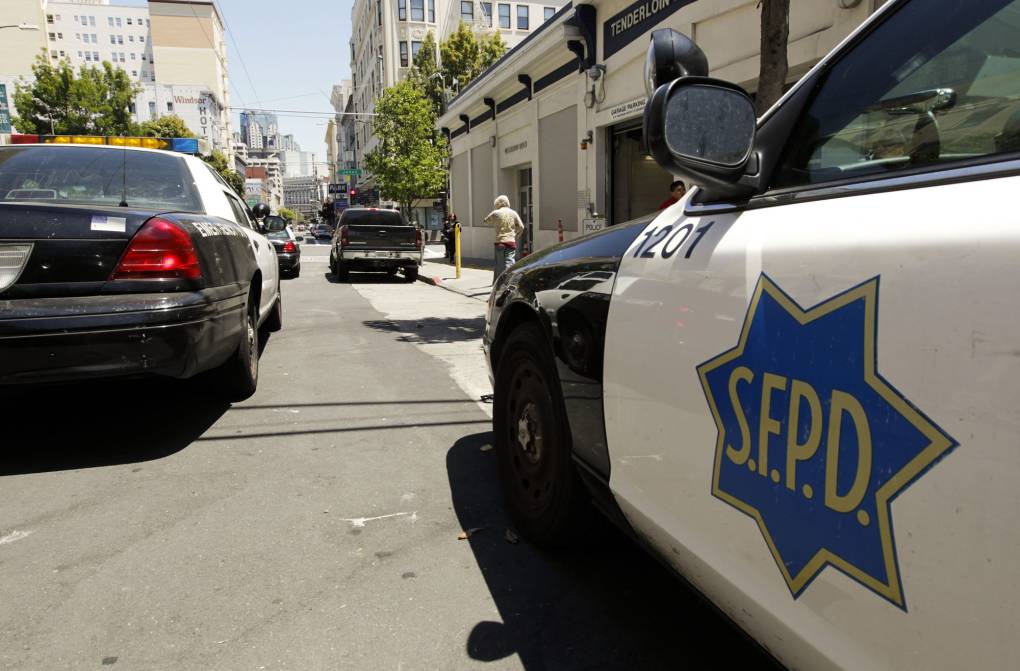
"caption": "The Tenderloin Police station along Eddy Street, on May 30, 2012, in San Francisco.",
"credit": "Michael Macor/The San Francisco Chronicle via Getty Images",
"altTag": null,
"description": null,
"imgSizes": {
"medium": {
"file": "https://cdn.kqed.org/wp-content/uploads/sites/10/2024/07/SFPDTenderloinStation-800x526.jpg",
"width": 800,
"height": 526,
"mimeType": "image/jpeg"
},
"large": {
"file": "https://cdn.kqed.org/wp-content/uploads/sites/10/2024/07/SFPDTenderloinStation-1020x671.jpg",
"width": 1020,
"height": 671,
"mimeType": "image/jpeg"
},
"thumbnail": {
"file": "https://cdn.kqed.org/wp-content/uploads/sites/10/2024/07/SFPDTenderloinStation-160x105.jpg",
"width": 160,
"height": 105,
"mimeType": "image/jpeg"
},
"1536x1536": {
"file": "https://cdn.kqed.org/wp-content/uploads/sites/10/2024/07/SFPDTenderloinStation-1536x1010.jpg",
"width": 1536,
"height": 1010,
"mimeType": "image/jpeg"
},
"post-thumbnail": {
"file": "https://cdn.kqed.org/wp-content/uploads/sites/10/2024/07/SFPDTenderloinStation-672x372.jpg",
"width": 672,
"height": 372,
"mimeType": "image/jpeg"
},
"twentyfourteen-full-width": {
"file": "https://cdn.kqed.org/wp-content/uploads/sites/10/2024/07/SFPDTenderloinStation-1038x576.jpg",
"width": 1038,
"height": 576,
"mimeType": "image/jpeg"
},
"full-width": {
"file": "https://cdn.kqed.org/wp-content/uploads/sites/10/2024/07/SFPDTenderloinStation-1920x1262.jpg",
"width": 1920,
"height": 1262,
"mimeType": "image/jpeg"
},
"kqedFullSize": {
"file": "https://cdn.kqed.org/wp-content/uploads/sites/10/2024/07/SFPDTenderloinStation.jpg",
"width": 2000,
"height": 1315
}
},
"isLoading": false,
"fetchFailed": false
},
"news_11997036": {
"type": "attachments",
"id": "news_11997036",
"meta": {
"index": "attachments_1716263798",
"site": "news",
"id": "11997036",
"found": true
},
"title": "240722-SFKamalaHarrisRally-63-BL_qed",
"publishDate": 1721776343,
"status": "inherit",
"parent": 11996787,
"modified": 1721776550,
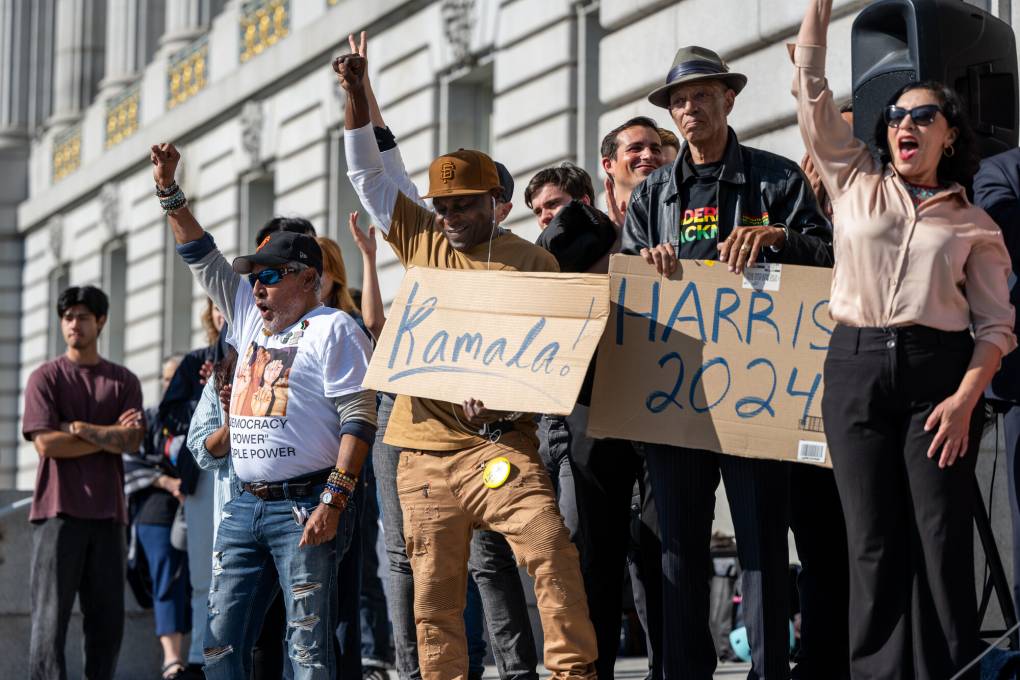
"caption": "San Francisco Democratic Party Chair Nancy Tung, alongside Mayor London Breed and other Democratic party members, speaks during a rally in support of the presidential nomination of Vice President Kamala Harris at City Hall in San Francisco on July 22, 2024.",
"credit": "Beth LaBerge/KQED",
"altTag": null,
"description": null,
"imgSizes": {
"medium": {
"file": "https://cdn.kqed.org/wp-content/uploads/sites/10/2024/07/240722-SFKamalaHarrisRally-63-BL_qed-800x533.jpg",
"width": 800,
"height": 533,
"mimeType": "image/jpeg"
},
"large": {
"file": "https://cdn.kqed.org/wp-content/uploads/sites/10/2024/07/240722-SFKamalaHarrisRally-63-BL_qed-1020x680.jpg",
"width": 1020,
"height": 680,
"mimeType": "image/jpeg"
},
"thumbnail": {
"file": "https://cdn.kqed.org/wp-content/uploads/sites/10/2024/07/240722-SFKamalaHarrisRally-63-BL_qed-160x107.jpg",
"width": 160,
"height": 107,
"mimeType": "image/jpeg"
},
"1536x1536": {
"file": "https://cdn.kqed.org/wp-content/uploads/sites/10/2024/07/240722-SFKamalaHarrisRally-63-BL_qed-1536x1024.jpg",
"width": 1536,
"height": 1024,
"mimeType": "image/jpeg"
},
"post-thumbnail": {
"file": "https://cdn.kqed.org/wp-content/uploads/sites/10/2024/07/240722-SFKamalaHarrisRally-63-BL_qed-672x372.jpg",
"width": 672,
"height": 372,
"mimeType": "image/jpeg"
},
"twentyfourteen-full-width": {
"file": "https://cdn.kqed.org/wp-content/uploads/sites/10/2024/07/240722-SFKamalaHarrisRally-63-BL_qed-1038x576.jpg",
"width": 1038,
"height": 576,
"mimeType": "image/jpeg"
},
"full-width": {
"file": "https://cdn.kqed.org/wp-content/uploads/sites/10/2024/07/240722-SFKamalaHarrisRally-63-BL_qed-1920x1280.jpg",
"width": 1920,
"height": 1280,
"mimeType": "image/jpeg"
},
"kqedFullSize": {
"file": "https://cdn.kqed.org/wp-content/uploads/sites/10/2024/07/240722-SFKamalaHarrisRally-63-BL_qed.jpg",
"width": 2000,
"height": 1333
}
},
"isLoading": false,
"fetchFailed": false
},
"news_11997008": {
"type": "attachments",
"id": "news_11997008",
"meta": {
"index": "attachments_1716263798",
"site": "news",
"id": "11997008",
"found": true
},
"title": "A tow truck is seen towing a vehicle to the Auto Return on 7th Street on Tuesday, December 1, 2015 in San Francisco, Calif.",
"publishDate": 1721770139,
"status": "inherit",
"parent": 11996890,
"modified": 1721770569,
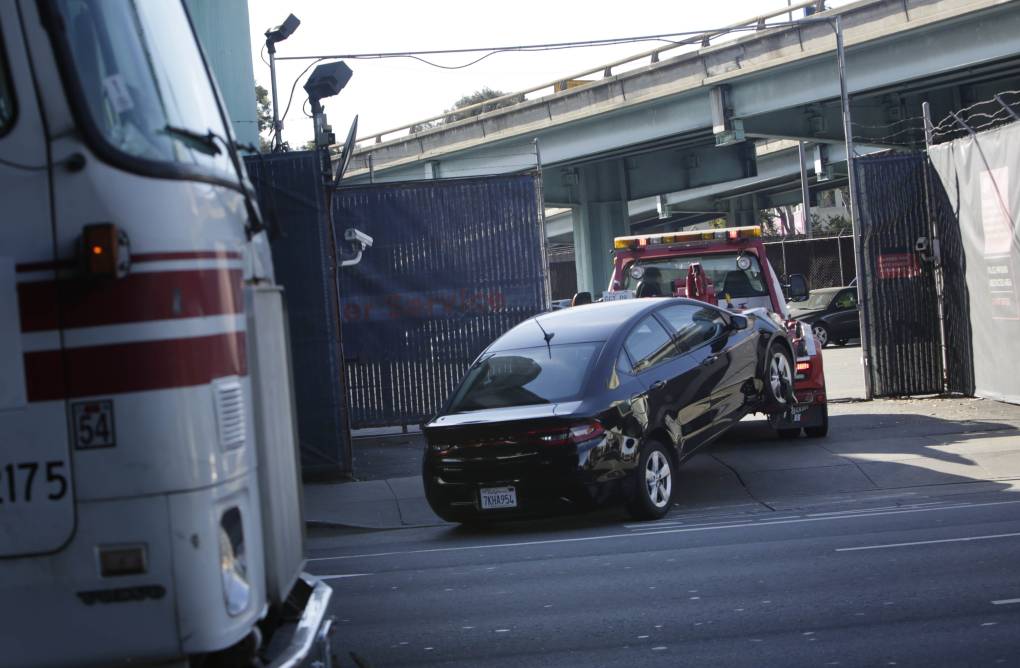
"caption": "A tow truck is seen towing a vehicle to the Auto Return on 7th Street on Dec. 1, 2015, in San Francisco. The San Francisco City Attorney's Office announced on Tuesday, July 23, 2024, that it won an order banning Auto Towing LLC from doing business with the city after it was investigated for illegally towing vehicles from a bank parking lot and making it difficult for people to get their cars back. ",
"credit": "Lea Suzuki/The San Francisco Chronicle via Getty Images",
"altTag": null,
"description": null,
"imgSizes": {
"medium": {
"file": "https://cdn.kqed.org/wp-content/uploads/sites/10/2024/07/GettyImages-1322125500-800x524.jpg",
"width": 800,
"height": 524,
"mimeType": "image/jpeg"
},
"large": {
"file": "https://cdn.kqed.org/wp-content/uploads/sites/10/2024/07/GettyImages-1322125500-1020x668.jpg",
"width": 1020,
"height": 668,
"mimeType": "image/jpeg"
},
"thumbnail": {
"file": "https://cdn.kqed.org/wp-content/uploads/sites/10/2024/07/GettyImages-1322125500-160x105.jpg",
"width": 160,
"height": 105,
"mimeType": "image/jpeg"
},
"1536x1536": {
"file": "https://cdn.kqed.org/wp-content/uploads/sites/10/2024/07/GettyImages-1322125500-1536x1005.jpg",
"width": 1536,
"height": 1005,
"mimeType": "image/jpeg"
},
"2048x2048": {
"file": "https://cdn.kqed.org/wp-content/uploads/sites/10/2024/07/GettyImages-1322125500-2048x1340.jpg",
"width": 2048,
"height": 1340,
"mimeType": "image/jpeg"
},
"post-thumbnail": {
"file": "https://cdn.kqed.org/wp-content/uploads/sites/10/2024/07/GettyImages-1322125500-672x372.jpg",
"width": 672,
"height": 372,
"mimeType": "image/jpeg"
},
"twentyfourteen-full-width": {
"file": "https://cdn.kqed.org/wp-content/uploads/sites/10/2024/07/GettyImages-1322125500-1038x576.jpg",
"width": 1038,
"height": 576,
"mimeType": "image/jpeg"
},
"full-width": {
"file": "https://cdn.kqed.org/wp-content/uploads/sites/10/2024/07/GettyImages-1322125500-1920x1257.jpg",
"width": 1920,
"height": 1257,
"mimeType": "image/jpeg"
},
"kqedFullSize": {
"file": "https://cdn.kqed.org/wp-content/uploads/sites/10/2024/07/GettyImages-1322125500-scaled.jpg",
"width": 2560,
"height": 1675
}
},
"isLoading": false,
"fetchFailed": false
},
"news_11814875": {
"type": "attachments",
"id": "news_11814875",
"meta": {
"index": "attachments_1716263798",
"site": "news",
"id": "11814875",
"found": true
},
"title": "RS42922_003_KQED_SanFrancisco_MarriottMarquis_04262020-qut",
"publishDate": 1588119869,
"status": "inherit",
"parent": 11813671,
"modified": 1721767257,
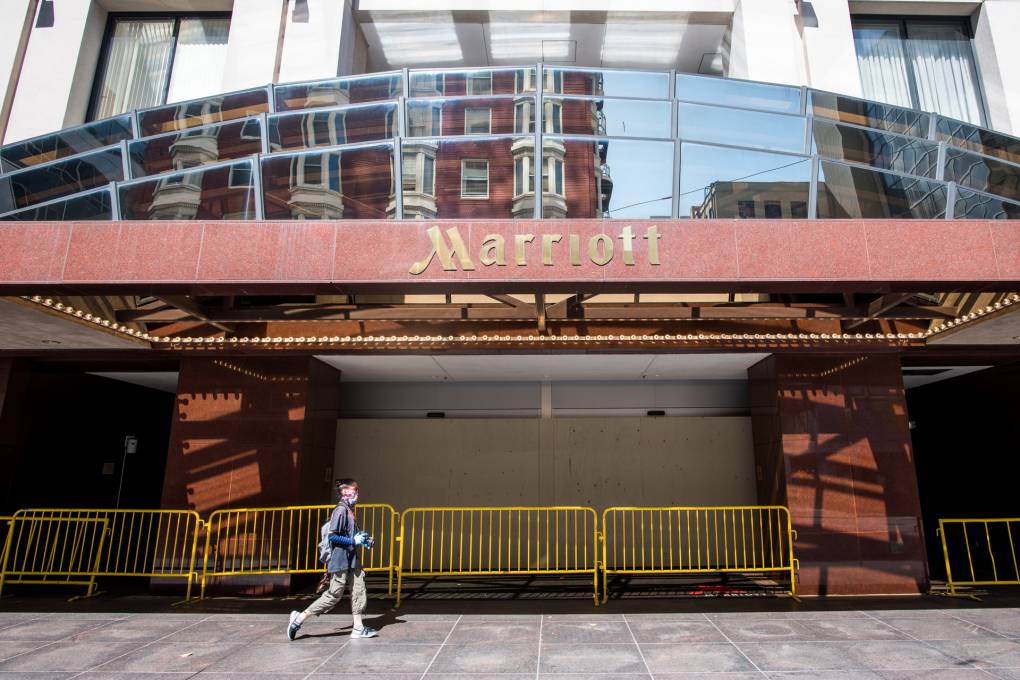
"caption": "A pedestrian walks past a closed-off entrance to the Mariott Marquis Hotel in San Francisco on April 26, 2020.",
"credit": "Beth LaBerge/KQED",
"altTag": "The front of a building with a barricade closing entry. The front doors are boarded up with wood.",
"description": "A pedestrian walks past a closed off entrance to the Mariott Marquis hotel in San Francisco on April 26, 2020.",
"imgSizes": {
"thumbnail": {
"file": "https://cdn.kqed.org/wp-content/uploads/sites/10/2020/04/RS42922_003_KQED_SanFrancisco_MarriottMarquis_04262020-qut-160x107.jpg",
"width": 160,
"height": 107,
"mimeType": "image/jpeg"
},
"medium": {
"file": "https://cdn.kqed.org/wp-content/uploads/sites/10/2020/04/RS42922_003_KQED_SanFrancisco_MarriottMarquis_04262020-qut-800x533.jpg",
"width": 800,
"height": 533,
"mimeType": "image/jpeg"
},
"large": {
"file": "https://cdn.kqed.org/wp-content/uploads/sites/10/2020/04/RS42922_003_KQED_SanFrancisco_MarriottMarquis_04262020-qut-1020x680.jpg",
"width": 1020,
"height": 680,
"mimeType": "image/jpeg"
},
"post-thumbnail": {
"file": "https://cdn.kqed.org/wp-content/uploads/sites/10/2020/04/RS42922_003_KQED_SanFrancisco_MarriottMarquis_04262020-qut-672x372.jpg",
"width": 672,
"height": 372,
"mimeType": "image/jpeg"
},
"twentyfourteen-full-width": {
"file": "https://cdn.kqed.org/wp-content/uploads/sites/10/2020/04/RS42922_003_KQED_SanFrancisco_MarriottMarquis_04262020-qut-1038x576.jpg",
"width": 1038,
"height": 576,
"mimeType": "image/jpeg"
},
"full-width": {
"file": "https://cdn.kqed.org/wp-content/uploads/sites/10/2020/04/RS42922_003_KQED_SanFrancisco_MarriottMarquis_04262020-qut-1920x1280.jpg",
"width": 1920,
"height": 1280,
"mimeType": "image/jpeg"
},
"apple_news_ca_landscape_12_9": {
"file": "https://cdn.kqed.org/wp-content/uploads/sites/10/2020/04/RS42922_003_KQED_SanFrancisco_MarriottMarquis_04262020-qut-1832x1280.jpg",
"width": 1832,
"height": 1280,
"mimeType": "image/jpeg"
},
"apple_news_ca_landscape_9_7": {
"file": "https://cdn.kqed.org/wp-content/uploads/sites/10/2020/04/RS42922_003_KQED_SanFrancisco_MarriottMarquis_04262020-qut-1376x1032.jpg",
"width": 1376,
"height": 1032,
"mimeType": "image/jpeg"
},
"apple_news_ca_landscape_5_5": {
"file": "https://cdn.kqed.org/wp-content/uploads/sites/10/2020/04/RS42922_003_KQED_SanFrancisco_MarriottMarquis_04262020-qut-1044x783.jpg",
"width": 1044,
"height": 783,
"mimeType": "image/jpeg"
},
"apple_news_ca_landscape_4_7": {
"file": "https://cdn.kqed.org/wp-content/uploads/sites/10/2020/04/RS42922_003_KQED_SanFrancisco_MarriottMarquis_04262020-qut-632x474.jpg",
"width": 632,
"height": 474,
"mimeType": "image/jpeg"
},
"apple_news_ca_landscape_4_0": {
"file": "https://cdn.kqed.org/wp-content/uploads/sites/10/2020/04/RS42922_003_KQED_SanFrancisco_MarriottMarquis_04262020-qut-536x402.jpg",
"width": 536,
"height": 402,
"mimeType": "image/jpeg"
},
"apple_news_ca_portrait_12_9": {
"file": "https://cdn.kqed.org/wp-content/uploads/sites/10/2020/04/RS42922_003_KQED_SanFrancisco_MarriottMarquis_04262020-qut-1122x1280.jpg",
"width": 1122,
"height": 1280,
"mimeType": "image/jpeg"
},
"apple_news_ca_portrait_9_7": {
"file": "https://cdn.kqed.org/wp-content/uploads/sites/10/2020/04/RS42922_003_KQED_SanFrancisco_MarriottMarquis_04262020-qut-840x1120.jpg",
"width": 840,
"height": 1120,
"mimeType": "image/jpeg"
},
"apple_news_ca_portrait_5_5": {
"file": "https://cdn.kqed.org/wp-content/uploads/sites/10/2020/04/RS42922_003_KQED_SanFrancisco_MarriottMarquis_04262020-qut-687x916.jpg",
"width": 687,
"height": 916,
"mimeType": "image/jpeg"
},
"apple_news_ca_portrait_4_7": {
"file": "https://cdn.kqed.org/wp-content/uploads/sites/10/2020/04/RS42922_003_KQED_SanFrancisco_MarriottMarquis_04262020-qut-414x552.jpg",
"width": 414,
"height": 552,
"mimeType": "image/jpeg"
},
"apple_news_ca_portrait_4_0": {
"file": "https://cdn.kqed.org/wp-content/uploads/sites/10/2020/04/RS42922_003_KQED_SanFrancisco_MarriottMarquis_04262020-qut-354x472.jpg",
"width": 354,
"height": 472,
"mimeType": "image/jpeg"
},
"apple_news_ca_square_12_9": {
"file": "https://cdn.kqed.org/wp-content/uploads/sites/10/2020/04/RS42922_003_KQED_SanFrancisco_MarriottMarquis_04262020-qut-1472x1280.jpg",
"width": 1472,
"height": 1280,
"mimeType": "image/jpeg"
},
"apple_news_ca_square_9_7": {
"file": "https://cdn.kqed.org/wp-content/uploads/sites/10/2020/04/RS42922_003_KQED_SanFrancisco_MarriottMarquis_04262020-qut-1104x1104.jpg",
"width": 1104,
"height": 1104,
"mimeType": "image/jpeg"
},
"apple_news_ca_square_5_5": {
"file": "https://cdn.kqed.org/wp-content/uploads/sites/10/2020/04/RS42922_003_KQED_SanFrancisco_MarriottMarquis_04262020-qut-912x912.jpg",
"width": 912,
"height": 912,
"mimeType": "image/jpeg"
},
"apple_news_ca_square_4_7": {
"file": "https://cdn.kqed.org/wp-content/uploads/sites/10/2020/04/RS42922_003_KQED_SanFrancisco_MarriottMarquis_04262020-qut-550x550.jpg",
"width": 550,
"height": 550,
"mimeType": "image/jpeg"
},
"apple_news_ca_square_4_0": {
"file": "https://cdn.kqed.org/wp-content/uploads/sites/10/2020/04/RS42922_003_KQED_SanFrancisco_MarriottMarquis_04262020-qut-470x470.jpg",
"width": 470,
"height": 470,
"mimeType": "image/jpeg"
},
"kqedFullSize": {
"file": "https://cdn.kqed.org/wp-content/uploads/sites/10/2020/04/RS42922_003_KQED_SanFrancisco_MarriottMarquis_04262020-qut.jpg",
"width": 1920,
"height": 1280
}
},
"isLoading": false,
"fetchFailed": false
},
"news_11996712": {
"type": "attachments",
"id": "news_11996712",
"meta": {
"index": "attachments_1716263798",
"site": "news",
"id": "11996712",
"found": true
},
"title": "240722-SFKamalaHarrisRally-19-BL_qed",
"publishDate": 1721671348,
"status": "inherit",
"parent": 0,
"modified": 1721682753,
"caption": "A crowd cheers at a rally supporting the presidential nomination of Vice President Kamala Harris at City Hall in San Francisco on July 22, 2024.",
"credit": "Beth LaBerge/KQED",
"altTag": null,
"description": null,
"imgSizes": {
"medium": {
"file": "https://cdn.kqed.org/wp-content/uploads/sites/10/2024/07/240722-SFKamalaHarrisRally-19-BL_qed-800x533.jpg",
"width": 800,
"height": 533,
"mimeType": "image/jpeg"
},
"large": {
"file": "https://cdn.kqed.org/wp-content/uploads/sites/10/2024/07/240722-SFKamalaHarrisRally-19-BL_qed-1020x680.jpg",
"width": 1020,
"height": 680,
"mimeType": "image/jpeg"
},
"thumbnail": {
"file": "https://cdn.kqed.org/wp-content/uploads/sites/10/2024/07/240722-SFKamalaHarrisRally-19-BL_qed-160x107.jpg",
"width": 160,
"height": 107,
"mimeType": "image/jpeg"
},
"1536x1536": {
"file": "https://cdn.kqed.org/wp-content/uploads/sites/10/2024/07/240722-SFKamalaHarrisRally-19-BL_qed-1536x1024.jpg",
"width": 1536,
"height": 1024,
"mimeType": "image/jpeg"
},
"post-thumbnail": {
"file": "https://cdn.kqed.org/wp-content/uploads/sites/10/2024/07/240722-SFKamalaHarrisRally-19-BL_qed-672x372.jpg",
"width": 672,
"height": 372,
"mimeType": "image/jpeg"
},
"twentyfourteen-full-width": {
"file": "https://cdn.kqed.org/wp-content/uploads/sites/10/2024/07/240722-SFKamalaHarrisRally-19-BL_qed-1038x576.jpg",
"width": 1038,
"height": 576,
"mimeType": "image/jpeg"
},
"full-width": {
"file": "https://cdn.kqed.org/wp-content/uploads/sites/10/2024/07/240722-SFKamalaHarrisRally-19-BL_qed-1920x1280.jpg",
"width": 1920,
"height": 1280,
"mimeType": "image/jpeg"
},
"kqedFullSize": {
"file": "https://cdn.kqed.org/wp-content/uploads/sites/10/2024/07/240722-SFKamalaHarrisRally-19-BL_qed.jpg",
"width": 2000,
"height": 1333
}
},
"isLoading": false,
"fetchFailed": false
},
"news_11996679": {
"type": "attachments",
"id": "news_11996679",
"meta": {
"index": "attachments_1716263798",
"site": "news",
"id": "11996679",
"found": true
},
"title": "Red and blue lights of police car in night time, crime scene. Night patrolling the city. Abstract blurry image.",
"publishDate": 1721667064,
"status": "inherit",
"parent": 11996667,
"modified": 1721667392,
"caption": "San Francisco police officers fatally shot a man overnight near Willow Street and Van Ness Avenue, authorities said.",
"credit": "Evgen Prozhyrko/Getty Images",
"altTag": null,
"description": null,
"imgSizes": {
"medium": {
"file": "https://cdn.kqed.org/wp-content/uploads/sites/10/2024/07/PoliceLights-800x602.jpg",
"width": 800,
"height": 602,
"mimeType": "image/jpeg"
},
"large": {
"file": "https://cdn.kqed.org/wp-content/uploads/sites/10/2024/07/PoliceLights-1020x767.jpg",
"width": 1020,
"height": 767,
"mimeType": "image/jpeg"
},
"thumbnail": {
"file": "https://cdn.kqed.org/wp-content/uploads/sites/10/2024/07/PoliceLights-160x120.jpg",
"width": 160,
"height": 120,
"mimeType": "image/jpeg"
},
"1536x1536": {
"file": "https://cdn.kqed.org/wp-content/uploads/sites/10/2024/07/PoliceLights-1536x1155.jpg",
"width": 1536,
"height": 1155,
"mimeType": "image/jpeg"
},
"post-thumbnail": {
"file": "https://cdn.kqed.org/wp-content/uploads/sites/10/2024/07/PoliceLights-672x372.jpg",
"width": 672,
"height": 372,
"mimeType": "image/jpeg"
},
"twentyfourteen-full-width": {
"file": "https://cdn.kqed.org/wp-content/uploads/sites/10/2024/07/PoliceLights-1038x576.jpg",
"width": 1038,
"height": 576,
"mimeType": "image/jpeg"
},
"full-width": {
"file": "https://cdn.kqed.org/wp-content/uploads/sites/10/2024/07/PoliceLights-1920x1444.jpg",
"width": 1920,
"height": 1444,
"mimeType": "image/jpeg"
},
"kqedFullSize": {
"file": "https://cdn.kqed.org/wp-content/uploads/sites/10/2024/07/PoliceLights.jpg",
"width": 2000,
"height": 1504
}
},
"isLoading": false,
"fetchFailed": false
},
"news_11996617": {
"type": "attachments",
"id": "news_11996617",
"meta": {
"index": "attachments_1716263798",
"site": "news",
"id": "11996617",
"found": true
},
"title": "TOPSHOT-US-POLITICS-BIDEN-ELECTION",
"publishDate": 1721585419,
"status": "inherit",
"parent": 11996616,
"modified": 1721585457,
"caption": "US President Joe Biden waves on stage during the Vote To Live Properity Summit at the College of Southern Nevada in Las Vegas, Nevada, on July 16, 2024. ",
"credit": "Kent Nishimura/AFP via Getty Images",
"altTag": null,
"description": null,
"imgSizes": {
"medium": {
"file": "https://cdn.kqed.org/wp-content/uploads/sites/10/2024/07/GettyImages-2161719570-800x534.jpg",
"width": 800,
"height": 534,
"mimeType": "image/jpeg"
},
"large": {
"file": "https://cdn.kqed.org/wp-content/uploads/sites/10/2024/07/GettyImages-2161719570-1020x680.jpg",
"width": 1020,
"height": 680,
"mimeType": "image/jpeg"
},
"thumbnail": {
"file": "https://cdn.kqed.org/wp-content/uploads/sites/10/2024/07/GettyImages-2161719570-160x107.jpg",
"width": 160,
"height": 107,
"mimeType": "image/jpeg"
},
"post-thumbnail": {
"file": "https://cdn.kqed.org/wp-content/uploads/sites/10/2024/07/GettyImages-2161719570-672x372.jpg",
"width": 672,
"height": 372,
"mimeType": "image/jpeg"
},
"twentyfourteen-full-width": {
"file": "https://cdn.kqed.org/wp-content/uploads/sites/10/2024/07/GettyImages-2161719570-1024x576.jpg",
"width": 1024,
"height": 576,
"mimeType": "image/jpeg"
},
"kqedFullSize": {
"file": "https://cdn.kqed.org/wp-content/uploads/sites/10/2024/07/GettyImages-2161719570.jpg",
"width": 1024,
"height": 683
}
},
"isLoading": false,
"fetchFailed": false
},
"news_11996247": {
"type": "attachments",
"id": "news_11996247",
"meta": {
"index": "attachments_1716263798",
"site": "news",
"id": "11996247",
"found": true
},
"title": "SFMayoralDebate2",
"publishDate": 1721326821,
"status": "inherit",
"parent": 11996234,
"modified": 1721344064,
"caption": "Mayoral candidates face off at a San Francisco Fire Fighters union debate on Thursday, July 8. Left to right: Ahsha Safaí, Mark Farrell, London Breed, Aaron Peskin and Daniel Lurie.",
"credit": "Sydney Johnson/KQED",
"altTag": null,
"description": null,
"imgSizes": {
"medium": {
"file": "https://cdn.kqed.org/wp-content/uploads/sites/10/2024/07/SFMayoralDebate2-800x600.jpg",
"width": 800,
"height": 600,
"mimeType": "image/jpeg"
},
"large": {
"file": "https://cdn.kqed.org/wp-content/uploads/sites/10/2024/07/SFMayoralDebate2-1020x765.jpg",
"width": 1020,
"height": 765,
"mimeType": "image/jpeg"
},
"thumbnail": {
"file": "https://cdn.kqed.org/wp-content/uploads/sites/10/2024/07/SFMayoralDebate2-160x120.jpg",
"width": 160,
"height": 120,
"mimeType": "image/jpeg"
},
"1536x1536": {
"file": "https://cdn.kqed.org/wp-content/uploads/sites/10/2024/07/SFMayoralDebate2-1536x1152.jpg",
"width": 1536,
"height": 1152,
"mimeType": "image/jpeg"
},
"post-thumbnail": {
"file": "https://cdn.kqed.org/wp-content/uploads/sites/10/2024/07/SFMayoralDebate2-672x372.jpg",
"width": 672,
"height": 372,
"mimeType": "image/jpeg"
},
"twentyfourteen-full-width": {
"file": "https://cdn.kqed.org/wp-content/uploads/sites/10/2024/07/SFMayoralDebate2-1038x576.jpg",
"width": 1038,
"height": 576,
"mimeType": "image/jpeg"
},
"full-width": {
"file": "https://cdn.kqed.org/wp-content/uploads/sites/10/2024/07/SFMayoralDebate2-1920x1440.jpg",
"width": 1920,
"height": 1440,
"mimeType": "image/jpeg"
},
"kqedFullSize": {
"file": "https://cdn.kqed.org/wp-content/uploads/sites/10/2024/07/SFMayoralDebate2.jpg",
"width": 2000,
"height": 1500
}
},
"isLoading": false,
"fetchFailed": false
},
"news_11996216": {
"type": "attachments",
"id": "news_11996216",
"meta": {
"index": "attachments_1716263798",
"site": "news",
"id": "11996216",
"found": true
},
"title": "San Francisco Police Arrest Suspect In Murder Of Tech Executive Bob Lee",
"publishDate": 1721322759,
"status": "inherit",
"parent": 11996211,
"modified": 1721342680,
"caption": "San Francisco police Chief William Scott speaks during a press conference at San Francisco Police headquarters on April 13, 2023. ",
"credit": "Justin Sullivan/Getty Images",
"altTag": null,
"description": null,
"imgSizes": {
"medium": {
"file": "https://cdn.kqed.org/wp-content/uploads/sites/10/2024/07/SFPoliceChief2024-800x550.jpg",
"width": 800,
"height": 550,
"mimeType": "image/jpeg"
},
"large": {
"file": "https://cdn.kqed.org/wp-content/uploads/sites/10/2024/07/SFPoliceChief2024-1020x701.jpg",
"width": 1020,
"height": 701,
"mimeType": "image/jpeg"
},
"thumbnail": {
"file": "https://cdn.kqed.org/wp-content/uploads/sites/10/2024/07/SFPoliceChief2024-160x110.jpg",
"width": 160,
"height": 110,
"mimeType": "image/jpeg"
},
"1536x1536": {
"file": "https://cdn.kqed.org/wp-content/uploads/sites/10/2024/07/SFPoliceChief2024-1536x1056.jpg",
"width": 1536,
"height": 1056,
"mimeType": "image/jpeg"
},
"post-thumbnail": {
"file": "https://cdn.kqed.org/wp-content/uploads/sites/10/2024/07/SFPoliceChief2024-672x372.jpg",
"width": 672,
"height": 372,
"mimeType": "image/jpeg"
},
"twentyfourteen-full-width": {
"file": "https://cdn.kqed.org/wp-content/uploads/sites/10/2024/07/SFPoliceChief2024-1038x576.jpg",
"width": 1038,
"height": 576,
"mimeType": "image/jpeg"
},
"full-width": {
"file": "https://cdn.kqed.org/wp-content/uploads/sites/10/2024/07/SFPoliceChief2024-1920x1320.jpg",
"width": 1920,
"height": 1320,
"mimeType": "image/jpeg"
},
"kqedFullSize": {
"file": "https://cdn.kqed.org/wp-content/uploads/sites/10/2024/07/SFPoliceChief2024.jpg",
"width": 2000,
"height": 1375
}
},
"isLoading": false,
"fetchFailed": false
},
"news_11996208": {
"type": "attachments",
"id": "news_11996208",
"meta": {
"index": "attachments_1716263798",
"site": "news",
"id": "11996208",
"found": true
},
"title": "240717-StonestownHousingDevelopment-02-BL_qed",
"publishDate": 1721314449,
"status": "inherit",
"parent": 11996058,
"modified": 1721322110,
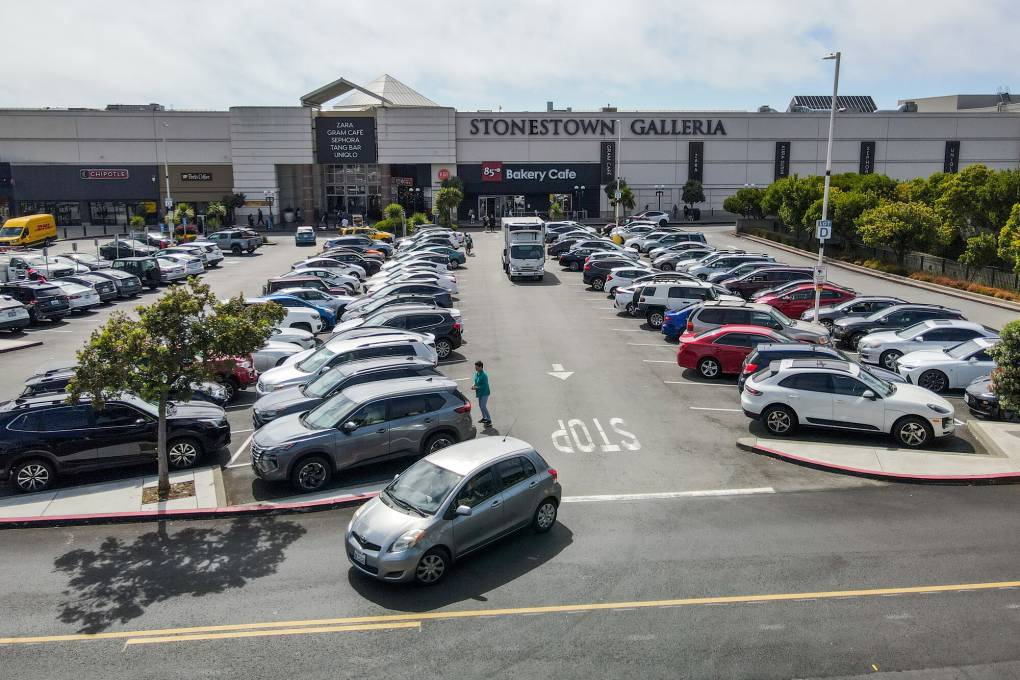
"caption": "The parking lots surrounding Stonestown Galleria are set to be developed into 3,500 affordable and market-rate housing units, public parks and open space, retail shops and child and senior service centers.",
"credit": "Beth LaBerge/KQED",
"altTag": null,
"description": null,
"imgSizes": {
"medium": {
"file": "https://cdn.kqed.org/wp-content/uploads/sites/10/2024/07/240717-StonestownHousingDevelopment-02-BL_qed-800x533.jpg",
"width": 800,
"height": 533,
"mimeType": "image/jpeg"
},
"large": {
"file": "https://cdn.kqed.org/wp-content/uploads/sites/10/2024/07/240717-StonestownHousingDevelopment-02-BL_qed-1020x680.jpg",
"width": 1020,
"height": 680,
"mimeType": "image/jpeg"
},
"thumbnail": {
"file": "https://cdn.kqed.org/wp-content/uploads/sites/10/2024/07/240717-StonestownHousingDevelopment-02-BL_qed-160x107.jpg",
"width": 160,
"height": 107,
"mimeType": "image/jpeg"
},
"1536x1536": {
"file": "https://cdn.kqed.org/wp-content/uploads/sites/10/2024/07/240717-StonestownHousingDevelopment-02-BL_qed-1536x1024.jpg",
"width": 1536,
"height": 1024,
"mimeType": "image/jpeg"
},
"post-thumbnail": {
"file": "https://cdn.kqed.org/wp-content/uploads/sites/10/2024/07/240717-StonestownHousingDevelopment-02-BL_qed-672x372.jpg",
"width": 672,
"height": 372,
"mimeType": "image/jpeg"
},
"twentyfourteen-full-width": {
"file": "https://cdn.kqed.org/wp-content/uploads/sites/10/2024/07/240717-StonestownHousingDevelopment-02-BL_qed-1038x576.jpg",
"width": 1038,
"height": 576,
"mimeType": "image/jpeg"
},
"full-width": {
"file": "https://cdn.kqed.org/wp-content/uploads/sites/10/2024/07/240717-StonestownHousingDevelopment-02-BL_qed-1920x1280.jpg",
"width": 1920,
"height": 1280,
"mimeType": "image/jpeg"
},
"kqedFullSize": {
"file": "https://cdn.kqed.org/wp-content/uploads/sites/10/2024/07/240717-StonestownHousingDevelopment-02-BL_qed.jpg",
"width": 2000,
"height": 1333
}
},
"isLoading": false,
"fetchFailed": false
},
"news_11996169": {
"type": "attachments",
"id": "news_11996169",
"meta": {
"index": "attachments_1716263798",
"site": "news",
"id": "11996169",
"found": true
},
"title": "Looking_West_from_UC_Hastings,_City_Hall_and_CA_State_Courts,_San_Francisco",
"publishDate": 1721258576,
"status": "inherit",
"parent": 11996165,
"modified": 1721258702,
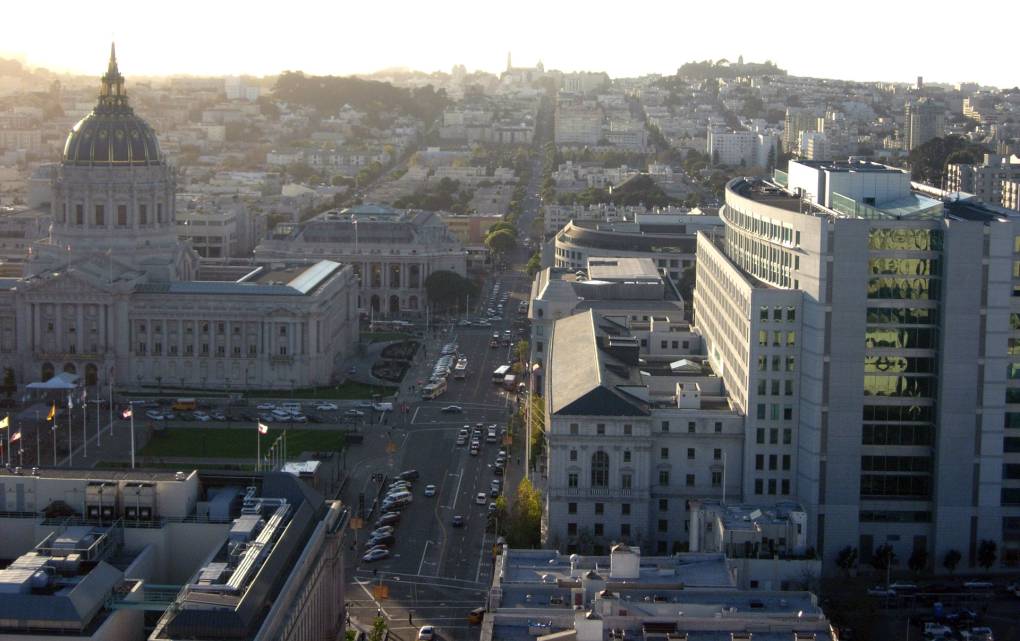
"caption": "The Superior Court of California and San Francisco City Hall. ",
"credit": "Lisa Pickoff-White/KQED",
"altTag": null,
"description": null,
"imgSizes": {
"medium": {
"file": "https://cdn.kqed.org/wp-content/uploads/sites/10/2024/07/Looking_West_from_UC_Hastings_City_Hall_and_CA_State_Courts_San_Francisco-800x503.jpg",
"width": 800,
"height": 503,
"mimeType": "image/jpeg"
},
"large": {
"file": "https://cdn.kqed.org/wp-content/uploads/sites/10/2024/07/Looking_West_from_UC_Hastings_City_Hall_and_CA_State_Courts_San_Francisco-1020x641.jpg",
"width": 1020,
"height": 641,
"mimeType": "image/jpeg"
},
"thumbnail": {
"file": "https://cdn.kqed.org/wp-content/uploads/sites/10/2024/07/Looking_West_from_UC_Hastings_City_Hall_and_CA_State_Courts_San_Francisco-160x101.jpg",
"width": 160,
"height": 101,
"mimeType": "image/jpeg"
},
"1536x1536": {
"file": "https://cdn.kqed.org/wp-content/uploads/sites/10/2024/07/Looking_West_from_UC_Hastings_City_Hall_and_CA_State_Courts_San_Francisco-1536x966.jpg",
"width": 1536,
"height": 966,
"mimeType": "image/jpeg"
},
"post-thumbnail": {
"file": "https://cdn.kqed.org/wp-content/uploads/sites/10/2024/07/Looking_West_from_UC_Hastings_City_Hall_and_CA_State_Courts_San_Francisco-672x372.jpg",
"width": 672,
"height": 372,
"mimeType": "image/jpeg"
},
"twentyfourteen-full-width": {
"file": "https://cdn.kqed.org/wp-content/uploads/sites/10/2024/07/Looking_West_from_UC_Hastings_City_Hall_and_CA_State_Courts_San_Francisco-1038x576.jpg",
"width": 1038,
"height": 576,
"mimeType": "image/jpeg"
},
"kqedFullSize": {
"file": "https://cdn.kqed.org/wp-content/uploads/sites/10/2024/07/Looking_West_from_UC_Hastings_City_Hall_and_CA_State_Courts_San_Francisco.jpg",
"width": 1920,
"height": 1207
}
},
"isLoading": false,
"fetchFailed": false
},
"news_11996083": {
"type": "attachments",
"id": "news_11996083",
"meta": {
"index": "attachments_1716263798",
"site": "news",
"id": "11996083",
"found": true
},
"title": "SFPD",
"publishDate": 1721246365,
"status": "inherit",
"parent": 11996060,
"modified": 1743029026,
"caption": "Law enforcement arrested about 40 people in a large drug raid at Market and Van Ness in San Francisco last week, but prosecutors say there isn’t enough evidence to file charges.",
"credit": "Alex Emslie/KQED",
"altTag": null,
"description": null,
"imgSizes": {
"medium": {
"file": "https://cdn.kqed.org/wp-content/uploads/sites/10/2024/07/SFPD-800x600.jpg",
"width": 800,
"height": 600,
"mimeType": "image/jpeg"
},
"large": {
"file": "https://cdn.kqed.org/wp-content/uploads/sites/10/2024/07/SFPD-1020x765.jpg",
"width": 1020,
"height": 765,
"mimeType": "image/jpeg"
},
"thumbnail": {
"file": "https://cdn.kqed.org/wp-content/uploads/sites/10/2024/07/SFPD-160x120.jpg",
"width": 160,
"height": 120,
"mimeType": "image/jpeg"
},
"1536x1536": {
"file": "https://cdn.kqed.org/wp-content/uploads/sites/10/2024/07/SFPD-1536x1152.jpg",
"width": 1536,
"height": 1152,
"mimeType": "image/jpeg"
},
"post-thumbnail": {
"file": "https://cdn.kqed.org/wp-content/uploads/sites/10/2024/07/SFPD-672x372.jpg",
"width": 672,
"height": 372,
"mimeType": "image/jpeg"
},
"twentyfourteen-full-width": {
"file": "https://cdn.kqed.org/wp-content/uploads/sites/10/2024/07/SFPD-1038x576.jpg",
"width": 1038,
"height": 576,
"mimeType": "image/jpeg"
},
"full-width": {
"file": "https://cdn.kqed.org/wp-content/uploads/sites/10/2024/07/SFPD-1920x1440.jpg",
"width": 1920,
"height": 1440,
"mimeType": "image/jpeg"
},
"kqedFullSize": {
"file": "https://cdn.kqed.org/wp-content/uploads/sites/10/2024/07/SFPD.jpg",
"width": 2000,
"height": 1500
}
},
"isLoading": false,
"fetchFailed": false
}
},
"audioPlayerReducer": {
"postId": "stream_live",
"isPaused": true,
"isPlaying": false,
"pfsActive": false,
"pledgeModalIsOpen": true,
"playerDrawerIsOpen": false,
"liveAudioPlayStartedAt": 0,
"liveAudioPlayContext": ""
},
"authorsReducer": {
"ecruzguevarra": {
"type": "authors",
"id": "8654",
"meta": {
"index": "authors_1716337520",
"id": "8654",
"found": true
},
"name": "Ericka Cruz Guevarra",
"firstName": "Ericka",
"lastName": "Cruz Guevarra",
"slug": "ecruzguevarra",
"email": "ecruzguevarra@kqed.org",
"display_author_email": true,
"staff_mastheads": [
"news"
],
"title": "Producer, The Bay Podcast",
"bio": "Ericka Cruz Guevarra is host of \u003ca href=\"https://www.kqed.org/podcasts/thebay\">\u003cem>The Bay\u003c/em>\u003c/a> podcast at KQED. Before host, she was the show’s producer. Her work in that capacity includes a three-part reported series on policing in Vallejo, which won a 2020 excellence in journalism award from the Society of Professional Journalists. Ericka has worked as a breaking news reporter at Oregon Public Broadcasting, helped produce the Code Switch podcast, and was KQED’s inaugural Raul Ramirez Diversity Fund intern. She’s also an alumna of NPR’s Next Generation Radio program. Send her an email if you have strong feelings about whether Fairfield and Suisun City are the Bay. Ericka is represented by SAG-AFTRA.",
"avatar": "https://secure.gravatar.com/avatar/accefc1de4bafc7e234b69bcb9b6f6536c130fd84709bc3069ef11a78787e1bb?s=600&d=blank&r=g",
"twitter": "NotoriousECG",
"bluesky": null,
"facebook": null,
"instagram": null,
"linkedin": null,
"sites": [
{
"site": "arts",
"roles": [
"subscriber"
]
},
{
"site": "news",
"roles": [
"editor",
"manage_categories"
]
},
{
"site": "futureofyou",
"roles": [
"subscriber"
]
},
{
"site": "stateofhealth",
"roles": [
"subscriber"
]
},
{
"site": "science",
"roles": [
"editor"
]
},
{
"site": "forum",
"roles": [
"subscriber"
]
}
],
"headData": {
"title": "Ericka Cruz Guevarra | KQED",
"description": "Producer, The Bay Podcast",
"ogImgSrc": "https://secure.gravatar.com/avatar/accefc1de4bafc7e234b69bcb9b6f6536c130fd84709bc3069ef11a78787e1bb?s=600&d=blank&r=g",
"twImgSrc": "https://secure.gravatar.com/avatar/accefc1de4bafc7e234b69bcb9b6f6536c130fd84709bc3069ef11a78787e1bb?s=600&d=blank&r=g"
},
"isLoading": false,
"link": "/author/ecruzguevarra"
},
"fjhabvala": {
"type": "authors",
"id": "8659",
"meta": {
"index": "authors_1716337520",
"id": "8659",
"found": true
},
"name": "Farida Jhabvala Romero",
"firstName": "Farida",
"lastName": "Jhabvala Romero",
"slug": "fjhabvala",
"email": "fjhabvala@kqed.org",
"display_author_email": true,
"staff_mastheads": [
"news"
],
"title": "KQED Contributor",
"bio": "Farida Jhabvala Romero is a Labor Correspondent for KQED. She previously covered immigration. Farida was \u003ca href=\"https://www.ccnma.org/2022-most-influential-latina-journalists\">named\u003c/a> one of the 10 Most Influential Latina Journalists in California in 2022 by the California Chicano News Media Association. Her work has won awards from the Society of Professional Journalists (Northern California), as well as a national and regional Edward M. Murrow Award for the collaborative reporting projects “Dangerous Air” and “Graying California.” Before joining KQED, Farida worked as a producer at Radio Bilingüe, a national public radio network. Farida earned her master’s degree in journalism from Stanford University.",
"avatar": "https://secure.gravatar.com/avatar/f9f022d4e2609741874222a1e9d41f48fea74011aa7c615eef91d9a50c944ebe?s=600&d=blank&r=g",
"twitter": "FaridaJhabvala",
"bluesky": null,
"facebook": null,
"instagram": null,
"linkedin": "https://www.linkedin.com/in/faridajhabvala/",
"sites": [
{
"site": "news",
"roles": [
"editor"
]
},
{
"site": "stateofhealth",
"roles": [
"author"
]
},
{
"site": "liveblog",
"roles": [
"author"
]
}
],
"headData": {
"title": "Farida Jhabvala Romero | KQED",
"description": "KQED Contributor",
"ogImgSrc": "https://secure.gravatar.com/avatar/f9f022d4e2609741874222a1e9d41f48fea74011aa7c615eef91d9a50c944ebe?s=600&d=blank&r=g",
"twImgSrc": "https://secure.gravatar.com/avatar/f9f022d4e2609741874222a1e9d41f48fea74011aa7c615eef91d9a50c944ebe?s=600&d=blank&r=g"
},
"isLoading": false,
"link": "/author/fjhabvala"
},
"dcronin": {
"type": "authors",
"id": "11362",
"meta": {
"index": "authors_1716337520",
"id": "11362",
"found": true
},
"name": "Dana Cronin",
"firstName": "Dana",
"lastName": "Cronin",
"slug": "dcronin",
"email": "dcronin@KQED.org",
"display_author_email": true,
"staff_mastheads": [],
"title": "KQED Contributor",
"bio": "Dana Cronin is a reporter for KQED News. She loves writing stories about climate change, environmental issues, food and agriculture. She's reported across the country, from Colorado to Washington D.C. to Illinois, and has won numerous awards for her coverage. Her work is regularly featured on national broadcasts, including NPR’s Morning Edition, All Things Considered, PBS Newshour and Science Friday. She lives in Oakland and has an avocado tree in her back yard.",
"avatar": "https://secure.gravatar.com/avatar/bcf89e3455ff7235f96ab6fa7258dd95?s=600&d=blank&r=g",
"twitter": "DanaHCronin",
"facebook": null,
"instagram": null,
"linkedin": null,
"sites": [
{
"site": "arts",
"roles": [
"author"
]
},
{
"site": "news",
"roles": [
"editor"
]
},
{
"site": "science",
"roles": [
"author"
]
},
{
"site": "liveblog",
"roles": [
"author"
]
}
],
"headData": {
"title": "Dana Cronin | KQED",
"description": "KQED Contributor",
"ogImgSrc": "https://secure.gravatar.com/avatar/bcf89e3455ff7235f96ab6fa7258dd95?s=600&d=blank&r=g",
"twImgSrc": "https://secure.gravatar.com/avatar/bcf89e3455ff7235f96ab6fa7258dd95?s=600&d=blank&r=g"
},
"isLoading": false,
"link": "/author/dcronin"
},
"ahall": {
"type": "authors",
"id": "11490",
"meta": {
"index": "authors_1716337520",
"id": "11490",
"found": true
},
"name": "Alex Hall",
"firstName": "Alex",
"lastName": "Hall",
"slug": "ahall",
"email": "ahall@kqed.org",
"display_author_email": false,
"staff_mastheads": [
"news"
],
"title": "KQED Enterprise & Accountability Reporter",
"bio": "Alex Hall is KQED's Enterprise and Accountability Reporter. She previously covered the Central Valley for five years from KQED's bureau in Fresno. Before joining KQED, Alex was an investigative reporting fellow at Wisconsin Public Radio and the Wisconsin Center for Investigative Journalism. She has also worked as a bilingual producer for NPR's investigative unit and freelance video producer for Reuters TV on the Latin America desk. She got her start in journalism in South America, where she worked as a radio producer and Spanish-English translator for CNN Chile. Her documentary and investigation into the series of deadly COVID-19 outbreaks at Foster Farms won a national Edward R. Murrow award and was named an Investigative Reporters & Editors award finalist. Alex's reporting for Reveal on the Wisconsin dairy industry's reliance on undocumented immigrant labor was made into a film, Los Lecheros, which won a regional Edward R. Murrow award for best news documentary.",
"avatar": "https://secure.gravatar.com/avatar/defcbeb88b0bf591ff9af41f22644051?s=600&d=blank&r=g",
"twitter": "@chalexhall",
"facebook": null,
"instagram": null,
"linkedin": null,
"sites": [
{
"site": "news",
"roles": [
"editor"
]
},
{
"site": "liveblog",
"roles": [
"author"
]
}
],
"headData": {
"title": "Alex Hall | KQED",
"description": "KQED Enterprise & Accountability Reporter",
"ogImgSrc": "https://secure.gravatar.com/avatar/defcbeb88b0bf591ff9af41f22644051?s=600&d=blank&r=g",
"twImgSrc": "https://secure.gravatar.com/avatar/defcbeb88b0bf591ff9af41f22644051?s=600&d=blank&r=g"
},
"isLoading": false,
"link": "/author/ahall"
},
"amontecillo": {
"type": "authors",
"id": "11649",
"meta": {
"index": "authors_1716337520",
"id": "11649",
"found": true
},
"name": "Alan Montecillo",
"firstName": "Alan",
"lastName": "Montecillo",
"slug": "amontecillo",
"email": "amontecillo@kqed.org",
"display_author_email": false,
"staff_mastheads": [
"news"
],
"title": "KQED Contributor",
"bio": "Alan Montecillo is the senior editor of \u003cem>\u003ca href=\"http://kqed.org/thebay\">The Bay\u003c/a>, \u003c/em> KQED's local news podcast. Before moving to the Bay Area, he worked as a senior talk show producer for WILL in Champaign-Urbana, Illinois and at Oregon Public Broadcasting in Portland, Oregon. He has won journalism awards from the Society of Professional Journalists Northern California, the Public Media Journalists Association, The Signal Awards, and has also received a regional Edward R. Murrow award. Alan is a Filipino American from Hong Kong and a graduate of Reed College.",
"avatar": "https://secure.gravatar.com/avatar/268f53a2066899ea9efdd8a5900218b17c822d9862cbc9326cccec53ef41d349?s=600&d=blank&r=g",
"twitter": "alanmontecillo",
"bluesky": null,
"facebook": null,
"instagram": null,
"linkedin": null,
"sites": [
{
"site": "",
"roles": [
"editor"
]
},
{
"site": "news",
"roles": [
"editor",
"manage_categories"
]
}
],
"headData": {
"title": "Alan Montecillo | KQED",
"description": "KQED Contributor",
"ogImgSrc": "https://secure.gravatar.com/avatar/268f53a2066899ea9efdd8a5900218b17c822d9862cbc9326cccec53ef41d349?s=600&d=blank&r=g",
"twImgSrc": "https://secure.gravatar.com/avatar/268f53a2066899ea9efdd8a5900218b17c822d9862cbc9326cccec53ef41d349?s=600&d=blank&r=g"
},
"isLoading": false,
"link": "/author/amontecillo"
},
"sjohnson": {
"type": "authors",
"id": "11840",
"meta": {
"index": "authors_1716337520",
"id": "11840",
"found": true
},
"name": "Sydney Johnson",
"firstName": "Sydney",
"lastName": "Johnson",
"slug": "sjohnson",
"email": "sjohnson@kqed.org",
"display_author_email": false,
"staff_mastheads": [
"news"
],
"title": "KQED Reporter",
"bio": "Sydney Johnson is a general assignment reporter at KQED. She previously reported on public health and city government at the San Francisco Examiner, and before that, she covered statewide education policy for EdSource. Her reporting has won multiple local, state and national awards. Sydney is a graduate of the University of California, Berkeley and lives in San Francisco.",
"avatar": "https://secure.gravatar.com/avatar/97855f2719b72ad6190b7c535fe642c8?s=600&d=blank&r=g",
"twitter": "sydneyfjohnson",
"facebook": null,
"instagram": null,
"linkedin": null,
"sites": [
{
"site": "news",
"roles": [
"editor"
]
}
],
"headData": {
"title": "Sydney Johnson | KQED",
"description": "KQED Reporter",
"ogImgSrc": "https://secure.gravatar.com/avatar/97855f2719b72ad6190b7c535fe642c8?s=600&d=blank&r=g",
"twImgSrc": "https://secure.gravatar.com/avatar/97855f2719b72ad6190b7c535fe642c8?s=600&d=blank&r=g"
},
"isLoading": false,
"link": "/author/sjohnson"
},
"naltenberg": {
"type": "authors",
"id": "11896",
"meta": {
"index": "authors_1716337520",
"id": "11896",
"found": true
},
"name": "Nik Altenberg",
"firstName": "Nik",
"lastName": "Altenberg",
"slug": "naltenberg",
"email": "naltenberg@kqed.org",
"display_author_email": false,
"staff_mastheads": [],
"title": "KQED Contributor",
"bio": "Nik Altenberg is an on-call reporter for KQED and a copy editor and fact checker for Santa Cruz Local. Nik’s reporting interests include policing, public health, environment, immigration, housing and the places where these issues intersect.",
"avatar": "https://secure.gravatar.com/avatar/e391b3a18ce4a53a7ca3f3065c74418b?s=600&d=blank&r=g",
"twitter": null,
"facebook": null,
"instagram": "https://www.instagram.com/nikaltenberg/",
"linkedin": null,
"sites": [
{
"site": "news",
"roles": []
}
],
"headData": {
"title": "Nik Altenberg | KQED",
"description": "KQED Contributor",
"ogImgSrc": "https://secure.gravatar.com/avatar/e391b3a18ce4a53a7ca3f3065c74418b?s=600&d=blank&r=g",
"twImgSrc": "https://secure.gravatar.com/avatar/e391b3a18ce4a53a7ca3f3065c74418b?s=600&d=blank&r=g"
},
"isLoading": false,
"link": "/author/naltenberg"
},
"kdebenedetti": {
"type": "authors",
"id": "11913",
"meta": {
"index": "authors_1716337520",
"id": "11913",
"found": true
},
"name": "Katie DeBenedetti",
"firstName": "Katie",
"lastName": "DeBenedetti",
"slug": "kdebenedetti",
"email": "kdebenedetti@kqed.org",
"display_author_email": false,
"staff_mastheads": [
"news",
"science"
],
"title": "KQED Contributor",
"bio": "Katie DeBenedetti is a digital reporter covering daily news for the Express Desk. Prior to joining KQED as a culture reporting intern in January 2024, she covered education and city government for the Napa Valley Register.",
"avatar": "https://secure.gravatar.com/avatar/6e31073cb8f7e4214ab03f42771d0f45?s=600&d=blank&r=g",
"twitter": null,
"facebook": null,
"instagram": null,
"linkedin": null,
"sites": [
{
"site": "news",
"roles": [
"author"
]
},
{
"site": "science",
"roles": [
"author"
]
},
{
"site": "liveblog",
"roles": [
"author"
]
}
],
"headData": {
"title": "Katie DeBenedetti | KQED",
"description": "KQED Contributor",
"ogImgSrc": "https://secure.gravatar.com/avatar/6e31073cb8f7e4214ab03f42771d0f45?s=600&d=blank&r=g",
"twImgSrc": "https://secure.gravatar.com/avatar/6e31073cb8f7e4214ab03f42771d0f45?s=600&d=blank&r=g"
},
"isLoading": false,
"link": "/author/kdebenedetti"
}
},
"pagesReducer": {
"news_tag_san-francisco": {
"type": "terms",
"id": "news_38",
"meta": {
"index": "terms_1716263798",
"site": "news",
"id": "38",
"score": 6.7230244
},
"featImg": null,
"name": "San Francisco",
"description": null,
"taxonomy": "tag",
"headData": {
"twImgId": null,
"twTitle": null,
"ogTitle": null,
"ogImgId": null,
"twDescription": null,
"description": null,
"title": "San Francisco Archives | KQED News",
"ogDescription": null
},
"ttid": 58,
"slug": "san-francisco",
"isLoading": false,
"title": "San Francisco",
"pageMeta": {
"site": "news",
"WpPageTemplate": "page-topic-editorial",
"currentPage": 98
},
"blocks": [
{
"blockName": "kqed/post-list",
"attrs": {
"layout": "cardArticle2",
"query": "posts/news?tag=san-francisco",
"seeMore": false,
"paginated": true,
"page": 98
}
},
{
"blockName": "kqed/ad"
}
]
}
},
"pfsSessionReducer": {},
"postsReducer": {
"stream_live": {
"type": "live",
"id": "stream_live",
"audioUrl": "https://streams.kqed.org/kqedradio",
"title": "Live Stream",
"excerpt": "Live Stream information currently unavailable.",
"link": "/radio",
"featImg": "",
"label": {
"name": "KQED Live",
"link": "/"
}
},
"stream_kqedNewscast": {
"type": "posts",
"id": "stream_kqedNewscast",
"audioUrl": "https://www.kqed.org/.stream/anon/radio/RDnews/newscast.mp3?_=1",
"title": "KQED Newscast",
"featImg": "",
"label": {
"name": "88.5 FM",
"link": "/"
}
},
"news_11997127": {
"type": "posts",
"id": "news_11997127",
"meta": {
"index": "posts_1716263798",
"site": "news",
"id": "11997127",
"score": null,
"sort": [
1721845450000
]
},
"guestAuthors": [],
"slug": "video-of-sfpd-shooting-fleeing-man-doesnt-prove-self-defense-expert-says",
"title": "Video of SFPD Shooting Fleeing Man Doesn't Prove Self-Defense, Expert Says",
"publishDate": 1721845450,
"format": "standard",
"headTitle": "Video of SFPD Shooting Fleeing Man Doesn’t Prove Self-Defense, Expert Says | KQED",
"labelTerm": {
"site": "news"
},
"content": "\u003cp>Video that appears to show San Francisco police fatally shooting a man who was running away in the Tenderloin this week does not on its own show enough evidence to justify lethal force, according to a criminal law expert.\u003c/p>\n\u003cp>Officers \u003ca href=\"https://www.kqed.org/news/11996667/sf-police-fatally-shoot-man-near-civic-center-while-investigating-armed-robbery\">were responding to an armed robbery\u003c/a> before the shooting, according to the San Francisco Police Department. In the video from a neighbor’s security camera, \u003ca href=\"https://sfstandard.com/2024/07/22/video-san-francsico-police-shooting-tenderloin/\">obtained by the \u003cem>San Francisco Standard\u003c/em>\u003c/a>, the man is seen running away after a brief encounter with police. One officer yells “stop” before firing four shots, and the man collapses to the ground.\u003c/p>\n\u003cp>The man, whom police have still not identified, died at a hospital. It’s the first fatal shooting by San Francisco police so far this year.\u003c/p>\n\u003cp>\u003ca href=\"https://www.sanfranciscopolice.org/news/northern-district-officer-involved-shooting-24-077\">In a statement\u003c/a>, SFPD said the man wielded a gun, and the \u003cem>Standard\u003c/em> reported that a source with knowledge of the incident said the man pointed it at an officer.\u003c/p>\n\u003cp>[ad fullwidth]\u003c/p>\n\u003cp>According to Stanford criminal law expert Robert Weisberg, the video alone is too ambiguous to prove the officers acted in self-defense or that the suspect had a gun at all.\u003c/p>\n\u003cp>“It could be that they found a gun on him, ultimately, but it’s going to be hard to prove that he ever actually aimed it at the police,” he said. “I don’t think the video reveals that.”[aside postID=news_11996211 hero='https://cdn.kqed.org/wp-content/uploads/sites/10/2024/07/SFPoliceChief2024-1020x701.jpg']The video shows the man briefly turn around toward the officers before he continues running away. In a tweet, the San Francisco Police Officers Association suggested the man fired at the officers at that moment and that they \u003ca href=\"https://x.com/SanFranciscoPOA/status/1815497300971778324\">acted in self-defense\u003c/a>.\u003c/p>\n\u003cp>“When the officer fires, we can see the muzzle flash after the first shot, and the sound of the officer’s firearm is distinctly different than the subject’s firearm,” the POA wrote.\u003c/p>\n\u003cp>Even if the man did have a gun and shot it at the officer, there’s still the question of why the officer shot him while he was running away, Weisberg said.\u003c/p>\n\u003cp>“It’s possible that the suspect was the one being accused of the robbery,” he said. “And under most state laws and in California law, even if the officer reasonably inferred that the suspect had committed a felony and was running away to avoid arrest, the officer still could not use deadly force unless something in the circumstances indicated that the suspect, even in running away, posed a threat of deadly force to other people.”\u003c/p>\n\u003cp>The facts are still unclear based on the video, Weisberg said.\u003c/p>\n\u003cp>The shooting is still under investigation by various agencies, including the District Attorney’s Office, the Chief Medical Examiner’s Office and the Department of Police Accountability. None of the agencies responded to a request for further comment. The department plans to hold a town hall within the week.\u003c/p>\n\u003cp>\u003cem>KQED’s \u003ca href=\"https://www.kqed.org/author/calam\">Christopher Alam\u003c/a> contributed to this report.\u003c/em>\u003c/p>\n\u003cp>\u003c/p>\n",
"blocks": [],
"excerpt": "After San Francisco police fatally shot a man who they said was armed, surveillance video of the incident does not contain enough evidence to justify lethal force, according to a Stanford criminal law expert.",
"status": "publish",
"parent": 0,
"modified": 1721858798,
"stats": {
"hasAudio": false,
"hasVideo": false,
"hasChartOrMap": false,
"iframeSrcs": [],
"hasGoogleForm": false,
"hasGallery": false,
"hasHearkenModule": false,
"hasPolis": false,
"paragraphCount": 14,
"wordCount": 517
},
"headData": {
"title": "Video of SFPD Shooting Fleeing Man Doesn't Prove Self-Defense, Expert Says | KQED",
"description": "After San Francisco police fatally shot a man who they said was armed, surveillance video of the incident does not contain enough evidence to justify lethal force, according to a Stanford criminal law expert.",
"ogTitle": "",
"ogDescription": "",
"ogImgId": "",
"twTitle": "",
"twDescription": "",
"twImgId": "",
"schema": {
"@context": "https://schema.org",
"@type": "NewsArticle",
"headline": "Video of SFPD Shooting Fleeing Man Doesn't Prove Self-Defense, Expert Says",
"datePublished": "2024-07-24T11:24:10-07:00",
"dateModified": "2024-07-24T15:06:38-07:00",
"image": "https://cdn.kqed.org/wp-content/uploads/2020/02/KQED-OG-Image@1x.png",
"isAccessibleForFree": "True",
"publisher": {
"@type": "NewsMediaOrganization",
"@id": "https://www.kqed.org/#organization",
"name": "KQED",
"logo": "https://cdn.kqed.org/wp-content/uploads/2020/02/KQED-OG-Image@1x.png",
"url": "https://www.kqed.org",
"sameAs": [
"https://www.facebook.com/KQED",
"https://twitter.com/KQED",
"https://www.instagram.com/kqed/",
"https://www.tiktok.com/@kqedofficial",
"https://www.linkedin.com/company/kqed",
"https://www.youtube.com/channel/UCeC0IOo7i1P_61zVUWbJ4nw"
]
}
}
},
"sticky": false,
"nprStoryId": "kqed-11997127",
"excludeFromSiteSearch": "Include",
"articleAge": "0",
"path": "/news/11997127/video-of-sfpd-shooting-fleeing-man-doesnt-prove-self-defense-expert-says",
"audioTrackLength": null,
"parsedContent": [
{
"type": "contentString",
"content": "\u003cdiv class=\"post-body\">\u003cp>\u003cp>Video that appears to show San Francisco police fatally shooting a man who was running away in the Tenderloin this week does not on its own show enough evidence to justify lethal force, according to a criminal law expert.\u003c/p>\n\u003cp>Officers \u003ca href=\"https://www.kqed.org/news/11996667/sf-police-fatally-shoot-man-near-civic-center-while-investigating-armed-robbery\">were responding to an armed robbery\u003c/a> before the shooting, according to the San Francisco Police Department. In the video from a neighbor’s security camera, \u003ca href=\"https://sfstandard.com/2024/07/22/video-san-francsico-police-shooting-tenderloin/\">obtained by the \u003cem>San Francisco Standard\u003c/em>\u003c/a>, the man is seen running away after a brief encounter with police. One officer yells “stop” before firing four shots, and the man collapses to the ground.\u003c/p>\n\u003cp>The man, whom police have still not identified, died at a hospital. It’s the first fatal shooting by San Francisco police so far this year.\u003c/p>\n\u003cp>\u003ca href=\"https://www.sanfranciscopolice.org/news/northern-district-officer-involved-shooting-24-077\">In a statement\u003c/a>, SFPD said the man wielded a gun, and the \u003cem>Standard\u003c/em> reported that a source with knowledge of the incident said the man pointed it at an officer.\u003c/p>\n\u003cp>\u003c/p>\u003c/div>",
"attributes": {
"named": {},
"numeric": []
}
},
{
"type": "component",
"content": "",
"name": "ad",
"attributes": {
"named": {
"label": "fullwidth"
},
"numeric": [
"fullwidth"
]
}
},
{
"type": "contentString",
"content": "\u003cdiv class=\"post-body\">\u003cp>\u003c/p>\n\u003cp>According to Stanford criminal law expert Robert Weisberg, the video alone is too ambiguous to prove the officers acted in self-defense or that the suspect had a gun at all.\u003c/p>\n\u003cp>“It could be that they found a gun on him, ultimately, but it’s going to be hard to prove that he ever actually aimed it at the police,” he said. “I don’t think the video reveals that.”\u003c/p>\u003c/div>",
"attributes": {
"named": {},
"numeric": []
}
},
{
"type": "component",
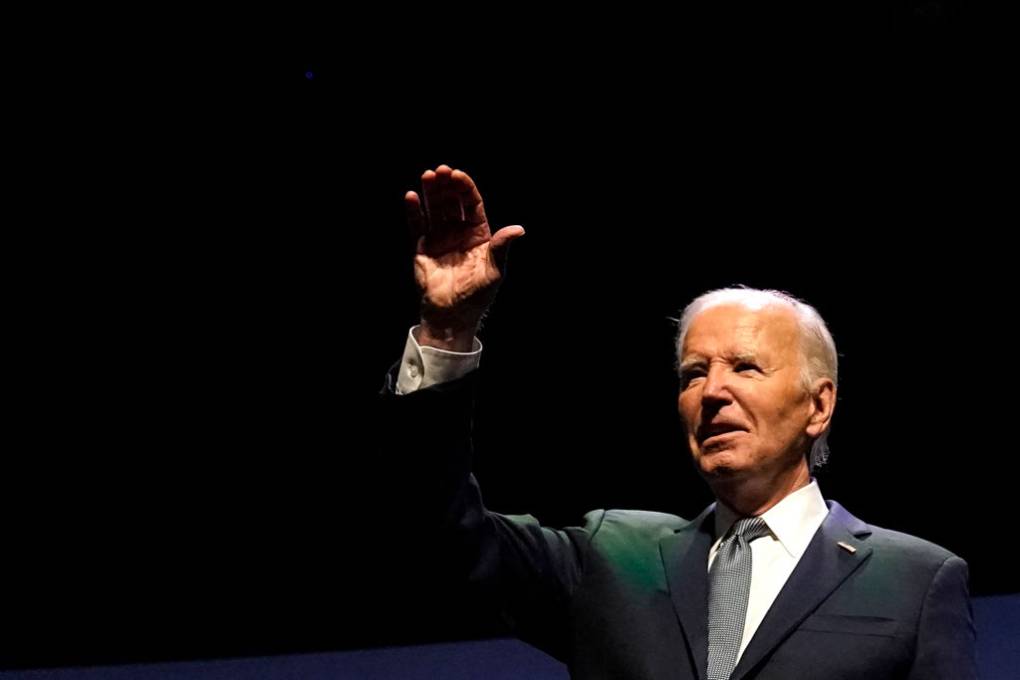
"content": "",
"name": "aside",
"attributes": {
"named": {
"postid": "news_11996211",
"hero": "https://cdn.kqed.org/wp-content/uploads/sites/10/2024/07/SFPoliceChief2024-1020x701.jpg",
"label": ""
},
"numeric": []
}
},
{
"type": "contentString",
"content": "\u003cdiv class=\"post-body\">\u003cp>The video shows the man briefly turn around toward the officers before he continues running away. In a tweet, the San Francisco Police Officers Association suggested the man fired at the officers at that moment and that they \u003ca href=\"https://x.com/SanFranciscoPOA/status/1815497300971778324\">acted in self-defense\u003c/a>.\u003c/p>\n\u003cp>“When the officer fires, we can see the muzzle flash after the first shot, and the sound of the officer’s firearm is distinctly different than the subject’s firearm,” the POA wrote.\u003c/p>\n\u003cp>Even if the man did have a gun and shot it at the officer, there’s still the question of why the officer shot him while he was running away, Weisberg said.\u003c/p>\n\u003cp>“It’s possible that the suspect was the one being accused of the robbery,” he said. “And under most state laws and in California law, even if the officer reasonably inferred that the suspect had committed a felony and was running away to avoid arrest, the officer still could not use deadly force unless something in the circumstances indicated that the suspect, even in running away, posed a threat of deadly force to other people.”\u003c/p>\n\u003cp>The facts are still unclear based on the video, Weisberg said.\u003c/p>\n\u003cp>The shooting is still under investigation by various agencies, including the District Attorney’s Office, the Chief Medical Examiner’s Office and the Department of Police Accountability. None of the agencies responded to a request for further comment. The department plans to hold a town hall within the week.\u003c/p>\n\u003cp>\u003cem>KQED’s \u003ca href=\"https://www.kqed.org/author/calam\">Christopher Alam\u003c/a> contributed to this report.\u003c/em>\u003c/p>\n\u003cp>\u003c/p>\n\u003c/div>\u003c/p>",
"attributes": {
"named": {},
"numeric": []
}
}
],
"link": "/news/11997127/video-of-sfpd-shooting-fleeing-man-doesnt-prove-self-defense-expert-says",
"authors": [
"11362"
],
"categories": [
"news_8"
],
"tags": [
"news_17626",
"news_22850",
"news_18046",
"news_38",
"news_545",
"news_1928"
],
"featImg": "news_11997137",
"label": "news"
},
"news_11996787": {
"type": "posts",
"id": "news_11996787",
"meta": {
"index": "posts_1716263798",
"site": "news",
"id": "11996787",
"score": null,
"sort": [
1721826027000
]
},
"guestAuthors": [],
"slug": "reckoning-on-sexual-assault-roils-sf-democrats-as-mayoral-endorsement-looms",
"title": "Reckoning on Sexual Assault Roils SF Democrats as Mayoral Endorsement Looms",
"publishDate": 1721826027,
"format": "standard",
"headTitle": "Reckoning on Sexual Assault Roils SF Democrats as Mayoral Endorsement Looms | KQED",
"labelTerm": {
"site": "news"
},
"content": "\u003cp>As San Francisco’s top Democratic organizers weigh their endorsement in what could be a pivotal mayoral election, a series of \u003ca href=\"https://www.kqed.org/news/11986169/the-rising-s-f-political-star-accused-of-rape-and-abuse\">high-profile sexual misconduct accusations\u003c/a> by and against party members could force candidates to reckon with mounting internal turmoil.\u003c/p>\n\u003cp>The local Democratic Party’s primary political organizing body is inching closer to rolling out a \u003ca href=\"https://docs.google.com/document/d/1mH81MuMPgEbGE9tQa2aElBv_U_mp2QWYrPrttMwsqj0/edit\">set of policies\u003c/a> to address sexual harassment, but some advocates for survivors of sexual misconduct told KQED the process has fallen short.\u003c/p>\n\u003cp>“Conversations of addressing sexual violence in politics is not a new thing. And it does affect the mayoral race, especially if people want to champion change,” said Alondra Esquivel Garcia, president of the San Francisco Women’s Political Committee, a nonpartisan group advocating for women in local politics. “It’s so hard to do that when things are so embedded in the infrastructure.”\u003c/p>\n\u003cp>A special panel of the San Francisco Democratic County Central Committee plans to \u003ca href=\"https://www.sfdemocrats.org/meetings/2024/july-24-2024-sf-democratic-party\">present a status report on Wednesday night\u003c/a> on its work to create the group’s first code of conduct around reporting, investigating and handling allegations of sexual misconduct within chartered political clubs. At the same meeting, the DCCC is set to vote for and announce its endorsement for mayor.\u003c/p>\n\u003cp>[ad fullwidth]\u003c/p>\n\u003cp>The special committee on sexual misconduct was formed in April after multiple women came forward with \u003ca href=\"https://www.kqed.org/news/11985525/failures-of-sf-office-on-sexual-assault-complaints-draw-scrutiny\">allegations against local Democratic club leaders\u003c/a>, including Jon Jacobo and later Kevin Ortiz, two political organizers in the Mission District. Both have denied the allegations.\u003c/p>\n\u003cp>Meanwhile, accusations that Jay Cheng, who leads the powerful moderate political group Neighbors for a Better San Francisco, attempted to assault a former girlfriend in college resurfaced on social media, drawing renewed attention and reporting on the 2011 incident.\u003c/p>\n\u003cp>Cheng, who went by Jesse then, resigned from his post as a student regent at the University of California following the accusations. Irvine police and the Orange County District Attorney’s Office did not bring charges against Cheng, and he denies the allegations.[aside postID=news_11987959 hero='https://cdn.kqed.org/wp-content/uploads/sites/10/2024/05/BreedLeeStefani_qut-1020x676.jpg']“I have always believed that when these types of accusations are made, that they should be taken seriously and fully investigated. I took the incident very seriously, including never revealing the identity of my accuser because she wanted to stay anonymous, and I have respected her wishes,” Cheng wrote in a \u003ca href=\"https://www.documentcloud.org/documents/24946487-email-from-jay-cheng-to-nancy-tung\">letter to DCCC Chair Nancy Tung\u003c/a> in April, where he expressed his support for the special committee on sexual misconduct in the political community.\u003c/p>\n\u003cp>As the allegations and Democratic leaders’ response to them come under increased scrutiny, the DCCC’s special committee aims “to change the culture of harassment and abuse,” said Lily Ho, who chairs the special panel.\u003c/p>\n\u003cp>“That’s a tall order,” Ho said. “How that happens is to empower survivors to speak up and change an environment and space so everyone feels welcomed.”\u003c/p>\n\u003cp>In practice, that change is hard to make. Multiple survivors and advocates told KQED they had concerns with the group’s approach so far.\u003c/p>\n\u003cp>“Some Democratic club leaders are looking at ‘innocent until proven guilty’ rhetoric, which often is not seen as survivor-centered,” said Esquivel Garcia, whose group closely follows the committee’s work.\u003c/p>\n\u003cp>Democratic leaders acknowledged the challenge they face but said survivors and outside experts have informed the process, and it is still a work in progress.\u003c/p>\n\u003cp>“We recognize this is new territory for all of us,” Ho said. “There isn’t any document or best practices that we can carbon copy; that just doesn’t exist.”\u003c/p>\n\u003ch2>Candidates commit to improving sexual harassment protocol\u003c/h2>\n\u003cp>While the process is underway, mayoral candidates vying for the Democratic endorsement were asked how they would support survivors of sexual assault. Tung didn’t comment specifically on how their responses may weigh into the decision-making process.\u003c/p>\n\u003cp>“The candidates will rise and fall on their own merits,” Tung said.\u003c/p>\n\u003cp>Advocates hope the candidates’ proposals to be more responsive to survivors will be an important factor in the DCCC’s endorsement.\u003c/p>\n\u003cp>“We knew that sexual violence in politics is not good and not the culture we want future leaders to be brought into,” Esquivel Garcia said. “And endorsements are a big thing. If someone endorses you, they truly believe in every mission and goal you’re putting forward.”\u003c/p>\n\u003cp>Incumbent Mayor London Breed pointed to her administration’s work, which included creating a right to counsel for domestic violence survivors. She wrote: “Sexual harassment and assault is unacceptable in all forms. Survivors who come forward to report sexual assault or harassment must be treated with respect and have their cases investigated.”\u003c/p>\n\u003cfigure id=\"attachment_11990166\" class=\"wp-caption aligncenter\" style=\"max-width: 1920px\">\u003cimg loading=\"lazy\" decoding=\"async\" class=\"size-full wp-image-11990166\" src=\"https://cdn.kqed.org/wp-content/uploads/sites/10/2024/06/240612-SFMayoralDebate-73-BL.jpg\" alt=\"\" width=\"1920\" height=\"1280\" srcset=\"https://cdn.kqed.org/wp-content/uploads/sites/10/2024/06/240612-SFMayoralDebate-73-BL.jpg 1920w, https://cdn.kqed.org/wp-content/uploads/sites/10/2024/06/240612-SFMayoralDebate-73-BL-800x533.jpg 800w, https://cdn.kqed.org/wp-content/uploads/sites/10/2024/06/240612-SFMayoralDebate-73-BL-1020x680.jpg 1020w, https://cdn.kqed.org/wp-content/uploads/sites/10/2024/06/240612-SFMayoralDebate-73-BL-160x107.jpg 160w, https://cdn.kqed.org/wp-content/uploads/sites/10/2024/06/240612-SFMayoralDebate-73-BL-1536x1024.jpg 1536w\" sizes=\"(max-width: 1920px) 100vw, 1920px\">\u003cfigcaption class=\"wp-caption-text\">Former Mayor Mark Farrell speaks during a San Francisco mayoral debate with candidates Ahsha Safaí, Daniel Lurie, Mayor London Breed and Aaron Peskin at the Sydney Goldstein Theater on June 12, 2024. \u003ccite>(Beth LaBerge/KQED)\u003c/cite>\u003c/figcaption>\u003c/figure>\n\u003cp>Mark Farrell wrote that he has always “stood with survivors and worked to make sure that our service providers and law enforcement agencies have the resources they need to support those who come forward, investigate cases fully, and pursue justice.”\u003c/p>\n\u003cp>“As Mayor,” he wrote, “public safety will be my top priority, and that includes supporting survivors in every way I can.”\u003c/p>\n\u003cp>Another candidate, Board of Supervisors President Aaron Peskin, said he would work to preserve the Commission on the Status of Women, which a ballot measure proposed by the moderate group TogetherSF Action could slash in an \u003ca href=\"https://www.kqed.org/news/11992466/san-francisco-sees-competing-proposals-to-reform-byzantine-city-commissions\">overhaul of the city’s commission system\u003c/a>.\u003c/p>\n\u003cp>“I have put a [competing] ballot measure on the November ballot to ensure the Commission is not removed in a backroom deal with shady politics to blame,” Peskin wrote. “We need to elevate survivors’ voices and double down on our commitment to supporting survivors.”\u003c/p>\n\u003ch2>Mayoral hopefuls grapple with sexual misconduct affiliations\u003c/h2>\n\u003cp>“Personal relationships are hard to navigate in political spaces as well. People have personal relationships with Jay Cheng, and people who are great friends with Kevin Ortiz or Jon Jacobo want to contribute to this process,” Esquivel Garcia said. “It’s hard to navigate those relationships when people have hurt other people.”\u003c/p>\n\u003cp>Some mayoral campaigns are also contending with ties to a strategist and former aide to Gov. Gavin Newsom, who was convicted of abuse. Nathan Ballard, who was \u003ca href=\"https://www.kqed.org/news/11885782/this-is-who-he-is-mara-reinhardt-reveals-extent-of-alleged-family-abuse-by-prominent-sf-politico-nate-ballard\">accused of beating his wife and child\u003c/a> on a trip to Napa in 2020, took a no-contest plea deal that allowed him to avoid jail.[aside postID=news_11996731 hero='https://cdn.kqed.org/wp-content/uploads/sites/10/2024/07/240722-SFKamalaHarrisRally-19-BL_qed-1020x680.jpg']In early 2021, Farrell was among 45 people who \u003ca href=\"https://www.documentcloud.org/documents/21048384-nathan-ballard-mitigation-letters-march-1-redacted?responsive=1&title=1\">filed a mitigation letter\u003c/a> to the court in support of Ballard’s character. Farrell declined to comment on the letter of support.\u003c/p>\n\u003cp>He isn’t the only mayoral candidate with affiliations with Ballard, who previously worked with the police union and Newsom during his time as San Francisco mayor and as a spokesperson for initiatives that philanthropist and Levi Strauss heir Daniel Lurie led before his bid for mayor.\u003c/p>\n\u003cp>Former supervisor Michela Alioto-Pier was initially on the DCCC’s new committee on sexual misconduct but \u003ca href=\"https://sfstandard.com/2024/04/30/san-francisco-democrat-sexual-assault-michela-alioto-pier/\">stepped down\u003c/a> after posts on social media resurfaced showing she, too, defended Ballard. Breed’s spokesperson, Joe Arellano, also wrote in support of Ballard after the Napa incident.\u003c/p>\n\u003cp>“Nate served as a mentor, friend, and office mate to me for 14 years before his personal issues. I wrote a letter on his behalf based on those years of friendship and mentorship,” Arellano said. “I feel terrible for everyone involved, but especially for the children, who have had to experience this ordeal and will forever have their lives changed.”\u003c/p>\n\u003ch2>Crafting codes of conduct\u003c/h2>\n\u003cp>So far, the special committee has held three workshops with participation from 15 chartered Democratic clubs. The policies are expected to be ready between August and October, DCCC Chair Tung told KQED.\u003c/p>\n\u003cp>Committee members are considering resources like a third-party ombudsman that reports could go through and remain anonymous, among other options for survivors.\u003c/p>\n\u003cp>According to the draft, a club would have to inform the ombudsman of a report within five days of it being filed online, and an investigator would be appointed to gather evidence of whether the code of conduct was violated. Survivors could appeal an outcome, and consequences for the accused would depend on what the survivor pursues, including private or public admonishment or prohibition from attending Democratic club events.\u003c/p>\n\u003cp>The draft policy also suggests that beginning in January 2025, candidates seeking endorsement must complete and pass sexual harassment training. Club leaders would also have mandatory training on handling complaints, investigations and corrective steps.\u003c/p>\n\u003cp>Esquivel Garcia acknowledged that the process is difficult but necessary for any change.\u003c/p>\n\u003cp>“Each survivor is different, and I don’t think you can make everyone happy,” Esquivel Garcia said. “But the candidates need to truly take this advocacy into consideration when they are proposing policies or talking about their goals.”\u003c/p>\n\u003cp>[ad floatright]\u003c/p>\n",
"blocks": [],
"excerpt": "The San Francisco Democratic Party’s main organizing body is considering new policies to address sexual misconduct after a series of high-profile allegations. ",
"status": "publish",
"parent": 0,
"modified": 1725490589,
"stats": {
"hasAudio": false,
"hasVideo": false,
"hasChartOrMap": false,
"iframeSrcs": [],
"hasGoogleForm": false,
"hasGallery": false,
"hasHearkenModule": false,
"hasPolis": false,
"paragraphCount": 35,
"wordCount": 1561
},
"headData": {
"title": "Reckoning on Sexual Assault Roils SF Democrats as Mayoral Endorsement Looms | KQED",
"description": "The San Francisco Democratic Party’s main organizing body is considering new policies to address sexual misconduct after a series of high-profile allegations. ",
"ogTitle": "",
"ogDescription": "",
"ogImgId": "",
"twTitle": "",
"twDescription": "",
"twImgId": "",
"schema": {
"@context": "https://schema.org",
"@type": "NewsArticle",
"headline": "Reckoning on Sexual Assault Roils SF Democrats as Mayoral Endorsement Looms",
"datePublished": "2024-07-24T06:00:27-07:00",
"dateModified": "2024-09-04T15:56:29-07:00",
"image": "https://cdn.kqed.org/wp-content/uploads/2020/02/KQED-OG-Image@1x.png",
"isAccessibleForFree": "True",
"publisher": {
"@type": "NewsMediaOrganization",
"@id": "https://www.kqed.org/#organization",
"name": "KQED",
"logo": "https://cdn.kqed.org/wp-content/uploads/2020/02/KQED-OG-Image@1x.png",
"url": "https://www.kqed.org",
"sameAs": [
"https://www.facebook.com/KQED",
"https://twitter.com/KQED",
"https://www.instagram.com/kqed/",
"https://www.tiktok.com/@kqedofficial",
"https://www.linkedin.com/company/kqed",
"https://www.youtube.com/channel/UCeC0IOo7i1P_61zVUWbJ4nw"
]
}
}
},
"sticky": false,
"nprStoryId": "kqed-11996787",
"excludeFromSiteSearch": "Include",
"articleAge": "0",
"path": "/news/11996787/reckoning-on-sexual-assault-roils-sf-democrats-as-mayoral-endorsement-looms",
"audioTrackLength": null,
"parsedContent": [
{
"type": "contentString",
"content": "\u003cdiv class=\"post-body\">\u003cp>\u003cp>As San Francisco’s top Democratic organizers weigh their endorsement in what could be a pivotal mayoral election, a series of \u003ca href=\"https://www.kqed.org/news/11986169/the-rising-s-f-political-star-accused-of-rape-and-abuse\">high-profile sexual misconduct accusations\u003c/a> by and against party members could force candidates to reckon with mounting internal turmoil.\u003c/p>\n\u003cp>The local Democratic Party’s primary political organizing body is inching closer to rolling out a \u003ca href=\"https://docs.google.com/document/d/1mH81MuMPgEbGE9tQa2aElBv_U_mp2QWYrPrttMwsqj0/edit\">set of policies\u003c/a> to address sexual harassment, but some advocates for survivors of sexual misconduct told KQED the process has fallen short.\u003c/p>\n\u003cp>“Conversations of addressing sexual violence in politics is not a new thing. And it does affect the mayoral race, especially if people want to champion change,” said Alondra Esquivel Garcia, president of the San Francisco Women’s Political Committee, a nonpartisan group advocating for women in local politics. “It’s so hard to do that when things are so embedded in the infrastructure.”\u003c/p>\n\u003cp>A special panel of the San Francisco Democratic County Central Committee plans to \u003ca href=\"https://www.sfdemocrats.org/meetings/2024/july-24-2024-sf-democratic-party\">present a status report on Wednesday night\u003c/a> on its work to create the group’s first code of conduct around reporting, investigating and handling allegations of sexual misconduct within chartered political clubs. At the same meeting, the DCCC is set to vote for and announce its endorsement for mayor.\u003c/p>\n\u003cp>\u003c/p>\u003c/div>",
"attributes": {
"named": {},
"numeric": []
}
},
{
"type": "component",
"content": "",
"name": "ad",
"attributes": {
"named": {
"label": "fullwidth"
},
"numeric": [
"fullwidth"
]
}
},
{
"type": "contentString",
"content": "\u003cdiv class=\"post-body\">\u003cp>\u003c/p>\n\u003cp>The special committee on sexual misconduct was formed in April after multiple women came forward with \u003ca href=\"https://www.kqed.org/news/11985525/failures-of-sf-office-on-sexual-assault-complaints-draw-scrutiny\">allegations against local Democratic club leaders\u003c/a>, including Jon Jacobo and later Kevin Ortiz, two political organizers in the Mission District. Both have denied the allegations.\u003c/p>\n\u003cp>Meanwhile, accusations that Jay Cheng, who leads the powerful moderate political group Neighbors for a Better San Francisco, attempted to assault a former girlfriend in college resurfaced on social media, drawing renewed attention and reporting on the 2011 incident.\u003c/p>\n\u003cp>Cheng, who went by Jesse then, resigned from his post as a student regent at the University of California following the accusations. Irvine police and the Orange County District Attorney’s Office did not bring charges against Cheng, and he denies the allegations.\u003c/p>\u003c/div>",
"attributes": {
"named": {},
"numeric": []
}
},
{
"type": "component",
"content": "",
"name": "aside",
"attributes": {
"named": {
"postid": "news_11987959",
"hero": "https://cdn.kqed.org/wp-content/uploads/sites/10/2024/05/BreedLeeStefani_qut-1020x676.jpg",
"label": ""
},
"numeric": []
}
},
{
"type": "contentString",
"content": "\u003cdiv class=\"post-body\">\u003cp>“I have always believed that when these types of accusations are made, that they should be taken seriously and fully investigated. I took the incident very seriously, including never revealing the identity of my accuser because she wanted to stay anonymous, and I have respected her wishes,” Cheng wrote in a \u003ca href=\"https://www.documentcloud.org/documents/24946487-email-from-jay-cheng-to-nancy-tung\">letter to DCCC Chair Nancy Tung\u003c/a> in April, where he expressed his support for the special committee on sexual misconduct in the political community.\u003c/p>\n\u003cp>As the allegations and Democratic leaders’ response to them come under increased scrutiny, the DCCC’s special committee aims “to change the culture of harassment and abuse,” said Lily Ho, who chairs the special panel.\u003c/p>\n\u003cp>“That’s a tall order,” Ho said. “How that happens is to empower survivors to speak up and change an environment and space so everyone feels welcomed.”\u003c/p>\n\u003cp>In practice, that change is hard to make. Multiple survivors and advocates told KQED they had concerns with the group’s approach so far.\u003c/p>\n\u003cp>“Some Democratic club leaders are looking at ‘innocent until proven guilty’ rhetoric, which often is not seen as survivor-centered,” said Esquivel Garcia, whose group closely follows the committee’s work.\u003c/p>\n\u003cp>Democratic leaders acknowledged the challenge they face but said survivors and outside experts have informed the process, and it is still a work in progress.\u003c/p>\n\u003cp>“We recognize this is new territory for all of us,” Ho said. “There isn’t any document or best practices that we can carbon copy; that just doesn’t exist.”\u003c/p>\n\u003ch2>Candidates commit to improving sexual harassment protocol\u003c/h2>\n\u003cp>While the process is underway, mayoral candidates vying for the Democratic endorsement were asked how they would support survivors of sexual assault. Tung didn’t comment specifically on how their responses may weigh into the decision-making process.\u003c/p>\n\u003cp>“The candidates will rise and fall on their own merits,” Tung said.\u003c/p>\n\u003cp>Advocates hope the candidates’ proposals to be more responsive to survivors will be an important factor in the DCCC’s endorsement.\u003c/p>\n\u003cp>“We knew that sexual violence in politics is not good and not the culture we want future leaders to be brought into,” Esquivel Garcia said. “And endorsements are a big thing. If someone endorses you, they truly believe in every mission and goal you’re putting forward.”\u003c/p>\n\u003cp>Incumbent Mayor London Breed pointed to her administration’s work, which included creating a right to counsel for domestic violence survivors. She wrote: “Sexual harassment and assault is unacceptable in all forms. Survivors who come forward to report sexual assault or harassment must be treated with respect and have their cases investigated.”\u003c/p>\n\u003cfigure id=\"attachment_11990166\" class=\"wp-caption aligncenter\" style=\"max-width: 1920px\">\u003cimg loading=\"lazy\" decoding=\"async\" class=\"size-full wp-image-11990166\" src=\"https://cdn.kqed.org/wp-content/uploads/sites/10/2024/06/240612-SFMayoralDebate-73-BL.jpg\" alt=\"\" width=\"1920\" height=\"1280\" srcset=\"https://cdn.kqed.org/wp-content/uploads/sites/10/2024/06/240612-SFMayoralDebate-73-BL.jpg 1920w, https://cdn.kqed.org/wp-content/uploads/sites/10/2024/06/240612-SFMayoralDebate-73-BL-800x533.jpg 800w, https://cdn.kqed.org/wp-content/uploads/sites/10/2024/06/240612-SFMayoralDebate-73-BL-1020x680.jpg 1020w, https://cdn.kqed.org/wp-content/uploads/sites/10/2024/06/240612-SFMayoralDebate-73-BL-160x107.jpg 160w, https://cdn.kqed.org/wp-content/uploads/sites/10/2024/06/240612-SFMayoralDebate-73-BL-1536x1024.jpg 1536w\" sizes=\"(max-width: 1920px) 100vw, 1920px\">\u003cfigcaption class=\"wp-caption-text\">Former Mayor Mark Farrell speaks during a San Francisco mayoral debate with candidates Ahsha Safaí, Daniel Lurie, Mayor London Breed and Aaron Peskin at the Sydney Goldstein Theater on June 12, 2024. \u003ccite>(Beth LaBerge/KQED)\u003c/cite>\u003c/figcaption>\u003c/figure>\n\u003cp>Mark Farrell wrote that he has always “stood with survivors and worked to make sure that our service providers and law enforcement agencies have the resources they need to support those who come forward, investigate cases fully, and pursue justice.”\u003c/p>\n\u003cp>“As Mayor,” he wrote, “public safety will be my top priority, and that includes supporting survivors in every way I can.”\u003c/p>\n\u003cp>Another candidate, Board of Supervisors President Aaron Peskin, said he would work to preserve the Commission on the Status of Women, which a ballot measure proposed by the moderate group TogetherSF Action could slash in an \u003ca href=\"https://www.kqed.org/news/11992466/san-francisco-sees-competing-proposals-to-reform-byzantine-city-commissions\">overhaul of the city’s commission system\u003c/a>.\u003c/p>\n\u003cp>“I have put a [competing] ballot measure on the November ballot to ensure the Commission is not removed in a backroom deal with shady politics to blame,” Peskin wrote. “We need to elevate survivors’ voices and double down on our commitment to supporting survivors.”\u003c/p>\n\u003ch2>Mayoral hopefuls grapple with sexual misconduct affiliations\u003c/h2>\n\u003cp>“Personal relationships are hard to navigate in political spaces as well. People have personal relationships with Jay Cheng, and people who are great friends with Kevin Ortiz or Jon Jacobo want to contribute to this process,” Esquivel Garcia said. “It’s hard to navigate those relationships when people have hurt other people.”\u003c/p>\n\u003cp>Some mayoral campaigns are also contending with ties to a strategist and former aide to Gov. Gavin Newsom, who was convicted of abuse. Nathan Ballard, who was \u003ca href=\"https://www.kqed.org/news/11885782/this-is-who-he-is-mara-reinhardt-reveals-extent-of-alleged-family-abuse-by-prominent-sf-politico-nate-ballard\">accused of beating his wife and child\u003c/a> on a trip to Napa in 2020, took a no-contest plea deal that allowed him to avoid jail.\u003c/p>\u003c/div>",
"attributes": {
"named": {},
"numeric": []
}
},
{
"type": "component",
"content": "",
"name": "aside",
"attributes": {
"named": {
"postid": "news_11996731",
"hero": "https://cdn.kqed.org/wp-content/uploads/sites/10/2024/07/240722-SFKamalaHarrisRally-19-BL_qed-1020x680.jpg",
"label": ""
},
"numeric": []
}
},
{
"type": "contentString",
"content": "\u003cdiv class=\"post-body\">\u003cp>In early 2021, Farrell was among 45 people who \u003ca href=\"https://www.documentcloud.org/documents/21048384-nathan-ballard-mitigation-letters-march-1-redacted?responsive=1&title=1\">filed a mitigation letter\u003c/a> to the court in support of Ballard’s character. Farrell declined to comment on the letter of support.\u003c/p>\n\u003cp>He isn’t the only mayoral candidate with affiliations with Ballard, who previously worked with the police union and Newsom during his time as San Francisco mayor and as a spokesperson for initiatives that philanthropist and Levi Strauss heir Daniel Lurie led before his bid for mayor.\u003c/p>\n\u003cp>Former supervisor Michela Alioto-Pier was initially on the DCCC’s new committee on sexual misconduct but \u003ca href=\"https://sfstandard.com/2024/04/30/san-francisco-democrat-sexual-assault-michela-alioto-pier/\">stepped down\u003c/a> after posts on social media resurfaced showing she, too, defended Ballard. Breed’s spokesperson, Joe Arellano, also wrote in support of Ballard after the Napa incident.\u003c/p>\n\u003cp>“Nate served as a mentor, friend, and office mate to me for 14 years before his personal issues. I wrote a letter on his behalf based on those years of friendship and mentorship,” Arellano said. “I feel terrible for everyone involved, but especially for the children, who have had to experience this ordeal and will forever have their lives changed.”\u003c/p>\n\u003ch2>Crafting codes of conduct\u003c/h2>\n\u003cp>So far, the special committee has held three workshops with participation from 15 chartered Democratic clubs. The policies are expected to be ready between August and October, DCCC Chair Tung told KQED.\u003c/p>\n\u003cp>Committee members are considering resources like a third-party ombudsman that reports could go through and remain anonymous, among other options for survivors.\u003c/p>\n\u003cp>According to the draft, a club would have to inform the ombudsman of a report within five days of it being filed online, and an investigator would be appointed to gather evidence of whether the code of conduct was violated. Survivors could appeal an outcome, and consequences for the accused would depend on what the survivor pursues, including private or public admonishment or prohibition from attending Democratic club events.\u003c/p>\n\u003cp>The draft policy also suggests that beginning in January 2025, candidates seeking endorsement must complete and pass sexual harassment training. Club leaders would also have mandatory training on handling complaints, investigations and corrective steps.\u003c/p>\n\u003cp>Esquivel Garcia acknowledged that the process is difficult but necessary for any change.\u003c/p>\n\u003cp>“Each survivor is different, and I don’t think you can make everyone happy,” Esquivel Garcia said. “But the candidates need to truly take this advocacy into consideration when they are proposing policies or talking about their goals.”\u003c/p>\n\u003cp>\u003c/p>\u003c/div>",
"attributes": {
"named": {},
"numeric": []
}
},
{
"type": "component",
"content": "",
"name": "ad",
"attributes": {
"named": {
"label": "floatright"
},
"numeric": [
"floatright"
]
}
},
{
"type": "contentString",
"content": "\u003cdiv class=\"post-body\">\u003cp>\u003c/p>\n\u003c/div>\u003c/p>",
"attributes": {
"named": {},
"numeric": []
}
}
],
"link": "/news/11996787/reckoning-on-sexual-assault-roils-sf-democrats-as-mayoral-endorsement-looms",
"authors": [
"11840"
],
"categories": [
"news_8"
],
"tags": [
"news_20156",
"news_20251",
"news_27626",
"news_26778",
"news_17968",
"news_38",
"news_1527",
"news_20614"
],
"featImg": "news_11997036",
"label": "news"
},
"news_11996890": {
"type": "posts",
"id": "news_11996890",
"meta": {
"index": "posts_1716263798",
"site": "news",
"id": "11996890",
"score": null,
"sort": [
1721772030000
]
},
"guestAuthors": [],
"slug": "predatory-san-francisco-towing-company-barred-from-city-business-for-5-years",
"title": "'Predatory' San Francisco Towing Company Barred From City Business for 5 Years",
"publishDate": 1721772030,
"format": "standard",
"headTitle": "‘Predatory’ San Francisco Towing Company Barred From City Business for 5 Years | KQED",
"labelTerm": {
"site": "news"
},
"content": "\u003cp>A couple whose company was accused of illegally towing cars and scamming the owners out of money to get their vehicles back have been barred from doing business with \u003ca href=\"https://www.kqed.org/news/tag/san-francisco\">San Francisco\u003c/a> for five years, City Attorney David Chiu announced Tuesday.\u003c/p>\n\u003cp>Abigail Fuentes and Jose Badillo operate three tow companies: Auto Towing, Jose’s Towing and Specialty Towing and Recovery. The process to ban the companies from bidding on or receiving contracts with the city — known as debarment — was brought by Chiu in August after his office became aware of illegal tows by Auto Towing.\u003c/p>\n\u003cp>“As we dug into this, we discovered how Auto Towing was engaged in predatory behavior and unfair business practices, intentionally misleading and scamming people out of hundreds of dollars by illegally towing cars,” Chiu said. “It also turns out that their permitted operating location was in one place, but they were towing vehicles to another lot at a different location, making it difficult for owners to find their cars.”\u003c/p>\n\u003cp>Auto Towing illegally towed at least six vehicles from a bank parking lot in the Portola neighborhood between February and May 2023 without the bank’s permission. The law requires the property owner’s authorization to tow from private property.\u003c/p>\n\u003cp>[ad fullwidth]\u003c/p>\n\u003cp>On one occasion, employees of the company tried to tow a car while the bank’s manager argued with them and told them to stop, but they eventually left after the manager took photos and threatened to call the police, according to court documents.\u003c/p>\n\u003cp>In April, a \u003ca href=\"https://www.youtube.com/watch?v=gqvDedeuCl0\">video of a Specialty Towing driver attempting to tow a moving vehicle\u003c/a> in San Francisco went viral. The company also pressured car owners to pay in cash to get their cars back, according to court documents.\u003c/p>\n\u003cp>Fuentes and Badillo did not attend the debarment hearing, allowing the city attorney to proceed with the case expeditiously.\u003c/p>\n\u003cp>“They just didn’t show up, which was pretty surprising,” Chiu said. “It made it a bit easier on us to prove our case as no one presented evidence on the other side.”\u003c/p>\n\u003cp>Fuentes and Bardillo are also named in multiple separate civil fraud cases and a criminal welfare fraud case. In an ongoing 2021 civil fraud case against Fuentes, court documents allege that Bardillo was banned by the California attorney general in 2017 from ever operating a towing business in the state, that he then transferred ownership of the business to Fuentes and continued to run it.\u003c/p>\n\u003cp>Separately, the San Francisco District Attorney’s Office in October charged Fuentes with 12 felonies and Badillo with six felonies related to an alleged welfare fraud scheme.[aside postID=news_11996234 hero='https://cdn.kqed.org/wp-content/uploads/sites/10/2024/07/SFMayoralDebate2-1020x765.jpg']The couple are alleged to have defrauded multiple benefits programs. In one instance described in court documents, Fuentes, working for the city’s Human Services Agency as a senior eligibility worker, approved Badillo’s application for benefits without disclosing their relationship. Badillo reported $1,000 in monthly income with no assets, property or vehicles, a Human Services Agency investigator wrote in an affidavit.\u003c/p>\n\u003cp>While receiving public benefits, Fuentes and Badillo’s three tow truck companies generated over $2 million in gross annual income, they own four properties in San Francisco, and last year they bought a Lamborghini valued at over $280,000, according to court documents.\u003c/p>\n\u003cp>The criminal case has not been resolved.\u003c/p>\n\u003cp>“It’s still pending. All the facts are still being ascertained. You know, there’s a lot of discovery, there’s a lot of dynamics at play here, and I think people need to keep an open mind,” said Allen Sawyer, an attorney representing Badillo in the case.\u003c/p>\n\u003cp>An attorney representing Fuentes did not immediately respond to a request for comment.\u003c/p>\n\u003cp>An employee for a phone dispatch service that takes calls for Auto Towing said Tuesday that the company had been dissolved.\u003c/p>\n\u003cp>Chiu said he had heard that the company had closed but added, “We don’t know anything for sure.”\u003c/p>\n\u003cp>Debarment proceedings have become more frequent, Chiu said, after legislation adopted in recent years has “made it easier for the city to suspend contractors accused of crimes relevant to their ability to receive city funding and gave us the power to move forward a bit more expeditiously.”\u003c/p>\n\u003cp>During the fiscal year that ended in June, the city attorney’s office issued suspension orders or submitted requests to debar 29 individuals or entities — compared with 11 suspensions or debarments in the prior three years, according to the office.\u003c/p>\n\u003cp>\u003c/p>\n",
"blocks": [],
"excerpt": "The operators of Auto Towing, which was accused of illegally towing cars and scamming their owners, also face felony charges related to an alleged welfare fraud scheme.",
"status": "publish",
"parent": 0,
"modified": 1721841154,
"stats": {
"hasAudio": false,
"hasVideo": false,
"hasChartOrMap": false,
"iframeSrcs": [],
"hasGoogleForm": false,
"hasGallery": false,
"hasHearkenModule": false,
"hasPolis": false,
"paragraphCount": 20,
"wordCount": 782
},
"headData": {
"title": "'Predatory' San Francisco Towing Company Barred From City Business for 5 Years | KQED",
"description": "The operators of Auto Towing, which was accused of illegally towing cars and scamming their owners, also face felony charges related to an alleged welfare fraud scheme.",
"ogTitle": "",
"ogDescription": "",
"ogImgId": "",
"twTitle": "",
"twDescription": "",
"twImgId": "",
"schema": {
"@context": "https://schema.org",
"@type": "NewsArticle",
"headline": "'Predatory' San Francisco Towing Company Barred From City Business for 5 Years",
"datePublished": "2024-07-23T15:00:30-07:00",
"dateModified": "2024-07-24T10:12:34-07:00",
"image": "https://cdn.kqed.org/wp-content/uploads/2020/02/KQED-OG-Image@1x.png",
"isAccessibleForFree": "True",
"publisher": {
"@type": "NewsMediaOrganization",
"@id": "https://www.kqed.org/#organization",
"name": "KQED",
"logo": "https://cdn.kqed.org/wp-content/uploads/2020/02/KQED-OG-Image@1x.png",
"url": "https://www.kqed.org",
"sameAs": [
"https://www.facebook.com/KQED",
"https://twitter.com/KQED",
"https://www.instagram.com/kqed/",
"https://www.tiktok.com/@kqedofficial",
"https://www.linkedin.com/company/kqed",
"https://www.youtube.com/channel/UCeC0IOo7i1P_61zVUWbJ4nw"
]
}
}
},
"sticky": false,
"nprStoryId": "kqed-11996890",
"excludeFromSiteSearch": "Include",
"articleAge": "0",
"path": "/news/11996890/predatory-san-francisco-towing-company-barred-from-city-business-for-5-years",
"audioTrackLength": null,
"parsedContent": [
{
"type": "contentString",
"content": "\u003cdiv class=\"post-body\">\u003cp>\u003cp>A couple whose company was accused of illegally towing cars and scamming the owners out of money to get their vehicles back have been barred from doing business with \u003ca href=\"https://www.kqed.org/news/tag/san-francisco\">San Francisco\u003c/a> for five years, City Attorney David Chiu announced Tuesday.\u003c/p>\n\u003cp>Abigail Fuentes and Jose Badillo operate three tow companies: Auto Towing, Jose’s Towing and Specialty Towing and Recovery. The process to ban the companies from bidding on or receiving contracts with the city — known as debarment — was brought by Chiu in August after his office became aware of illegal tows by Auto Towing.\u003c/p>\n\u003cp>“As we dug into this, we discovered how Auto Towing was engaged in predatory behavior and unfair business practices, intentionally misleading and scamming people out of hundreds of dollars by illegally towing cars,” Chiu said. “It also turns out that their permitted operating location was in one place, but they were towing vehicles to another lot at a different location, making it difficult for owners to find their cars.”\u003c/p>\n\u003cp>Auto Towing illegally towed at least six vehicles from a bank parking lot in the Portola neighborhood between February and May 2023 without the bank’s permission. The law requires the property owner’s authorization to tow from private property.\u003c/p>\n\u003cp>\u003c/p>\u003c/div>",
"attributes": {
"named": {},
"numeric": []
}
},
{
"type": "component",
"content": "",
"name": "ad",
"attributes": {
"named": {
"label": "fullwidth"
},
"numeric": [
"fullwidth"
]
}
},
{
"type": "contentString",
"content": "\u003cdiv class=\"post-body\">\u003cp>\u003c/p>\n\u003cp>On one occasion, employees of the company tried to tow a car while the bank’s manager argued with them and told them to stop, but they eventually left after the manager took photos and threatened to call the police, according to court documents.\u003c/p>\n\u003cp>In April, a \u003ca href=\"https://www.youtube.com/watch?v=gqvDedeuCl0\">video of a Specialty Towing driver attempting to tow a moving vehicle\u003c/a> in San Francisco went viral. The company also pressured car owners to pay in cash to get their cars back, according to court documents.\u003c/p>\n\u003cp>Fuentes and Badillo did not attend the debarment hearing, allowing the city attorney to proceed with the case expeditiously.\u003c/p>\n\u003cp>“They just didn’t show up, which was pretty surprising,” Chiu said. “It made it a bit easier on us to prove our case as no one presented evidence on the other side.”\u003c/p>\n\u003cp>Fuentes and Bardillo are also named in multiple separate civil fraud cases and a criminal welfare fraud case. In an ongoing 2021 civil fraud case against Fuentes, court documents allege that Bardillo was banned by the California attorney general in 2017 from ever operating a towing business in the state, that he then transferred ownership of the business to Fuentes and continued to run it.\u003c/p>\n\u003cp>Separately, the San Francisco District Attorney’s Office in October charged Fuentes with 12 felonies and Badillo with six felonies related to an alleged welfare fraud scheme.\u003c/p>\u003c/div>",
"attributes": {
"named": {},
"numeric": []
}
},
{
"type": "component",
"content": "",
"name": "aside",
"attributes": {
"named": {
"postid": "news_11996234",
"hero": "https://cdn.kqed.org/wp-content/uploads/sites/10/2024/07/SFMayoralDebate2-1020x765.jpg",
"label": ""
},
"numeric": []
}
},
{
"type": "contentString",
"content": "\u003cdiv class=\"post-body\">\u003cp>The couple are alleged to have defrauded multiple benefits programs. In one instance described in court documents, Fuentes, working for the city’s Human Services Agency as a senior eligibility worker, approved Badillo’s application for benefits without disclosing their relationship. Badillo reported $1,000 in monthly income with no assets, property or vehicles, a Human Services Agency investigator wrote in an affidavit.\u003c/p>\n\u003cp>While receiving public benefits, Fuentes and Badillo’s three tow truck companies generated over $2 million in gross annual income, they own four properties in San Francisco, and last year they bought a Lamborghini valued at over $280,000, according to court documents.\u003c/p>\n\u003cp>The criminal case has not been resolved.\u003c/p>\n\u003cp>“It’s still pending. All the facts are still being ascertained. You know, there’s a lot of discovery, there’s a lot of dynamics at play here, and I think people need to keep an open mind,” said Allen Sawyer, an attorney representing Badillo in the case.\u003c/p>\n\u003cp>An attorney representing Fuentes did not immediately respond to a request for comment.\u003c/p>\n\u003cp>An employee for a phone dispatch service that takes calls for Auto Towing said Tuesday that the company had been dissolved.\u003c/p>\n\u003cp>Chiu said he had heard that the company had closed but added, “We don’t know anything for sure.”\u003c/p>\n\u003cp>Debarment proceedings have become more frequent, Chiu said, after legislation adopted in recent years has “made it easier for the city to suspend contractors accused of crimes relevant to their ability to receive city funding and gave us the power to move forward a bit more expeditiously.”\u003c/p>\n\u003cp>During the fiscal year that ended in June, the city attorney’s office issued suspension orders or submitted requests to debar 29 individuals or entities — compared with 11 suspensions or debarments in the prior three years, according to the office.\u003c/p>\n\u003cp>\u003c/p>\n\u003c/div>\u003c/p>",
"attributes": {
"named": {},
"numeric": []
}
}
],
"link": "/news/11996890/predatory-san-francisco-towing-company-barred-from-city-business-for-5-years",
"authors": [
"11896"
],
"categories": [
"news_8"
],
"tags": [
"news_17626",
"news_167",
"news_23052",
"news_3174",
"news_38",
"news_18173",
"news_20517"
],
"featImg": "news_11997008",
"label": "news"
},
"news_11996902": {
"type": "posts",
"id": "news_11996902",
"meta": {
"index": "posts_1716263798",
"site": "news",
"id": "11996902",
"score": null,
"sort": [
1721765737000
]
},
"guestAuthors": [],
"slug": "thousands-of-san-francisco-hotel-workers-ready-for-strike-vote",
"title": "Thousands of San Francisco Hotel Workers Ready for Strike Vote",
"publishDate": 1721765737,
"format": "standard",
"headTitle": "Thousands of San Francisco Hotel Workers Ready for Strike Vote | KQED",
"labelTerm": {
"site": "news"
},
"content": "\u003cp>After months of contract negotiations have yet to produce a deal, some of San Francisco’s largest hotel brands could have to contend with a strike by thousands of their workers as early as next month.\u003c/p>\n\u003cp>About 3,000 employees at Marriott, Hilton and Hyatt \u003ca href=\"https://www.kqed.org/news/tag/hotels\">hotels\u003c/a> are set to hold a strike authorization vote, their union, Unite Here Local 2, said Tuesday. If it passes, they could walk off the job soon after their contracts expire on Aug. 14.\u003c/p>\n\u003cp>A strike would be the latest disruption for a San Francisco hospitality industry still struggling to recover from the COVID-19 pandemic. It also comes amid a nationwide wave of hotel labor unrest; across the U.S., 40,000 Unite Here workers have contracts set to expire this year, and union locals in cities such as Boston and Providence, Rhode Island, have announced similar strike votes, inching up the heat on employers as they negotiate new contracts.\u003c/p>\n\u003cp>In San Francisco, workers at the eight downtown hotels said they are calling for wage increases and pensions that keep up with the cost of living, as well as fixes to what they see as frequent understaffing during very busy shifts.\u003c/p>\n\u003cp>[ad fullwidth]\u003c/p>\n\u003cp>Management proposals have included smaller raises and cuts to benefits, which most union members consider as “trash” and “unacceptable,” said Bill Fung, who has worked at the Hilton San Francisco Union Square for 29 years.\u003c/p>\n\u003cp>“Nobody wants to go on strike,” said Fung, a 59-year-old carpet cleaner who has sat in recent negotiations. “But the hotels are going too far.”\u003c/p>\n\u003cp>Marriott, Hyatt and Hilton did not immediately respond to a request for comment.\u003c/p>\n\u003cp>Even as tourism in other California cities has \u003ca href=\"https://www.sfchronicle.com/california/article/california-tourism-recovers-pandemic-s-f-beats-19440850.php\">rebounded\u003c/a> from the pandemic, in San Francisco, the hotel industry “is hurting significantly, with some owners surrendering their properties,” said Alex Bastian, president and CEO of the Hotel Council of San Francisco, an industry trade group that is not involved in the contract negotiations.[aside postID=news_11995935 hero='https://cdn.kqed.org/wp-content/uploads/sites/10/2024/07/20240716_SANJOSEHOTELWORKERSMARCH_GC-10-KQED-1020x680.jpg']“The decrease in visitors has led to fewer shifts for workers,” Bastian said in a statement, adding that other challenges include soaring interest rates and inflation. “In the immediate future, we must make tough decisions to sustain the industry. By approaching this year with objectivity and unity, we can overcome these unprecedented obstacles, ensuring our community’s survival.”\u003c/p>\n\u003cp>San Francisco’s hotel sector relies heavily on business tourism and conventions, both of which have been slow to return since the pandemic, said Ted Egan, the city’s chief economist.\u003c/p>\n\u003cp>Hotel occupancy rates remain lower than in 2019, and the city’s hotel tax revenue was $283 million for the 2022–23 fiscal year, down from $414 million in 2018–19, Egan said.\u003c/p>\n\u003cp>Despite the downturn, Marriott International, Hyatt and Hilton are very profitable corporations that can afford to improve conditions for their local housekeepers, cooks, dishwashers, bartenders and other staffers, said Lizzy Tapia, president at Unite Here Local 2.\u003c/p>\n\u003cp>The workers’ proposals “are really about what we need, and not about what we want,” Tapia said. “And the way the companies have responded to us, it’s almost as if they went backwards.”\u003c/p>\n\u003cp>The hotels are “taking advantage” of fluctuating business to keep staffing levels low even when there is a surge of guests, which stresses out workers on the clock while keeping others without a paycheck at home, she said.\u003c/p>\n\u003cp>“What we know for a fact is that business is actually back some of the time,” Tapia told KQED. “When business picks up, will they then staff accordingly? Can we get folks brought back to work when they are actually needed?”\u003c/p>\n\u003cp>The San Francisco hotels where workers announced a strike vote are the Grand Hyatt, Hilton Union Square, Hyatt Regency Embarcadero, Marriott Marquis, Marriott Union Square, Palace Hotel, Parc 55 and Westin St. Francis.\u003c/p>\n\u003cp>\u003c/p>\n",
"blocks": [],
"excerpt": "The union representing about 3,000 employees at Marriott, Hilton and Hyatt hotels is holding a strike authorization vote as contracts are set to expire next month.",
"status": "publish",
"parent": 0,
"modified": 1740182205,
"stats": {
"hasAudio": false,
"hasVideo": false,
"hasChartOrMap": false,
"iframeSrcs": [],
"hasGoogleForm": false,
"hasGallery": false,
"hasHearkenModule": false,
"hasPolis": false,
"paragraphCount": 17,
"wordCount": 684
},
"headData": {
"title": "Thousands of San Francisco Hotel Workers Ready for Strike Vote | KQED",
"description": "The union representing about 3,000 employees at Marriott, Hilton and Hyatt hotels is holding a strike authorization vote as contracts are set to expire next month.",
"ogTitle": "",
"ogDescription": "",
"ogImgId": "",
"twTitle": "",
"twDescription": "",
"twImgId": "",
"schema": {
"@context": "https://schema.org",
"@type": "NewsArticle",
"headline": "Thousands of San Francisco Hotel Workers Ready for Strike Vote",
"datePublished": "2024-07-23T13:15:37-07:00",
"dateModified": "2025-02-21T15:56:45-08:00",
"image": "https://cdn.kqed.org/wp-content/uploads/2020/02/KQED-OG-Image@1x.png",
"isAccessibleForFree": "True",
"publisher": {
"@type": "NewsMediaOrganization",
"@id": "https://www.kqed.org/#organization",
"name": "KQED",
"logo": "https://cdn.kqed.org/wp-content/uploads/2020/02/KQED-OG-Image@1x.png",
"url": "https://www.kqed.org",
"sameAs": [
"https://www.facebook.com/KQED",
"https://twitter.com/KQED",
"https://www.instagram.com/kqed/",
"https://www.tiktok.com/@kqedofficial",
"https://www.linkedin.com/company/kqed",
"https://www.youtube.com/channel/UCeC0IOo7i1P_61zVUWbJ4nw"
]
}
}
},
"sticky": false,
"nprStoryId": "kqed-11996902",
"excludeFromSiteSearch": "Include",
"articleAge": "0",
"path": "/news/11996902/thousands-of-san-francisco-hotel-workers-ready-for-strike-vote",
"audioTrackLength": null,
"parsedContent": [
{
"type": "contentString",
"content": "\u003cdiv class=\"post-body\">\u003cp>\u003cp>After months of contract negotiations have yet to produce a deal, some of San Francisco’s largest hotel brands could have to contend with a strike by thousands of their workers as early as next month.\u003c/p>\n\u003cp>About 3,000 employees at Marriott, Hilton and Hyatt \u003ca href=\"https://www.kqed.org/news/tag/hotels\">hotels\u003c/a> are set to hold a strike authorization vote, their union, Unite Here Local 2, said Tuesday. If it passes, they could walk off the job soon after their contracts expire on Aug. 14.\u003c/p>\n\u003cp>A strike would be the latest disruption for a San Francisco hospitality industry still struggling to recover from the COVID-19 pandemic. It also comes amid a nationwide wave of hotel labor unrest; across the U.S., 40,000 Unite Here workers have contracts set to expire this year, and union locals in cities such as Boston and Providence, Rhode Island, have announced similar strike votes, inching up the heat on employers as they negotiate new contracts.\u003c/p>\n\u003cp>In San Francisco, workers at the eight downtown hotels said they are calling for wage increases and pensions that keep up with the cost of living, as well as fixes to what they see as frequent understaffing during very busy shifts.\u003c/p>\n\u003cp>\u003c/p>\u003c/div>",
"attributes": {
"named": {},
"numeric": []
}
},
{
"type": "component",
"content": "",
"name": "ad",
"attributes": {
"named": {
"label": "fullwidth"
},
"numeric": [
"fullwidth"
]
}
},
{
"type": "contentString",
"content": "\u003cdiv class=\"post-body\">\u003cp>\u003c/p>\n\u003cp>Management proposals have included smaller raises and cuts to benefits, which most union members consider as “trash” and “unacceptable,” said Bill Fung, who has worked at the Hilton San Francisco Union Square for 29 years.\u003c/p>\n\u003cp>“Nobody wants to go on strike,” said Fung, a 59-year-old carpet cleaner who has sat in recent negotiations. “But the hotels are going too far.”\u003c/p>\n\u003cp>Marriott, Hyatt and Hilton did not immediately respond to a request for comment.\u003c/p>\n\u003cp>Even as tourism in other California cities has \u003ca href=\"https://www.sfchronicle.com/california/article/california-tourism-recovers-pandemic-s-f-beats-19440850.php\">rebounded\u003c/a> from the pandemic, in San Francisco, the hotel industry “is hurting significantly, with some owners surrendering their properties,” said Alex Bastian, president and CEO of the Hotel Council of San Francisco, an industry trade group that is not involved in the contract negotiations.\u003c/p>\u003c/div>",
"attributes": {
"named": {},
"numeric": []
}
},
{
"type": "component",
"content": "",
"name": "aside",
"attributes": {
"named": {
"postid": "news_11995935",
"hero": "https://cdn.kqed.org/wp-content/uploads/sites/10/2024/07/20240716_SANJOSEHOTELWORKERSMARCH_GC-10-KQED-1020x680.jpg",
"label": ""
},
"numeric": []
}
},
{
"type": "contentString",
"content": "\u003cdiv class=\"post-body\">\u003cp>“The decrease in visitors has led to fewer shifts for workers,” Bastian said in a statement, adding that other challenges include soaring interest rates and inflation. “In the immediate future, we must make tough decisions to sustain the industry. By approaching this year with objectivity and unity, we can overcome these unprecedented obstacles, ensuring our community’s survival.”\u003c/p>\n\u003cp>San Francisco’s hotel sector relies heavily on business tourism and conventions, both of which have been slow to return since the pandemic, said Ted Egan, the city’s chief economist.\u003c/p>\n\u003cp>Hotel occupancy rates remain lower than in 2019, and the city’s hotel tax revenue was $283 million for the 2022–23 fiscal year, down from $414 million in 2018–19, Egan said.\u003c/p>\n\u003cp>Despite the downturn, Marriott International, Hyatt and Hilton are very profitable corporations that can afford to improve conditions for their local housekeepers, cooks, dishwashers, bartenders and other staffers, said Lizzy Tapia, president at Unite Here Local 2.\u003c/p>\n\u003cp>The workers’ proposals “are really about what we need, and not about what we want,” Tapia said. “And the way the companies have responded to us, it’s almost as if they went backwards.”\u003c/p>\n\u003cp>The hotels are “taking advantage” of fluctuating business to keep staffing levels low even when there is a surge of guests, which stresses out workers on the clock while keeping others without a paycheck at home, she said.\u003c/p>\n\u003cp>“What we know for a fact is that business is actually back some of the time,” Tapia told KQED. “When business picks up, will they then staff accordingly? Can we get folks brought back to work when they are actually needed?”\u003c/p>\n\u003cp>The San Francisco hotels where workers announced a strike vote are the Grand Hyatt, Hilton Union Square, Hyatt Regency Embarcadero, Marriott Marquis, Marriott Union Square, Palace Hotel, Parc 55 and Westin St. Francis.\u003c/p>\n\u003cp>\u003c/p>\n\u003c/div>\u003c/p>",
"attributes": {
"named": {},
"numeric": []
}
}
],
"link": "/news/11996902/thousands-of-san-francisco-hotel-workers-ready-for-strike-vote",
"authors": [
"8659"
],
"categories": [
"news_1169",
"news_34551",
"news_8"
],
"tags": [
"news_32885",
"news_6114",
"news_20202",
"news_19904",
"news_32652",
"news_24590",
"news_23738",
"news_38"
],
"featImg": "news_11814875",
"label": "news"
},
"news_11996731": {
"type": "posts",
"id": "news_11996731",
"meta": {
"index": "posts_1716263798",
"site": "news",
"id": "11996731",
"score": null,
"sort": [
1721682086000
]
},
"guestAuthors": [],
"slug": "top-san-francisco-democrats-throw-their-support-behind-kamala-harris",
"title": "Top San Francisco Democrats Throw Their Support Behind Kamala Harris",
"publishDate": 1721682086,
"format": "standard",
"headTitle": "Top San Francisco Democrats Throw Their Support Behind Kamala Harris | KQED",
"labelTerm": {
"site": "news"
},
"content": "\u003cp>On the steps of San Francisco City Hall, local Democratic leaders on Monday morning joined a rapidly swelling tide of support \u003ca href=\"https://www.kqed.org/news/11996641/time-to-save-the-presidency-california-democrats-re-energized-for-race-against-trump\">for Vice President Kamala Harris\u003c/a> as the party’s presidential nominee.\u003c/p>\n\u003cp>“Today was a remarkable show of unity from all facets of the San Francisco Democratic Party,” said Trevor Chandler, member of the San Francisco Democratic County Central Committee. “Every shade of blue, no matter our disagreements, came together with one voice to say that we support our local candidate, Kamala Harris, for president.”\u003c/p>\n\u003cp>Harris has a long history in San Francisco, where she was the first woman to serve as district attorney from 2004 to 2010. She was also the first African American and South Asian American woman in California to hold that office. She went on to become the state’s 32nd attorney general, serving in that role for six years.\u003c/p>\n\u003cp>Democratic leaders are pointing to that experience in supporting her presidential bid, and a nomination Harris is looking \u003ca href=\"https://www.kqed.org/news/11996675/kamala-harris-potential-rivals-line-up-to-endorse-her-for-president\">increasingly likely to lock up\u003c/a> by next month’s Democratic National Convention.\u003c/p>\n\u003cp>[ad fullwidth]\u003c/p>\n\u003cp>“If anybody knows about unprecedented, it is Kamala Harris,” Chandler said. “She has won [election as] an unprecedented district attorney, an unprecedented attorney general and unprecedented vice president.”\u003c/p>\n\u003cp>Specifically, Chandler said that Harris’ record as attorney general and district attorney could help with Democrats’ messaging on crime and public safety.\u003c/p>\n\u003cp>“That includes making sure those who commit crimes are held accountable,” he said.[aside postID=news_11996702 hero='https://cdn.kqed.org/wp-content/uploads/sites/10/2024/07/AP24204589420813-1020x680.jpg']Rally attendees also said Harris is the most viable candidate to defeat former President Donald Trump.\u003c/p>\n\u003cp>“It’s so important that we overwhelmingly defeat Donald Trump during this election,” said Alan Wong, president of the City College of San Francisco board of trustees. “We all need to unite behind Kamala Harris.”\u003c/p>\n\u003cp>On Sunday, San Francisco Mayor London Breed called on city leaders to unify around Harris, saying civil rights for LGBTQ people, women and people of color are in peril if Democrats lose the White House.\u003c/p>\n\u003cp>“We cannot mess around with this opportunity; there is so much at stake,” she said. “I wish I could travel to battleground states and just go across the country and help elect Kamala Harris and whoever the vice presidential nominee will be so that we can continue to move our country, and especially our city here locally, in the right direction.”\u003c/p>\n\u003cp>A notable absence from Monday’s rally was \u003ca href=\"https://www.kqed.org/news/11996704/former-speaker-nancy-pelosi-endorses-kamala-harris-for-president\">former House Speaker Nancy Pelosi\u003c/a>, who endorsed Harris in a statement \u003ca href=\"https://x.com/TeamPelosi/status/1815439126512234707\">released Monday on social media platform X\u003c/a>, noting their personal and political connection.\u003c/p>\n\u003cfigure id=\"attachment_11996711\" class=\"wp-caption aligncenter\" style=\"max-width: 2000px\">\u003cimg loading=\"lazy\" decoding=\"async\" class=\"size-full wp-image-11996711\" src=\"https://cdn.kqed.org/wp-content/uploads/sites/10/2024/07/240722-SFKamalaHarrisRally-05-BL_qed.jpg\" alt=\"\" width=\"2000\" height=\"1333\" srcset=\"https://cdn.kqed.org/wp-content/uploads/sites/10/2024/07/240722-SFKamalaHarrisRally-05-BL_qed.jpg 2000w, https://cdn.kqed.org/wp-content/uploads/sites/10/2024/07/240722-SFKamalaHarrisRally-05-BL_qed-800x533.jpg 800w, https://cdn.kqed.org/wp-content/uploads/sites/10/2024/07/240722-SFKamalaHarrisRally-05-BL_qed-1020x680.jpg 1020w, https://cdn.kqed.org/wp-content/uploads/sites/10/2024/07/240722-SFKamalaHarrisRally-05-BL_qed-160x107.jpg 160w, https://cdn.kqed.org/wp-content/uploads/sites/10/2024/07/240722-SFKamalaHarrisRally-05-BL_qed-1536x1024.jpg 1536w, https://cdn.kqed.org/wp-content/uploads/sites/10/2024/07/240722-SFKamalaHarrisRally-05-BL_qed-1920x1280.jpg 1920w\" sizes=\"(max-width: 2000px) 100vw, 2000px\">\u003cfigcaption class=\"wp-caption-text\">San Francisco Mayor London Breed speaks during a rally in support of the presidential nomination of Vice President Kamala Harris at City Hall in San Francisco on July 22, 2024. \u003ccite>(Beth LaBerge/KQED)\u003c/cite>\u003c/figcaption>\u003c/figure>\n\u003cp>“Personally, I have known Kamala Harris for decades as rooted in strong values, faith and a commitment to public service,” she wrote. “Politically, make no mistake: Kamala Harris as a woman in politics is brilliantly astute — and I have full confidence that she will lead us to victory in November.”\u003c/p>\n\u003cp>The endorsement from the San Francisco congresswoman, who remains one of the party’s most influential leaders and has a relationship with Harris dating back decades, ended some speculation about Pelosi’s stance in the hours since President Biden announced his intention to \u003ca href=\"https://www.kqed.org/news/11996483/if-joe-biden-drops-out-kamala-harris-gavin-newsom-democratic-convention\">end his reelection campaign\u003c/a>.\u003c/p>\n\u003cp>Biden’s decision drew admiration and gratitude from the San Francisco leaders at the rally.\u003c/p>\n\u003cp>“He so clearly prioritized his country over his own personal self-interest in a very respectable and honorable move, the kind of move that proves that he’s the leader that we deserved over the last four years and that Donald Trump never was and never will be,” said John Jersin, a lifelong Democrat and candidate for the San Francisco school board.\u003c/p>\n\u003cp>Local Democratic leaders said they’re hopeful that legacy will continue in Harris.\u003c/p>\n\u003cp>“This election is so important,” Wong said. “Whoever sits in the role of president, our fate will depend on that.”\u003c/p>\n\u003cp>\u003ci data-stringify-type=\"italic\">KQED’s Samantha Lim contributed to this report.\u003c/i>\u003c/p>\n\u003cp>\u003c/p>\n",
"blocks": [],
"excerpt": "Local Democratic leaders rallied on the steps of City Hall as Vice President Kamala Harris continued to consolidate support for the party’s presidential nomination.",
"status": "publish",
"parent": 0,
"modified": 1725490598,
"stats": {
"hasAudio": false,
"hasVideo": false,
"hasChartOrMap": false,
"iframeSrcs": [],
"hasGoogleForm": false,
"hasGallery": false,
"hasHearkenModule": false,
"hasPolis": false,
"paragraphCount": 20,
"wordCount": 726
},
"headData": {
"title": "Top San Francisco Democrats Throw Their Support Behind Kamala Harris | KQED",
"description": "Local Democratic leaders rallied on the steps of City Hall as Vice President Kamala Harris continued to consolidate support for the party’s presidential nomination.",
"ogTitle": "",
"ogDescription": "",
"ogImgId": "",
"twTitle": "",
"twDescription": "",
"twImgId": "",
"schema": {
"@context": "https://schema.org",
"@type": "NewsArticle",
"headline": "Top San Francisco Democrats Throw Their Support Behind Kamala Harris",
"datePublished": "2024-07-22T14:01:26-07:00",
"dateModified": "2024-09-04T15:56:38-07:00",
"image": "https://cdn.kqed.org/wp-content/uploads/2020/02/KQED-OG-Image@1x.png",
"isAccessibleForFree": "True",
"publisher": {
"@type": "NewsMediaOrganization",
"@id": "https://www.kqed.org/#organization",
"name": "KQED",
"logo": "https://cdn.kqed.org/wp-content/uploads/2020/02/KQED-OG-Image@1x.png",
"url": "https://www.kqed.org",
"sameAs": [
"https://www.facebook.com/KQED",
"https://twitter.com/KQED",
"https://www.instagram.com/kqed/",
"https://www.tiktok.com/@kqedofficial",
"https://www.linkedin.com/company/kqed",
"https://www.youtube.com/channel/UCeC0IOo7i1P_61zVUWbJ4nw"
]
}
}
},
"sticky": false,
"nprStoryId": "kqed-11996731",
"excludeFromSiteSearch": "Include",
"articleAge": "0",
"path": "/news/11996731/top-san-francisco-democrats-throw-their-support-behind-kamala-harris",
"audioTrackLength": null,
"parsedContent": [
{
"type": "contentString",
"content": "\u003cdiv class=\"post-body\">\u003cp>\u003cp>On the steps of San Francisco City Hall, local Democratic leaders on Monday morning joined a rapidly swelling tide of support \u003ca href=\"https://www.kqed.org/news/11996641/time-to-save-the-presidency-california-democrats-re-energized-for-race-against-trump\">for Vice President Kamala Harris\u003c/a> as the party’s presidential nominee.\u003c/p>\n\u003cp>“Today was a remarkable show of unity from all facets of the San Francisco Democratic Party,” said Trevor Chandler, member of the San Francisco Democratic County Central Committee. “Every shade of blue, no matter our disagreements, came together with one voice to say that we support our local candidate, Kamala Harris, for president.”\u003c/p>\n\u003cp>Harris has a long history in San Francisco, where she was the first woman to serve as district attorney from 2004 to 2010. She was also the first African American and South Asian American woman in California to hold that office. She went on to become the state’s 32nd attorney general, serving in that role for six years.\u003c/p>\n\u003cp>Democratic leaders are pointing to that experience in supporting her presidential bid, and a nomination Harris is looking \u003ca href=\"https://www.kqed.org/news/11996675/kamala-harris-potential-rivals-line-up-to-endorse-her-for-president\">increasingly likely to lock up\u003c/a> by next month’s Democratic National Convention.\u003c/p>\n\u003cp>\u003c/p>\u003c/div>",
"attributes": {
"named": {},
"numeric": []
}
},
{
"type": "component",
"content": "",
"name": "ad",
"attributes": {
"named": {
"label": "fullwidth"
},
"numeric": [
"fullwidth"
]
}
},
{
"type": "contentString",
"content": "\u003cdiv class=\"post-body\">\u003cp>\u003c/p>\n\u003cp>“If anybody knows about unprecedented, it is Kamala Harris,” Chandler said. “She has won [election as] an unprecedented district attorney, an unprecedented attorney general and unprecedented vice president.”\u003c/p>\n\u003cp>Specifically, Chandler said that Harris’ record as attorney general and district attorney could help with Democrats’ messaging on crime and public safety.\u003c/p>\n\u003cp>“That includes making sure those who commit crimes are held accountable,” he said.\u003c/p>\u003c/div>",
"attributes": {
"named": {},
"numeric": []
}
},
{
"type": "component",
"content": "",
"name": "aside",
"attributes": {
"named": {
"postid": "news_11996702",
"hero": "https://cdn.kqed.org/wp-content/uploads/sites/10/2024/07/AP24204589420813-1020x680.jpg",
"label": ""
},
"numeric": []
}
},
{
"type": "contentString",
"content": "\u003cdiv class=\"post-body\">\u003cp>Rally attendees also said Harris is the most viable candidate to defeat former President Donald Trump.\u003c/p>\n\u003cp>“It’s so important that we overwhelmingly defeat Donald Trump during this election,” said Alan Wong, president of the City College of San Francisco board of trustees. “We all need to unite behind Kamala Harris.”\u003c/p>\n\u003cp>On Sunday, San Francisco Mayor London Breed called on city leaders to unify around Harris, saying civil rights for LGBTQ people, women and people of color are in peril if Democrats lose the White House.\u003c/p>\n\u003cp>“We cannot mess around with this opportunity; there is so much at stake,” she said. “I wish I could travel to battleground states and just go across the country and help elect Kamala Harris and whoever the vice presidential nominee will be so that we can continue to move our country, and especially our city here locally, in the right direction.”\u003c/p>\n\u003cp>A notable absence from Monday’s rally was \u003ca href=\"https://www.kqed.org/news/11996704/former-speaker-nancy-pelosi-endorses-kamala-harris-for-president\">former House Speaker Nancy Pelosi\u003c/a>, who endorsed Harris in a statement \u003ca href=\"https://x.com/TeamPelosi/status/1815439126512234707\">released Monday on social media platform X\u003c/a>, noting their personal and political connection.\u003c/p>\n\u003cfigure id=\"attachment_11996711\" class=\"wp-caption aligncenter\" style=\"max-width: 2000px\">\u003cimg loading=\"lazy\" decoding=\"async\" class=\"size-full wp-image-11996711\" src=\"https://cdn.kqed.org/wp-content/uploads/sites/10/2024/07/240722-SFKamalaHarrisRally-05-BL_qed.jpg\" alt=\"\" width=\"2000\" height=\"1333\" srcset=\"https://cdn.kqed.org/wp-content/uploads/sites/10/2024/07/240722-SFKamalaHarrisRally-05-BL_qed.jpg 2000w, https://cdn.kqed.org/wp-content/uploads/sites/10/2024/07/240722-SFKamalaHarrisRally-05-BL_qed-800x533.jpg 800w, https://cdn.kqed.org/wp-content/uploads/sites/10/2024/07/240722-SFKamalaHarrisRally-05-BL_qed-1020x680.jpg 1020w, https://cdn.kqed.org/wp-content/uploads/sites/10/2024/07/240722-SFKamalaHarrisRally-05-BL_qed-160x107.jpg 160w, https://cdn.kqed.org/wp-content/uploads/sites/10/2024/07/240722-SFKamalaHarrisRally-05-BL_qed-1536x1024.jpg 1536w, https://cdn.kqed.org/wp-content/uploads/sites/10/2024/07/240722-SFKamalaHarrisRally-05-BL_qed-1920x1280.jpg 1920w\" sizes=\"(max-width: 2000px) 100vw, 2000px\">\u003cfigcaption class=\"wp-caption-text\">San Francisco Mayor London Breed speaks during a rally in support of the presidential nomination of Vice President Kamala Harris at City Hall in San Francisco on July 22, 2024. \u003ccite>(Beth LaBerge/KQED)\u003c/cite>\u003c/figcaption>\u003c/figure>\n\u003cp>“Personally, I have known Kamala Harris for decades as rooted in strong values, faith and a commitment to public service,” she wrote. “Politically, make no mistake: Kamala Harris as a woman in politics is brilliantly astute — and I have full confidence that she will lead us to victory in November.”\u003c/p>\n\u003cp>The endorsement from the San Francisco congresswoman, who remains one of the party’s most influential leaders and has a relationship with Harris dating back decades, ended some speculation about Pelosi’s stance in the hours since President Biden announced his intention to \u003ca href=\"https://www.kqed.org/news/11996483/if-joe-biden-drops-out-kamala-harris-gavin-newsom-democratic-convention\">end his reelection campaign\u003c/a>.\u003c/p>\n\u003cp>Biden’s decision drew admiration and gratitude from the San Francisco leaders at the rally.\u003c/p>\n\u003cp>“He so clearly prioritized his country over his own personal self-interest in a very respectable and honorable move, the kind of move that proves that he’s the leader that we deserved over the last four years and that Donald Trump never was and never will be,” said John Jersin, a lifelong Democrat and candidate for the San Francisco school board.\u003c/p>\n\u003cp>Local Democratic leaders said they’re hopeful that legacy will continue in Harris.\u003c/p>\n\u003cp>“This election is so important,” Wong said. “Whoever sits in the role of president, our fate will depend on that.”\u003c/p>\n\u003cp>\u003ci data-stringify-type=\"italic\">KQED’s Samantha Lim contributed to this report.\u003c/i>\u003c/p>\n\u003cp>\u003c/p>\n\u003c/div>\u003c/p>",
"attributes": {
"named": {},
"numeric": []
}
}
],
"link": "/news/11996731/top-san-francisco-democrats-throw-their-support-behind-kamala-harris",
"authors": [
"11362"
],
"categories": [
"news_8"
],
"tags": [
"news_20251",
"news_27626",
"news_61",
"news_17968",
"news_29111",
"news_38"
],
"featImg": "news_11996712",
"label": "news"
},
"news_11996667": {
"type": "posts",
"id": "news_11996667",
"meta": {
"index": "posts_1716263798",
"site": "news",
"id": "11996667",
"score": null,
"sort": [
1721667480000
]
},
"guestAuthors": [],
"slug": "sf-police-fatally-shoot-man-near-civic-center-while-investigating-armed-robbery",
"title": "SF Police Fatally Shoot Man Near Civic Center While Investigating Armed Robbery",
"publishDate": 1721667480,
"format": "standard",
"headTitle": "SF Police Fatally Shoot Man Near Civic Center While Investigating Armed Robbery | KQED",
"labelTerm": {
"site": "news"
},
"content": "\u003cp>\u003cem>Updated 1:53 p.m. Monday\u003c/em>\u003c/p>\n\u003cp>\u003ca href=\"https://www.kqed.org/news/tag/san-francisco-police-department\">San Francisco police\u003c/a> officers fatally shot a man overnight near Civic Center while responding to an armed robbery, according to the Police Department.\u003c/p>\n\u003cp>SFPD officers found the armed man near Willow Street and Van Ness Avenue, and shooting ensued, police said in a press release. It was not clear whether the man fired his weapon.\u003c/p>\n\u003cp>Surveillance video \u003ca href=\"https://sfstandard.com/2024/07/22/video-san-francsico-police-shooting-tenderloin/\">obtained by the San Francisco Standard\u003c/a> shows police officers yelling “stop” as the man runs away from them. In the video, the officers fire four shots, and the man eventually collapses to the ground. As he lies on the ground, officers yell “drop it” and “let me see your hands.”\u003c/p>\n\u003cp>[ad fullwidth]\u003c/p>\n\u003cp>The man was transported with life-threatening injuries to the hospital, where he died, according to police. No other information, including the man’s name, was immediately available.[aside postID=news_11996211 hero='https://cdn.kqed.org/wp-content/uploads/sites/10/2024/07/SFPoliceChief2024-1020x701.jpg']Multiple agencies are investigating the shooting, including the District Attorney’s Office, the Chief Medical Examiner’s Office and the Department of Police Accountability. None of the agencies immediately responded to a request for further comment.\u003c/p>\n\u003cp>The police department plans to hold a town hall meeting within 10 days.\u003c/p>\n\u003cp>There has been at least one other shooting by San Francisco police so far this year. A \u003ca href=\"https://www.sanfranciscopolice.org/news/bayview-district-officer-involved-shooting-24-055\">non-fatal shooting\u003c/a> occurred in the Bayview neighborhood in May.\u003c/p>\n\u003cp>Last year, there were five shootings by SFPD, according to the department, and in 2022, there were four.\u003c/p>\n\u003cp>\u003c/p>\n",
"blocks": [],
"excerpt": "San Francisco police officers fatally shot a man overnight near Willow Street and Van Ness Avenue, authorities said.",
"status": "publish",
"parent": 0,
"modified": 1721681601,
"stats": {
"hasAudio": false,
"hasVideo": false,
"hasChartOrMap": false,
"iframeSrcs": [],
"hasGoogleForm": false,
"hasGallery": false,
"hasHearkenModule": false,
"hasPolis": false,
"paragraphCount": 10,
"wordCount": 264
},
"headData": {
"title": "SF Police Fatally Shoot Man Near Civic Center While Investigating Armed Robbery | KQED",
"description": "San Francisco police officers fatally shot a man overnight near Willow Street and Van Ness Avenue, authorities said.",
"ogTitle": "",
"ogDescription": "",
"ogImgId": "",
"twTitle": "",
"twDescription": "",
"twImgId": "",
"schema": {
"@context": "https://schema.org",
"@type": "NewsArticle",
"headline": "SF Police Fatally Shoot Man Near Civic Center While Investigating Armed Robbery",
"datePublished": "2024-07-22T09:58:00-07:00",
"dateModified": "2024-07-22T13:53:21-07:00",
"image": "https://cdn.kqed.org/wp-content/uploads/2020/02/KQED-OG-Image@1x.png",
"isAccessibleForFree": "True",
"publisher": {
"@type": "NewsMediaOrganization",
"@id": "https://www.kqed.org/#organization",
"name": "KQED",
"logo": "https://cdn.kqed.org/wp-content/uploads/2020/02/KQED-OG-Image@1x.png",
"url": "https://www.kqed.org",
"sameAs": [
"https://www.facebook.com/KQED",
"https://twitter.com/KQED",
"https://www.instagram.com/kqed/",
"https://www.tiktok.com/@kqedofficial",
"https://www.linkedin.com/company/kqed",
"https://www.youtube.com/channel/UCeC0IOo7i1P_61zVUWbJ4nw"
]
}
}
},
"sticky": false,
"nprStoryId": "kqed-11996667",
"excludeFromSiteSearch": "Include",
"articleAge": "0",
"path": "/news/11996667/sf-police-fatally-shoot-man-near-civic-center-while-investigating-armed-robbery",
"audioTrackLength": null,
"parsedContent": [
{
"type": "contentString",
"content": "\u003cdiv class=\"post-body\">\u003cp>\u003cp>\u003cem>Updated 1:53 p.m. Monday\u003c/em>\u003c/p>\n\u003cp>\u003ca href=\"https://www.kqed.org/news/tag/san-francisco-police-department\">San Francisco police\u003c/a> officers fatally shot a man overnight near Civic Center while responding to an armed robbery, according to the Police Department.\u003c/p>\n\u003cp>SFPD officers found the armed man near Willow Street and Van Ness Avenue, and shooting ensued, police said in a press release. It was not clear whether the man fired his weapon.\u003c/p>\n\u003cp>Surveillance video \u003ca href=\"https://sfstandard.com/2024/07/22/video-san-francsico-police-shooting-tenderloin/\">obtained by the San Francisco Standard\u003c/a> shows police officers yelling “stop” as the man runs away from them. In the video, the officers fire four shots, and the man eventually collapses to the ground. As he lies on the ground, officers yell “drop it” and “let me see your hands.”\u003c/p>\n\u003cp>\u003c/p>\u003c/div>",
"attributes": {
"named": {},
"numeric": []
}
},
{
"type": "component",
"content": "",
"name": "ad",
"attributes": {
"named": {
"label": "fullwidth"
},
"numeric": [
"fullwidth"
]
}
},
{
"type": "contentString",
"content": "\u003cdiv class=\"post-body\">\u003cp>\u003c/p>\n\u003cp>The man was transported with life-threatening injuries to the hospital, where he died, according to police. No other information, including the man’s name, was immediately available.\u003c/p>\u003c/div>",
"attributes": {
"named": {},
"numeric": []
}
},
{
"type": "component",
"content": "",
"name": "aside",
"attributes": {
"named": {
"postid": "news_11996211",
"hero": "https://cdn.kqed.org/wp-content/uploads/sites/10/2024/07/SFPoliceChief2024-1020x701.jpg",
"label": ""
},
"numeric": []
}
},
{
"type": "contentString",
"content": "\u003cdiv class=\"post-body\">\u003cp>Multiple agencies are investigating the shooting, including the District Attorney’s Office, the Chief Medical Examiner’s Office and the Department of Police Accountability. None of the agencies immediately responded to a request for further comment.\u003c/p>\n\u003cp>The police department plans to hold a town hall meeting within 10 days.\u003c/p>\n\u003cp>There has been at least one other shooting by San Francisco police so far this year. A \u003ca href=\"https://www.sanfranciscopolice.org/news/bayview-district-officer-involved-shooting-24-055\">non-fatal shooting\u003c/a> occurred in the Bayview neighborhood in May.\u003c/p>\n\u003cp>Last year, there were five shootings by SFPD, according to the department, and in 2022, there were four.\u003c/p>\n\u003cp>\u003c/p>\n\u003c/div>\u003c/p>",
"attributes": {
"named": {},
"numeric": []
}
}
],
"link": "/news/11996667/sf-police-fatally-shoot-man-near-civic-center-while-investigating-armed-robbery",
"authors": [
"11362"
],
"categories": [
"news_8"
],
"tags": [
"news_21536",
"news_17626",
"news_6104",
"news_38",
"news_545"
],
"featImg": "news_11996679",
"label": "news"
},
"news_11996629": {
"type": "posts",
"id": "news_11996629",
"meta": {
"index": "posts_1716263798",
"site": "news",
"id": "11996629",
"score": null,
"sort": [
1721642439000
]
},
"guestAuthors": [],
"slug": "bay-area-reactions-to-the-end-of-bidens-reelection-campaign",
"title": "Bay Area Reactions to Biden Dropping Out",
"publishDate": 1721642439,
"format": "standard",
"headTitle": "Bay Area Reactions to Biden Dropping Out | KQED",
"labelTerm": {
"term": 28779,
"site": "news"
},
"content": "\u003cp class=\"p1\">\u003ca href=\"#episode-transcript\">\u003ci>View the full episode transcript.\u003c/i>\u003c/a>\u003c/p>\n\u003cp>\u003cspan style=\"font-weight: 400\">We’re still technically on our July break, but…the news is news-ing. Today, we bring you reactions to Sunday’s news that President Joe Biden will not be running for re-election.\u003c/span>\u003c/p>\n\u003cp>\u003c!-- iframe plugin v.4.3 wordpress.org/plugins/iframe/ -->\u003cbr>\n\u003ciframe loading=\"lazy\" frameborder=\"0\" height=\"200\" scrolling=\"no\" src=\"https://playlist.megaphone.fm/?e=KQINC1787433010\" width=\"100%\" class=\"iframe-class\">\u003c/iframe>\u003c/p>\n\u003cp>\u003cstrong>Links:\u003c/strong>\u003c/p>\n\u003cul>\n\u003cli>\n\u003cp class=\"LC20lb MBeuO DKV0Md\">\u003ca href=\"https://www.kqed.org/news/11832968/how-san-francisco-shaped-vice-presidential-nominee-kamala-harris\">How San Francisco Shaped VP Nominee Kamala Harris\u003c/a>\u003c/p>\n\u003c/li>\n\u003c/ul>\n\u003ch2 id=\"episode-transcript\">Episode Transcript\u003c/h2>\n\u003cp>\u003ci>This is a computer-generated transcript. While our team has reviewed it, there may be errors.\u003c/i>\u003c/p>\n\u003cp>[ad fullwidth]\u003c/p>\n\u003cp>\u003cstrong>Ericka Cruz Guevarra: \u003c/strong>Hey, it’s Ericka. I know it’s still July and the bay is still technically on a break, but the news is news ING and we just couldn’t ignore this headline. President Joe Biden announced Sunday that he will not run for reelection. Biden has faced lots of pressure in recent weeks to step aside after a debate performance that raised concerns about his ability to beat former President Donald Trump and serve another four years in office.\u003c/p>\n\u003cp>\u003cstrong>Ericka Cruz Guevarra: \u003c/strong>Biden has since thrown his support behind Vice President Kamala Harris. Reactions poured in from all over the country, including here in the Bay Area. So today we’re putting our work hats back on real quick to hear how the Bay Area is responding to this huge news.\u003c/p>\n\u003cp>\u003cstrong>Congresswoman Anna Eshoo: \u003c/strong>Well, the first thing that came to mind was that Joe Biden has always been a great patriot. He has loved our country. He has served our country for over a half century.\u003c/p>\n\u003cp>\u003cstrong>Congresswoman Barbara Lee” \u003c/strong>Well, I think first it was a historic announcement, and I’m confident he did this with a lot of soul searching. And I’m sure it’s a day that’s very emotional for him. Made the announcement based on what was good for the country.\u003c/p>\n\u003cp>\u003cstrong>John Dennis: \u003c/strong>I think it was probably the best for the Democrats for him to do that. I bet the Democrats wish they had done it sooner. Vice President Harris, assuming that she’s the nominee, whoever the nominee is, a lot of ground is going to have to make up against Donald Trump. But I think in many ways, this is just a way to have a shot at saving the House and the Senate.\u003c/p>\n\u003cp>\u003cstrong>Rusty Hicks: \u003c/strong>For California Democrats, our mission has always been to defeat Donald Trump, to retake the House. My support will be for Kamala Harris as our next Democratic nominee for president and our next president.\u003c/p>\n\u003cp>\u003cstrong>Congressman Mark DeSaulnier: \u003c/strong>I’ve already endorsed Vice President Joe Biden for decades, and I’ve known her since we were both in local government. If other people want to run, they should go and make their case. But I don’t fight for myself. I think Kamala Harris is the person for the job.\u003c/p>\n\u003cp>\u003cstrong>Jonathan Padilla: \u003c/strong>I think Kamala Harris has done great things for the state of California. That being said, I want to talk to people in the district. I want to get a pulse for how people feel. I think I think I’m being honest. It’s probably Vice President Harris. But, you know, I think I think we’re still reeling from the last two, three hours. I want to get a sense of what this race will look like by the week.\u003c/p>\n\u003cp>\u003cstrong>Alex Emslie: \u003c/strong>So, yeah, Just what was your reaction to that news this morning about. By not only saying he’s not going to seek the nomination, but also putting his endorsement behind Kamala Harris for president?\u003c/p>\n\u003cp>\u003cstrong>Victor Quatrell Bolenger: \u003c/strong>It’s time, because, I mean, he’s been sleep, so it’s time for him to relax. And he tried his best. So it is time to see if we can do something else.\u003c/p>\n\u003cp>\u003cstrong>Gwen Goens: \u003c/strong>It’s definitely quite interesting. I think I’m still sort of processing it. It’s just it’s also super last minute.\u003c/p>\n\u003cp>\u003cstrong>AD Mohanraj: \u003c/strong>I think, like since it’s so late, like maybe there is a time for like a full, like, who else might be like a candidate. So it seems like, it makes sense for me like that. It’s like Harris is well positioned, but I don’t know anything about like, her policies or anything specifically.\u003c/p>\n\u003cp>\u003cstrong>Julie Shew: \u003c/strong>I think I’m jazzed about it. I’m totally jazzed about the fact that he stepped down and he’s picking Kamala Harris. I think it’s a really good thing. You know, I’m excited about what’s to come. And I know my friends are as well. I think it would be really great. I think women have to break a lot of glass ceilings and to see a woman president of color would be a really wonderful thing for this country.\u003c/p>\n\u003cp>\u003cstrong>Alex Emslie: \u003c/strong>I just first like to ask just what your reaction to information was today that bulls President Joe Biden said he’s not going to be the nominee to run against Donald Trump. He’s talking out of the race and that he endorses Kamala Harris to run for president instead of him.\u003c/p>\n\u003cp>\u003cstrong>Ted Johnson: \u003c/strong>Well, that’s a that’s going to be a major change.\u003c/p>\n\u003cp>\u003cstrong>Alex Emslie: \u003c/strong>Do you think she can beat Trump in a general election? And if she gets the nomination, that’s not a done deal.\u003c/p>\n\u003cp>\u003cstrong>Ted Johnson: \u003c/strong>I don’t think so. I don’t think she’s going to beat Trump because Trump is a millionaire. And plus, Trump. Trump got a lot of support. It’s going to be hard.\u003c/p>\n\u003cp>\u003cstrong>Sloan Holzer: \u003c/strong>I consider myself a liberal person. I know you know, we live in a world where it seems like the option or the left or the right, and I really don’t believe in that. I think there’s people that know what to do and people who don’t know what to do. And I think this guy was not prepared. No, not prepared. He was not fit. I don’t know if I heard that is going to come out here. He’s going to be the substitute, Right?\u003c/p>\n\u003cp>\u003cstrong>Alex Emslie: \u003c/strong>I don’t think it’s a done deal. But Joe Biden endorsed her to be there. What’s your opinion on whether she can be?\u003c/p>\n\u003cp>\u003cstrong>Sloan Holzer: \u003c/strong>I really don’t know. I really don’t. I don’t know her that well. To give my opinion serious would be in about how feasible is to get that position. But, you know.\u003c/p>\n\u003cp>\u003cstrong>Marcelo Pweeg: \u003c/strong>I mean it’s like a Oakland resident. I think there have been a lot of instances in which people coming out of the Bay Area have tried to appeal to like the esthetics of Bay Area radicalism and like Oakland radicalism, while not really sustaining those legacies in any meaningful way. I think that’s like a pretty big instance of that. I think that it will be a really interesting campaign to follow no matter what happens.\u003c/p>\n\u003cp>\u003cstrong>Sloan Holzer: \u003c/strong>Cross your fingers and hope that whatever whoever is going to be in charge of this really important viewed the best thing for all of us. Seems like the people who’s going to be in charge, whoever it is, has to be someone, has to be smart, has to be fair, has to be prepared for this desk.\u003c/p>\n\u003cp>\u003cstrong>Ericka Cruz Guevarra: \u003c/strong>Thanks to all the folks who spoke with KQED’s Alex Emslie around Lake Merritt. That’s Victor Cottrell Bolenger, Gwen Goens, AD Mohanraj, Julie Shew, Ted Johnson, Sloan Holzer and Marcelo Pweeg.\u003c/p>\n\u003cp>\u003cstrong>Ericka Cruz Guevarra: \u003c/strong>The people you heard at the very top of the show where Congresswoman Anna Eshoo, Congresswoman Barbara Lee, San Francisco Republican Party Chairman John Dennis, California Democratic Party Chairman Rusty Hicks, Congressman Mark DeSaulnier and Democratic Delegate Jonathan Padilla. This episode was produced by me and Alan Montecillo.\u003c/p>\n\u003cp>\u003cstrong>Ericka Cruz Guevarra: \u003c/strong>Thanks as well to KQED’s Guy Marzorati, Sara Hosseini and Elize Monoukian for the sound you heard in this episode. Music courtesy of the Audio Network. For more coverage of this story and how the Bay Area is reacting, follow KQED on socials and at kqed.org.\u003c/p>\n\u003cp>[ad floatright]\u003c/p>\n\u003cp>\u003cstrong>Ericka Cruz Guevarra: \u003c/strong>In our show notes, we’re going to leave you a link to an episode we did on how San Francisco shaped Vice President Kamala Harris. It’s got some great stuff in there about her background. Yes, we are still on break from making new episodes of The Bay. We just felt compelled to pop in and respond to this news because, yeah, breaking news was breaking. Anyway, we’ll catch you back here in August. Peace.\u003c/p>\n\n",
"blocks": [],
"excerpt": "Here's how the Bay Area is reacting to the end of Biden's reelection campaign.",
"status": "publish",
"parent": 0,
"modified": 1729640042,
"stats": {
"hasAudio": true,
"hasVideo": false,
"hasChartOrMap": false,
"iframeSrcs": [],
"hasGoogleForm": false,
"hasGallery": false,
"hasHearkenModule": false,
"hasPolis": false,
"paragraphCount": 32,
"wordCount": 1504
},
"headData": {
"title": "Bay Area Reactions to Biden Dropping Out | KQED",
"description": "Here's how the Bay Area is reacting to the end of Biden's reelection campaign.",
"ogTitle": "",
"ogDescription": "",
"ogImgId": "",
"twTitle": "",
"twDescription": "",
"twImgId": "",
"schema": {
"@context": "https://schema.org",
"@type": "NewsArticle",
"headline": "Bay Area Reactions to Biden Dropping Out",
"datePublished": "2024-07-22T03:00:39-07:00",
"dateModified": "2024-10-22T16:34:02-07:00",
"image": "https://cdn.kqed.org/wp-content/uploads/2020/02/KQED-OG-Image@1x.png",
"isAccessibleForFree": "True",
"publisher": {
"@type": "NewsMediaOrganization",
"@id": "https://www.kqed.org/#organization",
"name": "KQED",
"logo": "https://cdn.kqed.org/wp-content/uploads/2020/02/KQED-OG-Image@1x.png",
"url": "https://www.kqed.org",
"sameAs": [
"https://www.facebook.com/KQED",
"https://twitter.com/KQED",
"https://www.instagram.com/kqed/",
"https://www.tiktok.com/@kqedofficial",
"https://www.linkedin.com/company/kqed",
"https://www.youtube.com/channel/UCeC0IOo7i1P_61zVUWbJ4nw"
]
}
}
},
"audioUrl": "https://www.podtrac.com/pts/redirect.mp3/chrt.fm/track/G6C7C3/traffic.megaphone.fm/KQINC1787433010.mp3?updated=1721593261",
"sticky": false,
"nprStoryId": "kqed-11996629",
"excludeFromSiteSearch": "Include",
"articleAge": "0",
"path": "/news/11996629/bay-area-reactions-to-the-end-of-bidens-reelection-campaign",
"audioTrackLength": null,
"parsedContent": [
{
"type": "contentString",
"content": "\u003cdiv class=\"post-body\">\u003cp>\u003cp class=\"p1\">\u003ca href=\"#episode-transcript\">\u003ci>View the full episode transcript.\u003c/i>\u003c/a>\u003c/p>\n\u003cp>\u003cspan style=\"font-weight: 400\">We’re still technically on our July break, but…the news is news-ing. Today, we bring you reactions to Sunday’s news that President Joe Biden will not be running for re-election.\u003c/span>\u003c/p>\n\u003cp>\u003c!-- iframe plugin v.4.3 wordpress.org/plugins/iframe/ -->\u003cbr>\n\u003ciframe loading=\"lazy\" frameborder=\"0\" height=\"200\" scrolling=\"no\" src=\"https://playlist.megaphone.fm/?e=KQINC1787433010\" width=\"100%\" class=\"iframe-class\">\u003c/iframe>\u003c/p>\n\u003cp>\u003cstrong>Links:\u003c/strong>\u003c/p>\n\u003cul>\n\u003cli>\n\u003cp class=\"LC20lb MBeuO DKV0Md\">\u003ca href=\"https://www.kqed.org/news/11832968/how-san-francisco-shaped-vice-presidential-nominee-kamala-harris\">How San Francisco Shaped VP Nominee Kamala Harris\u003c/a>\u003c/p>\n\u003c/li>\n\u003c/ul>\u003c/div>",
"attributes": {
"named": {},
"numeric": []
}
},
{
"type": "contentString",
"content": "\u003cdiv class=\"post-content post-body\">\u003ch2 id=\"episode-transcript\">Episode Transcript\u003c/h2>\n\u003cp>\u003ci>This is a computer-generated transcript. While our team has reviewed it, there may be errors.\u003c/i>\u003c/p>\n\u003cp>\u003c/p>\n\u003cp>\u003cstrong>Ericka Cruz Guevarra: \u003c/strong>Hey, it’s Ericka. I know it’s still July and the bay is still technically on a break, but the news is news ING and we just couldn’t ignore this headline. President Joe Biden announced Sunday that he will not run for reelection. Biden has faced lots of pressure in recent weeks to step aside after a debate performance that raised concerns about his ability to beat former President Donald Trump and serve another four years in office.\u003c/p>\n\u003cp>\u003cstrong>Ericka Cruz Guevarra: \u003c/strong>Biden has since thrown his support behind Vice President Kamala Harris. Reactions poured in from all over the country, including here in the Bay Area. So today we’re putting our work hats back on real quick to hear how the Bay Area is responding to this huge news.\u003c/p>\n\u003cp>\u003cstrong>Congresswoman Anna Eshoo: \u003c/strong>Well, the first thing that came to mind was that Joe Biden has always been a great patriot. He has loved our country. He has served our country for over a half century.\u003c/p>\n\u003cp>\u003cstrong>Congresswoman Barbara Lee” \u003c/strong>Well, I think first it was a historic announcement, and I’m confident he did this with a lot of soul searching. And I’m sure it’s a day that’s very emotional for him. Made the announcement based on what was good for the country.\u003c/p>\n\u003cp>\u003cstrong>John Dennis: \u003c/strong>I think it was probably the best for the Democrats for him to do that. I bet the Democrats wish they had done it sooner. Vice President Harris, assuming that she’s the nominee, whoever the nominee is, a lot of ground is going to have to make up against Donald Trump. But I think in many ways, this is just a way to have a shot at saving the House and the Senate.\u003c/p>\n\u003cp>\u003cstrong>Rusty Hicks: \u003c/strong>For California Democrats, our mission has always been to defeat Donald Trump, to retake the House. My support will be for Kamala Harris as our next Democratic nominee for president and our next president.\u003c/p>\n\u003cp>\u003cstrong>Congressman Mark DeSaulnier: \u003c/strong>I’ve already endorsed Vice President Joe Biden for decades, and I’ve known her since we were both in local government. If other people want to run, they should go and make their case. But I don’t fight for myself. I think Kamala Harris is the person for the job.\u003c/p>\n\u003cp>\u003cstrong>Jonathan Padilla: \u003c/strong>I think Kamala Harris has done great things for the state of California. That being said, I want to talk to people in the district. I want to get a pulse for how people feel. I think I think I’m being honest. It’s probably Vice President Harris. But, you know, I think I think we’re still reeling from the last two, three hours. I want to get a sense of what this race will look like by the week.\u003c/p>\n\u003cp>\u003cstrong>Alex Emslie: \u003c/strong>So, yeah, Just what was your reaction to that news this morning about. By not only saying he’s not going to seek the nomination, but also putting his endorsement behind Kamala Harris for president?\u003c/p>\n\u003cp>\u003cstrong>Victor Quatrell Bolenger: \u003c/strong>It’s time, because, I mean, he’s been sleep, so it’s time for him to relax. And he tried his best. So it is time to see if we can do something else.\u003c/p>\n\u003cp>\u003cstrong>Gwen Goens: \u003c/strong>It’s definitely quite interesting. I think I’m still sort of processing it. It’s just it’s also super last minute.\u003c/p>\n\u003cp>\u003cstrong>AD Mohanraj: \u003c/strong>I think, like since it’s so late, like maybe there is a time for like a full, like, who else might be like a candidate. So it seems like, it makes sense for me like that. It’s like Harris is well positioned, but I don’t know anything about like, her policies or anything specifically.\u003c/p>\n\u003cp>\u003cstrong>Julie Shew: \u003c/strong>I think I’m jazzed about it. I’m totally jazzed about the fact that he stepped down and he’s picking Kamala Harris. I think it’s a really good thing. You know, I’m excited about what’s to come. And I know my friends are as well. I think it would be really great. I think women have to break a lot of glass ceilings and to see a woman president of color would be a really wonderful thing for this country.\u003c/p>\n\u003cp>\u003cstrong>Alex Emslie: \u003c/strong>I just first like to ask just what your reaction to information was today that bulls President Joe Biden said he’s not going to be the nominee to run against Donald Trump. He’s talking out of the race and that he endorses Kamala Harris to run for president instead of him.\u003c/p>\n\u003cp>\u003cstrong>Ted Johnson: \u003c/strong>Well, that’s a that’s going to be a major change.\u003c/p>\n\u003cp>\u003cstrong>Alex Emslie: \u003c/strong>Do you think she can beat Trump in a general election? And if she gets the nomination, that’s not a done deal.\u003c/p>\n\u003cp>\u003cstrong>Ted Johnson: \u003c/strong>I don’t think so. I don’t think she’s going to beat Trump because Trump is a millionaire. And plus, Trump. Trump got a lot of support. It’s going to be hard.\u003c/p>\n\u003cp>\u003cstrong>Sloan Holzer: \u003c/strong>I consider myself a liberal person. I know you know, we live in a world where it seems like the option or the left or the right, and I really don’t believe in that. I think there’s people that know what to do and people who don’t know what to do. And I think this guy was not prepared. No, not prepared. He was not fit. I don’t know if I heard that is going to come out here. He’s going to be the substitute, Right?\u003c/p>\n\u003cp>\u003cstrong>Alex Emslie: \u003c/strong>I don’t think it’s a done deal. But Joe Biden endorsed her to be there. What’s your opinion on whether she can be?\u003c/p>\n\u003cp>\u003cstrong>Sloan Holzer: \u003c/strong>I really don’t know. I really don’t. I don’t know her that well. To give my opinion serious would be in about how feasible is to get that position. But, you know.\u003c/p>\n\u003cp>\u003cstrong>Marcelo Pweeg: \u003c/strong>I mean it’s like a Oakland resident. I think there have been a lot of instances in which people coming out of the Bay Area have tried to appeal to like the esthetics of Bay Area radicalism and like Oakland radicalism, while not really sustaining those legacies in any meaningful way. I think that’s like a pretty big instance of that. I think that it will be a really interesting campaign to follow no matter what happens.\u003c/p>\n\u003cp>\u003cstrong>Sloan Holzer: \u003c/strong>Cross your fingers and hope that whatever whoever is going to be in charge of this really important viewed the best thing for all of us. Seems like the people who’s going to be in charge, whoever it is, has to be someone, has to be smart, has to be fair, has to be prepared for this desk.\u003c/p>\n\u003cp>\u003cstrong>Ericka Cruz Guevarra: \u003c/strong>Thanks to all the folks who spoke with KQED’s Alex Emslie around Lake Merritt. That’s Victor Cottrell Bolenger, Gwen Goens, AD Mohanraj, Julie Shew, Ted Johnson, Sloan Holzer and Marcelo Pweeg.\u003c/p>\n\u003cp>\u003cstrong>Ericka Cruz Guevarra: \u003c/strong>The people you heard at the very top of the show where Congresswoman Anna Eshoo, Congresswoman Barbara Lee, San Francisco Republican Party Chairman John Dennis, California Democratic Party Chairman Rusty Hicks, Congressman Mark DeSaulnier and Democratic Delegate Jonathan Padilla. This episode was produced by me and Alan Montecillo.\u003c/p>\n\u003cp>\u003cstrong>Ericka Cruz Guevarra: \u003c/strong>Thanks as well to KQED’s Guy Marzorati, Sara Hosseini and Elize Monoukian for the sound you heard in this episode. Music courtesy of the Audio Network. For more coverage of this story and how the Bay Area is reacting, follow KQED on socials and at kqed.org.\u003c/p>\n\u003cp>\u003c/p>\n\u003cp>\u003cstrong>Ericka Cruz Guevarra: \u003c/strong>In our show notes, we’re going to leave you a link to an episode we did on how San Francisco shaped Vice President Kamala Harris. It’s got some great stuff in there about her background. Yes, we are still on break from making new episodes of The Bay. We just felt compelled to pop in and respond to this news because, yeah, breaking news was breaking. Anyway, we’ll catch you back here in August. Peace.\u003c/p>\n\n\u003c/div>"
}
],
"link": "/news/11996629/bay-area-reactions-to-the-end-of-bidens-reelection-campaign",
"authors": [
"8654",
"11649"
],
"programs": [
"news_28779"
],
"categories": [
"news_8",
"news_33520"
],
"tags": [
"news_33812",
"news_717",
"news_61",
"news_38",
"news_22598"
],
"featImg": "news_11996617",
"label": "news_28779"
},
"news_11996234": {
"type": "posts",
"id": "news_11996234",
"meta": {
"index": "posts_1716263798",
"site": "news",
"id": "11996234",
"score": null,
"sort": [
1721343525000
]
},
"guestAuthors": [],
"slug": "sf-mayor-says-very-aggressive-encampment-sweeps-will-start-in-august",
"title": "SF Mayor Says 'Very Aggressive' Encampment Sweeps Will Start in August",
"publishDate": 1721343525,
"format": "standard",
"headTitle": "SF Mayor Says ‘Very Aggressive’ Encampment Sweeps Will Start in August | KQED",
"labelTerm": {
"site": "news"
},
"content": "\u003cp>San Francisco Mayor London Breed plans to aggressively pursue clearing more encampments starting next month, now that a \u003ca href=\"https://www.kqed.org/news/11993312/court-lifts-restrictions-on-sf-encampment-sweeps\">Supreme Court ruling\u003c/a> has made it easier for cities to remove tents and punish people for sleeping on sidewalks.\u003c/p>\n\u003cp>Breed announced the August crackdown during a mayoral debate on Thursday hosted by the union representing San Francisco firefighters — one of the city’s most coveted union endorsements, given the group’s influence in public safety circles and among the everyday people they serve.\u003c/p>\n\u003cp>“Effective August, we are going to be very aggressive and assertive in moving encampments, which may even include criminal penalties,” Breed told a room full of first responders pressing her and four other leading mayoral candidates about their homelessness plans. “Thank goodness for the change in the Supreme Court decision.”\u003c/p>\n\u003cp>The June decision allows cities to enforce laws preventing people from sleeping outside, a major win for the mayoral hopefuls looking to assuage voters that they can take a firm stance in cleaning up the streets if they take office.\u003c/p>\n\u003cp>[ad fullwidth]\u003c/p>\n\u003cp>While the ruling opens a legal path for law enforcement to conduct sweeps, advocates say the city woefully lacks shelter and affordable housing options for people to turn to after city workers ask them to move along. As of Thursday, there were \u003ca href=\"https://hsh.sfgov.org/services/how-to-get-services/accessing-temporary-shelter/adult-temporary-shelter/shelter-reservation-waitlist/\">698 applications\u003c/a> on the city’s temporary shelter waitlist.\u003c/p>\n\u003cp>Breed’s announcement came after criticism from opponent Mark Farrell, a former supervisor and interim mayor, who said her administration is not acting swiftly enough to remove encampments after the Supreme Court ruling.\u003c/p>\n\u003cp>Breed said her office is working with the city attorney and department heads to ensure city workers are trained in federal and local laws around removing encampments, including the city’s “bag-and-tag” policy requiring workers to label personal belongings at unattended encampments so people living there can pick up their items, rather than disposing them.\u003c/p>\n\u003cp>https://twitter.com/sydneyfjohnson/status/1813977428420919313?s=46\u003c/p>\n\u003cp>In 2022, the Coalition on Homelessness \u003ca href=\"https://www.kqed.org/news/11926891/unhoused-san-francisco-residents-sue-city-over-displacement-rights-violations\">sued the city\u003c/a> for failing to adhere to those policies and for not offering people alternative places to sleep before evicting them from encampments or sidewalks. A federal magistrate judge that year issued an order blocking the city from arresting people who refused to move when no other shelter options were available; however, the city was able to continue to clear encampments and did. Although that order was overturned following the Supreme Court ruling, the city must still adhere to its own bag-and-tag policies.\u003c/p>\n\u003cp>“What we don’t want to do is violate the law,” Breed said, adding that it can cost the city up to $20,000 “when we don’t get it right.”\u003c/p>\n\u003cp>The firefighter’s union endorsed Breed in 2018 when she first ran for mayor. But on Thursday, it was Farrell who attracted loud applause for ideas like redirecting funding from city-contracted nonprofits to the Fire Departments, as well as tough-on-crime policing.[aside postID=news_11990177 hero='https://cdn.kqed.org/wp-content/uploads/sites/10/2024/06/240612-SFMayoralDebate-90-BL-1020x680.jpg']“Whether it’s voluntarily or involuntarily, let’s get people off the streets,” Farrell said.\u003c/p>\n\u003cp>He touted clearing the city’s largest encampments while interim mayor, a position he held for about six months in 2018. But federal homelessness data show the overall number of people experiencing homelessness in San Francisco increased by 1,177 between 2017 and 2019, or nearly 17%.\u003c/p>\n\u003cp>Nonprofit founder and Levi Strauss heir Daniel Lurie said he would focus on increasing accountability from departments tasked with responding to homelessness and, like Farrell, audit city nonprofits — a process already in the works.\u003c/p>\n\u003cp>“There are a lot of people on this stage saying I’m going to audit all of the nonprofits on Day 1. But why haven’t they done that?” Lurie said of his opponents — all current or former elected officials he has criticized as “insiders.” “We are not holding groups accountable. I will, I promise you that.”\u003c/p>\n\u003cp>Board of Supervisors President Aaron Peskin, the race’s leading progressive candidate, slammed claims that solving homelessness would be a simple task for any mayor.\u003c/p>\n\u003cp>“Anyone on this stage who tells you they can solve this in six months is BS-ing you,” he said. Unlike Breed and Farrell, who support criminal consequences for people sleeping outside and refusing shelter, Peskin told the group he believes “you do not criminalize unless you have someplace to offer shelter.”\u003c/p>\n\u003cp>Supervisor Ahsha Safaí told the crowd that, as mayor, he would open up a “satellite office” in the Tenderloin, a neighborhood that has long struggled with sidewalk encampments.\u003c/p>\n\u003cfigure id=\"attachment_11996317\" class=\"wp-caption aligncenter\" style=\"max-width: 2000px\">\u003cimg loading=\"lazy\" decoding=\"async\" class=\"size-full wp-image-11996317\" src=\"https://cdn.kqed.org/wp-content/uploads/sites/10/2024/07/SFMayoralDebate3.jpg\" alt=\"\" width=\"2000\" height=\"1500\" srcset=\"https://cdn.kqed.org/wp-content/uploads/sites/10/2024/07/SFMayoralDebate3.jpg 2000w, https://cdn.kqed.org/wp-content/uploads/sites/10/2024/07/SFMayoralDebate3-800x600.jpg 800w, https://cdn.kqed.org/wp-content/uploads/sites/10/2024/07/SFMayoralDebate3-1020x765.jpg 1020w, https://cdn.kqed.org/wp-content/uploads/sites/10/2024/07/SFMayoralDebate3-160x120.jpg 160w, https://cdn.kqed.org/wp-content/uploads/sites/10/2024/07/SFMayoralDebate3-1536x1152.jpg 1536w, https://cdn.kqed.org/wp-content/uploads/sites/10/2024/07/SFMayoralDebate3-1920x1440.jpg 1920w\" sizes=\"(max-width: 2000px) 100vw, 2000px\">\u003cfigcaption class=\"wp-caption-text\">San Francisco firefighters listen as mayoral candidates present their plans ahead of Local 798’s endorsement vote. \u003ccite>(Sydney Johnson/KQED)\u003c/cite>\u003c/figcaption>\u003c/figure>\n\u003cp>“We have to expand more shelter,” he said, adding that he wants to also expand the city’s Homeward Bound program, which funds bus tickets to send people experiencing homelessness out of the city to return to family, friends or other support networks.\u003c/p>\n\u003cp>Attendees at Thursday’s debate also asked the candidates for their thoughts on a proposal by Supervisors Peskin and Safaí, which will be voted on next week, to boost firefighters’ retirement benefits and lower the retirement age for younger firefighters from 58 to 55.\u003c/p>\n\u003cp>Adam Wood, secretary of the firefighter’s union, said the measure aims to address high cancer rates in the department by limiting exposure as firefighters age and their risk increases.\u003c/p>\n\u003cp>“We have had over 200 cancer diagnoses among active and retired firefighters [in SFFD] in the last six years, and that’s among about 1,500 people,” Wood told KQED. “The cancer rate we are experiencing is especially concerning for firefighters once they reach the age of 50 and over.”\u003c/p>\n\u003cp>The union’s mayoral endorsement for this election cycle will be announced Aug. 8.\u003c/p>\n\u003cp>\u003c/p>\n",
"blocks": [],
"excerpt": "At a mayoral debate hosted by the city firefighters union, Mayor London Breed vowed to clear sidewalks while other candidates attacked her record on doing so. ",
"status": "publish",
"parent": 0,
"modified": 1728425355,
"stats": {
"hasAudio": false,
"hasVideo": false,
"hasChartOrMap": false,
"iframeSrcs": [],
"hasGoogleForm": false,
"hasGallery": false,
"hasHearkenModule": false,
"hasPolis": false,
"paragraphCount": 23,
"wordCount": 1025
},
"headData": {
"title": "SF Mayor Says 'Very Aggressive' Encampment Sweeps Will Start in August | KQED",
"description": "At a mayoral debate hosted by the city firefighters union, Mayor London Breed vowed to clear sidewalks while other candidates attacked her record on doing so. ",
"ogTitle": "",
"ogDescription": "",
"ogImgId": "",
"twTitle": "",
"twDescription": "",
"twImgId": "",
"schema": {
"@context": "https://schema.org",
"@type": "NewsArticle",
"headline": "SF Mayor Says 'Very Aggressive' Encampment Sweeps Will Start in August",
"datePublished": "2024-07-18T15:58:45-07:00",
"dateModified": "2024-10-08T15:09:15-07:00",
"image": "https://cdn.kqed.org/wp-content/uploads/2020/02/KQED-OG-Image@1x.png",
"isAccessibleForFree": "True",
"publisher": {
"@type": "NewsMediaOrganization",
"@id": "https://www.kqed.org/#organization",
"name": "KQED",
"logo": "https://cdn.kqed.org/wp-content/uploads/2020/02/KQED-OG-Image@1x.png",
"url": "https://www.kqed.org",
"sameAs": [
"https://www.facebook.com/KQED",
"https://twitter.com/KQED",
"https://www.instagram.com/kqed/",
"https://www.tiktok.com/@kqedofficial",
"https://www.linkedin.com/company/kqed",
"https://www.youtube.com/channel/UCeC0IOo7i1P_61zVUWbJ4nw"
]
}
}
},
"sticky": false,
"nprStoryId": "kqed-11996234",
"excludeFromSiteSearch": "Include",
"articleAge": "0",
"path": "/news/11996234/sf-mayor-says-very-aggressive-encampment-sweeps-will-start-in-august",
"audioTrackLength": null,
"parsedContent": [
{
"type": "contentString",
"content": "\u003cdiv class=\"post-body\">\u003cp>\u003cp>San Francisco Mayor London Breed plans to aggressively pursue clearing more encampments starting next month, now that a \u003ca href=\"https://www.kqed.org/news/11993312/court-lifts-restrictions-on-sf-encampment-sweeps\">Supreme Court ruling\u003c/a> has made it easier for cities to remove tents and punish people for sleeping on sidewalks.\u003c/p>\n\u003cp>Breed announced the August crackdown during a mayoral debate on Thursday hosted by the union representing San Francisco firefighters — one of the city’s most coveted union endorsements, given the group’s influence in public safety circles and among the everyday people they serve.\u003c/p>\n\u003cp>“Effective August, we are going to be very aggressive and assertive in moving encampments, which may even include criminal penalties,” Breed told a room full of first responders pressing her and four other leading mayoral candidates about their homelessness plans. “Thank goodness for the change in the Supreme Court decision.”\u003c/p>\n\u003cp>The June decision allows cities to enforce laws preventing people from sleeping outside, a major win for the mayoral hopefuls looking to assuage voters that they can take a firm stance in cleaning up the streets if they take office.\u003c/p>\n\u003cp>\u003c/p>\u003c/div>",
"attributes": {
"named": {},
"numeric": []
}
},
{
"type": "component",
"content": "",
"name": "ad",
"attributes": {
"named": {
"label": "fullwidth"
},
"numeric": [
"fullwidth"
]
}
},
{
"type": "contentString",
"content": "\u003cdiv class=\"post-body\">\u003cp>\u003c/p>\n\u003cp>While the ruling opens a legal path for law enforcement to conduct sweeps, advocates say the city woefully lacks shelter and affordable housing options for people to turn to after city workers ask them to move along. As of Thursday, there were \u003ca href=\"https://hsh.sfgov.org/services/how-to-get-services/accessing-temporary-shelter/adult-temporary-shelter/shelter-reservation-waitlist/\">698 applications\u003c/a> on the city’s temporary shelter waitlist.\u003c/p>\n\u003cp>Breed’s announcement came after criticism from opponent Mark Farrell, a former supervisor and interim mayor, who said her administration is not acting swiftly enough to remove encampments after the Supreme Court ruling.\u003c/p>\n\u003cp>Breed said her office is working with the city attorney and department heads to ensure city workers are trained in federal and local laws around removing encampments, including the city’s “bag-and-tag” policy requiring workers to label personal belongings at unattended encampments so people living there can pick up their items, rather than disposing them.\u003c/p>\u003c/p>\u003c/div>",
"attributes": {
"named": {},
"numeric": []
}
},
{
"type": "component",
"content": "",
"name": "singleTwitterStatus",
"attributes": {
"named": {
"id": "1813977428420919313"
},
"numeric": []
}
},
{
"type": "contentString",
"content": "\u003cdiv class=\"post-body\">\u003cp>\n\u003cp>In 2022, the Coalition on Homelessness \u003ca href=\"https://www.kqed.org/news/11926891/unhoused-san-francisco-residents-sue-city-over-displacement-rights-violations\">sued the city\u003c/a> for failing to adhere to those policies and for not offering people alternative places to sleep before evicting them from encampments or sidewalks. A federal magistrate judge that year issued an order blocking the city from arresting people who refused to move when no other shelter options were available; however, the city was able to continue to clear encampments and did. Although that order was overturned following the Supreme Court ruling, the city must still adhere to its own bag-and-tag policies.\u003c/p>\n\u003cp>“What we don’t want to do is violate the law,” Breed said, adding that it can cost the city up to $20,000 “when we don’t get it right.”\u003c/p>\n\u003cp>The firefighter’s union endorsed Breed in 2018 when she first ran for mayor. But on Thursday, it was Farrell who attracted loud applause for ideas like redirecting funding from city-contracted nonprofits to the Fire Departments, as well as tough-on-crime policing.\u003c/p>\u003c/div>",
"attributes": {
"named": {},
"numeric": []
}
},
{
"type": "component",
"content": "",
"name": "aside",
"attributes": {
"named": {
"postid": "news_11990177",
"hero": "https://cdn.kqed.org/wp-content/uploads/sites/10/2024/06/240612-SFMayoralDebate-90-BL-1020x680.jpg",
"label": ""
},
"numeric": []
}
},
{
"type": "contentString",
"content": "\u003cdiv class=\"post-body\">\u003cp>“Whether it’s voluntarily or involuntarily, let’s get people off the streets,” Farrell said.\u003c/p>\n\u003cp>He touted clearing the city’s largest encampments while interim mayor, a position he held for about six months in 2018. But federal homelessness data show the overall number of people experiencing homelessness in San Francisco increased by 1,177 between 2017 and 2019, or nearly 17%.\u003c/p>\n\u003cp>Nonprofit founder and Levi Strauss heir Daniel Lurie said he would focus on increasing accountability from departments tasked with responding to homelessness and, like Farrell, audit city nonprofits — a process already in the works.\u003c/p>\n\u003cp>“There are a lot of people on this stage saying I’m going to audit all of the nonprofits on Day 1. But why haven’t they done that?” Lurie said of his opponents — all current or former elected officials he has criticized as “insiders.” “We are not holding groups accountable. I will, I promise you that.”\u003c/p>\n\u003cp>Board of Supervisors President Aaron Peskin, the race’s leading progressive candidate, slammed claims that solving homelessness would be a simple task for any mayor.\u003c/p>\n\u003cp>“Anyone on this stage who tells you they can solve this in six months is BS-ing you,” he said. Unlike Breed and Farrell, who support criminal consequences for people sleeping outside and refusing shelter, Peskin told the group he believes “you do not criminalize unless you have someplace to offer shelter.”\u003c/p>\n\u003cp>Supervisor Ahsha Safaí told the crowd that, as mayor, he would open up a “satellite office” in the Tenderloin, a neighborhood that has long struggled with sidewalk encampments.\u003c/p>\n\u003cfigure id=\"attachment_11996317\" class=\"wp-caption aligncenter\" style=\"max-width: 2000px\">\u003cimg loading=\"lazy\" decoding=\"async\" class=\"size-full wp-image-11996317\" src=\"https://cdn.kqed.org/wp-content/uploads/sites/10/2024/07/SFMayoralDebate3.jpg\" alt=\"\" width=\"2000\" height=\"1500\" srcset=\"https://cdn.kqed.org/wp-content/uploads/sites/10/2024/07/SFMayoralDebate3.jpg 2000w, https://cdn.kqed.org/wp-content/uploads/sites/10/2024/07/SFMayoralDebate3-800x600.jpg 800w, https://cdn.kqed.org/wp-content/uploads/sites/10/2024/07/SFMayoralDebate3-1020x765.jpg 1020w, https://cdn.kqed.org/wp-content/uploads/sites/10/2024/07/SFMayoralDebate3-160x120.jpg 160w, https://cdn.kqed.org/wp-content/uploads/sites/10/2024/07/SFMayoralDebate3-1536x1152.jpg 1536w, https://cdn.kqed.org/wp-content/uploads/sites/10/2024/07/SFMayoralDebate3-1920x1440.jpg 1920w\" sizes=\"(max-width: 2000px) 100vw, 2000px\">\u003cfigcaption class=\"wp-caption-text\">San Francisco firefighters listen as mayoral candidates present their plans ahead of Local 798’s endorsement vote. \u003ccite>(Sydney Johnson/KQED)\u003c/cite>\u003c/figcaption>\u003c/figure>\n\u003cp>“We have to expand more shelter,” he said, adding that he wants to also expand the city’s Homeward Bound program, which funds bus tickets to send people experiencing homelessness out of the city to return to family, friends or other support networks.\u003c/p>\n\u003cp>Attendees at Thursday’s debate also asked the candidates for their thoughts on a proposal by Supervisors Peskin and Safaí, which will be voted on next week, to boost firefighters’ retirement benefits and lower the retirement age for younger firefighters from 58 to 55.\u003c/p>\n\u003cp>Adam Wood, secretary of the firefighter’s union, said the measure aims to address high cancer rates in the department by limiting exposure as firefighters age and their risk increases.\u003c/p>\n\u003cp>“We have had over 200 cancer diagnoses among active and retired firefighters [in SFFD] in the last six years, and that’s among about 1,500 people,” Wood told KQED. “The cancer rate we are experiencing is especially concerning for firefighters once they reach the age of 50 and over.”\u003c/p>\n\u003cp>The union’s mayoral endorsement for this election cycle will be announced Aug. 8.\u003c/p>\n\u003cp>\u003c/p>\n\u003c/div>\u003c/p>",
"attributes": {
"named": {},
"numeric": []
}
}
],
"link": "/news/11996234/sf-mayor-says-very-aggressive-encampment-sweeps-will-start-in-august",
"authors": [
"11840"
],
"categories": [
"news_8"
],
"tags": [
"news_23095",
"news_27626",
"news_6931",
"news_17968",
"news_38",
"news_1513",
"news_34371"
],
"featImg": "news_11996247",
"label": "news"
},
"news_11996211": {
"type": "posts",
"id": "news_11996211",
"meta": {
"index": "posts_1716263798",
"site": "news",
"id": "11996211",
"score": null,
"sort": [
1721341647000
]
},
"guestAuthors": [],
"slug": "san-francisco-crime-is-down-significantly-but-its-not-clear-trend-will-last",
"title": "San Francisco Crime Is Down Significantly, But It’s Not Clear Trend Will Last",
"publishDate": 1721341647,
"format": "standard",
"headTitle": "San Francisco Crime Is Down Significantly, But It’s Not Clear Trend Will Last | KQED",
"labelTerm": {
"site": "news"
},
"content": "\u003cp>Despite pervasive “doom loop” chatter around \u003ca href=\"https://www.kqed.org/news/tag/san-francisco\">San Francisco\u003c/a>’s struggling downtown, car break-ins and a public drug crisis, new police data shows crime in the city was considerably down in the first half of 2024. However, whether that foreshadows a prolonged trend or is just the result of a few good months is still unknown.\u003c/p>\n\u003cp>New year-to-date figures from the San Francisco Police Department show double-digit percentage decreases in reports of both violent and property crime. Overall, the city has reported around 9,000 fewer crimes through mid-July this year than during the same period last year, representing a 32% decrease, Chief William Scott told a Wednesday evening meeting of the Police Commission.\u003c/p>\n\u003cp>“The property crimes … are really the reason that we have such a significant drop in overall crime,” he said during the meeting.\u003c/p>\n\u003cp>Property crimes are down 34% from last year. The largest decrease has been in personal property theft, which is 41% lower. Burglaries are also down 18%.\u003c/p>\n\u003cp>[ad fullwidth]\u003c/p>\n\u003cp>Violent crime is down, though not as sharply, by 11%. Preliminary data shows one of the biggest decreases was among gun-related crimes — gun violence dropped nearly 30%, with a total of 86 fatal and non-fatal shooting victims through mid-July.\u003c/p>\n\u003cp>Gun violence had spiked during the COVID-19 pandemic, reaching more than 120 victims by this time of year in both 2023 and 2021. This year’s total is still 20, higher than both 2019 and 2020.\u003c/p>\n\u003cp>Homicides, which also increased in the years after the pandemic began, appear to be down 38% from last year. There were 17 killings through the end of June, the lowest for this period since before 2015, the earliest data that could be found online.\u003c/p>\n\u003cp>Keith Humphreys, a professor and member of Stanford’s Council on Criminal Justice, said the increase in murders during the pandemic was likely linked to the public health crisis, so the declining numbers go hand in hand with the recovery.[aside postID=news_11996060 hero='https://cdn.kqed.org/wp-content/uploads/sites/10/2024/07/SFPD-1020x765.jpg']“There are many cities around the U.S. that are having record drops in murder — that’s not specific to San Francisco. I think that is what happens when structure to life returns,” he told KQED. “People, particularly young males, are more occupied during the day in work or in school, people are out on the streets, the streets aren’t deserted.”\u003c/p>\n\u003cp>Data from the district attorney’s office shows that the number of incidents reported to SFPD that result in an arrest has increased since 2021, when the rate was around 5%. This year’s arrest rate has hovered around 8.5% — the highest since 2015.\u003c/p>\n\u003cp>What the decrease in crime could mean in the long term remains unclear.\u003c/p>\n\u003cp>“We could be seeing the start of a downturn that will persist, but we could also just be seeing a little blip in the vicissitudes of crime,” said Heather Harris, a fellow at the Public Policy Institute of California.\u003c/p>\n\u003cp>The accuracy of preliminary crime data \u003cspan style=\"margin: 0px;padding: 0px\">has also been called into question recently. In Oakland, an \u003ca href=\"https://www.sfchronicle.com/crime/article/oakland-police-data-reports-19545681.php\" target=\"_blank\" rel=\"noopener\">investigation by the \u003c/a>\u003ca href=\"https://www.sfchronicle.com/crime/article/oakland-police-data-reports-19545681.php\" target=\"_blank\" rel=\"noopener\">\u003cem>San Francisco Chronicle\u003c/em>\u003c/a> showed that the city was significantly underreporting its crime numbers \u003c/span>and has been for years. San Francisco’s data was found to be more accurate, though most years, the numbers do rise slightly once finalized.\u003c/p>\n\u003cp>“The clearest thing that I can really say is that it’s encouraging that it looks like the number of [gun violence] incidents is coming down in 2024, but it’s not clear that that’s going to be the case for the next six months of 2024,” Harris said. “We have to wait and see what happens … but attributing too much to one data point is always a mistake, so you should interpret it cautiously.”\u003c/p>\n\u003cp>\u003c/p>\n",
"blocks": [],
"excerpt": "Driven largely by a steep decline in property crimes, San Francisco has reported around 9,000 fewer crimes so far in 2024 than during the same period last year.",
"status": "publish",
"parent": 0,
"modified": 1721343744,
"stats": {
"hasAudio": false,
"hasVideo": false,
"hasChartOrMap": false,
"iframeSrcs": [],
"hasGoogleForm": false,
"hasGallery": false,
"hasHearkenModule": false,
"hasPolis": false,
"paragraphCount": 15,
"wordCount": 675
},
"headData": {
"title": "San Francisco Crime Is Down Significantly, But It’s Not Clear Trend Will Last | KQED",
"description": "Driven largely by a steep decline in property crimes, San Francisco has reported around 9,000 fewer crimes so far in 2024 than during the same period last year.",
"ogTitle": "",
"ogDescription": "",
"ogImgId": "",
"twTitle": "",
"twDescription": "",
"twImgId": "",
"schema": {
"@context": "https://schema.org",
"@type": "NewsArticle",
"headline": "San Francisco Crime Is Down Significantly, But It’s Not Clear Trend Will Last",
"datePublished": "2024-07-18T15:27:27-07:00",
"dateModified": "2024-07-18T16:02:24-07:00",
"image": "https://cdn.kqed.org/wp-content/uploads/2020/02/KQED-OG-Image@1x.png",
"isAccessibleForFree": "True",
"publisher": {
"@type": "NewsMediaOrganization",
"@id": "https://www.kqed.org/#organization",
"name": "KQED",
"logo": "https://cdn.kqed.org/wp-content/uploads/2020/02/KQED-OG-Image@1x.png",
"url": "https://www.kqed.org",
"sameAs": [
"https://www.facebook.com/KQED",
"https://twitter.com/KQED",
"https://www.instagram.com/kqed/",
"https://www.tiktok.com/@kqedofficial",
"https://www.linkedin.com/company/kqed",
"https://www.youtube.com/channel/UCeC0IOo7i1P_61zVUWbJ4nw"
]
}
}
},
"sticky": false,
"nprStoryId": "kqed-11996211",
"excludeFromSiteSearch": "Include",
"articleAge": "0",
"path": "/news/11996211/san-francisco-crime-is-down-significantly-but-its-not-clear-trend-will-last",
"audioTrackLength": null,
"parsedContent": [
{
"type": "contentString",
"content": "\u003cdiv class=\"post-body\">\u003cp>\u003cp>Despite pervasive “doom loop” chatter around \u003ca href=\"https://www.kqed.org/news/tag/san-francisco\">San Francisco\u003c/a>’s struggling downtown, car break-ins and a public drug crisis, new police data shows crime in the city was considerably down in the first half of 2024. However, whether that foreshadows a prolonged trend or is just the result of a few good months is still unknown.\u003c/p>\n\u003cp>New year-to-date figures from the San Francisco Police Department show double-digit percentage decreases in reports of both violent and property crime. Overall, the city has reported around 9,000 fewer crimes through mid-July this year than during the same period last year, representing a 32% decrease, Chief William Scott told a Wednesday evening meeting of the Police Commission.\u003c/p>\n\u003cp>“The property crimes … are really the reason that we have such a significant drop in overall crime,” he said during the meeting.\u003c/p>\n\u003cp>Property crimes are down 34% from last year. The largest decrease has been in personal property theft, which is 41% lower. Burglaries are also down 18%.\u003c/p>\n\u003cp>\u003c/p>\u003c/div>",
"attributes": {
"named": {},
"numeric": []
}
},
{
"type": "component",
"content": "",
"name": "ad",
"attributes": {
"named": {
"label": "fullwidth"
},
"numeric": [
"fullwidth"
]
}
},
{
"type": "contentString",
"content": "\u003cdiv class=\"post-body\">\u003cp>\u003c/p>\n\u003cp>Violent crime is down, though not as sharply, by 11%. Preliminary data shows one of the biggest decreases was among gun-related crimes — gun violence dropped nearly 30%, with a total of 86 fatal and non-fatal shooting victims through mid-July.\u003c/p>\n\u003cp>Gun violence had spiked during the COVID-19 pandemic, reaching more than 120 victims by this time of year in both 2023 and 2021. This year’s total is still 20, higher than both 2019 and 2020.\u003c/p>\n\u003cp>Homicides, which also increased in the years after the pandemic began, appear to be down 38% from last year. There were 17 killings through the end of June, the lowest for this period since before 2015, the earliest data that could be found online.\u003c/p>\n\u003cp>Keith Humphreys, a professor and member of Stanford’s Council on Criminal Justice, said the increase in murders during the pandemic was likely linked to the public health crisis, so the declining numbers go hand in hand with the recovery.\u003c/p>\u003c/div>",
"attributes": {
"named": {},
"numeric": []
}
},
{
"type": "component",
"content": "",
"name": "aside",
"attributes": {
"named": {
"postid": "news_11996060",
"hero": "https://cdn.kqed.org/wp-content/uploads/sites/10/2024/07/SFPD-1020x765.jpg",
"label": ""
},
"numeric": []
}
},
{
"type": "contentString",
"content": "\u003cdiv class=\"post-body\">\u003cp>“There are many cities around the U.S. that are having record drops in murder — that’s not specific to San Francisco. I think that is what happens when structure to life returns,” he told KQED. “People, particularly young males, are more occupied during the day in work or in school, people are out on the streets, the streets aren’t deserted.”\u003c/p>\n\u003cp>Data from the district attorney’s office shows that the number of incidents reported to SFPD that result in an arrest has increased since 2021, when the rate was around 5%. This year’s arrest rate has hovered around 8.5% — the highest since 2015.\u003c/p>\n\u003cp>What the decrease in crime could mean in the long term remains unclear.\u003c/p>\n\u003cp>“We could be seeing the start of a downturn that will persist, but we could also just be seeing a little blip in the vicissitudes of crime,” said Heather Harris, a fellow at the Public Policy Institute of California.\u003c/p>\n\u003cp>The accuracy of preliminary crime data \u003cspan style=\"margin: 0px;padding: 0px\">has also been called into question recently. In Oakland, an \u003ca href=\"https://www.sfchronicle.com/crime/article/oakland-police-data-reports-19545681.php\" target=\"_blank\" rel=\"noopener\">investigation by the \u003c/a>\u003ca href=\"https://www.sfchronicle.com/crime/article/oakland-police-data-reports-19545681.php\" target=\"_blank\" rel=\"noopener\">\u003cem>San Francisco Chronicle\u003c/em>\u003c/a> showed that the city was significantly underreporting its crime numbers \u003c/span>and has been for years. San Francisco’s data was found to be more accurate, though most years, the numbers do rise slightly once finalized.\u003c/p>\n\u003cp>“The clearest thing that I can really say is that it’s encouraging that it looks like the number of [gun violence] incidents is coming down in 2024, but it’s not clear that that’s going to be the case for the next six months of 2024,” Harris said. “We have to wait and see what happens … but attributing too much to one data point is always a mistake, so you should interpret it cautiously.”\u003c/p>\n\u003cp>\u003c/p>\n\u003c/div>\u003c/p>",
"attributes": {
"named": {},
"numeric": []
}
}
],
"link": "/news/11996211/san-francisco-crime-is-down-significantly-but-its-not-clear-trend-will-last",
"authors": [
"11913"
],
"categories": [
"news_8"
],
"tags": [
"news_17626",
"news_27626",
"news_38",
"news_545",
"news_4138"
],
"featImg": "news_11996216",
"label": "news"
},
"news_11996058": {
"type": "posts",
"id": "news_11996058",
"meta": {
"index": "posts_1716263798",
"site": "news",
"id": "11996058",
"score": null,
"sort": [
1721307654000
]
},
"guestAuthors": [],
"slug": "sf-supervisors-greenlight-stonestown-galleria-revamp-to-add-3500-homes",
"title": "SF Supervisors Greenlight Stonestown Galleria Revamp to Add 3,500 Homes",
"publishDate": 1721307654,
"format": "standard",
"headTitle": "SF Supervisors Greenlight Stonestown Galleria Revamp to Add 3,500 Homes | KQED",
"labelTerm": {
"site": "news"
},
"content": "\u003cp>Stonestown Galleria’s asphalt parking lots will soon be replaced by thousands of homes and sprawling open space, the San Francisco Board of Supervisors voted Tuesday.\u003c/p>\n\u003cp>A development project five years in the making was approved unanimously by the board, greenlighting plans to reimagine the town center on the west side of the city. The proposal from Brookfield Properties includes 3,500 affordable and market-rate housing units, public parks and open space, retail shops and child and senior service centers.\u003c/p>\n\u003cp>“This project is going to be really transformational for the West Side,” Supervisor Myrna Melgar, who represents the district, said. “It’ll bring in new energy, new residents, in a way where it just makes sense.”\u003c/p>\n\u003cp>[ad fullwidth]\u003c/p>\n\u003cp>The residential development will feature a mix of townhomes, towers and mid-rise buildings, according to developers. Twenty percent of the units built will be below market rate, including a proposed “Senior Village” of 200 senior residences.\u003c/p>\n\u003cp>Around the new homes, six acres of open space and parks are planned, and a new commercial block, 20th Avenue, will be built through the center of the development. The project also includes plans for a new senior center and a 7,500-square-foot child care center, which will serve up to 100 kids, according to development plans.\u003c/p>\n\u003cp>Melgar said that the completed project would essentially form a brand-new neighborhood, which she believes will help Stonestown Galleria continue to thrive despite other nearby malls struggling, like Westfield downtown, which announced it would shut down last year.\u003c/p>\n\u003cfigure id=\"attachment_11996185\" class=\"wp-caption aligncenter\" style=\"max-width: 2000px\">\u003cimg loading=\"lazy\" decoding=\"async\" class=\"size-full wp-image-11996185\" src=\"https://cdn.kqed.org/wp-content/uploads/sites/10/2024/07/StonestownRendering01.jpg\" alt=\"\" width=\"2000\" height=\"1125\" srcset=\"https://cdn.kqed.org/wp-content/uploads/sites/10/2024/07/StonestownRendering01.jpg 2000w, https://cdn.kqed.org/wp-content/uploads/sites/10/2024/07/StonestownRendering01-800x450.jpg 800w, https://cdn.kqed.org/wp-content/uploads/sites/10/2024/07/StonestownRendering01-1020x574.jpg 1020w, https://cdn.kqed.org/wp-content/uploads/sites/10/2024/07/StonestownRendering01-160x90.jpg 160w, https://cdn.kqed.org/wp-content/uploads/sites/10/2024/07/StonestownRendering01-1536x864.jpg 1536w, https://cdn.kqed.org/wp-content/uploads/sites/10/2024/07/StonestownRendering01-1920x1080.jpg 1920w\" sizes=\"(max-width: 2000px) 100vw, 2000px\">\u003cfigcaption class=\"wp-caption-text\">A rendering of the upcoming Stonestown Galleria development. \u003ccite>(Courtesy Brookfield Properties)\u003c/cite>\u003c/figcaption>\u003c/figure>\n\u003cp>“When Macy’s left and then Nordstrom left, Stonestown was able to pivot into a different mix of services and experience in addition to retail, which has made it a place that people want to go to,” she said. Stonestown added a new movie theater, Whole Foods Market and Sports Basement in 2021.[aside postID=news_11993902 hero='https://cdn.kqed.org/wp-content/uploads/sites/10/2024/07/240214-CoastalCommission-47-BL_qed-1-1020x680.jpg']“The addition of new housing is going to take it to the next generation because there’s going to be customers who are living right there. If we had done that at Westfield 15 years ago — plan ahead and diversify the offerings and add new housing — I think we might not be in the situation that we’re in there right now.”\u003c/p>\n\u003cp>The thousands of new housing units are also a “down payment” on the considerable number the city will need to build in the coming years, according to Melgar. Under Mayor London Breed’s Housing for All plan, the city will aim to create 82,000 homes in the next eight years, many of which will be in the neighborhoods around Stonestown.\u003c/p>\n\u003cp>A few other large developments — including a renovation and expansion of the Park Merced rental community south of San Francisco State University and a mixed-income community planned for a parking lot near City College — have been approved in the area, but none have broken ground yet, Melgar said.\u003c/p>\n\u003cp>The Stonestown development is expected to be built in phases and will take over two decades to complete.\u003c/p>\n\u003cp>\u003c/p>\n",
"blocks": [],
"excerpt": "The board unanimously approved the project, including parks, retail shops and service centers on the west side of the town center.",
"status": "publish",
"parent": 0,
"modified": 1725921805,
"stats": {
"hasAudio": false,
"hasVideo": false,
"hasChartOrMap": false,
"iframeSrcs": [],
"hasGoogleForm": false,
"hasGallery": false,
"hasHearkenModule": false,
"hasPolis": false,
"paragraphCount": 12,
"wordCount": 552
},
"headData": {
"title": "SF Supervisors Greenlight Stonestown Galleria Revamp to Add 3,500 Homes | KQED",
"description": "The board unanimously approved the project, including parks, retail shops and service centers on the west side of the town center.",
"ogTitle": "",
"ogDescription": "",
"ogImgId": "",
"twTitle": "",
"twDescription": "",
"twImgId": "",
"schema": {
"@context": "https://schema.org",
"@type": "NewsArticle",
"headline": "SF Supervisors Greenlight Stonestown Galleria Revamp to Add 3,500 Homes",
"datePublished": "2024-07-18T06:00:54-07:00",
"dateModified": "2024-09-09T15:43:25-07:00",
"image": "https://cdn.kqed.org/wp-content/uploads/2020/02/KQED-OG-Image@1x.png",
"isAccessibleForFree": "True",
"publisher": {
"@type": "NewsMediaOrganization",
"@id": "https://www.kqed.org/#organization",
"name": "KQED",
"logo": "https://cdn.kqed.org/wp-content/uploads/2020/02/KQED-OG-Image@1x.png",
"url": "https://www.kqed.org",
"sameAs": [
"https://www.facebook.com/KQED",
"https://twitter.com/KQED",
"https://www.instagram.com/kqed/",
"https://www.tiktok.com/@kqedofficial",
"https://www.linkedin.com/company/kqed",
"https://www.youtube.com/channel/UCeC0IOo7i1P_61zVUWbJ4nw"
]
}
}
},
"sticky": false,
"nprStoryId": "kqed-11996058",
"excludeFromSiteSearch": "Include",
"articleAge": "0",
"path": "/news/11996058/sf-supervisors-greenlight-stonestown-galleria-revamp-to-add-3500-homes",
"audioTrackLength": null,
"parsedContent": [
{
"type": "contentString",
"content": "\u003cdiv class=\"post-body\">\u003cp>\u003cp>Stonestown Galleria’s asphalt parking lots will soon be replaced by thousands of homes and sprawling open space, the San Francisco Board of Supervisors voted Tuesday.\u003c/p>\n\u003cp>A development project five years in the making was approved unanimously by the board, greenlighting plans to reimagine the town center on the west side of the city. The proposal from Brookfield Properties includes 3,500 affordable and market-rate housing units, public parks and open space, retail shops and child and senior service centers.\u003c/p>\n\u003cp>“This project is going to be really transformational for the West Side,” Supervisor Myrna Melgar, who represents the district, said. “It’ll bring in new energy, new residents, in a way where it just makes sense.”\u003c/p>\n\u003cp>\u003c/p>\u003c/div>",
"attributes": {
"named": {},
"numeric": []
}
},
{
"type": "component",
"content": "",
"name": "ad",
"attributes": {
"named": {
"label": "fullwidth"
},
"numeric": [
"fullwidth"
]
}
},
{
"type": "contentString",
"content": "\u003cdiv class=\"post-body\">\u003cp>\u003c/p>\n\u003cp>The residential development will feature a mix of townhomes, towers and mid-rise buildings, according to developers. Twenty percent of the units built will be below market rate, including a proposed “Senior Village” of 200 senior residences.\u003c/p>\n\u003cp>Around the new homes, six acres of open space and parks are planned, and a new commercial block, 20th Avenue, will be built through the center of the development. The project also includes plans for a new senior center and a 7,500-square-foot child care center, which will serve up to 100 kids, according to development plans.\u003c/p>\n\u003cp>Melgar said that the completed project would essentially form a brand-new neighborhood, which she believes will help Stonestown Galleria continue to thrive despite other nearby malls struggling, like Westfield downtown, which announced it would shut down last year.\u003c/p>\n\u003cfigure id=\"attachment_11996185\" class=\"wp-caption aligncenter\" style=\"max-width: 2000px\">\u003cimg loading=\"lazy\" decoding=\"async\" class=\"size-full wp-image-11996185\" src=\"https://cdn.kqed.org/wp-content/uploads/sites/10/2024/07/StonestownRendering01.jpg\" alt=\"\" width=\"2000\" height=\"1125\" srcset=\"https://cdn.kqed.org/wp-content/uploads/sites/10/2024/07/StonestownRendering01.jpg 2000w, https://cdn.kqed.org/wp-content/uploads/sites/10/2024/07/StonestownRendering01-800x450.jpg 800w, https://cdn.kqed.org/wp-content/uploads/sites/10/2024/07/StonestownRendering01-1020x574.jpg 1020w, https://cdn.kqed.org/wp-content/uploads/sites/10/2024/07/StonestownRendering01-160x90.jpg 160w, https://cdn.kqed.org/wp-content/uploads/sites/10/2024/07/StonestownRendering01-1536x864.jpg 1536w, https://cdn.kqed.org/wp-content/uploads/sites/10/2024/07/StonestownRendering01-1920x1080.jpg 1920w\" sizes=\"(max-width: 2000px) 100vw, 2000px\">\u003cfigcaption class=\"wp-caption-text\">A rendering of the upcoming Stonestown Galleria development. \u003ccite>(Courtesy Brookfield Properties)\u003c/cite>\u003c/figcaption>\u003c/figure>\n\u003cp>“When Macy’s left and then Nordstrom left, Stonestown was able to pivot into a different mix of services and experience in addition to retail, which has made it a place that people want to go to,” she said. Stonestown added a new movie theater, Whole Foods Market and Sports Basement in 2021.\u003c/p>\u003c/div>",
"attributes": {
"named": {},
"numeric": []
}
},
{
"type": "component",
"content": "",
"name": "aside",
"attributes": {
"named": {
"postid": "news_11993902",
"hero": "https://cdn.kqed.org/wp-content/uploads/sites/10/2024/07/240214-CoastalCommission-47-BL_qed-1-1020x680.jpg",
"label": ""
},
"numeric": []
}
},
{
"type": "contentString",
"content": "\u003cdiv class=\"post-body\">\u003cp>“The addition of new housing is going to take it to the next generation because there’s going to be customers who are living right there. If we had done that at Westfield 15 years ago — plan ahead and diversify the offerings and add new housing — I think we might not be in the situation that we’re in there right now.”\u003c/p>\n\u003cp>The thousands of new housing units are also a “down payment” on the considerable number the city will need to build in the coming years, according to Melgar. Under Mayor London Breed’s Housing for All plan, the city will aim to create 82,000 homes in the next eight years, many of which will be in the neighborhoods around Stonestown.\u003c/p>\n\u003cp>A few other large developments — including a renovation and expansion of the Park Merced rental community south of San Francisco State University and a mixed-income community planned for a parking lot near City College — have been approved in the area, but none have broken ground yet, Melgar said.\u003c/p>\n\u003cp>The Stonestown development is expected to be built in phases and will take over two decades to complete.\u003c/p>\n\u003cp>\u003c/p>\n\u003c/div>\u003c/p>",
"attributes": {
"named": {},
"numeric": []
}
}
],
"link": "/news/11996058/sf-supervisors-greenlight-stonestown-galleria-revamp-to-add-3500-homes",
"authors": [
"11913"
],
"categories": [
"news_6266",
"news_8"
],
"tags": [
"news_3921",
"news_1775",
"news_38"
],
"featImg": "news_11996208",
"label": "news"
},
"news_11996165": {
"type": "posts",
"id": "news_11996165",
"meta": {
"index": "posts_1716263798",
"site": "news",
"id": "11996165",
"score": null,
"sort": [
1721260653000
]
},
"guestAuthors": [],
"slug": "sf-may-dismiss-over-100-cases-after-court-rules-covid-19-delays-unlawful",
"title": "SF May Dismiss Over 100 Cases After Court Rules COVID-19 Delays Unlawful",
"publishDate": 1721260653,
"format": "standard",
"headTitle": "SF May Dismiss Over 100 Cases After Court Rules COVID-19 Delays Unlawful | KQED",
"labelTerm": {
"site": "news"
},
"content": "\u003cp>Charges in more than 100 San Francisco criminal cases could be dismissed after an appellate court ruled that the San Francisco Superior Court unlawfully used COVID-19 as an excuse to delay a misdemeanor trial despite the expiration of pandemic-era emergency restrictions.\u003c/p>\n\u003cp>In a 13-page opinion issued Monday, the 1st District Court of Appeal ordered the case to be dismissed, writing that the state court went “beyond its proper judicial role” and “stepped into the shoes of the prosecution” when it delayed the case for more than a year.\u003c/p>\n\u003cp>Thousands of trials in San Francisco were delayed since the start of the pandemic, with more than 240 people being held in jail past the legal deadline at one point, according to a press release from the San Francisco Public Defender’s Office.\u003c/p>\n\u003cp>“Pretty much everybody charged with a crime in San Francisco over the last four years has been caught up in these backlogs,” San Francisco Deputy Public Defender Oliver Kroll said in an interview with KQED. “So we’re very glad the court of appeal has finally put a stop to it. And said that you have a right to a speedy trial in San Francisco. COVID-19 can no longer serve as an excuse.”\u003c/p>\n\u003cp>Kroll said he believes the court has violated a person’s speedy trial rights in over 100 other cases.\u003c/p>\n\u003cp>[ad fullwidth]\u003c/p>\n\u003cp>Lynette Mendoza, the defendant in the dismissed case, was arrested in October 2021 for driving under the influence, among other charges. In March 2023, Mendoza’s trial, along with a batch of other cases, was continued, citing COVID-19.\u003c/p>\n\u003cp>The trial was ultimately continued six more times until Mendoza filed a motion to dismiss for a statutory speedy trial violation. Judge Victor Hwang denied the request.\u003c/p>\n\u003cp>California law sets certain time limits by which a defendant must go to trial. In a misdemeanor case, the court must dismiss the case if it is not brought to trial within the time specified by law unless there is a compelling legal reason to delay or the defendant waives their right to a speedy trial.\u003c/p>\n\u003cp>The decision by the court of appeal could lead to reversals on appeal for defendants who were convicted after being deprived of their right to a speedy trial, according to the San Francisco Public Defender’s Office.\u003c/p>\n\u003cp>In an effort to create a binding precedent that the superior court would have to follow in other cases, the court of appeal took what it called an “unusual step” and published its opinion.\u003c/p>\n\u003cp>“There are potentially hundreds of misdemeanor cases in superior court that are beyond the statutory last day to commence trial under section 1382,” the opinion reads. “It appears that many of the defendants in those cases sought dismissal on the same basis as petitioner.”\u003c/p>\n\u003cp>The San Francisco District Attorney’s Office, which dismissed a number of cases due to delays, agreed with the court’s decision.\u003c/p>\n\u003cp>\u003c/p>\n\u003cp>“We concur with the (appellate court’s) conclusion that ‘under the circumstances, the court abused its discretion in denying the motion to dismiss,’” the district attorney’s office said in a statement. “We saw then, what the First District clearly points out now, there was no competent evidence to continue cases without good cause.”\u003c/p>\n\n",
"blocks": [],
"excerpt": "The decision could lead to reversals on appeal for defendants who were convicted after being deprived of their right to a speedy trial, according to the San Francisco Public Defender's Office. ",
"status": "publish",
"parent": 0,
"modified": 1721264194,
"stats": {
"hasAudio": false,
"hasVideo": false,
"hasChartOrMap": false,
"iframeSrcs": [],
"hasGoogleForm": false,
"hasGallery": false,
"hasHearkenModule": false,
"hasPolis": false,
"paragraphCount": 15,
"wordCount": 571
},
"headData": {
"title": "SF May Dismiss Over 100 Cases After Court Rules COVID-19 Delays Unlawful | KQED",
"description": "The decision could lead to reversals on appeal for defendants who were convicted after being deprived of their right to a speedy trial, according to the San Francisco Public Defender's Office. ",
"ogTitle": "",
"ogDescription": "",
"ogImgId": "",
"twTitle": "",
"twDescription": "",
"twImgId": "",
"schema": {
"@context": "https://schema.org",
"@type": "NewsArticle",
"headline": "SF May Dismiss Over 100 Cases After Court Rules COVID-19 Delays Unlawful",
"datePublished": "2024-07-17T16:57:33-07:00",
"dateModified": "2024-07-17T17:56:34-07:00",
"image": "https://cdn.kqed.org/wp-content/uploads/2020/02/KQED-OG-Image@1x.png",
"isAccessibleForFree": "True",
"publisher": {
"@type": "NewsMediaOrganization",
"@id": "https://www.kqed.org/#organization",
"name": "KQED",
"logo": "https://cdn.kqed.org/wp-content/uploads/2020/02/KQED-OG-Image@1x.png",
"url": "https://www.kqed.org",
"sameAs": [
"https://www.facebook.com/KQED",
"https://twitter.com/KQED",
"https://www.instagram.com/kqed/",
"https://www.tiktok.com/@kqedofficial",
"https://www.linkedin.com/company/kqed",
"https://www.youtube.com/channel/UCeC0IOo7i1P_61zVUWbJ4nw"
]
}
}
},
"sticky": false,
"nprStoryId": "kqed-11996165",
"excludeFromSiteSearch": "Include",
"articleAge": "0",
"path": "/news/11996165/sf-may-dismiss-over-100-cases-after-court-rules-covid-19-delays-unlawful",
"audioTrackLength": null,
"parsedContent": [
{
"type": "contentString",
"content": "\u003cdiv class=\"post-body\">\u003cp>\u003cp>Charges in more than 100 San Francisco criminal cases could be dismissed after an appellate court ruled that the San Francisco Superior Court unlawfully used COVID-19 as an excuse to delay a misdemeanor trial despite the expiration of pandemic-era emergency restrictions.\u003c/p>\n\u003cp>In a 13-page opinion issued Monday, the 1st District Court of Appeal ordered the case to be dismissed, writing that the state court went “beyond its proper judicial role” and “stepped into the shoes of the prosecution” when it delayed the case for more than a year.\u003c/p>\n\u003cp>Thousands of trials in San Francisco were delayed since the start of the pandemic, with more than 240 people being held in jail past the legal deadline at one point, according to a press release from the San Francisco Public Defender’s Office.\u003c/p>\n\u003cp>“Pretty much everybody charged with a crime in San Francisco over the last four years has been caught up in these backlogs,” San Francisco Deputy Public Defender Oliver Kroll said in an interview with KQED. “So we’re very glad the court of appeal has finally put a stop to it. And said that you have a right to a speedy trial in San Francisco. COVID-19 can no longer serve as an excuse.”\u003c/p>\n\u003cp>Kroll said he believes the court has violated a person’s speedy trial rights in over 100 other cases.\u003c/p>\n\u003cp>\u003c/p>\u003c/div>",
"attributes": {
"named": {},
"numeric": []
}
},
{
"type": "component",
"content": "",
"name": "ad",
"attributes": {
"named": {
"label": "fullwidth"
},
"numeric": [
"fullwidth"
]
}
},
{
"type": "contentString",
"content": "\u003cdiv class=\"post-body\">\u003cp>\u003c/p>\n\u003cp>Lynette Mendoza, the defendant in the dismissed case, was arrested in October 2021 for driving under the influence, among other charges. In March 2023, Mendoza’s trial, along with a batch of other cases, was continued, citing COVID-19.\u003c/p>\n\u003cp>The trial was ultimately continued six more times until Mendoza filed a motion to dismiss for a statutory speedy trial violation. Judge Victor Hwang denied the request.\u003c/p>\n\u003cp>California law sets certain time limits by which a defendant must go to trial. In a misdemeanor case, the court must dismiss the case if it is not brought to trial within the time specified by law unless there is a compelling legal reason to delay or the defendant waives their right to a speedy trial.\u003c/p>\n\u003cp>The decision by the court of appeal could lead to reversals on appeal for defendants who were convicted after being deprived of their right to a speedy trial, according to the San Francisco Public Defender’s Office.\u003c/p>\n\u003cp>In an effort to create a binding precedent that the superior court would have to follow in other cases, the court of appeal took what it called an “unusual step” and published its opinion.\u003c/p>\n\u003cp>“There are potentially hundreds of misdemeanor cases in superior court that are beyond the statutory last day to commence trial under section 1382,” the opinion reads. “It appears that many of the defendants in those cases sought dismissal on the same basis as petitioner.”\u003c/p>\n\u003cp>The San Francisco District Attorney’s Office, which dismissed a number of cases due to delays, agreed with the court’s decision.\u003c/p>\n\u003cp>\u003c/p>\n\u003cp>“We concur with the (appellate court’s) conclusion that ‘under the circumstances, the court abused its discretion in denying the motion to dismiss,’” the district attorney’s office said in a statement. “We saw then, what the First District clearly points out now, there was no competent evidence to continue cases without good cause.”\u003c/p>\n\n\u003c/div>\u003c/p>",
"attributes": {
"named": {},
"numeric": []
}
}
],
"link": "/news/11996165/sf-may-dismiss-over-100-cases-after-court-rules-covid-19-delays-unlawful",
"authors": [
"11490"
],
"categories": [
"news_8"
],
"tags": [
"news_27504",
"news_38",
"news_30759"
],
"featImg": "news_11996169",
"label": "news"
},
"news_11996060": {
"type": "posts",
"id": "news_11996060",
"meta": {
"index": "posts_1716263798",
"site": "news",
"id": "11996060",
"score": null,
"sort": [
1721257518000
]
},
"guestAuthors": [],
"slug": "san-francisco-police-are-now-restricted-from-certain-traffic-stops-heres-why",
"title": "San Francisco Police Are Now Restricted From Certain Traffic Stops. Here's Why",
"publishDate": 1721257518,
"format": "standard",
"headTitle": "San Francisco Police Are Now Restricted From Certain Traffic Stops. Here’s Why | KQED",
"labelTerm": {
"site": "news"
},
"content": "\u003cp>\u003cem>Updated 10 a.m. Thursday\u003c/em>\u003c/p>\n\u003cp>A new \u003ca href=\"https://www.kqed.org/news/tag/san-francisco-police-department\">San Francisco Police Department\u003c/a> policy limiting stops for certain traffic violations took effect Wednesday, aiming to reduce disproportionate over-policing of Black and Latino people.\u003c/p>\n\u003cp>But while the policy marks a win for the citizen-led Police Commission, it’s also one of the last the panel approved independently before voters passed a measure placed on the March ballot by Mayor London Breed that markedly reduced its power.\u003c/p>\n\u003cp>The policy restricts “pretextual stops,” or traffic stops for low-level violations that officers use to investigate whether the person was involved in an unrelated crime, often based on little more than speculation.\u003c/p>\n\u003cp>Data shows that the stops, which generally do not result in a traffic citation, can lead to violence and even death, according to Eleana Binder, a policy manager at Glide’s Center for Social Justice.\u003c/p>\n\u003cp>[ad fullwidth]\u003c/p>\n\u003cp>“We are trying to stop these extended interactions that can lead to searches because they really don’t have a strong basis in public safety,” she told KQED. “Black and Latino drivers are more likely to be stopped and searched, but they are actually less likely to be found with any sort of contraband compared to white drivers.”\u003c/p>\n\u003cp>The new rule specifically prohibits officers from pulling over drivers for having one non-working tail light, an item hanging from a rearview mirror or one missing license plate, among other violations. It also completely bans biased stops.\u003c/p>\n\u003cp>The specific restrictions laid out in the San Francisco policy build on \u003ca href=\"https://www.kqed.org/news/11974283/police-can-no-longer-ask-do-you-know-why-i-pulled-you-over-in-california-heres-why\">a state law that took effect this year\u003c/a> in an attempt to limit pretextual stops. Under Assembly Bill 2773, officers are required in most cases to state the reason for a stop before asking further questions. \u003c/p>\n\u003cp>Max Carter-Oberstone, the vice president of the San Francisco Police Commission, said the policy mirrors others passed across the country, including in more conservative jurisdictions like Virginia and Fayetteville, North Carolina. In addition to reducing racially biased stops, it will also conserve resources at a time when police staffing is low, he said.\u003c/p>\n\u003cp>Though the Police Commission proposed and passed the new policy in San Francisco, its power to lead such proposals has been considerably reduced by Breed’s Proposition E.[aside postID=news_11989977 hero='https://cdn.kqed.org/wp-content/uploads/sites/10/2024/06/GettyImages-1212814457_qut-1020x680.jpg']Under that ballot measure, the Police Commission must hold a public hearing at all 10 district stations before amending the department’s procedures and the chief of police — a position appointed by the mayor — has veto power over the hearing process.\u003c/p>\n\u003cp>Carter-Oberstone said that would make passing the pretext ban now more difficult.\u003c/p>\n\u003cp>“Chief [Bill] Scott supported the pretext policy, so maybe he would continue to support it under the Prop. E regime; it’s very hard to say,” Carter-Oberstone said. “But it certainly would take away some of the commission’s power to put it into place.”\u003c/p>\n\u003cp>Breed and Carter-Oberstone have previously butted heads over his vote for the Police Commission’s president in 2022, and the mayor \u003ca href=\"https://www.kqed.org/news/11978236/propositions-e-and-f-in-san-francisco-appear-headed-for-victory\">has said\u003c/a> that the commission has gone “too far” on some reforms.\u003c/p>\n\u003cp>Carter-Oberstone couldn’t say whether the proposition was a direct response to the pretext proposal, which drew backlash from the union representing San Francisco police officers. But he said it did seem “politically motivated.”\u003c/p>\n\u003cp>“Residents of the city should know that any policy from here on out that comes out of the commission essentially only made it because of the chief’s approval and the mayor’s approval,” he told KQED. “I think the mayor of the city, whoever that person might be after January, as well as Mayor Breed now, owns every single policy that comes out of this commission going forward.”\u003c/p>\n\u003cp>\u003c/p>\n",
"blocks": [],
"excerpt": "The policy limiting 'pretextual stops' was initiated by the citizen-led Police Commission. But soon after, the panel’s powers were sharply curtailed by Proposition E.",
"status": "publish",
"parent": 0,
"modified": 1721321950,
"stats": {
"hasAudio": false,
"hasVideo": false,
"hasChartOrMap": false,
"iframeSrcs": [],
"hasGoogleForm": false,
"hasGallery": false,
"hasHearkenModule": false,
"hasPolis": false,
"paragraphCount": 17,
"wordCount": 659
},
"headData": {
"title": "San Francisco Police Are Now Restricted From Certain Traffic Stops. Here's Why | KQED",
"description": "The policy limiting 'pretextual stops' was initiated by the citizen-led Police Commission. But soon after, the panel’s powers were sharply curtailed by Proposition E.",
"ogTitle": "",
"ogDescription": "",
"ogImgId": "",
"twTitle": "",
"twDescription": "",
"twImgId": "",
"schema": {
"@context": "https://schema.org",
"@type": "NewsArticle",
"headline": "San Francisco Police Are Now Restricted From Certain Traffic Stops. Here's Why",
"datePublished": "2024-07-17T16:05:18-07:00",
"dateModified": "2024-07-18T09:59:10-07:00",
"image": "https://cdn.kqed.org/wp-content/uploads/2020/02/KQED-OG-Image@1x.png",
"isAccessibleForFree": "True",
"publisher": {
"@type": "NewsMediaOrganization",
"@id": "https://www.kqed.org/#organization",
"name": "KQED",
"logo": "https://cdn.kqed.org/wp-content/uploads/2020/02/KQED-OG-Image@1x.png",
"url": "https://www.kqed.org",
"sameAs": [
"https://www.facebook.com/KQED",
"https://twitter.com/KQED",
"https://www.instagram.com/kqed/",
"https://www.tiktok.com/@kqedofficial",
"https://www.linkedin.com/company/kqed",
"https://www.youtube.com/channel/UCeC0IOo7i1P_61zVUWbJ4nw"
]
}
}
},
"sticky": false,
"nprStoryId": "kqed-11996060",
"excludeFromSiteSearch": "Include",
"articleAge": "0",
"path": "/news/11996060/san-francisco-police-are-now-restricted-from-certain-traffic-stops-heres-why",
"audioTrackLength": null,
"parsedContent": [
{
"type": "contentString",
"content": "\u003cdiv class=\"post-body\">\u003cp>\u003cp>\u003cem>Updated 10 a.m. Thursday\u003c/em>\u003c/p>\n\u003cp>A new \u003ca href=\"https://www.kqed.org/news/tag/san-francisco-police-department\">San Francisco Police Department\u003c/a> policy limiting stops for certain traffic violations took effect Wednesday, aiming to reduce disproportionate over-policing of Black and Latino people.\u003c/p>\n\u003cp>But while the policy marks a win for the citizen-led Police Commission, it’s also one of the last the panel approved independently before voters passed a measure placed on the March ballot by Mayor London Breed that markedly reduced its power.\u003c/p>\n\u003cp>The policy restricts “pretextual stops,” or traffic stops for low-level violations that officers use to investigate whether the person was involved in an unrelated crime, often based on little more than speculation.\u003c/p>\n\u003cp>Data shows that the stops, which generally do not result in a traffic citation, can lead to violence and even death, according to Eleana Binder, a policy manager at Glide’s Center for Social Justice.\u003c/p>\n\u003cp>\u003c/p>\u003c/div>",
"attributes": {
"named": {},
"numeric": []
}
},
{
"type": "component",
"content": "",
"name": "ad",
"attributes": {
"named": {
"label": "fullwidth"
},
"numeric": [
"fullwidth"
]
}
},
{
"type": "contentString",
"content": "\u003cdiv class=\"post-body\">\u003cp>\u003c/p>\n\u003cp>“We are trying to stop these extended interactions that can lead to searches because they really don’t have a strong basis in public safety,” she told KQED. “Black and Latino drivers are more likely to be stopped and searched, but they are actually less likely to be found with any sort of contraband compared to white drivers.”\u003c/p>\n\u003cp>The new rule specifically prohibits officers from pulling over drivers for having one non-working tail light, an item hanging from a rearview mirror or one missing license plate, among other violations. It also completely bans biased stops.\u003c/p>\n\u003cp>The specific restrictions laid out in the San Francisco policy build on \u003ca href=\"https://www.kqed.org/news/11974283/police-can-no-longer-ask-do-you-know-why-i-pulled-you-over-in-california-heres-why\">a state law that took effect this year\u003c/a> in an attempt to limit pretextual stops. Under Assembly Bill 2773, officers are required in most cases to state the reason for a stop before asking further questions. \u003c/p>\n\u003cp>Max Carter-Oberstone, the vice president of the San Francisco Police Commission, said the policy mirrors others passed across the country, including in more conservative jurisdictions like Virginia and Fayetteville, North Carolina. In addition to reducing racially biased stops, it will also conserve resources at a time when police staffing is low, he said.\u003c/p>\n\u003cp>Though the Police Commission proposed and passed the new policy in San Francisco, its power to lead such proposals has been considerably reduced by Breed’s Proposition E.\u003c/p>\u003c/div>",
"attributes": {
"named": {},
"numeric": []
}
},
{
"type": "component",
"content": "",
"name": "aside",
"attributes": {
"named": {
"postid": "news_11989977",
"hero": "https://cdn.kqed.org/wp-content/uploads/sites/10/2024/06/GettyImages-1212814457_qut-1020x680.jpg",
"label": ""
},
"numeric": []
}
},
{
"type": "contentString",
"content": "\u003cdiv class=\"post-body\">\u003cp>Under that ballot measure, the Police Commission must hold a public hearing at all 10 district stations before amending the department’s procedures and the chief of police — a position appointed by the mayor — has veto power over the hearing process.\u003c/p>\n\u003cp>Carter-Oberstone said that would make passing the pretext ban now more difficult.\u003c/p>\n\u003cp>“Chief [Bill] Scott supported the pretext policy, so maybe he would continue to support it under the Prop. E regime; it’s very hard to say,” Carter-Oberstone said. “But it certainly would take away some of the commission’s power to put it into place.”\u003c/p>\n\u003cp>Breed and Carter-Oberstone have previously butted heads over his vote for the Police Commission’s president in 2022, and the mayor \u003ca href=\"https://www.kqed.org/news/11978236/propositions-e-and-f-in-san-francisco-appear-headed-for-victory\">has said\u003c/a> that the commission has gone “too far” on some reforms.\u003c/p>\n\u003cp>Carter-Oberstone couldn’t say whether the proposition was a direct response to the pretext proposal, which drew backlash from the union representing San Francisco police officers. But he said it did seem “politically motivated.”\u003c/p>\n\u003cp>“Residents of the city should know that any policy from here on out that comes out of the commission essentially only made it because of the chief’s approval and the mayor’s approval,” he told KQED. “I think the mayor of the city, whoever that person might be after January, as well as Mayor Breed now, owns every single policy that comes out of this commission going forward.”\u003c/p>\n\u003cp>\u003c/p>\n\u003c/div>\u003c/p>",
"attributes": {
"named": {},
"numeric": []
}
}
],
"link": "/news/11996060/san-francisco-police-are-now-restricted-from-certain-traffic-stops-heres-why",
"authors": [
"11913"
],
"categories": [
"news_8"
],
"tags": [
"news_17626",
"news_27626",
"news_38",
"news_545"
],
"featImg": "news_11996083",
"label": "news"
}
},
"podcastsReducer": {
"isFetching": false,
"fetchFailed": false,
"hasFetched": false,
"podcasts": {}
},
"radioProgramsReducer": {
"isFetching": false,
"fetchFailed": false,
"hasFetched": false,
"radioPrograms": {}
},
"radioSearchSegmentsReducer": {},
"programsReducer": {
"all-things-considered": {
"id": "all-things-considered",
"title": "All Things Considered",
"info": "Every weekday, \u003cem>All Things Considered\u003c/em> hosts Robert Siegel, Audie Cornish, Ari Shapiro, and Kelly McEvers present the program's trademark mix of news, interviews, commentaries, reviews, and offbeat features. Michel Martin hosts on the weekends.",
"airtime": "MON-FRI 1pm-2pm, 4:30pm-6:30pm\u003cbr />SAT-SUN 5pm-6pm",
"imageSrc": "https://cdn.kqed.org/wp-content/uploads/2024/04/All-Things-Considered-Podcast-Tile-360x360-1.jpg",
"officialWebsiteLink": "https://www.npr.org/programs/all-things-considered/",
"meta": {
"site": "news",
"source": "npr"
},
"link": "/radio/program/all-things-considered"
},
"american-suburb-podcast": {
"id": "american-suburb-podcast",
"title": "American Suburb: The Podcast",
"tagline": "The flip side of gentrification, told through one town",
"info": "Gentrification is changing cities across America, forcing people from neighborhoods they have long called home. Call them the displaced. Now those priced out of the Bay Area are looking for a better life in an unlikely place. American Suburb follows this migration to one California town along the Delta, 45 miles from San Francisco. But is this once sleepy suburb ready for them?",
"imageSrc": "https://cdn.kqed.org/wp-content/uploads/2024/04/American-Suburb-Podcast-Tile-703x703-1.jpg",
"officialWebsiteLink": "/news/series/american-suburb-podcast",
"meta": {
"site": "news",
"source": "kqed",
"order": 19
},
"link": "/news/series/american-suburb-podcast/",
"subscribe": {
"npr": "https://rpb3r.app.goo.gl/RBrW",
"apple": "https://itunes.apple.com/WebObjects/MZStore.woa/wa/viewPodcast?mt=2&id=1287748328",
"tuneIn": "https://tunein.com/radio/American-Suburb-p1086805/",
"rss": "https://ww2.kqed.org/news/series/american-suburb-podcast/feed/podcast",
"google": "https://podcasts.google.com/feed/aHR0cHM6Ly9mZWVkcy5tZWdhcGhvbmUuZm0vS1FJTkMzMDExODgxNjA5"
}
},
"baycurious": {
"id": "baycurious",
"title": "Bay Curious",
"tagline": "Exploring the Bay Area, one question at a time",
"info": "KQED’s new podcast, Bay Curious, gets to the bottom of the mysteries — both profound and peculiar — that give the Bay Area its unique identity. And we’ll do it with your help! You ask the questions. You decide what Bay Curious investigates. And you join us on the journey to find the answers.",
"imageSrc": "https://cdn.kqed.org/wp-content/uploads/2024/04/Bay-Curious-Podcast-Tile-703x703-1.jpg",
"imageAlt": "KQED Bay Curious",
"officialWebsiteLink": "/news/series/baycurious",
"meta": {
"site": "news",
"source": "kqed",
"order": 3
},
"link": "/podcasts/baycurious",
"subscribe": {
"apple": "https://podcasts.apple.com/us/podcast/bay-curious/id1172473406",
"npr": "https://www.npr.org/podcasts/500557090/bay-curious",
"rss": "https://ww2.kqed.org/news/category/bay-curious-podcast/feed/podcast",
"amazon": "https://music.amazon.com/podcasts/9a90d476-aa04-455d-9a4c-0871ed6216d4/bay-curious",
"stitcher": "https://www.stitcher.com/podcast/kqed/bay-curious",
"spotify": "https://open.spotify.com/show/6O76IdmhixfijmhTZLIJ8k"
}
},
"bbc-world-service": {
"id": "bbc-world-service",
"title": "BBC World Service",
"info": "The day's top stories from BBC News compiled twice daily in the week, once at weekends.",
"airtime": "MON-FRI 9pm-10pm, TUE-FRI 1am-2am",
"imageSrc": "https://cdn.kqed.org/wp-content/uploads/2024/04/BBC-World-Service-Podcast-Tile-360x360-1.jpg",
"officialWebsiteLink": "https://www.bbc.co.uk/sounds/play/live:bbc_world_service",
"meta": {
"site": "news",
"source": "BBC World Service"
},
"link": "/radio/program/bbc-world-service",
"subscribe": {
"apple": "https://itunes.apple.com/us/podcast/global-news-podcast/id135067274?mt=2",
"tuneIn": "https://tunein.com/radio/BBC-World-Service-p455581/",
"rss": "https://podcasts.files.bbci.co.uk/p02nq0gn.rss"
}
},
"californiareport": {
"id": "californiareport",
"title": "The California Report",
"tagline": "California, day by day",
"info": "KQED’s statewide radio news program providing daily coverage of issues, trends and public policy decisions.",
"imageSrc": "https://cdn.kqed.org/wp-content/uploads/2024/04/The-California-Report-Podcast-Tile-703x703-1.jpg",
"imageAlt": "KQED The California Report",
"officialWebsiteLink": "/californiareport",
"meta": {
"site": "news",
"source": "kqed",
"order": 8
},
"link": "/californiareport",
"subscribe": {
"apple": "https://podcasts.apple.com/us/podcast/kqeds-the-california-report/id79681292",
"amazon": "https://music.amazon.com/podcasts/26099305-72af-4542-9dde-ac1807fe36d5/kqed-s-the-california-report",
"npr": "https://www.npr.org/podcasts/432285393/the-california-report",
"stitcher": "https://www.stitcher.com/podcast/kqedfm-kqeds-the-california-report-podcast-8838",
"rss": "https://ww2.kqed.org/news/tag/tcram/feed/podcast"
}
},
"californiareportmagazine": {
"id": "californiareportmagazine",
"title": "The California Report Magazine",
"tagline": "Your state, your stories",
"info": "Every week, The California Report Magazine takes you on a road trip for the ears: to visit the places and meet the people who make California unique. The in-depth storytelling podcast from the California Report.",
"airtime": "FRI 4:30pm-5pm, 6:30pm-7pm, 11pm-11:30pm",
"imageSrc": "https://cdn.kqed.org/wp-content/uploads/2024/04/The-California-Report-Magazine-Podcast-Tile-703x703-1.jpg",
"imageAlt": "KQED The California Report Magazine",
"officialWebsiteLink": "/californiareportmagazine",
"meta": {
"site": "news",
"source": "kqed",
"order": 10
},
"link": "/californiareportmagazine",
"subscribe": {
"apple": "https://podcasts.apple.com/us/podcast/the-california-report-magazine/id1314750545",
"google": "https://podcasts.google.com/feed/aHR0cHM6Ly9mZWVkcy5tZWdhcGhvbmUuZm0vS1FJTkM3NjkwNjk1OTAz",
"npr": "https://www.npr.org/podcasts/564733126/the-california-report-magazine",
"stitcher": "https://www.stitcher.com/podcast/kqed/the-california-report-magazine",
"rss": "https://ww2.kqed.org/news/tag/tcrmag/feed/podcast"
}
},
"city-arts": {
"id": "city-arts",
"title": "City Arts & Lectures",
"info": "A one-hour radio program to hear celebrated writers, artists and thinkers address contemporary ideas and values, often discussing the creative process. Please note: tapes or transcripts are not available",
"imageSrc": "https://ww2.kqed.org/radio/wp-content/uploads/sites/50/2018/05/cityartsandlecture-300x300.jpg",
"officialWebsiteLink": "https://www.cityarts.net/",
"airtime": "SUN 1pm-2pm, TUE 10pm, WED 1am",
"meta": {
"site": "news",
"source": "City Arts & Lectures"
},
"link": "https://www.cityarts.net",
"subscribe": {
"tuneIn": "https://tunein.com/radio/City-Arts-and-Lectures-p692/",
"rss": "https://www.cityarts.net/feed/"
}
},
"closealltabs": {
"id": "closealltabs",
"title": "Close All Tabs",
"tagline": "Your irreverent guide to the trends redefining our world",
"info": "Close All Tabs breaks down how digital culture shapes our world through thoughtful insights and irreverent humor.",
"imageSrc": "https://cdn.kqed.org/wp-content/uploads/2025/02/CAT_2_Tile-scaled.jpg",
"imageAlt": "KQED Close All Tabs",
"officialWebsiteLink": "/podcasts/closealltabs",
"meta": {
"site": "news",
"source": "kqed",
"order": 1
},
"link": "/podcasts/closealltabs",
"subscribe": {
"apple": "https://podcasts.apple.com/us/podcast/close-all-tabs/id214663465",
"rss": "https://feeds.megaphone.fm/KQINC6993880386",
"amazon": "https://music.amazon.com/podcasts/92d9d4ac-67a3-4eed-b10a-fb45d45b1ef2/close-all-tabs",
"spotify": "https://open.spotify.com/show/6LAJFHnGK1pYXYzv6SIol6?si=deb0cae19813417c"
}
},
"code-switch-life-kit": {
"id": "code-switch-life-kit",
"title": "Code Switch / Life Kit",
"info": "\u003cem>Code Switch\u003c/em>, which listeners will hear in the first part of the hour, has fearless and much-needed conversations about race. Hosted by journalists of color, the show tackles the subject of race head-on, exploring how it impacts every part of society — from politics and pop culture to history, sports and more.\u003cbr />\u003cbr />\u003cem>Life Kit\u003c/em>, which will be in the second part of the hour, guides you through spaces and feelings no one prepares you for — from finances to mental health, from workplace microaggressions to imposter syndrome, from relationships to parenting. The show features experts with real world experience and shares their knowledge. Because everyone needs a little help being human.\u003cbr />\u003cbr />\u003ca href=\"https://www.npr.org/podcasts/510312/codeswitch\">\u003cem>Code Switch\u003c/em> offical site and podcast\u003c/a>\u003cbr />\u003ca href=\"https://www.npr.org/lifekit\">\u003cem>Life Kit\u003c/em> offical site and podcast\u003c/a>\u003cbr />",
"airtime": "SUN 9pm-10pm",
"imageSrc": "https://cdn.kqed.org/wp-content/uploads/2024/04/Code-Switch-Life-Kit-Podcast-Tile-360x360-1.jpg",
"meta": {
"site": "radio",
"source": "npr"
},
"link": "/radio/program/code-switch-life-kit",
"subscribe": {
"apple": "https://podcasts.apple.com/podcast/1112190608?mt=2&at=11l79Y&ct=nprdirectory",
"google": "https://podcasts.google.com/feed/aHR0cHM6Ly93d3cubnByLm9yZy9yc3MvcG9kY2FzdC5waHA_aWQ9NTEwMzEy",
"spotify": "https://open.spotify.com/show/3bExJ9JQpkwNhoHvaIIuyV",
"rss": "https://feeds.npr.org/510312/podcast.xml"
}
},
"commonwealth-club": {
"id": "commonwealth-club",
"title": "Commonwealth Club of California Podcast",
"info": "The Commonwealth Club of California is the nation's oldest and largest public affairs forum. As a non-partisan forum, The Club brings to the public airwaves diverse viewpoints on important topics. The Club's weekly radio broadcast - the oldest in the U.S., dating back to 1924 - is carried across the nation on public radio stations and is now podcasting. Our website archive features audio of our recent programs, as well as selected speeches from our long and distinguished history. This podcast feed is usually updated twice a week and is always un-edited.",
"airtime": "THU 10pm, FRI 1am",
"imageSrc": "https://cdn.kqed.org/wp-content/uploads/2024/04/Commonwealth-Club-Podcast-Tile-360x360-1.jpg",
"officialWebsiteLink": "https://www.commonwealthclub.org/podcasts",
"meta": {
"site": "news",
"source": "Commonwealth Club of California"
},
"link": "/radio/program/commonwealth-club",
"subscribe": {
"apple": "https://itunes.apple.com/us/podcast/commonwealth-club-of-california-podcast/id976334034?mt=2",
"google": "https://podcasts.google.com/feed/aHR0cDovL3d3dy5jb21tb253ZWFsdGhjbHViLm9yZy9hdWRpby9wb2RjYXN0L3dlZWtseS54bWw",
"tuneIn": "https://tunein.com/radio/Commonwealth-Club-of-California-p1060/"
}
},
"forum": {
"id": "forum",
"title": "Forum",
"tagline": "The conversation starts here",
"info": "KQED’s live call-in program discussing local, state, national and international issues, as well as in-depth interviews.",
"airtime": "MON-FRI 9am-11am, 10pm-11pm",
"imageSrc": "https://cdn.kqed.org/wp-content/uploads/2024/04/Forum-Podcast-Tile-703x703-1.jpg",
"imageAlt": "KQED Forum with Mina Kim and Alexis Madrigal",
"officialWebsiteLink": "/forum",
"meta": {
"site": "news",
"source": "kqed",
"order": 9
},
"link": "/forum",
"subscribe": {
"apple": "https://podcasts.apple.com/us/podcast/kqeds-forum/id73329719",
"google": "https://podcasts.google.com/feed/aHR0cHM6Ly9mZWVkcy5tZWdhcGhvbmUuZm0vS1FJTkM5NTU3MzgxNjMz",
"npr": "https://www.npr.org/podcasts/432307980/forum",
"stitcher": "https://www.stitcher.com/podcast/kqedfm-kqeds-forum-podcast",
"rss": "https://feeds.megaphone.fm/KQINC9557381633"
}
},
"freakonomics-radio": {
"id": "freakonomics-radio",
"title": "Freakonomics Radio",
"info": "Freakonomics Radio is a one-hour award-winning podcast and public-radio project hosted by Stephen Dubner, with co-author Steve Levitt as a regular guest. It is produced in partnership with WNYC.",
"imageSrc": "https://ww2.kqed.org/news/wp-content/uploads/sites/10/2018/05/freakonomicsRadio.png",
"officialWebsiteLink": "http://freakonomics.com/",
"airtime": "SUN 1am-2am, SAT 3pm-4pm",
"meta": {
"site": "radio",
"source": "WNYC"
},
"link": "/radio/program/freakonomics-radio",
"subscribe": {
"npr": "https://rpb3r.app.goo.gl/4s8b",
"apple": "https://itunes.apple.com/us/podcast/freakonomics-radio/id354668519",
"tuneIn": "https://tunein.com/podcasts/WNYC-Podcasts/Freakonomics-Radio-p272293/",
"rss": "https://feeds.feedburner.com/freakonomicsradio"
}
},
"fresh-air": {
"id": "fresh-air",
"title": "Fresh Air",
"info": "Hosted by Terry Gross, \u003cem>Fresh Air from WHYY\u003c/em> is the Peabody Award-winning weekday magazine of contemporary arts and issues. One of public radio's most popular programs, Fresh Air features intimate conversations with today's biggest luminaries.",
"airtime": "MON-FRI 7pm-8pm",
"imageSrc": "https://cdn.kqed.org/wp-content/uploads/2024/04/Fresh-Air-Podcast-Tile-360x360-1.jpg",
"officialWebsiteLink": "https://www.npr.org/programs/fresh-air/",
"meta": {
"site": "radio",
"source": "npr"
},
"link": "/radio/program/fresh-air",
"subscribe": {
"npr": "https://rpb3r.app.goo.gl/4s8b",
"apple": "https://itunes.apple.com/WebObjects/MZStore.woa/wa/viewPodcast?s=143441&mt=2&id=214089682&at=11l79Y&ct=nprdirectory",
"tuneIn": "https://tunein.com/radio/Fresh-Air-p17/",
"rss": "https://feeds.npr.org/381444908/podcast.xml"
}
},
"here-and-now": {
"id": "here-and-now",
"title": "Here & Now",
"info": "A live production of NPR and WBUR Boston, in collaboration with stations across the country, Here & Now reflects the fluid world of news as it's happening in the middle of the day, with timely, in-depth news, interviews and conversation. Hosted by Robin Young, Jeremy Hobson and Tonya Mosley.",
"airtime": "MON-THU 11am-12pm",
"imageSrc": "https://cdn.kqed.org/wp-content/uploads/2024/04/Here-And-Now-Podcast-Tile-360x360-1.jpg",
"officialWebsiteLink": "http://www.wbur.org/hereandnow",
"meta": {
"site": "news",
"source": "npr"
},
"link": "/radio/program/here-and-now",
"subsdcribe": {
"apple": "https://itunes.apple.com/WebObjects/MZStore.woa/wa/viewPodcast?mt=2&id=426698661",
"tuneIn": "https://tunein.com/radio/Here--Now-p211/",
"rss": "https://feeds.npr.org/510051/podcast.xml"
}
},
"hidden-brain": {
"id": "hidden-brain",
"title": "Hidden Brain",
"info": "Shankar Vedantam uses science and storytelling to reveal the unconscious patterns that drive human behavior, shape our choices and direct our relationships.",
"imageSrc": "https://ww2.kqed.org/radio/wp-content/uploads/sites/50/2018/05/hiddenbrain.jpg",
"officialWebsiteLink": "https://www.npr.org/series/423302056/hidden-brain",
"airtime": "SUN 7pm-8pm",
"meta": {
"site": "news",
"source": "NPR"
},
"link": "/radio/program/hidden-brain",
"subscribe": {
"apple": "https://itunes.apple.com/us/podcast/hidden-brain/id1028908750?mt=2",
"tuneIn": "https://tunein.com/podcasts/Science-Podcasts/Hidden-Brain-p787503/",
"rss": "https://feeds.npr.org/510308/podcast.xml"
}
},
"how-i-built-this": {
"id": "how-i-built-this",
"title": "How I Built This with Guy Raz",
"info": "Guy Raz dives into the stories behind some of the world's best known companies. How I Built This weaves a narrative journey about innovators, entrepreneurs and idealists—and the movements they built.",
"imageSrc": "https://ww2.kqed.org/news/wp-content/uploads/sites/10/2018/05/howIBuiltThis.png",
"officialWebsiteLink": "https://www.npr.org/podcasts/510313/how-i-built-this",
"airtime": "SUN 7:30pm-8pm",
"meta": {
"site": "news",
"source": "npr"
},
"link": "/radio/program/how-i-built-this",
"subscribe": {
"npr": "https://rpb3r.app.goo.gl/3zxy",
"apple": "https://itunes.apple.com/us/podcast/how-i-built-this-with-guy-raz/id1150510297?mt=2",
"tuneIn": "https://tunein.com/podcasts/Arts--Culture-Podcasts/How-I-Built-This-p910896/",
"rss": "https://feeds.npr.org/510313/podcast.xml"
}
},
"hyphenacion": {
"id": "hyphenacion",
"title": "Hyphenación",
"tagline": "Where conversation and cultura meet",
"info": "What kind of no sabo word is Hyphenación? For us, it’s about living within a hyphenation. Like being a third-gen Mexican-American from the Texas border now living that Bay Area Chicano life. Like Xorje! Each week we bring together a couple of hyphenated Latinos to talk all about personal life choices: family, careers, relationships, belonging … everything is on the table. ",
"imageSrc": "https://cdn.kqed.org/wp-content/uploads/2025/03/Hyphenacion_FinalAssets_PodcastTile.png",
"imageAlt": "KQED Hyphenación",
"officialWebsiteLink": "/podcasts/hyphenacion",
"meta": {
"site": "news",
"source": "kqed",
"order": 15
},
"link": "/podcasts/hyphenacion",
"subscribe": {
"apple": "https://podcasts.apple.com/us/podcast/hyphenaci%C3%B3n/id1191591838",
"spotify": "https://open.spotify.com/show/2p3Fifq96nw9BPcmFdIq0o?si=39209f7b25774f38",
"youtube": "https://www.youtube.com/c/kqedarts",
"amazon": "https://music.amazon.com/podcasts/6c3dd23c-93fb-4aab-97ba-1725fa6315f1/hyphenaci%C3%B3n",
"rss": "https://feeds.megaphone.fm/KQINC2275451163"
}
},
"jerrybrown": {
"id": "jerrybrown",
"title": "The Political Mind of Jerry Brown",
"tagline": "Lessons from a lifetime in politics",
"info": "The Political Mind of Jerry Brown brings listeners the wisdom of the former Governor, Mayor, and presidential candidate. Scott Shafer interviewed Brown for more than 40 hours, covering the former governor's life and half-century in the political game – and Brown has some lessons he'd like to share. ",
"imageSrc": "https://cdn.kqed.org/wp-content/uploads/2024/04/The-Political-Mind-of-Jerry-Brown-Podcast-Tile-703x703-1.jpg",
"imageAlt": "KQED The Political Mind of Jerry Brown",
"officialWebsiteLink": "/podcasts/jerrybrown",
"meta": {
"site": "news",
"source": "kqed",
"order": 18
},
"link": "/podcasts/jerrybrown",
"subscribe": {
"npr": "https://www.npr.org/podcasts/790253322/the-political-mind-of-jerry-brown",
"apple": "https://itunes.apple.com/us/podcast/id1492194549",
"rss": "https://ww2.kqed.org/news/series/jerrybrown/feed/podcast/",
"tuneIn": "http://tun.in/pjGcK",
"stitcher": "https://www.stitcher.com/podcast/kqed/the-political-mind-of-jerry-brown",
"spotify": "https://open.spotify.com/show/54C1dmuyFyKMFttY6X2j6r?si=K8SgRCoISNK6ZbjpXrX5-w",
"amazon": "https://music.amazon.com/podcasts/44420f75-3b0e-4301-ab3b-16da6b09e543/the-political-mind-of-jerry-brown"
}
},
"latino-usa": {
"id": "latino-usa",
"title": "Latino USA",
"airtime": "MON 1am-2am, SUN 6pm-7pm",
"info": "Latino USA, the radio journal of news and culture, is the only national, English-language radio program produced from a Latino perspective.",
"imageSrc": "https://ww2.kqed.org/radio/wp-content/uploads/sites/50/2018/04/latinoUsa.jpg",
"officialWebsiteLink": "http://latinousa.org/",
"meta": {
"site": "news",
"source": "npr"
},
"link": "/radio/program/latino-usa",
"subscribe": {
"npr": "https://rpb3r.app.goo.gl/xtTd",
"apple": "https://itunes.apple.com/WebObjects/MZStore.woa/wa/viewPodcast?s=143441&mt=2&id=79681317&at=11l79Y&ct=nprdirectory",
"tuneIn": "https://tunein.com/radio/Latino-USA-p621/",
"rss": "https://feeds.npr.org/510016/podcast.xml"
}
},
"marketplace": {
"id": "marketplace",
"title": "Marketplace",
"info": "Our flagship program, helmed by Kai Ryssdal, examines what the day in money delivered, through stories, conversations, newsworthy numbers and more. Updated Monday through Friday at about 3:30 p.m. PT.",
"airtime": "MON-FRI 4pm-4:30pm, MON-WED 6:30pm-7pm",
"imageSrc": "https://cdn.kqed.org/wp-content/uploads/2024/04/Marketplace-Podcast-Tile-360x360-1.jpg",
"officialWebsiteLink": "https://www.marketplace.org/",
"meta": {
"site": "news",
"source": "American Public Media"
},
"link": "/radio/program/marketplace",
"subscribe": {
"apple": "https://itunes.apple.com/WebObjects/MZStore.woa/wa/viewPodcast?s=143441&mt=2&id=201853034&at=11l79Y&ct=nprdirectory",
"tuneIn": "https://tunein.com/radio/APM-Marketplace-p88/",
"rss": "https://feeds.publicradio.org/public_feeds/marketplace-pm/rss/rss"
}
},
"masters-of-scale": {
"id": "masters-of-scale",
"title": "Masters of Scale",
"info": "Masters of Scale is an original podcast in which LinkedIn co-founder and Greylock Partner Reid Hoffman sets out to describe and prove theories that explain how great entrepreneurs take their companies from zero to a gazillion in ingenious fashion.",
"airtime": "Every other Wednesday June 12 through October 16 at 8pm (repeats Thursdays at 2am)",
"imageSrc": "https://cdn.kqed.org/wp-content/uploads/2024/04/Masters-of-Scale-Podcast-Tile-360x360-1.jpg",
"officialWebsiteLink": "https://mastersofscale.com/",
"meta": {
"site": "radio",
"source": "WaitWhat"
},
"link": "/radio/program/masters-of-scale",
"subscribe": {
"apple": "http://mastersofscale.app.link/",
"rss": "https://rss.art19.com/masters-of-scale"
}
},
"mindshift": {
"id": "mindshift",
"title": "MindShift",
"tagline": "A podcast about the future of learning and how we raise our kids",
"info": "The MindShift podcast explores the innovations in education that are shaping how kids learn. Hosts Ki Sung and Katrina Schwartz introduce listeners to educators, researchers, parents and students who are developing effective ways to improve how kids learn. We cover topics like how fed-up administrators are developing surprising tactics to deal with classroom disruptions; how listening to podcasts are helping kids develop reading skills; the consequences of overparenting; and why interdisciplinary learning can engage students on all ends of the traditional achievement spectrum. This podcast is part of the MindShift education site, a division of KQED News. KQED is an NPR/PBS member station based in San Francisco. You can also visit the MindShift website for episodes and supplemental blog posts or tweet us \u003ca href=\"https://twitter.com/MindShiftKQED\">@MindShiftKQED\u003c/a> or visit us at \u003ca href=\"/mindshift\">MindShift.KQED.org\u003c/a>",
"imageSrc": "https://cdn.kqed.org/wp-content/uploads/2024/04/Mindshift-Podcast-Tile-703x703-1.jpg",
"imageAlt": "KQED MindShift: How We Will Learn",
"officialWebsiteLink": "/mindshift/",
"meta": {
"site": "news",
"source": "kqed",
"order": 12
},
"link": "/podcasts/mindshift",
"subscribe": {
"apple": "https://podcasts.apple.com/us/podcast/mindshift-podcast/id1078765985",
"google": "https://podcasts.google.com/feed/aHR0cHM6Ly9mZWVkcy5tZWdhcGhvbmUuZm0vS1FJTkM1NzY0NjAwNDI5",
"npr": "https://www.npr.org/podcasts/464615685/mind-shift-podcast",
"stitcher": "https://www.stitcher.com/podcast/kqed/stories-teachers-share",
"spotify": "https://open.spotify.com/show/0MxSpNYZKNprFLCl7eEtyx"
}
},
"morning-edition": {
"id": "morning-edition",
"title": "Morning Edition",
"info": "\u003cem>Morning Edition\u003c/em> takes listeners around the country and the world with multi-faceted stories and commentaries every weekday. Hosts Steve Inskeep, David Greene and Rachel Martin bring you the latest breaking news and features to prepare you for the day.",
"airtime": "MON-FRI 3am-9am",
"imageSrc": "https://cdn.kqed.org/wp-content/uploads/2024/04/Morning-Edition-Podcast-Tile-360x360-1.jpg",
"officialWebsiteLink": "https://www.npr.org/programs/morning-edition/",
"meta": {
"site": "news",
"source": "npr"
},
"link": "/radio/program/morning-edition"
},
"onourwatch": {
"id": "onourwatch",
"title": "On Our Watch",
"tagline": "Deeply-reported investigative journalism",
"info": "For decades, the process for how police police themselves has been inconsistent – if not opaque. In some states, like California, these proceedings were completely hidden. After a new police transparency law unsealed scores of internal affairs files, our reporters set out to examine these cases and the shadow world of police discipline. On Our Watch brings listeners into the rooms where officers are questioned and witnesses are interrogated to find out who this system is really protecting. Is it the officers, or the public they've sworn to serve?",
"imageSrc": "https://cdn.kqed.org/wp-content/uploads/2024/04/On-Our-Watch-Podcast-Tile-703x703-1.jpg",
"imageAlt": "On Our Watch from NPR and KQED",
"officialWebsiteLink": "/podcasts/onourwatch",
"meta": {
"site": "news",
"source": "kqed",
"order": 11
},
"link": "/podcasts/onourwatch",
"subscribe": {
"apple": "https://podcasts.apple.com/podcast/id1567098962",
"google": "https://podcasts.google.com/feed/aHR0cHM6Ly9mZWVkcy5ucHIub3JnLzUxMDM2MC9wb2RjYXN0LnhtbD9zYz1nb29nbGVwb2RjYXN0cw",
"npr": "https://rpb3r.app.goo.gl/onourwatch",
"spotify": "https://open.spotify.com/show/0OLWoyizopu6tY1XiuX70x",
"tuneIn": "https://tunein.com/radio/On-Our-Watch-p1436229/",
"stitcher": "https://www.stitcher.com/show/on-our-watch",
"rss": "https://feeds.npr.org/510360/podcast.xml"
}
},
"on-the-media": {
"id": "on-the-media",
"title": "On The Media",
"info": "Our weekly podcast explores how the media 'sausage' is made, casts an incisive eye on fluctuations in the marketplace of ideas, and examines threats to the freedom of information and expression in America and abroad. For one hour a week, the show tries to lift the veil from the process of \"making media,\" especially news media, because it's through that lens that we see the world and the world sees us",
"airtime": "SUN 2pm-3pm, MON 12am-1am",
"imageSrc": "https://ww2.kqed.org/radio/wp-content/uploads/sites/50/2018/04/onTheMedia.png",
"officialWebsiteLink": "https://www.wnycstudios.org/shows/otm",
"meta": {
"site": "news",
"source": "wnyc"
},
"link": "/radio/program/on-the-media",
"subscribe": {
"apple": "https://itunes.apple.com/us/podcast/on-the-media/id73330715?mt=2",
"tuneIn": "https://tunein.com/radio/On-the-Media-p69/",
"rss": "http://feeds.wnyc.org/onthemedia"
}
},
"pbs-newshour": {
"id": "pbs-newshour",
"title": "PBS NewsHour",
"info": "Analysis, background reports and updates from the PBS NewsHour putting today's news in context.",
"airtime": "MON-FRI 3pm-4pm",
"imageSrc": "https://cdn.kqed.org/wp-content/uploads/2024/04/PBS-News-Hour-Podcast-Tile-360x360-1.jpg",
"officialWebsiteLink": "https://www.pbs.org/newshour/",
"meta": {
"site": "news",
"source": "pbs"
},
"link": "/radio/program/pbs-newshour",
"subscribe": {
"apple": "https://itunes.apple.com/us/podcast/pbs-newshour-full-show/id394432287?mt=2",
"tuneIn": "https://tunein.com/radio/PBS-NewsHour---Full-Show-p425698/",
"rss": "https://www.pbs.org/newshour/feeds/rss/podcasts/show"
}
},
"perspectives": {
"id": "perspectives",
"title": "Perspectives",
"tagline": "KQED's series of daily listener commentaries since 1991",
"info": "KQED's series of daily listener commentaries since 1991.",
"imageSrc": "https://cdn.kqed.org/wp-content/uploads/2025/01/Perspectives_Tile_Final.jpg",
"imageAlt": "KQED Perspectives",
"officialWebsiteLink": "/perspectives/",
"meta": {
"site": "radio",
"source": "kqed",
"order": 14
},
"link": "/perspectives",
"subscribe": {
"apple": "https://podcasts.apple.com/us/podcast/id73801135",
"npr": "https://www.npr.org/podcasts/432309616/perspectives",
"rss": "https://ww2.kqed.org/perspectives/category/perspectives/feed/",
"google": "https://podcasts.google.com/feed/aHR0cHM6Ly93dzIua3FlZC5vcmcvcGVyc3BlY3RpdmVzL2NhdGVnb3J5L3BlcnNwZWN0aXZlcy9mZWVkLw"
}
},
"planet-money": {
"id": "planet-money",
"title": "Planet Money",
"info": "The economy explained. Imagine you could call up a friend and say, Meet me at the bar and tell me what's going on with the economy. Now imagine that's actually a fun evening.",
"airtime": "SUN 3pm-4pm",
"imageSrc": "https://ww2.kqed.org/radio/wp-content/uploads/sites/50/2018/04/planetmoney.jpg",
"officialWebsiteLink": "https://www.npr.org/sections/money/",
"meta": {
"site": "news",
"source": "npr"
},
"link": "/radio/program/planet-money",
"subscribe": {
"npr": "https://rpb3r.app.goo.gl/M4f5",
"apple": "https://itunes.apple.com/us/podcast/planet-money/id290783428?mt=2",
"tuneIn": "https://tunein.com/podcasts/Business--Economics-Podcasts/Planet-Money-p164680/",
"rss": "https://feeds.npr.org/510289/podcast.xml"
}
},
"politicalbreakdown": {
"id": "politicalbreakdown",
"title": "Political Breakdown",
"tagline": "Politics from a personal perspective",
"info": "Political Breakdown is a new series that explores the political intersection of California and the nation. Each week hosts Scott Shafer and Marisa Lagos are joined with a new special guest to unpack politics -- with personality — and offer an insider’s glimpse at how politics happens.",
"airtime": "THU 6:30pm-7pm",
"imageSrc": "https://cdn.kqed.org/wp-content/uploads/2024/04/Political-Breakdown-2024-Podcast-Tile-703x703-1.jpg",
"imageAlt": "KQED Political Breakdown",
"officialWebsiteLink": "/podcasts/politicalbreakdown",
"meta": {
"site": "radio",
"source": "kqed",
"order": 5
},
"link": "/podcasts/politicalbreakdown",
"subscribe": {
"apple": "https://podcasts.apple.com/us/podcast/political-breakdown/id1327641087",
"amazon": "https://music.amazon.com/podcasts/e0c2d153-ad36-4c8d-901d-f1da6a724824/political-breakdown",
"npr": "https://www.npr.org/podcasts/572155894/political-breakdown",
"stitcher": "https://www.stitcher.com/podcast/kqed/political-breakdown",
"spotify": "https://open.spotify.com/show/07RVyIjIdk2WDuVehvBMoN",
"rss": "https://ww2.kqed.org/news/tag/political-breakdown/feed/podcast"
}
},
"possible": {
"id": "possible",
"title": "Possible",
"info": "Possible is hosted by entrepreneur Reid Hoffman and writer Aria Finger. Together in Possible, Hoffman and Finger lead enlightening discussions about building a brighter collective future. The show features interviews with visionary guests like Trevor Noah, Sam Altman and Janette Sadik-Khan. Possible paints an optimistic portrait of the world we can create through science, policy, business, art and our shared humanity. It asks: What if everything goes right for once? How can we get there? Each episode also includes a short fiction story generated by advanced AI GPT-4, serving as a thought-provoking springboard to speculate how humanity could leverage technology for good.",
"airtime": "SUN 2pm",
"imageSrc": "https://cdn.kqed.org/wp-content/uploads/2024/04/Possible-Podcast-Tile-360x360-1.jpg",
"officialWebsiteLink": "https://www.possible.fm/",
"meta": {
"site": "news",
"source": "Possible"
},
"link": "/radio/program/possible",
"subscribe": {
"apple": "https://podcasts.apple.com/us/podcast/possible/id1677184070",
"spotify": "https://open.spotify.com/show/730YpdUSNlMyPQwNnyjp4k"
}
},
"pri-the-world": {
"id": "pri-the-world",
"title": "PRI's The World: Latest Edition",
"info": "Each weekday, host Marco Werman and his team of producers bring you the world's most interesting stories in an hour of radio that reminds us just how small our planet really is.",
"airtime": "MON-FRI 2pm-3pm",
"imageSrc": "https://cdn.kqed.org/wp-content/uploads/2024/04/The-World-Podcast-Tile-360x360-1.jpg",
"officialWebsiteLink": "https://www.pri.org/programs/the-world",
"meta": {
"site": "news",
"source": "PRI"
},
"link": "/radio/program/pri-the-world",
"subscribe": {
"apple": "https://itunes.apple.com/us/podcast/pris-the-world-latest-edition/id278196007?mt=2",
"tuneIn": "https://tunein.com/podcasts/News--Politics-Podcasts/PRIs-The-World-p24/",
"rss": "http://feeds.feedburner.com/pri/theworld"
}
},
"radiolab": {
"id": "radiolab",
"title": "Radiolab",
"info": "A two-time Peabody Award-winner, Radiolab is an investigation told through sounds and stories, and centered around one big idea. In the Radiolab world, information sounds like music and science and culture collide. Hosted by Jad Abumrad and Robert Krulwich, the show is designed for listeners who demand skepticism, but appreciate wonder. WNYC Studios is the producer of other leading podcasts including Freakonomics Radio, Death, Sex & Money, On the Media and many more.",
"airtime": "SUN 12am-1am, SAT 2pm-3pm",
"imageSrc": "https://ww2.kqed.org/radio/wp-content/uploads/sites/50/2018/04/radiolab1400.png",
"officialWebsiteLink": "https://www.wnycstudios.org/shows/radiolab/",
"meta": {
"site": "science",
"source": "WNYC"
},
"link": "/radio/program/radiolab",
"subscribe": {
"apple": "https://itunes.apple.com/us/podcast/radiolab/id152249110?mt=2",
"tuneIn": "https://tunein.com/radio/RadioLab-p68032/",
"rss": "https://feeds.wnyc.org/radiolab"
}
},
"reveal": {
"id": "reveal",
"title": "Reveal",
"info": "Created by The Center for Investigative Reporting and PRX, Reveal is public radios first one-hour weekly radio show and podcast dedicated to investigative reporting. Credible, fact based and without a partisan agenda, Reveal combines the power and artistry of driveway moment storytelling with data-rich reporting on critically important issues. The result is stories that inform and inspire, arming our listeners with information to right injustices, hold the powerful accountable and improve lives.Reveal is hosted by Al Letson and showcases the award-winning work of CIR and newsrooms large and small across the nation. In a radio and podcast market crowded with choices, Reveal focuses on important and often surprising stories that illuminate the world for our listeners.",
"airtime": "SAT 4pm-5pm",
"imageSrc": "https://ww2.kqed.org/radio/wp-content/uploads/sites/50/2018/04/reveal300px.png",
"officialWebsiteLink": "https://www.revealnews.org/episodes/",
"meta": {
"site": "news",
"source": "npr"
},
"link": "/radio/program/reveal",
"subscribe": {
"apple": "https://itunes.apple.com/us/podcast/reveal/id886009669",
"tuneIn": "https://tunein.com/radio/Reveal-p679597/",
"rss": "http://feeds.revealradio.org/revealpodcast"
}
},
"rightnowish": {
"id": "rightnowish",
"title": "Rightnowish",
"tagline": "Art is where you find it",
"info": "Rightnowish digs into life in the Bay Area right now… ish. Journalist Pendarvis Harshaw takes us to galleries painted on the sides of liquor stores in West Oakland. We'll dance in warehouses in the Bayview, make smoothies with kids in South Berkeley, and listen to classical music in a 1984 Cutlass Supreme in Richmond. Every week, Pen talks to movers and shakers about how the Bay Area shapes what they create, and how they shape the place we call home.",
"imageSrc": "https://cdn.kqed.org/wp-content/uploads/2024/04/Rightnowish-Podcast-Tile-500x500-1.jpg",
"imageAlt": "KQED Rightnowish with Pendarvis Harshaw",
"officialWebsiteLink": "/podcasts/rightnowish",
"meta": {
"site": "arts",
"source": "kqed",
"order": 16
},
"link": "/podcasts/rightnowish",
"subscribe": {
"npr": "https://www.npr.org/podcasts/721590300/rightnowish",
"rss": "https://ww2.kqed.org/arts/programs/rightnowish/feed/podcast",
"apple": "https://podcasts.apple.com/us/podcast/rightnowish/id1482187648",
"stitcher": "https://www.stitcher.com/podcast/kqed/rightnowish",
"google": "https://podcasts.google.com/feed/aHR0cHM6Ly9mZWVkcy5tZWdhcGhvbmUuZm0vS1FJTkMxMjU5MTY3NDc4",
"spotify": "https://open.spotify.com/show/7kEJuafTzTVan7B78ttz1I"
}
},
"science-friday": {
"id": "science-friday",
"title": "Science Friday",
"info": "Science Friday is a weekly science talk show, broadcast live over public radio stations nationwide. Each week, the show focuses on science topics that are in the news and tries to bring an educated, balanced discussion to bear on the scientific issues at hand. Panels of expert guests join host Ira Flatow, a veteran science journalist, to discuss science and to take questions from listeners during the call-in portion of the program.",
"airtime": "FRI 11am-1pm",
"imageSrc": "https://cdn.kqed.org/wp-content/uploads/2024/04/Science-Friday-Podcast-Tile-360x360-1.jpg",
"officialWebsiteLink": "https://www.wnycstudios.org/shows/science-friday",
"meta": {
"site": "news",
"source": "npr"
},
"link": "/radio/program/science-friday",
"subscribe": {
"apple": "https://itunes.apple.com/WebObjects/MZStore.woa/wa/viewPodcast?s=143441&mt=2&id=73329284&at=11l79Y&ct=nprdirectory",
"tuneIn": "https://tunein.com/radio/Science-Friday-p394/",
"rss": "http://feeds.wnyc.org/science-friday"
}
},
"snap-judgment": {
"id": "snap-judgment",
"title": "Snap Judgment",
"tagline": "Real stories with killer beats",
"info": "The Snap Judgment radio show and podcast mixes real stories with killer beats to produce cinematic, dramatic radio. Snap's musical brand of storytelling dares listeners to see the world through the eyes of another. This is storytelling... with a BEAT!! Snap first aired on public radio stations nationwide in July 2010. Today, Snap Judgment airs on over 450 public radio stations and is brought to the airwaves by KQED & PRX.",
"airtime": "SAT 1pm-2pm, 9pm-10pm",
"imageSrc": "https://cdn.kqed.org/wp-content/uploads/2024/05/Snap-Judgment-Podcast-Tile-703x703-1.jpg",
"imageAlt": "KQED Snap Judgment",
"officialWebsiteLink": "https://snapjudgment.org",
"meta": {
"site": "arts",
"source": "kqed",
"order": 4
},
"link": "https://snapjudgment.org",
"subscribe": {
"apple": "https://podcasts.apple.com/us/podcast/snap-judgment/id283657561",
"npr": "https://www.npr.org/podcasts/449018144/snap-judgment",
"stitcher": "https://www.pandora.com/podcast/snap-judgment/PC:241?source=stitcher-sunset",
"spotify": "https://open.spotify.com/show/3Cct7ZWmxHNAtLgBTqjC5v",
"rss": "https://snap.feed.snapjudgment.org/"
}
},
"soldout": {
"id": "soldout",
"title": "SOLD OUT: Rethinking Housing in America",
"tagline": "A new future for housing",
"info": "Sold Out: Rethinking Housing in America",
"imageSrc": "https://cdn.kqed.org/wp-content/uploads/2024/04/Sold-Out-Podcast-Tile-703x703-1.jpg",
"imageAlt": "KQED Sold Out: Rethinking Housing in America",
"officialWebsiteLink": "/podcasts/soldout",
"meta": {
"site": "news",
"source": "kqed",
"order": 13
},
"link": "/podcasts/soldout",
"subscribe": {
"npr": "https://www.npr.org/podcasts/911586047/s-o-l-d-o-u-t-a-new-future-for-housing",
"apple": "https://podcasts.apple.com/us/podcast/introducing-sold-out-rethinking-housing-in-america/id1531354937",
"rss": "https://feeds.megaphone.fm/soldout",
"spotify": "https://open.spotify.com/show/38dTBSk2ISFoPiyYNoKn1X",
"stitcher": "https://www.stitcher.com/podcast/kqed/sold-out-rethinking-housing-in-america",
"tunein": "https://tunein.com/radio/SOLD-OUT-Rethinking-Housing-in-America-p1365871/"
}
},
"spooked": {
"id": "spooked",
"title": "Spooked",
"tagline": "True-life supernatural stories",
"info": "",
"imageSrc": "https://cdn.kqed.org/wp-content/uploads/2024/10/Spooked-Podcast-Tile-703x703-1.jpg",
"imageAlt": "KQED Spooked",
"officialWebsiteLink": "https://spookedpodcast.org/",
"meta": {
"site": "news",
"source": "kqed",
"order": 7
},
"link": "https://spookedpodcast.org/",
"subscribe": {
"apple": "https://podcasts.apple.com/us/podcast/spooked/id1279361017",
"npr": "https://www.npr.org/podcasts/549547848/snap-judgment-presents-spooked",
"spotify": "https://open.spotify.com/show/76571Rfl3m7PLJQZKQIGCT",
"rss": "https://feeds.simplecast.com/TBotaapn"
}
},
"tech-nation": {
"id": "tech-nation",
"title": "Tech Nation Radio Podcast",
"info": "Tech Nation is a weekly public radio program, hosted by Dr. Moira Gunn. Founded in 1993, it has grown from a simple interview show to a multi-faceted production, featuring conversations with noted technology and science leaders, and a weekly science and technology-related commentary.",
"airtime": "FRI 10pm",
"imageSrc": "https://cdn.kqed.org/wp-content/uploads/2024/04/Tech-Nation-Radio-Podcast-Tile-360x360-1.jpg",
"officialWebsiteLink": "http://technation.podomatic.com/",
"meta": {
"site": "science",
"source": "Tech Nation Media"
},
"link": "/radio/program/tech-nation",
"subscribe": {
"rss": "https://technation.podomatic.com/rss2.xml"
}
},
"ted-radio-hour": {
"id": "ted-radio-hour",
"title": "TED Radio Hour",
"info": "The TED Radio Hour is a journey through fascinating ideas, astonishing inventions, fresh approaches to old problems, and new ways to think and create.",
"airtime": "SUN 3pm-4pm, SAT 10pm-11pm",
"imageSrc": "https://ww2.kqed.org/radio/wp-content/uploads/sites/50/2018/04/tedRadioHour.jpg",
"officialWebsiteLink": "https://www.npr.org/programs/ted-radio-hour/?showDate=2018-06-22",
"meta": {
"site": "news",
"source": "npr"
},
"link": "/radio/program/ted-radio-hour",
"subscribe": {
"npr": "https://rpb3r.app.goo.gl/8vsS",
"apple": "https://itunes.apple.com/WebObjects/MZStore.woa/wa/viewPodcast?s=143441&mt=2&id=523121474&at=11l79Y&ct=nprdirectory",
"tuneIn": "https://tunein.com/radio/TED-Radio-Hour-p418021/",
"rss": "https://feeds.npr.org/510298/podcast.xml"
}
},
"thebay": {
"id": "thebay",
"title": "The Bay",
"tagline": "Local news to keep you rooted",
"info": "Host Devin Katayama walks you through the biggest story of the day with reporters and newsmakers.",
"imageSrc": "https://cdn.kqed.org/wp-content/uploads/2024/04/The-Bay-Podcast-Tile-703x703-1.jpg",
"imageAlt": "KQED The Bay",
"officialWebsiteLink": "/podcasts/thebay",
"meta": {
"site": "radio",
"source": "kqed",
"order": 2
},
"link": "/podcasts/thebay",
"subscribe": {
"apple": "https://podcasts.apple.com/us/podcast/the-bay/id1350043452",
"amazon": "https://music.amazon.com/podcasts/d800ea4c-7a2c-42f2-b861-edaf78a5db0b/the-bay",
"npr": "https://www.npr.org/podcasts/586725995/the-bay",
"stitcher": "https://www.stitcher.com/podcast/kqed/the-bay",
"spotify": "https://open.spotify.com/show/4BIKBKIujizLHlIlBNaAqQ",
"rss": "https://feeds.megaphone.fm/KQINC8259786327"
}
},
"thelatest": {
"id": "thelatest",
"title": "The Latest",
"tagline": "Trusted local news in real time",
"info": "",
"imageSrc": "https://cdn.kqed.org/wp-content/uploads/2025/05/The-Latest-2025-Podcast-Tile-703x703-1.jpg",
"imageAlt": "KQED The Latest",
"officialWebsiteLink": "/thelatest",
"meta": {
"site": "news",
"source": "kqed",
"order": 6
},
"link": "/thelatest",
"subscribe": {
"apple": "https://podcasts.apple.com/us/podcast/the-latest-from-kqed/id1197721799",
"npr": "https://www.npr.org/podcasts/1257949365/the-latest-from-k-q-e-d",
"spotify": "https://open.spotify.com/show/5KIIXMgM9GTi5AepwOYvIZ?si=bd3053fec7244dba",
"rss": "https://feeds.megaphone.fm/KQINC9137121918"
}
},
"theleap": {
"id": "theleap",
"title": "The Leap",
"tagline": "What if you closed your eyes, and jumped?",
"info": "Stories about people making dramatic, risky changes, told by award-winning public radio reporter Judy Campbell.",
"imageSrc": "https://cdn.kqed.org/wp-content/uploads/2024/04/The-Leap-Podcast-Tile-703x703-1.jpg",
"imageAlt": "KQED The Leap",
"officialWebsiteLink": "/podcasts/theleap",
"meta": {
"site": "news",
"source": "kqed",
"order": 17
},
"link": "/podcasts/theleap",
"subscribe": {
"apple": "https://podcasts.apple.com/us/podcast/the-leap/id1046668171",
"npr": "https://www.npr.org/podcasts/447248267/the-leap",
"stitcher": "https://www.stitcher.com/podcast/kqed/the-leap",
"spotify": "https://open.spotify.com/show/3sSlVHHzU0ytLwuGs1SD1U",
"rss": "https://ww2.kqed.org/news/programs/the-leap/feed/podcast"
}
},
"the-moth-radio-hour": {
"id": "the-moth-radio-hour",
"title": "The Moth Radio Hour",
"info": "Since its launch in 1997, The Moth has presented thousands of true stories, told live and without notes, to standing-room-only crowds worldwide. Moth storytellers stand alone, under a spotlight, with only a microphone and a roomful of strangers. The storyteller and the audience embark on a high-wire act of shared experience which is both terrifying and exhilarating. Since 2008, The Moth podcast has featured many of our favorite stories told live on Moth stages around the country. For information on all of our programs and live events, visit themoth.org.",
"airtime": "SAT 8pm-9pm and SUN 11am-12pm",
"imageSrc": "https://ww2.kqed.org/radio/wp-content/uploads/sites/50/2018/04/theMoth.jpg",
"officialWebsiteLink": "https://themoth.org/",
"meta": {
"site": "arts",
"source": "prx"
},
"link": "/radio/program/the-moth-radio-hour",
"subscribe": {
"apple": "https://itunes.apple.com/us/podcast/the-moth-podcast/id275699983?mt=2",
"tuneIn": "https://tunein.com/radio/The-Moth-p273888/",
"rss": "http://feeds.themoth.org/themothpodcast"
}
},
"the-new-yorker-radio-hour": {
"id": "the-new-yorker-radio-hour",
"title": "The New Yorker Radio Hour",
"info": "The New Yorker Radio Hour is a weekly program presented by the magazine's editor, David Remnick, and produced by WNYC Studios and The New Yorker. Each episode features a diverse mix of interviews, profiles, storytelling, and an occasional burst of humor inspired by the magazine, and shaped by its writers, artists, and editors. This isn't a radio version of a magazine, but something all its own, reflecting the rich possibilities of audio storytelling and conversation. Theme music for the show was composed and performed by Merrill Garbus of tUnE-YArDs.",
"airtime": "SAT 10am-11am",
"imageSrc": "https://cdn.kqed.org/wp-content/uploads/2024/04/The-New-Yorker-Podcast-Tile-360x360-1.jpg",
"officialWebsiteLink": "https://www.wnycstudios.org/shows/tnyradiohour",
"meta": {
"site": "arts",
"source": "WNYC"
},
"link": "/radio/program/the-new-yorker-radio-hour",
"subscribe": {
"apple": "https://itunes.apple.com/us/podcast/id1050430296",
"tuneIn": "https://tunein.com/podcasts/WNYC-Podcasts/New-Yorker-Radio-Hour-p803804/",
"rss": "https://feeds.feedburner.com/newyorkerradiohour"
}
},
"the-sam-sanders-show": {
"id": "the-sam-sanders-show",
"title": "The Sam Sanders Show",
"info": "One of public radio's most dynamic voices, Sam Sanders helped launch The NPR Politics Podcast and hosted NPR's hit show It's Been A Minute. Now, the award-winning host returns with something brand new, The Sam Sanders Show. Every week, Sam Sanders and friends dig into the culture that shapes our lives: what's driving the biggest trends, how artists really think, and even the memes you can't stop scrolling past. Sam is beloved for his way of unpacking the world and bringing you up close to fresh currents and engaging conversations. The Sam Sanders Show is smart, funny and always a good time.",
"airtime": "FRI 12-1pm AND SAT 11am-12pm",
"imageSrc": "https://cdn.kqed.org/wp-content/uploads/2025/11/The-Sam-Sanders-Show-Podcast-Tile-400x400-1.jpg",
"officialWebsiteLink": "https://www.kcrw.com/shows/the-sam-sanders-show/latest",
"meta": {
"site": "arts",
"source": "KCRW"
},
"link": "https://www.kcrw.com/shows/the-sam-sanders-show/latest",
"subscribe": {
"rss": "https://feed.cdnstream1.com/zjb/feed/download/ac/28/59/ac28594c-e1d0-4231-8728-61865cdc80e8.xml"
}
},
"the-splendid-table": {
"id": "the-splendid-table",
"title": "The Splendid Table",
"info": "\u003cem>The Splendid Table\u003c/em> hosts our nation's conversations about cooking, sustainability and food culture.",
"imageSrc": "https://cdn.kqed.org/wp-content/uploads/2024/04/The-Splendid-Table-Podcast-Tile-360x360-1.jpg",
"officialWebsiteLink": "https://www.splendidtable.org/",
"airtime": "SUN 10-11 pm",
"meta": {
"site": "radio",
"source": "npr"
},
"link": "/radio/program/the-splendid-table"
},
"this-american-life": {
"id": "this-american-life",
"title": "This American Life",
"info": "This American Life is a weekly public radio show, heard by 2.2 million people on more than 500 stations. Another 2.5 million people download the weekly podcast. It is hosted by Ira Glass, produced in collaboration with Chicago Public Media, delivered to stations by PRX The Public Radio Exchange, and has won all of the major broadcasting awards.",
"airtime": "SAT 12pm-1pm, 7pm-8pm",
"imageSrc": "https://ww2.kqed.org/radio/wp-content/uploads/sites/50/2018/04/thisAmericanLife.png",
"officialWebsiteLink": "https://www.thisamericanlife.org/",
"meta": {
"site": "news",
"source": "wbez"
},
"link": "/radio/program/this-american-life",
"subscribe": {
"apple": "https://itunes.apple.com/WebObjects/MZStore.woa/wa/viewPodcast?s=143441&mt=2&id=201671138&at=11l79Y&ct=nprdirectory",
"rss": "https://www.thisamericanlife.org/podcast/rss.xml"
}
},
"tinydeskradio": {
"id": "tinydeskradio",
"title": "Tiny Desk Radio",
"info": "We're bringing the best of Tiny Desk to the airwaves, only on public radio.",
"airtime": "SUN 8pm and SAT 9pm",
"imageSrc": "https://cdn.kqed.org/wp-content/uploads/2025/04/300x300-For-Member-Station-Logo-Tiny-Desk-Radio-@2x.png",
"officialWebsiteLink": "https://www.npr.org/series/g-s1-52030/tiny-desk-radio",
"meta": {
"site": "news",
"source": "npr"
},
"link": "/radio/program/tinydeskradio",
"subscribe": {
"rss": "https://feeds.npr.org/g-s1-52030/rss.xml"
}
},
"wait-wait-dont-tell-me": {
"id": "wait-wait-dont-tell-me",
"title": "Wait Wait... Don't Tell Me!",
"info": "Peter Sagal and Bill Kurtis host the weekly NPR News quiz show alongside some of the best and brightest news and entertainment personalities.",
"airtime": "SUN 10am-11am, SAT 11am-12pm, SAT 6pm-7pm",
"imageSrc": "https://cdn.kqed.org/wp-content/uploads/2024/04/Wait-Wait-Podcast-Tile-300x300-1.jpg",
"officialWebsiteLink": "https://www.npr.org/programs/wait-wait-dont-tell-me/",
"meta": {
"site": "news",
"source": "npr"
},
"link": "/radio/program/wait-wait-dont-tell-me",
"subscribe": {
"npr": "https://rpb3r.app.goo.gl/Xogv",
"apple": "https://itunes.apple.com/WebObjects/MZStore.woa/wa/viewPodcast?s=143441&mt=2&id=121493804&at=11l79Y&ct=nprdirectory",
"tuneIn": "https://tunein.com/radio/Wait-Wait-Dont-Tell-Me-p46/",
"rss": "https://feeds.npr.org/344098539/podcast.xml"
}
},
"weekend-edition-saturday": {
"id": "weekend-edition-saturday",
"title": "Weekend Edition Saturday",
"info": "Weekend Edition Saturday wraps up the week's news and offers a mix of analysis and features on a wide range of topics, including arts, sports, entertainment, and human interest stories. The two-hour program is hosted by NPR's Peabody Award-winning Scott Simon.",
"airtime": "SAT 5am-10am",
"imageSrc": "https://cdn.kqed.org/wp-content/uploads/2024/04/Weekend-Edition-Podcast-Tile-360x360-1.jpg",
"officialWebsiteLink": "https://www.npr.org/programs/weekend-edition-saturday/",
"meta": {
"site": "news",
"source": "npr"
},
"link": "/radio/program/weekend-edition-saturday"
},
"weekend-edition-sunday": {
"id": "weekend-edition-sunday",
"title": "Weekend Edition Sunday",
"info": "Weekend Edition Sunday features interviews with newsmakers, artists, scientists, politicians, musicians, writers, theologians and historians. The program has covered news events from Nelson Mandela's 1990 release from a South African prison to the capture of Saddam Hussein.",
"airtime": "SUN 5am-10am",
"imageSrc": "https://cdn.kqed.org/wp-content/uploads/2024/04/Weekend-Edition-Podcast-Tile-360x360-1.jpg",
"officialWebsiteLink": "https://www.npr.org/programs/weekend-edition-sunday/",
"meta": {
"site": "news",
"source": "npr"
},
"link": "/radio/program/weekend-edition-sunday"
}
},
"racesReducer": {},
"racesGenElectionReducer": {},
"racesGenElection2026Reducer": {},
"radioSchedulesReducer": {},
"listsReducer": {
"posts/news?tag=san-francisco": {
"isFetching": false,
"latestQuery": {
"from": 1164,
"size": 12
},
"vitalsOnly": false,
"totalRequested": 12,
"isLoading": false,
"isLoadingMore": true,
"total": {
"value": 3222,
"relation": "eq"
},
"items": [
"news_11997127",
"news_11996787",
"news_11996890",
"news_11996902",
"news_11996731",
"news_11996667",
"news_11996629",
"news_11996234",
"news_11996211",
"news_11996058",
"news_11996165",
"news_11996060"
],
"complete": true
}
},
"recallGuideReducer": {
"intros": {},
"policy": {},
"candidates": {}
},
"savedArticleReducer": {
"articles": [],
"status": {}
},
"newslettersReducer": {
"isFetching": false,
"fetchFailed": false,
"hasFetched": false,
"newsletters": {},
"isSubscribing": false,
"isUnsubscribing": false,
"subscribedNewsletters": {}
},
"termsReducer": {
"about": {
"name": "About",
"type": "terms",
"id": "about",
"slug": "about",
"link": "/about",
"taxonomy": "site"
},
"arts": {
"name": "Arts & Culture",
"grouping": [
"arts",
"pop",
"trulyca"
],
"description": "KQED Arts provides daily in-depth coverage of the Bay Area's music, art, film, performing arts, literature and arts news, as well as cultural commentary and criticism.",
"type": "terms",
"id": "arts",
"slug": "arts",
"link": "/arts",
"taxonomy": "site"
},
"artschool": {
"name": "Art School",
"parent": "arts",
"type": "terms",
"id": "artschool",
"slug": "artschool",
"link": "/artschool",
"taxonomy": "site"
},
"bayareabites": {
"name": "KQED food",
"grouping": [
"food",
"bayareabites",
"checkplease"
],
"parent": "food",
"type": "terms",
"id": "bayareabites",
"slug": "bayareabites",
"link": "/food",
"taxonomy": "site"
},
"bayareahiphop": {
"name": "Bay Area Hiphop",
"type": "terms",
"id": "bayareahiphop",
"slug": "bayareahiphop",
"link": "/bayareahiphop",
"taxonomy": "site"
},
"campaign21": {
"name": "Campaign 21",
"type": "terms",
"id": "campaign21",
"slug": "campaign21",
"link": "/campaign21",
"taxonomy": "site"
},
"careers": {
"name": "Careers",
"type": "terms",
"id": "careers",
"slug": "careers",
"link": "/careers",
"taxonomy": "site"
},
"checkplease": {
"name": "KQED food",
"grouping": [
"food",
"bayareabites",
"checkplease"
],
"parent": "food",
"type": "terms",
"id": "checkplease",
"slug": "checkplease",
"link": "/food",
"taxonomy": "site"
},
"education": {
"name": "Education",
"grouping": [
"education"
],
"type": "terms",
"id": "education",
"slug": "education",
"link": "/education",
"taxonomy": "site"
},
"elections": {
"name": "Elections",
"type": "terms",
"id": "elections",
"slug": "elections",
"link": "/elections",
"taxonomy": "site"
},
"events": {
"name": "Events",
"type": "terms",
"id": "events",
"slug": "events",
"link": "/events",
"taxonomy": "site"
},
"event": {
"name": "Event",
"alias": "events",
"type": "terms",
"id": "event",
"slug": "event",
"link": "/event",
"taxonomy": "site"
},
"filmschoolshorts": {
"name": "Film School Shorts",
"type": "terms",
"id": "filmschoolshorts",
"slug": "filmschoolshorts",
"link": "/filmschoolshorts",
"taxonomy": "site"
},
"food": {
"name": "KQED food",
"grouping": [
"food",
"bayareabites",
"checkplease"
],
"type": "terms",
"id": "food",
"slug": "food",
"link": "/food",
"taxonomy": "site"
},
"forum": {
"name": "Forum",
"relatedContentQuery": "posts/forum?",
"parent": "news",
"type": "terms",
"id": "forum",
"slug": "forum",
"link": "/forum",
"taxonomy": "site"
},
"futureofyou": {
"name": "Future of You",
"grouping": [
"science",
"futureofyou"
],
"parent": "science",
"type": "terms",
"id": "futureofyou",
"slug": "futureofyou",
"link": "/futureofyou",
"taxonomy": "site"
},
"jpepinheart": {
"name": "KQED food",
"relatedContentQuery": "posts/food,bayareabites,checkplease",
"parent": "food",
"type": "terms",
"id": "jpepinheart",
"slug": "jpepinheart",
"link": "/food",
"taxonomy": "site"
},
"liveblog": {
"name": "Live Blog",
"type": "terms",
"id": "liveblog",
"slug": "liveblog",
"link": "/liveblog",
"taxonomy": "site"
},
"livetv": {
"name": "Live TV",
"parent": "tv",
"type": "terms",
"id": "livetv",
"slug": "livetv",
"link": "/livetv",
"taxonomy": "site"
},
"lowdown": {
"name": "The Lowdown",
"relatedContentQuery": "posts/lowdown?",
"parent": "news",
"type": "terms",
"id": "lowdown",
"slug": "lowdown",
"link": "/lowdown",
"taxonomy": "site"
},
"mindshift": {
"name": "Mindshift",
"parent": "news",
"description": "MindShift explores the future of education by highlighting the innovative – and sometimes counterintuitive – ways educators and parents are helping all children succeed.",
"type": "terms",
"id": "mindshift",
"slug": "mindshift",
"link": "/mindshift",
"taxonomy": "site"
},
"news": {
"name": "News",
"grouping": [
"news",
"forum"
],
"type": "terms",
"id": "news",
"slug": "news",
"link": "/news",
"taxonomy": "site"
},
"newsletters": {
"name": "newsletters",
"type": "terms",
"id": "newsletters",
"slug": "newsletters",
"link": "/newsletters",
"taxonomy": "site"
},
"perspectives": {
"name": "Perspectives",
"parent": "radio",
"type": "terms",
"id": "perspectives",
"slug": "perspectives",
"link": "/perspectives",
"taxonomy": "site"
},
"podcasts": {
"name": "Podcasts",
"type": "terms",
"id": "podcasts",
"slug": "podcasts",
"link": "/podcasts",
"taxonomy": "site"
},
"pop": {
"name": "Pop",
"parent": "arts",
"type": "terms",
"id": "pop",
"slug": "pop",
"link": "/pop",
"taxonomy": "site"
},
"pressroom": {
"name": "Pressroom",
"type": "terms",
"id": "pressroom",
"slug": "pressroom",
"link": "/pressroom",
"taxonomy": "site"
},
"quest": {
"name": "Quest",
"parent": "science",
"type": "terms",
"id": "quest",
"slug": "quest",
"link": "/quest",
"taxonomy": "site"
},
"radio": {
"name": "Radio",
"grouping": [
"forum",
"perspectives"
],
"description": "Listen to KQED Public Radio – home of Forum and The California Report – on 88.5 FM in San Francisco, 89.3 FM in Sacramento, 88.3 FM in Santa Rosa and 88.1 FM in Martinez.",
"type": "terms",
"id": "radio",
"slug": "radio",
"link": "/radio",
"taxonomy": "site"
},
"root": {
"name": "KQED",
"image": "https://ww2.kqed.org/app/uploads/2020/02/KQED-OG-Image@1x.png",
"imageWidth": 1200,
"imageHeight": 630,
"headData": {
"title": "KQED | News, Radio, Podcasts, TV | Public Media for Northern California",
"description": "KQED provides public radio, television, and independent reporting on issues that matter to the Bay Area. We’re the NPR and PBS member station for Northern California."
},
"type": "terms",
"id": "root",
"slug": "root",
"link": "/root",
"taxonomy": "site"
},
"science": {
"name": "Science",
"grouping": [
"science",
"futureofyou"
],
"description": "KQED Science brings you award-winning science and environment coverage from the Bay Area and beyond.",
"type": "terms",
"id": "science",
"slug": "science",
"link": "/science",
"taxonomy": "site"
},
"stateofhealth": {
"name": "State of Health",
"parent": "science",
"type": "terms",
"id": "stateofhealth",
"slug": "stateofhealth",
"link": "/stateofhealth",
"taxonomy": "site"
},
"support": {
"name": "Support",
"type": "terms",
"id": "support",
"slug": "support",
"link": "/support",
"taxonomy": "site"
},
"thedolist": {
"name": "The Do List",
"parent": "arts",
"type": "terms",
"id": "thedolist",
"slug": "thedolist",
"link": "/thedolist",
"taxonomy": "site"
},
"trulyca": {
"name": "Truly CA",
"grouping": [
"arts",
"pop",
"trulyca"
],
"parent": "arts",
"type": "terms",
"id": "trulyca",
"slug": "trulyca",
"link": "/trulyca",
"taxonomy": "site"
},
"tv": {
"name": "TV",
"type": "terms",
"id": "tv",
"slug": "tv",
"link": "/tv",
"taxonomy": "site"
},
"voterguide": {
"name": "Voter Guide",
"parent": "elections",
"alias": "elections",
"type": "terms",
"id": "voterguide",
"slug": "voterguide",
"link": "/voterguide",
"taxonomy": "site"
},
"guiaelectoral": {
"name": "Guia Electoral",
"parent": "elections",
"alias": "elections",
"type": "terms",
"id": "guiaelectoral",
"slug": "guiaelectoral",
"link": "/guiaelectoral",
"taxonomy": "site"
},
"news_tag_san-francisco": {
"isLoading": true
},
"news_38": {
"type": "terms",
"id": "news_38",
"meta": {
"index": "terms_1716263798",
"site": "news",
"id": "38",
"found": true
},
"relationships": {},
"featImg": null,
"name": "San Francisco",
"description": null,
"taxonomy": "tag",
"headData": {
"twImgId": null,
"twTitle": null,
"ogTitle": null,
"ogImgId": null,
"twDescription": null,
"description": null,
"title": "San Francisco Archives | KQED News",
"ogDescription": null
},
"ttid": 58,
"slug": "san-francisco",
"isLoading": false,
"link": "/news/tag/san-francisco"
},
"news_8": {
"type": "terms",
"id": "news_8",
"meta": {
"index": "terms_1716263798",
"site": "news",
"id": "8",
"found": true
},
"relationships": {},
"featImg": null,
"name": "News",
"description": null,
"taxonomy": "category",
"headData": {
"twImgId": null,
"twTitle": null,
"ogTitle": null,
"ogImgId": null,
"twDescription": null,
"description": null,
"title": "News Archives | KQED News",
"ogDescription": null
},
"ttid": 8,
"slug": "news",
"isLoading": false,
"link": "/news/category/news"
},
"news_17626": {
"type": "terms",
"id": "news_17626",
"meta": {
"index": "terms_1716263798",
"site": "news",
"id": "17626",
"found": true
},
"relationships": {},
"featImg": null,
"name": "crime",
"description": null,
"taxonomy": "tag",
"headData": {
"twImgId": null,
"twTitle": null,
"ogTitle": null,
"ogImgId": null,
"twDescription": null,
"description": null,
"title": "crime Archives | KQED News",
"ogDescription": null
},
"ttid": 17660,
"slug": "crime",
"isLoading": false,
"link": "/news/tag/crime"
},
"news_22850": {
"type": "terms",
"id": "news_22850",
"meta": {
"index": "terms_1716263798",
"site": "news",
"id": "22850",
"found": true
},
"relationships": {},
"featImg": null,
"name": "Police shooting",
"description": null,
"taxonomy": "tag",
"headData": {
"twImgId": null,
"twTitle": null,
"ogTitle": null,
"ogImgId": null,
"twDescription": null,
"description": null,
"title": "Police shooting Archives | KQED News",
"ogDescription": null
},
"ttid": 22867,
"slug": "police-shooting",
"isLoading": false,
"link": "/news/tag/police-shooting"
},
"news_18046": {
"type": "terms",
"id": "news_18046",
"meta": {
"index": "terms_1716263798",
"site": "news",
"id": "18046",
"found": true
},
"relationships": {},
"featImg": null,
"name": "police violence",
"description": null,
"taxonomy": "tag",
"headData": {
"twImgId": null,
"twTitle": null,
"ogTitle": null,
"ogImgId": null,
"twDescription": null,
"description": null,
"title": "police violence Archives | KQED News",
"ogDescription": null
},
"ttid": 18080,
"slug": "police-violence",
"isLoading": false,
"link": "/news/tag/police-violence"
},
"news_545": {
"type": "terms",
"id": "news_545",
"meta": {
"index": "terms_1716263798",
"site": "news",
"id": "545",
"found": true
},
"relationships": {},
"featImg": null,
"name": "San Francisco Police Department",
"description": null,
"taxonomy": "tag",
"headData": {
"twImgId": null,
"twTitle": null,
"ogTitle": null,
"ogImgId": null,
"twDescription": null,
"description": null,
"title": "San Francisco Police Department Archives | KQED News",
"ogDescription": null
},
"ttid": 554,
"slug": "san-francisco-police-department",
"isLoading": false,
"link": "/news/tag/san-francisco-police-department"
},
"news_1928": {
"type": "terms",
"id": "news_1928",
"meta": {
"index": "terms_1716263798",
"site": "news",
"id": "1928",
"found": true
},
"relationships": {},
"featImg": null,
"name": "Stanford University",
"description": null,
"taxonomy": "tag",
"headData": {
"twImgId": null,
"twTitle": null,
"ogTitle": null,
"ogImgId": null,
"twDescription": null,
"description": null,
"title": "Stanford University Archives | KQED News",
"ogDescription": null
},
"ttid": 1943,
"slug": "stanford-university",
"isLoading": false,
"link": "/news/tag/stanford-university"
},
"news_33733": {
"type": "terms",
"id": "news_33733",
"meta": {
"index": "terms_1716263798",
"site": "news",
"id": "33733",
"found": true
},
"relationships": {},
"featImg": null,
"name": "News",
"description": null,
"taxonomy": "interest",
"headData": {
"twImgId": null,
"twTitle": null,
"ogTitle": null,
"ogImgId": null,
"twDescription": null,
"description": null,
"title": "News Archives | KQED News",
"ogDescription": null
},
"ttid": 33750,
"slug": "news",
"isLoading": false,
"link": "/news/interest/news"
},
"news_33729": {
"type": "terms",
"id": "news_33729",
"meta": {
"index": "terms_1716263798",
"site": "news",
"id": "33729",
"found": true
},
"relationships": {},
"featImg": null,
"name": "San Francisco",
"description": null,
"taxonomy": "interest",
"headData": {
"twImgId": null,
"twTitle": null,
"ogTitle": null,
"ogImgId": null,
"twDescription": null,
"description": null,
"title": "San Francisco Archives | KQED News",
"ogDescription": null
},
"ttid": 33746,
"slug": "san-francisco",
"isLoading": false,
"link": "/news/interest/san-francisco"
},
"news_20156": {
"type": "terms",
"id": "news_20156",
"meta": {
"index": "terms_1716263798",
"site": "news",
"id": "20156",
"found": true
},
"relationships": {},
"featImg": null,
"name": "California Democratic Party",
"description": null,
"taxonomy": "tag",
"headData": {
"twImgId": null,
"twTitle": null,
"ogTitle": null,
"ogImgId": null,
"twDescription": null,
"description": null,
"title": "California Democratic Party Archives | KQED News",
"ogDescription": null
},
"ttid": 20173,
"slug": "california-democratic-party",
"isLoading": false,
"link": "/news/tag/california-democratic-party"
},
"news_20251": {
"type": "terms",
"id": "news_20251",
"meta": {
"index": "terms_1716263798",
"site": "news",
"id": "20251",
"found": true
},
"relationships": {},
"featImg": null,
"name": "California Democrats",
"description": null,
"taxonomy": "tag",
"headData": {
"twImgId": null,
"twTitle": null,
"ogTitle": null,
"ogImgId": null,
"twDescription": null,
"description": null,
"title": "California Democrats Archives | KQED News",
"ogDescription": null
},
"ttid": 20268,
"slug": "california-democrats",
"isLoading": false,
"link": "/news/tag/california-democrats"
},
"news_27626": {
"type": "terms",
"id": "news_27626",
"meta": {
"index": "terms_1716263798",
"site": "news",
"id": "27626",
"found": true
},
"relationships": {},
"featImg": null,
"name": "featured-news",
"description": null,
"taxonomy": "tag",
"headData": {
"twImgId": null,
"twTitle": null,
"ogTitle": null,
"ogImgId": null,
"twDescription": null,
"description": null,
"title": "featured-news Archives | KQED News",
"ogDescription": null
},
"ttid": 27643,
"slug": "featured-news",
"isLoading": false,
"link": "/news/tag/featured-news"
},
"news_26778": {
"type": "terms",
"id": "news_26778",
"meta": {
"index": "terms_1716263798",
"site": "news",
"id": "26778",
"found": true
},
"relationships": {},
"featImg": null,
"name": "nancy tung",
"description": null,
"taxonomy": "tag",
"headData": {
"twImgId": null,
"twTitle": null,
"ogTitle": null,
"ogImgId": null,
"twDescription": null,
"description": null,
"title": "nancy tung Archives | KQED News",
"ogDescription": null
},
"ttid": 26795,
"slug": "nancy-tung",
"isLoading": false,
"link": "/news/tag/nancy-tung"
},
"news_17968": {
"type": "terms",
"id": "news_17968",
"meta": {
"index": "terms_1716263798",
"site": "news",
"id": "17968",
"found": true
},
"relationships": {},
"name": "Politics",
"slug": "politics",
"taxonomy": "tag",
"description": null,
"featImg": null,
"headData": {
"title": "Politics | KQED News",
"description": null,
"ogTitle": null,
"ogDescription": null,
"ogImgId": null,
"twTitle": null,
"twDescription": null,
"twImgId": null
},
"ttid": 18002,
"isLoading": false,
"link": "/news/tag/politics"
},
"news_1527": {
"type": "terms",
"id": "news_1527",
"meta": {
"index": "terms_1716263798",
"site": "news",
"id": "1527",
"found": true
},
"relationships": {},
"featImg": null,
"name": "sexual assault",
"description": null,
"taxonomy": "tag",
"headData": {
"twImgId": null,
"twTitle": null,
"ogTitle": null,
"ogImgId": null,
"twDescription": null,
"description": null,
"title": "sexual assault Archives | KQED News",
"ogDescription": null
},
"ttid": 1539,
"slug": "sexual-assault",
"isLoading": false,
"link": "/news/tag/sexual-assault"
},
"news_20614": {
"type": "terms",
"id": "news_20614",
"meta": {
"index": "terms_1716263798",
"site": "news",
"id": "20614",
"found": true
},
"relationships": {},
"featImg": null,
"name": "sexual harrassment",
"description": null,
"taxonomy": "tag",
"headData": {
"twImgId": null,
"twTitle": null,
"ogTitle": null,
"ogImgId": null,
"twDescription": null,
"description": null,
"title": "sexual harrassment Archives | KQED News",
"ogDescription": null
},
"ttid": 20631,
"slug": "sexual-harrassment",
"isLoading": false,
"link": "/news/tag/sexual-harrassment"
},
"news_33734": {
"type": "terms",
"id": "news_33734",
"meta": {
"index": "terms_1716263798",
"site": "news",
"id": "33734",
"found": true
},
"relationships": {},
"featImg": null,
"name": "Local Politics",
"description": null,
"taxonomy": "interest",
"headData": {
"twImgId": null,
"twTitle": null,
"ogTitle": null,
"ogImgId": null,
"twDescription": null,
"description": null,
"title": "Local Politics Archives | KQED News",
"ogDescription": null
},
"ttid": 33751,
"slug": "local-politics",
"isLoading": false,
"link": "/news/interest/local-politics"
},
"news_167": {
"type": "terms",
"id": "news_167",
"meta": {
"index": "terms_1716263798",
"site": "news",
"id": "167",
"found": true
},
"relationships": {},
"featImg": null,
"name": "David Chiu",
"description": null,
"taxonomy": "tag",
"headData": {
"twImgId": null,
"twTitle": null,
"ogTitle": null,
"ogImgId": null,
"twDescription": null,
"description": null,
"title": "David Chiu Archives | KQED News",
"ogDescription": null
},
"ttid": 174,
"slug": "david-chiu",
"isLoading": false,
"link": "/news/tag/david-chiu"
},
"news_23052": {
"type": "terms",
"id": "news_23052",
"meta": {
"index": "terms_1716263798",
"site": "news",
"id": "23052",
"found": true
},
"relationships": {},
"featImg": null,
"name": "fraud",
"description": null,
"taxonomy": "tag",
"headData": {
"twImgId": null,
"twTitle": null,
"ogTitle": null,
"ogImgId": null,
"twDescription": null,
"description": null,
"title": "fraud Archives | KQED News",
"ogDescription": null
},
"ttid": 23069,
"slug": "fraud",
"isLoading": false,
"link": "/news/tag/fraud"
},
"news_3174": {
"type": "terms",
"id": "news_3174",
"meta": {
"index": "terms_1716263798",
"site": "news",
"id": "3174",
"found": true
},
"relationships": {},
"name": "illegal",
"slug": "illegal",
"taxonomy": "tag",
"description": null,
"featImg": null,
"headData": {
"title": "illegal | KQED News",
"description": null,
"ogTitle": null,
"ogDescription": null,
"ogImgId": null,
"twTitle": null,
"twDescription": null,
"twImgId": null,
"metaRobotsNoIndex": "noindex"
},
"ttid": 3192,
"isLoading": false,
"link": "/news/tag/illegal"
},
"news_18173": {
"type": "terms",
"id": "news_18173",
"meta": {
"index": "terms_1716263798",
"site": "news",
"id": "18173",
"found": true
},
"relationships": {},
"featImg": null,
"name": "towing",
"description": null,
"taxonomy": "tag",
"headData": {
"twImgId": null,
"twTitle": null,
"ogTitle": null,
"ogImgId": null,
"twDescription": null,
"description": null,
"title": "towing Archives | KQED News",
"ogDescription": null
},
"ttid": 18207,
"slug": "towing",
"isLoading": false,
"link": "/news/tag/towing"
},
"news_20517": {
"type": "terms",
"id": "news_20517",
"meta": {
"index": "terms_1716263798",
"site": "news",
"id": "20517",
"found": true
},
"relationships": {},
"featImg": null,
"name": "transportation",
"description": null,
"taxonomy": "tag",
"headData": {
"twImgId": null,
"twTitle": null,
"ogTitle": null,
"ogImgId": null,
"twDescription": null,
"description": null,
"title": "transportation Archives | KQED News",
"ogDescription": null
},
"ttid": 20534,
"slug": "transportation",
"isLoading": false,
"link": "/news/tag/transportation"
},
"news_1169": {
"type": "terms",
"id": "news_1169",
"meta": {
"index": "terms_1716263798",
"site": "news",
"id": "1169",
"found": true
},
"relationships": {},
"featImg": null,
"name": "Immigration",
"description": null,
"taxonomy": "category",
"headData": {
"twImgId": null,
"twTitle": null,
"ogTitle": null,
"ogImgId": null,
"twDescription": null,
"description": null,
"title": "Immigration Archives | KQED News",
"ogDescription": null
},
"ttid": 1180,
"slug": "immigration",
"isLoading": false,
"link": "/news/category/immigration"
},
"news_34551": {
"type": "terms",
"id": "news_34551",
"meta": {
"index": "terms_1716263798",
"site": "news",
"id": "34551",
"found": true
},
"relationships": {},
"name": "Labor",
"slug": "labor",
"taxonomy": "category",
"description": "We examine worker safety, workplace regulation, employment trends and union organizing.",
"featImg": null,
"headData": {
"title": "Labor | KQED News",
"description": "We examine worker safety, workplace regulation, employment trends and union organizing.",
"ogTitle": null,
"ogDescription": null,
"ogImgId": null,
"twTitle": null,
"twDescription": null,
"twImgId": null
},
"ttid": 34568,
"isLoading": false,
"link": "/news/category/labor"
},
"news_32885": {
"type": "terms",
"id": "news_32885",
"meta": {
"index": "terms_1716263798",
"site": "news",
"id": "32885",
"found": true
},
"relationships": {},
"featImg": null,
"name": "higher wages",
"description": null,
"taxonomy": "tag",
"headData": {
"twImgId": null,
"twTitle": null,
"ogTitle": null,
"ogImgId": null,
"twDescription": null,
"description": null,
"title": "higher wages Archives | KQED News",
"ogDescription": null
},
"ttid": 32902,
"slug": "higher-wages",
"isLoading": false,
"link": "/news/tag/higher-wages"
},
"news_6114": {
"type": "terms",
"id": "news_6114",
"meta": {
"index": "terms_1716263798",
"site": "news",
"id": "6114",
"found": true
},
"relationships": {},
"featImg": null,
"name": "hotels",
"description": null,
"taxonomy": "tag",
"headData": {
"twImgId": null,
"twTitle": null,
"ogTitle": null,
"ogImgId": null,
"twDescription": null,
"description": null,
"title": "hotels Archives | KQED News",
"ogDescription": null
},
"ttid": 6138,
"slug": "hotels",
"isLoading": false,
"link": "/news/tag/hotels"
},
"news_20202": {
"type": "terms",
"id": "news_20202",
"meta": {
"index": "terms_1716263798",
"site": "news",
"id": "20202",
"found": true
},
"relationships": {},
"featImg": null,
"name": "immigration",
"description": null,
"taxonomy": "tag",
"headData": {
"twImgId": null,
"twTitle": null,
"ogTitle": null,
"ogImgId": null,
"twDescription": null,
"description": null,
"title": "immigration Archives | KQED News",
"ogDescription": null
},
"ttid": 20219,
"slug": "immigration",
"isLoading": false,
"link": "/news/tag/immigration"
},
"news_19904": {
"type": "terms",
"id": "news_19904",
"meta": {
"index": "terms_1716263798",
"site": "news",
"id": "19904",
"found": true
},
"relationships": {},
"name": "Labor",
"slug": "labor",
"taxonomy": "tag",
"description": null,
"featImg": null,
"headData": {
"title": "Labor | KQED News",
"description": null,
"ogTitle": null,
"ogDescription": null,
"ogImgId": null,
"twTitle": null,
"twDescription": null,
"twImgId": null
},
"ttid": 19921,
"isLoading": false,
"link": "/news/tag/labor"
},
"news_32652": {
"type": "terms",
"id": "news_32652",
"meta": {
"index": "terms_1716263798",
"site": "news",
"id": "32652",
"found": true
},
"relationships": {},
"name": "labor actions",
"slug": "labor-actions",
"taxonomy": "tag",
"description": null,
"featImg": null,
"headData": {
"title": "labor actions | KQED News",
"description": null,
"ogTitle": null,
"ogDescription": null,
"ogImgId": null,
"twTitle": null,
"twDescription": null,
"twImgId": null,
"metaRobotsNoIndex": "noindex"
},
"ttid": 32669,
"isLoading": false,
"link": "/news/tag/labor-actions"
},
"news_24590": {
"type": "terms",
"id": "news_24590",
"meta": {
"index": "terms_1716263798",
"site": "news",
"id": "24590",
"found": true
},
"relationships": {},
"featImg": null,
"name": "labor strikes",
"description": null,
"taxonomy": "tag",
"headData": {
"twImgId": null,
"twTitle": null,
"ogTitle": null,
"ogImgId": null,
"twDescription": null,
"description": null,
"title": "labor strikes Archives | KQED News",
"ogDescription": null
},
"ttid": 24607,
"slug": "labor-strikes",
"isLoading": false,
"link": "/news/tag/labor-strikes"
},
"news_23738": {
"type": "terms",
"id": "news_23738",
"meta": {
"index": "terms_1716263798",
"site": "news",
"id": "23738",
"found": true
},
"relationships": {},
"featImg": null,
"name": "marriott",
"description": null,
"taxonomy": "tag",
"headData": {
"twImgId": null,
"twTitle": null,
"ogTitle": null,
"ogImgId": null,
"twDescription": null,
"description": null,
"title": "marriott Archives | KQED News",
"ogDescription": null
},
"ttid": 23755,
"slug": "marriott",
"isLoading": false,
"link": "/news/tag/marriott"
},
"news_61": {
"type": "terms",
"id": "news_61",
"meta": {
"index": "terms_1716263798",
"site": "news",
"id": "61",
"found": true
},
"relationships": {},
"name": "Kamala Harris",
"slug": "kamala-harris",
"taxonomy": "tag",
"description": "Browse all our stories on Vice President Kamala Harris, including archive coverage of her accomplishments — and controversies — during her time in Bay Area and California politics before 2020.\r\n\r\nThe Oakland-born, Berkeley-raised Harris was San Francisco district attorney from 2004–10, California attorney general from 2011–17 and United States senator for California from 2017–21. In 2020, she became the first woman, the first Black woman and the first South Asian woman to be elected to vice president.",
"featImg": null,
"headData": {
"title": "Kamala Harris Archives | KQED News",
"description": "Browse all our stories on Vice President Kamala Harris, including archive coverage of her accomplishments — and controversies — during her time in Bay Area and California politics before 2020. The Oakland-born, Berkeley-raised Harris was San Francisco district attorney from 2004–10, California attorney general from 2011–17 and United States senator for California from 2017–21. In 2020, she became the first woman, the first Black woman and the first South Asian woman to be elected to vice president.",
"ogTitle": null,
"ogDescription": null,
"ogImgId": null,
"twTitle": null,
"twDescription": null,
"twImgId": null
},
"ttid": 62,
"isLoading": false,
"link": "/news/tag/kamala-harris"
},
"news_29111": {
"type": "terms",
"id": "news_29111",
"meta": {
"index": "terms_1716263798",
"site": "news",
"id": "29111",
"found": true
},
"relationships": {},
"name": "Presidential Election",
"slug": "presidential-election",
"taxonomy": "tag",
"description": null,
"featImg": null,
"headData": {
"title": "Presidential Election Archives | KQED News",
"description": null,
"ogTitle": null,
"ogDescription": null,
"ogImgId": null,
"twTitle": null,
"twDescription": null,
"twImgId": null
},
"ttid": 29128,
"isLoading": false,
"link": "/news/tag/presidential-election"
},
"news_21536": {
"type": "terms",
"id": "news_21536",
"meta": {
"index": "terms_1716263798",
"site": "news",
"id": "21536",
"found": true
},
"relationships": {},
"featImg": null,
"name": "Civic Center",
"description": null,
"taxonomy": "tag",
"headData": {
"twImgId": null,
"twTitle": null,
"ogTitle": null,
"ogImgId": null,
"twDescription": null,
"description": null,
"title": "Civic Center Archives | KQED News",
"ogDescription": null
},
"ttid": 21553,
"slug": "civic-center",
"isLoading": false,
"link": "/news/tag/civic-center"
},
"news_6104": {
"type": "terms",
"id": "news_6104",
"meta": {
"index": "terms_1716263798",
"site": "news",
"id": "6104",
"found": true
},
"relationships": {},
"featImg": null,
"name": "officer involved shootings",
"description": null,
"taxonomy": "tag",
"headData": {
"twImgId": null,
"twTitle": null,
"ogTitle": null,
"ogImgId": null,
"twDescription": null,
"description": null,
"title": "officer involved shootings Archives | KQED News",
"ogDescription": null
},
"ttid": 6128,
"slug": "officer-involved-shootings",
"isLoading": false,
"link": "/news/tag/officer-involved-shootings"
},
"news_28779": {
"type": "terms",
"id": "news_28779",
"meta": {
"index": "terms_1716263798",
"site": "news",
"id": "28779",
"found": true
},
"relationships": {},
"featImg": null,
"name": "The Bay",
"description": null,
"taxonomy": "program",
"headData": {
"twImgId": null,
"twTitle": null,
"ogTitle": null,
"ogImgId": null,
"twDescription": null,
"description": "The Bay is a daily news and culture program from KQED that covers the latest headlines, trends, and stories that matter to the Bay Area.",
"title": "The Bay Area Archives | KQED",
"ogDescription": null
},
"ttid": 28796,
"slug": "the-bay",
"isLoading": false,
"link": "/news/program/the-bay"
},
"news_33520": {
"type": "terms",
"id": "news_33520",
"meta": {
"index": "terms_1716263798",
"site": "news",
"id": "33520",
"found": true
},
"relationships": {},
"featImg": null,
"name": "Podcast",
"description": null,
"taxonomy": "category",
"headData": {
"twImgId": null,
"twTitle": null,
"ogTitle": null,
"ogImgId": null,
"twDescription": null,
"description": null,
"title": "Podcast Archives | KQED News",
"ogDescription": null
},
"ttid": 33537,
"slug": "podcast",
"isLoading": false,
"link": "/news/category/podcast"
},
"news_33812": {
"type": "terms",
"id": "news_33812",
"meta": {
"index": "terms_1716263798",
"site": "news",
"id": "33812",
"found": true
},
"relationships": {},
"featImg": null,
"name": "Interests",
"description": null,
"taxonomy": "tag",
"headData": {
"twImgId": null,
"twTitle": null,
"ogTitle": null,
"ogImgId": null,
"twDescription": null,
"description": null,
"title": "Interests Archives | KQED News",
"ogDescription": null
},
"ttid": 33829,
"slug": "interests",
"isLoading": false,
"link": "/news/tag/interests"
},
"news_717": {
"type": "terms",
"id": "news_717",
"meta": {
"index": "terms_1716263798",
"site": "news",
"id": "717",
"found": true
},
"relationships": {},
"featImg": null,
"name": "Joe Biden",
"description": null,
"taxonomy": "tag",
"headData": {
"twImgId": null,
"twTitle": null,
"ogTitle": null,
"ogImgId": null,
"twDescription": null,
"description": null,
"title": "Joe Biden Archives | KQED News",
"ogDescription": null
},
"ttid": 726,
"slug": "joe-biden",
"isLoading": false,
"link": "/news/tag/joe-biden"
},
"news_22598": {
"type": "terms",
"id": "news_22598",
"meta": {
"index": "terms_1716263798",
"site": "news",
"id": "22598",
"found": true
},
"relationships": {},
"featImg": null,
"name": "The Bay",
"description": "\u003cimg class=\"alignnone size-medium wp-image-11638190\" src=\"https://ww2.kqed.org/news/wp-content/uploads/sites/10/2018/02/TheBay_1200x6301.png\" alt=\"\" />\r\n\u003cbr/>\r\n\r\nEvery good story starts local. So that’s where we start. \u003ci>The Bay\u003c/i> is storytelling for daily news. KQED host Devin Katayama talks with reporters to help us make sense of what’s happening in the Bay Area. One story. One conversation. One idea.\r\n\r\n\u003cstrong>Subscribe to The Bay:\u003c/strong>\r\n\r\n\u003ca href=\"https://itunes.apple.com/us/podcast/the-bay/id1350043452?mt=2\">\u003cimg src=\"https://ww2.kqed.org/news/wp-content/uploads/sites/10/2018/01/Listen_on_Apple_Podcasts_sRGB_US-e1515635079510.png\" />\u003c/a>",
"taxonomy": "tag",
"headData": {
"twImgId": null,
"twTitle": null,
"ogTitle": null,
"ogImgId": null,
"twDescription": null,
"description": "Every good story starts local. So that’s where we start. The Bay is storytelling for daily news. KQED host Devin Katayama talks with reporters to help us make sense of what’s happening in the Bay Area. One story. One conversation. One idea. Subscribe to The Bay:",
"title": "The Bay Archives | KQED News",
"ogDescription": null
},
"ttid": 22615,
"slug": "the-bay",
"isLoading": false,
"link": "/news/tag/the-bay"
},
"news_23095": {
"type": "terms",
"id": "news_23095",
"meta": {
"index": "terms_1716263798",
"site": "news",
"id": "23095",
"found": true
},
"relationships": {},
"featImg": null,
"name": "debate",
"description": null,
"taxonomy": "tag",
"headData": {
"twImgId": null,
"twTitle": null,
"ogTitle": null,
"ogImgId": null,
"twDescription": null,
"description": null,
"title": "debate Archives | KQED News",
"ogDescription": null
},
"ttid": 23112,
"slug": "debate",
"isLoading": false,
"link": "/news/tag/debate"
},
"news_6931": {
"type": "terms",
"id": "news_6931",
"meta": {
"index": "terms_1716263798",
"site": "news",
"id": "6931",
"found": true
},
"relationships": {},
"featImg": null,
"name": "London Breed",
"description": null,
"taxonomy": "tag",
"headData": {
"twImgId": null,
"twTitle": null,
"ogTitle": null,
"ogImgId": null,
"twDescription": null,
"description": null,
"title": "London Breed Archives | KQED News",
"ogDescription": null
},
"ttid": 6955,
"slug": "london-breed",
"isLoading": false,
"link": "/news/tag/london-breed"
},
"news_1513": {
"type": "terms",
"id": "news_1513",
"meta": {
"index": "terms_1716263798",
"site": "news",
"id": "1513",
"found": true
},
"relationships": {},
"featImg": null,
"name": "San Francisco Fire Department",
"description": null,
"taxonomy": "tag",
"headData": {
"twImgId": null,
"twTitle": null,
"ogTitle": null,
"ogImgId": null,
"twDescription": null,
"description": null,
"title": "San Francisco Fire Department Archives | KQED News",
"ogDescription": null
},
"ttid": 1525,
"slug": "san-francisco-fire-department",
"isLoading": false,
"link": "/news/tag/san-francisco-fire-department"
},
"news_34371": {
"type": "terms",
"id": "news_34371",
"meta": {
"index": "terms_1716263798",
"site": "news",
"id": "34371",
"found": true
},
"relationships": {},
"name": "San Francisco Mayor Election",
"slug": "san-francisco-mayor-election",
"taxonomy": "tag",
"description": null,
"featImg": null,
"headData": {
"title": "San Francisco Mayor Election Archives | KQED News",
"description": null,
"ogTitle": null,
"ogDescription": null,
"ogImgId": null,
"twTitle": null,
"twDescription": null,
"twImgId": null
},
"ttid": 34388,
"isLoading": false,
"link": "/news/tag/san-francisco-mayor-election"
},
"news_4138": {
"type": "terms",
"id": "news_4138",
"meta": {
"index": "terms_1716263798",
"site": "news",
"id": "4138",
"found": true
},
"relationships": {},
"name": "statistics",
"slug": "statistics",
"taxonomy": "tag",
"description": null,
"featImg": null,
"headData": {
"title": "statistics | KQED News",
"description": null,
"ogTitle": null,
"ogDescription": null,
"ogImgId": null,
"twTitle": null,
"twDescription": null,
"twImgId": null,
"metaRobotsNoIndex": "noindex"
},
"ttid": 4157,
"isLoading": false,
"link": "/news/tag/statistics"
},
"news_33745": {
"type": "terms",
"id": "news_33745",
"meta": {
"index": "terms_1716263798",
"site": "news",
"id": "33745",
"found": true
},
"relationships": {},
"featImg": null,
"name": "Criminal Justice",
"description": null,
"taxonomy": "interest",
"headData": {
"twImgId": null,
"twTitle": null,
"ogTitle": null,
"ogImgId": null,
"twDescription": null,
"description": null,
"title": "Criminal Justice Archives | KQED News",
"ogDescription": null
},
"ttid": 33762,
"slug": "criminal-justice",
"isLoading": false,
"link": "/news/interest/criminal-justice"
},
"news_6266": {
"type": "terms",
"id": "news_6266",
"meta": {
"index": "terms_1716263798",
"site": "news",
"id": "6266",
"found": true
},
"relationships": {},
"featImg": null,
"name": "Housing",
"description": null,
"taxonomy": "category",
"headData": {
"twImgId": null,
"twTitle": null,
"ogTitle": null,
"ogImgId": null,
"twDescription": null,
"description": null,
"title": "Housing Archives | KQED News",
"ogDescription": null
},
"ttid": 6290,
"slug": "housing",
"isLoading": false,
"link": "/news/category/housing"
},
"news_3921": {
"type": "terms",
"id": "news_3921",
"meta": {
"index": "terms_1716263798",
"site": "news",
"id": "3921",
"found": true
},
"relationships": {},
"featImg": null,
"name": "affordable housing",
"description": null,
"taxonomy": "tag",
"headData": {
"twImgId": null,
"twTitle": null,
"ogTitle": null,
"ogImgId": null,
"twDescription": null,
"description": null,
"title": "affordable housing Archives | KQED News",
"ogDescription": null
},
"ttid": 3940,
"slug": "affordable-housing",
"isLoading": false,
"link": "/news/tag/affordable-housing"
},
"news_1775": {
"type": "terms",
"id": "news_1775",
"meta": {
"index": "terms_1716263798",
"site": "news",
"id": "1775",
"found": true
},
"relationships": {},
"featImg": null,
"name": "housing",
"description": null,
"taxonomy": "tag",
"headData": {
"twImgId": null,
"twTitle": null,
"ogTitle": null,
"ogImgId": null,
"twDescription": null,
"description": null,
"title": "housing Archives | KQED News",
"ogDescription": null
},
"ttid": 1790,
"slug": "housing",
"isLoading": false,
"link": "/news/tag/housing"
},
"news_33739": {
"type": "terms",
"id": "news_33739",
"meta": {
"index": "terms_1716263798",
"site": "news",
"id": "33739",
"found": true
},
"relationships": {},
"featImg": null,
"name": "Housing",
"description": null,
"taxonomy": "interest",
"headData": {
"twImgId": null,
"twTitle": null,
"ogTitle": null,
"ogImgId": null,
"twDescription": null,
"description": null,
"title": "Housing Archives | KQED News",
"ogDescription": null
},
"ttid": 33756,
"slug": "housing",
"isLoading": false,
"link": "/news/interest/housing"
},
"news_27504": {
"type": "terms",
"id": "news_27504",
"meta": {
"index": "terms_1716263798",
"site": "news",
"id": "27504",
"found": true
},
"relationships": {},
"featImg": null,
"name": "covid-19",
"description": null,
"taxonomy": "tag",
"headData": {
"twImgId": null,
"twTitle": null,
"ogTitle": null,
"ogImgId": null,
"twDescription": null,
"description": null,
"title": "covid-19 Archives | KQED News",
"ogDescription": null
},
"ttid": 27521,
"slug": "covid-19",
"isLoading": false,
"link": "/news/tag/covid-19"
},
"news_30759": {
"type": "terms",
"id": "news_30759",
"meta": {
"index": "terms_1716263798",
"site": "news",
"id": "30759",
"found": true
},
"relationships": {},
"name": "San Francisco Superior Court",
"slug": "san-francisco-superior-court",
"taxonomy": "tag",
"description": null,
"featImg": null,
"headData": {
"title": "San Francisco Superior Court | KQED News",
"description": null,
"ogTitle": null,
"ogDescription": null,
"ogImgId": null,
"twTitle": null,
"twDescription": null,
"twImgId": null,
"metaRobotsNoIndex": "noindex"
},
"ttid": 30776,
"isLoading": false,
"link": "/news/tag/san-francisco-superior-court"
}
},
"userPermissionsReducer": {
"wpLoggedIn": false
},
"eventsReducer": {},
"fssReducer": {},
"tvDailyScheduleReducer": {},
"tvWeeklyScheduleReducer": {},
"tvPrimetimeScheduleReducer": {},
"tvMonthlyScheduleReducer": {},
"userAccountReducer": {
"user": {
"email": null,
"emailStatus": "EMAIL_UNVALIDATED",
"loggedStatus": "LOGGED_OUT",
"loggingChecked": false,
"articles": [],
"firstName": null,
"lastName": null,
"phoneNumber": null,
"fetchingMembership": false,
"membershipError": false,
"memberships": [
{
"id": null,
"startDate": null,
"firstName": null,
"lastName": null,
"familyNumber": null,
"memberNumber": null,
"memberSince": null,
"expirationDate": null,
"pfsEligible": false,
"isSustaining": false,
"membershipLevel": "Prospect",
"membershipStatus": "Non Member",
"lastGiftDate": null,
"renewalDate": null,
"lastDonationAmount": null
}
]
},
"authModal": {
"isOpen": false,
"view": "LANDING_VIEW"
},
"error": null
},
"youthMediaReducer": {},
"checkPleaseReducer": {
"filterData": {
"region": {
"key": "Restaurant Region",
"filters": [
"Any Region"
]
},
"cuisine": {
"key": "Restaurant Cuisine",
"filters": [
"Any Cuisine"
]
}
},
"restaurantDataById": {},
"restaurantIdsSorted": [],
"error": null
},
"userAgentReducer": {
"userAgent": "Mozilla/5.0 AppleWebKit/537.36 (KHTML, like Gecko; compatible; ClaudeBot/1.0; +claudebot@anthropic.com)",
"isBot": true
},
"requestOutcomesReducer": {
"notFound": []
}
}