window.__IS_SSR__=true
window.__INITIAL_STATE__={
"attachmentsReducer": {
"audio_0": {
"type": "attachments",
"id": "audio_0",
"imgSizes": {
"kqedFullSize": {
"file": "https://ww2.kqed.org/news/wp-content/themes/KQED-unified/img/audio_bgs/background0.jpg"
}
}
},
"audio_1": {
"type": "attachments",
"id": "audio_1",
"imgSizes": {
"kqedFullSize": {
"file": "https://ww2.kqed.org/news/wp-content/themes/KQED-unified/img/audio_bgs/background1.jpg"
}
}
},
"audio_2": {
"type": "attachments",
"id": "audio_2",
"imgSizes": {
"kqedFullSize": {
"file": "https://ww2.kqed.org/news/wp-content/themes/KQED-unified/img/audio_bgs/background2.jpg"
}
}
},
"audio_3": {
"type": "attachments",
"id": "audio_3",
"imgSizes": {
"kqedFullSize": {
"file": "https://ww2.kqed.org/news/wp-content/themes/KQED-unified/img/audio_bgs/background3.jpg"
}
}
},
"audio_4": {
"type": "attachments",
"id": "audio_4",
"imgSizes": {
"kqedFullSize": {
"file": "https://ww2.kqed.org/news/wp-content/themes/KQED-unified/img/audio_bgs/background4.jpg"
}
}
},
"placeholder": {
"type": "attachments",
"id": "placeholder",
"imgSizes": {
"thumbnail": {
"file": "https://cdn.kqed.org/wp-content/uploads/2024/12/KQED-Default-Image-816638274-2000x1333-1-160x107.jpg",
"width": 160,
"height": 107,
"mimeType": "image/jpeg"
},
"medium": {
"file": "https://cdn.kqed.org/wp-content/uploads/2024/12/KQED-Default-Image-816638274-2000x1333-1-800x533.jpg",
"width": 800,
"height": 533,
"mimeType": "image/jpeg"
},
"medium_large": {
"file": "https://cdn.kqed.org/wp-content/uploads/2024/12/KQED-Default-Image-816638274-2000x1333-1-768x512.jpg",
"width": 768,
"height": 512,
"mimeType": "image/jpeg"
},
"large": {
"file": "https://cdn.kqed.org/wp-content/uploads/2024/12/KQED-Default-Image-816638274-2000x1333-1-1020x680.jpg",
"width": 1020,
"height": 680,
"mimeType": "image/jpeg"
},
"1536x1536": {
"file": "https://cdn.kqed.org/wp-content/uploads/2024/12/KQED-Default-Image-816638274-2000x1333-1-1536x1024.jpg",
"width": 1536,
"height": 1024,
"mimeType": "image/jpeg"
},
"fd-lrg": {
"file": "https://cdn.kqed.org/wp-content/uploads/2024/12/KQED-Default-Image-816638274-2000x1333-1-1536x1024.jpg",
"width": 1536,
"height": 1024,
"mimeType": "image/jpeg"
},
"fd-med": {
"file": "https://cdn.kqed.org/wp-content/uploads/2024/12/KQED-Default-Image-816638274-2000x1333-1-1020x680.jpg",
"width": 1020,
"height": 680,
"mimeType": "image/jpeg"
},
"fd-sm": {
"file": "https://cdn.kqed.org/wp-content/uploads/2024/12/KQED-Default-Image-816638274-2000x1333-1-800x533.jpg",
"width": 800,
"height": 533,
"mimeType": "image/jpeg"
},
"post-thumbnail": {
"file": "https://cdn.kqed.org/wp-content/uploads/2024/12/KQED-Default-Image-816638274-2000x1333-1-672x372.jpg",
"width": 672,
"height": 372,
"mimeType": "image/jpeg"
},
"twentyfourteen-full-width": {
"file": "https://cdn.kqed.org/wp-content/uploads/2024/12/KQED-Default-Image-816638274-2000x1333-1-1038x576.jpg",
"width": 1038,
"height": 576,
"mimeType": "image/jpeg"
},
"xxsmall": {
"file": "https://cdn.kqed.org/wp-content/uploads/2024/12/KQED-Default-Image-816638274-2000x1333-1-160x107.jpg",
"width": 160,
"height": 107,
"mimeType": "image/jpeg"
},
"xsmall": {
"file": "https://cdn.kqed.org/wp-content/uploads/2024/12/KQED-Default-Image-816638274-2000x1333-1-672x372.jpg",
"width": 672,
"height": 372,
"mimeType": "image/jpeg"
},
"small": {
"file": "https://cdn.kqed.org/wp-content/uploads/2024/12/KQED-Default-Image-816638274-2000x1333-1-672x372.jpg",
"width": 672,
"height": 372,
"mimeType": "image/jpeg"
},
"xlarge": {
"file": "https://cdn.kqed.org/wp-content/uploads/2024/12/KQED-Default-Image-816638274-2000x1333-1-1020x680.jpg",
"width": 1020,
"height": 680,
"mimeType": "image/jpeg"
},
"full-width": {
"file": "https://cdn.kqed.org/wp-content/uploads/2024/12/KQED-Default-Image-816638274-2000x1333-1-1920x1280.jpg",
"width": 1920,
"height": 1280,
"mimeType": "image/jpeg"
},
"guest-author-32": {
"file": "https://cdn.kqed.org/wp-content/uploads/2025/01/KQED-Default-Image-816638274-1333x1333-1-160x160.jpg",
"width": 32,
"height": 32,
"mimeType": "image/jpeg"
},
"guest-author-50": {
"file": "https://cdn.kqed.org/wp-content/uploads/2025/01/KQED-Default-Image-816638274-1333x1333-1-160x160.jpg",
"width": 50,
"height": 50,
"mimeType": "image/jpeg"
},
"guest-author-64": {
"file": "https://cdn.kqed.org/wp-content/uploads/2025/01/KQED-Default-Image-816638274-1333x1333-1-160x160.jpg",
"width": 64,
"height": 64,
"mimeType": "image/jpeg"
},
"guest-author-96": {
"file": "https://cdn.kqed.org/wp-content/uploads/2025/01/KQED-Default-Image-816638274-1333x1333-1-160x160.jpg",
"width": 96,
"height": 96,
"mimeType": "image/jpeg"
},
"guest-author-128": {
"file": "https://cdn.kqed.org/wp-content/uploads/2025/01/KQED-Default-Image-816638274-1333x1333-1-160x160.jpg",
"width": 128,
"height": 128,
"mimeType": "image/jpeg"
},
"detail": {
"file": "https://cdn.kqed.org/wp-content/uploads/2025/01/KQED-Default-Image-816638274-1333x1333-1-160x160.jpg",
"width": 160,
"height": 160,
"mimeType": "image/jpeg"
},
"kqedFullSize": {
"file": "https://cdn.kqed.org/wp-content/uploads/2024/12/KQED-Default-Image-816638274-2000x1333-1.jpg",
"width": 2000,
"height": 1333
}
}
},
"news_12008658": {
"type": "attachments",
"id": "news_12008658",
"meta": {
"index": "attachments_1716263798",
"site": "news",
"id": "12008658",
"found": true
},
"title": "241008-UCB CAMPUS WALKOUT-MD-04-KQED",
"publishDate": 1728431175,
"status": "inherit",
"parent": 0,
"modified": 1744673386,
"caption": "A pro-Israel student at UC Berkeley, counter-protests a walkout and rally for Gaza and Lebanon at the University of California, Berkeley on Oct. 8, 2024. At least 17 California colleges face federal probes into antisemitism, including a Department of Justice investigation of the UC system’s treatment of Jewish employees.",
"credit": "Martin do Nascimento/KQED",
"altTag": null,
"description": null,
"imgSizes": {
"medium": {
"file": "https://cdn.kqed.org/wp-content/uploads/sites/10/2024/10/241008-UCB-CAMPUS-WALKOUT-MD-04-KQED-800x533.jpg",
"width": 800,
"height": 533,
"mimeType": "image/jpeg"
},
"large": {
"file": "https://cdn.kqed.org/wp-content/uploads/sites/10/2024/10/241008-UCB-CAMPUS-WALKOUT-MD-04-KQED-1020x680.jpg",
"width": 1020,
"height": 680,
"mimeType": "image/jpeg"
},
"thumbnail": {
"file": "https://cdn.kqed.org/wp-content/uploads/sites/10/2024/10/241008-UCB-CAMPUS-WALKOUT-MD-04-KQED-160x107.jpg",
"width": 160,
"height": 107,
"mimeType": "image/jpeg"
},
"1536x1536": {
"file": "https://cdn.kqed.org/wp-content/uploads/sites/10/2024/10/241008-UCB-CAMPUS-WALKOUT-MD-04-KQED-1536x1024.jpg",
"width": 1536,
"height": 1024,
"mimeType": "image/jpeg"
},
"post-thumbnail": {
"file": "https://cdn.kqed.org/wp-content/uploads/sites/10/2024/10/241008-UCB-CAMPUS-WALKOUT-MD-04-KQED-672x372.jpg",
"width": 672,
"height": 372,
"mimeType": "image/jpeg"
},
"twentyfourteen-full-width": {
"file": "https://cdn.kqed.org/wp-content/uploads/sites/10/2024/10/241008-UCB-CAMPUS-WALKOUT-MD-04-KQED-1038x576.jpg",
"width": 1038,
"height": 576,
"mimeType": "image/jpeg"
},
"full-width": {
"file": "https://cdn.kqed.org/wp-content/uploads/sites/10/2024/10/241008-UCB-CAMPUS-WALKOUT-MD-04-KQED-1920x1280.jpg",
"width": 1920,
"height": 1280,
"mimeType": "image/jpeg"
},
"kqedFullSize": {
"file": "https://cdn.kqed.org/wp-content/uploads/sites/10/2024/10/241008-UCB-CAMPUS-WALKOUT-MD-04-KQED.jpg",
"width": 2000,
"height": 1333
}
},
"isLoading": false,
"fetchFailed": false
},
"news_12035808": {
"type": "attachments",
"id": "news_12035808",
"meta": {
"index": "attachments_1716263798",
"site": "news",
"id": "12035808",
"found": true
},
"title": "20250412_SunsetDunesGrandOpening_GC-17_qed",
"publishDate": 1744503464,
"status": "inherit",
"parent": 12035795,
"modified": 1744503483,
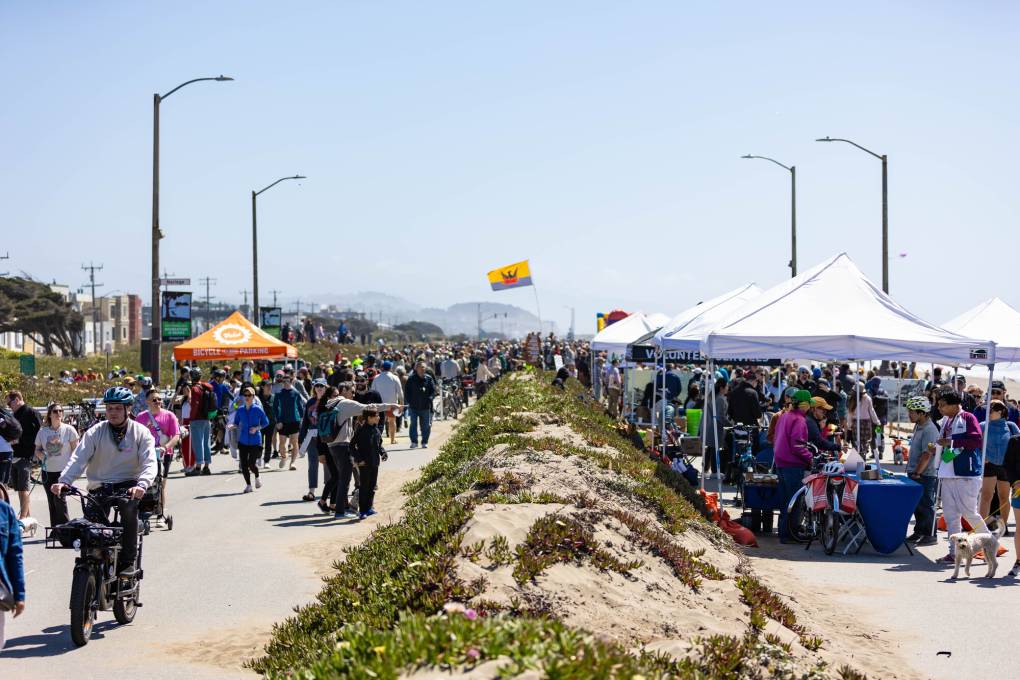
"caption": "Individuals attend the Sunset Dunes Park grand opening on the Upper Great Highway in San Francisco on April 12, 2025.",
"credit": "Gina Castro/KQED",
"altTag": null,
"description": null,
"imgSizes": {
"medium": {
"file": "https://cdn.kqed.org/wp-content/uploads/sites/10/2025/04/20250412_SunsetDunesGrandOpening_GC-17_qed-800x533.jpg",
"width": 800,
"height": 533,
"mimeType": "image/jpeg"
},
"large": {
"file": "https://cdn.kqed.org/wp-content/uploads/sites/10/2025/04/20250412_SunsetDunesGrandOpening_GC-17_qed-1020x680.jpg",
"width": 1020,
"height": 680,
"mimeType": "image/jpeg"
},
"thumbnail": {
"file": "https://cdn.kqed.org/wp-content/uploads/sites/10/2025/04/20250412_SunsetDunesGrandOpening_GC-17_qed-160x107.jpg",
"width": 160,
"height": 107,
"mimeType": "image/jpeg"
},
"1536x1536": {
"file": "https://cdn.kqed.org/wp-content/uploads/sites/10/2025/04/20250412_SunsetDunesGrandOpening_GC-17_qed-1536x1024.jpg",
"width": 1536,
"height": 1024,
"mimeType": "image/jpeg"
},
"post-thumbnail": {
"file": "https://cdn.kqed.org/wp-content/uploads/sites/10/2025/04/20250412_SunsetDunesGrandOpening_GC-17_qed-672x372.jpg",
"width": 672,
"height": 372,
"mimeType": "image/jpeg"
},
"twentyfourteen-full-width": {
"file": "https://cdn.kqed.org/wp-content/uploads/sites/10/2025/04/20250412_SunsetDunesGrandOpening_GC-17_qed-1038x576.jpg",
"width": 1038,
"height": 576,
"mimeType": "image/jpeg"
},
"full-width": {
"file": "https://cdn.kqed.org/wp-content/uploads/sites/10/2025/04/20250412_SunsetDunesGrandOpening_GC-17_qed-1920x1280.jpg",
"width": 1920,
"height": 1280,
"mimeType": "image/jpeg"
},
"kqedFullSize": {
"file": "https://cdn.kqed.org/wp-content/uploads/sites/10/2025/04/20250412_SunsetDunesGrandOpening_GC-17_qed.jpg",
"width": 2000,
"height": 1333
}
},
"isLoading": false,
"fetchFailed": false
},
"news_11986529": {
"type": "attachments",
"id": "news_11986529",
"meta": {
"index": "attachments_1716263798",
"site": "news",
"id": "11986529",
"found": true
},
"parent": 11986508,
"imgSizes": {
"twentyfourteen-full-width": {
"file": "https://cdn.kqed.org/wp-content/uploads/sites/10/2024/05/023_KQED_OBICBuprenorphineClinic_03292023_qut-1038x576.jpg",
"width": 1038,
"mimeType": "image/jpeg",
"height": 576
},
"thumbnail": {
"file": "https://cdn.kqed.org/wp-content/uploads/sites/10/2024/05/023_KQED_OBICBuprenorphineClinic_03292023_qut-160x107.jpg",
"width": 160,
"mimeType": "image/jpeg",
"height": 107
},
"post-thumbnail": {
"file": "https://cdn.kqed.org/wp-content/uploads/sites/10/2024/05/023_KQED_OBICBuprenorphineClinic_03292023_qut-672x372.jpg",
"width": 672,
"mimeType": "image/jpeg",
"height": 372
},
"kqedFullSize": {
"file": "https://cdn.kqed.org/wp-content/uploads/sites/10/2024/05/023_KQED_OBICBuprenorphineClinic_03292023_qut.jpg",
"width": 1920,
"height": 1280
},
"large": {
"file": "https://cdn.kqed.org/wp-content/uploads/sites/10/2024/05/023_KQED_OBICBuprenorphineClinic_03292023_qut-1020x680.jpg",
"width": 1020,
"mimeType": "image/jpeg",
"height": 680
},
"1536x1536": {
"file": "https://cdn.kqed.org/wp-content/uploads/sites/10/2024/05/023_KQED_OBICBuprenorphineClinic_03292023_qut-1536x1024.jpg",
"width": 1536,
"mimeType": "image/jpeg",
"height": 1024
},
"medium": {
"file": "https://cdn.kqed.org/wp-content/uploads/sites/10/2024/05/023_KQED_OBICBuprenorphineClinic_03292023_qut-800x533.jpg",
"width": 800,
"mimeType": "image/jpeg",
"height": 533
}
},
"publishDate": 1715882613,
"modified": 1715882636,
"caption": "Buprenorphine and Naloxone tablets at the Community Behavior Health Services pharmacy in San Francisco on March 29, 2023.",
"description": null,
"title": "023_KQED_OBICBuprenorphineClinic_03292023_qut",
"credit": "Beth LaBerge/KQED",
"status": "inherit",
"altTag": null,
"isLoading": false,
"fetchFailed": false
},
"news_11792295": {
"type": "attachments",
"id": "news_11792295",
"meta": {
"index": "attachments_1716263798",
"site": "news",
"id": "11792295",
"found": true
},
"parent": 11790591,
"imgSizes": {
"apple_news_ca_landscape_5_5": {
"file": "https://ww2.kqed.org/app/uploads/sites/10/2019/12/RS31143_GettyImages-514351304-qut-1044x783.jpg",
"width": 1044,
"mimeType": "image/jpeg",
"height": 783
},
"apple_news_ca_square_4_0": {
"file": "https://ww2.kqed.org/app/uploads/sites/10/2019/12/RS31143_GettyImages-514351304-qut-470x470.jpg",
"width": 470,
"mimeType": "image/jpeg",
"height": 470
},
"twentyfourteen-full-width": {
"file": "https://ww2.kqed.org/app/uploads/sites/10/2019/12/RS31143_GettyImages-514351304-qut-1038x576.jpg",
"width": 1038,
"mimeType": "image/jpeg",
"height": 576
},
"thumbnail": {
"file": "https://ww2.kqed.org/app/uploads/sites/10/2019/12/RS31143_GettyImages-514351304-qut-160x106.jpg",
"width": 160,
"mimeType": "image/jpeg",
"height": 106
},
"post-thumbnail": {
"file": "https://ww2.kqed.org/app/uploads/sites/10/2019/12/RS31143_GettyImages-514351304-qut-672x372.jpg",
"width": 672,
"mimeType": "image/jpeg",
"height": 372
},
"kqedFullSize": {
"file": "https://ww2.kqed.org/app/uploads/sites/10/2019/12/RS31143_GettyImages-514351304-qut-e1579721602813.jpg",
"width": 1919,
"height": 1267
},
"apple_news_ca_landscape_4_7": {
"file": "https://ww2.kqed.org/app/uploads/sites/10/2019/12/RS31143_GettyImages-514351304-qut-632x474.jpg",
"width": 632,
"mimeType": "image/jpeg",
"height": 474
},
"large": {
"file": "https://ww2.kqed.org/app/uploads/sites/10/2019/12/RS31143_GettyImages-514351304-qut-1020x674.jpg",
"width": 1020,
"mimeType": "image/jpeg",
"height": 674
},
"complete_open_graph": {
"file": "https://ww2.kqed.org/app/uploads/sites/10/2019/12/RS31143_GettyImages-514351304-qut-1200x793.jpg",
"width": 1200,
"mimeType": "image/jpeg",
"height": 793
},
"apple_news_ca_landscape_4_0": {
"file": "https://ww2.kqed.org/app/uploads/sites/10/2019/12/RS31143_GettyImages-514351304-qut-536x402.jpg",
"width": 536,
"mimeType": "image/jpeg",
"height": 402
},
"apple_news_ca_portrait_12_9": {
"file": "https://ww2.kqed.org/app/uploads/sites/10/2019/12/RS31143_GettyImages-514351304-qut-1122x1268.jpg",
"width": 1122,
"mimeType": "image/jpeg",
"height": 1268
},
"medium": {
"file": "https://ww2.kqed.org/app/uploads/sites/10/2019/12/RS31143_GettyImages-514351304-qut-800x528.jpg",
"width": 800,
"mimeType": "image/jpeg",
"height": 528
},
"apple_news_ca_portrait_4_0": {
"file": "https://ww2.kqed.org/app/uploads/sites/10/2019/12/RS31143_GettyImages-514351304-qut-354x472.jpg",
"width": 354,
"mimeType": "image/jpeg",
"height": 472
},
"apple_news_ca_portrait_9_7": {
"file": "https://ww2.kqed.org/app/uploads/sites/10/2019/12/RS31143_GettyImages-514351304-qut-840x1120.jpg",
"width": 840,
"mimeType": "image/jpeg",
"height": 1120
},
"apple_news_ca_landscape_12_9": {
"file": "https://ww2.kqed.org/app/uploads/sites/10/2019/12/RS31143_GettyImages-514351304-qut-1832x1268.jpg",
"width": 1832,
"mimeType": "image/jpeg",
"height": 1268
},
"apple_news_ca_square_9_7": {
"file": "https://ww2.kqed.org/app/uploads/sites/10/2019/12/RS31143_GettyImages-514351304-qut-1104x1104.jpg",
"width": 1104,
"mimeType": "image/jpeg",
"height": 1104
},
"apple_news_ca_portrait_4_7": {
"file": "https://ww2.kqed.org/app/uploads/sites/10/2019/12/RS31143_GettyImages-514351304-qut-414x552.jpg",
"width": 414,
"mimeType": "image/jpeg",
"height": 552
},
"apple_news_ca_square_12_9": {
"file": "https://ww2.kqed.org/app/uploads/sites/10/2019/12/RS31143_GettyImages-514351304-qut-1472x1268.jpg",
"width": 1472,
"mimeType": "image/jpeg",
"height": 1268
},
"apple_news_ca_portrait_5_5": {
"file": "https://ww2.kqed.org/app/uploads/sites/10/2019/12/RS31143_GettyImages-514351304-qut-687x916.jpg",
"width": 687,
"mimeType": "image/jpeg",
"height": 916
},
"full-width": {
"file": "https://ww2.kqed.org/app/uploads/sites/10/2019/12/RS31143_GettyImages-514351304-qut-1920x1268.jpg",
"width": 1920,
"mimeType": "image/jpeg",
"height": 1268
},
"apple_news_ca_square_4_7": {
"file": "https://ww2.kqed.org/app/uploads/sites/10/2019/12/RS31143_GettyImages-514351304-qut-550x550.jpg",
"width": 550,
"mimeType": "image/jpeg",
"height": 550
},
"apple_news_ca_landscape_9_7": {
"file": "https://ww2.kqed.org/app/uploads/sites/10/2019/12/RS31143_GettyImages-514351304-qut-1376x1032.jpg",
"width": 1376,
"mimeType": "image/jpeg",
"height": 1032
},
"apple_news_ca_square_5_5": {
"file": "https://ww2.kqed.org/app/uploads/sites/10/2019/12/RS31143_GettyImages-514351304-qut-912x912.jpg",
"width": 912,
"mimeType": "image/jpeg",
"height": 912
}
},
"publishDate": 1576799719,
"modified": 1579654354,
"caption": "Activists and tenants of a San Francisco apartment building protest the landlord's eviction efforts.",
"description": "Activists and tenants of a San Francisco apartment building protest the landlord's eviction efforts.",
"title": "Activists And Tenants Protest Rising Evictions In San Francisco",
"credit": "Justin Sullivan/Getty Images",
"status": "inherit",
"isLoading": false,
"fetchFailed": false
},
"news_11667757": {
"type": "attachments",
"id": "news_11667757",
"meta": {
"index": "attachments_1716263798",
"site": "news",
"id": "11667757",
"found": true
},
"title": "17306665486_9d1bff4693_k",
"publishDate": 1526054732,
"status": "inherit",
"parent": 11667618,
"modified": 1526054791,
"caption": "A Goodwill store",
"credit": "Mike Mozart/Flickr",
"altTag": null,
"description": "A Goodwill store",
"imgSizes": {
"thumbnail": {
"file": "https://cdn.kqed.org/wp-content/uploads/sites/10/2018/05/17306665486_9d1bff4693_k-160x107.jpg",
"width": 160,
"height": 107,
"mimeType": "image/jpeg"
},
"medium": {
"file": "https://cdn.kqed.org/wp-content/uploads/sites/10/2018/05/17306665486_9d1bff4693_k-800x534.jpg",
"width": 800,
"height": 534,
"mimeType": "image/jpeg"
},
"large": {
"file": "https://cdn.kqed.org/wp-content/uploads/sites/10/2018/05/17306665486_9d1bff4693_k-1020x680.jpg",
"width": 1020,
"height": 680,
"mimeType": "image/jpeg"
},
"complete_open_graph": {
"file": "https://cdn.kqed.org/wp-content/uploads/sites/10/2018/05/17306665486_9d1bff4693_k-1200x800.jpg",
"width": 1200,
"height": 800,
"mimeType": "image/jpeg"
},
"fd-lrg": {
"file": "https://cdn.kqed.org/wp-content/uploads/sites/10/2018/05/17306665486_9d1bff4693_k-1920x1281.jpg",
"width": 1920,
"height": 1281,
"mimeType": "image/jpeg"
},
"fd-med": {
"file": "https://cdn.kqed.org/wp-content/uploads/sites/10/2018/05/17306665486_9d1bff4693_k-1180x787.jpg",
"width": 1180,
"height": 787,
"mimeType": "image/jpeg"
},
"fd-sm": {
"file": "https://cdn.kqed.org/wp-content/uploads/sites/10/2018/05/17306665486_9d1bff4693_k-960x640.jpg",
"width": 960,
"height": 640,
"mimeType": "image/jpeg"
},
"post-thumbnail": {
"file": "https://cdn.kqed.org/wp-content/uploads/sites/10/2018/05/17306665486_9d1bff4693_k-672x372.jpg",
"width": 672,
"height": 372,
"mimeType": "image/jpeg"
},
"twentyfourteen-full-width": {
"file": "https://cdn.kqed.org/wp-content/uploads/sites/10/2018/05/17306665486_9d1bff4693_k-1038x576.jpg",
"width": 1038,
"height": 576,
"mimeType": "image/jpeg"
},
"xxsmall": {
"file": "https://cdn.kqed.org/wp-content/uploads/sites/10/2018/05/17306665486_9d1bff4693_k-240x160.jpg",
"width": 240,
"height": 160,
"mimeType": "image/jpeg"
},
"xsmall": {
"file": "https://cdn.kqed.org/wp-content/uploads/sites/10/2018/05/17306665486_9d1bff4693_k-375x250.jpg",
"width": 375,
"height": 250,
"mimeType": "image/jpeg"
},
"small": {
"file": "https://cdn.kqed.org/wp-content/uploads/sites/10/2018/05/17306665486_9d1bff4693_k-520x347.jpg",
"width": 520,
"height": 347,
"mimeType": "image/jpeg"
},
"xlarge": {
"file": "https://cdn.kqed.org/wp-content/uploads/sites/10/2018/05/17306665486_9d1bff4693_k-1180x787.jpg",
"width": 1180,
"height": 787,
"mimeType": "image/jpeg"
},
"full-width": {
"file": "https://cdn.kqed.org/wp-content/uploads/sites/10/2018/05/17306665486_9d1bff4693_k-1920x1281.jpg",
"width": 1920,
"height": 1281,
"mimeType": "image/jpeg"
},
"guest-author-32": {
"file": "https://cdn.kqed.org/wp-content/uploads/sites/10/2018/05/17306665486_9d1bff4693_k-32x32.jpg",
"width": 32,
"height": 32,
"mimeType": "image/jpeg"
},
"guest-author-50": {
"file": "https://cdn.kqed.org/wp-content/uploads/sites/10/2018/05/17306665486_9d1bff4693_k-50x50.jpg",
"width": 50,
"height": 50,
"mimeType": "image/jpeg"
},
"guest-author-64": {
"file": "https://cdn.kqed.org/wp-content/uploads/sites/10/2018/05/17306665486_9d1bff4693_k-64x64.jpg",
"width": 64,
"height": 64,
"mimeType": "image/jpeg"
},
"guest-author-96": {
"file": "https://cdn.kqed.org/wp-content/uploads/sites/10/2018/05/17306665486_9d1bff4693_k-96x96.jpg",
"width": 96,
"height": 96,
"mimeType": "image/jpeg"
},
"guest-author-128": {
"file": "https://cdn.kqed.org/wp-content/uploads/sites/10/2018/05/17306665486_9d1bff4693_k-128x128.jpg",
"width": 128,
"height": 128,
"mimeType": "image/jpeg"
},
"detail": {
"file": "https://cdn.kqed.org/wp-content/uploads/sites/10/2018/05/17306665486_9d1bff4693_k-150x150.jpg",
"width": 150,
"height": 150,
"mimeType": "image/jpeg"
},
"kqedFullSize": {
"file": "https://cdn.kqed.org/wp-content/uploads/sites/10/2018/05/17306665486_9d1bff4693_k-e1744242245311.jpg",
"width": 2000,
"height": 1334
}
},
"isLoading": false,
"fetchFailed": false
},
"news_11966666": {
"type": "attachments",
"id": "news_11966666",
"meta": {
"index": "attachments_1716263798",
"site": "news",
"id": "11966666",
"found": true
},
"parent": 11966517,
"imgSizes": {
"twentyfourteen-full-width": {
"file": "https://cdn.kqed.org/wp-content/uploads/sites/10/2023/11/230921-TaxiDriver-10-BL-1038x576.jpg",
"width": 1038,
"mimeType": "image/jpeg",
"height": 576
},
"thumbnail": {
"file": "https://cdn.kqed.org/wp-content/uploads/sites/10/2023/11/230921-TaxiDriver-10-BL-160x107.jpg",
"width": 160,
"mimeType": "image/jpeg",
"height": 107
},
"post-thumbnail": {
"file": "https://cdn.kqed.org/wp-content/uploads/sites/10/2023/11/230921-TaxiDriver-10-BL-672x372.jpg",
"width": 672,
"mimeType": "image/jpeg",
"height": 372
},
"kqedFullSize": {
"file": "https://cdn.kqed.org/wp-content/uploads/sites/10/2023/11/230921-TaxiDriver-10-BL.jpg",
"width": 1920,
"height": 1280
},
"large": {
"file": "https://cdn.kqed.org/wp-content/uploads/sites/10/2023/11/230921-TaxiDriver-10-BL-1020x680.jpg",
"width": 1020,
"mimeType": "image/jpeg",
"height": 680
},
"1536x1536": {
"file": "https://cdn.kqed.org/wp-content/uploads/sites/10/2023/11/230921-TaxiDriver-10-BL-1536x1024.jpg",
"width": 1536,
"mimeType": "image/jpeg",
"height": 1024
},
"medium": {
"file": "https://cdn.kqed.org/wp-content/uploads/sites/10/2023/11/230921-TaxiDriver-10-BL-800x533.jpg",
"width": 800,
"mimeType": "image/jpeg",
"height": 533
}
},
"publishDate": 1699389847,
"modified": 1706648308,
"caption": "A Waymo vehicle drives through downtown San Francisco on Nov. 2, 2023.",
"description": null,
"title": "231102-TaxiDriver-BethLaBerge-11",
"credit": "Beth LaBerge/KQED",
"status": "inherit",
"altTag": "A white driverless vehicle drives on a city street.",
"isLoading": false,
"fetchFailed": false
},
"news_12020815": {
"type": "attachments",
"id": "news_12020815",
"meta": {
"index": "attachments_1716263798",
"site": "news",
"id": "12020815",
"found": true
},
"title": "240108-LurieInaugurationDay-05",
"publishDate": 1736363188,
"status": "inherit",
"parent": 0,
"modified": 1736363235,
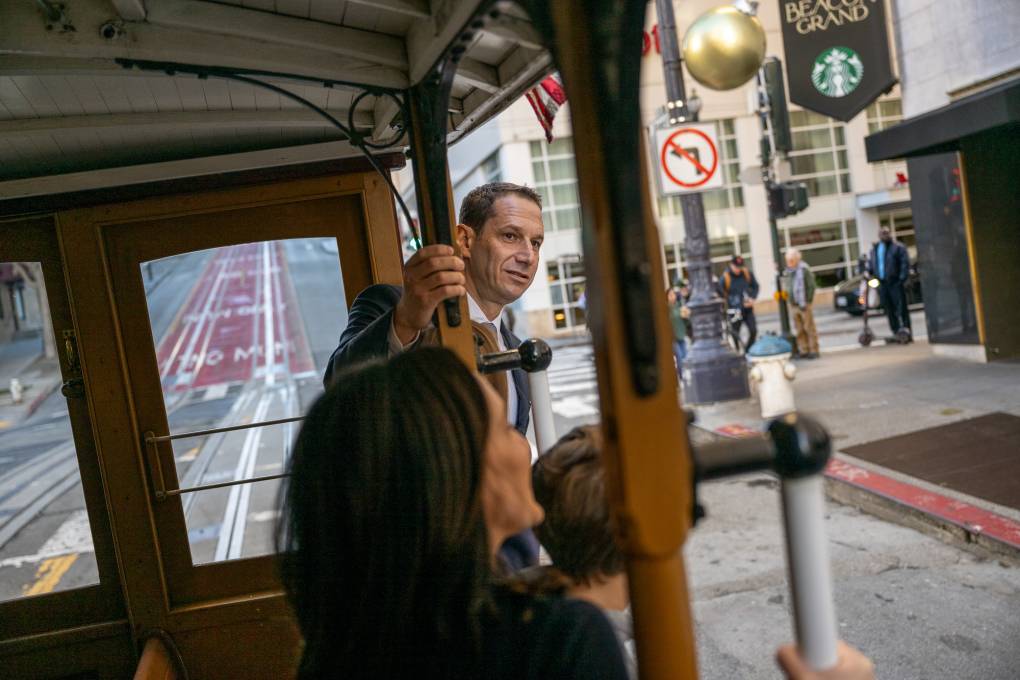
"caption": "Mayor-elect Daniel Lurie and his family ride a Cable Car in San Francisco on Jan. 8, 2025, before his inauguration ceremony.",
"credit": "Beth LaBerge/KQED",
"altTag": null,
"description": null,
"imgSizes": {
"medium": {
"file": "https://cdn.kqed.org/wp-content/uploads/sites/10/2025/01/240108-LurieInaugurationDay-05-800x533.jpg",
"width": 800,
"height": 533,
"mimeType": "image/jpeg"
},
"large": {
"file": "https://cdn.kqed.org/wp-content/uploads/sites/10/2025/01/240108-LurieInaugurationDay-05-1020x680.jpg",
"width": 1020,
"height": 680,
"mimeType": "image/jpeg"
},
"thumbnail": {
"file": "https://cdn.kqed.org/wp-content/uploads/sites/10/2025/01/240108-LurieInaugurationDay-05-160x107.jpg",
"width": 160,
"height": 107,
"mimeType": "image/jpeg"
},
"1536x1536": {
"file": "https://cdn.kqed.org/wp-content/uploads/sites/10/2025/01/240108-LurieInaugurationDay-05-1536x1024.jpg",
"width": 1536,
"height": 1024,
"mimeType": "image/jpeg"
},
"post-thumbnail": {
"file": "https://cdn.kqed.org/wp-content/uploads/sites/10/2025/01/240108-LurieInaugurationDay-05-672x372.jpg",
"width": 672,
"height": 372,
"mimeType": "image/jpeg"
},
"twentyfourteen-full-width": {
"file": "https://cdn.kqed.org/wp-content/uploads/sites/10/2025/01/240108-LurieInaugurationDay-05-1038x576.jpg",
"width": 1038,
"height": 576,
"mimeType": "image/jpeg"
},
"full-width": {
"file": "https://cdn.kqed.org/wp-content/uploads/sites/10/2025/01/240108-LurieInaugurationDay-05-1920x1280.jpg",
"width": 1920,
"height": 1280,
"mimeType": "image/jpeg"
},
"kqedFullSize": {
"file": "https://cdn.kqed.org/wp-content/uploads/sites/10/2025/01/240108-LurieInaugurationDay-05.jpg",
"width": 2000,
"height": 1333
}
},
"isLoading": false,
"fetchFailed": false
},
"news_12034262": {
"type": "attachments",
"id": "news_12034262",
"meta": {
"index": "attachments_1716263798",
"site": "news",
"id": "12034262",
"found": true
},
"title": "20250321_Balclutha_DMB_00038",
"publishDate": 1743620991,
"status": "inherit",
"parent": 0,
"modified": 1744219688,
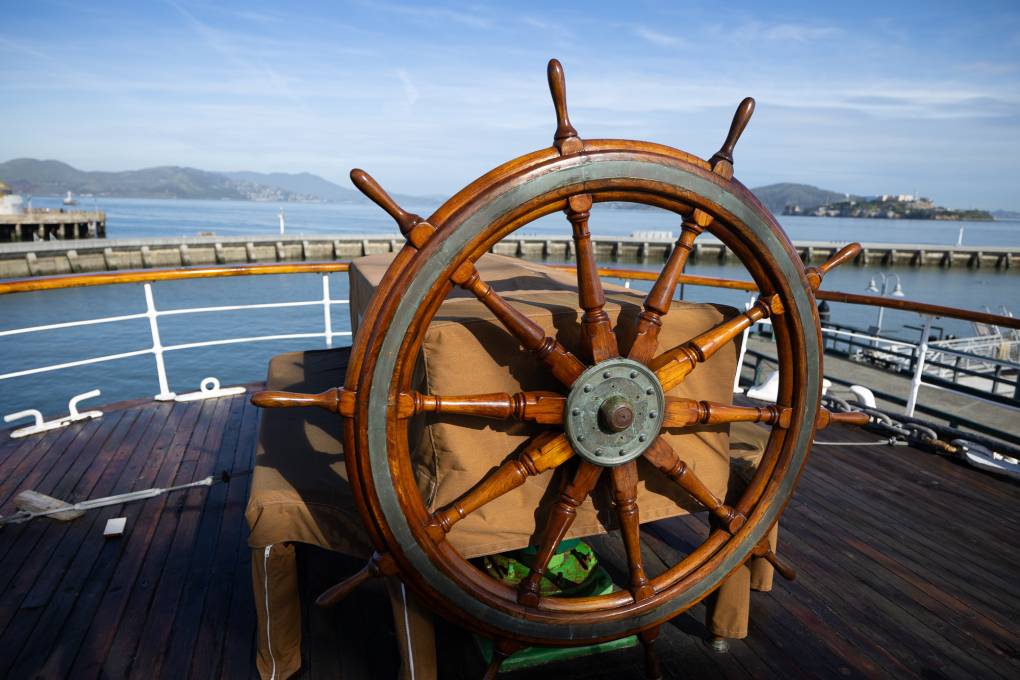
"caption": "The Balclutha/Star of Alaska, a cargo ship built in the 1880s, in the San Francisco port on March 21, 2025. In the early days of the Alaska salmon canning industry, most of the laborers, fisherman, goods and supplies were shipped from San Francisco each year.",
"credit": "David M. Barreda/KQED",
"altTag": null,
"description": null,
"imgSizes": {
"medium": {
"file": "https://cdn.kqed.org/wp-content/uploads/sites/10/2025/04/20250321_Balclutha_DMB_00038-800x533.jpg",
"width": 800,
"height": 533,
"mimeType": "image/jpeg"
},
"large": {
"file": "https://cdn.kqed.org/wp-content/uploads/sites/10/2025/04/20250321_Balclutha_DMB_00038-1020x680.jpg",
"width": 1020,
"height": 680,
"mimeType": "image/jpeg"
},
"thumbnail": {
"file": "https://cdn.kqed.org/wp-content/uploads/sites/10/2025/04/20250321_Balclutha_DMB_00038-160x107.jpg",
"width": 160,
"height": 107,
"mimeType": "image/jpeg"
},
"1536x1536": {
"file": "https://cdn.kqed.org/wp-content/uploads/sites/10/2025/04/20250321_Balclutha_DMB_00038-1536x1024.jpg",
"width": 1536,
"height": 1024,
"mimeType": "image/jpeg"
},
"post-thumbnail": {
"file": "https://cdn.kqed.org/wp-content/uploads/sites/10/2025/04/20250321_Balclutha_DMB_00038-672x372.jpg",
"width": 672,
"height": 372,
"mimeType": "image/jpeg"
},
"twentyfourteen-full-width": {
"file": "https://cdn.kqed.org/wp-content/uploads/sites/10/2025/04/20250321_Balclutha_DMB_00038-1038x576.jpg",
"width": 1038,
"height": 576,
"mimeType": "image/jpeg"
},
"full-width": {
"file": "https://cdn.kqed.org/wp-content/uploads/sites/10/2025/04/20250321_Balclutha_DMB_00038-1920x1280.jpg",
"width": 1920,
"height": 1280,
"mimeType": "image/jpeg"
},
"kqedFullSize": {
"file": "https://cdn.kqed.org/wp-content/uploads/sites/10/2025/04/20250321_Balclutha_DMB_00038.jpg",
"width": 2000,
"height": 1333
}
},
"isLoading": false,
"fetchFailed": false
},
"news_12032903": {
"type": "attachments",
"id": "news_12032903",
"meta": {
"index": "attachments_1716263798",
"site": "news",
"id": "12032903",
"found": true
},
"title": "Great Hwy Emily Fromm2",
"publishDate": 1742924023,
"status": "inherit",
"parent": 12032868,
"modified": 1742928990,
"caption": "Community members rallied at Ocean Beach as more than 100 volunteers worked together to restore Emily Fromm’s 60-foot mural at Judah Street and the Great Highway after it was vandalized with graffiti.",
"credit": "Courtesy Emily Fromm",
"altTag": null,
"description": null,
"imgSizes": {
"medium": {
"file": "https://cdn.kqed.org/wp-content/uploads/sites/10/2025/03/Great-Hwy-Emily-Fromm2-800x600.jpg",
"width": 800,
"height": 600,
"mimeType": "image/jpeg"
},
"large": {
"file": "https://cdn.kqed.org/wp-content/uploads/sites/10/2025/03/Great-Hwy-Emily-Fromm2-1020x765.jpg",
"width": 1020,
"height": 765,
"mimeType": "image/jpeg"
},
"thumbnail": {
"file": "https://cdn.kqed.org/wp-content/uploads/sites/10/2025/03/Great-Hwy-Emily-Fromm2-160x120.jpg",
"width": 160,
"height": 120,
"mimeType": "image/jpeg"
},
"1536x1536": {
"file": "https://cdn.kqed.org/wp-content/uploads/sites/10/2025/03/Great-Hwy-Emily-Fromm2-1536x1152.jpg",
"width": 1536,
"height": 1152,
"mimeType": "image/jpeg"
},
"post-thumbnail": {
"file": "https://cdn.kqed.org/wp-content/uploads/sites/10/2025/03/Great-Hwy-Emily-Fromm2-672x372.jpg",
"width": 672,
"height": 372,
"mimeType": "image/jpeg"
},
"twentyfourteen-full-width": {
"file": "https://cdn.kqed.org/wp-content/uploads/sites/10/2025/03/Great-Hwy-Emily-Fromm2-1038x576.jpg",
"width": 1038,
"height": 576,
"mimeType": "image/jpeg"
},
"full-width": {
"file": "https://cdn.kqed.org/wp-content/uploads/sites/10/2025/03/Great-Hwy-Emily-Fromm2-1920x1440.jpg",
"width": 1920,
"height": 1440,
"mimeType": "image/jpeg"
},
"kqedFullSize": {
"file": "https://cdn.kqed.org/wp-content/uploads/sites/10/2025/03/Great-Hwy-Emily-Fromm2.jpg",
"width": 2000,
"height": 1500
}
},
"isLoading": false,
"fetchFailed": false
},
"news_12034833": {
"type": "attachments",
"id": "news_12034833",
"meta": {
"index": "attachments_1716263798",
"site": "news",
"id": "12034833",
"found": true
},
"title": "250407-TARIFFSBAYAREASMALLBIZ-05-BL_QED-KQED",
"publishDate": 1744072380,
"status": "inherit",
"parent": 0,
"modified": 1744072447,
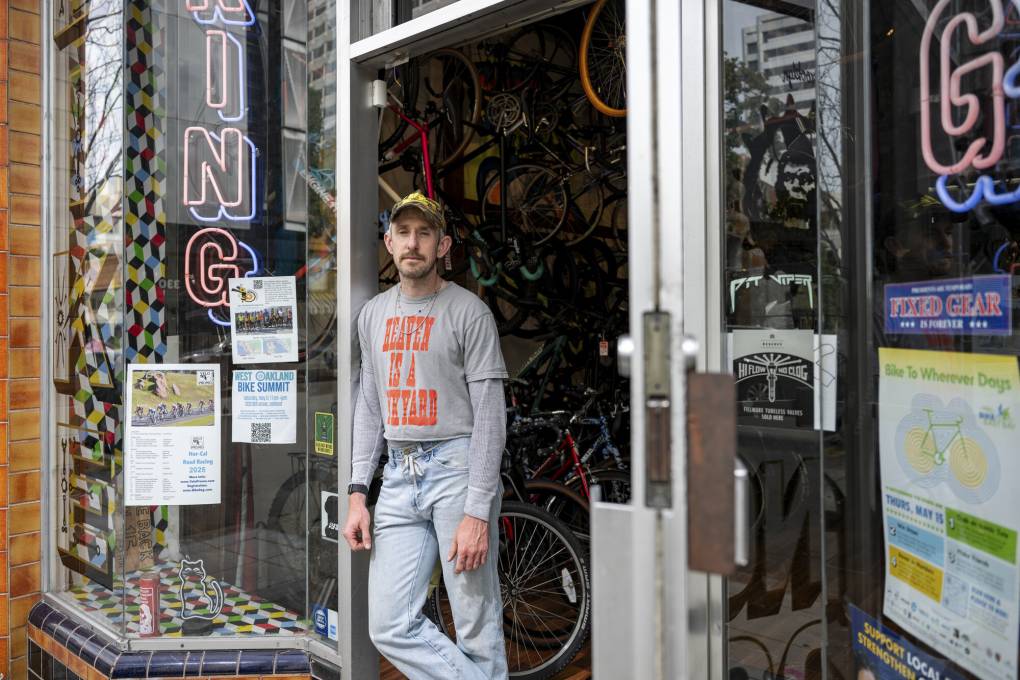
"caption": "Taylor Peliska, a bicycle mechanic, stands in the doorway at King Kog Bicycle Shop in Oakland on April 7, 2025.",
"credit": "Beth LaBerge/KQED",
"altTag": null,
"description": null,
"imgSizes": {
"medium": {
"file": "https://cdn.kqed.org/wp-content/uploads/sites/10/2025/04/250407-TARIFFSBAYAREASMALLBIZ-05-BL_QED-KQED-800x533.jpg",
"width": 800,
"height": 533,
"mimeType": "image/jpeg"
},
"large": {
"file": "https://cdn.kqed.org/wp-content/uploads/sites/10/2025/04/250407-TARIFFSBAYAREASMALLBIZ-05-BL_QED-KQED-1020x680.jpg",
"width": 1020,
"height": 680,
"mimeType": "image/jpeg"
},
"thumbnail": {
"file": "https://cdn.kqed.org/wp-content/uploads/sites/10/2025/04/250407-TARIFFSBAYAREASMALLBIZ-05-BL_QED-KQED-160x107.jpg",
"width": 160,
"height": 107,
"mimeType": "image/jpeg"
},
"1536x1536": {
"file": "https://cdn.kqed.org/wp-content/uploads/sites/10/2025/04/250407-TARIFFSBAYAREASMALLBIZ-05-BL_QED-KQED-1536x1024.jpg",
"width": 1536,
"height": 1024,
"mimeType": "image/jpeg"
},
"post-thumbnail": {
"file": "https://cdn.kqed.org/wp-content/uploads/sites/10/2025/04/250407-TARIFFSBAYAREASMALLBIZ-05-BL_QED-KQED-672x372.jpg",
"width": 672,
"height": 372,
"mimeType": "image/jpeg"
},
"twentyfourteen-full-width": {
"file": "https://cdn.kqed.org/wp-content/uploads/sites/10/2025/04/250407-TARIFFSBAYAREASMALLBIZ-05-BL_QED-KQED-1038x576.jpg",
"width": 1038,
"height": 576,
"mimeType": "image/jpeg"
},
"full-width": {
"file": "https://cdn.kqed.org/wp-content/uploads/sites/10/2025/04/250407-TARIFFSBAYAREASMALLBIZ-05-BL_QED-KQED-1920x1280.jpg",
"width": 1920,
"height": 1280,
"mimeType": "image/jpeg"
},
"kqedFullSize": {
"file": "https://cdn.kqed.org/wp-content/uploads/sites/10/2025/04/250407-TARIFFSBAYAREASMALLBIZ-05-BL_QED-KQED.jpg",
"width": 2000,
"height": 1333
}
},
"isLoading": false,
"fetchFailed": false
},
"news_12034876": {
"type": "attachments",
"id": "news_12034876",
"meta": {
"index": "attachments_1716263798",
"site": "news",
"id": "12034876",
"found": true
},
"title": "240410-BilalMahmood-038-BL_qed",
"publishDate": 1744133771,
"status": "inherit",
"parent": 12034867,
"modified": 1744133788,
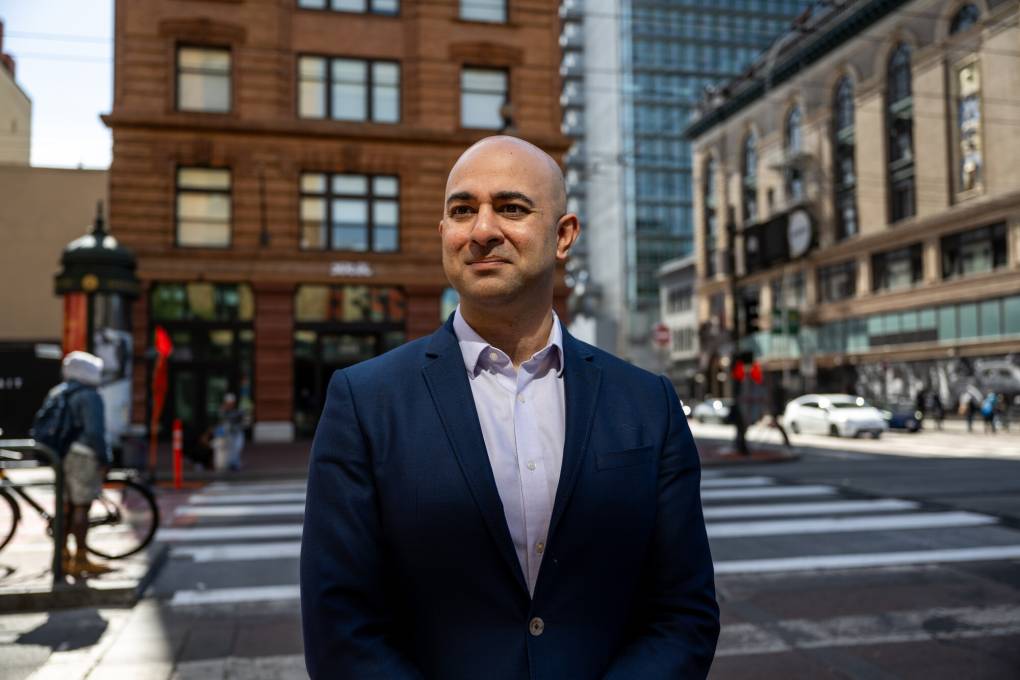
"caption": "Board of Supervisors District 5 candidate Bilal Mahmood poses for a portrait after a press conference about his strategy to end open-air drug markets in San Francisco on April 10, 2024.",
"credit": "Beth LaBerge/KQED",
"altTag": null,
"description": null,
"imgSizes": {
"medium": {
"file": "https://cdn.kqed.org/wp-content/uploads/sites/10/2025/04/240410-BilalMahmood-038-BL_qed-800x533.jpg",
"width": 800,
"height": 533,
"mimeType": "image/jpeg"
},
"large": {
"file": "https://cdn.kqed.org/wp-content/uploads/sites/10/2025/04/240410-BilalMahmood-038-BL_qed-1020x680.jpg",
"width": 1020,
"height": 680,
"mimeType": "image/jpeg"
},
"thumbnail": {
"file": "https://cdn.kqed.org/wp-content/uploads/sites/10/2025/04/240410-BilalMahmood-038-BL_qed-160x107.jpg",
"width": 160,
"height": 107,
"mimeType": "image/jpeg"
},
"1536x1536": {
"file": "https://cdn.kqed.org/wp-content/uploads/sites/10/2025/04/240410-BilalMahmood-038-BL_qed-1536x1024.jpg",
"width": 1536,
"height": 1024,
"mimeType": "image/jpeg"
},
"post-thumbnail": {
"file": "https://cdn.kqed.org/wp-content/uploads/sites/10/2025/04/240410-BilalMahmood-038-BL_qed-672x372.jpg",
"width": 672,
"height": 372,
"mimeType": "image/jpeg"
},
"twentyfourteen-full-width": {
"file": "https://cdn.kqed.org/wp-content/uploads/sites/10/2025/04/240410-BilalMahmood-038-BL_qed-1038x576.jpg",
"width": 1038,
"height": 576,
"mimeType": "image/jpeg"
},
"full-width": {
"file": "https://cdn.kqed.org/wp-content/uploads/sites/10/2025/04/240410-BilalMahmood-038-BL_qed-1920x1280.jpg",
"width": 1920,
"height": 1280,
"mimeType": "image/jpeg"
},
"kqedFullSize": {
"file": "https://cdn.kqed.org/wp-content/uploads/sites/10/2025/04/240410-BilalMahmood-038-BL_qed.jpg",
"width": 2000,
"height": 1333
}
},
"isLoading": false,
"fetchFailed": false
},
"news_12030647": {
"type": "attachments",
"id": "news_12030647",
"meta": {
"index": "attachments_1716263798",
"site": "news",
"id": "12030647",
"found": true
},
"title": "250310-TRUMP SF-MD-09-KQED",
"publishDate": 1741642340,
"status": "inherit",
"parent": 0,
"modified": 1741716066,
"caption": "San Francisco Mayor Daniel Lurie (right) and Giancarlo Lionetti, Chief Commercial Officer at OpenAI, walk through the new OpenAI headquarters in Mission Bay in San Francisco on March 10, 2025.",
"credit": "Martin do Nascimento/KQED",
"altTag": null,
"description": null,
"imgSizes": {
"medium": {
"file": "https://cdn.kqed.org/wp-content/uploads/sites/10/2025/03/250310-TRUMP-SF-MD-09-KQED-800x533.jpg",
"width": 800,
"height": 533,
"mimeType": "image/jpeg"
},
"large": {
"file": "https://cdn.kqed.org/wp-content/uploads/sites/10/2025/03/250310-TRUMP-SF-MD-09-KQED-1020x680.jpg",
"width": 1020,
"height": 680,
"mimeType": "image/jpeg"
},
"thumbnail": {
"file": "https://cdn.kqed.org/wp-content/uploads/sites/10/2025/03/250310-TRUMP-SF-MD-09-KQED-160x107.jpg",
"width": 160,
"height": 107,
"mimeType": "image/jpeg"
},
"1536x1536": {
"file": "https://cdn.kqed.org/wp-content/uploads/sites/10/2025/03/250310-TRUMP-SF-MD-09-KQED-1536x1024.jpg",
"width": 1536,
"height": 1024,
"mimeType": "image/jpeg"
},
"post-thumbnail": {
"file": "https://cdn.kqed.org/wp-content/uploads/sites/10/2025/03/250310-TRUMP-SF-MD-09-KQED-672x372.jpg",
"width": 672,
"height": 372,
"mimeType": "image/jpeg"
},
"twentyfourteen-full-width": {
"file": "https://cdn.kqed.org/wp-content/uploads/sites/10/2025/03/250310-TRUMP-SF-MD-09-KQED-1038x576.jpg",
"width": 1038,
"height": 576,
"mimeType": "image/jpeg"
},
"full-width": {
"file": "https://cdn.kqed.org/wp-content/uploads/sites/10/2025/03/250310-TRUMP-SF-MD-09-KQED-1920x1280.jpg",
"width": 1920,
"height": 1280,
"mimeType": "image/jpeg"
},
"kqedFullSize": {
"file": "https://cdn.kqed.org/wp-content/uploads/sites/10/2025/03/250310-TRUMP-SF-MD-09-KQED.jpg?ver=1741716041",
"width": 2000,
"height": 1333
}
},
"isLoading": false,
"fetchFailed": false
}
},
"audioPlayerReducer": {
"postId": "stream_live",
"isPaused": true,
"isPlaying": false,
"pfsActive": false,
"pledgeModalIsOpen": true,
"playerDrawerIsOpen": false,
"liveAudioPlayStartedAt": 0,
"liveAudioPlayContext": ""
},
"authorsReducer": {
"katrinaschwartz": {
"type": "authors",
"id": "234",
"meta": {
"index": "authors_1716337520",
"id": "234",
"found": true
},
"name": "Katrina Schwartz",
"firstName": "Katrina",
"lastName": "Schwartz",
"slug": "katrinaschwartz",
"email": "kschwartz@kqed.org",
"display_author_email": false,
"staff_mastheads": [
"news"
],
"title": "Producer",
"bio": "Katrina Schwartz is a journalist based in San Francisco. She's worked at KPCC public radio in LA and has reported on air and online for KQED since 2010. She covered how teaching and learning is changing for MindShift between 2012 and 2020. She is the co-host of the MindShift podcast and now produces KQED's Bay Curious podcast.",
"avatar": "https://secure.gravatar.com/avatar/edb4ee79070447a018538c9aae6eeecf28786515b8a0c30e43b6b7dce5aa44c8?s=600&d=blank&r=g",
"twitter": "kschwart",
"bluesky": null,
"facebook": null,
"instagram": null,
"linkedin": null,
"sites": [
{
"site": "",
"roles": [
"editor"
]
},
{
"site": "news",
"roles": [
"editor"
]
},
{
"site": "mindshift",
"roles": [
"administrator"
]
},
{
"site": "stateofhealth",
"roles": [
"author"
]
},
{
"site": "science",
"roles": [
"editor"
]
}
],
"headData": {
"title": "Katrina Schwartz | KQED",
"description": "Producer",
"ogImgSrc": "https://secure.gravatar.com/avatar/edb4ee79070447a018538c9aae6eeecf28786515b8a0c30e43b6b7dce5aa44c8?s=600&d=blank&r=g",
"twImgSrc": "https://secure.gravatar.com/avatar/edb4ee79070447a018538c9aae6eeecf28786515b8a0c30e43b6b7dce5aa44c8?s=600&d=blank&r=g"
},
"isLoading": false,
"link": "/author/katrinaschwartz"
},
"slewis": {
"type": "authors",
"id": "8676",
"meta": {
"index": "authors_1716337520",
"id": "8676",
"found": true
},
"name": "Sukey Lewis",
"firstName": "Sukey",
"lastName": "Lewis",
"slug": "slewis",
"email": "slewis@kqed.org",
"display_author_email": true,
"staff_mastheads": [
"news"
],
"title": "KQED Contributor",
"bio": "Sukey Lewis is a criminal justice reporter and host of \u003cem>On Our Watch\u003c/em>, a new podcast from NPR and KQED about the shadow world of police discipline. In 2018, she co-founded the California Reporting Project, a coalition of newsrooms across the state focused on obtaining previously sealed internal affairs records from law enforcement. In addition to her reporting on police accountability, Sukey has investigated the bail bonds industry, California's wildfires and the high cost of prison phone calls. Sukey earned a master's degree in journalism from the University of California at Berkeley. Send news tips to slewis@kqed.org.",
"avatar": "https://secure.gravatar.com/avatar/03fd6b21024f99d8b0a1966654586de7?s=600&d=blank&r=g",
"twitter": "SukeyLewis",
"facebook": null,
"instagram": null,
"linkedin": null,
"sites": [
{
"site": "news",
"roles": [
"author",
"edit_others_posts"
]
}
],
"headData": {
"title": "Sukey Lewis | KQED",
"description": "KQED Contributor",
"ogImgSrc": "https://secure.gravatar.com/avatar/03fd6b21024f99d8b0a1966654586de7?s=600&d=blank&r=g",
"twImgSrc": "https://secure.gravatar.com/avatar/03fd6b21024f99d8b0a1966654586de7?s=600&d=blank&r=g"
},
"isLoading": false,
"link": "/author/slewis"
},
"sjohnson": {
"type": "authors",
"id": "11840",
"meta": {
"index": "authors_1716337520",
"id": "11840",
"found": true
},
"name": "Sydney Johnson",
"firstName": "Sydney",
"lastName": "Johnson",
"slug": "sjohnson",
"email": "sjohnson@kqed.org",
"display_author_email": false,
"staff_mastheads": [
"news"
],
"title": "KQED Reporter",
"bio": "Sydney Johnson is a general assignment reporter at KQED. She previously reported on public health and city government at the San Francisco Examiner, and before that, she covered statewide education policy for EdSource. Her reporting has won multiple local, state and national awards. Sydney is a graduate of the University of California, Berkeley and lives in San Francisco.",
"avatar": "https://secure.gravatar.com/avatar/97855f2719b72ad6190b7c535fe642c8?s=600&d=blank&r=g",
"twitter": "sydneyfjohnson",
"facebook": null,
"instagram": null,
"linkedin": null,
"sites": [
{
"site": "news",
"roles": [
"editor"
]
}
],
"headData": {
"title": "Sydney Johnson | KQED",
"description": "KQED Reporter",
"ogImgSrc": "https://secure.gravatar.com/avatar/97855f2719b72ad6190b7c535fe642c8?s=600&d=blank&r=g",
"twImgSrc": "https://secure.gravatar.com/avatar/97855f2719b72ad6190b7c535fe642c8?s=600&d=blank&r=g"
},
"isLoading": false,
"link": "/author/sjohnson"
},
"kdebenedetti": {
"type": "authors",
"id": "11913",
"meta": {
"index": "authors_1716337520",
"id": "11913",
"found": true
},
"name": "Katie DeBenedetti",
"firstName": "Katie",
"lastName": "DeBenedetti",
"slug": "kdebenedetti",
"email": "kdebenedetti@kqed.org",
"display_author_email": false,
"staff_mastheads": [
"news",
"science"
],
"title": "KQED Contributor",
"bio": "Katie DeBenedetti is a digital reporter covering daily news for the Express Desk. Prior to joining KQED as a culture reporting intern in January 2024, she covered education and city government for the Napa Valley Register.",
"avatar": "https://secure.gravatar.com/avatar/6e31073cb8f7e4214ab03f42771d0f45?s=600&d=blank&r=g",
"twitter": null,
"facebook": null,
"instagram": null,
"linkedin": null,
"sites": [
{
"site": "news",
"roles": [
"author"
]
},
{
"site": "science",
"roles": [
"author"
]
},
{
"site": "liveblog",
"roles": [
"author"
]
}
],
"headData": {
"title": "Katie DeBenedetti | KQED",
"description": "KQED Contributor",
"ogImgSrc": "https://secure.gravatar.com/avatar/6e31073cb8f7e4214ab03f42771d0f45?s=600&d=blank&r=g",
"twImgSrc": "https://secure.gravatar.com/avatar/6e31073cb8f7e4214ab03f42771d0f45?s=600&d=blank&r=g"
},
"isLoading": false,
"link": "/author/kdebenedetti"
},
"slim": {
"type": "authors",
"id": "11920",
"meta": {
"index": "authors_1716337520",
"id": "11920",
"found": true
},
"name": "Samantha Lim",
"firstName": "Samantha",
"lastName": "Lim",
"slug": "slim",
"email": "slim@KQED.org",
"display_author_email": false,
"staff_mastheads": [],
"title": "KQED Contributor",
"bio": null,
"avatar": "https://secure.gravatar.com/avatar/82e592e6c15fe1a04d385e8ad0fb0b4e?s=600&d=blank&r=g",
"twitter": null,
"facebook": null,
"instagram": null,
"linkedin": null,
"sites": [
{
"site": "news",
"roles": []
}
],
"headData": {
"title": "Samantha Lim | KQED",
"description": "KQED Contributor",
"ogImgSrc": "https://secure.gravatar.com/avatar/82e592e6c15fe1a04d385e8ad0fb0b4e?s=600&d=blank&r=g",
"twImgSrc": "https://secure.gravatar.com/avatar/82e592e6c15fe1a04d385e8ad0fb0b4e?s=600&d=blank&r=g"
},
"isLoading": false,
"link": "/author/slim"
},
"rcooke": {
"type": "authors",
"id": "11921",
"meta": {
"index": "authors_1716337520",
"id": "11921",
"found": true
},
"name": "Riley Cooke",
"firstName": "Riley",
"lastName": "Cooke",
"slug": "rcooke",
"email": "rcooke@kqed.org",
"display_author_email": true,
"staff_mastheads": [
"news"
],
"title": "KQED Contributor",
"bio": "Riley is a senior at UC Berkeley, where she studies political science and journalism. Her work has appeared in SFGate, NBC Bay Area, Local News Matters and more. She enjoys reporting on politics, housing and homelessness — and using as many em dashes as her editors will allow.",
"avatar": "https://secure.gravatar.com/avatar/792f98c126cc5e270a8a96f77f7224ea?s=600&d=blank&r=g",
"twitter": "rrileycooke",
"facebook": null,
"instagram": null,
"linkedin": null,
"sites": [
{
"site": "arts",
"roles": [
"author"
]
},
{
"site": "news",
"roles": [
"author"
]
}
],
"headData": {
"title": "Riley Cooke | KQED",
"description": "KQED Contributor",
"ogImgSrc": "https://secure.gravatar.com/avatar/792f98c126cc5e270a8a96f77f7224ea?s=600&d=blank&r=g",
"twImgSrc": "https://secure.gravatar.com/avatar/792f98c126cc5e270a8a96f77f7224ea?s=600&d=blank&r=g"
},
"isLoading": false,
"link": "/author/rcooke"
},
"bkrans": {
"type": "authors",
"id": "11923",
"meta": {
"index": "authors_1716337520",
"id": "11923",
"found": true
},
"name": "Brian Krans",
"firstName": "Brian",
"lastName": "Krans",
"slug": "bkrans",
"email": "bkrans@kqed.org",
"display_author_email": false,
"staff_mastheads": [
"news"
],
"title": "KQED Contributing Reporter",
"bio": "Brian Krans is an award-winning local news and investigative reporter who has been proudly working as a general assignment reporter for KQED since August 2023. He lives in Richmond, where he also reports on air pollution for Richmondside. He is also a founding member of the Vallejo Sun.",
"avatar": "https://secure.gravatar.com/avatar/d1014d604089314a94807d2c4f2d3e06?s=600&d=blank&r=g",
"twitter": "citizenkrans",
"facebook": null,
"instagram": null,
"linkedin": null,
"sites": [
{
"site": "news",
"roles": [
"editor"
]
}
],
"headData": {
"title": "Brian Krans | KQED",
"description": "KQED Contributing Reporter",
"ogImgSrc": "https://secure.gravatar.com/avatar/d1014d604089314a94807d2c4f2d3e06?s=600&d=blank&r=g",
"twImgSrc": "https://secure.gravatar.com/avatar/d1014d604089314a94807d2c4f2d3e06?s=600&d=blank&r=g"
},
"isLoading": false,
"link": "/author/bkrans"
}
},
"pagesReducer": {
"news_tag_san-francisco": {
"type": "terms",
"id": "news_38",
"meta": {
"index": "terms_1716263798",
"site": "news",
"id": "38",
"score": 6.7229023
},
"featImg": null,
"name": "San Francisco",
"description": null,
"taxonomy": "tag",
"headData": {
"twImgId": null,
"twTitle": null,
"ogTitle": null,
"ogImgId": null,
"twDescription": null,
"description": null,
"title": "San Francisco Archives | KQED News",
"ogDescription": null
},
"ttid": 58,
"slug": "san-francisco",
"isLoading": false,
"title": "San Francisco",
"pageMeta": {
"site": "news",
"WpPageTemplate": "page-topic-editorial",
"currentPage": 69
},
"blocks": [
{
"blockName": "kqed/post-list",
"attrs": {
"layout": "cardArticle2",
"query": "posts/news?tag=san-francisco",
"seeMore": false,
"paginated": true,
"page": 69
}
},
{
"blockName": "kqed/ad"
}
]
}
},
"pfsSessionReducer": {},
"postsReducer": {
"stream_live": {
"type": "live",
"id": "stream_live",
"audioUrl": "https://streams.kqed.org/kqedradio",
"title": "Live Stream",
"excerpt": "Live Stream information currently unavailable.",
"link": "/radio",
"featImg": "",
"label": {
"name": "KQED Live",
"link": "/"
}
},
"stream_kqedNewscast": {
"type": "posts",
"id": "stream_kqedNewscast",
"audioUrl": "https://www.kqed.org/.stream/anon/radio/RDnews/newscast.mp3?_=1",
"title": "KQED Newscast",
"featImg": "",
"label": {
"name": "88.5 FM",
"link": "/"
}
},
"news_12034707": {
"type": "posts",
"id": "news_12034707",
"meta": {
"index": "posts_1716263798",
"site": "news",
"id": "12034707",
"score": null,
"sort": [
1744673599000
]
},
"guestAuthors": [],
"slug": "federal-antisemitism-investigations-california-higher-education-explained",
"title": "Is Your California College Among 17 Under Federal Antisemitism Investigation?",
"publishDate": 1744673599,
"format": "standard",
"headTitle": "Is Your California College Among 17 Under Federal Antisemitism Investigation? | KQED",
"labelTerm": {
"site": "news"
},
"content": "\u003cp>Swastika graffiti in a campus bathroom, chants of “death to Jews,” Hamas Hello Kitty stickers and the physical assault of Jewish students. These are among the incidents detailed in discrimination complaints against \u003ca href=\"https://www.kqed.org/news/tag/california\">California\u003c/a> universities since the Hamas attacks on Oct. 7, 2023.\u003c/p>\n\u003cp>Now, at least 17 colleges in the state are in the crosshairs of multi-pronged federal investigations into antisemitism in higher education.\u003c/p>\n\u003cp>The U.S. Department of Justice is \u003ca href=\"https://www.kqed.org/news/12029887/trump-doj-investigate-university-california-over-antisemitism-allegations\">investigating\u003c/a> whether the University of California system has allowed antisemitism to create a hostile work environment for Jewish employees.\u003c/p>\n\u003cp>[ad fullwidth]\u003c/p>\n\u003cp>And the U.S. Department of Education’s Office of Civil Rights announced \u003ca href=\"https://www.ed.gov/about/news/press-release/us-department-of-educations-office-civil-rights-sends-letters-60-universities-under-investigation-antisemitic-discrimination-and-harassment\">investigations\u003c/a> into allegations that students of Jewish ancestry have been denied access to education at nearly a dozen schools in the state — including a handful of UCs, California State Universities at Sacramento and San Diego and private institutions such as the University of Southern California, Chapman University and Stanford University.\u003c/p>\n\u003cp>Across the country, President Donald Trump’s administration has gone even further by withholding federal funds from schools, including \u003ca href=\"https://www.ed.gov/about/news/press-release/doj-hhs-ed-and-gsa-announce-initial-cancelation-of-grants-and-contracts-columbia-university-worth-400-million\">Columbia\u003c/a>, \u003ca href=\"https://www.npr.org/2025/04/09/g-s1-59090/trump-officials-halt-1-billion-in-funding-for-cornell-790-million-for-northwestern\">Northwestern and Cornell\u003c/a>. Immigration agents have arrested international students like \u003ca href=\"https://apnews.com/article/tufts-student-detained-massachusetts-immigration-08d7f08e1daa899986b7131a1edab6d8\">Rumeysa Ozturk\u003c/a> and \u003ca href=\"https://apnews.com/article/columbia-university-mahmoud-khalil-ice-15014bcbb921f21a9f704d5acdcae7a8\">Mahmoud Khalil\u003c/a> for their actions in support of Palestine. The latest \u003ca href=\"https://www.uscis.gov/newsroom/news-releases/dhs-to-begin-screening-aliens-social-media-activity-for-antisemitism\">news\u003c/a> is that the U.S. Department of Homeland Security is now monitoring the social media feeds of immigrants for evidence of antisemitism and “terrorist sympathizers.”\u003c/p>\n\u003cp>\u003c!-- iframe plugin v.4.3 wordpress.org/plugins/iframe/ -->\u003cbr>\n\u003ciframe loading=\"lazy\" title=\"Federal Antisemitism Investigations in California Higher Ed\" aria-label=\"Map\" id=\"datawrapper-chart-P7BCl\" src=\"https://datawrapper.dwcdn.net/P7BCl/7/\" scrolling=\"no\" frameborder=\"0\" style=\"width: 0; min-width: 100% !important; border: none;\" height=\"794\" data-external=\"1\" width=\"100%\" class=\"iframe-class\">\u003c/iframe>\u003c/p>\n\u003cp>Some in civil rights law and academia warn that the extraordinary and even extralegal tactics and disregard for existing discrimination protections point to the administration’s true ambition: Not to create an inclusive campus climate for all, but to stir up fear and extract concessions from traditionally left-leaning centers of learning.\u003c/p>\n\u003cp>In the past month, \u003ca href=\"https://chancellor.ucla.edu/messages/initiative-to-combat-antisemitism\">UCLA\u003c/a> and \u003ca href=\"https://www.jpost.com/diaspora/antisemitism/article-848726\">UCSB\u003c/a> have announced new initiatives to address antisemitism, while some state \u003ca href=\"https://journaliststudio.google.com/pinpoint/document-view?collection=ac9da6d3c73d17a4&docid=fb2a1b12b6b3fe52_ac9da6d3c73d17a4&dapvm=1&highlight=e0218af7ac44146a&utm_source=highlight_deep_link\">lawmakers\u003c/a> and faculty groups have \u003ca href=\"https://www.kqed.org/news/12034221/trump-administration-subpoenas-uc-faculty-information-antisemitism-investigation\">called on\u003c/a> university leaders to stand up to the federal government in order to protect privacy and free speech rights. With billions of dollars in federal research funding on the line, there’s no easy path forward: Columbia, which largely capitulated to the administration’s demands, \u003ca href=\"https://communications.news.columbia.edu/news/statement-federal-funding\">still hasn’t seen\u003c/a> its funding restored.\u003c/p>\n\u003cp>“What we have from this new task force from the federal government is an unprecedented, unique, coalition of federal agencies and they’re operating absent law,” said Catherine Lhamon, assistant secretary for Civil Rights at the U.S. Department of Education under Biden and chair of the \u003ca href=\"https://en.wikipedia.org/wiki/United_States_Commission_on_Civil_Rights\">United States Commission on Civil Rights\u003c/a> between 2016 and 2021.\u003c/p>\n\u003cp>The federal actions announced since January have also largely ignored the fact that many of these universities were already under scrutiny — and in some cases, had strict compliance agreements with the federal government.\u003c/p>\n\u003cp>“It was theater for the current administration to list University of California schools as schools that are somehow newly under investigation [for antisemitism],” Lhamon said. “They’re already subject to federal monitoring.”\u003c/p>\n\u003ch2>Gutting the Office of Civil Rights\u003c/h2>\n\u003cp>After the Hamas attacks of Oct. 7, 2023, and Israel’s subsequent devastating war in Gaza, campuses across the country became freshly embroiled in widespread \u003ca href=\"https://www.kqed.org/news/11984636/violence-erupts-at-ucla-as-protests-over-israels-war-in-gaza-escalate-across-the-u-s\">protests\u003c/a>, labor \u003ca href=\"https://www.kqed.org/news/11987499/academic-workers-at-ucla-davis-are-next-to-strike-over-response-to-protests\">strikes\u003c/a> and \u003ca href=\"https://www.kqed.org/news/11984645/photos-campus-protests-grow-across-bay-area\">encampments\u003c/a>.\u003c/p>\n\u003cp>Lhamon said her office received “a huge influx of new cases” including antisemitic complaints like those listed above along with allegations that Palestinian and Muslim students had been doxxed, physically assaulted and greeted with signs reading “Hamas will kill and rape you all.”\u003c/p>\n\u003cfigure id=\"attachment_11993683\" class=\"wp-caption aligncenter\" style=\"max-width: 2000px\">\u003cimg loading=\"lazy\" decoding=\"async\" class=\"size-full wp-image-11993683\" src=\"https://cdn.kqed.org/wp-content/uploads/sites/10/2024/07/L1005168_qed.jpg\" alt=\"\" width=\"2000\" height=\"1333\" srcset=\"https://cdn.kqed.org/wp-content/uploads/sites/10/2024/07/L1005168_qed.jpg 2000w, https://cdn.kqed.org/wp-content/uploads/sites/10/2024/07/L1005168_qed-800x533.jpg 800w, https://cdn.kqed.org/wp-content/uploads/sites/10/2024/07/L1005168_qed-1020x680.jpg 1020w, https://cdn.kqed.org/wp-content/uploads/sites/10/2024/07/L1005168_qed-160x107.jpg 160w, https://cdn.kqed.org/wp-content/uploads/sites/10/2024/07/L1005168_qed-1536x1024.jpg 1536w, https://cdn.kqed.org/wp-content/uploads/sites/10/2024/07/L1005168_qed-1920x1280.jpg 1920w\" sizes=\"auto, (max-width: 2000px) 100vw, 2000px\">\u003cfigcaption class=\"wp-caption-text\">The UC Berkeley pro-Palestinian encampment outside of Sproul Hall in Berkeley, California, on May 11, 2024. \u003ccite>(Aryk Copley/KQED)\u003c/cite>\u003c/figcaption>\u003c/figure>\n\u003cp>In response, the OCR opened cases against more than a dozen higher education institutions in California, requesting voluminous responses including school policies, the names of witnesses and complainants and disciplinary actions taken by the schools. In those investigations, “what we saw, to my shock and horror, was that lots of schools in K–12 and in higher education had not understood their legal obligations under Title VI,” Lhamon said.\u003c/p>\n\u003cp>The OCR has jurisdiction under \u003ca href=\"https://www.justice.gov/crt/fcs/TitleVI\">Title VI\u003c/a> of the Civil Rights Act of 1964, which bars the use of federal funds for programs that discriminate on the basis of “race, color, or national origin.” But Lhamon said Title VI also requires there be a process for the university to come into compliance before federal funds can be withheld — unlike the Trump administration’s move to withhold $400 million from Columbia without a full investigation or any kind of compliance process.[aside postID=news_12034742 hero='https://cdn.kqed.org/wp-content/uploads/sites/10/2025/04/20250129_UCBerkeleyRally_GC-72_qed-1020x680.jpg']To that end, the UC reached a resolution \u003ca href=\"https://journaliststudio.google.com/pinpoint/document-view?collection=ac9da6d3c73d17a4&docid=12292ad5a6780a_ac9da6d3c73d17a4&page=1&dapvm=1&highlight=634e6ffe678dfce1&utm_source=highlight_deep_link\">agreement\u003c/a> with the Department of Education in December to address discrimination against students with “Jewish, Israeli, Palestinian, Arab, and Muslim ancestry” and close nine open Title VI cases. While a March 10, 2025, letter from the incoming head of the OCR called resolutions like this toothless, it includes extensive reporting requirements, campus police training, and individual redress for specific students, including reimbursement of tuition.\u003c/p>\n\u003cp>But now, Lhamon wonders who is actually monitoring the agreement. On March 11, half of the OCR employees in the country were terminated, and the Office of Civil Rights in San Francisco, which had spearheaded investigations in California schools, was closed.\u003c/p>\n\u003cp>“There’s not a single investigator in the state of California anymore in the Office of Civil Rights,” Lhamon said. “Not a single person who was involved in those cases is still involved in those cases.”\u003c/p>\n\u003cp>And many other cases investigating discrimination against students with disabilities, Black, Palestinian and Muslim students are also in limbo, court filings show. California is among the states \u003ca href=\"https://www.kqed.org/news/12031176/california-other-states-gear-up-fight-department-educations-dismantling\">suing\u003c/a> the department over the mass firings.\u003c/p>\n\u003cp>KQED reached out to OCR attorneys named in complaint documents posted on the DOE website, but none agreed to be interviewed. DOE officials did not respond to multiple requests for comment.\u003c/p>\n\u003cp>But Denise Katz-Prober of the Brandeis Center, a Jewish advocacy nonprofit based in Washington, D.C., which has filed numerous administrative complaints on behalf of students, said many resolution agreements haven’t gone far enough to address the “root causes” of antisemitism on campuses.\u003c/p>\n\u003cfigure id=\"attachment_12035691\" class=\"wp-caption aligncenter\" style=\"max-width: 2000px\">\u003cimg loading=\"lazy\" decoding=\"async\" class=\"size-full wp-image-12035691\" src=\"https://cdn.kqed.org/wp-content/uploads/sites/10/2025/04/ScrippsCollegeGetty.jpg\" alt=\"\" width=\"2000\" height=\"1409\" srcset=\"https://cdn.kqed.org/wp-content/uploads/sites/10/2025/04/ScrippsCollegeGetty.jpg 2000w, https://cdn.kqed.org/wp-content/uploads/sites/10/2025/04/ScrippsCollegeGetty-800x564.jpg 800w, https://cdn.kqed.org/wp-content/uploads/sites/10/2025/04/ScrippsCollegeGetty-1020x719.jpg 1020w, https://cdn.kqed.org/wp-content/uploads/sites/10/2025/04/ScrippsCollegeGetty-160x113.jpg 160w, https://cdn.kqed.org/wp-content/uploads/sites/10/2025/04/ScrippsCollegeGetty-1536x1082.jpg 1536w, https://cdn.kqed.org/wp-content/uploads/sites/10/2025/04/ScrippsCollegeGetty-1920x1353.jpg 1920w\" sizes=\"auto, (max-width: 2000px) 100vw, 2000px\">\u003cfigcaption class=\"wp-caption-text\">A building at Scripps College through a corridor of trees in Claremont, California, on Aug. 13, 2022. Scripps College is one of 17 California colleges and universities under federal investigation. \u003ccite>(Jim Brown/Getty Images)\u003c/cite>\u003c/figcaption>\u003c/figure>\n\u003cp>She said her group feels optimistic that the Trump administration is “ acting quite forcefully and vigorously to hold institutions, accountable.” So far, she doesn’t have concerns about the functioning of the OCR, which she said acted swiftly to open a new case after the center filed a complaint against Scripps College in February. Another case against Chapman, filed over a year ago, is still under investigation.\u003c/p>\n\u003cp>Santa Monica College, which has three pending complaints with the OCR, was among the 60 institutions that received letters from the Trump administration on March 10. A spokesperson said via email that the \u003ca href=\"https://admin.smc.edu/administration/campus-counsel/documents/OCR-3-10-2025.pdf\">letter\u003c/a> didn’t include any new information — or determination — about the three pending cases.\u003c/p>\n\u003cp>“If you actually care about kids, if you actually care about discrimination that’s occurring in school, you fully monitor the agreements that you have, and you look for the other places that need you,” Lhamon said.\u003c/p>\n\u003cp>So far, the Trump administration has made no mention of enforcing the parts of the agreement crafted to address discrimination complaints filed by Palestinian students.\u003c/p>\n\u003cfigure id=\"attachment_12035711\" class=\"wp-caption aligncenter\" style=\"max-width: 2000px\">\u003cimg loading=\"lazy\" decoding=\"async\" class=\"size-full wp-image-12035711\" src=\"https://cdn.kqed.org/wp-content/uploads/sites/10/2025/04/UCLAProtestGetty.jpg\" alt=\"\" width=\"2000\" height=\"1333\" srcset=\"https://cdn.kqed.org/wp-content/uploads/sites/10/2025/04/UCLAProtestGetty.jpg 2000w, https://cdn.kqed.org/wp-content/uploads/sites/10/2025/04/UCLAProtestGetty-800x533.jpg 800w, https://cdn.kqed.org/wp-content/uploads/sites/10/2025/04/UCLAProtestGetty-1020x680.jpg 1020w, https://cdn.kqed.org/wp-content/uploads/sites/10/2025/04/UCLAProtestGetty-160x107.jpg 160w, https://cdn.kqed.org/wp-content/uploads/sites/10/2025/04/UCLAProtestGetty-1536x1024.jpg 1536w, https://cdn.kqed.org/wp-content/uploads/sites/10/2025/04/UCLAProtestGetty-1920x1280.jpg 1920w\" sizes=\"auto, (max-width: 2000px) 100vw, 2000px\">\u003cfigcaption class=\"wp-caption-text\">Pro-Palestine protesters attempt to block a counter-protester with an Israeli flag at UCLA on Tuesday, March 11, 2025, in Los Angeles, California. Attendees rallied to protest ICE’s detainment of Mahmoud Khalil, a Palestinian activist who led protests at Columbia University last year. \u003ccite>(Juliana Yamada/Los Angeles Times via Getty Images)\u003c/cite>\u003c/figcaption>\u003c/figure>\n\u003cp>UCLA distinguished professor Sherene Razack chairs the Task Force on Anti-Palestinian, Anti-Arab and Anti-Muslim Racism, which has submitted three \u003ca href=\"https://uclaracismtaskforce.com/\">reports\u003c/a> to university leaders. Razack said the consequences of this bias to faculty and students can be severe.\u003c/p>\n\u003cp>“Medical residents who even mention anything to do with the genocide are getting seriously doxxed,” she said. The consequences of doxxing range from death threats to people “writing to you and saying, ‘You’ll never get a job,’” she added.\u003c/p>\n\u003cp>But Razack said the administration has largely \u003ca href=\"https://www.jadaliyya.com/Details/46594/Open-Letter-to-Chancellor-Julio-Frenk-From-the-Ucla-Task-Force-on-Anti-Palestinian,-Anti-Muslim-and-Anti-Arab-Racism\">ignored\u003c/a> her task force’s recommendation, instead adopting recommendations from the \u003ca href=\"https://newsroom.ucla.edu/ucla-announces-initiative-to-combat-antisemitism\">Antisemitism Task Force\u003c/a>, perhaps in “anticipatory compliance” to escape federal repercussions.\u003c/p>\n\u003cp>Distinguished Professor Stuart Gabriel of the UCLA Anderson School of Management — who has been tapped to lead the Initiative to Combat Antisemitism — did not respond to KQED’s emails requesting comment.\u003c/p>\n\u003ch2>‘False flag’\u003c/h2>\n\u003cp>The DOJ investigation brought under \u003ca href=\"https://www.eeoc.gov/statutes/title-vii-civil-rights-act-1964\">Title VII\u003c/a>, which prohibits workplace discrimination, has already begun contacting people, according to \u003ca href=\"https://www.politico.com/news/2025/04/10/trump-administration-begins-interviewing-uc-faculty-as-part-of-antisemitism-probe-00282965\">reporting\u003c/a> by \u003cem>Politico\u003c/em>. Faculty unions had urged the administration to fight \u003ca href=\"https://www.kqed.org/news/12034221/trump-administration-subpoenas-uc-faculty-information-antisemitism-investigation\">the subpoena of the names and contact information\u003c/a> of hundreds of UC employees who signed letters in the wake of the Oct. 7 attacks.\u003c/p>\n\u003cp>A letter to members from the University Council — American Federation of Teachers, the union that represents almost 7,000 UC teaching faculty and librarians, called on university leaders to protect “worker privacy and due process of law at every turn,” and encouraged workers and students to “resist participating in investigations that are clearly motivated by politics and the intent to silence debate, dissent, and disagreement.”\u003c/p>\n\u003cfigure id=\"attachment_12035694\" class=\"wp-caption aligncenter\" style=\"max-width: 2000px\">\u003cimg loading=\"lazy\" decoding=\"async\" class=\"size-full wp-image-12035694\" src=\"https://cdn.kqed.org/wp-content/uploads/sites/10/2025/04/231031-UCSFGazaPresser-25-BL_qed.jpg\" alt=\"\" width=\"2000\" height=\"1333\" srcset=\"https://cdn.kqed.org/wp-content/uploads/sites/10/2025/04/231031-UCSFGazaPresser-25-BL_qed.jpg 2000w, https://cdn.kqed.org/wp-content/uploads/sites/10/2025/04/231031-UCSFGazaPresser-25-BL_qed-800x533.jpg 800w, https://cdn.kqed.org/wp-content/uploads/sites/10/2025/04/231031-UCSFGazaPresser-25-BL_qed-1020x680.jpg 1020w, https://cdn.kqed.org/wp-content/uploads/sites/10/2025/04/231031-UCSFGazaPresser-25-BL_qed-160x107.jpg 160w, https://cdn.kqed.org/wp-content/uploads/sites/10/2025/04/231031-UCSFGazaPresser-25-BL_qed-1536x1024.jpg 1536w, https://cdn.kqed.org/wp-content/uploads/sites/10/2025/04/231031-UCSFGazaPresser-25-BL_qed-1920x1280.jpg 1920w\" sizes=\"auto, (max-width: 2000px) 100vw, 2000px\">\u003cfigcaption class=\"wp-caption-text\">Dr. Leigh Kimberg speaks during a press conference with UCSF medical professionals to call for a ceasefire in Gaza outside of the UCSF Helen Diller Medical Center at Parnassus Heights in San Francisco, California, on Oct. 31, 2023. \u003ccite>(Beth LaBerge/KQED)\u003c/cite>\u003c/figcaption>\u003c/figure>\n\u003cp>The UC Office of the President did not answer questions about the compliance agreement or the actions of the federal task force. In an email, a spokesperson said the institution “unequivocally condemns antisemitism in all forms” and ”is committed to responding to all inquiries in good faith as we continue to take important steps to foster a welcoming and safe environment for all.” A spokesperson for the DOJ declined to comment on the status of the workplace investigation.\u003c/p>\n\u003cp>But while some faculty members see a sharp divergence between the Biden administration’s approach to civil rights enforcement and the Trump administration’s, others, like Leigh Kimberg, a UCSF professor of medicine, feel this is merely a continuation of the ongoing suppression of legitimate protest and pro-Palestinian voices, which includes many Jewish voices.\u003c/p>\n\u003cp>“ I have spoken out saying that actually the liberation of the Jewish people and the Palestinian people are inextricable,” Kimberg said.[aside postID=news_12034703 hero='https://cdn.kqed.org/wp-content/uploads/sites/10/2025/04/250319-UCBerkeleyProtest-14-BL_qed-1020x680.jpg']As a result, she said she has been accused of antisemitism. After speaking about Palestine during a talk about trauma-informed care, she said she was banned from speaking in public courses.\u003c/p>\n\u003cp>Kimberg said students have shown incredible bravery even in the face of potential discipline, arrest and immigration enforcement actions. In the past month, dozens of students and faculty at California universities, including Stanford, UCLA and UCSB, have had their visas revoked by the State Department.\u003c/p>\n\u003cp>Katz-Prober said she’s not an immigration expert, but said the Brandeis Center appreciates the Trump administration taking antisemitism seriously and “that there are consequences.”\u003c/p>\n\u003cp>Poulomi Saha, a UC Berkeley associate professor of English who was faculty co-chair of an advisory committee on Muslim and Palestinian student life, sees these investigations as a “false flag mission” in an attempt by Trump to “control what happens on college campuses.”\u003c/p>\n\u003cp>“Today, it’s antisemitism. Tomorrow, it will be something else. This is an incursion into a project of free inquiry and free speech on college campuses,” they said.\u003c/p>\n\u003cp>Already, DOE has also \u003ca href=\"https://www.ed.gov/about/news/press-release/office-civil-rights-initiates-title-vi-investigations-institutions-of-higher-education-0\">set its sights\u003c/a> on diversity, equity and inclusion efforts at universities and K–12 schools. Cal-Poly Humboldt, California State University San Bernardino and UC Berkeley have received notice that the OCR is investigating “race-exclusionary” practices.\u003c/p>\n\u003cp>“The Department is working to reorient civil rights enforcement to ensure all students are protected from illegal discrimination,” wrote U.S. Secretary of Education Linda McMahon in a press release.\u003c/p>\n\u003cp>[ad floatright]\u003c/p>\n",
"blocks": [],
"excerpt": "At least 17 California colleges face federal probes into antisemitism, including a Department of Justice investigation of the UC system’s treatment of Jewish employees.",
"status": "publish",
"parent": 0,
"modified": 1744673638,
"stats": {
"hasAudio": false,
"hasVideo": false,
"hasChartOrMap": true,
"iframeSrcs": [
"https://datawrapper.dwcdn.net/P7BCl/7/"
],
"hasGoogleForm": false,
"hasGallery": false,
"hasHearkenModule": false,
"hasPolis": false,
"paragraphCount": 41,
"wordCount": 2085
},
"headData": {
"title": "Is Your California College Among 17 Under Federal Antisemitism Investigation? | KQED",
"description": "At least 17 California colleges face federal probes into antisemitism, including a Department of Justice investigation of the UC system’s treatment of Jewish employees.",
"ogTitle": "",
"ogDescription": "",
"ogImgId": "",
"twTitle": "",
"twDescription": "",
"twImgId": "",
"schema": {
"@context": "https://schema.org",
"@type": "NewsArticle",
"headline": "Is Your California College Among 17 Under Federal Antisemitism Investigation?",
"datePublished": "2025-04-14T16:33:19-07:00",
"dateModified": "2025-04-14T16:33:58-07:00",
"image": "https://cdn.kqed.org/wp-content/uploads/2020/02/KQED-OG-Image@1x.png",
"isAccessibleForFree": "True",
"publisher": {
"@type": "NewsMediaOrganization",
"@id": "https://www.kqed.org/#organization",
"name": "KQED",
"logo": "https://cdn.kqed.org/wp-content/uploads/2020/02/KQED-OG-Image@1x.png",
"url": "https://www.kqed.org",
"sameAs": [
"https://www.facebook.com/KQED",
"https://twitter.com/KQED",
"https://www.instagram.com/kqed/",
"https://www.tiktok.com/@kqedofficial",
"https://www.linkedin.com/company/kqed",
"https://www.youtube.com/channel/UCeC0IOo7i1P_61zVUWbJ4nw"
]
}
}
},
"sticky": false,
"nprStoryId": "kqed-12034707",
"templateType": "standard",
"featuredImageType": "standard",
"excludeFromSiteSearch": "Include",
"articleAge": "0",
"path": "/news/12034707/federal-antisemitism-investigations-california-higher-education-explained",
"audioTrackLength": null,
"parsedContent": [
{
"type": "contentString",
"content": "\u003cdiv class=\"post-body\">\u003cp>\u003cp>Swastika graffiti in a campus bathroom, chants of “death to Jews,” Hamas Hello Kitty stickers and the physical assault of Jewish students. These are among the incidents detailed in discrimination complaints against \u003ca href=\"https://www.kqed.org/news/tag/california\">California\u003c/a> universities since the Hamas attacks on Oct. 7, 2023.\u003c/p>\n\u003cp>Now, at least 17 colleges in the state are in the crosshairs of multi-pronged federal investigations into antisemitism in higher education.\u003c/p>\n\u003cp>The U.S. Department of Justice is \u003ca href=\"https://www.kqed.org/news/12029887/trump-doj-investigate-university-california-over-antisemitism-allegations\">investigating\u003c/a> whether the University of California system has allowed antisemitism to create a hostile work environment for Jewish employees.\u003c/p>\n\u003cp>\u003c/p>\u003c/div>",
"attributes": {
"named": {},
"numeric": []
}
},
{
"type": "component",
"content": "",
"name": "ad",
"attributes": {
"named": {
"label": "fullwidth"
},
"numeric": [
"fullwidth"
]
}
},
{
"type": "contentString",
"content": "\u003cdiv class=\"post-body\">\u003cp>\u003c/p>\n\u003cp>And the U.S. Department of Education’s Office of Civil Rights announced \u003ca href=\"https://www.ed.gov/about/news/press-release/us-department-of-educations-office-civil-rights-sends-letters-60-universities-under-investigation-antisemitic-discrimination-and-harassment\">investigations\u003c/a> into allegations that students of Jewish ancestry have been denied access to education at nearly a dozen schools in the state — including a handful of UCs, California State Universities at Sacramento and San Diego and private institutions such as the University of Southern California, Chapman University and Stanford University.\u003c/p>\n\u003cp>Across the country, President Donald Trump’s administration has gone even further by withholding federal funds from schools, including \u003ca href=\"https://www.ed.gov/about/news/press-release/doj-hhs-ed-and-gsa-announce-initial-cancelation-of-grants-and-contracts-columbia-university-worth-400-million\">Columbia\u003c/a>, \u003ca href=\"https://www.npr.org/2025/04/09/g-s1-59090/trump-officials-halt-1-billion-in-funding-for-cornell-790-million-for-northwestern\">Northwestern and Cornell\u003c/a>. Immigration agents have arrested international students like \u003ca href=\"https://apnews.com/article/tufts-student-detained-massachusetts-immigration-08d7f08e1daa899986b7131a1edab6d8\">Rumeysa Ozturk\u003c/a> and \u003ca href=\"https://apnews.com/article/columbia-university-mahmoud-khalil-ice-15014bcbb921f21a9f704d5acdcae7a8\">Mahmoud Khalil\u003c/a> for their actions in support of Palestine. The latest \u003ca href=\"https://www.uscis.gov/newsroom/news-releases/dhs-to-begin-screening-aliens-social-media-activity-for-antisemitism\">news\u003c/a> is that the U.S. Department of Homeland Security is now monitoring the social media feeds of immigrants for evidence of antisemitism and “terrorist sympathizers.”\u003c/p>\n\u003cp>\u003c!-- iframe plugin v.4.3 wordpress.org/plugins/iframe/ -->\u003cbr>\n\u003ciframe loading=\"lazy\" title=\"Federal Antisemitism Investigations in California Higher Ed\" aria-label=\"Map\" id=\"datawrapper-chart-P7BCl\" src=\"https://datawrapper.dwcdn.net/P7BCl/7/\" scrolling=\"no\" frameborder=\"0\" style=\"width: 0; min-width: 100% !important; border: none;\" height=\"794\" data-external=\"1\" width=\"100%\" class=\"iframe-class\">\u003c/iframe>\u003c/p>\n\u003cp>Some in civil rights law and academia warn that the extraordinary and even extralegal tactics and disregard for existing discrimination protections point to the administration’s true ambition: Not to create an inclusive campus climate for all, but to stir up fear and extract concessions from traditionally left-leaning centers of learning.\u003c/p>\n\u003cp>In the past month, \u003ca href=\"https://chancellor.ucla.edu/messages/initiative-to-combat-antisemitism\">UCLA\u003c/a> and \u003ca href=\"https://www.jpost.com/diaspora/antisemitism/article-848726\">UCSB\u003c/a> have announced new initiatives to address antisemitism, while some state \u003ca href=\"https://journaliststudio.google.com/pinpoint/document-view?collection=ac9da6d3c73d17a4&docid=fb2a1b12b6b3fe52_ac9da6d3c73d17a4&dapvm=1&highlight=e0218af7ac44146a&utm_source=highlight_deep_link\">lawmakers\u003c/a> and faculty groups have \u003ca href=\"https://www.kqed.org/news/12034221/trump-administration-subpoenas-uc-faculty-information-antisemitism-investigation\">called on\u003c/a> university leaders to stand up to the federal government in order to protect privacy and free speech rights. With billions of dollars in federal research funding on the line, there’s no easy path forward: Columbia, which largely capitulated to the administration’s demands, \u003ca href=\"https://communications.news.columbia.edu/news/statement-federal-funding\">still hasn’t seen\u003c/a> its funding restored.\u003c/p>\n\u003cp>“What we have from this new task force from the federal government is an unprecedented, unique, coalition of federal agencies and they’re operating absent law,” said Catherine Lhamon, assistant secretary for Civil Rights at the U.S. Department of Education under Biden and chair of the \u003ca href=\"https://en.wikipedia.org/wiki/United_States_Commission_on_Civil_Rights\">United States Commission on Civil Rights\u003c/a> between 2016 and 2021.\u003c/p>\n\u003cp>The federal actions announced since January have also largely ignored the fact that many of these universities were already under scrutiny — and in some cases, had strict compliance agreements with the federal government.\u003c/p>\n\u003cp>“It was theater for the current administration to list University of California schools as schools that are somehow newly under investigation [for antisemitism],” Lhamon said. “They’re already subject to federal monitoring.”\u003c/p>\n\u003ch2>Gutting the Office of Civil Rights\u003c/h2>\n\u003cp>After the Hamas attacks of Oct. 7, 2023, and Israel’s subsequent devastating war in Gaza, campuses across the country became freshly embroiled in widespread \u003ca href=\"https://www.kqed.org/news/11984636/violence-erupts-at-ucla-as-protests-over-israels-war-in-gaza-escalate-across-the-u-s\">protests\u003c/a>, labor \u003ca href=\"https://www.kqed.org/news/11987499/academic-workers-at-ucla-davis-are-next-to-strike-over-response-to-protests\">strikes\u003c/a> and \u003ca href=\"https://www.kqed.org/news/11984645/photos-campus-protests-grow-across-bay-area\">encampments\u003c/a>.\u003c/p>\n\u003cp>Lhamon said her office received “a huge influx of new cases” including antisemitic complaints like those listed above along with allegations that Palestinian and Muslim students had been doxxed, physically assaulted and greeted with signs reading “Hamas will kill and rape you all.”\u003c/p>\n\u003cfigure id=\"attachment_11993683\" class=\"wp-caption aligncenter\" style=\"max-width: 2000px\">\u003cimg loading=\"lazy\" decoding=\"async\" class=\"size-full wp-image-11993683\" src=\"https://cdn.kqed.org/wp-content/uploads/sites/10/2024/07/L1005168_qed.jpg\" alt=\"\" width=\"2000\" height=\"1333\" srcset=\"https://cdn.kqed.org/wp-content/uploads/sites/10/2024/07/L1005168_qed.jpg 2000w, https://cdn.kqed.org/wp-content/uploads/sites/10/2024/07/L1005168_qed-800x533.jpg 800w, https://cdn.kqed.org/wp-content/uploads/sites/10/2024/07/L1005168_qed-1020x680.jpg 1020w, https://cdn.kqed.org/wp-content/uploads/sites/10/2024/07/L1005168_qed-160x107.jpg 160w, https://cdn.kqed.org/wp-content/uploads/sites/10/2024/07/L1005168_qed-1536x1024.jpg 1536w, https://cdn.kqed.org/wp-content/uploads/sites/10/2024/07/L1005168_qed-1920x1280.jpg 1920w\" sizes=\"auto, (max-width: 2000px) 100vw, 2000px\">\u003cfigcaption class=\"wp-caption-text\">The UC Berkeley pro-Palestinian encampment outside of Sproul Hall in Berkeley, California, on May 11, 2024. \u003ccite>(Aryk Copley/KQED)\u003c/cite>\u003c/figcaption>\u003c/figure>\n\u003cp>In response, the OCR opened cases against more than a dozen higher education institutions in California, requesting voluminous responses including school policies, the names of witnesses and complainants and disciplinary actions taken by the schools. In those investigations, “what we saw, to my shock and horror, was that lots of schools in K–12 and in higher education had not understood their legal obligations under Title VI,” Lhamon said.\u003c/p>\n\u003cp>The OCR has jurisdiction under \u003ca href=\"https://www.justice.gov/crt/fcs/TitleVI\">Title VI\u003c/a> of the Civil Rights Act of 1964, which bars the use of federal funds for programs that discriminate on the basis of “race, color, or national origin.” But Lhamon said Title VI also requires there be a process for the university to come into compliance before federal funds can be withheld — unlike the Trump administration’s move to withhold $400 million from Columbia without a full investigation or any kind of compliance process.\u003c/p>\u003c/div>",
"attributes": {
"named": {},
"numeric": []
}
},
{
"type": "component",
"content": "",
"name": "aside",
"attributes": {
"named": {
"postid": "news_12034742",
"hero": "https://cdn.kqed.org/wp-content/uploads/sites/10/2025/04/20250129_UCBerkeleyRally_GC-72_qed-1020x680.jpg",
"label": ""
},
"numeric": []
}
},
{
"type": "contentString",
"content": "\u003cdiv class=\"post-body\">\u003cp>To that end, the UC reached a resolution \u003ca href=\"https://journaliststudio.google.com/pinpoint/document-view?collection=ac9da6d3c73d17a4&docid=12292ad5a6780a_ac9da6d3c73d17a4&page=1&dapvm=1&highlight=634e6ffe678dfce1&utm_source=highlight_deep_link\">agreement\u003c/a> with the Department of Education in December to address discrimination against students with “Jewish, Israeli, Palestinian, Arab, and Muslim ancestry” and close nine open Title VI cases. While a March 10, 2025, letter from the incoming head of the OCR called resolutions like this toothless, it includes extensive reporting requirements, campus police training, and individual redress for specific students, including reimbursement of tuition.\u003c/p>\n\u003cp>But now, Lhamon wonders who is actually monitoring the agreement. On March 11, half of the OCR employees in the country were terminated, and the Office of Civil Rights in San Francisco, which had spearheaded investigations in California schools, was closed.\u003c/p>\n\u003cp>“There’s not a single investigator in the state of California anymore in the Office of Civil Rights,” Lhamon said. “Not a single person who was involved in those cases is still involved in those cases.”\u003c/p>\n\u003cp>And many other cases investigating discrimination against students with disabilities, Black, Palestinian and Muslim students are also in limbo, court filings show. California is among the states \u003ca href=\"https://www.kqed.org/news/12031176/california-other-states-gear-up-fight-department-educations-dismantling\">suing\u003c/a> the department over the mass firings.\u003c/p>\n\u003cp>KQED reached out to OCR attorneys named in complaint documents posted on the DOE website, but none agreed to be interviewed. DOE officials did not respond to multiple requests for comment.\u003c/p>\n\u003cp>But Denise Katz-Prober of the Brandeis Center, a Jewish advocacy nonprofit based in Washington, D.C., which has filed numerous administrative complaints on behalf of students, said many resolution agreements haven’t gone far enough to address the “root causes” of antisemitism on campuses.\u003c/p>\n\u003cfigure id=\"attachment_12035691\" class=\"wp-caption aligncenter\" style=\"max-width: 2000px\">\u003cimg loading=\"lazy\" decoding=\"async\" class=\"size-full wp-image-12035691\" src=\"https://cdn.kqed.org/wp-content/uploads/sites/10/2025/04/ScrippsCollegeGetty.jpg\" alt=\"\" width=\"2000\" height=\"1409\" srcset=\"https://cdn.kqed.org/wp-content/uploads/sites/10/2025/04/ScrippsCollegeGetty.jpg 2000w, https://cdn.kqed.org/wp-content/uploads/sites/10/2025/04/ScrippsCollegeGetty-800x564.jpg 800w, https://cdn.kqed.org/wp-content/uploads/sites/10/2025/04/ScrippsCollegeGetty-1020x719.jpg 1020w, https://cdn.kqed.org/wp-content/uploads/sites/10/2025/04/ScrippsCollegeGetty-160x113.jpg 160w, https://cdn.kqed.org/wp-content/uploads/sites/10/2025/04/ScrippsCollegeGetty-1536x1082.jpg 1536w, https://cdn.kqed.org/wp-content/uploads/sites/10/2025/04/ScrippsCollegeGetty-1920x1353.jpg 1920w\" sizes=\"auto, (max-width: 2000px) 100vw, 2000px\">\u003cfigcaption class=\"wp-caption-text\">A building at Scripps College through a corridor of trees in Claremont, California, on Aug. 13, 2022. Scripps College is one of 17 California colleges and universities under federal investigation. \u003ccite>(Jim Brown/Getty Images)\u003c/cite>\u003c/figcaption>\u003c/figure>\n\u003cp>She said her group feels optimistic that the Trump administration is “ acting quite forcefully and vigorously to hold institutions, accountable.” So far, she doesn’t have concerns about the functioning of the OCR, which she said acted swiftly to open a new case after the center filed a complaint against Scripps College in February. Another case against Chapman, filed over a year ago, is still under investigation.\u003c/p>\n\u003cp>Santa Monica College, which has three pending complaints with the OCR, was among the 60 institutions that received letters from the Trump administration on March 10. A spokesperson said via email that the \u003ca href=\"https://admin.smc.edu/administration/campus-counsel/documents/OCR-3-10-2025.pdf\">letter\u003c/a> didn’t include any new information — or determination — about the three pending cases.\u003c/p>\n\u003cp>“If you actually care about kids, if you actually care about discrimination that’s occurring in school, you fully monitor the agreements that you have, and you look for the other places that need you,” Lhamon said.\u003c/p>\n\u003cp>So far, the Trump administration has made no mention of enforcing the parts of the agreement crafted to address discrimination complaints filed by Palestinian students.\u003c/p>\n\u003cfigure id=\"attachment_12035711\" class=\"wp-caption aligncenter\" style=\"max-width: 2000px\">\u003cimg loading=\"lazy\" decoding=\"async\" class=\"size-full wp-image-12035711\" src=\"https://cdn.kqed.org/wp-content/uploads/sites/10/2025/04/UCLAProtestGetty.jpg\" alt=\"\" width=\"2000\" height=\"1333\" srcset=\"https://cdn.kqed.org/wp-content/uploads/sites/10/2025/04/UCLAProtestGetty.jpg 2000w, https://cdn.kqed.org/wp-content/uploads/sites/10/2025/04/UCLAProtestGetty-800x533.jpg 800w, https://cdn.kqed.org/wp-content/uploads/sites/10/2025/04/UCLAProtestGetty-1020x680.jpg 1020w, https://cdn.kqed.org/wp-content/uploads/sites/10/2025/04/UCLAProtestGetty-160x107.jpg 160w, https://cdn.kqed.org/wp-content/uploads/sites/10/2025/04/UCLAProtestGetty-1536x1024.jpg 1536w, https://cdn.kqed.org/wp-content/uploads/sites/10/2025/04/UCLAProtestGetty-1920x1280.jpg 1920w\" sizes=\"auto, (max-width: 2000px) 100vw, 2000px\">\u003cfigcaption class=\"wp-caption-text\">Pro-Palestine protesters attempt to block a counter-protester with an Israeli flag at UCLA on Tuesday, March 11, 2025, in Los Angeles, California. Attendees rallied to protest ICE’s detainment of Mahmoud Khalil, a Palestinian activist who led protests at Columbia University last year. \u003ccite>(Juliana Yamada/Los Angeles Times via Getty Images)\u003c/cite>\u003c/figcaption>\u003c/figure>\n\u003cp>UCLA distinguished professor Sherene Razack chairs the Task Force on Anti-Palestinian, Anti-Arab and Anti-Muslim Racism, which has submitted three \u003ca href=\"https://uclaracismtaskforce.com/\">reports\u003c/a> to university leaders. Razack said the consequences of this bias to faculty and students can be severe.\u003c/p>\n\u003cp>“Medical residents who even mention anything to do with the genocide are getting seriously doxxed,” she said. The consequences of doxxing range from death threats to people “writing to you and saying, ‘You’ll never get a job,’” she added.\u003c/p>\n\u003cp>But Razack said the administration has largely \u003ca href=\"https://www.jadaliyya.com/Details/46594/Open-Letter-to-Chancellor-Julio-Frenk-From-the-Ucla-Task-Force-on-Anti-Palestinian,-Anti-Muslim-and-Anti-Arab-Racism\">ignored\u003c/a> her task force’s recommendation, instead adopting recommendations from the \u003ca href=\"https://newsroom.ucla.edu/ucla-announces-initiative-to-combat-antisemitism\">Antisemitism Task Force\u003c/a>, perhaps in “anticipatory compliance” to escape federal repercussions.\u003c/p>\n\u003cp>Distinguished Professor Stuart Gabriel of the UCLA Anderson School of Management — who has been tapped to lead the Initiative to Combat Antisemitism — did not respond to KQED’s emails requesting comment.\u003c/p>\n\u003ch2>‘False flag’\u003c/h2>\n\u003cp>The DOJ investigation brought under \u003ca href=\"https://www.eeoc.gov/statutes/title-vii-civil-rights-act-1964\">Title VII\u003c/a>, which prohibits workplace discrimination, has already begun contacting people, according to \u003ca href=\"https://www.politico.com/news/2025/04/10/trump-administration-begins-interviewing-uc-faculty-as-part-of-antisemitism-probe-00282965\">reporting\u003c/a> by \u003cem>Politico\u003c/em>. Faculty unions had urged the administration to fight \u003ca href=\"https://www.kqed.org/news/12034221/trump-administration-subpoenas-uc-faculty-information-antisemitism-investigation\">the subpoena of the names and contact information\u003c/a> of hundreds of UC employees who signed letters in the wake of the Oct. 7 attacks.\u003c/p>\n\u003cp>A letter to members from the University Council — American Federation of Teachers, the union that represents almost 7,000 UC teaching faculty and librarians, called on university leaders to protect “worker privacy and due process of law at every turn,” and encouraged workers and students to “resist participating in investigations that are clearly motivated by politics and the intent to silence debate, dissent, and disagreement.”\u003c/p>\n\u003cfigure id=\"attachment_12035694\" class=\"wp-caption aligncenter\" style=\"max-width: 2000px\">\u003cimg loading=\"lazy\" decoding=\"async\" class=\"size-full wp-image-12035694\" src=\"https://cdn.kqed.org/wp-content/uploads/sites/10/2025/04/231031-UCSFGazaPresser-25-BL_qed.jpg\" alt=\"\" width=\"2000\" height=\"1333\" srcset=\"https://cdn.kqed.org/wp-content/uploads/sites/10/2025/04/231031-UCSFGazaPresser-25-BL_qed.jpg 2000w, https://cdn.kqed.org/wp-content/uploads/sites/10/2025/04/231031-UCSFGazaPresser-25-BL_qed-800x533.jpg 800w, https://cdn.kqed.org/wp-content/uploads/sites/10/2025/04/231031-UCSFGazaPresser-25-BL_qed-1020x680.jpg 1020w, https://cdn.kqed.org/wp-content/uploads/sites/10/2025/04/231031-UCSFGazaPresser-25-BL_qed-160x107.jpg 160w, https://cdn.kqed.org/wp-content/uploads/sites/10/2025/04/231031-UCSFGazaPresser-25-BL_qed-1536x1024.jpg 1536w, https://cdn.kqed.org/wp-content/uploads/sites/10/2025/04/231031-UCSFGazaPresser-25-BL_qed-1920x1280.jpg 1920w\" sizes=\"auto, (max-width: 2000px) 100vw, 2000px\">\u003cfigcaption class=\"wp-caption-text\">Dr. Leigh Kimberg speaks during a press conference with UCSF medical professionals to call for a ceasefire in Gaza outside of the UCSF Helen Diller Medical Center at Parnassus Heights in San Francisco, California, on Oct. 31, 2023. \u003ccite>(Beth LaBerge/KQED)\u003c/cite>\u003c/figcaption>\u003c/figure>\n\u003cp>The UC Office of the President did not answer questions about the compliance agreement or the actions of the federal task force. In an email, a spokesperson said the institution “unequivocally condemns antisemitism in all forms” and ”is committed to responding to all inquiries in good faith as we continue to take important steps to foster a welcoming and safe environment for all.” A spokesperson for the DOJ declined to comment on the status of the workplace investigation.\u003c/p>\n\u003cp>But while some faculty members see a sharp divergence between the Biden administration’s approach to civil rights enforcement and the Trump administration’s, others, like Leigh Kimberg, a UCSF professor of medicine, feel this is merely a continuation of the ongoing suppression of legitimate protest and pro-Palestinian voices, which includes many Jewish voices.\u003c/p>\n\u003cp>“ I have spoken out saying that actually the liberation of the Jewish people and the Palestinian people are inextricable,” Kimberg said.\u003c/p>\u003c/div>",
"attributes": {
"named": {},
"numeric": []
}
},
{
"type": "component",
"content": "",
"name": "aside",
"attributes": {
"named": {
"postid": "news_12034703",
"hero": "https://cdn.kqed.org/wp-content/uploads/sites/10/2025/04/250319-UCBerkeleyProtest-14-BL_qed-1020x680.jpg",
"label": ""
},
"numeric": []
}
},
{
"type": "contentString",
"content": "\u003cdiv class=\"post-body\">\u003cp>As a result, she said she has been accused of antisemitism. After speaking about Palestine during a talk about trauma-informed care, she said she was banned from speaking in public courses.\u003c/p>\n\u003cp>Kimberg said students have shown incredible bravery even in the face of potential discipline, arrest and immigration enforcement actions. In the past month, dozens of students and faculty at California universities, including Stanford, UCLA and UCSB, have had their visas revoked by the State Department.\u003c/p>\n\u003cp>Katz-Prober said she’s not an immigration expert, but said the Brandeis Center appreciates the Trump administration taking antisemitism seriously and “that there are consequences.”\u003c/p>\n\u003cp>Poulomi Saha, a UC Berkeley associate professor of English who was faculty co-chair of an advisory committee on Muslim and Palestinian student life, sees these investigations as a “false flag mission” in an attempt by Trump to “control what happens on college campuses.”\u003c/p>\n\u003cp>“Today, it’s antisemitism. Tomorrow, it will be something else. This is an incursion into a project of free inquiry and free speech on college campuses,” they said.\u003c/p>\n\u003cp>Already, DOE has also \u003ca href=\"https://www.ed.gov/about/news/press-release/office-civil-rights-initiates-title-vi-investigations-institutions-of-higher-education-0\">set its sights\u003c/a> on diversity, equity and inclusion efforts at universities and K–12 schools. Cal-Poly Humboldt, California State University San Bernardino and UC Berkeley have received notice that the OCR is investigating “race-exclusionary” practices.\u003c/p>\n\u003cp>“The Department is working to reorient civil rights enforcement to ensure all students are protected from illegal discrimination,” wrote U.S. Secretary of Education Linda McMahon in a press release.\u003c/p>\n\u003cp>\u003c/p>\u003c/div>",
"attributes": {
"named": {},
"numeric": []
}
},
{
"type": "component",
"content": "",
"name": "ad",
"attributes": {
"named": {
"label": "floatright"
},
"numeric": [
"floatright"
]
}
},
{
"type": "contentString",
"content": "\u003cdiv class=\"post-body\">\u003cp>\u003c/p>\n\u003c/div>\u003c/p>",
"attributes": {
"named": {},
"numeric": []
}
}
],
"link": "/news/12034707/federal-antisemitism-investigations-california-higher-education-explained",
"authors": [
"8676"
],
"categories": [
"news_18540",
"news_8",
"news_13"
],
"tags": [
"news_24276",
"news_33638",
"news_221",
"news_4750",
"news_1323",
"news_20013",
"news_20466",
"news_34377",
"news_27924",
"news_20202",
"news_17968",
"news_38",
"news_1928",
"news_21567",
"news_20058",
"news_17597",
"news_697",
"news_2792",
"news_922",
"news_33765"
],
"featImg": "news_12008658",
"label": "news"
},
"news_12035795": {
"type": "posts",
"id": "news_12035795",
"meta": {
"index": "posts_1716263798",
"site": "news",
"id": "12035795",
"score": null,
"sort": [
1744506036000
]
},
"guestAuthors": [],
"slug": "sunset-dunes-san-franciscos-controversial-new-park-officially-opens",
"title": "Sunset Dunes: San Francisco's Controversial New Park Officially Opens",
"publishDate": 1744506036,
"format": "standard",
"headTitle": "Sunset Dunes: San Francisco’s Controversial New Park Officially Opens | KQED",
"labelTerm": {
"site": "news"
},
"content": "\u003cp>Chis Callarman walked his dog, Wendy, along the \u003ca href=\"https://www.kqed.org/news/tag/great-highway\">Great Highway\u003c/a> on Saturday, the same as he has for the last five years.\u003c/p>\n\u003cp>“We started a lot in the pandemic when they shut it down,” he said. “It’s nice to have the whole run of the place.”\u003c/p>\n\u003cp>Callarman was one of the few Sunset District residents who voted in favor of \u003ca href=\"https://www.sf.gov/information--proposition-k-permanently-closing-upper-great-highway-private-vehicles-establish-public\">2024’s Proposition K\u003c/a>, a citywide measure that permanently closed a section of the Great Highway to motor vehicles, which the city first started doing in April 2020 during the COVID pandemic, when social distancing measures were in place.\u003c/p>\n\u003cfigure id=\"attachment_12035804\" class=\"wp-caption aligncenter\" style=\"max-width: 2000px\">\u003cimg loading=\"lazy\" decoding=\"async\" class=\"size-full wp-image-12035804\" src=\"https://cdn.kqed.org/wp-content/uploads/sites/10/2025/04/20250412_SunsetDunesGrandOpening_GC-15_qed.jpg\" alt=\"\" width=\"2000\" height=\"1333\" srcset=\"https://cdn.kqed.org/wp-content/uploads/sites/10/2025/04/20250412_SunsetDunesGrandOpening_GC-15_qed.jpg 2000w, https://cdn.kqed.org/wp-content/uploads/sites/10/2025/04/20250412_SunsetDunesGrandOpening_GC-15_qed-800x533.jpg 800w, https://cdn.kqed.org/wp-content/uploads/sites/10/2025/04/20250412_SunsetDunesGrandOpening_GC-15_qed-1020x680.jpg 1020w, https://cdn.kqed.org/wp-content/uploads/sites/10/2025/04/20250412_SunsetDunesGrandOpening_GC-15_qed-160x107.jpg 160w, https://cdn.kqed.org/wp-content/uploads/sites/10/2025/04/20250412_SunsetDunesGrandOpening_GC-15_qed-1536x1024.jpg 1536w, https://cdn.kqed.org/wp-content/uploads/sites/10/2025/04/20250412_SunsetDunesGrandOpening_GC-15_qed-1920x1280.jpg 1920w\" sizes=\"auto, (max-width: 2000px) 100vw, 2000px\">\u003cfigcaption class=\"wp-caption-text\">Supervisor Joel Engardio (center) participates in the ribbon cutting during the Sunset Dunes Park grand opening on the Upper Great Highway in San Francisco on April 12, 2025. \u003ccite>(Gina Castro/KQED)\u003c/cite>\u003c/figcaption>\u003c/figure>\n\u003cfigure id=\"attachment_12035815\" class=\"wp-caption aligncenter\" style=\"max-width: 2500px\">\u003cimg loading=\"lazy\" decoding=\"async\" class=\"size-full wp-image-12035815\" src=\"https://cdn.kqed.org/wp-content/uploads/sites/10/2025/04/Copy-of-KQED-side-by-side-downpage-image-10.jpg\" alt=\"\" width=\"2500\" height=\"833\" srcset=\"https://cdn.kqed.org/wp-content/uploads/sites/10/2025/04/Copy-of-KQED-side-by-side-downpage-image-10.jpg 2500w, https://cdn.kqed.org/wp-content/uploads/sites/10/2025/04/Copy-of-KQED-side-by-side-downpage-image-10-800x267.jpg 800w, https://cdn.kqed.org/wp-content/uploads/sites/10/2025/04/Copy-of-KQED-side-by-side-downpage-image-10-1020x340.jpg 1020w, https://cdn.kqed.org/wp-content/uploads/sites/10/2025/04/Copy-of-KQED-side-by-side-downpage-image-10-160x53.jpg 160w, https://cdn.kqed.org/wp-content/uploads/sites/10/2025/04/Copy-of-KQED-side-by-side-downpage-image-10-1536x512.jpg 1536w, https://cdn.kqed.org/wp-content/uploads/sites/10/2025/04/Copy-of-KQED-side-by-side-downpage-image-10-2048x682.jpg 2048w, https://cdn.kqed.org/wp-content/uploads/sites/10/2025/04/Copy-of-KQED-side-by-side-downpage-image-10-1920x640.jpg 1920w\" sizes=\"auto, (max-width: 2500px) 100vw, 2500px\">\u003cfigcaption class=\"wp-caption-text\">Left: A crowd gathers during the Sunset Dunes Park grand opening on the Upper Great Highway in San Francisco on April 12, 2025. Right: Supervisor Joel Engardio holds up a sign reading ‘Sunset Dunes’ during the Sunset Dunes Park grand opening on the Upper Great Highway in San Francisco on April 12, 2025. \u003ccite>(Gina Castro/KQED)\u003c/cite>\u003c/figcaption>\u003c/figure>\n\u003cp>District 4 Supervisor Joel Engardio supported the closure, much to the ire of many in his district, and is now \u003ca href=\"https://www.kqed.org/news/12017070/sf-supervisor-faces-a-recall-campaign-over-great-highway-closure\">subject to a recall\u003c/a> election in San Francisco.\u003c/p>\n\u003cp>“Some of the neighbors are definitely against it and some are for it,” Callerman said, “so I kind of just stay neutral around the neighbors.”\u003c/p>\n\u003cp>[ad fullwidth]\u003c/p>\n\u003cp>Saturday was the official ribbon-cutting ceremony for the 50-acre, 2-mile park along the former Upper Great Highway from Lincoln Way down the city’s alphabetized Sunset streets to Sloat Boulevard, making it accessible by Muni’s N-Judah and L-Taraval lines, along with several bus routes.\u003c/p>\n\u003cfigure id=\"attachment_12035816\" class=\"wp-caption aligncenter\" style=\"max-width: 2000px\">\u003cimg loading=\"lazy\" decoding=\"async\" class=\"size-full wp-image-12035816\" src=\"https://cdn.kqed.org/wp-content/uploads/sites/10/2025/04/20250412_SunsetDunesGrandOpening_GC-27_qed.jpg\" alt=\"\" width=\"2000\" height=\"1333\" srcset=\"https://cdn.kqed.org/wp-content/uploads/sites/10/2025/04/20250412_SunsetDunesGrandOpening_GC-27_qed.jpg 2000w, https://cdn.kqed.org/wp-content/uploads/sites/10/2025/04/20250412_SunsetDunesGrandOpening_GC-27_qed-800x533.jpg 800w, https://cdn.kqed.org/wp-content/uploads/sites/10/2025/04/20250412_SunsetDunesGrandOpening_GC-27_qed-1020x680.jpg 1020w, https://cdn.kqed.org/wp-content/uploads/sites/10/2025/04/20250412_SunsetDunesGrandOpening_GC-27_qed-160x107.jpg 160w, https://cdn.kqed.org/wp-content/uploads/sites/10/2025/04/20250412_SunsetDunesGrandOpening_GC-27_qed-1536x1024.jpg 1536w, https://cdn.kqed.org/wp-content/uploads/sites/10/2025/04/20250412_SunsetDunesGrandOpening_GC-27_qed-1920x1280.jpg 1920w\" sizes=\"auto, (max-width: 2000px) 100vw, 2000px\">\u003cfigcaption class=\"wp-caption-text\">People enjoy Ocean Beach during the Sunset Dunes Park grand opening in San Francisco on April 12, 2025. \u003ccite>(Gina Castro/KQED)\u003c/cite>\u003c/figcaption>\u003c/figure>\n\u003cfigure id=\"attachment_12035820\" class=\"wp-caption aligncenter\" style=\"max-width: 2000px\">\u003cimg loading=\"lazy\" decoding=\"async\" class=\"size-full wp-image-12035820\" src=\"https://cdn.kqed.org/wp-content/uploads/sites/10/2025/04/20250412_SunsetDunesGrandOpening_GC-23_qed.jpg\" alt=\"\" width=\"2000\" height=\"1333\" srcset=\"https://cdn.kqed.org/wp-content/uploads/sites/10/2025/04/20250412_SunsetDunesGrandOpening_GC-23_qed.jpg 2000w, https://cdn.kqed.org/wp-content/uploads/sites/10/2025/04/20250412_SunsetDunesGrandOpening_GC-23_qed-800x533.jpg 800w, https://cdn.kqed.org/wp-content/uploads/sites/10/2025/04/20250412_SunsetDunesGrandOpening_GC-23_qed-1020x680.jpg 1020w, https://cdn.kqed.org/wp-content/uploads/sites/10/2025/04/20250412_SunsetDunesGrandOpening_GC-23_qed-160x107.jpg 160w, https://cdn.kqed.org/wp-content/uploads/sites/10/2025/04/20250412_SunsetDunesGrandOpening_GC-23_qed-1536x1024.jpg 1536w, https://cdn.kqed.org/wp-content/uploads/sites/10/2025/04/20250412_SunsetDunesGrandOpening_GC-23_qed-1920x1280.jpg 1920w\" sizes=\"auto, (max-width: 2000px) 100vw, 2000px\">\u003cfigcaption class=\"wp-caption-text\">Julian Milton (left) and his daughter Kaia, 2, react to Snowy the Snowy Plover during the Sunset Dunes Park grand opening on the Upper Great Highway in San Francisco on April 12, 2025. \u003ccite>(Gina Castro/KQED)\u003c/cite>\u003c/figcaption>\u003c/figure>\n\u003cfigure id=\"attachment_12035827\" class=\"wp-caption aligncenter\" style=\"max-width: 2500px\">\u003cimg loading=\"lazy\" decoding=\"async\" class=\"size-full wp-image-12035827\" src=\"https://cdn.kqed.org/wp-content/uploads/sites/10/2025/04/Copy-of-KQED-side-by-side-downpage-image-13.jpg\" alt=\"\" width=\"2500\" height=\"833\" srcset=\"https://cdn.kqed.org/wp-content/uploads/sites/10/2025/04/Copy-of-KQED-side-by-side-downpage-image-13.jpg 2500w, https://cdn.kqed.org/wp-content/uploads/sites/10/2025/04/Copy-of-KQED-side-by-side-downpage-image-13-800x267.jpg 800w, https://cdn.kqed.org/wp-content/uploads/sites/10/2025/04/Copy-of-KQED-side-by-side-downpage-image-13-1020x340.jpg 1020w, https://cdn.kqed.org/wp-content/uploads/sites/10/2025/04/Copy-of-KQED-side-by-side-downpage-image-13-160x53.jpg 160w, https://cdn.kqed.org/wp-content/uploads/sites/10/2025/04/Copy-of-KQED-side-by-side-downpage-image-13-1536x512.jpg 1536w, https://cdn.kqed.org/wp-content/uploads/sites/10/2025/04/Copy-of-KQED-side-by-side-downpage-image-13-2048x682.jpg 2048w, https://cdn.kqed.org/wp-content/uploads/sites/10/2025/04/Copy-of-KQED-side-by-side-downpage-image-13-1920x640.jpg 1920w\" sizes=\"auto, (max-width: 2500px) 100vw, 2500px\">\u003cfigcaption class=\"wp-caption-text\">Left: The Sunset Community Band performs at the Sunset Dunes Park grand opening on the Upper Great Highway in San Francisco on April 12, 2025. Right: The San Francisco Happy Dance Team performs at the Sunset Dunes Park grand opening on the Upper Great Highway in San Francisco on April 12, 2025. \u003ccite>(Gina Castro/KQED)\u003c/cite>\u003c/figcaption>\u003c/figure>\n\u003cp>Earlier this week, the \u003ca href=\"https://www.kqed.org/news/12035185/sfs-new-park-closed-great-highway-about-get-name\">Recreation and Parks Commission officially dubbed\u003c/a> the new park Sunset Dunes, a reflection of the neighborhood the park sits in, as well as the sandy dunes that often have swept over the four-lane divided road.\u003c/p>\n\u003cp>At its official opening Saturday, Engardio addressed the thousands of people who gathered for the opening.\u003c/p>\n\u003cp>“This space connects people to something bigger than themselves, the power of the ocean, the beauty of the sunset, a space where a child can learn to ride a bike and dream, a space where a senior can roll in a wheelchair and remember a space for every facet of life to celebrate, mourn, heal and reflect,” he said.\u003c/p>\n\u003cfigure id=\"attachment_12035817\" class=\"wp-caption aligncenter\" style=\"max-width: 2000px\">\u003cimg loading=\"lazy\" decoding=\"async\" class=\"size-full wp-image-12035817\" src=\"https://cdn.kqed.org/wp-content/uploads/sites/10/2025/04/20250412_SunsetDunesGrandOpening_GC-9_qed.jpg\" alt=\"\" width=\"2000\" height=\"1333\" srcset=\"https://cdn.kqed.org/wp-content/uploads/sites/10/2025/04/20250412_SunsetDunesGrandOpening_GC-9_qed.jpg 2000w, https://cdn.kqed.org/wp-content/uploads/sites/10/2025/04/20250412_SunsetDunesGrandOpening_GC-9_qed-800x533.jpg 800w, https://cdn.kqed.org/wp-content/uploads/sites/10/2025/04/20250412_SunsetDunesGrandOpening_GC-9_qed-1020x680.jpg 1020w, https://cdn.kqed.org/wp-content/uploads/sites/10/2025/04/20250412_SunsetDunesGrandOpening_GC-9_qed-160x107.jpg 160w, https://cdn.kqed.org/wp-content/uploads/sites/10/2025/04/20250412_SunsetDunesGrandOpening_GC-9_qed-1536x1024.jpg 1536w, https://cdn.kqed.org/wp-content/uploads/sites/10/2025/04/20250412_SunsetDunesGrandOpening_GC-9_qed-1920x1280.jpg 1920w\" sizes=\"auto, (max-width: 2000px) 100vw, 2000px\">\u003cfigcaption class=\"wp-caption-text\">Supervisor Joel Engardio speaks during the Sunset Dunes Park grand opening on the Upper Great Highway in San Francisco on April 12, 2025. \u003ccite>(Gina Castro/KQED)\u003c/cite>\u003c/figcaption>\u003c/figure>\n\u003cp>But Engardio also addressed the \u003ca href=\"https://www.kqed.org/news/12030751/days-before-san-franciscos-great-highway-closure-opponents-aim-block-it\">controversy surrounding the park\u003c/a>, comparing it to early sentiments about the Golden Gate Bridge.\u003c/p>\n\u003cp>“‘Too ugly,’ people said. That it looked like an upside down rat trap. Imagine the social media posts if they had Nextdoor in 1937,” Engardio said as the crowd laughed.\u003c/p>\n\u003cp>As Engardio spoke, a small protest that started at the Irish Cultural Center revved the engines of their motorcycles and honked their car horns and held signs supporting Engardio’s recall.\u003c/p>\n\u003cfigure id=\"attachment_12035811\" class=\"wp-caption aligncenter\" style=\"max-width: 2000px\">\u003cimg loading=\"lazy\" decoding=\"async\" class=\"size-full wp-image-12035811\" src=\"https://cdn.kqed.org/wp-content/uploads/sites/10/2025/04/20250412_SunsetDunesGrandOpening_GC-4_qed.jpg\" alt=\"\" width=\"2000\" height=\"1333\" srcset=\"https://cdn.kqed.org/wp-content/uploads/sites/10/2025/04/20250412_SunsetDunesGrandOpening_GC-4_qed.jpg 2000w, https://cdn.kqed.org/wp-content/uploads/sites/10/2025/04/20250412_SunsetDunesGrandOpening_GC-4_qed-800x533.jpg 800w, https://cdn.kqed.org/wp-content/uploads/sites/10/2025/04/20250412_SunsetDunesGrandOpening_GC-4_qed-1020x680.jpg 1020w, https://cdn.kqed.org/wp-content/uploads/sites/10/2025/04/20250412_SunsetDunesGrandOpening_GC-4_qed-160x107.jpg 160w, https://cdn.kqed.org/wp-content/uploads/sites/10/2025/04/20250412_SunsetDunesGrandOpening_GC-4_qed-1536x1024.jpg 1536w, https://cdn.kqed.org/wp-content/uploads/sites/10/2025/04/20250412_SunsetDunesGrandOpening_GC-4_qed-1920x1280.jpg 1920w\" sizes=\"auto, (max-width: 2000px) 100vw, 2000px\">\u003cfigcaption class=\"wp-caption-text\">Supporters of an effort to recall Engardio drive on 45th Avenue in San Francisco on April 12, 2025. \u003ccite>(Gina Castro/KQED)\u003c/cite>\u003c/figcaption>\u003c/figure>\n\u003cp>Some of those who want the highway to remain open to vehicle traffic — arguing it makes surrounding neighborhoods less congested and more safe — are encouraging residents to sign the petition to recall Engardio.\u003c/p>\n\u003cp>One of the protestors was Jen Dougherty, who lives on Lincoln Avenue, and said the negative effects of the highway’s closure are constant.\u003c/p>\n\u003cp>“We have bumper-to-bumper traffic on the block with exhaust coming in our windows, music, noise, [we] can’t get in and out of our driveways without having to wait,” she said.\u003c/p>\n\u003cfigure id=\"attachment_12035809\" class=\"wp-caption aligncenter\" style=\"max-width: 2000px\">\u003cimg loading=\"lazy\" decoding=\"async\" class=\"size-full wp-image-12035809\" src=\"https://cdn.kqed.org/wp-content/uploads/sites/10/2025/04/20250412_SunsetDunesGrandOpening_GC-2_qed.jpg\" alt=\"\" width=\"2000\" height=\"1333\" srcset=\"https://cdn.kqed.org/wp-content/uploads/sites/10/2025/04/20250412_SunsetDunesGrandOpening_GC-2_qed.jpg 2000w, https://cdn.kqed.org/wp-content/uploads/sites/10/2025/04/20250412_SunsetDunesGrandOpening_GC-2_qed-800x533.jpg 800w, https://cdn.kqed.org/wp-content/uploads/sites/10/2025/04/20250412_SunsetDunesGrandOpening_GC-2_qed-1020x680.jpg 1020w, https://cdn.kqed.org/wp-content/uploads/sites/10/2025/04/20250412_SunsetDunesGrandOpening_GC-2_qed-160x107.jpg 160w, https://cdn.kqed.org/wp-content/uploads/sites/10/2025/04/20250412_SunsetDunesGrandOpening_GC-2_qed-1536x1024.jpg 1536w, https://cdn.kqed.org/wp-content/uploads/sites/10/2025/04/20250412_SunsetDunesGrandOpening_GC-2_qed-1920x1280.jpg 1920w\" sizes=\"auto, (max-width: 2000px) 100vw, 2000px\">\u003cfigcaption class=\"wp-caption-text\">Jen Dougherty, a Sunset resident, holds a sign reading ‘Open the Great Highway’ on Wawona St. in San Francisco on April 12, 2025. \u003ccite>(Gina Castro/KQED)\u003c/cite>\u003c/figcaption>\u003c/figure>\n\u003cfigure id=\"attachment_12035813\" class=\"wp-caption aligncenter\" style=\"max-width: 2500px\">\u003cimg loading=\"lazy\" decoding=\"async\" class=\"size-full wp-image-12035813\" src=\"https://cdn.kqed.org/wp-content/uploads/sites/10/2025/04/Copy-of-KQED-side-by-side-downpage-image-9.jpg\" alt=\"\" width=\"2500\" height=\"833\" srcset=\"https://cdn.kqed.org/wp-content/uploads/sites/10/2025/04/Copy-of-KQED-side-by-side-downpage-image-9.jpg 2500w, https://cdn.kqed.org/wp-content/uploads/sites/10/2025/04/Copy-of-KQED-side-by-side-downpage-image-9-800x267.jpg 800w, https://cdn.kqed.org/wp-content/uploads/sites/10/2025/04/Copy-of-KQED-side-by-side-downpage-image-9-1020x340.jpg 1020w, https://cdn.kqed.org/wp-content/uploads/sites/10/2025/04/Copy-of-KQED-side-by-side-downpage-image-9-160x53.jpg 160w, https://cdn.kqed.org/wp-content/uploads/sites/10/2025/04/Copy-of-KQED-side-by-side-downpage-image-9-1536x512.jpg 1536w, https://cdn.kqed.org/wp-content/uploads/sites/10/2025/04/Copy-of-KQED-side-by-side-downpage-image-9-2048x682.jpg 2048w, https://cdn.kqed.org/wp-content/uploads/sites/10/2025/04/Copy-of-KQED-side-by-side-downpage-image-9-1920x640.jpg 1920w\" sizes=\"auto, (max-width: 2500px) 100vw, 2500px\">\u003cfigcaption class=\"wp-caption-text\">Left: Lindsey, who did not want to include her last name, tapes a ‘Recall Engardio’ sign on her car prior to a ride of an effort to recall Engardio on Wawona St. in San Francisco on April 12, 2025. Right: A caravan of supporters of an effort to recall Supervisor Engardio drive on Sloat Blvd. in San Francisco on April 12, 2025. \u003ccite>(Gina Castro/KQED)\u003c/cite>\u003c/figcaption>\u003c/figure>\n\u003cp>Stephen Gorski said he once supported Engardio but now backs his recall because he said Engardio told his constituents that he initially supported continuing the pilot program that started in late 2022 that closed the road to vehicles on holidays and weekends, but left it open to commuters during the week.\u003c/p>\n\u003cp>Gorski said that “compromise” was working, but Engardio supported Prop. K, which left people like Gorski feeling betrayed.\u003c/p>\n\u003cp>“He lied to us,” Gorski said. “That’s what everyone’s mad about.”\u003c/p>\n\u003cfigure id=\"attachment_12035822\" class=\"wp-caption aligncenter\" style=\"max-width: 2000px\">\u003cimg loading=\"lazy\" decoding=\"async\" class=\"size-full wp-image-12035822\" src=\"https://cdn.kqed.org/wp-content/uploads/sites/10/2025/04/20250412_SunsetDunesGrandOpening_GC-26_qed.jpg\" alt=\"\" width=\"2000\" height=\"1333\" srcset=\"https://cdn.kqed.org/wp-content/uploads/sites/10/2025/04/20250412_SunsetDunesGrandOpening_GC-26_qed.jpg 2000w, https://cdn.kqed.org/wp-content/uploads/sites/10/2025/04/20250412_SunsetDunesGrandOpening_GC-26_qed-800x533.jpg 800w, https://cdn.kqed.org/wp-content/uploads/sites/10/2025/04/20250412_SunsetDunesGrandOpening_GC-26_qed-1020x680.jpg 1020w, https://cdn.kqed.org/wp-content/uploads/sites/10/2025/04/20250412_SunsetDunesGrandOpening_GC-26_qed-160x107.jpg 160w, https://cdn.kqed.org/wp-content/uploads/sites/10/2025/04/20250412_SunsetDunesGrandOpening_GC-26_qed-1536x1024.jpg 1536w, https://cdn.kqed.org/wp-content/uploads/sites/10/2025/04/20250412_SunsetDunesGrandOpening_GC-26_qed-1920x1280.jpg 1920w\" sizes=\"auto, (max-width: 2000px) 100vw, 2000px\">\u003cfigcaption class=\"wp-caption-text\">Individuals attend the Sunset Dunes Park grand opening on the Upper Great Highway in San Francisco on April 12, 2025. \u003ccite>(Gina Castro/KQED)\u003c/cite>\u003c/figcaption>\u003c/figure>\n\u003cp>\u003ca href=\"https://www.kqed.org/news/12032868/sf-park-repeatedly-vandalized-after-great-highway-closed-cars\">Graffiti along the new park\u003c/a> has specifically called out Engardio since the roadway officially closed on March 14. Three days before, opponents \u003ca href=\"https://www.kqed.org/news/12030751/days-before-san-franciscos-great-highway-closure-opponents-aim-block-it\">filed a legal challenge\u003c/a>, alleging that the issue shouldn’t have gone before voters, but rather the Board of Supervisors.\u003c/p>\n\u003cp>The Recreation and Parks department is planning on installing \u003ca href=\"https://sfrecpark.org/ImageRepository/Document?documentID=25590\">more amenities along the park\u003c/a>, including murals, sculptures, fitness equipment, a bike pump track, a skate space, and more.\u003c/p>\n\u003cfigure id=\"attachment_12035823\" class=\"wp-caption aligncenter\" style=\"max-width: 2000px\">\u003cimg loading=\"lazy\" decoding=\"async\" class=\"size-full wp-image-12035823\" src=\"https://cdn.kqed.org/wp-content/uploads/sites/10/2025/04/20250412_SunsetDunesGrandOpening_GC-7_qed.jpg\" alt=\"\" width=\"2000\" height=\"1333\" srcset=\"https://cdn.kqed.org/wp-content/uploads/sites/10/2025/04/20250412_SunsetDunesGrandOpening_GC-7_qed.jpg 2000w, https://cdn.kqed.org/wp-content/uploads/sites/10/2025/04/20250412_SunsetDunesGrandOpening_GC-7_qed-800x533.jpg 800w, https://cdn.kqed.org/wp-content/uploads/sites/10/2025/04/20250412_SunsetDunesGrandOpening_GC-7_qed-1020x680.jpg 1020w, https://cdn.kqed.org/wp-content/uploads/sites/10/2025/04/20250412_SunsetDunesGrandOpening_GC-7_qed-160x107.jpg 160w, https://cdn.kqed.org/wp-content/uploads/sites/10/2025/04/20250412_SunsetDunesGrandOpening_GC-7_qed-1536x1024.jpg 1536w, https://cdn.kqed.org/wp-content/uploads/sites/10/2025/04/20250412_SunsetDunesGrandOpening_GC-7_qed-1920x1280.jpg 1920w\" sizes=\"auto, (max-width: 2000px) 100vw, 2000px\">\u003cfigcaption class=\"wp-caption-text\">A child plays with bubbles during the Sunset Dunes Park grand opening on the Upper Great Highway in San Francisco on April 12, 2025. \u003ccite>(Gina Castro/KQED)\u003c/cite>\u003c/figcaption>\u003c/figure>\n\u003cp>Phil Ginsburg, general manager of the San Francisco Recreation and Park Department, said at Saturday’s ceremony that Sunset Dunes “represents the largest pedestrianization conversion project in California history.”\u003c/p>\n\u003cp>“It is a milestone in San Francisco’s legacy of reimagining public space for people, for connecting the city with the coast and for prioritizing nature and play,” Ginsburg said. “It’s deeply rooted in our values.”\u003c/p>\n\u003cfigure id=\"attachment_12035824\" class=\"wp-caption aligncenter\" style=\"max-width: 2000px\">\u003cimg loading=\"lazy\" decoding=\"async\" class=\"size-full wp-image-12035824\" src=\"https://cdn.kqed.org/wp-content/uploads/sites/10/2025/04/20250412_SunsetDunesGrandOpening_GC-18_qed.jpg\" alt=\"\" width=\"2000\" height=\"1333\" srcset=\"https://cdn.kqed.org/wp-content/uploads/sites/10/2025/04/20250412_SunsetDunesGrandOpening_GC-18_qed.jpg 2000w, https://cdn.kqed.org/wp-content/uploads/sites/10/2025/04/20250412_SunsetDunesGrandOpening_GC-18_qed-800x533.jpg 800w, https://cdn.kqed.org/wp-content/uploads/sites/10/2025/04/20250412_SunsetDunesGrandOpening_GC-18_qed-1020x680.jpg 1020w, https://cdn.kqed.org/wp-content/uploads/sites/10/2025/04/20250412_SunsetDunesGrandOpening_GC-18_qed-160x107.jpg 160w, https://cdn.kqed.org/wp-content/uploads/sites/10/2025/04/20250412_SunsetDunesGrandOpening_GC-18_qed-1536x1024.jpg 1536w, https://cdn.kqed.org/wp-content/uploads/sites/10/2025/04/20250412_SunsetDunesGrandOpening_GC-18_qed-1920x1280.jpg 1920w\" sizes=\"auto, (max-width: 2000px) 100vw, 2000px\">\u003cfigcaption class=\"wp-caption-text\">Children play on a tree branch at the Sunset Dunes Park grand opening on the Upper Great Highway in San Francisco on April 12, 2025. \u003ccite>(Gina Castro/KQED)\u003c/cite>\u003c/figcaption>\u003c/figure>\n\u003cfigure id=\"attachment_12035825\" class=\"wp-caption aligncenter\" style=\"max-width: 2500px\">\u003cimg loading=\"lazy\" decoding=\"async\" class=\"size-full wp-image-12035825\" src=\"https://cdn.kqed.org/wp-content/uploads/sites/10/2025/04/Copy-of-KQED-side-by-side-downpage-image-12.jpg\" alt=\"\" width=\"2500\" height=\"833\" srcset=\"https://cdn.kqed.org/wp-content/uploads/sites/10/2025/04/Copy-of-KQED-side-by-side-downpage-image-12.jpg 2500w, https://cdn.kqed.org/wp-content/uploads/sites/10/2025/04/Copy-of-KQED-side-by-side-downpage-image-12-800x267.jpg 800w, https://cdn.kqed.org/wp-content/uploads/sites/10/2025/04/Copy-of-KQED-side-by-side-downpage-image-12-1020x340.jpg 1020w, https://cdn.kqed.org/wp-content/uploads/sites/10/2025/04/Copy-of-KQED-side-by-side-downpage-image-12-160x53.jpg 160w, https://cdn.kqed.org/wp-content/uploads/sites/10/2025/04/Copy-of-KQED-side-by-side-downpage-image-12-1536x512.jpg 1536w, https://cdn.kqed.org/wp-content/uploads/sites/10/2025/04/Copy-of-KQED-side-by-side-downpage-image-12-2048x682.jpg 2048w, https://cdn.kqed.org/wp-content/uploads/sites/10/2025/04/Copy-of-KQED-side-by-side-downpage-image-12-1920x640.jpg 1920w\" sizes=\"auto, (max-width: 2500px) 100vw, 2500px\">\u003cfigcaption class=\"wp-caption-text\">Left: An individual holds a sign reading ‘Recall Engardio’ during the Sunset Dunes Park grand opening on the Upper Great Highway in San Francisco on April 12, 2025. Right: Jack Chamberlin (left) and Diya Jamwal (right) take a photo with Snowy the Snowy Plover during the Sunset Dunes Park grand opening on the Upper Great Highway in San Francisco on April 12, 2025. \u003ccite>(Gina Castro/KQED)\u003c/cite>\u003c/figcaption>\u003c/figure>\n\u003cp>The city plans to use a $1 million grant from the California Coastal Conservancy to study issues surrounding the new park, such as traffic, ecology and sea level rise.\u003c/p>\n\u003cp>In the meantime, San Francisco residents like Dean Criscitiello will continue to enjoy the space. On Saturday, his 4-year-old son, Ozy, weaved around the roads on his blue Strider balance bike.\u003c/p>\n\u003cp>“When someone makes a decision to maybe make the world a little bit better or worse, take a chance, man. It’s no big deal,” he said. “They could always flip it back around if it doesn’t work, but I think it’s gonna work fine.”\u003c/p>\n\u003cfigure id=\"attachment_12035814\" class=\"wp-caption aligncenter\" style=\"max-width: 2000px\">\u003cimg loading=\"lazy\" decoding=\"async\" class=\"size-full wp-image-12035814\" src=\"https://cdn.kqed.org/wp-content/uploads/sites/10/2025/04/20250412_SunsetDunesGrandOpening_GC-25_qed.jpg\" alt=\"\" width=\"2000\" height=\"1333\" srcset=\"https://cdn.kqed.org/wp-content/uploads/sites/10/2025/04/20250412_SunsetDunesGrandOpening_GC-25_qed.jpg 2000w, https://cdn.kqed.org/wp-content/uploads/sites/10/2025/04/20250412_SunsetDunesGrandOpening_GC-25_qed-800x533.jpg 800w, https://cdn.kqed.org/wp-content/uploads/sites/10/2025/04/20250412_SunsetDunesGrandOpening_GC-25_qed-1020x680.jpg 1020w, https://cdn.kqed.org/wp-content/uploads/sites/10/2025/04/20250412_SunsetDunesGrandOpening_GC-25_qed-160x107.jpg 160w, https://cdn.kqed.org/wp-content/uploads/sites/10/2025/04/20250412_SunsetDunesGrandOpening_GC-25_qed-1536x1024.jpg 1536w, https://cdn.kqed.org/wp-content/uploads/sites/10/2025/04/20250412_SunsetDunesGrandOpening_GC-25_qed-1920x1280.jpg 1920w\" sizes=\"auto, (max-width: 2000px) 100vw, 2000px\">\u003cfigcaption class=\"wp-caption-text\">Clara Kelly, 8, dances at the Sunset Dunes Park grand opening on the Upper Great Highway in San Francisco on April 12, 2025. \u003ccite>(Gina Castro/KQED)\u003c/cite>\u003c/figcaption>\u003c/figure>\n\u003cp> \u003c/p>\n\u003cp>[ad floatright]\u003c/p>\n",
"blocks": [],
"excerpt": "San Francisco's newest park, Sunset Dunes, opened with a ribbon-cutting ceremony and celebration Saturday afternoon — but not everyone was happy about it.",
"status": "publish",
"parent": 0,
"modified": 1744508959,
"stats": {
"hasAudio": false,
"hasVideo": false,
"hasChartOrMap": false,
"iframeSrcs": [],
"hasGoogleForm": false,
"hasGallery": false,
"hasHearkenModule": false,
"hasPolis": false,
"paragraphCount": 27,
"wordCount": 1385
},
"headData": {
"title": "Sunset Dunes: San Francisco's Controversial New Park Officially Opens | KQED",
"description": "San Francisco's newest park, Sunset Dunes, opened with a ribbon-cutting ceremony and celebration Saturday afternoon — but not everyone was happy about it.",
"ogTitle": "",
"ogDescription": "",
"ogImgId": "",
"twTitle": "",
"twDescription": "",
"twImgId": "",
"schema": {
"@context": "https://schema.org",
"@type": "NewsArticle",
"headline": "Sunset Dunes: San Francisco's Controversial New Park Officially Opens",
"datePublished": "2025-04-12T18:00:36-07:00",
"dateModified": "2025-04-12T18:49:19-07:00",
"image": "https://cdn.kqed.org/wp-content/uploads/2020/02/KQED-OG-Image@1x.png",
"isAccessibleForFree": "True",
"publisher": {
"@type": "NewsMediaOrganization",
"@id": "https://www.kqed.org/#organization",
"name": "KQED",
"logo": "https://cdn.kqed.org/wp-content/uploads/2020/02/KQED-OG-Image@1x.png",
"url": "https://www.kqed.org",
"sameAs": [
"https://www.facebook.com/KQED",
"https://twitter.com/KQED",
"https://www.instagram.com/kqed/",
"https://www.tiktok.com/@kqedofficial",
"https://www.linkedin.com/company/kqed",
"https://www.youtube.com/channel/UCeC0IOo7i1P_61zVUWbJ4nw"
]
}
}
},
"sticky": false,
"nprStoryId": "kqed-12035795",
"templateType": "standard",
"featuredImageType": "standard",
"excludeFromSiteSearch": "Include",
"articleAge": "0",
"path": "/news/12035795/sunset-dunes-san-franciscos-controversial-new-park-officially-opens",
"audioTrackLength": null,
"parsedContent": [
{
"type": "contentString",
"content": "\u003cdiv class=\"post-body\">\u003cp>\u003cp>Chis Callarman walked his dog, Wendy, along the \u003ca href=\"https://www.kqed.org/news/tag/great-highway\">Great Highway\u003c/a> on Saturday, the same as he has for the last five years.\u003c/p>\n\u003cp>“We started a lot in the pandemic when they shut it down,” he said. “It’s nice to have the whole run of the place.”\u003c/p>\n\u003cp>Callarman was one of the few Sunset District residents who voted in favor of \u003ca href=\"https://www.sf.gov/information--proposition-k-permanently-closing-upper-great-highway-private-vehicles-establish-public\">2024’s Proposition K\u003c/a>, a citywide measure that permanently closed a section of the Great Highway to motor vehicles, which the city first started doing in April 2020 during the COVID pandemic, when social distancing measures were in place.\u003c/p>\n\u003cfigure id=\"attachment_12035804\" class=\"wp-caption aligncenter\" style=\"max-width: 2000px\">\u003cimg loading=\"lazy\" decoding=\"async\" class=\"size-full wp-image-12035804\" src=\"https://cdn.kqed.org/wp-content/uploads/sites/10/2025/04/20250412_SunsetDunesGrandOpening_GC-15_qed.jpg\" alt=\"\" width=\"2000\" height=\"1333\" srcset=\"https://cdn.kqed.org/wp-content/uploads/sites/10/2025/04/20250412_SunsetDunesGrandOpening_GC-15_qed.jpg 2000w, https://cdn.kqed.org/wp-content/uploads/sites/10/2025/04/20250412_SunsetDunesGrandOpening_GC-15_qed-800x533.jpg 800w, https://cdn.kqed.org/wp-content/uploads/sites/10/2025/04/20250412_SunsetDunesGrandOpening_GC-15_qed-1020x680.jpg 1020w, https://cdn.kqed.org/wp-content/uploads/sites/10/2025/04/20250412_SunsetDunesGrandOpening_GC-15_qed-160x107.jpg 160w, https://cdn.kqed.org/wp-content/uploads/sites/10/2025/04/20250412_SunsetDunesGrandOpening_GC-15_qed-1536x1024.jpg 1536w, https://cdn.kqed.org/wp-content/uploads/sites/10/2025/04/20250412_SunsetDunesGrandOpening_GC-15_qed-1920x1280.jpg 1920w\" sizes=\"auto, (max-width: 2000px) 100vw, 2000px\">\u003cfigcaption class=\"wp-caption-text\">Supervisor Joel Engardio (center) participates in the ribbon cutting during the Sunset Dunes Park grand opening on the Upper Great Highway in San Francisco on April 12, 2025. \u003ccite>(Gina Castro/KQED)\u003c/cite>\u003c/figcaption>\u003c/figure>\n\u003cfigure id=\"attachment_12035815\" class=\"wp-caption aligncenter\" style=\"max-width: 2500px\">\u003cimg loading=\"lazy\" decoding=\"async\" class=\"size-full wp-image-12035815\" src=\"https://cdn.kqed.org/wp-content/uploads/sites/10/2025/04/Copy-of-KQED-side-by-side-downpage-image-10.jpg\" alt=\"\" width=\"2500\" height=\"833\" srcset=\"https://cdn.kqed.org/wp-content/uploads/sites/10/2025/04/Copy-of-KQED-side-by-side-downpage-image-10.jpg 2500w, https://cdn.kqed.org/wp-content/uploads/sites/10/2025/04/Copy-of-KQED-side-by-side-downpage-image-10-800x267.jpg 800w, https://cdn.kqed.org/wp-content/uploads/sites/10/2025/04/Copy-of-KQED-side-by-side-downpage-image-10-1020x340.jpg 1020w, https://cdn.kqed.org/wp-content/uploads/sites/10/2025/04/Copy-of-KQED-side-by-side-downpage-image-10-160x53.jpg 160w, https://cdn.kqed.org/wp-content/uploads/sites/10/2025/04/Copy-of-KQED-side-by-side-downpage-image-10-1536x512.jpg 1536w, https://cdn.kqed.org/wp-content/uploads/sites/10/2025/04/Copy-of-KQED-side-by-side-downpage-image-10-2048x682.jpg 2048w, https://cdn.kqed.org/wp-content/uploads/sites/10/2025/04/Copy-of-KQED-side-by-side-downpage-image-10-1920x640.jpg 1920w\" sizes=\"auto, (max-width: 2500px) 100vw, 2500px\">\u003cfigcaption class=\"wp-caption-text\">Left: A crowd gathers during the Sunset Dunes Park grand opening on the Upper Great Highway in San Francisco on April 12, 2025. Right: Supervisor Joel Engardio holds up a sign reading ‘Sunset Dunes’ during the Sunset Dunes Park grand opening on the Upper Great Highway in San Francisco on April 12, 2025. \u003ccite>(Gina Castro/KQED)\u003c/cite>\u003c/figcaption>\u003c/figure>\n\u003cp>District 4 Supervisor Joel Engardio supported the closure, much to the ire of many in his district, and is now \u003ca href=\"https://www.kqed.org/news/12017070/sf-supervisor-faces-a-recall-campaign-over-great-highway-closure\">subject to a recall\u003c/a> election in San Francisco.\u003c/p>\n\u003cp>“Some of the neighbors are definitely against it and some are for it,” Callerman said, “so I kind of just stay neutral around the neighbors.”\u003c/p>\n\u003cp>\u003c/p>\u003c/div>",
"attributes": {
"named": {},
"numeric": []
}
},
{
"type": "component",
"content": "",
"name": "ad",
"attributes": {
"named": {
"label": "fullwidth"
},
"numeric": [
"fullwidth"
]
}
},
{
"type": "contentString",
"content": "\u003cdiv class=\"post-body\">\u003cp>\u003c/p>\n\u003cp>Saturday was the official ribbon-cutting ceremony for the 50-acre, 2-mile park along the former Upper Great Highway from Lincoln Way down the city’s alphabetized Sunset streets to Sloat Boulevard, making it accessible by Muni’s N-Judah and L-Taraval lines, along with several bus routes.\u003c/p>\n\u003cfigure id=\"attachment_12035816\" class=\"wp-caption aligncenter\" style=\"max-width: 2000px\">\u003cimg loading=\"lazy\" decoding=\"async\" class=\"size-full wp-image-12035816\" src=\"https://cdn.kqed.org/wp-content/uploads/sites/10/2025/04/20250412_SunsetDunesGrandOpening_GC-27_qed.jpg\" alt=\"\" width=\"2000\" height=\"1333\" srcset=\"https://cdn.kqed.org/wp-content/uploads/sites/10/2025/04/20250412_SunsetDunesGrandOpening_GC-27_qed.jpg 2000w, https://cdn.kqed.org/wp-content/uploads/sites/10/2025/04/20250412_SunsetDunesGrandOpening_GC-27_qed-800x533.jpg 800w, https://cdn.kqed.org/wp-content/uploads/sites/10/2025/04/20250412_SunsetDunesGrandOpening_GC-27_qed-1020x680.jpg 1020w, https://cdn.kqed.org/wp-content/uploads/sites/10/2025/04/20250412_SunsetDunesGrandOpening_GC-27_qed-160x107.jpg 160w, https://cdn.kqed.org/wp-content/uploads/sites/10/2025/04/20250412_SunsetDunesGrandOpening_GC-27_qed-1536x1024.jpg 1536w, https://cdn.kqed.org/wp-content/uploads/sites/10/2025/04/20250412_SunsetDunesGrandOpening_GC-27_qed-1920x1280.jpg 1920w\" sizes=\"auto, (max-width: 2000px) 100vw, 2000px\">\u003cfigcaption class=\"wp-caption-text\">People enjoy Ocean Beach during the Sunset Dunes Park grand opening in San Francisco on April 12, 2025. \u003ccite>(Gina Castro/KQED)\u003c/cite>\u003c/figcaption>\u003c/figure>\n\u003cfigure id=\"attachment_12035820\" class=\"wp-caption aligncenter\" style=\"max-width: 2000px\">\u003cimg loading=\"lazy\" decoding=\"async\" class=\"size-full wp-image-12035820\" src=\"https://cdn.kqed.org/wp-content/uploads/sites/10/2025/04/20250412_SunsetDunesGrandOpening_GC-23_qed.jpg\" alt=\"\" width=\"2000\" height=\"1333\" srcset=\"https://cdn.kqed.org/wp-content/uploads/sites/10/2025/04/20250412_SunsetDunesGrandOpening_GC-23_qed.jpg 2000w, https://cdn.kqed.org/wp-content/uploads/sites/10/2025/04/20250412_SunsetDunesGrandOpening_GC-23_qed-800x533.jpg 800w, https://cdn.kqed.org/wp-content/uploads/sites/10/2025/04/20250412_SunsetDunesGrandOpening_GC-23_qed-1020x680.jpg 1020w, https://cdn.kqed.org/wp-content/uploads/sites/10/2025/04/20250412_SunsetDunesGrandOpening_GC-23_qed-160x107.jpg 160w, https://cdn.kqed.org/wp-content/uploads/sites/10/2025/04/20250412_SunsetDunesGrandOpening_GC-23_qed-1536x1024.jpg 1536w, https://cdn.kqed.org/wp-content/uploads/sites/10/2025/04/20250412_SunsetDunesGrandOpening_GC-23_qed-1920x1280.jpg 1920w\" sizes=\"auto, (max-width: 2000px) 100vw, 2000px\">\u003cfigcaption class=\"wp-caption-text\">Julian Milton (left) and his daughter Kaia, 2, react to Snowy the Snowy Plover during the Sunset Dunes Park grand opening on the Upper Great Highway in San Francisco on April 12, 2025. \u003ccite>(Gina Castro/KQED)\u003c/cite>\u003c/figcaption>\u003c/figure>\n\u003cfigure id=\"attachment_12035827\" class=\"wp-caption aligncenter\" style=\"max-width: 2500px\">\u003cimg loading=\"lazy\" decoding=\"async\" class=\"size-full wp-image-12035827\" src=\"https://cdn.kqed.org/wp-content/uploads/sites/10/2025/04/Copy-of-KQED-side-by-side-downpage-image-13.jpg\" alt=\"\" width=\"2500\" height=\"833\" srcset=\"https://cdn.kqed.org/wp-content/uploads/sites/10/2025/04/Copy-of-KQED-side-by-side-downpage-image-13.jpg 2500w, https://cdn.kqed.org/wp-content/uploads/sites/10/2025/04/Copy-of-KQED-side-by-side-downpage-image-13-800x267.jpg 800w, https://cdn.kqed.org/wp-content/uploads/sites/10/2025/04/Copy-of-KQED-side-by-side-downpage-image-13-1020x340.jpg 1020w, https://cdn.kqed.org/wp-content/uploads/sites/10/2025/04/Copy-of-KQED-side-by-side-downpage-image-13-160x53.jpg 160w, https://cdn.kqed.org/wp-content/uploads/sites/10/2025/04/Copy-of-KQED-side-by-side-downpage-image-13-1536x512.jpg 1536w, https://cdn.kqed.org/wp-content/uploads/sites/10/2025/04/Copy-of-KQED-side-by-side-downpage-image-13-2048x682.jpg 2048w, https://cdn.kqed.org/wp-content/uploads/sites/10/2025/04/Copy-of-KQED-side-by-side-downpage-image-13-1920x640.jpg 1920w\" sizes=\"auto, (max-width: 2500px) 100vw, 2500px\">\u003cfigcaption class=\"wp-caption-text\">Left: The Sunset Community Band performs at the Sunset Dunes Park grand opening on the Upper Great Highway in San Francisco on April 12, 2025. Right: The San Francisco Happy Dance Team performs at the Sunset Dunes Park grand opening on the Upper Great Highway in San Francisco on April 12, 2025. \u003ccite>(Gina Castro/KQED)\u003c/cite>\u003c/figcaption>\u003c/figure>\n\u003cp>Earlier this week, the \u003ca href=\"https://www.kqed.org/news/12035185/sfs-new-park-closed-great-highway-about-get-name\">Recreation and Parks Commission officially dubbed\u003c/a> the new park Sunset Dunes, a reflection of the neighborhood the park sits in, as well as the sandy dunes that often have swept over the four-lane divided road.\u003c/p>\n\u003cp>At its official opening Saturday, Engardio addressed the thousands of people who gathered for the opening.\u003c/p>\n\u003cp>“This space connects people to something bigger than themselves, the power of the ocean, the beauty of the sunset, a space where a child can learn to ride a bike and dream, a space where a senior can roll in a wheelchair and remember a space for every facet of life to celebrate, mourn, heal and reflect,” he said.\u003c/p>\n\u003cfigure id=\"attachment_12035817\" class=\"wp-caption aligncenter\" style=\"max-width: 2000px\">\u003cimg loading=\"lazy\" decoding=\"async\" class=\"size-full wp-image-12035817\" src=\"https://cdn.kqed.org/wp-content/uploads/sites/10/2025/04/20250412_SunsetDunesGrandOpening_GC-9_qed.jpg\" alt=\"\" width=\"2000\" height=\"1333\" srcset=\"https://cdn.kqed.org/wp-content/uploads/sites/10/2025/04/20250412_SunsetDunesGrandOpening_GC-9_qed.jpg 2000w, https://cdn.kqed.org/wp-content/uploads/sites/10/2025/04/20250412_SunsetDunesGrandOpening_GC-9_qed-800x533.jpg 800w, https://cdn.kqed.org/wp-content/uploads/sites/10/2025/04/20250412_SunsetDunesGrandOpening_GC-9_qed-1020x680.jpg 1020w, https://cdn.kqed.org/wp-content/uploads/sites/10/2025/04/20250412_SunsetDunesGrandOpening_GC-9_qed-160x107.jpg 160w, https://cdn.kqed.org/wp-content/uploads/sites/10/2025/04/20250412_SunsetDunesGrandOpening_GC-9_qed-1536x1024.jpg 1536w, https://cdn.kqed.org/wp-content/uploads/sites/10/2025/04/20250412_SunsetDunesGrandOpening_GC-9_qed-1920x1280.jpg 1920w\" sizes=\"auto, (max-width: 2000px) 100vw, 2000px\">\u003cfigcaption class=\"wp-caption-text\">Supervisor Joel Engardio speaks during the Sunset Dunes Park grand opening on the Upper Great Highway in San Francisco on April 12, 2025. \u003ccite>(Gina Castro/KQED)\u003c/cite>\u003c/figcaption>\u003c/figure>\n\u003cp>But Engardio also addressed the \u003ca href=\"https://www.kqed.org/news/12030751/days-before-san-franciscos-great-highway-closure-opponents-aim-block-it\">controversy surrounding the park\u003c/a>, comparing it to early sentiments about the Golden Gate Bridge.\u003c/p>\n\u003cp>“‘Too ugly,’ people said. That it looked like an upside down rat trap. Imagine the social media posts if they had Nextdoor in 1937,” Engardio said as the crowd laughed.\u003c/p>\n\u003cp>As Engardio spoke, a small protest that started at the Irish Cultural Center revved the engines of their motorcycles and honked their car horns and held signs supporting Engardio’s recall.\u003c/p>\n\u003cfigure id=\"attachment_12035811\" class=\"wp-caption aligncenter\" style=\"max-width: 2000px\">\u003cimg loading=\"lazy\" decoding=\"async\" class=\"size-full wp-image-12035811\" src=\"https://cdn.kqed.org/wp-content/uploads/sites/10/2025/04/20250412_SunsetDunesGrandOpening_GC-4_qed.jpg\" alt=\"\" width=\"2000\" height=\"1333\" srcset=\"https://cdn.kqed.org/wp-content/uploads/sites/10/2025/04/20250412_SunsetDunesGrandOpening_GC-4_qed.jpg 2000w, https://cdn.kqed.org/wp-content/uploads/sites/10/2025/04/20250412_SunsetDunesGrandOpening_GC-4_qed-800x533.jpg 800w, https://cdn.kqed.org/wp-content/uploads/sites/10/2025/04/20250412_SunsetDunesGrandOpening_GC-4_qed-1020x680.jpg 1020w, https://cdn.kqed.org/wp-content/uploads/sites/10/2025/04/20250412_SunsetDunesGrandOpening_GC-4_qed-160x107.jpg 160w, https://cdn.kqed.org/wp-content/uploads/sites/10/2025/04/20250412_SunsetDunesGrandOpening_GC-4_qed-1536x1024.jpg 1536w, https://cdn.kqed.org/wp-content/uploads/sites/10/2025/04/20250412_SunsetDunesGrandOpening_GC-4_qed-1920x1280.jpg 1920w\" sizes=\"auto, (max-width: 2000px) 100vw, 2000px\">\u003cfigcaption class=\"wp-caption-text\">Supporters of an effort to recall Engardio drive on 45th Avenue in San Francisco on April 12, 2025. \u003ccite>(Gina Castro/KQED)\u003c/cite>\u003c/figcaption>\u003c/figure>\n\u003cp>Some of those who want the highway to remain open to vehicle traffic — arguing it makes surrounding neighborhoods less congested and more safe — are encouraging residents to sign the petition to recall Engardio.\u003c/p>\n\u003cp>One of the protestors was Jen Dougherty, who lives on Lincoln Avenue, and said the negative effects of the highway’s closure are constant.\u003c/p>\n\u003cp>“We have bumper-to-bumper traffic on the block with exhaust coming in our windows, music, noise, [we] can’t get in and out of our driveways without having to wait,” she said.\u003c/p>\n\u003cfigure id=\"attachment_12035809\" class=\"wp-caption aligncenter\" style=\"max-width: 2000px\">\u003cimg loading=\"lazy\" decoding=\"async\" class=\"size-full wp-image-12035809\" src=\"https://cdn.kqed.org/wp-content/uploads/sites/10/2025/04/20250412_SunsetDunesGrandOpening_GC-2_qed.jpg\" alt=\"\" width=\"2000\" height=\"1333\" srcset=\"https://cdn.kqed.org/wp-content/uploads/sites/10/2025/04/20250412_SunsetDunesGrandOpening_GC-2_qed.jpg 2000w, https://cdn.kqed.org/wp-content/uploads/sites/10/2025/04/20250412_SunsetDunesGrandOpening_GC-2_qed-800x533.jpg 800w, https://cdn.kqed.org/wp-content/uploads/sites/10/2025/04/20250412_SunsetDunesGrandOpening_GC-2_qed-1020x680.jpg 1020w, https://cdn.kqed.org/wp-content/uploads/sites/10/2025/04/20250412_SunsetDunesGrandOpening_GC-2_qed-160x107.jpg 160w, https://cdn.kqed.org/wp-content/uploads/sites/10/2025/04/20250412_SunsetDunesGrandOpening_GC-2_qed-1536x1024.jpg 1536w, https://cdn.kqed.org/wp-content/uploads/sites/10/2025/04/20250412_SunsetDunesGrandOpening_GC-2_qed-1920x1280.jpg 1920w\" sizes=\"auto, (max-width: 2000px) 100vw, 2000px\">\u003cfigcaption class=\"wp-caption-text\">Jen Dougherty, a Sunset resident, holds a sign reading ‘Open the Great Highway’ on Wawona St. in San Francisco on April 12, 2025. \u003ccite>(Gina Castro/KQED)\u003c/cite>\u003c/figcaption>\u003c/figure>\n\u003cfigure id=\"attachment_12035813\" class=\"wp-caption aligncenter\" style=\"max-width: 2500px\">\u003cimg loading=\"lazy\" decoding=\"async\" class=\"size-full wp-image-12035813\" src=\"https://cdn.kqed.org/wp-content/uploads/sites/10/2025/04/Copy-of-KQED-side-by-side-downpage-image-9.jpg\" alt=\"\" width=\"2500\" height=\"833\" srcset=\"https://cdn.kqed.org/wp-content/uploads/sites/10/2025/04/Copy-of-KQED-side-by-side-downpage-image-9.jpg 2500w, https://cdn.kqed.org/wp-content/uploads/sites/10/2025/04/Copy-of-KQED-side-by-side-downpage-image-9-800x267.jpg 800w, https://cdn.kqed.org/wp-content/uploads/sites/10/2025/04/Copy-of-KQED-side-by-side-downpage-image-9-1020x340.jpg 1020w, https://cdn.kqed.org/wp-content/uploads/sites/10/2025/04/Copy-of-KQED-side-by-side-downpage-image-9-160x53.jpg 160w, https://cdn.kqed.org/wp-content/uploads/sites/10/2025/04/Copy-of-KQED-side-by-side-downpage-image-9-1536x512.jpg 1536w, https://cdn.kqed.org/wp-content/uploads/sites/10/2025/04/Copy-of-KQED-side-by-side-downpage-image-9-2048x682.jpg 2048w, https://cdn.kqed.org/wp-content/uploads/sites/10/2025/04/Copy-of-KQED-side-by-side-downpage-image-9-1920x640.jpg 1920w\" sizes=\"auto, (max-width: 2500px) 100vw, 2500px\">\u003cfigcaption class=\"wp-caption-text\">Left: Lindsey, who did not want to include her last name, tapes a ‘Recall Engardio’ sign on her car prior to a ride of an effort to recall Engardio on Wawona St. in San Francisco on April 12, 2025. Right: A caravan of supporters of an effort to recall Supervisor Engardio drive on Sloat Blvd. in San Francisco on April 12, 2025. \u003ccite>(Gina Castro/KQED)\u003c/cite>\u003c/figcaption>\u003c/figure>\n\u003cp>Stephen Gorski said he once supported Engardio but now backs his recall because he said Engardio told his constituents that he initially supported continuing the pilot program that started in late 2022 that closed the road to vehicles on holidays and weekends, but left it open to commuters during the week.\u003c/p>\n\u003cp>Gorski said that “compromise” was working, but Engardio supported Prop. K, which left people like Gorski feeling betrayed.\u003c/p>\n\u003cp>“He lied to us,” Gorski said. “That’s what everyone’s mad about.”\u003c/p>\n\u003cfigure id=\"attachment_12035822\" class=\"wp-caption aligncenter\" style=\"max-width: 2000px\">\u003cimg loading=\"lazy\" decoding=\"async\" class=\"size-full wp-image-12035822\" src=\"https://cdn.kqed.org/wp-content/uploads/sites/10/2025/04/20250412_SunsetDunesGrandOpening_GC-26_qed.jpg\" alt=\"\" width=\"2000\" height=\"1333\" srcset=\"https://cdn.kqed.org/wp-content/uploads/sites/10/2025/04/20250412_SunsetDunesGrandOpening_GC-26_qed.jpg 2000w, https://cdn.kqed.org/wp-content/uploads/sites/10/2025/04/20250412_SunsetDunesGrandOpening_GC-26_qed-800x533.jpg 800w, https://cdn.kqed.org/wp-content/uploads/sites/10/2025/04/20250412_SunsetDunesGrandOpening_GC-26_qed-1020x680.jpg 1020w, https://cdn.kqed.org/wp-content/uploads/sites/10/2025/04/20250412_SunsetDunesGrandOpening_GC-26_qed-160x107.jpg 160w, https://cdn.kqed.org/wp-content/uploads/sites/10/2025/04/20250412_SunsetDunesGrandOpening_GC-26_qed-1536x1024.jpg 1536w, https://cdn.kqed.org/wp-content/uploads/sites/10/2025/04/20250412_SunsetDunesGrandOpening_GC-26_qed-1920x1280.jpg 1920w\" sizes=\"auto, (max-width: 2000px) 100vw, 2000px\">\u003cfigcaption class=\"wp-caption-text\">Individuals attend the Sunset Dunes Park grand opening on the Upper Great Highway in San Francisco on April 12, 2025. \u003ccite>(Gina Castro/KQED)\u003c/cite>\u003c/figcaption>\u003c/figure>\n\u003cp>\u003ca href=\"https://www.kqed.org/news/12032868/sf-park-repeatedly-vandalized-after-great-highway-closed-cars\">Graffiti along the new park\u003c/a> has specifically called out Engardio since the roadway officially closed on March 14. Three days before, opponents \u003ca href=\"https://www.kqed.org/news/12030751/days-before-san-franciscos-great-highway-closure-opponents-aim-block-it\">filed a legal challenge\u003c/a>, alleging that the issue shouldn’t have gone before voters, but rather the Board of Supervisors.\u003c/p>\n\u003cp>The Recreation and Parks department is planning on installing \u003ca href=\"https://sfrecpark.org/ImageRepository/Document?documentID=25590\">more amenities along the park\u003c/a>, including murals, sculptures, fitness equipment, a bike pump track, a skate space, and more.\u003c/p>\n\u003cfigure id=\"attachment_12035823\" class=\"wp-caption aligncenter\" style=\"max-width: 2000px\">\u003cimg loading=\"lazy\" decoding=\"async\" class=\"size-full wp-image-12035823\" src=\"https://cdn.kqed.org/wp-content/uploads/sites/10/2025/04/20250412_SunsetDunesGrandOpening_GC-7_qed.jpg\" alt=\"\" width=\"2000\" height=\"1333\" srcset=\"https://cdn.kqed.org/wp-content/uploads/sites/10/2025/04/20250412_SunsetDunesGrandOpening_GC-7_qed.jpg 2000w, https://cdn.kqed.org/wp-content/uploads/sites/10/2025/04/20250412_SunsetDunesGrandOpening_GC-7_qed-800x533.jpg 800w, https://cdn.kqed.org/wp-content/uploads/sites/10/2025/04/20250412_SunsetDunesGrandOpening_GC-7_qed-1020x680.jpg 1020w, https://cdn.kqed.org/wp-content/uploads/sites/10/2025/04/20250412_SunsetDunesGrandOpening_GC-7_qed-160x107.jpg 160w, https://cdn.kqed.org/wp-content/uploads/sites/10/2025/04/20250412_SunsetDunesGrandOpening_GC-7_qed-1536x1024.jpg 1536w, https://cdn.kqed.org/wp-content/uploads/sites/10/2025/04/20250412_SunsetDunesGrandOpening_GC-7_qed-1920x1280.jpg 1920w\" sizes=\"auto, (max-width: 2000px) 100vw, 2000px\">\u003cfigcaption class=\"wp-caption-text\">A child plays with bubbles during the Sunset Dunes Park grand opening on the Upper Great Highway in San Francisco on April 12, 2025. \u003ccite>(Gina Castro/KQED)\u003c/cite>\u003c/figcaption>\u003c/figure>\n\u003cp>Phil Ginsburg, general manager of the San Francisco Recreation and Park Department, said at Saturday’s ceremony that Sunset Dunes “represents the largest pedestrianization conversion project in California history.”\u003c/p>\n\u003cp>“It is a milestone in San Francisco’s legacy of reimagining public space for people, for connecting the city with the coast and for prioritizing nature and play,” Ginsburg said. “It’s deeply rooted in our values.”\u003c/p>\n\u003cfigure id=\"attachment_12035824\" class=\"wp-caption aligncenter\" style=\"max-width: 2000px\">\u003cimg loading=\"lazy\" decoding=\"async\" class=\"size-full wp-image-12035824\" src=\"https://cdn.kqed.org/wp-content/uploads/sites/10/2025/04/20250412_SunsetDunesGrandOpening_GC-18_qed.jpg\" alt=\"\" width=\"2000\" height=\"1333\" srcset=\"https://cdn.kqed.org/wp-content/uploads/sites/10/2025/04/20250412_SunsetDunesGrandOpening_GC-18_qed.jpg 2000w, https://cdn.kqed.org/wp-content/uploads/sites/10/2025/04/20250412_SunsetDunesGrandOpening_GC-18_qed-800x533.jpg 800w, https://cdn.kqed.org/wp-content/uploads/sites/10/2025/04/20250412_SunsetDunesGrandOpening_GC-18_qed-1020x680.jpg 1020w, https://cdn.kqed.org/wp-content/uploads/sites/10/2025/04/20250412_SunsetDunesGrandOpening_GC-18_qed-160x107.jpg 160w, https://cdn.kqed.org/wp-content/uploads/sites/10/2025/04/20250412_SunsetDunesGrandOpening_GC-18_qed-1536x1024.jpg 1536w, https://cdn.kqed.org/wp-content/uploads/sites/10/2025/04/20250412_SunsetDunesGrandOpening_GC-18_qed-1920x1280.jpg 1920w\" sizes=\"auto, (max-width: 2000px) 100vw, 2000px\">\u003cfigcaption class=\"wp-caption-text\">Children play on a tree branch at the Sunset Dunes Park grand opening on the Upper Great Highway in San Francisco on April 12, 2025. \u003ccite>(Gina Castro/KQED)\u003c/cite>\u003c/figcaption>\u003c/figure>\n\u003cfigure id=\"attachment_12035825\" class=\"wp-caption aligncenter\" style=\"max-width: 2500px\">\u003cimg loading=\"lazy\" decoding=\"async\" class=\"size-full wp-image-12035825\" src=\"https://cdn.kqed.org/wp-content/uploads/sites/10/2025/04/Copy-of-KQED-side-by-side-downpage-image-12.jpg\" alt=\"\" width=\"2500\" height=\"833\" srcset=\"https://cdn.kqed.org/wp-content/uploads/sites/10/2025/04/Copy-of-KQED-side-by-side-downpage-image-12.jpg 2500w, https://cdn.kqed.org/wp-content/uploads/sites/10/2025/04/Copy-of-KQED-side-by-side-downpage-image-12-800x267.jpg 800w, https://cdn.kqed.org/wp-content/uploads/sites/10/2025/04/Copy-of-KQED-side-by-side-downpage-image-12-1020x340.jpg 1020w, https://cdn.kqed.org/wp-content/uploads/sites/10/2025/04/Copy-of-KQED-side-by-side-downpage-image-12-160x53.jpg 160w, https://cdn.kqed.org/wp-content/uploads/sites/10/2025/04/Copy-of-KQED-side-by-side-downpage-image-12-1536x512.jpg 1536w, https://cdn.kqed.org/wp-content/uploads/sites/10/2025/04/Copy-of-KQED-side-by-side-downpage-image-12-2048x682.jpg 2048w, https://cdn.kqed.org/wp-content/uploads/sites/10/2025/04/Copy-of-KQED-side-by-side-downpage-image-12-1920x640.jpg 1920w\" sizes=\"auto, (max-width: 2500px) 100vw, 2500px\">\u003cfigcaption class=\"wp-caption-text\">Left: An individual holds a sign reading ‘Recall Engardio’ during the Sunset Dunes Park grand opening on the Upper Great Highway in San Francisco on April 12, 2025. Right: Jack Chamberlin (left) and Diya Jamwal (right) take a photo with Snowy the Snowy Plover during the Sunset Dunes Park grand opening on the Upper Great Highway in San Francisco on April 12, 2025. \u003ccite>(Gina Castro/KQED)\u003c/cite>\u003c/figcaption>\u003c/figure>\n\u003cp>The city plans to use a $1 million grant from the California Coastal Conservancy to study issues surrounding the new park, such as traffic, ecology and sea level rise.\u003c/p>\n\u003cp>In the meantime, San Francisco residents like Dean Criscitiello will continue to enjoy the space. On Saturday, his 4-year-old son, Ozy, weaved around the roads on his blue Strider balance bike.\u003c/p>\n\u003cp>“When someone makes a decision to maybe make the world a little bit better or worse, take a chance, man. It’s no big deal,” he said. “They could always flip it back around if it doesn’t work, but I think it’s gonna work fine.”\u003c/p>\n\u003cfigure id=\"attachment_12035814\" class=\"wp-caption aligncenter\" style=\"max-width: 2000px\">\u003cimg loading=\"lazy\" decoding=\"async\" class=\"size-full wp-image-12035814\" src=\"https://cdn.kqed.org/wp-content/uploads/sites/10/2025/04/20250412_SunsetDunesGrandOpening_GC-25_qed.jpg\" alt=\"\" width=\"2000\" height=\"1333\" srcset=\"https://cdn.kqed.org/wp-content/uploads/sites/10/2025/04/20250412_SunsetDunesGrandOpening_GC-25_qed.jpg 2000w, https://cdn.kqed.org/wp-content/uploads/sites/10/2025/04/20250412_SunsetDunesGrandOpening_GC-25_qed-800x533.jpg 800w, https://cdn.kqed.org/wp-content/uploads/sites/10/2025/04/20250412_SunsetDunesGrandOpening_GC-25_qed-1020x680.jpg 1020w, https://cdn.kqed.org/wp-content/uploads/sites/10/2025/04/20250412_SunsetDunesGrandOpening_GC-25_qed-160x107.jpg 160w, https://cdn.kqed.org/wp-content/uploads/sites/10/2025/04/20250412_SunsetDunesGrandOpening_GC-25_qed-1536x1024.jpg 1536w, https://cdn.kqed.org/wp-content/uploads/sites/10/2025/04/20250412_SunsetDunesGrandOpening_GC-25_qed-1920x1280.jpg 1920w\" sizes=\"auto, (max-width: 2000px) 100vw, 2000px\">\u003cfigcaption class=\"wp-caption-text\">Clara Kelly, 8, dances at the Sunset Dunes Park grand opening on the Upper Great Highway in San Francisco on April 12, 2025. \u003ccite>(Gina Castro/KQED)\u003c/cite>\u003c/figcaption>\u003c/figure>\n\u003cp> \u003c/p>\n\u003cp>\u003c/p>\u003c/div>",
"attributes": {
"named": {},
"numeric": []
}
},
{
"type": "component",
"content": "",
"name": "ad",
"attributes": {
"named": {
"label": "floatright"
},
"numeric": [
"floatright"
]
}
},
{
"type": "contentString",
"content": "\u003cdiv class=\"post-body\">\u003cp>\u003c/p>\n\u003c/div>\u003c/p>",
"attributes": {
"named": {},
"numeric": []
}
}
],
"link": "/news/12035795/sunset-dunes-san-franciscos-controversial-new-park-officially-opens",
"authors": [
"11923"
],
"categories": [
"news_223",
"news_8"
],
"tags": [
"news_27626",
"news_3841",
"news_31578",
"news_2905",
"news_38",
"news_35297"
],
"featImg": "news_12035808",
"label": "news"
},
"news_12035625": {
"type": "posts",
"id": "news_12035625",
"meta": {
"index": "posts_1716263798",
"site": "news",
"id": "12035625",
"score": null,
"sort": [
1744406950000
]
},
"guestAuthors": [],
"slug": "sf-records-1st-death-involving-animal-sedative-linked-to-overdose-outbreaks-in-east",
"title": "SF Records First Death Involving Animal Sedative Linked to Overdose Outbreaks in East",
"publishDate": 1744406950,
"format": "standard",
"headTitle": "SF Records First Death Involving Animal Sedative Linked to Overdose Outbreaks in East | KQED",
"labelTerm": {
"site": "news"
},
"content": "\u003cp>San Francisco reported its first death this year involving the \u003ca href=\"https://www.kqed.org/news/11987962/animal-sedative-linked-to-us-overdoses-spurs-call-for-more-sf-drug-monitoring\">powerful veterinary sedative\u003c/a> medetomidine, which has been linked to a wave of fatal overdoses on the East Coast.\u003c/p>\n\u003cp>The victim, Jessica Monique Sheridan, 46, died in February, according to the San Francisco Office of the Chief Medical Examiner. The city health department confirmed that Sheridan’s toxicology report showed medetomidine in her system.\u003c/p>\n\u003cp>Other \u003ca href=\"https://www.sfchronicle.com/sf/article/sf-records-first-fatal-overdose-involving-new-drug-20267834.php\">news outlets\u003c/a> reported that Sheridan was found with a mix of drugs in her system, including fentanyl, medetomidine and benzodiazepines, which the Office of the Chief Medical Examiner did not confirm.\u003c/p>\n\u003cp>[ad fullwidth]\u003c/p>\n\u003cp>Among street drugs, medetomidine is most commonly detected as an adulterant in fentanyl mixtures. The synthetic depressant was first detected in California in 2023 and has been linked to several overdose outbreaks in states such as Pennsylvania and Illinois, according to a Center for Forensic Science Research & Education advisory.\u003c/p>\n\u003cp>When East Coast states began reporting an increased number of overdoses involving medetomidine last year, San Francisco Supervisor Matt Dorsey called on city public health officials to include the drug in the list of substances they test for during overdose and wastewater investigations.\u003c/p>\n\u003cp>The Department of Public Health said in a statement that it is tracking the presence of medetomidine in the city and preparing health and outreach workers to respond accordingly, but that it is not widespread. The overdose crisis is driven largely by fentanyl, which has been found in more than 70% of local overdose victims, the agency said.\u003c/p>\n\u003cp>Medetomidine is not the only novel synthetic drug to find its way to the West Coast. Xylazine, another veterinary sedative known as “tranq,” was involved in 62 overdose deaths in San Francisco last year. Fentanyl accounted for 83 deaths.\u003c/p>\n\u003cp>[aside postID=news_12032239 hero='https://cdn.kqed.org/wp-content/uploads/sites/10/2025/03/240903-OverdoseResponse-42-BL_qed-1020x680.jpg']\u003c/p>\n\u003cp>According to a \u003ca href=\"https://pmc.ncbi.nlm.nih.gov/articles/PMC11587509/\">study\u003c/a> published in the journal ACS Chemical Neuroscience, medetomidine is over 100 times more potent than xylazine. Improper use of the drug is associated with severe blood pressure instability, including hypotension and central nervous system depression.\u003c/p>\n\u003cp>It’s too soon to say whether medetomidine will supplant other drugs in the illicit market even as its presence increases, said Keith Humphreys, a Stanford University professor and addiction policy researcher.\u003c/p>\n\u003cp>Both medetomidine and xylazine are earmarked for veterinary use and therefore face less rigorous regulation processes than substances made for humans, which could explain why they’re becoming more common in the recreational drug supply, Humphreys said.\u003c/p>\n\u003cp>What’s more important is making sure the public knows what the drug is and what its effects are, he continued.\u003c/p>\n\u003cp>Naloxone cannot be used to treat overdoses involving medetomidine. While there are reversal agents that can be used to reverse the drug’s sedative effects, they are not as common because they’re marketed for animals, Humphreys said.\u003c/p>\n\u003cp>San Francisco recorded \u003ca href=\"https://www.kqed.org/news/12031847/sf-sees-decline-in-overdose-deaths-but-fentanyl-remains-a-major-threat\">118 accidental drug overdose deaths\u003c/a> in the first two months of 2025, according to preliminary data from the Office of the Chief Medical Examiner. The number of fatal overdoses this year — 57 in January and 61 in February — marks a significant uptick after four months of declines, with October seeing a low of 37.\u003c/p>\n\u003cp>Mayor Daniel Lurie and other city officials are pushing for more aggressive responses to the city’s unprecedented drug crisis.\u003c/p>\n\u003cp>Earlier this year, the Board of Supervisors passed Lurie’s ordinance titled \u003ca href=\"https://www.kqed.org/news/12024579/luries-sf-fentanyl-emergency-ordinance-sails-through-its-first-test\">“Fentanyl State of Emergency,”\u003c/a> which gives the mayor’s office and other city agencies the authority to pursue city contracts and private donations to combat fentanyl use without supervisors’ approval.\u003c/p>\n\u003cp>Lurie also ordered the Public Health Department last month to scale back harm reduction programs that provide people with safe smoking supplies in public spaces, instructing health officials to move distribution indoors.\u003c/p>\n\u003cp>Humphreys said city officials need to consider more preventive measures when it comes to addressing drug abuse.\u003c/p>\n\u003cp>“If we continue to approach this problem by sort of waiting till people are engaged in really dangerous behavior and then throwing a lot of resources at them, we’ll never come to the end of this,” Humphreys said. “We need to have fewer people entering into that cycle of harm and risk because we can’t really control these markets and make them safe.”\u003c/p>\n\u003cp>\u003cem>KQED’s Gilare Zada contributed to this report.\u003c/em>\u003c/p>\n\u003cp>\u003c/p>\n",
"blocks": [],
"excerpt": "San Francisco officials confirmed that a woman who died in February had medetomidine in her system. Public health officials are tracking the drug’s presence in the city.",
"status": "publish",
"parent": 0,
"modified": 1744408394,
"stats": {
"hasAudio": false,
"hasVideo": false,
"hasChartOrMap": false,
"iframeSrcs": [],
"hasGoogleForm": false,
"hasGallery": false,
"hasHearkenModule": false,
"hasPolis": false,
"paragraphCount": 22,
"wordCount": 739
},
"headData": {
"title": "SF Records First Death Involving Animal Sedative Linked to Overdose Outbreaks in East | KQED",
"description": "San Francisco officials confirmed that a woman who died in February had medetomidine in her system. Public health officials are tracking the drug’s presence in the city.",
"ogTitle": "",
"ogDescription": "",
"ogImgId": "",
"twTitle": "",
"twDescription": "",
"twImgId": "",
"schema": {
"@context": "https://schema.org",
"@type": "NewsArticle",
"headline": "SF Records First Death Involving Animal Sedative Linked to Overdose Outbreaks in East",
"datePublished": "2025-04-11T14:29:10-07:00",
"dateModified": "2025-04-11T14:53:14-07:00",
"image": "https://cdn.kqed.org/wp-content/uploads/2020/02/KQED-OG-Image@1x.png",
"isAccessibleForFree": "True",
"publisher": {
"@type": "NewsMediaOrganization",
"@id": "https://www.kqed.org/#organization",
"name": "KQED",
"logo": "https://cdn.kqed.org/wp-content/uploads/2020/02/KQED-OG-Image@1x.png",
"url": "https://www.kqed.org",
"sameAs": [
"https://www.facebook.com/KQED",
"https://twitter.com/KQED",
"https://www.instagram.com/kqed/",
"https://www.tiktok.com/@kqedofficial",
"https://www.linkedin.com/company/kqed",
"https://www.youtube.com/channel/UCeC0IOo7i1P_61zVUWbJ4nw"
]
}
}
},
"sticky": false,
"nprStoryId": "kqed-12035625",
"templateType": "standard",
"featuredImageType": "standard",
"excludeFromSiteSearch": "Include",
"articleAge": "0",
"path": "/news/12035625/sf-records-1st-death-involving-animal-sedative-linked-to-overdose-outbreaks-in-east",
"audioTrackLength": null,
"parsedContent": [
{
"type": "contentString",
"content": "\u003cdiv class=\"post-body\">\u003cp>\u003cp>San Francisco reported its first death this year involving the \u003ca href=\"https://www.kqed.org/news/11987962/animal-sedative-linked-to-us-overdoses-spurs-call-for-more-sf-drug-monitoring\">powerful veterinary sedative\u003c/a> medetomidine, which has been linked to a wave of fatal overdoses on the East Coast.\u003c/p>\n\u003cp>The victim, Jessica Monique Sheridan, 46, died in February, according to the San Francisco Office of the Chief Medical Examiner. The city health department confirmed that Sheridan’s toxicology report showed medetomidine in her system.\u003c/p>\n\u003cp>Other \u003ca href=\"https://www.sfchronicle.com/sf/article/sf-records-first-fatal-overdose-involving-new-drug-20267834.php\">news outlets\u003c/a> reported that Sheridan was found with a mix of drugs in her system, including fentanyl, medetomidine and benzodiazepines, which the Office of the Chief Medical Examiner did not confirm.\u003c/p>\n\u003cp>\u003c/p>\u003c/div>",
"attributes": {
"named": {},
"numeric": []
}
},
{
"type": "component",
"content": "",
"name": "ad",
"attributes": {
"named": {
"label": "fullwidth"
},
"numeric": [
"fullwidth"
]
}
},
{
"type": "contentString",
"content": "\u003cdiv class=\"post-body\">\u003cp>\u003c/p>\n\u003cp>Among street drugs, medetomidine is most commonly detected as an adulterant in fentanyl mixtures. The synthetic depressant was first detected in California in 2023 and has been linked to several overdose outbreaks in states such as Pennsylvania and Illinois, according to a Center for Forensic Science Research & Education advisory.\u003c/p>\n\u003cp>When East Coast states began reporting an increased number of overdoses involving medetomidine last year, San Francisco Supervisor Matt Dorsey called on city public health officials to include the drug in the list of substances they test for during overdose and wastewater investigations.\u003c/p>\n\u003cp>The Department of Public Health said in a statement that it is tracking the presence of medetomidine in the city and preparing health and outreach workers to respond accordingly, but that it is not widespread. The overdose crisis is driven largely by fentanyl, which has been found in more than 70% of local overdose victims, the agency said.\u003c/p>\n\u003cp>Medetomidine is not the only novel synthetic drug to find its way to the West Coast. Xylazine, another veterinary sedative known as “tranq,” was involved in 62 overdose deaths in San Francisco last year. Fentanyl accounted for 83 deaths.\u003c/p>\n\u003cp>\u003c/p>\u003c/div>",
"attributes": {
"named": {},
"numeric": []
}
},
{
"type": "component",
"content": "",
"name": "aside",
"attributes": {
"named": {
"postid": "news_12032239",
"hero": "https://cdn.kqed.org/wp-content/uploads/sites/10/2025/03/240903-OverdoseResponse-42-BL_qed-1020x680.jpg",
"label": ""
},
"numeric": []
}
},
{
"type": "contentString",
"content": "\u003cdiv class=\"post-body\">\u003cp>\u003c/p>\n\u003cp>According to a \u003ca href=\"https://pmc.ncbi.nlm.nih.gov/articles/PMC11587509/\">study\u003c/a> published in the journal ACS Chemical Neuroscience, medetomidine is over 100 times more potent than xylazine. Improper use of the drug is associated with severe blood pressure instability, including hypotension and central nervous system depression.\u003c/p>\n\u003cp>It’s too soon to say whether medetomidine will supplant other drugs in the illicit market even as its presence increases, said Keith Humphreys, a Stanford University professor and addiction policy researcher.\u003c/p>\n\u003cp>Both medetomidine and xylazine are earmarked for veterinary use and therefore face less rigorous regulation processes than substances made for humans, which could explain why they’re becoming more common in the recreational drug supply, Humphreys said.\u003c/p>\n\u003cp>What’s more important is making sure the public knows what the drug is and what its effects are, he continued.\u003c/p>\n\u003cp>Naloxone cannot be used to treat overdoses involving medetomidine. While there are reversal agents that can be used to reverse the drug’s sedative effects, they are not as common because they’re marketed for animals, Humphreys said.\u003c/p>\n\u003cp>San Francisco recorded \u003ca href=\"https://www.kqed.org/news/12031847/sf-sees-decline-in-overdose-deaths-but-fentanyl-remains-a-major-threat\">118 accidental drug overdose deaths\u003c/a> in the first two months of 2025, according to preliminary data from the Office of the Chief Medical Examiner. The number of fatal overdoses this year — 57 in January and 61 in February — marks a significant uptick after four months of declines, with October seeing a low of 37.\u003c/p>\n\u003cp>Mayor Daniel Lurie and other city officials are pushing for more aggressive responses to the city’s unprecedented drug crisis.\u003c/p>\n\u003cp>Earlier this year, the Board of Supervisors passed Lurie’s ordinance titled \u003ca href=\"https://www.kqed.org/news/12024579/luries-sf-fentanyl-emergency-ordinance-sails-through-its-first-test\">“Fentanyl State of Emergency,”\u003c/a> which gives the mayor’s office and other city agencies the authority to pursue city contracts and private donations to combat fentanyl use without supervisors’ approval.\u003c/p>\n\u003cp>Lurie also ordered the Public Health Department last month to scale back harm reduction programs that provide people with safe smoking supplies in public spaces, instructing health officials to move distribution indoors.\u003c/p>\n\u003cp>Humphreys said city officials need to consider more preventive measures when it comes to addressing drug abuse.\u003c/p>\n\u003cp>“If we continue to approach this problem by sort of waiting till people are engaged in really dangerous behavior and then throwing a lot of resources at them, we’ll never come to the end of this,” Humphreys said. “We need to have fewer people entering into that cycle of harm and risk because we can’t really control these markets and make them safe.”\u003c/p>\n\u003cp>\u003cem>KQED’s Gilare Zada contributed to this report.\u003c/em>\u003c/p>\n\u003cp>\u003c/p>\n\u003c/div>\u003c/p>",
"attributes": {
"named": {},
"numeric": []
}
}
],
"link": "/news/12035625/sf-records-1st-death-involving-animal-sedative-linked-to-overdose-outbreaks-in-east",
"authors": [
"11920"
],
"categories": [
"news_31795",
"news_457",
"news_8"
],
"tags": [
"news_18538",
"news_25703",
"news_30249",
"news_2587",
"news_29747",
"news_19960",
"news_38"
],
"featImg": "news_11986529",
"label": "news"
},
"news_12035360": {
"type": "posts",
"id": "news_12035360",
"meta": {
"index": "posts_1716263798",
"site": "news",
"id": "12035360",
"score": null,
"sort": [
1744328854000
]
},
"guestAuthors": [],
"slug": "sf-could-see-homelessness-spike-with-legal-aid-cuts-advocates-warn",
"title": "SF Could See Homelessness Spike With Legal Aid Cuts, Advocates Warn",
"publishDate": 1744328854,
"format": "standard",
"headTitle": "SF Could See Homelessness Spike With Legal Aid Cuts, Advocates Warn | KQED",
"labelTerm": {
"site": "news"
},
"content": "\u003cp>After San Francisco’s housing department told legal nonprofits that the city is slashing funds to balance the city’s budget deficit, organizations defending the city’s most vulnerable in San Francisco say they face an existential threat.\u003c/p>\n\u003cp>The funding cuts will affect seven nonprofits that provide city residents with legal services to lower-income and vulnerable communities who may not have access to private attorneys or other forms of legal representation. The cuts specifically target “general civil legal services,” or legal aid outside of immediate eviction threat, immigration and gender-based violence.\u003c/p>\n\u003cp>At least one affected organization, the Bar Association of San Francisco’s Justice & Diversity Center, may be forced to eliminate all of its general civil legal services in the coming fiscal year as a result of the cuts.\u003c/p>\n\u003cp>[ad fullwidth]\u003c/p>\n\u003cp>“It’s really just distressing and disturbing for people who care about homelessness prevention and taking care of our most vulnerable neighbors,” William Ryland, a granting contracts manager at the Justice & Diversity Center, said. “We will see an increase in homelessness if we do not fund civil legal services.”\u003c/p>\n\u003cp>Ryland said the center stands to lose $650,000 if the city follows through on the cuts. The organization received $3.9 million from the city last year.\u003c/p>\n\u003cp>Other nonprofits at risk include Open Door Legal, the Asian Legal Caucus, Bay Area Legal Aid, Legal Assistance for the Elderly, the AIDS Legal Referral Panel and Legal Link. The nonprofits provide services ranging from representation for lower-income clients facing informal eviction to defense against wage theft, wrongful foreclosures and familial disputes.\u003c/p>\n\u003cp>The cuts, which are set to take effect in July, will amount to an estimated $4.2 million in reduced funding, the nonprofits said.\u003c/p>\n\u003cp>The Bar Association of San Francisco’s pro bono center works directly with unhoused and housing-insecure people seeking public income benefits and provides representation to tenants in conflict with their landlords.\u003c/p>\n\u003cp>[aside postID=news_12034942 hero='https://cdn.kqed.org/wp-content/uploads/sites/10/2025/03/250310-TRUMP-SF-MD-09-KQED-1020x680.jpg']\u003c/p>\n\u003cp>The pre-eviction advocacy program was created in conjunction with the Tenant Right to Counsel project, which was established by Proposition F in 2019. The TRC ensures that services are available to individuals facing an immediate eviction threat but does not extend legal support to tenants who are not facing a formal eviction lawsuit.\u003c/p>\n\u003cp>Funding for immigration legal services and those centered around imminent risk of eviction and gender-based violence will remain, according to the local funding plan released by the Mayor’s Office of Housing and Community Development. Those programs will continue to receive priority funding under the category of “essential community-based services.”\u003c/p>\n\u003cp>“The economic downturn prompted all City departments … to implement mandatory budget reductions for local funding sources,” the Mayor’s Office of Housing and Community Development said in a statement. “We deeply appreciate all organizations that applied for funding and while these reductions were necessary given fiscal constraints, it was not an easy decision.”\u003c/p>\n\u003cp>Open Door Legal, which provides diverse legal services to low-income clients, received $3.5 million from the city last year and is set to lose $2.2 million in the coming fiscal year.\u003c/p>\n\u003cp>A vast majority of the cases handled by the nonprofit fall under the category of general civil matters, said Adrian Tirtanadi, Open Door’s executive director, adding that access to legal aid can be the “difference between life and death” for many of the organization’s clients. If the cuts go through, the nonprofit will have to lay off staff, close at least one office and massively reduce its caseload — around 900 fewer clients will be served, Tirtanadi said.\u003c/p>\n\u003cp>An estimated “60% of people at risk of homelessness had general civil legal issues,” he said, referencing a \u003ca href=\"https://papers.ssrn.com/sol3/papers.cfm?abstract_id=4762824\">study\u003c/a> conducted by Open Door Legal last year. “If you have your wages stolen, then you can’t make your rent. You become homeless. If you’re not providing legal help for wage theft, for example, just defending someone in an eviction is not as helpful.”\u003c/p>\n\u003cp>According to the study, an estimated 46% of people who were at risk of becoming homeless were able to stay housed through access to free civil legal representation.\u003c/p>\n\u003cp>The city of San Francisco faces a \u003ca href=\"https://sfethics.org/commission/budget\">budget shortfall of nearly $1 billion\u003c/a>, according to the city’s ethics commission. Meanwhile, \u003ca href=\"https://www.kqed.org/news/12031581/first-look-sf-mayor-luries-yearlong-plan-homelessness-response\">Mayor Daniel Lurie\u003c/a> pledged to address San Francisco’s high rate of homelessness and housing insecurity by building more shelters and expanding mental health and drug rehabilitation programs for unhoused people.\u003c/p>\n\u003cp>Tirtanadi called the funding cuts to general civil legal services “short sighted.”\u003c/p>\n\u003cp>Each shelter slot costs around $60,000 per person, he said, adding that there’s about $85,000 spent on each unhoused person for emergency services and law enforcement annually. The city needs to focus on prevention instead of mitigation, Tirtanadi said.\u003c/p>\n\u003cp>“If the majority of legal issues causing homelessness are these general issues, and we’re eliminating all funding for general civil legal services, the consequences will be catastrophic.”\u003c/p>\n\u003cp>\u003c/p>\n",
"blocks": [],
"excerpt": "Proposed cuts could force legal aid nonprofits serving San Francisco’s most vulnerable to drop cases and supporters.",
"status": "publish",
"parent": 0,
"modified": 1744337790,
"stats": {
"hasAudio": false,
"hasVideo": false,
"hasChartOrMap": false,
"iframeSrcs": [],
"hasGoogleForm": false,
"hasGallery": false,
"hasHearkenModule": false,
"hasPolis": false,
"paragraphCount": 22,
"wordCount": 882
},
"headData": {
"title": "SF Could See Homelessness Spike With Legal Aid Cuts, Advocates Warn | KQED",
"description": "Proposed cuts could force legal aid nonprofits serving San Francisco’s most vulnerable to drop cases and supporters.",
"ogTitle": "",
"ogDescription": "",
"ogImgId": "",
"twTitle": "",
"twDescription": "",
"twImgId": "",
"schema": {
"@context": "https://schema.org",
"@type": "NewsArticle",
"headline": "SF Could See Homelessness Spike With Legal Aid Cuts, Advocates Warn",
"datePublished": "2025-04-10T16:47:34-07:00",
"dateModified": "2025-04-10T19:16:30-07:00",
"image": "https://cdn.kqed.org/wp-content/uploads/2020/02/KQED-OG-Image@1x.png",
"isAccessibleForFree": "True",
"publisher": {
"@type": "NewsMediaOrganization",
"@id": "https://www.kqed.org/#organization",
"name": "KQED",
"logo": "https://cdn.kqed.org/wp-content/uploads/2020/02/KQED-OG-Image@1x.png",
"url": "https://www.kqed.org",
"sameAs": [
"https://www.facebook.com/KQED",
"https://twitter.com/KQED",
"https://www.instagram.com/kqed/",
"https://www.tiktok.com/@kqedofficial",
"https://www.linkedin.com/company/kqed",
"https://www.youtube.com/channel/UCeC0IOo7i1P_61zVUWbJ4nw"
]
}
}
},
"sticky": false,
"nprStoryId": "kqed-12035360",
"templateType": "standard",
"featuredImageType": "standard",
"excludeFromSiteSearch": "Include",
"articleAge": "0",
"path": "/news/12035360/sf-could-see-homelessness-spike-with-legal-aid-cuts-advocates-warn",
"audioTrackLength": null,
"parsedContent": [
{
"type": "contentString",
"content": "\u003cdiv class=\"post-body\">\u003cp>\u003cp>After San Francisco’s housing department told legal nonprofits that the city is slashing funds to balance the city’s budget deficit, organizations defending the city’s most vulnerable in San Francisco say they face an existential threat.\u003c/p>\n\u003cp>The funding cuts will affect seven nonprofits that provide city residents with legal services to lower-income and vulnerable communities who may not have access to private attorneys or other forms of legal representation. The cuts specifically target “general civil legal services,” or legal aid outside of immediate eviction threat, immigration and gender-based violence.\u003c/p>\n\u003cp>At least one affected organization, the Bar Association of San Francisco’s Justice & Diversity Center, may be forced to eliminate all of its general civil legal services in the coming fiscal year as a result of the cuts.\u003c/p>\n\u003cp>\u003c/p>\u003c/div>",
"attributes": {
"named": {},
"numeric": []
}
},
{
"type": "component",
"content": "",
"name": "ad",
"attributes": {
"named": {
"label": "fullwidth"
},
"numeric": [
"fullwidth"
]
}
},
{
"type": "contentString",
"content": "\u003cdiv class=\"post-body\">\u003cp>\u003c/p>\n\u003cp>“It’s really just distressing and disturbing for people who care about homelessness prevention and taking care of our most vulnerable neighbors,” William Ryland, a granting contracts manager at the Justice & Diversity Center, said. “We will see an increase in homelessness if we do not fund civil legal services.”\u003c/p>\n\u003cp>Ryland said the center stands to lose $650,000 if the city follows through on the cuts. The organization received $3.9 million from the city last year.\u003c/p>\n\u003cp>Other nonprofits at risk include Open Door Legal, the Asian Legal Caucus, Bay Area Legal Aid, Legal Assistance for the Elderly, the AIDS Legal Referral Panel and Legal Link. The nonprofits provide services ranging from representation for lower-income clients facing informal eviction to defense against wage theft, wrongful foreclosures and familial disputes.\u003c/p>\n\u003cp>The cuts, which are set to take effect in July, will amount to an estimated $4.2 million in reduced funding, the nonprofits said.\u003c/p>\n\u003cp>The Bar Association of San Francisco’s pro bono center works directly with unhoused and housing-insecure people seeking public income benefits and provides representation to tenants in conflict with their landlords.\u003c/p>\n\u003cp>\u003c/p>\u003c/div>",
"attributes": {
"named": {},
"numeric": []
}
},
{
"type": "component",
"content": "",
"name": "aside",
"attributes": {
"named": {
"postid": "news_12034942",
"hero": "https://cdn.kqed.org/wp-content/uploads/sites/10/2025/03/250310-TRUMP-SF-MD-09-KQED-1020x680.jpg",
"label": ""
},
"numeric": []
}
},
{
"type": "contentString",
"content": "\u003cdiv class=\"post-body\">\u003cp>\u003c/p>\n\u003cp>The pre-eviction advocacy program was created in conjunction with the Tenant Right to Counsel project, which was established by Proposition F in 2019. The TRC ensures that services are available to individuals facing an immediate eviction threat but does not extend legal support to tenants who are not facing a formal eviction lawsuit.\u003c/p>\n\u003cp>Funding for immigration legal services and those centered around imminent risk of eviction and gender-based violence will remain, according to the local funding plan released by the Mayor’s Office of Housing and Community Development. Those programs will continue to receive priority funding under the category of “essential community-based services.”\u003c/p>\n\u003cp>“The economic downturn prompted all City departments … to implement mandatory budget reductions for local funding sources,” the Mayor’s Office of Housing and Community Development said in a statement. “We deeply appreciate all organizations that applied for funding and while these reductions were necessary given fiscal constraints, it was not an easy decision.”\u003c/p>\n\u003cp>Open Door Legal, which provides diverse legal services to low-income clients, received $3.5 million from the city last year and is set to lose $2.2 million in the coming fiscal year.\u003c/p>\n\u003cp>A vast majority of the cases handled by the nonprofit fall under the category of general civil matters, said Adrian Tirtanadi, Open Door’s executive director, adding that access to legal aid can be the “difference between life and death” for many of the organization’s clients. If the cuts go through, the nonprofit will have to lay off staff, close at least one office and massively reduce its caseload — around 900 fewer clients will be served, Tirtanadi said.\u003c/p>\n\u003cp>An estimated “60% of people at risk of homelessness had general civil legal issues,” he said, referencing a \u003ca href=\"https://papers.ssrn.com/sol3/papers.cfm?abstract_id=4762824\">study\u003c/a> conducted by Open Door Legal last year. “If you have your wages stolen, then you can’t make your rent. You become homeless. If you’re not providing legal help for wage theft, for example, just defending someone in an eviction is not as helpful.”\u003c/p>\n\u003cp>According to the study, an estimated 46% of people who were at risk of becoming homeless were able to stay housed through access to free civil legal representation.\u003c/p>\n\u003cp>The city of San Francisco faces a \u003ca href=\"https://sfethics.org/commission/budget\">budget shortfall of nearly $1 billion\u003c/a>, according to the city’s ethics commission. Meanwhile, \u003ca href=\"https://www.kqed.org/news/12031581/first-look-sf-mayor-luries-yearlong-plan-homelessness-response\">Mayor Daniel Lurie\u003c/a> pledged to address San Francisco’s high rate of homelessness and housing insecurity by building more shelters and expanding mental health and drug rehabilitation programs for unhoused people.\u003c/p>\n\u003cp>Tirtanadi called the funding cuts to general civil legal services “short sighted.”\u003c/p>\n\u003cp>Each shelter slot costs around $60,000 per person, he said, adding that there’s about $85,000 spent on each unhoused person for emergency services and law enforcement annually. The city needs to focus on prevention instead of mitigation, Tirtanadi said.\u003c/p>\n\u003cp>“If the majority of legal issues causing homelessness are these general issues, and we’re eliminating all funding for general civil legal services, the consequences will be catastrophic.”\u003c/p>\n\u003cp>\u003c/p>\n\u003c/div>\u003c/p>",
"attributes": {
"named": {},
"numeric": []
}
}
],
"link": "/news/12035360/sf-could-see-homelessness-spike-with-legal-aid-cuts-advocates-warn",
"authors": [
"11920"
],
"categories": [
"news_6266",
"news_28250",
"news_8"
],
"tags": [
"news_35283",
"news_1775",
"news_38",
"news_6142"
],
"featImg": "news_11792295",
"label": "news"
},
"news_12035299": {
"type": "posts",
"id": "news_12035299",
"meta": {
"index": "posts_1716263798",
"site": "news",
"id": "12035299",
"score": null,
"sort": [
1744320536000
]
},
"guestAuthors": [],
"slug": "bay-area-goodwill-could-soon-shutter-more-locations-after-2-closures-90-layoffs",
"title": "Bay Area Goodwill Could Soon Shutter More Locations After 2 Closures, 90 Layoffs",
"publishDate": 1744320536,
"format": "standard",
"headTitle": "Bay Area Goodwill Could Soon Shutter More Locations After 2 Closures, 90 Layoffs | KQED",
"labelTerm": {
"site": "news"
},
"content": "\u003cp>Goodwill is expected to close more Bay Area stores and \u003ca href=\"https://www.kqed.org/news/11760158/how-to-responsibly-purge-your-closet-in-the-bay-area\">donation centers\u003c/a> in the coming weeks after moving to permanently shut down two facilities and lay off dozens of employees.\u003c/p>\n\u003cp>The nonprofit’s training and career center in San Francisco and one of its Oakland retail stores are set to close on June 7, according to a notice that Goodwill San Francisco Bay sent to state employment officials this week. As a result, 18 employees at 750 Post St. in San Francisco and 72 at 1301 30th Ave. in Oakland will be let go.\u003c/p>\n\u003cp>In a letter sent to the California Employment Development Department, Mona Stone, the organization’s chief legal officer, said the facility closures are a result of changes in business operations.\u003c/p>\n\u003cp>[ad fullwidth]\u003c/p>\n\u003cp>“As Goodwill of the San Francisco Bay looks ahead, we have made some adjustments to our existing footprint and structure to better position the organization for future growth plans in the coming years,” Goodwill said in a statement to KQED.\u003c/p>\n\u003cp>The organization is looking to add larger and more efficient operational spaces, according to the statement. Other Bay Area locations that do not align with the new vision, including an Oakland warehouse, may also face closure soon, the statement continued.\u003c/p>\n\u003cfigure id=\"attachment_11760194\" class=\"wp-caption aligncenter\" style=\"max-width: 1920px\">\u003cimg loading=\"lazy\" decoding=\"async\" class=\"size-full wp-image-11760194\" src=\"https://cdn.kqed.org/wp-content/uploads/sites/10/2019/07/Clothes-6.jpg\" alt=\"\" width=\"1920\" height=\"1280\" srcset=\"https://cdn.kqed.org/wp-content/uploads/sites/10/2019/07/Clothes-6.jpg 1920w, https://cdn.kqed.org/wp-content/uploads/sites/10/2019/07/Clothes-6-160x107.jpg 160w, https://cdn.kqed.org/wp-content/uploads/sites/10/2019/07/Clothes-6-800x533.jpg 800w, https://cdn.kqed.org/wp-content/uploads/sites/10/2019/07/Clothes-6-1020x680.jpg 1020w, https://cdn.kqed.org/wp-content/uploads/sites/10/2019/07/Clothes-6-1200x800.jpg 1200w\" sizes=\"auto, (max-width: 1920px) 100vw, 1920px\">\u003cfigcaption class=\"wp-caption-text\">A worker sorts through clothing at Goodwill’s sorting facility in South San Francisco on July 10, 2019. \u003ccite>(Sarah Craig/KQED)\u003c/cite>\u003c/figcaption>\u003c/figure>\n\u003cp>It encouraged workers facing termination to apply for roles at other locations. There are about 10 Goodwill locations, including donation centers and career offices, scattered across San Francisco and a few more in the rest of the Bay Area. It is unknown which other locations may close or how many.\u003c/p>\n\u003cp>The layoffs announced this week will affect positions ranging from management and store supervision to retail and warehouse work and are expected to be permanent, according to the organization’s notice to state employment officials. Other employees will be able to continue in their positions either remotely or at nearby locations with no changes to pay or benefits, it said.\u003c/p>\n\u003cp>News of the closures follows a tumultuous year for the nonprofit’s Bay Area chapter.[aside postID=news_12034827 hero='https://cdn.kqed.org/wp-content/uploads/sites/10/2025/04/250407-TARIFFSBAYAREASMALLBIZ-05-BL_QED-KQED-1020x680.jpg']In 2024, Goodwill of the San Francisco Bay entered into an \u003ca href=\"https://www.linkedin.com/posts/tim-o%E2%80%99neal-474980238_goodwill-of-central-and-northern-arizona-activity-7236801820650565632-jSsW/\">operating partnership\u003c/a> with Goodwill of Northern and Central Arizona. The move was essentially an acquisition after Bay Area executives stepped down from their positions in favor of Arizona-based CEO Tim O’Neal, according to an \u003ca href=\"https://projects.propublica.org/nonprofits/display_audit/2024-06-GSAFAC-0000355807\">audit\u003c/a> published by ProPublica. Goodwill San Francisco, under former CEO William Rogers, also went through a merger in 2021 when it took over Goodwill East Bay.\u003c/p>\n\u003cp>“Goodwill effectively became a wholly-owned and controlled subsidiary of [Goodwill of Northern and Central Arizona],” the audit reads.\u003c/p>\n\u003cp>In an interview with the \u003ca href=\"https://www.bizjournals.com/sanfrancisco/news/2024/09/03/goodwill-az-md-monocacy-ceo-tim-oneal-sanfrancisco.html\">San Francisco Business Times\u003c/a> last year, O’Neal said the nonprofit planned to invest $7 million in the Bay Area’s network of retail stores and community service projects. He said they would open locations in suburban areas and shift away from smaller stores as part of the organization’s expansion.\u003c/p>\n\u003cp>Notice of the impending closures were sent to local workforce agencies, San Francisco Mayor Daniel Lurie, interim Oakland Mayor Kevin Jenkins and supervisors in Alameda and San Francisco counties.\u003c/p>\n\u003cfigure id=\"attachment_10908960\" class=\"wp-caption aligncenter\" style=\"max-width: 2000px\">\u003cimg loading=\"lazy\" decoding=\"async\" class=\"size-full wp-image-10908960\" src=\"https://cdn.kqed.org/wp-content/uploads/sites/10/2016/03/RS18844_shoppers-in-the-bins-e1744320417150.jpg\" alt=\"\" width=\"2000\" height=\"1126\">\u003cfigcaption class=\"wp-caption-text\">Goodwill employees sort through donations on March 25, 2016. \u003ccite>(Andrew Stelzer/KQED)\u003c/cite>\u003c/figcaption>\u003c/figure>\n\u003cp>“Goodwill has been an important workforce development partner, which is why this closure is so disappointing,” said San Francisco Supervisor Danny Sauter, whose district includes the Goodwill career center set to close. “I look forward to working with Goodwill to ensure their career training continues in other ways in San Francisco.”\u003c/p>\n\u003cp>According to its statement, Goodwill provided 3,600 individuals facing barriers to employment with career training last year. Its services are funded through a large network of used clothing and goods stores, and services are provided at dedicated locations.\u003c/p>\n\u003cp>Goodwill operates seven career centers in the Bay Area, including the one that’s set to close in June. The others may be consolidated in the near future.\u003c/p>\n\u003cp>“While we are reducing some operations today, these updates will better position [Goodwill San Francisco Bay] for future growth and continued service to our community in the region,” Goodwill’s statement read.\u003c/p>\n\u003cp>\u003c/p>\n",
"blocks": [],
"excerpt": "Goodwill San Francisco Bay is closing its training and career center in San Francisco and one of its Oakland retail stores in June. It comes after a tumultuous year for the nonprofit.",
"status": "publish",
"parent": 0,
"modified": 1744322595,
"stats": {
"hasAudio": false,
"hasVideo": false,
"hasChartOrMap": false,
"iframeSrcs": [],
"hasGoogleForm": false,
"hasGallery": false,
"hasHearkenModule": false,
"hasPolis": false,
"paragraphCount": 17,
"wordCount": 734
},
"headData": {
"title": "Bay Area Goodwill Could Soon Shutter More Locations After 2 Closures, 90 Layoffs | KQED",
"description": "Goodwill San Francisco Bay is closing its training and career center in San Francisco and one of its Oakland retail stores in June. It comes after a tumultuous year for the nonprofit.",
"ogTitle": "",
"ogDescription": "",
"ogImgId": "",
"twTitle": "",
"twDescription": "",
"twImgId": "",
"schema": {
"@context": "https://schema.org",
"@type": "NewsArticle",
"headline": "Bay Area Goodwill Could Soon Shutter More Locations After 2 Closures, 90 Layoffs",
"datePublished": "2025-04-10T14:28:56-07:00",
"dateModified": "2025-04-10T15:03:15-07:00",
"image": "https://cdn.kqed.org/wp-content/uploads/2020/02/KQED-OG-Image@1x.png",
"isAccessibleForFree": "True",
"publisher": {
"@type": "NewsMediaOrganization",
"@id": "https://www.kqed.org/#organization",
"name": "KQED",
"logo": "https://cdn.kqed.org/wp-content/uploads/2020/02/KQED-OG-Image@1x.png",
"url": "https://www.kqed.org",
"sameAs": [
"https://www.facebook.com/KQED",
"https://twitter.com/KQED",
"https://www.instagram.com/kqed/",
"https://www.tiktok.com/@kqedofficial",
"https://www.linkedin.com/company/kqed",
"https://www.youtube.com/channel/UCeC0IOo7i1P_61zVUWbJ4nw"
]
}
}
},
"sticky": false,
"nprStoryId": "kqed-12035299",
"templateType": "standard",
"featuredImageType": "standard",
"excludeFromSiteSearch": "Include",
"articleAge": "0",
"path": "/news/12035299/bay-area-goodwill-could-soon-shutter-more-locations-after-2-closures-90-layoffs",
"audioTrackLength": null,
"parsedContent": [
{
"type": "contentString",
"content": "\u003cdiv class=\"post-body\">\u003cp>\u003cp>Goodwill is expected to close more Bay Area stores and \u003ca href=\"https://www.kqed.org/news/11760158/how-to-responsibly-purge-your-closet-in-the-bay-area\">donation centers\u003c/a> in the coming weeks after moving to permanently shut down two facilities and lay off dozens of employees.\u003c/p>\n\u003cp>The nonprofit’s training and career center in San Francisco and one of its Oakland retail stores are set to close on June 7, according to a notice that Goodwill San Francisco Bay sent to state employment officials this week. As a result, 18 employees at 750 Post St. in San Francisco and 72 at 1301 30th Ave. in Oakland will be let go.\u003c/p>\n\u003cp>In a letter sent to the California Employment Development Department, Mona Stone, the organization’s chief legal officer, said the facility closures are a result of changes in business operations.\u003c/p>\n\u003cp>\u003c/p>\u003c/div>",
"attributes": {
"named": {},
"numeric": []
}
},
{
"type": "component",
"content": "",
"name": "ad",
"attributes": {
"named": {
"label": "fullwidth"
},
"numeric": [
"fullwidth"
]
}
},
{
"type": "contentString",
"content": "\u003cdiv class=\"post-body\">\u003cp>\u003c/p>\n\u003cp>“As Goodwill of the San Francisco Bay looks ahead, we have made some adjustments to our existing footprint and structure to better position the organization for future growth plans in the coming years,” Goodwill said in a statement to KQED.\u003c/p>\n\u003cp>The organization is looking to add larger and more efficient operational spaces, according to the statement. Other Bay Area locations that do not align with the new vision, including an Oakland warehouse, may also face closure soon, the statement continued.\u003c/p>\n\u003cfigure id=\"attachment_11760194\" class=\"wp-caption aligncenter\" style=\"max-width: 1920px\">\u003cimg loading=\"lazy\" decoding=\"async\" class=\"size-full wp-image-11760194\" src=\"https://cdn.kqed.org/wp-content/uploads/sites/10/2019/07/Clothes-6.jpg\" alt=\"\" width=\"1920\" height=\"1280\" srcset=\"https://cdn.kqed.org/wp-content/uploads/sites/10/2019/07/Clothes-6.jpg 1920w, https://cdn.kqed.org/wp-content/uploads/sites/10/2019/07/Clothes-6-160x107.jpg 160w, https://cdn.kqed.org/wp-content/uploads/sites/10/2019/07/Clothes-6-800x533.jpg 800w, https://cdn.kqed.org/wp-content/uploads/sites/10/2019/07/Clothes-6-1020x680.jpg 1020w, https://cdn.kqed.org/wp-content/uploads/sites/10/2019/07/Clothes-6-1200x800.jpg 1200w\" sizes=\"auto, (max-width: 1920px) 100vw, 1920px\">\u003cfigcaption class=\"wp-caption-text\">A worker sorts through clothing at Goodwill’s sorting facility in South San Francisco on July 10, 2019. \u003ccite>(Sarah Craig/KQED)\u003c/cite>\u003c/figcaption>\u003c/figure>\n\u003cp>It encouraged workers facing termination to apply for roles at other locations. There are about 10 Goodwill locations, including donation centers and career offices, scattered across San Francisco and a few more in the rest of the Bay Area. It is unknown which other locations may close or how many.\u003c/p>\n\u003cp>The layoffs announced this week will affect positions ranging from management and store supervision to retail and warehouse work and are expected to be permanent, according to the organization’s notice to state employment officials. Other employees will be able to continue in their positions either remotely or at nearby locations with no changes to pay or benefits, it said.\u003c/p>\n\u003cp>News of the closures follows a tumultuous year for the nonprofit’s Bay Area chapter.\u003c/p>\u003c/div>",
"attributes": {
"named": {},
"numeric": []
}
},
{
"type": "component",
"content": "",
"name": "aside",
"attributes": {
"named": {
"postid": "news_12034827",
"hero": "https://cdn.kqed.org/wp-content/uploads/sites/10/2025/04/250407-TARIFFSBAYAREASMALLBIZ-05-BL_QED-KQED-1020x680.jpg",
"label": ""
},
"numeric": []
}
},
{
"type": "contentString",
"content": "\u003cdiv class=\"post-body\">\u003cp>In 2024, Goodwill of the San Francisco Bay entered into an \u003ca href=\"https://www.linkedin.com/posts/tim-o%E2%80%99neal-474980238_goodwill-of-central-and-northern-arizona-activity-7236801820650565632-jSsW/\">operating partnership\u003c/a> with Goodwill of Northern and Central Arizona. The move was essentially an acquisition after Bay Area executives stepped down from their positions in favor of Arizona-based CEO Tim O’Neal, according to an \u003ca href=\"https://projects.propublica.org/nonprofits/display_audit/2024-06-GSAFAC-0000355807\">audit\u003c/a> published by ProPublica. Goodwill San Francisco, under former CEO William Rogers, also went through a merger in 2021 when it took over Goodwill East Bay.\u003c/p>\n\u003cp>“Goodwill effectively became a wholly-owned and controlled subsidiary of [Goodwill of Northern and Central Arizona],” the audit reads.\u003c/p>\n\u003cp>In an interview with the \u003ca href=\"https://www.bizjournals.com/sanfrancisco/news/2024/09/03/goodwill-az-md-monocacy-ceo-tim-oneal-sanfrancisco.html\">San Francisco Business Times\u003c/a> last year, O’Neal said the nonprofit planned to invest $7 million in the Bay Area’s network of retail stores and community service projects. He said they would open locations in suburban areas and shift away from smaller stores as part of the organization’s expansion.\u003c/p>\n\u003cp>Notice of the impending closures were sent to local workforce agencies, San Francisco Mayor Daniel Lurie, interim Oakland Mayor Kevin Jenkins and supervisors in Alameda and San Francisco counties.\u003c/p>\n\u003cfigure id=\"attachment_10908960\" class=\"wp-caption aligncenter\" style=\"max-width: 2000px\">\u003cimg loading=\"lazy\" decoding=\"async\" class=\"size-full wp-image-10908960\" src=\"https://cdn.kqed.org/wp-content/uploads/sites/10/2016/03/RS18844_shoppers-in-the-bins-e1744320417150.jpg\" alt=\"\" width=\"2000\" height=\"1126\">\u003cfigcaption class=\"wp-caption-text\">Goodwill employees sort through donations on March 25, 2016. \u003ccite>(Andrew Stelzer/KQED)\u003c/cite>\u003c/figcaption>\u003c/figure>\n\u003cp>“Goodwill has been an important workforce development partner, which is why this closure is so disappointing,” said San Francisco Supervisor Danny Sauter, whose district includes the Goodwill career center set to close. “I look forward to working with Goodwill to ensure their career training continues in other ways in San Francisco.”\u003c/p>\n\u003cp>According to its statement, Goodwill provided 3,600 individuals facing barriers to employment with career training last year. Its services are funded through a large network of used clothing and goods stores, and services are provided at dedicated locations.\u003c/p>\n\u003cp>Goodwill operates seven career centers in the Bay Area, including the one that’s set to close in June. The others may be consolidated in the near future.\u003c/p>\n\u003cp>“While we are reducing some operations today, these updates will better position [Goodwill San Francisco Bay] for future growth and continued service to our community in the region,” Goodwill’s statement read.\u003c/p>\n\u003cp>\u003c/p>\n\u003c/div>\u003c/p>",
"attributes": {
"named": {},
"numeric": []
}
}
],
"link": "/news/12035299/bay-area-goodwill-could-soon-shutter-more-locations-after-2-closures-90-layoffs",
"authors": [
"11920"
],
"categories": [
"news_31795",
"news_34551",
"news_8"
],
"tags": [
"news_1386",
"news_18538",
"news_18352",
"news_19904",
"news_352",
"news_34054",
"news_38"
],
"featImg": "news_11667757",
"label": "news"
},
"news_12035348": {
"type": "posts",
"id": "news_12035348",
"meta": {
"index": "posts_1716263798",
"site": "news",
"id": "12035348",
"score": null,
"sort": [
1744311099000
]
},
"guestAuthors": [],
"slug": "mayor-lurie-allows-waymo-on-sfs-car-free-market-street",
"title": "Mayor Lurie Allows Waymo on SF’s Car-Free Market Street",
"publishDate": 1744311099,
"format": "standard",
"headTitle": "Mayor Lurie Allows Waymo on SF’s Car-Free Market Street | KQED",
"labelTerm": {
"site": "news"
},
"content": "\u003cp>Fewer buses and \u003ca href=\"https://www.kqed.org/news/12030860/waymo-problems\">Waymo\u003c/a> cars — that’s the plan for San Francisco’s Market Street, coming this summer.\u003c/p>\n\u003cp>On Thursday, \u003ca href=\"https://www.kqed.org/news/tag/daniel-lurie\">Mayor Daniel Lurie\u003c/a> announced that the autonomous vehicle company would begin operating on the city’s main downtown thoroughfare, which has been \u003ca href=\"https://www.kqed.org/news/11798594/market-street-is-now-car-free-your-questions-answered\">car-free for five years\u003c/a>, as part of his ongoing revitalization efforts there. But transit and pedestrian advocates say the move will hurt downtown, upending progress made to Muni services and pedestrian and bike safety on the road.\u003c/p>\n\u003cp>“Undoing those successes, the result of two decades of work by city agencies, elected officials, and advocates, moves San Francisco in the wrong direction,” SF Transit Riders, WalkSF, SF Bicycle Coalition and Kid Safe SF said in a joint statement. “It is a step backward to a chaotic, dangerous Market Street that serves no one’s purposes, including businesses.”\u003c/p>\n\u003cp>[ad fullwidth]\u003c/p>\n\u003cp>Since taking office, Lurie has been focused on reviving the city’s \u003ca href=\"https://www.kqed.org/forum/2010101908655/how-can-san-francisco-fill-up-empty-offices-and-stores\">vacancy-riddled downtown\u003c/a>. He’s \u003ca href=\"https://www.kqed.org/news/12021879/sf-mayor-lurie-launches-1st-legislative-push-fentanyl-emergency-response\">increased police presence\u003c/a> around Union Square, launched monthly “First Thursdays” block parties on Second Street and most recently, announced that a \u003ca href=\"https://www.kqed.org/news/12034942/billionaire-backed-nonprofit-fund-san-franciscos-downtown-recovery-projects\">nonprofit formed by some of his high-powered supporters\u003c/a> will raise private funds to beautify the neighborhood.\u003c/p>\n\u003cp>“By welcoming Waymo, we’re adding another safe and sustainable way to access shopping, theaters, hotels and restaurants,” Lurie said in a statement. “This is about revitalizing downtown and making it easier for everyone, locals and visitors alike, to enjoy everything our city has to offer.”\u003c/p>\n\u003cp>Waymo — which is owned by Google’s parent company, Alphabet — plans to begin mapping the street in the coming days and driving passengers up and down Market as soon as this summer, according to Lurie’s office. The announcement comes on the heels of a San Francisco Municipal Transportation Agency’s board of directors vote last week to reduce services on five routes that traverse the road in the face of the agency’s \u003ca href=\"https://www.kqed.org/news/12021178/sf-muni-reducing-bus-light-rail-service-amid-fiscal-crisis-more-cuts-loom\">massive budget deficit,\u003c/a> which could top more than $300 million by 2026.\u003c/p>\n\u003cp>Julie Kirschbaum, SFMTA’s Director of Transportation, said the agency will work with Lurie and Waymo to ensure that all transportation operations move “safely, reliably and efficiently” along the corridor. However, public transit advocates say that prioritizing privately owned vehicles on public roadways will stunt Muni’s post-pandemic rebound and compound disruptions as the city cuts bus services.\u003c/p>\n\u003cp>[aside postID=forum_2010101908873 hero='https://cdn.kqed.org/wp-content/uploads/sites/43/2025/02/250128-SFImmigration-33-BL-1-1020x574.jpg']\u003c/p>\n\u003cp>Muni ridership dropped by nearly 90% between February and April 2020 but has hit its highest numbers over the past year.\u003c/p>\n\u003cp>“Transit riders will now not only need to deal with increased transfers and delays brought on by upcoming service cuts, but also the delays and hazards caused by a fleet of new Waymo vehicles flooding Market Street,” SF Transit Riders community and policy manager Dylan Fabris said in a statement.\u003c/p>\n\u003cp>Since banning cars, Muni buses and streetcars have been able to increase speed and efficiency by 14% along Market Street, Fabrissaid. Last year, ridership reached 75% of pre-pandemic numbers and appears on track to continue increasing.\u003c/p>\n\u003cp>It’s unclear if the move is a first step toward allowing more vehicles back onto the road since, technically, Waymo has already been permitted to operate in much of the corridor under the SFMTA traffic regulations adopted at the inception of the car ban.\u003c/p>\n\u003cp>Unlike Uber and Lyft, the self-driving cars are considered commercial vehicles. Waymo confirmed that until now, it has voluntarily refrained from operating on Market Street despite being legally allowed to do so.\u003c/p>\n\u003cp>Still, advocates urged Lurie to rescind the decision and instead focus on increasing business and foot traffic in the downtown sector.\u003c/p>\n\u003cp>“If we want Market Street to reclaim its rightful place as a commercial and cultural destination, it should be safe and welcoming to people,” SFBike’s Executive Director Christopher White said. “Prioritizing safe, affordable ways of traveling, like walking, biking and transit, achieves that aim. Handing the street over to a single private company flies in the face of San Francisco’s values and goals.”\u003c/p>\n\u003cp>\u003cem>KQED’s \u003c/em>\u003ca href=\"https://www.kqed.org/author/danbrekke\">\u003cem>Dan Brekke\u003c/em>\u003c/a>\u003cem> contributed to this report. \u003c/em>\u003c/p>\n\u003cp>\u003c/p>\n",
"blocks": [],
"excerpt": "Transit advocates urged Lurie to reconsider a plan to allow Google-owned robotaxis on San Francisco’s largest car-free roadway.",
"status": "publish",
"parent": 0,
"modified": 1744315245,
"stats": {
"hasAudio": false,
"hasVideo": false,
"hasChartOrMap": false,
"iframeSrcs": [],
"hasGoogleForm": false,
"hasGallery": false,
"hasHearkenModule": false,
"hasPolis": false,
"paragraphCount": 18,
"wordCount": 727
},
"headData": {
"title": "Mayor Lurie Allows Waymo on SF’s Car-Free Market Street | KQED",
"description": "Transit advocates urged Lurie to reconsider a plan to allow Google-owned robotaxis on San Francisco’s largest car-free roadway.",
"ogTitle": "",
"ogDescription": "",
"ogImgId": "",
"twTitle": "",
"twDescription": "",
"twImgId": "",
"schema": {
"@context": "https://schema.org",
"@type": "NewsArticle",
"headline": "Mayor Lurie Allows Waymo on SF’s Car-Free Market Street",
"datePublished": "2025-04-10T11:51:39-07:00",
"dateModified": "2025-04-10T13:00:45-07:00",
"image": "https://cdn.kqed.org/wp-content/uploads/2020/02/KQED-OG-Image@1x.png",
"isAccessibleForFree": "True",
"publisher": {
"@type": "NewsMediaOrganization",
"@id": "https://www.kqed.org/#organization",
"name": "KQED",
"logo": "https://cdn.kqed.org/wp-content/uploads/2020/02/KQED-OG-Image@1x.png",
"url": "https://www.kqed.org",
"sameAs": [
"https://www.facebook.com/KQED",
"https://twitter.com/KQED",
"https://www.instagram.com/kqed/",
"https://www.tiktok.com/@kqedofficial",
"https://www.linkedin.com/company/kqed",
"https://www.youtube.com/channel/UCeC0IOo7i1P_61zVUWbJ4nw"
]
}
}
},
"sticky": false,
"nprStoryId": "kqed-12035348",
"templateType": "standard",
"featuredImageType": "standard",
"excludeFromSiteSearch": "Include",
"articleAge": "0",
"path": "/news/12035348/mayor-lurie-allows-waymo-on-sfs-car-free-market-street",
"audioTrackLength": null,
"parsedContent": [
{
"type": "contentString",
"content": "\u003cdiv class=\"post-body\">\u003cp>\u003cp>Fewer buses and \u003ca href=\"https://www.kqed.org/news/12030860/waymo-problems\">Waymo\u003c/a> cars — that’s the plan for San Francisco’s Market Street, coming this summer.\u003c/p>\n\u003cp>On Thursday, \u003ca href=\"https://www.kqed.org/news/tag/daniel-lurie\">Mayor Daniel Lurie\u003c/a> announced that the autonomous vehicle company would begin operating on the city’s main downtown thoroughfare, which has been \u003ca href=\"https://www.kqed.org/news/11798594/market-street-is-now-car-free-your-questions-answered\">car-free for five years\u003c/a>, as part of his ongoing revitalization efforts there. But transit and pedestrian advocates say the move will hurt downtown, upending progress made to Muni services and pedestrian and bike safety on the road.\u003c/p>\n\u003cp>“Undoing those successes, the result of two decades of work by city agencies, elected officials, and advocates, moves San Francisco in the wrong direction,” SF Transit Riders, WalkSF, SF Bicycle Coalition and Kid Safe SF said in a joint statement. “It is a step backward to a chaotic, dangerous Market Street that serves no one’s purposes, including businesses.”\u003c/p>\n\u003cp>\u003c/p>\u003c/div>",
"attributes": {
"named": {},
"numeric": []
}
},
{
"type": "component",
"content": "",
"name": "ad",
"attributes": {
"named": {
"label": "fullwidth"
},
"numeric": [
"fullwidth"
]
}
},
{
"type": "contentString",
"content": "\u003cdiv class=\"post-body\">\u003cp>\u003c/p>\n\u003cp>Since taking office, Lurie has been focused on reviving the city’s \u003ca href=\"https://www.kqed.org/forum/2010101908655/how-can-san-francisco-fill-up-empty-offices-and-stores\">vacancy-riddled downtown\u003c/a>. He’s \u003ca href=\"https://www.kqed.org/news/12021879/sf-mayor-lurie-launches-1st-legislative-push-fentanyl-emergency-response\">increased police presence\u003c/a> around Union Square, launched monthly “First Thursdays” block parties on Second Street and most recently, announced that a \u003ca href=\"https://www.kqed.org/news/12034942/billionaire-backed-nonprofit-fund-san-franciscos-downtown-recovery-projects\">nonprofit formed by some of his high-powered supporters\u003c/a> will raise private funds to beautify the neighborhood.\u003c/p>\n\u003cp>“By welcoming Waymo, we’re adding another safe and sustainable way to access shopping, theaters, hotels and restaurants,” Lurie said in a statement. “This is about revitalizing downtown and making it easier for everyone, locals and visitors alike, to enjoy everything our city has to offer.”\u003c/p>\n\u003cp>Waymo — which is owned by Google’s parent company, Alphabet — plans to begin mapping the street in the coming days and driving passengers up and down Market as soon as this summer, according to Lurie’s office. The announcement comes on the heels of a San Francisco Municipal Transportation Agency’s board of directors vote last week to reduce services on five routes that traverse the road in the face of the agency’s \u003ca href=\"https://www.kqed.org/news/12021178/sf-muni-reducing-bus-light-rail-service-amid-fiscal-crisis-more-cuts-loom\">massive budget deficit,\u003c/a> which could top more than $300 million by 2026.\u003c/p>\n\u003cp>Julie Kirschbaum, SFMTA’s Director of Transportation, said the agency will work with Lurie and Waymo to ensure that all transportation operations move “safely, reliably and efficiently” along the corridor. However, public transit advocates say that prioritizing privately owned vehicles on public roadways will stunt Muni’s post-pandemic rebound and compound disruptions as the city cuts bus services.\u003c/p>\n\u003cp>\u003c/p>\u003c/div>",
"attributes": {
"named": {},
"numeric": []
}
},
{
"type": "component",
"content": "",
"name": "aside",
"attributes": {
"named": {
"postid": "forum_2010101908873",
"hero": "https://cdn.kqed.org/wp-content/uploads/sites/43/2025/02/250128-SFImmigration-33-BL-1-1020x574.jpg",
"label": ""
},
"numeric": []
}
},
{
"type": "contentString",
"content": "\u003cdiv class=\"post-body\">\u003cp>\u003c/p>\n\u003cp>Muni ridership dropped by nearly 90% between February and April 2020 but has hit its highest numbers over the past year.\u003c/p>\n\u003cp>“Transit riders will now not only need to deal with increased transfers and delays brought on by upcoming service cuts, but also the delays and hazards caused by a fleet of new Waymo vehicles flooding Market Street,” SF Transit Riders community and policy manager Dylan Fabris said in a statement.\u003c/p>\n\u003cp>Since banning cars, Muni buses and streetcars have been able to increase speed and efficiency by 14% along Market Street, Fabrissaid. Last year, ridership reached 75% of pre-pandemic numbers and appears on track to continue increasing.\u003c/p>\n\u003cp>It’s unclear if the move is a first step toward allowing more vehicles back onto the road since, technically, Waymo has already been permitted to operate in much of the corridor under the SFMTA traffic regulations adopted at the inception of the car ban.\u003c/p>\n\u003cp>Unlike Uber and Lyft, the self-driving cars are considered commercial vehicles. Waymo confirmed that until now, it has voluntarily refrained from operating on Market Street despite being legally allowed to do so.\u003c/p>\n\u003cp>Still, advocates urged Lurie to rescind the decision and instead focus on increasing business and foot traffic in the downtown sector.\u003c/p>\n\u003cp>“If we want Market Street to reclaim its rightful place as a commercial and cultural destination, it should be safe and welcoming to people,” SFBike’s Executive Director Christopher White said. “Prioritizing safe, affordable ways of traveling, like walking, biking and transit, achieves that aim. Handing the street over to a single private company flies in the face of San Francisco’s values and goals.”\u003c/p>\n\u003cp>\u003cem>KQED’s \u003c/em>\u003ca href=\"https://www.kqed.org/author/danbrekke\">\u003cem>Dan Brekke\u003c/em>\u003c/a>\u003cem> contributed to this report. \u003c/em>\u003c/p>\n\u003cp>\u003c/p>\n\u003c/div>\u003c/p>",
"attributes": {
"named": {},
"numeric": []
}
}
],
"link": "/news/12035348/mayor-lurie-allows-waymo-on-sfs-car-free-market-street",
"authors": [
"11913"
],
"categories": [
"news_28250",
"news_8",
"news_1397"
],
"tags": [
"news_34043",
"news_1386",
"news_34055",
"news_33010",
"news_38",
"news_20576"
],
"featImg": "news_11966666",
"label": "news"
},
"news_12035273": {
"type": "posts",
"id": "news_12035273",
"meta": {
"index": "posts_1716263798",
"site": "news",
"id": "12035273",
"score": null,
"sort": [
1744293640000
]
},
"guestAuthors": [],
"slug": "mayor-lurie-taps-city-elite-to-fund-san-franciscos-comeback",
"title": "Lurie Taps City Elite to Fund San Francisco's Comeback",
"publishDate": 1744293640,
"format": "standard",
"headTitle": "Lurie Taps City Elite to Fund San Francisco’s Comeback | KQED",
"labelTerm": {},
"content": "\u003cp>\u003cstrong>\u003cem>This column was reported for Political Breakdown, a bi-monthly newsletter offering analysis and context on Bay Area and California political news. \u003ca href=\"https://www.kqed.org/newsletters/political-breakdown\">Click here to subscribe\u003c/a>.\u003c/em>\u003c/strong>\u003c/p>\n\u003cp>\u003ca href=\"https://www.kqed.org/news/tag/daniel-lurie\">Mayor Daniel Lurie\u003c/a> is coalescing the city’s upper crust to boost San Francisco’s rebound.\u003c/p>\n\u003cp>Supporters say San Francisco needs every dollar it can get — as the city faces a nearly $1 billion budget deficit — to make progress on scant affordable housing, rising overdose rates and a struggling downtown economy. Federal spending cuts threaten even more financial problems.\u003c/p>\n\u003cp>But Lurie’s power play has also raised eyebrows among some government ethics watchdogs who see a small but powerful business class gaining influence in City Hall.\u003c/p>\n\u003cp>This week, several Lurie supporters announced the \u003ca href=\"https://www.kqed.org/news/12034942/billionaire-backed-nonprofit-fund-san-franciscos-downtown-recovery-projects\">Downtown Development Corporation\u003c/a>, a new nonprofit that will fundraise for projects aimed at improving street and business conditions. The group is led by David Stiepleman, co-president of the investment firm Sixth Street, and Sam Cobbs, CEO of Tipping Point Community, the anti-poverty nonprofit Lurie founded before becoming mayor.\u003c/p>\n\u003cp>“San Francisco’s comeback depends on the recovery of our downtown, and we are bringing every tool to the table to secure that future,” Lurie said in a statement. “The Downtown Development Corporation … will help bring to life our plans for downtown by driving investment, supporting small business, and partnering in our work to keep downtown safe, clean, and vibrant.”\u003c/p>\n\u003cp>[ad fullwidth]\u003c/p>\n\u003cp>Another newly formed initiative, the Partnership for San Francisco, aims to position San Francisco as a global innovation hub with a thriving economy. The effort is steered by Katherine August-deWilde, a First Republic Bank alum who also served on Tipping Point’s board, and the co-chairs are Laurene Powell Jobs and Ruth Porat, president and chief investment officer of Alphabet and Google.\u003c/p>\n\u003cp>Partnership for San Francisco is a private entity, but Lurie, who plans to work with the group, came up with the idea, \u003ca href=\"https://www.sfexaminer.com/news/the-city/partnership-for-san-francisco-springs-from-daniel-lurie-idea/article_6c8b4dbc-19de-4df9-b1be-81aef6f52a60.html\">according to the \u003cem>San Francisco Examiner\u003c/em>\u003c/a>.\u003c/p>\n\u003cp>Lurie knows the business and philanthropy community well. Along with starting Tipping Point, he is an heir to the Levi Strauss fortune. Financial disclosures with the city show he holds at least $8 million in investments. Lurie has a blind trust to manage his assets while in office.\u003c/p>\n\u003cp>His latest fundraising push has raised concerns \u003ca href=\"https://www.kqed.org/news/12032892/billionaire-influence-deepens-divisions-among-san-francisco-democrats\">among critics of private influence in politics\u003c/a>, including Sean McMorris, a program manager at California Common Cause, a nonpartisan nonprofit focused on government transparency and ethics.[aside postID=news_12034942 hero='https://cdn.kqed.org/wp-content/uploads/sites/10/2025/04/250310-TRUMP-SF-MD-10_qed.jpg']\u003c/p>\n\u003cp>“It’s not that it’s not a worthy cause,” McMorris said about the DDC’s goals. “But it raises the issue of purchasing influence. I’m sure the people who are being solicited are pretty well-heeled and have their own interests with the city.”\u003c/p>\n\u003cp>In 2022, San Francisco voters passed a law tightening restrictions on public officials soliciting private donations after a major corruption scandal that led to prison sentences for former city leaders, including ex-Public Works Director Mohammed Nuru.\u003c/p>\n\u003cp>For the Downtown Development Corporation, Lurie plans to seek a waiver allowing behested payments — donations requested by public officials for city projects or initiatives.\u003c/p>\n\u003cp>This effort is separate from the expanded authority that Lurie gained shortly after taking office through his \u003ca href=\"https://www.kqed.org/news/12025495/luries-fentanyl-response-clears-san-francisco-board-of-supervisors\">fentanyl emergency ordinance\u003c/a>, which allows him to accept private donations for programs and services related to homelessness and overdose response.\u003c/p>\n\u003cp>He’s making moves there, too.\u003c/p>\n\u003cp>Lurie announced the city will \u003ca href=\"https://www.kqed.org/news/12034214/san-francisco-ends-health-programs-for-drug-users-not-active-in-treatment\">scale back some harm reduction programs\u003c/a> and require more users to participate in treatment — a resource city officials admit is lacking. The city has added more than a hundred transitional housing beds in the last year, but not a single residential bed for addiction treatment, \u003ca href=\"https://www.sfchronicle.com/sf/article/treatment-beds-addiction-mental-illness-20244563.php\">according to the \u003cem>San Francisco Chronicle\u003c/em>\u003c/a>.\u003c/p>\n\u003cp>“The status quo has failed to ensure the health and safety of our entire community,” Lurie said in a release announcing the new requirements for overdose prevention efforts, which has many health providers wondering where money for additional counseling will come from. “Our new policy will connect individuals to treatment quickly, and that is a big step toward reclaiming our public spaces.”\u003c/p>\n\u003cp>\u003c/p>\n",
"blocks": [],
"excerpt": "Will the wealthy save San Francisco? Mayor Daniel Lurie is doubling down on his approach to solving the city’s problems by recruiting big names in tech, finance and philanthropy.",
"status": "publish",
"parent": 0,
"modified": 1744306674,
"stats": {
"hasAudio": false,
"hasVideo": false,
"hasChartOrMap": false,
"iframeSrcs": [],
"hasGoogleForm": false,
"hasGallery": false,
"hasHearkenModule": false,
"hasPolis": false,
"paragraphCount": 19,
"wordCount": 720
},
"headData": {
"title": "Lurie Taps City Elite to Fund San Francisco's Comeback | KQED",
"description": "Will the wealthy save San Francisco? Mayor Daniel Lurie is doubling down on his approach to solving the city’s problems by recruiting big names in tech, finance and philanthropy.",
"ogTitle": "",
"ogDescription": "",
"ogImgId": "",
"twTitle": "",
"twDescription": "",
"twImgId": "",
"schema": {
"@context": "https://schema.org",
"@type": "NewsArticle",
"headline": "Lurie Taps City Elite to Fund San Francisco's Comeback",
"datePublished": "2025-04-10T07:00:40-07:00",
"dateModified": "2025-04-10T10:37:54-07:00",
"image": "https://cdn.kqed.org/wp-content/uploads/2020/02/KQED-OG-Image@1x.png",
"isAccessibleForFree": "True",
"publisher": {
"@type": "NewsMediaOrganization",
"@id": "https://www.kqed.org/#organization",
"name": "KQED",
"logo": "https://cdn.kqed.org/wp-content/uploads/2020/02/KQED-OG-Image@1x.png",
"url": "https://www.kqed.org",
"sameAs": [
"https://www.facebook.com/KQED",
"https://twitter.com/KQED",
"https://www.instagram.com/kqed/",
"https://www.tiktok.com/@kqedofficial",
"https://www.linkedin.com/company/kqed",
"https://www.youtube.com/channel/UCeC0IOo7i1P_61zVUWbJ4nw"
]
}
}
},
"source": "COMMENTARY",
"sticky": false,
"nprStoryId": "kqed-12035273",
"templateType": "standard",
"featuredImageType": "standard",
"excludeFromSiteSearch": "Include",
"articleAge": "0",
"path": "/news/12035273/mayor-lurie-taps-city-elite-to-fund-san-franciscos-comeback",
"audioTrackLength": null,
"parsedContent": [
{
"type": "contentString",
"content": "\u003cdiv class=\"post-body\">\u003cp>\u003cp>\u003cstrong>\u003cem>This column was reported for Political Breakdown, a bi-monthly newsletter offering analysis and context on Bay Area and California political news. \u003ca href=\"https://www.kqed.org/newsletters/political-breakdown\">Click here to subscribe\u003c/a>.\u003c/em>\u003c/strong>\u003c/p>\n\u003cp>\u003ca href=\"https://www.kqed.org/news/tag/daniel-lurie\">Mayor Daniel Lurie\u003c/a> is coalescing the city’s upper crust to boost San Francisco’s rebound.\u003c/p>\n\u003cp>Supporters say San Francisco needs every dollar it can get — as the city faces a nearly $1 billion budget deficit — to make progress on scant affordable housing, rising overdose rates and a struggling downtown economy. Federal spending cuts threaten even more financial problems.\u003c/p>\n\u003cp>But Lurie’s power play has also raised eyebrows among some government ethics watchdogs who see a small but powerful business class gaining influence in City Hall.\u003c/p>\n\u003cp>This week, several Lurie supporters announced the \u003ca href=\"https://www.kqed.org/news/12034942/billionaire-backed-nonprofit-fund-san-franciscos-downtown-recovery-projects\">Downtown Development Corporation\u003c/a>, a new nonprofit that will fundraise for projects aimed at improving street and business conditions. The group is led by David Stiepleman, co-president of the investment firm Sixth Street, and Sam Cobbs, CEO of Tipping Point Community, the anti-poverty nonprofit Lurie founded before becoming mayor.\u003c/p>\n\u003cp>“San Francisco’s comeback depends on the recovery of our downtown, and we are bringing every tool to the table to secure that future,” Lurie said in a statement. “The Downtown Development Corporation … will help bring to life our plans for downtown by driving investment, supporting small business, and partnering in our work to keep downtown safe, clean, and vibrant.”\u003c/p>\n\u003cp>\u003c/p>\u003c/div>",
"attributes": {
"named": {},
"numeric": []
}
},
{
"type": "component",
"content": "",
"name": "ad",
"attributes": {
"named": {
"label": "fullwidth"
},
"numeric": [
"fullwidth"
]
}
},
{
"type": "contentString",
"content": "\u003cdiv class=\"post-body\">\u003cp>\u003c/p>\n\u003cp>Another newly formed initiative, the Partnership for San Francisco, aims to position San Francisco as a global innovation hub with a thriving economy. The effort is steered by Katherine August-deWilde, a First Republic Bank alum who also served on Tipping Point’s board, and the co-chairs are Laurene Powell Jobs and Ruth Porat, president and chief investment officer of Alphabet and Google.\u003c/p>\n\u003cp>Partnership for San Francisco is a private entity, but Lurie, who plans to work with the group, came up with the idea, \u003ca href=\"https://www.sfexaminer.com/news/the-city/partnership-for-san-francisco-springs-from-daniel-lurie-idea/article_6c8b4dbc-19de-4df9-b1be-81aef6f52a60.html\">according to the \u003cem>San Francisco Examiner\u003c/em>\u003c/a>.\u003c/p>\n\u003cp>Lurie knows the business and philanthropy community well. Along with starting Tipping Point, he is an heir to the Levi Strauss fortune. Financial disclosures with the city show he holds at least $8 million in investments. Lurie has a blind trust to manage his assets while in office.\u003c/p>\n\u003cp>His latest fundraising push has raised concerns \u003ca href=\"https://www.kqed.org/news/12032892/billionaire-influence-deepens-divisions-among-san-francisco-democrats\">among critics of private influence in politics\u003c/a>, including Sean McMorris, a program manager at California Common Cause, a nonpartisan nonprofit focused on government transparency and ethics.\u003c/p>\u003c/div>",
"attributes": {
"named": {},
"numeric": []
}
},
{
"type": "component",
"content": "",
"name": "aside",
"attributes": {
"named": {
"postid": "news_12034942",
"hero": "https://cdn.kqed.org/wp-content/uploads/sites/10/2025/04/250310-TRUMP-SF-MD-10_qed.jpg",
"label": ""
},
"numeric": []
}
},
{
"type": "contentString",
"content": "\u003cdiv class=\"post-body\">\u003cp>\u003c/p>\n\u003cp>“It’s not that it’s not a worthy cause,” McMorris said about the DDC’s goals. “But it raises the issue of purchasing influence. I’m sure the people who are being solicited are pretty well-heeled and have their own interests with the city.”\u003c/p>\n\u003cp>In 2022, San Francisco voters passed a law tightening restrictions on public officials soliciting private donations after a major corruption scandal that led to prison sentences for former city leaders, including ex-Public Works Director Mohammed Nuru.\u003c/p>\n\u003cp>For the Downtown Development Corporation, Lurie plans to seek a waiver allowing behested payments — donations requested by public officials for city projects or initiatives.\u003c/p>\n\u003cp>This effort is separate from the expanded authority that Lurie gained shortly after taking office through his \u003ca href=\"https://www.kqed.org/news/12025495/luries-fentanyl-response-clears-san-francisco-board-of-supervisors\">fentanyl emergency ordinance\u003c/a>, which allows him to accept private donations for programs and services related to homelessness and overdose response.\u003c/p>\n\u003cp>He’s making moves there, too.\u003c/p>\n\u003cp>Lurie announced the city will \u003ca href=\"https://www.kqed.org/news/12034214/san-francisco-ends-health-programs-for-drug-users-not-active-in-treatment\">scale back some harm reduction programs\u003c/a> and require more users to participate in treatment — a resource city officials admit is lacking. The city has added more than a hundred transitional housing beds in the last year, but not a single residential bed for addiction treatment, \u003ca href=\"https://www.sfchronicle.com/sf/article/treatment-beds-addiction-mental-illness-20244563.php\">according to the \u003cem>San Francisco Chronicle\u003c/em>\u003c/a>.\u003c/p>\n\u003cp>“The status quo has failed to ensure the health and safety of our entire community,” Lurie said in a release announcing the new requirements for overdose prevention efforts, which has many health providers wondering where money for additional counseling will come from. “Our new policy will connect individuals to treatment quickly, and that is a big step toward reclaiming our public spaces.”\u003c/p>\n\u003cp>\u003c/p>\n\u003c/div>\u003c/p>",
"attributes": {
"named": {},
"numeric": []
}
}
],
"link": "/news/12035273/mayor-lurie-taps-city-elite-to-fund-san-franciscos-comeback",
"authors": [
"11840"
],
"categories": [
"news_31795",
"news_28250",
"news_8",
"news_13"
],
"tags": [
"news_34055",
"news_34377",
"news_38"
],
"featImg": "news_12020815",
"label": "source_news_12035273"
},
"news_12034966": {
"type": "posts",
"id": "news_12034966",
"meta": {
"index": "posts_1716263798",
"site": "news",
"id": "12034966",
"score": null,
"sort": [
1744279215000
]
},
"guestAuthors": [],
"slug": "inside-the-sailing-ships-that-carried-thousands-of-san-francisco-workers-to-alaska",
"title": "How Canned Salmon Became Big Business in Gold Rush San Francisco",
"publishDate": 1744279215,
"format": "standard",
"headTitle": "How Canned Salmon Became Big Business in Gold Rush San Francisco | KQED",
"labelTerm": {
"term": 33523,
"site": "news"
},
"content": "\u003cp>\u003ci>\u003ca href=\"#A\">View the full episode transcript.\u003c/a>\u003c/i>\u003c/p>\n\u003cp>Walk along San Francisco Bay near Ghirardelli Square, and it’s hard not to be intrigued by the three masts jutting into the sky at Hyde Street Pier. It looks like a pirate ship straight out of \u003cem>Pirates of the Caribbean\u003c/em>. But the 301-foot-long square-sailed ship isn’t a Hollywood prop, it’s a piece of history from a time when San Francisco was the largest and most consequential seaport on the West Coast.\u003c/p>\n\u003cp>[baycuriousbug]\u003c/p>\n\u003cp>Known as the \u003cem>Balclutha/Star of Alaska\u003c/em>, the ship is part of the \u003ca href=\"https://www.nps.gov/safr/index.htm\">San Francisco Maritime National Historical Park, \u003c/a>and it’s one of the best physical reminders of a once-booming San Francisco industry — salmon canning. In the early 20th century, the \u003cem>Star of Alaska\u003c/em> was part of the Alaska Packers’ Association fleet. It was the salmon canning industry’s largest and most influential company, and their headquarters were in San Francisco.\u003c/p>\n\u003cp>Every summer, ships like the \u003cem>Star of Alaska\u003c/em> sailed to remote, wild southeastern Alaska, full of all the gear, material, food and people required to run a salmon cannery.\u003c/p>\n\u003cp>[ad fullwidth]\u003c/p>\n\u003ch2>\u003cstrong>The start of fish canning in California\u003c/strong>\u003c/h2>\n\u003cp>Two brothers, William and George Hume, moved out to California in the 1850s to seek their Gold Rush fortunes. They were from a fishing family in Maine and put those skills to good use when they arrived in the Golden State. They caught salmon in the Sacramento River. This was before widespread access to electric refrigeration, so the brothers sold the salmon either fresh or preserved in salt.\u003c/p>\n\u003cfigure id=\"attachment_12034261\" class=\"wp-caption alignright\" style=\"max-width: 800px\">\u003cimg loading=\"lazy\" decoding=\"async\" class=\"size-medium wp-image-12034261\" src=\"https://cdn.kqed.org/wp-content/uploads/sites/10/2025/04/20250321_Balclutha_DMB_00013-800x1200.jpg\" alt=\"\" width=\"800\" height=\"1200\" srcset=\"https://cdn.kqed.org/wp-content/uploads/sites/10/2025/04/20250321_Balclutha_DMB_00013-800x1200.jpg 800w, https://cdn.kqed.org/wp-content/uploads/sites/10/2025/04/20250321_Balclutha_DMB_00013-1020x1530.jpg 1020w, https://cdn.kqed.org/wp-content/uploads/sites/10/2025/04/20250321_Balclutha_DMB_00013-160x240.jpg 160w, https://cdn.kqed.org/wp-content/uploads/sites/10/2025/04/20250321_Balclutha_DMB_00013-1024x1536.jpg 1024w, https://cdn.kqed.org/wp-content/uploads/sites/10/2025/04/20250321_Balclutha_DMB_00013.jpg 1333w\" sizes=\"auto, (max-width: 800px) 100vw, 800px\">\u003cfigcaption class=\"wp-caption-text\">The Balclutha/Star of Alaska in the San Francisco port on March 21, 2025. \u003ccite>(David M. Barreda/KQED)\u003c/cite>\u003c/figcaption>\u003c/figure>\n\u003cp>Their friend, Andrew Hapgood, was a tinsmith and had experimented with canning oysters back in Maine. When he followed the Humes out to California, the three men joined forces to open the \u003ca href=\"https://www.nps.gov/subjects/nationalhistoriclandmarks/first-pacific-coast-salmon-cannery-site.htm\">first West Coast salmon cannery\u003c/a> in 1864.\u003c/p>\n\u003cp>“After two years, they decided to move the cannery north to the Columbia River,” said James Chiao, an amateur historian who has spent years researching the \u003ca href=\"https://chinesecannerylaborers.home.blog/\">history of salmon canning\u003c/a>. Originally from Taiwan, Chiao worked in the Alaska canneries in the 1970s to earn money to pay his college tuition.\u003c/p>\n\u003cp>Chiao said that back in the 1860s, the fishing was good in Oregon. Each of the three business partners soon opened his own cannery along the Columbia. In 1970, George Hume, who was white, hired 12 Chinese laborers to work in his cannery.\u003c/p>\n\u003cp>“[Hume] found their work satisfactory, better than his other workers,” Chiao said. “It became the success formula. If you want to be successful, you need to have the capital. You need to have the technology — how to make the cans. And number three, you need Chinese workers.”\u003c/p>\n\u003cp>By 1874, there were 13 canneries along the Columbia River and 95% of the cannery workers were Chinese, Chiao said.\u003c/p>\n\u003cp>But the rapid growth of the salmon canning industry was hard on the salmon populations in Oregon. Soon, the cannery operators had their sights set on \u003ca href=\"https://www.nps.gov/articles/alaska-cannery-cultural-landscapes.htm\">even bigger fishing grounds — Alaska\u003c/a>. *The Humes and several other big canning companies banded together to form the Alaska Packers’ Association, which operated out of San Francisco.\u003c/p>\n\u003cfigure id=\"attachment_12035022\" class=\"wp-caption aligncenter\" style=\"max-width: 1300px\">\u003cimg loading=\"lazy\" decoding=\"async\" class=\"size-full wp-image-12035022\" src=\"https://cdn.kqed.org/wp-content/uploads/sites/10/2025/04/Cannery-Project-map.jpg\" alt=\"\" width=\"1300\" height=\"814\" srcset=\"https://cdn.kqed.org/wp-content/uploads/sites/10/2025/04/Cannery-Project-map.jpg 1300w, https://cdn.kqed.org/wp-content/uploads/sites/10/2025/04/Cannery-Project-map-800x501.jpg 800w, https://cdn.kqed.org/wp-content/uploads/sites/10/2025/04/Cannery-Project-map-1020x639.jpg 1020w, https://cdn.kqed.org/wp-content/uploads/sites/10/2025/04/Cannery-Project-map-160x100.jpg 160w\" sizes=\"auto, (max-width: 1300px) 100vw, 1300px\">\u003cfigcaption class=\"wp-caption-text\">General locations of past and present canneries, based on descriptions provided in ‘Alaska Salmon Cannery Chronology, 1878 to 1950’ by Lewis MacDonald. \u003ccite>(National Park Service)\u003c/cite>\u003c/figcaption>\u003c/figure>\n\u003ch2>\u003cstrong>Immigrant workforce suffers poor conditions\u003c/strong>\u003c/h2>\n\u003cp>The salmon canning industry exploded once it moved to Alaska. \u003ca href=\"https://alaskahistoricalsociety.org/history-in-a-can-2/\">According to the Alaska Historic Society\u003c/a>, Alaskan canneries shipped 36,000 cases of canned salmon in 1883. Just eight years later, that number had increased to 789,347 cases. It was one of the largest industries in Alaska at the time and had a huge economic and political impact on the region.\u003c/p>\n\u003cp>To produce that much salmon, the companies had to ship thousands of workers to Alaska and haul all the tin, machinery, food and other goods required to sustain a workforce in a remote location for several months. San Francisco was the first big shipping hub for the industry and later, Portland and Seattle would also become important departure points.\u003c/p>\n\u003cp>The \u003cem>Star of Alaska\u003c/em>, the sailing ship anchored in San Francisco Bay, is set up as a museum to showcase what the conditions would have been like for cannery workers traveling to the salmon fields. The boat was strictly divided based on class and occupation. The captain’s quarters were at the back of the ship to limit the rock and sway. His quarters had sumptuous furnishings designed specifically for a ship, made of exotic woods and decked out with plush cushions. He had his own kitchen pantry, bedroom, bathroom and sitting room.\u003c/p>\n\u003cfigure id=\"attachment_12034996\" class=\"wp-caption aligncenter\" style=\"max-width: 2500px\">\u003cimg loading=\"lazy\" decoding=\"async\" class=\"size-full wp-image-12034996\" src=\"https://cdn.kqed.org/wp-content/uploads/sites/10/2025/04/Copy-of-KQED-side-by-side-downpage-image-4.jpg\" alt=\"\" width=\"2500\" height=\"833\" srcset=\"https://cdn.kqed.org/wp-content/uploads/sites/10/2025/04/Copy-of-KQED-side-by-side-downpage-image-4.jpg 2500w, https://cdn.kqed.org/wp-content/uploads/sites/10/2025/04/Copy-of-KQED-side-by-side-downpage-image-4-800x267.jpg 800w, https://cdn.kqed.org/wp-content/uploads/sites/10/2025/04/Copy-of-KQED-side-by-side-downpage-image-4-1020x340.jpg 1020w, https://cdn.kqed.org/wp-content/uploads/sites/10/2025/04/Copy-of-KQED-side-by-side-downpage-image-4-160x53.jpg 160w, https://cdn.kqed.org/wp-content/uploads/sites/10/2025/04/Copy-of-KQED-side-by-side-downpage-image-4-1536x512.jpg 1536w, https://cdn.kqed.org/wp-content/uploads/sites/10/2025/04/Copy-of-KQED-side-by-side-downpage-image-4-2048x682.jpg 2048w, https://cdn.kqed.org/wp-content/uploads/sites/10/2025/04/Copy-of-KQED-side-by-side-downpage-image-4-1920x640.jpg 1920w\" sizes=\"auto, (max-width: 2500px) 100vw, 2500px\">\u003cfigcaption class=\"wp-caption-text\">Left: Decorative woodwork in the captain’s quarters on board the Balclutha/Star of Alaska. Right: A portrait of Inda Francis Durkee, the daughter of a captain of the Balclutha/Star of Alaska, who was born aboard the ship in 1899 on a voyage from India to San Francisco. \u003ccite>(David M. Barreda/KQED)\u003c/cite>\u003c/figcaption>\u003c/figure>\n\u003cp>On the same level, but closer to the middle of the ship, were the sleeping quarters of the fishermen. The space is fairly large, with portholes that let in light and air along the sides.\u003c/p>\n\u003cp>“The fishermen for \u003cem>Star of Alaska\u003c/em> would have mostly been Italian or Scandinavian men living and working in the Bay Area,” said Sabrina Oliveros, a park ranger at the San Francisco Maritime National Historic Park.\u003c/p>\n\u003cp>She said there were about 80 of them, and they were unionized workers employed directly by the Alaska Packers Association. They also doubled as sailors on the ship for the voyage.\u003c/p>\n\u003cp>Down below, on the tween deck and accessible by a narrow ladder, were the sleeping quarters for the cannery workers, commonly known as the “Chinese Gang” because in the early days of the industry, almost all the workers were Chinese.\u003c/p>\n\u003cp>“There would have been anywhere from 100 to 300 cannery workers who were transported on ships like this going up to Alaska,” Oliveros said. “And they came back down on the same ship.”\u003c/p>\n\u003cfigure id=\"attachment_12034271\" class=\"wp-caption aligncenter\" style=\"max-width: 2000px\">\u003cimg loading=\"lazy\" decoding=\"async\" class=\"size-full wp-image-12034271\" src=\"https://cdn.kqed.org/wp-content/uploads/sites/10/2025/04/20250321_Balclutha_DMB_00175.jpg\" alt=\"\" width=\"2000\" height=\"1334\" srcset=\"https://cdn.kqed.org/wp-content/uploads/sites/10/2025/04/20250321_Balclutha_DMB_00175.jpg 2000w, https://cdn.kqed.org/wp-content/uploads/sites/10/2025/04/20250321_Balclutha_DMB_00175-800x534.jpg 800w, https://cdn.kqed.org/wp-content/uploads/sites/10/2025/04/20250321_Balclutha_DMB_00175-1020x680.jpg 1020w, https://cdn.kqed.org/wp-content/uploads/sites/10/2025/04/20250321_Balclutha_DMB_00175-160x107.jpg 160w, https://cdn.kqed.org/wp-content/uploads/sites/10/2025/04/20250321_Balclutha_DMB_00175-1536x1025.jpg 1536w, https://cdn.kqed.org/wp-content/uploads/sites/10/2025/04/20250321_Balclutha_DMB_00175-1920x1281.jpg 1920w\" sizes=\"auto, (max-width: 2000px) 100vw, 2000px\">\u003cfigcaption class=\"wp-caption-text\">National Park Service ranger Sabrina Oliveros poses for a portrait on board the Balclutha/Star of Alaska. \u003ccite>(David M. Barreda/KQED)\u003c/cite>\u003c/figcaption>\u003c/figure>\n\u003cfigure id=\"attachment_12034985\" class=\"wp-caption aligncenter\" style=\"max-width: 2500px\">\u003cimg loading=\"lazy\" decoding=\"async\" class=\"size-full wp-image-12034985\" src=\"https://cdn.kqed.org/wp-content/uploads/sites/10/2025/04/Copy-of-KQED-side-by-side-downpage-image-3.jpg\" alt=\"\" width=\"2500\" height=\"833\" srcset=\"https://cdn.kqed.org/wp-content/uploads/sites/10/2025/04/Copy-of-KQED-side-by-side-downpage-image-3.jpg 2500w, https://cdn.kqed.org/wp-content/uploads/sites/10/2025/04/Copy-of-KQED-side-by-side-downpage-image-3-800x267.jpg 800w, https://cdn.kqed.org/wp-content/uploads/sites/10/2025/04/Copy-of-KQED-side-by-side-downpage-image-3-1020x340.jpg 1020w, https://cdn.kqed.org/wp-content/uploads/sites/10/2025/04/Copy-of-KQED-side-by-side-downpage-image-3-160x53.jpg 160w, https://cdn.kqed.org/wp-content/uploads/sites/10/2025/04/Copy-of-KQED-side-by-side-downpage-image-3-1536x512.jpg 1536w, https://cdn.kqed.org/wp-content/uploads/sites/10/2025/04/Copy-of-KQED-side-by-side-downpage-image-3-2048x682.jpg 2048w, https://cdn.kqed.org/wp-content/uploads/sites/10/2025/04/Copy-of-KQED-side-by-side-downpage-image-3-1920x640.jpg 1920w\" sizes=\"auto, (max-width: 2500px) 100vw, 2500px\">\u003cfigcaption class=\"wp-caption-text\">Part of the ‘Big Cargo’ exhibition on board the Balclutha/Star of Alaska. \u003ccite>(David M. Barreda/KQED)\u003c/cite>\u003c/figcaption>\u003c/figure>\n\u003cp>Their quarters were small and cramped. Bunks were stacked three high, each without enough room to sit up. There was no natural light or fresh air. Men would smoke and gamble by lamplight.\u003c/p>\n\u003cp>“I was sweating from the heat of my companions, I was seasick, I was vermin-covered, and I must admit, I was downright homesick,” wrote Max Stern in a serialized account of going undercover as a cannery worker in 1922.\u003c/p>\n\u003cp>Stern was a white newspaper reporter who had heard of the squalid conditions for cannery workers and set out to shine a light on them. He describes buying himself a job by promising to purchase a prescribed set of exorbitantly priced goods from an outfitter, most of which were subpar or nonexistent. His account is riddled with the many ways that labor contractors and cannery owners took advantage of the cannery workers.\u003c/p>\n\u003cfigure id=\"attachment_12034267\" class=\"wp-caption aligncenter\" style=\"max-width: 2000px\">\u003cimg loading=\"lazy\" decoding=\"async\" class=\"size-full wp-image-12034267\" src=\"https://cdn.kqed.org/wp-content/uploads/sites/10/2025/04/20250321_Balclutha_DMB_00128.jpg\" alt=\"\" width=\"2000\" height=\"1334\" srcset=\"https://cdn.kqed.org/wp-content/uploads/sites/10/2025/04/20250321_Balclutha_DMB_00128.jpg 2000w, https://cdn.kqed.org/wp-content/uploads/sites/10/2025/04/20250321_Balclutha_DMB_00128-800x534.jpg 800w, https://cdn.kqed.org/wp-content/uploads/sites/10/2025/04/20250321_Balclutha_DMB_00128-1020x680.jpg 1020w, https://cdn.kqed.org/wp-content/uploads/sites/10/2025/04/20250321_Balclutha_DMB_00128-160x107.jpg 160w, https://cdn.kqed.org/wp-content/uploads/sites/10/2025/04/20250321_Balclutha_DMB_00128-1536x1025.jpg 1536w, https://cdn.kqed.org/wp-content/uploads/sites/10/2025/04/20250321_Balclutha_DMB_00128-1920x1281.jpg 1920w\" sizes=\"auto, (max-width: 2000px) 100vw, 2000px\">\u003cfigcaption class=\"wp-caption-text\">An illustration of life for Chinese workers from the 19th Century on board the Balclutha/Star of Alaska. \u003ccite>(David M. Barreda/KQED)\u003c/cite>\u003c/figcaption>\u003c/figure>\n\u003cfigure id=\"attachment_12034268\" class=\"wp-caption aligncenter\" style=\"max-width: 2000px\">\u003cimg loading=\"lazy\" decoding=\"async\" class=\"size-full wp-image-12034268\" src=\"https://cdn.kqed.org/wp-content/uploads/sites/10/2025/04/20250321_Balclutha_DMB_00130.jpg\" alt=\"\" width=\"2000\" height=\"1333\" srcset=\"https://cdn.kqed.org/wp-content/uploads/sites/10/2025/04/20250321_Balclutha_DMB_00130.jpg 2000w, https://cdn.kqed.org/wp-content/uploads/sites/10/2025/04/20250321_Balclutha_DMB_00130-800x533.jpg 800w, https://cdn.kqed.org/wp-content/uploads/sites/10/2025/04/20250321_Balclutha_DMB_00130-1020x680.jpg 1020w, https://cdn.kqed.org/wp-content/uploads/sites/10/2025/04/20250321_Balclutha_DMB_00130-160x107.jpg 160w, https://cdn.kqed.org/wp-content/uploads/sites/10/2025/04/20250321_Balclutha_DMB_00130-1536x1024.jpg 1536w, https://cdn.kqed.org/wp-content/uploads/sites/10/2025/04/20250321_Balclutha_DMB_00130-1920x1280.jpg 1920w\" sizes=\"auto, (max-width: 2000px) 100vw, 2000px\">\u003cfigcaption class=\"wp-caption-text\">James Chiao, of Fremont, poses for a portrait on board the Balclutha/Star of Alaska. Chiao, originally from Taiwan, worked in a salmon cannery in the 1970s. \u003ccite>(David M. Barreda/KQED)\u003c/cite>\u003c/figcaption>\u003c/figure>\n\u003cp>When the \u003cem>Star of Alaska\u003c/em> was sailing, it was not uncommon for the journey north to take close to 40 days. And when they arrived, Stern writes the conditions on land weren’t much better than those he experienced on the ship. He describes bunkhouses with walls so thin that an icy wind whipped through the boards while water lapped the floor.\u003c/p>\n\u003cp>He and the rest of the cannery workers first made the wooden crates and tin cans that the fish would be stored in. Then, when the fishermen started bringing in large quantities of fish, they worked long hours butchering, cleaning, chopping and canning the salmon.\u003c/p>\n\u003cp>For the first 40 years of the industry, all this work was done manually and the Chinese workers gained a reputation for their fast and skilled butchering. The best could clean and butcher three fish per minute. But in 1903, things started to change.\u003c/p>\n\u003cfigure id=\"attachment_12035023\" class=\"wp-caption aligncenter\" style=\"max-width: 1111px\">\u003cimg loading=\"lazy\" decoding=\"async\" class=\"size-full wp-image-12035023\" src=\"https://cdn.kqed.org/wp-content/uploads/sites/10/2025/04/Butchering_salmon_cropped.png\" alt=\"\" width=\"1111\" height=\"818\" srcset=\"https://cdn.kqed.org/wp-content/uploads/sites/10/2025/04/Butchering_salmon_cropped.png 1111w, https://cdn.kqed.org/wp-content/uploads/sites/10/2025/04/Butchering_salmon_cropped-800x589.png 800w, https://cdn.kqed.org/wp-content/uploads/sites/10/2025/04/Butchering_salmon_cropped-1020x751.png 1020w, https://cdn.kqed.org/wp-content/uploads/sites/10/2025/04/Butchering_salmon_cropped-160x118.png 160w\" sizes=\"auto, (max-width: 1111px) 100vw, 1111px\">\u003cfigcaption class=\"wp-caption-text\">Butchering salmon in a canning establishment in Astoria, Oregon. \u003ccite>(Robert N. Dennis collection via Wikipedia)\u003c/cite>\u003c/figcaption>\u003c/figure>\n\u003cfigure id=\"attachment_12035024\" class=\"wp-caption aligncenter\" style=\"max-width: 2500px\">\u003cimg loading=\"lazy\" decoding=\"async\" class=\"size-full wp-image-12035024\" src=\"https://cdn.kqed.org/wp-content/uploads/sites/10/2025/04/Copy-of-KQED-side-by-side-downpage-image-5.jpg\" alt=\"\" width=\"2500\" height=\"833\" srcset=\"https://cdn.kqed.org/wp-content/uploads/sites/10/2025/04/Copy-of-KQED-side-by-side-downpage-image-5.jpg 2500w, https://cdn.kqed.org/wp-content/uploads/sites/10/2025/04/Copy-of-KQED-side-by-side-downpage-image-5-800x267.jpg 800w, https://cdn.kqed.org/wp-content/uploads/sites/10/2025/04/Copy-of-KQED-side-by-side-downpage-image-5-1020x340.jpg 1020w, https://cdn.kqed.org/wp-content/uploads/sites/10/2025/04/Copy-of-KQED-side-by-side-downpage-image-5-160x53.jpg 160w, https://cdn.kqed.org/wp-content/uploads/sites/10/2025/04/Copy-of-KQED-side-by-side-downpage-image-5-1536x512.jpg 1536w, https://cdn.kqed.org/wp-content/uploads/sites/10/2025/04/Copy-of-KQED-side-by-side-downpage-image-5-2048x682.jpg 2048w, https://cdn.kqed.org/wp-content/uploads/sites/10/2025/04/Copy-of-KQED-side-by-side-downpage-image-5-1920x640.jpg 1920w\" sizes=\"auto, (max-width: 2500px) 100vw, 2500px\">\u003cfigcaption class=\"wp-caption-text\">Left: Salmon catch on the floor of an unidentified cannery, Alaska. Right: Sailing vessel ‘Star of Greenland’ at the dock of the Alaska Packers’ Association cannery, Wrangell, Alaska, in August 1918. \u003ccite>(John Nathan Cobb via Wikipedia)\u003c/cite>\u003c/figcaption>\u003c/figure>\n\u003cp>“This machine is a central artifact of this exhibit,” Park Ranger Oliveros said while gesturing at an\u003ca href=\"https://mohai.org/collections-and-research/collections-search/?primaryKey=1970.4992&moduleName=collections&recordId=1226\"> 8-foot-tall iron contraption\u003c/a> on board the \u003cem>Star of Alaska\u003c/em>. “It was designed to start replacing human labor. The earliest versions of the salmon butchering machine could have done like 50, 60 fish in a minute.”\u003c/p>\n\u003cp>The advent of mechanization coincided with a shortage of Chinese workers due to the \u003ca href=\"https://history.state.gov/milestones/1866-1898/chinese-immigration\">Chinese Exclusion Act, which was passed in 1882\u003c/a>. Already, \u003ca href=\"https://www.nps.gov/safr/learn/historyculture/asiancanneryworkers.htm\">canneries had been hiring more Japanese and Filipino workers\u003c/a>, but the salmon butchering machine signaled the end of a majority-Chinese cannery workforce. By the 1920s and ’30s, there were very few left.\u003c/p>\n\u003ch2>\u003cstrong>Decline of the salmon canning industry\u003c/strong>\u003c/h2>\n\u003cp>Cannery workers fought for and won the right to unionize in the 1930s. With unionization, there were fewer opportunities for labor contractors and other middlemen to take advantage of workers. Wages and conditions improved, but decades of overfishing meant salmon populations were on the decline. The peak of the Alaska salmon canning industry was in 1936.\u003c/p>\n\u003cp>Canned salmon was an important provision for soldiers during World War II, but after the war, consumer tastes started to shift towards canned tuna and frozen fish. \u003ca href=\"https://www.conservationgateway.org/ConservationByGeography/NorthAmerica/UnitedStates/alaska/seak/era/cfm/Documents/9.5_SalmonIndustry.pdf\" target=\"_blank\" rel=\"noopener noreferrer\">Native Alaskans were fighting for more sovereignty and better fishery protections (PDF)\u003c/a>, making it more difficult for canneries to operate with impunity as they had done for much of the industry’s early history.\u003c/p>\n\u003cp>Canneries still exist in Alaska today, and much of the salmon we eat is still caught in Alaskan waters. However, it’s far more common now for the fish to be flash-frozen and shipped around the world to be eaten fresh.\u003c/p>\n\u003cp>The cannery workers who pioneered the salmon canning industry have been largely forgotten, but historians like James Chiao and park rangers like Sabrina Oliveros at the San Francisco Maritime National Historical Park are working to preserve their legacy.\u003c/p>\n\u003cfigure id=\"attachment_12034263\" class=\"wp-caption aligncenter\" style=\"max-width: 2000px\">\u003cimg loading=\"lazy\" decoding=\"async\" class=\"size-full wp-image-12034263\" src=\"https://cdn.kqed.org/wp-content/uploads/sites/10/2025/04/20250321_Balclutha_DMB_00039.jpg\" alt=\"\" width=\"2000\" height=\"1334\" srcset=\"https://cdn.kqed.org/wp-content/uploads/sites/10/2025/04/20250321_Balclutha_DMB_00039.jpg 2000w, https://cdn.kqed.org/wp-content/uploads/sites/10/2025/04/20250321_Balclutha_DMB_00039-800x534.jpg 800w, https://cdn.kqed.org/wp-content/uploads/sites/10/2025/04/20250321_Balclutha_DMB_00039-1020x680.jpg 1020w, https://cdn.kqed.org/wp-content/uploads/sites/10/2025/04/20250321_Balclutha_DMB_00039-160x107.jpg 160w, https://cdn.kqed.org/wp-content/uploads/sites/10/2025/04/20250321_Balclutha_DMB_00039-1536x1025.jpg 1536w, https://cdn.kqed.org/wp-content/uploads/sites/10/2025/04/20250321_Balclutha_DMB_00039-1920x1281.jpg 1920w\" sizes=\"auto, (max-width: 2000px) 100vw, 2000px\">\u003cfigcaption class=\"wp-caption-text\">Downtown San Francisco, seen from on board the Balclutha/Star of Alaska. \u003ccite>(David M. Barreda/KQED)\u003c/cite>\u003c/figcaption>\u003c/figure>\n\u003cp>\u003cem>*A prior version of this story stated that Andrew Hapgood was part of forming the Alaska Packers Association. He was not. We regret this error.\u003c/em>\u003c/p>\n\u003cp>[baycuriousquestion]\u003c/p>\n\u003ch2>Episode Transcript\u003c/h2>\n\u003cp>\u003ci>\u003ca id=\"A\">\u003c/a>This is a computer-generated transcript. While our team has reviewed it, there may be errors.\u003c/i>\u003c/p>\n\u003cp>\u003cstrong>Olivia Allen-Price: \u003c/strong>I’m Olivia Allen-Price. And you’re listening to Bay Curious. Nowadays, if you’re eating fish out of a can, it’s likely tuna. But in the early 20th century, canned salmon was far more popular.\u003c/p>\n\u003cp>\u003cstrong>Advertisement Sound: \u003c/strong>Whitneys the quality canned salmon from Alaska’s world famous waters. Serve Whitney’s salmon in baked seafood salad, salmon loaf, or molded salmon ring.\u003c/p>\n\u003cp>\u003cstrong>Olivia Allen-Price: \u003c/strong>This advertisement for Alaskan canned salmon is from the 1950s, but the salmon canning industry has roots in California, starting in the mid-1800s.\u003c/p>\n\u003cp>\u003cstrong>Advertisement Sound:\u003c/strong> Whitneys, whitneys, whitneys … For a tasty dish with zing, a can of whitneys is the thing.\u003c/p>\n\u003cp>\u003cstrong>Olivia Allen-Price: \u003c/strong>The biggest canning companies were headquartered in San Francisco. And seasonal workers boarded ships in San Francisco to get to those Alaskan waters. There’s even a piece of this history still floating out in the San Francisco Bay!\u003c/p>\n\u003cp>\u003cstrong>Sabrina Oliveras:\u003c/strong> It’s not exactly a pirate ship, but if you let us tell you the story, there were some pretty nefarious things going on.\u003c/p>\n\u003cp>\u003cstrong>Olivia Allen-Price: \u003c/strong>Today on Bay Curious, we trace the salmon connections between San Francisco and Alaska … and learn about the early workers who made the industry possible. Batten down the hatches; there are rough seas ahead! Stay with us.\u003c/p>\n\u003cp>Sponsor message\u003c/p>\n\u003cp>\u003cstrong>Olivia Allen-Price: \u003c/strong>Starting in the mid-1800s, Salmon canneries were big business along the West Coast, stretching all the way up to Alaska. San Francisco played an outsized role in the industry — and especially in providing the workers who did the tough, dirty, low-paid work in the canneries. Bay Curious editor and producer Katrina Schwartz starts us off in Bristol Bay, Alaska, in the 1970s.\u003c/p>\n\u003cp>\u003cstrong>Katrina Schwartz:\u003c/strong> Imagine a stretch of marshy ground in an isolated bay. A nondescript factory built on a pier hunkers near the shore surrounded by a few low bunkhouses and a smattering of cabins. Patches of melting snow dot the ground. It’s austere. Lonely. Beautiful.\u003c/p>\n\u003cp>\u003cstrong>James Chiao: \u003c/strong>Such a remote place. No radio. No newspaper, no TV. So you’re totally cut off from the outside world. My name is James Chiao, and I am an immigrant. I was born in Taiwan.\u003c/p>\n\u003cp>\u003cstrong>Katrina Schwartz:\u003c/strong> James and his brother Philip worked at the salmon canneries in Alaska in the 1970s for several summers during college. James stood next to a machine that gutted and cleaned the salmon. A more seasoned co-worker stood next to him, pulling the eggs out of the fish. James took care of any that slipped by.\u003c/p>\n\u003cp>\u003cstrong>James Chiao: T\u003c/strong>he salmon, the fish would come in on a conveyor belt passing, I’d say maybe 60 to 80 fish per minute. So they were flying by.\u003c/p>\n\u003cp>\u003cstrong>Katrina Schwartz:\u003c/strong> James would stand there clad in tall rubber boots and full rain gear, water flushing the fish carcasses down a conveyor belt, sometimes working a 16- or 18-hour shift.\u003c/p>\n\u003cp>\u003cstrong>James Chiao: \u003c/strong>It was noisy. There’s water and blood everywhere.\u003c/p>\n\u003cp>\u003cstrong>Katrina Schwartz:\u003c/strong> He says it was mind-numbing, repetitive work, but he didn’t mind. It was a nice change of pace from studying. The scenery in Alaska was fantastic. And the money was good.\u003c/p>\n\u003cp>\u003cstrong>James Chiao: \u003c/strong>When I was attending University of Washington, the tuition was probably over $1,000 a year. And I was able to make in two months enough money to pay my tuition.\u003c/p>\n\u003cp>\u003cstrong>Katrina Schwartz:\u003c/strong> James remembers that time fondly. It was a unique experience, but not his real life. He went on to become an electrical engineer. And when he retired a few years ago, he began reflecting on his life, thinking back to those summers in Alaska in the ’70s. And he started to do a little research about the salmon canning industry, which dates back to the 1860s. He was interested to learn he wasn’t the only immigrant to find themselves canning salmon in Alaska. Far from it.\u003c/p>\n\u003cp>\u003cem>Music\u003c/em>\u003c/p>\n\u003cp>\u003cstrong>James Chiao: \u003c/strong>I think we should go back, you know, to the Hume brothers.\u003c/p>\n\u003cp>\u003cstrong>Katrina Schwartz:\u003c/strong> Brothers William and George Hume were fishermen originally from Maine. They moved to California, like so many others, to seek their fortune. When they arrived, they started catching and selling salmon. Now, these were the days before electric refrigeration was widely available … so they sold the salmon either fresh caught or preserved in salt. So when their buddy from Maine, Andrew Hapgood, moved out to California and brought materials to can and preserve fish with him, they knew they had a good business idea.\u003c/p>\n\u003cp>\u003cstrong>James Chiao: \u003c/strong>In 1864, they founded the first salmon cannery in on the Sacramento River.\u003c/p>\n\u003cp>\u003cstrong>Katrina Schwartz:\u003c/strong> It didn’t take them long to realize runoff from mining was killing the salmon. So they moved their operations to the Columbia River in Oregon. The Humes, who were white, hired 12 Chinese workers to do the canning.\u003c/p>\n\u003cp>\u003cstrong>James Chiao: \u003c/strong>He found their work satisfactory. Better than his other workers.\u003c/p>\n\u003cp>\u003cstrong>Katrina Schwartz:\u003c/strong> The Transcontinental Railroad was almost complete, and Chinese laborers who had immigrated to the U.S. were looking for more work. The Hume brothers hired them through the same contractors who found workers for the railroads and paid them a similarly low wage. Other salmon cannery owners along the Columbia copied the Humes business model.\u003c/p>\n\u003cp>\u003cstrong>James Chiao:\u003c/strong> Almost like it become the success formula. Look, if you want to be successful, you need to have the capital. You need to have the technology. How to make the cans. And number three, you need Chinese workers.\u003c/p>\n\u003cp>\u003cstrong>Katrina Schwartz:\u003c/strong> James says by 1874, there were 13 canneries along the Columbia River and 95% of the cannery workers were Chinese. Pretty soon, the Humes, and most of the other cannery owners, moved their operations to Alaska, where the really big salmon runs were. San Francisco was the biggest city on the West Coast. Everything flowed in and out of its seaport.\u003c/p>\n\u003cp>\u003cstrong>James Chiao:\u003c/strong> The components are all in San Francisco.\u003c/p>\n\u003cp>\u003cstrong>Katrina Schwartz:\u003c/strong> The fishermen and cannery workers. All the supplies and provisions needed for the trip. And, of course, the vessels that carried it all to Alaskan waters. The Hume brothers’ company joined up with several other big canneries to form the largest salmon canning company, the Alaska Packers Association. It was headquartered in San Francisco and shipped canned salmon all over the world.\u003c/p>\n\u003cp>\u003cem>Sound of creaking of ship\u003c/em>\u003c/p>\n\u003cp>\u003cstrong>Sabrina Oliveras:\u003c/strong> We are we are right now around the main deck of the \u003cem>Balclutha/Star of Alaska\u003c/em>, right under the main mast. My name is Sabrina Oliveras, my title is Park Ranger Interpretation Exhibits and I work at San Francisco Maritime National Historical Park.\u003c/p>\n\u003cp>\u003cstrong>Katrina Schwartz:\u003c/strong> James and I meet Sabrina on board the Balclutha … a sailing ship built in 1886 … and known as the \u003cem>Star of Alaska\u003c/em> when it sailed as a cannery vessel. It’s one of the best physical reminders of the salmon canning trade still floating in the Bay. It was on a ship like this that salmon cannery workers would begin their long journeys. The \u003cem>Star of Alaska\u003c/em> was strictly divided based on social class and occupation.\u003c/p>\n\u003cp>\u003cstrong>Sabrina Oliveras (giving tour): \u003c/strong>So right now, we are where we call the Captain’s Saloon.\u003c/p>\n\u003cp>\u003cstrong>Katrina Schwartz:\u003c/strong> The captain’s quarters are at the far back of the ship, where the rock and sway of the ocean is less noticeable. He would have had a private bedroom, bathroom, pantry and sitting room.\u003c/p>\n\u003cp>\u003cstrong>Sabrina Oliveras: \u003c/strong>This also was where a captain would hold office while in port. So you know he’d have to like entertain other merchants or captains or ship owners and all that, which is why it’s nice, and it has a skylight, detailed glasswork.\u003c/p>\n\u003cp>\u003cstrong>Katrina Schwartz:\u003c/strong> Beautiful hardwood floors, plush seats.\u003c/p>\n\u003cp>\u003cstrong>Sabrina Oliveras: \u003c/strong>Yeah, plush seats.\u003c/p>\n\u003cp>\u003cstrong>Katrina Schwartz:\u003c/strong> Towards the middle of the ship, but still on the same level, were the fisherman’s quarters.\u003c/p>\n\u003cp>\u003cstrong>Sabrina Oliveras: \u003c/strong>The fishermen for \u003cem>Star of Alaska\u003c/em> would have mostly been Italian or Scandinavian men, you know, living and working in the Bay Area.\u003c/p>\n\u003cp>\u003cstrong>Katrina Schwartz:\u003c/strong> There were about 80 of them, and they were unionized workers for the Alaska Packers’ Association. They also acted as the sailors on the month-long journey up to Alaska.\u003c/p>\n\u003cp>\u003cstrong>Sabrina Oliveras: \u003c/strong>There’s probably like over 10 portholes that you can open.\u003c/p>\n\u003cp>\u003cstrong>Katrina Schwartz:\u003c/strong> Portholes mean there was sunlight and fresh air. Once the ship arrived in Alaska, the fishermen would be in charge of catching the salmon. But the canneries also needed people to butcher, chop and can the fish.\u003c/p>\n\u003cp>\u003cstrong>Sabrina Oliveras: \u003c/strong>There would have been anywhere from 100 to 300 cannery workers who were transported on ships like this going up to Alaska, and they came back down on the same ship. They would have lived below decks in the area. We now call the tween deck\u003c/p>\n\u003cp>\u003cem>Walking downstairs\u003c/em>\u003c/p>\n\u003cp>\u003cstrong>Katrina Schwartz:\u003c/strong> To get there, we take the stairs, thoughtfully installed by the park for visitors. Back in the day, the cannery workers would have used a ladder only about a foot-and-a-half wide.\u003c/p>\n\u003cp>\u003cstrong>Sabrina Oliveras: \u003c/strong>We are looking into an area where on either side of us, there are three levels of bunks. This is a representation of what they called at the time the Oriental Quarters or in some sources they call it Chinatown.\u003c/p>\n\u003cp>\u003cstrong>Katrina Schwartz:\u003c/strong> The space is cramped. The bunks short, with not even enough room to sit up.\u003c/p>\n\u003cp>\u003cstrong>James Chiao:\u003c/strong> To me, this is amazing. I’ve never thought of someone stay here in this kind of condition for over four weeks, right? Takes about 30 days, 33 days to travel from San Francisco to Bristol Bay.\u003c/p>\n\u003cp>\u003cstrong>Katrina Schwartz:\u003c/strong> James says when he went to work in the Alaska canneries, he could travel there in one day.\u003c/p>\n\u003cp>\u003cstrong>James Chiao: \u003c/strong>This place is so hot. And also, there’s no ventilation. And there’s no electricity. OK, we have a light here. So it was lit by candles or lamps. It’s just totally, you know, it’s not a very good experience.\u003c/p>\n\u003cp>\u003cstrong>Katrina Schwartz:\u003c/strong> Unlike the fishermen, who were mostly white, the cannery workers were not employed directly by the Alaska Packers Association. Instead, they were hired by independent labor contractors.\u003c/p>\n\u003cp>\u003cstrong>Sabrina Oliveras: \u003c/strong>The APA really just let the labor contractors do what they want, essentially, which is why they had so much power and there was so much opportunity to exploit. Because the APA would just say, you set the terms, we just want so-and-so amount of crates delivered at the end of it all.\u003c/p>\n\u003cp>\u003cstrong>Katrina Schwartz:\u003c/strong> At least two primary sources describe being forced to pay for passage on the ship, for specific clothes that often weren’t necessary, and for bedding as a condition of employment.\u003c/p>\n\u003cp>\u003cstrong>James Chiao: \u003c/strong>A lot of them were, you know, they spent so much money on their clothing, on outfit, and then there’s also gambling, and also they have to pay some of the canned food. So, usually, by the time they come back to San Francisco, all those money were subtracted off of their wages. So they have very little left.\u003c/p>\n\u003cp>\u003cstrong>Katrina Schwartz:\u003c/strong> Sometimes, workers would end the season in debt to the labor contractor, ensuring they’d come back for the following year.\u003c/p>\n\u003cp>\u003cem>Music \u003c/em>\u003c/p>\n\u003cp>\u003cstrong>Katrina Schwartz:\u003c/strong> And so these ships, laden with men and supplies, would sail out from San Francisco and make their way to remote, wild southwestern Alaska every summer. One of the most detailed first-person narratives comes from Max Stern, a white newspaperman who went undercover on assignment as part of the so-called “Chinese Gang” in 1922. It didn’t take long for him to feel the pain of being in the lowest social class on the ship.\u003c/p>\n\u003cp>\u003cstrong>Voice reading the writings of Max Stern:\u003c/strong> I was sweating from the heat of my companions, I was seasick, I was vermin-covered, and I must admit, I was downright homesick.\u003c/p>\n\u003cp>\u003cstrong>Katrina Schwartz:\u003c/strong> After arriving in Bristol Bay, the first task in the cannery was to turn the metal they brought with them into cans.\u003c/p>\n\u003cp>\u003cstrong>Voice reading the writings of Max Stern: \u003c/strong>My job was testing cans. I would stand over a little tank of hot water, place a finished can into the basket, and with a foot lever immerse it. If there were any leaks, bubbles would appear.\u003c/p>\n\u003cp>\u003cstrong>Katrina Schwartz:\u003c/strong> In the late 1800s, decades before Stern was on his undercover mission, skilled Chinese butchers would spend long hours butchering, cleaning, cutting and processing the fish. Sabrina says a skilled worker could remove the fins, head, tail and entrails of three fish per minute. But around 1903, times were beginning to change.\u003c/p>\n\u003cp>\u003cem>Music\u003c/em>\u003c/p>\n\u003cp>\u003cstrong>Sabrina Oliveras: \u003c/strong>This machine, it is a central artifact of this exhibit.\u003c/p>\n\u003cp>\u003cstrong>Katrina Schwartz:\u003c/strong> Back on the \u003cem>Star of Alaska\u003c/em>, Park Ranger Sabrina shows us an\u003ca href=\"https://www.loc.gov/resource/hhh.ak0330.sheet/?sp=5\"> 8-foot tall\u003c/a>, massive \u003ca href=\"https://mohai.org/collections-and-research/collections-search/?primaryKey=1970.4992&moduleName=collections&recordId=1226&searchQuery=Alaska&Stevens&Lumber_Co_&Puget_Sound_Navigation_Co_&modules%5B0%5D=item&modules%5B1%5D=collections&modules%5B2%5D=library&pageNum=5\">iron contraption\u003c/a>. Now called a “salmon butchering machine,” it was known by a more racist name when it was invented.\u003c/p>\n\u003cp>\u003cstrong>Sabrina Oliveras: \u003c/strong>It was designed to start replacing human labor. The earliest versions of the salmon butchering machine could have done like 50, 60 fish in a minute. So as you can imagine, like this machine was welcomed by the industry for a variety of reasons, one of which was, you know, he needed to keep producing more and more.\u003c/p>\n\u003cp>\u003cstrong>Katrina Schwartz:\u003c/strong> Cannery owners were eager to replace the workers who had made the industry possible. James Chiao again.\u003c/p>\n\u003cp>\u003cstrong>Jim Chiao\u003c/strong>: Even in their advertisements, they said they wanted to replace all the Chinese Butchers. And by the 1920s and ’30s, it did.\u003c/p>\n\u003cp>\u003cem>Music ends\u003c/em>\u003c/p>\n\u003cp>\u003cstrong>Katrina Schwartz:\u003c/strong> By this time, the industry was feeling the effects of the Chinese Exclusion Act. Chinese labor was harder to find, and many roles were replaced by other Asian immigrants. First, Japanese … and later Filipino folks. Farmworkers in California would finish up the spring harvest and head to San Francisco to hop on a salmon boat bound for Alaska. When the summer fishing season was over, they’d return to California for the fall harvest.\u003c/p>\n\u003cp>\u003cstrong>Sabrina Oliveras: \u003c/strong>Which is why eventually, in the 1930s, when they started unionizing, it wasn’t just a cannery workers union; it was a canary workers and farm laborers union.\u003c/p>\n\u003cp>\u003cstrong>Katrina Schwartz (during interview): \u003c/strong>Wow, because it was the same folks.\u003c/p>\n\u003cp>\u003cstrong>Katrina Schwartz:\u003c/strong> Once the union came in, there was less opportunity for labor contractors to exploit workers, and conditions at the canneries improved. James Chiao says he benefited from those changes by the time he arrived in Alaska in the ’70s.\u003c/p>\n\u003cp>\u003cstrong>James Chiao:\u003c/strong> In general, I thought it was it was okay. It was decent.\u003c/p>\n\u003cp>\u003cem>Music\u003c/em>\u003c/p>\n\u003cp>\u003cstrong>Katrina Schwartz:\u003c/strong> Much of the salmon we eat is still caught in Alaska, but canning isn’t the big business it used to be. The Alaska Packers Association eventually became part of the Del Monte conglomerate, which sold its last canneries in the early 1980s.\u003c/p>\n\u003cp>\u003cstrong>James Chiao:\u003c/strong> Oh yeah, there’s a huge change in how they process the salmon, how they just freeze the salmon and ship it to the supermarkets directly. So now, the canned salmon is no longer really something that we are familiar or used to. That’s a big change.\u003c/p>\n\u003cp>\u003cstrong>Katrina Schwartz:\u003c/strong> James says even in the ’70s, when he was working in Alaska, cannery workers rarely tried the product.\u003c/p>\n\u003cp>\u003cstrong>James Chiao: \u003c/strong>In the mess hall, we never got to eat salmon. So, many years later, I went to the grocery store and tried canned salmon. My goodness, it was no good! (laughs)\u003c/p>\n\u003cp>\u003cstrong>Katrina Schwartz:\u003c/strong> These days — few signs remain of the once booming salmon canning industry in San Francisco. Most of the companies have been sold off or moved elsewhere. But for James and the National Park Staff overseeing the \u003cem>Star of Alaska\u003c/em> — the hard work and sacrifice of the workers who once kept them running hasn’t been forgotten.\u003c/p>\n\u003cp>\u003cem>Music end\u003c/em>\u003c/p>\n\u003cp>\u003cstrong>Olivia Allen-Price: \u003c/strong>That was Bay Curious editor and producer Katrina Schwartz. Head to BayCurious.org to see photos from our trip to the \u003cem>Star of Alaska\u003c/em>, plus archival photos from San Francisco’s salmon canning history. We’ll drop a link in our show notes, too.\u003c/p>\n\u003cp>I love episodes like this one … they open my eyes to something about the Bay Area that … frankly, I had no idea about. That’s one of our big goals here at Bay Curious, actually. And if you think we’re the mark, please consider leaving us a rating or a review on Apple Podcasts, Spotify, or wherever else you might listen. Kind words keep us going and help other potential listeners find our program. It only takes moment, and we really appreciate it. Thanks!\u003c/p>\n\u003cp>Bay Curious is made in San Francisco at member-supported KQED. Our show is produced by Katrina Schwartz, Christopher Beale and me, Olivia Allen-Price. Extra support from Katie Sprenger, Maha Sanad, Alana Walker, Jen Chien, Holly Kernan and the whole KQED Family.\u003c/p>\n\u003cp>Some members of the KQED podcast team are represented by The Screen Actors Guild, American Federation of Television and Radio Artists. San Francisco Northern California Local.\u003c/p>\n\u003cp>I hope you have a wonderful week.\u003c/p>\n\u003cp>[ad floatright]\u003c/p>\n",
"blocks": [],
"excerpt": "Salmon canning was big business in San Francisco for a long time. In the early 20th century, sailing ships would head for Alaska each summer, carrying all the men, supplies and machinery needed for several months of remote work.",
"status": "publish",
"parent": 0,
"modified": 1745261734,
"stats": {
"hasAudio": false,
"hasVideo": false,
"hasChartOrMap": false,
"iframeSrcs": [],
"hasGoogleForm": false,
"hasGallery": false,
"hasHearkenModule": true,
"hasPolis": false,
"paragraphCount": 122,
"wordCount": 4781
},
"headData": {
"title": "How Canned Salmon Became Big Business in Gold Rush San Francisco | KQED",
"description": "Salmon canning was big business in San Francisco for a long time. In the early 20th century, sailing ships would head for Alaska each summer, carrying all the men, supplies and machinery needed for several months of remote work.",
"ogTitle": "",
"ogDescription": "",
"ogImgId": "",
"twTitle": "",
"twDescription": "",
"twImgId": "",
"schema": {
"@context": "https://schema.org",
"@type": "NewsArticle",
"headline": "How Canned Salmon Became Big Business in Gold Rush San Francisco",
"datePublished": "2025-04-10T03:00:15-07:00",
"dateModified": "2025-04-21T11:55:34-07:00",
"image": "https://cdn.kqed.org/wp-content/uploads/2020/02/KQED-OG-Image@1x.png",
"isAccessibleForFree": "True",
"publisher": {
"@type": "NewsMediaOrganization",
"@id": "https://www.kqed.org/#organization",
"name": "KQED",
"logo": "https://cdn.kqed.org/wp-content/uploads/2020/02/KQED-OG-Image@1x.png",
"url": "https://www.kqed.org",
"sameAs": [
"https://www.facebook.com/KQED",
"https://twitter.com/KQED",
"https://www.instagram.com/kqed/",
"https://www.tiktok.com/@kqedofficial",
"https://www.linkedin.com/company/kqed",
"https://www.youtube.com/channel/UCeC0IOo7i1P_61zVUWbJ4nw"
]
}
}
},
"audioUrl": "https://www.podtrac.com/pts/redirect.mp3/pdst.fm/e/chrt.fm/track/G6C7C3/traffic.megaphone.fm/KQINC9469980541.mp3?updated=1744232300",
"sticky": false,
"nprStoryId": "kqed-12034966",
"templateType": "standard",
"featuredImageType": "standard",
"excludeFromSiteSearch": "Include",
"articleAge": "0",
"path": "/news/12034966/inside-the-sailing-ships-that-carried-thousands-of-san-francisco-workers-to-alaska",
"audioTrackLength": null,
"parsedContent": [
{
"type": "contentString",
"content": "\u003cdiv class=\"post-body\">\u003cp>\u003cp>\u003ci>\u003ca href=\"#A\">View the full episode transcript.\u003c/a>\u003c/i>\u003c/p>\n\u003cp>Walk along San Francisco Bay near Ghirardelli Square, and it’s hard not to be intrigued by the three masts jutting into the sky at Hyde Street Pier. It looks like a pirate ship straight out of \u003cem>Pirates of the Caribbean\u003c/em>. But the 301-foot-long square-sailed ship isn’t a Hollywood prop, it’s a piece of history from a time when San Francisco was the largest and most consequential seaport on the West Coast.\u003c/p>\n\u003cp>\u003c/p>\u003cp>\u003caside class=\"alignleft utils-parseShortcode-shortcodes-__bayCuriousPodcastShortcode__bayCurious\">\u003cimg src=https://cdn.kqed.org/wp-content/uploads/2023/02/bayCuriousLogo.png alt=\"Bay Curious Podcast\" loading=\"lazy\" />\n What do you wonder about the Bay Area, its culture or people that you want KQED to investigate?\n \u003ca href=\"/news/series/baycurious\">Ask Bay Curious.\u003c/a>\u003c/aside>\u003c/p>\u003cp>\u003c/p>\n\u003cp>Known as the \u003cem>Balclutha/Star of Alaska\u003c/em>, the ship is part of the \u003ca href=\"https://www.nps.gov/safr/index.htm\">San Francisco Maritime National Historical Park, \u003c/a>and it’s one of the best physical reminders of a once-booming San Francisco industry — salmon canning. In the early 20th century, the \u003cem>Star of Alaska\u003c/em> was part of the Alaska Packers’ Association fleet. It was the salmon canning industry’s largest and most influential company, and their headquarters were in San Francisco.\u003c/p>\n\u003cp>Every summer, ships like the \u003cem>Star of Alaska\u003c/em> sailed to remote, wild southeastern Alaska, full of all the gear, material, food and people required to run a salmon cannery.\u003c/p>\n\u003cp>\u003c/p>\u003c/div>",
"attributes": {
"named": {},
"numeric": []
}
},
{
"type": "component",
"content": "",
"name": "ad",
"attributes": {
"named": {
"label": "fullwidth"
},
"numeric": [
"fullwidth"
]
}
},
{
"type": "contentString",
"content": "\u003cdiv class=\"post-body\">\u003cp>\u003c/p>\n\u003ch2>\u003cstrong>The start of fish canning in California\u003c/strong>\u003c/h2>\n\u003cp>Two brothers, William and George Hume, moved out to California in the 1850s to seek their Gold Rush fortunes. They were from a fishing family in Maine and put those skills to good use when they arrived in the Golden State. They caught salmon in the Sacramento River. This was before widespread access to electric refrigeration, so the brothers sold the salmon either fresh or preserved in salt.\u003c/p>\n\u003cfigure id=\"attachment_12034261\" class=\"wp-caption alignright\" style=\"max-width: 800px\">\u003cimg loading=\"lazy\" decoding=\"async\" class=\"size-medium wp-image-12034261\" src=\"https://cdn.kqed.org/wp-content/uploads/sites/10/2025/04/20250321_Balclutha_DMB_00013-800x1200.jpg\" alt=\"\" width=\"800\" height=\"1200\" srcset=\"https://cdn.kqed.org/wp-content/uploads/sites/10/2025/04/20250321_Balclutha_DMB_00013-800x1200.jpg 800w, https://cdn.kqed.org/wp-content/uploads/sites/10/2025/04/20250321_Balclutha_DMB_00013-1020x1530.jpg 1020w, https://cdn.kqed.org/wp-content/uploads/sites/10/2025/04/20250321_Balclutha_DMB_00013-160x240.jpg 160w, https://cdn.kqed.org/wp-content/uploads/sites/10/2025/04/20250321_Balclutha_DMB_00013-1024x1536.jpg 1024w, https://cdn.kqed.org/wp-content/uploads/sites/10/2025/04/20250321_Balclutha_DMB_00013.jpg 1333w\" sizes=\"auto, (max-width: 800px) 100vw, 800px\">\u003cfigcaption class=\"wp-caption-text\">The Balclutha/Star of Alaska in the San Francisco port on March 21, 2025. \u003ccite>(David M. Barreda/KQED)\u003c/cite>\u003c/figcaption>\u003c/figure>\n\u003cp>Their friend, Andrew Hapgood, was a tinsmith and had experimented with canning oysters back in Maine. When he followed the Humes out to California, the three men joined forces to open the \u003ca href=\"https://www.nps.gov/subjects/nationalhistoriclandmarks/first-pacific-coast-salmon-cannery-site.htm\">first West Coast salmon cannery\u003c/a> in 1864.\u003c/p>\n\u003cp>“After two years, they decided to move the cannery north to the Columbia River,” said James Chiao, an amateur historian who has spent years researching the \u003ca href=\"https://chinesecannerylaborers.home.blog/\">history of salmon canning\u003c/a>. Originally from Taiwan, Chiao worked in the Alaska canneries in the 1970s to earn money to pay his college tuition.\u003c/p>\n\u003cp>Chiao said that back in the 1860s, the fishing was good in Oregon. Each of the three business partners soon opened his own cannery along the Columbia. In 1970, George Hume, who was white, hired 12 Chinese laborers to work in his cannery.\u003c/p>\n\u003cp>“[Hume] found their work satisfactory, better than his other workers,” Chiao said. “It became the success formula. If you want to be successful, you need to have the capital. You need to have the technology — how to make the cans. And number three, you need Chinese workers.”\u003c/p>\n\u003cp>By 1874, there were 13 canneries along the Columbia River and 95% of the cannery workers were Chinese, Chiao said.\u003c/p>\n\u003cp>But the rapid growth of the salmon canning industry was hard on the salmon populations in Oregon. Soon, the cannery operators had their sights set on \u003ca href=\"https://www.nps.gov/articles/alaska-cannery-cultural-landscapes.htm\">even bigger fishing grounds — Alaska\u003c/a>. *The Humes and several other big canning companies banded together to form the Alaska Packers’ Association, which operated out of San Francisco.\u003c/p>\n\u003cfigure id=\"attachment_12035022\" class=\"wp-caption aligncenter\" style=\"max-width: 1300px\">\u003cimg loading=\"lazy\" decoding=\"async\" class=\"size-full wp-image-12035022\" src=\"https://cdn.kqed.org/wp-content/uploads/sites/10/2025/04/Cannery-Project-map.jpg\" alt=\"\" width=\"1300\" height=\"814\" srcset=\"https://cdn.kqed.org/wp-content/uploads/sites/10/2025/04/Cannery-Project-map.jpg 1300w, https://cdn.kqed.org/wp-content/uploads/sites/10/2025/04/Cannery-Project-map-800x501.jpg 800w, https://cdn.kqed.org/wp-content/uploads/sites/10/2025/04/Cannery-Project-map-1020x639.jpg 1020w, https://cdn.kqed.org/wp-content/uploads/sites/10/2025/04/Cannery-Project-map-160x100.jpg 160w\" sizes=\"auto, (max-width: 1300px) 100vw, 1300px\">\u003cfigcaption class=\"wp-caption-text\">General locations of past and present canneries, based on descriptions provided in ‘Alaska Salmon Cannery Chronology, 1878 to 1950’ by Lewis MacDonald. \u003ccite>(National Park Service)\u003c/cite>\u003c/figcaption>\u003c/figure>\n\u003ch2>\u003cstrong>Immigrant workforce suffers poor conditions\u003c/strong>\u003c/h2>\n\u003cp>The salmon canning industry exploded once it moved to Alaska. \u003ca href=\"https://alaskahistoricalsociety.org/history-in-a-can-2/\">According to the Alaska Historic Society\u003c/a>, Alaskan canneries shipped 36,000 cases of canned salmon in 1883. Just eight years later, that number had increased to 789,347 cases. It was one of the largest industries in Alaska at the time and had a huge economic and political impact on the region.\u003c/p>\n\u003cp>To produce that much salmon, the companies had to ship thousands of workers to Alaska and haul all the tin, machinery, food and other goods required to sustain a workforce in a remote location for several months. San Francisco was the first big shipping hub for the industry and later, Portland and Seattle would also become important departure points.\u003c/p>\n\u003cp>The \u003cem>Star of Alaska\u003c/em>, the sailing ship anchored in San Francisco Bay, is set up as a museum to showcase what the conditions would have been like for cannery workers traveling to the salmon fields. The boat was strictly divided based on class and occupation. The captain’s quarters were at the back of the ship to limit the rock and sway. His quarters had sumptuous furnishings designed specifically for a ship, made of exotic woods and decked out with plush cushions. He had his own kitchen pantry, bedroom, bathroom and sitting room.\u003c/p>\n\u003cfigure id=\"attachment_12034996\" class=\"wp-caption aligncenter\" style=\"max-width: 2500px\">\u003cimg loading=\"lazy\" decoding=\"async\" class=\"size-full wp-image-12034996\" src=\"https://cdn.kqed.org/wp-content/uploads/sites/10/2025/04/Copy-of-KQED-side-by-side-downpage-image-4.jpg\" alt=\"\" width=\"2500\" height=\"833\" srcset=\"https://cdn.kqed.org/wp-content/uploads/sites/10/2025/04/Copy-of-KQED-side-by-side-downpage-image-4.jpg 2500w, https://cdn.kqed.org/wp-content/uploads/sites/10/2025/04/Copy-of-KQED-side-by-side-downpage-image-4-800x267.jpg 800w, https://cdn.kqed.org/wp-content/uploads/sites/10/2025/04/Copy-of-KQED-side-by-side-downpage-image-4-1020x340.jpg 1020w, https://cdn.kqed.org/wp-content/uploads/sites/10/2025/04/Copy-of-KQED-side-by-side-downpage-image-4-160x53.jpg 160w, https://cdn.kqed.org/wp-content/uploads/sites/10/2025/04/Copy-of-KQED-side-by-side-downpage-image-4-1536x512.jpg 1536w, https://cdn.kqed.org/wp-content/uploads/sites/10/2025/04/Copy-of-KQED-side-by-side-downpage-image-4-2048x682.jpg 2048w, https://cdn.kqed.org/wp-content/uploads/sites/10/2025/04/Copy-of-KQED-side-by-side-downpage-image-4-1920x640.jpg 1920w\" sizes=\"auto, (max-width: 2500px) 100vw, 2500px\">\u003cfigcaption class=\"wp-caption-text\">Left: Decorative woodwork in the captain’s quarters on board the Balclutha/Star of Alaska. Right: A portrait of Inda Francis Durkee, the daughter of a captain of the Balclutha/Star of Alaska, who was born aboard the ship in 1899 on a voyage from India to San Francisco. \u003ccite>(David M. Barreda/KQED)\u003c/cite>\u003c/figcaption>\u003c/figure>\n\u003cp>On the same level, but closer to the middle of the ship, were the sleeping quarters of the fishermen. The space is fairly large, with portholes that let in light and air along the sides.\u003c/p>\n\u003cp>“The fishermen for \u003cem>Star of Alaska\u003c/em> would have mostly been Italian or Scandinavian men living and working in the Bay Area,” said Sabrina Oliveros, a park ranger at the San Francisco Maritime National Historic Park.\u003c/p>\n\u003cp>She said there were about 80 of them, and they were unionized workers employed directly by the Alaska Packers Association. They also doubled as sailors on the ship for the voyage.\u003c/p>\n\u003cp>Down below, on the tween deck and accessible by a narrow ladder, were the sleeping quarters for the cannery workers, commonly known as the “Chinese Gang” because in the early days of the industry, almost all the workers were Chinese.\u003c/p>\n\u003cp>“There would have been anywhere from 100 to 300 cannery workers who were transported on ships like this going up to Alaska,” Oliveros said. “And they came back down on the same ship.”\u003c/p>\n\u003cfigure id=\"attachment_12034271\" class=\"wp-caption aligncenter\" style=\"max-width: 2000px\">\u003cimg loading=\"lazy\" decoding=\"async\" class=\"size-full wp-image-12034271\" src=\"https://cdn.kqed.org/wp-content/uploads/sites/10/2025/04/20250321_Balclutha_DMB_00175.jpg\" alt=\"\" width=\"2000\" height=\"1334\" srcset=\"https://cdn.kqed.org/wp-content/uploads/sites/10/2025/04/20250321_Balclutha_DMB_00175.jpg 2000w, https://cdn.kqed.org/wp-content/uploads/sites/10/2025/04/20250321_Balclutha_DMB_00175-800x534.jpg 800w, https://cdn.kqed.org/wp-content/uploads/sites/10/2025/04/20250321_Balclutha_DMB_00175-1020x680.jpg 1020w, https://cdn.kqed.org/wp-content/uploads/sites/10/2025/04/20250321_Balclutha_DMB_00175-160x107.jpg 160w, https://cdn.kqed.org/wp-content/uploads/sites/10/2025/04/20250321_Balclutha_DMB_00175-1536x1025.jpg 1536w, https://cdn.kqed.org/wp-content/uploads/sites/10/2025/04/20250321_Balclutha_DMB_00175-1920x1281.jpg 1920w\" sizes=\"auto, (max-width: 2000px) 100vw, 2000px\">\u003cfigcaption class=\"wp-caption-text\">National Park Service ranger Sabrina Oliveros poses for a portrait on board the Balclutha/Star of Alaska. \u003ccite>(David M. Barreda/KQED)\u003c/cite>\u003c/figcaption>\u003c/figure>\n\u003cfigure id=\"attachment_12034985\" class=\"wp-caption aligncenter\" style=\"max-width: 2500px\">\u003cimg loading=\"lazy\" decoding=\"async\" class=\"size-full wp-image-12034985\" src=\"https://cdn.kqed.org/wp-content/uploads/sites/10/2025/04/Copy-of-KQED-side-by-side-downpage-image-3.jpg\" alt=\"\" width=\"2500\" height=\"833\" srcset=\"https://cdn.kqed.org/wp-content/uploads/sites/10/2025/04/Copy-of-KQED-side-by-side-downpage-image-3.jpg 2500w, https://cdn.kqed.org/wp-content/uploads/sites/10/2025/04/Copy-of-KQED-side-by-side-downpage-image-3-800x267.jpg 800w, https://cdn.kqed.org/wp-content/uploads/sites/10/2025/04/Copy-of-KQED-side-by-side-downpage-image-3-1020x340.jpg 1020w, https://cdn.kqed.org/wp-content/uploads/sites/10/2025/04/Copy-of-KQED-side-by-side-downpage-image-3-160x53.jpg 160w, https://cdn.kqed.org/wp-content/uploads/sites/10/2025/04/Copy-of-KQED-side-by-side-downpage-image-3-1536x512.jpg 1536w, https://cdn.kqed.org/wp-content/uploads/sites/10/2025/04/Copy-of-KQED-side-by-side-downpage-image-3-2048x682.jpg 2048w, https://cdn.kqed.org/wp-content/uploads/sites/10/2025/04/Copy-of-KQED-side-by-side-downpage-image-3-1920x640.jpg 1920w\" sizes=\"auto, (max-width: 2500px) 100vw, 2500px\">\u003cfigcaption class=\"wp-caption-text\">Part of the ‘Big Cargo’ exhibition on board the Balclutha/Star of Alaska. \u003ccite>(David M. Barreda/KQED)\u003c/cite>\u003c/figcaption>\u003c/figure>\n\u003cp>Their quarters were small and cramped. Bunks were stacked three high, each without enough room to sit up. There was no natural light or fresh air. Men would smoke and gamble by lamplight.\u003c/p>\n\u003cp>“I was sweating from the heat of my companions, I was seasick, I was vermin-covered, and I must admit, I was downright homesick,” wrote Max Stern in a serialized account of going undercover as a cannery worker in 1922.\u003c/p>\n\u003cp>Stern was a white newspaper reporter who had heard of the squalid conditions for cannery workers and set out to shine a light on them. He describes buying himself a job by promising to purchase a prescribed set of exorbitantly priced goods from an outfitter, most of which were subpar or nonexistent. His account is riddled with the many ways that labor contractors and cannery owners took advantage of the cannery workers.\u003c/p>\n\u003cfigure id=\"attachment_12034267\" class=\"wp-caption aligncenter\" style=\"max-width: 2000px\">\u003cimg loading=\"lazy\" decoding=\"async\" class=\"size-full wp-image-12034267\" src=\"https://cdn.kqed.org/wp-content/uploads/sites/10/2025/04/20250321_Balclutha_DMB_00128.jpg\" alt=\"\" width=\"2000\" height=\"1334\" srcset=\"https://cdn.kqed.org/wp-content/uploads/sites/10/2025/04/20250321_Balclutha_DMB_00128.jpg 2000w, https://cdn.kqed.org/wp-content/uploads/sites/10/2025/04/20250321_Balclutha_DMB_00128-800x534.jpg 800w, https://cdn.kqed.org/wp-content/uploads/sites/10/2025/04/20250321_Balclutha_DMB_00128-1020x680.jpg 1020w, https://cdn.kqed.org/wp-content/uploads/sites/10/2025/04/20250321_Balclutha_DMB_00128-160x107.jpg 160w, https://cdn.kqed.org/wp-content/uploads/sites/10/2025/04/20250321_Balclutha_DMB_00128-1536x1025.jpg 1536w, https://cdn.kqed.org/wp-content/uploads/sites/10/2025/04/20250321_Balclutha_DMB_00128-1920x1281.jpg 1920w\" sizes=\"auto, (max-width: 2000px) 100vw, 2000px\">\u003cfigcaption class=\"wp-caption-text\">An illustration of life for Chinese workers from the 19th Century on board the Balclutha/Star of Alaska. \u003ccite>(David M. Barreda/KQED)\u003c/cite>\u003c/figcaption>\u003c/figure>\n\u003cfigure id=\"attachment_12034268\" class=\"wp-caption aligncenter\" style=\"max-width: 2000px\">\u003cimg loading=\"lazy\" decoding=\"async\" class=\"size-full wp-image-12034268\" src=\"https://cdn.kqed.org/wp-content/uploads/sites/10/2025/04/20250321_Balclutha_DMB_00130.jpg\" alt=\"\" width=\"2000\" height=\"1333\" srcset=\"https://cdn.kqed.org/wp-content/uploads/sites/10/2025/04/20250321_Balclutha_DMB_00130.jpg 2000w, https://cdn.kqed.org/wp-content/uploads/sites/10/2025/04/20250321_Balclutha_DMB_00130-800x533.jpg 800w, https://cdn.kqed.org/wp-content/uploads/sites/10/2025/04/20250321_Balclutha_DMB_00130-1020x680.jpg 1020w, https://cdn.kqed.org/wp-content/uploads/sites/10/2025/04/20250321_Balclutha_DMB_00130-160x107.jpg 160w, https://cdn.kqed.org/wp-content/uploads/sites/10/2025/04/20250321_Balclutha_DMB_00130-1536x1024.jpg 1536w, https://cdn.kqed.org/wp-content/uploads/sites/10/2025/04/20250321_Balclutha_DMB_00130-1920x1280.jpg 1920w\" sizes=\"auto, (max-width: 2000px) 100vw, 2000px\">\u003cfigcaption class=\"wp-caption-text\">James Chiao, of Fremont, poses for a portrait on board the Balclutha/Star of Alaska. Chiao, originally from Taiwan, worked in a salmon cannery in the 1970s. \u003ccite>(David M. Barreda/KQED)\u003c/cite>\u003c/figcaption>\u003c/figure>\n\u003cp>When the \u003cem>Star of Alaska\u003c/em> was sailing, it was not uncommon for the journey north to take close to 40 days. And when they arrived, Stern writes the conditions on land weren’t much better than those he experienced on the ship. He describes bunkhouses with walls so thin that an icy wind whipped through the boards while water lapped the floor.\u003c/p>\n\u003cp>He and the rest of the cannery workers first made the wooden crates and tin cans that the fish would be stored in. Then, when the fishermen started bringing in large quantities of fish, they worked long hours butchering, cleaning, chopping and canning the salmon.\u003c/p>\n\u003cp>For the first 40 years of the industry, all this work was done manually and the Chinese workers gained a reputation for their fast and skilled butchering. The best could clean and butcher three fish per minute. But in 1903, things started to change.\u003c/p>\n\u003cfigure id=\"attachment_12035023\" class=\"wp-caption aligncenter\" style=\"max-width: 1111px\">\u003cimg loading=\"lazy\" decoding=\"async\" class=\"size-full wp-image-12035023\" src=\"https://cdn.kqed.org/wp-content/uploads/sites/10/2025/04/Butchering_salmon_cropped.png\" alt=\"\" width=\"1111\" height=\"818\" srcset=\"https://cdn.kqed.org/wp-content/uploads/sites/10/2025/04/Butchering_salmon_cropped.png 1111w, https://cdn.kqed.org/wp-content/uploads/sites/10/2025/04/Butchering_salmon_cropped-800x589.png 800w, https://cdn.kqed.org/wp-content/uploads/sites/10/2025/04/Butchering_salmon_cropped-1020x751.png 1020w, https://cdn.kqed.org/wp-content/uploads/sites/10/2025/04/Butchering_salmon_cropped-160x118.png 160w\" sizes=\"auto, (max-width: 1111px) 100vw, 1111px\">\u003cfigcaption class=\"wp-caption-text\">Butchering salmon in a canning establishment in Astoria, Oregon. \u003ccite>(Robert N. Dennis collection via Wikipedia)\u003c/cite>\u003c/figcaption>\u003c/figure>\n\u003cfigure id=\"attachment_12035024\" class=\"wp-caption aligncenter\" style=\"max-width: 2500px\">\u003cimg loading=\"lazy\" decoding=\"async\" class=\"size-full wp-image-12035024\" src=\"https://cdn.kqed.org/wp-content/uploads/sites/10/2025/04/Copy-of-KQED-side-by-side-downpage-image-5.jpg\" alt=\"\" width=\"2500\" height=\"833\" srcset=\"https://cdn.kqed.org/wp-content/uploads/sites/10/2025/04/Copy-of-KQED-side-by-side-downpage-image-5.jpg 2500w, https://cdn.kqed.org/wp-content/uploads/sites/10/2025/04/Copy-of-KQED-side-by-side-downpage-image-5-800x267.jpg 800w, https://cdn.kqed.org/wp-content/uploads/sites/10/2025/04/Copy-of-KQED-side-by-side-downpage-image-5-1020x340.jpg 1020w, https://cdn.kqed.org/wp-content/uploads/sites/10/2025/04/Copy-of-KQED-side-by-side-downpage-image-5-160x53.jpg 160w, https://cdn.kqed.org/wp-content/uploads/sites/10/2025/04/Copy-of-KQED-side-by-side-downpage-image-5-1536x512.jpg 1536w, https://cdn.kqed.org/wp-content/uploads/sites/10/2025/04/Copy-of-KQED-side-by-side-downpage-image-5-2048x682.jpg 2048w, https://cdn.kqed.org/wp-content/uploads/sites/10/2025/04/Copy-of-KQED-side-by-side-downpage-image-5-1920x640.jpg 1920w\" sizes=\"auto, (max-width: 2500px) 100vw, 2500px\">\u003cfigcaption class=\"wp-caption-text\">Left: Salmon catch on the floor of an unidentified cannery, Alaska. Right: Sailing vessel ‘Star of Greenland’ at the dock of the Alaska Packers’ Association cannery, Wrangell, Alaska, in August 1918. \u003ccite>(John Nathan Cobb via Wikipedia)\u003c/cite>\u003c/figcaption>\u003c/figure>\n\u003cp>“This machine is a central artifact of this exhibit,” Park Ranger Oliveros said while gesturing at an\u003ca href=\"https://mohai.org/collections-and-research/collections-search/?primaryKey=1970.4992&moduleName=collections&recordId=1226\"> 8-foot-tall iron contraption\u003c/a> on board the \u003cem>Star of Alaska\u003c/em>. “It was designed to start replacing human labor. The earliest versions of the salmon butchering machine could have done like 50, 60 fish in a minute.”\u003c/p>\n\u003cp>The advent of mechanization coincided with a shortage of Chinese workers due to the \u003ca href=\"https://history.state.gov/milestones/1866-1898/chinese-immigration\">Chinese Exclusion Act, which was passed in 1882\u003c/a>. Already, \u003ca href=\"https://www.nps.gov/safr/learn/historyculture/asiancanneryworkers.htm\">canneries had been hiring more Japanese and Filipino workers\u003c/a>, but the salmon butchering machine signaled the end of a majority-Chinese cannery workforce. By the 1920s and ’30s, there were very few left.\u003c/p>\n\u003ch2>\u003cstrong>Decline of the salmon canning industry\u003c/strong>\u003c/h2>\n\u003cp>Cannery workers fought for and won the right to unionize in the 1930s. With unionization, there were fewer opportunities for labor contractors and other middlemen to take advantage of workers. Wages and conditions improved, but decades of overfishing meant salmon populations were on the decline. The peak of the Alaska salmon canning industry was in 1936.\u003c/p>\n\u003cp>Canned salmon was an important provision for soldiers during World War II, but after the war, consumer tastes started to shift towards canned tuna and frozen fish. \u003ca href=\"https://www.conservationgateway.org/ConservationByGeography/NorthAmerica/UnitedStates/alaska/seak/era/cfm/Documents/9.5_SalmonIndustry.pdf\" target=\"_blank\" rel=\"noopener noreferrer\">Native Alaskans were fighting for more sovereignty and better fishery protections (PDF)\u003c/a>, making it more difficult for canneries to operate with impunity as they had done for much of the industry’s early history.\u003c/p>\n\u003cp>Canneries still exist in Alaska today, and much of the salmon we eat is still caught in Alaskan waters. However, it’s far more common now for the fish to be flash-frozen and shipped around the world to be eaten fresh.\u003c/p>\n\u003cp>The cannery workers who pioneered the salmon canning industry have been largely forgotten, but historians like James Chiao and park rangers like Sabrina Oliveros at the San Francisco Maritime National Historical Park are working to preserve their legacy.\u003c/p>\n\u003cfigure id=\"attachment_12034263\" class=\"wp-caption aligncenter\" style=\"max-width: 2000px\">\u003cimg loading=\"lazy\" decoding=\"async\" class=\"size-full wp-image-12034263\" src=\"https://cdn.kqed.org/wp-content/uploads/sites/10/2025/04/20250321_Balclutha_DMB_00039.jpg\" alt=\"\" width=\"2000\" height=\"1334\" srcset=\"https://cdn.kqed.org/wp-content/uploads/sites/10/2025/04/20250321_Balclutha_DMB_00039.jpg 2000w, https://cdn.kqed.org/wp-content/uploads/sites/10/2025/04/20250321_Balclutha_DMB_00039-800x534.jpg 800w, https://cdn.kqed.org/wp-content/uploads/sites/10/2025/04/20250321_Balclutha_DMB_00039-1020x680.jpg 1020w, https://cdn.kqed.org/wp-content/uploads/sites/10/2025/04/20250321_Balclutha_DMB_00039-160x107.jpg 160w, https://cdn.kqed.org/wp-content/uploads/sites/10/2025/04/20250321_Balclutha_DMB_00039-1536x1025.jpg 1536w, https://cdn.kqed.org/wp-content/uploads/sites/10/2025/04/20250321_Balclutha_DMB_00039-1920x1281.jpg 1920w\" sizes=\"auto, (max-width: 2000px) 100vw, 2000px\">\u003cfigcaption class=\"wp-caption-text\">Downtown San Francisco, seen from on board the Balclutha/Star of Alaska. \u003ccite>(David M. Barreda/KQED)\u003c/cite>\u003c/figcaption>\u003c/figure>\n\u003cp>\u003cem>*A prior version of this story stated that Andrew Hapgood was part of forming the Alaska Packers Association. He was not. We regret this error.\u003c/em>\u003c/p>\n\u003cp>\u003c/p>\u003c/div>",
"attributes": {
"named": {},
"numeric": []
}
},
{
"type": "component",
"content": "",
"name": "baycuriousquestion",
"attributes": {
"named": {
"label": ""
},
"numeric": []
}
},
{
"type": "contentString",
"content": "\u003cdiv class=\"post-body\">\u003cp>\u003c/p>\n\u003ch2>Episode Transcript\u003c/h2>\n\u003cp>\u003ci>\u003ca id=\"A\">\u003c/a>This is a computer-generated transcript. While our team has reviewed it, there may be errors.\u003c/i>\u003c/p>\n\u003cp>\u003cstrong>Olivia Allen-Price: \u003c/strong>I’m Olivia Allen-Price. And you’re listening to Bay Curious. Nowadays, if you’re eating fish out of a can, it’s likely tuna. But in the early 20th century, canned salmon was far more popular.\u003c/p>\n\u003cp>\u003cstrong>Advertisement Sound: \u003c/strong>Whitneys the quality canned salmon from Alaska’s world famous waters. Serve Whitney’s salmon in baked seafood salad, salmon loaf, or molded salmon ring.\u003c/p>\n\u003cp>\u003cstrong>Olivia Allen-Price: \u003c/strong>This advertisement for Alaskan canned salmon is from the 1950s, but the salmon canning industry has roots in California, starting in the mid-1800s.\u003c/p>\n\u003cp>\u003cstrong>Advertisement Sound:\u003c/strong> Whitneys, whitneys, whitneys … For a tasty dish with zing, a can of whitneys is the thing.\u003c/p>\n\u003cp>\u003cstrong>Olivia Allen-Price: \u003c/strong>The biggest canning companies were headquartered in San Francisco. And seasonal workers boarded ships in San Francisco to get to those Alaskan waters. There’s even a piece of this history still floating out in the San Francisco Bay!\u003c/p>\n\u003cp>\u003cstrong>Sabrina Oliveras:\u003c/strong> It’s not exactly a pirate ship, but if you let us tell you the story, there were some pretty nefarious things going on.\u003c/p>\n\u003cp>\u003cstrong>Olivia Allen-Price: \u003c/strong>Today on Bay Curious, we trace the salmon connections between San Francisco and Alaska … and learn about the early workers who made the industry possible. Batten down the hatches; there are rough seas ahead! Stay with us.\u003c/p>\n\u003cp>Sponsor message\u003c/p>\n\u003cp>\u003cstrong>Olivia Allen-Price: \u003c/strong>Starting in the mid-1800s, Salmon canneries were big business along the West Coast, stretching all the way up to Alaska. San Francisco played an outsized role in the industry — and especially in providing the workers who did the tough, dirty, low-paid work in the canneries. Bay Curious editor and producer Katrina Schwartz starts us off in Bristol Bay, Alaska, in the 1970s.\u003c/p>\n\u003cp>\u003cstrong>Katrina Schwartz:\u003c/strong> Imagine a stretch of marshy ground in an isolated bay. A nondescript factory built on a pier hunkers near the shore surrounded by a few low bunkhouses and a smattering of cabins. Patches of melting snow dot the ground. It’s austere. Lonely. Beautiful.\u003c/p>\n\u003cp>\u003cstrong>James Chiao: \u003c/strong>Such a remote place. No radio. No newspaper, no TV. So you’re totally cut off from the outside world. My name is James Chiao, and I am an immigrant. I was born in Taiwan.\u003c/p>\n\u003cp>\u003cstrong>Katrina Schwartz:\u003c/strong> James and his brother Philip worked at the salmon canneries in Alaska in the 1970s for several summers during college. James stood next to a machine that gutted and cleaned the salmon. A more seasoned co-worker stood next to him, pulling the eggs out of the fish. James took care of any that slipped by.\u003c/p>\n\u003cp>\u003cstrong>James Chiao: T\u003c/strong>he salmon, the fish would come in on a conveyor belt passing, I’d say maybe 60 to 80 fish per minute. So they were flying by.\u003c/p>\n\u003cp>\u003cstrong>Katrina Schwartz:\u003c/strong> James would stand there clad in tall rubber boots and full rain gear, water flushing the fish carcasses down a conveyor belt, sometimes working a 16- or 18-hour shift.\u003c/p>\n\u003cp>\u003cstrong>James Chiao: \u003c/strong>It was noisy. There’s water and blood everywhere.\u003c/p>\n\u003cp>\u003cstrong>Katrina Schwartz:\u003c/strong> He says it was mind-numbing, repetitive work, but he didn’t mind. It was a nice change of pace from studying. The scenery in Alaska was fantastic. And the money was good.\u003c/p>\n\u003cp>\u003cstrong>James Chiao: \u003c/strong>When I was attending University of Washington, the tuition was probably over $1,000 a year. And I was able to make in two months enough money to pay my tuition.\u003c/p>\n\u003cp>\u003cstrong>Katrina Schwartz:\u003c/strong> James remembers that time fondly. It was a unique experience, but not his real life. He went on to become an electrical engineer. And when he retired a few years ago, he began reflecting on his life, thinking back to those summers in Alaska in the ’70s. And he started to do a little research about the salmon canning industry, which dates back to the 1860s. He was interested to learn he wasn’t the only immigrant to find themselves canning salmon in Alaska. Far from it.\u003c/p>\n\u003cp>\u003cem>Music\u003c/em>\u003c/p>\n\u003cp>\u003cstrong>James Chiao: \u003c/strong>I think we should go back, you know, to the Hume brothers.\u003c/p>\n\u003cp>\u003cstrong>Katrina Schwartz:\u003c/strong> Brothers William and George Hume were fishermen originally from Maine. They moved to California, like so many others, to seek their fortune. When they arrived, they started catching and selling salmon. Now, these were the days before electric refrigeration was widely available … so they sold the salmon either fresh caught or preserved in salt. So when their buddy from Maine, Andrew Hapgood, moved out to California and brought materials to can and preserve fish with him, they knew they had a good business idea.\u003c/p>\n\u003cp>\u003cstrong>James Chiao: \u003c/strong>In 1864, they founded the first salmon cannery in on the Sacramento River.\u003c/p>\n\u003cp>\u003cstrong>Katrina Schwartz:\u003c/strong> It didn’t take them long to realize runoff from mining was killing the salmon. So they moved their operations to the Columbia River in Oregon. The Humes, who were white, hired 12 Chinese workers to do the canning.\u003c/p>\n\u003cp>\u003cstrong>James Chiao: \u003c/strong>He found their work satisfactory. Better than his other workers.\u003c/p>\n\u003cp>\u003cstrong>Katrina Schwartz:\u003c/strong> The Transcontinental Railroad was almost complete, and Chinese laborers who had immigrated to the U.S. were looking for more work. The Hume brothers hired them through the same contractors who found workers for the railroads and paid them a similarly low wage. Other salmon cannery owners along the Columbia copied the Humes business model.\u003c/p>\n\u003cp>\u003cstrong>James Chiao:\u003c/strong> Almost like it become the success formula. Look, if you want to be successful, you need to have the capital. You need to have the technology. How to make the cans. And number three, you need Chinese workers.\u003c/p>\n\u003cp>\u003cstrong>Katrina Schwartz:\u003c/strong> James says by 1874, there were 13 canneries along the Columbia River and 95% of the cannery workers were Chinese. Pretty soon, the Humes, and most of the other cannery owners, moved their operations to Alaska, where the really big salmon runs were. San Francisco was the biggest city on the West Coast. Everything flowed in and out of its seaport.\u003c/p>\n\u003cp>\u003cstrong>James Chiao:\u003c/strong> The components are all in San Francisco.\u003c/p>\n\u003cp>\u003cstrong>Katrina Schwartz:\u003c/strong> The fishermen and cannery workers. All the supplies and provisions needed for the trip. And, of course, the vessels that carried it all to Alaskan waters. The Hume brothers’ company joined up with several other big canneries to form the largest salmon canning company, the Alaska Packers Association. It was headquartered in San Francisco and shipped canned salmon all over the world.\u003c/p>\n\u003cp>\u003cem>Sound of creaking of ship\u003c/em>\u003c/p>\n\u003cp>\u003cstrong>Sabrina Oliveras:\u003c/strong> We are we are right now around the main deck of the \u003cem>Balclutha/Star of Alaska\u003c/em>, right under the main mast. My name is Sabrina Oliveras, my title is Park Ranger Interpretation Exhibits and I work at San Francisco Maritime National Historical Park.\u003c/p>\n\u003cp>\u003cstrong>Katrina Schwartz:\u003c/strong> James and I meet Sabrina on board the Balclutha … a sailing ship built in 1886 … and known as the \u003cem>Star of Alaska\u003c/em> when it sailed as a cannery vessel. It’s one of the best physical reminders of the salmon canning trade still floating in the Bay. It was on a ship like this that salmon cannery workers would begin their long journeys. The \u003cem>Star of Alaska\u003c/em> was strictly divided based on social class and occupation.\u003c/p>\n\u003cp>\u003cstrong>Sabrina Oliveras (giving tour): \u003c/strong>So right now, we are where we call the Captain’s Saloon.\u003c/p>\n\u003cp>\u003cstrong>Katrina Schwartz:\u003c/strong> The captain’s quarters are at the far back of the ship, where the rock and sway of the ocean is less noticeable. He would have had a private bedroom, bathroom, pantry and sitting room.\u003c/p>\n\u003cp>\u003cstrong>Sabrina Oliveras: \u003c/strong>This also was where a captain would hold office while in port. So you know he’d have to like entertain other merchants or captains or ship owners and all that, which is why it’s nice, and it has a skylight, detailed glasswork.\u003c/p>\n\u003cp>\u003cstrong>Katrina Schwartz:\u003c/strong> Beautiful hardwood floors, plush seats.\u003c/p>\n\u003cp>\u003cstrong>Sabrina Oliveras: \u003c/strong>Yeah, plush seats.\u003c/p>\n\u003cp>\u003cstrong>Katrina Schwartz:\u003c/strong> Towards the middle of the ship, but still on the same level, were the fisherman’s quarters.\u003c/p>\n\u003cp>\u003cstrong>Sabrina Oliveras: \u003c/strong>The fishermen for \u003cem>Star of Alaska\u003c/em> would have mostly been Italian or Scandinavian men, you know, living and working in the Bay Area.\u003c/p>\n\u003cp>\u003cstrong>Katrina Schwartz:\u003c/strong> There were about 80 of them, and they were unionized workers for the Alaska Packers’ Association. They also acted as the sailors on the month-long journey up to Alaska.\u003c/p>\n\u003cp>\u003cstrong>Sabrina Oliveras: \u003c/strong>There’s probably like over 10 portholes that you can open.\u003c/p>\n\u003cp>\u003cstrong>Katrina Schwartz:\u003c/strong> Portholes mean there was sunlight and fresh air. Once the ship arrived in Alaska, the fishermen would be in charge of catching the salmon. But the canneries also needed people to butcher, chop and can the fish.\u003c/p>\n\u003cp>\u003cstrong>Sabrina Oliveras: \u003c/strong>There would have been anywhere from 100 to 300 cannery workers who were transported on ships like this going up to Alaska, and they came back down on the same ship. They would have lived below decks in the area. We now call the tween deck\u003c/p>\n\u003cp>\u003cem>Walking downstairs\u003c/em>\u003c/p>\n\u003cp>\u003cstrong>Katrina Schwartz:\u003c/strong> To get there, we take the stairs, thoughtfully installed by the park for visitors. Back in the day, the cannery workers would have used a ladder only about a foot-and-a-half wide.\u003c/p>\n\u003cp>\u003cstrong>Sabrina Oliveras: \u003c/strong>We are looking into an area where on either side of us, there are three levels of bunks. This is a representation of what they called at the time the Oriental Quarters or in some sources they call it Chinatown.\u003c/p>\n\u003cp>\u003cstrong>Katrina Schwartz:\u003c/strong> The space is cramped. The bunks short, with not even enough room to sit up.\u003c/p>\n\u003cp>\u003cstrong>James Chiao:\u003c/strong> To me, this is amazing. I’ve never thought of someone stay here in this kind of condition for over four weeks, right? Takes about 30 days, 33 days to travel from San Francisco to Bristol Bay.\u003c/p>\n\u003cp>\u003cstrong>Katrina Schwartz:\u003c/strong> James says when he went to work in the Alaska canneries, he could travel there in one day.\u003c/p>\n\u003cp>\u003cstrong>James Chiao: \u003c/strong>This place is so hot. And also, there’s no ventilation. And there’s no electricity. OK, we have a light here. So it was lit by candles or lamps. It’s just totally, you know, it’s not a very good experience.\u003c/p>\n\u003cp>\u003cstrong>Katrina Schwartz:\u003c/strong> Unlike the fishermen, who were mostly white, the cannery workers were not employed directly by the Alaska Packers Association. Instead, they were hired by independent labor contractors.\u003c/p>\n\u003cp>\u003cstrong>Sabrina Oliveras: \u003c/strong>The APA really just let the labor contractors do what they want, essentially, which is why they had so much power and there was so much opportunity to exploit. Because the APA would just say, you set the terms, we just want so-and-so amount of crates delivered at the end of it all.\u003c/p>\n\u003cp>\u003cstrong>Katrina Schwartz:\u003c/strong> At least two primary sources describe being forced to pay for passage on the ship, for specific clothes that often weren’t necessary, and for bedding as a condition of employment.\u003c/p>\n\u003cp>\u003cstrong>James Chiao: \u003c/strong>A lot of them were, you know, they spent so much money on their clothing, on outfit, and then there’s also gambling, and also they have to pay some of the canned food. So, usually, by the time they come back to San Francisco, all those money were subtracted off of their wages. So they have very little left.\u003c/p>\n\u003cp>\u003cstrong>Katrina Schwartz:\u003c/strong> Sometimes, workers would end the season in debt to the labor contractor, ensuring they’d come back for the following year.\u003c/p>\n\u003cp>\u003cem>Music \u003c/em>\u003c/p>\n\u003cp>\u003cstrong>Katrina Schwartz:\u003c/strong> And so these ships, laden with men and supplies, would sail out from San Francisco and make their way to remote, wild southwestern Alaska every summer. One of the most detailed first-person narratives comes from Max Stern, a white newspaperman who went undercover on assignment as part of the so-called “Chinese Gang” in 1922. It didn’t take long for him to feel the pain of being in the lowest social class on the ship.\u003c/p>\n\u003cp>\u003cstrong>Voice reading the writings of Max Stern:\u003c/strong> I was sweating from the heat of my companions, I was seasick, I was vermin-covered, and I must admit, I was downright homesick.\u003c/p>\n\u003cp>\u003cstrong>Katrina Schwartz:\u003c/strong> After arriving in Bristol Bay, the first task in the cannery was to turn the metal they brought with them into cans.\u003c/p>\n\u003cp>\u003cstrong>Voice reading the writings of Max Stern: \u003c/strong>My job was testing cans. I would stand over a little tank of hot water, place a finished can into the basket, and with a foot lever immerse it. If there were any leaks, bubbles would appear.\u003c/p>\n\u003cp>\u003cstrong>Katrina Schwartz:\u003c/strong> In the late 1800s, decades before Stern was on his undercover mission, skilled Chinese butchers would spend long hours butchering, cleaning, cutting and processing the fish. Sabrina says a skilled worker could remove the fins, head, tail and entrails of three fish per minute. But around 1903, times were beginning to change.\u003c/p>\n\u003cp>\u003cem>Music\u003c/em>\u003c/p>\n\u003cp>\u003cstrong>Sabrina Oliveras: \u003c/strong>This machine, it is a central artifact of this exhibit.\u003c/p>\n\u003cp>\u003cstrong>Katrina Schwartz:\u003c/strong> Back on the \u003cem>Star of Alaska\u003c/em>, Park Ranger Sabrina shows us an\u003ca href=\"https://www.loc.gov/resource/hhh.ak0330.sheet/?sp=5\"> 8-foot tall\u003c/a>, massive \u003ca href=\"https://mohai.org/collections-and-research/collections-search/?primaryKey=1970.4992&moduleName=collections&recordId=1226&searchQuery=Alaska&Stevens&Lumber_Co_&Puget_Sound_Navigation_Co_&modules%5B0%5D=item&modules%5B1%5D=collections&modules%5B2%5D=library&pageNum=5\">iron contraption\u003c/a>. Now called a “salmon butchering machine,” it was known by a more racist name when it was invented.\u003c/p>\n\u003cp>\u003cstrong>Sabrina Oliveras: \u003c/strong>It was designed to start replacing human labor. The earliest versions of the salmon butchering machine could have done like 50, 60 fish in a minute. So as you can imagine, like this machine was welcomed by the industry for a variety of reasons, one of which was, you know, he needed to keep producing more and more.\u003c/p>\n\u003cp>\u003cstrong>Katrina Schwartz:\u003c/strong> Cannery owners were eager to replace the workers who had made the industry possible. James Chiao again.\u003c/p>\n\u003cp>\u003cstrong>Jim Chiao\u003c/strong>: Even in their advertisements, they said they wanted to replace all the Chinese Butchers. And by the 1920s and ’30s, it did.\u003c/p>\n\u003cp>\u003cem>Music ends\u003c/em>\u003c/p>\n\u003cp>\u003cstrong>Katrina Schwartz:\u003c/strong> By this time, the industry was feeling the effects of the Chinese Exclusion Act. Chinese labor was harder to find, and many roles were replaced by other Asian immigrants. First, Japanese … and later Filipino folks. Farmworkers in California would finish up the spring harvest and head to San Francisco to hop on a salmon boat bound for Alaska. When the summer fishing season was over, they’d return to California for the fall harvest.\u003c/p>\n\u003cp>\u003cstrong>Sabrina Oliveras: \u003c/strong>Which is why eventually, in the 1930s, when they started unionizing, it wasn’t just a cannery workers union; it was a canary workers and farm laborers union.\u003c/p>\n\u003cp>\u003cstrong>Katrina Schwartz (during interview): \u003c/strong>Wow, because it was the same folks.\u003c/p>\n\u003cp>\u003cstrong>Katrina Schwartz:\u003c/strong> Once the union came in, there was less opportunity for labor contractors to exploit workers, and conditions at the canneries improved. James Chiao says he benefited from those changes by the time he arrived in Alaska in the ’70s.\u003c/p>\n\u003cp>\u003cstrong>James Chiao:\u003c/strong> In general, I thought it was it was okay. It was decent.\u003c/p>\n\u003cp>\u003cem>Music\u003c/em>\u003c/p>\n\u003cp>\u003cstrong>Katrina Schwartz:\u003c/strong> Much of the salmon we eat is still caught in Alaska, but canning isn’t the big business it used to be. The Alaska Packers Association eventually became part of the Del Monte conglomerate, which sold its last canneries in the early 1980s.\u003c/p>\n\u003cp>\u003cstrong>James Chiao:\u003c/strong> Oh yeah, there’s a huge change in how they process the salmon, how they just freeze the salmon and ship it to the supermarkets directly. So now, the canned salmon is no longer really something that we are familiar or used to. That’s a big change.\u003c/p>\n\u003cp>\u003cstrong>Katrina Schwartz:\u003c/strong> James says even in the ’70s, when he was working in Alaska, cannery workers rarely tried the product.\u003c/p>\n\u003cp>\u003cstrong>James Chiao: \u003c/strong>In the mess hall, we never got to eat salmon. So, many years later, I went to the grocery store and tried canned salmon. My goodness, it was no good! (laughs)\u003c/p>\n\u003cp>\u003cstrong>Katrina Schwartz:\u003c/strong> These days — few signs remain of the once booming salmon canning industry in San Francisco. Most of the companies have been sold off or moved elsewhere. But for James and the National Park Staff overseeing the \u003cem>Star of Alaska\u003c/em> — the hard work and sacrifice of the workers who once kept them running hasn’t been forgotten.\u003c/p>\n\u003cp>\u003cem>Music end\u003c/em>\u003c/p>\n\u003cp>\u003cstrong>Olivia Allen-Price: \u003c/strong>That was Bay Curious editor and producer Katrina Schwartz. Head to BayCurious.org to see photos from our trip to the \u003cem>Star of Alaska\u003c/em>, plus archival photos from San Francisco’s salmon canning history. We’ll drop a link in our show notes, too.\u003c/p>\n\u003cp>I love episodes like this one … they open my eyes to something about the Bay Area that … frankly, I had no idea about. That’s one of our big goals here at Bay Curious, actually. And if you think we’re the mark, please consider leaving us a rating or a review on Apple Podcasts, Spotify, or wherever else you might listen. Kind words keep us going and help other potential listeners find our program. It only takes moment, and we really appreciate it. Thanks!\u003c/p>\n\u003cp>Bay Curious is made in San Francisco at member-supported KQED. Our show is produced by Katrina Schwartz, Christopher Beale and me, Olivia Allen-Price. Extra support from Katie Sprenger, Maha Sanad, Alana Walker, Jen Chien, Holly Kernan and the whole KQED Family.\u003c/p>\n\u003cp>Some members of the KQED podcast team are represented by The Screen Actors Guild, American Federation of Television and Radio Artists. San Francisco Northern California Local.\u003c/p>\n\u003cp>I hope you have a wonderful week.\u003c/p>\n\u003cp>\u003c/p>\u003c/div>",
"attributes": {
"named": {},
"numeric": []
}
},
{
"type": "component",
"content": "",
"name": "ad",
"attributes": {
"named": {
"label": "floatright"
},
"numeric": [
"floatright"
]
}
},
{
"type": "contentString",
"content": "\u003cdiv class=\"post-body\">\u003cp>\u003c/p>\n\u003c/div>\u003c/p>",
"attributes": {
"named": {},
"numeric": []
}
}
],
"link": "/news/12034966/inside-the-sailing-ships-that-carried-thousands-of-san-francisco-workers-to-alaska",
"authors": [
"234"
],
"programs": [
"news_33523"
],
"series": [
"news_17986"
],
"categories": [
"news_223",
"news_8"
],
"tags": [
"news_18426",
"news_160",
"news_3531",
"news_38",
"news_6627"
],
"featImg": "news_12034262",
"label": "news_33523"
},
"news_12035185": {
"type": "posts",
"id": "news_12035185",
"meta": {
"index": "posts_1716263798",
"site": "news",
"id": "12035185",
"score": null,
"sort": [
1744235601000
]
},
"guestAuthors": [],
"slug": "sfs-new-park-closed-great-highway-about-get-name",
"title": "SF’s New Park on the Closed Great Highway Is Now Called Sunset Dunes",
"publishDate": 1744235601,
"format": "standard",
"headTitle": "SF’s New Park on the Closed Great Highway Is Now Called Sunset Dunes | KQED",
"labelTerm": {
"site": "news"
},
"content": "\u003cp>\u003cem>Updated 2:51 p.m. Wednesday\u003c/em>\u003c/p>\n\u003cp>San Francisco’s newest park along the \u003ca href=\"https://www.kqed.org/news/tag/great-highway\">Upper Great Highway\u003c/a> will be called Sunset Dunes after city officials chose from a list of five finalists Wednesday afternoon — just days before the park officially opens on Saturday.\u003c/p>\n\u003cp>Other names up for consideration by the Recreation and Parks Commission were Fog Line, Great Parkway, Playland Parkway and Plover Parkway. Other options floated by commissioners at the meeting included Reopen the Great Highway Park and Playland Park instead of Playland Parkway.\u003c/p>\n\u003cp>Among the eight members of the public who spoke at Wednesday’s meeting, both Sunset Dunes and Plover Parkway were popular options. But commissioners ultimately landed on Sunset Dunes at the nomination of president Kat Anderson, who said the name contained two of the three main themes identified by city staff.\u003c/p>\n\u003cp>[ad fullwidth]\u003c/p>\n\u003cp>“[That name] does a great job of honoring the neighborhood and hitting the two primary benefits of the area: the fact that you can enjoy the dunes and the sunset,” said public commenter Ben Davis, who leads the arts nonprofit Illuminate.\u003c/p>\n\u003cp>In order to land at those five choices to recommend to the commission, city staffers narrowed the field from over 4,000 submissions over the course of several stages since the beginning of March, outlined in a \u003ca href=\"https://sfrecpark.org/DocumentCenter/View/25804/Item-2-Great-Highway-Naming-Proposal---Staff-Report-040925\">staff report filed Wednesday\u003c/a>.\u003c/p>\n\u003cfigure id=\"attachment_12032870\" class=\"wp-caption aligncenter\" style=\"max-width: 2000px\">\u003cimg loading=\"lazy\" decoding=\"async\" class=\"size-full wp-image-12032870\" src=\"https://cdn.kqed.org/wp-content/uploads/sites/10/2025/03/240214-CoastalCommission-38-BL_qed.jpg\" alt=\"\" width=\"2000\" height=\"1333\" srcset=\"https://cdn.kqed.org/wp-content/uploads/sites/10/2025/03/240214-CoastalCommission-38-BL_qed.jpg 2000w, https://cdn.kqed.org/wp-content/uploads/sites/10/2025/03/240214-CoastalCommission-38-BL_qed-800x533.jpg 800w, https://cdn.kqed.org/wp-content/uploads/sites/10/2025/03/240214-CoastalCommission-38-BL_qed-1020x680.jpg 1020w, https://cdn.kqed.org/wp-content/uploads/sites/10/2025/03/240214-CoastalCommission-38-BL_qed-160x107.jpg 160w, https://cdn.kqed.org/wp-content/uploads/sites/10/2025/03/240214-CoastalCommission-38-BL_qed-1536x1024.jpg 1536w, https://cdn.kqed.org/wp-content/uploads/sites/10/2025/03/240214-CoastalCommission-38-BL_qed-1920x1280.jpg 1920w\" sizes=\"auto, (max-width: 2000px) 100vw, 2000px\">\u003cfigcaption class=\"wp-caption-text\">Houses line the Great Highway near Ocean Beach in San Francisco’s Sunset District neighborhood on Feb. 14, 2024. \u003ccite>(Beth LaBerge/KQED)\u003c/cite>\u003c/figcaption>\u003c/figure>\n\u003cp>Many residents used the submission process to air their grievances against District 4 Supervisor Joel Engardio, whose support for Proposition K to permanently close the section of the Great Highway to vehicles put him at odds with many people in his district. Among them were names like “Engardio’s Folly” and “Traitor Joel’s,” \u003ca href=\"https://missionlocal.org/2025/04/sf-great-highway-ocean-beach-park/\">\u003cem>Mission Local\u003c/em> reported\u003c/a>.\u003c/p>\n\u003cp>Over 3,000 submissions remained even after weeding out unsavory ones that took aim at Engardio or those that could cause confusion with existing parks like Land’s End or Ocean Beach. Staffers identified top themes such as dunes, sunset and esplanade.\u003c/p>\n\u003cp>The top 15 contenders were then selected for a trial by survey. Thousands of residents voted on their favorites from the shortlist and graded them on a rubric based on historical significance, natural and geographical importance, community relevance, placemaking impact, and appropriateness and clarity.[aside postID=news_12032868 hero='https://cdn.kqed.org/wp-content/uploads/sites/10/2025/03/240214-CoastalCommission-33-BL_qed-1-1020x680.jpg']“As the space enters its next chapter, it’s great that San Franciscans got to have a say in the park’s name,” said Heidi Moseson, vice president of the nonprofit Friends of Ocean Beach Park.\u003c/p>\n\u003cp>Not all residents are as excited about the park’s grand opening. Although voters passed Proposition K by a narrow margin in November, a majority of westside residents voted in opposition, with many opponents calling the road a necessary throughway for neighborhoods like the Sunset District.\u003c/p>\n\u003cp>Commissioner Larry Mazzola, a lifelong resident of the city’s westside, said Proposition K should never have gone to a citywide vote. During the meeting, he jokingly suggested the name Reopen the Great Highway Park.\u003c/p>\n\u003cp>“I go into this vote today not feeling excited or proud. Instead, I feel pressured to name something I never wanted in the first place,” he said. “And a supermajority of the westside feels the same way I do.”\u003c/p>\n\u003cp>Since the section of the highway \u003ca href=\"https://www.kqed.org/news/12031300/this-stretch-san-franciscos-great-highway-now-permanently-closed-cars\">closed\u003c/a> on March 14, the park has been \u003ca href=\"https://www.kqed.org/news/12032868/sf-park-repeatedly-vandalized-after-great-highway-closed-cars\">vandalized multiple times\u003c/a> with graffiti — and, like the name suggestions, many of the tags called out Engardio specifically.\u003c/p>\n\u003cp>The anger toward the supervisor by his own constituents boiled over into \u003ca href=\"https://www.kqed.org/news/12017070/sf-supervisor-faces-a-recall-campaign-over-great-highway-closure\">a recall campaign\u003c/a> launched against him shortly after the November election. Others also unsuccessfully \u003ca href=\"https://www.kqed.org/news/12030751/days-before-san-franciscos-great-highway-closure-opponents-aim-block-it\">filed a lawsuit\u003c/a> to block the highway closure.\u003c/p>\n\u003cp>Despite legal and cultural backlash to the project, the park is expected to have a grand opening Saturday under its new name. City staff compared the undertaking to the removal of the Embarcadero Freeway more than 30 years ago.\u003c/p>\n\u003cp>“In 10, 20 years, everybody will be like, ‘I’m glad that that commission did that, I’m glad that that vote did that, I’m glad that that happened,’” said Commissioner Sonya Clark-Herrera.\u003c/p>\n\u003cp>\u003c/p>\n",
"blocks": [],
"excerpt": "San Francisco’s parks commission on Wednesday afternoon chose from a list of five finalists to name the park on a now-closed section of the Upper Great Highway.",
"status": "publish",
"parent": 0,
"modified": 1744237634,
"stats": {
"hasAudio": false,
"hasVideo": false,
"hasChartOrMap": false,
"iframeSrcs": [],
"hasGoogleForm": false,
"hasGallery": false,
"hasHearkenModule": false,
"hasPolis": false,
"paragraphCount": 18,
"wordCount": 733
},
"headData": {
"title": "SF’s New Park on the Closed Great Highway Is Now Called Sunset Dunes | KQED",
"description": "San Francisco’s parks commission on Wednesday afternoon chose from a list of five finalists to name the park on a now-closed section of the Upper Great Highway.",
"ogTitle": "",
"ogDescription": "",
"ogImgId": "",
"twTitle": "",
"twDescription": "",
"twImgId": "",
"schema": {
"@context": "https://schema.org",
"@type": "NewsArticle",
"headline": "SF’s New Park on the Closed Great Highway Is Now Called Sunset Dunes",
"datePublished": "2025-04-09T14:53:21-07:00",
"dateModified": "2025-04-09T15:27:14-07:00",
"image": "https://cdn.kqed.org/wp-content/uploads/2020/02/KQED-OG-Image@1x.png",
"isAccessibleForFree": "True",
"publisher": {
"@type": "NewsMediaOrganization",
"@id": "https://www.kqed.org/#organization",
"name": "KQED",
"logo": "https://cdn.kqed.org/wp-content/uploads/2020/02/KQED-OG-Image@1x.png",
"url": "https://www.kqed.org",
"sameAs": [
"https://www.facebook.com/KQED",
"https://twitter.com/KQED",
"https://www.instagram.com/kqed/",
"https://www.tiktok.com/@kqedofficial",
"https://www.linkedin.com/company/kqed",
"https://www.youtube.com/channel/UCeC0IOo7i1P_61zVUWbJ4nw"
]
}
}
},
"sticky": false,
"nprStoryId": "kqed-12035185",
"templateType": "standard",
"featuredImageType": "standard",
"excludeFromSiteSearch": "Include",
"articleAge": "0",
"path": "/news/12035185/sfs-new-park-closed-great-highway-about-get-name",
"audioTrackLength": null,
"parsedContent": [
{
"type": "contentString",
"content": "\u003cdiv class=\"post-body\">\u003cp>\u003cp>\u003cem>Updated 2:51 p.m. Wednesday\u003c/em>\u003c/p>\n\u003cp>San Francisco’s newest park along the \u003ca href=\"https://www.kqed.org/news/tag/great-highway\">Upper Great Highway\u003c/a> will be called Sunset Dunes after city officials chose from a list of five finalists Wednesday afternoon — just days before the park officially opens on Saturday.\u003c/p>\n\u003cp>Other names up for consideration by the Recreation and Parks Commission were Fog Line, Great Parkway, Playland Parkway and Plover Parkway. Other options floated by commissioners at the meeting included Reopen the Great Highway Park and Playland Park instead of Playland Parkway.\u003c/p>\n\u003cp>Among the eight members of the public who spoke at Wednesday’s meeting, both Sunset Dunes and Plover Parkway were popular options. But commissioners ultimately landed on Sunset Dunes at the nomination of president Kat Anderson, who said the name contained two of the three main themes identified by city staff.\u003c/p>\n\u003cp>\u003c/p>\u003c/div>",
"attributes": {
"named": {},
"numeric": []
}
},
{
"type": "component",
"content": "",
"name": "ad",
"attributes": {
"named": {
"label": "fullwidth"
},
"numeric": [
"fullwidth"
]
}
},
{
"type": "contentString",
"content": "\u003cdiv class=\"post-body\">\u003cp>\u003c/p>\n\u003cp>“[That name] does a great job of honoring the neighborhood and hitting the two primary benefits of the area: the fact that you can enjoy the dunes and the sunset,” said public commenter Ben Davis, who leads the arts nonprofit Illuminate.\u003c/p>\n\u003cp>In order to land at those five choices to recommend to the commission, city staffers narrowed the field from over 4,000 submissions over the course of several stages since the beginning of March, outlined in a \u003ca href=\"https://sfrecpark.org/DocumentCenter/View/25804/Item-2-Great-Highway-Naming-Proposal---Staff-Report-040925\">staff report filed Wednesday\u003c/a>.\u003c/p>\n\u003cfigure id=\"attachment_12032870\" class=\"wp-caption aligncenter\" style=\"max-width: 2000px\">\u003cimg loading=\"lazy\" decoding=\"async\" class=\"size-full wp-image-12032870\" src=\"https://cdn.kqed.org/wp-content/uploads/sites/10/2025/03/240214-CoastalCommission-38-BL_qed.jpg\" alt=\"\" width=\"2000\" height=\"1333\" srcset=\"https://cdn.kqed.org/wp-content/uploads/sites/10/2025/03/240214-CoastalCommission-38-BL_qed.jpg 2000w, https://cdn.kqed.org/wp-content/uploads/sites/10/2025/03/240214-CoastalCommission-38-BL_qed-800x533.jpg 800w, https://cdn.kqed.org/wp-content/uploads/sites/10/2025/03/240214-CoastalCommission-38-BL_qed-1020x680.jpg 1020w, https://cdn.kqed.org/wp-content/uploads/sites/10/2025/03/240214-CoastalCommission-38-BL_qed-160x107.jpg 160w, https://cdn.kqed.org/wp-content/uploads/sites/10/2025/03/240214-CoastalCommission-38-BL_qed-1536x1024.jpg 1536w, https://cdn.kqed.org/wp-content/uploads/sites/10/2025/03/240214-CoastalCommission-38-BL_qed-1920x1280.jpg 1920w\" sizes=\"auto, (max-width: 2000px) 100vw, 2000px\">\u003cfigcaption class=\"wp-caption-text\">Houses line the Great Highway near Ocean Beach in San Francisco’s Sunset District neighborhood on Feb. 14, 2024. \u003ccite>(Beth LaBerge/KQED)\u003c/cite>\u003c/figcaption>\u003c/figure>\n\u003cp>Many residents used the submission process to air their grievances against District 4 Supervisor Joel Engardio, whose support for Proposition K to permanently close the section of the Great Highway to vehicles put him at odds with many people in his district. Among them were names like “Engardio’s Folly” and “Traitor Joel’s,” \u003ca href=\"https://missionlocal.org/2025/04/sf-great-highway-ocean-beach-park/\">\u003cem>Mission Local\u003c/em> reported\u003c/a>.\u003c/p>\n\u003cp>Over 3,000 submissions remained even after weeding out unsavory ones that took aim at Engardio or those that could cause confusion with existing parks like Land’s End or Ocean Beach. Staffers identified top themes such as dunes, sunset and esplanade.\u003c/p>\n\u003cp>The top 15 contenders were then selected for a trial by survey. Thousands of residents voted on their favorites from the shortlist and graded them on a rubric based on historical significance, natural and geographical importance, community relevance, placemaking impact, and appropriateness and clarity.\u003c/p>\u003c/div>",
"attributes": {
"named": {},
"numeric": []
}
},
{
"type": "component",
"content": "",
"name": "aside",
"attributes": {
"named": {
"postid": "news_12032868",
"hero": "https://cdn.kqed.org/wp-content/uploads/sites/10/2025/03/240214-CoastalCommission-33-BL_qed-1-1020x680.jpg",
"label": ""
},
"numeric": []
}
},
{
"type": "contentString",
"content": "\u003cdiv class=\"post-body\">\u003cp>“As the space enters its next chapter, it’s great that San Franciscans got to have a say in the park’s name,” said Heidi Moseson, vice president of the nonprofit Friends of Ocean Beach Park.\u003c/p>\n\u003cp>Not all residents are as excited about the park’s grand opening. Although voters passed Proposition K by a narrow margin in November, a majority of westside residents voted in opposition, with many opponents calling the road a necessary throughway for neighborhoods like the Sunset District.\u003c/p>\n\u003cp>Commissioner Larry Mazzola, a lifelong resident of the city’s westside, said Proposition K should never have gone to a citywide vote. During the meeting, he jokingly suggested the name Reopen the Great Highway Park.\u003c/p>\n\u003cp>“I go into this vote today not feeling excited or proud. Instead, I feel pressured to name something I never wanted in the first place,” he said. “And a supermajority of the westside feels the same way I do.”\u003c/p>\n\u003cp>Since the section of the highway \u003ca href=\"https://www.kqed.org/news/12031300/this-stretch-san-franciscos-great-highway-now-permanently-closed-cars\">closed\u003c/a> on March 14, the park has been \u003ca href=\"https://www.kqed.org/news/12032868/sf-park-repeatedly-vandalized-after-great-highway-closed-cars\">vandalized multiple times\u003c/a> with graffiti — and, like the name suggestions, many of the tags called out Engardio specifically.\u003c/p>\n\u003cp>The anger toward the supervisor by his own constituents boiled over into \u003ca href=\"https://www.kqed.org/news/12017070/sf-supervisor-faces-a-recall-campaign-over-great-highway-closure\">a recall campaign\u003c/a> launched against him shortly after the November election. Others also unsuccessfully \u003ca href=\"https://www.kqed.org/news/12030751/days-before-san-franciscos-great-highway-closure-opponents-aim-block-it\">filed a lawsuit\u003c/a> to block the highway closure.\u003c/p>\n\u003cp>Despite legal and cultural backlash to the project, the park is expected to have a grand opening Saturday under its new name. City staff compared the undertaking to the removal of the Embarcadero Freeway more than 30 years ago.\u003c/p>\n\u003cp>“In 10, 20 years, everybody will be like, ‘I’m glad that that commission did that, I’m glad that that vote did that, I’m glad that that happened,’” said Commissioner Sonya Clark-Herrera.\u003c/p>\n\u003cp>\u003c/p>\n\u003c/div>\u003c/p>",
"attributes": {
"named": {},
"numeric": []
}
}
],
"link": "/news/12035185/sfs-new-park-closed-great-highway-about-get-name",
"authors": [
"11921"
],
"categories": [
"news_223",
"news_31795",
"news_8"
],
"tags": [
"news_1386",
"news_34076",
"news_27626",
"news_3841",
"news_240",
"news_38",
"news_31584"
],
"featImg": "news_12032903",
"label": "news"
},
"news_12034827": {
"type": "posts",
"id": "news_12034827",
"meta": {
"index": "posts_1716263798",
"site": "news",
"id": "12034827",
"score": null,
"sort": [
1744203608000
]
},
"guestAuthors": [],
"slug": "bay-area-business-already-tough-trumps-tariffs-preparing-pain",
"title": "Bay Area Business Is Already Tough. After Trump’s Tariffs, Many Are Preparing for Pain",
"publishDate": 1744203608,
"format": "standard",
"headTitle": "Bay Area Business Is Already Tough. After Trump’s Tariffs, Many Are Preparing for Pain | KQED",
"labelTerm": {
"site": "news"
},
"content": "\u003cp>While President Donald Trump has defended \u003ca href=\"https://www.kqed.org/forum/2010101909473/the-fallout-of-trumps-expansive-tariffs\">his tariffs\u003c/a> as “medicine” for American industry during what he calls an economic emergency, many Bay Area small businesses that rely on imported goods are bracing for major upheaval.\u003c/p>\n\u003cp>Trump’s aggressive trade policy unveiled last week sent shockwaves through the global economy and U.S. markets. In addition to a 10% baseline tax on all imported goods, the U.S. will impose “reciprocal” tariffs affecting dozens of trade partners.\u003c/p>\n\u003cp>Those levies will increase costs for business owners — increases that many expect will be passed on to consumers.\u003c/p>\n\u003cp>[ad fullwidth]\u003c/p>\n\u003cp>Taylor Peliska, an employee at King Kog Bicycle Shop in downtown Oakland, estimated that roughly 90% of the goods in the store are imported. If Trump’s tariffs on goods from China and Taiwan remain, prices will definitely increase, he said.\u003c/p>\n\u003cp>“Almost everything that we make is from overseas,” Peliska said. “I personally don’t think tariffs are bad … but to do it in a sort of blanket way doesn’t really make sense, and to do it without having any domestic infrastructure to replace it also doesn’t make sense.”\u003c/p>\n\u003cp>“Prices are going to go up, but for how long … we don’t know.”\u003c/p>\n\u003cfigure id=\"attachment_12034834\" class=\"wp-caption aligncenter\" style=\"max-width: 2000px\">\u003cimg loading=\"lazy\" decoding=\"async\" class=\"size-full wp-image-12034834\" src=\"https://cdn.kqed.org/wp-content/uploads/sites/10/2025/04/250407-TARIFFSBAYAREASMALLBIZ-10-BL_QED-KQED.jpg\" alt=\"\" width=\"2000\" height=\"1333\" srcset=\"https://cdn.kqed.org/wp-content/uploads/sites/10/2025/04/250407-TARIFFSBAYAREASMALLBIZ-10-BL_QED-KQED.jpg 2000w, https://cdn.kqed.org/wp-content/uploads/sites/10/2025/04/250407-TARIFFSBAYAREASMALLBIZ-10-BL_QED-KQED-800x533.jpg 800w, https://cdn.kqed.org/wp-content/uploads/sites/10/2025/04/250407-TARIFFSBAYAREASMALLBIZ-10-BL_QED-KQED-1020x680.jpg 1020w, https://cdn.kqed.org/wp-content/uploads/sites/10/2025/04/250407-TARIFFSBAYAREASMALLBIZ-10-BL_QED-KQED-160x107.jpg 160w, https://cdn.kqed.org/wp-content/uploads/sites/10/2025/04/250407-TARIFFSBAYAREASMALLBIZ-10-BL_QED-KQED-1536x1024.jpg 1536w, https://cdn.kqed.org/wp-content/uploads/sites/10/2025/04/250407-TARIFFSBAYAREASMALLBIZ-10-BL_QED-KQED-1920x1280.jpg 1920w\" sizes=\"auto, (max-width: 2000px) 100vw, 2000px\">\u003cfigcaption class=\"wp-caption-text\">Taylor Peliska, a bicycle mechanic, works on a bike at King Kog Bicycle Shop in Oakland on April 7, 2025. \u003ccite>(Beth LaBerge/KQED)\u003c/cite>\u003c/figcaption>\u003c/figure>\n\u003cp>Other small businesses face the same uncertainty.\u003c/p>\n\u003cp>China, which exported over \u003ca href=\"https://ustr.gov/countries-regions/china-mongolia-taiwan/peoples-republic-china\">$400 billion\u003c/a> worth of goods to the United States in 2024, faces a 34% tariff, which is set to take effect Wednesday. Trump also threatened this week to impose an \u003ca href=\"https://truthsocial.com/@realDonaldTrump/posts/114297331052690348\">additional 50% tariff \u003c/a>on China after the nation announced plans to issue a 34% import fee on the U.S. in retaliation for Trump’s initial announcement.\u003c/p>\n\u003cp>Erik Bigglestone, who co-owns Games of Berkeley in the East Bay, said the store is already preparing for the worst. Nearly all of the board games and toys sold in the store are imported, and more than 90% of its products come from China, he said.[aside postID=news_12034730 hero='https://cdn.kqed.org/wp-content/uploads/sites/10/2025/04/iPhone16Getty-1020x680.jpg']Many manufacturers and store owners in the games industry are worried that the tariffs could put them out of business, Bigglestone said. Games of Berkeley, which has been in the community for nearly 45 years, is also at risk of going away, he said.\u003c/p>\n\u003cp>Suppliers have warned him that some goods may go up 10% to 25% in price over the next few weeks. As a small business, Games of Berkeley will need to pass some of those additional costs onto consumers, which could deter them from shopping locally when companies such as Amazon will be able to eat more of those import taxes, he added.\u003c/p>\n\u003cp>“It’s already expensive to do business in the Bay Area,” he said. “When you start throwing more and more expenses on top of it, that can really make people think twice about whether they even want to try and weather that storm.”\u003c/p>\n\u003cp>Bigglestone said he and the game store’s other owners have discussed raising prices preemptively so that they’re prepared for increased import costs moving forward. They’re also looking at increasing the store’s used games inventory and eliminating less popular options.\u003c/p>\n\u003cp>“It’s a pain and trauma that is being inflicted without any thought to the actual real-world consequences,” Bigglesone said.\u003c/p>\n\u003cfigure id=\"attachment_12034836\" class=\"wp-caption aligncenter\" style=\"max-width: 2000px\">\u003cimg loading=\"lazy\" decoding=\"async\" class=\"size-full wp-image-12034836\" src=\"https://cdn.kqed.org/wp-content/uploads/sites/10/2025/04/250407-TARIFFSBAYAREASMALLBIZ-13-BL_QED-KQED.jpg\" alt=\"\" width=\"2000\" height=\"1333\" srcset=\"https://cdn.kqed.org/wp-content/uploads/sites/10/2025/04/250407-TARIFFSBAYAREASMALLBIZ-13-BL_QED-KQED.jpg 2000w, https://cdn.kqed.org/wp-content/uploads/sites/10/2025/04/250407-TARIFFSBAYAREASMALLBIZ-13-BL_QED-KQED-800x533.jpg 800w, https://cdn.kqed.org/wp-content/uploads/sites/10/2025/04/250407-TARIFFSBAYAREASMALLBIZ-13-BL_QED-KQED-1020x680.jpg 1020w, https://cdn.kqed.org/wp-content/uploads/sites/10/2025/04/250407-TARIFFSBAYAREASMALLBIZ-13-BL_QED-KQED-160x107.jpg 160w, https://cdn.kqed.org/wp-content/uploads/sites/10/2025/04/250407-TARIFFSBAYAREASMALLBIZ-13-BL_QED-KQED-1536x1024.jpg 1536w, https://cdn.kqed.org/wp-content/uploads/sites/10/2025/04/250407-TARIFFSBAYAREASMALLBIZ-13-BL_QED-KQED-1920x1280.jpg 1920w\" sizes=\"auto, (max-width: 2000px) 100vw, 2000px\">\u003cfigcaption class=\"wp-caption-text\">Bikes and bike frames for sale hang from the ceiling at King Kog Bicycle Shop in Oakland on April 7, 2025. \u003ccite>(Beth LaBerge/KQED)\u003c/cite>\u003c/figcaption>\u003c/figure>\n\u003cp>Neale Mahoney, a professor of economics at Stanford University, said Trump’s tariffs will have sweeping effects across most industries. Businesses that rely on imported goods will be the first to increase their prices, but suppliers that import raw materials will also need to adjust, he said.\u003c/p>\n\u003cp>As those businesses begin increasing the prices of their goods, even companies that don’t rely on imports will be incentivized to follow suit, driving up the expected price for certain items universally, he said.\u003c/p>\n\u003cp>Ryan Cummings, chief of staff at the Stanford Institute for Economic Policy Research, said it’s rare to see financial uncertainty that is so reversible. If Trump announced that the tariffs were canceled, a lot of the fear and anxiety driving the market would decrease, he said, referencing the sudden market downturn that followed Trump’s announcement.\u003c/p>\n\u003cp>“If these tariffs stay where they are, we’re talking about destroying global supply chains and global value chains,” Cummings said. “If the tariffs stay in place, it will not only be a recession but a deep recession. But it’s avoidable. It’s completely avoidable.”\u003c/p>\n\u003cfigure id=\"attachment_12034835\" class=\"wp-caption aligncenter\" style=\"max-width: 2000px\">\u003cimg loading=\"lazy\" decoding=\"async\" class=\"size-full wp-image-12034835\" src=\"https://cdn.kqed.org/wp-content/uploads/sites/10/2025/04/250407-TARIFFSBAYAREASMALLBIZ-12-BL_QED-KQED.jpg\" alt=\"\" width=\"2000\" height=\"1334\" srcset=\"https://cdn.kqed.org/wp-content/uploads/sites/10/2025/04/250407-TARIFFSBAYAREASMALLBIZ-12-BL_QED-KQED.jpg 2000w, https://cdn.kqed.org/wp-content/uploads/sites/10/2025/04/250407-TARIFFSBAYAREASMALLBIZ-12-BL_QED-KQED-800x534.jpg 800w, https://cdn.kqed.org/wp-content/uploads/sites/10/2025/04/250407-TARIFFSBAYAREASMALLBIZ-12-BL_QED-KQED-1020x680.jpg 1020w, https://cdn.kqed.org/wp-content/uploads/sites/10/2025/04/250407-TARIFFSBAYAREASMALLBIZ-12-BL_QED-KQED-160x107.jpg 160w, https://cdn.kqed.org/wp-content/uploads/sites/10/2025/04/250407-TARIFFSBAYAREASMALLBIZ-12-BL_QED-KQED-1536x1025.jpg 1536w, https://cdn.kqed.org/wp-content/uploads/sites/10/2025/04/250407-TARIFFSBAYAREASMALLBIZ-12-BL_QED-KQED-1920x1281.jpg 1920w\" sizes=\"auto, (max-width: 2000px) 100vw, 2000px\">\u003cfigcaption class=\"wp-caption-text\">A bicycle for sale at King Kog Bicycle Shop in Oakland on April 7, 2025, displays a “Made in Cambodia” sticker. \u003ccite>(Beth LaBerge/KQED)\u003c/cite>\u003c/figcaption>\u003c/figure>\n\u003cp>Back in Oakland, a few doors down from King Kog Bicycle Shop is Howden Market, a small corner store that sells artisanal wines, beers and other craft goods. Kanitha Matoury, the store’s owner, said she was drawn to the neighborhood because of the beautiful building and her passion for food, drink and community.\u003c/p>\n\u003cp>While Howden sources many of its products locally, several of its nearly 200 vendors get the raw materials for their cans and bottles from overseas, Matoury said, adding that the United States doesn’t have the infrastructure and the factories to keep up with demand.\u003c/p>\n\u003cp>In recent years, inflation has made it difficult to stay afloat, Matoury said, adding that Trump’s tariffs will make it even harder. In cities such as Oakland, where the small business sector is taking a hit from increased rent and petty crime, store owners can’t take much more, she said.\u003c/p>\n\u003cp>“I believe, like what Barack Obama said, that small business is the backbone of our economy and the cornerstone of our community,” said Matoury, who is running for Oakland City Council. “Small businesses all over America are literally just closing shop.”\u003c/p>\n\u003cp>\u003c/p>\n",
"blocks": [],
"excerpt": "President Trump’s aggressive trade policy has sent shockwaves through the global economy. Now, small businesses are bracing for increased costs that will likely be passed onto consumers.",
"status": "publish",
"parent": 0,
"modified": 1744210836,
"stats": {
"hasAudio": false,
"hasVideo": false,
"hasChartOrMap": false,
"iframeSrcs": [],
"hasGoogleForm": false,
"hasGallery": false,
"hasHearkenModule": false,
"hasPolis": false,
"paragraphCount": 23,
"wordCount": 1048
},
"headData": {
"title": "Bay Area Business Is Already Tough. After Trump’s Tariffs, Many Are Preparing for Pain | KQED",
"description": "President Trump’s aggressive trade policy has sent shockwaves through the global economy. Now, small businesses are bracing for increased costs that will likely be passed onto consumers.",
"ogTitle": "",
"ogDescription": "",
"ogImgId": "",
"twTitle": "",
"twDescription": "",
"twImgId": "",
"schema": {
"@context": "https://schema.org",
"@type": "NewsArticle",
"headline": "Bay Area Business Is Already Tough. After Trump’s Tariffs, Many Are Preparing for Pain",
"datePublished": "2025-04-09T06:00:08-07:00",
"dateModified": "2025-04-09T08:00:36-07:00",
"image": "https://cdn.kqed.org/wp-content/uploads/2020/02/KQED-OG-Image@1x.png",
"isAccessibleForFree": "True",
"publisher": {
"@type": "NewsMediaOrganization",
"@id": "https://www.kqed.org/#organization",
"name": "KQED",
"logo": "https://cdn.kqed.org/wp-content/uploads/2020/02/KQED-OG-Image@1x.png",
"url": "https://www.kqed.org",
"sameAs": [
"https://www.facebook.com/KQED",
"https://twitter.com/KQED",
"https://www.instagram.com/kqed/",
"https://www.tiktok.com/@kqedofficial",
"https://www.linkedin.com/company/kqed",
"https://www.youtube.com/channel/UCeC0IOo7i1P_61zVUWbJ4nw"
]
}
}
},
"sticky": false,
"nprStoryId": "kqed-12034827",
"templateType": "standard",
"featuredImageType": "standard",
"excludeFromSiteSearch": "Include",
"articleAge": "0",
"path": "/news/12034827/bay-area-business-already-tough-trumps-tariffs-preparing-pain",
"audioTrackLength": null,
"parsedContent": [
{
"type": "contentString",
"content": "\u003cdiv class=\"post-body\">\u003cp>\u003cp>While President Donald Trump has defended \u003ca href=\"https://www.kqed.org/forum/2010101909473/the-fallout-of-trumps-expansive-tariffs\">his tariffs\u003c/a> as “medicine” for American industry during what he calls an economic emergency, many Bay Area small businesses that rely on imported goods are bracing for major upheaval.\u003c/p>\n\u003cp>Trump’s aggressive trade policy unveiled last week sent shockwaves through the global economy and U.S. markets. In addition to a 10% baseline tax on all imported goods, the U.S. will impose “reciprocal” tariffs affecting dozens of trade partners.\u003c/p>\n\u003cp>Those levies will increase costs for business owners — increases that many expect will be passed on to consumers.\u003c/p>\n\u003cp>\u003c/p>\u003c/div>",
"attributes": {
"named": {},
"numeric": []
}
},
{
"type": "component",
"content": "",
"name": "ad",
"attributes": {
"named": {
"label": "fullwidth"
},
"numeric": [
"fullwidth"
]
}
},
{
"type": "contentString",
"content": "\u003cdiv class=\"post-body\">\u003cp>\u003c/p>\n\u003cp>Taylor Peliska, an employee at King Kog Bicycle Shop in downtown Oakland, estimated that roughly 90% of the goods in the store are imported. If Trump’s tariffs on goods from China and Taiwan remain, prices will definitely increase, he said.\u003c/p>\n\u003cp>“Almost everything that we make is from overseas,” Peliska said. “I personally don’t think tariffs are bad … but to do it in a sort of blanket way doesn’t really make sense, and to do it without having any domestic infrastructure to replace it also doesn’t make sense.”\u003c/p>\n\u003cp>“Prices are going to go up, but for how long … we don’t know.”\u003c/p>\n\u003cfigure id=\"attachment_12034834\" class=\"wp-caption aligncenter\" style=\"max-width: 2000px\">\u003cimg loading=\"lazy\" decoding=\"async\" class=\"size-full wp-image-12034834\" src=\"https://cdn.kqed.org/wp-content/uploads/sites/10/2025/04/250407-TARIFFSBAYAREASMALLBIZ-10-BL_QED-KQED.jpg\" alt=\"\" width=\"2000\" height=\"1333\" srcset=\"https://cdn.kqed.org/wp-content/uploads/sites/10/2025/04/250407-TARIFFSBAYAREASMALLBIZ-10-BL_QED-KQED.jpg 2000w, https://cdn.kqed.org/wp-content/uploads/sites/10/2025/04/250407-TARIFFSBAYAREASMALLBIZ-10-BL_QED-KQED-800x533.jpg 800w, https://cdn.kqed.org/wp-content/uploads/sites/10/2025/04/250407-TARIFFSBAYAREASMALLBIZ-10-BL_QED-KQED-1020x680.jpg 1020w, https://cdn.kqed.org/wp-content/uploads/sites/10/2025/04/250407-TARIFFSBAYAREASMALLBIZ-10-BL_QED-KQED-160x107.jpg 160w, https://cdn.kqed.org/wp-content/uploads/sites/10/2025/04/250407-TARIFFSBAYAREASMALLBIZ-10-BL_QED-KQED-1536x1024.jpg 1536w, https://cdn.kqed.org/wp-content/uploads/sites/10/2025/04/250407-TARIFFSBAYAREASMALLBIZ-10-BL_QED-KQED-1920x1280.jpg 1920w\" sizes=\"auto, (max-width: 2000px) 100vw, 2000px\">\u003cfigcaption class=\"wp-caption-text\">Taylor Peliska, a bicycle mechanic, works on a bike at King Kog Bicycle Shop in Oakland on April 7, 2025. \u003ccite>(Beth LaBerge/KQED)\u003c/cite>\u003c/figcaption>\u003c/figure>\n\u003cp>Other small businesses face the same uncertainty.\u003c/p>\n\u003cp>China, which exported over \u003ca href=\"https://ustr.gov/countries-regions/china-mongolia-taiwan/peoples-republic-china\">$400 billion\u003c/a> worth of goods to the United States in 2024, faces a 34% tariff, which is set to take effect Wednesday. Trump also threatened this week to impose an \u003ca href=\"https://truthsocial.com/@realDonaldTrump/posts/114297331052690348\">additional 50% tariff \u003c/a>on China after the nation announced plans to issue a 34% import fee on the U.S. in retaliation for Trump’s initial announcement.\u003c/p>\n\u003cp>Erik Bigglestone, who co-owns Games of Berkeley in the East Bay, said the store is already preparing for the worst. Nearly all of the board games and toys sold in the store are imported, and more than 90% of its products come from China, he said.\u003c/p>\u003c/div>",
"attributes": {
"named": {},
"numeric": []
}
},
{
"type": "component",
"content": "",
"name": "aside",
"attributes": {
"named": {
"postid": "news_12034730",
"hero": "https://cdn.kqed.org/wp-content/uploads/sites/10/2025/04/iPhone16Getty-1020x680.jpg",
"label": ""
},
"numeric": []
}
},
{
"type": "contentString",
"content": "\u003cdiv class=\"post-body\">\u003cp>Many manufacturers and store owners in the games industry are worried that the tariffs could put them out of business, Bigglestone said. Games of Berkeley, which has been in the community for nearly 45 years, is also at risk of going away, he said.\u003c/p>\n\u003cp>Suppliers have warned him that some goods may go up 10% to 25% in price over the next few weeks. As a small business, Games of Berkeley will need to pass some of those additional costs onto consumers, which could deter them from shopping locally when companies such as Amazon will be able to eat more of those import taxes, he added.\u003c/p>\n\u003cp>“It’s already expensive to do business in the Bay Area,” he said. “When you start throwing more and more expenses on top of it, that can really make people think twice about whether they even want to try and weather that storm.”\u003c/p>\n\u003cp>Bigglestone said he and the game store’s other owners have discussed raising prices preemptively so that they’re prepared for increased import costs moving forward. They’re also looking at increasing the store’s used games inventory and eliminating less popular options.\u003c/p>\n\u003cp>“It’s a pain and trauma that is being inflicted without any thought to the actual real-world consequences,” Bigglesone said.\u003c/p>\n\u003cfigure id=\"attachment_12034836\" class=\"wp-caption aligncenter\" style=\"max-width: 2000px\">\u003cimg loading=\"lazy\" decoding=\"async\" class=\"size-full wp-image-12034836\" src=\"https://cdn.kqed.org/wp-content/uploads/sites/10/2025/04/250407-TARIFFSBAYAREASMALLBIZ-13-BL_QED-KQED.jpg\" alt=\"\" width=\"2000\" height=\"1333\" srcset=\"https://cdn.kqed.org/wp-content/uploads/sites/10/2025/04/250407-TARIFFSBAYAREASMALLBIZ-13-BL_QED-KQED.jpg 2000w, https://cdn.kqed.org/wp-content/uploads/sites/10/2025/04/250407-TARIFFSBAYAREASMALLBIZ-13-BL_QED-KQED-800x533.jpg 800w, https://cdn.kqed.org/wp-content/uploads/sites/10/2025/04/250407-TARIFFSBAYAREASMALLBIZ-13-BL_QED-KQED-1020x680.jpg 1020w, https://cdn.kqed.org/wp-content/uploads/sites/10/2025/04/250407-TARIFFSBAYAREASMALLBIZ-13-BL_QED-KQED-160x107.jpg 160w, https://cdn.kqed.org/wp-content/uploads/sites/10/2025/04/250407-TARIFFSBAYAREASMALLBIZ-13-BL_QED-KQED-1536x1024.jpg 1536w, https://cdn.kqed.org/wp-content/uploads/sites/10/2025/04/250407-TARIFFSBAYAREASMALLBIZ-13-BL_QED-KQED-1920x1280.jpg 1920w\" sizes=\"auto, (max-width: 2000px) 100vw, 2000px\">\u003cfigcaption class=\"wp-caption-text\">Bikes and bike frames for sale hang from the ceiling at King Kog Bicycle Shop in Oakland on April 7, 2025. \u003ccite>(Beth LaBerge/KQED)\u003c/cite>\u003c/figcaption>\u003c/figure>\n\u003cp>Neale Mahoney, a professor of economics at Stanford University, said Trump’s tariffs will have sweeping effects across most industries. Businesses that rely on imported goods will be the first to increase their prices, but suppliers that import raw materials will also need to adjust, he said.\u003c/p>\n\u003cp>As those businesses begin increasing the prices of their goods, even companies that don’t rely on imports will be incentivized to follow suit, driving up the expected price for certain items universally, he said.\u003c/p>\n\u003cp>Ryan Cummings, chief of staff at the Stanford Institute for Economic Policy Research, said it’s rare to see financial uncertainty that is so reversible. If Trump announced that the tariffs were canceled, a lot of the fear and anxiety driving the market would decrease, he said, referencing the sudden market downturn that followed Trump’s announcement.\u003c/p>\n\u003cp>“If these tariffs stay where they are, we’re talking about destroying global supply chains and global value chains,” Cummings said. “If the tariffs stay in place, it will not only be a recession but a deep recession. But it’s avoidable. It’s completely avoidable.”\u003c/p>\n\u003cfigure id=\"attachment_12034835\" class=\"wp-caption aligncenter\" style=\"max-width: 2000px\">\u003cimg loading=\"lazy\" decoding=\"async\" class=\"size-full wp-image-12034835\" src=\"https://cdn.kqed.org/wp-content/uploads/sites/10/2025/04/250407-TARIFFSBAYAREASMALLBIZ-12-BL_QED-KQED.jpg\" alt=\"\" width=\"2000\" height=\"1334\" srcset=\"https://cdn.kqed.org/wp-content/uploads/sites/10/2025/04/250407-TARIFFSBAYAREASMALLBIZ-12-BL_QED-KQED.jpg 2000w, https://cdn.kqed.org/wp-content/uploads/sites/10/2025/04/250407-TARIFFSBAYAREASMALLBIZ-12-BL_QED-KQED-800x534.jpg 800w, https://cdn.kqed.org/wp-content/uploads/sites/10/2025/04/250407-TARIFFSBAYAREASMALLBIZ-12-BL_QED-KQED-1020x680.jpg 1020w, https://cdn.kqed.org/wp-content/uploads/sites/10/2025/04/250407-TARIFFSBAYAREASMALLBIZ-12-BL_QED-KQED-160x107.jpg 160w, https://cdn.kqed.org/wp-content/uploads/sites/10/2025/04/250407-TARIFFSBAYAREASMALLBIZ-12-BL_QED-KQED-1536x1025.jpg 1536w, https://cdn.kqed.org/wp-content/uploads/sites/10/2025/04/250407-TARIFFSBAYAREASMALLBIZ-12-BL_QED-KQED-1920x1281.jpg 1920w\" sizes=\"auto, (max-width: 2000px) 100vw, 2000px\">\u003cfigcaption class=\"wp-caption-text\">A bicycle for sale at King Kog Bicycle Shop in Oakland on April 7, 2025, displays a “Made in Cambodia” sticker. \u003ccite>(Beth LaBerge/KQED)\u003c/cite>\u003c/figcaption>\u003c/figure>\n\u003cp>Back in Oakland, a few doors down from King Kog Bicycle Shop is Howden Market, a small corner store that sells artisanal wines, beers and other craft goods. Kanitha Matoury, the store’s owner, said she was drawn to the neighborhood because of the beautiful building and her passion for food, drink and community.\u003c/p>\n\u003cp>While Howden sources many of its products locally, several of its nearly 200 vendors get the raw materials for their cans and bottles from overseas, Matoury said, adding that the United States doesn’t have the infrastructure and the factories to keep up with demand.\u003c/p>\n\u003cp>In recent years, inflation has made it difficult to stay afloat, Matoury said, adding that Trump’s tariffs will make it even harder. In cities such as Oakland, where the small business sector is taking a hit from increased rent and petty crime, store owners can’t take much more, she said.\u003c/p>\n\u003cp>“I believe, like what Barack Obama said, that small business is the backbone of our economy and the cornerstone of our community,” said Matoury, who is running for Oakland City Council. “Small businesses all over America are literally just closing shop.”\u003c/p>\n\u003cp>\u003c/p>\n\u003c/div>\u003c/p>",
"attributes": {
"named": {},
"numeric": []
}
}
],
"link": "/news/12034827/bay-area-business-already-tough-trumps-tariffs-preparing-pain",
"authors": [
"11920"
],
"categories": [
"news_1758",
"news_8",
"news_13"
],
"tags": [
"news_1386",
"news_3651",
"news_1323",
"news_18545",
"news_27626",
"news_34377",
"news_34054",
"news_17968",
"news_38",
"news_27734",
"news_23908"
],
"featImg": "news_12034833",
"label": "news"
},
"news_12034867": {
"type": "posts",
"id": "news_12034867",
"meta": {
"index": "posts_1716263798",
"site": "news",
"id": "12034867",
"score": null,
"sort": [
1744151949000
]
},
"guestAuthors": [],
"slug": "san-francisco-supervisor-discloses-autism-diagnosis-pushes-protect-neurodivergent-services",
"title": "San Francisco Supervisor Discloses Autism Diagnosis, Pushes to Protect Neurodivergent Services",
"publishDate": 1744151949,
"format": "standard",
"headTitle": "San Francisco Supervisor Discloses Autism Diagnosis, Pushes to Protect Neurodivergent Services | KQED",
"labelTerm": {
"site": "news"
},
"content": "\u003cp>\u003ca href=\"https://www.kqed.org/news/tag/san-francisco\">San Francisco\u003c/a> Supervisor Bilal Mahmood unveiled a resolution this week that would protect support services and inclusion efforts for the city’s neurodivergent community, an issue that hits close to home for the newly elected official.\u003c/p>\n\u003cp>Mahmood often struggled with navigating social interactions growing up. It was difficult for him to maintain eye contact, shake hands and exchange hugs. and he was frustrated by abrupt changes to his schedule. He knew he was different from his peers, but didn’t know why.\u003c/p>\n\u003cp>When he began his political career in San Francisco a few years ago, Mahmood found himself in the spotlight. Despite a shy and introverted nature, Mahmood was required to “put [himself] out there more” as a politician, and he struggled with exhaustion and burnout.\u003c/p>\n\u003cp>[ad fullwidth]\u003c/p>\n\u003cp>In 2021, Mahmood was diagnosed with Level 1 autism, a neurodevelopmental disorder that affects communication and other social behaviors. The diagnosis was liberating, Mahmood said.\u003c/p>\n\u003cp>In a statement announcing his diagnosis on Wednesday, Mahmood said learning about his autism helped him embrace his differences as strengths. He may be the first elected official in San Francisco to publicly disclose an autism diagnosis — a decision he hopes will help others feel less alone, Mahmood said in the statement.\u003c/p>\n\u003cfigure id=\"attachment_11982582\" class=\"wp-caption aligncenter\" style=\"max-width: 2000px\">\u003cimg loading=\"lazy\" decoding=\"async\" class=\"size-full wp-image-11982582\" src=\"https://cdn.kqed.org/wp-content/uploads/sites/10/2024/04/240410-BilalMahmood-026-BL-KQED.jpg\" alt=\"\" width=\"2000\" height=\"1333\" srcset=\"https://cdn.kqed.org/wp-content/uploads/sites/10/2024/04/240410-BilalMahmood-026-BL-KQED.jpg 2000w, https://cdn.kqed.org/wp-content/uploads/sites/10/2024/04/240410-BilalMahmood-026-BL-KQED-800x533.jpg 800w, https://cdn.kqed.org/wp-content/uploads/sites/10/2024/04/240410-BilalMahmood-026-BL-KQED-1020x680.jpg 1020w, https://cdn.kqed.org/wp-content/uploads/sites/10/2024/04/240410-BilalMahmood-026-BL-KQED-160x107.jpg 160w, https://cdn.kqed.org/wp-content/uploads/sites/10/2024/04/240410-BilalMahmood-026-BL-KQED-1536x1024.jpg 1536w, https://cdn.kqed.org/wp-content/uploads/sites/10/2024/04/240410-BilalMahmood-026-BL-KQED-1920x1280.jpg 1920w\" sizes=\"auto, (max-width: 2000px) 100vw, 2000px\">\u003cfigcaption class=\"wp-caption-text\">People walk along Market Street while Board of Supervisors District 5 candidate Bilal Mahmood speaks during a press conference about his strategy to end open-air drug markets in San Francisco on April 10, 2024. \u003ccite>(Beth LaBerge/KQED)\u003c/cite>\u003c/figcaption>\u003c/figure>\n\u003cp>In school, Mahmood was taught that autism primarily affects young white males — a widespread misconception that disproportionately affects people of color and women, he said. As a Muslim and South Asian man, Mahmood said he did not realize that some of his struggles could be a result of an undiagnosed neurological condition.\u003c/p>\n\u003cp>“This resolution is about raising awareness and trying to destigmatize autism,” Mahmood told KQED.\u003c/p>\n\u003cp>Mahmood said he wants to advocate for vulnerable communities that rely on local government and organizations to provide them with essential services, such as specialized tutoring for students with neurological disorders and opportunities for community engagement.\u003c/p>\n\u003cp>“There are lifelines for these communities, and I want to make sure we continue to advocate for them in the months ahead,” he continued.[aside postID=news_12027784 hero='https://cdn.kqed.org/wp-content/uploads/sites/10/2025/02/241119-SFHomelessArrests-17-BL_qed-1020x680.jpg']Programs that Mahmood seeks to protect are in danger of being cut because of San Francisco’s ongoing budget crisis.\u003c/p>\n\u003cp>The San Francisco Unified School District is facing a \u003ca href=\"https://www.kqed.org/news/12031347/san-francisco-schools-may-cut-staff-face-backlash-over-new-hiring-limits\">$113 million budget shortfall\u003c/a> in the coming year, which could jeopardize programs for children with developmental disabilities, although Mahmood said SFUSD committed to preserving them. In past years, cuts were made to the Department of Children, Youth and Family Services, a city agency that provides funding to these support services, he said.\u003c/p>\n\u003cp>Service gaps remain for neurodivergent people in San Francisco. Lack of workforce inclusion, housing and health care access are major obstacles, and Mahmood said the city should consider the shortcomings ahead of budget negotiations with Mayor Daniel Lurie in June.\u003c/p>\n\u003cp>Bird Sellergren, executive director of the Bay Area Autism Collective, said autistic adults experience extreme loneliness and isolation as they get older, a feeling that’s exacerbated by limited access to community-based services and neuro-affirming health care. Autistic people also face higher rates of unemployment, according to Sellergren.\u003c/p>\n\u003cp>“To be able to actually address these issues in real time would be a significant move forward for the autistic community and having people in politics that are recognizing our struggle and willing to work with us to try to improve our circumstances is just a real gift,” they said, referencing Mahmood’s resolution.\u003c/p>\n\u003cfigure id=\"attachment_12035013\" class=\"wp-caption aligncenter\" style=\"max-width: 1999px\">\u003cimg loading=\"lazy\" decoding=\"async\" class=\"size-full wp-image-12035013\" src=\"https://cdn.kqed.org/wp-content/uploads/sites/10/2025/04/240410-BilalMahmood-044-BL_qed.jpg\" alt=\"\" width=\"1999\" height=\"1333\" srcset=\"https://cdn.kqed.org/wp-content/uploads/sites/10/2025/04/240410-BilalMahmood-044-BL_qed.jpg 1999w, https://cdn.kqed.org/wp-content/uploads/sites/10/2025/04/240410-BilalMahmood-044-BL_qed-800x533.jpg 800w, https://cdn.kqed.org/wp-content/uploads/sites/10/2025/04/240410-BilalMahmood-044-BL_qed-1020x680.jpg 1020w, https://cdn.kqed.org/wp-content/uploads/sites/10/2025/04/240410-BilalMahmood-044-BL_qed-160x107.jpg 160w, https://cdn.kqed.org/wp-content/uploads/sites/10/2025/04/240410-BilalMahmood-044-BL_qed-1536x1024.jpg 1536w, https://cdn.kqed.org/wp-content/uploads/sites/10/2025/04/240410-BilalMahmood-044-BL_qed-1920x1280.jpg 1920w\" sizes=\"auto, (max-width: 1999px) 100vw, 1999px\">\u003cfigcaption class=\"wp-caption-text\">A bus stop on 7th and Market streets in San Francisco on April 10, 2024. \u003ccite>(Beth LaBerge/KQED)\u003c/cite>\u003c/figcaption>\u003c/figure>\n\u003cp>Sellergren said improving public understanding of autism and how it may show up in different populations could help address a lot of the issues the community faces. If autistic people had access to more support, it could even reduce rates of homelessness, they said, adding that neurodivergent people are particularly vulnerable to exploitation.\u003c/p>\n\u003cp>Mahmood recently visited The Arc San Francisco, a nonprofit that provides social, educational and residential services to people living with developmental disabilities. Esther Landau, The Arc’s senior director of advancement, said she appreciates city leaders who bring visibility to an underserved community.\u003c/p>\n\u003cp>As the \u003ca href=\"https://www.kqed.org/news/tag/donald-trump\">Trump administration\u003c/a> threatens to cut federal funding for \u003ca href=\"https://www.kqed.org/news/12029294/california-has-a-lot-to-lose-if-trump-slashes-medicaid-seniors-kids-could-face-coverage-cuts\">Medicaid and other programs\u003c/a>, state and local representatives need to step up so that organizations like The Arc can continue flourishing, she said.\u003c/p>\n\u003cp>“We are a community that tends to be unseen,” Landau said. “A really big thing that needs to happen for this population to succeed is to not have to carry that load all themselves.”\u003c/p>\n\u003cp>\u003c/p>\n",
"blocks": [],
"excerpt": "Mahmood, who was elected to the San Francisco Board of Supervisors in November, was diagnosed with Level 1 autism in 2021.",
"status": "publish",
"parent": 0,
"modified": 1744166620,
"stats": {
"hasAudio": false,
"hasVideo": false,
"hasChartOrMap": false,
"iframeSrcs": [],
"hasGoogleForm": false,
"hasGallery": false,
"hasHearkenModule": false,
"hasPolis": false,
"paragraphCount": 19,
"wordCount": 816
},
"headData": {
"title": "San Francisco Supervisor Discloses Autism Diagnosis, Pushes to Protect Neurodivergent Services | KQED",
"description": "Mahmood, who was elected to the San Francisco Board of Supervisors in November, was diagnosed with Level 1 autism in 2021.",
"ogTitle": "",
"ogDescription": "",
"ogImgId": "",
"twTitle": "",
"twDescription": "",
"twImgId": "",
"schema": {
"@context": "https://schema.org",
"@type": "NewsArticle",
"headline": "San Francisco Supervisor Discloses Autism Diagnosis, Pushes to Protect Neurodivergent Services",
"datePublished": "2025-04-08T15:39:09-07:00",
"dateModified": "2025-04-08T19:43:40-07:00",
"image": "https://cdn.kqed.org/wp-content/uploads/2020/02/KQED-OG-Image@1x.png",
"isAccessibleForFree": "True",
"publisher": {
"@type": "NewsMediaOrganization",
"@id": "https://www.kqed.org/#organization",
"name": "KQED",
"logo": "https://cdn.kqed.org/wp-content/uploads/2020/02/KQED-OG-Image@1x.png",
"url": "https://www.kqed.org",
"sameAs": [
"https://www.facebook.com/KQED",
"https://twitter.com/KQED",
"https://www.instagram.com/kqed/",
"https://www.tiktok.com/@kqedofficial",
"https://www.linkedin.com/company/kqed",
"https://www.youtube.com/channel/UCeC0IOo7i1P_61zVUWbJ4nw"
]
}
}
},
"sticky": false,
"nprStoryId": "kqed-12034867",
"templateType": "standard",
"featuredImageType": "standard",
"excludeFromSiteSearch": "Include",
"articleAge": "0",
"path": "/news/12034867/san-francisco-supervisor-discloses-autism-diagnosis-pushes-protect-neurodivergent-services",
"audioTrackLength": null,
"parsedContent": [
{
"type": "contentString",
"content": "\u003cdiv class=\"post-body\">\u003cp>\u003cp>\u003ca href=\"https://www.kqed.org/news/tag/san-francisco\">San Francisco\u003c/a> Supervisor Bilal Mahmood unveiled a resolution this week that would protect support services and inclusion efforts for the city’s neurodivergent community, an issue that hits close to home for the newly elected official.\u003c/p>\n\u003cp>Mahmood often struggled with navigating social interactions growing up. It was difficult for him to maintain eye contact, shake hands and exchange hugs. and he was frustrated by abrupt changes to his schedule. He knew he was different from his peers, but didn’t know why.\u003c/p>\n\u003cp>When he began his political career in San Francisco a few years ago, Mahmood found himself in the spotlight. Despite a shy and introverted nature, Mahmood was required to “put [himself] out there more” as a politician, and he struggled with exhaustion and burnout.\u003c/p>\n\u003cp>\u003c/p>\u003c/div>",
"attributes": {
"named": {},
"numeric": []
}
},
{
"type": "component",
"content": "",
"name": "ad",
"attributes": {
"named": {
"label": "fullwidth"
},
"numeric": [
"fullwidth"
]
}
},
{
"type": "contentString",
"content": "\u003cdiv class=\"post-body\">\u003cp>\u003c/p>\n\u003cp>In 2021, Mahmood was diagnosed with Level 1 autism, a neurodevelopmental disorder that affects communication and other social behaviors. The diagnosis was liberating, Mahmood said.\u003c/p>\n\u003cp>In a statement announcing his diagnosis on Wednesday, Mahmood said learning about his autism helped him embrace his differences as strengths. He may be the first elected official in San Francisco to publicly disclose an autism diagnosis — a decision he hopes will help others feel less alone, Mahmood said in the statement.\u003c/p>\n\u003cfigure id=\"attachment_11982582\" class=\"wp-caption aligncenter\" style=\"max-width: 2000px\">\u003cimg loading=\"lazy\" decoding=\"async\" class=\"size-full wp-image-11982582\" src=\"https://cdn.kqed.org/wp-content/uploads/sites/10/2024/04/240410-BilalMahmood-026-BL-KQED.jpg\" alt=\"\" width=\"2000\" height=\"1333\" srcset=\"https://cdn.kqed.org/wp-content/uploads/sites/10/2024/04/240410-BilalMahmood-026-BL-KQED.jpg 2000w, https://cdn.kqed.org/wp-content/uploads/sites/10/2024/04/240410-BilalMahmood-026-BL-KQED-800x533.jpg 800w, https://cdn.kqed.org/wp-content/uploads/sites/10/2024/04/240410-BilalMahmood-026-BL-KQED-1020x680.jpg 1020w, https://cdn.kqed.org/wp-content/uploads/sites/10/2024/04/240410-BilalMahmood-026-BL-KQED-160x107.jpg 160w, https://cdn.kqed.org/wp-content/uploads/sites/10/2024/04/240410-BilalMahmood-026-BL-KQED-1536x1024.jpg 1536w, https://cdn.kqed.org/wp-content/uploads/sites/10/2024/04/240410-BilalMahmood-026-BL-KQED-1920x1280.jpg 1920w\" sizes=\"auto, (max-width: 2000px) 100vw, 2000px\">\u003cfigcaption class=\"wp-caption-text\">People walk along Market Street while Board of Supervisors District 5 candidate Bilal Mahmood speaks during a press conference about his strategy to end open-air drug markets in San Francisco on April 10, 2024. \u003ccite>(Beth LaBerge/KQED)\u003c/cite>\u003c/figcaption>\u003c/figure>\n\u003cp>In school, Mahmood was taught that autism primarily affects young white males — a widespread misconception that disproportionately affects people of color and women, he said. As a Muslim and South Asian man, Mahmood said he did not realize that some of his struggles could be a result of an undiagnosed neurological condition.\u003c/p>\n\u003cp>“This resolution is about raising awareness and trying to destigmatize autism,” Mahmood told KQED.\u003c/p>\n\u003cp>Mahmood said he wants to advocate for vulnerable communities that rely on local government and organizations to provide them with essential services, such as specialized tutoring for students with neurological disorders and opportunities for community engagement.\u003c/p>\n\u003cp>“There are lifelines for these communities, and I want to make sure we continue to advocate for them in the months ahead,” he continued.\u003c/p>\u003c/div>",
"attributes": {
"named": {},
"numeric": []
}
},
{
"type": "component",
"content": "",
"name": "aside",
"attributes": {
"named": {
"postid": "news_12027784",
"hero": "https://cdn.kqed.org/wp-content/uploads/sites/10/2025/02/241119-SFHomelessArrests-17-BL_qed-1020x680.jpg",
"label": ""
},
"numeric": []
}
},
{
"type": "contentString",
"content": "\u003cdiv class=\"post-body\">\u003cp>Programs that Mahmood seeks to protect are in danger of being cut because of San Francisco’s ongoing budget crisis.\u003c/p>\n\u003cp>The San Francisco Unified School District is facing a \u003ca href=\"https://www.kqed.org/news/12031347/san-francisco-schools-may-cut-staff-face-backlash-over-new-hiring-limits\">$113 million budget shortfall\u003c/a> in the coming year, which could jeopardize programs for children with developmental disabilities, although Mahmood said SFUSD committed to preserving them. In past years, cuts were made to the Department of Children, Youth and Family Services, a city agency that provides funding to these support services, he said.\u003c/p>\n\u003cp>Service gaps remain for neurodivergent people in San Francisco. Lack of workforce inclusion, housing and health care access are major obstacles, and Mahmood said the city should consider the shortcomings ahead of budget negotiations with Mayor Daniel Lurie in June.\u003c/p>\n\u003cp>Bird Sellergren, executive director of the Bay Area Autism Collective, said autistic adults experience extreme loneliness and isolation as they get older, a feeling that’s exacerbated by limited access to community-based services and neuro-affirming health care. Autistic people also face higher rates of unemployment, according to Sellergren.\u003c/p>\n\u003cp>“To be able to actually address these issues in real time would be a significant move forward for the autistic community and having people in politics that are recognizing our struggle and willing to work with us to try to improve our circumstances is just a real gift,” they said, referencing Mahmood’s resolution.\u003c/p>\n\u003cfigure id=\"attachment_12035013\" class=\"wp-caption aligncenter\" style=\"max-width: 1999px\">\u003cimg loading=\"lazy\" decoding=\"async\" class=\"size-full wp-image-12035013\" src=\"https://cdn.kqed.org/wp-content/uploads/sites/10/2025/04/240410-BilalMahmood-044-BL_qed.jpg\" alt=\"\" width=\"1999\" height=\"1333\" srcset=\"https://cdn.kqed.org/wp-content/uploads/sites/10/2025/04/240410-BilalMahmood-044-BL_qed.jpg 1999w, https://cdn.kqed.org/wp-content/uploads/sites/10/2025/04/240410-BilalMahmood-044-BL_qed-800x533.jpg 800w, https://cdn.kqed.org/wp-content/uploads/sites/10/2025/04/240410-BilalMahmood-044-BL_qed-1020x680.jpg 1020w, https://cdn.kqed.org/wp-content/uploads/sites/10/2025/04/240410-BilalMahmood-044-BL_qed-160x107.jpg 160w, https://cdn.kqed.org/wp-content/uploads/sites/10/2025/04/240410-BilalMahmood-044-BL_qed-1536x1024.jpg 1536w, https://cdn.kqed.org/wp-content/uploads/sites/10/2025/04/240410-BilalMahmood-044-BL_qed-1920x1280.jpg 1920w\" sizes=\"auto, (max-width: 1999px) 100vw, 1999px\">\u003cfigcaption class=\"wp-caption-text\">A bus stop on 7th and Market streets in San Francisco on April 10, 2024. \u003ccite>(Beth LaBerge/KQED)\u003c/cite>\u003c/figcaption>\u003c/figure>\n\u003cp>Sellergren said improving public understanding of autism and how it may show up in different populations could help address a lot of the issues the community faces. If autistic people had access to more support, it could even reduce rates of homelessness, they said, adding that neurodivergent people are particularly vulnerable to exploitation.\u003c/p>\n\u003cp>Mahmood recently visited The Arc San Francisco, a nonprofit that provides social, educational and residential services to people living with developmental disabilities. Esther Landau, The Arc’s senior director of advancement, said she appreciates city leaders who bring visibility to an underserved community.\u003c/p>\n\u003cp>As the \u003ca href=\"https://www.kqed.org/news/tag/donald-trump\">Trump administration\u003c/a> threatens to cut federal funding for \u003ca href=\"https://www.kqed.org/news/12029294/california-has-a-lot-to-lose-if-trump-slashes-medicaid-seniors-kids-could-face-coverage-cuts\">Medicaid and other programs\u003c/a>, state and local representatives need to step up so that organizations like The Arc can continue flourishing, she said.\u003c/p>\n\u003cp>“We are a community that tends to be unseen,” Landau said. “A really big thing that needs to happen for this population to succeed is to not have to carry that load all themselves.”\u003c/p>\n\u003cp>\u003c/p>\n\u003c/div>\u003c/p>",
"attributes": {
"named": {},
"numeric": []
}
}
],
"link": "/news/12034867/san-francisco-supervisor-discloses-autism-diagnosis-pushes-protect-neurodivergent-services",
"authors": [
"11920"
],
"categories": [
"news_31795",
"news_8",
"news_13"
],
"tags": [
"news_980",
"news_34377",
"news_2109",
"news_17968",
"news_38",
"news_3181"
],
"featImg": "news_12034876",
"label": "news"
},
"news_12034942": {
"type": "posts",
"id": "news_12034942",
"meta": {
"index": "posts_1716263798",
"site": "news",
"id": "12034942",
"score": null,
"sort": [
1744146178000
]
},
"guestAuthors": [],
"slug": "billionaire-backed-nonprofit-fund-san-franciscos-downtown-recovery-projects",
"title": "Billionaire-Backed Nonprofit to Fund San Francisco’s Downtown Recovery Projects",
"publishDate": 1744146178,
"format": "standard",
"headTitle": "Billionaire-Backed Nonprofit to Fund San Francisco’s Downtown Recovery Projects | KQED",
"labelTerm": {
"site": "news"
},
"content": "\u003cp>Mayor \u003ca href=\"https://www.kqed.org/news/tag/daniel-lurie\">Daniel Lurie\u003c/a> is banking on San Francisco’s wealthy elite to finance downtown revitalization.\u003c/p>\n\u003cp>On Tuesday, several of Lurie’s supporters with backgrounds in finance, tech and philanthropy announced the Downtown Development Corporation (DDC), a new nonprofit that will raise money for projects aimed at improving street conditions and business opportunities \u003ca href=\"https://www.kqed.org/news/12034713/california-bill-would-let-cities-extend-last-call-4-a-m-some-downtown-areas\">downtown\u003c/a>.\u003c/p>\n\u003cp>The move is the latest step in Lurie’s play to prop up major public-private partnerships to boost San Francisco’s economic comeback as the city faces a nearly $1 billion budget deficit. It’s also raised eyebrows among some government ethics watchdogs who say that a small but powerful business class is gaining influence in City Hall.\u003c/p>\n\u003cp>[ad fullwidth]\u003c/p>\n\u003cp>“San Francisco’s comeback depends on the recovery of our downtown, and we are bringing every tool to the table to secure that future,” Lurie said in a statement. “The Downtown Development Corporation … will help bring to life our plans for downtown by driving investment, supporting small business, and partnering in our work to keep downtown safe, clean, and vibrant.”\u003c/p>\n\u003cp>The DDC is led by David Stiepleman, co-president of the investment firm Sixth Street, as well as Sam Cobbs, CEO of \u003ca href=\"https://www.kqed.org/news/12029619/luries-nonprofit-giving-san-francisco-11-million-prevent-family-homelessness\">Tipping Point Community\u003c/a>, the anti-poverty nonprofit that Lurie founded before becoming mayor.\u003c/p>\n\u003cfigure id=\"attachment_12034954\" class=\"wp-caption aligncenter\" style=\"max-width: 2000px\">\u003cimg loading=\"lazy\" decoding=\"async\" class=\"size-full wp-image-12034954\" src=\"https://cdn.kqed.org/wp-content/uploads/sites/10/2025/04/104517976_qed.jpg\" alt=\"\" width=\"2000\" height=\"1329\" srcset=\"https://cdn.kqed.org/wp-content/uploads/sites/10/2025/04/104517976_qed.jpg 2000w, https://cdn.kqed.org/wp-content/uploads/sites/10/2025/04/104517976_qed-800x532.jpg 800w, https://cdn.kqed.org/wp-content/uploads/sites/10/2025/04/104517976_qed-1020x678.jpg 1020w, https://cdn.kqed.org/wp-content/uploads/sites/10/2025/04/104517976_qed-160x106.jpg 160w, https://cdn.kqed.org/wp-content/uploads/sites/10/2025/04/104517976_qed-1536x1021.jpg 1536w, https://cdn.kqed.org/wp-content/uploads/sites/10/2025/04/104517976_qed-1920x1276.jpg 1920w\" sizes=\"auto, (max-width: 2000px) 100vw, 2000px\">\u003cfigcaption class=\"wp-caption-text\">Former eBay CEO and one-time California gubernatorial candidate, Meg Whitman, speaks during a debate with California attorney general and Democratic gubernatorial candidate Jerry Brown at UC Davis’ Mondavi Center on Sept. 28, 2010 in Davis, California. \u003ccite>(Jose Luis Villegas-Pool/Getty Images)\u003c/cite>\u003c/figcaption>\u003c/figure>\n\u003cp>Other heavy hitters on the DDC board include cryptocurrency company founder Chris Larsen and former eBay CEO and one-time California gubernatorial candidate Meg Whitman. SFMOMA board chair Bob Fisher, San Francisco Housing Accelerator Fund CEO Rebecca Foster and SEIU Local 87 president Olga Miranda are also on the board.\u003c/p>\n\u003cp>“We’re assembling the right team to raise funds and help execute on the mayor’s vision for downtown,” Stiepleman said. “We feel great urgency to convert the amazing resources of our community and to get to work revitalizing our city center.”\u003c/p>\n\u003cp>Lurie’s latest fundraising drive has set off alarm bells for some skeptics of private interest in politics, including Sean McMorris, program manager for transparency, ethics and accountability at California Common Cause, a nonpartisan nonprofit focused on government transparency.[aside postID=news_12032892 hero='https://cdn.kqed.org/wp-content/uploads/sites/10/2025/03/250310-TRUMP-SF-MD-02-KQED-1020x680.jpg']“It’s not that it’s not a worthy cause,” McMorris said about the DDC’s goals to improve downtown. “But it raises the issue of purchasing influence. I’m sure the people who are being solicited are pretty well-heeled and have their own interests with the city.”\u003c/p>\n\u003cp>Even simple beautification projects can be a concern, he said: “That has to do with housing and real estate.”\u003c/p>\n\u003cp>San Francisco voters in 2022 passed a law making it harder for public officials to solicit private donations after a massive corruption scandal sent former city leaders, including Public Works Director Mohammed Nuru, to prison.\u003c/p>\n\u003cp>For the DDC, Lurie will seek a waiver for behested payments — essentially donations requested by public officials for city projects or funds. But this effort is separate from the expanded authority that Lurie gained shortly after taking office through his \u003ca href=\"https://www.kqed.org/news/12031581/first-look-sf-mayor-luries-yearlong-plan-homelessness-response\">fentanyl emergency ordinance\u003c/a>, which allows him to accept private dollars for programs and services related to homelessness and overdose response.\u003c/p>\n\u003cp>The DDC will primarily be focused on downtown recovery through “physical upgrades like trees and outdoor dining to economic tools like credit and small business support,” according to a press release.\u003c/p>\n\u003cp>The group could potentially fundraise to get housing projects off the ground faster as well, according to Stiepleman.\u003c/p>\n\u003cfigure id=\"attachment_12034961\" class=\"wp-caption aligncenter\" style=\"max-width: 2000px\">\u003cimg loading=\"lazy\" decoding=\"async\" class=\"wp-image-12034961 size-full\" src=\"https://cdn.kqed.org/wp-content/uploads/sites/10/2025/04/20250108_LurieInauguration_GC-32_qed.jpg\" alt=\"\" width=\"2000\" height=\"1321\" srcset=\"https://cdn.kqed.org/wp-content/uploads/sites/10/2025/04/20250108_LurieInauguration_GC-32_qed.jpg 2000w, https://cdn.kqed.org/wp-content/uploads/sites/10/2025/04/20250108_LurieInauguration_GC-32_qed-800x528.jpg 800w, https://cdn.kqed.org/wp-content/uploads/sites/10/2025/04/20250108_LurieInauguration_GC-32_qed-1020x674.jpg 1020w, https://cdn.kqed.org/wp-content/uploads/sites/10/2025/04/20250108_LurieInauguration_GC-32_qed-160x106.jpg 160w, https://cdn.kqed.org/wp-content/uploads/sites/10/2025/04/20250108_LurieInauguration_GC-32_qed-1536x1015.jpg 1536w, https://cdn.kqed.org/wp-content/uploads/sites/10/2025/04/20250108_LurieInauguration_GC-32_qed-1920x1268.jpg 1920w\" sizes=\"auto, (max-width: 2000px) 100vw, 2000px\">\u003cfigcaption class=\"wp-caption-text\">People walk past a banner reading ‘Chinatown celebrates Mayor Daniel Lurie’ at the intersection of Clay Street and Grant Avenue during Chinatown’s Night Market in San Francisco on Jan. 8, 2025. \u003ccite>(Gina Castro/KQED)\u003c/cite>\u003c/figcaption>\u003c/figure>\n\u003cp>“Shelter and housing are covered by an actual department of the city. And that’s where it ought to be. But to the extent we can be helpful in supplementing plans that bear on making downtown more economically viable, we will be open to that,” he said. “We’re not going to be prescriptive.”\u003c/p>\n\u003cp>Stiepleman did not share what the group’s initial fundraising goals are or which of the city’s mega donors are tapping in.\u003c/p>\n\u003cp>Another question McMorris raised: What happens to these private fundraising streams once a new mayoral administration steps in?\u003c/p>\n\u003cp>“When you’re constantly relying on the private sector to implement or buy into your policies, you become reliant upon them, then the efficacy of government becomes less,” he said.\u003c/p>\n\u003cp>Stiepleman said the vision is to use private capital to move more quickly on essential projects downtown in the short term, but he hopes the efforts can eventually transfer over to public financing pipelines.\u003c/p>\n\u003cp>“If we’ve done our job correctly, this becomes a sustained generational kind of effort. Eventually, that has to be generated from public funds,” he said. “But in the meantime, we’re going to get it going with a substantial private capital base.”\u003c/p>\n\u003cp>\u003c/p>\n",
"blocks": [],
"excerpt": "The move is Mayor Daniel Lurie’s latest play to prop up major public-private partnerships to boost the city’s economic comeback, but it has raised concern among some government watchdogs.",
"status": "publish",
"parent": 0,
"modified": 1744167401,
"stats": {
"hasAudio": false,
"hasVideo": false,
"hasChartOrMap": false,
"iframeSrcs": [],
"hasGoogleForm": false,
"hasGallery": false,
"hasHearkenModule": false,
"hasPolis": false,
"paragraphCount": 21,
"wordCount": 907
},
"headData": {
"title": "Billionaire-Backed Nonprofit to Fund San Francisco’s Downtown Recovery Projects | KQED",
"description": "The move is Mayor Daniel Lurie’s latest play to prop up major public-private partnerships to boost the city’s economic comeback, but it has raised concern among some government watchdogs.",
"ogTitle": "",
"ogDescription": "",
"ogImgId": "",
"twTitle": "",
"twDescription": "",
"twImgId": "",
"schema": {
"@context": "https://schema.org",
"@type": "NewsArticle",
"headline": "Billionaire-Backed Nonprofit to Fund San Francisco’s Downtown Recovery Projects",
"datePublished": "2025-04-08T14:02:58-07:00",
"dateModified": "2025-04-08T19:56:41-07:00",
"image": "https://cdn.kqed.org/wp-content/uploads/2020/02/KQED-OG-Image@1x.png",
"isAccessibleForFree": "True",
"publisher": {
"@type": "NewsMediaOrganization",
"@id": "https://www.kqed.org/#organization",
"name": "KQED",
"logo": "https://cdn.kqed.org/wp-content/uploads/2020/02/KQED-OG-Image@1x.png",
"url": "https://www.kqed.org",
"sameAs": [
"https://www.facebook.com/KQED",
"https://twitter.com/KQED",
"https://www.instagram.com/kqed/",
"https://www.tiktok.com/@kqedofficial",
"https://www.linkedin.com/company/kqed",
"https://www.youtube.com/channel/UCeC0IOo7i1P_61zVUWbJ4nw"
]
}
}
},
"sticky": false,
"nprStoryId": "kqed-12034942",
"templateType": "standard",
"featuredImageType": "standard",
"excludeFromSiteSearch": "Include",
"articleAge": "0",
"path": "/news/12034942/billionaire-backed-nonprofit-fund-san-franciscos-downtown-recovery-projects",
"audioTrackLength": null,
"parsedContent": [
{
"type": "contentString",
"content": "\u003cdiv class=\"post-body\">\u003cp>\u003cp>Mayor \u003ca href=\"https://www.kqed.org/news/tag/daniel-lurie\">Daniel Lurie\u003c/a> is banking on San Francisco’s wealthy elite to finance downtown revitalization.\u003c/p>\n\u003cp>On Tuesday, several of Lurie’s supporters with backgrounds in finance, tech and philanthropy announced the Downtown Development Corporation (DDC), a new nonprofit that will raise money for projects aimed at improving street conditions and business opportunities \u003ca href=\"https://www.kqed.org/news/12034713/california-bill-would-let-cities-extend-last-call-4-a-m-some-downtown-areas\">downtown\u003c/a>.\u003c/p>\n\u003cp>The move is the latest step in Lurie’s play to prop up major public-private partnerships to boost San Francisco’s economic comeback as the city faces a nearly $1 billion budget deficit. It’s also raised eyebrows among some government ethics watchdogs who say that a small but powerful business class is gaining influence in City Hall.\u003c/p>\n\u003cp>\u003c/p>\u003c/div>",
"attributes": {
"named": {},
"numeric": []
}
},
{
"type": "component",
"content": "",
"name": "ad",
"attributes": {
"named": {
"label": "fullwidth"
},
"numeric": [
"fullwidth"
]
}
},
{
"type": "contentString",
"content": "\u003cdiv class=\"post-body\">\u003cp>\u003c/p>\n\u003cp>“San Francisco’s comeback depends on the recovery of our downtown, and we are bringing every tool to the table to secure that future,” Lurie said in a statement. “The Downtown Development Corporation … will help bring to life our plans for downtown by driving investment, supporting small business, and partnering in our work to keep downtown safe, clean, and vibrant.”\u003c/p>\n\u003cp>The DDC is led by David Stiepleman, co-president of the investment firm Sixth Street, as well as Sam Cobbs, CEO of \u003ca href=\"https://www.kqed.org/news/12029619/luries-nonprofit-giving-san-francisco-11-million-prevent-family-homelessness\">Tipping Point Community\u003c/a>, the anti-poverty nonprofit that Lurie founded before becoming mayor.\u003c/p>\n\u003cfigure id=\"attachment_12034954\" class=\"wp-caption aligncenter\" style=\"max-width: 2000px\">\u003cimg loading=\"lazy\" decoding=\"async\" class=\"size-full wp-image-12034954\" src=\"https://cdn.kqed.org/wp-content/uploads/sites/10/2025/04/104517976_qed.jpg\" alt=\"\" width=\"2000\" height=\"1329\" srcset=\"https://cdn.kqed.org/wp-content/uploads/sites/10/2025/04/104517976_qed.jpg 2000w, https://cdn.kqed.org/wp-content/uploads/sites/10/2025/04/104517976_qed-800x532.jpg 800w, https://cdn.kqed.org/wp-content/uploads/sites/10/2025/04/104517976_qed-1020x678.jpg 1020w, https://cdn.kqed.org/wp-content/uploads/sites/10/2025/04/104517976_qed-160x106.jpg 160w, https://cdn.kqed.org/wp-content/uploads/sites/10/2025/04/104517976_qed-1536x1021.jpg 1536w, https://cdn.kqed.org/wp-content/uploads/sites/10/2025/04/104517976_qed-1920x1276.jpg 1920w\" sizes=\"auto, (max-width: 2000px) 100vw, 2000px\">\u003cfigcaption class=\"wp-caption-text\">Former eBay CEO and one-time California gubernatorial candidate, Meg Whitman, speaks during a debate with California attorney general and Democratic gubernatorial candidate Jerry Brown at UC Davis’ Mondavi Center on Sept. 28, 2010 in Davis, California. \u003ccite>(Jose Luis Villegas-Pool/Getty Images)\u003c/cite>\u003c/figcaption>\u003c/figure>\n\u003cp>Other heavy hitters on the DDC board include cryptocurrency company founder Chris Larsen and former eBay CEO and one-time California gubernatorial candidate Meg Whitman. SFMOMA board chair Bob Fisher, San Francisco Housing Accelerator Fund CEO Rebecca Foster and SEIU Local 87 president Olga Miranda are also on the board.\u003c/p>\n\u003cp>“We’re assembling the right team to raise funds and help execute on the mayor’s vision for downtown,” Stiepleman said. “We feel great urgency to convert the amazing resources of our community and to get to work revitalizing our city center.”\u003c/p>\n\u003cp>Lurie’s latest fundraising drive has set off alarm bells for some skeptics of private interest in politics, including Sean McMorris, program manager for transparency, ethics and accountability at California Common Cause, a nonpartisan nonprofit focused on government transparency.\u003c/p>\u003c/div>",
"attributes": {
"named": {},
"numeric": []
}
},
{
"type": "component",
"content": "",
"name": "aside",
"attributes": {
"named": {
"postid": "news_12032892",
"hero": "https://cdn.kqed.org/wp-content/uploads/sites/10/2025/03/250310-TRUMP-SF-MD-02-KQED-1020x680.jpg",
"label": ""
},
"numeric": []
}
},
{
"type": "contentString",
"content": "\u003cdiv class=\"post-body\">\u003cp>“It’s not that it’s not a worthy cause,” McMorris said about the DDC’s goals to improve downtown. “But it raises the issue of purchasing influence. I’m sure the people who are being solicited are pretty well-heeled and have their own interests with the city.”\u003c/p>\n\u003cp>Even simple beautification projects can be a concern, he said: “That has to do with housing and real estate.”\u003c/p>\n\u003cp>San Francisco voters in 2022 passed a law making it harder for public officials to solicit private donations after a massive corruption scandal sent former city leaders, including Public Works Director Mohammed Nuru, to prison.\u003c/p>\n\u003cp>For the DDC, Lurie will seek a waiver for behested payments — essentially donations requested by public officials for city projects or funds. But this effort is separate from the expanded authority that Lurie gained shortly after taking office through his \u003ca href=\"https://www.kqed.org/news/12031581/first-look-sf-mayor-luries-yearlong-plan-homelessness-response\">fentanyl emergency ordinance\u003c/a>, which allows him to accept private dollars for programs and services related to homelessness and overdose response.\u003c/p>\n\u003cp>The DDC will primarily be focused on downtown recovery through “physical upgrades like trees and outdoor dining to economic tools like credit and small business support,” according to a press release.\u003c/p>\n\u003cp>The group could potentially fundraise to get housing projects off the ground faster as well, according to Stiepleman.\u003c/p>\n\u003cfigure id=\"attachment_12034961\" class=\"wp-caption aligncenter\" style=\"max-width: 2000px\">\u003cimg loading=\"lazy\" decoding=\"async\" class=\"wp-image-12034961 size-full\" src=\"https://cdn.kqed.org/wp-content/uploads/sites/10/2025/04/20250108_LurieInauguration_GC-32_qed.jpg\" alt=\"\" width=\"2000\" height=\"1321\" srcset=\"https://cdn.kqed.org/wp-content/uploads/sites/10/2025/04/20250108_LurieInauguration_GC-32_qed.jpg 2000w, https://cdn.kqed.org/wp-content/uploads/sites/10/2025/04/20250108_LurieInauguration_GC-32_qed-800x528.jpg 800w, https://cdn.kqed.org/wp-content/uploads/sites/10/2025/04/20250108_LurieInauguration_GC-32_qed-1020x674.jpg 1020w, https://cdn.kqed.org/wp-content/uploads/sites/10/2025/04/20250108_LurieInauguration_GC-32_qed-160x106.jpg 160w, https://cdn.kqed.org/wp-content/uploads/sites/10/2025/04/20250108_LurieInauguration_GC-32_qed-1536x1015.jpg 1536w, https://cdn.kqed.org/wp-content/uploads/sites/10/2025/04/20250108_LurieInauguration_GC-32_qed-1920x1268.jpg 1920w\" sizes=\"auto, (max-width: 2000px) 100vw, 2000px\">\u003cfigcaption class=\"wp-caption-text\">People walk past a banner reading ‘Chinatown celebrates Mayor Daniel Lurie’ at the intersection of Clay Street and Grant Avenue during Chinatown’s Night Market in San Francisco on Jan. 8, 2025. \u003ccite>(Gina Castro/KQED)\u003c/cite>\u003c/figcaption>\u003c/figure>\n\u003cp>“Shelter and housing are covered by an actual department of the city. And that’s where it ought to be. But to the extent we can be helpful in supplementing plans that bear on making downtown more economically viable, we will be open to that,” he said. “We’re not going to be prescriptive.”\u003c/p>\n\u003cp>Stiepleman did not share what the group’s initial fundraising goals are or which of the city’s mega donors are tapping in.\u003c/p>\n\u003cp>Another question McMorris raised: What happens to these private fundraising streams once a new mayoral administration steps in?\u003c/p>\n\u003cp>“When you’re constantly relying on the private sector to implement or buy into your policies, you become reliant upon them, then the efficacy of government becomes less,” he said.\u003c/p>\n\u003cp>Stiepleman said the vision is to use private capital to move more quickly on essential projects downtown in the short term, but he hopes the efforts can eventually transfer over to public financing pipelines.\u003c/p>\n\u003cp>“If we’ve done our job correctly, this becomes a sustained generational kind of effort. Eventually, that has to be generated from public funds,” he said. “But in the meantime, we’re going to get it going with a substantial private capital base.”\u003c/p>\n\u003cp>\u003c/p>\n\u003c/div>\u003c/p>",
"attributes": {
"named": {},
"numeric": []
}
}
],
"link": "/news/12034942/billionaire-backed-nonprofit-fund-san-franciscos-downtown-recovery-projects",
"authors": [
"11840"
],
"categories": [
"news_31795",
"news_8",
"news_13"
],
"tags": [
"news_34055",
"news_34377",
"news_17968",
"news_38"
],
"featImg": "news_12030647",
"label": "news"
}
},
"podcastsReducer": {
"isFetching": false,
"fetchFailed": false,
"hasFetched": false,
"podcasts": {}
},
"radioProgramsReducer": {
"isFetching": false,
"fetchFailed": false,
"hasFetched": false,
"radioPrograms": {}
},
"radioSearchSegmentsReducer": {},
"programsReducer": {
"all-things-considered": {
"id": "all-things-considered",
"title": "All Things Considered",
"info": "Every weekday, \u003cem>All Things Considered\u003c/em> hosts Robert Siegel, Audie Cornish, Ari Shapiro, and Kelly McEvers present the program's trademark mix of news, interviews, commentaries, reviews, and offbeat features. Michel Martin hosts on the weekends.",
"airtime": "MON-FRI 1pm-2pm, 4:30pm-6:30pm\u003cbr />SAT-SUN 5pm-6pm",
"imageSrc": "https://cdn.kqed.org/wp-content/uploads/2024/04/All-Things-Considered-Podcast-Tile-360x360-1.jpg",
"officialWebsiteLink": "https://www.npr.org/programs/all-things-considered/",
"meta": {
"site": "news",
"source": "npr"
},
"link": "/radio/program/all-things-considered"
},
"american-suburb-podcast": {
"id": "american-suburb-podcast",
"title": "American Suburb: The Podcast",
"tagline": "The flip side of gentrification, told through one town",
"info": "Gentrification is changing cities across America, forcing people from neighborhoods they have long called home. Call them the displaced. Now those priced out of the Bay Area are looking for a better life in an unlikely place. American Suburb follows this migration to one California town along the Delta, 45 miles from San Francisco. But is this once sleepy suburb ready for them?",
"imageSrc": "https://cdn.kqed.org/wp-content/uploads/2024/04/American-Suburb-Podcast-Tile-703x703-1.jpg",
"officialWebsiteLink": "/news/series/american-suburb-podcast",
"meta": {
"site": "news",
"source": "kqed",
"order": 19
},
"link": "/news/series/american-suburb-podcast/",
"subscribe": {
"npr": "https://rpb3r.app.goo.gl/RBrW",
"apple": "https://itunes.apple.com/WebObjects/MZStore.woa/wa/viewPodcast?mt=2&id=1287748328",
"tuneIn": "https://tunein.com/radio/American-Suburb-p1086805/",
"rss": "https://ww2.kqed.org/news/series/american-suburb-podcast/feed/podcast",
"google": "https://podcasts.google.com/feed/aHR0cHM6Ly9mZWVkcy5tZWdhcGhvbmUuZm0vS1FJTkMzMDExODgxNjA5"
}
},
"baycurious": {
"id": "baycurious",
"title": "Bay Curious",
"tagline": "Exploring the Bay Area, one question at a time",
"info": "KQED’s new podcast, Bay Curious, gets to the bottom of the mysteries — both profound and peculiar — that give the Bay Area its unique identity. And we’ll do it with your help! You ask the questions. You decide what Bay Curious investigates. And you join us on the journey to find the answers.",
"imageSrc": "https://cdn.kqed.org/wp-content/uploads/2024/04/Bay-Curious-Podcast-Tile-703x703-1.jpg",
"imageAlt": "KQED Bay Curious",
"officialWebsiteLink": "/news/series/baycurious",
"meta": {
"site": "news",
"source": "kqed",
"order": 3
},
"link": "/podcasts/baycurious",
"subscribe": {
"apple": "https://podcasts.apple.com/us/podcast/bay-curious/id1172473406",
"npr": "https://www.npr.org/podcasts/500557090/bay-curious",
"rss": "https://ww2.kqed.org/news/category/bay-curious-podcast/feed/podcast",
"amazon": "https://music.amazon.com/podcasts/9a90d476-aa04-455d-9a4c-0871ed6216d4/bay-curious",
"stitcher": "https://www.stitcher.com/podcast/kqed/bay-curious",
"spotify": "https://open.spotify.com/show/6O76IdmhixfijmhTZLIJ8k"
}
},
"bbc-world-service": {
"id": "bbc-world-service",
"title": "BBC World Service",
"info": "The day's top stories from BBC News compiled twice daily in the week, once at weekends.",
"airtime": "MON-FRI 9pm-10pm, TUE-FRI 1am-2am",
"imageSrc": "https://cdn.kqed.org/wp-content/uploads/2024/04/BBC-World-Service-Podcast-Tile-360x360-1.jpg",
"officialWebsiteLink": "https://www.bbc.co.uk/sounds/play/live:bbc_world_service",
"meta": {
"site": "news",
"source": "BBC World Service"
},
"link": "/radio/program/bbc-world-service",
"subscribe": {
"apple": "https://itunes.apple.com/us/podcast/global-news-podcast/id135067274?mt=2",
"tuneIn": "https://tunein.com/radio/BBC-World-Service-p455581/",
"rss": "https://podcasts.files.bbci.co.uk/p02nq0gn.rss"
}
},
"californiareport": {
"id": "californiareport",
"title": "The California Report",
"tagline": "California, day by day",
"info": "KQED’s statewide radio news program providing daily coverage of issues, trends and public policy decisions.",
"imageSrc": "https://cdn.kqed.org/wp-content/uploads/2024/04/The-California-Report-Podcast-Tile-703x703-1.jpg",
"imageAlt": "KQED The California Report",
"officialWebsiteLink": "/californiareport",
"meta": {
"site": "news",
"source": "kqed",
"order": 8
},
"link": "/californiareport",
"subscribe": {
"apple": "https://podcasts.apple.com/us/podcast/kqeds-the-california-report/id79681292",
"amazon": "https://music.amazon.com/podcasts/26099305-72af-4542-9dde-ac1807fe36d5/kqed-s-the-california-report",
"npr": "https://www.npr.org/podcasts/432285393/the-california-report",
"stitcher": "https://www.stitcher.com/podcast/kqedfm-kqeds-the-california-report-podcast-8838",
"rss": "https://ww2.kqed.org/news/tag/tcram/feed/podcast"
}
},
"californiareportmagazine": {
"id": "californiareportmagazine",
"title": "The California Report Magazine",
"tagline": "Your state, your stories",
"info": "Every week, The California Report Magazine takes you on a road trip for the ears: to visit the places and meet the people who make California unique. The in-depth storytelling podcast from the California Report.",
"airtime": "FRI 4:30pm-5pm, 6:30pm-7pm, 11pm-11:30pm",
"imageSrc": "https://cdn.kqed.org/wp-content/uploads/2024/04/The-California-Report-Magazine-Podcast-Tile-703x703-1.jpg",
"imageAlt": "KQED The California Report Magazine",
"officialWebsiteLink": "/californiareportmagazine",
"meta": {
"site": "news",
"source": "kqed",
"order": 10
},
"link": "/californiareportmagazine",
"subscribe": {
"apple": "https://podcasts.apple.com/us/podcast/the-california-report-magazine/id1314750545",
"google": "https://podcasts.google.com/feed/aHR0cHM6Ly9mZWVkcy5tZWdhcGhvbmUuZm0vS1FJTkM3NjkwNjk1OTAz",
"npr": "https://www.npr.org/podcasts/564733126/the-california-report-magazine",
"stitcher": "https://www.stitcher.com/podcast/kqed/the-california-report-magazine",
"rss": "https://ww2.kqed.org/news/tag/tcrmag/feed/podcast"
}
},
"city-arts": {
"id": "city-arts",
"title": "City Arts & Lectures",
"info": "A one-hour radio program to hear celebrated writers, artists and thinkers address contemporary ideas and values, often discussing the creative process. Please note: tapes or transcripts are not available",
"imageSrc": "https://ww2.kqed.org/radio/wp-content/uploads/sites/50/2018/05/cityartsandlecture-300x300.jpg",
"officialWebsiteLink": "https://www.cityarts.net/",
"airtime": "SUN 1pm-2pm, TUE 10pm, WED 1am",
"meta": {
"site": "news",
"source": "City Arts & Lectures"
},
"link": "https://www.cityarts.net",
"subscribe": {
"tuneIn": "https://tunein.com/radio/City-Arts-and-Lectures-p692/",
"rss": "https://www.cityarts.net/feed/"
}
},
"closealltabs": {
"id": "closealltabs",
"title": "Close All Tabs",
"tagline": "Your irreverent guide to the trends redefining our world",
"info": "Close All Tabs breaks down how digital culture shapes our world through thoughtful insights and irreverent humor.",
"imageSrc": "https://cdn.kqed.org/wp-content/uploads/2025/02/CAT_2_Tile-scaled.jpg",
"imageAlt": "KQED Close All Tabs",
"officialWebsiteLink": "/podcasts/closealltabs",
"meta": {
"site": "news",
"source": "kqed",
"order": 1
},
"link": "/podcasts/closealltabs",
"subscribe": {
"apple": "https://podcasts.apple.com/us/podcast/close-all-tabs/id214663465",
"rss": "https://feeds.megaphone.fm/KQINC6993880386",
"amazon": "https://music.amazon.com/podcasts/92d9d4ac-67a3-4eed-b10a-fb45d45b1ef2/close-all-tabs",
"spotify": "https://open.spotify.com/show/6LAJFHnGK1pYXYzv6SIol6?si=deb0cae19813417c"
}
},
"code-switch-life-kit": {
"id": "code-switch-life-kit",
"title": "Code Switch / Life Kit",
"info": "\u003cem>Code Switch\u003c/em>, which listeners will hear in the first part of the hour, has fearless and much-needed conversations about race. Hosted by journalists of color, the show tackles the subject of race head-on, exploring how it impacts every part of society — from politics and pop culture to history, sports and more.\u003cbr />\u003cbr />\u003cem>Life Kit\u003c/em>, which will be in the second part of the hour, guides you through spaces and feelings no one prepares you for — from finances to mental health, from workplace microaggressions to imposter syndrome, from relationships to parenting. The show features experts with real world experience and shares their knowledge. Because everyone needs a little help being human.\u003cbr />\u003cbr />\u003ca href=\"https://www.npr.org/podcasts/510312/codeswitch\">\u003cem>Code Switch\u003c/em> offical site and podcast\u003c/a>\u003cbr />\u003ca href=\"https://www.npr.org/lifekit\">\u003cem>Life Kit\u003c/em> offical site and podcast\u003c/a>\u003cbr />",
"airtime": "SUN 9pm-10pm",
"imageSrc": "https://cdn.kqed.org/wp-content/uploads/2024/04/Code-Switch-Life-Kit-Podcast-Tile-360x360-1.jpg",
"meta": {
"site": "radio",
"source": "npr"
},
"link": "/radio/program/code-switch-life-kit",
"subscribe": {
"apple": "https://podcasts.apple.com/podcast/1112190608?mt=2&at=11l79Y&ct=nprdirectory",
"google": "https://podcasts.google.com/feed/aHR0cHM6Ly93d3cubnByLm9yZy9yc3MvcG9kY2FzdC5waHA_aWQ9NTEwMzEy",
"spotify": "https://open.spotify.com/show/3bExJ9JQpkwNhoHvaIIuyV",
"rss": "https://feeds.npr.org/510312/podcast.xml"
}
},
"commonwealth-club": {
"id": "commonwealth-club",
"title": "Commonwealth Club of California Podcast",
"info": "The Commonwealth Club of California is the nation's oldest and largest public affairs forum. As a non-partisan forum, The Club brings to the public airwaves diverse viewpoints on important topics. The Club's weekly radio broadcast - the oldest in the U.S., dating back to 1924 - is carried across the nation on public radio stations and is now podcasting. Our website archive features audio of our recent programs, as well as selected speeches from our long and distinguished history. This podcast feed is usually updated twice a week and is always un-edited.",
"airtime": "THU 10pm, FRI 1am",
"imageSrc": "https://cdn.kqed.org/wp-content/uploads/2024/04/Commonwealth-Club-Podcast-Tile-360x360-1.jpg",
"officialWebsiteLink": "https://www.commonwealthclub.org/podcasts",
"meta": {
"site": "news",
"source": "Commonwealth Club of California"
},
"link": "/radio/program/commonwealth-club",
"subscribe": {
"apple": "https://itunes.apple.com/us/podcast/commonwealth-club-of-california-podcast/id976334034?mt=2",
"google": "https://podcasts.google.com/feed/aHR0cDovL3d3dy5jb21tb253ZWFsdGhjbHViLm9yZy9hdWRpby9wb2RjYXN0L3dlZWtseS54bWw",
"tuneIn": "https://tunein.com/radio/Commonwealth-Club-of-California-p1060/"
}
},
"forum": {
"id": "forum",
"title": "Forum",
"tagline": "The conversation starts here",
"info": "KQED’s live call-in program discussing local, state, national and international issues, as well as in-depth interviews.",
"airtime": "MON-FRI 9am-11am, 10pm-11pm",
"imageSrc": "https://cdn.kqed.org/wp-content/uploads/2024/04/Forum-Podcast-Tile-703x703-1.jpg",
"imageAlt": "KQED Forum with Mina Kim and Alexis Madrigal",
"officialWebsiteLink": "/forum",
"meta": {
"site": "news",
"source": "kqed",
"order": 9
},
"link": "/forum",
"subscribe": {
"apple": "https://podcasts.apple.com/us/podcast/kqeds-forum/id73329719",
"google": "https://podcasts.google.com/feed/aHR0cHM6Ly9mZWVkcy5tZWdhcGhvbmUuZm0vS1FJTkM5NTU3MzgxNjMz",
"npr": "https://www.npr.org/podcasts/432307980/forum",
"stitcher": "https://www.stitcher.com/podcast/kqedfm-kqeds-forum-podcast",
"rss": "https://feeds.megaphone.fm/KQINC9557381633"
}
},
"freakonomics-radio": {
"id": "freakonomics-radio",
"title": "Freakonomics Radio",
"info": "Freakonomics Radio is a one-hour award-winning podcast and public-radio project hosted by Stephen Dubner, with co-author Steve Levitt as a regular guest. It is produced in partnership with WNYC.",
"imageSrc": "https://ww2.kqed.org/news/wp-content/uploads/sites/10/2018/05/freakonomicsRadio.png",
"officialWebsiteLink": "http://freakonomics.com/",
"airtime": "SUN 1am-2am, SAT 3pm-4pm",
"meta": {
"site": "radio",
"source": "WNYC"
},
"link": "/radio/program/freakonomics-radio",
"subscribe": {
"npr": "https://rpb3r.app.goo.gl/4s8b",
"apple": "https://itunes.apple.com/us/podcast/freakonomics-radio/id354668519",
"tuneIn": "https://tunein.com/podcasts/WNYC-Podcasts/Freakonomics-Radio-p272293/",
"rss": "https://feeds.feedburner.com/freakonomicsradio"
}
},
"fresh-air": {
"id": "fresh-air",
"title": "Fresh Air",
"info": "Hosted by Terry Gross, \u003cem>Fresh Air from WHYY\u003c/em> is the Peabody Award-winning weekday magazine of contemporary arts and issues. One of public radio's most popular programs, Fresh Air features intimate conversations with today's biggest luminaries.",
"airtime": "MON-FRI 7pm-8pm",
"imageSrc": "https://cdn.kqed.org/wp-content/uploads/2024/04/Fresh-Air-Podcast-Tile-360x360-1.jpg",
"officialWebsiteLink": "https://www.npr.org/programs/fresh-air/",
"meta": {
"site": "radio",
"source": "npr"
},
"link": "/radio/program/fresh-air",
"subscribe": {
"npr": "https://rpb3r.app.goo.gl/4s8b",
"apple": "https://itunes.apple.com/WebObjects/MZStore.woa/wa/viewPodcast?s=143441&mt=2&id=214089682&at=11l79Y&ct=nprdirectory",
"tuneIn": "https://tunein.com/radio/Fresh-Air-p17/",
"rss": "https://feeds.npr.org/381444908/podcast.xml"
}
},
"here-and-now": {
"id": "here-and-now",
"title": "Here & Now",
"info": "A live production of NPR and WBUR Boston, in collaboration with stations across the country, Here & Now reflects the fluid world of news as it's happening in the middle of the day, with timely, in-depth news, interviews and conversation. Hosted by Robin Young, Jeremy Hobson and Tonya Mosley.",
"airtime": "MON-THU 11am-12pm",
"imageSrc": "https://cdn.kqed.org/wp-content/uploads/2024/04/Here-And-Now-Podcast-Tile-360x360-1.jpg",
"officialWebsiteLink": "http://www.wbur.org/hereandnow",
"meta": {
"site": "news",
"source": "npr"
},
"link": "/radio/program/here-and-now",
"subsdcribe": {
"apple": "https://itunes.apple.com/WebObjects/MZStore.woa/wa/viewPodcast?mt=2&id=426698661",
"tuneIn": "https://tunein.com/radio/Here--Now-p211/",
"rss": "https://feeds.npr.org/510051/podcast.xml"
}
},
"hidden-brain": {
"id": "hidden-brain",
"title": "Hidden Brain",
"info": "Shankar Vedantam uses science and storytelling to reveal the unconscious patterns that drive human behavior, shape our choices and direct our relationships.",
"imageSrc": "https://ww2.kqed.org/radio/wp-content/uploads/sites/50/2018/05/hiddenbrain.jpg",
"officialWebsiteLink": "https://www.npr.org/series/423302056/hidden-brain",
"airtime": "SUN 7pm-8pm",
"meta": {
"site": "news",
"source": "NPR"
},
"link": "/radio/program/hidden-brain",
"subscribe": {
"apple": "https://itunes.apple.com/us/podcast/hidden-brain/id1028908750?mt=2",
"tuneIn": "https://tunein.com/podcasts/Science-Podcasts/Hidden-Brain-p787503/",
"rss": "https://feeds.npr.org/510308/podcast.xml"
}
},
"how-i-built-this": {
"id": "how-i-built-this",
"title": "How I Built This with Guy Raz",
"info": "Guy Raz dives into the stories behind some of the world's best known companies. How I Built This weaves a narrative journey about innovators, entrepreneurs and idealists—and the movements they built.",
"imageSrc": "https://ww2.kqed.org/news/wp-content/uploads/sites/10/2018/05/howIBuiltThis.png",
"officialWebsiteLink": "https://www.npr.org/podcasts/510313/how-i-built-this",
"airtime": "SUN 7:30pm-8pm",
"meta": {
"site": "news",
"source": "npr"
},
"link": "/radio/program/how-i-built-this",
"subscribe": {
"npr": "https://rpb3r.app.goo.gl/3zxy",
"apple": "https://itunes.apple.com/us/podcast/how-i-built-this-with-guy-raz/id1150510297?mt=2",
"tuneIn": "https://tunein.com/podcasts/Arts--Culture-Podcasts/How-I-Built-This-p910896/",
"rss": "https://feeds.npr.org/510313/podcast.xml"
}
},
"hyphenacion": {
"id": "hyphenacion",
"title": "Hyphenación",
"tagline": "Where conversation and cultura meet",
"info": "What kind of no sabo word is Hyphenación? For us, it’s about living within a hyphenation. Like being a third-gen Mexican-American from the Texas border now living that Bay Area Chicano life. Like Xorje! Each week we bring together a couple of hyphenated Latinos to talk all about personal life choices: family, careers, relationships, belonging … everything is on the table. ",
"imageSrc": "https://cdn.kqed.org/wp-content/uploads/2025/03/Hyphenacion_FinalAssets_PodcastTile.png",
"imageAlt": "KQED Hyphenación",
"officialWebsiteLink": "/podcasts/hyphenacion",
"meta": {
"site": "news",
"source": "kqed",
"order": 15
},
"link": "/podcasts/hyphenacion",
"subscribe": {
"apple": "https://podcasts.apple.com/us/podcast/hyphenaci%C3%B3n/id1191591838",
"spotify": "https://open.spotify.com/show/2p3Fifq96nw9BPcmFdIq0o?si=39209f7b25774f38",
"youtube": "https://www.youtube.com/c/kqedarts",
"amazon": "https://music.amazon.com/podcasts/6c3dd23c-93fb-4aab-97ba-1725fa6315f1/hyphenaci%C3%B3n",
"rss": "https://feeds.megaphone.fm/KQINC2275451163"
}
},
"jerrybrown": {
"id": "jerrybrown",
"title": "The Political Mind of Jerry Brown",
"tagline": "Lessons from a lifetime in politics",
"info": "The Political Mind of Jerry Brown brings listeners the wisdom of the former Governor, Mayor, and presidential candidate. Scott Shafer interviewed Brown for more than 40 hours, covering the former governor's life and half-century in the political game – and Brown has some lessons he'd like to share. ",
"imageSrc": "https://cdn.kqed.org/wp-content/uploads/2024/04/The-Political-Mind-of-Jerry-Brown-Podcast-Tile-703x703-1.jpg",
"imageAlt": "KQED The Political Mind of Jerry Brown",
"officialWebsiteLink": "/podcasts/jerrybrown",
"meta": {
"site": "news",
"source": "kqed",
"order": 18
},
"link": "/podcasts/jerrybrown",
"subscribe": {
"npr": "https://www.npr.org/podcasts/790253322/the-political-mind-of-jerry-brown",
"apple": "https://itunes.apple.com/us/podcast/id1492194549",
"rss": "https://ww2.kqed.org/news/series/jerrybrown/feed/podcast/",
"tuneIn": "http://tun.in/pjGcK",
"stitcher": "https://www.stitcher.com/podcast/kqed/the-political-mind-of-jerry-brown",
"spotify": "https://open.spotify.com/show/54C1dmuyFyKMFttY6X2j6r?si=K8SgRCoISNK6ZbjpXrX5-w",
"amazon": "https://music.amazon.com/podcasts/44420f75-3b0e-4301-ab3b-16da6b09e543/the-political-mind-of-jerry-brown"
}
},
"latino-usa": {
"id": "latino-usa",
"title": "Latino USA",
"airtime": "MON 1am-2am, SUN 6pm-7pm",
"info": "Latino USA, the radio journal of news and culture, is the only national, English-language radio program produced from a Latino perspective.",
"imageSrc": "https://ww2.kqed.org/radio/wp-content/uploads/sites/50/2018/04/latinoUsa.jpg",
"officialWebsiteLink": "http://latinousa.org/",
"meta": {
"site": "news",
"source": "npr"
},
"link": "/radio/program/latino-usa",
"subscribe": {
"npr": "https://rpb3r.app.goo.gl/xtTd",
"apple": "https://itunes.apple.com/WebObjects/MZStore.woa/wa/viewPodcast?s=143441&mt=2&id=79681317&at=11l79Y&ct=nprdirectory",
"tuneIn": "https://tunein.com/radio/Latino-USA-p621/",
"rss": "https://feeds.npr.org/510016/podcast.xml"
}
},
"marketplace": {
"id": "marketplace",
"title": "Marketplace",
"info": "Our flagship program, helmed by Kai Ryssdal, examines what the day in money delivered, through stories, conversations, newsworthy numbers and more. Updated Monday through Friday at about 3:30 p.m. PT.",
"airtime": "MON-FRI 4pm-4:30pm, MON-WED 6:30pm-7pm",
"imageSrc": "https://cdn.kqed.org/wp-content/uploads/2024/04/Marketplace-Podcast-Tile-360x360-1.jpg",
"officialWebsiteLink": "https://www.marketplace.org/",
"meta": {
"site": "news",
"source": "American Public Media"
},
"link": "/radio/program/marketplace",
"subscribe": {
"apple": "https://itunes.apple.com/WebObjects/MZStore.woa/wa/viewPodcast?s=143441&mt=2&id=201853034&at=11l79Y&ct=nprdirectory",
"tuneIn": "https://tunein.com/radio/APM-Marketplace-p88/",
"rss": "https://feeds.publicradio.org/public_feeds/marketplace-pm/rss/rss"
}
},
"masters-of-scale": {
"id": "masters-of-scale",
"title": "Masters of Scale",
"info": "Masters of Scale is an original podcast in which LinkedIn co-founder and Greylock Partner Reid Hoffman sets out to describe and prove theories that explain how great entrepreneurs take their companies from zero to a gazillion in ingenious fashion.",
"airtime": "Every other Wednesday June 12 through October 16 at 8pm (repeats Thursdays at 2am)",
"imageSrc": "https://cdn.kqed.org/wp-content/uploads/2024/04/Masters-of-Scale-Podcast-Tile-360x360-1.jpg",
"officialWebsiteLink": "https://mastersofscale.com/",
"meta": {
"site": "radio",
"source": "WaitWhat"
},
"link": "/radio/program/masters-of-scale",
"subscribe": {
"apple": "http://mastersofscale.app.link/",
"rss": "https://rss.art19.com/masters-of-scale"
}
},
"mindshift": {
"id": "mindshift",
"title": "MindShift",
"tagline": "A podcast about the future of learning and how we raise our kids",
"info": "The MindShift podcast explores the innovations in education that are shaping how kids learn. Hosts Ki Sung and Katrina Schwartz introduce listeners to educators, researchers, parents and students who are developing effective ways to improve how kids learn. We cover topics like how fed-up administrators are developing surprising tactics to deal with classroom disruptions; how listening to podcasts are helping kids develop reading skills; the consequences of overparenting; and why interdisciplinary learning can engage students on all ends of the traditional achievement spectrum. This podcast is part of the MindShift education site, a division of KQED News. KQED is an NPR/PBS member station based in San Francisco. You can also visit the MindShift website for episodes and supplemental blog posts or tweet us \u003ca href=\"https://twitter.com/MindShiftKQED\">@MindShiftKQED\u003c/a> or visit us at \u003ca href=\"/mindshift\">MindShift.KQED.org\u003c/a>",
"imageSrc": "https://cdn.kqed.org/wp-content/uploads/2024/04/Mindshift-Podcast-Tile-703x703-1.jpg",
"imageAlt": "KQED MindShift: How We Will Learn",
"officialWebsiteLink": "/mindshift/",
"meta": {
"site": "news",
"source": "kqed",
"order": 12
},
"link": "/podcasts/mindshift",
"subscribe": {
"apple": "https://podcasts.apple.com/us/podcast/mindshift-podcast/id1078765985",
"google": "https://podcasts.google.com/feed/aHR0cHM6Ly9mZWVkcy5tZWdhcGhvbmUuZm0vS1FJTkM1NzY0NjAwNDI5",
"npr": "https://www.npr.org/podcasts/464615685/mind-shift-podcast",
"stitcher": "https://www.stitcher.com/podcast/kqed/stories-teachers-share",
"spotify": "https://open.spotify.com/show/0MxSpNYZKNprFLCl7eEtyx"
}
},
"morning-edition": {
"id": "morning-edition",
"title": "Morning Edition",
"info": "\u003cem>Morning Edition\u003c/em> takes listeners around the country and the world with multi-faceted stories and commentaries every weekday. Hosts Steve Inskeep, David Greene and Rachel Martin bring you the latest breaking news and features to prepare you for the day.",
"airtime": "MON-FRI 3am-9am",
"imageSrc": "https://cdn.kqed.org/wp-content/uploads/2024/04/Morning-Edition-Podcast-Tile-360x360-1.jpg",
"officialWebsiteLink": "https://www.npr.org/programs/morning-edition/",
"meta": {
"site": "news",
"source": "npr"
},
"link": "/radio/program/morning-edition"
},
"onourwatch": {
"id": "onourwatch",
"title": "On Our Watch",
"tagline": "Deeply-reported investigative journalism",
"info": "For decades, the process for how police police themselves has been inconsistent – if not opaque. In some states, like California, these proceedings were completely hidden. After a new police transparency law unsealed scores of internal affairs files, our reporters set out to examine these cases and the shadow world of police discipline. On Our Watch brings listeners into the rooms where officers are questioned and witnesses are interrogated to find out who this system is really protecting. Is it the officers, or the public they've sworn to serve?",
"imageSrc": "https://cdn.kqed.org/wp-content/uploads/2024/04/On-Our-Watch-Podcast-Tile-703x703-1.jpg",
"imageAlt": "On Our Watch from NPR and KQED",
"officialWebsiteLink": "/podcasts/onourwatch",
"meta": {
"site": "news",
"source": "kqed",
"order": 11
},
"link": "/podcasts/onourwatch",
"subscribe": {
"apple": "https://podcasts.apple.com/podcast/id1567098962",
"google": "https://podcasts.google.com/feed/aHR0cHM6Ly9mZWVkcy5ucHIub3JnLzUxMDM2MC9wb2RjYXN0LnhtbD9zYz1nb29nbGVwb2RjYXN0cw",
"npr": "https://rpb3r.app.goo.gl/onourwatch",
"spotify": "https://open.spotify.com/show/0OLWoyizopu6tY1XiuX70x",
"tuneIn": "https://tunein.com/radio/On-Our-Watch-p1436229/",
"stitcher": "https://www.stitcher.com/show/on-our-watch",
"rss": "https://feeds.npr.org/510360/podcast.xml"
}
},
"on-the-media": {
"id": "on-the-media",
"title": "On The Media",
"info": "Our weekly podcast explores how the media 'sausage' is made, casts an incisive eye on fluctuations in the marketplace of ideas, and examines threats to the freedom of information and expression in America and abroad. For one hour a week, the show tries to lift the veil from the process of \"making media,\" especially news media, because it's through that lens that we see the world and the world sees us",
"airtime": "SUN 2pm-3pm, MON 12am-1am",
"imageSrc": "https://ww2.kqed.org/radio/wp-content/uploads/sites/50/2018/04/onTheMedia.png",
"officialWebsiteLink": "https://www.wnycstudios.org/shows/otm",
"meta": {
"site": "news",
"source": "wnyc"
},
"link": "/radio/program/on-the-media",
"subscribe": {
"apple": "https://itunes.apple.com/us/podcast/on-the-media/id73330715?mt=2",
"tuneIn": "https://tunein.com/radio/On-the-Media-p69/",
"rss": "http://feeds.wnyc.org/onthemedia"
}
},
"pbs-newshour": {
"id": "pbs-newshour",
"title": "PBS NewsHour",
"info": "Analysis, background reports and updates from the PBS NewsHour putting today's news in context.",
"airtime": "MON-FRI 3pm-4pm",
"imageSrc": "https://cdn.kqed.org/wp-content/uploads/2024/04/PBS-News-Hour-Podcast-Tile-360x360-1.jpg",
"officialWebsiteLink": "https://www.pbs.org/newshour/",
"meta": {
"site": "news",
"source": "pbs"
},
"link": "/radio/program/pbs-newshour",
"subscribe": {
"apple": "https://itunes.apple.com/us/podcast/pbs-newshour-full-show/id394432287?mt=2",
"tuneIn": "https://tunein.com/radio/PBS-NewsHour---Full-Show-p425698/",
"rss": "https://www.pbs.org/newshour/feeds/rss/podcasts/show"
}
},
"perspectives": {
"id": "perspectives",
"title": "Perspectives",
"tagline": "KQED's series of daily listener commentaries since 1991",
"info": "KQED's series of daily listener commentaries since 1991.",
"imageSrc": "https://cdn.kqed.org/wp-content/uploads/2025/01/Perspectives_Tile_Final.jpg",
"imageAlt": "KQED Perspectives",
"officialWebsiteLink": "/perspectives/",
"meta": {
"site": "radio",
"source": "kqed",
"order": 14
},
"link": "/perspectives",
"subscribe": {
"apple": "https://podcasts.apple.com/us/podcast/id73801135",
"npr": "https://www.npr.org/podcasts/432309616/perspectives",
"rss": "https://ww2.kqed.org/perspectives/category/perspectives/feed/",
"google": "https://podcasts.google.com/feed/aHR0cHM6Ly93dzIua3FlZC5vcmcvcGVyc3BlY3RpdmVzL2NhdGVnb3J5L3BlcnNwZWN0aXZlcy9mZWVkLw"
}
},
"planet-money": {
"id": "planet-money",
"title": "Planet Money",
"info": "The economy explained. Imagine you could call up a friend and say, Meet me at the bar and tell me what's going on with the economy. Now imagine that's actually a fun evening.",
"airtime": "SUN 3pm-4pm",
"imageSrc": "https://ww2.kqed.org/radio/wp-content/uploads/sites/50/2018/04/planetmoney.jpg",
"officialWebsiteLink": "https://www.npr.org/sections/money/",
"meta": {
"site": "news",
"source": "npr"
},
"link": "/radio/program/planet-money",
"subscribe": {
"npr": "https://rpb3r.app.goo.gl/M4f5",
"apple": "https://itunes.apple.com/us/podcast/planet-money/id290783428?mt=2",
"tuneIn": "https://tunein.com/podcasts/Business--Economics-Podcasts/Planet-Money-p164680/",
"rss": "https://feeds.npr.org/510289/podcast.xml"
}
},
"politicalbreakdown": {
"id": "politicalbreakdown",
"title": "Political Breakdown",
"tagline": "Politics from a personal perspective",
"info": "Political Breakdown is a new series that explores the political intersection of California and the nation. Each week hosts Scott Shafer and Marisa Lagos are joined with a new special guest to unpack politics -- with personality — and offer an insider’s glimpse at how politics happens.",
"airtime": "THU 6:30pm-7pm",
"imageSrc": "https://cdn.kqed.org/wp-content/uploads/2024/04/Political-Breakdown-2024-Podcast-Tile-703x703-1.jpg",
"imageAlt": "KQED Political Breakdown",
"officialWebsiteLink": "/podcasts/politicalbreakdown",
"meta": {
"site": "radio",
"source": "kqed",
"order": 5
},
"link": "/podcasts/politicalbreakdown",
"subscribe": {
"apple": "https://podcasts.apple.com/us/podcast/political-breakdown/id1327641087",
"amazon": "https://music.amazon.com/podcasts/e0c2d153-ad36-4c8d-901d-f1da6a724824/political-breakdown",
"npr": "https://www.npr.org/podcasts/572155894/political-breakdown",
"stitcher": "https://www.stitcher.com/podcast/kqed/political-breakdown",
"spotify": "https://open.spotify.com/show/07RVyIjIdk2WDuVehvBMoN",
"rss": "https://ww2.kqed.org/news/tag/political-breakdown/feed/podcast"
}
},
"possible": {
"id": "possible",
"title": "Possible",
"info": "Possible is hosted by entrepreneur Reid Hoffman and writer Aria Finger. Together in Possible, Hoffman and Finger lead enlightening discussions about building a brighter collective future. The show features interviews with visionary guests like Trevor Noah, Sam Altman and Janette Sadik-Khan. Possible paints an optimistic portrait of the world we can create through science, policy, business, art and our shared humanity. It asks: What if everything goes right for once? How can we get there? Each episode also includes a short fiction story generated by advanced AI GPT-4, serving as a thought-provoking springboard to speculate how humanity could leverage technology for good.",
"airtime": "SUN 2pm",
"imageSrc": "https://cdn.kqed.org/wp-content/uploads/2024/04/Possible-Podcast-Tile-360x360-1.jpg",
"officialWebsiteLink": "https://www.possible.fm/",
"meta": {
"site": "news",
"source": "Possible"
},
"link": "/radio/program/possible",
"subscribe": {
"apple": "https://podcasts.apple.com/us/podcast/possible/id1677184070",
"spotify": "https://open.spotify.com/show/730YpdUSNlMyPQwNnyjp4k"
}
},
"pri-the-world": {
"id": "pri-the-world",
"title": "PRI's The World: Latest Edition",
"info": "Each weekday, host Marco Werman and his team of producers bring you the world's most interesting stories in an hour of radio that reminds us just how small our planet really is.",
"airtime": "MON-FRI 2pm-3pm",
"imageSrc": "https://cdn.kqed.org/wp-content/uploads/2024/04/The-World-Podcast-Tile-360x360-1.jpg",
"officialWebsiteLink": "https://www.pri.org/programs/the-world",
"meta": {
"site": "news",
"source": "PRI"
},
"link": "/radio/program/pri-the-world",
"subscribe": {
"apple": "https://itunes.apple.com/us/podcast/pris-the-world-latest-edition/id278196007?mt=2",
"tuneIn": "https://tunein.com/podcasts/News--Politics-Podcasts/PRIs-The-World-p24/",
"rss": "http://feeds.feedburner.com/pri/theworld"
}
},
"radiolab": {
"id": "radiolab",
"title": "Radiolab",
"info": "A two-time Peabody Award-winner, Radiolab is an investigation told through sounds and stories, and centered around one big idea. In the Radiolab world, information sounds like music and science and culture collide. Hosted by Jad Abumrad and Robert Krulwich, the show is designed for listeners who demand skepticism, but appreciate wonder. WNYC Studios is the producer of other leading podcasts including Freakonomics Radio, Death, Sex & Money, On the Media and many more.",
"airtime": "SUN 12am-1am, SAT 2pm-3pm",
"imageSrc": "https://ww2.kqed.org/radio/wp-content/uploads/sites/50/2018/04/radiolab1400.png",
"officialWebsiteLink": "https://www.wnycstudios.org/shows/radiolab/",
"meta": {
"site": "science",
"source": "WNYC"
},
"link": "/radio/program/radiolab",
"subscribe": {
"apple": "https://itunes.apple.com/us/podcast/radiolab/id152249110?mt=2",
"tuneIn": "https://tunein.com/radio/RadioLab-p68032/",
"rss": "https://feeds.wnyc.org/radiolab"
}
},
"reveal": {
"id": "reveal",
"title": "Reveal",
"info": "Created by The Center for Investigative Reporting and PRX, Reveal is public radios first one-hour weekly radio show and podcast dedicated to investigative reporting. Credible, fact based and without a partisan agenda, Reveal combines the power and artistry of driveway moment storytelling with data-rich reporting on critically important issues. The result is stories that inform and inspire, arming our listeners with information to right injustices, hold the powerful accountable and improve lives.Reveal is hosted by Al Letson and showcases the award-winning work of CIR and newsrooms large and small across the nation. In a radio and podcast market crowded with choices, Reveal focuses on important and often surprising stories that illuminate the world for our listeners.",
"airtime": "SAT 4pm-5pm",
"imageSrc": "https://ww2.kqed.org/radio/wp-content/uploads/sites/50/2018/04/reveal300px.png",
"officialWebsiteLink": "https://www.revealnews.org/episodes/",
"meta": {
"site": "news",
"source": "npr"
},
"link": "/radio/program/reveal",
"subscribe": {
"apple": "https://itunes.apple.com/us/podcast/reveal/id886009669",
"tuneIn": "https://tunein.com/radio/Reveal-p679597/",
"rss": "http://feeds.revealradio.org/revealpodcast"
}
},
"rightnowish": {
"id": "rightnowish",
"title": "Rightnowish",
"tagline": "Art is where you find it",
"info": "Rightnowish digs into life in the Bay Area right now… ish. Journalist Pendarvis Harshaw takes us to galleries painted on the sides of liquor stores in West Oakland. We'll dance in warehouses in the Bayview, make smoothies with kids in South Berkeley, and listen to classical music in a 1984 Cutlass Supreme in Richmond. Every week, Pen talks to movers and shakers about how the Bay Area shapes what they create, and how they shape the place we call home.",
"imageSrc": "https://cdn.kqed.org/wp-content/uploads/2024/04/Rightnowish-Podcast-Tile-500x500-1.jpg",
"imageAlt": "KQED Rightnowish with Pendarvis Harshaw",
"officialWebsiteLink": "/podcasts/rightnowish",
"meta": {
"site": "arts",
"source": "kqed",
"order": 16
},
"link": "/podcasts/rightnowish",
"subscribe": {
"npr": "https://www.npr.org/podcasts/721590300/rightnowish",
"rss": "https://ww2.kqed.org/arts/programs/rightnowish/feed/podcast",
"apple": "https://podcasts.apple.com/us/podcast/rightnowish/id1482187648",
"stitcher": "https://www.stitcher.com/podcast/kqed/rightnowish",
"google": "https://podcasts.google.com/feed/aHR0cHM6Ly9mZWVkcy5tZWdhcGhvbmUuZm0vS1FJTkMxMjU5MTY3NDc4",
"spotify": "https://open.spotify.com/show/7kEJuafTzTVan7B78ttz1I"
}
},
"science-friday": {
"id": "science-friday",
"title": "Science Friday",
"info": "Science Friday is a weekly science talk show, broadcast live over public radio stations nationwide. Each week, the show focuses on science topics that are in the news and tries to bring an educated, balanced discussion to bear on the scientific issues at hand. Panels of expert guests join host Ira Flatow, a veteran science journalist, to discuss science and to take questions from listeners during the call-in portion of the program.",
"airtime": "FRI 11am-1pm",
"imageSrc": "https://cdn.kqed.org/wp-content/uploads/2024/04/Science-Friday-Podcast-Tile-360x360-1.jpg",
"officialWebsiteLink": "https://www.wnycstudios.org/shows/science-friday",
"meta": {
"site": "news",
"source": "npr"
},
"link": "/radio/program/science-friday",
"subscribe": {
"apple": "https://itunes.apple.com/WebObjects/MZStore.woa/wa/viewPodcast?s=143441&mt=2&id=73329284&at=11l79Y&ct=nprdirectory",
"tuneIn": "https://tunein.com/radio/Science-Friday-p394/",
"rss": "http://feeds.wnyc.org/science-friday"
}
},
"snap-judgment": {
"id": "snap-judgment",
"title": "Snap Judgment",
"tagline": "Real stories with killer beats",
"info": "The Snap Judgment radio show and podcast mixes real stories with killer beats to produce cinematic, dramatic radio. Snap's musical brand of storytelling dares listeners to see the world through the eyes of another. This is storytelling... with a BEAT!! Snap first aired on public radio stations nationwide in July 2010. Today, Snap Judgment airs on over 450 public radio stations and is brought to the airwaves by KQED & PRX.",
"airtime": "SAT 1pm-2pm, 9pm-10pm",
"imageSrc": "https://cdn.kqed.org/wp-content/uploads/2024/05/Snap-Judgment-Podcast-Tile-703x703-1.jpg",
"imageAlt": "KQED Snap Judgment",
"officialWebsiteLink": "https://snapjudgment.org",
"meta": {
"site": "arts",
"source": "kqed",
"order": 4
},
"link": "https://snapjudgment.org",
"subscribe": {
"apple": "https://podcasts.apple.com/us/podcast/snap-judgment/id283657561",
"npr": "https://www.npr.org/podcasts/449018144/snap-judgment",
"stitcher": "https://www.pandora.com/podcast/snap-judgment/PC:241?source=stitcher-sunset",
"spotify": "https://open.spotify.com/show/3Cct7ZWmxHNAtLgBTqjC5v",
"rss": "https://snap.feed.snapjudgment.org/"
}
},
"soldout": {
"id": "soldout",
"title": "SOLD OUT: Rethinking Housing in America",
"tagline": "A new future for housing",
"info": "Sold Out: Rethinking Housing in America",
"imageSrc": "https://cdn.kqed.org/wp-content/uploads/2024/04/Sold-Out-Podcast-Tile-703x703-1.jpg",
"imageAlt": "KQED Sold Out: Rethinking Housing in America",
"officialWebsiteLink": "/podcasts/soldout",
"meta": {
"site": "news",
"source": "kqed",
"order": 13
},
"link": "/podcasts/soldout",
"subscribe": {
"npr": "https://www.npr.org/podcasts/911586047/s-o-l-d-o-u-t-a-new-future-for-housing",
"apple": "https://podcasts.apple.com/us/podcast/introducing-sold-out-rethinking-housing-in-america/id1531354937",
"rss": "https://feeds.megaphone.fm/soldout",
"spotify": "https://open.spotify.com/show/38dTBSk2ISFoPiyYNoKn1X",
"stitcher": "https://www.stitcher.com/podcast/kqed/sold-out-rethinking-housing-in-america",
"tunein": "https://tunein.com/radio/SOLD-OUT-Rethinking-Housing-in-America-p1365871/"
}
},
"spooked": {
"id": "spooked",
"title": "Spooked",
"tagline": "True-life supernatural stories",
"info": "",
"imageSrc": "https://cdn.kqed.org/wp-content/uploads/2024/10/Spooked-Podcast-Tile-703x703-1.jpg",
"imageAlt": "KQED Spooked",
"officialWebsiteLink": "https://spookedpodcast.org/",
"meta": {
"site": "news",
"source": "kqed",
"order": 7
},
"link": "https://spookedpodcast.org/",
"subscribe": {
"apple": "https://podcasts.apple.com/us/podcast/spooked/id1279361017",
"npr": "https://www.npr.org/podcasts/549547848/snap-judgment-presents-spooked",
"spotify": "https://open.spotify.com/show/76571Rfl3m7PLJQZKQIGCT",
"rss": "https://feeds.simplecast.com/TBotaapn"
}
},
"tech-nation": {
"id": "tech-nation",
"title": "Tech Nation Radio Podcast",
"info": "Tech Nation is a weekly public radio program, hosted by Dr. Moira Gunn. Founded in 1993, it has grown from a simple interview show to a multi-faceted production, featuring conversations with noted technology and science leaders, and a weekly science and technology-related commentary.",
"airtime": "FRI 10pm",
"imageSrc": "https://cdn.kqed.org/wp-content/uploads/2024/04/Tech-Nation-Radio-Podcast-Tile-360x360-1.jpg",
"officialWebsiteLink": "http://technation.podomatic.com/",
"meta": {
"site": "science",
"source": "Tech Nation Media"
},
"link": "/radio/program/tech-nation",
"subscribe": {
"rss": "https://technation.podomatic.com/rss2.xml"
}
},
"ted-radio-hour": {
"id": "ted-radio-hour",
"title": "TED Radio Hour",
"info": "The TED Radio Hour is a journey through fascinating ideas, astonishing inventions, fresh approaches to old problems, and new ways to think and create.",
"airtime": "SUN 3pm-4pm, SAT 10pm-11pm",
"imageSrc": "https://ww2.kqed.org/radio/wp-content/uploads/sites/50/2018/04/tedRadioHour.jpg",
"officialWebsiteLink": "https://www.npr.org/programs/ted-radio-hour/?showDate=2018-06-22",
"meta": {
"site": "news",
"source": "npr"
},
"link": "/radio/program/ted-radio-hour",
"subscribe": {
"npr": "https://rpb3r.app.goo.gl/8vsS",
"apple": "https://itunes.apple.com/WebObjects/MZStore.woa/wa/viewPodcast?s=143441&mt=2&id=523121474&at=11l79Y&ct=nprdirectory",
"tuneIn": "https://tunein.com/radio/TED-Radio-Hour-p418021/",
"rss": "https://feeds.npr.org/510298/podcast.xml"
}
},
"thebay": {
"id": "thebay",
"title": "The Bay",
"tagline": "Local news to keep you rooted",
"info": "Host Devin Katayama walks you through the biggest story of the day with reporters and newsmakers.",
"imageSrc": "https://cdn.kqed.org/wp-content/uploads/2024/04/The-Bay-Podcast-Tile-703x703-1.jpg",
"imageAlt": "KQED The Bay",
"officialWebsiteLink": "/podcasts/thebay",
"meta": {
"site": "radio",
"source": "kqed",
"order": 2
},
"link": "/podcasts/thebay",
"subscribe": {
"apple": "https://podcasts.apple.com/us/podcast/the-bay/id1350043452",
"amazon": "https://music.amazon.com/podcasts/d800ea4c-7a2c-42f2-b861-edaf78a5db0b/the-bay",
"npr": "https://www.npr.org/podcasts/586725995/the-bay",
"stitcher": "https://www.stitcher.com/podcast/kqed/the-bay",
"spotify": "https://open.spotify.com/show/4BIKBKIujizLHlIlBNaAqQ",
"rss": "https://feeds.megaphone.fm/KQINC8259786327"
}
},
"thelatest": {
"id": "thelatest",
"title": "The Latest",
"tagline": "Trusted local news in real time",
"info": "",
"imageSrc": "https://cdn.kqed.org/wp-content/uploads/2025/05/The-Latest-2025-Podcast-Tile-703x703-1.jpg",
"imageAlt": "KQED The Latest",
"officialWebsiteLink": "/thelatest",
"meta": {
"site": "news",
"source": "kqed",
"order": 6
},
"link": "/thelatest",
"subscribe": {
"apple": "https://podcasts.apple.com/us/podcast/the-latest-from-kqed/id1197721799",
"npr": "https://www.npr.org/podcasts/1257949365/the-latest-from-k-q-e-d",
"spotify": "https://open.spotify.com/show/5KIIXMgM9GTi5AepwOYvIZ?si=bd3053fec7244dba",
"rss": "https://feeds.megaphone.fm/KQINC9137121918"
}
},
"theleap": {
"id": "theleap",
"title": "The Leap",
"tagline": "What if you closed your eyes, and jumped?",
"info": "Stories about people making dramatic, risky changes, told by award-winning public radio reporter Judy Campbell.",
"imageSrc": "https://cdn.kqed.org/wp-content/uploads/2024/04/The-Leap-Podcast-Tile-703x703-1.jpg",
"imageAlt": "KQED The Leap",
"officialWebsiteLink": "/podcasts/theleap",
"meta": {
"site": "news",
"source": "kqed",
"order": 17
},
"link": "/podcasts/theleap",
"subscribe": {
"apple": "https://podcasts.apple.com/us/podcast/the-leap/id1046668171",
"npr": "https://www.npr.org/podcasts/447248267/the-leap",
"stitcher": "https://www.stitcher.com/podcast/kqed/the-leap",
"spotify": "https://open.spotify.com/show/3sSlVHHzU0ytLwuGs1SD1U",
"rss": "https://ww2.kqed.org/news/programs/the-leap/feed/podcast"
}
},
"the-moth-radio-hour": {
"id": "the-moth-radio-hour",
"title": "The Moth Radio Hour",
"info": "Since its launch in 1997, The Moth has presented thousands of true stories, told live and without notes, to standing-room-only crowds worldwide. Moth storytellers stand alone, under a spotlight, with only a microphone and a roomful of strangers. The storyteller and the audience embark on a high-wire act of shared experience which is both terrifying and exhilarating. Since 2008, The Moth podcast has featured many of our favorite stories told live on Moth stages around the country. For information on all of our programs and live events, visit themoth.org.",
"airtime": "SAT 8pm-9pm and SUN 11am-12pm",
"imageSrc": "https://ww2.kqed.org/radio/wp-content/uploads/sites/50/2018/04/theMoth.jpg",
"officialWebsiteLink": "https://themoth.org/",
"meta": {
"site": "arts",
"source": "prx"
},
"link": "/radio/program/the-moth-radio-hour",
"subscribe": {
"apple": "https://itunes.apple.com/us/podcast/the-moth-podcast/id275699983?mt=2",
"tuneIn": "https://tunein.com/radio/The-Moth-p273888/",
"rss": "http://feeds.themoth.org/themothpodcast"
}
},
"the-new-yorker-radio-hour": {
"id": "the-new-yorker-radio-hour",
"title": "The New Yorker Radio Hour",
"info": "The New Yorker Radio Hour is a weekly program presented by the magazine's editor, David Remnick, and produced by WNYC Studios and The New Yorker. Each episode features a diverse mix of interviews, profiles, storytelling, and an occasional burst of humor inspired by the magazine, and shaped by its writers, artists, and editors. This isn't a radio version of a magazine, but something all its own, reflecting the rich possibilities of audio storytelling and conversation. Theme music for the show was composed and performed by Merrill Garbus of tUnE-YArDs.",
"airtime": "SAT 10am-11am",
"imageSrc": "https://cdn.kqed.org/wp-content/uploads/2024/04/The-New-Yorker-Podcast-Tile-360x360-1.jpg",
"officialWebsiteLink": "https://www.wnycstudios.org/shows/tnyradiohour",
"meta": {
"site": "arts",
"source": "WNYC"
},
"link": "/radio/program/the-new-yorker-radio-hour",
"subscribe": {
"apple": "https://itunes.apple.com/us/podcast/id1050430296",
"tuneIn": "https://tunein.com/podcasts/WNYC-Podcasts/New-Yorker-Radio-Hour-p803804/",
"rss": "https://feeds.feedburner.com/newyorkerradiohour"
}
},
"the-sam-sanders-show": {
"id": "the-sam-sanders-show",
"title": "The Sam Sanders Show",
"info": "One of public radio's most dynamic voices, Sam Sanders helped launch The NPR Politics Podcast and hosted NPR's hit show It's Been A Minute. Now, the award-winning host returns with something brand new, The Sam Sanders Show. Every week, Sam Sanders and friends dig into the culture that shapes our lives: what's driving the biggest trends, how artists really think, and even the memes you can't stop scrolling past. Sam is beloved for his way of unpacking the world and bringing you up close to fresh currents and engaging conversations. The Sam Sanders Show is smart, funny and always a good time.",
"airtime": "FRI 12-1pm AND SAT 11am-12pm",
"imageSrc": "https://cdn.kqed.org/wp-content/uploads/2025/11/The-Sam-Sanders-Show-Podcast-Tile-400x400-1.jpg",
"officialWebsiteLink": "https://www.kcrw.com/shows/the-sam-sanders-show/latest",
"meta": {
"site": "arts",
"source": "KCRW"
},
"link": "https://www.kcrw.com/shows/the-sam-sanders-show/latest",
"subscribe": {
"rss": "https://feed.cdnstream1.com/zjb/feed/download/ac/28/59/ac28594c-e1d0-4231-8728-61865cdc80e8.xml"
}
},
"the-splendid-table": {
"id": "the-splendid-table",
"title": "The Splendid Table",
"info": "\u003cem>The Splendid Table\u003c/em> hosts our nation's conversations about cooking, sustainability and food culture.",
"imageSrc": "https://cdn.kqed.org/wp-content/uploads/2024/04/The-Splendid-Table-Podcast-Tile-360x360-1.jpg",
"officialWebsiteLink": "https://www.splendidtable.org/",
"airtime": "SUN 10-11 pm",
"meta": {
"site": "radio",
"source": "npr"
},
"link": "/radio/program/the-splendid-table"
},
"this-american-life": {
"id": "this-american-life",
"title": "This American Life",
"info": "This American Life is a weekly public radio show, heard by 2.2 million people on more than 500 stations. Another 2.5 million people download the weekly podcast. It is hosted by Ira Glass, produced in collaboration with Chicago Public Media, delivered to stations by PRX The Public Radio Exchange, and has won all of the major broadcasting awards.",
"airtime": "SAT 12pm-1pm, 7pm-8pm",
"imageSrc": "https://ww2.kqed.org/radio/wp-content/uploads/sites/50/2018/04/thisAmericanLife.png",
"officialWebsiteLink": "https://www.thisamericanlife.org/",
"meta": {
"site": "news",
"source": "wbez"
},
"link": "/radio/program/this-american-life",
"subscribe": {
"apple": "https://itunes.apple.com/WebObjects/MZStore.woa/wa/viewPodcast?s=143441&mt=2&id=201671138&at=11l79Y&ct=nprdirectory",
"rss": "https://www.thisamericanlife.org/podcast/rss.xml"
}
},
"tinydeskradio": {
"id": "tinydeskradio",
"title": "Tiny Desk Radio",
"info": "We're bringing the best of Tiny Desk to the airwaves, only on public radio.",
"airtime": "SUN 8pm and SAT 9pm",
"imageSrc": "https://cdn.kqed.org/wp-content/uploads/2025/04/300x300-For-Member-Station-Logo-Tiny-Desk-Radio-@2x.png",
"officialWebsiteLink": "https://www.npr.org/series/g-s1-52030/tiny-desk-radio",
"meta": {
"site": "news",
"source": "npr"
},
"link": "/radio/program/tinydeskradio",
"subscribe": {
"rss": "https://feeds.npr.org/g-s1-52030/rss.xml"
}
},
"wait-wait-dont-tell-me": {
"id": "wait-wait-dont-tell-me",
"title": "Wait Wait... Don't Tell Me!",
"info": "Peter Sagal and Bill Kurtis host the weekly NPR News quiz show alongside some of the best and brightest news and entertainment personalities.",
"airtime": "SUN 10am-11am, SAT 11am-12pm, SAT 6pm-7pm",
"imageSrc": "https://cdn.kqed.org/wp-content/uploads/2024/04/Wait-Wait-Podcast-Tile-300x300-1.jpg",
"officialWebsiteLink": "https://www.npr.org/programs/wait-wait-dont-tell-me/",
"meta": {
"site": "news",
"source": "npr"
},
"link": "/radio/program/wait-wait-dont-tell-me",
"subscribe": {
"npr": "https://rpb3r.app.goo.gl/Xogv",
"apple": "https://itunes.apple.com/WebObjects/MZStore.woa/wa/viewPodcast?s=143441&mt=2&id=121493804&at=11l79Y&ct=nprdirectory",
"tuneIn": "https://tunein.com/radio/Wait-Wait-Dont-Tell-Me-p46/",
"rss": "https://feeds.npr.org/344098539/podcast.xml"
}
},
"weekend-edition-saturday": {
"id": "weekend-edition-saturday",
"title": "Weekend Edition Saturday",
"info": "Weekend Edition Saturday wraps up the week's news and offers a mix of analysis and features on a wide range of topics, including arts, sports, entertainment, and human interest stories. The two-hour program is hosted by NPR's Peabody Award-winning Scott Simon.",
"airtime": "SAT 5am-10am",
"imageSrc": "https://cdn.kqed.org/wp-content/uploads/2024/04/Weekend-Edition-Podcast-Tile-360x360-1.jpg",
"officialWebsiteLink": "https://www.npr.org/programs/weekend-edition-saturday/",
"meta": {
"site": "news",
"source": "npr"
},
"link": "/radio/program/weekend-edition-saturday"
},
"weekend-edition-sunday": {
"id": "weekend-edition-sunday",
"title": "Weekend Edition Sunday",
"info": "Weekend Edition Sunday features interviews with newsmakers, artists, scientists, politicians, musicians, writers, theologians and historians. The program has covered news events from Nelson Mandela's 1990 release from a South African prison to the capture of Saddam Hussein.",
"airtime": "SUN 5am-10am",
"imageSrc": "https://cdn.kqed.org/wp-content/uploads/2024/04/Weekend-Edition-Podcast-Tile-360x360-1.jpg",
"officialWebsiteLink": "https://www.npr.org/programs/weekend-edition-sunday/",
"meta": {
"site": "news",
"source": "npr"
},
"link": "/radio/program/weekend-edition-sunday"
}
},
"racesReducer": {},
"racesGenElectionReducer": {},
"racesGenElection2026Reducer": {},
"radioSchedulesReducer": {},
"listsReducer": {
"posts/news?tag=san-francisco": {
"isFetching": false,
"latestQuery": {
"from": 816,
"size": 12
},
"vitalsOnly": false,
"totalRequested": 12,
"isLoading": false,
"isLoadingMore": true,
"total": {
"value": 3222,
"relation": "eq"
},
"items": [
"news_12034707",
"news_12035795",
"news_12035625",
"news_12035360",
"news_12035299",
"news_12035348",
"news_12035273",
"news_12034966",
"news_12035185",
"news_12034827",
"news_12034867",
"news_12034942"
],
"complete": true
}
},
"recallGuideReducer": {
"intros": {},
"policy": {},
"candidates": {}
},
"savedArticleReducer": {
"articles": [],
"status": {}
},
"newslettersReducer": {
"isFetching": false,
"fetchFailed": false,
"hasFetched": false,
"newsletters": {},
"isSubscribing": false,
"isUnsubscribing": false,
"subscribedNewsletters": {}
},
"termsReducer": {
"about": {
"name": "About",
"type": "terms",
"id": "about",
"slug": "about",
"link": "/about",
"taxonomy": "site"
},
"arts": {
"name": "Arts & Culture",
"grouping": [
"arts",
"pop",
"trulyca"
],
"description": "KQED Arts provides daily in-depth coverage of the Bay Area's music, art, film, performing arts, literature and arts news, as well as cultural commentary and criticism.",
"type": "terms",
"id": "arts",
"slug": "arts",
"link": "/arts",
"taxonomy": "site"
},
"artschool": {
"name": "Art School",
"parent": "arts",
"type": "terms",
"id": "artschool",
"slug": "artschool",
"link": "/artschool",
"taxonomy": "site"
},
"bayareabites": {
"name": "KQED food",
"grouping": [
"food",
"bayareabites",
"checkplease"
],
"parent": "food",
"type": "terms",
"id": "bayareabites",
"slug": "bayareabites",
"link": "/food",
"taxonomy": "site"
},
"bayareahiphop": {
"name": "Bay Area Hiphop",
"type": "terms",
"id": "bayareahiphop",
"slug": "bayareahiphop",
"link": "/bayareahiphop",
"taxonomy": "site"
},
"campaign21": {
"name": "Campaign 21",
"type": "terms",
"id": "campaign21",
"slug": "campaign21",
"link": "/campaign21",
"taxonomy": "site"
},
"careers": {
"name": "Careers",
"type": "terms",
"id": "careers",
"slug": "careers",
"link": "/careers",
"taxonomy": "site"
},
"checkplease": {
"name": "KQED food",
"grouping": [
"food",
"bayareabites",
"checkplease"
],
"parent": "food",
"type": "terms",
"id": "checkplease",
"slug": "checkplease",
"link": "/food",
"taxonomy": "site"
},
"education": {
"name": "Education",
"grouping": [
"education"
],
"type": "terms",
"id": "education",
"slug": "education",
"link": "/education",
"taxonomy": "site"
},
"elections": {
"name": "Elections",
"type": "terms",
"id": "elections",
"slug": "elections",
"link": "/elections",
"taxonomy": "site"
},
"events": {
"name": "Events",
"type": "terms",
"id": "events",
"slug": "events",
"link": "/events",
"taxonomy": "site"
},
"event": {
"name": "Event",
"alias": "events",
"type": "terms",
"id": "event",
"slug": "event",
"link": "/event",
"taxonomy": "site"
},
"filmschoolshorts": {
"name": "Film School Shorts",
"type": "terms",
"id": "filmschoolshorts",
"slug": "filmschoolshorts",
"link": "/filmschoolshorts",
"taxonomy": "site"
},
"food": {
"name": "KQED food",
"grouping": [
"food",
"bayareabites",
"checkplease"
],
"type": "terms",
"id": "food",
"slug": "food",
"link": "/food",
"taxonomy": "site"
},
"forum": {
"name": "Forum",
"relatedContentQuery": "posts/forum?",
"parent": "news",
"type": "terms",
"id": "forum",
"slug": "forum",
"link": "/forum",
"taxonomy": "site"
},
"futureofyou": {
"name": "Future of You",
"grouping": [
"science",
"futureofyou"
],
"parent": "science",
"type": "terms",
"id": "futureofyou",
"slug": "futureofyou",
"link": "/futureofyou",
"taxonomy": "site"
},
"jpepinheart": {
"name": "KQED food",
"relatedContentQuery": "posts/food,bayareabites,checkplease",
"parent": "food",
"type": "terms",
"id": "jpepinheart",
"slug": "jpepinheart",
"link": "/food",
"taxonomy": "site"
},
"liveblog": {
"name": "Live Blog",
"type": "terms",
"id": "liveblog",
"slug": "liveblog",
"link": "/liveblog",
"taxonomy": "site"
},
"livetv": {
"name": "Live TV",
"parent": "tv",
"type": "terms",
"id": "livetv",
"slug": "livetv",
"link": "/livetv",
"taxonomy": "site"
},
"lowdown": {
"name": "The Lowdown",
"relatedContentQuery": "posts/lowdown?",
"parent": "news",
"type": "terms",
"id": "lowdown",
"slug": "lowdown",
"link": "/lowdown",
"taxonomy": "site"
},
"mindshift": {
"name": "Mindshift",
"parent": "news",
"description": "MindShift explores the future of education by highlighting the innovative – and sometimes counterintuitive – ways educators and parents are helping all children succeed.",
"type": "terms",
"id": "mindshift",
"slug": "mindshift",
"link": "/mindshift",
"taxonomy": "site"
},
"news": {
"name": "News",
"grouping": [
"news",
"forum"
],
"type": "terms",
"id": "news",
"slug": "news",
"link": "/news",
"taxonomy": "site"
},
"newsletters": {
"name": "newsletters",
"type": "terms",
"id": "newsletters",
"slug": "newsletters",
"link": "/newsletters",
"taxonomy": "site"
},
"perspectives": {
"name": "Perspectives",
"parent": "radio",
"type": "terms",
"id": "perspectives",
"slug": "perspectives",
"link": "/perspectives",
"taxonomy": "site"
},
"podcasts": {
"name": "Podcasts",
"type": "terms",
"id": "podcasts",
"slug": "podcasts",
"link": "/podcasts",
"taxonomy": "site"
},
"pop": {
"name": "Pop",
"parent": "arts",
"type": "terms",
"id": "pop",
"slug": "pop",
"link": "/pop",
"taxonomy": "site"
},
"pressroom": {
"name": "Pressroom",
"type": "terms",
"id": "pressroom",
"slug": "pressroom",
"link": "/pressroom",
"taxonomy": "site"
},
"quest": {
"name": "Quest",
"parent": "science",
"type": "terms",
"id": "quest",
"slug": "quest",
"link": "/quest",
"taxonomy": "site"
},
"radio": {
"name": "Radio",
"grouping": [
"forum",
"perspectives"
],
"description": "Listen to KQED Public Radio – home of Forum and The California Report – on 88.5 FM in San Francisco, 89.3 FM in Sacramento, 88.3 FM in Santa Rosa and 88.1 FM in Martinez.",
"type": "terms",
"id": "radio",
"slug": "radio",
"link": "/radio",
"taxonomy": "site"
},
"root": {
"name": "KQED",
"image": "https://ww2.kqed.org/app/uploads/2020/02/KQED-OG-Image@1x.png",
"imageWidth": 1200,
"imageHeight": 630,
"headData": {
"title": "KQED | News, Radio, Podcasts, TV | Public Media for Northern California",
"description": "KQED provides public radio, television, and independent reporting on issues that matter to the Bay Area. We’re the NPR and PBS member station for Northern California."
},
"type": "terms",
"id": "root",
"slug": "root",
"link": "/root",
"taxonomy": "site"
},
"science": {
"name": "Science",
"grouping": [
"science",
"futureofyou"
],
"description": "KQED Science brings you award-winning science and environment coverage from the Bay Area and beyond.",
"type": "terms",
"id": "science",
"slug": "science",
"link": "/science",
"taxonomy": "site"
},
"stateofhealth": {
"name": "State of Health",
"parent": "science",
"type": "terms",
"id": "stateofhealth",
"slug": "stateofhealth",
"link": "/stateofhealth",
"taxonomy": "site"
},
"support": {
"name": "Support",
"type": "terms",
"id": "support",
"slug": "support",
"link": "/support",
"taxonomy": "site"
},
"thedolist": {
"name": "The Do List",
"parent": "arts",
"type": "terms",
"id": "thedolist",
"slug": "thedolist",
"link": "/thedolist",
"taxonomy": "site"
},
"trulyca": {
"name": "Truly CA",
"grouping": [
"arts",
"pop",
"trulyca"
],
"parent": "arts",
"type": "terms",
"id": "trulyca",
"slug": "trulyca",
"link": "/trulyca",
"taxonomy": "site"
},
"tv": {
"name": "TV",
"type": "terms",
"id": "tv",
"slug": "tv",
"link": "/tv",
"taxonomy": "site"
},
"voterguide": {
"name": "Voter Guide",
"parent": "elections",
"alias": "elections",
"type": "terms",
"id": "voterguide",
"slug": "voterguide",
"link": "/voterguide",
"taxonomy": "site"
},
"guiaelectoral": {
"name": "Guia Electoral",
"parent": "elections",
"alias": "elections",
"type": "terms",
"id": "guiaelectoral",
"slug": "guiaelectoral",
"link": "/guiaelectoral",
"taxonomy": "site"
},
"news_tag_san-francisco": {
"isLoading": true
},
"news_38": {
"type": "terms",
"id": "news_38",
"meta": {
"index": "terms_1716263798",
"site": "news",
"id": "38",
"found": true
},
"relationships": {},
"featImg": null,
"name": "San Francisco",
"description": null,
"taxonomy": "tag",
"headData": {
"twImgId": null,
"twTitle": null,
"ogTitle": null,
"ogImgId": null,
"twDescription": null,
"description": null,
"title": "San Francisco Archives | KQED News",
"ogDescription": null
},
"ttid": 58,
"slug": "san-francisco",
"isLoading": false,
"link": "/news/tag/san-francisco"
},
"source_news_12035273": {
"type": "terms",
"id": "source_news_12035273",
"meta": {
"override": true
},
"name": "COMMENTARY",
"isLoading": false
},
"news_18540": {
"type": "terms",
"id": "news_18540",
"meta": {
"index": "terms_1716263798",
"site": "news",
"id": "18540",
"found": true
},
"relationships": {},
"featImg": null,
"name": "Education",
"description": null,
"taxonomy": "category",
"headData": {
"twImgId": null,
"twTitle": null,
"ogTitle": null,
"ogImgId": null,
"twDescription": null,
"description": null,
"title": "Education Archives | KQED News",
"ogDescription": null
},
"ttid": 2595,
"slug": "education",
"isLoading": false,
"link": "/news/category/education"
},
"news_8": {
"type": "terms",
"id": "news_8",
"meta": {
"index": "terms_1716263798",
"site": "news",
"id": "8",
"found": true
},
"relationships": {},
"featImg": null,
"name": "News",
"description": null,
"taxonomy": "category",
"headData": {
"twImgId": null,
"twTitle": null,
"ogTitle": null,
"ogImgId": null,
"twDescription": null,
"description": null,
"title": "News Archives | KQED News",
"ogDescription": null
},
"ttid": 8,
"slug": "news",
"isLoading": false,
"link": "/news/category/news"
},
"news_13": {
"type": "terms",
"id": "news_13",
"meta": {
"index": "terms_1716263798",
"site": "news",
"id": "13",
"found": true
},
"relationships": {},
"name": "Politics",
"slug": "politics",
"taxonomy": "category",
"description": null,
"featImg": null,
"headData": {
"title": "Politics | KQED News",
"description": null,
"ogTitle": null,
"ogDescription": null,
"ogImgId": null,
"twTitle": null,
"twDescription": null,
"twImgId": null
},
"ttid": 13,
"isLoading": false,
"link": "/news/category/politics"
},
"news_24276": {
"type": "terms",
"id": "news_24276",
"meta": {
"index": "terms_1716263798",
"site": "news",
"id": "24276",
"found": true
},
"relationships": {},
"featImg": null,
"name": "Anti-Semitism",
"description": null,
"taxonomy": "tag",
"headData": {
"twImgId": null,
"twTitle": null,
"ogTitle": null,
"ogImgId": null,
"twDescription": null,
"description": null,
"title": "Anti-Semitism Archives | KQED News",
"ogDescription": null
},
"ttid": 24293,
"slug": "anti-semitism",
"isLoading": false,
"link": "/news/tag/anti-semitism"
},
"news_33638": {
"type": "terms",
"id": "news_33638",
"meta": {
"index": "terms_1716263798",
"site": "news",
"id": "33638",
"found": true
},
"relationships": {},
"featImg": null,
"name": "california colleges",
"description": null,
"taxonomy": "tag",
"headData": {
"twImgId": null,
"twTitle": null,
"ogTitle": null,
"ogImgId": null,
"twDescription": null,
"description": null,
"title": "california colleges Archives | KQED News",
"ogDescription": null
},
"ttid": 33655,
"slug": "california-colleges",
"isLoading": false,
"link": "/news/tag/california-colleges"
},
"news_221": {
"type": "terms",
"id": "news_221",
"meta": {
"index": "terms_1716263798",
"site": "news",
"id": "221",
"found": true
},
"relationships": {},
"featImg": null,
"name": "California State University",
"description": null,
"taxonomy": "tag",
"headData": {
"twImgId": null,
"twTitle": null,
"ogTitle": null,
"ogImgId": null,
"twDescription": null,
"description": null,
"title": "California State University Archives | KQED News",
"ogDescription": null
},
"ttid": 229,
"slug": "california-state-university",
"isLoading": false,
"link": "/news/tag/california-state-university"
},
"news_4750": {
"type": "terms",
"id": "news_4750",
"meta": {
"index": "terms_1716263798",
"site": "news",
"id": "4750",
"found": true
},
"relationships": {},
"featImg": null,
"name": "civil rights",
"description": null,
"taxonomy": "tag",
"headData": {
"twImgId": null,
"twTitle": null,
"ogTitle": null,
"ogImgId": null,
"twDescription": null,
"description": null,
"title": "civil rights Archives | KQED News",
"ogDescription": null
},
"ttid": 4769,
"slug": "civil-rights",
"isLoading": false,
"link": "/news/tag/civil-rights"
},
"news_1323": {
"type": "terms",
"id": "news_1323",
"meta": {
"index": "terms_1716263798",
"site": "news",
"id": "1323",
"found": true
},
"relationships": {},
"featImg": null,
"name": "Donald Trump",
"description": null,
"taxonomy": "tag",
"headData": {
"twImgId": null,
"twTitle": null,
"ogTitle": null,
"ogImgId": null,
"twDescription": null,
"description": null,
"title": "Donald Trump Archives | KQED News",
"ogDescription": null
},
"ttid": 1335,
"slug": "donald-trump",
"isLoading": false,
"link": "/news/tag/donald-trump"
},
"news_20013": {
"type": "terms",
"id": "news_20013",
"meta": {
"index": "terms_1716263798",
"site": "news",
"id": "20013",
"found": true
},
"relationships": {},
"featImg": null,
"name": "education",
"description": null,
"taxonomy": "tag",
"headData": {
"twImgId": null,
"twTitle": null,
"ogTitle": null,
"ogImgId": null,
"twDescription": null,
"description": null,
"title": "education Archives | KQED News",
"ogDescription": null
},
"ttid": 20030,
"slug": "education",
"isLoading": false,
"link": "/news/tag/education"
},
"news_20466": {
"type": "terms",
"id": "news_20466",
"meta": {
"index": "terms_1716263798",
"site": "news",
"id": "20466",
"found": true
},
"relationships": {},
"featImg": null,
"name": "Executive Order",
"description": null,
"taxonomy": "tag",
"headData": {
"twImgId": null,
"twTitle": null,
"ogTitle": null,
"ogImgId": null,
"twDescription": null,
"description": null,
"title": "Executive Order Archives | KQED News",
"ogDescription": null
},
"ttid": 20483,
"slug": "executive-order",
"isLoading": false,
"link": "/news/tag/executive-order"
},
"news_34377": {
"type": "terms",
"id": "news_34377",
"meta": {
"index": "terms_1716263798",
"site": "news",
"id": "34377",
"found": true
},
"relationships": {},
"name": "featured-politics",
"slug": "featured-politics",
"taxonomy": "tag",
"description": null,
"featImg": null,
"headData": {
"title": "featured-politics Archives | KQED News",
"description": null,
"ogTitle": null,
"ogDescription": null,
"ogImgId": null,
"twTitle": null,
"twDescription": null,
"twImgId": null
},
"ttid": 34394,
"isLoading": false,
"link": "/news/tag/featured-politics"
},
"news_27924": {
"type": "terms",
"id": "news_27924",
"meta": {
"index": "terms_1716263798",
"site": "news",
"id": "27924",
"found": true
},
"relationships": {},
"featImg": null,
"name": "immigrant students",
"description": null,
"taxonomy": "tag",
"headData": {
"twImgId": null,
"twTitle": null,
"ogTitle": null,
"ogImgId": null,
"twDescription": null,
"description": null,
"title": "immigrant students Archives | KQED News",
"ogDescription": null
},
"ttid": 27941,
"slug": "immigrant-students",
"isLoading": false,
"link": "/news/tag/immigrant-students"
},
"news_20202": {
"type": "terms",
"id": "news_20202",
"meta": {
"index": "terms_1716263798",
"site": "news",
"id": "20202",
"found": true
},
"relationships": {},
"featImg": null,
"name": "immigration",
"description": null,
"taxonomy": "tag",
"headData": {
"twImgId": null,
"twTitle": null,
"ogTitle": null,
"ogImgId": null,
"twDescription": null,
"description": null,
"title": "immigration Archives | KQED News",
"ogDescription": null
},
"ttid": 20219,
"slug": "immigration",
"isLoading": false,
"link": "/news/tag/immigration"
},
"news_17968": {
"type": "terms",
"id": "news_17968",
"meta": {
"index": "terms_1716263798",
"site": "news",
"id": "17968",
"found": true
},
"relationships": {},
"name": "Politics",
"slug": "politics",
"taxonomy": "tag",
"description": null,
"featImg": null,
"headData": {
"title": "Politics | KQED News",
"description": null,
"ogTitle": null,
"ogDescription": null,
"ogImgId": null,
"twTitle": null,
"twDescription": null,
"twImgId": null
},
"ttid": 18002,
"isLoading": false,
"link": "/news/tag/politics"
},
"news_1928": {
"type": "terms",
"id": "news_1928",
"meta": {
"index": "terms_1716263798",
"site": "news",
"id": "1928",
"found": true
},
"relationships": {},
"featImg": null,
"name": "Stanford University",
"description": null,
"taxonomy": "tag",
"headData": {
"twImgId": null,
"twTitle": null,
"ogTitle": null,
"ogImgId": null,
"twDescription": null,
"description": null,
"title": "Stanford University Archives | KQED News",
"ogDescription": null
},
"ttid": 1943,
"slug": "stanford-university",
"isLoading": false,
"link": "/news/tag/stanford-university"
},
"news_21567": {
"type": "terms",
"id": "news_21567",
"meta": {
"index": "terms_1716263798",
"site": "news",
"id": "21567",
"found": true
},
"relationships": {},
"featImg": null,
"name": "U.S. Department of Education",
"description": null,
"taxonomy": "tag",
"headData": {
"twImgId": null,
"twTitle": null,
"ogTitle": null,
"ogImgId": null,
"twDescription": null,
"description": null,
"title": "U.S. Department of Education Archives | KQED News",
"ogDescription": null
},
"ttid": 21584,
"slug": "u-s-department-of-education",
"isLoading": false,
"link": "/news/tag/u-s-department-of-education"
},
"news_20058": {
"type": "terms",
"id": "news_20058",
"meta": {
"index": "terms_1716263798",
"site": "news",
"id": "20058",
"found": true
},
"relationships": {},
"featImg": null,
"name": "U.S. Department of Justice",
"description": null,
"taxonomy": "tag",
"headData": {
"twImgId": null,
"twTitle": null,
"ogTitle": null,
"ogImgId": null,
"twDescription": null,
"description": null,
"title": "U.S. Department of Justice Archives | KQED News",
"ogDescription": null
},
"ttid": 20075,
"slug": "u-s-department-of-justice",
"isLoading": false,
"link": "/news/tag/u-s-department-of-justice"
},
"news_17597": {
"type": "terms",
"id": "news_17597",
"meta": {
"index": "terms_1716263798",
"site": "news",
"id": "17597",
"found": true
},
"relationships": {},
"featImg": null,
"name": "UC Berkeley",
"description": null,
"taxonomy": "tag",
"headData": {
"twImgId": null,
"twTitle": null,
"ogTitle": null,
"ogImgId": null,
"twDescription": null,
"description": null,
"title": "UC Berkeley Archives | KQED News",
"ogDescription": null
},
"ttid": 17631,
"slug": "uc-berkeley",
"isLoading": false,
"link": "/news/tag/uc-berkeley"
},
"news_697": {
"type": "terms",
"id": "news_697",
"meta": {
"index": "terms_1716263798",
"site": "news",
"id": "697",
"found": true
},
"relationships": {},
"featImg": null,
"name": "UC Davis",
"description": null,
"taxonomy": "tag",
"headData": {
"twImgId": null,
"twTitle": null,
"ogTitle": null,
"ogImgId": null,
"twDescription": null,
"description": null,
"title": "UC Davis Archives | KQED News",
"ogDescription": null
},
"ttid": 706,
"slug": "uc-davis",
"isLoading": false,
"link": "/news/tag/uc-davis"
},
"news_2792": {
"type": "terms",
"id": "news_2792",
"meta": {
"index": "terms_1716263798",
"site": "news",
"id": "2792",
"found": true
},
"relationships": {},
"featImg": null,
"name": "UCLA",
"description": null,
"taxonomy": "tag",
"headData": {
"twImgId": null,
"twTitle": null,
"ogTitle": null,
"ogImgId": null,
"twDescription": null,
"description": null,
"title": "UCLA Archives | KQED News",
"ogDescription": null
},
"ttid": 2810,
"slug": "ucla",
"isLoading": false,
"link": "/news/tag/ucla"
},
"news_922": {
"type": "terms",
"id": "news_922",
"meta": {
"index": "terms_1716263798",
"site": "news",
"id": "922",
"found": true
},
"relationships": {},
"featImg": null,
"name": "ucsf",
"description": null,
"taxonomy": "tag",
"headData": {
"twImgId": null,
"twTitle": null,
"ogTitle": null,
"ogImgId": null,
"twDescription": null,
"description": null,
"title": "ucsf Archives | KQED News",
"ogDescription": null
},
"ttid": 932,
"slug": "ucsf",
"isLoading": false,
"link": "/news/tag/ucsf"
},
"news_33765": {
"type": "terms",
"id": "news_33765",
"meta": {
"index": "terms_1716263798",
"site": "news",
"id": "33765",
"found": true
},
"relationships": {},
"featImg": null,
"name": "universities",
"description": null,
"taxonomy": "tag",
"headData": {
"twImgId": null,
"twTitle": null,
"ogTitle": null,
"ogImgId": null,
"twDescription": null,
"description": null,
"title": "universities Archives | KQED News",
"ogDescription": null
},
"ttid": 33782,
"slug": "universities",
"isLoading": false,
"link": "/news/tag/universities"
},
"news_33746": {
"type": "terms",
"id": "news_33746",
"meta": {
"index": "terms_1716263798",
"site": "news",
"id": "33746",
"found": true
},
"relationships": {},
"featImg": null,
"name": "Education",
"description": null,
"taxonomy": "interest",
"headData": {
"twImgId": null,
"twTitle": null,
"ogTitle": null,
"ogImgId": null,
"twDescription": null,
"description": null,
"title": "Education Archives | KQED News",
"ogDescription": null
},
"ttid": 33763,
"slug": "education",
"isLoading": false,
"link": "/news/interest/education"
},
"news_33734": {
"type": "terms",
"id": "news_33734",
"meta": {
"index": "terms_1716263798",
"site": "news",
"id": "33734",
"found": true
},
"relationships": {},
"featImg": null,
"name": "Local Politics",
"description": null,
"taxonomy": "interest",
"headData": {
"twImgId": null,
"twTitle": null,
"ogTitle": null,
"ogImgId": null,
"twDescription": null,
"description": null,
"title": "Local Politics Archives | KQED News",
"ogDescription": null
},
"ttid": 33751,
"slug": "local-politics",
"isLoading": false,
"link": "/news/interest/local-politics"
},
"news_33733": {
"type": "terms",
"id": "news_33733",
"meta": {
"index": "terms_1716263798",
"site": "news",
"id": "33733",
"found": true
},
"relationships": {},
"featImg": null,
"name": "News",
"description": null,
"taxonomy": "interest",
"headData": {
"twImgId": null,
"twTitle": null,
"ogTitle": null,
"ogImgId": null,
"twDescription": null,
"description": null,
"title": "News Archives | KQED News",
"ogDescription": null
},
"ttid": 33750,
"slug": "news",
"isLoading": false,
"link": "/news/interest/news"
},
"news_223": {
"type": "terms",
"id": "news_223",
"meta": {
"index": "terms_1716263798",
"site": "news",
"id": "223",
"found": true
},
"relationships": {},
"featImg": null,
"name": "Arts and Culture",
"description": null,
"taxonomy": "category",
"headData": {
"twImgId": null,
"twTitle": null,
"ogTitle": null,
"ogImgId": null,
"twDescription": null,
"description": null,
"title": "Arts and Culture Archives | KQED News",
"ogDescription": null
},
"ttid": 231,
"slug": "arts-and-culture",
"isLoading": false,
"link": "/news/category/arts-and-culture"
},
"news_27626": {
"type": "terms",
"id": "news_27626",
"meta": {
"index": "terms_1716263798",
"site": "news",
"id": "27626",
"found": true
},
"relationships": {},
"featImg": null,
"name": "featured-news",
"description": null,
"taxonomy": "tag",
"headData": {
"twImgId": null,
"twTitle": null,
"ogTitle": null,
"ogImgId": null,
"twDescription": null,
"description": null,
"title": "featured-news Archives | KQED News",
"ogDescription": null
},
"ttid": 27643,
"slug": "featured-news",
"isLoading": false,
"link": "/news/tag/featured-news"
},
"news_3841": {
"type": "terms",
"id": "news_3841",
"meta": {
"index": "terms_1716263798",
"site": "news",
"id": "3841",
"found": true
},
"relationships": {},
"featImg": null,
"name": "Great Highway",
"description": null,
"taxonomy": "tag",
"headData": {
"twImgId": null,
"twTitle": null,
"ogTitle": null,
"ogImgId": null,
"twDescription": null,
"description": null,
"title": "Great Highway Archives | KQED News",
"ogDescription": null
},
"ttid": 3860,
"slug": "great-highway",
"isLoading": false,
"link": "/news/tag/great-highway"
},
"news_31578": {
"type": "terms",
"id": "news_31578",
"meta": {
"index": "terms_1716263798",
"site": "news",
"id": "31578",
"found": true
},
"relationships": {},
"featImg": null,
"name": "Joel Engardio",
"description": null,
"taxonomy": "tag",
"headData": {
"twImgId": null,
"twTitle": null,
"ogTitle": null,
"ogImgId": null,
"twDescription": null,
"description": null,
"title": "Joel Engardio Archives | KQED News",
"ogDescription": null
},
"ttid": 31595,
"slug": "joel-engardio",
"isLoading": false,
"link": "/news/tag/joel-engardio"
},
"news_2905": {
"type": "terms",
"id": "news_2905",
"meta": {
"index": "terms_1716263798",
"site": "news",
"id": "2905",
"found": true
},
"relationships": {},
"featImg": null,
"name": "parks",
"description": null,
"taxonomy": "tag",
"headData": {
"twImgId": null,
"twTitle": null,
"ogTitle": null,
"ogImgId": null,
"twDescription": null,
"description": null,
"title": "parks Archives | KQED News",
"ogDescription": null
},
"ttid": 2923,
"slug": "parks",
"isLoading": false,
"link": "/news/tag/parks"
},
"news_35297": {
"type": "terms",
"id": "news_35297",
"meta": {
"index": "terms_1716263798",
"site": "news",
"id": "35297",
"found": true
},
"relationships": {},
"name": "Sunset Dunes",
"slug": "sunset-dunes",
"taxonomy": "tag",
"description": null,
"featImg": null,
"headData": {
"title": "Sunset Dunes | KQED News",
"description": null,
"ogTitle": null,
"ogDescription": null,
"ogImgId": null,
"twTitle": null,
"twDescription": null,
"twImgId": null
},
"ttid": 35314,
"isLoading": false,
"link": "/news/tag/sunset-dunes"
},
"news_33736": {
"type": "terms",
"id": "news_33736",
"meta": {
"index": "terms_1716263798",
"site": "news",
"id": "33736",
"found": true
},
"relationships": {},
"featImg": null,
"name": "Arts and Culture",
"description": null,
"taxonomy": "interest",
"headData": {
"twImgId": null,
"twTitle": null,
"ogTitle": null,
"ogImgId": null,
"twDescription": null,
"description": null,
"title": "Arts and Culture Archives | KQED News",
"ogDescription": null
},
"ttid": 33753,
"slug": "arts-and-culture",
"isLoading": false,
"link": "/news/interest/arts-and-culture"
},
"news_33729": {
"type": "terms",
"id": "news_33729",
"meta": {
"index": "terms_1716263798",
"site": "news",
"id": "33729",
"found": true
},
"relationships": {},
"featImg": null,
"name": "San Francisco",
"description": null,
"taxonomy": "interest",
"headData": {
"twImgId": null,
"twTitle": null,
"ogTitle": null,
"ogImgId": null,
"twDescription": null,
"description": null,
"title": "San Francisco Archives | KQED News",
"ogDescription": null
},
"ttid": 33746,
"slug": "san-francisco",
"isLoading": false,
"link": "/news/interest/san-francisco"
},
"news_31795": {
"type": "terms",
"id": "news_31795",
"meta": {
"index": "terms_1716263798",
"site": "news",
"id": "31795",
"found": true
},
"relationships": {},
"featImg": null,
"name": "California",
"description": null,
"taxonomy": "category",
"headData": {
"twImgId": null,
"twTitle": null,
"ogTitle": null,
"ogImgId": null,
"twDescription": null,
"description": null,
"title": "California Archives | KQED News",
"ogDescription": null
},
"ttid": 31812,
"slug": "california",
"isLoading": false,
"link": "/news/category/california"
},
"news_457": {
"type": "terms",
"id": "news_457",
"meta": {
"index": "terms_1716263798",
"site": "news",
"id": "457",
"found": true
},
"relationships": {},
"featImg": null,
"name": "Health",
"description": null,
"taxonomy": "category",
"headData": {
"twImgId": null,
"twTitle": null,
"ogTitle": null,
"ogImgId": null,
"twDescription": null,
"description": null,
"title": "Health Archives | KQED News",
"ogDescription": null
},
"ttid": 16998,
"slug": "health",
"isLoading": false,
"link": "/news/category/health"
},
"news_18538": {
"type": "terms",
"id": "news_18538",
"meta": {
"index": "terms_1716263798",
"site": "news",
"id": "18538",
"found": true
},
"relationships": {},
"featImg": null,
"name": "California",
"description": null,
"taxonomy": "tag",
"headData": {
"twImgId": null,
"twTitle": null,
"ogTitle": null,
"ogImgId": null,
"twDescription": null,
"description": null,
"title": "California Archives | KQED News",
"ogDescription": null
},
"ttid": 31,
"slug": "california",
"isLoading": false,
"link": "/news/tag/california"
},
"news_25703": {
"type": "terms",
"id": "news_25703",
"meta": {
"index": "terms_1716263798",
"site": "news",
"id": "25703",
"found": true
},
"relationships": {},
"featImg": null,
"name": "drug abuse",
"description": null,
"taxonomy": "tag",
"headData": {
"twImgId": null,
"twTitle": null,
"ogTitle": null,
"ogImgId": null,
"twDescription": null,
"description": null,
"title": "drug abuse Archives | KQED News",
"ogDescription": null
},
"ttid": 25720,
"slug": "drug-abuse",
"isLoading": false,
"link": "/news/tag/drug-abuse"
},
"news_30249": {
"type": "terms",
"id": "news_30249",
"meta": {
"index": "terms_1716263798",
"site": "news",
"id": "30249",
"found": true
},
"relationships": {},
"featImg": null,
"name": "drug overdoses",
"description": null,
"taxonomy": "tag",
"headData": {
"twImgId": null,
"twTitle": null,
"ogTitle": null,
"ogImgId": null,
"twDescription": null,
"description": null,
"title": "drug overdoses Archives | KQED News",
"ogDescription": null
},
"ttid": 30266,
"slug": "drug-overdoses",
"isLoading": false,
"link": "/news/tag/drug-overdoses"
},
"news_2587": {
"type": "terms",
"id": "news_2587",
"meta": {
"index": "terms_1716263798",
"site": "news",
"id": "2587",
"found": true
},
"relationships": {},
"featImg": null,
"name": "drugs",
"description": null,
"taxonomy": "tag",
"headData": {
"twImgId": null,
"twTitle": null,
"ogTitle": null,
"ogImgId": null,
"twDescription": null,
"description": null,
"title": "drugs Archives | KQED News",
"ogDescription": null
},
"ttid": 2603,
"slug": "drugs",
"isLoading": false,
"link": "/news/tag/drugs"
},
"news_29747": {
"type": "terms",
"id": "news_29747",
"meta": {
"index": "terms_1716263798",
"site": "news",
"id": "29747",
"found": true
},
"relationships": {},
"featImg": null,
"name": "overdose deaths",
"description": null,
"taxonomy": "tag",
"headData": {
"twImgId": null,
"twTitle": null,
"ogTitle": null,
"ogImgId": null,
"twDescription": null,
"description": null,
"title": "overdose deaths Archives | KQED News",
"ogDescription": null
},
"ttid": 29764,
"slug": "overdose-deaths",
"isLoading": false,
"link": "/news/tag/overdose-deaths"
},
"news_19960": {
"type": "terms",
"id": "news_19960",
"meta": {
"index": "terms_1716263798",
"site": "news",
"id": "19960",
"found": true
},
"relationships": {},
"featImg": null,
"name": "public health",
"description": null,
"taxonomy": "tag",
"headData": {
"twImgId": null,
"twTitle": null,
"ogTitle": null,
"ogImgId": null,
"twDescription": null,
"description": null,
"title": "public health Archives | KQED News",
"ogDescription": null
},
"ttid": 19977,
"slug": "public-health",
"isLoading": false,
"link": "/news/tag/public-health"
},
"news_33738": {
"type": "terms",
"id": "news_33738",
"meta": {
"index": "terms_1716263798",
"site": "news",
"id": "33738",
"found": true
},
"relationships": {},
"featImg": null,
"name": "California",
"description": null,
"taxonomy": "interest",
"headData": {
"twImgId": null,
"twTitle": null,
"ogTitle": null,
"ogImgId": null,
"twDescription": null,
"description": null,
"title": "California Archives | KQED News",
"ogDescription": null
},
"ttid": 33755,
"slug": "california",
"isLoading": false,
"link": "/news/interest/california"
},
"news_33747": {
"type": "terms",
"id": "news_33747",
"meta": {
"index": "terms_1716263798",
"site": "news",
"id": "33747",
"found": true
},
"relationships": {},
"featImg": null,
"name": "Health",
"description": null,
"taxonomy": "interest",
"headData": {
"twImgId": null,
"twTitle": null,
"ogTitle": null,
"ogImgId": null,
"twDescription": null,
"description": null,
"title": "Health Archives | KQED News",
"ogDescription": null
},
"ttid": 33764,
"slug": "health",
"isLoading": false,
"link": "/news/interest/health"
},
"news_6266": {
"type": "terms",
"id": "news_6266",
"meta": {
"index": "terms_1716263798",
"site": "news",
"id": "6266",
"found": true
},
"relationships": {},
"featImg": null,
"name": "Housing",
"description": null,
"taxonomy": "category",
"headData": {
"twImgId": null,
"twTitle": null,
"ogTitle": null,
"ogImgId": null,
"twDescription": null,
"description": null,
"title": "Housing Archives | KQED News",
"ogDescription": null
},
"ttid": 6290,
"slug": "housing",
"isLoading": false,
"link": "/news/category/housing"
},
"news_28250": {
"type": "terms",
"id": "news_28250",
"meta": {
"index": "terms_1716263798",
"site": "news",
"id": "28250",
"found": true
},
"relationships": {},
"featImg": null,
"name": "Local",
"description": null,
"taxonomy": "category",
"headData": {
"twImgId": null,
"twTitle": null,
"ogTitle": null,
"ogImgId": null,
"twDescription": null,
"description": null,
"title": "Local Archives | KQED News",
"ogDescription": null
},
"ttid": 28267,
"slug": "local",
"isLoading": false,
"link": "/news/category/local"
},
"news_35283": {
"type": "terms",
"id": "news_35283",
"meta": {
"index": "terms_1716263798",
"site": "news",
"id": "35283",
"found": true
},
"relationships": {},
"name": "affordable",
"slug": "affordable",
"taxonomy": "tag",
"description": null,
"featImg": null,
"headData": {
"title": "affordable | KQED News",
"description": null,
"ogTitle": null,
"ogDescription": null,
"ogImgId": null,
"twTitle": null,
"twDescription": null,
"twImgId": null
},
"ttid": 35300,
"isLoading": false,
"link": "/news/tag/affordable"
},
"news_1775": {
"type": "terms",
"id": "news_1775",
"meta": {
"index": "terms_1716263798",
"site": "news",
"id": "1775",
"found": true
},
"relationships": {},
"featImg": null,
"name": "housing",
"description": null,
"taxonomy": "tag",
"headData": {
"twImgId": null,
"twTitle": null,
"ogTitle": null,
"ogImgId": null,
"twDescription": null,
"description": null,
"title": "housing Archives | KQED News",
"ogDescription": null
},
"ttid": 1790,
"slug": "housing",
"isLoading": false,
"link": "/news/tag/housing"
},
"news_6142": {
"type": "terms",
"id": "news_6142",
"meta": {
"index": "terms_1716263798",
"site": "news",
"id": "6142",
"found": true
},
"relationships": {},
"featImg": null,
"name": "San Francisco evictions",
"description": null,
"taxonomy": "tag",
"headData": {
"twImgId": null,
"twTitle": null,
"ogTitle": null,
"ogImgId": null,
"twDescription": null,
"description": null,
"title": "San Francisco evictions Archives | KQED News",
"ogDescription": null
},
"ttid": 6166,
"slug": "san-francisco-evictions",
"isLoading": false,
"link": "/news/tag/san-francisco-evictions"
},
"news_33739": {
"type": "terms",
"id": "news_33739",
"meta": {
"index": "terms_1716263798",
"site": "news",
"id": "33739",
"found": true
},
"relationships": {},
"featImg": null,
"name": "Housing",
"description": null,
"taxonomy": "interest",
"headData": {
"twImgId": null,
"twTitle": null,
"ogTitle": null,
"ogImgId": null,
"twDescription": null,
"description": null,
"title": "Housing Archives | KQED News",
"ogDescription": null
},
"ttid": 33756,
"slug": "housing",
"isLoading": false,
"link": "/news/interest/housing"
},
"news_34551": {
"type": "terms",
"id": "news_34551",
"meta": {
"index": "terms_1716263798",
"site": "news",
"id": "34551",
"found": true
},
"relationships": {},
"name": "Labor",
"slug": "labor",
"taxonomy": "category",
"description": "We examine worker safety, workplace regulation, employment trends and union organizing.",
"featImg": null,
"headData": {
"title": "Labor | KQED News",
"description": "We examine worker safety, workplace regulation, employment trends and union organizing.",
"ogTitle": null,
"ogDescription": null,
"ogImgId": null,
"twTitle": null,
"twDescription": null,
"twImgId": null
},
"ttid": 34568,
"isLoading": false,
"link": "/news/category/labor"
},
"news_1386": {
"type": "terms",
"id": "news_1386",
"meta": {
"index": "terms_1716263798",
"site": "news",
"id": "1386",
"found": true
},
"relationships": {},
"featImg": null,
"name": "Bay Area",
"description": null,
"taxonomy": "tag",
"headData": {
"twImgId": null,
"twTitle": null,
"ogTitle": null,
"ogImgId": null,
"twDescription": null,
"description": null,
"title": "Bay Area Archives | KQED News",
"ogDescription": null
},
"ttid": 1398,
"slug": "bay-area",
"isLoading": false,
"link": "/news/tag/bay-area"
},
"news_18352": {
"type": "terms",
"id": "news_18352",
"meta": {
"index": "terms_1716263798",
"site": "news",
"id": "18352",
"found": true
},
"relationships": {},
"featImg": null,
"name": "East Bay",
"description": null,
"taxonomy": "tag",
"headData": {
"twImgId": null,
"twTitle": null,
"ogTitle": null,
"ogImgId": null,
"twDescription": null,
"description": null,
"title": "East Bay Archives | KQED News",
"ogDescription": null
},
"ttid": 18386,
"slug": "east-bay",
"isLoading": false,
"link": "/news/tag/east-bay"
},
"news_19904": {
"type": "terms",
"id": "news_19904",
"meta": {
"index": "terms_1716263798",
"site": "news",
"id": "19904",
"found": true
},
"relationships": {},
"name": "Labor",
"slug": "labor",
"taxonomy": "tag",
"description": null,
"featImg": null,
"headData": {
"title": "Labor | KQED News",
"description": null,
"ogTitle": null,
"ogDescription": null,
"ogImgId": null,
"twTitle": null,
"twDescription": null,
"twImgId": null
},
"ttid": 19921,
"isLoading": false,
"link": "/news/tag/labor"
},
"news_352": {
"type": "terms",
"id": "news_352",
"meta": {
"index": "terms_1716263798",
"site": "news",
"id": "352",
"found": true
},
"relationships": {},
"featImg": null,
"name": "layoffs",
"description": null,
"taxonomy": "tag",
"headData": {
"twImgId": null,
"twTitle": null,
"ogTitle": null,
"ogImgId": null,
"twDescription": null,
"description": null,
"title": "layoffs Archives | KQED News",
"ogDescription": null
},
"ttid": 360,
"slug": "layoffs",
"isLoading": false,
"link": "/news/tag/layoffs"
},
"news_34054": {
"type": "terms",
"id": "news_34054",
"meta": {
"index": "terms_1716263798",
"site": "news",
"id": "34054",
"found": true
},
"relationships": {},
"featImg": null,
"name": "oakland",
"description": null,
"taxonomy": "tag",
"headData": {
"twImgId": null,
"twTitle": null,
"ogTitle": null,
"ogImgId": null,
"twDescription": null,
"description": null,
"title": "oakland Archives | KQED News",
"ogDescription": null
},
"ttid": 34071,
"slug": "oakland",
"isLoading": false,
"link": "/news/tag/oakland"
},
"news_33730": {
"type": "terms",
"id": "news_33730",
"meta": {
"index": "terms_1716263798",
"site": "news",
"id": "33730",
"found": true
},
"relationships": {},
"featImg": null,
"name": "Oakland",
"description": null,
"taxonomy": "interest",
"headData": {
"twImgId": null,
"twTitle": null,
"ogTitle": null,
"ogImgId": null,
"twDescription": null,
"description": null,
"title": "Oakland Archives | KQED News",
"ogDescription": null
},
"ttid": 33747,
"slug": "oakland",
"isLoading": false,
"link": "/news/interest/oakland"
},
"news_1397": {
"type": "terms",
"id": "news_1397",
"meta": {
"index": "terms_1716263798",
"site": "news",
"id": "1397",
"found": true
},
"relationships": {},
"featImg": null,
"name": "Transportation",
"description": null,
"taxonomy": "category",
"headData": {
"twImgId": null,
"twTitle": null,
"ogTitle": null,
"ogImgId": null,
"twDescription": null,
"description": null,
"title": "Transportation Archives | KQED News",
"ogDescription": null
},
"ttid": 1409,
"slug": "transportation",
"isLoading": false,
"link": "/news/category/transportation"
},
"news_34043": {
"type": "terms",
"id": "news_34043",
"meta": {
"index": "terms_1716263798",
"site": "news",
"id": "34043",
"found": true
},
"relationships": {},
"featImg": null,
"name": "autonomous vehicles",
"description": null,
"taxonomy": "tag",
"headData": {
"twImgId": null,
"twTitle": null,
"ogTitle": null,
"ogImgId": null,
"twDescription": null,
"description": null,
"title": "autonomous vehicles Archives | KQED News",
"ogDescription": null
},
"ttid": 34060,
"slug": "autonomous-vehicles",
"isLoading": false,
"link": "/news/tag/autonomous-vehicles"
},
"news_34055": {
"type": "terms",
"id": "news_34055",
"meta": {
"index": "terms_1716263798",
"site": "news",
"id": "34055",
"found": true
},
"relationships": {},
"name": "Daniel Lurie",
"slug": "daniel-lurie",
"taxonomy": "tag",
"description": null,
"featImg": null,
"headData": {
"title": "Daniel Lurie | KQED News",
"description": null,
"ogTitle": null,
"ogDescription": null,
"ogImgId": null,
"twTitle": null,
"twDescription": null,
"twImgId": null
},
"ttid": 34072,
"isLoading": false,
"link": "/news/tag/daniel-lurie"
},
"news_33010": {
"type": "terms",
"id": "news_33010",
"meta": {
"index": "terms_1716263798",
"site": "news",
"id": "33010",
"found": true
},
"relationships": {},
"featImg": null,
"name": "driverless taxis",
"description": null,
"taxonomy": "tag",
"headData": {
"twImgId": null,
"twTitle": null,
"ogTitle": null,
"ogImgId": null,
"twDescription": null,
"description": null,
"title": "driverless taxis Archives | KQED News",
"ogDescription": null
},
"ttid": 33027,
"slug": "driverless-taxis",
"isLoading": false,
"link": "/news/tag/driverless-taxis"
},
"news_20576": {
"type": "terms",
"id": "news_20576",
"meta": {
"index": "terms_1716263798",
"site": "news",
"id": "20576",
"found": true
},
"relationships": {},
"featImg": null,
"name": "Waymo",
"description": null,
"taxonomy": "tag",
"headData": {
"twImgId": null,
"twTitle": null,
"ogTitle": null,
"ogImgId": null,
"twDescription": null,
"description": null,
"title": "Waymo Archives | KQED News",
"ogDescription": null
},
"ttid": 20593,
"slug": "waymo",
"isLoading": false,
"link": "/news/tag/waymo"
},
"news_33732": {
"type": "terms",
"id": "news_33732",
"meta": {
"index": "terms_1716263798",
"site": "news",
"id": "33732",
"found": true
},
"relationships": {},
"featImg": null,
"name": "Technology",
"description": null,
"taxonomy": "interest",
"headData": {
"twImgId": null,
"twTitle": null,
"ogTitle": null,
"ogImgId": null,
"twDescription": null,
"description": null,
"title": "Technology Archives | KQED News",
"ogDescription": null
},
"ttid": 33749,
"slug": "technology",
"isLoading": false,
"link": "/news/interest/technology"
},
"news_33523": {
"type": "terms",
"id": "news_33523",
"meta": {
"index": "terms_1716263798",
"site": "news",
"id": "33523",
"found": true
},
"relationships": {},
"featImg": null,
"name": "Bay Curious",
"description": null,
"taxonomy": "program",
"headData": {
"twImgId": null,
"twTitle": null,
"ogTitle": null,
"ogImgId": null,
"twDescription": null,
"description": null,
"title": "Bay Curious Archives | KQED News",
"ogDescription": null
},
"ttid": 33540,
"slug": "bay-curious",
"isLoading": false,
"link": "/news/program/bay-curious"
},
"news_17986": {
"type": "terms",
"id": "news_17986",
"meta": {
"index": "terms_1716263798",
"site": "news",
"id": "17986",
"found": true
},
"relationships": {},
"featImg": "https://ww2.kqed.org/app/uploads/sites/10/2016/11/BayCuriousLogoFinal01-e1493662037229.png",
"name": "Bay Curious",
"description": "\u003ch2>A podcast exploring the Bay Area one question at a time\u003c/h2>\r\n\r\n\u003caside>\r\n\u003cdiv style=\"width: 100%; padding-right: 20px;\">\r\n\r\nKQED’s \u003cstrong>Bay Curious\u003c/strong> gets to the bottom of the mysteries — both profound and peculiar — that give the Bay Area its unique identity. And we’ll do it with your help! You ask the questions. You decide what Bay Curious investigates. And you join us on the journey to find the answers.\r\n\u003cbr />\r\n\u003cspan class=\"alignleft\">\u003ca href=\"https://itunes.apple.com/us/podcast/id1172473406\">\u003cimg width=\"75px\" src=\"https://ww2.kqed.org/news/wp-content/uploads/sites/10/2016/11/DownloadOniTunes_100x100.png\">\u003c/a> \u003ca href=\"https://goo.gl/app/playmusic?ibi=com.google.PlayMusic&isi=691797987&ius=googleplaymusic&link=https://play.google.com/music/m/Ipi2mc5aqfen4nr2daayiziiyuy?t%3DBay_Curious\">\u003cimg width=\"75px\" src=\"https://ww2.kqed.org/news/wp-content/uploads/sites/10/2016/11/Google_Play_100x100.png\">\u003c/a>\u003c/span>\u003c/div>\r\n\u003c/aside> \r\n\u003ch2>What's your question?\u003c/h2>\r\n\u003cdiv id=\"huxq6\" class=\"curiosity-module\" data-pym-src=\"//modules.wearehearken.com/kqed/curiosity_modules/133\">\u003c/div>\r\n\u003cscript src=\"//assets.wearehearken.com/production/thirdparty/p.m.js\">\u003c/script>\r\n\u003ch2>Bay Curious monthly newsletter\u003c/h2>\r\nWe're launching it soon! \u003ca href=\"https://docs.google.com/forms/d/e/1FAIpQLSdEtzbyNbSQkRHCCAkKhoGiAl3Bd0zWxhk0ZseJ1KH_o_ZDjQ/viewform\" target=\"_blank\">Sign up\u003c/a> so you don't miss it when it drops.\r\n",
"taxonomy": "series",
"headData": {
"twImgId": null,
"twTitle": null,
"ogTitle": null,
"ogImgId": null,
"twDescription": null,
"description": "A podcast exploring the Bay Area one question at a time KQED’s Bay Curious gets to the bottom of the mysteries — both profound and peculiar — that give the Bay Area its unique identity. And we’ll do it with your help! You ask the questions. You decide what Bay Curious investigates. And you join us on the journey to find the answers. What's your question? Bay Curious monthly newsletter We're launching it soon! Sign up so you don't miss it when it drops.",
"title": "Bay Curious Archives | KQED News",
"ogDescription": null
},
"ttid": 18020,
"slug": "baycurious",
"isLoading": false,
"link": "/news/series/baycurious"
},
"news_18426": {
"type": "terms",
"id": "news_18426",
"meta": {
"index": "terms_1716263798",
"site": "news",
"id": "18426",
"found": true
},
"relationships": {},
"featImg": null,
"name": "Bay Curious",
"description": null,
"taxonomy": "tag",
"headData": {
"twImgId": null,
"twTitle": null,
"ogTitle": null,
"ogImgId": null,
"twDescription": null,
"description": null,
"title": "Bay Curious Archives | KQED News",
"ogDescription": null
},
"ttid": 18460,
"slug": "bay-curious",
"isLoading": false,
"link": "/news/tag/bay-curious"
},
"news_160": {
"type": "terms",
"id": "news_160",
"meta": {
"index": "terms_1716263798",
"site": "news",
"id": "160",
"found": true
},
"relationships": {},
"featImg": null,
"name": "history",
"description": null,
"taxonomy": "tag",
"headData": {
"twImgId": null,
"twTitle": null,
"ogTitle": null,
"ogImgId": null,
"twDescription": null,
"description": null,
"title": "history Archives | KQED News",
"ogDescription": null
},
"ttid": 167,
"slug": "history",
"isLoading": false,
"link": "/news/tag/history"
},
"news_3531": {
"type": "terms",
"id": "news_3531",
"meta": {
"index": "terms_1716263798",
"site": "news",
"id": "3531",
"found": true
},
"relationships": {},
"featImg": null,
"name": "salmon",
"description": null,
"taxonomy": "tag",
"headData": {
"twImgId": null,
"twTitle": null,
"ogTitle": null,
"ogImgId": null,
"twDescription": null,
"description": null,
"title": "salmon Archives | KQED News",
"ogDescription": null
},
"ttid": 3549,
"slug": "salmon",
"isLoading": false,
"link": "/news/tag/salmon"
},
"news_6627": {
"type": "terms",
"id": "news_6627",
"meta": {
"index": "terms_1716263798",
"site": "news",
"id": "6627",
"found": true
},
"relationships": {},
"featImg": null,
"name": "San Francisco history",
"description": null,
"taxonomy": "tag",
"headData": {
"twImgId": null,
"twTitle": null,
"ogTitle": null,
"ogImgId": null,
"twDescription": null,
"description": null,
"title": "San Francisco history Archives | KQED News",
"ogDescription": null
},
"ttid": 6651,
"slug": "san-francisco-history",
"isLoading": false,
"link": "/news/tag/san-francisco-history"
},
"news_34076": {
"type": "terms",
"id": "news_34076",
"meta": {
"index": "terms_1716263798",
"site": "news",
"id": "34076",
"found": true
},
"relationships": {},
"featImg": null,
"name": "California coast",
"description": null,
"taxonomy": "tag",
"headData": {
"twImgId": null,
"twTitle": null,
"ogTitle": null,
"ogImgId": null,
"twDescription": null,
"description": null,
"title": "California coast Archives | KQED News",
"ogDescription": null
},
"ttid": 34093,
"slug": "california-coast",
"isLoading": false,
"link": "/news/tag/california-coast"
},
"news_240": {
"type": "terms",
"id": "news_240",
"meta": {
"index": "terms_1716263798",
"site": "news",
"id": "240",
"found": true
},
"relationships": {},
"featImg": null,
"name": "Ocean Beach",
"description": null,
"taxonomy": "tag",
"headData": {
"twImgId": null,
"twTitle": null,
"ogTitle": null,
"ogImgId": null,
"twDescription": null,
"description": null,
"title": "Ocean Beach Archives | KQED News",
"ogDescription": null
},
"ttid": 248,
"slug": "ocean-beach",
"isLoading": false,
"link": "/news/tag/ocean-beach"
},
"news_31584": {
"type": "terms",
"id": "news_31584",
"meta": {
"index": "terms_1716263798",
"site": "news",
"id": "31584",
"found": true
},
"relationships": {},
"featImg": null,
"name": "sunset district",
"description": null,
"taxonomy": "tag",
"headData": {
"twImgId": null,
"twTitle": null,
"ogTitle": null,
"ogImgId": null,
"twDescription": null,
"description": null,
"title": "sunset district Archives | KQED News",
"ogDescription": null
},
"ttid": 31601,
"slug": "sunset-district",
"isLoading": false,
"link": "/news/tag/sunset-district"
},
"news_33749": {
"type": "terms",
"id": "news_33749",
"meta": {
"index": "terms_1716263798",
"site": "news",
"id": "33749",
"found": true
},
"relationships": {},
"featImg": null,
"name": "Entertainment",
"description": null,
"taxonomy": "interest",
"headData": {
"twImgId": null,
"twTitle": null,
"ogTitle": null,
"ogImgId": null,
"twDescription": null,
"description": null,
"title": "Entertainment Archives | KQED News",
"ogDescription": null
},
"ttid": 33766,
"slug": "entertainment",
"isLoading": false,
"link": "/news/interest/entertainment"
},
"news_1758": {
"type": "terms",
"id": "news_1758",
"meta": {
"index": "terms_1716263798",
"site": "news",
"id": "1758",
"found": true
},
"relationships": {},
"featImg": null,
"name": "Economy",
"description": null,
"taxonomy": "category",
"headData": {
"twImgId": null,
"twTitle": null,
"ogTitle": null,
"ogImgId": null,
"twDescription": null,
"description": "Full coverage of the economy",
"title": "Economy Archives | KQED News",
"ogDescription": null
},
"ttid": 2648,
"slug": "economy",
"isLoading": false,
"link": "/news/category/economy"
},
"news_3651": {
"type": "terms",
"id": "news_3651",
"meta": {
"index": "terms_1716263798",
"site": "news",
"id": "3651",
"found": true
},
"relationships": {},
"featImg": null,
"name": "California economy",
"description": null,
"taxonomy": "tag",
"headData": {
"twImgId": null,
"twTitle": null,
"ogTitle": null,
"ogImgId": null,
"twDescription": null,
"description": null,
"title": "California economy Archives | KQED News",
"ogDescription": null
},
"ttid": 3669,
"slug": "california-economy",
"isLoading": false,
"link": "/news/tag/california-economy"
},
"news_18545": {
"type": "terms",
"id": "news_18545",
"meta": {
"index": "terms_1716263798",
"site": "news",
"id": "18545",
"found": true
},
"relationships": {},
"featImg": null,
"name": "Economy",
"description": null,
"taxonomy": "tag",
"headData": {
"twImgId": null,
"twTitle": null,
"ogTitle": null,
"ogImgId": null,
"twDescription": null,
"description": null,
"title": "Economy Archives | KQED News",
"ogDescription": null
},
"ttid": 1771,
"slug": "economy",
"isLoading": false,
"link": "/news/tag/economy"
},
"news_27734": {
"type": "terms",
"id": "news_27734",
"meta": {
"index": "terms_1716263798",
"site": "news",
"id": "27734",
"found": true
},
"relationships": {},
"featImg": null,
"name": "small businesses",
"description": null,
"taxonomy": "tag",
"headData": {
"twImgId": null,
"twTitle": null,
"ogTitle": null,
"ogImgId": null,
"twDescription": null,
"description": null,
"title": "small businesses Archives | KQED News",
"ogDescription": null
},
"ttid": 27751,
"slug": "small-businesses",
"isLoading": false,
"link": "/news/tag/small-businesses"
},
"news_23908": {
"type": "terms",
"id": "news_23908",
"meta": {
"index": "terms_1716263798",
"site": "news",
"id": "23908",
"found": true
},
"relationships": {},
"featImg": null,
"name": "tariffs",
"description": null,
"taxonomy": "tag",
"headData": {
"twImgId": null,
"twTitle": null,
"ogTitle": null,
"ogImgId": null,
"twDescription": null,
"description": null,
"title": "tariffs Archives | KQED News",
"ogDescription": null
},
"ttid": 23925,
"slug": "tariffs",
"isLoading": false,
"link": "/news/tag/tariffs"
},
"news_980": {
"type": "terms",
"id": "news_980",
"meta": {
"index": "terms_1716263798",
"site": "news",
"id": "980",
"found": true
},
"relationships": {},
"featImg": null,
"name": "autism",
"description": null,
"taxonomy": "tag",
"headData": {
"twImgId": null,
"twTitle": null,
"ogTitle": null,
"ogImgId": null,
"twDescription": null,
"description": null,
"title": "autism Archives | KQED News",
"ogDescription": null
},
"ttid": 990,
"slug": "autism",
"isLoading": false,
"link": "/news/tag/autism"
},
"news_2109": {
"type": "terms",
"id": "news_2109",
"meta": {
"index": "terms_1716263798",
"site": "news",
"id": "2109",
"found": true
},
"relationships": {},
"featImg": null,
"name": "mental health",
"description": null,
"taxonomy": "tag",
"headData": {
"twImgId": null,
"twTitle": null,
"ogTitle": null,
"ogImgId": null,
"twDescription": null,
"description": null,
"title": "mental health Archives | KQED News",
"ogDescription": null
},
"ttid": 2124,
"slug": "mental-health",
"isLoading": false,
"link": "/news/tag/mental-health"
},
"news_3181": {
"type": "terms",
"id": "news_3181",
"meta": {
"index": "terms_1716263798",
"site": "news",
"id": "3181",
"found": true
},
"relationships": {},
"featImg": null,
"name": "Tenderloin",
"description": null,
"taxonomy": "tag",
"headData": {
"twImgId": null,
"twTitle": null,
"ogTitle": null,
"ogImgId": null,
"twDescription": null,
"description": null,
"title": "Tenderloin Archives | KQED News",
"ogDescription": null
},
"ttid": 3199,
"slug": "tenderloin",
"isLoading": false,
"link": "/news/tag/tenderloin"
}
},
"userPermissionsReducer": {
"wpLoggedIn": false
},
"eventsReducer": {},
"fssReducer": {},
"tvDailyScheduleReducer": {},
"tvWeeklyScheduleReducer": {},
"tvPrimetimeScheduleReducer": {},
"tvMonthlyScheduleReducer": {},
"userAccountReducer": {
"user": {
"email": null,
"emailStatus": "EMAIL_UNVALIDATED",
"loggedStatus": "LOGGED_OUT",
"loggingChecked": false,
"articles": [],
"firstName": null,
"lastName": null,
"phoneNumber": null,
"fetchingMembership": false,
"membershipError": false,
"memberships": [
{
"id": null,
"startDate": null,
"firstName": null,
"lastName": null,
"familyNumber": null,
"memberNumber": null,
"memberSince": null,
"expirationDate": null,
"pfsEligible": false,
"isSustaining": false,
"membershipLevel": "Prospect",
"membershipStatus": "Non Member",
"lastGiftDate": null,
"renewalDate": null,
"lastDonationAmount": null
}
]
},
"authModal": {
"isOpen": false,
"view": "LANDING_VIEW"
},
"error": null
},
"youthMediaReducer": {},
"checkPleaseReducer": {
"filterData": {
"region": {
"key": "Restaurant Region",
"filters": [
"Any Region"
]
},
"cuisine": {
"key": "Restaurant Cuisine",
"filters": [
"Any Cuisine"
]
}
},
"restaurantDataById": {},
"restaurantIdsSorted": [],
"error": null
},
"userAgentReducer": {
"userAgent": "Mozilla/5.0 AppleWebKit/537.36 (KHTML, like Gecko; compatible; ClaudeBot/1.0; +claudebot@anthropic.com)",
"isBot": true
},
"requestOutcomesReducer": {
"notFound": []
}
}