window.__IS_SSR__=true
window.__INITIAL_STATE__={
"attachmentsReducer": {
"audio_0": {
"type": "attachments",
"id": "audio_0",
"imgSizes": {
"kqedFullSize": {
"file": "https://ww2.kqed.org/news/wp-content/themes/KQED-unified/img/audio_bgs/background0.jpg"
}
}
},
"audio_1": {
"type": "attachments",
"id": "audio_1",
"imgSizes": {
"kqedFullSize": {
"file": "https://ww2.kqed.org/news/wp-content/themes/KQED-unified/img/audio_bgs/background1.jpg"
}
}
},
"audio_2": {
"type": "attachments",
"id": "audio_2",
"imgSizes": {
"kqedFullSize": {
"file": "https://ww2.kqed.org/news/wp-content/themes/KQED-unified/img/audio_bgs/background2.jpg"
}
}
},
"audio_3": {
"type": "attachments",
"id": "audio_3",
"imgSizes": {
"kqedFullSize": {
"file": "https://ww2.kqed.org/news/wp-content/themes/KQED-unified/img/audio_bgs/background3.jpg"
}
}
},
"audio_4": {
"type": "attachments",
"id": "audio_4",
"imgSizes": {
"kqedFullSize": {
"file": "https://ww2.kqed.org/news/wp-content/themes/KQED-unified/img/audio_bgs/background4.jpg"
}
}
},
"placeholder": {
"type": "attachments",
"id": "placeholder",
"imgSizes": {
"thumbnail": {
"file": "https://cdn.kqed.org/wp-content/uploads/2024/12/KQED-Default-Image-816638274-2000x1333-1-160x107.jpg",
"width": 160,
"height": 107,
"mimeType": "image/jpeg"
},
"medium": {
"file": "https://cdn.kqed.org/wp-content/uploads/2024/12/KQED-Default-Image-816638274-2000x1333-1-800x533.jpg",
"width": 800,
"height": 533,
"mimeType": "image/jpeg"
},
"medium_large": {
"file": "https://cdn.kqed.org/wp-content/uploads/2024/12/KQED-Default-Image-816638274-2000x1333-1-768x512.jpg",
"width": 768,
"height": 512,
"mimeType": "image/jpeg"
},
"large": {
"file": "https://cdn.kqed.org/wp-content/uploads/2024/12/KQED-Default-Image-816638274-2000x1333-1-1020x680.jpg",
"width": 1020,
"height": 680,
"mimeType": "image/jpeg"
},
"1536x1536": {
"file": "https://cdn.kqed.org/wp-content/uploads/2024/12/KQED-Default-Image-816638274-2000x1333-1-1536x1024.jpg",
"width": 1536,
"height": 1024,
"mimeType": "image/jpeg"
},
"fd-lrg": {
"file": "https://cdn.kqed.org/wp-content/uploads/2024/12/KQED-Default-Image-816638274-2000x1333-1-1536x1024.jpg",
"width": 1536,
"height": 1024,
"mimeType": "image/jpeg"
},
"fd-med": {
"file": "https://cdn.kqed.org/wp-content/uploads/2024/12/KQED-Default-Image-816638274-2000x1333-1-1020x680.jpg",
"width": 1020,
"height": 680,
"mimeType": "image/jpeg"
},
"fd-sm": {
"file": "https://cdn.kqed.org/wp-content/uploads/2024/12/KQED-Default-Image-816638274-2000x1333-1-800x533.jpg",
"width": 800,
"height": 533,
"mimeType": "image/jpeg"
},
"post-thumbnail": {
"file": "https://cdn.kqed.org/wp-content/uploads/2024/12/KQED-Default-Image-816638274-2000x1333-1-672x372.jpg",
"width": 672,
"height": 372,
"mimeType": "image/jpeg"
},
"twentyfourteen-full-width": {
"file": "https://cdn.kqed.org/wp-content/uploads/2024/12/KQED-Default-Image-816638274-2000x1333-1-1038x576.jpg",
"width": 1038,
"height": 576,
"mimeType": "image/jpeg"
},
"xxsmall": {
"file": "https://cdn.kqed.org/wp-content/uploads/2024/12/KQED-Default-Image-816638274-2000x1333-1-160x107.jpg",
"width": 160,
"height": 107,
"mimeType": "image/jpeg"
},
"xsmall": {
"file": "https://cdn.kqed.org/wp-content/uploads/2024/12/KQED-Default-Image-816638274-2000x1333-1-672x372.jpg",
"width": 672,
"height": 372,
"mimeType": "image/jpeg"
},
"small": {
"file": "https://cdn.kqed.org/wp-content/uploads/2024/12/KQED-Default-Image-816638274-2000x1333-1-672x372.jpg",
"width": 672,
"height": 372,
"mimeType": "image/jpeg"
},
"xlarge": {
"file": "https://cdn.kqed.org/wp-content/uploads/2024/12/KQED-Default-Image-816638274-2000x1333-1-1020x680.jpg",
"width": 1020,
"height": 680,
"mimeType": "image/jpeg"
},
"full-width": {
"file": "https://cdn.kqed.org/wp-content/uploads/2024/12/KQED-Default-Image-816638274-2000x1333-1-1920x1280.jpg",
"width": 1920,
"height": 1280,
"mimeType": "image/jpeg"
},
"guest-author-32": {
"file": "https://cdn.kqed.org/wp-content/uploads/2025/01/KQED-Default-Image-816638274-1333x1333-1-160x160.jpg",
"width": 32,
"height": 32,
"mimeType": "image/jpeg"
},
"guest-author-50": {
"file": "https://cdn.kqed.org/wp-content/uploads/2025/01/KQED-Default-Image-816638274-1333x1333-1-160x160.jpg",
"width": 50,
"height": 50,
"mimeType": "image/jpeg"
},
"guest-author-64": {
"file": "https://cdn.kqed.org/wp-content/uploads/2025/01/KQED-Default-Image-816638274-1333x1333-1-160x160.jpg",
"width": 64,
"height": 64,
"mimeType": "image/jpeg"
},
"guest-author-96": {
"file": "https://cdn.kqed.org/wp-content/uploads/2025/01/KQED-Default-Image-816638274-1333x1333-1-160x160.jpg",
"width": 96,
"height": 96,
"mimeType": "image/jpeg"
},
"guest-author-128": {
"file": "https://cdn.kqed.org/wp-content/uploads/2025/01/KQED-Default-Image-816638274-1333x1333-1-160x160.jpg",
"width": 128,
"height": 128,
"mimeType": "image/jpeg"
},
"detail": {
"file": "https://cdn.kqed.org/wp-content/uploads/2025/01/KQED-Default-Image-816638274-1333x1333-1-160x160.jpg",
"width": 160,
"height": 160,
"mimeType": "image/jpeg"
},
"kqedFullSize": {
"file": "https://cdn.kqed.org/wp-content/uploads/2024/12/KQED-Default-Image-816638274-2000x1333-1.jpg",
"width": 2000,
"height": 1333
}
}
},
"news_12070961": {
"type": "attachments",
"id": "news_12070961",
"meta": {
"index": "attachments_1716263798",
"site": "news",
"id": "12070961",
"found": true
},
"title": "260123-SIGNATUREKICKOFF00063_TV-KQED",
"publishDate": 1769210881,
"status": "inherit",
"parent": 12070685,
"modified": 1769559665,
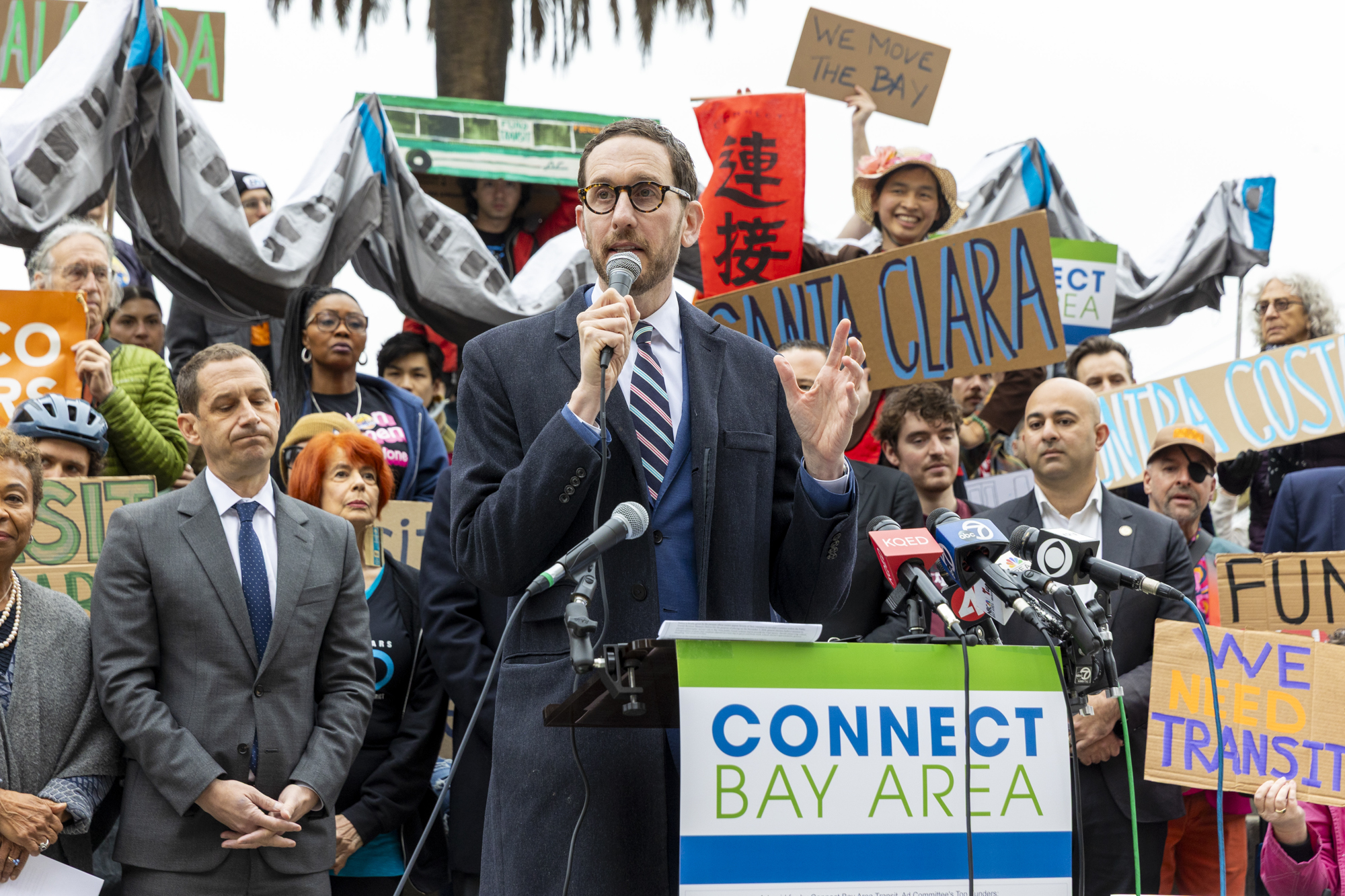
"caption": "Sen. Scott Wiener speaks on his support for California Senate Bill 63 at a press conference at Embarcadero Plaza in San Francisco on Jan. 23, 2026. City leaders have called for a public utility option for years, but have struggled to push through the California utility giant’s lobbying efforts and legal challenges. ",
"credit": "Tâm Vũ/KQED",
"altTag": null,
"description": null,
"imgSizes": {
"thumbnail": {
"file": "https://cdn.kqed.org/wp-content/uploads/sites/10/2026/01/260123-SIGNATUREKICKOFF00063_TV-KQED-160x107.jpg",
"width": 160,
"height": 107,
"mimeType": "image/jpeg"
},
"1536x1536": {
"file": "https://cdn.kqed.org/wp-content/uploads/sites/10/2026/01/260123-SIGNATUREKICKOFF00063_TV-KQED-1536x1024.jpg",
"width": 1536,
"height": 1024,
"mimeType": "image/jpeg"
},
"post-thumbnail": {
"file": "https://cdn.kqed.org/wp-content/uploads/sites/10/2026/01/260123-SIGNATUREKICKOFF00063_TV-KQED-672x372.jpg",
"width": 672,
"height": 372,
"mimeType": "image/jpeg"
},
"twentyfourteen-full-width": {
"file": "https://cdn.kqed.org/wp-content/uploads/sites/10/2026/01/260123-SIGNATUREKICKOFF00063_TV-KQED-1038x576.jpg",
"width": 1038,
"height": 576,
"mimeType": "image/jpeg"
},
"npr-cds-wide": {
"file": "https://cdn.kqed.org/wp-content/uploads/sites/10/2026/01/260123-SIGNATUREKICKOFF00063_TV-KQED-1200x675.jpg",
"width": 1200,
"height": 675,
"mimeType": "image/jpeg"
},
"kqedFullSize": {
"file": "https://cdn.kqed.org/wp-content/uploads/sites/10/2026/01/260123-SIGNATUREKICKOFF00063_TV-KQED.jpg",
"width": 2000,
"height": 1333
}
},
"isLoading": false,
"fetchFailed": false
},
"news_12074263": {
"type": "attachments",
"id": "news_12074263",
"meta": {
"index": "attachments_1716263798",
"site": "news",
"id": "12074263",
"found": true
},
"title": "A westbound BART train enters the transbay tube in Oakland, Calif. on Friday, Feb. 16, 2018. BART officials will begin a study on the feasibility of a second tube under the bay",
"publishDate": 1771874275,
"status": "inherit",
"parent": 12074259,
"modified": 1771879718,
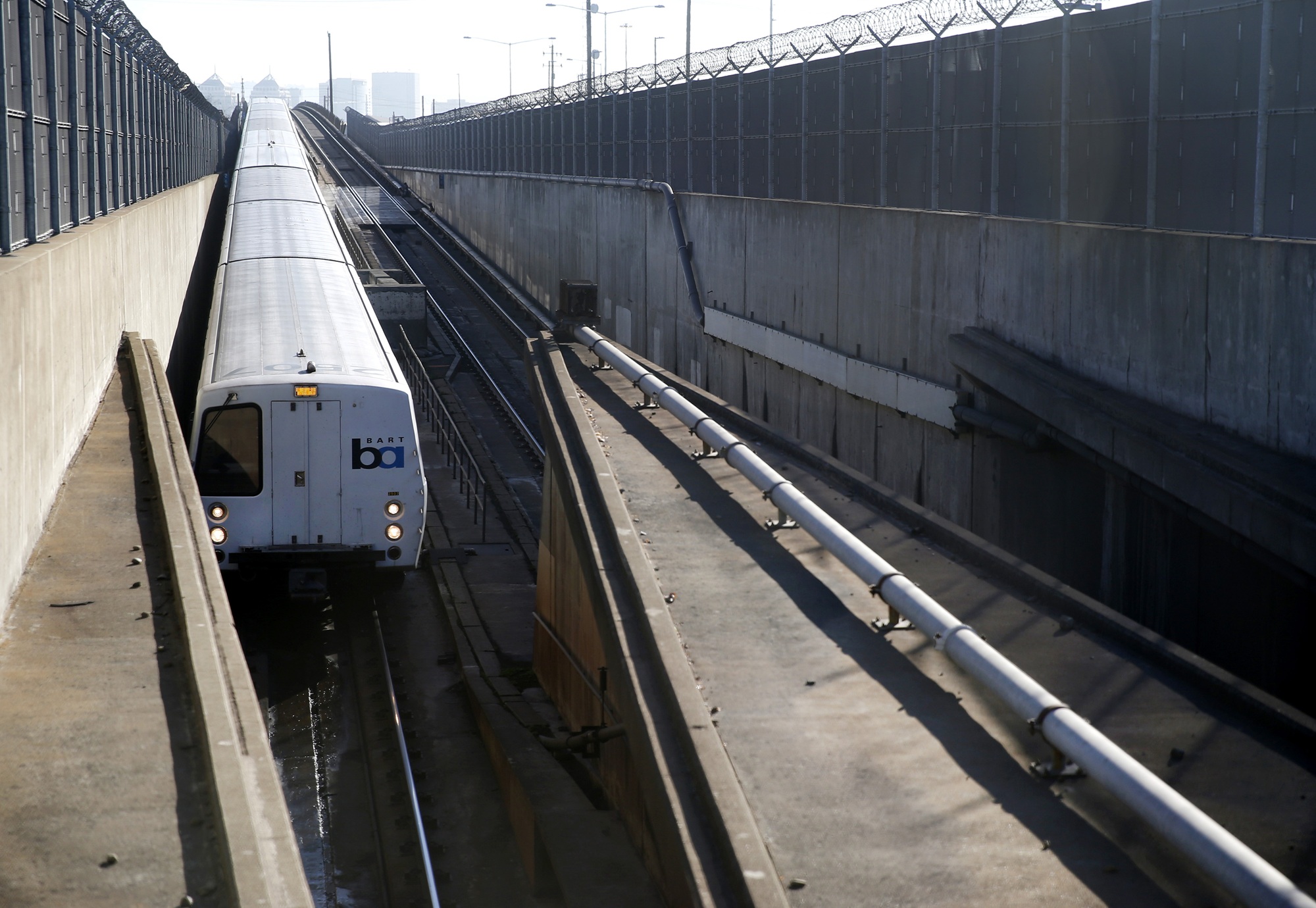
"caption": "A westbound BART train enters the Transbay Tube in Oakland, California, on Feb. 16, 2018.",
"credit": "Paul Chinn/The San Francisco Chronicle via Getty Images",
"altTag": null,
"description": null,
"imgSizes": {
"thumbnail": {
"file": "https://cdn.kqed.org/wp-content/uploads/sites/10/2026/02/TransBayTubeGetty-160x110.jpg",
"width": 160,
"height": 110,
"mimeType": "image/jpeg"
},
"1536x1536": {
"file": "https://cdn.kqed.org/wp-content/uploads/sites/10/2026/02/TransBayTubeGetty-1536x1060.jpg",
"width": 1536,
"height": 1060,
"mimeType": "image/jpeg"
},
"post-thumbnail": {
"file": "https://cdn.kqed.org/wp-content/uploads/sites/10/2026/02/TransBayTubeGetty-672x372.jpg",
"width": 672,
"height": 372,
"mimeType": "image/jpeg"
},
"twentyfourteen-full-width": {
"file": "https://cdn.kqed.org/wp-content/uploads/sites/10/2026/02/TransBayTubeGetty-1038x576.jpg",
"width": 1038,
"height": 576,
"mimeType": "image/jpeg"
},
"npr-cds-wide": {
"file": "https://cdn.kqed.org/wp-content/uploads/sites/10/2026/02/TransBayTubeGetty-1200x675.jpg",
"width": 1200,
"height": 675,
"mimeType": "image/jpeg"
},
"kqedFullSize": {
"file": "https://cdn.kqed.org/wp-content/uploads/sites/10/2026/02/TransBayTubeGetty.jpg",
"width": 2000,
"height": 1380
}
},
"isLoading": false,
"fetchFailed": false
},
"news_12071073": {
"type": "attachments",
"id": "news_12071073",
"meta": {
"index": "attachments_1716263798",
"site": "news",
"id": "12071073",
"found": true
},
"title": "260123-ITALIANNORTHBEACH-06-BL-KQED",
"publishDate": 1769458784,
"status": "inherit",
"parent": 12074121,
"modified": 1771625125,
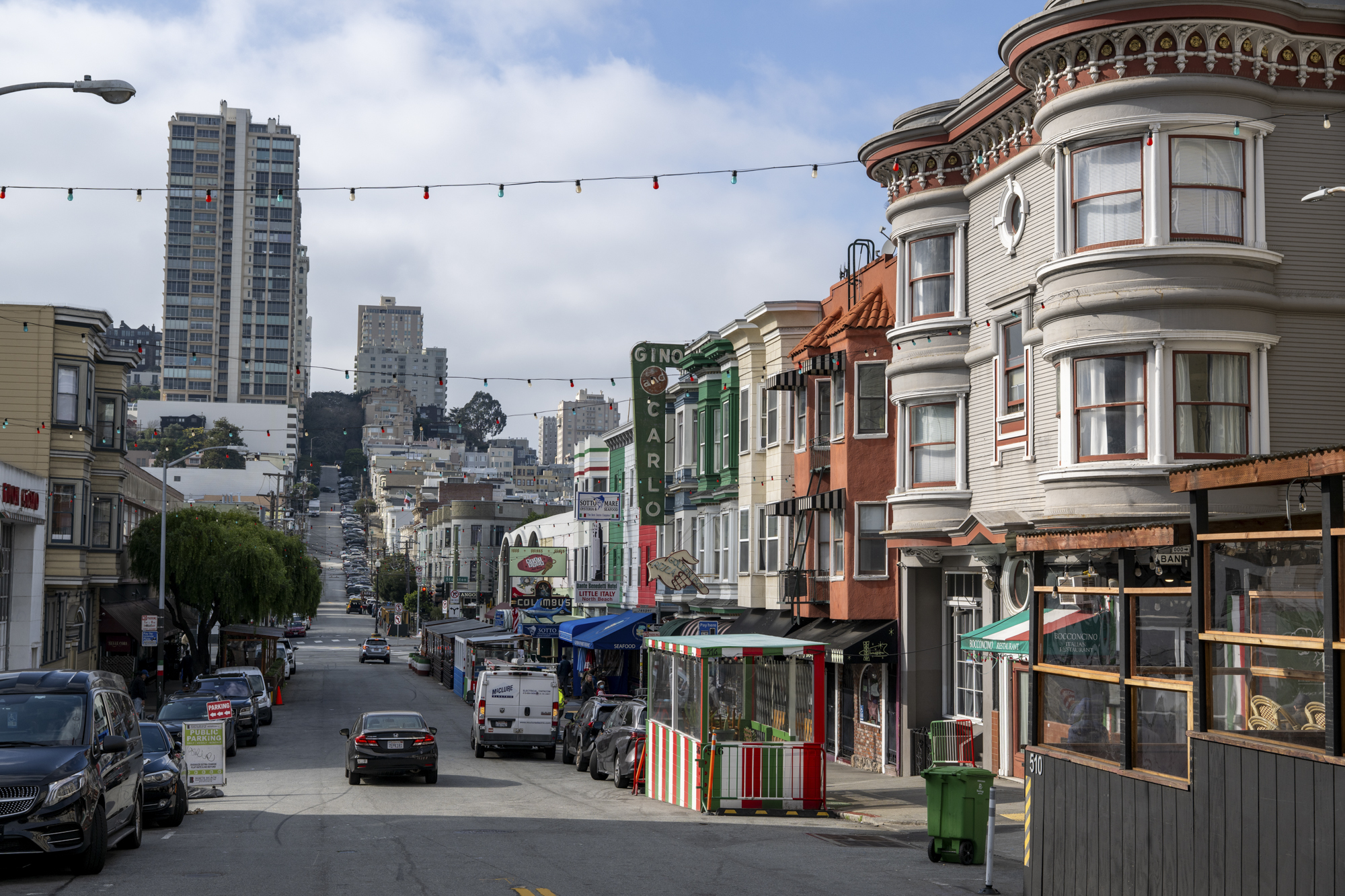
"caption": "Businesses line Green Street in the North Beach neighborhood of San Francisco on Jan. 23, 2026.",
"credit": "Beth LaBerge/KQED",
"altTag": null,
"description": null,
"imgSizes": {
"thumbnail": {
"file": "https://cdn.kqed.org/wp-content/uploads/sites/10/2026/01/260123-ITALIANNORTHBEACH-06-BL-KQED-160x107.jpg",
"width": 160,
"height": 107,
"mimeType": "image/jpeg"
},
"1536x1536": {
"file": "https://cdn.kqed.org/wp-content/uploads/sites/10/2026/01/260123-ITALIANNORTHBEACH-06-BL-KQED-1536x1024.jpg",
"width": 1536,
"height": 1024,
"mimeType": "image/jpeg"
},
"post-thumbnail": {
"file": "https://cdn.kqed.org/wp-content/uploads/sites/10/2026/01/260123-ITALIANNORTHBEACH-06-BL-KQED-672x372.jpg",
"width": 672,
"height": 372,
"mimeType": "image/jpeg"
},
"twentyfourteen-full-width": {
"file": "https://cdn.kqed.org/wp-content/uploads/sites/10/2026/01/260123-ITALIANNORTHBEACH-06-BL-KQED-1038x576.jpg",
"width": 1038,
"height": 576,
"mimeType": "image/jpeg"
},
"npr-cds-wide": {
"file": "https://cdn.kqed.org/wp-content/uploads/sites/10/2026/01/260123-ITALIANNORTHBEACH-06-BL-KQED-1200x675.jpg",
"width": 1200,
"height": 675,
"mimeType": "image/jpeg"
},
"kqedFullSize": {
"file": "https://cdn.kqed.org/wp-content/uploads/sites/10/2026/01/260123-ITALIANNORTHBEACH-06-BL-KQED.jpg",
"width": 2000,
"height": 1333
}
},
"isLoading": false,
"fetchFailed": false
},
"news_12073052": {
"type": "attachments",
"id": "news_12073052",
"meta": {
"index": "attachments_1716263798",
"site": "news",
"id": "12073052",
"found": true
},
"title": "020926PHONEBOOTHEXPERIMENT_GH_014-KQED",
"publishDate": 1770758059,
"status": "inherit",
"parent": 12073446,
"modified": 1771021685,
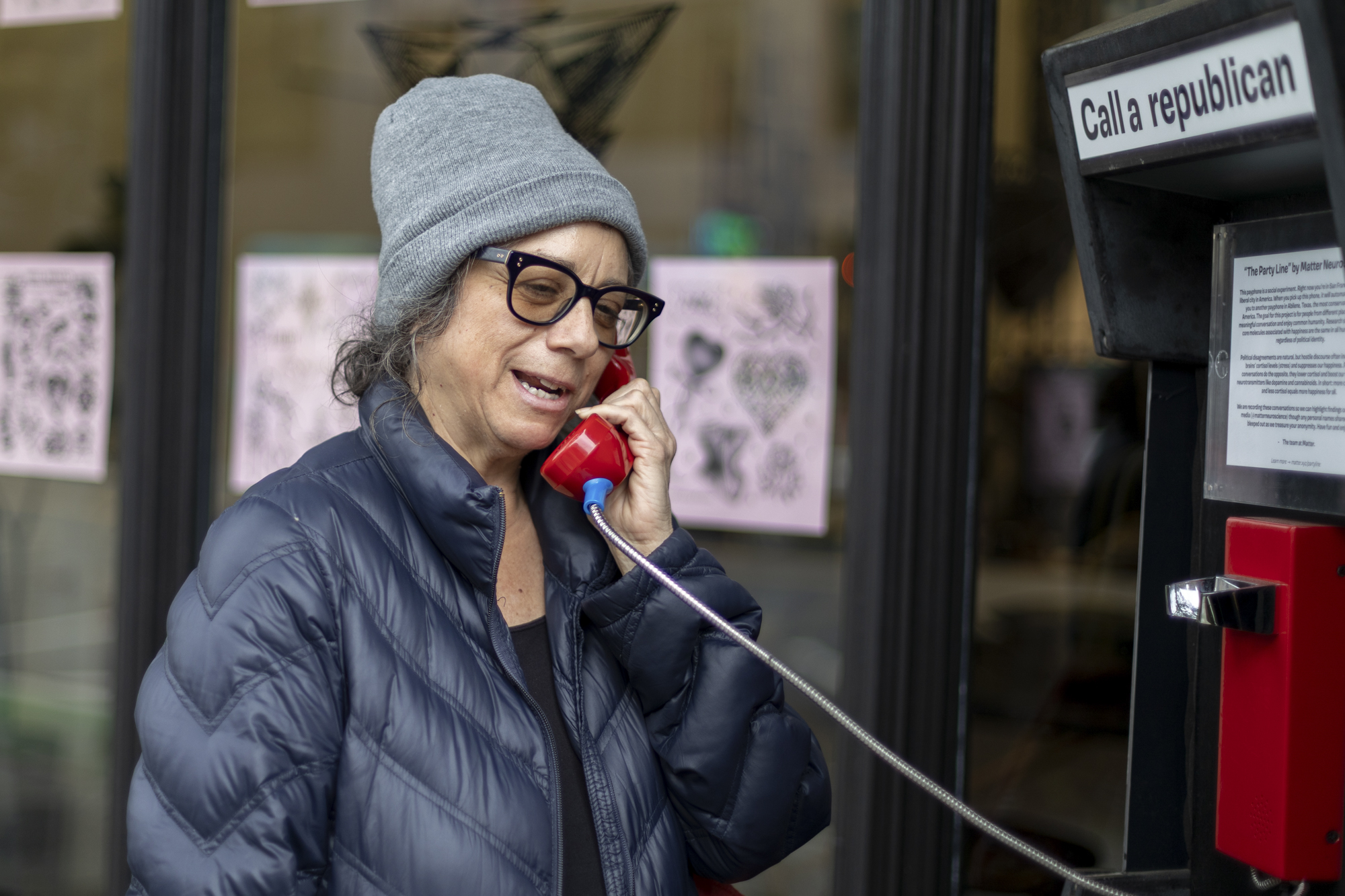
"caption": "Maria, a San Francisco resident, speaks on The Party Line payphone installation outside a storefront at 14th Street and Valencia Street in San Francisco, on Feb. 9, 2026.",
"credit": "Gustavo Hernandez/KQED",
"altTag": null,
"description": null,
"imgSizes": {
"thumbnail": {
"file": "https://cdn.kqed.org/wp-content/uploads/sites/10/2026/02/020926PHONEBOOTHEXPERIMENT_GH_014-KQED-160x107.jpg",
"width": 160,
"height": 107,
"mimeType": "image/jpeg"
},
"1536x1536": {
"file": "https://cdn.kqed.org/wp-content/uploads/sites/10/2026/02/020926PHONEBOOTHEXPERIMENT_GH_014-KQED-1536x1024.jpg",
"width": 1536,
"height": 1024,
"mimeType": "image/jpeg"
},
"post-thumbnail": {
"file": "https://cdn.kqed.org/wp-content/uploads/sites/10/2026/02/020926PHONEBOOTHEXPERIMENT_GH_014-KQED-672x372.jpg",
"width": 672,
"height": 372,
"mimeType": "image/jpeg"
},
"twentyfourteen-full-width": {
"file": "https://cdn.kqed.org/wp-content/uploads/sites/10/2026/02/020926PHONEBOOTHEXPERIMENT_GH_014-KQED-1038x576.jpg",
"width": 1038,
"height": 576,
"mimeType": "image/jpeg"
},
"npr-cds-wide": {
"file": "https://cdn.kqed.org/wp-content/uploads/sites/10/2026/02/020926PHONEBOOTHEXPERIMENT_GH_014-KQED-1200x675.jpg",
"width": 1200,
"height": 675,
"mimeType": "image/jpeg"
},
"kqedFullSize": {
"file": "https://cdn.kqed.org/wp-content/uploads/sites/10/2026/02/020926PHONEBOOTHEXPERIMENT_GH_014-KQED.jpg",
"width": 2000,
"height": 1333
}
},
"isLoading": false,
"fetchFailed": false
},
"news_12073775": {
"type": "attachments",
"id": "news_12073775",
"meta": {
"index": "attachments_1716263798",
"site": "news",
"id": "12073775",
"found": true
},
"title": "260218-KEY SYSTEM-04-KQED",
"publishDate": 1771461212,
"status": "inherit",
"parent": 0,
"modified": 1771465208,
"caption": "Key System Bridge Unit 187, part of the fleet that provided service across the Bay Bridge from the East Bay to San Francisco between 1939 and 1958, during a 2021 excursion at the Western Railway Museum in Solano County. ",
"credit": "Dan Brekke/KQED",
"altTag": "A two-car, orange-and-silver electric train shown in a rural setting at the Western Railway Museum in Solano County.",
"description": null,
"imgSizes": {
"thumbnail": {
"file": "https://cdn.kqed.org/wp-content/uploads/sites/10/2026/02/260218-KEY-SYSTEM-04-KQED-160x107.jpg",
"width": 160,
"height": 107,
"mimeType": "image/jpeg"
},
"1536x1536": {
"file": "https://cdn.kqed.org/wp-content/uploads/sites/10/2026/02/260218-KEY-SYSTEM-04-KQED-1536x1024.jpg",
"width": 1536,
"height": 1024,
"mimeType": "image/jpeg"
},
"post-thumbnail": {
"file": "https://cdn.kqed.org/wp-content/uploads/sites/10/2026/02/260218-KEY-SYSTEM-04-KQED-672x372.jpg",
"width": 672,
"height": 372,
"mimeType": "image/jpeg"
},
"twentyfourteen-full-width": {
"file": "https://cdn.kqed.org/wp-content/uploads/sites/10/2026/02/260218-KEY-SYSTEM-04-KQED-1038x576.jpg",
"width": 1038,
"height": 576,
"mimeType": "image/jpeg"
},
"npr-cds-wide": {
"file": "https://cdn.kqed.org/wp-content/uploads/sites/10/2026/02/260218-KEY-SYSTEM-04-KQED-1200x675.jpg",
"width": 1200,
"height": 675,
"mimeType": "image/jpeg"
},
"kqedFullSize": {
"file": "https://cdn.kqed.org/wp-content/uploads/sites/10/2026/02/260218-KEY-SYSTEM-04-KQED.jpg",
"width": 2000,
"height": 1333
}
},
"isLoading": false,
"fetchFailed": false
},
"news_12073720": {
"type": "attachments",
"id": "news_12073720",
"meta": {
"index": "attachments_1716263798",
"site": "news",
"id": "12073720",
"found": true
},
"title": "241023-SFUSDSuperintendent-51-BL_qed",
"publishDate": 1771443444,
"status": "inherit",
"parent": 12073717,
"modified": 1771443454,
"caption": "A sign hangs in the hallway at Yick Wo Alternative Elementary School in San Francisco on Oct. 23, 2024.",
"credit": "Beth LaBerge/KQED",
"altTag": null,
"description": null,
"imgSizes": {
"thumbnail": {
"file": "https://cdn.kqed.org/wp-content/uploads/sites/10/2026/02/241023-SFUSDSuperintendent-51-BL_qed-160x107.jpg",
"width": 160,
"height": 107,
"mimeType": "image/jpeg"
},
"1536x1536": {
"file": "https://cdn.kqed.org/wp-content/uploads/sites/10/2026/02/241023-SFUSDSuperintendent-51-BL_qed-1536x1024.jpg",
"width": 1536,
"height": 1024,
"mimeType": "image/jpeg"
},
"post-thumbnail": {
"file": "https://cdn.kqed.org/wp-content/uploads/sites/10/2026/02/241023-SFUSDSuperintendent-51-BL_qed-672x372.jpg",
"width": 672,
"height": 372,
"mimeType": "image/jpeg"
},
"twentyfourteen-full-width": {
"file": "https://cdn.kqed.org/wp-content/uploads/sites/10/2026/02/241023-SFUSDSuperintendent-51-BL_qed-1038x576.jpg",
"width": 1038,
"height": 576,
"mimeType": "image/jpeg"
},
"npr-cds-wide": {
"file": "https://cdn.kqed.org/wp-content/uploads/sites/10/2026/02/241023-SFUSDSuperintendent-51-BL_qed-1200x675.jpg",
"width": 1200,
"height": 675,
"mimeType": "image/jpeg"
},
"kqedFullSize": {
"file": "https://cdn.kqed.org/wp-content/uploads/sites/10/2026/02/241023-SFUSDSuperintendent-51-BL_qed.jpg",
"width": 1999,
"height": 1333
}
},
"isLoading": false,
"fetchFailed": false
},
"news_12073641": {
"type": "attachments",
"id": "news_12073641",
"meta": {
"index": "attachments_1716263798",
"site": "news",
"id": "12073641",
"found": true
},
"title": "SFMayorDanielLurie",
"publishDate": 1771372635,
"status": "inherit",
"parent": 12073638,
"modified": 1771372695,
"caption": "San Francisco Mayor Daniel Lurie signs legislation on Feb. 17, 2026, allowing the city to open a new facility as an alternative to jail for people who are publicly intoxicated.",
"credit": "Sydney Johnson/KQED",
"altTag": null,
"description": null,
"imgSizes": {
"thumbnail": {
"file": "https://cdn.kqed.org/wp-content/uploads/sites/10/2026/02/SFMayorDanielLurie-160x120.jpg",
"width": 160,
"height": 120,
"mimeType": "image/jpeg"
},
"1536x1536": {
"file": "https://cdn.kqed.org/wp-content/uploads/sites/10/2026/02/SFMayorDanielLurie-1536x1152.jpg",
"width": 1536,
"height": 1152,
"mimeType": "image/jpeg"
},
"post-thumbnail": {
"file": "https://cdn.kqed.org/wp-content/uploads/sites/10/2026/02/SFMayorDanielLurie-672x372.jpg",
"width": 672,
"height": 372,
"mimeType": "image/jpeg"
},
"twentyfourteen-full-width": {
"file": "https://cdn.kqed.org/wp-content/uploads/sites/10/2026/02/SFMayorDanielLurie-1038x576.jpg",
"width": 1038,
"height": 576,
"mimeType": "image/jpeg"
},
"npr-cds-wide": {
"file": "https://cdn.kqed.org/wp-content/uploads/sites/10/2026/02/SFMayorDanielLurie-1200x675.jpg",
"width": 1200,
"height": 675,
"mimeType": "image/jpeg"
},
"kqedFullSize": {
"file": "https://cdn.kqed.org/wp-content/uploads/sites/10/2026/02/SFMayorDanielLurie.jpg",
"width": 2000,
"height": 1500
}
},
"isLoading": false,
"fetchFailed": false
},
"news_12073049": {
"type": "attachments",
"id": "news_12073049",
"meta": {
"index": "attachments_1716263798",
"site": "news",
"id": "12073049",
"found": true
},
"title": "020926PHONEBOOTHEXPERIMENT_GH_006-KQED",
"publishDate": 1770758049,
"status": "inherit",
"parent": 0,
"modified": 1770758089,
"caption": "Jacob Paton (left), visiting from Virginia, uses The Party Line payphone as Victoria Shahnzaryo (right), a San Francisco resident, observes on 14th Street and Valencia Street in San Francisco, on Feb. 9, 2026.",
"credit": "Gustavo Hernandez/KQED",
"altTag": null,
"description": null,
"imgSizes": {
"thumbnail": {
"file": "https://cdn.kqed.org/wp-content/uploads/sites/10/2026/02/020926PHONEBOOTHEXPERIMENT_GH_006-KQED-160x107.jpg",
"width": 160,
"height": 107,
"mimeType": "image/jpeg"
},
"1536x1536": {
"file": "https://cdn.kqed.org/wp-content/uploads/sites/10/2026/02/020926PHONEBOOTHEXPERIMENT_GH_006-KQED-1536x1025.jpg",
"width": 1536,
"height": 1025,
"mimeType": "image/jpeg"
},
"post-thumbnail": {
"file": "https://cdn.kqed.org/wp-content/uploads/sites/10/2026/02/020926PHONEBOOTHEXPERIMENT_GH_006-KQED-672x372.jpg",
"width": 672,
"height": 372,
"mimeType": "image/jpeg"
},
"twentyfourteen-full-width": {
"file": "https://cdn.kqed.org/wp-content/uploads/sites/10/2026/02/020926PHONEBOOTHEXPERIMENT_GH_006-KQED-1038x576.jpg",
"width": 1038,
"height": 576,
"mimeType": "image/jpeg"
},
"npr-cds-wide": {
"file": "https://cdn.kqed.org/wp-content/uploads/sites/10/2026/02/020926PHONEBOOTHEXPERIMENT_GH_006-KQED-1200x675.jpg",
"width": 1200,
"height": 675,
"mimeType": "image/jpeg"
},
"kqedFullSize": {
"file": "https://cdn.kqed.org/wp-content/uploads/sites/10/2026/02/020926PHONEBOOTHEXPERIMENT_GH_006-KQED.jpg",
"width": 2000,
"height": 1334
}
},
"isLoading": false,
"fetchFailed": false
},
"news_12073457": {
"type": "attachments",
"id": "news_12073457",
"meta": {
"index": "attachments_1716263798",
"site": "news",
"id": "12073457",
"found": true
},
"title": "260210-SFUSDStrikeDay2-52-BL_qed",
"publishDate": 1771004680,
"status": "inherit",
"parent": 12073441,
"modified": 1771027992,
"caption": "Rashida Johnson, a family liaison at Aptos Middle School, marches with teachers, faculty, and supporters from Dolores Park to City Hall during the second day of an SFUSD teachers strike in San Francisco on Feb. 10, 2026.",
"credit": "Beth LaBerge/KQED",
"altTag": null,
"description": null,
"imgSizes": {
"thumbnail": {
"file": "https://cdn.kqed.org/wp-content/uploads/sites/10/2026/02/260210-SFUSDStrikeDay2-52-BL_qed-160x107.jpg",
"width": 160,
"height": 107,
"mimeType": "image/jpeg"
},
"1536x1536": {
"file": "https://cdn.kqed.org/wp-content/uploads/sites/10/2026/02/260210-SFUSDStrikeDay2-52-BL_qed-1536x1024.jpg",
"width": 1536,
"height": 1024,
"mimeType": "image/jpeg"
},
"post-thumbnail": {
"file": "https://cdn.kqed.org/wp-content/uploads/sites/10/2026/02/260210-SFUSDStrikeDay2-52-BL_qed-672x372.jpg",
"width": 672,
"height": 372,
"mimeType": "image/jpeg"
},
"twentyfourteen-full-width": {
"file": "https://cdn.kqed.org/wp-content/uploads/sites/10/2026/02/260210-SFUSDStrikeDay2-52-BL_qed-1038x576.jpg",
"width": 1038,
"height": 576,
"mimeType": "image/jpeg"
},
"npr-cds-wide": {
"file": "https://cdn.kqed.org/wp-content/uploads/sites/10/2026/02/260210-SFUSDStrikeDay2-52-BL_qed-1200x675.jpg",
"width": 1200,
"height": 675,
"mimeType": "image/jpeg"
},
"kqedFullSize": {
"file": "https://cdn.kqed.org/wp-content/uploads/sites/10/2026/02/260210-SFUSDStrikeDay2-52-BL_qed.jpg",
"width": 2000,
"height": 1333
}
},
"isLoading": false,
"fetchFailed": false
},
"news_12073258": {
"type": "attachments",
"id": "news_12073258",
"meta": {
"index": "attachments_1716263798",
"site": "news",
"id": "12073258",
"found": true
},
"title": "260209-SFOSLEEPING-01-BL-KQED",
"publishDate": 1770855873,
"status": "inherit",
"parent": 0,
"modified": 1770855925,
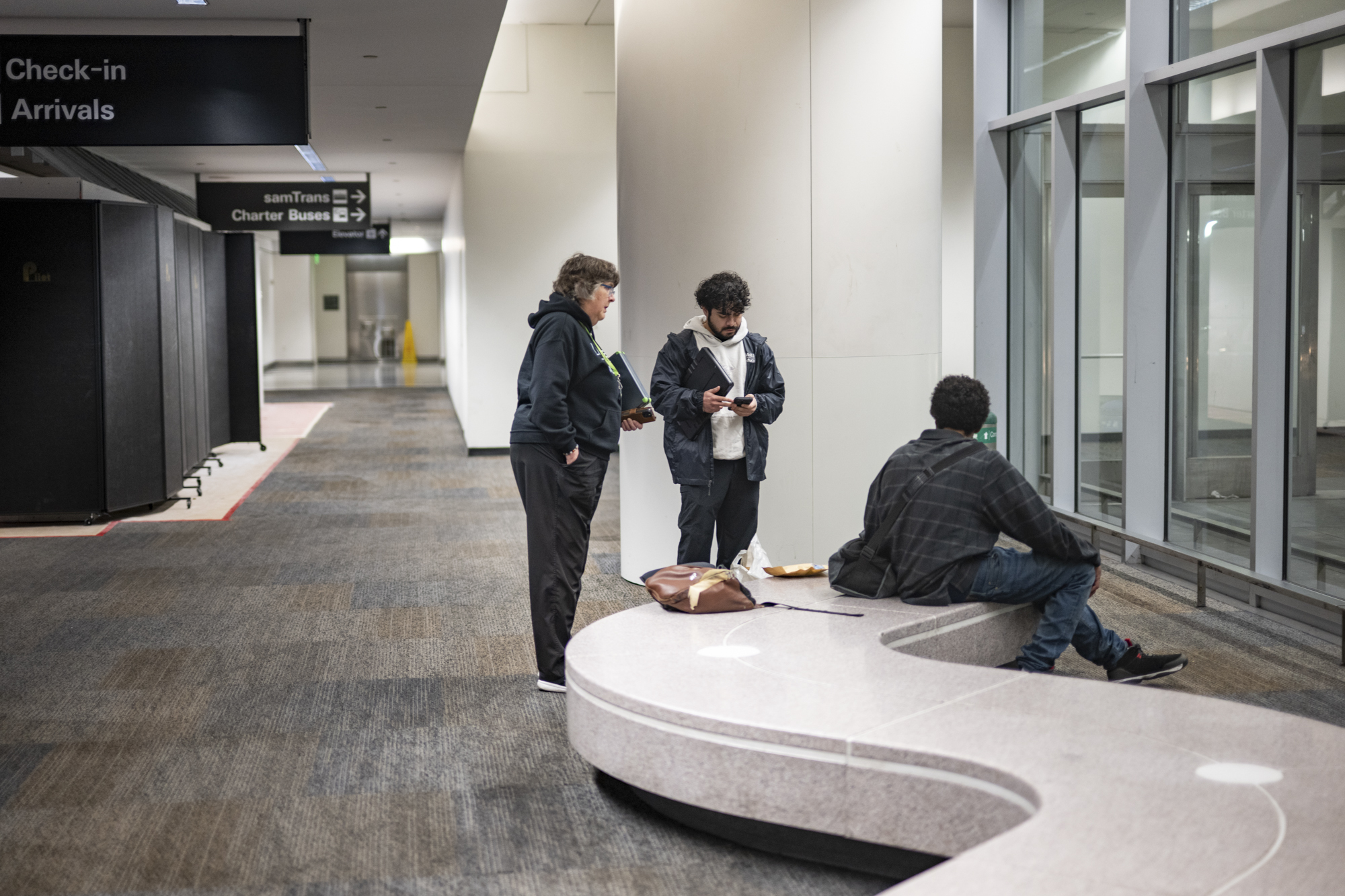
"caption": "Sylvia Bambra (left) and Ivan Marquez, case managers with the LifeMoves Homeless Outreach Team, speak with an unhoused person during an outreach visit at San Francisco International Airport on Feb. 9, 2026.",
"credit": "Beth LaBerge/KQED",
"altTag": null,
"description": null,
"imgSizes": {
"thumbnail": {
"file": "https://cdn.kqed.org/wp-content/uploads/sites/10/2026/02/260209-SFOSLEEPING-01-BL-KQED-160x107.jpg",
"width": 160,
"height": 107,
"mimeType": "image/jpeg"
},
"1536x1536": {
"file": "https://cdn.kqed.org/wp-content/uploads/sites/10/2026/02/260209-SFOSLEEPING-01-BL-KQED-1536x1024.jpg",
"width": 1536,
"height": 1024,
"mimeType": "image/jpeg"
},
"post-thumbnail": {
"file": "https://cdn.kqed.org/wp-content/uploads/sites/10/2026/02/260209-SFOSLEEPING-01-BL-KQED-672x372.jpg",
"width": 672,
"height": 372,
"mimeType": "image/jpeg"
},
"twentyfourteen-full-width": {
"file": "https://cdn.kqed.org/wp-content/uploads/sites/10/2026/02/260209-SFOSLEEPING-01-BL-KQED-1038x576.jpg",
"width": 1038,
"height": 576,
"mimeType": "image/jpeg"
},
"npr-cds-wide": {
"file": "https://cdn.kqed.org/wp-content/uploads/sites/10/2026/02/260209-SFOSLEEPING-01-BL-KQED-1200x675.jpg",
"width": 1200,
"height": 675,
"mimeType": "image/jpeg"
},
"kqedFullSize": {
"file": "https://cdn.kqed.org/wp-content/uploads/sites/10/2026/02/260209-SFOSLEEPING-01-BL-KQED.jpg",
"width": 2000,
"height": 1333
}
},
"isLoading": false,
"fetchFailed": false
},
"news_12068297": {
"type": "attachments",
"id": "news_12068297",
"meta": {
"index": "attachments_1716263798",
"site": "news",
"id": "12068297",
"found": true
},
"title": "251222-PGEUpdates-24-BL_qed",
"publishDate": 1766442993,
"status": "inherit",
"parent": 0,
"modified": 1770856815,
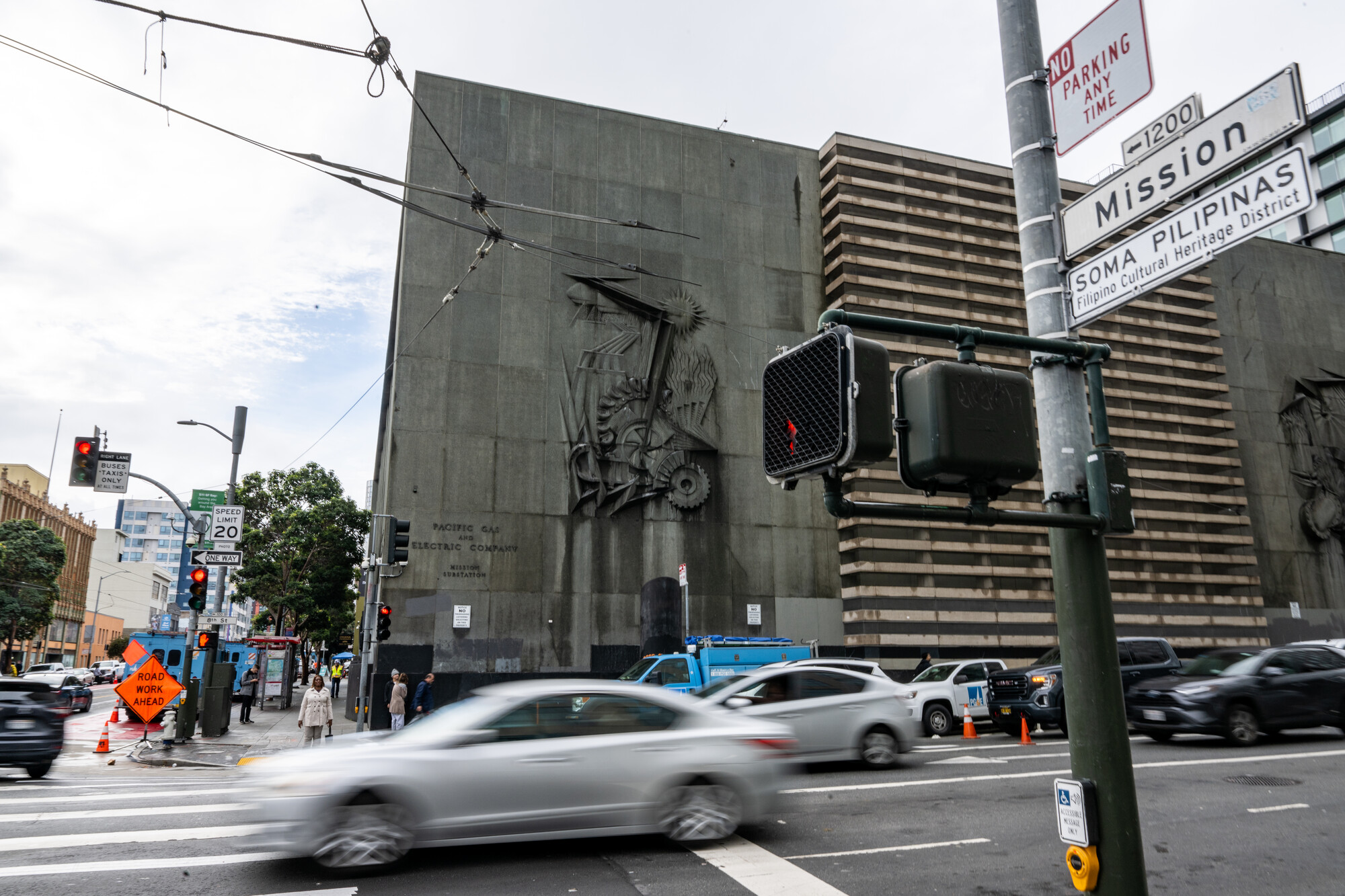
"caption": "A PG&E substation on Mission and Eighth streets in San Francisco on Dec. 22, 2025, after a fire at the site over the weekend contributed to a major citywide power outage.",
"credit": "Beth LaBerge/KQED",
"altTag": null,
"description": null,
"imgSizes": {
"thumbnail": {
"file": "https://cdn.kqed.org/wp-content/uploads/sites/10/2025/12/251222-PGEUpdates-24-BL_qed-160x107.jpg",
"width": 160,
"height": 107,
"mimeType": "image/jpeg"
},
"1536x1536": {
"file": "https://cdn.kqed.org/wp-content/uploads/sites/10/2025/12/251222-PGEUpdates-24-BL_qed-1536x1024.jpg",
"width": 1536,
"height": 1024,
"mimeType": "image/jpeg"
},
"post-thumbnail": {
"file": "https://cdn.kqed.org/wp-content/uploads/sites/10/2025/12/251222-PGEUpdates-24-BL_qed-672x372.jpg",
"width": 672,
"height": 372,
"mimeType": "image/jpeg"
},
"twentyfourteen-full-width": {
"file": "https://cdn.kqed.org/wp-content/uploads/sites/10/2025/12/251222-PGEUpdates-24-BL_qed-1038x576.jpg",
"width": 1038,
"height": 576,
"mimeType": "image/jpeg"
},
"npr-cds-wide": {
"file": "https://cdn.kqed.org/wp-content/uploads/sites/10/2025/12/251222-PGEUpdates-24-BL_qed-1200x675.jpg",
"width": 1200,
"height": 675,
"mimeType": "image/jpeg"
},
"kqedFullSize": {
"file": "https://cdn.kqed.org/wp-content/uploads/sites/10/2025/12/251222-PGEUpdates-24-BL_qed.jpg",
"width": 2000,
"height": 1333
}
},
"isLoading": false,
"fetchFailed": false
},
"news_12073370": {
"type": "attachments",
"id": "news_12073370",
"meta": {
"index": "attachments_1716263798",
"site": "news",
"id": "12073370",
"found": true
},
"title": "250519-AffordableHousingFile-04-BL_qed",
"publishDate": 1770935618,
"status": "inherit",
"parent": 12073193,
"modified": 1772759203,
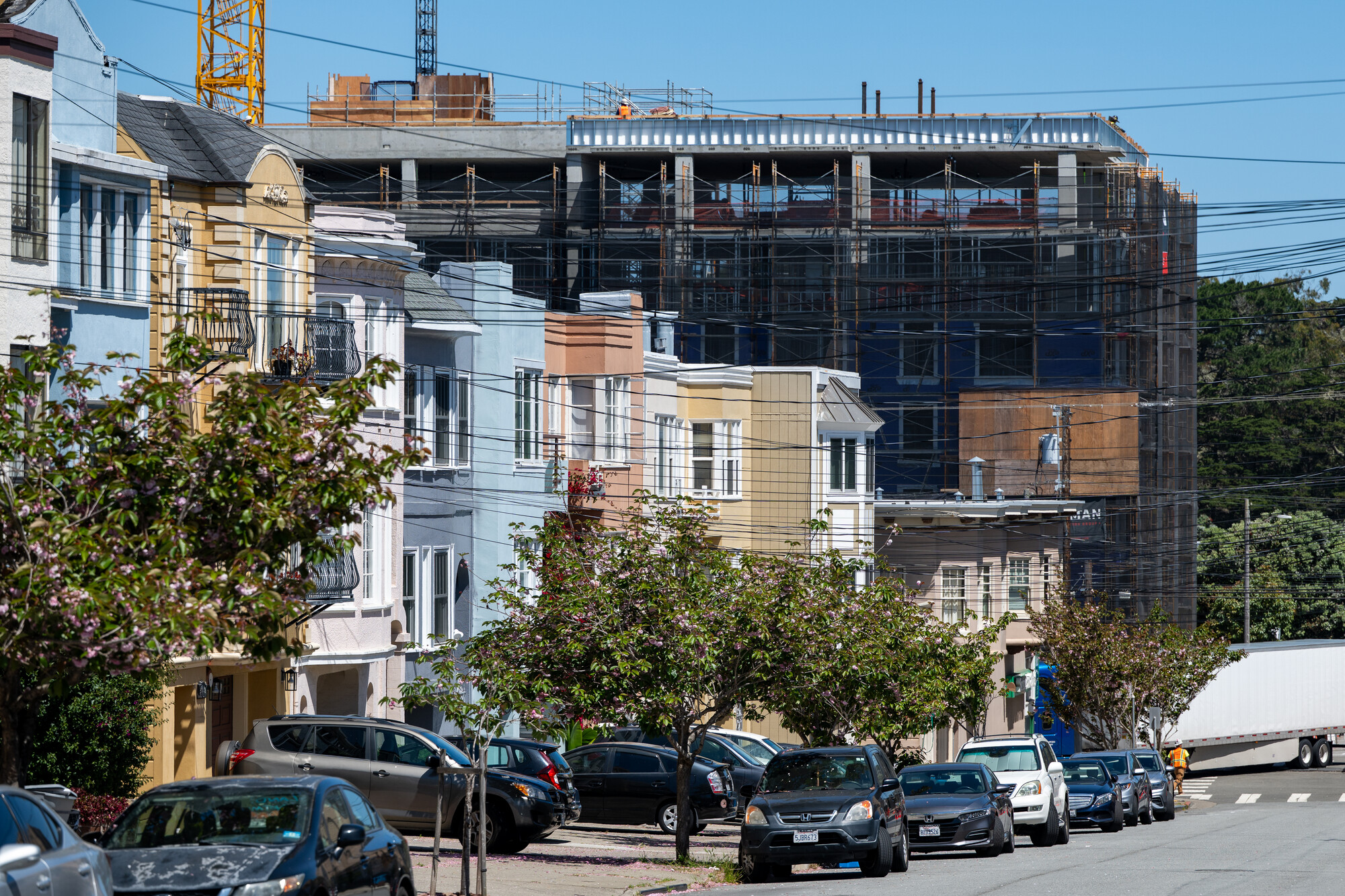
"caption": "Construction is underway on an affordable housing apartment building at 2550 Irving St. in San Francisco’s Sunset District on May 19, 2025.",
"credit": "Beth LaBerge/KQED",
"altTag": null,
"description": null,
"imgSizes": {
"thumbnail": {
"file": "https://cdn.kqed.org/wp-content/uploads/sites/10/2026/02/250519-AffordableHousingFile-04-BL_qed-160x107.jpg",
"width": 160,
"height": 107,
"mimeType": "image/jpeg"
},
"1536x1536": {
"file": "https://cdn.kqed.org/wp-content/uploads/sites/10/2026/02/250519-AffordableHousingFile-04-BL_qed-1536x1024.jpg",
"width": 1536,
"height": 1024,
"mimeType": "image/jpeg"
},
"post-thumbnail": {
"file": "https://cdn.kqed.org/wp-content/uploads/sites/10/2026/02/250519-AffordableHousingFile-04-BL_qed-672x372.jpg",
"width": 672,
"height": 372,
"mimeType": "image/jpeg"
},
"twentyfourteen-full-width": {
"file": "https://cdn.kqed.org/wp-content/uploads/sites/10/2026/02/250519-AffordableHousingFile-04-BL_qed-1038x576.jpg",
"width": 1038,
"height": 576,
"mimeType": "image/jpeg"
},
"npr-cds-wide": {
"file": "https://cdn.kqed.org/wp-content/uploads/sites/10/2026/02/250519-AffordableHousingFile-04-BL_qed-1200x675.jpg",
"width": 1200,
"height": 675,
"mimeType": "image/jpeg"
},
"kqedFullSize": {
"file": "https://cdn.kqed.org/wp-content/uploads/sites/10/2026/02/250519-AffordableHousingFile-04-BL_qed.jpg",
"width": 2000,
"height": 1333
}
},
"isLoading": false,
"fetchFailed": false
}
},
"audioPlayerReducer": {
"postId": "stream_live",
"isPaused": true,
"isPlaying": false,
"pfsActive": false,
"pledgeModalIsOpen": true,
"playerDrawerIsOpen": false,
"liveAudioPlayStartedAt": 0,
"liveAudioPlayContext": ""
},
"authorsReducer": {
"byline_news_12073006": {
"type": "authors",
"id": "byline_news_12073006",
"meta": {
"override": true
},
"slug": "byline_news_12073006",
"name": "Erin Bump ",
"isLoading": false
},
"danbrekke": {
"type": "authors",
"id": "222",
"meta": {
"index": "authors_1716337520",
"id": "222",
"found": true
},
"name": "Dan Brekke",
"firstName": "Dan",
"lastName": "Brekke",
"slug": "danbrekke",
"email": "dbrekke@kqed.org",
"display_author_email": true,
"staff_mastheads": [
"news",
"science"
],
"title": "KQED Editor and Reporter",
"bio": "Dan Brekke is a reporter and editor for KQED News, responsible for coverage of topics ranging from California water issues to the Bay Area's transportation challenges. In a newsroom career that began in Chicago in 1972, Dan has worked for \u003cem>The San Francisco Examiner,\u003c/em> Wired and TechTV and has been published in The New York Times, The New York Times Magazine, Business 2.0, Salon and elsewhere.\r\n\r\nSince joining KQED in 2007, Dan has reported, edited and produced both radio and online features and breaking news pieces. He has shared as both editor and reporter in four Society of Professional Journalists Norcal Excellence in Journalism awards and one Edward R. Murrow regional award. He was chosen for a spring 2017 residency at the Mesa Refuge to advance his research on California salmon.\r\n\r\nEmail Dan at: \u003ca href=\"mailto:dbrekke@kqed.org\">dbrekke@kqed.org\u003c/a>\r\n\r\n\u003cstrong>Twitter:\u003c/strong> \u003ca href=\"https://twitter.com/danbrekke\" rel=\"noopener noreferrer\">twitter.com/danbrekke\u003c/a>\r\n\u003cstrong>Facebook:\u003c/strong> \u003ca href=\"https://www.facebook.com/danbrekke\" rel=\"noopener noreferrer\">www.facebook.com/danbrekke\u003c/a>\r\n\u003cstrong>LinkedIn:\u003c/strong> \u003ca href=\"https://www.linkedin.com/in/danbrekke\" rel=\"noopener noreferrer\">www.linkedin.com/in/danbrekke\u003c/a>",
"avatar": "https://secure.gravatar.com/avatar/c8126230345efca3f7aa89b1a402be45?s=600&d=mm&r=g",
"twitter": "danbrekke",
"facebook": null,
"instagram": "https://www.instagram.com/dan.brekke/",
"linkedin": "https://www.linkedin.com/in/danbrekke/",
"sites": [
{
"site": "news",
"roles": [
"administrator",
"create_posts"
]
},
{
"site": "stateofhealth",
"roles": [
"editor"
]
},
{
"site": "science",
"roles": [
"editor"
]
},
{
"site": "quest",
"roles": [
"contributor"
]
},
{
"site": "food",
"roles": [
"contributor"
]
},
{
"site": "forum",
"roles": [
"contributor"
]
},
{
"site": "liveblog",
"roles": [
"editor"
]
}
],
"headData": {
"title": "Dan Brekke | KQED",
"description": "KQED Editor and Reporter",
"ogImgSrc": "https://secure.gravatar.com/avatar/c8126230345efca3f7aa89b1a402be45?s=600&d=mm&r=g",
"twImgSrc": "https://secure.gravatar.com/avatar/c8126230345efca3f7aa89b1a402be45?s=600&d=mm&r=g"
},
"isLoading": false,
"link": "/author/danbrekke"
},
"ecruzguevarra": {
"type": "authors",
"id": "8654",
"meta": {
"index": "authors_1716337520",
"id": "8654",
"found": true
},
"name": "Ericka Cruz Guevarra",
"firstName": "Ericka",
"lastName": "Cruz Guevarra",
"slug": "ecruzguevarra",
"email": "ecruzguevarra@kqed.org",
"display_author_email": true,
"staff_mastheads": [
"news"
],
"title": "Producer, The Bay Podcast",
"bio": "Ericka Cruz Guevarra is host of \u003ca href=\"https://www.kqed.org/podcasts/thebay\">\u003cem>The Bay\u003c/em>\u003c/a> podcast at KQED. Before host, she was the show’s producer. Her work in that capacity includes a three-part reported series on policing in Vallejo, which won a 2020 excellence in journalism award from the Society of Professional Journalists. Ericka has worked as a breaking news reporter at Oregon Public Broadcasting, helped produce the Code Switch podcast, and was KQED’s inaugural Raul Ramirez Diversity Fund intern. She’s also an alumna of NPR’s Next Generation Radio program. Send her an email if you have strong feelings about whether Fairfield and Suisun City are the Bay. Ericka is represented by SAG-AFTRA.",
"avatar": "https://secure.gravatar.com/avatar/accefc1de4bafc7e234b69bcb9b6f6536c130fd84709bc3069ef11a78787e1bb?s=600&d=blank&r=g",
"twitter": "NotoriousECG",
"bluesky": null,
"facebook": null,
"instagram": null,
"linkedin": null,
"sites": [
{
"site": "arts",
"roles": [
"subscriber"
]
},
{
"site": "news",
"roles": [
"editor",
"manage_categories"
]
},
{
"site": "futureofyou",
"roles": [
"subscriber"
]
},
{
"site": "stateofhealth",
"roles": [
"subscriber"
]
},
{
"site": "science",
"roles": [
"editor"
]
},
{
"site": "forum",
"roles": [
"subscriber"
]
}
],
"headData": {
"title": "Ericka Cruz Guevarra | KQED",
"description": "Producer, The Bay Podcast",
"ogImgSrc": "https://secure.gravatar.com/avatar/accefc1de4bafc7e234b69bcb9b6f6536c130fd84709bc3069ef11a78787e1bb?s=600&d=blank&r=g",
"twImgSrc": "https://secure.gravatar.com/avatar/accefc1de4bafc7e234b69bcb9b6f6536c130fd84709bc3069ef11a78787e1bb?s=600&d=blank&r=g"
},
"isLoading": false,
"link": "/author/ecruzguevarra"
},
"amontecillo": {
"type": "authors",
"id": "11649",
"meta": {
"index": "authors_1716337520",
"id": "11649",
"found": true
},
"name": "Alan Montecillo",
"firstName": "Alan",
"lastName": "Montecillo",
"slug": "amontecillo",
"email": "amontecillo@kqed.org",
"display_author_email": false,
"staff_mastheads": [
"news"
],
"title": "KQED Contributor",
"bio": "Alan Montecillo is the senior editor of \u003cem>\u003ca href=\"http://kqed.org/thebay\">The Bay\u003c/a>, \u003c/em> KQED's local news podcast. Before moving to the Bay Area, he worked as a senior talk show producer for WILL in Champaign-Urbana, Illinois and at Oregon Public Broadcasting in Portland, Oregon. He has won journalism awards from the Society of Professional Journalists Northern California, the Public Media Journalists Association, The Signal Awards, and has also received a regional Edward R. Murrow award. Alan is a Filipino American from Hong Kong and a graduate of Reed College.",
"avatar": "https://secure.gravatar.com/avatar/268f53a2066899ea9efdd8a5900218b17c822d9862cbc9326cccec53ef41d349?s=600&d=blank&r=g",
"twitter": "alanmontecillo",
"bluesky": null,
"facebook": null,
"instagram": null,
"linkedin": null,
"sites": [
{
"site": "",
"roles": [
"editor"
]
},
{
"site": "news",
"roles": [
"editor",
"manage_categories"
]
}
],
"headData": {
"title": "Alan Montecillo | KQED",
"description": "KQED Contributor",
"ogImgSrc": "https://secure.gravatar.com/avatar/268f53a2066899ea9efdd8a5900218b17c822d9862cbc9326cccec53ef41d349?s=600&d=blank&r=g",
"twImgSrc": "https://secure.gravatar.com/avatar/268f53a2066899ea9efdd8a5900218b17c822d9862cbc9326cccec53ef41d349?s=600&d=blank&r=g"
},
"isLoading": false,
"link": "/author/amontecillo"
},
"abandlamudi": {
"type": "authors",
"id": "11672",
"meta": {
"index": "authors_1716337520",
"id": "11672",
"found": true
},
"name": "Adhiti Bandlamudi",
"firstName": "Adhiti",
"lastName": "Bandlamudi",
"slug": "abandlamudi",
"email": "abandlamudi@kqed.org",
"display_author_email": false,
"staff_mastheads": [
"news"
],
"title": "KQED Housing Reporter",
"bio": "Adhiti Bandlamudi reports for KQED's Housing desk. She focuses on how housing gets built across the Bay Area. Before joining KQED in 2020, she reported for WUNC in Durham, North Carolina, WABE in Atlanta, Georgia and Capital Public Radio in Sacramento. In 2017, she was awarded a Kroc Fellowship at NPR where she reported on everything from sprinkles to the Golden State Killer's arrest. When she's not reporting, she's baking new recipes in her kitchen or watching movies with friends and family. She's originally from Georgia and has strong opinions about Great British Bake Off.",
"avatar": "https://secure.gravatar.com/avatar/868129c8b257bb99a3500e2c86a65400?s=600&d=mm&r=g",
"twitter": "oddity_adhiti",
"facebook": null,
"instagram": null,
"linkedin": null,
"sites": [
{
"site": "arts",
"roles": [
"author"
]
},
{
"site": "news",
"roles": [
"editor"
]
},
{
"site": "liveblog",
"roles": [
"author"
]
}
],
"headData": {
"title": "Adhiti Bandlamudi | KQED",
"description": "KQED Housing Reporter",
"ogImgSrc": "https://secure.gravatar.com/avatar/868129c8b257bb99a3500e2c86a65400?s=600&d=mm&r=g",
"twImgSrc": "https://secure.gravatar.com/avatar/868129c8b257bb99a3500e2c86a65400?s=600&d=mm&r=g"
},
"isLoading": false,
"link": "/author/abandlamudi"
},
"adahlstromeckman": {
"type": "authors",
"id": "11785",
"meta": {
"index": "authors_1716337520",
"id": "11785",
"found": true
},
"name": "Azul Dahlstrom-Eckman",
"firstName": "Azul",
"lastName": "Dahlstrom-Eckman",
"slug": "adahlstromeckman",
"email": "adahlstrom-eckman@kqed.org",
"display_author_email": true,
"staff_mastheads": [],
"title": "Reporter",
"bio": "Azul is a reporter for KQED focusing on transportation and features. He joined KQED in 2021 as an alumna of KALW's Audio Academy radio journalism training program.",
"avatar": "https://secure.gravatar.com/avatar/9cb750298435add7815a777f55bf1f46845c1386bb8452555c60a7b820b5aba3?s=600&d=blank&r=g",
"twitter": "@zuliemann",
"bluesky": "@azul415.bsky.social",
"facebook": null,
"instagram": null,
"linkedin": null,
"sites": [
{
"site": "arts",
"roles": [
"editor"
]
},
{
"site": "news",
"roles": [
"editor"
]
},
{
"site": "science",
"roles": [
"editor"
]
},
{
"site": "liveblog",
"roles": [
"author"
]
}
],
"headData": {
"title": "Azul Dahlstrom-Eckman | KQED",
"description": "Reporter",
"ogImgSrc": "https://secure.gravatar.com/avatar/9cb750298435add7815a777f55bf1f46845c1386bb8452555c60a7b820b5aba3?s=600&d=blank&r=g",
"twImgSrc": "https://secure.gravatar.com/avatar/9cb750298435add7815a777f55bf1f46845c1386bb8452555c60a7b820b5aba3?s=600&d=blank&r=g"
},
"isLoading": false,
"link": "/author/adahlstromeckman"
},
"sjohnson": {
"type": "authors",
"id": "11840",
"meta": {
"index": "authors_1716337520",
"id": "11840",
"found": true
},
"name": "Sydney Johnson",
"firstName": "Sydney",
"lastName": "Johnson",
"slug": "sjohnson",
"email": "sjohnson@kqed.org",
"display_author_email": false,
"staff_mastheads": [
"news"
],
"title": "KQED Reporter",
"bio": "Sydney Johnson is a general assignment reporter at KQED. She previously reported on public health and city government at the San Francisco Examiner, and before that, she covered statewide education policy for EdSource. Her reporting has won multiple local, state and national awards. Sydney is a graduate of the University of California, Berkeley and lives in San Francisco.",
"avatar": "https://secure.gravatar.com/avatar/97855f2719b72ad6190b7c535fe642c8?s=600&d=blank&r=g",
"twitter": "sydneyfjohnson",
"facebook": null,
"instagram": null,
"linkedin": null,
"sites": [
{
"site": "news",
"roles": [
"editor"
]
}
],
"headData": {
"title": "Sydney Johnson | KQED",
"description": "KQED Reporter",
"ogImgSrc": "https://secure.gravatar.com/avatar/97855f2719b72ad6190b7c535fe642c8?s=600&d=blank&r=g",
"twImgSrc": "https://secure.gravatar.com/avatar/97855f2719b72ad6190b7c535fe642c8?s=600&d=blank&r=g"
},
"isLoading": false,
"link": "/author/sjohnson"
},
"pbartolone": {
"type": "authors",
"id": "11879",
"meta": {
"index": "authors_1716337520",
"id": "11879",
"found": true
},
"name": "Pauline Bartolone",
"firstName": "Pauline",
"lastName": "Bartolone",
"slug": "pbartolone",
"email": "pbartolone@kqed.org",
"display_author_email": false,
"staff_mastheads": [],
"title": "KQED Contributor",
"bio": "Pauline Bartolone has been a journalist for two decades, specializing in longform audio storytelling. Before editing and producing for podcasts like Bay Curious, she was a health care journalist for public radio and print outlets such as CalMatters and Kaiser Health News. Her reporting has won several regional Edward R. Murrow awards, national recognition from the Society of Professional Journalists and a first-place prize from the Association of Health Care Journalists.\r\n\r\nPauline’s work has aired frequently on National Public Radio, and bylines have appeared in The Los Angeles Times, CNN.com, Washingtonpost.com, USA Today and Scientific American.\r\n\r\nPauline has lived in Northern California for 20 years. Her other passions are crafts (now done in collaboration with her daughter) and the Brazilian martial art of capoeira.",
"avatar": "https://secure.gravatar.com/avatar/95001c30374b0d3878007af9cf1e120a?s=600&d=blank&r=g",
"twitter": "pbartolone",
"facebook": null,
"instagram": null,
"linkedin": null,
"sites": [
{
"site": "news",
"roles": [
"editor"
]
},
{
"site": "podcasts",
"roles": [
"subscriber"
]
}
],
"headData": {
"title": "Pauline Bartolone | KQED",
"description": "KQED Contributor",
"ogImgSrc": "https://secure.gravatar.com/avatar/95001c30374b0d3878007af9cf1e120a?s=600&d=blank&r=g",
"twImgSrc": "https://secure.gravatar.com/avatar/95001c30374b0d3878007af9cf1e120a?s=600&d=blank&r=g"
},
"isLoading": false,
"link": "/author/pbartolone"
},
"kdebenedetti": {
"type": "authors",
"id": "11913",
"meta": {
"index": "authors_1716337520",
"id": "11913",
"found": true
},
"name": "Katie DeBenedetti",
"firstName": "Katie",
"lastName": "DeBenedetti",
"slug": "kdebenedetti",
"email": "kdebenedetti@kqed.org",
"display_author_email": false,
"staff_mastheads": [
"news",
"science"
],
"title": "KQED Contributor",
"bio": "Katie DeBenedetti is a digital reporter covering daily news for the Express Desk. Prior to joining KQED as a culture reporting intern in January 2024, she covered education and city government for the Napa Valley Register.",
"avatar": "https://secure.gravatar.com/avatar/6e31073cb8f7e4214ab03f42771d0f45?s=600&d=blank&r=g",
"twitter": null,
"facebook": null,
"instagram": null,
"linkedin": null,
"sites": [
{
"site": "news",
"roles": [
"author"
]
},
{
"site": "science",
"roles": [
"author"
]
},
{
"site": "liveblog",
"roles": [
"author"
]
}
],
"headData": {
"title": "Katie DeBenedetti | KQED",
"description": "KQED Contributor",
"ogImgSrc": "https://secure.gravatar.com/avatar/6e31073cb8f7e4214ab03f42771d0f45?s=600&d=blank&r=g",
"twImgSrc": "https://secure.gravatar.com/avatar/6e31073cb8f7e4214ab03f42771d0f45?s=600&d=blank&r=g"
},
"isLoading": false,
"link": "/author/kdebenedetti"
},
"gglueck": {
"type": "authors",
"id": "11946",
"meta": {
"index": "authors_1716337520",
"id": "11946",
"found": true
},
"name": "Gabriela Glueck",
"firstName": "Gabriela",
"lastName": "Glueck",
"slug": "gglueck",
"email": "gglueck@kqed.org",
"display_author_email": false,
"staff_mastheads": [
"news"
],
"title": "KQED Contributor",
"bio": null,
"avatar": "https://secure.gravatar.com/avatar/ec62b7e3f7727ce1070cc7046dde80271d1e63cf2178d6194f68bb8d1440f841?s=600&d=blank&r=g",
"twitter": null,
"bluesky": null,
"facebook": null,
"instagram": null,
"linkedin": null,
"sites": [
{
"site": "news",
"roles": [
"editor"
]
}
],
"headData": {
"title": "Gabriela Glueck | KQED",
"description": "KQED Contributor",
"ogImgSrc": "https://secure.gravatar.com/avatar/ec62b7e3f7727ce1070cc7046dde80271d1e63cf2178d6194f68bb8d1440f841?s=600&d=blank&r=g",
"twImgSrc": "https://secure.gravatar.com/avatar/ec62b7e3f7727ce1070cc7046dde80271d1e63cf2178d6194f68bb8d1440f841?s=600&d=blank&r=g"
},
"isLoading": false,
"link": "/author/gglueck"
}
},
"pagesReducer": {
"news_tag_san-francisco": {
"type": "terms",
"id": "news_38",
"meta": {
"index": "terms_1716263798",
"site": "news",
"id": "38",
"score": 6.7229023
},
"featImg": null,
"name": "San Francisco",
"description": null,
"taxonomy": "tag",
"headData": {
"twImgId": null,
"twTitle": null,
"ogTitle": null,
"ogImgId": null,
"twDescription": null,
"description": null,
"title": "San Francisco Archives | KQED News",
"ogDescription": null
},
"ttid": 58,
"slug": "san-francisco",
"isLoading": false,
"title": "San Francisco",
"pageMeta": {
"site": "news",
"WpPageTemplate": "page-topic-editorial",
"currentPage": 28
},
"blocks": [
{
"blockName": "kqed/post-list",
"attrs": {
"layout": "cardArticle2",
"query": "posts/news?tag=san-francisco",
"seeMore": false,
"paginated": true,
"page": 28
}
},
{
"blockName": "kqed/ad"
}
]
}
},
"pfsSessionReducer": {},
"postsReducer": {
"stream_live": {
"type": "live",
"id": "stream_live",
"audioUrl": "https://streams.kqed.org/kqedradio",
"title": "Live Stream",
"excerpt": "Live Stream information currently unavailable.",
"link": "/radio",
"featImg": "",
"label": {
"name": "KQED Live",
"link": "/"
}
},
"stream_kqedNewscast": {
"type": "posts",
"id": "stream_kqedNewscast",
"audioUrl": "https://www.kqed.org/.stream/anon/radio/RDnews/newscast.mp3?_=1",
"title": "KQED Newscast",
"featImg": "",
"label": {
"name": "88.5 FM",
"link": "/"
}
},
"news_12074281": {
"type": "posts",
"id": "news_12074281",
"meta": {
"index": "posts_1716263798",
"site": "news",
"id": "12074281",
"score": null,
"sort": [
1771891466000
]
},
"guestAuthors": [],
"slug": "after-major-blackouts-san-francisco-lawmakers-power-up-efforts-to-break-with-pge",
"title": "After Major Blackouts, San Francisco Lawmakers Power Up Efforts to Break With PG&E",
"publishDate": 1771891466,
"format": "standard",
"headTitle": "After Major Blackouts, San Francisco Lawmakers Power Up Efforts to Break With PG&E | KQED",
"labelTerm": {
"site": "news"
},
"content": "\u003cp>\u003ca href=\"https://www.kqed.org/news/tag/san-francisco\">San Francisco\u003c/a> lawmakers escalated efforts to break up with \u003ca href=\"https://www.kqed.org/pge\">PG&E\u003c/a> on Monday — and replace it with a publicly owned utility.\u003c/p>\n\u003cp>Following \u003ca href=\"https://www.kqed.org/news/12068177/pge-outage-leaves-130000-across-san-francisco-without-power\">massive power outages\u003c/a> this winter that affected some residents for multiple days, state Sen. Scott Wiener and others gathered at City Hall to announce a state bill, \u003ca href=\"https://leginfo.legislature.ca.gov/faces/billNavClient.xhtml?bill_id=202520260SB875\">SB 875\u003c/a>, that would clear some of the legal hurdles cities face when exploring a public acquisition of their utility service.\u003c/p>\n\u003cp>“It’s just unacceptable,” Wiener said, flanked by several city supervisors. “For decades, San Francisco has been trying to get out of this toxic relationship. The city has repeatedly offered to purchase PG&E’s infrastructure here in San Francisco, and PG&E keeps refusing.”\u003c/p>\n\u003cp>[ad fullwidth]\u003c/p>\n\u003cp>More than 130,000 San Franciscans lost power in December 2025 after a circuit breaker sparked a fire at a PG&E substation and cut off power for up to three days for some residents. During the blackout, the company issued several incorrect updates on when power might be restored.\u003c/p>\n\u003cp>City officials have responded by reigniting their attempts to buy out PG&E in San Francisco and instead operate a publicly-owned utility, similar to what Sacramento and Palo Alto have done in recent years. Supporters point to utility rates up to 50% lower for consumers in those cities compared to San Francisco, where residents have faced cost hikes — despite inadequate PG&E infrastructure maintenance and service.\u003c/p>\n\u003cp>“Residents in my district were without power. Food was spoiling, heat wasn’t working. And PG&E left people waiting for minutes, then hours, and then days,” Supervisor Bilal Mahmood said on Monday, recalling the blackout in December.\u003c/p>\n\u003cfigure id=\"attachment_12051931\" class=\"wp-caption aligncenter\" style=\"max-width: 2000px\">\u003cimg loading=\"lazy\" decoding=\"async\" class=\"size-full wp-image-12051931\" src=\"https://cdn.kqed.org/wp-content/uploads/sites/10/2025/08/250812-TNDC-UNION-MD-07-KQED.jpg\" alt=\"\" width=\"2000\" height=\"1334\" srcset=\"https://cdn.kqed.org/wp-content/uploads/sites/10/2025/08/250812-TNDC-UNION-MD-07-KQED.jpg 2000w, https://cdn.kqed.org/wp-content/uploads/sites/10/2025/08/250812-TNDC-UNION-MD-07-KQED-160x107.jpg 160w, https://cdn.kqed.org/wp-content/uploads/sites/10/2025/08/250812-TNDC-UNION-MD-07-KQED-1536x1025.jpg 1536w\" sizes=\"auto, (max-width: 2000px) 100vw, 2000px\">\u003cfigcaption class=\"wp-caption-text\">Supervisor Bilal Mahmood speaks at an event celebrating the creation of a union by the workers at the Tenderloin Neighborhood Development Corporation at Boeddeker Park in San Francisco on Aug. 12, 2025. \u003ccite>(Martin do Nascimento/KQED)\u003c/cite>\u003c/figcaption>\u003c/figure>\n\u003cp>Mahmood, who represents the Tenderloin and Nob Hill, recently participated in a \u003ca href=\"https://www.kqed.org/news/12073229/san-francisco-supervisors-probe-pge-after-widespread-winter-power-outages\">public hearing\u003c/a> where city officials grilled PG&E over the causes and responses during the outages.\u003c/p>\n\u003cp>“Their answers bordered on comedy,” Mahmood said at Monday’s press conference about the responses PG&E officials shared at the hearing. “It was clear after the hearing that PG&E has neither the ability nor the interest of San Franciscans in mind. It’s time to chart our own destiny and make progress towards public power.”\u003c/p>\n\u003cp>PG&E officials have claimed responsibility for the outages and said they are working to upgrade their communication systems. Repairs at the substation where the December fire broke out are complete. PG&E has hired the engineering firm Exponent to conduct the ongoing third-party investigation into the overall incident.[aside postID=news_12073229 hero='https://cdn.kqed.org/wp-content/uploads/sites/10/2025/12/251222-PGEUpdates-24-BL_qed.jpg']“We are bringing in another third party that’s focused specifically on how we can improve our restoration time estimates during large localized events, particularly when operating conditions are otherwise normal,” said Sumeet Singh, PG&E CEO, at the Feb. 12 hearing. “But in the meantime, we have already implemented a rapid escalation process for large-impact localized events.”\u003c/p>\n\u003cp>City leaders have called for a public utility option for years, but have struggled to push through the utility giant’s lobbying efforts and legal challenges.\u003c/p>\n\u003cp>Wiener’s bill aims to allow cities to break with companies like PG&E through a variety of reforms, including creating enforceable timelines to block excessive delays and limiting the California Public Utility Commission’s review process.\u003c/p>\n\u003cp>“In existing law, there is a 180-day deadline for the CPUC, which it has missed, and that is unacceptable,” Wiener said.\u003c/p>\n\u003cp>The bill, which will head to the state energy and utility committee sometime this spring, could face an uphill battle in the Legislature. Wiener previously put forward \u003ca href=\"https://www.kqed.org/news/12068307/scott-wiener-revives-push-for-san-francisco-to-break-with-pge-after-massive-outage\">legislation that aimed\u003c/a> to make all of PG&E a publicly-owned utility, but it failed to gather enough support.\u003c/p>\n\u003cfigure id=\"attachment_12068290\" class=\"wp-caption aligncenter\" style=\"max-width: 2000px\">\u003cimg loading=\"lazy\" decoding=\"async\" class=\"wp-image-12068290 size-full\" src=\"https://cdn.kqed.org/wp-content/uploads/sites/10/2025/12/251222-PGEUpdates-07-BL_qed.jpg\" alt=\"\" width=\"2000\" height=\"1333\" srcset=\"https://cdn.kqed.org/wp-content/uploads/sites/10/2025/12/251222-PGEUpdates-07-BL_qed.jpg 2000w, https://cdn.kqed.org/wp-content/uploads/sites/10/2025/12/251222-PGEUpdates-07-BL_qed-160x107.jpg 160w, https://cdn.kqed.org/wp-content/uploads/sites/10/2025/12/251222-PGEUpdates-07-BL_qed-1536x1024.jpg 1536w\" sizes=\"auto, (max-width: 2000px) 100vw, 2000px\">\u003cfigcaption class=\"wp-caption-text\">PG&E employees work to repair a substation on Mission and Eighth streets in San Francisco on Dec. 22, 2025, after a fire at the site over the weekend contributed to a major citywide power outage. \u003ccite>(Beth LaBerge/KQED)\u003c/cite>\u003c/figcaption>\u003c/figure>\n\u003cp>PG&E, which serves 16 million people across Northern and Central California, has long caused \u003ca href=\"https://www.kqed.org/news/11802477/judge-rips-pge-for-poor-safety-record-leading-to-wildfires\">controversy in the state\u003c/a> over its safety record. Some state lawmakers, particularly after PG&E equipment sparked devastating wildfires in 2018 and other years, have expressed interest in a \u003ca href=\"https://calmatters.org/politics/2020/02/what-happens-if-california-takes-over-pge/\">statewide takeover\u003c/a> of power utilities like PG&E, which filed for bankruptcy in 2019.\u003c/p>\n\u003cp>Officials in San Francisco on Monday said, despite the setbacks in earlier attempts to reform the legal system around municipal power, they plan to push ahead.\u003c/p>\n\u003cp>Supervisor Rafael Mandelman plans to introduce a resolution at the Board of Supervisors on Tuesday in support of Wiener’s bill.\u003c/p>\n\u003cp>The board is also likely to pass two additional resolutions related to PG&E, one reaffirming the city’s support to acquire the power company’s infrastructure and another holding PG&E accountable for the recent outages.\u003c/p>\n\u003cp>“All across the Board of Supervisors, I think this is something that we are all in agreement on,” Supervisor Matt Dorsey said. “It’s time to municipalize these assets and have a public power system that delivers for rate payers rather than shareholders.”\u003c/p>\n\u003cp>\u003c/p>\n",
"blocks": [],
"excerpt": "City leaders have called for a public utility option for years, but have struggled to push through the California utility giant’s lobbying efforts and legal challenges.",
"status": "publish",
"parent": 0,
"modified": 1771896613,
"stats": {
"hasAudio": false,
"hasVideo": false,
"hasChartOrMap": false,
"iframeSrcs": [],
"hasGoogleForm": false,
"hasGallery": false,
"hasHearkenModule": false,
"hasPolis": false,
"paragraphCount": 20,
"wordCount": 934
},
"headData": {
"title": "After Major Blackouts, San Francisco Lawmakers Power Up Efforts to Break With PG&E | KQED",
"description": "City leaders have called for a public utility option for years, but have struggled to push through the California utility giant’s lobbying efforts and legal challenges.",
"ogTitle": "",
"ogDescription": "",
"ogImgId": "",
"twTitle": "",
"twDescription": "",
"twImgId": "",
"schema": {
"@context": "https://schema.org",
"@type": "NewsArticle",
"headline": "After Major Blackouts, San Francisco Lawmakers Power Up Efforts to Break With PG&E",
"datePublished": "2026-02-23T16:04:26-08:00",
"dateModified": "2026-02-23T17:30:13-08:00",
"image": "https://cdn.kqed.org/wp-content/uploads/2020/02/KQED-OG-Image@1x.png",
"isAccessibleForFree": "True",
"publisher": {
"@type": "NewsMediaOrganization",
"@id": "https://www.kqed.org/#organization",
"name": "KQED",
"logo": "https://cdn.kqed.org/wp-content/uploads/2020/02/KQED-OG-Image@1x.png",
"url": "https://www.kqed.org",
"sameAs": [
"https://www.facebook.com/KQED",
"https://twitter.com/KQED",
"https://www.instagram.com/kqed/",
"https://www.tiktok.com/@kqedofficial",
"https://www.linkedin.com/company/kqed",
"https://www.youtube.com/channel/UCeC0IOo7i1P_61zVUWbJ4nw"
]
}
}
},
"primaryCategory": {
"termId": 13,
"slug": "politics",
"name": "Politics"
},
"sticky": false,
"nprStoryId": "kqed-12074281",
"templateType": "standard",
"featuredImageType": "standard",
"excludeFromSiteSearch": "Include",
"articleAge": "0",
"path": "/news/12074281/after-major-blackouts-san-francisco-lawmakers-power-up-efforts-to-break-with-pge",
"audioTrackLength": null,
"parsedContent": [
{
"type": "contentString",
"content": "\u003cdiv class=\"post-body\">\u003cp>\u003cp>\u003ca href=\"https://www.kqed.org/news/tag/san-francisco\">San Francisco\u003c/a> lawmakers escalated efforts to break up with \u003ca href=\"https://www.kqed.org/pge\">PG&E\u003c/a> on Monday — and replace it with a publicly owned utility.\u003c/p>\n\u003cp>Following \u003ca href=\"https://www.kqed.org/news/12068177/pge-outage-leaves-130000-across-san-francisco-without-power\">massive power outages\u003c/a> this winter that affected some residents for multiple days, state Sen. Scott Wiener and others gathered at City Hall to announce a state bill, \u003ca href=\"https://leginfo.legislature.ca.gov/faces/billNavClient.xhtml?bill_id=202520260SB875\">SB 875\u003c/a>, that would clear some of the legal hurdles cities face when exploring a public acquisition of their utility service.\u003c/p>\n\u003cp>“It’s just unacceptable,” Wiener said, flanked by several city supervisors. “For decades, San Francisco has been trying to get out of this toxic relationship. The city has repeatedly offered to purchase PG&E’s infrastructure here in San Francisco, and PG&E keeps refusing.”\u003c/p>\n\u003cp>\u003c/p>\u003c/div>",
"attributes": {
"named": {},
"numeric": []
}
},
{
"type": "component",
"content": "",
"name": "ad",
"attributes": {
"named": {
"label": "fullwidth"
},
"numeric": [
"fullwidth"
]
}
},
{
"type": "contentString",
"content": "\u003cdiv class=\"post-body\">\u003cp>\u003c/p>\n\u003cp>More than 130,000 San Franciscans lost power in December 2025 after a circuit breaker sparked a fire at a PG&E substation and cut off power for up to three days for some residents. During the blackout, the company issued several incorrect updates on when power might be restored.\u003c/p>\n\u003cp>City officials have responded by reigniting their attempts to buy out PG&E in San Francisco and instead operate a publicly-owned utility, similar to what Sacramento and Palo Alto have done in recent years. Supporters point to utility rates up to 50% lower for consumers in those cities compared to San Francisco, where residents have faced cost hikes — despite inadequate PG&E infrastructure maintenance and service.\u003c/p>\n\u003cp>“Residents in my district were without power. Food was spoiling, heat wasn’t working. And PG&E left people waiting for minutes, then hours, and then days,” Supervisor Bilal Mahmood said on Monday, recalling the blackout in December.\u003c/p>\n\u003cfigure id=\"attachment_12051931\" class=\"wp-caption aligncenter\" style=\"max-width: 2000px\">\u003cimg loading=\"lazy\" decoding=\"async\" class=\"size-full wp-image-12051931\" src=\"https://cdn.kqed.org/wp-content/uploads/sites/10/2025/08/250812-TNDC-UNION-MD-07-KQED.jpg\" alt=\"\" width=\"2000\" height=\"1334\" srcset=\"https://cdn.kqed.org/wp-content/uploads/sites/10/2025/08/250812-TNDC-UNION-MD-07-KQED.jpg 2000w, https://cdn.kqed.org/wp-content/uploads/sites/10/2025/08/250812-TNDC-UNION-MD-07-KQED-160x107.jpg 160w, https://cdn.kqed.org/wp-content/uploads/sites/10/2025/08/250812-TNDC-UNION-MD-07-KQED-1536x1025.jpg 1536w\" sizes=\"auto, (max-width: 2000px) 100vw, 2000px\">\u003cfigcaption class=\"wp-caption-text\">Supervisor Bilal Mahmood speaks at an event celebrating the creation of a union by the workers at the Tenderloin Neighborhood Development Corporation at Boeddeker Park in San Francisco on Aug. 12, 2025. \u003ccite>(Martin do Nascimento/KQED)\u003c/cite>\u003c/figcaption>\u003c/figure>\n\u003cp>Mahmood, who represents the Tenderloin and Nob Hill, recently participated in a \u003ca href=\"https://www.kqed.org/news/12073229/san-francisco-supervisors-probe-pge-after-widespread-winter-power-outages\">public hearing\u003c/a> where city officials grilled PG&E over the causes and responses during the outages.\u003c/p>\n\u003cp>“Their answers bordered on comedy,” Mahmood said at Monday’s press conference about the responses PG&E officials shared at the hearing. “It was clear after the hearing that PG&E has neither the ability nor the interest of San Franciscans in mind. It’s time to chart our own destiny and make progress towards public power.”\u003c/p>\n\u003cp>PG&E officials have claimed responsibility for the outages and said they are working to upgrade their communication systems. Repairs at the substation where the December fire broke out are complete. PG&E has hired the engineering firm Exponent to conduct the ongoing third-party investigation into the overall incident.\u003c/p>\u003c/div>",
"attributes": {
"named": {},
"numeric": []
}
},
{
"type": "component",
"content": "",
"name": "aside",
"attributes": {
"named": {
"postid": "news_12073229",
"hero": "https://cdn.kqed.org/wp-content/uploads/sites/10/2025/12/251222-PGEUpdates-24-BL_qed.jpg",
"label": ""
},
"numeric": []
}
},
{
"type": "contentString",
"content": "\u003cdiv class=\"post-body\">\u003cp>“We are bringing in another third party that’s focused specifically on how we can improve our restoration time estimates during large localized events, particularly when operating conditions are otherwise normal,” said Sumeet Singh, PG&E CEO, at the Feb. 12 hearing. “But in the meantime, we have already implemented a rapid escalation process for large-impact localized events.”\u003c/p>\n\u003cp>City leaders have called for a public utility option for years, but have struggled to push through the utility giant’s lobbying efforts and legal challenges.\u003c/p>\n\u003cp>Wiener’s bill aims to allow cities to break with companies like PG&E through a variety of reforms, including creating enforceable timelines to block excessive delays and limiting the California Public Utility Commission’s review process.\u003c/p>\n\u003cp>“In existing law, there is a 180-day deadline for the CPUC, which it has missed, and that is unacceptable,” Wiener said.\u003c/p>\n\u003cp>The bill, which will head to the state energy and utility committee sometime this spring, could face an uphill battle in the Legislature. Wiener previously put forward \u003ca href=\"https://www.kqed.org/news/12068307/scott-wiener-revives-push-for-san-francisco-to-break-with-pge-after-massive-outage\">legislation that aimed\u003c/a> to make all of PG&E a publicly-owned utility, but it failed to gather enough support.\u003c/p>\n\u003cfigure id=\"attachment_12068290\" class=\"wp-caption aligncenter\" style=\"max-width: 2000px\">\u003cimg loading=\"lazy\" decoding=\"async\" class=\"wp-image-12068290 size-full\" src=\"https://cdn.kqed.org/wp-content/uploads/sites/10/2025/12/251222-PGEUpdates-07-BL_qed.jpg\" alt=\"\" width=\"2000\" height=\"1333\" srcset=\"https://cdn.kqed.org/wp-content/uploads/sites/10/2025/12/251222-PGEUpdates-07-BL_qed.jpg 2000w, https://cdn.kqed.org/wp-content/uploads/sites/10/2025/12/251222-PGEUpdates-07-BL_qed-160x107.jpg 160w, https://cdn.kqed.org/wp-content/uploads/sites/10/2025/12/251222-PGEUpdates-07-BL_qed-1536x1024.jpg 1536w\" sizes=\"auto, (max-width: 2000px) 100vw, 2000px\">\u003cfigcaption class=\"wp-caption-text\">PG&E employees work to repair a substation on Mission and Eighth streets in San Francisco on Dec. 22, 2025, after a fire at the site over the weekend contributed to a major citywide power outage. \u003ccite>(Beth LaBerge/KQED)\u003c/cite>\u003c/figcaption>\u003c/figure>\n\u003cp>PG&E, which serves 16 million people across Northern and Central California, has long caused \u003ca href=\"https://www.kqed.org/news/11802477/judge-rips-pge-for-poor-safety-record-leading-to-wildfires\">controversy in the state\u003c/a> over its safety record. Some state lawmakers, particularly after PG&E equipment sparked devastating wildfires in 2018 and other years, have expressed interest in a \u003ca href=\"https://calmatters.org/politics/2020/02/what-happens-if-california-takes-over-pge/\">statewide takeover\u003c/a> of power utilities like PG&E, which filed for bankruptcy in 2019.\u003c/p>\n\u003cp>Officials in San Francisco on Monday said, despite the setbacks in earlier attempts to reform the legal system around municipal power, they plan to push ahead.\u003c/p>\n\u003cp>Supervisor Rafael Mandelman plans to introduce a resolution at the Board of Supervisors on Tuesday in support of Wiener’s bill.\u003c/p>\n\u003cp>The board is also likely to pass two additional resolutions related to PG&E, one reaffirming the city’s support to acquire the power company’s infrastructure and another holding PG&E accountable for the recent outages.\u003c/p>\n\u003cp>“All across the Board of Supervisors, I think this is something that we are all in agreement on,” Supervisor Matt Dorsey said. “It’s time to municipalize these assets and have a public power system that delivers for rate payers rather than shareholders.”\u003c/p>\n\u003cp>\u003c/p>\n\u003c/div>\u003c/p>",
"attributes": {
"named": {},
"numeric": []
}
}
],
"link": "/news/12074281/after-major-blackouts-san-francisco-lawmakers-power-up-efforts-to-break-with-pge",
"authors": [
"11840"
],
"categories": [
"news_31795",
"news_8",
"news_13"
],
"tags": [
"news_18538",
"news_20251",
"news_27626",
"news_34377",
"news_140",
"news_17968",
"news_33611",
"news_38",
"news_1217",
"news_23900"
],
"featImg": "news_12070961",
"label": "news"
},
"news_12074259": {
"type": "posts",
"id": "news_12074259",
"meta": {
"index": "posts_1716263798",
"site": "news",
"id": "12074259",
"score": null,
"sort": [
1771879504000
]
},
"guestAuthors": [],
"slug": "west-oakland-rv-fire-cause-of-hours-long-bart-transbay-tube-shutdown",
"title": "West Oakland RV Fire Cause of Hourslong BART Transbay Tube Shutdown",
"publishDate": 1771879504,
"format": "standard",
"headTitle": "West Oakland RV Fire Cause of Hourslong BART Transbay Tube Shutdown | KQED",
"labelTerm": {
"site": "news"
},
"content": "\u003cp>\u003ca href=\"https://www.kqed.org/news/tag/bart\">BART\u003c/a>’s Transbay Tube shutdown on Sunday was sparked by flames from an RV fire in \u003ca href=\"https://www.kqed.org/news/tag/west-oakland\">West Oakland\u003c/a>, which damaged essential communication cables, officials said Monday.\u003c/p>\n\u003cp>BART announced around 4 p.m. Sunday that it was halting transbay service after the agency’s dispatch lost contact with train operators in the tube. The damage triggered hours of delays for commuters trying to cross the Bay Area.\u003c/p>\n\u003cp>Around 11 p.m., the agency announced that crews found damaged cables from a “street-level fire not caused by BART,” and were working to fix the issue. BART later confirmed that the damage was caused by an RV fire at Fifth and Filbert streets in West Oakland.\u003c/p>\n\u003cp>[ad fullwidth]\u003c/p>\n\u003cp>“This fire damaged cables that allow for communication and safe train operations inside the Transbay Tube,” BART Communications Officer Chris Filippi told KQED.\u003c/p>\n\u003cp>The Oakland Fire Department sent three engines to respond to the fire shortly before BART cut transbay service on Sunday afternoon.\u003c/p>\n\u003cp>Oakland Fire spokesperson Michael Hunt said in a statement to KQED that the cause was likely accidental in nature, and that no one was injured or harmed in the fire. \u003c/p>\n\u003cp>“It is my understanding that this was not intentionally set, so there is no pending criminal investigation underway,” Hunt said. “RV fires are unfortunately rather common. This incident, however, was noteworthy due to the location and its broader impact on transportation services.”[aside postID=news_12073891 hero='https://cdn.kqed.org/wp-content/uploads/sites/10/2026/02/GETTYIMAGES-2262016709-KQED.jpg']An RV fire at a homeless encampment in West Oakland forced BART to temporarily shut down its West Oakland station last year, according to \u003ca href=\"https://www.mercurynews.com/2025/06/27/oakland-rv-fire-homeless-encampment-woman-hospitalized-bart-temporarily-closed/\">reporting\u003c/a> from \u003cem>The Mercury News\u003c/em>.\u003c/p>\n\u003cp>Although BART said that it was working with AC Transit and Muni to establish bus bridges to provide alternative transportation, many public transit riders took to social media to complain about the effect the shutdown had on their weekend plans.\u003c/p>\n\u003cp>“None of the station agents announced anything about the Transbay being closed, so people had no idea what was going on. Finally realize something is wrong when no trains go to SF. The station agent at 12th St says there’s a shuttle on the corner of Broadway and 12th. I go up, and there’s literally 500+ people waiting on the corner. No bus comes for 45 minutes, and people are increasingly getting annoyed,” \u003ca href=\"https://www.reddit.com/r/sanfrancisco/comments/1rc8935/bart_transbay_is_down_and_the_replacement_is_a/\">wrote Reddit user nbaballer\u003c/a>, who took BART to attend Sunday’s Black Joy Parade in Oakland.\u003c/p>\n\u003cp>On the other side of the bay, public transit riders in San Francisco also took to social media to report significant delays.\u003c/p>\n\u003cp>“It was a total mess at Salesforce transit center. Hundreds lined up waiting for buses that never came,” \u003ca href=\"https://www.reddit.com/r/Bart/comments/1rcctjj/todays_transbay_tube_outage_attributed_to_cable/\">Reddit user earinsound wrote\u003c/a>.\u003c/p>\n\u003cp>BART announced that Transbay Tube service had been restored at 4:29 a.m., just in time for the Monday morning commute.\u003c/p>\n\u003cp>\u003c/p>\n",
"blocks": [],
"excerpt": "The fire created a communications failure that shut down service between Oakland and San Francisco for nearly 12 hours.",
"status": "publish",
"parent": 0,
"modified": 1771880638,
"stats": {
"hasAudio": false,
"hasVideo": false,
"hasChartOrMap": false,
"iframeSrcs": [],
"hasGoogleForm": false,
"hasGallery": false,
"hasHearkenModule": false,
"hasPolis": false,
"paragraphCount": 14,
"wordCount": 494
},
"headData": {
"title": "West Oakland RV Fire Cause of Hourslong BART Transbay Tube Shutdown | KQED",
"description": "The fire created a communications failure that shut down service between Oakland and San Francisco for nearly 12 hours.",
"ogTitle": "",
"ogDescription": "",
"ogImgId": "",
"twTitle": "",
"twDescription": "",
"twImgId": "",
"schema": {
"@context": "https://schema.org",
"@type": "NewsArticle",
"headline": "West Oakland RV Fire Cause of Hourslong BART Transbay Tube Shutdown",
"datePublished": "2026-02-23T12:45:04-08:00",
"dateModified": "2026-02-23T13:03:58-08:00",
"image": "https://cdn.kqed.org/wp-content/uploads/2020/02/KQED-OG-Image@1x.png",
"isAccessibleForFree": "True",
"publisher": {
"@type": "NewsMediaOrganization",
"@id": "https://www.kqed.org/#organization",
"name": "KQED",
"logo": "https://cdn.kqed.org/wp-content/uploads/2020/02/KQED-OG-Image@1x.png",
"url": "https://www.kqed.org",
"sameAs": [
"https://www.facebook.com/KQED",
"https://twitter.com/KQED",
"https://www.instagram.com/kqed/",
"https://www.tiktok.com/@kqedofficial",
"https://www.linkedin.com/company/kqed",
"https://www.youtube.com/channel/UCeC0IOo7i1P_61zVUWbJ4nw"
]
}
}
},
"primaryCategory": {
"termId": 1397,
"slug": "transportation",
"name": "Transportation"
},
"sticky": false,
"nprStoryId": "kqed-12074259",
"templateType": "standard",
"featuredImageType": "standard",
"excludeFromSiteSearch": "Include",
"articleAge": "0",
"path": "/news/12074259/west-oakland-rv-fire-cause-of-hours-long-bart-transbay-tube-shutdown",
"audioTrackLength": null,
"parsedContent": [
{
"type": "contentString",
"content": "\u003cdiv class=\"post-body\">\u003cp>\u003cp>\u003ca href=\"https://www.kqed.org/news/tag/bart\">BART\u003c/a>’s Transbay Tube shutdown on Sunday was sparked by flames from an RV fire in \u003ca href=\"https://www.kqed.org/news/tag/west-oakland\">West Oakland\u003c/a>, which damaged essential communication cables, officials said Monday.\u003c/p>\n\u003cp>BART announced around 4 p.m. Sunday that it was halting transbay service after the agency’s dispatch lost contact with train operators in the tube. The damage triggered hours of delays for commuters trying to cross the Bay Area.\u003c/p>\n\u003cp>Around 11 p.m., the agency announced that crews found damaged cables from a “street-level fire not caused by BART,” and were working to fix the issue. BART later confirmed that the damage was caused by an RV fire at Fifth and Filbert streets in West Oakland.\u003c/p>\n\u003cp>\u003c/p>\u003c/div>",
"attributes": {
"named": {},
"numeric": []
}
},
{
"type": "component",
"content": "",
"name": "ad",
"attributes": {
"named": {
"label": "fullwidth"
},
"numeric": [
"fullwidth"
]
}
},
{
"type": "contentString",
"content": "\u003cdiv class=\"post-body\">\u003cp>\u003c/p>\n\u003cp>“This fire damaged cables that allow for communication and safe train operations inside the Transbay Tube,” BART Communications Officer Chris Filippi told KQED.\u003c/p>\n\u003cp>The Oakland Fire Department sent three engines to respond to the fire shortly before BART cut transbay service on Sunday afternoon.\u003c/p>\n\u003cp>Oakland Fire spokesperson Michael Hunt said in a statement to KQED that the cause was likely accidental in nature, and that no one was injured or harmed in the fire. \u003c/p>\n\u003cp>“It is my understanding that this was not intentionally set, so there is no pending criminal investigation underway,” Hunt said. “RV fires are unfortunately rather common. This incident, however, was noteworthy due to the location and its broader impact on transportation services.”\u003c/p>\u003c/div>",
"attributes": {
"named": {},
"numeric": []
}
},
{
"type": "component",
"content": "",
"name": "aside",
"attributes": {
"named": {
"postid": "news_12073891",
"hero": "https://cdn.kqed.org/wp-content/uploads/sites/10/2026/02/GETTYIMAGES-2262016709-KQED.jpg",
"label": ""
},
"numeric": []
}
},
{
"type": "contentString",
"content": "\u003cdiv class=\"post-body\">\u003cp>An RV fire at a homeless encampment in West Oakland forced BART to temporarily shut down its West Oakland station last year, according to \u003ca href=\"https://www.mercurynews.com/2025/06/27/oakland-rv-fire-homeless-encampment-woman-hospitalized-bart-temporarily-closed/\">reporting\u003c/a> from \u003cem>The Mercury News\u003c/em>.\u003c/p>\n\u003cp>Although BART said that it was working with AC Transit and Muni to establish bus bridges to provide alternative transportation, many public transit riders took to social media to complain about the effect the shutdown had on their weekend plans.\u003c/p>\n\u003cp>“None of the station agents announced anything about the Transbay being closed, so people had no idea what was going on. Finally realize something is wrong when no trains go to SF. The station agent at 12th St says there’s a shuttle on the corner of Broadway and 12th. I go up, and there’s literally 500+ people waiting on the corner. No bus comes for 45 minutes, and people are increasingly getting annoyed,” \u003ca href=\"https://www.reddit.com/r/sanfrancisco/comments/1rc8935/bart_transbay_is_down_and_the_replacement_is_a/\">wrote Reddit user nbaballer\u003c/a>, who took BART to attend Sunday’s Black Joy Parade in Oakland.\u003c/p>\n\u003cp>On the other side of the bay, public transit riders in San Francisco also took to social media to report significant delays.\u003c/p>\n\u003cp>“It was a total mess at Salesforce transit center. Hundreds lined up waiting for buses that never came,” \u003ca href=\"https://www.reddit.com/r/Bart/comments/1rcctjj/todays_transbay_tube_outage_attributed_to_cable/\">Reddit user earinsound wrote\u003c/a>.\u003c/p>\n\u003cp>BART announced that Transbay Tube service had been restored at 4:29 a.m., just in time for the Monday morning commute.\u003c/p>\n\u003cp>\u003c/p>\n\u003c/div>\u003c/p>",
"attributes": {
"named": {},
"numeric": []
}
}
],
"link": "/news/12074259/west-oakland-rv-fire-cause-of-hours-long-bart-transbay-tube-shutdown",
"authors": [
"11785"
],
"categories": [
"news_28250",
"news_8",
"news_1397"
],
"tags": [
"news_269",
"news_5226",
"news_33084",
"news_17768",
"news_34054",
"news_1764",
"news_1533",
"news_38",
"news_5642",
"news_20517",
"news_2318"
],
"featImg": "news_12074263",
"label": "news"
},
"news_12074121": {
"type": "posts",
"id": "news_12074121",
"meta": {
"index": "posts_1716263798",
"site": "news",
"id": "12074121",
"score": null,
"sort": [
1771844449000
]
},
"guestAuthors": [],
"slug": "ciao-bella-do-italians-still-live-in-san-franciscos-north-beach",
"title": "Ciao Bella: Do Italians Still Live in San Francisco’s North Beach?",
"publishDate": 1771844449,
"format": "standard",
"headTitle": "Ciao Bella: Do Italians Still Live in San Francisco’s North Beach? | KQED",
"labelTerm": {},
"content": "\u003cp>\u003ca href=\"#episode-transcript\">\u003ci>View the full episode transcript.\u003c/i>\u003c/a>\u003c/p>\n\u003cp>Grant Strother loves a good caprese sandwich from North Beach. On weekdays, he walks to Molinari Delicatessen on Columbus Avenue from his job in San Francisco’sFinancial District during his lunch break.\u003c/p>\n\u003cp>“It’s such an easy walk,” he said. “Not too many hills to climb.”\u003c/p>\n\u003cp>One day, on a particularly meandering walk, Strother passed by Saints Peter and Paul Church on Washington Square. It still offers bilingual mass in Italian, he noticed.\u003c/p>\n\u003cp>[ad fullwidth]\u003c/p>\n\u003cp>He was intrigued. Are there still Italian speakers in the neighborhood?\u003c/p>\n\u003cp>“Immigration patterns have undoubtedly changed,” Strother said. Twenty years ago, he’d hear Italian spoken outside restaurants like Mario’s Bohemian Cafe and Caffe Trieste.\u003c/p>\n\u003cp>But nowadays, aside from all the restaurants, he wondered: “How Italian is it?”\u003c/p>\n\u003ch2>\u003cstrong>The history of Italians in North Beach\u003c/strong>\u003c/h2>\n\u003cp>Since the Gold Rush, Italian immigrants have come to San Francisco in waves. The\u003ca href=\"https://search.worldcat.org/title/The-Italian-American-community-of-San-Francisco-:-a-descriptive-study/oclc/1393057217\"> height\u003c/a> of the Italian population was in 1930, when the ethnic community numbered just under 60,000 and made up nine percent of the overall population of San Francisco\u003ca href=\"https://search.worldcat.org/title/The-Italian-American-community-of-San-Francisco-:-a-descriptive-study/oclc/1393057217\">.\u003c/a>\u003c/p>\n\u003cp>Northern Italians, from Liguria and Tuscany, first arrived in San Francisco, making up more than half of the ethnic enclave. Later, folks from southern regions like Sicily and Calabria started emigrating. Many Italians settled in North Beach, although the Excelsior District was also a cluster.\u003c/p>\n\u003cfigure id=\"attachment_12071066\" class=\"wp-caption aligncenter\" style=\"max-width: 2000px\">\u003ca href=\"https://cdn.kqed.org/wp-content/uploads/sites/10/2026/01/251118-HOWITALIANISNORTHBEACH-12-BL-KQED.jpg\">\u003cimg loading=\"lazy\" decoding=\"async\" class=\"size-full wp-image-12071066\" src=\"https://cdn.kqed.org/wp-content/uploads/sites/10/2026/01/251118-HOWITALIANISNORTHBEACH-12-BL-KQED.jpg\" alt=\"\" width=\"2000\" height=\"1333\" srcset=\"https://cdn.kqed.org/wp-content/uploads/sites/10/2026/01/251118-HOWITALIANISNORTHBEACH-12-BL-KQED.jpg 2000w, https://cdn.kqed.org/wp-content/uploads/sites/10/2026/01/251118-HOWITALIANISNORTHBEACH-12-BL-KQED-160x107.jpg 160w, https://cdn.kqed.org/wp-content/uploads/sites/10/2026/01/251118-HOWITALIANISNORTHBEACH-12-BL-KQED-1536x1024.jpg 1536w\" sizes=\"auto, (max-width: 2000px) 100vw, 2000px\">\u003c/a>\u003cfigcaption class=\"wp-caption-text\">Saints Peter and Paul Church, a Catholic church in San Francisco’s North Beach neighborhood, on Nov. 18, 2025. \u003ccite>(Beth LaBerge/KQED)\u003c/cite>\u003c/figcaption>\u003c/figure>\n\u003cp>Steve Leveroni, board president of \u003ca href=\"https://www.italiancs.org/\">Italian Community Services\u003c/a> in North Beach, vice president of the San Francisco Public Utilities Commission and an insurance businessman, has deep roots in North Beach. His great-great-grandfather, Luigi, emigrated from Genoa in Northern Italy in the 1860s. When Steve was growing up in North Beach in the 1960s, descendants of the Genovese lived on Green Street, from Mason Street to Grant Avenue, and Sts. Peter and Paul Church was their centerpoint.\u003c/p>\n\u003cp>“We all got baptized there, we all got married there, and unfortunately, our funerals are gonna be there,” Leveroni said.\u003c/p>\n\u003cp>The church still towers above Washington Square Park, where residents bask in the sun, play with dogs and practice tai chi.\u003c/p>\n\u003cp>Remnants of Italian culture are still all around the neighborhood. Liguria Bakery, on one corner of the park, has been going strong since 1911. Bay Area residents still flock there for mushroom or raisin focaccia.\u003c/p>\n\u003cp>“After every mass, we were given a few dollars, and our duty was to pick up the focaccia to bring back to the house for lunch,” Leveroni remembered.[aside postID=news_12063643 hero='https://cdn.kqed.org/wp-content/uploads/sites/10/2025/11/251008-GirlintheFishbowl-01-BL.jpg']Now, as Steve walks down Columbus Avenue, the neighborhood is much more multicultural.\u003c/p>\n\u003cp>\u003cstrong>“\u003c/strong>Now I can walk a block or two and not know somebody that I grew up with,” he said. And today, there’s no clear line between Chinatown and North Beach anymore. “At one time, Broadway Street, down here, was kind of the line of demarcation.”\u003c/p>\n\u003cp>Leveroni moved to the Richmond District on San Francisco’s West Side when he got married. While North Beach may not be where the descendants of Italian immigrants live anymore, he said, it’s where people come to celebrate and be with family.\u003c/p>\n\u003cp>“The North Beach area is the gathering place for all the Italians to come back to,” he said. “Where do they go? To the restaurants.”\u003c/p>\n\u003ch2>\u003cstrong>A changed neighborhood\u003c/strong>\u003c/h2>\n\u003cp>A look at the latest census data shows that only 4% of residents who reported ancestry in North Beach’s main ZIP code have any Italian roots.\u003c/p>\n\u003cp>In the 1950s, Italian Americans joined many other San Franciscans in flight to the suburbs. Since then, North Beach morphed into a hangout for the Beat Generation, new residence for the Chinese community and a thriving tourist destination.\u003c/p>\n\u003cfigure id=\"attachment_12071064\" class=\"wp-caption aligncenter\" style=\"max-width: 2000px\">\u003ca href=\"https://cdn.kqed.org/wp-content/uploads/sites/10/2026/01/251118-HOWITALIANISNORTHBEACH-08-BL-KQED.jpg\">\u003cimg loading=\"lazy\" decoding=\"async\" class=\"size-full wp-image-12071064\" src=\"https://cdn.kqed.org/wp-content/uploads/sites/10/2026/01/251118-HOWITALIANISNORTHBEACH-08-BL-KQED.jpg\" alt=\"\" width=\"2000\" height=\"1333\" srcset=\"https://cdn.kqed.org/wp-content/uploads/sites/10/2026/01/251118-HOWITALIANISNORTHBEACH-08-BL-KQED.jpg 2000w, https://cdn.kqed.org/wp-content/uploads/sites/10/2026/01/251118-HOWITALIANISNORTHBEACH-08-BL-KQED-160x107.jpg 160w, https://cdn.kqed.org/wp-content/uploads/sites/10/2026/01/251118-HOWITALIANISNORTHBEACH-08-BL-KQED-1536x1024.jpg 1536w\" sizes=\"auto, (max-width: 2000px) 100vw, 2000px\">\u003c/a>\u003cfigcaption class=\"wp-caption-text\">Michele Ferrante (center) sits with friends at Stella Pastry in San Francisco’s North Beach neighborhood on Nov. 18, 2025. \u003ccite>(Beth LaBerge/KQED)\u003c/cite>\u003c/figcaption>\u003c/figure>\n\u003cp>Nowadays, you have to look pretty hard to find old-time Italians in North Beach, but it’s not impossible.\u003c/p>\n\u003cp>Michele Ferrante and Frank Balistreri are two of a handful of Sicilians who gather at Stella Pastry & Cafe on Columbus Avenue every morning to drink espresso and talk sports and politics.\u003c/p>\n\u003cp>“[We] come out here and bullsh–t all day long,” said Balistreri, who used to own Portofino, a North Beach Italian restaurant. He speaks a Sicilian dialect with Ferrante, who also ran an Italian restaurant in North Beach.\u003c/p>\n\u003cp>Ferrante came to San Francisco as a young adult in the 1960s. He left Palermo for New York with his parents, but went further west by himself.\u003c/p>\n\u003cp>“I heard about the Fisherman’s Wharf full of restaurants, full of Italians, mostly Sicilians, the Aliotos and others,” Ferrante said. Having learned how to cook in the Army and being Sicilian, he figured, “I can go there and get a job.”[aside postID=news_12059962 hero='https://cdn.kqed.org/wp-content/uploads/sites/10/2025/10/Jello-Biafra-of-the-Dead-Kennedys-performing-at-the-Mabuhay-Gardens-.jpg']By the late 1960s, North Beach was already transforming. Beatnik culture was well established.\u003c/p>\n\u003cp>“Those were the days of the hippie generation,” Ferrante said. “There were clubs all over Broadway. All kinds of shows, performances. You could not even walk on Broadway.”\u003c/p>\n\u003cp>Beat artists and Italians \u003ca href=\"https://www.foundsf.org/The_Emergence_of_the_North_Beach_Beat_Scene\">got along\u003c/a> perhaps better than expected. Italian property owners reportedly kept rents low and poets liked the cafes.\u003c/p>\n\u003cp>In 1976, Lawrence Ferlinghetti, founder of City Lights Bookstore, took note of waning Italian culture in North Beach in his famous \u003ca href=\"https://www.scalponefamilytree.info/OldItaliansDyingPoem.htm\">poem\u003c/a>\u003cem> Old Italians are Dying\u003c/em>.\u003c/p>\n\u003cp>\u003cem>“For years the old Italians in faded felt hats have been sunning themselves and dying.\u003c/em>\u003c/p>\n\u003cp>\u003cem>You have seen them on the benches in the park in Washington Square \u003c/em>\u003c/p>\n\u003cp>\u003cem>The old Italians in their high button shoes \u003c/em>\u003c/p>\n\u003cp>\u003cem>The old men in their felt fedoras with stained hatbands have been dying and dying day by day. \u003c/em>\u003c/p>\n\u003cfigure id=\"attachment_12071071\" class=\"wp-caption aligncenter\" style=\"max-width: 2000px\">\u003ca href=\"https://cdn.kqed.org/wp-content/uploads/sites/10/2026/01/260123-ITALIANNORTHBEACH-02-BL-KQED.jpg\">\u003cimg loading=\"lazy\" decoding=\"async\" class=\"size-full wp-image-12071071\" src=\"https://cdn.kqed.org/wp-content/uploads/sites/10/2026/01/260123-ITALIANNORTHBEACH-02-BL-KQED.jpg\" alt=\"\" width=\"2000\" height=\"1333\" srcset=\"https://cdn.kqed.org/wp-content/uploads/sites/10/2026/01/260123-ITALIANNORTHBEACH-02-BL-KQED.jpg 2000w, https://cdn.kqed.org/wp-content/uploads/sites/10/2026/01/260123-ITALIANNORTHBEACH-02-BL-KQED-160x107.jpg 160w, https://cdn.kqed.org/wp-content/uploads/sites/10/2026/01/260123-ITALIANNORTHBEACH-02-BL-KQED-1536x1024.jpg 1536w\" sizes=\"auto, (max-width: 2000px) 100vw, 2000px\">\u003c/a>\u003cfigcaption class=\"wp-caption-text\">Clement Hudson plays the accordion on Columbus Avenue in the North Beach neighborhood of San Francisco on Jan. 23, 2026. \u003ccite>(Beth LaBerge/KQED)\u003c/cite>\u003c/figcaption>\u003c/figure>\n\u003cp>By the early 1980s, Ferrante said, North Beach didn’t feel like an Italian enclave anymore.\u003c/p>\n\u003cp>“They all moved to Burlingame, San Mateo, Napa, St. Helena, Sonoma,” he said.\u003c/p>\n\u003cp>“The way I was raised here, you knew who was Italian and who wasn’t,” said Balistreri. “Now you don’t know who’s who.”\u003c/p>\n\u003ch2>\u003cstrong>Preserving history is good business\u003c/strong>\u003c/h2>\n\u003cp>In the 1990s, the North Beach Chamber of Commerce kicked off a\u003ca href=\"https://www.proquest.com/docview/304187079?%20Theses&accountid=13802&parentSessionId=OAtwzKcX6YzQPUr6brPkGvuKr4%2FF9YEmAoAyrh9mrIo%3D&parentSessionId=PVrf0rGU7WE%2BjHgKUIi7mzkDXo%2B5u5jwDXRNQdxuNI0%3D&pq-origsite=primo&searchKeywords=North%20Beach%20San%20Francisco%20ethnic%20neighborhood&sourcetype=Dissertations%20\"> marketing\u003c/a> campaign called “Little Italy of the West.” Light poles were painted with Italian flag colors. People could buy t-shirts that read: “\u003ca href=\"https://www.proquest.com/docview/304187079?accountid=13802&parentSessionId=PVrf0rGU7WE%2BjHgKUIi7mzkDXo%2B5u5jwDXRNQdxuNI0%3D&pq-origsite=primo&searchKeywords=North%20Beach%20San%20Francisco%20ethnic%20neighborhood&sourcetype=Dissertations%20&%20Theses\">I’m proud to be half- Italian\u003c/a>.” After all,\u003ca href=\"https://pmc.ncbi.nlm.nih.gov/articles/PMC4287693/\"> research shows, \u003c/a>preserving a neighborhood’s ethnic identity is good for business.\u003c/p>\n\u003cp>Cultural groups, new and old, are coming up with new ways to keep Italian heritage alive in North Beach as well. The \u003ca href=\"https://www.sflittleitaly.us/\">San Francisco Little Italy Honor Walk\u003c/a> has installed five bronze plaques in the sidewalks around Washington Square that commemorate notable Italian immigrants in San Francisco, from Bank of America founder A.P. Giannini to former mayor George Moscone.\u003c/p>\n\u003cfigure id=\"attachment_12071072\" class=\"wp-caption aligncenter\" style=\"max-width: 2000px\">\u003ca href=\"https://cdn.kqed.org/wp-content/uploads/sites/10/2026/01/260123-ITALIANNORTHBEACH-05-BL-KQED.jpg\">\u003cimg loading=\"lazy\" decoding=\"async\" class=\"size-full wp-image-12071072\" src=\"https://cdn.kqed.org/wp-content/uploads/sites/10/2026/01/260123-ITALIANNORTHBEACH-05-BL-KQED.jpg\" alt=\"\" width=\"2000\" height=\"1333\" srcset=\"https://cdn.kqed.org/wp-content/uploads/sites/10/2026/01/260123-ITALIANNORTHBEACH-05-BL-KQED.jpg 2000w, https://cdn.kqed.org/wp-content/uploads/sites/10/2026/01/260123-ITALIANNORTHBEACH-05-BL-KQED-160x107.jpg 160w, https://cdn.kqed.org/wp-content/uploads/sites/10/2026/01/260123-ITALIANNORTHBEACH-05-BL-KQED-1536x1024.jpg 1536w\" sizes=\"auto, (max-width: 2000px) 100vw, 2000px\">\u003c/a>\u003cfigcaption class=\"wp-caption-text\">Businesses line Green Street in the North Beach neighborhood of San Francisco on Jan. 23, 2026. \u003ccite>(Beth LaBerge/KQED)\u003c/cite>\u003c/figcaption>\u003c/figure>\n\u003cp>“It is the first time that we have multigenerational Italian Americans here, part of one group,” said the organization’s president, Gina Von Esmarch, at a ceremony to unveil the plaques. She’s a relative of both former San Francisco Mayor Joseph Alioto and the owners of Alioto’s Restaurant on Fisherman’s Wharf.\u003c/p>\n\u003cp>Von Esmarch hopes the plaques will teach the next generation about the accomplishments of San Francisco’s early Italians. “Yes, it’s to pay homage or tribute,” she said, but the plaques will also be “a living classroom” to tourists and history buffs alike.\u003c/p>\n\u003cp>At the same time, new Italian immigrants are coming to San Francisco to work in\u003ca href=\"https://innovitsf.com/about/\"> tech\u003c/a>, and specifically to North Beach to open \u003ca href=\"https://www.sfchronicle.com/food/article/Italian-Homemade-Co-makes-S-F-s-only-piadine-6101783.php\">new\u003c/a> or take over \u003ca href=\"https://www.sfexaminer.com/news/the-city/reopened-north-beach-restaurant-thriving-under-new-ownership/article_dd5fdd67-94b5-4f01-86f0-1374ef5a9181.html\">old restaurants\u003c/a>. Von Esmarch said it’s part of a “re-gentrification” of North Beach.\u003c/p>\n\u003cp>The\u003ca href=\"https://www.sfiac.org/\"> San Francisco Italian Athletic Club\u003c/a> on Washington Square, open only to people with Italian heritage, said it has doubled membership in the past decade. The new crop is younger and is a mix of Italians from first to fourth generation.\u003c/p>\n\u003cp>While North Beach may not be home to as many Italians anymore, it’s still culturally at the heart of the community. Every year, people return for the Italian Heritage Parade on Columbus Avenue. But instead of living down the street, people commute here to enjoy pasta with friends and family — something everyone can enjoy.\u003c/p>\n\u003cfigure id=\"attachment_12071067\" class=\"wp-caption aligncenter\" style=\"max-width: 2000px\">\u003ca href=\"https://cdn.kqed.org/wp-content/uploads/sites/10/2026/01/251118-HOWITALIANISNORTHBEACH-20-BL-KQED.jpg\">\u003cimg loading=\"lazy\" decoding=\"async\" class=\"size-full wp-image-12071067\" src=\"https://cdn.kqed.org/wp-content/uploads/sites/10/2026/01/251118-HOWITALIANISNORTHBEACH-20-BL-KQED.jpg\" alt=\"\" width=\"2000\" height=\"1333\" srcset=\"https://cdn.kqed.org/wp-content/uploads/sites/10/2026/01/251118-HOWITALIANISNORTHBEACH-20-BL-KQED.jpg 2000w, https://cdn.kqed.org/wp-content/uploads/sites/10/2026/01/251118-HOWITALIANISNORTHBEACH-20-BL-KQED-160x107.jpg 160w, https://cdn.kqed.org/wp-content/uploads/sites/10/2026/01/251118-HOWITALIANISNORTHBEACH-20-BL-KQED-1536x1024.jpg 1536w\" sizes=\"auto, (max-width: 2000px) 100vw, 2000px\">\u003c/a>\u003cfigcaption class=\"wp-caption-text\">Steve Corbelli works at Liguria Bakery in San Francisco’s North Beach neighborhood, on Nov. 18, 2025. The long-standing bakery specializes in traditional focaccia. \u003ccite>(Beth LaBerge/KQED)\u003c/cite>\u003c/figcaption>\u003c/figure>\n\u003cp>\u003cem>Facts in this story were sourced from historian Rose Scherini, author of The Italian American Community of San Francisco: a Descriptive Study \u003c/em>\u003cem>and many other works, as well as historians Dino Cinel and Sebastian Fichera.\u003c/em>\u003cem> Special thanks to the library at San Francisco State University.\u003c/em>\u003c/p>\n\u003cp>[baycuriousquestion]\u003c/p>\n\u003ch2 id=\"episode-transcript\">Episode Transcript\u003c/h2>\n\u003cp>\u003cem>Parade sounds\u003c/em>\u003c/p>\n\u003cp>\u003cstrong>Olivia Allen-Price: \u003c/strong>San Francisco’s Italian Heritage parade creates a massive public party in North Beach every October. Streets are blocked off from Fisherman’s Wharf to Washington Square Park on Columbus Day weekend. Bystanders wave mini Italian flags and eat gelato as they watch the fancy floats and trolleys go by.\u003c/p>\n\u003cp>\u003cem>Parade music\u003c/em>\u003c/p>\n\u003cp>\u003cstrong>Olivia Allen-Price: \u003c/strong>At Saints Peter and Paul church, people play a salami toss game.\u003c/p>\n\u003cp>\u003cem>Salami toss sounds\u003c/em>\u003c/p>\n\u003cp>\u003cstrong>Olivia Allen-Price: \u003c/strong>Word is, this is the longest-running Italian parade in the country – started back in 1869. Our question asker this week, Grant Strother [STRUH-ther]], says, he’s not Italian, but he’s walked these streets since he was a teenager.\u003c/p>\n\u003cp>\u003cstrong>Grant Strother:\u003c/strong> I do remember in high school in the early 2000s, you would still hear some Italian conversations on the street. I remember like hearing that at Mario’s and Trieste.\u003c/p>\n\u003cp>\u003cstrong>Olivia Allen-Price: \u003c/strong>Now, as an adult, he works in the financial district and sometimes walks to North Beach for lunch, to grab a caprese sandwich at Molinari’s Deli. But during one of those walks, he wondered … Do Italian people still live in North Beach, or is it all just a tourist trap?\u003c/p>\n\u003cp>\u003cstrong>Grant Strother:\u003c/strong> Obviously, immigration patterns have undoubtedly changed since North Beach was populated. But I was just interested then in how Italian North Beach really is, aside from a lot of the restaurants that are still there.\u003c/p>\n\u003cp>\u003cstrong>Olivia Allen-Price: \u003c/strong>I’m Olivia Allen-Price, and today on Bay Curious, we’ll look at the Italian roots of North Beach, track how things have changed and learn about some of the efforts to keep this history alive.\u003c/p>\n\u003cp>\u003cem>Sponsor message\u003c/em>\u003c/p>\n\u003cp>\u003cstrong>Olivia Allen-Price: \u003c/strong>Located on San Francisco’s northeast side, North Beach is one of the oldest neighborhoods in the city and has been home to immigrants from many backgrounds over the years. It sits right next to Chinatown and where Little Manilatown used to be. Now, it’s teeming with Italian cafes, restaurants and bakeries. KQED’s Pauline Bartolone went to find out whether any Italians still live in this neighborhood.\u003c/p>\n\u003cp>\u003cem>Sound of Columbus Avenue\u003c/em>\u003c/p>\n\u003cp>\u003cstrong>Pauline Bartolone: \u003c/strong>Remnants of Italian culture are still all around North Beach, but to spot them, it helps to have a guide. Someone like Steve Leveroni, who grew up in North Beach in the 50s and 60s.\u003c/p>\n\u003cp>\u003cstrong>Steve Leveroni: \u003c/strong>Way back when… home of the Genoveses lived on Green street from Green and Mason all the way up to Green and Grant.\u003c/p>\n\u003cp>\u003cstrong>Pauline Bartolone: \u003c/strong>Steve gives me a tour of the neighborhood, his great-great-grandfather, Luigi, landed back in the 1860s. Like many Italian immigrants in North Beach, he came from Northern Italy, the Genoa region. In the decades that followed, other Italians came from Tuscany, Sicily and Calabria to escape poverty and seek new opportunities.\u003c/p>\n\u003cp>\u003cem>(Sound of walking up steps)\u003c/em>\u003c/p>\n\u003cp>\u003cstrong>Pauline Bartolone: \u003c/strong>They settled around the Italian Cathedral, Sts. Peter and Paul Church…still a center point for later generations.\u003c/p>\n\u003cp>\u003cstrong>Steve Leveroni: \u003c/strong>So this is where you come for your baptism, you come for marriage, you also come for your funeral.\u003c/p>\n\u003cp>\u003cstrong>Pauline Bartolone: \u003c/strong>The church towers above Washington Square Park, where residents bask in the sun, play with dogs, practice tai chi and blast music. Steve says when he was growing up, Italians used to hang out here.\u003c/p>\n\u003cp>\u003cstrong>\u003cem>Steve Leveroni: \u003c/em>\u003c/strong>You’d see groups sitting down of men and women and they would be speaking in Italian. So that is probably one thing that’s not as much.\u003c/p>\n\u003cp>\u003cstrong>Pauline Bartolone: \u003c/strong>You don’t hear Italian very much because not many Italians live here anymore. At its height in 1930, the Italian community numbered about 60,000 people, almost a tenth of the population of San Francisco. But as early as the 1950s, the Italians here joined many others in the flight to the suburbs. Now, only four percent of residents in North Beach’s main ZIP code have Italian heritage, that’s according to the latest census data of people who reported ancestry. But Steve says even if younger generations moved out of the city, they still come back to the neighborhood for celebrations.\u003c/p>\n\u003cp>\u003cstrong>\u003cem>Steve Leveroni: \u003c/em>\u003c/strong>The North Beach area is the gathering place for all the Italians to come back to. But where do they go? They come, you know, to the restaurants.\u003c/p>\n\u003cp>\u003cstrong>Pauline Bartolone: \u003c/strong>The restaurants of North Beach are now the most visible and lasting legacy of the Italian enclave here. Graffeo’s coffee on Columbus, since 1935. Molinari’s Deli, our question-asker’s spot, Italian-owned since 1896. Liguria Bakery known for its mushroom or raisin focaccia since 1911.\u003c/p>\n\u003cp>\u003cem>Restaurant sounds\u003c/em>\u003c/p>\n\u003cp>\u003cstrong>Pauline Bartolone: \u003c/strong>Steve wraps up our tour by taking me inside one of the city’s best seafood spots: Sotto Mare, owned by his grammar school friends.\u003c/p>\n\u003cp>\u003cstrong>Steve Leveroni: \u003c/strong>Their sauces are all, I can see all on the stovetop there, so we’re getting some aromas from that. And then probably one of those pots is their crab chipino, which is, which is excellent.\u003c/p>\n\u003cp>\u003cstrong>Pauline Bartolone: \u003c/strong>Nowadays, you have to look pretty hard to find Italian old-timers in the neighborhood, but it’s not impossible.\u003c/p>\n\u003cp>\u003cem>People speaking Sicilian\u003c/em>\u003c/p>\n\u003cp>\u003cstrong>Pauline Bartolone: \u003c/strong>After weeks of looking around, I finally heard some chatter at Stella’s pastry shop on Columbus Avenue.\u003c/p>\n\u003cp>\u003cstrong>Michele Ferrante:\u003c/strong> We come every morning, seven days a week. Just, you know, we just get a drink espresso and you know we talk Italian, Sicilian actually.\u003c/p>\n\u003cp>\u003cstrong>Frank Balistreri:\u003c/strong> It’s a meeting spot. Come out here and bullshit all day long. That’s it.\u003c/p>\n\u003cp>\u003cstrong>Pauline Bartolone: \u003c/strong>Michele Ferrante and Frank Balistreri both ran Italian restaurants in the neighborhood and still live here. They’re just two of the Sicilians who talk sports and politics here every morning.\u003c/p>\n\u003cp>\u003cstrong>Michele Ferrante:\u003c/strong> We are known as the peccatore. We are all sinners.\u003c/p>\n\u003cp>\u003cstrong>Frank Balistreri:\u003c/strong> Give him the Academy Award, please. Make him happy.\u003c/p>\n\u003cp>\u003cstrong>Pauline Bartolone: \u003c/strong>In fact, San Francisco’s Italian restaurants are what drew Michele here as a young adult in the 1960s. His parents left Palermo for New York, but Michele wanted to come further west.\u003c/p>\n\u003cp>\u003cstrong>Michele Ferrante: \u003c/strong>I told my father, my mother says, Arrivederci, I’m going to California. I heard about the Fisherman Wharf full of restaurants, full of Italians, mostly Sicilians, the Aliotos and others. And also because I was hearing so much about North Beach, and being Sicilian, and being a cook, so well, I can go there and get a job.\u003c/p>\n\u003cp>\u003cstrong>Pauline Bartolone: \u003c/strong>By the late 1960s, North Beach’s reputation was evolving beyond an Italian neighborhood. Beatnik culture was well established by then.\u003c/p>\n\u003cp>\u003cstrong>Michele Ferrante: \u003c/strong>Those were the days of the hippie generation, you know, ‘67 was the summer of love. Everything was going on. One of my favorite hangout was at La Rocca’s Corner, which is still here.\u003c/p>\n\u003cp>\u003cstrong>Pauline Bartolone: \u003c/strong>The beat culture, artists and Italians got along perhaps better than expected… Italian property owners reportedly kept rents low, and poets liked the cafes. In 1976, Lawrence Ferlinghetti, founder of City Lights Bookstore, took note of North Beach’s waning Italian culture in his famous poem “Old Italians are Dying.” Here’s a recording of him reading it.\u003c/p>\n\u003cp>\u003cstrong>Lawrence Ferlinghetti:\u003c/strong> For years the old Italians in faded felt hats have been sunning themselves and dying.\u003c/p>\n\u003cp>You have seen them on the benches in the park in Washington Square\u003c/p>\n\u003cp>The old Italians in their black high button shoes\u003c/p>\n\u003cp>The old men in their felt fedoras with stained hatbands have been dying and dying day by day.\u003c/p>\n\u003cp>\u003cstrong>Pauline Bartolone: \u003c/strong>By the early 1980s, Michele says, North Beach didn’t feel like an Italian enclave anymore.\u003c/p>\n\u003cp>\u003cstrong>Michele Ferrante: \u003c/strong>They all move, Burlingame, San Mateo, Napa, San Helena, Sonoma. San Francisco, not too many living here anymore, very little.\u003c/p>\n\u003cp>\u003cstrong>Frank Balistreri: \u003c/strong>Sure, we saw it change. There’s still some kind of flavor, but not originally what I grew up with. The way I was raised here, you knew who was Italian and who wasn’t. Now you don’t know who’s who. So, basically, you feel like nobody’s here.\u003c/p>\n\u003cp>\u003cstrong>Pauline Bartolone: \u003c/strong>That feeling of “no Italians” – didn’t sit well with the North Beach chamber of commerce. In the 1990s, they kicked off a marketing campaign for the neighborhood, “Little Italy of the West.” Light poles were painted with Italian flag colors. People could buy “I’m proud to be half Italian” t-shirts. Afterall, research shows, preserving a neighborhood’s ethnic identity is good for business.\u003c/p>\n\u003cp>\u003cem>Sounds of kids singing in Italian\u003c/em>\u003c/p>\n\u003cp>\u003cstrong>Pauline Bartolone: \u003c/strong>Now, new initiatives are popping up to keep Italian heritage alive, like the Little Italy Honor Walk, a series of bronze sidewalk squares that memorialize notable Italians in San Francisco history. Five have been installed around Washington Square Park, and there’s more on the way.\u003c/p>\n\u003cp>\u003cem>Singing fades out and sounds of Italian being spoken fade in\u003c/em>\u003c/p>\n\u003cp>\u003cstrong>Pauline Bartolone: \u003c/strong>Back at Stella’s pastry shop, Michele and Frank say remembering North Beach’s Italian history is important, but they don’t need monuments to remind them.\u003c/p>\n\u003cp>\u003cstrong>Frank Balistreri: \u003c/strong>Times change, things change, I don’t worry about it, as long as I’m here where I want to be. Italians are no Italians, I know who I am, right?\u003c/p>\n\u003cp>\u003cstrong>Pauline Bartolone: \u003c/strong>North Beach’s original Italian enclave may be long gone, but the neighborhood’s history and food will keep bringing tourists…and locals with Italians heritage… back for years to come.\u003c/p>\n\u003cp>\u003cstrong>Olivia Allen-Price:\u003c/strong> That story was brought to you by KQED reporter Pauline Bartolone. Special thanks to the San Francisco State University library where Pauline researched some of North Beach’s history. Thanks also to Jim McKee of EarWax Productions for the recording of Lawrence Ferlinghetti reading “Old Italians Are Dying.”\u003c/p>\n\u003cp>Today’s question came from Grant Strother, and you could be next! Submit your question about the Bay Area at BayCurious.org.\u003c/p>\n\u003cp>Bay Curious is made in San Francisco at member-supported KQED.\u003c/p>\n\u003cp>Our show is produced by Katrina Schwartz, Christopher Beale and me, Olivia Allen-Price.\u003c/p>\n\u003cp>With extra support from Maha Sanad, Katie Sprenger, Jen Chien, Ethan Toven-Lindsey and everyone on team KQED.\u003c/p>\n\u003cp>Some members of the KQED podcast team are represented by The Screen Actors Guild, American Federation of Television and Radio Artists. San Francisco Northern California Local.\u003c/p>\n\u003cp>I’m Olivia Allen-Price. Have a wonderful week.\u003c/p>\n\u003cp>[ad floatright]\u003c/p>\n",
"blocks": [],
"excerpt": "San Francisco’s North Beach neighborhood is known for its Italian restaurants, cafes and bakeries. But is it still an enclave for Northern California’s Italian immigrants?",
"status": "publish",
"parent": 0,
"modified": 1771886184,
"stats": {
"hasAudio": false,
"hasVideo": false,
"hasChartOrMap": false,
"iframeSrcs": [],
"hasGoogleForm": false,
"hasGallery": false,
"hasHearkenModule": true,
"hasPolis": false,
"paragraphCount": 106,
"wordCount": 3413
},
"headData": {
"title": "Ciao Bella: Do Italians Still Live in San Francisco’s North Beach? | KQED",
"description": "San Francisco’s North Beach neighborhood is known for its Italian restaurants, cafes and bakeries. But is it still an enclave for Northern California’s Italian immigrants?",
"ogTitle": "",
"ogDescription": "",
"ogImgId": "",
"twTitle": "",
"twDescription": "",
"twImgId": "",
"schema": {
"@context": "https://schema.org",
"@type": "NewsArticle",
"headline": "Ciao Bella: Do Italians Still Live in San Francisco’s North Beach?",
"datePublished": "2026-02-23T03:00:49-08:00",
"dateModified": "2026-02-23T14:36:24-08:00",
"image": "https://cdn.kqed.org/wp-content/uploads/2020/02/KQED-OG-Image@1x.png",
"isAccessibleForFree": "True",
"publisher": {
"@type": "NewsMediaOrganization",
"@id": "https://www.kqed.org/#organization",
"name": "KQED",
"logo": "https://cdn.kqed.org/wp-content/uploads/2020/02/KQED-OG-Image@1x.png",
"url": "https://www.kqed.org",
"sameAs": [
"https://www.facebook.com/KQED",
"https://twitter.com/KQED",
"https://www.instagram.com/kqed/",
"https://www.tiktok.com/@kqedofficial",
"https://www.linkedin.com/company/kqed",
"https://www.youtube.com/channel/UCeC0IOo7i1P_61zVUWbJ4nw"
]
}
}
},
"primaryCategory": {
"termId": 33520,
"slug": "podcast",
"name": "Podcast"
},
"source": "Bay Curious",
"sourceUrl": "https://www.kqed.org/podcasts/baycurious",
"audioUrl": "https://dcs-spotify.megaphone.fm/KQINC5970701654.mp3?key=c86ffe98e76701d64a483f32008284fe&request_event_id=5020fdb5-158f-4f8c-a52a-a993b63f558e&session_id=5020fdb5-158f-4f8c-a52a-a993b63f558e&timetoken=1771892785_D529CF3009906E83BB283B652B31F460",
"sticky": false,
"templateType": "standard",
"featuredImageType": "standard",
"excludeFromSiteSearch": "Include",
"articleAge": "0",
"path": "/news/12074121/ciao-bella-do-italians-still-live-in-san-franciscos-north-beach",
"audioTrackLength": null,
"parsedContent": [
{
"type": "contentString",
"content": "\u003cdiv class=\"post-body\">\u003cp>\u003cp>\u003ca href=\"#episode-transcript\">\u003ci>View the full episode transcript.\u003c/i>\u003c/a>\u003c/p>\n\u003cp>Grant Strother loves a good caprese sandwich from North Beach. On weekdays, he walks to Molinari Delicatessen on Columbus Avenue from his job in San Francisco’sFinancial District during his lunch break.\u003c/p>\n\u003cp>“It’s such an easy walk,” he said. “Not too many hills to climb.”\u003c/p>\n\u003cp>One day, on a particularly meandering walk, Strother passed by Saints Peter and Paul Church on Washington Square. It still offers bilingual mass in Italian, he noticed.\u003c/p>\n\u003cp>\u003c/p>\u003c/div>",
"attributes": {
"named": {},
"numeric": []
}
},
{
"type": "component",
"content": "",
"name": "ad",
"attributes": {
"named": {
"label": "fullwidth"
},
"numeric": [
"fullwidth"
]
}
},
{
"type": "contentString",
"content": "\u003cdiv class=\"post-body\">\u003cp>\u003c/p>\n\u003cp>He was intrigued. Are there still Italian speakers in the neighborhood?\u003c/p>\n\u003cp>“Immigration patterns have undoubtedly changed,” Strother said. Twenty years ago, he’d hear Italian spoken outside restaurants like Mario’s Bohemian Cafe and Caffe Trieste.\u003c/p>\n\u003cp>But nowadays, aside from all the restaurants, he wondered: “How Italian is it?”\u003c/p>\n\u003ch2>\u003cstrong>The history of Italians in North Beach\u003c/strong>\u003c/h2>\n\u003cp>Since the Gold Rush, Italian immigrants have come to San Francisco in waves. The\u003ca href=\"https://search.worldcat.org/title/The-Italian-American-community-of-San-Francisco-:-a-descriptive-study/oclc/1393057217\"> height\u003c/a> of the Italian population was in 1930, when the ethnic community numbered just under 60,000 and made up nine percent of the overall population of San Francisco\u003ca href=\"https://search.worldcat.org/title/The-Italian-American-community-of-San-Francisco-:-a-descriptive-study/oclc/1393057217\">.\u003c/a>\u003c/p>\n\u003cp>Northern Italians, from Liguria and Tuscany, first arrived in San Francisco, making up more than half of the ethnic enclave. Later, folks from southern regions like Sicily and Calabria started emigrating. Many Italians settled in North Beach, although the Excelsior District was also a cluster.\u003c/p>\n\u003cfigure id=\"attachment_12071066\" class=\"wp-caption aligncenter\" style=\"max-width: 2000px\">\u003ca href=\"https://cdn.kqed.org/wp-content/uploads/sites/10/2026/01/251118-HOWITALIANISNORTHBEACH-12-BL-KQED.jpg\">\u003cimg loading=\"lazy\" decoding=\"async\" class=\"size-full wp-image-12071066\" src=\"https://cdn.kqed.org/wp-content/uploads/sites/10/2026/01/251118-HOWITALIANISNORTHBEACH-12-BL-KQED.jpg\" alt=\"\" width=\"2000\" height=\"1333\" srcset=\"https://cdn.kqed.org/wp-content/uploads/sites/10/2026/01/251118-HOWITALIANISNORTHBEACH-12-BL-KQED.jpg 2000w, https://cdn.kqed.org/wp-content/uploads/sites/10/2026/01/251118-HOWITALIANISNORTHBEACH-12-BL-KQED-160x107.jpg 160w, https://cdn.kqed.org/wp-content/uploads/sites/10/2026/01/251118-HOWITALIANISNORTHBEACH-12-BL-KQED-1536x1024.jpg 1536w\" sizes=\"auto, (max-width: 2000px) 100vw, 2000px\">\u003c/a>\u003cfigcaption class=\"wp-caption-text\">Saints Peter and Paul Church, a Catholic church in San Francisco’s North Beach neighborhood, on Nov. 18, 2025. \u003ccite>(Beth LaBerge/KQED)\u003c/cite>\u003c/figcaption>\u003c/figure>\n\u003cp>Steve Leveroni, board president of \u003ca href=\"https://www.italiancs.org/\">Italian Community Services\u003c/a> in North Beach, vice president of the San Francisco Public Utilities Commission and an insurance businessman, has deep roots in North Beach. His great-great-grandfather, Luigi, emigrated from Genoa in Northern Italy in the 1860s. When Steve was growing up in North Beach in the 1960s, descendants of the Genovese lived on Green Street, from Mason Street to Grant Avenue, and Sts. Peter and Paul Church was their centerpoint.\u003c/p>\n\u003cp>“We all got baptized there, we all got married there, and unfortunately, our funerals are gonna be there,” Leveroni said.\u003c/p>\n\u003cp>The church still towers above Washington Square Park, where residents bask in the sun, play with dogs and practice tai chi.\u003c/p>\n\u003cp>Remnants of Italian culture are still all around the neighborhood. Liguria Bakery, on one corner of the park, has been going strong since 1911. Bay Area residents still flock there for mushroom or raisin focaccia.\u003c/p>\n\u003cp>“After every mass, we were given a few dollars, and our duty was to pick up the focaccia to bring back to the house for lunch,” Leveroni remembered.\u003c/p>\u003c/div>",
"attributes": {
"named": {},
"numeric": []
}
},
{
"type": "component",
"content": "",
"name": "aside",
"attributes": {
"named": {
"postid": "news_12063643",
"hero": "https://cdn.kqed.org/wp-content/uploads/sites/10/2025/11/251008-GirlintheFishbowl-01-BL.jpg",
"label": ""
},
"numeric": []
}
},
{
"type": "contentString",
"content": "\u003cdiv class=\"post-body\">\u003cp>Now, as Steve walks down Columbus Avenue, the neighborhood is much more multicultural.\u003c/p>\n\u003cp>\u003cstrong>“\u003c/strong>Now I can walk a block or two and not know somebody that I grew up with,” he said. And today, there’s no clear line between Chinatown and North Beach anymore. “At one time, Broadway Street, down here, was kind of the line of demarcation.”\u003c/p>\n\u003cp>Leveroni moved to the Richmond District on San Francisco’s West Side when he got married. While North Beach may not be where the descendants of Italian immigrants live anymore, he said, it’s where people come to celebrate and be with family.\u003c/p>\n\u003cp>“The North Beach area is the gathering place for all the Italians to come back to,” he said. “Where do they go? To the restaurants.”\u003c/p>\n\u003ch2>\u003cstrong>A changed neighborhood\u003c/strong>\u003c/h2>\n\u003cp>A look at the latest census data shows that only 4% of residents who reported ancestry in North Beach’s main ZIP code have any Italian roots.\u003c/p>\n\u003cp>In the 1950s, Italian Americans joined many other San Franciscans in flight to the suburbs. Since then, North Beach morphed into a hangout for the Beat Generation, new residence for the Chinese community and a thriving tourist destination.\u003c/p>\n\u003cfigure id=\"attachment_12071064\" class=\"wp-caption aligncenter\" style=\"max-width: 2000px\">\u003ca href=\"https://cdn.kqed.org/wp-content/uploads/sites/10/2026/01/251118-HOWITALIANISNORTHBEACH-08-BL-KQED.jpg\">\u003cimg loading=\"lazy\" decoding=\"async\" class=\"size-full wp-image-12071064\" src=\"https://cdn.kqed.org/wp-content/uploads/sites/10/2026/01/251118-HOWITALIANISNORTHBEACH-08-BL-KQED.jpg\" alt=\"\" width=\"2000\" height=\"1333\" srcset=\"https://cdn.kqed.org/wp-content/uploads/sites/10/2026/01/251118-HOWITALIANISNORTHBEACH-08-BL-KQED.jpg 2000w, https://cdn.kqed.org/wp-content/uploads/sites/10/2026/01/251118-HOWITALIANISNORTHBEACH-08-BL-KQED-160x107.jpg 160w, https://cdn.kqed.org/wp-content/uploads/sites/10/2026/01/251118-HOWITALIANISNORTHBEACH-08-BL-KQED-1536x1024.jpg 1536w\" sizes=\"auto, (max-width: 2000px) 100vw, 2000px\">\u003c/a>\u003cfigcaption class=\"wp-caption-text\">Michele Ferrante (center) sits with friends at Stella Pastry in San Francisco’s North Beach neighborhood on Nov. 18, 2025. \u003ccite>(Beth LaBerge/KQED)\u003c/cite>\u003c/figcaption>\u003c/figure>\n\u003cp>Nowadays, you have to look pretty hard to find old-time Italians in North Beach, but it’s not impossible.\u003c/p>\n\u003cp>Michele Ferrante and Frank Balistreri are two of a handful of Sicilians who gather at Stella Pastry & Cafe on Columbus Avenue every morning to drink espresso and talk sports and politics.\u003c/p>\n\u003cp>“[We] come out here and bullsh–t all day long,” said Balistreri, who used to own Portofino, a North Beach Italian restaurant. He speaks a Sicilian dialect with Ferrante, who also ran an Italian restaurant in North Beach.\u003c/p>\n\u003cp>Ferrante came to San Francisco as a young adult in the 1960s. He left Palermo for New York with his parents, but went further west by himself.\u003c/p>\n\u003cp>“I heard about the Fisherman’s Wharf full of restaurants, full of Italians, mostly Sicilians, the Aliotos and others,” Ferrante said. Having learned how to cook in the Army and being Sicilian, he figured, “I can go there and get a job.”\u003c/p>\u003c/div>",
"attributes": {
"named": {},
"numeric": []
}
},
{
"type": "component",
"content": "",
"name": "aside",
"attributes": {
"named": {
"postid": "news_12059962",
"hero": "https://cdn.kqed.org/wp-content/uploads/sites/10/2025/10/Jello-Biafra-of-the-Dead-Kennedys-performing-at-the-Mabuhay-Gardens-.jpg",
"label": ""
},
"numeric": []
}
},
{
"type": "contentString",
"content": "\u003cdiv class=\"post-body\">\u003cp>By the late 1960s, North Beach was already transforming. Beatnik culture was well established.\u003c/p>\n\u003cp>“Those were the days of the hippie generation,” Ferrante said. “There were clubs all over Broadway. All kinds of shows, performances. You could not even walk on Broadway.”\u003c/p>\n\u003cp>Beat artists and Italians \u003ca href=\"https://www.foundsf.org/The_Emergence_of_the_North_Beach_Beat_Scene\">got along\u003c/a> perhaps better than expected. Italian property owners reportedly kept rents low and poets liked the cafes.\u003c/p>\n\u003cp>In 1976, Lawrence Ferlinghetti, founder of City Lights Bookstore, took note of waning Italian culture in North Beach in his famous \u003ca href=\"https://www.scalponefamilytree.info/OldItaliansDyingPoem.htm\">poem\u003c/a>\u003cem> Old Italians are Dying\u003c/em>.\u003c/p>\n\u003cp>\u003cem>“For years the old Italians in faded felt hats have been sunning themselves and dying.\u003c/em>\u003c/p>\n\u003cp>\u003cem>You have seen them on the benches in the park in Washington Square \u003c/em>\u003c/p>\n\u003cp>\u003cem>The old Italians in their high button shoes \u003c/em>\u003c/p>\n\u003cp>\u003cem>The old men in their felt fedoras with stained hatbands have been dying and dying day by day. \u003c/em>\u003c/p>\n\u003cfigure id=\"attachment_12071071\" class=\"wp-caption aligncenter\" style=\"max-width: 2000px\">\u003ca href=\"https://cdn.kqed.org/wp-content/uploads/sites/10/2026/01/260123-ITALIANNORTHBEACH-02-BL-KQED.jpg\">\u003cimg loading=\"lazy\" decoding=\"async\" class=\"size-full wp-image-12071071\" src=\"https://cdn.kqed.org/wp-content/uploads/sites/10/2026/01/260123-ITALIANNORTHBEACH-02-BL-KQED.jpg\" alt=\"\" width=\"2000\" height=\"1333\" srcset=\"https://cdn.kqed.org/wp-content/uploads/sites/10/2026/01/260123-ITALIANNORTHBEACH-02-BL-KQED.jpg 2000w, https://cdn.kqed.org/wp-content/uploads/sites/10/2026/01/260123-ITALIANNORTHBEACH-02-BL-KQED-160x107.jpg 160w, https://cdn.kqed.org/wp-content/uploads/sites/10/2026/01/260123-ITALIANNORTHBEACH-02-BL-KQED-1536x1024.jpg 1536w\" sizes=\"auto, (max-width: 2000px) 100vw, 2000px\">\u003c/a>\u003cfigcaption class=\"wp-caption-text\">Clement Hudson plays the accordion on Columbus Avenue in the North Beach neighborhood of San Francisco on Jan. 23, 2026. \u003ccite>(Beth LaBerge/KQED)\u003c/cite>\u003c/figcaption>\u003c/figure>\n\u003cp>By the early 1980s, Ferrante said, North Beach didn’t feel like an Italian enclave anymore.\u003c/p>\n\u003cp>“They all moved to Burlingame, San Mateo, Napa, St. Helena, Sonoma,” he said.\u003c/p>\n\u003cp>“The way I was raised here, you knew who was Italian and who wasn’t,” said Balistreri. “Now you don’t know who’s who.”\u003c/p>\n\u003ch2>\u003cstrong>Preserving history is good business\u003c/strong>\u003c/h2>\n\u003cp>In the 1990s, the North Beach Chamber of Commerce kicked off a\u003ca href=\"https://www.proquest.com/docview/304187079?%20Theses&accountid=13802&parentSessionId=OAtwzKcX6YzQPUr6brPkGvuKr4%2FF9YEmAoAyrh9mrIo%3D&parentSessionId=PVrf0rGU7WE%2BjHgKUIi7mzkDXo%2B5u5jwDXRNQdxuNI0%3D&pq-origsite=primo&searchKeywords=North%20Beach%20San%20Francisco%20ethnic%20neighborhood&sourcetype=Dissertations%20\"> marketing\u003c/a> campaign called “Little Italy of the West.” Light poles were painted with Italian flag colors. People could buy t-shirts that read: “\u003ca href=\"https://www.proquest.com/docview/304187079?accountid=13802&parentSessionId=PVrf0rGU7WE%2BjHgKUIi7mzkDXo%2B5u5jwDXRNQdxuNI0%3D&pq-origsite=primo&searchKeywords=North%20Beach%20San%20Francisco%20ethnic%20neighborhood&sourcetype=Dissertations%20&%20Theses\">I’m proud to be half- Italian\u003c/a>.” After all,\u003ca href=\"https://pmc.ncbi.nlm.nih.gov/articles/PMC4287693/\"> research shows, \u003c/a>preserving a neighborhood’s ethnic identity is good for business.\u003c/p>\n\u003cp>Cultural groups, new and old, are coming up with new ways to keep Italian heritage alive in North Beach as well. The \u003ca href=\"https://www.sflittleitaly.us/\">San Francisco Little Italy Honor Walk\u003c/a> has installed five bronze plaques in the sidewalks around Washington Square that commemorate notable Italian immigrants in San Francisco, from Bank of America founder A.P. Giannini to former mayor George Moscone.\u003c/p>\n\u003cfigure id=\"attachment_12071072\" class=\"wp-caption aligncenter\" style=\"max-width: 2000px\">\u003ca href=\"https://cdn.kqed.org/wp-content/uploads/sites/10/2026/01/260123-ITALIANNORTHBEACH-05-BL-KQED.jpg\">\u003cimg loading=\"lazy\" decoding=\"async\" class=\"size-full wp-image-12071072\" src=\"https://cdn.kqed.org/wp-content/uploads/sites/10/2026/01/260123-ITALIANNORTHBEACH-05-BL-KQED.jpg\" alt=\"\" width=\"2000\" height=\"1333\" srcset=\"https://cdn.kqed.org/wp-content/uploads/sites/10/2026/01/260123-ITALIANNORTHBEACH-05-BL-KQED.jpg 2000w, https://cdn.kqed.org/wp-content/uploads/sites/10/2026/01/260123-ITALIANNORTHBEACH-05-BL-KQED-160x107.jpg 160w, https://cdn.kqed.org/wp-content/uploads/sites/10/2026/01/260123-ITALIANNORTHBEACH-05-BL-KQED-1536x1024.jpg 1536w\" sizes=\"auto, (max-width: 2000px) 100vw, 2000px\">\u003c/a>\u003cfigcaption class=\"wp-caption-text\">Businesses line Green Street in the North Beach neighborhood of San Francisco on Jan. 23, 2026. \u003ccite>(Beth LaBerge/KQED)\u003c/cite>\u003c/figcaption>\u003c/figure>\n\u003cp>“It is the first time that we have multigenerational Italian Americans here, part of one group,” said the organization’s president, Gina Von Esmarch, at a ceremony to unveil the plaques. She’s a relative of both former San Francisco Mayor Joseph Alioto and the owners of Alioto’s Restaurant on Fisherman’s Wharf.\u003c/p>\n\u003cp>Von Esmarch hopes the plaques will teach the next generation about the accomplishments of San Francisco’s early Italians. “Yes, it’s to pay homage or tribute,” she said, but the plaques will also be “a living classroom” to tourists and history buffs alike.\u003c/p>\n\u003cp>At the same time, new Italian immigrants are coming to San Francisco to work in\u003ca href=\"https://innovitsf.com/about/\"> tech\u003c/a>, and specifically to North Beach to open \u003ca href=\"https://www.sfchronicle.com/food/article/Italian-Homemade-Co-makes-S-F-s-only-piadine-6101783.php\">new\u003c/a> or take over \u003ca href=\"https://www.sfexaminer.com/news/the-city/reopened-north-beach-restaurant-thriving-under-new-ownership/article_dd5fdd67-94b5-4f01-86f0-1374ef5a9181.html\">old restaurants\u003c/a>. Von Esmarch said it’s part of a “re-gentrification” of North Beach.\u003c/p>\n\u003cp>The\u003ca href=\"https://www.sfiac.org/\"> San Francisco Italian Athletic Club\u003c/a> on Washington Square, open only to people with Italian heritage, said it has doubled membership in the past decade. The new crop is younger and is a mix of Italians from first to fourth generation.\u003c/p>\n\u003cp>While North Beach may not be home to as many Italians anymore, it’s still culturally at the heart of the community. Every year, people return for the Italian Heritage Parade on Columbus Avenue. But instead of living down the street, people commute here to enjoy pasta with friends and family — something everyone can enjoy.\u003c/p>\n\u003cfigure id=\"attachment_12071067\" class=\"wp-caption aligncenter\" style=\"max-width: 2000px\">\u003ca href=\"https://cdn.kqed.org/wp-content/uploads/sites/10/2026/01/251118-HOWITALIANISNORTHBEACH-20-BL-KQED.jpg\">\u003cimg loading=\"lazy\" decoding=\"async\" class=\"size-full wp-image-12071067\" src=\"https://cdn.kqed.org/wp-content/uploads/sites/10/2026/01/251118-HOWITALIANISNORTHBEACH-20-BL-KQED.jpg\" alt=\"\" width=\"2000\" height=\"1333\" srcset=\"https://cdn.kqed.org/wp-content/uploads/sites/10/2026/01/251118-HOWITALIANISNORTHBEACH-20-BL-KQED.jpg 2000w, https://cdn.kqed.org/wp-content/uploads/sites/10/2026/01/251118-HOWITALIANISNORTHBEACH-20-BL-KQED-160x107.jpg 160w, https://cdn.kqed.org/wp-content/uploads/sites/10/2026/01/251118-HOWITALIANISNORTHBEACH-20-BL-KQED-1536x1024.jpg 1536w\" sizes=\"auto, (max-width: 2000px) 100vw, 2000px\">\u003c/a>\u003cfigcaption class=\"wp-caption-text\">Steve Corbelli works at Liguria Bakery in San Francisco’s North Beach neighborhood, on Nov. 18, 2025. The long-standing bakery specializes in traditional focaccia. \u003ccite>(Beth LaBerge/KQED)\u003c/cite>\u003c/figcaption>\u003c/figure>\n\u003cp>\u003cem>Facts in this story were sourced from historian Rose Scherini, author of The Italian American Community of San Francisco: a Descriptive Study \u003c/em>\u003cem>and many other works, as well as historians Dino Cinel and Sebastian Fichera.\u003c/em>\u003cem> Special thanks to the library at San Francisco State University.\u003c/em>\u003c/p>\n\u003cp>\u003c/p>\u003c/div>",
"attributes": {
"named": {},
"numeric": []
}
},
{
"type": "component",
"content": "",
"name": "baycuriousquestion",
"attributes": {
"named": {
"label": ""
},
"numeric": []
}
},
{
"type": "contentString",
"content": "\u003cdiv class=\"post-body\">\u003c/div>",
"attributes": {
"named": {},
"numeric": []
}
},
{
"type": "contentString",
"content": "\u003cdiv class=\"post-content post-body\">\u003ch2 id=\"episode-transcript\">Episode Transcript\u003c/h2>\n\u003cp>\u003cem>Parade sounds\u003c/em>\u003c/p>\n\u003cp>\u003cstrong>Olivia Allen-Price: \u003c/strong>San Francisco’s Italian Heritage parade creates a massive public party in North Beach every October. Streets are blocked off from Fisherman’s Wharf to Washington Square Park on Columbus Day weekend. Bystanders wave mini Italian flags and eat gelato as they watch the fancy floats and trolleys go by.\u003c/p>\n\u003cp>\u003cem>Parade music\u003c/em>\u003c/p>\n\u003cp>\u003cstrong>Olivia Allen-Price: \u003c/strong>At Saints Peter and Paul church, people play a salami toss game.\u003c/p>\n\u003cp>\u003cem>Salami toss sounds\u003c/em>\u003c/p>\n\u003cp>\u003cstrong>Olivia Allen-Price: \u003c/strong>Word is, this is the longest-running Italian parade in the country – started back in 1869. Our question asker this week, Grant Strother [STRUH-ther]], says, he’s not Italian, but he’s walked these streets since he was a teenager.\u003c/p>\n\u003cp>\u003cstrong>Grant Strother:\u003c/strong> I do remember in high school in the early 2000s, you would still hear some Italian conversations on the street. I remember like hearing that at Mario’s and Trieste.\u003c/p>\n\u003cp>\u003cstrong>Olivia Allen-Price: \u003c/strong>Now, as an adult, he works in the financial district and sometimes walks to North Beach for lunch, to grab a caprese sandwich at Molinari’s Deli. But during one of those walks, he wondered … Do Italian people still live in North Beach, or is it all just a tourist trap?\u003c/p>\n\u003cp>\u003cstrong>Grant Strother:\u003c/strong> Obviously, immigration patterns have undoubtedly changed since North Beach was populated. But I was just interested then in how Italian North Beach really is, aside from a lot of the restaurants that are still there.\u003c/p>\n\u003cp>\u003cstrong>Olivia Allen-Price: \u003c/strong>I’m Olivia Allen-Price, and today on Bay Curious, we’ll look at the Italian roots of North Beach, track how things have changed and learn about some of the efforts to keep this history alive.\u003c/p>\n\u003cp>\u003cem>Sponsor message\u003c/em>\u003c/p>\n\u003cp>\u003cstrong>Olivia Allen-Price: \u003c/strong>Located on San Francisco’s northeast side, North Beach is one of the oldest neighborhoods in the city and has been home to immigrants from many backgrounds over the years. It sits right next to Chinatown and where Little Manilatown used to be. Now, it’s teeming with Italian cafes, restaurants and bakeries. KQED’s Pauline Bartolone went to find out whether any Italians still live in this neighborhood.\u003c/p>\n\u003cp>\u003cem>Sound of Columbus Avenue\u003c/em>\u003c/p>\n\u003cp>\u003cstrong>Pauline Bartolone: \u003c/strong>Remnants of Italian culture are still all around North Beach, but to spot them, it helps to have a guide. Someone like Steve Leveroni, who grew up in North Beach in the 50s and 60s.\u003c/p>\n\u003cp>\u003cstrong>Steve Leveroni: \u003c/strong>Way back when… home of the Genoveses lived on Green street from Green and Mason all the way up to Green and Grant.\u003c/p>\n\u003cp>\u003cstrong>Pauline Bartolone: \u003c/strong>Steve gives me a tour of the neighborhood, his great-great-grandfather, Luigi, landed back in the 1860s. Like many Italian immigrants in North Beach, he came from Northern Italy, the Genoa region. In the decades that followed, other Italians came from Tuscany, Sicily and Calabria to escape poverty and seek new opportunities.\u003c/p>\n\u003cp>\u003cem>(Sound of walking up steps)\u003c/em>\u003c/p>\n\u003cp>\u003cstrong>Pauline Bartolone: \u003c/strong>They settled around the Italian Cathedral, Sts. Peter and Paul Church…still a center point for later generations.\u003c/p>\n\u003cp>\u003cstrong>Steve Leveroni: \u003c/strong>So this is where you come for your baptism, you come for marriage, you also come for your funeral.\u003c/p>\n\u003cp>\u003cstrong>Pauline Bartolone: \u003c/strong>The church towers above Washington Square Park, where residents bask in the sun, play with dogs, practice tai chi and blast music. Steve says when he was growing up, Italians used to hang out here.\u003c/p>\n\u003cp>\u003cstrong>\u003cem>Steve Leveroni: \u003c/em>\u003c/strong>You’d see groups sitting down of men and women and they would be speaking in Italian. So that is probably one thing that’s not as much.\u003c/p>\n\u003cp>\u003cstrong>Pauline Bartolone: \u003c/strong>You don’t hear Italian very much because not many Italians live here anymore. At its height in 1930, the Italian community numbered about 60,000 people, almost a tenth of the population of San Francisco. But as early as the 1950s, the Italians here joined many others in the flight to the suburbs. Now, only four percent of residents in North Beach’s main ZIP code have Italian heritage, that’s according to the latest census data of people who reported ancestry. But Steve says even if younger generations moved out of the city, they still come back to the neighborhood for celebrations.\u003c/p>\n\u003cp>\u003cstrong>\u003cem>Steve Leveroni: \u003c/em>\u003c/strong>The North Beach area is the gathering place for all the Italians to come back to. But where do they go? They come, you know, to the restaurants.\u003c/p>\n\u003cp>\u003cstrong>Pauline Bartolone: \u003c/strong>The restaurants of North Beach are now the most visible and lasting legacy of the Italian enclave here. Graffeo’s coffee on Columbus, since 1935. Molinari’s Deli, our question-asker’s spot, Italian-owned since 1896. Liguria Bakery known for its mushroom or raisin focaccia since 1911.\u003c/p>\n\u003cp>\u003cem>Restaurant sounds\u003c/em>\u003c/p>\n\u003cp>\u003cstrong>Pauline Bartolone: \u003c/strong>Steve wraps up our tour by taking me inside one of the city’s best seafood spots: Sotto Mare, owned by his grammar school friends.\u003c/p>\n\u003cp>\u003cstrong>Steve Leveroni: \u003c/strong>Their sauces are all, I can see all on the stovetop there, so we’re getting some aromas from that. And then probably one of those pots is their crab chipino, which is, which is excellent.\u003c/p>\n\u003cp>\u003cstrong>Pauline Bartolone: \u003c/strong>Nowadays, you have to look pretty hard to find Italian old-timers in the neighborhood, but it’s not impossible.\u003c/p>\n\u003cp>\u003cem>People speaking Sicilian\u003c/em>\u003c/p>\n\u003cp>\u003cstrong>Pauline Bartolone: \u003c/strong>After weeks of looking around, I finally heard some chatter at Stella’s pastry shop on Columbus Avenue.\u003c/p>\n\u003cp>\u003cstrong>Michele Ferrante:\u003c/strong> We come every morning, seven days a week. Just, you know, we just get a drink espresso and you know we talk Italian, Sicilian actually.\u003c/p>\n\u003cp>\u003cstrong>Frank Balistreri:\u003c/strong> It’s a meeting spot. Come out here and bullshit all day long. That’s it.\u003c/p>\n\u003cp>\u003cstrong>Pauline Bartolone: \u003c/strong>Michele Ferrante and Frank Balistreri both ran Italian restaurants in the neighborhood and still live here. They’re just two of the Sicilians who talk sports and politics here every morning.\u003c/p>\n\u003cp>\u003cstrong>Michele Ferrante:\u003c/strong> We are known as the peccatore. We are all sinners.\u003c/p>\n\u003cp>\u003cstrong>Frank Balistreri:\u003c/strong> Give him the Academy Award, please. Make him happy.\u003c/p>\n\u003cp>\u003cstrong>Pauline Bartolone: \u003c/strong>In fact, San Francisco’s Italian restaurants are what drew Michele here as a young adult in the 1960s. His parents left Palermo for New York, but Michele wanted to come further west.\u003c/p>\n\u003cp>\u003cstrong>Michele Ferrante: \u003c/strong>I told my father, my mother says, Arrivederci, I’m going to California. I heard about the Fisherman Wharf full of restaurants, full of Italians, mostly Sicilians, the Aliotos and others. And also because I was hearing so much about North Beach, and being Sicilian, and being a cook, so well, I can go there and get a job.\u003c/p>\n\u003cp>\u003cstrong>Pauline Bartolone: \u003c/strong>By the late 1960s, North Beach’s reputation was evolving beyond an Italian neighborhood. Beatnik culture was well established by then.\u003c/p>\n\u003cp>\u003cstrong>Michele Ferrante: \u003c/strong>Those were the days of the hippie generation, you know, ‘67 was the summer of love. Everything was going on. One of my favorite hangout was at La Rocca’s Corner, which is still here.\u003c/p>\n\u003cp>\u003cstrong>Pauline Bartolone: \u003c/strong>The beat culture, artists and Italians got along perhaps better than expected… Italian property owners reportedly kept rents low, and poets liked the cafes. In 1976, Lawrence Ferlinghetti, founder of City Lights Bookstore, took note of North Beach’s waning Italian culture in his famous poem “Old Italians are Dying.” Here’s a recording of him reading it.\u003c/p>\n\u003cp>\u003cstrong>Lawrence Ferlinghetti:\u003c/strong> For years the old Italians in faded felt hats have been sunning themselves and dying.\u003c/p>\n\u003cp>You have seen them on the benches in the park in Washington Square\u003c/p>\n\u003cp>The old Italians in their black high button shoes\u003c/p>\n\u003cp>The old men in their felt fedoras with stained hatbands have been dying and dying day by day.\u003c/p>\n\u003cp>\u003cstrong>Pauline Bartolone: \u003c/strong>By the early 1980s, Michele says, North Beach didn’t feel like an Italian enclave anymore.\u003c/p>\n\u003cp>\u003cstrong>Michele Ferrante: \u003c/strong>They all move, Burlingame, San Mateo, Napa, San Helena, Sonoma. San Francisco, not too many living here anymore, very little.\u003c/p>\n\u003cp>\u003cstrong>Frank Balistreri: \u003c/strong>Sure, we saw it change. There’s still some kind of flavor, but not originally what I grew up with. The way I was raised here, you knew who was Italian and who wasn’t. Now you don’t know who’s who. So, basically, you feel like nobody’s here.\u003c/p>\n\u003cp>\u003cstrong>Pauline Bartolone: \u003c/strong>That feeling of “no Italians” – didn’t sit well with the North Beach chamber of commerce. In the 1990s, they kicked off a marketing campaign for the neighborhood, “Little Italy of the West.” Light poles were painted with Italian flag colors. People could buy “I’m proud to be half Italian” t-shirts. Afterall, research shows, preserving a neighborhood’s ethnic identity is good for business.\u003c/p>\n\u003cp>\u003cem>Sounds of kids singing in Italian\u003c/em>\u003c/p>\n\u003cp>\u003cstrong>Pauline Bartolone: \u003c/strong>Now, new initiatives are popping up to keep Italian heritage alive, like the Little Italy Honor Walk, a series of bronze sidewalk squares that memorialize notable Italians in San Francisco history. Five have been installed around Washington Square Park, and there’s more on the way.\u003c/p>\n\u003cp>\u003cem>Singing fades out and sounds of Italian being spoken fade in\u003c/em>\u003c/p>\n\u003cp>\u003cstrong>Pauline Bartolone: \u003c/strong>Back at Stella’s pastry shop, Michele and Frank say remembering North Beach’s Italian history is important, but they don’t need monuments to remind them.\u003c/p>\n\u003cp>\u003cstrong>Frank Balistreri: \u003c/strong>Times change, things change, I don’t worry about it, as long as I’m here where I want to be. Italians are no Italians, I know who I am, right?\u003c/p>\n\u003cp>\u003cstrong>Pauline Bartolone: \u003c/strong>North Beach’s original Italian enclave may be long gone, but the neighborhood’s history and food will keep bringing tourists…and locals with Italians heritage… back for years to come.\u003c/p>\n\u003cp>\u003cstrong>Olivia Allen-Price:\u003c/strong> That story was brought to you by KQED reporter Pauline Bartolone. Special thanks to the San Francisco State University library where Pauline researched some of North Beach’s history. Thanks also to Jim McKee of EarWax Productions for the recording of Lawrence Ferlinghetti reading “Old Italians Are Dying.”\u003c/p>\n\u003cp>Today’s question came from Grant Strother, and you could be next! Submit your question about the Bay Area at BayCurious.org.\u003c/p>\n\u003cp>Bay Curious is made in San Francisco at member-supported KQED.\u003c/p>\n\u003cp>Our show is produced by Katrina Schwartz, Christopher Beale and me, Olivia Allen-Price.\u003c/p>\n\u003cp>With extra support from Maha Sanad, Katie Sprenger, Jen Chien, Ethan Toven-Lindsey and everyone on team KQED.\u003c/p>\n\u003cp>Some members of the KQED podcast team are represented by The Screen Actors Guild, American Federation of Television and Radio Artists. San Francisco Northern California Local.\u003c/p>\n\u003cp>I’m Olivia Allen-Price. Have a wonderful week.\u003c/p>\n\u003cp>\u003c/p>\n\u003c/div>"
}
],
"link": "/news/12074121/ciao-bella-do-italians-still-live-in-san-franciscos-north-beach",
"authors": [
"11879"
],
"programs": [
"news_33523",
"news_34552"
],
"series": [
"news_17986"
],
"categories": [
"news_31795",
"news_24114",
"news_1169",
"news_8",
"news_33520"
],
"tags": [
"news_3631",
"news_18426",
"news_18538",
"news_27626",
"news_1198",
"news_38"
],
"featImg": "news_12071073",
"label": "source_news_12074121"
},
"news_12074002": {
"type": "posts",
"id": "news_12074002",
"meta": {
"index": "posts_1716263798",
"site": "news",
"id": "12074002",
"score": null,
"sort": [
1771844441000
]
},
"guestAuthors": [],
"slug": "the-payphone-that-lets-san-franciscans-call-a-republican",
"title": "The Pay Phone That Lets San Franciscans ‘Call a Republican’",
"publishDate": 1771844441,
"format": "audio",
"headTitle": "The Pay Phone That Lets San Franciscans ‘Call a Republican’ | KQED",
"labelTerm": {},
"content": "\u003cp>\u003cspan style=\"font-weight: 400\">For several weeks, a red pay phone sat outside a tattoo parlor in San Francisco’s Mission District — with a sign reading ‘Call a Republican.’ If you picked it up, a blue pay phone with the sign ‘Call a Democrat’ in the conservative city of Abilene, Texas would ring.\u003c/span>\u003c/p>\n\u003cp>\u003cspan style=\"font-weight: 400\">This project, created by a company called Matter Neuroscience, aimed to connect Americans from vastly different backgrounds via the old-fashioned phone. \u003c/span>\u003c/p>\n\u003cp>\u003cb>Links:\u003c/b>\u003c/p>\n\u003cul>\n\u003cli style=\"list-style-type: none\">\n\u003cul>\n\u003cli>\u003ca href=\"https://www.kqed.org/news/12073446/what-happens-when-democrats-in-san-francisco-call-up-republicans-in-texas-its-pretty-cordial\">What Happens When Democrats in San Francisco Call Up Republicans in Texas? It’s Pretty Cordial | KQED\u003c/a>\u003c/li>\n\u003c/ul>\n\u003c/li>\n\u003c/ul>\n\u003cp>\u003c!-- iframe plugin v.4.3 wordpress.org/plugins/iframe/ -->\u003cbr>\n\u003ciframe loading=\"lazy\" frameborder=\"0\" height=\"200\" scrolling=\"no\" src=\"https://playlist.megaphone.fm?e=KQINC5345988675\" width=\"100%\" class=\"iframe-class\">\u003c/iframe>\u003c/p>\n\u003cp>\u003ci>Some members of the KQED podcast team are represented by The Screen Actors Guild, American Federation of Television and Radio Artists, San Francisco-Northern California Local.\u003c/i>\u003c/p>\n\u003cp>[ad fullwidth]\u003c/p>\n\u003cp>\u003ci>This is a computer-generated transcript. While our team has reviewed it, there may be errors.\u003c/i>\u003c/p>\n\u003cp>\u003cb>Ericka Cruz Guevarra: \u003c/b>\u003cspan style=\"font-weight: 400\">I’m Ericka Cruz Guevarra and welcome to The Bay, local news to keep you rooted. For weeks outside of a tattoo shop in San Francisco’s Mission District, an old school payphone painted red could be heard ringing.\u003c/span>\u003c/p>\n\u003cp>\u003cb>Caller: \u003c/b>\u003cspan style=\"font-weight: 400\">Hello? Hey, this is Chris calling from San Francisco. Who am I speaking with?\u003c/span>\u003c/p>\n\u003cp>\u003cb>Ericka Cruz Guevarra: \u003c/b>\u003cspan style=\"font-weight: 400\">On top of the payphone was a sign inviting people walking by to ‘Call a Republican.’ The phone connected to a nearly identical phone booth in Abilene, Texas, except for the sign that read ‘Call a Democrat.’ And it’s all part of a social experiment called The Party Line.\u003c/span>\u003c/p>\n\u003cp>\u003cb>Ben Goldhirsh: \u003c/b>\u003cspan style=\"font-weight: 400\">And so it was sort of a social experiment to see what would people choose, common ground or conflict. \u003c/span>\u003c/p>\n\u003cp>\u003cb>Ericka Cruz Guevarra: \u003c/b>\u003cspan style=\"font-weight: 400\">Studies show that most American voters are pretty pessimistic that we can overcome our country’s deep political divides. So today, we’re gonna talk with KQED reporter Azul Dahlstrom-Eckman about this social experiment and listen in on conversations between residents of San Francisco and Abilene, Texas. \u003c/span>\u003c/p>\n\u003cp>\u003cb>Azul Dahlstrom-Eckman: \u003c/b>\u003cspan style=\"font-weight: 400\">So the payphone is a project of Matter Neuroscience. That’s a tech startup in Boulder, Colorado.\u003c/span>\u003c/p>\n\u003cp>\u003cb>Ericka Cruz Guevarra: \u003c/b>\u003cspan style=\"font-weight: 400\">Azul Dahlstrom-Eckman is a reporter for KQED. \u003c/span>\u003c/p>\n\u003cp>\u003cb>Azul Dahlstrom-Eckman: \u003c/b>\u003cspan style=\"font-weight: 400\">And their mission is basically just to try to help people live more emotionally balanced lives. One example of that is that they’re in clinical trials at Stanford right now, trying to help people with depression who aren’t responding to traditional treatments. But they also do these sort of like side quest projects. For instance, one was they prototype this six pound phone case to prevent people from doom scrolling. \u003c/span>\u003c/p>\n\u003cp>\u003cb>Ericka Cruz Guevarra: \u003c/b>\u003cspan style=\"font-weight: 400\">So basically the phone case was so heavy that it was just physically impossible to sit there.\u003c/span>\u003c/p>\n\u003cp>\u003cb>Azul Dahlstrom-Eckman:\u003c/b>\u003cspan style=\"font-weight: 400\"> Yeah, to do the infinite scroll on your phone. But the common thread here with the payphone is that they’re trying to get people away from habits that are bad for our emotional health. So the idea with this payphone is how can we get people to connect in a way that’s emotionally positive and healthy for our brains?\u003c/span>\u003c/p>\n\u003cp>\u003cb>Ericka Cruz Guevarra: \u003c/b>\u003cspan style=\"font-weight: 400\">How does the payphone work exactly? So there’s one in San Francisco and then another elsewhere in the country?\u003c/span>\u003c/p>\n\u003cp>\u003cb>Azul Dahlstrom-Eckman: \u003c/b>\u003cspan style=\"font-weight: 400\">Basically, Matter Neuroscience bought two payphones on Facebook Marketplace, ripped out their guts, and outfitted them with SIM cards that basically turned them into cell phones. And they put one in San Francisco, and they put another in Abilene, Texas. So the idea was to connect two very politically different parts of our country. So San Francisco voted heavily for Kamala Harris in the 2024 presidential election. Abilene, Texas voted heavily for Donald Trump. Both cities are over 100,000 residents, so that was sort of the thinking of connecting America’s most, you know, I’m saying this in air quotes, most conservative city and most liberal city. \u003c/span>\u003c/p>\n\u003cp>\u003cb>Audio from outside the payphone:\u003c/b>\u003cspan style=\"font-weight: 400\"> Is anybody picking up? No. Oh, darn. That’s too bad. It might take a while. \u003c/span>\u003c/p>\n\u003cp>\u003cb>Azul Dahlstrom-Eckman: \u003c/b>\u003cspan style=\"font-weight: 400\">And so what happens is if you pick up the phone in San Francisco, it rings the phone in Texas. And the phone in Texas is located outside a bookstore in Abilene. Same thing, if you pick up the phone in Texas, it’ll ring the payphone in San Francisco.\u003c/span>\u003c/p>\n\u003cp>\u003cb>Ericka Cruz Guevarra: \u003c/b>\u003cspan style=\"font-weight: 400\">And you just wait basically for someone to pick up on the other side.\u003c/span>\u003c/p>\n\u003cp>\u003cb>Azul Dahlstrom-Eckman: \u003c/b>\u003cspan style=\"font-weight: 400\">Yes, you pick it up, it calls, and then it rings on the other side. And I was standing outside the payphone for a while and there were times when it was ringing and nobody picked up. There were other times when people walked by and they decided to pick it up.\u003c/span>\u003c/p>\n\u003cp>\u003cb>Ericka Cruz Guevarra: \u003c/b>\u003cspan style=\"font-weight: 400\">And I’m so curious about the conversations that you heard folks having and also who was interested and engaging with this payphone. I know you met a woman named Maria out there. \u003c/span>\u003c/p>\n\u003cp>\u003cb>Azul Dahlstrom-Eckman: \u003c/b>\u003cspan style=\"font-weight: 400\">Yeah, so Maria Gonzalez is a lifelong San Franciscan, lives pretty close to the payphone, and she was walking by, heard a ring, and decided to pick it up. \u003c/span>\u003c/p>\n\u003cp>\u003cb>Maria Gonzalez: \u003c/b>\u003cspan style=\"font-weight: 400\">Oh my gosh, really? Where? Where are you at? Oh, you just told me where you’re at. Yeah. You need to get out here.\u003c/span>\u003c/p>\n\u003cp>\u003cb>Azul Dahlstrom-Eckman: \u003c/b>\u003cspan style=\"font-weight: 400\">She ended up finding a Democrat in Texas or the person who called was a Democrat wanting to sort of commiserate about you know politics and say oh you know I want to be where you are essentially.\u003c/span>\u003c/p>\n\u003cp>\u003cb>Maria Gonzalez: \u003c/b>\u003cspan style=\"font-weight: 400\">It was nice to speak to somebody and we had similar ways of looking at life and so, you know, I mean every time you pick up the phone it’s going to be a different experience. \u003c/span>\u003c/p>\n\u003cp>\u003cb>Azul Dahlstrom-Eckman: \u003c/b>\u003cspan style=\"font-weight: 400\">She told me that the conversation that she had reminded her of sort of her own difficulties in her family speaking with the family members who are supporters of President Trump. She said her uncle is a quote Trumpster and that she tries to maintain a relationship with him but it’s hard. \u003c/span>\u003c/p>\n\u003cp>\u003cb>Maria Gonzalez: \u003c/b>\u003cspan style=\"font-weight: 400\">So we have these discussions every time we speak, you know, and I love my uncle, I just don’t, we just don’t agree in our political views. \u003c/span>\u003c/p>\n\u003cp>\u003cb>Azul Dahlstrom-Eckman: \u003c/b>\u003cspan style=\"font-weight: 400\">This is something that I think a lot of people feel is that it can be difficult to talk about politics when people have different views.\u003c/span>\u003c/p>\n\u003cp>\u003cb>Maria Gonzalez: \u003c/b>\u003cspan style=\"font-weight: 400\">I think that we need something like this for sure. I was born and raised in San Francisco, so I grew up around a lot of different people with different ethnicities, going to different people’s houses and having food with them and experiencing their life. And I think that’s the best way that you can open up your mind if you live amongst people that are different from you. \u003c/span>\u003c/p>\n\u003cp>\u003cb>Azul Dahlstrom-Eckman: \u003c/b>\u003cspan style=\"font-weight: 400\">Another man named Stephen Albert said that his twin sister is a Trump supporter and that he was put on this earth to cancel out her vote. \u003c/span>\u003c/p>\n\u003cp>\u003cb>Ericka Cruz Guevarra: \u003c/b>\u003cspan style=\"font-weight: 400\">So we’re gonna play and listen to a snippet from a phone call between a 46 year old man in San Francisco and it turns out a 46-year-old woman in Abilene, Texas.\u003c/span>\u003c/p>\n\u003cp>\u003cb>Steve: \u003c/b>\u003cspan style=\"font-weight: 400\">Hello, I’m Steve. \u003c/span>\u003c/p>\n\u003cp>\u003cb>Unidentified Caller: \u003c/b>\u003cspan style=\"font-weight: 400\">Okay. Hi, Steve.\u003c/span>\u003c/p>\n\u003cp>\u003cb>Steve: \u003c/b>\u003cspan style=\"font-weight: 400\">What’s up? \u003c/span>\u003c/p>\n\u003cp>\u003cb>Unidentified Caller: \u003c/b>\u003cspan style=\"font-weight: 400\">Nothing much. Just looking for books. Classic books.\u003c/span>\u003c/p>\n\u003cp>\u003cb>Steve: \u003c/b>\u003cspan style=\"font-weight: 400\">Well this says ‘Call a Republican.’ Are you a Republican? \u003c/span>\u003c/p>\n\u003cp>\u003cb>Unidentified Caller: \u003c/b>\u003cspan style=\"font-weight: 400\">Yes, I am.\u003c/span>\u003c/p>\n\u003cp>\u003cb>Steve:\u003c/b>\u003cspan style=\"font-weight: 400\"> You are?\u003c/span>\u003c/p>\n\u003cp>\u003cb>Unidentified Caller:\u003c/b>\u003cspan style=\"font-weight: 400\"> Yes, probably an independent I would say as I’ve got older independent Are you, what are you? Are you a Republican? Are you a Democrat? \u003c/span>\u003c/p>\n\u003cp>\u003cb>Steve: \u003c/b>\u003cspan style=\"font-weight: 400\">Oh god, I don’t, I don’t I mean I live in San Francisco, you know.\u003c/span>\u003c/p>\n\u003cp>\u003cb>Unidentified Caller:\u003c/b>\u003cspan style=\"font-weight: 400\"> So yeah, so you’re liberal, that’s fine. \u003c/span>\u003c/p>\n\u003cp>\u003cb>Steve: \u003c/b>\u003cspan style=\"font-weight: 400\">I’m pretty liberal. Okay. Yeah Yeah, I… do you see the world as crazy as I do? \u003c/span>\u003c/p>\n\u003cp>\u003cb>Unidentified Caller:\u003c/b>\u003cspan style=\"font-weight: 400\"> I do, worse and worse every day. It’s getting worse every day.\u003c/span>\u003c/p>\n\u003cp>\u003cb>Steve: \u003c/b>\u003cspan style=\"font-weight: 400\">See we have so much in common.\u003c/span>\u003c/p>\n\u003cp>\u003cb>Unidentified Caller: \u003c/b>\u003cspan style=\"font-weight: 400\">I know, we do.\u003c/span>\u003c/p>\n\u003cp>\u003cb>Ericka Cruz Guevarra \u003c/b>\u003cspan style=\"font-weight: 400\">I love this clip so much because I feel like it’s so awkward in the beginning. They’re like, are you a liberal? I am a liberal. And then you feel this like sigh of relief when they both agree that the world is crazy.\u003c/span>\u003c/p>\n\u003cp>\u003cb>Azul Dahlstrom-Eckman: \u003c/b>\u003cspan style=\"font-weight: 400\">Yeah, they’re sort of tiptoeing around each other at the beginning, like being like, is this okay? And then they both like say like, yeah, I’m willing to have a conversation with you. And I thought it was interesting that the woman was like, you know, I am kind of Republican, but I’m kind of an independent. You know, there’s some of that nuance that you might not get in an online conversation.\u003c/span>\u003c/p>\n\u003cp>\u003cb>Steve: \u003c/b>\u003cspan style=\"font-weight: 400\">Like I’m out here in the middle of the day and I’m about to have a delicious tuna salad sandwich and you’re shopping for books and neither of us are at work. \u003c/span>\u003c/p>\n\u003cp>\u003cb>Unidentified Caller: \u003c/b>\u003cspan style=\"font-weight: 400\">Well, I’m a stay-at-home mom, so I don’t work. \u003c/span>\u003c/p>\n\u003cp>\u003cb>Steve: \u003c/b>\u003cspan style=\"font-weight: 400\">You’re a stay at home mom? \u003c/span>\u003c/p>\n\u003cp>\u003cb>Unidentified Caller: \u003c/b>\u003cspan style=\"font-weight: 400\">Yes, with four kids. \u003c/span>\u003c/p>\n\u003cp>\u003cb>Steve: \u003c/b>\u003cspan style=\"font-weight: 400\">Four kids?\u003c/span>\u003c/p>\n\u003cp>\u003cb>Unidentified Caller: \u003c/b>\u003cspan style=\"font-weight: 400\">Yes. \u003c/span>\u003c/p>\n\u003cp>\u003cb>Steve: \u003c/b>\u003cspan style=\"font-weight: 400\">Oh my God, how old are you? \u003c/span>\u003c/p>\n\u003cp>\u003cb>Unidentified Caller: \u003c/b>\u003cspan style=\"font-weight: 400\">I’m 46. \u003c/span>\u003c/p>\n\u003cp>\u003cb>Steve: \u003c/b>\u003cspan style=\"font-weight: 400\">I’m also 46. I have no kids. \u003c/span>\u003c/p>\n\u003cp>\u003cb>Unidentified Caller: \u003c/b>\u003cspan style=\"font-weight: 400\">You have no kids… Hey, you’re living the life then, let me tell you.\u003c/span>\u003c/p>\n\u003cp>\u003cb>Steve: \u003c/b>\u003cspan style=\"font-weight: 400\">I am living the live. \u003c/span>\u003c/p>\n\u003cp>\u003cb>Unidentified Caller: \u003c/b>\u003cspan style=\"font-weight: 400\">I’m tied down forever. \u003c/span>\u003c/p>\n\u003cp>\u003cb>Steve: \u003c/b>\u003cspan style=\"font-weight: 400\">Oh, but you love it, right?\u003c/span>\u003c/p>\n\u003cp>\u003cb>Unidentified Caller: \u003c/b>\u003cspan style=\"font-weight: 400\">I do love it. I do. \u003c/span>\u003c/p>\n\u003cp>\u003cb>Unidentified Caller: \u003c/b>\u003cspan style=\"font-weight: 400\">We’re also having the AI here, did you know that? \u003c/span>\u003c/p>\n\u003cp>\u003cspan style=\"font-weight: 400\">\u003cb>Steve: \u003c/b>I did not know that. \u003c/span>\u003c/p>\n\u003cp>\u003cb>Unidentified Caller: \u003c/b>\u003cspan style=\"font-weight: 400\">Yeah, so they’re building a huge AI center here. It’s one of the biggest in the, I guess in the world is coming, or they’ve already been building it. \u003c/span>\u003c/p>\n\u003cp>\u003cb>Steve: \u003c/b>\u003cspan style=\"font-weight: 400\">A data center?\u003c/span>\u003cspan style=\"font-weight: 400\">\u003cbr>\n\u003c/span>\u003cspan style=\"font-weight: 400\">\u003cbr>\n\u003c/span>\u003cb>Unidentified Caller: \u003c/b>\u003cspan style=\"font-weight: 400\">Yeah, that’s right. \u003c/span>\u003c/p>\n\u003cp>\u003cb>Steve: \u003c/b>\u003cspan style=\"font-weight: 400\">Is that a positive impact? \u003c/span>\u003c/p>\n\u003cp>\u003cb>Unidentified Caller: \u003c/b>\u003cspan style=\"font-weight: 400\">Well, I would say there’s a lot more traffic. There’s a lotta more traffic\u003c/span>\u003c/p>\n\u003cp>\u003cb>Steve: \u003c/b>\u003cspan style=\"font-weight: 400\">And it probably, what, takes a lot of energy and water to run a place like that. \u003c/span>\u003c/p>\n\u003cp>\u003cb>Unidentified Caller: \u003c/b>\u003cspan style=\"font-weight: 400\">Oh yeah, it’s going to be very interesting when it’s all done, what happens. \u003c/span>\u003c/p>\n\u003cp>\u003cb>Steve: \u003c/b>\u003cspan style=\"font-weight: 400\">Well, it’s probably not being done for our benefit, is it?\u003c/span>\u003c/p>\n\u003cp>\u003cb>Unidentified Caller: \u003c/b>\u003cspan style=\"font-weight: 400\">No, probably not.\u003c/span>\u003c/p>\n\u003cp>\u003cb>Ericka Cruz Guevarra \u003c/b>\u003cspan style=\"font-weight: 400\">Yeah, I love that they’re like learning from each other in this conversation. \u003c/span>\u003c/p>\n\u003cp>\u003cb>Azul Dahlstrom-Eckman: \u003c/b>\u003cspan style=\"font-weight: 400\">Yeah, and having, finding a commonality again, like San Francisco, we sort of live in the shadow of AI, and then right down there on Main Street, Texas, you’ve also got AI’s influence coming. \u003c/span>\u003c/p>\n\u003cp>\u003cb>Ericka Cruz Guevarra \u003c/b>\u003cspan style=\"font-weight: 400\">And you can hear her bringing it up because she knows that. She knows that him living in San Francisco is like, yeah, you live in AI capital of the world and it’s here too. Okay, and here’s another conversation between, as it turns out, two progressives. \u003c/span>\u003c/p>\n\u003cp>\u003cb>Unidentified Caller 2: \u003c/b>\u003cspan style=\"font-weight: 400\">Hello? \u003c/span>\u003c/p>\n\u003cp>\u003cb>Unidentified Caller 3: \u003c/b>\u003cspan style=\"font-weight: 400\">Hello. \u003c/span>\u003c/p>\n\u003cp>\u003cb>Unidentified Caller 2: \u003c/b>\u003cspan style=\"font-weight: 400\">Oh my gosh, Texas, and hell yeah. What’s it like over there? I’m a little scared for you guys. \u003c/span>\u003c/p>\n\u003cp>\u003cb>Unidentified Caller 3: \u003c/b>\u003cspan style=\"font-weight: 400\">You know, it’s OK. You’re in California? \u003c/span>\u003c/p>\n\u003cp>\u003cb>Unidentified Caller 2: \u003c/b>\u003cspan style=\"font-weight: 400\">Yeah, San Francisco. \u003c/span>\u003c/p>\n\u003cp>\u003cb>Unidentified Caller 3: \u003c/b>\u003cspan style=\"font-weight: 400\">Oh my god, I always wanted to go there. \u003c/span>\u003c/p>\n\u003cp>\u003cb>Unidentified Caller 2: \u003c/b>\u003cspan style=\"font-weight: 400\">I mean, it’s amazing. What can I say, queer? Quite queer. \u003c/span>\u003c/p>\n\u003cp>\u003cb>Unidentified Caller 3: \u003c/b>\u003cspan style=\"font-weight: 400\">Well, okay, so I have to tell you, I’m not a Republican.\u003c/span>\u003c/p>\n\u003cp>\u003cb>Unidentified Caller 2: \u003c/b>\u003cspan style=\"font-weight: 400\">Okay, okay, okay. I was testing. That was a test. The queer thing was a task. I knew instantly when you said you wanted to go to San Francisco.\u003c/span>\u003c/p>\n\u003cp>\u003cb>Unidentified Caller 3: \u003c/b>\u003cspan style=\"font-weight: 400\">Yeah, well, I have a trans, I have a trans child, so, yeah. \u003c/span>\u003c/p>\n\u003cp>\u003cb>Unidentified Caller 2: \u003c/b>\u003cspan style=\"font-weight: 400\">Of course, of course. \u003c/span>\u003c/p>\n\u003cp>\u003cb>Unidentified Caller 3: \u003c/b>\u003cspan style=\"font-weight: 400\">I have to say it quietly. I have say it really quietly.\u003c/span>\u003c/p>\n\u003cp>\u003cb>Unidentified Caller 2: \u003c/b>\u003cspan style=\"font-weight: 400\">Yeah, yeah, I’d imagine, I would imagine. \u003c/span>\u003c/p>\n\u003cp>\u003cb>Ericka Cruz Guevarra: \u003c/b>\u003cspan style=\"font-weight: 400\">Oh my god, I just love their energy. They’re just like, they just sound like two girls on the phone.\u003c/span>\u003c/p>\n\u003cp>\u003cb>Unidentified Caller 3: \u003c/b>\u003cspan style=\"font-weight: 400\">It’s all gonna be okay, it’s all going to be okay. \u003c/span>\u003c/p>\n\u003cp>\u003cb>Unidentified Caller 2: \u003c/b>\u003cspan style=\"font-weight: 400\">No, it’s all going to be okay. There’s so many amazing people in the world all across, no matter what state you’re in. The people of Texas, there’s some great hard-working people in Texas that you are ready to do the work to really turn some stuff around. \u003c/span>\u003c/p>\n\u003cp>\u003cb>Unidentified Caller 3: \u003c/b>\u003cspan style=\"font-weight: 400\">That’s right. We’re going to get there. We are going to go there. \u003c/span>\u003c/p>\n\u003cp>\u003cb>Unidentified Caller 2: \u003c/b>\u003cspan style=\"font-weight: 400\">No, and I believe in you.\u003c/span>\u003c/p>\n\u003cp>\u003cb>Azul Dahlstrom-Eckman: \u003c/b>\u003cspan style=\"font-weight: 400\">And it’s like, it’s very fun. It’s a very odd situation when you’re put on the phone with a stranger and tasked with having a conversation. \u003c/span>\u003c/p>\n\u003cp>\u003cb>Ericka Cruz Guevarra: \u003c/b>\u003cspan style=\"font-weight: 400\">Yeah, it’s like that element of surprise that’s kind of fun. \u003c/span>\u003c/p>\n\u003cp>\u003cb>Azul Dahlstrom-Eckman: \u003c/b>\u003cspan style=\"font-weight: 400\">Like mystery box.\u003c/span>\u003c/p>\n\u003cp>\u003cb>Ericka Cruz Guevarra: \u003c/b>\u003cspan style=\"font-weight: 400\">Yeah right. \u003c/span>\u003c/p>\n\u003cp>\u003cb>Azul Dahlstrom-Eckman: \u003c/b>\u003cspan style=\"font-weight: 400\">I think another thing that you’re hearing is like, not everyone in Abilene is a Republican and not everyone in San Francisco is a Democrat. \u003c/span>\u003c/p>\n\u003cp>\u003cb>Unidentified Caller 2: \u003c/b>\u003cspan style=\"font-weight: 400\">I’m glad I got to hear you. This is so beautiful. I don’t even know exactly what this phone thing is, but I, I, this is awesome. \u003c/span>\u003c/p>\n\u003cp>\u003cb>Unidentified Caller 3: \u003c/b>\u003cspan style=\"font-weight: 400\">It’s awesome. \u003c/span>\u003c/p>\n\u003cp>\u003cb>Azul Dahlstrom-Eckman: \u003c/b>\u003cspan style=\"font-weight: 400\">I talked to the bookstore owner in Texas and she said, yeah, a lot of the Democrats and Abilene have been like coming out of the woodwork and seeking out this payphone trying to find like-minded people, which could be sort of a little more challenging there. And in the same way, she said she’s picked up calls where San Francisco Republicans are calling looking to talk to like-minded folk. \u003c/span>\u003c/p>\n\u003cp>\u003cb>Ericka Cruz Guevarra: \u003c/b>\u003cspan style=\"font-weight: 400\">I mean, did you pick up the phone and try to talk to anyone? \u003c/span>\u003c/p>\n\u003cp>\u003cb>Azul Dahlstrom-Eckman: \u003c/b>\u003cspan style=\"font-weight: 400\">Yeah, I did. And you know, I have my journalist hat on, so people are like, well, are you a Republican or a Democrat? I’m like, I’m sort of a journalist. \u003c/span>\u003c/p>\n\u003cp>\u003cb>Ericka Cruz Guevarra: \u003c/b>\u003cspan style=\"font-weight: 400\">I’m a journalist.\u003c/span>\u003c/p>\n\u003cp>\u003cspan style=\"font-weight: 400\"> \u003c/span>\u003cb>Azul Dahlstrom-Eckman: \u003c/b>\u003cspan style=\"font-weight: 400\">I’m not really supposed to have a political view when I’m working, but I did experience that same feeling of like, you’re a person in Texas and I grew up in San Francisco, I’ve lived here almost my whole life. I’ve never been to Texas. What’s that like? Like we’re part of the same country. \u003c/span>\u003c/p>\n\u003cp>\u003cb>Ericka Cruz Guevarra \u003c/b>\u003cspan style=\"font-weight: 400\">I do wonder, Azul, just like after hearing some of these phone calls, I’m sure there were many, many more that we haven’t listened to, but do the folks who put this payphone out there, do they think that it did what it was supposed to do? Like, did it work? \u003c/span>\u003c/p>\n\u003cp>\u003cb>Azul Dahlstrom-Eckman: \u003c/b>\u003cspan style=\"font-weight: 400\">So the payphones were up for a month and they recorded around 200 conversations. \u003c/span>\u003c/p>\n\u003cp>\u003cb>Ben Goldhirsh: \u003c/b>\u003cspan style=\"font-weight: 400\">What ended up happening was quite beautiful and quite affirming. \u003c/span>\u003c/p>\n\u003cp>\u003cb>Azul Dahlstrom-Eckman: \u003c/b>\u003cspan style=\"font-weight: 400\">I spoke to Ben Goldhirsh, he’s a co-founder of Matter Neuroscience, and he said listening to these conversations has been incredibly meaningful for him. \u003c/span>\u003c/p>\n\u003cp>\u003cb>Ben Goldhirsh: \u003c/b>\u003cspan style=\"font-weight: 400\">Whatever the human topic is that allows us to actually connect, that’s what people gravitate towards. And people also gravitated away from kind of broad brushstrokes, like, oh, I’m a Republican, but don’t think that all of my positions are all on the right. I also believe in X and Y on the left side. I think people really pronounced the nuanced reality of their existence. \u003c/span>\u003c/p>\n\u003cp>\u003cb>Azul Dahlstrom-Eckman: \u003c/b>\u003cspan style=\"font-weight: 400\">You know, small sample size. Can we draw major conclusions from these conversations? I can’t say, but to him, I think it is proof that when people take the time to connect in a healthier way, there can be positive benefits. So when we get offline, we get on the phone or talk to somebody in person, it can be beneficial for us as humans and we can sort of break down some of these barriers that we might construct that prevent us from relating to each other. \u003c/span>\u003c/p>\n\u003cp>\u003cb>Ben Goldhirsh: \u003c/b>\u003cspan style=\"font-weight: 400\">I think if you pulled an alien that was looking at America from, you know, a million miles away who was just digesting our news and our social media, and you said, hey, like, evaluate how far apart these people are, I think it would be reasonable to set a pretty wide delta. And I think when that alien listens to these conversations, they’ll be like, a lot of these are buds. These folks are all buds. \u003c/span>\u003c/p>\n\u003cp>\u003cb>Ericka Cruz Guevarra: \u003c/b>\u003cspan style=\"font-weight: 400\">So they took the payphones down on Wednesday, right? Wednesday of last week. Do they plan to do this again? \u003c/span>\u003c/p>\n\u003cp>\u003cb>Azul Dahlstrom-Eckman: \u003c/b>\u003cspan style=\"font-weight: 400\">Matter Neuroscience told me that they’re looking at other applications for the payphones that could have similar benefits for different populations. One idea is a senior center and a college campus to sort of unite people across generations. And the other idea is to go international with it. Unite people from different countries.\u003c/span>\u003c/p>\n\u003cp>\u003cb>Ericka Cruz Guevarra: \u003c/b>\u003cspan style=\"font-weight: 400\">Did you feel like it worked on you? I mean, like the purpose of this payphone. Are you convinced? \u003c/span>\u003c/p>\n\u003cp>\u003cb>Azul Dahlstrom-Eckman: \u003c/b>\u003cspan style=\"font-weight: 400\">One question I have about this project is that, you know, there were around 200 conversations. This is a drop in the bucket compared to how many billions of people use social media every day. And this project was literally based on a payphone, like a piece of tech that does not exist anymore largely. It’s definitely going against the prevailing headwinds of how we’re communicating and how we are. The methods we’re increasingly turning to to get information out. But there is a lot of research to say that like social connection is good for us. And I did feel, I felt good when I talked to the payphone and it felt good to listen to people talking and it feel good to listened to these conversations. \u003c/span>\u003c/p>\n\u003cp>\u003cb>Ericka Cruz Guevarra: \u003c/b>\u003cspan style=\"font-weight: 400\">Yeah and especially I feel like in this like world where we’re presumably more connected than ever with social media and stuff but actually like sometimes you just need to pick up the phone and talk to someone. Well Azul, this was such a fun story, thank you so much for sharing it with us. \u003c/span>\u003c/p>\n\u003cp>\u003cb>Azul Dahlstrom-Eckman: \u003c/b>\u003cspan style=\"font-weight: 400\">Yeah, happy to be here. \u003c/span>\u003c/p>\n\u003cp>\u003cb>Payphone sound: \u003c/b>\u003cspan style=\"font-weight: 400\">You are now being connected to the party line in Abilene, Texas. Participants must be 18 or older. This call may be recorded for use in a public project. By staying on the line, you consent…\u003c/span>\u003c/p>\n\u003cp>[ad floatright]\u003c/p>\n\u003cp>\u003cb>Ericka Cruz Guevarra: \u003c/b>\u003cspan style=\"font-weight: 400\">That was Azul Dahlstrom-Eckman, a reporter for KQED. This conversation was cut down and edited by senior editor Alan Montecillo. Gabriela Glueck produced this episode, scored it, and added all the tape, music courtesy of Audio Network. Support for The Bay is provided in part by the Osher Production Fund. Some members of the KQED podcast team are represented by the Screen Actors Guild. American Federation of Television and Radio Artists, San Francisco, Northern California Local. And I’m Ericka Cruz Guevarra, thank you so much for listening. Talk to you next time. \u003c/span>\u003c/p>\n\n",
"blocks": [],
"excerpt": "Two pay phones, in San Francisco and Abilene, Texas, aimed to connect Americans across political divides.",
"status": "publish",
"parent": 0,
"modified": 1771868184,
"stats": {
"hasAudio": true,
"hasVideo": false,
"hasChartOrMap": false,
"iframeSrcs": [],
"hasGoogleForm": false,
"hasGallery": false,
"hasHearkenModule": false,
"hasPolis": false,
"paragraphCount": 122,
"wordCount": 3513
},
"headData": {
"title": "The Pay Phone That Lets San Franciscans ‘Call a Republican’ | KQED",
"description": "Two pay phones, in San Francisco and Abilene, Texas, aimed to connect Americans across political divides.",
"ogTitle": "",
"ogDescription": "",
"ogImgId": "",
"twTitle": "",
"twDescription": "",
"twImgId": "",
"schema": {
"@context": "https://schema.org",
"@type": "NewsArticle",
"headline": "The Pay Phone That Lets San Franciscans ‘Call a Republican’",
"datePublished": "2026-02-23T03:00:41-08:00",
"dateModified": "2026-02-23T09:36:24-08:00",
"image": "https://cdn.kqed.org/wp-content/uploads/2020/02/KQED-OG-Image@1x.png",
"isAccessibleForFree": "True",
"publisher": {
"@type": "NewsMediaOrganization",
"@id": "https://www.kqed.org/#organization",
"name": "KQED",
"logo": "https://cdn.kqed.org/wp-content/uploads/2020/02/KQED-OG-Image@1x.png",
"url": "https://www.kqed.org",
"sameAs": [
"https://www.facebook.com/KQED",
"https://twitter.com/KQED",
"https://www.instagram.com/kqed/",
"https://www.tiktok.com/@kqedofficial",
"https://www.linkedin.com/company/kqed",
"https://www.youtube.com/channel/UCeC0IOo7i1P_61zVUWbJ4nw"
]
}
}
},
"primaryCategory": {
"termId": 28250,
"slug": "local",
"name": "Local"
},
"source": "The Bay",
"sourceUrl": "https://www.kqed.org/podcasts/thebay",
"audioUrl": "https://www.podtrac.com/pts/redirect.mp3/traffic.megaphone.fm/KQINC5345988675.mp3",
"sticky": false,
"nprStoryId": "kqed-12074002",
"templateType": "standard",
"featuredImageType": "standard",
"excludeFromSiteSearch": "Include",
"articleAge": "0",
"path": "/news/12074002/the-payphone-that-lets-san-franciscans-call-a-republican",
"audioTrackLength": null,
"parsedContent": [
{
"type": "contentString",
"content": "\u003cdiv class=\"post-body\">\u003cp>\u003cp>\u003cspan style=\"font-weight: 400\">For several weeks, a red pay phone sat outside a tattoo parlor in San Francisco’s Mission District — with a sign reading ‘Call a Republican.’ If you picked it up, a blue pay phone with the sign ‘Call a Democrat’ in the conservative city of Abilene, Texas would ring.\u003c/span>\u003c/p>\n\u003cp>\u003cspan style=\"font-weight: 400\">This project, created by a company called Matter Neuroscience, aimed to connect Americans from vastly different backgrounds via the old-fashioned phone. \u003c/span>\u003c/p>\n\u003cp>\u003cb>Links:\u003c/b>\u003c/p>\n\u003cul>\n\u003cli style=\"list-style-type: none\">\n\u003cul>\n\u003cli>\u003ca href=\"https://www.kqed.org/news/12073446/what-happens-when-democrats-in-san-francisco-call-up-republicans-in-texas-its-pretty-cordial\">What Happens When Democrats in San Francisco Call Up Republicans in Texas? It’s Pretty Cordial | KQED\u003c/a>\u003c/li>\n\u003c/ul>\n\u003c/li>\n\u003c/ul>\n\u003cp>\u003c!-- iframe plugin v.4.3 wordpress.org/plugins/iframe/ -->\u003cbr>\n\u003ciframe loading=\"lazy\" frameborder=\"0\" height=\"200\" scrolling=\"no\" src=\"https://playlist.megaphone.fm?e=KQINC5345988675\" width=\"100%\" class=\"iframe-class\">\u003c/iframe>\u003c/p>\n\u003cp>\u003ci>Some members of the KQED podcast team are represented by The Screen Actors Guild, American Federation of Television and Radio Artists, San Francisco-Northern California Local.\u003c/i>\u003c/p>\n\u003cp>\u003c/p>\u003c/div>",
"attributes": {
"named": {},
"numeric": []
}
},
{
"type": "component",
"content": "",
"name": "ad",
"attributes": {
"named": {
"label": "fullwidth"
},
"numeric": [
"fullwidth"
]
}
},
{
"type": "contentString",
"content": "\u003cdiv class=\"post-body\">\u003cp>\u003c/p>\n\u003cp>\u003ci>This is a computer-generated transcript. While our team has reviewed it, there may be errors.\u003c/i>\u003c/p>\n\u003cp>\u003cb>Ericka Cruz Guevarra: \u003c/b>\u003cspan style=\"font-weight: 400\">I’m Ericka Cruz Guevarra and welcome to The Bay, local news to keep you rooted. For weeks outside of a tattoo shop in San Francisco’s Mission District, an old school payphone painted red could be heard ringing.\u003c/span>\u003c/p>\n\u003cp>\u003cb>Caller: \u003c/b>\u003cspan style=\"font-weight: 400\">Hello? Hey, this is Chris calling from San Francisco. Who am I speaking with?\u003c/span>\u003c/p>\n\u003cp>\u003cb>Ericka Cruz Guevarra: \u003c/b>\u003cspan style=\"font-weight: 400\">On top of the payphone was a sign inviting people walking by to ‘Call a Republican.’ The phone connected to a nearly identical phone booth in Abilene, Texas, except for the sign that read ‘Call a Democrat.’ And it’s all part of a social experiment called The Party Line.\u003c/span>\u003c/p>\n\u003cp>\u003cb>Ben Goldhirsh: \u003c/b>\u003cspan style=\"font-weight: 400\">And so it was sort of a social experiment to see what would people choose, common ground or conflict. \u003c/span>\u003c/p>\n\u003cp>\u003cb>Ericka Cruz Guevarra: \u003c/b>\u003cspan style=\"font-weight: 400\">Studies show that most American voters are pretty pessimistic that we can overcome our country’s deep political divides. So today, we’re gonna talk with KQED reporter Azul Dahlstrom-Eckman about this social experiment and listen in on conversations between residents of San Francisco and Abilene, Texas. \u003c/span>\u003c/p>\n\u003cp>\u003cb>Azul Dahlstrom-Eckman: \u003c/b>\u003cspan style=\"font-weight: 400\">So the payphone is a project of Matter Neuroscience. That’s a tech startup in Boulder, Colorado.\u003c/span>\u003c/p>\n\u003cp>\u003cb>Ericka Cruz Guevarra: \u003c/b>\u003cspan style=\"font-weight: 400\">Azul Dahlstrom-Eckman is a reporter for KQED. \u003c/span>\u003c/p>\n\u003cp>\u003cb>Azul Dahlstrom-Eckman: \u003c/b>\u003cspan style=\"font-weight: 400\">And their mission is basically just to try to help people live more emotionally balanced lives. One example of that is that they’re in clinical trials at Stanford right now, trying to help people with depression who aren’t responding to traditional treatments. But they also do these sort of like side quest projects. For instance, one was they prototype this six pound phone case to prevent people from doom scrolling. \u003c/span>\u003c/p>\n\u003cp>\u003cb>Ericka Cruz Guevarra: \u003c/b>\u003cspan style=\"font-weight: 400\">So basically the phone case was so heavy that it was just physically impossible to sit there.\u003c/span>\u003c/p>\n\u003cp>\u003cb>Azul Dahlstrom-Eckman:\u003c/b>\u003cspan style=\"font-weight: 400\"> Yeah, to do the infinite scroll on your phone. But the common thread here with the payphone is that they’re trying to get people away from habits that are bad for our emotional health. So the idea with this payphone is how can we get people to connect in a way that’s emotionally positive and healthy for our brains?\u003c/span>\u003c/p>\n\u003cp>\u003cb>Ericka Cruz Guevarra: \u003c/b>\u003cspan style=\"font-weight: 400\">How does the payphone work exactly? So there’s one in San Francisco and then another elsewhere in the country?\u003c/span>\u003c/p>\n\u003cp>\u003cb>Azul Dahlstrom-Eckman: \u003c/b>\u003cspan style=\"font-weight: 400\">Basically, Matter Neuroscience bought two payphones on Facebook Marketplace, ripped out their guts, and outfitted them with SIM cards that basically turned them into cell phones. And they put one in San Francisco, and they put another in Abilene, Texas. So the idea was to connect two very politically different parts of our country. So San Francisco voted heavily for Kamala Harris in the 2024 presidential election. Abilene, Texas voted heavily for Donald Trump. Both cities are over 100,000 residents, so that was sort of the thinking of connecting America’s most, you know, I’m saying this in air quotes, most conservative city and most liberal city. \u003c/span>\u003c/p>\n\u003cp>\u003cb>Audio from outside the payphone:\u003c/b>\u003cspan style=\"font-weight: 400\"> Is anybody picking up? No. Oh, darn. That’s too bad. It might take a while. \u003c/span>\u003c/p>\n\u003cp>\u003cb>Azul Dahlstrom-Eckman: \u003c/b>\u003cspan style=\"font-weight: 400\">And so what happens is if you pick up the phone in San Francisco, it rings the phone in Texas. And the phone in Texas is located outside a bookstore in Abilene. Same thing, if you pick up the phone in Texas, it’ll ring the payphone in San Francisco.\u003c/span>\u003c/p>\n\u003cp>\u003cb>Ericka Cruz Guevarra: \u003c/b>\u003cspan style=\"font-weight: 400\">And you just wait basically for someone to pick up on the other side.\u003c/span>\u003c/p>\n\u003cp>\u003cb>Azul Dahlstrom-Eckman: \u003c/b>\u003cspan style=\"font-weight: 400\">Yes, you pick it up, it calls, and then it rings on the other side. And I was standing outside the payphone for a while and there were times when it was ringing and nobody picked up. There were other times when people walked by and they decided to pick it up.\u003c/span>\u003c/p>\n\u003cp>\u003cb>Ericka Cruz Guevarra: \u003c/b>\u003cspan style=\"font-weight: 400\">And I’m so curious about the conversations that you heard folks having and also who was interested and engaging with this payphone. I know you met a woman named Maria out there. \u003c/span>\u003c/p>\n\u003cp>\u003cb>Azul Dahlstrom-Eckman: \u003c/b>\u003cspan style=\"font-weight: 400\">Yeah, so Maria Gonzalez is a lifelong San Franciscan, lives pretty close to the payphone, and she was walking by, heard a ring, and decided to pick it up. \u003c/span>\u003c/p>\n\u003cp>\u003cb>Maria Gonzalez: \u003c/b>\u003cspan style=\"font-weight: 400\">Oh my gosh, really? Where? Where are you at? Oh, you just told me where you’re at. Yeah. You need to get out here.\u003c/span>\u003c/p>\n\u003cp>\u003cb>Azul Dahlstrom-Eckman: \u003c/b>\u003cspan style=\"font-weight: 400\">She ended up finding a Democrat in Texas or the person who called was a Democrat wanting to sort of commiserate about you know politics and say oh you know I want to be where you are essentially.\u003c/span>\u003c/p>\n\u003cp>\u003cb>Maria Gonzalez: \u003c/b>\u003cspan style=\"font-weight: 400\">It was nice to speak to somebody and we had similar ways of looking at life and so, you know, I mean every time you pick up the phone it’s going to be a different experience. \u003c/span>\u003c/p>\n\u003cp>\u003cb>Azul Dahlstrom-Eckman: \u003c/b>\u003cspan style=\"font-weight: 400\">She told me that the conversation that she had reminded her of sort of her own difficulties in her family speaking with the family members who are supporters of President Trump. She said her uncle is a quote Trumpster and that she tries to maintain a relationship with him but it’s hard. \u003c/span>\u003c/p>\n\u003cp>\u003cb>Maria Gonzalez: \u003c/b>\u003cspan style=\"font-weight: 400\">So we have these discussions every time we speak, you know, and I love my uncle, I just don’t, we just don’t agree in our political views. \u003c/span>\u003c/p>\n\u003cp>\u003cb>Azul Dahlstrom-Eckman: \u003c/b>\u003cspan style=\"font-weight: 400\">This is something that I think a lot of people feel is that it can be difficult to talk about politics when people have different views.\u003c/span>\u003c/p>\n\u003cp>\u003cb>Maria Gonzalez: \u003c/b>\u003cspan style=\"font-weight: 400\">I think that we need something like this for sure. I was born and raised in San Francisco, so I grew up around a lot of different people with different ethnicities, going to different people’s houses and having food with them and experiencing their life. And I think that’s the best way that you can open up your mind if you live amongst people that are different from you. \u003c/span>\u003c/p>\n\u003cp>\u003cb>Azul Dahlstrom-Eckman: \u003c/b>\u003cspan style=\"font-weight: 400\">Another man named Stephen Albert said that his twin sister is a Trump supporter and that he was put on this earth to cancel out her vote. \u003c/span>\u003c/p>\n\u003cp>\u003cb>Ericka Cruz Guevarra: \u003c/b>\u003cspan style=\"font-weight: 400\">So we’re gonna play and listen to a snippet from a phone call between a 46 year old man in San Francisco and it turns out a 46-year-old woman in Abilene, Texas.\u003c/span>\u003c/p>\n\u003cp>\u003cb>Steve: \u003c/b>\u003cspan style=\"font-weight: 400\">Hello, I’m Steve. \u003c/span>\u003c/p>\n\u003cp>\u003cb>Unidentified Caller: \u003c/b>\u003cspan style=\"font-weight: 400\">Okay. Hi, Steve.\u003c/span>\u003c/p>\n\u003cp>\u003cb>Steve: \u003c/b>\u003cspan style=\"font-weight: 400\">What’s up? \u003c/span>\u003c/p>\n\u003cp>\u003cb>Unidentified Caller: \u003c/b>\u003cspan style=\"font-weight: 400\">Nothing much. Just looking for books. Classic books.\u003c/span>\u003c/p>\n\u003cp>\u003cb>Steve: \u003c/b>\u003cspan style=\"font-weight: 400\">Well this says ‘Call a Republican.’ Are you a Republican? \u003c/span>\u003c/p>\n\u003cp>\u003cb>Unidentified Caller: \u003c/b>\u003cspan style=\"font-weight: 400\">Yes, I am.\u003c/span>\u003c/p>\n\u003cp>\u003cb>Steve:\u003c/b>\u003cspan style=\"font-weight: 400\"> You are?\u003c/span>\u003c/p>\n\u003cp>\u003cb>Unidentified Caller:\u003c/b>\u003cspan style=\"font-weight: 400\"> Yes, probably an independent I would say as I’ve got older independent Are you, what are you? Are you a Republican? Are you a Democrat? \u003c/span>\u003c/p>\n\u003cp>\u003cb>Steve: \u003c/b>\u003cspan style=\"font-weight: 400\">Oh god, I don’t, I don’t I mean I live in San Francisco, you know.\u003c/span>\u003c/p>\n\u003cp>\u003cb>Unidentified Caller:\u003c/b>\u003cspan style=\"font-weight: 400\"> So yeah, so you’re liberal, that’s fine. \u003c/span>\u003c/p>\n\u003cp>\u003cb>Steve: \u003c/b>\u003cspan style=\"font-weight: 400\">I’m pretty liberal. Okay. Yeah Yeah, I… do you see the world as crazy as I do? \u003c/span>\u003c/p>\n\u003cp>\u003cb>Unidentified Caller:\u003c/b>\u003cspan style=\"font-weight: 400\"> I do, worse and worse every day. It’s getting worse every day.\u003c/span>\u003c/p>\n\u003cp>\u003cb>Steve: \u003c/b>\u003cspan style=\"font-weight: 400\">See we have so much in common.\u003c/span>\u003c/p>\n\u003cp>\u003cb>Unidentified Caller: \u003c/b>\u003cspan style=\"font-weight: 400\">I know, we do.\u003c/span>\u003c/p>\n\u003cp>\u003cb>Ericka Cruz Guevarra \u003c/b>\u003cspan style=\"font-weight: 400\">I love this clip so much because I feel like it’s so awkward in the beginning. They’re like, are you a liberal? I am a liberal. And then you feel this like sigh of relief when they both agree that the world is crazy.\u003c/span>\u003c/p>\n\u003cp>\u003cb>Azul Dahlstrom-Eckman: \u003c/b>\u003cspan style=\"font-weight: 400\">Yeah, they’re sort of tiptoeing around each other at the beginning, like being like, is this okay? And then they both like say like, yeah, I’m willing to have a conversation with you. And I thought it was interesting that the woman was like, you know, I am kind of Republican, but I’m kind of an independent. You know, there’s some of that nuance that you might not get in an online conversation.\u003c/span>\u003c/p>\n\u003cp>\u003cb>Steve: \u003c/b>\u003cspan style=\"font-weight: 400\">Like I’m out here in the middle of the day and I’m about to have a delicious tuna salad sandwich and you’re shopping for books and neither of us are at work. \u003c/span>\u003c/p>\n\u003cp>\u003cb>Unidentified Caller: \u003c/b>\u003cspan style=\"font-weight: 400\">Well, I’m a stay-at-home mom, so I don’t work. \u003c/span>\u003c/p>\n\u003cp>\u003cb>Steve: \u003c/b>\u003cspan style=\"font-weight: 400\">You’re a stay at home mom? \u003c/span>\u003c/p>\n\u003cp>\u003cb>Unidentified Caller: \u003c/b>\u003cspan style=\"font-weight: 400\">Yes, with four kids. \u003c/span>\u003c/p>\n\u003cp>\u003cb>Steve: \u003c/b>\u003cspan style=\"font-weight: 400\">Four kids?\u003c/span>\u003c/p>\n\u003cp>\u003cb>Unidentified Caller: \u003c/b>\u003cspan style=\"font-weight: 400\">Yes. \u003c/span>\u003c/p>\n\u003cp>\u003cb>Steve: \u003c/b>\u003cspan style=\"font-weight: 400\">Oh my God, how old are you? \u003c/span>\u003c/p>\n\u003cp>\u003cb>Unidentified Caller: \u003c/b>\u003cspan style=\"font-weight: 400\">I’m 46. \u003c/span>\u003c/p>\n\u003cp>\u003cb>Steve: \u003c/b>\u003cspan style=\"font-weight: 400\">I’m also 46. I have no kids. \u003c/span>\u003c/p>\n\u003cp>\u003cb>Unidentified Caller: \u003c/b>\u003cspan style=\"font-weight: 400\">You have no kids… Hey, you’re living the life then, let me tell you.\u003c/span>\u003c/p>\n\u003cp>\u003cb>Steve: \u003c/b>\u003cspan style=\"font-weight: 400\">I am living the live. \u003c/span>\u003c/p>\n\u003cp>\u003cb>Unidentified Caller: \u003c/b>\u003cspan style=\"font-weight: 400\">I’m tied down forever. \u003c/span>\u003c/p>\n\u003cp>\u003cb>Steve: \u003c/b>\u003cspan style=\"font-weight: 400\">Oh, but you love it, right?\u003c/span>\u003c/p>\n\u003cp>\u003cb>Unidentified Caller: \u003c/b>\u003cspan style=\"font-weight: 400\">I do love it. I do. \u003c/span>\u003c/p>\n\u003cp>\u003cb>Unidentified Caller: \u003c/b>\u003cspan style=\"font-weight: 400\">We’re also having the AI here, did you know that? \u003c/span>\u003c/p>\n\u003cp>\u003cspan style=\"font-weight: 400\">\u003cb>Steve: \u003c/b>I did not know that. \u003c/span>\u003c/p>\n\u003cp>\u003cb>Unidentified Caller: \u003c/b>\u003cspan style=\"font-weight: 400\">Yeah, so they’re building a huge AI center here. It’s one of the biggest in the, I guess in the world is coming, or they’ve already been building it. \u003c/span>\u003c/p>\n\u003cp>\u003cb>Steve: \u003c/b>\u003cspan style=\"font-weight: 400\">A data center?\u003c/span>\u003cspan style=\"font-weight: 400\">\u003cbr>\n\u003c/span>\u003cspan style=\"font-weight: 400\">\u003cbr>\n\u003c/span>\u003cb>Unidentified Caller: \u003c/b>\u003cspan style=\"font-weight: 400\">Yeah, that’s right. \u003c/span>\u003c/p>\n\u003cp>\u003cb>Steve: \u003c/b>\u003cspan style=\"font-weight: 400\">Is that a positive impact? \u003c/span>\u003c/p>\n\u003cp>\u003cb>Unidentified Caller: \u003c/b>\u003cspan style=\"font-weight: 400\">Well, I would say there’s a lot more traffic. There’s a lotta more traffic\u003c/span>\u003c/p>\n\u003cp>\u003cb>Steve: \u003c/b>\u003cspan style=\"font-weight: 400\">And it probably, what, takes a lot of energy and water to run a place like that. \u003c/span>\u003c/p>\n\u003cp>\u003cb>Unidentified Caller: \u003c/b>\u003cspan style=\"font-weight: 400\">Oh yeah, it’s going to be very interesting when it’s all done, what happens. \u003c/span>\u003c/p>\n\u003cp>\u003cb>Steve: \u003c/b>\u003cspan style=\"font-weight: 400\">Well, it’s probably not being done for our benefit, is it?\u003c/span>\u003c/p>\n\u003cp>\u003cb>Unidentified Caller: \u003c/b>\u003cspan style=\"font-weight: 400\">No, probably not.\u003c/span>\u003c/p>\n\u003cp>\u003cb>Ericka Cruz Guevarra \u003c/b>\u003cspan style=\"font-weight: 400\">Yeah, I love that they’re like learning from each other in this conversation. \u003c/span>\u003c/p>\n\u003cp>\u003cb>Azul Dahlstrom-Eckman: \u003c/b>\u003cspan style=\"font-weight: 400\">Yeah, and having, finding a commonality again, like San Francisco, we sort of live in the shadow of AI, and then right down there on Main Street, Texas, you’ve also got AI’s influence coming. \u003c/span>\u003c/p>\n\u003cp>\u003cb>Ericka Cruz Guevarra \u003c/b>\u003cspan style=\"font-weight: 400\">And you can hear her bringing it up because she knows that. She knows that him living in San Francisco is like, yeah, you live in AI capital of the world and it’s here too. Okay, and here’s another conversation between, as it turns out, two progressives. \u003c/span>\u003c/p>\n\u003cp>\u003cb>Unidentified Caller 2: \u003c/b>\u003cspan style=\"font-weight: 400\">Hello? \u003c/span>\u003c/p>\n\u003cp>\u003cb>Unidentified Caller 3: \u003c/b>\u003cspan style=\"font-weight: 400\">Hello. \u003c/span>\u003c/p>\n\u003cp>\u003cb>Unidentified Caller 2: \u003c/b>\u003cspan style=\"font-weight: 400\">Oh my gosh, Texas, and hell yeah. What’s it like over there? I’m a little scared for you guys. \u003c/span>\u003c/p>\n\u003cp>\u003cb>Unidentified Caller 3: \u003c/b>\u003cspan style=\"font-weight: 400\">You know, it’s OK. You’re in California? \u003c/span>\u003c/p>\n\u003cp>\u003cb>Unidentified Caller 2: \u003c/b>\u003cspan style=\"font-weight: 400\">Yeah, San Francisco. \u003c/span>\u003c/p>\n\u003cp>\u003cb>Unidentified Caller 3: \u003c/b>\u003cspan style=\"font-weight: 400\">Oh my god, I always wanted to go there. \u003c/span>\u003c/p>\n\u003cp>\u003cb>Unidentified Caller 2: \u003c/b>\u003cspan style=\"font-weight: 400\">I mean, it’s amazing. What can I say, queer? Quite queer. \u003c/span>\u003c/p>\n\u003cp>\u003cb>Unidentified Caller 3: \u003c/b>\u003cspan style=\"font-weight: 400\">Well, okay, so I have to tell you, I’m not a Republican.\u003c/span>\u003c/p>\n\u003cp>\u003cb>Unidentified Caller 2: \u003c/b>\u003cspan style=\"font-weight: 400\">Okay, okay, okay. I was testing. That was a test. The queer thing was a task. I knew instantly when you said you wanted to go to San Francisco.\u003c/span>\u003c/p>\n\u003cp>\u003cb>Unidentified Caller 3: \u003c/b>\u003cspan style=\"font-weight: 400\">Yeah, well, I have a trans, I have a trans child, so, yeah. \u003c/span>\u003c/p>\n\u003cp>\u003cb>Unidentified Caller 2: \u003c/b>\u003cspan style=\"font-weight: 400\">Of course, of course. \u003c/span>\u003c/p>\n\u003cp>\u003cb>Unidentified Caller 3: \u003c/b>\u003cspan style=\"font-weight: 400\">I have to say it quietly. I have say it really quietly.\u003c/span>\u003c/p>\n\u003cp>\u003cb>Unidentified Caller 2: \u003c/b>\u003cspan style=\"font-weight: 400\">Yeah, yeah, I’d imagine, I would imagine. \u003c/span>\u003c/p>\n\u003cp>\u003cb>Ericka Cruz Guevarra: \u003c/b>\u003cspan style=\"font-weight: 400\">Oh my god, I just love their energy. They’re just like, they just sound like two girls on the phone.\u003c/span>\u003c/p>\n\u003cp>\u003cb>Unidentified Caller 3: \u003c/b>\u003cspan style=\"font-weight: 400\">It’s all gonna be okay, it’s all going to be okay. \u003c/span>\u003c/p>\n\u003cp>\u003cb>Unidentified Caller 2: \u003c/b>\u003cspan style=\"font-weight: 400\">No, it’s all going to be okay. There’s so many amazing people in the world all across, no matter what state you’re in. The people of Texas, there’s some great hard-working people in Texas that you are ready to do the work to really turn some stuff around. \u003c/span>\u003c/p>\n\u003cp>\u003cb>Unidentified Caller 3: \u003c/b>\u003cspan style=\"font-weight: 400\">That’s right. We’re going to get there. We are going to go there. \u003c/span>\u003c/p>\n\u003cp>\u003cb>Unidentified Caller 2: \u003c/b>\u003cspan style=\"font-weight: 400\">No, and I believe in you.\u003c/span>\u003c/p>\n\u003cp>\u003cb>Azul Dahlstrom-Eckman: \u003c/b>\u003cspan style=\"font-weight: 400\">And it’s like, it’s very fun. It’s a very odd situation when you’re put on the phone with a stranger and tasked with having a conversation. \u003c/span>\u003c/p>\n\u003cp>\u003cb>Ericka Cruz Guevarra: \u003c/b>\u003cspan style=\"font-weight: 400\">Yeah, it’s like that element of surprise that’s kind of fun. \u003c/span>\u003c/p>\n\u003cp>\u003cb>Azul Dahlstrom-Eckman: \u003c/b>\u003cspan style=\"font-weight: 400\">Like mystery box.\u003c/span>\u003c/p>\n\u003cp>\u003cb>Ericka Cruz Guevarra: \u003c/b>\u003cspan style=\"font-weight: 400\">Yeah right. \u003c/span>\u003c/p>\n\u003cp>\u003cb>Azul Dahlstrom-Eckman: \u003c/b>\u003cspan style=\"font-weight: 400\">I think another thing that you’re hearing is like, not everyone in Abilene is a Republican and not everyone in San Francisco is a Democrat. \u003c/span>\u003c/p>\n\u003cp>\u003cb>Unidentified Caller 2: \u003c/b>\u003cspan style=\"font-weight: 400\">I’m glad I got to hear you. This is so beautiful. I don’t even know exactly what this phone thing is, but I, I, this is awesome. \u003c/span>\u003c/p>\n\u003cp>\u003cb>Unidentified Caller 3: \u003c/b>\u003cspan style=\"font-weight: 400\">It’s awesome. \u003c/span>\u003c/p>\n\u003cp>\u003cb>Azul Dahlstrom-Eckman: \u003c/b>\u003cspan style=\"font-weight: 400\">I talked to the bookstore owner in Texas and she said, yeah, a lot of the Democrats and Abilene have been like coming out of the woodwork and seeking out this payphone trying to find like-minded people, which could be sort of a little more challenging there. And in the same way, she said she’s picked up calls where San Francisco Republicans are calling looking to talk to like-minded folk. \u003c/span>\u003c/p>\n\u003cp>\u003cb>Ericka Cruz Guevarra: \u003c/b>\u003cspan style=\"font-weight: 400\">I mean, did you pick up the phone and try to talk to anyone? \u003c/span>\u003c/p>\n\u003cp>\u003cb>Azul Dahlstrom-Eckman: \u003c/b>\u003cspan style=\"font-weight: 400\">Yeah, I did. And you know, I have my journalist hat on, so people are like, well, are you a Republican or a Democrat? I’m like, I’m sort of a journalist. \u003c/span>\u003c/p>\n\u003cp>\u003cb>Ericka Cruz Guevarra: \u003c/b>\u003cspan style=\"font-weight: 400\">I’m a journalist.\u003c/span>\u003c/p>\n\u003cp>\u003cspan style=\"font-weight: 400\"> \u003c/span>\u003cb>Azul Dahlstrom-Eckman: \u003c/b>\u003cspan style=\"font-weight: 400\">I’m not really supposed to have a political view when I’m working, but I did experience that same feeling of like, you’re a person in Texas and I grew up in San Francisco, I’ve lived here almost my whole life. I’ve never been to Texas. What’s that like? Like we’re part of the same country. \u003c/span>\u003c/p>\n\u003cp>\u003cb>Ericka Cruz Guevarra \u003c/b>\u003cspan style=\"font-weight: 400\">I do wonder, Azul, just like after hearing some of these phone calls, I’m sure there were many, many more that we haven’t listened to, but do the folks who put this payphone out there, do they think that it did what it was supposed to do? Like, did it work? \u003c/span>\u003c/p>\n\u003cp>\u003cb>Azul Dahlstrom-Eckman: \u003c/b>\u003cspan style=\"font-weight: 400\">So the payphones were up for a month and they recorded around 200 conversations. \u003c/span>\u003c/p>\n\u003cp>\u003cb>Ben Goldhirsh: \u003c/b>\u003cspan style=\"font-weight: 400\">What ended up happening was quite beautiful and quite affirming. \u003c/span>\u003c/p>\n\u003cp>\u003cb>Azul Dahlstrom-Eckman: \u003c/b>\u003cspan style=\"font-weight: 400\">I spoke to Ben Goldhirsh, he’s a co-founder of Matter Neuroscience, and he said listening to these conversations has been incredibly meaningful for him. \u003c/span>\u003c/p>\n\u003cp>\u003cb>Ben Goldhirsh: \u003c/b>\u003cspan style=\"font-weight: 400\">Whatever the human topic is that allows us to actually connect, that’s what people gravitate towards. And people also gravitated away from kind of broad brushstrokes, like, oh, I’m a Republican, but don’t think that all of my positions are all on the right. I also believe in X and Y on the left side. I think people really pronounced the nuanced reality of their existence. \u003c/span>\u003c/p>\n\u003cp>\u003cb>Azul Dahlstrom-Eckman: \u003c/b>\u003cspan style=\"font-weight: 400\">You know, small sample size. Can we draw major conclusions from these conversations? I can’t say, but to him, I think it is proof that when people take the time to connect in a healthier way, there can be positive benefits. So when we get offline, we get on the phone or talk to somebody in person, it can be beneficial for us as humans and we can sort of break down some of these barriers that we might construct that prevent us from relating to each other. \u003c/span>\u003c/p>\n\u003cp>\u003cb>Ben Goldhirsh: \u003c/b>\u003cspan style=\"font-weight: 400\">I think if you pulled an alien that was looking at America from, you know, a million miles away who was just digesting our news and our social media, and you said, hey, like, evaluate how far apart these people are, I think it would be reasonable to set a pretty wide delta. And I think when that alien listens to these conversations, they’ll be like, a lot of these are buds. These folks are all buds. \u003c/span>\u003c/p>\n\u003cp>\u003cb>Ericka Cruz Guevarra: \u003c/b>\u003cspan style=\"font-weight: 400\">So they took the payphones down on Wednesday, right? Wednesday of last week. Do they plan to do this again? \u003c/span>\u003c/p>\n\u003cp>\u003cb>Azul Dahlstrom-Eckman: \u003c/b>\u003cspan style=\"font-weight: 400\">Matter Neuroscience told me that they’re looking at other applications for the payphones that could have similar benefits for different populations. One idea is a senior center and a college campus to sort of unite people across generations. And the other idea is to go international with it. Unite people from different countries.\u003c/span>\u003c/p>\n\u003cp>\u003cb>Ericka Cruz Guevarra: \u003c/b>\u003cspan style=\"font-weight: 400\">Did you feel like it worked on you? I mean, like the purpose of this payphone. Are you convinced? \u003c/span>\u003c/p>\n\u003cp>\u003cb>Azul Dahlstrom-Eckman: \u003c/b>\u003cspan style=\"font-weight: 400\">One question I have about this project is that, you know, there were around 200 conversations. This is a drop in the bucket compared to how many billions of people use social media every day. And this project was literally based on a payphone, like a piece of tech that does not exist anymore largely. It’s definitely going against the prevailing headwinds of how we’re communicating and how we are. The methods we’re increasingly turning to to get information out. But there is a lot of research to say that like social connection is good for us. And I did feel, I felt good when I talked to the payphone and it felt good to listen to people talking and it feel good to listened to these conversations. \u003c/span>\u003c/p>\n\u003cp>\u003cb>Ericka Cruz Guevarra: \u003c/b>\u003cspan style=\"font-weight: 400\">Yeah and especially I feel like in this like world where we’re presumably more connected than ever with social media and stuff but actually like sometimes you just need to pick up the phone and talk to someone. Well Azul, this was such a fun story, thank you so much for sharing it with us. \u003c/span>\u003c/p>\n\u003cp>\u003cb>Azul Dahlstrom-Eckman: \u003c/b>\u003cspan style=\"font-weight: 400\">Yeah, happy to be here. \u003c/span>\u003c/p>\n\u003cp>\u003cb>Payphone sound: \u003c/b>\u003cspan style=\"font-weight: 400\">You are now being connected to the party line in Abilene, Texas. Participants must be 18 or older. This call may be recorded for use in a public project. By staying on the line, you consent…\u003c/span>\u003c/p>\n\u003cp>\u003c/p>\u003c/div>",
"attributes": {
"named": {},
"numeric": []
}
},
{
"type": "component",
"content": "",
"name": "ad",
"attributes": {
"named": {
"label": "floatright"
},
"numeric": [
"floatright"
]
}
},
{
"type": "contentString",
"content": "\u003cdiv class=\"post-body\">\u003cp>\u003c/p>\n\u003cp>\u003cb>Ericka Cruz Guevarra: \u003c/b>\u003cspan style=\"font-weight: 400\">That was Azul Dahlstrom-Eckman, a reporter for KQED. This conversation was cut down and edited by senior editor Alan Montecillo. Gabriela Glueck produced this episode, scored it, and added all the tape, music courtesy of Audio Network. Support for The Bay is provided in part by the Osher Production Fund. Some members of the KQED podcast team are represented by the Screen Actors Guild. American Federation of Television and Radio Artists, San Francisco, Northern California Local. And I’m Ericka Cruz Guevarra, thank you so much for listening. Talk to you next time. \u003c/span>\u003c/p>\n\n\u003c/div>\u003c/p>",
"attributes": {
"named": {},
"numeric": []
}
}
],
"link": "/news/12074002/the-payphone-that-lets-san-franciscans-call-a-republican",
"authors": [
"8654",
"11785",
"11649",
"11946"
],
"categories": [
"news_28250",
"news_8"
],
"tags": [
"news_18538",
"news_176",
"news_33812",
"news_17968",
"news_386",
"news_38",
"news_21540",
"news_22598"
],
"featImg": "news_12073052",
"label": "source_news_12074002"
},
"news_12073762": {
"type": "posts",
"id": "news_12073762",
"meta": {
"index": "posts_1716263798",
"site": "news",
"id": "12073762",
"score": null,
"sort": [
1771498844000
]
},
"guestAuthors": [],
"slug": "the-rise-and-fall-of-bay-area-streetcar-transit-system",
"title": "The Rise and Fall of the Bay Area Streetcar Transit System",
"publishDate": 1771498844,
"format": "standard",
"headTitle": "The Rise and Fall of the Bay Area Streetcar Transit System | KQED",
"labelTerm": {},
"content": "\u003cp>\u003ca href=\"#episode-transcript\">\u003ci>View the full episode transcript.\u003c/i>\u003c/a>\u003c/p>\n\u003cp>At the turn of the 20th century, streetcars crisscrossed the\u003ca href=\"https://www.kqed.org/news/tag/bay-area\"> Bay Area\u003c/a>.\u003c/p>\n\u003cp>For many people, they were the primary way to get around town —and to San Francisco for work. People would walk out their doors in Berkeley, Alameda, Oakland, hop on a streetcar that would take them to a ferry and be in downtown San Francisco in about 40 minutes. Remnants of these lines can be seen in many Bay Area streetscapes.\u003c/p>\n\u003cp>Bay Curious listener Vanessa Boehm grew up in Germany with efficient public transportation, and as she looked around her neighborhood near the UC Berkeley campus, she wondered: “What happened to the streetcars that used to be around Oakland and the East Bay?”\u003c/p>\n\u003cp>[ad fullwidth]\u003c/p>\n\u003cp>She’s not the first or the last to ask questions along those lines. The history and disappearance of the Key System, which once served East Bay residents, has captured the imagination of many transit aficionados. And among the many similar questions we’ve gotten are some from people who want to know whether it would be possible to recreate the streetcar networks that have long since vanished.\u003c/p>\n\u003cp>Without knowing it, perhaps, Vanessa and other listeners have touched on a disputed piece of both East Bay and national transportation history, a conspiracy theory that involves some of the nation’s most powerful corporations and the role they played — or didn’t play — in the disappearance of streetcars in the East Bay. The story also encompasses a real-estate development scheme that shaped Oakland and Berkeley, the rise of suburban sprawl, and the dawn of the motor vehicle age.\u003c/p>\n\u003ch2>\u003cstrong>Streetcars fundamentally shaped urban development\u003c/strong>\u003c/h2>\n\u003cp>Streetcars were essential to the growth of cities in the Bay Area and across the United States in the final years of the 19th century and the opening years of the 20th. Electric railroads — either streetcar networks connecting neighborhoods or interurban lines connecting towns and cities — served all nine Bay Area counties in the early 20th century.\u003c/p>\n\u003cp>The place where that electric streetcar legacy is most obvious is San Francisco, where several electric lines that operated in the 1920s — Muni’s J, K, L, M and N routes — are still essential parts of the city’s transportation system. Two other lines, the E and the F, feature tourist-oriented service using historic streetcars.\u003c/p>\n\u003cfigure id=\"attachment_12073776\" class=\"wp-caption aligncenter\" style=\"max-width: 990px\">\u003ca href=\"https://cdn.kqed.org/wp-content/uploads/sites/10/2026/02/260218-KEY-SYSTEM-05-KQED.jpg\">\u003cimg loading=\"lazy\" decoding=\"async\" class=\"size-full wp-image-12073776\" src=\"https://cdn.kqed.org/wp-content/uploads/sites/10/2026/02/260218-KEY-SYSTEM-05-KQED.jpg\" alt=\"An electric train crossing the lower deck of the San Francisco-Oakland Bay Bridge.\" width=\"990\" height=\"796\" srcset=\"https://cdn.kqed.org/wp-content/uploads/sites/10/2026/02/260218-KEY-SYSTEM-05-KQED.jpg 990w, https://cdn.kqed.org/wp-content/uploads/sites/10/2026/02/260218-KEY-SYSTEM-05-KQED-160x129.jpg 160w\" sizes=\"auto, (max-width: 990px) 100vw, 990px\">\u003c/a>\u003cfigcaption class=\"wp-caption-text\">A Key System “A” line train on a test run across the Bay Bridge from San Francisco to Oakland in 1939. \u003ccite>(Courtesy of \u003ca href=\"https://www.foundsf.org/Key_System_and_March_of_Progress\">FoundSF.org\u003c/a>)\u003c/cite>\u003c/figcaption>\u003c/figure>\n\u003cp>For the first four decades of the 20th century, the East Bay was served by two major electric streetcar systems: one run by Southern Pacific and a competitor known popularly as the Key System. Southern Pacific’s system, initially called the Oakland, Alameda and Berkeley Lines, ran transbay service using ferries that left from long causeways, or moles, in West Oakland and Alameda.\u003c/p>\n\u003cp>The Key System was a collection of East Bay streetcar and transbay lines built or purchased and consolidated by Francis Marion Smith, known as “Borax” Smith because of his success mining and marketing the all-purpose mineral in the deserts of Nevada and southeastern California. Starting in the 1890s, Smith created a network of lines that eventually stretched from Richmond to San Leandro.\u003c/p>\n\u003cp>But creating a transit system wasn’t Smith’s main objective. He and partner Frank Havens had purchased about 13,000 acres, more than 20 square miles, under the aegis of a separate enterprise known as The Realty Syndicate. The streetcar and transbay train system Smith created was \u003ca href=\"https://www.kqed.org/news/11925112/idora-park-and-playland-at-the-beach-bay-area-amusement-parks-of-a-bygone-era\">designed to serve the new neighborhoods\u003c/a> that would be developed on the syndicate’s properties.\u003c/p>\n\u003cp>Oakland historian Mitchell Schwarzer said the streetcar network fundamentally changed the shape of the city. In his 2021 study of Oakland’s development, \u003ca href=\"https://www.ucpress.edu/books/hella-town/paper\">\u003cem>Hella Town,\u003c/em>\u003c/a> he said that by 1912, property subdividers had created more than 50,000 new residential lots close to streetcar routes.[aside postID=news_12068602 hero='https://cdn.kqed.org/wp-content/uploads/sites/10/2025/12/251204-EARTHQUAKECOTTAGES00030_TV-KQED.jpg']The effect on what had been a compact East Bay community focused on downtown was dramatic, with streetcar lines triggering a sprawl of new neighborhoods in every direction and the creation of commercial districts like Grand Lake, Rockridge, Piedmont Avenue and along stretches of San Pablo Avenue and East 14th Street, now International Boulevard.\u003c/p>\n\u003cp>The streetcar “affected everything — it affected where the residential areas developed, it affected where the commercial areas developed, it affected where industry moved pretty much,” Schwarzer said. Alongside the automobile, streetcars shaped the form Oakland took to this day, “both where things are located, how they’re distributed, how they’re built, what’s built, where they’re built,” Schwarzer said.\u003c/p>\n\u003cp>He adds that this early episode of sprawl also helped shape Oakland’s future demographic and class profile. The city’s vast residential expansion “allowed for the wealthier people to live on larger lots and to live separately and to erect barriers to minorities moving into their communities. Without the streetcar, they couldn’t have done that.”\u003c/p>\n\u003ch2>\u003cstrong>Financial failures\u003c/strong>\u003c/h2>\n\u003cp>Although the Key System and other streetcar operations were useful in driving real estate development and despite the fact that they carried more than 100 million passengers a year at their peak in the 1920s, they were, for the most part, failures as money-making enterprises.\u003c/p>\n\u003cp>The Key System was in deep financial trouble by 1913. According to the late transportation reporter and historian Harre W. Demoro, the Key’s early money troubles could be traced directly to Borax Smith’s risky and chaotic business practices. With the company deeply in debt, Smith was forced out in 1913. A series of crises ensued, with the company teetering on the edge of failure and being foreclosed on and reorganized in 1923 and 1930.\u003c/p>\n\u003cp>By this time, private automobiles had become a major presence in cities across the country, including those in the Bay Area. The growing popularity of car ownership is reflected in a steep decline in ridership for both the Southern Pacific and Key System after a peak recorded in the mid-1920s.\u003c/p>\n\u003cp>Drivers weren’t the only ones who were drawn to new motorized modes of transport. Starting before 1920, transit systems began to convert some of their train service to bus lines. By the mid-1920s, the Key System had joined in that trend, which accelerated through the U.S. entry into World War II in 1941.\u003c/p>\n\u003cp>Demoro found in \u003ca href=\"https://archive.org/details/bulletinnational446nati\">a 1979 study\u003c/a> of the Key System published in the National Railway Bulletin that by 1937, its buses accounted for more than half of the company’s business in terms of miles of service delivered. “From then on, the bus dominated” Key’s operation, Demoro wrote in \u003ca href=\"https://archive.org/embed/keyroutetransbay0000demo\">his two-volume history\u003c/a> of the transbay service.\u003c/p>\n\u003cfigure id=\"attachment_12073773\" class=\"wp-caption aligncenter\" style=\"max-width: 2000px\">\u003ca href=\"https://cdn.kqed.org/wp-content/uploads/sites/10/2026/02/260218-KEY-SYSTEM-02-KQED.jpg\">\u003cimg loading=\"lazy\" decoding=\"async\" class=\"size-full wp-image-12073773\" src=\"https://cdn.kqed.org/wp-content/uploads/sites/10/2026/02/260218-KEY-SYSTEM-02-KQED.jpg\" alt=\"A two-car, orange-and-silver electric train shown in a car barn at the Western Railway Museum in Solano County.\" width=\"2000\" height=\"1333\" srcset=\"https://cdn.kqed.org/wp-content/uploads/sites/10/2026/02/260218-KEY-SYSTEM-02-KQED.jpg 2000w, https://cdn.kqed.org/wp-content/uploads/sites/10/2026/02/260218-KEY-SYSTEM-02-KQED-160x107.jpg 160w, https://cdn.kqed.org/wp-content/uploads/sites/10/2026/02/260218-KEY-SYSTEM-02-KQED-1536x1024.jpg 1536w\" sizes=\"auto, (max-width: 2000px) 100vw, 2000px\">\u003c/a>\u003cfigcaption class=\"wp-caption-text\">Key System Bridge Unit 187, part of the fleet that provided service across the Bay Bridge from the East Bay to San Francisco between 1939 and 1958, at the Western Railway Museum in Solano County. \u003ccite>(Dan Brekke/KQED)\u003c/cite>\u003c/figcaption>\u003c/figure>\n\u003cp>The decline accelerated after the Bay Bridge opened to drivers in November 1936. The planned railroad service on the bridge wasn’t ready when the bridge opened, creating an opportunity for East Bay residents to enjoy the ease of car travel. When train service on the bridge’s lower deck finally began in January 1939, it did little to reverse the ridership slump.\u003c/p>\n\u003cp>And it’s right here that the conspiracy theory mentioned earlier becomes part of the Key System story. Because as the car was becoming king, companies related to the automobile industry bought up dozens of streetcar lines and replaced them with buses. That effort was intended, the story goes, to undermine mass transit to such an extent that riders would desert it in preference for automobiles.\u003c/p>\n\u003ch2>\u003cstrong>A kernel of truth to the myth\u003c/strong>\u003c/h2>\n\u003cp>General Motors, Standard Oil of California (now known as Chevron), Firestone Rubber and Phillips Petroleum really did invest in a company called National City Lines and a pair of subsidiaries that were in the business of buying mostly financially troubled streetcar systems and immediately converting them to bus systems. That happened in 46 cities across the country, including a few big ones, like Los Angeles, St. Louis, and yes, Oakland.\u003c/p>\n\u003cp>The government really did take National City Lines, GM, its partners and their executives to court. In 1949, a jury in Chicago really did convict them of one count of violating federal antitrust law by conspiring to monopolize the sale of buses, fuel, tires and other supplies to the transit systems that National City Lines and its subsidiaries had taken over. The companies were acquitted on a second count alleging they had conspired to block competitors from doing business with the National City companies. In other words, the defendants were found guilty of trying to control the purchase of supplies that newly “motorized” transit agencies would need, not of any broader conspiracy to wreck mass transit.[aside postID=news_12065901 hero='https://cdn.kqed.org/wp-content/uploads/sites/10/2025/10/251016-NIMITZHOUSE-38-BL-KQED.jpg']The penalties the judge imposed were trivial: $5,000 for each corporate defendant — about $68,000 in 2026 dollars — and $1 for each of the executives who had played a part in the conspiracy.\u003c/p>\n\u003cp>But the story is more complex than the National City Lines case, said Ethan Elkind, who directs the climate program at UC Berkeley Law’s Center for Law, Energy and the Environment. “It’s really a story of technology change.”\u003c/p>\n\u003cp>The electric streetcar systems that started appearing everywhere in the 1890s were a big leap in speed and performance compared to the horse-drawn omnibuses and cable cars they replaced. But then the next big innovation in transportation arrived.\u003c/p>\n\u003cp>“In the early 20th century, the big, disruptive technology was the automobile, and people adopted it en masse very rapidly, and it made these streetcars for a vast majority of the population essentially obsolete,” Elkind said. Cars not only competed for riders, they also competed for space on the streets.\u003c/p>\n\u003cp>“When you throw the automobile into that, and everybody’s driving now, these streetcars are getting stuck in traffic,” Elkind said. “They’re not really enjoyable for people to ride. And people are frustrated by the poor service, high fares, and they wanted the freedom and mobility that automobiles, private automobiles, represented.”\u003c/p>\n\u003cp>[ad fullwidth]\u003c/p>\n\u003cp>The argument that GM’s National Cities gambit was chiefly responsible for the collapse of electric railways across the county has been widely criticized as little more than a myth, one that ignores other factors that made many streetcar systems vulnerable by the 1930s, including their often poor physical and financial condition and the fact that, as shown by the Key System, bus transportation was becoming steadily more popular and economical well before National City Lines appeared on the scene.\u003c/p>\n\u003ch2>\u003cstrong>The Key System’s slow demise\u003c/strong>\u003c/h2>\n\u003cp>After struggling through most of the 1930s, a surge in wartime ridership had made the company profitable and by 1945, it was sitting on a sizable surplus. Although it had struggled to upgrade its cars and tracks before the war, it had begun making plans to revamp service.\u003c/p>\n\u003cp>The company began to follow through on all of these initiatives, contracting for new streetcars and moving ahead with the purchase of trolley buses to run on College Avenue and on the Arlington Avenue-Euclid Avenue service in the Berkeley Hills.\u003c/p>\n\u003cfigure id=\"attachment_12073797\" class=\"wp-caption aligncenter\" style=\"max-width: 1020px\">\u003ca href=\"https://cdn.kqed.org/wp-content/uploads/sites/10/2026/02/494425878_1249028317224906_1645347311867449341_n-2.jpg\">\u003cimg loading=\"lazy\" decoding=\"async\" class=\"size-full wp-image-12073797\" src=\"https://cdn.kqed.org/wp-content/uploads/sites/10/2026/02/494425878_1249028317224906_1645347311867449341_n-2.jpg\" alt=\"Black-and-white image of people lined up to board commuter bus about 1960 in San Francisco's Transbay Terminal.\" width=\"1020\" height=\"734\" srcset=\"https://cdn.kqed.org/wp-content/uploads/sites/10/2026/02/494425878_1249028317224906_1645347311867449341_n-2.jpg 1020w, https://cdn.kqed.org/wp-content/uploads/sites/10/2026/02/494425878_1249028317224906_1645347311867449341_n-2-160x115.jpg 160w\" sizes=\"auto, (max-width: 1020px) 100vw, 1020px\">\u003c/a>\u003cfigcaption class=\"wp-caption-text\">Berkeley-bound commuter line up to board a Key System “F” bus after San Francisco’s Transbay Terminal was reconfigured for bus service in 1959. AC Transit would take over the service the following year. \u003ccite>(Courtesy Western Railway Museum)\u003c/cite>\u003c/figcaption>\u003c/figure>\n\u003cp>Then suddenly, all that work stopped. In May 1946, Key System management sold the company to National City Lines for $3 million ($52 million in 2026 dollars). By the end of the year, the company’s new owners decided to scrap all the remaining streetcar lines and replace trains with motor buses. The only trains the Key System still operated were the half-dozen transbay lines operating across the Bay Bridge.\u003c/p>\n\u003cp>In 1955, the company applied to the state Public Utilities Commission to abandon transbay service. The last trains ran over the bridge to San Francisco’s Transbay Terminal in April 1958. The Key System, now an all-bus operation, was purchased by a new public transit agency — AC Transit — in 1960.\u003c/p>\n\u003ch2>\u003cstrong>The evolution of the Bay Area’s transit system\u003c/strong>\u003c/h2>\n\u003cp>Looking back on those events in 1979, Demoro speculated that without the National City Lines takeover, the East Bay’s transit system would likely have evolved into a hybrid featuring streetcars, trolley buses along with motor buses. Whether the transbay service would have survived was less clear, he said, because of the state’s interest in reconfiguring the bridge to accommodate more motor vehicles — a goal realized when the Key System tracks were removed.\u003c/p>\n\u003cp>But he also marveled that \u003ca href=\"https://www.kqed.org/news/11986396/when-bart-was-built-people-and-houses-had-to-go\">the region managed to build BART\u003c/a>, an agency created in the 1950s as the Key System trains were in their twilight years and both California and the rest of the United States went all in on highway spending. “That accomplishment … seems astounding today, he wrote.\u003c/p>\n\u003cfigure id=\"attachment_12073772\" class=\"wp-caption aligncenter\" style=\"max-width: 2000px\">\u003ca href=\"https://cdn.kqed.org/wp-content/uploads/sites/10/2026/02/260218-KEY-SYSTEM-01-KQED.jpg\">\u003cimg loading=\"lazy\" decoding=\"async\" class=\"size-full wp-image-12073772\" src=\"https://cdn.kqed.org/wp-content/uploads/sites/10/2026/02/260218-KEY-SYSTEM-01-KQED.jpg\" alt=\"Black-and-white image of 1940s streetcars and automobiles in a traffic jam in Oakland, California.\" width=\"2000\" height=\"1048\" srcset=\"https://cdn.kqed.org/wp-content/uploads/sites/10/2026/02/260218-KEY-SYSTEM-01-KQED.jpg 2000w, https://cdn.kqed.org/wp-content/uploads/sites/10/2026/02/260218-KEY-SYSTEM-01-KQED-160x84.jpg 160w, https://cdn.kqed.org/wp-content/uploads/sites/10/2026/02/260218-KEY-SYSTEM-01-KQED-1536x805.jpg 1536w\" sizes=\"auto, (max-width: 2000px) 100vw, 2000px\">\u003c/a>\u003cfigcaption class=\"wp-caption-text\">As automobile traffic grew, streetcars — and streetcar riders — often found themselves tangled in traffic jams like this 1940s faceoff between Key System trains and cars at 47th Avenue and East 14th Street (now International Boulevard) in Oakland. \u003ccite>(Courtesy Western Railway Museum)\u003c/cite>\u003c/figcaption>\u003c/figure>\n\u003cp>But in one sense, the Key System hasn’t gone away. When AC Transit took control of the Key’s bankrupt all-bus operation in 1960, it continued an East Bay transit legacy that stretched back nearly a century. AC Transit continues to be a vital transportation link for hundreds of thousands of East Bay residents, much the way the Key System was in its peak years. And for those who travel between the East Bay and San Francisco, BART now serves the riders the way the Key System’s trains and ferries once did, although maybe a lot less romantically.\u003c/p>\n\u003cp>It’s still possible to ride some of the few surviving Key System trains at Solano County’s \u003ca href=\"https://www.wrm.org/\">Western Railway Museum\u003c/a>, on Highway 12 between Fairfield and Rio Vista. Muni offers \u003ca href=\"https://www.streetcar.org/rider-information-map-2/\">a daily vintage streetcar experience\u003c/a> on its F trolley car line, running along Market Street between the Castro and Steuart Street downtown.\u003c/p>\n\u003cp>[baycuriousquestion]\u003c/p>\n\u003ch2 id=\"episode-transcript\">Episode Transcript\u003c/h2>\n\u003cp>\u003cstrong>Olivia Allen-Price: \u003c/strong>At the turn of the 20th century, streetcars crisscrossed the Bay Area. Nowadays, though, you rarely see them. So you might even be thinking to yourself, what even is a streetcar?\u003c/p>\n\u003cp>\u003cem>Music starts\u003c/em>\u003c/p>\n\u003cp>\u003cstrong>Olivia Allen-Price: \u003c/strong>Think of those old trolleys like the F line on Market Street in San Francisco.\u003c/p>\n\u003cp>\u003cem>Trolley dinging\u003c/em>\u003c/p>\n\u003cp>\u003cstrong>Olivia Allen-Price: \u003c/strong>It’s not a cable car, it’s not modern light rail. It’s an old-fashioned train, usually one or two cars, that runs above ground on a track, often with electric wires overhead to provide power.\u003c/p>\n\u003cp>Electric streetcars were big in the East Bay before the automobile took off. For many people, they were the primary way to get around town – and to San Francisco for work.\u003c/p>\n\u003cp>\u003cstrong>Archival video clip: \u003c/strong>Geared to the needs and dedicated to the service of the East Bay, Key System became one of the largest single businesses in the area.\u003c/p>\n\u003cp>\u003cstrong>Olivia Allen-Price: \u003c/strong>People would walk out their doors in Berkeley, Alameda, Oakland, hop on a slick orange and silver Key System streetcar.\u003c/p>\n\u003cp>\u003cstrong>Archival video clip: \u003c/strong>Transportation to San Francisco was by ferry, a convivial mode of travel that, particularly in the evening, had elements of fantasy.\u003c/p>\n\u003cp>\u003cstrong>Olivia Allen-Price: \u003c/strong>That was the daily commute of many for decades. Our question asker this week, Vanessa Bohm, grew up in Germany and has seen some remnants of the Key system all around the East bay. She’s wondered…\u003c/p>\n\u003cp>\u003cstrong>Vanessa Bohm: \u003c/strong>What happened to the streetcars that used to be around Oakland and the East Bay.\u003c/p>\n\u003cp>\u003cstrong>Olivia Allen-Price: \u003c/strong>Vanessa is not alone. We get questions about what happened to the key system a lot. Some people even wonder if those old streetcar lines could be put to use again.\u003c/p>\n\u003cp>Here to help us understand the rise and fall of Bay Area streetcarts is the man, the myth, the legend, recently retired, but back, because he just can’t quit, KQED’s transportation editor emeritus, Dan Brekke. Hi Dan.\u003c/p>\n\u003cp>\u003cstrong>Dan Brekke: \u003c/strong>Hi, Olivia.\u003c/p>\n\u003cp>\u003cstrong>Olivia Allen-Price: \u003c/strong>Can you start by painting a picture for us at its height? What would the East Bay have looked like during the streetcar era?\u003c/p>\n\u003cp>\u003cstrong>Dan Brekke: \u003c/strong>Well, you would have had dozens of streetcar lines, either running from neighborhood to neighborhood or from neighborhoods to downtowns, and you would’ve had a collection of trains that were starting at various nodes in the East Bay, like North Berkeley or Downtown Berkeley, University of California, Downtown Oakland, East Oakland, running to a little rail line that ran out into the middle of the bay where people would climb off their trains and catch ferries into the city. And those trains would get you from point A to point B in 35 or 40 minutes.\u003c/p>\n\u003cp>\u003cstrong>Olivia Allen-Price: \u003c/strong>We know electric streetcars became common across the country and in all nine counties of the Bay Area starting in the 1890s, but tell us more about how the key system in particular got started.\u003c/p>\n\u003cp>\u003cstrong>Dan Brekke: \u003c/strong>Early in the 20th century, in the very first years, real estate investors, led by somebody named Francis Marion Smith, whose nickname was Borax Smith, because he’d made a fortune in borax mining in the southwest. He was part of what was called the Realty Syndicate. And they owned something like 20 square miles of East Bay real estate. And it would make this property so much more valuable if there was an easy way for people to get to and from these areas that would then be ripe for development. And pretty much that’s what happened. These streetcar lines got built, and if you see a route map, there are tendrils stretching throughout what we think of as East Oakland today and north into Berkeley, with many lines that were both neighborhood lines where people could ride, say, from their neighborhood to downtown Oakland, and many lines that were traveling from the East Bay to San Francisco.\u003c/p>\n\u003cp>\u003cstrong>Olivia Allen-Price: \u003c/strong>So sort of a situation where if you build it, they will come.\u003c/p>\n\u003cp>\u003cstrong>Dan Brekke: \u003c/strong>They built it and they did come and much of the streetscape and the way neighborhoods are put together in Berkeley and Oakland really comes from that early streetcar development.\u003c/p>\n\u003cp>\u003cstrong>Olivia Allen-Price: \u003c/strong>One thing I find interesting is that these were not public works projects in the sense that the public owned them or they were, you know, done with tax dollars. These were private companies running these these streetcars.\u003c/p>\n\u003cp>\u003cstrong>Dan Brekke: \u003c/strong>Yeah, that’s right. Those streetcar lines we’re talking about and wherever we’re talking about them, you know, it would be hard to go to a town of any size in the early 20th century and find no street railroad, right? And, of course, Los Angeles was one of the places where they were most prevalent. But all of this was done through private capital that had some kind of investment goal in mind. And often it had to do with developing real estate.\u003c/p>\n\u003cp>\u003cstrong>Olivia Allen-Price: \u003c/strong>They didn’t own the street, so logistically, how did that even work?\u003c/p>\n\u003cp>\u003cstrong>Dan Brekke: \u003c/strong>Yeah, they would get a license from the cities where they wanted to operate and part of the license would be access to the street and also some agreement about who would take care of the tracks in the street because as you know, if you’ve been anywhere where there’s a railroad track in a street, there are usually some kind of pavement problems and so that would be part of the deal.\u003c/p>\n\u003cp>\u003cem>Music starts\u003c/em>\u003c/p>\n\u003cp>\u003cstrong>Olivia Allen-Price: \u003c/strong>Tell me about the experience of actually riding one of these cars. What would it have been like as a commuter to step foot on one?\u003c/p>\n\u003cp>\u003cstrong>Dan Brekke: \u003c/strong>If you want to experience what these trains were like, you don’t have to rely on imagination. If you go out to the Western Railway Museum, which is near Rio Vista, there’s an amazing collection of streetcars from all different eras.\u003c/p>\n\u003cp>\u003cstrong>Dan Brekke in scene: \u003c/strong>This is so cool. This one used to run in Oakland, going to the ballpark. And this is a Key System one too, this one that says E.\u003c/p>\n\u003cp>[ad fullwidth]\u003c/p>\n\u003cp>\u003cstrong>Dan Brekke: \u003c/strong>When they heard what I was up to, what I was interested in finding out about, they said, well, we can take one of those bridge units out and run it for you. Unbelievable. They roll out this retro, streamlined, two-car, orange and silver train, which is instantly a throwback to what people would have experienced their first day riding on the Bay Bridge in 1939. So then you know we’re on the platform waiting for this train to start up, we climb aboard.\u003c/p>\n\u003cp>\u003cstrong>Conductor:\u003c/strong> Welcome aboard.\u003c/p>\n\u003cp>\u003cstrong>Dan Brekke: \u003c/strong>First thing I notice is the windows don’t open, but that’s okay. There’s ventilation through a front door and we roll out down this, kind of beautifully recreated streetcar line, electrified streetcar line.\u003c/p>\n\u003cp>\u003cem>Trolley bell\u003c/em>\u003c/p>\n\u003cp>\u003cstrong>Dan Brekke: \u003c/strong>In the middle of nowhere, but here’s this train going through this kind of pristine-looking ranch environment, and you come to a little crossroad, you have to slow to a stop, sound the horn.\u003c/p>\n\u003cp>\u003cem>Horn blares\u003c/em>\u003c/p>\n\u003cp>\u003cstrong>Conductor: \u003c/strong>Hey, we’ve got a car for once!\u003c/p>\n\u003cp>\u003cstrong>Dan Brekke: \u003c/strong>Because you don’t want to interfere with any crossing ranch traffic, and then you proceed to a little stop really out in the middle of nowhere. And get off.\u003c/p>\n\u003cp>\u003cstrong>Conductor: \u003c/strong>Okay, thank you.\u003c/p>\n\u003cp>\u003cstrong>Dan Brekke: \u003c/strong>The motorman changes ends of the car and then you head back.\u003c/p>\n\u003cp>\u003cstrong>Olivia Allen-Price: \u003c/strong>That sounds pretty fun. We’re going to take a quick break here, but we’ll get into why this system started to fall apart when we come back. Stay with us.\u003c/p>\n\u003cp>\u003cem>Sponsor message\u003c/em>\u003c/p>\n\u003cp>\u003cstrong>Olivia Allen-Price: \u003c/strong>So, Dan, the scene that you’ve painted so far, it’s very idyllic with all these streetcars whisking people from Berkeley and Oakland to Ferries and maybe taking them into the city. And that goes on for what, 40 odd years? When does it all start to change and what factors were behind the changes?\u003c/p>\n\u003cp>\u003cstrong>Dan Brekke: \u003c/strong>Well, the 1930s were a very rough decade for streetcar companies in general. You had the Great Depression, of course, that started in 1929 and deepened throughout the first half of the decade. The transit industry itself either recovered very slowly or not at all. A lot of that was because they were private companies that were locked into pretty disadvantageous contracts with the cities they served. Right? They could only raise fares so much. And they didn’t receive public subsidies. There was a big shift going on toward private automobiles that was also taking away some of their customers. In the Bay Area itself, you know, the relationship between the East Bay and the city of San Francisco changed dramatically in 1936 with the opening of the Bay Bridge.\u003c/p>\n\u003cp>\u003cstrong>Archival video clip: \u003c/strong>A six-lane double deck bridge, eight miles long, connecting San Francisco with the Oakland-Berkeley area, spanning the largest major navigable body of water ever bridged.\u003c/p>\n\u003cp>\u003cstrong>Dan Brekke: \u003c/strong>I mean, there was an incredible influx of traffic across the bridge into San Francisco, basically as soon as the bridge opened, and it just didn’t slow down. And one of the unfortunate things that happened at the same time was that while part of developing the Bay Bridge was to build railroad tracks across it so that these interurban trains could come in from the East Bay, but it wasn’t ready to use until early 1939. One of the factors that people point to in the demise of the key system, is that delay of more than two years where people got to experience that it was much easier to drive into the city and faster, perhaps, than it had been to take the train. Their habits changed, and the key systems never really recovered. And we also had this phenomenon of the slow transition in the key-system itself away from streetcars for their local service to buses. And by the late 1930s, buses were carrying most of the ridership. So all of those things together really started to dim the outlook for the streetcar companies.\u003c/p>\n\u003cp>\u003cem>Music starts\u003c/em>\u003c/p>\n\u003cp>\u003cstrong>Olivia Allen-Price: \u003c/strong>One narrative that I’ve heard over and over is that a big reason that streetcars failed was that essentially car companies bought the key system and then would intentionally run the company into the ground so people would be forced to buy more cars. Is there any truth to that?\u003c/p>\n\u003cp>\u003cstrong>Dan Brekke: \u003c/strong>There’s a kernel of truth to it. You know, when I talked to Ethan Elkind from UC Berkeley, you know, he talked about the effect of one particular movie in the 1980s on this view of history.\u003c/p>\n\u003cp>\u003cstrong>Ethan Elkind: \u003c/strong>Well, in L.A., the conspiracy was really put on steroids by the movie who framed Roger Rabbit.\u003c/p>\n\u003cp>\u003cstrong>Judge Doom from “Who Framed Roger Rabbit”: \u003c/strong>I see a place where people get off and off the freeway. On and off, off and on, all day, all night! Soon, where Toon Town once stood will be a string of gas stations, inexpensive motels, restaurants that serve rapidly prepared food, tire salons, automobile dealerships…\u003c/p>\n\u003cp>Oh, it’s so great to hear Christopher Lloyd in that. He was so good! And the character he was playing was Judge Doom and his masterplan was to destroy Toon Town, where Roger Rabbit lived, and a key part of the plot is to kill the streetcar system.\u003c/p>\n\u003cp>\u003cstrong>Who Framed Roger Rabbit clip: \u003c/strong>C’mon, Nobody’s gonna drive this lousy freeway when they can take the red car for a nickel. Well, they’ll drive. They’ll have to. You see, I bought the red car so I could dismantle it.\u003c/p>\n\u003cp>\u003cstrong>Ethan Elkind: \u003c/strong>Not an exaggeration that, you know, this 1989 semi-cartoon really fed this idea that it was highway interests that gobbled up the streetcar lines. And the story is much more complex than that.\u003c/p>\n\u003cp>\u003cstrong>Dan Brekke: \u003c/strong>The complexity people are talking about and the grain of truth to Roger Rabbit is because of a lawsuit that was filed against a company that was called National City Lines and some of its investors in the 1940s. And National City Lines was a company that went around the country buying up streetcar systems and they would convert those to bus systems, basically. That’s the long and the short of it. And by doing that, they were really helping out their investors who were General Motors, Standard Oil of California, Firestone Rubber, Phillips 66, companies like that.\u003c/p>\n\u003cp>National City Lines showed up in Oakland in 1946 and took control of the Key System. And while the Key system had laid plans to sort of keep streetcars going and also keep them running into San Francisco. Across the Bay Bridge, the national city lines scrapped most of these development plans, let’s call them, right away. So within a very short amount of time, the streetcar lines in the East Bay turned into bus lines. The streetcar lines were abandoned. The exception was the inter-urban line into San Francisco. That continued running until the late 1950s, but it ran at a loss. It ran with fewer and fewer passengers every year, and the last key system cars ran across the Bay Bridge in 1958.\u003c/p>\n\u003cp>\u003cstrong>Olivia Allen-Price: \u003c/strong>When we start talking about public transportation, I’ve noticed that people are often very nostalgic for the past, and it can, you know, sort of become a little idealized, you know, oh, dreaming about riding across the Bay Bridge and the train, but there were some realities to the Key System that people forget about. Can you tell us about some of the drawbacks of the Key System, even when it was sort of at its height?\u003c/p>\n\u003cp>\u003cstrong>Dan Brekke: \u003c/strong>So there’s very definitely a paradise lost tone to the way people discuss the Key system. If we only hadn’t abandoned this beautiful streetcar system, just think how much better our world would be. I think that ignores the reality that they had huge power plants to supply the electricity for their systems. In the case of the Key System, they had a huge powerhouse in Emeryville. Kind of close to where Ikea is today. There was a gigantic smokestack there and they were burning coal. Sure, electric trains were much cleaner in terms of the environment around the lines themselves, but they still had an environmental footprint as all of our transportation choices do. And I talked to Mitchell Schwarzer, who’s a professor of architectural and urban history at the California College of the Arts about the social effects of the streetcar system. He wrote a book a few years ago called \u003cem>Hella Oakland\u003c/em>.\u003c/p>\n\u003cp>\u003cstrong>Mitchell Schwartzer: \u003c/strong>What the technology allowed for was a vast residential expansion outside of the inner areas of Oakland. And that allowed for the wealthier people to live on larger lots and to live separately and to erect barriers to minorities moving into their communities. Without the streetcar, they couldn’t have done that.\u003c/p>\n\u003cp>\u003cstrong>Dan Brekke: \u003c/strong>I will say also that there was some outrage about the lack of safety for streetcars. The years I’ve looked at were between 1906 and 1910. It’s absolutely hair-raising to see how many people were getting killed in streetcar accidents. The newspapers relished these stories. I mean, they were told in sometimes excruciating detail what happened to the victims.\u003c/p>\n\u003cp>\u003cstrong>Olivia Allen-Price: \u003c/strong>Definitely not insignificant safety and environmental concerns that you’ve brought up. But I do wanna say times are different now, right? We know how to run trains on green energy. We know to put safety protocols in place that will keep people more safe. One of our question askers wanted to know, could the old Key System sort of be a model for public transportation of the future?\u003c/p>\n\u003cp>\u003cstrong>Dan Brekke: \u003c/strong>Well I talked to Ethan Elkind from UC Berkeley Law School about this.\u003c/p>\n\u003cp>\u003cstrong>Ethan Elkind: \u003c/strong>Well, I think you run into the same problems that the streetcars were running into in the old days, which is that a lot of them ran down highway medians. They would get stuck in traffic. They would hit red lights. They would have to wait for cars to pass. And they weren’t necessarily that fast. You need to have a dedicated separate right of way.\u003c/p>\n\u003cp>\u003cstrong>Dan Brekke: \u003c/strong>You have to deal with all the other street traffic. That’s a real problem in imagining streetcar lines flourishing again.\u003c/p>\n\u003cp>\u003cstrong>Ethan Elkind: \u003c/strong>And then to really make transit make sense, you have to be able to serve dense concentrations of jobs and housing where people can easily walk or bike to the rail station. And unfortunately, what we’ve seen too often, especially in the higher income areas in the Bay area, they don’t allow new development. They don’t wanna see new apartment buildings come into their neighborhoods. And that’s what you would need to have to have the ridership really make sense. And so that these streetcar lines could actually have enough ridership where they wouldn’t require as much public subsidy.\u003c/p>\n\u003cp>\u003cstrong>Dan Brekke: \u003c/strong>The other thing is they’re really damn expensive to build. Lots of transportation experts say that the workaround is right in front of us if we only had the political will to do it. And that is to dedicate more street space as bus only space, right? Mostly we’re talking about bus rapid transit where you have dedicated lanes for buses. You have signals that are set so they prioritize the bus traffic. Those are much, much less expensive to build, but they take a lot of planning, and there is an upfront investment that sometimes is difficult.\u003c/p>\n\u003cp>\u003cem>Music starts\u003c/em>\u003c/p>\n\u003cp>\u003cstrong>Olivia Allen-Price: \u003c/strong>Dan Brekke, thank you so much, as always, for reporting on this.\u003c/p>\n\u003cp>\u003cstrong>Dan Brekke: \u003c/strong>You’re very welcome. And as I conclude here, I want to make a couple of acknowledgements. One is, there’s kind of an amazing community of transit historians in the Bay Area, including some who are very painstakingly documenting some of this history of the key system. So that’s one acknowledgement. The other one is, thanks to you and Katrina. You guys are wonderful to work with.\u003c/p>\n\u003cp>\u003cstrong>Olivia Allen-Price: \u003c/strong>Listeners should know that Dan was one of my first editors here at KQED when I started out as a wee baby reporter. And, he’s reported some of my favorite Bay Curious episodes over the years. Like those mysterious East Bay walls, why there are so many crows in the bay area and he’s answered dozens of your transportation questions over the years. We’ll link to a few of his stories in our show notes, so go check those out.\u003c/p>\n\u003cp>Dan, thank you, thank you, thank you. You are the best. I hope you have a happy retirement, but also, I have a feeling you’ll be back.\u003c/p>\n\u003cp>Bay Curious is made in San Francisco at member-supported KQED.\u003c/p>\n\u003cp>If you value what you hear on our show, consider becoming a KQED member. You can choose the level of support that works for your budget by going to \u003ca href=\"http://kqed.org/donate\">kqed.org/donate\u003c/a>. Thank you.\u003c/p>\n\u003cp>Bay Curious is made by Katrina Schwartz, Christopher Beale, and me, Olivia Allen-Price. Extra support from Maha Sanad, Katie Sprenger, Jen Chien, Ethan Toven-Lindsey and the whole KQED team.\u003c/p>\n\u003cp>Olivia Allen-Price: Some members of the KQED podcast team are represented by The Screen Actors Guild, American Federation of Television and Radio Artists, San Francisco Northern California Local.\u003c/p>\n\u003cp>I’m Olivia Allen-Price. Have a great week.\u003c/p>\n\u003cp>[ad floatright]\u003c/p>\n",
"blocks": [],
"excerpt": "All nine counties of the Bay Area had robust streetcar systems at the start of the 20th century. In the East Bay, rumors swirl about how and why the Key System failed.",
"status": "publish",
"parent": 0,
"modified": 1772819601,
"stats": {
"hasAudio": false,
"hasVideo": false,
"hasChartOrMap": false,
"iframeSrcs": [],
"hasGoogleForm": false,
"hasGallery": false,
"hasHearkenModule": true,
"hasPolis": false,
"paragraphCount": 115,
"wordCount": 5863
},
"headData": {
"title": "The Rise and Fall of the Bay Area Streetcar Transit System | KQED",
"description": "All nine counties of the Bay Area had robust streetcar systems at the start of the 20th century. In the East Bay, rumors swirl about how and why the Key System failed.",
"ogTitle": "",
"ogDescription": "",
"ogImgId": "",
"twTitle": "",
"twDescription": "",
"twImgId": "",
"schema": {
"@context": "https://schema.org",
"@type": "NewsArticle",
"headline": "The Rise and Fall of the Bay Area Streetcar Transit System",
"datePublished": "2026-02-19T03:00:44-08:00",
"dateModified": "2026-03-06T09:53:21-08:00",
"image": "https://cdn.kqed.org/wp-content/uploads/2020/02/KQED-OG-Image@1x.png",
"isAccessibleForFree": "True",
"publisher": {
"@type": "NewsMediaOrganization",
"@id": "https://www.kqed.org/#organization",
"name": "KQED",
"logo": "https://cdn.kqed.org/wp-content/uploads/2020/02/KQED-OG-Image@1x.png",
"url": "https://www.kqed.org",
"sameAs": [
"https://www.facebook.com/KQED",
"https://twitter.com/KQED",
"https://www.instagram.com/kqed/",
"https://www.tiktok.com/@kqedofficial",
"https://www.linkedin.com/company/kqed",
"https://www.youtube.com/channel/UCeC0IOo7i1P_61zVUWbJ4nw"
]
}
}
},
"primaryCategory": {
"termId": 31795,
"slug": "california",
"name": "California"
},
"source": "Bay Curious",
"sourceUrl": "https://www.kqed.org/podcasts/baycurious",
"audioUrl": "https://dcs-cached.megaphone.fm/KQINC6326809269.mp3?key=9a3704aa8f3f1a48b4475cfbfa0797ad&request_event_id=a5a7692f-b1d4-4312-b3db-3e1dd19a8c7f&session_id=a5a7692f-b1d4-4312-b3db-3e1dd19a8c7f&timetoken=1771458016_2A776DAC7D9C0EA8CA89F16F590C1FFA",
"sticky": false,
"templateType": "standard",
"featuredImageType": "standard",
"excludeFromSiteSearch": "Include",
"articleAge": "0",
"path": "/news/12073762/the-rise-and-fall-of-bay-area-streetcar-transit-system",
"audioTrackLength": null,
"parsedContent": [
{
"type": "contentString",
"content": "\u003cdiv class=\"post-body\">\u003cp>\u003cp>\u003ca href=\"#episode-transcript\">\u003ci>View the full episode transcript.\u003c/i>\u003c/a>\u003c/p>\n\u003cp>At the turn of the 20th century, streetcars crisscrossed the\u003ca href=\"https://www.kqed.org/news/tag/bay-area\"> Bay Area\u003c/a>.\u003c/p>\n\u003cp>For many people, they were the primary way to get around town —and to San Francisco for work. People would walk out their doors in Berkeley, Alameda, Oakland, hop on a streetcar that would take them to a ferry and be in downtown San Francisco in about 40 minutes. Remnants of these lines can be seen in many Bay Area streetscapes.\u003c/p>\n\u003cp>Bay Curious listener Vanessa Boehm grew up in Germany with efficient public transportation, and as she looked around her neighborhood near the UC Berkeley campus, she wondered: “What happened to the streetcars that used to be around Oakland and the East Bay?”\u003c/p>\n\u003cp>\u003c/p>\u003c/div>",
"attributes": {
"named": {},
"numeric": []
}
},
{
"type": "component",
"content": "",
"name": "ad",
"attributes": {
"named": {
"label": "fullwidth"
},
"numeric": [
"fullwidth"
]
}
},
{
"type": "contentString",
"content": "\u003cdiv class=\"post-body\">\u003cp>\u003c/p>\n\u003cp>She’s not the first or the last to ask questions along those lines. The history and disappearance of the Key System, which once served East Bay residents, has captured the imagination of many transit aficionados. And among the many similar questions we’ve gotten are some from people who want to know whether it would be possible to recreate the streetcar networks that have long since vanished.\u003c/p>\n\u003cp>Without knowing it, perhaps, Vanessa and other listeners have touched on a disputed piece of both East Bay and national transportation history, a conspiracy theory that involves some of the nation’s most powerful corporations and the role they played — or didn’t play — in the disappearance of streetcars in the East Bay. The story also encompasses a real-estate development scheme that shaped Oakland and Berkeley, the rise of suburban sprawl, and the dawn of the motor vehicle age.\u003c/p>\n\u003ch2>\u003cstrong>Streetcars fundamentally shaped urban development\u003c/strong>\u003c/h2>\n\u003cp>Streetcars were essential to the growth of cities in the Bay Area and across the United States in the final years of the 19th century and the opening years of the 20th. Electric railroads — either streetcar networks connecting neighborhoods or interurban lines connecting towns and cities — served all nine Bay Area counties in the early 20th century.\u003c/p>\n\u003cp>The place where that electric streetcar legacy is most obvious is San Francisco, where several electric lines that operated in the 1920s — Muni’s J, K, L, M and N routes — are still essential parts of the city’s transportation system. Two other lines, the E and the F, feature tourist-oriented service using historic streetcars.\u003c/p>\n\u003cfigure id=\"attachment_12073776\" class=\"wp-caption aligncenter\" style=\"max-width: 990px\">\u003ca href=\"https://cdn.kqed.org/wp-content/uploads/sites/10/2026/02/260218-KEY-SYSTEM-05-KQED.jpg\">\u003cimg loading=\"lazy\" decoding=\"async\" class=\"size-full wp-image-12073776\" src=\"https://cdn.kqed.org/wp-content/uploads/sites/10/2026/02/260218-KEY-SYSTEM-05-KQED.jpg\" alt=\"An electric train crossing the lower deck of the San Francisco-Oakland Bay Bridge.\" width=\"990\" height=\"796\" srcset=\"https://cdn.kqed.org/wp-content/uploads/sites/10/2026/02/260218-KEY-SYSTEM-05-KQED.jpg 990w, https://cdn.kqed.org/wp-content/uploads/sites/10/2026/02/260218-KEY-SYSTEM-05-KQED-160x129.jpg 160w\" sizes=\"auto, (max-width: 990px) 100vw, 990px\">\u003c/a>\u003cfigcaption class=\"wp-caption-text\">A Key System “A” line train on a test run across the Bay Bridge from San Francisco to Oakland in 1939. \u003ccite>(Courtesy of \u003ca href=\"https://www.foundsf.org/Key_System_and_March_of_Progress\">FoundSF.org\u003c/a>)\u003c/cite>\u003c/figcaption>\u003c/figure>\n\u003cp>For the first four decades of the 20th century, the East Bay was served by two major electric streetcar systems: one run by Southern Pacific and a competitor known popularly as the Key System. Southern Pacific’s system, initially called the Oakland, Alameda and Berkeley Lines, ran transbay service using ferries that left from long causeways, or moles, in West Oakland and Alameda.\u003c/p>\n\u003cp>The Key System was a collection of East Bay streetcar and transbay lines built or purchased and consolidated by Francis Marion Smith, known as “Borax” Smith because of his success mining and marketing the all-purpose mineral in the deserts of Nevada and southeastern California. Starting in the 1890s, Smith created a network of lines that eventually stretched from Richmond to San Leandro.\u003c/p>\n\u003cp>But creating a transit system wasn’t Smith’s main objective. He and partner Frank Havens had purchased about 13,000 acres, more than 20 square miles, under the aegis of a separate enterprise known as The Realty Syndicate. The streetcar and transbay train system Smith created was \u003ca href=\"https://www.kqed.org/news/11925112/idora-park-and-playland-at-the-beach-bay-area-amusement-parks-of-a-bygone-era\">designed to serve the new neighborhoods\u003c/a> that would be developed on the syndicate’s properties.\u003c/p>\n\u003cp>Oakland historian Mitchell Schwarzer said the streetcar network fundamentally changed the shape of the city. In his 2021 study of Oakland’s development, \u003ca href=\"https://www.ucpress.edu/books/hella-town/paper\">\u003cem>Hella Town,\u003c/em>\u003c/a> he said that by 1912, property subdividers had created more than 50,000 new residential lots close to streetcar routes.\u003c/p>\u003c/div>",
"attributes": {
"named": {},
"numeric": []
}
},
{
"type": "component",
"content": "",
"name": "aside",
"attributes": {
"named": {
"postid": "news_12068602",
"hero": "https://cdn.kqed.org/wp-content/uploads/sites/10/2025/12/251204-EARTHQUAKECOTTAGES00030_TV-KQED.jpg",
"label": ""
},
"numeric": []
}
},
{
"type": "contentString",
"content": "\u003cdiv class=\"post-body\">\u003cp>The effect on what had been a compact East Bay community focused on downtown was dramatic, with streetcar lines triggering a sprawl of new neighborhoods in every direction and the creation of commercial districts like Grand Lake, Rockridge, Piedmont Avenue and along stretches of San Pablo Avenue and East 14th Street, now International Boulevard.\u003c/p>\n\u003cp>The streetcar “affected everything — it affected where the residential areas developed, it affected where the commercial areas developed, it affected where industry moved pretty much,” Schwarzer said. Alongside the automobile, streetcars shaped the form Oakland took to this day, “both where things are located, how they’re distributed, how they’re built, what’s built, where they’re built,” Schwarzer said.\u003c/p>\n\u003cp>He adds that this early episode of sprawl also helped shape Oakland’s future demographic and class profile. The city’s vast residential expansion “allowed for the wealthier people to live on larger lots and to live separately and to erect barriers to minorities moving into their communities. Without the streetcar, they couldn’t have done that.”\u003c/p>\n\u003ch2>\u003cstrong>Financial failures\u003c/strong>\u003c/h2>\n\u003cp>Although the Key System and other streetcar operations were useful in driving real estate development and despite the fact that they carried more than 100 million passengers a year at their peak in the 1920s, they were, for the most part, failures as money-making enterprises.\u003c/p>\n\u003cp>The Key System was in deep financial trouble by 1913. According to the late transportation reporter and historian Harre W. Demoro, the Key’s early money troubles could be traced directly to Borax Smith’s risky and chaotic business practices. With the company deeply in debt, Smith was forced out in 1913. A series of crises ensued, with the company teetering on the edge of failure and being foreclosed on and reorganized in 1923 and 1930.\u003c/p>\n\u003cp>By this time, private automobiles had become a major presence in cities across the country, including those in the Bay Area. The growing popularity of car ownership is reflected in a steep decline in ridership for both the Southern Pacific and Key System after a peak recorded in the mid-1920s.\u003c/p>\n\u003cp>Drivers weren’t the only ones who were drawn to new motorized modes of transport. Starting before 1920, transit systems began to convert some of their train service to bus lines. By the mid-1920s, the Key System had joined in that trend, which accelerated through the U.S. entry into World War II in 1941.\u003c/p>\n\u003cp>Demoro found in \u003ca href=\"https://archive.org/details/bulletinnational446nati\">a 1979 study\u003c/a> of the Key System published in the National Railway Bulletin that by 1937, its buses accounted for more than half of the company’s business in terms of miles of service delivered. “From then on, the bus dominated” Key’s operation, Demoro wrote in \u003ca href=\"https://archive.org/embed/keyroutetransbay0000demo\">his two-volume history\u003c/a> of the transbay service.\u003c/p>\n\u003cfigure id=\"attachment_12073773\" class=\"wp-caption aligncenter\" style=\"max-width: 2000px\">\u003ca href=\"https://cdn.kqed.org/wp-content/uploads/sites/10/2026/02/260218-KEY-SYSTEM-02-KQED.jpg\">\u003cimg loading=\"lazy\" decoding=\"async\" class=\"size-full wp-image-12073773\" src=\"https://cdn.kqed.org/wp-content/uploads/sites/10/2026/02/260218-KEY-SYSTEM-02-KQED.jpg\" alt=\"A two-car, orange-and-silver electric train shown in a car barn at the Western Railway Museum in Solano County.\" width=\"2000\" height=\"1333\" srcset=\"https://cdn.kqed.org/wp-content/uploads/sites/10/2026/02/260218-KEY-SYSTEM-02-KQED.jpg 2000w, https://cdn.kqed.org/wp-content/uploads/sites/10/2026/02/260218-KEY-SYSTEM-02-KQED-160x107.jpg 160w, https://cdn.kqed.org/wp-content/uploads/sites/10/2026/02/260218-KEY-SYSTEM-02-KQED-1536x1024.jpg 1536w\" sizes=\"auto, (max-width: 2000px) 100vw, 2000px\">\u003c/a>\u003cfigcaption class=\"wp-caption-text\">Key System Bridge Unit 187, part of the fleet that provided service across the Bay Bridge from the East Bay to San Francisco between 1939 and 1958, at the Western Railway Museum in Solano County. \u003ccite>(Dan Brekke/KQED)\u003c/cite>\u003c/figcaption>\u003c/figure>\n\u003cp>The decline accelerated after the Bay Bridge opened to drivers in November 1936. The planned railroad service on the bridge wasn’t ready when the bridge opened, creating an opportunity for East Bay residents to enjoy the ease of car travel. When train service on the bridge’s lower deck finally began in January 1939, it did little to reverse the ridership slump.\u003c/p>\n\u003cp>And it’s right here that the conspiracy theory mentioned earlier becomes part of the Key System story. Because as the car was becoming king, companies related to the automobile industry bought up dozens of streetcar lines and replaced them with buses. That effort was intended, the story goes, to undermine mass transit to such an extent that riders would desert it in preference for automobiles.\u003c/p>\n\u003ch2>\u003cstrong>A kernel of truth to the myth\u003c/strong>\u003c/h2>\n\u003cp>General Motors, Standard Oil of California (now known as Chevron), Firestone Rubber and Phillips Petroleum really did invest in a company called National City Lines and a pair of subsidiaries that were in the business of buying mostly financially troubled streetcar systems and immediately converting them to bus systems. That happened in 46 cities across the country, including a few big ones, like Los Angeles, St. Louis, and yes, Oakland.\u003c/p>\n\u003cp>The government really did take National City Lines, GM, its partners and their executives to court. In 1949, a jury in Chicago really did convict them of one count of violating federal antitrust law by conspiring to monopolize the sale of buses, fuel, tires and other supplies to the transit systems that National City Lines and its subsidiaries had taken over. The companies were acquitted on a second count alleging they had conspired to block competitors from doing business with the National City companies. In other words, the defendants were found guilty of trying to control the purchase of supplies that newly “motorized” transit agencies would need, not of any broader conspiracy to wreck mass transit.\u003c/p>\u003c/div>",
"attributes": {
"named": {},
"numeric": []
}
},
{
"type": "component",
"content": "",
"name": "aside",
"attributes": {
"named": {
"postid": "news_12065901",
"hero": "https://cdn.kqed.org/wp-content/uploads/sites/10/2025/10/251016-NIMITZHOUSE-38-BL-KQED.jpg",
"label": ""
},
"numeric": []
}
},
{
"type": "contentString",
"content": "\u003cdiv class=\"post-body\">\u003cp>The penalties the judge imposed were trivial: $5,000 for each corporate defendant — about $68,000 in 2026 dollars — and $1 for each of the executives who had played a part in the conspiracy.\u003c/p>\n\u003cp>But the story is more complex than the National City Lines case, said Ethan Elkind, who directs the climate program at UC Berkeley Law’s Center for Law, Energy and the Environment. “It’s really a story of technology change.”\u003c/p>\n\u003cp>The electric streetcar systems that started appearing everywhere in the 1890s were a big leap in speed and performance compared to the horse-drawn omnibuses and cable cars they replaced. But then the next big innovation in transportation arrived.\u003c/p>\n\u003cp>“In the early 20th century, the big, disruptive technology was the automobile, and people adopted it en masse very rapidly, and it made these streetcars for a vast majority of the population essentially obsolete,” Elkind said. Cars not only competed for riders, they also competed for space on the streets.\u003c/p>\n\u003cp>“When you throw the automobile into that, and everybody’s driving now, these streetcars are getting stuck in traffic,” Elkind said. “They’re not really enjoyable for people to ride. And people are frustrated by the poor service, high fares, and they wanted the freedom and mobility that automobiles, private automobiles, represented.”\u003c/p>\n\u003cp>\u003c/p>\u003c/div>",
"attributes": {
"named": {},
"numeric": []
}
},
{
"type": "component",
"content": "",
"name": "ad",
"attributes": {
"named": {
"label": "fullwidth"
},
"numeric": [
"fullwidth"
]
}
},
{
"type": "contentString",
"content": "\u003cdiv class=\"post-body\">\u003cp>\u003c/p>\n\u003cp>The argument that GM’s National Cities gambit was chiefly responsible for the collapse of electric railways across the county has been widely criticized as little more than a myth, one that ignores other factors that made many streetcar systems vulnerable by the 1930s, including their often poor physical and financial condition and the fact that, as shown by the Key System, bus transportation was becoming steadily more popular and economical well before National City Lines appeared on the scene.\u003c/p>\n\u003ch2>\u003cstrong>The Key System’s slow demise\u003c/strong>\u003c/h2>\n\u003cp>After struggling through most of the 1930s, a surge in wartime ridership had made the company profitable and by 1945, it was sitting on a sizable surplus. Although it had struggled to upgrade its cars and tracks before the war, it had begun making plans to revamp service.\u003c/p>\n\u003cp>The company began to follow through on all of these initiatives, contracting for new streetcars and moving ahead with the purchase of trolley buses to run on College Avenue and on the Arlington Avenue-Euclid Avenue service in the Berkeley Hills.\u003c/p>\n\u003cfigure id=\"attachment_12073797\" class=\"wp-caption aligncenter\" style=\"max-width: 1020px\">\u003ca href=\"https://cdn.kqed.org/wp-content/uploads/sites/10/2026/02/494425878_1249028317224906_1645347311867449341_n-2.jpg\">\u003cimg loading=\"lazy\" decoding=\"async\" class=\"size-full wp-image-12073797\" src=\"https://cdn.kqed.org/wp-content/uploads/sites/10/2026/02/494425878_1249028317224906_1645347311867449341_n-2.jpg\" alt=\"Black-and-white image of people lined up to board commuter bus about 1960 in San Francisco's Transbay Terminal.\" width=\"1020\" height=\"734\" srcset=\"https://cdn.kqed.org/wp-content/uploads/sites/10/2026/02/494425878_1249028317224906_1645347311867449341_n-2.jpg 1020w, https://cdn.kqed.org/wp-content/uploads/sites/10/2026/02/494425878_1249028317224906_1645347311867449341_n-2-160x115.jpg 160w\" sizes=\"auto, (max-width: 1020px) 100vw, 1020px\">\u003c/a>\u003cfigcaption class=\"wp-caption-text\">Berkeley-bound commuter line up to board a Key System “F” bus after San Francisco’s Transbay Terminal was reconfigured for bus service in 1959. AC Transit would take over the service the following year. \u003ccite>(Courtesy Western Railway Museum)\u003c/cite>\u003c/figcaption>\u003c/figure>\n\u003cp>Then suddenly, all that work stopped. In May 1946, Key System management sold the company to National City Lines for $3 million ($52 million in 2026 dollars). By the end of the year, the company’s new owners decided to scrap all the remaining streetcar lines and replace trains with motor buses. The only trains the Key System still operated were the half-dozen transbay lines operating across the Bay Bridge.\u003c/p>\n\u003cp>In 1955, the company applied to the state Public Utilities Commission to abandon transbay service. The last trains ran over the bridge to San Francisco’s Transbay Terminal in April 1958. The Key System, now an all-bus operation, was purchased by a new public transit agency — AC Transit — in 1960.\u003c/p>\n\u003ch2>\u003cstrong>The evolution of the Bay Area’s transit system\u003c/strong>\u003c/h2>\n\u003cp>Looking back on those events in 1979, Demoro speculated that without the National City Lines takeover, the East Bay’s transit system would likely have evolved into a hybrid featuring streetcars, trolley buses along with motor buses. Whether the transbay service would have survived was less clear, he said, because of the state’s interest in reconfiguring the bridge to accommodate more motor vehicles — a goal realized when the Key System tracks were removed.\u003c/p>\n\u003cp>But he also marveled that \u003ca href=\"https://www.kqed.org/news/11986396/when-bart-was-built-people-and-houses-had-to-go\">the region managed to build BART\u003c/a>, an agency created in the 1950s as the Key System trains were in their twilight years and both California and the rest of the United States went all in on highway spending. “That accomplishment … seems astounding today, he wrote.\u003c/p>\n\u003cfigure id=\"attachment_12073772\" class=\"wp-caption aligncenter\" style=\"max-width: 2000px\">\u003ca href=\"https://cdn.kqed.org/wp-content/uploads/sites/10/2026/02/260218-KEY-SYSTEM-01-KQED.jpg\">\u003cimg loading=\"lazy\" decoding=\"async\" class=\"size-full wp-image-12073772\" src=\"https://cdn.kqed.org/wp-content/uploads/sites/10/2026/02/260218-KEY-SYSTEM-01-KQED.jpg\" alt=\"Black-and-white image of 1940s streetcars and automobiles in a traffic jam in Oakland, California.\" width=\"2000\" height=\"1048\" srcset=\"https://cdn.kqed.org/wp-content/uploads/sites/10/2026/02/260218-KEY-SYSTEM-01-KQED.jpg 2000w, https://cdn.kqed.org/wp-content/uploads/sites/10/2026/02/260218-KEY-SYSTEM-01-KQED-160x84.jpg 160w, https://cdn.kqed.org/wp-content/uploads/sites/10/2026/02/260218-KEY-SYSTEM-01-KQED-1536x805.jpg 1536w\" sizes=\"auto, (max-width: 2000px) 100vw, 2000px\">\u003c/a>\u003cfigcaption class=\"wp-caption-text\">As automobile traffic grew, streetcars — and streetcar riders — often found themselves tangled in traffic jams like this 1940s faceoff between Key System trains and cars at 47th Avenue and East 14th Street (now International Boulevard) in Oakland. \u003ccite>(Courtesy Western Railway Museum)\u003c/cite>\u003c/figcaption>\u003c/figure>\n\u003cp>But in one sense, the Key System hasn’t gone away. When AC Transit took control of the Key’s bankrupt all-bus operation in 1960, it continued an East Bay transit legacy that stretched back nearly a century. AC Transit continues to be a vital transportation link for hundreds of thousands of East Bay residents, much the way the Key System was in its peak years. And for those who travel between the East Bay and San Francisco, BART now serves the riders the way the Key System’s trains and ferries once did, although maybe a lot less romantically.\u003c/p>\n\u003cp>It’s still possible to ride some of the few surviving Key System trains at Solano County’s \u003ca href=\"https://www.wrm.org/\">Western Railway Museum\u003c/a>, on Highway 12 between Fairfield and Rio Vista. Muni offers \u003ca href=\"https://www.streetcar.org/rider-information-map-2/\">a daily vintage streetcar experience\u003c/a> on its F trolley car line, running along Market Street between the Castro and Steuart Street downtown.\u003c/p>\n\u003cp>\u003c/p>\u003c/div>",
"attributes": {
"named": {},
"numeric": []
}
},
{
"type": "component",
"content": "",
"name": "baycuriousquestion",
"attributes": {
"named": {
"label": ""
},
"numeric": []
}
},
{
"type": "contentString",
"content": "\u003cdiv class=\"post-body\">\u003c/div>",
"attributes": {
"named": {},
"numeric": []
}
},
{
"type": "contentString",
"content": "\u003cdiv class=\"post-content post-body\">\u003ch2 id=\"episode-transcript\">Episode Transcript\u003c/h2>\n\u003cp>\u003cstrong>Olivia Allen-Price: \u003c/strong>At the turn of the 20th century, streetcars crisscrossed the Bay Area. Nowadays, though, you rarely see them. So you might even be thinking to yourself, what even is a streetcar?\u003c/p>\n\u003cp>\u003cem>Music starts\u003c/em>\u003c/p>\n\u003cp>\u003cstrong>Olivia Allen-Price: \u003c/strong>Think of those old trolleys like the F line on Market Street in San Francisco.\u003c/p>\n\u003cp>\u003cem>Trolley dinging\u003c/em>\u003c/p>\n\u003cp>\u003cstrong>Olivia Allen-Price: \u003c/strong>It’s not a cable car, it’s not modern light rail. It’s an old-fashioned train, usually one or two cars, that runs above ground on a track, often with electric wires overhead to provide power.\u003c/p>\n\u003cp>Electric streetcars were big in the East Bay before the automobile took off. For many people, they were the primary way to get around town – and to San Francisco for work.\u003c/p>\n\u003cp>\u003cstrong>Archival video clip: \u003c/strong>Geared to the needs and dedicated to the service of the East Bay, Key System became one of the largest single businesses in the area.\u003c/p>\n\u003cp>\u003cstrong>Olivia Allen-Price: \u003c/strong>People would walk out their doors in Berkeley, Alameda, Oakland, hop on a slick orange and silver Key System streetcar.\u003c/p>\n\u003cp>\u003cstrong>Archival video clip: \u003c/strong>Transportation to San Francisco was by ferry, a convivial mode of travel that, particularly in the evening, had elements of fantasy.\u003c/p>\n\u003cp>\u003cstrong>Olivia Allen-Price: \u003c/strong>That was the daily commute of many for decades. Our question asker this week, Vanessa Bohm, grew up in Germany and has seen some remnants of the Key system all around the East bay. She’s wondered…\u003c/p>\n\u003cp>\u003cstrong>Vanessa Bohm: \u003c/strong>What happened to the streetcars that used to be around Oakland and the East Bay.\u003c/p>\n\u003cp>\u003cstrong>Olivia Allen-Price: \u003c/strong>Vanessa is not alone. We get questions about what happened to the key system a lot. Some people even wonder if those old streetcar lines could be put to use again.\u003c/p>\n\u003cp>Here to help us understand the rise and fall of Bay Area streetcarts is the man, the myth, the legend, recently retired, but back, because he just can’t quit, KQED’s transportation editor emeritus, Dan Brekke. Hi Dan.\u003c/p>\n\u003cp>\u003cstrong>Dan Brekke: \u003c/strong>Hi, Olivia.\u003c/p>\n\u003cp>\u003cstrong>Olivia Allen-Price: \u003c/strong>Can you start by painting a picture for us at its height? What would the East Bay have looked like during the streetcar era?\u003c/p>\n\u003cp>\u003cstrong>Dan Brekke: \u003c/strong>Well, you would have had dozens of streetcar lines, either running from neighborhood to neighborhood or from neighborhoods to downtowns, and you would’ve had a collection of trains that were starting at various nodes in the East Bay, like North Berkeley or Downtown Berkeley, University of California, Downtown Oakland, East Oakland, running to a little rail line that ran out into the middle of the bay where people would climb off their trains and catch ferries into the city. And those trains would get you from point A to point B in 35 or 40 minutes.\u003c/p>\n\u003cp>\u003cstrong>Olivia Allen-Price: \u003c/strong>We know electric streetcars became common across the country and in all nine counties of the Bay Area starting in the 1890s, but tell us more about how the key system in particular got started.\u003c/p>\n\u003cp>\u003cstrong>Dan Brekke: \u003c/strong>Early in the 20th century, in the very first years, real estate investors, led by somebody named Francis Marion Smith, whose nickname was Borax Smith, because he’d made a fortune in borax mining in the southwest. He was part of what was called the Realty Syndicate. And they owned something like 20 square miles of East Bay real estate. And it would make this property so much more valuable if there was an easy way for people to get to and from these areas that would then be ripe for development. And pretty much that’s what happened. These streetcar lines got built, and if you see a route map, there are tendrils stretching throughout what we think of as East Oakland today and north into Berkeley, with many lines that were both neighborhood lines where people could ride, say, from their neighborhood to downtown Oakland, and many lines that were traveling from the East Bay to San Francisco.\u003c/p>\n\u003cp>\u003cstrong>Olivia Allen-Price: \u003c/strong>So sort of a situation where if you build it, they will come.\u003c/p>\n\u003cp>\u003cstrong>Dan Brekke: \u003c/strong>They built it and they did come and much of the streetscape and the way neighborhoods are put together in Berkeley and Oakland really comes from that early streetcar development.\u003c/p>\n\u003cp>\u003cstrong>Olivia Allen-Price: \u003c/strong>One thing I find interesting is that these were not public works projects in the sense that the public owned them or they were, you know, done with tax dollars. These were private companies running these these streetcars.\u003c/p>\n\u003cp>\u003cstrong>Dan Brekke: \u003c/strong>Yeah, that’s right. Those streetcar lines we’re talking about and wherever we’re talking about them, you know, it would be hard to go to a town of any size in the early 20th century and find no street railroad, right? And, of course, Los Angeles was one of the places where they were most prevalent. But all of this was done through private capital that had some kind of investment goal in mind. And often it had to do with developing real estate.\u003c/p>\n\u003cp>\u003cstrong>Olivia Allen-Price: \u003c/strong>They didn’t own the street, so logistically, how did that even work?\u003c/p>\n\u003cp>\u003cstrong>Dan Brekke: \u003c/strong>Yeah, they would get a license from the cities where they wanted to operate and part of the license would be access to the street and also some agreement about who would take care of the tracks in the street because as you know, if you’ve been anywhere where there’s a railroad track in a street, there are usually some kind of pavement problems and so that would be part of the deal.\u003c/p>\n\u003cp>\u003cem>Music starts\u003c/em>\u003c/p>\n\u003cp>\u003cstrong>Olivia Allen-Price: \u003c/strong>Tell me about the experience of actually riding one of these cars. What would it have been like as a commuter to step foot on one?\u003c/p>\n\u003cp>\u003cstrong>Dan Brekke: \u003c/strong>If you want to experience what these trains were like, you don’t have to rely on imagination. If you go out to the Western Railway Museum, which is near Rio Vista, there’s an amazing collection of streetcars from all different eras.\u003c/p>\n\u003cp>\u003cstrong>Dan Brekke in scene: \u003c/strong>This is so cool. This one used to run in Oakland, going to the ballpark. And this is a Key System one too, this one that says E.\u003c/p>\n\u003cp>\u003c/p>\n\u003cp>\u003cstrong>Dan Brekke: \u003c/strong>When they heard what I was up to, what I was interested in finding out about, they said, well, we can take one of those bridge units out and run it for you. Unbelievable. They roll out this retro, streamlined, two-car, orange and silver train, which is instantly a throwback to what people would have experienced their first day riding on the Bay Bridge in 1939. So then you know we’re on the platform waiting for this train to start up, we climb aboard.\u003c/p>\n\u003cp>\u003cstrong>Conductor:\u003c/strong> Welcome aboard.\u003c/p>\n\u003cp>\u003cstrong>Dan Brekke: \u003c/strong>First thing I notice is the windows don’t open, but that’s okay. There’s ventilation through a front door and we roll out down this, kind of beautifully recreated streetcar line, electrified streetcar line.\u003c/p>\n\u003cp>\u003cem>Trolley bell\u003c/em>\u003c/p>\n\u003cp>\u003cstrong>Dan Brekke: \u003c/strong>In the middle of nowhere, but here’s this train going through this kind of pristine-looking ranch environment, and you come to a little crossroad, you have to slow to a stop, sound the horn.\u003c/p>\n\u003cp>\u003cem>Horn blares\u003c/em>\u003c/p>\n\u003cp>\u003cstrong>Conductor: \u003c/strong>Hey, we’ve got a car for once!\u003c/p>\n\u003cp>\u003cstrong>Dan Brekke: \u003c/strong>Because you don’t want to interfere with any crossing ranch traffic, and then you proceed to a little stop really out in the middle of nowhere. And get off.\u003c/p>\n\u003cp>\u003cstrong>Conductor: \u003c/strong>Okay, thank you.\u003c/p>\n\u003cp>\u003cstrong>Dan Brekke: \u003c/strong>The motorman changes ends of the car and then you head back.\u003c/p>\n\u003cp>\u003cstrong>Olivia Allen-Price: \u003c/strong>That sounds pretty fun. We’re going to take a quick break here, but we’ll get into why this system started to fall apart when we come back. Stay with us.\u003c/p>\n\u003cp>\u003cem>Sponsor message\u003c/em>\u003c/p>\n\u003cp>\u003cstrong>Olivia Allen-Price: \u003c/strong>So, Dan, the scene that you’ve painted so far, it’s very idyllic with all these streetcars whisking people from Berkeley and Oakland to Ferries and maybe taking them into the city. And that goes on for what, 40 odd years? When does it all start to change and what factors were behind the changes?\u003c/p>\n\u003cp>\u003cstrong>Dan Brekke: \u003c/strong>Well, the 1930s were a very rough decade for streetcar companies in general. You had the Great Depression, of course, that started in 1929 and deepened throughout the first half of the decade. The transit industry itself either recovered very slowly or not at all. A lot of that was because they were private companies that were locked into pretty disadvantageous contracts with the cities they served. Right? They could only raise fares so much. And they didn’t receive public subsidies. There was a big shift going on toward private automobiles that was also taking away some of their customers. In the Bay Area itself, you know, the relationship between the East Bay and the city of San Francisco changed dramatically in 1936 with the opening of the Bay Bridge.\u003c/p>\n\u003cp>\u003cstrong>Archival video clip: \u003c/strong>A six-lane double deck bridge, eight miles long, connecting San Francisco with the Oakland-Berkeley area, spanning the largest major navigable body of water ever bridged.\u003c/p>\n\u003cp>\u003cstrong>Dan Brekke: \u003c/strong>I mean, there was an incredible influx of traffic across the bridge into San Francisco, basically as soon as the bridge opened, and it just didn’t slow down. And one of the unfortunate things that happened at the same time was that while part of developing the Bay Bridge was to build railroad tracks across it so that these interurban trains could come in from the East Bay, but it wasn’t ready to use until early 1939. One of the factors that people point to in the demise of the key system, is that delay of more than two years where people got to experience that it was much easier to drive into the city and faster, perhaps, than it had been to take the train. Their habits changed, and the key systems never really recovered. And we also had this phenomenon of the slow transition in the key-system itself away from streetcars for their local service to buses. And by the late 1930s, buses were carrying most of the ridership. So all of those things together really started to dim the outlook for the streetcar companies.\u003c/p>\n\u003cp>\u003cem>Music starts\u003c/em>\u003c/p>\n\u003cp>\u003cstrong>Olivia Allen-Price: \u003c/strong>One narrative that I’ve heard over and over is that a big reason that streetcars failed was that essentially car companies bought the key system and then would intentionally run the company into the ground so people would be forced to buy more cars. Is there any truth to that?\u003c/p>\n\u003cp>\u003cstrong>Dan Brekke: \u003c/strong>There’s a kernel of truth to it. You know, when I talked to Ethan Elkind from UC Berkeley, you know, he talked about the effect of one particular movie in the 1980s on this view of history.\u003c/p>\n\u003cp>\u003cstrong>Ethan Elkind: \u003c/strong>Well, in L.A., the conspiracy was really put on steroids by the movie who framed Roger Rabbit.\u003c/p>\n\u003cp>\u003cstrong>Judge Doom from “Who Framed Roger Rabbit”: \u003c/strong>I see a place where people get off and off the freeway. On and off, off and on, all day, all night! Soon, where Toon Town once stood will be a string of gas stations, inexpensive motels, restaurants that serve rapidly prepared food, tire salons, automobile dealerships…\u003c/p>\n\u003cp>Oh, it’s so great to hear Christopher Lloyd in that. He was so good! And the character he was playing was Judge Doom and his masterplan was to destroy Toon Town, where Roger Rabbit lived, and a key part of the plot is to kill the streetcar system.\u003c/p>\n\u003cp>\u003cstrong>Who Framed Roger Rabbit clip: \u003c/strong>C’mon, Nobody’s gonna drive this lousy freeway when they can take the red car for a nickel. Well, they’ll drive. They’ll have to. You see, I bought the red car so I could dismantle it.\u003c/p>\n\u003cp>\u003cstrong>Ethan Elkind: \u003c/strong>Not an exaggeration that, you know, this 1989 semi-cartoon really fed this idea that it was highway interests that gobbled up the streetcar lines. And the story is much more complex than that.\u003c/p>\n\u003cp>\u003cstrong>Dan Brekke: \u003c/strong>The complexity people are talking about and the grain of truth to Roger Rabbit is because of a lawsuit that was filed against a company that was called National City Lines and some of its investors in the 1940s. And National City Lines was a company that went around the country buying up streetcar systems and they would convert those to bus systems, basically. That’s the long and the short of it. And by doing that, they were really helping out their investors who were General Motors, Standard Oil of California, Firestone Rubber, Phillips 66, companies like that.\u003c/p>\n\u003cp>National City Lines showed up in Oakland in 1946 and took control of the Key System. And while the Key system had laid plans to sort of keep streetcars going and also keep them running into San Francisco. Across the Bay Bridge, the national city lines scrapped most of these development plans, let’s call them, right away. So within a very short amount of time, the streetcar lines in the East Bay turned into bus lines. The streetcar lines were abandoned. The exception was the inter-urban line into San Francisco. That continued running until the late 1950s, but it ran at a loss. It ran with fewer and fewer passengers every year, and the last key system cars ran across the Bay Bridge in 1958.\u003c/p>\n\u003cp>\u003cstrong>Olivia Allen-Price: \u003c/strong>When we start talking about public transportation, I’ve noticed that people are often very nostalgic for the past, and it can, you know, sort of become a little idealized, you know, oh, dreaming about riding across the Bay Bridge and the train, but there were some realities to the Key System that people forget about. Can you tell us about some of the drawbacks of the Key System, even when it was sort of at its height?\u003c/p>\n\u003cp>\u003cstrong>Dan Brekke: \u003c/strong>So there’s very definitely a paradise lost tone to the way people discuss the Key system. If we only hadn’t abandoned this beautiful streetcar system, just think how much better our world would be. I think that ignores the reality that they had huge power plants to supply the electricity for their systems. In the case of the Key System, they had a huge powerhouse in Emeryville. Kind of close to where Ikea is today. There was a gigantic smokestack there and they were burning coal. Sure, electric trains were much cleaner in terms of the environment around the lines themselves, but they still had an environmental footprint as all of our transportation choices do. And I talked to Mitchell Schwarzer, who’s a professor of architectural and urban history at the California College of the Arts about the social effects of the streetcar system. He wrote a book a few years ago called \u003cem>Hella Oakland\u003c/em>.\u003c/p>\n\u003cp>\u003cstrong>Mitchell Schwartzer: \u003c/strong>What the technology allowed for was a vast residential expansion outside of the inner areas of Oakland. And that allowed for the wealthier people to live on larger lots and to live separately and to erect barriers to minorities moving into their communities. Without the streetcar, they couldn’t have done that.\u003c/p>\n\u003cp>\u003cstrong>Dan Brekke: \u003c/strong>I will say also that there was some outrage about the lack of safety for streetcars. The years I’ve looked at were between 1906 and 1910. It’s absolutely hair-raising to see how many people were getting killed in streetcar accidents. The newspapers relished these stories. I mean, they were told in sometimes excruciating detail what happened to the victims.\u003c/p>\n\u003cp>\u003cstrong>Olivia Allen-Price: \u003c/strong>Definitely not insignificant safety and environmental concerns that you’ve brought up. But I do wanna say times are different now, right? We know how to run trains on green energy. We know to put safety protocols in place that will keep people more safe. One of our question askers wanted to know, could the old Key System sort of be a model for public transportation of the future?\u003c/p>\n\u003cp>\u003cstrong>Dan Brekke: \u003c/strong>Well I talked to Ethan Elkind from UC Berkeley Law School about this.\u003c/p>\n\u003cp>\u003cstrong>Ethan Elkind: \u003c/strong>Well, I think you run into the same problems that the streetcars were running into in the old days, which is that a lot of them ran down highway medians. They would get stuck in traffic. They would hit red lights. They would have to wait for cars to pass. And they weren’t necessarily that fast. You need to have a dedicated separate right of way.\u003c/p>\n\u003cp>\u003cstrong>Dan Brekke: \u003c/strong>You have to deal with all the other street traffic. That’s a real problem in imagining streetcar lines flourishing again.\u003c/p>\n\u003cp>\u003cstrong>Ethan Elkind: \u003c/strong>And then to really make transit make sense, you have to be able to serve dense concentrations of jobs and housing where people can easily walk or bike to the rail station. And unfortunately, what we’ve seen too often, especially in the higher income areas in the Bay area, they don’t allow new development. They don’t wanna see new apartment buildings come into their neighborhoods. And that’s what you would need to have to have the ridership really make sense. And so that these streetcar lines could actually have enough ridership where they wouldn’t require as much public subsidy.\u003c/p>\n\u003cp>\u003cstrong>Dan Brekke: \u003c/strong>The other thing is they’re really damn expensive to build. Lots of transportation experts say that the workaround is right in front of us if we only had the political will to do it. And that is to dedicate more street space as bus only space, right? Mostly we’re talking about bus rapid transit where you have dedicated lanes for buses. You have signals that are set so they prioritize the bus traffic. Those are much, much less expensive to build, but they take a lot of planning, and there is an upfront investment that sometimes is difficult.\u003c/p>\n\u003cp>\u003cem>Music starts\u003c/em>\u003c/p>\n\u003cp>\u003cstrong>Olivia Allen-Price: \u003c/strong>Dan Brekke, thank you so much, as always, for reporting on this.\u003c/p>\n\u003cp>\u003cstrong>Dan Brekke: \u003c/strong>You’re very welcome. And as I conclude here, I want to make a couple of acknowledgements. One is, there’s kind of an amazing community of transit historians in the Bay Area, including some who are very painstakingly documenting some of this history of the key system. So that’s one acknowledgement. The other one is, thanks to you and Katrina. You guys are wonderful to work with.\u003c/p>\n\u003cp>\u003cstrong>Olivia Allen-Price: \u003c/strong>Listeners should know that Dan was one of my first editors here at KQED when I started out as a wee baby reporter. And, he’s reported some of my favorite Bay Curious episodes over the years. Like those mysterious East Bay walls, why there are so many crows in the bay area and he’s answered dozens of your transportation questions over the years. We’ll link to a few of his stories in our show notes, so go check those out.\u003c/p>\n\u003cp>Dan, thank you, thank you, thank you. You are the best. I hope you have a happy retirement, but also, I have a feeling you’ll be back.\u003c/p>\n\u003cp>Bay Curious is made in San Francisco at member-supported KQED.\u003c/p>\n\u003cp>If you value what you hear on our show, consider becoming a KQED member. You can choose the level of support that works for your budget by going to \u003ca href=\"http://kqed.org/donate\">kqed.org/donate\u003c/a>. Thank you.\u003c/p>\n\u003cp>Bay Curious is made by Katrina Schwartz, Christopher Beale, and me, Olivia Allen-Price. Extra support from Maha Sanad, Katie Sprenger, Jen Chien, Ethan Toven-Lindsey and the whole KQED team.\u003c/p>\n\u003cp>Olivia Allen-Price: Some members of the KQED podcast team are represented by The Screen Actors Guild, American Federation of Television and Radio Artists, San Francisco Northern California Local.\u003c/p>\n\u003cp>I’m Olivia Allen-Price. Have a great week.\u003c/p>\n\u003cp>\u003c/p>\n\u003c/div>"
}
],
"link": "/news/12073762/the-rise-and-fall-of-bay-area-streetcar-transit-system",
"authors": [
"222"
],
"programs": [
"news_33523",
"news_34552"
],
"series": [
"news_17986"
],
"categories": [
"news_31795",
"news_19906",
"news_8",
"news_33520"
],
"tags": [
"news_3631",
"news_18426",
"news_18538",
"news_27626",
"news_1764",
"news_38",
"news_20517"
],
"featImg": "news_12073775",
"label": "source_news_12073762"
},
"news_12073717": {
"type": "posts",
"id": "news_12073717",
"meta": {
"index": "posts_1716263798",
"site": "news",
"id": "12073717",
"score": null,
"sort": [
1771454129000
]
},
"guestAuthors": [],
"slug": "at-sfusds-first-day-of-school-after-strike-families-are-happy-teachers-got-a-deal",
"title": "At SFUSD’s First Day of School After Strike, Families Are Happy Teachers Got a Deal",
"publishDate": 1771454129,
"format": "standard",
"headTitle": "At SFUSD’s First Day of School After Strike, Families Are Happy Teachers Got a Deal | KQED",
"labelTerm": {
"site": "news"
},
"content": "\u003cp>Despite gray skies and heavy showers, San Francisco families were all smiles as they headed to school for the first time in more than a week on Wednesday morning, following the \u003ca href=\"https://www.kqed.org/news/12073441/san-franciscos-teachers-strike-has-ended-what-comes-next\">public school district’s teachers strike\u003c/a>.\u003c/p>\n\u003cp>At Jean Parker Elementary School in Chinatown, crossing guards waved at parents rushing their students through the front gates, and teachers and students enthusiastically greeted each other as they gathered in the courtyard for a morning assembly.\u003c/p>\n\u003cp>Nital Timbadia said her daughter, who’s in first grade, was excited to be back.\u003c/p>\n\u003cp>[ad fullwidth]\u003c/p>\n\u003cp>“She wanted to be with her friends, with her teachers. She loves her school,” Timbadia said.\u003c/p>\n\u003cp>Her daughter told KQED she was sad to stay home last week while schools were closed and couldn’t wait to return to her classroom. She said she’s most looking forward to “doing new things and learning new things.”\u003c/p>\n\u003cfigure id=\"attachment_12072848\" class=\"wp-caption aligncenter\" style=\"max-width: 2000px\">\u003cimg loading=\"lazy\" decoding=\"async\" class=\"size-full wp-image-12072848\" src=\"https://cdn.kqed.org/wp-content/uploads/sites/10/2026/02/20260209_SFUSDSTRIKE_GC-9-KQED.jpg\" alt=\"\" width=\"2000\" height=\"1333\" srcset=\"https://cdn.kqed.org/wp-content/uploads/sites/10/2026/02/20260209_SFUSDSTRIKE_GC-9-KQED.jpg 2000w, https://cdn.kqed.org/wp-content/uploads/sites/10/2026/02/20260209_SFUSDSTRIKE_GC-9-KQED-160x107.jpg 160w, https://cdn.kqed.org/wp-content/uploads/sites/10/2026/02/20260209_SFUSDSTRIKE_GC-9-KQED-1536x1024.jpg 1536w\" sizes=\"auto, (max-width: 2000px) 100vw, 2000px\">\u003cfigcaption class=\"wp-caption-text\">Cassondra Curiel, president of the United Educators of San Francisco, center, speaks during a press conference at Mission High School on Feb. 9, 2026. Teachers went on strike for the first time in nearly 50 years. \u003ccite>(Gina Castro for KQED)\u003c/cite>\u003c/figcaption>\u003c/figure>\n\u003cp>She is among nearly 50,000 \u003ca href=\"https://www.kqed.org/news/tag/san-francisco-unified-school-district\">San Francisco Unified School District\u003c/a> students who will be back to just that this week after the city’s first school strike in nearly 50 years.\u003c/p>\n\u003cp>The \u003ca href=\"https://www.kqed.org/news/12072729/san-francisco-teachers-walk-out-in-first-strike-in-nearly-50-years\">walkout shuttered 111 campuses\u003c/a> and lasted four days before \u003ca href=\"https://www.kqed.org/news/12073306/sfusd-teachers-strike-no-end-in-sight-health-care-battle\">coming to an end early Friday\u003c/a> morning ahead of a long holiday weekend, after the district and United Educators of San Francisco signed a tentative agreement on a new two-year contract.\u003c/p>\n\u003cp>The deal will fully fund health care coverage for educators with dependents and significantly raise wages for paraeducators.[aside postID=news_12073441 hero='https://cdn.kqed.org/wp-content/uploads/sites/10/2026/02/260210-SFUSDStrikeDay2-52-BL_qed.jpg']It was reached after nearly a year of negotiations and a week of major disruptions to the city’s school system.\u003c/p>\n\u003cp>“I’m glad they gave the teachers what they deserve,” said Timbadia, who said she and her daughter walked Jean Parker’s picket lines each morning of the strike. “I wish it was resolved earlier, because teachers and students, they all suffer. Parents suffer.\u003c/p>\n\u003cp>“I’m glad it got resolved as fast as it could, but I wish they could have been in school and [teachers] didn’t have to fight.”\u003c/p>\n\u003cp>At both Jean Parker and nearby Yick Wo Alternative Elementary in North Beach, parents’ support for teachers was strong — as it was during the strike, when thousands joined picket lines and rallies across the city.\u003c/p>\n\u003cp>Jean Parker parent Alejandro, who declined to give his last name, said he was happy that the union had gotten a deal, but he was left with “more questions than answers with the school district.”\u003c/p>\n\u003cp>“I think the biggest concern I have is that the budgeting from the district still is quite opaque in my opinion,” he told KQED, adding that he felt that annual cuts in SFUSD “aren’t really occurring where they should.”\u003c/p>\n\u003cfigure id=\"attachment_12070473\" class=\"wp-caption aligncenter\" style=\"max-width: 2000px\">\u003cimg loading=\"lazy\" decoding=\"async\" class=\"size-full wp-image-12070473\" src=\"https://cdn.kqed.org/wp-content/uploads/sites/10/2026/01/241023-SFUSDSuperintendent-53-BL_qed.jpg\" alt=\"\" width=\"2000\" height=\"1333\" srcset=\"https://cdn.kqed.org/wp-content/uploads/sites/10/2026/01/241023-SFUSDSuperintendent-53-BL_qed.jpg 2000w, https://cdn.kqed.org/wp-content/uploads/sites/10/2026/01/241023-SFUSDSuperintendent-53-BL_qed-160x107.jpg 160w, https://cdn.kqed.org/wp-content/uploads/sites/10/2026/01/241023-SFUSDSuperintendent-53-BL_qed-1536x1024.jpg 1536w\" sizes=\"auto, (max-width: 2000px) 100vw, 2000px\">\u003cfigcaption class=\"wp-caption-text\">A classroom at Yick Wo Alternative Elementary School in San Francisco on Oct. 23, 2024. \u003ccite>(Beth LaBerge/KQED)\u003c/cite>\u003c/figcaption>\u003c/figure>\n\u003cp>Alejandro pointed to Superintendent Maria Su’s salary, which is $385,000 a year, and drew criticism from some during the teachers’ contract negotiations. “That’s five credentialed classroom teachers,” he said. “I would rather have five credentialed classroom teachers than have her keep her job.”\u003c/p>\n\u003cp>Yick Wo parent Juliana Egley said she was feeling more trusting of the district than she was a little over a year ago, when Su was appointed in October 2024 after embattled Superintendent \u003ca href=\"https://www.kqed.org/news/12010008/sf-schools-crisis-is-spiraling-with-top-official-to-resign-heres-all-thats-happened\">Matt Wayne resigned\u003c/a> amid a botched plan to close some schools. Yick Wo was one of more than a dozen campuses that could have been affected by the closures and mergers.\u003c/p>\n\u003cp>Still, Egley said, “I do feel like the district was unreasonable in a few things where they were refusing to bend,” adding that she also brought her daughter to walk picket lines with teachers last week. “I just want the teachers and the educators and everybody to get paid more, to get paid what they’re worth, and to feel secure and safe both financially and physically, and emotionally.”\u003c/p>\n\u003cfigure id=\"attachment_12028404\" class=\"wp-caption aligncenter\" style=\"max-width: 1999px\">\u003cimg loading=\"lazy\" decoding=\"async\" class=\"size-full wp-image-12028404\" src=\"https://cdn.kqed.org/wp-content/uploads/sites/10/2025/02/241023-SFUSDSuperintendent-52-BL_qed.jpg\" alt=\"\" width=\"1999\" height=\"1333\" srcset=\"https://cdn.kqed.org/wp-content/uploads/sites/10/2025/02/241023-SFUSDSuperintendent-52-BL_qed.jpg 1999w, https://cdn.kqed.org/wp-content/uploads/sites/10/2025/02/241023-SFUSDSuperintendent-52-BL_qed-800x533.jpg 800w, https://cdn.kqed.org/wp-content/uploads/sites/10/2025/02/241023-SFUSDSuperintendent-52-BL_qed-1020x680.jpg 1020w, https://cdn.kqed.org/wp-content/uploads/sites/10/2025/02/241023-SFUSDSuperintendent-52-BL_qed-160x107.jpg 160w, https://cdn.kqed.org/wp-content/uploads/sites/10/2025/02/241023-SFUSDSuperintendent-52-BL_qed-1536x1024.jpg 1536w, https://cdn.kqed.org/wp-content/uploads/sites/10/2025/02/241023-SFUSDSuperintendent-52-BL_qed-1920x1280.jpg 1920w\" sizes=\"auto, (max-width: 1999px) 100vw, 1999px\">\u003cfigcaption class=\"wp-caption-text\">Backpacks hang in the hallway at Yick Wo Alternative Elementary School in San Francisco on Oct. 23, 2024. \u003ccite>(Beth LaBerge/KQED)\u003c/cite>\u003c/figcaption>\u003c/figure>\n\u003cp>Throughout the week, her daughter had been able to attend all-day programming through the Salesian Boys and Girls Club, which runs Yick Wo’s after-school care program.\u003c/p>\n\u003cp>During the strike, the city and district worked with the Boys and Girls Club and other community organizations that run those programs to expand services for students who were already enrolled.\u003c/p>\n\u003cp>Egley said her daughter was happy to be back to regular school drop-off on Wednesday.\u003c/p>\n\u003cp>“She loves coming to Yick Wo,” Egley said. “She loves the school. She loves hanging out with her friends, and she loves learning. The district was great about putting out independent study things and we do have, like, the little workbooks, but she also just likes being in class.”\u003c/p>\n\u003cfigure id=\"attachment_12010832\" class=\"wp-caption aligncenter\" style=\"max-width: 2000px\">\u003cimg loading=\"lazy\" decoding=\"async\" class=\"size-full wp-image-12010832\" src=\"https://cdn.kqed.org/wp-content/uploads/sites/10/2024/10/241023-SFUSDSUPERINTENDENT-54-BL-KQED.jpg\" alt=\"\" width=\"2000\" height=\"1333\" srcset=\"https://cdn.kqed.org/wp-content/uploads/sites/10/2024/10/241023-SFUSDSUPERINTENDENT-54-BL-KQED.jpg 2000w, https://cdn.kqed.org/wp-content/uploads/sites/10/2024/10/241023-SFUSDSUPERINTENDENT-54-BL-KQED-800x533.jpg 800w, https://cdn.kqed.org/wp-content/uploads/sites/10/2024/10/241023-SFUSDSUPERINTENDENT-54-BL-KQED-1020x680.jpg 1020w, https://cdn.kqed.org/wp-content/uploads/sites/10/2024/10/241023-SFUSDSUPERINTENDENT-54-BL-KQED-160x107.jpg 160w, https://cdn.kqed.org/wp-content/uploads/sites/10/2024/10/241023-SFUSDSUPERINTENDENT-54-BL-KQED-1536x1024.jpg 1536w, https://cdn.kqed.org/wp-content/uploads/sites/10/2024/10/241023-SFUSDSUPERINTENDENT-54-BL-KQED-1920x1280.jpg 1920w\" sizes=\"auto, (max-width: 2000px) 100vw, 2000px\">\u003cfigcaption class=\"wp-caption-text\">Yick Wo Alternative Elementary School in San Francisco on Oct. 23, 2024. \u003ccite>(Beth LaBerge/KQED)\u003c/cite>\u003c/figcaption>\u003c/figure>\n\u003cp>And it wasn’t just the students who were excited: “Thank God,” Donald Tucker said after dropping off his daughter at Yick Wo.\u003c/p>\n\u003cp>She’d also attended the all-day programming through the Boys and Girls Club — with the exception of her birthday, when Tucker said she had gotten to stay home.\u003c/p>\n\u003cp>Not all kids were so lucky. Lidia Rojas said that when her son was out of school last week, she brought him along to her classes at City College. “Sometimes he [came] with me and takes my classes, too,” she said.\u003c/p>\n\u003cp>\u003c/p>\n",
"blocks": [],
"excerpt": "San Francisco parents and teachers were all smiles as they headed to school for the first time in more than a week on Wednesday morning.",
"status": "publish",
"parent": 0,
"modified": 1771455619,
"stats": {
"hasAudio": false,
"hasVideo": false,
"hasChartOrMap": false,
"iframeSrcs": [],
"hasGoogleForm": false,
"hasGallery": false,
"hasHearkenModule": false,
"hasPolis": false,
"paragraphCount": 25,
"wordCount": 1004
},
"headData": {
"title": "At SFUSD’s First Day of School After Strike, Families Are Happy Teachers Got a Deal | KQED",
"description": "San Francisco parents and teachers were all smiles as they headed to school for the first time in more than a week on Wednesday morning.",
"ogTitle": "",
"ogDescription": "",
"ogImgId": "",
"twTitle": "",
"twDescription": "",
"twImgId": "",
"schema": {
"@context": "https://schema.org",
"@type": "NewsArticle",
"headline": "At SFUSD’s First Day of School After Strike, Families Are Happy Teachers Got a Deal",
"datePublished": "2026-02-18T14:35:29-08:00",
"dateModified": "2026-02-18T15:00:19-08:00",
"image": "https://cdn.kqed.org/wp-content/uploads/2020/02/KQED-OG-Image@1x.png",
"isAccessibleForFree": "True",
"publisher": {
"@type": "NewsMediaOrganization",
"@id": "https://www.kqed.org/#organization",
"name": "KQED",
"logo": "https://cdn.kqed.org/wp-content/uploads/2020/02/KQED-OG-Image@1x.png",
"url": "https://www.kqed.org",
"sameAs": [
"https://www.facebook.com/KQED",
"https://twitter.com/KQED",
"https://www.instagram.com/kqed/",
"https://www.tiktok.com/@kqedofficial",
"https://www.linkedin.com/company/kqed",
"https://www.youtube.com/channel/UCeC0IOo7i1P_61zVUWbJ4nw"
]
}
}
},
"primaryCategory": {
"termId": 18540,
"slug": "education",
"name": "Education"
},
"sticky": false,
"nprStoryId": "kqed-12073717",
"templateType": "standard",
"featuredImageType": "standard",
"excludeFromSiteSearch": "Include",
"articleAge": "0",
"path": "/news/12073717/at-sfusds-first-day-of-school-after-strike-families-are-happy-teachers-got-a-deal",
"audioTrackLength": null,
"parsedContent": [
{
"type": "contentString",
"content": "\u003cdiv class=\"post-body\">\u003cp>\u003cp>Despite gray skies and heavy showers, San Francisco families were all smiles as they headed to school for the first time in more than a week on Wednesday morning, following the \u003ca href=\"https://www.kqed.org/news/12073441/san-franciscos-teachers-strike-has-ended-what-comes-next\">public school district’s teachers strike\u003c/a>.\u003c/p>\n\u003cp>At Jean Parker Elementary School in Chinatown, crossing guards waved at parents rushing their students through the front gates, and teachers and students enthusiastically greeted each other as they gathered in the courtyard for a morning assembly.\u003c/p>\n\u003cp>Nital Timbadia said her daughter, who’s in first grade, was excited to be back.\u003c/p>\n\u003cp>\u003c/p>\u003c/div>",
"attributes": {
"named": {},
"numeric": []
}
},
{
"type": "component",
"content": "",
"name": "ad",
"attributes": {
"named": {
"label": "fullwidth"
},
"numeric": [
"fullwidth"
]
}
},
{
"type": "contentString",
"content": "\u003cdiv class=\"post-body\">\u003cp>\u003c/p>\n\u003cp>“She wanted to be with her friends, with her teachers. She loves her school,” Timbadia said.\u003c/p>\n\u003cp>Her daughter told KQED she was sad to stay home last week while schools were closed and couldn’t wait to return to her classroom. She said she’s most looking forward to “doing new things and learning new things.”\u003c/p>\n\u003cfigure id=\"attachment_12072848\" class=\"wp-caption aligncenter\" style=\"max-width: 2000px\">\u003cimg loading=\"lazy\" decoding=\"async\" class=\"size-full wp-image-12072848\" src=\"https://cdn.kqed.org/wp-content/uploads/sites/10/2026/02/20260209_SFUSDSTRIKE_GC-9-KQED.jpg\" alt=\"\" width=\"2000\" height=\"1333\" srcset=\"https://cdn.kqed.org/wp-content/uploads/sites/10/2026/02/20260209_SFUSDSTRIKE_GC-9-KQED.jpg 2000w, https://cdn.kqed.org/wp-content/uploads/sites/10/2026/02/20260209_SFUSDSTRIKE_GC-9-KQED-160x107.jpg 160w, https://cdn.kqed.org/wp-content/uploads/sites/10/2026/02/20260209_SFUSDSTRIKE_GC-9-KQED-1536x1024.jpg 1536w\" sizes=\"auto, (max-width: 2000px) 100vw, 2000px\">\u003cfigcaption class=\"wp-caption-text\">Cassondra Curiel, president of the United Educators of San Francisco, center, speaks during a press conference at Mission High School on Feb. 9, 2026. Teachers went on strike for the first time in nearly 50 years. \u003ccite>(Gina Castro for KQED)\u003c/cite>\u003c/figcaption>\u003c/figure>\n\u003cp>She is among nearly 50,000 \u003ca href=\"https://www.kqed.org/news/tag/san-francisco-unified-school-district\">San Francisco Unified School District\u003c/a> students who will be back to just that this week after the city’s first school strike in nearly 50 years.\u003c/p>\n\u003cp>The \u003ca href=\"https://www.kqed.org/news/12072729/san-francisco-teachers-walk-out-in-first-strike-in-nearly-50-years\">walkout shuttered 111 campuses\u003c/a> and lasted four days before \u003ca href=\"https://www.kqed.org/news/12073306/sfusd-teachers-strike-no-end-in-sight-health-care-battle\">coming to an end early Friday\u003c/a> morning ahead of a long holiday weekend, after the district and United Educators of San Francisco signed a tentative agreement on a new two-year contract.\u003c/p>\n\u003cp>The deal will fully fund health care coverage for educators with dependents and significantly raise wages for paraeducators.\u003c/p>\u003c/div>",
"attributes": {
"named": {},
"numeric": []
}
},
{
"type": "component",
"content": "",
"name": "aside",
"attributes": {
"named": {
"postid": "news_12073441",
"hero": "https://cdn.kqed.org/wp-content/uploads/sites/10/2026/02/260210-SFUSDStrikeDay2-52-BL_qed.jpg",
"label": ""
},
"numeric": []
}
},
{
"type": "contentString",
"content": "\u003cdiv class=\"post-body\">\u003cp>It was reached after nearly a year of negotiations and a week of major disruptions to the city’s school system.\u003c/p>\n\u003cp>“I’m glad they gave the teachers what they deserve,” said Timbadia, who said she and her daughter walked Jean Parker’s picket lines each morning of the strike. “I wish it was resolved earlier, because teachers and students, they all suffer. Parents suffer.\u003c/p>\n\u003cp>“I’m glad it got resolved as fast as it could, but I wish they could have been in school and [teachers] didn’t have to fight.”\u003c/p>\n\u003cp>At both Jean Parker and nearby Yick Wo Alternative Elementary in North Beach, parents’ support for teachers was strong — as it was during the strike, when thousands joined picket lines and rallies across the city.\u003c/p>\n\u003cp>Jean Parker parent Alejandro, who declined to give his last name, said he was happy that the union had gotten a deal, but he was left with “more questions than answers with the school district.”\u003c/p>\n\u003cp>“I think the biggest concern I have is that the budgeting from the district still is quite opaque in my opinion,” he told KQED, adding that he felt that annual cuts in SFUSD “aren’t really occurring where they should.”\u003c/p>\n\u003cfigure id=\"attachment_12070473\" class=\"wp-caption aligncenter\" style=\"max-width: 2000px\">\u003cimg loading=\"lazy\" decoding=\"async\" class=\"size-full wp-image-12070473\" src=\"https://cdn.kqed.org/wp-content/uploads/sites/10/2026/01/241023-SFUSDSuperintendent-53-BL_qed.jpg\" alt=\"\" width=\"2000\" height=\"1333\" srcset=\"https://cdn.kqed.org/wp-content/uploads/sites/10/2026/01/241023-SFUSDSuperintendent-53-BL_qed.jpg 2000w, https://cdn.kqed.org/wp-content/uploads/sites/10/2026/01/241023-SFUSDSuperintendent-53-BL_qed-160x107.jpg 160w, https://cdn.kqed.org/wp-content/uploads/sites/10/2026/01/241023-SFUSDSuperintendent-53-BL_qed-1536x1024.jpg 1536w\" sizes=\"auto, (max-width: 2000px) 100vw, 2000px\">\u003cfigcaption class=\"wp-caption-text\">A classroom at Yick Wo Alternative Elementary School in San Francisco on Oct. 23, 2024. \u003ccite>(Beth LaBerge/KQED)\u003c/cite>\u003c/figcaption>\u003c/figure>\n\u003cp>Alejandro pointed to Superintendent Maria Su’s salary, which is $385,000 a year, and drew criticism from some during the teachers’ contract negotiations. “That’s five credentialed classroom teachers,” he said. “I would rather have five credentialed classroom teachers than have her keep her job.”\u003c/p>\n\u003cp>Yick Wo parent Juliana Egley said she was feeling more trusting of the district than she was a little over a year ago, when Su was appointed in October 2024 after embattled Superintendent \u003ca href=\"https://www.kqed.org/news/12010008/sf-schools-crisis-is-spiraling-with-top-official-to-resign-heres-all-thats-happened\">Matt Wayne resigned\u003c/a> amid a botched plan to close some schools. Yick Wo was one of more than a dozen campuses that could have been affected by the closures and mergers.\u003c/p>\n\u003cp>Still, Egley said, “I do feel like the district was unreasonable in a few things where they were refusing to bend,” adding that she also brought her daughter to walk picket lines with teachers last week. “I just want the teachers and the educators and everybody to get paid more, to get paid what they’re worth, and to feel secure and safe both financially and physically, and emotionally.”\u003c/p>\n\u003cfigure id=\"attachment_12028404\" class=\"wp-caption aligncenter\" style=\"max-width: 1999px\">\u003cimg loading=\"lazy\" decoding=\"async\" class=\"size-full wp-image-12028404\" src=\"https://cdn.kqed.org/wp-content/uploads/sites/10/2025/02/241023-SFUSDSuperintendent-52-BL_qed.jpg\" alt=\"\" width=\"1999\" height=\"1333\" srcset=\"https://cdn.kqed.org/wp-content/uploads/sites/10/2025/02/241023-SFUSDSuperintendent-52-BL_qed.jpg 1999w, https://cdn.kqed.org/wp-content/uploads/sites/10/2025/02/241023-SFUSDSuperintendent-52-BL_qed-800x533.jpg 800w, https://cdn.kqed.org/wp-content/uploads/sites/10/2025/02/241023-SFUSDSuperintendent-52-BL_qed-1020x680.jpg 1020w, https://cdn.kqed.org/wp-content/uploads/sites/10/2025/02/241023-SFUSDSuperintendent-52-BL_qed-160x107.jpg 160w, https://cdn.kqed.org/wp-content/uploads/sites/10/2025/02/241023-SFUSDSuperintendent-52-BL_qed-1536x1024.jpg 1536w, https://cdn.kqed.org/wp-content/uploads/sites/10/2025/02/241023-SFUSDSuperintendent-52-BL_qed-1920x1280.jpg 1920w\" sizes=\"auto, (max-width: 1999px) 100vw, 1999px\">\u003cfigcaption class=\"wp-caption-text\">Backpacks hang in the hallway at Yick Wo Alternative Elementary School in San Francisco on Oct. 23, 2024. \u003ccite>(Beth LaBerge/KQED)\u003c/cite>\u003c/figcaption>\u003c/figure>\n\u003cp>Throughout the week, her daughter had been able to attend all-day programming through the Salesian Boys and Girls Club, which runs Yick Wo’s after-school care program.\u003c/p>\n\u003cp>During the strike, the city and district worked with the Boys and Girls Club and other community organizations that run those programs to expand services for students who were already enrolled.\u003c/p>\n\u003cp>Egley said her daughter was happy to be back to regular school drop-off on Wednesday.\u003c/p>\n\u003cp>“She loves coming to Yick Wo,” Egley said. “She loves the school. She loves hanging out with her friends, and she loves learning. The district was great about putting out independent study things and we do have, like, the little workbooks, but she also just likes being in class.”\u003c/p>\n\u003cfigure id=\"attachment_12010832\" class=\"wp-caption aligncenter\" style=\"max-width: 2000px\">\u003cimg loading=\"lazy\" decoding=\"async\" class=\"size-full wp-image-12010832\" src=\"https://cdn.kqed.org/wp-content/uploads/sites/10/2024/10/241023-SFUSDSUPERINTENDENT-54-BL-KQED.jpg\" alt=\"\" width=\"2000\" height=\"1333\" srcset=\"https://cdn.kqed.org/wp-content/uploads/sites/10/2024/10/241023-SFUSDSUPERINTENDENT-54-BL-KQED.jpg 2000w, https://cdn.kqed.org/wp-content/uploads/sites/10/2024/10/241023-SFUSDSUPERINTENDENT-54-BL-KQED-800x533.jpg 800w, https://cdn.kqed.org/wp-content/uploads/sites/10/2024/10/241023-SFUSDSUPERINTENDENT-54-BL-KQED-1020x680.jpg 1020w, https://cdn.kqed.org/wp-content/uploads/sites/10/2024/10/241023-SFUSDSUPERINTENDENT-54-BL-KQED-160x107.jpg 160w, https://cdn.kqed.org/wp-content/uploads/sites/10/2024/10/241023-SFUSDSUPERINTENDENT-54-BL-KQED-1536x1024.jpg 1536w, https://cdn.kqed.org/wp-content/uploads/sites/10/2024/10/241023-SFUSDSUPERINTENDENT-54-BL-KQED-1920x1280.jpg 1920w\" sizes=\"auto, (max-width: 2000px) 100vw, 2000px\">\u003cfigcaption class=\"wp-caption-text\">Yick Wo Alternative Elementary School in San Francisco on Oct. 23, 2024. \u003ccite>(Beth LaBerge/KQED)\u003c/cite>\u003c/figcaption>\u003c/figure>\n\u003cp>And it wasn’t just the students who were excited: “Thank God,” Donald Tucker said after dropping off his daughter at Yick Wo.\u003c/p>\n\u003cp>She’d also attended the all-day programming through the Boys and Girls Club — with the exception of her birthday, when Tucker said she had gotten to stay home.\u003c/p>\n\u003cp>Not all kids were so lucky. Lidia Rojas said that when her son was out of school last week, she brought him along to her classes at City College. “Sometimes he [came] with me and takes my classes, too,” she said.\u003c/p>\n\u003cp>\u003c/p>\n\u003c/div>\u003c/p>",
"attributes": {
"named": {},
"numeric": []
}
}
],
"link": "/news/12073717/at-sfusds-first-day-of-school-after-strike-families-are-happy-teachers-got-a-deal",
"authors": [
"11913"
],
"categories": [
"news_18540",
"news_28250",
"news_8"
],
"tags": [
"news_20013",
"news_38",
"news_3946",
"news_1290",
"news_24807",
"news_30789"
],
"featImg": "news_12073720",
"label": "news"
},
"news_12073638": {
"type": "posts",
"id": "news_12073638",
"meta": {
"index": "posts_1716263798",
"site": "news",
"id": "12073638",
"score": null,
"sort": [
1771438915000
]
},
"guestAuthors": [],
"slug": "san-francisco-moves-ahead-with-sobering-center-despite-legal-risk-memo",
"title": "San Francisco Moves Ahead With Sobering Center Despite Legal Risk Memo",
"publishDate": 1771438915,
"format": "standard",
"headTitle": "San Francisco Moves Ahead With Sobering Center Despite Legal Risk Memo | KQED",
"labelTerm": {
"site": "news"
},
"content": "\u003cp>\u003ca href=\"https://www.kqed.org/news/tag/san-francisco\">San Francisco\u003c/a> Mayor Daniel Lurie has given a green light to the city’s latest pilot program tackling outdoor drug use, signing legislation on Tuesday allowing a new sobering center to operate in the South of Market neighborhood beginning this spring.\u003c/p>\n\u003cp>The Rapid Enforcement, Support, Evaluation and Triage, or RESET, Center will be used as an alternative to jail, where police can drop off people who are publicly intoxicated. It arrives on top of several initiatives Lurie’s administration is taking around drug use and law enforcement, but also comes as staff in the City Attorney’s office have warned the facility could be a liability.\u003c/p>\n\u003cp>The facility could carry a “very high legal risk,” \u003ca href=\"https://missionlocal.org/2026/02/sf-sobering-center-daniel-lurie-city-attorney/\">\u003cem>Mission Local\u003c/em>\u003c/a> first reported, because the center could be seen as an unlicensed detention facility.\u003c/p>\n\u003cp>But Lurie is not deterred.\u003c/p>\n\u003cp>[ad fullwidth]\u003c/p>\n\u003cp>“The RESET Center allows our officers to arrest those engaged in public drug use at a speed and volume we have never seen before,” Lurie said during a press conference at City Hall on Tuesday. “If you use drugs on our streets, we will arrest you. But with this new resource, we will also give those suffering from addiction a real chance to choose recovery.”\u003c/p>\n\u003cp>San Francisco’s Sheriff’s Office plans to oversee the $14 million pilot program with help from the Department of Public Health. The Sheriff’s Office will contract with Connections Health Solutions, a health company, to run the facility slated to open at 444 Sixth St., next to the Hall of Justice.\u003c/p>\n\u003cfigure id=\"attachment_12053476\" class=\"wp-caption aligncenter\" style=\"max-width: 1998px\">\u003cimg loading=\"lazy\" decoding=\"async\" class=\"size-full wp-image-12053476\" src=\"https://cdn.kqed.org/wp-content/uploads/sites/10/2025/08/475371681_qed-2.jpg\" alt=\"\" width=\"1998\" height=\"1333\" srcset=\"https://cdn.kqed.org/wp-content/uploads/sites/10/2025/08/475371681_qed-2.jpg 1998w, https://cdn.kqed.org/wp-content/uploads/sites/10/2025/08/475371681_qed-2-160x107.jpg 160w, https://cdn.kqed.org/wp-content/uploads/sites/10/2025/08/475371681_qed-2-1536x1025.jpg 1536w\" sizes=\"auto, (max-width: 1998px) 100vw, 1998px\">\u003cfigcaption class=\"wp-caption-text\">A San Francisco police car sits parked in front of the Hall of Justice on Feb. 27, 2014, in San Francisco, California. \u003ccite>(Justin Sullivan/Getty Images)\u003c/cite>\u003c/figcaption>\u003c/figure>\n\u003cp>The idea is intended to offer police a faster means of moving arrestees off the street and resuming their patrols, without waiting through a lengthy booking process. People who are arrested can go to RESET to sober up and leave, or go to jail to be booked and charged.\u003c/p>\n\u003cp>But questions around the facility’s legality stem from its nontraditional format. The site itself is not considered a jail or detention center; however, it’s also not a voluntary drop-in site. People who are brought there after being arrested are free to leave after they sober up, officials said, but if they leave sooner than that, they could be arrested again outside.\u003c/p>\n\u003cp>Law enforcement officials said they plan to first focus on arresting people who are publicly intoxicated in the SoMa neighborhood and bring them to the 25-bed RESET center, where a nurse and other behavioral health staff will be on site 24-7.[aside postID=news_12069417 hero='https://cdn.kqed.org/wp-content/uploads/sites/10/2025/10/251007_Urban-Alchemy-Rally_-2_qed-1.jpg']Sheriff Paul Miyamoto disputed the idea that the center is legally risky during the press conference.\u003c/p>\n\u003cp>“What we are doing is absolutely legal. We’re taking people off the street, taking them into custody for public intoxication,” Miyamoto said.\u003c/p>\n\u003cp>Supervisor Matt Dorsey, a self-identified recovering drug addict whose district includes SoMa, called the RESET Center “the single most important policy shift in San Francisco since the advent of the fentanyl crisis.”\u003c/p>\n\u003cp>“I know I’m not alone in the recovery community in believing that nothing San Francisco has done over the years to tolerate public drug use has helped anyone — not our neighborhoods, not our businesses, and, most of all, not anyone on the street struggling with a fentanyl addiction,” he said Tuesday. “I’m convinced [the RESET Center] will improve street conditions, diminish drug-driven lawlessness and save lives.”\u003c/p>\n\u003cp>But not everyone in City Hall is on board with the plan. Supervisors Jackie Fielder and Connie Chan voted against moving forward.\u003c/p>\n\u003cp>RESET is just the latest in a series of programs and initiatives Lurie’s administration has launched since taking office, with varying success, as part of his Breaking the Cycle initiative. Many of those have increased law enforcement’s role in responding to drug crises. The city has also consolidated its street response teams under one department and completely cut off some street-level harm reduction programs.\u003c/p>\n\u003cfigure id=\"attachment_12026723\" class=\"wp-caption aligncenter\" style=\"max-width: 2000px\">\u003cimg loading=\"lazy\" decoding=\"async\" class=\"wp-image-12026723 size-full\" src=\"https://cdn.kqed.org/wp-content/uploads/sites/10/2025/02/20250211_SFPOLICETRIAGE_GC-4-KQED.jpg\" alt=\"\" width=\"2000\" height=\"1333\" srcset=\"https://cdn.kqed.org/wp-content/uploads/sites/10/2025/02/20250211_SFPOLICETRIAGE_GC-4-KQED.jpg 2000w, https://cdn.kqed.org/wp-content/uploads/sites/10/2025/02/20250211_SFPOLICETRIAGE_GC-4-KQED-800x533.jpg 800w, https://cdn.kqed.org/wp-content/uploads/sites/10/2025/02/20250211_SFPOLICETRIAGE_GC-4-KQED-1020x680.jpg 1020w, https://cdn.kqed.org/wp-content/uploads/sites/10/2025/02/20250211_SFPOLICETRIAGE_GC-4-KQED-160x107.jpg 160w, https://cdn.kqed.org/wp-content/uploads/sites/10/2025/02/20250211_SFPOLICETRIAGE_GC-4-KQED-1536x1024.jpg 1536w, https://cdn.kqed.org/wp-content/uploads/sites/10/2025/02/20250211_SFPOLICETRIAGE_GC-4-KQED-1920x1280.jpg 1920w\" sizes=\"auto, (max-width: 2000px) 100vw, 2000px\">\u003cfigcaption class=\"wp-caption-text\">An outdoor triage center in a parking lot on Stevenson Street on Feb. 11, 2025. At the site, individuals who were arrested would get dropped off by police so they could either get treatment, take a bus out of town or go to jail. The center, operated as a 30-day pilot program, also offered resources and food to individuals. \u003ccite>(Gina Castro/KQED)\u003c/cite>\u003c/figcaption>\u003c/figure>\n\u003cp>A year ago, the mayor opened a triage center on Sixth Street, which is known as a hot spot for street-level drug challenges. However, the pilot program there ultimately wound down after little use from law enforcement as an additional drop-off site for arrestees, although some drop-in guests told KQED they enjoyed the site’s free coffee and chairs to rest.\u003c/p>\n\u003cp>Last spring, the city also opened a drop-in stabilization center in the Tenderloin at 822 Geary St. That facility is still operating and has shown greater success at connecting people struggling with addiction to immediate care.\u003c/p>\n\u003cp>“For too long, San Franciscans have been told that we must choose between clean, safe neighborhoods and compassion for those struggling on our streets,” Lurie said. “The RESET Center is a health-focused facility designed to care for publicly intoxicated individuals by moving them off the street and into a safe, controlled environment. It provides hope by giving individuals a chance to sober up and be connected to treatment.”\u003c/p>\n\u003cp>\u003c/p>\n",
"blocks": [],
"excerpt": "Law enforcement officials said they plan to focus on arresting people who are publicly intoxicated in SoMa and bring them to the 25-bed RESET Center.",
"status": "publish",
"parent": 0,
"modified": 1771442307,
"stats": {
"hasAudio": false,
"hasVideo": false,
"hasChartOrMap": false,
"iframeSrcs": [],
"hasGoogleForm": false,
"hasGallery": false,
"hasHearkenModule": false,
"hasPolis": false,
"paragraphCount": 19,
"wordCount": 953
},
"headData": {
"title": "San Francisco Moves Ahead With Sobering Center Despite Legal Risk Memo | KQED",
"description": "Law enforcement officials said they plan to focus on arresting people who are publicly intoxicated in SoMa and bring them to the 25-bed RESET Center.",
"ogTitle": "",
"ogDescription": "",
"ogImgId": "",
"twTitle": "",
"twDescription": "",
"twImgId": "",
"schema": {
"@context": "https://schema.org",
"@type": "NewsArticle",
"headline": "San Francisco Moves Ahead With Sobering Center Despite Legal Risk Memo",
"datePublished": "2026-02-18T10:21:55-08:00",
"dateModified": "2026-02-18T11:18:27-08:00",
"image": "https://cdn.kqed.org/wp-content/uploads/2020/02/KQED-OG-Image@1x.png",
"isAccessibleForFree": "True",
"publisher": {
"@type": "NewsMediaOrganization",
"@id": "https://www.kqed.org/#organization",
"name": "KQED",
"logo": "https://cdn.kqed.org/wp-content/uploads/2020/02/KQED-OG-Image@1x.png",
"url": "https://www.kqed.org",
"sameAs": [
"https://www.facebook.com/KQED",
"https://twitter.com/KQED",
"https://www.instagram.com/kqed/",
"https://www.tiktok.com/@kqedofficial",
"https://www.linkedin.com/company/kqed",
"https://www.youtube.com/channel/UCeC0IOo7i1P_61zVUWbJ4nw"
]
}
}
},
"primaryCategory": {
"termId": 28250,
"slug": "local",
"name": "Local"
},
"sticky": false,
"nprStoryId": "kqed-12073638",
"templateType": "standard",
"featuredImageType": "standard",
"excludeFromSiteSearch": "Include",
"articleAge": "0",
"path": "/news/12073638/san-francisco-moves-ahead-with-sobering-center-despite-legal-risk-memo",
"audioTrackLength": null,
"parsedContent": [
{
"type": "contentString",
"content": "\u003cdiv class=\"post-body\">\u003cp>\u003cp>\u003ca href=\"https://www.kqed.org/news/tag/san-francisco\">San Francisco\u003c/a> Mayor Daniel Lurie has given a green light to the city’s latest pilot program tackling outdoor drug use, signing legislation on Tuesday allowing a new sobering center to operate in the South of Market neighborhood beginning this spring.\u003c/p>\n\u003cp>The Rapid Enforcement, Support, Evaluation and Triage, or RESET, Center will be used as an alternative to jail, where police can drop off people who are publicly intoxicated. It arrives on top of several initiatives Lurie’s administration is taking around drug use and law enforcement, but also comes as staff in the City Attorney’s office have warned the facility could be a liability.\u003c/p>\n\u003cp>The facility could carry a “very high legal risk,” \u003ca href=\"https://missionlocal.org/2026/02/sf-sobering-center-daniel-lurie-city-attorney/\">\u003cem>Mission Local\u003c/em>\u003c/a> first reported, because the center could be seen as an unlicensed detention facility.\u003c/p>\n\u003cp>But Lurie is not deterred.\u003c/p>\n\u003cp>\u003c/p>\u003c/div>",
"attributes": {
"named": {},
"numeric": []
}
},
{
"type": "component",
"content": "",
"name": "ad",
"attributes": {
"named": {
"label": "fullwidth"
},
"numeric": [
"fullwidth"
]
}
},
{
"type": "contentString",
"content": "\u003cdiv class=\"post-body\">\u003cp>\u003c/p>\n\u003cp>“The RESET Center allows our officers to arrest those engaged in public drug use at a speed and volume we have never seen before,” Lurie said during a press conference at City Hall on Tuesday. “If you use drugs on our streets, we will arrest you. But with this new resource, we will also give those suffering from addiction a real chance to choose recovery.”\u003c/p>\n\u003cp>San Francisco’s Sheriff’s Office plans to oversee the $14 million pilot program with help from the Department of Public Health. The Sheriff’s Office will contract with Connections Health Solutions, a health company, to run the facility slated to open at 444 Sixth St., next to the Hall of Justice.\u003c/p>\n\u003cfigure id=\"attachment_12053476\" class=\"wp-caption aligncenter\" style=\"max-width: 1998px\">\u003cimg loading=\"lazy\" decoding=\"async\" class=\"size-full wp-image-12053476\" src=\"https://cdn.kqed.org/wp-content/uploads/sites/10/2025/08/475371681_qed-2.jpg\" alt=\"\" width=\"1998\" height=\"1333\" srcset=\"https://cdn.kqed.org/wp-content/uploads/sites/10/2025/08/475371681_qed-2.jpg 1998w, https://cdn.kqed.org/wp-content/uploads/sites/10/2025/08/475371681_qed-2-160x107.jpg 160w, https://cdn.kqed.org/wp-content/uploads/sites/10/2025/08/475371681_qed-2-1536x1025.jpg 1536w\" sizes=\"auto, (max-width: 1998px) 100vw, 1998px\">\u003cfigcaption class=\"wp-caption-text\">A San Francisco police car sits parked in front of the Hall of Justice on Feb. 27, 2014, in San Francisco, California. \u003ccite>(Justin Sullivan/Getty Images)\u003c/cite>\u003c/figcaption>\u003c/figure>\n\u003cp>The idea is intended to offer police a faster means of moving arrestees off the street and resuming their patrols, without waiting through a lengthy booking process. People who are arrested can go to RESET to sober up and leave, or go to jail to be booked and charged.\u003c/p>\n\u003cp>But questions around the facility’s legality stem from its nontraditional format. The site itself is not considered a jail or detention center; however, it’s also not a voluntary drop-in site. People who are brought there after being arrested are free to leave after they sober up, officials said, but if they leave sooner than that, they could be arrested again outside.\u003c/p>\n\u003cp>Law enforcement officials said they plan to first focus on arresting people who are publicly intoxicated in the SoMa neighborhood and bring them to the 25-bed RESET center, where a nurse and other behavioral health staff will be on site 24-7.\u003c/p>\u003c/div>",
"attributes": {
"named": {},
"numeric": []
}
},
{
"type": "component",
"content": "",
"name": "aside",
"attributes": {
"named": {
"postid": "news_12069417",
"hero": "https://cdn.kqed.org/wp-content/uploads/sites/10/2025/10/251007_Urban-Alchemy-Rally_-2_qed-1.jpg",
"label": ""
},
"numeric": []
}
},
{
"type": "contentString",
"content": "\u003cdiv class=\"post-body\">\u003cp>Sheriff Paul Miyamoto disputed the idea that the center is legally risky during the press conference.\u003c/p>\n\u003cp>“What we are doing is absolutely legal. We’re taking people off the street, taking them into custody for public intoxication,” Miyamoto said.\u003c/p>\n\u003cp>Supervisor Matt Dorsey, a self-identified recovering drug addict whose district includes SoMa, called the RESET Center “the single most important policy shift in San Francisco since the advent of the fentanyl crisis.”\u003c/p>\n\u003cp>“I know I’m not alone in the recovery community in believing that nothing San Francisco has done over the years to tolerate public drug use has helped anyone — not our neighborhoods, not our businesses, and, most of all, not anyone on the street struggling with a fentanyl addiction,” he said Tuesday. “I’m convinced [the RESET Center] will improve street conditions, diminish drug-driven lawlessness and save lives.”\u003c/p>\n\u003cp>But not everyone in City Hall is on board with the plan. Supervisors Jackie Fielder and Connie Chan voted against moving forward.\u003c/p>\n\u003cp>RESET is just the latest in a series of programs and initiatives Lurie’s administration has launched since taking office, with varying success, as part of his Breaking the Cycle initiative. Many of those have increased law enforcement’s role in responding to drug crises. The city has also consolidated its street response teams under one department and completely cut off some street-level harm reduction programs.\u003c/p>\n\u003cfigure id=\"attachment_12026723\" class=\"wp-caption aligncenter\" style=\"max-width: 2000px\">\u003cimg loading=\"lazy\" decoding=\"async\" class=\"wp-image-12026723 size-full\" src=\"https://cdn.kqed.org/wp-content/uploads/sites/10/2025/02/20250211_SFPOLICETRIAGE_GC-4-KQED.jpg\" alt=\"\" width=\"2000\" height=\"1333\" srcset=\"https://cdn.kqed.org/wp-content/uploads/sites/10/2025/02/20250211_SFPOLICETRIAGE_GC-4-KQED.jpg 2000w, https://cdn.kqed.org/wp-content/uploads/sites/10/2025/02/20250211_SFPOLICETRIAGE_GC-4-KQED-800x533.jpg 800w, https://cdn.kqed.org/wp-content/uploads/sites/10/2025/02/20250211_SFPOLICETRIAGE_GC-4-KQED-1020x680.jpg 1020w, https://cdn.kqed.org/wp-content/uploads/sites/10/2025/02/20250211_SFPOLICETRIAGE_GC-4-KQED-160x107.jpg 160w, https://cdn.kqed.org/wp-content/uploads/sites/10/2025/02/20250211_SFPOLICETRIAGE_GC-4-KQED-1536x1024.jpg 1536w, https://cdn.kqed.org/wp-content/uploads/sites/10/2025/02/20250211_SFPOLICETRIAGE_GC-4-KQED-1920x1280.jpg 1920w\" sizes=\"auto, (max-width: 2000px) 100vw, 2000px\">\u003cfigcaption class=\"wp-caption-text\">An outdoor triage center in a parking lot on Stevenson Street on Feb. 11, 2025. At the site, individuals who were arrested would get dropped off by police so they could either get treatment, take a bus out of town or go to jail. The center, operated as a 30-day pilot program, also offered resources and food to individuals. \u003ccite>(Gina Castro/KQED)\u003c/cite>\u003c/figcaption>\u003c/figure>\n\u003cp>A year ago, the mayor opened a triage center on Sixth Street, which is known as a hot spot for street-level drug challenges. However, the pilot program there ultimately wound down after little use from law enforcement as an additional drop-off site for arrestees, although some drop-in guests told KQED they enjoyed the site’s free coffee and chairs to rest.\u003c/p>\n\u003cp>Last spring, the city also opened a drop-in stabilization center in the Tenderloin at 822 Geary St. That facility is still operating and has shown greater success at connecting people struggling with addiction to immediate care.\u003c/p>\n\u003cp>“For too long, San Franciscans have been told that we must choose between clean, safe neighborhoods and compassion for those struggling on our streets,” Lurie said. “The RESET Center is a health-focused facility designed to care for publicly intoxicated individuals by moving them off the street and into a safe, controlled environment. It provides hope by giving individuals a chance to sober up and be connected to treatment.”\u003c/p>\n\u003cp>\u003c/p>\n\u003c/div>\u003c/p>",
"attributes": {
"named": {},
"numeric": []
}
}
],
"link": "/news/12073638/san-francisco-moves-ahead-with-sobering-center-despite-legal-risk-memo",
"authors": [
"11840"
],
"categories": [
"news_28250",
"news_8"
],
"tags": [
"news_17626",
"news_34055",
"news_22456",
"news_38",
"news_545"
],
"featImg": "news_12073641",
"label": "news"
},
"news_12073446": {
"type": "posts",
"id": "news_12073446",
"meta": {
"index": "posts_1716263798",
"site": "news",
"id": "12073446",
"score": null,
"sort": [
1771254025000
]
},
"guestAuthors": [],
"slug": "what-happens-when-democrats-in-san-francisco-call-up-republicans-in-texas-its-pretty-cordial",
"title": "What Happens When Democrats in San Francisco Call Up Republicans in Texas? It’s Pretty Cordial",
"publishDate": 1771254025,
"format": "standard",
"headTitle": "What Happens When Democrats in San Francisco Call Up Republicans in Texas? It’s Pretty Cordial | KQED",
"labelTerm": {
"site": "news"
},
"content": "\u003cp>After several weeks and around 200 recorded conversations, a Colorado-based tech startup has insight into whether people living in two politically different places, \u003ca href=\"https://www.kqed.org/news/tag/san-francisco\">San Francisco\u003c/a> and Abilene, Texas, could put aside differences and try to find common ground.\u003c/p>\n\u003cp>“What ended up happening was quite beautiful and affirming,” said Ben Goldhirsh, the chairman and co-founder of Matter Neuroscience.\u003c/p>\n\u003cp>Its experiment, “The Party Line,” consisted of two modified pay phones. One, painted red, was planted outside Black Serum Tattoo in San Francisco’s Mission District, with a sign reading “Call A Republican.” The other pay phone, painted blue, was stationed outside Seven and One Books in Abilene, with a sign that read “Call A Democrat.”\u003c/p>\n\u003cp>[ad fullwidth]\u003c/p>\n\u003cp>When callers pick up the receiver of one pay phone, it rings the other. If someone is around on that end to pick up, those callers instantly connect.\u003c/p>\n\u003cp>“If we set up phone booths in the reddest city and in the bluest city, will people choose to fight if they pick up the phone and talk to each other?” Goldhirsh said of the idea. “Or will they choose to find common ground?”\u003c/p>\n\u003cp>He said that none of the calls affiliated with “The Party Line” have been negative. His company’s mission is to try to help people lead more emotionally balanced lives. (Several studies have established a link between \u003ca href=\"https://www.cdc.gov/social-connectedness/risk-factors/index.html\">social isolation and depression\u003c/a>, whereas social connection has been \u003ca href=\"https://www.cdc.gov/social-connectedness/about/index.html\">shown to be beneficial\u003c/a> for physical and mental health.)\u003c/p>\n\u003cp>https://www.instagram.com/p/DUBpuwbDqs7/\u003c/p>\n\u003cp>With the pay phones slated for removal on Wednesday, Feb. 18, he said the experiment has left behind a trove of recordings that provide an optimistic outlook in the face of polling that the U.S. is \u003ca href=\"https://news.gallup.com/poll/650828/americans-agree-nation-divided-key-values.aspx\">increasingly divided politically\u003c/a>, and that Americans are \u003ca href=\"https://www.nytimes.com/2025/10/02/us/politics/times-siena-poll-political-polarization.html\">pessimistic about whether the country can overcome its divisions\u003c/a>.\u003c/p>\n\u003cp>In Abilene, a town with an estimated population of over 130,000, over \u003ca href=\"https://www.nytimes.com/interactive/2025/us/elections/2024-election-map-precinct-results.html\">80% of voters\u003c/a> cast their ballots for Donald Trump in the 2024 presidential election. By comparison, a similar percentage of San Franciscans voted for Kamala Harris.\u003c/p>\n\u003cp>“ Honestly, everybody who has used it has come in and said that it was amazing,” said Arlene Kasselman, the owner of Seven and One Books in Abilene. “When you hear a voice, you are reminded that it’s a human. It’s not a keyboard warrior on Facebook spouting something that you would never say to somebody in person.”\u003c/p>\n\u003cfigure id=\"attachment_12073052\" class=\"wp-caption aligncenter\" style=\"max-width: 2000px\">\u003cimg loading=\"lazy\" decoding=\"async\" class=\"size-full wp-image-12073052\" src=\"https://cdn.kqed.org/wp-content/uploads/sites/10/2026/02/020926PHONEBOOTHEXPERIMENT_GH_014-KQED.jpg\" alt=\"\" width=\"2000\" height=\"1333\" srcset=\"https://cdn.kqed.org/wp-content/uploads/sites/10/2026/02/020926PHONEBOOTHEXPERIMENT_GH_014-KQED.jpg 2000w, https://cdn.kqed.org/wp-content/uploads/sites/10/2026/02/020926PHONEBOOTHEXPERIMENT_GH_014-KQED-160x107.jpg 160w, https://cdn.kqed.org/wp-content/uploads/sites/10/2026/02/020926PHONEBOOTHEXPERIMENT_GH_014-KQED-1536x1024.jpg 1536w\" sizes=\"auto, (max-width: 2000px) 100vw, 2000px\">\u003cfigcaption class=\"wp-caption-text\">Maria, a San Francisco resident, speaks on The Party Line pay phone installation outside a storefront at 14th Street and Valencia Street in San Francisco, on Feb. 9, 2026. \u003ccite>(Gustavo Hernandez/KQED)\u003c/cite>\u003c/figcaption>\u003c/figure>\n\u003cp>Kasselman said she overheard one conversation that immediately focused on the issue of immigration in the U.S.\u003c/p>\n\u003cp>“ There was an acknowledgement that they didn’t have all the answers,” she said. “That, to me, is a gateway to civil discourse.”\u003c/p>\n\u003cp>The recorded conversations have ranged from small talk about the weather and the price of food to bigger issues, like the cost of housing.[aside postID=news_12073001 hero='https://cdn.kqed.org/wp-content/uploads/sites/10/2026/02/GettyImages-2191015783-2000x1333.jpg']“ It’s not going to fix everything, but it’s cool to have good talks with people from different parts of the country and try and get to know each other,” said Christopher Renfro, who works near the San Francisco pay phone and said he has used it multiple times. “Hopefully, people will start to learn to accept each other and just hold space for each other.”\u003c/p>\n\u003cp>For others, like Maria Gonzalez of San Francisco, conversations on “The Party Line” reminded them of navigating politics with loved ones.\u003c/p>\n\u003cp>“It’s a work in progress, but I just don’t like the divisiveness,” said Gonzalez, who disagrees with her uncle over his support of President Trump. “ So we have these discussions every time we speak, and I’m just hoping that we can be a little open-minded to each other’s ways of thinking.”\u003c/p>\n\u003cp>According to Goldhirsh, while the experiment is ending in its current form, Matter Neuroscience is looking to repurpose it to connect people of different communities. He said that future iterations could link a senior center and a college cafeteria, or countries outside of the U.S.\u003c/p>\n\u003cp>“ We really benefit when we benefit others,” Goldhirsh added.\u003c/p>\n\u003cp>\u003c/p>\n",
"blocks": [],
"excerpt": "Over the past month, a social experiment seeking to bridge political divides has connected callers in San Francisco and Abilene, Texas.",
"status": "publish",
"parent": 0,
"modified": 1771436052,
"stats": {
"hasAudio": false,
"hasVideo": false,
"hasChartOrMap": false,
"iframeSrcs": [],
"hasGoogleForm": false,
"hasGallery": false,
"hasHearkenModule": false,
"hasPolis": false,
"paragraphCount": 18,
"wordCount": 766
},
"headData": {
"title": "What Happens When Democrats in San Francisco Call Up Republicans in Texas? It’s Pretty Cordial | KQED",
"description": "Over the past month, a social experiment seeking to bridge political divides has connected callers in San Francisco and Abilene, Texas.",
"ogTitle": "",
"ogDescription": "",
"ogImgId": "",
"twTitle": "",
"twDescription": "",
"twImgId": "",
"schema": {
"@context": "https://schema.org",
"@type": "NewsArticle",
"headline": "What Happens When Democrats in San Francisco Call Up Republicans in Texas? It’s Pretty Cordial",
"datePublished": "2026-02-16T07:00:25-08:00",
"dateModified": "2026-02-18T09:34:12-08:00",
"image": "https://cdn.kqed.org/wp-content/uploads/2020/02/KQED-OG-Image@1x.png",
"isAccessibleForFree": "True",
"publisher": {
"@type": "NewsMediaOrganization",
"@id": "https://www.kqed.org/#organization",
"name": "KQED",
"logo": "https://cdn.kqed.org/wp-content/uploads/2020/02/KQED-OG-Image@1x.png",
"url": "https://www.kqed.org",
"sameAs": [
"https://www.facebook.com/KQED",
"https://twitter.com/KQED",
"https://www.instagram.com/kqed/",
"https://www.tiktok.com/@kqedofficial",
"https://www.linkedin.com/company/kqed",
"https://www.youtube.com/channel/UCeC0IOo7i1P_61zVUWbJ4nw"
]
}
}
},
"primaryCategory": {
"termId": 13,
"slug": "politics",
"name": "Politics"
},
"audioUrl": "https://traffic.omny.fm/d/clips/0af137ef-751e-4b19-a055-aaef00d2d578/ffca7e9f-6831-41c5-bcaf-aaef00f5a073/f3c1908a-c5a1-4a2c-9b02-b3f5011c144d/audio.mp3",
"sticky": false,
"nprStoryId": "kqed-12073446",
"templateType": "standard",
"featuredImageType": "standard",
"excludeFromSiteSearch": "Include",
"articleAge": "0",
"path": "/news/12073446/what-happens-when-democrats-in-san-francisco-call-up-republicans-in-texas-its-pretty-cordial",
"audioTrackLength": null,
"parsedContent": [
{
"type": "contentString",
"content": "\u003cdiv class=\"post-body\">\u003cp>\u003cp>After several weeks and around 200 recorded conversations, a Colorado-based tech startup has insight into whether people living in two politically different places, \u003ca href=\"https://www.kqed.org/news/tag/san-francisco\">San Francisco\u003c/a> and Abilene, Texas, could put aside differences and try to find common ground.\u003c/p>\n\u003cp>“What ended up happening was quite beautiful and affirming,” said Ben Goldhirsh, the chairman and co-founder of Matter Neuroscience.\u003c/p>\n\u003cp>Its experiment, “The Party Line,” consisted of two modified pay phones. One, painted red, was planted outside Black Serum Tattoo in San Francisco’s Mission District, with a sign reading “Call A Republican.” The other pay phone, painted blue, was stationed outside Seven and One Books in Abilene, with a sign that read “Call A Democrat.”\u003c/p>\n\u003cp>\u003c/p>\u003c/div>",
"attributes": {
"named": {},
"numeric": []
}
},
{
"type": "component",
"content": "",
"name": "ad",
"attributes": {
"named": {
"label": "fullwidth"
},
"numeric": [
"fullwidth"
]
}
},
{
"type": "contentString",
"content": "\u003cdiv class=\"post-body\">\u003cp>\u003c/p>\n\u003cp>When callers pick up the receiver of one pay phone, it rings the other. If someone is around on that end to pick up, those callers instantly connect.\u003c/p>\n\u003cp>“If we set up phone booths in the reddest city and in the bluest city, will people choose to fight if they pick up the phone and talk to each other?” Goldhirsh said of the idea. “Or will they choose to find common ground?”\u003c/p>\n\u003cp>He said that none of the calls affiliated with “The Party Line” have been negative. His company’s mission is to try to help people lead more emotionally balanced lives. (Several studies have established a link between \u003ca href=\"https://www.cdc.gov/social-connectedness/risk-factors/index.html\">social isolation and depression\u003c/a>, whereas social connection has been \u003ca href=\"https://www.cdc.gov/social-connectedness/about/index.html\">shown to be beneficial\u003c/a> for physical and mental health.)\u003c/p>\u003c/p>\u003c/div>",
"attributes": {
"named": {},
"numeric": []
}
},
{
"type": "component",
"content": "",
"name": "instagramLink",
"attributes": {
"named": {
"instagramUrl": "https://www.instagram.com/p/DUBpuwbDqs7/"
},
"numeric": []
}
},
{
"type": "contentString",
"content": "\u003cdiv class=\"post-body\">\u003cp>\u003cp>With the pay phones slated for removal on Wednesday, Feb. 18, he said the experiment has left behind a trove of recordings that provide an optimistic outlook in the face of polling that the U.S. is \u003ca href=\"https://news.gallup.com/poll/650828/americans-agree-nation-divided-key-values.aspx\">increasingly divided politically\u003c/a>, and that Americans are \u003ca href=\"https://www.nytimes.com/2025/10/02/us/politics/times-siena-poll-political-polarization.html\">pessimistic about whether the country can overcome its divisions\u003c/a>.\u003c/p>\n\u003cp>In Abilene, a town with an estimated population of over 130,000, over \u003ca href=\"https://www.nytimes.com/interactive/2025/us/elections/2024-election-map-precinct-results.html\">80% of voters\u003c/a> cast their ballots for Donald Trump in the 2024 presidential election. By comparison, a similar percentage of San Franciscans voted for Kamala Harris.\u003c/p>\n\u003cp>“ Honestly, everybody who has used it has come in and said that it was amazing,” said Arlene Kasselman, the owner of Seven and One Books in Abilene. “When you hear a voice, you are reminded that it’s a human. It’s not a keyboard warrior on Facebook spouting something that you would never say to somebody in person.”\u003c/p>\n\u003cfigure id=\"attachment_12073052\" class=\"wp-caption aligncenter\" style=\"max-width: 2000px\">\u003cimg loading=\"lazy\" decoding=\"async\" class=\"size-full wp-image-12073052\" src=\"https://cdn.kqed.org/wp-content/uploads/sites/10/2026/02/020926PHONEBOOTHEXPERIMENT_GH_014-KQED.jpg\" alt=\"\" width=\"2000\" height=\"1333\" srcset=\"https://cdn.kqed.org/wp-content/uploads/sites/10/2026/02/020926PHONEBOOTHEXPERIMENT_GH_014-KQED.jpg 2000w, https://cdn.kqed.org/wp-content/uploads/sites/10/2026/02/020926PHONEBOOTHEXPERIMENT_GH_014-KQED-160x107.jpg 160w, https://cdn.kqed.org/wp-content/uploads/sites/10/2026/02/020926PHONEBOOTHEXPERIMENT_GH_014-KQED-1536x1024.jpg 1536w\" sizes=\"auto, (max-width: 2000px) 100vw, 2000px\">\u003cfigcaption class=\"wp-caption-text\">Maria, a San Francisco resident, speaks on The Party Line pay phone installation outside a storefront at 14th Street and Valencia Street in San Francisco, on Feb. 9, 2026. \u003ccite>(Gustavo Hernandez/KQED)\u003c/cite>\u003c/figcaption>\u003c/figure>\n\u003cp>Kasselman said she overheard one conversation that immediately focused on the issue of immigration in the U.S.\u003c/p>\n\u003cp>“ There was an acknowledgement that they didn’t have all the answers,” she said. “That, to me, is a gateway to civil discourse.”\u003c/p>\n\u003cp>The recorded conversations have ranged from small talk about the weather and the price of food to bigger issues, like the cost of housing.\u003c/p>\u003c/div>",
"attributes": {
"named": {},
"numeric": []
}
},
{
"type": "component",
"content": "",
"name": "aside",
"attributes": {
"named": {
"postid": "news_12073001",
"hero": "https://cdn.kqed.org/wp-content/uploads/sites/10/2026/02/GettyImages-2191015783-2000x1333.jpg",
"label": ""
},
"numeric": []
}
},
{
"type": "contentString",
"content": "\u003cdiv class=\"post-body\">\u003cp>“ It’s not going to fix everything, but it’s cool to have good talks with people from different parts of the country and try and get to know each other,” said Christopher Renfro, who works near the San Francisco pay phone and said he has used it multiple times. “Hopefully, people will start to learn to accept each other and just hold space for each other.”\u003c/p>\n\u003cp>For others, like Maria Gonzalez of San Francisco, conversations on “The Party Line” reminded them of navigating politics with loved ones.\u003c/p>\n\u003cp>“It’s a work in progress, but I just don’t like the divisiveness,” said Gonzalez, who disagrees with her uncle over his support of President Trump. “ So we have these discussions every time we speak, and I’m just hoping that we can be a little open-minded to each other’s ways of thinking.”\u003c/p>\n\u003cp>According to Goldhirsh, while the experiment is ending in its current form, Matter Neuroscience is looking to repurpose it to connect people of different communities. He said that future iterations could link a senior center and a college cafeteria, or countries outside of the U.S.\u003c/p>\n\u003cp>“ We really benefit when we benefit others,” Goldhirsh added.\u003c/p>\n\u003cp>\u003c/p>\n\u003c/div>\u003c/p>",
"attributes": {
"named": {},
"numeric": []
}
}
],
"link": "/news/12073446/what-happens-when-democrats-in-san-francisco-call-up-republicans-in-texas-its-pretty-cordial",
"authors": [
"11785"
],
"categories": [
"news_31795",
"news_8",
"news_13"
],
"tags": [
"news_18538",
"news_176",
"news_27626",
"news_34377",
"news_17968",
"news_386",
"news_38",
"news_21540"
],
"featImg": "news_12073049",
"label": "news"
},
"news_12073441": {
"type": "posts",
"id": "news_12073441",
"meta": {
"index": "posts_1716263798",
"site": "news",
"id": "12073441",
"score": null,
"sort": [
1771027031000
]
},
"guestAuthors": [],
"slug": "san-franciscos-teachers-strike-has-ended-what-comes-next",
"title": "San Francisco’s Teachers Strike Has Ended. What Comes Next?",
"publishDate": 1771027031,
"format": "standard",
"headTitle": "San Francisco’s Teachers Strike Has Ended. What Comes Next? | KQED",
"labelTerm": {
"site": "news"
},
"content": "\u003cp>San Francisco’s historic \u003ca href=\"https://www.kqed.org/news/12073306/sfusd-teachers-strike-no-end-in-sight-health-care-battle\">teachers strike\u003c/a> has ended and schools will reopen next week.\u003c/p>\n\u003cp>The San Francisco Unified School District and teachers reached a deal around 5:30 a.m. Friday, following a 13-hour bargaining session, according to the United Educators of San Francisco.\u003c/p>\n\u003cp>The $183 million agreement includes fully employer-paid family health care benefits — the union’s main sticking point \u003ca href=\"https://www.kqed.org/news/12072981/the-sfusd-teachers-strike-goes-on-heres-what-itll-take-to-end-it\">throughout negotiations\u003c/a> — as well as wage increases, revisions to special education workloads, and sanctuary and housing protections for district families.\u003c/p>\n\u003cp>[ad fullwidth]\u003c/p>\n\u003cp>Although the contract still needs to be ratified by the union and adopted by the district’s Board of Education, United Educators of San Francisco leaders said it will serve as a “strong foundation” for school stability in future years.\u003c/p>\n\u003cp>“What we were able to achieve in this strike was an unwavering, long-lasting sense of solidarity that will only benefit every single San Franciscan,” union Vice President Frank Lara told reporters early Friday. “While it was difficult and it is difficult for our members who have gone on strike, we’re ending it with a lot of joy, a lot of excitement.”\u003c/p>\n\u003cp>The parties reached the two-year agreement after nearly a year of negotiations between the union and district, and a week without school for the district’s 49,000 students. Schools will reopen to students on Wednesday, after planned holidays for Presidents Day and Lunar New Year on Monday and Tuesday.\u003c/p>\n\u003cfigure id=\"attachment_12044772\" class=\"wp-caption aligncenter\" style=\"max-width: 2000px\">\u003cimg loading=\"lazy\" decoding=\"async\" class=\"size-full wp-image-12044772\" src=\"https://cdn.kqed.org/wp-content/uploads/sites/10/2025/06/250421-SFUSDCentralCuts-07-BL_qed.jpg\" alt=\"\" width=\"2000\" height=\"1333\" srcset=\"https://cdn.kqed.org/wp-content/uploads/sites/10/2025/06/250421-SFUSDCentralCuts-07-BL_qed.jpg 2000w, https://cdn.kqed.org/wp-content/uploads/sites/10/2025/06/250421-SFUSDCentralCuts-07-BL_qed-160x107.jpg 160w, https://cdn.kqed.org/wp-content/uploads/sites/10/2025/06/250421-SFUSDCentralCuts-07-BL_qed-1536x1024.jpg 1536w\" sizes=\"auto, (max-width: 2000px) 100vw, 2000px\">\u003cfigcaption class=\"wp-caption-text\">San Francisco Unified School District Superintendent Dr. Maria Su speaks during a press conference at the school district offices in San Francisco on April 21, 2025. \u003ccite>(Beth LaBerge/KQED)\u003c/cite>\u003c/figcaption>\u003c/figure>\n\u003cp>Superintendent Maria Su called the deal “monumental.”\u003c/p>\n\u003cp>“This agreement will help us recruit talented educators to work in San Francisco in our public schools,” she said on Friday. “It will help retain our dedicated staff that serves our classroom each and every day.”\u003c/p>\n\u003cp>The contract includes SFUSD’s commitment to fully fund health care premiums on its lowest-rate Kaiser Permanente plan for educators and their families starting next January.\u003c/p>\n\u003cp>The benefit package had been the biggest sticking point for the union, which said its members pay up to $1,500 for health coverage.\u003c/p>\n\u003cp>The district said that starting in July, it will also provide “meaningful relief” to bring premium rates down.[aside postID=news_12073310 hero='https://cdn.kqed.org/wp-content/uploads/sites/10/2026/02/251205-wccusdstrikerally01511_TV_qed.jpg']In an email, San Francisco State University labor historian John Logan called the health care coverage a big win for the union, but said that the other two sticking points — wages and resources for special education services — “could perhaps best be described as a ‘score draw.”\u003c/p>\n\u003cp>When bargaining began, the union asked for 14% and 9% raises, respectively.\u003c/p>\n\u003cp>The district will give both security guards and paraeducators, who work as school and classroom aides, an 8.5% raise over two years, with hikes of 4% this year and then 4.5% in the year following.\u003c/p>\n\u003cp>Special education paraeducators will receive an additional 5% salary increase.\u003c/p>\n\u003cp>Security guards will gain an additional floating holiday, as well as eligibility for full-time employment, which improves their benefit coverage options.\u003c/p>\n\u003cp>Certificated educators, including teachers, social workers and counselors, will receive 2% raises in each of the next two years.\u003c/p>\n\u003cp>The union had also proposed transitioning from a caseload model, which allocates workload by student, to a new model that accounts for varying student needs, reducing the burden on employees.\u003c/p>\n\u003cfigure id=\"attachment_12073557\" class=\"wp-caption aligncenter\" style=\"max-width: 2000px\">\u003cimg loading=\"lazy\" decoding=\"async\" class=\"wp-image-12073557 size-full\" src=\"https://cdn.kqed.org/wp-content/uploads/sites/10/2026/02/DanielLurieSFUSDStrike.jpg\" alt=\"\" width=\"2000\" height=\"1500\" srcset=\"https://cdn.kqed.org/wp-content/uploads/sites/10/2026/02/DanielLurieSFUSDStrike.jpg 2000w, https://cdn.kqed.org/wp-content/uploads/sites/10/2026/02/DanielLurieSFUSDStrike-160x120.jpg 160w, https://cdn.kqed.org/wp-content/uploads/sites/10/2026/02/DanielLurieSFUSDStrike-1536x1152.jpg 1536w\" sizes=\"auto, (max-width: 2000px) 100vw, 2000px\">\u003cfigcaption class=\"wp-caption-text\">Mayor Daniel Lurie speaks at a press conference on Friday, Feb. 13, 2026, in San Francisco, addressing the San Francisco Unified School District’s newly reached agreement with the teachers union. \u003ccite>(Sydney Johnson/KQED)\u003c/cite>\u003c/figcaption>\u003c/figure>\n\u003cp>Instead, the tentative agreement calls for the district and union to “collaborate on an educator working group with budget authority to improve special education programs,” and commits to providing “additional supports” for special educators.\u003c/p>\n\u003cp>On Friday morning, Mayor Daniel Lurie called the contract “a win for our city.”\u003c/p>\n\u003cp>“It’s a win for our public schools. It’s a win for educators,” he told reporters. “We talk about affordability in this city, and it is far too out of reach for so many.”\u003c/p>\n\u003cp>Intertwined with the excitement surrounding the deal, though, are looming questions of how the district will pay for the deal.\u003c/p>\n\u003cfigure id=\"attachment_12073459\" class=\"wp-caption aligncenter\" style=\"max-width: 1999px\">\u003cimg loading=\"lazy\" decoding=\"async\" class=\"wp-image-12073459 size-full\" src=\"https://cdn.kqed.org/wp-content/uploads/sites/10/2026/02/260210-SFUSDStrikeDay2-40-BL_qed.jpg\" alt=\"\" width=\"1999\" height=\"1333\" srcset=\"https://cdn.kqed.org/wp-content/uploads/sites/10/2026/02/260210-SFUSDStrikeDay2-40-BL_qed.jpg 1999w, https://cdn.kqed.org/wp-content/uploads/sites/10/2026/02/260210-SFUSDStrikeDay2-40-BL_qed-160x107.jpg 160w, https://cdn.kqed.org/wp-content/uploads/sites/10/2026/02/260210-SFUSDStrikeDay2-40-BL_qed-1536x1024.jpg 1536w\" sizes=\"auto, (max-width: 1999px) 100vw, 1999px\">\u003cfigcaption class=\"wp-caption-text\">Teachers, faculty and supporters march from Dolores Park to City Hall during the second day of an SFUSD teachers strike in San Francisco on Feb. 10, 2026. \u003ccite>(Beth LaBerge/KQED)\u003c/cite>\u003c/figcaption>\u003c/figure>\n\u003cp>Throughout negotiations, the district and union had been at odds over how much funding is actually available to cover expenses like raises and benefits. Prior to the deal, the district had already been planning to make more than $100 million in cuts ahead of next fall — and in November, moved to reopen a conversation about merging or closing schools.\u003c/p>\n\u003cp>Su has repeatedly said the district cannot spend outside its means, as it is under state oversight and, according to Su, “inching out” of a fiscal cliff.\u003c/p>\n\u003cp>“We are on the right path to fiscal solvency, and so we need to be responsible with the deals,” she told reporters earlier this week.\u003c/p>\n\u003cp>When asked about the possibility of layoffs or school closures and mergers on Friday, she said, “That has always been on the table.”\u003c/p>\n\u003cfigure id=\"attachment_12073460\" class=\"wp-caption aligncenter\" style=\"max-width: 2000px\">\u003cimg loading=\"lazy\" decoding=\"async\" class=\"wp-image-12073460 size-full\" src=\"https://cdn.kqed.org/wp-content/uploads/sites/10/2026/02/260210-SFUSDStrikeDay2-31-BL_qed.jpg\" alt=\"\" width=\"2000\" height=\"1333\" srcset=\"https://cdn.kqed.org/wp-content/uploads/sites/10/2026/02/260210-SFUSDStrikeDay2-31-BL_qed.jpg 2000w, https://cdn.kqed.org/wp-content/uploads/sites/10/2026/02/260210-SFUSDStrikeDay2-31-BL_qed-160x107.jpg 160w, https://cdn.kqed.org/wp-content/uploads/sites/10/2026/02/260210-SFUSDStrikeDay2-31-BL_qed-1536x1024.jpg 1536w\" sizes=\"auto, (max-width: 2000px) 100vw, 2000px\">\u003cfigcaption class=\"wp-caption-text\">Roosevelt High School students stand alongside teachers, faculty and supporters during a rally on the second day of an SFUSD teachers strike at Dolores Park in San Francisco on Feb. 10, 2026. \u003ccite>(Beth LaBerge/KQED)\u003c/cite>\u003c/figcaption>\u003c/figure>\n\u003cp>The district said it would dip into a “rainy day” reserve fund of about $111 million that it set aside in December to help cover health care costs for the duration of the new contract, which expires in June 2027. But it’s still unclear how much reserve funding it will use, or how it plans to continue to pay for the benefits moving forward.\u003c/p>\n\u003cp>Speaking with reporters on Friday, Lara said that the district’s budget woes have more to do with management than a lack of funding, citing SFUSD’s significant fund balance, built up after overprojecting how much it would spend in many recent years.\u003c/p>\n\u003cp>The district ended last year in a deficit.\u003c/p>\n\u003cp>“That’s a conversation for a different moment,” Lara said. “But I hope that the power, the energy, the love that we’ve received from our city … shows this district management or any district management or any board elected that people have hope and people want to see SFUSD succeed.”\u003c/p>\n\u003cp>\u003cem>KQED’s \u003c/em>\u003ca href=\"https://www.kqed.org/author/sjohnson\">\u003cem>Sydney Johnson\u003c/em>\u003c/a>\u003cem> contributed to this report.\u003c/em>\u003c/p>\n\u003cp>[ad floatright]\u003c/p>\n",
"blocks": [],
"excerpt": "San Francisco teachers and the district reached a tentative agreement that boosts wages and fully funds health care. Schools are set to reopen on Wednesday. ",
"status": "publish",
"parent": 0,
"modified": 1771028535,
"stats": {
"hasAudio": false,
"hasVideo": false,
"hasChartOrMap": false,
"iframeSrcs": [],
"hasGoogleForm": false,
"hasGallery": false,
"hasHearkenModule": false,
"hasPolis": false,
"paragraphCount": 32,
"wordCount": 1146
},
"headData": {
"title": "San Francisco’s Teachers Strike Has Ended. What Comes Next? | KQED",
"description": "San Francisco teachers and the district reached a tentative agreement that boosts wages and fully funds health care. Schools are set to reopen on Wednesday. ",
"ogTitle": "",
"ogDescription": "",
"ogImgId": "",
"twTitle": "",
"twDescription": "",
"twImgId": "",
"schema": {
"@context": "https://schema.org",
"@type": "NewsArticle",
"headline": "San Francisco’s Teachers Strike Has Ended. What Comes Next?",
"datePublished": "2026-02-13T15:57:11-08:00",
"dateModified": "2026-02-13T16:22:15-08:00",
"image": "https://cdn.kqed.org/wp-content/uploads/2020/02/KQED-OG-Image@1x.png",
"isAccessibleForFree": "True",
"publisher": {
"@type": "NewsMediaOrganization",
"@id": "https://www.kqed.org/#organization",
"name": "KQED",
"logo": "https://cdn.kqed.org/wp-content/uploads/2020/02/KQED-OG-Image@1x.png",
"url": "https://www.kqed.org",
"sameAs": [
"https://www.facebook.com/KQED",
"https://twitter.com/KQED",
"https://www.instagram.com/kqed/",
"https://www.tiktok.com/@kqedofficial",
"https://www.linkedin.com/company/kqed",
"https://www.youtube.com/channel/UCeC0IOo7i1P_61zVUWbJ4nw"
]
}
}
},
"primaryCategory": {
"termId": 18540,
"slug": "education",
"name": "Education"
},
"audioUrl": "https://traffic.omny.fm/d/clips/0af137ef-751e-4b19-a055-aaef00d2d578/ffca7e9f-6831-41c5-bcaf-aaef00f5a073/1f543ce8-888e-4c79-a689-b3f001346a30/audio.mp3",
"sticky": false,
"nprStoryId": "kqed-12073441",
"templateType": "standard",
"featuredImageType": "standard",
"excludeFromSiteSearch": "Include",
"articleAge": "0",
"path": "/news/12073441/san-franciscos-teachers-strike-has-ended-what-comes-next",
"audioTrackLength": null,
"parsedContent": [
{
"type": "contentString",
"content": "\u003cdiv class=\"post-body\">\u003cp>\u003cp>San Francisco’s historic \u003ca href=\"https://www.kqed.org/news/12073306/sfusd-teachers-strike-no-end-in-sight-health-care-battle\">teachers strike\u003c/a> has ended and schools will reopen next week.\u003c/p>\n\u003cp>The San Francisco Unified School District and teachers reached a deal around 5:30 a.m. Friday, following a 13-hour bargaining session, according to the United Educators of San Francisco.\u003c/p>\n\u003cp>The $183 million agreement includes fully employer-paid family health care benefits — the union’s main sticking point \u003ca href=\"https://www.kqed.org/news/12072981/the-sfusd-teachers-strike-goes-on-heres-what-itll-take-to-end-it\">throughout negotiations\u003c/a> — as well as wage increases, revisions to special education workloads, and sanctuary and housing protections for district families.\u003c/p>\n\u003cp>\u003c/p>\u003c/div>",
"attributes": {
"named": {},
"numeric": []
}
},
{
"type": "component",
"content": "",
"name": "ad",
"attributes": {
"named": {
"label": "fullwidth"
},
"numeric": [
"fullwidth"
]
}
},
{
"type": "contentString",
"content": "\u003cdiv class=\"post-body\">\u003cp>\u003c/p>\n\u003cp>Although the contract still needs to be ratified by the union and adopted by the district’s Board of Education, United Educators of San Francisco leaders said it will serve as a “strong foundation” for school stability in future years.\u003c/p>\n\u003cp>“What we were able to achieve in this strike was an unwavering, long-lasting sense of solidarity that will only benefit every single San Franciscan,” union Vice President Frank Lara told reporters early Friday. “While it was difficult and it is difficult for our members who have gone on strike, we’re ending it with a lot of joy, a lot of excitement.”\u003c/p>\n\u003cp>The parties reached the two-year agreement after nearly a year of negotiations between the union and district, and a week without school for the district’s 49,000 students. Schools will reopen to students on Wednesday, after planned holidays for Presidents Day and Lunar New Year on Monday and Tuesday.\u003c/p>\n\u003cfigure id=\"attachment_12044772\" class=\"wp-caption aligncenter\" style=\"max-width: 2000px\">\u003cimg loading=\"lazy\" decoding=\"async\" class=\"size-full wp-image-12044772\" src=\"https://cdn.kqed.org/wp-content/uploads/sites/10/2025/06/250421-SFUSDCentralCuts-07-BL_qed.jpg\" alt=\"\" width=\"2000\" height=\"1333\" srcset=\"https://cdn.kqed.org/wp-content/uploads/sites/10/2025/06/250421-SFUSDCentralCuts-07-BL_qed.jpg 2000w, https://cdn.kqed.org/wp-content/uploads/sites/10/2025/06/250421-SFUSDCentralCuts-07-BL_qed-160x107.jpg 160w, https://cdn.kqed.org/wp-content/uploads/sites/10/2025/06/250421-SFUSDCentralCuts-07-BL_qed-1536x1024.jpg 1536w\" sizes=\"auto, (max-width: 2000px) 100vw, 2000px\">\u003cfigcaption class=\"wp-caption-text\">San Francisco Unified School District Superintendent Dr. Maria Su speaks during a press conference at the school district offices in San Francisco on April 21, 2025. \u003ccite>(Beth LaBerge/KQED)\u003c/cite>\u003c/figcaption>\u003c/figure>\n\u003cp>Superintendent Maria Su called the deal “monumental.”\u003c/p>\n\u003cp>“This agreement will help us recruit talented educators to work in San Francisco in our public schools,” she said on Friday. “It will help retain our dedicated staff that serves our classroom each and every day.”\u003c/p>\n\u003cp>The contract includes SFUSD’s commitment to fully fund health care premiums on its lowest-rate Kaiser Permanente plan for educators and their families starting next January.\u003c/p>\n\u003cp>The benefit package had been the biggest sticking point for the union, which said its members pay up to $1,500 for health coverage.\u003c/p>\n\u003cp>The district said that starting in July, it will also provide “meaningful relief” to bring premium rates down.\u003c/p>\u003c/div>",
"attributes": {
"named": {},
"numeric": []
}
},
{
"type": "component",
"content": "",
"name": "aside",
"attributes": {
"named": {
"postid": "news_12073310",
"hero": "https://cdn.kqed.org/wp-content/uploads/sites/10/2026/02/251205-wccusdstrikerally01511_TV_qed.jpg",
"label": ""
},
"numeric": []
}
},
{
"type": "contentString",
"content": "\u003cdiv class=\"post-body\">\u003cp>In an email, San Francisco State University labor historian John Logan called the health care coverage a big win for the union, but said that the other two sticking points — wages and resources for special education services — “could perhaps best be described as a ‘score draw.”\u003c/p>\n\u003cp>When bargaining began, the union asked for 14% and 9% raises, respectively.\u003c/p>\n\u003cp>The district will give both security guards and paraeducators, who work as school and classroom aides, an 8.5% raise over two years, with hikes of 4% this year and then 4.5% in the year following.\u003c/p>\n\u003cp>Special education paraeducators will receive an additional 5% salary increase.\u003c/p>\n\u003cp>Security guards will gain an additional floating holiday, as well as eligibility for full-time employment, which improves their benefit coverage options.\u003c/p>\n\u003cp>Certificated educators, including teachers, social workers and counselors, will receive 2% raises in each of the next two years.\u003c/p>\n\u003cp>The union had also proposed transitioning from a caseload model, which allocates workload by student, to a new model that accounts for varying student needs, reducing the burden on employees.\u003c/p>\n\u003cfigure id=\"attachment_12073557\" class=\"wp-caption aligncenter\" style=\"max-width: 2000px\">\u003cimg loading=\"lazy\" decoding=\"async\" class=\"wp-image-12073557 size-full\" src=\"https://cdn.kqed.org/wp-content/uploads/sites/10/2026/02/DanielLurieSFUSDStrike.jpg\" alt=\"\" width=\"2000\" height=\"1500\" srcset=\"https://cdn.kqed.org/wp-content/uploads/sites/10/2026/02/DanielLurieSFUSDStrike.jpg 2000w, https://cdn.kqed.org/wp-content/uploads/sites/10/2026/02/DanielLurieSFUSDStrike-160x120.jpg 160w, https://cdn.kqed.org/wp-content/uploads/sites/10/2026/02/DanielLurieSFUSDStrike-1536x1152.jpg 1536w\" sizes=\"auto, (max-width: 2000px) 100vw, 2000px\">\u003cfigcaption class=\"wp-caption-text\">Mayor Daniel Lurie speaks at a press conference on Friday, Feb. 13, 2026, in San Francisco, addressing the San Francisco Unified School District’s newly reached agreement with the teachers union. \u003ccite>(Sydney Johnson/KQED)\u003c/cite>\u003c/figcaption>\u003c/figure>\n\u003cp>Instead, the tentative agreement calls for the district and union to “collaborate on an educator working group with budget authority to improve special education programs,” and commits to providing “additional supports” for special educators.\u003c/p>\n\u003cp>On Friday morning, Mayor Daniel Lurie called the contract “a win for our city.”\u003c/p>\n\u003cp>“It’s a win for our public schools. It’s a win for educators,” he told reporters. “We talk about affordability in this city, and it is far too out of reach for so many.”\u003c/p>\n\u003cp>Intertwined with the excitement surrounding the deal, though, are looming questions of how the district will pay for the deal.\u003c/p>\n\u003cfigure id=\"attachment_12073459\" class=\"wp-caption aligncenter\" style=\"max-width: 1999px\">\u003cimg loading=\"lazy\" decoding=\"async\" class=\"wp-image-12073459 size-full\" src=\"https://cdn.kqed.org/wp-content/uploads/sites/10/2026/02/260210-SFUSDStrikeDay2-40-BL_qed.jpg\" alt=\"\" width=\"1999\" height=\"1333\" srcset=\"https://cdn.kqed.org/wp-content/uploads/sites/10/2026/02/260210-SFUSDStrikeDay2-40-BL_qed.jpg 1999w, https://cdn.kqed.org/wp-content/uploads/sites/10/2026/02/260210-SFUSDStrikeDay2-40-BL_qed-160x107.jpg 160w, https://cdn.kqed.org/wp-content/uploads/sites/10/2026/02/260210-SFUSDStrikeDay2-40-BL_qed-1536x1024.jpg 1536w\" sizes=\"auto, (max-width: 1999px) 100vw, 1999px\">\u003cfigcaption class=\"wp-caption-text\">Teachers, faculty and supporters march from Dolores Park to City Hall during the second day of an SFUSD teachers strike in San Francisco on Feb. 10, 2026. \u003ccite>(Beth LaBerge/KQED)\u003c/cite>\u003c/figcaption>\u003c/figure>\n\u003cp>Throughout negotiations, the district and union had been at odds over how much funding is actually available to cover expenses like raises and benefits. Prior to the deal, the district had already been planning to make more than $100 million in cuts ahead of next fall — and in November, moved to reopen a conversation about merging or closing schools.\u003c/p>\n\u003cp>Su has repeatedly said the district cannot spend outside its means, as it is under state oversight and, according to Su, “inching out” of a fiscal cliff.\u003c/p>\n\u003cp>“We are on the right path to fiscal solvency, and so we need to be responsible with the deals,” she told reporters earlier this week.\u003c/p>\n\u003cp>When asked about the possibility of layoffs or school closures and mergers on Friday, she said, “That has always been on the table.”\u003c/p>\n\u003cfigure id=\"attachment_12073460\" class=\"wp-caption aligncenter\" style=\"max-width: 2000px\">\u003cimg loading=\"lazy\" decoding=\"async\" class=\"wp-image-12073460 size-full\" src=\"https://cdn.kqed.org/wp-content/uploads/sites/10/2026/02/260210-SFUSDStrikeDay2-31-BL_qed.jpg\" alt=\"\" width=\"2000\" height=\"1333\" srcset=\"https://cdn.kqed.org/wp-content/uploads/sites/10/2026/02/260210-SFUSDStrikeDay2-31-BL_qed.jpg 2000w, https://cdn.kqed.org/wp-content/uploads/sites/10/2026/02/260210-SFUSDStrikeDay2-31-BL_qed-160x107.jpg 160w, https://cdn.kqed.org/wp-content/uploads/sites/10/2026/02/260210-SFUSDStrikeDay2-31-BL_qed-1536x1024.jpg 1536w\" sizes=\"auto, (max-width: 2000px) 100vw, 2000px\">\u003cfigcaption class=\"wp-caption-text\">Roosevelt High School students stand alongside teachers, faculty and supporters during a rally on the second day of an SFUSD teachers strike at Dolores Park in San Francisco on Feb. 10, 2026. \u003ccite>(Beth LaBerge/KQED)\u003c/cite>\u003c/figcaption>\u003c/figure>\n\u003cp>The district said it would dip into a “rainy day” reserve fund of about $111 million that it set aside in December to help cover health care costs for the duration of the new contract, which expires in June 2027. But it’s still unclear how much reserve funding it will use, or how it plans to continue to pay for the benefits moving forward.\u003c/p>\n\u003cp>Speaking with reporters on Friday, Lara said that the district’s budget woes have more to do with management than a lack of funding, citing SFUSD’s significant fund balance, built up after overprojecting how much it would spend in many recent years.\u003c/p>\n\u003cp>The district ended last year in a deficit.\u003c/p>\n\u003cp>“That’s a conversation for a different moment,” Lara said. “But I hope that the power, the energy, the love that we’ve received from our city … shows this district management or any district management or any board elected that people have hope and people want to see SFUSD succeed.”\u003c/p>\n\u003cp>\u003cem>KQED’s \u003c/em>\u003ca href=\"https://www.kqed.org/author/sjohnson\">\u003cem>Sydney Johnson\u003c/em>\u003c/a>\u003cem> contributed to this report.\u003c/em>\u003c/p>\n\u003cp>\u003c/p>\u003c/div>",
"attributes": {
"named": {},
"numeric": []
}
},
{
"type": "component",
"content": "",
"name": "ad",
"attributes": {
"named": {
"label": "floatright"
},
"numeric": [
"floatright"
]
}
},
{
"type": "contentString",
"content": "\u003cdiv class=\"post-body\">\u003cp>\u003c/p>\n\u003c/div>\u003c/p>",
"attributes": {
"named": {},
"numeric": []
}
}
],
"link": "/news/12073441/san-franciscos-teachers-strike-has-ended-what-comes-next",
"authors": [
"11913"
],
"categories": [
"news_18540",
"news_34551",
"news_28250",
"news_8"
],
"tags": [
"news_20013",
"news_27626",
"news_38",
"news_3946",
"news_1290",
"news_24807",
"news_30789"
],
"featImg": "news_12073457",
"label": "news"
},
"news_12073006": {
"type": "posts",
"id": "news_12073006",
"meta": {
"index": "posts_1716263798",
"site": "news",
"id": "12073006",
"score": null,
"sort": [
1771002040000
]
},
"guestAuthors": [],
"slug": "once-a-last-stop-for-the-citys-homeless-sfo-ramps-up-outreach-and-support",
"title": "Once a Last Stop for the City’s Homeless, SFO Ramps Up Outreach and Support",
"publishDate": 1771002040,
"format": "standard",
"headTitle": "Once a Last Stop for the City’s Homeless, SFO Ramps Up Outreach and Support | KQED",
"labelTerm": {
"term": 26731,
"site": "news"
},
"content": "\u003ch2>I. LIZBETH, SFO INTERNATIONAL TERMINAL, 5:00 a.m.\u003c/h2>\n\u003cp>It’s 5 a.m., and \u003cu>San Francisco International Airport\u003c/u>’s International Terminal is surprisingly quiet. A janitor pushes a cart full of cleaning supplies. A Transportation Security Administration agent straggles in with her lunchbox. And Lizbeth Sanchez prepares for a day of work.\u003c/p>\n\u003cp>In the Special Services area outside of security, where Sanchez works, a few passengers are asleep on top of their bags, waiting for the ticket counters to open. When they wake up, Sanchez will be ready to help them out by giving directions, pushing wheelchairs and offering language translation.\u003c/p>\n\u003cp>But some other people asleep in this seating nook aren’t actually traveling anywhere. She points to a person lying on the floor in a far corner of the Special Services area, their body mostly blocked from view by a row of seats. They look like any other traveler. But to Sanchez, it’s clear that they’re not.\u003c/p>\n\u003cp>[ad fullwidth]\u003c/p>\n\u003cp>“I see feet, and I don’t see luggage,” she says. “So you notice when it’s a homeless [person], and you notice when it’s people who are missing the flights, and they decide to stay in the airport.”\u003c/p>\n\u003cp>Sanchez sees what many others don’t: Unhoused people are staying at SFO — some just to sleep for the night, others to live. And while technically not part of her job, Sanchez has made it her duty to help them, too. She lets them rest in her seating area when it’s not too busy, and she brings extra sandwiches from home to share. But it didn’t take long for Sanchez to realize she could not offer people experiencing homelessness something they really needed: housing.\u003c/p>\n\u003cp>“I said, ‘God, please send me someone to help all these people,’” Sanchez says. “‘Like some Robin Hood or something like that?’”\u003c/p>\n\u003ch2>II. JAMES, SFO, 6:30 a.m.\u003c/h2>\n\u003cp>James Paxton is Sanchez’s Robin Hood. For over a year, he made outreach trips to the airport as a case manager for LifeMoves, a San Mateo County-based organization that connects unhoused people with housing and resources.\u003c/p>\n\u003cp>People experiencing homelessness have had a presence at the airport since at least 2018, but airport officials say their number has grown. The San Francisco Police Department says it encounters about 35 unhoused people at the airport every day. Records show that in the first week of December 2025, they made contact with nearly 250 people experiencing homelessness.\u003c/p>\n\u003cfigure id=\"attachment_12073262\" class=\"wp-caption aligncenter\" style=\"max-width: 2000px\">\u003ca href=\"https://cdn.kqed.org/wp-content/uploads/sites/10/2026/02/260209-SFOSLEEPING-27-BL-KQED.jpg\">\u003cimg loading=\"lazy\" decoding=\"async\" class=\"size-full wp-image-12073262\" src=\"https://cdn.kqed.org/wp-content/uploads/sites/10/2026/02/260209-SFOSLEEPING-27-BL-KQED.jpg\" alt=\"\" width=\"2000\" height=\"1333\" srcset=\"https://cdn.kqed.org/wp-content/uploads/sites/10/2026/02/260209-SFOSLEEPING-27-BL-KQED.jpg 2000w, https://cdn.kqed.org/wp-content/uploads/sites/10/2026/02/260209-SFOSLEEPING-27-BL-KQED-160x107.jpg 160w, https://cdn.kqed.org/wp-content/uploads/sites/10/2026/02/260209-SFOSLEEPING-27-BL-KQED-1536x1024.jpg 1536w\" sizes=\"auto, (max-width: 2000px) 100vw, 2000px\">\u003c/a>\u003cfigcaption class=\"wp-caption-text\">An unhoused person sits on a bench at San Francisco International Airport on Feb. 9, 2026. \u003ccite>(Beth LaBerge/KQED)\u003c/cite>\u003c/figcaption>\u003c/figure>\n\u003cp>While LifeMoves tries to help these individuals find a stable place to live, the process can be complicated, and the program is, at present, limited to only 4 hours per month.\u003c/p>\n\u003cp>In 2018, LifeMoves was contracted to do homeless outreach at SFO because the airport is physically located in San Mateo County, even though the city and county of San Francisco own SFO.\u003c/p>\n\u003cp>LifeMoves staff has led outreach trips at the airport ever since.\u003c/p>\n\u003cp>Such airport outreach is not unique to SFO. Since 2020, a homeless outreach team has been staffed at Los Angeles International Airport for 40 hours a week. Their presence makes a difference: In the team’s first six months at LAX, the airport’s unhoused population decreased by 90%.\u003c/p>\n\u003cp>On this August morning, Paxton and his team arrive at the airport before dawn to connect with unhoused folks as they’re waking up, before they start moving around and become harder to find. Paxton leads his team all over SFO, looking for people who want help. Paxton wears a backpack filled with food and hygiene products, ready to provide unhoused folks whatever they say they need: from shelter beds to medical care to Lyft rides.[aside postID=news_12068758 hero='https://cdn.kqed.org/wp-content/uploads/sites/10/2025/12/251213-FEAROFFLYING00262_TV-KQED.jpg']“A lot of the clients, I need to reestablish their ID, I need to get their Social Security, their birth certificate,” Paxton says. “A lot of them don’t have any of those items, and it makes it hard to get services.”\u003c/p>\n\u003cp>Since Paxton only makes outreach trips to the airport once a month, he leans on people who work at SFO — food workers, bag checkers, rental car staff — to act as his unofficial eyes when he’s not there. People like Sanchez.\u003c/p>\n\u003cp>“They’ll call me and be like, ‘Hey, I think this person needs help,’ and I’ll be on my way,” Paxton says. “We like to make sure that we communicate with them so we can build a better system to reach more people.”\u003c/p>\n\u003cp>Paxton says that there are lots of reasons people choose to stay at SFO. It’s open around the clock. It has food, water and bathrooms. The airport is secure. It’s also easier for people experiencing homelessness to blend in at the airport as they lug around their bags or sleep. In fact, it can be hard to distinguish them from travelers.\u003c/p>\n\u003cp>“ Little cues that we’ve noticed to look for, like the tag on the bag shows that he’s flying out soon,” Paxton says, pointing at a passenger’s bag. “And then other clients that we’ll notice, they’ll have bag tags, but it’ll be for like weeks ago. [That] kind of give[s] us an inclination that they may need services.”\u003c/p>\n\u003cp>Paxton offered services to dozens of unhoused people he met at the airport during his year or so as a case manager for LifeMoves. He placed 15 of them into temporary shelters.\u003c/p>\n\u003ch2>III. KIM, SAFE HARBOR SHELTER, 4:30 p.m.\u003c/h2>\n\u003cp>One of Paxton’s clients is Kim Snodgrass, who became homeless after he retired.\u003c/p>\n\u003cp>“Got a fairly nice pension and Social Security, but even with that in San José, I could not live on that,” Snodgrass says.\u003c/p>\n\u003cp>So, he got a job — and then an unexpected tax bill for thousands of dollars.\u003c/p>\n\u003cfigure id=\"attachment_12073263\" class=\"wp-caption aligncenter\" style=\"max-width: 2000px\">\u003ca href=\"https://cdn.kqed.org/wp-content/uploads/sites/10/2026/02/260209-SFOSLEEPING-29-BL-KQED.jpg\">\u003cimg loading=\"lazy\" decoding=\"async\" class=\"size-full wp-image-12073263\" src=\"https://cdn.kqed.org/wp-content/uploads/sites/10/2026/02/260209-SFOSLEEPING-29-BL-KQED.jpg\" alt=\"\" width=\"2000\" height=\"1333\" srcset=\"https://cdn.kqed.org/wp-content/uploads/sites/10/2026/02/260209-SFOSLEEPING-29-BL-KQED.jpg 2000w, https://cdn.kqed.org/wp-content/uploads/sites/10/2026/02/260209-SFOSLEEPING-29-BL-KQED-160x107.jpg 160w, https://cdn.kqed.org/wp-content/uploads/sites/10/2026/02/260209-SFOSLEEPING-29-BL-KQED-1536x1024.jpg 1536w\" sizes=\"auto, (max-width: 2000px) 100vw, 2000px\">\u003c/a>\u003cfigcaption class=\"wp-caption-text\">Ivan Marquez, a case manager with the LifeMoves Homeless Outreach Team in northern San Mateo County, speaks with an unhoused person during an outreach visit at San Francisco International Airport on Feb. 9, 2026. \u003ccite>(Beth LaBerge/KQED)\u003c/cite>\u003c/figcaption>\u003c/figure>\n\u003cp>“That’s when I started going downhill.”\u003c/p>\n\u003cp>Snodgrass moved to Mexico in search of a cheaper lifestyle, but ended up flying back to SFO with only a few hundred dollars in his pocket. He says he didn’t want to put out either of his sons, both of whom live in the Bay Area. So, after Snodgrass’s flight landed, he just stayed at the airport.\u003c/p>\n\u003cp>“I had no idea where else to go, and I saw other people there that were staying there,” Snodgrass says. “I mean, you can kind of tell people that are not passengers.”\u003c/p>\n\u003cp>Snodgrass lived at the airport for more than six months.\u003c/p>\n\u003cp>Each morning, Snodgrass would head to a bathroom to wash up. Then he’d take a long walk between terminals. He’d spend time watching planes from the Reflection Room, visit one of the airport’s museum exhibits, or chat with travelers. At around 6 p.m., Snodgrass would stake out a good place to sleep for the night. He had a favorite spot: a dimly lit seating area tucked in between check-in counters in a domestic terminal.\u003c/p>\n\u003cp>“It was pretty comfortable to sleep,” Snodgrass says. “You know, you have to sleep sitting up — and that’s kind of hard to do, too. There’s lots of people that want to sleep there. Not just homeless people, but also travelers that maybe are catching a flight the next day.”[aside postID=news_12051236 hero='https://cdn.kqed.org/wp-content/uploads/sites/10/2025/07/250626-GRANTSPASSDECISIONANNI-03-BL-KQED.jpg']Snodgrass says most travelers didn’t seem to notice the unhoused community around them.\u003c/p>\n\u003cp>“They’re in their own world,” Snodgrass says. “They’re going somewhere nice or coming back from someplace nice, and are just oblivious to you, really. It’s like you don’t even exist.”\u003c/p>\n\u003cp>Eventually, Snodgrass did get noticed. Police officers, who had always patrolled the airport, began asking unhoused people to show their boarding passes. When they didn’t have plane tickets, the cops would tell them to leave.\u003c/p>\n\u003cp>Even though SFO is a public place, it has restricted public hours. In May, the airport shortened the time it’s open to the public — so anyone found at the airport without a plane ticket from 6 p.m. to 8 a.m. the next day would be considered trespassing. This shift didn’t prevent unhoused people from seeking shelter at SFO, but it did change the way they were treated.\u003c/p>\n\u003cp>“I was really harassed,” Snodgrass says. “One morning, a policeman woke me up, and he told me that I was trespassing and that I needed to leave and not to come back. He wasn’t kind at all.”\u003c/p>\n\u003cp>The police made living at the airport a challenge. But getting enough to eat was even harder.\u003c/p>\n\u003cp>Snodgrass befriended a pastor who regularly traveled to SFO, who would buy him food when he came to town. When the pastor was not around, Snodgrass would eat one Wendy’s chicken sandwich a day.\u003c/p>\n\u003cp>Snodgrass made sure other folks living at the airport had food, too. He would stand by the security line, and when travelers went to throw out their water or food, he would ask if he could have it or grab it from the trash.\u003c/p>\n\u003cfigure id=\"attachment_12073260\" class=\"wp-caption aligncenter\" style=\"max-width: 2000px\">\u003ca href=\"https://cdn.kqed.org/wp-content/uploads/sites/10/2026/02/260209-SFOSLEEPING-10-BL-KQED.jpg\">\u003cimg loading=\"lazy\" decoding=\"async\" class=\"size-full wp-image-12073260\" src=\"https://cdn.kqed.org/wp-content/uploads/sites/10/2026/02/260209-SFOSLEEPING-10-BL-KQED.jpg\" alt=\"\" width=\"2000\" height=\"1333\" srcset=\"https://cdn.kqed.org/wp-content/uploads/sites/10/2026/02/260209-SFOSLEEPING-10-BL-KQED.jpg 2000w, https://cdn.kqed.org/wp-content/uploads/sites/10/2026/02/260209-SFOSLEEPING-10-BL-KQED-160x107.jpg 160w, https://cdn.kqed.org/wp-content/uploads/sites/10/2026/02/260209-SFOSLEEPING-10-BL-KQED-1536x1024.jpg 1536w\" sizes=\"auto, (max-width: 2000px) 100vw, 2000px\">\u003c/a>\u003cfigcaption class=\"wp-caption-text\">Sylvia Bambra, a case manager with the LifeMoves Homeless Outreach Team, walks through San Francisco International Airport on Feb. 9, 2026, during an outreach visit. \u003ccite>(Beth LaBerge/KQED)\u003c/cite>\u003c/figcaption>\u003c/figure>\n\u003cp>“I would hand it out to some other homeless people that were, like, in really bad shape.”\u003c/p>\n\u003cp>Eventually, Snodgrass could no longer afford food — and he was in really bad shape, himself. He considered suicide.\u003c/p>\n\u003cp>“You get so hungry,” Snodgrass says. “That’s very painful. I think it was after I was hungry for, hadn’t eaten for, like seven or eight days, that I contacted James [Paxton] and said, ‘I can’t deal with this anymore. Can you get me in a shelter?’”\u003c/p>\n\u003cp>Paxton jumped into action and found Snodgrass an open bed at \u003ca href=\"https://safeharborhope.org/\">Safe Harbor Shelter\u003c/a> in San Mateo County. But getting unhoused folks at SFO into temporary housing does not always work out. Sometimes, when people want to move to a shelter, Paxton can’t place them where they want to go.\u003c/p>\n\u003ch2>IV. SFPD AMBASSADORS AND OFFICER WHITNEY, SAMTRANS STOP, 7:30 a.m.\u003c/h2>\n\u003cp>Back at SFO, in an empty hallway somewhere along Paxton’s route, he runs into two men in bright blue shirts. They’re “ambassadors,” retired San Francisco police officers stationed at the airport, whose job is to assist passengers and employees. Ambassadors don’t actually do any law enforcement, but they do help Paxton locate people experiencing homelessness.\u003c/p>\n\u003cp>They point Paxton toward the SamTrans bus stop on the lower level, where an unhoused man lies on the floor next to a curved bench, almost entirely hidden from people passing by.[aside postID=news_12065083 hero='https://cdn.kqed.org/wp-content/uploads/sites/10/2025/11/wmn-afrofuturism-gallery-03-2000x1337.jpg']Paxton offers him a snack pack with fruit, a Danish and beef ravioli. The man takes it, along with a hygiene kit filled with products like soap, a toothbrush and an eye mask. But the unhoused man does not accept Paxton’s offer of shelter.\u003c/p>\n\u003cp>“He is a San Francisco native,” Paxton says. “He said that he’d like services in San Francisco. That’s where he’s from.”\u003c/p>\n\u003cp>But LifeMoves cannot offer shelter in San Francisco, because the organization operates in San Mateo County — where the airport is located — and connects folks with services there. And that’s a problem: Unhoused people arrive at SFO from all over the region, just like travelers do — and 95% of the Bay Area’s unhoused population lives outside of San Mateo County.\u003c/p>\n\u003cp>While the local homeless community is fluid, the Bay Area’s housing strategies are not. The region’s homelessness efforts are largely siloed by county, and this fragmentation challenges the Bay Area’s ability to provide services to unhoused folks where they need them, when they need them. So, when people experiencing homelessness at the airport want shelter, LifeMoves cannot house most of them in the county where they need it.\u003c/p>\n\u003cp>The SFPD says none of the unhoused folks officers encountered in December received “admonishments” or “citations”; none were arrested.\u003c/p>\n\u003cp>At the SamTrans stop, SFPD Officer Erik Whitney also spots the unhoused man.\u003c/p>\n\u003cp>“You can get on the bus,” Officer Whitney tells the man. “Out there. Not here. It’s trespassing.”\u003c/p>\n\u003cp>The SFPD and LifeMoves share a goal: They both want people experiencing homelessness at the airport to leave. But there’s a key difference. Paxton and his team attempt to get them shelter beds in San Mateo County before they go, while the police usually just give unhoused folks a bus ticket to go somewhere else.\u003c/p>\n\u003cp>And at certain hours, it seems that the police make sure unhoused folks don’t get into the airport in the first place.\u003c/p>\n\u003ch2>V. MARTIN, SFO BART STATION, 1:15 a.m.\u003c/h2>\n\u003cp>When the last train of the night pulls up to the SFO BART station at 1:15 a.m., about a dozen police officers on segues greet it. But no unhoused folks come off the train, and the cops whiz back into the airport on their two-wheelers.\u003c/p>\n\u003cp>“They’re here to make sure anybody [that] gets off the last train is flying,” BART station agent Martin Croskery says. As he locks up, he says that SFPD officers are there every night. “Cause there used to be a problem with a lot of homeless coming off the last train and then staying in the airport overnight.”\u003c/p>\n\u003cfigure id=\"attachment_12073261\" class=\"wp-caption aligncenter\" style=\"max-width: 2000px\">\u003ca href=\"https://cdn.kqed.org/wp-content/uploads/sites/10/2026/02/260209-SFOSLEEPING-24-BL-KQED.jpg\">\u003cimg loading=\"lazy\" decoding=\"async\" class=\"size-full wp-image-12073261\" src=\"https://cdn.kqed.org/wp-content/uploads/sites/10/2026/02/260209-SFOSLEEPING-24-BL-KQED.jpg\" alt=\"\" width=\"2000\" height=\"1333\" srcset=\"https://cdn.kqed.org/wp-content/uploads/sites/10/2026/02/260209-SFOSLEEPING-24-BL-KQED.jpg 2000w, https://cdn.kqed.org/wp-content/uploads/sites/10/2026/02/260209-SFOSLEEPING-24-BL-KQED-160x107.jpg 160w, https://cdn.kqed.org/wp-content/uploads/sites/10/2026/02/260209-SFOSLEEPING-24-BL-KQED-1536x1024.jpg 1536w\" sizes=\"auto, (max-width: 2000px) 100vw, 2000px\">\u003c/a>\u003cfigcaption class=\"wp-caption-text\">Sylvia Bambra (left) and Ivan Marquez, case managers with the LifeMoves Homeless Outreach Team, speak with an unhoused person during an outreach visit at San Francisco International Airport on Feb. 9, 2026. \u003ccite>(Beth LaBerge/KQED)\u003c/cite>\u003c/figcaption>\u003c/figure>\n\u003cp>According to public records, the SFPD made contact with nearly 100 unhoused people coming off of the last two BART trains of the night during the first week of December. But Croskery says he hardly sees people experiencing homelessness get off the last train these days, in part because the line no longer ends at SFO. In 2021, BART changed the train route to end in Millbrae, further south in San Mateo County.\u003c/p>\n\u003cp>“Millbrae now has issues, but the last train has to go somewhere,” Croskrey says. “The problem has shifted from — it’s gone back and forward for years. It used to be the airport, then it was Millbrae, then back [to] the airport. And the airport says, ‘We can’t have this.’”\u003c/p>\n\u003ch2>VI. JAMES, MILLBRAE BART STATION, 8:30 a.m.\u003c/h2>\n\u003cp>At the end of Paxton’s monthly homeless outreach shift at SFO, he heads out to find more unhoused people right where Croskery says they’d be: at the Millbrae BART station. There, Paxton easily finds two people who want services in San Mateo County. They fill out LifeMoves intake forms and begin the process of getting shelter.\u003c/p>\n\u003cp>And with that, Paxton’s four hours of monthly outreach come to a close. But soon, the LifeMoves team may be working longer hours.\u003c/p>\n\u003cp>In June, the SFO Airport Commission approved a contract to staff a homeless outreach team at the airport 40 hours a week. The SFO contract is still being amended, but is expected to take effect in the spring.\u003c/p>\n\u003cp>Still, Paxton knows that solving the Bay Area’s homelessness crisis is beyond LifeMoves’ capacity. The region needs more housing to ensure that people like Snodgrass have permanent places to live after their time at shelters runs out.\u003c/p>\n\u003cp>“We do need more housing, I believe, in order to help this problem,” Paxton says. “That seems like that would be the best answer to help. But [we’re] just going to have to wait on that.”\u003c/p>\n\u003cp>\u003cem>Erin Bump is a radio reporter and podcast producer who lives in San Francisco. Find more of her work at \u003c/em>\u003ca href=\"http://kalw.org\">\u003cem>kalw.org\u003c/em>\u003c/a>\u003cem> or in the Century Lives podcast feed.\u003c/em>\u003c/p>\n\u003cp>[ad floatright]\u003c/p>\n",
"blocks": [],
"excerpt": "San Francisco police say officers encounter about 35 unhoused people at the airport daily. A growing program with San Mateo County aims to support them.",
"status": "publish",
"parent": 0,
"modified": 1771968597,
"stats": {
"hasAudio": false,
"hasVideo": false,
"hasChartOrMap": false,
"iframeSrcs": [],
"hasGoogleForm": false,
"hasGallery": false,
"hasHearkenModule": false,
"hasPolis": false,
"paragraphCount": 60,
"wordCount": 2877
},
"headData": {
"title": "Once a Last Stop for the City’s Homeless, SFO Ramps Up Outreach and Support | KQED",
"description": "San Francisco police say officers encounter about 35 unhoused people at the airport daily. A growing program with San Mateo County aims to support them.",
"ogTitle": "",
"ogDescription": "",
"ogImgId": "",
"twTitle": "",
"twDescription": "",
"twImgId": "",
"schema": {
"@context": "https://schema.org",
"@type": "NewsArticle",
"headline": "Once a Last Stop for the City’s Homeless, SFO Ramps Up Outreach and Support",
"datePublished": "2026-02-13T09:00:40-08:00",
"dateModified": "2026-02-24T13:29:57-08:00",
"image": "https://cdn.kqed.org/wp-content/uploads/2020/02/KQED-OG-Image@1x.png",
"isAccessibleForFree": "True",
"publisher": {
"@type": "NewsMediaOrganization",
"@id": "https://www.kqed.org/#organization",
"name": "KQED",
"logo": "https://cdn.kqed.org/wp-content/uploads/2020/02/KQED-OG-Image@1x.png",
"url": "https://www.kqed.org",
"sameAs": [
"https://www.facebook.com/KQED",
"https://twitter.com/KQED",
"https://www.instagram.com/kqed/",
"https://www.tiktok.com/@kqedofficial",
"https://www.linkedin.com/company/kqed",
"https://www.youtube.com/channel/UCeC0IOo7i1P_61zVUWbJ4nw"
]
}
}
},
"primaryCategory": {
"termId": 6266,
"slug": "housing",
"name": "Housing"
},
"audioUrl": "https://www.podtrac.com/pts/redirect.mp3/traffic.megaphone.fm/KQINC6171801655.mp3",
"sticky": false,
"nprByline": "Erin Bump ",
"nprStoryId": "kqed-12073006",
"templateType": "standard",
"featuredImageType": "standard",
"excludeFromSiteSearch": "Include",
"showOnAuthorArchivePages": "No",
"articleAge": "0",
"path": "/news/12073006/once-a-last-stop-for-the-citys-homeless-sfo-ramps-up-outreach-and-support",
"audioTrackLength": null,
"parsedContent": [
{
"type": "contentString",
"content": "\u003cdiv class=\"post-body\">\u003cp>\u003ch2>I. LIZBETH, SFO INTERNATIONAL TERMINAL, 5:00 a.m.\u003c/h2>\n\u003cp>It’s 5 a.m., and \u003cu>San Francisco International Airport\u003c/u>’s International Terminal is surprisingly quiet. A janitor pushes a cart full of cleaning supplies. A Transportation Security Administration agent straggles in with her lunchbox. And Lizbeth Sanchez prepares for a day of work.\u003c/p>\n\u003cp>In the Special Services area outside of security, where Sanchez works, a few passengers are asleep on top of their bags, waiting for the ticket counters to open. When they wake up, Sanchez will be ready to help them out by giving directions, pushing wheelchairs and offering language translation.\u003c/p>\n\u003cp>But some other people asleep in this seating nook aren’t actually traveling anywhere. She points to a person lying on the floor in a far corner of the Special Services area, their body mostly blocked from view by a row of seats. They look like any other traveler. But to Sanchez, it’s clear that they’re not.\u003c/p>\n\u003cp>\u003c/p>\u003c/div>",
"attributes": {
"named": {},
"numeric": []
}
},
{
"type": "component",
"content": "",
"name": "ad",
"attributes": {
"named": {
"label": "fullwidth"
},
"numeric": [
"fullwidth"
]
}
},
{
"type": "contentString",
"content": "\u003cdiv class=\"post-body\">\u003cp>\u003c/p>\n\u003cp>“I see feet, and I don’t see luggage,” she says. “So you notice when it’s a homeless [person], and you notice when it’s people who are missing the flights, and they decide to stay in the airport.”\u003c/p>\n\u003cp>Sanchez sees what many others don’t: Unhoused people are staying at SFO — some just to sleep for the night, others to live. And while technically not part of her job, Sanchez has made it her duty to help them, too. She lets them rest in her seating area when it’s not too busy, and she brings extra sandwiches from home to share. But it didn’t take long for Sanchez to realize she could not offer people experiencing homelessness something they really needed: housing.\u003c/p>\n\u003cp>“I said, ‘God, please send me someone to help all these people,’” Sanchez says. “‘Like some Robin Hood or something like that?’”\u003c/p>\n\u003ch2>II. JAMES, SFO, 6:30 a.m.\u003c/h2>\n\u003cp>James Paxton is Sanchez’s Robin Hood. For over a year, he made outreach trips to the airport as a case manager for LifeMoves, a San Mateo County-based organization that connects unhoused people with housing and resources.\u003c/p>\n\u003cp>People experiencing homelessness have had a presence at the airport since at least 2018, but airport officials say their number has grown. The San Francisco Police Department says it encounters about 35 unhoused people at the airport every day. Records show that in the first week of December 2025, they made contact with nearly 250 people experiencing homelessness.\u003c/p>\n\u003cfigure id=\"attachment_12073262\" class=\"wp-caption aligncenter\" style=\"max-width: 2000px\">\u003ca href=\"https://cdn.kqed.org/wp-content/uploads/sites/10/2026/02/260209-SFOSLEEPING-27-BL-KQED.jpg\">\u003cimg loading=\"lazy\" decoding=\"async\" class=\"size-full wp-image-12073262\" src=\"https://cdn.kqed.org/wp-content/uploads/sites/10/2026/02/260209-SFOSLEEPING-27-BL-KQED.jpg\" alt=\"\" width=\"2000\" height=\"1333\" srcset=\"https://cdn.kqed.org/wp-content/uploads/sites/10/2026/02/260209-SFOSLEEPING-27-BL-KQED.jpg 2000w, https://cdn.kqed.org/wp-content/uploads/sites/10/2026/02/260209-SFOSLEEPING-27-BL-KQED-160x107.jpg 160w, https://cdn.kqed.org/wp-content/uploads/sites/10/2026/02/260209-SFOSLEEPING-27-BL-KQED-1536x1024.jpg 1536w\" sizes=\"auto, (max-width: 2000px) 100vw, 2000px\">\u003c/a>\u003cfigcaption class=\"wp-caption-text\">An unhoused person sits on a bench at San Francisco International Airport on Feb. 9, 2026. \u003ccite>(Beth LaBerge/KQED)\u003c/cite>\u003c/figcaption>\u003c/figure>\n\u003cp>While LifeMoves tries to help these individuals find a stable place to live, the process can be complicated, and the program is, at present, limited to only 4 hours per month.\u003c/p>\n\u003cp>In 2018, LifeMoves was contracted to do homeless outreach at SFO because the airport is physically located in San Mateo County, even though the city and county of San Francisco own SFO.\u003c/p>\n\u003cp>LifeMoves staff has led outreach trips at the airport ever since.\u003c/p>\n\u003cp>Such airport outreach is not unique to SFO. Since 2020, a homeless outreach team has been staffed at Los Angeles International Airport for 40 hours a week. Their presence makes a difference: In the team’s first six months at LAX, the airport’s unhoused population decreased by 90%.\u003c/p>\n\u003cp>On this August morning, Paxton and his team arrive at the airport before dawn to connect with unhoused folks as they’re waking up, before they start moving around and become harder to find. Paxton leads his team all over SFO, looking for people who want help. Paxton wears a backpack filled with food and hygiene products, ready to provide unhoused folks whatever they say they need: from shelter beds to medical care to Lyft rides.\u003c/p>\u003c/div>",
"attributes": {
"named": {},
"numeric": []
}
},
{
"type": "component",
"content": "",
"name": "aside",
"attributes": {
"named": {
"postid": "news_12068758",
"hero": "https://cdn.kqed.org/wp-content/uploads/sites/10/2025/12/251213-FEAROFFLYING00262_TV-KQED.jpg",
"label": ""
},
"numeric": []
}
},
{
"type": "contentString",
"content": "\u003cdiv class=\"post-body\">\u003cp>“A lot of the clients, I need to reestablish their ID, I need to get their Social Security, their birth certificate,” Paxton says. “A lot of them don’t have any of those items, and it makes it hard to get services.”\u003c/p>\n\u003cp>Since Paxton only makes outreach trips to the airport once a month, he leans on people who work at SFO — food workers, bag checkers, rental car staff — to act as his unofficial eyes when he’s not there. People like Sanchez.\u003c/p>\n\u003cp>“They’ll call me and be like, ‘Hey, I think this person needs help,’ and I’ll be on my way,” Paxton says. “We like to make sure that we communicate with them so we can build a better system to reach more people.”\u003c/p>\n\u003cp>Paxton says that there are lots of reasons people choose to stay at SFO. It’s open around the clock. It has food, water and bathrooms. The airport is secure. It’s also easier for people experiencing homelessness to blend in at the airport as they lug around their bags or sleep. In fact, it can be hard to distinguish them from travelers.\u003c/p>\n\u003cp>“ Little cues that we’ve noticed to look for, like the tag on the bag shows that he’s flying out soon,” Paxton says, pointing at a passenger’s bag. “And then other clients that we’ll notice, they’ll have bag tags, but it’ll be for like weeks ago. [That] kind of give[s] us an inclination that they may need services.”\u003c/p>\n\u003cp>Paxton offered services to dozens of unhoused people he met at the airport during his year or so as a case manager for LifeMoves. He placed 15 of them into temporary shelters.\u003c/p>\n\u003ch2>III. KIM, SAFE HARBOR SHELTER, 4:30 p.m.\u003c/h2>\n\u003cp>One of Paxton’s clients is Kim Snodgrass, who became homeless after he retired.\u003c/p>\n\u003cp>“Got a fairly nice pension and Social Security, but even with that in San José, I could not live on that,” Snodgrass says.\u003c/p>\n\u003cp>So, he got a job — and then an unexpected tax bill for thousands of dollars.\u003c/p>\n\u003cfigure id=\"attachment_12073263\" class=\"wp-caption aligncenter\" style=\"max-width: 2000px\">\u003ca href=\"https://cdn.kqed.org/wp-content/uploads/sites/10/2026/02/260209-SFOSLEEPING-29-BL-KQED.jpg\">\u003cimg loading=\"lazy\" decoding=\"async\" class=\"size-full wp-image-12073263\" src=\"https://cdn.kqed.org/wp-content/uploads/sites/10/2026/02/260209-SFOSLEEPING-29-BL-KQED.jpg\" alt=\"\" width=\"2000\" height=\"1333\" srcset=\"https://cdn.kqed.org/wp-content/uploads/sites/10/2026/02/260209-SFOSLEEPING-29-BL-KQED.jpg 2000w, https://cdn.kqed.org/wp-content/uploads/sites/10/2026/02/260209-SFOSLEEPING-29-BL-KQED-160x107.jpg 160w, https://cdn.kqed.org/wp-content/uploads/sites/10/2026/02/260209-SFOSLEEPING-29-BL-KQED-1536x1024.jpg 1536w\" sizes=\"auto, (max-width: 2000px) 100vw, 2000px\">\u003c/a>\u003cfigcaption class=\"wp-caption-text\">Ivan Marquez, a case manager with the LifeMoves Homeless Outreach Team in northern San Mateo County, speaks with an unhoused person during an outreach visit at San Francisco International Airport on Feb. 9, 2026. \u003ccite>(Beth LaBerge/KQED)\u003c/cite>\u003c/figcaption>\u003c/figure>\n\u003cp>“That’s when I started going downhill.”\u003c/p>\n\u003cp>Snodgrass moved to Mexico in search of a cheaper lifestyle, but ended up flying back to SFO with only a few hundred dollars in his pocket. He says he didn’t want to put out either of his sons, both of whom live in the Bay Area. So, after Snodgrass’s flight landed, he just stayed at the airport.\u003c/p>\n\u003cp>“I had no idea where else to go, and I saw other people there that were staying there,” Snodgrass says. “I mean, you can kind of tell people that are not passengers.”\u003c/p>\n\u003cp>Snodgrass lived at the airport for more than six months.\u003c/p>\n\u003cp>Each morning, Snodgrass would head to a bathroom to wash up. Then he’d take a long walk between terminals. He’d spend time watching planes from the Reflection Room, visit one of the airport’s museum exhibits, or chat with travelers. At around 6 p.m., Snodgrass would stake out a good place to sleep for the night. He had a favorite spot: a dimly lit seating area tucked in between check-in counters in a domestic terminal.\u003c/p>\n\u003cp>“It was pretty comfortable to sleep,” Snodgrass says. “You know, you have to sleep sitting up — and that’s kind of hard to do, too. There’s lots of people that want to sleep there. Not just homeless people, but also travelers that maybe are catching a flight the next day.”\u003c/p>\u003c/div>",
"attributes": {
"named": {},
"numeric": []
}
},
{
"type": "component",
"content": "",
"name": "aside",
"attributes": {
"named": {
"postid": "news_12051236",
"hero": "https://cdn.kqed.org/wp-content/uploads/sites/10/2025/07/250626-GRANTSPASSDECISIONANNI-03-BL-KQED.jpg",
"label": ""
},
"numeric": []
}
},
{
"type": "contentString",
"content": "\u003cdiv class=\"post-body\">\u003cp>Snodgrass says most travelers didn’t seem to notice the unhoused community around them.\u003c/p>\n\u003cp>“They’re in their own world,” Snodgrass says. “They’re going somewhere nice or coming back from someplace nice, and are just oblivious to you, really. It’s like you don’t even exist.”\u003c/p>\n\u003cp>Eventually, Snodgrass did get noticed. Police officers, who had always patrolled the airport, began asking unhoused people to show their boarding passes. When they didn’t have plane tickets, the cops would tell them to leave.\u003c/p>\n\u003cp>Even though SFO is a public place, it has restricted public hours. In May, the airport shortened the time it’s open to the public — so anyone found at the airport without a plane ticket from 6 p.m. to 8 a.m. the next day would be considered trespassing. This shift didn’t prevent unhoused people from seeking shelter at SFO, but it did change the way they were treated.\u003c/p>\n\u003cp>“I was really harassed,” Snodgrass says. “One morning, a policeman woke me up, and he told me that I was trespassing and that I needed to leave and not to come back. He wasn’t kind at all.”\u003c/p>\n\u003cp>The police made living at the airport a challenge. But getting enough to eat was even harder.\u003c/p>\n\u003cp>Snodgrass befriended a pastor who regularly traveled to SFO, who would buy him food when he came to town. When the pastor was not around, Snodgrass would eat one Wendy’s chicken sandwich a day.\u003c/p>\n\u003cp>Snodgrass made sure other folks living at the airport had food, too. He would stand by the security line, and when travelers went to throw out their water or food, he would ask if he could have it or grab it from the trash.\u003c/p>\n\u003cfigure id=\"attachment_12073260\" class=\"wp-caption aligncenter\" style=\"max-width: 2000px\">\u003ca href=\"https://cdn.kqed.org/wp-content/uploads/sites/10/2026/02/260209-SFOSLEEPING-10-BL-KQED.jpg\">\u003cimg loading=\"lazy\" decoding=\"async\" class=\"size-full wp-image-12073260\" src=\"https://cdn.kqed.org/wp-content/uploads/sites/10/2026/02/260209-SFOSLEEPING-10-BL-KQED.jpg\" alt=\"\" width=\"2000\" height=\"1333\" srcset=\"https://cdn.kqed.org/wp-content/uploads/sites/10/2026/02/260209-SFOSLEEPING-10-BL-KQED.jpg 2000w, https://cdn.kqed.org/wp-content/uploads/sites/10/2026/02/260209-SFOSLEEPING-10-BL-KQED-160x107.jpg 160w, https://cdn.kqed.org/wp-content/uploads/sites/10/2026/02/260209-SFOSLEEPING-10-BL-KQED-1536x1024.jpg 1536w\" sizes=\"auto, (max-width: 2000px) 100vw, 2000px\">\u003c/a>\u003cfigcaption class=\"wp-caption-text\">Sylvia Bambra, a case manager with the LifeMoves Homeless Outreach Team, walks through San Francisco International Airport on Feb. 9, 2026, during an outreach visit. \u003ccite>(Beth LaBerge/KQED)\u003c/cite>\u003c/figcaption>\u003c/figure>\n\u003cp>“I would hand it out to some other homeless people that were, like, in really bad shape.”\u003c/p>\n\u003cp>Eventually, Snodgrass could no longer afford food — and he was in really bad shape, himself. He considered suicide.\u003c/p>\n\u003cp>“You get so hungry,” Snodgrass says. “That’s very painful. I think it was after I was hungry for, hadn’t eaten for, like seven or eight days, that I contacted James [Paxton] and said, ‘I can’t deal with this anymore. Can you get me in a shelter?’”\u003c/p>\n\u003cp>Paxton jumped into action and found Snodgrass an open bed at \u003ca href=\"https://safeharborhope.org/\">Safe Harbor Shelter\u003c/a> in San Mateo County. But getting unhoused folks at SFO into temporary housing does not always work out. Sometimes, when people want to move to a shelter, Paxton can’t place them where they want to go.\u003c/p>\n\u003ch2>IV. SFPD AMBASSADORS AND OFFICER WHITNEY, SAMTRANS STOP, 7:30 a.m.\u003c/h2>\n\u003cp>Back at SFO, in an empty hallway somewhere along Paxton’s route, he runs into two men in bright blue shirts. They’re “ambassadors,” retired San Francisco police officers stationed at the airport, whose job is to assist passengers and employees. Ambassadors don’t actually do any law enforcement, but they do help Paxton locate people experiencing homelessness.\u003c/p>\n\u003cp>They point Paxton toward the SamTrans bus stop on the lower level, where an unhoused man lies on the floor next to a curved bench, almost entirely hidden from people passing by.\u003c/p>\u003c/div>",
"attributes": {
"named": {},
"numeric": []
}
},
{
"type": "component",
"content": "",
"name": "aside",
"attributes": {
"named": {
"postid": "news_12065083",
"hero": "https://cdn.kqed.org/wp-content/uploads/sites/10/2025/11/wmn-afrofuturism-gallery-03-2000x1337.jpg",
"label": ""
},
"numeric": []
}
},
{
"type": "contentString",
"content": "\u003cdiv class=\"post-body\">\u003cp>Paxton offers him a snack pack with fruit, a Danish and beef ravioli. The man takes it, along with a hygiene kit filled with products like soap, a toothbrush and an eye mask. But the unhoused man does not accept Paxton’s offer of shelter.\u003c/p>\n\u003cp>“He is a San Francisco native,” Paxton says. “He said that he’d like services in San Francisco. That’s where he’s from.”\u003c/p>\n\u003cp>But LifeMoves cannot offer shelter in San Francisco, because the organization operates in San Mateo County — where the airport is located — and connects folks with services there. And that’s a problem: Unhoused people arrive at SFO from all over the region, just like travelers do — and 95% of the Bay Area’s unhoused population lives outside of San Mateo County.\u003c/p>\n\u003cp>While the local homeless community is fluid, the Bay Area’s housing strategies are not. The region’s homelessness efforts are largely siloed by county, and this fragmentation challenges the Bay Area’s ability to provide services to unhoused folks where they need them, when they need them. So, when people experiencing homelessness at the airport want shelter, LifeMoves cannot house most of them in the county where they need it.\u003c/p>\n\u003cp>The SFPD says none of the unhoused folks officers encountered in December received “admonishments” or “citations”; none were arrested.\u003c/p>\n\u003cp>At the SamTrans stop, SFPD Officer Erik Whitney also spots the unhoused man.\u003c/p>\n\u003cp>“You can get on the bus,” Officer Whitney tells the man. “Out there. Not here. It’s trespassing.”\u003c/p>\n\u003cp>The SFPD and LifeMoves share a goal: They both want people experiencing homelessness at the airport to leave. But there’s a key difference. Paxton and his team attempt to get them shelter beds in San Mateo County before they go, while the police usually just give unhoused folks a bus ticket to go somewhere else.\u003c/p>\n\u003cp>And at certain hours, it seems that the police make sure unhoused folks don’t get into the airport in the first place.\u003c/p>\n\u003ch2>V. MARTIN, SFO BART STATION, 1:15 a.m.\u003c/h2>\n\u003cp>When the last train of the night pulls up to the SFO BART station at 1:15 a.m., about a dozen police officers on segues greet it. But no unhoused folks come off the train, and the cops whiz back into the airport on their two-wheelers.\u003c/p>\n\u003cp>“They’re here to make sure anybody [that] gets off the last train is flying,” BART station agent Martin Croskery says. As he locks up, he says that SFPD officers are there every night. “Cause there used to be a problem with a lot of homeless coming off the last train and then staying in the airport overnight.”\u003c/p>\n\u003cfigure id=\"attachment_12073261\" class=\"wp-caption aligncenter\" style=\"max-width: 2000px\">\u003ca href=\"https://cdn.kqed.org/wp-content/uploads/sites/10/2026/02/260209-SFOSLEEPING-24-BL-KQED.jpg\">\u003cimg loading=\"lazy\" decoding=\"async\" class=\"size-full wp-image-12073261\" src=\"https://cdn.kqed.org/wp-content/uploads/sites/10/2026/02/260209-SFOSLEEPING-24-BL-KQED.jpg\" alt=\"\" width=\"2000\" height=\"1333\" srcset=\"https://cdn.kqed.org/wp-content/uploads/sites/10/2026/02/260209-SFOSLEEPING-24-BL-KQED.jpg 2000w, https://cdn.kqed.org/wp-content/uploads/sites/10/2026/02/260209-SFOSLEEPING-24-BL-KQED-160x107.jpg 160w, https://cdn.kqed.org/wp-content/uploads/sites/10/2026/02/260209-SFOSLEEPING-24-BL-KQED-1536x1024.jpg 1536w\" sizes=\"auto, (max-width: 2000px) 100vw, 2000px\">\u003c/a>\u003cfigcaption class=\"wp-caption-text\">Sylvia Bambra (left) and Ivan Marquez, case managers with the LifeMoves Homeless Outreach Team, speak with an unhoused person during an outreach visit at San Francisco International Airport on Feb. 9, 2026. \u003ccite>(Beth LaBerge/KQED)\u003c/cite>\u003c/figcaption>\u003c/figure>\n\u003cp>According to public records, the SFPD made contact with nearly 100 unhoused people coming off of the last two BART trains of the night during the first week of December. But Croskery says he hardly sees people experiencing homelessness get off the last train these days, in part because the line no longer ends at SFO. In 2021, BART changed the train route to end in Millbrae, further south in San Mateo County.\u003c/p>\n\u003cp>“Millbrae now has issues, but the last train has to go somewhere,” Croskrey says. “The problem has shifted from — it’s gone back and forward for years. It used to be the airport, then it was Millbrae, then back [to] the airport. And the airport says, ‘We can’t have this.’”\u003c/p>\n\u003ch2>VI. JAMES, MILLBRAE BART STATION, 8:30 a.m.\u003c/h2>\n\u003cp>At the end of Paxton’s monthly homeless outreach shift at SFO, he heads out to find more unhoused people right where Croskery says they’d be: at the Millbrae BART station. There, Paxton easily finds two people who want services in San Mateo County. They fill out LifeMoves intake forms and begin the process of getting shelter.\u003c/p>\n\u003cp>And with that, Paxton’s four hours of monthly outreach come to a close. But soon, the LifeMoves team may be working longer hours.\u003c/p>\n\u003cp>In June, the SFO Airport Commission approved a contract to staff a homeless outreach team at the airport 40 hours a week. The SFO contract is still being amended, but is expected to take effect in the spring.\u003c/p>\n\u003cp>Still, Paxton knows that solving the Bay Area’s homelessness crisis is beyond LifeMoves’ capacity. The region needs more housing to ensure that people like Snodgrass have permanent places to live after their time at shelters runs out.\u003c/p>\n\u003cp>“We do need more housing, I believe, in order to help this problem,” Paxton says. “That seems like that would be the best answer to help. But [we’re] just going to have to wait on that.”\u003c/p>\n\u003cp>\u003cem>Erin Bump is a radio reporter and podcast producer who lives in San Francisco. Find more of her work at \u003c/em>\u003ca href=\"http://kalw.org\">\u003cem>kalw.org\u003c/em>\u003c/a>\u003cem> or in the Century Lives podcast feed.\u003c/em>\u003c/p>\n\u003cp>\u003c/p>\u003c/div>",
"attributes": {
"named": {},
"numeric": []
}
},
{
"type": "component",
"content": "",
"name": "ad",
"attributes": {
"named": {
"label": "floatright"
},
"numeric": [
"floatright"
]
}
},
{
"type": "contentString",
"content": "\u003cdiv class=\"post-body\">\u003cp>\u003c/p>\n\u003c/div>\u003c/p>",
"attributes": {
"named": {},
"numeric": []
}
}
],
"link": "/news/12073006/once-a-last-stop-for-the-citys-homeless-sfo-ramps-up-outreach-and-support",
"authors": [
"byline_news_12073006"
],
"programs": [
"news_72",
"news_26731"
],
"categories": [
"news_31795",
"news_6266",
"news_8",
"news_1397"
],
"tags": [
"news_21043",
"news_18538",
"news_38",
"news_2767",
"news_451"
],
"featImg": "news_12073258",
"label": "news_26731"
},
"news_12073229": {
"type": "posts",
"id": "news_12073229",
"meta": {
"index": "posts_1716263798",
"site": "news",
"id": "12073229",
"score": null,
"sort": [
1770940622000
]
},
"guestAuthors": [],
"slug": "san-francisco-supervisors-probe-pge-after-widespread-winter-power-outages",
"title": "San Francisco Supervisors Probe PG&E After Widespread Winter Power Outages",
"publishDate": 1770940622,
"format": "standard",
"headTitle": "San Francisco Supervisors Probe PG&E After Widespread Winter Power Outages | KQED",
"labelTerm": {
"site": "news"
},
"content": "\u003cp>A circuit breaker issue sparked a fire at an indoor substation in the South of Market neighborhood in December, which subsequently cut off power for hundreds of thousands of San Francisco residents. That’s according to officials at \u003ca href=\"https://www.kqed.org/pge\">Pacific Gas & Electric\u003c/a> Company, the city’s main power supplier, who gave a report during a public hearing on Thursday about widespread power outages that left swaths of the city in the dark for days this winter.\u003c/p>\n\u003cp>San Francisco supervisors, residents and merchants drilled representatives from PG&E about what happened when the circuit breaker failure and fire generated a multi-day power outage impacting about 130,000 customers.\u003c/p>\n\u003cp>“Let’s be clear, that is not a blip. That is not weathering a storm. That’s a third of the city being told to just ‘figure it out,’” said Supervisor Alan Wong, who led the hearing. “It’s food spoiling, it’s medical equipment without power. It’s a family sitting in the dark. It’s caregivers scrambling to protect loved ones, workers losing shifts, and merchants bleeding money by the hour.”\u003c/p>\n\u003cp>[ad fullwidth]\u003c/p>\n\u003cp>Thursday’s meeting of the city’s Public Safety and Neighborhood Services Committee included a report from PG&E on the outages’ causes and duration, impacts on residents and businesses and potential remedies, as well as the city’s emergency response coordination.\u003c/p>\n\u003cp>PG&E leaders detailed the company’s response timeline during the event, as well as changes and improvements that are underway, such as better communication structures and platforms.\u003c/p>\n\u003cp>Repairs at the Mission substation are now complete. An investigation into the initial fire and power failure, as well as follow-up power outages in the following days, is still underway.\u003c/p>\n\u003cfigure id=\"attachment_12068292\" class=\"wp-caption aligncenter\" style=\"max-width: 1999px\">\u003cimg loading=\"lazy\" decoding=\"async\" class=\"size-full wp-image-12068292\" src=\"https://cdn.kqed.org/wp-content/uploads/sites/10/2025/12/251222-PGEUpdates-14-BL_qed.jpg\" alt=\"\" width=\"1999\" height=\"1333\" srcset=\"https://cdn.kqed.org/wp-content/uploads/sites/10/2025/12/251222-PGEUpdates-14-BL_qed.jpg 1999w, https://cdn.kqed.org/wp-content/uploads/sites/10/2025/12/251222-PGEUpdates-14-BL_qed-160x107.jpg 160w, https://cdn.kqed.org/wp-content/uploads/sites/10/2025/12/251222-PGEUpdates-14-BL_qed-1536x1024.jpg 1536w\" sizes=\"auto, (max-width: 1999px) 100vw, 1999px\">\u003cfigcaption class=\"wp-caption-text\">PG&E CEO Sumeet Singh speaks during a press conference at a PG&E substation on Mission and 8th Streets in San Francisco on Dec. 22, 2025, after a fire at the site over the weekend contributed to a major citywide power outage. \u003ccite>(Beth LaBerge/KQED)\u003c/cite>\u003c/figcaption>\u003c/figure>\n\u003cp>“I want to be very clear that we take responsibility for the outage that took place last December, and our response to that outage … was unacceptable,” said Sumeet Singh, PG&E CEO, at the hearing. “We are bringing in another third party that’s focused specifically on how we can improve our restoration time estimates during large localized events, particularly when operating conditions are otherwise normal. But in the meantime, we have already implemented a rapid escalation process for large-impact localized events.”\u003c/p>\n\u003cp>PG&E leaders said that immediately following reports of the fire at the substation, customers were sent automatic updates on restoration times. But due to the complexity of the fire activity at the substation, the power company issued multiple inaccurate estimates for when lights might come back on, frustrating many residents and sending some businesses into a spiral over whether they could ask their staff to return or not.\u003c/p>\n\u003cp>“We are reviewing our process around automatic customer notification to improve clarity, consistency and accuracy within language messages,” Singh said. “We obviously don’t experience the substation outages to this level, which ends up impacting multiple distribution circuits and lines.”\u003c/p>\n\u003cp>At a recent Fire Commission meeting, Fire Chief Dean Crispen said communication with PG&E during the crisis was OK, but many challenges remain with the overall system.[aside postID=news_12071937 hero='https://cdn.kqed.org/wp-content/uploads/sites/10/2025/12/251222-PGEUpdates-22-BL_qed.jpg']“There clearly needs to be some upgrades to some of their infrastructure,” Crispen said. “That’s a big challenge.”\u003c/p>\n\u003cp>The power outages in December caused severe disruptions across the city, affecting households, restaurants and even City Hall. Shortly after the power outages began, PG&E offered customers relief in the form of reimbursements and some hotel stays.\u003c/p>\n\u003cp>Officials at PG&E on Thursday said the company provided automatic bill credits totalling $50 million to all impacted customers. Residential customers were credited $200, and non-residential customers received $2,500, and the company said about 2,700 claims, or 90% of those submitted, have been resolved.\u003c/p>\n\u003cp>Still, many residents said they struggled to secure claims.\u003c/p>\n\u003cp>Sean Kim, owner of the Richmond District ice cream shop Joe’s Ice Cream, said gallons of product spoiled during the outage, leading to a major loss of revenue. During the hearing, Kim detailed the tedious requirements he faced trying to file claims for his business after the outage and what he and other merchants said was a cumbersome, fruitless endeavor.\u003c/p>\n\u003cp>“Let’s be clear about what accountability means. It does not mean a press release. It does mean a website update … It does not mean bill credits that don’t come close to covering actual losses. It does not mean an opaque claims process that’s slow, confusing and difficult to navigate,” Wong said.\u003c/p>\n\u003cp>In the wake of the electrical failures, which were in some cases caused by a fire, some city supervisors have suggested breaking ties with PG&E. The city is actively exploring options for a public utility alternative.\u003c/p>\n\u003cfigure id=\"attachment_12072113\" class=\"wp-caption aligncenter\" style=\"max-width: 2000px\">\u003cimg loading=\"lazy\" decoding=\"async\" class=\"size-full wp-image-12072113\" src=\"https://cdn.kqed.org/wp-content/uploads/sites/10/2026/02/260203-TEEN-SHOOTING-ARREST-MD-10-KQED-1.jpg\" alt=\"\" width=\"2000\" height=\"1333\" srcset=\"https://cdn.kqed.org/wp-content/uploads/sites/10/2026/02/260203-TEEN-SHOOTING-ARREST-MD-10-KQED-1.jpg 2000w, https://cdn.kqed.org/wp-content/uploads/sites/10/2026/02/260203-TEEN-SHOOTING-ARREST-MD-10-KQED-1-160x107.jpg 160w, https://cdn.kqed.org/wp-content/uploads/sites/10/2026/02/260203-TEEN-SHOOTING-ARREST-MD-10-KQED-1-1536x1024.jpg 1536w\" sizes=\"auto, (max-width: 2000px) 100vw, 2000px\">\u003cfigcaption class=\"wp-caption-text\">San Francisco Supervisor Bilal Mahmood addresses the press at SFPD Headquarters in San Francisco on Feb. 3, 2026. \u003ccite>(Martin do Nascimento/KQED)\u003c/cite>\u003c/figcaption>\u003c/figure>\n\u003cp>“We’re a city that’s prone to earthquakes and fires. That could have been much worse,” Supervisor Bilal Mahmood said.\u003c/p>\n\u003cp>The city’s director of the Department of Emergency Management, Mary Ellen Carroll, said that despite how many residents were impacted, “this was a relatively small event for the larger population of San Francisco. But even on a relatively smaller type event, the impacts were significant.”\u003c/p>\n\u003cp>Moving forward, she said, “We need better coordination and communication with PG&E as the energy provider and the city … Within PG&E, there was issues of communication within the organization.”\u003c/p>\n\u003cp>Mahmood is sponsoring a separate hearing with PG&E, set to take place on March 2 at the Land Use and Transportation Committee.\u003c/p>\n\u003cfigure id=\"attachment_12053307\" class=\"wp-caption aligncenter\" style=\"max-width: 2000px\">\u003cimg loading=\"lazy\" decoding=\"async\" class=\"size-full wp-image-12053307\" src=\"https://cdn.kqed.org/wp-content/uploads/sites/10/2025/08/231102-DriverlessTaxi-15-BL_qed.jpg\" alt=\"\" width=\"2000\" height=\"1333\" srcset=\"https://cdn.kqed.org/wp-content/uploads/sites/10/2025/08/231102-DriverlessTaxi-15-BL_qed.jpg 2000w, https://cdn.kqed.org/wp-content/uploads/sites/10/2025/08/231102-DriverlessTaxi-15-BL_qed-160x107.jpg 160w, https://cdn.kqed.org/wp-content/uploads/sites/10/2025/08/231102-DriverlessTaxi-15-BL_qed-1536x1024.jpg 1536w\" sizes=\"auto, (max-width: 2000px) 100vw, 2000px\">\u003cfigcaption class=\"wp-caption-text\">A Waymo driverless taxi drives through Downtown San Francisco, California, on Nov. 2, 2023. \u003ccite>(Carlos Avila Gonzalez/SF Chronicle )\u003c/cite>\u003c/figcaption>\u003c/figure>\n\u003cp>That hearing will focus on robotaxis, such as Waymos, which stalled in the street and caused traffic jams blocking public safety responders during the December power outages.\u003c/p>\n\u003cp>“This wasn’t just one of those outages where the most difficult consequence is resetting your alarm clock. This was an emergency citywide,” Mahmood said during Thursday’s hearing. “There was traffic chaos with Waymos struggling with the failing stoplights. Cell networks were unreliable.”\u003c/p>\n\u003cp>Wong said he’s aware of an additional planned power outage expected for next week.\u003c/p>\n\u003cp>“Now, we’re hearing about another planned outage next Tuesday, Feb. 17, on Lunar New Year,” he said at the hearing. “Another holiday, another disruption for our residents and small businesses.”\u003c/p>\n\u003cp>[ad floatright]\u003c/p>\n",
"blocks": [],
"excerpt": "A second hearing on the December power outages will take place in March, focusing on how Waymos stalled and blocked traffic during the blackout. ",
"status": "publish",
"parent": 0,
"modified": 1772213153,
"stats": {
"hasAudio": false,
"hasVideo": false,
"hasChartOrMap": false,
"iframeSrcs": [],
"hasGoogleForm": false,
"hasGallery": false,
"hasHearkenModule": false,
"hasPolis": false,
"paragraphCount": 26,
"wordCount": 1195
},
"headData": {
"title": "San Francisco Supervisors Probe PG&E After Widespread Winter Power Outages | KQED",
"description": "A second hearing on the December power outages will take place in March, focusing on how Waymos stalled and blocked traffic during the blackout. ",
"ogTitle": "",
"ogDescription": "",
"ogImgId": "",
"twTitle": "",
"twDescription": "",
"twImgId": "",
"schema": {
"@context": "https://schema.org",
"@type": "NewsArticle",
"headline": "San Francisco Supervisors Probe PG&E After Widespread Winter Power Outages",
"datePublished": "2026-02-12T15:57:02-08:00",
"dateModified": "2026-02-27T09:25:53-08:00",
"image": "https://cdn.kqed.org/wp-content/uploads/2020/02/KQED-OG-Image@1x.png",
"isAccessibleForFree": "True",
"publisher": {
"@type": "NewsMediaOrganization",
"@id": "https://www.kqed.org/#organization",
"name": "KQED",
"logo": "https://cdn.kqed.org/wp-content/uploads/2020/02/KQED-OG-Image@1x.png",
"url": "https://www.kqed.org",
"sameAs": [
"https://www.facebook.com/KQED",
"https://twitter.com/KQED",
"https://www.instagram.com/kqed/",
"https://www.tiktok.com/@kqedofficial",
"https://www.linkedin.com/company/kqed",
"https://www.youtube.com/channel/UCeC0IOo7i1P_61zVUWbJ4nw"
]
}
}
},
"primaryCategory": {
"termId": 28250,
"slug": "local",
"name": "Local"
},
"sticky": false,
"nprStoryId": "kqed-12073229",
"templateType": "standard",
"featuredImageType": "standard",
"excludeFromSiteSearch": "Include",
"articleAge": "0",
"path": "/news/12073229/san-francisco-supervisors-probe-pge-after-widespread-winter-power-outages",
"audioTrackLength": null,
"parsedContent": [
{
"type": "contentString",
"content": "\u003cdiv class=\"post-body\">\u003cp>\u003cp>A circuit breaker issue sparked a fire at an indoor substation in the South of Market neighborhood in December, which subsequently cut off power for hundreds of thousands of San Francisco residents. That’s according to officials at \u003ca href=\"https://www.kqed.org/pge\">Pacific Gas & Electric\u003c/a> Company, the city’s main power supplier, who gave a report during a public hearing on Thursday about widespread power outages that left swaths of the city in the dark for days this winter.\u003c/p>\n\u003cp>San Francisco supervisors, residents and merchants drilled representatives from PG&E about what happened when the circuit breaker failure and fire generated a multi-day power outage impacting about 130,000 customers.\u003c/p>\n\u003cp>“Let’s be clear, that is not a blip. That is not weathering a storm. That’s a third of the city being told to just ‘figure it out,’” said Supervisor Alan Wong, who led the hearing. “It’s food spoiling, it’s medical equipment without power. It’s a family sitting in the dark. It’s caregivers scrambling to protect loved ones, workers losing shifts, and merchants bleeding money by the hour.”\u003c/p>\n\u003cp>\u003c/p>\u003c/div>",
"attributes": {
"named": {},
"numeric": []
}
},
{
"type": "component",
"content": "",
"name": "ad",
"attributes": {
"named": {
"label": "fullwidth"
},
"numeric": [
"fullwidth"
]
}
},
{
"type": "contentString",
"content": "\u003cdiv class=\"post-body\">\u003cp>\u003c/p>\n\u003cp>Thursday’s meeting of the city’s Public Safety and Neighborhood Services Committee included a report from PG&E on the outages’ causes and duration, impacts on residents and businesses and potential remedies, as well as the city’s emergency response coordination.\u003c/p>\n\u003cp>PG&E leaders detailed the company’s response timeline during the event, as well as changes and improvements that are underway, such as better communication structures and platforms.\u003c/p>\n\u003cp>Repairs at the Mission substation are now complete. An investigation into the initial fire and power failure, as well as follow-up power outages in the following days, is still underway.\u003c/p>\n\u003cfigure id=\"attachment_12068292\" class=\"wp-caption aligncenter\" style=\"max-width: 1999px\">\u003cimg loading=\"lazy\" decoding=\"async\" class=\"size-full wp-image-12068292\" src=\"https://cdn.kqed.org/wp-content/uploads/sites/10/2025/12/251222-PGEUpdates-14-BL_qed.jpg\" alt=\"\" width=\"1999\" height=\"1333\" srcset=\"https://cdn.kqed.org/wp-content/uploads/sites/10/2025/12/251222-PGEUpdates-14-BL_qed.jpg 1999w, https://cdn.kqed.org/wp-content/uploads/sites/10/2025/12/251222-PGEUpdates-14-BL_qed-160x107.jpg 160w, https://cdn.kqed.org/wp-content/uploads/sites/10/2025/12/251222-PGEUpdates-14-BL_qed-1536x1024.jpg 1536w\" sizes=\"auto, (max-width: 1999px) 100vw, 1999px\">\u003cfigcaption class=\"wp-caption-text\">PG&E CEO Sumeet Singh speaks during a press conference at a PG&E substation on Mission and 8th Streets in San Francisco on Dec. 22, 2025, after a fire at the site over the weekend contributed to a major citywide power outage. \u003ccite>(Beth LaBerge/KQED)\u003c/cite>\u003c/figcaption>\u003c/figure>\n\u003cp>“I want to be very clear that we take responsibility for the outage that took place last December, and our response to that outage … was unacceptable,” said Sumeet Singh, PG&E CEO, at the hearing. “We are bringing in another third party that’s focused specifically on how we can improve our restoration time estimates during large localized events, particularly when operating conditions are otherwise normal. But in the meantime, we have already implemented a rapid escalation process for large-impact localized events.”\u003c/p>\n\u003cp>PG&E leaders said that immediately following reports of the fire at the substation, customers were sent automatic updates on restoration times. But due to the complexity of the fire activity at the substation, the power company issued multiple inaccurate estimates for when lights might come back on, frustrating many residents and sending some businesses into a spiral over whether they could ask their staff to return or not.\u003c/p>\n\u003cp>“We are reviewing our process around automatic customer notification to improve clarity, consistency and accuracy within language messages,” Singh said. “We obviously don’t experience the substation outages to this level, which ends up impacting multiple distribution circuits and lines.”\u003c/p>\n\u003cp>At a recent Fire Commission meeting, Fire Chief Dean Crispen said communication with PG&E during the crisis was OK, but many challenges remain with the overall system.\u003c/p>\u003c/div>",
"attributes": {
"named": {},
"numeric": []
}
},
{
"type": "component",
"content": "",
"name": "aside",
"attributes": {
"named": {
"postid": "news_12071937",
"hero": "https://cdn.kqed.org/wp-content/uploads/sites/10/2025/12/251222-PGEUpdates-22-BL_qed.jpg",
"label": ""
},
"numeric": []
}
},
{
"type": "contentString",
"content": "\u003cdiv class=\"post-body\">\u003cp>“There clearly needs to be some upgrades to some of their infrastructure,” Crispen said. “That’s a big challenge.”\u003c/p>\n\u003cp>The power outages in December caused severe disruptions across the city, affecting households, restaurants and even City Hall. Shortly after the power outages began, PG&E offered customers relief in the form of reimbursements and some hotel stays.\u003c/p>\n\u003cp>Officials at PG&E on Thursday said the company provided automatic bill credits totalling $50 million to all impacted customers. Residential customers were credited $200, and non-residential customers received $2,500, and the company said about 2,700 claims, or 90% of those submitted, have been resolved.\u003c/p>\n\u003cp>Still, many residents said they struggled to secure claims.\u003c/p>\n\u003cp>Sean Kim, owner of the Richmond District ice cream shop Joe’s Ice Cream, said gallons of product spoiled during the outage, leading to a major loss of revenue. During the hearing, Kim detailed the tedious requirements he faced trying to file claims for his business after the outage and what he and other merchants said was a cumbersome, fruitless endeavor.\u003c/p>\n\u003cp>“Let’s be clear about what accountability means. It does not mean a press release. It does mean a website update … It does not mean bill credits that don’t come close to covering actual losses. It does not mean an opaque claims process that’s slow, confusing and difficult to navigate,” Wong said.\u003c/p>\n\u003cp>In the wake of the electrical failures, which were in some cases caused by a fire, some city supervisors have suggested breaking ties with PG&E. The city is actively exploring options for a public utility alternative.\u003c/p>\n\u003cfigure id=\"attachment_12072113\" class=\"wp-caption aligncenter\" style=\"max-width: 2000px\">\u003cimg loading=\"lazy\" decoding=\"async\" class=\"size-full wp-image-12072113\" src=\"https://cdn.kqed.org/wp-content/uploads/sites/10/2026/02/260203-TEEN-SHOOTING-ARREST-MD-10-KQED-1.jpg\" alt=\"\" width=\"2000\" height=\"1333\" srcset=\"https://cdn.kqed.org/wp-content/uploads/sites/10/2026/02/260203-TEEN-SHOOTING-ARREST-MD-10-KQED-1.jpg 2000w, https://cdn.kqed.org/wp-content/uploads/sites/10/2026/02/260203-TEEN-SHOOTING-ARREST-MD-10-KQED-1-160x107.jpg 160w, https://cdn.kqed.org/wp-content/uploads/sites/10/2026/02/260203-TEEN-SHOOTING-ARREST-MD-10-KQED-1-1536x1024.jpg 1536w\" sizes=\"auto, (max-width: 2000px) 100vw, 2000px\">\u003cfigcaption class=\"wp-caption-text\">San Francisco Supervisor Bilal Mahmood addresses the press at SFPD Headquarters in San Francisco on Feb. 3, 2026. \u003ccite>(Martin do Nascimento/KQED)\u003c/cite>\u003c/figcaption>\u003c/figure>\n\u003cp>“We’re a city that’s prone to earthquakes and fires. That could have been much worse,” Supervisor Bilal Mahmood said.\u003c/p>\n\u003cp>The city’s director of the Department of Emergency Management, Mary Ellen Carroll, said that despite how many residents were impacted, “this was a relatively small event for the larger population of San Francisco. But even on a relatively smaller type event, the impacts were significant.”\u003c/p>\n\u003cp>Moving forward, she said, “We need better coordination and communication with PG&E as the energy provider and the city … Within PG&E, there was issues of communication within the organization.”\u003c/p>\n\u003cp>Mahmood is sponsoring a separate hearing with PG&E, set to take place on March 2 at the Land Use and Transportation Committee.\u003c/p>\n\u003cfigure id=\"attachment_12053307\" class=\"wp-caption aligncenter\" style=\"max-width: 2000px\">\u003cimg loading=\"lazy\" decoding=\"async\" class=\"size-full wp-image-12053307\" src=\"https://cdn.kqed.org/wp-content/uploads/sites/10/2025/08/231102-DriverlessTaxi-15-BL_qed.jpg\" alt=\"\" width=\"2000\" height=\"1333\" srcset=\"https://cdn.kqed.org/wp-content/uploads/sites/10/2025/08/231102-DriverlessTaxi-15-BL_qed.jpg 2000w, https://cdn.kqed.org/wp-content/uploads/sites/10/2025/08/231102-DriverlessTaxi-15-BL_qed-160x107.jpg 160w, https://cdn.kqed.org/wp-content/uploads/sites/10/2025/08/231102-DriverlessTaxi-15-BL_qed-1536x1024.jpg 1536w\" sizes=\"auto, (max-width: 2000px) 100vw, 2000px\">\u003cfigcaption class=\"wp-caption-text\">A Waymo driverless taxi drives through Downtown San Francisco, California, on Nov. 2, 2023. \u003ccite>(Carlos Avila Gonzalez/SF Chronicle )\u003c/cite>\u003c/figcaption>\u003c/figure>\n\u003cp>That hearing will focus on robotaxis, such as Waymos, which stalled in the street and caused traffic jams blocking public safety responders during the December power outages.\u003c/p>\n\u003cp>“This wasn’t just one of those outages where the most difficult consequence is resetting your alarm clock. This was an emergency citywide,” Mahmood said during Thursday’s hearing. “There was traffic chaos with Waymos struggling with the failing stoplights. Cell networks were unreliable.”\u003c/p>\n\u003cp>Wong said he’s aware of an additional planned power outage expected for next week.\u003c/p>\n\u003cp>“Now, we’re hearing about another planned outage next Tuesday, Feb. 17, on Lunar New Year,” he said at the hearing. “Another holiday, another disruption for our residents and small businesses.”\u003c/p>\n\u003cp>\u003c/p>\u003c/div>",
"attributes": {
"named": {},
"numeric": []
}
},
{
"type": "component",
"content": "",
"name": "ad",
"attributes": {
"named": {
"label": "floatright"
},
"numeric": [
"floatright"
]
}
},
{
"type": "contentString",
"content": "\u003cdiv class=\"post-body\">\u003cp>\u003c/p>\n\u003c/div>\u003c/p>",
"attributes": {
"named": {},
"numeric": []
}
}
],
"link": "/news/12073229/san-francisco-supervisors-probe-pge-after-widespread-winter-power-outages",
"authors": [
"11840"
],
"categories": [
"news_28250",
"news_8"
],
"tags": [
"news_140",
"news_26823",
"news_38",
"news_196"
],
"featImg": "news_12068297",
"label": "news"
},
"news_12073193": {
"type": "posts",
"id": "news_12073193",
"meta": {
"index": "posts_1716263798",
"site": "news",
"id": "12073193",
"score": null,
"sort": [
1770935800000
]
},
"guestAuthors": [],
"slug": "yimby-groups-sue-san-francisco-arguing-upzoning-doesnt-go-far-enough",
"title": "YIMBY Groups Sue San Francisco, Arguing Upzoning Doesn’t Go Far Enough",
"publishDate": 1770935800,
"format": "standard",
"headTitle": "YIMBY Groups Sue San Francisco, Arguing Upzoning Doesn’t Go Far Enough | KQED",
"labelTerm": {
"site": "news"
},
"content": "\u003cp>Roughly a month after neighborhood and small business groups sued San Francisco over a \u003ca href=\"https://www.kqed.org/news/12065204/everything-you-need-to-know-about-san-franciscos-family-zoning-plan\">housing plan\u003c/a> they said went too far, a coalition of housing activists is filing their own suit, arguing the city’s plan doesn’t go far enough.\u003c/p>\n\u003cp>Representatives from YIMBY Law, California Housing Defense Fund and Californians for Homeownership said they filed a lawsuit on Thursday afternoon, alleging that Mayor Daniel Lurie’s recently-approved \u003ca href=\"https://www.kqed.org/news/12066478/san-francisco-passed-a-new-zoning-plan-how-will-it-change-the-city\">Family Zoning Plan\u003c/a> doesn’t effectively make way for the 36,000 new homes and apartments required under state housing law.\u003c/p>\n\u003cp>At a press conference on Thursday morning, YIMBY Law Executive Director Sonja Trauss said the lawsuit was meant to show the city “tough love.”\u003c/p>\n\u003cp>[ad fullwidth]\u003c/p>\n\u003cp>“We are here today on the precipice of St. Valentine’s Day out of love: love for the San Franciscans who can’t afford where they live, who are forgoing essential items like health care and saving for the future,” she said. “The Family Zoning Plan is inadequate; it’s not a real upzoning.”\u003c/p>\n\u003cp>It comes as the city battles a \u003ca href=\"https://www.kqed.org/news/12069226/neighborhood-small-business-groups-file-lawsuit-over-san-francisco-rezoning-plan\">separate lawsuit filed last month\u003c/a> alleging the upzoning goes too far and could displace low-income renters and small businesses. A spokesperson for the City Attorney’s Office confirmed with KQED that the planning department can continue to implement the plan, even as it’s under litigation.\u003c/p>\n\u003cp>David Zisser, assistant deputy director of housing policy with California’s Housing and Community Development Department (HCD) said the fact that the city’s plan, called a housing element under state law, is the subject of multiple lawsuits does not invalidate it.\u003c/p>\n\u003cfigure id=\"attachment_12073372\" class=\"wp-caption aligncenter\" style=\"max-width: 1999px\">\u003ca href=\"https://cdn.kqed.org/wp-content/uploads/sites/10/2026/02/250519-AffordableHousingFile-08-BL_qed.jpg\">\u003cimg loading=\"lazy\" decoding=\"async\" class=\"size-full wp-image-12073372\" src=\"https://cdn.kqed.org/wp-content/uploads/sites/10/2026/02/250519-AffordableHousingFile-08-BL_qed.jpg\" alt=\"\" width=\"1999\" height=\"1333\" srcset=\"https://cdn.kqed.org/wp-content/uploads/sites/10/2026/02/250519-AffordableHousingFile-08-BL_qed.jpg 1999w, https://cdn.kqed.org/wp-content/uploads/sites/10/2026/02/250519-AffordableHousingFile-08-BL_qed-160x107.jpg 160w, https://cdn.kqed.org/wp-content/uploads/sites/10/2026/02/250519-AffordableHousingFile-08-BL_qed-1536x1024.jpg 1536w\" sizes=\"auto, (max-width: 1999px) 100vw, 1999px\">\u003c/a>\u003cfigcaption class=\"wp-caption-text\">Housing in San Francisco’s Sunset District on May 19, 2025. \u003ccite>(Beth LaBerge/KQED)\u003c/cite>\u003c/figcaption>\u003c/figure>\n\u003cp>“In housing element law, two entities are named as having the authority to decertify a housing element: HCD and a court of law,” he wrote in an email to KQED. “HCD had previously found San Francisco’s housing element complaint with state law and has not rescinded that finding, and a court has not issued an order regarding San Francisco’s housing element.”\u003c/p>\n\u003cp>Like other cities across the state, San Francisco had to implement new development rules to allow significantly more apartments to be built across the city, particularly in areas that have been \u003ca href=\"https://www.kqed.org/news/12065615/san-franciscos-north-and-westside-residents-sound-off-on-housing-plan\">historically protected\u003c/a> from new housing. The city’s plan focused on increasing allowable residential building heights city-wide, particularly in San Francisco’s northern and western neighborhoods.\u003c/p>\n\u003cp>The Board of Supervisors \u003ca href=\"https://www.kqed.org/news/12065708/san-francisco-supervisors-pass-rezoning-plan-making-way-for-taller-denser-housing\">approved the plan\u003c/a> in early December. Its passage came with controversy.\u003c/p>\n\u003cp>A few months before the plan made its way to the supervisors, the \u003ca href=\"https://www.kqed.org/news/12062042/report-projects-weak-housing-production-under-san-francisco-zoning-plan-over-next-20-years\">city’s chief economist\u003c/a> released a report showing it overestimated the number of homes that could be built and did not account for expensive market conditions that have remained high after the pandemic.\u003c/p>\n\u003cblockquote>\u003cp>\u003cstrong>\u003cem>California is an expensive place to live. Are you feeling the pinch? \u003ca href=\"#Shareyourstory\">Share your story\u003c/a> with KQED by leaving us a voicemail at \u003ca href=\"tel:4155532115\">415-553-2115\u003c/a> or \u003ca href=\"https://docs.google.com/forms/d/e/1FAIpQLSe5v6Atf-zIWjJr8ZXgyOmDSRVu2kSdv4_RdPTIWLdBmnVoXg/viewform?usp=header\">clicking here\u003c/a>.\u003c/em>\u003c/strong>\u003c/p>\u003c/blockquote>\n\u003cp>The most recent lawsuit against the rezoning plan makes the same allegations and argues the city added new restrictions, including limits on unit size and parking, that could undermine housing production.\u003c/p>\n\u003cp>“When the time came to fulfill the promises that San Francisco made in its housing element, the city came up short,” said Nick Eckenwiler, a staff attorney with the California Housing Defense Fund. “And so we’re here to make sure that San Francisco follows through on those and actually gets enough housing built.”\u003c/p>\n\u003cp>Charles Lutvak, a spokesperson for Lurie’s office, said the city is going to meet state requirements for its housing element, while protecting “what’s so special about our neighborhoods and our city.”\u003c/p>\n\u003cp>“As the cost of housing continues to rise, the Family Zoning Plan is going to help ensure that the next generation of San Franciscans can afford to raise their kids here,” he wrote in an email to KQED.[aside postID=news_12066478 hero='https://cdn.kqed.org/wp-content/uploads/sites/10/2025/03/250325-APARTMENTSONWESTSIDE-10-BL-KQED-1020x680.jpg']But on the other side of the debate, organizers with Neighborhoods United SF and Small Business Forward worry the Family Zoning Plan could be too effective. The \u003ca href=\"https://www.courthousenews.com/wp-content/uploads/2026/01/neighborhoods-united-sf-lawsuit.pdf\">lawsuit filed in early January\u003c/a> by the two groups, and others, argues that the upzoning could displace people living in rent-controlled buildings and could harm historic buildings. It also accuses the city of not following the state’s landmark environmental law, the California Environmental Quality Act (CEQA).\u003c/p>\n\u003cp>Joseph Smooke, an organizer with the city’s Race and Equity in All Planning Coalition, said not everyone in San Francisco wants to live in a high-rise condo tower. He also argued that if people are displaced because their neighborhoods become too expensive due to new development, it will be hard for them to find a more affordable rental in the city.\u003c/p>\n\u003cp>“That household that’s looking for a new place to live is going to be confronted with whatever the market rents are at that time,” he said. “What you end up with is displacement, not just from communities, but from the city entirely.”\u003c/p>\n\u003cp>A settlement hearing in the Neighborhoods United lawsuit is set for Feb. 19.\u003c/p>\n\u003cp>Trauss said her lawsuit and the opposing one are manifestations of the local politics surrounding housing affordability, with one side arguing the city isn’t doing enough to make way for more housing, while the other said the city isn’t protecting its existing residents.\u003c/p>\n\u003cp>“In a way, I think it’s good that the government is caught on both sides,” she said. “It demonstrates why state intervention is needed because left just to the local politics, they’re never going to quite get over the hump.”\u003c/p>\n\u003ch2>\u003ca id=\"Shareyourstory\">\u003c/a>California is expensive. Share your story of how you get by\u003c/h2>\n\u003cp>https://docs.google.com/forms/d/e/1FAIpQLSe5v6Atf-zIWjJr8ZXgyOmDSRVu2kSdv4_RdPTIWLdBmnVoXg/viewform?usp=header\u003c/p>\n\u003cp>\u003c/p>\n",
"blocks": [],
"excerpt": "The lawsuit alleges the city’s recently approved Family Zoning Plan does not comply with state housing laws and will fall short of the state’s goals.",
"status": "publish",
"parent": 0,
"modified": 1770945332,
"stats": {
"hasAudio": false,
"hasVideo": false,
"hasChartOrMap": false,
"iframeSrcs": [],
"hasGoogleForm": true,
"hasGallery": false,
"hasHearkenModule": false,
"hasPolis": false,
"paragraphCount": 22,
"wordCount": 1026
},
"headData": {
"title": "YIMBY Groups Sue San Francisco, Arguing Upzoning Doesn’t Go Far Enough | KQED",
"description": "The lawsuit alleges the city’s recently approved Family Zoning Plan does not comply with state housing laws and will fall short of the state’s goals.",
"ogTitle": "",
"ogDescription": "",
"ogImgId": "",
"twTitle": "",
"twDescription": "",
"twImgId": "",
"schema": {
"@context": "https://schema.org",
"@type": "NewsArticle",
"headline": "YIMBY Groups Sue San Francisco, Arguing Upzoning Doesn’t Go Far Enough",
"datePublished": "2026-02-12T14:36:40-08:00",
"dateModified": "2026-02-12T17:15:32-08:00",
"image": "https://cdn.kqed.org/wp-content/uploads/2020/02/KQED-OG-Image@1x.png",
"isAccessibleForFree": "True",
"publisher": {
"@type": "NewsMediaOrganization",
"@id": "https://www.kqed.org/#organization",
"name": "KQED",
"logo": "https://cdn.kqed.org/wp-content/uploads/2020/02/KQED-OG-Image@1x.png",
"url": "https://www.kqed.org",
"sameAs": [
"https://www.facebook.com/KQED",
"https://twitter.com/KQED",
"https://www.instagram.com/kqed/",
"https://www.tiktok.com/@kqedofficial",
"https://www.linkedin.com/company/kqed",
"https://www.youtube.com/channel/UCeC0IOo7i1P_61zVUWbJ4nw"
]
}
}
},
"primaryCategory": {
"termId": 6266,
"slug": "housing",
"name": "Housing"
},
"sticky": false,
"nprStoryId": "kqed-12073193",
"templateType": "standard",
"featuredImageType": "standard",
"excludeFromSiteSearch": "Include",
"articleAge": "0",
"path": "/news/12073193/yimby-groups-sue-san-francisco-arguing-upzoning-doesnt-go-far-enough",
"audioTrackLength": null,
"parsedContent": [
{
"type": "contentString",
"content": "\u003cdiv class=\"post-body\">\u003cp>\u003cp>Roughly a month after neighborhood and small business groups sued San Francisco over a \u003ca href=\"https://www.kqed.org/news/12065204/everything-you-need-to-know-about-san-franciscos-family-zoning-plan\">housing plan\u003c/a> they said went too far, a coalition of housing activists is filing their own suit, arguing the city’s plan doesn’t go far enough.\u003c/p>\n\u003cp>Representatives from YIMBY Law, California Housing Defense Fund and Californians for Homeownership said they filed a lawsuit on Thursday afternoon, alleging that Mayor Daniel Lurie’s recently-approved \u003ca href=\"https://www.kqed.org/news/12066478/san-francisco-passed-a-new-zoning-plan-how-will-it-change-the-city\">Family Zoning Plan\u003c/a> doesn’t effectively make way for the 36,000 new homes and apartments required under state housing law.\u003c/p>\n\u003cp>At a press conference on Thursday morning, YIMBY Law Executive Director Sonja Trauss said the lawsuit was meant to show the city “tough love.”\u003c/p>\n\u003cp>\u003c/p>\u003c/div>",
"attributes": {
"named": {},
"numeric": []
}
},
{
"type": "component",
"content": "",
"name": "ad",
"attributes": {
"named": {
"label": "fullwidth"
},
"numeric": [
"fullwidth"
]
}
},
{
"type": "contentString",
"content": "\u003cdiv class=\"post-body\">\u003cp>\u003c/p>\n\u003cp>“We are here today on the precipice of St. Valentine’s Day out of love: love for the San Franciscans who can’t afford where they live, who are forgoing essential items like health care and saving for the future,” she said. “The Family Zoning Plan is inadequate; it’s not a real upzoning.”\u003c/p>\n\u003cp>It comes as the city battles a \u003ca href=\"https://www.kqed.org/news/12069226/neighborhood-small-business-groups-file-lawsuit-over-san-francisco-rezoning-plan\">separate lawsuit filed last month\u003c/a> alleging the upzoning goes too far and could displace low-income renters and small businesses. A spokesperson for the City Attorney’s Office confirmed with KQED that the planning department can continue to implement the plan, even as it’s under litigation.\u003c/p>\n\u003cp>David Zisser, assistant deputy director of housing policy with California’s Housing and Community Development Department (HCD) said the fact that the city’s plan, called a housing element under state law, is the subject of multiple lawsuits does not invalidate it.\u003c/p>\n\u003cfigure id=\"attachment_12073372\" class=\"wp-caption aligncenter\" style=\"max-width: 1999px\">\u003ca href=\"https://cdn.kqed.org/wp-content/uploads/sites/10/2026/02/250519-AffordableHousingFile-08-BL_qed.jpg\">\u003cimg loading=\"lazy\" decoding=\"async\" class=\"size-full wp-image-12073372\" src=\"https://cdn.kqed.org/wp-content/uploads/sites/10/2026/02/250519-AffordableHousingFile-08-BL_qed.jpg\" alt=\"\" width=\"1999\" height=\"1333\" srcset=\"https://cdn.kqed.org/wp-content/uploads/sites/10/2026/02/250519-AffordableHousingFile-08-BL_qed.jpg 1999w, https://cdn.kqed.org/wp-content/uploads/sites/10/2026/02/250519-AffordableHousingFile-08-BL_qed-160x107.jpg 160w, https://cdn.kqed.org/wp-content/uploads/sites/10/2026/02/250519-AffordableHousingFile-08-BL_qed-1536x1024.jpg 1536w\" sizes=\"auto, (max-width: 1999px) 100vw, 1999px\">\u003c/a>\u003cfigcaption class=\"wp-caption-text\">Housing in San Francisco’s Sunset District on May 19, 2025. \u003ccite>(Beth LaBerge/KQED)\u003c/cite>\u003c/figcaption>\u003c/figure>\n\u003cp>“In housing element law, two entities are named as having the authority to decertify a housing element: HCD and a court of law,” he wrote in an email to KQED. “HCD had previously found San Francisco’s housing element complaint with state law and has not rescinded that finding, and a court has not issued an order regarding San Francisco’s housing element.”\u003c/p>\n\u003cp>Like other cities across the state, San Francisco had to implement new development rules to allow significantly more apartments to be built across the city, particularly in areas that have been \u003ca href=\"https://www.kqed.org/news/12065615/san-franciscos-north-and-westside-residents-sound-off-on-housing-plan\">historically protected\u003c/a> from new housing. The city’s plan focused on increasing allowable residential building heights city-wide, particularly in San Francisco’s northern and western neighborhoods.\u003c/p>\n\u003cp>The Board of Supervisors \u003ca href=\"https://www.kqed.org/news/12065708/san-francisco-supervisors-pass-rezoning-plan-making-way-for-taller-denser-housing\">approved the plan\u003c/a> in early December. Its passage came with controversy.\u003c/p>\n\u003cp>A few months before the plan made its way to the supervisors, the \u003ca href=\"https://www.kqed.org/news/12062042/report-projects-weak-housing-production-under-san-francisco-zoning-plan-over-next-20-years\">city’s chief economist\u003c/a> released a report showing it overestimated the number of homes that could be built and did not account for expensive market conditions that have remained high after the pandemic.\u003c/p>\n\u003cblockquote>\u003cp>\u003cstrong>\u003cem>California is an expensive place to live. Are you feeling the pinch? \u003ca href=\"#Shareyourstory\">Share your story\u003c/a> with KQED by leaving us a voicemail at \u003ca href=\"tel:4155532115\">415-553-2115\u003c/a> or \u003ca href=\"https://docs.google.com/forms/d/e/1FAIpQLSe5v6Atf-zIWjJr8ZXgyOmDSRVu2kSdv4_RdPTIWLdBmnVoXg/viewform?usp=header\">clicking here\u003c/a>.\u003c/em>\u003c/strong>\u003c/p>\u003c/blockquote>\n\u003cp>The most recent lawsuit against the rezoning plan makes the same allegations and argues the city added new restrictions, including limits on unit size and parking, that could undermine housing production.\u003c/p>\n\u003cp>“When the time came to fulfill the promises that San Francisco made in its housing element, the city came up short,” said Nick Eckenwiler, a staff attorney with the California Housing Defense Fund. “And so we’re here to make sure that San Francisco follows through on those and actually gets enough housing built.”\u003c/p>\n\u003cp>Charles Lutvak, a spokesperson for Lurie’s office, said the city is going to meet state requirements for its housing element, while protecting “what’s so special about our neighborhoods and our city.”\u003c/p>\n\u003cp>“As the cost of housing continues to rise, the Family Zoning Plan is going to help ensure that the next generation of San Franciscans can afford to raise their kids here,” he wrote in an email to KQED.\u003c/p>\u003c/div>",
"attributes": {
"named": {},
"numeric": []
}
},
{
"type": "component",
"content": "",
"name": "aside",
"attributes": {
"named": {
"postid": "news_12066478",
"hero": "https://cdn.kqed.org/wp-content/uploads/sites/10/2025/03/250325-APARTMENTSONWESTSIDE-10-BL-KQED-1020x680.jpg",
"label": ""
},
"numeric": []
}
},
{
"type": "contentString",
"content": "\u003cdiv class=\"post-body\">\u003cp>But on the other side of the debate, organizers with Neighborhoods United SF and Small Business Forward worry the Family Zoning Plan could be too effective. The \u003ca href=\"https://www.courthousenews.com/wp-content/uploads/2026/01/neighborhoods-united-sf-lawsuit.pdf\">lawsuit filed in early January\u003c/a> by the two groups, and others, argues that the upzoning could displace people living in rent-controlled buildings and could harm historic buildings. It also accuses the city of not following the state’s landmark environmental law, the California Environmental Quality Act (CEQA).\u003c/p>\n\u003cp>Joseph Smooke, an organizer with the city’s Race and Equity in All Planning Coalition, said not everyone in San Francisco wants to live in a high-rise condo tower. He also argued that if people are displaced because their neighborhoods become too expensive due to new development, it will be hard for them to find a more affordable rental in the city.\u003c/p>\n\u003cp>“That household that’s looking for a new place to live is going to be confronted with whatever the market rents are at that time,” he said. “What you end up with is displacement, not just from communities, but from the city entirely.”\u003c/p>\n\u003cp>A settlement hearing in the Neighborhoods United lawsuit is set for Feb. 19.\u003c/p>\n\u003cp>Trauss said her lawsuit and the opposing one are manifestations of the local politics surrounding housing affordability, with one side arguing the city isn’t doing enough to make way for more housing, while the other said the city isn’t protecting its existing residents.\u003c/p>\n\u003cp>“In a way, I think it’s good that the government is caught on both sides,” she said. “It demonstrates why state intervention is needed because left just to the local politics, they’re never going to quite get over the hump.”\u003c/p>\n\u003ch2>\u003ca id=\"Shareyourstory\">\u003c/a>California is expensive. Share your story of how you get by\u003c/h2>\u003c/p>\u003cp>\u003cdiv class='utils-parseShortcode-shortcodes-__shortcodes__shortcodeWrapper'>\n \u003ciframe\n src='https://docs.google.com/forms/d/e/1FAIpQLSe5v6Atf-zIWjJr8ZXgyOmDSRVu2kSdv4_RdPTIWLdBmnVoXg/viewform?usp=header?embedded=true'\n title='https://docs.google.com/forms/d/e/1FAIpQLSe5v6Atf-zIWjJr8ZXgyOmDSRVu2kSdv4_RdPTIWLdBmnVoXg/viewform?usp=header'\n width='760' height='500'\n frameborder='0'\n marginheight='0' marginwidth='0'>\u003c/iframe>\u003c/div>\u003c/p>\u003cp>\u003cp>\u003c/p>\n\u003c/div>\u003c/p>",
"attributes": {
"named": {},
"numeric": []
}
}
],
"link": "/news/12073193/yimby-groups-sue-san-francisco-arguing-upzoning-doesnt-go-far-enough",
"authors": [
"11672"
],
"categories": [
"news_6266",
"news_28250",
"news_8"
],
"tags": [
"news_3921",
"news_1775",
"news_38",
"news_35898"
],
"featImg": "news_12073370",
"label": "news"
}
},
"podcastsReducer": {
"isFetching": false,
"fetchFailed": false,
"hasFetched": false,
"podcasts": {}
},
"radioProgramsReducer": {
"isFetching": false,
"fetchFailed": false,
"hasFetched": false,
"radioPrograms": {}
},
"radioSearchSegmentsReducer": {},
"programsReducer": {
"all-things-considered": {
"id": "all-things-considered",
"title": "All Things Considered",
"info": "Every weekday, \u003cem>All Things Considered\u003c/em> hosts Robert Siegel, Audie Cornish, Ari Shapiro, and Kelly McEvers present the program's trademark mix of news, interviews, commentaries, reviews, and offbeat features. Michel Martin hosts on the weekends.",
"airtime": "MON-FRI 1pm-2pm, 4:30pm-6:30pm\u003cbr />SAT-SUN 5pm-6pm",
"imageSrc": "https://cdn.kqed.org/wp-content/uploads/2024/04/All-Things-Considered-Podcast-Tile-360x360-1.jpg",
"officialWebsiteLink": "https://www.npr.org/programs/all-things-considered/",
"meta": {
"site": "news",
"source": "npr"
},
"link": "/radio/program/all-things-considered"
},
"american-suburb-podcast": {
"id": "american-suburb-podcast",
"title": "American Suburb: The Podcast",
"tagline": "The flip side of gentrification, told through one town",
"info": "Gentrification is changing cities across America, forcing people from neighborhoods they have long called home. Call them the displaced. Now those priced out of the Bay Area are looking for a better life in an unlikely place. American Suburb follows this migration to one California town along the Delta, 45 miles from San Francisco. But is this once sleepy suburb ready for them?",
"imageSrc": "https://cdn.kqed.org/wp-content/uploads/2024/04/American-Suburb-Podcast-Tile-703x703-1.jpg",
"officialWebsiteLink": "/news/series/american-suburb-podcast",
"meta": {
"site": "news",
"source": "kqed",
"order": 19
},
"link": "/news/series/american-suburb-podcast/",
"subscribe": {
"npr": "https://rpb3r.app.goo.gl/RBrW",
"apple": "https://itunes.apple.com/WebObjects/MZStore.woa/wa/viewPodcast?mt=2&id=1287748328",
"tuneIn": "https://tunein.com/radio/American-Suburb-p1086805/",
"rss": "https://ww2.kqed.org/news/series/american-suburb-podcast/feed/podcast",
"google": "https://podcasts.google.com/feed/aHR0cHM6Ly9mZWVkcy5tZWdhcGhvbmUuZm0vS1FJTkMzMDExODgxNjA5"
}
},
"baycurious": {
"id": "baycurious",
"title": "Bay Curious",
"tagline": "Exploring the Bay Area, one question at a time",
"info": "KQED’s new podcast, Bay Curious, gets to the bottom of the mysteries — both profound and peculiar — that give the Bay Area its unique identity. And we’ll do it with your help! You ask the questions. You decide what Bay Curious investigates. And you join us on the journey to find the answers.",
"imageSrc": "https://cdn.kqed.org/wp-content/uploads/2024/04/Bay-Curious-Podcast-Tile-703x703-1.jpg",
"imageAlt": "KQED Bay Curious",
"officialWebsiteLink": "/news/series/baycurious",
"meta": {
"site": "news",
"source": "kqed",
"order": 3
},
"link": "/podcasts/baycurious",
"subscribe": {
"apple": "https://podcasts.apple.com/us/podcast/bay-curious/id1172473406",
"npr": "https://www.npr.org/podcasts/500557090/bay-curious",
"rss": "https://ww2.kqed.org/news/category/bay-curious-podcast/feed/podcast",
"amazon": "https://music.amazon.com/podcasts/9a90d476-aa04-455d-9a4c-0871ed6216d4/bay-curious",
"stitcher": "https://www.stitcher.com/podcast/kqed/bay-curious",
"spotify": "https://open.spotify.com/show/6O76IdmhixfijmhTZLIJ8k"
}
},
"bbc-world-service": {
"id": "bbc-world-service",
"title": "BBC World Service",
"info": "The day's top stories from BBC News compiled twice daily in the week, once at weekends.",
"airtime": "MON-FRI 9pm-10pm, TUE-FRI 1am-2am",
"imageSrc": "https://cdn.kqed.org/wp-content/uploads/2024/04/BBC-World-Service-Podcast-Tile-360x360-1.jpg",
"officialWebsiteLink": "https://www.bbc.co.uk/sounds/play/live:bbc_world_service",
"meta": {
"site": "news",
"source": "BBC World Service"
},
"link": "/radio/program/bbc-world-service",
"subscribe": {
"apple": "https://itunes.apple.com/us/podcast/global-news-podcast/id135067274?mt=2",
"tuneIn": "https://tunein.com/radio/BBC-World-Service-p455581/",
"rss": "https://podcasts.files.bbci.co.uk/p02nq0gn.rss"
}
},
"californiareport": {
"id": "californiareport",
"title": "The California Report",
"tagline": "California, day by day",
"info": "KQED’s statewide radio news program providing daily coverage of issues, trends and public policy decisions.",
"imageSrc": "https://cdn.kqed.org/wp-content/uploads/2024/04/The-California-Report-Podcast-Tile-703x703-1.jpg",
"imageAlt": "KQED The California Report",
"officialWebsiteLink": "/californiareport",
"meta": {
"site": "news",
"source": "kqed",
"order": 8
},
"link": "/californiareport",
"subscribe": {
"apple": "https://podcasts.apple.com/us/podcast/kqeds-the-california-report/id79681292",
"amazon": "https://music.amazon.com/podcasts/26099305-72af-4542-9dde-ac1807fe36d5/kqed-s-the-california-report",
"npr": "https://www.npr.org/podcasts/432285393/the-california-report",
"stitcher": "https://www.stitcher.com/podcast/kqedfm-kqeds-the-california-report-podcast-8838",
"rss": "https://ww2.kqed.org/news/tag/tcram/feed/podcast"
}
},
"californiareportmagazine": {
"id": "californiareportmagazine",
"title": "The California Report Magazine",
"tagline": "Your state, your stories",
"info": "Every week, The California Report Magazine takes you on a road trip for the ears: to visit the places and meet the people who make California unique. The in-depth storytelling podcast from the California Report.",
"airtime": "FRI 4:30pm-5pm, 6:30pm-7pm, 11pm-11:30pm",
"imageSrc": "https://cdn.kqed.org/wp-content/uploads/2024/04/The-California-Report-Magazine-Podcast-Tile-703x703-1.jpg",
"imageAlt": "KQED The California Report Magazine",
"officialWebsiteLink": "/californiareportmagazine",
"meta": {
"site": "news",
"source": "kqed",
"order": 10
},
"link": "/californiareportmagazine",
"subscribe": {
"apple": "https://podcasts.apple.com/us/podcast/the-california-report-magazine/id1314750545",
"google": "https://podcasts.google.com/feed/aHR0cHM6Ly9mZWVkcy5tZWdhcGhvbmUuZm0vS1FJTkM3NjkwNjk1OTAz",
"npr": "https://www.npr.org/podcasts/564733126/the-california-report-magazine",
"stitcher": "https://www.stitcher.com/podcast/kqed/the-california-report-magazine",
"rss": "https://ww2.kqed.org/news/tag/tcrmag/feed/podcast"
}
},
"city-arts": {
"id": "city-arts",
"title": "City Arts & Lectures",
"info": "A one-hour radio program to hear celebrated writers, artists and thinkers address contemporary ideas and values, often discussing the creative process. Please note: tapes or transcripts are not available",
"imageSrc": "https://ww2.kqed.org/radio/wp-content/uploads/sites/50/2018/05/cityartsandlecture-300x300.jpg",
"officialWebsiteLink": "https://www.cityarts.net/",
"airtime": "SUN 1pm-2pm, TUE 10pm, WED 1am",
"meta": {
"site": "news",
"source": "City Arts & Lectures"
},
"link": "https://www.cityarts.net",
"subscribe": {
"tuneIn": "https://tunein.com/radio/City-Arts-and-Lectures-p692/",
"rss": "https://www.cityarts.net/feed/"
}
},
"closealltabs": {
"id": "closealltabs",
"title": "Close All Tabs",
"tagline": "Your irreverent guide to the trends redefining our world",
"info": "Close All Tabs breaks down how digital culture shapes our world through thoughtful insights and irreverent humor.",
"imageSrc": "https://cdn.kqed.org/wp-content/uploads/2025/02/CAT_2_Tile-scaled.jpg",
"imageAlt": "KQED Close All Tabs",
"officialWebsiteLink": "/podcasts/closealltabs",
"meta": {
"site": "news",
"source": "kqed",
"order": 1
},
"link": "/podcasts/closealltabs",
"subscribe": {
"apple": "https://podcasts.apple.com/us/podcast/close-all-tabs/id214663465",
"rss": "https://feeds.megaphone.fm/KQINC6993880386",
"amazon": "https://music.amazon.com/podcasts/92d9d4ac-67a3-4eed-b10a-fb45d45b1ef2/close-all-tabs",
"spotify": "https://open.spotify.com/show/6LAJFHnGK1pYXYzv6SIol6?si=deb0cae19813417c"
}
},
"code-switch-life-kit": {
"id": "code-switch-life-kit",
"title": "Code Switch / Life Kit",
"info": "\u003cem>Code Switch\u003c/em>, which listeners will hear in the first part of the hour, has fearless and much-needed conversations about race. Hosted by journalists of color, the show tackles the subject of race head-on, exploring how it impacts every part of society — from politics and pop culture to history, sports and more.\u003cbr />\u003cbr />\u003cem>Life Kit\u003c/em>, which will be in the second part of the hour, guides you through spaces and feelings no one prepares you for — from finances to mental health, from workplace microaggressions to imposter syndrome, from relationships to parenting. The show features experts with real world experience and shares their knowledge. Because everyone needs a little help being human.\u003cbr />\u003cbr />\u003ca href=\"https://www.npr.org/podcasts/510312/codeswitch\">\u003cem>Code Switch\u003c/em> offical site and podcast\u003c/a>\u003cbr />\u003ca href=\"https://www.npr.org/lifekit\">\u003cem>Life Kit\u003c/em> offical site and podcast\u003c/a>\u003cbr />",
"airtime": "SUN 9pm-10pm",
"imageSrc": "https://cdn.kqed.org/wp-content/uploads/2024/04/Code-Switch-Life-Kit-Podcast-Tile-360x360-1.jpg",
"meta": {
"site": "radio",
"source": "npr"
},
"link": "/radio/program/code-switch-life-kit",
"subscribe": {
"apple": "https://podcasts.apple.com/podcast/1112190608?mt=2&at=11l79Y&ct=nprdirectory",
"google": "https://podcasts.google.com/feed/aHR0cHM6Ly93d3cubnByLm9yZy9yc3MvcG9kY2FzdC5waHA_aWQ9NTEwMzEy",
"spotify": "https://open.spotify.com/show/3bExJ9JQpkwNhoHvaIIuyV",
"rss": "https://feeds.npr.org/510312/podcast.xml"
}
},
"commonwealth-club": {
"id": "commonwealth-club",
"title": "Commonwealth Club of California Podcast",
"info": "The Commonwealth Club of California is the nation's oldest and largest public affairs forum. As a non-partisan forum, The Club brings to the public airwaves diverse viewpoints on important topics. The Club's weekly radio broadcast - the oldest in the U.S., dating back to 1924 - is carried across the nation on public radio stations and is now podcasting. Our website archive features audio of our recent programs, as well as selected speeches from our long and distinguished history. This podcast feed is usually updated twice a week and is always un-edited.",
"airtime": "THU 10pm, FRI 1am",
"imageSrc": "https://cdn.kqed.org/wp-content/uploads/2024/04/Commonwealth-Club-Podcast-Tile-360x360-1.jpg",
"officialWebsiteLink": "https://www.commonwealthclub.org/podcasts",
"meta": {
"site": "news",
"source": "Commonwealth Club of California"
},
"link": "/radio/program/commonwealth-club",
"subscribe": {
"apple": "https://itunes.apple.com/us/podcast/commonwealth-club-of-california-podcast/id976334034?mt=2",
"google": "https://podcasts.google.com/feed/aHR0cDovL3d3dy5jb21tb253ZWFsdGhjbHViLm9yZy9hdWRpby9wb2RjYXN0L3dlZWtseS54bWw",
"tuneIn": "https://tunein.com/radio/Commonwealth-Club-of-California-p1060/"
}
},
"forum": {
"id": "forum",
"title": "Forum",
"tagline": "The conversation starts here",
"info": "KQED’s live call-in program discussing local, state, national and international issues, as well as in-depth interviews.",
"airtime": "MON-FRI 9am-11am, 10pm-11pm",
"imageSrc": "https://cdn.kqed.org/wp-content/uploads/2024/04/Forum-Podcast-Tile-703x703-1.jpg",
"imageAlt": "KQED Forum with Mina Kim and Alexis Madrigal",
"officialWebsiteLink": "/forum",
"meta": {
"site": "news",
"source": "kqed",
"order": 9
},
"link": "/forum",
"subscribe": {
"apple": "https://podcasts.apple.com/us/podcast/kqeds-forum/id73329719",
"google": "https://podcasts.google.com/feed/aHR0cHM6Ly9mZWVkcy5tZWdhcGhvbmUuZm0vS1FJTkM5NTU3MzgxNjMz",
"npr": "https://www.npr.org/podcasts/432307980/forum",
"stitcher": "https://www.stitcher.com/podcast/kqedfm-kqeds-forum-podcast",
"rss": "https://feeds.megaphone.fm/KQINC9557381633"
}
},
"freakonomics-radio": {
"id": "freakonomics-radio",
"title": "Freakonomics Radio",
"info": "Freakonomics Radio is a one-hour award-winning podcast and public-radio project hosted by Stephen Dubner, with co-author Steve Levitt as a regular guest. It is produced in partnership with WNYC.",
"imageSrc": "https://ww2.kqed.org/news/wp-content/uploads/sites/10/2018/05/freakonomicsRadio.png",
"officialWebsiteLink": "http://freakonomics.com/",
"airtime": "SUN 1am-2am, SAT 3pm-4pm",
"meta": {
"site": "radio",
"source": "WNYC"
},
"link": "/radio/program/freakonomics-radio",
"subscribe": {
"npr": "https://rpb3r.app.goo.gl/4s8b",
"apple": "https://itunes.apple.com/us/podcast/freakonomics-radio/id354668519",
"tuneIn": "https://tunein.com/podcasts/WNYC-Podcasts/Freakonomics-Radio-p272293/",
"rss": "https://feeds.feedburner.com/freakonomicsradio"
}
},
"fresh-air": {
"id": "fresh-air",
"title": "Fresh Air",
"info": "Hosted by Terry Gross, \u003cem>Fresh Air from WHYY\u003c/em> is the Peabody Award-winning weekday magazine of contemporary arts and issues. One of public radio's most popular programs, Fresh Air features intimate conversations with today's biggest luminaries.",
"airtime": "MON-FRI 7pm-8pm",
"imageSrc": "https://cdn.kqed.org/wp-content/uploads/2024/04/Fresh-Air-Podcast-Tile-360x360-1.jpg",
"officialWebsiteLink": "https://www.npr.org/programs/fresh-air/",
"meta": {
"site": "radio",
"source": "npr"
},
"link": "/radio/program/fresh-air",
"subscribe": {
"npr": "https://rpb3r.app.goo.gl/4s8b",
"apple": "https://itunes.apple.com/WebObjects/MZStore.woa/wa/viewPodcast?s=143441&mt=2&id=214089682&at=11l79Y&ct=nprdirectory",
"tuneIn": "https://tunein.com/radio/Fresh-Air-p17/",
"rss": "https://feeds.npr.org/381444908/podcast.xml"
}
},
"here-and-now": {
"id": "here-and-now",
"title": "Here & Now",
"info": "A live production of NPR and WBUR Boston, in collaboration with stations across the country, Here & Now reflects the fluid world of news as it's happening in the middle of the day, with timely, in-depth news, interviews and conversation. Hosted by Robin Young, Jeremy Hobson and Tonya Mosley.",
"airtime": "MON-THU 11am-12pm",
"imageSrc": "https://cdn.kqed.org/wp-content/uploads/2024/04/Here-And-Now-Podcast-Tile-360x360-1.jpg",
"officialWebsiteLink": "http://www.wbur.org/hereandnow",
"meta": {
"site": "news",
"source": "npr"
},
"link": "/radio/program/here-and-now",
"subsdcribe": {
"apple": "https://itunes.apple.com/WebObjects/MZStore.woa/wa/viewPodcast?mt=2&id=426698661",
"tuneIn": "https://tunein.com/radio/Here--Now-p211/",
"rss": "https://feeds.npr.org/510051/podcast.xml"
}
},
"hidden-brain": {
"id": "hidden-brain",
"title": "Hidden Brain",
"info": "Shankar Vedantam uses science and storytelling to reveal the unconscious patterns that drive human behavior, shape our choices and direct our relationships.",
"imageSrc": "https://ww2.kqed.org/radio/wp-content/uploads/sites/50/2018/05/hiddenbrain.jpg",
"officialWebsiteLink": "https://www.npr.org/series/423302056/hidden-brain",
"airtime": "SUN 7pm-8pm",
"meta": {
"site": "news",
"source": "NPR"
},
"link": "/radio/program/hidden-brain",
"subscribe": {
"apple": "https://itunes.apple.com/us/podcast/hidden-brain/id1028908750?mt=2",
"tuneIn": "https://tunein.com/podcasts/Science-Podcasts/Hidden-Brain-p787503/",
"rss": "https://feeds.npr.org/510308/podcast.xml"
}
},
"how-i-built-this": {
"id": "how-i-built-this",
"title": "How I Built This with Guy Raz",
"info": "Guy Raz dives into the stories behind some of the world's best known companies. How I Built This weaves a narrative journey about innovators, entrepreneurs and idealists—and the movements they built.",
"imageSrc": "https://ww2.kqed.org/news/wp-content/uploads/sites/10/2018/05/howIBuiltThis.png",
"officialWebsiteLink": "https://www.npr.org/podcasts/510313/how-i-built-this",
"airtime": "SUN 7:30pm-8pm",
"meta": {
"site": "news",
"source": "npr"
},
"link": "/radio/program/how-i-built-this",
"subscribe": {
"npr": "https://rpb3r.app.goo.gl/3zxy",
"apple": "https://itunes.apple.com/us/podcast/how-i-built-this-with-guy-raz/id1150510297?mt=2",
"tuneIn": "https://tunein.com/podcasts/Arts--Culture-Podcasts/How-I-Built-This-p910896/",
"rss": "https://feeds.npr.org/510313/podcast.xml"
}
},
"hyphenacion": {
"id": "hyphenacion",
"title": "Hyphenación",
"tagline": "Where conversation and cultura meet",
"info": "What kind of no sabo word is Hyphenación? For us, it’s about living within a hyphenation. Like being a third-gen Mexican-American from the Texas border now living that Bay Area Chicano life. Like Xorje! Each week we bring together a couple of hyphenated Latinos to talk all about personal life choices: family, careers, relationships, belonging … everything is on the table. ",
"imageSrc": "https://cdn.kqed.org/wp-content/uploads/2025/03/Hyphenacion_FinalAssets_PodcastTile.png",
"imageAlt": "KQED Hyphenación",
"officialWebsiteLink": "/podcasts/hyphenacion",
"meta": {
"site": "news",
"source": "kqed",
"order": 15
},
"link": "/podcasts/hyphenacion",
"subscribe": {
"apple": "https://podcasts.apple.com/us/podcast/hyphenaci%C3%B3n/id1191591838",
"spotify": "https://open.spotify.com/show/2p3Fifq96nw9BPcmFdIq0o?si=39209f7b25774f38",
"youtube": "https://www.youtube.com/c/kqedarts",
"amazon": "https://music.amazon.com/podcasts/6c3dd23c-93fb-4aab-97ba-1725fa6315f1/hyphenaci%C3%B3n",
"rss": "https://feeds.megaphone.fm/KQINC2275451163"
}
},
"jerrybrown": {
"id": "jerrybrown",
"title": "The Political Mind of Jerry Brown",
"tagline": "Lessons from a lifetime in politics",
"info": "The Political Mind of Jerry Brown brings listeners the wisdom of the former Governor, Mayor, and presidential candidate. Scott Shafer interviewed Brown for more than 40 hours, covering the former governor's life and half-century in the political game – and Brown has some lessons he'd like to share. ",
"imageSrc": "https://cdn.kqed.org/wp-content/uploads/2024/04/The-Political-Mind-of-Jerry-Brown-Podcast-Tile-703x703-1.jpg",
"imageAlt": "KQED The Political Mind of Jerry Brown",
"officialWebsiteLink": "/podcasts/jerrybrown",
"meta": {
"site": "news",
"source": "kqed",
"order": 18
},
"link": "/podcasts/jerrybrown",
"subscribe": {
"npr": "https://www.npr.org/podcasts/790253322/the-political-mind-of-jerry-brown",
"apple": "https://itunes.apple.com/us/podcast/id1492194549",
"rss": "https://ww2.kqed.org/news/series/jerrybrown/feed/podcast/",
"tuneIn": "http://tun.in/pjGcK",
"stitcher": "https://www.stitcher.com/podcast/kqed/the-political-mind-of-jerry-brown",
"spotify": "https://open.spotify.com/show/54C1dmuyFyKMFttY6X2j6r?si=K8SgRCoISNK6ZbjpXrX5-w",
"amazon": "https://music.amazon.com/podcasts/44420f75-3b0e-4301-ab3b-16da6b09e543/the-political-mind-of-jerry-brown"
}
},
"latino-usa": {
"id": "latino-usa",
"title": "Latino USA",
"airtime": "MON 1am-2am, SUN 6pm-7pm",
"info": "Latino USA, the radio journal of news and culture, is the only national, English-language radio program produced from a Latino perspective.",
"imageSrc": "https://ww2.kqed.org/radio/wp-content/uploads/sites/50/2018/04/latinoUsa.jpg",
"officialWebsiteLink": "http://latinousa.org/",
"meta": {
"site": "news",
"source": "npr"
},
"link": "/radio/program/latino-usa",
"subscribe": {
"npr": "https://rpb3r.app.goo.gl/xtTd",
"apple": "https://itunes.apple.com/WebObjects/MZStore.woa/wa/viewPodcast?s=143441&mt=2&id=79681317&at=11l79Y&ct=nprdirectory",
"tuneIn": "https://tunein.com/radio/Latino-USA-p621/",
"rss": "https://feeds.npr.org/510016/podcast.xml"
}
},
"marketplace": {
"id": "marketplace",
"title": "Marketplace",
"info": "Our flagship program, helmed by Kai Ryssdal, examines what the day in money delivered, through stories, conversations, newsworthy numbers and more. Updated Monday through Friday at about 3:30 p.m. PT.",
"airtime": "MON-FRI 4pm-4:30pm, MON-WED 6:30pm-7pm",
"imageSrc": "https://cdn.kqed.org/wp-content/uploads/2024/04/Marketplace-Podcast-Tile-360x360-1.jpg",
"officialWebsiteLink": "https://www.marketplace.org/",
"meta": {
"site": "news",
"source": "American Public Media"
},
"link": "/radio/program/marketplace",
"subscribe": {
"apple": "https://itunes.apple.com/WebObjects/MZStore.woa/wa/viewPodcast?s=143441&mt=2&id=201853034&at=11l79Y&ct=nprdirectory",
"tuneIn": "https://tunein.com/radio/APM-Marketplace-p88/",
"rss": "https://feeds.publicradio.org/public_feeds/marketplace-pm/rss/rss"
}
},
"masters-of-scale": {
"id": "masters-of-scale",
"title": "Masters of Scale",
"info": "Masters of Scale is an original podcast in which LinkedIn co-founder and Greylock Partner Reid Hoffman sets out to describe and prove theories that explain how great entrepreneurs take their companies from zero to a gazillion in ingenious fashion.",
"airtime": "Every other Wednesday June 12 through October 16 at 8pm (repeats Thursdays at 2am)",
"imageSrc": "https://cdn.kqed.org/wp-content/uploads/2024/04/Masters-of-Scale-Podcast-Tile-360x360-1.jpg",
"officialWebsiteLink": "https://mastersofscale.com/",
"meta": {
"site": "radio",
"source": "WaitWhat"
},
"link": "/radio/program/masters-of-scale",
"subscribe": {
"apple": "http://mastersofscale.app.link/",
"rss": "https://rss.art19.com/masters-of-scale"
}
},
"mindshift": {
"id": "mindshift",
"title": "MindShift",
"tagline": "A podcast about the future of learning and how we raise our kids",
"info": "The MindShift podcast explores the innovations in education that are shaping how kids learn. Hosts Ki Sung and Katrina Schwartz introduce listeners to educators, researchers, parents and students who are developing effective ways to improve how kids learn. We cover topics like how fed-up administrators are developing surprising tactics to deal with classroom disruptions; how listening to podcasts are helping kids develop reading skills; the consequences of overparenting; and why interdisciplinary learning can engage students on all ends of the traditional achievement spectrum. This podcast is part of the MindShift education site, a division of KQED News. KQED is an NPR/PBS member station based in San Francisco. You can also visit the MindShift website for episodes and supplemental blog posts or tweet us \u003ca href=\"https://twitter.com/MindShiftKQED\">@MindShiftKQED\u003c/a> or visit us at \u003ca href=\"/mindshift\">MindShift.KQED.org\u003c/a>",
"imageSrc": "https://cdn.kqed.org/wp-content/uploads/2024/04/Mindshift-Podcast-Tile-703x703-1.jpg",
"imageAlt": "KQED MindShift: How We Will Learn",
"officialWebsiteLink": "/mindshift/",
"meta": {
"site": "news",
"source": "kqed",
"order": 12
},
"link": "/podcasts/mindshift",
"subscribe": {
"apple": "https://podcasts.apple.com/us/podcast/mindshift-podcast/id1078765985",
"google": "https://podcasts.google.com/feed/aHR0cHM6Ly9mZWVkcy5tZWdhcGhvbmUuZm0vS1FJTkM1NzY0NjAwNDI5",
"npr": "https://www.npr.org/podcasts/464615685/mind-shift-podcast",
"stitcher": "https://www.stitcher.com/podcast/kqed/stories-teachers-share",
"spotify": "https://open.spotify.com/show/0MxSpNYZKNprFLCl7eEtyx"
}
},
"morning-edition": {
"id": "morning-edition",
"title": "Morning Edition",
"info": "\u003cem>Morning Edition\u003c/em> takes listeners around the country and the world with multi-faceted stories and commentaries every weekday. Hosts Steve Inskeep, David Greene and Rachel Martin bring you the latest breaking news and features to prepare you for the day.",
"airtime": "MON-FRI 3am-9am",
"imageSrc": "https://cdn.kqed.org/wp-content/uploads/2024/04/Morning-Edition-Podcast-Tile-360x360-1.jpg",
"officialWebsiteLink": "https://www.npr.org/programs/morning-edition/",
"meta": {
"site": "news",
"source": "npr"
},
"link": "/radio/program/morning-edition"
},
"onourwatch": {
"id": "onourwatch",
"title": "On Our Watch",
"tagline": "Deeply-reported investigative journalism",
"info": "For decades, the process for how police police themselves has been inconsistent – if not opaque. In some states, like California, these proceedings were completely hidden. After a new police transparency law unsealed scores of internal affairs files, our reporters set out to examine these cases and the shadow world of police discipline. On Our Watch brings listeners into the rooms where officers are questioned and witnesses are interrogated to find out who this system is really protecting. Is it the officers, or the public they've sworn to serve?",
"imageSrc": "https://cdn.kqed.org/wp-content/uploads/2024/04/On-Our-Watch-Podcast-Tile-703x703-1.jpg",
"imageAlt": "On Our Watch from NPR and KQED",
"officialWebsiteLink": "/podcasts/onourwatch",
"meta": {
"site": "news",
"source": "kqed",
"order": 11
},
"link": "/podcasts/onourwatch",
"subscribe": {
"apple": "https://podcasts.apple.com/podcast/id1567098962",
"google": "https://podcasts.google.com/feed/aHR0cHM6Ly9mZWVkcy5ucHIub3JnLzUxMDM2MC9wb2RjYXN0LnhtbD9zYz1nb29nbGVwb2RjYXN0cw",
"npr": "https://rpb3r.app.goo.gl/onourwatch",
"spotify": "https://open.spotify.com/show/0OLWoyizopu6tY1XiuX70x",
"tuneIn": "https://tunein.com/radio/On-Our-Watch-p1436229/",
"stitcher": "https://www.stitcher.com/show/on-our-watch",
"rss": "https://feeds.npr.org/510360/podcast.xml"
}
},
"on-the-media": {
"id": "on-the-media",
"title": "On The Media",
"info": "Our weekly podcast explores how the media 'sausage' is made, casts an incisive eye on fluctuations in the marketplace of ideas, and examines threats to the freedom of information and expression in America and abroad. For one hour a week, the show tries to lift the veil from the process of \"making media,\" especially news media, because it's through that lens that we see the world and the world sees us",
"airtime": "SUN 2pm-3pm, MON 12am-1am",
"imageSrc": "https://ww2.kqed.org/radio/wp-content/uploads/sites/50/2018/04/onTheMedia.png",
"officialWebsiteLink": "https://www.wnycstudios.org/shows/otm",
"meta": {
"site": "news",
"source": "wnyc"
},
"link": "/radio/program/on-the-media",
"subscribe": {
"apple": "https://itunes.apple.com/us/podcast/on-the-media/id73330715?mt=2",
"tuneIn": "https://tunein.com/radio/On-the-Media-p69/",
"rss": "http://feeds.wnyc.org/onthemedia"
}
},
"pbs-newshour": {
"id": "pbs-newshour",
"title": "PBS NewsHour",
"info": "Analysis, background reports and updates from the PBS NewsHour putting today's news in context.",
"airtime": "MON-FRI 3pm-4pm",
"imageSrc": "https://cdn.kqed.org/wp-content/uploads/2024/04/PBS-News-Hour-Podcast-Tile-360x360-1.jpg",
"officialWebsiteLink": "https://www.pbs.org/newshour/",
"meta": {
"site": "news",
"source": "pbs"
},
"link": "/radio/program/pbs-newshour",
"subscribe": {
"apple": "https://itunes.apple.com/us/podcast/pbs-newshour-full-show/id394432287?mt=2",
"tuneIn": "https://tunein.com/radio/PBS-NewsHour---Full-Show-p425698/",
"rss": "https://www.pbs.org/newshour/feeds/rss/podcasts/show"
}
},
"perspectives": {
"id": "perspectives",
"title": "Perspectives",
"tagline": "KQED's series of daily listener commentaries since 1991",
"info": "KQED's series of daily listener commentaries since 1991.",
"imageSrc": "https://cdn.kqed.org/wp-content/uploads/2025/01/Perspectives_Tile_Final.jpg",
"imageAlt": "KQED Perspectives",
"officialWebsiteLink": "/perspectives/",
"meta": {
"site": "radio",
"source": "kqed",
"order": 14
},
"link": "/perspectives",
"subscribe": {
"apple": "https://podcasts.apple.com/us/podcast/id73801135",
"npr": "https://www.npr.org/podcasts/432309616/perspectives",
"rss": "https://ww2.kqed.org/perspectives/category/perspectives/feed/",
"google": "https://podcasts.google.com/feed/aHR0cHM6Ly93dzIua3FlZC5vcmcvcGVyc3BlY3RpdmVzL2NhdGVnb3J5L3BlcnNwZWN0aXZlcy9mZWVkLw"
}
},
"planet-money": {
"id": "planet-money",
"title": "Planet Money",
"info": "The economy explained. Imagine you could call up a friend and say, Meet me at the bar and tell me what's going on with the economy. Now imagine that's actually a fun evening.",
"airtime": "SUN 3pm-4pm",
"imageSrc": "https://ww2.kqed.org/radio/wp-content/uploads/sites/50/2018/04/planetmoney.jpg",
"officialWebsiteLink": "https://www.npr.org/sections/money/",
"meta": {
"site": "news",
"source": "npr"
},
"link": "/radio/program/planet-money",
"subscribe": {
"npr": "https://rpb3r.app.goo.gl/M4f5",
"apple": "https://itunes.apple.com/us/podcast/planet-money/id290783428?mt=2",
"tuneIn": "https://tunein.com/podcasts/Business--Economics-Podcasts/Planet-Money-p164680/",
"rss": "https://feeds.npr.org/510289/podcast.xml"
}
},
"politicalbreakdown": {
"id": "politicalbreakdown",
"title": "Political Breakdown",
"tagline": "Politics from a personal perspective",
"info": "Political Breakdown is a new series that explores the political intersection of California and the nation. Each week hosts Scott Shafer and Marisa Lagos are joined with a new special guest to unpack politics -- with personality — and offer an insider’s glimpse at how politics happens.",
"airtime": "THU 6:30pm-7pm",
"imageSrc": "https://cdn.kqed.org/wp-content/uploads/2024/04/Political-Breakdown-2024-Podcast-Tile-703x703-1.jpg",
"imageAlt": "KQED Political Breakdown",
"officialWebsiteLink": "/podcasts/politicalbreakdown",
"meta": {
"site": "radio",
"source": "kqed",
"order": 5
},
"link": "/podcasts/politicalbreakdown",
"subscribe": {
"apple": "https://podcasts.apple.com/us/podcast/political-breakdown/id1327641087",
"amazon": "https://music.amazon.com/podcasts/e0c2d153-ad36-4c8d-901d-f1da6a724824/political-breakdown",
"npr": "https://www.npr.org/podcasts/572155894/political-breakdown",
"stitcher": "https://www.stitcher.com/podcast/kqed/political-breakdown",
"spotify": "https://open.spotify.com/show/07RVyIjIdk2WDuVehvBMoN",
"rss": "https://ww2.kqed.org/news/tag/political-breakdown/feed/podcast"
}
},
"possible": {
"id": "possible",
"title": "Possible",
"info": "Possible is hosted by entrepreneur Reid Hoffman and writer Aria Finger. Together in Possible, Hoffman and Finger lead enlightening discussions about building a brighter collective future. The show features interviews with visionary guests like Trevor Noah, Sam Altman and Janette Sadik-Khan. Possible paints an optimistic portrait of the world we can create through science, policy, business, art and our shared humanity. It asks: What if everything goes right for once? How can we get there? Each episode also includes a short fiction story generated by advanced AI GPT-4, serving as a thought-provoking springboard to speculate how humanity could leverage technology for good.",
"airtime": "SUN 2pm",
"imageSrc": "https://cdn.kqed.org/wp-content/uploads/2024/04/Possible-Podcast-Tile-360x360-1.jpg",
"officialWebsiteLink": "https://www.possible.fm/",
"meta": {
"site": "news",
"source": "Possible"
},
"link": "/radio/program/possible",
"subscribe": {
"apple": "https://podcasts.apple.com/us/podcast/possible/id1677184070",
"spotify": "https://open.spotify.com/show/730YpdUSNlMyPQwNnyjp4k"
}
},
"pri-the-world": {
"id": "pri-the-world",
"title": "PRI's The World: Latest Edition",
"info": "Each weekday, host Marco Werman and his team of producers bring you the world's most interesting stories in an hour of radio that reminds us just how small our planet really is.",
"airtime": "MON-FRI 2pm-3pm",
"imageSrc": "https://cdn.kqed.org/wp-content/uploads/2024/04/The-World-Podcast-Tile-360x360-1.jpg",
"officialWebsiteLink": "https://www.pri.org/programs/the-world",
"meta": {
"site": "news",
"source": "PRI"
},
"link": "/radio/program/pri-the-world",
"subscribe": {
"apple": "https://itunes.apple.com/us/podcast/pris-the-world-latest-edition/id278196007?mt=2",
"tuneIn": "https://tunein.com/podcasts/News--Politics-Podcasts/PRIs-The-World-p24/",
"rss": "http://feeds.feedburner.com/pri/theworld"
}
},
"radiolab": {
"id": "radiolab",
"title": "Radiolab",
"info": "A two-time Peabody Award-winner, Radiolab is an investigation told through sounds and stories, and centered around one big idea. In the Radiolab world, information sounds like music and science and culture collide. Hosted by Jad Abumrad and Robert Krulwich, the show is designed for listeners who demand skepticism, but appreciate wonder. WNYC Studios is the producer of other leading podcasts including Freakonomics Radio, Death, Sex & Money, On the Media and many more.",
"airtime": "SUN 12am-1am, SAT 2pm-3pm",
"imageSrc": "https://ww2.kqed.org/radio/wp-content/uploads/sites/50/2018/04/radiolab1400.png",
"officialWebsiteLink": "https://www.wnycstudios.org/shows/radiolab/",
"meta": {
"site": "science",
"source": "WNYC"
},
"link": "/radio/program/radiolab",
"subscribe": {
"apple": "https://itunes.apple.com/us/podcast/radiolab/id152249110?mt=2",
"tuneIn": "https://tunein.com/radio/RadioLab-p68032/",
"rss": "https://feeds.wnyc.org/radiolab"
}
},
"reveal": {
"id": "reveal",
"title": "Reveal",
"info": "Created by The Center for Investigative Reporting and PRX, Reveal is public radios first one-hour weekly radio show and podcast dedicated to investigative reporting. Credible, fact based and without a partisan agenda, Reveal combines the power and artistry of driveway moment storytelling with data-rich reporting on critically important issues. The result is stories that inform and inspire, arming our listeners with information to right injustices, hold the powerful accountable and improve lives.Reveal is hosted by Al Letson and showcases the award-winning work of CIR and newsrooms large and small across the nation. In a radio and podcast market crowded with choices, Reveal focuses on important and often surprising stories that illuminate the world for our listeners.",
"airtime": "SAT 4pm-5pm",
"imageSrc": "https://ww2.kqed.org/radio/wp-content/uploads/sites/50/2018/04/reveal300px.png",
"officialWebsiteLink": "https://www.revealnews.org/episodes/",
"meta": {
"site": "news",
"source": "npr"
},
"link": "/radio/program/reveal",
"subscribe": {
"apple": "https://itunes.apple.com/us/podcast/reveal/id886009669",
"tuneIn": "https://tunein.com/radio/Reveal-p679597/",
"rss": "http://feeds.revealradio.org/revealpodcast"
}
},
"rightnowish": {
"id": "rightnowish",
"title": "Rightnowish",
"tagline": "Art is where you find it",
"info": "Rightnowish digs into life in the Bay Area right now… ish. Journalist Pendarvis Harshaw takes us to galleries painted on the sides of liquor stores in West Oakland. We'll dance in warehouses in the Bayview, make smoothies with kids in South Berkeley, and listen to classical music in a 1984 Cutlass Supreme in Richmond. Every week, Pen talks to movers and shakers about how the Bay Area shapes what they create, and how they shape the place we call home.",
"imageSrc": "https://cdn.kqed.org/wp-content/uploads/2024/04/Rightnowish-Podcast-Tile-500x500-1.jpg",
"imageAlt": "KQED Rightnowish with Pendarvis Harshaw",
"officialWebsiteLink": "/podcasts/rightnowish",
"meta": {
"site": "arts",
"source": "kqed",
"order": 16
},
"link": "/podcasts/rightnowish",
"subscribe": {
"npr": "https://www.npr.org/podcasts/721590300/rightnowish",
"rss": "https://ww2.kqed.org/arts/programs/rightnowish/feed/podcast",
"apple": "https://podcasts.apple.com/us/podcast/rightnowish/id1482187648",
"stitcher": "https://www.stitcher.com/podcast/kqed/rightnowish",
"google": "https://podcasts.google.com/feed/aHR0cHM6Ly9mZWVkcy5tZWdhcGhvbmUuZm0vS1FJTkMxMjU5MTY3NDc4",
"spotify": "https://open.spotify.com/show/7kEJuafTzTVan7B78ttz1I"
}
},
"science-friday": {
"id": "science-friday",
"title": "Science Friday",
"info": "Science Friday is a weekly science talk show, broadcast live over public radio stations nationwide. Each week, the show focuses on science topics that are in the news and tries to bring an educated, balanced discussion to bear on the scientific issues at hand. Panels of expert guests join host Ira Flatow, a veteran science journalist, to discuss science and to take questions from listeners during the call-in portion of the program.",
"airtime": "FRI 11am-1pm",
"imageSrc": "https://cdn.kqed.org/wp-content/uploads/2024/04/Science-Friday-Podcast-Tile-360x360-1.jpg",
"officialWebsiteLink": "https://www.wnycstudios.org/shows/science-friday",
"meta": {
"site": "news",
"source": "npr"
},
"link": "/radio/program/science-friday",
"subscribe": {
"apple": "https://itunes.apple.com/WebObjects/MZStore.woa/wa/viewPodcast?s=143441&mt=2&id=73329284&at=11l79Y&ct=nprdirectory",
"tuneIn": "https://tunein.com/radio/Science-Friday-p394/",
"rss": "http://feeds.wnyc.org/science-friday"
}
},
"snap-judgment": {
"id": "snap-judgment",
"title": "Snap Judgment",
"tagline": "Real stories with killer beats",
"info": "The Snap Judgment radio show and podcast mixes real stories with killer beats to produce cinematic, dramatic radio. Snap's musical brand of storytelling dares listeners to see the world through the eyes of another. This is storytelling... with a BEAT!! Snap first aired on public radio stations nationwide in July 2010. Today, Snap Judgment airs on over 450 public radio stations and is brought to the airwaves by KQED & PRX.",
"airtime": "SAT 1pm-2pm, 9pm-10pm",
"imageSrc": "https://cdn.kqed.org/wp-content/uploads/2024/05/Snap-Judgment-Podcast-Tile-703x703-1.jpg",
"imageAlt": "KQED Snap Judgment",
"officialWebsiteLink": "https://snapjudgment.org",
"meta": {
"site": "arts",
"source": "kqed",
"order": 4
},
"link": "https://snapjudgment.org",
"subscribe": {
"apple": "https://podcasts.apple.com/us/podcast/snap-judgment/id283657561",
"npr": "https://www.npr.org/podcasts/449018144/snap-judgment",
"stitcher": "https://www.pandora.com/podcast/snap-judgment/PC:241?source=stitcher-sunset",
"spotify": "https://open.spotify.com/show/3Cct7ZWmxHNAtLgBTqjC5v",
"rss": "https://snap.feed.snapjudgment.org/"
}
},
"soldout": {
"id": "soldout",
"title": "SOLD OUT: Rethinking Housing in America",
"tagline": "A new future for housing",
"info": "Sold Out: Rethinking Housing in America",
"imageSrc": "https://cdn.kqed.org/wp-content/uploads/2024/04/Sold-Out-Podcast-Tile-703x703-1.jpg",
"imageAlt": "KQED Sold Out: Rethinking Housing in America",
"officialWebsiteLink": "/podcasts/soldout",
"meta": {
"site": "news",
"source": "kqed",
"order": 13
},
"link": "/podcasts/soldout",
"subscribe": {
"npr": "https://www.npr.org/podcasts/911586047/s-o-l-d-o-u-t-a-new-future-for-housing",
"apple": "https://podcasts.apple.com/us/podcast/introducing-sold-out-rethinking-housing-in-america/id1531354937",
"rss": "https://feeds.megaphone.fm/soldout",
"spotify": "https://open.spotify.com/show/38dTBSk2ISFoPiyYNoKn1X",
"stitcher": "https://www.stitcher.com/podcast/kqed/sold-out-rethinking-housing-in-america",
"tunein": "https://tunein.com/radio/SOLD-OUT-Rethinking-Housing-in-America-p1365871/"
}
},
"spooked": {
"id": "spooked",
"title": "Spooked",
"tagline": "True-life supernatural stories",
"info": "",
"imageSrc": "https://cdn.kqed.org/wp-content/uploads/2024/10/Spooked-Podcast-Tile-703x703-1.jpg",
"imageAlt": "KQED Spooked",
"officialWebsiteLink": "https://spookedpodcast.org/",
"meta": {
"site": "news",
"source": "kqed",
"order": 7
},
"link": "https://spookedpodcast.org/",
"subscribe": {
"apple": "https://podcasts.apple.com/us/podcast/spooked/id1279361017",
"npr": "https://www.npr.org/podcasts/549547848/snap-judgment-presents-spooked",
"spotify": "https://open.spotify.com/show/76571Rfl3m7PLJQZKQIGCT",
"rss": "https://feeds.simplecast.com/TBotaapn"
}
},
"tech-nation": {
"id": "tech-nation",
"title": "Tech Nation Radio Podcast",
"info": "Tech Nation is a weekly public radio program, hosted by Dr. Moira Gunn. Founded in 1993, it has grown from a simple interview show to a multi-faceted production, featuring conversations with noted technology and science leaders, and a weekly science and technology-related commentary.",
"airtime": "FRI 10pm",
"imageSrc": "https://cdn.kqed.org/wp-content/uploads/2024/04/Tech-Nation-Radio-Podcast-Tile-360x360-1.jpg",
"officialWebsiteLink": "http://technation.podomatic.com/",
"meta": {
"site": "science",
"source": "Tech Nation Media"
},
"link": "/radio/program/tech-nation",
"subscribe": {
"rss": "https://technation.podomatic.com/rss2.xml"
}
},
"ted-radio-hour": {
"id": "ted-radio-hour",
"title": "TED Radio Hour",
"info": "The TED Radio Hour is a journey through fascinating ideas, astonishing inventions, fresh approaches to old problems, and new ways to think and create.",
"airtime": "SUN 3pm-4pm, SAT 10pm-11pm",
"imageSrc": "https://ww2.kqed.org/radio/wp-content/uploads/sites/50/2018/04/tedRadioHour.jpg",
"officialWebsiteLink": "https://www.npr.org/programs/ted-radio-hour/?showDate=2018-06-22",
"meta": {
"site": "news",
"source": "npr"
},
"link": "/radio/program/ted-radio-hour",
"subscribe": {
"npr": "https://rpb3r.app.goo.gl/8vsS",
"apple": "https://itunes.apple.com/WebObjects/MZStore.woa/wa/viewPodcast?s=143441&mt=2&id=523121474&at=11l79Y&ct=nprdirectory",
"tuneIn": "https://tunein.com/radio/TED-Radio-Hour-p418021/",
"rss": "https://feeds.npr.org/510298/podcast.xml"
}
},
"thebay": {
"id": "thebay",
"title": "The Bay",
"tagline": "Local news to keep you rooted",
"info": "Host Devin Katayama walks you through the biggest story of the day with reporters and newsmakers.",
"imageSrc": "https://cdn.kqed.org/wp-content/uploads/2024/04/The-Bay-Podcast-Tile-703x703-1.jpg",
"imageAlt": "KQED The Bay",
"officialWebsiteLink": "/podcasts/thebay",
"meta": {
"site": "radio",
"source": "kqed",
"order": 2
},
"link": "/podcasts/thebay",
"subscribe": {
"apple": "https://podcasts.apple.com/us/podcast/the-bay/id1350043452",
"amazon": "https://music.amazon.com/podcasts/d800ea4c-7a2c-42f2-b861-edaf78a5db0b/the-bay",
"npr": "https://www.npr.org/podcasts/586725995/the-bay",
"stitcher": "https://www.stitcher.com/podcast/kqed/the-bay",
"spotify": "https://open.spotify.com/show/4BIKBKIujizLHlIlBNaAqQ",
"rss": "https://feeds.megaphone.fm/KQINC8259786327"
}
},
"thelatest": {
"id": "thelatest",
"title": "The Latest",
"tagline": "Trusted local news in real time",
"info": "",
"imageSrc": "https://cdn.kqed.org/wp-content/uploads/2025/05/The-Latest-2025-Podcast-Tile-703x703-1.jpg",
"imageAlt": "KQED The Latest",
"officialWebsiteLink": "/thelatest",
"meta": {
"site": "news",
"source": "kqed",
"order": 6
},
"link": "/thelatest",
"subscribe": {
"apple": "https://podcasts.apple.com/us/podcast/the-latest-from-kqed/id1197721799",
"npr": "https://www.npr.org/podcasts/1257949365/the-latest-from-k-q-e-d",
"spotify": "https://open.spotify.com/show/5KIIXMgM9GTi5AepwOYvIZ?si=bd3053fec7244dba",
"rss": "https://feeds.megaphone.fm/KQINC9137121918"
}
},
"theleap": {
"id": "theleap",
"title": "The Leap",
"tagline": "What if you closed your eyes, and jumped?",
"info": "Stories about people making dramatic, risky changes, told by award-winning public radio reporter Judy Campbell.",
"imageSrc": "https://cdn.kqed.org/wp-content/uploads/2024/04/The-Leap-Podcast-Tile-703x703-1.jpg",
"imageAlt": "KQED The Leap",
"officialWebsiteLink": "/podcasts/theleap",
"meta": {
"site": "news",
"source": "kqed",
"order": 17
},
"link": "/podcasts/theleap",
"subscribe": {
"apple": "https://podcasts.apple.com/us/podcast/the-leap/id1046668171",
"npr": "https://www.npr.org/podcasts/447248267/the-leap",
"stitcher": "https://www.stitcher.com/podcast/kqed/the-leap",
"spotify": "https://open.spotify.com/show/3sSlVHHzU0ytLwuGs1SD1U",
"rss": "https://ww2.kqed.org/news/programs/the-leap/feed/podcast"
}
},
"the-moth-radio-hour": {
"id": "the-moth-radio-hour",
"title": "The Moth Radio Hour",
"info": "Since its launch in 1997, The Moth has presented thousands of true stories, told live and without notes, to standing-room-only crowds worldwide. Moth storytellers stand alone, under a spotlight, with only a microphone and a roomful of strangers. The storyteller and the audience embark on a high-wire act of shared experience which is both terrifying and exhilarating. Since 2008, The Moth podcast has featured many of our favorite stories told live on Moth stages around the country. For information on all of our programs and live events, visit themoth.org.",
"airtime": "SAT 8pm-9pm and SUN 11am-12pm",
"imageSrc": "https://ww2.kqed.org/radio/wp-content/uploads/sites/50/2018/04/theMoth.jpg",
"officialWebsiteLink": "https://themoth.org/",
"meta": {
"site": "arts",
"source": "prx"
},
"link": "/radio/program/the-moth-radio-hour",
"subscribe": {
"apple": "https://itunes.apple.com/us/podcast/the-moth-podcast/id275699983?mt=2",
"tuneIn": "https://tunein.com/radio/The-Moth-p273888/",
"rss": "http://feeds.themoth.org/themothpodcast"
}
},
"the-new-yorker-radio-hour": {
"id": "the-new-yorker-radio-hour",
"title": "The New Yorker Radio Hour",
"info": "The New Yorker Radio Hour is a weekly program presented by the magazine's editor, David Remnick, and produced by WNYC Studios and The New Yorker. Each episode features a diverse mix of interviews, profiles, storytelling, and an occasional burst of humor inspired by the magazine, and shaped by its writers, artists, and editors. This isn't a radio version of a magazine, but something all its own, reflecting the rich possibilities of audio storytelling and conversation. Theme music for the show was composed and performed by Merrill Garbus of tUnE-YArDs.",
"airtime": "SAT 10am-11am",
"imageSrc": "https://cdn.kqed.org/wp-content/uploads/2024/04/The-New-Yorker-Podcast-Tile-360x360-1.jpg",
"officialWebsiteLink": "https://www.wnycstudios.org/shows/tnyradiohour",
"meta": {
"site": "arts",
"source": "WNYC"
},
"link": "/radio/program/the-new-yorker-radio-hour",
"subscribe": {
"apple": "https://itunes.apple.com/us/podcast/id1050430296",
"tuneIn": "https://tunein.com/podcasts/WNYC-Podcasts/New-Yorker-Radio-Hour-p803804/",
"rss": "https://feeds.feedburner.com/newyorkerradiohour"
}
},
"the-sam-sanders-show": {
"id": "the-sam-sanders-show",
"title": "The Sam Sanders Show",
"info": "One of public radio's most dynamic voices, Sam Sanders helped launch The NPR Politics Podcast and hosted NPR's hit show It's Been A Minute. Now, the award-winning host returns with something brand new, The Sam Sanders Show. Every week, Sam Sanders and friends dig into the culture that shapes our lives: what's driving the biggest trends, how artists really think, and even the memes you can't stop scrolling past. Sam is beloved for his way of unpacking the world and bringing you up close to fresh currents and engaging conversations. The Sam Sanders Show is smart, funny and always a good time.",
"airtime": "FRI 12-1pm AND SAT 11am-12pm",
"imageSrc": "https://cdn.kqed.org/wp-content/uploads/2025/11/The-Sam-Sanders-Show-Podcast-Tile-400x400-1.jpg",
"officialWebsiteLink": "https://www.kcrw.com/shows/the-sam-sanders-show/latest",
"meta": {
"site": "arts",
"source": "KCRW"
},
"link": "https://www.kcrw.com/shows/the-sam-sanders-show/latest",
"subscribe": {
"rss": "https://feed.cdnstream1.com/zjb/feed/download/ac/28/59/ac28594c-e1d0-4231-8728-61865cdc80e8.xml"
}
},
"the-splendid-table": {
"id": "the-splendid-table",
"title": "The Splendid Table",
"info": "\u003cem>The Splendid Table\u003c/em> hosts our nation's conversations about cooking, sustainability and food culture.",
"imageSrc": "https://cdn.kqed.org/wp-content/uploads/2024/04/The-Splendid-Table-Podcast-Tile-360x360-1.jpg",
"officialWebsiteLink": "https://www.splendidtable.org/",
"airtime": "SUN 10-11 pm",
"meta": {
"site": "radio",
"source": "npr"
},
"link": "/radio/program/the-splendid-table"
},
"this-american-life": {
"id": "this-american-life",
"title": "This American Life",
"info": "This American Life is a weekly public radio show, heard by 2.2 million people on more than 500 stations. Another 2.5 million people download the weekly podcast. It is hosted by Ira Glass, produced in collaboration with Chicago Public Media, delivered to stations by PRX The Public Radio Exchange, and has won all of the major broadcasting awards.",
"airtime": "SAT 12pm-1pm, 7pm-8pm",
"imageSrc": "https://ww2.kqed.org/radio/wp-content/uploads/sites/50/2018/04/thisAmericanLife.png",
"officialWebsiteLink": "https://www.thisamericanlife.org/",
"meta": {
"site": "news",
"source": "wbez"
},
"link": "/radio/program/this-american-life",
"subscribe": {
"apple": "https://itunes.apple.com/WebObjects/MZStore.woa/wa/viewPodcast?s=143441&mt=2&id=201671138&at=11l79Y&ct=nprdirectory",
"rss": "https://www.thisamericanlife.org/podcast/rss.xml"
}
},
"tinydeskradio": {
"id": "tinydeskradio",
"title": "Tiny Desk Radio",
"info": "We're bringing the best of Tiny Desk to the airwaves, only on public radio.",
"airtime": "SUN 8pm and SAT 9pm",
"imageSrc": "https://cdn.kqed.org/wp-content/uploads/2025/04/300x300-For-Member-Station-Logo-Tiny-Desk-Radio-@2x.png",
"officialWebsiteLink": "https://www.npr.org/series/g-s1-52030/tiny-desk-radio",
"meta": {
"site": "news",
"source": "npr"
},
"link": "/radio/program/tinydeskradio",
"subscribe": {
"rss": "https://feeds.npr.org/g-s1-52030/rss.xml"
}
},
"wait-wait-dont-tell-me": {
"id": "wait-wait-dont-tell-me",
"title": "Wait Wait... Don't Tell Me!",
"info": "Peter Sagal and Bill Kurtis host the weekly NPR News quiz show alongside some of the best and brightest news and entertainment personalities.",
"airtime": "SUN 10am-11am, SAT 11am-12pm, SAT 6pm-7pm",
"imageSrc": "https://cdn.kqed.org/wp-content/uploads/2024/04/Wait-Wait-Podcast-Tile-300x300-1.jpg",
"officialWebsiteLink": "https://www.npr.org/programs/wait-wait-dont-tell-me/",
"meta": {
"site": "news",
"source": "npr"
},
"link": "/radio/program/wait-wait-dont-tell-me",
"subscribe": {
"npr": "https://rpb3r.app.goo.gl/Xogv",
"apple": "https://itunes.apple.com/WebObjects/MZStore.woa/wa/viewPodcast?s=143441&mt=2&id=121493804&at=11l79Y&ct=nprdirectory",
"tuneIn": "https://tunein.com/radio/Wait-Wait-Dont-Tell-Me-p46/",
"rss": "https://feeds.npr.org/344098539/podcast.xml"
}
},
"weekend-edition-saturday": {
"id": "weekend-edition-saturday",
"title": "Weekend Edition Saturday",
"info": "Weekend Edition Saturday wraps up the week's news and offers a mix of analysis and features on a wide range of topics, including arts, sports, entertainment, and human interest stories. The two-hour program is hosted by NPR's Peabody Award-winning Scott Simon.",
"airtime": "SAT 5am-10am",
"imageSrc": "https://cdn.kqed.org/wp-content/uploads/2024/04/Weekend-Edition-Podcast-Tile-360x360-1.jpg",
"officialWebsiteLink": "https://www.npr.org/programs/weekend-edition-saturday/",
"meta": {
"site": "news",
"source": "npr"
},
"link": "/radio/program/weekend-edition-saturday"
},
"weekend-edition-sunday": {
"id": "weekend-edition-sunday",
"title": "Weekend Edition Sunday",
"info": "Weekend Edition Sunday features interviews with newsmakers, artists, scientists, politicians, musicians, writers, theologians and historians. The program has covered news events from Nelson Mandela's 1990 release from a South African prison to the capture of Saddam Hussein.",
"airtime": "SUN 5am-10am",
"imageSrc": "https://cdn.kqed.org/wp-content/uploads/2024/04/Weekend-Edition-Podcast-Tile-360x360-1.jpg",
"officialWebsiteLink": "https://www.npr.org/programs/weekend-edition-sunday/",
"meta": {
"site": "news",
"source": "npr"
},
"link": "/radio/program/weekend-edition-sunday"
}
},
"racesReducer": {},
"racesGenElectionReducer": {},
"racesGenElection2026Reducer": {},
"radioSchedulesReducer": {},
"listsReducer": {
"posts/news?tag=san-francisco": {
"isFetching": false,
"latestQuery": {
"from": 324,
"size": 12
},
"vitalsOnly": false,
"totalRequested": 12,
"isLoading": false,
"isLoadingMore": true,
"total": {
"value": 3221,
"relation": "eq"
},
"items": [
"news_12074281",
"news_12074259",
"news_12074121",
"news_12074002",
"news_12073762",
"news_12073717",
"news_12073638",
"news_12073446",
"news_12073441",
"news_12073006",
"news_12073229",
"news_12073193"
],
"complete": true
}
},
"recallGuideReducer": {
"intros": {},
"policy": {},
"candidates": {}
},
"savedArticleReducer": {
"articles": [],
"status": {}
},
"newslettersReducer": {
"isFetching": false,
"fetchFailed": false,
"hasFetched": false,
"newsletters": {},
"isSubscribing": false,
"isUnsubscribing": false,
"subscribedNewsletters": {}
},
"termsReducer": {
"about": {
"name": "About",
"type": "terms",
"id": "about",
"slug": "about",
"link": "/about",
"taxonomy": "site"
},
"arts": {
"name": "Arts & Culture",
"grouping": [
"arts",
"pop",
"trulyca"
],
"description": "KQED Arts provides daily in-depth coverage of the Bay Area's music, art, film, performing arts, literature and arts news, as well as cultural commentary and criticism.",
"type": "terms",
"id": "arts",
"slug": "arts",
"link": "/arts",
"taxonomy": "site"
},
"artschool": {
"name": "Art School",
"parent": "arts",
"type": "terms",
"id": "artschool",
"slug": "artschool",
"link": "/artschool",
"taxonomy": "site"
},
"bayareabites": {
"name": "KQED food",
"grouping": [
"food",
"bayareabites",
"checkplease"
],
"parent": "food",
"type": "terms",
"id": "bayareabites",
"slug": "bayareabites",
"link": "/food",
"taxonomy": "site"
},
"bayareahiphop": {
"name": "Bay Area Hiphop",
"type": "terms",
"id": "bayareahiphop",
"slug": "bayareahiphop",
"link": "/bayareahiphop",
"taxonomy": "site"
},
"campaign21": {
"name": "Campaign 21",
"type": "terms",
"id": "campaign21",
"slug": "campaign21",
"link": "/campaign21",
"taxonomy": "site"
},
"careers": {
"name": "Careers",
"type": "terms",
"id": "careers",
"slug": "careers",
"link": "/careers",
"taxonomy": "site"
},
"checkplease": {
"name": "KQED food",
"grouping": [
"food",
"bayareabites",
"checkplease"
],
"parent": "food",
"type": "terms",
"id": "checkplease",
"slug": "checkplease",
"link": "/food",
"taxonomy": "site"
},
"education": {
"name": "Education",
"grouping": [
"education"
],
"type": "terms",
"id": "education",
"slug": "education",
"link": "/education",
"taxonomy": "site"
},
"elections": {
"name": "Elections",
"type": "terms",
"id": "elections",
"slug": "elections",
"link": "/elections",
"taxonomy": "site"
},
"events": {
"name": "Events",
"type": "terms",
"id": "events",
"slug": "events",
"link": "/events",
"taxonomy": "site"
},
"event": {
"name": "Event",
"alias": "events",
"type": "terms",
"id": "event",
"slug": "event",
"link": "/event",
"taxonomy": "site"
},
"filmschoolshorts": {
"name": "Film School Shorts",
"type": "terms",
"id": "filmschoolshorts",
"slug": "filmschoolshorts",
"link": "/filmschoolshorts",
"taxonomy": "site"
},
"food": {
"name": "KQED food",
"grouping": [
"food",
"bayareabites",
"checkplease"
],
"type": "terms",
"id": "food",
"slug": "food",
"link": "/food",
"taxonomy": "site"
},
"forum": {
"name": "Forum",
"relatedContentQuery": "posts/forum?",
"parent": "news",
"type": "terms",
"id": "forum",
"slug": "forum",
"link": "/forum",
"taxonomy": "site"
},
"futureofyou": {
"name": "Future of You",
"grouping": [
"science",
"futureofyou"
],
"parent": "science",
"type": "terms",
"id": "futureofyou",
"slug": "futureofyou",
"link": "/futureofyou",
"taxonomy": "site"
},
"jpepinheart": {
"name": "KQED food",
"relatedContentQuery": "posts/food,bayareabites,checkplease",
"parent": "food",
"type": "terms",
"id": "jpepinheart",
"slug": "jpepinheart",
"link": "/food",
"taxonomy": "site"
},
"liveblog": {
"name": "Live Blog",
"type": "terms",
"id": "liveblog",
"slug": "liveblog",
"link": "/liveblog",
"taxonomy": "site"
},
"livetv": {
"name": "Live TV",
"parent": "tv",
"type": "terms",
"id": "livetv",
"slug": "livetv",
"link": "/livetv",
"taxonomy": "site"
},
"lowdown": {
"name": "The Lowdown",
"relatedContentQuery": "posts/lowdown?",
"parent": "news",
"type": "terms",
"id": "lowdown",
"slug": "lowdown",
"link": "/lowdown",
"taxonomy": "site"
},
"mindshift": {
"name": "Mindshift",
"parent": "news",
"description": "MindShift explores the future of education by highlighting the innovative – and sometimes counterintuitive – ways educators and parents are helping all children succeed.",
"type": "terms",
"id": "mindshift",
"slug": "mindshift",
"link": "/mindshift",
"taxonomy": "site"
},
"news": {
"name": "News",
"grouping": [
"news",
"forum"
],
"type": "terms",
"id": "news",
"slug": "news",
"link": "/news",
"taxonomy": "site"
},
"newsletters": {
"name": "newsletters",
"type": "terms",
"id": "newsletters",
"slug": "newsletters",
"link": "/newsletters",
"taxonomy": "site"
},
"perspectives": {
"name": "Perspectives",
"parent": "radio",
"type": "terms",
"id": "perspectives",
"slug": "perspectives",
"link": "/perspectives",
"taxonomy": "site"
},
"podcasts": {
"name": "Podcasts",
"type": "terms",
"id": "podcasts",
"slug": "podcasts",
"link": "/podcasts",
"taxonomy": "site"
},
"pop": {
"name": "Pop",
"parent": "arts",
"type": "terms",
"id": "pop",
"slug": "pop",
"link": "/pop",
"taxonomy": "site"
},
"pressroom": {
"name": "Pressroom",
"type": "terms",
"id": "pressroom",
"slug": "pressroom",
"link": "/pressroom",
"taxonomy": "site"
},
"quest": {
"name": "Quest",
"parent": "science",
"type": "terms",
"id": "quest",
"slug": "quest",
"link": "/quest",
"taxonomy": "site"
},
"radio": {
"name": "Radio",
"grouping": [
"forum",
"perspectives"
],
"description": "Listen to KQED Public Radio – home of Forum and The California Report – on 88.5 FM in San Francisco, 89.3 FM in Sacramento, 88.3 FM in Santa Rosa and 88.1 FM in Martinez.",
"type": "terms",
"id": "radio",
"slug": "radio",
"link": "/radio",
"taxonomy": "site"
},
"root": {
"name": "KQED",
"image": "https://ww2.kqed.org/app/uploads/2020/02/KQED-OG-Image@1x.png",
"imageWidth": 1200,
"imageHeight": 630,
"headData": {
"title": "KQED | News, Radio, Podcasts, TV | Public Media for Northern California",
"description": "KQED provides public radio, television, and independent reporting on issues that matter to the Bay Area. We’re the NPR and PBS member station for Northern California."
},
"type": "terms",
"id": "root",
"slug": "root",
"link": "/root",
"taxonomy": "site"
},
"science": {
"name": "Science",
"grouping": [
"science",
"futureofyou"
],
"description": "KQED Science brings you award-winning science and environment coverage from the Bay Area and beyond.",
"type": "terms",
"id": "science",
"slug": "science",
"link": "/science",
"taxonomy": "site"
},
"stateofhealth": {
"name": "State of Health",
"parent": "science",
"type": "terms",
"id": "stateofhealth",
"slug": "stateofhealth",
"link": "/stateofhealth",
"taxonomy": "site"
},
"support": {
"name": "Support",
"type": "terms",
"id": "support",
"slug": "support",
"link": "/support",
"taxonomy": "site"
},
"thedolist": {
"name": "The Do List",
"parent": "arts",
"type": "terms",
"id": "thedolist",
"slug": "thedolist",
"link": "/thedolist",
"taxonomy": "site"
},
"trulyca": {
"name": "Truly CA",
"grouping": [
"arts",
"pop",
"trulyca"
],
"parent": "arts",
"type": "terms",
"id": "trulyca",
"slug": "trulyca",
"link": "/trulyca",
"taxonomy": "site"
},
"tv": {
"name": "TV",
"type": "terms",
"id": "tv",
"slug": "tv",
"link": "/tv",
"taxonomy": "site"
},
"voterguide": {
"name": "Voter Guide",
"parent": "elections",
"alias": "elections",
"type": "terms",
"id": "voterguide",
"slug": "voterguide",
"link": "/voterguide",
"taxonomy": "site"
},
"guiaelectoral": {
"name": "Guia Electoral",
"parent": "elections",
"alias": "elections",
"type": "terms",
"id": "guiaelectoral",
"slug": "guiaelectoral",
"link": "/guiaelectoral",
"taxonomy": "site"
},
"news_tag_san-francisco": {
"isLoading": true
},
"news_38": {
"type": "terms",
"id": "news_38",
"meta": {
"index": "terms_1716263798",
"site": "news",
"id": "38",
"found": true
},
"relationships": {},
"featImg": null,
"name": "San Francisco",
"description": null,
"taxonomy": "tag",
"headData": {
"twImgId": null,
"twTitle": null,
"ogTitle": null,
"ogImgId": null,
"twDescription": null,
"description": null,
"title": "San Francisco Archives | KQED News",
"ogDescription": null
},
"ttid": 58,
"slug": "san-francisco",
"isLoading": false,
"link": "/news/tag/san-francisco"
},
"source_news_12074121": {
"type": "terms",
"id": "source_news_12074121",
"meta": {
"override": true
},
"name": "Bay Curious",
"link": "https://www.kqed.org/podcasts/baycurious",
"isLoading": false
},
"source_news_12074002": {
"type": "terms",
"id": "source_news_12074002",
"meta": {
"override": true
},
"name": "The Bay",
"link": "https://www.kqed.org/podcasts/thebay",
"isLoading": false
},
"source_news_12073762": {
"type": "terms",
"id": "source_news_12073762",
"meta": {
"override": true
},
"name": "Bay Curious",
"link": "https://www.kqed.org/podcasts/baycurious",
"isLoading": false
},
"news_31795": {
"type": "terms",
"id": "news_31795",
"meta": {
"index": "terms_1716263798",
"site": "news",
"id": "31795",
"found": true
},
"relationships": {},
"featImg": null,
"name": "California",
"description": null,
"taxonomy": "category",
"headData": {
"twImgId": null,
"twTitle": null,
"ogTitle": null,
"ogImgId": null,
"twDescription": null,
"description": null,
"title": "California Archives | KQED News",
"ogDescription": null
},
"ttid": 31812,
"slug": "california",
"isLoading": false,
"link": "/news/category/california"
},
"news_8": {
"type": "terms",
"id": "news_8",
"meta": {
"index": "terms_1716263798",
"site": "news",
"id": "8",
"found": true
},
"relationships": {},
"featImg": null,
"name": "News",
"description": null,
"taxonomy": "category",
"headData": {
"twImgId": null,
"twTitle": null,
"ogTitle": null,
"ogImgId": null,
"twDescription": null,
"description": null,
"title": "News Archives | KQED News",
"ogDescription": null
},
"ttid": 8,
"slug": "news",
"isLoading": false,
"link": "/news/category/news"
},
"news_13": {
"type": "terms",
"id": "news_13",
"meta": {
"index": "terms_1716263798",
"site": "news",
"id": "13",
"found": true
},
"relationships": {},
"name": "Politics",
"slug": "politics",
"taxonomy": "category",
"description": null,
"featImg": null,
"headData": {
"title": "Politics | KQED News",
"description": null,
"ogTitle": null,
"ogDescription": null,
"ogImgId": null,
"twTitle": null,
"twDescription": null,
"twImgId": null
},
"ttid": 13,
"isLoading": false,
"link": "/news/category/politics"
},
"news_18538": {
"type": "terms",
"id": "news_18538",
"meta": {
"index": "terms_1716263798",
"site": "news",
"id": "18538",
"found": true
},
"relationships": {},
"featImg": null,
"name": "California",
"description": null,
"taxonomy": "tag",
"headData": {
"twImgId": null,
"twTitle": null,
"ogTitle": null,
"ogImgId": null,
"twDescription": null,
"description": null,
"title": "California Archives | KQED News",
"ogDescription": null
},
"ttid": 31,
"slug": "california",
"isLoading": false,
"link": "/news/tag/california"
},
"news_20251": {
"type": "terms",
"id": "news_20251",
"meta": {
"index": "terms_1716263798",
"site": "news",
"id": "20251",
"found": true
},
"relationships": {},
"featImg": null,
"name": "California Democrats",
"description": null,
"taxonomy": "tag",
"headData": {
"twImgId": null,
"twTitle": null,
"ogTitle": null,
"ogImgId": null,
"twDescription": null,
"description": null,
"title": "California Democrats Archives | KQED News",
"ogDescription": null
},
"ttid": 20268,
"slug": "california-democrats",
"isLoading": false,
"link": "/news/tag/california-democrats"
},
"news_27626": {
"type": "terms",
"id": "news_27626",
"meta": {
"index": "terms_1716263798",
"site": "news",
"id": "27626",
"found": true
},
"relationships": {},
"featImg": null,
"name": "featured-news",
"description": null,
"taxonomy": "tag",
"headData": {
"twImgId": null,
"twTitle": null,
"ogTitle": null,
"ogImgId": null,
"twDescription": null,
"description": null,
"title": "featured-news Archives | KQED News",
"ogDescription": null
},
"ttid": 27643,
"slug": "featured-news",
"isLoading": false,
"link": "/news/tag/featured-news"
},
"news_34377": {
"type": "terms",
"id": "news_34377",
"meta": {
"index": "terms_1716263798",
"site": "news",
"id": "34377",
"found": true
},
"relationships": {},
"name": "featured-politics",
"slug": "featured-politics",
"taxonomy": "tag",
"description": null,
"featImg": null,
"headData": {
"title": "featured-politics Archives | KQED News",
"description": null,
"ogTitle": null,
"ogDescription": null,
"ogImgId": null,
"twTitle": null,
"twDescription": null,
"twImgId": null
},
"ttid": 34394,
"isLoading": false,
"link": "/news/tag/featured-politics"
},
"news_140": {
"type": "terms",
"id": "news_140",
"meta": {
"index": "terms_1716263798",
"site": "news",
"id": "140",
"found": true
},
"relationships": {},
"featImg": null,
"name": "PG&E",
"description": null,
"taxonomy": "tag",
"headData": {
"twImgId": null,
"twTitle": null,
"ogTitle": null,
"ogImgId": null,
"twDescription": null,
"description": null,
"title": "PG&E Archives | KQED News",
"ogDescription": null
},
"ttid": 144,
"slug": "pge",
"isLoading": false,
"link": "/news/tag/pge"
},
"news_17968": {
"type": "terms",
"id": "news_17968",
"meta": {
"index": "terms_1716263798",
"site": "news",
"id": "17968",
"found": true
},
"relationships": {},
"name": "Politics",
"slug": "politics",
"taxonomy": "tag",
"description": null,
"featImg": null,
"headData": {
"title": "Politics | KQED News",
"description": null,
"ogTitle": null,
"ogDescription": null,
"ogImgId": null,
"twTitle": null,
"twDescription": null,
"twImgId": null
},
"ttid": 18002,
"isLoading": false,
"link": "/news/tag/politics"
},
"news_33611": {
"type": "terms",
"id": "news_33611",
"meta": {
"index": "terms_1716263798",
"site": "news",
"id": "33611",
"found": true
},
"relationships": {},
"featImg": null,
"name": "public utility",
"description": null,
"taxonomy": "tag",
"headData": {
"twImgId": null,
"twTitle": null,
"ogTitle": null,
"ogImgId": null,
"twDescription": null,
"description": null,
"title": "public utility Archives | KQED News",
"ogDescription": null
},
"ttid": 33628,
"slug": "public-utility",
"isLoading": false,
"link": "/news/tag/public-utility"
},
"news_1217": {
"type": "terms",
"id": "news_1217",
"meta": {
"index": "terms_1716263798",
"site": "news",
"id": "1217",
"found": true
},
"relationships": {},
"featImg": null,
"name": "Scott Wiener",
"description": null,
"taxonomy": "tag",
"headData": {
"twImgId": null,
"twTitle": null,
"ogTitle": null,
"ogImgId": null,
"twDescription": null,
"description": null,
"title": "Scott Wiener Archives | KQED News",
"ogDescription": null
},
"ttid": 1229,
"slug": "scott-wiener",
"isLoading": false,
"link": "/news/tag/scott-wiener"
},
"news_23900": {
"type": "terms",
"id": "news_23900",
"meta": {
"index": "terms_1716263798",
"site": "news",
"id": "23900",
"found": true
},
"relationships": {},
"featImg": null,
"name": "utilities",
"description": null,
"taxonomy": "tag",
"headData": {
"twImgId": null,
"twTitle": null,
"ogTitle": null,
"ogImgId": null,
"twDescription": null,
"description": null,
"title": "utilities Archives | KQED News",
"ogDescription": null
},
"ttid": 23917,
"slug": "utilities",
"isLoading": false,
"link": "/news/tag/utilities"
},
"news_33734": {
"type": "terms",
"id": "news_33734",
"meta": {
"index": "terms_1716263798",
"site": "news",
"id": "33734",
"found": true
},
"relationships": {},
"featImg": null,
"name": "Local Politics",
"description": null,
"taxonomy": "interest",
"headData": {
"twImgId": null,
"twTitle": null,
"ogTitle": null,
"ogImgId": null,
"twDescription": null,
"description": null,
"title": "Local Politics Archives | KQED News",
"ogDescription": null
},
"ttid": 33751,
"slug": "local-politics",
"isLoading": false,
"link": "/news/interest/local-politics"
},
"news_33733": {
"type": "terms",
"id": "news_33733",
"meta": {
"index": "terms_1716263798",
"site": "news",
"id": "33733",
"found": true
},
"relationships": {},
"featImg": null,
"name": "News",
"description": null,
"taxonomy": "interest",
"headData": {
"twImgId": null,
"twTitle": null,
"ogTitle": null,
"ogImgId": null,
"twDescription": null,
"description": null,
"title": "News Archives | KQED News",
"ogDescription": null
},
"ttid": 33750,
"slug": "news",
"isLoading": false,
"link": "/news/interest/news"
},
"news_33729": {
"type": "terms",
"id": "news_33729",
"meta": {
"index": "terms_1716263798",
"site": "news",
"id": "33729",
"found": true
},
"relationships": {},
"featImg": null,
"name": "San Francisco",
"description": null,
"taxonomy": "interest",
"headData": {
"twImgId": null,
"twTitle": null,
"ogTitle": null,
"ogImgId": null,
"twDescription": null,
"description": null,
"title": "San Francisco Archives | KQED News",
"ogDescription": null
},
"ttid": 33746,
"slug": "san-francisco",
"isLoading": false,
"link": "/news/interest/san-francisco"
},
"news_28250": {
"type": "terms",
"id": "news_28250",
"meta": {
"index": "terms_1716263798",
"site": "news",
"id": "28250",
"found": true
},
"relationships": {},
"featImg": null,
"name": "Local",
"description": null,
"taxonomy": "category",
"headData": {
"twImgId": null,
"twTitle": null,
"ogTitle": null,
"ogImgId": null,
"twDescription": null,
"description": null,
"title": "Local Archives | KQED News",
"ogDescription": null
},
"ttid": 28267,
"slug": "local",
"isLoading": false,
"link": "/news/category/local"
},
"news_1397": {
"type": "terms",
"id": "news_1397",
"meta": {
"index": "terms_1716263798",
"site": "news",
"id": "1397",
"found": true
},
"relationships": {},
"featImg": null,
"name": "Transportation",
"description": null,
"taxonomy": "category",
"headData": {
"twImgId": null,
"twTitle": null,
"ogTitle": null,
"ogImgId": null,
"twDescription": null,
"description": null,
"title": "Transportation Archives | KQED News",
"ogDescription": null
},
"ttid": 1409,
"slug": "transportation",
"isLoading": false,
"link": "/news/category/transportation"
},
"news_269": {
"type": "terms",
"id": "news_269",
"meta": {
"index": "terms_1716263798",
"site": "news",
"id": "269",
"found": true
},
"relationships": {},
"featImg": null,
"name": "BART",
"description": null,
"taxonomy": "tag",
"headData": {
"twImgId": null,
"twTitle": null,
"ogTitle": null,
"ogImgId": null,
"twDescription": null,
"description": null,
"title": "BART Archives | KQED News",
"ogDescription": null
},
"ttid": 277,
"slug": "bart",
"isLoading": false,
"link": "/news/tag/bart"
},
"news_5226": {
"type": "terms",
"id": "news_5226",
"meta": {
"index": "terms_1716263798",
"site": "news",
"id": "5226",
"found": true
},
"relationships": {},
"featImg": null,
"name": "BART delays",
"description": null,
"taxonomy": "tag",
"headData": {
"twImgId": null,
"twTitle": null,
"ogTitle": null,
"ogImgId": null,
"twDescription": null,
"description": null,
"title": "BART delays Archives | KQED News",
"ogDescription": null
},
"ttid": 5247,
"slug": "bart-delays",
"isLoading": false,
"link": "/news/tag/bart-delays"
},
"news_33084": {
"type": "terms",
"id": "news_33084",
"meta": {
"index": "terms_1716263798",
"site": "news",
"id": "33084",
"found": true
},
"relationships": {},
"featImg": null,
"name": "BART schedule",
"description": null,
"taxonomy": "tag",
"headData": {
"twImgId": null,
"twTitle": null,
"ogTitle": null,
"ogImgId": null,
"twDescription": null,
"description": null,
"title": "BART schedule Archives | KQED News",
"ogDescription": null
},
"ttid": 33101,
"slug": "bart-schedule",
"isLoading": false,
"link": "/news/tag/bart-schedule"
},
"news_17768": {
"type": "terms",
"id": "news_17768",
"meta": {
"index": "terms_1716263798",
"site": "news",
"id": "17768",
"found": true
},
"relationships": {},
"featImg": null,
"name": "commuting",
"description": null,
"taxonomy": "tag",
"headData": {
"twImgId": null,
"twTitle": null,
"ogTitle": null,
"ogImgId": null,
"twDescription": null,
"description": null,
"title": "commuting Archives | KQED News",
"ogDescription": null
},
"ttid": 17802,
"slug": "commuting",
"isLoading": false,
"link": "/news/tag/commuting"
},
"news_34054": {
"type": "terms",
"id": "news_34054",
"meta": {
"index": "terms_1716263798",
"site": "news",
"id": "34054",
"found": true
},
"relationships": {},
"featImg": null,
"name": "oakland",
"description": null,
"taxonomy": "tag",
"headData": {
"twImgId": null,
"twTitle": null,
"ogTitle": null,
"ogImgId": null,
"twDescription": null,
"description": null,
"title": "oakland Archives | KQED News",
"ogDescription": null
},
"ttid": 34071,
"slug": "oakland",
"isLoading": false,
"link": "/news/tag/oakland"
},
"news_1764": {
"type": "terms",
"id": "news_1764",
"meta": {
"index": "terms_1716263798",
"site": "news",
"id": "1764",
"found": true
},
"relationships": {},
"featImg": null,
"name": "public transit",
"description": null,
"taxonomy": "tag",
"headData": {
"twImgId": null,
"twTitle": null,
"ogTitle": null,
"ogImgId": null,
"twDescription": null,
"description": null,
"title": "public transit Archives | KQED News",
"ogDescription": null
},
"ttid": 1777,
"slug": "public-transit",
"isLoading": false,
"link": "/news/tag/public-transit"
},
"news_1533": {
"type": "terms",
"id": "news_1533",
"meta": {
"index": "terms_1716263798",
"site": "news",
"id": "1533",
"found": true
},
"relationships": {},
"featImg": null,
"name": "public transportation",
"description": null,
"taxonomy": "tag",
"headData": {
"twImgId": null,
"twTitle": null,
"ogTitle": null,
"ogImgId": null,
"twDescription": null,
"description": null,
"title": "public transportation Archives | KQED News",
"ogDescription": null
},
"ttid": 1545,
"slug": "public-transportation",
"isLoading": false,
"link": "/news/tag/public-transportation"
},
"news_5642": {
"type": "terms",
"id": "news_5642",
"meta": {
"index": "terms_1716263798",
"site": "news",
"id": "5642",
"found": true
},
"relationships": {},
"featImg": null,
"name": "Transbay tube",
"description": null,
"taxonomy": "tag",
"headData": {
"twImgId": null,
"twTitle": null,
"ogTitle": null,
"ogImgId": null,
"twDescription": null,
"description": null,
"title": "Transbay tube Archives | KQED News",
"ogDescription": null
},
"ttid": 5666,
"slug": "transbay-tube",
"isLoading": false,
"link": "/news/tag/transbay-tube"
},
"news_20517": {
"type": "terms",
"id": "news_20517",
"meta": {
"index": "terms_1716263798",
"site": "news",
"id": "20517",
"found": true
},
"relationships": {},
"featImg": null,
"name": "transportation",
"description": null,
"taxonomy": "tag",
"headData": {
"twImgId": null,
"twTitle": null,
"ogTitle": null,
"ogImgId": null,
"twDescription": null,
"description": null,
"title": "transportation Archives | KQED News",
"ogDescription": null
},
"ttid": 20534,
"slug": "transportation",
"isLoading": false,
"link": "/news/tag/transportation"
},
"news_2318": {
"type": "terms",
"id": "news_2318",
"meta": {
"index": "terms_1716263798",
"site": "news",
"id": "2318",
"found": true
},
"relationships": {},
"featImg": null,
"name": "West Oakland",
"description": null,
"taxonomy": "tag",
"headData": {
"twImgId": null,
"twTitle": null,
"ogTitle": null,
"ogImgId": null,
"twDescription": null,
"description": null,
"title": "West Oakland Archives | KQED News",
"ogDescription": null
},
"ttid": 2333,
"slug": "west-oakland",
"isLoading": false,
"link": "/news/tag/west-oakland"
},
"news_33730": {
"type": "terms",
"id": "news_33730",
"meta": {
"index": "terms_1716263798",
"site": "news",
"id": "33730",
"found": true
},
"relationships": {},
"featImg": null,
"name": "Oakland",
"description": null,
"taxonomy": "interest",
"headData": {
"twImgId": null,
"twTitle": null,
"ogTitle": null,
"ogImgId": null,
"twDescription": null,
"description": null,
"title": "Oakland Archives | KQED News",
"ogDescription": null
},
"ttid": 33747,
"slug": "oakland",
"isLoading": false,
"link": "/news/interest/oakland"
},
"news_33523": {
"type": "terms",
"id": "news_33523",
"meta": {
"index": "terms_1716263798",
"site": "news",
"id": "33523",
"found": true
},
"relationships": {},
"featImg": null,
"name": "Bay Curious",
"description": null,
"taxonomy": "program",
"headData": {
"twImgId": null,
"twTitle": null,
"ogTitle": null,
"ogImgId": null,
"twDescription": null,
"description": null,
"title": "Bay Curious Archives | KQED News",
"ogDescription": null
},
"ttid": 33540,
"slug": "bay-curious",
"isLoading": false,
"link": "/news/program/bay-curious"
},
"news_34552": {
"type": "terms",
"id": "news_34552",
"meta": {
"index": "terms_1716263798",
"site": "news",
"id": "34552",
"found": true
},
"relationships": {},
"name": "baycurious",
"slug": "baycurious",
"taxonomy": "program",
"description": null,
"featImg": null,
"headData": {
"title": "baycurious | KQED News",
"description": null,
"ogTitle": null,
"ogDescription": null,
"ogImgId": null,
"twTitle": null,
"twDescription": null,
"twImgId": null
},
"ttid": 34569,
"isLoading": false,
"link": "/news/program/baycurious"
},
"news_17986": {
"type": "terms",
"id": "news_17986",
"meta": {
"index": "terms_1716263798",
"site": "news",
"id": "17986",
"found": true
},
"relationships": {},
"featImg": "https://ww2.kqed.org/app/uploads/sites/10/2016/11/BayCuriousLogoFinal01-e1493662037229.png",
"name": "Bay Curious",
"description": "\u003ch2>A podcast exploring the Bay Area one question at a time\u003c/h2>\r\n\r\n\u003caside>\r\n\u003cdiv style=\"width: 100%; padding-right: 20px;\">\r\n\r\nKQED’s \u003cstrong>Bay Curious\u003c/strong> gets to the bottom of the mysteries — both profound and peculiar — that give the Bay Area its unique identity. And we’ll do it with your help! You ask the questions. You decide what Bay Curious investigates. And you join us on the journey to find the answers.\r\n\u003cbr />\r\n\u003cspan class=\"alignleft\">\u003ca href=\"https://itunes.apple.com/us/podcast/id1172473406\">\u003cimg width=\"75px\" src=\"https://ww2.kqed.org/news/wp-content/uploads/sites/10/2016/11/DownloadOniTunes_100x100.png\">\u003c/a> \u003ca href=\"https://goo.gl/app/playmusic?ibi=com.google.PlayMusic&isi=691797987&ius=googleplaymusic&link=https://play.google.com/music/m/Ipi2mc5aqfen4nr2daayiziiyuy?t%3DBay_Curious\">\u003cimg width=\"75px\" src=\"https://ww2.kqed.org/news/wp-content/uploads/sites/10/2016/11/Google_Play_100x100.png\">\u003c/a>\u003c/span>\u003c/div>\r\n\u003c/aside> \r\n\u003ch2>What's your question?\u003c/h2>\r\n\u003cdiv id=\"huxq6\" class=\"curiosity-module\" data-pym-src=\"//modules.wearehearken.com/kqed/curiosity_modules/133\">\u003c/div>\r\n\u003cscript src=\"//assets.wearehearken.com/production/thirdparty/p.m.js\">\u003c/script>\r\n\u003ch2>Bay Curious monthly newsletter\u003c/h2>\r\nWe're launching it soon! \u003ca href=\"https://docs.google.com/forms/d/e/1FAIpQLSdEtzbyNbSQkRHCCAkKhoGiAl3Bd0zWxhk0ZseJ1KH_o_ZDjQ/viewform\" target=\"_blank\">Sign up\u003c/a> so you don't miss it when it drops.\r\n",
"taxonomy": "series",
"headData": {
"twImgId": null,
"twTitle": null,
"ogTitle": null,
"ogImgId": null,
"twDescription": null,
"description": "A podcast exploring the Bay Area one question at a time KQED’s Bay Curious gets to the bottom of the mysteries — both profound and peculiar — that give the Bay Area its unique identity. And we’ll do it with your help! You ask the questions. You decide what Bay Curious investigates. And you join us on the journey to find the answers. What's your question? Bay Curious monthly newsletter We're launching it soon! Sign up so you don't miss it when it drops.",
"title": "Bay Curious Archives | KQED News",
"ogDescription": null
},
"ttid": 18020,
"slug": "baycurious",
"isLoading": false,
"link": "/news/series/baycurious"
},
"news_24114": {
"type": "terms",
"id": "news_24114",
"meta": {
"index": "terms_1716263798",
"site": "news",
"id": "24114",
"found": true
},
"relationships": {},
"featImg": null,
"name": "Food",
"description": null,
"taxonomy": "category",
"headData": {
"twImgId": null,
"twTitle": null,
"ogTitle": null,
"ogImgId": null,
"twDescription": null,
"description": null,
"title": "Food Archives | KQED News",
"ogDescription": null
},
"ttid": 24131,
"slug": "food",
"isLoading": false,
"link": "/news/category/food"
},
"news_1169": {
"type": "terms",
"id": "news_1169",
"meta": {
"index": "terms_1716263798",
"site": "news",
"id": "1169",
"found": true
},
"relationships": {},
"featImg": null,
"name": "Immigration",
"description": null,
"taxonomy": "category",
"headData": {
"twImgId": null,
"twTitle": null,
"ogTitle": null,
"ogImgId": null,
"twDescription": null,
"description": null,
"title": "Immigration Archives | KQED News",
"ogDescription": null
},
"ttid": 1180,
"slug": "immigration",
"isLoading": false,
"link": "/news/category/immigration"
},
"news_33520": {
"type": "terms",
"id": "news_33520",
"meta": {
"index": "terms_1716263798",
"site": "news",
"id": "33520",
"found": true
},
"relationships": {},
"featImg": null,
"name": "Podcast",
"description": null,
"taxonomy": "category",
"headData": {
"twImgId": null,
"twTitle": null,
"ogTitle": null,
"ogImgId": null,
"twDescription": null,
"description": null,
"title": "Podcast Archives | KQED News",
"ogDescription": null
},
"ttid": 33537,
"slug": "podcast",
"isLoading": false,
"link": "/news/category/podcast"
},
"news_3631": {
"type": "terms",
"id": "news_3631",
"meta": {
"index": "terms_1716263798",
"site": "news",
"id": "3631",
"found": true
},
"relationships": {},
"featImg": null,
"name": "Bay Area History",
"description": null,
"taxonomy": "tag",
"headData": {
"twImgId": null,
"twTitle": null,
"ogTitle": null,
"ogImgId": null,
"twDescription": null,
"description": null,
"title": "Bay Area History Archives | KQED News",
"ogDescription": null
},
"ttid": 3649,
"slug": "bay-area-history",
"isLoading": false,
"link": "/news/tag/bay-area-history"
},
"news_18426": {
"type": "terms",
"id": "news_18426",
"meta": {
"index": "terms_1716263798",
"site": "news",
"id": "18426",
"found": true
},
"relationships": {},
"featImg": null,
"name": "Bay Curious",
"description": null,
"taxonomy": "tag",
"headData": {
"twImgId": null,
"twTitle": null,
"ogTitle": null,
"ogImgId": null,
"twDescription": null,
"description": null,
"title": "Bay Curious Archives | KQED News",
"ogDescription": null
},
"ttid": 18460,
"slug": "bay-curious",
"isLoading": false,
"link": "/news/tag/bay-curious"
},
"news_1198": {
"type": "terms",
"id": "news_1198",
"meta": {
"index": "terms_1716263798",
"site": "news",
"id": "1198",
"found": true
},
"relationships": {},
"featImg": null,
"name": "North Beach",
"description": null,
"taxonomy": "tag",
"headData": {
"twImgId": null,
"twTitle": null,
"ogTitle": null,
"ogImgId": null,
"twDescription": null,
"description": null,
"title": "North Beach Archives | KQED News",
"ogDescription": null
},
"ttid": 1210,
"slug": "north-beach",
"isLoading": false,
"link": "/news/tag/north-beach"
},
"news_33748": {
"type": "terms",
"id": "news_33748",
"meta": {
"index": "terms_1716263798",
"site": "news",
"id": "33748",
"found": true
},
"relationships": {},
"featImg": null,
"name": "Immigration",
"description": null,
"taxonomy": "interest",
"headData": {
"twImgId": null,
"twTitle": null,
"ogTitle": null,
"ogImgId": null,
"twDescription": null,
"description": null,
"title": "Immigration Archives | KQED News",
"ogDescription": null
},
"ttid": 33765,
"slug": "immigration",
"isLoading": false,
"link": "/news/interest/immigration"
},
"news_176": {
"type": "terms",
"id": "news_176",
"meta": {
"index": "terms_1716263798",
"site": "news",
"id": "176",
"found": true
},
"relationships": {},
"featImg": null,
"name": "Democrats",
"description": null,
"taxonomy": "tag",
"headData": {
"twImgId": null,
"twTitle": null,
"ogTitle": null,
"ogImgId": null,
"twDescription": null,
"description": null,
"title": "Democrats Archives | KQED News",
"ogDescription": null
},
"ttid": 183,
"slug": "democrats",
"isLoading": false,
"link": "/news/tag/democrats"
},
"news_33812": {
"type": "terms",
"id": "news_33812",
"meta": {
"index": "terms_1716263798",
"site": "news",
"id": "33812",
"found": true
},
"relationships": {},
"featImg": null,
"name": "Interests",
"description": null,
"taxonomy": "tag",
"headData": {
"twImgId": null,
"twTitle": null,
"ogTitle": null,
"ogImgId": null,
"twDescription": null,
"description": null,
"title": "Interests Archives | KQED News",
"ogDescription": null
},
"ttid": 33829,
"slug": "interests",
"isLoading": false,
"link": "/news/tag/interests"
},
"news_386": {
"type": "terms",
"id": "news_386",
"meta": {
"index": "terms_1716263798",
"site": "news",
"id": "386",
"found": true
},
"relationships": {},
"featImg": null,
"name": "Republicans",
"description": null,
"taxonomy": "tag",
"headData": {
"twImgId": null,
"twTitle": null,
"ogTitle": null,
"ogImgId": null,
"twDescription": null,
"description": null,
"title": "Republicans Archives | KQED News",
"ogDescription": null
},
"ttid": 394,
"slug": "republicans",
"isLoading": false,
"link": "/news/tag/republicans"
},
"news_21540": {
"type": "terms",
"id": "news_21540",
"meta": {
"index": "terms_1716263798",
"site": "news",
"id": "21540",
"found": true
},
"relationships": {},
"featImg": null,
"name": "Texas",
"description": null,
"taxonomy": "tag",
"headData": {
"twImgId": null,
"twTitle": null,
"ogTitle": null,
"ogImgId": null,
"twDescription": null,
"description": null,
"title": "Texas Archives | KQED News",
"ogDescription": null
},
"ttid": 21557,
"slug": "texas",
"isLoading": false,
"link": "/news/tag/texas"
},
"news_22598": {
"type": "terms",
"id": "news_22598",
"meta": {
"index": "terms_1716263798",
"site": "news",
"id": "22598",
"found": true
},
"relationships": {},
"featImg": null,
"name": "The Bay",
"description": "\u003cimg class=\"alignnone size-medium wp-image-11638190\" src=\"https://ww2.kqed.org/news/wp-content/uploads/sites/10/2018/02/TheBay_1200x6301.png\" alt=\"\" />\r\n\u003cbr/>\r\n\r\nEvery good story starts local. So that’s where we start. \u003ci>The Bay\u003c/i> is storytelling for daily news. KQED host Devin Katayama talks with reporters to help us make sense of what’s happening in the Bay Area. One story. One conversation. One idea.\r\n\r\n\u003cstrong>Subscribe to The Bay:\u003c/strong>\r\n\r\n\u003ca href=\"https://itunes.apple.com/us/podcast/the-bay/id1350043452?mt=2\">\u003cimg src=\"https://ww2.kqed.org/news/wp-content/uploads/sites/10/2018/01/Listen_on_Apple_Podcasts_sRGB_US-e1515635079510.png\" />\u003c/a>",
"taxonomy": "tag",
"headData": {
"twImgId": null,
"twTitle": null,
"ogTitle": null,
"ogImgId": null,
"twDescription": null,
"description": "Every good story starts local. So that’s where we start. The Bay is storytelling for daily news. KQED host Devin Katayama talks with reporters to help us make sense of what’s happening in the Bay Area. One story. One conversation. One idea. Subscribe to The Bay:",
"title": "The Bay Archives | KQED News",
"ogDescription": null
},
"ttid": 22615,
"slug": "the-bay",
"isLoading": false,
"link": "/news/tag/the-bay"
},
"news_19906": {
"type": "terms",
"id": "news_19906",
"meta": {
"index": "terms_1716263798",
"site": "news",
"id": "19906",
"found": true
},
"relationships": {},
"featImg": null,
"name": "Environment",
"description": null,
"taxonomy": "category",
"headData": {
"twImgId": null,
"twTitle": null,
"ogTitle": null,
"ogImgId": null,
"twDescription": null,
"description": null,
"title": "Environment Archives | KQED News",
"ogDescription": null
},
"ttid": 19923,
"slug": "environment",
"isLoading": false,
"link": "/news/category/environment"
},
"news_33736": {
"type": "terms",
"id": "news_33736",
"meta": {
"index": "terms_1716263798",
"site": "news",
"id": "33736",
"found": true
},
"relationships": {},
"featImg": null,
"name": "Arts and Culture",
"description": null,
"taxonomy": "interest",
"headData": {
"twImgId": null,
"twTitle": null,
"ogTitle": null,
"ogImgId": null,
"twDescription": null,
"description": null,
"title": "Arts and Culture Archives | KQED News",
"ogDescription": null
},
"ttid": 33753,
"slug": "arts-and-culture",
"isLoading": false,
"link": "/news/interest/arts-and-culture"
},
"news_33738": {
"type": "terms",
"id": "news_33738",
"meta": {
"index": "terms_1716263798",
"site": "news",
"id": "33738",
"found": true
},
"relationships": {},
"featImg": null,
"name": "California",
"description": null,
"taxonomy": "interest",
"headData": {
"twImgId": null,
"twTitle": null,
"ogTitle": null,
"ogImgId": null,
"twDescription": null,
"description": null,
"title": "California Archives | KQED News",
"ogDescription": null
},
"ttid": 33755,
"slug": "california",
"isLoading": false,
"link": "/news/interest/california"
},
"news_18540": {
"type": "terms",
"id": "news_18540",
"meta": {
"index": "terms_1716263798",
"site": "news",
"id": "18540",
"found": true
},
"relationships": {},
"featImg": null,
"name": "Education",
"description": null,
"taxonomy": "category",
"headData": {
"twImgId": null,
"twTitle": null,
"ogTitle": null,
"ogImgId": null,
"twDescription": null,
"description": null,
"title": "Education Archives | KQED News",
"ogDescription": null
},
"ttid": 2595,
"slug": "education",
"isLoading": false,
"link": "/news/category/education"
},
"news_20013": {
"type": "terms",
"id": "news_20013",
"meta": {
"index": "terms_1716263798",
"site": "news",
"id": "20013",
"found": true
},
"relationships": {},
"featImg": null,
"name": "education",
"description": null,
"taxonomy": "tag",
"headData": {
"twImgId": null,
"twTitle": null,
"ogTitle": null,
"ogImgId": null,
"twDescription": null,
"description": null,
"title": "education Archives | KQED News",
"ogDescription": null
},
"ttid": 20030,
"slug": "education",
"isLoading": false,
"link": "/news/tag/education"
},
"news_3946": {
"type": "terms",
"id": "news_3946",
"meta": {
"index": "terms_1716263798",
"site": "news",
"id": "3946",
"found": true
},
"relationships": {},
"featImg": null,
"name": "San Francisco Unified School District",
"description": null,
"taxonomy": "tag",
"headData": {
"twImgId": null,
"twTitle": null,
"ogTitle": null,
"ogImgId": null,
"twDescription": null,
"description": null,
"title": "San Francisco Unified School District Archives | KQED News",
"ogDescription": null
},
"ttid": 3965,
"slug": "san-francisco-unified-school-district",
"isLoading": false,
"link": "/news/tag/san-francisco-unified-school-district"
},
"news_1290": {
"type": "terms",
"id": "news_1290",
"meta": {
"index": "terms_1716263798",
"site": "news",
"id": "1290",
"found": true
},
"relationships": {},
"featImg": null,
"name": "SFUSD",
"description": null,
"taxonomy": "tag",
"headData": {
"twImgId": null,
"twTitle": null,
"ogTitle": null,
"ogImgId": null,
"twDescription": null,
"description": null,
"title": "SFUSD Archives | KQED News",
"ogDescription": null
},
"ttid": 1302,
"slug": "sfusd",
"isLoading": false,
"link": "/news/tag/sfusd"
},
"news_24807": {
"type": "terms",
"id": "news_24807",
"meta": {
"index": "terms_1716263798",
"site": "news",
"id": "24807",
"found": true
},
"relationships": {},
"featImg": null,
"name": "teachers strike",
"description": null,
"taxonomy": "tag",
"headData": {
"twImgId": null,
"twTitle": null,
"ogTitle": null,
"ogImgId": null,
"twDescription": null,
"description": null,
"title": "teachers strike Archives | KQED News",
"ogDescription": null
},
"ttid": 24824,
"slug": "teachers-strike",
"isLoading": false,
"link": "/news/tag/teachers-strike"
},
"news_30789": {
"type": "terms",
"id": "news_30789",
"meta": {
"index": "terms_1716263798",
"site": "news",
"id": "30789",
"found": true
},
"relationships": {},
"featImg": null,
"name": "United Educators of San Francisco",
"description": null,
"taxonomy": "tag",
"headData": {
"twImgId": null,
"twTitle": null,
"ogTitle": null,
"ogImgId": null,
"twDescription": null,
"description": null,
"title": "United Educators of San Francisco Archives | KQED News",
"ogDescription": null
},
"ttid": 30806,
"slug": "united-educators-of-san-francisco",
"isLoading": false,
"link": "/news/tag/united-educators-of-san-francisco"
},
"news_33746": {
"type": "terms",
"id": "news_33746",
"meta": {
"index": "terms_1716263798",
"site": "news",
"id": "33746",
"found": true
},
"relationships": {},
"featImg": null,
"name": "Education",
"description": null,
"taxonomy": "interest",
"headData": {
"twImgId": null,
"twTitle": null,
"ogTitle": null,
"ogImgId": null,
"twDescription": null,
"description": null,
"title": "Education Archives | KQED News",
"ogDescription": null
},
"ttid": 33763,
"slug": "education",
"isLoading": false,
"link": "/news/interest/education"
},
"news_17626": {
"type": "terms",
"id": "news_17626",
"meta": {
"index": "terms_1716263798",
"site": "news",
"id": "17626",
"found": true
},
"relationships": {},
"featImg": null,
"name": "crime",
"description": null,
"taxonomy": "tag",
"headData": {
"twImgId": null,
"twTitle": null,
"ogTitle": null,
"ogImgId": null,
"twDescription": null,
"description": null,
"title": "crime Archives | KQED News",
"ogDescription": null
},
"ttid": 17660,
"slug": "crime",
"isLoading": false,
"link": "/news/tag/crime"
},
"news_34055": {
"type": "terms",
"id": "news_34055",
"meta": {
"index": "terms_1716263798",
"site": "news",
"id": "34055",
"found": true
},
"relationships": {},
"name": "Daniel Lurie",
"slug": "daniel-lurie",
"taxonomy": "tag",
"description": null,
"featImg": null,
"headData": {
"title": "Daniel Lurie | KQED News",
"description": null,
"ogTitle": null,
"ogDescription": null,
"ogImgId": null,
"twTitle": null,
"twDescription": null,
"twImgId": null
},
"ttid": 34072,
"isLoading": false,
"link": "/news/tag/daniel-lurie"
},
"news_22456": {
"type": "terms",
"id": "news_22456",
"meta": {
"index": "terms_1716263798",
"site": "news",
"id": "22456",
"found": true
},
"relationships": {},
"featImg": null,
"name": "public safety",
"description": null,
"taxonomy": "tag",
"headData": {
"twImgId": null,
"twTitle": null,
"ogTitle": null,
"ogImgId": null,
"twDescription": null,
"description": null,
"title": "public safety Archives | KQED News",
"ogDescription": null
},
"ttid": 22473,
"slug": "public-safety",
"isLoading": false,
"link": "/news/tag/public-safety"
},
"news_545": {
"type": "terms",
"id": "news_545",
"meta": {
"index": "terms_1716263798",
"site": "news",
"id": "545",
"found": true
},
"relationships": {},
"featImg": null,
"name": "San Francisco Police Department",
"description": null,
"taxonomy": "tag",
"headData": {
"twImgId": null,
"twTitle": null,
"ogTitle": null,
"ogImgId": null,
"twDescription": null,
"description": null,
"title": "San Francisco Police Department Archives | KQED News",
"ogDescription": null
},
"ttid": 554,
"slug": "san-francisco-police-department",
"isLoading": false,
"link": "/news/tag/san-francisco-police-department"
},
"news_34551": {
"type": "terms",
"id": "news_34551",
"meta": {
"index": "terms_1716263798",
"site": "news",
"id": "34551",
"found": true
},
"relationships": {},
"name": "Labor",
"slug": "labor",
"taxonomy": "category",
"description": "We examine worker safety, workplace regulation, employment trends and union organizing.",
"featImg": null,
"headData": {
"title": "Labor | KQED News",
"description": "We examine worker safety, workplace regulation, employment trends and union organizing.",
"ogTitle": null,
"ogDescription": null,
"ogImgId": null,
"twTitle": null,
"twDescription": null,
"twImgId": null
},
"ttid": 34568,
"isLoading": false,
"link": "/news/category/labor"
},
"news_72": {
"type": "terms",
"id": "news_72",
"meta": {
"index": "terms_1716263798",
"site": "news",
"id": "72",
"found": true
},
"relationships": {},
"featImg": "https://ww2.kqed.org/app/uploads/sites/10/2014/10/TCR-2-Logo-Web-Banners-03.png",
"name": "The California Report",
"description": null,
"taxonomy": "program",
"headData": {
"twImgId": null,
"twTitle": null,
"ogTitle": null,
"ogImgId": null,
"twDescription": null,
"description": null,
"title": "The California Report Archives | KQED News",
"ogDescription": null
},
"ttid": 6969,
"slug": "the-california-report",
"isLoading": false,
"link": "/news/program/the-california-report"
},
"news_26731": {
"type": "terms",
"id": "news_26731",
"meta": {
"index": "terms_1716263798",
"site": "news",
"id": "26731",
"found": true
},
"relationships": {},
"featImg": null,
"name": "The California Report Magazine",
"description": null,
"taxonomy": "program",
"headData": {
"twImgId": null,
"twTitle": null,
"ogTitle": null,
"ogImgId": null,
"twDescription": null,
"description": null,
"title": "The California Report Magazine Archives | KQED News",
"ogDescription": null
},
"ttid": 26748,
"slug": "the-california-report-magazine",
"isLoading": false,
"link": "/news/program/the-california-report-magazine"
},
"news_6266": {
"type": "terms",
"id": "news_6266",
"meta": {
"index": "terms_1716263798",
"site": "news",
"id": "6266",
"found": true
},
"relationships": {},
"featImg": null,
"name": "Housing",
"description": null,
"taxonomy": "category",
"headData": {
"twImgId": null,
"twTitle": null,
"ogTitle": null,
"ogImgId": null,
"twDescription": null,
"description": null,
"title": "Housing Archives | KQED News",
"ogDescription": null
},
"ttid": 6290,
"slug": "housing",
"isLoading": false,
"link": "/news/category/housing"
},
"news_21043": {
"type": "terms",
"id": "news_21043",
"meta": {
"index": "terms_1716263798",
"site": "news",
"id": "21043",
"found": true
},
"relationships": {},
"featImg": null,
"name": "aviation",
"description": null,
"taxonomy": "tag",
"headData": {
"twImgId": null,
"twTitle": null,
"ogTitle": null,
"ogImgId": null,
"twDescription": null,
"description": null,
"title": "aviation Archives | KQED News",
"ogDescription": null
},
"ttid": 21060,
"slug": "aviation",
"isLoading": false,
"link": "/news/tag/aviation"
},
"news_2767": {
"type": "terms",
"id": "news_2767",
"meta": {
"index": "terms_1716263798",
"site": "news",
"id": "2767",
"found": true
},
"relationships": {},
"featImg": null,
"name": "San Francisco international Airport",
"description": null,
"taxonomy": "tag",
"headData": {
"twImgId": null,
"twTitle": null,
"ogTitle": null,
"ogImgId": null,
"twDescription": null,
"description": null,
"title": "San Francisco international Airport Archives | KQED News",
"ogDescription": null
},
"ttid": 2785,
"slug": "san-francisco-international-airport",
"isLoading": false,
"link": "/news/tag/san-francisco-international-airport"
},
"news_451": {
"type": "terms",
"id": "news_451",
"meta": {
"index": "terms_1716263798",
"site": "news",
"id": "451",
"found": true
},
"relationships": {},
"featImg": null,
"name": "SFO",
"description": null,
"taxonomy": "tag",
"headData": {
"twImgId": null,
"twTitle": null,
"ogTitle": null,
"ogImgId": null,
"twDescription": null,
"description": null,
"title": "SFO Archives | KQED News",
"ogDescription": null
},
"ttid": 460,
"slug": "sfo",
"isLoading": false,
"link": "/news/tag/sfo"
},
"news_26823": {
"type": "terms",
"id": "news_26823",
"meta": {
"index": "terms_1716263798",
"site": "news",
"id": "26823",
"found": true
},
"relationships": {},
"featImg": null,
"name": "power outages",
"description": null,
"taxonomy": "tag",
"headData": {
"twImgId": null,
"twTitle": null,
"ogTitle": null,
"ogImgId": null,
"twDescription": null,
"description": null,
"title": "power outages Archives | KQED News",
"ogDescription": null
},
"ttid": 26840,
"slug": "power-outages",
"isLoading": false,
"link": "/news/tag/power-outages"
},
"news_196": {
"type": "terms",
"id": "news_196",
"meta": {
"index": "terms_1716263798",
"site": "news",
"id": "196",
"found": true
},
"relationships": {},
"featImg": null,
"name": "San Francisco Board of Supervisors",
"description": null,
"taxonomy": "tag",
"headData": {
"twImgId": null,
"twTitle": null,
"ogTitle": null,
"ogImgId": null,
"twDescription": null,
"description": null,
"title": "San Francisco Board of Supervisors Archives | KQED News",
"ogDescription": null
},
"ttid": 204,
"slug": "san-francisco-board-of-supervisors",
"isLoading": false,
"link": "/news/tag/san-francisco-board-of-supervisors"
},
"news_3921": {
"type": "terms",
"id": "news_3921",
"meta": {
"index": "terms_1716263798",
"site": "news",
"id": "3921",
"found": true
},
"relationships": {},
"featImg": null,
"name": "affordable housing",
"description": null,
"taxonomy": "tag",
"headData": {
"twImgId": null,
"twTitle": null,
"ogTitle": null,
"ogImgId": null,
"twDescription": null,
"description": null,
"title": "affordable housing Archives | KQED News",
"ogDescription": null
},
"ttid": 3940,
"slug": "affordable-housing",
"isLoading": false,
"link": "/news/tag/affordable-housing"
},
"news_1775": {
"type": "terms",
"id": "news_1775",
"meta": {
"index": "terms_1716263798",
"site": "news",
"id": "1775",
"found": true
},
"relationships": {},
"featImg": null,
"name": "housing",
"description": null,
"taxonomy": "tag",
"headData": {
"twImgId": null,
"twTitle": null,
"ogTitle": null,
"ogImgId": null,
"twDescription": null,
"description": null,
"title": "housing Archives | KQED News",
"ogDescription": null
},
"ttid": 1790,
"slug": "housing",
"isLoading": false,
"link": "/news/tag/housing"
},
"news_35898": {
"type": "terms",
"id": "news_35898",
"meta": {
"index": "terms_1716263798",
"site": "news",
"id": "35898",
"found": true
},
"relationships": {},
"name": "yimby",
"slug": "yimby",
"taxonomy": "tag",
"description": null,
"featImg": null,
"headData": {
"title": "yimby | KQED News",
"description": null,
"ogTitle": null,
"ogDescription": null,
"ogImgId": null,
"twTitle": null,
"twDescription": null,
"twImgId": null
},
"ttid": 35915,
"isLoading": false,
"link": "/news/tag/yimby"
},
"news_33739": {
"type": "terms",
"id": "news_33739",
"meta": {
"index": "terms_1716263798",
"site": "news",
"id": "33739",
"found": true
},
"relationships": {},
"featImg": null,
"name": "Housing",
"description": null,
"taxonomy": "interest",
"headData": {
"twImgId": null,
"twTitle": null,
"ogTitle": null,
"ogImgId": null,
"twDescription": null,
"description": null,
"title": "Housing Archives | KQED News",
"ogDescription": null
},
"ttid": 33756,
"slug": "housing",
"isLoading": false,
"link": "/news/interest/housing"
}
},
"userPermissionsReducer": {
"wpLoggedIn": false
},
"eventsReducer": {},
"fssReducer": {},
"tvDailyScheduleReducer": {},
"tvWeeklyScheduleReducer": {},
"tvPrimetimeScheduleReducer": {},
"tvMonthlyScheduleReducer": {},
"userAccountReducer": {
"user": {
"email": null,
"emailStatus": "EMAIL_UNVALIDATED",
"loggedStatus": "LOGGED_OUT",
"loggingChecked": false,
"articles": [],
"firstName": null,
"lastName": null,
"phoneNumber": null,
"fetchingMembership": false,
"membershipError": false,
"memberships": [
{
"id": null,
"startDate": null,
"firstName": null,
"lastName": null,
"familyNumber": null,
"memberNumber": null,
"memberSince": null,
"expirationDate": null,
"pfsEligible": false,
"isSustaining": false,
"membershipLevel": "Prospect",
"membershipStatus": "Non Member",
"lastGiftDate": null,
"renewalDate": null,
"lastDonationAmount": null
}
]
},
"authModal": {
"isOpen": false,
"view": "LANDING_VIEW"
},
"error": null
},
"youthMediaReducer": {},
"checkPleaseReducer": {
"filterData": {
"region": {
"key": "Restaurant Region",
"filters": [
"Any Region"
]
},
"cuisine": {
"key": "Restaurant Cuisine",
"filters": [
"Any Cuisine"
]
}
},
"restaurantDataById": {},
"restaurantIdsSorted": [],
"error": null
},
"userAgentReducer": {
"userAgent": "Mozilla/5.0 AppleWebKit/537.36 (KHTML, like Gecko; compatible; ClaudeBot/1.0; +claudebot@anthropic.com)",
"isBot": true
},
"requestOutcomesReducer": {
"notFound": []
}
}