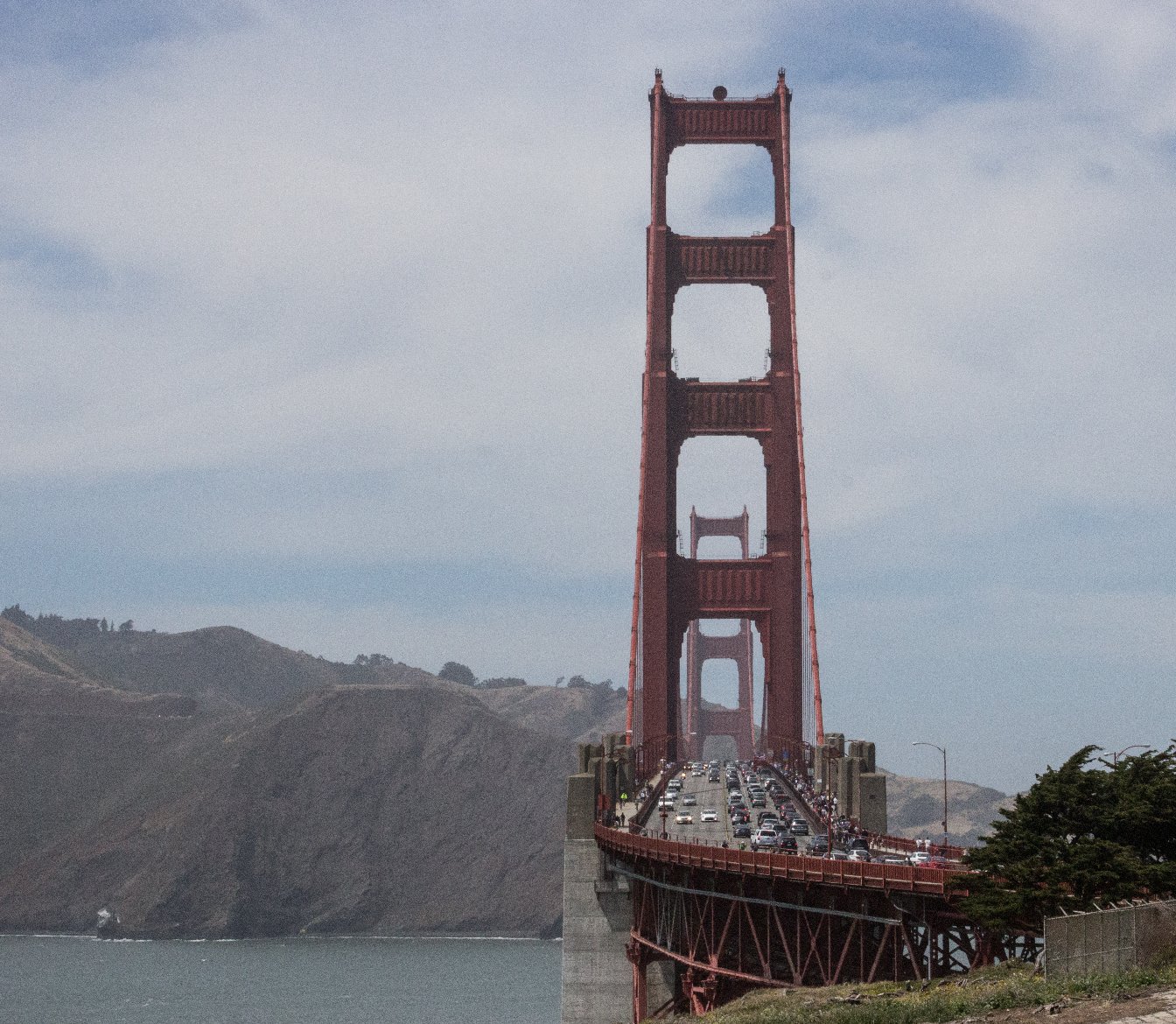
window.__IS_SSR__=true
window.__INITIAL_STATE__={
"attachmentsReducer": {
"audio_0": {
"type": "attachments",
"id": "audio_0",
"imgSizes": {
"kqedFullSize": {
"file": "https://ww2.kqed.org/news/wp-content/themes/KQED-unified/img/audio_bgs/background0.jpg"
}
}
},
"audio_1": {
"type": "attachments",
"id": "audio_1",
"imgSizes": {
"kqedFullSize": {
"file": "https://ww2.kqed.org/news/wp-content/themes/KQED-unified/img/audio_bgs/background1.jpg"
}
}
},
"audio_2": {
"type": "attachments",
"id": "audio_2",
"imgSizes": {
"kqedFullSize": {
"file": "https://ww2.kqed.org/news/wp-content/themes/KQED-unified/img/audio_bgs/background2.jpg"
}
}
},
"audio_3": {
"type": "attachments",
"id": "audio_3",
"imgSizes": {
"kqedFullSize": {
"file": "https://ww2.kqed.org/news/wp-content/themes/KQED-unified/img/audio_bgs/background3.jpg"
}
}
},
"audio_4": {
"type": "attachments",
"id": "audio_4",
"imgSizes": {
"kqedFullSize": {
"file": "https://ww2.kqed.org/news/wp-content/themes/KQED-unified/img/audio_bgs/background4.jpg"
}
}
},
"placeholder": {
"type": "attachments",
"id": "placeholder",
"imgSizes": {
"thumbnail": {
"file": "https://cdn.kqed.org/wp-content/uploads/2024/12/KQED-Default-Image-816638274-2000x1333-1-160x107.jpg",
"width": 160,
"height": 107,
"mimeType": "image/jpeg"
},
"medium": {
"file": "https://cdn.kqed.org/wp-content/uploads/2024/12/KQED-Default-Image-816638274-2000x1333-1-800x533.jpg",
"width": 800,
"height": 533,
"mimeType": "image/jpeg"
},
"medium_large": {
"file": "https://cdn.kqed.org/wp-content/uploads/2024/12/KQED-Default-Image-816638274-2000x1333-1-768x512.jpg",
"width": 768,
"height": 512,
"mimeType": "image/jpeg"
},
"large": {
"file": "https://cdn.kqed.org/wp-content/uploads/2024/12/KQED-Default-Image-816638274-2000x1333-1-1020x680.jpg",
"width": 1020,
"height": 680,
"mimeType": "image/jpeg"
},
"1536x1536": {
"file": "https://cdn.kqed.org/wp-content/uploads/2024/12/KQED-Default-Image-816638274-2000x1333-1-1536x1024.jpg",
"width": 1536,
"height": 1024,
"mimeType": "image/jpeg"
},
"fd-lrg": {
"file": "https://cdn.kqed.org/wp-content/uploads/2024/12/KQED-Default-Image-816638274-2000x1333-1-1536x1024.jpg",
"width": 1536,
"height": 1024,
"mimeType": "image/jpeg"
},
"fd-med": {
"file": "https://cdn.kqed.org/wp-content/uploads/2024/12/KQED-Default-Image-816638274-2000x1333-1-1020x680.jpg",
"width": 1020,
"height": 680,
"mimeType": "image/jpeg"
},
"fd-sm": {
"file": "https://cdn.kqed.org/wp-content/uploads/2024/12/KQED-Default-Image-816638274-2000x1333-1-800x533.jpg",
"width": 800,
"height": 533,
"mimeType": "image/jpeg"
},
"post-thumbnail": {
"file": "https://cdn.kqed.org/wp-content/uploads/2024/12/KQED-Default-Image-816638274-2000x1333-1-672x372.jpg",
"width": 672,
"height": 372,
"mimeType": "image/jpeg"
},
"twentyfourteen-full-width": {
"file": "https://cdn.kqed.org/wp-content/uploads/2024/12/KQED-Default-Image-816638274-2000x1333-1-1038x576.jpg",
"width": 1038,
"height": 576,
"mimeType": "image/jpeg"
},
"xxsmall": {
"file": "https://cdn.kqed.org/wp-content/uploads/2024/12/KQED-Default-Image-816638274-2000x1333-1-160x107.jpg",
"width": 160,
"height": 107,
"mimeType": "image/jpeg"
},
"xsmall": {
"file": "https://cdn.kqed.org/wp-content/uploads/2024/12/KQED-Default-Image-816638274-2000x1333-1-672x372.jpg",
"width": 672,
"height": 372,
"mimeType": "image/jpeg"
},
"small": {
"file": "https://cdn.kqed.org/wp-content/uploads/2024/12/KQED-Default-Image-816638274-2000x1333-1-672x372.jpg",
"width": 672,
"height": 372,
"mimeType": "image/jpeg"
},
"xlarge": {
"file": "https://cdn.kqed.org/wp-content/uploads/2024/12/KQED-Default-Image-816638274-2000x1333-1-1020x680.jpg",
"width": 1020,
"height": 680,
"mimeType": "image/jpeg"
},
"full-width": {
"file": "https://cdn.kqed.org/wp-content/uploads/2024/12/KQED-Default-Image-816638274-2000x1333-1-1920x1280.jpg",
"width": 1920,
"height": 1280,
"mimeType": "image/jpeg"
},
"guest-author-32": {
"file": "https://cdn.kqed.org/wp-content/uploads/2025/01/KQED-Default-Image-816638274-1333x1333-1-160x160.jpg",
"width": 32,
"height": 32,
"mimeType": "image/jpeg"
},
"guest-author-50": {
"file": "https://cdn.kqed.org/wp-content/uploads/2025/01/KQED-Default-Image-816638274-1333x1333-1-160x160.jpg",
"width": 50,
"height": 50,
"mimeType": "image/jpeg"
},
"guest-author-64": {
"file": "https://cdn.kqed.org/wp-content/uploads/2025/01/KQED-Default-Image-816638274-1333x1333-1-160x160.jpg",
"width": 64,
"height": 64,
"mimeType": "image/jpeg"
},
"guest-author-96": {
"file": "https://cdn.kqed.org/wp-content/uploads/2025/01/KQED-Default-Image-816638274-1333x1333-1-160x160.jpg",
"width": 96,
"height": 96,
"mimeType": "image/jpeg"
},
"guest-author-128": {
"file": "https://cdn.kqed.org/wp-content/uploads/2025/01/KQED-Default-Image-816638274-1333x1333-1-160x160.jpg",
"width": 128,
"height": 128,
"mimeType": "image/jpeg"
},
"detail": {
"file": "https://cdn.kqed.org/wp-content/uploads/2025/01/KQED-Default-Image-816638274-1333x1333-1-160x160.jpg",
"width": 160,
"height": 160,
"mimeType": "image/jpeg"
},
"kqedFullSize": {
"file": "https://cdn.kqed.org/wp-content/uploads/2024/12/KQED-Default-Image-816638274-2000x1333-1.jpg",
"width": 2000,
"height": 1333
}
}
},
"news_127222": {
"type": "attachments",
"id": "news_127222",
"meta": {
"index": "attachments_1716263798",
"site": "news",
"id": "127222",
"found": true
},
"parent": 127220,
"imgSizes": {
"kqedFullSize": {
"file": "https://ww2.kqed.org/app/uploads/sites/10/2014/02/ChineseNewYear.jpg",
"width": 1280,
"height": 900
}
},
"publishDate": 1393009718,
"modified": 1393009718,
"caption": null,
"description": null,
"title": "ChineseNewYear",
"credit": null,
"status": "inherit",
"isLoading": false,
"fetchFailed": false
},
"news_127098": {
"type": "attachments",
"id": "news_127098",
"meta": {
"index": "attachments_1716263798",
"site": "news",
"id": "127098",
"found": true
},
"parent": 127052,
"imgSizes": {
"kqedFullSize": {
"file": "https://ww2.kqed.org/app/uploads/sites/10/2014/02/8347_transform1.jpg",
"width": 1621,
"height": 971
}
},
"publishDate": 1392942716,
"modified": 1392942716,
"caption": "Activists surround a Google bus in a December 2013 protest at 24th and Valencia streets. (cjmartin/Flickr)",
"description": "Activists surround a Google bus in a December 2013 protest at 24th and Valencia streets. (cjmartin/Flickr)",
"title": "Google Bus",
"credit": null,
"status": "inherit",
"isLoading": false,
"fetchFailed": false
},
"news_126917": {
"type": "attachments",
"id": "news_126917",
"meta": {
"index": "attachments_1716263798",
"site": "news",
"id": "126917",
"found": true
},
"parent": 124860,
"imgSizes": {
"kqedFullSize": {
"file": "https://ww2.kqed.org/app/uploads/sites/10/2015/01/RS8866_UberX_3-lpr-e1394812282724.jpg",
"width": 640,
"height": 427
}
},
"publishDate": 1392852049,
"modified": 1438987745,
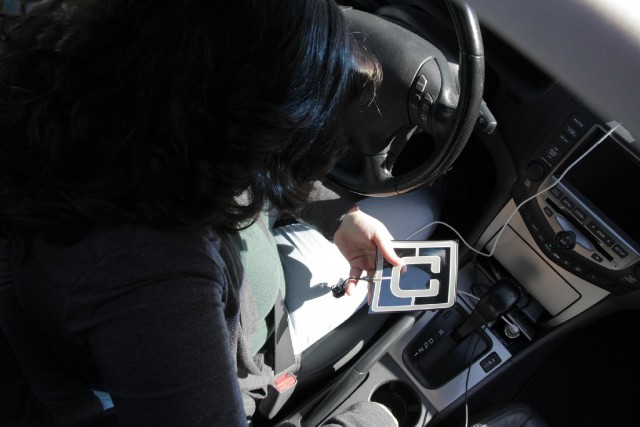
"caption": "A new independent study says Uber has helped reduce drunk driving deaths in California. ",
"description": "A new independent study says Uber has helped reduce drunk driving deaths in California. ",
"title": "RS8866_UberX_3-lpr",
"credit": "Jeremy Raff/KQED",
"status": "inherit",
"isLoading": false,
"fetchFailed": false
},
"news_126889": {
"type": "attachments",
"id": "news_126889",
"meta": {
"index": "attachments_1716263798",
"site": "news",
"id": "126889",
"found": true
},
"parent": 126882,
"imgSizes": {
"kqedFullSize": {
"file": "https://ww2.kqed.org/app/uploads/sites/10/2014/02/RS7537_1049_market_0250_web-e1392857190332.jpg",
"width": 640,
"height": 427
}
},
"publishDate": 1392844741,
"modified": 1392844741,
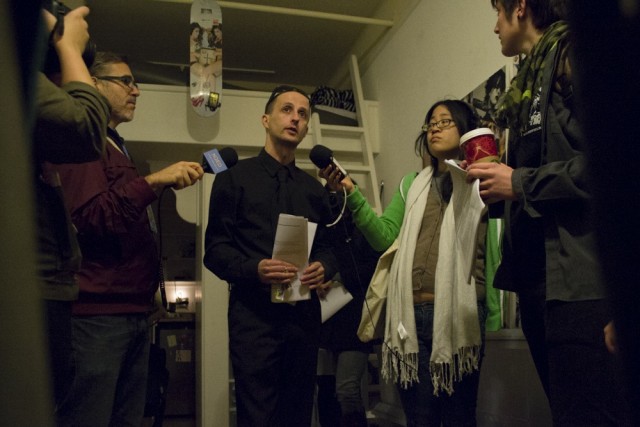
"caption": "Marcele Wilson, a resident of 1049 Market St., shows a group of reporters his single occupancy loft, which has no window. He's fighting an eviction. \"I moved to San Francisco to live in San Francisco. To be an artist in San Francisco. I don't want to leave,\" he said. (Sara Bloomberg/KQED)",
"description": null,
"title": "RS7537_1049_market_0250_web",
"credit": null,
"status": "inherit",
"isLoading": false,
"fetchFailed": false
},
"news_126717": {
"type": "attachments",
"id": "news_126717",
"meta": {
"index": "attachments_1716263798",
"site": "news",
"id": "126717",
"found": true
},
"parent": 126706,
"imgSizes": {
"kqedFullSize": {
"file": "https://ww2.kqed.org/app/uploads/sites/10/2014/02/RS8546_57419577.jpg",
"width": 1541,
"height": 1020
}
},
"publishDate": 1392671651,
"modified": 1392671651,
"caption": null,
"description": null,
"title": "RS8546_57419577",
"credit": null,
"status": "inherit",
"isLoading": false,
"fetchFailed": false
},
"news_126691": {
"type": "attachments",
"id": "news_126691",
"meta": {
"index": "attachments_1716263798",
"site": "news",
"id": "126691",
"found": true
},
"parent": 126504,
"imgSizes": {
"kqedFullSize": {
"file": "https://ww2.kqed.org/app/uploads/sites/10/2014/02/pta-e1392661316999.jpg",
"width": 640,
"height": 480
}
},
"publishDate": 1392661286,
"modified": 1392661286,
"caption": "A study by San Francisco Public Press found that the PTA budgets of San Francisco Public Schools quadrupled in the past five years. Photo: Francesca Segrè",
"description": null,
"title": "pta",
"credit": null,
"status": "inherit",
"isLoading": false,
"fetchFailed": false
},
"news_126635": {
"type": "attachments",
"id": "news_126635",
"meta": {
"index": "attachments_1716263798",
"site": "news",
"id": "126635",
"found": true
},
"parent": 126629,
"imgSizes": {
"kqedFullSize": {
"file": "https://ww2.kqed.org/app/uploads/sites/10/2014/02/CNYParade-7-e1392570277281.jpg",
"width": 640,
"height": 427
}
},
"publishDate": 1392533100,
"modified": 1392533100,
"caption": "The Golden Dragon brought up the rear of the parade on Market Street (Mark Andrew Boyer / KQED)",
"description": null,
"title": "San Francisco Chinese New Year Parade 2014",
"credit": null,
"status": "inherit",
"isLoading": false,
"fetchFailed": false
},
"news_126476": {
"type": "attachments",
"id": "news_126476",
"meta": {
"index": "attachments_1716263798",
"site": "news",
"id": "126476",
"found": true
},
"parent": 126468,
"imgSizes": {
"kqedFullSize": {
"file": "https://ww2.kqed.org/app/uploads/sites/10/2014/02/SchmellDaughter.jpg",
"width": 1200,
"height": 800
}
},
"publishDate": 1392408617,
"modified": 1392408617,
"caption": "(Luke Thomas / San Francisco Public Press)",
"description": null,
"title": "SchmellDaughter",
"credit": null,
"status": "inherit",
"isLoading": false,
"fetchFailed": false
},
"news_126434": {
"type": "attachments",
"id": "news_126434",
"meta": {
"index": "attachments_1716263798",
"site": "news",
"id": "126434",
"found": true
},
"parent": 126430,
"imgSizes": {
"kqedFullSize": {
"file": "https://ww2.kqed.org/app/uploads/sites/10/2014/02/GayMarriage.jpg",
"width": 1280,
"height": 899
}
},
"publishDate": 1392403379,
"modified": 1392403379,
"caption": null,
"description": null,
"title": "GayMarriage",
"credit": null,
"status": "inherit",
"isLoading": false,
"fetchFailed": false
},
"news_117502": {
"type": "attachments",
"id": "news_117502",
"meta": {
"index": "attachments_1716263798",
"site": "news",
"id": "117502",
"found": true
},
"parent": 117481,
"imgSizes": {
"kqedFullSize": {
"file": "https://ww2.kqed.org/app/uploads/sites/10/2013/11/Muni-bus-e1383854574750.jpg",
"width": 640,
"height": 380
}
},
"publishDate": 1383846916,
"modified": 1467070245,
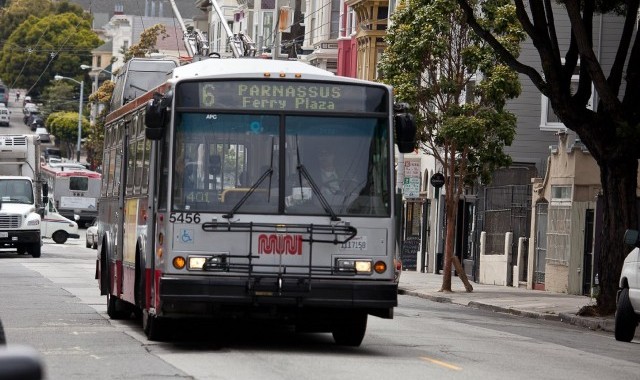
"caption": "The Municipal Railway's 6-Parnassus trolley coach makes its way through San Francisco.",
"description": "The Municipal Railway's 6-Parnassus trolley coach makes its way through San Francisco.",
"title": "Muni bus",
"credit": "Deborah Svoboda/KQED",
"status": "inherit",
"isLoading": false,
"fetchFailed": false
},
"news_126107": {
"type": "attachments",
"id": "news_126107",
"meta": {
"index": "attachments_1716263798",
"site": "news",
"id": "126107",
"found": true
},
"parent": 126072,
"imgSizes": {
"kqedFullSize": {
"file": "https://ww2.kqed.org/app/uploads/sites/10/2014/02/techtalk.jpg",
"width": 640,
"height": 360
}
},
"publishDate": 1392235134,
"modified": 1392235134,
"caption": "Zach Wasserman and John Mendoza discuss San Francisco's genrification issues at EngageSF. (Sam Harnett/KQED)",
"description": "Zach Wasserman and John Mendoza discuss San Francisco's genrification issues at EngageSF. (Sam Harnett/KQED)",
"title": "techtalk",
"credit": null,
"status": "inherit",
"isLoading": false,
"fetchFailed": false
},
"news_126120": {
"type": "attachments",
"id": "news_126120",
"meta": {
"index": "attachments_1716263798",
"site": "news",
"id": "126120",
"found": true
},
"parent": 125951,
"imgSizes": {
"kqedFullSize": {
"file": "https://ww2.kqed.org/app/uploads/sites/10/2014/02/goldengate060113.jpg",
"width": 1344,
"height": 1170
}
},
"publishDate": 1392238117,
"modified": 1464367799,
"caption": "The Golden Gate Bridge from Battery Godfrey in San Francisco's Presidio. ",
"description": "The Golden Gate Bridge from Battery Godfrey in San Francisco's Presidio. (Dan Brekke/KQED)",
"title": "Golden Gate Bridge-San Francisco",
"credit": "(Dan Brekke/KQED)",
"status": "inherit",
"isLoading": false,
"fetchFailed": false
}
},
"audioPlayerReducer": {
"postId": "stream_live",
"isPaused": true,
"isPlaying": false,
"pfsActive": false,
"pledgeModalIsOpen": true,
"playerDrawerIsOpen": false,
"liveAudioPlayStartedAt": 0,
"liveAudioPlayContext": ""
},
"authorsReducer": {
"astupi": {
"type": "authors",
"id": "70",
"meta": {
"index": "authors_1716337520",
"id": "70",
"found": true
},
"name": "Amanda Stupi",
"firstName": "Amanda",
"lastName": "Stupi",
"slug": "astupi",
"email": "astupi@kqed.org",
"display_author_email": false,
"staff_mastheads": [],
"title": "Senior Engagement Producer",
"bio": "Amanda joined KQED Science’s engagement team as a Senior Audience Engagement Strategist in the spring of 2019. She has helped craft messaging around wildfires, the coronavirus pandemic, climate change and many other stories. She has also brought KQED Science to new platforms such as Reddit’s Ask Me Anything series. Prior to joining KQED Science, Amanda spent seven years as an engagement producer with Forum, KQED’s daily live call-in show. She got her start in radio at KALW's weekly call in show, City Visions, before going on to an internship and stint at NPR's Talk of the Nation.\r\n\r\nPrior to journalism, Amanda taught English at Lowell High School. She's a native of Petaluma and currently lives under the \"South San Francisco the Industrial City\" sign in South City. She believes that engagement is vital to news’s future and that good journalism listens as much as it asks questions.",
"avatar": "https://secure.gravatar.com/avatar/e981c503e5c162da701dcaccfbf87e35?s=600&d=blank&r=g",
"twitter": null,
"facebook": null,
"instagram": null,
"linkedin": null,
"sites": [
{
"site": "arts",
"roles": [
"Contributor"
]
},
{
"site": "news",
"roles": [
"editor"
]
},
{
"site": "pop",
"roles": [
"contributor"
]
},
{
"site": "stateofhealth",
"roles": [
"editor"
]
},
{
"site": "science",
"roles": []
},
{
"site": "perspectives",
"roles": [
"editor"
]
}
],
"headData": {
"title": "Amanda Stupi | KQED",
"description": "Senior Engagement Producer",
"ogImgSrc": "https://secure.gravatar.com/avatar/e981c503e5c162da701dcaccfbf87e35?s=600&d=blank&r=g",
"twImgSrc": "https://secure.gravatar.com/avatar/e981c503e5c162da701dcaccfbf87e35?s=600&d=blank&r=g"
},
"isLoading": false,
"link": "/author/astupi"
},
"jbrooks": {
"type": "authors",
"id": "80",
"meta": {
"index": "authors_1716337520",
"id": "80",
"found": true
},
"name": "Jon Brooks",
"firstName": "Jon",
"lastName": "Brooks",
"slug": "jbrooks",
"email": "jbrooks@kqed.org",
"display_author_email": true,
"staff_mastheads": [
"science"
],
"title": "Digital Editor",
"bio": "Jon Brooks is a former Digital Editor for KQED Science. He is the former editor of KQED’s daily news blog, News Fix. In 2014, he won a California Journalism Award for his coverage of ride services like Uber and Lyft and the taxi industry. A veteran blogger, he previously worked for Yahoo! in various news writing and editing roles. Jon is also a playwright whose work has been produced in San Francisco, New York, Italy, and around the U.S. He has written about film for his own blog and studied film at Boston University.",
"avatar": "https://secure.gravatar.com/avatar/98887f7ed1c876ed414d4c915e969584?s=600&d=blank&r=g",
"twitter": "jbrooksfoy",
"facebook": null,
"instagram": null,
"linkedin": null,
"sites": [
{
"site": "arts",
"roles": [
"Contributor",
"editor"
]
},
{
"site": "news",
"roles": [
"author"
]
},
{
"site": "futureofyou",
"roles": [
"administrator"
]
},
{
"site": "mindshift",
"roles": [
"editor"
]
},
{
"site": "stateofhealth",
"roles": [
"editor"
]
},
{
"site": "science",
"roles": [
"administrator"
]
},
{
"site": "quest",
"roles": [
"editor"
]
}
],
"headData": {
"title": "Jon Brooks | KQED",
"description": "Digital Editor",
"ogImgSrc": "https://secure.gravatar.com/avatar/98887f7ed1c876ed414d4c915e969584?s=600&d=blank&r=g",
"twImgSrc": "https://secure.gravatar.com/avatar/98887f7ed1c876ed414d4c915e969584?s=600&d=blank&r=g"
},
"isLoading": false,
"link": "/author/jbrooks"
},
"ohubertallen": {
"type": "authors",
"id": "102",
"meta": {
"index": "authors_1716337520",
"id": "102",
"found": true
},
"name": "Olivia Allen-Price",
"firstName": "Olivia",
"lastName": "Allen-Price",
"slug": "ohubertallen",
"email": "oallenprice@kqed.org",
"display_author_email": false,
"staff_mastheads": [
"news"
],
"title": "Senior Editor",
"bio": "Olivia Allen-Price is senior editor and host of the award-winning Bay Curious podcast. Prior to joining KQED in 2013, Olivia worked at The Baltimore Sun and The Virginian-Pilot in Norfolk, Va. She holds degrees in journalism and political science from Elon University. Her work has earned awards from the Society of Professional Journalists, the Hearst Foundation and Hearken. She loves to talk about running and curly hair.\r\n\r\nFollow: \u003ca href=\"https://twitter.com/oallenprice\">@oallenprice\u003c/a>\r\nEmail: \u003ca href=\"mailto:oallenprice@kqed.org\">oallenprice@kqed.org\u003c/a>",
"avatar": "https://secure.gravatar.com/avatar/07f7803c1f6be56f3be58ef276dfa64dce898502e0554408ef4858451a8294f7?s=600&d=blank&r=g",
"twitter": "oallenprice",
"bluesky": null,
"facebook": null,
"instagram": null,
"linkedin": null,
"sites": [
{
"site": "",
"roles": [
"editor"
]
},
{
"site": "arts",
"roles": [
"subscriber"
]
},
{
"site": "news",
"roles": [
"administrator"
]
},
{
"site": "pop",
"roles": [
"administrator"
]
},
{
"site": "bayareabites",
"roles": [
"contributor"
]
},
{
"site": "stateofhealth",
"roles": [
"administrator"
]
},
{
"site": "science",
"roles": [
"editor"
]
}
],
"headData": {
"title": "Olivia Allen-Price | KQED",
"description": "Senior Editor",
"ogImgSrc": "https://secure.gravatar.com/avatar/07f7803c1f6be56f3be58ef276dfa64dce898502e0554408ef4858451a8294f7?s=600&d=blank&r=g",
"twImgSrc": "https://secure.gravatar.com/avatar/07f7803c1f6be56f3be58ef276dfa64dce898502e0554408ef4858451a8294f7?s=600&d=blank&r=g"
},
"isLoading": false,
"link": "/author/ohubertallen"
},
"bgoebel": {
"type": "authors",
"id": "214",
"meta": {
"index": "authors_1716337520",
"id": "214",
"found": true
},
"name": "Bryan Goebel",
"firstName": "Bryan",
"lastName": "Goebel",
"slug": "bgoebel",
"email": "bgoebel@kqed.org",
"display_author_email": false,
"staff_mastheads": [],
"title": null,
"bio": "Bryan Goebel is a reporter focused on transportation and housing issues. He was previously the editor of Streetsblog San Francisco, and an anchor/editor at KCBS Radio. He's a lifelong Californian and has also worked at radio stations in Barstow, Redding and Sacramento.",
"avatar": "https://secure.gravatar.com/avatar/7fdd6b065bfe9a23a71bcfa80848df88?s=600&d=blank&r=g",
"twitter": "velobry",
"facebook": null,
"instagram": null,
"linkedin": null,
"sites": [
{
"site": "news",
"roles": [
"subscriber"
]
},
{
"site": "stateofhealth",
"roles": [
"subscriber"
]
}
],
"headData": {
"title": "Bryan Goebel | KQED",
"description": null,
"ogImgSrc": "https://secure.gravatar.com/avatar/7fdd6b065bfe9a23a71bcfa80848df88?s=600&d=blank&r=g",
"twImgSrc": "https://secure.gravatar.com/avatar/7fdd6b065bfe9a23a71bcfa80848df88?s=600&d=blank&r=g"
},
"isLoading": false,
"link": "/author/bgoebel"
},
"grubenstein": {
"type": "authors",
"id": "228",
"meta": {
"index": "authors_1716337520",
"id": "228",
"found": true
},
"name": "Grace Rubenstein",
"firstName": "Grace",
"lastName": "Rubenstein",
"slug": "grubenstein",
"email": "grubenstein@KQED.org",
"display_author_email": false,
"staff_mastheads": [],
"title": null,
"bio": null,
"avatar": "https://secure.gravatar.com/avatar/050f919cc66b38c8f1bc29eff45e3e6c?s=600&d=blank&r=g",
"twitter": null,
"facebook": null,
"instagram": null,
"linkedin": null,
"sites": [
{
"site": "news",
"roles": [
"subscriber"
]
},
{
"site": "stateofhealth",
"roles": [
"author"
]
}
],
"headData": {
"title": "Grace Rubenstein | KQED",
"description": null,
"ogImgSrc": "https://secure.gravatar.com/avatar/050f919cc66b38c8f1bc29eff45e3e6c?s=600&d=blank&r=g",
"twImgSrc": "https://secure.gravatar.com/avatar/050f919cc66b38c8f1bc29eff45e3e6c?s=600&d=blank&r=g"
},
"isLoading": false,
"link": "/author/grubenstein"
},
"katrinaschwartz": {
"type": "authors",
"id": "234",
"meta": {
"index": "authors_1716337520",
"id": "234",
"found": true
},
"name": "Katrina Schwartz",
"firstName": "Katrina",
"lastName": "Schwartz",
"slug": "katrinaschwartz",
"email": "kschwartz@kqed.org",
"display_author_email": false,
"staff_mastheads": [
"news"
],
"title": "Producer",
"bio": "Katrina Schwartz is a journalist based in San Francisco. She's worked at KPCC public radio in LA and has reported on air and online for KQED since 2010. She covered how teaching and learning is changing for MindShift between 2012 and 2020. She is the co-host of the MindShift podcast and now produces KQED's Bay Curious podcast.",
"avatar": "https://secure.gravatar.com/avatar/edb4ee79070447a018538c9aae6eeecf28786515b8a0c30e43b6b7dce5aa44c8?s=600&d=blank&r=g",
"twitter": "kschwart",
"bluesky": null,
"facebook": null,
"instagram": null,
"linkedin": null,
"sites": [
{
"site": "",
"roles": [
"editor"
]
},
{
"site": "news",
"roles": [
"editor"
]
},
{
"site": "mindshift",
"roles": [
"administrator"
]
},
{
"site": "stateofhealth",
"roles": [
"author"
]
},
{
"site": "science",
"roles": [
"editor"
]
}
],
"headData": {
"title": "Katrina Schwartz | KQED",
"description": "Producer",
"ogImgSrc": "https://secure.gravatar.com/avatar/edb4ee79070447a018538c9aae6eeecf28786515b8a0c30e43b6b7dce5aa44c8?s=600&d=blank&r=g",
"twImgSrc": "https://secure.gravatar.com/avatar/edb4ee79070447a018538c9aae6eeecf28786515b8a0c30e43b6b7dce5aa44c8?s=600&d=blank&r=g"
},
"isLoading": false,
"link": "/author/katrinaschwartz"
},
"kqed": {
"type": "authors",
"id": "236",
"meta": {
"index": "authors_1716337520",
"id": "236",
"found": true
},
"name": "KQED News Staff",
"firstName": "KQED News Staff",
"lastName": null,
"slug": "kqed",
"email": "faq@kqed.org",
"display_author_email": false,
"staff_mastheads": [],
"title": null,
"bio": null,
"avatar": "https://secure.gravatar.com/avatar/ef0e801a68c4c54afa9180db14084167?s=600&d=blank&r=g",
"twitter": null,
"facebook": null,
"instagram": null,
"linkedin": null,
"sites": [
{
"site": "arts",
"roles": [
"contributor"
]
},
{
"site": "news",
"roles": [
"editor"
]
},
{
"site": "futureofyou",
"roles": [
"author"
]
}
],
"headData": {
"title": "KQED News Staff | KQED",
"description": null,
"ogImgSrc": "https://secure.gravatar.com/avatar/ef0e801a68c4c54afa9180db14084167?s=600&d=blank&r=g",
"twImgSrc": "https://secure.gravatar.com/avatar/ef0e801a68c4c54afa9180db14084167?s=600&d=blank&r=g"
},
"isLoading": false,
"link": "/author/kqed"
},
"mboyer": {
"type": "authors",
"id": "242",
"meta": {
"index": "authors_1716337520",
"id": "242",
"found": true
},
"name": "Mark Andrew Boyer",
"firstName": "Mark Andrew",
"lastName": "Boyer",
"slug": "mboyer",
"email": "mboyer@kqed.org",
"display_author_email": false,
"staff_mastheads": [],
"title": null,
"bio": null,
"avatar": "https://secure.gravatar.com/avatar/97f25e563059e57d6a08f9c09b43851a?s=600&d=blank&r=g",
"twitter": null,
"facebook": null,
"instagram": null,
"linkedin": null,
"sites": [
{
"site": "news",
"roles": [
"contributor"
]
}
],
"headData": {
"title": "Mark Andrew Boyer | KQED",
"description": null,
"ogImgSrc": "https://secure.gravatar.com/avatar/97f25e563059e57d6a08f9c09b43851a?s=600&d=blank&r=g",
"twImgSrc": "https://secure.gravatar.com/avatar/97f25e563059e57d6a08f9c09b43851a?s=600&d=blank&r=g"
},
"isLoading": false,
"link": "/author/mboyer"
},
"samharnett": {
"type": "authors",
"id": "253",
"meta": {
"index": "authors_1716337520",
"id": "253",
"found": true
},
"name": "Sam Harnett",
"firstName": "Sam",
"lastName": "Harnett",
"slug": "samharnett",
"email": "samharnett@gmail.com",
"display_author_email": false,
"staff_mastheads": [],
"title": "KQED Contributor",
"bio": "Sam Harnett covered tech and work at KQED. He is the co-creator of \u003cem>\u003ca href=\"http://www.theworldaccordingtosound.org\">The World According to Sound\u003c/a>,\u003c/em> a 90-second podcast that features different sounds and the stories behind them.\r\n\r\nBefore coming to KQED, Sam worked as an independent reporter who contributed regularly to \u003cem>The California Report, Marketplace,\u003c/em> \u003cem>The World \u003c/em>and NPR.",
"avatar": "https://secure.gravatar.com/avatar/2538b972ac02f2b9546c7a6c59a0f3d0?s=600&d=blank&r=g",
"twitter": "Samwharnett",
"facebook": null,
"instagram": null,
"linkedin": null,
"sites": [
{
"site": "news",
"roles": [
"edit_others_posts",
"subscriber"
]
},
{
"site": "stateofhealth",
"roles": [
"author"
]
},
{
"site": "science",
"roles": [
"editor"
]
},
{
"site": "quest",
"roles": [
"subscriber"
]
}
],
"headData": {
"title": "Sam Harnett | KQED",
"description": "KQED Contributor",
"ogImgSrc": "https://secure.gravatar.com/avatar/2538b972ac02f2b9546c7a6c59a0f3d0?s=600&d=blank&r=g",
"twImgSrc": "https://secure.gravatar.com/avatar/2538b972ac02f2b9546c7a6c59a0f3d0?s=600&d=blank&r=g"
},
"isLoading": false,
"link": "/author/samharnett"
}
},
"pagesReducer": {
"news_tag_san-francisco": {
"type": "terms",
"id": "news_38",
"meta": {
"index": "terms_1716263798",
"site": "news",
"id": "38",
"score": 6.7234282
},
"featImg": null,
"name": "San Francisco",
"description": null,
"taxonomy": "tag",
"headData": {
"twImgId": null,
"twTitle": null,
"ogTitle": null,
"ogImgId": null,
"twDescription": null,
"description": null,
"title": "San Francisco Archives | KQED News",
"ogDescription": null
},
"ttid": 58,
"slug": "san-francisco",
"isLoading": false,
"title": "San Francisco",
"pageMeta": {
"site": "news",
"WpPageTemplate": "page-topic-editorial",
"currentPage": 194
},
"blocks": [
{
"blockName": "kqed/post-list",
"attrs": {
"layout": "cardArticle2",
"query": "posts/news?tag=san-francisco",
"seeMore": false,
"paginated": true,
"page": 194
}
},
{
"blockName": "kqed/ad"
}
]
}
},
"pfsSessionReducer": {},
"postsReducer": {
"stream_live": {
"type": "live",
"id": "stream_live",
"audioUrl": "https://streams.kqed.org/kqedradio",
"title": "Live Stream",
"excerpt": "Live Stream information currently unavailable.",
"link": "/radio",
"featImg": "",
"label": {
"name": "KQED Live",
"link": "/"
}
},
"stream_kqedNewscast": {
"type": "posts",
"id": "stream_kqedNewscast",
"audioUrl": "https://www.kqed.org/.stream/anon/radio/RDnews/newscast.mp3?_=1",
"title": "KQED Newscast",
"featImg": "",
"label": {
"name": "88.5 FM",
"link": "/"
}
},
"news_127220": {
"type": "posts",
"id": "news_127220",
"meta": {
"index": "posts_1716263798",
"site": "news",
"id": "127220",
"score": null,
"sort": [
1393020868000
]
},
"parent": 0,
"labelTerm": {
"site": "news",
"term": 6944
},
"blocks": [],
"publishDate": 1393020868,
"format": "aside",
"disqusTitle": "News Pix: It's the Year of the Horse, Trapping Berkeley Squirrels and Curling",
"title": "News Pix: It's the Year of the Horse, Trapping Berkeley Squirrels and Curling",
"headTitle": "News Fix | KQED News",
"content": "\u003cp>\u003ca href=\"http://ww2.kqed.org/news/wp-content/uploads/sites/10/2014/02/ChineseNewYear.jpg\">\u003cimg class=\"aligncenter size-medium wp-image-127222\" src=\"http://ww2.kqed.org/news/wp-content/uploads/sites/10/2014/02/ChineseNewYear-640x450.jpg\" alt=\"ChineseNewYear\" width=\"640\" height=\"450\">\u003c/a>\u003cbr>\nThousands turned out to ring in the Year of the Horse at the \u003ca href=\"http://ww2.kqed.org/news/2014/02/15/san-francisco-celebrates-chinese-new-year/\" target=\"_blank\">Chinese New Year Parade in downtown San Francisco\u003c/a> on Feb. 15, despite the threat of rain. Spectators packed the parade route, stretching from Market Street to Chinatown, to see dozens of colorful floats, marching bands, dragon dancers, lions and other creatures (including San Francisco politicians), in one of the city's most colorful annual events. (Mark Andrew Boyer/KQED)\u003c/p>\n\u003cp> \u003c/p>\n\u003cp>\u003ca href=\"http://ww2.kqed.org/news/wp-content/uploads/sites/10/2014/02/ChineseNewYear2.jpg\">\u003cimg class=\"aligncenter size-medium wp-image-127223\" src=\"http://ww2.kqed.org/news/wp-content/uploads/sites/10/2014/02/ChineseNewYear2-640x450.jpg\" alt=\"ChineseNewYear2\" width=\"640\" height=\"450\">\u003c/a>\u003cbr>\nThe highlight of the celebration was the 268-foot-long Golden Dragon, which brought up the rear of the parade. (Mark Andrew Boyer / KQED)\u003c/p>\n\u003cp> \u003c/p>\n\u003cp>\u003ca href=\"http://ww2.kqed.org/news/wp-content/uploads/sites/10/2014/02/curling.jpg\">\u003cimg class=\"aligncenter size-medium wp-image-127224\" src=\"http://ww2.kqed.org/news/wp-content/uploads/sites/10/2014/02/curling-640x449.jpg\" alt=\"curling\" width=\"640\" height=\"449\">\u003c/a>\u003cbr>\nAs the Olympics continue in Sochi, new curling enthusiasts flock to the San Francisco Bay Area Curling Club to \u003ca href=\"http://ww2.kqed.org/news/2014/02/20/wannabe-curlers-hurry-hard-to-sf-bay-area-curling-clubs-clinics/\" target=\"_blank\">learn the basics of the sport\u003c/a>. The club holds extra clinics during the Winter Olympics to capitalize on the surge of interest. \"It's a real easy sport to get started, and be decent,\" said curling member Brian Davidson. \"It's a real hard sport to get good at.\" (Nina Thorsen/KQED)\u003c/p>\n\u003cp>[ad fullwidth]\u003c/p>\n\u003cp> \u003c/p>\n\u003cp>\u003ca href=\"http://ww2.kqed.org/news/wp-content/uploads/sites/10/2014/02/squirrel.jpg\">\u003cimg class=\"aligncenter size-medium wp-image-127225\" src=\"http://ww2.kqed.org/news/wp-content/uploads/sites/10/2014/02/squirrel-640x450.jpg\" alt=\"squirrel\" width=\"640\" height=\"450\">\u003c/a>\u003cbr>\nIn Berkeley, squirrels are in the \u003ca href=\"http://www.berkeleyside.com/2014/02/19/berkeley-to-kill-squirrels-gophers-to-protect-bay/\" target=\"_blank\">crossfire\u003c/a>. In an attempt to make sure no toxins leak out of the old landfill under Cesar Chavez Park and leach into San Francisco Bay, Berkeley is hiring a pest control company to trap and kill hundreds of squirrels and gophers that make their home there. (Bill Williams/\u003ca href=\"http://www.berkeleyside.com/\" target=\"_blank\">Berkeleyside\u003c/a>)\u003c/p>\n\u003cp> \u003c/p>\n\u003cp>\u003ca href=\"http://ww2.kqed.org/news/wp-content/uploads/sites/10/2014/02/IMG_4886-copy.jpg\">\u003cimg class=\"aligncenter size-medium wp-image-127169\" src=\"http://ww2.kqed.org/news/wp-content/uploads/sites/10/2014/02/IMG_4886-copy-640x426.jpg\" alt=\"Gregory Kloehn's tiny houses for homeless people\" width=\"640\" height=\"426\">\u003c/a>\u003cbr>\nPart artist, part housing activist, Gregory Kloehn works on his newest tiny house, which is made mostly from former beds. Kloehn splits his time between New York City and Oakland, building tiny houses for homeless people. (Mark Andrew Boyer/KQED)\u003c/p>\n\u003cp>\u003c/p>\n\u003cp> \u003c/p>\n\n",
"disqusIdentifier": "127220 http://ww2.kqed.org/news/?p=127220",
"disqusUrl": "https://ww2.kqed.org/news/2014/02/21/news-pix-its-the-year-of-the-horse-trapping-berkeley-squirrels-and-curling/",
"stats": {
"hasVideo": false,
"hasChartOrMap": false,
"hasAudio": false,
"hasPolis": false,
"wordCount": 269,
"hasGoogleForm": false,
"hasGallery": false,
"hasHearkenModule": false,
"iframeSrcs": [],
"paragraphCount": 7
},
"modified": 1393021292,
"excerpt": "The news in photos from around the Bay Area.",
"headData": {
"twImgId": "",
"twTitle": "",
"ogTitle": "",
"ogImgId": "",
"twDescription": "",
"description": "The news in photos from around the Bay Area.",
"title": "News Pix: It's the Year of the Horse, Trapping Berkeley Squirrels and Curling | KQED",
"ogDescription": "",
"schema": {
"@context": "https://schema.org",
"@type": "NewsArticle",
"headline": "News Pix: It's the Year of the Horse, Trapping Berkeley Squirrels and Curling",
"datePublished": "2014-02-21T14:14:28-08:00",
"dateModified": "2014-02-21T14:21:32-08:00",
"image": "https://cdn.kqed.org/wp-content/uploads/2020/02/KQED-OG-Image@1x.png",
"isAccessibleForFree": "True",
"publisher": {
"@type": "NewsMediaOrganization",
"@id": "https://www.kqed.org/#organization",
"name": "KQED",
"logo": "https://cdn.kqed.org/wp-content/uploads/2020/02/KQED-OG-Image@1x.png",
"url": "https://www.kqed.org",
"sameAs": [
"https://www.facebook.com/KQED",
"https://twitter.com/KQED",
"https://www.instagram.com/kqed/",
"https://www.tiktok.com/@kqedofficial",
"https://www.linkedin.com/company/kqed",
"https://www.youtube.com/channel/UCeC0IOo7i1P_61zVUWbJ4nw"
]
}
}
},
"guestAuthors": [],
"slug": "news-pix-its-the-year-of-the-horse-trapping-berkeley-squirrels-and-curling",
"status": "publish",
"customPermalink": "2014/02/21/news-pix-chinese-new-year-parad/",
"path": "/news/127220/news-pix-its-the-year-of-the-horse-trapping-berkeley-squirrels-and-curling",
"audioTrackLength": null,
"parsedContent": [
{
"type": "contentString",
"content": "\u003cdiv class=\"post-body\">\u003cp>\u003cp>\u003ca href=\"http://ww2.kqed.org/news/wp-content/uploads/sites/10/2014/02/ChineseNewYear.jpg\">\u003cimg class=\"aligncenter size-medium wp-image-127222\" src=\"http://ww2.kqed.org/news/wp-content/uploads/sites/10/2014/02/ChineseNewYear-640x450.jpg\" alt=\"ChineseNewYear\" width=\"640\" height=\"450\">\u003c/a>\u003cbr>\nThousands turned out to ring in the Year of the Horse at the \u003ca href=\"http://ww2.kqed.org/news/2014/02/15/san-francisco-celebrates-chinese-new-year/\" target=\"_blank\">Chinese New Year Parade in downtown San Francisco\u003c/a> on Feb. 15, despite the threat of rain. Spectators packed the parade route, stretching from Market Street to Chinatown, to see dozens of colorful floats, marching bands, dragon dancers, lions and other creatures (including San Francisco politicians), in one of the city's most colorful annual events. (Mark Andrew Boyer/KQED)\u003c/p>\n\u003cp> \u003c/p>\n\u003cp>\u003ca href=\"http://ww2.kqed.org/news/wp-content/uploads/sites/10/2014/02/ChineseNewYear2.jpg\">\u003cimg class=\"aligncenter size-medium wp-image-127223\" src=\"http://ww2.kqed.org/news/wp-content/uploads/sites/10/2014/02/ChineseNewYear2-640x450.jpg\" alt=\"ChineseNewYear2\" width=\"640\" height=\"450\">\u003c/a>\u003cbr>\nThe highlight of the celebration was the 268-foot-long Golden Dragon, which brought up the rear of the parade. (Mark Andrew Boyer / KQED)\u003c/p>\n\u003cp> \u003c/p>\n\u003cp>\u003ca href=\"http://ww2.kqed.org/news/wp-content/uploads/sites/10/2014/02/curling.jpg\">\u003cimg class=\"aligncenter size-medium wp-image-127224\" src=\"http://ww2.kqed.org/news/wp-content/uploads/sites/10/2014/02/curling-640x449.jpg\" alt=\"curling\" width=\"640\" height=\"449\">\u003c/a>\u003cbr>\nAs the Olympics continue in Sochi, new curling enthusiasts flock to the San Francisco Bay Area Curling Club to \u003ca href=\"http://ww2.kqed.org/news/2014/02/20/wannabe-curlers-hurry-hard-to-sf-bay-area-curling-clubs-clinics/\" target=\"_blank\">learn the basics of the sport\u003c/a>. The club holds extra clinics during the Winter Olympics to capitalize on the surge of interest. \"It's a real easy sport to get started, and be decent,\" said curling member Brian Davidson. \"It's a real hard sport to get good at.\" (Nina Thorsen/KQED)\u003c/p>\n\u003cp>\u003c/p>\u003c/div>",
"attributes": {
"named": {},
"numeric": []
}
},
{
"type": "component",
"content": "",
"name": "ad",
"attributes": {
"named": {
"label": "fullwidth"
},
"numeric": [
"fullwidth"
]
}
},
{
"type": "contentString",
"content": "\u003cdiv class=\"post-body\">\u003cp>\u003c/p>\n\u003cp> \u003c/p>\n\u003cp>\u003ca href=\"http://ww2.kqed.org/news/wp-content/uploads/sites/10/2014/02/squirrel.jpg\">\u003cimg class=\"aligncenter size-medium wp-image-127225\" src=\"http://ww2.kqed.org/news/wp-content/uploads/sites/10/2014/02/squirrel-640x450.jpg\" alt=\"squirrel\" width=\"640\" height=\"450\">\u003c/a>\u003cbr>\nIn Berkeley, squirrels are in the \u003ca href=\"http://www.berkeleyside.com/2014/02/19/berkeley-to-kill-squirrels-gophers-to-protect-bay/\" target=\"_blank\">crossfire\u003c/a>. In an attempt to make sure no toxins leak out of the old landfill under Cesar Chavez Park and leach into San Francisco Bay, Berkeley is hiring a pest control company to trap and kill hundreds of squirrels and gophers that make their home there. (Bill Williams/\u003ca href=\"http://www.berkeleyside.com/\" target=\"_blank\">Berkeleyside\u003c/a>)\u003c/p>\n\u003cp> \u003c/p>\n\u003cp>\u003ca href=\"http://ww2.kqed.org/news/wp-content/uploads/sites/10/2014/02/IMG_4886-copy.jpg\">\u003cimg class=\"aligncenter size-medium wp-image-127169\" src=\"http://ww2.kqed.org/news/wp-content/uploads/sites/10/2014/02/IMG_4886-copy-640x426.jpg\" alt=\"Gregory Kloehn's tiny houses for homeless people\" width=\"640\" height=\"426\">\u003c/a>\u003cbr>\nPart artist, part housing activist, Gregory Kloehn works on his newest tiny house, which is made mostly from former beds. Kloehn splits his time between New York City and Oakland, building tiny houses for homeless people. (Mark Andrew Boyer/KQED)\u003c/p>\n\u003cp>\u003c/p>\n\u003cp> \u003c/p>\n\n\u003c/div>\u003c/p>",
"attributes": {
"named": {},
"numeric": []
}
}
],
"link": "/news/127220/news-pix-its-the-year-of-the-horse-trapping-berkeley-squirrels-and-curling",
"authors": [
"234"
],
"programs": [
"news_6944"
],
"categories": [
"news_223",
"news_10"
],
"tags": [
"news_3094",
"news_18",
"news_854",
"news_38"
],
"featImg": "news_127222",
"label": "news_6944"
},
"news_127052": {
"type": "posts",
"id": "news_127052",
"meta": {
"index": "posts_1716263798",
"site": "news",
"id": "127052",
"score": null,
"sort": [
1392944632000
]
},
"parent": 0,
"labelTerm": {
"site": "news",
"term": 6944
},
"blocks": [],
"publishDate": 1392944632,
"format": "aside",
"disqusTitle": "San Francisco's 'Google Bus' Plan Faces New Challenge ",
"title": "San Francisco's 'Google Bus' Plan Faces New Challenge ",
"headTitle": "News Fix | KQED News",
"content": "\u003cfigure id=\"attachment_127094\" class=\"wp-caption alignnone\" style=\"max-width: 640px\">\u003ca href=\"http://ww2.kqed.org/news/wp-content/uploads/sites/10/2014/02/8347_transform.jpg\">\u003cimg class=\"size-medium wp-image-127094\" src=\"http://ww2.kqed.org/news/wp-content/uploads/sites/10/2014/02/8347_transform-640x383.jpg\" alt=\"Activists surround a Google bus in a December 2013 protest at 24th and Valencia streets. (cjmartin/Flickr)\" width=\"640\" height=\"383\">\u003c/a>\u003cfigcaption class=\"wp-caption-text\">Activists surround a Google bus in a December 2013 protest at 24th and Valencia streets. (cjmartin/Flickr)\u003c/figcaption>\u003c/figure>\n\u003cp>In a \u003cem>legal\u003c/em> tech-bus protest, an assortment of San Francisco activists is appealing to the Board of Supervisors to stop the city's plan to continue accommodating private commuter shuttles at public bus stops.\u003c/p>\n\u003cp>The San Francisco Municipal Transportation Agency in January \u003ca href=\"http://ww2.kqed.org/news/2014/01/21/yet-another-protest-against-tech-buses/\">approved a pilot program\u003c/a> to require shuttle operators to get permits and charge them $1 for each stop they make in the city. The unanimous vote came after a series of angry protests against the buses, used by tech giants such as Apple, Google and Facebook to transport employees to work in Silicon Valley.\u003c/p>\n\u003cp>The fee program would also cover shuttles used for other business, office buildings and UC San Francisco and other local colleges. But it's the high-tech commuters that upset activists, who believe the well-paid workers are responsible for driving up rents and displacing longtime residents.\u003c/p>\n\u003cp>\"I have seen the rent listings along my street skyrocket. I've seen my neighbors have to pack up and move,\" said one of the appellants, Sara Shortt. She's executive director of the Housing Rights Committee of San Francisco and has lived on Valencia Street at 22nd Street for 16 years. The other appellants are the Harvey Milk LGBT Democratic Club, the Service Employees International Union Local 1021 and the San Francisco League of Pissed-Off Voters.\u003c/p>\n\u003cp>The crux of their argument is that the SFMTA board should have put the plan through a full environmental impact review under the California Environmental Quality Act. And that review, they argue, should consider not only air pollution but also the displacement of people and housing, particularly in low-income and minority communities. \u003c/p>\n\u003caside class=\"pullquote alignleft\">'There was no real serious cost-benefit analysis. The city has the responsibility to do that kind of due diligence before giving away the store.'\u003ccite>— Sara Shortt\u003cbr>\nHousing rights activist\u003c/cite>\u003c/aside>\n\u003cp>\"There was no real serious cost-benefit analysis,” Shortt said. “The city has the responsibility to do that kind of due diligence before giving away the store as they have.”\u003c/p>\n\u003cp>[ad fullwidth]\u003c/p>\n\u003cp>The SFMTA, however, maintains that such a program does not require such a review. \"We developed this pilot proposal to help ensure the most efficient transportation network possible by reducing Muni delays and further reducing congestion on our roadways,\" spokesman Paul Rose wrote in a statement. \"We are confident that the CEQA clearance is appropriate and will be upheld.\"\u003c/p>\n\u003cp>The CEQA guidelines do, in fact, specify that significant environmental impacts could come from projects that \"induce substantial population growth in an area\" or \"displace substantial numbers of people, necessitating the construction of replacement housing elsewhere.\" Does that definition apply to expensive apartments in the Mission just as it would to, say, construction of a new shopping mall? The Board of Supervisors will decide.\u003c/p>\n\u003cp>\u003c/p>\n\u003cp>The Board of Supervisors is not authorized to make changes to the shuttle plan, but they could force the SFMTA to suspend it and complete a detailed environmental impact review before going forward. The board has until early April to hold a hearing on the appeal.\u003c/p>\n\n",
"disqusIdentifier": "127052 http://ww2.kqed.org/news/?p=127052",
"disqusUrl": "https://ww2.kqed.org/news/2014/02/20/activists-file-appeal-to-delay-san-franciscos-tech-shuttle-plan/",
"stats": {
"hasVideo": false,
"hasChartOrMap": false,
"hasAudio": false,
"hasPolis": false,
"wordCount": 527,
"hasGoogleForm": false,
"hasGallery": false,
"hasHearkenModule": false,
"iframeSrcs": [],
"paragraphCount": 11
},
"modified": 1393005124,
"excerpt": "Environmental review urged for program to keep letting tech buses and other shuttles use Muni stops. ",
"headData": {
"twImgId": "",
"twTitle": "",
"ogTitle": "",
"ogImgId": "",
"twDescription": "",
"description": "Environmental review urged for program to keep letting tech buses and other shuttles use Muni stops. ",
"title": "San Francisco's 'Google Bus' Plan Faces New Challenge | KQED",
"ogDescription": "",
"schema": {
"@context": "https://schema.org",
"@type": "NewsArticle",
"headline": "San Francisco's 'Google Bus' Plan Faces New Challenge ",
"datePublished": "2014-02-20T17:03:52-08:00",
"dateModified": "2014-02-21T09:52:04-08:00",
"image": "https://cdn.kqed.org/wp-content/uploads/2020/02/KQED-OG-Image@1x.png",
"isAccessibleForFree": "True",
"publisher": {
"@type": "NewsMediaOrganization",
"@id": "https://www.kqed.org/#organization",
"name": "KQED",
"logo": "https://cdn.kqed.org/wp-content/uploads/2020/02/KQED-OG-Image@1x.png",
"url": "https://www.kqed.org",
"sameAs": [
"https://www.facebook.com/KQED",
"https://twitter.com/KQED",
"https://www.instagram.com/kqed/",
"https://www.tiktok.com/@kqedofficial",
"https://www.linkedin.com/company/kqed",
"https://www.youtube.com/channel/UCeC0IOo7i1P_61zVUWbJ4nw"
]
}
}
},
"guestAuthors": [],
"slug": "activists-file-appeal-to-delay-san-franciscos-tech-shuttle-plan",
"status": "publish",
"customPermalink": "2014/02/20/activists-appeal-san-francisco-tech-bus-plan/",
"path": "/news/127052/activists-file-appeal-to-delay-san-franciscos-tech-shuttle-plan",
"audioTrackLength": null,
"parsedContent": [
{
"type": "contentString",
"content": "\u003cdiv class=\"post-body\">\u003cp>\u003cfigure id=\"attachment_127094\" class=\"wp-caption alignnone\" style=\"max-width: 640px\">\u003ca href=\"http://ww2.kqed.org/news/wp-content/uploads/sites/10/2014/02/8347_transform.jpg\">\u003cimg class=\"size-medium wp-image-127094\" src=\"http://ww2.kqed.org/news/wp-content/uploads/sites/10/2014/02/8347_transform-640x383.jpg\" alt=\"Activists surround a Google bus in a December 2013 protest at 24th and Valencia streets. (cjmartin/Flickr)\" width=\"640\" height=\"383\">\u003c/a>\u003cfigcaption class=\"wp-caption-text\">Activists surround a Google bus in a December 2013 protest at 24th and Valencia streets. (cjmartin/Flickr)\u003c/figcaption>\u003c/figure>\n\u003cp>In a \u003cem>legal\u003c/em> tech-bus protest, an assortment of San Francisco activists is appealing to the Board of Supervisors to stop the city's plan to continue accommodating private commuter shuttles at public bus stops.\u003c/p>\n\u003cp>The San Francisco Municipal Transportation Agency in January \u003ca href=\"http://ww2.kqed.org/news/2014/01/21/yet-another-protest-against-tech-buses/\">approved a pilot program\u003c/a> to require shuttle operators to get permits and charge them $1 for each stop they make in the city. The unanimous vote came after a series of angry protests against the buses, used by tech giants such as Apple, Google and Facebook to transport employees to work in Silicon Valley.\u003c/p>\n\u003cp>The fee program would also cover shuttles used for other business, office buildings and UC San Francisco and other local colleges. But it's the high-tech commuters that upset activists, who believe the well-paid workers are responsible for driving up rents and displacing longtime residents.\u003c/p>\n\u003cp>\"I have seen the rent listings along my street skyrocket. I've seen my neighbors have to pack up and move,\" said one of the appellants, Sara Shortt. She's executive director of the Housing Rights Committee of San Francisco and has lived on Valencia Street at 22nd Street for 16 years. The other appellants are the Harvey Milk LGBT Democratic Club, the Service Employees International Union Local 1021 and the San Francisco League of Pissed-Off Voters.\u003c/p>\n\u003cp>The crux of their argument is that the SFMTA board should have put the plan through a full environmental impact review under the California Environmental Quality Act. And that review, they argue, should consider not only air pollution but also the displacement of people and housing, particularly in low-income and minority communities. \u003c/p>\n\u003caside class=\"pullquote alignleft\">'There was no real serious cost-benefit analysis. The city has the responsibility to do that kind of due diligence before giving away the store.'\u003ccite>— Sara Shortt\u003cbr>\nHousing rights activist\u003c/cite>\u003c/aside>\n\u003cp>\"There was no real serious cost-benefit analysis,” Shortt said. “The city has the responsibility to do that kind of due diligence before giving away the store as they have.”\u003c/p>\n\u003cp>\u003c/p>\u003c/div>",
"attributes": {
"named": {},
"numeric": []
}
},
{
"type": "component",
"content": "",
"name": "ad",
"attributes": {
"named": {
"label": "fullwidth"
},
"numeric": [
"fullwidth"
]
}
},
{
"type": "contentString",
"content": "\u003cdiv class=\"post-body\">\u003cp>\u003c/p>\n\u003cp>The SFMTA, however, maintains that such a program does not require such a review. \"We developed this pilot proposal to help ensure the most efficient transportation network possible by reducing Muni delays and further reducing congestion on our roadways,\" spokesman Paul Rose wrote in a statement. \"We are confident that the CEQA clearance is appropriate and will be upheld.\"\u003c/p>\n\u003cp>The CEQA guidelines do, in fact, specify that significant environmental impacts could come from projects that \"induce substantial population growth in an area\" or \"displace substantial numbers of people, necessitating the construction of replacement housing elsewhere.\" Does that definition apply to expensive apartments in the Mission just as it would to, say, construction of a new shopping mall? The Board of Supervisors will decide.\u003c/p>\n\u003cp>\u003c/p>\n\u003cp>The Board of Supervisors is not authorized to make changes to the shuttle plan, but they could force the SFMTA to suspend it and complete a detailed environmental impact review before going forward. The board has until early April to hold a hearing on the appeal.\u003c/p>\n\n\u003c/div>\u003c/p>",
"attributes": {
"named": {},
"numeric": []
}
}
],
"link": "/news/127052/activists-file-appeal-to-delay-san-franciscos-tech-shuttle-plan",
"authors": [
"228"
],
"programs": [
"news_6944"
],
"categories": [
"news_248",
"news_1397"
],
"tags": [
"news_5270",
"news_38"
],
"featImg": "news_127098",
"label": "news_6944"
},
"news_124860": {
"type": "posts",
"id": "news_124860",
"meta": {
"index": "posts_1716263798",
"site": "news",
"id": "124860",
"score": null,
"sort": [
1392912007000
]
},
"parent": 0,
"labelTerm": {
"site": "news",
"term": 6944
},
"blocks": [],
"publishDate": 1392912007,
"format": "aside",
"disqusTitle": "What UberX Drivers Are Saying About Their Training and Safety Issues",
"title": "What UberX Drivers Are Saying About Their Training and Safety Issues",
"headTitle": "News Fix | KQED News",
"content": "\u003cfigure id=\"attachment_126917\" class=\"wp-caption aligncenter\" style=\"max-width: 640px\">\u003ca href=\"http://ww2.kqed.org/news/wp-content/uploads/sites/10/2015/01/RS8866_UberX_3-lpr.jpg\">\u003cimg class=\"size-medium wp-image-126917\" src=\"http://ww2.kqed.org/news/wp-content/uploads/sites/10/2015/01/RS8866_UberX_3-lpr-640x426.jpg\" alt=\"The California Public Utilities Commission requires Transportation Network Companies like UberX to display signage. (Jeremy Raff/KQED)\" width=\"640\" height=\"426\">\u003c/a>\u003cfigcaption class=\"wp-caption-text\">The California Public Utilities Commission requires transportation network companies like UberX to display signage. (Jeremy Raff/KQED) \u003ccite>(Jeremy Raff/KQED)\u003c/cite>\u003c/figcaption>\u003c/figure>\n\u003cp>\u003cspan style=\"font-size: 4.6875em;float: left;line-height: 0.733em;padding: 0.05em 0.1em 0 0;font-family: times, serif, georgia\">O\u003c/span>n March 6, the \u003ca href=\"http://www.sfbos.org/index.aspx?page=13992\" target=\"_blank\">Neighborhood Services and Safety Committee\u003c/a> of the San Francisco Board of Supervisors will hold a hearing on safety issues related to ride-service companies like Lyft and UberX.\u003c/p>\n\u003cp>The hearing was prompted by two accidents in San Francisco: On New Year's Eve an UberX driver struck three members of a family in a crosswalk, \u003ca href=\"http://ww2.kqed.org/news/2014/01/02/122446/\" target=\"_blank\">killing a 6-year-old girl\u003c/a>. And in January a \u003ca href=\"http://venturebeat.com/2014/01/17/lyft-car-reportedly-in-accident-in-san-francisco-injuring-pedestrian/\" target=\"_blank\">Lyft driver struck an elderly woman\u003c/a>, fracturing her leg.\u003c/p>\n\u003cp>Nobody knows just how many TNC (transportation network company) vehicles are whizzing around town carrying passengers, but the San Francisco Cab Drivers Association, an avowed archenemy of the nascent industry, says it has counted more than 3,000 to date.\u003c/p>\n\u003cp>We interviewed a number of TNC drivers to hear firsthand what they thought about safety issues, and eventually focused on those who drive for UberX, since they were the ones who most frequently described a lack of attention to driver safety and training within the sign-up process.\u003c/p>\n\u003cp>Here are the main points, corroborated by the six UberX drivers we interviewed:\u003c/p>\n\u003cul>\n\u003cli>UberX has not been inspecting drivers' cars, as required by the California Public Utiltiies Commission (CPUC), but simply reviews vehicle photos supplied by the drivers.\u003c/li>\n\u003cli>UberX does not observe applicants actually driving before they are approved to work for the company.\u003c/li>\n\u003cli>UberX applicants receive no training related to safe driving before they are approved.\u003c/li>\n\u003c/ul>\n\u003cp>Other issues emerged as well. Several drivers said that the UberX app, which is provided on a separate cellphone from the driver's personal phone, can be distracting. And two drivers said the ratings that each passenger gives to each driver can lead to unsafe driving, either because of a pressure to chat with riders or to drive faster than is advisable.\u003c/p>\n\u003caside class=\"pullquote alignleft\"> UberX's driver training submission stands out for its brevity — just four paragraphs. \u003c/aside>\n\u003cp>Almost all the interviewees said UberX’s process of signing up many drivers at the same time included no scrutiny or assessment of individuals beyond the background checks mandated by the state. One driver described the process as \"like a cattle call.\"\u003c/p>\n\u003cp>[ad fullwidth]\u003c/p>\n\u003cp>\u003cstrong>I\u003c/strong>n a series of emails back and forth with KQED, UberX spokesman Andrew Noyes did not provide direct responses to these specific findings, but did volunteer that “Uber has submitted a proposal to the CPUC that addresses some of the issues you’ve outlined and we’re awaiting their approval.”\u003c/p>\n\u003cp>\u003cstrong>Accidents get supervisors' attention\u003c/strong>\u003c/p>\n\u003cp>On New Year's Eve, while driving for UberX, Syed Muzaffar, 57, of Union City, struck three pedestrians in the Tenderloin, killing 6-year-old Sofia Liu. The girl’s family has since \u003ca href=\"http://ww2.kqed.org/news/2014/01/27/lawyer-filing-suit-against-ride-service-company-uber-in-death-of-6-year-o/\" target=\"_blank\">filed a lawsuit\u003c/a> against Muzaffar and Uber, claiming the driver app runs afoul of California’s distracted-driving laws. Muzaffar had been \u003ca href=\"http://www.bizjournals.com/sanfrancisco/blog/2014/01/uber-uberx-sofia-liu.html?page=all\" target=\"_blank\">convicted of reckless driving\u003c/a> in Florida in 2004, a \u003ca href=\"http://articles.chicagotribune.com/2014-02-14/news/chi-uber-apologizes-for-missing-conviction-in-check-of-driver-20140214_1_chicago-tribune-driver-background\" target=\"_blank\">revelation\u003c/a> that was the first of several concerning \u003ca href=\"http://pando.com/2014/01/06/exclusive-uber-driver-accused-of-assault-passed-zero-tolerance-background-check-despite-criminal-history/\" target=\"_blank\">inadequate background checks\u003c/a> by UberX. (The company has since \u003ca href=\"http://blog.sfgate.com/techchron/2014/02/12/uber-to-vet-drivers-more-thoroughly/\" target=\"_blank\">announced\u003c/a> an upgrade of its vetting process.)\u003c/p>\n\u003cp>Supervisor Jane Kim, whose district includes the intersection where the New Year’s Eve fatality occurred, told KQED that the incident raised “questions regarding the driver training and selection process for the increasing number of ride-share drivers on our city streets. While emerging driver service apps fulfill an important need for flexible on-demand transportation in San Francisco, we must examine a universal baseline of scrutiny and safety oversight for these services.”\u003c/p>\n\u003cp>[soundcloud url=\"https://api.soundcloud.com/tracks/135925422\"]\u003c/p>\n\u003cp>Supervisor Eric Mar, who is organizing the upcoming hearing on March 6, told us “there were questions raised by the Sofia Liu accident and the (Lyft) accident. People want to ensure that drivers are well monitored and there are safety precautions that companies are ensuring. What are the driver training and safety precautions that this new, unregulated industry is adhering to?”\u003c/p>\n\u003cp>\u003cstrong>Driver training?\u003cbr>\n\u003c/strong>\u003c/p>\n\u003cp>The CPUC has made public safety its \u003cem>raison d'etre\u003c/em> for claiming regulatory oversight of the TNCs. In its \u003ca href=\"http://docs.cpuc.ca.gov/PublishedDocs/Published/G000/M077/K192/77192335.PDF\">decision\u003c/a> last year giving \u003ca href=\"http://ww2.kqed.org/news/2013/07/31/cpuc-rideshare-decision/\" target=\"_blank\">the ride-service firms sanction to operate in the state\u003c/a>, the commission wrote that “protecting and enhancing public safety is the paramount purpose behind regulating this industry. We initiated this rule-making for the sole purpose of determining how TNCs affect public safety.”\u003c/p>\n\u003cp>Aside from requiring background checks, one way the CPUC tried to address the issue of public safety was by mandating driver training programs. From Page 27 of the agency's decision:\u003c/p>\n\u003cblockquote>\u003cp>TNCs shall establish a driver training program to ensure that all drivers are safely operating the vehicle prior to the driver being able to offer service. This program must be filed with the Commission within 45 days of the adoption of this decision. TNCs must report to the Commission on an annual basis the number of drivers that became eligible and completed the course.\u003c/p>\u003c/blockquote>\n\u003cp>We obtained these required filings from the CPUC. Below is Uber's, which stands out for its brevity -- just one page, including double spacing and double paragraph breaks. Filing as Rasier, its ride-service subsidiary, Uber submitted under a heading of “\u003ca href=\"//www.scribd.com/doc/203225658/Rasier-Driver-Training-Program%E2%80%9D\" target=\"_blank\">Driver Training Program\u003c/a>” exactly four paragraphs, with the actual steps the company plans to enhance driver training expressed in two sentences:\u003c/p>\n\u003cblockquote>\u003cp>Rasier will also recommend that partners with less than five years of driving history take a driver training course at a school listed in the California DMV’s Occupational License Status Information System database. For each California city where Rasier partners operate, Rasier will provide, during the application or onboarding process, a list of three such local driving schools.\u003c/p>\u003c/blockquote>\n\u003cp> \u003c/p>\n\u003cp>We were a little surprised that the company would submit to its regulatory agency a driver safety plan that can fit on a midsize cocktail napkin. So we asked Uber if they had given the CPUC anything else related to driver training. They said, yes, they had submitted additional materials to the CPUC. At our request, the CPUC went back to double-check, then came back to us with nope, that's all there is.\u003c/p>\n\u003cp>I asked Supervisor Jane Kim what she thought of Uber's skimpy driver-safety filing. She said it didn't surprise her, as \u003ca href=\"http://www.therecorder.com/id=1202625115231/Uber-Tries-to-Hit-Brakes-on-CPUC-Ridesharing-Rules?slreturn=20140119134750\" target=\"_blank\">Uber's appeal\u003c/a> of the CPUC's \"very limited regulations\" was a \"statement in and of itself.\"\u003c/p>\n\u003cp>In contrast to Uber's ultra-short filing, both \u003ca href=\"http://www.scribd.com/doc/203225643/Lyft-CPUC-Report\">Lyft\u003c/a> and \u003ca href=\"http://www.scribd.com/doc/203225680/Sidecar-Driver-Training-Program\">Sidecar\u003c/a> filed documents describing driver training programs that were a little more extensive. Lyft, for instance, now requires applicants to drive with a \"mentor,\" who assesses candidates' suitability. Nathan Rosquist, 32, who has been driving in the Bay Area for Lyft since January, said he drove with his mentor for 30-40 minutes. The mentor also inspected his car. Lyft says these required ride-alongs have been in place since mid-October.\u003c/p>\n\u003cp>\u003cstrong>'You're good to go'\u003cbr>\n\u003c/strong>\u003c/p>\n\u003cp>The UberX drivers we spoke to described the company's driver-safety program as perfunctory. Four of the drivers would talk to us only if we agreed to withhold their names, because they were either afraid their insurance companies would find out they drive commercially or they did not want to jeopardize their standing with UberX.\u003c/p>\n\u003cp>Erika Maldonado, 25, of San Francisco, is a former KQED intern who recently signed up with UberX after the company offered financial incentives to lure away Lyft drivers. Maldonado said there was little if any material about safe driving in Uber's approval process.\u003c/p>\n\u003cp>[contextly_sidebar id=\"3f483b40852154ec4c30952976dd9410\"]\u003c/p>\n\u003cp>“All the training is a video tutorial online that you do at home. Standards for having your car clean, encouraging you to dress your best and look more professional. Some conduct things -- like telling you not to ask for tips or a good rating. And how to use the app.”\u003c/p>\n\u003cp>Tyler Granlund, 31, of Los Angeles, said in his training, he got “just the basics of how to provide the customers good service and what they expect from the driver.”\u003c/p>\n\u003cp>\"It was like a factory,\" said a 27-year-old male driver from Oakland. \"I went in there and in a five-minute turnaround, I was an Uber driver.”\u003c/p>\n\u003cp>\"I went down there and there were just hundreds of people signing up,\" said Mikey, a 32-year-old UberX driver from the East Bay. \"I see someone, he gives me the phone and asks if I saw the training video. He said, 'You’re all good to go.' ”\u003cbr>\n\u003cstrong>\u003c/strong>\u003c/p>\n\u003cp>\u003cstrong>Car inspection by photo\u003cbr>\n\u003c/strong>\u003c/p>\n\u003cp>The CPUC decision requires TNCs to either conduct a 19-point inspection “prior to allowing the driver to operate the vehicle” or to have the vehicle inspected at a facility licensed by the California Bureau of Automotive Repair. None of the drivers we spoke to had anybody from UberX look at ther cars. Instead, UberX requires drivers to upload photos of their vehicles.\u003c/p>\n\u003cp>\"You have to submit photos of every angle of your car, and interior photos,\" said Granlund. \"Those had to be approved before you could drive.”\u003c/p>\n\u003cp>The CPUC inspection mandate includes items such as brakes, steering, headlights, seat belts, muffler and exhaust -- things that would be hard to assess, seemingly, from photos.\u003c/p>\n\u003cp>I asked Eric Mar what he thought about the lack of direct inspection of driver vehicles. “That just highlights how unregulated it is,” he said. “That would make me really nervous, that there’s not a physical inspection.”\u003c/p>\n\u003cp>As far as judging driving abilities, none of the drivers were observed operating their vehicle by anyone from UberX.\u003c/p>\n\u003cp>Uber spokesman Noyes said the company is currently in the process of \"securing a relationship with an inspection service.”\u003c/p>\n\u003cp>\u003cstrong>Are TNCs creating distracted drivers?\u003c/strong>\u003c/p>\n\u003cp>One of the drivers we interviewed is a 40-something who lives in San Francisco and has been driving as many as 40-plus hours a week for UberX since before the CPUC rendered its decision last year. She says she is \"close to quitting\" because she does not believe it's currently possible for TNC drivers to get proper insurance and because she thinks the work is extremely dangerous.\u003c/p>\n\u003caside class=\"pullquote alignleft\"> 'I see a lot of (ride-service) drivers suddenly stopping in the middle of traffic to pick up a rider.'\u003ccite> Uber driver \u003c/cite>\u003c/aside>\n\u003cp>There are a “lot of factors working against” driving safely, she said. \"I’m multitasking a lot. I'm engaging in conversations with strangers in my car, trying to navigate correctly to my destination, paying attention to the GPS if I need it and interacting with the app if I need to. Like most drivers, I tend to drive at the most lucrative times, and those are the most dangerous times because there's the most drivers on the road and the most pedestrians. Every single time I drive I either see an accident, the aftermath, or I will see several near-misses.\"\u003c/p>\n\u003cp>I asked her if she thought there should be more evaluation of drivers by UberX. \"Oh God, yeah,\" she said. She does not believe the company places an emphasis on safe driving.\u003c/p>\n\u003cp>\"Everything they communicate to the driver is about providing the best, most professional, most convenient, expedient service to the rider.\" That, she said, can be at odds with traffic laws, encouraging double-parking or blocking traffic in order to give the customer the closest pickup point.\u003c/p>\n\u003cp>\"There's unspoken pressure from Uber to pick the rider up exactly where they are, as opposed to finding the safest place to pull over. The riders often won’t see you or find you easily unless you pull up right to where they are. I see a lot of (ride-service) drivers suddenly stopping in the middle of traffic to pick up a rider. They don't put on their hazards, don’t give drivers any warning. They’re paying attention to their app.\"\u003c/p>\n\u003cp>She said the notion that the app encourages distracted driving, as asserted in the lawsuit of Sofia Liu's family, is valid, especially when taken in the context of everything else a TNC driver has to contend with.\u003c/p>\n\u003cp>\"It gives you an audible beep when a ride comes through. Most drivers are going to look at where the ride is coming from and decide if they want it based on where it is. You tap it (to accept). Then you have to look at the location of where the person is, figure out where you are and the quickest way to get to them. If you're a smart, safe driver, you’re going to pull over and look at the map. But the truth is you're not always in a circumstance where you can do that, so you’re doing it while driving and navigating traffic.\u003c/p>\n\u003cp>\"Plus you have strangers in your car who are having a conversation with you and ... that’s an important part of having a good rating.\"\u003c/p>\n\u003cfigure id=\"attachment_126925\" class=\"wp-caption alignleft\" style=\"max-width: 307px\">\u003ca href=\"http://ww2.kqed.org/news/wp-content/uploads/sites/10/2015/01/8865_transform.jpg\">\u003cimg class=\" wp-image-126925 \" src=\"http://ww2.kqed.org/news/wp-content/uploads/sites/10/2015/01/8865_transform-512x640.jpg\" alt=\"UberX drivers receive a company phone and emblem after signing up. (Jeremy Raff/KQED)\" width=\"307\" height=\"384\">\u003c/a>\u003cfigcaption class=\"wp-caption-text\">UberX drivers receive a company phone and emblem after signing up. (Jeremy Raff/KQED) \u003ccite>((Jeremy Raff/KQED))\u003c/cite>\u003c/figcaption>\u003c/figure>\n\u003cp>Two other drivers who have driven for both UberX and Lyft agreed the app is distracting. “With Uber more than Lyft, it creates a distraction because you are using two phones, one to accept a request and another to navigate and call the passenger,” one driver said. “Lyft has a navigation installed in their app so there's less fumbling between phones, but both systems typically lead to drivers looking at their phones. Unless you are pulled over between every request, it is impossible to avoid.”\u003c/p>\n\u003cp>\"You're scrambling between two different phones, various apps, busy streets, etc.,” said another driver. “I'd say probably not the safest.”\u003c/p>\n\u003cp>The driver from San Francisco also thinks Uber's habit of raising fares in areas with the most demand, called \"surge pricing,\" encourages unsafe driving. Surge pricing comes into play at periods of peak demand, such as on New Year's Eve or during storms.\u003c/p>\n\u003cp>\"When there’s high surge pricing there’s intense incentive to get to the part of town where it’s happening. If you’re in the Sunset and you see that you're going to be paid three or four times better downtown, you want to get downtown as fast as you can. Surge pricing on New Year's Eve was crazy, six times (the regular price) in a four-block radius downtown, and the next block only two times. I can tell you, even as someone who works extra hard to be a super-paranoid defensive driver, when you see surge pricing go on, you want to get to that area the fastest you can, and you’re paying attention on the phone where the surge pricing is.\"\u003c/p>\n\u003cp>\u003cstrong> City officials want local regulations\u003cbr>\n\u003c/strong>\u003c/p>\n\u003cp>Since everyone has their favorite story of a San Francisco cab driver re-enacting the \u003ca href=\"https://www.youtube.com/watch?v=UBLOLi_Ex-Q\" target=\"_blank\">chase scene\u003c/a> from “Bullitt,” you may be wondering by now if taxis are any better. To be fair, a couple of our UberX interviewees who were very critical of the company's lack of attention to driver safety also said they've seen taxis driving as recklessly as or worse than TNCs. But one thing to keep in mind: There are just 1,900 licensed cabs in the city, while no caps exist on the number of ride-service drivers.\u003c/p>\n\u003cp>Cab drivers are also required to go to “taxi school” before being certified. But Christiane Hayashi, director of Taxis and Accessible Services for the SFMTA, said that until now, no discernible standards for taxi schools have been in effect.\u003c/p>\n\u003cp>So, earlier this month the agency rolled out a \u003ca href=\"http://ww2.kqed.org/news/wp-content/uploads/sites/10/2015/01/TDT-101-Driver-Training-School-Cert1.pdf\" target=\"_blank\">new set of taxi-school standards\u003c/a>. These stipulate course length, instructor credentials, curriculum and testing. Courses must last a minimum of 28 hours, and the SFMTA has laid out specific time requirements for topics like maps/routes/locations, the California Vehicle Code and traffic safety, pedestrian safety, and taxi rules and regulations.\u003c/p>\n\u003cp>This is the sort of requirement that city officials would like to see applied to ride-service firms.\u003c/p>\n\u003cp>\"I believe (TNCs) fulfill a need,\" said Supervisor Kim. \"But I believe that regulations (the city) holds taxicabs to will make them better. They should be held to the same standards that our taxi drivers are.\"\u003c/p>\n\u003cp>Mar said his March hearing will address “what authority we have locally to protect public safety” when it comes to TNCs.\u003c/p>\n\u003cp>But unlike in Seattle, where the city is \u003ca href=\"http://www.geekwire.com/2014/seattles-updated-ride-sharing-ordinance/\" target=\"_blank\">considering putting limits\u003c/a> on the number of ride-service drivers, or Chicago, where a \u003ca href=\"http://www.wbez.org/news/city-moves-regulate-rideshare-companies-109639\" target=\"_blank\">per-driver fee is under consideration\u003c/a>, the city may not have much recourse except to push the CPUC for stricter regulations.\u003c/p>\n\u003cp>For now, in battling regulations around the country, \u003ca href=\"http://www.geekwire.com/2014/seattle-ride-sharing-innovation/\" target=\"_blank\">Lyft CEO John Zimmer has pointed to California\u003c/a> as a model of what ride-service regulation should look like.\u003c/p>\n\u003cp>[ad floatright]\u003c/p>\n\u003cp> \u003c/p>\n\n",
"disqusIdentifier": "124860 http://ww2.kqed.org/news/?p=124860",
"disqusUrl": "https://ww2.kqed.org/news/2014/02/20/uberx-provides-no-training-to-its-drivers-and-does-not-inspect-their-cars/",
"stats": {
"hasVideo": false,
"hasChartOrMap": false,
"hasAudio": false,
"hasPolis": false,
"wordCount": 2857,
"hasGoogleForm": false,
"hasGallery": false,
"hasHearkenModule": false,
"iframeSrcs": [],
"paragraphCount": 60
},
"modified": 1420844065,
"excerpt": "Some who have driven for the service raise concerns over distracted driving and safety issues.",
"headData": {
"twImgId": "",
"twTitle": "",
"ogTitle": "",
"ogImgId": "",
"twDescription": "",
"description": "Some who have driven for the service raise concerns over distracted driving and safety issues.",
"title": "What UberX Drivers Are Saying About Their Training and Safety Issues | KQED",
"ogDescription": "",
"schema": {
"@context": "https://schema.org",
"@type": "NewsArticle",
"headline": "What UberX Drivers Are Saying About Their Training and Safety Issues",
"datePublished": "2014-02-20T08:00:07-08:00",
"dateModified": "2015-01-09T14:54:25-08:00",
"image": "https://cdn.kqed.org/wp-content/uploads/2020/02/KQED-OG-Image@1x.png",
"isAccessibleForFree": "True",
"publisher": {
"@type": "NewsMediaOrganization",
"@id": "https://www.kqed.org/#organization",
"name": "KQED",
"logo": "https://cdn.kqed.org/wp-content/uploads/2020/02/KQED-OG-Image@1x.png",
"url": "https://www.kqed.org",
"sameAs": [
"https://www.facebook.com/KQED",
"https://twitter.com/KQED",
"https://www.instagram.com/kqed/",
"https://www.tiktok.com/@kqedofficial",
"https://www.linkedin.com/company/kqed",
"https://www.youtube.com/channel/UCeC0IOo7i1P_61zVUWbJ4nw"
]
}
}
},
"guestAuthors": [],
"slug": "uberx-provides-no-training-to-its-drivers-and-does-not-inspect-their-cars",
"status": "publish",
"customPermalink": "2014/01/30/lyft-uberx-driver-safety/",
"path": "/news/124860/uberx-provides-no-training-to-its-drivers-and-does-not-inspect-their-cars",
"audioTrackLength": null,
"parsedContent": [
{
"type": "contentString",
"content": "\u003cdiv class=\"post-body\">\u003cp>\u003cfigure id=\"attachment_126917\" class=\"wp-caption aligncenter\" style=\"max-width: 640px\">\u003ca href=\"http://ww2.kqed.org/news/wp-content/uploads/sites/10/2015/01/RS8866_UberX_3-lpr.jpg\">\u003cimg class=\"size-medium wp-image-126917\" src=\"http://ww2.kqed.org/news/wp-content/uploads/sites/10/2015/01/RS8866_UberX_3-lpr-640x426.jpg\" alt=\"The California Public Utilities Commission requires Transportation Network Companies like UberX to display signage. (Jeremy Raff/KQED)\" width=\"640\" height=\"426\">\u003c/a>\u003cfigcaption class=\"wp-caption-text\">The California Public Utilities Commission requires transportation network companies like UberX to display signage. (Jeremy Raff/KQED) \u003ccite>(Jeremy Raff/KQED)\u003c/cite>\u003c/figcaption>\u003c/figure>\n\u003cp>\u003cspan style=\"font-size: 4.6875em;float: left;line-height: 0.733em;padding: 0.05em 0.1em 0 0;font-family: times, serif, georgia\">O\u003c/span>n March 6, the \u003ca href=\"http://www.sfbos.org/index.aspx?page=13992\" target=\"_blank\">Neighborhood Services and Safety Committee\u003c/a> of the San Francisco Board of Supervisors will hold a hearing on safety issues related to ride-service companies like Lyft and UberX.\u003c/p>\n\u003cp>The hearing was prompted by two accidents in San Francisco: On New Year's Eve an UberX driver struck three members of a family in a crosswalk, \u003ca href=\"http://ww2.kqed.org/news/2014/01/02/122446/\" target=\"_blank\">killing a 6-year-old girl\u003c/a>. And in January a \u003ca href=\"http://venturebeat.com/2014/01/17/lyft-car-reportedly-in-accident-in-san-francisco-injuring-pedestrian/\" target=\"_blank\">Lyft driver struck an elderly woman\u003c/a>, fracturing her leg.\u003c/p>\n\u003cp>Nobody knows just how many TNC (transportation network company) vehicles are whizzing around town carrying passengers, but the San Francisco Cab Drivers Association, an avowed archenemy of the nascent industry, says it has counted more than 3,000 to date.\u003c/p>\n\u003cp>We interviewed a number of TNC drivers to hear firsthand what they thought about safety issues, and eventually focused on those who drive for UberX, since they were the ones who most frequently described a lack of attention to driver safety and training within the sign-up process.\u003c/p>\n\u003cp>Here are the main points, corroborated by the six UberX drivers we interviewed:\u003c/p>\n\u003cul>\n\u003cli>UberX has not been inspecting drivers' cars, as required by the California Public Utiltiies Commission (CPUC), but simply reviews vehicle photos supplied by the drivers.\u003c/li>\n\u003cli>UberX does not observe applicants actually driving before they are approved to work for the company.\u003c/li>\n\u003cli>UberX applicants receive no training related to safe driving before they are approved.\u003c/li>\n\u003c/ul>\n\u003cp>Other issues emerged as well. Several drivers said that the UberX app, which is provided on a separate cellphone from the driver's personal phone, can be distracting. And two drivers said the ratings that each passenger gives to each driver can lead to unsafe driving, either because of a pressure to chat with riders or to drive faster than is advisable.\u003c/p>\n\u003caside class=\"pullquote alignleft\"> UberX's driver training submission stands out for its brevity — just four paragraphs. \u003c/aside>\n\u003cp>Almost all the interviewees said UberX’s process of signing up many drivers at the same time included no scrutiny or assessment of individuals beyond the background checks mandated by the state. One driver described the process as \"like a cattle call.\"\u003c/p>\n\u003cp>\u003c/p>\u003c/div>",
"attributes": {
"named": {},
"numeric": []
}
},
{
"type": "component",
"content": "",
"name": "ad",
"attributes": {
"named": {
"label": "fullwidth"
},
"numeric": [
"fullwidth"
]
}
},
{
"type": "contentString",
"content": "\u003cdiv class=\"post-body\">\u003cp>\u003c/p>\n\u003cp>\u003cstrong>I\u003c/strong>n a series of emails back and forth with KQED, UberX spokesman Andrew Noyes did not provide direct responses to these specific findings, but did volunteer that “Uber has submitted a proposal to the CPUC that addresses some of the issues you’ve outlined and we’re awaiting their approval.”\u003c/p>\n\u003cp>\u003cstrong>Accidents get supervisors' attention\u003c/strong>\u003c/p>\n\u003cp>On New Year's Eve, while driving for UberX, Syed Muzaffar, 57, of Union City, struck three pedestrians in the Tenderloin, killing 6-year-old Sofia Liu. The girl’s family has since \u003ca href=\"http://ww2.kqed.org/news/2014/01/27/lawyer-filing-suit-against-ride-service-company-uber-in-death-of-6-year-o/\" target=\"_blank\">filed a lawsuit\u003c/a> against Muzaffar and Uber, claiming the driver app runs afoul of California’s distracted-driving laws. Muzaffar had been \u003ca href=\"http://www.bizjournals.com/sanfrancisco/blog/2014/01/uber-uberx-sofia-liu.html?page=all\" target=\"_blank\">convicted of reckless driving\u003c/a> in Florida in 2004, a \u003ca href=\"http://articles.chicagotribune.com/2014-02-14/news/chi-uber-apologizes-for-missing-conviction-in-check-of-driver-20140214_1_chicago-tribune-driver-background\" target=\"_blank\">revelation\u003c/a> that was the first of several concerning \u003ca href=\"http://pando.com/2014/01/06/exclusive-uber-driver-accused-of-assault-passed-zero-tolerance-background-check-despite-criminal-history/\" target=\"_blank\">inadequate background checks\u003c/a> by UberX. (The company has since \u003ca href=\"http://blog.sfgate.com/techchron/2014/02/12/uber-to-vet-drivers-more-thoroughly/\" target=\"_blank\">announced\u003c/a> an upgrade of its vetting process.)\u003c/p>\n\u003cp>Supervisor Jane Kim, whose district includes the intersection where the New Year’s Eve fatality occurred, told KQED that the incident raised “questions regarding the driver training and selection process for the increasing number of ride-share drivers on our city streets. While emerging driver service apps fulfill an important need for flexible on-demand transportation in San Francisco, we must examine a universal baseline of scrutiny and safety oversight for these services.”\u003c/p>\n\u003cp>\u003c/p>\u003cp>\u003cdiv class='utils-parseShortcode-shortcodes-__shortcodes__shortcodeWrapper'>\n \u003ciframe width='undefined' height='undefined'\n scrolling='no' frameborder='no'\n src='https://w.soundcloud.com/player/?url=https://api.soundcloud.com/tracks/135925422&visual=true&undefined'\n title='https://api.soundcloud.com/tracks/135925422'>\n \u003c/iframe>\n \u003c/div>\u003c/p>\u003cp>\u003c/p>\n\u003cp>Supervisor Eric Mar, who is organizing the upcoming hearing on March 6, told us “there were questions raised by the Sofia Liu accident and the (Lyft) accident. People want to ensure that drivers are well monitored and there are safety precautions that companies are ensuring. What are the driver training and safety precautions that this new, unregulated industry is adhering to?”\u003c/p>\n\u003cp>\u003cstrong>Driver training?\u003cbr>\n\u003c/strong>\u003c/p>\n\u003cp>The CPUC has made public safety its \u003cem>raison d'etre\u003c/em> for claiming regulatory oversight of the TNCs. In its \u003ca href=\"http://docs.cpuc.ca.gov/PublishedDocs/Published/G000/M077/K192/77192335.PDF\">decision\u003c/a> last year giving \u003ca href=\"http://ww2.kqed.org/news/2013/07/31/cpuc-rideshare-decision/\" target=\"_blank\">the ride-service firms sanction to operate in the state\u003c/a>, the commission wrote that “protecting and enhancing public safety is the paramount purpose behind regulating this industry. We initiated this rule-making for the sole purpose of determining how TNCs affect public safety.”\u003c/p>\n\u003cp>Aside from requiring background checks, one way the CPUC tried to address the issue of public safety was by mandating driver training programs. From Page 27 of the agency's decision:\u003c/p>\n\u003cblockquote>\u003cp>TNCs shall establish a driver training program to ensure that all drivers are safely operating the vehicle prior to the driver being able to offer service. This program must be filed with the Commission within 45 days of the adoption of this decision. TNCs must report to the Commission on an annual basis the number of drivers that became eligible and completed the course.\u003c/p>\u003c/blockquote>\n\u003cp>We obtained these required filings from the CPUC. Below is Uber's, which stands out for its brevity -- just one page, including double spacing and double paragraph breaks. Filing as Rasier, its ride-service subsidiary, Uber submitted under a heading of “\u003ca href=\"//www.scribd.com/doc/203225658/Rasier-Driver-Training-Program%E2%80%9D\" target=\"_blank\">Driver Training Program\u003c/a>” exactly four paragraphs, with the actual steps the company plans to enhance driver training expressed in two sentences:\u003c/p>\n\u003cblockquote>\u003cp>Rasier will also recommend that partners with less than five years of driving history take a driver training course at a school listed in the California DMV’s Occupational License Status Information System database. For each California city where Rasier partners operate, Rasier will provide, during the application or onboarding process, a list of three such local driving schools.\u003c/p>\u003c/blockquote>\n\u003cp> \u003c/p>\n\u003cp>We were a little surprised that the company would submit to its regulatory agency a driver safety plan that can fit on a midsize cocktail napkin. So we asked Uber if they had given the CPUC anything else related to driver training. They said, yes, they had submitted additional materials to the CPUC. At our request, the CPUC went back to double-check, then came back to us with nope, that's all there is.\u003c/p>\n\u003cp>I asked Supervisor Jane Kim what she thought of Uber's skimpy driver-safety filing. She said it didn't surprise her, as \u003ca href=\"http://www.therecorder.com/id=1202625115231/Uber-Tries-to-Hit-Brakes-on-CPUC-Ridesharing-Rules?slreturn=20140119134750\" target=\"_blank\">Uber's appeal\u003c/a> of the CPUC's \"very limited regulations\" was a \"statement in and of itself.\"\u003c/p>\n\u003cp>In contrast to Uber's ultra-short filing, both \u003ca href=\"http://www.scribd.com/doc/203225643/Lyft-CPUC-Report\">Lyft\u003c/a> and \u003ca href=\"http://www.scribd.com/doc/203225680/Sidecar-Driver-Training-Program\">Sidecar\u003c/a> filed documents describing driver training programs that were a little more extensive. Lyft, for instance, now requires applicants to drive with a \"mentor,\" who assesses candidates' suitability. Nathan Rosquist, 32, who has been driving in the Bay Area for Lyft since January, said he drove with his mentor for 30-40 minutes. The mentor also inspected his car. Lyft says these required ride-alongs have been in place since mid-October.\u003c/p>\n\u003cp>\u003cstrong>'You're good to go'\u003cbr>\n\u003c/strong>\u003c/p>\n\u003cp>The UberX drivers we spoke to described the company's driver-safety program as perfunctory. Four of the drivers would talk to us only if we agreed to withhold their names, because they were either afraid their insurance companies would find out they drive commercially or they did not want to jeopardize their standing with UberX.\u003c/p>\n\u003cp>Erika Maldonado, 25, of San Francisco, is a former KQED intern who recently signed up with UberX after the company offered financial incentives to lure away Lyft drivers. Maldonado said there was little if any material about safe driving in Uber's approval process.\u003c/p>\n\u003cp>\u003c/p>\u003cp>\u003c/p>\u003cp>\u003c/p>\n\u003cp>“All the training is a video tutorial online that you do at home. Standards for having your car clean, encouraging you to dress your best and look more professional. Some conduct things -- like telling you not to ask for tips or a good rating. And how to use the app.”\u003c/p>\n\u003cp>Tyler Granlund, 31, of Los Angeles, said in his training, he got “just the basics of how to provide the customers good service and what they expect from the driver.”\u003c/p>\n\u003cp>\"It was like a factory,\" said a 27-year-old male driver from Oakland. \"I went in there and in a five-minute turnaround, I was an Uber driver.”\u003c/p>\n\u003cp>\"I went down there and there were just hundreds of people signing up,\" said Mikey, a 32-year-old UberX driver from the East Bay. \"I see someone, he gives me the phone and asks if I saw the training video. He said, 'You’re all good to go.' ”\u003cbr>\n\u003cstrong>\u003c/strong>\u003c/p>\n\u003cp>\u003cstrong>Car inspection by photo\u003cbr>\n\u003c/strong>\u003c/p>\n\u003cp>The CPUC decision requires TNCs to either conduct a 19-point inspection “prior to allowing the driver to operate the vehicle” or to have the vehicle inspected at a facility licensed by the California Bureau of Automotive Repair. None of the drivers we spoke to had anybody from UberX look at ther cars. Instead, UberX requires drivers to upload photos of their vehicles.\u003c/p>\n\u003cp>\"You have to submit photos of every angle of your car, and interior photos,\" said Granlund. \"Those had to be approved before you could drive.”\u003c/p>\n\u003cp>The CPUC inspection mandate includes items such as brakes, steering, headlights, seat belts, muffler and exhaust -- things that would be hard to assess, seemingly, from photos.\u003c/p>\n\u003cp>I asked Eric Mar what he thought about the lack of direct inspection of driver vehicles. “That just highlights how unregulated it is,” he said. “That would make me really nervous, that there’s not a physical inspection.”\u003c/p>\n\u003cp>As far as judging driving abilities, none of the drivers were observed operating their vehicle by anyone from UberX.\u003c/p>\n\u003cp>Uber spokesman Noyes said the company is currently in the process of \"securing a relationship with an inspection service.”\u003c/p>\n\u003cp>\u003cstrong>Are TNCs creating distracted drivers?\u003c/strong>\u003c/p>\n\u003cp>One of the drivers we interviewed is a 40-something who lives in San Francisco and has been driving as many as 40-plus hours a week for UberX since before the CPUC rendered its decision last year. She says she is \"close to quitting\" because she does not believe it's currently possible for TNC drivers to get proper insurance and because she thinks the work is extremely dangerous.\u003c/p>\n\u003caside class=\"pullquote alignleft\"> 'I see a lot of (ride-service) drivers suddenly stopping in the middle of traffic to pick up a rider.'\u003ccite> Uber driver \u003c/cite>\u003c/aside>\n\u003cp>There are a “lot of factors working against” driving safely, she said. \"I’m multitasking a lot. I'm engaging in conversations with strangers in my car, trying to navigate correctly to my destination, paying attention to the GPS if I need it and interacting with the app if I need to. Like most drivers, I tend to drive at the most lucrative times, and those are the most dangerous times because there's the most drivers on the road and the most pedestrians. Every single time I drive I either see an accident, the aftermath, or I will see several near-misses.\"\u003c/p>\n\u003cp>I asked her if she thought there should be more evaluation of drivers by UberX. \"Oh God, yeah,\" she said. She does not believe the company places an emphasis on safe driving.\u003c/p>\n\u003cp>\"Everything they communicate to the driver is about providing the best, most professional, most convenient, expedient service to the rider.\" That, she said, can be at odds with traffic laws, encouraging double-parking or blocking traffic in order to give the customer the closest pickup point.\u003c/p>\n\u003cp>\"There's unspoken pressure from Uber to pick the rider up exactly where they are, as opposed to finding the safest place to pull over. The riders often won’t see you or find you easily unless you pull up right to where they are. I see a lot of (ride-service) drivers suddenly stopping in the middle of traffic to pick up a rider. They don't put on their hazards, don’t give drivers any warning. They’re paying attention to their app.\"\u003c/p>\n\u003cp>She said the notion that the app encourages distracted driving, as asserted in the lawsuit of Sofia Liu's family, is valid, especially when taken in the context of everything else a TNC driver has to contend with.\u003c/p>\n\u003cp>\"It gives you an audible beep when a ride comes through. Most drivers are going to look at where the ride is coming from and decide if they want it based on where it is. You tap it (to accept). Then you have to look at the location of where the person is, figure out where you are and the quickest way to get to them. If you're a smart, safe driver, you’re going to pull over and look at the map. But the truth is you're not always in a circumstance where you can do that, so you’re doing it while driving and navigating traffic.\u003c/p>\n\u003cp>\"Plus you have strangers in your car who are having a conversation with you and ... that’s an important part of having a good rating.\"\u003c/p>\n\u003cfigure id=\"attachment_126925\" class=\"wp-caption alignleft\" style=\"max-width: 307px\">\u003ca href=\"http://ww2.kqed.org/news/wp-content/uploads/sites/10/2015/01/8865_transform.jpg\">\u003cimg class=\" wp-image-126925 \" src=\"http://ww2.kqed.org/news/wp-content/uploads/sites/10/2015/01/8865_transform-512x640.jpg\" alt=\"UberX drivers receive a company phone and emblem after signing up. (Jeremy Raff/KQED)\" width=\"307\" height=\"384\">\u003c/a>\u003cfigcaption class=\"wp-caption-text\">UberX drivers receive a company phone and emblem after signing up. (Jeremy Raff/KQED) \u003ccite>((Jeremy Raff/KQED))\u003c/cite>\u003c/figcaption>\u003c/figure>\n\u003cp>Two other drivers who have driven for both UberX and Lyft agreed the app is distracting. “With Uber more than Lyft, it creates a distraction because you are using two phones, one to accept a request and another to navigate and call the passenger,” one driver said. “Lyft has a navigation installed in their app so there's less fumbling between phones, but both systems typically lead to drivers looking at their phones. Unless you are pulled over between every request, it is impossible to avoid.”\u003c/p>\n\u003cp>\"You're scrambling between two different phones, various apps, busy streets, etc.,” said another driver. “I'd say probably not the safest.”\u003c/p>\n\u003cp>The driver from San Francisco also thinks Uber's habit of raising fares in areas with the most demand, called \"surge pricing,\" encourages unsafe driving. Surge pricing comes into play at periods of peak demand, such as on New Year's Eve or during storms.\u003c/p>\n\u003cp>\"When there’s high surge pricing there’s intense incentive to get to the part of town where it’s happening. If you’re in the Sunset and you see that you're going to be paid three or four times better downtown, you want to get downtown as fast as you can. Surge pricing on New Year's Eve was crazy, six times (the regular price) in a four-block radius downtown, and the next block only two times. I can tell you, even as someone who works extra hard to be a super-paranoid defensive driver, when you see surge pricing go on, you want to get to that area the fastest you can, and you’re paying attention on the phone where the surge pricing is.\"\u003c/p>\n\u003cp>\u003cstrong> City officials want local regulations\u003cbr>\n\u003c/strong>\u003c/p>\n\u003cp>Since everyone has their favorite story of a San Francisco cab driver re-enacting the \u003ca href=\"https://www.youtube.com/watch?v=UBLOLi_Ex-Q\" target=\"_blank\">chase scene\u003c/a> from “Bullitt,” you may be wondering by now if taxis are any better. To be fair, a couple of our UberX interviewees who were very critical of the company's lack of attention to driver safety also said they've seen taxis driving as recklessly as or worse than TNCs. But one thing to keep in mind: There are just 1,900 licensed cabs in the city, while no caps exist on the number of ride-service drivers.\u003c/p>\n\u003cp>Cab drivers are also required to go to “taxi school” before being certified. But Christiane Hayashi, director of Taxis and Accessible Services for the SFMTA, said that until now, no discernible standards for taxi schools have been in effect.\u003c/p>\n\u003cp>So, earlier this month the agency rolled out a \u003ca href=\"http://ww2.kqed.org/news/wp-content/uploads/sites/10/2015/01/TDT-101-Driver-Training-School-Cert1.pdf\" target=\"_blank\">new set of taxi-school standards\u003c/a>. These stipulate course length, instructor credentials, curriculum and testing. Courses must last a minimum of 28 hours, and the SFMTA has laid out specific time requirements for topics like maps/routes/locations, the California Vehicle Code and traffic safety, pedestrian safety, and taxi rules and regulations.\u003c/p>\n\u003cp>This is the sort of requirement that city officials would like to see applied to ride-service firms.\u003c/p>\n\u003cp>\"I believe (TNCs) fulfill a need,\" said Supervisor Kim. \"But I believe that regulations (the city) holds taxicabs to will make them better. They should be held to the same standards that our taxi drivers are.\"\u003c/p>\n\u003cp>Mar said his March hearing will address “what authority we have locally to protect public safety” when it comes to TNCs.\u003c/p>\n\u003cp>But unlike in Seattle, where the city is \u003ca href=\"http://www.geekwire.com/2014/seattles-updated-ride-sharing-ordinance/\" target=\"_blank\">considering putting limits\u003c/a> on the number of ride-service drivers, or Chicago, where a \u003ca href=\"http://www.wbez.org/news/city-moves-regulate-rideshare-companies-109639\" target=\"_blank\">per-driver fee is under consideration\u003c/a>, the city may not have much recourse except to push the CPUC for stricter regulations.\u003c/p>\n\u003cp>For now, in battling regulations around the country, \u003ca href=\"http://www.geekwire.com/2014/seattle-ride-sharing-innovation/\" target=\"_blank\">Lyft CEO John Zimmer has pointed to California\u003c/a> as a model of what ride-service regulation should look like.\u003c/p>\n\u003cp>\u003c/p>\u003c/div>",
"attributes": {
"named": {},
"numeric": []
}
},
{
"type": "component",
"content": "",
"name": "ad",
"attributes": {
"named": {
"label": "floatright"
},
"numeric": [
"floatright"
]
}
},
{
"type": "contentString",
"content": "\u003cdiv class=\"post-body\">\u003cp>\u003c/p>\n\u003cp> \u003c/p>\n\n\u003c/div>\u003c/p>",
"attributes": {
"named": {},
"numeric": []
}
}
],
"link": "/news/124860/uberx-provides-no-training-to-its-drivers-and-does-not-inspect-their-cars",
"authors": [
"80"
],
"programs": [
"news_6944"
],
"categories": [
"news_8",
"news_1397"
],
"tags": [
"news_4524",
"news_38",
"news_4940",
"news_4953"
],
"featImg": "news_126917",
"label": "news_6944"
},
"news_126882": {
"type": "posts",
"id": "news_126882",
"meta": {
"index": "posts_1716263798",
"site": "news",
"id": "126882",
"score": null,
"sort": [
1392857605000
]
},
"parent": 0,
"labelTerm": {
"site": "news",
"term": 6944
},
"blocks": [],
"publishDate": 1392857605,
"format": "aside",
"disqusTitle": "Tenants in Mid-Market Building Get Temporary Eviction Reprieve ",
"title": "Tenants in Mid-Market Building Get Temporary Eviction Reprieve ",
"headTitle": "Priced Out | News Fix | KQED News",
"content": "\u003cfigure id=\"attachment_126889\" class=\"wp-caption aligncenter\" style=\"max-width: 640px\">\u003ca href=\"http://ww2.kqed.org/news/2014/02/19/market-street-ar/rs7537_1049_market_0250_web/\" rel=\"attachment wp-att-126889\">\u003cimg class=\"size-medium wp-image-126889\" src=\"http://ww2.kqed.org/news/wp-content/uploads/sites/10/2014/02/RS7537_1049_market_0250_web-640x426.jpg\" alt=\"Marcele Wilson, a resident of 1049 Market St., shows a group of reporters his single occupancy loft, which has no window. He's fighting an eviction. "I moved to San Francisco to live in San Francisco. To be an artist in San Francisco. I don't want to leave," he said. (Sara Bloomberg/KQED)\" width=\"640\" height=\"426\">\u003c/a>\u003cfigcaption class=\"wp-caption-text\">Marcele Wilson, a resident of 1049 Market St., showed a group of reporters his single occupancy loft, which has no window. He's fighting an eviction. \"I moved to San Francisco to live in San Francisco. To be an artist in San Francisco. I don't want to leave,\" he said last November. (Sara Bloomberg/KQED)\u003c/figcaption>\u003c/figure>\n\u003cp>The owners of an 83-unit live/work building in San Francisco's rapidly changing Mid-Market neighborhood have withdrawn an appeal that, if successful, would have cleared the way for a \u003ca href=\"http://ww2.kqed.org/news/2013/11/12/despite-citys-help-sf-tenants-still-fighting-mid-market-eviction/\">mass eviction of low-income tenants\u003c/a> who are mostly artists.\u003c/p>\n\u003cp>“He hasn’t withdrawn the eviction orders so we’re not claiming this as a total victory, but it is a victory,” said Tommi Avicolli Mecca of the Housing Rights Committee.\u003c/p>\n\u003cp>John Gall, a former major league baseball player who is one of the owners, did not immediately return a phone call seeking comment.\u003c/p>\n\u003cp>But a spokesman for the Department of Building Inspection confirmed that an appeal challenging the suspension of a demolition permit at 1049 Market St. was withdrawn this morning. The permit would have allowed the owners to evict the tenants and convert the live/work lofts into offices.\u003c/p>\n\u003cp>The building is zoned for commercial use and the owners had been trying to bring the units up to code, but claimed they could not \"overcome the city of San Francisco’s overly restrictive\" residential building requirements.\u003c/p>\n\u003cp>[ad fullwidth]\u003c/p>\n\u003cp>\u003cstrong>'We're Not Leaving'\u003c/strong>\u003c/p>\n\u003cp>The permit was revoked last fall after Mayor Ed Lee and Supervisor Jane Kim intervened, pledging to work with the owners to ease code requirements so the tenants could stay.\u003c/p>\n\u003cp>\"This is about evicting working-class tenants and artists so that they can convert our apartments into offices and cash in on the Mid-Market tech boom,\" said resident Marcele Wilson. \"But these are our homes. We’re not leaving.\"\u003c/p>\n\u003cp>Whether the owners plan to continue with the evictions remains unclear, but Avicolli Mecca said they would have less legal standing in court.\u003c/p>\n\u003cp>\"My understanding is at this point, he cannot proceed with the unlawful detainers, which are the next step, because he doesn't have the permits for demolition,\" said Avicolli Mecca. \"Why he withdrew and what he's up to now, I have no clue, but we will continue to fight the evictions.\"\u003c/p>\n\u003cp>As KQED's Dan Brekke reported, 11 tenants \u003ca href=\"http://ww2.kqed.org/news/2014/01/10/tenants-of-1049-market-street-fight-eviction\">filed suit against the landlord\u003c/a> early last month:\u003c/p>\n\u003cblockquote>\u003cp>The specific allegations in the suit include breach of implied warranty of habitability, tenant harassment, wrongful attempt to recover possession of a rental unit, intentional infliction of emotional distress, negligent infliction of emotional distress, breach of covenant of good faith and fair dealing, and breach of covenant of quiet enjoyment.\u003c/p>\u003c/blockquote>\n\u003cp>\u003c/p>\n\u003cp>Housing advocates and tenants were expected to hold a City Hall press conference late Wednesday afternoon.\u003c/p>\n\n",
"disqusIdentifier": "126882 http://ww2.kqed.org/news/?p=126882",
"disqusUrl": "https://ww2.kqed.org/news/2014/02/19/tenants-in-mid-market-building-get-temporary-eviction-reprieve/",
"stats": {
"hasVideo": false,
"hasChartOrMap": false,
"hasAudio": false,
"hasPolis": false,
"wordCount": 477,
"hasGoogleForm": false,
"hasGallery": false,
"hasHearkenModule": false,
"iframeSrcs": [],
"paragraphCount": 15
},
"modified": 1392860117,
"excerpt": "Owners withdraw appeal challenging suspension of demolition permit that would have paved way for offices.",
"headData": {
"twImgId": "",
"twTitle": "",
"ogTitle": "",
"ogImgId": "",
"twDescription": "",
"description": "Owners withdraw appeal challenging suspension of demolition permit that would have paved way for offices.",
"title": "Tenants in Mid-Market Building Get Temporary Eviction Reprieve | KQED",
"ogDescription": "",
"schema": {
"@context": "https://schema.org",
"@type": "NewsArticle",
"headline": "Tenants in Mid-Market Building Get Temporary Eviction Reprieve ",
"datePublished": "2014-02-19T16:53:25-08:00",
"dateModified": "2014-02-19T17:35:17-08:00",
"image": "https://cdn.kqed.org/wp-content/uploads/2020/02/KQED-OG-Image@1x.png",
"isAccessibleForFree": "True",
"publisher": {
"@type": "NewsMediaOrganization",
"@id": "https://www.kqed.org/#organization",
"name": "KQED",
"logo": "https://cdn.kqed.org/wp-content/uploads/2020/02/KQED-OG-Image@1x.png",
"url": "https://www.kqed.org",
"sameAs": [
"https://www.facebook.com/KQED",
"https://twitter.com/KQED",
"https://www.instagram.com/kqed/",
"https://www.tiktok.com/@kqedofficial",
"https://www.linkedin.com/company/kqed",
"https://www.youtube.com/channel/UCeC0IOo7i1P_61zVUWbJ4nw"
]
}
}
},
"guestAuthors": [],
"slug": "tenants-in-mid-market-building-get-temporary-eviction-reprieve",
"status": "publish",
"customPermalink": "2014/02/19/market-street-ar/",
"path": "/news/126882/tenants-in-mid-market-building-get-temporary-eviction-reprieve",
"audioTrackLength": null,
"parsedContent": [
{
"type": "contentString",
"content": "\u003cdiv class=\"post-body\">\u003cp>\u003cfigure id=\"attachment_126889\" class=\"wp-caption aligncenter\" style=\"max-width: 640px\">\u003ca href=\"http://ww2.kqed.org/news/2014/02/19/market-street-ar/rs7537_1049_market_0250_web/\" rel=\"attachment wp-att-126889\">\u003cimg class=\"size-medium wp-image-126889\" src=\"http://ww2.kqed.org/news/wp-content/uploads/sites/10/2014/02/RS7537_1049_market_0250_web-640x426.jpg\" alt=\"Marcele Wilson, a resident of 1049 Market St., shows a group of reporters his single occupancy loft, which has no window. He's fighting an eviction. "I moved to San Francisco to live in San Francisco. To be an artist in San Francisco. I don't want to leave," he said. (Sara Bloomberg/KQED)\" width=\"640\" height=\"426\">\u003c/a>\u003cfigcaption class=\"wp-caption-text\">Marcele Wilson, a resident of 1049 Market St., showed a group of reporters his single occupancy loft, which has no window. He's fighting an eviction. \"I moved to San Francisco to live in San Francisco. To be an artist in San Francisco. I don't want to leave,\" he said last November. (Sara Bloomberg/KQED)\u003c/figcaption>\u003c/figure>\n\u003cp>The owners of an 83-unit live/work building in San Francisco's rapidly changing Mid-Market neighborhood have withdrawn an appeal that, if successful, would have cleared the way for a \u003ca href=\"http://ww2.kqed.org/news/2013/11/12/despite-citys-help-sf-tenants-still-fighting-mid-market-eviction/\">mass eviction of low-income tenants\u003c/a> who are mostly artists.\u003c/p>\n\u003cp>“He hasn’t withdrawn the eviction orders so we’re not claiming this as a total victory, but it is a victory,” said Tommi Avicolli Mecca of the Housing Rights Committee.\u003c/p>\n\u003cp>John Gall, a former major league baseball player who is one of the owners, did not immediately return a phone call seeking comment.\u003c/p>\n\u003cp>But a spokesman for the Department of Building Inspection confirmed that an appeal challenging the suspension of a demolition permit at 1049 Market St. was withdrawn this morning. The permit would have allowed the owners to evict the tenants and convert the live/work lofts into offices.\u003c/p>\n\u003cp>The building is zoned for commercial use and the owners had been trying to bring the units up to code, but claimed they could not \"overcome the city of San Francisco’s overly restrictive\" residential building requirements.\u003c/p>\n\u003cp>\u003c/p>\u003c/div>",
"attributes": {
"named": {},
"numeric": []
}
},
{
"type": "component",
"content": "",
"name": "ad",
"attributes": {
"named": {
"label": "fullwidth"
},
"numeric": [
"fullwidth"
]
}
},
{
"type": "contentString",
"content": "\u003cdiv class=\"post-body\">\u003cp>\u003c/p>\n\u003cp>\u003cstrong>'We're Not Leaving'\u003c/strong>\u003c/p>\n\u003cp>The permit was revoked last fall after Mayor Ed Lee and Supervisor Jane Kim intervened, pledging to work with the owners to ease code requirements so the tenants could stay.\u003c/p>\n\u003cp>\"This is about evicting working-class tenants and artists so that they can convert our apartments into offices and cash in on the Mid-Market tech boom,\" said resident Marcele Wilson. \"But these are our homes. We’re not leaving.\"\u003c/p>\n\u003cp>Whether the owners plan to continue with the evictions remains unclear, but Avicolli Mecca said they would have less legal standing in court.\u003c/p>\n\u003cp>\"My understanding is at this point, he cannot proceed with the unlawful detainers, which are the next step, because he doesn't have the permits for demolition,\" said Avicolli Mecca. \"Why he withdrew and what he's up to now, I have no clue, but we will continue to fight the evictions.\"\u003c/p>\n\u003cp>As KQED's Dan Brekke reported, 11 tenants \u003ca href=\"http://ww2.kqed.org/news/2014/01/10/tenants-of-1049-market-street-fight-eviction\">filed suit against the landlord\u003c/a> early last month:\u003c/p>\n\u003cblockquote>\u003cp>The specific allegations in the suit include breach of implied warranty of habitability, tenant harassment, wrongful attempt to recover possession of a rental unit, intentional infliction of emotional distress, negligent infliction of emotional distress, breach of covenant of good faith and fair dealing, and breach of covenant of quiet enjoyment.\u003c/p>\u003c/blockquote>\n\u003cp>\u003c/p>\n\u003cp>Housing advocates and tenants were expected to hold a City Hall press conference late Wednesday afternoon.\u003c/p>\n\n\u003c/div>\u003c/p>",
"attributes": {
"named": {},
"numeric": []
}
}
],
"link": "/news/126882/tenants-in-mid-market-building-get-temporary-eviction-reprieve",
"authors": [
"214"
],
"programs": [
"news_6944"
],
"series": [
"news_18549"
],
"tags": [
"news_5008",
"news_38"
],
"featImg": "news_126889",
"label": "news_6944"
},
"news_126706": {
"type": "posts",
"id": "news_126706",
"meta": {
"index": "posts_1716263798",
"site": "news",
"id": "126706",
"score": null,
"sort": [
1392680132000
]
},
"parent": 0,
"labelTerm": {
"site": "news",
"term": 6944
},
"blocks": [],
"publishDate": 1392680132,
"format": "aside",
"disqusTitle": "How Can Cities Keep Pedestrians and Bicyclists Safer?",
"title": "How Can Cities Keep Pedestrians and Bicyclists Safer?",
"headTitle": "News Fix | KQED News",
"content": "\u003cp>http://www.youtube.com/watch?v=AQqzz5AnBl8?rel=0&start=663&end=1223&autoplay=0&w=640&h=360\u003cbr>\nRising numbers of pedestrian fatalities in San Francisco and San Jose are drawing attention to what many walking and cycling advocates say is a longtime problem.\u003c/p>\n\u003cp>There were 21 pedestrian fatalities in San Francisco last year. It was also a particularly deadly year in San Jose, with 26 fatal pedestrian accidents. That's the highest number in nearly two decades.\u003c/p>\n\u003cp>\"We don't know exactly why they're rising but we know what the solutions are, so we're focused on making a change,\" Nicole Schneider, executive director at \u003ca href=\"http://walksf.org/\" target=\"_blank\">Walk San Francisco\u003c/a>, said during a panel discussion on \u003ca href=\"http://www.kqed.org/tv/programs/newsroom/\" target=\"_blank\">KQED \"N\u003c/a>ewsroom.\" Her group is working with the city on how to improve traffic enforcement, engineer better roadways and educate the public.\u003c/p>\n\u003cp>[contextly_sidebar id=\"d184216303a4ed90ebafc40edf67e228\"]\u003c/p>\n\u003cp>Schneider said police data shows that in 66 percent of pedestrian fatalities, drivers are at fault. But rather than focus on who is to blame, solutions should drive the conversation.\u003c/p>\n\u003cp>[ad fullwidth]\u003c/p>\n\u003cp>\"For many, many decades, we've been designing our streets to bring cars through the city as quickly as possible,\" said Chris Wong, board president of \u003ca href=\"http://wobo.org/\" target=\"_blank\">Walk Oakland Bike Oakland.\u003c/a> As city populations grow, and more people seek alternatives to driving, the city must update its traffic analysis techniques to consider all users of the roadway.\u003c/p>\n\u003cp>\u003c/p>\n\u003cp>Other solutions mentioned in the \u003ca href=\"http://www.kqed.org/tv/programs/newsroom/\" target=\"_blank\">KQED \"Newsroom\"\u003c/a> segment:\u003c/p>\n\u003cul>\n\u003cli>Educate the public, especially paid drivers, about sharing the road.\u003c/li>\n\u003cli>Make bicycle and pedestrian traffic a consideration during every traffic study.\u003c/li>\n\u003cli>Enforce current rules. Up until recently, drivers in San Francisco were cited or charged only if they killed people. Now drivers are also held accountable when they injure pedestrians or cyclists.\u003c/li>\n\u003cli>Avoid using the term \"accident\" because somebody is at fault. Instead, San Francisco police are using the term \"collision.\"\u003c/li>\n\u003cli>Increase penalties for the at-fault party.\u003c/li>\n\u003cli>Slow cars down. A pedestrian has only a 5 percent chance of living when hit by a car traveling 40 mph. Those chances increase to 85 percent if the car slows down to 20 mph.\u003c/li>\n\u003c/ul>\n\n",
"disqusIdentifier": "126706 http://ww2.kqed.org/news/?p=126706",
"disqusUrl": "https://ww2.kqed.org/news/2014/02/17/how-can-cities-keep-pedestrians-and-bicyclists-safer/",
"stats": {
"hasVideo": false,
"hasChartOrMap": false,
"hasAudio": false,
"hasPolis": false,
"wordCount": 356,
"hasGoogleForm": false,
"hasGallery": false,
"hasHearkenModule": false,
"iframeSrcs": [],
"paragraphCount": 8
},
"modified": 1521761975,
"excerpt": "Increase in fatalities draws attention to what walking and cycling advocates say is a longtime problem.",
"headData": {
"twImgId": "",
"twTitle": "",
"ogTitle": "",
"ogImgId": "",
"twDescription": "",
"description": "Increase in fatalities draws attention to what walking and cycling advocates say is a longtime problem.",
"title": "How Can Cities Keep Pedestrians and Bicyclists Safer? | KQED",
"ogDescription": "",
"schema": {
"@context": "https://schema.org",
"@type": "NewsArticle",
"headline": "How Can Cities Keep Pedestrians and Bicyclists Safer?",
"datePublished": "2014-02-17T15:35:32-08:00",
"dateModified": "2018-03-22T16:39:35-07:00",
"image": "https://cdn.kqed.org/wp-content/uploads/2020/02/KQED-OG-Image@1x.png",
"isAccessibleForFree": "True",
"publisher": {
"@type": "NewsMediaOrganization",
"@id": "https://www.kqed.org/#organization",
"name": "KQED",
"logo": "https://cdn.kqed.org/wp-content/uploads/2020/02/KQED-OG-Image@1x.png",
"url": "https://www.kqed.org",
"sameAs": [
"https://www.facebook.com/KQED",
"https://twitter.com/KQED",
"https://www.instagram.com/kqed/",
"https://www.tiktok.com/@kqedofficial",
"https://www.linkedin.com/company/kqed",
"https://www.youtube.com/channel/UCeC0IOo7i1P_61zVUWbJ4nw"
]
}
}
},
"guestAuthors": [],
"slug": "how-can-cities-keep-pedestrians-and-bicyclists-safer",
"status": "publish",
"path": "/news/126706/how-can-cities-keep-pedestrians-and-bicyclists-safer",
"audioTrackLength": null,
"parsedContent": [
{
"type": "contentString",
"content": "\u003cdiv class=\"post-body\">\u003cp>\u003cp>http://www.youtube.com/watch?v=AQqzz5AnBl8?rel=0&start=663&end=1223&autoplay=0&w=640&h=360\u003cbr>\nRising numbers of pedestrian fatalities in San Francisco and San Jose are drawing attention to what many walking and cycling advocates say is a longtime problem.\u003c/p>\n\u003cp>There were 21 pedestrian fatalities in San Francisco last year. It was also a particularly deadly year in San Jose, with 26 fatal pedestrian accidents. That's the highest number in nearly two decades.\u003c/p>\n\u003cp>\"We don't know exactly why they're rising but we know what the solutions are, so we're focused on making a change,\" Nicole Schneider, executive director at \u003ca href=\"http://walksf.org/\" target=\"_blank\">Walk San Francisco\u003c/a>, said during a panel discussion on \u003ca href=\"http://www.kqed.org/tv/programs/newsroom/\" target=\"_blank\">KQED \"N\u003c/a>ewsroom.\" Her group is working with the city on how to improve traffic enforcement, engineer better roadways and educate the public.\u003c/p>\n\u003cp>\u003c/p>\u003cp>\u003c/p>\u003cp>\u003c/p>\n\u003cp>Schneider said police data shows that in 66 percent of pedestrian fatalities, drivers are at fault. But rather than focus on who is to blame, solutions should drive the conversation.\u003c/p>\n\u003cp>\u003c/p>\u003c/div>",
"attributes": {
"named": {},
"numeric": []
}
},
{
"type": "component",
"content": "",
"name": "ad",
"attributes": {
"named": {
"label": "fullwidth"
},
"numeric": [
"fullwidth"
]
}
},
{
"type": "contentString",
"content": "\u003cdiv class=\"post-body\">\u003cp>\u003c/p>\n\u003cp>\"For many, many decades, we've been designing our streets to bring cars through the city as quickly as possible,\" said Chris Wong, board president of \u003ca href=\"http://wobo.org/\" target=\"_blank\">Walk Oakland Bike Oakland.\u003c/a> As city populations grow, and more people seek alternatives to driving, the city must update its traffic analysis techniques to consider all users of the roadway.\u003c/p>\n\u003cp>\u003c/p>\n\u003cp>Other solutions mentioned in the \u003ca href=\"http://www.kqed.org/tv/programs/newsroom/\" target=\"_blank\">KQED \"Newsroom\"\u003c/a> segment:\u003c/p>\n\u003cul>\n\u003cli>Educate the public, especially paid drivers, about sharing the road.\u003c/li>\n\u003cli>Make bicycle and pedestrian traffic a consideration during every traffic study.\u003c/li>\n\u003cli>Enforce current rules. Up until recently, drivers in San Francisco were cited or charged only if they killed people. Now drivers are also held accountable when they injure pedestrians or cyclists.\u003c/li>\n\u003cli>Avoid using the term \"accident\" because somebody is at fault. Instead, San Francisco police are using the term \"collision.\"\u003c/li>\n\u003cli>Increase penalties for the at-fault party.\u003c/li>\n\u003cli>Slow cars down. A pedestrian has only a 5 percent chance of living when hit by a car traveling 40 mph. Those chances increase to 85 percent if the car slows down to 20 mph.\u003c/li>\n\u003c/ul>\n\n\u003c/div>\u003c/p>",
"attributes": {
"named": {},
"numeric": []
}
}
],
"link": "/news/126706/how-can-cities-keep-pedestrians-and-bicyclists-safer",
"authors": [
"102"
],
"programs": [
"news_6944"
],
"categories": [
"news_8",
"news_1397"
],
"tags": [
"news_4593",
"news_18",
"news_5535",
"news_38",
"news_18541"
],
"featImg": "news_126717",
"label": "news_6944"
},
"news_126504": {
"type": "posts",
"id": "news_126504",
"meta": {
"index": "posts_1716263798",
"site": "news",
"id": "126504",
"score": null,
"sort": [
1392661090000
]
},
"parent": 0,
"labelTerm": {
"site": "news",
"term": 6944
},
"blocks": [],
"publishDate": 1392661090,
"format": "aside",
"title": "A Tale of 2 San Francisco Public Schools: Do PTAs Widen Inequality?",
"headTitle": "A Tale of 2 San Francisco Public Schools: Do PTAs Widen Inequality? | KQED",
"content": "\u003cp>As if sending one’s child to public or private school were not a tough enough decision, parents now face issues related to the time and money they donate. Is it fair to focus your efforts only on the school your child attends? Should you only be concerned about other schools where parents lack the time and money to fundraise effectively? Do PTAs and booster clubs now contribute to education inequality ?\u003c/p>\n\u003cfigure id=\"attachment_126598\" class=\"wp-caption alignright\" style=\"max-width: 293px\">\u003ca href=\"http://ww2.kqed.org/news/2014/02/14/ptasandthewideninggapineducation/rs7870_img_2615/\" rel=\"attachment wp-att-126598\">\u003cimg decoding=\"async\" loading=\"lazy\" class=\"wp-image-126598 \" src=\"http://ww2.kqed.org/news/wp-content/uploads/sites/10/2014/02/RS7870_IMG_2615-640x480.jpg\" alt=\"A young boy sits at a desk, drawing a chart.\" width=\"293\" height=\"219\">\u003c/a>\u003cfigcaption class=\"wp-caption-text\">A study by San Francisco Public Press found that the PTA budgets of San Francisco Public Schools quadrupled in the past five years. Photo: Francesca Segrè\u003c/figcaption>\u003c/figure>\n\u003cp>A feature in the \u003ca href=\"http://sfpublicpress.org/news/public-schools\" target=\"_blank\" rel=\"noopener\">San Francisco Public Press\u003c/a> by Jeremy Adam Smith lays out the difference between the haves and have nots very well — faced with severe funding cutbacks during the last five years, parents stepped in to help fill the need. But as Smith pointed out during a conversation on \u003ca href=\"http://www.kqed.org/a/forum/R201402140900\" target=\"_blank\" rel=\"noopener\">KQED’s “Forum\u003c/a>, not all schools anted up equally.\u003c/p>\n\u003cp>\u003cstrong>The Fundraising Gap\u003c/strong>\u003c/p>\n\u003cp>“We found that over the course of the recession, over the course of all these budget cuts, (San Francisco public schools’) PTA budgets approximately quadrupled. … But we also found that just 10 schools raised half that money, as much as the other 61 combined.”\u003c/p>\n\u003cp>So how do those fundraising differences actually play out on school campuses? Smith cited two of the schools he reported on: Grattan Elementary School in San Francisco’s Haight district and Junipero Serra Elementary School in the city’s Bernal Heights neighborhood.\u003c/p>\n\u003cp>[ad fullwidth]\u003c/p>\n\u003cp>Grattan raised about $275,000, and that money “supports all or part of the salaries of about six staff,” Smith says.\u003c/p>\n\u003cp>Smith says that during the five years of cuts, instead of laying off employees, Grattan was “able to expand their staffing. They invested very wisely in academics, they were able to improve their standardized test scores and they created a school that people are really proud to be a part of.”\u003c/p>\n\u003cp>Across the city, Junipero Serra Elementary School, which has a predominantly Latino student population and where 90 percent of students qualify for free and reduced lunch “simply didn’t have the capacity to raise funds at the same level,” said Smith.\u003c/p>\n\u003cp>Smith’s research “found that a school’s poverty predicted its PTA budget.”\u003c/p>\n\u003cp>One listener described the concrete benefits of PTA fundraising:\u003c/p>\n\u003cp>“Without our PTA my kids would not have a music teacher, a PE teacher, a computer lab teacher, or new library books – hardly luxury items. So yes, I suppose PTA money does widen education inequality gap – by making some schools less dismal.”\u003c/p>\n\u003cp>\u003cstrong>Strong opinions on either side\u003c/strong>\u003c/p>\n\u003cp>All of the guests applauded parents’ support for their children’s schools. Time and time again, the “Forum” conversation returned to the idea that all schools in California are underfunded and that ideally, parents would not be in the position of making up for state funding. However, listeners’ opinions differed greatly on how big of a problem the difference in fundraising abilities were — especially the idea of sharing funds with a districtwide pot, as occurs in \u003ca href=\"http://sfpublicpress.org/news/2014-02/albany-school-district-levels-parent-fundraising-playing-field\" target=\"_blank\" rel=\"noopener\">Albany Unified School District\u003c/a>.\u003c/p>\n\u003cp>\u003ca href=\"http://ww2.kqed.org/news/2014/02/14/ptas-reveal-widening-gap-in/picture-340/\" rel=\"attachment wp-att-126549\">\u003cimg decoding=\"async\" loading=\"lazy\" class=\"size-medium wp-image-126549 aligncenter\" src=\"http://ww2.kqed.org/news/wp-content/uploads/sites/10/2014/02/Picture-340.png\" alt=\"Picture 340\" width=\"354\" height=\"72\">\u003c/a>\u003c/p>\n\u003cp>\u003ca href=\"http://ww2.kqed.org/news/2014/02/14/ptas-reveal-widening-gap-in/picture-337/\" rel=\"attachment wp-att-126552\">\u003cimg decoding=\"async\" loading=\"lazy\" class=\"size-medium wp-image-126552 aligncenter\" src=\"http://ww2.kqed.org/news/wp-content/uploads/sites/10/2014/02/Picture-337.png\" alt=\"Picture 337\" width=\"355\" height=\"103\">\u003c/a>\u003c/p>\n\u003cp>\u003ca href=\"http://ww2.kqed.org/news/2014/02/14/ptas-reveal-widening-gap-in/picture-339/\" rel=\"attachment wp-att-126550\">\u003cimg decoding=\"async\" loading=\"lazy\" class=\"size-medium wp-image-126550 aligncenter\" src=\"http://ww2.kqed.org/news/wp-content/uploads/sites/10/2014/02/Picture-339.png\" alt=\"Picture 339\" width=\"403\" height=\"123\">\u003c/a>\u003c/p>\n\u003cp>\u003ca href=\"http://ww2.kqed.org/news/2014/02/14/ptas-reveal-widening-gap-in/picture-341/\" rel=\"attachment wp-att-126548\">\u003cimg decoding=\"async\" loading=\"lazy\" class=\"size-medium wp-image-126548 aligncenter\" src=\"http://ww2.kqed.org/news/wp-content/uploads/sites/10/2014/02/Picture-341.png\" alt=\"Picture 341\" width=\"359\" height=\"66\">\u003c/a>\u003c/p>\n\u003cp>\u003cstrong>Empowering All Parents\u003c/strong>\u003c/p>\n\u003cp style=\"text-align: left\">Several possible solutions outside of increased state funding did surface throughout “\u003ca href=\"http://www.kqed.org/a/forum/R201402140900\" target=\"_blank\" rel=\"noopener\">Forum’s” conversation\u003c/a>. Carol Kocivar, the immediate past president of the \u003ca href=\"http://www.capta.org/\" target=\"_blank\" rel=\"noopener\">California State Parent Teacher Association,\u003c/a> mentioned an effort called \u003ca href=\"http://www.capta.org/sections/school-smarts/\" target=\"_blank\" rel=\"noopener\">School Smarts\u003c/a> to educate parents:\u003c/p>\n\u003cp style=\"text-align: left\">“One of the things the state PTA has been involved in is creating parent academies, where parents are invited into the school and are given skills and resources to understand how the school system works. Because, as we know, we have a lot of parents who are new to the United States, or didn’t finish high school or go to college and give those parents the skills and resources to be advocates for their kids.”\u003c/p>\n\u003cp style=\"text-align: left\">Another possible solution proposed was having well-to-do, more established PTAs partner with those at schools with lower-income families. Smith said that was “something so fundamental and direct that we can do right now, which is to build bridges between these different PTAs, with these different cultures.”\u003c/p>\n\u003cp style=\"text-align: left\">Two commenters who identified themselves as having children at schools that raise a lot of money supported this buddy system of funding.\u003c/p>\n\u003cp style=\"text-align: left\">A commenter named Mark cited the ability of a few parents at his school to rally and lead the fundraising charge. He said, “We should be helping more parents at more schools learn this kind of leadership, because we will never be completely able to rely on city or state support.”\u003c/p>\n\u003cp style=\"text-align: left\">Another listener said:\u003c/p>\n\u003cp style=\"text-align: left\">“Just a half-hour walk away from my son’s school is one of the schools with no PTA at all, and a very low-income population. Perhaps our PTA (which is very well organized and well supported by the parents) could help them.”\u003c/p>\n\u003cp style=\"text-align: left\">\u003cstrong>Educational foundations\u003c/strong>\u003c/p>\n\u003cp style=\"text-align: left\">Keeping with the schools-helping-schools theme, the idea of educational foundations came up several times. One caller shared his experience with a foundation in Redwood City: “I’m part of the Redwood City Educational Foundation. … In our district, which is similar demographically to San Francisco, instead of 17 schools going out to try to raise money from the community, we speak with one voice and we go out to the community.”\u003c/p>\n\u003cp style=\"text-align: left\">And Laura wrote in to say: “Please tell your listeners to take a look at what has happened through the Ravenswood Education Foundation in East Palo Alto. It’s a parent foundation supported significantly by both parents within the district and their wealthier neighbors to the West.”\u003c/p>\n\u003cp style=\"text-align: left\">\u003cstrong>Wider community involvement\u003c/strong>\u003c/p>\n\u003cp style=\"text-align: left\">That appeal to the wider community was touched on several times throughout the show. Callers and guests alike said that schools need to convince the wider community — not only parents — that investment in schools is worthwhile. Carol Kocivar said, “One of the things that schools and school districts need to do is emphasize the importance that these are community schools. This is our community.”\u003c/p>\n\u003cp style=\"text-align: left\">Norton said, “You have to show (the community) what’s going on in public schools … what are some of the wonderful things happening in our schools.”\u003c/p>\n\u003cp style=\"text-align: left\">\u003cstrong>A larger issue\u003cbr>\n\u003c/strong>\u003c/p>\n\u003cp style=\"text-align: left\">Robert Reich, professor of public policy at UC Berkeley’s Goldman School of Public Policy and a former U.S. secretary of labor under President Clinton, said the school equity question will linger as long as America’s larger equity issues continue:\u003c/p>\n\u003cp style=\"text-align: left\">“Children are being segregated geographically by income more than ever before — where you live has a direct bearing on the quality of education and other public services you are going to get …. And because families and children are segregating by income, that almost inevitably means that poor kids are going to get the short end of the stick. I think therefore one of the most important things we can do in terms of public policy is reverse and reduce the trend toward segregation by income, by neighborhood ….\u003c/p>\n\u003cp style=\"text-align: left\">“Being rich in America increasingly means not having to come across anybody who is not, and that really undermines the sense of empathy, and connection and social solidarity.”\u003c/p>\n\u003cp style=\"text-align: left\">\u003cstrong>Still not enough funding\u003c/strong>\u003c/p>\n\u003cp>[ad floatright]\u003c/p>\n\u003cp style=\"text-align: left\">As far as the great hope that increased state funding under \u003ca href=\"http://voterguide.sos.ca.gov/propositions/30/\" target=\"_blank\" rel=\"noopener\">Proposition 30\u003c/a> will help alleviate the dramatic gap between schools with active and apathetic PTAs, Norton summed up her sentiment this way: “We’re still fighting over scraps.”\u003c/p>\n\n",
"stats": {
"hasVideo": false,
"hasChartOrMap": false,
"hasAudio": false,
"hasPolis": false,
"wordCount": 1288,
"hasGoogleForm": false,
"hasGallery": false,
"hasHearkenModule": false,
"iframeSrcs": [],
"paragraphCount": 20
},
"modified": 1685486663,
"excerpt": "Is it fair that some schools benefit from active PTA fundraising while others languish?",
"headData": {
"twImgId": "",
"twTitle": "",
"ogTitle": "",
"ogImgId": "",
"twDescription": "",
"description": "Is it fair that some schools benefit from active PTA fundraising while others languish?",
"title": "A Tale of 2 San Francisco Public Schools: Do PTAs Widen Inequality? | KQED",
"ogDescription": "",
"schema": {
"@context": "https://schema.org",
"@type": "NewsArticle",
"headline": "A Tale of 2 San Francisco Public Schools: Do PTAs Widen Inequality?",
"datePublished": "2014-02-17T10:18:10-08:00",
"dateModified": "2023-05-30T15:44:23-07:00",
"image": "https://cdn.kqed.org/wp-content/uploads/2020/02/KQED-OG-Image@1x.png",
"isAccessibleForFree": "True",
"publisher": {
"@type": "NewsMediaOrganization",
"@id": "https://www.kqed.org/#organization",
"name": "KQED",
"logo": "https://cdn.kqed.org/wp-content/uploads/2020/02/KQED-OG-Image@1x.png",
"url": "https://www.kqed.org",
"sameAs": [
"https://www.facebook.com/KQED",
"https://twitter.com/KQED",
"https://www.instagram.com/kqed/",
"https://www.tiktok.com/@kqedofficial",
"https://www.linkedin.com/company/kqed",
"https://www.youtube.com/channel/UCeC0IOo7i1P_61zVUWbJ4nw"
]
}
}
},
"guestAuthors": [],
"slug": "a-tale-of-2-san-francisco-public-schools-do-ptas-widen-inquality",
"status": "publish",
"customPermalink": "2014/02/14/ptasandthewideninggapineducation/",
"templateType": "standard",
"excludeFromSiteSearch": "Include",
"featuredImageType": "standard",
"articleAge": "0",
"path": "/news/126504/a-tale-of-2-san-francisco-public-schools-do-ptas-widen-inquality",
"audioTrackLength": null,
"parsedContent": [
{
"type": "contentString",
"content": "\u003cdiv class=\"post-body\">\u003cp>\u003cp>As if sending one’s child to public or private school were not a tough enough decision, parents now face issues related to the time and money they donate. Is it fair to focus your efforts only on the school your child attends? Should you only be concerned about other schools where parents lack the time and money to fundraise effectively? Do PTAs and booster clubs now contribute to education inequality ?\u003c/p>\n\u003cfigure id=\"attachment_126598\" class=\"wp-caption alignright\" style=\"max-width: 293px\">\u003ca href=\"http://ww2.kqed.org/news/2014/02/14/ptasandthewideninggapineducation/rs7870_img_2615/\" rel=\"attachment wp-att-126598\">\u003cimg decoding=\"async\" loading=\"lazy\" class=\"wp-image-126598 \" src=\"http://ww2.kqed.org/news/wp-content/uploads/sites/10/2014/02/RS7870_IMG_2615-640x480.jpg\" alt=\"A young boy sits at a desk, drawing a chart.\" width=\"293\" height=\"219\">\u003c/a>\u003cfigcaption class=\"wp-caption-text\">A study by San Francisco Public Press found that the PTA budgets of San Francisco Public Schools quadrupled in the past five years. Photo: Francesca Segrè\u003c/figcaption>\u003c/figure>\n\u003cp>A feature in the \u003ca href=\"http://sfpublicpress.org/news/public-schools\" target=\"_blank\" rel=\"noopener\">San Francisco Public Press\u003c/a> by Jeremy Adam Smith lays out the difference between the haves and have nots very well — faced with severe funding cutbacks during the last five years, parents stepped in to help fill the need. But as Smith pointed out during a conversation on \u003ca href=\"http://www.kqed.org/a/forum/R201402140900\" target=\"_blank\" rel=\"noopener\">KQED’s “Forum\u003c/a>, not all schools anted up equally.\u003c/p>\n\u003cp>\u003cstrong>The Fundraising Gap\u003c/strong>\u003c/p>\n\u003cp>“We found that over the course of the recession, over the course of all these budget cuts, (San Francisco public schools’) PTA budgets approximately quadrupled. … But we also found that just 10 schools raised half that money, as much as the other 61 combined.”\u003c/p>\n\u003cp>So how do those fundraising differences actually play out on school campuses? Smith cited two of the schools he reported on: Grattan Elementary School in San Francisco’s Haight district and Junipero Serra Elementary School in the city’s Bernal Heights neighborhood.\u003c/p>\n\u003cp>\u003c/p>\u003c/div>",
"attributes": {
"named": {},
"numeric": []
}
},
{
"type": "component",
"content": "",
"name": "ad",
"attributes": {
"named": {
"label": "fullwidth"
},
"numeric": [
"fullwidth"
]
}
},
{
"type": "contentString",
"content": "\u003cdiv class=\"post-body\">\u003cp>\u003c/p>\n\u003cp>Grattan raised about $275,000, and that money “supports all or part of the salaries of about six staff,” Smith says.\u003c/p>\n\u003cp>Smith says that during the five years of cuts, instead of laying off employees, Grattan was “able to expand their staffing. They invested very wisely in academics, they were able to improve their standardized test scores and they created a school that people are really proud to be a part of.”\u003c/p>\n\u003cp>Across the city, Junipero Serra Elementary School, which has a predominantly Latino student population and where 90 percent of students qualify for free and reduced lunch “simply didn’t have the capacity to raise funds at the same level,” said Smith.\u003c/p>\n\u003cp>Smith’s research “found that a school’s poverty predicted its PTA budget.”\u003c/p>\n\u003cp>One listener described the concrete benefits of PTA fundraising:\u003c/p>\n\u003cp>“Without our PTA my kids would not have a music teacher, a PE teacher, a computer lab teacher, or new library books – hardly luxury items. So yes, I suppose PTA money does widen education inequality gap – by making some schools less dismal.”\u003c/p>\n\u003cp>\u003cstrong>Strong opinions on either side\u003c/strong>\u003c/p>\n\u003cp>All of the guests applauded parents’ support for their children’s schools. Time and time again, the “Forum” conversation returned to the idea that all schools in California are underfunded and that ideally, parents would not be in the position of making up for state funding. However, listeners’ opinions differed greatly on how big of a problem the difference in fundraising abilities were — especially the idea of sharing funds with a districtwide pot, as occurs in \u003ca href=\"http://sfpublicpress.org/news/2014-02/albany-school-district-levels-parent-fundraising-playing-field\" target=\"_blank\" rel=\"noopener\">Albany Unified School District\u003c/a>.\u003c/p>\n\u003cp>\u003ca href=\"http://ww2.kqed.org/news/2014/02/14/ptas-reveal-widening-gap-in/picture-340/\" rel=\"attachment wp-att-126549\">\u003cimg decoding=\"async\" loading=\"lazy\" class=\"size-medium wp-image-126549 aligncenter\" src=\"http://ww2.kqed.org/news/wp-content/uploads/sites/10/2014/02/Picture-340.png\" alt=\"Picture 340\" width=\"354\" height=\"72\">\u003c/a>\u003c/p>\n\u003cp>\u003ca href=\"http://ww2.kqed.org/news/2014/02/14/ptas-reveal-widening-gap-in/picture-337/\" rel=\"attachment wp-att-126552\">\u003cimg decoding=\"async\" loading=\"lazy\" class=\"size-medium wp-image-126552 aligncenter\" src=\"http://ww2.kqed.org/news/wp-content/uploads/sites/10/2014/02/Picture-337.png\" alt=\"Picture 337\" width=\"355\" height=\"103\">\u003c/a>\u003c/p>\n\u003cp>\u003ca href=\"http://ww2.kqed.org/news/2014/02/14/ptas-reveal-widening-gap-in/picture-339/\" rel=\"attachment wp-att-126550\">\u003cimg decoding=\"async\" loading=\"lazy\" class=\"size-medium wp-image-126550 aligncenter\" src=\"http://ww2.kqed.org/news/wp-content/uploads/sites/10/2014/02/Picture-339.png\" alt=\"Picture 339\" width=\"403\" height=\"123\">\u003c/a>\u003c/p>\n\u003cp>\u003ca href=\"http://ww2.kqed.org/news/2014/02/14/ptas-reveal-widening-gap-in/picture-341/\" rel=\"attachment wp-att-126548\">\u003cimg decoding=\"async\" loading=\"lazy\" class=\"size-medium wp-image-126548 aligncenter\" src=\"http://ww2.kqed.org/news/wp-content/uploads/sites/10/2014/02/Picture-341.png\" alt=\"Picture 341\" width=\"359\" height=\"66\">\u003c/a>\u003c/p>\n\u003cp>\u003cstrong>Empowering All Parents\u003c/strong>\u003c/p>\n\u003cp style=\"text-align: left\">Several possible solutions outside of increased state funding did surface throughout “\u003ca href=\"http://www.kqed.org/a/forum/R201402140900\" target=\"_blank\" rel=\"noopener\">Forum’s” conversation\u003c/a>. Carol Kocivar, the immediate past president of the \u003ca href=\"http://www.capta.org/\" target=\"_blank\" rel=\"noopener\">California State Parent Teacher Association,\u003c/a> mentioned an effort called \u003ca href=\"http://www.capta.org/sections/school-smarts/\" target=\"_blank\" rel=\"noopener\">School Smarts\u003c/a> to educate parents:\u003c/p>\n\u003cp style=\"text-align: left\">“One of the things the state PTA has been involved in is creating parent academies, where parents are invited into the school and are given skills and resources to understand how the school system works. Because, as we know, we have a lot of parents who are new to the United States, or didn’t finish high school or go to college and give those parents the skills and resources to be advocates for their kids.”\u003c/p>\n\u003cp style=\"text-align: left\">Another possible solution proposed was having well-to-do, more established PTAs partner with those at schools with lower-income families. Smith said that was “something so fundamental and direct that we can do right now, which is to build bridges between these different PTAs, with these different cultures.”\u003c/p>\n\u003cp style=\"text-align: left\">Two commenters who identified themselves as having children at schools that raise a lot of money supported this buddy system of funding.\u003c/p>\n\u003cp style=\"text-align: left\">A commenter named Mark cited the ability of a few parents at his school to rally and lead the fundraising charge. He said, “We should be helping more parents at more schools learn this kind of leadership, because we will never be completely able to rely on city or state support.”\u003c/p>\n\u003cp style=\"text-align: left\">Another listener said:\u003c/p>\n\u003cp style=\"text-align: left\">“Just a half-hour walk away from my son’s school is one of the schools with no PTA at all, and a very low-income population. Perhaps our PTA (which is very well organized and well supported by the parents) could help them.”\u003c/p>\n\u003cp style=\"text-align: left\">\u003cstrong>Educational foundations\u003c/strong>\u003c/p>\n\u003cp style=\"text-align: left\">Keeping with the schools-helping-schools theme, the idea of educational foundations came up several times. One caller shared his experience with a foundation in Redwood City: “I’m part of the Redwood City Educational Foundation. … In our district, which is similar demographically to San Francisco, instead of 17 schools going out to try to raise money from the community, we speak with one voice and we go out to the community.”\u003c/p>\n\u003cp style=\"text-align: left\">And Laura wrote in to say: “Please tell your listeners to take a look at what has happened through the Ravenswood Education Foundation in East Palo Alto. It’s a parent foundation supported significantly by both parents within the district and their wealthier neighbors to the West.”\u003c/p>\n\u003cp style=\"text-align: left\">\u003cstrong>Wider community involvement\u003c/strong>\u003c/p>\n\u003cp style=\"text-align: left\">That appeal to the wider community was touched on several times throughout the show. Callers and guests alike said that schools need to convince the wider community — not only parents — that investment in schools is worthwhile. Carol Kocivar said, “One of the things that schools and school districts need to do is emphasize the importance that these are community schools. This is our community.”\u003c/p>\n\u003cp style=\"text-align: left\">Norton said, “You have to show (the community) what’s going on in public schools … what are some of the wonderful things happening in our schools.”\u003c/p>\n\u003cp style=\"text-align: left\">\u003cstrong>A larger issue\u003cbr>\n\u003c/strong>\u003c/p>\n\u003cp style=\"text-align: left\">Robert Reich, professor of public policy at UC Berkeley’s Goldman School of Public Policy and a former U.S. secretary of labor under President Clinton, said the school equity question will linger as long as America’s larger equity issues continue:\u003c/p>\n\u003cp style=\"text-align: left\">“Children are being segregated geographically by income more than ever before — where you live has a direct bearing on the quality of education and other public services you are going to get …. And because families and children are segregating by income, that almost inevitably means that poor kids are going to get the short end of the stick. I think therefore one of the most important things we can do in terms of public policy is reverse and reduce the trend toward segregation by income, by neighborhood ….\u003c/p>\n\u003cp style=\"text-align: left\">“Being rich in America increasingly means not having to come across anybody who is not, and that really undermines the sense of empathy, and connection and social solidarity.”\u003c/p>\n\u003cp style=\"text-align: left\">\u003cstrong>Still not enough funding\u003c/strong>\u003c/p>\n\u003cp>\u003c/p>\u003c/div>",
"attributes": {
"named": {},
"numeric": []
}
},
{
"type": "component",
"content": "",
"name": "ad",
"attributes": {
"named": {
"label": "floatright"
},
"numeric": [
"floatright"
]
}
},
{
"type": "contentString",
"content": "\u003cdiv class=\"post-body\">\u003cp>\u003c/p>\n\u003cp style=\"text-align: left\">As far as the great hope that increased state funding under \u003ca href=\"http://voterguide.sos.ca.gov/propositions/30/\" target=\"_blank\" rel=\"noopener\">Proposition 30\u003c/a> will help alleviate the dramatic gap between schools with active and apathetic PTAs, Norton summed up her sentiment this way: “We’re still fighting over scraps.”\u003c/p>\n\n\u003c/div>\u003c/p>",
"attributes": {
"named": {},
"numeric": []
}
}
],
"link": "/news/126504/a-tale-of-2-san-francisco-public-schools-do-ptas-widen-inquality",
"authors": [
"70"
],
"programs": [
"news_6944"
],
"categories": [
"news_1758",
"news_18540"
],
"tags": [
"news_2582",
"news_689",
"news_5703",
"news_38",
"news_1290",
"news_70",
"news_98"
],
"featImg": "news_126691",
"label": "news_6944"
},
"news_126629": {
"type": "posts",
"id": "news_126629",
"meta": {
"index": "posts_1716263798",
"site": "news",
"id": "126629",
"score": null,
"sort": [
1392566424000
]
},
"parent": 0,
"labelTerm": {
"site": "news",
"term": 6944
},
"blocks": [],
"publishDate": 1392566424,
"format": "aside",
"disqusTitle": "San Francisco Rings in the Year of the Horse at the Chinese New Year Parade",
"title": "San Francisco Rings in the Year of the Horse at the Chinese New Year Parade",
"headTitle": "News Fix | KQED News",
"content": "\u003cfigure id=\"attachment_126630\" class=\"wp-caption alignnone\" style=\"max-width: 640px\">\u003ca href=\"http://ww2.kqed.org/news/wp-content/uploads/sites/10/2014/02/CNYParade-2.jpg\">\u003cimg class=\"size-medium wp-image-126630\" src=\"http://ww2.kqed.org/news/wp-content/uploads/sites/10/2014/02/CNYParade-2-640x426.jpg\" alt=\"Chinese New Year, Chinese New Year Parade 2014\" width=\"640\" height=\"426\">\u003c/a>\u003cfigcaption class=\"wp-caption-text\">Members of the San Gabriel Valley Chinese Cultural Association prepare for the start of the parade (Mark Andrew Boyer / KQED)\u003c/figcaption>\u003c/figure>\n\u003cp>Thousands turned out to ring in the Year of the Horse at the Chinese New Year Parade in downtown San Francisco on Saturday night, despite the threat of rain. Spectators packed the parade route, stretching from the Financial District to Chinatown to see dozens of colorful floats, marching bands, dragon dancers, lions and other creatures (including San Francisco politicians), in one of the city's most colorful annual events.\u003c/p>\n\u003cfigure id=\"attachment_126634\" class=\"wp-caption alignnone\" style=\"max-width: 640px\">\u003ca href=\"http://ww2.kqed.org/news/wp-content/uploads/sites/10/2014/02/CNYParade-6.jpg\">\u003cimg class=\"size-medium wp-image-126634\" src=\"http://ww2.kqed.org/news/wp-content/uploads/sites/10/2014/02/CNYParade-6-640x426.jpg\" alt=\"Chinese New Year, Chinese New Year Parade 2014\" width=\"640\" height=\"426\">\u003c/a>\u003cfigcaption class=\"wp-caption-text\">Children from Alamo Elementary School carried pink lotus flowers (Mark Andrew Boyer / KQED)\u003c/figcaption>\u003c/figure>\n\u003cp>Firecrackers rang out and filled the streets with smoke as marchers made their way through the parade route.\u003c/p>\n\u003cfigure id=\"attachment_126633\" class=\"wp-caption alignnone\" style=\"max-width: 640px\">\u003ca href=\"http://ww2.kqed.org/news/wp-content/uploads/sites/10/2014/02/CNYParade-5.jpg\">\u003cimg class=\"size-medium wp-image-126633\" src=\"http://ww2.kqed.org/news/wp-content/uploads/sites/10/2014/02/CNYParade-5-640x426.jpg\" alt=\"Chinese New Year, Chinese New Year Parade 2014\" width=\"640\" height=\"426\">\u003c/a>\u003cfigcaption class=\"wp-caption-text\">Children interact with a lion dancer at the Chinese New Year Parade (Mark Andrew Boyer / KQED)\u003c/figcaption>\u003c/figure>\n\u003cp>\"My daughter was afraid of firecrackers, until I told her they were scaring away the evil spirits,\" said Lois Kwam, who marched with a group of San Francisco police officers.\u003c/p>\n\u003cfigure id=\"attachment_126636\" class=\"wp-caption alignnone\" style=\"max-width: 640px\">\u003ca href=\"http://ww2.kqed.org/news/wp-content/uploads/sites/10/2014/02/CNYParade-9.jpg\">\u003cimg class=\"size-medium wp-image-126636\" src=\"http://ww2.kqed.org/news/wp-content/uploads/sites/10/2014/02/CNYParade-9-640x426.jpg\" alt=\"Chinese New Year, Chinese New Year Parade 2014\" width=\"640\" height=\"426\">\u003c/a>\u003cfigcaption class=\"wp-caption-text\">Children from San Francisco's Wah Mei Pre-School prepare for the 2014 Chinese New Year Parade (Mark Andrew Boyer / KQED)\u003c/figcaption>\u003c/figure>\n\u003cp>San Francisco's Chinese New Year Parade is the largest parade of its kind outside of Asia. There were more than 100 entries in this year's event, and it took them all about two hours to meander through the roughly 1.5-mile course.\u003c/p>\n\u003cfigure id=\"attachment_126637\" class=\"wp-caption alignnone\" style=\"max-width: 640px\">\u003ca href=\"http://ww2.kqed.org/news/wp-content/uploads/sites/10/2014/02/CNYParade-10.jpg\">\u003cimg class=\"size-medium wp-image-126637\" src=\"http://ww2.kqed.org/news/wp-content/uploads/sites/10/2014/02/CNYParade-10-640x426.jpg\" alt=\"Chinese New Year, Chinese New Year Parade 2014\" width=\"640\" height=\"426\">\u003c/a>\u003cfigcaption class=\"wp-caption-text\">Members of the St Mary's Language School Drill Team took part in the parade (Mark Andrew Boyer / KQED)\u003c/figcaption>\u003c/figure>\n\u003cp>The parade began around sundown and continued into the evening. A few raindrops fell towards the beginning of the event, but organizers' fears of rain never materialized.\u003c/p>\n\u003cfigure id=\"attachment_126631\" class=\"wp-caption alignnone\" style=\"max-width: 640px\">\u003ca href=\"http://ww2.kqed.org/news/wp-content/uploads/sites/10/2014/02/CNYParade-3.jpg\">\u003cimg class=\"size-medium wp-image-126631\" src=\"http://ww2.kqed.org/news/wp-content/uploads/sites/10/2014/02/CNYParade-3-640x426.jpg\" alt=\"Chinese New Year, Chinese New Year Parade 2014\" width=\"640\" height=\"426\">\u003c/a>\u003cfigcaption class=\"wp-caption-text\">Scott Barnes and Wes Kashiwagi from the San Francisco Lesbian/Gay Freedom Band prepare for the start of the parade (Mark Andrew Boyer / KQED)\u003c/figcaption>\u003c/figure>\n\u003cp>The Golden Dragon, a 268-foot dragon that was lit up and is accompanied by the sound of thousands of firecrackers, served as the finale. The serpentine dragon was produced in the small Chinese town on Foshan, and it was carried by about 100 men and women.\u003c/p>\n\u003cfigure id=\"attachment_126635\" class=\"wp-caption alignnone\" style=\"max-width: 640px\">\u003ca href=\"http://ww2.kqed.org/news/wp-content/uploads/sites/10/2014/02/CNYParade-7.jpg\">\u003cimg class=\"size-medium wp-image-126635\" src=\"http://ww2.kqed.org/news/wp-content/uploads/sites/10/2014/02/CNYParade-7-640x427.jpg\" alt=\"Chinese New Year, Chinese New Year Parade 2014\" width=\"640\" height=\"427\">\u003c/a>\u003cfigcaption class=\"wp-caption-text\">The Golden Dragon brought up the rear of the parade on Market Street (Mark Andrew Boyer / KQED)\u003c/figcaption>\u003c/figure>\n\u003cp>[ad fullwidth]\u003c/p>\u003cp>\u003c/p>\n",
"disqusIdentifier": "126629 http://ww2.kqed.org/news/?p=126629",
"disqusUrl": "https://ww2.kqed.org/news/2014/02/16/san-francisco-rings-in-the-year-of-the-horse-at-the-chinese-new-year-parade/",
"stats": {
"hasVideo": false,
"hasChartOrMap": false,
"hasAudio": false,
"hasPolis": false,
"wordCount": 369,
"hasGoogleForm": false,
"hasGallery": false,
"hasHearkenModule": false,
"iframeSrcs": [],
"paragraphCount": 8
},
"modified": 1392570426,
"excerpt": "Firecrackers rang out and filled the streets with smoke as marchers made their way along the parade route.",
"headData": {
"twImgId": "",
"twTitle": "",
"ogTitle": "",
"ogImgId": "",
"twDescription": "",
"description": "Firecrackers rang out and filled the streets with smoke as marchers made their way along the parade route.",
"title": "San Francisco Rings in the Year of the Horse at the Chinese New Year Parade | KQED",
"ogDescription": "",
"schema": {
"@context": "https://schema.org",
"@type": "NewsArticle",
"headline": "San Francisco Rings in the Year of the Horse at the Chinese New Year Parade",
"datePublished": "2014-02-16T08:00:24-08:00",
"dateModified": "2014-02-16T09:07:06-08:00",
"image": "https://cdn.kqed.org/wp-content/uploads/2020/02/KQED-OG-Image@1x.png",
"isAccessibleForFree": "True",
"publisher": {
"@type": "NewsMediaOrganization",
"@id": "https://www.kqed.org/#organization",
"name": "KQED",
"logo": "https://cdn.kqed.org/wp-content/uploads/2020/02/KQED-OG-Image@1x.png",
"url": "https://www.kqed.org",
"sameAs": [
"https://www.facebook.com/KQED",
"https://twitter.com/KQED",
"https://www.instagram.com/kqed/",
"https://www.tiktok.com/@kqedofficial",
"https://www.linkedin.com/company/kqed",
"https://www.youtube.com/channel/UCeC0IOo7i1P_61zVUWbJ4nw"
]
}
}
},
"guestAuthors": [],
"slug": "san-francisco-rings-in-the-year-of-the-horse-at-the-chinese-new-year-parade",
"status": "publish",
"customPermalink": "2014/02/15/san-francisco-celebrates-chinese-new-year/",
"path": "/news/126629/san-francisco-rings-in-the-year-of-the-horse-at-the-chinese-new-year-parade",
"audioTrackLength": null,
"parsedContent": [
{
"type": "contentString",
"content": "\u003cdiv class=\"post-body\">\u003cp>\u003cfigure id=\"attachment_126630\" class=\"wp-caption alignnone\" style=\"max-width: 640px\">\u003ca href=\"http://ww2.kqed.org/news/wp-content/uploads/sites/10/2014/02/CNYParade-2.jpg\">\u003cimg class=\"size-medium wp-image-126630\" src=\"http://ww2.kqed.org/news/wp-content/uploads/sites/10/2014/02/CNYParade-2-640x426.jpg\" alt=\"Chinese New Year, Chinese New Year Parade 2014\" width=\"640\" height=\"426\">\u003c/a>\u003cfigcaption class=\"wp-caption-text\">Members of the San Gabriel Valley Chinese Cultural Association prepare for the start of the parade (Mark Andrew Boyer / KQED)\u003c/figcaption>\u003c/figure>\n\u003cp>Thousands turned out to ring in the Year of the Horse at the Chinese New Year Parade in downtown San Francisco on Saturday night, despite the threat of rain. Spectators packed the parade route, stretching from the Financial District to Chinatown to see dozens of colorful floats, marching bands, dragon dancers, lions and other creatures (including San Francisco politicians), in one of the city's most colorful annual events.\u003c/p>\n\u003cfigure id=\"attachment_126634\" class=\"wp-caption alignnone\" style=\"max-width: 640px\">\u003ca href=\"http://ww2.kqed.org/news/wp-content/uploads/sites/10/2014/02/CNYParade-6.jpg\">\u003cimg class=\"size-medium wp-image-126634\" src=\"http://ww2.kqed.org/news/wp-content/uploads/sites/10/2014/02/CNYParade-6-640x426.jpg\" alt=\"Chinese New Year, Chinese New Year Parade 2014\" width=\"640\" height=\"426\">\u003c/a>\u003cfigcaption class=\"wp-caption-text\">Children from Alamo Elementary School carried pink lotus flowers (Mark Andrew Boyer / KQED)\u003c/figcaption>\u003c/figure>\n\u003cp>Firecrackers rang out and filled the streets with smoke as marchers made their way through the parade route.\u003c/p>\n\u003cfigure id=\"attachment_126633\" class=\"wp-caption alignnone\" style=\"max-width: 640px\">\u003ca href=\"http://ww2.kqed.org/news/wp-content/uploads/sites/10/2014/02/CNYParade-5.jpg\">\u003cimg class=\"size-medium wp-image-126633\" src=\"http://ww2.kqed.org/news/wp-content/uploads/sites/10/2014/02/CNYParade-5-640x426.jpg\" alt=\"Chinese New Year, Chinese New Year Parade 2014\" width=\"640\" height=\"426\">\u003c/a>\u003cfigcaption class=\"wp-caption-text\">Children interact with a lion dancer at the Chinese New Year Parade (Mark Andrew Boyer / KQED)\u003c/figcaption>\u003c/figure>\n\u003cp>\"My daughter was afraid of firecrackers, until I told her they were scaring away the evil spirits,\" said Lois Kwam, who marched with a group of San Francisco police officers.\u003c/p>\n\u003cfigure id=\"attachment_126636\" class=\"wp-caption alignnone\" style=\"max-width: 640px\">\u003ca href=\"http://ww2.kqed.org/news/wp-content/uploads/sites/10/2014/02/CNYParade-9.jpg\">\u003cimg class=\"size-medium wp-image-126636\" src=\"http://ww2.kqed.org/news/wp-content/uploads/sites/10/2014/02/CNYParade-9-640x426.jpg\" alt=\"Chinese New Year, Chinese New Year Parade 2014\" width=\"640\" height=\"426\">\u003c/a>\u003cfigcaption class=\"wp-caption-text\">Children from San Francisco's Wah Mei Pre-School prepare for the 2014 Chinese New Year Parade (Mark Andrew Boyer / KQED)\u003c/figcaption>\u003c/figure>\n\u003cp>San Francisco's Chinese New Year Parade is the largest parade of its kind outside of Asia. There were more than 100 entries in this year's event, and it took them all about two hours to meander through the roughly 1.5-mile course.\u003c/p>\n\u003cfigure id=\"attachment_126637\" class=\"wp-caption alignnone\" style=\"max-width: 640px\">\u003ca href=\"http://ww2.kqed.org/news/wp-content/uploads/sites/10/2014/02/CNYParade-10.jpg\">\u003cimg class=\"size-medium wp-image-126637\" src=\"http://ww2.kqed.org/news/wp-content/uploads/sites/10/2014/02/CNYParade-10-640x426.jpg\" alt=\"Chinese New Year, Chinese New Year Parade 2014\" width=\"640\" height=\"426\">\u003c/a>\u003cfigcaption class=\"wp-caption-text\">Members of the St Mary's Language School Drill Team took part in the parade (Mark Andrew Boyer / KQED)\u003c/figcaption>\u003c/figure>\n\u003cp>The parade began around sundown and continued into the evening. A few raindrops fell towards the beginning of the event, but organizers' fears of rain never materialized.\u003c/p>\n\u003cfigure id=\"attachment_126631\" class=\"wp-caption alignnone\" style=\"max-width: 640px\">\u003ca href=\"http://ww2.kqed.org/news/wp-content/uploads/sites/10/2014/02/CNYParade-3.jpg\">\u003cimg class=\"size-medium wp-image-126631\" src=\"http://ww2.kqed.org/news/wp-content/uploads/sites/10/2014/02/CNYParade-3-640x426.jpg\" alt=\"Chinese New Year, Chinese New Year Parade 2014\" width=\"640\" height=\"426\">\u003c/a>\u003cfigcaption class=\"wp-caption-text\">Scott Barnes and Wes Kashiwagi from the San Francisco Lesbian/Gay Freedom Band prepare for the start of the parade (Mark Andrew Boyer / KQED)\u003c/figcaption>\u003c/figure>\n\u003cp>The Golden Dragon, a 268-foot dragon that was lit up and is accompanied by the sound of thousands of firecrackers, served as the finale. The serpentine dragon was produced in the small Chinese town on Foshan, and it was carried by about 100 men and women.\u003c/p>\n\u003cfigure id=\"attachment_126635\" class=\"wp-caption alignnone\" style=\"max-width: 640px\">\u003ca href=\"http://ww2.kqed.org/news/wp-content/uploads/sites/10/2014/02/CNYParade-7.jpg\">\u003cimg class=\"size-medium wp-image-126635\" src=\"http://ww2.kqed.org/news/wp-content/uploads/sites/10/2014/02/CNYParade-7-640x427.jpg\" alt=\"Chinese New Year, Chinese New Year Parade 2014\" width=\"640\" height=\"427\">\u003c/a>\u003cfigcaption class=\"wp-caption-text\">The Golden Dragon brought up the rear of the parade on Market Street (Mark Andrew Boyer / KQED)\u003c/figcaption>\u003c/figure>\n\u003cp>\u003c/p>\u003c/div>",
"attributes": {
"named": {},
"numeric": []
}
},
{
"type": "component",
"content": "",
"name": "ad",
"attributes": {
"named": {
"label": "fullwidth"
},
"numeric": [
"fullwidth"
]
}
},
{
"type": "contentString",
"content": "\u003cdiv class=\"post-body\">\u003cp>\u003c/p>\u003cp>\u003c/p>\n\u003c/div>\u003c/p>",
"attributes": {
"named": {},
"numeric": []
}
}
],
"link": "/news/126629/san-francisco-rings-in-the-year-of-the-horse-at-the-chinese-new-year-parade",
"authors": [
"242"
],
"programs": [
"news_6944"
],
"tags": [
"news_2293",
"news_38",
"news_566"
],
"featImg": "news_126635",
"label": "news_6944"
},
"news_126468": {
"type": "posts",
"id": "news_126468",
"meta": {
"index": "posts_1716263798",
"site": "news",
"id": "126468",
"score": null,
"sort": [
1392480024000
]
},
"parent": 0,
"labelTerm": {
"site": "news",
"term": 6944
},
"blocks": [],
"publishDate": 1392480024,
"format": "aside",
"disqusTitle": "Photo Essay: Two PTA Presidents, Two Realities",
"title": "Photo Essay: Two PTA Presidents, Two Realities",
"headTitle": "News Fix | KQED News",
"content": "\u003cfigure id=\"attachment_126493\" class=\"wp-caption aligncenter\" style=\"max-width: 640px\">\u003cimg class=\"size-medium wp-image-126493\" src=\"http://ww2.kqed.org/news/wp-content/uploads/sites/10/2014/02/girl-640x447.jpeg\" alt=\"A child buys tickets at the Halloween-Día de los Muertos fundraiser for Junipero Serra Elementary in Bernal Heights. The event netted $3,000 for the PTA. (Tearsa Joy Hammock / San Francisco Public Press)\" width=\"640\" height=\"447\">\u003cfigcaption class=\"wp-caption-text\">A child buys tickets at the Halloween Dia de los Muertos fundraiser for Junipero Serra Elementary in Bernal Heights. The event netted $3,000 for the PTA. (Tearsa Joy Hammock / San Francisco Public Press)\u003c/figcaption>\u003c/figure>\n\u003cp>\u003cem>This photo essay was originally published on \u003ca href=\"http://sfpublicpress.org/publicschools\" target=\"_blank\">San Francisco Public Press\u003c/a>, a KQED News Associate.\u003c/em>\u003c/p>\n\u003cp>\u003cstrong>By: Jeremy Adam Smith, Luke Thomas and Tearsa Joy Hammock, \u003ca href=\"http://sfpublicpress.org/\" target=\"_blank\">San Francisco Public Press\u003c/a>\u003c/strong>\u003c/p>\n\u003cp>Ana Hernandez and Barry Schmell come from very different backgrounds, but they have at least one thing in common: They both lead their schools’ parent-teacher associations — Ana Hernandez at Junipero Serra Elementary in Bernal Heights, Barry Schmell at the Harvey Milk Civil Rights Academy in the Castro.\u003c/p>\n\u003cp>Once upon a time, PTAs held bake sales to pay for field trips and annual gifts for the teachers. Those days are gone.\u003c/p>\n\u003cp>Today, after five years of severe budget cuts in the San Francisco Unified School District, PTAs are being asked to pay for teachers, reading specialists, social workers and school psychologists, computers, basic school supplies, staff training and more.\u003c/p>\n\u003cp>[ad fullwidth]\u003c/p>\n\u003cp>But not all PTAs can afford those things. Parents at just 10 elementary schools raise more than half the PTA money that all 71 elementary schools in the district take in. Many of the rest raise nothing, or almost nothing.\u003c/p>\n\u003cp>Parents at some schools have personal wealth and other advantages, such as better language and organizational skills. Fundraising has become an essential part of public school finance in San Francisco — and that is triggering far-reaching changes in the culture of the schools.\u003c/p>\n\u003cfigure id=\"attachment_126476\" class=\"wp-caption aligncenter\" style=\"max-width: 640px\">\u003ca href=\"http://ww2.kqed.org/news/wp-content/uploads/sites/10/2014/02/SchmellDaughter.jpg\">\u003cimg class=\"size-medium wp-image-126476\" src=\"http://ww2.kqed.org/news/wp-content/uploads/sites/10/2014/02/SchmellDaughter-640x426.jpg\" alt=\"(Luke Thomas / San Francisco Public Press)\" width=\"640\" height=\"426\">\u003c/a>\u003cfigcaption class=\"wp-caption-text\">(Luke Thomas / San Francisco Public Press)\u003c/figcaption>\u003c/figure>\n\u003cp>Barry Schmell’s daughter, Jonesy, attends fourth grade at Harvey Milk Civil Rights Academy, which raised more than any other elementary school in the district in 2011 — but in subsequent years lost funding. Schmell is divorced from his adopted daughter’s other father, and works from his home in the Castro as Google’s senior technical instructor and course developer. The job gives him flexibility to be deeply involved in his daughter’s life and education. Schmell was raised in Baltimore, the youngest of five in an Orthodox Jewish family, and studied at the Applied Physics Lab at Johns Hopkins. “I grew up in a home where my mother was the PTA president,” Schmell said. “I grew up stuffing envelopes in our living room, and so I kind of feel like that’s part of school. I was surprised that public schools in San Francisco required so much fundraising.”\u003c/p>\n\u003cfigure id=\"attachment_126477\" class=\"wp-caption aligncenter\" style=\"max-width: 640px\">\u003ca href=\"http://ww2.kqed.org/news/wp-content/uploads/sites/10/2014/02/HernandezFamily.jpg\">\u003cimg class=\"size-medium wp-image-126477\" src=\"http://ww2.kqed.org/news/wp-content/uploads/sites/10/2014/02/HernandezFamily-640x426.jpg\" alt=\"(Luke Thomas/ San Francisco Public Press)\" width=\"640\" height=\"426\">\u003c/a>\u003cfigcaption class=\"wp-caption-text\">(Luke Thomas/ San Francisco Public Press)\u003c/figcaption>\u003c/figure>\n\u003cp>Ana Hernandez, seated second from left, is PTA chapter president at Junipero Serra Elementary in Bernal Heights, where her daughter, Jasmine, (far right, next to her big sister) goes to school. Hernandez emigrated from Guatemala in 2004, fleeing poverty and a society shattered by 50 years of civil war. Today, she supports the entire family working 42 hours a week as a cook in Burlingame. Her husband, Byron, lost one of his fingers in an accident on his job as a laundry mechanic, and as a result he is out of work. Despite her inflexible and demanding schedule, Hernandez said she stays involved with the PTA because it gives her life meaning and community. But for the family to make ends meet, she needs a second job. If she succeeds in finding one, she said she would have to quit leading the PTA.\u003c/p>\n\u003cfigure id=\"attachment_126479\" class=\"wp-caption aligncenter\" style=\"max-width: 640px\">\u003ca href=\"http://ww2.kqed.org/news/wp-content/uploads/sites/10/2014/02/HarveyMilk.jpg\">\u003cimg class=\"size-medium wp-image-126479\" src=\"http://ww2.kqed.org/news/wp-content/uploads/sites/10/2014/02/HarveyMilk-640x426.jpg\" alt=\"(Luke Thomas / San Francisco Public Press)\" width=\"640\" height=\"426\">\u003c/a>\u003cfigcaption class=\"wp-caption-text\">(Luke Thomas/San Francisco Public Press)\u003c/figcaption>\u003c/figure>\n\u003cp>During “morning circle” at Harvey Milk Civil Rights Academy, Schmell shows off invitations to a roller-skating party fundraiser. He and members of the Parent-Faculty Club aim to raise $50,000 for supplies, field trips and arts programs this year. “It isn’t just the fundraising — this is my community,” Schmell said. “I have amazing relationships and experiences through the school.” The families are diverse, and Schmell and daughter Jonesy know others who are like theirs: multiracial, with gay parents and adopted children.\u003c/p>\n\u003cfigure id=\"attachment_126480\" class=\"wp-caption aligncenter\" style=\"max-width: 640px\">\u003ca href=\"http://ww2.kqed.org/news/wp-content/uploads/sites/10/2014/02/JuniperoSerra.jpeg\">\u003cimg class=\"size-medium wp-image-126480\" src=\"http://ww2.kqed.org/news/wp-content/uploads/sites/10/2014/02/JuniperoSerra-640x426.jpeg\" alt=\"(Luke Thomas / San Francisco Public Press)\" width=\"640\" height=\"426\">\u003c/a>\u003cfigcaption class=\"wp-caption-text\">(Luke Thomas/San Francisco Public Press)\u003c/figcaption>\u003c/figure>\n\u003cp>Ana Hernandez serves food at a monthly dinner party hosted by Junipero Serra’s PTA. She first got involved by working on the school’s food bank, distributing food to hungry families. This school year, the PTA aims to raise around $7,000 to support field trips, buy computers, get gifts for the teachers and underwrite the fifth-grade graduation project. The PTA also sets aside part of that fund to support Junipero Serra families facing economic emergencies. Because almost all the school’s families live in poverty, their financial contributions tend to be modest. “They can help with $1, $2,” Hernandez said. “Even when they have no money, people help in different ways.\"\u003c/p>\n\u003cfigure id=\"attachment_126481\" class=\"wp-caption aligncenter\" style=\"max-width: 640px\">\u003ca href=\"http://ww2.kqed.org/news/wp-content/uploads/sites/10/2014/02/HarveyLibrary.jpg\">\u003cimg class=\"size-medium wp-image-126481\" src=\"http://ww2.kqed.org/news/wp-content/uploads/sites/10/2014/02/HarveyLibrary-640x426.jpg\" alt=\"(Luke Thomas / San Francisco Public Press)\" width=\"640\" height=\"426\">\u003c/a>\u003cfigcaption class=\"wp-caption-text\">(Luke Thomas/San Francisco Public Press)\u003c/figcaption>\u003c/figure>\n\u003cp>Schmell shows off the school library to a group of parents who are considering sending their children to Harvey Milk Civil Rights Academy. By giving tours and organizing frequent “fun raisers,” Schmell is working to revitalize a school that has struggled around issues of funding equity, race and social class, as well as management. A nonprofit organization, Friends of Harvey Milk, was one of the top fundraisers in the city, spending $380,000 a year, almost exclusively on before-school and after-school enrichment programs. But that collapsed in 2011 after key supporters withdrew, leaving the school with little fundraising infrastructure. “If we had everyone at Harvey Milk give $250 for the year, then we wouldn’t have to do severe fundraising,” he said. “I’m very concerned about technology. I’d love for us to have a computer lab, and we need to do a targeted fundraising campaign for that.\"\u003c/p>\n\u003cfigure id=\"attachment_126482\" class=\"wp-caption aligncenter\" style=\"max-width: 640px\">\u003ca href=\"http://ww2.kqed.org/news/wp-content/uploads/sites/10/2014/02/JuniperoLibrary.jpg\">\u003cimg class=\"size-medium wp-image-126482\" src=\"http://ww2.kqed.org/news/wp-content/uploads/sites/10/2014/02/JuniperoLibrary-640x426.jpg\" alt=\"(Tearsa Joy Hammock / San Francisco Public Press)\" width=\"640\" height=\"426\">\u003c/a>\u003cfigcaption class=\"wp-caption-text\">(Tearsa Joy Hammock/San Francisco Public Press)\u003c/figcaption>\u003c/figure>\n\u003cp>After years of cuts, the Junipero Serra library now has an annual budget of just $500. Many parents said the library has actually improved in recent years, thanks to book donations and volunteer efforts. Even so, the shelves feel underpopulated, and the room underused. With a limited budget, Principal Evelyn Cheung had to make hard choices, so she prioritized the computer lab and technology training for the kids ahead of other costs. Hernandez supports Cheung’s priorities, and the PTA has been able to buy computers for the lab. “Some people think the government pays for everything at school, but it’s not like that,” she said. “I try to explain to the parents: We have to make fundraising, because that is how we can help the school.\"\u003c/p>\n\u003cfigure id=\"attachment_126484\" class=\"wp-caption aligncenter\" style=\"max-width: 640px\">\u003ca href=\"http://ww2.kqed.org/news/wp-content/uploads/sites/10/2014/02/SchmellMural.jpg\">\u003cimg class=\"size-medium wp-image-126484\" src=\"http://ww2.kqed.org/news/wp-content/uploads/sites/10/2014/02/SchmellMural-640x426.jpg\" alt=\"(Luke Thomas / San Francisco Public Press)\" width=\"640\" height=\"426\">\u003c/a>\u003cfigcaption class=\"wp-caption-text\">(Luke Thomas/San Francisco Public Press)\u003c/figcaption>\u003c/figure>\n\u003cp>“I waited tables in college, and I hated pooling the tips,” Schmell said. This memory makes him reluctant to support a system in which San Francisco schools would share the money raised by parents and redistribute some of it to lower-income schools. His connection to Harvey Milk Civil Rights Academy and to the Castro is strong, and that is what motivates him to give. The same is true for Castro businesses that support the school. They might not give as much if they thought their money was going to children in other communities. “But maybe it would be better for us,” he said. “If other people are able to do more, then we’ll benefit from that as well.\"\u003c/p>\n\u003cfigure id=\"attachment_126485\" class=\"wp-caption aligncenter\" style=\"max-width: 640px\">\u003ca href=\"http://ww2.kqed.org/news/wp-content/uploads/sites/10/2014/02/HernandezDaughter.jpg\">\u003cimg class=\"size-medium wp-image-126485\" src=\"http://ww2.kqed.org/news/wp-content/uploads/sites/10/2014/02/HernandezDaughter-640x414.jpg\" alt=\"(Tearsa Joy Hammock / San Francisco Public Press)\" width=\"640\" height=\"414\">\u003c/a>\u003cfigcaption class=\"wp-caption-text\">(Tearsa Joy Hammock/San Francisco Public Press)\u003c/figcaption>\u003c/figure>\n\u003cp>Sometimes, at the Italian restaurant where Hernandez works, a customer comes to the kitchen to give a tip directly to her, in appreciation for a delicious meal. She always shares the tip with the other line cooks. “Everybody’s working hard,” she said, “so we share.” Waiters also pool their tips, she said, because “the busboy, the person working at the bar, the cooks, they are all working hard.” All the families at Junipero Serra Elementary School work hard, she added, even if they make very little money. If schools shared, she said, everyone would benefit. “I think it’s good, because you give opportunity to all the kids.\"\u003c/p>\n\u003cp>\u003cem>This photo essay is part of a San Francisco Public Press \u003ca href=\"http://sfpublicpress.org/publicschools\" target=\"_blank\">special report on education inequality\u003c/a> in San Francisco.\u003c/em>\u003c/p>\n\u003cp>Listen to KQED's Mina Kim interview Jeremy Adam Smith on his research into PTA funding.\u003c/p>\n\u003cp>[ad floatright]\u003c/p>\n\u003cp>\u003ciframe src=\"https://w.soundcloud.com/player/?url=https%3A//api.soundcloud.com/tracks/132944653&color=ff5500&auto_play=false&hide_related=true&show_artwork=true\" frameborder=\"no\" scrolling=\"no\" width=\"100%\" height=\"166\">\u003c/iframe>\u003c/p>\n\n",
"disqusIdentifier": "126468 http://ww2.kqed.org/news/?p=126468",
"disqusUrl": "https://ww2.kqed.org/news/2014/02/15/photo-essay-inequality-in-san-francisco-public-schools/",
"stats": {
"hasVideo": false,
"hasChartOrMap": false,
"hasAudio": true,
"hasPolis": false,
"wordCount": 1397,
"hasGoogleForm": false,
"hasGallery": false,
"hasHearkenModule": false,
"iframeSrcs": [],
"paragraphCount": 20
},
"modified": 1392432320,
"excerpt": "The story of two parents active in their children's schools, with starkly different economic impacts.",
"headData": {
"twImgId": "",
"twTitle": "",
"ogTitle": "",
"ogImgId": "",
"twDescription": "",
"description": "The story of two parents active in their children's schools, with starkly different economic impacts.",
"title": "Photo Essay: Two PTA Presidents, Two Realities | KQED",
"ogDescription": "",
"schema": {
"@context": "https://schema.org",
"@type": "NewsArticle",
"headline": "Photo Essay: Two PTA Presidents, Two Realities",
"datePublished": "2014-02-15T08:00:24-08:00",
"dateModified": "2014-02-14T18:45:20-08:00",
"image": "https://cdn.kqed.org/wp-content/uploads/2020/02/KQED-OG-Image@1x.png",
"isAccessibleForFree": "True",
"publisher": {
"@type": "NewsMediaOrganization",
"@id": "https://www.kqed.org/#organization",
"name": "KQED",
"logo": "https://cdn.kqed.org/wp-content/uploads/2020/02/KQED-OG-Image@1x.png",
"url": "https://www.kqed.org",
"sameAs": [
"https://www.facebook.com/KQED",
"https://twitter.com/KQED",
"https://www.instagram.com/kqed/",
"https://www.tiktok.com/@kqedofficial",
"https://www.linkedin.com/company/kqed",
"https://www.youtube.com/channel/UCeC0IOo7i1P_61zVUWbJ4nw"
]
}
}
},
"guestAuthors": [],
"slug": "photo-essay-inequality-in-san-francisco-public-schools",
"status": "publish",
"customPermalink": "2014/02/14/san-francisco-public-school-parents-work-hard-for-schools-b/",
"path": "/news/126468/photo-essay-inequality-in-san-francisco-public-schools",
"audioTrackLength": null,
"parsedContent": [
{
"type": "contentString",
"content": "\u003cdiv class=\"post-body\">\u003cp>\u003cfigure id=\"attachment_126493\" class=\"wp-caption aligncenter\" style=\"max-width: 640px\">\u003cimg class=\"size-medium wp-image-126493\" src=\"http://ww2.kqed.org/news/wp-content/uploads/sites/10/2014/02/girl-640x447.jpeg\" alt=\"A child buys tickets at the Halloween-Día de los Muertos fundraiser for Junipero Serra Elementary in Bernal Heights. The event netted $3,000 for the PTA. (Tearsa Joy Hammock / San Francisco Public Press)\" width=\"640\" height=\"447\">\u003cfigcaption class=\"wp-caption-text\">A child buys tickets at the Halloween Dia de los Muertos fundraiser for Junipero Serra Elementary in Bernal Heights. The event netted $3,000 for the PTA. (Tearsa Joy Hammock / San Francisco Public Press)\u003c/figcaption>\u003c/figure>\n\u003cp>\u003cem>This photo essay was originally published on \u003ca href=\"http://sfpublicpress.org/publicschools\" target=\"_blank\">San Francisco Public Press\u003c/a>, a KQED News Associate.\u003c/em>\u003c/p>\n\u003cp>\u003cstrong>By: Jeremy Adam Smith, Luke Thomas and Tearsa Joy Hammock, \u003ca href=\"http://sfpublicpress.org/\" target=\"_blank\">San Francisco Public Press\u003c/a>\u003c/strong>\u003c/p>\n\u003cp>Ana Hernandez and Barry Schmell come from very different backgrounds, but they have at least one thing in common: They both lead their schools’ parent-teacher associations — Ana Hernandez at Junipero Serra Elementary in Bernal Heights, Barry Schmell at the Harvey Milk Civil Rights Academy in the Castro.\u003c/p>\n\u003cp>Once upon a time, PTAs held bake sales to pay for field trips and annual gifts for the teachers. Those days are gone.\u003c/p>\n\u003cp>Today, after five years of severe budget cuts in the San Francisco Unified School District, PTAs are being asked to pay for teachers, reading specialists, social workers and school psychologists, computers, basic school supplies, staff training and more.\u003c/p>\n\u003cp>\u003c/p>\u003c/div>",
"attributes": {
"named": {},
"numeric": []
}
},
{
"type": "component",
"content": "",
"name": "ad",
"attributes": {
"named": {
"label": "fullwidth"
},
"numeric": [
"fullwidth"
]
}
},
{
"type": "contentString",
"content": "\u003cdiv class=\"post-body\">\u003cp>\u003c/p>\n\u003cp>But not all PTAs can afford those things. Parents at just 10 elementary schools raise more than half the PTA money that all 71 elementary schools in the district take in. Many of the rest raise nothing, or almost nothing.\u003c/p>\n\u003cp>Parents at some schools have personal wealth and other advantages, such as better language and organizational skills. Fundraising has become an essential part of public school finance in San Francisco — and that is triggering far-reaching changes in the culture of the schools.\u003c/p>\n\u003cfigure id=\"attachment_126476\" class=\"wp-caption aligncenter\" style=\"max-width: 640px\">\u003ca href=\"http://ww2.kqed.org/news/wp-content/uploads/sites/10/2014/02/SchmellDaughter.jpg\">\u003cimg class=\"size-medium wp-image-126476\" src=\"http://ww2.kqed.org/news/wp-content/uploads/sites/10/2014/02/SchmellDaughter-640x426.jpg\" alt=\"(Luke Thomas / San Francisco Public Press)\" width=\"640\" height=\"426\">\u003c/a>\u003cfigcaption class=\"wp-caption-text\">(Luke Thomas / San Francisco Public Press)\u003c/figcaption>\u003c/figure>\n\u003cp>Barry Schmell’s daughter, Jonesy, attends fourth grade at Harvey Milk Civil Rights Academy, which raised more than any other elementary school in the district in 2011 — but in subsequent years lost funding. Schmell is divorced from his adopted daughter’s other father, and works from his home in the Castro as Google’s senior technical instructor and course developer. The job gives him flexibility to be deeply involved in his daughter’s life and education. Schmell was raised in Baltimore, the youngest of five in an Orthodox Jewish family, and studied at the Applied Physics Lab at Johns Hopkins. “I grew up in a home where my mother was the PTA president,” Schmell said. “I grew up stuffing envelopes in our living room, and so I kind of feel like that’s part of school. I was surprised that public schools in San Francisco required so much fundraising.”\u003c/p>\n\u003cfigure id=\"attachment_126477\" class=\"wp-caption aligncenter\" style=\"max-width: 640px\">\u003ca href=\"http://ww2.kqed.org/news/wp-content/uploads/sites/10/2014/02/HernandezFamily.jpg\">\u003cimg class=\"size-medium wp-image-126477\" src=\"http://ww2.kqed.org/news/wp-content/uploads/sites/10/2014/02/HernandezFamily-640x426.jpg\" alt=\"(Luke Thomas/ San Francisco Public Press)\" width=\"640\" height=\"426\">\u003c/a>\u003cfigcaption class=\"wp-caption-text\">(Luke Thomas/ San Francisco Public Press)\u003c/figcaption>\u003c/figure>\n\u003cp>Ana Hernandez, seated second from left, is PTA chapter president at Junipero Serra Elementary in Bernal Heights, where her daughter, Jasmine, (far right, next to her big sister) goes to school. Hernandez emigrated from Guatemala in 2004, fleeing poverty and a society shattered by 50 years of civil war. Today, she supports the entire family working 42 hours a week as a cook in Burlingame. Her husband, Byron, lost one of his fingers in an accident on his job as a laundry mechanic, and as a result he is out of work. Despite her inflexible and demanding schedule, Hernandez said she stays involved with the PTA because it gives her life meaning and community. But for the family to make ends meet, she needs a second job. If she succeeds in finding one, she said she would have to quit leading the PTA.\u003c/p>\n\u003cfigure id=\"attachment_126479\" class=\"wp-caption aligncenter\" style=\"max-width: 640px\">\u003ca href=\"http://ww2.kqed.org/news/wp-content/uploads/sites/10/2014/02/HarveyMilk.jpg\">\u003cimg class=\"size-medium wp-image-126479\" src=\"http://ww2.kqed.org/news/wp-content/uploads/sites/10/2014/02/HarveyMilk-640x426.jpg\" alt=\"(Luke Thomas / San Francisco Public Press)\" width=\"640\" height=\"426\">\u003c/a>\u003cfigcaption class=\"wp-caption-text\">(Luke Thomas/San Francisco Public Press)\u003c/figcaption>\u003c/figure>\n\u003cp>During “morning circle” at Harvey Milk Civil Rights Academy, Schmell shows off invitations to a roller-skating party fundraiser. He and members of the Parent-Faculty Club aim to raise $50,000 for supplies, field trips and arts programs this year. “It isn’t just the fundraising — this is my community,” Schmell said. “I have amazing relationships and experiences through the school.” The families are diverse, and Schmell and daughter Jonesy know others who are like theirs: multiracial, with gay parents and adopted children.\u003c/p>\n\u003cfigure id=\"attachment_126480\" class=\"wp-caption aligncenter\" style=\"max-width: 640px\">\u003ca href=\"http://ww2.kqed.org/news/wp-content/uploads/sites/10/2014/02/JuniperoSerra.jpeg\">\u003cimg class=\"size-medium wp-image-126480\" src=\"http://ww2.kqed.org/news/wp-content/uploads/sites/10/2014/02/JuniperoSerra-640x426.jpeg\" alt=\"(Luke Thomas / San Francisco Public Press)\" width=\"640\" height=\"426\">\u003c/a>\u003cfigcaption class=\"wp-caption-text\">(Luke Thomas/San Francisco Public Press)\u003c/figcaption>\u003c/figure>\n\u003cp>Ana Hernandez serves food at a monthly dinner party hosted by Junipero Serra’s PTA. She first got involved by working on the school’s food bank, distributing food to hungry families. This school year, the PTA aims to raise around $7,000 to support field trips, buy computers, get gifts for the teachers and underwrite the fifth-grade graduation project. The PTA also sets aside part of that fund to support Junipero Serra families facing economic emergencies. Because almost all the school’s families live in poverty, their financial contributions tend to be modest. “They can help with $1, $2,” Hernandez said. “Even when they have no money, people help in different ways.\"\u003c/p>\n\u003cfigure id=\"attachment_126481\" class=\"wp-caption aligncenter\" style=\"max-width: 640px\">\u003ca href=\"http://ww2.kqed.org/news/wp-content/uploads/sites/10/2014/02/HarveyLibrary.jpg\">\u003cimg class=\"size-medium wp-image-126481\" src=\"http://ww2.kqed.org/news/wp-content/uploads/sites/10/2014/02/HarveyLibrary-640x426.jpg\" alt=\"(Luke Thomas / San Francisco Public Press)\" width=\"640\" height=\"426\">\u003c/a>\u003cfigcaption class=\"wp-caption-text\">(Luke Thomas/San Francisco Public Press)\u003c/figcaption>\u003c/figure>\n\u003cp>Schmell shows off the school library to a group of parents who are considering sending their children to Harvey Milk Civil Rights Academy. By giving tours and organizing frequent “fun raisers,” Schmell is working to revitalize a school that has struggled around issues of funding equity, race and social class, as well as management. A nonprofit organization, Friends of Harvey Milk, was one of the top fundraisers in the city, spending $380,000 a year, almost exclusively on before-school and after-school enrichment programs. But that collapsed in 2011 after key supporters withdrew, leaving the school with little fundraising infrastructure. “If we had everyone at Harvey Milk give $250 for the year, then we wouldn’t have to do severe fundraising,” he said. “I’m very concerned about technology. I’d love for us to have a computer lab, and we need to do a targeted fundraising campaign for that.\"\u003c/p>\n\u003cfigure id=\"attachment_126482\" class=\"wp-caption aligncenter\" style=\"max-width: 640px\">\u003ca href=\"http://ww2.kqed.org/news/wp-content/uploads/sites/10/2014/02/JuniperoLibrary.jpg\">\u003cimg class=\"size-medium wp-image-126482\" src=\"http://ww2.kqed.org/news/wp-content/uploads/sites/10/2014/02/JuniperoLibrary-640x426.jpg\" alt=\"(Tearsa Joy Hammock / San Francisco Public Press)\" width=\"640\" height=\"426\">\u003c/a>\u003cfigcaption class=\"wp-caption-text\">(Tearsa Joy Hammock/San Francisco Public Press)\u003c/figcaption>\u003c/figure>\n\u003cp>After years of cuts, the Junipero Serra library now has an annual budget of just $500. Many parents said the library has actually improved in recent years, thanks to book donations and volunteer efforts. Even so, the shelves feel underpopulated, and the room underused. With a limited budget, Principal Evelyn Cheung had to make hard choices, so she prioritized the computer lab and technology training for the kids ahead of other costs. Hernandez supports Cheung’s priorities, and the PTA has been able to buy computers for the lab. “Some people think the government pays for everything at school, but it’s not like that,” she said. “I try to explain to the parents: We have to make fundraising, because that is how we can help the school.\"\u003c/p>\n\u003cfigure id=\"attachment_126484\" class=\"wp-caption aligncenter\" style=\"max-width: 640px\">\u003ca href=\"http://ww2.kqed.org/news/wp-content/uploads/sites/10/2014/02/SchmellMural.jpg\">\u003cimg class=\"size-medium wp-image-126484\" src=\"http://ww2.kqed.org/news/wp-content/uploads/sites/10/2014/02/SchmellMural-640x426.jpg\" alt=\"(Luke Thomas / San Francisco Public Press)\" width=\"640\" height=\"426\">\u003c/a>\u003cfigcaption class=\"wp-caption-text\">(Luke Thomas/San Francisco Public Press)\u003c/figcaption>\u003c/figure>\n\u003cp>“I waited tables in college, and I hated pooling the tips,” Schmell said. This memory makes him reluctant to support a system in which San Francisco schools would share the money raised by parents and redistribute some of it to lower-income schools. His connection to Harvey Milk Civil Rights Academy and to the Castro is strong, and that is what motivates him to give. The same is true for Castro businesses that support the school. They might not give as much if they thought their money was going to children in other communities. “But maybe it would be better for us,” he said. “If other people are able to do more, then we’ll benefit from that as well.\"\u003c/p>\n\u003cfigure id=\"attachment_126485\" class=\"wp-caption aligncenter\" style=\"max-width: 640px\">\u003ca href=\"http://ww2.kqed.org/news/wp-content/uploads/sites/10/2014/02/HernandezDaughter.jpg\">\u003cimg class=\"size-medium wp-image-126485\" src=\"http://ww2.kqed.org/news/wp-content/uploads/sites/10/2014/02/HernandezDaughter-640x414.jpg\" alt=\"(Tearsa Joy Hammock / San Francisco Public Press)\" width=\"640\" height=\"414\">\u003c/a>\u003cfigcaption class=\"wp-caption-text\">(Tearsa Joy Hammock/San Francisco Public Press)\u003c/figcaption>\u003c/figure>\n\u003cp>Sometimes, at the Italian restaurant where Hernandez works, a customer comes to the kitchen to give a tip directly to her, in appreciation for a delicious meal. She always shares the tip with the other line cooks. “Everybody’s working hard,” she said, “so we share.” Waiters also pool their tips, she said, because “the busboy, the person working at the bar, the cooks, they are all working hard.” All the families at Junipero Serra Elementary School work hard, she added, even if they make very little money. If schools shared, she said, everyone would benefit. “I think it’s good, because you give opportunity to all the kids.\"\u003c/p>\n\u003cp>\u003cem>This photo essay is part of a San Francisco Public Press \u003ca href=\"http://sfpublicpress.org/publicschools\" target=\"_blank\">special report on education inequality\u003c/a> in San Francisco.\u003c/em>\u003c/p>\n\u003cp>Listen to KQED's Mina Kim interview Jeremy Adam Smith on his research into PTA funding.\u003c/p>\n\u003cp>\u003c/p>\u003c/div>",
"attributes": {
"named": {},
"numeric": []
}
},
{
"type": "component",
"content": "",
"name": "ad",
"attributes": {
"named": {
"label": "floatright"
},
"numeric": [
"floatright"
]
}
},
{
"type": "contentString",
"content": "\u003cdiv class=\"post-body\">\u003cp>\u003c/p>\n\u003cp>\u003ciframe src=\"https://w.soundcloud.com/player/?url=https%3A//api.soundcloud.com/tracks/132944653&color=ff5500&auto_play=false&hide_related=true&show_artwork=true\" frameborder=\"no\" scrolling=\"no\" width=\"100%\" height=\"166\">\u003c/iframe>\u003c/p>\n\n\u003c/div>\u003c/p>",
"attributes": {
"named": {},
"numeric": []
}
}
],
"link": "/news/126468/photo-essay-inequality-in-san-francisco-public-schools",
"authors": [
"236"
],
"programs": [
"news_6944"
],
"categories": [
"news_18540",
"news_1169"
],
"tags": [
"news_854",
"news_38",
"news_5528"
],
"featImg": "news_126476",
"label": "news_6944"
},
"news_126430": {
"type": "posts",
"id": "news_126430",
"meta": {
"index": "posts_1716263798",
"site": "news",
"id": "126430",
"score": null,
"sort": [
1392406413000
]
},
"parent": 0,
"labelTerm": {
"site": "news",
"term": 6944
},
"blocks": [],
"publishDate": 1392406413,
"format": "aside",
"disqusTitle": "News Pix: Willie Brown Bridge; 10 Years of Same-Sex Marriage; and Olympic Gold",
"title": "News Pix: Willie Brown Bridge; 10 Years of Same-Sex Marriage; and Olympic Gold",
"headTitle": "News Fix | KQED News",
"content": "\u003cp>\u003ca href=\"http://ww2.kqed.org/news/wp-content/uploads/sites/10/2014/02/RS8635_photo-lpr.jpg\">\u003cimg class=\"aligncenter size-medium wp-image-125903\" src=\"http://ww2.kqed.org/news/wp-content/uploads/sites/10/2014/02/RS8635_photo-lpr-640x480.jpg\" alt=\"Willie Brown-Bay Bridge\" width=\"640\" height=\"480\">\u003c/a>\u003cbr>\nFormer San Francisco Mayor and California Assembly Speaker Willie Brown poses on The Embarcadero with the western span of the Bay Bridge -- \u003ca href=\"http://ww2.kqed.org/news/2014/02/11/behold-the-willie-l-brown-jr-bridge/\" target=\"_blank\">now bearing his name\u003c/a> -- in the background. (Bryan Goebel/KQED)\u003c/p>\n\u003cp> \u003c/p>\n\u003cp>\u003ca href=\"http://ww2.kqed.org/news/wp-content/uploads/sites/10/2014/02/GayMarriage.jpg\">\u003cimg class=\"aligncenter size-medium wp-image-126434\" src=\"http://ww2.kqed.org/news/wp-content/uploads/sites/10/2014/02/GayMarriage-640x449.jpg\" alt=\"GayMarriage\" width=\"640\" height=\"449\">\u003c/a>\u003cbr>\nSan Francisco City Hall is lit up with rainbow-colored lights in honor of the 10-\u003ca href=\"http://www.tiki-toki.com/timeline/entry/94206/A-History-of-Same-Sex-Marriage-in-California/#vars!panel=868353!\" target=\"_blank\">year anniversary\u003c/a> of gay marriages in San Francisco. On Feb. 12, 2004, then-mayor Gavin Newsom began conducting same-sex marriages. The weddings were halted by the California Supreme Court on March 11, 2004, and helped catapult marriage equality into the national spotlight. (Olivia Hubert-Allen/KQED)\u003c/p>\n\u003cp> \u003c/p>\n\u003cp>\u003ca href=\"http://ww2.kqed.org/news/wp-content/uploads/sites/10/2014/02/morerain.jpg\">\u003cimg class=\"aligncenter size-medium wp-image-126436\" src=\"http://ww2.kqed.org/news/wp-content/uploads/sites/10/2014/02/morerain-640x450.jpg\" alt=\"Much Needed Rain Falls In Bay Area, As State Continues To Suffer Worsening Drought\" width=\"640\" height=\"450\">\u003c/a>\u003cbr>\nDespite heavy rains last weekend, California's \u003ca href=\"http://ww2.kqed.org/news/2014/02/10/after-the-storm-how-do-the-reservoirs-look/\" target=\"_blank\">drought is still in full effect\u003c/a>. “We're in a statewide drought, and so this did basically nothing to relieve anything basically south of Sacramento,” said Jeff Mount, co-founder of the Center for Watershed Studies at UC Davis. The storm dumped heavy rain and snow on the Sierra. That triggered massive flows in the American River and its tributaries, and has led to a rapid rise in Folsom Lake. Still, Folsom is at just 25 percent of capacity and less than half its average level for early February. (Justin Sullivan/Getty)\u003c/p>\n\u003cp>[ad fullwidth]\u003c/p>\n\u003cp> \u003c/p>\n\u003cp>\u003ca href=\"http://ww2.kqed.org/news/wp-content/uploads/sites/10/2014/02/snowboard.jpg\">\u003cimg class=\"aligncenter size-medium wp-image-126437\" src=\"http://ww2.kqed.org/news/wp-content/uploads/sites/10/2014/02/snowboard-640x450.jpg\" alt=\"OLY-2014-SNOWBOARD-SLOPESTYLE-WOMEN\" width=\"640\" height=\"450\">\u003c/a>\u003cbr>\nSouth Lake Tahoe’s Jamie Anderson soars from a jump during her \u003ca href=\"http://ww2.kqed.org/news/2014/02/09/jamie-anderson-south-lake-tahoe-wins-slopestyle-gold\" target=\"_blank\">gold-medal run in women's snowboard slopestyle\u003c/a> at the Sochi Olympics. She scored a 95.25 on that run to make America two for two in slopestyle's colorful and treacherous debut on the Olympic stage. (Franck Fife/Getty Images)\u003c/p>\n\u003cp> \u003c/p>\n\u003cp>\u003ca href=\"http://ww2.kqed.org/news/wp-content/uploads/sites/10/2014/02/privacy.jpg\">\u003cimg class=\"aligncenter size-medium wp-image-126438\" src=\"http://ww2.kqed.org/news/wp-content/uploads/sites/10/2014/02/privacy-640x450.jpg\" alt=\"privacy\" width=\"640\" height=\"450\">\u003c/a>\u003cbr>\nMore than \u003ca href=\"http://ww2.kqed.org/news/2014/02/12/126095/surveillance-protest-att-nsa-eff\" target=\"_blank\">100 people protested\u003c/a> what they called “suspicionless surveillance” at AT&T’s downtown San Francisco office on Tuesday, Feb. 11. The Bay Area Light Brigade held signs reading “stop spying” and “revolt” at the protest aimed at AT&T’s entrenched global surveillance program. (Jeremy Raff/KQED)\u003c/p>\n\u003cp> \u003c/p>\n\u003cp>\u003c/p>\n\u003cp>\u003ca href=\"http://ww2.kqed.org/news/wp-content/uploads/sites/10/2014/02/Agu21.jpg\">\u003cimg class=\"aligncenter size-medium wp-image-126439\" src=\"http://ww2.kqed.org/news/wp-content/uploads/sites/10/2014/02/Agu21-640x427.jpg\" alt=\"Agu2\" width=\"640\" height=\"427\">\u003c/a>\u003cbr>\nUC Berkeley held a \u003ca href=\"http://www.berkeleyside.com/2014/02/13/photos-cal-community-remembers-footballer-ted-agu/\" target=\"_blank\">vigil the night of Wednesday\u003c/a>, Feb. 12, outside Memorial Stadium, close to where Cal junior Ted Agu died after a football team training session on Feb. 7. (Tom Friedman/\u003ca href=\"http://www.berkeleyside.com/\" target=\"_blank\">Berkeleyside\u003c/a>)\u003c/p>\n\n",
"disqusIdentifier": "126430 http://ww2.kqed.org/news/?p=126430",
"disqusUrl": "https://ww2.kqed.org/news/2014/02/14/news-pix-willie-brown-bridge-ten-years-of-same-sex-marriage-and-olympic-gold/",
"stats": {
"hasVideo": false,
"hasChartOrMap": false,
"hasAudio": false,
"hasPolis": false,
"wordCount": 350,
"hasGoogleForm": false,
"hasGallery": false,
"hasHearkenModule": false,
"iframeSrcs": [],
"paragraphCount": 8
},
"modified": 1392417618,
"excerpt": "The news in photos from around the Bay Area.",
"headData": {
"twImgId": "",
"twTitle": "",
"ogTitle": "",
"ogImgId": "",
"twDescription": "",
"description": "The news in photos from around the Bay Area.",
"title": "News Pix: Willie Brown Bridge; 10 Years of Same-Sex Marriage; and Olympic Gold | KQED",
"ogDescription": "",
"schema": {
"@context": "https://schema.org",
"@type": "NewsArticle",
"headline": "News Pix: Willie Brown Bridge; 10 Years of Same-Sex Marriage; and Olympic Gold",
"datePublished": "2014-02-14T11:33:33-08:00",
"dateModified": "2014-02-14T14:40:18-08:00",
"image": "https://cdn.kqed.org/wp-content/uploads/2020/02/KQED-OG-Image@1x.png",
"isAccessibleForFree": "True",
"publisher": {
"@type": "NewsMediaOrganization",
"@id": "https://www.kqed.org/#organization",
"name": "KQED",
"logo": "https://cdn.kqed.org/wp-content/uploads/2020/02/KQED-OG-Image@1x.png",
"url": "https://www.kqed.org",
"sameAs": [
"https://www.facebook.com/KQED",
"https://twitter.com/KQED",
"https://www.instagram.com/kqed/",
"https://www.tiktok.com/@kqedofficial",
"https://www.linkedin.com/company/kqed",
"https://www.youtube.com/channel/UCeC0IOo7i1P_61zVUWbJ4nw"
]
}
}
},
"guestAuthors": [],
"slug": "news-pix-willie-brown-bridge-ten-years-of-same-sex-marriage-and-olympic-gold",
"status": "publish",
"customPermalink": "2014/02/14/news-pix-willie-brown-bridge-ten-years-since-first-gay-marriage-and-more-rain/",
"path": "/news/126430/news-pix-willie-brown-bridge-ten-years-of-same-sex-marriage-and-olympic-gold",
"audioTrackLength": null,
"parsedContent": [
{
"type": "contentString",
"content": "\u003cdiv class=\"post-body\">\u003cp>\u003cp>\u003ca href=\"http://ww2.kqed.org/news/wp-content/uploads/sites/10/2014/02/RS8635_photo-lpr.jpg\">\u003cimg class=\"aligncenter size-medium wp-image-125903\" src=\"http://ww2.kqed.org/news/wp-content/uploads/sites/10/2014/02/RS8635_photo-lpr-640x480.jpg\" alt=\"Willie Brown-Bay Bridge\" width=\"640\" height=\"480\">\u003c/a>\u003cbr>\nFormer San Francisco Mayor and California Assembly Speaker Willie Brown poses on The Embarcadero with the western span of the Bay Bridge -- \u003ca href=\"http://ww2.kqed.org/news/2014/02/11/behold-the-willie-l-brown-jr-bridge/\" target=\"_blank\">now bearing his name\u003c/a> -- in the background. (Bryan Goebel/KQED)\u003c/p>\n\u003cp> \u003c/p>\n\u003cp>\u003ca href=\"http://ww2.kqed.org/news/wp-content/uploads/sites/10/2014/02/GayMarriage.jpg\">\u003cimg class=\"aligncenter size-medium wp-image-126434\" src=\"http://ww2.kqed.org/news/wp-content/uploads/sites/10/2014/02/GayMarriage-640x449.jpg\" alt=\"GayMarriage\" width=\"640\" height=\"449\">\u003c/a>\u003cbr>\nSan Francisco City Hall is lit up with rainbow-colored lights in honor of the 10-\u003ca href=\"http://www.tiki-toki.com/timeline/entry/94206/A-History-of-Same-Sex-Marriage-in-California/#vars!panel=868353!\" target=\"_blank\">year anniversary\u003c/a> of gay marriages in San Francisco. On Feb. 12, 2004, then-mayor Gavin Newsom began conducting same-sex marriages. The weddings were halted by the California Supreme Court on March 11, 2004, and helped catapult marriage equality into the national spotlight. (Olivia Hubert-Allen/KQED)\u003c/p>\n\u003cp> \u003c/p>\n\u003cp>\u003ca href=\"http://ww2.kqed.org/news/wp-content/uploads/sites/10/2014/02/morerain.jpg\">\u003cimg class=\"aligncenter size-medium wp-image-126436\" src=\"http://ww2.kqed.org/news/wp-content/uploads/sites/10/2014/02/morerain-640x450.jpg\" alt=\"Much Needed Rain Falls In Bay Area, As State Continues To Suffer Worsening Drought\" width=\"640\" height=\"450\">\u003c/a>\u003cbr>\nDespite heavy rains last weekend, California's \u003ca href=\"http://ww2.kqed.org/news/2014/02/10/after-the-storm-how-do-the-reservoirs-look/\" target=\"_blank\">drought is still in full effect\u003c/a>. “We're in a statewide drought, and so this did basically nothing to relieve anything basically south of Sacramento,” said Jeff Mount, co-founder of the Center for Watershed Studies at UC Davis. The storm dumped heavy rain and snow on the Sierra. That triggered massive flows in the American River and its tributaries, and has led to a rapid rise in Folsom Lake. Still, Folsom is at just 25 percent of capacity and less than half its average level for early February. (Justin Sullivan/Getty)\u003c/p>\n\u003cp>\u003c/p>\u003c/div>",
"attributes": {
"named": {},
"numeric": []
}
},
{
"type": "component",
"content": "",
"name": "ad",
"attributes": {
"named": {
"label": "fullwidth"
},
"numeric": [
"fullwidth"
]
}
},
{
"type": "contentString",
"content": "\u003cdiv class=\"post-body\">\u003cp>\u003c/p>\n\u003cp> \u003c/p>\n\u003cp>\u003ca href=\"http://ww2.kqed.org/news/wp-content/uploads/sites/10/2014/02/snowboard.jpg\">\u003cimg class=\"aligncenter size-medium wp-image-126437\" src=\"http://ww2.kqed.org/news/wp-content/uploads/sites/10/2014/02/snowboard-640x450.jpg\" alt=\"OLY-2014-SNOWBOARD-SLOPESTYLE-WOMEN\" width=\"640\" height=\"450\">\u003c/a>\u003cbr>\nSouth Lake Tahoe’s Jamie Anderson soars from a jump during her \u003ca href=\"http://ww2.kqed.org/news/2014/02/09/jamie-anderson-south-lake-tahoe-wins-slopestyle-gold\" target=\"_blank\">gold-medal run in women's snowboard slopestyle\u003c/a> at the Sochi Olympics. She scored a 95.25 on that run to make America two for two in slopestyle's colorful and treacherous debut on the Olympic stage. (Franck Fife/Getty Images)\u003c/p>\n\u003cp> \u003c/p>\n\u003cp>\u003ca href=\"http://ww2.kqed.org/news/wp-content/uploads/sites/10/2014/02/privacy.jpg\">\u003cimg class=\"aligncenter size-medium wp-image-126438\" src=\"http://ww2.kqed.org/news/wp-content/uploads/sites/10/2014/02/privacy-640x450.jpg\" alt=\"privacy\" width=\"640\" height=\"450\">\u003c/a>\u003cbr>\nMore than \u003ca href=\"http://ww2.kqed.org/news/2014/02/12/126095/surveillance-protest-att-nsa-eff\" target=\"_blank\">100 people protested\u003c/a> what they called “suspicionless surveillance” at AT&T’s downtown San Francisco office on Tuesday, Feb. 11. The Bay Area Light Brigade held signs reading “stop spying” and “revolt” at the protest aimed at AT&T’s entrenched global surveillance program. (Jeremy Raff/KQED)\u003c/p>\n\u003cp> \u003c/p>\n\u003cp>\u003c/p>\n\u003cp>\u003ca href=\"http://ww2.kqed.org/news/wp-content/uploads/sites/10/2014/02/Agu21.jpg\">\u003cimg class=\"aligncenter size-medium wp-image-126439\" src=\"http://ww2.kqed.org/news/wp-content/uploads/sites/10/2014/02/Agu21-640x427.jpg\" alt=\"Agu2\" width=\"640\" height=\"427\">\u003c/a>\u003cbr>\nUC Berkeley held a \u003ca href=\"http://www.berkeleyside.com/2014/02/13/photos-cal-community-remembers-footballer-ted-agu/\" target=\"_blank\">vigil the night of Wednesday\u003c/a>, Feb. 12, outside Memorial Stadium, close to where Cal junior Ted Agu died after a football team training session on Feb. 7. (Tom Friedman/\u003ca href=\"http://www.berkeleyside.com/\" target=\"_blank\">Berkeleyside\u003c/a>)\u003c/p>\n\n\u003c/div>\u003c/p>",
"attributes": {
"named": {},
"numeric": []
}
}
],
"link": "/news/126430/news-pix-willie-brown-bridge-ten-years-of-same-sex-marriage-and-olympic-gold",
"authors": [
"234"
],
"programs": [
"news_6944"
],
"categories": [
"news_19906",
"news_10"
],
"tags": [
"news_82",
"news_3094",
"news_38"
],
"featImg": "news_126434",
"label": "news_6944"
},
"news_126250": {
"type": "posts",
"id": "news_126250",
"meta": {
"index": "posts_1716263798",
"site": "news",
"id": "126250",
"score": null,
"sort": [
1392312219000
]
},
"parent": 0,
"labelTerm": {
"site": "news",
"term": 6944
},
"blocks": [],
"publishDate": 1392312219,
"format": "aside",
"disqusTitle": "San Francisco Ponders Free Muni Passes Due to 'Affordability' Crisis",
"title": "San Francisco Ponders Free Muni Passes Due to 'Affordability' Crisis",
"headTitle": "News Fix | KQED News",
"content": "\u003cfigure id=\"attachment_117502\" class=\"wp-caption alignnone\" style=\"max-width: 640px\">\u003ca href=\"http://ww2.kqed.org/news/2013/11/07/muni-launches-texts-email-alerts-for-riders/muni-bus/\" rel=\"attachment wp-att-117502\">\u003cimg class=\"size-full wp-image-117502\" src=\"http://ww2.kqed.org/news/wp-content/uploads/sites/10/2013/11/Muni-bus-e1383854574750.jpg\" alt=\"Muni bus. (Deborah Svoboda/KQED)\" width=\"640\" height=\"380\">\u003c/a>\u003cfigcaption class=\"wp-caption-text\">Muni bus. (Deborah Svoboda/KQED) \u003ccite>(Deborah Svoboda/KQED)\u003c/cite>\u003c/figcaption>\u003c/figure>\n\u003cp>San Francisco transportation officials are considering extending a program that provides free transit to low-income youth to seniors and people with disabilities.\u003c/p>\n\u003cp>Ed Reiskin, director of the San Francisco Municipal Transportation Agency, said he proposed the idea in the agency’s upcoming budget in response to the escalating costs of living in the city.\u003c/p>\n\u003cp>“The mayor has made it pretty clear to all of the departments that he’s seeking ideas for how to create affordability,” Reiskin said.\u003c/p>\n\u003cp>Nearly a year ago, the SFMTA \u003ca href=\"http://www.sfgate.com/bayarea/article/Free-Muni-for-low-income-youth-starts-Friday-4314454.php\">began a 16-month pilot program\u003c/a> that provides \u003ca href=\"http://sfmta.com/getting-around/transit/fares-passes/free-muni-youth\">free Muni passes to low and moderate-income youth\u003c/a> between the ages of 5 and 17. The agency is proposing to extend it and put 18-year-olds on the eligibility list.\u003c/p>\n\u003cp>“When we first started discussing the free Muni for low-income youth a couple of years ago, a number of folks from the senior community came forward and said ‘hey, what about us?’” said Reiskin.\u003c/p>\n\u003cp>[ad fullwidth]\u003c/p>\n\u003cp>“There are seniors who have very limited means,” he went on, “and if we could facilitate their lifestyle by helping them get around the city inexpensively that would be a good thing for us to be able to do.”\u003c/p>\n\u003cp>The SFMTA issues about 17,000 discounted passes to seniors each month, and about 7,000 to people with disabilities. The discounted passes generate an estimated $8 million in revenue a year.\u003c/p>\n\u003cp>Jessica Lehman, executive director of \u003ca href=\"http://sdaction.org/\">Senior & Disability Action\u003c/a>, said many elderly and disabled riders don't own cars and rely on public transit as their primary mode of transportation. But for some, discounted fares represent a luxury they cannot afford.\u003c/p>\n\u003caside class=\"pullquote alignleft\"> One idea to fund the program would be to raise the fares for those who can afford to pay. \u003c/aside>\n\u003cp>\"Even when you’re talking about discount fares, seniors and people with disabilities often don’t have money for that,\" she said. \"If you’re living on SSI or social security and you’re only getting about $800 a month, we all know how expensive rent is right now, and it’s only going up.\"\u003c/p>\n\u003cp>The price of transit, she said, is a timely topic considering the housing displacement affecting low-income San Franciscans, and the controversy over “Google buses.”\u003c/p>\n\u003cp>“We’re privatizing our system and really privileging certain groups of people to make sure somebody can get around easily and free, and yet we’re saying that we can’t provide free public transit for communities that are struggling,” Lehman said.\u003c/p>\n\u003cp>She added: “If we really value everyone who lives in the city and we want seniors and people with disabilities to not only stay here, but to be able to get out of their homes, to be seen, to be active in the community, then free transit is such a basic step.”\u003c/p>\n\u003cp>While the SFMTA’s budget picture is \u003ca href=\"http://www.sfexaminer.com/sanfrancisco/sfmta-officials-announce-promising-budget-outlook/Content?oid=2696802\">better than it has been in years\u003c/a>, Reiskin stressed that expanding the free Muni program to low-income elderly and disabled riders was only a proposal in the agency's 2015-16 budget.\u003c/p>\n\u003cp>“We’d like to provide more Muni service to everybody and to the extent that we take away revenues that we have currently we have less ability to do that,” he said.\u003c/p>\n\u003cp>One idea to fund the program, he said, would be to raise the fares for those who can afford to pay. While Muni gives seniors and people with disabilities a two-thirds discount on monthly passes, Reiskin said most transit agencies only give fifty percent.\u003c/p>\n\u003cp>Rather than give discounts to seniors and youth based on age, Reiskin said the SFTMA should do it based on need.\u003c/p>\n\u003cp>“If we were to increase the fares for those that can pay and decrease or eliminate the fares for those that can’t, that to me would be a more equitable arrangement,” he said.\u003c/p>\n\u003cp>But Lehman doubted it would be worth it, given the administrative burdens of determining eligibility.\u003c/p>\n\u003cp>“The revenue is not that big a difference anyway, so why not make it a blanket free Muni for seniors and people with disabilities,” she said.\u003c/p>\n\u003cp>The SFMTA Board of Directors must still approve it. Tom Nolan, the chair, said he “would love to see it happen.”\u003c/p>\n\u003cp>“I really believe the system is for everybody. Everybody needs it in the city, specially people who are elderly, disabled and struggling young folks. I’m all for it if we can find the money to do it,” Nolan said.\u003c/p>\n\u003cp>The board is expected to hold its first public hearing on the budget February 18 followed by a series of budget town halls. The soonest the board could adopt a new budget is April 1.\u003csup>\u003cbr>\n\u003c/sup>\u003c/p>\n\u003cp>\u003c/p>\n\u003cp>The agency is also considering a proposal to reduce the cost of the monthly \u003ca href=\"https://www.sfmta.com/getting-around/transit/fares-passes/low-income-lifeline-pass\">Lifeline pass\u003c/a> for low-income riders.\u003c/p>\n\n",
"disqusIdentifier": "126250 http://ww2.kqed.org/news/?p=126250",
"disqusUrl": "https://ww2.kqed.org/news/2014/02/13/san-francisco-ponders-free-muni-passes-due-to-affordability-crisis/",
"stats": {
"hasVideo": false,
"hasChartOrMap": false,
"hasAudio": false,
"hasPolis": false,
"wordCount": 847,
"hasGoogleForm": false,
"hasGallery": false,
"hasHearkenModule": false,
"iframeSrcs": [],
"paragraphCount": 25
},
"modified": 1392432297,
"excerpt": "The proposal would extend the program for low-income youths to seniors and the disabled.",
"headData": {
"twImgId": "",
"twTitle": "",
"ogTitle": "",
"ogImgId": "",
"twDescription": "",
"description": "The proposal would extend the program for low-income youths to seniors and the disabled.",
"title": "San Francisco Ponders Free Muni Passes Due to 'Affordability' Crisis | KQED",
"ogDescription": "",
"schema": {
"@context": "https://schema.org",
"@type": "NewsArticle",
"headline": "San Francisco Ponders Free Muni Passes Due to 'Affordability' Crisis",
"datePublished": "2014-02-13T09:23:39-08:00",
"dateModified": "2014-02-14T18:44:57-08:00",
"image": "https://cdn.kqed.org/wp-content/uploads/2020/02/KQED-OG-Image@1x.png",
"isAccessibleForFree": "True",
"publisher": {
"@type": "NewsMediaOrganization",
"@id": "https://www.kqed.org/#organization",
"name": "KQED",
"logo": "https://cdn.kqed.org/wp-content/uploads/2020/02/KQED-OG-Image@1x.png",
"url": "https://www.kqed.org",
"sameAs": [
"https://www.facebook.com/KQED",
"https://twitter.com/KQED",
"https://www.instagram.com/kqed/",
"https://www.tiktok.com/@kqedofficial",
"https://www.linkedin.com/company/kqed",
"https://www.youtube.com/channel/UCeC0IOo7i1P_61zVUWbJ4nw"
]
}
}
},
"guestAuthors": [],
"slug": "san-francisco-ponders-free-muni-passes-due-to-affordability-crisis",
"status": "publish",
"customPermalink": "2014/02/12/transit-officials-consider-free-muni-for-seniors-and-people-with-disabilities/",
"path": "/news/126250/san-francisco-ponders-free-muni-passes-due-to-affordability-crisis",
"audioTrackLength": null,
"parsedContent": [
{
"type": "contentString",
"content": "\u003cdiv class=\"post-body\">\u003cp>\u003cfigure id=\"attachment_117502\" class=\"wp-caption alignnone\" style=\"max-width: 640px\">\u003ca href=\"http://ww2.kqed.org/news/2013/11/07/muni-launches-texts-email-alerts-for-riders/muni-bus/\" rel=\"attachment wp-att-117502\">\u003cimg class=\"size-full wp-image-117502\" src=\"http://ww2.kqed.org/news/wp-content/uploads/sites/10/2013/11/Muni-bus-e1383854574750.jpg\" alt=\"Muni bus. (Deborah Svoboda/KQED)\" width=\"640\" height=\"380\">\u003c/a>\u003cfigcaption class=\"wp-caption-text\">Muni bus. (Deborah Svoboda/KQED) \u003ccite>(Deborah Svoboda/KQED)\u003c/cite>\u003c/figcaption>\u003c/figure>\n\u003cp>San Francisco transportation officials are considering extending a program that provides free transit to low-income youth to seniors and people with disabilities.\u003c/p>\n\u003cp>Ed Reiskin, director of the San Francisco Municipal Transportation Agency, said he proposed the idea in the agency’s upcoming budget in response to the escalating costs of living in the city.\u003c/p>\n\u003cp>“The mayor has made it pretty clear to all of the departments that he’s seeking ideas for how to create affordability,” Reiskin said.\u003c/p>\n\u003cp>Nearly a year ago, the SFMTA \u003ca href=\"http://www.sfgate.com/bayarea/article/Free-Muni-for-low-income-youth-starts-Friday-4314454.php\">began a 16-month pilot program\u003c/a> that provides \u003ca href=\"http://sfmta.com/getting-around/transit/fares-passes/free-muni-youth\">free Muni passes to low and moderate-income youth\u003c/a> between the ages of 5 and 17. The agency is proposing to extend it and put 18-year-olds on the eligibility list.\u003c/p>\n\u003cp>“When we first started discussing the free Muni for low-income youth a couple of years ago, a number of folks from the senior community came forward and said ‘hey, what about us?’” said Reiskin.\u003c/p>\n\u003cp>\u003c/p>\u003c/div>",
"attributes": {
"named": {},
"numeric": []
}
},
{
"type": "component",
"content": "",
"name": "ad",
"attributes": {
"named": {
"label": "fullwidth"
},
"numeric": [
"fullwidth"
]
}
},
{
"type": "contentString",
"content": "\u003cdiv class=\"post-body\">\u003cp>\u003c/p>\n\u003cp>“There are seniors who have very limited means,” he went on, “and if we could facilitate their lifestyle by helping them get around the city inexpensively that would be a good thing for us to be able to do.”\u003c/p>\n\u003cp>The SFMTA issues about 17,000 discounted passes to seniors each month, and about 7,000 to people with disabilities. The discounted passes generate an estimated $8 million in revenue a year.\u003c/p>\n\u003cp>Jessica Lehman, executive director of \u003ca href=\"http://sdaction.org/\">Senior & Disability Action\u003c/a>, said many elderly and disabled riders don't own cars and rely on public transit as their primary mode of transportation. But for some, discounted fares represent a luxury they cannot afford.\u003c/p>\n\u003caside class=\"pullquote alignleft\"> One idea to fund the program would be to raise the fares for those who can afford to pay. \u003c/aside>\n\u003cp>\"Even when you’re talking about discount fares, seniors and people with disabilities often don’t have money for that,\" she said. \"If you’re living on SSI or social security and you’re only getting about $800 a month, we all know how expensive rent is right now, and it’s only going up.\"\u003c/p>\n\u003cp>The price of transit, she said, is a timely topic considering the housing displacement affecting low-income San Franciscans, and the controversy over “Google buses.”\u003c/p>\n\u003cp>“We’re privatizing our system and really privileging certain groups of people to make sure somebody can get around easily and free, and yet we’re saying that we can’t provide free public transit for communities that are struggling,” Lehman said.\u003c/p>\n\u003cp>She added: “If we really value everyone who lives in the city and we want seniors and people with disabilities to not only stay here, but to be able to get out of their homes, to be seen, to be active in the community, then free transit is such a basic step.”\u003c/p>\n\u003cp>While the SFMTA’s budget picture is \u003ca href=\"http://www.sfexaminer.com/sanfrancisco/sfmta-officials-announce-promising-budget-outlook/Content?oid=2696802\">better than it has been in years\u003c/a>, Reiskin stressed that expanding the free Muni program to low-income elderly and disabled riders was only a proposal in the agency's 2015-16 budget.\u003c/p>\n\u003cp>“We’d like to provide more Muni service to everybody and to the extent that we take away revenues that we have currently we have less ability to do that,” he said.\u003c/p>\n\u003cp>One idea to fund the program, he said, would be to raise the fares for those who can afford to pay. While Muni gives seniors and people with disabilities a two-thirds discount on monthly passes, Reiskin said most transit agencies only give fifty percent.\u003c/p>\n\u003cp>Rather than give discounts to seniors and youth based on age, Reiskin said the SFTMA should do it based on need.\u003c/p>\n\u003cp>“If we were to increase the fares for those that can pay and decrease or eliminate the fares for those that can’t, that to me would be a more equitable arrangement,” he said.\u003c/p>\n\u003cp>But Lehman doubted it would be worth it, given the administrative burdens of determining eligibility.\u003c/p>\n\u003cp>“The revenue is not that big a difference anyway, so why not make it a blanket free Muni for seniors and people with disabilities,” she said.\u003c/p>\n\u003cp>The SFMTA Board of Directors must still approve it. Tom Nolan, the chair, said he “would love to see it happen.”\u003c/p>\n\u003cp>“I really believe the system is for everybody. Everybody needs it in the city, specially people who are elderly, disabled and struggling young folks. I’m all for it if we can find the money to do it,” Nolan said.\u003c/p>\n\u003cp>The board is expected to hold its first public hearing on the budget February 18 followed by a series of budget town halls. The soonest the board could adopt a new budget is April 1.\u003csup>\u003cbr>\n\u003c/sup>\u003c/p>\n\u003cp>\u003c/p>\n\u003cp>The agency is also considering a proposal to reduce the cost of the monthly \u003ca href=\"https://www.sfmta.com/getting-around/transit/fares-passes/low-income-lifeline-pass\">Lifeline pass\u003c/a> for low-income riders.\u003c/p>\n\n\u003c/div>\u003c/p>",
"attributes": {
"named": {},
"numeric": []
}
}
],
"link": "/news/126250/san-francisco-ponders-free-muni-passes-due-to-affordability-crisis",
"authors": [
"214"
],
"programs": [
"news_6944"
],
"categories": [
"news_8",
"news_1397"
],
"tags": [
"news_854",
"news_38",
"news_5752",
"news_98"
],
"featImg": "news_117502",
"label": "news_6944"
},
"news_126072": {
"type": "posts",
"id": "news_126072",
"meta": {
"index": "posts_1716263798",
"site": "news",
"id": "126072",
"score": null,
"sort": [
1392307215000
]
},
"guestAuthors": [],
"slug": "mission-meetup-tech-workers-and-activists-share-a-meal-discuss-tensions",
"title": "Mission Meetup: Tech Workers and Activists Share a Meal, Discuss Tensions",
"publishDate": 1392307215,
"format": "aside",
"headTitle": "Mission Meetup: Tech Workers and Activists Share a Meal, Discuss Tensions | KQED",
"labelTerm": {
"term": 6944,
"site": "news"
},
"content": "\u003cfigure id=\"attachment_126107\" class=\"wp-caption alignright\" style=\"max-width: 384px\">\u003cimg loading=\"lazy\" decoding=\"async\" class=\" wp-image-126107 \" src=\"http://ww2.kqed.org/news/wp-content/uploads/sites/10/2014/02/techtalk.jpg\" alt=\"Zach Wasserman and John Mendoza discuss San Francisco's genrification issues at EngageSF. (Sam Harnett/KQED)\" width=\"384\" height=\"216\">\u003cfigcaption class=\"wp-caption-text\">Zach Wasserman and John Mendoza discuss San Francisco’s genrification issues. (Sam Harnett/KQED)\u003c/figcaption>\u003c/figure>\n\u003cp>Zach Wasserman is a new employee at Facebook. John Mendoza is a longtime community organizer. The two are at a restaurant in the Mission District talking about gentrification flashpoints — tech shuttles, the housing crisis and evictions.\u003c/p>\n\u003cp>Mendoza explains how he protests to prevent tenants from being evicted by landlords who want to cash in on the new money that tech workers are bringing to the housing market.\u003c/p>\n\u003cp>Wasserman says he wishes the city did more to ease the housing shortage.\u003c/p>\n\u003cp>These are the kinds of face-to-face conversations \u003ca href=\"http://engagesf.org/\" target=\"_blank\" rel=\"noopener\">EngageSF\u003c/a> hopes to spur by inviting members of the Mission community to monthly dinners. Tech worker Chris Murphy helped start the organization after reading this \u003ca href=\"http://www.newyorker.com/reporting/2013/05/27/130527fa_fact_packer\" target=\"_blank\" rel=\"noopener\">article in the New Yorker\u003c/a> about the cultural fissure opening up in the Bay Area.\u003c/p>\n\u003cp>“I think there needs to be easier opportunities to get folks engaged with community in a very quickly gentrifying area,” he said.\u003c/p>\n\u003cp>[ad fullwidth]\u003c/p>\n\u003cp>About 50 people came to the Feb. 10 event at Usulutan, a Salvadoran restaurant in the Mission District. The long-term residents consisted of mostly organizers past the age of 40. A majority of the tech people were 20-somethings, employed at established corporations such as Google and Facebook or at small startups.\u003c/p>\n\u003cp>\u003cstrong>Out for a Quick Field Trip\u003c/strong>\u003c/p>\n\u003cp>After mingling, the members of the group went on a quick field trip to learn some local history. They all walked across the street to the \u003ca href=\"http://www.precitaeyes.org/\" target=\"_blank\" rel=\"noopener\">Precita Eyes Mural Arts and Visitors Center\u003c/a>. Many of the tech workers at the event had just recently moved to the Mission District. At a question-and-answer session, they asked about the history behind the murals in their new neighborhood.\u003c/p>\n\u003cp>Former Board of Supervisors member Christina Olague is helping organize the EngageSF dinners. She says that at every meeting they will do one cultural event to try and bring tech workers and the established community closer together. EngageSF has also set up committees to encourage tech workers to volunteer.\u003c/p>\n\u003cp>At the dinner, many in tech said they felt stigmatized by their profession. Thomas Devol says he came out to show the community that not all tech workers were selfish, and that they couldn’t all be lumped together into one category. Stan Rosenthal says he takes the protests and tension personally.\u003c/p>\n\u003cp>“Just the other day down on Mission Street,” he says, “I walked by this sign that said, ‘Beware of dog,’ and ‘dog’ was scratched out and ‘techies’ was written.” \u003c/p>\n\u003caside class=\"pullquote alignleft\"> At the dinner, many in tech said they felt stigmatized by their profession. \u003c/aside>\n\u003cp>On the other side of the room, Mission resident Mark Rabine tells a Google employee how he himself was a “gentrifier” back in 1977. He says the protests happening these days should not be directed at the workers but at the companies — the real problem.\u003c/p>\n\u003cp>“The protests around gentrification, I think, are very proper,” he says, “but not aimed at people that are moving in. The tech workers are just like the rest of us who moved into the Mission.”\u003c/p>\n\u003cp>Well, that is, aside from the six-figure salaries.\u003c/p>\n\u003cp>\u003c/p>\n\u003cp>EngageSF plans to have meetings every second Monday of the month. Olague says the next one will be held in a setting where tech workers can interact more directly with Latinos and working-class residents.\u003c/p>\n\n",
"blocks": [],
"excerpt": "EngageSF is bringing together new and longtime residents in the Mission to get a dialogue going.",
"status": "publish",
"parent": 0,
"modified": 1740180829,
"stats": {
"hasAudio": false,
"hasVideo": false,
"hasChartOrMap": false,
"iframeSrcs": [],
"hasGoogleForm": false,
"hasGallery": false,
"hasHearkenModule": false,
"hasPolis": false,
"paragraphCount": 17,
"wordCount": 584
},
"headData": {
"title": "Mission Meetup: Tech Workers and Activists Share a Meal, Discuss Tensions | KQED",
"description": "EngageSF is bringing together new and longtime residents in the Mission to get a dialogue going.",
"ogTitle": "",
"ogDescription": "",
"ogImgId": "",
"twTitle": "",
"twDescription": "",
"twImgId": "",
"schema": {
"@context": "https://schema.org",
"@type": "NewsArticle",
"headline": "Mission Meetup: Tech Workers and Activists Share a Meal, Discuss Tensions",
"datePublished": "2014-02-13T08:00:15-08:00",
"dateModified": "2025-02-21T15:33:49-08:00",
"image": "https://cdn.kqed.org/wp-content/uploads/2020/02/KQED-OG-Image@1x.png",
"isAccessibleForFree": "True",
"publisher": {
"@type": "NewsMediaOrganization",
"@id": "https://www.kqed.org/#organization",
"name": "KQED",
"logo": "https://cdn.kqed.org/wp-content/uploads/2020/02/KQED-OG-Image@1x.png",
"url": "https://www.kqed.org",
"sameAs": [
"https://www.facebook.com/KQED",
"https://twitter.com/KQED",
"https://www.instagram.com/kqed/",
"https://www.tiktok.com/@kqedofficial",
"https://www.linkedin.com/company/kqed",
"https://www.youtube.com/channel/UCeC0IOo7i1P_61zVUWbJ4nw"
]
}
}
},
"sticky": false,
"customPermalink": "2014/02/12/tech-workers-and-activisits-break-bread/",
"path": "/news/126072/mission-meetup-tech-workers-and-activists-share-a-meal-discuss-tensions",
"audioTrackLength": null,
"parsedContent": [
{
"type": "contentString",
"content": "\u003cdiv class=\"post-body\">\u003cp>\u003cfigure id=\"attachment_126107\" class=\"wp-caption alignright\" style=\"max-width: 384px\">\u003cimg loading=\"lazy\" decoding=\"async\" class=\" wp-image-126107 \" src=\"http://ww2.kqed.org/news/wp-content/uploads/sites/10/2014/02/techtalk.jpg\" alt=\"Zach Wasserman and John Mendoza discuss San Francisco's genrification issues at EngageSF. (Sam Harnett/KQED)\" width=\"384\" height=\"216\">\u003cfigcaption class=\"wp-caption-text\">Zach Wasserman and John Mendoza discuss San Francisco’s genrification issues. (Sam Harnett/KQED)\u003c/figcaption>\u003c/figure>\n\u003cp>Zach Wasserman is a new employee at Facebook. John Mendoza is a longtime community organizer. The two are at a restaurant in the Mission District talking about gentrification flashpoints — tech shuttles, the housing crisis and evictions.\u003c/p>\n\u003cp>Mendoza explains how he protests to prevent tenants from being evicted by landlords who want to cash in on the new money that tech workers are bringing to the housing market.\u003c/p>\n\u003cp>Wasserman says he wishes the city did more to ease the housing shortage.\u003c/p>\n\u003cp>These are the kinds of face-to-face conversations \u003ca href=\"http://engagesf.org/\" target=\"_blank\" rel=\"noopener\">EngageSF\u003c/a> hopes to spur by inviting members of the Mission community to monthly dinners. Tech worker Chris Murphy helped start the organization after reading this \u003ca href=\"http://www.newyorker.com/reporting/2013/05/27/130527fa_fact_packer\" target=\"_blank\" rel=\"noopener\">article in the New Yorker\u003c/a> about the cultural fissure opening up in the Bay Area.\u003c/p>\n\u003cp>“I think there needs to be easier opportunities to get folks engaged with community in a very quickly gentrifying area,” he said.\u003c/p>\n\u003cp>\u003c/p>\u003c/div>",
"attributes": {
"named": {},
"numeric": []
}
},
{
"type": "component",
"content": "",
"name": "ad",
"attributes": {
"named": {
"label": "fullwidth"
},
"numeric": [
"fullwidth"
]
}
},
{
"type": "contentString",
"content": "\u003cdiv class=\"post-body\">\u003cp>\u003c/p>\n\u003cp>About 50 people came to the Feb. 10 event at Usulutan, a Salvadoran restaurant in the Mission District. The long-term residents consisted of mostly organizers past the age of 40. A majority of the tech people were 20-somethings, employed at established corporations such as Google and Facebook or at small startups.\u003c/p>\n\u003cp>\u003cstrong>Out for a Quick Field Trip\u003c/strong>\u003c/p>\n\u003cp>After mingling, the members of the group went on a quick field trip to learn some local history. They all walked across the street to the \u003ca href=\"http://www.precitaeyes.org/\" target=\"_blank\" rel=\"noopener\">Precita Eyes Mural Arts and Visitors Center\u003c/a>. Many of the tech workers at the event had just recently moved to the Mission District. At a question-and-answer session, they asked about the history behind the murals in their new neighborhood.\u003c/p>\n\u003cp>Former Board of Supervisors member Christina Olague is helping organize the EngageSF dinners. She says that at every meeting they will do one cultural event to try and bring tech workers and the established community closer together. EngageSF has also set up committees to encourage tech workers to volunteer.\u003c/p>\n\u003cp>At the dinner, many in tech said they felt stigmatized by their profession. Thomas Devol says he came out to show the community that not all tech workers were selfish, and that they couldn’t all be lumped together into one category. Stan Rosenthal says he takes the protests and tension personally.\u003c/p>\n\u003cp>“Just the other day down on Mission Street,” he says, “I walked by this sign that said, ‘Beware of dog,’ and ‘dog’ was scratched out and ‘techies’ was written.” \u003c/p>\n\u003caside class=\"pullquote alignleft\"> At the dinner, many in tech said they felt stigmatized by their profession. \u003c/aside>\n\u003cp>On the other side of the room, Mission resident Mark Rabine tells a Google employee how he himself was a “gentrifier” back in 1977. He says the protests happening these days should not be directed at the workers but at the companies — the real problem.\u003c/p>\n\u003cp>“The protests around gentrification, I think, are very proper,” he says, “but not aimed at people that are moving in. The tech workers are just like the rest of us who moved into the Mission.”\u003c/p>\n\u003cp>Well, that is, aside from the six-figure salaries.\u003c/p>\n\u003cp>\u003c/p>\n\u003cp>EngageSF plans to have meetings every second Monday of the month. Olague says the next one will be held in a setting where tech workers can interact more directly with Latinos and working-class residents.\u003c/p>\n\n\u003c/div>\u003c/p>",
"attributes": {
"named": {},
"numeric": []
}
}
],
"link": "/news/126072/mission-meetup-tech-workers-and-activists-share-a-meal-discuss-tensions",
"authors": [
"253"
],
"programs": [
"news_6944"
],
"series": [
"news_18549"
],
"categories": [
"news_248"
],
"tags": [
"news_4613",
"news_19904",
"news_5270",
"news_38",
"news_23370",
"news_1631"
],
"featImg": "news_126107",
"label": "news_6944"
},
"news_125951": {
"type": "posts",
"id": "news_125951",
"meta": {
"index": "posts_1716263798",
"site": "news",
"id": "125951",
"score": null,
"sort": [
1392238860000
]
},
"guestAuthors": [],
"slug": "8-things-to-know-about-proposed-golden-gate-bridge-toll-hike",
"title": "8 Things to Know About Proposed Golden Gate Bridge Toll Hike",
"publishDate": 1392238860,
"format": "aside",
"headTitle": "8 Things to Know About Proposed Golden Gate Bridge Toll Hike | KQED",
"labelTerm": {
"term": 6944,
"site": "news"
},
"content": "\u003cfigure id=\"attachment_126120\" class=\"wp-caption aligncenter\" style=\"max-width: 640px\">\u003ca href=\"http://ww2.kqed.org/news/wp-content/uploads/sites/10/2014/02/goldengate060113.jpg\">\u003cimg loading=\"lazy\" decoding=\"async\" class=\"size-medium wp-image-126120\" src=\"http://ww2.kqed.org/news/wp-content/uploads/sites/10/2014/02/goldengate060113-640x557.jpg\" alt=\"The Golden Gate Bridge from Battery Godfrey in San Francisco's Presidio. (Dan Brekke/KQED)\" width=\"640\" height=\"557\">\u003c/a>\u003cfigcaption class=\"wp-caption-text\">The Golden Gate Bridge from Battery Godfrey in San Francisco’s Presidio. (Dan Brekke/KQED) \u003ccite>((Dan Brekke/KQED))\u003c/cite>\u003c/figcaption>\u003c/figure>\n\u003cp>For those of us who remember when crossing the Golden Gate Bridge cost a dollar, the possibility of raising the non-FasTrak toll to $8 might have triggered a knee-jerk “What?! An $8 toll?!” response, followed by a few expletives, and finally, some questions like, “Why do they need so much more money if the bridge is already built?” or “When will the increase take effect?” For those of you have reached the questioning phase of your reaction, here a few things to keep in mind when considering the ultimate $8 price tag:\u003c/p>\n\u003cp>\u003cstrong>1) Wednesday is the Final Day of the Public Comment Period\u003c/strong>\u003c/p>\n\u003cp>Speak now or forever hold your peace. Interested parties and persons have until \u003cstrong>8 p.m. tonight\u003c/strong> to \u003ca href=\"http://goldengate.org/news/TollIncreaseProposal2014.php#comment\" target=\"_blank\" rel=\"noopener\">submit a comment\u003c/a> on what fare increase they prefer. The formal public comment meeting is also tonight at 7 p.m. in San Rafael. And by “tonight,” yes, we mean Feb. 12, 2014.\u003c/p>\n\u003cp>Those seeking alternatives to a Golden Gate Bridge toll increase of two bucks over the next five years seem to be pretty much out of luck. The options listed on the \u003ca href=\"http://goldengate.org/news/TollIncreaseProposal2014.php\" target=\"_blank\" rel=\"noopener\">Golden Gate Bridge Highway and Transportation District website\u003c/a> suggest that the options are pretty much six of one, half a dozen of the other. The four options the district wants feedback on all add up to a $2 increase. It’s simply a matter of how quickly that increase is implemented — all at once or bit by bit.\u003c/p>\n\u003cp>\u003cstrong>2) The Golden Gate Bridge District Manages Much More Than a Bridge\u003c/strong>\u003c/p>\n\u003cp>[ad fullwidth]\u003c/p>\n\u003cp>The Golden Gate Bridge, Highway and Transportation District, the agency that manages the bridge, is “basically a transit agency,” according to its general manager and CEO Denis Mulligan. “We spend over half of our tolls on subsidizing bus and ferry service,” Mulligan said on \u003ca href=\"http://www.kqed.org/a/forum/R201402100930\" target=\"_blank\" rel=\"noopener\">KQED’s “Forum\u003c/a>“. “We carry 25 percent of all trips from the North Bay into the city on our buses and ferries during commute periods.”\u003c/p>\n\u003cp>\u003cstrong>3) Currently No Sidewalk Toll Is on the Table\u003c/strong>\u003c/p>\n\u003cp>\u003ca href=\"http://www.kqed.org/a/forum/R201402100930\" target=\"_blank\" rel=\"noopener\">During “Forum’s” discussion\u003c/a>, several listeners inquired about charging pedestrians and cyclists who use the bridge. Mulligan made it clear that a sidewalk fee will not defer the proposed auto toll.\u003c/p>\n\u003cp>“When (the board) put forward the proposals they did not include a sidewalk toll, so at this juncture they could not approve a sidewalk as part of the toll increase.” said Mulligan. “That having been said – they have the discretion to impose a sidewalk toll. There were turnstiles up until 1971 where people dropped a dime in to get on the bridge.”\u003c/p>\n\u003cp>Mulligan said that the bridge sees about 10,000 pedestrians a day during the summer and about 6,000 cyclists daily.\u003c/p>\n\u003cp>\u003cstrong>4) The Bridge District Receives No Local Tax Support\u003c/strong>\u003c/p>\n\u003cp>Supporters and opponents of the toll increase repeatedly pointed out the bridge’s lack of tax support during “\u003ca href=\"http://www.kqed.org/a/forum/R201402100930\" target=\"_blank\" rel=\"noopener\">Forum’s” discussion\u003c/a>. Mulligan used the fact to support the higher toll: “We do not receive sales tax measure money or property tax measure money from San Francisco or Marin counties, so tolls are the source of our principal subsidy for bus and ferry service.”\u003c/p>\n\u003cp>\u003ca href=\"http://goldengate.org/news/TollIncreaseProposal2014.php\" target=\"_blank\" rel=\"noopener\">The district’s website\u003c/a> lists “transit fares, grants, and advertising/concessions” as other sources of revenue.\u003c/p>\n\u003cp>Susan Deluxe, a Marin-based activist and opponent of the toll hike, views the lack of tax support as one reason to reform how the bridge is managed.\u003c/p>\n\u003cp>“Marin has to man-up and find a different way to fund public transit,” said Deluxe. “It’s totally unsustainable. It’s not the Golden Fleece Bridge, it’s not the Cash Cow Bridge, and Marin County and San Francisco — the largest percentage of riders across the bridge are from those two counties – they’re not ATM machines.”\u003c/p>\n\u003cp>She drew comparisons to the \u003ca href=\"http://www.actransit.org/\" target=\"_blank\" rel=\"noopener\">Alameda-Contra Costa Transit District\u003c/a>. According to Deluxe, “Property tax is their biggest source of funding, 29 percent of their budget comes from property tax, county sales tax contributes 8 percent, the fare box another 17 percent. So it’s not rocket science — this is how other counties do it and we need to do it, too.”\u003c/p>\n\u003cp>\u003cstrong>5) The Bridge District Has Been Criticized for Overpaying Its Leaders\u003c/strong>\u003c/p>\n\u003cp>One of Deluxe’s other complaints against the bridge district is that it is top-heavy with too many managers, who earn too much money. And a user who identified himself by the name “JonMW72” left this comment on “Forum’s” website:\u003c/p>\n\u003cp>“The salaries of management are a bit outrageous if you look at the publicly available database. What is the deputy GM of the bridge doing making $176,000 a year? Deputy GM of the bus division makes $323,000 a year. A ‘paint superintendent’ makes $118,000 …”\u003c/p>\n\u003cp>Mulligan responded to the criticism by citing measures to control staff costs:\u003c/p>\n\u003cp>“We’ve taken a variety of steps to reduce the cost of staff, both those staff that are still here, through changes in medical coverage, contributions from employees, employees paying part of their pension, but also (by) reducing the number of employees. We have 25 percent fewer employees than we had a decade ago.”\u003c/p>\n\u003cp>\u003cstrong>6) Bridge Traffic Numbers Are Stalled\u003c/strong>\u003c/p>\n\u003cp>The district says that its costs are rising while bridge traffic and thus, toll revenue, is staying the same.\u003c/p>\n\u003cp>Again, \u003ca href=\"http://goldengate.org/news/TollIncreaseProposal2014.php\" target=\"_blank\" rel=\"noopener\">citing the district’s website\u003c/a>:\u003c/p>\n\u003cp>“Fuel for the buses and ferries and steel and paint for the bridge are more expensive today than in 2008 when tolls were last increased. At the same time, toll revenues have remained flat as traffic volumes have not grown.”\u003c/p>\n\u003cp>Mulligan mentioned on “Forum” that “ferry ridership is up 7 percent compared to a year earlier, and our regional bus service is up 3 percent.” He did not elaborate on how those increases are helping, if at all, to recover rising operating costs.\u003c/p>\n\u003cp>\u003cstrong>7) Improvements and Maintenance Projects Are Planned\u003c/strong>\u003c/p>\n\u003cp>A “Forum” listener asked Mulligan to explain what the public will get in return for the increased tolls. His response:\u003c/p>\n\u003cblockquote>\u003cp>“We have growing capital needs on the bridge. The bridge is 76 years old, and we also have growing capital needs on our 40-year-old bus and ferry facilities. So we have an array of projects coming up, and one of the most visible ones is later this year we’ll install a movable median barrier on the Golden Gate Bridge. Those things cost money.”\u003c/p>\u003c/blockquote>\n\u003cp>Mulligan also mentioned the district’s $75 million commitment to the Doyle Drive retrofit, as well as improving ramps and gangways on ferry terminals.\u003c/p>\n\u003cp>“We go to Washington, D.C., and we go to Sacramento to get other people’s money, but we need some toll dollars to match those. Over the next 10 years, our capital costs are anticipated to be $1.4 billion. And we anticipate we’ll need about $370 million of tolls to maximize the amount of federal and state grants we can get.”\u003c/p>\n\u003cp>\u003cstrong>8) Some People Want to Do Away with the Bridge District Altogether\u003c/strong>\u003c/p>\n\u003cp>“We really need to shift the conversation of the debate to restructuring, sunsetting, reorganizing — whatever word you want to use — the Golden Gate Bridge District,” said Deluxe. “It’s just not relevant anymore and it’s become an obstacle.”\u003c/p>\n\u003cp>“I would like to see the (\u003ca href=\"http://www.mtc.ca.gov/\">Metropolitan Transportation Commission\u003c/a>) really study this issue,” said Deluxe. “That’s where it needs to land — is have them do a serious study to see what it would take to restructure the bridge district — whether Caltrans runs the bridge — I mean the bridge makes money — or whether it remains a stand-alone special district if that still makes sense.”\u003c/p>\n\u003cp>“Marin has been trying to reform and get rid of the Golden Gate Bridge District since 1988, when we passed an advisory ordinance calling for a toll-increase moratorium until the 19-member board was at least appointed.”said Deluxe. “That passed by 72 percent.”\u003c/p>\n\u003cp>[ad floatright]\u003c/p>\n\u003cp>If you fall into the camp of those you want to absolve the bridge district, your comments might be directed to your state representatives rather than the bridge district’s current comment process.\u003c/p>\n\n",
"blocks": [],
"excerpt": "Speak now or forever hold your peace: Deadline for comment on toll hike is tonight. ",
"status": "publish",
"parent": 0,
"modified": 1721148234,
"stats": {
"hasAudio": false,
"hasVideo": false,
"hasChartOrMap": false,
"iframeSrcs": [],
"hasGoogleForm": false,
"hasGallery": false,
"hasHearkenModule": false,
"hasPolis": false,
"paragraphCount": 38,
"wordCount": 1474
},
"headData": {
"title": "8 Things to Know About Proposed Golden Gate Bridge Toll Hike | KQED",
"description": "Speak now or forever hold your peace: Deadline for comment on toll hike is tonight. ",
"ogTitle": "",
"ogDescription": "",
"ogImgId": "",
"twTitle": "",
"twDescription": "",
"twImgId": "",
"schema": {
"@context": "https://schema.org",
"@type": "NewsArticle",
"headline": "8 Things to Know About Proposed Golden Gate Bridge Toll Hike",
"datePublished": "2014-02-12T13:01:00-08:00",
"dateModified": "2024-07-16T09:43:54-07:00",
"image": "https://cdn.kqed.org/wp-content/uploads/2020/02/KQED-OG-Image@1x.png",
"isAccessibleForFree": "True",
"publisher": {
"@type": "NewsMediaOrganization",
"@id": "https://www.kqed.org/#organization",
"name": "KQED",
"logo": "https://cdn.kqed.org/wp-content/uploads/2020/02/KQED-OG-Image@1x.png",
"url": "https://www.kqed.org",
"sameAs": [
"https://www.facebook.com/KQED",
"https://twitter.com/KQED",
"https://www.instagram.com/kqed/",
"https://www.tiktok.com/@kqedofficial",
"https://www.linkedin.com/company/kqed",
"https://www.youtube.com/channel/UCeC0IOo7i1P_61zVUWbJ4nw"
]
}
}
},
"sticky": false,
"customPermalink": "2014/02/11/a-tale-of-two-toll-hikes-all-at-once-or-bit-by-bit/",
"path": "/news/125951/8-things-to-know-about-proposed-golden-gate-bridge-toll-hike",
"audioTrackLength": null,
"parsedContent": [
{
"type": "contentString",
"content": "\u003cdiv class=\"post-body\">\u003cp>\u003cfigure id=\"attachment_126120\" class=\"wp-caption aligncenter\" style=\"max-width: 640px\">\u003ca href=\"http://ww2.kqed.org/news/wp-content/uploads/sites/10/2014/02/goldengate060113.jpg\">\u003cimg loading=\"lazy\" decoding=\"async\" class=\"size-medium wp-image-126120\" src=\"http://ww2.kqed.org/news/wp-content/uploads/sites/10/2014/02/goldengate060113-640x557.jpg\" alt=\"The Golden Gate Bridge from Battery Godfrey in San Francisco's Presidio. (Dan Brekke/KQED)\" width=\"640\" height=\"557\">\u003c/a>\u003cfigcaption class=\"wp-caption-text\">The Golden Gate Bridge from Battery Godfrey in San Francisco’s Presidio. (Dan Brekke/KQED) \u003ccite>((Dan Brekke/KQED))\u003c/cite>\u003c/figcaption>\u003c/figure>\n\u003cp>For those of us who remember when crossing the Golden Gate Bridge cost a dollar, the possibility of raising the non-FasTrak toll to $8 might have triggered a knee-jerk “What?! An $8 toll?!” response, followed by a few expletives, and finally, some questions like, “Why do they need so much more money if the bridge is already built?” or “When will the increase take effect?” For those of you have reached the questioning phase of your reaction, here a few things to keep in mind when considering the ultimate $8 price tag:\u003c/p>\n\u003cp>\u003cstrong>1) Wednesday is the Final Day of the Public Comment Period\u003c/strong>\u003c/p>\n\u003cp>Speak now or forever hold your peace. Interested parties and persons have until \u003cstrong>8 p.m. tonight\u003c/strong> to \u003ca href=\"http://goldengate.org/news/TollIncreaseProposal2014.php#comment\" target=\"_blank\" rel=\"noopener\">submit a comment\u003c/a> on what fare increase they prefer. The formal public comment meeting is also tonight at 7 p.m. in San Rafael. And by “tonight,” yes, we mean Feb. 12, 2014.\u003c/p>\n\u003cp>Those seeking alternatives to a Golden Gate Bridge toll increase of two bucks over the next five years seem to be pretty much out of luck. The options listed on the \u003ca href=\"http://goldengate.org/news/TollIncreaseProposal2014.php\" target=\"_blank\" rel=\"noopener\">Golden Gate Bridge Highway and Transportation District website\u003c/a> suggest that the options are pretty much six of one, half a dozen of the other. The four options the district wants feedback on all add up to a $2 increase. It’s simply a matter of how quickly that increase is implemented — all at once or bit by bit.\u003c/p>\n\u003cp>\u003cstrong>2) The Golden Gate Bridge District Manages Much More Than a Bridge\u003c/strong>\u003c/p>\n\u003cp>\u003c/p>\u003c/div>",
"attributes": {
"named": {},
"numeric": []
}
},
{
"type": "component",
"content": "",
"name": "ad",
"attributes": {
"named": {
"label": "fullwidth"
},
"numeric": [
"fullwidth"
]
}
},
{
"type": "contentString",
"content": "\u003cdiv class=\"post-body\">\u003cp>\u003c/p>\n\u003cp>The Golden Gate Bridge, Highway and Transportation District, the agency that manages the bridge, is “basically a transit agency,” according to its general manager and CEO Denis Mulligan. “We spend over half of our tolls on subsidizing bus and ferry service,” Mulligan said on \u003ca href=\"http://www.kqed.org/a/forum/R201402100930\" target=\"_blank\" rel=\"noopener\">KQED’s “Forum\u003c/a>“. “We carry 25 percent of all trips from the North Bay into the city on our buses and ferries during commute periods.”\u003c/p>\n\u003cp>\u003cstrong>3) Currently No Sidewalk Toll Is on the Table\u003c/strong>\u003c/p>\n\u003cp>\u003ca href=\"http://www.kqed.org/a/forum/R201402100930\" target=\"_blank\" rel=\"noopener\">During “Forum’s” discussion\u003c/a>, several listeners inquired about charging pedestrians and cyclists who use the bridge. Mulligan made it clear that a sidewalk fee will not defer the proposed auto toll.\u003c/p>\n\u003cp>“When (the board) put forward the proposals they did not include a sidewalk toll, so at this juncture they could not approve a sidewalk as part of the toll increase.” said Mulligan. “That having been said – they have the discretion to impose a sidewalk toll. There were turnstiles up until 1971 where people dropped a dime in to get on the bridge.”\u003c/p>\n\u003cp>Mulligan said that the bridge sees about 10,000 pedestrians a day during the summer and about 6,000 cyclists daily.\u003c/p>\n\u003cp>\u003cstrong>4) The Bridge District Receives No Local Tax Support\u003c/strong>\u003c/p>\n\u003cp>Supporters and opponents of the toll increase repeatedly pointed out the bridge’s lack of tax support during “\u003ca href=\"http://www.kqed.org/a/forum/R201402100930\" target=\"_blank\" rel=\"noopener\">Forum’s” discussion\u003c/a>. Mulligan used the fact to support the higher toll: “We do not receive sales tax measure money or property tax measure money from San Francisco or Marin counties, so tolls are the source of our principal subsidy for bus and ferry service.”\u003c/p>\n\u003cp>\u003ca href=\"http://goldengate.org/news/TollIncreaseProposal2014.php\" target=\"_blank\" rel=\"noopener\">The district’s website\u003c/a> lists “transit fares, grants, and advertising/concessions” as other sources of revenue.\u003c/p>\n\u003cp>Susan Deluxe, a Marin-based activist and opponent of the toll hike, views the lack of tax support as one reason to reform how the bridge is managed.\u003c/p>\n\u003cp>“Marin has to man-up and find a different way to fund public transit,” said Deluxe. “It’s totally unsustainable. It’s not the Golden Fleece Bridge, it’s not the Cash Cow Bridge, and Marin County and San Francisco — the largest percentage of riders across the bridge are from those two counties – they’re not ATM machines.”\u003c/p>\n\u003cp>She drew comparisons to the \u003ca href=\"http://www.actransit.org/\" target=\"_blank\" rel=\"noopener\">Alameda-Contra Costa Transit District\u003c/a>. According to Deluxe, “Property tax is their biggest source of funding, 29 percent of their budget comes from property tax, county sales tax contributes 8 percent, the fare box another 17 percent. So it’s not rocket science — this is how other counties do it and we need to do it, too.”\u003c/p>\n\u003cp>\u003cstrong>5) The Bridge District Has Been Criticized for Overpaying Its Leaders\u003c/strong>\u003c/p>\n\u003cp>One of Deluxe’s other complaints against the bridge district is that it is top-heavy with too many managers, who earn too much money. And a user who identified himself by the name “JonMW72” left this comment on “Forum’s” website:\u003c/p>\n\u003cp>“The salaries of management are a bit outrageous if you look at the publicly available database. What is the deputy GM of the bridge doing making $176,000 a year? Deputy GM of the bus division makes $323,000 a year. A ‘paint superintendent’ makes $118,000 …”\u003c/p>\n\u003cp>Mulligan responded to the criticism by citing measures to control staff costs:\u003c/p>\n\u003cp>“We’ve taken a variety of steps to reduce the cost of staff, both those staff that are still here, through changes in medical coverage, contributions from employees, employees paying part of their pension, but also (by) reducing the number of employees. We have 25 percent fewer employees than we had a decade ago.”\u003c/p>\n\u003cp>\u003cstrong>6) Bridge Traffic Numbers Are Stalled\u003c/strong>\u003c/p>\n\u003cp>The district says that its costs are rising while bridge traffic and thus, toll revenue, is staying the same.\u003c/p>\n\u003cp>Again, \u003ca href=\"http://goldengate.org/news/TollIncreaseProposal2014.php\" target=\"_blank\" rel=\"noopener\">citing the district’s website\u003c/a>:\u003c/p>\n\u003cp>“Fuel for the buses and ferries and steel and paint for the bridge are more expensive today than in 2008 when tolls were last increased. At the same time, toll revenues have remained flat as traffic volumes have not grown.”\u003c/p>\n\u003cp>Mulligan mentioned on “Forum” that “ferry ridership is up 7 percent compared to a year earlier, and our regional bus service is up 3 percent.” He did not elaborate on how those increases are helping, if at all, to recover rising operating costs.\u003c/p>\n\u003cp>\u003cstrong>7) Improvements and Maintenance Projects Are Planned\u003c/strong>\u003c/p>\n\u003cp>A “Forum” listener asked Mulligan to explain what the public will get in return for the increased tolls. His response:\u003c/p>\n\u003cblockquote>\u003cp>“We have growing capital needs on the bridge. The bridge is 76 years old, and we also have growing capital needs on our 40-year-old bus and ferry facilities. So we have an array of projects coming up, and one of the most visible ones is later this year we’ll install a movable median barrier on the Golden Gate Bridge. Those things cost money.”\u003c/p>\u003c/blockquote>\n\u003cp>Mulligan also mentioned the district’s $75 million commitment to the Doyle Drive retrofit, as well as improving ramps and gangways on ferry terminals.\u003c/p>\n\u003cp>“We go to Washington, D.C., and we go to Sacramento to get other people’s money, but we need some toll dollars to match those. Over the next 10 years, our capital costs are anticipated to be $1.4 billion. And we anticipate we’ll need about $370 million of tolls to maximize the amount of federal and state grants we can get.”\u003c/p>\n\u003cp>\u003cstrong>8) Some People Want to Do Away with the Bridge District Altogether\u003c/strong>\u003c/p>\n\u003cp>“We really need to shift the conversation of the debate to restructuring, sunsetting, reorganizing — whatever word you want to use — the Golden Gate Bridge District,” said Deluxe. “It’s just not relevant anymore and it’s become an obstacle.”\u003c/p>\n\u003cp>“I would like to see the (\u003ca href=\"http://www.mtc.ca.gov/\">Metropolitan Transportation Commission\u003c/a>) really study this issue,” said Deluxe. “That’s where it needs to land — is have them do a serious study to see what it would take to restructure the bridge district — whether Caltrans runs the bridge — I mean the bridge makes money — or whether it remains a stand-alone special district if that still makes sense.”\u003c/p>\n\u003cp>“Marin has been trying to reform and get rid of the Golden Gate Bridge District since 1988, when we passed an advisory ordinance calling for a toll-increase moratorium until the 19-member board was at least appointed.”said Deluxe. “That passed by 72 percent.”\u003c/p>\n\u003cp>\u003c/p>\u003c/div>",
"attributes": {
"named": {},
"numeric": []
}
},
{
"type": "component",
"content": "",
"name": "ad",
"attributes": {
"named": {
"label": "floatright"
},
"numeric": [
"floatright"
]
}
},
{
"type": "contentString",
"content": "\u003cdiv class=\"post-body\">\u003cp>\u003c/p>\n\u003cp>If you fall into the camp of those you want to absolve the bridge district, your comments might be directed to your state representatives rather than the bridge district’s current comment process.\u003c/p>\n\n\u003c/div>\u003c/p>",
"attributes": {
"named": {},
"numeric": []
}
}
],
"link": "/news/125951/8-things-to-know-about-proposed-golden-gate-bridge-toll-hike",
"authors": [
"70"
],
"programs": [
"news_6944"
],
"categories": [
"news_8",
"news_1397"
],
"tags": [
"news_1276",
"news_3729",
"news_38",
"news_2684"
],
"featImg": "news_126120",
"label": "news_6944"
}
},
"podcastsReducer": {
"isFetching": false,
"fetchFailed": false,
"hasFetched": false,
"podcasts": {}
},
"radioProgramsReducer": {
"isFetching": false,
"fetchFailed": false,
"hasFetched": false,
"radioPrograms": {}
},
"radioSearchSegmentsReducer": {},
"programsReducer": {
"all-things-considered": {
"id": "all-things-considered",
"title": "All Things Considered",
"info": "Every weekday, \u003cem>All Things Considered\u003c/em> hosts Robert Siegel, Audie Cornish, Ari Shapiro, and Kelly McEvers present the program's trademark mix of news, interviews, commentaries, reviews, and offbeat features. Michel Martin hosts on the weekends.",
"airtime": "MON-FRI 1pm-2pm, 4:30pm-6:30pm\u003cbr />SAT-SUN 5pm-6pm",
"imageSrc": "https://cdn.kqed.org/wp-content/uploads/2024/04/All-Things-Considered-Podcast-Tile-360x360-1.jpg",
"officialWebsiteLink": "https://www.npr.org/programs/all-things-considered/",
"meta": {
"site": "news",
"source": "npr"
},
"link": "/radio/program/all-things-considered"
},
"american-suburb-podcast": {
"id": "american-suburb-podcast",
"title": "American Suburb: The Podcast",
"tagline": "The flip side of gentrification, told through one town",
"info": "Gentrification is changing cities across America, forcing people from neighborhoods they have long called home. Call them the displaced. Now those priced out of the Bay Area are looking for a better life in an unlikely place. American Suburb follows this migration to one California town along the Delta, 45 miles from San Francisco. But is this once sleepy suburb ready for them?",
"imageSrc": "https://cdn.kqed.org/wp-content/uploads/2024/04/American-Suburb-Podcast-Tile-703x703-1.jpg",
"officialWebsiteLink": "/news/series/american-suburb-podcast",
"meta": {
"site": "news",
"source": "kqed",
"order": 19
},
"link": "/news/series/american-suburb-podcast/",
"subscribe": {
"npr": "https://rpb3r.app.goo.gl/RBrW",
"apple": "https://itunes.apple.com/WebObjects/MZStore.woa/wa/viewPodcast?mt=2&id=1287748328",
"tuneIn": "https://tunein.com/radio/American-Suburb-p1086805/",
"rss": "https://ww2.kqed.org/news/series/american-suburb-podcast/feed/podcast",
"google": "https://podcasts.google.com/feed/aHR0cHM6Ly9mZWVkcy5tZWdhcGhvbmUuZm0vS1FJTkMzMDExODgxNjA5"
}
},
"baycurious": {
"id": "baycurious",
"title": "Bay Curious",
"tagline": "Exploring the Bay Area, one question at a time",
"info": "KQED’s new podcast, Bay Curious, gets to the bottom of the mysteries — both profound and peculiar — that give the Bay Area its unique identity. And we’ll do it with your help! You ask the questions. You decide what Bay Curious investigates. And you join us on the journey to find the answers.",
"imageSrc": "https://cdn.kqed.org/wp-content/uploads/2024/04/Bay-Curious-Podcast-Tile-703x703-1.jpg",
"imageAlt": "KQED Bay Curious",
"officialWebsiteLink": "/news/series/baycurious",
"meta": {
"site": "news",
"source": "kqed",
"order": 3
},
"link": "/podcasts/baycurious",
"subscribe": {
"apple": "https://podcasts.apple.com/us/podcast/bay-curious/id1172473406",
"npr": "https://www.npr.org/podcasts/500557090/bay-curious",
"rss": "https://ww2.kqed.org/news/category/bay-curious-podcast/feed/podcast",
"amazon": "https://music.amazon.com/podcasts/9a90d476-aa04-455d-9a4c-0871ed6216d4/bay-curious",
"stitcher": "https://www.stitcher.com/podcast/kqed/bay-curious",
"spotify": "https://open.spotify.com/show/6O76IdmhixfijmhTZLIJ8k"
}
},
"bbc-world-service": {
"id": "bbc-world-service",
"title": "BBC World Service",
"info": "The day's top stories from BBC News compiled twice daily in the week, once at weekends.",
"airtime": "MON-FRI 9pm-10pm, TUE-FRI 1am-2am",
"imageSrc": "https://cdn.kqed.org/wp-content/uploads/2024/04/BBC-World-Service-Podcast-Tile-360x360-1.jpg",
"officialWebsiteLink": "https://www.bbc.co.uk/sounds/play/live:bbc_world_service",
"meta": {
"site": "news",
"source": "BBC World Service"
},
"link": "/radio/program/bbc-world-service",
"subscribe": {
"apple": "https://itunes.apple.com/us/podcast/global-news-podcast/id135067274?mt=2",
"tuneIn": "https://tunein.com/radio/BBC-World-Service-p455581/",
"rss": "https://podcasts.files.bbci.co.uk/p02nq0gn.rss"
}
},
"californiareport": {
"id": "californiareport",
"title": "The California Report",
"tagline": "California, day by day",
"info": "KQED’s statewide radio news program providing daily coverage of issues, trends and public policy decisions.",
"imageSrc": "https://cdn.kqed.org/wp-content/uploads/2024/04/The-California-Report-Podcast-Tile-703x703-1.jpg",
"imageAlt": "KQED The California Report",
"officialWebsiteLink": "/californiareport",
"meta": {
"site": "news",
"source": "kqed",
"order": 8
},
"link": "/californiareport",
"subscribe": {
"apple": "https://podcasts.apple.com/us/podcast/kqeds-the-california-report/id79681292",
"amazon": "https://music.amazon.com/podcasts/26099305-72af-4542-9dde-ac1807fe36d5/kqed-s-the-california-report",
"npr": "https://www.npr.org/podcasts/432285393/the-california-report",
"stitcher": "https://www.stitcher.com/podcast/kqedfm-kqeds-the-california-report-podcast-8838",
"rss": "https://ww2.kqed.org/news/tag/tcram/feed/podcast"
}
},
"californiareportmagazine": {
"id": "californiareportmagazine",
"title": "The California Report Magazine",
"tagline": "Your state, your stories",
"info": "Every week, The California Report Magazine takes you on a road trip for the ears: to visit the places and meet the people who make California unique. The in-depth storytelling podcast from the California Report.",
"airtime": "FRI 4:30pm-5pm, 6:30pm-7pm, 11pm-11:30pm",
"imageSrc": "https://cdn.kqed.org/wp-content/uploads/2024/04/The-California-Report-Magazine-Podcast-Tile-703x703-1.jpg",
"imageAlt": "KQED The California Report Magazine",
"officialWebsiteLink": "/californiareportmagazine",
"meta": {
"site": "news",
"source": "kqed",
"order": 10
},
"link": "/californiareportmagazine",
"subscribe": {
"apple": "https://podcasts.apple.com/us/podcast/the-california-report-magazine/id1314750545",
"google": "https://podcasts.google.com/feed/aHR0cHM6Ly9mZWVkcy5tZWdhcGhvbmUuZm0vS1FJTkM3NjkwNjk1OTAz",
"npr": "https://www.npr.org/podcasts/564733126/the-california-report-magazine",
"stitcher": "https://www.stitcher.com/podcast/kqed/the-california-report-magazine",
"rss": "https://ww2.kqed.org/news/tag/tcrmag/feed/podcast"
}
},
"city-arts": {
"id": "city-arts",
"title": "City Arts & Lectures",
"info": "A one-hour radio program to hear celebrated writers, artists and thinkers address contemporary ideas and values, often discussing the creative process. Please note: tapes or transcripts are not available",
"imageSrc": "https://ww2.kqed.org/radio/wp-content/uploads/sites/50/2018/05/cityartsandlecture-300x300.jpg",
"officialWebsiteLink": "https://www.cityarts.net/",
"airtime": "SUN 1pm-2pm, TUE 10pm, WED 1am",
"meta": {
"site": "news",
"source": "City Arts & Lectures"
},
"link": "https://www.cityarts.net",
"subscribe": {
"tuneIn": "https://tunein.com/radio/City-Arts-and-Lectures-p692/",
"rss": "https://www.cityarts.net/feed/"
}
},
"closealltabs": {
"id": "closealltabs",
"title": "Close All Tabs",
"tagline": "Your irreverent guide to the trends redefining our world",
"info": "Close All Tabs breaks down how digital culture shapes our world through thoughtful insights and irreverent humor.",
"imageSrc": "https://cdn.kqed.org/wp-content/uploads/2025/02/CAT_2_Tile-scaled.jpg",
"imageAlt": "KQED Close All Tabs",
"officialWebsiteLink": "/podcasts/closealltabs",
"meta": {
"site": "news",
"source": "kqed",
"order": 1
},
"link": "/podcasts/closealltabs",
"subscribe": {
"apple": "https://podcasts.apple.com/us/podcast/close-all-tabs/id214663465",
"rss": "https://feeds.megaphone.fm/KQINC6993880386",
"amazon": "https://music.amazon.com/podcasts/92d9d4ac-67a3-4eed-b10a-fb45d45b1ef2/close-all-tabs",
"spotify": "https://open.spotify.com/show/6LAJFHnGK1pYXYzv6SIol6?si=deb0cae19813417c"
}
},
"code-switch-life-kit": {
"id": "code-switch-life-kit",
"title": "Code Switch / Life Kit",
"info": "\u003cem>Code Switch\u003c/em>, which listeners will hear in the first part of the hour, has fearless and much-needed conversations about race. Hosted by journalists of color, the show tackles the subject of race head-on, exploring how it impacts every part of society — from politics and pop culture to history, sports and more.\u003cbr />\u003cbr />\u003cem>Life Kit\u003c/em>, which will be in the second part of the hour, guides you through spaces and feelings no one prepares you for — from finances to mental health, from workplace microaggressions to imposter syndrome, from relationships to parenting. The show features experts with real world experience and shares their knowledge. Because everyone needs a little help being human.\u003cbr />\u003cbr />\u003ca href=\"https://www.npr.org/podcasts/510312/codeswitch\">\u003cem>Code Switch\u003c/em> offical site and podcast\u003c/a>\u003cbr />\u003ca href=\"https://www.npr.org/lifekit\">\u003cem>Life Kit\u003c/em> offical site and podcast\u003c/a>\u003cbr />",
"airtime": "SUN 9pm-10pm",
"imageSrc": "https://cdn.kqed.org/wp-content/uploads/2024/04/Code-Switch-Life-Kit-Podcast-Tile-360x360-1.jpg",
"meta": {
"site": "radio",
"source": "npr"
},
"link": "/radio/program/code-switch-life-kit",
"subscribe": {
"apple": "https://podcasts.apple.com/podcast/1112190608?mt=2&at=11l79Y&ct=nprdirectory",
"google": "https://podcasts.google.com/feed/aHR0cHM6Ly93d3cubnByLm9yZy9yc3MvcG9kY2FzdC5waHA_aWQ9NTEwMzEy",
"spotify": "https://open.spotify.com/show/3bExJ9JQpkwNhoHvaIIuyV",
"rss": "https://feeds.npr.org/510312/podcast.xml"
}
},
"commonwealth-club": {
"id": "commonwealth-club",
"title": "Commonwealth Club of California Podcast",
"info": "The Commonwealth Club of California is the nation's oldest and largest public affairs forum. As a non-partisan forum, The Club brings to the public airwaves diverse viewpoints on important topics. The Club's weekly radio broadcast - the oldest in the U.S., dating back to 1924 - is carried across the nation on public radio stations and is now podcasting. Our website archive features audio of our recent programs, as well as selected speeches from our long and distinguished history. This podcast feed is usually updated twice a week and is always un-edited.",
"airtime": "THU 10pm, FRI 1am",
"imageSrc": "https://cdn.kqed.org/wp-content/uploads/2024/04/Commonwealth-Club-Podcast-Tile-360x360-1.jpg",
"officialWebsiteLink": "https://www.commonwealthclub.org/podcasts",
"meta": {
"site": "news",
"source": "Commonwealth Club of California"
},
"link": "/radio/program/commonwealth-club",
"subscribe": {
"apple": "https://itunes.apple.com/us/podcast/commonwealth-club-of-california-podcast/id976334034?mt=2",
"google": "https://podcasts.google.com/feed/aHR0cDovL3d3dy5jb21tb253ZWFsdGhjbHViLm9yZy9hdWRpby9wb2RjYXN0L3dlZWtseS54bWw",
"tuneIn": "https://tunein.com/radio/Commonwealth-Club-of-California-p1060/"
}
},
"forum": {
"id": "forum",
"title": "Forum",
"tagline": "The conversation starts here",
"info": "KQED’s live call-in program discussing local, state, national and international issues, as well as in-depth interviews.",
"airtime": "MON-FRI 9am-11am, 10pm-11pm",
"imageSrc": "https://cdn.kqed.org/wp-content/uploads/2024/04/Forum-Podcast-Tile-703x703-1.jpg",
"imageAlt": "KQED Forum with Mina Kim and Alexis Madrigal",
"officialWebsiteLink": "/forum",
"meta": {
"site": "news",
"source": "kqed",
"order": 9
},
"link": "/forum",
"subscribe": {
"apple": "https://podcasts.apple.com/us/podcast/kqeds-forum/id73329719",
"google": "https://podcasts.google.com/feed/aHR0cHM6Ly9mZWVkcy5tZWdhcGhvbmUuZm0vS1FJTkM5NTU3MzgxNjMz",
"npr": "https://www.npr.org/podcasts/432307980/forum",
"stitcher": "https://www.stitcher.com/podcast/kqedfm-kqeds-forum-podcast",
"rss": "https://feeds.megaphone.fm/KQINC9557381633"
}
},
"freakonomics-radio": {
"id": "freakonomics-radio",
"title": "Freakonomics Radio",
"info": "Freakonomics Radio is a one-hour award-winning podcast and public-radio project hosted by Stephen Dubner, with co-author Steve Levitt as a regular guest. It is produced in partnership with WNYC.",
"imageSrc": "https://ww2.kqed.org/news/wp-content/uploads/sites/10/2018/05/freakonomicsRadio.png",
"officialWebsiteLink": "http://freakonomics.com/",
"airtime": "SUN 1am-2am, SAT 3pm-4pm",
"meta": {
"site": "radio",
"source": "WNYC"
},
"link": "/radio/program/freakonomics-radio",
"subscribe": {
"npr": "https://rpb3r.app.goo.gl/4s8b",
"apple": "https://itunes.apple.com/us/podcast/freakonomics-radio/id354668519",
"tuneIn": "https://tunein.com/podcasts/WNYC-Podcasts/Freakonomics-Radio-p272293/",
"rss": "https://feeds.feedburner.com/freakonomicsradio"
}
},
"fresh-air": {
"id": "fresh-air",
"title": "Fresh Air",
"info": "Hosted by Terry Gross, \u003cem>Fresh Air from WHYY\u003c/em> is the Peabody Award-winning weekday magazine of contemporary arts and issues. One of public radio's most popular programs, Fresh Air features intimate conversations with today's biggest luminaries.",
"airtime": "MON-FRI 7pm-8pm",
"imageSrc": "https://cdn.kqed.org/wp-content/uploads/2024/04/Fresh-Air-Podcast-Tile-360x360-1.jpg",
"officialWebsiteLink": "https://www.npr.org/programs/fresh-air/",
"meta": {
"site": "radio",
"source": "npr"
},
"link": "/radio/program/fresh-air",
"subscribe": {
"npr": "https://rpb3r.app.goo.gl/4s8b",
"apple": "https://itunes.apple.com/WebObjects/MZStore.woa/wa/viewPodcast?s=143441&mt=2&id=214089682&at=11l79Y&ct=nprdirectory",
"tuneIn": "https://tunein.com/radio/Fresh-Air-p17/",
"rss": "https://feeds.npr.org/381444908/podcast.xml"
}
},
"here-and-now": {
"id": "here-and-now",
"title": "Here & Now",
"info": "A live production of NPR and WBUR Boston, in collaboration with stations across the country, Here & Now reflects the fluid world of news as it's happening in the middle of the day, with timely, in-depth news, interviews and conversation. Hosted by Robin Young, Jeremy Hobson and Tonya Mosley.",
"airtime": "MON-THU 11am-12pm",
"imageSrc": "https://cdn.kqed.org/wp-content/uploads/2024/04/Here-And-Now-Podcast-Tile-360x360-1.jpg",
"officialWebsiteLink": "http://www.wbur.org/hereandnow",
"meta": {
"site": "news",
"source": "npr"
},
"link": "/radio/program/here-and-now",
"subsdcribe": {
"apple": "https://itunes.apple.com/WebObjects/MZStore.woa/wa/viewPodcast?mt=2&id=426698661",
"tuneIn": "https://tunein.com/radio/Here--Now-p211/",
"rss": "https://feeds.npr.org/510051/podcast.xml"
}
},
"hidden-brain": {
"id": "hidden-brain",
"title": "Hidden Brain",
"info": "Shankar Vedantam uses science and storytelling to reveal the unconscious patterns that drive human behavior, shape our choices and direct our relationships.",
"imageSrc": "https://ww2.kqed.org/radio/wp-content/uploads/sites/50/2018/05/hiddenbrain.jpg",
"officialWebsiteLink": "https://www.npr.org/series/423302056/hidden-brain",
"airtime": "SUN 7pm-8pm",
"meta": {
"site": "news",
"source": "NPR"
},
"link": "/radio/program/hidden-brain",
"subscribe": {
"apple": "https://itunes.apple.com/us/podcast/hidden-brain/id1028908750?mt=2",
"tuneIn": "https://tunein.com/podcasts/Science-Podcasts/Hidden-Brain-p787503/",
"rss": "https://feeds.npr.org/510308/podcast.xml"
}
},
"how-i-built-this": {
"id": "how-i-built-this",
"title": "How I Built This with Guy Raz",
"info": "Guy Raz dives into the stories behind some of the world's best known companies. How I Built This weaves a narrative journey about innovators, entrepreneurs and idealists—and the movements they built.",
"imageSrc": "https://ww2.kqed.org/news/wp-content/uploads/sites/10/2018/05/howIBuiltThis.png",
"officialWebsiteLink": "https://www.npr.org/podcasts/510313/how-i-built-this",
"airtime": "SUN 7:30pm-8pm",
"meta": {
"site": "news",
"source": "npr"
},
"link": "/radio/program/how-i-built-this",
"subscribe": {
"npr": "https://rpb3r.app.goo.gl/3zxy",
"apple": "https://itunes.apple.com/us/podcast/how-i-built-this-with-guy-raz/id1150510297?mt=2",
"tuneIn": "https://tunein.com/podcasts/Arts--Culture-Podcasts/How-I-Built-This-p910896/",
"rss": "https://feeds.npr.org/510313/podcast.xml"
}
},
"hyphenacion": {
"id": "hyphenacion",
"title": "Hyphenación",
"tagline": "Where conversation and cultura meet",
"info": "What kind of no sabo word is Hyphenación? For us, it’s about living within a hyphenation. Like being a third-gen Mexican-American from the Texas border now living that Bay Area Chicano life. Like Xorje! Each week we bring together a couple of hyphenated Latinos to talk all about personal life choices: family, careers, relationships, belonging … everything is on the table. ",
"imageSrc": "https://cdn.kqed.org/wp-content/uploads/2025/03/Hyphenacion_FinalAssets_PodcastTile.png",
"imageAlt": "KQED Hyphenación",
"officialWebsiteLink": "/podcasts/hyphenacion",
"meta": {
"site": "news",
"source": "kqed",
"order": 15
},
"link": "/podcasts/hyphenacion",
"subscribe": {
"apple": "https://podcasts.apple.com/us/podcast/hyphenaci%C3%B3n/id1191591838",
"spotify": "https://open.spotify.com/show/2p3Fifq96nw9BPcmFdIq0o?si=39209f7b25774f38",
"youtube": "https://www.youtube.com/c/kqedarts",
"amazon": "https://music.amazon.com/podcasts/6c3dd23c-93fb-4aab-97ba-1725fa6315f1/hyphenaci%C3%B3n",
"rss": "https://feeds.megaphone.fm/KQINC2275451163"
}
},
"jerrybrown": {
"id": "jerrybrown",
"title": "The Political Mind of Jerry Brown",
"tagline": "Lessons from a lifetime in politics",
"info": "The Political Mind of Jerry Brown brings listeners the wisdom of the former Governor, Mayor, and presidential candidate. Scott Shafer interviewed Brown for more than 40 hours, covering the former governor's life and half-century in the political game – and Brown has some lessons he'd like to share. ",
"imageSrc": "https://cdn.kqed.org/wp-content/uploads/2024/04/The-Political-Mind-of-Jerry-Brown-Podcast-Tile-703x703-1.jpg",
"imageAlt": "KQED The Political Mind of Jerry Brown",
"officialWebsiteLink": "/podcasts/jerrybrown",
"meta": {
"site": "news",
"source": "kqed",
"order": 18
},
"link": "/podcasts/jerrybrown",
"subscribe": {
"npr": "https://www.npr.org/podcasts/790253322/the-political-mind-of-jerry-brown",
"apple": "https://itunes.apple.com/us/podcast/id1492194549",
"rss": "https://ww2.kqed.org/news/series/jerrybrown/feed/podcast/",
"tuneIn": "http://tun.in/pjGcK",
"stitcher": "https://www.stitcher.com/podcast/kqed/the-political-mind-of-jerry-brown",
"spotify": "https://open.spotify.com/show/54C1dmuyFyKMFttY6X2j6r?si=K8SgRCoISNK6ZbjpXrX5-w",
"amazon": "https://music.amazon.com/podcasts/44420f75-3b0e-4301-ab3b-16da6b09e543/the-political-mind-of-jerry-brown"
}
},
"latino-usa": {
"id": "latino-usa",
"title": "Latino USA",
"airtime": "MON 1am-2am, SUN 6pm-7pm",
"info": "Latino USA, the radio journal of news and culture, is the only national, English-language radio program produced from a Latino perspective.",
"imageSrc": "https://ww2.kqed.org/radio/wp-content/uploads/sites/50/2018/04/latinoUsa.jpg",
"officialWebsiteLink": "http://latinousa.org/",
"meta": {
"site": "news",
"source": "npr"
},
"link": "/radio/program/latino-usa",
"subscribe": {
"npr": "https://rpb3r.app.goo.gl/xtTd",
"apple": "https://itunes.apple.com/WebObjects/MZStore.woa/wa/viewPodcast?s=143441&mt=2&id=79681317&at=11l79Y&ct=nprdirectory",
"tuneIn": "https://tunein.com/radio/Latino-USA-p621/",
"rss": "https://feeds.npr.org/510016/podcast.xml"
}
},
"marketplace": {
"id": "marketplace",
"title": "Marketplace",
"info": "Our flagship program, helmed by Kai Ryssdal, examines what the day in money delivered, through stories, conversations, newsworthy numbers and more. Updated Monday through Friday at about 3:30 p.m. PT.",
"airtime": "MON-FRI 4pm-4:30pm, MON-WED 6:30pm-7pm",
"imageSrc": "https://cdn.kqed.org/wp-content/uploads/2024/04/Marketplace-Podcast-Tile-360x360-1.jpg",
"officialWebsiteLink": "https://www.marketplace.org/",
"meta": {
"site": "news",
"source": "American Public Media"
},
"link": "/radio/program/marketplace",
"subscribe": {
"apple": "https://itunes.apple.com/WebObjects/MZStore.woa/wa/viewPodcast?s=143441&mt=2&id=201853034&at=11l79Y&ct=nprdirectory",
"tuneIn": "https://tunein.com/radio/APM-Marketplace-p88/",
"rss": "https://feeds.publicradio.org/public_feeds/marketplace-pm/rss/rss"
}
},
"masters-of-scale": {
"id": "masters-of-scale",
"title": "Masters of Scale",
"info": "Masters of Scale is an original podcast in which LinkedIn co-founder and Greylock Partner Reid Hoffman sets out to describe and prove theories that explain how great entrepreneurs take their companies from zero to a gazillion in ingenious fashion.",
"airtime": "Every other Wednesday June 12 through October 16 at 8pm (repeats Thursdays at 2am)",
"imageSrc": "https://cdn.kqed.org/wp-content/uploads/2024/04/Masters-of-Scale-Podcast-Tile-360x360-1.jpg",
"officialWebsiteLink": "https://mastersofscale.com/",
"meta": {
"site": "radio",
"source": "WaitWhat"
},
"link": "/radio/program/masters-of-scale",
"subscribe": {
"apple": "http://mastersofscale.app.link/",
"rss": "https://rss.art19.com/masters-of-scale"
}
},
"mindshift": {
"id": "mindshift",
"title": "MindShift",
"tagline": "A podcast about the future of learning and how we raise our kids",
"info": "The MindShift podcast explores the innovations in education that are shaping how kids learn. Hosts Ki Sung and Katrina Schwartz introduce listeners to educators, researchers, parents and students who are developing effective ways to improve how kids learn. We cover topics like how fed-up administrators are developing surprising tactics to deal with classroom disruptions; how listening to podcasts are helping kids develop reading skills; the consequences of overparenting; and why interdisciplinary learning can engage students on all ends of the traditional achievement spectrum. This podcast is part of the MindShift education site, a division of KQED News. KQED is an NPR/PBS member station based in San Francisco. You can also visit the MindShift website for episodes and supplemental blog posts or tweet us \u003ca href=\"https://twitter.com/MindShiftKQED\">@MindShiftKQED\u003c/a> or visit us at \u003ca href=\"/mindshift\">MindShift.KQED.org\u003c/a>",
"imageSrc": "https://cdn.kqed.org/wp-content/uploads/2024/04/Mindshift-Podcast-Tile-703x703-1.jpg",
"imageAlt": "KQED MindShift: How We Will Learn",
"officialWebsiteLink": "/mindshift/",
"meta": {
"site": "news",
"source": "kqed",
"order": 12
},
"link": "/podcasts/mindshift",
"subscribe": {
"apple": "https://podcasts.apple.com/us/podcast/mindshift-podcast/id1078765985",
"google": "https://podcasts.google.com/feed/aHR0cHM6Ly9mZWVkcy5tZWdhcGhvbmUuZm0vS1FJTkM1NzY0NjAwNDI5",
"npr": "https://www.npr.org/podcasts/464615685/mind-shift-podcast",
"stitcher": "https://www.stitcher.com/podcast/kqed/stories-teachers-share",
"spotify": "https://open.spotify.com/show/0MxSpNYZKNprFLCl7eEtyx"
}
},
"morning-edition": {
"id": "morning-edition",
"title": "Morning Edition",
"info": "\u003cem>Morning Edition\u003c/em> takes listeners around the country and the world with multi-faceted stories and commentaries every weekday. Hosts Steve Inskeep, David Greene and Rachel Martin bring you the latest breaking news and features to prepare you for the day.",
"airtime": "MON-FRI 3am-9am",
"imageSrc": "https://cdn.kqed.org/wp-content/uploads/2024/04/Morning-Edition-Podcast-Tile-360x360-1.jpg",
"officialWebsiteLink": "https://www.npr.org/programs/morning-edition/",
"meta": {
"site": "news",
"source": "npr"
},
"link": "/radio/program/morning-edition"
},
"onourwatch": {
"id": "onourwatch",
"title": "On Our Watch",
"tagline": "Deeply-reported investigative journalism",
"info": "For decades, the process for how police police themselves has been inconsistent – if not opaque. In some states, like California, these proceedings were completely hidden. After a new police transparency law unsealed scores of internal affairs files, our reporters set out to examine these cases and the shadow world of police discipline. On Our Watch brings listeners into the rooms where officers are questioned and witnesses are interrogated to find out who this system is really protecting. Is it the officers, or the public they've sworn to serve?",
"imageSrc": "https://cdn.kqed.org/wp-content/uploads/2024/04/On-Our-Watch-Podcast-Tile-703x703-1.jpg",
"imageAlt": "On Our Watch from NPR and KQED",
"officialWebsiteLink": "/podcasts/onourwatch",
"meta": {
"site": "news",
"source": "kqed",
"order": 11
},
"link": "/podcasts/onourwatch",
"subscribe": {
"apple": "https://podcasts.apple.com/podcast/id1567098962",
"google": "https://podcasts.google.com/feed/aHR0cHM6Ly9mZWVkcy5ucHIub3JnLzUxMDM2MC9wb2RjYXN0LnhtbD9zYz1nb29nbGVwb2RjYXN0cw",
"npr": "https://rpb3r.app.goo.gl/onourwatch",
"spotify": "https://open.spotify.com/show/0OLWoyizopu6tY1XiuX70x",
"tuneIn": "https://tunein.com/radio/On-Our-Watch-p1436229/",
"stitcher": "https://www.stitcher.com/show/on-our-watch",
"rss": "https://feeds.npr.org/510360/podcast.xml"
}
},
"on-the-media": {
"id": "on-the-media",
"title": "On The Media",
"info": "Our weekly podcast explores how the media 'sausage' is made, casts an incisive eye on fluctuations in the marketplace of ideas, and examines threats to the freedom of information and expression in America and abroad. For one hour a week, the show tries to lift the veil from the process of \"making media,\" especially news media, because it's through that lens that we see the world and the world sees us",
"airtime": "SUN 2pm-3pm, MON 12am-1am",
"imageSrc": "https://ww2.kqed.org/radio/wp-content/uploads/sites/50/2018/04/onTheMedia.png",
"officialWebsiteLink": "https://www.wnycstudios.org/shows/otm",
"meta": {
"site": "news",
"source": "wnyc"
},
"link": "/radio/program/on-the-media",
"subscribe": {
"apple": "https://itunes.apple.com/us/podcast/on-the-media/id73330715?mt=2",
"tuneIn": "https://tunein.com/radio/On-the-Media-p69/",
"rss": "http://feeds.wnyc.org/onthemedia"
}
},
"pbs-newshour": {
"id": "pbs-newshour",
"title": "PBS NewsHour",
"info": "Analysis, background reports and updates from the PBS NewsHour putting today's news in context.",
"airtime": "MON-FRI 3pm-4pm",
"imageSrc": "https://cdn.kqed.org/wp-content/uploads/2024/04/PBS-News-Hour-Podcast-Tile-360x360-1.jpg",
"officialWebsiteLink": "https://www.pbs.org/newshour/",
"meta": {
"site": "news",
"source": "pbs"
},
"link": "/radio/program/pbs-newshour",
"subscribe": {
"apple": "https://itunes.apple.com/us/podcast/pbs-newshour-full-show/id394432287?mt=2",
"tuneIn": "https://tunein.com/radio/PBS-NewsHour---Full-Show-p425698/",
"rss": "https://www.pbs.org/newshour/feeds/rss/podcasts/show"
}
},
"perspectives": {
"id": "perspectives",
"title": "Perspectives",
"tagline": "KQED's series of daily listener commentaries since 1991",
"info": "KQED's series of daily listener commentaries since 1991.",
"imageSrc": "https://cdn.kqed.org/wp-content/uploads/2025/01/Perspectives_Tile_Final.jpg",
"imageAlt": "KQED Perspectives",
"officialWebsiteLink": "/perspectives/",
"meta": {
"site": "radio",
"source": "kqed",
"order": 14
},
"link": "/perspectives",
"subscribe": {
"apple": "https://podcasts.apple.com/us/podcast/id73801135",
"npr": "https://www.npr.org/podcasts/432309616/perspectives",
"rss": "https://ww2.kqed.org/perspectives/category/perspectives/feed/",
"google": "https://podcasts.google.com/feed/aHR0cHM6Ly93dzIua3FlZC5vcmcvcGVyc3BlY3RpdmVzL2NhdGVnb3J5L3BlcnNwZWN0aXZlcy9mZWVkLw"
}
},
"planet-money": {
"id": "planet-money",
"title": "Planet Money",
"info": "The economy explained. Imagine you could call up a friend and say, Meet me at the bar and tell me what's going on with the economy. Now imagine that's actually a fun evening.",
"airtime": "SUN 3pm-4pm",
"imageSrc": "https://ww2.kqed.org/radio/wp-content/uploads/sites/50/2018/04/planetmoney.jpg",
"officialWebsiteLink": "https://www.npr.org/sections/money/",
"meta": {
"site": "news",
"source": "npr"
},
"link": "/radio/program/planet-money",
"subscribe": {
"npr": "https://rpb3r.app.goo.gl/M4f5",
"apple": "https://itunes.apple.com/us/podcast/planet-money/id290783428?mt=2",
"tuneIn": "https://tunein.com/podcasts/Business--Economics-Podcasts/Planet-Money-p164680/",
"rss": "https://feeds.npr.org/510289/podcast.xml"
}
},
"politicalbreakdown": {
"id": "politicalbreakdown",
"title": "Political Breakdown",
"tagline": "Politics from a personal perspective",
"info": "Political Breakdown is a new series that explores the political intersection of California and the nation. Each week hosts Scott Shafer and Marisa Lagos are joined with a new special guest to unpack politics -- with personality — and offer an insider’s glimpse at how politics happens.",
"airtime": "THU 6:30pm-7pm",
"imageSrc": "https://cdn.kqed.org/wp-content/uploads/2024/04/Political-Breakdown-2024-Podcast-Tile-703x703-1.jpg",
"imageAlt": "KQED Political Breakdown",
"officialWebsiteLink": "/podcasts/politicalbreakdown",
"meta": {
"site": "radio",
"source": "kqed",
"order": 5
},
"link": "/podcasts/politicalbreakdown",
"subscribe": {
"apple": "https://podcasts.apple.com/us/podcast/political-breakdown/id1327641087",
"amazon": "https://music.amazon.com/podcasts/e0c2d153-ad36-4c8d-901d-f1da6a724824/political-breakdown",
"npr": "https://www.npr.org/podcasts/572155894/political-breakdown",
"stitcher": "https://www.stitcher.com/podcast/kqed/political-breakdown",
"spotify": "https://open.spotify.com/show/07RVyIjIdk2WDuVehvBMoN",
"rss": "https://ww2.kqed.org/news/tag/political-breakdown/feed/podcast"
}
},
"possible": {
"id": "possible",
"title": "Possible",
"info": "Possible is hosted by entrepreneur Reid Hoffman and writer Aria Finger. Together in Possible, Hoffman and Finger lead enlightening discussions about building a brighter collective future. The show features interviews with visionary guests like Trevor Noah, Sam Altman and Janette Sadik-Khan. Possible paints an optimistic portrait of the world we can create through science, policy, business, art and our shared humanity. It asks: What if everything goes right for once? How can we get there? Each episode also includes a short fiction story generated by advanced AI GPT-4, serving as a thought-provoking springboard to speculate how humanity could leverage technology for good.",
"airtime": "SUN 2pm",
"imageSrc": "https://cdn.kqed.org/wp-content/uploads/2024/04/Possible-Podcast-Tile-360x360-1.jpg",
"officialWebsiteLink": "https://www.possible.fm/",
"meta": {
"site": "news",
"source": "Possible"
},
"link": "/radio/program/possible",
"subscribe": {
"apple": "https://podcasts.apple.com/us/podcast/possible/id1677184070",
"spotify": "https://open.spotify.com/show/730YpdUSNlMyPQwNnyjp4k"
}
},
"pri-the-world": {
"id": "pri-the-world",
"title": "PRI's The World: Latest Edition",
"info": "Each weekday, host Marco Werman and his team of producers bring you the world's most interesting stories in an hour of radio that reminds us just how small our planet really is.",
"airtime": "MON-FRI 2pm-3pm",
"imageSrc": "https://cdn.kqed.org/wp-content/uploads/2024/04/The-World-Podcast-Tile-360x360-1.jpg",
"officialWebsiteLink": "https://www.pri.org/programs/the-world",
"meta": {
"site": "news",
"source": "PRI"
},
"link": "/radio/program/pri-the-world",
"subscribe": {
"apple": "https://itunes.apple.com/us/podcast/pris-the-world-latest-edition/id278196007?mt=2",
"tuneIn": "https://tunein.com/podcasts/News--Politics-Podcasts/PRIs-The-World-p24/",
"rss": "http://feeds.feedburner.com/pri/theworld"
}
},
"radiolab": {
"id": "radiolab",
"title": "Radiolab",
"info": "A two-time Peabody Award-winner, Radiolab is an investigation told through sounds and stories, and centered around one big idea. In the Radiolab world, information sounds like music and science and culture collide. Hosted by Jad Abumrad and Robert Krulwich, the show is designed for listeners who demand skepticism, but appreciate wonder. WNYC Studios is the producer of other leading podcasts including Freakonomics Radio, Death, Sex & Money, On the Media and many more.",
"airtime": "SUN 12am-1am, SAT 2pm-3pm",
"imageSrc": "https://ww2.kqed.org/radio/wp-content/uploads/sites/50/2018/04/radiolab1400.png",
"officialWebsiteLink": "https://www.wnycstudios.org/shows/radiolab/",
"meta": {
"site": "science",
"source": "WNYC"
},
"link": "/radio/program/radiolab",
"subscribe": {
"apple": "https://itunes.apple.com/us/podcast/radiolab/id152249110?mt=2",
"tuneIn": "https://tunein.com/radio/RadioLab-p68032/",
"rss": "https://feeds.wnyc.org/radiolab"
}
},
"reveal": {
"id": "reveal",
"title": "Reveal",
"info": "Created by The Center for Investigative Reporting and PRX, Reveal is public radios first one-hour weekly radio show and podcast dedicated to investigative reporting. Credible, fact based and without a partisan agenda, Reveal combines the power and artistry of driveway moment storytelling with data-rich reporting on critically important issues. The result is stories that inform and inspire, arming our listeners with information to right injustices, hold the powerful accountable and improve lives.Reveal is hosted by Al Letson and showcases the award-winning work of CIR and newsrooms large and small across the nation. In a radio and podcast market crowded with choices, Reveal focuses on important and often surprising stories that illuminate the world for our listeners.",
"airtime": "SAT 4pm-5pm",
"imageSrc": "https://ww2.kqed.org/radio/wp-content/uploads/sites/50/2018/04/reveal300px.png",
"officialWebsiteLink": "https://www.revealnews.org/episodes/",
"meta": {
"site": "news",
"source": "npr"
},
"link": "/radio/program/reveal",
"subscribe": {
"apple": "https://itunes.apple.com/us/podcast/reveal/id886009669",
"tuneIn": "https://tunein.com/radio/Reveal-p679597/",
"rss": "http://feeds.revealradio.org/revealpodcast"
}
},
"rightnowish": {
"id": "rightnowish",
"title": "Rightnowish",
"tagline": "Art is where you find it",
"info": "Rightnowish digs into life in the Bay Area right now… ish. Journalist Pendarvis Harshaw takes us to galleries painted on the sides of liquor stores in West Oakland. We'll dance in warehouses in the Bayview, make smoothies with kids in South Berkeley, and listen to classical music in a 1984 Cutlass Supreme in Richmond. Every week, Pen talks to movers and shakers about how the Bay Area shapes what they create, and how they shape the place we call home.",
"imageSrc": "https://cdn.kqed.org/wp-content/uploads/2024/04/Rightnowish-Podcast-Tile-500x500-1.jpg",
"imageAlt": "KQED Rightnowish with Pendarvis Harshaw",
"officialWebsiteLink": "/podcasts/rightnowish",
"meta": {
"site": "arts",
"source": "kqed",
"order": 16
},
"link": "/podcasts/rightnowish",
"subscribe": {
"npr": "https://www.npr.org/podcasts/721590300/rightnowish",
"rss": "https://ww2.kqed.org/arts/programs/rightnowish/feed/podcast",
"apple": "https://podcasts.apple.com/us/podcast/rightnowish/id1482187648",
"stitcher": "https://www.stitcher.com/podcast/kqed/rightnowish",
"google": "https://podcasts.google.com/feed/aHR0cHM6Ly9mZWVkcy5tZWdhcGhvbmUuZm0vS1FJTkMxMjU5MTY3NDc4",
"spotify": "https://open.spotify.com/show/7kEJuafTzTVan7B78ttz1I"
}
},
"science-friday": {
"id": "science-friday",
"title": "Science Friday",
"info": "Science Friday is a weekly science talk show, broadcast live over public radio stations nationwide. Each week, the show focuses on science topics that are in the news and tries to bring an educated, balanced discussion to bear on the scientific issues at hand. Panels of expert guests join host Ira Flatow, a veteran science journalist, to discuss science and to take questions from listeners during the call-in portion of the program.",
"airtime": "FRI 11am-1pm",
"imageSrc": "https://cdn.kqed.org/wp-content/uploads/2024/04/Science-Friday-Podcast-Tile-360x360-1.jpg",
"officialWebsiteLink": "https://www.wnycstudios.org/shows/science-friday",
"meta": {
"site": "news",
"source": "npr"
},
"link": "/radio/program/science-friday",
"subscribe": {
"apple": "https://itunes.apple.com/WebObjects/MZStore.woa/wa/viewPodcast?s=143441&mt=2&id=73329284&at=11l79Y&ct=nprdirectory",
"tuneIn": "https://tunein.com/radio/Science-Friday-p394/",
"rss": "http://feeds.wnyc.org/science-friday"
}
},
"snap-judgment": {
"id": "snap-judgment",
"title": "Snap Judgment",
"tagline": "Real stories with killer beats",
"info": "The Snap Judgment radio show and podcast mixes real stories with killer beats to produce cinematic, dramatic radio. Snap's musical brand of storytelling dares listeners to see the world through the eyes of another. This is storytelling... with a BEAT!! Snap first aired on public radio stations nationwide in July 2010. Today, Snap Judgment airs on over 450 public radio stations and is brought to the airwaves by KQED & PRX.",
"airtime": "SAT 1pm-2pm, 9pm-10pm",
"imageSrc": "https://cdn.kqed.org/wp-content/uploads/2024/05/Snap-Judgment-Podcast-Tile-703x703-1.jpg",
"imageAlt": "KQED Snap Judgment",
"officialWebsiteLink": "https://snapjudgment.org",
"meta": {
"site": "arts",
"source": "kqed",
"order": 4
},
"link": "https://snapjudgment.org",
"subscribe": {
"apple": "https://podcasts.apple.com/us/podcast/snap-judgment/id283657561",
"npr": "https://www.npr.org/podcasts/449018144/snap-judgment",
"stitcher": "https://www.pandora.com/podcast/snap-judgment/PC:241?source=stitcher-sunset",
"spotify": "https://open.spotify.com/show/3Cct7ZWmxHNAtLgBTqjC5v",
"rss": "https://snap.feed.snapjudgment.org/"
}
},
"soldout": {
"id": "soldout",
"title": "SOLD OUT: Rethinking Housing in America",
"tagline": "A new future for housing",
"info": "Sold Out: Rethinking Housing in America",
"imageSrc": "https://cdn.kqed.org/wp-content/uploads/2024/04/Sold-Out-Podcast-Tile-703x703-1.jpg",
"imageAlt": "KQED Sold Out: Rethinking Housing in America",
"officialWebsiteLink": "/podcasts/soldout",
"meta": {
"site": "news",
"source": "kqed",
"order": 13
},
"link": "/podcasts/soldout",
"subscribe": {
"npr": "https://www.npr.org/podcasts/911586047/s-o-l-d-o-u-t-a-new-future-for-housing",
"apple": "https://podcasts.apple.com/us/podcast/introducing-sold-out-rethinking-housing-in-america/id1531354937",
"rss": "https://feeds.megaphone.fm/soldout",
"spotify": "https://open.spotify.com/show/38dTBSk2ISFoPiyYNoKn1X",
"stitcher": "https://www.stitcher.com/podcast/kqed/sold-out-rethinking-housing-in-america",
"tunein": "https://tunein.com/radio/SOLD-OUT-Rethinking-Housing-in-America-p1365871/"
}
},
"spooked": {
"id": "spooked",
"title": "Spooked",
"tagline": "True-life supernatural stories",
"info": "",
"imageSrc": "https://cdn.kqed.org/wp-content/uploads/2024/10/Spooked-Podcast-Tile-703x703-1.jpg",
"imageAlt": "KQED Spooked",
"officialWebsiteLink": "https://spookedpodcast.org/",
"meta": {
"site": "news",
"source": "kqed",
"order": 7
},
"link": "https://spookedpodcast.org/",
"subscribe": {
"apple": "https://podcasts.apple.com/us/podcast/spooked/id1279361017",
"npr": "https://www.npr.org/podcasts/549547848/snap-judgment-presents-spooked",
"spotify": "https://open.spotify.com/show/76571Rfl3m7PLJQZKQIGCT",
"rss": "https://feeds.simplecast.com/TBotaapn"
}
},
"tech-nation": {
"id": "tech-nation",
"title": "Tech Nation Radio Podcast",
"info": "Tech Nation is a weekly public radio program, hosted by Dr. Moira Gunn. Founded in 1993, it has grown from a simple interview show to a multi-faceted production, featuring conversations with noted technology and science leaders, and a weekly science and technology-related commentary.",
"airtime": "FRI 10pm",
"imageSrc": "https://cdn.kqed.org/wp-content/uploads/2024/04/Tech-Nation-Radio-Podcast-Tile-360x360-1.jpg",
"officialWebsiteLink": "http://technation.podomatic.com/",
"meta": {
"site": "science",
"source": "Tech Nation Media"
},
"link": "/radio/program/tech-nation",
"subscribe": {
"rss": "https://technation.podomatic.com/rss2.xml"
}
},
"ted-radio-hour": {
"id": "ted-radio-hour",
"title": "TED Radio Hour",
"info": "The TED Radio Hour is a journey through fascinating ideas, astonishing inventions, fresh approaches to old problems, and new ways to think and create.",
"airtime": "SUN 3pm-4pm, SAT 10pm-11pm",
"imageSrc": "https://ww2.kqed.org/radio/wp-content/uploads/sites/50/2018/04/tedRadioHour.jpg",
"officialWebsiteLink": "https://www.npr.org/programs/ted-radio-hour/?showDate=2018-06-22",
"meta": {
"site": "news",
"source": "npr"
},
"link": "/radio/program/ted-radio-hour",
"subscribe": {
"npr": "https://rpb3r.app.goo.gl/8vsS",
"apple": "https://itunes.apple.com/WebObjects/MZStore.woa/wa/viewPodcast?s=143441&mt=2&id=523121474&at=11l79Y&ct=nprdirectory",
"tuneIn": "https://tunein.com/radio/TED-Radio-Hour-p418021/",
"rss": "https://feeds.npr.org/510298/podcast.xml"
}
},
"thebay": {
"id": "thebay",
"title": "The Bay",
"tagline": "Local news to keep you rooted",
"info": "Host Devin Katayama walks you through the biggest story of the day with reporters and newsmakers.",
"imageSrc": "https://cdn.kqed.org/wp-content/uploads/2024/04/The-Bay-Podcast-Tile-703x703-1.jpg",
"imageAlt": "KQED The Bay",
"officialWebsiteLink": "/podcasts/thebay",
"meta": {
"site": "radio",
"source": "kqed",
"order": 2
},
"link": "/podcasts/thebay",
"subscribe": {
"apple": "https://podcasts.apple.com/us/podcast/the-bay/id1350043452",
"amazon": "https://music.amazon.com/podcasts/d800ea4c-7a2c-42f2-b861-edaf78a5db0b/the-bay",
"npr": "https://www.npr.org/podcasts/586725995/the-bay",
"stitcher": "https://www.stitcher.com/podcast/kqed/the-bay",
"spotify": "https://open.spotify.com/show/4BIKBKIujizLHlIlBNaAqQ",
"rss": "https://feeds.megaphone.fm/KQINC8259786327"
}
},
"thelatest": {
"id": "thelatest",
"title": "The Latest",
"tagline": "Trusted local news in real time",
"info": "",
"imageSrc": "https://cdn.kqed.org/wp-content/uploads/2025/05/The-Latest-2025-Podcast-Tile-703x703-1.jpg",
"imageAlt": "KQED The Latest",
"officialWebsiteLink": "/thelatest",
"meta": {
"site": "news",
"source": "kqed",
"order": 6
},
"link": "/thelatest",
"subscribe": {
"apple": "https://podcasts.apple.com/us/podcast/the-latest-from-kqed/id1197721799",
"npr": "https://www.npr.org/podcasts/1257949365/the-latest-from-k-q-e-d",
"spotify": "https://open.spotify.com/show/5KIIXMgM9GTi5AepwOYvIZ?si=bd3053fec7244dba",
"rss": "https://feeds.megaphone.fm/KQINC9137121918"
}
},
"theleap": {
"id": "theleap",
"title": "The Leap",
"tagline": "What if you closed your eyes, and jumped?",
"info": "Stories about people making dramatic, risky changes, told by award-winning public radio reporter Judy Campbell.",
"imageSrc": "https://cdn.kqed.org/wp-content/uploads/2024/04/The-Leap-Podcast-Tile-703x703-1.jpg",
"imageAlt": "KQED The Leap",
"officialWebsiteLink": "/podcasts/theleap",
"meta": {
"site": "news",
"source": "kqed",
"order": 17
},
"link": "/podcasts/theleap",
"subscribe": {
"apple": "https://podcasts.apple.com/us/podcast/the-leap/id1046668171",
"npr": "https://www.npr.org/podcasts/447248267/the-leap",
"stitcher": "https://www.stitcher.com/podcast/kqed/the-leap",
"spotify": "https://open.spotify.com/show/3sSlVHHzU0ytLwuGs1SD1U",
"rss": "https://ww2.kqed.org/news/programs/the-leap/feed/podcast"
}
},
"the-moth-radio-hour": {
"id": "the-moth-radio-hour",
"title": "The Moth Radio Hour",
"info": "Since its launch in 1997, The Moth has presented thousands of true stories, told live and without notes, to standing-room-only crowds worldwide. Moth storytellers stand alone, under a spotlight, with only a microphone and a roomful of strangers. The storyteller and the audience embark on a high-wire act of shared experience which is both terrifying and exhilarating. Since 2008, The Moth podcast has featured many of our favorite stories told live on Moth stages around the country. For information on all of our programs and live events, visit themoth.org.",
"airtime": "SAT 8pm-9pm and SUN 11am-12pm",
"imageSrc": "https://ww2.kqed.org/radio/wp-content/uploads/sites/50/2018/04/theMoth.jpg",
"officialWebsiteLink": "https://themoth.org/",
"meta": {
"site": "arts",
"source": "prx"
},
"link": "/radio/program/the-moth-radio-hour",
"subscribe": {
"apple": "https://itunes.apple.com/us/podcast/the-moth-podcast/id275699983?mt=2",
"tuneIn": "https://tunein.com/radio/The-Moth-p273888/",
"rss": "http://feeds.themoth.org/themothpodcast"
}
},
"the-new-yorker-radio-hour": {
"id": "the-new-yorker-radio-hour",
"title": "The New Yorker Radio Hour",
"info": "The New Yorker Radio Hour is a weekly program presented by the magazine's editor, David Remnick, and produced by WNYC Studios and The New Yorker. Each episode features a diverse mix of interviews, profiles, storytelling, and an occasional burst of humor inspired by the magazine, and shaped by its writers, artists, and editors. This isn't a radio version of a magazine, but something all its own, reflecting the rich possibilities of audio storytelling and conversation. Theme music for the show was composed and performed by Merrill Garbus of tUnE-YArDs.",
"airtime": "SAT 10am-11am",
"imageSrc": "https://cdn.kqed.org/wp-content/uploads/2024/04/The-New-Yorker-Podcast-Tile-360x360-1.jpg",
"officialWebsiteLink": "https://www.wnycstudios.org/shows/tnyradiohour",
"meta": {
"site": "arts",
"source": "WNYC"
},
"link": "/radio/program/the-new-yorker-radio-hour",
"subscribe": {
"apple": "https://itunes.apple.com/us/podcast/id1050430296",
"tuneIn": "https://tunein.com/podcasts/WNYC-Podcasts/New-Yorker-Radio-Hour-p803804/",
"rss": "https://feeds.feedburner.com/newyorkerradiohour"
}
},
"the-sam-sanders-show": {
"id": "the-sam-sanders-show",
"title": "The Sam Sanders Show",
"info": "One of public radio's most dynamic voices, Sam Sanders helped launch The NPR Politics Podcast and hosted NPR's hit show It's Been A Minute. Now, the award-winning host returns with something brand new, The Sam Sanders Show. Every week, Sam Sanders and friends dig into the culture that shapes our lives: what's driving the biggest trends, how artists really think, and even the memes you can't stop scrolling past. Sam is beloved for his way of unpacking the world and bringing you up close to fresh currents and engaging conversations. The Sam Sanders Show is smart, funny and always a good time.",
"airtime": "FRI 12-1pm AND SAT 11am-12pm",
"imageSrc": "https://cdn.kqed.org/wp-content/uploads/2025/11/The-Sam-Sanders-Show-Podcast-Tile-400x400-1.jpg",
"officialWebsiteLink": "https://www.kcrw.com/shows/the-sam-sanders-show/latest",
"meta": {
"site": "arts",
"source": "KCRW"
},
"link": "https://www.kcrw.com/shows/the-sam-sanders-show/latest",
"subscribe": {
"rss": "https://feed.cdnstream1.com/zjb/feed/download/ac/28/59/ac28594c-e1d0-4231-8728-61865cdc80e8.xml"
}
},
"the-splendid-table": {
"id": "the-splendid-table",
"title": "The Splendid Table",
"info": "\u003cem>The Splendid Table\u003c/em> hosts our nation's conversations about cooking, sustainability and food culture.",
"imageSrc": "https://cdn.kqed.org/wp-content/uploads/2024/04/The-Splendid-Table-Podcast-Tile-360x360-1.jpg",
"officialWebsiteLink": "https://www.splendidtable.org/",
"airtime": "SUN 10-11 pm",
"meta": {
"site": "radio",
"source": "npr"
},
"link": "/radio/program/the-splendid-table"
},
"this-american-life": {
"id": "this-american-life",
"title": "This American Life",
"info": "This American Life is a weekly public radio show, heard by 2.2 million people on more than 500 stations. Another 2.5 million people download the weekly podcast. It is hosted by Ira Glass, produced in collaboration with Chicago Public Media, delivered to stations by PRX The Public Radio Exchange, and has won all of the major broadcasting awards.",
"airtime": "SAT 12pm-1pm, 7pm-8pm",
"imageSrc": "https://ww2.kqed.org/radio/wp-content/uploads/sites/50/2018/04/thisAmericanLife.png",
"officialWebsiteLink": "https://www.thisamericanlife.org/",
"meta": {
"site": "news",
"source": "wbez"
},
"link": "/radio/program/this-american-life",
"subscribe": {
"apple": "https://itunes.apple.com/WebObjects/MZStore.woa/wa/viewPodcast?s=143441&mt=2&id=201671138&at=11l79Y&ct=nprdirectory",
"rss": "https://www.thisamericanlife.org/podcast/rss.xml"
}
},
"tinydeskradio": {
"id": "tinydeskradio",
"title": "Tiny Desk Radio",
"info": "We're bringing the best of Tiny Desk to the airwaves, only on public radio.",
"airtime": "SUN 8pm and SAT 9pm",
"imageSrc": "https://cdn.kqed.org/wp-content/uploads/2025/04/300x300-For-Member-Station-Logo-Tiny-Desk-Radio-@2x.png",
"officialWebsiteLink": "https://www.npr.org/series/g-s1-52030/tiny-desk-radio",
"meta": {
"site": "news",
"source": "npr"
},
"link": "/radio/program/tinydeskradio",
"subscribe": {
"rss": "https://feeds.npr.org/g-s1-52030/rss.xml"
}
},
"wait-wait-dont-tell-me": {
"id": "wait-wait-dont-tell-me",
"title": "Wait Wait... Don't Tell Me!",
"info": "Peter Sagal and Bill Kurtis host the weekly NPR News quiz show alongside some of the best and brightest news and entertainment personalities.",
"airtime": "SUN 10am-11am, SAT 11am-12pm, SAT 6pm-7pm",
"imageSrc": "https://cdn.kqed.org/wp-content/uploads/2024/04/Wait-Wait-Podcast-Tile-300x300-1.jpg",
"officialWebsiteLink": "https://www.npr.org/programs/wait-wait-dont-tell-me/",
"meta": {
"site": "news",
"source": "npr"
},
"link": "/radio/program/wait-wait-dont-tell-me",
"subscribe": {
"npr": "https://rpb3r.app.goo.gl/Xogv",
"apple": "https://itunes.apple.com/WebObjects/MZStore.woa/wa/viewPodcast?s=143441&mt=2&id=121493804&at=11l79Y&ct=nprdirectory",
"tuneIn": "https://tunein.com/radio/Wait-Wait-Dont-Tell-Me-p46/",
"rss": "https://feeds.npr.org/344098539/podcast.xml"
}
},
"weekend-edition-saturday": {
"id": "weekend-edition-saturday",
"title": "Weekend Edition Saturday",
"info": "Weekend Edition Saturday wraps up the week's news and offers a mix of analysis and features on a wide range of topics, including arts, sports, entertainment, and human interest stories. The two-hour program is hosted by NPR's Peabody Award-winning Scott Simon.",
"airtime": "SAT 5am-10am",
"imageSrc": "https://cdn.kqed.org/wp-content/uploads/2024/04/Weekend-Edition-Podcast-Tile-360x360-1.jpg",
"officialWebsiteLink": "https://www.npr.org/programs/weekend-edition-saturday/",
"meta": {
"site": "news",
"source": "npr"
},
"link": "/radio/program/weekend-edition-saturday"
},
"weekend-edition-sunday": {
"id": "weekend-edition-sunday",
"title": "Weekend Edition Sunday",
"info": "Weekend Edition Sunday features interviews with newsmakers, artists, scientists, politicians, musicians, writers, theologians and historians. The program has covered news events from Nelson Mandela's 1990 release from a South African prison to the capture of Saddam Hussein.",
"airtime": "SUN 5am-10am",
"imageSrc": "https://cdn.kqed.org/wp-content/uploads/2024/04/Weekend-Edition-Podcast-Tile-360x360-1.jpg",
"officialWebsiteLink": "https://www.npr.org/programs/weekend-edition-sunday/",
"meta": {
"site": "news",
"source": "npr"
},
"link": "/radio/program/weekend-edition-sunday"
}
},
"racesReducer": {},
"racesGenElectionReducer": {},
"racesGenElection2026Reducer": {},
"radioSchedulesReducer": {},
"listsReducer": {
"posts/news?tag=san-francisco": {
"isFetching": false,
"latestQuery": {
"from": 2316,
"size": 12
},
"vitalsOnly": false,
"totalRequested": 12,
"isLoading": false,
"isLoadingMore": true,
"total": {
"value": 3227,
"relation": "eq"
},
"items": [
"news_127220",
"news_127052",
"news_124860",
"news_126882",
"news_126706",
"news_126504",
"news_126629",
"news_126468",
"news_126430",
"news_126250",
"news_126072",
"news_125951"
],
"complete": true
}
},
"recallGuideReducer": {
"intros": {},
"policy": {},
"candidates": {}
},
"savedArticleReducer": {
"articles": [],
"status": {}
},
"newslettersReducer": {
"isFetching": false,
"fetchFailed": false,
"hasFetched": false,
"newsletters": {},
"isSubscribing": false,
"isUnsubscribing": false,
"subscribedNewsletters": {}
},
"termsReducer": {
"about": {
"name": "About",
"type": "terms",
"id": "about",
"slug": "about",
"link": "/about",
"taxonomy": "site"
},
"arts": {
"name": "Arts & Culture",
"grouping": [
"arts",
"pop",
"trulyca"
],
"description": "KQED Arts provides daily in-depth coverage of the Bay Area's music, art, film, performing arts, literature and arts news, as well as cultural commentary and criticism.",
"type": "terms",
"id": "arts",
"slug": "arts",
"link": "/arts",
"taxonomy": "site"
},
"artschool": {
"name": "Art School",
"parent": "arts",
"type": "terms",
"id": "artschool",
"slug": "artschool",
"link": "/artschool",
"taxonomy": "site"
},
"bayareabites": {
"name": "KQED food",
"grouping": [
"food",
"bayareabites",
"checkplease"
],
"parent": "food",
"type": "terms",
"id": "bayareabites",
"slug": "bayareabites",
"link": "/food",
"taxonomy": "site"
},
"bayareahiphop": {
"name": "Bay Area Hiphop",
"type": "terms",
"id": "bayareahiphop",
"slug": "bayareahiphop",
"link": "/bayareahiphop",
"taxonomy": "site"
},
"campaign21": {
"name": "Campaign 21",
"type": "terms",
"id": "campaign21",
"slug": "campaign21",
"link": "/campaign21",
"taxonomy": "site"
},
"careers": {
"name": "Careers",
"type": "terms",
"id": "careers",
"slug": "careers",
"link": "/careers",
"taxonomy": "site"
},
"checkplease": {
"name": "KQED food",
"grouping": [
"food",
"bayareabites",
"checkplease"
],
"parent": "food",
"type": "terms",
"id": "checkplease",
"slug": "checkplease",
"link": "/food",
"taxonomy": "site"
},
"education": {
"name": "Education",
"grouping": [
"education"
],
"type": "terms",
"id": "education",
"slug": "education",
"link": "/education",
"taxonomy": "site"
},
"elections": {
"name": "Elections",
"type": "terms",
"id": "elections",
"slug": "elections",
"link": "/elections",
"taxonomy": "site"
},
"events": {
"name": "Events",
"type": "terms",
"id": "events",
"slug": "events",
"link": "/events",
"taxonomy": "site"
},
"event": {
"name": "Event",
"alias": "events",
"type": "terms",
"id": "event",
"slug": "event",
"link": "/event",
"taxonomy": "site"
},
"filmschoolshorts": {
"name": "Film School Shorts",
"type": "terms",
"id": "filmschoolshorts",
"slug": "filmschoolshorts",
"link": "/filmschoolshorts",
"taxonomy": "site"
},
"food": {
"name": "KQED food",
"grouping": [
"food",
"bayareabites",
"checkplease"
],
"type": "terms",
"id": "food",
"slug": "food",
"link": "/food",
"taxonomy": "site"
},
"forum": {
"name": "Forum",
"relatedContentQuery": "posts/forum?",
"parent": "news",
"type": "terms",
"id": "forum",
"slug": "forum",
"link": "/forum",
"taxonomy": "site"
},
"futureofyou": {
"name": "Future of You",
"grouping": [
"science",
"futureofyou"
],
"parent": "science",
"type": "terms",
"id": "futureofyou",
"slug": "futureofyou",
"link": "/futureofyou",
"taxonomy": "site"
},
"jpepinheart": {
"name": "KQED food",
"relatedContentQuery": "posts/food,bayareabites,checkplease",
"parent": "food",
"type": "terms",
"id": "jpepinheart",
"slug": "jpepinheart",
"link": "/food",
"taxonomy": "site"
},
"liveblog": {
"name": "Live Blog",
"type": "terms",
"id": "liveblog",
"slug": "liveblog",
"link": "/liveblog",
"taxonomy": "site"
},
"livetv": {
"name": "Live TV",
"parent": "tv",
"type": "terms",
"id": "livetv",
"slug": "livetv",
"link": "/livetv",
"taxonomy": "site"
},
"lowdown": {
"name": "The Lowdown",
"relatedContentQuery": "posts/lowdown?",
"parent": "news",
"type": "terms",
"id": "lowdown",
"slug": "lowdown",
"link": "/lowdown",
"taxonomy": "site"
},
"mindshift": {
"name": "Mindshift",
"parent": "news",
"description": "MindShift explores the future of education by highlighting the innovative – and sometimes counterintuitive – ways educators and parents are helping all children succeed.",
"type": "terms",
"id": "mindshift",
"slug": "mindshift",
"link": "/mindshift",
"taxonomy": "site"
},
"news": {
"name": "News",
"grouping": [
"news",
"forum"
],
"type": "terms",
"id": "news",
"slug": "news",
"link": "/news",
"taxonomy": "site"
},
"newsletters": {
"name": "newsletters",
"type": "terms",
"id": "newsletters",
"slug": "newsletters",
"link": "/newsletters",
"taxonomy": "site"
},
"perspectives": {
"name": "Perspectives",
"parent": "radio",
"type": "terms",
"id": "perspectives",
"slug": "perspectives",
"link": "/perspectives",
"taxonomy": "site"
},
"podcasts": {
"name": "Podcasts",
"type": "terms",
"id": "podcasts",
"slug": "podcasts",
"link": "/podcasts",
"taxonomy": "site"
},
"pop": {
"name": "Pop",
"parent": "arts",
"type": "terms",
"id": "pop",
"slug": "pop",
"link": "/pop",
"taxonomy": "site"
},
"pressroom": {
"name": "Pressroom",
"type": "terms",
"id": "pressroom",
"slug": "pressroom",
"link": "/pressroom",
"taxonomy": "site"
},
"quest": {
"name": "Quest",
"parent": "science",
"type": "terms",
"id": "quest",
"slug": "quest",
"link": "/quest",
"taxonomy": "site"
},
"radio": {
"name": "Radio",
"grouping": [
"forum",
"perspectives"
],
"description": "Listen to KQED Public Radio – home of Forum and The California Report – on 88.5 FM in San Francisco, 89.3 FM in Sacramento, 88.3 FM in Santa Rosa and 88.1 FM in Martinez.",
"type": "terms",
"id": "radio",
"slug": "radio",
"link": "/radio",
"taxonomy": "site"
},
"root": {
"name": "KQED",
"image": "https://ww2.kqed.org/app/uploads/2020/02/KQED-OG-Image@1x.png",
"imageWidth": 1200,
"imageHeight": 630,
"headData": {
"title": "KQED | News, Radio, Podcasts, TV | Public Media for Northern California",
"description": "KQED provides public radio, television, and independent reporting on issues that matter to the Bay Area. We’re the NPR and PBS member station for Northern California."
},
"type": "terms",
"id": "root",
"slug": "root",
"link": "/root",
"taxonomy": "site"
},
"science": {
"name": "Science",
"grouping": [
"science",
"futureofyou"
],
"description": "KQED Science brings you award-winning science and environment coverage from the Bay Area and beyond.",
"type": "terms",
"id": "science",
"slug": "science",
"link": "/science",
"taxonomy": "site"
},
"stateofhealth": {
"name": "State of Health",
"parent": "science",
"type": "terms",
"id": "stateofhealth",
"slug": "stateofhealth",
"link": "/stateofhealth",
"taxonomy": "site"
},
"support": {
"name": "Support",
"type": "terms",
"id": "support",
"slug": "support",
"link": "/support",
"taxonomy": "site"
},
"thedolist": {
"name": "The Do List",
"parent": "arts",
"type": "terms",
"id": "thedolist",
"slug": "thedolist",
"link": "/thedolist",
"taxonomy": "site"
},
"trulyca": {
"name": "Truly CA",
"grouping": [
"arts",
"pop",
"trulyca"
],
"parent": "arts",
"type": "terms",
"id": "trulyca",
"slug": "trulyca",
"link": "/trulyca",
"taxonomy": "site"
},
"tv": {
"name": "TV",
"type": "terms",
"id": "tv",
"slug": "tv",
"link": "/tv",
"taxonomy": "site"
},
"voterguide": {
"name": "Voter Guide",
"parent": "elections",
"alias": "elections",
"type": "terms",
"id": "voterguide",
"slug": "voterguide",
"link": "/voterguide",
"taxonomy": "site"
},
"guiaelectoral": {
"name": "Guia Electoral",
"parent": "elections",
"alias": "elections",
"type": "terms",
"id": "guiaelectoral",
"slug": "guiaelectoral",
"link": "/guiaelectoral",
"taxonomy": "site"
},
"news_tag_san-francisco": {
"isLoading": true
},
"news_38": {
"type": "terms",
"id": "news_38",
"meta": {
"index": "terms_1716263798",
"site": "news",
"id": "38",
"found": true
},
"relationships": {},
"featImg": null,
"name": "San Francisco",
"description": null,
"taxonomy": "tag",
"headData": {
"twImgId": null,
"twTitle": null,
"ogTitle": null,
"ogImgId": null,
"twDescription": null,
"description": null,
"title": "San Francisco Archives | KQED News",
"ogDescription": null
},
"ttid": 58,
"slug": "san-francisco",
"isLoading": false,
"link": "/news/tag/san-francisco"
},
"news_6944": {
"type": "terms",
"id": "news_6944",
"meta": {
"index": "terms_1716263798",
"site": "news",
"id": "6944",
"found": true
},
"relationships": {},
"featImg": "https://ww2.kqed.org/app/uploads/sites/10/2014/10/News-Fix-Logo-Web-Banners-04.png",
"name": "News Fix",
"description": null,
"taxonomy": "program",
"headData": {
"twImgId": null,
"twTitle": null,
"ogTitle": null,
"ogImgId": null,
"twDescription": null,
"description": "The News Fix is a daily news podcast from KQED that breaks down the latest headlines and provides in-depth analysis of the stories that matter to the Bay Area.",
"title": "News Fix - Daily Dose of Bay Area News | KQED",
"ogDescription": null
},
"ttid": 6968,
"slug": "news-fix",
"isLoading": false,
"link": "/news/program/news-fix"
},
"news_223": {
"type": "terms",
"id": "news_223",
"meta": {
"index": "terms_1716263798",
"site": "news",
"id": "223",
"found": true
},
"relationships": {},
"featImg": null,
"name": "Arts and Culture",
"description": null,
"taxonomy": "category",
"headData": {
"twImgId": null,
"twTitle": null,
"ogTitle": null,
"ogImgId": null,
"twDescription": null,
"description": null,
"title": "Arts and Culture Archives | KQED News",
"ogDescription": null
},
"ttid": 231,
"slug": "arts-and-culture",
"isLoading": false,
"link": "/news/category/arts-and-culture"
},
"news_10": {
"type": "terms",
"id": "news_10",
"meta": {
"index": "terms_1716263798",
"site": "news",
"id": "10",
"found": true
},
"relationships": {},
"featImg": null,
"name": "Sports",
"description": null,
"taxonomy": "category",
"headData": {
"twImgId": null,
"twTitle": null,
"ogTitle": null,
"ogImgId": null,
"twDescription": null,
"description": null,
"title": "Sports Archives | KQED News",
"ogDescription": null
},
"ttid": 10,
"slug": "sports",
"isLoading": false,
"link": "/news/category/sports"
},
"news_3094": {
"type": "terms",
"id": "news_3094",
"meta": {
"index": "terms_1716263798",
"site": "news",
"id": "3094",
"found": true
},
"relationships": {},
"featImg": null,
"name": "News Pix",
"description": null,
"taxonomy": "tag",
"headData": {
"twImgId": null,
"twTitle": null,
"ogTitle": null,
"ogImgId": null,
"twDescription": null,
"description": null,
"title": "News Pix Archives | KQED News",
"ogDescription": null
},
"ttid": 3112,
"slug": "news-pix",
"isLoading": false,
"link": "/news/tag/news-pix"
},
"news_854": {
"type": "terms",
"id": "news_854",
"meta": {
"index": "terms_1716263798",
"site": "news",
"id": "854",
"found": true
},
"relationships": {},
"featImg": null,
"name": "Poverty Issues",
"description": null,
"taxonomy": "tag",
"headData": {
"twImgId": null,
"twTitle": null,
"ogTitle": null,
"ogImgId": null,
"twDescription": null,
"description": null,
"title": "Poverty Issues Archives | KQED News",
"ogDescription": null
},
"ttid": 864,
"slug": "poverty-issues",
"isLoading": false,
"link": "/news/tag/poverty-issues"
},
"news_248": {
"type": "terms",
"id": "news_248",
"meta": {
"index": "terms_1716263798",
"site": "news",
"id": "248",
"found": true
},
"relationships": {},
"featImg": null,
"name": "Technology",
"description": null,
"taxonomy": "category",
"headData": {
"twImgId": null,
"twTitle": null,
"ogTitle": null,
"ogImgId": null,
"twDescription": null,
"description": null,
"title": "Technology Archives | KQED News",
"ogDescription": null
},
"ttid": 256,
"slug": "technology",
"isLoading": false,
"link": "/news/category/technology"
},
"news_1397": {
"type": "terms",
"id": "news_1397",
"meta": {
"index": "terms_1716263798",
"site": "news",
"id": "1397",
"found": true
},
"relationships": {},
"featImg": null,
"name": "Transportation",
"description": null,
"taxonomy": "category",
"headData": {
"twImgId": null,
"twTitle": null,
"ogTitle": null,
"ogImgId": null,
"twDescription": null,
"description": null,
"title": "Transportation Archives | KQED News",
"ogDescription": null
},
"ttid": 1409,
"slug": "transportation",
"isLoading": false,
"link": "/news/category/transportation"
},
"news_5270": {
"type": "terms",
"id": "news_5270",
"meta": {
"index": "terms_1716263798",
"site": "news",
"id": "5270",
"found": true
},
"relationships": {},
"featImg": null,
"name": "Mission District",
"description": null,
"taxonomy": "tag",
"headData": {
"twImgId": null,
"twTitle": null,
"ogTitle": null,
"ogImgId": null,
"twDescription": null,
"description": null,
"title": "Mission District Archives | KQED News",
"ogDescription": null
},
"ttid": 5292,
"slug": "mission-district",
"isLoading": false,
"link": "/news/tag/mission-district"
},
"news_8": {
"type": "terms",
"id": "news_8",
"meta": {
"index": "terms_1716263798",
"site": "news",
"id": "8",
"found": true
},
"relationships": {},
"featImg": null,
"name": "News",
"description": null,
"taxonomy": "category",
"headData": {
"twImgId": null,
"twTitle": null,
"ogTitle": null,
"ogImgId": null,
"twDescription": null,
"description": null,
"title": "News Archives | KQED News",
"ogDescription": null
},
"ttid": 8,
"slug": "news",
"isLoading": false,
"link": "/news/category/news"
},
"news_4524": {
"type": "terms",
"id": "news_4524",
"meta": {
"index": "terms_1716263798",
"site": "news",
"id": "4524",
"found": true
},
"relationships": {},
"featImg": null,
"name": "Lyft",
"description": null,
"taxonomy": "tag",
"headData": {
"twImgId": null,
"twTitle": null,
"ogTitle": null,
"ogImgId": null,
"twDescription": null,
"description": null,
"title": "Lyft Archives | KQED News",
"ogDescription": null
},
"ttid": 4543,
"slug": "lyft",
"isLoading": false,
"link": "/news/tag/lyft"
},
"news_4940": {
"type": "terms",
"id": "news_4940",
"meta": {
"index": "terms_1716263798",
"site": "news",
"id": "4940",
"found": true
},
"relationships": {},
"featImg": null,
"name": "San Francisco taxis",
"description": null,
"taxonomy": "tag",
"headData": {
"twImgId": null,
"twTitle": null,
"ogTitle": null,
"ogImgId": null,
"twDescription": null,
"description": null,
"title": "San Francisco taxis Archives | KQED News",
"ogDescription": null
},
"ttid": 4959,
"slug": "san-francisco-taxis",
"isLoading": false,
"link": "/news/tag/san-francisco-taxis"
},
"news_4953": {
"type": "terms",
"id": "news_4953",
"meta": {
"index": "terms_1716263798",
"site": "news",
"id": "4953",
"found": true
},
"relationships": {},
"featImg": null,
"name": "UberX",
"description": null,
"taxonomy": "tag",
"headData": {
"twImgId": null,
"twTitle": null,
"ogTitle": null,
"ogImgId": null,
"twDescription": null,
"description": null,
"title": "UberX Archives | KQED News",
"ogDescription": null
},
"ttid": 4972,
"slug": "uberx",
"isLoading": false,
"link": "/news/tag/uberx"
},
"news_18549": {
"type": "terms",
"id": "news_18549",
"meta": {
"index": "terms_1716263798",
"site": "news",
"id": "18549",
"found": true
},
"relationships": {},
"featImg": null,
"name": "Priced Out",
"description": "It seems that almost everyone in the Bay Area has a housing horror story to tell. Anecdotes abound of renters spending months looking for a new place, and the pound of flesh extracted when they do find one. Equally scary are the stories from aspiring, seemingly qualified homeowners who are turned away by banks. \r\n \r\nThroughout 2014, KQED brought out the facts and stories behind the Bay Area housing crisis as part of our series called ‘Priced Out.’ We told the stories of people struggling and surviving amidst the increasing cost of living. We examined the changing neighborhoods and cities in the Bay Area, looked at who is getting evicted and why, as well as the potential solutions that have emerged.",
"taxonomy": "series",
"headData": {
"twImgId": null,
"twTitle": null,
"ogTitle": null,
"ogImgId": null,
"twDescription": null,
"description": "It seems that almost everyone in the Bay Area has a housing horror story to tell. Anecdotes abound of renters spending months looking for a new place, and the pound of flesh extracted when they do find one. Equally scary are the stories from aspiring, seemingly qualified homeowners who are turned away by banks. Throughout 2014, KQED brought out the facts and stories behind the Bay Area housing crisis as part of our series called ‘Priced Out.’ We told the stories of people struggling and surviving amidst the increasing cost of living. We examined the changing neighborhoods and cities in the Bay Area, looked at who is getting evicted and why, as well as the potential solutions that have emerged.",
"title": "Priced Out Archives | KQED News",
"ogDescription": null
},
"ttid": 5066,
"slug": "priced-out",
"isLoading": false,
"link": "/news/series/priced-out"
},
"news_5008": {
"type": "terms",
"id": "news_5008",
"meta": {
"index": "terms_1716263798",
"site": "news",
"id": "5008",
"found": true
},
"relationships": {},
"featImg": null,
"name": "Priced Out",
"description": "\u003cimg src=\"http://u.s.kqed.net/2013/10/30/pricedoutlogo.jpg\" width=\"640\" height=\"200\" alt=\" Priced Out logo\" border=\"0\">\r\n\r\n\u003cp>It seems that almost everyone in the Bay Area has a housing horror story to tell. Anecdotes abound of renters spending months looking for a new place, and the pound of flesh extracted when they do find one. Equally scary are the stories from aspiring, seemingly qualified homeowners who are turned away by banks.\u003c/p>\r\n\r\n\u003cp>Over the coming months KQED will bring you the facts and stories of the Bay Area housing crisis. We'll tell the stories of people struggling and surviving amidst the increasing cost of living. We'll take you into changing neighborhoods and cities, look at who is getting evicted and why, as well as show you what possible solutions look like.\u003c/p>",
"taxonomy": "tag",
"headData": {
"twImgId": null,
"twTitle": null,
"ogTitle": null,
"ogImgId": null,
"twDescription": null,
"description": "It seems that almost everyone in the Bay Area has a housing horror story to tell. Anecdotes abound of renters spending months looking for a new place, and the pound of flesh extracted when they do find one. Equally scary are the stories from aspiring, seemingly qualified homeowners who are turned away by banks. Over the coming months KQED will bring you the facts and stories of the Bay Area housing crisis. We'll tell the stories of people struggling and surviving amidst the increasing cost of living. We'll take you into changing neighborhoods and cities, look at who is getting evicted and why, as well as show you what possible solutions look like.",
"title": "Priced Out Archives | KQED News",
"ogDescription": null
},
"ttid": 5027,
"slug": "priced-out",
"isLoading": false,
"link": "/news/tag/priced-out"
},
"news_4593": {
"type": "terms",
"id": "news_4593",
"meta": {
"index": "terms_1716263798",
"site": "news",
"id": "4593",
"found": true
},
"relationships": {},
"featImg": null,
"name": "KQED newsroom",
"description": null,
"taxonomy": "tag",
"headData": {
"twImgId": null,
"twTitle": null,
"ogTitle": null,
"ogImgId": null,
"twDescription": null,
"description": null,
"title": "KQED newsroom Archives | KQED News",
"ogDescription": null
},
"ttid": 4612,
"slug": "newsroom-kqed",
"isLoading": false,
"link": "/news/tag/newsroom-kqed"
},
"news_5535": {
"type": "terms",
"id": "news_5535",
"meta": {
"index": "terms_1716263798",
"site": "news",
"id": "5535",
"found": true
},
"relationships": {},
"featImg": null,
"name": "pedestrian safety",
"description": null,
"taxonomy": "tag",
"headData": {
"twImgId": null,
"twTitle": null,
"ogTitle": null,
"ogImgId": null,
"twDescription": null,
"description": null,
"title": "pedestrian safety Archives | KQED News",
"ogDescription": null
},
"ttid": 5558,
"slug": "pedestrian-safety",
"isLoading": false,
"link": "/news/tag/pedestrian-safety"
},
"news_18541": {
"type": "terms",
"id": "news_18541",
"meta": {
"index": "terms_1716263798",
"site": "news",
"id": "18541",
"found": true
},
"relationships": {},
"featImg": null,
"name": "San Jose",
"description": null,
"taxonomy": "tag",
"headData": {
"twImgId": null,
"twTitle": null,
"ogTitle": null,
"ogImgId": null,
"twDescription": null,
"description": null,
"title": "San Jose Archives | KQED News",
"ogDescription": null
},
"ttid": 91,
"slug": "san-jose",
"isLoading": false,
"link": "/news/tag/san-jose"
},
"news_1758": {
"type": "terms",
"id": "news_1758",
"meta": {
"index": "terms_1716263798",
"site": "news",
"id": "1758",
"found": true
},
"relationships": {},
"featImg": null,
"name": "Economy",
"description": null,
"taxonomy": "category",
"headData": {
"twImgId": null,
"twTitle": null,
"ogTitle": null,
"ogImgId": null,
"twDescription": null,
"description": "Full coverage of the economy",
"title": "Economy Archives | KQED News",
"ogDescription": null
},
"ttid": 2648,
"slug": "economy",
"isLoading": false,
"link": "/news/category/economy"
},
"news_18540": {
"type": "terms",
"id": "news_18540",
"meta": {
"index": "terms_1716263798",
"site": "news",
"id": "18540",
"found": true
},
"relationships": {},
"featImg": null,
"name": "Education",
"description": null,
"taxonomy": "category",
"headData": {
"twImgId": null,
"twTitle": null,
"ogTitle": null,
"ogImgId": null,
"twDescription": null,
"description": null,
"title": "Education Archives | KQED News",
"ogDescription": null
},
"ttid": 2595,
"slug": "education",
"isLoading": false,
"link": "/news/category/education"
},
"news_2582": {
"type": "terms",
"id": "news_2582",
"meta": {
"index": "terms_1716263798",
"site": "news",
"id": "2582",
"found": true
},
"relationships": {},
"featImg": null,
"name": "government",
"description": null,
"taxonomy": "tag",
"headData": {
"twImgId": null,
"twTitle": null,
"ogTitle": null,
"ogImgId": null,
"twDescription": null,
"description": null,
"title": "government Archives | KQED News",
"ogDescription": null
},
"ttid": 2598,
"slug": "government-2",
"isLoading": false,
"link": "/news/tag/government-2"
},
"news_689": {
"type": "terms",
"id": "news_689",
"meta": {
"index": "terms_1716263798",
"site": "news",
"id": "689",
"found": true
},
"relationships": {},
"featImg": null,
"name": "Parenting",
"description": null,
"taxonomy": "tag",
"headData": {
"twImgId": null,
"twTitle": null,
"ogTitle": null,
"ogImgId": null,
"twDescription": null,
"description": null,
"title": "Parenting Archives | KQED News",
"ogDescription": null
},
"ttid": 698,
"slug": "parenting",
"isLoading": false,
"link": "/news/tag/parenting"
},
"news_5703": {
"type": "terms",
"id": "news_5703",
"meta": {
"index": "terms_1716263798",
"site": "news",
"id": "5703",
"found": true
},
"relationships": {},
"featImg": null,
"name": "poverty issues",
"description": null,
"taxonomy": "tag",
"headData": {
"twImgId": null,
"twTitle": null,
"ogTitle": null,
"ogImgId": null,
"twDescription": null,
"description": null,
"title": "poverty issues Archives | KQED News",
"ogDescription": null
},
"ttid": 5727,
"slug": "poverty-issues-2",
"isLoading": false,
"link": "/news/tag/poverty-issues-2"
},
"news_1290": {
"type": "terms",
"id": "news_1290",
"meta": {
"index": "terms_1716263798",
"site": "news",
"id": "1290",
"found": true
},
"relationships": {},
"featImg": null,
"name": "SFUSD",
"description": null,
"taxonomy": "tag",
"headData": {
"twImgId": null,
"twTitle": null,
"ogTitle": null,
"ogImgId": null,
"twDescription": null,
"description": null,
"title": "SFUSD Archives | KQED News",
"ogDescription": null
},
"ttid": 1302,
"slug": "sfusd",
"isLoading": false,
"link": "/news/tag/sfusd"
},
"news_70": {
"type": "terms",
"id": "news_70",
"meta": {
"index": "terms_1716263798",
"site": "news",
"id": "70",
"found": true
},
"relationships": {},
"featImg": null,
"name": "state budget",
"description": null,
"taxonomy": "tag",
"headData": {
"twImgId": null,
"twTitle": null,
"ogTitle": null,
"ogImgId": null,
"twDescription": null,
"description": null,
"title": "state budget Archives | KQED News",
"ogDescription": null
},
"ttid": 71,
"slug": "state-budget",
"isLoading": false,
"link": "/news/tag/state-budget"
},
"news_98": {
"type": "terms",
"id": "news_98",
"meta": {
"index": "terms_1716263798",
"site": "news",
"id": "98",
"found": true
},
"relationships": {},
"featImg": null,
"name": "Youth",
"description": null,
"taxonomy": "tag",
"headData": {
"twImgId": null,
"twTitle": null,
"ogTitle": null,
"ogImgId": null,
"twDescription": null,
"description": null,
"title": "Youth Archives | KQED News",
"ogDescription": null
},
"ttid": 101,
"slug": "youth",
"isLoading": false,
"link": "/news/tag/youth"
},
"news_2293": {
"type": "terms",
"id": "news_2293",
"meta": {
"index": "terms_1716263798",
"site": "news",
"id": "2293",
"found": true
},
"relationships": {},
"featImg": null,
"name": "Chinese New Year",
"description": null,
"taxonomy": "tag",
"headData": {
"twImgId": null,
"twTitle": null,
"ogTitle": null,
"ogImgId": null,
"twDescription": null,
"description": null,
"title": "Chinese New Year Archives | KQED News",
"ogDescription": null
},
"ttid": 2308,
"slug": "chinese-new-year",
"isLoading": false,
"link": "/news/tag/chinese-new-year"
},
"news_566": {
"type": "terms",
"id": "news_566",
"meta": {
"index": "terms_1716263798",
"site": "news",
"id": "566",
"found": true
},
"relationships": {},
"featImg": null,
"name": "Tourism",
"description": null,
"taxonomy": "tag",
"headData": {
"twImgId": null,
"twTitle": null,
"ogTitle": null,
"ogImgId": null,
"twDescription": null,
"description": null,
"title": "Tourism Archives | KQED News",
"ogDescription": null
},
"ttid": 575,
"slug": "tourism",
"isLoading": false,
"link": "/news/tag/tourism"
},
"news_1169": {
"type": "terms",
"id": "news_1169",
"meta": {
"index": "terms_1716263798",
"site": "news",
"id": "1169",
"found": true
},
"relationships": {},
"featImg": null,
"name": "Immigration",
"description": null,
"taxonomy": "category",
"headData": {
"twImgId": null,
"twTitle": null,
"ogTitle": null,
"ogImgId": null,
"twDescription": null,
"description": null,
"title": "Immigration Archives | KQED News",
"ogDescription": null
},
"ttid": 1180,
"slug": "immigration",
"isLoading": false,
"link": "/news/category/immigration"
},
"news_5528": {
"type": "terms",
"id": "news_5528",
"meta": {
"index": "terms_1716263798",
"site": "news",
"id": "5528",
"found": true
},
"relationships": {},
"name": "San Francisco Public Press",
"slug": "san-francisco-public-press",
"taxonomy": "tag",
"description": null,
"featImg": null,
"headData": {
"title": "San Francisco Public Press | KQED News",
"description": null,
"ogTitle": null,
"ogDescription": null,
"ogImgId": null,
"twTitle": null,
"twDescription": null,
"twImgId": null,
"metaRobotsNoIndex": "noindex"
},
"ttid": 5551,
"isLoading": false,
"link": "/news/tag/san-francisco-public-press"
},
"news_19906": {
"type": "terms",
"id": "news_19906",
"meta": {
"index": "terms_1716263798",
"site": "news",
"id": "19906",
"found": true
},
"relationships": {},
"featImg": null,
"name": "Environment",
"description": null,
"taxonomy": "category",
"headData": {
"twImgId": null,
"twTitle": null,
"ogTitle": null,
"ogImgId": null,
"twDescription": null,
"description": null,
"title": "Environment Archives | KQED News",
"ogDescription": null
},
"ttid": 19923,
"slug": "environment",
"isLoading": false,
"link": "/news/category/environment"
},
"news_82": {
"type": "terms",
"id": "news_82",
"meta": {
"index": "terms_1716263798",
"site": "news",
"id": "82",
"found": true
},
"relationships": {},
"featImg": null,
"name": "LGBT",
"description": null,
"taxonomy": "tag",
"headData": {
"twImgId": null,
"twTitle": null,
"ogTitle": null,
"ogImgId": null,
"twDescription": null,
"description": null,
"title": "LGBT Archives | KQED News",
"ogDescription": null
},
"ttid": 83,
"slug": "lgbt",
"isLoading": false,
"link": "/news/tag/lgbt"
},
"news_5752": {
"type": "terms",
"id": "news_5752",
"meta": {
"index": "terms_1716263798",
"site": "news",
"id": "5752",
"found": true
},
"relationships": {},
"featImg": null,
"name": "seniors",
"description": null,
"taxonomy": "tag",
"headData": {
"twImgId": null,
"twTitle": null,
"ogTitle": null,
"ogImgId": null,
"twDescription": null,
"description": null,
"title": "seniors Archives | KQED News",
"ogDescription": null
},
"ttid": 5776,
"slug": "seniors-2",
"isLoading": false,
"link": "/news/tag/seniors-2"
},
"news_4613": {
"type": "terms",
"id": "news_4613",
"meta": {
"index": "terms_1716263798",
"site": "news",
"id": "4613",
"found": true
},
"relationships": {},
"featImg": null,
"name": "gentrification",
"description": null,
"taxonomy": "tag",
"headData": {
"twImgId": null,
"twTitle": null,
"ogTitle": null,
"ogImgId": null,
"twDescription": null,
"description": null,
"title": "gentrification Archives | KQED News",
"ogDescription": null
},
"ttid": 4632,
"slug": "gentrification",
"isLoading": false,
"link": "/news/tag/gentrification"
},
"news_19904": {
"type": "terms",
"id": "news_19904",
"meta": {
"index": "terms_1716263798",
"site": "news",
"id": "19904",
"found": true
},
"relationships": {},
"name": "Labor",
"slug": "labor",
"taxonomy": "tag",
"description": null,
"featImg": null,
"headData": {
"title": "Labor | KQED News",
"description": null,
"ogTitle": null,
"ogDescription": null,
"ogImgId": null,
"twTitle": null,
"twDescription": null,
"twImgId": null
},
"ttid": 19921,
"isLoading": false,
"link": "/news/tag/labor"
},
"news_23370": {
"type": "terms",
"id": "news_23370",
"meta": {
"index": "terms_1716263798",
"site": "news",
"id": "23370",
"found": true
},
"relationships": {},
"featImg": null,
"name": "SVidentity",
"description": null,
"taxonomy": "tag",
"headData": {
"twImgId": null,
"twTitle": null,
"ogTitle": null,
"ogImgId": null,
"twDescription": null,
"description": null,
"title": "SVidentity Archives | KQED News",
"ogDescription": null
},
"ttid": 23387,
"slug": "svidentity",
"isLoading": false,
"link": "/news/tag/svidentity"
},
"news_1631": {
"type": "terms",
"id": "news_1631",
"meta": {
"index": "terms_1716263798",
"site": "news",
"id": "1631",
"found": true
},
"relationships": {},
"name": "Technology",
"slug": "technology",
"taxonomy": "tag",
"description": null,
"featImg": null,
"headData": {
"title": "Technology | KQED News",
"description": null,
"ogTitle": null,
"ogDescription": null,
"ogImgId": null,
"twTitle": null,
"twDescription": null,
"twImgId": null
},
"ttid": 1643,
"isLoading": false,
"link": "/news/tag/technology"
},
"news_1276": {
"type": "terms",
"id": "news_1276",
"meta": {
"index": "terms_1716263798",
"site": "news",
"id": "1276",
"found": true
},
"relationships": {},
"featImg": null,
"name": "Golden Gate Bridge",
"description": null,
"taxonomy": "tag",
"headData": {
"twImgId": null,
"twTitle": null,
"ogTitle": null,
"ogImgId": null,
"twDescription": null,
"description": null,
"title": "Golden Gate Bridge Archives | KQED News",
"ogDescription": null
},
"ttid": 1288,
"slug": "golden-gate-bridge",
"isLoading": false,
"link": "/news/tag/golden-gate-bridge"
},
"news_3729": {
"type": "terms",
"id": "news_3729",
"meta": {
"index": "terms_1716263798",
"site": "news",
"id": "3729",
"found": true
},
"relationships": {},
"featImg": null,
"name": "Marin County",
"description": null,
"taxonomy": "tag",
"headData": {
"twImgId": null,
"twTitle": null,
"ogTitle": null,
"ogImgId": null,
"twDescription": null,
"description": null,
"title": "Marin County Archives | KQED News",
"ogDescription": null
},
"ttid": 3747,
"slug": "marin-county",
"isLoading": false,
"link": "/news/tag/marin-county"
},
"news_2684": {
"type": "terms",
"id": "news_2684",
"meta": {
"index": "terms_1716263798",
"site": "news",
"id": "2684",
"found": true
},
"relationships": {},
"featImg": null,
"name": "transit",
"description": null,
"taxonomy": "tag",
"headData": {
"twImgId": null,
"twTitle": null,
"ogTitle": null,
"ogImgId": null,
"twDescription": null,
"description": null,
"title": "transit Archives | KQED News",
"ogDescription": null
},
"ttid": 2701,
"slug": "transit",
"isLoading": false,
"link": "/news/tag/transit"
}
},
"userPermissionsReducer": {
"wpLoggedIn": false
},
"eventsReducer": {},
"fssReducer": {},
"tvDailyScheduleReducer": {},
"tvWeeklyScheduleReducer": {},
"tvPrimetimeScheduleReducer": {},
"tvMonthlyScheduleReducer": {},
"userAccountReducer": {
"user": {
"email": null,
"emailStatus": "EMAIL_UNVALIDATED",
"loggedStatus": "LOGGED_OUT",
"loggingChecked": false,
"articles": [],
"firstName": null,
"lastName": null,
"phoneNumber": null,
"fetchingMembership": false,
"membershipError": false,
"memberships": [
{
"id": null,
"startDate": null,
"firstName": null,
"lastName": null,
"familyNumber": null,
"memberNumber": null,
"memberSince": null,
"expirationDate": null,
"pfsEligible": false,
"isSustaining": false,
"membershipLevel": "Prospect",
"membershipStatus": "Non Member",
"lastGiftDate": null,
"renewalDate": null,
"lastDonationAmount": null
}
]
},
"authModal": {
"isOpen": false,
"view": "LANDING_VIEW"
},
"error": null
},
"youthMediaReducer": {},
"checkPleaseReducer": {
"filterData": {
"region": {
"key": "Restaurant Region",
"filters": [
"Any Region"
]
},
"cuisine": {
"key": "Restaurant Cuisine",
"filters": [
"Any Cuisine"
]
}
},
"restaurantDataById": {},
"restaurantIdsSorted": [],
"error": null
},
"userAgentReducer": {
"userAgent": "Mozilla/5.0 AppleWebKit/537.36 (KHTML, like Gecko; compatible; ClaudeBot/1.0; +claudebot@anthropic.com)",
"isBot": true
},
"requestOutcomesReducer": {
"notFound": []
}
}