window.__IS_SSR__=true
window.__INITIAL_STATE__={
"attachmentsReducer": {
"audio_0": {
"type": "attachments",
"id": "audio_0",
"imgSizes": {
"kqedFullSize": {
"file": "https://ww2.kqed.org/news/wp-content/themes/KQED-unified/img/audio_bgs/background0.jpg"
}
}
},
"audio_1": {
"type": "attachments",
"id": "audio_1",
"imgSizes": {
"kqedFullSize": {
"file": "https://ww2.kqed.org/news/wp-content/themes/KQED-unified/img/audio_bgs/background1.jpg"
}
}
},
"audio_2": {
"type": "attachments",
"id": "audio_2",
"imgSizes": {
"kqedFullSize": {
"file": "https://ww2.kqed.org/news/wp-content/themes/KQED-unified/img/audio_bgs/background2.jpg"
}
}
},
"audio_3": {
"type": "attachments",
"id": "audio_3",
"imgSizes": {
"kqedFullSize": {
"file": "https://ww2.kqed.org/news/wp-content/themes/KQED-unified/img/audio_bgs/background3.jpg"
}
}
},
"audio_4": {
"type": "attachments",
"id": "audio_4",
"imgSizes": {
"kqedFullSize": {
"file": "https://ww2.kqed.org/news/wp-content/themes/KQED-unified/img/audio_bgs/background4.jpg"
}
}
},
"placeholder": {
"type": "attachments",
"id": "placeholder",
"imgSizes": {
"thumbnail": {
"file": "https://cdn.kqed.org/wp-content/uploads/2024/12/KQED-Default-Image-816638274-2000x1333-1-160x107.jpg",
"width": 160,
"height": 107,
"mimeType": "image/jpeg"
},
"medium": {
"file": "https://cdn.kqed.org/wp-content/uploads/2024/12/KQED-Default-Image-816638274-2000x1333-1-800x533.jpg",
"width": 800,
"height": 533,
"mimeType": "image/jpeg"
},
"medium_large": {
"file": "https://cdn.kqed.org/wp-content/uploads/2024/12/KQED-Default-Image-816638274-2000x1333-1-768x512.jpg",
"width": 768,
"height": 512,
"mimeType": "image/jpeg"
},
"large": {
"file": "https://cdn.kqed.org/wp-content/uploads/2024/12/KQED-Default-Image-816638274-2000x1333-1-1020x680.jpg",
"width": 1020,
"height": 680,
"mimeType": "image/jpeg"
},
"1536x1536": {
"file": "https://cdn.kqed.org/wp-content/uploads/2024/12/KQED-Default-Image-816638274-2000x1333-1-1536x1024.jpg",
"width": 1536,
"height": 1024,
"mimeType": "image/jpeg"
},
"fd-lrg": {
"file": "https://cdn.kqed.org/wp-content/uploads/2024/12/KQED-Default-Image-816638274-2000x1333-1-1536x1024.jpg",
"width": 1536,
"height": 1024,
"mimeType": "image/jpeg"
},
"fd-med": {
"file": "https://cdn.kqed.org/wp-content/uploads/2024/12/KQED-Default-Image-816638274-2000x1333-1-1020x680.jpg",
"width": 1020,
"height": 680,
"mimeType": "image/jpeg"
},
"fd-sm": {
"file": "https://cdn.kqed.org/wp-content/uploads/2024/12/KQED-Default-Image-816638274-2000x1333-1-800x533.jpg",
"width": 800,
"height": 533,
"mimeType": "image/jpeg"
},
"post-thumbnail": {
"file": "https://cdn.kqed.org/wp-content/uploads/2024/12/KQED-Default-Image-816638274-2000x1333-1-672x372.jpg",
"width": 672,
"height": 372,
"mimeType": "image/jpeg"
},
"twentyfourteen-full-width": {
"file": "https://cdn.kqed.org/wp-content/uploads/2024/12/KQED-Default-Image-816638274-2000x1333-1-1038x576.jpg",
"width": 1038,
"height": 576,
"mimeType": "image/jpeg"
},
"xxsmall": {
"file": "https://cdn.kqed.org/wp-content/uploads/2024/12/KQED-Default-Image-816638274-2000x1333-1-160x107.jpg",
"width": 160,
"height": 107,
"mimeType": "image/jpeg"
},
"xsmall": {
"file": "https://cdn.kqed.org/wp-content/uploads/2024/12/KQED-Default-Image-816638274-2000x1333-1-672x372.jpg",
"width": 672,
"height": 372,
"mimeType": "image/jpeg"
},
"small": {
"file": "https://cdn.kqed.org/wp-content/uploads/2024/12/KQED-Default-Image-816638274-2000x1333-1-672x372.jpg",
"width": 672,
"height": 372,
"mimeType": "image/jpeg"
},
"xlarge": {
"file": "https://cdn.kqed.org/wp-content/uploads/2024/12/KQED-Default-Image-816638274-2000x1333-1-1020x680.jpg",
"width": 1020,
"height": 680,
"mimeType": "image/jpeg"
},
"full-width": {
"file": "https://cdn.kqed.org/wp-content/uploads/2024/12/KQED-Default-Image-816638274-2000x1333-1-1920x1280.jpg",
"width": 1920,
"height": 1280,
"mimeType": "image/jpeg"
},
"guest-author-32": {
"file": "https://cdn.kqed.org/wp-content/uploads/2025/01/KQED-Default-Image-816638274-1333x1333-1-160x160.jpg",
"width": 32,
"height": 32,
"mimeType": "image/jpeg"
},
"guest-author-50": {
"file": "https://cdn.kqed.org/wp-content/uploads/2025/01/KQED-Default-Image-816638274-1333x1333-1-160x160.jpg",
"width": 50,
"height": 50,
"mimeType": "image/jpeg"
},
"guest-author-64": {
"file": "https://cdn.kqed.org/wp-content/uploads/2025/01/KQED-Default-Image-816638274-1333x1333-1-160x160.jpg",
"width": 64,
"height": 64,
"mimeType": "image/jpeg"
},
"guest-author-96": {
"file": "https://cdn.kqed.org/wp-content/uploads/2025/01/KQED-Default-Image-816638274-1333x1333-1-160x160.jpg",
"width": 96,
"height": 96,
"mimeType": "image/jpeg"
},
"guest-author-128": {
"file": "https://cdn.kqed.org/wp-content/uploads/2025/01/KQED-Default-Image-816638274-1333x1333-1-160x160.jpg",
"width": 128,
"height": 128,
"mimeType": "image/jpeg"
},
"detail": {
"file": "https://cdn.kqed.org/wp-content/uploads/2025/01/KQED-Default-Image-816638274-1333x1333-1-160x160.jpg",
"width": 160,
"height": 160,
"mimeType": "image/jpeg"
},
"kqedFullSize": {
"file": "https://cdn.kqed.org/wp-content/uploads/2024/12/KQED-Default-Image-816638274-2000x1333-1.jpg",
"width": 2000,
"height": 1333
}
}
},
"news_11992685": {
"type": "attachments",
"id": "news_11992685",
"meta": {
"index": "attachments_1716263798",
"site": "news",
"id": "11992685",
"found": true
},
"title": "240628-JUNK-FEES-LAW-MD-01-KQED-1",
"publishDate": 1719854811,
"status": "inherit",
"parent": 0,
"modified": 1719854827,
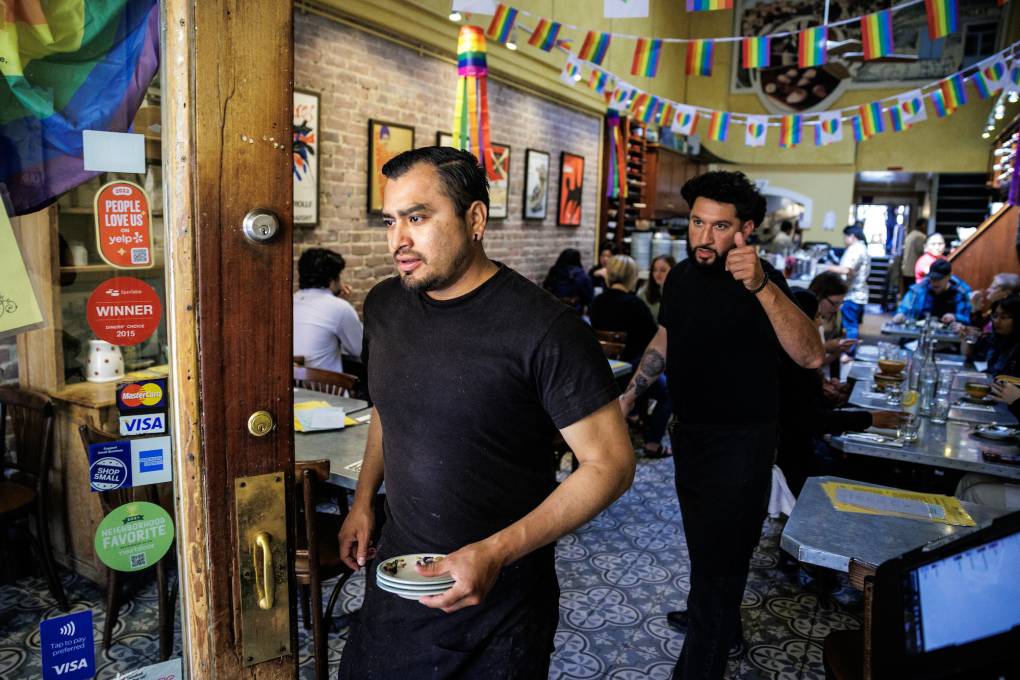
"caption": "Alex Alvarado (left) and Jonathan Guerrero wait on tables at Zazie in San Francisco on June 28, 2024.",
"credit": "Martin do Nascimento/KQED",
"altTag": null,
"description": null,
"imgSizes": {
"medium": {
"file": "https://cdn.kqed.org/wp-content/uploads/sites/10/2024/07/240628-JUNK-FEES-LAW-MD-01-KQED-1-800x533.jpg",
"width": 800,
"height": 533,
"mimeType": "image/jpeg"
},
"large": {
"file": "https://cdn.kqed.org/wp-content/uploads/sites/10/2024/07/240628-JUNK-FEES-LAW-MD-01-KQED-1-1020x680.jpg",
"width": 1020,
"height": 680,
"mimeType": "image/jpeg"
},
"thumbnail": {
"file": "https://cdn.kqed.org/wp-content/uploads/sites/10/2024/07/240628-JUNK-FEES-LAW-MD-01-KQED-1-160x107.jpg",
"width": 160,
"height": 107,
"mimeType": "image/jpeg"
},
"1536x1536": {
"file": "https://cdn.kqed.org/wp-content/uploads/sites/10/2024/07/240628-JUNK-FEES-LAW-MD-01-KQED-1-1536x1024.jpg",
"width": 1536,
"height": 1024,
"mimeType": "image/jpeg"
},
"post-thumbnail": {
"file": "https://cdn.kqed.org/wp-content/uploads/sites/10/2024/07/240628-JUNK-FEES-LAW-MD-01-KQED-1-672x372.jpg",
"width": 672,
"height": 372,
"mimeType": "image/jpeg"
},
"twentyfourteen-full-width": {
"file": "https://cdn.kqed.org/wp-content/uploads/sites/10/2024/07/240628-JUNK-FEES-LAW-MD-01-KQED-1-1038x576.jpg",
"width": 1038,
"height": 576,
"mimeType": "image/jpeg"
},
"full-width": {
"file": "https://cdn.kqed.org/wp-content/uploads/sites/10/2024/07/240628-JUNK-FEES-LAW-MD-01-KQED-1-1920x1280.jpg",
"width": 1920,
"height": 1280,
"mimeType": "image/jpeg"
},
"kqedFullSize": {
"file": "https://cdn.kqed.org/wp-content/uploads/sites/10/2024/07/240628-JUNK-FEES-LAW-MD-01-KQED-1.jpg",
"width": 2000,
"height": 1333
}
},
"isLoading": false,
"fetchFailed": false
},
"news_11991991": {
"type": "attachments",
"id": "news_11991991",
"meta": {
"index": "attachments_1716263798",
"site": "news",
"id": "11991991",
"found": true
},
"title": "sf-pride-2025",
"publishDate": 1719370613,
"status": "inherit",
"parent": 11991990,
"modified": 1750192930,
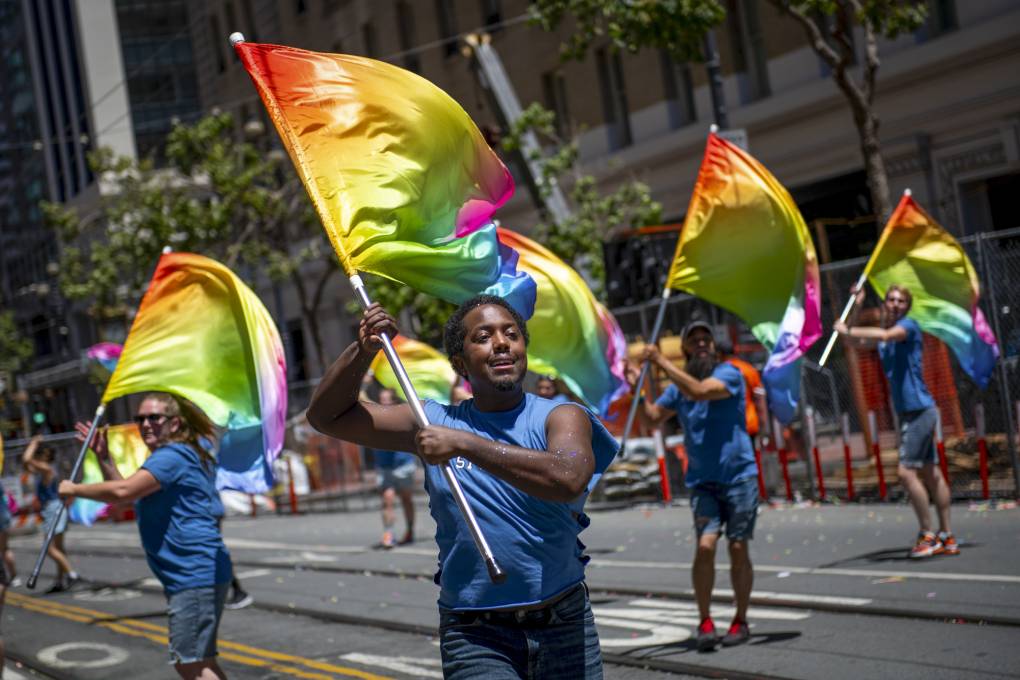
"caption": "Members of the Righteously Outrageous Twirling Corps perform during the San Francisco Pride Parade on June 26, 2022.",
"credit": "Beth LaBerge/KQED",
"altTag": "A group of flag twirlers holding rainbow flags perform on a street.",
"description": null,
"imgSizes": {
"medium": {
"file": "https://cdn.kqed.org/wp-content/uploads/sites/10/2024/06/047_KQED_SFPRIDEPARADE_06262022-KQED-800x533.jpg",
"width": 800,
"height": 533,
"mimeType": "image/jpeg"
},
"large": {
"file": "https://cdn.kqed.org/wp-content/uploads/sites/10/2024/06/047_KQED_SFPRIDEPARADE_06262022-KQED-1020x680.jpg",
"width": 1020,
"height": 680,
"mimeType": "image/jpeg"
},
"thumbnail": {
"file": "https://cdn.kqed.org/wp-content/uploads/sites/10/2024/06/047_KQED_SFPRIDEPARADE_06262022-KQED-160x107.jpg",
"width": 160,
"height": 107,
"mimeType": "image/jpeg"
},
"1536x1536": {
"file": "https://cdn.kqed.org/wp-content/uploads/sites/10/2024/06/047_KQED_SFPRIDEPARADE_06262022-KQED-1536x1024.jpg",
"width": 1536,
"height": 1024,
"mimeType": "image/jpeg"
},
"post-thumbnail": {
"file": "https://cdn.kqed.org/wp-content/uploads/sites/10/2024/06/047_KQED_SFPRIDEPARADE_06262022-KQED-672x372.jpg",
"width": 672,
"height": 372,
"mimeType": "image/jpeg"
},
"twentyfourteen-full-width": {
"file": "https://cdn.kqed.org/wp-content/uploads/sites/10/2024/06/047_KQED_SFPRIDEPARADE_06262022-KQED-1038x576.jpg",
"width": 1038,
"height": 576,
"mimeType": "image/jpeg"
},
"full-width": {
"file": "https://cdn.kqed.org/wp-content/uploads/sites/10/2024/06/047_KQED_SFPRIDEPARADE_06262022-KQED-1920x1280.jpg",
"width": 1920,
"height": 1280,
"mimeType": "image/jpeg"
},
"kqedFullSize": {
"file": "https://cdn.kqed.org/wp-content/uploads/sites/10/2024/06/047_KQED_SFPRIDEPARADE_06262022-KQED.jpg",
"width": 2000,
"height": 1333
}
},
"isLoading": false,
"fetchFailed": false
},
"news_11992145": {
"type": "attachments",
"id": "news_11992145",
"meta": {
"index": "attachments_1716263798",
"site": "news",
"id": "11992145",
"found": true
},
"title": "BreedPeskinRally01",
"publishDate": 1719441378,
"status": "inherit",
"parent": 11992130,
"modified": 1719442372,
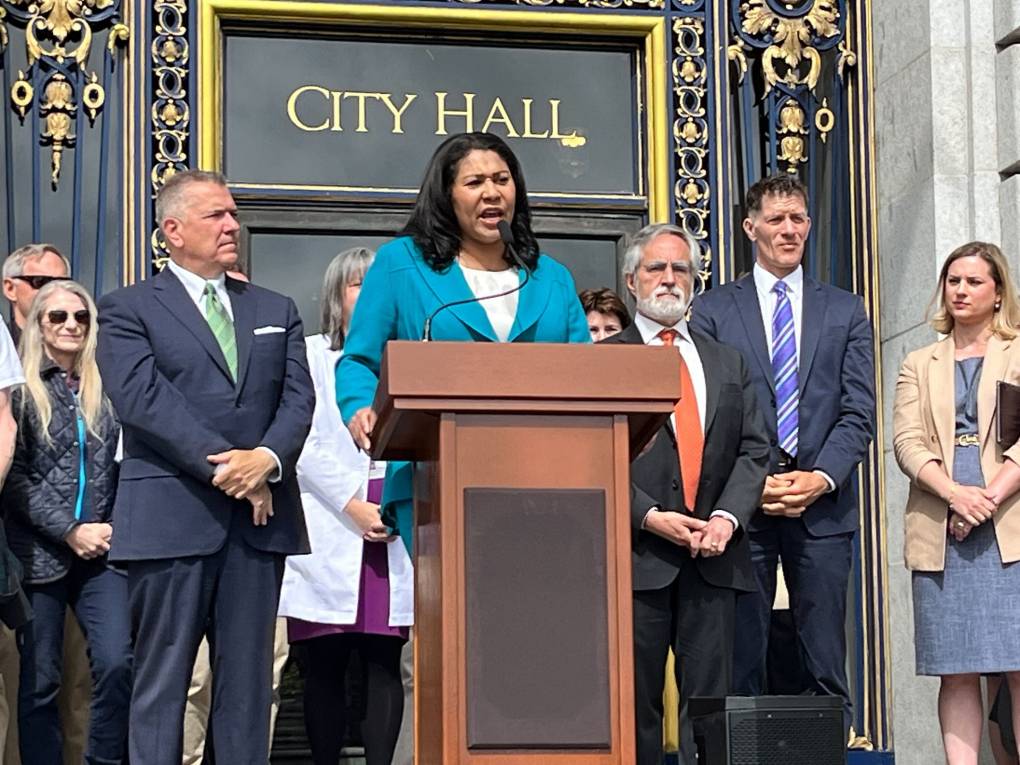
"caption": "Mayor London Breed and Board of Supervisors President Aaron Peskin together in front of City Hall on June 26, 2024, to get a $390 million infrastructure bond on the November ballot.",
"credit": "Juan Carlos Lara/KQED",
"altTag": null,
"description": null,
"imgSizes": {
"medium": {
"file": "https://cdn.kqed.org/wp-content/uploads/sites/10/2024/06/BreedPeskinRally01-800x600.jpg",
"width": 800,
"height": 600,
"mimeType": "image/jpeg"
},
"large": {
"file": "https://cdn.kqed.org/wp-content/uploads/sites/10/2024/06/BreedPeskinRally01-1020x765.jpg",
"width": 1020,
"height": 765,
"mimeType": "image/jpeg"
},
"thumbnail": {
"file": "https://cdn.kqed.org/wp-content/uploads/sites/10/2024/06/BreedPeskinRally01-160x120.jpg",
"width": 160,
"height": 120,
"mimeType": "image/jpeg"
},
"1536x1536": {
"file": "https://cdn.kqed.org/wp-content/uploads/sites/10/2024/06/BreedPeskinRally01-1536x1152.jpg",
"width": 1536,
"height": 1152,
"mimeType": "image/jpeg"
},
"post-thumbnail": {
"file": "https://cdn.kqed.org/wp-content/uploads/sites/10/2024/06/BreedPeskinRally01-672x372.jpg",
"width": 672,
"height": 372,
"mimeType": "image/jpeg"
},
"twentyfourteen-full-width": {
"file": "https://cdn.kqed.org/wp-content/uploads/sites/10/2024/06/BreedPeskinRally01-1038x576.jpg",
"width": 1038,
"height": 576,
"mimeType": "image/jpeg"
},
"kqedFullSize": {
"file": "https://cdn.kqed.org/wp-content/uploads/sites/10/2024/06/BreedPeskinRally01.jpg",
"width": 1920,
"height": 1440
}
},
"isLoading": false,
"fetchFailed": false
},
"news_11992070": {
"type": "attachments",
"id": "news_11992070",
"meta": {
"index": "attachments_1716263798",
"site": "news",
"id": "11992070",
"found": true
},
"title": "028_KQED_TenderloinHousingClinicStrike_07272022",
"publishDate": 1719428612,
"status": "inherit",
"parent": 11992055,
"modified": 1719434689,
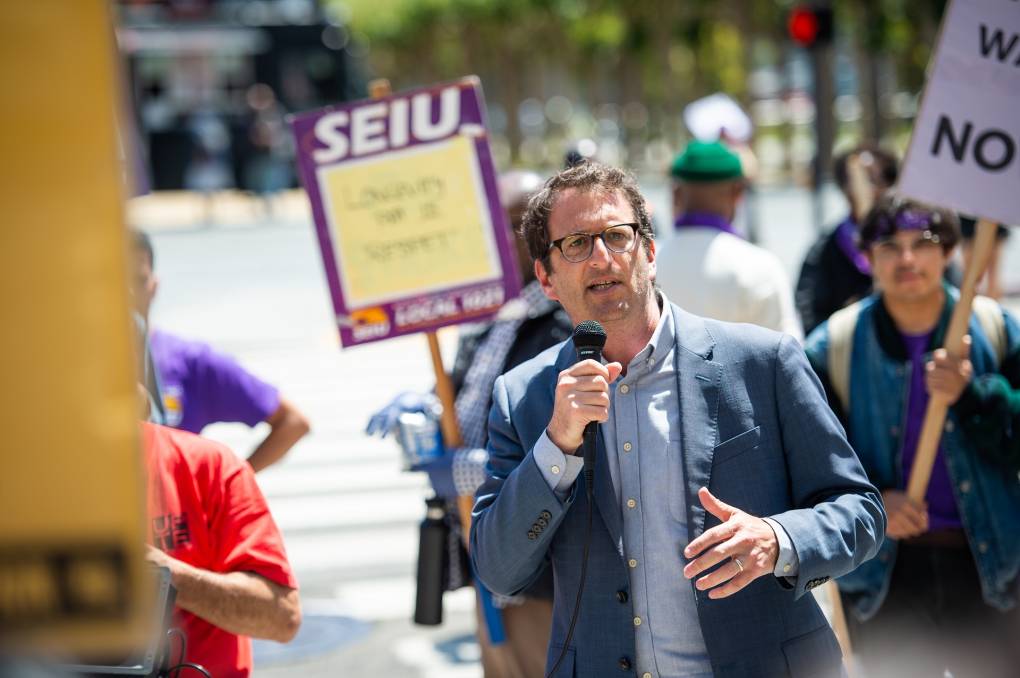
"caption": "Supervisor Dean Preston speaks during a Tenderloin Housing Clinic workers rally for a new contract and higher wages in San Francisco on July 27, 2022. In his reelection paperwork, Preston said he has approved 30,000 new housing units. A lawsuit filed by a pro-development activist says that’s a lie.",
"credit": "Beth LaBerge/KQED",
"altTag": null,
"description": null,
"imgSizes": {
"medium": {
"file": "https://cdn.kqed.org/wp-content/uploads/sites/10/2024/06/028_KQED_TenderloinHousingClinicStrike_07272022-800x532.jpg",
"width": 800,
"height": 532,
"mimeType": "image/jpeg"
},
"large": {
"file": "https://cdn.kqed.org/wp-content/uploads/sites/10/2024/06/028_KQED_TenderloinHousingClinicStrike_07272022-1020x678.jpg",
"width": 1020,
"height": 678,
"mimeType": "image/jpeg"
},
"thumbnail": {
"file": "https://cdn.kqed.org/wp-content/uploads/sites/10/2024/06/028_KQED_TenderloinHousingClinicStrike_07272022-160x106.jpg",
"width": 160,
"height": 106,
"mimeType": "image/jpeg"
},
"1536x1536": {
"file": "https://cdn.kqed.org/wp-content/uploads/sites/10/2024/06/028_KQED_TenderloinHousingClinicStrike_07272022-1536x1022.jpg",
"width": 1536,
"height": 1022,
"mimeType": "image/jpeg"
},
"post-thumbnail": {
"file": "https://cdn.kqed.org/wp-content/uploads/sites/10/2024/06/028_KQED_TenderloinHousingClinicStrike_07272022-672x372.jpg",
"width": 672,
"height": 372,
"mimeType": "image/jpeg"
},
"twentyfourteen-full-width": {
"file": "https://cdn.kqed.org/wp-content/uploads/sites/10/2024/06/028_KQED_TenderloinHousingClinicStrike_07272022-1038x576.jpg",
"width": 1038,
"height": 576,
"mimeType": "image/jpeg"
},
"kqedFullSize": {
"file": "https://cdn.kqed.org/wp-content/uploads/sites/10/2024/06/028_KQED_TenderloinHousingClinicStrike_07272022.jpg",
"width": 1920,
"height": 1277
}
},
"isLoading": false,
"fetchFailed": false
},
"news_11991746": {
"type": "attachments",
"id": "news_11991746",
"meta": {
"index": "attachments_1716263798",
"site": "news",
"id": "11991746",
"found": true
},
"title": "golden gate greenway 2",
"publishDate": 1719264841,
"status": "inherit",
"parent": 0,
"modified": 1719264916,
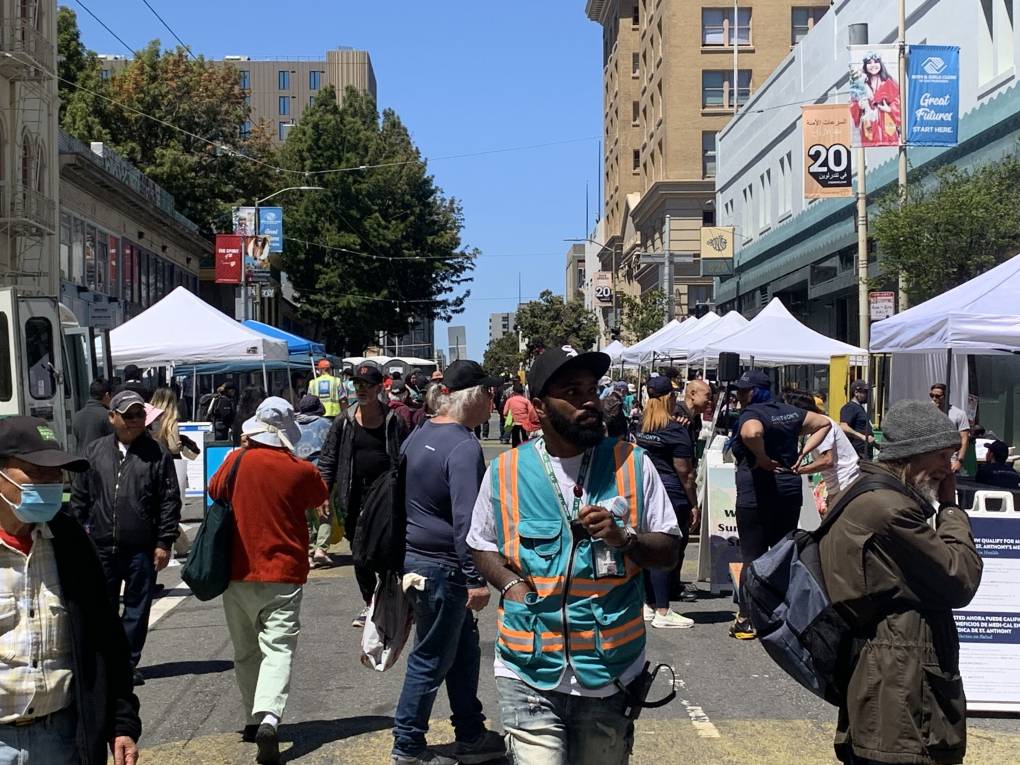
"caption": "People attend the first Sunday Streets block party of 2024 on the 100 block of Golden Gate Avenue on June 23, 2024. ",
"credit": "Courtesy St. Anthony Foundation",
"altTag": "People walking on a street that's been closed off to host an event with many white vendor tents lining either side of the street.",
"description": null,
"imgSizes": {
"medium": {
"file": "https://cdn.kqed.org/wp-content/uploads/sites/10/2024/06/golden-gate-greenway-2-800x600.jpg",
"width": 800,
"height": 600,
"mimeType": "image/jpeg"
},
"large": {
"file": "https://cdn.kqed.org/wp-content/uploads/sites/10/2024/06/golden-gate-greenway-2-1020x765.jpg",
"width": 1020,
"height": 765,
"mimeType": "image/jpeg"
},
"thumbnail": {
"file": "https://cdn.kqed.org/wp-content/uploads/sites/10/2024/06/golden-gate-greenway-2-160x120.jpg",
"width": 160,
"height": 120,
"mimeType": "image/jpeg"
},
"1536x1536": {
"file": "https://cdn.kqed.org/wp-content/uploads/sites/10/2024/06/golden-gate-greenway-2-1536x1152.jpg",
"width": 1536,
"height": 1152,
"mimeType": "image/jpeg"
},
"2048x2048": {
"file": "https://cdn.kqed.org/wp-content/uploads/sites/10/2024/06/golden-gate-greenway-2-2048x1536.jpg",
"width": 2048,
"height": 1536,
"mimeType": "image/jpeg"
},
"post-thumbnail": {
"file": "https://cdn.kqed.org/wp-content/uploads/sites/10/2024/06/golden-gate-greenway-2-672x372.jpg",
"width": 672,
"height": 372,
"mimeType": "image/jpeg"
},
"twentyfourteen-full-width": {
"file": "https://cdn.kqed.org/wp-content/uploads/sites/10/2024/06/golden-gate-greenway-2-1038x576.jpg",
"width": 1038,
"height": 576,
"mimeType": "image/jpeg"
},
"full-width": {
"file": "https://cdn.kqed.org/wp-content/uploads/sites/10/2024/06/golden-gate-greenway-2-1920x1440.jpg",
"width": 1920,
"height": 1440,
"mimeType": "image/jpeg"
},
"kqedFullSize": {
"file": "https://cdn.kqed.org/wp-content/uploads/sites/10/2024/06/golden-gate-greenway-2-scaled.jpg",
"width": 2560,
"height": 1920
}
},
"isLoading": false,
"fetchFailed": false
},
"news_11991565": {
"type": "attachments",
"id": "news_11991565",
"meta": {
"index": "attachments_1716263798",
"site": "news",
"id": "11991565",
"found": true
},
"title": "Buprenorphine",
"publishDate": 1719014745,
"status": "inherit",
"parent": 11991538,
"modified": 1719015026,
"caption": "San Francisco health officials say microdosing buprenorphine has proven to help people quit opioid painkillers. ",
"credit": "Hailshadow/Getty Images",
"altTag": null,
"description": null,
"imgSizes": {
"medium": {
"file": "https://cdn.kqed.org/wp-content/uploads/sites/10/2024/06/GettyImages-955608454-800x533.jpg",
"width": 800,
"height": 533,
"mimeType": "image/jpeg"
},
"large": {
"file": "https://cdn.kqed.org/wp-content/uploads/sites/10/2024/06/GettyImages-955608454-1020x680.jpg",
"width": 1020,
"height": 680,
"mimeType": "image/jpeg"
},
"thumbnail": {
"file": "https://cdn.kqed.org/wp-content/uploads/sites/10/2024/06/GettyImages-955608454-160x107.jpg",
"width": 160,
"height": 107,
"mimeType": "image/jpeg"
},
"1536x1536": {
"file": "https://cdn.kqed.org/wp-content/uploads/sites/10/2024/06/GettyImages-955608454-1536x1024.jpg",
"width": 1536,
"height": 1024,
"mimeType": "image/jpeg"
},
"2048x2048": {
"file": "https://cdn.kqed.org/wp-content/uploads/sites/10/2024/06/GettyImages-955608454-2048x1365.jpg",
"width": 2048,
"height": 1365,
"mimeType": "image/jpeg"
},
"post-thumbnail": {
"file": "https://cdn.kqed.org/wp-content/uploads/sites/10/2024/06/GettyImages-955608454-672x372.jpg",
"width": 672,
"height": 372,
"mimeType": "image/jpeg"
},
"twentyfourteen-full-width": {
"file": "https://cdn.kqed.org/wp-content/uploads/sites/10/2024/06/GettyImages-955608454-1038x576.jpg",
"width": 1038,
"height": 576,
"mimeType": "image/jpeg"
},
"full-width": {
"file": "https://cdn.kqed.org/wp-content/uploads/sites/10/2024/06/GettyImages-955608454-1920x1280.jpg",
"width": 1920,
"height": 1280,
"mimeType": "image/jpeg"
},
"kqedFullSize": {
"file": "https://cdn.kqed.org/wp-content/uploads/sites/10/2024/06/GettyImages-955608454.jpg",
"width": 2121,
"height": 1414
}
},
"isLoading": false,
"fetchFailed": false
},
"news_11991563": {
"type": "attachments",
"id": "news_11991563",
"meta": {
"index": "attachments_1716263798",
"site": "news",
"id": "11991563",
"found": true
},
"title": "IMG_8387",
"publishDate": 1719014550,
"status": "inherit",
"parent": 11996329,
"modified": 1721418443,
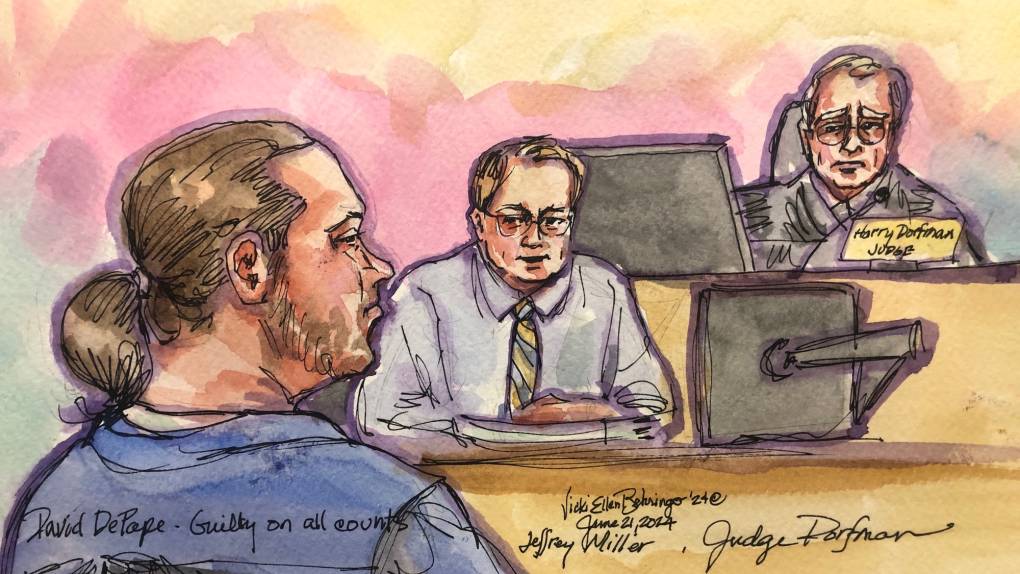
"caption": "A jury found David DePape guilty on all counts in San Francisco Superior Court on June 21, 2024.",
"credit": "Vicki Behringer for KQED",
"altTag": null,
"description": null,
"imgSizes": {
"medium": {
"file": "https://cdn.kqed.org/wp-content/uploads/sites/10/2024/06/IMG_8387-800x450.jpeg",
"width": 800,
"height": 450,
"mimeType": "image/jpeg"
},
"large": {
"file": "https://cdn.kqed.org/wp-content/uploads/sites/10/2024/06/IMG_8387-1020x574.jpeg",
"width": 1020,
"height": 574,
"mimeType": "image/jpeg"
},
"thumbnail": {
"file": "https://cdn.kqed.org/wp-content/uploads/sites/10/2024/06/IMG_8387-160x90.jpeg",
"width": 160,
"height": 90,
"mimeType": "image/jpeg"
},
"1536x1536": {
"file": "https://cdn.kqed.org/wp-content/uploads/sites/10/2024/06/IMG_8387-1536x864.jpeg",
"width": 1536,
"height": 864,
"mimeType": "image/jpeg"
},
"post-thumbnail": {
"file": "https://cdn.kqed.org/wp-content/uploads/sites/10/2024/06/IMG_8387-672x372.jpeg",
"width": 672,
"height": 372,
"mimeType": "image/jpeg"
},
"twentyfourteen-full-width": {
"file": "https://cdn.kqed.org/wp-content/uploads/sites/10/2024/06/IMG_8387-1038x576.jpeg",
"width": 1038,
"height": 576,
"mimeType": "image/jpeg"
},
"full-width": {
"file": "https://cdn.kqed.org/wp-content/uploads/sites/10/2024/06/IMG_8387-1920x1080.jpeg",
"width": 1920,
"height": 1080,
"mimeType": "image/jpeg"
},
"kqedFullSize": {
"file": "https://cdn.kqed.org/wp-content/uploads/sites/10/2024/06/IMG_8387.jpeg",
"width": 2000,
"height": 1125
}
},
"isLoading": false,
"fetchFailed": false
},
"news_11964703": {
"type": "attachments",
"id": "news_11964703",
"meta": {
"index": "attachments_1716263798",
"site": "news",
"id": "11964703",
"found": true
},
"parent": 0,
"imgSizes": {
"twentyfourteen-full-width": {
"file": "https://ww2.kqed.org/app/uploads/sites/10/2023/10/231016-McLaren-Park-MD-04-KQED-1038x576.jpg",
"width": 1038,
"mimeType": "image/jpeg",
"height": 576
},
"thumbnail": {
"file": "https://ww2.kqed.org/app/uploads/sites/10/2023/10/231016-McLaren-Park-MD-04-KQED-160x107.jpg",
"width": 160,
"mimeType": "image/jpeg",
"height": 107
},
"post-thumbnail": {
"file": "https://ww2.kqed.org/app/uploads/sites/10/2023/10/231016-McLaren-Park-MD-04-KQED-672x372.jpg",
"width": 672,
"mimeType": "image/jpeg",
"height": 372
},
"kqedFullSize": {
"file": "https://ww2.kqed.org/app/uploads/sites/10/2023/10/231016-McLaren-Park-MD-04-KQED.jpg?ver=1697491088",
"width": 2000,
"height": 1333
},
"large": {
"file": "https://ww2.kqed.org/app/uploads/sites/10/2023/10/231016-McLaren-Park-MD-04-KQED-1020x680.jpg",
"width": 1020,
"mimeType": "image/jpeg",
"height": 680
},
"1536x1536": {
"file": "https://ww2.kqed.org/app/uploads/sites/10/2023/10/231016-McLaren-Park-MD-04-KQED-1536x1024.jpg",
"width": 1536,
"mimeType": "image/jpeg",
"height": 1024
},
"full-width": {
"file": "https://ww2.kqed.org/app/uploads/sites/10/2023/10/231016-McLaren-Park-MD-04-KQED-1920x1280.jpg",
"width": 1920,
"mimeType": "image/jpeg",
"height": 1280
},
"medium": {
"file": "https://ww2.kqed.org/app/uploads/sites/10/2023/10/231016-McLaren-Park-MD-04-KQED-800x533.jpg",
"width": 800,
"mimeType": "image/jpeg",
"height": 533
}
},
"publishDate": 1697490609,
"modified": 1697516003,
"caption": "A lone dog walker on the half-mile car-free stretch of Shelley Drive in San Francisco's McLaren Park, on Oct. 16, 2023.",
"description": null,
"title": "231016-McLaren Park-MD-04-KQED",
"credit": "Martin do Nascimento/KQED",
"status": "inherit",
"altTag": "Two people walk down an open stretch of road in a park.",
"isLoading": false,
"fetchFailed": false
},
"news_11990992": {
"type": "attachments",
"id": "news_11990992",
"meta": {
"index": "attachments_1716263798",
"site": "news",
"id": "11990992",
"found": true
},
"title": "IMG_9679-KQED",
"publishDate": 1718748652,
"status": "inherit",
"parent": 0,
"modified": 1718748687,
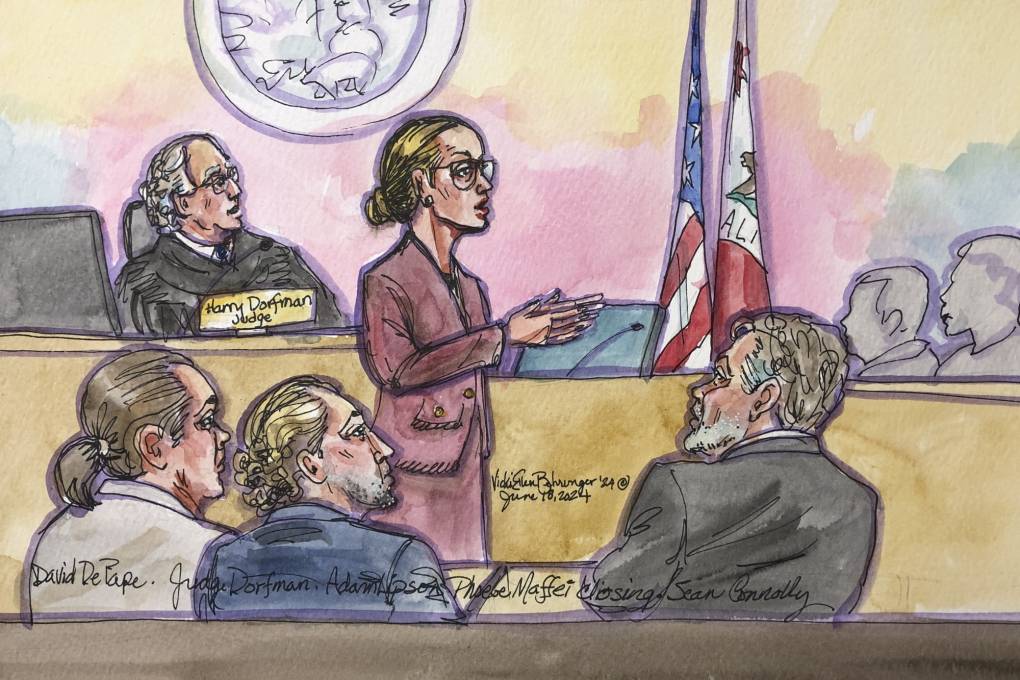
"caption": "Phoebe Maffei gives the prosecutions rebuttal in the state trial of David DePape in San Francisco Superior Court on June 18, 2024.",
"credit": "Vicki Behringer for KQED",
"altTag": null,
"description": null,
"imgSizes": {
"medium": {
"file": "https://cdn.kqed.org/wp-content/uploads/sites/10/2024/06/IMG_9679-KQED-800x533.jpg",
"width": 800,
"height": 533,
"mimeType": "image/jpeg"
},
"large": {
"file": "https://cdn.kqed.org/wp-content/uploads/sites/10/2024/06/IMG_9679-KQED-1020x680.jpg",
"width": 1020,
"height": 680,
"mimeType": "image/jpeg"
},
"thumbnail": {
"file": "https://cdn.kqed.org/wp-content/uploads/sites/10/2024/06/IMG_9679-KQED-160x107.jpg",
"width": 160,
"height": 107,
"mimeType": "image/jpeg"
},
"1536x1536": {
"file": "https://cdn.kqed.org/wp-content/uploads/sites/10/2024/06/IMG_9679-KQED-1536x1024.jpg",
"width": 1536,
"height": 1024,
"mimeType": "image/jpeg"
},
"post-thumbnail": {
"file": "https://cdn.kqed.org/wp-content/uploads/sites/10/2024/06/IMG_9679-KQED-672x372.jpg",
"width": 672,
"height": 372,
"mimeType": "image/jpeg"
},
"twentyfourteen-full-width": {
"file": "https://cdn.kqed.org/wp-content/uploads/sites/10/2024/06/IMG_9679-KQED-1038x576.jpg",
"width": 1038,
"height": 576,
"mimeType": "image/jpeg"
},
"full-width": {
"file": "https://cdn.kqed.org/wp-content/uploads/sites/10/2024/06/IMG_9679-KQED-1920x1280.jpg",
"width": 1920,
"height": 1280,
"mimeType": "image/jpeg"
},
"kqedFullSize": {
"file": "https://cdn.kqed.org/wp-content/uploads/sites/10/2024/06/IMG_9679-KQED.jpg",
"width": 2000,
"height": 1333
}
},
"isLoading": false,
"fetchFailed": false
},
"news_11990724": {
"type": "attachments",
"id": "news_11990724",
"meta": {
"index": "attachments_1716263798",
"site": "news",
"id": "11990724",
"found": true
},
"title": "DrugFreeRecoveryHousing01",
"publishDate": 1718651960,
"status": "inherit",
"parent": 11990693,
"modified": 1718665035,
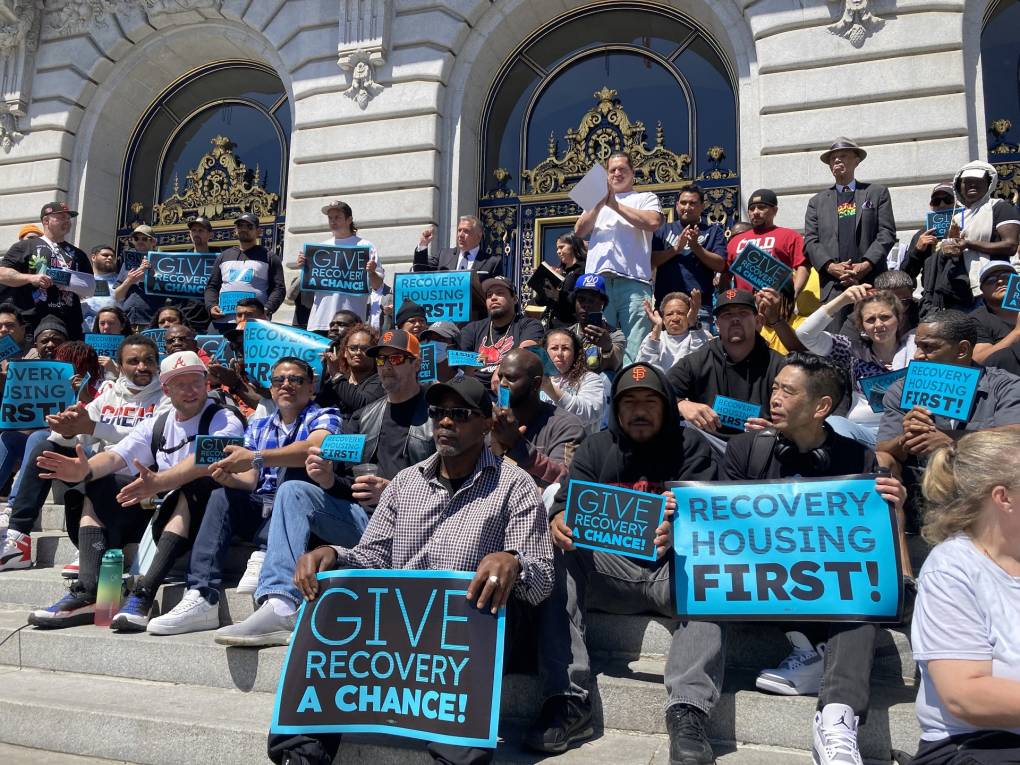
"caption": "San Francisco Supervisor Matt Dorsey (top-center) speaks from a podium at City Hall on June 17. Together, he and Supervisor Rafael Mandelman announced their new legislation to prioritize drug-free recovery housing in front of advocates and the community.",
"credit": "Katherine Monahan/KQED",
"altTag": null,
"description": null,
"imgSizes": {
"medium": {
"file": "https://cdn.kqed.org/wp-content/uploads/sites/10/2024/06/DrugFreeRecoveryHousing01-800x600.jpg",
"width": 800,
"height": 600,
"mimeType": "image/jpeg"
},
"large": {
"file": "https://cdn.kqed.org/wp-content/uploads/sites/10/2024/06/DrugFreeRecoveryHousing01-1020x765.jpg",
"width": 1020,
"height": 765,
"mimeType": "image/jpeg"
},
"thumbnail": {
"file": "https://cdn.kqed.org/wp-content/uploads/sites/10/2024/06/DrugFreeRecoveryHousing01-160x120.jpg",
"width": 160,
"height": 120,
"mimeType": "image/jpeg"
},
"1536x1536": {
"file": "https://cdn.kqed.org/wp-content/uploads/sites/10/2024/06/DrugFreeRecoveryHousing01-1536x1152.jpg",
"width": 1536,
"height": 1152,
"mimeType": "image/jpeg"
},
"post-thumbnail": {
"file": "https://cdn.kqed.org/wp-content/uploads/sites/10/2024/06/DrugFreeRecoveryHousing01-672x372.jpg",
"width": 672,
"height": 372,
"mimeType": "image/jpeg"
},
"twentyfourteen-full-width": {
"file": "https://cdn.kqed.org/wp-content/uploads/sites/10/2024/06/DrugFreeRecoveryHousing01-1038x576.jpg",
"width": 1038,
"height": 576,
"mimeType": "image/jpeg"
},
"kqedFullSize": {
"file": "https://cdn.kqed.org/wp-content/uploads/sites/10/2024/06/DrugFreeRecoveryHousing01.jpg",
"width": 1920,
"height": 1440
}
},
"isLoading": false,
"fetchFailed": false
},
"news_11990674": {
"type": "attachments",
"id": "news_11990674",
"meta": {
"index": "attachments_1716263798",
"site": "news",
"id": "11990674",
"found": true
},
"title": "240405-District5BOSRedistricting-003-BL_qut",
"publishDate": 1718645165,
"status": "inherit",
"parent": 11990665,
"modified": 1718645176,
"caption": "People walk through the Tenderloin neighborhood, a part of the 5th Supervisorial District, in San Francisco on April 5, 2024.",
"credit": "Beth LaBerge/KQED",
"altTag": null,
"description": null,
"imgSizes": {
"medium": {
"file": "https://cdn.kqed.org/wp-content/uploads/sites/10/2024/06/240405-District5BOSRedistricting-003-BL_qut-800x533.jpg",
"width": 800,
"height": 533,
"mimeType": "image/jpeg"
},
"large": {
"file": "https://cdn.kqed.org/wp-content/uploads/sites/10/2024/06/240405-District5BOSRedistricting-003-BL_qut-1020x680.jpg",
"width": 1020,
"height": 680,
"mimeType": "image/jpeg"
},
"thumbnail": {
"file": "https://cdn.kqed.org/wp-content/uploads/sites/10/2024/06/240405-District5BOSRedistricting-003-BL_qut-160x107.jpg",
"width": 160,
"height": 107,
"mimeType": "image/jpeg"
},
"1536x1536": {
"file": "https://cdn.kqed.org/wp-content/uploads/sites/10/2024/06/240405-District5BOSRedistricting-003-BL_qut-1536x1024.jpg",
"width": 1536,
"height": 1024,
"mimeType": "image/jpeg"
},
"post-thumbnail": {
"file": "https://cdn.kqed.org/wp-content/uploads/sites/10/2024/06/240405-District5BOSRedistricting-003-BL_qut-672x372.jpg",
"width": 672,
"height": 372,
"mimeType": "image/jpeg"
},
"twentyfourteen-full-width": {
"file": "https://cdn.kqed.org/wp-content/uploads/sites/10/2024/06/240405-District5BOSRedistricting-003-BL_qut-1038x576.jpg",
"width": 1038,
"height": 576,
"mimeType": "image/jpeg"
},
"kqedFullSize": {
"file": "https://cdn.kqed.org/wp-content/uploads/sites/10/2024/06/240405-District5BOSRedistricting-003-BL_qut.jpg",
"width": 1920,
"height": 1280
}
},
"isLoading": false,
"fetchFailed": false
},
"news_11990111": {
"type": "attachments",
"id": "news_11990111",
"meta": {
"index": "attachments_1716263798",
"site": "news",
"id": "11990111",
"found": true
},
"title": "240612-SFMayoralDebate",
"publishDate": 1718251306,
"status": "inherit",
"parent": 11993902,
"modified": 1720830745,
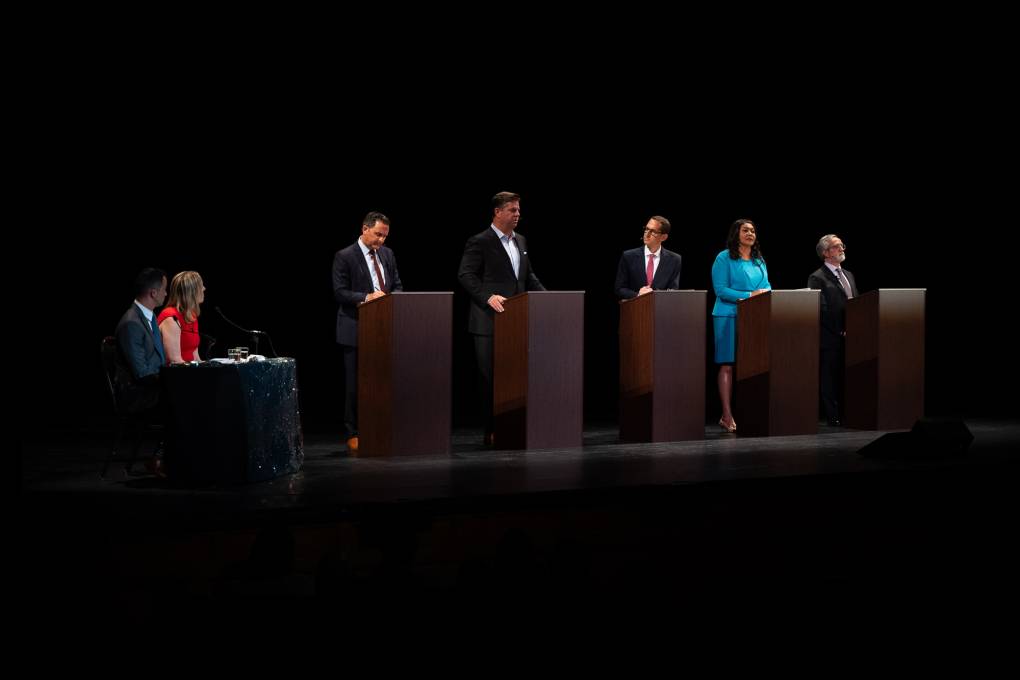
"caption": "From left, Manny Yekutiel, proprietor of the event space Manny’s and Heather Knight, San Francisco bureau chief of The New York Times, moderate the San Francisco mayoral debate featuring Ahsha Safai, Mark Farrell, Daniel Lurie, London Breed and Aaron Peskin at the Sydney Goldstein Theater on June 12, 2024.",
"credit": "Beth LaBerge/KQED",
"altTag": null,
"description": null,
"imgSizes": {
"medium": {
"file": "https://cdn.kqed.org/wp-content/uploads/sites/10/2024/06/240612-SFMayoralDebate-15-BL-800x533.jpg",
"width": 800,
"height": 533,
"mimeType": "image/jpeg"
},
"large": {
"file": "https://cdn.kqed.org/wp-content/uploads/sites/10/2024/06/240612-SFMayoralDebate-15-BL-1020x680.jpg",
"width": 1020,
"height": 680,
"mimeType": "image/jpeg"
},
"thumbnail": {
"file": "https://cdn.kqed.org/wp-content/uploads/sites/10/2024/06/240612-SFMayoralDebate-15-BL-160x107.jpg",
"width": 160,
"height": 107,
"mimeType": "image/jpeg"
},
"1536x1536": {
"file": "https://cdn.kqed.org/wp-content/uploads/sites/10/2024/06/240612-SFMayoralDebate-15-BL-1536x1024.jpg",
"width": 1536,
"height": 1024,
"mimeType": "image/jpeg"
},
"post-thumbnail": {
"file": "https://cdn.kqed.org/wp-content/uploads/sites/10/2024/06/240612-SFMayoralDebate-15-BL-672x372.jpg",
"width": 672,
"height": 372,
"mimeType": "image/jpeg"
},
"twentyfourteen-full-width": {
"file": "https://cdn.kqed.org/wp-content/uploads/sites/10/2024/06/240612-SFMayoralDebate-15-BL-1038x576.jpg",
"width": 1038,
"height": 576,
"mimeType": "image/jpeg"
},
"full-width": {
"file": "https://cdn.kqed.org/wp-content/uploads/sites/10/2024/06/240612-SFMayoralDebate-15-BL-1920x1280.jpg",
"width": 1920,
"height": 1280,
"mimeType": "image/jpeg"
},
"kqedFullSize": {
"file": "https://cdn.kqed.org/wp-content/uploads/sites/10/2024/06/240612-SFMayoralDebate-15-BL.jpg",
"width": 2000,
"height": 1333
}
},
"isLoading": false,
"fetchFailed": false
}
},
"audioPlayerReducer": {
"postId": "stream_live",
"isPaused": true,
"isPlaying": false,
"pfsActive": false,
"pledgeModalIsOpen": true,
"playerDrawerIsOpen": false,
"liveAudioPlayStartedAt": 0,
"liveAudioPlayContext": ""
},
"authorsReducer": {
"byline_news_11990966": {
"type": "authors",
"id": "byline_news_11990966",
"meta": {
"override": true
},
"slug": "byline_news_11990966",
"name": "Brian Krans",
"isLoading": false
},
"mlagos": {
"type": "authors",
"id": "3239",
"meta": {
"index": "authors_1716337520",
"id": "3239",
"found": true
},
"name": "Marisa Lagos",
"firstName": "Marisa",
"lastName": "Lagos",
"slug": "mlagos",
"email": "mlagos@kqed.org",
"display_author_email": false,
"staff_mastheads": [
"news"
],
"title": "KQED Contributor",
"bio": "Marisa Lagos is a correspondent for KQED’s California Politics and Government Desk and co-hosts the award-winning show and podcast, Political Breakdown. At KQED, Lagos also conducts reporting, analysis and investigations into state, local and national politics for radio, TV, online and onstage. In 2022, she and co-host, Scott Shafer, moderated the only gubernatorial debate in California. In 2020, the \u003ci>Washington Post\u003c/i> named her one of the top political journalists in California; she was nominated for a Peabody and won several other awards for her work investigating the 2017 California wildfires. She has worked at the \u003ci>San Francisco Chronicle\u003c/i>, \u003ci>San Francisco Examiner\u003c/i> and \u003ci>Los Angeles Times\u003c/i>. A UC Santa Barbara graduate, she lives in San Francisco with her two sons and husband.",
"avatar": "https://secure.gravatar.com/avatar/a261a0d3696fc066871ef96b85b5e7d2?s=600&d=blank&r=g",
"twitter": "@mlagos",
"facebook": null,
"instagram": null,
"linkedin": null,
"sites": [
{
"site": "arts",
"roles": [
"author"
]
},
{
"site": "news",
"roles": [
"editor"
]
},
{
"site": "science",
"roles": [
"editor"
]
},
{
"site": "forum",
"roles": [
"author"
]
},
{
"site": "liveblog",
"roles": [
"author"
]
}
],
"headData": {
"title": "Marisa Lagos | KQED",
"description": "KQED Contributor",
"ogImgSrc": "https://secure.gravatar.com/avatar/a261a0d3696fc066871ef96b85b5e7d2?s=600&d=blank&r=g",
"twImgSrc": "https://secure.gravatar.com/avatar/a261a0d3696fc066871ef96b85b5e7d2?s=600&d=blank&r=g"
},
"isLoading": false,
"link": "/author/mlagos"
},
"ecruzguevarra": {
"type": "authors",
"id": "8654",
"meta": {
"index": "authors_1716337520",
"id": "8654",
"found": true
},
"name": "Ericka Cruz Guevarra",
"firstName": "Ericka",
"lastName": "Cruz Guevarra",
"slug": "ecruzguevarra",
"email": "ecruzguevarra@kqed.org",
"display_author_email": true,
"staff_mastheads": [
"news"
],
"title": "Producer, The Bay Podcast",
"bio": "Ericka Cruz Guevarra is host of \u003ca href=\"https://www.kqed.org/podcasts/thebay\">\u003cem>The Bay\u003c/em>\u003c/a> podcast at KQED. Before host, she was the show’s producer. Her work in that capacity includes a three-part reported series on policing in Vallejo, which won a 2020 excellence in journalism award from the Society of Professional Journalists. Ericka has worked as a breaking news reporter at Oregon Public Broadcasting, helped produce the Code Switch podcast, and was KQED’s inaugural Raul Ramirez Diversity Fund intern. She’s also an alumna of NPR’s Next Generation Radio program. Send her an email if you have strong feelings about whether Fairfield and Suisun City are the Bay. Ericka is represented by SAG-AFTRA.",
"avatar": "https://secure.gravatar.com/avatar/accefc1de4bafc7e234b69bcb9b6f6536c130fd84709bc3069ef11a78787e1bb?s=600&d=blank&r=g",
"twitter": "NotoriousECG",
"bluesky": null,
"facebook": null,
"instagram": null,
"linkedin": null,
"sites": [
{
"site": "arts",
"roles": [
"subscriber"
]
},
{
"site": "news",
"roles": [
"editor",
"manage_categories"
]
},
{
"site": "futureofyou",
"roles": [
"subscriber"
]
},
{
"site": "stateofhealth",
"roles": [
"subscriber"
]
},
{
"site": "science",
"roles": [
"editor"
]
},
{
"site": "forum",
"roles": [
"subscriber"
]
}
],
"headData": {
"title": "Ericka Cruz Guevarra | KQED",
"description": "Producer, The Bay Podcast",
"ogImgSrc": "https://secure.gravatar.com/avatar/accefc1de4bafc7e234b69bcb9b6f6536c130fd84709bc3069ef11a78787e1bb?s=600&d=blank&r=g",
"twImgSrc": "https://secure.gravatar.com/avatar/accefc1de4bafc7e234b69bcb9b6f6536c130fd84709bc3069ef11a78787e1bb?s=600&d=blank&r=g"
},
"isLoading": false,
"link": "/author/ecruzguevarra"
},
"lesleymcclurg": {
"type": "authors",
"id": "11229",
"meta": {
"index": "authors_1716337520",
"id": "11229",
"found": true
},
"name": "Lesley McClurg",
"firstName": "Lesley",
"lastName": "McClurg",
"slug": "lesleymcclurg",
"email": "lmcclurg@KQED.org",
"display_author_email": false,
"staff_mastheads": [
"news",
"science"
],
"title": "KQED Health Correspondent",
"bio": "Lesley McClurg is a health correspondent and fill-in host whose work is regularly rebroadcast on NPR and PBS programs. She’s earned multiple regional Emmy awards, a national and a regional Edward R. Murrow award, and was named Best Beat Reporter by the Association of Health Care Journalists. The Society of Professional Journalists has recognized her work several times, and the Society of Environmental Journalists spotlighted her coverage of California’s historic drought.\r\n\r\nBefore joining KQED in 2016, Lesley covered food and sustainability for Capital Public Radio, environmental issues for Colorado Public Radio, and reported for KUOW and KCTS 9 in Seattle. Away from the newsroom, she loves skiing with her daughter, mountain biking with her partner, and playing with Ollie, the family’s goldendoodle. On deadline, she runs almost entirely on chocolate chips.\r\n\r\n ",
"avatar": "https://secure.gravatar.com/avatar/bab49e972ea10c774fe0f5e29dba1722b158f7c0d58a360923d1389d380b2978?s=600&d=blank&r=g",
"twitter": "lesleywmcclurg",
"bluesky": null,
"facebook": null,
"instagram": null,
"linkedin": null,
"sites": [
{
"site": "arts",
"roles": [
"author"
]
},
{
"site": "news",
"roles": [
"editor"
]
},
{
"site": "futureofyou",
"roles": [
"editor"
]
},
{
"site": "stateofhealth",
"roles": [
"author"
]
},
{
"site": "science",
"roles": [
"editor"
]
},
{
"site": "quest",
"roles": [
"subscriber"
]
},
{
"site": "forum",
"roles": [
"administrator"
]
},
{
"site": "liveblog",
"roles": [
"author"
]
}
],
"headData": {
"title": "Lesley McClurg | KQED",
"description": "KQED Health Correspondent",
"ogImgSrc": "https://secure.gravatar.com/avatar/bab49e972ea10c774fe0f5e29dba1722b158f7c0d58a360923d1389d380b2978?s=600&d=blank&r=g",
"twImgSrc": "https://secure.gravatar.com/avatar/bab49e972ea10c774fe0f5e29dba1722b158f7c0d58a360923d1389d380b2978?s=600&d=blank&r=g"
},
"isLoading": false,
"link": "/author/lesleymcclurg"
},
"amontecillo": {
"type": "authors",
"id": "11649",
"meta": {
"index": "authors_1716337520",
"id": "11649",
"found": true
},
"name": "Alan Montecillo",
"firstName": "Alan",
"lastName": "Montecillo",
"slug": "amontecillo",
"email": "amontecillo@kqed.org",
"display_author_email": false,
"staff_mastheads": [
"news"
],
"title": "KQED Contributor",
"bio": "Alan Montecillo is the senior editor of \u003cem>\u003ca href=\"http://kqed.org/thebay\">The Bay\u003c/a>, \u003c/em> KQED's local news podcast. Before moving to the Bay Area, he worked as a senior talk show producer for WILL in Champaign-Urbana, Illinois and at Oregon Public Broadcasting in Portland, Oregon. He has won journalism awards from the Society of Professional Journalists Northern California, the Public Media Journalists Association, The Signal Awards, and has also received a regional Edward R. Murrow award. Alan is a Filipino American from Hong Kong and a graduate of Reed College.",
"avatar": "https://secure.gravatar.com/avatar/268f53a2066899ea9efdd8a5900218b17c822d9862cbc9326cccec53ef41d349?s=600&d=blank&r=g",
"twitter": "alanmontecillo",
"bluesky": null,
"facebook": null,
"instagram": null,
"linkedin": null,
"sites": [
{
"site": "",
"roles": [
"editor"
]
},
{
"site": "news",
"roles": [
"editor",
"manage_categories"
]
}
],
"headData": {
"title": "Alan Montecillo | KQED",
"description": "KQED Contributor",
"ogImgSrc": "https://secure.gravatar.com/avatar/268f53a2066899ea9efdd8a5900218b17c822d9862cbc9326cccec53ef41d349?s=600&d=blank&r=g",
"twImgSrc": "https://secure.gravatar.com/avatar/268f53a2066899ea9efdd8a5900218b17c822d9862cbc9326cccec53ef41d349?s=600&d=blank&r=g"
},
"isLoading": false,
"link": "/author/amontecillo"
},
"jrodriguez": {
"type": "authors",
"id": "11690",
"meta": {
"index": "authors_1716337520",
"id": "11690",
"found": true
},
"name": "Joe Fitzgerald Rodriguez",
"firstName": "Joe",
"lastName": "Fitzgerald Rodriguez",
"slug": "jrodriguez",
"email": "jrodriguez@kqed.org",
"display_author_email": true,
"staff_mastheads": [
"news"
],
"title": "Reporter and Producer",
"bio": "Joe Fitzgerald Rodriguez is a reporter and digital producer for KQED covering politics. Joe most recently wrote for the \u003cem>San Francisco Examiner\u003c/em> as a political columnist covering The City. He was raised in San Francisco and has spent his reporting career in his beloved, foggy, city by the bay. Joe was 12-years-old when he conducted his first interview in journalism, grilling former San Francisco Mayor Willie Brown for the Marina Middle School newspaper, \u003cem>The Penguin Press, \u003c/em>and he continues to report on the San Francisco Bay Area to this day.",
"avatar": "https://secure.gravatar.com/avatar/2247beb0564c1e9c62228d5649d2edac?s=600&d=blank&r=g",
"twitter": "FitztheReporter",
"facebook": null,
"instagram": "https://www.instagram.com/fitzthereporter/",
"linkedin": null,
"sites": [
{
"site": "",
"roles": [
"editor"
]
},
{
"site": "arts",
"roles": [
"editor"
]
},
{
"site": "news",
"roles": [
"editor"
]
},
{
"site": "science",
"roles": [
"editor"
]
},
{
"site": "elections",
"roles": [
"editor"
]
},
{
"site": "liveblog",
"roles": [
"editor"
]
}
],
"headData": {
"title": "Joe Fitzgerald Rodriguez | KQED",
"description": "Reporter and Producer",
"ogImgSrc": "https://secure.gravatar.com/avatar/2247beb0564c1e9c62228d5649d2edac?s=600&d=blank&r=g",
"twImgSrc": "https://secure.gravatar.com/avatar/2247beb0564c1e9c62228d5649d2edac?s=600&d=blank&r=g"
},
"isLoading": false,
"link": "/author/jrodriguez"
},
"ccabreralomeli": {
"type": "authors",
"id": "11708",
"meta": {
"index": "authors_1716337520",
"id": "11708",
"found": true
},
"name": "Carlos Cabrera-Lomelí",
"firstName": "Carlos",
"lastName": "Cabrera-Lomelí",
"slug": "ccabreralomeli",
"email": "ccabreralomeli@KQED.org",
"display_author_email": true,
"staff_mastheads": [
"news"
],
"title": "Community Reporter",
"bio": "Carlos Cabrera-Lomelí is a community reporter with KQED's digital engagement team. He also reports and co-produces for KQED's bilingual news hub KQED en Español. He grew up in San Francisco's Mission District and has previously worked with Univision, 48 Hills and REFORMA in Mexico City.",
"avatar": "https://secure.gravatar.com/avatar/c309be9665e484f887b818c89e273ecc673004f426f36b24d00a4d813a2e0518?s=600&d=blank&r=g",
"twitter": "@LomeliCabrera",
"bluesky": null,
"facebook": null,
"instagram": null,
"linkedin": null,
"sites": [
{
"site": "arts",
"roles": [
"editor"
]
},
{
"site": "news",
"roles": [
"editor"
]
},
{
"site": "about",
"roles": [
"editor"
]
},
{
"site": "science",
"roles": [
"editor"
]
},
{
"site": "perspectives",
"roles": [
"editor"
]
},
{
"site": "elections",
"roles": [
"editor"
]
},
{
"site": "liveblog",
"roles": [
"contributor"
]
}
],
"headData": {
"title": "Carlos Cabrera-Lomelí | KQED",
"description": "Community Reporter",
"ogImgSrc": "https://secure.gravatar.com/avatar/c309be9665e484f887b818c89e273ecc673004f426f36b24d00a4d813a2e0518?s=600&d=blank&r=g",
"twImgSrc": "https://secure.gravatar.com/avatar/c309be9665e484f887b818c89e273ecc673004f426f36b24d00a4d813a2e0518?s=600&d=blank&r=g"
},
"isLoading": false,
"link": "/author/ccabreralomeli"
},
"jlara": {
"type": "authors",
"id": "11761",
"meta": {
"index": "authors_1716337520",
"id": "11761",
"found": true
},
"name": "Juan Carlos Lara",
"firstName": "Juan Carlos",
"lastName": "Lara",
"slug": "jlara",
"email": "jlara@kqed.org",
"display_author_email": false,
"staff_mastheads": [],
"title": "KQED Contributor",
"bio": null,
"avatar": "https://secure.gravatar.com/avatar/19e2052b9b05657c5ff2af2121846e9c?s=600&d=blank&r=g",
"twitter": null,
"facebook": null,
"instagram": null,
"linkedin": null,
"sites": [
{
"site": "arts",
"roles": [
"editor"
]
},
{
"site": "news",
"roles": [
"editor"
]
},
{
"site": "forum",
"roles": [
"editor"
]
},
{
"site": "liveblog",
"roles": [
"contributor"
]
}
],
"headData": {
"title": "Juan Carlos Lara | KQED",
"description": "KQED Contributor",
"ogImgSrc": "https://secure.gravatar.com/avatar/19e2052b9b05657c5ff2af2121846e9c?s=600&d=blank&r=g",
"twImgSrc": "https://secure.gravatar.com/avatar/19e2052b9b05657c5ff2af2121846e9c?s=600&d=blank&r=g"
},
"isLoading": false,
"link": "/author/jlara"
},
"sjohnson": {
"type": "authors",
"id": "11840",
"meta": {
"index": "authors_1716337520",
"id": "11840",
"found": true
},
"name": "Sydney Johnson",
"firstName": "Sydney",
"lastName": "Johnson",
"slug": "sjohnson",
"email": "sjohnson@kqed.org",
"display_author_email": false,
"staff_mastheads": [
"news"
],
"title": "KQED Reporter",
"bio": "Sydney Johnson is a general assignment reporter at KQED. She previously reported on public health and city government at the San Francisco Examiner, and before that, she covered statewide education policy for EdSource. Her reporting has won multiple local, state and national awards. Sydney is a graduate of the University of California, Berkeley and lives in San Francisco.",
"avatar": "https://secure.gravatar.com/avatar/97855f2719b72ad6190b7c535fe642c8?s=600&d=blank&r=g",
"twitter": "sydneyfjohnson",
"facebook": null,
"instagram": null,
"linkedin": null,
"sites": [
{
"site": "news",
"roles": [
"editor"
]
}
],
"headData": {
"title": "Sydney Johnson | KQED",
"description": "KQED Reporter",
"ogImgSrc": "https://secure.gravatar.com/avatar/97855f2719b72ad6190b7c535fe642c8?s=600&d=blank&r=g",
"twImgSrc": "https://secure.gravatar.com/avatar/97855f2719b72ad6190b7c535fe642c8?s=600&d=blank&r=g"
},
"isLoading": false,
"link": "/author/sjohnson"
},
"kdebenedetti": {
"type": "authors",
"id": "11913",
"meta": {
"index": "authors_1716337520",
"id": "11913",
"found": true
},
"name": "Katie DeBenedetti",
"firstName": "Katie",
"lastName": "DeBenedetti",
"slug": "kdebenedetti",
"email": "kdebenedetti@kqed.org",
"display_author_email": false,
"staff_mastheads": [
"news",
"science"
],
"title": "KQED Contributor",
"bio": "Katie DeBenedetti is a digital reporter covering daily news for the Express Desk. Prior to joining KQED as a culture reporting intern in January 2024, she covered education and city government for the Napa Valley Register.",
"avatar": "https://secure.gravatar.com/avatar/6e31073cb8f7e4214ab03f42771d0f45?s=600&d=blank&r=g",
"twitter": null,
"facebook": null,
"instagram": null,
"linkedin": null,
"sites": [
{
"site": "news",
"roles": [
"author"
]
},
{
"site": "science",
"roles": [
"author"
]
},
{
"site": "liveblog",
"roles": [
"author"
]
}
],
"headData": {
"title": "Katie DeBenedetti | KQED",
"description": "KQED Contributor",
"ogImgSrc": "https://secure.gravatar.com/avatar/6e31073cb8f7e4214ab03f42771d0f45?s=600&d=blank&r=g",
"twImgSrc": "https://secure.gravatar.com/avatar/6e31073cb8f7e4214ab03f42771d0f45?s=600&d=blank&r=g"
},
"isLoading": false,
"link": "/author/kdebenedetti"
},
"jzuloaga": {
"type": "authors",
"id": "11916",
"meta": {
"index": "authors_1716337520",
"id": "11916",
"found": true
},
"name": "Joseph Zuloaga",
"firstName": "Joseph",
"lastName": "Zuloaga",
"slug": "jzuloaga",
"email": "jzuloaga@KQED.org",
"display_author_email": false,
"staff_mastheads": [
"news"
],
"title": "KQED Contributor",
"bio": null,
"avatar": "https://secure.gravatar.com/avatar/4502d992d5f0fa0cbf521a71e0bbd16a?s=600&d=blank&r=g",
"twitter": null,
"facebook": null,
"instagram": null,
"linkedin": null,
"sites": [
{
"site": "news",
"roles": [
"author"
]
}
],
"headData": {
"title": "Joseph Zuloaga | KQED",
"description": "KQED Contributor",
"ogImgSrc": "https://secure.gravatar.com/avatar/4502d992d5f0fa0cbf521a71e0bbd16a?s=600&d=blank&r=g",
"twImgSrc": "https://secure.gravatar.com/avatar/4502d992d5f0fa0cbf521a71e0bbd16a?s=600&d=blank&r=g"
},
"isLoading": false,
"link": "/author/jzuloaga"
},
"bkrans": {
"type": "authors",
"id": "11923",
"meta": {
"index": "authors_1716337520",
"id": "11923",
"found": true
},
"name": "Brian Krans",
"firstName": "Brian",
"lastName": "Krans",
"slug": "bkrans",
"email": "bkrans@kqed.org",
"display_author_email": false,
"staff_mastheads": [
"news"
],
"title": "KQED Contributing Reporter",
"bio": "Brian Krans is an award-winning local news and investigative reporter who has been proudly working as a general assignment reporter for KQED since August 2023. He lives in Richmond, where he also reports on air pollution for Richmondside. He is also a founding member of the Vallejo Sun.",
"avatar": "https://secure.gravatar.com/avatar/d1014d604089314a94807d2c4f2d3e06?s=600&d=blank&r=g",
"twitter": "citizenkrans",
"facebook": null,
"instagram": null,
"linkedin": null,
"sites": [
{
"site": "news",
"roles": [
"editor"
]
}
],
"headData": {
"title": "Brian Krans | KQED",
"description": "KQED Contributing Reporter",
"ogImgSrc": "https://secure.gravatar.com/avatar/d1014d604089314a94807d2c4f2d3e06?s=600&d=blank&r=g",
"twImgSrc": "https://secure.gravatar.com/avatar/d1014d604089314a94807d2c4f2d3e06?s=600&d=blank&r=g"
},
"isLoading": false,
"link": "/author/bkrans"
}
},
"pagesReducer": {
"news_tag_san-francisco": {
"type": "terms",
"id": "news_38",
"meta": {
"index": "terms_1716263798",
"site": "news",
"id": "38",
"score": 6.7230244
},
"featImg": null,
"name": "San Francisco",
"description": null,
"taxonomy": "tag",
"headData": {
"twImgId": null,
"twTitle": null,
"ogTitle": null,
"ogImgId": null,
"twDescription": null,
"description": null,
"title": "San Francisco Archives | KQED News",
"ogDescription": null
},
"ttid": 58,
"slug": "san-francisco",
"isLoading": false,
"title": "San Francisco",
"pageMeta": {
"site": "news",
"WpPageTemplate": "page-topic-editorial",
"currentPage": 101
},
"blocks": [
{
"blockName": "kqed/post-list",
"attrs": {
"layout": "cardArticle2",
"query": "posts/news?tag=san-francisco",
"seeMore": false,
"paginated": true,
"page": 101
}
},
{
"blockName": "kqed/ad"
}
]
}
},
"pfsSessionReducer": {},
"postsReducer": {
"stream_live": {
"type": "live",
"id": "stream_live",
"audioUrl": "https://streams.kqed.org/kqedradio",
"title": "Live Stream",
"excerpt": "Live Stream information currently unavailable.",
"link": "/radio",
"featImg": "",
"label": {
"name": "KQED Live",
"link": "/"
}
},
"stream_kqedNewscast": {
"type": "posts",
"id": "stream_kqedNewscast",
"audioUrl": "https://www.kqed.org/.stream/anon/radio/RDnews/newscast.mp3?_=1",
"title": "KQED Newscast",
"featImg": "",
"label": {
"name": "88.5 FM",
"link": "/"
}
},
"news_11992412": {
"type": "posts",
"id": "news_11992412",
"meta": {
"index": "posts_1716263798",
"site": "news",
"id": "11992412",
"score": null,
"sort": [
1719831655000
]
},
"guestAuthors": [],
"slug": "californias-junk-fee-ban-begins-but-restaurants-get-a-pass",
"title": "California's Junk Fee Ban Begins, but Restaurants Get a Pass",
"publishDate": 1719831655,
"format": "standard",
"headTitle": "California’s Junk Fee Ban Begins, but Restaurants Get a Pass | KQED",
"labelTerm": {},
"content": "\u003cp>Companies will have to disclose the full cost of everything from hotel rooms to concert tickets upfront starting July 1 when a new state law takes effect banning so-called junk fees — those hidden costs that get tacked onto a bill right before you pay.\u003c/p>\n\u003cp>However, the restaurant industry won’t be included after some last-minute political wrangling in Sacramento that led to an eleventh-hour exemption.\u003c/p>\n\u003cp>The movement to ban surprise costs has gained momentum in recent years, with President Joe Biden making the ban on these fees a centerpiece of his strategy to tackle rising consumer prices. The president said the hidden charges cost Americans some \u003ca href=\"https://www.whitehouse.gov/briefing-room/statements-releases/2024/03/05/fact-sheet-president-biden-announces-new-actions-to-lower-costs-for-americans-by-fighting-corporate-rip-offs/#:~:text=Cracking%20down%20on%20junk%20fees,upfront%20when%20consumers%20make%20purchases\">$90 billion each year\u003c/a>, but many of Biden’s efforts have been slowed or stymied. Airlines and banks are suing, and his legislation to ban junk fees altogether has stalled in the Republican-led House.\u003c/p>\n\u003cp>So, states are stepping in. California led the way with \u003ca href=\"https://leginfo.legislature.ca.gov/faces/billTextClient.xhtml?bill_id=202320240SB478\">SB 478\u003c/a>, which was signed into law last year and goes into effect July 1. It requires transparency in pricing in nearly all industries except for airlines, which are governed by federal law. Minnesota’s governor also signed \u003ca href=\"https://www.startribune.com/what-minnesotas-new-junk-fees-law-means-for-purchases-and-tipping-at-restaurants/600367549/\">a law this spring banning junk fees\u003c/a>. And lawmakers in \u003ca href=\"https://www.cga.ct.gov/asp/cgabillstatus/cgabillstatus.asp?selBillType=Bill&which_year=2024&bill_num=15\">Connecticut\u003c/a> and \u003ca href=\"https://www.nysenate.gov/legislation/bills/2023/S7783/amendment/B\">New York\u003c/a> are considering similar legislation.[ad fullwidth]\u003c/p>\n\u003cp>State Sen. Bill Dodd (D-Napa) was one of the law’s authors. He said the issue is personal to him.\u003c/p>\n\u003cp>“A year ago, I took my three adult sons to the playoff game for the Warriors and the Kings,” he said. “And it was just absolutely — I mean, they were pretty expensive tickets — but nevertheless, the amount that came as the fee, somewhere around $700 or $800, just absolutely blew my mind.”\u003c/p>\n\u003cp>Dodd’s experience is not unusual, according to Chuck Bell, an advocate at Consumer Reports.\u003c/p>\n\u003cp>“People deserve to know upfront how much something is going to cost,” he said. “It doesn’t necessarily save them money. It doesn’t require any business to lower their prices just to have transparent pricing. But it’s something that’s fair and gives the consumer peace of mind and economic security.”[aside postID=\"news_11985689,news_11978745,forum_2010101906095\" label=”Related Coverage”]Still, businesses of all kinds pushed back when lawmakers were considering the bill, arguing that false advertising is already banned in California and that in many industries, prices are already heavily regulated. One main point of contention for the California Chamber of Commerce and others was the provision allowing private citizens — not just the government — to sue if they encounter junk fees.\u003c/p>\n\u003cp>But the restaurant industry also lobbied lawmakers for a carveout in recent weeks, saying they didn’t know when the legislation was being debated last year that it included menu charges.\u003c/p>\n\u003cp>San Francisco restaurant owner Laurie Thomas, who is also the executive director of the Golden Gate Restaurant Association, said banning restaurants from adding mandatory fees — including automatic gratuity — would force them to include those extra costs in menu prices or pay employees less.\u003c/p>\n\u003cp>“You can raise the prices. But then we anticipate consumers will do what my husband and I do, like, ‘Oh my God, that was expensive. We can’t do that twice a week anymore,’” she said.\u003c/p>\n\u003cp>Thomas and other industry advocates argue that diners react better to a surcharge at the end of the meal than to higher prices for things like burgers and salads.\u003c/p>\n\u003cp>Not everyone agrees. One popular San Francisco restaurant has taken the opposite approach, declaring itself tip-free and noting at the top of its menu that all employees receive a living wage and full benefits, including paid parental and sick leave, as well as a 401(k) with an employer match.\u003c/p>\n\u003cfigure id=\"attachment_11992407\" class=\"wp-caption aligncenter\" style=\"max-width: 2000px\">\u003cimg loading=\"lazy\" decoding=\"async\" class=\"size-full wp-image-11992407\" src=\"https://cdn.kqed.org/wp-content/uploads/sites/10/2024/06/240628-JUNK-FEES-LAW-MD-03-KQED.jpg\" alt=\"\" width=\"2000\" height=\"1333\" srcset=\"https://cdn.kqed.org/wp-content/uploads/sites/10/2024/06/240628-JUNK-FEES-LAW-MD-03-KQED.jpg 2000w, https://cdn.kqed.org/wp-content/uploads/sites/10/2024/06/240628-JUNK-FEES-LAW-MD-03-KQED-800x533.jpg 800w, https://cdn.kqed.org/wp-content/uploads/sites/10/2024/06/240628-JUNK-FEES-LAW-MD-03-KQED-1020x680.jpg 1020w, https://cdn.kqed.org/wp-content/uploads/sites/10/2024/06/240628-JUNK-FEES-LAW-MD-03-KQED-160x107.jpg 160w, https://cdn.kqed.org/wp-content/uploads/sites/10/2024/06/240628-JUNK-FEES-LAW-MD-03-KQED-1536x1024.jpg 1536w, https://cdn.kqed.org/wp-content/uploads/sites/10/2024/06/240628-JUNK-FEES-LAW-MD-03-KQED-1920x1280.jpg 1920w\" sizes=\"(max-width: 2000px) 100vw, 2000px\">\u003cfigcaption class=\"wp-caption-text\">Monica Huz (right) waits on tables at Zazie in San Francisco on June 28, 2024. \u003ccite>(Martin do Nascimento/KQED)\u003c/cite>\u003c/figcaption>\u003c/figure>\n\u003cp>The restaurant is Zazie, a French bistro in Cole Valley known for its brunch menu. Co-owner Megan Cornelius said the unusual pricing structure creates loyalty for both employees and diners.\u003c/p>\n\u003cp>“I think we really enjoy it just being transparent. Like, if you see, that’s what you’re going to pay, you’re going to pay that plus tax, but that’s it,” she said.\u003c/p>\n\u003cp>Zazie regular Ariana Wilson, who was having brunch on Zazie’s patio recently, said she prefers knowing the full price of everything on the menu up front, rather than having to do math in her head while she orders — or getting a surprise at the end of the meal. And she appreciates something else, too.\u003c/p>\n\u003cp>“I think part of why my family is so supportive of this business is because of how they take care of their employees, and I think the transparency at the top of the menu is nice to know what it’s going towards,” she said.\u003c/p>\n\u003cp>However, Zazie’s unique structure will likely remain an exception. After restaurants around the state balked at being included in the junk fee ban, state lawmakers took action.\u003c/p>\n\u003cp>Legislation authored by Senator Dodd making clear that restaurants can tack on fees, as long as they’re clearly disclosed ahead of time, \u003ca href=\"https://www.latimes.com/food/story/2024-06-25/restaurants-charge-service-fees-an-emergency-measure-passes-unanimously\">was approved last week\u003c/a> — just in time for the restaurant industry to avoid the broader junk fee ban.\u003c/p>\n\u003cp>\u003c/p>\n",
"blocks": [],
"excerpt": "Starting July 1, California’s new law mandates companies disclose hidden “junk fees” on everything from hotel rooms to concert tickets, with a carveout for restaurants. It’s aimed at providing more price transparency for consumers.",
"status": "publish",
"parent": 0,
"modified": 1720466394,
"stats": {
"hasAudio": false,
"hasVideo": false,
"hasChartOrMap": false,
"iframeSrcs": [],
"hasGoogleForm": false,
"hasGallery": false,
"hasHearkenModule": false,
"hasPolis": false,
"paragraphCount": 20,
"wordCount": 913
},
"headData": {
"title": "California's Junk Fee Ban Begins, but Restaurants Get a Pass | KQED",
"description": "Starting July 1, California’s new law mandates companies disclose hidden “junk fees” on everything from hotel rooms to concert tickets, with a carveout for restaurants. It’s aimed at providing more price transparency for consumers.",
"ogTitle": "",
"ogDescription": "",
"ogImgId": "news_11992685",
"twTitle": "",
"twDescription": "",
"twImgId": "news_11992685",
"schema": {
"@context": "https://schema.org",
"@type": "NewsArticle",
"headline": "California's Junk Fee Ban Begins, but Restaurants Get a Pass",
"datePublished": "2024-07-01T04:00:55-07:00",
"dateModified": "2024-07-08T12:19:54-07:00",
"image": "https://cdn.kqed.org/wp-content/uploads/2020/02/KQED-OG-Image@1x.png",
"isAccessibleForFree": "True",
"publisher": {
"@type": "NewsMediaOrganization",
"@id": "https://www.kqed.org/#organization",
"name": "KQED",
"logo": "https://cdn.kqed.org/wp-content/uploads/2020/02/KQED-OG-Image@1x.png",
"url": "https://www.kqed.org",
"sameAs": [
"https://www.facebook.com/KQED",
"https://twitter.com/KQED",
"https://www.instagram.com/kqed/",
"https://www.tiktok.com/@kqedofficial",
"https://www.linkedin.com/company/kqed",
"https://www.youtube.com/channel/UCeC0IOo7i1P_61zVUWbJ4nw"
]
}
}
},
"source": "Food",
"sourceUrl": "https://www.kqed.org/food",
"audioUrl": "https://traffic.omny.fm/d/clips/0af137ef-751e-4b19-a055-aaef00d2d578/ffca7e9f-6831-4[…]f-aaef00f5a073/f43b13c9-bf6c-4f4e-b7d8-b1a7012e7fc8/audio.mp3",
"sticky": false,
"nprStoryId": "kqed-11992412",
"excludeFromSiteSearch": "Include",
"articleAge": "0",
"path": "/news/11992412/californias-junk-fee-ban-begins-but-restaurants-get-a-pass",
"audioTrackLength": null,
"parsedContent": [
{
"type": "contentString",
"content": "\u003cdiv class=\"post-body\">\u003cp>\u003cp>Companies will have to disclose the full cost of everything from hotel rooms to concert tickets upfront starting July 1 when a new state law takes effect banning so-called junk fees — those hidden costs that get tacked onto a bill right before you pay.\u003c/p>\n\u003cp>However, the restaurant industry won’t be included after some last-minute political wrangling in Sacramento that led to an eleventh-hour exemption.\u003c/p>\n\u003cp>The movement to ban surprise costs has gained momentum in recent years, with President Joe Biden making the ban on these fees a centerpiece of his strategy to tackle rising consumer prices. The president said the hidden charges cost Americans some \u003ca href=\"https://www.whitehouse.gov/briefing-room/statements-releases/2024/03/05/fact-sheet-president-biden-announces-new-actions-to-lower-costs-for-americans-by-fighting-corporate-rip-offs/#:~:text=Cracking%20down%20on%20junk%20fees,upfront%20when%20consumers%20make%20purchases\">$90 billion each year\u003c/a>, but many of Biden’s efforts have been slowed or stymied. Airlines and banks are suing, and his legislation to ban junk fees altogether has stalled in the Republican-led House.\u003c/p>\n\u003cp>So, states are stepping in. California led the way with \u003ca href=\"https://leginfo.legislature.ca.gov/faces/billTextClient.xhtml?bill_id=202320240SB478\">SB 478\u003c/a>, which was signed into law last year and goes into effect July 1. It requires transparency in pricing in nearly all industries except for airlines, which are governed by federal law. Minnesota’s governor also signed \u003ca href=\"https://www.startribune.com/what-minnesotas-new-junk-fees-law-means-for-purchases-and-tipping-at-restaurants/600367549/\">a law this spring banning junk fees\u003c/a>. And lawmakers in \u003ca href=\"https://www.cga.ct.gov/asp/cgabillstatus/cgabillstatus.asp?selBillType=Bill&which_year=2024&bill_num=15\">Connecticut\u003c/a> and \u003ca href=\"https://www.nysenate.gov/legislation/bills/2023/S7783/amendment/B\">New York\u003c/a> are considering similar legislation.\u003c/p>\u003c/div>",
"attributes": {
"named": {},
"numeric": []
}
},
{
"type": "component",
"content": "",
"name": "ad",
"attributes": {
"named": {
"label": "fullwidth"
},
"numeric": [
"fullwidth"
]
}
},
{
"type": "contentString",
"content": "\u003cdiv class=\"post-body\">\u003cp>\u003c/p>\n\u003cp>State Sen. Bill Dodd (D-Napa) was one of the law’s authors. He said the issue is personal to him.\u003c/p>\n\u003cp>“A year ago, I took my three adult sons to the playoff game for the Warriors and the Kings,” he said. “And it was just absolutely — I mean, they were pretty expensive tickets — but nevertheless, the amount that came as the fee, somewhere around $700 or $800, just absolutely blew my mind.”\u003c/p>\n\u003cp>Dodd’s experience is not unusual, according to Chuck Bell, an advocate at Consumer Reports.\u003c/p>\n\u003cp>“People deserve to know upfront how much something is going to cost,” he said. “It doesn’t necessarily save them money. It doesn’t require any business to lower their prices just to have transparent pricing. But it’s something that’s fair and gives the consumer peace of mind and economic security.”\u003c/p>\u003c/div>",
"attributes": {
"named": {},
"numeric": []
}
},
{
"type": "component",
"content": "",
"name": "aside",
"attributes": {
"named": {
"postid": "news_11985689,news_11978745,forum_2010101906095",
"label": "Related Coverage"
},
"numeric": [
"Coverage”"
]
}
},
{
"type": "contentString",
"content": "\u003cdiv class=\"post-body\">\u003cp>Still, businesses of all kinds pushed back when lawmakers were considering the bill, arguing that false advertising is already banned in California and that in many industries, prices are already heavily regulated. One main point of contention for the California Chamber of Commerce and others was the provision allowing private citizens — not just the government — to sue if they encounter junk fees.\u003c/p>\n\u003cp>But the restaurant industry also lobbied lawmakers for a carveout in recent weeks, saying they didn’t know when the legislation was being debated last year that it included menu charges.\u003c/p>\n\u003cp>San Francisco restaurant owner Laurie Thomas, who is also the executive director of the Golden Gate Restaurant Association, said banning restaurants from adding mandatory fees — including automatic gratuity — would force them to include those extra costs in menu prices or pay employees less.\u003c/p>\n\u003cp>“You can raise the prices. But then we anticipate consumers will do what my husband and I do, like, ‘Oh my God, that was expensive. We can’t do that twice a week anymore,’” she said.\u003c/p>\n\u003cp>Thomas and other industry advocates argue that diners react better to a surcharge at the end of the meal than to higher prices for things like burgers and salads.\u003c/p>\n\u003cp>Not everyone agrees. One popular San Francisco restaurant has taken the opposite approach, declaring itself tip-free and noting at the top of its menu that all employees receive a living wage and full benefits, including paid parental and sick leave, as well as a 401(k) with an employer match.\u003c/p>\n\u003cfigure id=\"attachment_11992407\" class=\"wp-caption aligncenter\" style=\"max-width: 2000px\">\u003cimg loading=\"lazy\" decoding=\"async\" class=\"size-full wp-image-11992407\" src=\"https://cdn.kqed.org/wp-content/uploads/sites/10/2024/06/240628-JUNK-FEES-LAW-MD-03-KQED.jpg\" alt=\"\" width=\"2000\" height=\"1333\" srcset=\"https://cdn.kqed.org/wp-content/uploads/sites/10/2024/06/240628-JUNK-FEES-LAW-MD-03-KQED.jpg 2000w, https://cdn.kqed.org/wp-content/uploads/sites/10/2024/06/240628-JUNK-FEES-LAW-MD-03-KQED-800x533.jpg 800w, https://cdn.kqed.org/wp-content/uploads/sites/10/2024/06/240628-JUNK-FEES-LAW-MD-03-KQED-1020x680.jpg 1020w, https://cdn.kqed.org/wp-content/uploads/sites/10/2024/06/240628-JUNK-FEES-LAW-MD-03-KQED-160x107.jpg 160w, https://cdn.kqed.org/wp-content/uploads/sites/10/2024/06/240628-JUNK-FEES-LAW-MD-03-KQED-1536x1024.jpg 1536w, https://cdn.kqed.org/wp-content/uploads/sites/10/2024/06/240628-JUNK-FEES-LAW-MD-03-KQED-1920x1280.jpg 1920w\" sizes=\"(max-width: 2000px) 100vw, 2000px\">\u003cfigcaption class=\"wp-caption-text\">Monica Huz (right) waits on tables at Zazie in San Francisco on June 28, 2024. \u003ccite>(Martin do Nascimento/KQED)\u003c/cite>\u003c/figcaption>\u003c/figure>\n\u003cp>The restaurant is Zazie, a French bistro in Cole Valley known for its brunch menu. Co-owner Megan Cornelius said the unusual pricing structure creates loyalty for both employees and diners.\u003c/p>\n\u003cp>“I think we really enjoy it just being transparent. Like, if you see, that’s what you’re going to pay, you’re going to pay that plus tax, but that’s it,” she said.\u003c/p>\n\u003cp>Zazie regular Ariana Wilson, who was having brunch on Zazie’s patio recently, said she prefers knowing the full price of everything on the menu up front, rather than having to do math in her head while she orders — or getting a surprise at the end of the meal. And she appreciates something else, too.\u003c/p>\n\u003cp>“I think part of why my family is so supportive of this business is because of how they take care of their employees, and I think the transparency at the top of the menu is nice to know what it’s going towards,” she said.\u003c/p>\n\u003cp>However, Zazie’s unique structure will likely remain an exception. After restaurants around the state balked at being included in the junk fee ban, state lawmakers took action.\u003c/p>\n\u003cp>Legislation authored by Senator Dodd making clear that restaurants can tack on fees, as long as they’re clearly disclosed ahead of time, \u003ca href=\"https://www.latimes.com/food/story/2024-06-25/restaurants-charge-service-fees-an-emergency-measure-passes-unanimously\">was approved last week\u003c/a> — just in time for the restaurant industry to avoid the broader junk fee ban.\u003c/p>\n\u003cp>\u003c/p>\n\u003c/div>\u003c/p>",
"attributes": {
"named": {},
"numeric": []
}
}
],
"link": "/news/11992412/californias-junk-fee-ban-begins-but-restaurants-get-a-pass",
"authors": [
"3239"
],
"categories": [
"news_1758",
"news_24114",
"news_8",
"news_13"
],
"tags": [
"news_27626",
"news_333",
"news_17968",
"news_38"
],
"featImg": "news_11992685",
"label": "source_news_11992412"
},
"news_11991990": {
"type": "posts",
"id": "news_11991990",
"meta": {
"index": "posts_1716263798",
"site": "news",
"id": "11991990",
"score": null,
"sort": [
1719525615000
]
},
"guestAuthors": [],
"slug": "san-francisco-pride-2024-parade-logistics-transportation-and-partying-safely",
"title": "San Francisco Pride 2024: Parade Logistics, Transportation and Partying Safely",
"publishDate": 1719525615,
"format": "standard",
"headTitle": "San Francisco Pride 2024: Parade Logistics, Transportation and Partying Safely | KQED",
"labelTerm": {
"site": "news"
},
"content": "\u003cp>San Francisco Pride — one of the biggest LGBTQ+ events in the world — is happening Saturday and Sunday, June 29–30. Whether it’s your first Pride or your 30th, stay up to date with our guide on all the details about the parade and celebrations happening at Civic Center.\u003c/p>\n\u003cp>Besides the official festivities, there will also be fabulous parties happening all weekend throughout the Bay Area. Regardless of how you plan to celebrate or who you hope to meet, this guide offers some important tips on how to reduce STI and overdose risks.[aside postID=\"arts_13960283\" hero=\"https://ww2.kqed.org/app/uploads/sites/2/2022/06/RS56872_002_KQED_SFPrideParade_06262022-qut-1020x680.jpg\"]“It’s Pride — we’re all going to these events to have a good time,” said Samuel Cuadra, associate director of community engagement at the \u003ca href=\"https://www.sfcommunityhealth.org/about\">San Francisco Community Health Center\u003c/a>, which provides medical services to lower-income residents, primarily communities of color, as well as LGBTQ+ and unhoused individuals.\u003c/p>\n\u003cp>“Having a plan in place ensures you have a good time, you’re safe, you hang out with your friends and make memories at Pride that are good and not regretful,” he said.\u003c/p>\n\u003cp>\u003cstrong>Jump straight to:\u003c/strong>\u003c/p>\n\u003cul>\n\u003cli>\u003ca href=\"#anchor1\">\u003cstrong>Is there a map of the Pride celebrations in San Francisco’s Civic Center?\u003c/strong>\u003c/a>\u003c/li>\n\u003cli>\u003cstrong>\u003ca href=\"#anchor2\">\u003cstrong>What are my transportation options?\u003c/strong>\u003c/a>\u003c/strong>\u003c/li>\n\u003cli>\u003ca href=\"#anchor3\">\u003cstrong>Are there things I \u003ci>can’t\u003c/i> bring into Pride?\u003c/strong>\u003c/a>\u003c/li>\n\u003cli>\u003ca href=\"#anchor4\">\u003cstrong>What’s the weather going to be like?\u003c/strong>\u003c/a>\u003c/li>\n\u003cli>\u003ca href=\"#anchor5\">\u003cstrong>What accessibility accommodations will there be?\u003c/strong>\u003c/a>\u003c/li>\n\u003cli>\u003ca href=\"#anchor6\">\u003cstrong>If doing drugs, what are some safety precautions to take?\u003c/strong>\u003c/a>\u003c/li>\n\u003cli>\u003ca href=\"#anchor7\">\u003cstrong>How do I prepare for potentially having new sexual partners?\u003c/strong>\u003c/a>\u003c/li>\n\u003c/ul>\n\u003ch2>When is the Pride parade? And what’s the parade route?\u003c/h2>\n\u003cp>During Pride weekend, there will be two completely free events in downtown San Francisco. One of them is \u003ca href=\"https://sfpride.org/map\">a two-day celebration in the city’s Civic Center\u003c/a> that includes several block parties and musical performances. And then, of course, on Sunday is the legendary \u003ca href=\"https://sfpride.org/parade\">Pride Parade\u003c/a>. The parade is one of the nation’s oldest Pride traditions, with hundreds of different floats and thousands of people marching, representing the wide variety of LGBTQ+ experiences.\u003c/p>\n\u003cp>The parade on Sunday starts at 10:30 a.m. at Market and Beale streets, goes down Market Street and ends at Market and 8th streets, where the rest of the celebration will take place.\u003c/p>\n\u003cp>The parade takes up most of downtown San Francisco on Sunday, so save this map to your phone’s camera roll to keep track of what’s happening where.\u003c/p>\n\u003cfigure id=\"attachment_11991995\" class=\"wp-caption alignnone\" style=\"max-width: 1200px\">\u003ca href=\"https://cdn.kqed.org/wp-content/uploads/sites/10/2024/06/image2.jpg\">\u003cimg loading=\"lazy\" decoding=\"async\" class=\"size-full wp-image-11991995\" src=\"https://cdn.kqed.org/wp-content/uploads/sites/10/2024/06/image2.jpg\" alt=\"A map showing the SF Pride Parade route.\" width=\"1200\" height=\"1154\" srcset=\"https://cdn.kqed.org/wp-content/uploads/sites/10/2024/06/image2.jpg 1200w, https://cdn.kqed.org/wp-content/uploads/sites/10/2024/06/image2-800x769.jpg 800w, https://cdn.kqed.org/wp-content/uploads/sites/10/2024/06/image2-1020x981.jpg 1020w, https://cdn.kqed.org/wp-content/uploads/sites/10/2024/06/image2-160x154.jpg 160w\" sizes=\"(max-width: 1200px) 100vw, 1200px\">\u003c/a>\u003cfigcaption class=\"wp-caption-text\">San Francisco Pride Parade route. \u003ccite>(Courtesy of SF Pride)\u003c/cite>\u003c/figcaption>\u003c/figure>\n\u003cp>The area between City Hall and the Civic Center BART station (highlighted in pink in the previous map) is where many of the bigger dance parties will take place on both Saturday and Sunday, including hip hop and Asian & Pacific Islander stages on Saturday and a Trans Futures and Latin music stages on Sunday, each featuring live performances.\u003c/p>\n\u003cp>On both days, Civic Center fills up with tens of thousands of people, so it’s possible you may have limited cell phone service. Save the map below that shows the different stages, along with the different locations of restrooms, food spots and medical tents.\u003c/p>\n\u003cfigure id=\"attachment_11991994\" class=\"wp-caption alignnone\" style=\"max-width: 2000px\">\u003ca href=\"https://cdn.kqed.org/wp-content/uploads/sites/10/2024/06/image1-1.jpg\">\u003cimg loading=\"lazy\" decoding=\"async\" class=\"size-full wp-image-11991994\" src=\"https://cdn.kqed.org/wp-content/uploads/sites/10/2024/06/image1-1.jpg\" alt=\"A map showing SF Pride festivities.\" width=\"2000\" height=\"2000\" srcset=\"https://cdn.kqed.org/wp-content/uploads/sites/10/2024/06/image1-1.jpg 2000w, https://cdn.kqed.org/wp-content/uploads/sites/10/2024/06/image1-1-800x800.jpg 800w, https://cdn.kqed.org/wp-content/uploads/sites/10/2024/06/image1-1-1020x1020.jpg 1020w, https://cdn.kqed.org/wp-content/uploads/sites/10/2024/06/image1-1-160x160.jpg 160w, https://cdn.kqed.org/wp-content/uploads/sites/10/2024/06/image1-1-1536x1536.jpg 1536w, https://cdn.kqed.org/wp-content/uploads/sites/10/2024/06/image1-1-1920x1920.jpg 1920w\" sizes=\"(max-width: 2000px) 100vw, 2000px\">\u003c/a>\u003cfigcaption class=\"wp-caption-text\">SF Pride festival grounds at Civic Center. \u003ccite>(Courtesy of SF Pride)\u003c/cite>\u003c/figcaption>\u003c/figure>\n\u003ch2>Thinking of driving to Pride on Sunday?\u003c/h2>\n\u003cp>If you plan to park near Market Street on Sunday, you may want to rethink that strategy. Finding a public parking spot in downtown San Francisco is already difficult on any other day of the year and nearly impossible during Pride. That said, there are private parking lots downtown, but they can be pricey, usually charging at least $30–$40 per car — and likely more during big events. You may need to drive to pretty far-off neighborhoods to find a spot, or you can \u003ca href=\"https://spothero.com/search?kind=address&latitude=37.793301236424945&longitude=-122.39645940189274&%243p=a_hasoffers&%24affiliate_json=http%3A%2F%2Ftracking.spothero.com%2Faff_c%3Foffer_id%3D1%26aff_id%3D1433%26file_id%3D28%26source%3Dsfpridestartline%26aff_sub2%3Dparkingpage%26format%3Djson&_branch_match_id=1326649323374618505&utm_source=Partnerships&utm_campaign=Tune_Platform&utm_medium=paid+advertising&_branch_referrer=H4sIAAAAAAAAA32SwU7EIBCGn6bc7LZA260JMSbq0Yvx3MxSusVlCwI18e0dtnWzrsaEy%2FzDzPzzwRijC7ebTXA2jsrbHJzLjZ4OmxhKR5%2FfX1R5d9BTL6DvvQqBGIg6zr0SrMmblrGipKzmlLe8IsZO%2ByV5U1Kas7bmVcuLctvShpOMcuYEdCMEOwzKh6TAMGijIaruLdhJjOgnY%2FcZfcITPUicvc%2FP7qQ9oo41nczY06lLp%2FuMPZQZrZO8BJwxjLGxWgS6xTDY2UuFURic170KEXzEVdVaGuYdxawDn2Y62KfEYP0RIsrJHZm9OTkMZ4u%2FuCXbZ3LoMaNVWhs7XCyOja%2B8Z82jNFoeVqWgTVNx4JzSpq4L2FY71ZYVg%2B1OFut1G2InZ%2B%2FVJD%2Bx5vXl4SLxAWZOu66Xg5J26sF%2Fdm7eGR3QMiYTlBG68xOs0j%2Bc9hZMgkRJkKM6qoUGGXGk%2BIWCOIij%2BAHkjz9waiko%2BQYiSrI4ENfzyQUk8T8icg1IIB7yA44ovgD2DmjT%2FAIAAA%3D%3D&view=dl\">reserve a parking spot ahead of time using SpotHero\u003c/a>.\u003c/p>\n\u003cp>Another option is to drive to a BART station outside the city, park there, and take BART to any of the downtown San Francisco stations on Market Street (Civic Center, Powell, Montgomery and Embarcadero). That way, you’ll avoid the weekend traffic coming into the city on the Bay Bridge or Highway 101.\u003cbr>\n\u003ca id=\"anchor3\">\u003c/a>\u003c/p>\n\u003ch2>Are there things I \u003ci>can’t\u003c/i> bring to San Francisco Pride?\u003c/h2>\n\u003cp>There will be security checkpoints to get into both the Pride parade and celebrations taking place at the Civic Center.\u003c/p>\n\u003cp>Event organizers strongly discourage people from bringing “bags of any kind into the celebration.” But there are still some bags that will be allowed into the event, including:\u003c/p>\n\u003cul>\n\u003cli>Totally clear plastic bags that do not exceed 12” x 6” x 12”\u003c/li>\n\u003cli>Small clutch bags, smaller than 4.5” x 6.5” in size, with or without a handle\u003c/li>\n\u003cli>Fanny packs/crossbody bags that are smaller than 12” x 6” x 4”\u003c/li>\n\u003c/ul>\n\u003cp>Organizers have also published a list of prohibited items at the parade and celebrations. The list includes:\u003c/p>\n\u003cul>\n\u003cli>Water bottles with any liquid in them (even if they are sealed). Empty water bottles, however, are allowed, and refilling stations are available in the Civic Center celebration space.\u003c/li>\n\u003cli>Weapons, regardless of permit\u003c/li>\n\u003cli>Umbrellas\u003c/li>\n\u003cli>Cans, thermoses and glass bottles\u003c/li>\n\u003cli>Outside food products and containers\u003c/li>\n\u003cli>Alcoholic beverages\u003c/li>\n\u003cli>Chairs of any kind\u003c/li>\n\u003cli>Brooms, poles and sticks (including selfie sticks)\u003c/li>\n\u003cli>Beach balls and inflatables\u003c/li>\n\u003cli>Banners, totems or oversized signage\u003c/li>\n\u003c/ul>\n\u003cp>\u003ca href=\"https://sfpride.org/faq\">See the complete list of prohibited items at SF Pride.\u003c/a>\u003cbr>\n\u003ca id=\"anchor4\">\u003c/a>\u003c/p>\n\u003ch2>What’s the weather like in San Francisco during Pride weekend?\u003c/h2>\n\u003cp>Believe it or not, downtown San Francisco is expected to have clear, sunny weather this weekend. The National Weather Service forecast \u003ca href=\"https://forecast.weather.gov/MapClick.php?lat=37.781539&lon=-122.416571\">shows mostly sunny skies on Saturday with highs in the mid-60s\u003c/a>. Sunday looks to be a tad warmer, with the expected high near 70 degrees.\u003c/p>\n\u003cp>But remember that this is San Francisco and the weather can change very quickly. Even on a sunny day, it’s normal for the weather to still feel chilly, thanks to the strong winds pushing in from the bay.\u003c/p>\n\u003cp>No matter the weather, remember to drink water, especially if you’re planning on drinking alcohol or taking any drugs. Cuadra, from SFCHC, said some mistakenly think that drinking water will prevent you from feeling the effects of alcohol or drugs.\u003c/p>\n\u003cp>[ad fullwidth]\u003c/p>\n\u003cp>“But it really doesn’t — it will just help your body regulate itself,” he said. “So if you’re drinking alcohol, having a cup of water between each [drink] isn’t going to stop you from getting drunk … but you will feel much less hungover the next day.”\u003c/p>\n\u003cp>If you plan to bring water bottles to either the parade or the celebration at the Civic Center, don’t forget that they have to be empty plastic bottles that you can refill at each event.\u003cbr>\n\u003ca id=\"anchor5\">\u003c/a>\u003c/p>\n\u003ch2>What to know about accessibility at Pride\u003c/h2>\n\u003cp>Sunday’s Pride parade has a free accessible viewing area, which organizers say provides an “unobstructed view” of the parade for each person who needs it, plus one guest. This area at the parade grandstands also has accessible restroom facilities. In order to request a spot, \u003ca href=\"https://forecast.weather.gov/MapClick.php?lat=37.781539&lon=-122.416571\">you will need to complete an online form\u003c/a>.\u003c/p>\n\u003cp>SF Pride also offers American Sign Language (ASL) interpretation and a special seating platform at the main stage on both days for people with hearing difficulties. To access this service, you will need to pick up a wristband at the SF Pride information booth at Fulton and Larkin streets.\u003c/p>\n\u003cp>\u003cstrong>If you are taking BART to Pride:\u003c/strong> All BART stations have accessible elevators, but being prepared for issues with those elevators is a good idea. You can sign up for \u003ca href=\"https://www.bart.gov/news/alerts\">BART alerts\u003c/a> to be notified of an issue with the elevator at the station you plan to use or check the status of elevator operations at any station by calling 510-834-LIFT.\u003c/p>\n\u003cfigure id=\"attachment_11991999\" class=\"wp-caption alignnone\" style=\"max-width: 2560px\">\u003ca href=\"https://cdn.kqed.org/wp-content/uploads/sites/10/2024/06/043_KQED_SFPrideParade_06262022-scaled.jpg\">\u003cimg loading=\"lazy\" decoding=\"async\" class=\"wp-image-11991999 size-full\" src=\"https://cdn.kqed.org/wp-content/uploads/sites/10/2024/06/043_KQED_SFPrideParade_06262022-scaled.jpg\" alt=\"A festively dressed dancer performs in front of samba drummer on the street, with the San Francisco Ferry Building in the background.\" width=\"2560\" height=\"1707\" srcset=\"https://cdn.kqed.org/wp-content/uploads/sites/10/2024/06/043_KQED_SFPrideParade_06262022-scaled.jpg 2560w, https://cdn.kqed.org/wp-content/uploads/sites/10/2024/06/043_KQED_SFPrideParade_06262022-800x533.jpg 800w, https://cdn.kqed.org/wp-content/uploads/sites/10/2024/06/043_KQED_SFPrideParade_06262022-1020x680.jpg 1020w, https://cdn.kqed.org/wp-content/uploads/sites/10/2024/06/043_KQED_SFPrideParade_06262022-160x107.jpg 160w, https://cdn.kqed.org/wp-content/uploads/sites/10/2024/06/043_KQED_SFPrideParade_06262022-1536x1024.jpg 1536w, https://cdn.kqed.org/wp-content/uploads/sites/10/2024/06/043_KQED_SFPrideParade_06262022-2048x1365.jpg 2048w, https://cdn.kqed.org/wp-content/uploads/sites/10/2024/06/043_KQED_SFPrideParade_06262022-1920x1280.jpg 1920w\" sizes=\"(max-width: 2560px) 100vw, 2560px\">\u003c/a>\u003cfigcaption class=\"wp-caption-text\">A group of samba dancers and drummers participate in the Pride Parade on Market Street in San Francisco on June 26, 2022. \u003ccite>(Beth LaBerge/KQED)\u003c/cite>\u003c/figcaption>\u003c/figure>\n\u003cp> \u003c/p>\n\u003ch2>My friends and I are thinking of doing drugs during Pride weekend. How do we keep each other safe?\u003c/h2>\n\u003cp>Taking party drugs (molly, cocaine, ketamine, 2C-B or “tusi”) has become more dangerous in recent years as these drugs are now being laced with fentanyl more frequently. And while we’re certainly not encouraging folks to do drugs at Pride, we do hope this information can help reduce the risk of a bad trip or an accidental overdose.\u003c/p>\n\u003cp>\u003cstrong>Before going out …\u003c/strong>\u003c/p>\n\u003cp>First off, Cuadra said, check in with yourself now, before the weekend starts, about what type of experience you want to have. “If you’re being realistic with yourself and you would like to do some drugs this weekend,” he said, “that’s probably something you want to prepare for ahead of time.”\u003c/p>\n\u003cp>Making a decision now about what you want to do can keep you from making risky decisions later on, Cuadra said.\u003c/p>\n\u003cp>“You run a risk whenever you take any drugs, but I think the risk is heightened if you’re at a club and looking for drugs right there and then,” he said. “Maybe you don’t know the person that’s selling it to you at the club. You just might be a little bit more desperate for whatever you can get your hands on.”\u003c/p>\n\u003cp>Cuadra adds that if you do buy drugs, it’s best to do so in advance and from someone you know and trust — which, in turn, gives you more time to test for fentanyl. Many party drugs are increasingly laced with fentanyl, many times without the user’s knowledge. A 2022 scientific study found that \u003ca href=\"https://www.npr.org/sections/health-shots/2023/09/14/1199396794/fentanyl-mixed-with-cocaine-or-meth-is-driving-the-4th-wave-of-the-overdose-cris\">nearly a third of overdoses reported nationwide in 2021 involved both fentanyl and stimulants such as \u003c/a>cocaine.\u003c/p>\n\u003cp>Even if you were told by someone else that none of your drugs have fentanyl, it’s still a good idea to test them for yourself, Cuadra said.\u003c/p>\n\u003cp>“People who do drugs that are not opioids sometimes think, ‘Well, I’m not doing opioids, so why should I be testing for fentanyl?’” he said. “Unfortunately, more opioid overdoses happen with people who are not used to those drugs because your body hasn’t built up a tolerance.”\u003c/p>\n\u003cp>The nonprofit FentCheck \u003ca href=\"https://fentcheck.org/check-your-drugs-1\">provides a list of bars and other community spaces\u003c/a> that offer fentanyl test strips and Narcan. The group also has a \u003ca href=\"https://fentcheck.org/check-your-drugs\">step-by-step tutorial on using test strips\u003c/a>.\u003c/p>\n\u003cp>\u003cstrong>While you’re out …\u003c/strong>\u003c/p>\n\u003cp>Wherever you end up on Pride weekend, go with a group of friends. Even if you end up meeting someone else, Cuadra said, having your friends nearby can make the night less anxiety-inducing, especially if you’re having a bad trip.\u003c/p>\n\u003cp>“Even if you’re taking a drug regularly, it might not have the desired effect that day,” he said. “It might just mean you’re in a different space, and it’s just nice to check in with someone and take whatever steps you need to get into a better headspace or a safer environment.”\u003c/p>\n\u003cp>Something else to consider bringing with you when going out: Narcan. Narcan is the brand name for a naloxone nasal spray that is administered to someone when they are experiencing an opioid overdose (including from fentanyl).\u003c/p>\n\u003cp>Anyone can buy Narcan at a pharmacy without needing a prescription, and you can also get it free of charge at the \u003ca href=\"https://www.sf.gov/location/behavioral-health-access-center-bhac\">San Francisco Department of Public Health’s Community Behavioral Health Services\u003c/a> pharmacy at 1380 Howard St. The pharmacy is open Monday to Friday from 8 a.m. to 7 p.m. and on weekdays from 9 a.m. to 4 p.m.\u003cbr>\n\u003ca id=\"anchor7\">\u003c/a>\u003c/p>\n\u003ch2>Hooking up with somebody new? Protect each other’s sexual health\u003c/h2>\n\u003cp>For decades, Pride in San Francisco has been a time when LGBTQ+ people have come together \u003ca href=\"https://www.sfaf.org/resource-library/sfaf-history/\">to advocate for the health needs of their community\u003c/a>. Part of celebrating Pride is honoring that legacy and protecting our own sexual health and that of our partners.\u003c/p>\n\u003cp>“One of the most important things one can do before initiating a new sexual relationship is to get screened for HIV and STIs (sexually transmitted infections) and to know your status,” said Dr. Stephanie Cohen, director of HIV and STI prevention at the San Francisco Department of Public Health (SFDPH).\u003c/p>\n\u003cp>If you have insurance, call your healthcare provider and share that you need to know your status ahead of this weekend. And if you are uninsured, multiple clinics around the Bay Area offer free or low-cost STI testing. Here’s just a handful of them:\u003c/p>\n\u003cul>\n\u003cli>San Francisco: \u003ca href=\"https://www.sfaf.org/programs/magnet/\">Magnet (the sexual health clinic located at Strut\u003c/a>) and the \u003ca href=\"https://www.sfcityclinic.org/services/sti-and-hiv-testing\">SF Free Clinic\u003c/a>.\u003c/li>\n\u003cli>Oakland: \u003ca href=\"https://www.oaklandlgbtqcenter.org/sexual-health-services\">The Glenn Burke Wellness Clinic at the LGBTQ Community Center\u003c/a>.\u003c/li>\n\u003cli>San José: \u003ca href=\"https://publichealth.sccgov.org/sti-and-hiv-testing-services\">The Crane Center\u003c/a>.\u003c/li>\n\u003c/ul>\n\u003cp>“We have more ways than ever to stay healthy and protect ourselves from HIV and STIs,” Cohen said, adding that people can talk to their providers about HIV pre-exposure prophylaxis — or HIV PrEP — which comes either as a pill or injection and can help protect people from HIV infection.\u003c/p>\n\u003cp>“HIV PrEP starts working quickly,” she said. “If somebody is not on HIV PrEP but anticipates that they may be having new partners during Pride, they can start and will be protected by [Pride] weekend.”\u003c/p>\n\u003cfigure id=\"attachment_11992016\" class=\"wp-caption alignnone\" style=\"max-width: 2560px\">\u003ca href=\"https://cdn.kqed.org/wp-content/uploads/sites/10/2024/06/017_KQED_SFPrideParade_06262022-scaled.jpg\">\u003cimg loading=\"lazy\" decoding=\"async\" class=\"size-full wp-image-11992016\" src=\"https://cdn.kqed.org/wp-content/uploads/sites/10/2024/06/017_KQED_SFPrideParade_06262022-scaled.jpg\" alt=\"Drag dancer dance on an outdoor stage.\" width=\"2560\" height=\"1707\" srcset=\"https://cdn.kqed.org/wp-content/uploads/sites/10/2024/06/017_KQED_SFPrideParade_06262022-scaled.jpg 2560w, https://cdn.kqed.org/wp-content/uploads/sites/10/2024/06/017_KQED_SFPrideParade_06262022-800x533.jpg 800w, https://cdn.kqed.org/wp-content/uploads/sites/10/2024/06/017_KQED_SFPrideParade_06262022-1020x680.jpg 1020w, https://cdn.kqed.org/wp-content/uploads/sites/10/2024/06/017_KQED_SFPrideParade_06262022-160x107.jpg 160w, https://cdn.kqed.org/wp-content/uploads/sites/10/2024/06/017_KQED_SFPrideParade_06262022-1536x1024.jpg 1536w, https://cdn.kqed.org/wp-content/uploads/sites/10/2024/06/017_KQED_SFPrideParade_06262022-2048x1365.jpg 2048w, https://cdn.kqed.org/wp-content/uploads/sites/10/2024/06/017_KQED_SFPrideParade_06262022-1920x1280.jpg 1920w\" sizes=\"(max-width: 2560px) 100vw, 2560px\">\u003c/a>\u003cfigcaption class=\"wp-caption-text\">Drag queens Nicki Jizz, Heaven on Earth and Snaxx dance on the Oasis SF float during the San Francisco Pride Parade on June 26, 2022. \u003ccite>(Beth LaBerge/KQED)\u003c/cite>\u003c/figcaption>\u003c/figure>\n\u003cp>Cohen also points out that \u003ca href=\"https://www.ucsf.edu/news/2023/02/424861/doxycycline-sti-prevention-highly-effective-minimal-drug-resistance\">doxycycline post-exposure prophylaxis — or DoxyPEP —\u003c/a> an antibiotic taken after sex, can help prevent infections from other STIs, like chlamydia and syphilis. “We’ve shown through research that that strategy is very effective at preventing bacterial STIs,” she said.\u003c/p>\n\u003cp>Vaccines for mpox are now also widely available, and San Francisco health officials are encouraging at-risk populations, like men who have sex with men, to get vaccinated. Public health experts say we haven’t seen an outbreak this year like the one in 2022, \u003ca href=\"https://www.kqed.org/news/11988079/2024-mpox-vaccine-formerly-monkeypox-symptoms-rash\">but getting vaccinated is one way to protect the wider community from another potential outbreak\u003c/a>.\u003c/p>\n\u003cp>Cohen said that although talking to your physician about STI prevention is critical, the conversations you have with your partner before having sex are equally important.\u003c/p>\n\u003cp>“We never want to leave out talking to your partner,” she said. She acknowledges these talks can sometimes be a bit awkward, especially if you are just getting to know the person. “Some people prefer to have those conversations via chat, especially if they’re meeting someone on an app,” she said. “That’s perhaps a little lower stress than a face-to-face conversation.”\u003c/p>\n\u003cp>And remember, these conversations don’t have to be a thorough examination of each other’s dating history. They can be pretty straightforward.\u003c/p>\n\u003cp>“Make sure to ask your partner if they’ve been tested, what prevention strategies they use and decide if condoms or something that you or your partner also want to use as an additional layer of protection,” Cohen said. “We always want to think about all these different options together.”\u003c/p>\n\u003cp>\u003cem>This guide includes reporting from KQED’s Carly Severn.\u003c/em>\u003c/p>\n\u003cp>[ad floatright]\u003c/p>\n",
"blocks": [],
"excerpt": "From the parade on Sunday to the many parties throughout the Bay Area, here are tips from experts on how to navigate the festivities and enjoy them safely.",
"status": "publish",
"parent": 0,
"modified": 1719525726,
"stats": {
"hasAudio": false,
"hasVideo": false,
"hasChartOrMap": false,
"iframeSrcs": [],
"hasGoogleForm": false,
"hasGallery": false,
"hasHearkenModule": false,
"hasPolis": false,
"paragraphCount": 51,
"wordCount": 2606
},
"headData": {
"title": "San Francisco Pride 2024: Parade Logistics, Transportation and Partying Safely | KQED",
"description": "From the parade on Sunday to the many parties throughout the Bay Area, here are tips from experts on how to navigate the festivities and enjoy them safely.",
"ogTitle": "",
"ogDescription": "",
"ogImgId": "",
"twTitle": "",
"twDescription": "",
"twImgId": "",
"schema": {
"@context": "https://schema.org",
"@type": "NewsArticle",
"headline": "San Francisco Pride 2024: Parade Logistics, Transportation and Partying Safely",
"datePublished": "2024-06-27T15:00:15-07:00",
"dateModified": "2024-06-27T15:02:06-07:00",
"image": "https://cdn.kqed.org/wp-content/uploads/2020/02/KQED-OG-Image@1x.png",
"isAccessibleForFree": "True",
"publisher": {
"@type": "NewsMediaOrganization",
"@id": "https://www.kqed.org/#organization",
"name": "KQED",
"logo": "https://cdn.kqed.org/wp-content/uploads/2020/02/KQED-OG-Image@1x.png",
"url": "https://www.kqed.org",
"sameAs": [
"https://www.facebook.com/KQED",
"https://twitter.com/KQED",
"https://www.instagram.com/kqed/",
"https://www.tiktok.com/@kqedofficial",
"https://www.linkedin.com/company/kqed",
"https://www.youtube.com/channel/UCeC0IOo7i1P_61zVUWbJ4nw"
]
}
}
},
"sticky": false,
"nprStoryId": "kqed-11991990",
"excludeFromSiteSearch": "Include",
"articleAge": "0",
"path": "/news/11991990/san-francisco-pride-2024-parade-logistics-transportation-and-partying-safely",
"audioTrackLength": null,
"parsedContent": [
{
"type": "contentString",
"content": "\u003cdiv class=\"post-body\">\u003cp>\u003cp>San Francisco Pride — one of the biggest LGBTQ+ events in the world — is happening Saturday and Sunday, June 29–30. Whether it’s your first Pride or your 30th, stay up to date with our guide on all the details about the parade and celebrations happening at Civic Center.\u003c/p>\n\u003cp>Besides the official festivities, there will also be fabulous parties happening all weekend throughout the Bay Area. Regardless of how you plan to celebrate or who you hope to meet, this guide offers some important tips on how to reduce STI and overdose risks.\u003c/p>\u003c/div>",
"attributes": {
"named": {},
"numeric": []
}
},
{
"type": "component",
"content": "",
"name": "aside",
"attributes": {
"named": {
"postid": "arts_13960283",
"hero": "https://ww2.kqed.org/app/uploads/sites/2/2022/06/RS56872_002_KQED_SFPrideParade_06262022-qut-1020x680.jpg",
"label": ""
},
"numeric": []
}
},
{
"type": "contentString",
"content": "\u003cdiv class=\"post-body\">\u003cp>“It’s Pride — we’re all going to these events to have a good time,” said Samuel Cuadra, associate director of community engagement at the \u003ca href=\"https://www.sfcommunityhealth.org/about\">San Francisco Community Health Center\u003c/a>, which provides medical services to lower-income residents, primarily communities of color, as well as LGBTQ+ and unhoused individuals.\u003c/p>\n\u003cp>“Having a plan in place ensures you have a good time, you’re safe, you hang out with your friends and make memories at Pride that are good and not regretful,” he said.\u003c/p>\n\u003cp>\u003cstrong>Jump straight to:\u003c/strong>\u003c/p>\n\u003cul>\n\u003cli>\u003ca href=\"#anchor1\">\u003cstrong>Is there a map of the Pride celebrations in San Francisco’s Civic Center?\u003c/strong>\u003c/a>\u003c/li>\n\u003cli>\u003cstrong>\u003ca href=\"#anchor2\">\u003cstrong>What are my transportation options?\u003c/strong>\u003c/a>\u003c/strong>\u003c/li>\n\u003cli>\u003ca href=\"#anchor3\">\u003cstrong>Are there things I \u003ci>can’t\u003c/i> bring into Pride?\u003c/strong>\u003c/a>\u003c/li>\n\u003cli>\u003ca href=\"#anchor4\">\u003cstrong>What’s the weather going to be like?\u003c/strong>\u003c/a>\u003c/li>\n\u003cli>\u003ca href=\"#anchor5\">\u003cstrong>What accessibility accommodations will there be?\u003c/strong>\u003c/a>\u003c/li>\n\u003cli>\u003ca href=\"#anchor6\">\u003cstrong>If doing drugs, what are some safety precautions to take?\u003c/strong>\u003c/a>\u003c/li>\n\u003cli>\u003ca href=\"#anchor7\">\u003cstrong>How do I prepare for potentially having new sexual partners?\u003c/strong>\u003c/a>\u003c/li>\n\u003c/ul>\n\u003ch2>When is the Pride parade? And what’s the parade route?\u003c/h2>\n\u003cp>During Pride weekend, there will be two completely free events in downtown San Francisco. One of them is \u003ca href=\"https://sfpride.org/map\">a two-day celebration in the city’s Civic Center\u003c/a> that includes several block parties and musical performances. And then, of course, on Sunday is the legendary \u003ca href=\"https://sfpride.org/parade\">Pride Parade\u003c/a>. The parade is one of the nation’s oldest Pride traditions, with hundreds of different floats and thousands of people marching, representing the wide variety of LGBTQ+ experiences.\u003c/p>\n\u003cp>The parade on Sunday starts at 10:30 a.m. at Market and Beale streets, goes down Market Street and ends at Market and 8th streets, where the rest of the celebration will take place.\u003c/p>\n\u003cp>The parade takes up most of downtown San Francisco on Sunday, so save this map to your phone’s camera roll to keep track of what’s happening where.\u003c/p>\n\u003cfigure id=\"attachment_11991995\" class=\"wp-caption alignnone\" style=\"max-width: 1200px\">\u003ca href=\"https://cdn.kqed.org/wp-content/uploads/sites/10/2024/06/image2.jpg\">\u003cimg loading=\"lazy\" decoding=\"async\" class=\"size-full wp-image-11991995\" src=\"https://cdn.kqed.org/wp-content/uploads/sites/10/2024/06/image2.jpg\" alt=\"A map showing the SF Pride Parade route.\" width=\"1200\" height=\"1154\" srcset=\"https://cdn.kqed.org/wp-content/uploads/sites/10/2024/06/image2.jpg 1200w, https://cdn.kqed.org/wp-content/uploads/sites/10/2024/06/image2-800x769.jpg 800w, https://cdn.kqed.org/wp-content/uploads/sites/10/2024/06/image2-1020x981.jpg 1020w, https://cdn.kqed.org/wp-content/uploads/sites/10/2024/06/image2-160x154.jpg 160w\" sizes=\"(max-width: 1200px) 100vw, 1200px\">\u003c/a>\u003cfigcaption class=\"wp-caption-text\">San Francisco Pride Parade route. \u003ccite>(Courtesy of SF Pride)\u003c/cite>\u003c/figcaption>\u003c/figure>\n\u003cp>The area between City Hall and the Civic Center BART station (highlighted in pink in the previous map) is where many of the bigger dance parties will take place on both Saturday and Sunday, including hip hop and Asian & Pacific Islander stages on Saturday and a Trans Futures and Latin music stages on Sunday, each featuring live performances.\u003c/p>\n\u003cp>On both days, Civic Center fills up with tens of thousands of people, so it’s possible you may have limited cell phone service. Save the map below that shows the different stages, along with the different locations of restrooms, food spots and medical tents.\u003c/p>\n\u003cfigure id=\"attachment_11991994\" class=\"wp-caption alignnone\" style=\"max-width: 2000px\">\u003ca href=\"https://cdn.kqed.org/wp-content/uploads/sites/10/2024/06/image1-1.jpg\">\u003cimg loading=\"lazy\" decoding=\"async\" class=\"size-full wp-image-11991994\" src=\"https://cdn.kqed.org/wp-content/uploads/sites/10/2024/06/image1-1.jpg\" alt=\"A map showing SF Pride festivities.\" width=\"2000\" height=\"2000\" srcset=\"https://cdn.kqed.org/wp-content/uploads/sites/10/2024/06/image1-1.jpg 2000w, https://cdn.kqed.org/wp-content/uploads/sites/10/2024/06/image1-1-800x800.jpg 800w, https://cdn.kqed.org/wp-content/uploads/sites/10/2024/06/image1-1-1020x1020.jpg 1020w, https://cdn.kqed.org/wp-content/uploads/sites/10/2024/06/image1-1-160x160.jpg 160w, https://cdn.kqed.org/wp-content/uploads/sites/10/2024/06/image1-1-1536x1536.jpg 1536w, https://cdn.kqed.org/wp-content/uploads/sites/10/2024/06/image1-1-1920x1920.jpg 1920w\" sizes=\"(max-width: 2000px) 100vw, 2000px\">\u003c/a>\u003cfigcaption class=\"wp-caption-text\">SF Pride festival grounds at Civic Center. \u003ccite>(Courtesy of SF Pride)\u003c/cite>\u003c/figcaption>\u003c/figure>\n\u003ch2>Thinking of driving to Pride on Sunday?\u003c/h2>\n\u003cp>If you plan to park near Market Street on Sunday, you may want to rethink that strategy. Finding a public parking spot in downtown San Francisco is already difficult on any other day of the year and nearly impossible during Pride. That said, there are private parking lots downtown, but they can be pricey, usually charging at least $30–$40 per car — and likely more during big events. You may need to drive to pretty far-off neighborhoods to find a spot, or you can \u003ca href=\"https://spothero.com/search?kind=address&latitude=37.793301236424945&longitude=-122.39645940189274&%243p=a_hasoffers&%24affiliate_json=http%3A%2F%2Ftracking.spothero.com%2Faff_c%3Foffer_id%3D1%26aff_id%3D1433%26file_id%3D28%26source%3Dsfpridestartline%26aff_sub2%3Dparkingpage%26format%3Djson&_branch_match_id=1326649323374618505&utm_source=Partnerships&utm_campaign=Tune_Platform&utm_medium=paid+advertising&_branch_referrer=H4sIAAAAAAAAA32SwU7EIBCGn6bc7LZA260JMSbq0Yvx3MxSusVlCwI18e0dtnWzrsaEy%2FzDzPzzwRijC7ebTXA2jsrbHJzLjZ4OmxhKR5%2FfX1R5d9BTL6DvvQqBGIg6zr0SrMmblrGipKzmlLe8IsZO%2ByV5U1Kas7bmVcuLctvShpOMcuYEdCMEOwzKh6TAMGijIaruLdhJjOgnY%2FcZfcITPUicvc%2FP7qQ9oo41nczY06lLp%2FuMPZQZrZO8BJwxjLGxWgS6xTDY2UuFURic170KEXzEVdVaGuYdxawDn2Y62KfEYP0RIsrJHZm9OTkMZ4u%2FuCXbZ3LoMaNVWhs7XCyOja%2B8Z82jNFoeVqWgTVNx4JzSpq4L2FY71ZYVg%2B1OFut1G2InZ%2B%2FVJD%2Bx5vXl4SLxAWZOu66Xg5J26sF%2Fdm7eGR3QMiYTlBG68xOs0j%2Bc9hZMgkRJkKM6qoUGGXGk%2BIWCOIij%2BAHkjz9waiko%2BQYiSrI4ENfzyQUk8T8icg1IIB7yA44ovgD2DmjT%2FAIAAA%3D%3D&view=dl\">reserve a parking spot ahead of time using SpotHero\u003c/a>.\u003c/p>\n\u003cp>Another option is to drive to a BART station outside the city, park there, and take BART to any of the downtown San Francisco stations on Market Street (Civic Center, Powell, Montgomery and Embarcadero). That way, you’ll avoid the weekend traffic coming into the city on the Bay Bridge or Highway 101.\u003cbr>\n\u003ca id=\"anchor3\">\u003c/a>\u003c/p>\n\u003ch2>Are there things I \u003ci>can’t\u003c/i> bring to San Francisco Pride?\u003c/h2>\n\u003cp>There will be security checkpoints to get into both the Pride parade and celebrations taking place at the Civic Center.\u003c/p>\n\u003cp>Event organizers strongly discourage people from bringing “bags of any kind into the celebration.” But there are still some bags that will be allowed into the event, including:\u003c/p>\n\u003cul>\n\u003cli>Totally clear plastic bags that do not exceed 12” x 6” x 12”\u003c/li>\n\u003cli>Small clutch bags, smaller than 4.5” x 6.5” in size, with or without a handle\u003c/li>\n\u003cli>Fanny packs/crossbody bags that are smaller than 12” x 6” x 4”\u003c/li>\n\u003c/ul>\n\u003cp>Organizers have also published a list of prohibited items at the parade and celebrations. The list includes:\u003c/p>\n\u003cul>\n\u003cli>Water bottles with any liquid in them (even if they are sealed). Empty water bottles, however, are allowed, and refilling stations are available in the Civic Center celebration space.\u003c/li>\n\u003cli>Weapons, regardless of permit\u003c/li>\n\u003cli>Umbrellas\u003c/li>\n\u003cli>Cans, thermoses and glass bottles\u003c/li>\n\u003cli>Outside food products and containers\u003c/li>\n\u003cli>Alcoholic beverages\u003c/li>\n\u003cli>Chairs of any kind\u003c/li>\n\u003cli>Brooms, poles and sticks (including selfie sticks)\u003c/li>\n\u003cli>Beach balls and inflatables\u003c/li>\n\u003cli>Banners, totems or oversized signage\u003c/li>\n\u003c/ul>\n\u003cp>\u003ca href=\"https://sfpride.org/faq\">See the complete list of prohibited items at SF Pride.\u003c/a>\u003cbr>\n\u003ca id=\"anchor4\">\u003c/a>\u003c/p>\n\u003ch2>What’s the weather like in San Francisco during Pride weekend?\u003c/h2>\n\u003cp>Believe it or not, downtown San Francisco is expected to have clear, sunny weather this weekend. The National Weather Service forecast \u003ca href=\"https://forecast.weather.gov/MapClick.php?lat=37.781539&lon=-122.416571\">shows mostly sunny skies on Saturday with highs in the mid-60s\u003c/a>. Sunday looks to be a tad warmer, with the expected high near 70 degrees.\u003c/p>\n\u003cp>But remember that this is San Francisco and the weather can change very quickly. Even on a sunny day, it’s normal for the weather to still feel chilly, thanks to the strong winds pushing in from the bay.\u003c/p>\n\u003cp>No matter the weather, remember to drink water, especially if you’re planning on drinking alcohol or taking any drugs. Cuadra, from SFCHC, said some mistakenly think that drinking water will prevent you from feeling the effects of alcohol or drugs.\u003c/p>\n\u003cp>\u003c/p>\u003c/div>",
"attributes": {
"named": {},
"numeric": []
}
},
{
"type": "component",
"content": "",
"name": "ad",
"attributes": {
"named": {
"label": "fullwidth"
},
"numeric": [
"fullwidth"
]
}
},
{
"type": "contentString",
"content": "\u003cdiv class=\"post-body\">\u003cp>\u003c/p>\n\u003cp>“But it really doesn’t — it will just help your body regulate itself,” he said. “So if you’re drinking alcohol, having a cup of water between each [drink] isn’t going to stop you from getting drunk … but you will feel much less hungover the next day.”\u003c/p>\n\u003cp>If you plan to bring water bottles to either the parade or the celebration at the Civic Center, don’t forget that they have to be empty plastic bottles that you can refill at each event.\u003cbr>\n\u003ca id=\"anchor5\">\u003c/a>\u003c/p>\n\u003ch2>What to know about accessibility at Pride\u003c/h2>\n\u003cp>Sunday’s Pride parade has a free accessible viewing area, which organizers say provides an “unobstructed view” of the parade for each person who needs it, plus one guest. This area at the parade grandstands also has accessible restroom facilities. In order to request a spot, \u003ca href=\"https://forecast.weather.gov/MapClick.php?lat=37.781539&lon=-122.416571\">you will need to complete an online form\u003c/a>.\u003c/p>\n\u003cp>SF Pride also offers American Sign Language (ASL) interpretation and a special seating platform at the main stage on both days for people with hearing difficulties. To access this service, you will need to pick up a wristband at the SF Pride information booth at Fulton and Larkin streets.\u003c/p>\n\u003cp>\u003cstrong>If you are taking BART to Pride:\u003c/strong> All BART stations have accessible elevators, but being prepared for issues with those elevators is a good idea. You can sign up for \u003ca href=\"https://www.bart.gov/news/alerts\">BART alerts\u003c/a> to be notified of an issue with the elevator at the station you plan to use or check the status of elevator operations at any station by calling 510-834-LIFT.\u003c/p>\n\u003cfigure id=\"attachment_11991999\" class=\"wp-caption alignnone\" style=\"max-width: 2560px\">\u003ca href=\"https://cdn.kqed.org/wp-content/uploads/sites/10/2024/06/043_KQED_SFPrideParade_06262022-scaled.jpg\">\u003cimg loading=\"lazy\" decoding=\"async\" class=\"wp-image-11991999 size-full\" src=\"https://cdn.kqed.org/wp-content/uploads/sites/10/2024/06/043_KQED_SFPrideParade_06262022-scaled.jpg\" alt=\"A festively dressed dancer performs in front of samba drummer on the street, with the San Francisco Ferry Building in the background.\" width=\"2560\" height=\"1707\" srcset=\"https://cdn.kqed.org/wp-content/uploads/sites/10/2024/06/043_KQED_SFPrideParade_06262022-scaled.jpg 2560w, https://cdn.kqed.org/wp-content/uploads/sites/10/2024/06/043_KQED_SFPrideParade_06262022-800x533.jpg 800w, https://cdn.kqed.org/wp-content/uploads/sites/10/2024/06/043_KQED_SFPrideParade_06262022-1020x680.jpg 1020w, https://cdn.kqed.org/wp-content/uploads/sites/10/2024/06/043_KQED_SFPrideParade_06262022-160x107.jpg 160w, https://cdn.kqed.org/wp-content/uploads/sites/10/2024/06/043_KQED_SFPrideParade_06262022-1536x1024.jpg 1536w, https://cdn.kqed.org/wp-content/uploads/sites/10/2024/06/043_KQED_SFPrideParade_06262022-2048x1365.jpg 2048w, https://cdn.kqed.org/wp-content/uploads/sites/10/2024/06/043_KQED_SFPrideParade_06262022-1920x1280.jpg 1920w\" sizes=\"(max-width: 2560px) 100vw, 2560px\">\u003c/a>\u003cfigcaption class=\"wp-caption-text\">A group of samba dancers and drummers participate in the Pride Parade on Market Street in San Francisco on June 26, 2022. \u003ccite>(Beth LaBerge/KQED)\u003c/cite>\u003c/figcaption>\u003c/figure>\n\u003cp> \u003c/p>\n\u003ch2>My friends and I are thinking of doing drugs during Pride weekend. How do we keep each other safe?\u003c/h2>\n\u003cp>Taking party drugs (molly, cocaine, ketamine, 2C-B or “tusi”) has become more dangerous in recent years as these drugs are now being laced with fentanyl more frequently. And while we’re certainly not encouraging folks to do drugs at Pride, we do hope this information can help reduce the risk of a bad trip or an accidental overdose.\u003c/p>\n\u003cp>\u003cstrong>Before going out …\u003c/strong>\u003c/p>\n\u003cp>First off, Cuadra said, check in with yourself now, before the weekend starts, about what type of experience you want to have. “If you’re being realistic with yourself and you would like to do some drugs this weekend,” he said, “that’s probably something you want to prepare for ahead of time.”\u003c/p>\n\u003cp>Making a decision now about what you want to do can keep you from making risky decisions later on, Cuadra said.\u003c/p>\n\u003cp>“You run a risk whenever you take any drugs, but I think the risk is heightened if you’re at a club and looking for drugs right there and then,” he said. “Maybe you don’t know the person that’s selling it to you at the club. You just might be a little bit more desperate for whatever you can get your hands on.”\u003c/p>\n\u003cp>Cuadra adds that if you do buy drugs, it’s best to do so in advance and from someone you know and trust — which, in turn, gives you more time to test for fentanyl. Many party drugs are increasingly laced with fentanyl, many times without the user’s knowledge. A 2022 scientific study found that \u003ca href=\"https://www.npr.org/sections/health-shots/2023/09/14/1199396794/fentanyl-mixed-with-cocaine-or-meth-is-driving-the-4th-wave-of-the-overdose-cris\">nearly a third of overdoses reported nationwide in 2021 involved both fentanyl and stimulants such as \u003c/a>cocaine.\u003c/p>\n\u003cp>Even if you were told by someone else that none of your drugs have fentanyl, it’s still a good idea to test them for yourself, Cuadra said.\u003c/p>\n\u003cp>“People who do drugs that are not opioids sometimes think, ‘Well, I’m not doing opioids, so why should I be testing for fentanyl?’” he said. “Unfortunately, more opioid overdoses happen with people who are not used to those drugs because your body hasn’t built up a tolerance.”\u003c/p>\n\u003cp>The nonprofit FentCheck \u003ca href=\"https://fentcheck.org/check-your-drugs-1\">provides a list of bars and other community spaces\u003c/a> that offer fentanyl test strips and Narcan. The group also has a \u003ca href=\"https://fentcheck.org/check-your-drugs\">step-by-step tutorial on using test strips\u003c/a>.\u003c/p>\n\u003cp>\u003cstrong>While you’re out …\u003c/strong>\u003c/p>\n\u003cp>Wherever you end up on Pride weekend, go with a group of friends. Even if you end up meeting someone else, Cuadra said, having your friends nearby can make the night less anxiety-inducing, especially if you’re having a bad trip.\u003c/p>\n\u003cp>“Even if you’re taking a drug regularly, it might not have the desired effect that day,” he said. “It might just mean you’re in a different space, and it’s just nice to check in with someone and take whatever steps you need to get into a better headspace or a safer environment.”\u003c/p>\n\u003cp>Something else to consider bringing with you when going out: Narcan. Narcan is the brand name for a naloxone nasal spray that is administered to someone when they are experiencing an opioid overdose (including from fentanyl).\u003c/p>\n\u003cp>Anyone can buy Narcan at a pharmacy without needing a prescription, and you can also get it free of charge at the \u003ca href=\"https://www.sf.gov/location/behavioral-health-access-center-bhac\">San Francisco Department of Public Health’s Community Behavioral Health Services\u003c/a> pharmacy at 1380 Howard St. The pharmacy is open Monday to Friday from 8 a.m. to 7 p.m. and on weekdays from 9 a.m. to 4 p.m.\u003cbr>\n\u003ca id=\"anchor7\">\u003c/a>\u003c/p>\n\u003ch2>Hooking up with somebody new? Protect each other’s sexual health\u003c/h2>\n\u003cp>For decades, Pride in San Francisco has been a time when LGBTQ+ people have come together \u003ca href=\"https://www.sfaf.org/resource-library/sfaf-history/\">to advocate for the health needs of their community\u003c/a>. Part of celebrating Pride is honoring that legacy and protecting our own sexual health and that of our partners.\u003c/p>\n\u003cp>“One of the most important things one can do before initiating a new sexual relationship is to get screened for HIV and STIs (sexually transmitted infections) and to know your status,” said Dr. Stephanie Cohen, director of HIV and STI prevention at the San Francisco Department of Public Health (SFDPH).\u003c/p>\n\u003cp>If you have insurance, call your healthcare provider and share that you need to know your status ahead of this weekend. And if you are uninsured, multiple clinics around the Bay Area offer free or low-cost STI testing. Here’s just a handful of them:\u003c/p>\n\u003cul>\n\u003cli>San Francisco: \u003ca href=\"https://www.sfaf.org/programs/magnet/\">Magnet (the sexual health clinic located at Strut\u003c/a>) and the \u003ca href=\"https://www.sfcityclinic.org/services/sti-and-hiv-testing\">SF Free Clinic\u003c/a>.\u003c/li>\n\u003cli>Oakland: \u003ca href=\"https://www.oaklandlgbtqcenter.org/sexual-health-services\">The Glenn Burke Wellness Clinic at the LGBTQ Community Center\u003c/a>.\u003c/li>\n\u003cli>San José: \u003ca href=\"https://publichealth.sccgov.org/sti-and-hiv-testing-services\">The Crane Center\u003c/a>.\u003c/li>\n\u003c/ul>\n\u003cp>“We have more ways than ever to stay healthy and protect ourselves from HIV and STIs,” Cohen said, adding that people can talk to their providers about HIV pre-exposure prophylaxis — or HIV PrEP — which comes either as a pill or injection and can help protect people from HIV infection.\u003c/p>\n\u003cp>“HIV PrEP starts working quickly,” she said. “If somebody is not on HIV PrEP but anticipates that they may be having new partners during Pride, they can start and will be protected by [Pride] weekend.”\u003c/p>\n\u003cfigure id=\"attachment_11992016\" class=\"wp-caption alignnone\" style=\"max-width: 2560px\">\u003ca href=\"https://cdn.kqed.org/wp-content/uploads/sites/10/2024/06/017_KQED_SFPrideParade_06262022-scaled.jpg\">\u003cimg loading=\"lazy\" decoding=\"async\" class=\"size-full wp-image-11992016\" src=\"https://cdn.kqed.org/wp-content/uploads/sites/10/2024/06/017_KQED_SFPrideParade_06262022-scaled.jpg\" alt=\"Drag dancer dance on an outdoor stage.\" width=\"2560\" height=\"1707\" srcset=\"https://cdn.kqed.org/wp-content/uploads/sites/10/2024/06/017_KQED_SFPrideParade_06262022-scaled.jpg 2560w, https://cdn.kqed.org/wp-content/uploads/sites/10/2024/06/017_KQED_SFPrideParade_06262022-800x533.jpg 800w, https://cdn.kqed.org/wp-content/uploads/sites/10/2024/06/017_KQED_SFPrideParade_06262022-1020x680.jpg 1020w, https://cdn.kqed.org/wp-content/uploads/sites/10/2024/06/017_KQED_SFPrideParade_06262022-160x107.jpg 160w, https://cdn.kqed.org/wp-content/uploads/sites/10/2024/06/017_KQED_SFPrideParade_06262022-1536x1024.jpg 1536w, https://cdn.kqed.org/wp-content/uploads/sites/10/2024/06/017_KQED_SFPrideParade_06262022-2048x1365.jpg 2048w, https://cdn.kqed.org/wp-content/uploads/sites/10/2024/06/017_KQED_SFPrideParade_06262022-1920x1280.jpg 1920w\" sizes=\"(max-width: 2560px) 100vw, 2560px\">\u003c/a>\u003cfigcaption class=\"wp-caption-text\">Drag queens Nicki Jizz, Heaven on Earth and Snaxx dance on the Oasis SF float during the San Francisco Pride Parade on June 26, 2022. \u003ccite>(Beth LaBerge/KQED)\u003c/cite>\u003c/figcaption>\u003c/figure>\n\u003cp>Cohen also points out that \u003ca href=\"https://www.ucsf.edu/news/2023/02/424861/doxycycline-sti-prevention-highly-effective-minimal-drug-resistance\">doxycycline post-exposure prophylaxis — or DoxyPEP —\u003c/a> an antibiotic taken after sex, can help prevent infections from other STIs, like chlamydia and syphilis. “We’ve shown through research that that strategy is very effective at preventing bacterial STIs,” she said.\u003c/p>\n\u003cp>Vaccines for mpox are now also widely available, and San Francisco health officials are encouraging at-risk populations, like men who have sex with men, to get vaccinated. Public health experts say we haven’t seen an outbreak this year like the one in 2022, \u003ca href=\"https://www.kqed.org/news/11988079/2024-mpox-vaccine-formerly-monkeypox-symptoms-rash\">but getting vaccinated is one way to protect the wider community from another potential outbreak\u003c/a>.\u003c/p>\n\u003cp>Cohen said that although talking to your physician about STI prevention is critical, the conversations you have with your partner before having sex are equally important.\u003c/p>\n\u003cp>“We never want to leave out talking to your partner,” she said. She acknowledges these talks can sometimes be a bit awkward, especially if you are just getting to know the person. “Some people prefer to have those conversations via chat, especially if they’re meeting someone on an app,” she said. “That’s perhaps a little lower stress than a face-to-face conversation.”\u003c/p>\n\u003cp>And remember, these conversations don’t have to be a thorough examination of each other’s dating history. They can be pretty straightforward.\u003c/p>\n\u003cp>“Make sure to ask your partner if they’ve been tested, what prevention strategies they use and decide if condoms or something that you or your partner also want to use as an additional layer of protection,” Cohen said. “We always want to think about all these different options together.”\u003c/p>\n\u003cp>\u003cem>This guide includes reporting from KQED’s Carly Severn.\u003c/em>\u003c/p>\n\u003cp>\u003c/p>\u003c/div>",
"attributes": {
"named": {},
"numeric": []
}
},
{
"type": "component",
"content": "",
"name": "ad",
"attributes": {
"named": {
"label": "floatright"
},
"numeric": [
"floatright"
]
}
},
{
"type": "contentString",
"content": "\u003cdiv class=\"post-body\">\u003cp>\u003c/p>\n\u003c/div>\u003c/p>",
"attributes": {
"named": {},
"numeric": []
}
}
],
"link": "/news/11991990/san-francisco-pride-2024-parade-logistics-transportation-and-partying-safely",
"authors": [
"11708"
],
"categories": [
"news_28250",
"news_8"
],
"tags": [
"news_138",
"news_20004",
"news_20003",
"news_19345",
"news_38",
"news_1345"
],
"featImg": "news_11991991",
"label": "news"
},
"news_11992130": {
"type": "posts",
"id": "news_11992130",
"meta": {
"index": "posts_1716263798",
"site": "news",
"id": "11992130",
"score": null,
"sort": [
1719441648000
]
},
"guestAuthors": [],
"slug": "sf-political-rivals-breed-and-peskin-unite-behind-major-infrastructure-bond",
"title": "SF Political Rivals Breed and Peskin Unite Behind Major Infrastructure Bond",
"publishDate": 1719441648,
"format": "standard",
"headTitle": "SF Political Rivals Breed and Peskin Unite Behind Major Infrastructure Bond | KQED",
"labelTerm": {
"site": "news"
},
"content": "\u003cp>San Francisco \u003ca href=\"https://www.kqed.org/news/tag/mayor-london-breed\">Mayor London Breed\u003c/a> and Board of Supervisors President \u003ca href=\"https://www.kqed.org/news/tag/aaron-peskin\">Aaron Peskin\u003c/a>, rivals in the mayoral race, are campaigning together to get a $390 million infrastructure bond on the November ballot.\u003c/p>\n\u003cp>The bond, called “Bond to Support a Healthy, Vibrant San Francisco,” is focused on repairing the city’s aging public health facilities, some of which have\u003ca href=\"https://www.kqed.org/news/11958392/medi-cal-reinstates-laguna-honda-in-major-win-for-the-states-largest-public-nursing-home\"> faced threats of closure in recent years\u003c/a> and comes amid a \u003ca href=\"https://www.kqed.org/news/11989776/san-franciscos-first-mayoral-debate-is-here-the-stakes-are-high\">contentious local election year\u003c/a>.\u003c/p>\n\u003cp>“This is a long road between now and November, which is why partnership is so critical to the success of this bond,” Breed said at a rally on Wednesday promoting the measure with Peskin ahead of a committee vote on the bond proposal.\u003c/p>\n\u003cp>Roughly half of the bond’s funds would go toward seismic retrofitting, renovations and repairs at city-run hospitals and clinics, including San Francisco General Hospital, Laguna Honda Hospital, Chinatown Public Health Center and a relocation of San Francisco City Clinic.\u003c/p>\n\u003cp>[ad fullwidth]\u003c/p>\n\u003cp>Nearly $70 million would go toward road repairs and street safety projects, and $50 million would fund expansions in homeless services, particularly for families.\u003c/p>\n\u003cp>Up to $46 million would go toward improvements to certain public spaces, including a new memorial at Harvey Milk Plaza and elevator repairs at Hallidie Plaza next to the Powell Street BART and Muni station.\u003c/p>\n\u003cp>“This is what consensus looks like,” Peskin said Wednesday. “This is what happens when we all work together for the public good and the public interest.”\u003c/p>\n\u003cp>The political rivals have frequently sparred over policies on the Board of Supervisors and challenged each other’s approach to housing development, a key issue in this year’s election cycle.\u003c/p>\n\u003cp>With the infrastructure bond, Breed and Peskin have struck a balance over much-needed improvements at the city’s aging hospitals and public health centers in hopes of courting a wider swath of voters in November.\u003c/p>\n\u003cp>Breed announced the bond measure in April, but Peskin didn’t add his support until after she agreed to include funding for improvements of the San Francisco City Clinic, Laguna Honda and S.F. General.\u003c/p>\n\u003cp>The measure was formally amended Wednesday in the city’s Budget and Finance Committee to reflect Breed and Peskin’s agreement, moving $10 million from other portions of the bond to the section for repairs to the city’s hospitals.\u003c/p>\n\u003cp>Next, the measure will return to the same committee in early July. If it passes there, it goes to the full Board of Supervisors, where it needs eight votes out of 11 to pass. With Peskin signing on, the bond now has seven sponsors.\u003c/p>\n\u003cp>With Peskin’s backing, Breed is hopeful the bond will have the same success as the \u003ca href=\"https://www.kqed.org/news/11976959/proposition-a-why-sf-is-asking-voters-for-a-300-million-affordable-housing-bond\">$300 million affordable housing bond\u003c/a> voters passed in March, which she also supported.\u003c/p>\n\u003cp>“I do think it’s extremely important that we send this to voters with an 11–0 vote from the Board of Supervisors to demonstrate the strength of what this entails,” Breed said.\u003c/p>\n\u003cp>If the bond makes it onto the ballot, it will need a two-thirds majority vote to pass.\u003c/p>\n\u003cp>\u003c/p>\n",
"blocks": [],
"excerpt": "Roughly half of the bond’s $390 million in funds would go toward seismic retrofitting, renovations and repairs at city-run hospitals and clinics.",
"status": "publish",
"parent": 0,
"modified": 1725490779,
"stats": {
"hasAudio": false,
"hasVideo": false,
"hasChartOrMap": false,
"iframeSrcs": [],
"hasGoogleForm": false,
"hasGallery": false,
"hasHearkenModule": false,
"hasPolis": false,
"paragraphCount": 17,
"wordCount": 531
},
"headData": {
"title": "SF Political Rivals Breed and Peskin Unite Behind Major Infrastructure Bond | KQED",
"description": "Roughly half of the bond’s $390 million in funds would go toward seismic retrofitting, renovations and repairs at city-run hospitals and clinics.",
"ogTitle": "",
"ogDescription": "",
"ogImgId": "",
"twTitle": "",
"twDescription": "",
"twImgId": "",
"schema": {
"@context": "https://schema.org",
"@type": "NewsArticle",
"headline": "SF Political Rivals Breed and Peskin Unite Behind Major Infrastructure Bond",
"datePublished": "2024-06-26T15:40:48-07:00",
"dateModified": "2024-09-04T15:59:39-07:00",
"image": "https://cdn.kqed.org/wp-content/uploads/2020/02/KQED-OG-Image@1x.png",
"isAccessibleForFree": "True",
"publisher": {
"@type": "NewsMediaOrganization",
"@id": "https://www.kqed.org/#organization",
"name": "KQED",
"logo": "https://cdn.kqed.org/wp-content/uploads/2020/02/KQED-OG-Image@1x.png",
"url": "https://www.kqed.org",
"sameAs": [
"https://www.facebook.com/KQED",
"https://twitter.com/KQED",
"https://www.instagram.com/kqed/",
"https://www.tiktok.com/@kqedofficial",
"https://www.linkedin.com/company/kqed",
"https://www.youtube.com/channel/UCeC0IOo7i1P_61zVUWbJ4nw"
]
}
}
},
"sticky": false,
"nprStoryId": "kqed-11992130",
"excludeFromSiteSearch": "Include",
"articleAge": "0",
"path": "/news/11992130/sf-political-rivals-breed-and-peskin-unite-behind-major-infrastructure-bond",
"audioTrackLength": null,
"parsedContent": [
{
"type": "contentString",
"content": "\u003cdiv class=\"post-body\">\u003cp>\u003cp>San Francisco \u003ca href=\"https://www.kqed.org/news/tag/mayor-london-breed\">Mayor London Breed\u003c/a> and Board of Supervisors President \u003ca href=\"https://www.kqed.org/news/tag/aaron-peskin\">Aaron Peskin\u003c/a>, rivals in the mayoral race, are campaigning together to get a $390 million infrastructure bond on the November ballot.\u003c/p>\n\u003cp>The bond, called “Bond to Support a Healthy, Vibrant San Francisco,” is focused on repairing the city’s aging public health facilities, some of which have\u003ca href=\"https://www.kqed.org/news/11958392/medi-cal-reinstates-laguna-honda-in-major-win-for-the-states-largest-public-nursing-home\"> faced threats of closure in recent years\u003c/a> and comes amid a \u003ca href=\"https://www.kqed.org/news/11989776/san-franciscos-first-mayoral-debate-is-here-the-stakes-are-high\">contentious local election year\u003c/a>.\u003c/p>\n\u003cp>“This is a long road between now and November, which is why partnership is so critical to the success of this bond,” Breed said at a rally on Wednesday promoting the measure with Peskin ahead of a committee vote on the bond proposal.\u003c/p>\n\u003cp>Roughly half of the bond’s funds would go toward seismic retrofitting, renovations and repairs at city-run hospitals and clinics, including San Francisco General Hospital, Laguna Honda Hospital, Chinatown Public Health Center and a relocation of San Francisco City Clinic.\u003c/p>\n\u003cp>\u003c/p>\u003c/div>",
"attributes": {
"named": {},
"numeric": []
}
},
{
"type": "component",
"content": "",
"name": "ad",
"attributes": {
"named": {
"label": "fullwidth"
},
"numeric": [
"fullwidth"
]
}
},
{
"type": "contentString",
"content": "\u003cdiv class=\"post-body\">\u003cp>\u003c/p>\n\u003cp>Nearly $70 million would go toward road repairs and street safety projects, and $50 million would fund expansions in homeless services, particularly for families.\u003c/p>\n\u003cp>Up to $46 million would go toward improvements to certain public spaces, including a new memorial at Harvey Milk Plaza and elevator repairs at Hallidie Plaza next to the Powell Street BART and Muni station.\u003c/p>\n\u003cp>“This is what consensus looks like,” Peskin said Wednesday. “This is what happens when we all work together for the public good and the public interest.”\u003c/p>\n\u003cp>The political rivals have frequently sparred over policies on the Board of Supervisors and challenged each other’s approach to housing development, a key issue in this year’s election cycle.\u003c/p>\n\u003cp>With the infrastructure bond, Breed and Peskin have struck a balance over much-needed improvements at the city’s aging hospitals and public health centers in hopes of courting a wider swath of voters in November.\u003c/p>\n\u003cp>Breed announced the bond measure in April, but Peskin didn’t add his support until after she agreed to include funding for improvements of the San Francisco City Clinic, Laguna Honda and S.F. General.\u003c/p>\n\u003cp>The measure was formally amended Wednesday in the city’s Budget and Finance Committee to reflect Breed and Peskin’s agreement, moving $10 million from other portions of the bond to the section for repairs to the city’s hospitals.\u003c/p>\n\u003cp>Next, the measure will return to the same committee in early July. If it passes there, it goes to the full Board of Supervisors, where it needs eight votes out of 11 to pass. With Peskin signing on, the bond now has seven sponsors.\u003c/p>\n\u003cp>With Peskin’s backing, Breed is hopeful the bond will have the same success as the \u003ca href=\"https://www.kqed.org/news/11976959/proposition-a-why-sf-is-asking-voters-for-a-300-million-affordable-housing-bond\">$300 million affordable housing bond\u003c/a> voters passed in March, which she also supported.\u003c/p>\n\u003cp>“I do think it’s extremely important that we send this to voters with an 11–0 vote from the Board of Supervisors to demonstrate the strength of what this entails,” Breed said.\u003c/p>\n\u003cp>If the bond makes it onto the ballot, it will need a two-thirds majority vote to pass.\u003c/p>\n\u003cp>\u003c/p>\n\u003c/div>\u003c/p>",
"attributes": {
"named": {},
"numeric": []
}
}
],
"link": "/news/11992130/sf-political-rivals-breed-and-peskin-unite-behind-major-infrastructure-bond",
"authors": [
"11761",
"11840"
],
"categories": [
"news_8"
],
"tags": [
"news_195",
"news_6931",
"news_17968",
"news_38",
"news_34371"
],
"featImg": "news_11992145",
"label": "news"
},
"news_11992055": {
"type": "posts",
"id": "news_11992055",
"meta": {
"index": "posts_1716263798",
"site": "news",
"id": "11992055",
"score": null,
"sort": [
1719433078000
]
},
"guestAuthors": [],
"slug": "san-francisco-supervisor-defends-housing-record-calling-lawsuit-a-publicity-stunt",
"title": "San Francisco Supervisor Defends Housing Record, Calling Lawsuit a Publicity Stunt",
"publishDate": 1719433078,
"format": "standard",
"headTitle": "San Francisco Supervisor Defends Housing Record, Calling Lawsuit a Publicity Stunt | KQED",
"labelTerm": {
"site": "news"
},
"content": "\u003cp>San Francisco Supervisor \u003ca href=\"https://www.kqed.org/news/tag/dean-preston\">Dean Preston\u003c/a>, like other progressive city leaders, is no stranger to fending off NIMBY allegations from pro-development groups.\u003c/p>\n\u003cp>The latest swipe came this week in a lawsuit accusing him of lying in his reelection paperwork when he said he had approved 30,000 new housing units. Corey Smith, executive director of the Housing Action Coalition, filed a writ of mandate on Monday asking the San Francisco Department of Elections to remove Preston’s claim from his candidate statement, arguing that the number is closer to 14,000, according to the California Department of Housing and Community Development data.\u003c/p>\n\u003cp>Preston called the move a publicity stunt “splitting hairs” over his housing record.\u003c/p>\n\u003cp>The lawsuit cites UC Berkeley political science professor David Broockman, who in 2021 created “\u003ca href=\"https://nimby.report/preston\">Dean Preston’s Housing Graveyard\u003c/a>,” a website listing housing projects the supervisor has voted against since taking office in 2019.\u003c/p>\n\u003cp>[ad fullwidth]\u003c/p>\n\u003cp>In December 2023, volunteers supporting Preston released their own report, slighting the “graveyard” and critiques of his housing record as “disinformation.” According to their site, “\u003ca href=\"https://www.deanshousingrecord.com/\">Dean’s Housing Record\u003c/a>,” Preston voted to approve over 29,800 housing units through 2023, 86% of which were affordable.\u003c/p>\n\u003cp>A few of the projects it includes are among those Smith’s lawsuit said were false and misleading, such as the temporary transition of hotel rooms to low-income housing during the COVID-19 pandemic and 10,000 units of municipal housing approved through Proposition K, a ballot measure passed by voters in 2020.\u003c/p>\n\u003cp>“If I had voted against [authorizing] Proposition K, my critics would say I was opposing 10,000 units,” Preston said, arguing against Smith’s claim that voters, not board members, approved these units.\u003c/p>\n\u003cp>“Somehow, when I’m the author of that ballot measure [and] I voted for that ballot measure at the [Board of Supervisors] to put it on the ballot, somehow it’s incorrect for someone to characterize that as a vote for 10,000 units of housing,” he said.\u003c/p>\n\u003cp>Smith said he believes Preston is opposed to building market-rate housing, which he calls a hindrance to increasing development.\u003c/p>\n\u003cp>“Some people think, ‘The only thing we need to be building is affordable housing,’ and I think that’s actually a mask for those who actually want to oppose housing but are scared to do so politically,” Smith said.\u003c/p>\n\u003cp>Smith’s Housing Action Coalition and other pro-development groups like SF YIMBY argue that building more housing at every level will bring all housing costs down, often going toe to toe with Preston and other progressive city leaders like Supervisor Aaron Peskin, who is running for mayor. Preston and Mayor London Breed have commonly sparred over the number of affordable units in housing projects.\u003c/p>\n\u003cp>One of Preston’s two challengers in his reelection campaign, the SF YIMBY-endorsed Bilal Mahmood, has also parrotted the claim that Preston is a NIMBY.\u003c/p>\n\u003cp>“He has blocked thousands of units of housing, not just affordable housing but middle-income housing,” Mahmood told KQED in March. “We need to be building housing at all levels, and Dean has been standing in the way of that progress.”\u003c/p>\n\u003cp>In pushing back against this week’s lawsuit, Preston called the Housing Action Coalition, which describes itself as a nonprofit advocating for more homes at all levels, a “landlord lobbyist group” and said its leaders have sued to try to halt multiple of his office’s affordable housing efforts.\u003c/p>\n\u003cp>“I can only describe it as a publicity stunt and probably designed to drain our campaign of time and resources defending ourselves,” Preston said, adding that his voting record is public and saying that he favors affordable housing.\u003c/p>\n\u003cp>Preston also pointed to a recent report from the city’s Housing Stability Fund Oversight Board that examined affordable housing funds his 2020 ballot measure, \u003ca href=\"https://www.spur.org/voter-guide/2020-11/sf-prop-i-transfer-tax-increase#:~:text=Proposition%20I%20would%20double%20San%20Francisco%E2%80%99s%20property%20transfer,%2425%20million%20or%20more%20from%203%25%20to%206%25.\">Proposition I\u003c/a>, which doubles the transfer tax on properties sold for over $10 million, has generated.\u003c/p>\n\u003cp>Proposition I revenue, which flows into the general fund but is intended for use on rent relief and affordable housing, according to Preston, has reached $324 million since 2021. Of it, $203 million has advanced affordable housing initiatives and provided emergency rent relief, including by acquiring five sites for affordable housing projects totaling 550 units and a sixth to build 66 units of educator housing.\u003c/p>\n\u003cp>The efforts to further affordable housing have been an uphill battle, Preston said, blaming Breed for not earmarking any general fund money for affordable housing projects in her annual budget since Proposition I passed.\u003c/p>\n\u003cp>“I don’t want to sugarcoat, at the end of the day, we need massive federal and state investment to really scale up affordable housing in San Francisco, but through Prop. I, we really showed that people are willing to levy this kind of tax in order to push to fund these kind of alternate strategies for affordable housing locally,” he said.\u003c/p>\n\u003cp>\u003c/p>\n",
"blocks": [],
"excerpt": "Supervisor Dean Preston said in his reelection paperwork that he has approved 30,000 units of new housing. A lawsuit filed by a pro-development activist says that’s a lie.",
"status": "publish",
"parent": 0,
"modified": 1725490784,
"stats": {
"hasAudio": false,
"hasVideo": false,
"hasChartOrMap": false,
"iframeSrcs": [],
"hasGoogleForm": false,
"hasGallery": false,
"hasHearkenModule": false,
"hasPolis": false,
"paragraphCount": 21,
"wordCount": 853
},
"headData": {
"title": "San Francisco Supervisor Defends Housing Record, Calling Lawsuit a Publicity Stunt | KQED",
"description": "Supervisor Dean Preston said in his reelection paperwork that he has approved 30,000 units of new housing. A lawsuit filed by a pro-development activist says that’s a lie.",
"ogTitle": "",
"ogDescription": "",
"ogImgId": "",
"twTitle": "",
"twDescription": "",
"twImgId": "",
"schema": {
"@context": "https://schema.org",
"@type": "NewsArticle",
"headline": "San Francisco Supervisor Defends Housing Record, Calling Lawsuit a Publicity Stunt",
"datePublished": "2024-06-26T13:17:58-07:00",
"dateModified": "2024-09-04T15:59:44-07:00",
"image": "https://cdn.kqed.org/wp-content/uploads/2020/02/KQED-OG-Image@1x.png",
"isAccessibleForFree": "True",
"publisher": {
"@type": "NewsMediaOrganization",
"@id": "https://www.kqed.org/#organization",
"name": "KQED",
"logo": "https://cdn.kqed.org/wp-content/uploads/2020/02/KQED-OG-Image@1x.png",
"url": "https://www.kqed.org",
"sameAs": [
"https://www.facebook.com/KQED",
"https://twitter.com/KQED",
"https://www.instagram.com/kqed/",
"https://www.tiktok.com/@kqedofficial",
"https://www.linkedin.com/company/kqed",
"https://www.youtube.com/channel/UCeC0IOo7i1P_61zVUWbJ4nw"
]
}
}
},
"sticky": false,
"nprStoryId": "kqed-11992055",
"excludeFromSiteSearch": "Include",
"articleAge": "0",
"path": "/news/11992055/san-francisco-supervisor-defends-housing-record-calling-lawsuit-a-publicity-stunt",
"audioTrackLength": null,
"parsedContent": [
{
"type": "contentString",
"content": "\u003cdiv class=\"post-body\">\u003cp>\u003cp>San Francisco Supervisor \u003ca href=\"https://www.kqed.org/news/tag/dean-preston\">Dean Preston\u003c/a>, like other progressive city leaders, is no stranger to fending off NIMBY allegations from pro-development groups.\u003c/p>\n\u003cp>The latest swipe came this week in a lawsuit accusing him of lying in his reelection paperwork when he said he had approved 30,000 new housing units. Corey Smith, executive director of the Housing Action Coalition, filed a writ of mandate on Monday asking the San Francisco Department of Elections to remove Preston’s claim from his candidate statement, arguing that the number is closer to 14,000, according to the California Department of Housing and Community Development data.\u003c/p>\n\u003cp>Preston called the move a publicity stunt “splitting hairs” over his housing record.\u003c/p>\n\u003cp>The lawsuit cites UC Berkeley political science professor David Broockman, who in 2021 created “\u003ca href=\"https://nimby.report/preston\">Dean Preston’s Housing Graveyard\u003c/a>,” a website listing housing projects the supervisor has voted against since taking office in 2019.\u003c/p>\n\u003cp>\u003c/p>\u003c/div>",
"attributes": {
"named": {},
"numeric": []
}
},
{
"type": "component",
"content": "",
"name": "ad",
"attributes": {
"named": {
"label": "fullwidth"
},
"numeric": [
"fullwidth"
]
}
},
{
"type": "contentString",
"content": "\u003cdiv class=\"post-body\">\u003cp>\u003c/p>\n\u003cp>In December 2023, volunteers supporting Preston released their own report, slighting the “graveyard” and critiques of his housing record as “disinformation.” According to their site, “\u003ca href=\"https://www.deanshousingrecord.com/\">Dean’s Housing Record\u003c/a>,” Preston voted to approve over 29,800 housing units through 2023, 86% of which were affordable.\u003c/p>\n\u003cp>A few of the projects it includes are among those Smith’s lawsuit said were false and misleading, such as the temporary transition of hotel rooms to low-income housing during the COVID-19 pandemic and 10,000 units of municipal housing approved through Proposition K, a ballot measure passed by voters in 2020.\u003c/p>\n\u003cp>“If I had voted against [authorizing] Proposition K, my critics would say I was opposing 10,000 units,” Preston said, arguing against Smith’s claim that voters, not board members, approved these units.\u003c/p>\n\u003cp>“Somehow, when I’m the author of that ballot measure [and] I voted for that ballot measure at the [Board of Supervisors] to put it on the ballot, somehow it’s incorrect for someone to characterize that as a vote for 10,000 units of housing,” he said.\u003c/p>\n\u003cp>Smith said he believes Preston is opposed to building market-rate housing, which he calls a hindrance to increasing development.\u003c/p>\n\u003cp>“Some people think, ‘The only thing we need to be building is affordable housing,’ and I think that’s actually a mask for those who actually want to oppose housing but are scared to do so politically,” Smith said.\u003c/p>\n\u003cp>Smith’s Housing Action Coalition and other pro-development groups like SF YIMBY argue that building more housing at every level will bring all housing costs down, often going toe to toe with Preston and other progressive city leaders like Supervisor Aaron Peskin, who is running for mayor. Preston and Mayor London Breed have commonly sparred over the number of affordable units in housing projects.\u003c/p>\n\u003cp>One of Preston’s two challengers in his reelection campaign, the SF YIMBY-endorsed Bilal Mahmood, has also parrotted the claim that Preston is a NIMBY.\u003c/p>\n\u003cp>“He has blocked thousands of units of housing, not just affordable housing but middle-income housing,” Mahmood told KQED in March. “We need to be building housing at all levels, and Dean has been standing in the way of that progress.”\u003c/p>\n\u003cp>In pushing back against this week’s lawsuit, Preston called the Housing Action Coalition, which describes itself as a nonprofit advocating for more homes at all levels, a “landlord lobbyist group” and said its leaders have sued to try to halt multiple of his office’s affordable housing efforts.\u003c/p>\n\u003cp>“I can only describe it as a publicity stunt and probably designed to drain our campaign of time and resources defending ourselves,” Preston said, adding that his voting record is public and saying that he favors affordable housing.\u003c/p>\n\u003cp>Preston also pointed to a recent report from the city’s Housing Stability Fund Oversight Board that examined affordable housing funds his 2020 ballot measure, \u003ca href=\"https://www.spur.org/voter-guide/2020-11/sf-prop-i-transfer-tax-increase#:~:text=Proposition%20I%20would%20double%20San%20Francisco%E2%80%99s%20property%20transfer,%2425%20million%20or%20more%20from%203%25%20to%206%25.\">Proposition I\u003c/a>, which doubles the transfer tax on properties sold for over $10 million, has generated.\u003c/p>\n\u003cp>Proposition I revenue, which flows into the general fund but is intended for use on rent relief and affordable housing, according to Preston, has reached $324 million since 2021. Of it, $203 million has advanced affordable housing initiatives and provided emergency rent relief, including by acquiring five sites for affordable housing projects totaling 550 units and a sixth to build 66 units of educator housing.\u003c/p>\n\u003cp>The efforts to further affordable housing have been an uphill battle, Preston said, blaming Breed for not earmarking any general fund money for affordable housing projects in her annual budget since Proposition I passed.\u003c/p>\n\u003cp>“I don’t want to sugarcoat, at the end of the day, we need massive federal and state investment to really scale up affordable housing in San Francisco, but through Prop. I, we really showed that people are willing to levy this kind of tax in order to push to fund these kind of alternate strategies for affordable housing locally,” he said.\u003c/p>\n\u003cp>\u003c/p>\n\u003c/div>\u003c/p>",
"attributes": {
"named": {},
"numeric": []
}
}
],
"link": "/news/11992055/san-francisco-supervisor-defends-housing-record-calling-lawsuit-a-publicity-stunt",
"authors": [
"11913"
],
"categories": [
"news_6266",
"news_8",
"news_13"
],
"tags": [
"news_27045",
"news_1775",
"news_17968",
"news_38"
],
"featImg": "news_11992070",
"label": "news"
},
"news_11991651": {
"type": "posts",
"id": "news_11991651",
"meta": {
"index": "posts_1716263798",
"site": "news",
"id": "11991651",
"score": null,
"sort": [
1719269049000
]
},
"guestAuthors": [],
"slug": "at-tenderloin-block-party-a-vision-for-sfs-car-free-pedestrian-oasis",
"title": "At Tenderloin Block Party, a Vision for SF’s Car-Free ‘Pedestrian Oasis’",
"publishDate": 1719269049,
"format": "standard",
"headTitle": "At Tenderloin Block Party, a Vision for SF’s Car-Free ‘Pedestrian Oasis’ | KQED",
"labelTerm": {
"site": "news"
},
"content": "\u003cp>Minutes after a new parklet in the Tenderloin opened on Sunday, residents from nearby Mercy Housing were already gathered over a card table, holding an impromptu community meeting in the 80-foot space.\u003c/p>\n\u003cp>“As soon as we opened it up, it created a place that they were proud of and began using in a way that started building a sense of community in the neighborhood,” Dr. Larry Kwan, CEO of the St. Anthony Foundation, said.\u003c/p>\n\u003cp>The soft opening of the parklet on the corner of Golden Gate Avenue and Jones Street coincided with the kick-off of this year’s Sunday Streets, an annual series of open-streets block parties hosted by the nonprofit organization Livable City each summer.\u003c/p>\n\u003cp>Although the 100 block of Golden Gate Avenue has been closed to regular vehicle traffic since the spring of 2020 through temporary means, it’s been a long road toward making the “Golden Gate Greenway” a more permanent fixture.\u003c/p>\n\u003cp>[ad fullwidth]\u003c/p>\n\u003cp>The St. Anthony Foundation, which operates on both sides of the avenue between Leavenworth and Jones, has been working with community partners and local leaders for the last four years to make every day feel a little more like a block party on Golden Gate.\u003c/p>\n\u003cp>In 2020, it closed the road to most vehicle traffic between 6 a.m. and 3 p.m. through the city’s pandemic-era Shared Spaces program, which became permanent in 2023. Earlier this year, St. Anthony re-upped the block’s permit, which closes the road from 6 a.m. to 6 p.m. through January 2025.\u003c/p>\n\u003cp>District 5 Supervisor Dean Preston, who attended Sunday’s party, said the new parklet, which officially opens June 30, is the second of three planned for the street. The first is on the west end of the block near Leavenworth, and organizers hope the third will go in front of St. Boniface Church. Preston said the parklets are big steps toward the block, becoming a “pedestrian oasis” for the neighborhood.\u003c/p>\n\u003cp>The long-term goal is for the street — which, along with most streets in the Tenderloin, was included in the San Francisco Department of Public Health’s “\u003ca href=\"https://sfgov.maps.arcgis.com/apps/webappviewer/index.html?id=b2743a3fc0b14dd9814cf6668fc34773\">high injury network\u003c/a>” roadways with the highest concentrations of traffic injuries and deaths in 2022 — to be changed from two lanes to one, closed to most vehicles.\u003c/p>\n\u003cp>That change could happen in the summer of 2025, Kwan said, with a children’s play area and other open space eventually replacing the second lane.\u003c/p>\n\u003cp>“We have a lot of kids in the neighborhood — 3,500 — the highest density of children in the city. Just serving a community full of kids, we should probably have some space for them to play,” Kwan told KQED.\u003c/p>\n\u003cp>“The idea is kids growing up in a neighborhood where they kind of know that that’s part of what it means to be a neighborhood.”\u003c/p>\n\u003cp>Transforming the Golden Gate Greenway has been a long process, Preston said, partly because of some costly and time-consuming infrastructure changes that come along with reconfiguring a street.\u003c/p>\n\u003cp>He said that a good amount of the funding has been secured through part of an $8 million United States Department of Transportation grant awarded to the city last December, along with local funding through the San Francisco County Transportation Authority.\u003c/p>\n\u003cp>“Is it going to happen overnight? No. But are we talking about years and years in the future? We certainly hope not,” Preston said. “We’re doing everything possible to move this along, and I think what you see this weekend was a great example where the street was activated for Sunday Streets and tons of people out there enjoying the block.\u003c/p>\n\u003cp>“It’s a united community wanting to have a more permanent activation on that block, and it’s really beautiful to see it all coming together.”\u003c/p>\n\u003cp>\u003c/p>\n",
"blocks": [],
"excerpt": "San Francisco’s summer open-streets events kicked off in the Tenderloin with the soft opening of a new parklet, part of a yearslong plan to transform Golden Gate Avenue.",
"status": "publish",
"parent": 0,
"modified": 1719342986,
"stats": {
"hasAudio": false,
"hasVideo": false,
"hasChartOrMap": false,
"iframeSrcs": [],
"hasGoogleForm": false,
"hasGallery": false,
"hasHearkenModule": false,
"hasPolis": false,
"paragraphCount": 17,
"wordCount": 668
},
"headData": {
"title": "At Tenderloin Block Party, a Vision for SF’s Car-Free ‘Pedestrian Oasis’ | KQED",
"description": "San Francisco’s summer open-streets events kicked off in the Tenderloin with the soft opening of a new parklet, part of a yearslong plan to transform Golden Gate Avenue.",
"ogTitle": "",
"ogDescription": "",
"ogImgId": "",
"twTitle": "",
"twDescription": "",
"twImgId": "",
"schema": {
"@context": "https://schema.org",
"@type": "NewsArticle",
"headline": "At Tenderloin Block Party, a Vision for SF’s Car-Free ‘Pedestrian Oasis’",
"datePublished": "2024-06-24T15:44:09-07:00",
"dateModified": "2024-06-25T12:16:26-07:00",
"image": "https://cdn.kqed.org/wp-content/uploads/2020/02/KQED-OG-Image@1x.png",
"isAccessibleForFree": "True",
"publisher": {
"@type": "NewsMediaOrganization",
"@id": "https://www.kqed.org/#organization",
"name": "KQED",
"logo": "https://cdn.kqed.org/wp-content/uploads/2020/02/KQED-OG-Image@1x.png",
"url": "https://www.kqed.org",
"sameAs": [
"https://www.facebook.com/KQED",
"https://twitter.com/KQED",
"https://www.instagram.com/kqed/",
"https://www.tiktok.com/@kqedofficial",
"https://www.linkedin.com/company/kqed",
"https://www.youtube.com/channel/UCeC0IOo7i1P_61zVUWbJ4nw"
]
}
}
},
"sticky": false,
"nprStoryId": "kqed-11991651",
"excludeFromSiteSearch": "Include",
"showOnAuthorArchivePages": "No",
"articleAge": "0",
"path": "/news/11991651/at-tenderloin-block-party-a-vision-for-sfs-car-free-pedestrian-oasis",
"audioTrackLength": null,
"parsedContent": [
{
"type": "contentString",
"content": "\u003cdiv class=\"post-body\">\u003cp>\u003cp>Minutes after a new parklet in the Tenderloin opened on Sunday, residents from nearby Mercy Housing were already gathered over a card table, holding an impromptu community meeting in the 80-foot space.\u003c/p>\n\u003cp>“As soon as we opened it up, it created a place that they were proud of and began using in a way that started building a sense of community in the neighborhood,” Dr. Larry Kwan, CEO of the St. Anthony Foundation, said.\u003c/p>\n\u003cp>The soft opening of the parklet on the corner of Golden Gate Avenue and Jones Street coincided with the kick-off of this year’s Sunday Streets, an annual series of open-streets block parties hosted by the nonprofit organization Livable City each summer.\u003c/p>\n\u003cp>Although the 100 block of Golden Gate Avenue has been closed to regular vehicle traffic since the spring of 2020 through temporary means, it’s been a long road toward making the “Golden Gate Greenway” a more permanent fixture.\u003c/p>\n\u003cp>\u003c/p>\u003c/div>",
"attributes": {
"named": {},
"numeric": []
}
},
{
"type": "component",
"content": "",
"name": "ad",
"attributes": {
"named": {
"label": "fullwidth"
},
"numeric": [
"fullwidth"
]
}
},
{
"type": "contentString",
"content": "\u003cdiv class=\"post-body\">\u003cp>\u003c/p>\n\u003cp>The St. Anthony Foundation, which operates on both sides of the avenue between Leavenworth and Jones, has been working with community partners and local leaders for the last four years to make every day feel a little more like a block party on Golden Gate.\u003c/p>\n\u003cp>In 2020, it closed the road to most vehicle traffic between 6 a.m. and 3 p.m. through the city’s pandemic-era Shared Spaces program, which became permanent in 2023. Earlier this year, St. Anthony re-upped the block’s permit, which closes the road from 6 a.m. to 6 p.m. through January 2025.\u003c/p>\n\u003cp>District 5 Supervisor Dean Preston, who attended Sunday’s party, said the new parklet, which officially opens June 30, is the second of three planned for the street. The first is on the west end of the block near Leavenworth, and organizers hope the third will go in front of St. Boniface Church. Preston said the parklets are big steps toward the block, becoming a “pedestrian oasis” for the neighborhood.\u003c/p>\n\u003cp>The long-term goal is for the street — which, along with most streets in the Tenderloin, was included in the San Francisco Department of Public Health’s “\u003ca href=\"https://sfgov.maps.arcgis.com/apps/webappviewer/index.html?id=b2743a3fc0b14dd9814cf6668fc34773\">high injury network\u003c/a>” roadways with the highest concentrations of traffic injuries and deaths in 2022 — to be changed from two lanes to one, closed to most vehicles.\u003c/p>\n\u003cp>That change could happen in the summer of 2025, Kwan said, with a children’s play area and other open space eventually replacing the second lane.\u003c/p>\n\u003cp>“We have a lot of kids in the neighborhood — 3,500 — the highest density of children in the city. Just serving a community full of kids, we should probably have some space for them to play,” Kwan told KQED.\u003c/p>\n\u003cp>“The idea is kids growing up in a neighborhood where they kind of know that that’s part of what it means to be a neighborhood.”\u003c/p>\n\u003cp>Transforming the Golden Gate Greenway has been a long process, Preston said, partly because of some costly and time-consuming infrastructure changes that come along with reconfiguring a street.\u003c/p>\n\u003cp>He said that a good amount of the funding has been secured through part of an $8 million United States Department of Transportation grant awarded to the city last December, along with local funding through the San Francisco County Transportation Authority.\u003c/p>\n\u003cp>“Is it going to happen overnight? No. But are we talking about years and years in the future? We certainly hope not,” Preston said. “We’re doing everything possible to move this along, and I think what you see this weekend was a great example where the street was activated for Sunday Streets and tons of people out there enjoying the block.\u003c/p>\n\u003cp>“It’s a united community wanting to have a more permanent activation on that block, and it’s really beautiful to see it all coming together.”\u003c/p>\n\u003cp>\u003c/p>\n\u003c/div>\u003c/p>",
"attributes": {
"named": {},
"numeric": []
}
}
],
"link": "/news/11991651/at-tenderloin-block-party-a-vision-for-sfs-car-free-pedestrian-oasis",
"authors": [
"11913"
],
"categories": [
"news_8"
],
"tags": [
"news_22456",
"news_38",
"news_3181"
],
"featImg": "news_11991746",
"label": "news"
},
"news_11991538": {
"type": "posts",
"id": "news_11991538",
"meta": {
"index": "posts_1716263798",
"site": "news",
"id": "11991538",
"score": null,
"sort": [
1719015300000
]
},
"guestAuthors": [],
"slug": "san-francisco-attributes-lower-drug-deaths-to-microdosing-addiction-medication",
"title": "San Francisco Attributes Lower Drug Deaths to 'Microdosing' Addiction Medication",
"publishDate": 1719015300,
"format": "standard",
"headTitle": "San Francisco Attributes Lower Drug Deaths to ‘Microdosing’ Addiction Medication | KQED",
"labelTerm": {
"site": "news"
},
"content": "\u003cp>Last month, 66 people died from an accidental drug overdose in San Francisco, and city health officials say that the majority of those deaths are from the potent opioid painkiller fentanyl.\u003c/p>\n\u003cp>The San Francisco Department of Public Health said 73 people died of an accidental overdose last May, so there’s about a 10% decrease in deaths. Drug overdoses in the city peaked in January at 71, followed by 63 in February, 68 in March and 56 in April.\u003c/p>\n\u003cp>The \u003ca href=\"https://www.sf.gov/sites/default/files/2024-06/2024%2006_OCME%20Overdose%20Report.pdf\">latest numbers (PDF)\u003c/a> follow an overall trend in the city being able to help prevent unnecessary drug-related deaths.\u003c/p>\n\u003cp>[ad fullwidth]\u003c/p>\n\u003cp>“We want to be sure that the public knows that highly effective and lifesaving medications are available in San Francisco to treat people with addiction to fentanyl and other opioids,” said Dr. Hillary Kunins, director of behavioral health services and Mental Health SF. “At DPH, our priority is to increase the accessibility of substance use treatment services so that more people can enter treatment and regain their lives.”\u003c/p>\n\u003cp>Health officials attribute part of their lifesaving measures to a novel approach they’ve pioneered: microdosing buprenorphine, a medication proven to help people quit opioid painkillers, out of community hospitals.\u003c/p>\n\u003cp>Chief Medical Officer Dr. Joanna Eveland said patients addicted to opioids can begin microdosing buprenorphine with as little as one milligram a day to help them overcome the intense cravings and painful withdrawal symptoms that occur when somebody physically dependent on opioids stops using them suddenly.\u003c/p>\n\u003cp>“The challenge with buprenorphine is first getting started on the medication. If you start too early, while you still have another strong opioid in your system, like fentanyl, you can actually experience withdrawal symptoms,” Eveland said. “My patients who are taking buprenorphine report that they feel normal and stable. They can go back to work. They can take care of their families.”\u003c/p>\n\u003cp>San Francisco Department of Public Health researchers published their findings on custom-tailored microdosing buprenorphine treatments — which they call the “Howard Street Method” — last year in the \u003ca href=\"https://pubmed.ncbi.nlm.nih.gov/37579105/\">journal of the American Society of Addiction Medicine\u003c/a>.\u003c/p>\n\u003cp>Their research found that 27 people were treated with the Howard Street Method, all but one picked up their prescription for buprenorphine and 14 completed the program. Eighty percent of the people completing the program reported no symptoms of withdrawal and only three reported mild symptoms. A third ceased all opioid use.\u003c/p>\n\u003cp>Overall, researchers concluded the microdosing Howard Street Method was a “viable intervention for starting buprenorphine treatment and a promising alternative method for buprenorphine initiation in an under-resourced, safety-net population of people using fentanyl.”\u003c/p>\n\u003cp>[aside label=\"Related Stories\" postID=\"news_11987358,news_11986128,news_11989112\"]Along with the Howard Street Method, the city has instituted several programs to help get drug users the help they need where they are. This includes the Night Navigation Team, which operates from 8 p.m. to midnight to help set up telehealth consultations with on-call doctors who can write prescriptions for drugs that can help reduce withdrawal symptoms that can be picked up at a 24-hour pharmacy.\u003c/p>\n\u003cp>“When they find somebody who’s ready and motivated to start treatment, start medication linked to other services, they’re able to get them on the phone with the doctor right in that moment, who does a visit with the person by phone again, can send a prescription that very night, if that’s what the person wants or talk about the plan for starting methadone the next day,” Eveland said.\u003c/p>\n\u003cp>Kunins said from March through May, city staff conducted approximately 440 in the field, nighttime telehealth visits for people who use fentanyl and other opioids.\u003c/p>\n\u003cp>The city also has programs to help the unhoused find hotel rooms or other safe places to stay so they can begin their treatment. City officials say 78% of those who are offered medication via telehealth meetings and given a place to stay end up filling their prescriptions.\u003c/p>\n\u003cp>Anyone in need of mental health or substance use services is encouraged to call San Francisco’s Behavior Health line at 888-246-3333.\u003c/p>\n\u003cp>\u003c/p>\n",
"blocks": [],
"excerpt": "City health officials say that custom-tailored microdosing of the medication buprenorphine in community hospitals has proven to help people quit opioid painkillers, including fentanyl.",
"status": "publish",
"parent": 0,
"modified": 1738095862,
"stats": {
"hasAudio": false,
"hasVideo": false,
"hasChartOrMap": false,
"iframeSrcs": [],
"hasGoogleForm": false,
"hasGallery": false,
"hasHearkenModule": false,
"hasPolis": false,
"paragraphCount": 17,
"wordCount": 697
},
"headData": {
"title": "San Francisco Attributes Lower Drug Deaths to 'Microdosing' Addiction Medication | KQED",
"description": "City health officials say that custom-tailored microdosing of the medication buprenorphine in community hospitals has proven to help people quit opioid painkillers, including fentanyl.",
"ogTitle": "",
"ogDescription": "",
"ogImgId": "",
"twTitle": "",
"twDescription": "",
"twImgId": "",
"schema": {
"@context": "https://schema.org",
"@type": "NewsArticle",
"headline": "San Francisco Attributes Lower Drug Deaths to 'Microdosing' Addiction Medication",
"datePublished": "2024-06-21T17:15:00-07:00",
"dateModified": "2025-01-28T12:24:22-08:00",
"image": "https://cdn.kqed.org/wp-content/uploads/2020/02/KQED-OG-Image@1x.png",
"isAccessibleForFree": "True",
"publisher": {
"@type": "NewsMediaOrganization",
"@id": "https://www.kqed.org/#organization",
"name": "KQED",
"logo": "https://cdn.kqed.org/wp-content/uploads/2020/02/KQED-OG-Image@1x.png",
"url": "https://www.kqed.org",
"sameAs": [
"https://www.facebook.com/KQED",
"https://twitter.com/KQED",
"https://www.instagram.com/kqed/",
"https://www.tiktok.com/@kqedofficial",
"https://www.linkedin.com/company/kqed",
"https://www.youtube.com/channel/UCeC0IOo7i1P_61zVUWbJ4nw"
]
}
}
},
"sticky": false,
"nprStoryId": "kqed-11991538",
"excludeFromSiteSearch": "Include",
"showOnAuthorArchivePages": "No",
"articleAge": "0",
"path": "/news/11991538/san-francisco-attributes-lower-drug-deaths-to-microdosing-addiction-medication",
"audioTrackLength": null,
"parsedContent": [
{
"type": "contentString",
"content": "\u003cdiv class=\"post-body\">\u003cp>\u003cp>Last month, 66 people died from an accidental drug overdose in San Francisco, and city health officials say that the majority of those deaths are from the potent opioid painkiller fentanyl.\u003c/p>\n\u003cp>The San Francisco Department of Public Health said 73 people died of an accidental overdose last May, so there’s about a 10% decrease in deaths. Drug overdoses in the city peaked in January at 71, followed by 63 in February, 68 in March and 56 in April.\u003c/p>\n\u003cp>The \u003ca href=\"https://www.sf.gov/sites/default/files/2024-06/2024%2006_OCME%20Overdose%20Report.pdf\">latest numbers (PDF)\u003c/a> follow an overall trend in the city being able to help prevent unnecessary drug-related deaths.\u003c/p>\n\u003cp>\u003c/p>\u003c/div>",
"attributes": {
"named": {},
"numeric": []
}
},
{
"type": "component",
"content": "",
"name": "ad",
"attributes": {
"named": {
"label": "fullwidth"
},
"numeric": [
"fullwidth"
]
}
},
{
"type": "contentString",
"content": "\u003cdiv class=\"post-body\">\u003cp>\u003c/p>\n\u003cp>“We want to be sure that the public knows that highly effective and lifesaving medications are available in San Francisco to treat people with addiction to fentanyl and other opioids,” said Dr. Hillary Kunins, director of behavioral health services and Mental Health SF. “At DPH, our priority is to increase the accessibility of substance use treatment services so that more people can enter treatment and regain their lives.”\u003c/p>\n\u003cp>Health officials attribute part of their lifesaving measures to a novel approach they’ve pioneered: microdosing buprenorphine, a medication proven to help people quit opioid painkillers, out of community hospitals.\u003c/p>\n\u003cp>Chief Medical Officer Dr. Joanna Eveland said patients addicted to opioids can begin microdosing buprenorphine with as little as one milligram a day to help them overcome the intense cravings and painful withdrawal symptoms that occur when somebody physically dependent on opioids stops using them suddenly.\u003c/p>\n\u003cp>“The challenge with buprenorphine is first getting started on the medication. If you start too early, while you still have another strong opioid in your system, like fentanyl, you can actually experience withdrawal symptoms,” Eveland said. “My patients who are taking buprenorphine report that they feel normal and stable. They can go back to work. They can take care of their families.”\u003c/p>\n\u003cp>San Francisco Department of Public Health researchers published their findings on custom-tailored microdosing buprenorphine treatments — which they call the “Howard Street Method” — last year in the \u003ca href=\"https://pubmed.ncbi.nlm.nih.gov/37579105/\">journal of the American Society of Addiction Medicine\u003c/a>.\u003c/p>\n\u003cp>Their research found that 27 people were treated with the Howard Street Method, all but one picked up their prescription for buprenorphine and 14 completed the program. Eighty percent of the people completing the program reported no symptoms of withdrawal and only three reported mild symptoms. A third ceased all opioid use.\u003c/p>\n\u003cp>Overall, researchers concluded the microdosing Howard Street Method was a “viable intervention for starting buprenorphine treatment and a promising alternative method for buprenorphine initiation in an under-resourced, safety-net population of people using fentanyl.”\u003c/p>\n\u003cp>\u003c/p>\u003c/div>",
"attributes": {
"named": {},
"numeric": []
}
},
{
"type": "component",
"content": "",
"name": "aside",
"attributes": {
"named": {
"label": "Related Stories ",
"postid": "news_11987358,news_11986128,news_11989112"
},
"numeric": []
}
},
{
"type": "contentString",
"content": "\u003cdiv class=\"post-body\">\u003cp>Along with the Howard Street Method, the city has instituted several programs to help get drug users the help they need where they are. This includes the Night Navigation Team, which operates from 8 p.m. to midnight to help set up telehealth consultations with on-call doctors who can write prescriptions for drugs that can help reduce withdrawal symptoms that can be picked up at a 24-hour pharmacy.\u003c/p>\n\u003cp>“When they find somebody who’s ready and motivated to start treatment, start medication linked to other services, they’re able to get them on the phone with the doctor right in that moment, who does a visit with the person by phone again, can send a prescription that very night, if that’s what the person wants or talk about the plan for starting methadone the next day,” Eveland said.\u003c/p>\n\u003cp>Kunins said from March through May, city staff conducted approximately 440 in the field, nighttime telehealth visits for people who use fentanyl and other opioids.\u003c/p>\n\u003cp>The city also has programs to help the unhoused find hotel rooms or other safe places to stay so they can begin their treatment. City officials say 78% of those who are offered medication via telehealth meetings and given a place to stay end up filling their prescriptions.\u003c/p>\n\u003cp>Anyone in need of mental health or substance use services is encouraged to call San Francisco’s Behavior Health line at 888-246-3333.\u003c/p>\n\u003cp>\u003c/p>\n\u003c/div>\u003c/p>",
"attributes": {
"named": {},
"numeric": []
}
}
],
"link": "/news/11991538/san-francisco-attributes-lower-drug-deaths-to-microdosing-addiction-medication",
"authors": [
"11923"
],
"categories": [
"news_457",
"news_8"
],
"tags": [
"news_23292",
"news_25968",
"news_23051",
"news_22774",
"news_29747",
"news_38"
],
"featImg": "news_11991565",
"label": "news"
},
"news_11991336": {
"type": "posts",
"id": "news_11991336",
"meta": {
"index": "posts_1716263798",
"site": "news",
"id": "11991336",
"score": null,
"sort": [
1719014725000
]
},
"guestAuthors": [],
"slug": "jury-finds-man-who-attacked-paul-pelosi-with-hammer-guilty-in-state-trial",
"title": "Jury Finds Man Who Attacked Paul Pelosi With Hammer Guilty in State Trial",
"publishDate": 1719014725,
"format": "standard",
"headTitle": "Jury Finds Man Who Attacked Paul Pelosi With Hammer Guilty in State Trial | KQED",
"labelTerm": {
"site": "news"
},
"content": "\u003cp>A San Francisco jury found \u003ca href=\"https://www.kqed.org/news/tag/david-depape\">David Wayne DePape\u003c/a> guilty on five felony counts related to the 2022 attack inside the home of then-House Speaker Nancy Pelosi and her husband, Paul Pelosi.\u003c/p>\n\u003cp>As the verdict was read Friday, DePape showed little visible reaction other than to speak with his attorney.\u003c/p>\n\u003cp>The jury deliberated for just over two days, beginning on Tuesday before taking off Wednesday for the Juneteenth holiday. Jurors restarted their deliberations on Thursday morning and reached the verdict around 4 p.m. Friday.\u003c/p>\n\u003cp>DePape, 44, faces up to life without the possibility of parole.\u003c/p>\n\u003cp>[ad fullwidth]\u003c/p>\n\u003cp>DePape was \u003ca href=\"https://www.kqed.org/news/11986718/david-depape-sentenced-to-30-years-in-federal-prison-for-attack-on-nancy-pelosis-husband\">sentenced to 30 years in prison\u003c/a> last month after \u003ca href=\"https://www.kqed.org/news/11967595/david-depape-found-guilty-in-paul-pelosi-hammer-attack\">a federal jury found him guilty in November\u003c/a> of one count of attempted kidnapping of a federal officer and one count of assault on the immediate family member of a federal official. After serving his sentence, he will likely be deported back to his native Canada.\u003c/p>\n\u003cp>Through evidence and testimony, prosecutors alleged DePape traveled from the East Bay to the Pelosis’ San Francisco home after 2 a.m. on Oct. 28, 2022, with the intent of interrogating Nancy Pelosi regarding Russiagate, a debunked conspiracy theory regarding the investigations into Russia’s meddling in U.S. elections.\u003c/p>\n\u003cp>Among the supplies he brought with him, DePape had a sledgehammer and GoPro cameras that prosecutors allege were to be used to maim the House speaker on camera to make a video for YouTube, where DePape was allegedly radicalized by conspiracy theory videos.\u003c/p>\n\u003cp>“He wanted to break her kneecaps so she would be wheeled onto the floor of Congress. So people would know there are consequences,” Assistant District Attorney Phoebe Maffei said in her closing arguments on Tuesday. “This case is unusual.”\u003c/p>\n\u003cp>[aside label='Related Coverage' tag='david-depape']\u003c/p>\n\u003cp>Prosecutors showed jurors security camera footage from the Pelosis’ home, which showed DePape smash out a glass patio door before forcing his way through a wooden one. They heard the 911 call Paul Pelosi made from his bedroom bathroom, where he calmly said there was someone in his home with him and that person wanted him to get off the phone.\u003c/p>\n\u003cp>Jurors also saw body camera footage of two Capitol Police officers approaching the Pelosis’ front door in response to that 911 call, finding Paul Pelosi standing next to DePape, both gripping a handle. When commanded to put the hammer down, DePape replied, “Nope,” before swinging the hammer multiple times at Pelosi, \u003ca href=\"https://www.kqed.org/news/11930397/nancy-pelosis-husband-assaulted-in-san-francisco-break-in\">fracturing his skull\u003c/a>.\u003c/p>\n\u003cp>DePape’s public defenders admitted he was guilty of several of the charged felonies, including first-degree residential burglary and dissuading a witness.\u003c/p>\n\u003cp>But San Francisco Public Defender Adam Lipson argued the state failed to prove DePape guilty of kidnapping because there was nothing of value to be gained from Paul Pelosi, 82.\u003c/p>\n\u003cp>“It’s really unfortunate it was charged this way,” Lipson said. “It was sort of a textbook vindictive prosecution. As soon as they found out that the attempted murder charge was going to be dismissed, they added this [kidnapping] charge.”\u003c/p>\n\u003cp>Maffei countered that a video of the House speaker confessing in her own home to alleged crimes against the American people would have great value.\u003c/p>\n\u003cp>DePape told investigators his other targets included actor Tom Hanks, former Vice President Mike Pence, a professor in San Francisco and his ex-wife, Gypsy Taub, whom the judge \u003ca href=\"https://www.kqed.org/news/11990966/state-case-against-man-who-attacked-nancy-pelosis-husband-is-in-jurys-hands\">barred from the proceedings \u003c/a>for allegedly attempting to intimidate the jury.\u003c/p>\n\u003cp>Dorfman ordered Taub to stay away from the second floor of the Hall of Justice, where the trial was held after graffiti was discovered in a women’s restroom. That graffiti was the address to a website Taub said she established to cast doubt on the state’s case against DePape.\u003c/p>\n\u003cp>\u003c/p>\n",
"blocks": [],
"excerpt": "As the verdict was read, David DePape showed little visible reaction other than to speak with his attorney. ",
"status": "publish",
"parent": 0,
"modified": 1725490808,
"stats": {
"hasAudio": false,
"hasVideo": false,
"hasChartOrMap": false,
"iframeSrcs": [],
"hasGoogleForm": false,
"hasGallery": false,
"hasHearkenModule": false,
"hasPolis": false,
"paragraphCount": 19,
"wordCount": 636
},
"headData": {
"title": "Jury Finds Man Who Attacked Paul Pelosi With Hammer Guilty in State Trial | KQED",
"description": "As the verdict was read, David DePape showed little visible reaction other than to speak with his attorney. ",
"ogTitle": "",
"ogDescription": "",
"ogImgId": "",
"twTitle": "",
"twDescription": "",
"twImgId": "",
"schema": {
"@context": "https://schema.org",
"@type": "NewsArticle",
"headline": "Jury Finds Man Who Attacked Paul Pelosi With Hammer Guilty in State Trial",
"datePublished": "2024-06-21T17:05:25-07:00",
"dateModified": "2024-09-04T16:00:08-07:00",
"image": "https://cdn.kqed.org/wp-content/uploads/2020/02/KQED-OG-Image@1x.png",
"isAccessibleForFree": "True",
"publisher": {
"@type": "NewsMediaOrganization",
"@id": "https://www.kqed.org/#organization",
"name": "KQED",
"logo": "https://cdn.kqed.org/wp-content/uploads/2020/02/KQED-OG-Image@1x.png",
"url": "https://www.kqed.org",
"sameAs": [
"https://www.facebook.com/KQED",
"https://twitter.com/KQED",
"https://www.instagram.com/kqed/",
"https://www.tiktok.com/@kqedofficial",
"https://www.linkedin.com/company/kqed",
"https://www.youtube.com/channel/UCeC0IOo7i1P_61zVUWbJ4nw"
]
}
}
},
"sticky": false,
"nprStoryId": "kqed-11991336",
"excludeFromSiteSearch": "Include",
"showOnAuthorArchivePages": "No",
"articleAge": "0",
"path": "/news/11991336/jury-finds-man-who-attacked-paul-pelosi-with-hammer-guilty-in-state-trial",
"audioTrackLength": null,
"parsedContent": [
{
"type": "contentString",
"content": "\u003cdiv class=\"post-body\">\u003cp>\u003cp>A San Francisco jury found \u003ca href=\"https://www.kqed.org/news/tag/david-depape\">David Wayne DePape\u003c/a> guilty on five felony counts related to the 2022 attack inside the home of then-House Speaker Nancy Pelosi and her husband, Paul Pelosi.\u003c/p>\n\u003cp>As the verdict was read Friday, DePape showed little visible reaction other than to speak with his attorney.\u003c/p>\n\u003cp>The jury deliberated for just over two days, beginning on Tuesday before taking off Wednesday for the Juneteenth holiday. Jurors restarted their deliberations on Thursday morning and reached the verdict around 4 p.m. Friday.\u003c/p>\n\u003cp>DePape, 44, faces up to life without the possibility of parole.\u003c/p>\n\u003cp>\u003c/p>\u003c/div>",
"attributes": {
"named": {},
"numeric": []
}
},
{
"type": "component",
"content": "",
"name": "ad",
"attributes": {
"named": {
"label": "fullwidth"
},
"numeric": [
"fullwidth"
]
}
},
{
"type": "contentString",
"content": "\u003cdiv class=\"post-body\">\u003cp>\u003c/p>\n\u003cp>DePape was \u003ca href=\"https://www.kqed.org/news/11986718/david-depape-sentenced-to-30-years-in-federal-prison-for-attack-on-nancy-pelosis-husband\">sentenced to 30 years in prison\u003c/a> last month after \u003ca href=\"https://www.kqed.org/news/11967595/david-depape-found-guilty-in-paul-pelosi-hammer-attack\">a federal jury found him guilty in November\u003c/a> of one count of attempted kidnapping of a federal officer and one count of assault on the immediate family member of a federal official. After serving his sentence, he will likely be deported back to his native Canada.\u003c/p>\n\u003cp>Through evidence and testimony, prosecutors alleged DePape traveled from the East Bay to the Pelosis’ San Francisco home after 2 a.m. on Oct. 28, 2022, with the intent of interrogating Nancy Pelosi regarding Russiagate, a debunked conspiracy theory regarding the investigations into Russia’s meddling in U.S. elections.\u003c/p>\n\u003cp>Among the supplies he brought with him, DePape had a sledgehammer and GoPro cameras that prosecutors allege were to be used to maim the House speaker on camera to make a video for YouTube, where DePape was allegedly radicalized by conspiracy theory videos.\u003c/p>\n\u003cp>“He wanted to break her kneecaps so she would be wheeled onto the floor of Congress. So people would know there are consequences,” Assistant District Attorney Phoebe Maffei said in her closing arguments on Tuesday. “This case is unusual.”\u003c/p>\n\u003cp>\u003c/p>\u003c/div>",
"attributes": {
"named": {},
"numeric": []
}
},
{
"type": "component",
"content": "",
"name": "aside",
"attributes": {
"named": {
"label": "Related Coverage ",
"tag": "david-depape"
},
"numeric": []
}
},
{
"type": "contentString",
"content": "\u003cdiv class=\"post-body\">\u003cp>\u003c/p>\n\u003cp>Prosecutors showed jurors security camera footage from the Pelosis’ home, which showed DePape smash out a glass patio door before forcing his way through a wooden one. They heard the 911 call Paul Pelosi made from his bedroom bathroom, where he calmly said there was someone in his home with him and that person wanted him to get off the phone.\u003c/p>\n\u003cp>Jurors also saw body camera footage of two Capitol Police officers approaching the Pelosis’ front door in response to that 911 call, finding Paul Pelosi standing next to DePape, both gripping a handle. When commanded to put the hammer down, DePape replied, “Nope,” before swinging the hammer multiple times at Pelosi, \u003ca href=\"https://www.kqed.org/news/11930397/nancy-pelosis-husband-assaulted-in-san-francisco-break-in\">fracturing his skull\u003c/a>.\u003c/p>\n\u003cp>DePape’s public defenders admitted he was guilty of several of the charged felonies, including first-degree residential burglary and dissuading a witness.\u003c/p>\n\u003cp>But San Francisco Public Defender Adam Lipson argued the state failed to prove DePape guilty of kidnapping because there was nothing of value to be gained from Paul Pelosi, 82.\u003c/p>\n\u003cp>“It’s really unfortunate it was charged this way,” Lipson said. “It was sort of a textbook vindictive prosecution. As soon as they found out that the attempted murder charge was going to be dismissed, they added this [kidnapping] charge.”\u003c/p>\n\u003cp>Maffei countered that a video of the House speaker confessing in her own home to alleged crimes against the American people would have great value.\u003c/p>\n\u003cp>DePape told investigators his other targets included actor Tom Hanks, former Vice President Mike Pence, a professor in San Francisco and his ex-wife, Gypsy Taub, whom the judge \u003ca href=\"https://www.kqed.org/news/11990966/state-case-against-man-who-attacked-nancy-pelosis-husband-is-in-jurys-hands\">barred from the proceedings \u003c/a>for allegedly attempting to intimidate the jury.\u003c/p>\n\u003cp>Dorfman ordered Taub to stay away from the second floor of the Hall of Justice, where the trial was held after graffiti was discovered in a women’s restroom. That graffiti was the address to a website Taub said she established to cast doubt on the state’s case against DePape.\u003c/p>\n\u003cp>\u003c/p>\n\u003c/div>\u003c/p>",
"attributes": {
"named": {},
"numeric": []
}
}
],
"link": "/news/11991336/jury-finds-man-who-attacked-paul-pelosi-with-hammer-guilty-in-state-trial",
"authors": [
"11923"
],
"categories": [
"news_34167",
"news_8"
],
"tags": [
"news_17626",
"news_31923",
"news_27626",
"news_177",
"news_31916",
"news_17968",
"news_38"
],
"featImg": "news_11991563",
"label": "news"
},
"news_11991016": {
"type": "posts",
"id": "news_11991016",
"meta": {
"index": "posts_1716263798",
"site": "news",
"id": "11991016",
"score": null,
"sort": [
1718754087000
]
},
"guestAuthors": [],
"slug": "islamic-prayer-at-san-francisco-park-interrupted-by-hateful-verbal-attack",
"title": "Islamic Prayer at San Francisco Park Interrupted by 'Hateful Verbal Attack'",
"publishDate": 1718754087,
"format": "standard",
"headTitle": "Islamic Prayer at San Francisco Park Interrupted by ‘Hateful Verbal Attack’ | KQED",
"labelTerm": {
"site": "news"
},
"content": "\u003cp>San Francisco police are investigating after a Muslim group gathered for prayer at McLaren Park on Monday morning in celebration of Eid al-Adha was subjected to verbal attacks by a man captured on video.\u003c/p>\n\u003cp>Around 50 people were preparing to pray around 8:30 a.m. when the man walked by with his dogs and began to shout racist, Islamophobic statements, including “Your religion is full of hate” and “You come from a f—ed-up country.” \u003ca href=\"https://www.sfgate.com/bayarea/article/racist-abuse-sf-mclaren-park-muslim-prayer-19518983.php\">SFGate first reported the incident.\u003c/a>\u003c/p>\n\u003cp>The \u003ca href=\"https://www.youtube.com/watch?v=A-AEigQ1Ekc\">video shows the man\u003c/a> yelling, “You’re not welcome here,” and multiple vulgarities before walking off. The morning prayer ended up bringing around 200 people.\u003c/p>\n\u003cp>In a statement on Tuesday, the Bay Area office of the Council on American-Islamic Relations, the nation’s largest Muslim civil rights and advocacy organization, condemned the “hateful verbal attack.”\u003c/p>\n\u003cp>[ad fullwidth]\u003c/p>\n\u003cp>Eid al-Adha, which commemorates the story in the Quran of the journey and sacrifice of the prophet Ibrahim, is supposed to be “a joyous occasion,” executive director Zahra Billoo of the CAIR Bay Area office told KQED.\u003c/p>\n\u003cp>“People were gathering to celebrate a religious holiday, they were also minding their own business. Unfortunately, this man interfered, insulted and acted so out of line in an Islamophobic way,” she said. “People should be safe and comfortable when they go out in the community and when they are practicing their religion and this man ruined that for these worshipers.”\u003c/p>\n\u003cp>Officers responded around 9:25 a.m. and “were advised that a verbal altercation occurred where the subject made verbal threats to a group,” San Francisco Police Department spokesperson Paulina Henderson said in a statement.\u003c/p>\n\u003cp>No injuries were reported, and the investigation is ongoing, Henderson said.\u003c/p>\n\u003cp>A board member for the Islamic Center of San Francisco, the mosque whose members were gathered at McLaren Park, said he had “never seen anything like this in San Francisco before.”\u003c/p>\n\u003cp>“We felt very unsafe, and it was shocking the way the man was so casual with his racism and xenophobia,” Shahbaz Shaikh said in a statement.\u003c/p>\n\u003cp>A recent \u003ca href=\"https://ca.cair.com/losangeles/publications/2024-civil-rights-report-fatal-the-resurgence-of-anti-muslim-hate/\">report\u003c/a> conducted by CAIR found that the organization received 8,061 complaints nationwide in 2023, the highest number in its 30-year history.[aside postID=news_11989467 hero='https://cdn.kqed.org/wp-content/uploads/sites/10/2024/06/DOG-WALKER-THREAT-KQED-1020x680.jpg']“Unfortunately, we are living in a period of heightened Islamophobia,” Billoo said.\u003c/p>\n\u003cp>According to the \u003ca href=\"https://www.ispu.org/public-policy/the-bay-area-muslim-study/\">Institute of Policy and Understanding\u003c/a>, 250,000 Muslims reside in the Bay Area.\u003c/p>\n\u003cp>After the second San Francisco mayoral debate Monday night, where the five major candidates were asked to comment on how minority communities could be kept safe in the city, Billoo expressed hope that the next mayor “will understand the connection between foreign policy and violence abroad and violence in our communities,” citing the war between Israel and Hamas and the humanitarian crisis in the Gaza Strip.\u003c/p>\n\u003cp>“So long as our elected officials support or stand silent as people are killed by the thousands in other countries, we will not be safe in the San Francisco Bay Area,” she added.\u003c/p>\n\u003cp>Billoo pointed to \u003ca href=\"https://x.com/LondonBreed/status/1748518517442584655\">a January statement from Mayor London Breed\u003c/a> in which she said the city “has been angrier, more divided and less safe” since the Board of Supervisors passed a resolution calling for a cease-fire in Gaza. Though Breed did not veto the resolution, Billoo called the statement “very problematic.”\u003c/p>\n\u003cp>“[Breed] cannot say things like that, nor can any mayor and expect that our communities in the San Francisco Bay Area will not be impacted,” she said.\u003c/p>\n\u003cp>“This hateful incident in San Francisco is unfortunately a reminder that there are many people out there who, if given the opportunity to harm Arabs and Muslims, would, and it’s high time that our elected officials change course,” Billoo said.\u003c/p>\n\u003cp>\u003c/p>\n",
"blocks": [],
"excerpt": "San Francisco police are investigating after a man was caught on video yelling racist, Islamophobic statements at a prayer group in McLaren Park.",
"status": "publish",
"parent": 0,
"modified": 1730493310,
"stats": {
"hasAudio": false,
"hasVideo": false,
"hasChartOrMap": false,
"iframeSrcs": [],
"hasGoogleForm": false,
"hasGallery": false,
"hasHearkenModule": false,
"hasPolis": false,
"paragraphCount": 19,
"wordCount": 674
},
"headData": {
"title": "Islamic Prayer at San Francisco Park Interrupted by 'Hateful Verbal Attack' | KQED",
"description": "San Francisco police are investigating after a man was caught on video yelling racist, Islamophobic statements at a prayer group in McLaren Park.",
"ogTitle": "",
"ogDescription": "",
"ogImgId": "",
"twTitle": "",
"twDescription": "",
"twImgId": "",
"schema": {
"@context": "https://schema.org",
"@type": "NewsArticle",
"headline": "Islamic Prayer at San Francisco Park Interrupted by 'Hateful Verbal Attack'",
"datePublished": "2024-06-18T16:41:27-07:00",
"dateModified": "2024-11-01T13:35:10-07:00",
"image": "https://cdn.kqed.org/wp-content/uploads/2020/02/KQED-OG-Image@1x.png",
"isAccessibleForFree": "True",
"publisher": {
"@type": "NewsMediaOrganization",
"@id": "https://www.kqed.org/#organization",
"name": "KQED",
"logo": "https://cdn.kqed.org/wp-content/uploads/2020/02/KQED-OG-Image@1x.png",
"url": "https://www.kqed.org",
"sameAs": [
"https://www.facebook.com/KQED",
"https://twitter.com/KQED",
"https://www.instagram.com/kqed/",
"https://www.tiktok.com/@kqedofficial",
"https://www.linkedin.com/company/kqed",
"https://www.youtube.com/channel/UCeC0IOo7i1P_61zVUWbJ4nw"
]
}
}
},
"sticky": false,
"nprStoryId": "kqed-11991016",
"excludeFromSiteSearch": "Include",
"showOnAuthorArchivePages": "No",
"articleAge": "0",
"path": "/news/11991016/islamic-prayer-at-san-francisco-park-interrupted-by-hateful-verbal-attack",
"audioTrackLength": null,
"parsedContent": [
{
"type": "contentString",
"content": "\u003cdiv class=\"post-body\">\u003cp>\u003cp>San Francisco police are investigating after a Muslim group gathered for prayer at McLaren Park on Monday morning in celebration of Eid al-Adha was subjected to verbal attacks by a man captured on video.\u003c/p>\n\u003cp>Around 50 people were preparing to pray around 8:30 a.m. when the man walked by with his dogs and began to shout racist, Islamophobic statements, including “Your religion is full of hate” and “You come from a f—ed-up country.” \u003ca href=\"https://www.sfgate.com/bayarea/article/racist-abuse-sf-mclaren-park-muslim-prayer-19518983.php\">SFGate first reported the incident.\u003c/a>\u003c/p>\n\u003cp>The \u003ca href=\"https://www.youtube.com/watch?v=A-AEigQ1Ekc\">video shows the man\u003c/a> yelling, “You’re not welcome here,” and multiple vulgarities before walking off. The morning prayer ended up bringing around 200 people.\u003c/p>\n\u003cp>In a statement on Tuesday, the Bay Area office of the Council on American-Islamic Relations, the nation’s largest Muslim civil rights and advocacy organization, condemned the “hateful verbal attack.”\u003c/p>\n\u003cp>\u003c/p>\u003c/div>",
"attributes": {
"named": {},
"numeric": []
}
},
{
"type": "component",
"content": "",
"name": "ad",
"attributes": {
"named": {
"label": "fullwidth"
},
"numeric": [
"fullwidth"
]
}
},
{
"type": "contentString",
"content": "\u003cdiv class=\"post-body\">\u003cp>\u003c/p>\n\u003cp>Eid al-Adha, which commemorates the story in the Quran of the journey and sacrifice of the prophet Ibrahim, is supposed to be “a joyous occasion,” executive director Zahra Billoo of the CAIR Bay Area office told KQED.\u003c/p>\n\u003cp>“People were gathering to celebrate a religious holiday, they were also minding their own business. Unfortunately, this man interfered, insulted and acted so out of line in an Islamophobic way,” she said. “People should be safe and comfortable when they go out in the community and when they are practicing their religion and this man ruined that for these worshipers.”\u003c/p>\n\u003cp>Officers responded around 9:25 a.m. and “were advised that a verbal altercation occurred where the subject made verbal threats to a group,” San Francisco Police Department spokesperson Paulina Henderson said in a statement.\u003c/p>\n\u003cp>No injuries were reported, and the investigation is ongoing, Henderson said.\u003c/p>\n\u003cp>A board member for the Islamic Center of San Francisco, the mosque whose members were gathered at McLaren Park, said he had “never seen anything like this in San Francisco before.”\u003c/p>\n\u003cp>“We felt very unsafe, and it was shocking the way the man was so casual with his racism and xenophobia,” Shahbaz Shaikh said in a statement.\u003c/p>\n\u003cp>A recent \u003ca href=\"https://ca.cair.com/losangeles/publications/2024-civil-rights-report-fatal-the-resurgence-of-anti-muslim-hate/\">report\u003c/a> conducted by CAIR found that the organization received 8,061 complaints nationwide in 2023, the highest number in its 30-year history.\u003c/p>\u003c/div>",
"attributes": {
"named": {},
"numeric": []
}
},
{
"type": "component",
"content": "",
"name": "aside",
"attributes": {
"named": {
"postid": "news_11989467",
"hero": "https://cdn.kqed.org/wp-content/uploads/sites/10/2024/06/DOG-WALKER-THREAT-KQED-1020x680.jpg",
"label": ""
},
"numeric": []
}
},
{
"type": "contentString",
"content": "\u003cdiv class=\"post-body\">\u003cp>“Unfortunately, we are living in a period of heightened Islamophobia,” Billoo said.\u003c/p>\n\u003cp>According to the \u003ca href=\"https://www.ispu.org/public-policy/the-bay-area-muslim-study/\">Institute of Policy and Understanding\u003c/a>, 250,000 Muslims reside in the Bay Area.\u003c/p>\n\u003cp>After the second San Francisco mayoral debate Monday night, where the five major candidates were asked to comment on how minority communities could be kept safe in the city, Billoo expressed hope that the next mayor “will understand the connection between foreign policy and violence abroad and violence in our communities,” citing the war between Israel and Hamas and the humanitarian crisis in the Gaza Strip.\u003c/p>\n\u003cp>“So long as our elected officials support or stand silent as people are killed by the thousands in other countries, we will not be safe in the San Francisco Bay Area,” she added.\u003c/p>\n\u003cp>Billoo pointed to \u003ca href=\"https://x.com/LondonBreed/status/1748518517442584655\">a January statement from Mayor London Breed\u003c/a> in which she said the city “has been angrier, more divided and less safe” since the Board of Supervisors passed a resolution calling for a cease-fire in Gaza. Though Breed did not veto the resolution, Billoo called the statement “very problematic.”\u003c/p>\n\u003cp>“[Breed] cannot say things like that, nor can any mayor and expect that our communities in the San Francisco Bay Area will not be impacted,” she said.\u003c/p>\n\u003cp>“This hateful incident in San Francisco is unfortunately a reminder that there are many people out there who, if given the opportunity to harm Arabs and Muslims, would, and it’s high time that our elected officials change course,” Billoo said.\u003c/p>\n\u003cp>\u003c/p>\n\u003c/div>\u003c/p>",
"attributes": {
"named": {},
"numeric": []
}
}
],
"link": "/news/11991016/islamic-prayer-at-san-francisco-park-interrupted-by-hateful-verbal-attack",
"authors": [
"11916"
],
"categories": [
"news_8"
],
"tags": [
"news_4273",
"news_30907",
"news_38"
],
"featImg": "news_11964703",
"label": "news"
},
"news_11990966": {
"type": "posts",
"id": "news_11990966",
"meta": {
"index": "posts_1716263798",
"site": "news",
"id": "11990966",
"score": null,
"sort": [
1718749267000
]
},
"guestAuthors": [],
"slug": "state-case-against-man-who-attacked-nancy-pelosis-husband-is-in-jurys-hands",
"title": "Ex-Wife of Man Who Attacked Paul Pelosi Is Barred From Court as Jury Deliberates",
"publishDate": 1718749267,
"format": "standard",
"headTitle": "Ex-Wife of Man Who Attacked Paul Pelosi Is Barred From Court as Jury Deliberates | KQED",
"labelTerm": {
"site": "news"
},
"content": "\u003cp>\u003cem>Updated 5:50 p.m. Tuesday\u003c/em>\u003c/p>\n\u003cp>The state charges against \u003ca href=\"https://www.kqed.org/news/tag/david-depape\">David DePape\u003c/a>, who is on trial for a second time for breaking into the home of former House Speaker Nancy Pelosi and attacking her husband, are now in the hands of 12 jurors.\u003c/p>\n\u003cp>But before the defense could give its closing arguments on Tuesday, Judge Harry Dorfman barred Gypsy Taub, DePape’s ex-wife, from attending the proceedings or even being on the second floor of the San Francisco courthouse where lawyers, reporters and the jury gathered outside the courtroom.\u003c/p>\n\u003cp>“It’s rare that I order someone excluded from the courtroom,” Dorfman said. “The line for me is when a member of the public attempts to influence a member of the jury.”\u003c/p>\n\u003cp>Prior to Dorfman’s order, graffiti was found in the women’s bathroom nearest the courtroom, which contained a website address DePape’s family set up last year, proclaiming his innocence. On Monday, Taub handed out printed pieces of paper with the link to the website, as well as her phone number and email address. She even told reporters she was running the site to cast doubt on the state’s evidence in the case.\u003c/p>\n\u003cp>[ad fullwidth]\u003c/p>\n\u003cp>Starting at noon Tuesday, the jury began deliberating DePape’s fate on five charges: burglary, felony false imprisonment of an elder, threatening a public official, kidnapping and intimidating a witness. Dorfman \u003ca href=\"https://www.kqed.org/news/11989279/sf-judge-tosses-3-state-charges-against-man-who-attacked-nancy-pelosis-husband\">dismissed three other charges \u003c/a>— attempted murder, assault with a deadly weapon and elder abuse — after the defense successfully argued DePape had already been tried for those crimes in federal court, where he was convicted and \u003ca href=\"https://www.kqed.org/news/11987892/paul-pelosis-attacker-apologizes-at-resentencing-but-prison-term-is-unchanged\">sentenced last month to 30 years in prison\u003c/a>.\u003c/p>\n\u003cp>In their closing arguments, both the prosecution and defense painted DePape, 44, as someone who went too far down the rabbit hole of YouTube conspiracy theories, leaving him to believe the government to be corrupt and that Hollywood was tied up in a large pedophile ring. Taub, who has also embraced conspiracy theories, heavily influenced his actions and “inflicted immeasurable harm to his mental state,” DePape’s defense had argued in federal court.\u003c/p>\n\u003cp>Led by his belief in those theories, DePape went to the Pelosis’ San Francisco home after 2 a.m. on Oct. 28, 2022, in search of the House speaker. He used a hammer to smash in the downstairs patio door and his 6-foot-4, 300-pound body to push open a heavy wood door, bursting through the doors of the couple’s third-floor bedroom where only Paul Pelosi was asleep, according to court testimony.\u003c/p>\n\u003cfigure id=\"attachment_11990965\" class=\"wp-caption aligncenter\" style=\"max-width: 2000px\">\u003cimg loading=\"lazy\" decoding=\"async\" class=\"size-full wp-image-11990965\" src=\"https://cdn.kqed.org/wp-content/uploads/sites/10/2024/06/IMG_9675-KQED.jpg\" alt=\"\" width=\"2000\" height=\"1333\" srcset=\"https://cdn.kqed.org/wp-content/uploads/sites/10/2024/06/IMG_9675-KQED.jpg 2000w, https://cdn.kqed.org/wp-content/uploads/sites/10/2024/06/IMG_9675-KQED-800x533.jpg 800w, https://cdn.kqed.org/wp-content/uploads/sites/10/2024/06/IMG_9675-KQED-1020x680.jpg 1020w, https://cdn.kqed.org/wp-content/uploads/sites/10/2024/06/IMG_9675-KQED-160x107.jpg 160w, https://cdn.kqed.org/wp-content/uploads/sites/10/2024/06/IMG_9675-KQED-1536x1024.jpg 1536w, https://cdn.kqed.org/wp-content/uploads/sites/10/2024/06/IMG_9675-KQED-1920x1280.jpg 1920w\" sizes=\"(max-width: 2000px) 100vw, 2000px\">\u003cfigcaption class=\"wp-caption-text\">Public defender Adam Lipson gives his closing arguments in the state trial of David DePape in San Francisco Superior Court on June 18, 2024. \u003ccite>(Vicki Behringer for KQED)\u003c/cite>\u003c/figcaption>\u003c/figure>\n\u003cp>“Where’s Nancy?” Paul Pelosi testified that DePape said.\u003c/p>\n\u003cp>Prosecutors again played the 911 call Paul Pelosi made over the speaker phone in their bedroom bathroom, with Assistant District Attorney Phoebe Maffei telling the jury it would make more sense now that they had all the details of those early morning hours.\u003c/p>\n\u003cp>“My name is David,” DePape said on the call.\u003c/p>\n\u003cp>“Who is David?” the 911 operator said.\u003c/p>\n\u003cp>“I don’t know,” Paul Pelosi said. “He says he’s a friend, but he’s not.”\u003c/p>\n\u003cp>Prosecutors repeatedly played body camera video from two Capitol Police officers who responded to the home following Paul Pelosi’s call to 911 to find him and DePape standing next to each other, trying to gain control of a claw hammer in DePape’s hands.\u003c/p>\n\u003cp>“Drop the hammer,” one officer said.\u003c/p>\n\u003cp>“Nope,” DePape replied before striking Pelosi multiple times.\u003c/p>\n\u003cp>Jurors heard from investigators and received transcripts of DePape’s testimony from his federal trial, where a \u003ca href=\"https://www.kqed.org/news/11967595/david-depape-found-guilty-in-paul-pelosi-hammer-attack\">jury found him guilty in November\u003c/a>.\u003c/p>\n\u003cp>Maffei said DePape spent months planning a “rampage” with a list of targets and showed up to the Pelosi home “prepared for a lengthy standoff.” DePape wanted to confront Pelosi and interrogate her about “Russiagate,” an online conspiracy theory regarding the investigation into Russian interference in U.S. elections.\u003c/p>\n\u003cp>DePape brought a sledgehammer to then-Speaker Nancy Pelosi’s home with one purpose, Maffei said: “He wanted to break her kneecaps, so she would be wheeled onto the floor of Congress. So people would know there are consequences.”[aside postID=news_11989279 hero='https://cdn.kqed.org/wp-content/uploads/sites/10/2024/06/IMG_9258_qut-1020x574.jpg']DePape also had two GoPro cameras with him, “so his hands could be free while he maimed her and filmed her,” which he could then post online, acting as fodder for people like him researching conspiracy theories, Maffei said.\u003c/p>\n\u003cp>In his closing, San Francisco Public Defender Adam Lipson told the jury that DePape was guilty of a few of the charges, including first-degree residential burglary and dissuading a witness, and guilty of at least attempting to falsely imprison Paul Pelosi.\u003c/p>\n\u003cp>At issue, at least to the defense, was the charge of threatening the family of a public official. Lipson argued that the threats DePape issued to Paul Pelosi — like saying he couldn’t stop him from going onto his next targets — had nothing to do with his wife’s position in government.\u003c/p>\n\u003cp>“It had nothing to do with Nancy Pelosi or her official duties,” Lipson said. “They don’t have the intent in this case.”\u003c/p>\n\u003cp>Lipson also argued that DePape wasn’t holding Paul Pelosi hostage to get something from his wife, claiming the video he wanted to make of Pelosi confessing to lies he said she had told about Russiagate wasn’t a thing of value.\u003c/p>\n\u003cp>In her rebuttal, Maffei said there was great value to someone who said he was “impassioned about the lies coming out of Washington, D.C.” in getting the speaker of the House to admit to crimes in her own home.\u003c/p>\n\u003cfigure id=\"attachment_11990952\" class=\"wp-caption aligncenter\" style=\"max-width: 2000px\">\u003cimg loading=\"lazy\" decoding=\"async\" class=\"size-full wp-image-11990952\" src=\"https://cdn.kqed.org/wp-content/uploads/sites/10/2024/06/IMG_9672-KQED.jpg\" alt=\"\" width=\"2000\" height=\"1333\" srcset=\"https://cdn.kqed.org/wp-content/uploads/sites/10/2024/06/IMG_9672-KQED.jpg 2000w, https://cdn.kqed.org/wp-content/uploads/sites/10/2024/06/IMG_9672-KQED-800x533.jpg 800w, https://cdn.kqed.org/wp-content/uploads/sites/10/2024/06/IMG_9672-KQED-1020x680.jpg 1020w, https://cdn.kqed.org/wp-content/uploads/sites/10/2024/06/IMG_9672-KQED-160x107.jpg 160w, https://cdn.kqed.org/wp-content/uploads/sites/10/2024/06/IMG_9672-KQED-1536x1024.jpg 1536w, https://cdn.kqed.org/wp-content/uploads/sites/10/2024/06/IMG_9672-KQED-1920x1280.jpg 1920w\" sizes=\"(max-width: 2000px) 100vw, 2000px\">\u003cfigcaption class=\"wp-caption-text\">A courtroom sketch depicts Gypsy Taub being escorted out of the courtroom in the state trial of David DePape in San Francisco Superior Court on June 18, 2024. \u003ccite>(Vicki Behringer for KQED)\u003c/cite>\u003c/figcaption>\u003c/figure>\n\u003cp>“This plan all along had been to get to Nancy Pelosi,” Maffei said. “He fully expected to be knocking out her kneecaps to get the confession he wanted. That makes clear the value of the video he wanted to make.”\u003c/p>\n\u003cp>Maffei said the evidence presented at trial showed DePape’s plan wasn’t a good one, but it was a “thoroughly thought-through plan” that included targeting Pelosi, actor Tom Hanks, former Vice President Mike Pence, a professor in San Francisco and even Taub, his ex-wife.\u003c/p>\n\u003cp>On Monday, Taub told KQED that she and DePape had been divorced for nine years, and DePape had been living in friend’s garages while working odd jobs.\u003c/p>\n\u003cp>Before being banned from the second floor of the Hall of Justice, Taub — who is known around the Bay Area for her \u003ca href=\"https://www.kqed.org/news/80769/live-at-2-p-m-san-francisco-supervisors-consider-nudity-ban-tiny-apartments\">nudist protests at City Hall\u003c/a> — danced in the courthouse hallway, twirling in circles with headphones in her ears.\u003c/p>\n\u003cp>[ad floatright]\u003c/p>\n",
"blocks": [],
"excerpt": "During closing arguments, the San Francisco judge in the case barred the ex-wife of David DePape from court, citing attempts to sway the jury.",
"status": "publish",
"parent": 0,
"modified": 1728425378,
"stats": {
"hasAudio": false,
"hasVideo": false,
"hasChartOrMap": false,
"iframeSrcs": [],
"hasGoogleForm": false,
"hasGallery": false,
"hasHearkenModule": false,
"hasPolis": false,
"paragraphCount": 30,
"wordCount": 1224
},
"headData": {
"title": "Ex-Wife of Man Who Attacked Paul Pelosi Is Barred From Court as Jury Deliberates | KQED",
"description": "During closing arguments, the San Francisco judge in the case barred the ex-wife of David DePape from court, citing attempts to sway the jury.",
"ogTitle": "",
"ogDescription": "",
"ogImgId": "",
"twTitle": "",
"twDescription": "",
"twImgId": "",
"schema": {
"@context": "https://schema.org",
"@type": "NewsArticle",
"headline": "Ex-Wife of Man Who Attacked Paul Pelosi Is Barred From Court as Jury Deliberates",
"datePublished": "2024-06-18T15:21:07-07:00",
"dateModified": "2024-10-08T15:09:38-07:00",
"image": "https://cdn.kqed.org/wp-content/uploads/2020/02/KQED-OG-Image@1x.png",
"isAccessibleForFree": "True",
"publisher": {
"@type": "NewsMediaOrganization",
"@id": "https://www.kqed.org/#organization",
"name": "KQED",
"logo": "https://cdn.kqed.org/wp-content/uploads/2020/02/KQED-OG-Image@1x.png",
"url": "https://www.kqed.org",
"sameAs": [
"https://www.facebook.com/KQED",
"https://twitter.com/KQED",
"https://www.instagram.com/kqed/",
"https://www.tiktok.com/@kqedofficial",
"https://www.linkedin.com/company/kqed",
"https://www.youtube.com/channel/UCeC0IOo7i1P_61zVUWbJ4nw"
]
}
}
},
"sticky": false,
"nprByline": "Brian Krans",
"nprStoryId": "kqed-11990966",
"excludeFromSiteSearch": "Include",
"showOnAuthorArchivePages": "No",
"articleAge": "0",
"path": "/news/11990966/state-case-against-man-who-attacked-nancy-pelosis-husband-is-in-jurys-hands",
"audioTrackLength": null,
"parsedContent": [
{
"type": "contentString",
"content": "\u003cdiv class=\"post-body\">\u003cp>\u003cp>\u003cem>Updated 5:50 p.m. Tuesday\u003c/em>\u003c/p>\n\u003cp>The state charges against \u003ca href=\"https://www.kqed.org/news/tag/david-depape\">David DePape\u003c/a>, who is on trial for a second time for breaking into the home of former House Speaker Nancy Pelosi and attacking her husband, are now in the hands of 12 jurors.\u003c/p>\n\u003cp>But before the defense could give its closing arguments on Tuesday, Judge Harry Dorfman barred Gypsy Taub, DePape’s ex-wife, from attending the proceedings or even being on the second floor of the San Francisco courthouse where lawyers, reporters and the jury gathered outside the courtroom.\u003c/p>\n\u003cp>“It’s rare that I order someone excluded from the courtroom,” Dorfman said. “The line for me is when a member of the public attempts to influence a member of the jury.”\u003c/p>\n\u003cp>Prior to Dorfman’s order, graffiti was found in the women’s bathroom nearest the courtroom, which contained a website address DePape’s family set up last year, proclaiming his innocence. On Monday, Taub handed out printed pieces of paper with the link to the website, as well as her phone number and email address. She even told reporters she was running the site to cast doubt on the state’s evidence in the case.\u003c/p>\n\u003cp>\u003c/p>\u003c/div>",
"attributes": {
"named": {},
"numeric": []
}
},
{
"type": "component",
"content": "",
"name": "ad",
"attributes": {
"named": {
"label": "fullwidth"
},
"numeric": [
"fullwidth"
]
}
},
{
"type": "contentString",
"content": "\u003cdiv class=\"post-body\">\u003cp>\u003c/p>\n\u003cp>Starting at noon Tuesday, the jury began deliberating DePape’s fate on five charges: burglary, felony false imprisonment of an elder, threatening a public official, kidnapping and intimidating a witness. Dorfman \u003ca href=\"https://www.kqed.org/news/11989279/sf-judge-tosses-3-state-charges-against-man-who-attacked-nancy-pelosis-husband\">dismissed three other charges \u003c/a>— attempted murder, assault with a deadly weapon and elder abuse — after the defense successfully argued DePape had already been tried for those crimes in federal court, where he was convicted and \u003ca href=\"https://www.kqed.org/news/11987892/paul-pelosis-attacker-apologizes-at-resentencing-but-prison-term-is-unchanged\">sentenced last month to 30 years in prison\u003c/a>.\u003c/p>\n\u003cp>In their closing arguments, both the prosecution and defense painted DePape, 44, as someone who went too far down the rabbit hole of YouTube conspiracy theories, leaving him to believe the government to be corrupt and that Hollywood was tied up in a large pedophile ring. Taub, who has also embraced conspiracy theories, heavily influenced his actions and “inflicted immeasurable harm to his mental state,” DePape’s defense had argued in federal court.\u003c/p>\n\u003cp>Led by his belief in those theories, DePape went to the Pelosis’ San Francisco home after 2 a.m. on Oct. 28, 2022, in search of the House speaker. He used a hammer to smash in the downstairs patio door and his 6-foot-4, 300-pound body to push open a heavy wood door, bursting through the doors of the couple’s third-floor bedroom where only Paul Pelosi was asleep, according to court testimony.\u003c/p>\n\u003cfigure id=\"attachment_11990965\" class=\"wp-caption aligncenter\" style=\"max-width: 2000px\">\u003cimg loading=\"lazy\" decoding=\"async\" class=\"size-full wp-image-11990965\" src=\"https://cdn.kqed.org/wp-content/uploads/sites/10/2024/06/IMG_9675-KQED.jpg\" alt=\"\" width=\"2000\" height=\"1333\" srcset=\"https://cdn.kqed.org/wp-content/uploads/sites/10/2024/06/IMG_9675-KQED.jpg 2000w, https://cdn.kqed.org/wp-content/uploads/sites/10/2024/06/IMG_9675-KQED-800x533.jpg 800w, https://cdn.kqed.org/wp-content/uploads/sites/10/2024/06/IMG_9675-KQED-1020x680.jpg 1020w, https://cdn.kqed.org/wp-content/uploads/sites/10/2024/06/IMG_9675-KQED-160x107.jpg 160w, https://cdn.kqed.org/wp-content/uploads/sites/10/2024/06/IMG_9675-KQED-1536x1024.jpg 1536w, https://cdn.kqed.org/wp-content/uploads/sites/10/2024/06/IMG_9675-KQED-1920x1280.jpg 1920w\" sizes=\"(max-width: 2000px) 100vw, 2000px\">\u003cfigcaption class=\"wp-caption-text\">Public defender Adam Lipson gives his closing arguments in the state trial of David DePape in San Francisco Superior Court on June 18, 2024. \u003ccite>(Vicki Behringer for KQED)\u003c/cite>\u003c/figcaption>\u003c/figure>\n\u003cp>“Where’s Nancy?” Paul Pelosi testified that DePape said.\u003c/p>\n\u003cp>Prosecutors again played the 911 call Paul Pelosi made over the speaker phone in their bedroom bathroom, with Assistant District Attorney Phoebe Maffei telling the jury it would make more sense now that they had all the details of those early morning hours.\u003c/p>\n\u003cp>“My name is David,” DePape said on the call.\u003c/p>\n\u003cp>“Who is David?” the 911 operator said.\u003c/p>\n\u003cp>“I don’t know,” Paul Pelosi said. “He says he’s a friend, but he’s not.”\u003c/p>\n\u003cp>Prosecutors repeatedly played body camera video from two Capitol Police officers who responded to the home following Paul Pelosi’s call to 911 to find him and DePape standing next to each other, trying to gain control of a claw hammer in DePape’s hands.\u003c/p>\n\u003cp>“Drop the hammer,” one officer said.\u003c/p>\n\u003cp>“Nope,” DePape replied before striking Pelosi multiple times.\u003c/p>\n\u003cp>Jurors heard from investigators and received transcripts of DePape’s testimony from his federal trial, where a \u003ca href=\"https://www.kqed.org/news/11967595/david-depape-found-guilty-in-paul-pelosi-hammer-attack\">jury found him guilty in November\u003c/a>.\u003c/p>\n\u003cp>Maffei said DePape spent months planning a “rampage” with a list of targets and showed up to the Pelosi home “prepared for a lengthy standoff.” DePape wanted to confront Pelosi and interrogate her about “Russiagate,” an online conspiracy theory regarding the investigation into Russian interference in U.S. elections.\u003c/p>\n\u003cp>DePape brought a sledgehammer to then-Speaker Nancy Pelosi’s home with one purpose, Maffei said: “He wanted to break her kneecaps, so she would be wheeled onto the floor of Congress. So people would know there are consequences.”\u003c/p>\u003c/div>",
"attributes": {
"named": {},
"numeric": []
}
},
{
"type": "component",
"content": "",
"name": "aside",
"attributes": {
"named": {
"postid": "news_11989279",
"hero": "https://cdn.kqed.org/wp-content/uploads/sites/10/2024/06/IMG_9258_qut-1020x574.jpg",
"label": ""
},
"numeric": []
}
},
{
"type": "contentString",
"content": "\u003cdiv class=\"post-body\">\u003cp>DePape also had two GoPro cameras with him, “so his hands could be free while he maimed her and filmed her,” which he could then post online, acting as fodder for people like him researching conspiracy theories, Maffei said.\u003c/p>\n\u003cp>In his closing, San Francisco Public Defender Adam Lipson told the jury that DePape was guilty of a few of the charges, including first-degree residential burglary and dissuading a witness, and guilty of at least attempting to falsely imprison Paul Pelosi.\u003c/p>\n\u003cp>At issue, at least to the defense, was the charge of threatening the family of a public official. Lipson argued that the threats DePape issued to Paul Pelosi — like saying he couldn’t stop him from going onto his next targets — had nothing to do with his wife’s position in government.\u003c/p>\n\u003cp>“It had nothing to do with Nancy Pelosi or her official duties,” Lipson said. “They don’t have the intent in this case.”\u003c/p>\n\u003cp>Lipson also argued that DePape wasn’t holding Paul Pelosi hostage to get something from his wife, claiming the video he wanted to make of Pelosi confessing to lies he said she had told about Russiagate wasn’t a thing of value.\u003c/p>\n\u003cp>In her rebuttal, Maffei said there was great value to someone who said he was “impassioned about the lies coming out of Washington, D.C.” in getting the speaker of the House to admit to crimes in her own home.\u003c/p>\n\u003cfigure id=\"attachment_11990952\" class=\"wp-caption aligncenter\" style=\"max-width: 2000px\">\u003cimg loading=\"lazy\" decoding=\"async\" class=\"size-full wp-image-11990952\" src=\"https://cdn.kqed.org/wp-content/uploads/sites/10/2024/06/IMG_9672-KQED.jpg\" alt=\"\" width=\"2000\" height=\"1333\" srcset=\"https://cdn.kqed.org/wp-content/uploads/sites/10/2024/06/IMG_9672-KQED.jpg 2000w, https://cdn.kqed.org/wp-content/uploads/sites/10/2024/06/IMG_9672-KQED-800x533.jpg 800w, https://cdn.kqed.org/wp-content/uploads/sites/10/2024/06/IMG_9672-KQED-1020x680.jpg 1020w, https://cdn.kqed.org/wp-content/uploads/sites/10/2024/06/IMG_9672-KQED-160x107.jpg 160w, https://cdn.kqed.org/wp-content/uploads/sites/10/2024/06/IMG_9672-KQED-1536x1024.jpg 1536w, https://cdn.kqed.org/wp-content/uploads/sites/10/2024/06/IMG_9672-KQED-1920x1280.jpg 1920w\" sizes=\"(max-width: 2000px) 100vw, 2000px\">\u003cfigcaption class=\"wp-caption-text\">A courtroom sketch depicts Gypsy Taub being escorted out of the courtroom in the state trial of David DePape in San Francisco Superior Court on June 18, 2024. \u003ccite>(Vicki Behringer for KQED)\u003c/cite>\u003c/figcaption>\u003c/figure>\n\u003cp>“This plan all along had been to get to Nancy Pelosi,” Maffei said. “He fully expected to be knocking out her kneecaps to get the confession he wanted. That makes clear the value of the video he wanted to make.”\u003c/p>\n\u003cp>Maffei said the evidence presented at trial showed DePape’s plan wasn’t a good one, but it was a “thoroughly thought-through plan” that included targeting Pelosi, actor Tom Hanks, former Vice President Mike Pence, a professor in San Francisco and even Taub, his ex-wife.\u003c/p>\n\u003cp>On Monday, Taub told KQED that she and DePape had been divorced for nine years, and DePape had been living in friend’s garages while working odd jobs.\u003c/p>\n\u003cp>Before being banned from the second floor of the Hall of Justice, Taub — who is known around the Bay Area for her \u003ca href=\"https://www.kqed.org/news/80769/live-at-2-p-m-san-francisco-supervisors-consider-nudity-ban-tiny-apartments\">nudist protests at City Hall\u003c/a> — danced in the courthouse hallway, twirling in circles with headphones in her ears.\u003c/p>\n\u003cp>\u003c/p>\u003c/div>",
"attributes": {
"named": {},
"numeric": []
}
},
{
"type": "component",
"content": "",
"name": "ad",
"attributes": {
"named": {
"label": "floatright"
},
"numeric": [
"floatright"
]
}
},
{
"type": "contentString",
"content": "\u003cdiv class=\"post-body\">\u003cp>\u003c/p>\n\u003c/div>\u003c/p>",
"attributes": {
"named": {},
"numeric": []
}
}
],
"link": "/news/11990966/state-case-against-man-who-attacked-nancy-pelosis-husband-is-in-jurys-hands",
"authors": [
"byline_news_11990966"
],
"categories": [
"news_34167",
"news_8",
"news_13"
],
"tags": [
"news_17626",
"news_17725",
"news_31923",
"news_177",
"news_31916",
"news_31922",
"news_17968",
"news_38"
],
"featImg": "news_11990992",
"label": "news"
},
"news_11990693": {
"type": "posts",
"id": "news_11990693",
"meta": {
"index": "posts_1716263798",
"site": "news",
"id": "11990693",
"score": null,
"sort": [
1718665152000
]
},
"guestAuthors": [],
"slug": "san-francisco-lawmakers-want-sober-housing-to-be-part-of-homelessness-plan",
"title": "San Francisco Lawmakers Want Sober Housing to Be Part of Homelessness Plan",
"publishDate": 1718665152,
"format": "standard",
"headTitle": "San Francisco Lawmakers Want Sober Housing to Be Part of Homelessness Plan | KQED",
"labelTerm": {
"site": "news"
},
"content": "\u003cp>A pair of \u003ca href=\"https://www.kqed.org/news/tag/san-francisco\">San Francisco\u003c/a> lawmakers on Monday outlined their plans to require the city to create more drug-free recovery housing in its push to house the unhoused population, building on a growing movement toward establishing sober housing for people trying to exit homelessness while struggling with addiction.\u003c/p>\n\u003cp>The legislation that San Francisco Supervisors Matt Dorsey and Rafael Mandelman plan to introduce Tuesday acknowledges that some permanent supportive housing projects are legally restricted to “drug-permissive,” harm-reduction approaches, which means they are required to accept applicants regardless of their sobriety and cannot evict residents solely for the use of illicit drugs.\u003c/p>\n\u003cp>Any unrestricted funding, however, would be required to go toward drug-free or “recovery-oriented” housing until at least 25% of units in the city’s broader initiative to provide permanent housing for the homeless population are drug-free.\u003c/p>\n\u003cp>[ad fullwidth]\u003c/p>\n\u003cp>Under California’s “Housing First” policy, there are no drug-free public housing options, a void that advocates argue is critical to fill.\u003c/p>\n\u003cp>“It’s not enough to get folks indoors and keep them alive until they die of overdose. The point is to get them indoors so we can support them in living long and full and productive lives,” Mandelman said at a news conference on Monday at City Hall announcing the legislation.\u003c/p>\n\u003cp>Joshua Brathwaite, a San Francisco-based recovery advocate, highlighted the urgency of the situation in a recent \u003ca href=\"https://a17.asmdc.org/press-releases/20240415-new-bill-ends-californias-ban-funding-drug-free-recovery-housing\">press release\u003c/a> from a California legislator aiming to allow state housing funds to go toward sober housing.\u003c/p>\n\u003cp>“I’ve been sober for 16 months, but I can’t find any available drug-free housing that can give me the programming and support I need to continue being sober,” Brathwaite said. “I’m in danger of relapsing and falling back into a cycle I fought so hard to get out of.”\u003c/p>\n\u003cp>California’s \u003ca href=\"https://www.hcd.ca.gov/grants-funding/active-funding/docs/housing-first-fact-sheet.pdf\">Housing First policy\u003c/a>, enacted in 2016, prioritizes rapid rehousing without prerequisites such as credit checks, criminal background reviews, income verification, or sobriety, with the goal of quickly moving people into housing before following up with addiction treatment, healthcare, mental health services and job training. Crucially, the policy prohibits state funding for sober housing.\u003c/p>\n\u003cp>As \u003ca href=\"https://www.cdph.ca.gov/Programs/CCDPHP/sapb/CDPH%20Document%20Library/2020-Overdose-Mortality-Data-Brief_ADA.pdf\">fentanyl use\u003c/a> surged nationwide, critics have argued that the state’s policy is too restrictive, limiting housing options for those attempting to avoid drugs. Addiction specialists contend that living in environments permeated by drug use can derail recovery efforts, even for highly motivated individuals.[aside postID=news_11990665 hero='https://cdn.kqed.org/wp-content/uploads/sites/10/2024/06/240405-District5BOSRedistricting-003-BL_qut-1020x680.jpg']“San Francisco needs different kinds of supportive housing for the diverse range of people who are homeless, including recovery-oriented housing for people with addictions,” Keith Humphreys, a Stanford psychology professor who served as senior drug policy advisor in the Obama administration, said Monday in a news release from Dorsey’s office. “Research shows that recovery housing helps residents cease substance use, find a job and stay out of jail.”\u003c/p>\n\u003cp>Although federal housing officials \u003ca href=\"https://www.usich.gov/sites/default/files/document/All_In.pdf\">revised their Housing First guidelines\u003c/a> to include provisions for drug-free recovery housing in 2022, California has yet to adopt similar measures, leaving a gap in support for those in recovery.\u003c/p>\n\u003cp>Assemblymember Matt Haney (D-San Francisco) is leading efforts to amend state law. His proposed bill, \u003ca href=\"https://legiscan.com/CA/text/AB2479/id/2927209\">AB 2479\u003c/a>, would allocate up to 25% of state housing funds for drug-free housing. The bill has passed the state Assembly and is now under consideration by the state Senate.\u003c/p>\n\u003cp>“Many people seeking recovery don’t want to live next to others who are still using drugs, and they shouldn’t be forced to. These drug-free recovery models allow for a community of people who are all on a journey to be fully sober to help keep each other accountable and make sure that they have the support needed to not fall back into drug use or homelessness,” Haney said in a \u003ca href=\"https://a17.asmdc.org/press-releases/20240415-new-bill-ends-californias-ban-funding-drug-free-recovery-housing\">press release\u003c/a>.\u003c/p>\n\u003cp>Meanwhile, some conservative groups and Republican lawmakers are advocating for the repeal of California’s Housing First policy, arguing that it has not effectively reduced homelessness. Assemblymember Josh Hoover (D-Folsom) has introduced \u003ca href=\"https://leginfo.legislature.ca.gov/faces/billNavClient.xhtml?bill_id=202320240AB2417\">AB 2417\u003c/a>, which seeks to dismantle Housing First policies. The bill has yet to be heard by a committee and is unlikely to advance this year.\u003c/p>\n\u003cp>\u003cem>KQED’s \u003c/em>\u003ca href=\"https://www.kqed.org/author/kmonahan\">\u003cem>Katherine Monahan\u003c/em>\u003c/a>\u003cem> contributed to this report.\u003c/em>\u003c/p>\n\u003cp>\u003c/p>\n",
"blocks": [],
"excerpt": "The proposed legislation would require the city to create more drug-free recovery housing in its push to provide permanent housing for the homeless population.",
"status": "publish",
"parent": 0,
"modified": 1738095868,
"stats": {
"hasAudio": false,
"hasVideo": false,
"hasChartOrMap": false,
"iframeSrcs": [],
"hasGoogleForm": false,
"hasGallery": false,
"hasHearkenModule": false,
"hasPolis": false,
"paragraphCount": 16,
"wordCount": 751
},
"headData": {
"title": "San Francisco Lawmakers Want Sober Housing to Be Part of Homelessness Plan | KQED",
"description": "The proposed legislation would require the city to create more drug-free recovery housing in its push to provide permanent housing for the homeless population.",
"ogTitle": "",
"ogDescription": "",
"ogImgId": "",
"twTitle": "",
"twDescription": "",
"twImgId": "",
"schema": {
"@context": "https://schema.org",
"@type": "NewsArticle",
"headline": "San Francisco Lawmakers Want Sober Housing to Be Part of Homelessness Plan",
"datePublished": "2024-06-17T15:59:12-07:00",
"dateModified": "2025-01-28T12:24:28-08:00",
"image": "https://cdn.kqed.org/wp-content/uploads/2020/02/KQED-OG-Image@1x.png",
"isAccessibleForFree": "True",
"publisher": {
"@type": "NewsMediaOrganization",
"@id": "https://www.kqed.org/#organization",
"name": "KQED",
"logo": "https://cdn.kqed.org/wp-content/uploads/2020/02/KQED-OG-Image@1x.png",
"url": "https://www.kqed.org",
"sameAs": [
"https://www.facebook.com/KQED",
"https://twitter.com/KQED",
"https://www.instagram.com/kqed/",
"https://www.tiktok.com/@kqedofficial",
"https://www.linkedin.com/company/kqed",
"https://www.youtube.com/channel/UCeC0IOo7i1P_61zVUWbJ4nw"
]
}
}
},
"sticky": false,
"nprStoryId": "kqed-11990693",
"excludeFromSiteSearch": "Include",
"articleAge": "0",
"path": "/news/11990693/san-francisco-lawmakers-want-sober-housing-to-be-part-of-homelessness-plan",
"audioTrackLength": null,
"parsedContent": [
{
"type": "contentString",
"content": "\u003cdiv class=\"post-body\">\u003cp>\u003cp>A pair of \u003ca href=\"https://www.kqed.org/news/tag/san-francisco\">San Francisco\u003c/a> lawmakers on Monday outlined their plans to require the city to create more drug-free recovery housing in its push to house the unhoused population, building on a growing movement toward establishing sober housing for people trying to exit homelessness while struggling with addiction.\u003c/p>\n\u003cp>The legislation that San Francisco Supervisors Matt Dorsey and Rafael Mandelman plan to introduce Tuesday acknowledges that some permanent supportive housing projects are legally restricted to “drug-permissive,” harm-reduction approaches, which means they are required to accept applicants regardless of their sobriety and cannot evict residents solely for the use of illicit drugs.\u003c/p>\n\u003cp>Any unrestricted funding, however, would be required to go toward drug-free or “recovery-oriented” housing until at least 25% of units in the city’s broader initiative to provide permanent housing for the homeless population are drug-free.\u003c/p>\n\u003cp>\u003c/p>\u003c/div>",
"attributes": {
"named": {},
"numeric": []
}
},
{
"type": "component",
"content": "",
"name": "ad",
"attributes": {
"named": {
"label": "fullwidth"
},
"numeric": [
"fullwidth"
]
}
},
{
"type": "contentString",
"content": "\u003cdiv class=\"post-body\">\u003cp>\u003c/p>\n\u003cp>Under California’s “Housing First” policy, there are no drug-free public housing options, a void that advocates argue is critical to fill.\u003c/p>\n\u003cp>“It’s not enough to get folks indoors and keep them alive until they die of overdose. The point is to get them indoors so we can support them in living long and full and productive lives,” Mandelman said at a news conference on Monday at City Hall announcing the legislation.\u003c/p>\n\u003cp>Joshua Brathwaite, a San Francisco-based recovery advocate, highlighted the urgency of the situation in a recent \u003ca href=\"https://a17.asmdc.org/press-releases/20240415-new-bill-ends-californias-ban-funding-drug-free-recovery-housing\">press release\u003c/a> from a California legislator aiming to allow state housing funds to go toward sober housing.\u003c/p>\n\u003cp>“I’ve been sober for 16 months, but I can’t find any available drug-free housing that can give me the programming and support I need to continue being sober,” Brathwaite said. “I’m in danger of relapsing and falling back into a cycle I fought so hard to get out of.”\u003c/p>\n\u003cp>California’s \u003ca href=\"https://www.hcd.ca.gov/grants-funding/active-funding/docs/housing-first-fact-sheet.pdf\">Housing First policy\u003c/a>, enacted in 2016, prioritizes rapid rehousing without prerequisites such as credit checks, criminal background reviews, income verification, or sobriety, with the goal of quickly moving people into housing before following up with addiction treatment, healthcare, mental health services and job training. Crucially, the policy prohibits state funding for sober housing.\u003c/p>\n\u003cp>As \u003ca href=\"https://www.cdph.ca.gov/Programs/CCDPHP/sapb/CDPH%20Document%20Library/2020-Overdose-Mortality-Data-Brief_ADA.pdf\">fentanyl use\u003c/a> surged nationwide, critics have argued that the state’s policy is too restrictive, limiting housing options for those attempting to avoid drugs. Addiction specialists contend that living in environments permeated by drug use can derail recovery efforts, even for highly motivated individuals.\u003c/p>\u003c/div>",
"attributes": {
"named": {},
"numeric": []
}
},
{
"type": "component",
"content": "",
"name": "aside",
"attributes": {
"named": {
"postid": "news_11990665",
"hero": "https://cdn.kqed.org/wp-content/uploads/sites/10/2024/06/240405-District5BOSRedistricting-003-BL_qut-1020x680.jpg",
"label": ""
},
"numeric": []
}
},
{
"type": "contentString",
"content": "\u003cdiv class=\"post-body\">\u003cp>“San Francisco needs different kinds of supportive housing for the diverse range of people who are homeless, including recovery-oriented housing for people with addictions,” Keith Humphreys, a Stanford psychology professor who served as senior drug policy advisor in the Obama administration, said Monday in a news release from Dorsey’s office. “Research shows that recovery housing helps residents cease substance use, find a job and stay out of jail.”\u003c/p>\n\u003cp>Although federal housing officials \u003ca href=\"https://www.usich.gov/sites/default/files/document/All_In.pdf\">revised their Housing First guidelines\u003c/a> to include provisions for drug-free recovery housing in 2022, California has yet to adopt similar measures, leaving a gap in support for those in recovery.\u003c/p>\n\u003cp>Assemblymember Matt Haney (D-San Francisco) is leading efforts to amend state law. His proposed bill, \u003ca href=\"https://legiscan.com/CA/text/AB2479/id/2927209\">AB 2479\u003c/a>, would allocate up to 25% of state housing funds for drug-free housing. The bill has passed the state Assembly and is now under consideration by the state Senate.\u003c/p>\n\u003cp>“Many people seeking recovery don’t want to live next to others who are still using drugs, and they shouldn’t be forced to. These drug-free recovery models allow for a community of people who are all on a journey to be fully sober to help keep each other accountable and make sure that they have the support needed to not fall back into drug use or homelessness,” Haney said in a \u003ca href=\"https://a17.asmdc.org/press-releases/20240415-new-bill-ends-californias-ban-funding-drug-free-recovery-housing\">press release\u003c/a>.\u003c/p>\n\u003cp>Meanwhile, some conservative groups and Republican lawmakers are advocating for the repeal of California’s Housing First policy, arguing that it has not effectively reduced homelessness. Assemblymember Josh Hoover (D-Folsom) has introduced \u003ca href=\"https://leginfo.legislature.ca.gov/faces/billNavClient.xhtml?bill_id=202320240AB2417\">AB 2417\u003c/a>, which seeks to dismantle Housing First policies. The bill has yet to be heard by a committee and is unlikely to advance this year.\u003c/p>\n\u003cp>\u003cem>KQED’s \u003c/em>\u003ca href=\"https://www.kqed.org/author/kmonahan\">\u003cem>Katherine Monahan\u003c/em>\u003c/a>\u003cem> contributed to this report.\u003c/em>\u003c/p>\n\u003cp>\u003c/p>\n\u003c/div>\u003c/p>",
"attributes": {
"named": {},
"numeric": []
}
}
],
"link": "/news/11990693/san-francisco-lawmakers-want-sober-housing-to-be-part-of-homelessness-plan",
"authors": [
"11229"
],
"categories": [
"news_457",
"news_6266",
"news_8"
],
"tags": [
"news_28991",
"news_3921",
"news_25968",
"news_27626",
"news_18543",
"news_1775",
"news_6553",
"news_22774",
"news_17968",
"news_25113",
"news_38"
],
"featImg": "news_11990724",
"label": "news"
},
"news_11990665": {
"type": "posts",
"id": "news_11990665",
"meta": {
"index": "posts_1716263798",
"site": "news",
"id": "11990665",
"score": null,
"sort": [
1718645741000
]
},
"guestAuthors": [],
"slug": "sf-supervisors-consider-overnight-curfew-for-tenderloin-food-retail-shops",
"title": "SF Supervisors Approve Midnight Curfew for Tenderloin Food, Retail Shops",
"publishDate": 1718645741,
"format": "standard",
"headTitle": "SF Supervisors Approve Midnight Curfew for Tenderloin Food, Retail Shops | KQED",
"labelTerm": {
"site": "news"
},
"content": "\u003cp>\u003cem>Updated at 3:10 p.m. Tuesday\u003c/em>\u003c/p>\n\u003cp>San Francisco’s Board of Supervisors voted unanimously on Tuesday to approve a resolution that would require food and retail stores in the Tenderloin to close between midnight and 5 a.m. as part of \u003ca href=\"https://www.kqed.org/news/tag/mayor-london-breed\">Mayor London Breed\u003c/a>’s effort to crack down on open-air drug markets in the neighborhood.\u003c/p>\n\u003cp>Initially, the proposal included liquor stores, but under amendments announced Monday by Supervisor Dean Preston, stores with liquor licenses will be exempt from the midnight curfew.\u003c/p>\n\u003cp>According to Breed’s proposal, put forth in April, the closures aim to reduce nighttime drug use and dealing in a highly trafficked part of the neighborhood where drug users and dealers gather and buy goods under the lights of the corner stores.\u003c/p>\n\u003cp>[ad fullwidth]\u003c/p>\n\u003cp>Kate Robinson, the executive director of the Tenderloin Community Benefit District, said that a business curfew is a necessary part of the larger effort to curtail drug markets.\u003c/p>\n\u003cp>“It would make it a harder environment to do illegal business, illegal activities around the drug trade and illegal vending because there isn’t this space to go in and get refreshments, get chips and having a space that really contributes to it,” Robinson told KQED.\u003c/p>\n\u003cp>Preston said that the original ordinance was “overly broad” and that limited hours could negatively impact some small business owners in the Tenderloin.\u003c/p>\n\u003cp>“Small businesses in the Tenderloin are struggling and deserve to be at the table for decisions impacting them,” he said in an April \u003ca href=\"https://www.deanprestonsf.com/statements/tlbusinesscurfew\">statement\u003c/a> after Breed introduced the proposal.\u003c/p>\n\u003cp>In March, the Board of Supervisors unanimously passed an ordinance introduced by Preston that restricts the opening of new smoke shops in the Tenderloin, responding to concerns about drug paraphernalia often sold in such shops.\u003c/p>\n\u003cp>During Monday’s Land Use and Transportation Committee meeting, Preston announced the amendments to the proposal, including exemptions for corner and convenience stores with California Department of Alcoholic Beverage Control licenses, which are allowed to operate until 2 a.m., as well as the addition of a six-month impact assessment of affected businesses and other protections.\u003c/p>\n\u003cp>[aside postID=news_11989112 hero='https://cdn.kqed.org/wp-content/uploads/sites/10/2023/06/RS66141_016_KQED_SheriffPressConference_06082023-KQED-1020x680.jpg']Starlight Market, a 50-year-old convenience store on Ellis Street, is one of the stores that will be allowed to operate later under the amended ordinance. The market, owned by Ahmed and Mohammed El Barak, is usually open from 6 a.m. to 2 a.m.\u003c/p>\n\u003cp>Ahmed said that the hours of midnight to 2 a.m. are integral to Starlight’s business.\u003c/p>\n\u003cp>“This is the two hours when a lot of people finish their work, like in a restaurant, and they come get their food and they get last minute alcohol,” he told KQED. Having to close at midnight could destroy his business, Ahmed said.\u003c/p>\n\u003cp>Mohammed said that people also come to Starlight Market during the late night hours because it feels like a safer place to be.\u003c/p>\n\u003cp>“People say, ‘We come here to feel safe,’” Mohammed said. “Would you rather be in a dark spot or lit spot? If we have this enacted policy, it’s just going to get darker. Think of it that way. The homeless are still on the streets. Would that make them any safer?”\u003c/p>\n\u003cp>During the Land Use and Transportation Committee’s meeting on Monday, many residents and merchants spoke in support of the proposal, including representatives of a letter signed by more than 500 Tenderloin residents urging the board to approve the curfew. Some people were critical of the amendments, saying that the overnight closures should begin earlier than 2 a.m., while others said the discrepancy between when retail and liquor stores will be required to close was unfair.\u003c/p>\n\u003cp>Committee members Aaron Peskin, Myrna Melgar and Preston voted unanimously to forward the proposal with the amendments to the Board of Supervisors, and on Tuesday, the board approved the ordinance unanimously. The Land Use and Transportation Committee will revisit the original proposal on July 1 for additional amendments.\u003c/p>\n\u003cp>Once the ordinance is officially approved and enacted by Breed, food and retail shops within a four-by-five-block area will be subject to the curfew. Stores that operate during restricted hours could be fined up to $1,000 an hour by the Department of Public Health.\u003c/p>\n\u003cp>\u003cem>KQED’s \u003c/em>\u003ca href=\"https://www.kqed.org/author/shossaini\">\u003cem>Sara Hossaini\u003c/em>\u003c/a>\u003cem> and \u003c/em>\u003ca href=\"https://www.kqed.org/author/jlara\">\u003cem>Juan Carlos Lara\u003c/em>\u003c/a>\u003cem> contributed to this report.\u003c/em>\u003c/p>\n\u003cp>\u003c/p>\n",
"blocks": [],
"excerpt": "According to San Francisco Mayor London Breed’s proposal, the stores and their lights provide nighttime gathering places for drug dealers and users.",
"status": "publish",
"parent": 0,
"modified": 1738095875,
"stats": {
"hasAudio": false,
"hasVideo": false,
"hasChartOrMap": false,
"iframeSrcs": [],
"hasGoogleForm": false,
"hasGallery": false,
"hasHearkenModule": false,
"hasPolis": false,
"paragraphCount": 21,
"wordCount": 756
},
"headData": {
"title": "SF Supervisors Approve Midnight Curfew for Tenderloin Food, Retail Shops | KQED",
"description": "According to San Francisco Mayor London Breed’s proposal, the stores and their lights provide nighttime gathering places for drug dealers and users.",
"ogTitle": "",
"ogDescription": "",
"ogImgId": "",
"twTitle": "",
"twDescription": "",
"twImgId": "",
"schema": {
"@context": "https://schema.org",
"@type": "NewsArticle",
"headline": "SF Supervisors Approve Midnight Curfew for Tenderloin Food, Retail Shops",
"datePublished": "2024-06-17T10:35:41-07:00",
"dateModified": "2025-01-28T12:24:35-08:00",
"image": "https://cdn.kqed.org/wp-content/uploads/2020/02/KQED-OG-Image@1x.png",
"isAccessibleForFree": "True",
"publisher": {
"@type": "NewsMediaOrganization",
"@id": "https://www.kqed.org/#organization",
"name": "KQED",
"logo": "https://cdn.kqed.org/wp-content/uploads/2020/02/KQED-OG-Image@1x.png",
"url": "https://www.kqed.org",
"sameAs": [
"https://www.facebook.com/KQED",
"https://twitter.com/KQED",
"https://www.instagram.com/kqed/",
"https://www.tiktok.com/@kqedofficial",
"https://www.linkedin.com/company/kqed",
"https://www.youtube.com/channel/UCeC0IOo7i1P_61zVUWbJ4nw"
]
}
}
},
"sticky": false,
"WpOldSlug": "sf-supervisors-consider-midnight-curfew-for-tenderloin-liquor-corner-markets",
"nprStoryId": "kqed-11990665",
"excludeFromSiteSearch": "Include",
"showOnAuthorArchivePages": "No",
"articleAge": "0",
"path": "/news/11990665/sf-supervisors-consider-overnight-curfew-for-tenderloin-food-retail-shops",
"audioTrackLength": null,
"parsedContent": [
{
"type": "contentString",
"content": "\u003cdiv class=\"post-body\">\u003cp>\u003cp>\u003cem>Updated at 3:10 p.m. Tuesday\u003c/em>\u003c/p>\n\u003cp>San Francisco’s Board of Supervisors voted unanimously on Tuesday to approve a resolution that would require food and retail stores in the Tenderloin to close between midnight and 5 a.m. as part of \u003ca href=\"https://www.kqed.org/news/tag/mayor-london-breed\">Mayor London Breed\u003c/a>’s effort to crack down on open-air drug markets in the neighborhood.\u003c/p>\n\u003cp>Initially, the proposal included liquor stores, but under amendments announced Monday by Supervisor Dean Preston, stores with liquor licenses will be exempt from the midnight curfew.\u003c/p>\n\u003cp>According to Breed’s proposal, put forth in April, the closures aim to reduce nighttime drug use and dealing in a highly trafficked part of the neighborhood where drug users and dealers gather and buy goods under the lights of the corner stores.\u003c/p>\n\u003cp>\u003c/p>\u003c/div>",
"attributes": {
"named": {},
"numeric": []
}
},
{
"type": "component",
"content": "",
"name": "ad",
"attributes": {
"named": {
"label": "fullwidth"
},
"numeric": [
"fullwidth"
]
}
},
{
"type": "contentString",
"content": "\u003cdiv class=\"post-body\">\u003cp>\u003c/p>\n\u003cp>Kate Robinson, the executive director of the Tenderloin Community Benefit District, said that a business curfew is a necessary part of the larger effort to curtail drug markets.\u003c/p>\n\u003cp>“It would make it a harder environment to do illegal business, illegal activities around the drug trade and illegal vending because there isn’t this space to go in and get refreshments, get chips and having a space that really contributes to it,” Robinson told KQED.\u003c/p>\n\u003cp>Preston said that the original ordinance was “overly broad” and that limited hours could negatively impact some small business owners in the Tenderloin.\u003c/p>\n\u003cp>“Small businesses in the Tenderloin are struggling and deserve to be at the table for decisions impacting them,” he said in an April \u003ca href=\"https://www.deanprestonsf.com/statements/tlbusinesscurfew\">statement\u003c/a> after Breed introduced the proposal.\u003c/p>\n\u003cp>In March, the Board of Supervisors unanimously passed an ordinance introduced by Preston that restricts the opening of new smoke shops in the Tenderloin, responding to concerns about drug paraphernalia often sold in such shops.\u003c/p>\n\u003cp>During Monday’s Land Use and Transportation Committee meeting, Preston announced the amendments to the proposal, including exemptions for corner and convenience stores with California Department of Alcoholic Beverage Control licenses, which are allowed to operate until 2 a.m., as well as the addition of a six-month impact assessment of affected businesses and other protections.\u003c/p>\n\u003cp>\u003c/p>\u003c/div>",
"attributes": {
"named": {},
"numeric": []
}
},
{
"type": "component",
"content": "",
"name": "aside",
"attributes": {
"named": {
"postid": "news_11989112",
"hero": "https://cdn.kqed.org/wp-content/uploads/sites/10/2023/06/RS66141_016_KQED_SheriffPressConference_06082023-KQED-1020x680.jpg",
"label": ""
},
"numeric": []
}
},
{
"type": "contentString",
"content": "\u003cdiv class=\"post-body\">\u003cp>Starlight Market, a 50-year-old convenience store on Ellis Street, is one of the stores that will be allowed to operate later under the amended ordinance. The market, owned by Ahmed and Mohammed El Barak, is usually open from 6 a.m. to 2 a.m.\u003c/p>\n\u003cp>Ahmed said that the hours of midnight to 2 a.m. are integral to Starlight’s business.\u003c/p>\n\u003cp>“This is the two hours when a lot of people finish their work, like in a restaurant, and they come get their food and they get last minute alcohol,” he told KQED. Having to close at midnight could destroy his business, Ahmed said.\u003c/p>\n\u003cp>Mohammed said that people also come to Starlight Market during the late night hours because it feels like a safer place to be.\u003c/p>\n\u003cp>“People say, ‘We come here to feel safe,’” Mohammed said. “Would you rather be in a dark spot or lit spot? If we have this enacted policy, it’s just going to get darker. Think of it that way. The homeless are still on the streets. Would that make them any safer?”\u003c/p>\n\u003cp>During the Land Use and Transportation Committee’s meeting on Monday, many residents and merchants spoke in support of the proposal, including representatives of a letter signed by more than 500 Tenderloin residents urging the board to approve the curfew. Some people were critical of the amendments, saying that the overnight closures should begin earlier than 2 a.m., while others said the discrepancy between when retail and liquor stores will be required to close was unfair.\u003c/p>\n\u003cp>Committee members Aaron Peskin, Myrna Melgar and Preston voted unanimously to forward the proposal with the amendments to the Board of Supervisors, and on Tuesday, the board approved the ordinance unanimously. The Land Use and Transportation Committee will revisit the original proposal on July 1 for additional amendments.\u003c/p>\n\u003cp>Once the ordinance is officially approved and enacted by Breed, food and retail shops within a four-by-five-block area will be subject to the curfew. Stores that operate during restricted hours could be fined up to $1,000 an hour by the Department of Public Health.\u003c/p>\n\u003cp>\u003cem>KQED’s \u003c/em>\u003ca href=\"https://www.kqed.org/author/shossaini\">\u003cem>Sara Hossaini\u003c/em>\u003c/a>\u003cem> and \u003c/em>\u003ca href=\"https://www.kqed.org/author/jlara\">\u003cem>Juan Carlos Lara\u003c/em>\u003c/a>\u003cem> contributed to this report.\u003c/em>\u003c/p>\n\u003cp>\u003c/p>\n\u003c/div>\u003c/p>",
"attributes": {
"named": {},
"numeric": []
}
}
],
"link": "/news/11990665/sf-supervisors-consider-overnight-curfew-for-tenderloin-food-retail-shops",
"authors": [
"11913"
],
"categories": [
"news_8"
],
"tags": [
"news_17626",
"news_6931",
"news_22774",
"news_38",
"news_33251",
"news_3181"
],
"featImg": "news_11990674",
"label": "news"
},
"news_11990486": {
"type": "posts",
"id": "news_11990486",
"meta": {
"index": "posts_1716263798",
"site": "news",
"id": "11990486",
"score": null,
"sort": [
1718618401000
]
},
"guestAuthors": [],
"slug": "san-franciscos-first-mayoral-debate",
"title": "San Francisco's First Mayoral Debate",
"publishDate": 1718618401,
"format": "audio",
"headTitle": "San Francisco’s First Mayoral Debate | KQED",
"labelTerm": {
"site": "news"
},
"content": "\u003cp class=\"p1\">\u003ca href=\"#episode-transcript\">\u003ci>View the full episode transcript.\u003c/i>\u003c/a>\u003c/p>\n\u003cp>\u003cspan style=\"font-weight: 400\">San Francisco’s mayor’s race kicked into high gear after 5 candidates took to the stage for their first debate last Wednesday evening. \u003c/span>\u003c/p>\n\u003cp>\u003cspan style=\"font-weight: 400\">Today, in Joe Fitzgerald Rodriguez’s last act as a KQED journalist, he opens up his reporter’s notebook to break down his key takeaways from the debate, and what it told us about the upcoming race ahead.\u003c/span>\u003c/p>\n\u003cdiv class=\"card card--enclosed grey\">\n\u003cp id=\"embed-code\" class=\"inconsolata\">\n\u003c!-- iframe plugin v.4.3 wordpress.org/plugins/iframe/ -->\u003cbr>\n\u003ciframe loading=\"lazy\" frameborder=\"0\" height=\"200\" scrolling=\"no\" src=\"https://playlist.megaphone.fm/?e=KQINC1052372773&light=true\" width=\"100%\" class=\"iframe-class\">\u003c/iframe>\n\u003c/p>\n\u003c/div>\n\u003cp>\u003cstrong>Links:\u003c/strong>\u003c/p>\n\u003cul>\n\u003cli>\u003ca href=\"https://www.youtube.com/watch?v=Nuqre4TLVls\">Watch the first debate here\u003c/a>\u003c/li>\n\u003cli>\u003ca href=\"https://www.edleedems.org/events/6-17-sf-mayoral-debate\">S.F.’s second mayoral debate: Mon, June 17 at 7:30 p.m.\u003c/a>\u003c/li>\n\u003cli>\u003ca href=\"https://kqedpbs.pledgecart.org/home?campaign=9E9C371E-3394-4F8C-B1BA-772C97A52841\">Become a KQED member\u003c/a>\u003c/li>\n\u003c/ul>\n\u003ch2 id=\"episode-transcript\">Episode Transcript\u003c/h2>\n\u003cp>\u003ci>This is a computer-generated transcript. While our team has reviewed it, there may be errors.\u003c/i>\u003c/p>\n\u003cp>[ad fullwidth]\u003c/p>\n\u003cp>\u003cstrong>Ericka Cruz Guevarra: \u003c/strong>I’m Ericka Cruz Guevarra, and welcome to the Bay. Local news to keep you rooted. The race is on to see who will be the next mayor of San Francisco. And it all really kicked off after the five main candidates took the stage for their first public debate last Wednesday night.\u003c/p>\n\u003cp>\u003cstrong>Joe Fitzgerald Rodriguez: \u003c/strong>This time right now is like the official kickoff. I mean, that’s what this first debate was. This first debate was hello, everyone in San Francisco. Start paying attention to this today.\u003c/p>\n\u003cp>\u003cstrong>Ericka Cruz Guevarra: \u003c/strong>In his final act as a KQED reporter, San Francisco’s own Joe Fitzgerald Rodriguez joins me to break down the first debate of the campaign and what we learned about the race.\u003c/p>\n\u003cp>\u003cstrong>Joe Fitzgerald Rodriguez: \u003c/strong>So this is at the Sidney Goldstein Theater at the edge of like, Hayes Valley and Civic Center is hosted by City Arts and lectures, as their staffers noted, like, usually we just have two chairs on the stage and people are talking like, you know, very quietly about things. This is not this level of bombast.\u003c/p>\n\u003cp>\u003cstrong>Joe Fitzgerald Rodriguez: \u003c/strong>This is our usual thing. So I’m walking up, I get off a Bart because, you know, I live on the south side of the city. So I take Bart. I’m walking up past City Hall, past the gilded golden dome. Turn a corner, turn one more corner, and boom! I met by, like, hundreds of people with signs for mayor.\u003c/p>\n\u003cp>\u003cstrong>Joe Fitzgerald Rodriguez: \u003c/strong>It’s everyone’s jostling shoulders and elbows. And even when I first walked in a one of the kind of low turnout candidates, you could say a fringe candidate, Ellen Lee Zhao, was there shouting at a security guard, let me in.\u003c/p>\n\u003cp>\u003cstrong>Joe Fitzgerald Rodriguez: \u003c/strong>You should let me on stage. And inside, there are, backers of the mayoral candidates, but there’s also just regular people who came out to hear, from these folks. And, you know, I’m listening to conversations. I’m talking to people. People are like, yeah, I don’t know who I’m going to back. There’s a lot of undecideds.\u003c/p>\n\u003cp>\u003cstrong>Ericka Cruz Guevarra: \u003c/strong>Sounds like a pretty energetic scene. Whoo! Then Joe is up on stage. Introduce them for folks who haven’t been following.\u003c/p>\n\u003cp>\u003cstrong>Heather Knight: \u003c/strong>Every candidate will now have 60s to give their opening statement. And we will start right here with Supervisor Safaí.\u003c/p>\n\u003cp>\u003cstrong>Joe Fitzgerald Rodriguez: \u003c/strong>I’ll go left to right on how they stood up on stage. On on the far left starting was supervisor Asha Safai. He is, represents the Excelsior District and other southern districts. He comes out of the labor movement.\u003c/p>\n\u003cp>\u003cstrong>Ahsha Safaí: \u003c/strong>I have always fought for working people, and I have a unifying vision and track record of bringing people together across political divides.\u003c/p>\n\u003cp>\u003cstrong>Joe Fitzgerald Rodriguez: \u003c/strong>Next to him is Mark Farrell. Born and raised in San Francisco from the Marina District. He has been a supervisor, two term supervisor, but also a mayor. He was appointed mayor by the Board of Supervisors after the death of Ed Lee.\u003c/p>\n\u003cp>\u003cstrong>Mark Farrell: \u003c/strong>San Franciscans have a spirit that is unique around the world, but the reality is we are in a tough spot right now and we need a change of leadership in City Hall.\u003c/p>\n\u003cp>\u003cstrong>Joe Fitzgerald Rodriguez: \u003c/strong>Then we’ve got Daniel Lurie. Daniel Lurie: is an heir to Levi Strauss fortune, and he leveraged that to start a nonprofit called The Tipping Point, where he was a founder and CEO.\u003c/p>\n\u003cp>\u003cstrong>Daniel Lurie: \u003c/strong>I’m running because San Francisco needs accountable leadership and new ideas.\u003c/p>\n\u003cp>\u003cstrong>Joe Fitzgerald Rodriguez: \u003c/strong>Next to him as mayor, London Breed, who may not need an introduction, but for those who may not know Mayor London Breed. She was a former supervisor of district five, which includes Japantown, the Hate, the Fillmore where she grew up.\u003c/p>\n\u003cp>\u003cstrong>London Breed: \u003c/strong>I look forward tonight to talking about what we have done and how San Francisco is on the rise because of the work that we have done and will continue to do together.\u003c/p>\n\u003cp>\u003cstrong>Joe Fitzgerald Rodriguez: \u003c/strong>And then last but not least, we have a supervisor, Aaron Peskin. She’s the supervisor of district three, which includes North Beach and Chinatown, where he enjoys a lot of support. But this mayor’s race is the first test of whether or not he gets support outside of his district.\u003c/p>\n\u003cp>\u003cstrong>Aaron Peskin: \u003c/strong>I’m running for mayor to make San Francisco a city where diverse working people and middle class families can afford to live a city for everyone, not just the wealthy.\u003c/p>\n\u003cp>\u003cstrong>Ericka Cruz Guevarra: \u003c/strong>Let’s talk about how the debate went. I know you wrote a piece about your key takeaways from this debate, and your first takeaway says Mark Farrow continues to move London Breed’s messaging. Right word. Can you just remind us again who Mark Farrell: is as a candidate and what it is that you mean by that?\u003c/p>\n\u003cp>\u003cstrong>Joe Fitzgerald Rodriguez: \u003c/strong>This is Farrell’s moment. Frankly, he’s taking advantage of it. San Francisco has moved more to the Democratic Center and has some conservative policies. People will say, oh, it’s just the center. But no, no, no, no, no. Some of these policies are outright conservative.\u003c/p>\n\u003cp>\u003cstrong>Joe Fitzgerald Rodriguez: \u003c/strong>Drug testing welfare users is a staunch Republican position. And so we have adopted as a city some of these Republican positions. And while Farrell: is a Democrat, he certainly is not afraid of pushing the conversation in a more conservative direction on certain issues like crime.\u003c/p>\n\u003cp>\u003cstrong>Mark Farrell: \u003c/strong>When I was chair of the budget committee for four years, I partner with mayor Lee and I continue these policies. When I became interim mayor, and we grew our police department every single year to record staffing levels. Since I’ve left office, we are down over 600 officers in our police department. That is a problem.\u003c/p>\n\u003cp>\u003cstrong>Joe Fitzgerald Rodriguez: \u003c/strong>Farrell will say something just so out of left field, I want to say, but really out of right field. Fire. The police chief put the National Guard to patrol the tenderloin up and down our National Guardsmen.\u003c/p>\n\u003cp>\u003cstrong>Joe Fitzgerald Rodriguez: \u003c/strong>You know, let’s get rid of harm reduction, which, you know, many drug experts say is the only way to get people out of drugs, which is to allow them to still use while they seek treatment so that you could save their life when they overdose, which is super important. And just go to an abstinence only model. These are things he’s saying on stage. He called harm reduction of failure.\u003c/p>\n\u003cp>\u003cstrong>Mark Farrell: \u003c/strong>We are treating it like the meth and heroin issues of a decade plus ago, a harm reduction approach where literally every single day there are city funded workers in the tenderloin handing out free packets of tinfoil to those suffering from drug addiction. That is not the right approach.\u003c/p>\n\u003cp>\u003cstrong>Joe Fitzgerald Rodriguez: \u003c/strong>It is, by the way, the drug policy position of the Biden administration. This is not crazy lefty San Francisco. This is a Biden policy position, and Farrell:’s calling it a failure. And on stage, it gets undone. Breed: on stage and say we’re pursuing absence treatment. Don’t tell me we’re not doing absence treatment.\u003c/p>\n\u003cp>\u003cstrong>London Breed: \u003c/strong>We are not just using harm reduction to help people with treatment. We are using abstinence based treatment, which was never a part of our public health response. We’ve already invested over $20 million for seven new programs helping people to get treatment.\u003c/p>\n\u003cp>\u003cstrong>Joe Fitzgerald Rodriguez: \u003c/strong>What we’re seeing is Farrell: being able to kind of, for lack of a better word, out cop Breed: and push Breed: to the right, because if she doesn’t take the bait, she will look like she is not being strong enough on crime, but sometimes she moderate her position. One time he said, hey, you’re not hiring enough cops, you’re failing to hire cops. She says, hey, we’re funding the police for $200 million. But there are alternatives to police.\u003c/p>\n\u003cp>\u003cstrong>London Breed: \u003c/strong>To be clear, public safety isn’t just about police. It’s about alternatives to policing as well, and having ambassadors and other resources and responses to calls for service in the city, which is something that I have led on.\u003c/p>\n\u003cp>\u003cstrong>Joe Fitzgerald Rodriguez: \u003c/strong>I don’t know if that message resonates with voters or not. It’ll be interesting to see if she fully takes the bait every time Mark Farrell: goads her. She did quite a lot on stage, but if we’ll continue to see this through the campaign.\u003c/p>\n\u003cp>\u003cstrong>Ericka Cruz Guevarra: \u003c/strong>And I mean, it’s really candidates like Mark Farrow who kind of get to come in and say, look at all that’s wrong with San Francisco. Here are all the ways I want to change it. Right. But then it’s. London Breed: who gets, the privilege of having to justify and explain how things are actually kind of. Okay. I mean, how has London Breed: tried to address San Francisco’s image problem on the campaign trail? As the incumbent in the race.\u003c/p>\n\u003cp>\u003cstrong>Joe Fitzgerald Rodriguez: \u003c/strong>You put your finger right on the on the problem for Breed, right? Because mayor Breed’s chances as a candidate are intimately tied with how San Francisco feels the city is doing. If San Franciscans feel they’re afraid to go out of their house, they’re afraid of crime, homelessness and fentanyl are scaring the heck out of them, then they’re not going to vote for Breed.\u003c/p>\n\u003cp>\u003cstrong>Joe Fitzgerald Rodriguez: \u003c/strong>And so it’s in Breed’s best interest to make sure that we feel good about San Francisco. So Breed on the campaign trail to your question, has been saying San Francisco’s back.\u003c/p>\n\u003cp>\u003cstrong>London Breed: \u003c/strong>These guys have one thing in common. They want us to feel bad about San Francisco. They want to take us backwards. They don’t. They? They are working against San Francisco. I’m the only one on this stage working for San Francisco.\u003c/p>\n\u003cp>\u003cstrong>Joe Fitzgerald Rodriguez: \u003c/strong>Longtime political watchers might find that interesting, because when Chesa Boudin was the district attorney before he was recalled in 2022, London Breed was certainly among those saying that San Francisco was moving in the wrong direction. So some might say that she kind of laid the groundwork for the mood of the city right now, which ultimately is hurting her.\u003c/p>\n\u003cp>\u003cstrong>Ericka Cruz Guevarra: \u003c/strong>Well, I want to talk about, another candidate on the debate stage. You wrote about Board of Supervisors President Aaron Peskin, who we’ve talked about with you on the show before, as really the only candidate from the city’s progressive camp running for mayor. And you wrote that he really leaned into that in the debate. What did Peskin talk about?\u003c/p>\n\u003cp>\u003cstrong>Joe Fitzgerald Rodriguez: \u003c/strong>Peskin has a tough job as a candidate. There is a current of fear that we’ve been talking about in San Francisco of folks who want to see crime dealt with, and that is like their chief concern. There’s a certain segment of people who just want to see it happen, even if rights are trampled, whatever or what have you.\u003c/p>\n\u003cp>\u003cstrong>Joe Fitzgerald Rodriguez: \u003c/strong>Peskin is a candidate who doesn’t want to see that happen. Peskin, from the progressive angle, is like, no, we need police reform. We need to make sure that folks who are afraid of police are also honored and protected. But he has to appeal to those people still, because he needs their votes. So what does Peskin do? He talks about both.\u003c/p>\n\u003cp>\u003cstrong>Joe Fitzgerald Rodriguez: \u003c/strong>He gets up there, and when he’s talking about police, he says, yes, we need more officers. We absolutely do. He says we also need to make sure we’re arresting drug dealers and not drug users. So he’s kind of walking the line of what progressives want to hear and what moderates want to hear until the end.\u003c/p>\n\u003cp>\u003cstrong>Aaron Peskin: \u003c/strong>There’s an old saying in politics. Follow the money.\u003c/p>\n\u003cp>\u003cstrong>Joe Fitzgerald Rodriguez: \u003c/strong>Peskin was the last speaker of the night. In fact, Heather Knight: almost made him speak first for closing remarks. And he was like, no, no, no, no, no. We agreed I was last and he was right. And that’s when Aaron went scorched earth.\u003c/p>\n\u003cp>\u003cstrong>Aaron Peskin: \u003c/strong>Mark Farrell’s first contribution came from hard right Republican Bill urban. Dorff, who has given 13 million to extremists who pass abortion bans and anti-trans laws. London Bridge ballot measures and independent expenditure campaigns are funded by crypto kings and venture capitalists. Daniel Lurie: has refused public financing so he can spend his fortune on his own campaign. I’m proud to be a grassroots candidate with over 1000 contributions from artists.\u003c/p>\n\u003cp>\u003cstrong>Joe Fitzgerald Rodriguez: \u003c/strong>That was his moment to make his case to people who would not already vote for him, and instead he chose to, give a speech that would electrify his core base but might actually turn off moderates. And that’s a risky bet. It’s a risky bet.\u003c/p>\n\u003cp>\u003cstrong>Ericka Cruz Guevarra: \u003c/strong>Peskin’s record on housing Joe is also a really big issue in this campaign. Right. And I know there was a moment where, the moderator, Heather Knight, straight up asked him, are you a Nimby? How did he respond to that?\u003c/p>\n\u003cp>\u003cstrong>Joe Fitzgerald Rodriguez: \u003c/strong>Oh man, that is my favorite thing to do, by the way. Like, don’t tiptoe around the question. You got a question? Ask the damn question.\u003c/p>\n\u003cp>\u003cstrong>Heather Knight: \u003c/strong>Supervisor Peskin, I have a follow up for you. Your housing policies differ most from the other candidates, and your critics call you a Nimby because of your efforts to keep your own neighborhood. North Beach and Telegraph Hill preserved as it is. Are you a Nimby?\u003c/p>\n\u003cp>\u003cstrong>Joe Fitzgerald Rodriguez: \u003c/strong>The definition of Nimby is not in my backyard. And so urbanist critics who want more housing built will say, well, Aaron, sure, you’re responsible for thousands of housing units being built everywhere else but your own backyard, like you passed height limits on the hill behind where his house is. But his answer at the debate actually talked a lot about affordable housing that he helped build.\u003c/p>\n\u003cp>\u003cstrong>Aaron Peskin: \u003c/strong>Heather, when I first came into office, when the Embarcadero Freeway was torn down and the three parcels that we got from the state of California were slated to be hotels and other uses, I insisted that each and every one of those parcels be built as dense, affordable housing. And today each of those parcels are dense, affordable housing.\u003c/p>\n\u003cp>\u003cstrong>Joe Fitzgerald Rodriguez: \u003c/strong>So he actually came prepared with a lot of examples of housing that he’s backed in his backyard.\u003c/p>\n\u003cp>\u003cstrong>Ericka Cruz Guevarra: \u003c/strong>Coming up, Joe tells us about the rest of his takeaways from the debate and what he’ll be watching for next. Stay with us.\u003c/p>\n\u003cp>\u003cstrong>Ericka Cruz Guevarra: \u003c/strong>Moving on here. There was, of course, Levi Strauss heir, Daniel Lurie, the only one on stage without experience in local government. How did he do? Because I know you wrote that he needed a grand slam.\u003c/p>\n\u003cp>\u003cstrong>Joe Fitzgerald Rodriguez: \u003c/strong>Let’s see. Here’s the thing. People don’t know Daniel Lurie yet. He has a lot of money. He’s going to self-fund his campaign. He has said publicly, and he is going to blanket all of our mailboxes and TV. Our phones will be blown up with Daniel Lurie’s face. But in a real way, we don’t we still don’t know who he is, what he’s about.\u003c/p>\n\u003cp>\u003cstrong>Joe Fitzgerald Rodriguez: \u003c/strong>So the debate was really an opportunity before TV cameras, before 1600 people live, before another 1200 people watching online, before all the media to really show that he could come prepared and hit it out of the park, as well as any of these folks. He had the cards stacked against him, and I’m not sure that he really he really accomplished that.\u003c/p>\n\u003cp>\u003cstrong>Ericka Cruz Guevarra: \u003c/strong>Since we don’t know him very well. What issues does Lurie: talk about the most on the campaign trail and on at this debate?\u003c/p>\n\u003cp>\u003cstrong>Joe Fitzgerald Rodriguez: \u003c/strong>If there had to be like a central thread that went through all of his discussions, it was that government, is failing right now that these folks have all the ideas and that he could bring kind of an outsider’s perspective. And, you know, one way of doing that is homelessness.\u003c/p>\n\u003cp>\u003cstrong>Daniel Lurie: \u003c/strong>We made a big, bold bet in 2017 to cut chronic homelessness in half in five years, partnering with the city. In many cases, we made some great strides. We actually reduced chronic homelessness by 13%. I’m proud of the work that we did, a tipping point. We held groups accountable. We cut funding to groups that weren’t.\u003c/p>\n\u003cp>\u003cstrong>Joe Fitzgerald Rodriguez: \u003c/strong>Performing, too, talking about partnering with, nonprofits and maybe, private industry in order to build small homes, for homeless folks that, you know, San Francisco has been perhaps looking at things too much in a shelter based approach or a long term housing approach, and that we need short term housing as an interim middle.\u003c/p>\n\u003cp>\u003cstrong>Joe Fitzgerald Rodriguez: \u003c/strong>He’s probably found a bit of a better thread in talking about outsiders versus insiders a little bit, but also he’s a little all over the place. Sometimes he’ll talk about issues in a complex way that goes a little bit too much into the weeds, and sometimes he’ll really reduce things to a single talking point that I just find not nearly as deep as his other points.\u003c/p>\n\u003cp>\u003cstrong>Joe Fitzgerald Rodriguez: \u003c/strong>For example, he would talk about drug dealing and the homelessness crisis, and he said, pretty emphatically, we need to show that San Francisco is like closed for business. You can’t do drugs here. You can’t deal drugs here. Under the idea that homelessness is driven by people coming here from other places.\u003c/p>\n\u003cp>\u003cstrong>Daniel Lurie: \u003c/strong>We have to send a message to this country and to the world that you do not come to San Francisco to deal drugs, to do drugs, or to sleep on our streets.\u003c/p>\n\u003cp>\u003cstrong>Joe Fitzgerald Rodriguez: \u003c/strong>I know a lot of San Franciscans feel like that’s the case, like San Francisco is some sort of beacon for homeless people to go to, to be homeless on our streets. But they’re not from here. As if that’s a reason to turn them away. But I’ll tell you what every city thinks that when we actually look at the numbers, 70% of people homeless in San Francisco were housed in San Francisco previously.\u003c/p>\n\u003cp>\u003cstrong>Joe Fitzgerald Rodriguez: \u003c/strong>The game here is to be as good as or better than London Breed or Mark Farrell: when talking to a lot of people and, you know, just on a gut level, on an emotional level, I’m not sure that he he hit that. He had one good line. He said that the stage had a combined 70 years of experience, in City Hall. And look where it’s got us.\u003c/p>\n\u003cp>\u003cstrong>Daniel Lurie: \u003c/strong>Listen, they’re going to talk about experience all night long, and they have over 70 years of combined experience on this stage. Look at where it’s gotten us. Are we happy to have you guys?\u003c/p>\n\u003cp>\u003cstrong>Ericka Cruz Guevarra: \u003c/strong>Well moving on Joe. There was also supervisor Ahsha Safai, who at one point got skipped over for a question by the moderator, which seemed kind of like a good summation of his status in the campaign. Can you talk more about that?\u003c/p>\n\u003cp>\u003cstrong>Joe Fitzgerald Rodriguez: \u003c/strong>I mean, I feel bad like people want to run for office. They want to make a difference. That’s a great thing. But I will say that his campaign has struggled to find its central narrative. Everyone kind of has an elevator pitch. London Breed: is the comeback kid. San Francisco better?\u003c/p>\n\u003cp>\u003cstrong>Joe Fitzgerald Rodriguez: \u003c/strong>Mark Farrell’s like, you know, got this idea that progressives have led us astray. And I’ve got the common sense ideas that put us back on track. Has got his outsider thing, but somehow he doesn’t have that. He talks a lot about community policing, as one way to address crime and other policies. I. It was Muni MTA the lack of outreach into neighborhoods.\u003c/p>\n\u003cp>\u003cstrong>Joe Fitzgerald Rodriguez: \u003c/strong>You know, Ahsha did talk about putting a student success fund on the ballot, which created about $60 million a year to support public schools. You know, he talked about, supporting, afterschool programs and school unions. He kind of has gone through the labor route a little bit, but he hasn’t thread that narrative through his different ideas.\u003c/p>\n\u003cp>\u003cstrong>Ahsha Safaí: \u003c/strong>How can you get labor and business together in all different aspects of what we’re trying to do in the city? Because this is a labor town. That’s where the history of this city and the political movement in this city began. And I’m proud to be come from that movement. And I know as mayor, I can get all the parties to the table to get to. Yes.\u003c/p>\n\u003cp>\u003cstrong>Joe Fitzgerald Rodriguez: \u003c/strong>So he’s kind of struggled to find his identity. And I think that was, like you said, exemplified by people just forgetting to call on him on stage.\u003c/p>\n\u003cp>\u003cstrong>Heather Knight: \u003c/strong>And mayor Breed, I had a follow up for you on this topic. As a supervisor. Oh, I’m so sorry. Go ahead.\u003c/p>\n\u003cp>\u003cstrong>Ahsha Safaí: \u003c/strong>Thank you.\u003c/p>\n\u003cp>\u003cstrong>Ericka Cruz Guevarra: \u003c/strong>Well, I want to ask you about one more takeaway here, Joe. You wrote Mark Farrell: needs more gay friends. Tell me a little bit more about that one.\u003c/p>\n\u003cp>\u003cstrong>Joe Fitzgerald Rodriguez: \u003c/strong>So this was something I noticed. I’m just going to give a little more context. Mark Farrell: and I grew up. Very near each other in the Marina slash cow hollow. I was in the Cow Hollow. Our neighborhood is kind of like the the Marin County of San Francisco.\u003c/p>\n\u003cp>\u003cstrong>Joe Fitzgerald Rodriguez: \u003c/strong>You know, it’s a little divorced from San Francisco vibes of, like, you would that you would expect of like the gay community. And it’s a little less diverse. So, you know, he he has a little bit of a struggle sometimes, I have noticed, of connecting with San Francisco outside of that, you know, Marina, Park Heights, Cow Hollow, bubble. Then we come to the debate.\u003c/p>\n\u003cp>\u003cstrong>Speaker: \u003c/strong>Can you please name your favorite San Francisco drag queen? Starting with you Ahsha.\u003c/p>\n\u003cp>\u003cstrong>Joe Fitzgerald Rodriguez: \u003c/strong>So Ahsha Safaí answers honey mahogany. And lots of people in San Francisco know honey mahogany. She was on RuPaul’s Drag Race very famously. She was chair of the Democratic Party, which is how all these politicians know her. She was a legislative aid. She ran for supervisor and then Mark Farrell: goes next and his answer gets a big laugh.\u003c/p>\n\u003cp>\u003cstrong>Mark Farrell: \u003c/strong>Mark Farrell: I’m going to give the same answer. Honey. Mahogany.\u003c/p>\n\u003cp>\u003cstrong>Ericka Cruz Guevarra: \u003c/strong>Because he basically couldn’t name another drag queen.\u003c/p>\n\u003cp>\u003cstrong>Joe Fitzgerald Rodriguez: \u003c/strong>To me, it sounded like Mark Farrell: could not name another drag queen in San Francisco. People might ask, why is it important? San Francisco is the birthplace of the gay movement and the LGBTQ plus movement in the United States. Before Stonewall, there’s Compton cafeteria riots for trans folks. We went through the Aids crisis.\u003c/p>\n\u003cp>\u003cstrong>Joe Fitzgerald Rodriguez: \u003c/strong>Drag queens were key in raising money and raising awareness in making sure that people cared about the issue. So drag and drag queens have far more history in San Francisco than that. There are wonderful pieces out there you can read to to not be able to name one. To me, it’s just just kind of shocking.\u003c/p>\n\u003cp>\u003cstrong>Ericka Cruz Guevarra: \u003c/strong>And I mean, there are a lot of questions like this in debates, right? I mean, I know they also asked like, what’s your favorite bar in San Francisco or what’s your favorite burrito? I mean, why do you think these questions matter?\u003c/p>\n\u003cp>\u003cstrong>Joe Fitzgerald Rodriguez: \u003c/strong>And that’s an important question, because a lot of people on social media were saying to me, like, why does it matter that you could name your favorite bar, your favorite drag queen? And I will say that these answers can often be very revealing about the character of these people, but also the social spheres they live in.\u003c/p>\n\u003cp>\u003cstrong>Joe Fitzgerald Rodriguez: \u003c/strong>You want a mayor who you know can see you and see your perspective and see where you’re coming from. And so, you know, like when Daniel Lurie: Yeah, they asked you, what’s your favorite, you know, watering hole in the city? I think you meant bar. Daniel Lurie: answers. Blue Light, which is a place on Union Street in the Cow Hollow.\u003c/p>\n\u003cp>\u003cstrong>Joe Fitzgerald Rodriguez: \u003c/strong>Like that doesn’t you know, Cow Hollow is one of the wealthiest enclaves in San Francisco. And I say that as someone who is who was raised there in a rent controlled apartment and it doesn’t exactly scream everyman, right, right. You know, and, and, those kind of things, they tell you a little bit about the person.\u003c/p>\n\u003cp>\u003cstrong>Ericka Cruz Guevarra: \u003c/strong>Well, Joe, were there any clear winners or losers in this debate, you think?\u003c/p>\n\u003cp>\u003cstrong>Joe Fitzgerald Rodriguez: \u003c/strong>I’ll say in a debate where no one clearly won or clearly lost, where no one did any major flubs that became social media moments necessarily. I think Mark Ferrell’s drag question was probably the closest we got to it, but it didn’t really reverberate that badly. Where there was no major breakout moments of positivity for any of them.\u003c/p>\n\u003cp>\u003cstrong>Joe Fitzgerald Rodriguez: \u003c/strong>In that scenario, I would argue to you that the winner was London Breed:, because when debates don’t have a clear winner, a loser, the incumbent is the one who wins because no one got more recognition and the incumbent walks into a situation with a lot of recognition. So I would say London Breed: won, but by default.\u003c/p>\n\u003cp>\u003cstrong>Ericka Cruz Guevarra: \u003c/strong>Well, Joe, this is your last day watching this race as a KQED reporter and as a lifelong resident of San Francisco. What will you be watching in this race over the next couple of months?\u003c/p>\n\u003cp>\u003cstrong>Joe Fitzgerald Rodriguez: \u003c/strong>Even if I’m just watching as a San Franciscan who cares about my city? I think what I’ll be watching to see is how the conversation shapes up more than any individual candidate. How do we, as a city, talk about the issues of crime and homelessness and drug use?\u003c/p>\n\u003cp>\u003cstrong>Joe Fitzgerald Rodriguez: \u003c/strong>Who do we center in these conversations and? And how do our fears shape what we say and what we do as a city? That’s that’s really what I’m looking to see. How driven by fear are we and how driven by unity and the values of San Francisco are we?\u003c/p>\n\u003cp>\u003cstrong>Joe Fitzgerald Rodriguez: \u003c/strong>We are named after Saint Francis de Assisi. Saint Francis really was someone who gave, who cared, and who made sure folks, even the people who had the least, had the most. And so do. Do we embody that?\u003c/p>\n\u003cp>\u003cstrong>Ericka Cruz Guevarra: \u003c/strong>Well, Joe, I just want to say I’ve just really appreciated being able to work with you these last couple of years, and I’ve always appreciated the love that you have for San Francisco and always shines through in our episodes with you, and we’re going to miss you here at the Bay. Thank you.\u003c/p>\n\u003cp>\u003cstrong>Joe Fitzgerald Rodriguez: \u003c/strong>I always love what you all do with the Bay. And thank you for what you do. Everyone subscribe.\u003c/p>\n\u003cp>\u003cstrong>Ericka Cruz Guevarra: \u003c/strong>That was Joe Fitzgerald Rodriguez, a now former KQED reporter. Joe, we wish you the best with whatever is next. By the way, if you’re listening to this on Monday the 17th, the second San Francisco mayoral debate is today at 7:30 p.m. we’ll leave you a link to that in our show notes.\u003c/p>\n\u003cp>\u003cstrong>Ericka Cruz Guevarra: \u003c/strong>This 45 minute conversation with Joe was cut down and edited by senior editor Alan Montecillo. It was produced and scored by me music courtesy of the Audio Network. By the way, if you liked this episode, consider leaving our show a review on Apple Podcasts or wherever you’re listening. I’m Ericka Cruz Guevarra. Thanks for listening. Talk to you next time.\u003c/p>\n\u003cp>\u003cstrong>Joe Fitzgerald Rodriguez: \u003c/strong>Can I be indulgent a little bit? Ericka? And may I say my favorite drag queen?\u003c/p>\n\u003cp>\u003cstrong>Ericka Cruz Guevarra: \u003c/strong>Let’s hear it for your last episode with us.\u003c/p>\n\u003cp>[ad floatright]\u003c/p>\n\u003cp>\u003cstrong>Joe Fitzgerald Rodriguez: \u003c/strong>Sister Roma has always been my absolute favorite sister Roma. That’s just been there at just about every cause I’ve seen. She’s a member of the Sisters of Perpetual Indulgence, a radical drag nun group that just do everything they can to uplift San Francisco fundraising for homeless, LGBTQ youth, being just champions of fun and positivity. And sister Roma has been at it for more than 30 years. I gosh, just touches me, just touches me.\u003c/p>\n\n",
"blocks": [],
"excerpt": "Joe Fitzgerald Rodriguez unpacks Wednesday night's mayoral debate in San Francisco — the first of the campaign season.",
"status": "publish",
"parent": 0,
"modified": 1723498824,
"stats": {
"hasAudio": true,
"hasVideo": false,
"hasChartOrMap": false,
"iframeSrcs": [],
"hasGoogleForm": false,
"hasGallery": false,
"hasHearkenModule": false,
"hasPolis": false,
"paragraphCount": 105,
"wordCount": 5222
},
"headData": {
"title": "San Francisco's First Mayoral Debate | KQED",
"description": "Joe Fitzgerald Rodriguez unpacks Wednesday night's mayoral debate in San Francisco — the first of the campaign season.",
"ogTitle": "",
"ogDescription": "",
"ogImgId": "",
"twTitle": "",
"twDescription": "",
"twImgId": "",
"schema": {
"@context": "https://schema.org",
"@type": "NewsArticle",
"headline": "San Francisco's First Mayoral Debate",
"datePublished": "2024-06-17T03:00:01-07:00",
"dateModified": "2024-08-12T14:40:24-07:00",
"image": "https://cdn.kqed.org/wp-content/uploads/2020/02/KQED-OG-Image@1x.png",
"isAccessibleForFree": "True",
"publisher": {
"@type": "NewsMediaOrganization",
"@id": "https://www.kqed.org/#organization",
"name": "KQED",
"logo": "https://cdn.kqed.org/wp-content/uploads/2020/02/KQED-OG-Image@1x.png",
"url": "https://www.kqed.org",
"sameAs": [
"https://www.facebook.com/KQED",
"https://twitter.com/KQED",
"https://www.instagram.com/kqed/",
"https://www.tiktok.com/@kqedofficial",
"https://www.linkedin.com/company/kqed",
"https://www.youtube.com/channel/UCeC0IOo7i1P_61zVUWbJ4nw"
]
}
}
},
"audioUrl": "https://www.podtrac.com/pts/redirect.mp3/chrt.fm/track/G6C7C3/traffic.megaphone.fm/KQINC1052372773.mp3?updated=1718398416",
"sticky": false,
"nprStoryId": "kqed-11990486",
"excludeFromSiteSearch": "Include",
"articleAge": "0",
"path": "/news/11990486/san-franciscos-first-mayoral-debate",
"audioTrackLength": null,
"parsedContent": [
{
"type": "contentString",
"content": "\u003cdiv class=\"post-body\">\u003cp>\u003cp class=\"p1\">\u003ca href=\"#episode-transcript\">\u003ci>View the full episode transcript.\u003c/i>\u003c/a>\u003c/p>\n\u003cp>\u003cspan style=\"font-weight: 400\">San Francisco’s mayor’s race kicked into high gear after 5 candidates took to the stage for their first debate last Wednesday evening. \u003c/span>\u003c/p>\n\u003cp>\u003cspan style=\"font-weight: 400\">Today, in Joe Fitzgerald Rodriguez’s last act as a KQED journalist, he opens up his reporter’s notebook to break down his key takeaways from the debate, and what it told us about the upcoming race ahead.\u003c/span>\u003c/p>\n\u003cdiv class=\"card card--enclosed grey\">\n\u003cp id=\"embed-code\" class=\"inconsolata\">\n\u003c!-- iframe plugin v.4.3 wordpress.org/plugins/iframe/ -->\u003cbr>\n\u003ciframe loading=\"lazy\" frameborder=\"0\" height=\"200\" scrolling=\"no\" src=\"https://playlist.megaphone.fm/?e=KQINC1052372773&light=true\" width=\"100%\" class=\"iframe-class\">\u003c/iframe>\n\u003c/p>\n\u003c/div>\n\u003cp>\u003cstrong>Links:\u003c/strong>\u003c/p>\n\u003cul>\n\u003cli>\u003ca href=\"https://www.youtube.com/watch?v=Nuqre4TLVls\">Watch the first debate here\u003c/a>\u003c/li>\n\u003cli>\u003ca href=\"https://www.edleedems.org/events/6-17-sf-mayoral-debate\">S.F.’s second mayoral debate: Mon, June 17 at 7:30 p.m.\u003c/a>\u003c/li>\n\u003cli>\u003ca href=\"https://kqedpbs.pledgecart.org/home?campaign=9E9C371E-3394-4F8C-B1BA-772C97A52841\">Become a KQED member\u003c/a>\u003c/li>\n\u003c/ul>\u003c/div>",
"attributes": {
"named": {},
"numeric": []
}
},
{
"type": "contentString",
"content": "\u003cdiv class=\"post-content post-body\">\u003ch2 id=\"episode-transcript\">Episode Transcript\u003c/h2>\n\u003cp>\u003ci>This is a computer-generated transcript. While our team has reviewed it, there may be errors.\u003c/i>\u003c/p>\n\u003cp>\u003c/p>\n\u003cp>\u003cstrong>Ericka Cruz Guevarra: \u003c/strong>I’m Ericka Cruz Guevarra, and welcome to the Bay. Local news to keep you rooted. The race is on to see who will be the next mayor of San Francisco. And it all really kicked off after the five main candidates took the stage for their first public debate last Wednesday night.\u003c/p>\n\u003cp>\u003cstrong>Joe Fitzgerald Rodriguez: \u003c/strong>This time right now is like the official kickoff. I mean, that’s what this first debate was. This first debate was hello, everyone in San Francisco. Start paying attention to this today.\u003c/p>\n\u003cp>\u003cstrong>Ericka Cruz Guevarra: \u003c/strong>In his final act as a KQED reporter, San Francisco’s own Joe Fitzgerald Rodriguez joins me to break down the first debate of the campaign and what we learned about the race.\u003c/p>\n\u003cp>\u003cstrong>Joe Fitzgerald Rodriguez: \u003c/strong>So this is at the Sidney Goldstein Theater at the edge of like, Hayes Valley and Civic Center is hosted by City Arts and lectures, as their staffers noted, like, usually we just have two chairs on the stage and people are talking like, you know, very quietly about things. This is not this level of bombast.\u003c/p>\n\u003cp>\u003cstrong>Joe Fitzgerald Rodriguez: \u003c/strong>This is our usual thing. So I’m walking up, I get off a Bart because, you know, I live on the south side of the city. So I take Bart. I’m walking up past City Hall, past the gilded golden dome. Turn a corner, turn one more corner, and boom! I met by, like, hundreds of people with signs for mayor.\u003c/p>\n\u003cp>\u003cstrong>Joe Fitzgerald Rodriguez: \u003c/strong>It’s everyone’s jostling shoulders and elbows. And even when I first walked in a one of the kind of low turnout candidates, you could say a fringe candidate, Ellen Lee Zhao, was there shouting at a security guard, let me in.\u003c/p>\n\u003cp>\u003cstrong>Joe Fitzgerald Rodriguez: \u003c/strong>You should let me on stage. And inside, there are, backers of the mayoral candidates, but there’s also just regular people who came out to hear, from these folks. And, you know, I’m listening to conversations. I’m talking to people. People are like, yeah, I don’t know who I’m going to back. There’s a lot of undecideds.\u003c/p>\n\u003cp>\u003cstrong>Ericka Cruz Guevarra: \u003c/strong>Sounds like a pretty energetic scene. Whoo! Then Joe is up on stage. Introduce them for folks who haven’t been following.\u003c/p>\n\u003cp>\u003cstrong>Heather Knight: \u003c/strong>Every candidate will now have 60s to give their opening statement. And we will start right here with Supervisor Safaí.\u003c/p>\n\u003cp>\u003cstrong>Joe Fitzgerald Rodriguez: \u003c/strong>I’ll go left to right on how they stood up on stage. On on the far left starting was supervisor Asha Safai. He is, represents the Excelsior District and other southern districts. He comes out of the labor movement.\u003c/p>\n\u003cp>\u003cstrong>Ahsha Safaí: \u003c/strong>I have always fought for working people, and I have a unifying vision and track record of bringing people together across political divides.\u003c/p>\n\u003cp>\u003cstrong>Joe Fitzgerald Rodriguez: \u003c/strong>Next to him is Mark Farrell. Born and raised in San Francisco from the Marina District. He has been a supervisor, two term supervisor, but also a mayor. He was appointed mayor by the Board of Supervisors after the death of Ed Lee.\u003c/p>\n\u003cp>\u003cstrong>Mark Farrell: \u003c/strong>San Franciscans have a spirit that is unique around the world, but the reality is we are in a tough spot right now and we need a change of leadership in City Hall.\u003c/p>\n\u003cp>\u003cstrong>Joe Fitzgerald Rodriguez: \u003c/strong>Then we’ve got Daniel Lurie. Daniel Lurie: is an heir to Levi Strauss fortune, and he leveraged that to start a nonprofit called The Tipping Point, where he was a founder and CEO.\u003c/p>\n\u003cp>\u003cstrong>Daniel Lurie: \u003c/strong>I’m running because San Francisco needs accountable leadership and new ideas.\u003c/p>\n\u003cp>\u003cstrong>Joe Fitzgerald Rodriguez: \u003c/strong>Next to him as mayor, London Breed, who may not need an introduction, but for those who may not know Mayor London Breed. She was a former supervisor of district five, which includes Japantown, the Hate, the Fillmore where she grew up.\u003c/p>\n\u003cp>\u003cstrong>London Breed: \u003c/strong>I look forward tonight to talking about what we have done and how San Francisco is on the rise because of the work that we have done and will continue to do together.\u003c/p>\n\u003cp>\u003cstrong>Joe Fitzgerald Rodriguez: \u003c/strong>And then last but not least, we have a supervisor, Aaron Peskin. She’s the supervisor of district three, which includes North Beach and Chinatown, where he enjoys a lot of support. But this mayor’s race is the first test of whether or not he gets support outside of his district.\u003c/p>\n\u003cp>\u003cstrong>Aaron Peskin: \u003c/strong>I’m running for mayor to make San Francisco a city where diverse working people and middle class families can afford to live a city for everyone, not just the wealthy.\u003c/p>\n\u003cp>\u003cstrong>Ericka Cruz Guevarra: \u003c/strong>Let’s talk about how the debate went. I know you wrote a piece about your key takeaways from this debate, and your first takeaway says Mark Farrow continues to move London Breed’s messaging. Right word. Can you just remind us again who Mark Farrell: is as a candidate and what it is that you mean by that?\u003c/p>\n\u003cp>\u003cstrong>Joe Fitzgerald Rodriguez: \u003c/strong>This is Farrell’s moment. Frankly, he’s taking advantage of it. San Francisco has moved more to the Democratic Center and has some conservative policies. People will say, oh, it’s just the center. But no, no, no, no, no. Some of these policies are outright conservative.\u003c/p>\n\u003cp>\u003cstrong>Joe Fitzgerald Rodriguez: \u003c/strong>Drug testing welfare users is a staunch Republican position. And so we have adopted as a city some of these Republican positions. And while Farrell: is a Democrat, he certainly is not afraid of pushing the conversation in a more conservative direction on certain issues like crime.\u003c/p>\n\u003cp>\u003cstrong>Mark Farrell: \u003c/strong>When I was chair of the budget committee for four years, I partner with mayor Lee and I continue these policies. When I became interim mayor, and we grew our police department every single year to record staffing levels. Since I’ve left office, we are down over 600 officers in our police department. That is a problem.\u003c/p>\n\u003cp>\u003cstrong>Joe Fitzgerald Rodriguez: \u003c/strong>Farrell will say something just so out of left field, I want to say, but really out of right field. Fire. The police chief put the National Guard to patrol the tenderloin up and down our National Guardsmen.\u003c/p>\n\u003cp>\u003cstrong>Joe Fitzgerald Rodriguez: \u003c/strong>You know, let’s get rid of harm reduction, which, you know, many drug experts say is the only way to get people out of drugs, which is to allow them to still use while they seek treatment so that you could save their life when they overdose, which is super important. And just go to an abstinence only model. These are things he’s saying on stage. He called harm reduction of failure.\u003c/p>\n\u003cp>\u003cstrong>Mark Farrell: \u003c/strong>We are treating it like the meth and heroin issues of a decade plus ago, a harm reduction approach where literally every single day there are city funded workers in the tenderloin handing out free packets of tinfoil to those suffering from drug addiction. That is not the right approach.\u003c/p>\n\u003cp>\u003cstrong>Joe Fitzgerald Rodriguez: \u003c/strong>It is, by the way, the drug policy position of the Biden administration. This is not crazy lefty San Francisco. This is a Biden policy position, and Farrell:’s calling it a failure. And on stage, it gets undone. Breed: on stage and say we’re pursuing absence treatment. Don’t tell me we’re not doing absence treatment.\u003c/p>\n\u003cp>\u003cstrong>London Breed: \u003c/strong>We are not just using harm reduction to help people with treatment. We are using abstinence based treatment, which was never a part of our public health response. We’ve already invested over $20 million for seven new programs helping people to get treatment.\u003c/p>\n\u003cp>\u003cstrong>Joe Fitzgerald Rodriguez: \u003c/strong>What we’re seeing is Farrell: being able to kind of, for lack of a better word, out cop Breed: and push Breed: to the right, because if she doesn’t take the bait, she will look like she is not being strong enough on crime, but sometimes she moderate her position. One time he said, hey, you’re not hiring enough cops, you’re failing to hire cops. She says, hey, we’re funding the police for $200 million. But there are alternatives to police.\u003c/p>\n\u003cp>\u003cstrong>London Breed: \u003c/strong>To be clear, public safety isn’t just about police. It’s about alternatives to policing as well, and having ambassadors and other resources and responses to calls for service in the city, which is something that I have led on.\u003c/p>\n\u003cp>\u003cstrong>Joe Fitzgerald Rodriguez: \u003c/strong>I don’t know if that message resonates with voters or not. It’ll be interesting to see if she fully takes the bait every time Mark Farrell: goads her. She did quite a lot on stage, but if we’ll continue to see this through the campaign.\u003c/p>\n\u003cp>\u003cstrong>Ericka Cruz Guevarra: \u003c/strong>And I mean, it’s really candidates like Mark Farrow who kind of get to come in and say, look at all that’s wrong with San Francisco. Here are all the ways I want to change it. Right. But then it’s. London Breed: who gets, the privilege of having to justify and explain how things are actually kind of. Okay. I mean, how has London Breed: tried to address San Francisco’s image problem on the campaign trail? As the incumbent in the race.\u003c/p>\n\u003cp>\u003cstrong>Joe Fitzgerald Rodriguez: \u003c/strong>You put your finger right on the on the problem for Breed, right? Because mayor Breed’s chances as a candidate are intimately tied with how San Francisco feels the city is doing. If San Franciscans feel they’re afraid to go out of their house, they’re afraid of crime, homelessness and fentanyl are scaring the heck out of them, then they’re not going to vote for Breed.\u003c/p>\n\u003cp>\u003cstrong>Joe Fitzgerald Rodriguez: \u003c/strong>And so it’s in Breed’s best interest to make sure that we feel good about San Francisco. So Breed on the campaign trail to your question, has been saying San Francisco’s back.\u003c/p>\n\u003cp>\u003cstrong>London Breed: \u003c/strong>These guys have one thing in common. They want us to feel bad about San Francisco. They want to take us backwards. They don’t. They? They are working against San Francisco. I’m the only one on this stage working for San Francisco.\u003c/p>\n\u003cp>\u003cstrong>Joe Fitzgerald Rodriguez: \u003c/strong>Longtime political watchers might find that interesting, because when Chesa Boudin was the district attorney before he was recalled in 2022, London Breed was certainly among those saying that San Francisco was moving in the wrong direction. So some might say that she kind of laid the groundwork for the mood of the city right now, which ultimately is hurting her.\u003c/p>\n\u003cp>\u003cstrong>Ericka Cruz Guevarra: \u003c/strong>Well, I want to talk about, another candidate on the debate stage. You wrote about Board of Supervisors President Aaron Peskin, who we’ve talked about with you on the show before, as really the only candidate from the city’s progressive camp running for mayor. And you wrote that he really leaned into that in the debate. What did Peskin talk about?\u003c/p>\n\u003cp>\u003cstrong>Joe Fitzgerald Rodriguez: \u003c/strong>Peskin has a tough job as a candidate. There is a current of fear that we’ve been talking about in San Francisco of folks who want to see crime dealt with, and that is like their chief concern. There’s a certain segment of people who just want to see it happen, even if rights are trampled, whatever or what have you.\u003c/p>\n\u003cp>\u003cstrong>Joe Fitzgerald Rodriguez: \u003c/strong>Peskin is a candidate who doesn’t want to see that happen. Peskin, from the progressive angle, is like, no, we need police reform. We need to make sure that folks who are afraid of police are also honored and protected. But he has to appeal to those people still, because he needs their votes. So what does Peskin do? He talks about both.\u003c/p>\n\u003cp>\u003cstrong>Joe Fitzgerald Rodriguez: \u003c/strong>He gets up there, and when he’s talking about police, he says, yes, we need more officers. We absolutely do. He says we also need to make sure we’re arresting drug dealers and not drug users. So he’s kind of walking the line of what progressives want to hear and what moderates want to hear until the end.\u003c/p>\n\u003cp>\u003cstrong>Aaron Peskin: \u003c/strong>There’s an old saying in politics. Follow the money.\u003c/p>\n\u003cp>\u003cstrong>Joe Fitzgerald Rodriguez: \u003c/strong>Peskin was the last speaker of the night. In fact, Heather Knight: almost made him speak first for closing remarks. And he was like, no, no, no, no, no. We agreed I was last and he was right. And that’s when Aaron went scorched earth.\u003c/p>\n\u003cp>\u003cstrong>Aaron Peskin: \u003c/strong>Mark Farrell’s first contribution came from hard right Republican Bill urban. Dorff, who has given 13 million to extremists who pass abortion bans and anti-trans laws. London Bridge ballot measures and independent expenditure campaigns are funded by crypto kings and venture capitalists. Daniel Lurie: has refused public financing so he can spend his fortune on his own campaign. I’m proud to be a grassroots candidate with over 1000 contributions from artists.\u003c/p>\n\u003cp>\u003cstrong>Joe Fitzgerald Rodriguez: \u003c/strong>That was his moment to make his case to people who would not already vote for him, and instead he chose to, give a speech that would electrify his core base but might actually turn off moderates. And that’s a risky bet. It’s a risky bet.\u003c/p>\n\u003cp>\u003cstrong>Ericka Cruz Guevarra: \u003c/strong>Peskin’s record on housing Joe is also a really big issue in this campaign. Right. And I know there was a moment where, the moderator, Heather Knight, straight up asked him, are you a Nimby? How did he respond to that?\u003c/p>\n\u003cp>\u003cstrong>Joe Fitzgerald Rodriguez: \u003c/strong>Oh man, that is my favorite thing to do, by the way. Like, don’t tiptoe around the question. You got a question? Ask the damn question.\u003c/p>\n\u003cp>\u003cstrong>Heather Knight: \u003c/strong>Supervisor Peskin, I have a follow up for you. Your housing policies differ most from the other candidates, and your critics call you a Nimby because of your efforts to keep your own neighborhood. North Beach and Telegraph Hill preserved as it is. Are you a Nimby?\u003c/p>\n\u003cp>\u003cstrong>Joe Fitzgerald Rodriguez: \u003c/strong>The definition of Nimby is not in my backyard. And so urbanist critics who want more housing built will say, well, Aaron, sure, you’re responsible for thousands of housing units being built everywhere else but your own backyard, like you passed height limits on the hill behind where his house is. But his answer at the debate actually talked a lot about affordable housing that he helped build.\u003c/p>\n\u003cp>\u003cstrong>Aaron Peskin: \u003c/strong>Heather, when I first came into office, when the Embarcadero Freeway was torn down and the three parcels that we got from the state of California were slated to be hotels and other uses, I insisted that each and every one of those parcels be built as dense, affordable housing. And today each of those parcels are dense, affordable housing.\u003c/p>\n\u003cp>\u003cstrong>Joe Fitzgerald Rodriguez: \u003c/strong>So he actually came prepared with a lot of examples of housing that he’s backed in his backyard.\u003c/p>\n\u003cp>\u003cstrong>Ericka Cruz Guevarra: \u003c/strong>Coming up, Joe tells us about the rest of his takeaways from the debate and what he’ll be watching for next. Stay with us.\u003c/p>\n\u003cp>\u003cstrong>Ericka Cruz Guevarra: \u003c/strong>Moving on here. There was, of course, Levi Strauss heir, Daniel Lurie, the only one on stage without experience in local government. How did he do? Because I know you wrote that he needed a grand slam.\u003c/p>\n\u003cp>\u003cstrong>Joe Fitzgerald Rodriguez: \u003c/strong>Let’s see. Here’s the thing. People don’t know Daniel Lurie yet. He has a lot of money. He’s going to self-fund his campaign. He has said publicly, and he is going to blanket all of our mailboxes and TV. Our phones will be blown up with Daniel Lurie’s face. But in a real way, we don’t we still don’t know who he is, what he’s about.\u003c/p>\n\u003cp>\u003cstrong>Joe Fitzgerald Rodriguez: \u003c/strong>So the debate was really an opportunity before TV cameras, before 1600 people live, before another 1200 people watching online, before all the media to really show that he could come prepared and hit it out of the park, as well as any of these folks. He had the cards stacked against him, and I’m not sure that he really he really accomplished that.\u003c/p>\n\u003cp>\u003cstrong>Ericka Cruz Guevarra: \u003c/strong>Since we don’t know him very well. What issues does Lurie: talk about the most on the campaign trail and on at this debate?\u003c/p>\n\u003cp>\u003cstrong>Joe Fitzgerald Rodriguez: \u003c/strong>If there had to be like a central thread that went through all of his discussions, it was that government, is failing right now that these folks have all the ideas and that he could bring kind of an outsider’s perspective. And, you know, one way of doing that is homelessness.\u003c/p>\n\u003cp>\u003cstrong>Daniel Lurie: \u003c/strong>We made a big, bold bet in 2017 to cut chronic homelessness in half in five years, partnering with the city. In many cases, we made some great strides. We actually reduced chronic homelessness by 13%. I’m proud of the work that we did, a tipping point. We held groups accountable. We cut funding to groups that weren’t.\u003c/p>\n\u003cp>\u003cstrong>Joe Fitzgerald Rodriguez: \u003c/strong>Performing, too, talking about partnering with, nonprofits and maybe, private industry in order to build small homes, for homeless folks that, you know, San Francisco has been perhaps looking at things too much in a shelter based approach or a long term housing approach, and that we need short term housing as an interim middle.\u003c/p>\n\u003cp>\u003cstrong>Joe Fitzgerald Rodriguez: \u003c/strong>He’s probably found a bit of a better thread in talking about outsiders versus insiders a little bit, but also he’s a little all over the place. Sometimes he’ll talk about issues in a complex way that goes a little bit too much into the weeds, and sometimes he’ll really reduce things to a single talking point that I just find not nearly as deep as his other points.\u003c/p>\n\u003cp>\u003cstrong>Joe Fitzgerald Rodriguez: \u003c/strong>For example, he would talk about drug dealing and the homelessness crisis, and he said, pretty emphatically, we need to show that San Francisco is like closed for business. You can’t do drugs here. You can’t deal drugs here. Under the idea that homelessness is driven by people coming here from other places.\u003c/p>\n\u003cp>\u003cstrong>Daniel Lurie: \u003c/strong>We have to send a message to this country and to the world that you do not come to San Francisco to deal drugs, to do drugs, or to sleep on our streets.\u003c/p>\n\u003cp>\u003cstrong>Joe Fitzgerald Rodriguez: \u003c/strong>I know a lot of San Franciscans feel like that’s the case, like San Francisco is some sort of beacon for homeless people to go to, to be homeless on our streets. But they’re not from here. As if that’s a reason to turn them away. But I’ll tell you what every city thinks that when we actually look at the numbers, 70% of people homeless in San Francisco were housed in San Francisco previously.\u003c/p>\n\u003cp>\u003cstrong>Joe Fitzgerald Rodriguez: \u003c/strong>The game here is to be as good as or better than London Breed or Mark Farrell: when talking to a lot of people and, you know, just on a gut level, on an emotional level, I’m not sure that he he hit that. He had one good line. He said that the stage had a combined 70 years of experience, in City Hall. And look where it’s got us.\u003c/p>\n\u003cp>\u003cstrong>Daniel Lurie: \u003c/strong>Listen, they’re going to talk about experience all night long, and they have over 70 years of combined experience on this stage. Look at where it’s gotten us. Are we happy to have you guys?\u003c/p>\n\u003cp>\u003cstrong>Ericka Cruz Guevarra: \u003c/strong>Well moving on Joe. There was also supervisor Ahsha Safai, who at one point got skipped over for a question by the moderator, which seemed kind of like a good summation of his status in the campaign. Can you talk more about that?\u003c/p>\n\u003cp>\u003cstrong>Joe Fitzgerald Rodriguez: \u003c/strong>I mean, I feel bad like people want to run for office. They want to make a difference. That’s a great thing. But I will say that his campaign has struggled to find its central narrative. Everyone kind of has an elevator pitch. London Breed: is the comeback kid. San Francisco better?\u003c/p>\n\u003cp>\u003cstrong>Joe Fitzgerald Rodriguez: \u003c/strong>Mark Farrell’s like, you know, got this idea that progressives have led us astray. And I’ve got the common sense ideas that put us back on track. Has got his outsider thing, but somehow he doesn’t have that. He talks a lot about community policing, as one way to address crime and other policies. I. It was Muni MTA the lack of outreach into neighborhoods.\u003c/p>\n\u003cp>\u003cstrong>Joe Fitzgerald Rodriguez: \u003c/strong>You know, Ahsha did talk about putting a student success fund on the ballot, which created about $60 million a year to support public schools. You know, he talked about, supporting, afterschool programs and school unions. He kind of has gone through the labor route a little bit, but he hasn’t thread that narrative through his different ideas.\u003c/p>\n\u003cp>\u003cstrong>Ahsha Safaí: \u003c/strong>How can you get labor and business together in all different aspects of what we’re trying to do in the city? Because this is a labor town. That’s where the history of this city and the political movement in this city began. And I’m proud to be come from that movement. And I know as mayor, I can get all the parties to the table to get to. Yes.\u003c/p>\n\u003cp>\u003cstrong>Joe Fitzgerald Rodriguez: \u003c/strong>So he’s kind of struggled to find his identity. And I think that was, like you said, exemplified by people just forgetting to call on him on stage.\u003c/p>\n\u003cp>\u003cstrong>Heather Knight: \u003c/strong>And mayor Breed, I had a follow up for you on this topic. As a supervisor. Oh, I’m so sorry. Go ahead.\u003c/p>\n\u003cp>\u003cstrong>Ahsha Safaí: \u003c/strong>Thank you.\u003c/p>\n\u003cp>\u003cstrong>Ericka Cruz Guevarra: \u003c/strong>Well, I want to ask you about one more takeaway here, Joe. You wrote Mark Farrell: needs more gay friends. Tell me a little bit more about that one.\u003c/p>\n\u003cp>\u003cstrong>Joe Fitzgerald Rodriguez: \u003c/strong>So this was something I noticed. I’m just going to give a little more context. Mark Farrell: and I grew up. Very near each other in the Marina slash cow hollow. I was in the Cow Hollow. Our neighborhood is kind of like the the Marin County of San Francisco.\u003c/p>\n\u003cp>\u003cstrong>Joe Fitzgerald Rodriguez: \u003c/strong>You know, it’s a little divorced from San Francisco vibes of, like, you would that you would expect of like the gay community. And it’s a little less diverse. So, you know, he he has a little bit of a struggle sometimes, I have noticed, of connecting with San Francisco outside of that, you know, Marina, Park Heights, Cow Hollow, bubble. Then we come to the debate.\u003c/p>\n\u003cp>\u003cstrong>Speaker: \u003c/strong>Can you please name your favorite San Francisco drag queen? Starting with you Ahsha.\u003c/p>\n\u003cp>\u003cstrong>Joe Fitzgerald Rodriguez: \u003c/strong>So Ahsha Safaí answers honey mahogany. And lots of people in San Francisco know honey mahogany. She was on RuPaul’s Drag Race very famously. She was chair of the Democratic Party, which is how all these politicians know her. She was a legislative aid. She ran for supervisor and then Mark Farrell: goes next and his answer gets a big laugh.\u003c/p>\n\u003cp>\u003cstrong>Mark Farrell: \u003c/strong>Mark Farrell: I’m going to give the same answer. Honey. Mahogany.\u003c/p>\n\u003cp>\u003cstrong>Ericka Cruz Guevarra: \u003c/strong>Because he basically couldn’t name another drag queen.\u003c/p>\n\u003cp>\u003cstrong>Joe Fitzgerald Rodriguez: \u003c/strong>To me, it sounded like Mark Farrell: could not name another drag queen in San Francisco. People might ask, why is it important? San Francisco is the birthplace of the gay movement and the LGBTQ plus movement in the United States. Before Stonewall, there’s Compton cafeteria riots for trans folks. We went through the Aids crisis.\u003c/p>\n\u003cp>\u003cstrong>Joe Fitzgerald Rodriguez: \u003c/strong>Drag queens were key in raising money and raising awareness in making sure that people cared about the issue. So drag and drag queens have far more history in San Francisco than that. There are wonderful pieces out there you can read to to not be able to name one. To me, it’s just just kind of shocking.\u003c/p>\n\u003cp>\u003cstrong>Ericka Cruz Guevarra: \u003c/strong>And I mean, there are a lot of questions like this in debates, right? I mean, I know they also asked like, what’s your favorite bar in San Francisco or what’s your favorite burrito? I mean, why do you think these questions matter?\u003c/p>\n\u003cp>\u003cstrong>Joe Fitzgerald Rodriguez: \u003c/strong>And that’s an important question, because a lot of people on social media were saying to me, like, why does it matter that you could name your favorite bar, your favorite drag queen? And I will say that these answers can often be very revealing about the character of these people, but also the social spheres they live in.\u003c/p>\n\u003cp>\u003cstrong>Joe Fitzgerald Rodriguez: \u003c/strong>You want a mayor who you know can see you and see your perspective and see where you’re coming from. And so, you know, like when Daniel Lurie: Yeah, they asked you, what’s your favorite, you know, watering hole in the city? I think you meant bar. Daniel Lurie: answers. Blue Light, which is a place on Union Street in the Cow Hollow.\u003c/p>\n\u003cp>\u003cstrong>Joe Fitzgerald Rodriguez: \u003c/strong>Like that doesn’t you know, Cow Hollow is one of the wealthiest enclaves in San Francisco. And I say that as someone who is who was raised there in a rent controlled apartment and it doesn’t exactly scream everyman, right, right. You know, and, and, those kind of things, they tell you a little bit about the person.\u003c/p>\n\u003cp>\u003cstrong>Ericka Cruz Guevarra: \u003c/strong>Well, Joe, were there any clear winners or losers in this debate, you think?\u003c/p>\n\u003cp>\u003cstrong>Joe Fitzgerald Rodriguez: \u003c/strong>I’ll say in a debate where no one clearly won or clearly lost, where no one did any major flubs that became social media moments necessarily. I think Mark Ferrell’s drag question was probably the closest we got to it, but it didn’t really reverberate that badly. Where there was no major breakout moments of positivity for any of them.\u003c/p>\n\u003cp>\u003cstrong>Joe Fitzgerald Rodriguez: \u003c/strong>In that scenario, I would argue to you that the winner was London Breed:, because when debates don’t have a clear winner, a loser, the incumbent is the one who wins because no one got more recognition and the incumbent walks into a situation with a lot of recognition. So I would say London Breed: won, but by default.\u003c/p>\n\u003cp>\u003cstrong>Ericka Cruz Guevarra: \u003c/strong>Well, Joe, this is your last day watching this race as a KQED reporter and as a lifelong resident of San Francisco. What will you be watching in this race over the next couple of months?\u003c/p>\n\u003cp>\u003cstrong>Joe Fitzgerald Rodriguez: \u003c/strong>Even if I’m just watching as a San Franciscan who cares about my city? I think what I’ll be watching to see is how the conversation shapes up more than any individual candidate. How do we, as a city, talk about the issues of crime and homelessness and drug use?\u003c/p>\n\u003cp>\u003cstrong>Joe Fitzgerald Rodriguez: \u003c/strong>Who do we center in these conversations and? And how do our fears shape what we say and what we do as a city? That’s that’s really what I’m looking to see. How driven by fear are we and how driven by unity and the values of San Francisco are we?\u003c/p>\n\u003cp>\u003cstrong>Joe Fitzgerald Rodriguez: \u003c/strong>We are named after Saint Francis de Assisi. Saint Francis really was someone who gave, who cared, and who made sure folks, even the people who had the least, had the most. And so do. Do we embody that?\u003c/p>\n\u003cp>\u003cstrong>Ericka Cruz Guevarra: \u003c/strong>Well, Joe, I just want to say I’ve just really appreciated being able to work with you these last couple of years, and I’ve always appreciated the love that you have for San Francisco and always shines through in our episodes with you, and we’re going to miss you here at the Bay. Thank you.\u003c/p>\n\u003cp>\u003cstrong>Joe Fitzgerald Rodriguez: \u003c/strong>I always love what you all do with the Bay. And thank you for what you do. Everyone subscribe.\u003c/p>\n\u003cp>\u003cstrong>Ericka Cruz Guevarra: \u003c/strong>That was Joe Fitzgerald Rodriguez, a now former KQED reporter. Joe, we wish you the best with whatever is next. By the way, if you’re listening to this on Monday the 17th, the second San Francisco mayoral debate is today at 7:30 p.m. we’ll leave you a link to that in our show notes.\u003c/p>\n\u003cp>\u003cstrong>Ericka Cruz Guevarra: \u003c/strong>This 45 minute conversation with Joe was cut down and edited by senior editor Alan Montecillo. It was produced and scored by me music courtesy of the Audio Network. By the way, if you liked this episode, consider leaving our show a review on Apple Podcasts or wherever you’re listening. I’m Ericka Cruz Guevarra. Thanks for listening. Talk to you next time.\u003c/p>\n\u003cp>\u003cstrong>Joe Fitzgerald Rodriguez: \u003c/strong>Can I be indulgent a little bit? Ericka? And may I say my favorite drag queen?\u003c/p>\n\u003cp>\u003cstrong>Ericka Cruz Guevarra: \u003c/strong>Let’s hear it for your last episode with us.\u003c/p>\n\u003cp>\u003c/p>\n\u003cp>\u003cstrong>Joe Fitzgerald Rodriguez: \u003c/strong>Sister Roma has always been my absolute favorite sister Roma. That’s just been there at just about every cause I’ve seen. She’s a member of the Sisters of Perpetual Indulgence, a radical drag nun group that just do everything they can to uplift San Francisco fundraising for homeless, LGBTQ youth, being just champions of fun and positivity. And sister Roma has been at it for more than 30 years. I gosh, just touches me, just touches me.\u003c/p>\n\n\u003c/div>"
}
],
"link": "/news/11990486/san-franciscos-first-mayoral-debate",
"authors": [
"8654",
"11690",
"11649"
],
"categories": [
"news_8"
],
"tags": [
"news_33812",
"news_17968",
"news_38",
"news_34371",
"news_22598"
],
"featImg": "news_11990111",
"label": "news"
}
},
"podcastsReducer": {
"isFetching": false,
"fetchFailed": false,
"hasFetched": false,
"podcasts": {}
},
"radioProgramsReducer": {
"isFetching": false,
"fetchFailed": false,
"hasFetched": false,
"radioPrograms": {}
},
"radioSearchSegmentsReducer": {},
"programsReducer": {
"all-things-considered": {
"id": "all-things-considered",
"title": "All Things Considered",
"info": "Every weekday, \u003cem>All Things Considered\u003c/em> hosts Robert Siegel, Audie Cornish, Ari Shapiro, and Kelly McEvers present the program's trademark mix of news, interviews, commentaries, reviews, and offbeat features. Michel Martin hosts on the weekends.",
"airtime": "MON-FRI 1pm-2pm, 4:30pm-6:30pm\u003cbr />SAT-SUN 5pm-6pm",
"imageSrc": "https://cdn.kqed.org/wp-content/uploads/2024/04/All-Things-Considered-Podcast-Tile-360x360-1.jpg",
"officialWebsiteLink": "https://www.npr.org/programs/all-things-considered/",
"meta": {
"site": "news",
"source": "npr"
},
"link": "/radio/program/all-things-considered"
},
"american-suburb-podcast": {
"id": "american-suburb-podcast",
"title": "American Suburb: The Podcast",
"tagline": "The flip side of gentrification, told through one town",
"info": "Gentrification is changing cities across America, forcing people from neighborhoods they have long called home. Call them the displaced. Now those priced out of the Bay Area are looking for a better life in an unlikely place. American Suburb follows this migration to one California town along the Delta, 45 miles from San Francisco. But is this once sleepy suburb ready for them?",
"imageSrc": "https://cdn.kqed.org/wp-content/uploads/2024/04/American-Suburb-Podcast-Tile-703x703-1.jpg",
"officialWebsiteLink": "/news/series/american-suburb-podcast",
"meta": {
"site": "news",
"source": "kqed",
"order": 19
},
"link": "/news/series/american-suburb-podcast/",
"subscribe": {
"npr": "https://rpb3r.app.goo.gl/RBrW",
"apple": "https://itunes.apple.com/WebObjects/MZStore.woa/wa/viewPodcast?mt=2&id=1287748328",
"tuneIn": "https://tunein.com/radio/American-Suburb-p1086805/",
"rss": "https://ww2.kqed.org/news/series/american-suburb-podcast/feed/podcast",
"google": "https://podcasts.google.com/feed/aHR0cHM6Ly9mZWVkcy5tZWdhcGhvbmUuZm0vS1FJTkMzMDExODgxNjA5"
}
},
"baycurious": {
"id": "baycurious",
"title": "Bay Curious",
"tagline": "Exploring the Bay Area, one question at a time",
"info": "KQED’s new podcast, Bay Curious, gets to the bottom of the mysteries — both profound and peculiar — that give the Bay Area its unique identity. And we’ll do it with your help! You ask the questions. You decide what Bay Curious investigates. And you join us on the journey to find the answers.",
"imageSrc": "https://cdn.kqed.org/wp-content/uploads/2024/04/Bay-Curious-Podcast-Tile-703x703-1.jpg",
"imageAlt": "KQED Bay Curious",
"officialWebsiteLink": "/news/series/baycurious",
"meta": {
"site": "news",
"source": "kqed",
"order": 3
},
"link": "/podcasts/baycurious",
"subscribe": {
"apple": "https://podcasts.apple.com/us/podcast/bay-curious/id1172473406",
"npr": "https://www.npr.org/podcasts/500557090/bay-curious",
"rss": "https://ww2.kqed.org/news/category/bay-curious-podcast/feed/podcast",
"amazon": "https://music.amazon.com/podcasts/9a90d476-aa04-455d-9a4c-0871ed6216d4/bay-curious",
"stitcher": "https://www.stitcher.com/podcast/kqed/bay-curious",
"spotify": "https://open.spotify.com/show/6O76IdmhixfijmhTZLIJ8k"
}
},
"bbc-world-service": {
"id": "bbc-world-service",
"title": "BBC World Service",
"info": "The day's top stories from BBC News compiled twice daily in the week, once at weekends.",
"airtime": "MON-FRI 9pm-10pm, TUE-FRI 1am-2am",
"imageSrc": "https://cdn.kqed.org/wp-content/uploads/2024/04/BBC-World-Service-Podcast-Tile-360x360-1.jpg",
"officialWebsiteLink": "https://www.bbc.co.uk/sounds/play/live:bbc_world_service",
"meta": {
"site": "news",
"source": "BBC World Service"
},
"link": "/radio/program/bbc-world-service",
"subscribe": {
"apple": "https://itunes.apple.com/us/podcast/global-news-podcast/id135067274?mt=2",
"tuneIn": "https://tunein.com/radio/BBC-World-Service-p455581/",
"rss": "https://podcasts.files.bbci.co.uk/p02nq0gn.rss"
}
},
"californiareport": {
"id": "californiareport",
"title": "The California Report",
"tagline": "California, day by day",
"info": "KQED’s statewide radio news program providing daily coverage of issues, trends and public policy decisions.",
"imageSrc": "https://cdn.kqed.org/wp-content/uploads/2024/04/The-California-Report-Podcast-Tile-703x703-1.jpg",
"imageAlt": "KQED The California Report",
"officialWebsiteLink": "/californiareport",
"meta": {
"site": "news",
"source": "kqed",
"order": 8
},
"link": "/californiareport",
"subscribe": {
"apple": "https://podcasts.apple.com/us/podcast/kqeds-the-california-report/id79681292",
"amazon": "https://music.amazon.com/podcasts/26099305-72af-4542-9dde-ac1807fe36d5/kqed-s-the-california-report",
"npr": "https://www.npr.org/podcasts/432285393/the-california-report",
"stitcher": "https://www.stitcher.com/podcast/kqedfm-kqeds-the-california-report-podcast-8838",
"rss": "https://ww2.kqed.org/news/tag/tcram/feed/podcast"
}
},
"californiareportmagazine": {
"id": "californiareportmagazine",
"title": "The California Report Magazine",
"tagline": "Your state, your stories",
"info": "Every week, The California Report Magazine takes you on a road trip for the ears: to visit the places and meet the people who make California unique. The in-depth storytelling podcast from the California Report.",
"airtime": "FRI 4:30pm-5pm, 6:30pm-7pm, 11pm-11:30pm",
"imageSrc": "https://cdn.kqed.org/wp-content/uploads/2024/04/The-California-Report-Magazine-Podcast-Tile-703x703-1.jpg",
"imageAlt": "KQED The California Report Magazine",
"officialWebsiteLink": "/californiareportmagazine",
"meta": {
"site": "news",
"source": "kqed",
"order": 10
},
"link": "/californiareportmagazine",
"subscribe": {
"apple": "https://podcasts.apple.com/us/podcast/the-california-report-magazine/id1314750545",
"google": "https://podcasts.google.com/feed/aHR0cHM6Ly9mZWVkcy5tZWdhcGhvbmUuZm0vS1FJTkM3NjkwNjk1OTAz",
"npr": "https://www.npr.org/podcasts/564733126/the-california-report-magazine",
"stitcher": "https://www.stitcher.com/podcast/kqed/the-california-report-magazine",
"rss": "https://ww2.kqed.org/news/tag/tcrmag/feed/podcast"
}
},
"city-arts": {
"id": "city-arts",
"title": "City Arts & Lectures",
"info": "A one-hour radio program to hear celebrated writers, artists and thinkers address contemporary ideas and values, often discussing the creative process. Please note: tapes or transcripts are not available",
"imageSrc": "https://ww2.kqed.org/radio/wp-content/uploads/sites/50/2018/05/cityartsandlecture-300x300.jpg",
"officialWebsiteLink": "https://www.cityarts.net/",
"airtime": "SUN 1pm-2pm, TUE 10pm, WED 1am",
"meta": {
"site": "news",
"source": "City Arts & Lectures"
},
"link": "https://www.cityarts.net",
"subscribe": {
"tuneIn": "https://tunein.com/radio/City-Arts-and-Lectures-p692/",
"rss": "https://www.cityarts.net/feed/"
}
},
"closealltabs": {
"id": "closealltabs",
"title": "Close All Tabs",
"tagline": "Your irreverent guide to the trends redefining our world",
"info": "Close All Tabs breaks down how digital culture shapes our world through thoughtful insights and irreverent humor.",
"imageSrc": "https://cdn.kqed.org/wp-content/uploads/2025/02/CAT_2_Tile-scaled.jpg",
"imageAlt": "KQED Close All Tabs",
"officialWebsiteLink": "/podcasts/closealltabs",
"meta": {
"site": "news",
"source": "kqed",
"order": 1
},
"link": "/podcasts/closealltabs",
"subscribe": {
"apple": "https://podcasts.apple.com/us/podcast/close-all-tabs/id214663465",
"rss": "https://feeds.megaphone.fm/KQINC6993880386",
"amazon": "https://music.amazon.com/podcasts/92d9d4ac-67a3-4eed-b10a-fb45d45b1ef2/close-all-tabs",
"spotify": "https://open.spotify.com/show/6LAJFHnGK1pYXYzv6SIol6?si=deb0cae19813417c"
}
},
"code-switch-life-kit": {
"id": "code-switch-life-kit",
"title": "Code Switch / Life Kit",
"info": "\u003cem>Code Switch\u003c/em>, which listeners will hear in the first part of the hour, has fearless and much-needed conversations about race. Hosted by journalists of color, the show tackles the subject of race head-on, exploring how it impacts every part of society — from politics and pop culture to history, sports and more.\u003cbr />\u003cbr />\u003cem>Life Kit\u003c/em>, which will be in the second part of the hour, guides you through spaces and feelings no one prepares you for — from finances to mental health, from workplace microaggressions to imposter syndrome, from relationships to parenting. The show features experts with real world experience and shares their knowledge. Because everyone needs a little help being human.\u003cbr />\u003cbr />\u003ca href=\"https://www.npr.org/podcasts/510312/codeswitch\">\u003cem>Code Switch\u003c/em> offical site and podcast\u003c/a>\u003cbr />\u003ca href=\"https://www.npr.org/lifekit\">\u003cem>Life Kit\u003c/em> offical site and podcast\u003c/a>\u003cbr />",
"airtime": "SUN 9pm-10pm",
"imageSrc": "https://cdn.kqed.org/wp-content/uploads/2024/04/Code-Switch-Life-Kit-Podcast-Tile-360x360-1.jpg",
"meta": {
"site": "radio",
"source": "npr"
},
"link": "/radio/program/code-switch-life-kit",
"subscribe": {
"apple": "https://podcasts.apple.com/podcast/1112190608?mt=2&at=11l79Y&ct=nprdirectory",
"google": "https://podcasts.google.com/feed/aHR0cHM6Ly93d3cubnByLm9yZy9yc3MvcG9kY2FzdC5waHA_aWQ9NTEwMzEy",
"spotify": "https://open.spotify.com/show/3bExJ9JQpkwNhoHvaIIuyV",
"rss": "https://feeds.npr.org/510312/podcast.xml"
}
},
"commonwealth-club": {
"id": "commonwealth-club",
"title": "Commonwealth Club of California Podcast",
"info": "The Commonwealth Club of California is the nation's oldest and largest public affairs forum. As a non-partisan forum, The Club brings to the public airwaves diverse viewpoints on important topics. The Club's weekly radio broadcast - the oldest in the U.S., dating back to 1924 - is carried across the nation on public radio stations and is now podcasting. Our website archive features audio of our recent programs, as well as selected speeches from our long and distinguished history. This podcast feed is usually updated twice a week and is always un-edited.",
"airtime": "THU 10pm, FRI 1am",
"imageSrc": "https://cdn.kqed.org/wp-content/uploads/2024/04/Commonwealth-Club-Podcast-Tile-360x360-1.jpg",
"officialWebsiteLink": "https://www.commonwealthclub.org/podcasts",
"meta": {
"site": "news",
"source": "Commonwealth Club of California"
},
"link": "/radio/program/commonwealth-club",
"subscribe": {
"apple": "https://itunes.apple.com/us/podcast/commonwealth-club-of-california-podcast/id976334034?mt=2",
"google": "https://podcasts.google.com/feed/aHR0cDovL3d3dy5jb21tb253ZWFsdGhjbHViLm9yZy9hdWRpby9wb2RjYXN0L3dlZWtseS54bWw",
"tuneIn": "https://tunein.com/radio/Commonwealth-Club-of-California-p1060/"
}
},
"forum": {
"id": "forum",
"title": "Forum",
"tagline": "The conversation starts here",
"info": "KQED’s live call-in program discussing local, state, national and international issues, as well as in-depth interviews.",
"airtime": "MON-FRI 9am-11am, 10pm-11pm",
"imageSrc": "https://cdn.kqed.org/wp-content/uploads/2024/04/Forum-Podcast-Tile-703x703-1.jpg",
"imageAlt": "KQED Forum with Mina Kim and Alexis Madrigal",
"officialWebsiteLink": "/forum",
"meta": {
"site": "news",
"source": "kqed",
"order": 9
},
"link": "/forum",
"subscribe": {
"apple": "https://podcasts.apple.com/us/podcast/kqeds-forum/id73329719",
"google": "https://podcasts.google.com/feed/aHR0cHM6Ly9mZWVkcy5tZWdhcGhvbmUuZm0vS1FJTkM5NTU3MzgxNjMz",
"npr": "https://www.npr.org/podcasts/432307980/forum",
"stitcher": "https://www.stitcher.com/podcast/kqedfm-kqeds-forum-podcast",
"rss": "https://feeds.megaphone.fm/KQINC9557381633"
}
},
"freakonomics-radio": {
"id": "freakonomics-radio",
"title": "Freakonomics Radio",
"info": "Freakonomics Radio is a one-hour award-winning podcast and public-radio project hosted by Stephen Dubner, with co-author Steve Levitt as a regular guest. It is produced in partnership with WNYC.",
"imageSrc": "https://ww2.kqed.org/news/wp-content/uploads/sites/10/2018/05/freakonomicsRadio.png",
"officialWebsiteLink": "http://freakonomics.com/",
"airtime": "SUN 1am-2am, SAT 3pm-4pm",
"meta": {
"site": "radio",
"source": "WNYC"
},
"link": "/radio/program/freakonomics-radio",
"subscribe": {
"npr": "https://rpb3r.app.goo.gl/4s8b",
"apple": "https://itunes.apple.com/us/podcast/freakonomics-radio/id354668519",
"tuneIn": "https://tunein.com/podcasts/WNYC-Podcasts/Freakonomics-Radio-p272293/",
"rss": "https://feeds.feedburner.com/freakonomicsradio"
}
},
"fresh-air": {
"id": "fresh-air",
"title": "Fresh Air",
"info": "Hosted by Terry Gross, \u003cem>Fresh Air from WHYY\u003c/em> is the Peabody Award-winning weekday magazine of contemporary arts and issues. One of public radio's most popular programs, Fresh Air features intimate conversations with today's biggest luminaries.",
"airtime": "MON-FRI 7pm-8pm",
"imageSrc": "https://cdn.kqed.org/wp-content/uploads/2024/04/Fresh-Air-Podcast-Tile-360x360-1.jpg",
"officialWebsiteLink": "https://www.npr.org/programs/fresh-air/",
"meta": {
"site": "radio",
"source": "npr"
},
"link": "/radio/program/fresh-air",
"subscribe": {
"npr": "https://rpb3r.app.goo.gl/4s8b",
"apple": "https://itunes.apple.com/WebObjects/MZStore.woa/wa/viewPodcast?s=143441&mt=2&id=214089682&at=11l79Y&ct=nprdirectory",
"tuneIn": "https://tunein.com/radio/Fresh-Air-p17/",
"rss": "https://feeds.npr.org/381444908/podcast.xml"
}
},
"here-and-now": {
"id": "here-and-now",
"title": "Here & Now",
"info": "A live production of NPR and WBUR Boston, in collaboration with stations across the country, Here & Now reflects the fluid world of news as it's happening in the middle of the day, with timely, in-depth news, interviews and conversation. Hosted by Robin Young, Jeremy Hobson and Tonya Mosley.",
"airtime": "MON-THU 11am-12pm",
"imageSrc": "https://cdn.kqed.org/wp-content/uploads/2024/04/Here-And-Now-Podcast-Tile-360x360-1.jpg",
"officialWebsiteLink": "http://www.wbur.org/hereandnow",
"meta": {
"site": "news",
"source": "npr"
},
"link": "/radio/program/here-and-now",
"subsdcribe": {
"apple": "https://itunes.apple.com/WebObjects/MZStore.woa/wa/viewPodcast?mt=2&id=426698661",
"tuneIn": "https://tunein.com/radio/Here--Now-p211/",
"rss": "https://feeds.npr.org/510051/podcast.xml"
}
},
"hidden-brain": {
"id": "hidden-brain",
"title": "Hidden Brain",
"info": "Shankar Vedantam uses science and storytelling to reveal the unconscious patterns that drive human behavior, shape our choices and direct our relationships.",
"imageSrc": "https://ww2.kqed.org/radio/wp-content/uploads/sites/50/2018/05/hiddenbrain.jpg",
"officialWebsiteLink": "https://www.npr.org/series/423302056/hidden-brain",
"airtime": "SUN 7pm-8pm",
"meta": {
"site": "news",
"source": "NPR"
},
"link": "/radio/program/hidden-brain",
"subscribe": {
"apple": "https://itunes.apple.com/us/podcast/hidden-brain/id1028908750?mt=2",
"tuneIn": "https://tunein.com/podcasts/Science-Podcasts/Hidden-Brain-p787503/",
"rss": "https://feeds.npr.org/510308/podcast.xml"
}
},
"how-i-built-this": {
"id": "how-i-built-this",
"title": "How I Built This with Guy Raz",
"info": "Guy Raz dives into the stories behind some of the world's best known companies. How I Built This weaves a narrative journey about innovators, entrepreneurs and idealists—and the movements they built.",
"imageSrc": "https://ww2.kqed.org/news/wp-content/uploads/sites/10/2018/05/howIBuiltThis.png",
"officialWebsiteLink": "https://www.npr.org/podcasts/510313/how-i-built-this",
"airtime": "SUN 7:30pm-8pm",
"meta": {
"site": "news",
"source": "npr"
},
"link": "/radio/program/how-i-built-this",
"subscribe": {
"npr": "https://rpb3r.app.goo.gl/3zxy",
"apple": "https://itunes.apple.com/us/podcast/how-i-built-this-with-guy-raz/id1150510297?mt=2",
"tuneIn": "https://tunein.com/podcasts/Arts--Culture-Podcasts/How-I-Built-This-p910896/",
"rss": "https://feeds.npr.org/510313/podcast.xml"
}
},
"hyphenacion": {
"id": "hyphenacion",
"title": "Hyphenación",
"tagline": "Where conversation and cultura meet",
"info": "What kind of no sabo word is Hyphenación? For us, it’s about living within a hyphenation. Like being a third-gen Mexican-American from the Texas border now living that Bay Area Chicano life. Like Xorje! Each week we bring together a couple of hyphenated Latinos to talk all about personal life choices: family, careers, relationships, belonging … everything is on the table. ",
"imageSrc": "https://cdn.kqed.org/wp-content/uploads/2025/03/Hyphenacion_FinalAssets_PodcastTile.png",
"imageAlt": "KQED Hyphenación",
"officialWebsiteLink": "/podcasts/hyphenacion",
"meta": {
"site": "news",
"source": "kqed",
"order": 15
},
"link": "/podcasts/hyphenacion",
"subscribe": {
"apple": "https://podcasts.apple.com/us/podcast/hyphenaci%C3%B3n/id1191591838",
"spotify": "https://open.spotify.com/show/2p3Fifq96nw9BPcmFdIq0o?si=39209f7b25774f38",
"youtube": "https://www.youtube.com/c/kqedarts",
"amazon": "https://music.amazon.com/podcasts/6c3dd23c-93fb-4aab-97ba-1725fa6315f1/hyphenaci%C3%B3n",
"rss": "https://feeds.megaphone.fm/KQINC2275451163"
}
},
"jerrybrown": {
"id": "jerrybrown",
"title": "The Political Mind of Jerry Brown",
"tagline": "Lessons from a lifetime in politics",
"info": "The Political Mind of Jerry Brown brings listeners the wisdom of the former Governor, Mayor, and presidential candidate. Scott Shafer interviewed Brown for more than 40 hours, covering the former governor's life and half-century in the political game – and Brown has some lessons he'd like to share. ",
"imageSrc": "https://cdn.kqed.org/wp-content/uploads/2024/04/The-Political-Mind-of-Jerry-Brown-Podcast-Tile-703x703-1.jpg",
"imageAlt": "KQED The Political Mind of Jerry Brown",
"officialWebsiteLink": "/podcasts/jerrybrown",
"meta": {
"site": "news",
"source": "kqed",
"order": 18
},
"link": "/podcasts/jerrybrown",
"subscribe": {
"npr": "https://www.npr.org/podcasts/790253322/the-political-mind-of-jerry-brown",
"apple": "https://itunes.apple.com/us/podcast/id1492194549",
"rss": "https://ww2.kqed.org/news/series/jerrybrown/feed/podcast/",
"tuneIn": "http://tun.in/pjGcK",
"stitcher": "https://www.stitcher.com/podcast/kqed/the-political-mind-of-jerry-brown",
"spotify": "https://open.spotify.com/show/54C1dmuyFyKMFttY6X2j6r?si=K8SgRCoISNK6ZbjpXrX5-w",
"amazon": "https://music.amazon.com/podcasts/44420f75-3b0e-4301-ab3b-16da6b09e543/the-political-mind-of-jerry-brown"
}
},
"latino-usa": {
"id": "latino-usa",
"title": "Latino USA",
"airtime": "MON 1am-2am, SUN 6pm-7pm",
"info": "Latino USA, the radio journal of news and culture, is the only national, English-language radio program produced from a Latino perspective.",
"imageSrc": "https://ww2.kqed.org/radio/wp-content/uploads/sites/50/2018/04/latinoUsa.jpg",
"officialWebsiteLink": "http://latinousa.org/",
"meta": {
"site": "news",
"source": "npr"
},
"link": "/radio/program/latino-usa",
"subscribe": {
"npr": "https://rpb3r.app.goo.gl/xtTd",
"apple": "https://itunes.apple.com/WebObjects/MZStore.woa/wa/viewPodcast?s=143441&mt=2&id=79681317&at=11l79Y&ct=nprdirectory",
"tuneIn": "https://tunein.com/radio/Latino-USA-p621/",
"rss": "https://feeds.npr.org/510016/podcast.xml"
}
},
"marketplace": {
"id": "marketplace",
"title": "Marketplace",
"info": "Our flagship program, helmed by Kai Ryssdal, examines what the day in money delivered, through stories, conversations, newsworthy numbers and more. Updated Monday through Friday at about 3:30 p.m. PT.",
"airtime": "MON-FRI 4pm-4:30pm, MON-WED 6:30pm-7pm",
"imageSrc": "https://cdn.kqed.org/wp-content/uploads/2024/04/Marketplace-Podcast-Tile-360x360-1.jpg",
"officialWebsiteLink": "https://www.marketplace.org/",
"meta": {
"site": "news",
"source": "American Public Media"
},
"link": "/radio/program/marketplace",
"subscribe": {
"apple": "https://itunes.apple.com/WebObjects/MZStore.woa/wa/viewPodcast?s=143441&mt=2&id=201853034&at=11l79Y&ct=nprdirectory",
"tuneIn": "https://tunein.com/radio/APM-Marketplace-p88/",
"rss": "https://feeds.publicradio.org/public_feeds/marketplace-pm/rss/rss"
}
},
"masters-of-scale": {
"id": "masters-of-scale",
"title": "Masters of Scale",
"info": "Masters of Scale is an original podcast in which LinkedIn co-founder and Greylock Partner Reid Hoffman sets out to describe and prove theories that explain how great entrepreneurs take their companies from zero to a gazillion in ingenious fashion.",
"airtime": "Every other Wednesday June 12 through October 16 at 8pm (repeats Thursdays at 2am)",
"imageSrc": "https://cdn.kqed.org/wp-content/uploads/2024/04/Masters-of-Scale-Podcast-Tile-360x360-1.jpg",
"officialWebsiteLink": "https://mastersofscale.com/",
"meta": {
"site": "radio",
"source": "WaitWhat"
},
"link": "/radio/program/masters-of-scale",
"subscribe": {
"apple": "http://mastersofscale.app.link/",
"rss": "https://rss.art19.com/masters-of-scale"
}
},
"mindshift": {
"id": "mindshift",
"title": "MindShift",
"tagline": "A podcast about the future of learning and how we raise our kids",
"info": "The MindShift podcast explores the innovations in education that are shaping how kids learn. Hosts Ki Sung and Katrina Schwartz introduce listeners to educators, researchers, parents and students who are developing effective ways to improve how kids learn. We cover topics like how fed-up administrators are developing surprising tactics to deal with classroom disruptions; how listening to podcasts are helping kids develop reading skills; the consequences of overparenting; and why interdisciplinary learning can engage students on all ends of the traditional achievement spectrum. This podcast is part of the MindShift education site, a division of KQED News. KQED is an NPR/PBS member station based in San Francisco. You can also visit the MindShift website for episodes and supplemental blog posts or tweet us \u003ca href=\"https://twitter.com/MindShiftKQED\">@MindShiftKQED\u003c/a> or visit us at \u003ca href=\"/mindshift\">MindShift.KQED.org\u003c/a>",
"imageSrc": "https://cdn.kqed.org/wp-content/uploads/2024/04/Mindshift-Podcast-Tile-703x703-1.jpg",
"imageAlt": "KQED MindShift: How We Will Learn",
"officialWebsiteLink": "/mindshift/",
"meta": {
"site": "news",
"source": "kqed",
"order": 12
},
"link": "/podcasts/mindshift",
"subscribe": {
"apple": "https://podcasts.apple.com/us/podcast/mindshift-podcast/id1078765985",
"google": "https://podcasts.google.com/feed/aHR0cHM6Ly9mZWVkcy5tZWdhcGhvbmUuZm0vS1FJTkM1NzY0NjAwNDI5",
"npr": "https://www.npr.org/podcasts/464615685/mind-shift-podcast",
"stitcher": "https://www.stitcher.com/podcast/kqed/stories-teachers-share",
"spotify": "https://open.spotify.com/show/0MxSpNYZKNprFLCl7eEtyx"
}
},
"morning-edition": {
"id": "morning-edition",
"title": "Morning Edition",
"info": "\u003cem>Morning Edition\u003c/em> takes listeners around the country and the world with multi-faceted stories and commentaries every weekday. Hosts Steve Inskeep, David Greene and Rachel Martin bring you the latest breaking news and features to prepare you for the day.",
"airtime": "MON-FRI 3am-9am",
"imageSrc": "https://cdn.kqed.org/wp-content/uploads/2024/04/Morning-Edition-Podcast-Tile-360x360-1.jpg",
"officialWebsiteLink": "https://www.npr.org/programs/morning-edition/",
"meta": {
"site": "news",
"source": "npr"
},
"link": "/radio/program/morning-edition"
},
"onourwatch": {
"id": "onourwatch",
"title": "On Our Watch",
"tagline": "Deeply-reported investigative journalism",
"info": "For decades, the process for how police police themselves has been inconsistent – if not opaque. In some states, like California, these proceedings were completely hidden. After a new police transparency law unsealed scores of internal affairs files, our reporters set out to examine these cases and the shadow world of police discipline. On Our Watch brings listeners into the rooms where officers are questioned and witnesses are interrogated to find out who this system is really protecting. Is it the officers, or the public they've sworn to serve?",
"imageSrc": "https://cdn.kqed.org/wp-content/uploads/2024/04/On-Our-Watch-Podcast-Tile-703x703-1.jpg",
"imageAlt": "On Our Watch from NPR and KQED",
"officialWebsiteLink": "/podcasts/onourwatch",
"meta": {
"site": "news",
"source": "kqed",
"order": 11
},
"link": "/podcasts/onourwatch",
"subscribe": {
"apple": "https://podcasts.apple.com/podcast/id1567098962",
"google": "https://podcasts.google.com/feed/aHR0cHM6Ly9mZWVkcy5ucHIub3JnLzUxMDM2MC9wb2RjYXN0LnhtbD9zYz1nb29nbGVwb2RjYXN0cw",
"npr": "https://rpb3r.app.goo.gl/onourwatch",
"spotify": "https://open.spotify.com/show/0OLWoyizopu6tY1XiuX70x",
"tuneIn": "https://tunein.com/radio/On-Our-Watch-p1436229/",
"stitcher": "https://www.stitcher.com/show/on-our-watch",
"rss": "https://feeds.npr.org/510360/podcast.xml"
}
},
"on-the-media": {
"id": "on-the-media",
"title": "On The Media",
"info": "Our weekly podcast explores how the media 'sausage' is made, casts an incisive eye on fluctuations in the marketplace of ideas, and examines threats to the freedom of information and expression in America and abroad. For one hour a week, the show tries to lift the veil from the process of \"making media,\" especially news media, because it's through that lens that we see the world and the world sees us",
"airtime": "SUN 2pm-3pm, MON 12am-1am",
"imageSrc": "https://ww2.kqed.org/radio/wp-content/uploads/sites/50/2018/04/onTheMedia.png",
"officialWebsiteLink": "https://www.wnycstudios.org/shows/otm",
"meta": {
"site": "news",
"source": "wnyc"
},
"link": "/radio/program/on-the-media",
"subscribe": {
"apple": "https://itunes.apple.com/us/podcast/on-the-media/id73330715?mt=2",
"tuneIn": "https://tunein.com/radio/On-the-Media-p69/",
"rss": "http://feeds.wnyc.org/onthemedia"
}
},
"pbs-newshour": {
"id": "pbs-newshour",
"title": "PBS NewsHour",
"info": "Analysis, background reports and updates from the PBS NewsHour putting today's news in context.",
"airtime": "MON-FRI 3pm-4pm",
"imageSrc": "https://cdn.kqed.org/wp-content/uploads/2024/04/PBS-News-Hour-Podcast-Tile-360x360-1.jpg",
"officialWebsiteLink": "https://www.pbs.org/newshour/",
"meta": {
"site": "news",
"source": "pbs"
},
"link": "/radio/program/pbs-newshour",
"subscribe": {
"apple": "https://itunes.apple.com/us/podcast/pbs-newshour-full-show/id394432287?mt=2",
"tuneIn": "https://tunein.com/radio/PBS-NewsHour---Full-Show-p425698/",
"rss": "https://www.pbs.org/newshour/feeds/rss/podcasts/show"
}
},
"perspectives": {
"id": "perspectives",
"title": "Perspectives",
"tagline": "KQED's series of daily listener commentaries since 1991",
"info": "KQED's series of daily listener commentaries since 1991.",
"imageSrc": "https://cdn.kqed.org/wp-content/uploads/2025/01/Perspectives_Tile_Final.jpg",
"imageAlt": "KQED Perspectives",
"officialWebsiteLink": "/perspectives/",
"meta": {
"site": "radio",
"source": "kqed",
"order": 14
},
"link": "/perspectives",
"subscribe": {
"apple": "https://podcasts.apple.com/us/podcast/id73801135",
"npr": "https://www.npr.org/podcasts/432309616/perspectives",
"rss": "https://ww2.kqed.org/perspectives/category/perspectives/feed/",
"google": "https://podcasts.google.com/feed/aHR0cHM6Ly93dzIua3FlZC5vcmcvcGVyc3BlY3RpdmVzL2NhdGVnb3J5L3BlcnNwZWN0aXZlcy9mZWVkLw"
}
},
"planet-money": {
"id": "planet-money",
"title": "Planet Money",
"info": "The economy explained. Imagine you could call up a friend and say, Meet me at the bar and tell me what's going on with the economy. Now imagine that's actually a fun evening.",
"airtime": "SUN 3pm-4pm",
"imageSrc": "https://ww2.kqed.org/radio/wp-content/uploads/sites/50/2018/04/planetmoney.jpg",
"officialWebsiteLink": "https://www.npr.org/sections/money/",
"meta": {
"site": "news",
"source": "npr"
},
"link": "/radio/program/planet-money",
"subscribe": {
"npr": "https://rpb3r.app.goo.gl/M4f5",
"apple": "https://itunes.apple.com/us/podcast/planet-money/id290783428?mt=2",
"tuneIn": "https://tunein.com/podcasts/Business--Economics-Podcasts/Planet-Money-p164680/",
"rss": "https://feeds.npr.org/510289/podcast.xml"
}
},
"politicalbreakdown": {
"id": "politicalbreakdown",
"title": "Political Breakdown",
"tagline": "Politics from a personal perspective",
"info": "Political Breakdown is a new series that explores the political intersection of California and the nation. Each week hosts Scott Shafer and Marisa Lagos are joined with a new special guest to unpack politics -- with personality — and offer an insider’s glimpse at how politics happens.",
"airtime": "THU 6:30pm-7pm",
"imageSrc": "https://cdn.kqed.org/wp-content/uploads/2024/04/Political-Breakdown-2024-Podcast-Tile-703x703-1.jpg",
"imageAlt": "KQED Political Breakdown",
"officialWebsiteLink": "/podcasts/politicalbreakdown",
"meta": {
"site": "radio",
"source": "kqed",
"order": 5
},
"link": "/podcasts/politicalbreakdown",
"subscribe": {
"apple": "https://podcasts.apple.com/us/podcast/political-breakdown/id1327641087",
"amazon": "https://music.amazon.com/podcasts/e0c2d153-ad36-4c8d-901d-f1da6a724824/political-breakdown",
"npr": "https://www.npr.org/podcasts/572155894/political-breakdown",
"stitcher": "https://www.stitcher.com/podcast/kqed/political-breakdown",
"spotify": "https://open.spotify.com/show/07RVyIjIdk2WDuVehvBMoN",
"rss": "https://ww2.kqed.org/news/tag/political-breakdown/feed/podcast"
}
},
"possible": {
"id": "possible",
"title": "Possible",
"info": "Possible is hosted by entrepreneur Reid Hoffman and writer Aria Finger. Together in Possible, Hoffman and Finger lead enlightening discussions about building a brighter collective future. The show features interviews with visionary guests like Trevor Noah, Sam Altman and Janette Sadik-Khan. Possible paints an optimistic portrait of the world we can create through science, policy, business, art and our shared humanity. It asks: What if everything goes right for once? How can we get there? Each episode also includes a short fiction story generated by advanced AI GPT-4, serving as a thought-provoking springboard to speculate how humanity could leverage technology for good.",
"airtime": "SUN 2pm",
"imageSrc": "https://cdn.kqed.org/wp-content/uploads/2024/04/Possible-Podcast-Tile-360x360-1.jpg",
"officialWebsiteLink": "https://www.possible.fm/",
"meta": {
"site": "news",
"source": "Possible"
},
"link": "/radio/program/possible",
"subscribe": {
"apple": "https://podcasts.apple.com/us/podcast/possible/id1677184070",
"spotify": "https://open.spotify.com/show/730YpdUSNlMyPQwNnyjp4k"
}
},
"pri-the-world": {
"id": "pri-the-world",
"title": "PRI's The World: Latest Edition",
"info": "Each weekday, host Marco Werman and his team of producers bring you the world's most interesting stories in an hour of radio that reminds us just how small our planet really is.",
"airtime": "MON-FRI 2pm-3pm",
"imageSrc": "https://cdn.kqed.org/wp-content/uploads/2024/04/The-World-Podcast-Tile-360x360-1.jpg",
"officialWebsiteLink": "https://www.pri.org/programs/the-world",
"meta": {
"site": "news",
"source": "PRI"
},
"link": "/radio/program/pri-the-world",
"subscribe": {
"apple": "https://itunes.apple.com/us/podcast/pris-the-world-latest-edition/id278196007?mt=2",
"tuneIn": "https://tunein.com/podcasts/News--Politics-Podcasts/PRIs-The-World-p24/",
"rss": "http://feeds.feedburner.com/pri/theworld"
}
},
"radiolab": {
"id": "radiolab",
"title": "Radiolab",
"info": "A two-time Peabody Award-winner, Radiolab is an investigation told through sounds and stories, and centered around one big idea. In the Radiolab world, information sounds like music and science and culture collide. Hosted by Jad Abumrad and Robert Krulwich, the show is designed for listeners who demand skepticism, but appreciate wonder. WNYC Studios is the producer of other leading podcasts including Freakonomics Radio, Death, Sex & Money, On the Media and many more.",
"airtime": "SUN 12am-1am, SAT 2pm-3pm",
"imageSrc": "https://ww2.kqed.org/radio/wp-content/uploads/sites/50/2018/04/radiolab1400.png",
"officialWebsiteLink": "https://www.wnycstudios.org/shows/radiolab/",
"meta": {
"site": "science",
"source": "WNYC"
},
"link": "/radio/program/radiolab",
"subscribe": {
"apple": "https://itunes.apple.com/us/podcast/radiolab/id152249110?mt=2",
"tuneIn": "https://tunein.com/radio/RadioLab-p68032/",
"rss": "https://feeds.wnyc.org/radiolab"
}
},
"reveal": {
"id": "reveal",
"title": "Reveal",
"info": "Created by The Center for Investigative Reporting and PRX, Reveal is public radios first one-hour weekly radio show and podcast dedicated to investigative reporting. Credible, fact based and without a partisan agenda, Reveal combines the power and artistry of driveway moment storytelling with data-rich reporting on critically important issues. The result is stories that inform and inspire, arming our listeners with information to right injustices, hold the powerful accountable and improve lives.Reveal is hosted by Al Letson and showcases the award-winning work of CIR and newsrooms large and small across the nation. In a radio and podcast market crowded with choices, Reveal focuses on important and often surprising stories that illuminate the world for our listeners.",
"airtime": "SAT 4pm-5pm",
"imageSrc": "https://ww2.kqed.org/radio/wp-content/uploads/sites/50/2018/04/reveal300px.png",
"officialWebsiteLink": "https://www.revealnews.org/episodes/",
"meta": {
"site": "news",
"source": "npr"
},
"link": "/radio/program/reveal",
"subscribe": {
"apple": "https://itunes.apple.com/us/podcast/reveal/id886009669",
"tuneIn": "https://tunein.com/radio/Reveal-p679597/",
"rss": "http://feeds.revealradio.org/revealpodcast"
}
},
"rightnowish": {
"id": "rightnowish",
"title": "Rightnowish",
"tagline": "Art is where you find it",
"info": "Rightnowish digs into life in the Bay Area right now… ish. Journalist Pendarvis Harshaw takes us to galleries painted on the sides of liquor stores in West Oakland. We'll dance in warehouses in the Bayview, make smoothies with kids in South Berkeley, and listen to classical music in a 1984 Cutlass Supreme in Richmond. Every week, Pen talks to movers and shakers about how the Bay Area shapes what they create, and how they shape the place we call home.",
"imageSrc": "https://cdn.kqed.org/wp-content/uploads/2024/04/Rightnowish-Podcast-Tile-500x500-1.jpg",
"imageAlt": "KQED Rightnowish with Pendarvis Harshaw",
"officialWebsiteLink": "/podcasts/rightnowish",
"meta": {
"site": "arts",
"source": "kqed",
"order": 16
},
"link": "/podcasts/rightnowish",
"subscribe": {
"npr": "https://www.npr.org/podcasts/721590300/rightnowish",
"rss": "https://ww2.kqed.org/arts/programs/rightnowish/feed/podcast",
"apple": "https://podcasts.apple.com/us/podcast/rightnowish/id1482187648",
"stitcher": "https://www.stitcher.com/podcast/kqed/rightnowish",
"google": "https://podcasts.google.com/feed/aHR0cHM6Ly9mZWVkcy5tZWdhcGhvbmUuZm0vS1FJTkMxMjU5MTY3NDc4",
"spotify": "https://open.spotify.com/show/7kEJuafTzTVan7B78ttz1I"
}
},
"science-friday": {
"id": "science-friday",
"title": "Science Friday",
"info": "Science Friday is a weekly science talk show, broadcast live over public radio stations nationwide. Each week, the show focuses on science topics that are in the news and tries to bring an educated, balanced discussion to bear on the scientific issues at hand. Panels of expert guests join host Ira Flatow, a veteran science journalist, to discuss science and to take questions from listeners during the call-in portion of the program.",
"airtime": "FRI 11am-1pm",
"imageSrc": "https://cdn.kqed.org/wp-content/uploads/2024/04/Science-Friday-Podcast-Tile-360x360-1.jpg",
"officialWebsiteLink": "https://www.wnycstudios.org/shows/science-friday",
"meta": {
"site": "news",
"source": "npr"
},
"link": "/radio/program/science-friday",
"subscribe": {
"apple": "https://itunes.apple.com/WebObjects/MZStore.woa/wa/viewPodcast?s=143441&mt=2&id=73329284&at=11l79Y&ct=nprdirectory",
"tuneIn": "https://tunein.com/radio/Science-Friday-p394/",
"rss": "http://feeds.wnyc.org/science-friday"
}
},
"snap-judgment": {
"id": "snap-judgment",
"title": "Snap Judgment",
"tagline": "Real stories with killer beats",
"info": "The Snap Judgment radio show and podcast mixes real stories with killer beats to produce cinematic, dramatic radio. Snap's musical brand of storytelling dares listeners to see the world through the eyes of another. This is storytelling... with a BEAT!! Snap first aired on public radio stations nationwide in July 2010. Today, Snap Judgment airs on over 450 public radio stations and is brought to the airwaves by KQED & PRX.",
"airtime": "SAT 1pm-2pm, 9pm-10pm",
"imageSrc": "https://cdn.kqed.org/wp-content/uploads/2024/05/Snap-Judgment-Podcast-Tile-703x703-1.jpg",
"imageAlt": "KQED Snap Judgment",
"officialWebsiteLink": "https://snapjudgment.org",
"meta": {
"site": "arts",
"source": "kqed",
"order": 4
},
"link": "https://snapjudgment.org",
"subscribe": {
"apple": "https://podcasts.apple.com/us/podcast/snap-judgment/id283657561",
"npr": "https://www.npr.org/podcasts/449018144/snap-judgment",
"stitcher": "https://www.pandora.com/podcast/snap-judgment/PC:241?source=stitcher-sunset",
"spotify": "https://open.spotify.com/show/3Cct7ZWmxHNAtLgBTqjC5v",
"rss": "https://snap.feed.snapjudgment.org/"
}
},
"soldout": {
"id": "soldout",
"title": "SOLD OUT: Rethinking Housing in America",
"tagline": "A new future for housing",
"info": "Sold Out: Rethinking Housing in America",
"imageSrc": "https://cdn.kqed.org/wp-content/uploads/2024/04/Sold-Out-Podcast-Tile-703x703-1.jpg",
"imageAlt": "KQED Sold Out: Rethinking Housing in America",
"officialWebsiteLink": "/podcasts/soldout",
"meta": {
"site": "news",
"source": "kqed",
"order": 13
},
"link": "/podcasts/soldout",
"subscribe": {
"npr": "https://www.npr.org/podcasts/911586047/s-o-l-d-o-u-t-a-new-future-for-housing",
"apple": "https://podcasts.apple.com/us/podcast/introducing-sold-out-rethinking-housing-in-america/id1531354937",
"rss": "https://feeds.megaphone.fm/soldout",
"spotify": "https://open.spotify.com/show/38dTBSk2ISFoPiyYNoKn1X",
"stitcher": "https://www.stitcher.com/podcast/kqed/sold-out-rethinking-housing-in-america",
"tunein": "https://tunein.com/radio/SOLD-OUT-Rethinking-Housing-in-America-p1365871/"
}
},
"spooked": {
"id": "spooked",
"title": "Spooked",
"tagline": "True-life supernatural stories",
"info": "",
"imageSrc": "https://cdn.kqed.org/wp-content/uploads/2024/10/Spooked-Podcast-Tile-703x703-1.jpg",
"imageAlt": "KQED Spooked",
"officialWebsiteLink": "https://spookedpodcast.org/",
"meta": {
"site": "news",
"source": "kqed",
"order": 7
},
"link": "https://spookedpodcast.org/",
"subscribe": {
"apple": "https://podcasts.apple.com/us/podcast/spooked/id1279361017",
"npr": "https://www.npr.org/podcasts/549547848/snap-judgment-presents-spooked",
"spotify": "https://open.spotify.com/show/76571Rfl3m7PLJQZKQIGCT",
"rss": "https://feeds.simplecast.com/TBotaapn"
}
},
"tech-nation": {
"id": "tech-nation",
"title": "Tech Nation Radio Podcast",
"info": "Tech Nation is a weekly public radio program, hosted by Dr. Moira Gunn. Founded in 1993, it has grown from a simple interview show to a multi-faceted production, featuring conversations with noted technology and science leaders, and a weekly science and technology-related commentary.",
"airtime": "FRI 10pm",
"imageSrc": "https://cdn.kqed.org/wp-content/uploads/2024/04/Tech-Nation-Radio-Podcast-Tile-360x360-1.jpg",
"officialWebsiteLink": "http://technation.podomatic.com/",
"meta": {
"site": "science",
"source": "Tech Nation Media"
},
"link": "/radio/program/tech-nation",
"subscribe": {
"rss": "https://technation.podomatic.com/rss2.xml"
}
},
"ted-radio-hour": {
"id": "ted-radio-hour",
"title": "TED Radio Hour",
"info": "The TED Radio Hour is a journey through fascinating ideas, astonishing inventions, fresh approaches to old problems, and new ways to think and create.",
"airtime": "SUN 3pm-4pm, SAT 10pm-11pm",
"imageSrc": "https://ww2.kqed.org/radio/wp-content/uploads/sites/50/2018/04/tedRadioHour.jpg",
"officialWebsiteLink": "https://www.npr.org/programs/ted-radio-hour/?showDate=2018-06-22",
"meta": {
"site": "news",
"source": "npr"
},
"link": "/radio/program/ted-radio-hour",
"subscribe": {
"npr": "https://rpb3r.app.goo.gl/8vsS",
"apple": "https://itunes.apple.com/WebObjects/MZStore.woa/wa/viewPodcast?s=143441&mt=2&id=523121474&at=11l79Y&ct=nprdirectory",
"tuneIn": "https://tunein.com/radio/TED-Radio-Hour-p418021/",
"rss": "https://feeds.npr.org/510298/podcast.xml"
}
},
"thebay": {
"id": "thebay",
"title": "The Bay",
"tagline": "Local news to keep you rooted",
"info": "Host Devin Katayama walks you through the biggest story of the day with reporters and newsmakers.",
"imageSrc": "https://cdn.kqed.org/wp-content/uploads/2024/04/The-Bay-Podcast-Tile-703x703-1.jpg",
"imageAlt": "KQED The Bay",
"officialWebsiteLink": "/podcasts/thebay",
"meta": {
"site": "radio",
"source": "kqed",
"order": 2
},
"link": "/podcasts/thebay",
"subscribe": {
"apple": "https://podcasts.apple.com/us/podcast/the-bay/id1350043452",
"amazon": "https://music.amazon.com/podcasts/d800ea4c-7a2c-42f2-b861-edaf78a5db0b/the-bay",
"npr": "https://www.npr.org/podcasts/586725995/the-bay",
"stitcher": "https://www.stitcher.com/podcast/kqed/the-bay",
"spotify": "https://open.spotify.com/show/4BIKBKIujizLHlIlBNaAqQ",
"rss": "https://feeds.megaphone.fm/KQINC8259786327"
}
},
"thelatest": {
"id": "thelatest",
"title": "The Latest",
"tagline": "Trusted local news in real time",
"info": "",
"imageSrc": "https://cdn.kqed.org/wp-content/uploads/2025/05/The-Latest-2025-Podcast-Tile-703x703-1.jpg",
"imageAlt": "KQED The Latest",
"officialWebsiteLink": "/thelatest",
"meta": {
"site": "news",
"source": "kqed",
"order": 6
},
"link": "/thelatest",
"subscribe": {
"apple": "https://podcasts.apple.com/us/podcast/the-latest-from-kqed/id1197721799",
"npr": "https://www.npr.org/podcasts/1257949365/the-latest-from-k-q-e-d",
"spotify": "https://open.spotify.com/show/5KIIXMgM9GTi5AepwOYvIZ?si=bd3053fec7244dba",
"rss": "https://feeds.megaphone.fm/KQINC9137121918"
}
},
"theleap": {
"id": "theleap",
"title": "The Leap",
"tagline": "What if you closed your eyes, and jumped?",
"info": "Stories about people making dramatic, risky changes, told by award-winning public radio reporter Judy Campbell.",
"imageSrc": "https://cdn.kqed.org/wp-content/uploads/2024/04/The-Leap-Podcast-Tile-703x703-1.jpg",
"imageAlt": "KQED The Leap",
"officialWebsiteLink": "/podcasts/theleap",
"meta": {
"site": "news",
"source": "kqed",
"order": 17
},
"link": "/podcasts/theleap",
"subscribe": {
"apple": "https://podcasts.apple.com/us/podcast/the-leap/id1046668171",
"npr": "https://www.npr.org/podcasts/447248267/the-leap",
"stitcher": "https://www.stitcher.com/podcast/kqed/the-leap",
"spotify": "https://open.spotify.com/show/3sSlVHHzU0ytLwuGs1SD1U",
"rss": "https://ww2.kqed.org/news/programs/the-leap/feed/podcast"
}
},
"the-moth-radio-hour": {
"id": "the-moth-radio-hour",
"title": "The Moth Radio Hour",
"info": "Since its launch in 1997, The Moth has presented thousands of true stories, told live and without notes, to standing-room-only crowds worldwide. Moth storytellers stand alone, under a spotlight, with only a microphone and a roomful of strangers. The storyteller and the audience embark on a high-wire act of shared experience which is both terrifying and exhilarating. Since 2008, The Moth podcast has featured many of our favorite stories told live on Moth stages around the country. For information on all of our programs and live events, visit themoth.org.",
"airtime": "SAT 8pm-9pm and SUN 11am-12pm",
"imageSrc": "https://ww2.kqed.org/radio/wp-content/uploads/sites/50/2018/04/theMoth.jpg",
"officialWebsiteLink": "https://themoth.org/",
"meta": {
"site": "arts",
"source": "prx"
},
"link": "/radio/program/the-moth-radio-hour",
"subscribe": {
"apple": "https://itunes.apple.com/us/podcast/the-moth-podcast/id275699983?mt=2",
"tuneIn": "https://tunein.com/radio/The-Moth-p273888/",
"rss": "http://feeds.themoth.org/themothpodcast"
}
},
"the-new-yorker-radio-hour": {
"id": "the-new-yorker-radio-hour",
"title": "The New Yorker Radio Hour",
"info": "The New Yorker Radio Hour is a weekly program presented by the magazine's editor, David Remnick, and produced by WNYC Studios and The New Yorker. Each episode features a diverse mix of interviews, profiles, storytelling, and an occasional burst of humor inspired by the magazine, and shaped by its writers, artists, and editors. This isn't a radio version of a magazine, but something all its own, reflecting the rich possibilities of audio storytelling and conversation. Theme music for the show was composed and performed by Merrill Garbus of tUnE-YArDs.",
"airtime": "SAT 10am-11am",
"imageSrc": "https://cdn.kqed.org/wp-content/uploads/2024/04/The-New-Yorker-Podcast-Tile-360x360-1.jpg",
"officialWebsiteLink": "https://www.wnycstudios.org/shows/tnyradiohour",
"meta": {
"site": "arts",
"source": "WNYC"
},
"link": "/radio/program/the-new-yorker-radio-hour",
"subscribe": {
"apple": "https://itunes.apple.com/us/podcast/id1050430296",
"tuneIn": "https://tunein.com/podcasts/WNYC-Podcasts/New-Yorker-Radio-Hour-p803804/",
"rss": "https://feeds.feedburner.com/newyorkerradiohour"
}
},
"the-sam-sanders-show": {
"id": "the-sam-sanders-show",
"title": "The Sam Sanders Show",
"info": "One of public radio's most dynamic voices, Sam Sanders helped launch The NPR Politics Podcast and hosted NPR's hit show It's Been A Minute. Now, the award-winning host returns with something brand new, The Sam Sanders Show. Every week, Sam Sanders and friends dig into the culture that shapes our lives: what's driving the biggest trends, how artists really think, and even the memes you can't stop scrolling past. Sam is beloved for his way of unpacking the world and bringing you up close to fresh currents and engaging conversations. The Sam Sanders Show is smart, funny and always a good time.",
"airtime": "FRI 12-1pm AND SAT 11am-12pm",
"imageSrc": "https://cdn.kqed.org/wp-content/uploads/2025/11/The-Sam-Sanders-Show-Podcast-Tile-400x400-1.jpg",
"officialWebsiteLink": "https://www.kcrw.com/shows/the-sam-sanders-show/latest",
"meta": {
"site": "arts",
"source": "KCRW"
},
"link": "https://www.kcrw.com/shows/the-sam-sanders-show/latest",
"subscribe": {
"rss": "https://feed.cdnstream1.com/zjb/feed/download/ac/28/59/ac28594c-e1d0-4231-8728-61865cdc80e8.xml"
}
},
"the-splendid-table": {
"id": "the-splendid-table",
"title": "The Splendid Table",
"info": "\u003cem>The Splendid Table\u003c/em> hosts our nation's conversations about cooking, sustainability and food culture.",
"imageSrc": "https://cdn.kqed.org/wp-content/uploads/2024/04/The-Splendid-Table-Podcast-Tile-360x360-1.jpg",
"officialWebsiteLink": "https://www.splendidtable.org/",
"airtime": "SUN 10-11 pm",
"meta": {
"site": "radio",
"source": "npr"
},
"link": "/radio/program/the-splendid-table"
},
"this-american-life": {
"id": "this-american-life",
"title": "This American Life",
"info": "This American Life is a weekly public radio show, heard by 2.2 million people on more than 500 stations. Another 2.5 million people download the weekly podcast. It is hosted by Ira Glass, produced in collaboration with Chicago Public Media, delivered to stations by PRX The Public Radio Exchange, and has won all of the major broadcasting awards.",
"airtime": "SAT 12pm-1pm, 7pm-8pm",
"imageSrc": "https://ww2.kqed.org/radio/wp-content/uploads/sites/50/2018/04/thisAmericanLife.png",
"officialWebsiteLink": "https://www.thisamericanlife.org/",
"meta": {
"site": "news",
"source": "wbez"
},
"link": "/radio/program/this-american-life",
"subscribe": {
"apple": "https://itunes.apple.com/WebObjects/MZStore.woa/wa/viewPodcast?s=143441&mt=2&id=201671138&at=11l79Y&ct=nprdirectory",
"rss": "https://www.thisamericanlife.org/podcast/rss.xml"
}
},
"tinydeskradio": {
"id": "tinydeskradio",
"title": "Tiny Desk Radio",
"info": "We're bringing the best of Tiny Desk to the airwaves, only on public radio.",
"airtime": "SUN 8pm and SAT 9pm",
"imageSrc": "https://cdn.kqed.org/wp-content/uploads/2025/04/300x300-For-Member-Station-Logo-Tiny-Desk-Radio-@2x.png",
"officialWebsiteLink": "https://www.npr.org/series/g-s1-52030/tiny-desk-radio",
"meta": {
"site": "news",
"source": "npr"
},
"link": "/radio/program/tinydeskradio",
"subscribe": {
"rss": "https://feeds.npr.org/g-s1-52030/rss.xml"
}
},
"wait-wait-dont-tell-me": {
"id": "wait-wait-dont-tell-me",
"title": "Wait Wait... Don't Tell Me!",
"info": "Peter Sagal and Bill Kurtis host the weekly NPR News quiz show alongside some of the best and brightest news and entertainment personalities.",
"airtime": "SUN 10am-11am, SAT 11am-12pm, SAT 6pm-7pm",
"imageSrc": "https://cdn.kqed.org/wp-content/uploads/2024/04/Wait-Wait-Podcast-Tile-300x300-1.jpg",
"officialWebsiteLink": "https://www.npr.org/programs/wait-wait-dont-tell-me/",
"meta": {
"site": "news",
"source": "npr"
},
"link": "/radio/program/wait-wait-dont-tell-me",
"subscribe": {
"npr": "https://rpb3r.app.goo.gl/Xogv",
"apple": "https://itunes.apple.com/WebObjects/MZStore.woa/wa/viewPodcast?s=143441&mt=2&id=121493804&at=11l79Y&ct=nprdirectory",
"tuneIn": "https://tunein.com/radio/Wait-Wait-Dont-Tell-Me-p46/",
"rss": "https://feeds.npr.org/344098539/podcast.xml"
}
},
"weekend-edition-saturday": {
"id": "weekend-edition-saturday",
"title": "Weekend Edition Saturday",
"info": "Weekend Edition Saturday wraps up the week's news and offers a mix of analysis and features on a wide range of topics, including arts, sports, entertainment, and human interest stories. The two-hour program is hosted by NPR's Peabody Award-winning Scott Simon.",
"airtime": "SAT 5am-10am",
"imageSrc": "https://cdn.kqed.org/wp-content/uploads/2024/04/Weekend-Edition-Podcast-Tile-360x360-1.jpg",
"officialWebsiteLink": "https://www.npr.org/programs/weekend-edition-saturday/",
"meta": {
"site": "news",
"source": "npr"
},
"link": "/radio/program/weekend-edition-saturday"
},
"weekend-edition-sunday": {
"id": "weekend-edition-sunday",
"title": "Weekend Edition Sunday",
"info": "Weekend Edition Sunday features interviews with newsmakers, artists, scientists, politicians, musicians, writers, theologians and historians. The program has covered news events from Nelson Mandela's 1990 release from a South African prison to the capture of Saddam Hussein.",
"airtime": "SUN 5am-10am",
"imageSrc": "https://cdn.kqed.org/wp-content/uploads/2024/04/Weekend-Edition-Podcast-Tile-360x360-1.jpg",
"officialWebsiteLink": "https://www.npr.org/programs/weekend-edition-sunday/",
"meta": {
"site": "news",
"source": "npr"
},
"link": "/radio/program/weekend-edition-sunday"
}
},
"racesReducer": {},
"racesGenElectionReducer": {},
"racesGenElection2026Reducer": {},
"radioSchedulesReducer": {},
"listsReducer": {
"posts/news?tag=san-francisco": {
"isFetching": false,
"latestQuery": {
"from": 1200,
"size": 12
},
"vitalsOnly": false,
"totalRequested": 12,
"isLoading": false,
"isLoadingMore": true,
"total": {
"value": 3222,
"relation": "eq"
},
"items": [
"news_11992412",
"news_11991990",
"news_11992130",
"news_11992055",
"news_11991651",
"news_11991538",
"news_11991336",
"news_11991016",
"news_11990966",
"news_11990693",
"news_11990665",
"news_11990486"
],
"complete": true
}
},
"recallGuideReducer": {
"intros": {},
"policy": {},
"candidates": {}
},
"savedArticleReducer": {
"articles": [],
"status": {}
},
"newslettersReducer": {
"isFetching": false,
"fetchFailed": false,
"hasFetched": false,
"newsletters": {},
"isSubscribing": false,
"isUnsubscribing": false,
"subscribedNewsletters": {}
},
"termsReducer": {
"about": {
"name": "About",
"type": "terms",
"id": "about",
"slug": "about",
"link": "/about",
"taxonomy": "site"
},
"arts": {
"name": "Arts & Culture",
"grouping": [
"arts",
"pop",
"trulyca"
],
"description": "KQED Arts provides daily in-depth coverage of the Bay Area's music, art, film, performing arts, literature and arts news, as well as cultural commentary and criticism.",
"type": "terms",
"id": "arts",
"slug": "arts",
"link": "/arts",
"taxonomy": "site"
},
"artschool": {
"name": "Art School",
"parent": "arts",
"type": "terms",
"id": "artschool",
"slug": "artschool",
"link": "/artschool",
"taxonomy": "site"
},
"bayareabites": {
"name": "KQED food",
"grouping": [
"food",
"bayareabites",
"checkplease"
],
"parent": "food",
"type": "terms",
"id": "bayareabites",
"slug": "bayareabites",
"link": "/food",
"taxonomy": "site"
},
"bayareahiphop": {
"name": "Bay Area Hiphop",
"type": "terms",
"id": "bayareahiphop",
"slug": "bayareahiphop",
"link": "/bayareahiphop",
"taxonomy": "site"
},
"campaign21": {
"name": "Campaign 21",
"type": "terms",
"id": "campaign21",
"slug": "campaign21",
"link": "/campaign21",
"taxonomy": "site"
},
"careers": {
"name": "Careers",
"type": "terms",
"id": "careers",
"slug": "careers",
"link": "/careers",
"taxonomy": "site"
},
"checkplease": {
"name": "KQED food",
"grouping": [
"food",
"bayareabites",
"checkplease"
],
"parent": "food",
"type": "terms",
"id": "checkplease",
"slug": "checkplease",
"link": "/food",
"taxonomy": "site"
},
"education": {
"name": "Education",
"grouping": [
"education"
],
"type": "terms",
"id": "education",
"slug": "education",
"link": "/education",
"taxonomy": "site"
},
"elections": {
"name": "Elections",
"type": "terms",
"id": "elections",
"slug": "elections",
"link": "/elections",
"taxonomy": "site"
},
"events": {
"name": "Events",
"type": "terms",
"id": "events",
"slug": "events",
"link": "/events",
"taxonomy": "site"
},
"event": {
"name": "Event",
"alias": "events",
"type": "terms",
"id": "event",
"slug": "event",
"link": "/event",
"taxonomy": "site"
},
"filmschoolshorts": {
"name": "Film School Shorts",
"type": "terms",
"id": "filmschoolshorts",
"slug": "filmschoolshorts",
"link": "/filmschoolshorts",
"taxonomy": "site"
},
"food": {
"name": "KQED food",
"grouping": [
"food",
"bayareabites",
"checkplease"
],
"type": "terms",
"id": "food",
"slug": "food",
"link": "/food",
"taxonomy": "site"
},
"forum": {
"name": "Forum",
"relatedContentQuery": "posts/forum?",
"parent": "news",
"type": "terms",
"id": "forum",
"slug": "forum",
"link": "/forum",
"taxonomy": "site"
},
"futureofyou": {
"name": "Future of You",
"grouping": [
"science",
"futureofyou"
],
"parent": "science",
"type": "terms",
"id": "futureofyou",
"slug": "futureofyou",
"link": "/futureofyou",
"taxonomy": "site"
},
"jpepinheart": {
"name": "KQED food",
"relatedContentQuery": "posts/food,bayareabites,checkplease",
"parent": "food",
"type": "terms",
"id": "jpepinheart",
"slug": "jpepinheart",
"link": "/food",
"taxonomy": "site"
},
"liveblog": {
"name": "Live Blog",
"type": "terms",
"id": "liveblog",
"slug": "liveblog",
"link": "/liveblog",
"taxonomy": "site"
},
"livetv": {
"name": "Live TV",
"parent": "tv",
"type": "terms",
"id": "livetv",
"slug": "livetv",
"link": "/livetv",
"taxonomy": "site"
},
"lowdown": {
"name": "The Lowdown",
"relatedContentQuery": "posts/lowdown?",
"parent": "news",
"type": "terms",
"id": "lowdown",
"slug": "lowdown",
"link": "/lowdown",
"taxonomy": "site"
},
"mindshift": {
"name": "Mindshift",
"parent": "news",
"description": "MindShift explores the future of education by highlighting the innovative – and sometimes counterintuitive – ways educators and parents are helping all children succeed.",
"type": "terms",
"id": "mindshift",
"slug": "mindshift",
"link": "/mindshift",
"taxonomy": "site"
},
"news": {
"name": "News",
"grouping": [
"news",
"forum"
],
"type": "terms",
"id": "news",
"slug": "news",
"link": "/news",
"taxonomy": "site"
},
"newsletters": {
"name": "newsletters",
"type": "terms",
"id": "newsletters",
"slug": "newsletters",
"link": "/newsletters",
"taxonomy": "site"
},
"perspectives": {
"name": "Perspectives",
"parent": "radio",
"type": "terms",
"id": "perspectives",
"slug": "perspectives",
"link": "/perspectives",
"taxonomy": "site"
},
"podcasts": {
"name": "Podcasts",
"type": "terms",
"id": "podcasts",
"slug": "podcasts",
"link": "/podcasts",
"taxonomy": "site"
},
"pop": {
"name": "Pop",
"parent": "arts",
"type": "terms",
"id": "pop",
"slug": "pop",
"link": "/pop",
"taxonomy": "site"
},
"pressroom": {
"name": "Pressroom",
"type": "terms",
"id": "pressroom",
"slug": "pressroom",
"link": "/pressroom",
"taxonomy": "site"
},
"quest": {
"name": "Quest",
"parent": "science",
"type": "terms",
"id": "quest",
"slug": "quest",
"link": "/quest",
"taxonomy": "site"
},
"radio": {
"name": "Radio",
"grouping": [
"forum",
"perspectives"
],
"description": "Listen to KQED Public Radio – home of Forum and The California Report – on 88.5 FM in San Francisco, 89.3 FM in Sacramento, 88.3 FM in Santa Rosa and 88.1 FM in Martinez.",
"type": "terms",
"id": "radio",
"slug": "radio",
"link": "/radio",
"taxonomy": "site"
},
"root": {
"name": "KQED",
"image": "https://ww2.kqed.org/app/uploads/2020/02/KQED-OG-Image@1x.png",
"imageWidth": 1200,
"imageHeight": 630,
"headData": {
"title": "KQED | News, Radio, Podcasts, TV | Public Media for Northern California",
"description": "KQED provides public radio, television, and independent reporting on issues that matter to the Bay Area. We’re the NPR and PBS member station for Northern California."
},
"type": "terms",
"id": "root",
"slug": "root",
"link": "/root",
"taxonomy": "site"
},
"science": {
"name": "Science",
"grouping": [
"science",
"futureofyou"
],
"description": "KQED Science brings you award-winning science and environment coverage from the Bay Area and beyond.",
"type": "terms",
"id": "science",
"slug": "science",
"link": "/science",
"taxonomy": "site"
},
"stateofhealth": {
"name": "State of Health",
"parent": "science",
"type": "terms",
"id": "stateofhealth",
"slug": "stateofhealth",
"link": "/stateofhealth",
"taxonomy": "site"
},
"support": {
"name": "Support",
"type": "terms",
"id": "support",
"slug": "support",
"link": "/support",
"taxonomy": "site"
},
"thedolist": {
"name": "The Do List",
"parent": "arts",
"type": "terms",
"id": "thedolist",
"slug": "thedolist",
"link": "/thedolist",
"taxonomy": "site"
},
"trulyca": {
"name": "Truly CA",
"grouping": [
"arts",
"pop",
"trulyca"
],
"parent": "arts",
"type": "terms",
"id": "trulyca",
"slug": "trulyca",
"link": "/trulyca",
"taxonomy": "site"
},
"tv": {
"name": "TV",
"type": "terms",
"id": "tv",
"slug": "tv",
"link": "/tv",
"taxonomy": "site"
},
"voterguide": {
"name": "Voter Guide",
"parent": "elections",
"alias": "elections",
"type": "terms",
"id": "voterguide",
"slug": "voterguide",
"link": "/voterguide",
"taxonomy": "site"
},
"guiaelectoral": {
"name": "Guia Electoral",
"parent": "elections",
"alias": "elections",
"type": "terms",
"id": "guiaelectoral",
"slug": "guiaelectoral",
"link": "/guiaelectoral",
"taxonomy": "site"
},
"news_tag_san-francisco": {
"isLoading": true
},
"news_38": {
"type": "terms",
"id": "news_38",
"meta": {
"index": "terms_1716263798",
"site": "news",
"id": "38",
"found": true
},
"relationships": {},
"featImg": null,
"name": "San Francisco",
"description": null,
"taxonomy": "tag",
"headData": {
"twImgId": null,
"twTitle": null,
"ogTitle": null,
"ogImgId": null,
"twDescription": null,
"description": null,
"title": "San Francisco Archives | KQED News",
"ogDescription": null
},
"ttid": 58,
"slug": "san-francisco",
"isLoading": false,
"link": "/news/tag/san-francisco"
},
"source_news_11992412": {
"type": "terms",
"id": "source_news_11992412",
"meta": {
"override": true
},
"name": "Food",
"link": "https://www.kqed.org/food",
"isLoading": false
},
"news_1758": {
"type": "terms",
"id": "news_1758",
"meta": {
"index": "terms_1716263798",
"site": "news",
"id": "1758",
"found": true
},
"relationships": {},
"featImg": null,
"name": "Economy",
"description": null,
"taxonomy": "category",
"headData": {
"twImgId": null,
"twTitle": null,
"ogTitle": null,
"ogImgId": null,
"twDescription": null,
"description": "Full coverage of the economy",
"title": "Economy Archives | KQED News",
"ogDescription": null
},
"ttid": 2648,
"slug": "economy",
"isLoading": false,
"link": "/news/category/economy"
},
"news_24114": {
"type": "terms",
"id": "news_24114",
"meta": {
"index": "terms_1716263798",
"site": "news",
"id": "24114",
"found": true
},
"relationships": {},
"featImg": null,
"name": "Food",
"description": null,
"taxonomy": "category",
"headData": {
"twImgId": null,
"twTitle": null,
"ogTitle": null,
"ogImgId": null,
"twDescription": null,
"description": null,
"title": "Food Archives | KQED News",
"ogDescription": null
},
"ttid": 24131,
"slug": "food",
"isLoading": false,
"link": "/news/category/food"
},
"news_8": {
"type": "terms",
"id": "news_8",
"meta": {
"index": "terms_1716263798",
"site": "news",
"id": "8",
"found": true
},
"relationships": {},
"featImg": null,
"name": "News",
"description": null,
"taxonomy": "category",
"headData": {
"twImgId": null,
"twTitle": null,
"ogTitle": null,
"ogImgId": null,
"twDescription": null,
"description": null,
"title": "News Archives | KQED News",
"ogDescription": null
},
"ttid": 8,
"slug": "news",
"isLoading": false,
"link": "/news/category/news"
},
"news_13": {
"type": "terms",
"id": "news_13",
"meta": {
"index": "terms_1716263798",
"site": "news",
"id": "13",
"found": true
},
"relationships": {},
"name": "Politics",
"slug": "politics",
"taxonomy": "category",
"description": null,
"featImg": null,
"headData": {
"title": "Politics | KQED News",
"description": null,
"ogTitle": null,
"ogDescription": null,
"ogImgId": null,
"twTitle": null,
"twDescription": null,
"twImgId": null
},
"ttid": 13,
"isLoading": false,
"link": "/news/category/politics"
},
"news_27626": {
"type": "terms",
"id": "news_27626",
"meta": {
"index": "terms_1716263798",
"site": "news",
"id": "27626",
"found": true
},
"relationships": {},
"featImg": null,
"name": "featured-news",
"description": null,
"taxonomy": "tag",
"headData": {
"twImgId": null,
"twTitle": null,
"ogTitle": null,
"ogImgId": null,
"twDescription": null,
"description": null,
"title": "featured-news Archives | KQED News",
"ogDescription": null
},
"ttid": 27643,
"slug": "featured-news",
"isLoading": false,
"link": "/news/tag/featured-news"
},
"news_333": {
"type": "terms",
"id": "news_333",
"meta": {
"index": "terms_1716263798",
"site": "news",
"id": "333",
"found": true
},
"relationships": {},
"featImg": null,
"name": "Food",
"description": null,
"taxonomy": "tag",
"headData": {
"twImgId": null,
"twTitle": null,
"ogTitle": null,
"ogImgId": null,
"twDescription": null,
"description": null,
"title": "Food Archives | KQED News",
"ogDescription": null
},
"ttid": 341,
"slug": "food",
"isLoading": false,
"link": "/news/tag/food"
},
"news_17968": {
"type": "terms",
"id": "news_17968",
"meta": {
"index": "terms_1716263798",
"site": "news",
"id": "17968",
"found": true
},
"relationships": {},
"name": "Politics",
"slug": "politics",
"taxonomy": "tag",
"description": null,
"featImg": null,
"headData": {
"title": "Politics | KQED News",
"description": null,
"ogTitle": null,
"ogDescription": null,
"ogImgId": null,
"twTitle": null,
"twDescription": null,
"twImgId": null
},
"ttid": 18002,
"isLoading": false,
"link": "/news/tag/politics"
},
"news_33738": {
"type": "terms",
"id": "news_33738",
"meta": {
"index": "terms_1716263798",
"site": "news",
"id": "33738",
"found": true
},
"relationships": {},
"featImg": null,
"name": "California",
"description": null,
"taxonomy": "interest",
"headData": {
"twImgId": null,
"twTitle": null,
"ogTitle": null,
"ogImgId": null,
"twDescription": null,
"description": null,
"title": "California Archives | KQED News",
"ogDescription": null
},
"ttid": 33755,
"slug": "california",
"isLoading": false,
"link": "/news/interest/california"
},
"news_33735": {
"type": "terms",
"id": "news_33735",
"meta": {
"index": "terms_1716263798",
"site": "news",
"id": "33735",
"found": true
},
"relationships": {},
"featImg": null,
"name": "Food and Drink",
"description": null,
"taxonomy": "interest",
"headData": {
"twImgId": null,
"twTitle": null,
"ogTitle": null,
"ogImgId": null,
"twDescription": null,
"description": null,
"title": "Food and Drink Archives | KQED News",
"ogDescription": null
},
"ttid": 33752,
"slug": "food-and-drink",
"isLoading": false,
"link": "/news/interest/food-and-drink"
},
"news_33734": {
"type": "terms",
"id": "news_33734",
"meta": {
"index": "terms_1716263798",
"site": "news",
"id": "33734",
"found": true
},
"relationships": {},
"featImg": null,
"name": "Local Politics",
"description": null,
"taxonomy": "interest",
"headData": {
"twImgId": null,
"twTitle": null,
"ogTitle": null,
"ogImgId": null,
"twDescription": null,
"description": null,
"title": "Local Politics Archives | KQED News",
"ogDescription": null
},
"ttid": 33751,
"slug": "local-politics",
"isLoading": false,
"link": "/news/interest/local-politics"
},
"news_33733": {
"type": "terms",
"id": "news_33733",
"meta": {
"index": "terms_1716263798",
"site": "news",
"id": "33733",
"found": true
},
"relationships": {},
"featImg": null,
"name": "News",
"description": null,
"taxonomy": "interest",
"headData": {
"twImgId": null,
"twTitle": null,
"ogTitle": null,
"ogImgId": null,
"twDescription": null,
"description": null,
"title": "News Archives | KQED News",
"ogDescription": null
},
"ttid": 33750,
"slug": "news",
"isLoading": false,
"link": "/news/interest/news"
},
"news_28250": {
"type": "terms",
"id": "news_28250",
"meta": {
"index": "terms_1716263798",
"site": "news",
"id": "28250",
"found": true
},
"relationships": {},
"featImg": null,
"name": "Local",
"description": null,
"taxonomy": "category",
"headData": {
"twImgId": null,
"twTitle": null,
"ogTitle": null,
"ogImgId": null,
"twDescription": null,
"description": null,
"title": "Local Archives | KQED News",
"ogDescription": null
},
"ttid": 28267,
"slug": "local",
"isLoading": false,
"link": "/news/category/local"
},
"news_138": {
"type": "terms",
"id": "news_138",
"meta": {
"index": "terms_1716263798",
"site": "news",
"id": "138",
"found": true
},
"relationships": {},
"featImg": null,
"name": "Gay Pride",
"description": null,
"taxonomy": "tag",
"headData": {
"twImgId": null,
"twTitle": null,
"ogTitle": null,
"ogImgId": null,
"twDescription": null,
"description": null,
"title": "Gay Pride Archives | KQED News",
"ogDescription": null
},
"ttid": 142,
"slug": "gay-pride",
"isLoading": false,
"link": "/news/tag/gay-pride"
},
"news_20004": {
"type": "terms",
"id": "news_20004",
"meta": {
"index": "terms_1716263798",
"site": "news",
"id": "20004",
"found": true
},
"relationships": {},
"featImg": null,
"name": "LGBTQ",
"description": null,
"taxonomy": "tag",
"headData": {
"twImgId": null,
"twTitle": null,
"ogTitle": null,
"ogImgId": null,
"twDescription": null,
"description": null,
"title": "LGBTQ Archives | KQED News",
"ogDescription": null
},
"ttid": 20021,
"slug": "lgbtq",
"isLoading": false,
"link": "/news/tag/lgbtq"
},
"news_20003": {
"type": "terms",
"id": "news_20003",
"meta": {
"index": "terms_1716263798",
"site": "news",
"id": "20003",
"found": true
},
"relationships": {},
"featImg": null,
"name": "LGBTQ community",
"description": null,
"taxonomy": "tag",
"headData": {
"twImgId": null,
"twTitle": null,
"ogTitle": null,
"ogImgId": null,
"twDescription": null,
"description": null,
"title": "LGBTQ community Archives | KQED News",
"ogDescription": null
},
"ttid": 20020,
"slug": "lgbtq-community",
"isLoading": false,
"link": "/news/tag/lgbtq-community"
},
"news_19345": {
"type": "terms",
"id": "news_19345",
"meta": {
"index": "terms_1716263798",
"site": "news",
"id": "19345",
"found": true
},
"relationships": {},
"featImg": null,
"name": "LGBTQ rights",
"description": null,
"taxonomy": "tag",
"headData": {
"twImgId": null,
"twTitle": null,
"ogTitle": null,
"ogImgId": null,
"twDescription": null,
"description": null,
"title": "LGBTQ rights Archives | KQED News",
"ogDescription": null
},
"ttid": 19362,
"slug": "lgbtq-rights",
"isLoading": false,
"link": "/news/tag/lgbtq-rights"
},
"news_1345": {
"type": "terms",
"id": "news_1345",
"meta": {
"index": "terms_1716263798",
"site": "news",
"id": "1345",
"found": true
},
"relationships": {},
"featImg": null,
"name": "SF Pride",
"description": null,
"taxonomy": "tag",
"headData": {
"twImgId": null,
"twTitle": null,
"ogTitle": null,
"ogImgId": null,
"twDescription": null,
"description": null,
"title": "SF Pride Archives | KQED News",
"ogDescription": null
},
"ttid": 1357,
"slug": "sf-pride",
"isLoading": false,
"link": "/news/tag/sf-pride"
},
"news_33749": {
"type": "terms",
"id": "news_33749",
"meta": {
"index": "terms_1716263798",
"site": "news",
"id": "33749",
"found": true
},
"relationships": {},
"featImg": null,
"name": "Entertainment",
"description": null,
"taxonomy": "interest",
"headData": {
"twImgId": null,
"twTitle": null,
"ogTitle": null,
"ogImgId": null,
"twDescription": null,
"description": null,
"title": "Entertainment Archives | KQED News",
"ogDescription": null
},
"ttid": 33766,
"slug": "entertainment",
"isLoading": false,
"link": "/news/interest/entertainment"
},
"news_33740": {
"type": "terms",
"id": "news_33740",
"meta": {
"index": "terms_1716263798",
"site": "news",
"id": "33740",
"found": true
},
"relationships": {},
"featImg": null,
"name": "Events",
"description": null,
"taxonomy": "interest",
"headData": {
"twImgId": null,
"twTitle": null,
"ogTitle": null,
"ogImgId": null,
"twDescription": null,
"description": null,
"title": "Events Archives | KQED News",
"ogDescription": null
},
"ttid": 33757,
"slug": "events",
"isLoading": false,
"link": "/news/interest/events"
},
"news_33729": {
"type": "terms",
"id": "news_33729",
"meta": {
"index": "terms_1716263798",
"site": "news",
"id": "33729",
"found": true
},
"relationships": {},
"featImg": null,
"name": "San Francisco",
"description": null,
"taxonomy": "interest",
"headData": {
"twImgId": null,
"twTitle": null,
"ogTitle": null,
"ogImgId": null,
"twDescription": null,
"description": null,
"title": "San Francisco Archives | KQED News",
"ogDescription": null
},
"ttid": 33746,
"slug": "san-francisco",
"isLoading": false,
"link": "/news/interest/san-francisco"
},
"news_195": {
"type": "terms",
"id": "news_195",
"meta": {
"index": "terms_1716263798",
"site": "news",
"id": "195",
"found": true
},
"relationships": {},
"featImg": null,
"name": "Aaron Peskin",
"description": null,
"taxonomy": "tag",
"headData": {
"twImgId": null,
"twTitle": null,
"ogTitle": null,
"ogImgId": null,
"twDescription": null,
"description": null,
"title": "Aaron Peskin Archives | KQED News",
"ogDescription": null
},
"ttid": 203,
"slug": "aaron-peskin",
"isLoading": false,
"link": "/news/tag/aaron-peskin"
},
"news_6931": {
"type": "terms",
"id": "news_6931",
"meta": {
"index": "terms_1716263798",
"site": "news",
"id": "6931",
"found": true
},
"relationships": {},
"featImg": null,
"name": "London Breed",
"description": null,
"taxonomy": "tag",
"headData": {
"twImgId": null,
"twTitle": null,
"ogTitle": null,
"ogImgId": null,
"twDescription": null,
"description": null,
"title": "London Breed Archives | KQED News",
"ogDescription": null
},
"ttid": 6955,
"slug": "london-breed",
"isLoading": false,
"link": "/news/tag/london-breed"
},
"news_34371": {
"type": "terms",
"id": "news_34371",
"meta": {
"index": "terms_1716263798",
"site": "news",
"id": "34371",
"found": true
},
"relationships": {},
"name": "San Francisco Mayor Election",
"slug": "san-francisco-mayor-election",
"taxonomy": "tag",
"description": null,
"featImg": null,
"headData": {
"title": "San Francisco Mayor Election Archives | KQED News",
"description": null,
"ogTitle": null,
"ogDescription": null,
"ogImgId": null,
"twTitle": null,
"twDescription": null,
"twImgId": null
},
"ttid": 34388,
"isLoading": false,
"link": "/news/tag/san-francisco-mayor-election"
},
"news_6266": {
"type": "terms",
"id": "news_6266",
"meta": {
"index": "terms_1716263798",
"site": "news",
"id": "6266",
"found": true
},
"relationships": {},
"featImg": null,
"name": "Housing",
"description": null,
"taxonomy": "category",
"headData": {
"twImgId": null,
"twTitle": null,
"ogTitle": null,
"ogImgId": null,
"twDescription": null,
"description": null,
"title": "Housing Archives | KQED News",
"ogDescription": null
},
"ttid": 6290,
"slug": "housing",
"isLoading": false,
"link": "/news/category/housing"
},
"news_27045": {
"type": "terms",
"id": "news_27045",
"meta": {
"index": "terms_1716263798",
"site": "news",
"id": "27045",
"found": true
},
"relationships": {},
"featImg": null,
"name": "Dean Preston",
"description": null,
"taxonomy": "tag",
"headData": {
"twImgId": null,
"twTitle": null,
"ogTitle": null,
"ogImgId": null,
"twDescription": null,
"description": null,
"title": "Dean Preston Archives | KQED News",
"ogDescription": null
},
"ttid": 27062,
"slug": "dean-preston",
"isLoading": false,
"link": "/news/tag/dean-preston"
},
"news_1775": {
"type": "terms",
"id": "news_1775",
"meta": {
"index": "terms_1716263798",
"site": "news",
"id": "1775",
"found": true
},
"relationships": {},
"featImg": null,
"name": "housing",
"description": null,
"taxonomy": "tag",
"headData": {
"twImgId": null,
"twTitle": null,
"ogTitle": null,
"ogImgId": null,
"twDescription": null,
"description": null,
"title": "housing Archives | KQED News",
"ogDescription": null
},
"ttid": 1790,
"slug": "housing",
"isLoading": false,
"link": "/news/tag/housing"
},
"news_33739": {
"type": "terms",
"id": "news_33739",
"meta": {
"index": "terms_1716263798",
"site": "news",
"id": "33739",
"found": true
},
"relationships": {},
"featImg": null,
"name": "Housing",
"description": null,
"taxonomy": "interest",
"headData": {
"twImgId": null,
"twTitle": null,
"ogTitle": null,
"ogImgId": null,
"twDescription": null,
"description": null,
"title": "Housing Archives | KQED News",
"ogDescription": null
},
"ttid": 33756,
"slug": "housing",
"isLoading": false,
"link": "/news/interest/housing"
},
"news_22456": {
"type": "terms",
"id": "news_22456",
"meta": {
"index": "terms_1716263798",
"site": "news",
"id": "22456",
"found": true
},
"relationships": {},
"featImg": null,
"name": "public safety",
"description": null,
"taxonomy": "tag",
"headData": {
"twImgId": null,
"twTitle": null,
"ogTitle": null,
"ogImgId": null,
"twDescription": null,
"description": null,
"title": "public safety Archives | KQED News",
"ogDescription": null
},
"ttid": 22473,
"slug": "public-safety",
"isLoading": false,
"link": "/news/tag/public-safety"
},
"news_3181": {
"type": "terms",
"id": "news_3181",
"meta": {
"index": "terms_1716263798",
"site": "news",
"id": "3181",
"found": true
},
"relationships": {},
"featImg": null,
"name": "Tenderloin",
"description": null,
"taxonomy": "tag",
"headData": {
"twImgId": null,
"twTitle": null,
"ogTitle": null,
"ogImgId": null,
"twDescription": null,
"description": null,
"title": "Tenderloin Archives | KQED News",
"ogDescription": null
},
"ttid": 3199,
"slug": "tenderloin",
"isLoading": false,
"link": "/news/tag/tenderloin"
},
"news_457": {
"type": "terms",
"id": "news_457",
"meta": {
"index": "terms_1716263798",
"site": "news",
"id": "457",
"found": true
},
"relationships": {},
"featImg": null,
"name": "Health",
"description": null,
"taxonomy": "category",
"headData": {
"twImgId": null,
"twTitle": null,
"ogTitle": null,
"ogImgId": null,
"twDescription": null,
"description": null,
"title": "Health Archives | KQED News",
"ogDescription": null
},
"ttid": 16998,
"slug": "health",
"isLoading": false,
"link": "/news/category/health"
},
"news_23292": {
"type": "terms",
"id": "news_23292",
"meta": {
"index": "terms_1716263798",
"site": "news",
"id": "23292",
"found": true
},
"relationships": {},
"name": "Buprenorphine",
"slug": "buprenorphine",
"taxonomy": "tag",
"description": null,
"featImg": null,
"headData": {
"title": "Buprenorphine | KQED News",
"description": null,
"ogTitle": null,
"ogDescription": null,
"ogImgId": null,
"twTitle": null,
"twDescription": null,
"twImgId": null,
"metaRobotsNoIndex": "noindex"
},
"ttid": 23309,
"isLoading": false,
"link": "/news/tag/buprenorphine"
},
"news_25968": {
"type": "terms",
"id": "news_25968",
"meta": {
"index": "terms_1716263798",
"site": "news",
"id": "25968",
"found": true
},
"relationships": {},
"featImg": null,
"name": "drug addiction",
"description": null,
"taxonomy": "tag",
"headData": {
"twImgId": null,
"twTitle": null,
"ogTitle": null,
"ogImgId": null,
"twDescription": null,
"description": null,
"title": "drug addiction Archives | KQED News",
"ogDescription": null
},
"ttid": 25985,
"slug": "drug-addiction",
"isLoading": false,
"link": "/news/tag/drug-addiction"
},
"news_23051": {
"type": "terms",
"id": "news_23051",
"meta": {
"index": "terms_1716263798",
"site": "news",
"id": "23051",
"found": true
},
"relationships": {},
"featImg": null,
"name": "fentanyl",
"description": null,
"taxonomy": "tag",
"headData": {
"twImgId": null,
"twTitle": null,
"ogTitle": null,
"ogImgId": null,
"twDescription": null,
"description": null,
"title": "fentanyl Archives | KQED News",
"ogDescription": null
},
"ttid": 23068,
"slug": "fentanyl",
"isLoading": false,
"link": "/news/tag/fentanyl"
},
"news_22774": {
"type": "terms",
"id": "news_22774",
"meta": {
"index": "terms_1716263798",
"site": "news",
"id": "22774",
"found": true
},
"relationships": {},
"featImg": null,
"name": "opioids",
"description": null,
"taxonomy": "tag",
"headData": {
"twImgId": null,
"twTitle": null,
"ogTitle": null,
"ogImgId": null,
"twDescription": null,
"description": null,
"title": "opioids Archives | KQED News",
"ogDescription": null
},
"ttid": 22791,
"slug": "opioids",
"isLoading": false,
"link": "/news/tag/opioids"
},
"news_29747": {
"type": "terms",
"id": "news_29747",
"meta": {
"index": "terms_1716263798",
"site": "news",
"id": "29747",
"found": true
},
"relationships": {},
"featImg": null,
"name": "overdose deaths",
"description": null,
"taxonomy": "tag",
"headData": {
"twImgId": null,
"twTitle": null,
"ogTitle": null,
"ogImgId": null,
"twDescription": null,
"description": null,
"title": "overdose deaths Archives | KQED News",
"ogDescription": null
},
"ttid": 29764,
"slug": "overdose-deaths",
"isLoading": false,
"link": "/news/tag/overdose-deaths"
},
"news_33747": {
"type": "terms",
"id": "news_33747",
"meta": {
"index": "terms_1716263798",
"site": "news",
"id": "33747",
"found": true
},
"relationships": {},
"featImg": null,
"name": "Health",
"description": null,
"taxonomy": "interest",
"headData": {
"twImgId": null,
"twTitle": null,
"ogTitle": null,
"ogImgId": null,
"twDescription": null,
"description": null,
"title": "Health Archives | KQED News",
"ogDescription": null
},
"ttid": 33764,
"slug": "health",
"isLoading": false,
"link": "/news/interest/health"
},
"news_34167": {
"type": "terms",
"id": "news_34167",
"meta": {
"index": "terms_1716263798",
"site": "news",
"id": "34167",
"found": true
},
"relationships": {},
"name": "Criminal Justice",
"slug": "criminal-justice",
"taxonomy": "category",
"description": null,
"featImg": null,
"headData": {
"title": "Criminal Justice Archives | KQED News",
"description": null,
"ogTitle": null,
"ogDescription": null,
"ogImgId": null,
"twTitle": null,
"twDescription": null,
"twImgId": null
},
"ttid": 34184,
"isLoading": false,
"link": "/news/category/criminal-justice"
},
"news_17626": {
"type": "terms",
"id": "news_17626",
"meta": {
"index": "terms_1716263798",
"site": "news",
"id": "17626",
"found": true
},
"relationships": {},
"featImg": null,
"name": "crime",
"description": null,
"taxonomy": "tag",
"headData": {
"twImgId": null,
"twTitle": null,
"ogTitle": null,
"ogImgId": null,
"twDescription": null,
"description": null,
"title": "crime Archives | KQED News",
"ogDescription": null
},
"ttid": 17660,
"slug": "crime",
"isLoading": false,
"link": "/news/tag/crime"
},
"news_31923": {
"type": "terms",
"id": "news_31923",
"meta": {
"index": "terms_1716263798",
"site": "news",
"id": "31923",
"found": true
},
"relationships": {},
"featImg": null,
"name": "David DePape",
"description": null,
"taxonomy": "tag",
"headData": {
"twImgId": null,
"twTitle": null,
"ogTitle": null,
"ogImgId": null,
"twDescription": null,
"description": null,
"title": "David DePape Archives | KQED News",
"ogDescription": null
},
"ttid": 31940,
"slug": "david-depape",
"isLoading": false,
"link": "/news/tag/david-depape"
},
"news_177": {
"type": "terms",
"id": "news_177",
"meta": {
"index": "terms_1716263798",
"site": "news",
"id": "177",
"found": true
},
"relationships": {},
"featImg": null,
"name": "Nancy Pelosi",
"description": null,
"taxonomy": "tag",
"headData": {
"twImgId": null,
"twTitle": null,
"ogTitle": null,
"ogImgId": null,
"twDescription": null,
"description": null,
"title": "Nancy Pelosi Archives | KQED News",
"ogDescription": null
},
"ttid": 184,
"slug": "nancy-pelosi",
"isLoading": false,
"link": "/news/tag/nancy-pelosi"
},
"news_31916": {
"type": "terms",
"id": "news_31916",
"meta": {
"index": "terms_1716263798",
"site": "news",
"id": "31916",
"found": true
},
"relationships": {},
"featImg": null,
"name": "paul pelosi",
"description": null,
"taxonomy": "tag",
"headData": {
"twImgId": null,
"twTitle": null,
"ogTitle": null,
"ogImgId": null,
"twDescription": null,
"description": null,
"title": "paul pelosi Archives | KQED News",
"ogDescription": null
},
"ttid": 31933,
"slug": "paul-pelosi",
"isLoading": false,
"link": "/news/tag/paul-pelosi"
},
"news_33745": {
"type": "terms",
"id": "news_33745",
"meta": {
"index": "terms_1716263798",
"site": "news",
"id": "33745",
"found": true
},
"relationships": {},
"featImg": null,
"name": "Criminal Justice",
"description": null,
"taxonomy": "interest",
"headData": {
"twImgId": null,
"twTitle": null,
"ogTitle": null,
"ogImgId": null,
"twDescription": null,
"description": null,
"title": "Criminal Justice Archives | KQED News",
"ogDescription": null
},
"ttid": 33762,
"slug": "criminal-justice",
"isLoading": false,
"link": "/news/interest/criminal-justice"
},
"news_4273": {
"type": "terms",
"id": "news_4273",
"meta": {
"index": "terms_1716263798",
"site": "news",
"id": "4273",
"found": true
},
"relationships": {},
"featImg": null,
"name": "hate crimes",
"description": null,
"taxonomy": "tag",
"headData": {
"twImgId": null,
"twTitle": null,
"ogTitle": null,
"ogImgId": null,
"twDescription": null,
"description": null,
"title": "hate crimes Archives | KQED News",
"ogDescription": null
},
"ttid": 4292,
"slug": "hate-crimes",
"isLoading": false,
"link": "/news/tag/hate-crimes"
},
"news_30907": {
"type": "terms",
"id": "news_30907",
"meta": {
"index": "terms_1716263798",
"site": "news",
"id": "30907",
"found": true
},
"relationships": {},
"name": "McLaren Park",
"slug": "mclaren-park",
"taxonomy": "tag",
"description": null,
"featImg": null,
"headData": {
"title": "McLaren Park | KQED News",
"description": null,
"ogTitle": null,
"ogDescription": null,
"ogImgId": null,
"twTitle": null,
"twDescription": null,
"twImgId": null,
"metaRobotsNoIndex": "noindex"
},
"ttid": 30924,
"isLoading": false,
"link": "/news/tag/mclaren-park"
},
"news_17725": {
"type": "terms",
"id": "news_17725",
"meta": {
"index": "terms_1716263798",
"site": "news",
"id": "17725",
"found": true
},
"relationships": {},
"featImg": null,
"name": "criminal justice",
"description": null,
"taxonomy": "tag",
"headData": {
"twImgId": null,
"twTitle": null,
"ogTitle": null,
"ogImgId": null,
"twDescription": null,
"description": null,
"title": "criminal justice Archives | KQED News",
"ogDescription": null
},
"ttid": 17759,
"slug": "criminal-justice",
"isLoading": false,
"link": "/news/tag/criminal-justice"
},
"news_31922": {
"type": "terms",
"id": "news_31922",
"meta": {
"index": "terms_1716263798",
"site": "news",
"id": "31922",
"found": true
},
"relationships": {},
"name": "Pelosi attack",
"slug": "pelosi-attack",
"taxonomy": "tag",
"description": null,
"featImg": null,
"headData": {
"title": "Pelosi attack | KQED News",
"description": null,
"ogTitle": null,
"ogDescription": null,
"ogImgId": null,
"twTitle": null,
"twDescription": null,
"twImgId": null,
"metaRobotsNoIndex": "noindex"
},
"ttid": 31939,
"isLoading": false,
"link": "/news/tag/pelosi-attack"
},
"news_28991": {
"type": "terms",
"id": "news_28991",
"meta": {
"index": "terms_1716263798",
"site": "news",
"id": "28991",
"found": true
},
"relationships": {},
"featImg": null,
"name": "addiction treatment",
"description": null,
"taxonomy": "tag",
"headData": {
"twImgId": null,
"twTitle": null,
"ogTitle": null,
"ogImgId": null,
"twDescription": null,
"description": null,
"title": "addiction treatment Archives | KQED News",
"ogDescription": null
},
"ttid": 29008,
"slug": "addiction-treatment",
"isLoading": false,
"link": "/news/tag/addiction-treatment"
},
"news_3921": {
"type": "terms",
"id": "news_3921",
"meta": {
"index": "terms_1716263798",
"site": "news",
"id": "3921",
"found": true
},
"relationships": {},
"featImg": null,
"name": "affordable housing",
"description": null,
"taxonomy": "tag",
"headData": {
"twImgId": null,
"twTitle": null,
"ogTitle": null,
"ogImgId": null,
"twDescription": null,
"description": null,
"title": "affordable housing Archives | KQED News",
"ogDescription": null
},
"ttid": 3940,
"slug": "affordable-housing",
"isLoading": false,
"link": "/news/tag/affordable-housing"
},
"news_18543": {
"type": "terms",
"id": "news_18543",
"meta": {
"index": "terms_1716263798",
"site": "news",
"id": "18543",
"found": true
},
"relationships": {},
"featImg": null,
"name": "Health",
"description": null,
"taxonomy": "tag",
"headData": {
"twImgId": null,
"twTitle": null,
"ogTitle": null,
"ogImgId": null,
"twDescription": null,
"description": null,
"title": "Health Archives | KQED News",
"ogDescription": null
},
"ttid": 466,
"slug": "health",
"isLoading": false,
"link": "/news/tag/health"
},
"news_6553": {
"type": "terms",
"id": "news_6553",
"meta": {
"index": "terms_1716263798",
"site": "news",
"id": "6553",
"found": true
},
"relationships": {},
"featImg": null,
"name": "Matt Dorsey",
"description": null,
"taxonomy": "tag",
"headData": {
"twImgId": null,
"twTitle": null,
"ogTitle": null,
"ogImgId": null,
"twDescription": null,
"description": null,
"title": "Matt Dorsey Archives | KQED News",
"ogDescription": null
},
"ttid": 6577,
"slug": "matt-dorsey",
"isLoading": false,
"link": "/news/tag/matt-dorsey"
},
"news_25113": {
"type": "terms",
"id": "news_25113",
"meta": {
"index": "terms_1716263798",
"site": "news",
"id": "25113",
"found": true
},
"relationships": {},
"featImg": null,
"name": "Rafael Mandelman",
"description": null,
"taxonomy": "tag",
"headData": {
"twImgId": null,
"twTitle": null,
"ogTitle": null,
"ogImgId": null,
"twDescription": null,
"description": null,
"title": "Rafael Mandelman Archives | KQED News",
"ogDescription": null
},
"ttid": 25130,
"slug": "rafael-mandelman",
"isLoading": false,
"link": "/news/tag/rafael-mandelman"
},
"news_33251": {
"type": "terms",
"id": "news_33251",
"meta": {
"index": "terms_1716263798",
"site": "news",
"id": "33251",
"found": true
},
"relationships": {},
"featImg": null,
"name": "san francisco drug use",
"description": null,
"taxonomy": "tag",
"headData": {
"twImgId": null,
"twTitle": null,
"ogTitle": null,
"ogImgId": null,
"twDescription": null,
"description": null,
"title": "san francisco drug use Archives | KQED News",
"ogDescription": null
},
"ttid": 33268,
"slug": "san-francisco-drug-use",
"isLoading": false,
"link": "/news/tag/san-francisco-drug-use"
},
"news_33812": {
"type": "terms",
"id": "news_33812",
"meta": {
"index": "terms_1716263798",
"site": "news",
"id": "33812",
"found": true
},
"relationships": {},
"featImg": null,
"name": "Interests",
"description": null,
"taxonomy": "tag",
"headData": {
"twImgId": null,
"twTitle": null,
"ogTitle": null,
"ogImgId": null,
"twDescription": null,
"description": null,
"title": "Interests Archives | KQED News",
"ogDescription": null
},
"ttid": 33829,
"slug": "interests",
"isLoading": false,
"link": "/news/tag/interests"
},
"news_22598": {
"type": "terms",
"id": "news_22598",
"meta": {
"index": "terms_1716263798",
"site": "news",
"id": "22598",
"found": true
},
"relationships": {},
"featImg": null,
"name": "The Bay",
"description": "\u003cimg class=\"alignnone size-medium wp-image-11638190\" src=\"https://ww2.kqed.org/news/wp-content/uploads/sites/10/2018/02/TheBay_1200x6301.png\" alt=\"\" />\r\n\u003cbr/>\r\n\r\nEvery good story starts local. So that’s where we start. \u003ci>The Bay\u003c/i> is storytelling for daily news. KQED host Devin Katayama talks with reporters to help us make sense of what’s happening in the Bay Area. One story. One conversation. One idea.\r\n\r\n\u003cstrong>Subscribe to The Bay:\u003c/strong>\r\n\r\n\u003ca href=\"https://itunes.apple.com/us/podcast/the-bay/id1350043452?mt=2\">\u003cimg src=\"https://ww2.kqed.org/news/wp-content/uploads/sites/10/2018/01/Listen_on_Apple_Podcasts_sRGB_US-e1515635079510.png\" />\u003c/a>",
"taxonomy": "tag",
"headData": {
"twImgId": null,
"twTitle": null,
"ogTitle": null,
"ogImgId": null,
"twDescription": null,
"description": "Every good story starts local. So that’s where we start. The Bay is storytelling for daily news. KQED host Devin Katayama talks with reporters to help us make sense of what’s happening in the Bay Area. One story. One conversation. One idea. Subscribe to The Bay:",
"title": "The Bay Archives | KQED News",
"ogDescription": null
},
"ttid": 22615,
"slug": "the-bay",
"isLoading": false,
"link": "/news/tag/the-bay"
}
},
"userPermissionsReducer": {
"wpLoggedIn": false
},
"eventsReducer": {},
"fssReducer": {},
"tvDailyScheduleReducer": {},
"tvWeeklyScheduleReducer": {},
"tvPrimetimeScheduleReducer": {},
"tvMonthlyScheduleReducer": {},
"userAccountReducer": {
"user": {
"email": null,
"emailStatus": "EMAIL_UNVALIDATED",
"loggedStatus": "LOGGED_OUT",
"loggingChecked": false,
"articles": [],
"firstName": null,
"lastName": null,
"phoneNumber": null,
"fetchingMembership": false,
"membershipError": false,
"memberships": [
{
"id": null,
"startDate": null,
"firstName": null,
"lastName": null,
"familyNumber": null,
"memberNumber": null,
"memberSince": null,
"expirationDate": null,
"pfsEligible": false,
"isSustaining": false,
"membershipLevel": "Prospect",
"membershipStatus": "Non Member",
"lastGiftDate": null,
"renewalDate": null,
"lastDonationAmount": null
}
]
},
"authModal": {
"isOpen": false,
"view": "LANDING_VIEW"
},
"error": null
},
"youthMediaReducer": {},
"checkPleaseReducer": {
"filterData": {
"region": {
"key": "Restaurant Region",
"filters": [
"Any Region"
]
},
"cuisine": {
"key": "Restaurant Cuisine",
"filters": [
"Any Cuisine"
]
}
},
"restaurantDataById": {},
"restaurantIdsSorted": [],
"error": null
},
"userAgentReducer": {
"userAgent": "Mozilla/5.0 AppleWebKit/537.36 (KHTML, like Gecko; compatible; ClaudeBot/1.0; +claudebot@anthropic.com)",
"isBot": true
},
"requestOutcomesReducer": {
"notFound": []
}
}