window.__IS_SSR__=true
window.__INITIAL_STATE__={
"attachmentsReducer": {
"audio_0": {
"type": "attachments",
"id": "audio_0",
"imgSizes": {
"kqedFullSize": {
"file": "https://ww2.kqed.org/news/wp-content/themes/KQED-unified/img/audio_bgs/background0.jpg"
}
}
},
"audio_1": {
"type": "attachments",
"id": "audio_1",
"imgSizes": {
"kqedFullSize": {
"file": "https://ww2.kqed.org/news/wp-content/themes/KQED-unified/img/audio_bgs/background1.jpg"
}
}
},
"audio_2": {
"type": "attachments",
"id": "audio_2",
"imgSizes": {
"kqedFullSize": {
"file": "https://ww2.kqed.org/news/wp-content/themes/KQED-unified/img/audio_bgs/background2.jpg"
}
}
},
"audio_3": {
"type": "attachments",
"id": "audio_3",
"imgSizes": {
"kqedFullSize": {
"file": "https://ww2.kqed.org/news/wp-content/themes/KQED-unified/img/audio_bgs/background3.jpg"
}
}
},
"audio_4": {
"type": "attachments",
"id": "audio_4",
"imgSizes": {
"kqedFullSize": {
"file": "https://ww2.kqed.org/news/wp-content/themes/KQED-unified/img/audio_bgs/background4.jpg"
}
}
},
"placeholder": {
"type": "attachments",
"id": "placeholder",
"imgSizes": {
"thumbnail": {
"file": "https://cdn.kqed.org/wp-content/uploads/2024/12/KQED-Default-Image-816638274-2000x1333-1-160x107.jpg",
"width": 160,
"height": 107,
"mimeType": "image/jpeg"
},
"medium": {
"file": "https://cdn.kqed.org/wp-content/uploads/2024/12/KQED-Default-Image-816638274-2000x1333-1-800x533.jpg",
"width": 800,
"height": 533,
"mimeType": "image/jpeg"
},
"medium_large": {
"file": "https://cdn.kqed.org/wp-content/uploads/2024/12/KQED-Default-Image-816638274-2000x1333-1-768x512.jpg",
"width": 768,
"height": 512,
"mimeType": "image/jpeg"
},
"large": {
"file": "https://cdn.kqed.org/wp-content/uploads/2024/12/KQED-Default-Image-816638274-2000x1333-1-1020x680.jpg",
"width": 1020,
"height": 680,
"mimeType": "image/jpeg"
},
"1536x1536": {
"file": "https://cdn.kqed.org/wp-content/uploads/2024/12/KQED-Default-Image-816638274-2000x1333-1-1536x1024.jpg",
"width": 1536,
"height": 1024,
"mimeType": "image/jpeg"
},
"fd-lrg": {
"file": "https://cdn.kqed.org/wp-content/uploads/2024/12/KQED-Default-Image-816638274-2000x1333-1-1536x1024.jpg",
"width": 1536,
"height": 1024,
"mimeType": "image/jpeg"
},
"fd-med": {
"file": "https://cdn.kqed.org/wp-content/uploads/2024/12/KQED-Default-Image-816638274-2000x1333-1-1020x680.jpg",
"width": 1020,
"height": 680,
"mimeType": "image/jpeg"
},
"fd-sm": {
"file": "https://cdn.kqed.org/wp-content/uploads/2024/12/KQED-Default-Image-816638274-2000x1333-1-800x533.jpg",
"width": 800,
"height": 533,
"mimeType": "image/jpeg"
},
"post-thumbnail": {
"file": "https://cdn.kqed.org/wp-content/uploads/2024/12/KQED-Default-Image-816638274-2000x1333-1-672x372.jpg",
"width": 672,
"height": 372,
"mimeType": "image/jpeg"
},
"twentyfourteen-full-width": {
"file": "https://cdn.kqed.org/wp-content/uploads/2024/12/KQED-Default-Image-816638274-2000x1333-1-1038x576.jpg",
"width": 1038,
"height": 576,
"mimeType": "image/jpeg"
},
"xxsmall": {
"file": "https://cdn.kqed.org/wp-content/uploads/2024/12/KQED-Default-Image-816638274-2000x1333-1-160x107.jpg",
"width": 160,
"height": 107,
"mimeType": "image/jpeg"
},
"xsmall": {
"file": "https://cdn.kqed.org/wp-content/uploads/2024/12/KQED-Default-Image-816638274-2000x1333-1-672x372.jpg",
"width": 672,
"height": 372,
"mimeType": "image/jpeg"
},
"small": {
"file": "https://cdn.kqed.org/wp-content/uploads/2024/12/KQED-Default-Image-816638274-2000x1333-1-672x372.jpg",
"width": 672,
"height": 372,
"mimeType": "image/jpeg"
},
"xlarge": {
"file": "https://cdn.kqed.org/wp-content/uploads/2024/12/KQED-Default-Image-816638274-2000x1333-1-1020x680.jpg",
"width": 1020,
"height": 680,
"mimeType": "image/jpeg"
},
"full-width": {
"file": "https://cdn.kqed.org/wp-content/uploads/2024/12/KQED-Default-Image-816638274-2000x1333-1-1920x1280.jpg",
"width": 1920,
"height": 1280,
"mimeType": "image/jpeg"
},
"guest-author-32": {
"file": "https://cdn.kqed.org/wp-content/uploads/2025/01/KQED-Default-Image-816638274-1333x1333-1-160x160.jpg",
"width": 32,
"height": 32,
"mimeType": "image/jpeg"
},
"guest-author-50": {
"file": "https://cdn.kqed.org/wp-content/uploads/2025/01/KQED-Default-Image-816638274-1333x1333-1-160x160.jpg",
"width": 50,
"height": 50,
"mimeType": "image/jpeg"
},
"guest-author-64": {
"file": "https://cdn.kqed.org/wp-content/uploads/2025/01/KQED-Default-Image-816638274-1333x1333-1-160x160.jpg",
"width": 64,
"height": 64,
"mimeType": "image/jpeg"
},
"guest-author-96": {
"file": "https://cdn.kqed.org/wp-content/uploads/2025/01/KQED-Default-Image-816638274-1333x1333-1-160x160.jpg",
"width": 96,
"height": 96,
"mimeType": "image/jpeg"
},
"guest-author-128": {
"file": "https://cdn.kqed.org/wp-content/uploads/2025/01/KQED-Default-Image-816638274-1333x1333-1-160x160.jpg",
"width": 128,
"height": 128,
"mimeType": "image/jpeg"
},
"detail": {
"file": "https://cdn.kqed.org/wp-content/uploads/2025/01/KQED-Default-Image-816638274-1333x1333-1-160x160.jpg",
"width": 160,
"height": 160,
"mimeType": "image/jpeg"
},
"kqedFullSize": {
"file": "https://cdn.kqed.org/wp-content/uploads/2024/12/KQED-Default-Image-816638274-2000x1333-1.jpg",
"width": 2000,
"height": 1333
}
}
},
"news_11001913": {
"type": "attachments",
"id": "news_11001913",
"meta": {
"index": "attachments_1716263798",
"site": "news",
"id": "11001913",
"found": true
},
"parent": 11001910,
"imgSizes": {
"twentyfourteen-full-width": {
"file": "https://ww2.kqed.org/app/uploads/sites/10/2016/06/statecapitol-1038x576.jpg",
"width": 1038,
"mimeType": "image/jpeg",
"height": 576
},
"thumbnail": {
"file": "https://ww2.kqed.org/app/uploads/sites/10/2016/06/statecapitol-400x245.jpg",
"width": 400,
"mimeType": "image/jpeg",
"height": 245
},
"fd-sm": {
"file": "https://ww2.kqed.org/app/uploads/sites/10/2016/06/statecapitol-960x587.jpg",
"width": 960,
"mimeType": "image/jpeg",
"height": 587
},
"post-thumbnail": {
"file": "https://ww2.kqed.org/app/uploads/sites/10/2016/06/statecapitol-672x372.jpg",
"width": 672,
"mimeType": "image/jpeg",
"height": 372
},
"kqedFullSize": {
"file": "https://ww2.kqed.org/app/uploads/sites/10/2016/06/statecapitol.jpg",
"width": 1920,
"height": 1174
},
"large": {
"file": "https://ww2.kqed.org/app/uploads/sites/10/2016/06/statecapitol-1920x1174.jpg",
"width": 1920,
"mimeType": "image/jpeg",
"height": 1174
},
"guest-author-50": {
"file": "https://ww2.kqed.org/app/uploads/sites/10/2016/06/statecapitol-50x50.jpg",
"width": 50,
"mimeType": "image/jpeg",
"height": 50
},
"guest-author-96": {
"file": "https://ww2.kqed.org/app/uploads/sites/10/2016/06/statecapitol-96x96.jpg",
"width": 96,
"mimeType": "image/jpeg",
"height": 96
},
"medium": {
"file": "https://ww2.kqed.org/app/uploads/sites/10/2016/06/statecapitol-800x489.jpg",
"width": 800,
"mimeType": "image/jpeg",
"height": 489
},
"guest-author-64": {
"file": "https://ww2.kqed.org/app/uploads/sites/10/2016/06/statecapitol-64x64.jpg",
"width": 64,
"mimeType": "image/jpeg",
"height": 64
},
"guest-author-32": {
"file": "https://ww2.kqed.org/app/uploads/sites/10/2016/06/statecapitol-32x32.jpg",
"width": 32,
"mimeType": "image/jpeg",
"height": 32
},
"jmtc-small-thumb": {
"file": "https://ww2.kqed.org/app/uploads/sites/10/2016/06/statecapitol-280x150.jpg",
"width": 280,
"mimeType": "image/jpeg",
"height": 150
},
"fd-lrg": {
"file": "https://ww2.kqed.org/app/uploads/sites/10/2016/06/statecapitol-1920x1174.jpg",
"width": 1920,
"mimeType": "image/jpeg",
"height": 1174
},
"fd-med": {
"file": "https://ww2.kqed.org/app/uploads/sites/10/2016/06/statecapitol-1180x722.jpg",
"width": 1180,
"mimeType": "image/jpeg",
"height": 722
},
"detail": {
"file": "https://ww2.kqed.org/app/uploads/sites/10/2016/06/statecapitol-150x150.jpg",
"width": 150,
"mimeType": "image/jpeg",
"height": 150
},
"guest-author-128": {
"file": "https://ww2.kqed.org/app/uploads/sites/10/2016/06/statecapitol-128x128.jpg",
"width": 128,
"mimeType": "image/jpeg",
"height": 128
}
},
"publishDate": 1466995286,
"modified": 1466995335,
"caption": "The California State Capitol in Sacramento.",
"description": null,
"title": "statecapitol",
"credit": "Robyn Beck/AFP/Getty Images)",
"status": "inherit",
"isLoading": false,
"fetchFailed": false
},
"news_10954854": {
"type": "attachments",
"id": "news_10954854",
"meta": {
"index": "attachments_1716263798",
"site": "news",
"id": "10954854",
"found": true
},
"parent": 10953857,
"imgSizes": {
"twentyfourteen-full-width": {
"file": "https://ww2.kqed.org/app/uploads/sites/10/2016/05/PlaygroundKid-1038x576.jpg",
"width": 1038,
"mimeType": "image/jpeg",
"height": 576
},
"thumbnail": {
"file": "https://ww2.kqed.org/app/uploads/sites/10/2016/05/PlaygroundKid-400x230.jpg",
"width": 400,
"mimeType": "image/jpeg",
"height": 230
},
"fd-sm": {
"file": "https://ww2.kqed.org/app/uploads/sites/10/2016/05/PlaygroundKid-960x553.jpg",
"width": 960,
"mimeType": "image/jpeg",
"height": 553
},
"post-thumbnail": {
"file": "https://ww2.kqed.org/app/uploads/sites/10/2016/05/PlaygroundKid-672x372.jpg",
"width": 672,
"mimeType": "image/jpeg",
"height": 372
},
"kqedFullSize": {
"file": "https://ww2.kqed.org/app/uploads/sites/10/2016/05/PlaygroundKid.jpg",
"width": 1920,
"height": 1105
},
"large": {
"file": "https://ww2.kqed.org/app/uploads/sites/10/2016/05/PlaygroundKid-1920x1105.jpg",
"width": 1920,
"mimeType": "image/jpeg",
"height": 1105
},
"guest-author-96": {
"file": "https://ww2.kqed.org/app/uploads/sites/10/2016/05/PlaygroundKid-96x96.jpg",
"width": 96,
"mimeType": "image/jpeg",
"height": 96
},
"medium": {
"file": "https://ww2.kqed.org/app/uploads/sites/10/2016/05/PlaygroundKid-800x460.jpg",
"width": 800,
"mimeType": "image/jpeg",
"height": 460
},
"guest-author-64": {
"file": "https://ww2.kqed.org/app/uploads/sites/10/2016/05/PlaygroundKid-64x64.jpg",
"width": 64,
"mimeType": "image/jpeg",
"height": 64
},
"guest-author-32": {
"file": "https://ww2.kqed.org/app/uploads/sites/10/2016/05/PlaygroundKid-32x32.jpg",
"width": 32,
"mimeType": "image/jpeg",
"height": 32
},
"jmtc-small-thumb": {
"file": "https://ww2.kqed.org/app/uploads/sites/10/2016/05/PlaygroundKid-280x150.jpg",
"width": 280,
"mimeType": "image/jpeg",
"height": 150
},
"fd-lrg": {
"file": "https://ww2.kqed.org/app/uploads/sites/10/2016/05/PlaygroundKid-1920x1105.jpg",
"width": 1920,
"mimeType": "image/jpeg",
"height": 1105
},
"fd-med": {
"file": "https://ww2.kqed.org/app/uploads/sites/10/2016/05/PlaygroundKid-1180x679.jpg",
"width": 1180,
"mimeType": "image/jpeg",
"height": 679
},
"detail": {
"file": "https://ww2.kqed.org/app/uploads/sites/10/2016/05/PlaygroundKid-150x150.jpg",
"width": 150,
"mimeType": "image/jpeg",
"height": 150
},
"guest-author-128": {
"file": "https://ww2.kqed.org/app/uploads/sites/10/2016/05/PlaygroundKid-128x128.jpg",
"width": 128,
"mimeType": "image/jpeg",
"height": 128
}
},
"publishDate": 1463181948,
"modified": 1463183177,
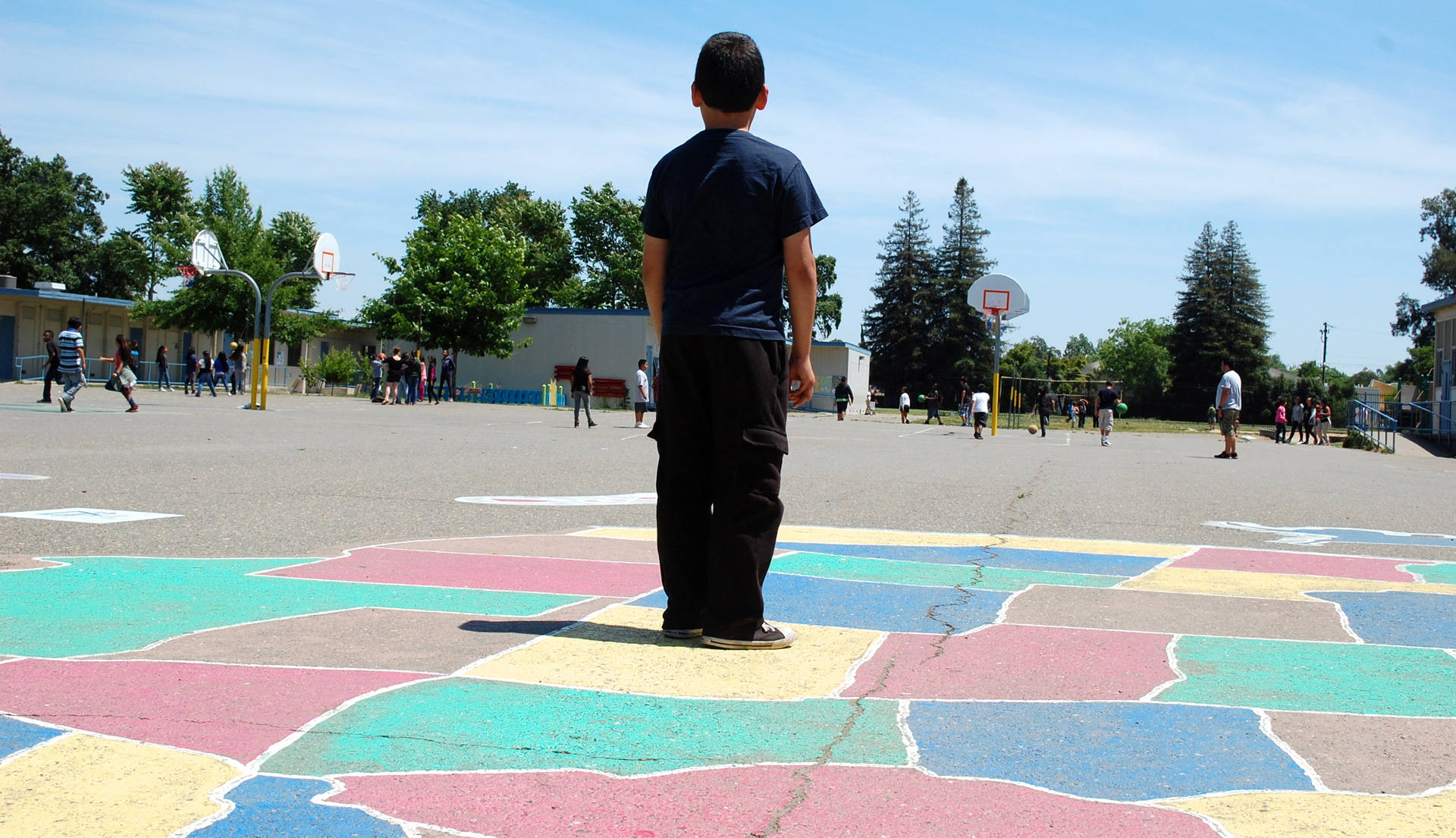
"caption": "More than 500 students attend Oak Ridge Elementary School in Sacramento. Many of them speak English as a second language. Under the state's new way of handing out money, schools with large numbers of these students are now receiving additional dollars to help accelerate academic improvement.",
"description": "More than 500 students attend Oak Ridge Elementary School in Sacramento, many of them speak English as a second language. Under the state's new way of handing out money, schools with large numbers of these students are now receiving additional dollars to help accelerate academic improvement.",
"title": "PlaygroundKid",
"credit": "Gabriel Salcedo/KQED",
"status": "inherit",
"isLoading": false,
"fetchFailed": false
},
"news_10930570": {
"type": "attachments",
"id": "news_10930570",
"meta": {
"index": "attachments_1716263798",
"site": "news",
"id": "10930570",
"found": true
},
"parent": 10929762,
"imgSizes": {
"twentyfourteen-full-width": {
"file": "https://ww2.kqed.org/app/uploads/sites/10/2016/04/CoburnWithKids-1038x576.jpg",
"width": 1038,
"mimeType": "image/jpeg",
"height": 576
},
"thumbnail": {
"file": "https://ww2.kqed.org/app/uploads/sites/10/2016/04/CoburnWithKids-400x238.jpg",
"width": 400,
"mimeType": "image/jpeg",
"height": 238
},
"fd-sm": {
"file": "https://ww2.kqed.org/app/uploads/sites/10/2016/04/CoburnWithKids-960x571.jpg",
"width": 960,
"mimeType": "image/jpeg",
"height": 571
},
"post-thumbnail": {
"file": "https://ww2.kqed.org/app/uploads/sites/10/2016/04/CoburnWithKids-672x372.jpg",
"width": 672,
"mimeType": "image/jpeg",
"height": 372
},
"kqedFullSize": {
"file": "https://ww2.kqed.org/app/uploads/sites/10/2016/04/CoburnWithKids.jpg",
"width": 1920,
"height": 1142
},
"large": {
"file": "https://ww2.kqed.org/app/uploads/sites/10/2016/04/CoburnWithKids-1920x1142.jpg",
"width": 1920,
"mimeType": "image/jpeg",
"height": 1142
},
"guest-author-96": {
"file": "https://ww2.kqed.org/app/uploads/sites/10/2016/04/CoburnWithKids-96x96.jpg",
"width": 96,
"mimeType": "image/jpeg",
"height": 96
},
"medium": {
"file": "https://ww2.kqed.org/app/uploads/sites/10/2016/04/CoburnWithKids-800x476.jpg",
"width": 800,
"mimeType": "image/jpeg",
"height": 476
},
"guest-author-64": {
"file": "https://ww2.kqed.org/app/uploads/sites/10/2016/04/CoburnWithKids-64x64.jpg",
"width": 64,
"mimeType": "image/jpeg",
"height": 64
},
"guest-author-32": {
"file": "https://ww2.kqed.org/app/uploads/sites/10/2016/04/CoburnWithKids-32x32.jpg",
"width": 32,
"mimeType": "image/jpeg",
"height": 32
},
"jmtc-small-thumb": {
"file": "https://ww2.kqed.org/app/uploads/sites/10/2016/04/CoburnWithKids-280x150.jpg",
"width": 280,
"mimeType": "image/jpeg",
"height": 150
},
"fd-lrg": {
"file": "https://ww2.kqed.org/app/uploads/sites/10/2016/04/CoburnWithKids-1920x1142.jpg",
"width": 1920,
"mimeType": "image/jpeg",
"height": 1142
},
"fd-med": {
"file": "https://ww2.kqed.org/app/uploads/sites/10/2016/04/CoburnWithKids-1180x702.jpg",
"width": 1180,
"mimeType": "image/jpeg",
"height": 702
},
"detail": {
"file": "https://ww2.kqed.org/app/uploads/sites/10/2016/04/CoburnWithKids-75x75.jpg",
"width": 75,
"mimeType": "image/jpeg",
"height": 75
},
"guest-author-128": {
"file": "https://ww2.kqed.org/app/uploads/sites/10/2016/04/CoburnWithKids-128x128.jpg",
"width": 128,
"mimeType": "image/jpeg",
"height": 128
}
},
"publishDate": 1460776305,
"modified": 1460776387,
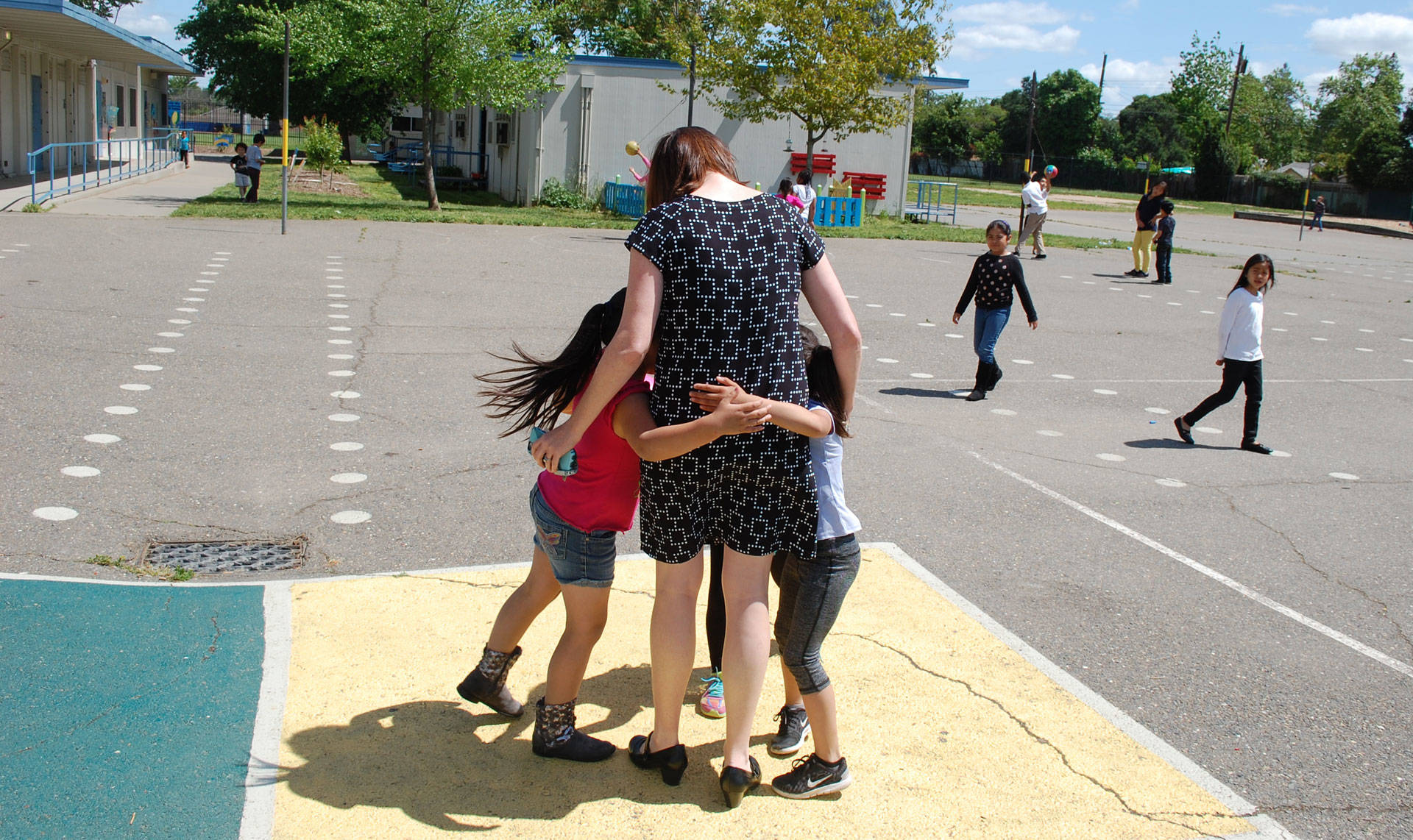
"caption": "Bethany Coburn, a social worker and coordinator of the Student Support Center at Oak Ridge Elementary, receives a group hug from students on campus.",
"description": "Bethany Coburn, a social worker and coordinator of the Student Support Center at Oak Ridge Elementary, receives a group hug from students on campus.",
"title": "CoburnWithKids",
"credit": "Gabriel Salcedo/KQED",
"status": "inherit",
"isLoading": false,
"fetchFailed": false
},
"news_10927473": {
"type": "attachments",
"id": "news_10927473",
"meta": {
"index": "attachments_1716263798",
"site": "news",
"id": "10927473",
"found": true
},
"parent": 10927435,
"imgSizes": {
"twentyfourteen-full-width": {
"file": "https://ww2.kqed.org/app/uploads/sites/10/2016/04/CarlosDelrio-1-1038x576.jpg",
"width": 1038,
"mimeType": "image/jpeg",
"height": 576
},
"thumbnail": {
"file": "https://ww2.kqed.org/app/uploads/sites/10/2016/04/CarlosDelrio-1-400x227.jpg",
"width": 400,
"mimeType": "image/jpeg",
"height": 227
},
"fd-sm": {
"file": "https://ww2.kqed.org/app/uploads/sites/10/2016/04/CarlosDelrio-1-960x544.jpg",
"width": 960,
"mimeType": "image/jpeg",
"height": 544
},
"post-thumbnail": {
"file": "https://ww2.kqed.org/app/uploads/sites/10/2016/04/CarlosDelrio-1-672x372.jpg",
"width": 672,
"mimeType": "image/jpeg",
"height": 372
},
"kqedFullSize": {
"file": "https://ww2.kqed.org/app/uploads/sites/10/2016/04/CarlosDelrio-1.jpg",
"width": 1920,
"height": 1088
},
"large": {
"file": "https://ww2.kqed.org/app/uploads/sites/10/2016/04/CarlosDelrio-1-1920x1088.jpg",
"width": 1920,
"mimeType": "image/jpeg",
"height": 1088
},
"guest-author-96": {
"file": "https://ww2.kqed.org/app/uploads/sites/10/2016/04/CarlosDelrio-1-96x96.jpg",
"width": 96,
"mimeType": "image/jpeg",
"height": 96
},
"medium": {
"file": "https://ww2.kqed.org/app/uploads/sites/10/2016/04/CarlosDelrio-1-800x453.jpg",
"width": 800,
"mimeType": "image/jpeg",
"height": 453
},
"guest-author-64": {
"file": "https://ww2.kqed.org/app/uploads/sites/10/2016/04/CarlosDelrio-1-64x64.jpg",
"width": 64,
"mimeType": "image/jpeg",
"height": 64
},
"guest-author-32": {
"file": "https://ww2.kqed.org/app/uploads/sites/10/2016/04/CarlosDelrio-1-32x32.jpg",
"width": 32,
"mimeType": "image/jpeg",
"height": 32
},
"jmtc-small-thumb": {
"file": "https://ww2.kqed.org/app/uploads/sites/10/2016/04/CarlosDelrio-1-280x150.jpg",
"width": 280,
"mimeType": "image/jpeg",
"height": 150
},
"fd-lrg": {
"file": "https://ww2.kqed.org/app/uploads/sites/10/2016/04/CarlosDelrio-1-1920x1088.jpg",
"width": 1920,
"mimeType": "image/jpeg",
"height": 1088
},
"fd-med": {
"file": "https://ww2.kqed.org/app/uploads/sites/10/2016/04/CarlosDelrio-1-1180x669.jpg",
"width": 1180,
"mimeType": "image/jpeg",
"height": 669
},
"detail": {
"file": "https://ww2.kqed.org/app/uploads/sites/10/2016/04/CarlosDelrio-1-75x75.jpg",
"width": 75,
"mimeType": "image/jpeg",
"height": 75
},
"guest-author-128": {
"file": "https://ww2.kqed.org/app/uploads/sites/10/2016/04/CarlosDelrio-1-128x128.jpg",
"width": 128,
"mimeType": "image/jpeg",
"height": 128
}
},
"publishDate": 1460485730,
"modified": 1460485753,
"caption": "Carlos Delrio, de once años, se dedica a completar una asignación de computación en su clase de sexto grado en la escuela Oak Ridge Elementary en Sacramento.",
"description": "Carlos Delrio, de once años, se dedica a completar una asignación de computación en su clase de sexto grado en la escuela Oak Ridge Elementary en Sacramento.",
"title": "CarlosDelrio-1",
"credit": "Gabriel Salcedo/KQED",
"status": "inherit",
"isLoading": false,
"fetchFailed": false
},
"news_10916820": {
"type": "attachments",
"id": "news_10916820",
"meta": {
"index": "attachments_1716263798",
"site": "news",
"id": "10916820",
"found": true
},
"parent": 10915808,
"imgSizes": {
"twentyfourteen-full-width": {
"file": "https://ww2.kqed.org/app/uploads/sites/10/2016/04/CarlosDelrio-1038x576.jpg",
"width": 1038,
"mimeType": "image/jpeg",
"height": 576
},
"thumbnail": {
"file": "https://ww2.kqed.org/app/uploads/sites/10/2016/04/CarlosDelrio-400x227.jpg",
"width": 400,
"mimeType": "image/jpeg",
"height": 227
},
"fd-sm": {
"file": "https://ww2.kqed.org/app/uploads/sites/10/2016/04/CarlosDelrio-960x544.jpg",
"width": 960,
"mimeType": "image/jpeg",
"height": 544
},
"post-thumbnail": {
"file": "https://ww2.kqed.org/app/uploads/sites/10/2016/04/CarlosDelrio-672x372.jpg",
"width": 672,
"mimeType": "image/jpeg",
"height": 372
},
"kqedFullSize": {
"file": "https://ww2.kqed.org/app/uploads/sites/10/2016/04/CarlosDelrio.jpg",
"width": 1920,
"height": 1088
},
"large": {
"file": "https://ww2.kqed.org/app/uploads/sites/10/2016/04/CarlosDelrio-1920x1088.jpg",
"width": 1920,
"mimeType": "image/jpeg",
"height": 1088
},
"guest-author-96": {
"file": "https://ww2.kqed.org/app/uploads/sites/10/2016/04/CarlosDelrio-96x96.jpg",
"width": 96,
"mimeType": "image/jpeg",
"height": 96
},
"medium": {
"file": "https://ww2.kqed.org/app/uploads/sites/10/2016/04/CarlosDelrio-800x453.jpg",
"width": 800,
"mimeType": "image/jpeg",
"height": 453
},
"guest-author-64": {
"file": "https://ww2.kqed.org/app/uploads/sites/10/2016/04/CarlosDelrio-64x64.jpg",
"width": 64,
"mimeType": "image/jpeg",
"height": 64
},
"guest-author-32": {
"file": "https://ww2.kqed.org/app/uploads/sites/10/2016/04/CarlosDelrio-32x32.jpg",
"width": 32,
"mimeType": "image/jpeg",
"height": 32
},
"jmtc-small-thumb": {
"file": "https://ww2.kqed.org/app/uploads/sites/10/2016/04/CarlosDelrio-280x150.jpg",
"width": 280,
"mimeType": "image/jpeg",
"height": 150
},
"fd-lrg": {
"file": "https://ww2.kqed.org/app/uploads/sites/10/2016/04/CarlosDelrio-1920x1088.jpg",
"width": 1920,
"mimeType": "image/jpeg",
"height": 1088
},
"fd-med": {
"file": "https://ww2.kqed.org/app/uploads/sites/10/2016/04/CarlosDelrio-1180x669.jpg",
"width": 1180,
"mimeType": "image/jpeg",
"height": 669
},
"detail": {
"file": "https://ww2.kqed.org/app/uploads/sites/10/2016/04/CarlosDelrio-75x75.jpg",
"width": 75,
"mimeType": "image/jpeg",
"height": 75
},
"guest-author-128": {
"file": "https://ww2.kqed.org/app/uploads/sites/10/2016/04/CarlosDelrio-128x128.jpg",
"width": 128,
"mimeType": "image/jpeg",
"height": 128
}
},
"publishDate": 1459547137,
"modified": 1460485184,
"caption": "Eleven-year-old Carlos Delrio focuses on completing a computer assignment in his sixth grade class at Oak Ridge Elementary School in Sacramento.",
"description": "Eleven-year-old Carlos Delrio focuses on completing a computer assignment in his sixth grade class at Oak Ridge Elementary School in Sacramento.",
"title": "CarlosDelrio",
"credit": "Gabriel Salcedo/KQED",
"status": "inherit",
"isLoading": false,
"fetchFailed": false
},
"news_10898123": {
"type": "attachments",
"id": "news_10898123",
"meta": {
"index": "attachments_1716263798",
"site": "news",
"id": "10898123",
"found": true
},
"parent": 10898120,
"imgSizes": {
"jmtc-small-thumb": {
"file": "https://ww2.kqed.org/app/uploads/sites/10/2016/03/0408-voting-P-280x150.jpg",
"width": 280,
"mimeType": "image/jpeg",
"height": 150
},
"thumbnail": {
"file": "https://ww2.kqed.org/app/uploads/sites/10/2016/03/0408-voting-P-400x300.jpg",
"width": 400,
"mimeType": "image/jpeg",
"height": 300
},
"post-thumbnail": {
"file": "https://ww2.kqed.org/app/uploads/sites/10/2016/03/0408-voting-P-672x372.jpg",
"width": 672,
"mimeType": "image/jpeg",
"height": 372
},
"kqedFullSize": {
"file": "https://ww2.kqed.org/app/uploads/sites/10/2016/03/0408-voting-P.jpg",
"width": 710,
"height": 533
},
"guest-author-96": {
"file": "https://ww2.kqed.org/app/uploads/sites/10/2016/03/0408-voting-P-96x96.jpg",
"width": 96,
"mimeType": "image/jpeg",
"height": 96
},
"guest-author-64": {
"file": "https://ww2.kqed.org/app/uploads/sites/10/2016/03/0408-voting-P-64x64.jpg",
"width": 64,
"mimeType": "image/jpeg",
"height": 64
},
"detail": {
"file": "https://ww2.kqed.org/app/uploads/sites/10/2016/03/0408-voting-P-75x75.jpg",
"width": 75,
"mimeType": "image/jpeg",
"height": 75
},
"guest-author-32": {
"file": "https://ww2.kqed.org/app/uploads/sites/10/2016/03/0408-voting-P-32x32.jpg",
"width": 32,
"mimeType": "image/jpeg",
"height": 32
},
"guest-author-128": {
"file": "https://ww2.kqed.org/app/uploads/sites/10/2016/03/0408-voting-P-128x128.jpg",
"width": 128,
"mimeType": "image/jpeg",
"height": 128
}
},
"publishDate": 1458071122,
"modified": 1458163050,
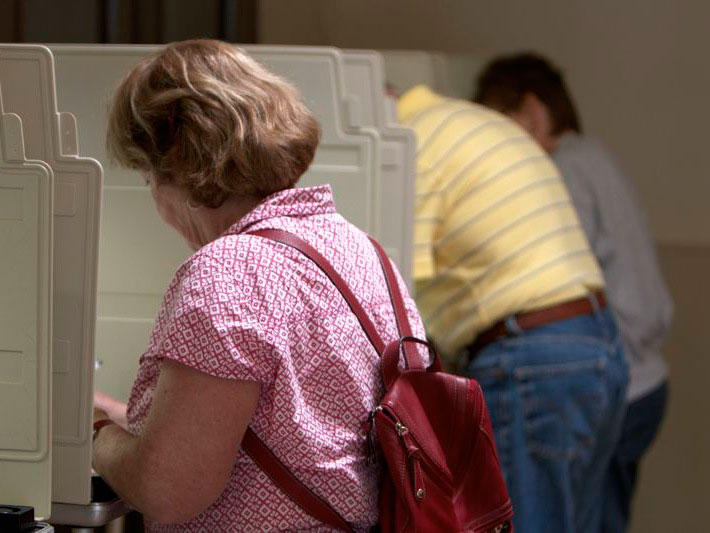
"caption": "Voters choose their candidates at the polls during an election in 2014.",
"description": "Voters choose their candidates at the polls during an election in 2014.",
"title": "File: Voters choose their candidates at the polls during an election in 2014.",
"credit": "Andrew Nixon/Capital Public Radio",
"status": "inherit",
"isLoading": false,
"fetchFailed": false
},
"news_10869693": {
"type": "attachments",
"id": "news_10869693",
"meta": {
"index": "attachments_1716263798",
"site": "news",
"id": "10869693",
"found": true
},
"parent": 10869622,
"imgSizes": {
"twentyfourteen-full-width": {
"file": "https://ww2.kqed.org/app/uploads/sites/10/2016/02/SacLightRail-1-1038x576.jpg",
"width": 1038,
"mimeType": "image/jpeg",
"height": 576
},
"thumbnail": {
"file": "https://ww2.kqed.org/app/uploads/sites/10/2016/02/SacLightRail-1-400x205.jpg",
"width": 400,
"mimeType": "image/jpeg",
"height": 205
},
"fd-sm": {
"file": "https://ww2.kqed.org/app/uploads/sites/10/2016/02/SacLightRail-1-960x492.jpg",
"width": 960,
"mimeType": "image/jpeg",
"height": 492
},
"post-thumbnail": {
"file": "https://ww2.kqed.org/app/uploads/sites/10/2016/02/SacLightRail-1-672x372.jpg",
"width": 672,
"mimeType": "image/jpeg",
"height": 372
},
"kqedFullSize": {
"file": "https://ww2.kqed.org/app/uploads/sites/10/2016/02/SacLightRail-1.jpg",
"width": 1920,
"height": 984
},
"large": {
"file": "https://ww2.kqed.org/app/uploads/sites/10/2016/02/SacLightRail-1-1920x984.jpg",
"width": 1920,
"mimeType": "image/jpeg",
"height": 984
},
"guest-author-96": {
"file": "https://ww2.kqed.org/app/uploads/sites/10/2016/02/SacLightRail-1-96x96.jpg",
"width": 96,
"mimeType": "image/jpeg",
"height": 96
},
"medium": {
"file": "https://ww2.kqed.org/app/uploads/sites/10/2016/02/SacLightRail-1-800x410.jpg",
"width": 800,
"mimeType": "image/jpeg",
"height": 410
},
"guest-author-64": {
"file": "https://ww2.kqed.org/app/uploads/sites/10/2016/02/SacLightRail-1-64x64.jpg",
"width": 64,
"mimeType": "image/jpeg",
"height": 64
},
"guest-author-32": {
"file": "https://ww2.kqed.org/app/uploads/sites/10/2016/02/SacLightRail-1-32x32.jpg",
"width": 32,
"mimeType": "image/jpeg",
"height": 32
},
"jmtc-small-thumb": {
"file": "https://ww2.kqed.org/app/uploads/sites/10/2016/02/SacLightRail-1-280x150.jpg",
"width": 280,
"mimeType": "image/jpeg",
"height": 150
},
"fd-lrg": {
"file": "https://ww2.kqed.org/app/uploads/sites/10/2016/02/SacLightRail-1-1920x984.jpg",
"width": 1920,
"mimeType": "image/jpeg",
"height": 984
},
"fd-med": {
"file": "https://ww2.kqed.org/app/uploads/sites/10/2016/02/SacLightRail-1-1180x605.jpg",
"width": 1180,
"mimeType": "image/jpeg",
"height": 605
},
"detail": {
"file": "https://ww2.kqed.org/app/uploads/sites/10/2016/02/SacLightRail-1-75x75.jpg",
"width": 75,
"mimeType": "image/jpeg",
"height": 75
},
"guest-author-128": {
"file": "https://ww2.kqed.org/app/uploads/sites/10/2016/02/SacLightRail-1-128x128.jpg",
"width": 128,
"mimeType": "image/jpeg",
"height": 128
}
},
"publishDate": 1455823315,
"modified": 1455837285,
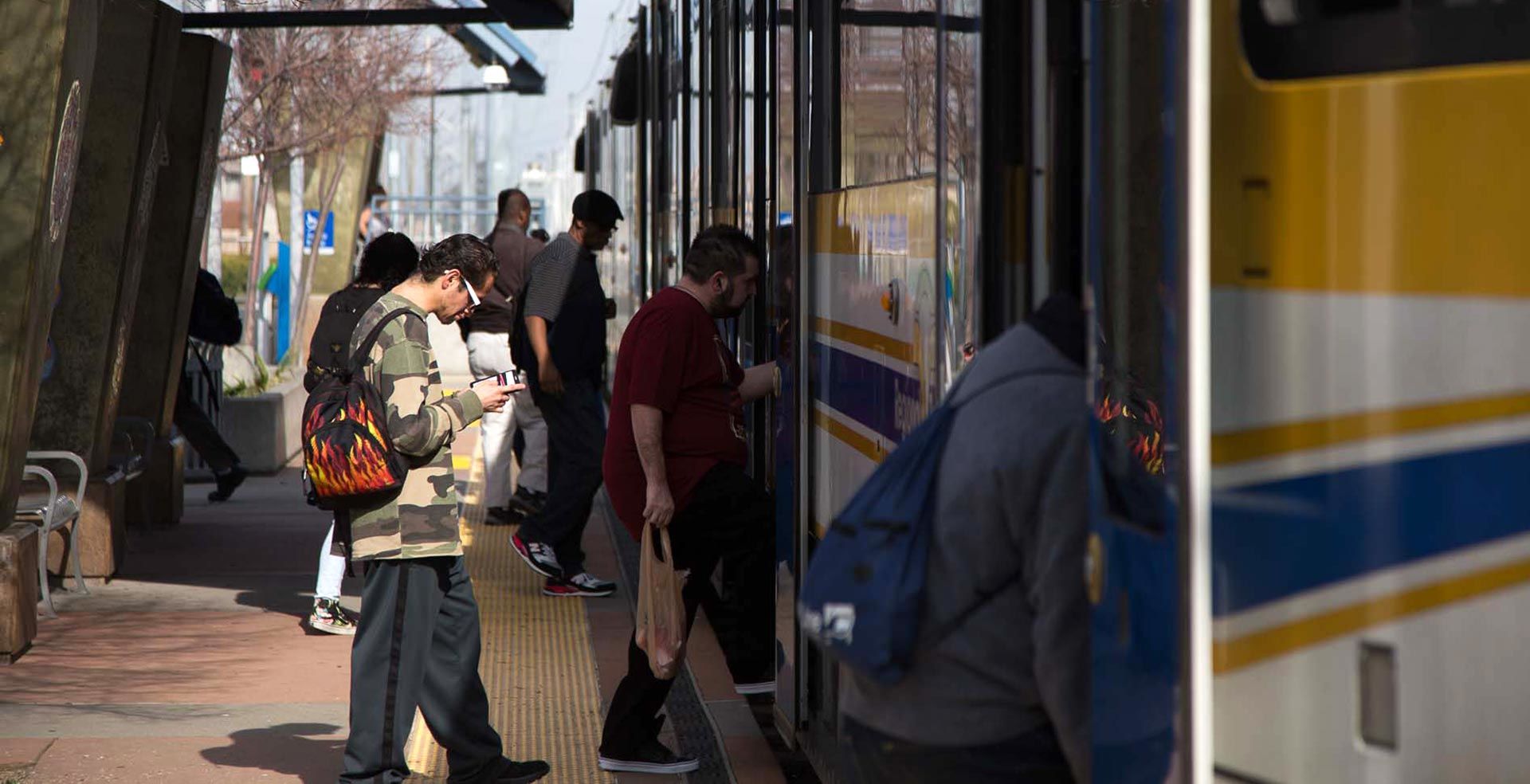
"caption": "The Meadowview light-rail station in South Sacramento connects the working-class neighborhood to downtown Sacramento.",
"description": "The Meadowview light rail station in South Sacramento connects the working-class neighborhood to Downtown Sacramento.",
"title": "SacLightRail",
"credit": "Andrew Nixon/Capital Public Radio",
"status": "inherit",
"isLoading": false,
"fetchFailed": false
},
"news_10826158": {
"type": "attachments",
"id": "news_10826158",
"meta": {
"index": "attachments_1716263798",
"site": "news",
"id": "10826158",
"found": true
},
"parent": 10826107,
"imgSizes": {
"twentyfourteen-full-width": {
"file": "https://ww2.kqed.org/app/uploads/sites/10/2016/01/FBISeal-1038x576.jpg",
"width": 1038,
"mimeType": "image/jpeg",
"height": 576
},
"thumbnail": {
"file": "https://ww2.kqed.org/app/uploads/sites/10/2016/01/FBISeal-400x260.jpg",
"width": 400,
"mimeType": "image/jpeg",
"height": 260
},
"fd-sm": {
"file": "https://ww2.kqed.org/app/uploads/sites/10/2016/01/FBISeal-960x623.jpg",
"width": 960,
"mimeType": "image/jpeg",
"height": 623
},
"post-thumbnail": {
"file": "https://ww2.kqed.org/app/uploads/sites/10/2016/01/FBISeal-672x372.jpg",
"width": 672,
"mimeType": "image/jpeg",
"height": 372
},
"kqedFullSize": {
"file": "https://ww2.kqed.org/app/uploads/sites/10/2016/01/FBISeal.jpg",
"width": 1920,
"height": 1246
},
"large": {
"file": "https://ww2.kqed.org/app/uploads/sites/10/2016/01/FBISeal-1440x935.jpg",
"width": 1440,
"mimeType": "image/jpeg",
"height": 935
},
"guest-author-96": {
"file": "https://ww2.kqed.org/app/uploads/sites/10/2016/01/FBISeal-96x96.jpg",
"width": 96,
"mimeType": "image/jpeg",
"height": 96
},
"medium": {
"file": "https://ww2.kqed.org/app/uploads/sites/10/2016/01/FBISeal-800x519.jpg",
"width": 800,
"mimeType": "image/jpeg",
"height": 519
},
"guest-author-64": {
"file": "https://ww2.kqed.org/app/uploads/sites/10/2016/01/FBISeal-64x64.jpg",
"width": 64,
"mimeType": "image/jpeg",
"height": 64
},
"guest-author-32": {
"file": "https://ww2.kqed.org/app/uploads/sites/10/2016/01/FBISeal-32x32.jpg",
"width": 32,
"mimeType": "image/jpeg",
"height": 32
},
"jmtc-small-thumb": {
"file": "https://ww2.kqed.org/app/uploads/sites/10/2016/01/FBISeal-280x150.jpg",
"width": 280,
"mimeType": "image/jpeg",
"height": 150
},
"fd-lrg": {
"file": "https://ww2.kqed.org/app/uploads/sites/10/2016/01/FBISeal-1920x1246.jpg",
"width": 1920,
"mimeType": "image/jpeg",
"height": 1246
},
"fd-med": {
"file": "https://ww2.kqed.org/app/uploads/sites/10/2016/01/FBISeal-1180x766.jpg",
"width": 1180,
"mimeType": "image/jpeg",
"height": 766
},
"detail": {
"file": "https://ww2.kqed.org/app/uploads/sites/10/2016/01/FBISeal-75x75.jpg",
"width": 75,
"mimeType": "image/jpeg",
"height": 75
},
"medium_large": {
"file": "https://ww2.kqed.org/app/uploads/sites/10/2016/01/FBISeal-768x498.jpg",
"width": 768,
"mimeType": "image/jpeg",
"height": 498
},
"guest-author-128": {
"file": "https://ww2.kqed.org/app/uploads/sites/10/2016/01/FBISeal-128x128.jpg",
"width": 128,
"mimeType": "image/jpeg",
"height": 128
}
},
"publishDate": 1452282277,
"modified": 1452291923,
"caption": "The FBI emblem on the J. Edgar Hoover FBI Building.",
"description": "The F.B.I. emblem on the J. Edgar Hoover F.B.I. Building.",
"title": "FBISeal",
"credit": "Cliff/Flickr",
"status": "inherit",
"isLoading": false,
"fetchFailed": false
},
"news_10711868": {
"type": "attachments",
"id": "news_10711868",
"meta": {
"index": "attachments_1716263798",
"site": "news",
"id": "10711868",
"found": true
},
"parent": 10711867,
"imgSizes": {
"twentyfourteen-full-width": {
"file": "https://ww2.kqed.org/app/uploads/sites/10/2015/10/spencerstone-1038x576.jpg",
"width": 1038,
"mimeType": "image/jpeg",
"height": 576
},
"thumbnail": {
"file": "https://ww2.kqed.org/app/uploads/sites/10/2015/10/spencerstone-400x267.jpg",
"width": 400,
"mimeType": "image/jpeg",
"height": 267
},
"fd-sm": {
"file": "https://ww2.kqed.org/app/uploads/sites/10/2015/10/spencerstone-960x640.jpg",
"width": 960,
"mimeType": "image/jpeg",
"height": 640
},
"post-thumbnail": {
"file": "https://ww2.kqed.org/app/uploads/sites/10/2015/10/spencerstone-672x372.jpg",
"width": 672,
"mimeType": "image/jpeg",
"height": 372
},
"kqedFullSize": {
"file": "https://ww2.kqed.org/app/uploads/sites/10/2015/10/spencerstone.jpg",
"width": 1920,
"height": 1280
},
"large": {
"file": "https://ww2.kqed.org/app/uploads/sites/10/2015/10/spencerstone-1440x960.jpg",
"width": 1440,
"mimeType": "image/jpeg",
"height": 960
},
"guest-author-96": {
"file": "https://ww2.kqed.org/app/uploads/sites/10/2015/10/spencerstone-96x96.jpg",
"width": 96,
"mimeType": "image/jpeg",
"height": 96
},
"medium": {
"file": "https://ww2.kqed.org/app/uploads/sites/10/2015/10/spencerstone-800x533.jpg",
"width": 800,
"mimeType": "image/jpeg",
"height": 533
},
"guest-author-64": {
"file": "https://ww2.kqed.org/app/uploads/sites/10/2015/10/spencerstone-64x64.jpg",
"width": 64,
"mimeType": "image/jpeg",
"height": 64
},
"guest-author-32": {
"file": "https://ww2.kqed.org/app/uploads/sites/10/2015/10/spencerstone-32x32.jpg",
"width": 32,
"mimeType": "image/jpeg",
"height": 32
},
"jmtc-small-thumb": {
"file": "https://ww2.kqed.org/app/uploads/sites/10/2015/10/spencerstone-280x150.jpg",
"width": 280,
"mimeType": "image/jpeg",
"height": 150
},
"fd-lrg": {
"file": "https://ww2.kqed.org/app/uploads/sites/10/2015/10/spencerstone-1920x1280.jpg",
"width": 1920,
"mimeType": "image/jpeg",
"height": 1280
},
"fd-med": {
"file": "https://ww2.kqed.org/app/uploads/sites/10/2015/10/spencerstone-1180x787.jpg",
"width": 1180,
"mimeType": "image/jpeg",
"height": 787
},
"detail": {
"file": "https://ww2.kqed.org/app/uploads/sites/10/2015/10/spencerstone-75x75.jpg",
"width": 75,
"mimeType": "image/jpeg",
"height": 75
},
"guest-author-128": {
"file": "https://ww2.kqed.org/app/uploads/sites/10/2015/10/spencerstone-128x128.jpg",
"width": 128,
"mimeType": "image/jpeg",
"height": 128
}
},
"publishDate": 1444323658,
"modified": 1444323724,
"caption": "U.S. Air Force Airman First Class Spencer Stone shakes hands with the crowd during a Sept. 11 parade in Sacramento. ",
"description": null,
"title": "Spencer Stone-Sacramento",
"credit": "Stephen Lam/Getty Images",
"status": "inherit",
"isLoading": false,
"fetchFailed": false
},
"news_10618271": {
"type": "attachments",
"id": "news_10618271",
"meta": {
"index": "attachments_1716263798",
"site": "news",
"id": "10618271",
"found": true
},
"parent": 10618269,
"imgSizes": {
"twentyfourteen-full-width": {
"file": "https://ww2.kqed.org/app/uploads/sites/10/2015/07/JohnKirkman-960x576.jpeg",
"width": 960,
"mimeType": "image/jpeg",
"height": 576
},
"jmtc-small-thumb": {
"file": "https://ww2.kqed.org/app/uploads/sites/10/2015/07/JohnKirkman-280x150.jpeg",
"width": 280,
"mimeType": "image/jpeg",
"height": 150
},
"thumbnail": {
"file": "https://ww2.kqed.org/app/uploads/sites/10/2015/07/JohnKirkman-400x500.jpeg",
"width": 400,
"mimeType": "image/jpeg",
"height": 500
},
"fd-sm": {
"file": "https://ww2.kqed.org/app/uploads/sites/10/2015/07/JohnKirkman-960x1200.jpeg",
"width": 960,
"mimeType": "image/jpeg",
"height": 1200
},
"post-thumbnail": {
"file": "https://ww2.kqed.org/app/uploads/sites/10/2015/07/JohnKirkman-672x372.jpeg",
"width": 672,
"mimeType": "image/jpeg",
"height": 372
},
"kqedFullSize": {
"file": "https://ww2.kqed.org/app/uploads/sites/10/2015/07/JohnKirkman.jpeg",
"width": 960,
"height": 1200
},
"guest-author-96": {
"file": "https://ww2.kqed.org/app/uploads/sites/10/2015/07/JohnKirkman-96x96.jpeg",
"width": 96,
"mimeType": "image/jpeg",
"height": 96
},
"medium": {
"file": "https://ww2.kqed.org/app/uploads/sites/10/2015/07/JohnKirkman-800x1000.jpeg",
"width": 800,
"mimeType": "image/jpeg",
"height": 1000
},
"guest-author-64": {
"file": "https://ww2.kqed.org/app/uploads/sites/10/2015/07/JohnKirkman-64x64.jpeg",
"width": 64,
"mimeType": "image/jpeg",
"height": 64
},
"detail": {
"file": "https://ww2.kqed.org/app/uploads/sites/10/2015/07/JohnKirkman-75x75.jpeg",
"width": 75,
"mimeType": "image/jpeg",
"height": 75
},
"guest-author-32": {
"file": "https://ww2.kqed.org/app/uploads/sites/10/2015/07/JohnKirkman-32x32.jpeg",
"width": 32,
"mimeType": "image/jpeg",
"height": 32
},
"guest-author-128": {
"file": "https://ww2.kqed.org/app/uploads/sites/10/2015/07/JohnKirkman-128x128.jpeg",
"width": 128,
"mimeType": "image/jpeg",
"height": 128
}
},
"publishDate": 1438019726,
"modified": 1438019854,
"caption": "Sacramento police released this picture of bicycle theft suspect John Kirkman. ",
"description": null,
"title": "John Kirkman",
"credit": "Sacramento Police Department via Twitter ",
"status": "inherit",
"isLoading": false,
"fetchFailed": false
},
"news_10454904": {
"type": "attachments",
"id": "news_10454904",
"meta": {
"index": "attachments_1716263798",
"site": "news",
"id": "10454904",
"found": true
},
"parent": 10452775,
"imgSizes": {
"twentyfourteen-full-width": {
"file": "https://ww2.kqed.org/app/uploads/sites/10/2015/03/IntercambiosFeat-1038x576.jpg",
"width": 1038,
"mimeType": "image/jpeg",
"height": 576
},
"thumbnail": {
"file": "https://ww2.kqed.org/app/uploads/sites/10/2015/03/IntercambiosFeat-400x233.jpg",
"width": 400,
"mimeType": "image/jpeg",
"height": 233
},
"fd-sm": {
"file": "https://ww2.kqed.org/app/uploads/sites/10/2015/03/IntercambiosFeat-320x186.jpg",
"width": 320,
"mimeType": "image/jpeg",
"height": 186
},
"post-thumbnail": {
"file": "https://ww2.kqed.org/app/uploads/sites/10/2015/03/IntercambiosFeat-672x372.jpg",
"width": 672,
"mimeType": "image/jpeg",
"height": 372
},
"kqedFullSize": {
"file": "https://ww2.kqed.org/app/uploads/sites/10/2015/03/IntercambiosFeat.jpg",
"width": 1920,
"height": 1118
},
"large": {
"file": "https://ww2.kqed.org/app/uploads/sites/10/2015/03/IntercambiosFeat-1440x839.jpg",
"width": 1440,
"mimeType": "image/jpeg",
"height": 839
},
"guest-author-96": {
"file": "https://ww2.kqed.org/app/uploads/sites/10/2015/03/IntercambiosFeat-96x96.jpg",
"width": 96,
"mimeType": "image/jpeg",
"height": 96
},
"medium": {
"file": "https://ww2.kqed.org/app/uploads/sites/10/2015/03/IntercambiosFeat-800x466.jpg",
"width": 800,
"mimeType": "image/jpeg",
"height": 466
},
"guest-author-64": {
"file": "https://ww2.kqed.org/app/uploads/sites/10/2015/03/IntercambiosFeat-64x64.jpg",
"width": 64,
"mimeType": "image/jpeg",
"height": 64
},
"guest-author-32": {
"file": "https://ww2.kqed.org/app/uploads/sites/10/2015/03/IntercambiosFeat-32x32.jpg",
"width": 32,
"mimeType": "image/jpeg",
"height": 32
},
"fd-lrg": {
"file": "https://ww2.kqed.org/app/uploads/sites/10/2015/03/IntercambiosFeat-1180x687.jpg",
"width": 1180,
"mimeType": "image/jpeg",
"height": 687
},
"fd-med": {
"file": "https://ww2.kqed.org/app/uploads/sites/10/2015/03/IntercambiosFeat-768x447.jpg",
"width": 768,
"mimeType": "image/jpeg",
"height": 447
},
"detail": {
"file": "https://ww2.kqed.org/app/uploads/sites/10/2015/03/IntercambiosFeat-75x75.jpg",
"width": 75,
"mimeType": "image/jpeg",
"height": 75
},
"guest-author-128": {
"file": "https://ww2.kqed.org/app/uploads/sites/10/2015/03/IntercambiosFeat-128x128.jpg",
"width": 128,
"mimeType": "image/jpeg",
"height": 128
}
},
"publishDate": 1426288486,
"modified": 1426288565,
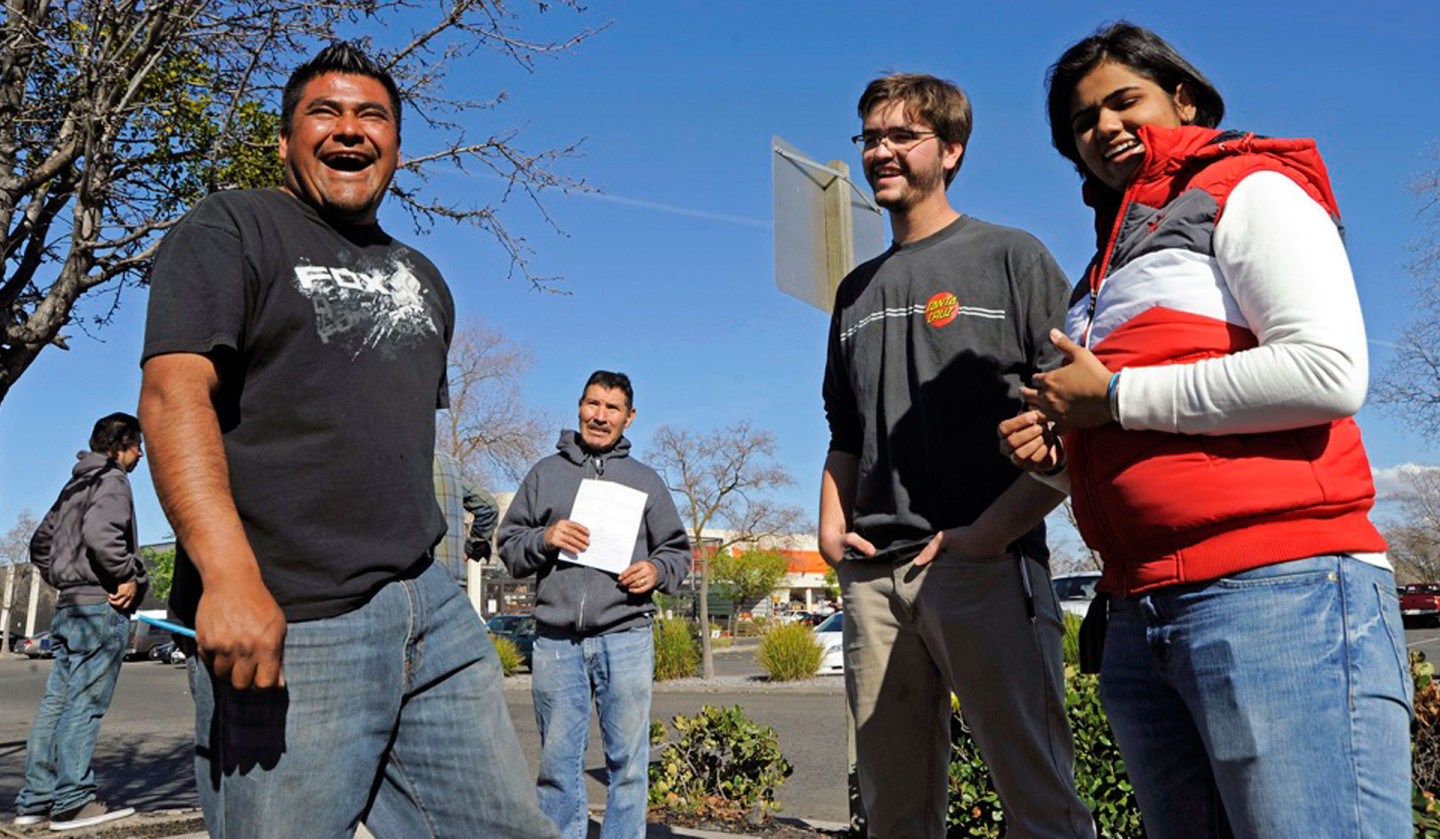
"caption": "Day laborer Pedro Flores (L) and students Wyatt Irmen and Nimra Syed take part in the intercambio.",
"description": "Day laborer Pedro Flores (L) and students Wyatt Irmen and Nimra Syed take part in the intercambio.",
"title": "IntercambiosFeat",
"credit": "Blair Wells/KQED",
"status": "inherit",
"isLoading": false,
"fetchFailed": false
},
"news_136595": {
"type": "attachments",
"id": "news_136595",
"meta": {
"index": "attachments_1716263798",
"site": "news",
"id": "136595",
"found": true
},
"parent": 136574,
"imgSizes": {
"kqedFullSize": {
"file": "https://ww2.kqed.org/app/uploads/sites/10/2014/05/worker-sacramento.jpg",
"width": 2448,
"height": 3264
}
},
"publishDate": 1400551567,
"modified": 1400551567,
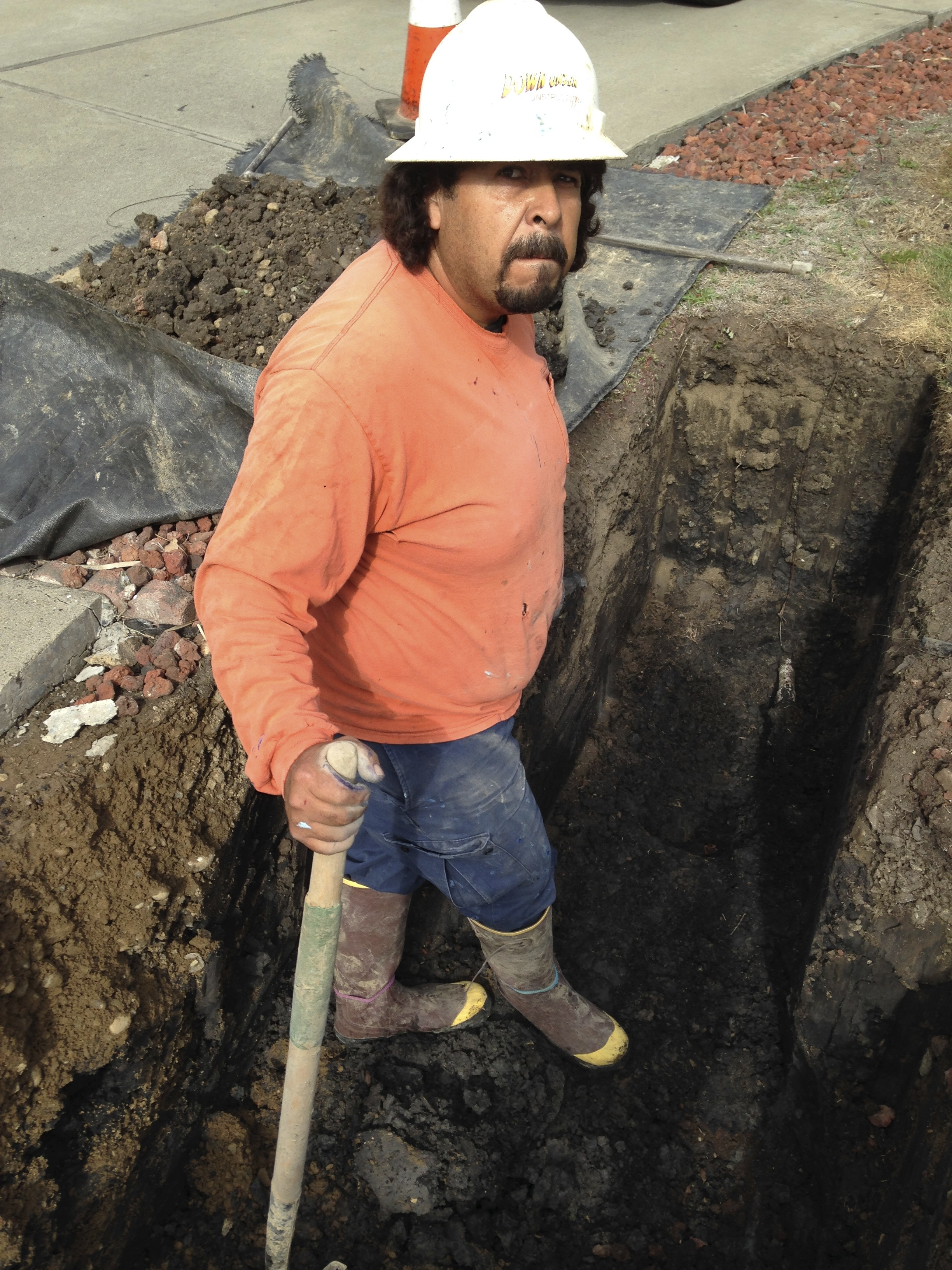
"caption": "A worker on Sacramento's 'big dig' -- installation of 100,000 water meters citywide over a 20-year period. (Joe Rubin/KQED)",
"description": "A worker on Sacramento's 'big dig' -- installation of 100,000 water meters citywide over a 20-year period. (Joe Rubin/KQED)",
"title": "Sacramento Water Main",
"credit": null,
"status": "inherit",
"isLoading": false,
"fetchFailed": false
}
},
"audioPlayerReducer": {
"postId": "stream_live",
"isPaused": true,
"isPlaying": false,
"pfsActive": false,
"pledgeModalIsOpen": true,
"playerDrawerIsOpen": false,
"liveAudioPlayStartedAt": 0,
"liveAudioPlayContext": ""
},
"authorsReducer": {
"byline_news_11001910": {
"type": "authors",
"id": "byline_news_11001910",
"meta": {
"override": true
},
"slug": "byline_news_11001910",
"name": "\u003cstrong>Olga Rodriguez \u003cbr> Associated Press\u003c/strong>",
"isLoading": false
},
"byline_news_10898120": {
"type": "authors",
"id": "byline_news_10898120",
"meta": {
"override": true
},
"slug": "byline_news_10898120",
"name": "\u003cstrong>\u003ca href=\"http://www.capradio.org/about/bios/ben-bradford/\">Ben Bradford\u003c/a>\u003cbr>\u003ca href=\"http://www.capradio.org/\">Capital Public Radio\u003c/a>\u003c/strong>",
"isLoading": false
},
"byline_news_10869622": {
"type": "authors",
"id": "byline_news_10869622",
"meta": {
"override": true
},
"slug": "byline_news_10869622",
"name": "\u003cstrong>\u003ca href=\"http://www.capradio.org/about/bios/ben-bradford/\">Ben Bradford\u003c/a>\u003cbr>\u003ca href=\"http://www.capradio.org/\">Capital Public Radio\u003c/a>\u003c/strong>",
"isLoading": false
},
"byline_news_10826107": {
"type": "authors",
"id": "byline_news_10826107",
"meta": {
"override": true
},
"slug": "byline_news_10826107",
"name": "\u003cstrong>Don Thompson\u003cbr>Associated Press\u003c/strong>",
"isLoading": false
},
"byline_news_10452775": {
"type": "authors",
"id": "byline_news_10452775",
"meta": {
"override": true
},
"slug": "byline_news_10452775",
"name": "Tena Rubio",
"isLoading": false
},
"byline_news_136574": {
"type": "authors",
"id": "byline_news_136574",
"meta": {
"override": true
},
"slug": "byline_news_136574",
"name": "\u003cstrong>Joe Rubin\u003c/strong>",
"isLoading": false
},
"anatintocalis": {
"type": "authors",
"id": "211",
"meta": {
"index": "authors_1716337520",
"id": "211",
"found": true
},
"name": "Ana Tintocalis",
"firstName": "Ana",
"lastName": "Tintocalis",
"slug": "anatintocalis",
"email": "atintocalis@kqed.org",
"display_author_email": false,
"staff_mastheads": [],
"title": null,
"bio": null,
"avatar": "https://secure.gravatar.com/avatar/722c50f51f04eff38fa0e5a3f1d29450?s=600&d=blank&r=g",
"twitter": null,
"facebook": null,
"instagram": null,
"linkedin": null,
"sites": [
{
"site": "news",
"roles": [
"subscriber"
]
},
{
"site": "stateofhealth",
"roles": [
"subscriber"
]
}
],
"headData": {
"title": "Ana Tintocalis | KQED",
"description": null,
"ogImgSrc": "https://secure.gravatar.com/avatar/722c50f51f04eff38fa0e5a3f1d29450?s=600&d=blank&r=g",
"twImgSrc": "https://secure.gravatar.com/avatar/722c50f51f04eff38fa0e5a3f1d29450?s=600&d=blank&r=g"
},
"isLoading": false,
"link": "/author/anatintocalis"
},
"danbrekke": {
"type": "authors",
"id": "222",
"meta": {
"index": "authors_1716337520",
"id": "222",
"found": true
},
"name": "Dan Brekke",
"firstName": "Dan",
"lastName": "Brekke",
"slug": "danbrekke",
"email": "dbrekke@kqed.org",
"display_author_email": true,
"staff_mastheads": [
"news",
"science"
],
"title": "KQED Editor and Reporter",
"bio": "Dan Brekke is a reporter and editor for KQED News, responsible for coverage of topics ranging from California water issues to the Bay Area's transportation challenges. In a newsroom career that began in Chicago in 1972, Dan has worked for \u003cem>The San Francisco Examiner,\u003c/em> Wired and TechTV and has been published in The New York Times, The New York Times Magazine, Business 2.0, Salon and elsewhere.\r\n\r\nSince joining KQED in 2007, Dan has reported, edited and produced both radio and online features and breaking news pieces. He has shared as both editor and reporter in four Society of Professional Journalists Norcal Excellence in Journalism awards and one Edward R. Murrow regional award. He was chosen for a spring 2017 residency at the Mesa Refuge to advance his research on California salmon.\r\n\r\nEmail Dan at: \u003ca href=\"mailto:dbrekke@kqed.org\">dbrekke@kqed.org\u003c/a>\r\n\r\n\u003cstrong>Twitter:\u003c/strong> \u003ca href=\"https://twitter.com/danbrekke\" rel=\"noopener noreferrer\">twitter.com/danbrekke\u003c/a>\r\n\u003cstrong>Facebook:\u003c/strong> \u003ca href=\"https://www.facebook.com/danbrekke\" rel=\"noopener noreferrer\">www.facebook.com/danbrekke\u003c/a>\r\n\u003cstrong>LinkedIn:\u003c/strong> \u003ca href=\"https://www.linkedin.com/in/danbrekke\" rel=\"noopener noreferrer\">www.linkedin.com/in/danbrekke\u003c/a>",
"avatar": "https://secure.gravatar.com/avatar/c8126230345efca3f7aa89b1a402be45?s=600&d=mm&r=g",
"twitter": "danbrekke",
"facebook": null,
"instagram": "https://www.instagram.com/dan.brekke/",
"linkedin": "https://www.linkedin.com/in/danbrekke/",
"sites": [
{
"site": "news",
"roles": [
"administrator",
"create_posts"
]
},
{
"site": "stateofhealth",
"roles": [
"editor"
]
},
{
"site": "science",
"roles": [
"editor"
]
},
{
"site": "quest",
"roles": [
"contributor"
]
},
{
"site": "food",
"roles": [
"contributor"
]
},
{
"site": "forum",
"roles": [
"contributor"
]
},
{
"site": "liveblog",
"roles": [
"editor"
]
}
],
"headData": {
"title": "Dan Brekke | KQED",
"description": "KQED Editor and Reporter",
"ogImgSrc": "https://secure.gravatar.com/avatar/c8126230345efca3f7aa89b1a402be45?s=600&d=mm&r=g",
"twImgSrc": "https://secure.gravatar.com/avatar/c8126230345efca3f7aa89b1a402be45?s=600&d=mm&r=g"
},
"isLoading": false,
"link": "/author/danbrekke"
}
},
"pagesReducer": {
"news_tag_sacramento": {
"type": "terms",
"id": "news_95",
"meta": {
"index": "terms_1716263798",
"site": "news",
"id": "95",
"score": 8.93685
},
"featImg": null,
"name": "Sacramento",
"description": null,
"taxonomy": "tag",
"headData": {
"twImgId": null,
"twTitle": null,
"ogTitle": null,
"ogImgId": null,
"twDescription": null,
"description": null,
"title": "Sacramento Archives | KQED News",
"ogDescription": null
},
"ttid": 411,
"slug": "sacramento",
"isLoading": false,
"title": "Sacramento",
"pageMeta": {
"site": "news",
"WpPageTemplate": "page-topic-editorial",
"currentPage": 10
},
"blocks": [
{
"blockName": "kqed/post-list",
"attrs": {
"layout": "cardArticle2",
"query": "posts/news?tag=sacramento",
"seeMore": false,
"paginated": true,
"page": 10
}
},
{
"blockName": "kqed/ad"
}
]
}
},
"pfsSessionReducer": {},
"postsReducer": {
"stream_live": {
"type": "live",
"id": "stream_live",
"audioUrl": "https://streams.kqed.org/kqedradio",
"title": "Live Stream",
"excerpt": "Live Stream information currently unavailable.",
"link": "/radio",
"featImg": "",
"label": {
"name": "KQED Live",
"link": "/"
}
},
"stream_kqedNewscast": {
"type": "posts",
"id": "stream_kqedNewscast",
"audioUrl": "https://www.kqed.org/.stream/anon/radio/RDnews/newscast.mp3?_=1",
"title": "KQED Newscast",
"featImg": "",
"label": {
"name": "88.5 FM",
"link": "/"
}
},
"news_11001910": {
"type": "posts",
"id": "news_11001910",
"meta": {
"index": "posts_1716263798",
"site": "news",
"id": "11001910",
"score": null,
"sort": [
1467047738000
]
},
"guestAuthors": [],
"slug": "ten-stabbed-at-neo-nazi-rally-in-sacramento",
"title": "10 Hurt in Sacramento Clash Between White Nationalists, Protesters",
"publishDate": 1467047738,
"format": "standard",
"headTitle": "10 Hurt in Sacramento Clash Between White Nationalists, Protesters | KQED",
"labelTerm": {
"term": 72,
"site": "news"
},
"content": "\u003cp>\u003cstrong>Updated 10:15 a.m. Monday\u003c/strong>\u003c/p>\n\u003cp>A white nationalist group’s rally outside the California state Capitol turned violent as fighting broke out with a larger group of counter-protesters, leaving 10 people injured with stab wounds, cuts and bruises.\u003c/p>\n\u003cp>Fights erupted when about 30 members of the Traditionalist Worker Party, gathering to rally around noon Sunday, were met by about 400 counterprotesters, California Highway Patrol Officer George Granada said.\u003c/p>\n\u003cp>As people tried to leave the area, smaller fights broke out, Granada said.\u003c/p>\n\u003cp>Sacramento Fire Department spokesman Chris Harvey said nine men and one woman, ranging from 19 to 58 years old, were treated for stab wounds, cuts, scrapes and bruises. Of the injured, two were taken to the hospital with critical stab wounds, but they were expected to survive.\u003c/p>\n\u003cp>[ad fullwidth]\u003c/p>\n\u003cp>“There was a large number of people carrying sticks and rushing to either get into the melee or see what was going on,” Harvey said.\u003c/p>\n\u003cp>Police were investigating two assaults that happened outside the Capitol grounds, but no arrests have been made, the Sacramento Police Department said in a statement.\u003c/p>\n\u003cp>The Capitol was on lockdown until protesters cleared the area.\u003c/p>\n\u003cp>Videos from the melee posted on social media showed mounted officers dispersing a group of mostly young people, some with their faces covered, while some threw stones toward a man holding a stick and being shielded by police officers in riot gear.\u003c/p>\n\u003cp>A KCRA-TV reporter and his cameraman were caught in an altercation with protesters, who shouted “no cameras” as they tried to grab their equipment and shove them away from the crowd.\u003c/p>\n\u003cp>The victims were all present while the protest took place, said Sacramento police spokesman Matt McPhail, but he said it was still unclear whether and how they were involved.\u003c/p>\n\u003cp>The Traditionalist Worker Party had scheduled and received a permit to rally for two hours in front of the Capitol. Law enforcement was aware of the counterprotest effort and police deployed more than 100 officers to the Capitol, McPhail said.\u003c/p>\n\u003cp>The Southern Poverty Law Center has described TWP as a group formed in 2015 as the political wing of the Traditionalist Youth Network, which aims to “indoctrinate high school and college students into white nationalism.”\u003c/p>\n\u003cp>Matthew Heimbach, chairman of the Traditionalist Worker Party, told the Los Angeles Times that his group and the Golden State Skinheads organized the Sunday rally. Heimbach said that in the clash, one of their marchers had been stabbed in an artery and six of the counterprotesters had also been stabbed.\u003c/p>\n\u003cp>Vice chairman Matt Parrott, who was not present at the Sacramento rally, blamed “leftist radicals” for instigating the violence.\u003c/p>\n\u003cp>A message left at a phone number for the Traditionalist Worker Party was not immediately returned to the Associated Press.\u003c/p>\n\u003cp>A post recently uploaded to the site of the Traditionalist Youth Network said TWP members planned to march in Sacramento to protest against globalization and in defense of their right to free expression. They said they expected to be outnumbered 10-to-1 by counterprotesters.\u003c/p>\n\u003cp>“We concluded that it was time to use this rally to make a statement about the precarious situation our race is in,” the Traditionalist Youth Network statement said. “With our folk on the brink of becoming a disarmed, disengaged, and disenfranchised minority, the time to do something was yesterday!”\u003c/p>\n\u003cp>\u003c/p>\n\u003cp>The clash follows a confrontation in March between Ku Klux Klan members and counterprotesters in Anaheim, in which three people were stabbed.\u003c/p>\n\n",
"blocks": [],
"excerpt": "About 400 protesters turned out at state Capitol to confront members of Traditionalist Worker Party.",
"status": "publish",
"parent": 0,
"modified": 1729712972,
"stats": {
"hasAudio": false,
"hasVideo": false,
"hasChartOrMap": false,
"iframeSrcs": [],
"hasGoogleForm": false,
"hasGallery": false,
"hasHearkenModule": false,
"hasPolis": false,
"paragraphCount": 21,
"wordCount": 588
},
"headData": {
"title": "10 Hurt in Sacramento Clash Between White Nationalists, Protesters | KQED",
"description": "About 400 protesters turned out at state Capitol to confront members of Traditionalist Worker Party.",
"ogTitle": "",
"ogDescription": "",
"ogImgId": "",
"twTitle": "",
"twDescription": "",
"twImgId": "",
"schema": {
"@context": "https://schema.org",
"@type": "NewsArticle",
"headline": "10 Hurt in Sacramento Clash Between White Nationalists, Protesters",
"datePublished": "2016-06-27T10:15:38-07:00",
"dateModified": "2024-10-23T12:49:32-07:00",
"image": "https://cdn.kqed.org/wp-content/uploads/2020/02/KQED-OG-Image@1x.png",
"isAccessibleForFree": "True",
"publisher": {
"@type": "NewsMediaOrganization",
"@id": "https://www.kqed.org/#organization",
"name": "KQED",
"logo": "https://cdn.kqed.org/wp-content/uploads/2020/02/KQED-OG-Image@1x.png",
"url": "https://www.kqed.org",
"sameAs": [
"https://www.facebook.com/KQED",
"https://twitter.com/KQED",
"https://www.instagram.com/kqed/",
"https://www.tiktok.com/@kqedofficial",
"https://www.linkedin.com/company/kqed",
"https://www.youtube.com/channel/UCeC0IOo7i1P_61zVUWbJ4nw"
]
}
}
},
"sticky": false,
"customPermalink": "2016/06/26/ten-stabbed-at-rally-in-sacramento/",
"nprByline": "\u003cstrong>Olga Rodriguez \u003cbr> Associated Press\u003c/strong>",
"path": "/news/11001910/ten-stabbed-at-neo-nazi-rally-in-sacramento",
"audioTrackLength": null,
"parsedContent": [
{
"type": "contentString",
"content": "\u003cdiv class=\"post-body\">\u003cp>\u003cp>\u003cstrong>Updated 10:15 a.m. Monday\u003c/strong>\u003c/p>\n\u003cp>A white nationalist group’s rally outside the California state Capitol turned violent as fighting broke out with a larger group of counter-protesters, leaving 10 people injured with stab wounds, cuts and bruises.\u003c/p>\n\u003cp>Fights erupted when about 30 members of the Traditionalist Worker Party, gathering to rally around noon Sunday, were met by about 400 counterprotesters, California Highway Patrol Officer George Granada said.\u003c/p>\n\u003cp>As people tried to leave the area, smaller fights broke out, Granada said.\u003c/p>\n\u003cp>Sacramento Fire Department spokesman Chris Harvey said nine men and one woman, ranging from 19 to 58 years old, were treated for stab wounds, cuts, scrapes and bruises. Of the injured, two were taken to the hospital with critical stab wounds, but they were expected to survive.\u003c/p>\n\u003cp>\u003c/p>\u003c/div>",
"attributes": {
"named": {},
"numeric": []
}
},
{
"type": "component",
"content": "",
"name": "ad",
"attributes": {
"named": {
"label": "fullwidth"
},
"numeric": [
"fullwidth"
]
}
},
{
"type": "contentString",
"content": "\u003cdiv class=\"post-body\">\u003cp>\u003c/p>\n\u003cp>“There was a large number of people carrying sticks and rushing to either get into the melee or see what was going on,” Harvey said.\u003c/p>\n\u003cp>Police were investigating two assaults that happened outside the Capitol grounds, but no arrests have been made, the Sacramento Police Department said in a statement.\u003c/p>\n\u003cp>The Capitol was on lockdown until protesters cleared the area.\u003c/p>\n\u003cp>Videos from the melee posted on social media showed mounted officers dispersing a group of mostly young people, some with their faces covered, while some threw stones toward a man holding a stick and being shielded by police officers in riot gear.\u003c/p>\n\u003cp>A KCRA-TV reporter and his cameraman were caught in an altercation with protesters, who shouted “no cameras” as they tried to grab their equipment and shove them away from the crowd.\u003c/p>\n\u003cp>The victims were all present while the protest took place, said Sacramento police spokesman Matt McPhail, but he said it was still unclear whether and how they were involved.\u003c/p>\n\u003cp>The Traditionalist Worker Party had scheduled and received a permit to rally for two hours in front of the Capitol. Law enforcement was aware of the counterprotest effort and police deployed more than 100 officers to the Capitol, McPhail said.\u003c/p>\n\u003cp>The Southern Poverty Law Center has described TWP as a group formed in 2015 as the political wing of the Traditionalist Youth Network, which aims to “indoctrinate high school and college students into white nationalism.”\u003c/p>\n\u003cp>Matthew Heimbach, chairman of the Traditionalist Worker Party, told the Los Angeles Times that his group and the Golden State Skinheads organized the Sunday rally. Heimbach said that in the clash, one of their marchers had been stabbed in an artery and six of the counterprotesters had also been stabbed.\u003c/p>\n\u003cp>Vice chairman Matt Parrott, who was not present at the Sacramento rally, blamed “leftist radicals” for instigating the violence.\u003c/p>\n\u003cp>A message left at a phone number for the Traditionalist Worker Party was not immediately returned to the Associated Press.\u003c/p>\n\u003cp>A post recently uploaded to the site of the Traditionalist Youth Network said TWP members planned to march in Sacramento to protest against globalization and in defense of their right to free expression. They said they expected to be outnumbered 10-to-1 by counterprotesters.\u003c/p>\n\u003cp>“We concluded that it was time to use this rally to make a statement about the precarious situation our race is in,” the Traditionalist Youth Network statement said. “With our folk on the brink of becoming a disarmed, disengaged, and disenfranchised minority, the time to do something was yesterday!”\u003c/p>\n\u003cp>\u003c/p>\n\u003cp>The clash follows a confrontation in March between Ku Klux Klan members and counterprotesters in Anaheim, in which three people were stabbed.\u003c/p>\n\n\u003c/div>\u003c/p>",
"attributes": {
"named": {},
"numeric": []
}
}
],
"link": "/news/11001910/ten-stabbed-at-neo-nazi-rally-in-sacramento",
"authors": [
"byline_news_11001910"
],
"programs": [
"news_6944",
"news_72"
],
"categories": [
"news_33520",
"news_13"
],
"tags": [
"news_745",
"news_20219",
"news_95",
"news_17286"
],
"featImg": "news_11001913",
"label": "news_72"
},
"news_10953857": {
"type": "posts",
"id": "news_10953857",
"meta": {
"index": "posts_1716263798",
"site": "news",
"id": "10953857",
"score": null,
"sort": [
1463382354000
]
},
"guestAuthors": [],
"slug": "are-english-learners-benefitting-from-extra-state-funding-one-schools-contentious-decision",
"title": "Is Extra Funding Helping English Learners? One School’s Contentious Decision",
"publishDate": 1463382354,
"format": "image",
"headTitle": "Is Extra Funding Helping English Learners? One School’s Contentious Decision | KQED",
"labelTerm": {
"term": 72,
"site": "news"
},
"content": "\u003cp>\u003cem>\u003cstrong>\u003ca href=\"http://ww2.kqed.org/news/2016/06/16/ayudan-los-fondos-adicionales-a-los-que-aprenden-ingles-la-decision-contenciosa-de-una-escuela\" target=\"_blank\" rel=\"noopener\">Leer esto en Español\u003c/a>\u003cbr>\n\u003c/strong>\u003c/em>\u003cbr>\nA handful of first-graders sit cross-legged on a rainbow-colored rug with their eyes fixed on Katherine Craig, the reading specialist at \u003ca href=\"http://oakridge.scusd.edu/\">Oak Ridge Elementary\u003c/a> in Sacramento.\u003c/p>\n\u003cp>She’s in charge of a special program for struggling readers called \u003ca href=\"https://www.collaborativeclassroom.org/sipps\">Systematic Instruction in Phonological Awareness, Phonics and Sight Words\u003c/a> (SIPPS).\u003c/p>\n\u003cp>At the beginning of every class, Craig shuffles through a stack of flashcards and asks students to sound out letters and blend those sounds together.\u003c/p>\n\u003cp>\u003cstrong> \u003c/strong>“It’s very scientific,” Craig says. “I almost feel like a doctor who gives a test, and you see what the prescription is. There’s a lot of repetition. I’ve been teaching this program for five years, and I always see students make a ton of growth.”\u003c/p>\n\u003cp>[soundcloud url=”https://api.soundcloud.com/tracks/264385801″ params=”color=ff5500&auto_play=false&hide_related=false&show_comments=true&show_user=true&show_reposts=false” width=”100%” height=”166″ iframe=”true” /]\u003c/p>\n\u003cp>Many of the students in Craig’s classes are English learners — or those who speak English as a second language. Most speak Spanish at home, but others speak Hmong.\u003c/p>\n\u003cp>[ad fullwidth]\u003c/p>\n\u003cp>They get about 45 minutes of intense instruction four days a week on the basics of the English language. Teachers say this program is instrumental because it gives English learners the linguistic know-how to “crack the code” to more rigorous course content in their classrooms.\u003c/p>\n\u003cp>That’s why many of them were shocked when the principal scaled back the program last year. Before, there were four reading specialists. Now, they’re down to Craig.\u003c/p>\n\u003caside class=\"alignright\">\n\u003ch2>Join reporter Ana Tintocalis for an \u003ca href=\"https://www.instagram.com/kqednews/\">Instagram tour\u003c/a> of Oak Ridge Elementary, led by its students.\u003c/h2>\n\u003cp>\u003ca href=\"https://www.instagram.com/kqednews/\">\u003cimg decoding=\"async\" src=\"http://u.s.kqed.net/2016/05/13/InstaTakeover375.jpg\">\u003c/a>\u003cbr>\n\u003c/p>\u003c/aside>\n\u003cp>Then, a few months ago, more bad news: Craig learned her position will be cut next year.\u003c/p>\n\u003cp>“The most valuable resource is a human resource,” Craig says. “Our kids really do benefit from getting extra support based on their needs. So it does make me just a little bit nervous about what is going to happen now.”\u003c/p>\n\u003cp>\u003cstrong>Tough Spending Decisions\u003c/strong>\u003c/p>\n\u003cp>Despite getting an extra $187,000 this year to help at-risk kids — \u003ca href=\"http://edsource.org/2016/local-control-funding-formula-guide-lcff/89272\">the state’s new way of handing out money\u003c/a> — Oak Ridge still has to make cuts because several other streams of funding are drying up.\u003c/p>\n\u003cp>A big chunk of the state money next year is paying for the school’s assistant principal. But some teachers argue specialists are more critical.\u003c/p>\n\u003cp>Fourth-grade teacher Stephanie Smith says there is a “hidden” population of English learners at Oak Ridge. They may speak English conversationally but they are not proficient academically. They’re also not proficient in their native language — so they’re often stuck.\u003c/p>\n\u003cp>“I do think we do need more staff,” Smith says. “That’s a huge thing for me because a glossy cool curriculum is not going to make a difference unless we systematically figure out where we are going to put our human resources.”\u003c/p>\n\u003cfigure id=\"attachment_10955029\" class=\"wp-caption aligncenter\" style=\"max-width: 800px\">\u003cimg loading=\"lazy\" decoding=\"async\" src=\"http://ww2.kqed.org/news/wp-content/uploads/sites/10/2016/05/CraigClassroom-800x500.jpg\" alt=\"Katherine Craig has been teaching a special program for struggling readers at Oak Ridge Elementary for the past five years. Despite helping students make considerable academic gains, her position will be eliminated next year.\" width=\"800\" height=\"500\" class=\"size-medium wp-image-10955029\" srcset=\"https://cdn.kqed.org/wp-content/uploads/sites/10/2016/05/CraigClassroom-800x500.jpg 800w, https://cdn.kqed.org/wp-content/uploads/sites/10/2016/05/CraigClassroom-400x250.jpg 400w, https://cdn.kqed.org/wp-content/uploads/sites/10/2016/05/CraigClassroom.jpg 1920w, https://cdn.kqed.org/wp-content/uploads/sites/10/2016/05/CraigClassroom-1180x738.jpg 1180w, https://cdn.kqed.org/wp-content/uploads/sites/10/2016/05/CraigClassroom-960x600.jpg 960w\" sizes=\"(max-width: 800px) 100vw, 800px\">\u003cfigcaption class=\"wp-caption-text\">Katherine Craig has been teaching a special program for struggling readers at Oak Ridge Elementary for the past five years. Despite helping students make considerable academic gains, her position will be eliminated next year. \u003ccite>(Gabriel Salcedo/KQED)\u003c/cite>\u003c/figcaption>\u003c/figure>\n\u003cp>Nine-year-old Kenya Vargas Zepeda is one English learner at Oak Ridge who still struggles. The fourth-grader was born in Mexico and went to preschool in that country. She has attended Oak Ridge since kindergarten and says her biggest obstacle is writing.\u003c/p>\n\u003cp>“When I was little, I used to have a lot of imagination in my head. I used to have all these ideas to write about,” Kenya says. “I don’t know what happened, but my thoughts aren’t that good anymore. And I don’t really know what to write down.”\u003c/p>\n\u003cp>[contextly_sidebar id=”llWeOaKbKMvfX69dRkVq6svymuD0LkqC”]\u003c/p>\n\u003cp>Kenya’s mother, April Ybarra, is an outspoken parent leader at Oak Ridge who is trying to hold the school and the \u003ca href=\"http://www.scusd.edu/\">Sacramento Unified School District\u003c/a> more accountable for how officials choose to spend additional state funding intended for English learners.\u003c/p>\n\u003cp>She and other education advocates worry that school leaders are simply funding existing people and programs without exploring other ways to approach school improvement for this specific group of students.\u003c/p>\n\u003cp>“Schools now have the freedom to spend this extra money. So it’s easy for them to say, ‘We should use this money to pay for a librarian.’ But, realistically, will that librarian help English learners more than a language specialist?” Ybarra asks.\u003c/p>\n\u003cp>In fact, that concern has reached a boiling point in two California school districts — \u003ca href=\"https://www.aclusocal.org/aclu-socal-files-lawsuit-over-misappropriated-education-funds/\">Los Angeles\u003c/a> and \u003ca href=\"http://edsource.org/2016/complaint-says-district-must-revise-lcap-in-passing-big-pay-raise/562315\">West Contra Costa\u003c/a>.\u003c/p>\n\u003cp>Public interest law groups, including the \u003ca href=\"https://www.aclusocal.org/\">ACLU SoCal\u003c/a> and \u003ca href=\"http://www.publicadvocates.org/\">Public Advocates\u003c/a>, insist those districts are depriving English language learners of state funds that should be directed to their education.\u003c/p>\n\u003cp>\u003cstrong>English Learners Face Difficult Transition\u003c/strong>\u003c/p>\n\u003cp>At Oak Ridge, more English learners are transitioning to mainstream classes. However, \u003ca href=\"http://caaspp.cde.ca.gov/sb2015/ViewReport?ps=true&lstTestYear=2015&lstTestType=B&lstCounty=34&lstDistrict=67439-000&lstSchool=6034185\">state test results last year\u003c/a> show more than half of them are not meeting new academic standards called \u003ca href=\"http://www.cde.ca.gov/re/cc/\">Common Core\u003c/a>. The situation mirrors what is happening at schools across the state.\u003c/p>\n\u003cp>Educators say that’s because English learners enter the public school system at so many different levels of language proficiency.\u003c/p>\n\u003cfigure id=\"attachment_10955078\" class=\"wp-caption aligncenter\" style=\"max-width: 800px\">\u003cimg loading=\"lazy\" decoding=\"async\" src=\"http://ww2.kqed.org/news/wp-content/uploads/sites/10/2016/05/Kindergartners-800x532.jpg\" alt=\"A kindergarten student Oak Ridge Elementary School completes a writing assignment to hone her language skills.\" width=\"800\" height=\"532\" class=\"size-medium wp-image-10955078\" srcset=\"https://cdn.kqed.org/wp-content/uploads/sites/10/2016/05/Kindergartners-800x532.jpg 800w, https://cdn.kqed.org/wp-content/uploads/sites/10/2016/05/Kindergartners-400x266.jpg 400w, https://cdn.kqed.org/wp-content/uploads/sites/10/2016/05/Kindergartners.jpg 1920w, https://cdn.kqed.org/wp-content/uploads/sites/10/2016/05/Kindergartners-1180x785.jpg 1180w, https://cdn.kqed.org/wp-content/uploads/sites/10/2016/05/Kindergartners-960x639.jpg 960w\" sizes=\"(max-width: 800px) 100vw, 800px\">\u003cfigcaption class=\"wp-caption-text\">A kindergarten student Oak Ridge Elementary School completes a writing assignment to hone her language skills. \u003ccite>(Gabriel Salcedo/KQED)\u003c/cite>\u003c/figcaption>\u003c/figure>\n\u003cp>I sat down with Oak Ridge principal \u003ca href=\"http://ww2.kqed.org/news/2016/03/21/budgeting-from-the-blacktop-how-one-school-is-trying-to-bridge-inequities\" target=\"_blank\" rel=\"noopener\">Daniel Rolleri\u003c/a> to find out why he eliminated the full-time language specialists in favor of putting state funds intended to help English learners toward an assistant principal.\u003c/p>\n\u003cp>He argues the assistant principal manages student behavior problems at school, which helps all children — including English learners — focus on learning. He says students struggling with English will get support from the school’s special education instructor.\u003c/p>\n\u003cp>He adds that the school’s classroom teachers have the training and skills to help all of their English learners meet \u003ca href=\"http://www.cde.ca.gov/sp/el/er/eldstandards.asp\">new more rigorous academic standards.\u003c/a>\u003c/p>\n\u003cp>“We have talented teachers, and once we have time to discuss (the standards) and analyze them, they’ll take off and run with it,” Rolleri says.\u003c/p>\n\u003cp>On top of that, he points out test scores will no longer be the only way to measure school success. Under the state’s new accountability system, things like student engagement and school climate will likely be factored into the mix.\u003c/p>\n\u003cp>“When you deal with the reality of the community that we serve, I feel that we are providing the highest-quality education that we can for our students and our families, and I feel they genuinely appreciate it and love us for that.”\u003c/p>\n\u003cp>But all these spending decisions are a gamble, and the community is on edge. The only way to find out if the more than 500 students at Oak Ridge will benefit is to come back in a few years.\u003c/p>\n\u003cp>[ad floatright]\u003c/p>\n\u003cp>\u003cem>This report is the fourth in \u003ca href=\"http://ww2.kqed.org/news/series/budgeting-from-the-blacktop\" target=\"_blank\" rel=\"noopener\">Budgeting From the Blacktop\u003c/a>, a four-part series by Ana Tintocalis taking a deep look at Oak Ridge Elementary in Sacramento.\u003c/em>\u003c/p>\n\n",
"blocks": [],
"excerpt": "Like other schools, Sacramento's Oak Ridge Elementary gets additional state funding to help its English learners. But is the money being used effectively?",
"status": "publish",
"parent": 0,
"modified": 1721108577,
"stats": {
"hasAudio": false,
"hasVideo": false,
"hasChartOrMap": false,
"iframeSrcs": [],
"hasGoogleForm": false,
"hasGallery": false,
"hasHearkenModule": false,
"hasPolis": false,
"paragraphCount": 36,
"wordCount": 1232
},
"headData": {
"title": "Is Extra Funding Helping English Learners? One School’s Contentious Decision | KQED",
"description": "Like other schools, Sacramento's Oak Ridge Elementary gets additional state funding to help its English learners. But is the money being used effectively?",
"ogTitle": "",
"ogDescription": "",
"ogImgId": "",
"twTitle": "",
"twDescription": "",
"twImgId": "",
"schema": {
"@context": "https://schema.org",
"@type": "NewsArticle",
"headline": "Is Extra Funding Helping English Learners? One School’s Contentious Decision",
"datePublished": "2016-05-16T00:05:54-07:00",
"dateModified": "2024-07-15T22:42:57-07:00",
"image": "https://cdn.kqed.org/wp-content/uploads/2020/02/KQED-OG-Image@1x.png",
"isAccessibleForFree": "True",
"publisher": {
"@type": "NewsMediaOrganization",
"@id": "https://www.kqed.org/#organization",
"name": "KQED",
"logo": "https://cdn.kqed.org/wp-content/uploads/2020/02/KQED-OG-Image@1x.png",
"url": "https://www.kqed.org",
"sameAs": [
"https://www.facebook.com/KQED",
"https://twitter.com/KQED",
"https://www.instagram.com/kqed/",
"https://www.tiktok.com/@kqedofficial",
"https://www.linkedin.com/company/kqed",
"https://www.youtube.com/channel/UCeC0IOo7i1P_61zVUWbJ4nw"
]
}
}
},
"sticky": false,
"nprStoryId": "478186769",
"path": "/news/10953857/are-english-learners-benefitting-from-extra-state-funding-one-schools-contentious-decision",
"audioTrackLength": null,
"parsedContent": [
{
"type": "contentString",
"content": "\u003cdiv class=\"post-body\">\u003cp>\u003cp>\u003cem>\u003cstrong>\u003ca href=\"http://ww2.kqed.org/news/2016/06/16/ayudan-los-fondos-adicionales-a-los-que-aprenden-ingles-la-decision-contenciosa-de-una-escuela\" target=\"_blank\" rel=\"noopener\">Leer esto en Español\u003c/a>\u003cbr>\n\u003c/strong>\u003c/em>\u003cbr>\nA handful of first-graders sit cross-legged on a rainbow-colored rug with their eyes fixed on Katherine Craig, the reading specialist at \u003ca href=\"http://oakridge.scusd.edu/\">Oak Ridge Elementary\u003c/a> in Sacramento.\u003c/p>\n\u003cp>She’s in charge of a special program for struggling readers called \u003ca href=\"https://www.collaborativeclassroom.org/sipps\">Systematic Instruction in Phonological Awareness, Phonics and Sight Words\u003c/a> (SIPPS).\u003c/p>\n\u003cp>At the beginning of every class, Craig shuffles through a stack of flashcards and asks students to sound out letters and blend those sounds together.\u003c/p>\n\u003cp>\u003cstrong> \u003c/strong>“It’s very scientific,” Craig says. “I almost feel like a doctor who gives a test, and you see what the prescription is. There’s a lot of repetition. I’ve been teaching this program for five years, and I always see students make a ton of growth.”\u003c/p>\n\u003cp>\u003c/p>\u003cp>\u003cdiv class='utils-parseShortcode-shortcodes-__shortcodes__shortcodeWrapper'>\n \u003ciframe width='”100%”' height='”166″'\n scrolling='no' frameborder='no'\n src='https://w.soundcloud.com/player/?url=”https://api.soundcloud.com/tracks/264385801″&visual=true&”color=ff5500&auto_play=false&hide_related=false&show_comments=true&show_user=true&show_reposts=false”'\n title='”https://api.soundcloud.com/tracks/264385801″'>\n \u003c/iframe>\n \u003c/div>\u003c/p>\u003cp>\u003c/p>\n\u003cp>Many of the students in Craig’s classes are English learners — or those who speak English as a second language. Most speak Spanish at home, but others speak Hmong.\u003c/p>\n\u003cp>\u003c/p>\u003c/div>",
"attributes": {
"named": {},
"numeric": []
}
},
{
"type": "component",
"content": "",
"name": "ad",
"attributes": {
"named": {
"label": "fullwidth"
},
"numeric": [
"fullwidth"
]
}
},
{
"type": "contentString",
"content": "\u003cdiv class=\"post-body\">\u003cp>\u003c/p>\n\u003cp>They get about 45 minutes of intense instruction four days a week on the basics of the English language. Teachers say this program is instrumental because it gives English learners the linguistic know-how to “crack the code” to more rigorous course content in their classrooms.\u003c/p>\n\u003cp>That’s why many of them were shocked when the principal scaled back the program last year. Before, there were four reading specialists. Now, they’re down to Craig.\u003c/p>\n\u003caside class=\"alignright\">\n\u003ch2>Join reporter Ana Tintocalis for an \u003ca href=\"https://www.instagram.com/kqednews/\">Instagram tour\u003c/a> of Oak Ridge Elementary, led by its students.\u003c/h2>\n\u003cp>\u003ca href=\"https://www.instagram.com/kqednews/\">\u003cimg decoding=\"async\" src=\"http://u.s.kqed.net/2016/05/13/InstaTakeover375.jpg\">\u003c/a>\u003cbr>\n\u003c/p>\u003c/aside>\n\u003cp>Then, a few months ago, more bad news: Craig learned her position will be cut next year.\u003c/p>\n\u003cp>“The most valuable resource is a human resource,” Craig says. “Our kids really do benefit from getting extra support based on their needs. So it does make me just a little bit nervous about what is going to happen now.”\u003c/p>\n\u003cp>\u003cstrong>Tough Spending Decisions\u003c/strong>\u003c/p>\n\u003cp>Despite getting an extra $187,000 this year to help at-risk kids — \u003ca href=\"http://edsource.org/2016/local-control-funding-formula-guide-lcff/89272\">the state’s new way of handing out money\u003c/a> — Oak Ridge still has to make cuts because several other streams of funding are drying up.\u003c/p>\n\u003cp>A big chunk of the state money next year is paying for the school’s assistant principal. But some teachers argue specialists are more critical.\u003c/p>\n\u003cp>Fourth-grade teacher Stephanie Smith says there is a “hidden” population of English learners at Oak Ridge. They may speak English conversationally but they are not proficient academically. They’re also not proficient in their native language — so they’re often stuck.\u003c/p>\n\u003cp>“I do think we do need more staff,” Smith says. “That’s a huge thing for me because a glossy cool curriculum is not going to make a difference unless we systematically figure out where we are going to put our human resources.”\u003c/p>\n\u003cfigure id=\"attachment_10955029\" class=\"wp-caption aligncenter\" style=\"max-width: 800px\">\u003cimg loading=\"lazy\" decoding=\"async\" src=\"http://ww2.kqed.org/news/wp-content/uploads/sites/10/2016/05/CraigClassroom-800x500.jpg\" alt=\"Katherine Craig has been teaching a special program for struggling readers at Oak Ridge Elementary for the past five years. Despite helping students make considerable academic gains, her position will be eliminated next year.\" width=\"800\" height=\"500\" class=\"size-medium wp-image-10955029\" srcset=\"https://cdn.kqed.org/wp-content/uploads/sites/10/2016/05/CraigClassroom-800x500.jpg 800w, https://cdn.kqed.org/wp-content/uploads/sites/10/2016/05/CraigClassroom-400x250.jpg 400w, https://cdn.kqed.org/wp-content/uploads/sites/10/2016/05/CraigClassroom.jpg 1920w, https://cdn.kqed.org/wp-content/uploads/sites/10/2016/05/CraigClassroom-1180x738.jpg 1180w, https://cdn.kqed.org/wp-content/uploads/sites/10/2016/05/CraigClassroom-960x600.jpg 960w\" sizes=\"(max-width: 800px) 100vw, 800px\">\u003cfigcaption class=\"wp-caption-text\">Katherine Craig has been teaching a special program for struggling readers at Oak Ridge Elementary for the past five years. Despite helping students make considerable academic gains, her position will be eliminated next year. \u003ccite>(Gabriel Salcedo/KQED)\u003c/cite>\u003c/figcaption>\u003c/figure>\n\u003cp>Nine-year-old Kenya Vargas Zepeda is one English learner at Oak Ridge who still struggles. The fourth-grader was born in Mexico and went to preschool in that country. She has attended Oak Ridge since kindergarten and says her biggest obstacle is writing.\u003c/p>\n\u003cp>“When I was little, I used to have a lot of imagination in my head. I used to have all these ideas to write about,” Kenya says. “I don’t know what happened, but my thoughts aren’t that good anymore. And I don’t really know what to write down.”\u003c/p>\n\u003cp>\u003c/p>\u003cp>\u003c/p>\u003cp>\u003c/p>\n\u003cp>Kenya’s mother, April Ybarra, is an outspoken parent leader at Oak Ridge who is trying to hold the school and the \u003ca href=\"http://www.scusd.edu/\">Sacramento Unified School District\u003c/a> more accountable for how officials choose to spend additional state funding intended for English learners.\u003c/p>\n\u003cp>She and other education advocates worry that school leaders are simply funding existing people and programs without exploring other ways to approach school improvement for this specific group of students.\u003c/p>\n\u003cp>“Schools now have the freedom to spend this extra money. So it’s easy for them to say, ‘We should use this money to pay for a librarian.’ But, realistically, will that librarian help English learners more than a language specialist?” Ybarra asks.\u003c/p>\n\u003cp>In fact, that concern has reached a boiling point in two California school districts — \u003ca href=\"https://www.aclusocal.org/aclu-socal-files-lawsuit-over-misappropriated-education-funds/\">Los Angeles\u003c/a> and \u003ca href=\"http://edsource.org/2016/complaint-says-district-must-revise-lcap-in-passing-big-pay-raise/562315\">West Contra Costa\u003c/a>.\u003c/p>\n\u003cp>Public interest law groups, including the \u003ca href=\"https://www.aclusocal.org/\">ACLU SoCal\u003c/a> and \u003ca href=\"http://www.publicadvocates.org/\">Public Advocates\u003c/a>, insist those districts are depriving English language learners of state funds that should be directed to their education.\u003c/p>\n\u003cp>\u003cstrong>English Learners Face Difficult Transition\u003c/strong>\u003c/p>\n\u003cp>At Oak Ridge, more English learners are transitioning to mainstream classes. However, \u003ca href=\"http://caaspp.cde.ca.gov/sb2015/ViewReport?ps=true&lstTestYear=2015&lstTestType=B&lstCounty=34&lstDistrict=67439-000&lstSchool=6034185\">state test results last year\u003c/a> show more than half of them are not meeting new academic standards called \u003ca href=\"http://www.cde.ca.gov/re/cc/\">Common Core\u003c/a>. The situation mirrors what is happening at schools across the state.\u003c/p>\n\u003cp>Educators say that’s because English learners enter the public school system at so many different levels of language proficiency.\u003c/p>\n\u003cfigure id=\"attachment_10955078\" class=\"wp-caption aligncenter\" style=\"max-width: 800px\">\u003cimg loading=\"lazy\" decoding=\"async\" src=\"http://ww2.kqed.org/news/wp-content/uploads/sites/10/2016/05/Kindergartners-800x532.jpg\" alt=\"A kindergarten student Oak Ridge Elementary School completes a writing assignment to hone her language skills.\" width=\"800\" height=\"532\" class=\"size-medium wp-image-10955078\" srcset=\"https://cdn.kqed.org/wp-content/uploads/sites/10/2016/05/Kindergartners-800x532.jpg 800w, https://cdn.kqed.org/wp-content/uploads/sites/10/2016/05/Kindergartners-400x266.jpg 400w, https://cdn.kqed.org/wp-content/uploads/sites/10/2016/05/Kindergartners.jpg 1920w, https://cdn.kqed.org/wp-content/uploads/sites/10/2016/05/Kindergartners-1180x785.jpg 1180w, https://cdn.kqed.org/wp-content/uploads/sites/10/2016/05/Kindergartners-960x639.jpg 960w\" sizes=\"(max-width: 800px) 100vw, 800px\">\u003cfigcaption class=\"wp-caption-text\">A kindergarten student Oak Ridge Elementary School completes a writing assignment to hone her language skills. \u003ccite>(Gabriel Salcedo/KQED)\u003c/cite>\u003c/figcaption>\u003c/figure>\n\u003cp>I sat down with Oak Ridge principal \u003ca href=\"http://ww2.kqed.org/news/2016/03/21/budgeting-from-the-blacktop-how-one-school-is-trying-to-bridge-inequities\" target=\"_blank\" rel=\"noopener\">Daniel Rolleri\u003c/a> to find out why he eliminated the full-time language specialists in favor of putting state funds intended to help English learners toward an assistant principal.\u003c/p>\n\u003cp>He argues the assistant principal manages student behavior problems at school, which helps all children — including English learners — focus on learning. He says students struggling with English will get support from the school’s special education instructor.\u003c/p>\n\u003cp>He adds that the school’s classroom teachers have the training and skills to help all of their English learners meet \u003ca href=\"http://www.cde.ca.gov/sp/el/er/eldstandards.asp\">new more rigorous academic standards.\u003c/a>\u003c/p>\n\u003cp>“We have talented teachers, and once we have time to discuss (the standards) and analyze them, they’ll take off and run with it,” Rolleri says.\u003c/p>\n\u003cp>On top of that, he points out test scores will no longer be the only way to measure school success. Under the state’s new accountability system, things like student engagement and school climate will likely be factored into the mix.\u003c/p>\n\u003cp>“When you deal with the reality of the community that we serve, I feel that we are providing the highest-quality education that we can for our students and our families, and I feel they genuinely appreciate it and love us for that.”\u003c/p>\n\u003cp>But all these spending decisions are a gamble, and the community is on edge. The only way to find out if the more than 500 students at Oak Ridge will benefit is to come back in a few years.\u003c/p>\n\u003cp>\u003c/p>\u003c/div>",
"attributes": {
"named": {},
"numeric": []
}
},
{
"type": "component",
"content": "",
"name": "ad",
"attributes": {
"named": {
"label": "floatright"
},
"numeric": [
"floatright"
]
}
},
{
"type": "contentString",
"content": "\u003cdiv class=\"post-body\">\u003cp>\u003c/p>\n\u003cp>\u003cem>This report is the fourth in \u003ca href=\"http://ww2.kqed.org/news/series/budgeting-from-the-blacktop\" target=\"_blank\" rel=\"noopener\">Budgeting From the Blacktop\u003c/a>, a four-part series by Ana Tintocalis taking a deep look at Oak Ridge Elementary in Sacramento.\u003c/em>\u003c/p>\n\n\u003c/div>\u003c/p>",
"attributes": {
"named": {},
"numeric": []
}
}
],
"link": "/news/10953857/are-english-learners-benefitting-from-extra-state-funding-one-schools-contentious-decision",
"authors": [
"211"
],
"programs": [
"news_72"
],
"series": [
"news_19298",
"news_19101"
],
"categories": [
"news_1758",
"news_18540",
"news_8"
],
"tags": [
"news_20013",
"news_17766",
"news_95",
"news_17286",
"news_17041"
],
"featImg": "news_10954854",
"label": "news_72"
},
"news_10929762": {
"type": "posts",
"id": "news_10929762",
"meta": {
"index": "posts_1716263798",
"site": "news",
"id": "10929762",
"score": null,
"sort": [
1460963151000
]
},
"guestAuthors": [],
"slug": "budgeting-from-the-blacktop-a-day-in-room-30",
"title": "After Years of Helping Kids Manage Trauma, One School’s Unique Program Faces Uncertainty",
"publishDate": 1460963151,
"format": "image",
"headTitle": "After Years of Helping Kids Manage Trauma, One School’s Unique Program Faces Uncertainty | KQED",
"labelTerm": {
"term": 72,
"site": "news"
},
"content": "\u003cp>\u003cstrong>\u003cem>\u003ca href=\"http://ww2.kqed.org/news/2016/06/16/despues-de-anos-de-ayudar-a-ninos-con-trauma-el-programa-particular-a-una-escuela-se-enfrenta-con-la-incertidumbre\" target=\"_blank\" rel=\"noopener\">Leer esto en Español\u003c/a>\u003cbr>\n\u003c/em>\u003c/strong>\u003cbr>\nRoom 30 at \u003ca href=\"http://oakridge.scusd.edu/\">Oak Ridge Elementary School\u003c/a> in Sacramento is decked out with inspirational posters.\u003c/p>\n\u003cp>Board games and art supplies fill the shelves. An exercise treadmill is tucked in one corner. Students use this piece of equipment on a daily basis to manage stress and refocus their energy.\u003c/p>\n\u003cp>Across the room sits school social worker Danielle Martin. She has a stack of student files on her desk this morning and gets ready to make some phone calls to families. But first, she turns on a small device in her cubicle called a “sound screen,” which produces a constant buzz of white noise.\u003c/p>\n\u003cp>“It’s like a little buffer,” Martin says. “A lot of what happens here could be sensitive, but it’s also a private confidential space.”\u003c/p>\n\u003cp>[soundcloud url=”https://api.soundcloud.com/tracks/259701864″ params=”color=ff5500&auto_play=false&hide_related=false&show_comments=true&show_user=true&show_reposts=false” width=”100%” height=”166″ iframe=”true” /]\u003c/p>\n\u003cp>Martin then calls the parents of a young girl who has been getting into fights. Martin says the girl needs help and she wants their permission to get her some group counseling.\u003c/p>\n\u003cp>[ad fullwidth]\u003c/p>\n\u003cp>Oak Ridge is unique in the \u003ca href=\"http://www.scusd.edu/\">Sacramento City Unified School District\u003c/a> because it has a \u003ca href=\"http://www.scusd.edu/student-support-centers\">Student Support Center\u003c/a> on campus with two dedicated professionals. Millions of dollars in federal funding made that possible several years ago. But now, that funding is drying up.\u003c/p>\n\u003cfigure id=\"attachment_10930556\" class=\"wp-caption aligncenter\" style=\"max-width: 800px\">\u003cimg loading=\"lazy\" decoding=\"async\" class=\"size-medium wp-image-10930556\" src=\"http://ww2.kqed.org/news/wp-content/uploads/sites/10/2016/04/DanielleMartin-800x492.jpg\" alt=\"Danielle Martin is one of two school social workers at Oak Ridge Elementary helping students manage stress and trauma in their young lives.\" width=\"800\" height=\"492\" srcset=\"https://cdn.kqed.org/wp-content/uploads/sites/10/2016/04/DanielleMartin-800x492.jpg 800w, https://cdn.kqed.org/wp-content/uploads/sites/10/2016/04/DanielleMartin-400x246.jpg 400w, https://cdn.kqed.org/wp-content/uploads/sites/10/2016/04/DanielleMartin.jpg 1920w, https://cdn.kqed.org/wp-content/uploads/sites/10/2016/04/DanielleMartin-1180x725.jpg 1180w, https://cdn.kqed.org/wp-content/uploads/sites/10/2016/04/DanielleMartin-960x590.jpg 960w\" sizes=\"(max-width: 800px) 100vw, 800px\">\u003cfigcaption class=\"wp-caption-text\">Danielle Martin is one of two school social workers at Oak Ridge Elementary helping students manage stress and trauma in their young lives. \u003ccite>(Gabriel Salcedo/KQED)\u003c/cite>\u003c/figcaption>\u003c/figure>\n\u003cp>Under \u003ca href=\"http://edsource.org/2016/local-control-funding-formula-guide-lcff/89272\">California’s new way of handing out school funding\u003c/a>, Oak Ridge is getting an additional $187,000 this year for its at-risk students — but it’s not enough to cover all the people and programs it has added over the years.\u003c/p>\n\u003cp>The principal is now trying to figure out how to spend that money so that it has the biggest impact.\u003c/p>\n\u003cp>Bethany Coburn, the other school social worker at Oak Ridge, says having a space like Room 30 is critical for high-needs students because it helps them and their families with everything from evictions to domestic violence. As many as 70 students come here every week for special services.\u003c/p>\n\u003cp>“Teachers are dealing with so many things,” Coburn says. “We can take some of that pressure, some of that load off of them, so that teachers can teach and focus on academics.”\u003c/p>\n\u003cp>Coburn, who is also the Student Support Center coordinator, says she and Martin try not to let budget concerns get in the way of their work, because a crisis could come up at any moment.\u003c/p>\n\u003cp>Today is no exception.\u003c/p>\n\u003cfigure id=\"attachment_10930565\" class=\"wp-caption aligncenter\" style=\"max-width: 800px\">\u003cimg loading=\"lazy\" decoding=\"async\" class=\"size-medium wp-image-10930565\" src=\"http://ww2.kqed.org/news/wp-content/uploads/sites/10/2016/04/BethanyCoburn-800x503.jpg\" alt=\"Bethany Coburn, a social worker and coordinator of the Student Support Center at Oak Ridge Elementary, prepares posters with inspirational messages written by students.\" width=\"800\" height=\"503\" srcset=\"https://cdn.kqed.org/wp-content/uploads/sites/10/2016/04/BethanyCoburn-800x503.jpg 800w, https://cdn.kqed.org/wp-content/uploads/sites/10/2016/04/BethanyCoburn-400x251.jpg 400w, https://cdn.kqed.org/wp-content/uploads/sites/10/2016/04/BethanyCoburn.jpg 1920w, https://cdn.kqed.org/wp-content/uploads/sites/10/2016/04/BethanyCoburn-1180x741.jpg 1180w, https://cdn.kqed.org/wp-content/uploads/sites/10/2016/04/BethanyCoburn-960x603.jpg 960w\" sizes=\"(max-width: 800px) 100vw, 800px\">\u003cfigcaption class=\"wp-caption-text\">Bethany Coburn, a social worker and coordinator of the Student Support Center at Oak Ridge Elementary, prepares posters with inspirational messages written by students. \u003ccite>(Gabriel Salcedo/KQED)\u003c/cite>\u003c/figcaption>\u003c/figure>\n\u003cp>A second-grade boy who is new to the school is brought to Room 30 because he says he’s going to hurt himself. Martin springs into action, but is careful not to overreact. She takes him into her cubicle and begins a casual conversation with the boy, which eventually evolves into a line of questioning as part of a suicide risk assessment.\u003c/p>\n\u003cp>“Ms. Allison told me that you were thinking of possibly hurting yourself,” Martin says to the boy.\u003c/p>\n\u003cp>He confirms what Martin was told, and then urges her not to call his parents because he says there will be consequences if they find out he is in trouble. Martin does her best to settle his fears.\u003c/p>\n\u003cp>“When kids come see me, they’re usually not in trouble. So you are not in trouble with me,” Martin responds sympathetically.\u003c/p>\n\u003cp>The boy lets out a big sigh of relief. Thirty minutes later, Martin and the student come out of her cubicle, and the boy hops on the treadmill to walk it off.\u003c/p>\n\u003cp>This school year, Oak Ridge’s Student Support Center performed four suicide risk assessments on students at the campus. More than 50 assessments have been completed districtwide.\u003c/p>\n\u003cfigure id=\"attachment_10930607\" class=\"wp-caption alignright\" style=\"max-width: 800px\">\u003cimg loading=\"lazy\" decoding=\"async\" class=\"size-medium wp-image-10930607\" src=\"http://ww2.kqed.org/news/wp-content/uploads/sites/10/2016/04/TreadmillSupportCenter-800x736.jpg\" alt=\"Danielle Martin helps a student use a treadmill in Room 30 at Oak Ridge Elementary School. The treadmill is used on a daily basis for kids to release stress and refocus their energy.\" width=\"800\" height=\"736\" srcset=\"https://cdn.kqed.org/wp-content/uploads/sites/10/2016/04/TreadmillSupportCenter-800x736.jpg 800w, https://cdn.kqed.org/wp-content/uploads/sites/10/2016/04/TreadmillSupportCenter-400x368.jpg 400w, https://cdn.kqed.org/wp-content/uploads/sites/10/2016/04/TreadmillSupportCenter.jpg 1920w, https://cdn.kqed.org/wp-content/uploads/sites/10/2016/04/TreadmillSupportCenter-1180x1086.jpg 1180w, https://cdn.kqed.org/wp-content/uploads/sites/10/2016/04/TreadmillSupportCenter-960x884.jpg 960w\" sizes=\"(max-width: 800px) 100vw, 800px\">\u003cfigcaption class=\"wp-caption-text\">Danielle Martin helps a student use a treadmill in Room 30 at Oak Ridge Elementary School. The treadmill is used on a daily basis for kids to release stress and refocus their energy. \u003ccite>(Gabriel Salcedo/KQED)\u003c/cite>\u003c/figcaption>\u003c/figure>\n\u003cp>Coburn and Martin says they’re trying to help little ones understand their emotions before things escalate. Another way is through weekly group counseling sessions.\u003c/p>\n\u003cp>On this day, Coburn brings a small group of first-grade students into Room 30 during lunch, sits them down at a table and reads a book about feelings as they munch on apple slices and crackers.\u003c/p>\n\u003cp>“Can you tell me a time when you felt sad?” Coburn asks the kids.\u003c/p>\n\u003cp>“I feel sad because I get mad. Sad and mad,” responds one of the little girls.\u003c/p>\n\u003cp>“Sometimes those feelings go together, and that’s OK,” Coburn tells her. “The important thing is that we learn to manage those feelings and control them.”\u003c/p>\n\u003cp>Many parents say they appreciate what’s happening in Room 30.\u003c/p>\n\u003cp>Amanda Hawkins pops into the room for a quick visit with her son, Mekhi, who’s in the sixth grade. Earlier this year, Mekhi wasn’t listening in class, and he was talking back and hitting other kids. Now he’s less explosive and more focused.\u003c/p>\n\u003cp>[contextly_sidebar id=”LsEKR6HOfZFBnuSX3qBVEu1KYfm4079p”]\u003c/p>\n\u003cp>“I’m very proud of him for the choices he has made,” Hawkins says. “I just want him to be the person that he is.”\u003c/p>\n\u003cp>This year Oak Ridge did end up using part of its extra state funding to support Room 30 because of its impact on high-needs kids. But next year the money is going to a different position, and so Oak Ridge will have to tap into another stream of federal funding to keep the center alive.\u003c/p>\n\u003cp>“I think the work we do speaks for itself,” Coburn says. “We serve so many students, and I think we’re a valuable asset to the school and the community. I think it would be a shame for it to go away.”\u003c/p>\n\u003cp>\u003cem>This report is the third in \u003ca href=\"http://ww2.kqed.org/news/series/budgeting-from-the-blacktop\" target=\"_blank\" rel=\"noopener\">Budgeting From the Blacktop\u003c/a>, a four-part series by Ana Tintocalis taking a deep look at Oak Ridge Elementary in Sacramento.\u003c/em>\u003c/p>\n\u003cp>[ad floatright]\u003c/p>\n\u003cp>\u003cem>See how much your school district spends per student, and how that compares to the national average (\u003ca href=\"http://www.npr.org/2016/04/18/474256366/why-americas-schools-have-a-money-problem\" target=\"_blank\" rel=\"noopener\">map via NPR\u003c/a>):\u003cbr>\n\u003c/em>\u003cbr>\n[NPRSchoolFundingMap]\u003c/p>\n\n",
"blocks": [],
"excerpt": "Sacramento's Oak Ridge Elementary created Room 30 to help at-risk kids manage stress and trauma. But the program's financial future is uncertain.\r\n",
"status": "publish",
"parent": 0,
"modified": 1721108582,
"stats": {
"hasAudio": false,
"hasVideo": false,
"hasChartOrMap": false,
"iframeSrcs": [],
"hasGoogleForm": false,
"hasGallery": false,
"hasHearkenModule": false,
"hasPolis": false,
"paragraphCount": 34,
"wordCount": 1132
},
"headData": {
"title": "After Years of Helping Kids Manage Trauma, One School’s Unique Program Faces Uncertainty | KQED",
"description": "Sacramento's Oak Ridge Elementary created Room 30 to help at-risk kids manage stress and trauma. But the program's financial future is uncertain.\r\n",
"ogTitle": "",
"ogDescription": "",
"ogImgId": "",
"twTitle": "",
"twDescription": "",
"twImgId": "",
"schema": {
"@context": "https://schema.org",
"@type": "NewsArticle",
"headline": "After Years of Helping Kids Manage Trauma, One School’s Unique Program Faces Uncertainty",
"datePublished": "2016-04-18T00:05:51-07:00",
"dateModified": "2024-07-15T22:43:02-07:00",
"image": "https://cdn.kqed.org/wp-content/uploads/2020/02/KQED-OG-Image@1x.png",
"isAccessibleForFree": "True",
"publisher": {
"@type": "NewsMediaOrganization",
"@id": "https://www.kqed.org/#organization",
"name": "KQED",
"logo": "https://cdn.kqed.org/wp-content/uploads/2020/02/KQED-OG-Image@1x.png",
"url": "https://www.kqed.org",
"sameAs": [
"https://www.facebook.com/KQED",
"https://twitter.com/KQED",
"https://www.instagram.com/kqed/",
"https://www.tiktok.com/@kqedofficial",
"https://www.linkedin.com/company/kqed",
"https://www.youtube.com/channel/UCeC0IOo7i1P_61zVUWbJ4nw"
]
}
}
},
"sticky": false,
"nprStoryId": "478269937",
"path": "/news/10929762/budgeting-from-the-blacktop-a-day-in-room-30",
"audioTrackLength": null,
"parsedContent": [
{
"type": "contentString",
"content": "\u003cdiv class=\"post-body\">\u003cp>\u003cp>\u003cstrong>\u003cem>\u003ca href=\"http://ww2.kqed.org/news/2016/06/16/despues-de-anos-de-ayudar-a-ninos-con-trauma-el-programa-particular-a-una-escuela-se-enfrenta-con-la-incertidumbre\" target=\"_blank\" rel=\"noopener\">Leer esto en Español\u003c/a>\u003cbr>\n\u003c/em>\u003c/strong>\u003cbr>\nRoom 30 at \u003ca href=\"http://oakridge.scusd.edu/\">Oak Ridge Elementary School\u003c/a> in Sacramento is decked out with inspirational posters.\u003c/p>\n\u003cp>Board games and art supplies fill the shelves. An exercise treadmill is tucked in one corner. Students use this piece of equipment on a daily basis to manage stress and refocus their energy.\u003c/p>\n\u003cp>Across the room sits school social worker Danielle Martin. She has a stack of student files on her desk this morning and gets ready to make some phone calls to families. But first, she turns on a small device in her cubicle called a “sound screen,” which produces a constant buzz of white noise.\u003c/p>\n\u003cp>“It’s like a little buffer,” Martin says. “A lot of what happens here could be sensitive, but it’s also a private confidential space.”\u003c/p>\n\u003cp>\u003c/p>\u003cp>\u003cdiv class='utils-parseShortcode-shortcodes-__shortcodes__shortcodeWrapper'>\n \u003ciframe width='”100%”' height='”166″'\n scrolling='no' frameborder='no'\n src='https://w.soundcloud.com/player/?url=”https://api.soundcloud.com/tracks/259701864″&visual=true&”color=ff5500&auto_play=false&hide_related=false&show_comments=true&show_user=true&show_reposts=false”'\n title='”https://api.soundcloud.com/tracks/259701864″'>\n \u003c/iframe>\n \u003c/div>\u003c/p>\u003cp>\u003c/p>\n\u003cp>Martin then calls the parents of a young girl who has been getting into fights. Martin says the girl needs help and she wants their permission to get her some group counseling.\u003c/p>\n\u003cp>\u003c/p>\u003c/div>",
"attributes": {
"named": {},
"numeric": []
}
},
{
"type": "component",
"content": "",
"name": "ad",
"attributes": {
"named": {
"label": "fullwidth"
},
"numeric": [
"fullwidth"
]
}
},
{
"type": "contentString",
"content": "\u003cdiv class=\"post-body\">\u003cp>\u003c/p>\n\u003cp>Oak Ridge is unique in the \u003ca href=\"http://www.scusd.edu/\">Sacramento City Unified School District\u003c/a> because it has a \u003ca href=\"http://www.scusd.edu/student-support-centers\">Student Support Center\u003c/a> on campus with two dedicated professionals. Millions of dollars in federal funding made that possible several years ago. But now, that funding is drying up.\u003c/p>\n\u003cfigure id=\"attachment_10930556\" class=\"wp-caption aligncenter\" style=\"max-width: 800px\">\u003cimg loading=\"lazy\" decoding=\"async\" class=\"size-medium wp-image-10930556\" src=\"http://ww2.kqed.org/news/wp-content/uploads/sites/10/2016/04/DanielleMartin-800x492.jpg\" alt=\"Danielle Martin is one of two school social workers at Oak Ridge Elementary helping students manage stress and trauma in their young lives.\" width=\"800\" height=\"492\" srcset=\"https://cdn.kqed.org/wp-content/uploads/sites/10/2016/04/DanielleMartin-800x492.jpg 800w, https://cdn.kqed.org/wp-content/uploads/sites/10/2016/04/DanielleMartin-400x246.jpg 400w, https://cdn.kqed.org/wp-content/uploads/sites/10/2016/04/DanielleMartin.jpg 1920w, https://cdn.kqed.org/wp-content/uploads/sites/10/2016/04/DanielleMartin-1180x725.jpg 1180w, https://cdn.kqed.org/wp-content/uploads/sites/10/2016/04/DanielleMartin-960x590.jpg 960w\" sizes=\"(max-width: 800px) 100vw, 800px\">\u003cfigcaption class=\"wp-caption-text\">Danielle Martin is one of two school social workers at Oak Ridge Elementary helping students manage stress and trauma in their young lives. \u003ccite>(Gabriel Salcedo/KQED)\u003c/cite>\u003c/figcaption>\u003c/figure>\n\u003cp>Under \u003ca href=\"http://edsource.org/2016/local-control-funding-formula-guide-lcff/89272\">California’s new way of handing out school funding\u003c/a>, Oak Ridge is getting an additional $187,000 this year for its at-risk students — but it’s not enough to cover all the people and programs it has added over the years.\u003c/p>\n\u003cp>The principal is now trying to figure out how to spend that money so that it has the biggest impact.\u003c/p>\n\u003cp>Bethany Coburn, the other school social worker at Oak Ridge, says having a space like Room 30 is critical for high-needs students because it helps them and their families with everything from evictions to domestic violence. As many as 70 students come here every week for special services.\u003c/p>\n\u003cp>“Teachers are dealing with so many things,” Coburn says. “We can take some of that pressure, some of that load off of them, so that teachers can teach and focus on academics.”\u003c/p>\n\u003cp>Coburn, who is also the Student Support Center coordinator, says she and Martin try not to let budget concerns get in the way of their work, because a crisis could come up at any moment.\u003c/p>\n\u003cp>Today is no exception.\u003c/p>\n\u003cfigure id=\"attachment_10930565\" class=\"wp-caption aligncenter\" style=\"max-width: 800px\">\u003cimg loading=\"lazy\" decoding=\"async\" class=\"size-medium wp-image-10930565\" src=\"http://ww2.kqed.org/news/wp-content/uploads/sites/10/2016/04/BethanyCoburn-800x503.jpg\" alt=\"Bethany Coburn, a social worker and coordinator of the Student Support Center at Oak Ridge Elementary, prepares posters with inspirational messages written by students.\" width=\"800\" height=\"503\" srcset=\"https://cdn.kqed.org/wp-content/uploads/sites/10/2016/04/BethanyCoburn-800x503.jpg 800w, https://cdn.kqed.org/wp-content/uploads/sites/10/2016/04/BethanyCoburn-400x251.jpg 400w, https://cdn.kqed.org/wp-content/uploads/sites/10/2016/04/BethanyCoburn.jpg 1920w, https://cdn.kqed.org/wp-content/uploads/sites/10/2016/04/BethanyCoburn-1180x741.jpg 1180w, https://cdn.kqed.org/wp-content/uploads/sites/10/2016/04/BethanyCoburn-960x603.jpg 960w\" sizes=\"(max-width: 800px) 100vw, 800px\">\u003cfigcaption class=\"wp-caption-text\">Bethany Coburn, a social worker and coordinator of the Student Support Center at Oak Ridge Elementary, prepares posters with inspirational messages written by students. \u003ccite>(Gabriel Salcedo/KQED)\u003c/cite>\u003c/figcaption>\u003c/figure>\n\u003cp>A second-grade boy who is new to the school is brought to Room 30 because he says he’s going to hurt himself. Martin springs into action, but is careful not to overreact. She takes him into her cubicle and begins a casual conversation with the boy, which eventually evolves into a line of questioning as part of a suicide risk assessment.\u003c/p>\n\u003cp>“Ms. Allison told me that you were thinking of possibly hurting yourself,” Martin says to the boy.\u003c/p>\n\u003cp>He confirms what Martin was told, and then urges her not to call his parents because he says there will be consequences if they find out he is in trouble. Martin does her best to settle his fears.\u003c/p>\n\u003cp>“When kids come see me, they’re usually not in trouble. So you are not in trouble with me,” Martin responds sympathetically.\u003c/p>\n\u003cp>The boy lets out a big sigh of relief. Thirty minutes later, Martin and the student come out of her cubicle, and the boy hops on the treadmill to walk it off.\u003c/p>\n\u003cp>This school year, Oak Ridge’s Student Support Center performed four suicide risk assessments on students at the campus. More than 50 assessments have been completed districtwide.\u003c/p>\n\u003cfigure id=\"attachment_10930607\" class=\"wp-caption alignright\" style=\"max-width: 800px\">\u003cimg loading=\"lazy\" decoding=\"async\" class=\"size-medium wp-image-10930607\" src=\"http://ww2.kqed.org/news/wp-content/uploads/sites/10/2016/04/TreadmillSupportCenter-800x736.jpg\" alt=\"Danielle Martin helps a student use a treadmill in Room 30 at Oak Ridge Elementary School. The treadmill is used on a daily basis for kids to release stress and refocus their energy.\" width=\"800\" height=\"736\" srcset=\"https://cdn.kqed.org/wp-content/uploads/sites/10/2016/04/TreadmillSupportCenter-800x736.jpg 800w, https://cdn.kqed.org/wp-content/uploads/sites/10/2016/04/TreadmillSupportCenter-400x368.jpg 400w, https://cdn.kqed.org/wp-content/uploads/sites/10/2016/04/TreadmillSupportCenter.jpg 1920w, https://cdn.kqed.org/wp-content/uploads/sites/10/2016/04/TreadmillSupportCenter-1180x1086.jpg 1180w, https://cdn.kqed.org/wp-content/uploads/sites/10/2016/04/TreadmillSupportCenter-960x884.jpg 960w\" sizes=\"(max-width: 800px) 100vw, 800px\">\u003cfigcaption class=\"wp-caption-text\">Danielle Martin helps a student use a treadmill in Room 30 at Oak Ridge Elementary School. The treadmill is used on a daily basis for kids to release stress and refocus their energy. \u003ccite>(Gabriel Salcedo/KQED)\u003c/cite>\u003c/figcaption>\u003c/figure>\n\u003cp>Coburn and Martin says they’re trying to help little ones understand their emotions before things escalate. Another way is through weekly group counseling sessions.\u003c/p>\n\u003cp>On this day, Coburn brings a small group of first-grade students into Room 30 during lunch, sits them down at a table and reads a book about feelings as they munch on apple slices and crackers.\u003c/p>\n\u003cp>“Can you tell me a time when you felt sad?” Coburn asks the kids.\u003c/p>\n\u003cp>“I feel sad because I get mad. Sad and mad,” responds one of the little girls.\u003c/p>\n\u003cp>“Sometimes those feelings go together, and that’s OK,” Coburn tells her. “The important thing is that we learn to manage those feelings and control them.”\u003c/p>\n\u003cp>Many parents say they appreciate what’s happening in Room 30.\u003c/p>\n\u003cp>Amanda Hawkins pops into the room for a quick visit with her son, Mekhi, who’s in the sixth grade. Earlier this year, Mekhi wasn’t listening in class, and he was talking back and hitting other kids. Now he’s less explosive and more focused.\u003c/p>\n\u003cp>\u003c/p>\u003cp>\u003c/p>\u003cp>\u003c/p>\n\u003cp>“I’m very proud of him for the choices he has made,” Hawkins says. “I just want him to be the person that he is.”\u003c/p>\n\u003cp>This year Oak Ridge did end up using part of its extra state funding to support Room 30 because of its impact on high-needs kids. But next year the money is going to a different position, and so Oak Ridge will have to tap into another stream of federal funding to keep the center alive.\u003c/p>\n\u003cp>“I think the work we do speaks for itself,” Coburn says. “We serve so many students, and I think we’re a valuable asset to the school and the community. I think it would be a shame for it to go away.”\u003c/p>\n\u003cp>\u003cem>This report is the third in \u003ca href=\"http://ww2.kqed.org/news/series/budgeting-from-the-blacktop\" target=\"_blank\" rel=\"noopener\">Budgeting From the Blacktop\u003c/a>, a four-part series by Ana Tintocalis taking a deep look at Oak Ridge Elementary in Sacramento.\u003c/em>\u003c/p>\n\u003cp>\u003c/p>\u003c/div>",
"attributes": {
"named": {},
"numeric": []
}
},
{
"type": "component",
"content": "",
"name": "ad",
"attributes": {
"named": {
"label": "floatright"
},
"numeric": [
"floatright"
]
}
},
{
"type": "contentString",
"content": "\u003cdiv class=\"post-body\">\u003cp>\u003c/p>\n\u003cp>\u003cem>See how much your school district spends per student, and how that compares to the national average (\u003ca href=\"http://www.npr.org/2016/04/18/474256366/why-americas-schools-have-a-money-problem\" target=\"_blank\" rel=\"noopener\">map via NPR\u003c/a>):\u003cbr>\n\u003c/em>\u003cbr>\n[NPRSchoolFundingMap]\u003c/p>\n\n\u003c/div>\u003c/p>",
"attributes": {
"named": {},
"numeric": []
}
}
],
"link": "/news/10929762/budgeting-from-the-blacktop-a-day-in-room-30",
"authors": [
"211"
],
"programs": [
"news_72"
],
"series": [
"news_19298"
],
"categories": [
"news_1758",
"news_18540",
"news_8"
],
"tags": [
"news_20013",
"news_95",
"news_3457",
"news_17286",
"news_17041",
"news_2138"
],
"featImg": "news_10930570",
"label": "news_72"
},
"news_10927435": {
"type": "posts",
"id": "news_10927435",
"meta": {
"index": "posts_1716263798",
"site": "news",
"id": "10927435",
"score": null,
"sort": [
1460559618000
]
},
"parent": 0,
"labelTerm": {
"site": "news",
"term": 72
},
"blocks": [],
"publishDate": 1460559618,
"format": "image",
"disqusTitle": "Un día acompañando a un estudiante de sexto grado: Cómo apoya una escuela a un estudiante con altas necesidades",
"title": "Un día acompañando a un estudiante de sexto grado: Cómo apoya una escuela a un estudiante con altas necesidades",
"headTitle": "Budgeting From the Blacktop | The California Report | KQED News",
"content": "\u003cp>Me reúno con Carlos Delrio, de 11 años, al fondo del recinto escolar de \u003ca href=\"http://oakridge.scusd.edu/\" target=\"_blank\">Oak Ridge Elementary\u003c/a>, donde le deja su mamá todos los días antes de empezar las clases. Es un niño dulce, con carita graciosa y rellena. Delrio es fanático de los superhéroes, y siempre lleva un juego de tarjetas coleccionables de sus favoritos cruzados con capa.\u003c/p>\n\u003cp>Hoy, nos dirigimos a su aula de sexto grado donde su maestra, Sarah Wagner, nos recibe a nosotros y a los demás estudiantes en el umbral de la puerta.\u003c/p>\n\u003cp>“Buenos días, Carlos,\" sonríe Wagner, dándole la mano.\u003c/p>\n\u003cp>Delrio es uno de unos 200 estudiantes en la escuela de Oak Ridge considerado estudiante que aprende inglés [English language learner en inglés]. Hay un total de 500 estudiantes en la escuela. Delrio habla español en casa, y le cuesta leer y escribir en inglés. También tiene una discapacidad de aprendizaje, por lo que le lleva más tiempo comprender ciertos conceptos.\u003c/p>\n\u003cp>Bajo el sistema innovador nuevo de finanzas para las escuelas del estado, las escuelas como Oak Ridge ahora reciben más dinero -- y tienen mayor control sobre cómo gastar ese dinero -- para ayudar a apoyar a los niños con altas necesidades.\u003c/p>\n\u003cp>[ad fullwidth]\u003c/p>\n\u003cp>Oak Ridge cuenta con $185.000 adicionales con los cuales operar este año.\u003c/p>\n\u003cp>Tres veces al día, Delrio sale de su aula normal para recibir apoyo adicional.\u003c/p>\n\u003cp>\u003cstrong>El reparto de apoyo de Oak Ridge\u003c/strong>\u003c/p>\n\u003cp>Delrio pasa la mayor parte de su tiempo en un aula tradicional. Oak Ridge, así como otras escuelas públicas en California, cree que los estudiantes con altas necesidades reciben beneficios cuando se incorporan al aula con otros muchachos. \u003c/p>\n\u003cp>Pero aun así, Delrio recibe atención en particular.\u003c/p>\n\u003cp>Este año, Oak Ridge está usando los ingresos adicionales para extender las horas de los asistentes de instrucción para que puedan ayudarlo a él y a otros estudiantes en riesgo.\u003c/p>\n\u003cp>Cuando llega la hora de su primera clase de apoyo, Delrio salta de pie y se dirige al Aula 27, para ver a Jocelyn Ramírez, la asistente de instrucción para educación especial de la escuela.\u003c/p>\n\u003cfigure id=\"attachment_10927474\" class=\"wp-caption aligncenter\" style=\"max-width: 800px\">\u003cimg src=\"http://ww2.kqed.org/news/wp-content/uploads/sites/10/2016/04/CarlosSpecialClass-1.jpg\" alt=\"Asistente de instrucción para educación especial de Oak Ridge Elementary, Jocelyn Ramírez, reparte asignaciones personalizadas a Carlos Delrio (C) y a cuatro estudiantes más en su clase de apoyo en las matemáticas.\" width=\"800\" height=\"493\" class=\"size-full wp-image-10927474\" srcset=\"https://ww2.kqed.org/app/uploads/sites/10/2016/04/CarlosSpecialClass-1.jpg 800w, https://ww2.kqed.org/app/uploads/sites/10/2016/04/CarlosSpecialClass-1-400x247.jpg 400w\" sizes=\"(max-width: 800px) 100vw, 800px\">\u003cfigcaption class=\"wp-caption-text\">Asistente de instrucción para educación especial de Oak Ridge Elementary, Jocelyn Ramírez, reparte asignaciones personalizadas a Carlos Delrio (C) y a cuatro estudiantes más en su clase de apoyo en las matemáticas. \u003ccite>(Gabriel Salcedo/KQED)\u003c/cite>\u003c/figcaption>\u003c/figure>\n\u003cp>“Yo lo conozco mucho mejor,” explica Ramírez. “Yo sé lo que es capaz de hacer y lo que no. Eso me ayuda mucho a la hora de personalizar lo que le estoy enseñando.”\u003c/p>\n\u003cp>Ramírez ayuda a Carlos y a tres estudiantes más a recortar formas para aprender sobre las fracciones. Delrio recibe 40 minutos de instrucción en las matemáticas básicas en esta clase, y me doy cuenta que es claro que participa más y se siente más cómodo – bromeando con los otros muchachos y ayudando a Ramírez con la asignación.\u003c/p>\n\u003cp>“Cuando Carlos entra a mi aula, se siente completamente relajado”, comenta Ramírez. “Le encanta aprender, y el trabajo en grupo pequeño le ayuda mucho porque le da más tiempo para enfocarse.”\u003c/p>\n\u003cp>Pero, admite que Delrio tiene mucho camino que recorrer en lo académico – sigue sin poder sumar o restar mentalmente. \u003c/p>\n\u003caside class=\"pullquote alignright\">‘Le encanta aprender, y el trabajo en grupo pequeño le ayuda mucho porque le da más tiempo para enfocarse.'\u003c/aside>\n\u003cp>Esto es problemático porque las normas académicas más rigorosas del estado, llamadas Common Core, requieren que los niños usen sus habilidades de criterio mental a un nivel mucho más elevado. \u003c/p>\n\u003cp>\u003cstrong>Un paso para adelante, otro paso para atrásk\u003c/strong>\u003c/p>\n\u003cp>Antes de comenzar las clases hoy, me senté con la maestra tradicional de Delrio, Sarah Wagner, para conversar sobre la ayuda que recibe Delrio en la escuela.\u003c/p>\n\u003cp>Wagner dice que si bien agradece el personal de apoyo dedicado, quisiera que Oak Ridge gastara hasta más de los fondos estatales en otras intervenciones para los estudiantes que las necesitan.\u003c/p>\n\u003cp>Wagner tiene 32 estudiantes en su clase, y explica que no le puede dar a Delrio la atención que se merece.\u003c/p>\n\u003cp>“Es difícil, porque al final del día, como maestra, simplemente quieres sentir que has hecho una diferencia en sus vidas,” comenta Wagner, con inicio de lágrimas en los ojos. “Me preocupa que no hago lo suficiente por ellos.”\u003c/p>\n\u003cfigure id=\"attachment_10927482\" class=\"wp-caption aligncenter\" style=\"max-width: 800px\">\u003cimg src=\"http://ww2.kqed.org/news/wp-content/uploads/sites/10/2016/04/Carlos4Square-1.jpg\" alt=\"Carlos Delrio juega a las cuatro esquinas con sus compañeros durante el recreo.\" width=\"800\" height=\"530\" class=\"size-full wp-image-10927482\" srcset=\"https://ww2.kqed.org/app/uploads/sites/10/2016/04/Carlos4Square-1.jpg 800w, https://ww2.kqed.org/app/uploads/sites/10/2016/04/Carlos4Square-1-400x265.jpg 400w\" sizes=\"(max-width: 800px) 100vw, 800px\">\u003cfigcaption class=\"wp-caption-text\">Carlos Delrio juega a las cuatro esquinas con sus compañeros durante el recreo. \u003ccite>(Gabriel Salcedo/KQED)\u003c/cite>\u003c/figcaption>\u003c/figure>\n\u003cp>Después del recreo, Delrio se dirige de vuelta al aula de Wagner para la clase de inglés, y al concluir el día, está puliendo sus habilidades de lectura con otro grupo pequeño de muchachos en el Aula 27.\u003c/p>\n\u003cp>“No se trata de ver dónde empiezan los estudiantes, sino ver hasta dónde han llegado,” explica Katherine Craig, maestra de recursos de lectura de Delrio en Oak Ridge.\u003c/p>\n\u003cp>En la clase tradicional de Delrio, los demás estudiantes de sexto grado leen una complicada novela de misterio. Pero en el salón de Craig, el niño de 11 años opta por una obra clásica de Dr. Seuss, “¡Cómo el Grinch robó la Navidad!”\u003c/p>\n\u003cp>“En mi clase, pueden sentir la libertad de leer y disfrutar del libro que quieran,” comenta Craig. “Les ayuda mucho para ganar confianza y motivación por lo que son capaces de leer, y pueden sentir el éxito.”\u003c/p>\n\u003cp>Cuando Delrio comenzó a recibir el apoyo de Craig, leía sólo 14 palabras por minuto, y con las justas lograba completar una frase. Ahora lee hasta 26 palabras por minuto, y es capaz de terminar pequeños párrafos.\u003c/p>\n\u003cfigure id=\"attachment_10927510\" class=\"wp-caption aligncenter\" style=\"max-width: 800px\">\u003cimg src=\"http://ww2.kqed.org/news/wp-content/uploads/sites/10/2016/04/CarlosHandRaised-1.jpg\" alt=\"Carlos Delrio, de once años, participa en una discusión en grupo en su aula de sexto grado en la escuela Oak Ridge Elementary.\" width=\"800\" height=\"493\" class=\"size-full wp-image-10927510\" srcset=\"https://ww2.kqed.org/app/uploads/sites/10/2016/04/CarlosHandRaised-1.jpg 800w, https://ww2.kqed.org/app/uploads/sites/10/2016/04/CarlosHandRaised-1-400x247.jpg 400w\" sizes=\"(max-width: 800px) 100vw, 800px\">\u003cfigcaption class=\"wp-caption-text\">Carlos Delrio, de once años, participa en una discusión en grupo en su aula de sexto grado en la escuela Oak Ridge Elementary. \u003ccite>(Gabriel Salcedo/KQED)\u003c/cite>\u003c/figcaption>\u003c/figure>\n\u003cp>“Para todas estas personas él es importante, para la comunidad él es importante”, explica Craig. “A mí me parece maravilloso para Carlos ver que avanza en la lectura, pero avanza de otra forma. Sencillamente toma tiempo.”\u003c/p>\n\u003cp>Oak Ridge y otras escuelas públicas en el estado pronto tendrán una idea más clara de los resultados que han logrado con el apoyo económico.\u003c/p>\n\u003cp>El año pasado California debutó una nueva prueba estandarizada, y los educadores anticipan recibir datos de rendimiento más robustos, los cuales podrán influir mucho en sus decisiones de gastos para el año entrante. \u003c/p>\n\u003cp>[ad floatright]\u003c/p>\n\u003cp>\u003cem>Este informe es el segundo de \u003ca href=\"http://ww2.kqed.org/news/series/budgeting-from-the-blacktop\" target=\"_blank\">Budgeting From the Blacktop/Manejando el presupuesto\u003c/a>, una serie de cuatro partes de Ana Tintocalis, que analiza profundamente la escuela primaria de Oak Ridge Elementary.\u003c/em>\u003c/p>\n\n",
"disqusIdentifier": "10927435 http://ww2.kqed.org/news/?p=10927435",
"disqusUrl": "https://ww2.kqed.org/news/2016/04/13/un-dia-acompanando-a-un-estudiante-de-sexto-grado-como-apoya-una-escuela-a-un-estudiante-con-altas-necesidades/",
"stats": {
"hasVideo": false,
"hasChartOrMap": false,
"hasAudio": false,
"hasPolis": false,
"wordCount": 1269,
"hasGoogleForm": false,
"hasGallery": false,
"hasHearkenModule": false,
"iframeSrcs": [],
"paragraphCount": 33
},
"modified": 1460494865,
"excerpt": "Las escuelas en California ahora tienen mayor control sobre dinero extra para sus estudiantes más necesitados. ¿Cómo funciona esto en la práctica? Nos pasamos un día con Carlos Delrio en la primaria Oak Ridge en Sacramento. ",
"headData": {
"twImgId": "",
"twTitle": "",
"ogTitle": "",
"ogImgId": "",
"twDescription": "",
"description": "Las escuelas en California ahora tienen mayor control sobre dinero extra para sus estudiantes más necesitados. ¿Cómo funciona esto en la práctica? Nos pasamos un día con Carlos Delrio en la primaria Oak Ridge en Sacramento. ",
"title": "Un día acompañando a un estudiante de sexto grado: Cómo apoya una escuela a un estudiante con altas necesidades | KQED",
"ogDescription": "",
"schema": {
"@context": "https://schema.org",
"@type": "NewsArticle",
"headline": "Un día acompañando a un estudiante de sexto grado: Cómo apoya una escuela a un estudiante con altas necesidades",
"datePublished": "2016-04-13T08:00:18-07:00",
"dateModified": "2016-04-12T14:01:05-07:00",
"image": "https://cdn.kqed.org/wp-content/uploads/2020/02/KQED-OG-Image@1x.png",
"isAccessibleForFree": "True",
"publisher": {
"@type": "NewsMediaOrganization",
"@id": "https://www.kqed.org/#organization",
"name": "KQED",
"logo": "https://cdn.kqed.org/wp-content/uploads/2020/02/KQED-OG-Image@1x.png",
"url": "https://www.kqed.org",
"sameAs": [
"https://www.facebook.com/KQED",
"https://twitter.com/KQED",
"https://www.instagram.com/kqed/",
"https://www.tiktok.com/@kqedofficial",
"https://www.linkedin.com/company/kqed",
"https://www.youtube.com/channel/UCeC0IOo7i1P_61zVUWbJ4nw"
]
}
}
},
"guestAuthors": [],
"slug": "un-dia-acompanando-a-un-estudiante-de-sexto-grado-como-apoya-una-escuela-a-un-estudiante-con-altas-necesidades",
"status": "publish",
"path": "/news/10927435/un-dia-acompanando-a-un-estudiante-de-sexto-grado-como-apoya-una-escuela-a-un-estudiante-con-altas-necesidades",
"audioTrackLength": null,
"parsedContent": [
{
"type": "contentString",
"content": "\u003cdiv class=\"post-body\">\u003cp>\u003cp>Me reúno con Carlos Delrio, de 11 años, al fondo del recinto escolar de \u003ca href=\"http://oakridge.scusd.edu/\" target=\"_blank\">Oak Ridge Elementary\u003c/a>, donde le deja su mamá todos los días antes de empezar las clases. Es un niño dulce, con carita graciosa y rellena. Delrio es fanático de los superhéroes, y siempre lleva un juego de tarjetas coleccionables de sus favoritos cruzados con capa.\u003c/p>\n\u003cp>Hoy, nos dirigimos a su aula de sexto grado donde su maestra, Sarah Wagner, nos recibe a nosotros y a los demás estudiantes en el umbral de la puerta.\u003c/p>\n\u003cp>“Buenos días, Carlos,\" sonríe Wagner, dándole la mano.\u003c/p>\n\u003cp>Delrio es uno de unos 200 estudiantes en la escuela de Oak Ridge considerado estudiante que aprende inglés [English language learner en inglés]. Hay un total de 500 estudiantes en la escuela. Delrio habla español en casa, y le cuesta leer y escribir en inglés. También tiene una discapacidad de aprendizaje, por lo que le lleva más tiempo comprender ciertos conceptos.\u003c/p>\n\u003cp>Bajo el sistema innovador nuevo de finanzas para las escuelas del estado, las escuelas como Oak Ridge ahora reciben más dinero -- y tienen mayor control sobre cómo gastar ese dinero -- para ayudar a apoyar a los niños con altas necesidades.\u003c/p>\n\u003cp>\u003c/p>\u003c/div>",
"attributes": {
"named": {},
"numeric": []
}
},
{
"type": "component",
"content": "",
"name": "ad",
"attributes": {
"named": {
"label": "fullwidth"
},
"numeric": [
"fullwidth"
]
}
},
{
"type": "contentString",
"content": "\u003cdiv class=\"post-body\">\u003cp>\u003c/p>\n\u003cp>Oak Ridge cuenta con $185.000 adicionales con los cuales operar este año.\u003c/p>\n\u003cp>Tres veces al día, Delrio sale de su aula normal para recibir apoyo adicional.\u003c/p>\n\u003cp>\u003cstrong>El reparto de apoyo de Oak Ridge\u003c/strong>\u003c/p>\n\u003cp>Delrio pasa la mayor parte de su tiempo en un aula tradicional. Oak Ridge, así como otras escuelas públicas en California, cree que los estudiantes con altas necesidades reciben beneficios cuando se incorporan al aula con otros muchachos. \u003c/p>\n\u003cp>Pero aun así, Delrio recibe atención en particular.\u003c/p>\n\u003cp>Este año, Oak Ridge está usando los ingresos adicionales para extender las horas de los asistentes de instrucción para que puedan ayudarlo a él y a otros estudiantes en riesgo.\u003c/p>\n\u003cp>Cuando llega la hora de su primera clase de apoyo, Delrio salta de pie y se dirige al Aula 27, para ver a Jocelyn Ramírez, la asistente de instrucción para educación especial de la escuela.\u003c/p>\n\u003cfigure id=\"attachment_10927474\" class=\"wp-caption aligncenter\" style=\"max-width: 800px\">\u003cimg src=\"http://ww2.kqed.org/news/wp-content/uploads/sites/10/2016/04/CarlosSpecialClass-1.jpg\" alt=\"Asistente de instrucción para educación especial de Oak Ridge Elementary, Jocelyn Ramírez, reparte asignaciones personalizadas a Carlos Delrio (C) y a cuatro estudiantes más en su clase de apoyo en las matemáticas.\" width=\"800\" height=\"493\" class=\"size-full wp-image-10927474\" srcset=\"https://ww2.kqed.org/app/uploads/sites/10/2016/04/CarlosSpecialClass-1.jpg 800w, https://ww2.kqed.org/app/uploads/sites/10/2016/04/CarlosSpecialClass-1-400x247.jpg 400w\" sizes=\"(max-width: 800px) 100vw, 800px\">\u003cfigcaption class=\"wp-caption-text\">Asistente de instrucción para educación especial de Oak Ridge Elementary, Jocelyn Ramírez, reparte asignaciones personalizadas a Carlos Delrio (C) y a cuatro estudiantes más en su clase de apoyo en las matemáticas. \u003ccite>(Gabriel Salcedo/KQED)\u003c/cite>\u003c/figcaption>\u003c/figure>\n\u003cp>“Yo lo conozco mucho mejor,” explica Ramírez. “Yo sé lo que es capaz de hacer y lo que no. Eso me ayuda mucho a la hora de personalizar lo que le estoy enseñando.”\u003c/p>\n\u003cp>Ramírez ayuda a Carlos y a tres estudiantes más a recortar formas para aprender sobre las fracciones. Delrio recibe 40 minutos de instrucción en las matemáticas básicas en esta clase, y me doy cuenta que es claro que participa más y se siente más cómodo – bromeando con los otros muchachos y ayudando a Ramírez con la asignación.\u003c/p>\n\u003cp>“Cuando Carlos entra a mi aula, se siente completamente relajado”, comenta Ramírez. “Le encanta aprender, y el trabajo en grupo pequeño le ayuda mucho porque le da más tiempo para enfocarse.”\u003c/p>\n\u003cp>Pero, admite que Delrio tiene mucho camino que recorrer en lo académico – sigue sin poder sumar o restar mentalmente. \u003c/p>\n\u003caside class=\"pullquote alignright\">‘Le encanta aprender, y el trabajo en grupo pequeño le ayuda mucho porque le da más tiempo para enfocarse.'\u003c/aside>\n\u003cp>Esto es problemático porque las normas académicas más rigorosas del estado, llamadas Common Core, requieren que los niños usen sus habilidades de criterio mental a un nivel mucho más elevado. \u003c/p>\n\u003cp>\u003cstrong>Un paso para adelante, otro paso para atrásk\u003c/strong>\u003c/p>\n\u003cp>Antes de comenzar las clases hoy, me senté con la maestra tradicional de Delrio, Sarah Wagner, para conversar sobre la ayuda que recibe Delrio en la escuela.\u003c/p>\n\u003cp>Wagner dice que si bien agradece el personal de apoyo dedicado, quisiera que Oak Ridge gastara hasta más de los fondos estatales en otras intervenciones para los estudiantes que las necesitan.\u003c/p>\n\u003cp>Wagner tiene 32 estudiantes en su clase, y explica que no le puede dar a Delrio la atención que se merece.\u003c/p>\n\u003cp>“Es difícil, porque al final del día, como maestra, simplemente quieres sentir que has hecho una diferencia en sus vidas,” comenta Wagner, con inicio de lágrimas en los ojos. “Me preocupa que no hago lo suficiente por ellos.”\u003c/p>\n\u003cfigure id=\"attachment_10927482\" class=\"wp-caption aligncenter\" style=\"max-width: 800px\">\u003cimg src=\"http://ww2.kqed.org/news/wp-content/uploads/sites/10/2016/04/Carlos4Square-1.jpg\" alt=\"Carlos Delrio juega a las cuatro esquinas con sus compañeros durante el recreo.\" width=\"800\" height=\"530\" class=\"size-full wp-image-10927482\" srcset=\"https://ww2.kqed.org/app/uploads/sites/10/2016/04/Carlos4Square-1.jpg 800w, https://ww2.kqed.org/app/uploads/sites/10/2016/04/Carlos4Square-1-400x265.jpg 400w\" sizes=\"(max-width: 800px) 100vw, 800px\">\u003cfigcaption class=\"wp-caption-text\">Carlos Delrio juega a las cuatro esquinas con sus compañeros durante el recreo. \u003ccite>(Gabriel Salcedo/KQED)\u003c/cite>\u003c/figcaption>\u003c/figure>\n\u003cp>Después del recreo, Delrio se dirige de vuelta al aula de Wagner para la clase de inglés, y al concluir el día, está puliendo sus habilidades de lectura con otro grupo pequeño de muchachos en el Aula 27.\u003c/p>\n\u003cp>“No se trata de ver dónde empiezan los estudiantes, sino ver hasta dónde han llegado,” explica Katherine Craig, maestra de recursos de lectura de Delrio en Oak Ridge.\u003c/p>\n\u003cp>En la clase tradicional de Delrio, los demás estudiantes de sexto grado leen una complicada novela de misterio. Pero en el salón de Craig, el niño de 11 años opta por una obra clásica de Dr. Seuss, “¡Cómo el Grinch robó la Navidad!”\u003c/p>\n\u003cp>“En mi clase, pueden sentir la libertad de leer y disfrutar del libro que quieran,” comenta Craig. “Les ayuda mucho para ganar confianza y motivación por lo que son capaces de leer, y pueden sentir el éxito.”\u003c/p>\n\u003cp>Cuando Delrio comenzó a recibir el apoyo de Craig, leía sólo 14 palabras por minuto, y con las justas lograba completar una frase. Ahora lee hasta 26 palabras por minuto, y es capaz de terminar pequeños párrafos.\u003c/p>\n\u003cfigure id=\"attachment_10927510\" class=\"wp-caption aligncenter\" style=\"max-width: 800px\">\u003cimg src=\"http://ww2.kqed.org/news/wp-content/uploads/sites/10/2016/04/CarlosHandRaised-1.jpg\" alt=\"Carlos Delrio, de once años, participa en una discusión en grupo en su aula de sexto grado en la escuela Oak Ridge Elementary.\" width=\"800\" height=\"493\" class=\"size-full wp-image-10927510\" srcset=\"https://ww2.kqed.org/app/uploads/sites/10/2016/04/CarlosHandRaised-1.jpg 800w, https://ww2.kqed.org/app/uploads/sites/10/2016/04/CarlosHandRaised-1-400x247.jpg 400w\" sizes=\"(max-width: 800px) 100vw, 800px\">\u003cfigcaption class=\"wp-caption-text\">Carlos Delrio, de once años, participa en una discusión en grupo en su aula de sexto grado en la escuela Oak Ridge Elementary. \u003ccite>(Gabriel Salcedo/KQED)\u003c/cite>\u003c/figcaption>\u003c/figure>\n\u003cp>“Para todas estas personas él es importante, para la comunidad él es importante”, explica Craig. “A mí me parece maravilloso para Carlos ver que avanza en la lectura, pero avanza de otra forma. Sencillamente toma tiempo.”\u003c/p>\n\u003cp>Oak Ridge y otras escuelas públicas en el estado pronto tendrán una idea más clara de los resultados que han logrado con el apoyo económico.\u003c/p>\n\u003cp>El año pasado California debutó una nueva prueba estandarizada, y los educadores anticipan recibir datos de rendimiento más robustos, los cuales podrán influir mucho en sus decisiones de gastos para el año entrante. \u003c/p>\n\u003cp>\u003c/p>\u003c/div>",
"attributes": {
"named": {},
"numeric": []
}
},
{
"type": "component",
"content": "",
"name": "ad",
"attributes": {
"named": {
"label": "floatright"
},
"numeric": [
"floatright"
]
}
},
{
"type": "contentString",
"content": "\u003cdiv class=\"post-body\">\u003cp>\u003c/p>\n\u003cp>\u003cem>Este informe es el segundo de \u003ca href=\"http://ww2.kqed.org/news/series/budgeting-from-the-blacktop\" target=\"_blank\">Budgeting From the Blacktop/Manejando el presupuesto\u003c/a>, una serie de cuatro partes de Ana Tintocalis, que analiza profundamente la escuela primaria de Oak Ridge Elementary.\u003c/em>\u003c/p>\n\n\u003c/div>\u003c/p>",
"attributes": {
"named": {},
"numeric": []
}
}
],
"link": "/news/10927435/un-dia-acompanando-a-un-estudiante-de-sexto-grado-como-apoya-una-escuela-a-un-estudiante-con-altas-necesidades",
"authors": [
"211"
],
"programs": [
"news_72"
],
"series": [
"news_19298"
],
"categories": [
"news_18540",
"news_8"
],
"tags": [
"news_95",
"news_2998",
"news_17286"
],
"featImg": "news_10927473",
"label": "news_72"
},
"news_10915808": {
"type": "posts",
"id": "news_10915808",
"meta": {
"index": "posts_1716263798",
"site": "news",
"id": "10915808",
"score": null,
"sort": [
1459753502000
]
},
"parent": 0,
"labelTerm": {
"site": "news",
"term": 72
},
"blocks": [],
"publishDate": 1459753502,
"format": "image",
"disqusTitle": "A Day With a Sixth-Grader: How One School Supports a High-Needs Student",
"title": "A Day With a Sixth-Grader: How One School Supports a High-Needs Student",
"headTitle": "Budgeting From the Blacktop | The California Report | KQED News",
"content": "\u003cp>I meet 11-year-old Carlos Delrio at the back of campus at \u003ca href=\"http://oakridge.scusd.edu/\">Oak Ridge Elementary\u003c/a> in Sacramento, where his mom drops him off every day before school. He’s a sweet boy with a cute, pudgy face. Carlos is a superhero fanatic, always carrying around a pack of trading cards with his favorite caped crusaders.\u003c/p>\n\u003cp>Today, we head to his sixth-grade class where his teacher, Sarah Wagner, greets us and the other students outside her door.\u003c/p>\n\u003cp>\"Good morning, Carlos,” says Wagner, with a handshake and a smile.\u003c/p>\n\u003cp>Carlos is one of about 200 students at Oak Ridge considered an \u003ca href=\"http://www.cde.ca.gov/sp/el/\">English-language learner\u003c/a>. There are 500 students in all at the school. He speaks Spanish at home, and has a hard time reading and writing in English. He also has a learning disability, so it takes him longer to understand certain concepts.\u003c/p>\n\u003cp>[soundcloud url=\"https://api.soundcloud.com/tracks/257287720\" params=\"color=ff5500&auto_play=false&hide_related=false&show_comments=true&show_user=true&show_reposts=false\" width=\"100%\" height=\"166\" iframe=\"true\" /]\u003c/p>\n\u003cp>Under the state’s groundbreaking \u003ca href=\"http://www.cde.ca.gov/fg/aa/lc/lcffoverview.asp\">new school finance system\u003c/a>, schools like Oak Ridge now get more money -- and more control over how to spend that money -- to help support these high-needs students.\u003c/p>\n\u003cp>[ad fullwidth]\u003c/p>\n\u003cp>Oak Ridge has an additional $185,000 to work with this year.\u003c/p>\n\u003cp>[contextly_sidebar id=\"olBwKetMk1m9vvp4M5J5xQrfu5d1Ewsc\"]\u003c/p>\n\u003cp>Three times a day, Carlos leaves his regular class for extra support.\u003c/p>\n\u003cp>\u003cstrong>Oak Ridge’s Supporting Cast\u003c/strong>\u003c/p>\n\u003cp>Carlos spends most of his time in a traditional classroom. Oak Ridge, like some other public schools in California, believes students with special needs benefit when they are integrated with other kids.\u003c/p>\n\u003cp>But Carlos still gets special attention.\u003c/p>\n\u003cp>Oak Ridge is spending its additional revenue this year to extend the hours of instructional aides so they can help him and other at-risk students.\u003c/p>\n\u003cp>When it’s time for his first support class, Carlos jumps to his feet and heads to Room 27 to see Jocelyn Ramirez, the school’s special education instructional aide.\u003c/p>\n\u003cfigure id=\"attachment_10917047\" class=\"wp-caption aligncenter\" style=\"max-width: 800px\">\u003cimg class=\"size-medium wp-image-10917047\" src=\"http://ww2.kqed.org/news/wp-content/uploads/sites/10/2016/04/CarlosSpecialClass-800x493.jpg\" alt=\"Oak Ridge Elementary special instructional aide Jocelyn Ramirez hands out customized assignments to Carlos Delrio (C) and four other students in her math support class.\" width=\"800\" height=\"493\" srcset=\"https://ww2.kqed.org/app/uploads/sites/10/2016/04/CarlosSpecialClass-800x493.jpg 800w, https://ww2.kqed.org/app/uploads/sites/10/2016/04/CarlosSpecialClass-400x246.jpg 400w, https://ww2.kqed.org/app/uploads/sites/10/2016/04/CarlosSpecialClass.jpg 960w\" sizes=\"(max-width: 800px) 100vw, 800px\">\u003cfigcaption class=\"wp-caption-text\">Oak Ridge Elementary special instructional aide Jocelyn Ramirez hands out customized assignments to Carlos Delrio (C) and four other students in her math support class. \u003ccite>(Gabriel Salcedo/KQED)\u003c/cite>\u003c/figcaption>\u003c/figure>\n\u003cp>“I know him a lot better,” Ramirez says. “I know what he’s able to do and not able to do. That really helps me customize what I’m teaching him.”\u003c/p>\n\u003cp>Ramirez is helping Carlos and three other students cut out shapes to learn about fractions. He receives 40 minutes of basic math instruction in this class, and I notice he is clearly more engaged and more comfortable -- joking with the other kids and helping Ramirez with the assignment.\u003c/p>\n\u003cp>“When Carlos comes into my room, he’s 100 percent himself,” Ramirez says. “He loves learning, and working in a small group really helps him because it gives him more time to focus.”\u003c/p>\n\u003cp>But she admits Carlos has a long way to go academically -- he still can’t add or subtract in his head.\u003c/p>\n\u003caside class=\"pullquote alignright\">'He loves learning, and working in a small group really helps him because it gives him more time to focus.'\u003c/aside>\n\u003cp>That’s troubling because the state’s more demanding academic standards, called \u003ca href=\"http://www.cde.ca.gov/re/cc/\">Common Core\u003c/a>, require kids to use their critical thinking skills at a much higher level.\u003c/p>\n\u003cp>\u003cstrong>One Step Forward, One Step Back\u003c/strong>\u003c/p>\n\u003cp>Before the school day began today, I sat down with Carlos' regular classroom teacher, Sarah Wagner, to talk about the help he's receiving at the school.\u003c/p>\n\u003cp>Wagner says that while she’s grateful for the school’s dedicated support staff, she wishes Oak Ridge would spend even more state funding on additional interventions for the students who need it.\u003c/p>\n\u003cp>Wagner has 32 kids in her class, and says she cannot give Carlos the attention he deserves.\u003c/p>\n\u003cp>“It’s hard because at the end of the day, as a teacher, you just want to feel like you’ve made a difference in their lives,” says Wagner, who begins to tear up. “I worry that I’m not doing enough for him.”\u003c/p>\n\u003cfigure id=\"attachment_10917050\" class=\"wp-caption aligncenter\" style=\"max-width: 800px\">\u003cimg class=\"size-medium wp-image-10917050\" src=\"http://ww2.kqed.org/news/wp-content/uploads/sites/10/2016/04/Carlos4Square-800x530.jpg\" alt=\"Carlos Delrio plays four square with his classmates at recess.\" width=\"800\" height=\"530\" srcset=\"https://ww2.kqed.org/app/uploads/sites/10/2016/04/Carlos4Square-800x530.jpg 800w, https://ww2.kqed.org/app/uploads/sites/10/2016/04/Carlos4Square-400x265.jpg 400w, https://ww2.kqed.org/app/uploads/sites/10/2016/04/Carlos4Square.jpg 960w\" sizes=\"(max-width: 800px) 100vw, 800px\">\u003cfigcaption class=\"wp-caption-text\">Carlos Delrio plays four square with his classmates at recess. \u003ccite>(Gabriel Salcedo/KQED)\u003c/cite>\u003c/figcaption>\u003c/figure>\n\u003cp>After recess, Carlos heads back to Wagner’s class for English, and at the end of the day, he’s honing his reading skills with another small group of kids in Room 27.\u003c/p>\n\u003cp>“It’s not where the kids start. It’s seeing how far they come,” says Katherine Craig, Carlos' reading resource teacher at Oak Ridge.\u003c/p>\n\u003cp>In his larger class, the other sixth-grade students are reading a complicated mystery novel. But in Craig’s room, the 11-year-old chooses a Dr. Seuss classic, “How The Grinch Stole Christmas.”\u003c/p>\n\u003cp>\"In my class, they can feel the freedom to read and enjoy any book they choose,\" Craig says. \"It really helps them gain confidence and motivation that they can read, and that they can be successful.\"\u003c/p>\n\u003cp>When Carlos began receiving Craig’s support, he was reading only 14 words a minute, and could barely get through a sentence. Now he’s up to 26 words a minute and can finish small paragraphs.\u003c/p>\n\u003cfigure id=\"attachment_10917143\" class=\"wp-caption aligncenter\" style=\"max-width: 800px\">\u003cimg class=\"wp-image-10917143 size-medium\" src=\"http://ww2.kqed.org/news/wp-content/uploads/sites/10/2016/04/CarlosHandRaised-800x493.jpg\" alt=\"Eleven-year-old Carlos Delrio participates in a group discussion in his sixth grade classroom at Oak Ridge Elementary.\" width=\"800\" height=\"493\" srcset=\"https://ww2.kqed.org/app/uploads/sites/10/2016/04/CarlosHandRaised-800x493.jpg 800w, https://ww2.kqed.org/app/uploads/sites/10/2016/04/CarlosHandRaised-400x246.jpg 400w, https://ww2.kqed.org/app/uploads/sites/10/2016/04/CarlosHandRaised.jpg 1920w, https://ww2.kqed.org/app/uploads/sites/10/2016/04/CarlosHandRaised-1180x727.jpg 1180w, https://ww2.kqed.org/app/uploads/sites/10/2016/04/CarlosHandRaised-960x592.jpg 960w\" sizes=\"(max-width: 800px) 100vw, 800px\">\u003cfigcaption class=\"wp-caption-text\">Eleven-year-old Carlos Delrio participates in a group discussion in his sixth-grade classroom at Oak Ridge Elementary. \u003ccite>(Gabriel Salcedo/KQED)\u003c/cite>\u003c/figcaption>\u003c/figure>\n\u003cp>“All these people care about him, this community cares about him.” Craig says. “I think it’s wonderful for Carlos to see he is making growth in reading, but it’s in a different way. It just takes time.”\u003c/p>\n\u003cp>Oak Ridge and other public schools in the state will soon get a clearer picture of whether their support is paying off.\u003c/p>\n\u003cp>California debuted a \u003ca href=\"http://www.cde.ca.gov/ta/tg/sa/\">new state standardized test\u003c/a> last year, and educators are expecting to receive more robust achievement data, which may significantly influence their spending decisions for next year.\u003c/p>\n\u003cp>\u003cem>This report is the second in \u003ca href=\"http://ww2.kqed.org/news/series/budgeting-from-the-blacktop\" target=\"_blank\">Budgeting From the Blacktop\u003c/a>, a four-part series by Ana Tintocalis taking a deep look at Oak Ridge Elementary in Sacramento.\u003c/em>\u003c/p>\n\u003cp>\u003c/p>\n\u003cp>\u003cem>See how much your school district spends per student, and how that compares to the national average (\u003ca href=\"http://www.npr.org/2016/04/18/474256366/why-americas-schools-have-a-money-problem\" target=\"_blank\">map via NPR\u003c/a>):\u003cbr>\n\u003c/em>\u003cbr>\n[NPRSchoolFundingMap]\u003c/p>\n\n",
"disqusIdentifier": "10915808 http://ww2.kqed.org/news/?p=10915808",
"disqusUrl": "https://ww2.kqed.org/news/2016/04/04/budgeting-from-the-blacktop-how-oak-ridge-wraps-its-arms-around-one-student/",
"stats": {
"hasVideo": false,
"hasChartOrMap": false,
"hasAudio": false,
"hasPolis": false,
"wordCount": 1055,
"hasGoogleForm": false,
"hasGallery": false,
"hasHearkenModule": false,
"iframeSrcs": [],
"paragraphCount": 36
},
"modified": 1463427201,
"excerpt": "California schools now have more control over extra dollars for their neediest students. How does it work in practice? We spend a day with Carlos Delrio at Sacramento’s Oak Ridge Elementary.",
"headData": {
"twImgId": "",
"twTitle": "",
"ogTitle": "",
"ogImgId": "",
"twDescription": "",
"description": "California schools now have more control over extra dollars for their neediest students. How does it work in practice? We spend a day with Carlos Delrio at Sacramento’s Oak Ridge Elementary.",
"title": "A Day With a Sixth-Grader: How One School Supports a High-Needs Student | KQED",
"ogDescription": "",
"schema": {
"@context": "https://schema.org",
"@type": "NewsArticle",
"headline": "A Day With a Sixth-Grader: How One School Supports a High-Needs Student",
"datePublished": "2016-04-04T00:05:02-07:00",
"dateModified": "2016-05-16T12:33:21-07:00",
"image": "https://cdn.kqed.org/wp-content/uploads/2020/02/KQED-OG-Image@1x.png",
"isAccessibleForFree": "True",
"publisher": {
"@type": "NewsMediaOrganization",
"@id": "https://www.kqed.org/#organization",
"name": "KQED",
"logo": "https://cdn.kqed.org/wp-content/uploads/2020/02/KQED-OG-Image@1x.png",
"url": "https://www.kqed.org",
"sameAs": [
"https://www.facebook.com/KQED",
"https://twitter.com/KQED",
"https://www.instagram.com/kqed/",
"https://www.tiktok.com/@kqedofficial",
"https://www.linkedin.com/company/kqed",
"https://www.youtube.com/channel/UCeC0IOo7i1P_61zVUWbJ4nw"
]
}
}
},
"guestAuthors": [],
"slug": "budgeting-from-the-blacktop-how-oak-ridge-wraps-its-arms-around-one-student",
"status": "publish",
"nprStoryId": "478269696",
"path": "/news/10915808/budgeting-from-the-blacktop-how-oak-ridge-wraps-its-arms-around-one-student",
"audioTrackLength": null,
"parsedContent": [
{
"type": "contentString",
"content": "\u003cdiv class=\"post-body\">\u003cp>\u003cp>I meet 11-year-old Carlos Delrio at the back of campus at \u003ca href=\"http://oakridge.scusd.edu/\">Oak Ridge Elementary\u003c/a> in Sacramento, where his mom drops him off every day before school. He’s a sweet boy with a cute, pudgy face. Carlos is a superhero fanatic, always carrying around a pack of trading cards with his favorite caped crusaders.\u003c/p>\n\u003cp>Today, we head to his sixth-grade class where his teacher, Sarah Wagner, greets us and the other students outside her door.\u003c/p>\n\u003cp>\"Good morning, Carlos,” says Wagner, with a handshake and a smile.\u003c/p>\n\u003cp>Carlos is one of about 200 students at Oak Ridge considered an \u003ca href=\"http://www.cde.ca.gov/sp/el/\">English-language learner\u003c/a>. There are 500 students in all at the school. He speaks Spanish at home, and has a hard time reading and writing in English. He also has a learning disability, so it takes him longer to understand certain concepts.\u003c/p>\n\u003cp>\u003c/p>\u003cp>\u003cdiv class='utils-parseShortcode-shortcodes-__shortcodes__shortcodeWrapper'>\n \u003ciframe width='100%' height='166'\n scrolling='no' frameborder='no'\n src='https://w.soundcloud.com/player/?url=https://api.soundcloud.com/tracks/257287720&visual=true&color=ff5500&auto_play=false&hide_related=false&show_comments=true&show_user=true&show_reposts=false'\n title='https://api.soundcloud.com/tracks/257287720'>\n \u003c/iframe>\n \u003c/div>\u003c/p>\u003cp>\u003c/p>\n\u003cp>Under the state’s groundbreaking \u003ca href=\"http://www.cde.ca.gov/fg/aa/lc/lcffoverview.asp\">new school finance system\u003c/a>, schools like Oak Ridge now get more money -- and more control over how to spend that money -- to help support these high-needs students.\u003c/p>\n\u003cp>\u003c/p>\u003c/div>",
"attributes": {
"named": {},
"numeric": []
}
},
{
"type": "component",
"content": "",
"name": "ad",
"attributes": {
"named": {
"label": "fullwidth"
},
"numeric": [
"fullwidth"
]
}
},
{
"type": "contentString",
"content": "\u003cdiv class=\"post-body\">\u003cp>\u003c/p>\n\u003cp>Oak Ridge has an additional $185,000 to work with this year.\u003c/p>\n\u003cp>\u003c/p>\u003cp>\u003c/p>\u003cp>\u003c/p>\n\u003cp>Three times a day, Carlos leaves his regular class for extra support.\u003c/p>\n\u003cp>\u003cstrong>Oak Ridge’s Supporting Cast\u003c/strong>\u003c/p>\n\u003cp>Carlos spends most of his time in a traditional classroom. Oak Ridge, like some other public schools in California, believes students with special needs benefit when they are integrated with other kids.\u003c/p>\n\u003cp>But Carlos still gets special attention.\u003c/p>\n\u003cp>Oak Ridge is spending its additional revenue this year to extend the hours of instructional aides so they can help him and other at-risk students.\u003c/p>\n\u003cp>When it’s time for his first support class, Carlos jumps to his feet and heads to Room 27 to see Jocelyn Ramirez, the school’s special education instructional aide.\u003c/p>\n\u003cfigure id=\"attachment_10917047\" class=\"wp-caption aligncenter\" style=\"max-width: 800px\">\u003cimg class=\"size-medium wp-image-10917047\" src=\"http://ww2.kqed.org/news/wp-content/uploads/sites/10/2016/04/CarlosSpecialClass-800x493.jpg\" alt=\"Oak Ridge Elementary special instructional aide Jocelyn Ramirez hands out customized assignments to Carlos Delrio (C) and four other students in her math support class.\" width=\"800\" height=\"493\" srcset=\"https://ww2.kqed.org/app/uploads/sites/10/2016/04/CarlosSpecialClass-800x493.jpg 800w, https://ww2.kqed.org/app/uploads/sites/10/2016/04/CarlosSpecialClass-400x246.jpg 400w, https://ww2.kqed.org/app/uploads/sites/10/2016/04/CarlosSpecialClass.jpg 960w\" sizes=\"(max-width: 800px) 100vw, 800px\">\u003cfigcaption class=\"wp-caption-text\">Oak Ridge Elementary special instructional aide Jocelyn Ramirez hands out customized assignments to Carlos Delrio (C) and four other students in her math support class. \u003ccite>(Gabriel Salcedo/KQED)\u003c/cite>\u003c/figcaption>\u003c/figure>\n\u003cp>“I know him a lot better,” Ramirez says. “I know what he’s able to do and not able to do. That really helps me customize what I’m teaching him.”\u003c/p>\n\u003cp>Ramirez is helping Carlos and three other students cut out shapes to learn about fractions. He receives 40 minutes of basic math instruction in this class, and I notice he is clearly more engaged and more comfortable -- joking with the other kids and helping Ramirez with the assignment.\u003c/p>\n\u003cp>“When Carlos comes into my room, he’s 100 percent himself,” Ramirez says. “He loves learning, and working in a small group really helps him because it gives him more time to focus.”\u003c/p>\n\u003cp>But she admits Carlos has a long way to go academically -- he still can’t add or subtract in his head.\u003c/p>\n\u003caside class=\"pullquote alignright\">'He loves learning, and working in a small group really helps him because it gives him more time to focus.'\u003c/aside>\n\u003cp>That’s troubling because the state’s more demanding academic standards, called \u003ca href=\"http://www.cde.ca.gov/re/cc/\">Common Core\u003c/a>, require kids to use their critical thinking skills at a much higher level.\u003c/p>\n\u003cp>\u003cstrong>One Step Forward, One Step Back\u003c/strong>\u003c/p>\n\u003cp>Before the school day began today, I sat down with Carlos' regular classroom teacher, Sarah Wagner, to talk about the help he's receiving at the school.\u003c/p>\n\u003cp>Wagner says that while she’s grateful for the school’s dedicated support staff, she wishes Oak Ridge would spend even more state funding on additional interventions for the students who need it.\u003c/p>\n\u003cp>Wagner has 32 kids in her class, and says she cannot give Carlos the attention he deserves.\u003c/p>\n\u003cp>“It’s hard because at the end of the day, as a teacher, you just want to feel like you’ve made a difference in their lives,” says Wagner, who begins to tear up. “I worry that I’m not doing enough for him.”\u003c/p>\n\u003cfigure id=\"attachment_10917050\" class=\"wp-caption aligncenter\" style=\"max-width: 800px\">\u003cimg class=\"size-medium wp-image-10917050\" src=\"http://ww2.kqed.org/news/wp-content/uploads/sites/10/2016/04/Carlos4Square-800x530.jpg\" alt=\"Carlos Delrio plays four square with his classmates at recess.\" width=\"800\" height=\"530\" srcset=\"https://ww2.kqed.org/app/uploads/sites/10/2016/04/Carlos4Square-800x530.jpg 800w, https://ww2.kqed.org/app/uploads/sites/10/2016/04/Carlos4Square-400x265.jpg 400w, https://ww2.kqed.org/app/uploads/sites/10/2016/04/Carlos4Square.jpg 960w\" sizes=\"(max-width: 800px) 100vw, 800px\">\u003cfigcaption class=\"wp-caption-text\">Carlos Delrio plays four square with his classmates at recess. \u003ccite>(Gabriel Salcedo/KQED)\u003c/cite>\u003c/figcaption>\u003c/figure>\n\u003cp>After recess, Carlos heads back to Wagner’s class for English, and at the end of the day, he’s honing his reading skills with another small group of kids in Room 27.\u003c/p>\n\u003cp>“It’s not where the kids start. It’s seeing how far they come,” says Katherine Craig, Carlos' reading resource teacher at Oak Ridge.\u003c/p>\n\u003cp>In his larger class, the other sixth-grade students are reading a complicated mystery novel. But in Craig’s room, the 11-year-old chooses a Dr. Seuss classic, “How The Grinch Stole Christmas.”\u003c/p>\n\u003cp>\"In my class, they can feel the freedom to read and enjoy any book they choose,\" Craig says. \"It really helps them gain confidence and motivation that they can read, and that they can be successful.\"\u003c/p>\n\u003cp>When Carlos began receiving Craig’s support, he was reading only 14 words a minute, and could barely get through a sentence. Now he’s up to 26 words a minute and can finish small paragraphs.\u003c/p>\n\u003cfigure id=\"attachment_10917143\" class=\"wp-caption aligncenter\" style=\"max-width: 800px\">\u003cimg class=\"wp-image-10917143 size-medium\" src=\"http://ww2.kqed.org/news/wp-content/uploads/sites/10/2016/04/CarlosHandRaised-800x493.jpg\" alt=\"Eleven-year-old Carlos Delrio participates in a group discussion in his sixth grade classroom at Oak Ridge Elementary.\" width=\"800\" height=\"493\" srcset=\"https://ww2.kqed.org/app/uploads/sites/10/2016/04/CarlosHandRaised-800x493.jpg 800w, https://ww2.kqed.org/app/uploads/sites/10/2016/04/CarlosHandRaised-400x246.jpg 400w, https://ww2.kqed.org/app/uploads/sites/10/2016/04/CarlosHandRaised.jpg 1920w, https://ww2.kqed.org/app/uploads/sites/10/2016/04/CarlosHandRaised-1180x727.jpg 1180w, https://ww2.kqed.org/app/uploads/sites/10/2016/04/CarlosHandRaised-960x592.jpg 960w\" sizes=\"(max-width: 800px) 100vw, 800px\">\u003cfigcaption class=\"wp-caption-text\">Eleven-year-old Carlos Delrio participates in a group discussion in his sixth-grade classroom at Oak Ridge Elementary. \u003ccite>(Gabriel Salcedo/KQED)\u003c/cite>\u003c/figcaption>\u003c/figure>\n\u003cp>“All these people care about him, this community cares about him.” Craig says. “I think it’s wonderful for Carlos to see he is making growth in reading, but it’s in a different way. It just takes time.”\u003c/p>\n\u003cp>Oak Ridge and other public schools in the state will soon get a clearer picture of whether their support is paying off.\u003c/p>\n\u003cp>California debuted a \u003ca href=\"http://www.cde.ca.gov/ta/tg/sa/\">new state standardized test\u003c/a> last year, and educators are expecting to receive more robust achievement data, which may significantly influence their spending decisions for next year.\u003c/p>\n\u003cp>\u003cem>This report is the second in \u003ca href=\"http://ww2.kqed.org/news/series/budgeting-from-the-blacktop\" target=\"_blank\">Budgeting From the Blacktop\u003c/a>, a four-part series by Ana Tintocalis taking a deep look at Oak Ridge Elementary in Sacramento.\u003c/em>\u003c/p>\n\u003cp>\u003c/p>\n\u003cp>\u003cem>See how much your school district spends per student, and how that compares to the national average (\u003ca href=\"http://www.npr.org/2016/04/18/474256366/why-americas-schools-have-a-money-problem\" target=\"_blank\">map via NPR\u003c/a>):\u003cbr>\n\u003c/em>\u003cbr>\n[NPRSchoolFundingMap]\u003c/p>\n\n\u003c/div>\u003c/p>",
"attributes": {
"named": {},
"numeric": []
}
}
],
"link": "/news/10915808/budgeting-from-the-blacktop-how-oak-ridge-wraps-its-arms-around-one-student",
"authors": [
"211"
],
"programs": [
"news_72"
],
"series": [
"news_19298"
],
"categories": [
"news_18540",
"news_8"
],
"tags": [
"news_95",
"news_2998",
"news_17286",
"news_17041"
],
"featImg": "news_10916820",
"label": "news_72"
},
"news_10898120": {
"type": "posts",
"id": "news_10898120",
"meta": {
"index": "posts_1716263798",
"site": "news",
"id": "10898120",
"score": null,
"sort": [
1458198900000
]
},
"parent": 0,
"labelTerm": {
"site": "news",
"term": 72
},
"blocks": [],
"publishDate": 1458198900,
"format": "standard",
"disqusTitle": "Local Elections Yield Results, But Receive Few Votes",
"title": "Local Elections Yield Results, But Receive Few Votes",
"headTitle": "Election 2016 | The California Report | KQED News",
"content": "\u003cp>Presidential elections receive by far the most attention, but it’s also the race where individual voters have the least direct effect. The undercard races for local offices, such as city council and board of supervisors, offer the greatest opportunity for residents to exert influence and directly engage with elected officials, yet they receive some of the least attention, engagement and votes.\u003c/p>\n\u003cp>Will Cannady recalls his first success influencing local government. Cannady is a high school history teacher in the Pocket neighborhood of Sacramento.\u003c/p>\n\u003cp>[soundcloud url=\"https://api.soundcloud.com/tracks/252354166\" params=\"color=ff5500&auto_play=false&hide_related=false&show_comments=true&show_user=true&show_reposts=false\" width=\"100%\" height=\"166\" iframe=\"true\" /]\u003c/p>\n\u003cp>\"The bus stop for our school site was about a mile away,” he says. “Not only did students have to walk, but there was no shelter for them. They'd go onto people's property and hide under a plum tree.”\u003c/p>\n\u003cp>As he tells it, the school district told him he needed to talk to the city.\u003c/p>\n\u003cp>[ad fullwidth]\u003c/p>\n\u003cp>“I put together a petition, got our councilman involved, too,” he says. “And sure enough, they moved the bus stop.”\u003c/p>\n\u003cp>While he says the accomplishment is modest, Cannady credits it with mobilizing him to become more involved with local issues in his community. He now runs neighborhood meetings and recently organized coffee with a leading mayoral candidate.\u003c/p>\n\u003cfigure id=\"attachment_10898177\" class=\"wp-caption aligncenter\" style=\"max-width: 800px\">\u003cimg class=\"wp-image-10898177 size-medium\" src=\"http://ww2.kqed.org/news/wp-content/uploads/sites/10/2016/03/Cyclist-1-800x553.jpg\" alt=\"A bicyclist rides along a public levee in the Pocket, Thursday, February 11, 2016. Will Cannady, who lives in the neighborhood, is pushing for the city to buy privately owned land along the Sacramento River to complete a new bike trail. \" width=\"800\" height=\"553\" srcset=\"https://ww2.kqed.org/app/uploads/sites/10/2016/03/Cyclist-1-800x553.jpg 800w, https://ww2.kqed.org/app/uploads/sites/10/2016/03/Cyclist-1-400x276.jpg 400w, https://ww2.kqed.org/app/uploads/sites/10/2016/03/Cyclist-1.jpg 1920w, https://ww2.kqed.org/app/uploads/sites/10/2016/03/Cyclist-1-1180x816.jpg 1180w, https://ww2.kqed.org/app/uploads/sites/10/2016/03/Cyclist-1-960x664.jpg 960w\" sizes=\"(max-width: 800px) 100vw, 800px\">\u003cfigcaption class=\"wp-caption-text\">A bicyclist rides along a public levee in the Pocket, Thursday, Feb. 11, 2016. Will Cannady, who lives in the neighborhood, is pushing for the city to buy privately owned land along the Sacramento River to complete a new bike trail. \u003ccite>(Andrew Nixon/Capital Public Radio)\u003c/cite>\u003c/figcaption>\u003c/figure>\n\u003cp>\u003cstrong>Day-To-Day Concerns\u003c/strong>\u003c/p>\n\u003cp>A mile east of the Pocket, in the Meadowview neighborhood, Darryl Lucien has a problem with a bare plot of city-owned land.\u003c/p>\n\u003cp>He says it reinforces a narrative of blight and decay in this low-income community.\u003c/p>\n\u003cp>“It’s full of weeds, and trash, and debris,” Lucien says. “Every now and then I have to call 311 and report the city, so they can clean up their mess.”\u003c/p>\n\u003cp>[contextly_sidebar id=\"qSkD5oR6sR0jNNGO2jmfqFam0qIlRHRU\"]\u003c/p>\n\u003cp>Lucien works for a state assemblyman, but he says city and county officials often play a more direct role in our day-to-day lives.\u003c/p>\n\u003cp>“I mean, these are the people who are responsible for just your quality of life, making sure that your neighborhoods are clean, your roads are paved, police services, and making sure response times are good,” Lucien says.\u003c/p>\n\u003cp>They can also influence state and federal actions, says Mike Madrid, a principal at the political consulting firm GrassrootsLab. Madrid mentions a ban on plastic bags.\u003c/p>\n\u003cp>“It was getting no traction in the state Legislature for eight years,” he says. “Local governments were taking policy positions that effectively forced the hand of the Legislature to act.”\u003c/p>\n\u003cp>Madrid says state marijuana, firearm and smoking laws all started at the local level.\u003c/p>\n\u003cp>\u003cstrong>Voting Power Is Local\u003c/strong>\u003c/p>\n\u003cp>Each vote cast in a local race also has a larger statistical effect than in larger races. A vote in a district of 10,000 will play a larger role in the outcome than one in a statewide race of 40 million.\u003c/p>\n\u003cp>“You, by nature, have more impact,” says Madrid.\u003c/p>\n\u003cp>But voters turn out for local elections at dismal rates, on average half that of national races, according to a 2003 UC San Diego study. In cities that hold races in off-years, without federal elections, turnout can reach single digits.\u003c/p>\n\u003cfigure id=\"attachment_10898179\" class=\"wp-caption aligncenter\" style=\"max-width: 800px\">\u003cimg class=\"wp-image-10898179 size-medium\" src=\"http://ww2.kqed.org/news/wp-content/uploads/sites/10/2016/03/GreenLot-800x600.jpg\" alt='Darryl Lucien says this undeveloped, city-owned field in Meadowview is often “full of weeds, and trash, and debris. Every now and then I have to call 311 and report the city to the city, so they can clean up their mess.\"' width=\"800\" height=\"600\" srcset=\"https://ww2.kqed.org/app/uploads/sites/10/2016/03/GreenLot-800x600.jpg 800w, https://ww2.kqed.org/app/uploads/sites/10/2016/03/GreenLot-400x300.jpg 400w, https://ww2.kqed.org/app/uploads/sites/10/2016/03/GreenLot.jpg 1920w, https://ww2.kqed.org/app/uploads/sites/10/2016/03/GreenLot-1180x885.jpg 1180w, https://ww2.kqed.org/app/uploads/sites/10/2016/03/GreenLot-960x720.jpg 960w\" sizes=\"(max-width: 800px) 100vw, 800px\">\u003cfigcaption class=\"wp-caption-text\">Darryl Lucien says this undeveloped city-owned field in Meadowview is often “full of weeds, and trash, and debris. Every now and then I have to call 311 and report the city to the city, so they can clean up their mess.\" \u003ccite>(Andrew Nixon/Capital Public Radio)\u003c/cite>\u003c/figcaption>\u003c/figure>\n\u003cp>Sacramento City Councilman Larry Carr represents Meadowview and acknowledges the lack of interest.\u003c/p>\n\u003cp>“It’s way down-ticket,” Carr says. “Less money is spent on those campaigns, very little TV advertising because it’s just not cost-effective for the size of the districts. And so, it’s more difficult for people to get interested in.”\u003c/p>\n\u003cp>\u003cstrong>Face-To-Face Interaction\u003c/strong>\u003c/p>\n\u003cp>While local elections typically draw little interest and few votes, these elected officials are often the most directly accessible to their constituents, since they generally represent fewer people and live in the neighborhoods they represent.\u003c/p>\n\u003cp>On a recent Saturday morning, Carr -- who is not up for election this year -- holds a public meeting at the community center in Meadowview.\u003c/p>\n\u003cp>About two dozen residents, mostly community and neighborhood association leaders, are attending.\u003c/p>\n\u003cp>“What we did in the first meeting was essentially ask the community, ‘What do you want me to do, now that you’ve elected me?’ ” Carr says. “We had this whole room filled with butcher paper with things you wanted me to do. We narrowed it down to a few things. And we’re going to tell you about some of those things.”\u003c/p>\n\u003cp>He touted his accomplishments, and it also gave residents a forum to air their concerns. They sat at round, fold-out tables and discussed their desire for more jobs, better roads, community art and cleaner blocks.\u003c/p>\n\u003cp>Charlotte Coron mentions a continued need for afterschool programs.\u003c/p>\n\u003cp>“Detroit Boulevard area, we don’t really have much there at all,” Coron says, to nods around her table.\u003c/p>\n\u003cp>Charles Boykins is skeptical his voice will be heard. It’s his first time attending one of these meetings.\u003c/p>\n\u003cp>“Honestly, I think a lot of it is just show,\" Boykins says. “We talk, we do little things, but next year we’ll be here at the same time, talking about the same stuff.”\u003c/p>\n\u003cp>But B.J. Barrett says the community input makes a difference.\u003c/p>\n\u003cp>“He [Carr] comes and he asks,” Barrett says. “If this is something that’s high on the priority list of his constituents, he tackles it.”\u003c/p>\n\u003cp>Except on the most controversial topics, only a small minority of constituents reach out to their local officials. In 2014, the \u003ca href=\"/www.n-r-c.com/\">National Research Center\u003c/a> found fewer than one in five Americans contact their local elected officials. Those who do are typically older, wealthier and have lived in the neighborhood longer.\u003c/p>\n\u003cp>In these local elections, where citizens have the most opportunity to influence their elected officials -- both directly and at the ballot box -- few actually use it.\u003c/p>\n\u003cp>[ad floatright]\u003c/p>\n\u003cp>\u003cem>California Counts is a collaboration of KPBS, KPCC, KQED and Capital Public Radio to report on the 2016 election. The coverage focuses on major issues and solicits diverse voices on what’s important to the future of California.\u003cbr>\n\u003c/em>\u003c/p>\n\n",
"disqusIdentifier": "10898120 http://ww2.kqed.org/news/?p=10898120",
"disqusUrl": "https://ww2.kqed.org/news/2016/03/17/local-elections-yield-results-but-receive-few-votes/",
"stats": {
"hasVideo": false,
"hasChartOrMap": false,
"hasAudio": false,
"hasPolis": false,
"wordCount": 1142,
"hasGoogleForm": false,
"hasGallery": false,
"hasHearkenModule": false,
"iframeSrcs": [],
"paragraphCount": 40
},
"modified": 1458237198,
"excerpt": "Undercard races for local offices offer the greatest opportunity for residents to exert influence and directly engage with elected officials, yet they receive the least engagement.",
"headData": {
"twImgId": "",
"twTitle": "",
"ogTitle": "",
"ogImgId": "",
"twDescription": "",
"description": "Undercard races for local offices offer the greatest opportunity for residents to exert influence and directly engage with elected officials, yet they receive the least engagement.",
"title": "Local Elections Yield Results, But Receive Few Votes | KQED",
"ogDescription": "",
"schema": {
"@context": "https://schema.org",
"@type": "NewsArticle",
"headline": "Local Elections Yield Results, But Receive Few Votes",
"datePublished": "2016-03-17T00:15:00-07:00",
"dateModified": "2016-03-17T10:53:18-07:00",
"image": "https://cdn.kqed.org/wp-content/uploads/2020/02/KQED-OG-Image@1x.png",
"isAccessibleForFree": "True",
"publisher": {
"@type": "NewsMediaOrganization",
"@id": "https://www.kqed.org/#organization",
"name": "KQED",
"logo": "https://cdn.kqed.org/wp-content/uploads/2020/02/KQED-OG-Image@1x.png",
"url": "https://www.kqed.org",
"sameAs": [
"https://www.facebook.com/KQED",
"https://twitter.com/KQED",
"https://www.instagram.com/kqed/",
"https://www.tiktok.com/@kqedofficial",
"https://www.linkedin.com/company/kqed",
"https://www.youtube.com/channel/UCeC0IOo7i1P_61zVUWbJ4nw"
]
}
}
},
"guestAuthors": [],
"slug": "local-elections-yield-results-but-receive-few-votes",
"status": "publish",
"nprByline": "\u003cstrong>\u003ca href=\"http://www.capradio.org/about/bios/ben-bradford/\">Ben Bradford\u003c/a>\u003cbr>\u003ca href=\"http://www.capradio.org/\">Capital Public Radio\u003c/a>\u003c/strong>",
"path": "/news/10898120/local-elections-yield-results-but-receive-few-votes",
"audioTrackLength": null,
"parsedContent": [
{
"type": "contentString",
"content": "\u003cdiv class=\"post-body\">\u003cp>\u003cp>Presidential elections receive by far the most attention, but it’s also the race where individual voters have the least direct effect. The undercard races for local offices, such as city council and board of supervisors, offer the greatest opportunity for residents to exert influence and directly engage with elected officials, yet they receive some of the least attention, engagement and votes.\u003c/p>\n\u003cp>Will Cannady recalls his first success influencing local government. Cannady is a high school history teacher in the Pocket neighborhood of Sacramento.\u003c/p>\n\u003cp>\u003c/p>\u003cp>\u003cdiv class='utils-parseShortcode-shortcodes-__shortcodes__shortcodeWrapper'>\n \u003ciframe width='100%' height='166'\n scrolling='no' frameborder='no'\n src='https://w.soundcloud.com/player/?url=https://api.soundcloud.com/tracks/252354166&visual=true&color=ff5500&auto_play=false&hide_related=false&show_comments=true&show_user=true&show_reposts=false'\n title='https://api.soundcloud.com/tracks/252354166'>\n \u003c/iframe>\n \u003c/div>\u003c/p>\u003cp>\u003c/p>\n\u003cp>\"The bus stop for our school site was about a mile away,” he says. “Not only did students have to walk, but there was no shelter for them. They'd go onto people's property and hide under a plum tree.”\u003c/p>\n\u003cp>As he tells it, the school district told him he needed to talk to the city.\u003c/p>\n\u003cp>\u003c/p>\u003c/div>",
"attributes": {
"named": {},
"numeric": []
}
},
{
"type": "component",
"content": "",
"name": "ad",
"attributes": {
"named": {
"label": "fullwidth"
},
"numeric": [
"fullwidth"
]
}
},
{
"type": "contentString",
"content": "\u003cdiv class=\"post-body\">\u003cp>\u003c/p>\n\u003cp>“I put together a petition, got our councilman involved, too,” he says. “And sure enough, they moved the bus stop.”\u003c/p>\n\u003cp>While he says the accomplishment is modest, Cannady credits it with mobilizing him to become more involved with local issues in his community. He now runs neighborhood meetings and recently organized coffee with a leading mayoral candidate.\u003c/p>\n\u003cfigure id=\"attachment_10898177\" class=\"wp-caption aligncenter\" style=\"max-width: 800px\">\u003cimg class=\"wp-image-10898177 size-medium\" src=\"http://ww2.kqed.org/news/wp-content/uploads/sites/10/2016/03/Cyclist-1-800x553.jpg\" alt=\"A bicyclist rides along a public levee in the Pocket, Thursday, February 11, 2016. Will Cannady, who lives in the neighborhood, is pushing for the city to buy privately owned land along the Sacramento River to complete a new bike trail. \" width=\"800\" height=\"553\" srcset=\"https://ww2.kqed.org/app/uploads/sites/10/2016/03/Cyclist-1-800x553.jpg 800w, https://ww2.kqed.org/app/uploads/sites/10/2016/03/Cyclist-1-400x276.jpg 400w, https://ww2.kqed.org/app/uploads/sites/10/2016/03/Cyclist-1.jpg 1920w, https://ww2.kqed.org/app/uploads/sites/10/2016/03/Cyclist-1-1180x816.jpg 1180w, https://ww2.kqed.org/app/uploads/sites/10/2016/03/Cyclist-1-960x664.jpg 960w\" sizes=\"(max-width: 800px) 100vw, 800px\">\u003cfigcaption class=\"wp-caption-text\">A bicyclist rides along a public levee in the Pocket, Thursday, Feb. 11, 2016. Will Cannady, who lives in the neighborhood, is pushing for the city to buy privately owned land along the Sacramento River to complete a new bike trail. \u003ccite>(Andrew Nixon/Capital Public Radio)\u003c/cite>\u003c/figcaption>\u003c/figure>\n\u003cp>\u003cstrong>Day-To-Day Concerns\u003c/strong>\u003c/p>\n\u003cp>A mile east of the Pocket, in the Meadowview neighborhood, Darryl Lucien has a problem with a bare plot of city-owned land.\u003c/p>\n\u003cp>He says it reinforces a narrative of blight and decay in this low-income community.\u003c/p>\n\u003cp>“It’s full of weeds, and trash, and debris,” Lucien says. “Every now and then I have to call 311 and report the city, so they can clean up their mess.”\u003c/p>\n\u003cp>\u003c/p>\u003cp>\u003c/p>\u003cp>\u003c/p>\n\u003cp>Lucien works for a state assemblyman, but he says city and county officials often play a more direct role in our day-to-day lives.\u003c/p>\n\u003cp>“I mean, these are the people who are responsible for just your quality of life, making sure that your neighborhoods are clean, your roads are paved, police services, and making sure response times are good,” Lucien says.\u003c/p>\n\u003cp>They can also influence state and federal actions, says Mike Madrid, a principal at the political consulting firm GrassrootsLab. Madrid mentions a ban on plastic bags.\u003c/p>\n\u003cp>“It was getting no traction in the state Legislature for eight years,” he says. “Local governments were taking policy positions that effectively forced the hand of the Legislature to act.”\u003c/p>\n\u003cp>Madrid says state marijuana, firearm and smoking laws all started at the local level.\u003c/p>\n\u003cp>\u003cstrong>Voting Power Is Local\u003c/strong>\u003c/p>\n\u003cp>Each vote cast in a local race also has a larger statistical effect than in larger races. A vote in a district of 10,000 will play a larger role in the outcome than one in a statewide race of 40 million.\u003c/p>\n\u003cp>“You, by nature, have more impact,” says Madrid.\u003c/p>\n\u003cp>But voters turn out for local elections at dismal rates, on average half that of national races, according to a 2003 UC San Diego study. In cities that hold races in off-years, without federal elections, turnout can reach single digits.\u003c/p>\n\u003cfigure id=\"attachment_10898179\" class=\"wp-caption aligncenter\" style=\"max-width: 800px\">\u003cimg class=\"wp-image-10898179 size-medium\" src=\"http://ww2.kqed.org/news/wp-content/uploads/sites/10/2016/03/GreenLot-800x600.jpg\" alt='Darryl Lucien says this undeveloped, city-owned field in Meadowview is often “full of weeds, and trash, and debris. Every now and then I have to call 311 and report the city to the city, so they can clean up their mess.\"' width=\"800\" height=\"600\" srcset=\"https://ww2.kqed.org/app/uploads/sites/10/2016/03/GreenLot-800x600.jpg 800w, https://ww2.kqed.org/app/uploads/sites/10/2016/03/GreenLot-400x300.jpg 400w, https://ww2.kqed.org/app/uploads/sites/10/2016/03/GreenLot.jpg 1920w, https://ww2.kqed.org/app/uploads/sites/10/2016/03/GreenLot-1180x885.jpg 1180w, https://ww2.kqed.org/app/uploads/sites/10/2016/03/GreenLot-960x720.jpg 960w\" sizes=\"(max-width: 800px) 100vw, 800px\">\u003cfigcaption class=\"wp-caption-text\">Darryl Lucien says this undeveloped city-owned field in Meadowview is often “full of weeds, and trash, and debris. Every now and then I have to call 311 and report the city to the city, so they can clean up their mess.\" \u003ccite>(Andrew Nixon/Capital Public Radio)\u003c/cite>\u003c/figcaption>\u003c/figure>\n\u003cp>Sacramento City Councilman Larry Carr represents Meadowview and acknowledges the lack of interest.\u003c/p>\n\u003cp>“It’s way down-ticket,” Carr says. “Less money is spent on those campaigns, very little TV advertising because it’s just not cost-effective for the size of the districts. And so, it’s more difficult for people to get interested in.”\u003c/p>\n\u003cp>\u003cstrong>Face-To-Face Interaction\u003c/strong>\u003c/p>\n\u003cp>While local elections typically draw little interest and few votes, these elected officials are often the most directly accessible to their constituents, since they generally represent fewer people and live in the neighborhoods they represent.\u003c/p>\n\u003cp>On a recent Saturday morning, Carr -- who is not up for election this year -- holds a public meeting at the community center in Meadowview.\u003c/p>\n\u003cp>About two dozen residents, mostly community and neighborhood association leaders, are attending.\u003c/p>\n\u003cp>“What we did in the first meeting was essentially ask the community, ‘What do you want me to do, now that you’ve elected me?’ ” Carr says. “We had this whole room filled with butcher paper with things you wanted me to do. We narrowed it down to a few things. And we’re going to tell you about some of those things.”\u003c/p>\n\u003cp>He touted his accomplishments, and it also gave residents a forum to air their concerns. They sat at round, fold-out tables and discussed their desire for more jobs, better roads, community art and cleaner blocks.\u003c/p>\n\u003cp>Charlotte Coron mentions a continued need for afterschool programs.\u003c/p>\n\u003cp>“Detroit Boulevard area, we don’t really have much there at all,” Coron says, to nods around her table.\u003c/p>\n\u003cp>Charles Boykins is skeptical his voice will be heard. It’s his first time attending one of these meetings.\u003c/p>\n\u003cp>“Honestly, I think a lot of it is just show,\" Boykins says. “We talk, we do little things, but next year we’ll be here at the same time, talking about the same stuff.”\u003c/p>\n\u003cp>But B.J. Barrett says the community input makes a difference.\u003c/p>\n\u003cp>“He [Carr] comes and he asks,” Barrett says. “If this is something that’s high on the priority list of his constituents, he tackles it.”\u003c/p>\n\u003cp>Except on the most controversial topics, only a small minority of constituents reach out to their local officials. In 2014, the \u003ca href=\"/www.n-r-c.com/\">National Research Center\u003c/a> found fewer than one in five Americans contact their local elected officials. Those who do are typically older, wealthier and have lived in the neighborhood longer.\u003c/p>\n\u003cp>In these local elections, where citizens have the most opportunity to influence their elected officials -- both directly and at the ballot box -- few actually use it.\u003c/p>\n\u003cp>\u003c/p>\u003c/div>",
"attributes": {
"named": {},
"numeric": []
}
},
{
"type": "component",
"content": "",
"name": "ad",
"attributes": {
"named": {
"label": "floatright"
},
"numeric": [
"floatright"
]
}
},
{
"type": "contentString",
"content": "\u003cdiv class=\"post-body\">\u003cp>\u003c/p>\n\u003cp>\u003cem>California Counts is a collaboration of KPBS, KPCC, KQED and Capital Public Radio to report on the 2016 election. The coverage focuses on major issues and solicits diverse voices on what’s important to the future of California.\u003cbr>\n\u003c/em>\u003c/p>\n\n\u003c/div>\u003c/p>",
"attributes": {
"named": {},
"numeric": []
}
}
],
"link": "/news/10898120/local-elections-yield-results-but-receive-few-votes",
"authors": [
"byline_news_10898120"
],
"programs": [
"news_72"
],
"series": [
"news_19101"
],
"categories": [
"news_8",
"news_13"
],
"tags": [
"news_19217",
"news_95",
"news_17286",
"news_17041",
"news_2027"
],
"featImg": "news_10898123",
"label": "news_72"
},
"news_10869622": {
"type": "posts",
"id": "news_10869622",
"meta": {
"index": "posts_1716263798",
"site": "news",
"id": "10869622",
"score": null,
"sort": [
1455825717000
]
},
"parent": 0,
"labelTerm": {
"site": "news",
"term": 72
},
"blocks": [],
"publishDate": 1455825717,
"format": "image",
"disqusTitle": "What Makes a Person Vote (or Not)?",
"title": "What Makes a Person Vote (or Not)?",
"headTitle": "Election 2016 | The California Report | KQED News",
"content": "\u003cp>Like coffee and scotch, voting seems to be an acquired taste. Take Meadowview, a working-class neighborhood in southern Sacramento. It's mostly single-family homes, a lot of concrete and no grocery stores.\u003c/p>\n\u003cp>Eduardo Marcos leans against his car on the edge of the Home Depot parking lot on a recent afternoon.\u003c/p>\n\u003cp>\"I honestly don’t feel like it makes much of a difference,\" says Marcos. He’s 22, and doesn’t vote.\u003c/p>\n\u003cp>Raymond Lewis says he feels the same way.\u003c/p>\n\u003cp>\"All the politicians are for the rich, and they’re not for the poor,” says Lewis, as he catches the bus to get to work. “And black people have been poor since we first got here, or since we were first brought here. So, me voting isn’t going to make a difference.”\u003c/p>\n\u003cp>[ad fullwidth]\u003c/p>\n\u003cp>[soundcloud url=\"https://api.soundcloud.com/tracks/247733341\" params=\"color=ff5500&auto_play=false&hide_related=false&show_comments=true&show_user=true&show_reposts=false\" width=\"100%\" height=\"166\" iframe=\"true\" /]\u003c/p>\n\u003cp>Jesse Reese, a retired sheet metal worker and head of the Meadowview Neighborhood Association, says that sentiment is common.\u003c/p>\n\u003cp>“ ‘It doesn’t matter and my vote doesn’t count’— we hear a lot of that, all the time,” says Reese.\u003c/p>\n\u003cfigure id=\"attachment_10869712\" class=\"wp-caption alignright\" style=\"max-width: 800px\">\u003cimg class=\"wp-image-10869712 size-medium\" src=\"http://ww2.kqed.org/news/wp-content/uploads/sites/10/2016/02/MeadowViewPocketLight-800x753.jpg\" alt=\"Sacramento’s Meadowview and the Pocket neighborhoods are split by Freeport Blvd and Interstate 5.\" width=\"800\" height=\"753\" srcset=\"https://ww2.kqed.org/app/uploads/sites/10/2016/02/MeadowViewPocketLight-800x753.jpg 800w, https://ww2.kqed.org/app/uploads/sites/10/2016/02/MeadowViewPocketLight-400x376.jpg 400w, https://ww2.kqed.org/app/uploads/sites/10/2016/02/MeadowViewPocketLight.jpg 1920w, https://ww2.kqed.org/app/uploads/sites/10/2016/02/MeadowViewPocketLight-1180x1110.jpg 1180w, https://ww2.kqed.org/app/uploads/sites/10/2016/02/MeadowViewPocketLight-960x903.jpg 960w\" sizes=\"(max-width: 800px) 100vw, 800px\">\u003cfigcaption class=\"wp-caption-text\">Sacramento’s Meadowview and The Pocket neighborhoods are split by Freeport Boulevard and Interstate 5. \u003ccite>(Andrew Nixon/Capital Public Radio)\u003c/cite>\u003c/figcaption>\u003c/figure>\n\u003cp>He laments this lack of interest in the political system.\u003c/p>\n\u003cp>“Because it’s going to be there, whether you like it or not,” he says. “So, it can turn in your favor or not in your favor, depending on who you elect.”\u003c/p>\n\u003cp>But Reese says he’s unsure how to motivate the community. In Meadowview, a working-class neighborhood almost evenly composed of black, white, Asian and Latino residents, only about 45 percent of registered voters cast a ballot in the 2014 general election. That’s 15 percent lower than the turnout one minute west, over the freeway.\u003c/p>\n\u003cp>The Pocket is a whiter, more affluent neighborhood, hugged by the Sacramento River, noteworthy for parks and trees and monogrammed gates.\u003c/p>\n\u003cfigure id=\"attachment_10869707\" class=\"wp-caption aligncenter\" style=\"max-width: 800px\">\u003ca href=\"http://ww2.kqed.org/news/wp-content/uploads/sites/10/2016/02/MeadowPocketTurnout.jpg\" rel=\"attachment wp-att-10869707\">\u003cimg class=\"size-medium wp-image-10869707\" src=\"http://ww2.kqed.org/news/wp-content/uploads/sites/10/2016/02/MeadowPocketTurnout-800x618.jpg\" alt=\"In working-class Meadowview, only about 45 percent of registered voters cast a ballot in the 2014 general election - 15 percent lower than the turnout just over the freeway.\" width=\"800\" height=\"618\" srcset=\"https://ww2.kqed.org/app/uploads/sites/10/2016/02/MeadowPocketTurnout-800x618.jpg 800w, https://ww2.kqed.org/app/uploads/sites/10/2016/02/MeadowPocketTurnout-400x309.jpg 400w, https://ww2.kqed.org/app/uploads/sites/10/2016/02/MeadowPocketTurnout.jpg 1920w, https://ww2.kqed.org/app/uploads/sites/10/2016/02/MeadowPocketTurnout-1180x912.jpg 1180w, https://ww2.kqed.org/app/uploads/sites/10/2016/02/MeadowPocketTurnout-960x742.jpg 960w\" sizes=\"(max-width: 800px) 100vw, 800px\">\u003c/a>\u003cfigcaption class=\"wp-caption-text\">In working-class Meadowview, only about 45 percent of registered voters cast a ballot in the 2014 general election - 15 percent lower than the turnout just over the freeway. \u003ccite>(California Civic Engagement Project at the UC Davis Center for Regional Change)\u003c/cite>\u003c/figcaption>\u003c/figure>\n\u003cp>“If something happens in government and I haven’t voted, I don’t have any right to complain,” says Walter Newport, a retired professor walking out of Bel Air Market.\u003c/p>\n\u003cp>The same goes for state worker Stacy Vanina-Everson.\u003c/p>\n\u003cp>“If you’re taking a big piece of my income, I want to be damn sure that you’re going to do something good with it,” she says.\u003c/p>\n\u003cp>The dynamic in Meadowview and the Pocket is similar to two San Diego neighborhoods profiled in a previous California Counts story, Kensington and Teralta.\u003c/p>\n\u003cp>[contextly_sidebar id=\"UXkKDSo7bSZgtOT5TmwQvnz8Z2vkjo9y\"]\u003c/p>\n\u003cp>It’s well-known that race, income, age and education play an important role in who votes and who doesn’t. Less understood are the reasons why.\u003c/p>\n\u003cp>In The Pocket, Will Cannady, a high school teacher who’s active on local community issues, describes a civic peer pressure in the neighborhood.\u003c/p>\n\u003cp>“It’s contagious, especially when you put a lot of people that have the same views, same opinions,” Cannady says. “You’re going to over and over again see a lot of people who want to act on that if they see their neighbors doing the same thing.”\u003c/p>\n\u003cp>Cannady is describing how voting is a social behavior, says Menlo College professor Melissa Michelson. She studies what drives people to the polls. Michelson says most people learn to engage in the political process from family, friends or in college.\u003c/p>\n\u003cp>“There’s just a lot of cognitive barriers to voting,\" she says.\u003c/p>\n\u003cp>She lists the steps involved — filling out the registration form, learning about the candidates and propositions, and showing up to the right polling place on the right day.\u003c/p>\n\u003cp>“And so, if you’re not from a community where voting is the norm, if you’re not from a family where your parents took you to the polling place when you were a little kid, if you haven’t gone to college and developed those cognitive skills, then we’re really asking a lot of voters,” says Michelson.\u003c/p>\n\u003cfigure id=\"attachment_10869701\" class=\"wp-caption aligncenter\" style=\"max-width: 800px\">\u003cimg class=\"size-medium wp-image-10869701\" src=\"http://ww2.kqed.org/news/wp-content/uploads/sites/10/2016/02/Vang-800x518.jpg\" alt=\"Mai Yang Vang, a Hmong community organizer, was born and grew up in Meadowview.\" width=\"800\" height=\"518\" srcset=\"https://ww2.kqed.org/app/uploads/sites/10/2016/02/Vang-800x518.jpg 800w, https://ww2.kqed.org/app/uploads/sites/10/2016/02/Vang-400x259.jpg 400w, https://ww2.kqed.org/app/uploads/sites/10/2016/02/Vang.jpg 1920w, https://ww2.kqed.org/app/uploads/sites/10/2016/02/Vang-1180x765.jpg 1180w, https://ww2.kqed.org/app/uploads/sites/10/2016/02/Vang-960x622.jpg 960w\" sizes=\"(max-width: 800px) 100vw, 800px\">\u003cfigcaption class=\"wp-caption-text\">Mai Yang Vang, a Hmong community organizer, was born and grew up in Meadowview. \u003ccite>(Andrew Nixon/Capital Public Radio)\u003c/cite>\u003c/figcaption>\u003c/figure>\n\u003cp>Mai Yang Vang says she understands the barriers firsthand. She’s Hmong-American, from Meadowview and the first in her family to go to college. That’s where she learned to vote. Now she’s a community organizer. She remembers trying to help an elder in the Hmong community, who was also a non-English speaker, register to vote.\u003c/p>\n\u003cp>“So basically she was saying, ‘I’m an elder and I don’t know how to fill out this form, and I’m dumb,’ ” says Vang.\u003c/p>\n\u003cp>Vang believes most nonvoters want to engage, even the people who say it doesn’t matter. She says it takes a different kind of education.\u003c/p>\n\u003cp>“You just got to make it really personal,” she says. She talks to voters about local community issues.\u003c/p>\n\u003cp>She asks them questions like, “Do you live in the city? Do you notice trash in your neighborhood? Did you know there’s a big vote that’s happening at the school district, and your siblings go to this school?”\u003c/p>\n\u003cp>But that kind of individual outreach is mostly done by campaigns, which want the most bang for their buck.\u003c/p>\n\u003cp>They tend to focus on people who have gone to the polls consistently for four or five elections. That’s The Pocket. It is not Meadowview.\u003c/p>\n\u003cp>\"Because members of those communities don’t vote, they are ignored,\" Michelson says.\u003c/p>\n\u003cp>\u003cem>In a collaboration called \u003ca href=\"http://ww2.kqed.org/news/tag/california-counts\" target=\"_blank\">California Counts\u003c/a>, \u003cem>Capital Public Radio\u003c/em> is partnering with KPBS, KQED and KPCC to report on the 2016 election. The coverage focuses on major issues and solicits diverse voices on what's important to the future of California. This is the second in a series.\u003c/em>\u003c/p>\n\u003cp>[ad floatright]\u003c/p>\n\u003cp class=\"credit\">\u003cem>Copyright 2015 Capital Public Radio.\u003c/em>\u003c/p>\n\n",
"disqusIdentifier": "10869622 http://ww2.kqed.org/news/?p=10869622",
"disqusUrl": "https://ww2.kqed.org/news/2016/02/18/what-makes-a-person-vote-or-not/",
"stats": {
"hasVideo": false,
"hasChartOrMap": false,
"hasAudio": false,
"hasPolis": false,
"wordCount": 1093,
"hasGoogleForm": false,
"hasGallery": false,
"hasHearkenModule": false,
"iframeSrcs": [],
"paragraphCount": 35
},
"modified": 1457489614,
"excerpt": "It's well-known that race and income affect voter turnout. But why is that? Two Sacramento communities hint at the psychology of what makes someone vote -- or not.",
"headData": {
"twImgId": "",
"twTitle": "",
"ogTitle": "",
"ogImgId": "",
"twDescription": "",
"description": "It's well-known that race and income affect voter turnout. But why is that? Two Sacramento communities hint at the psychology of what makes someone vote -- or not.",
"title": "What Makes a Person Vote (or Not)? | KQED",
"ogDescription": "",
"schema": {
"@context": "https://schema.org",
"@type": "NewsArticle",
"headline": "What Makes a Person Vote (or Not)?",
"datePublished": "2016-02-18T12:01:57-08:00",
"dateModified": "2016-03-08T18:13:34-08:00",
"image": "https://cdn.kqed.org/wp-content/uploads/2020/02/KQED-OG-Image@1x.png",
"isAccessibleForFree": "True",
"publisher": {
"@type": "NewsMediaOrganization",
"@id": "https://www.kqed.org/#organization",
"name": "KQED",
"logo": "https://cdn.kqed.org/wp-content/uploads/2020/02/KQED-OG-Image@1x.png",
"url": "https://www.kqed.org",
"sameAs": [
"https://www.facebook.com/KQED",
"https://twitter.com/KQED",
"https://www.instagram.com/kqed/",
"https://www.tiktok.com/@kqedofficial",
"https://www.linkedin.com/company/kqed",
"https://www.youtube.com/channel/UCeC0IOo7i1P_61zVUWbJ4nw"
]
}
}
},
"guestAuthors": [],
"slug": "what-makes-a-person-vote-or-not",
"status": "publish",
"nprByline": "\u003cstrong>\u003ca href=\"http://www.capradio.org/about/bios/ben-bradford/\">Ben Bradford\u003c/a>\u003cbr>\u003ca href=\"http://www.capradio.org/\">Capital Public Radio\u003c/a>\u003c/strong>",
"path": "/news/10869622/what-makes-a-person-vote-or-not",
"audioTrackLength": null,
"parsedContent": [
{
"type": "contentString",
"content": "\u003cdiv class=\"post-body\">\u003cp>\u003cp>Like coffee and scotch, voting seems to be an acquired taste. Take Meadowview, a working-class neighborhood in southern Sacramento. It's mostly single-family homes, a lot of concrete and no grocery stores.\u003c/p>\n\u003cp>Eduardo Marcos leans against his car on the edge of the Home Depot parking lot on a recent afternoon.\u003c/p>\n\u003cp>\"I honestly don’t feel like it makes much of a difference,\" says Marcos. He’s 22, and doesn’t vote.\u003c/p>\n\u003cp>Raymond Lewis says he feels the same way.\u003c/p>\n\u003cp>\"All the politicians are for the rich, and they’re not for the poor,” says Lewis, as he catches the bus to get to work. “And black people have been poor since we first got here, or since we were first brought here. So, me voting isn’t going to make a difference.”\u003c/p>\n\u003cp>\u003c/p>\u003c/div>",
"attributes": {
"named": {},
"numeric": []
}
},
{
"type": "component",
"content": "",
"name": "ad",
"attributes": {
"named": {
"label": "fullwidth"
},
"numeric": [
"fullwidth"
]
}
},
{
"type": "contentString",
"content": "\u003cdiv class=\"post-body\">\u003cp>\u003c/p>\n\u003cp>\u003c/p>\u003cp>\u003cdiv class='utils-parseShortcode-shortcodes-__shortcodes__shortcodeWrapper'>\n \u003ciframe width='100%' height='166'\n scrolling='no' frameborder='no'\n src='https://w.soundcloud.com/player/?url=https://api.soundcloud.com/tracks/247733341&visual=true&color=ff5500&auto_play=false&hide_related=false&show_comments=true&show_user=true&show_reposts=false'\n title='https://api.soundcloud.com/tracks/247733341'>\n \u003c/iframe>\n \u003c/div>\u003c/p>\u003cp>\u003c/p>\n\u003cp>Jesse Reese, a retired sheet metal worker and head of the Meadowview Neighborhood Association, says that sentiment is common.\u003c/p>\n\u003cp>“ ‘It doesn’t matter and my vote doesn’t count’— we hear a lot of that, all the time,” says Reese.\u003c/p>\n\u003cfigure id=\"attachment_10869712\" class=\"wp-caption alignright\" style=\"max-width: 800px\">\u003cimg class=\"wp-image-10869712 size-medium\" src=\"http://ww2.kqed.org/news/wp-content/uploads/sites/10/2016/02/MeadowViewPocketLight-800x753.jpg\" alt=\"Sacramento’s Meadowview and the Pocket neighborhoods are split by Freeport Blvd and Interstate 5.\" width=\"800\" height=\"753\" srcset=\"https://ww2.kqed.org/app/uploads/sites/10/2016/02/MeadowViewPocketLight-800x753.jpg 800w, https://ww2.kqed.org/app/uploads/sites/10/2016/02/MeadowViewPocketLight-400x376.jpg 400w, https://ww2.kqed.org/app/uploads/sites/10/2016/02/MeadowViewPocketLight.jpg 1920w, https://ww2.kqed.org/app/uploads/sites/10/2016/02/MeadowViewPocketLight-1180x1110.jpg 1180w, https://ww2.kqed.org/app/uploads/sites/10/2016/02/MeadowViewPocketLight-960x903.jpg 960w\" sizes=\"(max-width: 800px) 100vw, 800px\">\u003cfigcaption class=\"wp-caption-text\">Sacramento’s Meadowview and The Pocket neighborhoods are split by Freeport Boulevard and Interstate 5. \u003ccite>(Andrew Nixon/Capital Public Radio)\u003c/cite>\u003c/figcaption>\u003c/figure>\n\u003cp>He laments this lack of interest in the political system.\u003c/p>\n\u003cp>“Because it’s going to be there, whether you like it or not,” he says. “So, it can turn in your favor or not in your favor, depending on who you elect.”\u003c/p>\n\u003cp>But Reese says he’s unsure how to motivate the community. In Meadowview, a working-class neighborhood almost evenly composed of black, white, Asian and Latino residents, only about 45 percent of registered voters cast a ballot in the 2014 general election. That’s 15 percent lower than the turnout one minute west, over the freeway.\u003c/p>\n\u003cp>The Pocket is a whiter, more affluent neighborhood, hugged by the Sacramento River, noteworthy for parks and trees and monogrammed gates.\u003c/p>\n\u003cfigure id=\"attachment_10869707\" class=\"wp-caption aligncenter\" style=\"max-width: 800px\">\u003ca href=\"http://ww2.kqed.org/news/wp-content/uploads/sites/10/2016/02/MeadowPocketTurnout.jpg\" rel=\"attachment wp-att-10869707\">\u003cimg class=\"size-medium wp-image-10869707\" src=\"http://ww2.kqed.org/news/wp-content/uploads/sites/10/2016/02/MeadowPocketTurnout-800x618.jpg\" alt=\"In working-class Meadowview, only about 45 percent of registered voters cast a ballot in the 2014 general election - 15 percent lower than the turnout just over the freeway.\" width=\"800\" height=\"618\" srcset=\"https://ww2.kqed.org/app/uploads/sites/10/2016/02/MeadowPocketTurnout-800x618.jpg 800w, https://ww2.kqed.org/app/uploads/sites/10/2016/02/MeadowPocketTurnout-400x309.jpg 400w, https://ww2.kqed.org/app/uploads/sites/10/2016/02/MeadowPocketTurnout.jpg 1920w, https://ww2.kqed.org/app/uploads/sites/10/2016/02/MeadowPocketTurnout-1180x912.jpg 1180w, https://ww2.kqed.org/app/uploads/sites/10/2016/02/MeadowPocketTurnout-960x742.jpg 960w\" sizes=\"(max-width: 800px) 100vw, 800px\">\u003c/a>\u003cfigcaption class=\"wp-caption-text\">In working-class Meadowview, only about 45 percent of registered voters cast a ballot in the 2014 general election - 15 percent lower than the turnout just over the freeway. \u003ccite>(California Civic Engagement Project at the UC Davis Center for Regional Change)\u003c/cite>\u003c/figcaption>\u003c/figure>\n\u003cp>“If something happens in government and I haven’t voted, I don’t have any right to complain,” says Walter Newport, a retired professor walking out of Bel Air Market.\u003c/p>\n\u003cp>The same goes for state worker Stacy Vanina-Everson.\u003c/p>\n\u003cp>“If you’re taking a big piece of my income, I want to be damn sure that you’re going to do something good with it,” she says.\u003c/p>\n\u003cp>The dynamic in Meadowview and the Pocket is similar to two San Diego neighborhoods profiled in a previous California Counts story, Kensington and Teralta.\u003c/p>\n\u003cp>\u003c/p>\u003cp>\u003c/p>\u003cp>\u003c/p>\n\u003cp>It’s well-known that race, income, age and education play an important role in who votes and who doesn’t. Less understood are the reasons why.\u003c/p>\n\u003cp>In The Pocket, Will Cannady, a high school teacher who’s active on local community issues, describes a civic peer pressure in the neighborhood.\u003c/p>\n\u003cp>“It’s contagious, especially when you put a lot of people that have the same views, same opinions,” Cannady says. “You’re going to over and over again see a lot of people who want to act on that if they see their neighbors doing the same thing.”\u003c/p>\n\u003cp>Cannady is describing how voting is a social behavior, says Menlo College professor Melissa Michelson. She studies what drives people to the polls. Michelson says most people learn to engage in the political process from family, friends or in college.\u003c/p>\n\u003cp>“There’s just a lot of cognitive barriers to voting,\" she says.\u003c/p>\n\u003cp>She lists the steps involved — filling out the registration form, learning about the candidates and propositions, and showing up to the right polling place on the right day.\u003c/p>\n\u003cp>“And so, if you’re not from a community where voting is the norm, if you’re not from a family where your parents took you to the polling place when you were a little kid, if you haven’t gone to college and developed those cognitive skills, then we’re really asking a lot of voters,” says Michelson.\u003c/p>\n\u003cfigure id=\"attachment_10869701\" class=\"wp-caption aligncenter\" style=\"max-width: 800px\">\u003cimg class=\"size-medium wp-image-10869701\" src=\"http://ww2.kqed.org/news/wp-content/uploads/sites/10/2016/02/Vang-800x518.jpg\" alt=\"Mai Yang Vang, a Hmong community organizer, was born and grew up in Meadowview.\" width=\"800\" height=\"518\" srcset=\"https://ww2.kqed.org/app/uploads/sites/10/2016/02/Vang-800x518.jpg 800w, https://ww2.kqed.org/app/uploads/sites/10/2016/02/Vang-400x259.jpg 400w, https://ww2.kqed.org/app/uploads/sites/10/2016/02/Vang.jpg 1920w, https://ww2.kqed.org/app/uploads/sites/10/2016/02/Vang-1180x765.jpg 1180w, https://ww2.kqed.org/app/uploads/sites/10/2016/02/Vang-960x622.jpg 960w\" sizes=\"(max-width: 800px) 100vw, 800px\">\u003cfigcaption class=\"wp-caption-text\">Mai Yang Vang, a Hmong community organizer, was born and grew up in Meadowview. \u003ccite>(Andrew Nixon/Capital Public Radio)\u003c/cite>\u003c/figcaption>\u003c/figure>\n\u003cp>Mai Yang Vang says she understands the barriers firsthand. She’s Hmong-American, from Meadowview and the first in her family to go to college. That’s where she learned to vote. Now she’s a community organizer. She remembers trying to help an elder in the Hmong community, who was also a non-English speaker, register to vote.\u003c/p>\n\u003cp>“So basically she was saying, ‘I’m an elder and I don’t know how to fill out this form, and I’m dumb,’ ” says Vang.\u003c/p>\n\u003cp>Vang believes most nonvoters want to engage, even the people who say it doesn’t matter. She says it takes a different kind of education.\u003c/p>\n\u003cp>“You just got to make it really personal,” she says. She talks to voters about local community issues.\u003c/p>\n\u003cp>She asks them questions like, “Do you live in the city? Do you notice trash in your neighborhood? Did you know there’s a big vote that’s happening at the school district, and your siblings go to this school?”\u003c/p>\n\u003cp>But that kind of individual outreach is mostly done by campaigns, which want the most bang for their buck.\u003c/p>\n\u003cp>They tend to focus on people who have gone to the polls consistently for four or five elections. That’s The Pocket. It is not Meadowview.\u003c/p>\n\u003cp>\"Because members of those communities don’t vote, they are ignored,\" Michelson says.\u003c/p>\n\u003cp>\u003cem>In a collaboration called \u003ca href=\"http://ww2.kqed.org/news/tag/california-counts\" target=\"_blank\">California Counts\u003c/a>, \u003cem>Capital Public Radio\u003c/em> is partnering with KPBS, KQED and KPCC to report on the 2016 election. The coverage focuses on major issues and solicits diverse voices on what's important to the future of California. This is the second in a series.\u003c/em>\u003c/p>\n\u003cp>\u003c/p>\u003c/div>",
"attributes": {
"named": {},
"numeric": []
}
},
{
"type": "component",
"content": "",
"name": "ad",
"attributes": {
"named": {
"label": "floatright"
},
"numeric": [
"floatright"
]
}
},
{
"type": "contentString",
"content": "\u003cdiv class=\"post-body\">\u003cp>\u003c/p>\n\u003cp class=\"credit\">\u003cem>Copyright 2015 Capital Public Radio.\u003c/em>\u003c/p>\n\n\u003c/div>\u003c/p>",
"attributes": {
"named": {},
"numeric": []
}
}
],
"link": "/news/10869622/what-makes-a-person-vote-or-not",
"authors": [
"byline_news_10869622"
],
"programs": [
"news_72"
],
"series": [
"news_19101"
],
"categories": [
"news_8",
"news_13"
],
"tags": [
"news_19217",
"news_95",
"news_17286",
"news_17041",
"news_17648",
"news_2027"
],
"featImg": "news_10869693",
"label": "news_72"
},
"news_10826107": {
"type": "posts",
"id": "news_10826107",
"meta": {
"index": "posts_1716263798",
"site": "news",
"id": "10826107",
"score": null,
"sort": [
1452285250000
]
},
"parent": 0,
"labelTerm": {
"site": "news",
"term": 72
},
"blocks": [],
"publishDate": 1452285250,
"format": "standard",
"disqusTitle": "Iraqi Refugee in Sacramento Arrested on Terrorism Charges",
"title": "Iraqi Refugee in Sacramento Arrested on Terrorism Charges",
"headTitle": "The California Report | KQED News",
"content": "\u003cp>\u003cstrong>Update, 3:00 pm:\u003c/strong>\u003cbr>\nOfficials say 23-year-old Aws Mohammed Younis Al-Jayab of Sacramento is enrolled as a community college computer science major. American River College spokesman Scott Crow said Friday that the Iraqi-born refugee has attended the college since last fall.\u003c/p>\n\u003cp>Al-Jayab makes his first court appearance Friday on a charge of lying to investigators about traveling to Syria to join the civil war there in late 2014 and early 2015. If convicted he could face up to eight years in federal prison.\u003c/p>\n\u003cp>\u003cstrong>Original post:\u003c/strong>\u003cbr>\nSACRAMENTO -- An Iraqi-born man living in Sacramento encouraged a fellow Iraqi refugee in Texas to join the civil war against the Syrian government and promised to teach him how to fight, federal authorities said Friday, a day after terrorism charges against the two men were revealed.\u003c/p>\n\u003cp>A \u003ca href=\"https://www.scribd.com/doc/294854717/Criminal-Complaint-SACRAMENTO-MAN-ARRESTED-FOR-TERRORISM-OFFENSE\" target=\"_blank\">criminal complaint\u003c/a> filed against 23-year-old Aws Mohammed Younis Al-Jayab of Sacramento details the social media communication he had with 24-year-old Omar Faraj Saeed Al Hardan of Houston. Al Hardan is the person identified as \"Individual I\" in the complaint, according to Lauren Horwood, a spokeswoman for the U.S. attorney in Sacramento.\u003c/p>\n\u003cp>\"O God, grant us martyrdom for your sake while engaged in fighting and not retreating; a martyrdom that would make you satisfied with us,\" Al-Jayab wrote to Al Hardan in April 2013.\u003c/p>\n\u003cp>[ad fullwidth]\u003c/p>\n\u003cp>The complaint says Al-Jayab, who already had fought in Syria, promised to provide weapons training to Al Hardan and advised him on how he would be assigned to the battlefield once he arrived in Syria.\u003c/p>\n\u003cp>[scribd id=294920814 key=key-N7DPFO5w5Nabv0XqjmcQ mode=scroll]\u003c/p>\n\u003cp>Al-Jayab described how he began fighting shortly after he turned 16, and recounted \"just shooting, spraying, spraying\" with his assault rifle during a battle. He said he helped execute three Syrian government soldiers, according to the document.\u003c/p>\n\u003cp>Authorities say Al-Jayab fought twice in Syria, including with a group affiliated with the Islamic State. There is no indication that Al Hardan, an Iraqi refugee, actually traveled to Syria.\u003c/p>\n\u003cp>Al-Jayab left the United States in November 2013, but came to Sacramento in January 2014, the FBI said in a 20-page affidavit.\u003c/p>\n\u003cp>Social media and other accounts say that as soon as he arrived in the United States, Al-Jayab began saying he wanted to return to Syria to \"work,\" which the FBI says is believed to be a reference \"to assisting in and supporting violent jihad.\" Authorities said he eventually fought with various terrorist organizations, including Ansar al-Islam, which in 2014 merged with the Islamic State of Iraq and the Levant after Al-Jayab had returned to the United States.\u003c/p>\n\u003cp>Yet Al-Jayab criticized Islamic State group in several messages for killing Muslims.\u003c/p>\n\u003cp>\"If it weren't for the (Islamic) State's bloodletting, I would have been the first one to join it,\" he said, according to the FBI, although he later described fighting alongside the group.\u003c/p>\n\u003cp>Both are Iraqi-born Palestinians who came to the United States as refugees. There was no evidence either man intended or planned attacks in the United States.\u003c/p>\n\u003cp>Al-Jayab faces up to eight years in prison on charges of traveling to Syria to fight and lying to investigators about it. He was due to make his initial court appearance Friday afternoon.\u003c/p>\n\u003cp>His attorney, Ben Galloway of the federal defender's office, did not return telephone and emailed messages Thursday or Friday.\u003c/p>\n\u003cp>\u003c/p>\n\u003cp>Al Hardan \u003ca href=\"http://www.reuters.com/article/us-sacramento-security-idUSKBN0UM02W20160108\" target=\"_blank\">made his initial appearance\u003c/a> in Houston federal court Friday morning after he was indicted Wednesday on three charges related to accusations he tried to provide material support to the Islamic State. He faces up to 25 years in prison for the most serious charge.\u003c/p>\n\n",
"disqusIdentifier": "10826107 http://ww2.kqed.org/news/?p=10826107",
"disqusUrl": "https://ww2.kqed.org/news/2016/01/08/iraqi-refugee-in-sacramento-arrested-on-terrorism-charges/",
"stats": {
"hasVideo": false,
"hasChartOrMap": false,
"hasAudio": false,
"hasPolis": false,
"wordCount": 621,
"hasGoogleForm": false,
"hasGallery": false,
"hasHearkenModule": false,
"iframeSrcs": [],
"paragraphCount": 19
},
"modified": 1452295434,
"excerpt": "The FBI accuses Aws Mohammed Younis Al-Jayab of traveling to Syria to fight and lying to investigators about it.",
"headData": {
"twImgId": "",
"twTitle": "",
"ogTitle": "",
"ogImgId": "",
"twDescription": "",
"description": "The FBI accuses Aws Mohammed Younis Al-Jayab of traveling to Syria to fight and lying to investigators about it.",
"title": "Iraqi Refugee in Sacramento Arrested on Terrorism Charges | KQED",
"ogDescription": "",
"schema": {
"@context": "https://schema.org",
"@type": "NewsArticle",
"headline": "Iraqi Refugee in Sacramento Arrested on Terrorism Charges",
"datePublished": "2016-01-08T12:34:10-08:00",
"dateModified": "2016-01-08T15:23:54-08:00",
"image": "https://cdn.kqed.org/wp-content/uploads/2020/02/KQED-OG-Image@1x.png",
"isAccessibleForFree": "True",
"publisher": {
"@type": "NewsMediaOrganization",
"@id": "https://www.kqed.org/#organization",
"name": "KQED",
"logo": "https://cdn.kqed.org/wp-content/uploads/2020/02/KQED-OG-Image@1x.png",
"url": "https://www.kqed.org",
"sameAs": [
"https://www.facebook.com/KQED",
"https://twitter.com/KQED",
"https://www.instagram.com/kqed/",
"https://www.tiktok.com/@kqedofficial",
"https://www.linkedin.com/company/kqed",
"https://www.youtube.com/channel/UCeC0IOo7i1P_61zVUWbJ4nw"
]
}
}
},
"guestAuthors": [],
"slug": "iraqi-refugee-in-sacramento-arrested-on-terrorism-charges",
"status": "publish",
"nprByline": "\u003cstrong>Don Thompson\u003cbr>Associated Press\u003c/strong>",
"path": "/news/10826107/iraqi-refugee-in-sacramento-arrested-on-terrorism-charges",
"audioTrackLength": null,
"parsedContent": [
{
"type": "contentString",
"content": "\u003cdiv class=\"post-body\">\u003cp>\u003cp>\u003cstrong>Update, 3:00 pm:\u003c/strong>\u003cbr>\nOfficials say 23-year-old Aws Mohammed Younis Al-Jayab of Sacramento is enrolled as a community college computer science major. American River College spokesman Scott Crow said Friday that the Iraqi-born refugee has attended the college since last fall.\u003c/p>\n\u003cp>Al-Jayab makes his first court appearance Friday on a charge of lying to investigators about traveling to Syria to join the civil war there in late 2014 and early 2015. If convicted he could face up to eight years in federal prison.\u003c/p>\n\u003cp>\u003cstrong>Original post:\u003c/strong>\u003cbr>\nSACRAMENTO -- An Iraqi-born man living in Sacramento encouraged a fellow Iraqi refugee in Texas to join the civil war against the Syrian government and promised to teach him how to fight, federal authorities said Friday, a day after terrorism charges against the two men were revealed.\u003c/p>\n\u003cp>A \u003ca href=\"https://www.scribd.com/doc/294854717/Criminal-Complaint-SACRAMENTO-MAN-ARRESTED-FOR-TERRORISM-OFFENSE\" target=\"_blank\">criminal complaint\u003c/a> filed against 23-year-old Aws Mohammed Younis Al-Jayab of Sacramento details the social media communication he had with 24-year-old Omar Faraj Saeed Al Hardan of Houston. Al Hardan is the person identified as \"Individual I\" in the complaint, according to Lauren Horwood, a spokeswoman for the U.S. attorney in Sacramento.\u003c/p>\n\u003cp>\"O God, grant us martyrdom for your sake while engaged in fighting and not retreating; a martyrdom that would make you satisfied with us,\" Al-Jayab wrote to Al Hardan in April 2013.\u003c/p>\n\u003cp>\u003c/p>\u003c/div>",
"attributes": {
"named": {},
"numeric": []
}
},
{
"type": "component",
"content": "",
"name": "ad",
"attributes": {
"named": {
"label": "fullwidth"
},
"numeric": [
"fullwidth"
]
}
},
{
"type": "contentString",
"content": "\u003cdiv class=\"post-body\">\u003cp>\u003c/p>\n\u003cp>The complaint says Al-Jayab, who already had fought in Syria, promised to provide weapons training to Al Hardan and advised him on how he would be assigned to the battlefield once he arrived in Syria.\u003c/p>\n\u003cp>\u003c/p>\u003cp>\u003ciframe\n class=\"scribd_iframe_embed\"\n src=\"//www.scribd.com/embeds/294920814/content?start_page=1&view_mode=&access_key=key-N7DPFO5w5Nabv0XqjmcQ\"\n title=\"http://www.scribd.com/doc/294920814\"\n data-auto-height=\"true\" scrolling=\"no\" id=\"scribd_294920814\"\n width=\"100%\" height=\"500\" frameborder=\"0\">\u003c/iframe>\n \u003ca class=\"utils-parseShortcode-shortcodes-__scribdShortcode__scribd_footer\"\n href=\"http://www.scribd.com/doc/294920814\"\n target=\"_blank\" rel=\"noopener noreferrer\">View this document on Scribd\u003c/a>\u003c/p>\u003cp>\u003c/p>\n\u003cp>Al-Jayab described how he began fighting shortly after he turned 16, and recounted \"just shooting, spraying, spraying\" with his assault rifle during a battle. He said he helped execute three Syrian government soldiers, according to the document.\u003c/p>\n\u003cp>Authorities say Al-Jayab fought twice in Syria, including with a group affiliated with the Islamic State. There is no indication that Al Hardan, an Iraqi refugee, actually traveled to Syria.\u003c/p>\n\u003cp>Al-Jayab left the United States in November 2013, but came to Sacramento in January 2014, the FBI said in a 20-page affidavit.\u003c/p>\n\u003cp>Social media and other accounts say that as soon as he arrived in the United States, Al-Jayab began saying he wanted to return to Syria to \"work,\" which the FBI says is believed to be a reference \"to assisting in and supporting violent jihad.\" Authorities said he eventually fought with various terrorist organizations, including Ansar al-Islam, which in 2014 merged with the Islamic State of Iraq and the Levant after Al-Jayab had returned to the United States.\u003c/p>\n\u003cp>Yet Al-Jayab criticized Islamic State group in several messages for killing Muslims.\u003c/p>\n\u003cp>\"If it weren't for the (Islamic) State's bloodletting, I would have been the first one to join it,\" he said, according to the FBI, although he later described fighting alongside the group.\u003c/p>\n\u003cp>Both are Iraqi-born Palestinians who came to the United States as refugees. There was no evidence either man intended or planned attacks in the United States.\u003c/p>\n\u003cp>Al-Jayab faces up to eight years in prison on charges of traveling to Syria to fight and lying to investigators about it. He was due to make his initial court appearance Friday afternoon.\u003c/p>\n\u003cp>His attorney, Ben Galloway of the federal defender's office, did not return telephone and emailed messages Thursday or Friday.\u003c/p>\n\u003cp>\u003c/p>\n\u003cp>Al Hardan \u003ca href=\"http://www.reuters.com/article/us-sacramento-security-idUSKBN0UM02W20160108\" target=\"_blank\">made his initial appearance\u003c/a> in Houston federal court Friday morning after he was indicted Wednesday on three charges related to accusations he tried to provide material support to the Islamic State. He faces up to 25 years in prison for the most serious charge.\u003c/p>\n\n\u003c/div>\u003c/p>",
"attributes": {
"named": {},
"numeric": []
}
}
],
"link": "/news/10826107/iraqi-refugee-in-sacramento-arrested-on-terrorism-charges",
"authors": [
"byline_news_10826107"
],
"programs": [
"news_72"
],
"categories": [
"news_6188",
"news_8"
],
"tags": [
"news_95",
"news_17286",
"news_18878"
],
"featImg": "news_10826158",
"label": "news_72"
},
"news_10711867": {
"type": "posts",
"id": "news_10711867",
"meta": {
"index": "posts_1716263798",
"site": "news",
"id": "10711867",
"score": null,
"sort": [
1444335655000
]
},
"parent": 0,
"labelTerm": {
"site": "news",
"term": 6944
},
"blocks": [],
"publishDate": 1444335655,
"format": "aside",
"disqusTitle": "Spencer Stone, French Train Attack Hero, Stabbed in Sacramento",
"title": "Spencer Stone, French Train Attack Hero, Stabbed in Sacramento",
"headTitle": "News Fix | KQED News",
"content": "\u003cp>\u003c!-- iframe plugin v.4.3 wordpress.org/plugins/iframe/ -->\u003cbr>\n\u003ciframe src=\"http://www.sacbee.com/news/local/crime/article38208672.html/video-embed\" width=\"800\" height=\"475\" frameborder=\"0\" scrolling=\"no\" allowfullscreen=\"true\" class=\"iframe-class\">\u003c/iframe>\u003cbr>\n\u003cem>Updated, 1:20 p.m.\u003c/em>\u003c/p>\n\u003cp>Spencer Stone, the U.S. Air Force enlistee who was among a group of men hailed as heroes for helping thwart a terrorist attack on a French train in August, was stabbed early Thursday during what police are calling a \"nightlife-related\" altercation in Sacramento.\u003c/p>\n\u003cp>Stone, who sustained multiple wounds, is reportedly in serious condition but is expected to survive.\u003c/p>\n\u003cp>The incident took place shortly before 1 a.m. near 21st and K streets, a neighborhood with several bars. On \u003ca href=\"https://www.facebook.com/permalink.php?story_fbid=10153040508222397&id=137481202396\" target=\"_blank\">social media\u003c/a>, Sacramento police said alcohol was \"believed to be a factor\" in the episode.\u003c/p>\n\u003cp>https://twitter.com/SacPolice/status/652152551068995584\u003c/p>\n\u003cp>[ad fullwidth]\u003c/p>\n\u003cp>The Police Department also reported on Facebook:\u003c/p>\n\u003cblockquote>\u003cp>It is believed that the victim was out with a group of friends when a physical altercation led to the victim being stabbed multiple times in his upper body. Detectives were called to the scene to assist with the investigation and the victim is currently being treated for what appears to be non-life threatening injuries.\u003c/p>\u003c/blockquote>\n\u003cp>In a later \u003ca href=\"http://www.sacpd.org/newsroom/releases/liveview.aspx?release_id=20151008-113\" target=\"_blank\">press release\u003c/a>, the department said, \"We firmly believe that this is not a terrorism related event and that it is in no way related to the incident that occurred in France. The assault does not appear to be a random act and is believed to be a nightlife related incident.\"\u003c/p>\n\u003cp>Police released a 13-second clip from a liquor store surveillance video, embedded above, that depicts a man believed to be Stone in a fight with five or six other men. The department also made public \u003ca href=\"https://www.facebook.com/permalink.php?story_fbid=10153040861292397&id=137481202396&substory_index=0\" target=\"_blank\">a still image \u003c/a>of two \"persons of interest\" who are said to have fled the area after the fight.\u003c/p>\n\u003cp>https://twitter.com/SacPolice/status/652212098743664640\u003c/p>\n\u003cp>The \u003ca href=\"http://www.sacbee.com/news/local/crime/article38180571.html\" target=\"_blank\">Sacramento Bee\u003c/a> describes the early-morning incident this way:\u003c/p>\n\u003cblockquote>\u003cp>One source with knowledge of the investigation said Stone was with two men and three women at Badlands Dance Club at 20th and K streets, then left and walked one block east, where the altercation began and Stone was stabbed. Police do not believe the attack was a hate crime.\u003c/p>\n\u003cp>Officers initially thought Stone would not survive the stabbing. However, once he arrived at the UC Davis Medical Center staff was able to stem the bleeding and he is expected to survive.\u003c/p>\u003c/blockquote>\n\u003cp>Air Force Lt. Col. Christopher Karns said he had no details on the circumstances surrounding the stabbing.\u003c/p>\n\u003cp>Stone, 23, and two of his childhood friends from Sacramento, National Guardsman Alek Skarlatos and college student Anthony Sadler, were vacationing in Europe over the summer when they took down a gunman on a Paris-bound passenger train, receiving sudden celebrity and worldwide accolades.\u003c/p>\n\u003cp>A British businessman and a French-American also have been praised for their efforts to stop the gunman.\u003c/p>\n\u003cp>President Obama met with the three Americans last month, praising them for their quick thinking and courage and calling them \"the very best of America.\" They were also awarded France's highest honor by President Francois Hollande. The three appeared on late-night talk shows and received a hometown parade in their honor.\u003c/p>\n\u003cp>Stone suffered a cut thumb and other injuries in stopping the train attack. He is assigned to Travis Air Force Base in California.\u003c/p>\n\u003cp>\u003c/p>\n\u003cp>\u003cem>This post includes reporting from the Associated Press.\u003c/em>\u003c/p>\n\n",
"disqusIdentifier": "10711867 http://ww2.kqed.org/news/?p=10711867",
"disqusUrl": "https://ww2.kqed.org/news/2015/10/08/french-train-attack-hero-stabbed-in-sacramento/",
"stats": {
"hasVideo": false,
"hasChartOrMap": false,
"hasAudio": false,
"hasPolis": false,
"wordCount": 540,
"hasGoogleForm": false,
"hasGallery": false,
"hasHearkenModule": false,
"iframeSrcs": [],
"paragraphCount": 19
},
"modified": 1444339052,
"excerpt": "Airman Spencer Stone suffered serious wounds after leaving a bar with friends early Thursday morning. ",
"headData": {
"twImgId": "",
"twTitle": "",
"ogTitle": "",
"ogImgId": "",
"twDescription": "",
"description": "Airman Spencer Stone suffered serious wounds after leaving a bar with friends early Thursday morning. ",
"title": "Spencer Stone, French Train Attack Hero, Stabbed in Sacramento | KQED",
"ogDescription": "",
"schema": {
"@context": "https://schema.org",
"@type": "NewsArticle",
"headline": "Spencer Stone, French Train Attack Hero, Stabbed in Sacramento",
"datePublished": "2015-10-08T13:20:55-07:00",
"dateModified": "2015-10-08T14:17:32-07:00",
"image": "https://cdn.kqed.org/wp-content/uploads/2020/02/KQED-OG-Image@1x.png",
"isAccessibleForFree": "True",
"publisher": {
"@type": "NewsMediaOrganization",
"@id": "https://www.kqed.org/#organization",
"name": "KQED",
"logo": "https://cdn.kqed.org/wp-content/uploads/2020/02/KQED-OG-Image@1x.png",
"url": "https://www.kqed.org",
"sameAs": [
"https://www.facebook.com/KQED",
"https://twitter.com/KQED",
"https://www.instagram.com/kqed/",
"https://www.tiktok.com/@kqedofficial",
"https://www.linkedin.com/company/kqed",
"https://www.youtube.com/channel/UCeC0IOo7i1P_61zVUWbJ4nw"
]
}
}
},
"guestAuthors": [],
"slug": "french-train-attack-hero-stabbed-in-sacramento",
"status": "publish",
"customPermalink": "2015/10/08/spencer-stone-french-train-attack-hero-stabbed-in-sacramento/",
"path": "/news/10711867/french-train-attack-hero-stabbed-in-sacramento",
"audioTrackLength": null,
"parsedContent": [
{
"type": "contentString",
"content": "\u003cdiv class=\"post-body\">\u003cp>\u003cp>\u003c!-- iframe plugin v.4.3 wordpress.org/plugins/iframe/ -->\u003cbr>\n\u003ciframe src=\"http://www.sacbee.com/news/local/crime/article38208672.html/video-embed\" width=\"800\" height=\"475\" frameborder=\"0\" scrolling=\"no\" allowfullscreen=\"true\" class=\"iframe-class\">\u003c/iframe>\u003cbr>\n\u003cem>Updated, 1:20 p.m.\u003c/em>\u003c/p>\n\u003cp>Spencer Stone, the U.S. Air Force enlistee who was among a group of men hailed as heroes for helping thwart a terrorist attack on a French train in August, was stabbed early Thursday during what police are calling a \"nightlife-related\" altercation in Sacramento.\u003c/p>\n\u003cp>Stone, who sustained multiple wounds, is reportedly in serious condition but is expected to survive.\u003c/p>\n\u003cp>The incident took place shortly before 1 a.m. near 21st and K streets, a neighborhood with several bars. On \u003ca href=\"https://www.facebook.com/permalink.php?story_fbid=10153040508222397&id=137481202396\" target=\"_blank\">social media\u003c/a>, Sacramento police said alcohol was \"believed to be a factor\" in the episode.\u003c/p>\u003c/p>\u003c/div>",
"attributes": {
"named": {},
"numeric": []
}
},
{
"type": "component",
"content": "",
"name": "singleTwitterStatus",
"attributes": {
"named": {
"id": "652152551068995584"
},
"numeric": []
}
},
{
"type": "contentString",
"content": "\u003cdiv class=\"post-body\">\u003cp>\n\u003cp>\u003c/p>\u003c/div>",
"attributes": {
"named": {},
"numeric": []
}
},
{
"type": "component",
"content": "",
"name": "ad",
"attributes": {
"named": {
"label": "fullwidth"
},
"numeric": [
"fullwidth"
]
}
},
{
"type": "contentString",
"content": "\u003cdiv class=\"post-body\">\u003cp>\u003c/p>\n\u003cp>The Police Department also reported on Facebook:\u003c/p>\n\u003cblockquote>\u003cp>It is believed that the victim was out with a group of friends when a physical altercation led to the victim being stabbed multiple times in his upper body. Detectives were called to the scene to assist with the investigation and the victim is currently being treated for what appears to be non-life threatening injuries.\u003c/p>\u003c/blockquote>\n\u003cp>In a later \u003ca href=\"http://www.sacpd.org/newsroom/releases/liveview.aspx?release_id=20151008-113\" target=\"_blank\">press release\u003c/a>, the department said, \"We firmly believe that this is not a terrorism related event and that it is in no way related to the incident that occurred in France. The assault does not appear to be a random act and is believed to be a nightlife related incident.\"\u003c/p>\n\u003cp>Police released a 13-second clip from a liquor store surveillance video, embedded above, that depicts a man believed to be Stone in a fight with five or six other men. The department also made public \u003ca href=\"https://www.facebook.com/permalink.php?story_fbid=10153040861292397&id=137481202396&substory_index=0\" target=\"_blank\">a still image \u003c/a>of two \"persons of interest\" who are said to have fled the area after the fight.\u003c/p>\u003c/p>\u003c/div>",
"attributes": {
"named": {},
"numeric": []
}
},
{
"type": "component",
"content": "",
"name": "singleTwitterStatus",
"attributes": {
"named": {
"id": "652212098743664640"
},
"numeric": []
}
},
{
"type": "contentString",
"content": "\u003cdiv class=\"post-body\">\u003cp>\n\u003cp>The \u003ca href=\"http://www.sacbee.com/news/local/crime/article38180571.html\" target=\"_blank\">Sacramento Bee\u003c/a> describes the early-morning incident this way:\u003c/p>\n\u003cblockquote>\u003cp>One source with knowledge of the investigation said Stone was with two men and three women at Badlands Dance Club at 20th and K streets, then left and walked one block east, where the altercation began and Stone was stabbed. Police do not believe the attack was a hate crime.\u003c/p>\n\u003cp>Officers initially thought Stone would not survive the stabbing. However, once he arrived at the UC Davis Medical Center staff was able to stem the bleeding and he is expected to survive.\u003c/p>\u003c/blockquote>\n\u003cp>Air Force Lt. Col. Christopher Karns said he had no details on the circumstances surrounding the stabbing.\u003c/p>\n\u003cp>Stone, 23, and two of his childhood friends from Sacramento, National Guardsman Alek Skarlatos and college student Anthony Sadler, were vacationing in Europe over the summer when they took down a gunman on a Paris-bound passenger train, receiving sudden celebrity and worldwide accolades.\u003c/p>\n\u003cp>A British businessman and a French-American also have been praised for their efforts to stop the gunman.\u003c/p>\n\u003cp>President Obama met with the three Americans last month, praising them for their quick thinking and courage and calling them \"the very best of America.\" They were also awarded France's highest honor by President Francois Hollande. The three appeared on late-night talk shows and received a hometown parade in their honor.\u003c/p>\n\u003cp>Stone suffered a cut thumb and other injuries in stopping the train attack. He is assigned to Travis Air Force Base in California.\u003c/p>\n\u003cp>\u003c/p>\n\u003cp>\u003cem>This post includes reporting from the Associated Press.\u003c/em>\u003c/p>\n\n\u003c/div>\u003c/p>",
"attributes": {
"named": {},
"numeric": []
}
}
],
"link": "/news/10711867/french-train-attack-hero-stabbed-in-sacramento",
"authors": [
"222"
],
"programs": [
"news_6944"
],
"categories": [
"news_8"
],
"tags": [
"news_95"
],
"featImg": "news_10711868",
"label": "news_6944"
},
"news_10618269": {
"type": "posts",
"id": "news_10618269",
"meta": {
"index": "posts_1716263798",
"site": "news",
"id": "10618269",
"score": null,
"sort": [
1438020129000
]
},
"parent": 0,
"labelTerm": {
"site": "news",
"term": 6944
},
"blocks": [],
"publishDate": 1438020129,
"format": "standard",
"disqusTitle": "The (Alleged) Bicycle Thief: Man Snared Three Times by 'Bait Bikes'",
"title": "The (Alleged) Bicycle Thief: Man Snared Three Times by 'Bait Bikes'",
"headTitle": "News Fix | KQED News",
"content": "\u003cp>A 35-year-old Sacramento man named John Kirkman \u003ca href=\"http://www.kcra.com/news/local-news/news-sacramento/police-bike-thief-caught-for-the-second-time-in-sacramento/32161380\" target=\"_blank\">made news\u003c/a> in April when he was arrested for allegedly stealing a decoy bicycle.\u003c/p>\n\u003cp>The news wasn't so much that he'd been busted for bicycle theft. It was that the police said it was the second time he'd been caught trying to abscond with a \"bait bike\" -- a two-wheeler parked as an inviting target for would-be thieves.\u003c/p>\n\u003cp>Now, Sacramento police say Kirkman is a three-time loser, alleging they caught him again trying to boost a bait bike. Things being relatively quiet in the state capital over the weekend -- it's been nearly a month since anyone in the Legislature has \u003ca href=\"http://ww2.kqed.org/news/2015/07/01/former-state-sen-leland-yee-may-have-struck-plea-deal-with-feds\" target=\"_blank\">pleaded guilty \u003c/a>to anything -- Kirkman's latest encounter with the law has gotten both \u003ca href=\"http://sacramento.cbslocal.com/2015/07/25/police-man-caught-stealing-his-third-bait-bike/\" target=\"_blank\">TV\u003c/a> and \u003ca href=\"http://www.sacbee.com/news/local/crime/article28840057.html\" target=\"_blank\">newspaper\u003c/a> coverage.\u003c/p>\n\u003cp>Oh, yes -- and coverage on some Bay Area public media blog as well. Maybe it's slow here, too. However, we're the only ones who will tell you what the tattoo emblazoned on Kirkman's brow says: \"Evil Wayz.\"\u003c/p>\n\u003cp>https://twitter.com/SacPd_BikeUnit/status/625126266149015552\u003c/p>\n\u003cp>[ad fullwidth]\u003c/p>\u003cp>\u003c/p>\n",
"disqusIdentifier": "10618269 http://ww2.kqed.org/news/?p=10618269",
"disqusUrl": "https://ww2.kqed.org/news/2015/07/27/the-alleged-bicycle-thief-sacramento-man-snared-three-times-by-bait-bikes/",
"stats": {
"hasVideo": false,
"hasChartOrMap": false,
"hasAudio": false,
"hasPolis": false,
"wordCount": 181,
"hasGoogleForm": false,
"hasGallery": false,
"hasHearkenModule": false,
"iframeSrcs": [],
"paragraphCount": 6
},
"modified": 1438033089,
"excerpt": "Police say they've caught suspect repeatedly trying to make off with bikes left as decoys for thieves. ",
"headData": {
"twImgId": "",
"twTitle": "",
"ogTitle": "",
"ogImgId": "",
"twDescription": "",
"description": "Police say they've caught suspect repeatedly trying to make off with bikes left as decoys for thieves. ",
"title": "The (Alleged) Bicycle Thief: Man Snared Three Times by 'Bait Bikes' | KQED",
"ogDescription": "",
"schema": {
"@context": "https://schema.org",
"@type": "NewsArticle",
"headline": "The (Alleged) Bicycle Thief: Man Snared Three Times by 'Bait Bikes'",
"datePublished": "2015-07-27T11:02:09-07:00",
"dateModified": "2015-07-27T14:38:09-07:00",
"image": "https://cdn.kqed.org/wp-content/uploads/2020/02/KQED-OG-Image@1x.png",
"isAccessibleForFree": "True",
"publisher": {
"@type": "NewsMediaOrganization",
"@id": "https://www.kqed.org/#organization",
"name": "KQED",
"logo": "https://cdn.kqed.org/wp-content/uploads/2020/02/KQED-OG-Image@1x.png",
"url": "https://www.kqed.org",
"sameAs": [
"https://www.facebook.com/KQED",
"https://twitter.com/KQED",
"https://www.instagram.com/kqed/",
"https://www.tiktok.com/@kqedofficial",
"https://www.linkedin.com/company/kqed",
"https://www.youtube.com/channel/UCeC0IOo7i1P_61zVUWbJ4nw"
]
}
}
},
"guestAuthors": [],
"slug": "the-alleged-bicycle-thief-sacramento-man-snared-three-times-by-bait-bikes",
"status": "publish",
"path": "/news/10618269/the-alleged-bicycle-thief-sacramento-man-snared-three-times-by-bait-bikes",
"audioTrackLength": null,
"parsedContent": [
{
"type": "contentString",
"content": "\u003cdiv class=\"post-body\">\u003cp>\u003cp>A 35-year-old Sacramento man named John Kirkman \u003ca href=\"http://www.kcra.com/news/local-news/news-sacramento/police-bike-thief-caught-for-the-second-time-in-sacramento/32161380\" target=\"_blank\">made news\u003c/a> in April when he was arrested for allegedly stealing a decoy bicycle.\u003c/p>\n\u003cp>The news wasn't so much that he'd been busted for bicycle theft. It was that the police said it was the second time he'd been caught trying to abscond with a \"bait bike\" -- a two-wheeler parked as an inviting target for would-be thieves.\u003c/p>\n\u003cp>Now, Sacramento police say Kirkman is a three-time loser, alleging they caught him again trying to boost a bait bike. Things being relatively quiet in the state capital over the weekend -- it's been nearly a month since anyone in the Legislature has \u003ca href=\"http://ww2.kqed.org/news/2015/07/01/former-state-sen-leland-yee-may-have-struck-plea-deal-with-feds\" target=\"_blank\">pleaded guilty \u003c/a>to anything -- Kirkman's latest encounter with the law has gotten both \u003ca href=\"http://sacramento.cbslocal.com/2015/07/25/police-man-caught-stealing-his-third-bait-bike/\" target=\"_blank\">TV\u003c/a> and \u003ca href=\"http://www.sacbee.com/news/local/crime/article28840057.html\" target=\"_blank\">newspaper\u003c/a> coverage.\u003c/p>\n\u003cp>Oh, yes -- and coverage on some Bay Area public media blog as well. Maybe it's slow here, too. However, we're the only ones who will tell you what the tattoo emblazoned on Kirkman's brow says: \"Evil Wayz.\"\u003c/p>\u003c/p>\u003c/div>",
"attributes": {
"named": {},
"numeric": []
}
},
{
"type": "component",
"content": "",
"name": "singleTwitterStatus",
"attributes": {
"named": {
"id": "625126266149015552"
},
"numeric": []
}
},
{
"type": "contentString",
"content": "\u003cdiv class=\"post-body\">\u003cp>\n\u003cp>\u003c/p>\u003c/div>",
"attributes": {
"named": {},
"numeric": []
}
},
{
"type": "component",
"content": "",
"name": "ad",
"attributes": {
"named": {
"label": "fullwidth"
},
"numeric": [
"fullwidth"
]
}
},
{
"type": "contentString",
"content": "\u003cdiv class=\"post-body\">\u003cp>\u003c/p>\u003cp>\u003c/p>\n\u003c/div>\u003c/p>",
"attributes": {
"named": {},
"numeric": []
}
}
],
"link": "/news/10618269/the-alleged-bicycle-thief-sacramento-man-snared-three-times-by-bait-bikes",
"authors": [
"222"
],
"programs": [
"news_6944"
],
"categories": [
"news_8"
],
"tags": [
"news_95"
],
"featImg": "news_10618271",
"label": "news_6944"
},
"news_10452775": {
"type": "posts",
"id": "news_10452775",
"meta": {
"index": "posts_1716263798",
"site": "news",
"id": "10452775",
"score": null,
"sort": [
1426345209000
]
},
"guestAuthors": [],
"slug": "breaking-down-language-barriers-in-a-sacramento-parking-lot",
"title": "Breaking Down Language Barriers in a Sacramento Parking Lot",
"publishDate": 1426345209,
"format": "audio",
"headTitle": "Breaking Down Language Barriers in a Sacramento Parking Lot | KQED",
"labelTerm": {
"term": 72,
"site": "news"
},
"content": "\u003cp>It’s an ordinary Wednesday afternoon at a bustling Home Depot on Sacramento’s south side. Every possible kind of construction material flows in and out of a very busy parking lot. Paint, plumbing parts, windows, wallboard and lumber are loaded into work trucks and the back of pickups. All are destined for a building project somewhere around California’s state capital. But at one corner of the lot, in the shade of young oak trees, another kind of building project is just getting underway.\u003c/p>\n\u003cp>Surrounded by a loose collection of men in jeans and T-shirts \u003cspan style=\"font-weight: 400\">—\u003c/span> one wearing a straw cowboy hat, and another wearing a gray hoodie \u003cspan style=\"font-weight: 400\">—\u003c/span> stands Heather Hutcheson, an English professor at Cosumnes River College. Most days of the week, she teaches courses in advanced composition and creative writing to a full classroom of college-bound hopefuls. But Wednesdays are different. On these days, she stands on the hot asphalt of this Home Depot parking lot leading what are called intercambios.\u003c/p>\n\u003cp>“They’re English and Spanish exchanges between the guys waiting for work out here on a regular basis and my community college students,” explains Hutcheson.\u003c/p>\n\u003cp>Out here she is called \u003cem>la maestra\u003c/em> or the teacher. Her new \u003cem>estudiantes\u003c/em> are the day laborers who stand side by side in a loose half-circle, listening and writing down the English words and phrases they’re learning in new, brightly colored, lined notepads. Hutcheson pays for the notepads herself.\u003c/p>\n\u003cp>[youtube http://www.youtube.com/watch?v=8grbmaRIECU&w=640&h=360]\u003c/p>\n\u003cp>According to Hutcheson, the idea for these parking lot intercambios was inspired by an unforgettable trip to Mexico.\u003c/p>\n\u003cp>[ad fullwidth]\u003c/p>\n\u003cp>“I had the fantastic, amazing opportunity to be on sabbatical from my teaching position in Oaxaca, Mexico. It was fantastic,” continues Hutcheson. “Every Saturday I would have this intercambio at a local library, where I would speak with strangers one hour in English and one hour in Spanish.”\u003c/p>\n\u003cp>The experience was life-changing. And when she came home, she didn’t want the exchanges to end. That desire drove her straight to this parking lot.\u003c/p>\n\u003cfigure id=\"attachment_10454943\" class=\"wp-caption alignright\" style=\"max-width: 800px\">\u003ca href=\"http://ww2.kqed.org/news/wp-content/uploads/sites/10/2015/03/Intercambio2.jpg\">\u003cimg loading=\"lazy\" decoding=\"async\" class=\"size-medium wp-image-10454943\" src=\"http://ww2.kqed.org/news/wp-content/uploads/sites/10/2015/03/Intercambio2-800x610.jpg\" alt=\"Student Eunice Edigin helps a worker with some English phrases.\" width=\"800\" height=\"610\" srcset=\"https://cdn.kqed.org/wp-content/uploads/sites/10/2015/03/Intercambio2-800x610.jpg 800w, https://cdn.kqed.org/wp-content/uploads/sites/10/2015/03/Intercambio2-400x305.jpg 400w, https://cdn.kqed.org/wp-content/uploads/sites/10/2015/03/Intercambio2-1440x1097.jpg 1440w, https://cdn.kqed.org/wp-content/uploads/sites/10/2015/03/Intercambio2-1180x899.jpg 1180w, https://cdn.kqed.org/wp-content/uploads/sites/10/2015/03/Intercambio2-768x585.jpg 768w, https://cdn.kqed.org/wp-content/uploads/sites/10/2015/03/Intercambio2-320x244.jpg 320w, https://cdn.kqed.org/wp-content/uploads/sites/10/2015/03/Intercambio2.jpg 1920w\" sizes=\"(max-width: 800px) 100vw, 800px\">\u003c/a>\u003cfigcaption class=\"wp-caption-text\">Student Eunice Edigin helps a worker with some English phrases. \u003ccite>(Blair Wells/KQED)\u003c/cite>\u003c/figcaption>\u003c/figure>\n\u003cp>“I pulled up here and said, ‘I’m recently returning from Mexico, and I want to continue to learn Spanish. I’m an English teacher and I can help you learn English. What do you guys think?’ They really thought I was insane, and said, ‘Where’s the classroom?’ I said, ‘This is the classroom.’ They’re like, ‘But no, where are we gonna have classes?’ I was like, ‘No. We’ll stand out here.’ ”\u003c/p>\n\u003cp>And why not? Hutcheson says these men are out here almost every day and there’s a lot of down time while they wait for work.\u003c/p>\n\u003cp>“They’re waiting for day labor jobs, which aren’t coming a lot right now, and they usually stand around under this tree and talk in a circle, exchanging lessons in English and Spanish as the rest of the traffic is passing us by.”\u003c/p>\n\u003cp>One of her students is Iberto, a robust 77-year-old who, like the others in this group, is hoping to become better at speaking and understanding English. It’s important for his work, and he’s looking to Hutcheson for help. At the moment he can’t remember the English word for “store”:\u003c/p>\n\u003cp>Hutcheson: ¿Que es mercado en Ingles?\u003cbr>\nIberto: Ingles, no se.\u003cbr>\nHutcheson: Mercado is store.\u003cbr>\nIberto: Ah, eh store. Store.\u003c/p>\n\u003cp>Some of Hutcheson’s students from the community college join the group. One of the students, Juelle Baker, and a day laborer named Oscar jump right in:\u003c/p>\n\u003cp>Hutcheson: ¿Cuantos años estas aqui?\u003cbr>\nJuelle: How many years have you been here?\u003cbr>\nOscar: Seis años.\u003cbr>\nHutcheson: So, six years ago.\u003c/p>\n\u003cfigure id=\"attachment_10454947\" class=\"wp-caption alignleft\" style=\"max-width: 800px\">\u003ca href=\"http://ww2.kqed.org/news/wp-content/uploads/sites/10/2015/03/Intercambio3.jpg\">\u003cimg loading=\"lazy\" decoding=\"async\" class=\"size-medium wp-image-10454947\" src=\"http://ww2.kqed.org/news/wp-content/uploads/sites/10/2015/03/Intercambio3-800x782.jpg\" alt=\"Heather Hutcheson laughs with one of her estudiantes, Daniel Herrera.\" width=\"800\" height=\"782\" srcset=\"https://cdn.kqed.org/wp-content/uploads/sites/10/2015/03/Intercambio3-800x782.jpg 800w, https://cdn.kqed.org/wp-content/uploads/sites/10/2015/03/Intercambio3-400x391.jpg 400w, https://cdn.kqed.org/wp-content/uploads/sites/10/2015/03/Intercambio3-1440x1407.jpg 1440w, https://cdn.kqed.org/wp-content/uploads/sites/10/2015/03/Intercambio3-1180x1153.jpg 1180w, https://cdn.kqed.org/wp-content/uploads/sites/10/2015/03/Intercambio3-768x750.jpg 768w, https://cdn.kqed.org/wp-content/uploads/sites/10/2015/03/Intercambio3-320x313.jpg 320w, https://cdn.kqed.org/wp-content/uploads/sites/10/2015/03/Intercambio3-32x32.jpg 32w, https://cdn.kqed.org/wp-content/uploads/sites/10/2015/03/Intercambio3-64x64.jpg 64w, https://cdn.kqed.org/wp-content/uploads/sites/10/2015/03/Intercambio3.jpg 1920w\" sizes=\"(max-width: 800px) 100vw, 800px\">\u003c/a>\u003cfigcaption class=\"wp-caption-text\">Heather Hutcheson laughs with one of her estudiantes, Daniel Herrera. \u003ccite>(Blair Wells/KQED)\u003c/cite>\u003c/figcaption>\u003c/figure>\n\u003cp>Juelle says she was nervous about coming, but is glad she did. Hutcheson understands that basic fear, knowing that the conversation is not always easy.\u003c/p>\n\u003cp>“I think a lot of what happens in the language exchange is that we feel stupid or uncomfortable or even ugly in a language that isn’t our native language,” says Hutcheson. “And it’s an uncomfortable feeling, but we all experience it.”\u003c/p>\n\u003cp>Along the way, the students \u003cspan style=\"font-weight: 400\">—\u003c/span> both English and Spanish-speaking \u003cspan style=\"font-weight: 400\">—\u003c/span> stumble over pronunciations and trip on conjugations. But it’s a shared experience in a group that supports each other as they learn. And the best part is they’re having fun trying. Juelle included.\u003c/p>\n\u003cp>“I think it’s pretty cool because it’s like you can learn something \u003cspan style=\"font-weight: 400\">—\u003c/span> you can only learn it firsthand,” she says. “It’s like as much as I sit in a classroom, until you immerse yourself in a different type of environment or language, you’re not really going to learn.”\u003c/p>\n\u003cp>Her sister, Noelle Baker, agrees.\u003c/p>\n\u003cp>“I like the idea because I like the cultural bridge. You get to step over that bridge. You break down those boundaries that separate everybody from one another, because there’s already so much separation based on cultural differences, countries, languages and so on.”\u003c/p>\n\u003cp>One of the day laborers, Pedro Flores, is breaking down boundaries, too. He says it’s thanks to Hutcheson.\u003c/p>\n\u003cfigure id=\"attachment_10455009\" class=\"wp-caption alignright\" style=\"max-width: 800px\">\u003ca href=\"http://ww2.kqed.org/news/wp-content/uploads/sites/10/2015/03/Intercambio4.jpg\">\u003cimg loading=\"lazy\" decoding=\"async\" class=\"size-medium wp-image-10455009\" src=\"http://ww2.kqed.org/news/wp-content/uploads/sites/10/2015/03/Intercambio4-800x508.jpg\" alt=\"Heather Hutcheson brings notepads each week for the estudiantes, so they can write down the English words and phrases they’re learning.\" width=\"800\" height=\"508\" srcset=\"https://cdn.kqed.org/wp-content/uploads/sites/10/2015/03/Intercambio4-800x508.jpg 800w, https://cdn.kqed.org/wp-content/uploads/sites/10/2015/03/Intercambio4-400x254.jpg 400w, https://cdn.kqed.org/wp-content/uploads/sites/10/2015/03/Intercambio4-1440x914.jpg 1440w, https://cdn.kqed.org/wp-content/uploads/sites/10/2015/03/Intercambio4-1180x749.jpg 1180w, https://cdn.kqed.org/wp-content/uploads/sites/10/2015/03/Intercambio4-768x488.jpg 768w, https://cdn.kqed.org/wp-content/uploads/sites/10/2015/03/Intercambio4-320x203.jpg 320w, https://cdn.kqed.org/wp-content/uploads/sites/10/2015/03/Intercambio4.jpg 1920w\" sizes=\"(max-width: 800px) 100vw, 800px\">\u003c/a>\u003cfigcaption class=\"wp-caption-text\">Heather Hutcheson brings notepads each week for the estudiantes, so they can write down the English words and phrases they’re learning. \u003ccite>(Blair Wells/KQED)\u003c/cite>\u003c/figcaption>\u003c/figure>\n\u003cp>“She’s friendly and she helps other people to speak better English. Because sometimes when we speak, any new word like English or in Spanish, it’s nice to write it and remember it another day, to put it in your mind, using it for your life. She give that to me.”\u003c/p>\n\u003cp>A happy Hutcheson says she can see that language is no longer a barrier, but a link to others.\u003c/p>\n\u003cp>“There are no strangers, just people we haven’t met yet. And we need to meet those people because they have a whole lot to offer, whether it’s a little bit of Spanish or polite exchanges or news about the world.”\u003c/p>\n\u003cp>Lately, on occasion, she takes her intercambios out of the parking lot and into nearby restaurants. The group lunches together as they continue their unique Spanish and English exchange and sharing.\u003c/p>\n\u003cp>[ad floatright]\u003c/p>\n\u003cp>A parking lot of strangers has become a table of friends.\u003c/p>\n\n",
"blocks": [],
"excerpt": "Community college professor and her students learn Spanish as they teach English to day laborers.",
"status": "publish",
"parent": 0,
"modified": 1721108069,
"stats": {
"hasAudio": false,
"hasVideo": true,
"hasChartOrMap": false,
"iframeSrcs": [],
"hasGoogleForm": false,
"hasGallery": false,
"hasHearkenModule": false,
"hasPolis": false,
"paragraphCount": 29,
"wordCount": 1176
},
"headData": {
"title": "Breaking Down Language Barriers in a Sacramento Parking Lot | KQED",
"description": "Community college professor and her students learn Spanish as they teach English to day laborers.",
"ogTitle": "",
"ogDescription": "",
"ogImgId": "",
"twTitle": "",
"twDescription": "",
"twImgId": "",
"schema": {
"@context": "https://schema.org",
"@type": "NewsArticle",
"headline": "Breaking Down Language Barriers in a Sacramento Parking Lot",
"datePublished": "2015-03-14T08:00:09-07:00",
"dateModified": "2024-07-15T22:34:29-07:00",
"image": "https://cdn.kqed.org/wp-content/uploads/2020/02/KQED-OG-Image@1x.png",
"isAccessibleForFree": "True",
"publisher": {
"@type": "NewsMediaOrganization",
"@id": "https://www.kqed.org/#organization",
"name": "KQED",
"logo": "https://cdn.kqed.org/wp-content/uploads/2020/02/KQED-OG-Image@1x.png",
"url": "https://www.kqed.org",
"sameAs": [
"https://www.facebook.com/KQED",
"https://twitter.com/KQED",
"https://www.instagram.com/kqed/",
"https://www.tiktok.com/@kqedofficial",
"https://www.linkedin.com/company/kqed",
"https://www.youtube.com/channel/UCeC0IOo7i1P_61zVUWbJ4nw"
]
}
}
},
"audioUrl": "https://www.kqed.org/.stream/anon/radio/tcr/2020/01/RubioHomeDepot.mp3",
"sticky": false,
"nprByline": "Tena Rubio",
"path": "/news/10452775/breaking-down-language-barriers-in-a-sacramento-parking-lot",
"audioTrackLength": null,
"parsedContent": [
{
"type": "contentString",
"content": "\u003cdiv class=\"post-body\">\u003cp>\u003cp>It’s an ordinary Wednesday afternoon at a bustling Home Depot on Sacramento’s south side. Every possible kind of construction material flows in and out of a very busy parking lot. Paint, plumbing parts, windows, wallboard and lumber are loaded into work trucks and the back of pickups. All are destined for a building project somewhere around California’s state capital. But at one corner of the lot, in the shade of young oak trees, another kind of building project is just getting underway.\u003c/p>\n\u003cp>Surrounded by a loose collection of men in jeans and T-shirts \u003cspan style=\"font-weight: 400\">—\u003c/span> one wearing a straw cowboy hat, and another wearing a gray hoodie \u003cspan style=\"font-weight: 400\">—\u003c/span> stands Heather Hutcheson, an English professor at Cosumnes River College. Most days of the week, she teaches courses in advanced composition and creative writing to a full classroom of college-bound hopefuls. But Wednesdays are different. On these days, she stands on the hot asphalt of this Home Depot parking lot leading what are called intercambios.\u003c/p>\n\u003cp>“They’re English and Spanish exchanges between the guys waiting for work out here on a regular basis and my community college students,” explains Hutcheson.\u003c/p>\n\u003cp>Out here she is called \u003cem>la maestra\u003c/em> or the teacher. Her new \u003cem>estudiantes\u003c/em> are the day laborers who stand side by side in a loose half-circle, listening and writing down the English words and phrases they’re learning in new, brightly colored, lined notepads. Hutcheson pays for the notepads herself.\u003c/p>\n\u003cp>\u003c/p>\u003cp>\u003cspan class='utils-parseShortcode-shortcodes-__youtubeShortcode__embedYoutube'>\n \u003cspan class='utils-parseShortcode-shortcodes-__youtubeShortcode__embedYoutubeInside'>\n \u003ciframe\n loading='lazy'\n class='utils-parseShortcode-shortcodes-__youtubeShortcode__youtubePlayer'\n type='text/html'\n src='//www.youtube.com/embed/8grbmaRIECU'\n title='//www.youtube.com/embed/8grbmaRIECU'\n allowfullscreen='true'\n style='border:0;'>\u003c/iframe>\n \u003c/span>\n \u003c/span>\u003c/p>\u003cp>\u003c/p>\n\u003cp>According to Hutcheson, the idea for these parking lot intercambios was inspired by an unforgettable trip to Mexico.\u003c/p>\n\u003cp>\u003c/p>\u003c/div>",
"attributes": {
"named": {},
"numeric": []
}
},
{
"type": "component",
"content": "",
"name": "ad",
"attributes": {
"named": {
"label": "fullwidth"
},
"numeric": [
"fullwidth"
]
}
},
{
"type": "contentString",
"content": "\u003cdiv class=\"post-body\">\u003cp>\u003c/p>\n\u003cp>“I had the fantastic, amazing opportunity to be on sabbatical from my teaching position in Oaxaca, Mexico. It was fantastic,” continues Hutcheson. “Every Saturday I would have this intercambio at a local library, where I would speak with strangers one hour in English and one hour in Spanish.”\u003c/p>\n\u003cp>The experience was life-changing. And when she came home, she didn’t want the exchanges to end. That desire drove her straight to this parking lot.\u003c/p>\n\u003cfigure id=\"attachment_10454943\" class=\"wp-caption alignright\" style=\"max-width: 800px\">\u003ca href=\"http://ww2.kqed.org/news/wp-content/uploads/sites/10/2015/03/Intercambio2.jpg\">\u003cimg loading=\"lazy\" decoding=\"async\" class=\"size-medium wp-image-10454943\" src=\"http://ww2.kqed.org/news/wp-content/uploads/sites/10/2015/03/Intercambio2-800x610.jpg\" alt=\"Student Eunice Edigin helps a worker with some English phrases.\" width=\"800\" height=\"610\" srcset=\"https://cdn.kqed.org/wp-content/uploads/sites/10/2015/03/Intercambio2-800x610.jpg 800w, https://cdn.kqed.org/wp-content/uploads/sites/10/2015/03/Intercambio2-400x305.jpg 400w, https://cdn.kqed.org/wp-content/uploads/sites/10/2015/03/Intercambio2-1440x1097.jpg 1440w, https://cdn.kqed.org/wp-content/uploads/sites/10/2015/03/Intercambio2-1180x899.jpg 1180w, https://cdn.kqed.org/wp-content/uploads/sites/10/2015/03/Intercambio2-768x585.jpg 768w, https://cdn.kqed.org/wp-content/uploads/sites/10/2015/03/Intercambio2-320x244.jpg 320w, https://cdn.kqed.org/wp-content/uploads/sites/10/2015/03/Intercambio2.jpg 1920w\" sizes=\"(max-width: 800px) 100vw, 800px\">\u003c/a>\u003cfigcaption class=\"wp-caption-text\">Student Eunice Edigin helps a worker with some English phrases. \u003ccite>(Blair Wells/KQED)\u003c/cite>\u003c/figcaption>\u003c/figure>\n\u003cp>“I pulled up here and said, ‘I’m recently returning from Mexico, and I want to continue to learn Spanish. I’m an English teacher and I can help you learn English. What do you guys think?’ They really thought I was insane, and said, ‘Where’s the classroom?’ I said, ‘This is the classroom.’ They’re like, ‘But no, where are we gonna have classes?’ I was like, ‘No. We’ll stand out here.’ ”\u003c/p>\n\u003cp>And why not? Hutcheson says these men are out here almost every day and there’s a lot of down time while they wait for work.\u003c/p>\n\u003cp>“They’re waiting for day labor jobs, which aren’t coming a lot right now, and they usually stand around under this tree and talk in a circle, exchanging lessons in English and Spanish as the rest of the traffic is passing us by.”\u003c/p>\n\u003cp>One of her students is Iberto, a robust 77-year-old who, like the others in this group, is hoping to become better at speaking and understanding English. It’s important for his work, and he’s looking to Hutcheson for help. At the moment he can’t remember the English word for “store”:\u003c/p>\n\u003cp>Hutcheson: ¿Que es mercado en Ingles?\u003cbr>\nIberto: Ingles, no se.\u003cbr>\nHutcheson: Mercado is store.\u003cbr>\nIberto: Ah, eh store. Store.\u003c/p>\n\u003cp>Some of Hutcheson’s students from the community college join the group. One of the students, Juelle Baker, and a day laborer named Oscar jump right in:\u003c/p>\n\u003cp>Hutcheson: ¿Cuantos años estas aqui?\u003cbr>\nJuelle: How many years have you been here?\u003cbr>\nOscar: Seis años.\u003cbr>\nHutcheson: So, six years ago.\u003c/p>\n\u003cfigure id=\"attachment_10454947\" class=\"wp-caption alignleft\" style=\"max-width: 800px\">\u003ca href=\"http://ww2.kqed.org/news/wp-content/uploads/sites/10/2015/03/Intercambio3.jpg\">\u003cimg loading=\"lazy\" decoding=\"async\" class=\"size-medium wp-image-10454947\" src=\"http://ww2.kqed.org/news/wp-content/uploads/sites/10/2015/03/Intercambio3-800x782.jpg\" alt=\"Heather Hutcheson laughs with one of her estudiantes, Daniel Herrera.\" width=\"800\" height=\"782\" srcset=\"https://cdn.kqed.org/wp-content/uploads/sites/10/2015/03/Intercambio3-800x782.jpg 800w, https://cdn.kqed.org/wp-content/uploads/sites/10/2015/03/Intercambio3-400x391.jpg 400w, https://cdn.kqed.org/wp-content/uploads/sites/10/2015/03/Intercambio3-1440x1407.jpg 1440w, https://cdn.kqed.org/wp-content/uploads/sites/10/2015/03/Intercambio3-1180x1153.jpg 1180w, https://cdn.kqed.org/wp-content/uploads/sites/10/2015/03/Intercambio3-768x750.jpg 768w, https://cdn.kqed.org/wp-content/uploads/sites/10/2015/03/Intercambio3-320x313.jpg 320w, https://cdn.kqed.org/wp-content/uploads/sites/10/2015/03/Intercambio3-32x32.jpg 32w, https://cdn.kqed.org/wp-content/uploads/sites/10/2015/03/Intercambio3-64x64.jpg 64w, https://cdn.kqed.org/wp-content/uploads/sites/10/2015/03/Intercambio3.jpg 1920w\" sizes=\"(max-width: 800px) 100vw, 800px\">\u003c/a>\u003cfigcaption class=\"wp-caption-text\">Heather Hutcheson laughs with one of her estudiantes, Daniel Herrera. \u003ccite>(Blair Wells/KQED)\u003c/cite>\u003c/figcaption>\u003c/figure>\n\u003cp>Juelle says she was nervous about coming, but is glad she did. Hutcheson understands that basic fear, knowing that the conversation is not always easy.\u003c/p>\n\u003cp>“I think a lot of what happens in the language exchange is that we feel stupid or uncomfortable or even ugly in a language that isn’t our native language,” says Hutcheson. “And it’s an uncomfortable feeling, but we all experience it.”\u003c/p>\n\u003cp>Along the way, the students \u003cspan style=\"font-weight: 400\">—\u003c/span> both English and Spanish-speaking \u003cspan style=\"font-weight: 400\">—\u003c/span> stumble over pronunciations and trip on conjugations. But it’s a shared experience in a group that supports each other as they learn. And the best part is they’re having fun trying. Juelle included.\u003c/p>\n\u003cp>“I think it’s pretty cool because it’s like you can learn something \u003cspan style=\"font-weight: 400\">—\u003c/span> you can only learn it firsthand,” she says. “It’s like as much as I sit in a classroom, until you immerse yourself in a different type of environment or language, you’re not really going to learn.”\u003c/p>\n\u003cp>Her sister, Noelle Baker, agrees.\u003c/p>\n\u003cp>“I like the idea because I like the cultural bridge. You get to step over that bridge. You break down those boundaries that separate everybody from one another, because there’s already so much separation based on cultural differences, countries, languages and so on.”\u003c/p>\n\u003cp>One of the day laborers, Pedro Flores, is breaking down boundaries, too. He says it’s thanks to Hutcheson.\u003c/p>\n\u003cfigure id=\"attachment_10455009\" class=\"wp-caption alignright\" style=\"max-width: 800px\">\u003ca href=\"http://ww2.kqed.org/news/wp-content/uploads/sites/10/2015/03/Intercambio4.jpg\">\u003cimg loading=\"lazy\" decoding=\"async\" class=\"size-medium wp-image-10455009\" src=\"http://ww2.kqed.org/news/wp-content/uploads/sites/10/2015/03/Intercambio4-800x508.jpg\" alt=\"Heather Hutcheson brings notepads each week for the estudiantes, so they can write down the English words and phrases they’re learning.\" width=\"800\" height=\"508\" srcset=\"https://cdn.kqed.org/wp-content/uploads/sites/10/2015/03/Intercambio4-800x508.jpg 800w, https://cdn.kqed.org/wp-content/uploads/sites/10/2015/03/Intercambio4-400x254.jpg 400w, https://cdn.kqed.org/wp-content/uploads/sites/10/2015/03/Intercambio4-1440x914.jpg 1440w, https://cdn.kqed.org/wp-content/uploads/sites/10/2015/03/Intercambio4-1180x749.jpg 1180w, https://cdn.kqed.org/wp-content/uploads/sites/10/2015/03/Intercambio4-768x488.jpg 768w, https://cdn.kqed.org/wp-content/uploads/sites/10/2015/03/Intercambio4-320x203.jpg 320w, https://cdn.kqed.org/wp-content/uploads/sites/10/2015/03/Intercambio4.jpg 1920w\" sizes=\"(max-width: 800px) 100vw, 800px\">\u003c/a>\u003cfigcaption class=\"wp-caption-text\">Heather Hutcheson brings notepads each week for the estudiantes, so they can write down the English words and phrases they’re learning. \u003ccite>(Blair Wells/KQED)\u003c/cite>\u003c/figcaption>\u003c/figure>\n\u003cp>“She’s friendly and she helps other people to speak better English. Because sometimes when we speak, any new word like English or in Spanish, it’s nice to write it and remember it another day, to put it in your mind, using it for your life. She give that to me.”\u003c/p>\n\u003cp>A happy Hutcheson says she can see that language is no longer a barrier, but a link to others.\u003c/p>\n\u003cp>“There are no strangers, just people we haven’t met yet. And we need to meet those people because they have a whole lot to offer, whether it’s a little bit of Spanish or polite exchanges or news about the world.”\u003c/p>\n\u003cp>Lately, on occasion, she takes her intercambios out of the parking lot and into nearby restaurants. The group lunches together as they continue their unique Spanish and English exchange and sharing.\u003c/p>\n\u003cp>\u003c/p>\u003c/div>",
"attributes": {
"named": {},
"numeric": []
}
},
{
"type": "component",
"content": "",
"name": "ad",
"attributes": {
"named": {
"label": "floatright"
},
"numeric": [
"floatright"
]
}
},
{
"type": "contentString",
"content": "\u003cdiv class=\"post-body\">\u003cp>\u003c/p>\n\u003cp>A parking lot of strangers has become a table of friends.\u003c/p>\n\n\u003c/div>\u003c/p>",
"attributes": {
"named": {},
"numeric": []
}
}
],
"link": "/news/10452775/breaking-down-language-barriers-in-a-sacramento-parking-lot",
"authors": [
"byline_news_10452775"
],
"programs": [
"news_6944",
"news_72"
],
"categories": [
"news_18540",
"news_8"
],
"tags": [
"news_20013",
"news_17766",
"news_95",
"news_17286",
"news_17041"
],
"featImg": "news_10454904",
"label": "news_72"
},
"news_136574": {
"type": "posts",
"id": "news_136574",
"meta": {
"index": "posts_1716263798",
"site": "news",
"id": "136574",
"score": null,
"sort": [
1400589925000
]
},
"parent": 0,
"labelTerm": {
"site": "news",
"term": 6944
},
"blocks": [],
"publishDate": 1400589925,
"format": "aside",
"disqusTitle": "Sacramento Halfway Through Costly Water-Meter Marathon ",
"title": "Sacramento Halfway Through Costly Water-Meter Marathon ",
"headTitle": "News Fix | KQED News",
"content": "\u003cfigure id=\"attachment_136595\" class=\"wp-caption alignright\" style=\"max-width: 400px\">\u003ca href=\"http://ww2.kqed.org/news/wp-content/uploads/sites/10/2014/05/worker-sacramento.jpg\">\u003cimg class=\"size-medium wp-image-136595\" src=\"http://ww2.kqed.org/news/wp-content/uploads/sites/10/2014/05/worker-sacramento-480x640.jpg\" alt=\"A worker on Sacramento's water-meter project, which aims to install 100,000 water meters citywide over a 20-year period. (Joe Rubin/KQED)\" width=\"400\" height=\"533\">\u003c/a>\u003cfigcaption class=\"wp-caption-text\">A worker on Sacramento's water-meter project, which aims to install 100,000 water meters citywide over a 20-year period. (Joe Rubin/KQED)\u003c/figcaption>\u003c/figure>\n\u003cp>\u003cspan style=\"font-size: 4.6875em;float: left;line-height: 0.733em;padding: 0.05em 0.1em 0 0;font-family: times, serif, georgia\">L\u003c/span>ike the rest of California, Sacramento is feeling the drought. In this city famous for its big shade trees and plush grass, more than 60 percent of all water use goes for residential irrigation.\u003c/p>\n\u003cp>To cut down on all that watering, Sacramento has limited sprinkler use to two days a week. And that’s where Ron Carpenter comes in. He works for Sacramento’s water conservation unit.\u003c/p>\n\u003cp>I join him before dawn one morning, riding along as he scans the streets for illicit watering. It doesn’t take long.\u003c/p>\n\u003cp>“Definitely the sprinklers have been on,” Carpenter says, crouching down to look at water streaming into a gutter. “No doubt about this one.” And there really is no doubt — we watch as the sprinklers erupt.\u003c/p>\n\u003cp>More than 3,000 people have contacted the city’s call center since the no-sprinkler days were imposed to complain about water wasters. First-time violators get a warning; fines for repeat offenders quickly climb to $1,000.\u003c/p>\n\u003cp>[ad fullwidth]\u003c/p>\n\u003cp>\u003cstrong>Missing a Critical Conservation Tool\u003c/strong>\u003c/p>\n\u003cp>Perhaps the biggest reason Sacramento needs to put so much energy into enforcing no-watering days is because it lacks a critical conservation tool: water meters.\u003c/p>\n\u003cp>A little over half the homes in Sacramento currently have meters. The city is nearly 10 years into a two-decade-long project to install about 100,000 meters, a job it doesn't expect to finish by the deadline mandated by state law, 2025.\u003c/p>\n\u003caside class=\"pullquote alignleft\">'It’s ridiculous in the 21st century for us not be measuring and monitoring and managing properly the scarce resource that is water.'\u003ccite>Peter Gleick,\u003cbr>\nPacific Institute\u003c/cite>\u003c/aside>\n\u003cp>So how did California’s capital city fall so far behind when it comes to water meters?\u003c/p>\n\u003cp>The idea of metering water has never been an easy sell in Sacramento. In 1920, the city amended its charter to read, “No water meters shall ever be attached to residential water service pipes.”\u003c/p>\n\u003cp>As recently as 2004, when the state Legislature was poised to mandate water meters, then-Sacramento Assemblyman Darrell Steinberg — today’s state Senate leader — opposed the law and voted against it. He lost that battle, but managed to extend the deadline for installing meters an extra 12 years, pushing it out to 2025.\u003c/p>\n\u003cp>Peter Gleick, head of the Pacific Institute, an Oakland-based water policy organization, says that delay has major consequences, especially in light of the drought. \"The truth is it’s ridiculous in the 21st century for us not be measuring and monitoring and managing properly the scarce resource that is water,\" Gleick says.\u003c/p>\n\u003cp>He adds that when communities adopt water meters, consumption usually drops between 20 percent and 30 percent within a couple of years. Just ask Fresno. The city, which like Sacramento had a City Charter provision essentially banning the use of water meters, was forced to install meters by 2013 as a condition of continuing to get federal water.\u003c/p>\n\u003cp>\u003cstrong>The Impact of Metering\u003c/strong>\u003c/p>\n\u003cp>Robert Andersen headed Fresno’s project to put in more than 100,000 meters and says the city has already achieved a 17 percent reduction in water use. \"We haven’t even gone to the full extent that we wish to,\" Andersen says.\u003c/p>\n\u003cp>In Sacramento, 60,000 homes still have no water meters. But the city says it's seeing water savings from the ones that do. At the city's water conservation office, Ryan Geach gets an alert from one of the city’s wireless meters: a house losing 150 gallons per day.\u003c/p>\n\u003cp>[soundcloud url=\"https://api.soundcloud.com/tracks/150445657\"]\u003c/p>\n\u003cp>Twice this year, meter alerts tipped him off to toilets that were discharging 4,000 gallons a day — that would be nearly 1.5 million gallons in a year if allowed to continue, enough water for eight typical California households.\u003c/p>\n\u003cp>\"It happens if it’s fully open, the flapper,\" Geach says, \"and it's just going straight to the sewer.\"\u003c/p>\n\u003cp>With tens of thousands of homes still unmetered in Sacramento and more than a decade to go on its installation project, it's likely a lot of water is going down the drain. But the price the city is paying for its marathon meter project goes beyond lost water. The current official estimate for the project's cost is now $474 million, and some say that's a lot more than the city needs to or should spend.\u003c/p>\n\u003cp>Ratepayers will be shouldering the cost for decades. But does it have to be this involved? A phone call to Fresno is instructive.\u003c/p>\n\u003cp>There, Robert Andersen pulled off the Herculean feat of installing 105,000 meters, about the same number as Sacramento needs. But Fresno’s average cost per meter was just under $700. In Sacramento, it's about $4,700 and rising.\u003c/p>\n\u003cp>Andersen says the key to getting the project done quickly and cheaply was to keep things simple. For example, in Fresno, the city put the meters in people’s front lawns. In Sacramento, the meters are being installed in sidewalks. The city auditor estimated in 2011 that the sidewalk meters are adding about $500 to the cost of each meter installation, or $50 million to the cost of the entire meter project.\u003c/p>\n\u003cp>\u003cstrong>A Big-Ticket Item\u003c/strong>\u003c/p>\n\u003cp>But by far the biggest-ticket item in Sacramento’s installation job is replacing backyard mains: city water pipes that run along the fence line behind homes in older neighborhoods.\u003c/p>\n\u003cp>Sacramento officials made the decision to combine the installation with a much bigger project: digging up all the backyard mains and relocating them under the streets. Because there are thousands of backyard mains, totaling 175 miles or more, replacing them is a big deal. It means street closures and disruptions to neighborhoods for months at a time.\u003c/p>\n\u003caside class=\"pullquote alignleft\">'You're either going to pay now or you are going to pay later.'\u003ccite>Chris Powell, Sacramento Department of Utilities\u003c/cite>\u003c/aside>\n\u003cp>The city's rationale for relocating the backyard mains? Many are nearing the end of their useful life, the Department of Utilities officials say. So it makes sense to replace virtually all of them and avoid future maintenance and repair costs.\u003c/p>\n\u003cp>Chris Powell, a construction supervisor for the department, compares it to a decision lots of consumers have to make: replacing an old car.\u003c/p>\n\u003cp>\"At 10 years you start making that decision, 'Well, do I keep putting money into it and keep it going,' knowing that eventually you are going to have to buy a new car,\" Powell says. \"You're either going to pay now or you are going to pay later.\"\u003c/p>\n\u003cp>City Auditor Jorge Oseguera challenged that thinking in a 2011 analysis of the efficiency of Department of Utilities operations, and areas where it might save money. The audit flagged the backyard mains as one source of potentially major savings, finding that \"mains are being replaced irrespective of their condition or remaining service life\" and that the department \"has not evaluated or documented the age or condition of all distribution lines.\"\u003c/p>\n\u003cp>The audit noted the useful life of water mains depends on issues like soil conditions, pipe material and climate, and concluded the city could save a lot of money by replacing only the mains that actually needed replacement.\u003c/p>\n\u003cp>[soundcloud url=\"https://api.soundcloud.com/tracks/150446149\"]\u003c/p>\n\u003cp>How much money? Oseguera's audit suggested that avoiding the replacement of backyard mains could cut the cost of each installation by nearly 80 percent. According to the city’s estimates, replacing all those backyard water mains will cost more than $300 million.\u003c/p>\n\u003cp>[ad floatright]\u003c/p>\n\u003cp>The department says it sees no reason to alter its plan. But briefed on this story, City Councilman Kevin McCarty said the council should “take a hard look at the policy” of replacing backyard water mains before the hundreds of millions of dollars in bonds necessary to finish the project are issued.\u003c/p>\n\n",
"disqusIdentifier": "136574 http://ww2.kqed.org/news/?p=136574",
"disqusUrl": "https://ww2.kqed.org/news/2014/05/20/sacramento-halfway-through-costly-water-meter-marathon/",
"stats": {
"hasVideo": false,
"hasChartOrMap": false,
"hasAudio": false,
"hasPolis": false,
"wordCount": 1352,
"hasGoogleForm": false,
"hasGallery": false,
"hasHearkenModule": false,
"iframeSrcs": [],
"paragraphCount": 36
},
"modified": 1416683766,
"excerpt": "Capital city is nearly a decade into 20-year project to install water meters. The price tag keeps rising.",
"headData": {
"twImgId": "",
"twTitle": "",
"ogTitle": "",
"ogImgId": "",
"twDescription": "",
"description": "Capital city is nearly a decade into 20-year project to install water meters. The price tag keeps rising.",
"title": "Sacramento Halfway Through Costly Water-Meter Marathon | KQED",
"ogDescription": "",
"schema": {
"@context": "https://schema.org",
"@type": "NewsArticle",
"headline": "Sacramento Halfway Through Costly Water-Meter Marathon ",
"datePublished": "2014-05-20T05:45:25-07:00",
"dateModified": "2014-11-22T11:16:06-08:00",
"image": "https://cdn.kqed.org/wp-content/uploads/2020/02/KQED-OG-Image@1x.png",
"isAccessibleForFree": "True",
"publisher": {
"@type": "NewsMediaOrganization",
"@id": "https://www.kqed.org/#organization",
"name": "KQED",
"logo": "https://cdn.kqed.org/wp-content/uploads/2020/02/KQED-OG-Image@1x.png",
"url": "https://www.kqed.org",
"sameAs": [
"https://www.facebook.com/KQED",
"https://twitter.com/KQED",
"https://www.instagram.com/kqed/",
"https://www.tiktok.com/@kqedofficial",
"https://www.linkedin.com/company/kqed",
"https://www.youtube.com/channel/UCeC0IOo7i1P_61zVUWbJ4nw"
]
}
}
},
"guestAuthors": [],
"slug": "sacramento-halfway-through-costly-water-meter-marathon",
"status": "publish",
"customPermalink": "sacramento-halfway-through-costly-water-meter-marathon/",
"nprByline": "\u003cstrong>Joe Rubin\u003c/strong>",
"path": "/news/136574/sacramento-halfway-through-costly-water-meter-marathon",
"audioTrackLength": null,
"parsedContent": [
{
"type": "contentString",
"content": "\u003cdiv class=\"post-body\">\u003cp>\u003cfigure id=\"attachment_136595\" class=\"wp-caption alignright\" style=\"max-width: 400px\">\u003ca href=\"http://ww2.kqed.org/news/wp-content/uploads/sites/10/2014/05/worker-sacramento.jpg\">\u003cimg class=\"size-medium wp-image-136595\" src=\"http://ww2.kqed.org/news/wp-content/uploads/sites/10/2014/05/worker-sacramento-480x640.jpg\" alt=\"A worker on Sacramento's water-meter project, which aims to install 100,000 water meters citywide over a 20-year period. (Joe Rubin/KQED)\" width=\"400\" height=\"533\">\u003c/a>\u003cfigcaption class=\"wp-caption-text\">A worker on Sacramento's water-meter project, which aims to install 100,000 water meters citywide over a 20-year period. (Joe Rubin/KQED)\u003c/figcaption>\u003c/figure>\n\u003cp>\u003cspan style=\"font-size: 4.6875em;float: left;line-height: 0.733em;padding: 0.05em 0.1em 0 0;font-family: times, serif, georgia\">L\u003c/span>ike the rest of California, Sacramento is feeling the drought. In this city famous for its big shade trees and plush grass, more than 60 percent of all water use goes for residential irrigation.\u003c/p>\n\u003cp>To cut down on all that watering, Sacramento has limited sprinkler use to two days a week. And that’s where Ron Carpenter comes in. He works for Sacramento’s water conservation unit.\u003c/p>\n\u003cp>I join him before dawn one morning, riding along as he scans the streets for illicit watering. It doesn’t take long.\u003c/p>\n\u003cp>“Definitely the sprinklers have been on,” Carpenter says, crouching down to look at water streaming into a gutter. “No doubt about this one.” And there really is no doubt — we watch as the sprinklers erupt.\u003c/p>\n\u003cp>More than 3,000 people have contacted the city’s call center since the no-sprinkler days were imposed to complain about water wasters. First-time violators get a warning; fines for repeat offenders quickly climb to $1,000.\u003c/p>\n\u003cp>\u003c/p>\u003c/div>",
"attributes": {
"named": {},
"numeric": []
}
},
{
"type": "component",
"content": "",
"name": "ad",
"attributes": {
"named": {
"label": "fullwidth"
},
"numeric": [
"fullwidth"
]
}
},
{
"type": "contentString",
"content": "\u003cdiv class=\"post-body\">\u003cp>\u003c/p>\n\u003cp>\u003cstrong>Missing a Critical Conservation Tool\u003c/strong>\u003c/p>\n\u003cp>Perhaps the biggest reason Sacramento needs to put so much energy into enforcing no-watering days is because it lacks a critical conservation tool: water meters.\u003c/p>\n\u003cp>A little over half the homes in Sacramento currently have meters. The city is nearly 10 years into a two-decade-long project to install about 100,000 meters, a job it doesn't expect to finish by the deadline mandated by state law, 2025.\u003c/p>\n\u003caside class=\"pullquote alignleft\">'It’s ridiculous in the 21st century for us not be measuring and monitoring and managing properly the scarce resource that is water.'\u003ccite>Peter Gleick,\u003cbr>\nPacific Institute\u003c/cite>\u003c/aside>\n\u003cp>So how did California’s capital city fall so far behind when it comes to water meters?\u003c/p>\n\u003cp>The idea of metering water has never been an easy sell in Sacramento. In 1920, the city amended its charter to read, “No water meters shall ever be attached to residential water service pipes.”\u003c/p>\n\u003cp>As recently as 2004, when the state Legislature was poised to mandate water meters, then-Sacramento Assemblyman Darrell Steinberg — today’s state Senate leader — opposed the law and voted against it. He lost that battle, but managed to extend the deadline for installing meters an extra 12 years, pushing it out to 2025.\u003c/p>\n\u003cp>Peter Gleick, head of the Pacific Institute, an Oakland-based water policy organization, says that delay has major consequences, especially in light of the drought. \"The truth is it’s ridiculous in the 21st century for us not be measuring and monitoring and managing properly the scarce resource that is water,\" Gleick says.\u003c/p>\n\u003cp>He adds that when communities adopt water meters, consumption usually drops between 20 percent and 30 percent within a couple of years. Just ask Fresno. The city, which like Sacramento had a City Charter provision essentially banning the use of water meters, was forced to install meters by 2013 as a condition of continuing to get federal water.\u003c/p>\n\u003cp>\u003cstrong>The Impact of Metering\u003c/strong>\u003c/p>\n\u003cp>Robert Andersen headed Fresno’s project to put in more than 100,000 meters and says the city has already achieved a 17 percent reduction in water use. \"We haven’t even gone to the full extent that we wish to,\" Andersen says.\u003c/p>\n\u003cp>In Sacramento, 60,000 homes still have no water meters. But the city says it's seeing water savings from the ones that do. At the city's water conservation office, Ryan Geach gets an alert from one of the city’s wireless meters: a house losing 150 gallons per day.\u003c/p>\n\u003cp>\u003c/p>\u003cp>\u003cdiv class='utils-parseShortcode-shortcodes-__shortcodes__shortcodeWrapper'>\n \u003ciframe width='undefined' height='undefined'\n scrolling='no' frameborder='no'\n src='https://w.soundcloud.com/player/?url=https://api.soundcloud.com/tracks/150445657&visual=true&undefined'\n title='https://api.soundcloud.com/tracks/150445657'>\n \u003c/iframe>\n \u003c/div>\u003c/p>\u003cp>\u003c/p>\n\u003cp>Twice this year, meter alerts tipped him off to toilets that were discharging 4,000 gallons a day — that would be nearly 1.5 million gallons in a year if allowed to continue, enough water for eight typical California households.\u003c/p>\n\u003cp>\"It happens if it’s fully open, the flapper,\" Geach says, \"and it's just going straight to the sewer.\"\u003c/p>\n\u003cp>With tens of thousands of homes still unmetered in Sacramento and more than a decade to go on its installation project, it's likely a lot of water is going down the drain. But the price the city is paying for its marathon meter project goes beyond lost water. The current official estimate for the project's cost is now $474 million, and some say that's a lot more than the city needs to or should spend.\u003c/p>\n\u003cp>Ratepayers will be shouldering the cost for decades. But does it have to be this involved? A phone call to Fresno is instructive.\u003c/p>\n\u003cp>There, Robert Andersen pulled off the Herculean feat of installing 105,000 meters, about the same number as Sacramento needs. But Fresno’s average cost per meter was just under $700. In Sacramento, it's about $4,700 and rising.\u003c/p>\n\u003cp>Andersen says the key to getting the project done quickly and cheaply was to keep things simple. For example, in Fresno, the city put the meters in people’s front lawns. In Sacramento, the meters are being installed in sidewalks. The city auditor estimated in 2011 that the sidewalk meters are adding about $500 to the cost of each meter installation, or $50 million to the cost of the entire meter project.\u003c/p>\n\u003cp>\u003cstrong>A Big-Ticket Item\u003c/strong>\u003c/p>\n\u003cp>But by far the biggest-ticket item in Sacramento’s installation job is replacing backyard mains: city water pipes that run along the fence line behind homes in older neighborhoods.\u003c/p>\n\u003cp>Sacramento officials made the decision to combine the installation with a much bigger project: digging up all the backyard mains and relocating them under the streets. Because there are thousands of backyard mains, totaling 175 miles or more, replacing them is a big deal. It means street closures and disruptions to neighborhoods for months at a time.\u003c/p>\n\u003caside class=\"pullquote alignleft\">'You're either going to pay now or you are going to pay later.'\u003ccite>Chris Powell, Sacramento Department of Utilities\u003c/cite>\u003c/aside>\n\u003cp>The city's rationale for relocating the backyard mains? Many are nearing the end of their useful life, the Department of Utilities officials say. So it makes sense to replace virtually all of them and avoid future maintenance and repair costs.\u003c/p>\n\u003cp>Chris Powell, a construction supervisor for the department, compares it to a decision lots of consumers have to make: replacing an old car.\u003c/p>\n\u003cp>\"At 10 years you start making that decision, 'Well, do I keep putting money into it and keep it going,' knowing that eventually you are going to have to buy a new car,\" Powell says. \"You're either going to pay now or you are going to pay later.\"\u003c/p>\n\u003cp>City Auditor Jorge Oseguera challenged that thinking in a 2011 analysis of the efficiency of Department of Utilities operations, and areas where it might save money. The audit flagged the backyard mains as one source of potentially major savings, finding that \"mains are being replaced irrespective of their condition or remaining service life\" and that the department \"has not evaluated or documented the age or condition of all distribution lines.\"\u003c/p>\n\u003cp>The audit noted the useful life of water mains depends on issues like soil conditions, pipe material and climate, and concluded the city could save a lot of money by replacing only the mains that actually needed replacement.\u003c/p>\n\u003cp>\u003c/p>\u003cp>\u003cdiv class='utils-parseShortcode-shortcodes-__shortcodes__shortcodeWrapper'>\n \u003ciframe width='undefined' height='undefined'\n scrolling='no' frameborder='no'\n src='https://w.soundcloud.com/player/?url=https://api.soundcloud.com/tracks/150446149&visual=true&undefined'\n title='https://api.soundcloud.com/tracks/150446149'>\n \u003c/iframe>\n \u003c/div>\u003c/p>\u003cp>\u003c/p>\n\u003cp>How much money? Oseguera's audit suggested that avoiding the replacement of backyard mains could cut the cost of each installation by nearly 80 percent. According to the city’s estimates, replacing all those backyard water mains will cost more than $300 million.\u003c/p>\n\u003cp>\u003c/p>\u003c/div>",
"attributes": {
"named": {},
"numeric": []
}
},
{
"type": "component",
"content": "",
"name": "ad",
"attributes": {
"named": {
"label": "floatright"
},
"numeric": [
"floatright"
]
}
},
{
"type": "contentString",
"content": "\u003cdiv class=\"post-body\">\u003cp>\u003c/p>\n\u003cp>The department says it sees no reason to alter its plan. But briefed on this story, City Councilman Kevin McCarty said the council should “take a hard look at the policy” of replacing backyard water mains before the hundreds of millions of dollars in bonds necessary to finish the project are issued.\u003c/p>\n\n\u003c/div>\u003c/p>",
"attributes": {
"named": {},
"numeric": []
}
}
],
"link": "/news/136574/sacramento-halfway-through-costly-water-meter-marathon",
"authors": [
"byline_news_136574"
],
"programs": [
"news_6944"
],
"categories": [
"news_356"
],
"tags": [
"news_95",
"news_483"
],
"featImg": "news_136595",
"label": "news_6944"
}
},
"podcastsReducer": {
"isFetching": false,
"fetchFailed": false,
"hasFetched": false,
"podcasts": {}
},
"radioProgramsReducer": {
"isFetching": false,
"fetchFailed": false,
"hasFetched": false,
"radioPrograms": {}
},
"radioSearchSegmentsReducer": {},
"programsReducer": {
"all-things-considered": {
"id": "all-things-considered",
"title": "All Things Considered",
"info": "Every weekday, \u003cem>All Things Considered\u003c/em> hosts Robert Siegel, Audie Cornish, Ari Shapiro, and Kelly McEvers present the program's trademark mix of news, interviews, commentaries, reviews, and offbeat features. Michel Martin hosts on the weekends.",
"airtime": "MON-FRI 1pm-2pm, 4:30pm-6:30pm\u003cbr />SAT-SUN 5pm-6pm",
"imageSrc": "https://cdn.kqed.org/wp-content/uploads/2024/04/All-Things-Considered-Podcast-Tile-360x360-1.jpg",
"officialWebsiteLink": "https://www.npr.org/programs/all-things-considered/",
"meta": {
"site": "news",
"source": "npr"
},
"link": "/radio/program/all-things-considered"
},
"american-suburb-podcast": {
"id": "american-suburb-podcast",
"title": "American Suburb: The Podcast",
"tagline": "The flip side of gentrification, told through one town",
"info": "Gentrification is changing cities across America, forcing people from neighborhoods they have long called home. Call them the displaced. Now those priced out of the Bay Area are looking for a better life in an unlikely place. American Suburb follows this migration to one California town along the Delta, 45 miles from San Francisco. But is this once sleepy suburb ready for them?",
"imageSrc": "https://cdn.kqed.org/wp-content/uploads/2024/04/American-Suburb-Podcast-Tile-703x703-1.jpg",
"officialWebsiteLink": "/news/series/american-suburb-podcast",
"meta": {
"site": "news",
"source": "kqed",
"order": 19
},
"link": "/news/series/american-suburb-podcast/",
"subscribe": {
"npr": "https://rpb3r.app.goo.gl/RBrW",
"apple": "https://itunes.apple.com/WebObjects/MZStore.woa/wa/viewPodcast?mt=2&id=1287748328",
"tuneIn": "https://tunein.com/radio/American-Suburb-p1086805/",
"rss": "https://ww2.kqed.org/news/series/american-suburb-podcast/feed/podcast",
"google": "https://podcasts.google.com/feed/aHR0cHM6Ly9mZWVkcy5tZWdhcGhvbmUuZm0vS1FJTkMzMDExODgxNjA5"
}
},
"baycurious": {
"id": "baycurious",
"title": "Bay Curious",
"tagline": "Exploring the Bay Area, one question at a time",
"info": "KQED’s new podcast, Bay Curious, gets to the bottom of the mysteries — both profound and peculiar — that give the Bay Area its unique identity. And we’ll do it with your help! You ask the questions. You decide what Bay Curious investigates. And you join us on the journey to find the answers.",
"imageSrc": "https://cdn.kqed.org/wp-content/uploads/2024/04/Bay-Curious-Podcast-Tile-703x703-1.jpg",
"imageAlt": "KQED Bay Curious",
"officialWebsiteLink": "/news/series/baycurious",
"meta": {
"site": "news",
"source": "kqed",
"order": 3
},
"link": "/podcasts/baycurious",
"subscribe": {
"apple": "https://podcasts.apple.com/us/podcast/bay-curious/id1172473406",
"npr": "https://www.npr.org/podcasts/500557090/bay-curious",
"rss": "https://ww2.kqed.org/news/category/bay-curious-podcast/feed/podcast",
"amazon": "https://music.amazon.com/podcasts/9a90d476-aa04-455d-9a4c-0871ed6216d4/bay-curious",
"stitcher": "https://www.stitcher.com/podcast/kqed/bay-curious",
"spotify": "https://open.spotify.com/show/6O76IdmhixfijmhTZLIJ8k"
}
},
"bbc-world-service": {
"id": "bbc-world-service",
"title": "BBC World Service",
"info": "The day's top stories from BBC News compiled twice daily in the week, once at weekends.",
"airtime": "MON-FRI 9pm-10pm, TUE-FRI 1am-2am",
"imageSrc": "https://cdn.kqed.org/wp-content/uploads/2024/04/BBC-World-Service-Podcast-Tile-360x360-1.jpg",
"officialWebsiteLink": "https://www.bbc.co.uk/sounds/play/live:bbc_world_service",
"meta": {
"site": "news",
"source": "BBC World Service"
},
"link": "/radio/program/bbc-world-service",
"subscribe": {
"apple": "https://itunes.apple.com/us/podcast/global-news-podcast/id135067274?mt=2",
"tuneIn": "https://tunein.com/radio/BBC-World-Service-p455581/",
"rss": "https://podcasts.files.bbci.co.uk/p02nq0gn.rss"
}
},
"californiareport": {
"id": "californiareport",
"title": "The California Report",
"tagline": "California, day by day",
"info": "KQED’s statewide radio news program providing daily coverage of issues, trends and public policy decisions.",
"imageSrc": "https://cdn.kqed.org/wp-content/uploads/2024/04/The-California-Report-Podcast-Tile-703x703-1.jpg",
"imageAlt": "KQED The California Report",
"officialWebsiteLink": "/californiareport",
"meta": {
"site": "news",
"source": "kqed",
"order": 8
},
"link": "/californiareport",
"subscribe": {
"apple": "https://podcasts.apple.com/us/podcast/kqeds-the-california-report/id79681292",
"amazon": "https://music.amazon.com/podcasts/26099305-72af-4542-9dde-ac1807fe36d5/kqed-s-the-california-report",
"npr": "https://www.npr.org/podcasts/432285393/the-california-report",
"stitcher": "https://www.stitcher.com/podcast/kqedfm-kqeds-the-california-report-podcast-8838",
"rss": "https://ww2.kqed.org/news/tag/tcram/feed/podcast"
}
},
"californiareportmagazine": {
"id": "californiareportmagazine",
"title": "The California Report Magazine",
"tagline": "Your state, your stories",
"info": "Every week, The California Report Magazine takes you on a road trip for the ears: to visit the places and meet the people who make California unique. The in-depth storytelling podcast from the California Report.",
"airtime": "FRI 4:30pm-5pm, 6:30pm-7pm, 11pm-11:30pm",
"imageSrc": "https://cdn.kqed.org/wp-content/uploads/2024/04/The-California-Report-Magazine-Podcast-Tile-703x703-1.jpg",
"imageAlt": "KQED The California Report Magazine",
"officialWebsiteLink": "/californiareportmagazine",
"meta": {
"site": "news",
"source": "kqed",
"order": 10
},
"link": "/californiareportmagazine",
"subscribe": {
"apple": "https://podcasts.apple.com/us/podcast/the-california-report-magazine/id1314750545",
"google": "https://podcasts.google.com/feed/aHR0cHM6Ly9mZWVkcy5tZWdhcGhvbmUuZm0vS1FJTkM3NjkwNjk1OTAz",
"npr": "https://www.npr.org/podcasts/564733126/the-california-report-magazine",
"stitcher": "https://www.stitcher.com/podcast/kqed/the-california-report-magazine",
"rss": "https://ww2.kqed.org/news/tag/tcrmag/feed/podcast"
}
},
"city-arts": {
"id": "city-arts",
"title": "City Arts & Lectures",
"info": "A one-hour radio program to hear celebrated writers, artists and thinkers address contemporary ideas and values, often discussing the creative process. Please note: tapes or transcripts are not available",
"imageSrc": "https://ww2.kqed.org/radio/wp-content/uploads/sites/50/2018/05/cityartsandlecture-300x300.jpg",
"officialWebsiteLink": "https://www.cityarts.net/",
"airtime": "SUN 1pm-2pm, TUE 10pm, WED 1am",
"meta": {
"site": "news",
"source": "City Arts & Lectures"
},
"link": "https://www.cityarts.net",
"subscribe": {
"tuneIn": "https://tunein.com/radio/City-Arts-and-Lectures-p692/",
"rss": "https://www.cityarts.net/feed/"
}
},
"closealltabs": {
"id": "closealltabs",
"title": "Close All Tabs",
"tagline": "Your irreverent guide to the trends redefining our world",
"info": "Close All Tabs breaks down how digital culture shapes our world through thoughtful insights and irreverent humor.",
"imageSrc": "https://cdn.kqed.org/wp-content/uploads/2025/02/CAT_2_Tile-scaled.jpg",
"imageAlt": "KQED Close All Tabs",
"officialWebsiteLink": "/podcasts/closealltabs",
"meta": {
"site": "news",
"source": "kqed",
"order": 1
},
"link": "/podcasts/closealltabs",
"subscribe": {
"apple": "https://podcasts.apple.com/us/podcast/close-all-tabs/id214663465",
"rss": "https://feeds.megaphone.fm/KQINC6993880386",
"amazon": "https://music.amazon.com/podcasts/92d9d4ac-67a3-4eed-b10a-fb45d45b1ef2/close-all-tabs",
"spotify": "https://open.spotify.com/show/6LAJFHnGK1pYXYzv6SIol6?si=deb0cae19813417c"
}
},
"code-switch-life-kit": {
"id": "code-switch-life-kit",
"title": "Code Switch / Life Kit",
"info": "\u003cem>Code Switch\u003c/em>, which listeners will hear in the first part of the hour, has fearless and much-needed conversations about race. Hosted by journalists of color, the show tackles the subject of race head-on, exploring how it impacts every part of society — from politics and pop culture to history, sports and more.\u003cbr />\u003cbr />\u003cem>Life Kit\u003c/em>, which will be in the second part of the hour, guides you through spaces and feelings no one prepares you for — from finances to mental health, from workplace microaggressions to imposter syndrome, from relationships to parenting. The show features experts with real world experience and shares their knowledge. Because everyone needs a little help being human.\u003cbr />\u003cbr />\u003ca href=\"https://www.npr.org/podcasts/510312/codeswitch\">\u003cem>Code Switch\u003c/em> offical site and podcast\u003c/a>\u003cbr />\u003ca href=\"https://www.npr.org/lifekit\">\u003cem>Life Kit\u003c/em> offical site and podcast\u003c/a>\u003cbr />",
"airtime": "SUN 9pm-10pm",
"imageSrc": "https://cdn.kqed.org/wp-content/uploads/2024/04/Code-Switch-Life-Kit-Podcast-Tile-360x360-1.jpg",
"meta": {
"site": "radio",
"source": "npr"
},
"link": "/radio/program/code-switch-life-kit",
"subscribe": {
"apple": "https://podcasts.apple.com/podcast/1112190608?mt=2&at=11l79Y&ct=nprdirectory",
"google": "https://podcasts.google.com/feed/aHR0cHM6Ly93d3cubnByLm9yZy9yc3MvcG9kY2FzdC5waHA_aWQ9NTEwMzEy",
"spotify": "https://open.spotify.com/show/3bExJ9JQpkwNhoHvaIIuyV",
"rss": "https://feeds.npr.org/510312/podcast.xml"
}
},
"commonwealth-club": {
"id": "commonwealth-club",
"title": "Commonwealth Club of California Podcast",
"info": "The Commonwealth Club of California is the nation's oldest and largest public affairs forum. As a non-partisan forum, The Club brings to the public airwaves diverse viewpoints on important topics. The Club's weekly radio broadcast - the oldest in the U.S., dating back to 1924 - is carried across the nation on public radio stations and is now podcasting. Our website archive features audio of our recent programs, as well as selected speeches from our long and distinguished history. This podcast feed is usually updated twice a week and is always un-edited.",
"airtime": "THU 10pm, FRI 1am",
"imageSrc": "https://cdn.kqed.org/wp-content/uploads/2024/04/Commonwealth-Club-Podcast-Tile-360x360-1.jpg",
"officialWebsiteLink": "https://www.commonwealthclub.org/podcasts",
"meta": {
"site": "news",
"source": "Commonwealth Club of California"
},
"link": "/radio/program/commonwealth-club",
"subscribe": {
"apple": "https://itunes.apple.com/us/podcast/commonwealth-club-of-california-podcast/id976334034?mt=2",
"google": "https://podcasts.google.com/feed/aHR0cDovL3d3dy5jb21tb253ZWFsdGhjbHViLm9yZy9hdWRpby9wb2RjYXN0L3dlZWtseS54bWw",
"tuneIn": "https://tunein.com/radio/Commonwealth-Club-of-California-p1060/"
}
},
"forum": {
"id": "forum",
"title": "Forum",
"tagline": "The conversation starts here",
"info": "KQED’s live call-in program discussing local, state, national and international issues, as well as in-depth interviews.",
"airtime": "MON-FRI 9am-11am, 10pm-11pm",
"imageSrc": "https://cdn.kqed.org/wp-content/uploads/2024/04/Forum-Podcast-Tile-703x703-1.jpg",
"imageAlt": "KQED Forum with Mina Kim and Alexis Madrigal",
"officialWebsiteLink": "/forum",
"meta": {
"site": "news",
"source": "kqed",
"order": 9
},
"link": "/forum",
"subscribe": {
"apple": "https://podcasts.apple.com/us/podcast/kqeds-forum/id73329719",
"google": "https://podcasts.google.com/feed/aHR0cHM6Ly9mZWVkcy5tZWdhcGhvbmUuZm0vS1FJTkM5NTU3MzgxNjMz",
"npr": "https://www.npr.org/podcasts/432307980/forum",
"stitcher": "https://www.stitcher.com/podcast/kqedfm-kqeds-forum-podcast",
"rss": "https://feeds.megaphone.fm/KQINC9557381633"
}
},
"freakonomics-radio": {
"id": "freakonomics-radio",
"title": "Freakonomics Radio",
"info": "Freakonomics Radio is a one-hour award-winning podcast and public-radio project hosted by Stephen Dubner, with co-author Steve Levitt as a regular guest. It is produced in partnership with WNYC.",
"imageSrc": "https://ww2.kqed.org/news/wp-content/uploads/sites/10/2018/05/freakonomicsRadio.png",
"officialWebsiteLink": "http://freakonomics.com/",
"airtime": "SUN 1am-2am, SAT 3pm-4pm",
"meta": {
"site": "radio",
"source": "WNYC"
},
"link": "/radio/program/freakonomics-radio",
"subscribe": {
"npr": "https://rpb3r.app.goo.gl/4s8b",
"apple": "https://itunes.apple.com/us/podcast/freakonomics-radio/id354668519",
"tuneIn": "https://tunein.com/podcasts/WNYC-Podcasts/Freakonomics-Radio-p272293/",
"rss": "https://feeds.feedburner.com/freakonomicsradio"
}
},
"fresh-air": {
"id": "fresh-air",
"title": "Fresh Air",
"info": "Hosted by Terry Gross, \u003cem>Fresh Air from WHYY\u003c/em> is the Peabody Award-winning weekday magazine of contemporary arts and issues. One of public radio's most popular programs, Fresh Air features intimate conversations with today's biggest luminaries.",
"airtime": "MON-FRI 7pm-8pm",
"imageSrc": "https://cdn.kqed.org/wp-content/uploads/2024/04/Fresh-Air-Podcast-Tile-360x360-1.jpg",
"officialWebsiteLink": "https://www.npr.org/programs/fresh-air/",
"meta": {
"site": "radio",
"source": "npr"
},
"link": "/radio/program/fresh-air",
"subscribe": {
"npr": "https://rpb3r.app.goo.gl/4s8b",
"apple": "https://itunes.apple.com/WebObjects/MZStore.woa/wa/viewPodcast?s=143441&mt=2&id=214089682&at=11l79Y&ct=nprdirectory",
"tuneIn": "https://tunein.com/radio/Fresh-Air-p17/",
"rss": "https://feeds.npr.org/381444908/podcast.xml"
}
},
"here-and-now": {
"id": "here-and-now",
"title": "Here & Now",
"info": "A live production of NPR and WBUR Boston, in collaboration with stations across the country, Here & Now reflects the fluid world of news as it's happening in the middle of the day, with timely, in-depth news, interviews and conversation. Hosted by Robin Young, Jeremy Hobson and Tonya Mosley.",
"airtime": "MON-THU 11am-12pm",
"imageSrc": "https://cdn.kqed.org/wp-content/uploads/2024/04/Here-And-Now-Podcast-Tile-360x360-1.jpg",
"officialWebsiteLink": "http://www.wbur.org/hereandnow",
"meta": {
"site": "news",
"source": "npr"
},
"link": "/radio/program/here-and-now",
"subsdcribe": {
"apple": "https://itunes.apple.com/WebObjects/MZStore.woa/wa/viewPodcast?mt=2&id=426698661",
"tuneIn": "https://tunein.com/radio/Here--Now-p211/",
"rss": "https://feeds.npr.org/510051/podcast.xml"
}
},
"hidden-brain": {
"id": "hidden-brain",
"title": "Hidden Brain",
"info": "Shankar Vedantam uses science and storytelling to reveal the unconscious patterns that drive human behavior, shape our choices and direct our relationships.",
"imageSrc": "https://ww2.kqed.org/radio/wp-content/uploads/sites/50/2018/05/hiddenbrain.jpg",
"officialWebsiteLink": "https://www.npr.org/series/423302056/hidden-brain",
"airtime": "SUN 7pm-8pm",
"meta": {
"site": "news",
"source": "NPR"
},
"link": "/radio/program/hidden-brain",
"subscribe": {
"apple": "https://itunes.apple.com/us/podcast/hidden-brain/id1028908750?mt=2",
"tuneIn": "https://tunein.com/podcasts/Science-Podcasts/Hidden-Brain-p787503/",
"rss": "https://feeds.npr.org/510308/podcast.xml"
}
},
"how-i-built-this": {
"id": "how-i-built-this",
"title": "How I Built This with Guy Raz",
"info": "Guy Raz dives into the stories behind some of the world's best known companies. How I Built This weaves a narrative journey about innovators, entrepreneurs and idealists—and the movements they built.",
"imageSrc": "https://ww2.kqed.org/news/wp-content/uploads/sites/10/2018/05/howIBuiltThis.png",
"officialWebsiteLink": "https://www.npr.org/podcasts/510313/how-i-built-this",
"airtime": "SUN 7:30pm-8pm",
"meta": {
"site": "news",
"source": "npr"
},
"link": "/radio/program/how-i-built-this",
"subscribe": {
"npr": "https://rpb3r.app.goo.gl/3zxy",
"apple": "https://itunes.apple.com/us/podcast/how-i-built-this-with-guy-raz/id1150510297?mt=2",
"tuneIn": "https://tunein.com/podcasts/Arts--Culture-Podcasts/How-I-Built-This-p910896/",
"rss": "https://feeds.npr.org/510313/podcast.xml"
}
},
"hyphenacion": {
"id": "hyphenacion",
"title": "Hyphenación",
"tagline": "Where conversation and cultura meet",
"info": "What kind of no sabo word is Hyphenación? For us, it’s about living within a hyphenation. Like being a third-gen Mexican-American from the Texas border now living that Bay Area Chicano life. Like Xorje! Each week we bring together a couple of hyphenated Latinos to talk all about personal life choices: family, careers, relationships, belonging … everything is on the table. ",
"imageSrc": "https://cdn.kqed.org/wp-content/uploads/2025/03/Hyphenacion_FinalAssets_PodcastTile.png",
"imageAlt": "KQED Hyphenación",
"officialWebsiteLink": "/podcasts/hyphenacion",
"meta": {
"site": "news",
"source": "kqed",
"order": 15
},
"link": "/podcasts/hyphenacion",
"subscribe": {
"apple": "https://podcasts.apple.com/us/podcast/hyphenaci%C3%B3n/id1191591838",
"spotify": "https://open.spotify.com/show/2p3Fifq96nw9BPcmFdIq0o?si=39209f7b25774f38",
"youtube": "https://www.youtube.com/c/kqedarts",
"amazon": "https://music.amazon.com/podcasts/6c3dd23c-93fb-4aab-97ba-1725fa6315f1/hyphenaci%C3%B3n",
"rss": "https://feeds.megaphone.fm/KQINC2275451163"
}
},
"jerrybrown": {
"id": "jerrybrown",
"title": "The Political Mind of Jerry Brown",
"tagline": "Lessons from a lifetime in politics",
"info": "The Political Mind of Jerry Brown brings listeners the wisdom of the former Governor, Mayor, and presidential candidate. Scott Shafer interviewed Brown for more than 40 hours, covering the former governor's life and half-century in the political game – and Brown has some lessons he'd like to share. ",
"imageSrc": "https://cdn.kqed.org/wp-content/uploads/2024/04/The-Political-Mind-of-Jerry-Brown-Podcast-Tile-703x703-1.jpg",
"imageAlt": "KQED The Political Mind of Jerry Brown",
"officialWebsiteLink": "/podcasts/jerrybrown",
"meta": {
"site": "news",
"source": "kqed",
"order": 18
},
"link": "/podcasts/jerrybrown",
"subscribe": {
"npr": "https://www.npr.org/podcasts/790253322/the-political-mind-of-jerry-brown",
"apple": "https://itunes.apple.com/us/podcast/id1492194549",
"rss": "https://ww2.kqed.org/news/series/jerrybrown/feed/podcast/",
"tuneIn": "http://tun.in/pjGcK",
"stitcher": "https://www.stitcher.com/podcast/kqed/the-political-mind-of-jerry-brown",
"spotify": "https://open.spotify.com/show/54C1dmuyFyKMFttY6X2j6r?si=K8SgRCoISNK6ZbjpXrX5-w",
"amazon": "https://music.amazon.com/podcasts/44420f75-3b0e-4301-ab3b-16da6b09e543/the-political-mind-of-jerry-brown"
}
},
"latino-usa": {
"id": "latino-usa",
"title": "Latino USA",
"airtime": "MON 1am-2am, SUN 6pm-7pm",
"info": "Latino USA, the radio journal of news and culture, is the only national, English-language radio program produced from a Latino perspective.",
"imageSrc": "https://ww2.kqed.org/radio/wp-content/uploads/sites/50/2018/04/latinoUsa.jpg",
"officialWebsiteLink": "http://latinousa.org/",
"meta": {
"site": "news",
"source": "npr"
},
"link": "/radio/program/latino-usa",
"subscribe": {
"npr": "https://rpb3r.app.goo.gl/xtTd",
"apple": "https://itunes.apple.com/WebObjects/MZStore.woa/wa/viewPodcast?s=143441&mt=2&id=79681317&at=11l79Y&ct=nprdirectory",
"tuneIn": "https://tunein.com/radio/Latino-USA-p621/",
"rss": "https://feeds.npr.org/510016/podcast.xml"
}
},
"marketplace": {
"id": "marketplace",
"title": "Marketplace",
"info": "Our flagship program, helmed by Kai Ryssdal, examines what the day in money delivered, through stories, conversations, newsworthy numbers and more. Updated Monday through Friday at about 3:30 p.m. PT.",
"airtime": "MON-FRI 4pm-4:30pm, MON-WED 6:30pm-7pm",
"imageSrc": "https://cdn.kqed.org/wp-content/uploads/2024/04/Marketplace-Podcast-Tile-360x360-1.jpg",
"officialWebsiteLink": "https://www.marketplace.org/",
"meta": {
"site": "news",
"source": "American Public Media"
},
"link": "/radio/program/marketplace",
"subscribe": {
"apple": "https://itunes.apple.com/WebObjects/MZStore.woa/wa/viewPodcast?s=143441&mt=2&id=201853034&at=11l79Y&ct=nprdirectory",
"tuneIn": "https://tunein.com/radio/APM-Marketplace-p88/",
"rss": "https://feeds.publicradio.org/public_feeds/marketplace-pm/rss/rss"
}
},
"masters-of-scale": {
"id": "masters-of-scale",
"title": "Masters of Scale",
"info": "Masters of Scale is an original podcast in which LinkedIn co-founder and Greylock Partner Reid Hoffman sets out to describe and prove theories that explain how great entrepreneurs take their companies from zero to a gazillion in ingenious fashion.",
"airtime": "Every other Wednesday June 12 through October 16 at 8pm (repeats Thursdays at 2am)",
"imageSrc": "https://cdn.kqed.org/wp-content/uploads/2024/04/Masters-of-Scale-Podcast-Tile-360x360-1.jpg",
"officialWebsiteLink": "https://mastersofscale.com/",
"meta": {
"site": "radio",
"source": "WaitWhat"
},
"link": "/radio/program/masters-of-scale",
"subscribe": {
"apple": "http://mastersofscale.app.link/",
"rss": "https://rss.art19.com/masters-of-scale"
}
},
"mindshift": {
"id": "mindshift",
"title": "MindShift",
"tagline": "A podcast about the future of learning and how we raise our kids",
"info": "The MindShift podcast explores the innovations in education that are shaping how kids learn. Hosts Ki Sung and Katrina Schwartz introduce listeners to educators, researchers, parents and students who are developing effective ways to improve how kids learn. We cover topics like how fed-up administrators are developing surprising tactics to deal with classroom disruptions; how listening to podcasts are helping kids develop reading skills; the consequences of overparenting; and why interdisciplinary learning can engage students on all ends of the traditional achievement spectrum. This podcast is part of the MindShift education site, a division of KQED News. KQED is an NPR/PBS member station based in San Francisco. You can also visit the MindShift website for episodes and supplemental blog posts or tweet us \u003ca href=\"https://twitter.com/MindShiftKQED\">@MindShiftKQED\u003c/a> or visit us at \u003ca href=\"/mindshift\">MindShift.KQED.org\u003c/a>",
"imageSrc": "https://cdn.kqed.org/wp-content/uploads/2024/04/Mindshift-Podcast-Tile-703x703-1.jpg",
"imageAlt": "KQED MindShift: How We Will Learn",
"officialWebsiteLink": "/mindshift/",
"meta": {
"site": "news",
"source": "kqed",
"order": 12
},
"link": "/podcasts/mindshift",
"subscribe": {
"apple": "https://podcasts.apple.com/us/podcast/mindshift-podcast/id1078765985",
"google": "https://podcasts.google.com/feed/aHR0cHM6Ly9mZWVkcy5tZWdhcGhvbmUuZm0vS1FJTkM1NzY0NjAwNDI5",
"npr": "https://www.npr.org/podcasts/464615685/mind-shift-podcast",
"stitcher": "https://www.stitcher.com/podcast/kqed/stories-teachers-share",
"spotify": "https://open.spotify.com/show/0MxSpNYZKNprFLCl7eEtyx"
}
},
"morning-edition": {
"id": "morning-edition",
"title": "Morning Edition",
"info": "\u003cem>Morning Edition\u003c/em> takes listeners around the country and the world with multi-faceted stories and commentaries every weekday. Hosts Steve Inskeep, David Greene and Rachel Martin bring you the latest breaking news and features to prepare you for the day.",
"airtime": "MON-FRI 3am-9am",
"imageSrc": "https://cdn.kqed.org/wp-content/uploads/2024/04/Morning-Edition-Podcast-Tile-360x360-1.jpg",
"officialWebsiteLink": "https://www.npr.org/programs/morning-edition/",
"meta": {
"site": "news",
"source": "npr"
},
"link": "/radio/program/morning-edition"
},
"onourwatch": {
"id": "onourwatch",
"title": "On Our Watch",
"tagline": "Deeply-reported investigative journalism",
"info": "For decades, the process for how police police themselves has been inconsistent – if not opaque. In some states, like California, these proceedings were completely hidden. After a new police transparency law unsealed scores of internal affairs files, our reporters set out to examine these cases and the shadow world of police discipline. On Our Watch brings listeners into the rooms where officers are questioned and witnesses are interrogated to find out who this system is really protecting. Is it the officers, or the public they've sworn to serve?",
"imageSrc": "https://cdn.kqed.org/wp-content/uploads/2024/04/On-Our-Watch-Podcast-Tile-703x703-1.jpg",
"imageAlt": "On Our Watch from NPR and KQED",
"officialWebsiteLink": "/podcasts/onourwatch",
"meta": {
"site": "news",
"source": "kqed",
"order": 11
},
"link": "/podcasts/onourwatch",
"subscribe": {
"apple": "https://podcasts.apple.com/podcast/id1567098962",
"google": "https://podcasts.google.com/feed/aHR0cHM6Ly9mZWVkcy5ucHIub3JnLzUxMDM2MC9wb2RjYXN0LnhtbD9zYz1nb29nbGVwb2RjYXN0cw",
"npr": "https://rpb3r.app.goo.gl/onourwatch",
"spotify": "https://open.spotify.com/show/0OLWoyizopu6tY1XiuX70x",
"tuneIn": "https://tunein.com/radio/On-Our-Watch-p1436229/",
"stitcher": "https://www.stitcher.com/show/on-our-watch",
"rss": "https://feeds.npr.org/510360/podcast.xml"
}
},
"on-the-media": {
"id": "on-the-media",
"title": "On The Media",
"info": "Our weekly podcast explores how the media 'sausage' is made, casts an incisive eye on fluctuations in the marketplace of ideas, and examines threats to the freedom of information and expression in America and abroad. For one hour a week, the show tries to lift the veil from the process of \"making media,\" especially news media, because it's through that lens that we see the world and the world sees us",
"airtime": "SUN 2pm-3pm, MON 12am-1am",
"imageSrc": "https://ww2.kqed.org/radio/wp-content/uploads/sites/50/2018/04/onTheMedia.png",
"officialWebsiteLink": "https://www.wnycstudios.org/shows/otm",
"meta": {
"site": "news",
"source": "wnyc"
},
"link": "/radio/program/on-the-media",
"subscribe": {
"apple": "https://itunes.apple.com/us/podcast/on-the-media/id73330715?mt=2",
"tuneIn": "https://tunein.com/radio/On-the-Media-p69/",
"rss": "http://feeds.wnyc.org/onthemedia"
}
},
"pbs-newshour": {
"id": "pbs-newshour",
"title": "PBS NewsHour",
"info": "Analysis, background reports and updates from the PBS NewsHour putting today's news in context.",
"airtime": "MON-FRI 3pm-4pm",
"imageSrc": "https://cdn.kqed.org/wp-content/uploads/2024/04/PBS-News-Hour-Podcast-Tile-360x360-1.jpg",
"officialWebsiteLink": "https://www.pbs.org/newshour/",
"meta": {
"site": "news",
"source": "pbs"
},
"link": "/radio/program/pbs-newshour",
"subscribe": {
"apple": "https://itunes.apple.com/us/podcast/pbs-newshour-full-show/id394432287?mt=2",
"tuneIn": "https://tunein.com/radio/PBS-NewsHour---Full-Show-p425698/",
"rss": "https://www.pbs.org/newshour/feeds/rss/podcasts/show"
}
},
"perspectives": {
"id": "perspectives",
"title": "Perspectives",
"tagline": "KQED's series of daily listener commentaries since 1991",
"info": "KQED's series of daily listener commentaries since 1991.",
"imageSrc": "https://cdn.kqed.org/wp-content/uploads/2025/01/Perspectives_Tile_Final.jpg",
"imageAlt": "KQED Perspectives",
"officialWebsiteLink": "/perspectives/",
"meta": {
"site": "radio",
"source": "kqed",
"order": 14
},
"link": "/perspectives",
"subscribe": {
"apple": "https://podcasts.apple.com/us/podcast/id73801135",
"npr": "https://www.npr.org/podcasts/432309616/perspectives",
"rss": "https://ww2.kqed.org/perspectives/category/perspectives/feed/",
"google": "https://podcasts.google.com/feed/aHR0cHM6Ly93dzIua3FlZC5vcmcvcGVyc3BlY3RpdmVzL2NhdGVnb3J5L3BlcnNwZWN0aXZlcy9mZWVkLw"
}
},
"planet-money": {
"id": "planet-money",
"title": "Planet Money",
"info": "The economy explained. Imagine you could call up a friend and say, Meet me at the bar and tell me what's going on with the economy. Now imagine that's actually a fun evening.",
"airtime": "SUN 3pm-4pm",
"imageSrc": "https://ww2.kqed.org/radio/wp-content/uploads/sites/50/2018/04/planetmoney.jpg",
"officialWebsiteLink": "https://www.npr.org/sections/money/",
"meta": {
"site": "news",
"source": "npr"
},
"link": "/radio/program/planet-money",
"subscribe": {
"npr": "https://rpb3r.app.goo.gl/M4f5",
"apple": "https://itunes.apple.com/us/podcast/planet-money/id290783428?mt=2",
"tuneIn": "https://tunein.com/podcasts/Business--Economics-Podcasts/Planet-Money-p164680/",
"rss": "https://feeds.npr.org/510289/podcast.xml"
}
},
"politicalbreakdown": {
"id": "politicalbreakdown",
"title": "Political Breakdown",
"tagline": "Politics from a personal perspective",
"info": "Political Breakdown is a new series that explores the political intersection of California and the nation. Each week hosts Scott Shafer and Marisa Lagos are joined with a new special guest to unpack politics -- with personality — and offer an insider’s glimpse at how politics happens.",
"airtime": "THU 6:30pm-7pm",
"imageSrc": "https://cdn.kqed.org/wp-content/uploads/2024/04/Political-Breakdown-2024-Podcast-Tile-703x703-1.jpg",
"imageAlt": "KQED Political Breakdown",
"officialWebsiteLink": "/podcasts/politicalbreakdown",
"meta": {
"site": "radio",
"source": "kqed",
"order": 5
},
"link": "/podcasts/politicalbreakdown",
"subscribe": {
"apple": "https://podcasts.apple.com/us/podcast/political-breakdown/id1327641087",
"amazon": "https://music.amazon.com/podcasts/e0c2d153-ad36-4c8d-901d-f1da6a724824/political-breakdown",
"npr": "https://www.npr.org/podcasts/572155894/political-breakdown",
"stitcher": "https://www.stitcher.com/podcast/kqed/political-breakdown",
"spotify": "https://open.spotify.com/show/07RVyIjIdk2WDuVehvBMoN",
"rss": "https://ww2.kqed.org/news/tag/political-breakdown/feed/podcast"
}
},
"possible": {
"id": "possible",
"title": "Possible",
"info": "Possible is hosted by entrepreneur Reid Hoffman and writer Aria Finger. Together in Possible, Hoffman and Finger lead enlightening discussions about building a brighter collective future. The show features interviews with visionary guests like Trevor Noah, Sam Altman and Janette Sadik-Khan. Possible paints an optimistic portrait of the world we can create through science, policy, business, art and our shared humanity. It asks: What if everything goes right for once? How can we get there? Each episode also includes a short fiction story generated by advanced AI GPT-4, serving as a thought-provoking springboard to speculate how humanity could leverage technology for good.",
"airtime": "SUN 2pm",
"imageSrc": "https://cdn.kqed.org/wp-content/uploads/2024/04/Possible-Podcast-Tile-360x360-1.jpg",
"officialWebsiteLink": "https://www.possible.fm/",
"meta": {
"site": "news",
"source": "Possible"
},
"link": "/radio/program/possible",
"subscribe": {
"apple": "https://podcasts.apple.com/us/podcast/possible/id1677184070",
"spotify": "https://open.spotify.com/show/730YpdUSNlMyPQwNnyjp4k"
}
},
"pri-the-world": {
"id": "pri-the-world",
"title": "PRI's The World: Latest Edition",
"info": "Each weekday, host Marco Werman and his team of producers bring you the world's most interesting stories in an hour of radio that reminds us just how small our planet really is.",
"airtime": "MON-FRI 2pm-3pm",
"imageSrc": "https://cdn.kqed.org/wp-content/uploads/2024/04/The-World-Podcast-Tile-360x360-1.jpg",
"officialWebsiteLink": "https://www.pri.org/programs/the-world",
"meta": {
"site": "news",
"source": "PRI"
},
"link": "/radio/program/pri-the-world",
"subscribe": {
"apple": "https://itunes.apple.com/us/podcast/pris-the-world-latest-edition/id278196007?mt=2",
"tuneIn": "https://tunein.com/podcasts/News--Politics-Podcasts/PRIs-The-World-p24/",
"rss": "http://feeds.feedburner.com/pri/theworld"
}
},
"radiolab": {
"id": "radiolab",
"title": "Radiolab",
"info": "A two-time Peabody Award-winner, Radiolab is an investigation told through sounds and stories, and centered around one big idea. In the Radiolab world, information sounds like music and science and culture collide. Hosted by Jad Abumrad and Robert Krulwich, the show is designed for listeners who demand skepticism, but appreciate wonder. WNYC Studios is the producer of other leading podcasts including Freakonomics Radio, Death, Sex & Money, On the Media and many more.",
"airtime": "SUN 12am-1am, SAT 2pm-3pm",
"imageSrc": "https://ww2.kqed.org/radio/wp-content/uploads/sites/50/2018/04/radiolab1400.png",
"officialWebsiteLink": "https://www.wnycstudios.org/shows/radiolab/",
"meta": {
"site": "science",
"source": "WNYC"
},
"link": "/radio/program/radiolab",
"subscribe": {
"apple": "https://itunes.apple.com/us/podcast/radiolab/id152249110?mt=2",
"tuneIn": "https://tunein.com/radio/RadioLab-p68032/",
"rss": "https://feeds.wnyc.org/radiolab"
}
},
"reveal": {
"id": "reveal",
"title": "Reveal",
"info": "Created by The Center for Investigative Reporting and PRX, Reveal is public radios first one-hour weekly radio show and podcast dedicated to investigative reporting. Credible, fact based and without a partisan agenda, Reveal combines the power and artistry of driveway moment storytelling with data-rich reporting on critically important issues. The result is stories that inform and inspire, arming our listeners with information to right injustices, hold the powerful accountable and improve lives.Reveal is hosted by Al Letson and showcases the award-winning work of CIR and newsrooms large and small across the nation. In a radio and podcast market crowded with choices, Reveal focuses on important and often surprising stories that illuminate the world for our listeners.",
"airtime": "SAT 4pm-5pm",
"imageSrc": "https://ww2.kqed.org/radio/wp-content/uploads/sites/50/2018/04/reveal300px.png",
"officialWebsiteLink": "https://www.revealnews.org/episodes/",
"meta": {
"site": "news",
"source": "npr"
},
"link": "/radio/program/reveal",
"subscribe": {
"apple": "https://itunes.apple.com/us/podcast/reveal/id886009669",
"tuneIn": "https://tunein.com/radio/Reveal-p679597/",
"rss": "http://feeds.revealradio.org/revealpodcast"
}
},
"rightnowish": {
"id": "rightnowish",
"title": "Rightnowish",
"tagline": "Art is where you find it",
"info": "Rightnowish digs into life in the Bay Area right now… ish. Journalist Pendarvis Harshaw takes us to galleries painted on the sides of liquor stores in West Oakland. We'll dance in warehouses in the Bayview, make smoothies with kids in South Berkeley, and listen to classical music in a 1984 Cutlass Supreme in Richmond. Every week, Pen talks to movers and shakers about how the Bay Area shapes what they create, and how they shape the place we call home.",
"imageSrc": "https://cdn.kqed.org/wp-content/uploads/2024/04/Rightnowish-Podcast-Tile-500x500-1.jpg",
"imageAlt": "KQED Rightnowish with Pendarvis Harshaw",
"officialWebsiteLink": "/podcasts/rightnowish",
"meta": {
"site": "arts",
"source": "kqed",
"order": 16
},
"link": "/podcasts/rightnowish",
"subscribe": {
"npr": "https://www.npr.org/podcasts/721590300/rightnowish",
"rss": "https://ww2.kqed.org/arts/programs/rightnowish/feed/podcast",
"apple": "https://podcasts.apple.com/us/podcast/rightnowish/id1482187648",
"stitcher": "https://www.stitcher.com/podcast/kqed/rightnowish",
"google": "https://podcasts.google.com/feed/aHR0cHM6Ly9mZWVkcy5tZWdhcGhvbmUuZm0vS1FJTkMxMjU5MTY3NDc4",
"spotify": "https://open.spotify.com/show/7kEJuafTzTVan7B78ttz1I"
}
},
"science-friday": {
"id": "science-friday",
"title": "Science Friday",
"info": "Science Friday is a weekly science talk show, broadcast live over public radio stations nationwide. Each week, the show focuses on science topics that are in the news and tries to bring an educated, balanced discussion to bear on the scientific issues at hand. Panels of expert guests join host Ira Flatow, a veteran science journalist, to discuss science and to take questions from listeners during the call-in portion of the program.",
"airtime": "FRI 11am-1pm",
"imageSrc": "https://cdn.kqed.org/wp-content/uploads/2024/04/Science-Friday-Podcast-Tile-360x360-1.jpg",
"officialWebsiteLink": "https://www.wnycstudios.org/shows/science-friday",
"meta": {
"site": "news",
"source": "npr"
},
"link": "/radio/program/science-friday",
"subscribe": {
"apple": "https://itunes.apple.com/WebObjects/MZStore.woa/wa/viewPodcast?s=143441&mt=2&id=73329284&at=11l79Y&ct=nprdirectory",
"tuneIn": "https://tunein.com/radio/Science-Friday-p394/",
"rss": "http://feeds.wnyc.org/science-friday"
}
},
"snap-judgment": {
"id": "snap-judgment",
"title": "Snap Judgment",
"tagline": "Real stories with killer beats",
"info": "The Snap Judgment radio show and podcast mixes real stories with killer beats to produce cinematic, dramatic radio. Snap's musical brand of storytelling dares listeners to see the world through the eyes of another. This is storytelling... with a BEAT!! Snap first aired on public radio stations nationwide in July 2010. Today, Snap Judgment airs on over 450 public radio stations and is brought to the airwaves by KQED & PRX.",
"airtime": "SAT 1pm-2pm, 9pm-10pm",
"imageSrc": "https://cdn.kqed.org/wp-content/uploads/2024/05/Snap-Judgment-Podcast-Tile-703x703-1.jpg",
"imageAlt": "KQED Snap Judgment",
"officialWebsiteLink": "https://snapjudgment.org",
"meta": {
"site": "arts",
"source": "kqed",
"order": 4
},
"link": "https://snapjudgment.org",
"subscribe": {
"apple": "https://podcasts.apple.com/us/podcast/snap-judgment/id283657561",
"npr": "https://www.npr.org/podcasts/449018144/snap-judgment",
"stitcher": "https://www.pandora.com/podcast/snap-judgment/PC:241?source=stitcher-sunset",
"spotify": "https://open.spotify.com/show/3Cct7ZWmxHNAtLgBTqjC5v",
"rss": "https://snap.feed.snapjudgment.org/"
}
},
"soldout": {
"id": "soldout",
"title": "SOLD OUT: Rethinking Housing in America",
"tagline": "A new future for housing",
"info": "Sold Out: Rethinking Housing in America",
"imageSrc": "https://cdn.kqed.org/wp-content/uploads/2024/04/Sold-Out-Podcast-Tile-703x703-1.jpg",
"imageAlt": "KQED Sold Out: Rethinking Housing in America",
"officialWebsiteLink": "/podcasts/soldout",
"meta": {
"site": "news",
"source": "kqed",
"order": 13
},
"link": "/podcasts/soldout",
"subscribe": {
"npr": "https://www.npr.org/podcasts/911586047/s-o-l-d-o-u-t-a-new-future-for-housing",
"apple": "https://podcasts.apple.com/us/podcast/introducing-sold-out-rethinking-housing-in-america/id1531354937",
"rss": "https://feeds.megaphone.fm/soldout",
"spotify": "https://open.spotify.com/show/38dTBSk2ISFoPiyYNoKn1X",
"stitcher": "https://www.stitcher.com/podcast/kqed/sold-out-rethinking-housing-in-america",
"tunein": "https://tunein.com/radio/SOLD-OUT-Rethinking-Housing-in-America-p1365871/"
}
},
"spooked": {
"id": "spooked",
"title": "Spooked",
"tagline": "True-life supernatural stories",
"info": "",
"imageSrc": "https://cdn.kqed.org/wp-content/uploads/2024/10/Spooked-Podcast-Tile-703x703-1.jpg",
"imageAlt": "KQED Spooked",
"officialWebsiteLink": "https://spookedpodcast.org/",
"meta": {
"site": "news",
"source": "kqed",
"order": 7
},
"link": "https://spookedpodcast.org/",
"subscribe": {
"apple": "https://podcasts.apple.com/us/podcast/spooked/id1279361017",
"npr": "https://www.npr.org/podcasts/549547848/snap-judgment-presents-spooked",
"spotify": "https://open.spotify.com/show/76571Rfl3m7PLJQZKQIGCT",
"rss": "https://feeds.simplecast.com/TBotaapn"
}
},
"tech-nation": {
"id": "tech-nation",
"title": "Tech Nation Radio Podcast",
"info": "Tech Nation is a weekly public radio program, hosted by Dr. Moira Gunn. Founded in 1993, it has grown from a simple interview show to a multi-faceted production, featuring conversations with noted technology and science leaders, and a weekly science and technology-related commentary.",
"airtime": "FRI 10pm",
"imageSrc": "https://cdn.kqed.org/wp-content/uploads/2024/04/Tech-Nation-Radio-Podcast-Tile-360x360-1.jpg",
"officialWebsiteLink": "http://technation.podomatic.com/",
"meta": {
"site": "science",
"source": "Tech Nation Media"
},
"link": "/radio/program/tech-nation",
"subscribe": {
"rss": "https://technation.podomatic.com/rss2.xml"
}
},
"ted-radio-hour": {
"id": "ted-radio-hour",
"title": "TED Radio Hour",
"info": "The TED Radio Hour is a journey through fascinating ideas, astonishing inventions, fresh approaches to old problems, and new ways to think and create.",
"airtime": "SUN 3pm-4pm, SAT 10pm-11pm",
"imageSrc": "https://ww2.kqed.org/radio/wp-content/uploads/sites/50/2018/04/tedRadioHour.jpg",
"officialWebsiteLink": "https://www.npr.org/programs/ted-radio-hour/?showDate=2018-06-22",
"meta": {
"site": "news",
"source": "npr"
},
"link": "/radio/program/ted-radio-hour",
"subscribe": {
"npr": "https://rpb3r.app.goo.gl/8vsS",
"apple": "https://itunes.apple.com/WebObjects/MZStore.woa/wa/viewPodcast?s=143441&mt=2&id=523121474&at=11l79Y&ct=nprdirectory",
"tuneIn": "https://tunein.com/radio/TED-Radio-Hour-p418021/",
"rss": "https://feeds.npr.org/510298/podcast.xml"
}
},
"thebay": {
"id": "thebay",
"title": "The Bay",
"tagline": "Local news to keep you rooted",
"info": "Host Devin Katayama walks you through the biggest story of the day with reporters and newsmakers.",
"imageSrc": "https://cdn.kqed.org/wp-content/uploads/2024/04/The-Bay-Podcast-Tile-703x703-1.jpg",
"imageAlt": "KQED The Bay",
"officialWebsiteLink": "/podcasts/thebay",
"meta": {
"site": "radio",
"source": "kqed",
"order": 2
},
"link": "/podcasts/thebay",
"subscribe": {
"apple": "https://podcasts.apple.com/us/podcast/the-bay/id1350043452",
"amazon": "https://music.amazon.com/podcasts/d800ea4c-7a2c-42f2-b861-edaf78a5db0b/the-bay",
"npr": "https://www.npr.org/podcasts/586725995/the-bay",
"stitcher": "https://www.stitcher.com/podcast/kqed/the-bay",
"spotify": "https://open.spotify.com/show/4BIKBKIujizLHlIlBNaAqQ",
"rss": "https://feeds.megaphone.fm/KQINC8259786327"
}
},
"thelatest": {
"id": "thelatest",
"title": "The Latest",
"tagline": "Trusted local news in real time",
"info": "",
"imageSrc": "https://cdn.kqed.org/wp-content/uploads/2025/05/The-Latest-2025-Podcast-Tile-703x703-1.jpg",
"imageAlt": "KQED The Latest",
"officialWebsiteLink": "/thelatest",
"meta": {
"site": "news",
"source": "kqed",
"order": 6
},
"link": "/thelatest",
"subscribe": {
"apple": "https://podcasts.apple.com/us/podcast/the-latest-from-kqed/id1197721799",
"npr": "https://www.npr.org/podcasts/1257949365/the-latest-from-k-q-e-d",
"spotify": "https://open.spotify.com/show/5KIIXMgM9GTi5AepwOYvIZ?si=bd3053fec7244dba",
"rss": "https://feeds.megaphone.fm/KQINC9137121918"
}
},
"theleap": {
"id": "theleap",
"title": "The Leap",
"tagline": "What if you closed your eyes, and jumped?",
"info": "Stories about people making dramatic, risky changes, told by award-winning public radio reporter Judy Campbell.",
"imageSrc": "https://cdn.kqed.org/wp-content/uploads/2024/04/The-Leap-Podcast-Tile-703x703-1.jpg",
"imageAlt": "KQED The Leap",
"officialWebsiteLink": "/podcasts/theleap",
"meta": {
"site": "news",
"source": "kqed",
"order": 17
},
"link": "/podcasts/theleap",
"subscribe": {
"apple": "https://podcasts.apple.com/us/podcast/the-leap/id1046668171",
"npr": "https://www.npr.org/podcasts/447248267/the-leap",
"stitcher": "https://www.stitcher.com/podcast/kqed/the-leap",
"spotify": "https://open.spotify.com/show/3sSlVHHzU0ytLwuGs1SD1U",
"rss": "https://ww2.kqed.org/news/programs/the-leap/feed/podcast"
}
},
"the-moth-radio-hour": {
"id": "the-moth-radio-hour",
"title": "The Moth Radio Hour",
"info": "Since its launch in 1997, The Moth has presented thousands of true stories, told live and without notes, to standing-room-only crowds worldwide. Moth storytellers stand alone, under a spotlight, with only a microphone and a roomful of strangers. The storyteller and the audience embark on a high-wire act of shared experience which is both terrifying and exhilarating. Since 2008, The Moth podcast has featured many of our favorite stories told live on Moth stages around the country. For information on all of our programs and live events, visit themoth.org.",
"airtime": "SAT 8pm-9pm and SUN 11am-12pm",
"imageSrc": "https://ww2.kqed.org/radio/wp-content/uploads/sites/50/2018/04/theMoth.jpg",
"officialWebsiteLink": "https://themoth.org/",
"meta": {
"site": "arts",
"source": "prx"
},
"link": "/radio/program/the-moth-radio-hour",
"subscribe": {
"apple": "https://itunes.apple.com/us/podcast/the-moth-podcast/id275699983?mt=2",
"tuneIn": "https://tunein.com/radio/The-Moth-p273888/",
"rss": "http://feeds.themoth.org/themothpodcast"
}
},
"the-new-yorker-radio-hour": {
"id": "the-new-yorker-radio-hour",
"title": "The New Yorker Radio Hour",
"info": "The New Yorker Radio Hour is a weekly program presented by the magazine's editor, David Remnick, and produced by WNYC Studios and The New Yorker. Each episode features a diverse mix of interviews, profiles, storytelling, and an occasional burst of humor inspired by the magazine, and shaped by its writers, artists, and editors. This isn't a radio version of a magazine, but something all its own, reflecting the rich possibilities of audio storytelling and conversation. Theme music for the show was composed and performed by Merrill Garbus of tUnE-YArDs.",
"airtime": "SAT 10am-11am",
"imageSrc": "https://cdn.kqed.org/wp-content/uploads/2024/04/The-New-Yorker-Podcast-Tile-360x360-1.jpg",
"officialWebsiteLink": "https://www.wnycstudios.org/shows/tnyradiohour",
"meta": {
"site": "arts",
"source": "WNYC"
},
"link": "/radio/program/the-new-yorker-radio-hour",
"subscribe": {
"apple": "https://itunes.apple.com/us/podcast/id1050430296",
"tuneIn": "https://tunein.com/podcasts/WNYC-Podcasts/New-Yorker-Radio-Hour-p803804/",
"rss": "https://feeds.feedburner.com/newyorkerradiohour"
}
},
"the-sam-sanders-show": {
"id": "the-sam-sanders-show",
"title": "The Sam Sanders Show",
"info": "One of public radio's most dynamic voices, Sam Sanders helped launch The NPR Politics Podcast and hosted NPR's hit show It's Been A Minute. Now, the award-winning host returns with something brand new, The Sam Sanders Show. Every week, Sam Sanders and friends dig into the culture that shapes our lives: what's driving the biggest trends, how artists really think, and even the memes you can't stop scrolling past. Sam is beloved for his way of unpacking the world and bringing you up close to fresh currents and engaging conversations. The Sam Sanders Show is smart, funny and always a good time.",
"airtime": "FRI 12-1pm AND SAT 11am-12pm",
"imageSrc": "https://cdn.kqed.org/wp-content/uploads/2025/11/The-Sam-Sanders-Show-Podcast-Tile-400x400-1.jpg",
"officialWebsiteLink": "https://www.kcrw.com/shows/the-sam-sanders-show/latest",
"meta": {
"site": "arts",
"source": "KCRW"
},
"link": "https://www.kcrw.com/shows/the-sam-sanders-show/latest",
"subscribe": {
"rss": "https://feed.cdnstream1.com/zjb/feed/download/ac/28/59/ac28594c-e1d0-4231-8728-61865cdc80e8.xml"
}
},
"the-splendid-table": {
"id": "the-splendid-table",
"title": "The Splendid Table",
"info": "\u003cem>The Splendid Table\u003c/em> hosts our nation's conversations about cooking, sustainability and food culture.",
"imageSrc": "https://cdn.kqed.org/wp-content/uploads/2024/04/The-Splendid-Table-Podcast-Tile-360x360-1.jpg",
"officialWebsiteLink": "https://www.splendidtable.org/",
"airtime": "SUN 10-11 pm",
"meta": {
"site": "radio",
"source": "npr"
},
"link": "/radio/program/the-splendid-table"
},
"this-american-life": {
"id": "this-american-life",
"title": "This American Life",
"info": "This American Life is a weekly public radio show, heard by 2.2 million people on more than 500 stations. Another 2.5 million people download the weekly podcast. It is hosted by Ira Glass, produced in collaboration with Chicago Public Media, delivered to stations by PRX The Public Radio Exchange, and has won all of the major broadcasting awards.",
"airtime": "SAT 12pm-1pm, 7pm-8pm",
"imageSrc": "https://ww2.kqed.org/radio/wp-content/uploads/sites/50/2018/04/thisAmericanLife.png",
"officialWebsiteLink": "https://www.thisamericanlife.org/",
"meta": {
"site": "news",
"source": "wbez"
},
"link": "/radio/program/this-american-life",
"subscribe": {
"apple": "https://itunes.apple.com/WebObjects/MZStore.woa/wa/viewPodcast?s=143441&mt=2&id=201671138&at=11l79Y&ct=nprdirectory",
"rss": "https://www.thisamericanlife.org/podcast/rss.xml"
}
},
"tinydeskradio": {
"id": "tinydeskradio",
"title": "Tiny Desk Radio",
"info": "We're bringing the best of Tiny Desk to the airwaves, only on public radio.",
"airtime": "SUN 8pm and SAT 9pm",
"imageSrc": "https://cdn.kqed.org/wp-content/uploads/2025/04/300x300-For-Member-Station-Logo-Tiny-Desk-Radio-@2x.png",
"officialWebsiteLink": "https://www.npr.org/series/g-s1-52030/tiny-desk-radio",
"meta": {
"site": "news",
"source": "npr"
},
"link": "/radio/program/tinydeskradio",
"subscribe": {
"rss": "https://feeds.npr.org/g-s1-52030/rss.xml"
}
},
"wait-wait-dont-tell-me": {
"id": "wait-wait-dont-tell-me",
"title": "Wait Wait... Don't Tell Me!",
"info": "Peter Sagal and Bill Kurtis host the weekly NPR News quiz show alongside some of the best and brightest news and entertainment personalities.",
"airtime": "SUN 10am-11am, SAT 11am-12pm, SAT 6pm-7pm",
"imageSrc": "https://cdn.kqed.org/wp-content/uploads/2024/04/Wait-Wait-Podcast-Tile-300x300-1.jpg",
"officialWebsiteLink": "https://www.npr.org/programs/wait-wait-dont-tell-me/",
"meta": {
"site": "news",
"source": "npr"
},
"link": "/radio/program/wait-wait-dont-tell-me",
"subscribe": {
"npr": "https://rpb3r.app.goo.gl/Xogv",
"apple": "https://itunes.apple.com/WebObjects/MZStore.woa/wa/viewPodcast?s=143441&mt=2&id=121493804&at=11l79Y&ct=nprdirectory",
"tuneIn": "https://tunein.com/radio/Wait-Wait-Dont-Tell-Me-p46/",
"rss": "https://feeds.npr.org/344098539/podcast.xml"
}
},
"weekend-edition-saturday": {
"id": "weekend-edition-saturday",
"title": "Weekend Edition Saturday",
"info": "Weekend Edition Saturday wraps up the week's news and offers a mix of analysis and features on a wide range of topics, including arts, sports, entertainment, and human interest stories. The two-hour program is hosted by NPR's Peabody Award-winning Scott Simon.",
"airtime": "SAT 5am-10am",
"imageSrc": "https://cdn.kqed.org/wp-content/uploads/2024/04/Weekend-Edition-Podcast-Tile-360x360-1.jpg",
"officialWebsiteLink": "https://www.npr.org/programs/weekend-edition-saturday/",
"meta": {
"site": "news",
"source": "npr"
},
"link": "/radio/program/weekend-edition-saturday"
},
"weekend-edition-sunday": {
"id": "weekend-edition-sunday",
"title": "Weekend Edition Sunday",
"info": "Weekend Edition Sunday features interviews with newsmakers, artists, scientists, politicians, musicians, writers, theologians and historians. The program has covered news events from Nelson Mandela's 1990 release from a South African prison to the capture of Saddam Hussein.",
"airtime": "SUN 5am-10am",
"imageSrc": "https://cdn.kqed.org/wp-content/uploads/2024/04/Weekend-Edition-Podcast-Tile-360x360-1.jpg",
"officialWebsiteLink": "https://www.npr.org/programs/weekend-edition-sunday/",
"meta": {
"site": "news",
"source": "npr"
},
"link": "/radio/program/weekend-edition-sunday"
}
},
"racesReducer": {},
"racesGenElectionReducer": {},
"racesGenElection2026Reducer": {},
"radioSchedulesReducer": {},
"listsReducer": {
"posts/news?tag=sacramento": {
"isFetching": false,
"latestQuery": {
"from": 108,
"size": 12
},
"vitalsOnly": false,
"totalRequested": 12,
"isLoading": false,
"isLoadingMore": true,
"total": {
"value": 213,
"relation": "eq"
},
"items": [
"news_11001910",
"news_10953857",
"news_10929762",
"news_10927435",
"news_10915808",
"news_10898120",
"news_10869622",
"news_10826107",
"news_10711867",
"news_10618269",
"news_10452775",
"news_136574"
],
"complete": true
}
},
"recallGuideReducer": {
"intros": {},
"policy": {},
"candidates": {}
},
"savedArticleReducer": {
"articles": [],
"status": {}
},
"newslettersReducer": {
"isFetching": false,
"fetchFailed": false,
"hasFetched": false,
"newsletters": {},
"isSubscribing": false,
"isUnsubscribing": false,
"subscribedNewsletters": {}
},
"termsReducer": {
"about": {
"name": "About",
"type": "terms",
"id": "about",
"slug": "about",
"link": "/about",
"taxonomy": "site"
},
"arts": {
"name": "Arts & Culture",
"grouping": [
"arts",
"pop",
"trulyca"
],
"description": "KQED Arts provides daily in-depth coverage of the Bay Area's music, art, film, performing arts, literature and arts news, as well as cultural commentary and criticism.",
"type": "terms",
"id": "arts",
"slug": "arts",
"link": "/arts",
"taxonomy": "site"
},
"artschool": {
"name": "Art School",
"parent": "arts",
"type": "terms",
"id": "artschool",
"slug": "artschool",
"link": "/artschool",
"taxonomy": "site"
},
"bayareabites": {
"name": "KQED food",
"grouping": [
"food",
"bayareabites",
"checkplease"
],
"parent": "food",
"type": "terms",
"id": "bayareabites",
"slug": "bayareabites",
"link": "/food",
"taxonomy": "site"
},
"bayareahiphop": {
"name": "Bay Area Hiphop",
"type": "terms",
"id": "bayareahiphop",
"slug": "bayareahiphop",
"link": "/bayareahiphop",
"taxonomy": "site"
},
"campaign21": {
"name": "Campaign 21",
"type": "terms",
"id": "campaign21",
"slug": "campaign21",
"link": "/campaign21",
"taxonomy": "site"
},
"careers": {
"name": "Careers",
"type": "terms",
"id": "careers",
"slug": "careers",
"link": "/careers",
"taxonomy": "site"
},
"checkplease": {
"name": "KQED food",
"grouping": [
"food",
"bayareabites",
"checkplease"
],
"parent": "food",
"type": "terms",
"id": "checkplease",
"slug": "checkplease",
"link": "/food",
"taxonomy": "site"
},
"education": {
"name": "Education",
"grouping": [
"education"
],
"type": "terms",
"id": "education",
"slug": "education",
"link": "/education",
"taxonomy": "site"
},
"elections": {
"name": "Elections",
"type": "terms",
"id": "elections",
"slug": "elections",
"link": "/elections",
"taxonomy": "site"
},
"events": {
"name": "Events",
"type": "terms",
"id": "events",
"slug": "events",
"link": "/events",
"taxonomy": "site"
},
"event": {
"name": "Event",
"alias": "events",
"type": "terms",
"id": "event",
"slug": "event",
"link": "/event",
"taxonomy": "site"
},
"filmschoolshorts": {
"name": "Film School Shorts",
"type": "terms",
"id": "filmschoolshorts",
"slug": "filmschoolshorts",
"link": "/filmschoolshorts",
"taxonomy": "site"
},
"food": {
"name": "KQED food",
"grouping": [
"food",
"bayareabites",
"checkplease"
],
"type": "terms",
"id": "food",
"slug": "food",
"link": "/food",
"taxonomy": "site"
},
"forum": {
"name": "Forum",
"relatedContentQuery": "posts/forum?",
"parent": "news",
"type": "terms",
"id": "forum",
"slug": "forum",
"link": "/forum",
"taxonomy": "site"
},
"futureofyou": {
"name": "Future of You",
"grouping": [
"science",
"futureofyou"
],
"parent": "science",
"type": "terms",
"id": "futureofyou",
"slug": "futureofyou",
"link": "/futureofyou",
"taxonomy": "site"
},
"jpepinheart": {
"name": "KQED food",
"relatedContentQuery": "posts/food,bayareabites,checkplease",
"parent": "food",
"type": "terms",
"id": "jpepinheart",
"slug": "jpepinheart",
"link": "/food",
"taxonomy": "site"
},
"liveblog": {
"name": "Live Blog",
"type": "terms",
"id": "liveblog",
"slug": "liveblog",
"link": "/liveblog",
"taxonomy": "site"
},
"livetv": {
"name": "Live TV",
"parent": "tv",
"type": "terms",
"id": "livetv",
"slug": "livetv",
"link": "/livetv",
"taxonomy": "site"
},
"lowdown": {
"name": "The Lowdown",
"relatedContentQuery": "posts/lowdown?",
"parent": "news",
"type": "terms",
"id": "lowdown",
"slug": "lowdown",
"link": "/lowdown",
"taxonomy": "site"
},
"mindshift": {
"name": "Mindshift",
"parent": "news",
"description": "MindShift explores the future of education by highlighting the innovative – and sometimes counterintuitive – ways educators and parents are helping all children succeed.",
"type": "terms",
"id": "mindshift",
"slug": "mindshift",
"link": "/mindshift",
"taxonomy": "site"
},
"news": {
"name": "News",
"grouping": [
"news",
"forum"
],
"type": "terms",
"id": "news",
"slug": "news",
"link": "/news",
"taxonomy": "site"
},
"newsletters": {
"name": "newsletters",
"type": "terms",
"id": "newsletters",
"slug": "newsletters",
"link": "/newsletters",
"taxonomy": "site"
},
"perspectives": {
"name": "Perspectives",
"parent": "radio",
"type": "terms",
"id": "perspectives",
"slug": "perspectives",
"link": "/perspectives",
"taxonomy": "site"
},
"podcasts": {
"name": "Podcasts",
"type": "terms",
"id": "podcasts",
"slug": "podcasts",
"link": "/podcasts",
"taxonomy": "site"
},
"pop": {
"name": "Pop",
"parent": "arts",
"type": "terms",
"id": "pop",
"slug": "pop",
"link": "/pop",
"taxonomy": "site"
},
"pressroom": {
"name": "Pressroom",
"type": "terms",
"id": "pressroom",
"slug": "pressroom",
"link": "/pressroom",
"taxonomy": "site"
},
"quest": {
"name": "Quest",
"parent": "science",
"type": "terms",
"id": "quest",
"slug": "quest",
"link": "/quest",
"taxonomy": "site"
},
"radio": {
"name": "Radio",
"grouping": [
"forum",
"perspectives"
],
"description": "Listen to KQED Public Radio – home of Forum and The California Report – on 88.5 FM in San Francisco, 89.3 FM in Sacramento, 88.3 FM in Santa Rosa and 88.1 FM in Martinez.",
"type": "terms",
"id": "radio",
"slug": "radio",
"link": "/radio",
"taxonomy": "site"
},
"root": {
"name": "KQED",
"image": "https://ww2.kqed.org/app/uploads/2020/02/KQED-OG-Image@1x.png",
"imageWidth": 1200,
"imageHeight": 630,
"headData": {
"title": "KQED | News, Radio, Podcasts, TV | Public Media for Northern California",
"description": "KQED provides public radio, television, and independent reporting on issues that matter to the Bay Area. We’re the NPR and PBS member station for Northern California."
},
"type": "terms",
"id": "root",
"slug": "root",
"link": "/root",
"taxonomy": "site"
},
"science": {
"name": "Science",
"grouping": [
"science",
"futureofyou"
],
"description": "KQED Science brings you award-winning science and environment coverage from the Bay Area and beyond.",
"type": "terms",
"id": "science",
"slug": "science",
"link": "/science",
"taxonomy": "site"
},
"stateofhealth": {
"name": "State of Health",
"parent": "science",
"type": "terms",
"id": "stateofhealth",
"slug": "stateofhealth",
"link": "/stateofhealth",
"taxonomy": "site"
},
"support": {
"name": "Support",
"type": "terms",
"id": "support",
"slug": "support",
"link": "/support",
"taxonomy": "site"
},
"thedolist": {
"name": "The Do List",
"parent": "arts",
"type": "terms",
"id": "thedolist",
"slug": "thedolist",
"link": "/thedolist",
"taxonomy": "site"
},
"trulyca": {
"name": "Truly CA",
"grouping": [
"arts",
"pop",
"trulyca"
],
"parent": "arts",
"type": "terms",
"id": "trulyca",
"slug": "trulyca",
"link": "/trulyca",
"taxonomy": "site"
},
"tv": {
"name": "TV",
"type": "terms",
"id": "tv",
"slug": "tv",
"link": "/tv",
"taxonomy": "site"
},
"voterguide": {
"name": "Voter Guide",
"parent": "elections",
"alias": "elections",
"type": "terms",
"id": "voterguide",
"slug": "voterguide",
"link": "/voterguide",
"taxonomy": "site"
},
"guiaelectoral": {
"name": "Guia Electoral",
"parent": "elections",
"alias": "elections",
"type": "terms",
"id": "guiaelectoral",
"slug": "guiaelectoral",
"link": "/guiaelectoral",
"taxonomy": "site"
},
"news_tag_sacramento": {
"isLoading": true
},
"news_95": {
"type": "terms",
"id": "news_95",
"meta": {
"index": "terms_1716263798",
"site": "news",
"id": "95",
"found": true
},
"relationships": {},
"featImg": null,
"name": "Sacramento",
"description": null,
"taxonomy": "tag",
"headData": {
"twImgId": null,
"twTitle": null,
"ogTitle": null,
"ogImgId": null,
"twDescription": null,
"description": null,
"title": "Sacramento Archives | KQED News",
"ogDescription": null
},
"ttid": 411,
"slug": "sacramento",
"isLoading": false,
"link": "/news/tag/sacramento"
},
"news_6944": {
"type": "terms",
"id": "news_6944",
"meta": {
"index": "terms_1716263798",
"site": "news",
"id": "6944",
"found": true
},
"relationships": {},
"featImg": "https://ww2.kqed.org/app/uploads/sites/10/2014/10/News-Fix-Logo-Web-Banners-04.png",
"name": "News Fix",
"description": null,
"taxonomy": "program",
"headData": {
"twImgId": null,
"twTitle": null,
"ogTitle": null,
"ogImgId": null,
"twDescription": null,
"description": "The News Fix is a daily news podcast from KQED that breaks down the latest headlines and provides in-depth analysis of the stories that matter to the Bay Area.",
"title": "News Fix - Daily Dose of Bay Area News | KQED",
"ogDescription": null
},
"ttid": 6968,
"slug": "news-fix",
"isLoading": false,
"link": "/news/program/news-fix"
},
"news_72": {
"type": "terms",
"id": "news_72",
"meta": {
"index": "terms_1716263798",
"site": "news",
"id": "72",
"found": true
},
"relationships": {},
"featImg": "https://ww2.kqed.org/app/uploads/sites/10/2014/10/TCR-2-Logo-Web-Banners-03.png",
"name": "The California Report",
"description": null,
"taxonomy": "program",
"headData": {
"twImgId": null,
"twTitle": null,
"ogTitle": null,
"ogImgId": null,
"twDescription": null,
"description": null,
"title": "The California Report Archives | KQED News",
"ogDescription": null
},
"ttid": 6969,
"slug": "the-california-report",
"isLoading": false,
"link": "/news/program/the-california-report"
},
"news_33520": {
"type": "terms",
"id": "news_33520",
"meta": {
"index": "terms_1716263798",
"site": "news",
"id": "33520",
"found": true
},
"relationships": {},
"featImg": null,
"name": "Podcast",
"description": null,
"taxonomy": "category",
"headData": {
"twImgId": null,
"twTitle": null,
"ogTitle": null,
"ogImgId": null,
"twDescription": null,
"description": null,
"title": "Podcast Archives | KQED News",
"ogDescription": null
},
"ttid": 33537,
"slug": "podcast",
"isLoading": false,
"link": "/news/category/podcast"
},
"news_13": {
"type": "terms",
"id": "news_13",
"meta": {
"index": "terms_1716263798",
"site": "news",
"id": "13",
"found": true
},
"relationships": {},
"name": "Politics",
"slug": "politics",
"taxonomy": "category",
"description": null,
"featImg": null,
"headData": {
"title": "Politics | KQED News",
"description": null,
"ogTitle": null,
"ogDescription": null,
"ogImgId": null,
"twTitle": null,
"twDescription": null,
"twImgId": null
},
"ttid": 13,
"isLoading": false,
"link": "/news/category/politics"
},
"news_745": {
"type": "terms",
"id": "news_745",
"meta": {
"index": "terms_1716263798",
"site": "news",
"id": "745",
"found": true
},
"relationships": {},
"featImg": null,
"name": "protests",
"description": null,
"taxonomy": "tag",
"headData": {
"twImgId": null,
"twTitle": null,
"ogTitle": null,
"ogImgId": null,
"twDescription": null,
"description": null,
"title": "protests Archives | KQED News",
"ogDescription": null
},
"ttid": 754,
"slug": "protests",
"isLoading": false,
"link": "/news/tag/protests"
},
"news_20219": {
"type": "terms",
"id": "news_20219",
"meta": {
"index": "terms_1716263798",
"site": "news",
"id": "20219",
"found": true
},
"relationships": {},
"featImg": null,
"name": "race",
"description": null,
"taxonomy": "tag",
"headData": {
"twImgId": null,
"twTitle": null,
"ogTitle": null,
"ogImgId": null,
"twDescription": null,
"description": null,
"title": "race Archives | KQED News",
"ogDescription": null
},
"ttid": 20236,
"slug": "race",
"isLoading": false,
"link": "/news/tag/race"
},
"news_17286": {
"type": "terms",
"id": "news_17286",
"meta": {
"index": "terms_1716263798",
"site": "news",
"id": "17286",
"found": true
},
"relationships": {},
"featImg": null,
"name": "tcr",
"description": null,
"taxonomy": "tag",
"headData": {
"twImgId": null,
"twTitle": null,
"ogTitle": null,
"ogImgId": null,
"twDescription": null,
"description": null,
"title": "tcr Archives | KQED News",
"ogDescription": null
},
"ttid": 17318,
"slug": "tcr",
"isLoading": false,
"link": "/news/tag/tcr"
},
"news_19298": {
"type": "terms",
"id": "news_19298",
"meta": {
"index": "terms_1716263798",
"site": "news",
"id": "19298",
"found": true
},
"relationships": {},
"featImg": null,
"name": "Budgeting From the Blacktop",
"description": null,
"taxonomy": "series",
"headData": {
"twImgId": null,
"twTitle": null,
"ogTitle": null,
"ogImgId": null,
"twDescription": null,
"description": null,
"title": "Budgeting From the Blacktop Archives | KQED News",
"ogDescription": null
},
"ttid": 19315,
"slug": "budgeting-from-the-blacktop",
"isLoading": false,
"link": "/news/series/budgeting-from-the-blacktop"
},
"news_19101": {
"type": "terms",
"id": "news_19101",
"meta": {
"index": "terms_1716263798",
"site": "news",
"id": "19101",
"found": true
},
"relationships": {},
"featImg": "https://ww2.kqed.org/app/uploads/sites/10/2016/04/election2016_hor.png",
"name": "Election 2016",
"description": null,
"taxonomy": "series",
"headData": {
"twImgId": null,
"twTitle": null,
"ogTitle": null,
"ogImgId": null,
"twDescription": null,
"description": null,
"title": "Election 2016 Archives | KQED News",
"ogDescription": null
},
"ttid": 19118,
"slug": "election-2016",
"isLoading": false,
"link": "/news/series/election-2016"
},
"news_1758": {
"type": "terms",
"id": "news_1758",
"meta": {
"index": "terms_1716263798",
"site": "news",
"id": "1758",
"found": true
},
"relationships": {},
"featImg": null,
"name": "Economy",
"description": null,
"taxonomy": "category",
"headData": {
"twImgId": null,
"twTitle": null,
"ogTitle": null,
"ogImgId": null,
"twDescription": null,
"description": "Full coverage of the economy",
"title": "Economy Archives | KQED News",
"ogDescription": null
},
"ttid": 2648,
"slug": "economy",
"isLoading": false,
"link": "/news/category/economy"
},
"news_18540": {
"type": "terms",
"id": "news_18540",
"meta": {
"index": "terms_1716263798",
"site": "news",
"id": "18540",
"found": true
},
"relationships": {},
"featImg": null,
"name": "Education",
"description": null,
"taxonomy": "category",
"headData": {
"twImgId": null,
"twTitle": null,
"ogTitle": null,
"ogImgId": null,
"twDescription": null,
"description": null,
"title": "Education Archives | KQED News",
"ogDescription": null
},
"ttid": 2595,
"slug": "education",
"isLoading": false,
"link": "/news/category/education"
},
"news_8": {
"type": "terms",
"id": "news_8",
"meta": {
"index": "terms_1716263798",
"site": "news",
"id": "8",
"found": true
},
"relationships": {},
"featImg": null,
"name": "News",
"description": null,
"taxonomy": "category",
"headData": {
"twImgId": null,
"twTitle": null,
"ogTitle": null,
"ogImgId": null,
"twDescription": null,
"description": null,
"title": "News Archives | KQED News",
"ogDescription": null
},
"ttid": 8,
"slug": "news",
"isLoading": false,
"link": "/news/category/news"
},
"news_20013": {
"type": "terms",
"id": "news_20013",
"meta": {
"index": "terms_1716263798",
"site": "news",
"id": "20013",
"found": true
},
"relationships": {},
"featImg": null,
"name": "education",
"description": null,
"taxonomy": "tag",
"headData": {
"twImgId": null,
"twTitle": null,
"ogTitle": null,
"ogImgId": null,
"twDescription": null,
"description": null,
"title": "education Archives | KQED News",
"ogDescription": null
},
"ttid": 20030,
"slug": "education",
"isLoading": false,
"link": "/news/tag/education"
},
"news_17766": {
"type": "terms",
"id": "news_17766",
"meta": {
"index": "terms_1716263798",
"site": "news",
"id": "17766",
"found": true
},
"relationships": {},
"featImg": null,
"name": "English learners",
"description": null,
"taxonomy": "tag",
"headData": {
"twImgId": null,
"twTitle": null,
"ogTitle": null,
"ogImgId": null,
"twDescription": null,
"description": null,
"title": "English learners Archives | KQED News",
"ogDescription": null
},
"ttid": 17800,
"slug": "english-learners",
"isLoading": false,
"link": "/news/tag/english-learners"
},
"news_17041": {
"type": "terms",
"id": "news_17041",
"meta": {
"index": "terms_1716263798",
"site": "news",
"id": "17041",
"found": true
},
"relationships": {},
"featImg": null,
"name": "the-california-report-featured",
"description": null,
"taxonomy": "tag",
"headData": {
"twImgId": null,
"twTitle": null,
"ogTitle": null,
"ogImgId": null,
"twDescription": null,
"description": null,
"title": "the-california-report-featured Archives | KQED News",
"ogDescription": null
},
"ttid": 17067,
"slug": "the-california-report-featured",
"isLoading": false,
"link": "/news/tag/the-california-report-featured"
},
"news_3457": {
"type": "terms",
"id": "news_3457",
"meta": {
"index": "terms_1716263798",
"site": "news",
"id": "3457",
"found": true
},
"relationships": {},
"name": "Students",
"slug": "students",
"taxonomy": "tag",
"description": null,
"featImg": null,
"headData": {
"title": "Students | KQED News",
"description": null,
"ogTitle": null,
"ogDescription": null,
"ogImgId": null,
"twTitle": null,
"twDescription": null,
"twImgId": null
},
"ttid": 3475,
"isLoading": false,
"link": "/news/tag/students"
},
"news_2138": {
"type": "terms",
"id": "news_2138",
"meta": {
"index": "terms_1716263798",
"site": "news",
"id": "2138",
"found": true
},
"relationships": {},
"featImg": null,
"name": "trauma",
"description": null,
"taxonomy": "tag",
"headData": {
"twImgId": null,
"twTitle": null,
"ogTitle": null,
"ogImgId": null,
"twDescription": null,
"description": null,
"title": "trauma Archives | KQED News",
"ogDescription": null
},
"ttid": 2153,
"slug": "trauma",
"isLoading": false,
"link": "/news/tag/trauma"
},
"news_2998": {
"type": "terms",
"id": "news_2998",
"meta": {
"index": "terms_1716263798",
"site": "news",
"id": "2998",
"found": true
},
"relationships": {},
"featImg": null,
"name": "schools",
"description": null,
"taxonomy": "tag",
"headData": {
"twImgId": null,
"twTitle": null,
"ogTitle": null,
"ogImgId": null,
"twDescription": null,
"description": null,
"title": "schools Archives | KQED News",
"ogDescription": null
},
"ttid": 3016,
"slug": "schools",
"isLoading": false,
"link": "/news/tag/schools"
},
"news_19217": {
"type": "terms",
"id": "news_19217",
"meta": {
"index": "terms_1716263798",
"site": "news",
"id": "19217",
"found": true
},
"relationships": {},
"featImg": null,
"name": "CACounts",
"description": null,
"taxonomy": "tag",
"headData": {
"twImgId": null,
"twTitle": null,
"ogTitle": null,
"ogImgId": null,
"twDescription": null,
"description": null,
"title": "CACounts Archives | KQED News",
"ogDescription": null
},
"ttid": 19234,
"slug": "cacounts",
"isLoading": false,
"link": "/news/tag/cacounts"
},
"news_2027": {
"type": "terms",
"id": "news_2027",
"meta": {
"index": "terms_1716263798",
"site": "news",
"id": "2027",
"found": true
},
"relationships": {},
"featImg": null,
"name": "voting",
"description": null,
"taxonomy": "tag",
"headData": {
"twImgId": null,
"twTitle": null,
"ogTitle": null,
"ogImgId": null,
"twDescription": null,
"description": null,
"title": "voting Archives | KQED News",
"ogDescription": null
},
"ttid": 2042,
"slug": "voting",
"isLoading": false,
"link": "/news/tag/voting"
},
"news_17648": {
"type": "terms",
"id": "news_17648",
"meta": {
"index": "terms_1716263798",
"site": "news",
"id": "17648",
"found": true
},
"relationships": {},
"featImg": null,
"name": "voter turnout",
"description": null,
"taxonomy": "tag",
"headData": {
"twImgId": null,
"twTitle": null,
"ogTitle": null,
"ogImgId": null,
"twDescription": null,
"description": null,
"title": "voter turnout Archives | KQED News",
"ogDescription": null
},
"ttid": 17682,
"slug": "voter-turnout",
"isLoading": false,
"link": "/news/tag/voter-turnout"
},
"news_6188": {
"type": "terms",
"id": "news_6188",
"meta": {
"index": "terms_1716263798",
"site": "news",
"id": "6188",
"found": true
},
"relationships": {},
"featImg": null,
"name": "Law and Justice",
"description": null,
"taxonomy": "category",
"headData": {
"twImgId": null,
"twTitle": null,
"ogTitle": null,
"ogImgId": null,
"twDescription": null,
"description": null,
"title": "Law and Justice Archives | KQED News",
"ogDescription": null
},
"ttid": 6212,
"slug": "law-and-justice",
"isLoading": false,
"link": "/news/category/law-and-justice"
},
"news_18878": {
"type": "terms",
"id": "news_18878",
"meta": {
"index": "terms_1716263798",
"site": "news",
"id": "18878",
"found": true
},
"relationships": {},
"featImg": null,
"name": "terrorism",
"description": null,
"taxonomy": "tag",
"headData": {
"twImgId": null,
"twTitle": null,
"ogTitle": null,
"ogImgId": null,
"twDescription": null,
"description": null,
"title": "terrorism Archives | KQED News",
"ogDescription": null
},
"ttid": 18895,
"slug": "terrorism",
"isLoading": false,
"link": "/news/tag/terrorism"
},
"news_356": {
"type": "terms",
"id": "news_356",
"meta": {
"index": "terms_1716263798",
"site": "news",
"id": "356",
"found": true
},
"relationships": {},
"featImg": null,
"name": "Science",
"description": null,
"taxonomy": "category",
"headData": {
"twImgId": null,
"twTitle": null,
"ogTitle": null,
"ogImgId": null,
"twDescription": null,
"description": null,
"title": "Science Archives | KQED News",
"ogDescription": null
},
"ttid": 364,
"slug": "science",
"isLoading": false,
"link": "/news/category/science"
},
"news_483": {
"type": "terms",
"id": "news_483",
"meta": {
"index": "terms_1716263798",
"site": "news",
"id": "483",
"found": true
},
"relationships": {},
"featImg": null,
"name": "water",
"description": null,
"taxonomy": "tag",
"headData": {
"twImgId": null,
"twTitle": null,
"ogTitle": null,
"ogImgId": null,
"twDescription": null,
"description": null,
"title": "water Archives | KQED News",
"ogDescription": null
},
"ttid": 492,
"slug": "water-2",
"isLoading": false,
"link": "/news/tag/water-2"
}
},
"userPermissionsReducer": {
"wpLoggedIn": false
},
"eventsReducer": {},
"fssReducer": {},
"tvDailyScheduleReducer": {},
"tvWeeklyScheduleReducer": {},
"tvPrimetimeScheduleReducer": {},
"tvMonthlyScheduleReducer": {},
"userAccountReducer": {
"user": {
"email": null,
"emailStatus": "EMAIL_UNVALIDATED",
"loggedStatus": "LOGGED_OUT",
"loggingChecked": false,
"articles": [],
"firstName": null,
"lastName": null,
"phoneNumber": null,
"fetchingMembership": false,
"membershipError": false,
"memberships": [
{
"id": null,
"startDate": null,
"firstName": null,
"lastName": null,
"familyNumber": null,
"memberNumber": null,
"memberSince": null,
"expirationDate": null,
"pfsEligible": false,
"isSustaining": false,
"membershipLevel": "Prospect",
"membershipStatus": "Non Member",
"lastGiftDate": null,
"renewalDate": null,
"lastDonationAmount": null
}
]
},
"authModal": {
"isOpen": false,
"view": "LANDING_VIEW"
},
"error": null
},
"youthMediaReducer": {},
"checkPleaseReducer": {
"filterData": {
"region": {
"key": "Restaurant Region",
"filters": [
"Any Region"
]
},
"cuisine": {
"key": "Restaurant Cuisine",
"filters": [
"Any Cuisine"
]
}
},
"restaurantDataById": {},
"restaurantIdsSorted": [],
"error": null
},
"userAgentReducer": {
"userAgent": "Mozilla/5.0 AppleWebKit/537.36 (KHTML, like Gecko; compatible; ClaudeBot/1.0; +claudebot@anthropic.com)",
"isBot": true
},
"requestOutcomesReducer": {
"notFound": []
}
}