window.__IS_SSR__=true
window.__INITIAL_STATE__={
"attachmentsReducer": {
"audio_0": {
"type": "attachments",
"id": "audio_0",
"imgSizes": {
"kqedFullSize": {
"file": "https://ww2.kqed.org/news/wp-content/themes/KQED-unified/img/audio_bgs/background0.jpg"
}
}
},
"audio_1": {
"type": "attachments",
"id": "audio_1",
"imgSizes": {
"kqedFullSize": {
"file": "https://ww2.kqed.org/news/wp-content/themes/KQED-unified/img/audio_bgs/background1.jpg"
}
}
},
"audio_2": {
"type": "attachments",
"id": "audio_2",
"imgSizes": {
"kqedFullSize": {
"file": "https://ww2.kqed.org/news/wp-content/themes/KQED-unified/img/audio_bgs/background2.jpg"
}
}
},
"audio_3": {
"type": "attachments",
"id": "audio_3",
"imgSizes": {
"kqedFullSize": {
"file": "https://ww2.kqed.org/news/wp-content/themes/KQED-unified/img/audio_bgs/background3.jpg"
}
}
},
"audio_4": {
"type": "attachments",
"id": "audio_4",
"imgSizes": {
"kqedFullSize": {
"file": "https://ww2.kqed.org/news/wp-content/themes/KQED-unified/img/audio_bgs/background4.jpg"
}
}
},
"placeholder": {
"type": "attachments",
"id": "placeholder",
"imgSizes": {
"thumbnail": {
"file": "https://cdn.kqed.org/wp-content/uploads/2024/12/KQED-Default-Image-816638274-2000x1333-1-160x107.jpg",
"width": 160,
"height": 107,
"mimeType": "image/jpeg"
},
"medium": {
"file": "https://cdn.kqed.org/wp-content/uploads/2024/12/KQED-Default-Image-816638274-2000x1333-1-800x533.jpg",
"width": 800,
"height": 533,
"mimeType": "image/jpeg"
},
"medium_large": {
"file": "https://cdn.kqed.org/wp-content/uploads/2024/12/KQED-Default-Image-816638274-2000x1333-1-768x512.jpg",
"width": 768,
"height": 512,
"mimeType": "image/jpeg"
},
"large": {
"file": "https://cdn.kqed.org/wp-content/uploads/2024/12/KQED-Default-Image-816638274-2000x1333-1-1020x680.jpg",
"width": 1020,
"height": 680,
"mimeType": "image/jpeg"
},
"1536x1536": {
"file": "https://cdn.kqed.org/wp-content/uploads/2024/12/KQED-Default-Image-816638274-2000x1333-1-1536x1024.jpg",
"width": 1536,
"height": 1024,
"mimeType": "image/jpeg"
},
"fd-lrg": {
"file": "https://cdn.kqed.org/wp-content/uploads/2024/12/KQED-Default-Image-816638274-2000x1333-1-1536x1024.jpg",
"width": 1536,
"height": 1024,
"mimeType": "image/jpeg"
},
"fd-med": {
"file": "https://cdn.kqed.org/wp-content/uploads/2024/12/KQED-Default-Image-816638274-2000x1333-1-1020x680.jpg",
"width": 1020,
"height": 680,
"mimeType": "image/jpeg"
},
"fd-sm": {
"file": "https://cdn.kqed.org/wp-content/uploads/2024/12/KQED-Default-Image-816638274-2000x1333-1-800x533.jpg",
"width": 800,
"height": 533,
"mimeType": "image/jpeg"
},
"post-thumbnail": {
"file": "https://cdn.kqed.org/wp-content/uploads/2024/12/KQED-Default-Image-816638274-2000x1333-1-672x372.jpg",
"width": 672,
"height": 372,
"mimeType": "image/jpeg"
},
"twentyfourteen-full-width": {
"file": "https://cdn.kqed.org/wp-content/uploads/2024/12/KQED-Default-Image-816638274-2000x1333-1-1038x576.jpg",
"width": 1038,
"height": 576,
"mimeType": "image/jpeg"
},
"xxsmall": {
"file": "https://cdn.kqed.org/wp-content/uploads/2024/12/KQED-Default-Image-816638274-2000x1333-1-160x107.jpg",
"width": 160,
"height": 107,
"mimeType": "image/jpeg"
},
"xsmall": {
"file": "https://cdn.kqed.org/wp-content/uploads/2024/12/KQED-Default-Image-816638274-2000x1333-1-672x372.jpg",
"width": 672,
"height": 372,
"mimeType": "image/jpeg"
},
"small": {
"file": "https://cdn.kqed.org/wp-content/uploads/2024/12/KQED-Default-Image-816638274-2000x1333-1-672x372.jpg",
"width": 672,
"height": 372,
"mimeType": "image/jpeg"
},
"xlarge": {
"file": "https://cdn.kqed.org/wp-content/uploads/2024/12/KQED-Default-Image-816638274-2000x1333-1-1020x680.jpg",
"width": 1020,
"height": 680,
"mimeType": "image/jpeg"
},
"full-width": {
"file": "https://cdn.kqed.org/wp-content/uploads/2024/12/KQED-Default-Image-816638274-2000x1333-1-1920x1280.jpg",
"width": 1920,
"height": 1280,
"mimeType": "image/jpeg"
},
"guest-author-32": {
"file": "https://cdn.kqed.org/wp-content/uploads/2025/01/KQED-Default-Image-816638274-1333x1333-1-160x160.jpg",
"width": 32,
"height": 32,
"mimeType": "image/jpeg"
},
"guest-author-50": {
"file": "https://cdn.kqed.org/wp-content/uploads/2025/01/KQED-Default-Image-816638274-1333x1333-1-160x160.jpg",
"width": 50,
"height": 50,
"mimeType": "image/jpeg"
},
"guest-author-64": {
"file": "https://cdn.kqed.org/wp-content/uploads/2025/01/KQED-Default-Image-816638274-1333x1333-1-160x160.jpg",
"width": 64,
"height": 64,
"mimeType": "image/jpeg"
},
"guest-author-96": {
"file": "https://cdn.kqed.org/wp-content/uploads/2025/01/KQED-Default-Image-816638274-1333x1333-1-160x160.jpg",
"width": 96,
"height": 96,
"mimeType": "image/jpeg"
},
"guest-author-128": {
"file": "https://cdn.kqed.org/wp-content/uploads/2025/01/KQED-Default-Image-816638274-1333x1333-1-160x160.jpg",
"width": 128,
"height": 128,
"mimeType": "image/jpeg"
},
"detail": {
"file": "https://cdn.kqed.org/wp-content/uploads/2025/01/KQED-Default-Image-816638274-1333x1333-1-160x160.jpg",
"width": 160,
"height": 160,
"mimeType": "image/jpeg"
},
"kqedFullSize": {
"file": "https://cdn.kqed.org/wp-content/uploads/2024/12/KQED-Default-Image-816638274-2000x1333-1.jpg",
"width": 2000,
"height": 1333
}
}
},
"news_126917": {
"type": "attachments",
"id": "news_126917",
"meta": {
"index": "attachments_1716263798",
"site": "news",
"id": "126917",
"found": true
},
"parent": 124860,
"imgSizes": {
"kqedFullSize": {
"file": "https://ww2.kqed.org/app/uploads/sites/10/2015/01/RS8866_UberX_3-lpr-e1394812282724.jpg",
"width": 640,
"height": 427
}
},
"publishDate": 1392852049,
"modified": 1438987745,
"caption": "A new independent study says Uber has helped reduce drunk driving deaths in California. ",
"description": "A new independent study says Uber has helped reduce drunk driving deaths in California. ",
"title": "RS8866_UberX_3-lpr",
"credit": "Jeremy Raff/KQED",
"status": "inherit",
"isLoading": false,
"fetchFailed": false
},
"news_118115": {
"type": "attachments",
"id": "news_118115",
"meta": {
"index": "attachments_1716263798",
"site": "news",
"id": "118115",
"found": true
},
"parent": 123929,
"imgSizes": {
"kqedFullSize": {
"file": "https://ww2.kqed.org/app/uploads/sites/10/2014/11/lyft.jpg",
"width": 640,
"height": 360
}
},
"publishDate": 1384392447,
"modified": 1384392447,
"caption": "(Photo by Deborah Svoboda/KQED)",
"description": "Car with Lyft's famous mustache. (Deborah Svoboda/KQED)",
"title": "uber",
"credit": null,
"status": "inherit",
"isLoading": false,
"fetchFailed": false
},
"news_122545": {
"type": "attachments",
"id": "news_122545",
"meta": {
"index": "attachments_1716263798",
"site": "news",
"id": "122545",
"found": true
},
"parent": 122538,
"imgSizes": {
"kqedFullSize": {
"file": "https://ww2.kqed.org/app/uploads/sites/10/2014/01/ped-memorial2.jpg",
"width": 1279,
"height": 900
}
},
"publishDate": 1388705218,
"modified": 1420069844,
"caption": "A memorial at the intersection of Polk and Ellis streets in San Francisco, where a 6-year-old girl was struck by a car and killed on New Year’s Eve. (Sara Bloomberg/KQED)",
"description": "A memorial at the intersection of Polk and Ellis streets in San Francisco, where a 6-year-old girl was struck by a car and killed on New Year’s Eve. (Sara Bloomberg/KQED)",
"title": "Uber Collision-Sofia Liu",
"credit": null,
"status": "inherit",
"isLoading": false,
"fetchFailed": false
},
"news_105244": {
"type": "attachments",
"id": "news_105244",
"meta": {
"index": "attachments_1716263798",
"site": "news",
"id": "105244",
"found": true
},
"parent": 105242,
"imgSizes": {
"kqedFullSize": {
"file": "https://ww2.kqed.org/app/uploads/sites/10/2013/07/lyftstache.png",
"width": 640,
"height": 646
}
},
"publishDate": 1375314164,
"modified": 1375314164,
"caption": "A car for the ride-share company Lyft. (Photo courtesy of Lyft).",
"description": "Ride-share company Lyft is the subject of a class action complaint. (Photo courtesy of Lyft).",
"title": "lyftstache",
"credit": null,
"status": "inherit",
"isLoading": false,
"fetchFailed": false
},
"news_122490": {
"type": "attachments",
"id": "news_122490",
"meta": {
"index": "attachments_1716263798",
"site": "news",
"id": "122490",
"found": true
},
"parent": 122446,
"imgSizes": {
"kqedFullSize": {
"file": "https://ww2.kqed.org/app/uploads/sites/10/2014/01/pedestrian1-e1388695607211.jpg",
"width": 640,
"height": 427
}
},
"publishDate": 1388695573,
"modified": 1388695573,
"caption": "A memorial at the intersection of Polk and Ellis streets in San Francisco, where a 6-year-old girl was struck by a car and killed on New Year's Eve. (Sara Bloomberg/KQED)",
"description": "A memorial at the intersection of Polk and Ellis streets in San Francisco, where a 6-year-old girl was struck by a car and killed on New Year's Eve. (Sara Bloomberg/KQED)",
"title": "pedestrian",
"credit": null,
"status": "inherit",
"isLoading": false,
"fetchFailed": false
},
"news_118655": {
"type": "attachments",
"id": "news_118655",
"meta": {
"index": "attachments_1716263798",
"site": "news",
"id": "118655",
"found": true
},
"parent": 118226,
"imgSizes": {
"kqedFullSize": {
"file": "https://ww2.kqed.org/app/uploads/sites/10/2014/11/RS6936_Lyft_9oct2013_0012_web-e1391706330133.jpg",
"width": 640,
"height": 427
}
},
"publishDate": 1384816239,
"modified": 1418940773,
"caption": "Behind the wheel of a Lyft driver's vehicle in San Francisco's Potrero Hill neighborhood.",
"description": "Lyft driver Alice S. navigates through Potrero Hill in San Francisco to get a passenger to work on Oct. 9, 2013.",
"title": "Lyft-TNCs-Ride Services",
"credit": "Sara Bloomberg/KQED",
"status": "inherit",
"isLoading": false,
"fetchFailed": false
},
"news_108755": {
"type": "attachments",
"id": "news_108755",
"meta": {
"index": "attachments_1716263798",
"site": "news",
"id": "108755",
"found": true
},
"parent": 108020,
"imgSizes": {
"kqedFullSize": {
"file": "https://ww2.kqed.org/app/uploads/sites/10/2013/08/6337_transform.jpg",
"width": 639,
"height": 360
}
},
"publishDate": 1377647809,
"modified": 1377647809,
"caption": "A view of the Bay Bridge. (Justin Sullivan/Getty Images)",
"description": "<> on August 29, 2011 in Oakland, California.",
"title": "World's Largest Self-Anchored Suspension Bridge",
"credit": null,
"status": "inherit",
"isLoading": false,
"fetchFailed": false
}
},
"audioPlayerReducer": {
"postId": "stream_live",
"isPaused": true,
"isPlaying": false,
"pfsActive": false,
"pledgeModalIsOpen": true,
"playerDrawerIsOpen": false,
"liveAudioPlayStartedAt": 0,
"liveAudioPlayContext": ""
},
"authorsReducer": {
"jbrooks": {
"type": "authors",
"id": "80",
"meta": {
"index": "authors_1716337520",
"id": "80",
"found": true
},
"name": "Jon Brooks",
"firstName": "Jon",
"lastName": "Brooks",
"slug": "jbrooks",
"email": "jbrooks@kqed.org",
"display_author_email": true,
"staff_mastheads": [
"science"
],
"title": "Digital Editor",
"bio": "Jon Brooks is a former Digital Editor for KQED Science. He is the former editor of KQED’s daily news blog, News Fix. In 2014, he won a California Journalism Award for his coverage of ride services like Uber and Lyft and the taxi industry. A veteran blogger, he previously worked for Yahoo! in various news writing and editing roles. Jon is also a playwright whose work has been produced in San Francisco, New York, Italy, and around the U.S. He has written about film for his own blog and studied film at Boston University.",
"avatar": "https://secure.gravatar.com/avatar/98887f7ed1c876ed414d4c915e969584?s=600&d=blank&r=g",
"twitter": "jbrooksfoy",
"facebook": null,
"instagram": null,
"linkedin": null,
"sites": [
{
"site": "arts",
"roles": [
"Contributor",
"editor"
]
},
{
"site": "news",
"roles": [
"author"
]
},
{
"site": "futureofyou",
"roles": [
"administrator"
]
},
{
"site": "mindshift",
"roles": [
"editor"
]
},
{
"site": "stateofhealth",
"roles": [
"editor"
]
},
{
"site": "science",
"roles": [
"administrator"
]
},
{
"site": "quest",
"roles": [
"editor"
]
}
],
"headData": {
"title": "Jon Brooks | KQED",
"description": "Digital Editor",
"ogImgSrc": "https://secure.gravatar.com/avatar/98887f7ed1c876ed414d4c915e969584?s=600&d=blank&r=g",
"twImgSrc": "https://secure.gravatar.com/avatar/98887f7ed1c876ed414d4c915e969584?s=600&d=blank&r=g"
},
"isLoading": false,
"link": "/author/jbrooks"
},
"danbrekke": {
"type": "authors",
"id": "222",
"meta": {
"index": "authors_1716337520",
"id": "222",
"found": true
},
"name": "Dan Brekke",
"firstName": "Dan",
"lastName": "Brekke",
"slug": "danbrekke",
"email": "dbrekke@kqed.org",
"display_author_email": true,
"staff_mastheads": [
"news",
"science"
],
"title": "KQED Editor and Reporter",
"bio": "Dan Brekke is a reporter and editor for KQED News, responsible for coverage of topics ranging from California water issues to the Bay Area's transportation challenges. In a newsroom career that began in Chicago in 1972, Dan has worked for \u003cem>The San Francisco Examiner,\u003c/em> Wired and TechTV and has been published in The New York Times, The New York Times Magazine, Business 2.0, Salon and elsewhere.\r\n\r\nSince joining KQED in 2007, Dan has reported, edited and produced both radio and online features and breaking news pieces. He has shared as both editor and reporter in four Society of Professional Journalists Norcal Excellence in Journalism awards and one Edward R. Murrow regional award. He was chosen for a spring 2017 residency at the Mesa Refuge to advance his research on California salmon.\r\n\r\nEmail Dan at: \u003ca href=\"mailto:dbrekke@kqed.org\">dbrekke@kqed.org\u003c/a>\r\n\r\n\u003cstrong>Twitter:\u003c/strong> \u003ca href=\"https://twitter.com/danbrekke\" rel=\"noopener noreferrer\">twitter.com/danbrekke\u003c/a>\r\n\u003cstrong>Facebook:\u003c/strong> \u003ca href=\"https://www.facebook.com/danbrekke\" rel=\"noopener noreferrer\">www.facebook.com/danbrekke\u003c/a>\r\n\u003cstrong>LinkedIn:\u003c/strong> \u003ca href=\"https://www.linkedin.com/in/danbrekke\" rel=\"noopener noreferrer\">www.linkedin.com/in/danbrekke\u003c/a>",
"avatar": "https://secure.gravatar.com/avatar/8f1f0d2a978fb3b23426c922c7e2af558fa36905b49c4ce76a97dc3c72d27226?s=600&d=mm&r=g",
"twitter": "danbrekke",
"bluesky": null,
"facebook": null,
"instagram": "https://www.instagram.com/dan.brekke/",
"linkedin": "https://www.linkedin.com/in/danbrekke/",
"sites": [
{
"site": "news",
"roles": [
"administrator",
"create_posts"
]
},
{
"site": "stateofhealth",
"roles": [
"editor"
]
},
{
"site": "science",
"roles": [
"editor"
]
},
{
"site": "quest",
"roles": [
"contributor"
]
},
{
"site": "food",
"roles": [
"contributor"
]
},
{
"site": "forum",
"roles": [
"contributor"
]
},
{
"site": "elections",
"roles": [
"editor"
]
},
{
"site": "liveblog",
"roles": [
"editor"
]
}
],
"headData": {
"title": "Dan Brekke | KQED",
"description": "KQED Editor and Reporter",
"ogImgSrc": "https://secure.gravatar.com/avatar/8f1f0d2a978fb3b23426c922c7e2af558fa36905b49c4ce76a97dc3c72d27226?s=600&d=mm&r=g",
"twImgSrc": "https://secure.gravatar.com/avatar/8f1f0d2a978fb3b23426c922c7e2af558fa36905b49c4ce76a97dc3c72d27226?s=600&d=mm&r=g"
},
"isLoading": false,
"link": "/author/danbrekke"
},
"kqed": {
"type": "authors",
"id": "236",
"meta": {
"index": "authors_1716337520",
"id": "236",
"found": true
},
"name": "KQED News Staff",
"firstName": "KQED News Staff",
"lastName": null,
"slug": "kqed",
"email": "faq@kqed.org",
"display_author_email": false,
"staff_mastheads": [],
"title": null,
"bio": null,
"avatar": "https://secure.gravatar.com/avatar/ef0e801a68c4c54afa9180db14084167?s=600&d=blank&r=g",
"twitter": null,
"facebook": null,
"instagram": null,
"linkedin": null,
"sites": [
{
"site": "arts",
"roles": [
"contributor"
]
},
{
"site": "news",
"roles": [
"editor"
]
},
{
"site": "futureofyou",
"roles": [
"author"
]
}
],
"headData": {
"title": "KQED News Staff | KQED",
"description": null,
"ogImgSrc": "https://secure.gravatar.com/avatar/ef0e801a68c4c54afa9180db14084167?s=600&d=blank&r=g",
"twImgSrc": "https://secure.gravatar.com/avatar/ef0e801a68c4c54afa9180db14084167?s=600&d=blank&r=g"
},
"isLoading": false,
"link": "/author/kqed"
},
"kqednewsstaffandwires": {
"type": "authors",
"id": "237",
"meta": {
"index": "authors_1716337520",
"id": "237",
"found": true
},
"name": "KQED News Staff and Wires",
"firstName": "KQED News Staff and Wires",
"lastName": null,
"slug": "kqednewsstaffandwires",
"email": "onlinenewsstaff@kqed.org",
"display_author_email": false,
"staff_mastheads": [],
"title": null,
"bio": null,
"avatar": "https://secure.gravatar.com/avatar/72295af8ebbfbd19a4948f5271285664?s=600&d=blank&r=g",
"twitter": null,
"facebook": null,
"instagram": null,
"linkedin": null,
"sites": [
{
"site": "arts",
"roles": [
"contributor"
]
},
{
"site": "news",
"roles": [
"contributor"
]
},
{
"site": "lowdown",
"roles": [
"author"
]
},
{
"site": "stateofhealth",
"roles": [
"contributor"
]
},
{
"site": "food",
"roles": [
"author"
]
}
],
"headData": {
"title": "KQED News Staff and Wires | KQED",
"description": null,
"ogImgSrc": "https://secure.gravatar.com/avatar/72295af8ebbfbd19a4948f5271285664?s=600&d=blank&r=g",
"twImgSrc": "https://secure.gravatar.com/avatar/72295af8ebbfbd19a4948f5271285664?s=600&d=blank&r=g"
},
"isLoading": false,
"link": "/author/kqednewsstaffandwires"
}
},
"pagesReducer": {
"news_tag_ride-sharing": {
"type": "terms",
"id": "news_4756",
"meta": {
"index": "terms_1716263798",
"site": "news",
"id": "4756",
"score": 10.407496
},
"featImg": null,
"name": "ride-sharing",
"description": null,
"taxonomy": "tag",
"headData": {
"twImgId": null,
"twTitle": null,
"ogTitle": null,
"ogImgId": null,
"twDescription": null,
"description": null,
"title": "ride-sharing Archives | KQED News",
"ogDescription": null
},
"ttid": 4775,
"slug": "ride-sharing",
"isLoading": false,
"title": "ride-sharing",
"pageMeta": {
"site": "news",
"WpPageTemplate": "page-topic-editorial",
"currentPage": 2
},
"blocks": [
{
"blockName": "kqed/post-list",
"attrs": {
"layout": "cardArticle2",
"query": "posts/news?tag=ride-sharing",
"seeMore": false,
"paginated": true,
"page": 2
}
},
{
"blockName": "kqed/ad"
}
]
}
},
"pfsSessionReducer": {},
"postsReducer": {
"stream_live": {
"type": "live",
"id": "stream_live",
"audioUrl": "https://hls.kqed.org/hls/kqed_app/playlist.m3u8",
"title": "Live Stream",
"excerpt": "Live Stream information currently unavailable.",
"link": "/radio",
"featImg": "",
"label": {
"name": "KQED Live",
"link": "/"
}
},
"stream_kqedNewscast": {
"type": "posts",
"id": "stream_kqedNewscast",
"audioUrl": "https://www.kqed.org/.stream/anon/radio/RDnews/newscast.mp3?_=1",
"title": "KQED Newscast",
"featImg": "",
"label": {
"name": "88.5 FM",
"link": "/"
}
},
"news_139262": {
"type": "posts",
"id": "news_139262",
"meta": {
"index": "posts_1716263798",
"site": "news",
"id": "139262",
"score": null,
"sort": [
1403030746000
]
},
"parent": 0,
"labelTerm": {
"site": "news",
"term": 6944
},
"blocks": [],
"publishDate": 1403030746,
"format": "aside",
"disqusTitle": "Once Friendly Territory, California Looks to Toughen Rules for Uber, Lyft",
"title": "Once Friendly Territory, California Looks to Toughen Rules for Uber, Lyft",
"headTitle": "News Fix | KQED News",
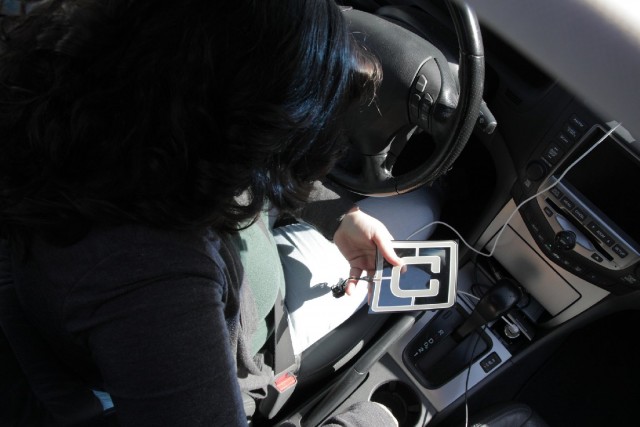
"content": "\u003cfigure id=\"attachment_126917\" class=\"wp-caption alignnone\" style=\"max-width: 640px\">\u003ca href=\"http://ww2.kqed.org/news/2014/01/30/lyft-uberx-driver-safety/rs8866_uberx_3-lpr/\" rel=\"attachment wp-att-126917\">\u003cimg class=\"size-medium wp-image-126917\" src=\"http://ww2.kqed.org/news/wp-content/uploads/sites/10/2015/01/RS8866_UberX_3-lpr-640x426.jpg\" alt=\"The California Public Utilities Commission requires Transportation Network Companies like UberX to display signage. (Jeremy Raff/KQED)\" width=\"640\" height=\"426\">\u003c/a>\u003cfigcaption class=\"wp-caption-text\">(Photo: Jeremy Raff/KQED) \u003ccite>(Jeremy Raff/KQED)\u003c/cite>\u003c/figcaption>\u003c/figure>\n\u003cp>\u003cspan style=\"font-size: 4.6875em;float: left;line-height: 0.733em;padding: 0.05em 0.1em 0 0;font-family: times, serif, georgia\">I\u003c/span>n February, when Lyft was battling to stave off regulations of ride-service companies in Seattle, company CEO John Zimmer \u003ca href=\"//www.geekwire.com/2014/seattle-tech-community-ride-sharing/%E2%80%9D\">pointed to California as a shining example of a fruitful partnership between a disruptive tech industry and regulators.\u003c/a>\u003c/p>\n\u003cp>“California had a yearlong rule-making process with several steps,” he said in an interview about the California Public Utilities Commission's decision last year to sanction what it calls Transportation Network Companies, or TNCs. “And they were able to come out with something that put, in many cases, more strict standards on new companies like Lyft, yet preserved innovation and consumer choice. I think that’s a fantastic model.\"\u003c/p>\n\u003caside class=\"pullquote alignleft\">Ride-service firms in a struggle with legislators and regulators over insurance and other issues.\u003c/aside>\n\u003cp>But critics of companies like Lyft and TNC behemoth Uber were not so happy with the CPUC ruling. Taxi companies and their regulators led the charge: Despite a host of requirements the commission created as the cost of TNCs doing business in California, these were nowhere near the regulatory burden that taxis had to contend with in San Francisco and other cities, they said. The biggest complaint: The state was not saddling the Lyfts and Ubers with the same stringent insurance requirements that taxi firms must meet under local regulations.\u003c/p>\n\u003cp>The TNC industry has portrayed these protests as the loud protectionist rumblings of an obsolete industry. But now, nine months after the commission’s decision paved the way for ride-service upstarts to purloin large chunks of cab business, the home state of the most prominent ride-service companies may be on the verge of levying significantly more rigorous insurance mandates, either through legislation, the regulatory process or both.\u003c/p>\n\u003cp>A stern \u003ca href=\"//www.cpuc.ca.gov/NR/rdonlyres/216C7343-8740-40C3-BF60-2B57BF37F8A5/0/LettertoLoganGreenofLyft061014.pdf%E2%80%9D\">letter that CPUC President Michael Peevey sent\u003c/a> last week to UberX, Lyft and three other TNCs serves as a sign of just how precarious things have gotten for the industry in California. The letter threatened to revoke the companies' licenses unless they prevented drivers from operating at five California airports. Not only did TNCs fail to obtain the necessary permits to serve the airports, Peevey wrote, but the vast majority of drivers flaunted CPUC regulations by not displaying required insignias on their vehicles. In addition, some drivers could not provide proof of insurance, and on two occasions at San Francisco International, operated without a valid driver’s license.\u003c/p>\n\u003cp>[ad fullwidth]\u003c/p>\n\u003cp>Peevey expressed his \"personal disappointment and concern about this behavior.\"\u003c/p>\n\u003cp>Uber was less than contrite: \"We have spent countless hours with airport managers and their staff to help develop requirements that are aligned with CPUC regulations and embrace the spirit of ride-sharing,\" company spokeswoman Eva Behrend said in a statement. \"The tone of the majority of these conversations has been mutually respectful and productive. It's unfortunate the CPUC is not allowing the airport process they designed to proceed by allowing ride-sharing companies to continue working with California airport authorities on their permitting process.\"\u003c/p>\n\u003cp>(\u003cstrong>Update June 17\u003c/strong>: A representative for Uber said at a state Senate committee hearing today that it needed to do a better job of informing drivers of the insignia requirements. But she also said drivers do not like to identify themselves as working for TNCs because of harassment from taxis. We have also heard this, especially from Lyft drivers, who frequently remove the trademark mustache from their cars for the same reason.)\u003c/p>\n\u003cp>But the airport kerfuffle could prove to be a mere skirmish compared to other regulatory battles brewing around an industry that has expanded globally with startling rapidity. On June 6, Uber announced it had raised an additional $1.2 billion in investment capital to \u003ca href=\"//dealbook.nytimes.com/2014/06/06/uber-raises-new-funds-at-17-billion-valuation/%E2%80%9D\">up its valuation to $18.2 billion\u003c/a>.\u003c/p>\n\u003cp>\u003cstrong>Sacramento Takes a Whack\u003c/strong>\u003c/p>\n\u003cp>On Tuesday, the Senate Energy, Utilities, and Communications Committee heard two bills intended to inject a stronger dose of regulation in the world of TNCs, especially around insurance.\u003c/p>\n\u003cp>\u003ca href=\"//legiscan.com/CA/bill/AB612/2013%E2%80%9D\">[contextly_sidebar id=\"[contextly_sidebar id=\"04961c76f5ecb41f81c0c29378870f0c\"]\u003c/a>\u003c/p>\n\u003cp>The TNCs offer drivers $1 million in commercial liability insurance, the same requirement as what San Francisco taxis must carry. But TNC coverage is \u003cem>excess insurance\u003c/em>, ostensibly triggered only at the point where the personal policies of TNC drivers, using their own vehicle, after all, stop paying. The TNCs contend that drivers' personal policies should be the insurer of first resort. But both the insurance industry and the state Department of Insurance have now taken the position that this set-up is based on a fiction, contingent on the erroneous view that drivers’ personal insurers will be happy to or at least tolerate paying claims for individuals who drive commercially for TNCs, an activity that has not been factored into the price of their policies. If it is a fiction, though, it's one that makes TNC insurance less expensive, because it assumes drivers’ own policies will pick up at least some of the liability cost for accidents.\u003c/p>\n\u003cp>Uber, Lyft and Sidecar, another TNC, all insist drivers’ personal insurers have paid claims for accidents occurring during a paid ride. The insurance industry says that’s because the drivers’ insurer didn’t know the accident happened on a TNC call.\u003c/p>\n\u003cp>The insurance industry is attempting to dismantle this two-tier TNC coverage by backing \u003ca href=\"//legiscan.com/CA/text/AB2293/id/1008847%E2%80%9D\">AB 2293\u003c/a>, sponsored by Assemblymember Susan Bonilla (D-Concord). The bill, which does not set specific coverage amounts, would require TNCs to advise drivers that their personal insurance may not provide coverage during TNC work. It would also force the companies to carry primary insurance, like taxis do, and defend drivers against lawsuits for loss or injury when providing TNC services. The bill would also extend the time that drivers are insured to when they have their apps open but have yet to accept a call, so called \"Period 1.\"\u003c/p>\n\u003cp>In a statement, Uber called the bill “a back-room deal by insurance companies and trial attorneys to prematurely force the ridesharing industry to fit their special interests. The bill allows insurance companies to escape their liability for services they’ve already charged ratepayers, and helps trial attorneys work the system to ensure they get the largest payouts possible.\"\u003c/p>\n\u003cp>\u003cstrong>(Update June 17, 1 p.m. \u003c/strong>The energy committee forwarded AB 2293 to the Committee on Insurance. The bill does not contain specific amounts of required coverage, but that is where the debate appears to now lie. At the hearing, representatives for Lyft and Uber said they support a number of the bill's requirements: that their insurance be primary, that there be a written disclosure to drivers of TNC insurance limitations and that the period of coverage now extend from app on to app off. However, as an official analysis of the bill states, the TNCs contend that requiring $1 million in coverage for the period before a driver accepts a call would “kill their business model and service.” So the TNCs have proposed an amendment that would set a requirement of just up to $100,000 in insurance, which is what Uber and Lyft offer now for this period. Committee Chair Alex Padilla seemed to push the bill's sponsor, Susan Bonilla, to forward the bill with those requirements. But she said, \"I can’t abandon the reality that catastrophic things do happen and that $100,000 isn’t going to be enough ... What happens after that is exhausted?\" Bonilla did, however, say that she is \"committed\" to treating Period 1 with more flexibility than in the subsequent times a driver will have to covered. Interestingly enough, Kara Cross, General Counsel for the Personal Insurance Federation of California, said Uber told her in negotiations that they can't acknowledge that Period 1 is commercial activity, because that could come into play in the lawsuit against them by the family of Sofia Liu, the 6-year-old killed in San Francisco on New Year's Eve, by an UberX driver.\u003c/p>\n\u003cp>\u003cstrong>Update 6:34 p.m.\u003c/strong> Uber's Eva Behrend, in a response to Kara Cross's comment, said, \"That's patently false.\")\u003c/p>\n\u003cp>A second bill, \u003ca href=\"//legiscan.com/CA/bill/AB612/2013%E2%80%9D\">AB 612\u003c/a>, sponsored by Assemblymember Adrin Nazarian (D-Los Angeles), is backed by the Taxicab Paratransit Association of California and would legislate requirements closer to what local taxi companies labor under: mandatory drug and alcohol testing of drivers; closer monitoring of DMV records; mandatory criminal background checks; driver fingerprinting; and the banning of anyone convicted of a number of crimes, from burglary to credit card fraud to obstructing a peace officer. The bill also stipulates TNCs must have a preventive maintenance program for driver's vehicles, and that all vehicles involved in TNC work must be registered with the CPUC, with an official decal affixed to every bumper.\u003c/p>\n\u003cp>A provision that would have required TNCs to cover vehicles around the clock was removed from the bill before the hearing.\u003c/p>\n\u003cp>Uber, naturally, is not a fan, calling the proposed legislation “a flagrant attempt to stymie innovation and competition by an antiquated industry. It is an obvious play by the taxicab industry to kill competition and limit consumer choice ... “ Backers of the bill, the company said, wanted to \"make it impossible for companies like Uber to operate.”\u003c/p>\n\u003cp>William Rouse, the president of TPAC and general manager of Yellow Cab in L.A., said the legislation is necessary to police companies that are plain out of control. He pointed to the violations at California airports as an example.\u003c/p>\n\u003cp>“There is not a single jurisdiction, whether inside or outside the U.S., where the TNCs actually follow the letter of the law,” he said. “This is the new world order, where these companies just routinely, habitually thumb their nose at the law in every single city where they operate.”\u003c/p>\n\u003cp>\u003cstrong>(Update June 17, 1 p.m. \u003c/strong>The committee voted to remove all but the drug and alcohol testing and background check provisions from AB 612. Representatives from San Francisco International Airport spoke in favor of the bill.)\u003c/p>\n\u003cp>\u003cstrong>CPUC Puts the Hammer Down\u003c/strong>\u003c/p>\n\u003cp>TNCs are also under the gun from the \u003ca href=\"http://docs.cpuc.ca.gov/PublishedDocs/Efile/G000/M094/K268/94268677.PDF\" target=\"_blank\">CPUC's proposed modification\u003c/a> of its original TNC decision. These new regulations, if approved, could significantly increase the companies' insurance costs. The modified decision is scheduled to be heard on July 10 or after.\u003c/p>\n\u003cp>The proposal, released last Tuesday, makes no bones about clarifying the issue of whether drivers’ personal insurance would cover claims related to TNC accidents.\u003c/p>\n\u003cp>“A driver’s personal automobile policy is no way required to provide coverage or the duty to defend for TNC services,” the commission wrote. Reinforcing that stipulation, the commission states TNC policies “shall provide exclusive coverage, and assume all liability and the sole duty to defend, at dollar one,” which would prohibit the TNCs' reliance on excess insurance. The proposal does say that a driver’s insurance can be used to cover TNC accidents, but only if it is “specifically written for the purpose of covering transportation network services.” And those policies do not currently exist.\u003c/p>\n\u003cp>Like AB 2293, the latest CPUC proposal also extends the time that drivers are insured to Period 1.\u003c/p>\n\u003cp>The UberX driver who struck and killed Sofia Liu in San Francisco was reportedly in this interval between calls, so was not covered by Uber's policy, a limitation not widely known at the time. Subsequently, both \u003ca href=\"http://ww2.kqed.org/news/2014/03/14/uber-lyft-insurance/\" target=\"_blank\">Uber and Lyft announced they had closed this gap\u003c/a> by offering up to $100,000 in coverage for drivers in the app on-and-waiting time. However, this won’t be good enough under the CPUC’s proposal, which appears to simply extend the $1 million insurance requirement to this period.\u003c/p>\n\u003cp>Uber and Lyft have also added $50,000 in collision insurance, and Uber offers $50,000 in comprehensive coverage (fire, theft and such). These are all contingent, however, on drivers having bought the same coverage on their personal auto policies. The CPUC’s proposal gives TNCs no such leeway, making collision and comprehensive mandatory regardless of a driver’s having purchased it on his own. Finally, the commission also wants to require $5,000 in coverage for medical payments related to injuries resulting from an accident. Insurance Commissioner Dave Jones is \u003ca href=\"//www.bizjournals.com/sacramento/news/2014/06/12/uber-lyft-setback-insurance-chief-backs-proposal.html?page=3%E2%80%9D\">supporting the proposed CPUC changes\u003c/a>.\u003c/p>\n\u003cp>\u003cstrong>TNC Arguments Against\u003c/strong>\u003c/p>\n\u003cp>When the CPUC first floated the expansion of the mandatory $1 million coverage to include Period 1, Uber argued it could spur drivers to “(keep) the app open at all times, regardless of the drivers’ intent to accept a request for transportation service … solely to obtain the benefit from the increased insurance.” Uber also speculated that drivers not engaged in TNC work might turn on the app “immediately following an accident in order to try to secure the potentially significant financial benefit of the higher limits.”\u003c/p>\n\u003cp>Lyft had similar objections: “(A) TNC driver could forget to close the app and be considered to be ‘providing TNC services’ in the middle of the night when the car is parked on the street and the driver is sleeping, or when the vehicle is being driven by another household member, or when it is being used to transport a driver’s child to soccer practice.”\u003c/p>\n\u003cp>Kara Cross of the Personal Insurance Federation of California says TNCs can guard against drivers gaming the system this way by monitoring their acceptance rates, tracking who has the app on while not accepting rides.\u003c/p>\n\u003cp>But Stuart Nelson, the president of Point West Insurance, a property and casualty insurance broker in Sacramento, says the CPUC’s mandatory collision coverage could invite fraud. “You could damage a car personally and then say it was damaged during a drive,” he says. “I could have this pre-existing damage and then claim it happened as an Uber driver, and Uber has to cover it.”\u003c/p>\n\u003cp>\u003cstrong>TNCs Would Pay More\u003c/strong>\u003c/p>\n\u003cp>Nelson, Kara Cross, and Jerry Sullivan, who runs an insurance brokerage business, all say TNCs will pay more for insurance if the CPUC changes go through.\u003c/p>\n\u003cp>\"People who write livery are prepared to write the kind of exposure these guys will have,” Sullivan said. “But it’s going to cost them 30 to 35 percent more than they are now.” He said that increase only takes into account the greater expense of extending the period of time drivers are covered — the TNCs might incur additional increases for the additional collision and comprehensive insurance. Nelson thinks requiring TNCs to offer one-size-fits-all collision coverage to every driver could be a significant extra cost, because “there’s no way to properly insure the risk. We won’t know if we’re insuring a 1974 Volkswagen Bug or a Ferrari.\"\u003c/p>\n\u003cp>The taxi industry, for its part, is still not happy with the CPUC, because the proposed changes would not go into effect immediately, but after the current TNC policies expire or one year from the effective date of the decision, whichever comes first.\u003c/p>\n\u003cp>[ad floatright]\u003c/p>\n\u003cp>Jerry Sullivan said he was in discussion with Lyft about 18 months ago to broker insurance coverage, but that the company balked when he quoted them a price for primary coverage from Lloyds of London. “They didn’t want to pay the price,” he says. “That’s not how they designed their business model.”\u003c/p>\n\n",
"disqusIdentifier": "139262 http://ww2.kqed.org/news/?p=139262",
"disqusUrl": "https://ww2.kqed.org/news/2014/06/17/once-friendly-territory-california-looks-to-toughen-rules-for-uber-lyft/",
"stats": {
"hasVideo": false,
"hasChartOrMap": false,
"hasAudio": false,
"hasPolis": false,
"wordCount": 2652,
"hasGoogleForm": false,
"hasGallery": false,
"hasHearkenModule": false,
"iframeSrcs": [],
"paragraphCount": 43
},
"modified": 1403113093,
"excerpt": "Proposed laws and regulations could rein in what has been close to a free ride for the startups so far.",
"headData": {
"twImgId": "",
"twTitle": "",
"ogTitle": "",
"ogImgId": "",
"twDescription": "",
"description": "Proposed laws and regulations could rein in what has been close to a free ride for the startups so far.",
"title": "Once Friendly Territory, California Looks to Toughen Rules for Uber, Lyft | KQED",
"ogDescription": "",
"schema": {
"@context": "https://schema.org",
"@type": "NewsArticle",
"headline": "Once Friendly Territory, California Looks to Toughen Rules for Uber, Lyft",
"datePublished": "2014-06-17T11:45:46-07:00",
"dateModified": "2014-06-18T10:38:13-07:00",
"image": "https://cdn.kqed.org/wp-content/uploads/2020/02/KQED-OG-Image@1x.png",
"isAccessibleForFree": "True",
"publisher": {
"@type": "NewsMediaOrganization",
"@id": "https://www.kqed.org/#organization",
"name": "KQED",
"logo": "https://cdn.kqed.org/wp-content/uploads/2020/02/KQED-OG-Image@1x.png",
"url": "https://www.kqed.org",
"sameAs": [
"https://www.facebook.com/KQED",
"https://twitter.com/KQED",
"https://www.instagram.com/kqed/",
"https://www.tiktok.com/@kqedofficial",
"https://www.linkedin.com/company/kqed",
"https://www.youtube.com/channel/UCeC0IOo7i1P_61zVUWbJ4nw"
]
}
}
},
"guestAuthors": [],
"slug": "once-friendly-territory-california-looks-to-toughen-rules-for-uber-lyft",
"status": "publish",
"customPermalink": "06/17/2014/Uber-Lyft-Insurance-crack-down/",
"path": "/news/139262/once-friendly-territory-california-looks-to-toughen-rules-for-uber-lyft",
"audioTrackLength": null,
"parsedContent": [
{
"type": "contentString",
"content": "\u003cdiv class=\"post-body\">\u003cp>\u003cfigure id=\"attachment_126917\" class=\"wp-caption alignnone\" style=\"max-width: 640px\">\u003ca href=\"http://ww2.kqed.org/news/2014/01/30/lyft-uberx-driver-safety/rs8866_uberx_3-lpr/\" rel=\"attachment wp-att-126917\">\u003cimg class=\"size-medium wp-image-126917\" src=\"http://ww2.kqed.org/news/wp-content/uploads/sites/10/2015/01/RS8866_UberX_3-lpr-640x426.jpg\" alt=\"The California Public Utilities Commission requires Transportation Network Companies like UberX to display signage. (Jeremy Raff/KQED)\" width=\"640\" height=\"426\">\u003c/a>\u003cfigcaption class=\"wp-caption-text\">(Photo: Jeremy Raff/KQED) \u003ccite>(Jeremy Raff/KQED)\u003c/cite>\u003c/figcaption>\u003c/figure>\n\u003cp>\u003cspan style=\"font-size: 4.6875em;float: left;line-height: 0.733em;padding: 0.05em 0.1em 0 0;font-family: times, serif, georgia\">I\u003c/span>n February, when Lyft was battling to stave off regulations of ride-service companies in Seattle, company CEO John Zimmer \u003ca href=\"//www.geekwire.com/2014/seattle-tech-community-ride-sharing/%E2%80%9D\">pointed to California as a shining example of a fruitful partnership between a disruptive tech industry and regulators.\u003c/a>\u003c/p>\n\u003cp>“California had a yearlong rule-making process with several steps,” he said in an interview about the California Public Utilities Commission's decision last year to sanction what it calls Transportation Network Companies, or TNCs. “And they were able to come out with something that put, in many cases, more strict standards on new companies like Lyft, yet preserved innovation and consumer choice. I think that’s a fantastic model.\"\u003c/p>\n\u003caside class=\"pullquote alignleft\">Ride-service firms in a struggle with legislators and regulators over insurance and other issues.\u003c/aside>\n\u003cp>But critics of companies like Lyft and TNC behemoth Uber were not so happy with the CPUC ruling. Taxi companies and their regulators led the charge: Despite a host of requirements the commission created as the cost of TNCs doing business in California, these were nowhere near the regulatory burden that taxis had to contend with in San Francisco and other cities, they said. The biggest complaint: The state was not saddling the Lyfts and Ubers with the same stringent insurance requirements that taxi firms must meet under local regulations.\u003c/p>\n\u003cp>The TNC industry has portrayed these protests as the loud protectionist rumblings of an obsolete industry. But now, nine months after the commission’s decision paved the way for ride-service upstarts to purloin large chunks of cab business, the home state of the most prominent ride-service companies may be on the verge of levying significantly more rigorous insurance mandates, either through legislation, the regulatory process or both.\u003c/p>\n\u003cp>A stern \u003ca href=\"//www.cpuc.ca.gov/NR/rdonlyres/216C7343-8740-40C3-BF60-2B57BF37F8A5/0/LettertoLoganGreenofLyft061014.pdf%E2%80%9D\">letter that CPUC President Michael Peevey sent\u003c/a> last week to UberX, Lyft and three other TNCs serves as a sign of just how precarious things have gotten for the industry in California. The letter threatened to revoke the companies' licenses unless they prevented drivers from operating at five California airports. Not only did TNCs fail to obtain the necessary permits to serve the airports, Peevey wrote, but the vast majority of drivers flaunted CPUC regulations by not displaying required insignias on their vehicles. In addition, some drivers could not provide proof of insurance, and on two occasions at San Francisco International, operated without a valid driver’s license.\u003c/p>\n\u003cp>\u003c/p>\u003c/div>",
"attributes": {
"named": {},
"numeric": []
}
},
{
"type": "component",
"content": "",
"name": "ad",
"attributes": {
"named": {
"label": "fullwidth"
},
"numeric": [
"fullwidth"
]
}
},
{
"type": "contentString",
"content": "\u003cdiv class=\"post-body\">\u003cp>\u003c/p>\n\u003cp>Peevey expressed his \"personal disappointment and concern about this behavior.\"\u003c/p>\n\u003cp>Uber was less than contrite: \"We have spent countless hours with airport managers and their staff to help develop requirements that are aligned with CPUC regulations and embrace the spirit of ride-sharing,\" company spokeswoman Eva Behrend said in a statement. \"The tone of the majority of these conversations has been mutually respectful and productive. It's unfortunate the CPUC is not allowing the airport process they designed to proceed by allowing ride-sharing companies to continue working with California airport authorities on their permitting process.\"\u003c/p>\n\u003cp>(\u003cstrong>Update June 17\u003c/strong>: A representative for Uber said at a state Senate committee hearing today that it needed to do a better job of informing drivers of the insignia requirements. But she also said drivers do not like to identify themselves as working for TNCs because of harassment from taxis. We have also heard this, especially from Lyft drivers, who frequently remove the trademark mustache from their cars for the same reason.)\u003c/p>\n\u003cp>But the airport kerfuffle could prove to be a mere skirmish compared to other regulatory battles brewing around an industry that has expanded globally with startling rapidity. On June 6, Uber announced it had raised an additional $1.2 billion in investment capital to \u003ca href=\"//dealbook.nytimes.com/2014/06/06/uber-raises-new-funds-at-17-billion-valuation/%E2%80%9D\">up its valuation to $18.2 billion\u003c/a>.\u003c/p>\n\u003cp>\u003cstrong>Sacramento Takes a Whack\u003c/strong>\u003c/p>\n\u003cp>On Tuesday, the Senate Energy, Utilities, and Communications Committee heard two bills intended to inject a stronger dose of regulation in the world of TNCs, especially around insurance.\u003c/p>\n\u003cp>\u003ca href=\"//legiscan.com/CA/bill/AB612/2013%E2%80%9D\">\u003c/p>\u003cp>\u003c/p>\u003cp>\u003c/a>\u003c/p>\n\u003cp>The TNCs offer drivers $1 million in commercial liability insurance, the same requirement as what San Francisco taxis must carry. But TNC coverage is \u003cem>excess insurance\u003c/em>, ostensibly triggered only at the point where the personal policies of TNC drivers, using their own vehicle, after all, stop paying. The TNCs contend that drivers' personal policies should be the insurer of first resort. But both the insurance industry and the state Department of Insurance have now taken the position that this set-up is based on a fiction, contingent on the erroneous view that drivers’ personal insurers will be happy to or at least tolerate paying claims for individuals who drive commercially for TNCs, an activity that has not been factored into the price of their policies. If it is a fiction, though, it's one that makes TNC insurance less expensive, because it assumes drivers’ own policies will pick up at least some of the liability cost for accidents.\u003c/p>\n\u003cp>Uber, Lyft and Sidecar, another TNC, all insist drivers’ personal insurers have paid claims for accidents occurring during a paid ride. The insurance industry says that’s because the drivers’ insurer didn’t know the accident happened on a TNC call.\u003c/p>\n\u003cp>The insurance industry is attempting to dismantle this two-tier TNC coverage by backing \u003ca href=\"//legiscan.com/CA/text/AB2293/id/1008847%E2%80%9D\">AB 2293\u003c/a>, sponsored by Assemblymember Susan Bonilla (D-Concord). The bill, which does not set specific coverage amounts, would require TNCs to advise drivers that their personal insurance may not provide coverage during TNC work. It would also force the companies to carry primary insurance, like taxis do, and defend drivers against lawsuits for loss or injury when providing TNC services. The bill would also extend the time that drivers are insured to when they have their apps open but have yet to accept a call, so called \"Period 1.\"\u003c/p>\n\u003cp>In a statement, Uber called the bill “a back-room deal by insurance companies and trial attorneys to prematurely force the ridesharing industry to fit their special interests. The bill allows insurance companies to escape their liability for services they’ve already charged ratepayers, and helps trial attorneys work the system to ensure they get the largest payouts possible.\"\u003c/p>\n\u003cp>\u003cstrong>(Update June 17, 1 p.m. \u003c/strong>The energy committee forwarded AB 2293 to the Committee on Insurance. The bill does not contain specific amounts of required coverage, but that is where the debate appears to now lie. At the hearing, representatives for Lyft and Uber said they support a number of the bill's requirements: that their insurance be primary, that there be a written disclosure to drivers of TNC insurance limitations and that the period of coverage now extend from app on to app off. However, as an official analysis of the bill states, the TNCs contend that requiring $1 million in coverage for the period before a driver accepts a call would “kill their business model and service.” So the TNCs have proposed an amendment that would set a requirement of just up to $100,000 in insurance, which is what Uber and Lyft offer now for this period. Committee Chair Alex Padilla seemed to push the bill's sponsor, Susan Bonilla, to forward the bill with those requirements. But she said, \"I can’t abandon the reality that catastrophic things do happen and that $100,000 isn’t going to be enough ... What happens after that is exhausted?\" Bonilla did, however, say that she is \"committed\" to treating Period 1 with more flexibility than in the subsequent times a driver will have to covered. Interestingly enough, Kara Cross, General Counsel for the Personal Insurance Federation of California, said Uber told her in negotiations that they can't acknowledge that Period 1 is commercial activity, because that could come into play in the lawsuit against them by the family of Sofia Liu, the 6-year-old killed in San Francisco on New Year's Eve, by an UberX driver.\u003c/p>\n\u003cp>\u003cstrong>Update 6:34 p.m.\u003c/strong> Uber's Eva Behrend, in a response to Kara Cross's comment, said, \"That's patently false.\")\u003c/p>\n\u003cp>A second bill, \u003ca href=\"//legiscan.com/CA/bill/AB612/2013%E2%80%9D\">AB 612\u003c/a>, sponsored by Assemblymember Adrin Nazarian (D-Los Angeles), is backed by the Taxicab Paratransit Association of California and would legislate requirements closer to what local taxi companies labor under: mandatory drug and alcohol testing of drivers; closer monitoring of DMV records; mandatory criminal background checks; driver fingerprinting; and the banning of anyone convicted of a number of crimes, from burglary to credit card fraud to obstructing a peace officer. The bill also stipulates TNCs must have a preventive maintenance program for driver's vehicles, and that all vehicles involved in TNC work must be registered with the CPUC, with an official decal affixed to every bumper.\u003c/p>\n\u003cp>A provision that would have required TNCs to cover vehicles around the clock was removed from the bill before the hearing.\u003c/p>\n\u003cp>Uber, naturally, is not a fan, calling the proposed legislation “a flagrant attempt to stymie innovation and competition by an antiquated industry. It is an obvious play by the taxicab industry to kill competition and limit consumer choice ... “ Backers of the bill, the company said, wanted to \"make it impossible for companies like Uber to operate.”\u003c/p>\n\u003cp>William Rouse, the president of TPAC and general manager of Yellow Cab in L.A., said the legislation is necessary to police companies that are plain out of control. He pointed to the violations at California airports as an example.\u003c/p>\n\u003cp>“There is not a single jurisdiction, whether inside or outside the U.S., where the TNCs actually follow the letter of the law,” he said. “This is the new world order, where these companies just routinely, habitually thumb their nose at the law in every single city where they operate.”\u003c/p>\n\u003cp>\u003cstrong>(Update June 17, 1 p.m. \u003c/strong>The committee voted to remove all but the drug and alcohol testing and background check provisions from AB 612. Representatives from San Francisco International Airport spoke in favor of the bill.)\u003c/p>\n\u003cp>\u003cstrong>CPUC Puts the Hammer Down\u003c/strong>\u003c/p>\n\u003cp>TNCs are also under the gun from the \u003ca href=\"http://docs.cpuc.ca.gov/PublishedDocs/Efile/G000/M094/K268/94268677.PDF\" target=\"_blank\">CPUC's proposed modification\u003c/a> of its original TNC decision. These new regulations, if approved, could significantly increase the companies' insurance costs. The modified decision is scheduled to be heard on July 10 or after.\u003c/p>\n\u003cp>The proposal, released last Tuesday, makes no bones about clarifying the issue of whether drivers’ personal insurance would cover claims related to TNC accidents.\u003c/p>\n\u003cp>“A driver’s personal automobile policy is no way required to provide coverage or the duty to defend for TNC services,” the commission wrote. Reinforcing that stipulation, the commission states TNC policies “shall provide exclusive coverage, and assume all liability and the sole duty to defend, at dollar one,” which would prohibit the TNCs' reliance on excess insurance. The proposal does say that a driver’s insurance can be used to cover TNC accidents, but only if it is “specifically written for the purpose of covering transportation network services.” And those policies do not currently exist.\u003c/p>\n\u003cp>Like AB 2293, the latest CPUC proposal also extends the time that drivers are insured to Period 1.\u003c/p>\n\u003cp>The UberX driver who struck and killed Sofia Liu in San Francisco was reportedly in this interval between calls, so was not covered by Uber's policy, a limitation not widely known at the time. Subsequently, both \u003ca href=\"http://ww2.kqed.org/news/2014/03/14/uber-lyft-insurance/\" target=\"_blank\">Uber and Lyft announced they had closed this gap\u003c/a> by offering up to $100,000 in coverage for drivers in the app on-and-waiting time. However, this won’t be good enough under the CPUC’s proposal, which appears to simply extend the $1 million insurance requirement to this period.\u003c/p>\n\u003cp>Uber and Lyft have also added $50,000 in collision insurance, and Uber offers $50,000 in comprehensive coverage (fire, theft and such). These are all contingent, however, on drivers having bought the same coverage on their personal auto policies. The CPUC’s proposal gives TNCs no such leeway, making collision and comprehensive mandatory regardless of a driver’s having purchased it on his own. Finally, the commission also wants to require $5,000 in coverage for medical payments related to injuries resulting from an accident. Insurance Commissioner Dave Jones is \u003ca href=\"//www.bizjournals.com/sacramento/news/2014/06/12/uber-lyft-setback-insurance-chief-backs-proposal.html?page=3%E2%80%9D\">supporting the proposed CPUC changes\u003c/a>.\u003c/p>\n\u003cp>\u003cstrong>TNC Arguments Against\u003c/strong>\u003c/p>\n\u003cp>When the CPUC first floated the expansion of the mandatory $1 million coverage to include Period 1, Uber argued it could spur drivers to “(keep) the app open at all times, regardless of the drivers’ intent to accept a request for transportation service … solely to obtain the benefit from the increased insurance.” Uber also speculated that drivers not engaged in TNC work might turn on the app “immediately following an accident in order to try to secure the potentially significant financial benefit of the higher limits.”\u003c/p>\n\u003cp>Lyft had similar objections: “(A) TNC driver could forget to close the app and be considered to be ‘providing TNC services’ in the middle of the night when the car is parked on the street and the driver is sleeping, or when the vehicle is being driven by another household member, or when it is being used to transport a driver’s child to soccer practice.”\u003c/p>\n\u003cp>Kara Cross of the Personal Insurance Federation of California says TNCs can guard against drivers gaming the system this way by monitoring their acceptance rates, tracking who has the app on while not accepting rides.\u003c/p>\n\u003cp>But Stuart Nelson, the president of Point West Insurance, a property and casualty insurance broker in Sacramento, says the CPUC’s mandatory collision coverage could invite fraud. “You could damage a car personally and then say it was damaged during a drive,” he says. “I could have this pre-existing damage and then claim it happened as an Uber driver, and Uber has to cover it.”\u003c/p>\n\u003cp>\u003cstrong>TNCs Would Pay More\u003c/strong>\u003c/p>\n\u003cp>Nelson, Kara Cross, and Jerry Sullivan, who runs an insurance brokerage business, all say TNCs will pay more for insurance if the CPUC changes go through.\u003c/p>\n\u003cp>\"People who write livery are prepared to write the kind of exposure these guys will have,” Sullivan said. “But it’s going to cost them 30 to 35 percent more than they are now.” He said that increase only takes into account the greater expense of extending the period of time drivers are covered — the TNCs might incur additional increases for the additional collision and comprehensive insurance. Nelson thinks requiring TNCs to offer one-size-fits-all collision coverage to every driver could be a significant extra cost, because “there’s no way to properly insure the risk. We won’t know if we’re insuring a 1974 Volkswagen Bug or a Ferrari.\"\u003c/p>\n\u003cp>The taxi industry, for its part, is still not happy with the CPUC, because the proposed changes would not go into effect immediately, but after the current TNC policies expire or one year from the effective date of the decision, whichever comes first.\u003c/p>\n\u003cp>\u003c/p>\u003c/div>",
"attributes": {
"named": {},
"numeric": []
}
},
{
"type": "component",
"content": "",
"name": "ad",
"attributes": {
"named": {
"label": "floatright"
},
"numeric": [
"floatright"
]
}
},
{
"type": "contentString",
"content": "\u003cdiv class=\"post-body\">\u003cp>\u003c/p>\n\u003cp>Jerry Sullivan said he was in discussion with Lyft about 18 months ago to broker insurance coverage, but that the company balked when he quoted them a price for primary coverage from Lloyds of London. “They didn’t want to pay the price,” he says. “That’s not how they designed their business model.”\u003c/p>\n\n\u003c/div>\u003c/p>",
"attributes": {
"named": {},
"numeric": []
}
}
],
"link": "/news/139262/once-friendly-territory-california-looks-to-toughen-rules-for-uber-lyft",
"authors": [
"80"
],
"programs": [
"news_6944"
],
"categories": [
"news_248",
"news_1397"
],
"tags": [
"news_1066",
"news_4524",
"news_4756",
"news_4953"
],
"featImg": "news_126917",
"label": "news_6944"
},
"news_132752": {
"type": "posts",
"id": "news_132752",
"meta": {
"index": "posts_1716263798",
"site": "news",
"id": "132752",
"score": null,
"sort": [
1397593363000
]
},
"parent": 0,
"labelTerm": {
"site": "news",
"term": 6944
},
"blocks": [],
"publishDate": 1397593363,
"format": "aside",
"disqusTitle": "Lyft, UberX Receive 3-Year Licenses to Operate in California",
"title": "Lyft, UberX Receive 3-Year Licenses to Operate in California",
"headTitle": "News Fix | KQED News",
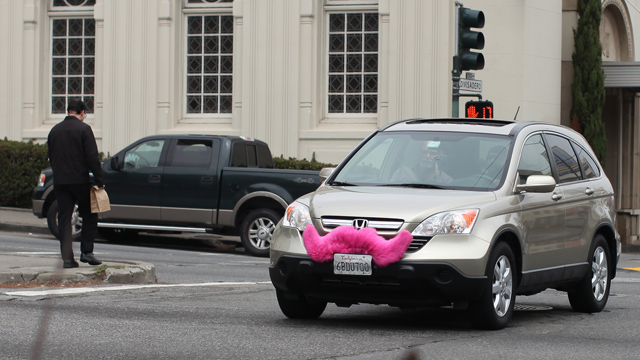
"content": "\u003cfigure id=\"attachment_118115\" class=\"wp-caption aligncenter\" style=\"max-width: 640px\">\u003cimg class=\"size-full wp-image-118115\" src=\"http://ww2.kqed.org/news/wp-content/uploads/sites/10/2014/11/lyft.jpg\" alt=\"Two agents from the same insurance company gave TNC driver different answers on whether they could provide coverage. (Deborah Svoboda/KQED)\" width=\"640\" height=\"360\">\u003cfigcaption class=\"wp-caption-text\">(Photo by Deborah Svoboda/KQED)\u003c/figcaption>\u003c/figure>\n\u003cp>In further signs that ride services like Lyft and UberX are probably here to stay, the California Public Utilities Commission last week issued both companies three-year permits to operate in the state.\u003c/p>\n\u003cp>Lyft said in a \u003ca href=\"http://blog.lyft.com/posts/2014/4/10/lyft-receives-tnc-permit-from-cpuc\" target=\"_blank\">blog post\u003c/a> last week that it was \"thrilled\" to announce the issuance of the permit.\u003c/p>\n\u003cp>\"This is exciting progress,\" the post said. \"The CPUC’s framework serves as a sound example for other jurisdictions who are considering regulations for this new, peer-to-peer model. By supporting innovation and technology, these city and state leaders have the opportunity of paving the way for providing safe, affordable and sustainable transportation and we’re thrilled to be working with them to improve our cities of tomorrow.\"\u003c/p>\n\u003cp>An \u003ca href=\"http://blog.uber.com/TNCpermit\" target=\"_blank\">Uber post\u003c/a> announcing its permit said, \"The unprecedented growth in this industry and the leadership shown by California’s regulatory leaders sends a clear message. The innovation economy is thriving in California and the roadmap is simple: public safety and consumer choice go hand in hand.\"\u003c/p>\n\u003cp>Lyft and UberX had been operating conditionally as the CPUC reviewed their applications. Just last month, the commission sent letters to both companies informing them they needed to correct \"deficiencies\" in their applications within 60 days or have them denied. The CPUC specifically singled out questions about the companies' vehicle inspection programs. As reported by the \u003ca href=\"http://blog.sfgate.com/techchron/2014/03/07/california-to-lyft-uber-sidecar-wingz-get-your-act-together/\" target=\"_blank\">San Francisco Chronicle\u003c/a>:\u003c/p>\n\u003cblockquote>\u003cp>The letter asked them to clarify\u003c/p>\n\u003cul>\n\u003cli>Who is conducting the vehicle inspection?\u003c/li>\n\u003cli>What qualifications do they possess to conduct the inspection?\u003c/li>\n\u003cli>Any copies of contracts with outside vendors that may provide these services.\u003c/li>\n\u003c/ul>\n\u003c/blockquote>\n\u003cp>The CPUC also said that UberX must make its driver safety program mandatory, the Chronicle reported.\u003c/p>\n\u003cp>[ad fullwidth]\u003c/p>\n\u003cp>UberX's \u003ca href=\"http://www.cpuc.ca.gov/NR/rdonlyres/E3470797-2DCB-463F-B898-E5F2697850BE/0/RaiserCALLCPermit.pdf\" target=\"_blank\">permit\u003c/a> (issued to its subsidiary, Rasier), is especially interesting because, as we found in a \u003ca href=\"http://ww2.kqed.org/news/2014/01/30/lyft-uberx-driver-safety\" target=\"_blank\">report\u003c/a> earlier this year, the company was conducting inspections strictly by reviewing photos of applicants' vehicles. The CPUC decision requires TNCs to either conduct a 19-point inspection “prior to allowing the driver to operate the vehicle” or to have the vehicle inspected at a facility licensed by the California Bureau of Automotive Repair. None of the drivers we spoke to reported anyone from UberX ever looking at their cars.\u003c/p>\n\u003cp>“You have to submit photos of every angle of your car, and interior photos,” said Tyler Granlund, an UberX driver in Los Angeles. “Those had to be approved before you could drive.”\u003c/p>\n\u003cp>The CPUC inspection mandate includes things like brakes, steering, headlights, seat belts, muffler and exhaust -- difficult items to assess, seemingly, from photos.\u003c/p>\n\u003cp>Lyft, for its part, assigns what it calls \"mentors\" to inspect the vehicles of prospective drivers, providing checklists as guidance.\u003c/p>\n\u003cp>In addition to the inspection requirements, the CPUC mandated the establishment of driver-training programs by TNCS to \"ensure that all drivers are safely operating the vehicle prior to the driver being able to offer service.\" The commission said TNCs had to report annually the number of drivers completing the course, and it gave each company 45 days to file its training program. UberX's filing was notable for its brevity: one page (including double spacing and double paragraph breaks). Filing as Rasier, its ride-service subsidiary, Uber submitted under a heading of “\u003ca href=\"http://www.scribd.com/doc/203225658/Rasier-Driver-Training-Program%E2%80%9D\" target=\"_blank\">Driver Training Program\u003c/a>” exactly four paragraphs, with the actual steps the company plans to enhance driver training expressed in two sentences:\u003c/p>\n\u003cblockquote>\u003cp>Rasier will also recommend that partners with less than five years of driving history take a driver training course at a school listed in the California DMV’s Occupational License Status Information System database. For each California city where Rasier partners operate, Rasier will provide, during the application or onboarding process, a list of three such local driving schools.\u003c/p>\u003c/blockquote>\n\u003cp>\u003cstrong>\u003c/strong>At the time, Uber told us it was \"in the process of preparing additional information for the CPUC.\"\u003c/p>\n\u003cp>We have asked the CPUC what changes Uber has made to its inspection and driver training programs in order for it to receive the permit, and are waiting to hear back. We also have a call out to Uber.\u003c/p>\n\u003cp>\u003c/p>\n\u003cp>Before the latest round of permits were issued, the CPUC had approved licenses for Wingz and Summon, two smaller TNCs.\u003c/p>\n\n",
"disqusIdentifier": "132752 http://ww2.kqed.org/news/?p=132752",
"disqusUrl": "https://ww2.kqed.org/news/2014/04/15/lyft-uberx-receive-3-year-licenses-to-operate-in-california/",
"stats": {
"hasVideo": false,
"hasChartOrMap": false,
"hasAudio": false,
"hasPolis": false,
"wordCount": 707,
"hasGoogleForm": false,
"hasGallery": false,
"hasHearkenModule": false,
"iframeSrcs": [],
"paragraphCount": 18
},
"modified": 1399488718,
"excerpt": "The companies had been operating conditionally while their applications were being reviewed by the CPUC.",
"headData": {
"twImgId": "",
"twTitle": "",
"ogTitle": "",
"ogImgId": "",
"twDescription": "",
"description": "The companies had been operating conditionally while their applications were being reviewed by the CPUC.",
"title": "Lyft, UberX Receive 3-Year Licenses to Operate in California | KQED",
"ogDescription": "",
"schema": {
"@context": "https://schema.org",
"@type": "NewsArticle",
"headline": "Lyft, UberX Receive 3-Year Licenses to Operate in California",
"datePublished": "2014-04-15T13:22:43-07:00",
"dateModified": "2014-05-07T11:51:58-07:00",
"image": "https://cdn.kqed.org/wp-content/uploads/2020/02/KQED-OG-Image@1x.png",
"isAccessibleForFree": "True",
"publisher": {
"@type": "NewsMediaOrganization",
"@id": "https://www.kqed.org/#organization",
"name": "KQED",
"logo": "https://cdn.kqed.org/wp-content/uploads/2020/02/KQED-OG-Image@1x.png",
"url": "https://www.kqed.org",
"sameAs": [
"https://www.facebook.com/KQED",
"https://twitter.com/KQED",
"https://www.instagram.com/kqed/",
"https://www.tiktok.com/@kqedofficial",
"https://www.linkedin.com/company/kqed",
"https://www.youtube.com/channel/UCeC0IOo7i1P_61zVUWbJ4nw"
]
}
}
},
"guestAuthors": [],
"slug": "lyft-uberx-receive-3-year-licenses-to-operate-in-california",
"status": "publish",
"customPermalink": "2014/04/15/lyft-uberx-cpuc/",
"path": "/news/132752/lyft-uberx-receive-3-year-licenses-to-operate-in-california",
"audioTrackLength": null,
"parsedContent": [
{
"type": "contentString",
"content": "\u003cdiv class=\"post-body\">\u003cp>\u003cfigure id=\"attachment_118115\" class=\"wp-caption aligncenter\" style=\"max-width: 640px\">\u003cimg class=\"size-full wp-image-118115\" src=\"http://ww2.kqed.org/news/wp-content/uploads/sites/10/2014/11/lyft.jpg\" alt=\"Two agents from the same insurance company gave TNC driver different answers on whether they could provide coverage. (Deborah Svoboda/KQED)\" width=\"640\" height=\"360\">\u003cfigcaption class=\"wp-caption-text\">(Photo by Deborah Svoboda/KQED)\u003c/figcaption>\u003c/figure>\n\u003cp>In further signs that ride services like Lyft and UberX are probably here to stay, the California Public Utilities Commission last week issued both companies three-year permits to operate in the state.\u003c/p>\n\u003cp>Lyft said in a \u003ca href=\"http://blog.lyft.com/posts/2014/4/10/lyft-receives-tnc-permit-from-cpuc\" target=\"_blank\">blog post\u003c/a> last week that it was \"thrilled\" to announce the issuance of the permit.\u003c/p>\n\u003cp>\"This is exciting progress,\" the post said. \"The CPUC’s framework serves as a sound example for other jurisdictions who are considering regulations for this new, peer-to-peer model. By supporting innovation and technology, these city and state leaders have the opportunity of paving the way for providing safe, affordable and sustainable transportation and we’re thrilled to be working with them to improve our cities of tomorrow.\"\u003c/p>\n\u003cp>An \u003ca href=\"http://blog.uber.com/TNCpermit\" target=\"_blank\">Uber post\u003c/a> announcing its permit said, \"The unprecedented growth in this industry and the leadership shown by California’s regulatory leaders sends a clear message. The innovation economy is thriving in California and the roadmap is simple: public safety and consumer choice go hand in hand.\"\u003c/p>\n\u003cp>Lyft and UberX had been operating conditionally as the CPUC reviewed their applications. Just last month, the commission sent letters to both companies informing them they needed to correct \"deficiencies\" in their applications within 60 days or have them denied. The CPUC specifically singled out questions about the companies' vehicle inspection programs. As reported by the \u003ca href=\"http://blog.sfgate.com/techchron/2014/03/07/california-to-lyft-uber-sidecar-wingz-get-your-act-together/\" target=\"_blank\">San Francisco Chronicle\u003c/a>:\u003c/p>\n\u003cblockquote>\u003cp>The letter asked them to clarify\u003c/p>\n\u003cul>\n\u003cli>Who is conducting the vehicle inspection?\u003c/li>\n\u003cli>What qualifications do they possess to conduct the inspection?\u003c/li>\n\u003cli>Any copies of contracts with outside vendors that may provide these services.\u003c/li>\n\u003c/ul>\n\u003c/blockquote>\n\u003cp>The CPUC also said that UberX must make its driver safety program mandatory, the Chronicle reported.\u003c/p>\n\u003cp>\u003c/p>\u003c/div>",
"attributes": {
"named": {},
"numeric": []
}
},
{
"type": "component",
"content": "",
"name": "ad",
"attributes": {
"named": {
"label": "fullwidth"
},
"numeric": [
"fullwidth"
]
}
},
{
"type": "contentString",
"content": "\u003cdiv class=\"post-body\">\u003cp>\u003c/p>\n\u003cp>UberX's \u003ca href=\"http://www.cpuc.ca.gov/NR/rdonlyres/E3470797-2DCB-463F-B898-E5F2697850BE/0/RaiserCALLCPermit.pdf\" target=\"_blank\">permit\u003c/a> (issued to its subsidiary, Rasier), is especially interesting because, as we found in a \u003ca href=\"http://ww2.kqed.org/news/2014/01/30/lyft-uberx-driver-safety\" target=\"_blank\">report\u003c/a> earlier this year, the company was conducting inspections strictly by reviewing photos of applicants' vehicles. The CPUC decision requires TNCs to either conduct a 19-point inspection “prior to allowing the driver to operate the vehicle” or to have the vehicle inspected at a facility licensed by the California Bureau of Automotive Repair. None of the drivers we spoke to reported anyone from UberX ever looking at their cars.\u003c/p>\n\u003cp>“You have to submit photos of every angle of your car, and interior photos,” said Tyler Granlund, an UberX driver in Los Angeles. “Those had to be approved before you could drive.”\u003c/p>\n\u003cp>The CPUC inspection mandate includes things like brakes, steering, headlights, seat belts, muffler and exhaust -- difficult items to assess, seemingly, from photos.\u003c/p>\n\u003cp>Lyft, for its part, assigns what it calls \"mentors\" to inspect the vehicles of prospective drivers, providing checklists as guidance.\u003c/p>\n\u003cp>In addition to the inspection requirements, the CPUC mandated the establishment of driver-training programs by TNCS to \"ensure that all drivers are safely operating the vehicle prior to the driver being able to offer service.\" The commission said TNCs had to report annually the number of drivers completing the course, and it gave each company 45 days to file its training program. UberX's filing was notable for its brevity: one page (including double spacing and double paragraph breaks). Filing as Rasier, its ride-service subsidiary, Uber submitted under a heading of “\u003ca href=\"http://www.scribd.com/doc/203225658/Rasier-Driver-Training-Program%E2%80%9D\" target=\"_blank\">Driver Training Program\u003c/a>” exactly four paragraphs, with the actual steps the company plans to enhance driver training expressed in two sentences:\u003c/p>\n\u003cblockquote>\u003cp>Rasier will also recommend that partners with less than five years of driving history take a driver training course at a school listed in the California DMV’s Occupational License Status Information System database. For each California city where Rasier partners operate, Rasier will provide, during the application or onboarding process, a list of three such local driving schools.\u003c/p>\u003c/blockquote>\n\u003cp>\u003cstrong>\u003c/strong>At the time, Uber told us it was \"in the process of preparing additional information for the CPUC.\"\u003c/p>\n\u003cp>We have asked the CPUC what changes Uber has made to its inspection and driver training programs in order for it to receive the permit, and are waiting to hear back. We also have a call out to Uber.\u003c/p>\n\u003cp>\u003c/p>\n\u003cp>Before the latest round of permits were issued, the CPUC had approved licenses for Wingz and Summon, two smaller TNCs.\u003c/p>\n\n\u003c/div>\u003c/p>",
"attributes": {
"named": {},
"numeric": []
}
}
],
"link": "/news/132752/lyft-uberx-receive-3-year-licenses-to-operate-in-california",
"authors": [
"80"
],
"programs": [
"news_6944"
],
"categories": [
"news_1758",
"news_1397"
],
"tags": [
"news_1066",
"news_4524",
"news_4756",
"news_4952",
"news_4953"
],
"featImg": "news_118115",
"label": "news_6944"
},
"news_130402": {
"type": "posts",
"id": "news_130402",
"meta": {
"index": "posts_1716263798",
"site": "news",
"id": "130402",
"score": null,
"sort": [
1395869961000
]
},
"guestAuthors": [],
"slug": "after-leak-uber-publishes-its-insurance-policy-read-the-full-text",
"title": "Uber's Controversial Insurance Policy is Secret No More",
"publishDate": 1395869961,
"format": "aside",
"headTitle": "Uber’s Controversial Insurance Policy is Secret No More | KQED",
"labelTerm": {
"term": 6944,
"site": "news"
},
"content": "\u003cfigure id=\"attachment_126917\" class=\"wp-caption alignleft\" style=\"max-width: 320px\">\u003cimg loading=\"lazy\" decoding=\"async\" class=\"size-medium wp-image-126917\" src=\"http://ww2.kqed.org/news/wp-content/uploads/sites/10/2015/01/RS8866_UberX_3-lpr-640x426.jpg\" alt=\"The California Public Utilities Commission requires Transportation Network Companies like UberX to display signage. (Jeremy Raff/KQED)\" width=\"320\" height=\"213\">\u003cfigcaption class=\"wp-caption-text\">(Photo: Jeremy Raff/KQED) \u003ccite>(Jeremy Raff/KQED)\u003c/cite>\u003c/figcaption>\u003c/figure>\n\u003cp>A couple of days ago, the \u003ca href=\"http://www.sfbg.com/politics/2014/03/24/uber%E2%80%99s-secret-%E2%80%9Cproprietary%E2%80%9D-insurance-policy-leaked\">San Francisco Bay Guardian\u003c/a> got hold of the holy grail of Lyft/UberX detractors, a document long sought by taxi companies and others calling for greater oversight of these ride services.\u003c/p>\n\u003cp>On Monday night, the Guardian posted \u003ca href=\"http://www.scribd.com/doc/214351992/Leaked-Uber-Insurance-Policy\" target=\"_blank\" rel=\"noopener\">Uber’s secret insurance policy\u003c/a>. The weekly said that someone sent it the document anonymously, and that it was sent to a number of taxi-industry advocates as well.\u003c/p>\n\u003cp>Apparently in response, Uber soon \u003ca href=\"http://blog.uber.com/ridesharinginsurancepolicy\" target=\"_blank\" rel=\"noopener\">posted the policy\u003c/a> on its own website. Uber wrote in a \u003ca href=\"http://blog.uber.com/ridesharinginsurancepolicy\" target=\"_blank\" rel=\"noopener\">blog post\u003c/a>: “We are confident it is a best-in-class policy and hope that this additional transparency addresses any remaining questions about the insurance provided to ridesharing partners on our platform.”\u003c/p>\n\u003cp>The policy was written by James River Insurance Co., based in Richmond, Virginia. How much Uber is paying in premiums is redacted in both the leaked and company versions.\u003c/p>\n\u003cp>\u003cstrong>Secrecy an issue\u003c/strong>\u003c/p>\n\u003cp>[ad fullwidth]\u003c/p>\n\u003cp>The taxi industry across the country has made a big issue of the non-public nature of the ride-services’ policies. In covering the issue over the past year, we have frequently heard from taxi companies, drivers and regulators that because these documents have been seen only by the California Public Utilities Commission, no one knows what exclusions and other conditions might get the companies off the hook — and its drivers on the hook — for liability costs in an accident.\u003c/p>\n\u003cp>[contextly_sidebar id=”249dc16385ce75265eee36c75804d273″]\u003c/p>\n\u003cp>But early indications are that those looking for a smoking gun to implicate Uber as engaging in insurance hocus-pocus may be disappointed. The Taxicab, Limousine & Paratransit Association — which appreciates the technological marvel of loosely regulated, app-based dispatch startups about as much as the music industry liked Napster — focused on the name of the company listed as insured on the policy. Under “name of insured,” it says “Rasier LLC,” which is a subsidiary of Uber.\u003c/p>\n\u003cp>“This is some sort of corporate shell game,” said William Rouse, past president of the TLPA and currently general manager of Los Angeles Yellow Cab. “The policy states that insurance kicks in only when Rasier LLC is liable. But Uber — not Rasier LLC — is the company providing for-hire transportation across the U.S. This could be the mechanism Uber uses to avoid paying out any insurance whatsoever. Why would any city allow Uber to operate on its streets with the company’s deceitful practices now on full display?”\u003c/p>\n\u003cp>However, “Uber Technologies Inc.” is indeed named as an “additional insured” in an addendum to the policy. (\u003cstrong>Update Thursday\u003c/strong>: Robert Passmore, senior director of personal lines policy at the Property Casualty Insurers Association of America, told the \u003ca href=\"http://blog.sfgate.com/techchron/2014/03/27/what-does-ubers-1-million-commercial-policy-cover/\" target=\"_blank\" rel=\"noopener\">San Francisco Chronicle\u003c/a> this is not an unusual way to do things.)\u003c/p>\n\u003cp>The insurance issue came to the fore after a fatal New Year’s Eve accident involving an UberX driver in San Francisco. Syed Muzaffar, driving an SUV, drove into a family in a Tenderloin crosswalk, killing 6-year-old Sofia Liu. Uber said the driver was not covered under the $1 million liability policy mandated by the CPUC because he was between calls.\u003c/p>\n\u003cp>Uber \u003ca href=\"http://ww2.kqed.org/news/2014/03/14/uber-lyft-insurance/\" target=\"_blank\" rel=\"noopener\">closed that gap to a certain degree\u003c/a> two weeks ago, when it announced it had added coverage for the period when a driver is logged into its app but not yet on a call. (Lyft said it would similarly augment its coverage.) However, UberX’s added coverage is capped at $100,000 total per incident for bodily injury and $25,000 per incident for property damage, the company said. That’s far less than the New Year’s Eve accident, for example, is likely to incur in terms of liability.\u003c/p>\n\u003cp>Controversy over insurance coverage has become a sort of Achilles’ heel for the fast-growing ride-service industry as it fights numerous \u003ca href=\"http://ww2.kqed.org/news/2014/03/18/lyft-uber/\" target=\"_blank\" rel=\"noopener\">regulatory battles\u003c/a> in multiple cities and states. In January, the California Department of Insurance issued a \u003ca href=\"http://www.insurance.ca.gov/0250-insurers/0300-insurers/0200-bulletins/bulletin-notices-commiss-opinion/TransNetwkDrvrs.cfm\" target=\"_blank\" rel=\"noopener\">warning to ride-service drivers\u003c/a> about potential gaps in coverage that could leave them liable in an accident.\u003c/p>\n\u003cp>In Chicago recently, the City Council actually \u003ca href=\"http://articles.chicagotribune.com/2014-03-14/news/chi-city-council-subpoenas-insurance-records-from-rideshare-firms-20140313_1_ride-share-lyft-and-sidecar-taxi-drivers\" target=\"_blank\" rel=\"noopener\">subpoenaed the policies\u003c/a> of UberX, Lyft and Sidecar in search of holes that could leave drivers and passengers unprotected. Meanwhile, there have been at least two reports of insurers canceling the personal auto coverage of ride-service drivers, leading many of them to \u003ca href=\"http://ww2.kqed.org/news/2014/01/20/ride-sharing-insurance-lyft-uberx-sidecar/\" target=\"_blank\" rel=\"noopener\">hide their status as commercial drivers\u003c/a>.\u003c/p>\n\u003cp>\u003cstrong>The policy: Excess vs. primary insurance\u003cbr>\n\u003c/strong>\u003c/p>\n\u003cp>You can take a look at the insurance policy, which makes for fascinating reading if you’re an actuary, \u003ca href=\"http://www.scribd.com/doc/214351992/Leaked-Uber-Insurance-Policy\" target=\"_blank\" rel=\"noopener\">here\u003c/a> or embedded at the end of this article. If you follow this stuff, I imagine you’re going to hear a fair bit of analysis over the next few days. We asked Pete Moraga of the \u003ca href=\"http://www.iinc.org/\" target=\"_blank\" rel=\"noopener\">Insurance Information Network of California\u003c/a>, someone who has expressed skepticism to us in the past about ride-service insurance, to take a look. He told us the contract contains a lot of standard boilerplate language and exclusions found in other insurance contracts. The \u003ca href=\"http://blog.sfgate.com/techchron/2014/03/27/what-does-ubers-1-million-commercial-policy-cover/\" target=\"_blank\" rel=\"noopener\">San Francisco Chronicle\u003c/a> showed the policy to a couple of other insurance industry professionals, and they agreed there is nothing unusual about the policy.\u003c/p>\n\u003cp>It’s still early, but all in all one would have to say the release of the policy has been a positive development for Uber and maybe the entire TNC industry. Why? Because, as previously mentioned, the taxi industry has been attempting to use the refusal of the TNCs to make their insurance policies public to sow distrust in them and create a sense that the coverage likely includes a host of conditions unfavorable to drivers and the public. So far, that does not look to be true.\u003c/p>\n\u003cp>That doesn’t mean there aren’t still issues with TNC insurance. Uber’s policy functions as excess insurance for drivers who contract with the company. Excess insurance is meant to supplement a primary policy, paying claims where the primary insurance leaves off. The TNCs have always said that should a driver’s personal insurance fail to cover an accident, their excess coverage will “drop down” to become primary insurance, picking up the entire tab if necessary. But the insurance industry has said repeatedly that drivers’ personal policies will \u003cem>never\u003c/em> cover an accident involving a ride-service vehicle, because personal policies routinely exclude coverage for commercial use. TNCs, however, have insisted that claims are getting through on personal policies. To which some in the insurance and taxi industries have replied that’s only because those insurers don’t actually \u003cem>know \u003c/em>that the accidents occurred during a TNC call.\u003c/p>\n\u003cp>OK, to the seven insurance industry people still reading, let’s put it this way: During a hearing last week on TNC insurance issues held by California Insurance Commissioner Dave Jones, \u003ca href=\"http://www.bizjournals.com/sanfrancisco/blog/2014/03/insurance-groups-uber-lyft-sidecar.html?utm_source=feedburner&utm_medium=feed&utm_campaign=Feed%3A+bizj_sanfrancisco+%28San+Francisco+Business+Times%29\" target=\"_blank\" rel=\"noopener\">insurance groups said the ride-services were basically getting a free ride\u003c/a>, no pun intended, by relying on drivers’ personal insurance to cover some claims.\u003c/p>\n\u003cp>It’s one reason the taxi industry is so angry: They pay for primary insurance, which is more expensive because it covers more claims than excess insurance. When the CPUC hammered out its TNC rules last year, the California Department of Insurance issued an opinion that its preferred option would have been to require that ride services carry \u003ca href=\"http://www.irmi.com/online/insurance-glossary/terms/p/primary-cover.aspx\" target=\"_blank\" rel=\"noopener\">primary insurance\u003c/a>, because a dual system of commercial excess insurance sitting on top of personal primary insurance could result in confusion to consumers and drivers who need to file claims.\u003c/p>\n\u003cp>But the department also said an excess, drop-down policy would suffice as the next-best thing, and the CPUC declined to require that TNCs get primary insurance.\u003c/p>\n\u003cp>Pete Moraga, from the Insurance Information Network of California, said Uber’s policy still “begs the question: Did (Uber) purchase the excess policy knowing that drivers’ own policies would not cover commercial use of the auto, or did they try to imply to drivers signing up that their own personal policy would cover them?”\u003c/p>\n\u003cp>Lane Kasselman of Uber’s communications department responded with this:\u003c/p>\n\u003cp>“Our teams work with partner drivers to answer any questions they have about a range of issues, including insurance. As a matter of law, all California drivers are required to have auto insurance, so we require that drivers have it to partner with us.\u003c/p>\n\u003cp>“Personal auto insurance is a contract between the driver and their insurer. Most personal auto insurance policies contain an exclusion for transporting passengers for hire, that’s why we have the commercial policy in place. We tell drivers to report all accidents to their personal insurance provider, and we report it to our insurance at the same time. We expect drivers to be truthful with all parties involved.”\u003c/p>\n\u003cp>\u003cstrong>CPUC takes another look\u003c/strong>\u003c/p>\n\u003cp>On Tuesday the CPUC issued a \u003ca href=\"http://docs.cpuc.ca.gov/PublishedDocs/Efile/G000/M089/K247/89247822.PDF\" target=\"_blank\" rel=\"noopener\">call for comments\u003c/a> on proposed modifications to the regulations it issued last year. Among the changes floated is the requirement that TNC insurance go into effect “when the TNC app is open and available to accept rides” — in other words, between calls. This is a change that UberX and Lyft have said they have already made, and one that would have extended coverage to Syed Muzaffar, the UberX driver in the New Year’s Eve accident, who was waiting to be assigned a passenger when the accident occurred.\u003c/p>\n\u003cp>The CPUC is also proposing that TNCs be required to offer $1,000,000 in uninsured/underinsured motorist coverage; $50,000 in comprehensive coverage (theft, fire, vandalism); $50,000 in collision coverage (when the accident is the driver’s fault); and $5,000 in medical payments due to bodily injury sustained by the driver or passengers.\u003c/p>\n\u003cp>The document from CPUC Commissioner Michael Peevey said, “While efforts to craft market-based solutions are certainly appreciated, not all of the TNCs who have filed applications with the Commission have voluntarily proposed solutions to close the acknowledged insurance gap. Thus, the assigned Commissioner believes it is incumbent on the Commission to consider fashioning a remedy that will apply on an industry-wide basis.”\u003c/p>\n\u003cp>Uber said it “strongly supports requests for public comment,” because “for far too long transportation regulation has been made in the dark, and it’s long past time the riding public had a say.”\u003c/p>\n\u003cp>\u003cem>Note: In t\u003c/em>\u003cem>he original \u003c/em>\u003cem>version of this \u003c/em>\u003cem>article, one insurance expert called into question whether the text of Uber’s policy specified that drivers would be covered if their personal insurance policy declined to do so. However, when \u003c/em>\u003cem>U\u003c/em>\u003cem>ber pointed out \u003c/em>\u003cem>to us \u003c/em>\u003cem>where that issue was \u003c/em>\u003cem>in fact \u003c/em>\u003cem>addressed, the expert agreed with them\u003c/em>\u003cem>, and therefore \u003c/em>\u003cem>we \u003c/em>\u003cem>have deleted that section of the \u003c/em>\u003cem>original\u003c/em>\u003cem> \u003c/em>\u003cem>article\u003c/em>\u003cem>.\u003c/em>\u003c/p>\n\u003cdiv>\u003c/div>\n\u003cp style=\"margin: 12px auto 6px auto;font-family: Helvetica,Arial,Sans-serif;font-style: normal;font-variant: normal;font-weight: normal;font-size: 14px;line-height: normal\">\u003ca style=\"text-decoration: underline\" title=\"View Leaked Uber Insurance Policy on Scribd\" href=\"http://www.scribd.com/doc/214351992/Leaked-Uber-Insurance-Policy\">Uber Insurance Policy\u003c/a>\u003c/p>\n\u003cp>[ad floatright]\u003c/p>\n\u003cp>\u003ciframe loading=\"lazy\" id=\"doc_30317\" src=\"//www.scribd.com/embeds/214351992/content?start_page=1&view_mode=scroll&access_key=key-2dmro6l4w8g0wd3j8v5g&show_recommendations=true\" frameborder=\"0\" scrolling=\"no\" width=\"100%\" height=\"600\">\u003c/iframe>\u003c/p>\n\n",
"blocks": [],
"excerpt": "The ride service company's insurance policy had long been secret until someone leaked it Monday.",
"status": "publish",
"parent": 0,
"modified": 1721106797,
"stats": {
"hasAudio": false,
"hasVideo": false,
"hasChartOrMap": true,
"iframeSrcs": [
"//www.scribd.com/embeds/214351992/content"
],
"hasGoogleForm": false,
"hasGallery": false,
"hasHearkenModule": false,
"hasPolis": false,
"paragraphCount": 34,
"wordCount": 1837
},
"headData": {
"title": "Uber's Controversial Insurance Policy is Secret No More | KQED",
"description": "The ride service company's insurance policy had long been secret until someone leaked it Monday.",
"ogTitle": "",
"ogDescription": "",
"ogImgId": "",
"twTitle": "",
"twDescription": "",
"twImgId": "",
"schema": {
"@context": "https://schema.org",
"@type": "NewsArticle",
"headline": "Uber's Controversial Insurance Policy is Secret No More",
"datePublished": "2014-03-26T14:39:21-07:00",
"dateModified": "2024-07-15T22:13:17-07:00",
"image": "https://cdn.kqed.org/wp-content/uploads/2020/02/KQED-OG-Image@1x.png",
"isAccessibleForFree": "True",
"publisher": {
"@type": "NewsMediaOrganization",
"@id": "https://www.kqed.org/#organization",
"name": "KQED",
"logo": "https://cdn.kqed.org/wp-content/uploads/2020/02/KQED-OG-Image@1x.png",
"url": "https://www.kqed.org",
"sameAs": [
"https://www.facebook.com/KQED",
"https://twitter.com/KQED",
"https://www.instagram.com/kqed/",
"https://www.tiktok.com/@kqedofficial",
"https://www.linkedin.com/company/kqed",
"https://www.youtube.com/channel/UCeC0IOo7i1P_61zVUWbJ4nw"
]
}
}
},
"sticky": false,
"customPermalink": "2014/03/25/draft-uber-insurance-policy/",
"path": "/news/130402/after-leak-uber-publishes-its-insurance-policy-read-the-full-text",
"audioTrackLength": null,
"parsedContent": [
{
"type": "contentString",
"content": "\u003cdiv class=\"post-body\">\u003cp>\u003cfigure id=\"attachment_126917\" class=\"wp-caption alignleft\" style=\"max-width: 320px\">\u003cimg loading=\"lazy\" decoding=\"async\" class=\"size-medium wp-image-126917\" src=\"http://ww2.kqed.org/news/wp-content/uploads/sites/10/2015/01/RS8866_UberX_3-lpr-640x426.jpg\" alt=\"The California Public Utilities Commission requires Transportation Network Companies like UberX to display signage. (Jeremy Raff/KQED)\" width=\"320\" height=\"213\">\u003cfigcaption class=\"wp-caption-text\">(Photo: Jeremy Raff/KQED) \u003ccite>(Jeremy Raff/KQED)\u003c/cite>\u003c/figcaption>\u003c/figure>\n\u003cp>A couple of days ago, the \u003ca href=\"http://www.sfbg.com/politics/2014/03/24/uber%E2%80%99s-secret-%E2%80%9Cproprietary%E2%80%9D-insurance-policy-leaked\">San Francisco Bay Guardian\u003c/a> got hold of the holy grail of Lyft/UberX detractors, a document long sought by taxi companies and others calling for greater oversight of these ride services.\u003c/p>\n\u003cp>On Monday night, the Guardian posted \u003ca href=\"http://www.scribd.com/doc/214351992/Leaked-Uber-Insurance-Policy\" target=\"_blank\" rel=\"noopener\">Uber’s secret insurance policy\u003c/a>. The weekly said that someone sent it the document anonymously, and that it was sent to a number of taxi-industry advocates as well.\u003c/p>\n\u003cp>Apparently in response, Uber soon \u003ca href=\"http://blog.uber.com/ridesharinginsurancepolicy\" target=\"_blank\" rel=\"noopener\">posted the policy\u003c/a> on its own website. Uber wrote in a \u003ca href=\"http://blog.uber.com/ridesharinginsurancepolicy\" target=\"_blank\" rel=\"noopener\">blog post\u003c/a>: “We are confident it is a best-in-class policy and hope that this additional transparency addresses any remaining questions about the insurance provided to ridesharing partners on our platform.”\u003c/p>\n\u003cp>The policy was written by James River Insurance Co., based in Richmond, Virginia. How much Uber is paying in premiums is redacted in both the leaked and company versions.\u003c/p>\n\u003cp>\u003cstrong>Secrecy an issue\u003c/strong>\u003c/p>\n\u003cp>\u003c/p>\u003c/div>",
"attributes": {
"named": {},
"numeric": []
}
},
{
"type": "component",
"content": "",
"name": "ad",
"attributes": {
"named": {
"label": "fullwidth"
},
"numeric": [
"fullwidth"
]
}
},
{
"type": "contentString",
"content": "\u003cdiv class=\"post-body\">\u003cp>\u003c/p>\n\u003cp>The taxi industry across the country has made a big issue of the non-public nature of the ride-services’ policies. In covering the issue over the past year, we have frequently heard from taxi companies, drivers and regulators that because these documents have been seen only by the California Public Utilities Commission, no one knows what exclusions and other conditions might get the companies off the hook — and its drivers on the hook — for liability costs in an accident.\u003c/p>\n\u003cp>\u003c/p>\u003cp>\u003c/p>\u003cp>\u003c/p>\n\u003cp>But early indications are that those looking for a smoking gun to implicate Uber as engaging in insurance hocus-pocus may be disappointed. The Taxicab, Limousine & Paratransit Association — which appreciates the technological marvel of loosely regulated, app-based dispatch startups about as much as the music industry liked Napster — focused on the name of the company listed as insured on the policy. Under “name of insured,” it says “Rasier LLC,” which is a subsidiary of Uber.\u003c/p>\n\u003cp>“This is some sort of corporate shell game,” said William Rouse, past president of the TLPA and currently general manager of Los Angeles Yellow Cab. “The policy states that insurance kicks in only when Rasier LLC is liable. But Uber — not Rasier LLC — is the company providing for-hire transportation across the U.S. This could be the mechanism Uber uses to avoid paying out any insurance whatsoever. Why would any city allow Uber to operate on its streets with the company’s deceitful practices now on full display?”\u003c/p>\n\u003cp>However, “Uber Technologies Inc.” is indeed named as an “additional insured” in an addendum to the policy. (\u003cstrong>Update Thursday\u003c/strong>: Robert Passmore, senior director of personal lines policy at the Property Casualty Insurers Association of America, told the \u003ca href=\"http://blog.sfgate.com/techchron/2014/03/27/what-does-ubers-1-million-commercial-policy-cover/\" target=\"_blank\" rel=\"noopener\">San Francisco Chronicle\u003c/a> this is not an unusual way to do things.)\u003c/p>\n\u003cp>The insurance issue came to the fore after a fatal New Year’s Eve accident involving an UberX driver in San Francisco. Syed Muzaffar, driving an SUV, drove into a family in a Tenderloin crosswalk, killing 6-year-old Sofia Liu. Uber said the driver was not covered under the $1 million liability policy mandated by the CPUC because he was between calls.\u003c/p>\n\u003cp>Uber \u003ca href=\"http://ww2.kqed.org/news/2014/03/14/uber-lyft-insurance/\" target=\"_blank\" rel=\"noopener\">closed that gap to a certain degree\u003c/a> two weeks ago, when it announced it had added coverage for the period when a driver is logged into its app but not yet on a call. (Lyft said it would similarly augment its coverage.) However, UberX’s added coverage is capped at $100,000 total per incident for bodily injury and $25,000 per incident for property damage, the company said. That’s far less than the New Year’s Eve accident, for example, is likely to incur in terms of liability.\u003c/p>\n\u003cp>Controversy over insurance coverage has become a sort of Achilles’ heel for the fast-growing ride-service industry as it fights numerous \u003ca href=\"http://ww2.kqed.org/news/2014/03/18/lyft-uber/\" target=\"_blank\" rel=\"noopener\">regulatory battles\u003c/a> in multiple cities and states. In January, the California Department of Insurance issued a \u003ca href=\"http://www.insurance.ca.gov/0250-insurers/0300-insurers/0200-bulletins/bulletin-notices-commiss-opinion/TransNetwkDrvrs.cfm\" target=\"_blank\" rel=\"noopener\">warning to ride-service drivers\u003c/a> about potential gaps in coverage that could leave them liable in an accident.\u003c/p>\n\u003cp>In Chicago recently, the City Council actually \u003ca href=\"http://articles.chicagotribune.com/2014-03-14/news/chi-city-council-subpoenas-insurance-records-from-rideshare-firms-20140313_1_ride-share-lyft-and-sidecar-taxi-drivers\" target=\"_blank\" rel=\"noopener\">subpoenaed the policies\u003c/a> of UberX, Lyft and Sidecar in search of holes that could leave drivers and passengers unprotected. Meanwhile, there have been at least two reports of insurers canceling the personal auto coverage of ride-service drivers, leading many of them to \u003ca href=\"http://ww2.kqed.org/news/2014/01/20/ride-sharing-insurance-lyft-uberx-sidecar/\" target=\"_blank\" rel=\"noopener\">hide their status as commercial drivers\u003c/a>.\u003c/p>\n\u003cp>\u003cstrong>The policy: Excess vs. primary insurance\u003cbr>\n\u003c/strong>\u003c/p>\n\u003cp>You can take a look at the insurance policy, which makes for fascinating reading if you’re an actuary, \u003ca href=\"http://www.scribd.com/doc/214351992/Leaked-Uber-Insurance-Policy\" target=\"_blank\" rel=\"noopener\">here\u003c/a> or embedded at the end of this article. If you follow this stuff, I imagine you’re going to hear a fair bit of analysis over the next few days. We asked Pete Moraga of the \u003ca href=\"http://www.iinc.org/\" target=\"_blank\" rel=\"noopener\">Insurance Information Network of California\u003c/a>, someone who has expressed skepticism to us in the past about ride-service insurance, to take a look. He told us the contract contains a lot of standard boilerplate language and exclusions found in other insurance contracts. The \u003ca href=\"http://blog.sfgate.com/techchron/2014/03/27/what-does-ubers-1-million-commercial-policy-cover/\" target=\"_blank\" rel=\"noopener\">San Francisco Chronicle\u003c/a> showed the policy to a couple of other insurance industry professionals, and they agreed there is nothing unusual about the policy.\u003c/p>\n\u003cp>It’s still early, but all in all one would have to say the release of the policy has been a positive development for Uber and maybe the entire TNC industry. Why? Because, as previously mentioned, the taxi industry has been attempting to use the refusal of the TNCs to make their insurance policies public to sow distrust in them and create a sense that the coverage likely includes a host of conditions unfavorable to drivers and the public. So far, that does not look to be true.\u003c/p>\n\u003cp>That doesn’t mean there aren’t still issues with TNC insurance. Uber’s policy functions as excess insurance for drivers who contract with the company. Excess insurance is meant to supplement a primary policy, paying claims where the primary insurance leaves off. The TNCs have always said that should a driver’s personal insurance fail to cover an accident, their excess coverage will “drop down” to become primary insurance, picking up the entire tab if necessary. But the insurance industry has said repeatedly that drivers’ personal policies will \u003cem>never\u003c/em> cover an accident involving a ride-service vehicle, because personal policies routinely exclude coverage for commercial use. TNCs, however, have insisted that claims are getting through on personal policies. To which some in the insurance and taxi industries have replied that’s only because those insurers don’t actually \u003cem>know \u003c/em>that the accidents occurred during a TNC call.\u003c/p>\n\u003cp>OK, to the seven insurance industry people still reading, let’s put it this way: During a hearing last week on TNC insurance issues held by California Insurance Commissioner Dave Jones, \u003ca href=\"http://www.bizjournals.com/sanfrancisco/blog/2014/03/insurance-groups-uber-lyft-sidecar.html?utm_source=feedburner&utm_medium=feed&utm_campaign=Feed%3A+bizj_sanfrancisco+%28San+Francisco+Business+Times%29\" target=\"_blank\" rel=\"noopener\">insurance groups said the ride-services were basically getting a free ride\u003c/a>, no pun intended, by relying on drivers’ personal insurance to cover some claims.\u003c/p>\n\u003cp>It’s one reason the taxi industry is so angry: They pay for primary insurance, which is more expensive because it covers more claims than excess insurance. When the CPUC hammered out its TNC rules last year, the California Department of Insurance issued an opinion that its preferred option would have been to require that ride services carry \u003ca href=\"http://www.irmi.com/online/insurance-glossary/terms/p/primary-cover.aspx\" target=\"_blank\" rel=\"noopener\">primary insurance\u003c/a>, because a dual system of commercial excess insurance sitting on top of personal primary insurance could result in confusion to consumers and drivers who need to file claims.\u003c/p>\n\u003cp>But the department also said an excess, drop-down policy would suffice as the next-best thing, and the CPUC declined to require that TNCs get primary insurance.\u003c/p>\n\u003cp>Pete Moraga, from the Insurance Information Network of California, said Uber’s policy still “begs the question: Did (Uber) purchase the excess policy knowing that drivers’ own policies would not cover commercial use of the auto, or did they try to imply to drivers signing up that their own personal policy would cover them?”\u003c/p>\n\u003cp>Lane Kasselman of Uber’s communications department responded with this:\u003c/p>\n\u003cp>“Our teams work with partner drivers to answer any questions they have about a range of issues, including insurance. As a matter of law, all California drivers are required to have auto insurance, so we require that drivers have it to partner with us.\u003c/p>\n\u003cp>“Personal auto insurance is a contract between the driver and their insurer. Most personal auto insurance policies contain an exclusion for transporting passengers for hire, that’s why we have the commercial policy in place. We tell drivers to report all accidents to their personal insurance provider, and we report it to our insurance at the same time. We expect drivers to be truthful with all parties involved.”\u003c/p>\n\u003cp>\u003cstrong>CPUC takes another look\u003c/strong>\u003c/p>\n\u003cp>On Tuesday the CPUC issued a \u003ca href=\"http://docs.cpuc.ca.gov/PublishedDocs/Efile/G000/M089/K247/89247822.PDF\" target=\"_blank\" rel=\"noopener\">call for comments\u003c/a> on proposed modifications to the regulations it issued last year. Among the changes floated is the requirement that TNC insurance go into effect “when the TNC app is open and available to accept rides” — in other words, between calls. This is a change that UberX and Lyft have said they have already made, and one that would have extended coverage to Syed Muzaffar, the UberX driver in the New Year’s Eve accident, who was waiting to be assigned a passenger when the accident occurred.\u003c/p>\n\u003cp>The CPUC is also proposing that TNCs be required to offer $1,000,000 in uninsured/underinsured motorist coverage; $50,000 in comprehensive coverage (theft, fire, vandalism); $50,000 in collision coverage (when the accident is the driver’s fault); and $5,000 in medical payments due to bodily injury sustained by the driver or passengers.\u003c/p>\n\u003cp>The document from CPUC Commissioner Michael Peevey said, “While efforts to craft market-based solutions are certainly appreciated, not all of the TNCs who have filed applications with the Commission have voluntarily proposed solutions to close the acknowledged insurance gap. Thus, the assigned Commissioner believes it is incumbent on the Commission to consider fashioning a remedy that will apply on an industry-wide basis.”\u003c/p>\n\u003cp>Uber said it “strongly supports requests for public comment,” because “for far too long transportation regulation has been made in the dark, and it’s long past time the riding public had a say.”\u003c/p>\n\u003cp>\u003cem>Note: In t\u003c/em>\u003cem>he original \u003c/em>\u003cem>version of this \u003c/em>\u003cem>article, one insurance expert called into question whether the text of Uber’s policy specified that drivers would be covered if their personal insurance policy declined to do so. However, when \u003c/em>\u003cem>U\u003c/em>\u003cem>ber pointed out \u003c/em>\u003cem>to us \u003c/em>\u003cem>where that issue was \u003c/em>\u003cem>in fact \u003c/em>\u003cem>addressed, the expert agreed with them\u003c/em>\u003cem>, and therefore \u003c/em>\u003cem>we \u003c/em>\u003cem>have deleted that section of the \u003c/em>\u003cem>original\u003c/em>\u003cem> \u003c/em>\u003cem>article\u003c/em>\u003cem>.\u003c/em>\u003c/p>\n\u003cdiv>\u003c/div>\n\u003cp style=\"margin: 12px auto 6px auto;font-family: Helvetica,Arial,Sans-serif;font-style: normal;font-variant: normal;font-weight: normal;font-size: 14px;line-height: normal\">\u003ca style=\"text-decoration: underline\" title=\"View Leaked Uber Insurance Policy on Scribd\" href=\"http://www.scribd.com/doc/214351992/Leaked-Uber-Insurance-Policy\">Uber Insurance Policy\u003c/a>\u003c/p>\n\u003cp>\u003c/p>\u003c/div>",
"attributes": {
"named": {},
"numeric": []
}
},
{
"type": "component",
"content": "",
"name": "ad",
"attributes": {
"named": {
"label": "floatright"
},
"numeric": [
"floatright"
]
}
},
{
"type": "contentString",
"content": "\u003cdiv class=\"post-body\">\u003cp>\u003c/p>\n\u003cp>\u003ciframe loading=\"lazy\" id=\"doc_30317\" src=\"//www.scribd.com/embeds/214351992/content?start_page=1&view_mode=scroll&access_key=key-2dmro6l4w8g0wd3j8v5g&show_recommendations=true\" frameborder=\"0\" scrolling=\"no\" width=\"100%\" height=\"600\">\u003c/iframe>\u003c/p>\n\n\u003c/div>\u003c/p>",
"attributes": {
"named": {},
"numeric": []
}
}
],
"link": "/news/130402/after-leak-uber-publishes-its-insurance-policy-read-the-full-text",
"authors": [
"80"
],
"programs": [
"news_6944"
],
"categories": [
"news_1758",
"news_1397"
],
"tags": [
"news_4524",
"news_4756",
"news_20517",
"news_4953"
],
"featImg": "news_126917",
"label": "news_6944"
},
"news_129397": {
"type": "posts",
"id": "news_129397",
"meta": {
"index": "posts_1716263798",
"site": "news",
"id": "129397",
"score": null,
"sort": [
1394812312000
]
},
"parent": 0,
"labelTerm": {
"site": "news",
"term": 6944
},
"blocks": [],
"publishDate": 1394812312,
"format": "aside",
"disqusTitle": "UberX, Lyft Expand Driver Insurance",
"title": "UberX, Lyft Expand Driver Insurance",
"headTitle": "News Fix | KQED News",
"content": "\u003cfigure id=\"attachment_126917\" class=\"wp-caption aligncenter\" style=\"max-width: 640px\">\u003cimg class=\"size-medium wp-image-126917\" src=\"http://ww2.kqed.org/news/wp-content/uploads/sites/10/2015/01/RS8866_UberX_3-lpr-640x426.jpg\" alt=\"The California Public Utilities Commission requires Transportation Network Companies like UberX to display signage. (Jeremy Raff/KQED)\" width=\"640\" height=\"426\">\u003cfigcaption class=\"wp-caption-text\">(Photo: Jeremy Raff/KQED) \u003ccite>(Jeremy Raff/KQED)\u003c/cite>\u003c/figcaption>\u003c/figure>\n\u003cp>Ride-service companies UberX and Lyft have announced they are expanding their insurance to cover drivers who are between passengers but logged onto their apps awaiting a call.\u003c/p>\n\u003cp>In a \u003ca href=\"http://blog.uber.com/uberXridesharinginsurance\" target=\"_blank\">blog post\u003c/a> this morning Uber said its new policy ...\u003c/p>\n\u003cblockquote>\u003cp>\"... expands the insurance of ridesharing drivers to cover any potential “insurance gap” for accidents that occur while drivers are not providing transportation service for hire but are logged onto the Uber network and available to accept a ride.\u003c/p>\n\u003cp>Starting today, if a driver’s personal insurance policy is found not to cover an accident during this period, this new policy will provide contingent coverage for a driver’s liability at the highest requirement of any state in the U.S: $50,000/individual/incident for bodily injury, $100,000 total/incident for bodily injury and $25,000/incident for property damage.\u003c/p>\u003c/blockquote>\n\u003cp>Those coverage amounts are much less than the $1 million in liability insurance the company offers -- and is required to by California -- for drivers who are actually on a call.\u003c/p>\n\u003cp>Lyft also announced a similar expansion of its liability policy to drivers who are between calls. In a statement, the company said:\u003c/p>\n\u003cblockquote>\u003cp>While we do expect personal carriers to cover the time period prior to carrying a passenger, in order to erase any uncertainty, Lyft will now provide additional protection. This new protection will provide backstop coverage to drivers when they are in match mode and are not providing rides. We will be rolling this out state-by-state in the days to come.\u003c/p>\u003c/blockquote>\n\u003cp>The limitations of UberX and Lyft insurance policies became widely known after a fatal accident involving an UberX driver in San Francisco on New Year's Eve. The driver was between passengers -- logged onto the UberX platform but yet to accept a call. UberX said its $1 million insurance policy did not apply because it only covered drivers who were actually carrying passengers or were on their way to pick them up.\u003c/p>\n\u003cp>[ad fullwidth]\u003c/p>\n\u003cp>UberX also said the insurance company of that driver, Syed Muzaffar, has \"offered up the limits\" of his personal policy in connection with the incident. California requires all drivers to carry liability insurance of $15,000 for the injury or death of one person per accident, $30,000 for the injury or death of two or more persons, and $5,000 for any property damage. The liability costs of the accident Muzaffar was involved in could very well be in the millions.\u003c/p>\n\u003cp>In addition to the expansion of its liability coverage, Uber said it would offer new comprehensive and collision coverage when UberX drivers were on a call. Collision insurance covers damage to a driver's vehicle when the driver is at fault. This new coverage is contingent on drivers having purchased similar coverage on their personal policies, Uber said. The deductible is $1,000 and the maximum payment is $50,000 per vehicle.\u003c/p>\n\u003cp>\u003cstrong>Update:\u003c/strong>\u003c/p>\n\u003cp>Chris Dolan, the lawyer for the family of Sofia Liu, killed by an UberX driver in San Francisco on New Year’s Eve, is not impressed with Uber's announcement, calling it a \"sham PR stunt\" in a press release. The Liu family is suing Uber, claiming, among other things, that the app its drivers use to accept calls contributes to distracted driving.\u003c/p>\n\u003cp>In a press call today, Uber CEO Travis Kalanick said Muzaffar's personal insurance company is paying the claim. But Dolan said Muzaffar's insurance has a $30,000 cap on it, and \"the bills are in the hundreds of thousands of dollars.\" He said the amounts offered by UberX's new insurance, up to $100,000 in bodily injury and $25,000 in property damage, \"degrades the value of every human life.\"\u003c/p>\n\u003cp>\u003c/p>\n\u003cp>The San Francisco Municipal Transportation Agency requires taxis to carry $1 million in liability insurance. The taxi industry has argued that ride-service vehicles are taxis by any other name, and therefore should have to offer similar insurance.\u003c/p>\n\n",
"disqusIdentifier": "129397 http://ww2.kqed.org/news/?p=129397",
"disqusUrl": "https://ww2.kqed.org/news/2014/03/14/uberx-lyft-to-provide-insurance-to-drivers-who-are-between-calls/",
"stats": {
"hasVideo": false,
"hasChartOrMap": false,
"hasAudio": false,
"hasPolis": false,
"wordCount": 670,
"hasGoogleForm": false,
"hasGallery": false,
"hasHearkenModule": false,
"iframeSrcs": [],
"paragraphCount": 16
},
"modified": 1399488729,
"excerpt": "The ride-service companies attempt to close a well-publicized \"insurance gap.\"",
"headData": {
"twImgId": "",
"twTitle": "",
"ogTitle": "",
"ogImgId": "",
"twDescription": "",
"description": "The ride-service companies attempt to close a well-publicized "insurance gap."",
"title": "UberX, Lyft Expand Driver Insurance | KQED",
"ogDescription": "",
"schema": {
"@context": "https://schema.org",
"@type": "NewsArticle",
"headline": "UberX, Lyft Expand Driver Insurance",
"datePublished": "2014-03-14T08:51:52-07:00",
"dateModified": "2014-05-07T11:52:09-07:00",
"image": "https://cdn.kqed.org/wp-content/uploads/2020/02/KQED-OG-Image@1x.png",
"isAccessibleForFree": "True",
"publisher": {
"@type": "NewsMediaOrganization",
"@id": "https://www.kqed.org/#organization",
"name": "KQED",
"logo": "https://cdn.kqed.org/wp-content/uploads/2020/02/KQED-OG-Image@1x.png",
"url": "https://www.kqed.org",
"sameAs": [
"https://www.facebook.com/KQED",
"https://twitter.com/KQED",
"https://www.instagram.com/kqed/",
"https://www.tiktok.com/@kqedofficial",
"https://www.linkedin.com/company/kqed",
"https://www.youtube.com/channel/UCeC0IOo7i1P_61zVUWbJ4nw"
]
}
}
},
"guestAuthors": [],
"slug": "uberx-lyft-to-provide-insurance-to-drivers-who-are-between-calls",
"status": "publish",
"customPermalink": "2014/03/14/uber-lyft-insurance/",
"path": "/news/129397/uberx-lyft-to-provide-insurance-to-drivers-who-are-between-calls",
"audioTrackLength": null,
"parsedContent": [
{
"type": "contentString",
"content": "\u003cdiv class=\"post-body\">\u003cp>\u003cfigure id=\"attachment_126917\" class=\"wp-caption aligncenter\" style=\"max-width: 640px\">\u003cimg class=\"size-medium wp-image-126917\" src=\"http://ww2.kqed.org/news/wp-content/uploads/sites/10/2015/01/RS8866_UberX_3-lpr-640x426.jpg\" alt=\"The California Public Utilities Commission requires Transportation Network Companies like UberX to display signage. (Jeremy Raff/KQED)\" width=\"640\" height=\"426\">\u003cfigcaption class=\"wp-caption-text\">(Photo: Jeremy Raff/KQED) \u003ccite>(Jeremy Raff/KQED)\u003c/cite>\u003c/figcaption>\u003c/figure>\n\u003cp>Ride-service companies UberX and Lyft have announced they are expanding their insurance to cover drivers who are between passengers but logged onto their apps awaiting a call.\u003c/p>\n\u003cp>In a \u003ca href=\"http://blog.uber.com/uberXridesharinginsurance\" target=\"_blank\">blog post\u003c/a> this morning Uber said its new policy ...\u003c/p>\n\u003cblockquote>\u003cp>\"... expands the insurance of ridesharing drivers to cover any potential “insurance gap” for accidents that occur while drivers are not providing transportation service for hire but are logged onto the Uber network and available to accept a ride.\u003c/p>\n\u003cp>Starting today, if a driver’s personal insurance policy is found not to cover an accident during this period, this new policy will provide contingent coverage for a driver’s liability at the highest requirement of any state in the U.S: $50,000/individual/incident for bodily injury, $100,000 total/incident for bodily injury and $25,000/incident for property damage.\u003c/p>\u003c/blockquote>\n\u003cp>Those coverage amounts are much less than the $1 million in liability insurance the company offers -- and is required to by California -- for drivers who are actually on a call.\u003c/p>\n\u003cp>Lyft also announced a similar expansion of its liability policy to drivers who are between calls. In a statement, the company said:\u003c/p>\n\u003cblockquote>\u003cp>While we do expect personal carriers to cover the time period prior to carrying a passenger, in order to erase any uncertainty, Lyft will now provide additional protection. This new protection will provide backstop coverage to drivers when they are in match mode and are not providing rides. We will be rolling this out state-by-state in the days to come.\u003c/p>\u003c/blockquote>\n\u003cp>The limitations of UberX and Lyft insurance policies became widely known after a fatal accident involving an UberX driver in San Francisco on New Year's Eve. The driver was between passengers -- logged onto the UberX platform but yet to accept a call. UberX said its $1 million insurance policy did not apply because it only covered drivers who were actually carrying passengers or were on their way to pick them up.\u003c/p>\n\u003cp>\u003c/p>\u003c/div>",
"attributes": {
"named": {},
"numeric": []
}
},
{
"type": "component",
"content": "",
"name": "ad",
"attributes": {
"named": {
"label": "fullwidth"
},
"numeric": [
"fullwidth"
]
}
},
{
"type": "contentString",
"content": "\u003cdiv class=\"post-body\">\u003cp>\u003c/p>\n\u003cp>UberX also said the insurance company of that driver, Syed Muzaffar, has \"offered up the limits\" of his personal policy in connection with the incident. California requires all drivers to carry liability insurance of $15,000 for the injury or death of one person per accident, $30,000 for the injury or death of two or more persons, and $5,000 for any property damage. The liability costs of the accident Muzaffar was involved in could very well be in the millions.\u003c/p>\n\u003cp>In addition to the expansion of its liability coverage, Uber said it would offer new comprehensive and collision coverage when UberX drivers were on a call. Collision insurance covers damage to a driver's vehicle when the driver is at fault. This new coverage is contingent on drivers having purchased similar coverage on their personal policies, Uber said. The deductible is $1,000 and the maximum payment is $50,000 per vehicle.\u003c/p>\n\u003cp>\u003cstrong>Update:\u003c/strong>\u003c/p>\n\u003cp>Chris Dolan, the lawyer for the family of Sofia Liu, killed by an UberX driver in San Francisco on New Year’s Eve, is not impressed with Uber's announcement, calling it a \"sham PR stunt\" in a press release. The Liu family is suing Uber, claiming, among other things, that the app its drivers use to accept calls contributes to distracted driving.\u003c/p>\n\u003cp>In a press call today, Uber CEO Travis Kalanick said Muzaffar's personal insurance company is paying the claim. But Dolan said Muzaffar's insurance has a $30,000 cap on it, and \"the bills are in the hundreds of thousands of dollars.\" He said the amounts offered by UberX's new insurance, up to $100,000 in bodily injury and $25,000 in property damage, \"degrades the value of every human life.\"\u003c/p>\n\u003cp>\u003c/p>\n\u003cp>The San Francisco Municipal Transportation Agency requires taxis to carry $1 million in liability insurance. The taxi industry has argued that ride-service vehicles are taxis by any other name, and therefore should have to offer similar insurance.\u003c/p>\n\n\u003c/div>\u003c/p>",
"attributes": {
"named": {},
"numeric": []
}
}
],
"link": "/news/129397/uberx-lyft-to-provide-insurance-to-drivers-who-are-between-calls",
"authors": [
"80"
],
"programs": [
"news_6944"
],
"categories": [
"news_1758",
"news_248"
],
"tags": [
"news_4524",
"news_4756",
"news_4952",
"news_4953"
],
"label": "news_6944"
},
"news_124494": {
"type": "posts",
"id": "news_124494",
"meta": {
"index": "posts_1716263798",
"site": "news",
"id": "124494",
"score": null,
"sort": [
1390840868000
]
},
"guestAuthors": [],
"slug": "uber-sued-over-death-of-6-year-old-girl",
"title": "Uber Sued Over Death of 6-Year-Old Girl in San Francisco",
"publishDate": 1390840868,
"format": "aside",
"headTitle": "Uber Sued Over Death of 6-Year-Old Girl in San Francisco | KQED",
"labelTerm": {
"term": 6944,
"site": "news"
},
"content": "\u003cfigure id=\"attachment_122490\" class=\"wp-caption aligncenter\" style=\"max-width: 640px\">\u003ca href=\"http://ww2.kqed.org/news/wp-content/uploads/sites/10/2014/01/pedestrian1-e1388695607211.jpg\">\u003cimg loading=\"lazy\" decoding=\"async\" class=\"size-medium wp-image-122490\" src=\"http://ww2.kqed.org/news/wp-content/uploads/sites/10/2014/01/pedestrian1-640x426.jpg\" alt=\"A memorial at the intersection of Polk and Ellis streets in San Francisco, where a 6-year-old girl was struck by a car and killed on New Year's Eve. (Sara Bloomberg/KQED)\" width=\"640\" height=\"426\">\u003c/a>\u003cfigcaption class=\"wp-caption-text\">A memorial at the intersection of Polk and Ellis streets in San Francisco, where a 6-year-old girl was struck by a car and killed on New Year’s Eve. (Sara Bloomberg/KQED)\u003c/figcaption>\u003c/figure>\n\u003cp>A San Francisco lawyer is filing suit against ride-service company Uber in connection with a New Year’s Eve incident in which a driver for the firm struck and killed a 6-year-old girl at a Tenderloin street corner.\u003c/p>\n\u003cp>Lawyer Christopher Dolan says (\u003ca href=\"http://bits.blogs.nytimes.com/2014/01/27/uber-and-a-childs-death/?_php=true&_type=blogs&_r=0\" target=\"_blank\" rel=\"noopener\">by way of The New York Times\u003c/a> and others) that his planned filing today in San Francisco Superior Court is the first wrongful-death action ever filed against Uber, a leader among what regulators call “transportation network companies.” The San Francisco-based firm also faces at least two other personal-injury lawsuits in the city related to accidents that have occurred over the past 10 months.\u003c/p>\n\u003cp>As \u003ca href=\"http://ww2.kqed.org/news/2014/01/20/ride-sharing-insurance-lyft-uberx-sidecar/\" target=\"_blank\" rel=\"noopener\">my colleague Jon Brooks has reported\u003c/a>, the Dec. 31 accident involved driver Syed Muzaffar, a Union City man who drives passengers as part of the Uber network. Muzaffar came to the city on New Year’s Eve, his lawyer, Graham Archer says, with the express intent to drive passengers for the company’s UberX ride service and had already completed one trip.\u003c/p>\n\u003cp>Dolan’s lawsuit (embedded in full below) picks up the story there:\u003c/p>\n\u003cblockquote>\u003cp>19. … [A]t just before 8:00pm, HUAN KUANG was walking home in San Francisco with her two children, ANTHONY LIU, who was 5 years old, and SOFIA LIU, who was 6 years old.\u003cbr>\n20. They approached the intersection of Polk Street and Ellis Street. When the light was green for them to walk, they began to cross Polk Street within the crosswalk.\u003cbr>\n21. As they were in the cross-walk, with the signal green for them to walk, a vehicle driven by Defendant SYED MUZZAFAR turned right from Ellis Street and collided with HUAN KUANG, ANTHONY LIU and SOFIA LIU.\u003cbr>\n22. The collision caused the wrongful death of SOFIA LIU, and caused serious and significant physical and mental injuries to the other Plaintiffs in this action.\u003c/p>\u003c/blockquote>\n\u003cp>Muzaffar was arrested \u003ca href=\"http://ww2.kqed.org/news/2014/01/02/122446/\" target=\"_blank\" rel=\"noopener\">on suspicion of vehicular manslaughter\u003c/a>.\u003c/p>\n\u003cp>[ad fullwidth]\u003c/p>\n\u003cp>After the accident, Uber quickly acknowledged that “a partner” had been involved in the accident and was equally quick to say that the partner wasn’t working for the service when he struck the pedestrians, a statement intended to distance the company from liability. But Muzaffar was logged on to the Uber app and awaiting another customer, his attorney says, meaning that in essence he was engaged in company business and should be covered by the company’s $1 million liability insurance policy.\u003c/p>\n\u003cp>Dolan contends in the suit filed today that Muzaffar was not only logged on to the app at the time of the accident, but was “viewing, monitoring and/or interacting with his wireless communications device/smartphone/GPS at or near the time of the collision.” The complaint alleges that Uber’s app requires drivers to violate the California law that seeks to address distracted driving by banning the manual operation of mobile phones, GPS devices and the like.\u003c/p>\n\u003cp>The suit also takes on Uber’s suggestion that it has no liability because Muzaffar was not in active service at the time he struck Sophia Liu. The complaint notes that, like any other startup, the company’s business model depends on attracting more users. To be able to deliver on its promise of prompt service, the suit say, the company needs a “significant number” of drivers available to provide rides. “Therefore,” the suit says, “regardless of whether a DRIVER actually has a USER in their car, is on the way to a USER who has engaged the DRIVER through the APP, or simply is logged on to the APP as an available DRIVER, UBER, and/or RASIER LLC and/or RAISER-CA LLC and/or Does 1-10 and 21-30 derives an economic benefit from having DRIVERS registered on the service.”\u003c/p>\n\u003cp>Dolan \u003ca href=\"http://ww2.kqed.org/news/2014/01/15/watch-jahi-mcmath-lawyer-discusses-case/\" target=\"_blank\" rel=\"noopener\">also represents the family of Jahi McMath\u003c/a>, the brain-dead Oakland teenager who last month went to court to fight a hospital’s attempt to remove her from a ventilator.\u003c/p>\n\u003cp>Here’s the lawsuit in a version uploaded by The New York Times:\u003c/p>\n\u003cp>\u003ciframe loading=\"lazy\" id=\"doc_13342\" src=\"//www.scribd.com/embeds/202550537/content?start_page=1&view_mode=scroll&show_recommendations=true\" frameborder=\"0\" scrolling=\"no\" width=\"100%\" height=\"600\">\u003c/iframe>\u003c/p>\n\u003cp>\u003c/p>\n\u003cp>\u003cem>Reach Dan Brekke at \u003ca href=\"mailto:dbrekke@kqed.org\">dbrekke@kqed.org\u003c/a> or (415) 553-2176.\u003c/em>\u003c/p>\n\n",
"blocks": [],
"excerpt": "Suit challenges company's suggestion that it's not liable because driver was not on an Uber call. ",
"status": "publish",
"parent": 0,
"modified": 1721106156,
"stats": {
"hasAudio": false,
"hasVideo": false,
"hasChartOrMap": true,
"iframeSrcs": [
"//www.scribd.com/embeds/202550537/content"
],
"hasGoogleForm": false,
"hasGallery": false,
"hasHearkenModule": false,
"hasPolis": false,
"paragraphCount": 15,
"wordCount": 741
},
"headData": {
"title": "Uber Sued Over Death of 6-Year-Old Girl in San Francisco | KQED",
"description": "Suit challenges company's suggestion that it's not liable because driver was not on an Uber call. ",
"ogTitle": "",
"ogDescription": "",
"ogImgId": "",
"twTitle": "",
"twDescription": "",
"twImgId": "",
"schema": {
"@context": "https://schema.org",
"@type": "NewsArticle",
"headline": "Uber Sued Over Death of 6-Year-Old Girl in San Francisco",
"datePublished": "2014-01-27T08:41:08-08:00",
"dateModified": "2024-07-15T22:02:36-07:00",
"image": "https://cdn.kqed.org/wp-content/uploads/2020/02/KQED-OG-Image@1x.png",
"isAccessibleForFree": "True",
"publisher": {
"@type": "NewsMediaOrganization",
"@id": "https://www.kqed.org/#organization",
"name": "KQED",
"logo": "https://cdn.kqed.org/wp-content/uploads/2020/02/KQED-OG-Image@1x.png",
"url": "https://www.kqed.org",
"sameAs": [
"https://www.facebook.com/KQED",
"https://twitter.com/KQED",
"https://www.instagram.com/kqed/",
"https://www.tiktok.com/@kqedofficial",
"https://www.linkedin.com/company/kqed",
"https://www.youtube.com/channel/UCeC0IOo7i1P_61zVUWbJ4nw"
]
}
}
},
"sticky": false,
"customPermalink": "2014/01/27/lawyer-filing-suit-against-ride-service-company-uber-in-death-of-6-year-o/",
"path": "/news/124494/uber-sued-over-death-of-6-year-old-girl",
"audioTrackLength": null,
"parsedContent": [
{
"type": "contentString",
"content": "\u003cdiv class=\"post-body\">\u003cp>\u003cfigure id=\"attachment_122490\" class=\"wp-caption aligncenter\" style=\"max-width: 640px\">\u003ca href=\"http://ww2.kqed.org/news/wp-content/uploads/sites/10/2014/01/pedestrian1-e1388695607211.jpg\">\u003cimg loading=\"lazy\" decoding=\"async\" class=\"size-medium wp-image-122490\" src=\"http://ww2.kqed.org/news/wp-content/uploads/sites/10/2014/01/pedestrian1-640x426.jpg\" alt=\"A memorial at the intersection of Polk and Ellis streets in San Francisco, where a 6-year-old girl was struck by a car and killed on New Year's Eve. (Sara Bloomberg/KQED)\" width=\"640\" height=\"426\">\u003c/a>\u003cfigcaption class=\"wp-caption-text\">A memorial at the intersection of Polk and Ellis streets in San Francisco, where a 6-year-old girl was struck by a car and killed on New Year’s Eve. (Sara Bloomberg/KQED)\u003c/figcaption>\u003c/figure>\n\u003cp>A San Francisco lawyer is filing suit against ride-service company Uber in connection with a New Year’s Eve incident in which a driver for the firm struck and killed a 6-year-old girl at a Tenderloin street corner.\u003c/p>\n\u003cp>Lawyer Christopher Dolan says (\u003ca href=\"http://bits.blogs.nytimes.com/2014/01/27/uber-and-a-childs-death/?_php=true&_type=blogs&_r=0\" target=\"_blank\" rel=\"noopener\">by way of The New York Times\u003c/a> and others) that his planned filing today in San Francisco Superior Court is the first wrongful-death action ever filed against Uber, a leader among what regulators call “transportation network companies.” The San Francisco-based firm also faces at least two other personal-injury lawsuits in the city related to accidents that have occurred over the past 10 months.\u003c/p>\n\u003cp>As \u003ca href=\"http://ww2.kqed.org/news/2014/01/20/ride-sharing-insurance-lyft-uberx-sidecar/\" target=\"_blank\" rel=\"noopener\">my colleague Jon Brooks has reported\u003c/a>, the Dec. 31 accident involved driver Syed Muzaffar, a Union City man who drives passengers as part of the Uber network. Muzaffar came to the city on New Year’s Eve, his lawyer, Graham Archer says, with the express intent to drive passengers for the company’s UberX ride service and had already completed one trip.\u003c/p>\n\u003cp>Dolan’s lawsuit (embedded in full below) picks up the story there:\u003c/p>\n\u003cblockquote>\u003cp>19. … [A]t just before 8:00pm, HUAN KUANG was walking home in San Francisco with her two children, ANTHONY LIU, who was 5 years old, and SOFIA LIU, who was 6 years old.\u003cbr>\n20. They approached the intersection of Polk Street and Ellis Street. When the light was green for them to walk, they began to cross Polk Street within the crosswalk.\u003cbr>\n21. As they were in the cross-walk, with the signal green for them to walk, a vehicle driven by Defendant SYED MUZZAFAR turned right from Ellis Street and collided with HUAN KUANG, ANTHONY LIU and SOFIA LIU.\u003cbr>\n22. The collision caused the wrongful death of SOFIA LIU, and caused serious and significant physical and mental injuries to the other Plaintiffs in this action.\u003c/p>\u003c/blockquote>\n\u003cp>Muzaffar was arrested \u003ca href=\"http://ww2.kqed.org/news/2014/01/02/122446/\" target=\"_blank\" rel=\"noopener\">on suspicion of vehicular manslaughter\u003c/a>.\u003c/p>\n\u003cp>\u003c/p>\u003c/div>",
"attributes": {
"named": {},
"numeric": []
}
},
{
"type": "component",
"content": "",
"name": "ad",
"attributes": {
"named": {
"label": "fullwidth"
},
"numeric": [
"fullwidth"
]
}
},
{
"type": "contentString",
"content": "\u003cdiv class=\"post-body\">\u003cp>\u003c/p>\n\u003cp>After the accident, Uber quickly acknowledged that “a partner” had been involved in the accident and was equally quick to say that the partner wasn’t working for the service when he struck the pedestrians, a statement intended to distance the company from liability. But Muzaffar was logged on to the Uber app and awaiting another customer, his attorney says, meaning that in essence he was engaged in company business and should be covered by the company’s $1 million liability insurance policy.\u003c/p>\n\u003cp>Dolan contends in the suit filed today that Muzaffar was not only logged on to the app at the time of the accident, but was “viewing, monitoring and/or interacting with his wireless communications device/smartphone/GPS at or near the time of the collision.” The complaint alleges that Uber’s app requires drivers to violate the California law that seeks to address distracted driving by banning the manual operation of mobile phones, GPS devices and the like.\u003c/p>\n\u003cp>The suit also takes on Uber’s suggestion that it has no liability because Muzaffar was not in active service at the time he struck Sophia Liu. The complaint notes that, like any other startup, the company’s business model depends on attracting more users. To be able to deliver on its promise of prompt service, the suit say, the company needs a “significant number” of drivers available to provide rides. “Therefore,” the suit says, “regardless of whether a DRIVER actually has a USER in their car, is on the way to a USER who has engaged the DRIVER through the APP, or simply is logged on to the APP as an available DRIVER, UBER, and/or RASIER LLC and/or RAISER-CA LLC and/or Does 1-10 and 21-30 derives an economic benefit from having DRIVERS registered on the service.”\u003c/p>\n\u003cp>Dolan \u003ca href=\"http://ww2.kqed.org/news/2014/01/15/watch-jahi-mcmath-lawyer-discusses-case/\" target=\"_blank\" rel=\"noopener\">also represents the family of Jahi McMath\u003c/a>, the brain-dead Oakland teenager who last month went to court to fight a hospital’s attempt to remove her from a ventilator.\u003c/p>\n\u003cp>Here’s the lawsuit in a version uploaded by The New York Times:\u003c/p>\n\u003cp>\u003ciframe loading=\"lazy\" id=\"doc_13342\" src=\"//www.scribd.com/embeds/202550537/content?start_page=1&view_mode=scroll&show_recommendations=true\" frameborder=\"0\" scrolling=\"no\" width=\"100%\" height=\"600\">\u003c/iframe>\u003c/p>\n\u003cp>\u003c/p>\n\u003cp>\u003cem>Reach Dan Brekke at \u003ca href=\"mailto:dbrekke@kqed.org\">dbrekke@kqed.org\u003c/a> or (415) 553-2176.\u003c/em>\u003c/p>\n\n\u003c/div>\u003c/p>",
"attributes": {
"named": {},
"numeric": []
}
}
],
"link": "/news/124494/uber-sued-over-death-of-6-year-old-girl",
"authors": [
"222"
],
"programs": [
"news_6944"
],
"categories": [
"news_8"
],
"tags": [
"news_4524",
"news_4756",
"news_38",
"news_5586",
"news_3640",
"news_4952",
"news_20517",
"news_4523"
],
"featImg": "news_122545",
"label": "news_6944"
},
"news_123929": {
"type": "posts",
"id": "news_123929",
"meta": {
"index": "posts_1716263798",
"site": "news",
"id": "123929",
"score": null,
"sort": [
1390324508000
]
},
"parent": 0,
"labelTerm": {
"site": "news",
"term": 6944
},
"blocks": [],
"publishDate": 1390324508,
"format": "aside",
"disqusTitle": "How Many Ride-Share Drivers Are Hiding Status From Insurers?",
"title": "How Many Ride-Share Drivers Are Hiding Status From Insurers?",
"headTitle": "News Fix | KQED News",
"content": "\u003cfigure id=\"attachment_118115\" class=\"wp-caption aligncenter\" style=\"max-width: 640px\">\u003cimg class=\"size-full wp-image-118115\" src=\"http://ww2.kqed.org/news/wp-content/uploads/sites/10/2014/11/lyft.jpg\" alt=\"Two agents from the same insurance company gave TNC driver different answers on whether they could provide coverage. (Deborah Svoboda/KQED)\" width=\"640\" height=\"360\">\u003cfigcaption class=\"wp-caption-text\">A Lyft vehicle on the streets of San Francisco. (Deborah Svoboda/KQED)\u003c/figcaption>\u003c/figure>\n\u003cp>\u003cspan style=\"font-size: 4.6875em;float: left;line-height: 0.733em;padding: 0.05em 0.1em 0 0;font-family: times, serif, georgia\">I\u003c/span>n November we reported on the \u003ca href=\"http://ww2.kqed.org/news/2013/11/14/who-pays-when-ride-share-driver-crashes\" target=\"_blank\">widespread confusion over insurance\u003c/a> for ride-share drivers who work for companies such as Lyft, Sidecar and UberX. These companies use smartphone apps to connect ordinary car owners with those seeking a ride. The growing industry has \u003ca href=\"http://ww2.kqed.org/news/2013/11/07/taxis-lyft-ride-service-war-on-streets-of-san-francisco\" target=\"_blank\">given the taxi industry fits\u003c/a>, siphoning off both customers and drivers. In San Francisco, where it has long been notoriously hard to find a cab, the transportation network companies, or TNCs for short, have stepped in to fill the gap.\u003c/p>\n\u003cp>One downside for both passengers and riders, however, is uncertainty over insurance coverage if a TNC driver gets into an accident, as several have in the past few weeks. Here's what we found:\u003c/p>\n\u003cul>\n\u003cli>Ride-service companies like Lyft and Sidecar say drivers’ personal insurance policies will cover some claims. But the insurance industry says the policies won’t provide any coverage.\u003c/li>\n\u003cli>The insurance industry says ride-service drivers will have to buy commercial insurance to be covered when they’re driving for hire and maybe even when they’re not.\u003c/li>\n\u003cli>At least some ride-service drivers are keeping their status secret from their insurance companies because they’re afraid of losing coverage.\u003c/li>\n\u003c/ul>\n\u003cp>These issues might take on increasing urgency as more and more drivers sign up and accidents occur. A \u003ca href=\"http://blogs.sfweekly.com/thesnitch/2014/01/elderly_pedestrian_hit_by_car.php\" target=\"_blank\">Lyft driver was involved in an accident\u003c/a> in San Francisco on Friday, and an UberX driver \u003ca href=\"http://ww2.kqed.org/news/2014/01/02/122446/\" target=\"_blank\">struck and killed a 6-year-old girl\u003c/a> on New Year's Eve.\u003c/p>\n\u003cp>[contextly_sidebar id=\"bc1da10c030fd708c761553593624a03\"]\u003c/p>\n\u003cp>One question we posed in the past: \u003ca href=\"http://ww2.kqed.org/news/2013/11/14/can-lyft-uberx-drivers-lose-their-insurance\" target=\"_blank\">Are ride-service drivers at risk of losing their insurance?\u003c/a>\u003c/p>\n\u003cp>[ad fullwidth]\u003c/p>\n\u003cp>Last week on the Lyft Lounge, a Facebook meeting area for drivers, one member posted a cancellation notice she received from Geico. The termination was for \"commercial use of your 2012 Toyota Prius.\" The posting has sparked a long online discussion among Lyft drivers. Wrote one fellow Lyft driver in response:\u003c/p>\n\u003cp>\"No one, I mean no one told me my insurance would have a problem with it. What's Lyft's response to the fact that serving for them may end up with us losing insurance and possibly our livelihood?\"\u003c/p>\n\u003cp>Last year, journalist Josh Wolf, \u003ca href=\"http://www.sfbg.com/2013/08/06/driven-take-risks\" target=\"_blank\">writing for the San Francisco Bay Guardian\u003c/a>, reported on a similar cancellation of a Lyft driver's insurance.\u003c/p>\n\u003cp>Lyft has not gotten back to us with a response.\u003c/p>\n\u003cp>\u003cstrong>Keeping TNC Status a Secret\u003c/strong>\u003c/p>\n\u003cp>Because of the fear over such cancellations, at least some ride-service drivers have kept their status a secret from their insurance companies. Several Lyft drivers we spoke to previously said they did not want their names used for this reason.\u003c/p>\n\u003cp>“I have heard about people being denied coverage because it was discovered they were driving for Lyft, and therefore their personal insurance policy would not be renewed, or canceled,\" Lyft driver Dan told us.\u003c/p>\n\u003cp>Said another driver: \"I don’t think I should let my insurance company know because I’ll probably get dropped.\"\u003c/p>\n\u003cp>And another: “I figure the less they know the better.\"\u003c/p>\n\u003cp>I spoke Monday to yet another Lyft driver about the issue, and again he would talk only on the condition of anonymity out of fear of having his insurance canceled. This driver said he noted one bit of advice on the Lyft Lounge recently: If you get into an accident, end your ride immediately and turn off your app, so you cannot be identified as a ride-service driver.\u003c/p>\n\u003caside class=\"pullquote alignleft\">'No one, I mean no one told me my insurance would have a problem with it.'\u003c/aside>\n\u003cp>He also said he displays the famous pink mustache that identifies Lyft vehicles only when picking up a passenger, then throws it in the back seat, against both Lyft rules and state regulations. He does this to lessen the risk of being identified as a TNC driver and also because he does not want to get \u003ca href=\"http://ww2.kqed.org/news/2013/11/07/taxis-lyft-ride-service-war-on-streets-of-san-francisco\" target=\"_blank\">hassled by taxi drivers\u003c/a>.\u003c/p>\n\u003cp>There does seem to be a distinct feeling among some TNC drivers that it is bad practice to go public with your professional driver status. On the Reddit Uber Drivers subgroup, someone recently put up a post titled: \"\u003ca href=\"http://www.reddit.com/r/uberdrivers/comments/1v0lwd/do_not_mention_your_work_as_an_uber_driver_on_any/\" target=\"_blank\">Do not mention your work as an Uber Driver on any social media. Good way to get coverage denied in the case of an accident\u003c/a>.\"\u003c/p>\n\u003cp>\u003cstrong>Can You Get Insurance for TNC Work?\u003c/strong>\u003c/p>\n\u003cp>Under \u003ca href=\"http://docs.cpuc.ca.gov/PublishedDocs/Published/G000/M077/K192/77192335.PDF\" target=\"_blank\">rules adopted last September\u003c/a>, the California Public Utilities Commission requires ride-service companies to carry at least $1 million in liability insurance for their drivers. But it remains unclear just when that insurance is in effect.\u003c/p>\n\u003cp>Graham Archer, the attorney for Syed Muzaffar, the UberX driver involved in the fatal accident on New Year’s Eve, says his client had driven to San Francisco with the express intent of serving UberX users and had already completed one trip.\u003c/p>\n\u003cp>But although Muzaffar was logged in and awaiting another customer, he wasn’t on a call at the moment of the accident, so UberX does not consider him covered under its policy.\u003c/p>\n\u003cp>The companies' commercial insurance won't cover the personal use of a TNC vehicle — for instance, when a driver is running personal errands or going on a road trip. There is a real question as to whether ride-service drivers can obtain personal insurance if they tell insurance companies the true nature of their intended use of the vehicle. During my reporting last year, I contacted the American Automobile Association and Allstate to see if they’d insure me for the personal use of my car if I also wanted to use it for transporting paying passengers as a TNC. Both said they wouldn't.\u003c/p>\n\u003cp>“If they discover that your car’s being used that way, then that’s going to raise the red flag for any claim,” an Allstate broker told me. “Tracking if accidents have occurred involving such vehicles is difficult, as the insurer will not always have the knowledge that the passenger paid for transport.”\u003c/p>\n\u003cp>The recent experiences of two taxi drivers who wanted to switch to UberX also shows how hard it is for TNC drivers to get insurance coverage. Each uses Uber Taxi, a service that connects passengers with regular cabs. Each said they considered driving for UberX after learning Uber offers financing for that service's drivers to buy new vehicles. But each said their plans hit a roadblock when they found they couldn't get insurance for the new cars.\u003c/p>\n\u003cp>One of those drivers was John Han, who drives for Yellow Cab in San Francisco.\u003c/p>\n\u003cp>\"I couldn't find anybody who would insure an UberX vehicle,\" he says. \"When I talked to my personal insurance company, I was trying to be very honest. I said I had just been approved for a car loan but wanted to work for UberX. They said they can’t insure that.\"\u003c/p>\n\u003cp>Han says he was referred to a company that provides limousine insurance, but the broker said she couldn't find anyone to cover an UberX vehicle.\u003c/p>\n\u003cp>\"You can’t really insure a car as both a personal vehicle and commercial at the same time,\" says Han, who has written about taxi issues for his own blog. \"Someone might create that kind of package. But it doesn't exist now. The insurance industry is under no obligation to insure something just because the CPUC says it’s OK.\"\u003c/p>\n\u003cp>\"The only way I can do UberX would be to lie to my insurance company. I didn't want to do it that way.\"\u003c/p>\n\u003caside class=\"pullquote alignleft\">'You can see my dilemma. It seems to me the only way to comply with Uber by getting personal insurance would be to misrepresent my use of the vehicle.'\u003c/aside>\n\u003cp>Bill Clark drives for Luxor Cab and was also ready to try driving for UberX. He says he was part of a group of about 25 cab drivers that Uber was encouraging to convert to its ride-service platform. He says he was turned down for insurance when he tried to buy a new car for his planned UberX work.\u003c/p>\n\u003cp>\"I went to Geico, filled out an application and told them I was going to transport people,\" he says. \"The application was declined as 'undesirable.'\"\u003c/p>\n\u003cp>Like Han, he then tried to get commercial insurance, going through a broker, and couldn't find anyone to insure a TNC vehicle. \"They had never heard of TNCs,\" he said.\u003c/p>\n\u003cp>\u003cstrong>No Answer to Request for Advice\u003c/strong>\u003c/p>\n\u003cp>Clark then emailed the following to a contact at Uber complaining that he couldn't obtain insurance:\u003c/p>\n\u003cblockquote>\u003cp>I would like to discuss some concerns that have come up in researching the insurance for TNCs. According to the law the requirements to operate a TNC vehicle are: The California PUC requires personal insurance from the driver and excess liability insurance from the TNC (UBER). However when I applied for personal insurance from Geico and I truthfully represented the use of the vehicle, they declined, stating that my use was commercial. It also seems they do not offer the type of commercial insurance I would need.\u003c/p>\n\u003cp>You can see my dilemma. It seems to me the only way to comply with Uber by getting personal insurance would be to misrepresent my use of the vehicle, which I do not feel comfortable with. My conclusion from this indicates that if there were claims against a TNC driver and the insurance company found out that the true use of the vehicle was falsified, they would deny coverage.\u003c/p>\u003c/blockquote>\n\u003cp>The Uber rep told Clark he would see what he could do. Clark then wrote a followup email saying he was still excited about working for Uber, but that the insurance matter needed to be resolved.\u003c/p>\n\u003cp>He says he never got any answers and he now assumes the other cab drivers in his group who obtained insurance for TNC work told insurance companies their new cars were for personal use.\u003c/p>\n\u003cp>Musing about his quest to leave the taxi business, Clark says, \"I could get a brand-new Prius, drive any time I wanted to, and just make money. That’s like a dream; too good to be true. In fact, it was too good to be true. You can’t get insurance on them.\"\u003c/p>\n\u003cp>Obviously, many people are obtaining insurance on vehicles for TNC use. But it's unclear how many insurers, if any, know about the insured's ride-service work and would balk at coverage if they found out. Almost all personal insurance policies contain an exclusion for commercial use of vehicles.\u003c/p>\n\u003cp>\"Many insurers don’t know their customers are involved in these kinds of program,\" says Pete Moraga of the Insurance Information Network of California. \"If these drivers aren’t telling their insurers, there’s no way for them to know.\"\u003c/p>\n\u003cp>Meanwhile, the California Department of Insurance has \u003ca href=\"http://www.insurance.ca.gov/0250-insurers/0300-insurers/0200-bulletins/bulletin-notices-commiss-opinion/TransNetwkDrvrs.cfm\" target=\"_blank\">issued a warning to TNC drivers\u003c/a> about possible gaps in insurance coverage.\u003c/p>\n\u003cp>I sent Uber a number of questions about insurance, including one asking the company if it could name any personal insurers who were willing to insure a TNC vehicle. The company would not answer any of those questions on the record.\u003c/p>\n\u003cp>\u003cstrong>Update Jan 22:\u003c/strong> Uber now tells us it did respond to Clark in a phone conversation. Clark, however, says that while an Uber rep did call him, he merely listened to Clark's concerns, saying he would get back to him with a response. But Clark never heard back with any answers.\u003c/p>\n\u003cp>\u003cstrong>Update 2: \u003c/strong>Kara Cross, general counsel for the Personal Insurance Federation of California, an industry group made up of State Farm, Farmers', Progressive, Allstate, Liberty Mutual, and Mercury, contacted us with some insurance implications for TNC passengers.\u003c/p>\n\u003cp>[ad floatright]\u003c/p>\n\u003cp>Cross says that if you are injured as a result of riding in a TNC vehicle, you can draw on the $1 million-per-incident coverage TNCs are required to have, but only if the TNC driver is judged to be at fault. If the other vehicle is judged to be at fault, you will have to rely on that driver's insurance, which will very likely cover a much lower amount than $1 million if it is a private vehicle.\u003c/p>\n\n",
"disqusIdentifier": "123929 http://ww2.kqed.org/news/?p=123929",
"disqusUrl": "https://ww2.kqed.org/news/2014/01/21/insurance-for-ride-share-vehicles-remains-elusive/",
"stats": {
"hasVideo": false,
"hasChartOrMap": false,
"hasAudio": false,
"hasPolis": false,
"wordCount": 2052,
"hasGoogleForm": false,
"hasGallery": false,
"hasHearkenModule": false,
"iframeSrcs": [],
"paragraphCount": 48
},
"modified": 1420845368,
"excerpt": "Questions about coverage get new attention after a series of accidents involving ride-service drivers.",
"headData": {
"twImgId": "",
"twTitle": "",
"ogTitle": "",
"ogImgId": "",
"twDescription": "",
"description": "Questions about coverage get new attention after a series of accidents involving ride-service drivers.",
"title": "How Many Ride-Share Drivers Are Hiding Status From Insurers? | KQED",
"ogDescription": "",
"schema": {
"@context": "https://schema.org",
"@type": "NewsArticle",
"headline": "How Many Ride-Share Drivers Are Hiding Status From Insurers?",
"datePublished": "2014-01-21T09:15:08-08:00",
"dateModified": "2015-01-09T15:16:08-08:00",
"image": "https://cdn.kqed.org/wp-content/uploads/2020/02/KQED-OG-Image@1x.png",
"isAccessibleForFree": "True",
"publisher": {
"@type": "NewsMediaOrganization",
"@id": "https://www.kqed.org/#organization",
"name": "KQED",
"logo": "https://cdn.kqed.org/wp-content/uploads/2020/02/KQED-OG-Image@1x.png",
"url": "https://www.kqed.org",
"sameAs": [
"https://www.facebook.com/KQED",
"https://twitter.com/KQED",
"https://www.instagram.com/kqed/",
"https://www.tiktok.com/@kqedofficial",
"https://www.linkedin.com/company/kqed",
"https://www.youtube.com/channel/UCeC0IOo7i1P_61zVUWbJ4nw"
]
}
}
},
"guestAuthors": [],
"slug": "insurance-for-ride-share-vehicles-remains-elusive",
"status": "publish",
"customPermalink": "2014/01/20/ride-sharing-insurance-lyft-uberx-sidecar/",
"path": "/news/123929/insurance-for-ride-share-vehicles-remains-elusive",
"audioTrackLength": null,
"parsedContent": [
{
"type": "contentString",
"content": "\u003cdiv class=\"post-body\">\u003cp>\u003cfigure id=\"attachment_118115\" class=\"wp-caption aligncenter\" style=\"max-width: 640px\">\u003cimg class=\"size-full wp-image-118115\" src=\"http://ww2.kqed.org/news/wp-content/uploads/sites/10/2014/11/lyft.jpg\" alt=\"Two agents from the same insurance company gave TNC driver different answers on whether they could provide coverage. (Deborah Svoboda/KQED)\" width=\"640\" height=\"360\">\u003cfigcaption class=\"wp-caption-text\">A Lyft vehicle on the streets of San Francisco. (Deborah Svoboda/KQED)\u003c/figcaption>\u003c/figure>\n\u003cp>\u003cspan style=\"font-size: 4.6875em;float: left;line-height: 0.733em;padding: 0.05em 0.1em 0 0;font-family: times, serif, georgia\">I\u003c/span>n November we reported on the \u003ca href=\"http://ww2.kqed.org/news/2013/11/14/who-pays-when-ride-share-driver-crashes\" target=\"_blank\">widespread confusion over insurance\u003c/a> for ride-share drivers who work for companies such as Lyft, Sidecar and UberX. These companies use smartphone apps to connect ordinary car owners with those seeking a ride. The growing industry has \u003ca href=\"http://ww2.kqed.org/news/2013/11/07/taxis-lyft-ride-service-war-on-streets-of-san-francisco\" target=\"_blank\">given the taxi industry fits\u003c/a>, siphoning off both customers and drivers. In San Francisco, where it has long been notoriously hard to find a cab, the transportation network companies, or TNCs for short, have stepped in to fill the gap.\u003c/p>\n\u003cp>One downside for both passengers and riders, however, is uncertainty over insurance coverage if a TNC driver gets into an accident, as several have in the past few weeks. Here's what we found:\u003c/p>\n\u003cul>\n\u003cli>Ride-service companies like Lyft and Sidecar say drivers’ personal insurance policies will cover some claims. But the insurance industry says the policies won’t provide any coverage.\u003c/li>\n\u003cli>The insurance industry says ride-service drivers will have to buy commercial insurance to be covered when they’re driving for hire and maybe even when they’re not.\u003c/li>\n\u003cli>At least some ride-service drivers are keeping their status secret from their insurance companies because they’re afraid of losing coverage.\u003c/li>\n\u003c/ul>\n\u003cp>These issues might take on increasing urgency as more and more drivers sign up and accidents occur. A \u003ca href=\"http://blogs.sfweekly.com/thesnitch/2014/01/elderly_pedestrian_hit_by_car.php\" target=\"_blank\">Lyft driver was involved in an accident\u003c/a> in San Francisco on Friday, and an UberX driver \u003ca href=\"http://ww2.kqed.org/news/2014/01/02/122446/\" target=\"_blank\">struck and killed a 6-year-old girl\u003c/a> on New Year's Eve.\u003c/p>\n\u003cp>\u003c/p>\u003cp>\u003c/p>\u003cp>\u003c/p>\n\u003cp>One question we posed in the past: \u003ca href=\"http://ww2.kqed.org/news/2013/11/14/can-lyft-uberx-drivers-lose-their-insurance\" target=\"_blank\">Are ride-service drivers at risk of losing their insurance?\u003c/a>\u003c/p>\n\u003cp>\u003c/p>\u003c/div>",
"attributes": {
"named": {},
"numeric": []
}
},
{
"type": "component",
"content": "",
"name": "ad",
"attributes": {
"named": {
"label": "fullwidth"
},
"numeric": [
"fullwidth"
]
}
},
{
"type": "contentString",
"content": "\u003cdiv class=\"post-body\">\u003cp>\u003c/p>\n\u003cp>Last week on the Lyft Lounge, a Facebook meeting area for drivers, one member posted a cancellation notice she received from Geico. The termination was for \"commercial use of your 2012 Toyota Prius.\" The posting has sparked a long online discussion among Lyft drivers. Wrote one fellow Lyft driver in response:\u003c/p>\n\u003cp>\"No one, I mean no one told me my insurance would have a problem with it. What's Lyft's response to the fact that serving for them may end up with us losing insurance and possibly our livelihood?\"\u003c/p>\n\u003cp>Last year, journalist Josh Wolf, \u003ca href=\"http://www.sfbg.com/2013/08/06/driven-take-risks\" target=\"_blank\">writing for the San Francisco Bay Guardian\u003c/a>, reported on a similar cancellation of a Lyft driver's insurance.\u003c/p>\n\u003cp>Lyft has not gotten back to us with a response.\u003c/p>\n\u003cp>\u003cstrong>Keeping TNC Status a Secret\u003c/strong>\u003c/p>\n\u003cp>Because of the fear over such cancellations, at least some ride-service drivers have kept their status a secret from their insurance companies. Several Lyft drivers we spoke to previously said they did not want their names used for this reason.\u003c/p>\n\u003cp>“I have heard about people being denied coverage because it was discovered they were driving for Lyft, and therefore their personal insurance policy would not be renewed, or canceled,\" Lyft driver Dan told us.\u003c/p>\n\u003cp>Said another driver: \"I don’t think I should let my insurance company know because I’ll probably get dropped.\"\u003c/p>\n\u003cp>And another: “I figure the less they know the better.\"\u003c/p>\n\u003cp>I spoke Monday to yet another Lyft driver about the issue, and again he would talk only on the condition of anonymity out of fear of having his insurance canceled. This driver said he noted one bit of advice on the Lyft Lounge recently: If you get into an accident, end your ride immediately and turn off your app, so you cannot be identified as a ride-service driver.\u003c/p>\n\u003caside class=\"pullquote alignleft\">'No one, I mean no one told me my insurance would have a problem with it.'\u003c/aside>\n\u003cp>He also said he displays the famous pink mustache that identifies Lyft vehicles only when picking up a passenger, then throws it in the back seat, against both Lyft rules and state regulations. He does this to lessen the risk of being identified as a TNC driver and also because he does not want to get \u003ca href=\"http://ww2.kqed.org/news/2013/11/07/taxis-lyft-ride-service-war-on-streets-of-san-francisco\" target=\"_blank\">hassled by taxi drivers\u003c/a>.\u003c/p>\n\u003cp>There does seem to be a distinct feeling among some TNC drivers that it is bad practice to go public with your professional driver status. On the Reddit Uber Drivers subgroup, someone recently put up a post titled: \"\u003ca href=\"http://www.reddit.com/r/uberdrivers/comments/1v0lwd/do_not_mention_your_work_as_an_uber_driver_on_any/\" target=\"_blank\">Do not mention your work as an Uber Driver on any social media. Good way to get coverage denied in the case of an accident\u003c/a>.\"\u003c/p>\n\u003cp>\u003cstrong>Can You Get Insurance for TNC Work?\u003c/strong>\u003c/p>\n\u003cp>Under \u003ca href=\"http://docs.cpuc.ca.gov/PublishedDocs/Published/G000/M077/K192/77192335.PDF\" target=\"_blank\">rules adopted last September\u003c/a>, the California Public Utilities Commission requires ride-service companies to carry at least $1 million in liability insurance for their drivers. But it remains unclear just when that insurance is in effect.\u003c/p>\n\u003cp>Graham Archer, the attorney for Syed Muzaffar, the UberX driver involved in the fatal accident on New Year’s Eve, says his client had driven to San Francisco with the express intent of serving UberX users and had already completed one trip.\u003c/p>\n\u003cp>But although Muzaffar was logged in and awaiting another customer, he wasn’t on a call at the moment of the accident, so UberX does not consider him covered under its policy.\u003c/p>\n\u003cp>The companies' commercial insurance won't cover the personal use of a TNC vehicle — for instance, when a driver is running personal errands or going on a road trip. There is a real question as to whether ride-service drivers can obtain personal insurance if they tell insurance companies the true nature of their intended use of the vehicle. During my reporting last year, I contacted the American Automobile Association and Allstate to see if they’d insure me for the personal use of my car if I also wanted to use it for transporting paying passengers as a TNC. Both said they wouldn't.\u003c/p>\n\u003cp>“If they discover that your car’s being used that way, then that’s going to raise the red flag for any claim,” an Allstate broker told me. “Tracking if accidents have occurred involving such vehicles is difficult, as the insurer will not always have the knowledge that the passenger paid for transport.”\u003c/p>\n\u003cp>The recent experiences of two taxi drivers who wanted to switch to UberX also shows how hard it is for TNC drivers to get insurance coverage. Each uses Uber Taxi, a service that connects passengers with regular cabs. Each said they considered driving for UberX after learning Uber offers financing for that service's drivers to buy new vehicles. But each said their plans hit a roadblock when they found they couldn't get insurance for the new cars.\u003c/p>\n\u003cp>One of those drivers was John Han, who drives for Yellow Cab in San Francisco.\u003c/p>\n\u003cp>\"I couldn't find anybody who would insure an UberX vehicle,\" he says. \"When I talked to my personal insurance company, I was trying to be very honest. I said I had just been approved for a car loan but wanted to work for UberX. They said they can’t insure that.\"\u003c/p>\n\u003cp>Han says he was referred to a company that provides limousine insurance, but the broker said she couldn't find anyone to cover an UberX vehicle.\u003c/p>\n\u003cp>\"You can’t really insure a car as both a personal vehicle and commercial at the same time,\" says Han, who has written about taxi issues for his own blog. \"Someone might create that kind of package. But it doesn't exist now. The insurance industry is under no obligation to insure something just because the CPUC says it’s OK.\"\u003c/p>\n\u003cp>\"The only way I can do UberX would be to lie to my insurance company. I didn't want to do it that way.\"\u003c/p>\n\u003caside class=\"pullquote alignleft\">'You can see my dilemma. It seems to me the only way to comply with Uber by getting personal insurance would be to misrepresent my use of the vehicle.'\u003c/aside>\n\u003cp>Bill Clark drives for Luxor Cab and was also ready to try driving for UberX. He says he was part of a group of about 25 cab drivers that Uber was encouraging to convert to its ride-service platform. He says he was turned down for insurance when he tried to buy a new car for his planned UberX work.\u003c/p>\n\u003cp>\"I went to Geico, filled out an application and told them I was going to transport people,\" he says. \"The application was declined as 'undesirable.'\"\u003c/p>\n\u003cp>Like Han, he then tried to get commercial insurance, going through a broker, and couldn't find anyone to insure a TNC vehicle. \"They had never heard of TNCs,\" he said.\u003c/p>\n\u003cp>\u003cstrong>No Answer to Request for Advice\u003c/strong>\u003c/p>\n\u003cp>Clark then emailed the following to a contact at Uber complaining that he couldn't obtain insurance:\u003c/p>\n\u003cblockquote>\u003cp>I would like to discuss some concerns that have come up in researching the insurance for TNCs. According to the law the requirements to operate a TNC vehicle are: The California PUC requires personal insurance from the driver and excess liability insurance from the TNC (UBER). However when I applied for personal insurance from Geico and I truthfully represented the use of the vehicle, they declined, stating that my use was commercial. It also seems they do not offer the type of commercial insurance I would need.\u003c/p>\n\u003cp>You can see my dilemma. It seems to me the only way to comply with Uber by getting personal insurance would be to misrepresent my use of the vehicle, which I do not feel comfortable with. My conclusion from this indicates that if there were claims against a TNC driver and the insurance company found out that the true use of the vehicle was falsified, they would deny coverage.\u003c/p>\u003c/blockquote>\n\u003cp>The Uber rep told Clark he would see what he could do. Clark then wrote a followup email saying he was still excited about working for Uber, but that the insurance matter needed to be resolved.\u003c/p>\n\u003cp>He says he never got any answers and he now assumes the other cab drivers in his group who obtained insurance for TNC work told insurance companies their new cars were for personal use.\u003c/p>\n\u003cp>Musing about his quest to leave the taxi business, Clark says, \"I could get a brand-new Prius, drive any time I wanted to, and just make money. That’s like a dream; too good to be true. In fact, it was too good to be true. You can’t get insurance on them.\"\u003c/p>\n\u003cp>Obviously, many people are obtaining insurance on vehicles for TNC use. But it's unclear how many insurers, if any, know about the insured's ride-service work and would balk at coverage if they found out. Almost all personal insurance policies contain an exclusion for commercial use of vehicles.\u003c/p>\n\u003cp>\"Many insurers don’t know their customers are involved in these kinds of program,\" says Pete Moraga of the Insurance Information Network of California. \"If these drivers aren’t telling their insurers, there’s no way for them to know.\"\u003c/p>\n\u003cp>Meanwhile, the California Department of Insurance has \u003ca href=\"http://www.insurance.ca.gov/0250-insurers/0300-insurers/0200-bulletins/bulletin-notices-commiss-opinion/TransNetwkDrvrs.cfm\" target=\"_blank\">issued a warning to TNC drivers\u003c/a> about possible gaps in insurance coverage.\u003c/p>\n\u003cp>I sent Uber a number of questions about insurance, including one asking the company if it could name any personal insurers who were willing to insure a TNC vehicle. The company would not answer any of those questions on the record.\u003c/p>\n\u003cp>\u003cstrong>Update Jan 22:\u003c/strong> Uber now tells us it did respond to Clark in a phone conversation. Clark, however, says that while an Uber rep did call him, he merely listened to Clark's concerns, saying he would get back to him with a response. But Clark never heard back with any answers.\u003c/p>\n\u003cp>\u003cstrong>Update 2: \u003c/strong>Kara Cross, general counsel for the Personal Insurance Federation of California, an industry group made up of State Farm, Farmers', Progressive, Allstate, Liberty Mutual, and Mercury, contacted us with some insurance implications for TNC passengers.\u003c/p>\n\u003cp>\u003c/p>\u003c/div>",
"attributes": {
"named": {},
"numeric": []
}
},
{
"type": "component",
"content": "",
"name": "ad",
"attributes": {
"named": {
"label": "floatright"
},
"numeric": [
"floatright"
]
}
},
{
"type": "contentString",
"content": "\u003cdiv class=\"post-body\">\u003cp>\u003c/p>\n\u003cp>Cross says that if you are injured as a result of riding in a TNC vehicle, you can draw on the $1 million-per-incident coverage TNCs are required to have, but only if the TNC driver is judged to be at fault. If the other vehicle is judged to be at fault, you will have to rely on that driver's insurance, which will very likely cover a much lower amount than $1 million if it is a private vehicle.\u003c/p>\n\n\u003c/div>\u003c/p>",
"attributes": {
"named": {},
"numeric": []
}
}
],
"link": "/news/123929/insurance-for-ride-share-vehicles-remains-elusive",
"authors": [
"80"
],
"programs": [
"news_6944"
],
"categories": [
"news_1758",
"news_1397"
],
"tags": [
"news_4524",
"news_4756",
"news_38",
"news_4952",
"news_4523",
"news_4953"
],
"featImg": "news_105244",
"label": "news_6944"
},
"news_122446": {
"type": "posts",
"id": "news_122446",
"meta": {
"index": "posts_1716263798",
"site": "news",
"id": "122446",
"score": null,
"sort": [
1388693726000
]
},
"guestAuthors": [],
"slug": "san-francisco-driver-arrested-on-vehicular-manslaughter-charge-in-death-of-girl-pedestrian",
"title": "UberX Driver Arrested On Vehicular Manslaughter Charge",
"publishDate": 1388693726,
"format": "aside",
"headTitle": "UberX Driver Arrested On Vehicular Manslaughter Charge | KQED",
"labelTerm": {
"term": 6944,
"site": "news"
},
"content": "\u003cfigure id=\"attachment_122490\" class=\"wp-caption aligncenter\" style=\"max-width: 640px\">\u003cimg loading=\"lazy\" decoding=\"async\" class=\"size-medium wp-image-122490\" src=\"http://ww2.kqed.org/news/wp-content/uploads/sites/10/2014/01/pedestrian1-640x426.jpg\" alt=\"A protester who refused to give her name as she is afraid of eviction from her home in the Mission, shows her sign to curious bystanders. Photo by Deborah Svoboda.\" width=\"640\" height=\"426\">\u003cfigcaption class=\"wp-caption-text\">A memorial at the intersection of Polk and Ellis streets in San Francisco, where a 6-year-old girl was struck by a car and killed on New Year’s Eve. (Sara Bloomberg/KQED)\u003c/figcaption>\u003c/figure>\n\u003cp>San Francisco police Thursday released the names of two men arrested on suspicion of vehicular manslaughter for separate collisions on New Year’s Eve that killed a 6-year-old girl and an 86-year-old man.\u003c/p>\n\u003cp>Syed Muzzafar, 57, of Union City, was arrested on suspicion of vehicular manslaughter with gross negligence and failure to yield to pedestrians in a crosswalk for striking 6-year-old Sophia Liu at about 8 p.m. Tuesday at Polk and Ellis streets in the city’s Tenderloin neighborhood. Sophia, a woman and another child were in a crosswalk when Muzzafar allegedly turned right and struck them, police spokesman Officer Gordon Shyy said.\u003c/p>\n\u003cp>Sophia succumbed to her injuries at San Francisco General Hospital while the woman suffered life-threatening injuries and the other child is expected to survive, police said.\u003c/p>\n\u003cp>Supervisor Jane Kim, whose district includes the Tenderloin, said the other two victims were Sophia’s mother and brother and that the motorist identified himself as a driver with the transportation company Uber.\u003c/p>\n\u003cp>Andrew Noyes of Uber told KQED’s David Weir that Muzzafar worked for UberX, which is Uber’s “ride-share” service, a competitor to Lyft and Sidecar. These companies have been designated by the California Public Utilities Commission as “transportation network companies” or TNCs, which allow ordinary car owners to offer rides to paying customers through a phone app.\u003c/p>\n\u003cp>[ad fullwidth]\u003c/p>\n\u003cp>Interestingly, we notice spiking right now in terms of web traffic: our \u003ca href=\"http://ww2.kqed.org/news/2013/11/14/who-pays-when-ride-share-driver-crashes\" target=\"_blank\" rel=\"noopener\">investigation into the insurance issues for ride-service drivers\u003c/a> like the one from UberX. TNCs are now required to offer $1 million per incident liability insurance policies, but one assumption might be those would not apply to a driver operating his vehicle for personal use. Complicating matters: the insurance industry says that in order to be covered, any driver using his vehicle for TNC work must buy commercial insurance, even when on personal time.\u003c/p>\n\u003cp>Of course, insurance may be the least of Muzzafar’s problems. Sheriff’s spokeswoman Susan Fahey said he was booked into custody early Wednesday morning and was released after posting bail at about 11 p.m.\u003c/p>\n\u003cp>The San Francisco cab industry, which has been losing customers to TNCs like UberX and opposes the CPUC’s decision to legalize them, has argued that the public is at risk as an influx of new quasi-professional drivers has hit the road. The CPUC’s decision requires TNCs to comply with the following safety standards:\u003c/p>\n\u003cblockquote>\n\u003cul>\n\u003cli>TNCs shall obtain each TNC driver’s driving record before the driver begins providing service and quarterly thereafter.Drivers with convictions for reckless driving, driving under the influence, hit and run, or driving with a suspended or revoked license shall not be permitted to be a TNC driver.\u003c/li>\n\u003cli>Drivers may have a maximum of two points on their driving records for lesser offenses, e.g., equipment problems, speeding, or child safety seat violations. TNCs shall establish a driver training program to ensure that all drivers are safely operating the vehicle prior to the driver being able to offer service. This program must be filed with the Commission within 45 days of the adoption of this decision. TNCs must report to the Commission on an annual basis the number of drivers that became eligible and completed the course\u003c/li>\n\u003c/ul>\n\u003c/blockquote>\n\u003cp>But Hansu Kim, owner of San Francisco’s DeSoto Cab and a board member of the Taxicab Paratransit Association of California, told KQED that ride-service companies “have skirted all the rules that have applied to safety and that have been in place for decades. Sadly, I predict there will be more tragedies until regulators wake up.”\u003c/p>\n\u003cp>Meanwhile, in another fatal pedestrian accident earlier Tuesday, 86-year-old Zhen Guang Ng was struck at about 3:30 p.m. at Naples and Rolph streets in the city’s Crocker-Amazon neighborhood. He was taken to San Francisco General Hospital, where he was pronounced dead, police said.\u003c/p>\n\u003cp>Giampaolo Boschetti, a 69-year-old San Francisco resident, was arrested following the collision and was booked into custody on suspicion of vehicular manslaughter with gross negligence and failure to stop at a stop sign, police said.\u003c/p>\n\u003cp>Fahey said Boschetti was released early Wednesday morning after also posting bail.\u003c/p>\n\u003cp>The Examiner has put up a \u003ca href=\"http://www.sfexaminer.com/sanfrancisco/two-fatalities-close-out-high-year-for-pedestrian-deaths/Content?oid=2663416\" target=\"_blank\" rel=\"noopener\">story up\u003c/a> on the rise of pedestrian fatalities in the city:\u003c/p>\n\u003cblockquote>\u003cp>The two deaths on the last day of 2013 brought the pedestrian fatality count to 20 for the year, according to Walk San Francisco, the highest number since 24 were killed six years ago.\u003c/p>\n\u003cp>“It’s a new year with all the sadness, a wake-up call to The City that we need to prioritize pedestrian safety,” said Walk SF Executive Director Nicole Schneider. “Twenty people dying last year alone should be a cause for concern that this is a public health and public safety crisis that The City needs to take responsibility for.”\u003c/p>\n\u003cp>Pedestrian fatalities in 2013 surged from the previous five years, which saw between 13 and 17 each year, despite a pedestrian strategy released early last year. The Police Department had also launched a campaign in late 2012 focusing on the five leading causes of collisions.\u003c/p>\u003c/blockquote>\n\u003cp>\u003cstrong>Update\u003c/strong>: Two more San Francisco pedestrians, \u003ca href=\"http://www.mercurynews.com/breaking-news/ci_24836648/san-francisco-pedestrian-seriously-injured-after-being-struck\" target=\"_blank\" rel=\"noopener\">one on Thursday evening\u003c/a> and \u003ca href=\"http://www.sfgate.com/bayarea/article/Pedestrian-hit-in-S-F-s-Lower-Nob-Hill-5111539.php\" target=\"_blank\" rel=\"noopener\">one on Friday morning\u003c/a>, have been injured after being struck by cars. The Contra Costa Times reported yesterday that a man hit Thursday at Bush and Leavenworth is “fighting for his life.” Details on the other accident have not been made public.\u003c/p>\n\u003cp>\u003c/p>\n\u003cp>\u003cem>Interview: Walk San Francisco director Nicole Schneider on pedestrian safety\u003c/em>\u003c/p>\n\u003cdiv>\n\u003cdiv class=\"embedly\">\n\u003cp>\u003ciframe loading=\"lazy\" src=\"//cdn.embedly.com/widgets/media.html?src=https%3A%2F%2Fw.soundcloud.com%2Fplayer%2F%3Furl%3Dhttp%253A%252F%252Fapi.soundcloud.com%252Ftracks%252F127614808%26auto_play%3Dfalse%26show_artwork%3Dtrue%26origin%3Dtwitter&src_secure=1&url=http%3A%2F%2Fsoundcloud.com%2Fkqed%2Fsan-francisco-among-the-most&image=http%3A%2F%2Fa1.sndcdn.com%2Fimages%2Ffb_placeholder.png%3Fd53bf9f&key=6c6e02c8c9d111e0ba664040d3dc5c07&type=text%2Fhtml&schema=soundcloud\" frameborder=\"0\" scrolling=\"no\" width=\"640\" height=\"166\">\u003c/iframe>\u003c/p>\n\u003cdiv class=\"embedly-clear\">\u003c/div>\n\u003cp>\u003cspan class=\"embedly-powered\" style=\"float: right\">\u003ca title=\"Powered by Embedly\" href=\"http://embed.ly/code?url=https%3A%2F%2Fsoundcloud.com%2Fkqed%2Fsan-francisco-among-the-most\" target=\"_blank\" rel=\"noopener\">\u003cimg decoding=\"async\" src=\"http://static.embed.ly/images/logos/embedly-powered-small-light.png\" alt=\"Embedly Powered\">\u003c/a>\u003c/span>\u003c/p>\n\u003cdiv class=\"media-attribution\">via \u003ca class=\"media-attribution-link\" href=\"http://soundcloud.com\" target=\"_blank\" rel=\"noopener\">SoundCloud\u003c/a>\u003c/div>\n\u003cdiv class=\"embedly-clear\">\u003c/div>\n\u003c/div>\n\u003c/div>\n\n",
"blocks": [],
"excerpt": "A man has been taken into custody for fatally striking a 6-year-old girl in San Francisco's Tenderloin neighborhood.",
"status": "publish",
"parent": 0,
"modified": 1727714102,
"stats": {
"hasAudio": false,
"hasVideo": false,
"hasChartOrMap": true,
"iframeSrcs": [
"//cdn.embedly.com/widgets/media.html"
],
"hasGoogleForm": false,
"hasGallery": false,
"hasHearkenModule": false,
"hasPolis": false,
"paragraphCount": 22,
"wordCount": 990
},
"headData": {
"title": "UberX Driver Arrested On Vehicular Manslaughter Charge | KQED",
"description": "A man has been taken into custody for fatally striking a 6-year-old girl in San Francisco's Tenderloin neighborhood.",
"ogTitle": "",
"ogDescription": "",
"ogImgId": "",
"twTitle": "",
"twDescription": "",
"twImgId": "",
"schema": {
"@context": "https://schema.org",
"@type": "NewsArticle",
"headline": "UberX Driver Arrested On Vehicular Manslaughter Charge",
"datePublished": "2014-01-02T12:15:26-08:00",
"dateModified": "2024-09-30T09:35:02-07:00",
"image": "https://cdn.kqed.org/wp-content/uploads/2020/02/KQED-OG-Image@1x.png",
"isAccessibleForFree": "True",
"publisher": {
"@type": "NewsMediaOrganization",
"@id": "https://www.kqed.org/#organization",
"name": "KQED",
"logo": "https://cdn.kqed.org/wp-content/uploads/2020/02/KQED-OG-Image@1x.png",
"url": "https://www.kqed.org",
"sameAs": [
"https://www.facebook.com/KQED",
"https://twitter.com/KQED",
"https://www.instagram.com/kqed/",
"https://www.tiktok.com/@kqedofficial",
"https://www.linkedin.com/company/kqed",
"https://www.youtube.com/channel/UCeC0IOo7i1P_61zVUWbJ4nw"
]
}
}
},
"sticky": false,
"customPermalink": "2014/01/02/122446/",
"path": "/news/122446/san-francisco-driver-arrested-on-vehicular-manslaughter-charge-in-death-of-girl-pedestrian",
"audioTrackLength": null,
"parsedContent": [
{
"type": "contentString",
"content": "\u003cdiv class=\"post-body\">\u003cp>\u003cfigure id=\"attachment_122490\" class=\"wp-caption aligncenter\" style=\"max-width: 640px\">\u003cimg loading=\"lazy\" decoding=\"async\" class=\"size-medium wp-image-122490\" src=\"http://ww2.kqed.org/news/wp-content/uploads/sites/10/2014/01/pedestrian1-640x426.jpg\" alt=\"A protester who refused to give her name as she is afraid of eviction from her home in the Mission, shows her sign to curious bystanders. Photo by Deborah Svoboda.\" width=\"640\" height=\"426\">\u003cfigcaption class=\"wp-caption-text\">A memorial at the intersection of Polk and Ellis streets in San Francisco, where a 6-year-old girl was struck by a car and killed on New Year’s Eve. (Sara Bloomberg/KQED)\u003c/figcaption>\u003c/figure>\n\u003cp>San Francisco police Thursday released the names of two men arrested on suspicion of vehicular manslaughter for separate collisions on New Year’s Eve that killed a 6-year-old girl and an 86-year-old man.\u003c/p>\n\u003cp>Syed Muzzafar, 57, of Union City, was arrested on suspicion of vehicular manslaughter with gross negligence and failure to yield to pedestrians in a crosswalk for striking 6-year-old Sophia Liu at about 8 p.m. Tuesday at Polk and Ellis streets in the city’s Tenderloin neighborhood. Sophia, a woman and another child were in a crosswalk when Muzzafar allegedly turned right and struck them, police spokesman Officer Gordon Shyy said.\u003c/p>\n\u003cp>Sophia succumbed to her injuries at San Francisco General Hospital while the woman suffered life-threatening injuries and the other child is expected to survive, police said.\u003c/p>\n\u003cp>Supervisor Jane Kim, whose district includes the Tenderloin, said the other two victims were Sophia’s mother and brother and that the motorist identified himself as a driver with the transportation company Uber.\u003c/p>\n\u003cp>Andrew Noyes of Uber told KQED’s David Weir that Muzzafar worked for UberX, which is Uber’s “ride-share” service, a competitor to Lyft and Sidecar. These companies have been designated by the California Public Utilities Commission as “transportation network companies” or TNCs, which allow ordinary car owners to offer rides to paying customers through a phone app.\u003c/p>\n\u003cp>\u003c/p>\u003c/div>",
"attributes": {
"named": {},
"numeric": []
}
},
{
"type": "component",
"content": "",
"name": "ad",
"attributes": {
"named": {
"label": "fullwidth"
},
"numeric": [
"fullwidth"
]
}
},
{
"type": "contentString",
"content": "\u003cdiv class=\"post-body\">\u003cp>\u003c/p>\n\u003cp>Interestingly, we notice spiking right now in terms of web traffic: our \u003ca href=\"http://ww2.kqed.org/news/2013/11/14/who-pays-when-ride-share-driver-crashes\" target=\"_blank\" rel=\"noopener\">investigation into the insurance issues for ride-service drivers\u003c/a> like the one from UberX. TNCs are now required to offer $1 million per incident liability insurance policies, but one assumption might be those would not apply to a driver operating his vehicle for personal use. Complicating matters: the insurance industry says that in order to be covered, any driver using his vehicle for TNC work must buy commercial insurance, even when on personal time.\u003c/p>\n\u003cp>Of course, insurance may be the least of Muzzafar’s problems. Sheriff’s spokeswoman Susan Fahey said he was booked into custody early Wednesday morning and was released after posting bail at about 11 p.m.\u003c/p>\n\u003cp>The San Francisco cab industry, which has been losing customers to TNCs like UberX and opposes the CPUC’s decision to legalize them, has argued that the public is at risk as an influx of new quasi-professional drivers has hit the road. The CPUC’s decision requires TNCs to comply with the following safety standards:\u003c/p>\n\u003cblockquote>\n\u003cul>\n\u003cli>TNCs shall obtain each TNC driver’s driving record before the driver begins providing service and quarterly thereafter.Drivers with convictions for reckless driving, driving under the influence, hit and run, or driving with a suspended or revoked license shall not be permitted to be a TNC driver.\u003c/li>\n\u003cli>Drivers may have a maximum of two points on their driving records for lesser offenses, e.g., equipment problems, speeding, or child safety seat violations. TNCs shall establish a driver training program to ensure that all drivers are safely operating the vehicle prior to the driver being able to offer service. This program must be filed with the Commission within 45 days of the adoption of this decision. TNCs must report to the Commission on an annual basis the number of drivers that became eligible and completed the course\u003c/li>\n\u003c/ul>\n\u003c/blockquote>\n\u003cp>But Hansu Kim, owner of San Francisco’s DeSoto Cab and a board member of the Taxicab Paratransit Association of California, told KQED that ride-service companies “have skirted all the rules that have applied to safety and that have been in place for decades. Sadly, I predict there will be more tragedies until regulators wake up.”\u003c/p>\n\u003cp>Meanwhile, in another fatal pedestrian accident earlier Tuesday, 86-year-old Zhen Guang Ng was struck at about 3:30 p.m. at Naples and Rolph streets in the city’s Crocker-Amazon neighborhood. He was taken to San Francisco General Hospital, where he was pronounced dead, police said.\u003c/p>\n\u003cp>Giampaolo Boschetti, a 69-year-old San Francisco resident, was arrested following the collision and was booked into custody on suspicion of vehicular manslaughter with gross negligence and failure to stop at a stop sign, police said.\u003c/p>\n\u003cp>Fahey said Boschetti was released early Wednesday morning after also posting bail.\u003c/p>\n\u003cp>The Examiner has put up a \u003ca href=\"http://www.sfexaminer.com/sanfrancisco/two-fatalities-close-out-high-year-for-pedestrian-deaths/Content?oid=2663416\" target=\"_blank\" rel=\"noopener\">story up\u003c/a> on the rise of pedestrian fatalities in the city:\u003c/p>\n\u003cblockquote>\u003cp>The two deaths on the last day of 2013 brought the pedestrian fatality count to 20 for the year, according to Walk San Francisco, the highest number since 24 were killed six years ago.\u003c/p>\n\u003cp>“It’s a new year with all the sadness, a wake-up call to The City that we need to prioritize pedestrian safety,” said Walk SF Executive Director Nicole Schneider. “Twenty people dying last year alone should be a cause for concern that this is a public health and public safety crisis that The City needs to take responsibility for.”\u003c/p>\n\u003cp>Pedestrian fatalities in 2013 surged from the previous five years, which saw between 13 and 17 each year, despite a pedestrian strategy released early last year. The Police Department had also launched a campaign in late 2012 focusing on the five leading causes of collisions.\u003c/p>\u003c/blockquote>\n\u003cp>\u003cstrong>Update\u003c/strong>: Two more San Francisco pedestrians, \u003ca href=\"http://www.mercurynews.com/breaking-news/ci_24836648/san-francisco-pedestrian-seriously-injured-after-being-struck\" target=\"_blank\" rel=\"noopener\">one on Thursday evening\u003c/a> and \u003ca href=\"http://www.sfgate.com/bayarea/article/Pedestrian-hit-in-S-F-s-Lower-Nob-Hill-5111539.php\" target=\"_blank\" rel=\"noopener\">one on Friday morning\u003c/a>, have been injured after being struck by cars. The Contra Costa Times reported yesterday that a man hit Thursday at Bush and Leavenworth is “fighting for his life.” Details on the other accident have not been made public.\u003c/p>\n\u003cp>\u003c/p>\n\u003cp>\u003cem>Interview: Walk San Francisco director Nicole Schneider on pedestrian safety\u003c/em>\u003c/p>\n\u003cdiv>\n\u003cdiv class=\"embedly\">\n\u003cp>\u003ciframe loading=\"lazy\" src=\"//cdn.embedly.com/widgets/media.html?src=https%3A%2F%2Fw.soundcloud.com%2Fplayer%2F%3Furl%3Dhttp%253A%252F%252Fapi.soundcloud.com%252Ftracks%252F127614808%26auto_play%3Dfalse%26show_artwork%3Dtrue%26origin%3Dtwitter&src_secure=1&url=http%3A%2F%2Fsoundcloud.com%2Fkqed%2Fsan-francisco-among-the-most&image=http%3A%2F%2Fa1.sndcdn.com%2Fimages%2Ffb_placeholder.png%3Fd53bf9f&key=6c6e02c8c9d111e0ba664040d3dc5c07&type=text%2Fhtml&schema=soundcloud\" frameborder=\"0\" scrolling=\"no\" width=\"640\" height=\"166\">\u003c/iframe>\u003c/p>\n\u003cdiv class=\"embedly-clear\">\u003c/div>\n\u003cp>\u003cspan class=\"embedly-powered\" style=\"float: right\">\u003ca title=\"Powered by Embedly\" href=\"http://embed.ly/code?url=https%3A%2F%2Fsoundcloud.com%2Fkqed%2Fsan-francisco-among-the-most\" target=\"_blank\" rel=\"noopener\">\u003cimg decoding=\"async\" src=\"http://static.embed.ly/images/logos/embedly-powered-small-light.png\" alt=\"Embedly Powered\">\u003c/a>\u003c/span>\u003c/p>\n\u003cdiv class=\"media-attribution\">via \u003ca class=\"media-attribution-link\" href=\"http://soundcloud.com\" target=\"_blank\" rel=\"noopener\">SoundCloud\u003c/a>\u003c/div>\n\u003cdiv class=\"embedly-clear\">\u003c/div>\n\u003c/div>\n\u003c/div>\n\n\u003c/div>\u003c/p>",
"attributes": {
"named": {},
"numeric": []
}
}
],
"link": "/news/122446/san-francisco-driver-arrested-on-vehicular-manslaughter-charge-in-death-of-girl-pedestrian",
"authors": [
"237"
],
"programs": [
"news_6944"
],
"categories": [
"news_8",
"news_1397"
],
"tags": [
"news_5535",
"news_4756",
"news_38",
"news_4523"
],
"featImg": "news_122490",
"label": "news_6944"
},
"news_118226": {
"type": "posts",
"id": "news_118226",
"meta": {
"index": "posts_1716263798",
"site": "news",
"id": "118226",
"score": null,
"sort": [
1384880438000
]
},
"parent": 0,
"labelTerm": {
"site": "news",
"term": 6944
},
"blocks": [],
"publishDate": 1384880438,
"format": "aside",
"disqusTitle": "Confusion Over Insurance for 'Ride-Sharing' Drivers ",
"title": "Confusion Over Insurance for 'Ride-Sharing' Drivers ",
"headTitle": "News Fix | KQED News",
"content": "\u003cfigure id=\"attachment_118099\" class=\"wp-caption aligncenter\" style=\"max-width: 640px\">\u003ca href=\"http://ww2.kqed.org/news/2013/10/15/widespread-confusion-over-insurance-risks-forride-service-drivers-ponder-the/lyftaudi/\" rel=\"attachment wp-att-118099\">\u003cimg class=\"size-full wp-image-118099\" src=\"http://ww2.kqed.org/news/wp-content/uploads/sites/10/2014/11/lyftaudi.jpg\" alt=\"Are networked ride service drivers covered if they get into an accident while driving a paying passenger? It depends on who you ask. (Sara Bloomberg/KQED)\" width=\"640\" height=\"360\">\u003c/a>\u003cfigcaption class=\"wp-caption-text\">Are networked ride-service drivers covered if they get into an accident while driving a paying passenger? It depends on who you ask. (Deborah Svoboda/KQED)\u003c/figcaption>\u003c/figure>\n\u003cp>\u003cem>This is Part Two of our series on the risks and benefits to drivers who sign up with the networked ride-service companies like Lyft, Sidecar and UberX versus those who work for the traditional taxicab industry. Part One — \u003ca href=\"http://ww2.kqed.org/news/2013/11/07/taxis-lyft-ride-service-war-on-streets-of-san-francisco\">Will 'Ride Sharing' Kill San Francisco's Taxi Industry?\u003c/a> — focused on tensions between the two pools of drivers and the declining income earned by taxi drivers. Part Two looks at insurance issues related to the new ride services.\u003cbr>\n\u003c/em>\u003c/p>\n\u003cp>\u003cspan style=\"font-size: 4.6875em;float: left;line-height: 0.733em;padding: 0.05em 0.1em 0 0;font-family: times, serif, georgia\">V\u003c/span>eteran San Francisco cab driver Ed Healy says he'd never ever drive for Lyft, Sidecar or any of the other smartphone-driven ride-service companies operating in the city.\u003c/p>\n\u003cp>It doesn't matter that many of those driving for what state regulators call \"transportation network companies\" (or TNCs) say they're making better money than old-school taxi drivers. It doesn't matter that many cab drivers have moved over to the TNCs. Healey says his decision comes down to one issue.\u003c/p>\n\u003cp>“I wouldn’t ever drive in one because of the insurance,” Healey says. \"I wasn’t going to leave my car exposed to an accident.”\u003c/p>\n\u003caside class=\"pullquote alignright\">'Mustache Wars' — the conflict between the traditional taxi industry and smartphone-based ride services:\n\u003cdiv style=\"font-size: 12pt\">\n\u003cul>\n\u003cli>\u003cstrong>Part One: \u003c/strong>\u003ca href=\"http://ww2.kqed.org/news/2013/11/07/taxis-lyft-ride-service-war-on-streets-of-san-francisco\" target=\"_blank\">Will ‘Ride Sharing’ Kill San Francisco’s Taxi Industry?\u003c/a>\u003c/li>\n\u003cli>\u003cstrong>Sidebar:\u003c/strong> \u003ca href=\"http://ww2.kqed.org/news/2013/11/14/can-lyft-uberx-drivers-lose-their-insurance\" target=\"_blank\">Are Ride-Service Drivers at Risk of Losing Their Insurance?\u003c/a>\u003c/li>\n\u003cli>\u003cstrong>Part Three:\u003c/strong> \u003ca href=\"http://ww2.kqed.org/news/2013/12/11/taxi-drivers-and-whos-taking-money-out-of-their-pockets\" target=\"_blank\">Tip or Bribe? Taxi Drivers Say Illegal Payments to Dispatchers Are Routine\u003c/a>\u003c/li>\n\u003cli>\u003cstrong>Sidebar:\u003c/strong> \u003ca href=\"http://ww2.kqed.org/news/2014/12/13/the-fine-line-between-a-taxi-drivers-tip-and-a-bribe/\" target=\"_blank\">The Fine Line Between a Tip And a Bribe For Those Who Drive S.F. Taxis\u003c/a>\u003c/li>\n\u003c/ul>\n\u003c/div>\n\u003c/aside>\n\u003cp>Healy's sentiments echo those of many in the taxi industry and point to a big unknown at the heart of the popular new ride-service companies: If a driver gets into a wreck, who pays? More specifically, what insurance is in place to cover injuries, property losses and damage to passengers, passers-by and the driver's own car?\u003c/p>\n\u003cp>[ad fullwidth]\u003c/p>\n\u003cp>Lyft and the other TNCs point to the $1 million per incident excess liability coverage that the California Public Utilities Commission (CPUC) requires them to carry. The policies are designed to deal with liability claims a driver's insurance doesn't cover. But the policies won't cover drivers' cars. That means the drivers must rely on their personal auto insurance policies — which still may leave them uncovered since insurers typically, though not always, bar claims if a driver's vehicle was in commercial use when an accident occurred.\u003c/p>\n\u003cp>And that's not the only uncertainty surrounding insurance coverage for ride-service drivers and passengers. The ride services' terms of service require users to waive liability claims. Lyft's founder says that's just a standard bit of contract language while the taxi industry and San Francisco's chief taxicab regulator say the terms could raise questions of who will pay in case of an accident.\u003c/p>\n\u003cp>All of these issues, TNC opponents claim, amount to incentives for people to keep their status as ride-sharing drivers secret from their insurance company. I found that to be the case with at least some of the drivers I spoke to.\u003c/p>\n\u003cp>I spent the last couple of months talking to drivers, the ride services, their competitors in the taxi trade and insurance industry representatives to try to get answers about insurance coverage. What I found was a thicket of contradictions and complications in figuring out who will pay if something goes wrong during a ride-service trip. For instance:\u003c/p>\n\u003cul>\n\u003cli>Ride-service companies like Lyft and Sidecar say drivers' personal insurance policies will cover some claims. The insurance industry says the policies won't provide any coverage.\u003c/li>\n\u003cli>The insurance industry says ride-service drivers will have to buy commercial insurance to be covered when they're driving for hire and maybe even when they're not.\u003c/li>\n\u003cli>At least some ride-service drivers are keeping their status secret from their insurance companies because they're afraid of losing coverage. (See sidebar: \u003ca href=\"http://ww2.kqed.org/news/2013/11/14/can-lyft-uberx-drivers-lose-their-insurance\" target=\"_blank\">Are Ride-Service Drivers at Risk of Losing Their Insurance?\u003c/a>)\u003c/li>\n\u003c/ul>\n\u003cp>\u003c!-- iframe plugin v.4.3 wordpress.org/plugins/iframe/ -->\u003cbr>\n\u003ciframe src=\"https://w.soundcloud.com/player/?url=https%3A//api.soundcloud.com/tracks/120972565\" frameborder=\"no\" scrolling=\"no\" width=\"100%\" height=\"166\" class=\"iframe-class\">\u003c/iframe>\u003c/p>\n\u003cp>\u003cstrong>A Topic of Conversation\u003c/strong>\u003c/p>\n\u003cp>The insurance issue is definitely a topic of discussion among Lyft drivers, according to Alice, who has been driving for the company since April. (Most ride-service drivers spoke to me on condition we would not use their full names.)\u003c/p>\n\u003cp>“There’s a lot of conversations going on [about insurance] in the Lyft Driver’s Lounge,\" she said, referring to a company Facebook page. She says some Lyft drivers have quit over the issue.\u003c/p>\n\u003cp>“Some people are like, 'Yeah, I’m really bummed, but until the insurance thing is settled, I’m not going to drive for Lyft anymore.' A lot of the new drivers have asked multiple times on the Facebook page, 'What do we do about insurance?' Lyft’s answer is you have to figure that out on our own.”\u003c/p>\n\u003cp>[contextly_sidebar id=\"f68bbd67d82c2482615e012329528828\"]\u003c/p>\n\u003cp>Alice says she and about a dozen other drivers were invited to lunch with Lyft CEO John Zimmer over the summer to discuss the issue. “I got a phone call from Lyft, they were doing damage control,” she says, adding that Zimmer told the drivers the company was working on getting an insurance carrier that would cover them for both personal use of their car and for ride-service work.\u003c/p>\n\u003cp>Zimmer told me the company is now in discussion with insurance companies to offer \"expanded types of coverage.\"\u003c/p>\n\u003cp>The insurance industry has stated clearly that a driver’s personal policy is not going to cover any accident in which the insured was using his or her vehicle for commercial purposes.\u003c/p>\n\u003cp>In a filing with the California Public Utilities Commission in 2012, the Personal Insurance Federation of California, an industry group made up of State Farm, Farmers, Progressive, Allstate, Liberty Mutual, Mercury and Nationwide, said it asked its members to determine how they would treat liability claims in ride-service accidents.\u003c/p>\n\u003cblockquote>\u003cp>In response to the Commission’s inquiries, we surveyed our members regarding coverage issues in the above described situations. It appears that the industry standard for personal auto insurance policy contracts is to exempt from insurance coverage claims involving vehicles used for transporting passengers for a charge. Thus, in situations where a vehicle is insured as a private vehicle and is used to transport passengers for a fee, no insurance coverage would exist...\u003c/p>\u003c/blockquote>\n\u003cp>In a press release after the CPUC ruling, the \u003ca href=\"http://www.acicnet.org/\" target=\"_blank\">Association of California Insurance Companies\u003c/a>, a trade association and lobbying group, said, “Both drivers and riders must understand that an accident in a ride-sharing vehicle will not be covered under a personal auto insurance policy.”\u003c/p>\n\u003cp>The \u003ca href=\"http://www.insurance.ca.gov/\" target=\"_blank\">California Department of Insurance\u003c/a> also weighed in on the issue in an \u003ca href=\"http://www.scribd.com/doc/184030223/Calif-Dept-of-Insurance-letter-on-TNCs-ride-share-services\" target=\"_blank\">advisory letter\u003c/a> it sent to the CPUC before its final decision: \"Based on informal conversations with TNCs and auto insurers, we understand that personal lines auto insurers have both paid claims and denied claims when drivers with personal lines insurance were transporting a passenger referred by a TNC.\"\u003c/p>\n\u003cp>Despite statements like that, the ride-service companies insist drivers' insurance companies will cover claims arising from their paid work and in fact have already done so.\u003c/p>\n\u003cp>Margaret Ryan, vice president of communications at Sidecar, said in an email that the company has yet to see an incident in which a driver's personal insurer has denied a claim. Erin Simpson, director of communications at Lyft, says she is aware of \"multiple instances\" in which an insurer has known that drivers were working for Lyft and still approved a claim under the driver's insurance policy.\u003c/p>\n\u003cfigure id=\"attachment_115064\" class=\"wp-caption alignleft\" style=\"max-width: 272px\">\u003ca href=\"http://ww2.kqed.org/news/2013/10/15/widespread-confusion-over-insurance-risks-forride-service-drivers-ponder-the/desoto-cab-company-driver-and-pacifica-resident-corey-lamb-protests-against-ap-based-ride-selling-companies-like-lyft-on-tuesday-july-30-outside-san-francisco-city-hall-alex-ensliekqedrs5997_img_7/\" rel=\"attachment wp-att-115064\">\u003cimg class=\"size-full wp-image-115064 \" src=\"http://ww2.kqed.org/news/wp-content/uploads/sites/10/2013/10/DeSoto-Cab-Company-driver-and-Pacifica-resident-Corey-Lamb-protests-against-ap-based-ride-selling-companies-like-Lyft-on-Tuesday-July-30-outside-San-Francisco-City-Hall.-Alex-EnslieKQEDRS5997_IMG_7873-sfi.jpg\" alt=\"DeSoto Cab Company driver Corey Lamb protests against app-based ride-service companies outside San Francisco City Hall. (Alex Enslie/KQED)\" width=\"272\" height=\"360\">\u003c/a>\u003cfigcaption class=\"wp-caption-text\">DeSoto Cab Company driver Corey Lamb protests against app-based ride-service companies outside San Francisco City Hall. (Alex Emslie/KQED)\u003cstrong>\u003cbr>\u003c/strong>\u003c/figcaption>\u003c/figure>\n\u003cp>And indeed, one Lyft driver I talked to said that when he got into an accident in 2012 while carrying a paying passenger, his insurance company was aware of the circumstances and still approved the claim.\u003c/p>\n\u003cp>That was last year, though, and things may be different now that the CPUC issued \u003ca href=\"http://docs.cpuc.ca.gov/PublishedDocs/Published/G000/M077/K112/77112285.PDF\" target=\"_blank\">regulations\u003c/a> for the TNC industry. One of the commission's major findings: The TNCs are commercial enterprises,\u003c/p>\n\u003cp>Pete Moraga, a spokesperson for the \u003ca href=\"http://www.iinc.org/\" target=\"_blank\">Insurance Information Network of California\u003c/a>, an industry group, says personal auto policies typically exclude coverage for vehicles when they're in commercial use.\u003c/p>\n\u003cp>“If you are (working for a TNC) and you have your own personal policy, the minute you pick up your rider that policy will cease to cover you,” Moraga says.\u003c/p>\n\u003cp>Lyft, Sidecar and UberX instituted excess liability insurance policies of $1 million per incident for their drivers, a level of coverage that the CPUC now requires. The commission found that coverage to be more than adequate for the TNCs and noted that the San Francisco Municipal Transportation Agency also requires the $1 million amount for cab companies.\u003c/p>\n\u003cp>\u003cstrong>What Those $1 Million Policies Cover\u003c/strong>\u003c/p>\n\u003cp>The \u003ca href=\"http://www.irmi.com/online/insurance-glossary/terms/e/excess-liability-policy.aspx\" target=\"_blank\">excess liability policies\u003c/a> are supposed to supplement a driver's individual coverage, providing coverage at the point where personal policies leave off. Which is interesting, if you consider that the insurance industry says that a driver's personal policy will exclude ride-service claims.\u003c/p>\n\u003cp>Kara Cross, general counsel for the \u003ca href=\"http://www.pifc.org/\" target=\"_blank\">Personal Insurance Federation of California\u003c/a>, says that's a potential problem.\u003c/p>\n\u003cp>\"Their coverage kicks in after any other coverage is paid first, \"Cross says. \"You might wind up that TNC (insurance) carriers are starting to find more and more situations that the personal carriers are not covering, and then you can have a problem with the TNC carriers.”\u003c/p>\n\u003caside class=\"pullquote alignleft\">'In real-life situations you may find there are a lot of gray areas where there’s going to be disputes, claims aren’t honored, and probably litigation at some point.'\n\u003cdiv style=\"text-align: right !important;font-size: 12pt\">— Pete Moraga, Insurance Information Network of California\u003c/div>\n\u003c/aside>\n\u003cp>Lyft's Erin Simpson says even though the company's policy is called excess insurance, it has been custom-designed to “drop down” and cover any amount that a driver's personal policy doesn't. And the CPUC regulations specifically state that \"the insurance coverage shall be available to cover claims regardless of whether a TNC driver maintains insurance to cover any portion of the claim.\"\u003c/p>\n\u003cp>Pete Moraga, from the Insurance Information Network of California, is skeptical that the drop-down feature resolves questions about coverage. \"There was little involvement if any from the insurance industry in these regulations,\" he says. \"The regulations that the CPUC enacted haven't stood the test of real-life situations. In real-life situations you may find there are a lot of gray areas where there’s going to be disputes, claims aren’t honored, and probably litigation at some point.\"\u003c/p>\n\u003cp>As the CPUC hammered out its TNC rules earlier this year, the California Department of Insurance said its preferred option would be to require the companies to carry $1 million in \u003ca href=\"http://www.irmi.com/online/insurance-glossary/terms/p/primary-cover.aspx\" target=\"_blank\">primary insurance\u003c/a> for each driver — meaning policies that pay first if there's a claim. The insurance department said excess insurance would be acceptable as a lower-cost option for the TNCs. But it added such a dual system of insurance, depending on both a driver's insurance and a company's excess liability coverage, could result in confusion to consumers who need to file claims.\u003c/p>\n\u003cp>\"It's a confusion issue,\" agrees Kara Cross of the Personal Insurance Federation of California.\u003c/p>\n\u003cp>In a written statement, the CPUC did not answer a direct question about the excess-versus-primary policy issue, saying only that its Safety and Enforcement Division is reviewing the TNC policies to \"make its independent assessment as to whether the existing coverages conform to the CPUC's insurance requirements.”\u003c/p>\n\u003cp>John Zimmer says Lyft's policy has already been tested a few times and that there have been no problems getting claims through.\u003c/p>\n\u003cp>\u003cstrong>Uncertainty About TNCs' Terms of Use\u003c/strong>\u003c/p>\n\u003cp>Questions about insurance coverage also extend to the terms of service that the ride-service companies require drivers and passengers to accept. Among those raising that issue is Christiane Hayashi, director of \u003ca href=\"http://www.sfmta.com/services/taxi-industry\" target=\"_blank\">taxi services\u003c/a> for the San Francisco Municipal Transportation Agency.\u003c/p>\n\u003cfigure id=\"attachment_118110\" class=\"wp-caption alignleft\" style=\"max-width: 300px\">\u003ca href=\"http://ww2.kqed.org/news/2013/10/15/widespread-confusion-over-insurance-risks-forride-service-drivers-ponder-the/taxi/\" rel=\"attachment wp-att-118110\">\u003cimg class=\"size-medium wp-image-118110\" src=\"http://ww2.kqed.org/news/wp-content/uploads/sites/10/2014/11/taxi-300x168.jpg\" alt=\"One taxi driver says more company money is spent on insurance than on payroll. (Sara Bloomberg/KQED)\" width=\"300\" height=\"168\">\u003c/a>\u003cfigcaption class=\"wp-caption-text\">One taxi driver says more company money is spent on insurance than on payroll. (Sara Bloomberg/KQED)\u003c/figcaption>\u003c/figure>\n\u003cp>“If there happens to be an accident involving the Lyft or Sidecar service,\" she says, \"there’s the uncertainty of how the terms and conditions that people have to sign in order to participate in these services will affect the insurance coverage, because it disclaims all liability for anything whatsoever.”\u003c/p>\n\u003cp>The state Department of Insurance isn't fond of the terms either. The department wrote to the CPUC that \"a disclaimer of liability in the TNCs Terms of Service could mislead a consumer into thinking that they do not have a recourse against a TNC, when in fact the TNC will be required to maintain $1,000,000 in coverage. The CPUC should prohibit waivers that will prevent consumers from having recourse to the insurance.\"\u003c/p>\n\u003cp>The CPUC did insert specific language in its final ruling to address this issue:\u003c/p>\n\u003cblockquote>\u003cp>Nor can any Terms and Conditions in a TNC’s Terms of Service be used or relied on by the TNC to deny insurance coverage, or to otherwise evade the insurance requirements established in this decision.\u003c/p>\u003c/blockquote>\n\u003cp>Lyft CEO John Zimmer says the issue is a total red herring concocted by ride-service opponents. The disclaimer language used by his and other companies, he says, is “legal protection that any website will have, completely standard practice.”\u003c/p>\n\u003cp>\u003cstrong>What About Collision Coverage?\u003c/strong>\u003c/p>\n\u003cp>Even if you’re a TNC driver covered through the companies’ liability policies, that only covers damage to the other vehicle and passengers. If the accident is judged to be your fault, the liability coverage won’t help you pay for damage to your own car. That would require collision coverage, and the TNCs don’t offer that.\u003c/p>\n\u003cp>Erin Simpson of Lyft says drivers \"would need to check with their personal carrier and check on their specifc policy” to make sure their collision coverage applies while working as a Lyft driver.\u003c/p>\n\u003cp>But Josh Wolf, a journalist who did a story for the Bay Guardian about his experiences driving for Lyft, says he ran into trouble when looking for coverage on a new car:\u003c/p>\n\u003cblockquote>\u003cp>I was told that personal automobile insurance was insufficient. The insurance companies that cover limos and taxis said they couldn't help me either since my car wasn't registered as a commercial vehicle. Although Lyft provides a $1 million excess liability policy, there was no way to insure my own car against an accident. The lack of available insurance has left many drivers afraid to continue shuttling passengers, despite decent pay and flexible hours.\u003c/p>\u003c/blockquote>\n\u003cp>Kara Cross of the Personal Insurance Federation says there is definitely a gap in coverage for TNC drivers. “No coverage for collision, comprehensive coverage [theft, vandalism] medical payments,” she says.\u003c/p>\n\u003cp>But she adds that could change.\u003c/p>\n\u003cp>“It’s not to say that somebody might develop a product,” Cross says. “There’s been talk that maybe an insurance carrier will offer the marketplace (a policy) so you still have your personal coverage but there would be some language to cover these situations. As far as I know this product has not come out yet.”\u003c/p>\n\u003caside class=\"pullquote alignleft\"> 'Sometimes when I’d have a close call, I would lose my nerve for awhile. You come to realize how dangerous it is.'\n\u003cdiv style=\"text-align: right !important;font-size: 12pt\">— Brad Newsham, cab driver\u003c/div>\n\u003c/aside>\n\u003cp>One cab driver I spoke to who’s considering driving for UberX said when he tried to get collision coverage through his insurance company, he was told he had to go through a commercial carrier and get livery insurance. He called one up and was able to get a quote. That, coupled with the $1 million liability insurance requirement, has made him more comfortable about making the switch. (\u003cstrong>Update Jan. 17, 2013\u003c/strong>: The driver now tells me although he did get a quote originally, the company ultimately rejected his application because he was a TNC driver, and he was \u003cem>not\u003c/em> able to get commercial insurance.)\u003c/p>\n\u003cp>Pete Moraga of the Insurance Information Network of California says drivers need commercial insurance, which is more expensive than a personal auto policy, if they want to be covered for anything more than basic liability on their ride-service vehicle.\u003c/p>\n\u003cp>For most of the ride-service drivers I talked to, though, these issues are somewhat abstract, if not confusing.\u003c/p>\n\u003cp>But Brad Newsham, a 28-year veteran cab driver, gives a glimpse of the reality that underlies all the talk about insurance. He says he once worked a year-and-half in an underground mine, and he puts cab driving 'right up there with it' in terms of stress, much of it due to being wary of \"not killing somebody, not killing yourself.\"\u003c/p>\n\u003cp>\"Sometimes when I'd have a close call, I would lose my nerve for awhile. You come to realize how dangerous it is,\" Newsham says. \"You’re driving this one-ton piece of machinery at high speeds. To come within inches of killing someone or killing you, it’s a very, very dangerous activity.”\u003c/p>\n\u003cp>Just how dangerous, you can see in the \u003ca href=\"http://www.sfbg.com/politics/2013/08/08/lawsuit-over-injury-airborne-fire-hydrant-tests-uber%E2%80%99s-insurance-practices\" target=\"_blank\"> case of the flying San Francisco fire hydrant\u003c/a>. In that accident last March, a black town car on an Uber call collided with another vehicle while turning left on Divisadero. One of the cars hit a fire hydrant, sending it flying through the air. It struck a pedestrian, who sustained severe injuries. Uber is fighting a lawsuit over the incident, essentially arguing it bears no responsibility for the driver's actions.\u003c/p>\n\u003cp>The ride-service drivers I talked to aren’t focusing on that risk. Right now, they seem to be enamored of the good pay, flexible schedule and social aspects of their jobs. Any insurance concerns they may have aren’t serious enough to spur them to quit, with many citing the TNCs' $1 million liability policies as a mitigating factor.\u003c/p>\n\u003cp>Lyft driver Dan summed it up this way:\u003c/p>\n\u003cp>“Am I worried about the sky falling when I walk out the door? No. Is it more of a distinct possibility that when I’m driving for Lyft in the city? Yeah. But I’m not thinking about it.”\u003c/p>\n\u003cp>[ad floatright]\u003c/p>\n\u003cp>\u003cem>\u003cstrong>Part Three takes an in-depth look at \u003cem>a complaint of many cab drivers: payments demanded of them from cab company employees.\u003c/em>\u003c/strong>\u003c/em>\u003c/p>\n\n",
"disqusIdentifier": "118226 http://ww2.kqed.org/news/?p=118226",
"disqusUrl": "https://ww2.kqed.org/news/2013/11/19/sorting-out-who-pays-when-a-ride-service-driver-gets-into-an-accident/",
"stats": {
"hasVideo": false,
"hasChartOrMap": false,
"hasAudio": true,
"hasPolis": false,
"wordCount": 3122,
"hasGoogleForm": false,
"hasGallery": false,
"hasHearkenModule": false,
"iframeSrcs": [],
"paragraphCount": 66
},
"modified": 1420846507,
"excerpt": "The biggest uncertainty facing smartphone-based ride-service companies is drivers' insurance coverage. ",
"headData": {
"twImgId": "",
"twTitle": "",
"ogTitle": "",
"ogImgId": "",
"twDescription": "",
"description": "The biggest uncertainty facing smartphone-based ride-service companies is drivers' insurance coverage. ",
"title": "Confusion Over Insurance for 'Ride-Sharing' Drivers | KQED",
"ogDescription": "",
"schema": {
"@context": "https://schema.org",
"@type": "NewsArticle",
"headline": "Confusion Over Insurance for 'Ride-Sharing' Drivers ",
"datePublished": "2013-11-19T09:00:38-08:00",
"dateModified": "2015-01-09T15:35:07-08:00",
"image": "https://cdn.kqed.org/wp-content/uploads/2020/02/KQED-OG-Image@1x.png",
"isAccessibleForFree": "True",
"publisher": {
"@type": "NewsMediaOrganization",
"@id": "https://www.kqed.org/#organization",
"name": "KQED",
"logo": "https://cdn.kqed.org/wp-content/uploads/2020/02/KQED-OG-Image@1x.png",
"url": "https://www.kqed.org",
"sameAs": [
"https://www.facebook.com/KQED",
"https://twitter.com/KQED",
"https://www.instagram.com/kqed/",
"https://www.tiktok.com/@kqedofficial",
"https://www.linkedin.com/company/kqed",
"https://www.youtube.com/channel/UCeC0IOo7i1P_61zVUWbJ4nw"
]
}
}
},
"guestAuthors": [],
"slug": "sorting-out-who-pays-when-a-ride-service-driver-gets-into-an-accident",
"status": "publish",
"customPermalink": "2013/11/14/who-pays-when-ride-share-driver-crashes/",
"path": "/news/118226/sorting-out-who-pays-when-a-ride-service-driver-gets-into-an-accident",
"audioTrackLength": null,
"parsedContent": [
{
"type": "contentString",
"content": "\u003cdiv class=\"post-body\">\u003cp>\u003cfigure id=\"attachment_118099\" class=\"wp-caption aligncenter\" style=\"max-width: 640px\">\u003ca href=\"http://ww2.kqed.org/news/2013/10/15/widespread-confusion-over-insurance-risks-forride-service-drivers-ponder-the/lyftaudi/\" rel=\"attachment wp-att-118099\">\u003cimg class=\"size-full wp-image-118099\" src=\"http://ww2.kqed.org/news/wp-content/uploads/sites/10/2014/11/lyftaudi.jpg\" alt=\"Are networked ride service drivers covered if they get into an accident while driving a paying passenger? It depends on who you ask. (Sara Bloomberg/KQED)\" width=\"640\" height=\"360\">\u003c/a>\u003cfigcaption class=\"wp-caption-text\">Are networked ride-service drivers covered if they get into an accident while driving a paying passenger? It depends on who you ask. (Deborah Svoboda/KQED)\u003c/figcaption>\u003c/figure>\n\u003cp>\u003cem>This is Part Two of our series on the risks and benefits to drivers who sign up with the networked ride-service companies like Lyft, Sidecar and UberX versus those who work for the traditional taxicab industry. Part One — \u003ca href=\"http://ww2.kqed.org/news/2013/11/07/taxis-lyft-ride-service-war-on-streets-of-san-francisco\">Will 'Ride Sharing' Kill San Francisco's Taxi Industry?\u003c/a> — focused on tensions between the two pools of drivers and the declining income earned by taxi drivers. Part Two looks at insurance issues related to the new ride services.\u003cbr>\n\u003c/em>\u003c/p>\n\u003cp>\u003cspan style=\"font-size: 4.6875em;float: left;line-height: 0.733em;padding: 0.05em 0.1em 0 0;font-family: times, serif, georgia\">V\u003c/span>eteran San Francisco cab driver Ed Healy says he'd never ever drive for Lyft, Sidecar or any of the other smartphone-driven ride-service companies operating in the city.\u003c/p>\n\u003cp>It doesn't matter that many of those driving for what state regulators call \"transportation network companies\" (or TNCs) say they're making better money than old-school taxi drivers. It doesn't matter that many cab drivers have moved over to the TNCs. Healey says his decision comes down to one issue.\u003c/p>\n\u003cp>“I wouldn’t ever drive in one because of the insurance,” Healey says. \"I wasn’t going to leave my car exposed to an accident.”\u003c/p>\n\u003caside class=\"pullquote alignright\">'Mustache Wars' — the conflict between the traditional taxi industry and smartphone-based ride services:\n\u003cdiv style=\"font-size: 12pt\">\n\u003cul>\n\u003cli>\u003cstrong>Part One: \u003c/strong>\u003ca href=\"http://ww2.kqed.org/news/2013/11/07/taxis-lyft-ride-service-war-on-streets-of-san-francisco\" target=\"_blank\">Will ‘Ride Sharing’ Kill San Francisco’s Taxi Industry?\u003c/a>\u003c/li>\n\u003cli>\u003cstrong>Sidebar:\u003c/strong> \u003ca href=\"http://ww2.kqed.org/news/2013/11/14/can-lyft-uberx-drivers-lose-their-insurance\" target=\"_blank\">Are Ride-Service Drivers at Risk of Losing Their Insurance?\u003c/a>\u003c/li>\n\u003cli>\u003cstrong>Part Three:\u003c/strong> \u003ca href=\"http://ww2.kqed.org/news/2013/12/11/taxi-drivers-and-whos-taking-money-out-of-their-pockets\" target=\"_blank\">Tip or Bribe? Taxi Drivers Say Illegal Payments to Dispatchers Are Routine\u003c/a>\u003c/li>\n\u003cli>\u003cstrong>Sidebar:\u003c/strong> \u003ca href=\"http://ww2.kqed.org/news/2014/12/13/the-fine-line-between-a-taxi-drivers-tip-and-a-bribe/\" target=\"_blank\">The Fine Line Between a Tip And a Bribe For Those Who Drive S.F. Taxis\u003c/a>\u003c/li>\n\u003c/ul>\n\u003c/div>\n\u003c/aside>\n\u003cp>Healy's sentiments echo those of many in the taxi industry and point to a big unknown at the heart of the popular new ride-service companies: If a driver gets into a wreck, who pays? More specifically, what insurance is in place to cover injuries, property losses and damage to passengers, passers-by and the driver's own car?\u003c/p>\n\u003cp>\u003c/p>\u003c/div>",
"attributes": {
"named": {},
"numeric": []
}
},
{
"type": "component",
"content": "",
"name": "ad",
"attributes": {
"named": {
"label": "fullwidth"
},
"numeric": [
"fullwidth"
]
}
},
{
"type": "contentString",
"content": "\u003cdiv class=\"post-body\">\u003cp>\u003c/p>\n\u003cp>Lyft and the other TNCs point to the $1 million per incident excess liability coverage that the California Public Utilities Commission (CPUC) requires them to carry. The policies are designed to deal with liability claims a driver's insurance doesn't cover. But the policies won't cover drivers' cars. That means the drivers must rely on their personal auto insurance policies — which still may leave them uncovered since insurers typically, though not always, bar claims if a driver's vehicle was in commercial use when an accident occurred.\u003c/p>\n\u003cp>And that's not the only uncertainty surrounding insurance coverage for ride-service drivers and passengers. The ride services' terms of service require users to waive liability claims. Lyft's founder says that's just a standard bit of contract language while the taxi industry and San Francisco's chief taxicab regulator say the terms could raise questions of who will pay in case of an accident.\u003c/p>\n\u003cp>All of these issues, TNC opponents claim, amount to incentives for people to keep their status as ride-sharing drivers secret from their insurance company. I found that to be the case with at least some of the drivers I spoke to.\u003c/p>\n\u003cp>I spent the last couple of months talking to drivers, the ride services, their competitors in the taxi trade and insurance industry representatives to try to get answers about insurance coverage. What I found was a thicket of contradictions and complications in figuring out who will pay if something goes wrong during a ride-service trip. For instance:\u003c/p>\n\u003cul>\n\u003cli>Ride-service companies like Lyft and Sidecar say drivers' personal insurance policies will cover some claims. The insurance industry says the policies won't provide any coverage.\u003c/li>\n\u003cli>The insurance industry says ride-service drivers will have to buy commercial insurance to be covered when they're driving for hire and maybe even when they're not.\u003c/li>\n\u003cli>At least some ride-service drivers are keeping their status secret from their insurance companies because they're afraid of losing coverage. (See sidebar: \u003ca href=\"http://ww2.kqed.org/news/2013/11/14/can-lyft-uberx-drivers-lose-their-insurance\" target=\"_blank\">Are Ride-Service Drivers at Risk of Losing Their Insurance?\u003c/a>)\u003c/li>\n\u003c/ul>\n\u003cp>\u003c!-- iframe plugin v.4.3 wordpress.org/plugins/iframe/ -->\u003cbr>\n\u003ciframe src=\"https://w.soundcloud.com/player/?url=https%3A//api.soundcloud.com/tracks/120972565\" frameborder=\"no\" scrolling=\"no\" width=\"100%\" height=\"166\" class=\"iframe-class\">\u003c/iframe>\u003c/p>\n\u003cp>\u003cstrong>A Topic of Conversation\u003c/strong>\u003c/p>\n\u003cp>The insurance issue is definitely a topic of discussion among Lyft drivers, according to Alice, who has been driving for the company since April. (Most ride-service drivers spoke to me on condition we would not use their full names.)\u003c/p>\n\u003cp>“There’s a lot of conversations going on [about insurance] in the Lyft Driver’s Lounge,\" she said, referring to a company Facebook page. She says some Lyft drivers have quit over the issue.\u003c/p>\n\u003cp>“Some people are like, 'Yeah, I’m really bummed, but until the insurance thing is settled, I’m not going to drive for Lyft anymore.' A lot of the new drivers have asked multiple times on the Facebook page, 'What do we do about insurance?' Lyft’s answer is you have to figure that out on our own.”\u003c/p>\n\u003cp>\u003c/p>\u003cp>\u003c/p>\u003cp>\u003c/p>\n\u003cp>Alice says she and about a dozen other drivers were invited to lunch with Lyft CEO John Zimmer over the summer to discuss the issue. “I got a phone call from Lyft, they were doing damage control,” she says, adding that Zimmer told the drivers the company was working on getting an insurance carrier that would cover them for both personal use of their car and for ride-service work.\u003c/p>\n\u003cp>Zimmer told me the company is now in discussion with insurance companies to offer \"expanded types of coverage.\"\u003c/p>\n\u003cp>The insurance industry has stated clearly that a driver’s personal policy is not going to cover any accident in which the insured was using his or her vehicle for commercial purposes.\u003c/p>\n\u003cp>In a filing with the California Public Utilities Commission in 2012, the Personal Insurance Federation of California, an industry group made up of State Farm, Farmers, Progressive, Allstate, Liberty Mutual, Mercury and Nationwide, said it asked its members to determine how they would treat liability claims in ride-service accidents.\u003c/p>\n\u003cblockquote>\u003cp>In response to the Commission’s inquiries, we surveyed our members regarding coverage issues in the above described situations. It appears that the industry standard for personal auto insurance policy contracts is to exempt from insurance coverage claims involving vehicles used for transporting passengers for a charge. Thus, in situations where a vehicle is insured as a private vehicle and is used to transport passengers for a fee, no insurance coverage would exist...\u003c/p>\u003c/blockquote>\n\u003cp>In a press release after the CPUC ruling, the \u003ca href=\"http://www.acicnet.org/\" target=\"_blank\">Association of California Insurance Companies\u003c/a>, a trade association and lobbying group, said, “Both drivers and riders must understand that an accident in a ride-sharing vehicle will not be covered under a personal auto insurance policy.”\u003c/p>\n\u003cp>The \u003ca href=\"http://www.insurance.ca.gov/\" target=\"_blank\">California Department of Insurance\u003c/a> also weighed in on the issue in an \u003ca href=\"http://www.scribd.com/doc/184030223/Calif-Dept-of-Insurance-letter-on-TNCs-ride-share-services\" target=\"_blank\">advisory letter\u003c/a> it sent to the CPUC before its final decision: \"Based on informal conversations with TNCs and auto insurers, we understand that personal lines auto insurers have both paid claims and denied claims when drivers with personal lines insurance were transporting a passenger referred by a TNC.\"\u003c/p>\n\u003cp>Despite statements like that, the ride-service companies insist drivers' insurance companies will cover claims arising from their paid work and in fact have already done so.\u003c/p>\n\u003cp>Margaret Ryan, vice president of communications at Sidecar, said in an email that the company has yet to see an incident in which a driver's personal insurer has denied a claim. Erin Simpson, director of communications at Lyft, says she is aware of \"multiple instances\" in which an insurer has known that drivers were working for Lyft and still approved a claim under the driver's insurance policy.\u003c/p>\n\u003cfigure id=\"attachment_115064\" class=\"wp-caption alignleft\" style=\"max-width: 272px\">\u003ca href=\"http://ww2.kqed.org/news/2013/10/15/widespread-confusion-over-insurance-risks-forride-service-drivers-ponder-the/desoto-cab-company-driver-and-pacifica-resident-corey-lamb-protests-against-ap-based-ride-selling-companies-like-lyft-on-tuesday-july-30-outside-san-francisco-city-hall-alex-ensliekqedrs5997_img_7/\" rel=\"attachment wp-att-115064\">\u003cimg class=\"size-full wp-image-115064 \" src=\"http://ww2.kqed.org/news/wp-content/uploads/sites/10/2013/10/DeSoto-Cab-Company-driver-and-Pacifica-resident-Corey-Lamb-protests-against-ap-based-ride-selling-companies-like-Lyft-on-Tuesday-July-30-outside-San-Francisco-City-Hall.-Alex-EnslieKQEDRS5997_IMG_7873-sfi.jpg\" alt=\"DeSoto Cab Company driver Corey Lamb protests against app-based ride-service companies outside San Francisco City Hall. (Alex Enslie/KQED)\" width=\"272\" height=\"360\">\u003c/a>\u003cfigcaption class=\"wp-caption-text\">DeSoto Cab Company driver Corey Lamb protests against app-based ride-service companies outside San Francisco City Hall. (Alex Emslie/KQED)\u003cstrong>\u003cbr>\u003c/strong>\u003c/figcaption>\u003c/figure>\n\u003cp>And indeed, one Lyft driver I talked to said that when he got into an accident in 2012 while carrying a paying passenger, his insurance company was aware of the circumstances and still approved the claim.\u003c/p>\n\u003cp>That was last year, though, and things may be different now that the CPUC issued \u003ca href=\"http://docs.cpuc.ca.gov/PublishedDocs/Published/G000/M077/K112/77112285.PDF\" target=\"_blank\">regulations\u003c/a> for the TNC industry. One of the commission's major findings: The TNCs are commercial enterprises,\u003c/p>\n\u003cp>Pete Moraga, a spokesperson for the \u003ca href=\"http://www.iinc.org/\" target=\"_blank\">Insurance Information Network of California\u003c/a>, an industry group, says personal auto policies typically exclude coverage for vehicles when they're in commercial use.\u003c/p>\n\u003cp>“If you are (working for a TNC) and you have your own personal policy, the minute you pick up your rider that policy will cease to cover you,” Moraga says.\u003c/p>\n\u003cp>Lyft, Sidecar and UberX instituted excess liability insurance policies of $1 million per incident for their drivers, a level of coverage that the CPUC now requires. The commission found that coverage to be more than adequate for the TNCs and noted that the San Francisco Municipal Transportation Agency also requires the $1 million amount for cab companies.\u003c/p>\n\u003cp>\u003cstrong>What Those $1 Million Policies Cover\u003c/strong>\u003c/p>\n\u003cp>The \u003ca href=\"http://www.irmi.com/online/insurance-glossary/terms/e/excess-liability-policy.aspx\" target=\"_blank\">excess liability policies\u003c/a> are supposed to supplement a driver's individual coverage, providing coverage at the point where personal policies leave off. Which is interesting, if you consider that the insurance industry says that a driver's personal policy will exclude ride-service claims.\u003c/p>\n\u003cp>Kara Cross, general counsel for the \u003ca href=\"http://www.pifc.org/\" target=\"_blank\">Personal Insurance Federation of California\u003c/a>, says that's a potential problem.\u003c/p>\n\u003cp>\"Their coverage kicks in after any other coverage is paid first, \"Cross says. \"You might wind up that TNC (insurance) carriers are starting to find more and more situations that the personal carriers are not covering, and then you can have a problem with the TNC carriers.”\u003c/p>\n\u003caside class=\"pullquote alignleft\">'In real-life situations you may find there are a lot of gray areas where there’s going to be disputes, claims aren’t honored, and probably litigation at some point.'\n\u003cdiv style=\"text-align: right !important;font-size: 12pt\">— Pete Moraga, Insurance Information Network of California\u003c/div>\n\u003c/aside>\n\u003cp>Lyft's Erin Simpson says even though the company's policy is called excess insurance, it has been custom-designed to “drop down” and cover any amount that a driver's personal policy doesn't. And the CPUC regulations specifically state that \"the insurance coverage shall be available to cover claims regardless of whether a TNC driver maintains insurance to cover any portion of the claim.\"\u003c/p>\n\u003cp>Pete Moraga, from the Insurance Information Network of California, is skeptical that the drop-down feature resolves questions about coverage. \"There was little involvement if any from the insurance industry in these regulations,\" he says. \"The regulations that the CPUC enacted haven't stood the test of real-life situations. In real-life situations you may find there are a lot of gray areas where there’s going to be disputes, claims aren’t honored, and probably litigation at some point.\"\u003c/p>\n\u003cp>As the CPUC hammered out its TNC rules earlier this year, the California Department of Insurance said its preferred option would be to require the companies to carry $1 million in \u003ca href=\"http://www.irmi.com/online/insurance-glossary/terms/p/primary-cover.aspx\" target=\"_blank\">primary insurance\u003c/a> for each driver — meaning policies that pay first if there's a claim. The insurance department said excess insurance would be acceptable as a lower-cost option for the TNCs. But it added such a dual system of insurance, depending on both a driver's insurance and a company's excess liability coverage, could result in confusion to consumers who need to file claims.\u003c/p>\n\u003cp>\"It's a confusion issue,\" agrees Kara Cross of the Personal Insurance Federation of California.\u003c/p>\n\u003cp>In a written statement, the CPUC did not answer a direct question about the excess-versus-primary policy issue, saying only that its Safety and Enforcement Division is reviewing the TNC policies to \"make its independent assessment as to whether the existing coverages conform to the CPUC's insurance requirements.”\u003c/p>\n\u003cp>John Zimmer says Lyft's policy has already been tested a few times and that there have been no problems getting claims through.\u003c/p>\n\u003cp>\u003cstrong>Uncertainty About TNCs' Terms of Use\u003c/strong>\u003c/p>\n\u003cp>Questions about insurance coverage also extend to the terms of service that the ride-service companies require drivers and passengers to accept. Among those raising that issue is Christiane Hayashi, director of \u003ca href=\"http://www.sfmta.com/services/taxi-industry\" target=\"_blank\">taxi services\u003c/a> for the San Francisco Municipal Transportation Agency.\u003c/p>\n\u003cfigure id=\"attachment_118110\" class=\"wp-caption alignleft\" style=\"max-width: 300px\">\u003ca href=\"http://ww2.kqed.org/news/2013/10/15/widespread-confusion-over-insurance-risks-forride-service-drivers-ponder-the/taxi/\" rel=\"attachment wp-att-118110\">\u003cimg class=\"size-medium wp-image-118110\" src=\"http://ww2.kqed.org/news/wp-content/uploads/sites/10/2014/11/taxi-300x168.jpg\" alt=\"One taxi driver says more company money is spent on insurance than on payroll. (Sara Bloomberg/KQED)\" width=\"300\" height=\"168\">\u003c/a>\u003cfigcaption class=\"wp-caption-text\">One taxi driver says more company money is spent on insurance than on payroll. (Sara Bloomberg/KQED)\u003c/figcaption>\u003c/figure>\n\u003cp>“If there happens to be an accident involving the Lyft or Sidecar service,\" she says, \"there’s the uncertainty of how the terms and conditions that people have to sign in order to participate in these services will affect the insurance coverage, because it disclaims all liability for anything whatsoever.”\u003c/p>\n\u003cp>The state Department of Insurance isn't fond of the terms either. The department wrote to the CPUC that \"a disclaimer of liability in the TNCs Terms of Service could mislead a consumer into thinking that they do not have a recourse against a TNC, when in fact the TNC will be required to maintain $1,000,000 in coverage. The CPUC should prohibit waivers that will prevent consumers from having recourse to the insurance.\"\u003c/p>\n\u003cp>The CPUC did insert specific language in its final ruling to address this issue:\u003c/p>\n\u003cblockquote>\u003cp>Nor can any Terms and Conditions in a TNC’s Terms of Service be used or relied on by the TNC to deny insurance coverage, or to otherwise evade the insurance requirements established in this decision.\u003c/p>\u003c/blockquote>\n\u003cp>Lyft CEO John Zimmer says the issue is a total red herring concocted by ride-service opponents. The disclaimer language used by his and other companies, he says, is “legal protection that any website will have, completely standard practice.”\u003c/p>\n\u003cp>\u003cstrong>What About Collision Coverage?\u003c/strong>\u003c/p>\n\u003cp>Even if you’re a TNC driver covered through the companies’ liability policies, that only covers damage to the other vehicle and passengers. If the accident is judged to be your fault, the liability coverage won’t help you pay for damage to your own car. That would require collision coverage, and the TNCs don’t offer that.\u003c/p>\n\u003cp>Erin Simpson of Lyft says drivers \"would need to check with their personal carrier and check on their specifc policy” to make sure their collision coverage applies while working as a Lyft driver.\u003c/p>\n\u003cp>But Josh Wolf, a journalist who did a story for the Bay Guardian about his experiences driving for Lyft, says he ran into trouble when looking for coverage on a new car:\u003c/p>\n\u003cblockquote>\u003cp>I was told that personal automobile insurance was insufficient. The insurance companies that cover limos and taxis said they couldn't help me either since my car wasn't registered as a commercial vehicle. Although Lyft provides a $1 million excess liability policy, there was no way to insure my own car against an accident. The lack of available insurance has left many drivers afraid to continue shuttling passengers, despite decent pay and flexible hours.\u003c/p>\u003c/blockquote>\n\u003cp>Kara Cross of the Personal Insurance Federation says there is definitely a gap in coverage for TNC drivers. “No coverage for collision, comprehensive coverage [theft, vandalism] medical payments,” she says.\u003c/p>\n\u003cp>But she adds that could change.\u003c/p>\n\u003cp>“It’s not to say that somebody might develop a product,” Cross says. “There’s been talk that maybe an insurance carrier will offer the marketplace (a policy) so you still have your personal coverage but there would be some language to cover these situations. As far as I know this product has not come out yet.”\u003c/p>\n\u003caside class=\"pullquote alignleft\"> 'Sometimes when I’d have a close call, I would lose my nerve for awhile. You come to realize how dangerous it is.'\n\u003cdiv style=\"text-align: right !important;font-size: 12pt\">— Brad Newsham, cab driver\u003c/div>\n\u003c/aside>\n\u003cp>One cab driver I spoke to who’s considering driving for UberX said when he tried to get collision coverage through his insurance company, he was told he had to go through a commercial carrier and get livery insurance. He called one up and was able to get a quote. That, coupled with the $1 million liability insurance requirement, has made him more comfortable about making the switch. (\u003cstrong>Update Jan. 17, 2013\u003c/strong>: The driver now tells me although he did get a quote originally, the company ultimately rejected his application because he was a TNC driver, and he was \u003cem>not\u003c/em> able to get commercial insurance.)\u003c/p>\n\u003cp>Pete Moraga of the Insurance Information Network of California says drivers need commercial insurance, which is more expensive than a personal auto policy, if they want to be covered for anything more than basic liability on their ride-service vehicle.\u003c/p>\n\u003cp>For most of the ride-service drivers I talked to, though, these issues are somewhat abstract, if not confusing.\u003c/p>\n\u003cp>But Brad Newsham, a 28-year veteran cab driver, gives a glimpse of the reality that underlies all the talk about insurance. He says he once worked a year-and-half in an underground mine, and he puts cab driving 'right up there with it' in terms of stress, much of it due to being wary of \"not killing somebody, not killing yourself.\"\u003c/p>\n\u003cp>\"Sometimes when I'd have a close call, I would lose my nerve for awhile. You come to realize how dangerous it is,\" Newsham says. \"You’re driving this one-ton piece of machinery at high speeds. To come within inches of killing someone or killing you, it’s a very, very dangerous activity.”\u003c/p>\n\u003cp>Just how dangerous, you can see in the \u003ca href=\"http://www.sfbg.com/politics/2013/08/08/lawsuit-over-injury-airborne-fire-hydrant-tests-uber%E2%80%99s-insurance-practices\" target=\"_blank\"> case of the flying San Francisco fire hydrant\u003c/a>. In that accident last March, a black town car on an Uber call collided with another vehicle while turning left on Divisadero. One of the cars hit a fire hydrant, sending it flying through the air. It struck a pedestrian, who sustained severe injuries. Uber is fighting a lawsuit over the incident, essentially arguing it bears no responsibility for the driver's actions.\u003c/p>\n\u003cp>The ride-service drivers I talked to aren’t focusing on that risk. Right now, they seem to be enamored of the good pay, flexible schedule and social aspects of their jobs. Any insurance concerns they may have aren’t serious enough to spur them to quit, with many citing the TNCs' $1 million liability policies as a mitigating factor.\u003c/p>\n\u003cp>Lyft driver Dan summed it up this way:\u003c/p>\n\u003cp>“Am I worried about the sky falling when I walk out the door? No. Is it more of a distinct possibility that when I’m driving for Lyft in the city? Yeah. But I’m not thinking about it.”\u003c/p>\n\u003cp>\u003c/p>\u003c/div>",
"attributes": {
"named": {},
"numeric": []
}
},
{
"type": "component",
"content": "",
"name": "ad",
"attributes": {
"named": {
"label": "floatright"
},
"numeric": [
"floatright"
]
}
},
{
"type": "contentString",
"content": "\u003cdiv class=\"post-body\">\u003cp>\u003c/p>\n\u003cp>\u003cem>\u003cstrong>Part Three takes an in-depth look at \u003cem>a complaint of many cab drivers: payments demanded of them from cab company employees.\u003c/em>\u003c/strong>\u003c/em>\u003c/p>\n\n\u003c/div>\u003c/p>",
"attributes": {
"named": {},
"numeric": []
}
}
],
"link": "/news/118226/sorting-out-who-pays-when-a-ride-service-driver-gets-into-an-accident",
"authors": [
"80"
],
"programs": [
"news_6944"
],
"categories": [
"news_8",
"news_1397"
],
"tags": [
"news_4524",
"news_4756",
"news_4523"
],
"featImg": "news_118655",
"label": "news_6944"
},
"news_118295": {
"type": "posts",
"id": "news_118295",
"meta": {
"index": "posts_1716263798",
"site": "news",
"id": "118295",
"score": null,
"sort": [
1384880403000
]
},
"parent": 0,
"labelTerm": {
"site": "news",
"term": 6944
},
"blocks": [],
"publishDate": 1384880403,
"format": "aside",
"disqusTitle": "Are 'Ride-Share' Drivers at Risk of Losing Their Insurance?",
"title": "Are 'Ride-Share' Drivers at Risk of Losing Their Insurance?",
"headTitle": "News Fix | KQED News",
"content": "\u003cfigure id=\"attachment_118115\" class=\"wp-caption aligncenter\" style=\"max-width: 640px\">\u003ca href=\"http://ww2.kqed.org/news/2013/11/14/widespread-confusion-over-insurance-risks-ride-share-drivers-lyft-uberx-sidecar/lyft/\" rel=\"attachment wp-att-118115\">\u003cimg class=\"size-full wp-image-118115\" src=\"http://ww2.kqed.org/news/wp-content/uploads/sites/10/2014/11/lyft.jpg\" alt=\"Two agents from the same insurance company gave TNC driver different answers on whether they could provide coverage. (Deborah Svoboda/KQED)\" width=\"640\" height=\"360\">\u003c/a>\u003cfigcaption class=\"wp-caption-text\">Two agents from the same insurance company gave TNC driver different answers on whether they could provide coverage. (Deborah Svoboda/KQED)\u003c/figcaption>\u003c/figure>\n\u003cp>What happens if you want to go to work driving for a ride-service company like Sidecar or UberX and try to get insurance up front? What happens to your policy if your insurance company finds out you're driving passengers for hire? Will your insurance pay your claim if you have a fender-bender while driving for a ride service?\u003c/p>\n\u003cp>I'd love to give you definitive, black-and-white answers to all those questions. But the truth is in a gray area. My reporting and stories done by others suggest insurance companies aren't crazy about covering you if you're driving for a ride service, though I did find one driver who said he had no problem with coverage or filing claims.\u003c/p>\n\u003cp>Josh Wolf, a Lyft driver, wrote about his experience trying to get insurance in the \u003ca href=\"http://www.sfbg.com/2013/08/06/driven-take-risks\" target=\"_blank\">San Francisco Bay Guardian\u003c/a> last summer. He related this anecdote:\u003c/p>\n\u003cblockquote>\u003cp>(A)t least one person has been told by her insurance company that she will be dropped unless she obtains a notarized letter from Lyft saying she won't be driving for it anymore.\u003cbr>\nThe trouble began for this driver, who spoke on condition of anonymity, when she got into a minor fender bender while driving a passenger in March.\u003c/p>\n\u003cp>\"The guy whose car I bumped into was the neighbor of my passenger,\" said the driver. \"I never heard anything else from Geico for the longest time so I was sort of hoping that it didn't have an effect on my coverage, but then at the end of June I got the questionnaire in the mail.\"\u003c/p>\n\u003cp>A month later Geico told her that she'd be dropped from her insurance at the end of July unless she can demonstrate that she's no longer driving for Lyft. Geico said that if she couldn't get a letter from Lyft, she could send a notarized letter herself and the company \"might take it under consideration.\"\u003c/p>\u003c/blockquote>\n\u003cp>A spokesperson for the \u003ca href=\"http://www.iinc.org/\" target=\"_blank\">Insurance Information Network of California\u003c/a> told Wolf that, “An insurer may even decide to non-renew your policy for failing to notify them of your business.”\u003c/p>\n\u003cp>[contextly_sidebar id=\"5608f963911d66f33449a67850bfdcda\"]\u003c/p>\n\u003cp>Dan, a Lyft driver I talked to for this series, says, \"I have heard about people being denied coverage because it was discovered they were driving for Lyft, and therefore their personal insurance policy would not be renewed, or canceled.\"\u003c/p>\n\u003caside class=\"pullquote alignleft\">'Mustache Wars' — the conflict between the traditional taxi industry and new smartphone-based ride services:\n\u003cdiv style=\"font-size: 12pt\">\n\u003cul>\n\u003cli>\u003cstrong>Part One: \u003c/strong>\u003ca href=\"http://ww2.kqed.org/news/2013/11/07/taxis-lyft-ride-service-war-on-streets-of-san-francisco\" target=\"_blank\">Will ‘Ride Sharing’ Kill San Francisco’s Taxi Industry?\u003c/a>\u003c/li>\n\u003cli>\u003cstrong>Part Two:\u003c/strong> \u003ca href=\"http://ww2.kqed.org/news/2013/11/14/who-pays-when-ride-share-driver-crashes\" target=\"_blank\">Confusion Over Insurance for 'Ride-Sharing' Drivers\u003c/a> \u003ca href=\"http://ww2.kqed.org/news/2013/11/14/who-pays-when-ride-share-driver-crashes\" target=\"_blank\">\u003cbr>\n\u003c/a>\u003c/li>\n\u003cli>\u003cstrong>Sidebar:\u003c/strong> \u003ca href=\"http://ww2.kqed.org/news/2013/11/14/can-lyft-uberx-drivers-lose-their-insurance\" target=\"_blank\">Are Ride-Share Drivers at Risk of Losing Their Insurance?\u003c/a>\u003c/li>\n\u003cli>\u003cstrong>Part Three:\u003c/strong> Coming Soon\u003c/li>\n\u003c/ul>\n\u003c/div>\n\u003c/aside>\n\u003cp>I asked Kara Cross of the \u003ca href=\"http://www.pifc.org/\" target=\"_blank\">Personal Insurance Federation of California\u003c/a> if this was happening — insurers canceling the policies of TNC drivers once they got wind of their shuttling people around for money. She said she hadn’t heard of any such incidents. And a Lyft driver I spoke to who got into an accident last year told us he had no problem renewing his personal insurance in August. “I think it depends on what agent you have,” he says.\u003c/p>\n\u003cp>[ad fullwidth]\u003c/p>\n\u003cp>But if you buy a new car and plan on using it to work as a ride-service driver, there may also be a problem with obtaining personal insurance for just everyday, non-commercial use. I called up the American Automobile Association and Allstate to see if they’d insure me for the personal use of my car if I also happened to use it for transporting paying passengers. Like, could they insure me and just exclude any incidents in which I was working for a TNC?\u003c/p>\n\u003cp>Nope.\u003c/p>\n\u003cp>“If they discover that your car’s being used that way, then that’s going to raise the red flag for any claim,” an Allstate broker told me. “Tracking if accidents have occurred involving such vehicles is difficult, as the insurer will not always have the knowledge that the passenger paid for transport.”\u003c/p>\n\u003caside class=\"pullquote alignleft\"> 'If they discover that your car’s being used that way, then that’s going to raise the red flag for any claim.'\n\u003cdiv style=\"text-align: right !important;font-size: 12pt\">— Allstate broker on covering a ride-service driver\u003c/div>\n\u003c/aside>\n\u003cp>In other words: If you get into an accident, how’s your insurance company going to know if you were transporting a paid passenger or just on your way to the grocery store? (Though the pink mustache may be a dead giveaway. Per the new CPUC rules, all TNC drivers will have to install signage identifying them as a ride-service vehicle.)\u003c/p>\n\u003cp>Kara Cross says there’s potential ambiguity in these situations as well: “That’s one of the things that’s missing in the CPUC language. There’s no trigger point, really, as far as when coverage switches over when you’re in personal use as opposed to commercial use.”\u003c/p>\n\u003cp>Lyft driver Alice says when she called her insurance company and asked if they covered ride service vehicles, she was told yes several times before finally someone said no.\u003c/p>\n\u003cp>“It depends on the agent, quite frankly,” she says. She says another Lyft driver told her that one agent from an insurance company said it could offer her coverage, and another agent from the same company told her it didn’t.\u003c/p>\n\u003cp>All of these questions, TNC opponents claim, amount to incentives for people to keep their status as ride-sharing drivers secret from their insurance company. My conversations with drivers seem to confirm that.\u003c/p>\n\u003cp>\u003c/p>\n\u003cp>“I don’t think I should let my insurance company know because I’ll probably get dropped,” one driver said. \"I figure the less they know the better,\" said another.\u003c/p>\n\n",
"disqusIdentifier": "118295 http://ww2.kqed.org/news/?p=118295",
"disqusUrl": "https://ww2.kqed.org/news/2013/11/19/do-ride-service-drivers-risk-insurance-cancellation/",
"stats": {
"hasVideo": false,
"hasChartOrMap": false,
"hasAudio": false,
"hasPolis": false,
"wordCount": 1002,
"hasGoogleForm": false,
"hasGallery": false,
"hasHearkenModule": false,
"iframeSrcs": [],
"paragraphCount": 21
},
"modified": 1384911549,
"excerpt": "Can you get insurance, or get a claim paid, if you're driving for Lyft or Sidecar? It depends. ",
"headData": {
"twImgId": "",
"twTitle": "",
"ogTitle": "",
"ogImgId": "",
"twDescription": "",
"description": "Can you get insurance, or get a claim paid, if you're driving for Lyft or Sidecar? It depends. ",
"title": "Are 'Ride-Share' Drivers at Risk of Losing Their Insurance? | KQED",
"ogDescription": "",
"schema": {
"@context": "https://schema.org",
"@type": "NewsArticle",
"headline": "Are 'Ride-Share' Drivers at Risk of Losing Their Insurance?",
"datePublished": "2013-11-19T09:00:03-08:00",
"dateModified": "2013-11-19T17:39:09-08:00",
"image": "https://cdn.kqed.org/wp-content/uploads/2020/02/KQED-OG-Image@1x.png",
"isAccessibleForFree": "True",
"publisher": {
"@type": "NewsMediaOrganization",
"@id": "https://www.kqed.org/#organization",
"name": "KQED",
"logo": "https://cdn.kqed.org/wp-content/uploads/2020/02/KQED-OG-Image@1x.png",
"url": "https://www.kqed.org",
"sameAs": [
"https://www.facebook.com/KQED",
"https://twitter.com/KQED",
"https://www.instagram.com/kqed/",
"https://www.tiktok.com/@kqedofficial",
"https://www.linkedin.com/company/kqed",
"https://www.youtube.com/channel/UCeC0IOo7i1P_61zVUWbJ4nw"
]
}
}
},
"guestAuthors": [],
"slug": "do-ride-service-drivers-risk-insurance-cancellation",
"status": "publish",
"customPermalink": "2013/11/14/can-lyft-uberx-drivers-lose-their-insurance/",
"path": "/news/118295/do-ride-service-drivers-risk-insurance-cancellation",
"audioTrackLength": null,
"parsedContent": [
{
"type": "contentString",
"content": "\u003cdiv class=\"post-body\">\u003cp>\u003cfigure id=\"attachment_118115\" class=\"wp-caption aligncenter\" style=\"max-width: 640px\">\u003ca href=\"http://ww2.kqed.org/news/2013/11/14/widespread-confusion-over-insurance-risks-ride-share-drivers-lyft-uberx-sidecar/lyft/\" rel=\"attachment wp-att-118115\">\u003cimg class=\"size-full wp-image-118115\" src=\"http://ww2.kqed.org/news/wp-content/uploads/sites/10/2014/11/lyft.jpg\" alt=\"Two agents from the same insurance company gave TNC driver different answers on whether they could provide coverage. (Deborah Svoboda/KQED)\" width=\"640\" height=\"360\">\u003c/a>\u003cfigcaption class=\"wp-caption-text\">Two agents from the same insurance company gave TNC driver different answers on whether they could provide coverage. (Deborah Svoboda/KQED)\u003c/figcaption>\u003c/figure>\n\u003cp>What happens if you want to go to work driving for a ride-service company like Sidecar or UberX and try to get insurance up front? What happens to your policy if your insurance company finds out you're driving passengers for hire? Will your insurance pay your claim if you have a fender-bender while driving for a ride service?\u003c/p>\n\u003cp>I'd love to give you definitive, black-and-white answers to all those questions. But the truth is in a gray area. My reporting and stories done by others suggest insurance companies aren't crazy about covering you if you're driving for a ride service, though I did find one driver who said he had no problem with coverage or filing claims.\u003c/p>\n\u003cp>Josh Wolf, a Lyft driver, wrote about his experience trying to get insurance in the \u003ca href=\"http://www.sfbg.com/2013/08/06/driven-take-risks\" target=\"_blank\">San Francisco Bay Guardian\u003c/a> last summer. He related this anecdote:\u003c/p>\n\u003cblockquote>\u003cp>(A)t least one person has been told by her insurance company that she will be dropped unless she obtains a notarized letter from Lyft saying she won't be driving for it anymore.\u003cbr>\nThe trouble began for this driver, who spoke on condition of anonymity, when she got into a minor fender bender while driving a passenger in March.\u003c/p>\n\u003cp>\"The guy whose car I bumped into was the neighbor of my passenger,\" said the driver. \"I never heard anything else from Geico for the longest time so I was sort of hoping that it didn't have an effect on my coverage, but then at the end of June I got the questionnaire in the mail.\"\u003c/p>\n\u003cp>A month later Geico told her that she'd be dropped from her insurance at the end of July unless she can demonstrate that she's no longer driving for Lyft. Geico said that if she couldn't get a letter from Lyft, she could send a notarized letter herself and the company \"might take it under consideration.\"\u003c/p>\u003c/blockquote>\n\u003cp>A spokesperson for the \u003ca href=\"http://www.iinc.org/\" target=\"_blank\">Insurance Information Network of California\u003c/a> told Wolf that, “An insurer may even decide to non-renew your policy for failing to notify them of your business.”\u003c/p>\n\u003cp>\u003c/p>\u003cp>\u003c/p>\u003cp>\u003c/p>\n\u003cp>Dan, a Lyft driver I talked to for this series, says, \"I have heard about people being denied coverage because it was discovered they were driving for Lyft, and therefore their personal insurance policy would not be renewed, or canceled.\"\u003c/p>\n\u003caside class=\"pullquote alignleft\">'Mustache Wars' — the conflict between the traditional taxi industry and new smartphone-based ride services:\n\u003cdiv style=\"font-size: 12pt\">\n\u003cul>\n\u003cli>\u003cstrong>Part One: \u003c/strong>\u003ca href=\"http://ww2.kqed.org/news/2013/11/07/taxis-lyft-ride-service-war-on-streets-of-san-francisco\" target=\"_blank\">Will ‘Ride Sharing’ Kill San Francisco’s Taxi Industry?\u003c/a>\u003c/li>\n\u003cli>\u003cstrong>Part Two:\u003c/strong> \u003ca href=\"http://ww2.kqed.org/news/2013/11/14/who-pays-when-ride-share-driver-crashes\" target=\"_blank\">Confusion Over Insurance for 'Ride-Sharing' Drivers\u003c/a> \u003ca href=\"http://ww2.kqed.org/news/2013/11/14/who-pays-when-ride-share-driver-crashes\" target=\"_blank\">\u003cbr>\n\u003c/a>\u003c/li>\n\u003cli>\u003cstrong>Sidebar:\u003c/strong> \u003ca href=\"http://ww2.kqed.org/news/2013/11/14/can-lyft-uberx-drivers-lose-their-insurance\" target=\"_blank\">Are Ride-Share Drivers at Risk of Losing Their Insurance?\u003c/a>\u003c/li>\n\u003cli>\u003cstrong>Part Three:\u003c/strong> Coming Soon\u003c/li>\n\u003c/ul>\n\u003c/div>\n\u003c/aside>\n\u003cp>I asked Kara Cross of the \u003ca href=\"http://www.pifc.org/\" target=\"_blank\">Personal Insurance Federation of California\u003c/a> if this was happening — insurers canceling the policies of TNC drivers once they got wind of their shuttling people around for money. She said she hadn’t heard of any such incidents. And a Lyft driver I spoke to who got into an accident last year told us he had no problem renewing his personal insurance in August. “I think it depends on what agent you have,” he says.\u003c/p>\n\u003cp>\u003c/p>\u003c/div>",
"attributes": {
"named": {},
"numeric": []
}
},
{
"type": "component",
"content": "",
"name": "ad",
"attributes": {
"named": {
"label": "fullwidth"
},
"numeric": [
"fullwidth"
]
}
},
{
"type": "contentString",
"content": "\u003cdiv class=\"post-body\">\u003cp>\u003c/p>\n\u003cp>But if you buy a new car and plan on using it to work as a ride-service driver, there may also be a problem with obtaining personal insurance for just everyday, non-commercial use. I called up the American Automobile Association and Allstate to see if they’d insure me for the personal use of my car if I also happened to use it for transporting paying passengers. Like, could they insure me and just exclude any incidents in which I was working for a TNC?\u003c/p>\n\u003cp>Nope.\u003c/p>\n\u003cp>“If they discover that your car’s being used that way, then that’s going to raise the red flag for any claim,” an Allstate broker told me. “Tracking if accidents have occurred involving such vehicles is difficult, as the insurer will not always have the knowledge that the passenger paid for transport.”\u003c/p>\n\u003caside class=\"pullquote alignleft\"> 'If they discover that your car’s being used that way, then that’s going to raise the red flag for any claim.'\n\u003cdiv style=\"text-align: right !important;font-size: 12pt\">— Allstate broker on covering a ride-service driver\u003c/div>\n\u003c/aside>\n\u003cp>In other words: If you get into an accident, how’s your insurance company going to know if you were transporting a paid passenger or just on your way to the grocery store? (Though the pink mustache may be a dead giveaway. Per the new CPUC rules, all TNC drivers will have to install signage identifying them as a ride-service vehicle.)\u003c/p>\n\u003cp>Kara Cross says there’s potential ambiguity in these situations as well: “That’s one of the things that’s missing in the CPUC language. There’s no trigger point, really, as far as when coverage switches over when you’re in personal use as opposed to commercial use.”\u003c/p>\n\u003cp>Lyft driver Alice says when she called her insurance company and asked if they covered ride service vehicles, she was told yes several times before finally someone said no.\u003c/p>\n\u003cp>“It depends on the agent, quite frankly,” she says. She says another Lyft driver told her that one agent from an insurance company said it could offer her coverage, and another agent from the same company told her it didn’t.\u003c/p>\n\u003cp>All of these questions, TNC opponents claim, amount to incentives for people to keep their status as ride-sharing drivers secret from their insurance company. My conversations with drivers seem to confirm that.\u003c/p>\n\u003cp>\u003c/p>\n\u003cp>“I don’t think I should let my insurance company know because I’ll probably get dropped,” one driver said. \"I figure the less they know the better,\" said another.\u003c/p>\n\n\u003c/div>\u003c/p>",
"attributes": {
"named": {},
"numeric": []
}
}
],
"link": "/news/118295/do-ride-service-drivers-risk-insurance-cancellation",
"authors": [
"80"
],
"programs": [
"news_6944"
],
"categories": [
"news_8",
"news_1397"
],
"tags": [
"news_4524",
"news_4756",
"news_4523"
],
"featImg": "news_118115",
"label": "news_6944"
},
"news_108020": {
"type": "posts",
"id": "news_108020",
"meta": {
"index": "posts_1716263798",
"site": "news",
"id": "108020",
"score": null,
"sort": [
1377721836000
]
},
"parent": 0,
"labelTerm": {
"site": "news",
"term": 6944
},
"blocks": [],
"publishDate": 1377721836,
"format": "aside",
"disqusTitle": "Bay Bridge Closure: How To Get From Here To There",
"title": "Bay Bridge Closure: How To Get From Here To There",
"headTitle": "News Fix | KQED News",
"content": "\u003cfigure id=\"attachment_108755\" class=\"wp-caption aligncenter\" style=\"max-width: 639px\">\u003ca href=\"http://ww2.kqed.org/news/wp-content/uploads/sites/10/2013/08/6337_transform.jpg\">\u003cimg class=\"size-full wp-image-108755\" src=\"http://ww2.kqed.org/news/wp-content/uploads/sites/10/2013/08/6337_transform.jpg\" alt=\"A view of the Bay Bridge. (Justin Sullivan/Getty Images)\" width=\"639\" height=\"360\">\u003c/a>\u003cfigcaption class=\"wp-caption-text\">A view of the Bay Bridge's old span. (Justin Sullivan/Getty Images)\u003c/figcaption>\u003c/figure>\n\u003cp>\u003cstrong>By Dan Brekke, Jon Brooks, Katharine Fong and Lisa Pickoff-White\u003c/strong>\u003c/p>\n\u003cp>Need to get to work from the East Bay to San Francisco on Thursday? Heading from the city to Berkeley for a Labor Day barbecue? The Bay Bridge may be closing down for five days, but that doesn't mean you need to put your plans on hold.\u003c/p>\n\u003caside class=\"pullquote alignleft\">\u003ca href=\"http://ww2.kqed.org/news/2013/08/27/5-things-to-know/\" target=\"_blank\">Five things to know about the Bay Bridge closure\u003c/a>\u003c/aside>\n\u003cp>The bridge will be closed beginning at 8 tonight (Wednesday, Aug. 28). There will be limited access to and from downtown San Francisco to Treasure Island via the bridge's western span, but Caltrans plans to keep the bridge closed to all transbay traffic until 5 a.m. next Tuesday, when it's scheduled to open the bridge's long-awaited new eastern span. If you absolutely need to drive from the East Bay into the city, your only options will be to head north and use the Richmond-San Rafael Bridge and Golden Gate Bridge or to head south to the San Mateo-Hayward Bridge. You can expect lots of company on the roads.\u003c/p>\n\u003cp>For everyone else, here are a few suggestions on how to avoid traffic during the closure:\u003c/p>\n\u003cp>\u003ca href=\"http://511.org\" target=\"_blank\">\u003cstrong>511.org:\u003c/strong>\u003c/a> We've got lots of helpful stuff here, but let us cut to the chase: The No.1 best source of transit information in the Bay Area is \u003ca href=\"http://alert.511.org/\">511.org\u003c/a>. You'll find everything you need to know on every alternate train, bus and ferry line in the Bay Area during the closure. Below, you'll find a few of our favorite alternates to crossing the bridge:\u003c/p>\n\u003cp>[ad fullwidth]\u003c/p>\n\u003cp>\u003ca href=\"http://www.bart.gov/news/articles/2013/news20130815.aspx\" target=\"_blank\">\u003cstrong>BART\u003c/strong>:\u003c/a> Beginning tomorrow night through Labor Day morning, BART will provide hourly all-night service to 14 stations. (\u003ca href=\"http://www.bart.gov/docs/BAYBRIDGESCHEDULE_082713_final.pdf\">Download\u003c/a> the schedule.) MacArthur Station is serving as the main transfer point between lines. On Labor Day, BART will operate on a Saturday schedule. There will be no overnight service Monday night into Tuesday morning.\u003c/p>\n\u003cp>\u003ca href=\"http://ww2.kqed.org/news/wp-content/uploads/sites/10/2013/08/BayBrClosureMap.png\">\u003cimg class=\"aligncenter size-full wp-image-108689\" src=\"http://ww2.kqed.org/news/wp-content/uploads/sites/10/2013/08/BayBrClosureMap.png\" alt=\"BayBrClosureMap\" width=\"576\" height=\"630\">\u003c/a>\u003c/p>\n\u003cp>\u003ca href=\"http://www.actransit.org/2013/08/19/bay-bridge-closure-august-28-to-september-3/\" target=\"_blank\">\u003cstrong>\u003c!--more-->AC Transit\u003c/strong>\u003c/a>: Transbay lines will stop at four BART stations to drop off passengers going to San Francisco and pick up passengers coming from San Francisco: \u003ca href=\"http://www.actransit.org/2013/08/16/find-your-bus-at-coliseum-bart-during-the-bay-bridge-closure/\" target=\"_blank\">Coliseum/Oakland Airport\u003c/a>, \u003ca href=\"http://www.actransit.org/2013/08/16/find-your-bus-at-macarthur-bart-during-the-bay-bridge-closure/\" target=\"_blank\">MacArthur\u003c/a>, \u003ca href=\"http://www.actransit.org/2013/08/16/find-your-bus-at-north-berkeley-bart-during-the-bay-bridge-closure/\" target=\"_blank\">North Berkeley\u003c/a> and \u003ca href=\"http://www.actransit.org/2013/08/16/find-your-bus-at-west-oakland-bart-during-the-bay-bridge-closure/\" target=\"_blank\">West Oakland\u003c/a>. Get more information about AC Transit plans on \u003ca href=\"http://www.actransit.org/2013/06/26/in-the-event-of-a-bart-disruption/\" target=\"_blank\">its website\u003c/a>. AC Transit will offer limited overnight service through Monday morning.\u003c/p>\n\u003cp>\u003ca href=\"http://www.blueandgoldfleet.com/\">\u003cstrong>Blue & Gold Fleet/Baylink Ferry\u003c/strong>: \u003c/a>The Blue & Gold Fleet operates ferries from Alameda, Sausalito, Tiburon, Oakland, Vallejo and South San Francisco. \u003ca href=\"http://www.blueandgoldfleet.com/ferry-services/ferry-schedules/\" target=\"_blank\">Schedules can be found online\u003c/a>.\u003c/p>\n\u003cp>\u003cstrong>\u003ca href=\"http://sanfranciscobayferry.com/\">San Francisco Bay Ferry\u003c/a>: \u003c/strong>San Francisco Bay Ferry is \u003ca href=\"http://sanfranciscobayferry.com/bridgeclosure-laborday/index.html\" target=\"_blank\">adding several extra boats\u003c/a> to accommodate additional riders during the Bay Bridge closure. There will be direct service from Alameda Main Street to San Francisco, and direct service between Oakland and San Francisco. Changes vary by terminal and day. Spokesman Ernest Sanchez said they're expecting extra passengers, but not the 23,000 extra people who took the ferry during the recent BART strike.\u003c/p>\n\u003cp>\u003ca href=\"http://goldengate.org/news/baybridgeclosure_2013.php\" target=\"_blank\">\u003cstrong>Golden Gate Ferry and Bus\u003c/strong>\u003c/a>: Golden Gate operates ferries from Larkspur and Sausalito to the Ferry Building in San Francisco, as well as buses from the San Rafael Transit Center into the city. Golden Gate Larkspur Ferry will operate \u003ca href=\"http://goldengate.org/news/transit/LaborDayHoliday.php#fri\" target=\"_blank\">an additional late-night, round-trip ferry\u003c/a> on Friday night and additional ferries on Saturday and Sunday. There will not be additional vessels on Monday. Golden Gate Transit is warning commuters to expect significant delays on the bridge. During the the Bay Bridge closure in 2009, Golden Gate Bridge southbound traffic increased by an additional 40,000 vehicles.\u003c/p>\n\u003cp>\u003ca href=\"http://www.sfmta.com/\" target=\"_blank\">\u003cstrong>SFMTA/Muni\u003c/strong>:\u003c/a> Transbay service will be interrupted. Updates on any changes can be found \u003ca href=\"http://www.sfmta.com/\" target=\"_blank\">online\u003c/a> or from @sfmta_muni on Twitter.\u003c/p>\n\u003cp>\u003cstrong>Treasure Island: \u003c/strong>Residents, employees and special event attendees may obtain a permit from the Treasure Island Development Authority, which will allow passage through the CHP checkpoint at Harrison and First streets in San Francisco. There will be one bus only open to residents and employees running from San Francisco to Treasure Island. Call 415-274-0660 for information.\u003c/p>\n\u003cp>\u003ca href=\"http://www.amtrak.com/ccurl/983/712/Capitol-Corridor-Schedule-071513.pdf\" target=\"_blank\">\u003cstrong>Amtrak:\u003c/strong>\u003c/a> \u003ca href=\"http://www.amtrak.com/ccurl/983/712/Capitol-Corridor-Schedule-071513.pdf\" target=\"_blank\">Transbay bus connections between the Emeryville Amtrak Station and San Francisco\u003c/a> will be rerouted to the Richmond BART station. \u003ca href=\"http://www.amtrak.com/san-francisco-bay-area-northern-california-train-routes\">Get schedules and tickets online.\u003c/a>\u003c/p>\n\u003cp dir=\"ltr\">\u003cstrong>Getting to Oakland International Airport:\u003c/strong> AC Transit's regular service connects travelers between \u003ca href=\"http://capitolcorridor.org/stations/index.php?station_code=OAC\">Capitol Corridor's\u003c/a> Oakland Coliseum Station and Oakland Airport.\u003c/p>\n\u003cp dir=\"ltr\">\u003cstrong>Parking\u003c/strong>: Use \u003ca href=\"https://www.park-now.com/customerWeb/\">Park Now\u003c/a> app to find parking spaces in San Francisco or other Bay Area locations.\u003c/p>\n\u003cp>\u003c/p>\n\u003cp>\u003cstrong>Ride-sharing and car-sharing apps: \u003c/strong>Now's your chance to try one or more of the ride- and car-sharing services, like \u003ca href=\"http://car.ma/bartstrike\">Carma\u003c/a>, \u003ca href=\"http://www.side.cr/\">Sidecar\u003c/a>, \u003ca href=\"http://www.lyft.me/\">Lyft\u003c/a>, \u003ca href=\"https://www.uber.com/cities/san-francisco\">Uber\u003c/a>, \u003ca href=\"https://relayrides.com/\">RelayRides \u003c/a>and \u003ca href=\"http://www.getaround.com/\">Getaround\u003c/a>.\u003c/p>\n\n",
"disqusIdentifier": "108020 http://ww2.kqed.org/news/?p=108020",
"disqusUrl": "https://ww2.kqed.org/news/2013/08/28/bay-bridge-closure-how-to-get-from-here-to-there/",
"stats": {
"hasVideo": false,
"hasChartOrMap": false,
"hasAudio": false,
"hasPolis": false,
"wordCount": 788,
"hasGoogleForm": false,
"hasGallery": false,
"hasHearkenModule": false,
"iframeSrcs": [],
"paragraphCount": 17
},
"modified": 1377728078,
"excerpt": null,
"headData": {
"twImgId": "",
"twTitle": "",
"ogTitle": "",
"ogImgId": "",
"twDescription": "",
"description": "By Dan Brekke, Jon Brooks, Katharine Fong and Lisa Pickoff-White Need to get to work from the East Bay to San Francisco on Thursday? Heading from the city to Berkeley for a Labor Day barbecue? The Bay Bridge may be closing down for five days, but that doesn't mean you need to put your plans",
"title": "Bay Bridge Closure: How To Get From Here To There | KQED",
"ogDescription": "",
"schema": {
"@context": "https://schema.org",
"@type": "NewsArticle",
"headline": "Bay Bridge Closure: How To Get From Here To There",
"datePublished": "2013-08-28T13:30:36-07:00",
"dateModified": "2013-08-28T15:14:38-07:00",
"image": "https://cdn.kqed.org/wp-content/uploads/2020/02/KQED-OG-Image@1x.png",
"isAccessibleForFree": "True",
"publisher": {
"@type": "NewsMediaOrganization",
"@id": "https://www.kqed.org/#organization",
"name": "KQED",
"logo": "https://cdn.kqed.org/wp-content/uploads/2020/02/KQED-OG-Image@1x.png",
"url": "https://www.kqed.org",
"sameAs": [
"https://www.facebook.com/KQED",
"https://twitter.com/KQED",
"https://www.instagram.com/kqed/",
"https://www.tiktok.com/@kqedofficial",
"https://www.linkedin.com/company/kqed",
"https://www.youtube.com/channel/UCeC0IOo7i1P_61zVUWbJ4nw"
]
}
}
},
"guestAuthors": [],
"slug": "bay-bridge-closure-how-to-get-from-here-to-there",
"status": "publish",
"customPermalink": "2013/08/22/bay-bridge-closure-how-to-get-from-here-to-there/",
"path": "/news/108020/bay-bridge-closure-how-to-get-from-here-to-there",
"audioTrackLength": null,
"parsedContent": [
{
"type": "contentString",
"content": "\u003cdiv class=\"post-body\">\u003cp>\u003cfigure id=\"attachment_108755\" class=\"wp-caption aligncenter\" style=\"max-width: 639px\">\u003ca href=\"http://ww2.kqed.org/news/wp-content/uploads/sites/10/2013/08/6337_transform.jpg\">\u003cimg class=\"size-full wp-image-108755\" src=\"http://ww2.kqed.org/news/wp-content/uploads/sites/10/2013/08/6337_transform.jpg\" alt=\"A view of the Bay Bridge. (Justin Sullivan/Getty Images)\" width=\"639\" height=\"360\">\u003c/a>\u003cfigcaption class=\"wp-caption-text\">A view of the Bay Bridge's old span. (Justin Sullivan/Getty Images)\u003c/figcaption>\u003c/figure>\n\u003cp>\u003cstrong>By Dan Brekke, Jon Brooks, Katharine Fong and Lisa Pickoff-White\u003c/strong>\u003c/p>\n\u003cp>Need to get to work from the East Bay to San Francisco on Thursday? Heading from the city to Berkeley for a Labor Day barbecue? The Bay Bridge may be closing down for five days, but that doesn't mean you need to put your plans on hold.\u003c/p>\n\u003caside class=\"pullquote alignleft\">\u003ca href=\"http://ww2.kqed.org/news/2013/08/27/5-things-to-know/\" target=\"_blank\">Five things to know about the Bay Bridge closure\u003c/a>\u003c/aside>\n\u003cp>The bridge will be closed beginning at 8 tonight (Wednesday, Aug. 28). There will be limited access to and from downtown San Francisco to Treasure Island via the bridge's western span, but Caltrans plans to keep the bridge closed to all transbay traffic until 5 a.m. next Tuesday, when it's scheduled to open the bridge's long-awaited new eastern span. If you absolutely need to drive from the East Bay into the city, your only options will be to head north and use the Richmond-San Rafael Bridge and Golden Gate Bridge or to head south to the San Mateo-Hayward Bridge. You can expect lots of company on the roads.\u003c/p>\n\u003cp>For everyone else, here are a few suggestions on how to avoid traffic during the closure:\u003c/p>\n\u003cp>\u003ca href=\"http://511.org\" target=\"_blank\">\u003cstrong>511.org:\u003c/strong>\u003c/a> We've got lots of helpful stuff here, but let us cut to the chase: The No.1 best source of transit information in the Bay Area is \u003ca href=\"http://alert.511.org/\">511.org\u003c/a>. You'll find everything you need to know on every alternate train, bus and ferry line in the Bay Area during the closure. Below, you'll find a few of our favorite alternates to crossing the bridge:\u003c/p>\n\u003cp>\u003c/p>\u003c/div>",
"attributes": {
"named": {},
"numeric": []
}
},
{
"type": "component",
"content": "",
"name": "ad",
"attributes": {
"named": {
"label": "fullwidth"
},
"numeric": [
"fullwidth"
]
}
},
{
"type": "contentString",
"content": "\u003cdiv class=\"post-body\">\u003cp>\u003c/p>\n\u003cp>\u003ca href=\"http://www.bart.gov/news/articles/2013/news20130815.aspx\" target=\"_blank\">\u003cstrong>BART\u003c/strong>:\u003c/a> Beginning tomorrow night through Labor Day morning, BART will provide hourly all-night service to 14 stations. (\u003ca href=\"http://www.bart.gov/docs/BAYBRIDGESCHEDULE_082713_final.pdf\">Download\u003c/a> the schedule.) MacArthur Station is serving as the main transfer point between lines. On Labor Day, BART will operate on a Saturday schedule. There will be no overnight service Monday night into Tuesday morning.\u003c/p>\n\u003cp>\u003ca href=\"http://ww2.kqed.org/news/wp-content/uploads/sites/10/2013/08/BayBrClosureMap.png\">\u003cimg class=\"aligncenter size-full wp-image-108689\" src=\"http://ww2.kqed.org/news/wp-content/uploads/sites/10/2013/08/BayBrClosureMap.png\" alt=\"BayBrClosureMap\" width=\"576\" height=\"630\">\u003c/a>\u003c/p>\n\u003cp>\u003ca href=\"http://www.actransit.org/2013/08/19/bay-bridge-closure-august-28-to-september-3/\" target=\"_blank\">\u003cstrong>\u003c!--more-->AC Transit\u003c/strong>\u003c/a>: Transbay lines will stop at four BART stations to drop off passengers going to San Francisco and pick up passengers coming from San Francisco: \u003ca href=\"http://www.actransit.org/2013/08/16/find-your-bus-at-coliseum-bart-during-the-bay-bridge-closure/\" target=\"_blank\">Coliseum/Oakland Airport\u003c/a>, \u003ca href=\"http://www.actransit.org/2013/08/16/find-your-bus-at-macarthur-bart-during-the-bay-bridge-closure/\" target=\"_blank\">MacArthur\u003c/a>, \u003ca href=\"http://www.actransit.org/2013/08/16/find-your-bus-at-north-berkeley-bart-during-the-bay-bridge-closure/\" target=\"_blank\">North Berkeley\u003c/a> and \u003ca href=\"http://www.actransit.org/2013/08/16/find-your-bus-at-west-oakland-bart-during-the-bay-bridge-closure/\" target=\"_blank\">West Oakland\u003c/a>. Get more information about AC Transit plans on \u003ca href=\"http://www.actransit.org/2013/06/26/in-the-event-of-a-bart-disruption/\" target=\"_blank\">its website\u003c/a>. AC Transit will offer limited overnight service through Monday morning.\u003c/p>\n\u003cp>\u003ca href=\"http://www.blueandgoldfleet.com/\">\u003cstrong>Blue & Gold Fleet/Baylink Ferry\u003c/strong>: \u003c/a>The Blue & Gold Fleet operates ferries from Alameda, Sausalito, Tiburon, Oakland, Vallejo and South San Francisco. \u003ca href=\"http://www.blueandgoldfleet.com/ferry-services/ferry-schedules/\" target=\"_blank\">Schedules can be found online\u003c/a>.\u003c/p>\n\u003cp>\u003cstrong>\u003ca href=\"http://sanfranciscobayferry.com/\">San Francisco Bay Ferry\u003c/a>: \u003c/strong>San Francisco Bay Ferry is \u003ca href=\"http://sanfranciscobayferry.com/bridgeclosure-laborday/index.html\" target=\"_blank\">adding several extra boats\u003c/a> to accommodate additional riders during the Bay Bridge closure. There will be direct service from Alameda Main Street to San Francisco, and direct service between Oakland and San Francisco. Changes vary by terminal and day. Spokesman Ernest Sanchez said they're expecting extra passengers, but not the 23,000 extra people who took the ferry during the recent BART strike.\u003c/p>\n\u003cp>\u003ca href=\"http://goldengate.org/news/baybridgeclosure_2013.php\" target=\"_blank\">\u003cstrong>Golden Gate Ferry and Bus\u003c/strong>\u003c/a>: Golden Gate operates ferries from Larkspur and Sausalito to the Ferry Building in San Francisco, as well as buses from the San Rafael Transit Center into the city. Golden Gate Larkspur Ferry will operate \u003ca href=\"http://goldengate.org/news/transit/LaborDayHoliday.php#fri\" target=\"_blank\">an additional late-night, round-trip ferry\u003c/a> on Friday night and additional ferries on Saturday and Sunday. There will not be additional vessels on Monday. Golden Gate Transit is warning commuters to expect significant delays on the bridge. During the the Bay Bridge closure in 2009, Golden Gate Bridge southbound traffic increased by an additional 40,000 vehicles.\u003c/p>\n\u003cp>\u003ca href=\"http://www.sfmta.com/\" target=\"_blank\">\u003cstrong>SFMTA/Muni\u003c/strong>:\u003c/a> Transbay service will be interrupted. Updates on any changes can be found \u003ca href=\"http://www.sfmta.com/\" target=\"_blank\">online\u003c/a> or from @sfmta_muni on Twitter.\u003c/p>\n\u003cp>\u003cstrong>Treasure Island: \u003c/strong>Residents, employees and special event attendees may obtain a permit from the Treasure Island Development Authority, which will allow passage through the CHP checkpoint at Harrison and First streets in San Francisco. There will be one bus only open to residents and employees running from San Francisco to Treasure Island. Call 415-274-0660 for information.\u003c/p>\n\u003cp>\u003ca href=\"http://www.amtrak.com/ccurl/983/712/Capitol-Corridor-Schedule-071513.pdf\" target=\"_blank\">\u003cstrong>Amtrak:\u003c/strong>\u003c/a> \u003ca href=\"http://www.amtrak.com/ccurl/983/712/Capitol-Corridor-Schedule-071513.pdf\" target=\"_blank\">Transbay bus connections between the Emeryville Amtrak Station and San Francisco\u003c/a> will be rerouted to the Richmond BART station. \u003ca href=\"http://www.amtrak.com/san-francisco-bay-area-northern-california-train-routes\">Get schedules and tickets online.\u003c/a>\u003c/p>\n\u003cp dir=\"ltr\">\u003cstrong>Getting to Oakland International Airport:\u003c/strong> AC Transit's regular service connects travelers between \u003ca href=\"http://capitolcorridor.org/stations/index.php?station_code=OAC\">Capitol Corridor's\u003c/a> Oakland Coliseum Station and Oakland Airport.\u003c/p>\n\u003cp dir=\"ltr\">\u003cstrong>Parking\u003c/strong>: Use \u003ca href=\"https://www.park-now.com/customerWeb/\">Park Now\u003c/a> app to find parking spaces in San Francisco or other Bay Area locations.\u003c/p>\n\u003cp>\u003c/p>\n\u003cp>\u003cstrong>Ride-sharing and car-sharing apps: \u003c/strong>Now's your chance to try one or more of the ride- and car-sharing services, like \u003ca href=\"http://car.ma/bartstrike\">Carma\u003c/a>, \u003ca href=\"http://www.side.cr/\">Sidecar\u003c/a>, \u003ca href=\"http://www.lyft.me/\">Lyft\u003c/a>, \u003ca href=\"https://www.uber.com/cities/san-francisco\">Uber\u003c/a>, \u003ca href=\"https://relayrides.com/\">RelayRides \u003c/a>and \u003ca href=\"http://www.getaround.com/\">Getaround\u003c/a>.\u003c/p>\n\n\u003c/div>\u003c/p>",
"attributes": {
"named": {},
"numeric": []
}
}
],
"link": "/news/108020/bay-bridge-closure-how-to-get-from-here-to-there",
"authors": [
"236"
],
"programs": [
"news_6944"
],
"categories": [
"news_8",
"news_1397"
],
"tags": [
"news_269",
"news_231",
"news_1159",
"news_1533",
"news_4756"
],
"featImg": "news_108755",
"label": "news_6944"
}
},
"podcastsReducer": {
"isFetching": false,
"fetchFailed": false,
"hasFetched": false,
"podcasts": {}
},
"radioProgramsReducer": {
"isFetching": false,
"fetchFailed": false,
"hasFetched": false,
"radioPrograms": {}
},
"radioSearchSegmentsReducer": {},
"programsReducer": {
"all-things-considered": {
"id": "all-things-considered",
"title": "All Things Considered",
"info": "Every weekday, \u003cem>All Things Considered\u003c/em> hosts Robert Siegel, Audie Cornish, Ari Shapiro, and Kelly McEvers present the program's trademark mix of news, interviews, commentaries, reviews, and offbeat features. Michel Martin hosts on the weekends.",
"airtime": "MON-FRI 1pm-2pm, 4:30pm-6:30pm\u003cbr />SAT-SUN 5pm-6pm",
"imageSrc": "https://cdn.kqed.org/wp-content/uploads/2024/04/All-Things-Considered-Podcast-Tile-360x360-1.jpg",
"officialWebsiteLink": "https://www.npr.org/programs/all-things-considered/",
"meta": {
"site": "news",
"source": "npr"
},
"link": "/radio/program/all-things-considered"
},
"american-suburb-podcast": {
"id": "american-suburb-podcast",
"title": "American Suburb: The Podcast",
"tagline": "The flip side of gentrification, told through one town",
"info": "Gentrification is changing cities across America, forcing people from neighborhoods they have long called home. Call them the displaced. Now those priced out of the Bay Area are looking for a better life in an unlikely place. American Suburb follows this migration to one California town along the Delta, 45 miles from San Francisco. But is this once sleepy suburb ready for them?",
"imageSrc": "https://cdn.kqed.org/wp-content/uploads/2024/04/American-Suburb-Podcast-Tile-703x703-1.jpg",
"officialWebsiteLink": "/news/series/american-suburb-podcast",
"meta": {
"site": "news",
"source": "kqed",
"order": 19
},
"link": "/news/series/american-suburb-podcast/",
"subscribe": {
"npr": "https://rpb3r.app.goo.gl/RBrW",
"apple": "https://itunes.apple.com/WebObjects/MZStore.woa/wa/viewPodcast?mt=2&id=1287748328",
"tuneIn": "https://tunein.com/radio/American-Suburb-p1086805/",
"rss": "https://ww2.kqed.org/news/series/american-suburb-podcast/feed/podcast",
"google": "https://podcasts.google.com/feed/aHR0cHM6Ly9mZWVkcy5tZWdhcGhvbmUuZm0vS1FJTkMzMDExODgxNjA5"
}
},
"baycurious": {
"id": "baycurious",
"title": "Bay Curious",
"tagline": "Exploring the Bay Area, one question at a time",
"info": "KQED’s new podcast, Bay Curious, gets to the bottom of the mysteries — both profound and peculiar — that give the Bay Area its unique identity. And we’ll do it with your help! You ask the questions. You decide what Bay Curious investigates. And you join us on the journey to find the answers.",
"imageSrc": "https://cdn.kqed.org/wp-content/uploads/2024/04/Bay-Curious-Podcast-Tile-703x703-1.jpg",
"imageAlt": "KQED Bay Curious",
"officialWebsiteLink": "/news/series/baycurious",
"meta": {
"site": "news",
"source": "kqed",
"order": 3
},
"link": "/podcasts/baycurious",
"subscribe": {
"apple": "https://podcasts.apple.com/us/podcast/bay-curious/id1172473406",
"npr": "https://www.npr.org/podcasts/500557090/bay-curious",
"rss": "https://ww2.kqed.org/news/category/bay-curious-podcast/feed/podcast",
"amazon": "https://music.amazon.com/podcasts/9a90d476-aa04-455d-9a4c-0871ed6216d4/bay-curious",
"stitcher": "https://www.stitcher.com/podcast/kqed/bay-curious",
"spotify": "https://open.spotify.com/show/6O76IdmhixfijmhTZLIJ8k"
}
},
"bbc-world-service": {
"id": "bbc-world-service",
"title": "BBC World Service",
"info": "The day's top stories from BBC News compiled twice daily in the week, once at weekends.",
"airtime": "MON-FRI 9pm-10pm, TUE-FRI 1am-2am",
"imageSrc": "https://cdn.kqed.org/wp-content/uploads/2024/04/BBC-World-Service-Podcast-Tile-360x360-1.jpg",
"officialWebsiteLink": "https://www.bbc.co.uk/sounds/play/live:bbc_world_service",
"meta": {
"site": "news",
"source": "BBC World Service"
},
"link": "/radio/program/bbc-world-service",
"subscribe": {
"apple": "https://itunes.apple.com/us/podcast/global-news-podcast/id135067274?mt=2",
"tuneIn": "https://tunein.com/radio/BBC-World-Service-p455581/",
"rss": "https://podcasts.files.bbci.co.uk/p02nq0gn.rss"
}
},
"californiareport": {
"id": "californiareport",
"title": "The California Report",
"tagline": "California, day by day",
"info": "KQED’s statewide radio news program providing daily coverage of issues, trends and public policy decisions.",
"imageSrc": "https://cdn.kqed.org/wp-content/uploads/2024/04/The-California-Report-Podcast-Tile-703x703-1.jpg",
"imageAlt": "KQED The California Report",
"officialWebsiteLink": "/californiareport",
"meta": {
"site": "news",
"source": "kqed",
"order": 8
},
"link": "/californiareport",
"subscribe": {
"apple": "https://podcasts.apple.com/us/podcast/kqeds-the-california-report/id79681292",
"amazon": "https://music.amazon.com/podcasts/26099305-72af-4542-9dde-ac1807fe36d5/kqed-s-the-california-report",
"npr": "https://www.npr.org/podcasts/432285393/the-california-report",
"stitcher": "https://www.stitcher.com/podcast/kqedfm-kqeds-the-california-report-podcast-8838",
"rss": "https://ww2.kqed.org/news/tag/tcram/feed/podcast"
}
},
"californiareportmagazine": {
"id": "californiareportmagazine",
"title": "The California Report Magazine",
"tagline": "Your state, your stories",
"info": "Every week, The California Report Magazine takes you on a road trip for the ears: to visit the places and meet the people who make California unique. The in-depth storytelling podcast from the California Report.",
"airtime": "FRI 4:30pm-5pm, 6:30pm-7pm, 11pm-11:30pm",
"imageSrc": "https://cdn.kqed.org/wp-content/uploads/2024/04/The-California-Report-Magazine-Podcast-Tile-703x703-1.jpg",
"imageAlt": "KQED The California Report Magazine",
"officialWebsiteLink": "/californiareportmagazine",
"meta": {
"site": "news",
"source": "kqed",
"order": 10
},
"link": "/californiareportmagazine",
"subscribe": {
"apple": "https://podcasts.apple.com/us/podcast/the-california-report-magazine/id1314750545",
"google": "https://podcasts.google.com/feed/aHR0cHM6Ly9mZWVkcy5tZWdhcGhvbmUuZm0vS1FJTkM3NjkwNjk1OTAz",
"npr": "https://www.npr.org/podcasts/564733126/the-california-report-magazine",
"stitcher": "https://www.stitcher.com/podcast/kqed/the-california-report-magazine",
"rss": "https://ww2.kqed.org/news/tag/tcrmag/feed/podcast"
}
},
"city-arts": {
"id": "city-arts",
"title": "City Arts & Lectures",
"info": "A one-hour radio program to hear celebrated writers, artists and thinkers address contemporary ideas and values, often discussing the creative process. Please note: tapes or transcripts are not available",
"imageSrc": "https://ww2.kqed.org/radio/wp-content/uploads/sites/50/2018/05/cityartsandlecture-300x300.jpg",
"officialWebsiteLink": "https://www.cityarts.net/",
"airtime": "SUN 1pm-2pm, TUE 10pm, WED 1am",
"meta": {
"site": "news",
"source": "City Arts & Lectures"
},
"link": "https://www.cityarts.net",
"subscribe": {
"tuneIn": "https://tunein.com/radio/City-Arts-and-Lectures-p692/",
"rss": "https://www.cityarts.net/feed/"
}
},
"closealltabs": {
"id": "closealltabs",
"title": "Close All Tabs",
"tagline": "Your irreverent guide to the trends redefining our world",
"info": "Close All Tabs breaks down how digital culture shapes our world through thoughtful insights and irreverent humor.",
"imageSrc": "https://cdn.kqed.org/wp-content/uploads/2025/02/CAT_2_Tile-scaled.jpg",
"imageAlt": "KQED Close All Tabs",
"officialWebsiteLink": "/podcasts/closealltabs",
"meta": {
"site": "news",
"source": "kqed",
"order": 1
},
"link": "/podcasts/closealltabs",
"subscribe": {
"apple": "https://podcasts.apple.com/us/podcast/close-all-tabs/id214663465",
"rss": "https://feeds.megaphone.fm/KQINC6993880386",
"amazon": "https://music.amazon.com/podcasts/92d9d4ac-67a3-4eed-b10a-fb45d45b1ef2/close-all-tabs",
"spotify": "https://open.spotify.com/show/6LAJFHnGK1pYXYzv6SIol6?si=deb0cae19813417c"
}
},
"code-switch-life-kit": {
"id": "code-switch-life-kit",
"title": "Code Switch / Life Kit",
"info": "\u003cem>Code Switch\u003c/em>, which listeners will hear in the first part of the hour, has fearless and much-needed conversations about race. Hosted by journalists of color, the show tackles the subject of race head-on, exploring how it impacts every part of society — from politics and pop culture to history, sports and more.\u003cbr />\u003cbr />\u003cem>Life Kit\u003c/em>, which will be in the second part of the hour, guides you through spaces and feelings no one prepares you for — from finances to mental health, from workplace microaggressions to imposter syndrome, from relationships to parenting. The show features experts with real world experience and shares their knowledge. Because everyone needs a little help being human.\u003cbr />\u003cbr />\u003ca href=\"https://www.npr.org/podcasts/510312/codeswitch\">\u003cem>Code Switch\u003c/em> offical site and podcast\u003c/a>\u003cbr />\u003ca href=\"https://www.npr.org/lifekit\">\u003cem>Life Kit\u003c/em> offical site and podcast\u003c/a>\u003cbr />",
"airtime": "SUN 9pm-10pm",
"imageSrc": "https://cdn.kqed.org/wp-content/uploads/2024/04/Code-Switch-Life-Kit-Podcast-Tile-360x360-1.jpg",
"meta": {
"site": "radio",
"source": "npr"
},
"link": "/radio/program/code-switch-life-kit",
"subscribe": {
"apple": "https://podcasts.apple.com/podcast/1112190608?mt=2&at=11l79Y&ct=nprdirectory",
"google": "https://podcasts.google.com/feed/aHR0cHM6Ly93d3cubnByLm9yZy9yc3MvcG9kY2FzdC5waHA_aWQ9NTEwMzEy",
"spotify": "https://open.spotify.com/show/3bExJ9JQpkwNhoHvaIIuyV",
"rss": "https://feeds.npr.org/510312/podcast.xml"
}
},
"commonwealth-club": {
"id": "commonwealth-club",
"title": "Commonwealth Club of California Podcast",
"info": "The Commonwealth Club of California is the nation's oldest and largest public affairs forum. As a non-partisan forum, The Club brings to the public airwaves diverse viewpoints on important topics. The Club's weekly radio broadcast - the oldest in the U.S., dating back to 1924 - is carried across the nation on public radio stations and is now podcasting. Our website archive features audio of our recent programs, as well as selected speeches from our long and distinguished history. This podcast feed is usually updated twice a week and is always un-edited.",
"airtime": "THU 10pm, FRI 1am",
"imageSrc": "https://cdn.kqed.org/wp-content/uploads/2024/04/Commonwealth-Club-Podcast-Tile-360x360-1.jpg",
"officialWebsiteLink": "https://www.commonwealthclub.org/podcasts",
"meta": {
"site": "news",
"source": "Commonwealth Club of California"
},
"link": "/radio/program/commonwealth-club",
"subscribe": {
"apple": "https://itunes.apple.com/us/podcast/commonwealth-club-of-california-podcast/id976334034?mt=2",
"google": "https://podcasts.google.com/feed/aHR0cDovL3d3dy5jb21tb253ZWFsdGhjbHViLm9yZy9hdWRpby9wb2RjYXN0L3dlZWtseS54bWw",
"tuneIn": "https://tunein.com/radio/Commonwealth-Club-of-California-p1060/"
}
},
"forum": {
"id": "forum",
"title": "Forum",
"tagline": "The conversation starts here",
"info": "KQED’s live call-in program discussing local, state, national and international issues, as well as in-depth interviews.",
"airtime": "MON-FRI 9am-11am, 10pm-11pm",
"imageSrc": "https://cdn.kqed.org/wp-content/uploads/2024/04/Forum-Podcast-Tile-703x703-1.jpg",
"imageAlt": "KQED Forum with Mina Kim and Alexis Madrigal",
"officialWebsiteLink": "/forum",
"meta": {
"site": "news",
"source": "kqed",
"order": 9
},
"link": "/forum",
"subscribe": {
"apple": "https://podcasts.apple.com/us/podcast/kqeds-forum/id73329719",
"google": "https://podcasts.google.com/feed/aHR0cHM6Ly9mZWVkcy5tZWdhcGhvbmUuZm0vS1FJTkM5NTU3MzgxNjMz",
"npr": "https://www.npr.org/podcasts/432307980/forum",
"stitcher": "https://www.stitcher.com/podcast/kqedfm-kqeds-forum-podcast",
"rss": "https://feeds.megaphone.fm/KQINC9557381633"
}
},
"freakonomics-radio": {
"id": "freakonomics-radio",
"title": "Freakonomics Radio",
"info": "Freakonomics Radio is a one-hour award-winning podcast and public-radio project hosted by Stephen Dubner, with co-author Steve Levitt as a regular guest. It is produced in partnership with WNYC.",
"imageSrc": "https://ww2.kqed.org/news/wp-content/uploads/sites/10/2018/05/freakonomicsRadio.png",
"officialWebsiteLink": "http://freakonomics.com/",
"airtime": "SUN 1am-2am, SAT 3pm-4pm",
"meta": {
"site": "radio",
"source": "WNYC"
},
"link": "/radio/program/freakonomics-radio",
"subscribe": {
"npr": "https://rpb3r.app.goo.gl/4s8b",
"apple": "https://itunes.apple.com/us/podcast/freakonomics-radio/id354668519",
"tuneIn": "https://tunein.com/podcasts/WNYC-Podcasts/Freakonomics-Radio-p272293/",
"rss": "https://feeds.feedburner.com/freakonomicsradio"
}
},
"fresh-air": {
"id": "fresh-air",
"title": "Fresh Air",
"info": "Hosted by Terry Gross, \u003cem>Fresh Air from WHYY\u003c/em> is the Peabody Award-winning weekday magazine of contemporary arts and issues. One of public radio's most popular programs, Fresh Air features intimate conversations with today's biggest luminaries.",
"airtime": "MON-FRI 7pm-8pm",
"imageSrc": "https://cdn.kqed.org/wp-content/uploads/2024/04/Fresh-Air-Podcast-Tile-360x360-1.jpg",
"officialWebsiteLink": "https://www.npr.org/programs/fresh-air/",
"meta": {
"site": "radio",
"source": "npr"
},
"link": "/radio/program/fresh-air",
"subscribe": {
"npr": "https://rpb3r.app.goo.gl/4s8b",
"apple": "https://itunes.apple.com/WebObjects/MZStore.woa/wa/viewPodcast?s=143441&mt=2&id=214089682&at=11l79Y&ct=nprdirectory",
"tuneIn": "https://tunein.com/radio/Fresh-Air-p17/",
"rss": "https://feeds.npr.org/381444908/podcast.xml"
}
},
"here-and-now": {
"id": "here-and-now",
"title": "Here & Now",
"info": "A live production of NPR and WBUR Boston, in collaboration with stations across the country, Here & Now reflects the fluid world of news as it's happening in the middle of the day, with timely, in-depth news, interviews and conversation. Hosted by Robin Young, Jeremy Hobson and Tonya Mosley.",
"airtime": "MON-THU 11am-12pm",
"imageSrc": "https://cdn.kqed.org/wp-content/uploads/2024/04/Here-And-Now-Podcast-Tile-360x360-1.jpg",
"officialWebsiteLink": "http://www.wbur.org/hereandnow",
"meta": {
"site": "news",
"source": "npr"
},
"link": "/radio/program/here-and-now",
"subsdcribe": {
"apple": "https://itunes.apple.com/WebObjects/MZStore.woa/wa/viewPodcast?mt=2&id=426698661",
"tuneIn": "https://tunein.com/radio/Here--Now-p211/",
"rss": "https://feeds.npr.org/510051/podcast.xml"
}
},
"hidden-brain": {
"id": "hidden-brain",
"title": "Hidden Brain",
"info": "Shankar Vedantam uses science and storytelling to reveal the unconscious patterns that drive human behavior, shape our choices and direct our relationships.",
"imageSrc": "https://ww2.kqed.org/radio/wp-content/uploads/sites/50/2018/05/hiddenbrain.jpg",
"officialWebsiteLink": "https://www.npr.org/series/423302056/hidden-brain",
"airtime": "SUN 7pm-8pm",
"meta": {
"site": "news",
"source": "NPR"
},
"link": "/radio/program/hidden-brain",
"subscribe": {
"apple": "https://itunes.apple.com/us/podcast/hidden-brain/id1028908750?mt=2",
"tuneIn": "https://tunein.com/podcasts/Science-Podcasts/Hidden-Brain-p787503/",
"rss": "https://feeds.npr.org/510308/podcast.xml"
}
},
"how-i-built-this": {
"id": "how-i-built-this",
"title": "How I Built This with Guy Raz",
"info": "Guy Raz dives into the stories behind some of the world's best known companies. How I Built This weaves a narrative journey about innovators, entrepreneurs and idealists—and the movements they built.",
"imageSrc": "https://ww2.kqed.org/news/wp-content/uploads/sites/10/2018/05/howIBuiltThis.png",
"officialWebsiteLink": "https://www.npr.org/podcasts/510313/how-i-built-this",
"airtime": "SUN 7:30pm-8pm",
"meta": {
"site": "news",
"source": "npr"
},
"link": "/radio/program/how-i-built-this",
"subscribe": {
"npr": "https://rpb3r.app.goo.gl/3zxy",
"apple": "https://itunes.apple.com/us/podcast/how-i-built-this-with-guy-raz/id1150510297?mt=2",
"tuneIn": "https://tunein.com/podcasts/Arts--Culture-Podcasts/How-I-Built-This-p910896/",
"rss": "https://feeds.npr.org/510313/podcast.xml"
}
},
"hyphenacion": {
"id": "hyphenacion",
"title": "Hyphenación",
"tagline": "Where conversation and cultura meet",
"info": "What kind of no sabo word is Hyphenación? For us, it’s about living within a hyphenation. Like being a third-gen Mexican-American from the Texas border now living that Bay Area Chicano life. Like Xorje! Each week we bring together a couple of hyphenated Latinos to talk all about personal life choices: family, careers, relationships, belonging … everything is on the table. ",
"imageSrc": "https://cdn.kqed.org/wp-content/uploads/2025/03/Hyphenacion_FinalAssets_PodcastTile.png",
"imageAlt": "KQED Hyphenación",
"officialWebsiteLink": "/podcasts/hyphenacion",
"meta": {
"site": "news",
"source": "kqed",
"order": 15
},
"link": "/podcasts/hyphenacion",
"subscribe": {
"apple": "https://podcasts.apple.com/us/podcast/hyphenaci%C3%B3n/id1191591838",
"spotify": "https://open.spotify.com/show/2p3Fifq96nw9BPcmFdIq0o?si=39209f7b25774f38",
"youtube": "https://www.youtube.com/c/kqedarts",
"amazon": "https://music.amazon.com/podcasts/6c3dd23c-93fb-4aab-97ba-1725fa6315f1/hyphenaci%C3%B3n",
"rss": "https://feeds.megaphone.fm/KQINC2275451163"
}
},
"jerrybrown": {
"id": "jerrybrown",
"title": "The Political Mind of Jerry Brown",
"tagline": "Lessons from a lifetime in politics",
"info": "The Political Mind of Jerry Brown brings listeners the wisdom of the former Governor, Mayor, and presidential candidate. Scott Shafer interviewed Brown for more than 40 hours, covering the former governor's life and half-century in the political game – and Brown has some lessons he'd like to share. ",
"imageSrc": "https://cdn.kqed.org/wp-content/uploads/2024/04/The-Political-Mind-of-Jerry-Brown-Podcast-Tile-703x703-1.jpg",
"imageAlt": "KQED The Political Mind of Jerry Brown",
"officialWebsiteLink": "/podcasts/jerrybrown",
"meta": {
"site": "news",
"source": "kqed",
"order": 18
},
"link": "/podcasts/jerrybrown",
"subscribe": {
"npr": "https://www.npr.org/podcasts/790253322/the-political-mind-of-jerry-brown",
"apple": "https://itunes.apple.com/us/podcast/id1492194549",
"rss": "https://ww2.kqed.org/news/series/jerrybrown/feed/podcast/",
"tuneIn": "http://tun.in/pjGcK",
"stitcher": "https://www.stitcher.com/podcast/kqed/the-political-mind-of-jerry-brown",
"spotify": "https://open.spotify.com/show/54C1dmuyFyKMFttY6X2j6r?si=K8SgRCoISNK6ZbjpXrX5-w",
"amazon": "https://music.amazon.com/podcasts/44420f75-3b0e-4301-ab3b-16da6b09e543/the-political-mind-of-jerry-brown"
}
},
"latino-usa": {
"id": "latino-usa",
"title": "Latino USA",
"airtime": "MON 1am-2am, SUN 6pm-7pm",
"info": "Latino USA, the radio journal of news and culture, is the only national, English-language radio program produced from a Latino perspective.",
"imageSrc": "https://ww2.kqed.org/radio/wp-content/uploads/sites/50/2018/04/latinoUsa.jpg",
"officialWebsiteLink": "http://latinousa.org/",
"meta": {
"site": "news",
"source": "npr"
},
"link": "/radio/program/latino-usa",
"subscribe": {
"npr": "https://rpb3r.app.goo.gl/xtTd",
"apple": "https://itunes.apple.com/WebObjects/MZStore.woa/wa/viewPodcast?s=143441&mt=2&id=79681317&at=11l79Y&ct=nprdirectory",
"tuneIn": "https://tunein.com/radio/Latino-USA-p621/",
"rss": "https://feeds.npr.org/510016/podcast.xml"
}
},
"marketplace": {
"id": "marketplace",
"title": "Marketplace",
"info": "Our flagship program, helmed by Kai Ryssdal, examines what the day in money delivered, through stories, conversations, newsworthy numbers and more. Updated Monday through Friday at about 3:30 p.m. PT.",
"airtime": "MON-FRI 4pm-4:30pm, MON-WED 6:30pm-7pm",
"imageSrc": "https://cdn.kqed.org/wp-content/uploads/2024/04/Marketplace-Podcast-Tile-360x360-1.jpg",
"officialWebsiteLink": "https://www.marketplace.org/",
"meta": {
"site": "news",
"source": "American Public Media"
},
"link": "/radio/program/marketplace",
"subscribe": {
"apple": "https://itunes.apple.com/WebObjects/MZStore.woa/wa/viewPodcast?s=143441&mt=2&id=201853034&at=11l79Y&ct=nprdirectory",
"tuneIn": "https://tunein.com/radio/APM-Marketplace-p88/",
"rss": "https://feeds.publicradio.org/public_feeds/marketplace-pm/rss/rss"
}
},
"masters-of-scale": {
"id": "masters-of-scale",
"title": "Masters of Scale",
"info": "Masters of Scale is an original podcast in which LinkedIn co-founder and Greylock Partner Reid Hoffman sets out to describe and prove theories that explain how great entrepreneurs take their companies from zero to a gazillion in ingenious fashion.",
"airtime": "Every other Wednesday June 12 through October 16 at 8pm (repeats Thursdays at 2am)",
"imageSrc": "https://cdn.kqed.org/wp-content/uploads/2024/04/Masters-of-Scale-Podcast-Tile-360x360-1.jpg",
"officialWebsiteLink": "https://mastersofscale.com/",
"meta": {
"site": "radio",
"source": "WaitWhat"
},
"link": "/radio/program/masters-of-scale",
"subscribe": {
"apple": "http://mastersofscale.app.link/",
"rss": "https://rss.art19.com/masters-of-scale"
}
},
"mindshift": {
"id": "mindshift",
"title": "MindShift",
"tagline": "A podcast about the future of learning and how we raise our kids",
"info": "The MindShift podcast explores the innovations in education that are shaping how kids learn. Hosts Ki Sung and Katrina Schwartz introduce listeners to educators, researchers, parents and students who are developing effective ways to improve how kids learn. We cover topics like how fed-up administrators are developing surprising tactics to deal with classroom disruptions; how listening to podcasts are helping kids develop reading skills; the consequences of overparenting; and why interdisciplinary learning can engage students on all ends of the traditional achievement spectrum. This podcast is part of the MindShift education site, a division of KQED News. KQED is an NPR/PBS member station based in San Francisco. You can also visit the MindShift website for episodes and supplemental blog posts or tweet us \u003ca href=\"https://twitter.com/MindShiftKQED\">@MindShiftKQED\u003c/a> or visit us at \u003ca href=\"/mindshift\">MindShift.KQED.org\u003c/a>",
"imageSrc": "https://cdn.kqed.org/wp-content/uploads/2024/04/Mindshift-Podcast-Tile-703x703-1.jpg",
"imageAlt": "KQED MindShift: How We Will Learn",
"officialWebsiteLink": "/mindshift/",
"meta": {
"site": "news",
"source": "kqed",
"order": 12
},
"link": "/podcasts/mindshift",
"subscribe": {
"apple": "https://podcasts.apple.com/us/podcast/mindshift-podcast/id1078765985",
"google": "https://podcasts.google.com/feed/aHR0cHM6Ly9mZWVkcy5tZWdhcGhvbmUuZm0vS1FJTkM1NzY0NjAwNDI5",
"npr": "https://www.npr.org/podcasts/464615685/mind-shift-podcast",
"stitcher": "https://www.stitcher.com/podcast/kqed/stories-teachers-share",
"spotify": "https://open.spotify.com/show/0MxSpNYZKNprFLCl7eEtyx"
}
},
"morning-edition": {
"id": "morning-edition",
"title": "Morning Edition",
"info": "\u003cem>Morning Edition\u003c/em> takes listeners around the country and the world with multi-faceted stories and commentaries every weekday. Hosts Steve Inskeep, David Greene and Rachel Martin bring you the latest breaking news and features to prepare you for the day.",
"airtime": "MON-FRI 3am-9am",
"imageSrc": "https://cdn.kqed.org/wp-content/uploads/2024/04/Morning-Edition-Podcast-Tile-360x360-1.jpg",
"officialWebsiteLink": "https://www.npr.org/programs/morning-edition/",
"meta": {
"site": "news",
"source": "npr"
},
"link": "/radio/program/morning-edition"
},
"onourwatch": {
"id": "onourwatch",
"title": "On Our Watch",
"tagline": "Deeply-reported investigative journalism",
"info": "For decades, the process for how police police themselves has been inconsistent – if not opaque. In some states, like California, these proceedings were completely hidden. After a new police transparency law unsealed scores of internal affairs files, our reporters set out to examine these cases and the shadow world of police discipline. On Our Watch brings listeners into the rooms where officers are questioned and witnesses are interrogated to find out who this system is really protecting. Is it the officers, or the public they've sworn to serve?",
"imageSrc": "https://cdn.kqed.org/wp-content/uploads/2024/04/On-Our-Watch-Podcast-Tile-703x703-1.jpg",
"imageAlt": "On Our Watch from NPR and KQED",
"officialWebsiteLink": "/podcasts/onourwatch",
"meta": {
"site": "news",
"source": "kqed",
"order": 11
},
"link": "/podcasts/onourwatch",
"subscribe": {
"apple": "https://podcasts.apple.com/podcast/id1567098962",
"google": "https://podcasts.google.com/feed/aHR0cHM6Ly9mZWVkcy5ucHIub3JnLzUxMDM2MC9wb2RjYXN0LnhtbD9zYz1nb29nbGVwb2RjYXN0cw",
"npr": "https://rpb3r.app.goo.gl/onourwatch",
"spotify": "https://open.spotify.com/show/0OLWoyizopu6tY1XiuX70x",
"tuneIn": "https://tunein.com/radio/On-Our-Watch-p1436229/",
"stitcher": "https://www.stitcher.com/show/on-our-watch",
"rss": "https://feeds.npr.org/510360/podcast.xml"
}
},
"on-the-media": {
"id": "on-the-media",
"title": "On The Media",
"info": "Our weekly podcast explores how the media 'sausage' is made, casts an incisive eye on fluctuations in the marketplace of ideas, and examines threats to the freedom of information and expression in America and abroad. For one hour a week, the show tries to lift the veil from the process of \"making media,\" especially news media, because it's through that lens that we see the world and the world sees us",
"airtime": "SUN 2pm-3pm, MON 12am-1am",
"imageSrc": "https://ww2.kqed.org/radio/wp-content/uploads/sites/50/2018/04/onTheMedia.png",
"officialWebsiteLink": "https://www.wnycstudios.org/shows/otm",
"meta": {
"site": "news",
"source": "wnyc"
},
"link": "/radio/program/on-the-media",
"subscribe": {
"apple": "https://itunes.apple.com/us/podcast/on-the-media/id73330715?mt=2",
"tuneIn": "https://tunein.com/radio/On-the-Media-p69/",
"rss": "http://feeds.wnyc.org/onthemedia"
}
},
"pbs-newshour": {
"id": "pbs-newshour",
"title": "PBS NewsHour",
"info": "Analysis, background reports and updates from the PBS NewsHour putting today's news in context.",
"airtime": "MON-FRI 3pm-4pm",
"imageSrc": "https://cdn.kqed.org/wp-content/uploads/2024/04/PBS-News-Hour-Podcast-Tile-360x360-1.jpg",
"officialWebsiteLink": "https://www.pbs.org/newshour/",
"meta": {
"site": "news",
"source": "pbs"
},
"link": "/radio/program/pbs-newshour",
"subscribe": {
"apple": "https://itunes.apple.com/us/podcast/pbs-newshour-full-show/id394432287?mt=2",
"tuneIn": "https://tunein.com/radio/PBS-NewsHour---Full-Show-p425698/",
"rss": "https://www.pbs.org/newshour/feeds/rss/podcasts/show"
}
},
"perspectives": {
"id": "perspectives",
"title": "Perspectives",
"tagline": "KQED's series of daily listener commentaries since 1991",
"info": "KQED's series of daily listener commentaries since 1991.",
"imageSrc": "https://cdn.kqed.org/wp-content/uploads/2025/01/Perspectives_Tile_Final.jpg",
"imageAlt": "KQED Perspectives",
"officialWebsiteLink": "/perspectives/",
"meta": {
"site": "radio",
"source": "kqed",
"order": 14
},
"link": "/perspectives",
"subscribe": {
"apple": "https://podcasts.apple.com/us/podcast/id73801135",
"npr": "https://www.npr.org/podcasts/432309616/perspectives",
"rss": "https://ww2.kqed.org/perspectives/category/perspectives/feed/",
"google": "https://podcasts.google.com/feed/aHR0cHM6Ly93dzIua3FlZC5vcmcvcGVyc3BlY3RpdmVzL2NhdGVnb3J5L3BlcnNwZWN0aXZlcy9mZWVkLw"
}
},
"planet-money": {
"id": "planet-money",
"title": "Planet Money",
"info": "The economy explained. Imagine you could call up a friend and say, Meet me at the bar and tell me what's going on with the economy. Now imagine that's actually a fun evening.",
"airtime": "SUN 3pm-4pm",
"imageSrc": "https://ww2.kqed.org/radio/wp-content/uploads/sites/50/2018/04/planetmoney.jpg",
"officialWebsiteLink": "https://www.npr.org/sections/money/",
"meta": {
"site": "news",
"source": "npr"
},
"link": "/radio/program/planet-money",
"subscribe": {
"npr": "https://rpb3r.app.goo.gl/M4f5",
"apple": "https://itunes.apple.com/us/podcast/planet-money/id290783428?mt=2",
"tuneIn": "https://tunein.com/podcasts/Business--Economics-Podcasts/Planet-Money-p164680/",
"rss": "https://feeds.npr.org/510289/podcast.xml"
}
},
"politicalbreakdown": {
"id": "politicalbreakdown",
"title": "Political Breakdown",
"tagline": "Politics from a personal perspective",
"info": "Political Breakdown is a new series that explores the political intersection of California and the nation. Each week hosts Scott Shafer and Marisa Lagos are joined with a new special guest to unpack politics -- with personality — and offer an insider’s glimpse at how politics happens.",
"airtime": "THU 6:30pm-7pm",
"imageSrc": "https://cdn.kqed.org/wp-content/uploads/2024/04/Political-Breakdown-2024-Podcast-Tile-703x703-1.jpg",
"imageAlt": "KQED Political Breakdown",
"officialWebsiteLink": "/podcasts/politicalbreakdown",
"meta": {
"site": "radio",
"source": "kqed",
"order": 5
},
"link": "/podcasts/politicalbreakdown",
"subscribe": {
"apple": "https://podcasts.apple.com/us/podcast/political-breakdown/id1327641087",
"amazon": "https://music.amazon.com/podcasts/e0c2d153-ad36-4c8d-901d-f1da6a724824/political-breakdown",
"npr": "https://www.npr.org/podcasts/572155894/political-breakdown",
"stitcher": "https://www.stitcher.com/podcast/kqed/political-breakdown",
"spotify": "https://open.spotify.com/show/07RVyIjIdk2WDuVehvBMoN",
"rss": "https://ww2.kqed.org/news/tag/political-breakdown/feed/podcast"
}
},
"possible": {
"id": "possible",
"title": "Possible",
"info": "Possible is hosted by entrepreneur Reid Hoffman and writer Aria Finger. Together in Possible, Hoffman and Finger lead enlightening discussions about building a brighter collective future. The show features interviews with visionary guests like Trevor Noah, Sam Altman and Janette Sadik-Khan. Possible paints an optimistic portrait of the world we can create through science, policy, business, art and our shared humanity. It asks: What if everything goes right for once? How can we get there? Each episode also includes a short fiction story generated by advanced AI GPT-4, serving as a thought-provoking springboard to speculate how humanity could leverage technology for good.",
"airtime": "SUN 2pm",
"imageSrc": "https://cdn.kqed.org/wp-content/uploads/2024/04/Possible-Podcast-Tile-360x360-1.jpg",
"officialWebsiteLink": "https://www.possible.fm/",
"meta": {
"site": "news",
"source": "Possible"
},
"link": "/radio/program/possible",
"subscribe": {
"apple": "https://podcasts.apple.com/us/podcast/possible/id1677184070",
"spotify": "https://open.spotify.com/show/730YpdUSNlMyPQwNnyjp4k"
}
},
"pri-the-world": {
"id": "pri-the-world",
"title": "PRI's The World: Latest Edition",
"info": "Each weekday, host Marco Werman and his team of producers bring you the world's most interesting stories in an hour of radio that reminds us just how small our planet really is.",
"airtime": "MON-FRI 2pm-3pm",
"imageSrc": "https://cdn.kqed.org/wp-content/uploads/2024/04/The-World-Podcast-Tile-360x360-1.jpg",
"officialWebsiteLink": "https://www.pri.org/programs/the-world",
"meta": {
"site": "news",
"source": "PRI"
},
"link": "/radio/program/pri-the-world",
"subscribe": {
"apple": "https://itunes.apple.com/us/podcast/pris-the-world-latest-edition/id278196007?mt=2",
"tuneIn": "https://tunein.com/podcasts/News--Politics-Podcasts/PRIs-The-World-p24/",
"rss": "http://feeds.feedburner.com/pri/theworld"
}
},
"radiolab": {
"id": "radiolab",
"title": "Radiolab",
"info": "A two-time Peabody Award-winner, Radiolab is an investigation told through sounds and stories, and centered around one big idea. In the Radiolab world, information sounds like music and science and culture collide. Hosted by Jad Abumrad and Robert Krulwich, the show is designed for listeners who demand skepticism, but appreciate wonder. WNYC Studios is the producer of other leading podcasts including Freakonomics Radio, Death, Sex & Money, On the Media and many more.",
"airtime": "SUN 12am-1am, SAT 2pm-3pm",
"imageSrc": "https://ww2.kqed.org/radio/wp-content/uploads/sites/50/2018/04/radiolab1400.png",
"officialWebsiteLink": "https://www.wnycstudios.org/shows/radiolab/",
"meta": {
"site": "science",
"source": "WNYC"
},
"link": "/radio/program/radiolab",
"subscribe": {
"apple": "https://itunes.apple.com/us/podcast/radiolab/id152249110?mt=2",
"tuneIn": "https://tunein.com/radio/RadioLab-p68032/",
"rss": "https://feeds.wnyc.org/radiolab"
}
},
"reveal": {
"id": "reveal",
"title": "Reveal",
"info": "Created by The Center for Investigative Reporting and PRX, Reveal is public radios first one-hour weekly radio show and podcast dedicated to investigative reporting. Credible, fact based and without a partisan agenda, Reveal combines the power and artistry of driveway moment storytelling with data-rich reporting on critically important issues. The result is stories that inform and inspire, arming our listeners with information to right injustices, hold the powerful accountable and improve lives.Reveal is hosted by Al Letson and showcases the award-winning work of CIR and newsrooms large and small across the nation. In a radio and podcast market crowded with choices, Reveal focuses on important and often surprising stories that illuminate the world for our listeners.",
"airtime": "SAT 4pm-5pm",
"imageSrc": "https://ww2.kqed.org/radio/wp-content/uploads/sites/50/2018/04/reveal300px.png",
"officialWebsiteLink": "https://www.revealnews.org/episodes/",
"meta": {
"site": "news",
"source": "npr"
},
"link": "/radio/program/reveal",
"subscribe": {
"apple": "https://itunes.apple.com/us/podcast/reveal/id886009669",
"tuneIn": "https://tunein.com/radio/Reveal-p679597/",
"rss": "http://feeds.revealradio.org/revealpodcast"
}
},
"rightnowish": {
"id": "rightnowish",
"title": "Rightnowish",
"tagline": "Art is where you find it",
"info": "Rightnowish digs into life in the Bay Area right now… ish. Journalist Pendarvis Harshaw takes us to galleries painted on the sides of liquor stores in West Oakland. We'll dance in warehouses in the Bayview, make smoothies with kids in South Berkeley, and listen to classical music in a 1984 Cutlass Supreme in Richmond. Every week, Pen talks to movers and shakers about how the Bay Area shapes what they create, and how they shape the place we call home.",
"imageSrc": "https://cdn.kqed.org/wp-content/uploads/2024/04/Rightnowish-Podcast-Tile-500x500-1.jpg",
"imageAlt": "KQED Rightnowish with Pendarvis Harshaw",
"officialWebsiteLink": "/podcasts/rightnowish",
"meta": {
"site": "arts",
"source": "kqed",
"order": 16
},
"link": "/podcasts/rightnowish",
"subscribe": {
"npr": "https://www.npr.org/podcasts/721590300/rightnowish",
"rss": "https://ww2.kqed.org/arts/programs/rightnowish/feed/podcast",
"apple": "https://podcasts.apple.com/us/podcast/rightnowish/id1482187648",
"stitcher": "https://www.stitcher.com/podcast/kqed/rightnowish",
"google": "https://podcasts.google.com/feed/aHR0cHM6Ly9mZWVkcy5tZWdhcGhvbmUuZm0vS1FJTkMxMjU5MTY3NDc4",
"spotify": "https://open.spotify.com/show/7kEJuafTzTVan7B78ttz1I"
}
},
"science-friday": {
"id": "science-friday",
"title": "Science Friday",
"info": "Science Friday is a weekly science talk show, broadcast live over public radio stations nationwide. Each week, the show focuses on science topics that are in the news and tries to bring an educated, balanced discussion to bear on the scientific issues at hand. Panels of expert guests join host Ira Flatow, a veteran science journalist, to discuss science and to take questions from listeners during the call-in portion of the program.",
"airtime": "FRI 11am-1pm",
"imageSrc": "https://cdn.kqed.org/wp-content/uploads/2024/04/Science-Friday-Podcast-Tile-360x360-1.jpg",
"officialWebsiteLink": "https://www.wnycstudios.org/shows/science-friday",
"meta": {
"site": "news",
"source": "npr"
},
"link": "/radio/program/science-friday",
"subscribe": {
"apple": "https://itunes.apple.com/WebObjects/MZStore.woa/wa/viewPodcast?s=143441&mt=2&id=73329284&at=11l79Y&ct=nprdirectory",
"tuneIn": "https://tunein.com/radio/Science-Friday-p394/",
"rss": "http://feeds.wnyc.org/science-friday"
}
},
"snap-judgment": {
"id": "snap-judgment",
"title": "Snap Judgment",
"tagline": "Real stories with killer beats",
"info": "The Snap Judgment radio show and podcast mixes real stories with killer beats to produce cinematic, dramatic radio. Snap's musical brand of storytelling dares listeners to see the world through the eyes of another. This is storytelling... with a BEAT!! Snap first aired on public radio stations nationwide in July 2010. Today, Snap Judgment airs on over 450 public radio stations and is brought to the airwaves by KQED & PRX.",
"airtime": "SAT 1pm-2pm, 9pm-10pm",
"imageSrc": "https://cdn.kqed.org/wp-content/uploads/2024/05/Snap-Judgment-Podcast-Tile-703x703-1.jpg",
"imageAlt": "KQED Snap Judgment",
"officialWebsiteLink": "https://snapjudgment.org",
"meta": {
"site": "arts",
"source": "kqed",
"order": 4
},
"link": "https://snapjudgment.org",
"subscribe": {
"apple": "https://podcasts.apple.com/us/podcast/snap-judgment/id283657561",
"npr": "https://www.npr.org/podcasts/449018144/snap-judgment",
"stitcher": "https://www.pandora.com/podcast/snap-judgment/PC:241?source=stitcher-sunset",
"spotify": "https://open.spotify.com/show/3Cct7ZWmxHNAtLgBTqjC5v",
"rss": "https://snap.feed.snapjudgment.org/"
}
},
"soldout": {
"id": "soldout",
"title": "SOLD OUT: Rethinking Housing in America",
"tagline": "A new future for housing",
"info": "Sold Out: Rethinking Housing in America",
"imageSrc": "https://cdn.kqed.org/wp-content/uploads/2024/04/Sold-Out-Podcast-Tile-703x703-1.jpg",
"imageAlt": "KQED Sold Out: Rethinking Housing in America",
"officialWebsiteLink": "/podcasts/soldout",
"meta": {
"site": "news",
"source": "kqed",
"order": 13
},
"link": "/podcasts/soldout",
"subscribe": {
"npr": "https://www.npr.org/podcasts/911586047/s-o-l-d-o-u-t-a-new-future-for-housing",
"apple": "https://podcasts.apple.com/us/podcast/introducing-sold-out-rethinking-housing-in-america/id1531354937",
"rss": "https://feeds.megaphone.fm/soldout",
"spotify": "https://open.spotify.com/show/38dTBSk2ISFoPiyYNoKn1X",
"stitcher": "https://www.stitcher.com/podcast/kqed/sold-out-rethinking-housing-in-america",
"tunein": "https://tunein.com/radio/SOLD-OUT-Rethinking-Housing-in-America-p1365871/"
}
},
"spooked": {
"id": "spooked",
"title": "Spooked",
"tagline": "True-life supernatural stories",
"info": "",
"imageSrc": "https://cdn.kqed.org/wp-content/uploads/2024/10/Spooked-Podcast-Tile-703x703-1.jpg",
"imageAlt": "KQED Spooked",
"officialWebsiteLink": "https://spookedpodcast.org/",
"meta": {
"site": "news",
"source": "kqed",
"order": 7
},
"link": "https://spookedpodcast.org/",
"subscribe": {
"apple": "https://podcasts.apple.com/us/podcast/spooked/id1279361017",
"npr": "https://www.npr.org/podcasts/549547848/snap-judgment-presents-spooked",
"spotify": "https://open.spotify.com/show/76571Rfl3m7PLJQZKQIGCT",
"rss": "https://feeds.simplecast.com/TBotaapn"
}
},
"tech-nation": {
"id": "tech-nation",
"title": "Tech Nation Radio Podcast",
"info": "Tech Nation is a weekly public radio program, hosted by Dr. Moira Gunn. Founded in 1993, it has grown from a simple interview show to a multi-faceted production, featuring conversations with noted technology and science leaders, and a weekly science and technology-related commentary.",
"airtime": "FRI 10pm",
"imageSrc": "https://cdn.kqed.org/wp-content/uploads/2024/04/Tech-Nation-Radio-Podcast-Tile-360x360-1.jpg",
"officialWebsiteLink": "http://technation.podomatic.com/",
"meta": {
"site": "science",
"source": "Tech Nation Media"
},
"link": "/radio/program/tech-nation",
"subscribe": {
"rss": "https://technation.podomatic.com/rss2.xml"
}
},
"ted-radio-hour": {
"id": "ted-radio-hour",
"title": "TED Radio Hour",
"info": "The TED Radio Hour is a journey through fascinating ideas, astonishing inventions, fresh approaches to old problems, and new ways to think and create.",
"airtime": "SUN 3pm-4pm, SAT 10pm-11pm",
"imageSrc": "https://ww2.kqed.org/radio/wp-content/uploads/sites/50/2018/04/tedRadioHour.jpg",
"officialWebsiteLink": "https://www.npr.org/programs/ted-radio-hour/?showDate=2018-06-22",
"meta": {
"site": "news",
"source": "npr"
},
"link": "/radio/program/ted-radio-hour",
"subscribe": {
"npr": "https://rpb3r.app.goo.gl/8vsS",
"apple": "https://itunes.apple.com/WebObjects/MZStore.woa/wa/viewPodcast?s=143441&mt=2&id=523121474&at=11l79Y&ct=nprdirectory",
"tuneIn": "https://tunein.com/radio/TED-Radio-Hour-p418021/",
"rss": "https://feeds.npr.org/510298/podcast.xml"
}
},
"thebay": {
"id": "thebay",
"title": "The Bay",
"tagline": "Local news to keep you rooted",
"info": "Host Devin Katayama walks you through the biggest story of the day with reporters and newsmakers.",
"imageSrc": "https://cdn.kqed.org/wp-content/uploads/2024/04/The-Bay-Podcast-Tile-703x703-1.jpg",
"imageAlt": "KQED The Bay",
"officialWebsiteLink": "/podcasts/thebay",
"meta": {
"site": "radio",
"source": "kqed",
"order": 2
},
"link": "/podcasts/thebay",
"subscribe": {
"apple": "https://podcasts.apple.com/us/podcast/the-bay/id1350043452",
"amazon": "https://music.amazon.com/podcasts/d800ea4c-7a2c-42f2-b861-edaf78a5db0b/the-bay",
"npr": "https://www.npr.org/podcasts/586725995/the-bay",
"stitcher": "https://www.stitcher.com/podcast/kqed/the-bay",
"spotify": "https://open.spotify.com/show/4BIKBKIujizLHlIlBNaAqQ",
"rss": "https://feeds.megaphone.fm/KQINC8259786327"
}
},
"thelatest": {
"id": "thelatest",
"title": "The Latest",
"tagline": "Trusted local news in real time",
"info": "",
"imageSrc": "https://cdn.kqed.org/wp-content/uploads/2025/05/The-Latest-2025-Podcast-Tile-703x703-1.jpg",
"imageAlt": "KQED The Latest",
"officialWebsiteLink": "/thelatest",
"meta": {
"site": "news",
"source": "kqed",
"order": 6
},
"link": "/thelatest",
"subscribe": {
"apple": "https://podcasts.apple.com/us/podcast/the-latest-from-kqed/id1197721799",
"npr": "https://www.npr.org/podcasts/1257949365/the-latest-from-k-q-e-d",
"spotify": "https://open.spotify.com/show/5KIIXMgM9GTi5AepwOYvIZ?si=bd3053fec7244dba",
"rss": "https://feeds.megaphone.fm/KQINC9137121918"
}
},
"theleap": {
"id": "theleap",
"title": "The Leap",
"tagline": "What if you closed your eyes, and jumped?",
"info": "Stories about people making dramatic, risky changes, told by award-winning public radio reporter Judy Campbell.",
"imageSrc": "https://cdn.kqed.org/wp-content/uploads/2024/04/The-Leap-Podcast-Tile-703x703-1.jpg",
"imageAlt": "KQED The Leap",
"officialWebsiteLink": "/podcasts/theleap",
"meta": {
"site": "news",
"source": "kqed",
"order": 17
},
"link": "/podcasts/theleap",
"subscribe": {
"apple": "https://podcasts.apple.com/us/podcast/the-leap/id1046668171",
"npr": "https://www.npr.org/podcasts/447248267/the-leap",
"stitcher": "https://www.stitcher.com/podcast/kqed/the-leap",
"spotify": "https://open.spotify.com/show/3sSlVHHzU0ytLwuGs1SD1U",
"rss": "https://ww2.kqed.org/news/programs/the-leap/feed/podcast"
}
},
"the-moth-radio-hour": {
"id": "the-moth-radio-hour",
"title": "The Moth Radio Hour",
"info": "Since its launch in 1997, The Moth has presented thousands of true stories, told live and without notes, to standing-room-only crowds worldwide. Moth storytellers stand alone, under a spotlight, with only a microphone and a roomful of strangers. The storyteller and the audience embark on a high-wire act of shared experience which is both terrifying and exhilarating. Since 2008, The Moth podcast has featured many of our favorite stories told live on Moth stages around the country. For information on all of our programs and live events, visit themoth.org.",
"airtime": "SAT 8pm-9pm and SUN 11am-12pm",
"imageSrc": "https://ww2.kqed.org/radio/wp-content/uploads/sites/50/2018/04/theMoth.jpg",
"officialWebsiteLink": "https://themoth.org/",
"meta": {
"site": "arts",
"source": "prx"
},
"link": "/radio/program/the-moth-radio-hour",
"subscribe": {
"apple": "https://itunes.apple.com/us/podcast/the-moth-podcast/id275699983?mt=2",
"tuneIn": "https://tunein.com/radio/The-Moth-p273888/",
"rss": "http://feeds.themoth.org/themothpodcast"
}
},
"the-new-yorker-radio-hour": {
"id": "the-new-yorker-radio-hour",
"title": "The New Yorker Radio Hour",
"info": "The New Yorker Radio Hour is a weekly program presented by the magazine's editor, David Remnick, and produced by WNYC Studios and The New Yorker. Each episode features a diverse mix of interviews, profiles, storytelling, and an occasional burst of humor inspired by the magazine, and shaped by its writers, artists, and editors. This isn't a radio version of a magazine, but something all its own, reflecting the rich possibilities of audio storytelling and conversation. Theme music for the show was composed and performed by Merrill Garbus of tUnE-YArDs.",
"airtime": "SAT 10am-11am",
"imageSrc": "https://cdn.kqed.org/wp-content/uploads/2024/04/The-New-Yorker-Podcast-Tile-360x360-1.jpg",
"officialWebsiteLink": "https://www.wnycstudios.org/shows/tnyradiohour",
"meta": {
"site": "arts",
"source": "WNYC"
},
"link": "/radio/program/the-new-yorker-radio-hour",
"subscribe": {
"apple": "https://itunes.apple.com/us/podcast/id1050430296",
"tuneIn": "https://tunein.com/podcasts/WNYC-Podcasts/New-Yorker-Radio-Hour-p803804/",
"rss": "https://feeds.feedburner.com/newyorkerradiohour"
}
},
"the-sam-sanders-show": {
"id": "the-sam-sanders-show",
"title": "The Sam Sanders Show",
"info": "One of public radio's most dynamic voices, Sam Sanders helped launch The NPR Politics Podcast and hosted NPR's hit show It's Been A Minute. Now, the award-winning host returns with something brand new, The Sam Sanders Show. Every week, Sam Sanders and friends dig into the culture that shapes our lives: what's driving the biggest trends, how artists really think, and even the memes you can't stop scrolling past. Sam is beloved for his way of unpacking the world and bringing you up close to fresh currents and engaging conversations. The Sam Sanders Show is smart, funny and always a good time.",
"airtime": "FRI 12-1pm AND SAT 11am-12pm",
"imageSrc": "https://cdn.kqed.org/wp-content/uploads/2025/11/The-Sam-Sanders-Show-Podcast-Tile-400x400-1.jpg",
"officialWebsiteLink": "https://www.kcrw.com/shows/the-sam-sanders-show/latest",
"meta": {
"site": "arts",
"source": "KCRW"
},
"link": "https://www.kcrw.com/shows/the-sam-sanders-show/latest",
"subscribe": {
"rss": "https://feed.cdnstream1.com/zjb/feed/download/ac/28/59/ac28594c-e1d0-4231-8728-61865cdc80e8.xml"
}
},
"the-splendid-table": {
"id": "the-splendid-table",
"title": "The Splendid Table",
"info": "\u003cem>The Splendid Table\u003c/em> hosts our nation's conversations about cooking, sustainability and food culture.",
"imageSrc": "https://cdn.kqed.org/wp-content/uploads/2024/04/The-Splendid-Table-Podcast-Tile-360x360-1.jpg",
"officialWebsiteLink": "https://www.splendidtable.org/",
"airtime": "SUN 10-11 pm",
"meta": {
"site": "radio",
"source": "npr"
},
"link": "/radio/program/the-splendid-table"
},
"this-american-life": {
"id": "this-american-life",
"title": "This American Life",
"info": "This American Life is a weekly public radio show, heard by 2.2 million people on more than 500 stations. Another 2.5 million people download the weekly podcast. It is hosted by Ira Glass, produced in collaboration with Chicago Public Media, delivered to stations by PRX The Public Radio Exchange, and has won all of the major broadcasting awards.",
"airtime": "SAT 12pm-1pm, 7pm-8pm",
"imageSrc": "https://ww2.kqed.org/radio/wp-content/uploads/sites/50/2018/04/thisAmericanLife.png",
"officialWebsiteLink": "https://www.thisamericanlife.org/",
"meta": {
"site": "news",
"source": "wbez"
},
"link": "/radio/program/this-american-life",
"subscribe": {
"apple": "https://itunes.apple.com/WebObjects/MZStore.woa/wa/viewPodcast?s=143441&mt=2&id=201671138&at=11l79Y&ct=nprdirectory",
"rss": "https://www.thisamericanlife.org/podcast/rss.xml"
}
},
"tinydeskradio": {
"id": "tinydeskradio",
"title": "Tiny Desk Radio",
"info": "We're bringing the best of Tiny Desk to the airwaves, only on public radio.",
"airtime": "SUN 8pm and SAT 9pm",
"imageSrc": "https://cdn.kqed.org/wp-content/uploads/2025/04/300x300-For-Member-Station-Logo-Tiny-Desk-Radio-@2x.png",
"officialWebsiteLink": "https://www.npr.org/series/g-s1-52030/tiny-desk-radio",
"meta": {
"site": "news",
"source": "npr"
},
"link": "/radio/program/tinydeskradio",
"subscribe": {
"rss": "https://feeds.npr.org/g-s1-52030/rss.xml"
}
},
"wait-wait-dont-tell-me": {
"id": "wait-wait-dont-tell-me",
"title": "Wait Wait... Don't Tell Me!",
"info": "Peter Sagal and Bill Kurtis host the weekly NPR News quiz show alongside some of the best and brightest news and entertainment personalities.",
"airtime": "SUN 10am-11am, SAT 11am-12pm, SAT 6pm-7pm",
"imageSrc": "https://cdn.kqed.org/wp-content/uploads/2024/04/Wait-Wait-Podcast-Tile-300x300-1.jpg",
"officialWebsiteLink": "https://www.npr.org/programs/wait-wait-dont-tell-me/",
"meta": {
"site": "news",
"source": "npr"
},
"link": "/radio/program/wait-wait-dont-tell-me",
"subscribe": {
"npr": "https://rpb3r.app.goo.gl/Xogv",
"apple": "https://itunes.apple.com/WebObjects/MZStore.woa/wa/viewPodcast?s=143441&mt=2&id=121493804&at=11l79Y&ct=nprdirectory",
"tuneIn": "https://tunein.com/radio/Wait-Wait-Dont-Tell-Me-p46/",
"rss": "https://feeds.npr.org/344098539/podcast.xml"
}
},
"weekend-edition-saturday": {
"id": "weekend-edition-saturday",
"title": "Weekend Edition Saturday",
"info": "Weekend Edition Saturday wraps up the week's news and offers a mix of analysis and features on a wide range of topics, including arts, sports, entertainment, and human interest stories. The two-hour program is hosted by NPR's Peabody Award-winning Scott Simon.",
"airtime": "SAT 5am-10am",
"imageSrc": "https://cdn.kqed.org/wp-content/uploads/2024/04/Weekend-Edition-Podcast-Tile-360x360-1.jpg",
"officialWebsiteLink": "https://www.npr.org/programs/weekend-edition-saturday/",
"meta": {
"site": "news",
"source": "npr"
},
"link": "/radio/program/weekend-edition-saturday"
},
"weekend-edition-sunday": {
"id": "weekend-edition-sunday",
"title": "Weekend Edition Sunday",
"info": "Weekend Edition Sunday features interviews with newsmakers, artists, scientists, politicians, musicians, writers, theologians and historians. The program has covered news events from Nelson Mandela's 1990 release from a South African prison to the capture of Saddam Hussein.",
"airtime": "SUN 5am-10am",
"imageSrc": "https://cdn.kqed.org/wp-content/uploads/2024/04/Weekend-Edition-Podcast-Tile-360x360-1.jpg",
"officialWebsiteLink": "https://www.npr.org/programs/weekend-edition-sunday/",
"meta": {
"site": "news",
"source": "npr"
},
"link": "/radio/program/weekend-edition-sunday"
}
},
"racesReducer": {},
"racesGenElectionReducer": {},
"racesGenElection2026Reducer": {},
"racesGeneralEl2026Reducer": {},
"radioSchedulesReducer": {},
"listsReducer": {
"posts/news?tag=ride-sharing": {
"isFetching": false,
"latestQuery": {
"from": 12,
"size": 12
},
"vitalsOnly": false,
"totalRequested": 10,
"isLoading": false,
"isLoadingMore": true,
"total": {
"value": 22,
"relation": "eq"
},
"items": [
"news_139262",
"news_132752",
"news_130402",
"news_129397",
"news_124494",
"news_123929",
"news_122446",
"news_118226",
"news_118295",
"news_108020"
],
"complete": true
}
},
"recallGuideReducer": {
"intros": {},
"policy": {},
"candidates": {}
},
"savedArticleReducer": {
"articles": [],
"status": {}
},
"newslettersReducer": {
"isFetching": false,
"fetchFailed": false,
"hasFetched": false,
"newsletters": {},
"isSubscribing": false,
"isUnsubscribing": false,
"subscribedNewsletters": {}
},
"termsReducer": {
"about": {
"name": "About",
"type": "terms",
"id": "about",
"slug": "about",
"link": "/about",
"taxonomy": "site"
},
"arts": {
"name": "Arts & Culture",
"grouping": [
"arts",
"pop",
"trulyca"
],
"description": "KQED Arts provides daily in-depth coverage of the Bay Area's music, art, film, performing arts, literature and arts news, as well as cultural commentary and criticism.",
"type": "terms",
"id": "arts",
"slug": "arts",
"link": "/arts",
"taxonomy": "site"
},
"artschool": {
"name": "Art School",
"parent": "arts",
"type": "terms",
"id": "artschool",
"slug": "artschool",
"link": "/artschool",
"taxonomy": "site"
},
"bayareabites": {
"name": "KQED food",
"grouping": [
"food",
"bayareabites",
"checkplease"
],
"parent": "food",
"type": "terms",
"id": "bayareabites",
"slug": "bayareabites",
"link": "/food",
"taxonomy": "site"
},
"bayareahiphop": {
"name": "Bay Area Hiphop",
"type": "terms",
"id": "bayareahiphop",
"slug": "bayareahiphop",
"link": "/bayareahiphop",
"taxonomy": "site"
},
"campaign21": {
"name": "Campaign 21",
"type": "terms",
"id": "campaign21",
"slug": "campaign21",
"link": "/campaign21",
"taxonomy": "site"
},
"careers": {
"name": "Careers",
"type": "terms",
"id": "careers",
"slug": "careers",
"link": "/careers",
"taxonomy": "site"
},
"checkplease": {
"name": "KQED food",
"grouping": [
"food",
"bayareabites",
"checkplease"
],
"parent": "food",
"type": "terms",
"id": "checkplease",
"slug": "checkplease",
"link": "/food",
"taxonomy": "site"
},
"education": {
"name": "Education",
"grouping": [
"education"
],
"type": "terms",
"id": "education",
"slug": "education",
"link": "/education",
"taxonomy": "site"
},
"elections": {
"name": "Elections",
"type": "terms",
"id": "elections",
"slug": "elections",
"link": "/elections",
"taxonomy": "site"
},
"events": {
"name": "Events",
"type": "terms",
"id": "events",
"slug": "events",
"link": "/events",
"taxonomy": "site"
},
"event": {
"name": "Event",
"alias": "events",
"type": "terms",
"id": "event",
"slug": "event",
"link": "/event",
"taxonomy": "site"
},
"filmschoolshorts": {
"name": "Film School Shorts",
"type": "terms",
"id": "filmschoolshorts",
"slug": "filmschoolshorts",
"link": "/filmschoolshorts",
"taxonomy": "site"
},
"food": {
"name": "KQED food",
"grouping": [
"food",
"bayareabites",
"checkplease"
],
"type": "terms",
"id": "food",
"slug": "food",
"link": "/food",
"taxonomy": "site"
},
"forum": {
"name": "Forum",
"relatedContentQuery": "posts/forum?",
"parent": "news",
"type": "terms",
"id": "forum",
"slug": "forum",
"link": "/forum",
"taxonomy": "site"
},
"futureofyou": {
"name": "Future of You",
"grouping": [
"science",
"futureofyou"
],
"parent": "science",
"type": "terms",
"id": "futureofyou",
"slug": "futureofyou",
"link": "/futureofyou",
"taxonomy": "site"
},
"jpepinheart": {
"name": "KQED food",
"relatedContentQuery": "posts/food,bayareabites,checkplease",
"parent": "food",
"type": "terms",
"id": "jpepinheart",
"slug": "jpepinheart",
"link": "/food",
"taxonomy": "site"
},
"liveblog": {
"name": "Live Blog",
"type": "terms",
"id": "liveblog",
"slug": "liveblog",
"link": "/liveblog",
"taxonomy": "site"
},
"livetv": {
"name": "Live TV",
"parent": "tv",
"type": "terms",
"id": "livetv",
"slug": "livetv",
"link": "/livetv",
"taxonomy": "site"
},
"lowdown": {
"name": "The Lowdown",
"relatedContentQuery": "posts/lowdown?",
"parent": "news",
"type": "terms",
"id": "lowdown",
"slug": "lowdown",
"link": "/lowdown",
"taxonomy": "site"
},
"mindshift": {
"name": "Mindshift",
"parent": "news",
"description": "MindShift explores the future of education by highlighting the innovative – and sometimes counterintuitive – ways educators and parents are helping all children succeed.",
"type": "terms",
"id": "mindshift",
"slug": "mindshift",
"link": "/mindshift",
"taxonomy": "site"
},
"news": {
"name": "News",
"grouping": [
"news",
"forum"
],
"type": "terms",
"id": "news",
"slug": "news",
"link": "/news",
"taxonomy": "site"
},
"newsletters": {
"name": "newsletters",
"type": "terms",
"id": "newsletters",
"slug": "newsletters",
"link": "/newsletters",
"taxonomy": "site"
},
"perspectives": {
"name": "Perspectives",
"parent": "radio",
"type": "terms",
"id": "perspectives",
"slug": "perspectives",
"link": "/perspectives",
"taxonomy": "site"
},
"podcasts": {
"name": "Podcasts",
"type": "terms",
"id": "podcasts",
"slug": "podcasts",
"link": "/podcasts",
"taxonomy": "site"
},
"pop": {
"name": "Pop",
"parent": "arts",
"type": "terms",
"id": "pop",
"slug": "pop",
"link": "/pop",
"taxonomy": "site"
},
"pressroom": {
"name": "Pressroom",
"type": "terms",
"id": "pressroom",
"slug": "pressroom",
"link": "/pressroom",
"taxonomy": "site"
},
"quest": {
"name": "Quest",
"parent": "science",
"type": "terms",
"id": "quest",
"slug": "quest",
"link": "/quest",
"taxonomy": "site"
},
"radio": {
"name": "Radio",
"grouping": [
"forum",
"perspectives"
],
"description": "Listen to KQED Public Radio – home of Forum and The California Report – on 88.5 FM in San Francisco, 89.3 FM in Sacramento, 88.3 FM in Santa Rosa and 88.1 FM in Martinez.",
"type": "terms",
"id": "radio",
"slug": "radio",
"link": "/radio",
"taxonomy": "site"
},
"root": {
"name": "KQED",
"image": "https://ww2.kqed.org/app/uploads/2020/02/KQED-OG-Image@1x.png",
"imageWidth": 1200,
"imageHeight": 630,
"headData": {
"title": "KQED | News, Radio, Podcasts, TV | Public Media for Northern California",
"description": "KQED provides public radio, television, and independent reporting on issues that matter to the Bay Area. We’re the NPR and PBS member station for Northern California."
},
"type": "terms",
"id": "root",
"slug": "root",
"link": "/root",
"taxonomy": "site"
},
"science": {
"name": "Science",
"grouping": [
"science",
"futureofyou"
],
"description": "KQED Science brings you award-winning science and environment coverage from the Bay Area and beyond.",
"type": "terms",
"id": "science",
"slug": "science",
"link": "/science",
"taxonomy": "site"
},
"stateofhealth": {
"name": "State of Health",
"parent": "science",
"type": "terms",
"id": "stateofhealth",
"slug": "stateofhealth",
"link": "/stateofhealth",
"taxonomy": "site"
},
"support": {
"name": "Support",
"type": "terms",
"id": "support",
"slug": "support",
"link": "/support",
"taxonomy": "site"
},
"thedolist": {
"name": "The Do List",
"parent": "arts",
"type": "terms",
"id": "thedolist",
"slug": "thedolist",
"link": "/thedolist",
"taxonomy": "site"
},
"trulyca": {
"name": "Truly CA",
"grouping": [
"arts",
"pop",
"trulyca"
],
"parent": "arts",
"type": "terms",
"id": "trulyca",
"slug": "trulyca",
"link": "/trulyca",
"taxonomy": "site"
},
"tv": {
"name": "TV",
"type": "terms",
"id": "tv",
"slug": "tv",
"link": "/tv",
"taxonomy": "site"
},
"voterguide": {
"name": "Voter Guide",
"parent": "elections",
"alias": "elections",
"type": "terms",
"id": "voterguide",
"slug": "voterguide",
"link": "/voterguide",
"taxonomy": "site"
},
"guiaelectoral": {
"name": "Guia Electoral",
"parent": "elections",
"alias": "elections",
"type": "terms",
"id": "guiaelectoral",
"slug": "guiaelectoral",
"link": "/guiaelectoral",
"taxonomy": "site"
},
"news_tag_ride-sharing": {
"isLoading": true
},
"news_4756": {
"type": "terms",
"id": "news_4756",
"meta": {
"index": "terms_1716263798",
"site": "news",
"id": "4756",
"found": true
},
"relationships": {},
"featImg": null,
"name": "ride-sharing",
"description": null,
"taxonomy": "tag",
"headData": {
"twImgId": null,
"twTitle": null,
"ogTitle": null,
"ogImgId": null,
"twDescription": null,
"description": null,
"title": "ride-sharing Archives | KQED News",
"ogDescription": null
},
"ttid": 4775,
"slug": "ride-sharing",
"isLoading": false,
"link": "/news/tag/ride-sharing"
},
"news_6944": {
"type": "terms",
"id": "news_6944",
"meta": {
"index": "terms_1716263798",
"site": "news",
"id": "6944",
"found": true
},
"relationships": {},
"featImg": "https://ww2.kqed.org/app/uploads/sites/10/2014/10/News-Fix-Logo-Web-Banners-04.png",
"name": "News Fix",
"description": null,
"taxonomy": "program",
"headData": {
"twImgId": null,
"twTitle": null,
"ogTitle": null,
"ogImgId": null,
"twDescription": null,
"description": "The News Fix is a daily news podcast from KQED that breaks down the latest headlines and provides in-depth analysis of the stories that matter to the Bay Area.",
"title": "News Fix - Daily Dose of Bay Area News | KQED",
"ogDescription": null
},
"ttid": 6968,
"slug": "news-fix",
"isLoading": false,
"link": "/news/program/news-fix"
},
"news_248": {
"type": "terms",
"id": "news_248",
"meta": {
"index": "terms_1716263798",
"site": "news",
"id": "248",
"found": true
},
"relationships": {},
"featImg": null,
"name": "Technology",
"description": null,
"taxonomy": "category",
"headData": {
"twImgId": null,
"twTitle": null,
"ogTitle": null,
"ogImgId": null,
"twDescription": null,
"description": null,
"title": "Technology Archives | KQED News",
"ogDescription": null
},
"ttid": 256,
"slug": "technology",
"isLoading": false,
"link": "/news/category/technology"
},
"news_1397": {
"type": "terms",
"id": "news_1397",
"meta": {
"index": "terms_1716263798",
"site": "news",
"id": "1397",
"found": true
},
"relationships": {},
"featImg": null,
"name": "Transportation",
"description": null,
"taxonomy": "category",
"headData": {
"twImgId": null,
"twTitle": null,
"ogTitle": null,
"ogImgId": null,
"twDescription": null,
"description": null,
"title": "Transportation Archives | KQED News",
"ogDescription": null
},
"ttid": 1409,
"slug": "transportation",
"isLoading": false,
"link": "/news/category/transportation"
},
"news_1066": {
"type": "terms",
"id": "news_1066",
"meta": {
"index": "terms_1716263798",
"site": "news",
"id": "1066",
"found": true
},
"relationships": {},
"featImg": null,
"name": "California Public Utilities Commission",
"description": null,
"taxonomy": "tag",
"headData": {
"twImgId": null,
"twTitle": null,
"ogTitle": null,
"ogImgId": null,
"twDescription": null,
"description": null,
"title": "California Public Utilities Commission Archives | KQED News",
"ogDescription": null
},
"ttid": 1077,
"slug": "california-public-utilities-commission",
"isLoading": false,
"link": "/news/tag/california-public-utilities-commission"
},
"news_4524": {
"type": "terms",
"id": "news_4524",
"meta": {
"index": "terms_1716263798",
"site": "news",
"id": "4524",
"found": true
},
"relationships": {},
"featImg": null,
"name": "Lyft",
"description": null,
"taxonomy": "tag",
"headData": {
"twImgId": null,
"twTitle": null,
"ogTitle": null,
"ogImgId": null,
"twDescription": null,
"description": null,
"title": "Lyft Archives | KQED News",
"ogDescription": null
},
"ttid": 4543,
"slug": "lyft",
"isLoading": false,
"link": "/news/tag/lyft"
},
"news_4953": {
"type": "terms",
"id": "news_4953",
"meta": {
"index": "terms_1716263798",
"site": "news",
"id": "4953",
"found": true
},
"relationships": {},
"featImg": null,
"name": "UberX",
"description": null,
"taxonomy": "tag",
"headData": {
"twImgId": null,
"twTitle": null,
"ogTitle": null,
"ogImgId": null,
"twDescription": null,
"description": null,
"title": "UberX Archives | KQED News",
"ogDescription": null
},
"ttid": 4972,
"slug": "uberx",
"isLoading": false,
"link": "/news/tag/uberx"
},
"news_1758": {
"type": "terms",
"id": "news_1758",
"meta": {
"index": "terms_1716263798",
"site": "news",
"id": "1758",
"found": true
},
"relationships": {},
"featImg": null,
"name": "Economy",
"description": null,
"taxonomy": "category",
"headData": {
"twImgId": null,
"twTitle": null,
"ogTitle": null,
"ogImgId": null,
"twDescription": null,
"description": "Full coverage of the economy",
"title": "Economy Archives | KQED News",
"ogDescription": null
},
"ttid": 2648,
"slug": "economy",
"isLoading": false,
"link": "/news/category/economy"
},
"news_4952": {
"type": "terms",
"id": "news_4952",
"meta": {
"index": "terms_1716263798",
"site": "news",
"id": "4952",
"found": true
},
"relationships": {},
"featImg": null,
"name": "TNCs",
"description": null,
"taxonomy": "tag",
"headData": {
"twImgId": null,
"twTitle": null,
"ogTitle": null,
"ogImgId": null,
"twDescription": null,
"description": null,
"title": "TNCs Archives | KQED News",
"ogDescription": null
},
"ttid": 4971,
"slug": "tncs",
"isLoading": false,
"link": "/news/tag/tncs"
},
"news_20517": {
"type": "terms",
"id": "news_20517",
"meta": {
"index": "terms_1716263798",
"site": "news",
"id": "20517",
"found": true
},
"relationships": {},
"featImg": null,
"name": "transportation",
"description": null,
"taxonomy": "tag",
"headData": {
"twImgId": null,
"twTitle": null,
"ogTitle": null,
"ogImgId": null,
"twDescription": null,
"description": null,
"title": "transportation Archives | KQED News",
"ogDescription": null
},
"ttid": 20534,
"slug": "transportation",
"isLoading": false,
"link": "/news/tag/transportation"
},
"news_8": {
"type": "terms",
"id": "news_8",
"meta": {
"index": "terms_1716263798",
"site": "news",
"id": "8",
"found": true
},
"relationships": {},
"featImg": null,
"name": "News",
"description": null,
"taxonomy": "category",
"headData": {
"twImgId": null,
"twTitle": null,
"ogTitle": null,
"ogImgId": null,
"twDescription": null,
"description": null,
"title": "News Archives | KQED News",
"ogDescription": null
},
"ttid": 8,
"slug": "news",
"isLoading": false,
"link": "/news/category/news"
},
"news_38": {
"type": "terms",
"id": "news_38",
"meta": {
"index": "terms_1716263798",
"site": "news",
"id": "38",
"found": true
},
"relationships": {},
"featImg": null,
"name": "San Francisco",
"description": null,
"taxonomy": "tag",
"headData": {
"twImgId": null,
"twTitle": null,
"ogTitle": null,
"ogImgId": null,
"twDescription": null,
"description": null,
"title": "San Francisco Archives | KQED News",
"ogDescription": null
},
"ttid": 58,
"slug": "san-francisco",
"isLoading": false,
"link": "/news/tag/san-francisco"
},
"news_5586": {
"type": "terms",
"id": "news_5586",
"meta": {
"index": "terms_1716263798",
"site": "news",
"id": "5586",
"found": true
},
"relationships": {},
"name": "sophia liu",
"slug": "sophia-liu",
"taxonomy": "tag",
"description": null,
"featImg": null,
"headData": {
"title": "sophia liu | KQED News",
"description": null,
"ogTitle": null,
"ogDescription": null,
"ogImgId": null,
"twTitle": null,
"twDescription": null,
"twImgId": null,
"metaRobotsNoIndex": "noindex"
},
"ttid": 5610,
"isLoading": false,
"link": "/news/tag/sophia-liu"
},
"news_3640": {
"type": "terms",
"id": "news_3640",
"meta": {
"index": "terms_1716263798",
"site": "news",
"id": "3640",
"found": true
},
"relationships": {},
"featImg": null,
"name": "taxicabs",
"description": null,
"taxonomy": "tag",
"headData": {
"twImgId": null,
"twTitle": null,
"ogTitle": null,
"ogImgId": null,
"twDescription": null,
"description": null,
"title": "taxicabs Archives | KQED News",
"ogDescription": null
},
"ttid": 3658,
"slug": "taxicabs",
"isLoading": false,
"link": "/news/tag/taxicabs"
},
"news_4523": {
"type": "terms",
"id": "news_4523",
"meta": {
"index": "terms_1716263798",
"site": "news",
"id": "4523",
"found": true
},
"relationships": {},
"featImg": null,
"name": "Uber",
"description": null,
"taxonomy": "tag",
"headData": {
"twImgId": null,
"twTitle": null,
"ogTitle": null,
"ogImgId": null,
"twDescription": null,
"description": null,
"title": "Uber Archives | KQED News",
"ogDescription": null
},
"ttid": 4542,
"slug": "uber",
"isLoading": false,
"link": "/news/tag/uber"
},
"news_5535": {
"type": "terms",
"id": "news_5535",
"meta": {
"index": "terms_1716263798",
"site": "news",
"id": "5535",
"found": true
},
"relationships": {},
"featImg": null,
"name": "pedestrian safety",
"description": null,
"taxonomy": "tag",
"headData": {
"twImgId": null,
"twTitle": null,
"ogTitle": null,
"ogImgId": null,
"twDescription": null,
"description": null,
"title": "pedestrian safety Archives | KQED News",
"ogDescription": null
},
"ttid": 5558,
"slug": "pedestrian-safety",
"isLoading": false,
"link": "/news/tag/pedestrian-safety"
},
"news_269": {
"type": "terms",
"id": "news_269",
"meta": {
"index": "terms_1716263798",
"site": "news",
"id": "269",
"found": true
},
"relationships": {},
"featImg": null,
"name": "BART",
"description": null,
"taxonomy": "tag",
"headData": {
"twImgId": null,
"twTitle": null,
"ogTitle": null,
"ogImgId": null,
"twDescription": null,
"description": null,
"title": "BART Archives | KQED News",
"ogDescription": null
},
"ttid": 277,
"slug": "bart",
"isLoading": false,
"link": "/news/tag/bart"
},
"news_231": {
"type": "terms",
"id": "news_231",
"meta": {
"index": "terms_1716263798",
"site": "news",
"id": "231",
"found": true
},
"relationships": {},
"featImg": null,
"name": "Bay Bridge",
"description": null,
"taxonomy": "tag",
"headData": {
"twImgId": null,
"twTitle": null,
"ogTitle": null,
"ogImgId": null,
"twDescription": null,
"description": null,
"title": "Bay Bridge Archives | KQED News",
"ogDescription": null
},
"ttid": 239,
"slug": "bay-bridge",
"isLoading": false,
"link": "/news/tag/bay-bridge"
},
"news_1159": {
"type": "terms",
"id": "news_1159",
"meta": {
"index": "terms_1716263798",
"site": "news",
"id": "1159",
"found": true
},
"relationships": {},
"featImg": null,
"name": "Parking",
"description": null,
"taxonomy": "tag",
"headData": {
"twImgId": null,
"twTitle": null,
"ogTitle": null,
"ogImgId": null,
"twDescription": null,
"description": null,
"title": "Parking Archives | KQED News",
"ogDescription": null
},
"ttid": 1170,
"slug": "parking",
"isLoading": false,
"link": "/news/tag/parking"
},
"news_1533": {
"type": "terms",
"id": "news_1533",
"meta": {
"index": "terms_1716263798",
"site": "news",
"id": "1533",
"found": true
},
"relationships": {},
"featImg": null,
"name": "public transportation",
"description": null,
"taxonomy": "tag",
"headData": {
"twImgId": null,
"twTitle": null,
"ogTitle": null,
"ogImgId": null,
"twDescription": null,
"description": null,
"title": "public transportation Archives | KQED News",
"ogDescription": null
},
"ttid": 1545,
"slug": "public-transportation",
"isLoading": false,
"link": "/news/tag/public-transportation"
}
},
"userPermissionsReducer": {
"wpLoggedIn": false
},
"eventsReducer": {},
"fssReducer": {},
"tvDailyScheduleReducer": {},
"tvWeeklyScheduleReducer": {},
"tvPrimetimeScheduleReducer": {},
"tvMonthlyScheduleReducer": {},
"userAccountReducer": {
"user": {
"email": null,
"emailStatus": "EMAIL_UNVALIDATED",
"loggedStatus": "LOGGED_OUT",
"loggingChecked": false,
"articles": [],
"firstName": null,
"lastName": null,
"phoneNumber": null,
"fetchingMembership": false,
"membershipError": false,
"memberships": [
{
"id": null,
"startDate": null,
"firstName": null,
"lastName": null,
"familyNumber": null,
"memberNumber": null,
"memberSince": null,
"expirationDate": null,
"pfsEligible": false,
"isSustaining": false,
"membershipLevel": "Prospect",
"membershipStatus": "Non Member",
"lastGiftDate": null,
"renewalDate": null,
"lastDonationAmount": null
}
]
},
"authModal": {
"isOpen": false,
"view": "LANDING_VIEW"
},
"error": null
},
"youthMediaReducer": {},
"checkPleaseReducer": {
"filterData": {
"region": {
"key": "Restaurant Region",
"filters": [
"Any Region"
]
},
"cuisine": {
"key": "Restaurant Cuisine",
"filters": [
"Any Cuisine"
]
}
},
"restaurantDataById": {},
"restaurantIdsSorted": [],
"error": null
},
"userAgentReducer": {
"userAgent": "Mozilla/5.0 AppleWebKit/537.36 (KHTML, like Gecko; compatible; ClaudeBot/1.0; +claudebot@anthropic.com)",
"isBot": true
},
"requestOutcomesReducer": {
"notFound": []
},
"navPromosReducer": {
"isFetching": false,
"fetchFailed": false,
"hasFetched": true,
"promos": {
"news": {},
"podcasts-radio": {},
"video-tv": {},
"events": {},
"support": {}
}
}
}