window.__IS_SSR__=true
window.__INITIAL_STATE__={
"attachmentsReducer": {
"audio_0": {
"type": "attachments",
"id": "audio_0",
"imgSizes": {
"kqedFullSize": {
"file": "https://ww2.kqed.org/news/wp-content/themes/KQED-unified/img/audio_bgs/background0.jpg"
}
}
},
"audio_1": {
"type": "attachments",
"id": "audio_1",
"imgSizes": {
"kqedFullSize": {
"file": "https://ww2.kqed.org/news/wp-content/themes/KQED-unified/img/audio_bgs/background1.jpg"
}
}
},
"audio_2": {
"type": "attachments",
"id": "audio_2",
"imgSizes": {
"kqedFullSize": {
"file": "https://ww2.kqed.org/news/wp-content/themes/KQED-unified/img/audio_bgs/background2.jpg"
}
}
},
"audio_3": {
"type": "attachments",
"id": "audio_3",
"imgSizes": {
"kqedFullSize": {
"file": "https://ww2.kqed.org/news/wp-content/themes/KQED-unified/img/audio_bgs/background3.jpg"
}
}
},
"audio_4": {
"type": "attachments",
"id": "audio_4",
"imgSizes": {
"kqedFullSize": {
"file": "https://ww2.kqed.org/news/wp-content/themes/KQED-unified/img/audio_bgs/background4.jpg"
}
}
},
"placeholder": {
"type": "attachments",
"id": "placeholder",
"imgSizes": {
"thumbnail": {
"file": "https://cdn.kqed.org/wp-content/uploads/2024/12/KQED-Default-Image-816638274-2000x1333-1-160x107.jpg",
"width": 160,
"height": 107,
"mimeType": "image/jpeg"
},
"medium": {
"file": "https://cdn.kqed.org/wp-content/uploads/2024/12/KQED-Default-Image-816638274-2000x1333-1-800x533.jpg",
"width": 800,
"height": 533,
"mimeType": "image/jpeg"
},
"medium_large": {
"file": "https://cdn.kqed.org/wp-content/uploads/2024/12/KQED-Default-Image-816638274-2000x1333-1-768x512.jpg",
"width": 768,
"height": 512,
"mimeType": "image/jpeg"
},
"large": {
"file": "https://cdn.kqed.org/wp-content/uploads/2024/12/KQED-Default-Image-816638274-2000x1333-1-1020x680.jpg",
"width": 1020,
"height": 680,
"mimeType": "image/jpeg"
},
"1536x1536": {
"file": "https://cdn.kqed.org/wp-content/uploads/2024/12/KQED-Default-Image-816638274-2000x1333-1-1536x1024.jpg",
"width": 1536,
"height": 1024,
"mimeType": "image/jpeg"
},
"fd-lrg": {
"file": "https://cdn.kqed.org/wp-content/uploads/2024/12/KQED-Default-Image-816638274-2000x1333-1-1536x1024.jpg",
"width": 1536,
"height": 1024,
"mimeType": "image/jpeg"
},
"fd-med": {
"file": "https://cdn.kqed.org/wp-content/uploads/2024/12/KQED-Default-Image-816638274-2000x1333-1-1020x680.jpg",
"width": 1020,
"height": 680,
"mimeType": "image/jpeg"
},
"fd-sm": {
"file": "https://cdn.kqed.org/wp-content/uploads/2024/12/KQED-Default-Image-816638274-2000x1333-1-800x533.jpg",
"width": 800,
"height": 533,
"mimeType": "image/jpeg"
},
"post-thumbnail": {
"file": "https://cdn.kqed.org/wp-content/uploads/2024/12/KQED-Default-Image-816638274-2000x1333-1-672x372.jpg",
"width": 672,
"height": 372,
"mimeType": "image/jpeg"
},
"twentyfourteen-full-width": {
"file": "https://cdn.kqed.org/wp-content/uploads/2024/12/KQED-Default-Image-816638274-2000x1333-1-1038x576.jpg",
"width": 1038,
"height": 576,
"mimeType": "image/jpeg"
},
"xxsmall": {
"file": "https://cdn.kqed.org/wp-content/uploads/2024/12/KQED-Default-Image-816638274-2000x1333-1-160x107.jpg",
"width": 160,
"height": 107,
"mimeType": "image/jpeg"
},
"xsmall": {
"file": "https://cdn.kqed.org/wp-content/uploads/2024/12/KQED-Default-Image-816638274-2000x1333-1-672x372.jpg",
"width": 672,
"height": 372,
"mimeType": "image/jpeg"
},
"small": {
"file": "https://cdn.kqed.org/wp-content/uploads/2024/12/KQED-Default-Image-816638274-2000x1333-1-672x372.jpg",
"width": 672,
"height": 372,
"mimeType": "image/jpeg"
},
"xlarge": {
"file": "https://cdn.kqed.org/wp-content/uploads/2024/12/KQED-Default-Image-816638274-2000x1333-1-1020x680.jpg",
"width": 1020,
"height": 680,
"mimeType": "image/jpeg"
},
"full-width": {
"file": "https://cdn.kqed.org/wp-content/uploads/2024/12/KQED-Default-Image-816638274-2000x1333-1-1920x1280.jpg",
"width": 1920,
"height": 1280,
"mimeType": "image/jpeg"
},
"guest-author-32": {
"file": "https://cdn.kqed.org/wp-content/uploads/2025/01/KQED-Default-Image-816638274-1333x1333-1-160x160.jpg",
"width": 32,
"height": 32,
"mimeType": "image/jpeg"
},
"guest-author-50": {
"file": "https://cdn.kqed.org/wp-content/uploads/2025/01/KQED-Default-Image-816638274-1333x1333-1-160x160.jpg",
"width": 50,
"height": 50,
"mimeType": "image/jpeg"
},
"guest-author-64": {
"file": "https://cdn.kqed.org/wp-content/uploads/2025/01/KQED-Default-Image-816638274-1333x1333-1-160x160.jpg",
"width": 64,
"height": 64,
"mimeType": "image/jpeg"
},
"guest-author-96": {
"file": "https://cdn.kqed.org/wp-content/uploads/2025/01/KQED-Default-Image-816638274-1333x1333-1-160x160.jpg",
"width": 96,
"height": 96,
"mimeType": "image/jpeg"
},
"guest-author-128": {
"file": "https://cdn.kqed.org/wp-content/uploads/2025/01/KQED-Default-Image-816638274-1333x1333-1-160x160.jpg",
"width": 128,
"height": 128,
"mimeType": "image/jpeg"
},
"detail": {
"file": "https://cdn.kqed.org/wp-content/uploads/2025/01/KQED-Default-Image-816638274-1333x1333-1-160x160.jpg",
"width": 160,
"height": 160,
"mimeType": "image/jpeg"
},
"kqedFullSize": {
"file": "https://cdn.kqed.org/wp-content/uploads/2024/12/KQED-Default-Image-816638274-2000x1333-1.jpg",
"width": 2000,
"height": 1333
}
}
},
"news_11813769": {
"type": "attachments",
"id": "news_11813769",
"meta": {
"index": "attachments_1716263798",
"site": "news",
"id": "11813769",
"found": true
},
"parent": 11813744,
"imgSizes": {
"apple_news_ca_landscape_5_5": {
"file": "https://ww2.kqed.org/app/uploads/sites/10/2020/04/RS42883_family-becks-qut-1044x783.jpg",
"width": 1044,
"mimeType": "image/jpeg",
"height": 783
},
"apple_news_ca_square_4_0": {
"file": "https://ww2.kqed.org/app/uploads/sites/10/2020/04/RS42883_family-becks-qut-470x470.jpg",
"width": 470,
"mimeType": "image/jpeg",
"height": 470
},
"twentyfourteen-full-width": {
"file": "https://ww2.kqed.org/app/uploads/sites/10/2020/04/RS42883_family-becks-qut-1038x576.jpg",
"width": 1038,
"mimeType": "image/jpeg",
"height": 576
},
"thumbnail": {
"file": "https://ww2.kqed.org/app/uploads/sites/10/2020/04/RS42883_family-becks-qut-160x120.jpg",
"width": 160,
"mimeType": "image/jpeg",
"height": 120
},
"post-thumbnail": {
"file": "https://ww2.kqed.org/app/uploads/sites/10/2020/04/RS42883_family-becks-qut-672x372.jpg",
"width": 672,
"mimeType": "image/jpeg",
"height": 372
},
"kqedFullSize": {
"file": "https://ww2.kqed.org/app/uploads/sites/10/2020/04/RS42883_family-becks-qut.jpg",
"width": 1920,
"height": 1440
},
"apple_news_ca_landscape_4_7": {
"file": "https://ww2.kqed.org/app/uploads/sites/10/2020/04/RS42883_family-becks-qut-632x474.jpg",
"width": 632,
"mimeType": "image/jpeg",
"height": 474
},
"large": {
"file": "https://ww2.kqed.org/app/uploads/sites/10/2020/04/RS42883_family-becks-qut-1020x765.jpg",
"width": 1020,
"mimeType": "image/jpeg",
"height": 765
},
"apple_news_ca_landscape_4_0": {
"file": "https://ww2.kqed.org/app/uploads/sites/10/2020/04/RS42883_family-becks-qut-536x402.jpg",
"width": 536,
"mimeType": "image/jpeg",
"height": 402
},
"apple_news_ca_portrait_12_9": {
"file": "https://ww2.kqed.org/app/uploads/sites/10/2020/04/RS42883_family-becks-qut-1122x1440.jpg",
"width": 1122,
"mimeType": "image/jpeg",
"height": 1440
},
"medium": {
"file": "https://ww2.kqed.org/app/uploads/sites/10/2020/04/RS42883_family-becks-qut-800x600.jpg",
"width": 800,
"mimeType": "image/jpeg",
"height": 600
},
"apple_news_ca_portrait_4_0": {
"file": "https://ww2.kqed.org/app/uploads/sites/10/2020/04/RS42883_family-becks-qut-354x472.jpg",
"width": 354,
"mimeType": "image/jpeg",
"height": 472
},
"apple_news_ca_portrait_9_7": {
"file": "https://ww2.kqed.org/app/uploads/sites/10/2020/04/RS42883_family-becks-qut-840x1120.jpg",
"width": 840,
"mimeType": "image/jpeg",
"height": 1120
},
"apple_news_ca_landscape_12_9": {
"file": "https://ww2.kqed.org/app/uploads/sites/10/2020/04/RS42883_family-becks-qut-1832x1374.jpg",
"width": 1832,
"mimeType": "image/jpeg",
"height": 1374
},
"apple_news_ca_square_9_7": {
"file": "https://ww2.kqed.org/app/uploads/sites/10/2020/04/RS42883_family-becks-qut-1104x1104.jpg",
"width": 1104,
"mimeType": "image/jpeg",
"height": 1104
},
"apple_news_ca_portrait_4_7": {
"file": "https://ww2.kqed.org/app/uploads/sites/10/2020/04/RS42883_family-becks-qut-414x552.jpg",
"width": 414,
"mimeType": "image/jpeg",
"height": 552
},
"apple_news_ca_square_12_9": {
"file": "https://ww2.kqed.org/app/uploads/sites/10/2020/04/RS42883_family-becks-qut-1472x1440.jpg",
"width": 1472,
"mimeType": "image/jpeg",
"height": 1440
},
"apple_news_ca_portrait_5_5": {
"file": "https://ww2.kqed.org/app/uploads/sites/10/2020/04/RS42883_family-becks-qut-687x916.jpg",
"width": 687,
"mimeType": "image/jpeg",
"height": 916
},
"full-width": {
"file": "https://ww2.kqed.org/app/uploads/sites/10/2020/04/RS42883_family-becks-qut-1920x1440.jpg",
"width": 1920,
"mimeType": "image/jpeg",
"height": 1440
},
"apple_news_ca_square_4_7": {
"file": "https://ww2.kqed.org/app/uploads/sites/10/2020/04/RS42883_family-becks-qut-550x550.jpg",
"width": 550,
"mimeType": "image/jpeg",
"height": 550
},
"apple_news_ca_landscape_9_7": {
"file": "https://ww2.kqed.org/app/uploads/sites/10/2020/04/RS42883_family-becks-qut-1376x1032.jpg",
"width": 1376,
"mimeType": "image/jpeg",
"height": 1032
},
"apple_news_ca_square_5_5": {
"file": "https://ww2.kqed.org/app/uploads/sites/10/2020/04/RS42883_family-becks-qut-912x912.jpg",
"width": 912,
"mimeType": "image/jpeg",
"height": 912
}
},
"publishDate": 1587594063,
"modified": 1587618004,
"caption": "New parents Erica Becks and Darryl Willis with their new baby daughter Emersyn Michelle Willis.",
"description": "New parents Erica Becks and Darryl Willis with their new baby daughter Emersyn Michelle Willis.",
"title": "RS42883_family becks-qut",
"credit": "Courtesy of Erica Becks",
"status": "inherit",
"isLoading": false,
"fetchFailed": false
},
"news_11781773": {
"type": "attachments",
"id": "news_11781773",
"meta": {
"index": "attachments_1716263798",
"site": "news",
"id": "11781773",
"found": true
},
"parent": 11781771,
"imgSizes": {
"apple_news_ca_landscape_5_5": {
"file": "https://ww2.kqed.org/app/uploads/sites/10/2019/10/RS36468_IMG_8798-qut-1044x783.jpg",
"width": 1044,
"mimeType": "image/jpeg",
"height": 783
},
"apple_news_ca_square_4_0": {
"file": "https://ww2.kqed.org/app/uploads/sites/10/2019/10/RS36468_IMG_8798-qut-470x470.jpg",
"width": 470,
"mimeType": "image/jpeg",
"height": 470
},
"twentyfourteen-full-width": {
"file": "https://ww2.kqed.org/app/uploads/sites/10/2019/10/RS36468_IMG_8798-qut-1038x576.jpg",
"width": 1038,
"mimeType": "image/jpeg",
"height": 576
},
"thumbnail": {
"file": "https://ww2.kqed.org/app/uploads/sites/10/2019/10/RS36468_IMG_8798-qut-160x120.jpg",
"width": 160,
"mimeType": "image/jpeg",
"height": 120
},
"post-thumbnail": {
"file": "https://ww2.kqed.org/app/uploads/sites/10/2019/10/RS36468_IMG_8798-qut-672x372.jpg",
"width": 672,
"mimeType": "image/jpeg",
"height": 372
},
"kqedFullSize": {
"file": "https://ww2.kqed.org/app/uploads/sites/10/2019/10/RS36468_IMG_8798-qut.jpg",
"width": 1920,
"height": 1440
},
"apple_news_ca_landscape_4_7": {
"file": "https://ww2.kqed.org/app/uploads/sites/10/2019/10/RS36468_IMG_8798-qut-632x474.jpg",
"width": 632,
"mimeType": "image/jpeg",
"height": 474
},
"large": {
"file": "https://ww2.kqed.org/app/uploads/sites/10/2019/10/RS36468_IMG_8798-qut-1020x765.jpg",
"width": 1020,
"mimeType": "image/jpeg",
"height": 765
},
"complete_open_graph": {
"file": "https://ww2.kqed.org/app/uploads/sites/10/2019/10/RS36468_IMG_8798-qut-1200x900.jpg",
"width": 1200,
"mimeType": "image/jpeg",
"height": 900
},
"apple_news_ca_landscape_4_0": {
"file": "https://ww2.kqed.org/app/uploads/sites/10/2019/10/RS36468_IMG_8798-qut-536x402.jpg",
"width": 536,
"mimeType": "image/jpeg",
"height": 402
},
"apple_news_ca_portrait_12_9": {
"file": "https://ww2.kqed.org/app/uploads/sites/10/2019/10/RS36468_IMG_8798-qut-1122x1440.jpg",
"width": 1122,
"mimeType": "image/jpeg",
"height": 1440
},
"medium": {
"file": "https://ww2.kqed.org/app/uploads/sites/10/2019/10/RS36468_IMG_8798-qut-800x600.jpg",
"width": 800,
"mimeType": "image/jpeg",
"height": 600
},
"apple_news_ca_portrait_4_0": {
"file": "https://ww2.kqed.org/app/uploads/sites/10/2019/10/RS36468_IMG_8798-qut-354x472.jpg",
"width": 354,
"mimeType": "image/jpeg",
"height": 472
},
"apple_news_ca_portrait_9_7": {
"file": "https://ww2.kqed.org/app/uploads/sites/10/2019/10/RS36468_IMG_8798-qut-840x1120.jpg",
"width": 840,
"mimeType": "image/jpeg",
"height": 1120
},
"apple_news_ca_landscape_12_9": {
"file": "https://ww2.kqed.org/app/uploads/sites/10/2019/10/RS36468_IMG_8798-qut-1832x1374.jpg",
"width": 1832,
"mimeType": "image/jpeg",
"height": 1374
},
"apple_news_ca_square_9_7": {
"file": "https://ww2.kqed.org/app/uploads/sites/10/2019/10/RS36468_IMG_8798-qut-1104x1104.jpg",
"width": 1104,
"mimeType": "image/jpeg",
"height": 1104
},
"apple_news_ca_portrait_4_7": {
"file": "https://ww2.kqed.org/app/uploads/sites/10/2019/10/RS36468_IMG_8798-qut-414x552.jpg",
"width": 414,
"mimeType": "image/jpeg",
"height": 552
},
"apple_news_ca_square_12_9": {
"file": "https://ww2.kqed.org/app/uploads/sites/10/2019/10/RS36468_IMG_8798-qut-1472x1440.jpg",
"width": 1472,
"mimeType": "image/jpeg",
"height": 1440
},
"apple_news_ca_portrait_5_5": {
"file": "https://ww2.kqed.org/app/uploads/sites/10/2019/10/RS36468_IMG_8798-qut-687x916.jpg",
"width": 687,
"mimeType": "image/jpeg",
"height": 916
},
"full-width": {
"file": "https://ww2.kqed.org/app/uploads/sites/10/2019/10/RS36468_IMG_8798-qut-1920x1440.jpg",
"width": 1920,
"mimeType": "image/jpeg",
"height": 1440
},
"apple_news_ca_square_4_7": {
"file": "https://ww2.kqed.org/app/uploads/sites/10/2019/10/RS36468_IMG_8798-qut-550x550.jpg",
"width": 550,
"mimeType": "image/jpeg",
"height": 550
},
"apple_news_ca_landscape_9_7": {
"file": "https://ww2.kqed.org/app/uploads/sites/10/2019/10/RS36468_IMG_8798-qut-1376x1032.jpg",
"width": 1376,
"mimeType": "image/jpeg",
"height": 1032
},
"apple_news_ca_square_5_5": {
"file": "https://ww2.kqed.org/app/uploads/sites/10/2019/10/RS36468_IMG_8798-qut-912x912.jpg",
"width": 912,
"mimeType": "image/jpeg",
"height": 912
}
},
"publishDate": 1571771507,
"modified": 1572301327,
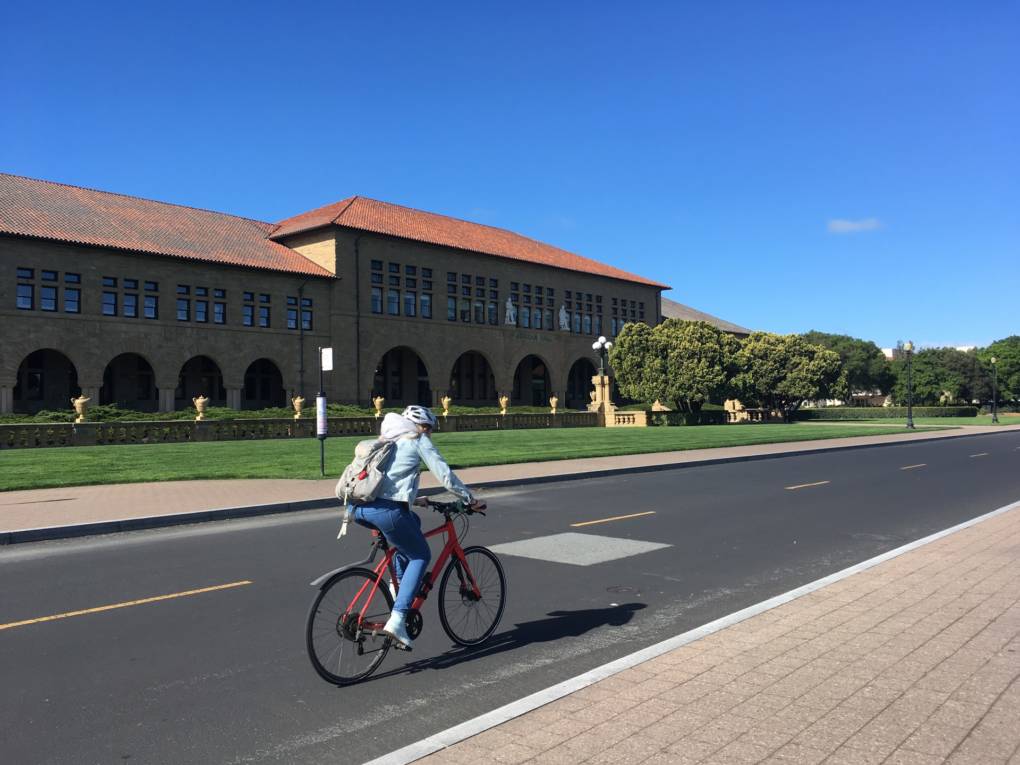
"caption": "On campus and off, the value of Stanford’s real estate empire tops $19.7 billion, as of 2018.",
"description": "On campus and off, the value of Stanford’s real estate empire tops $19.7 billion dollars, as of 2018.",
"title": "Stanford-University-Quad",
"credit": "Rachael Myrow/KQED",
"status": "inherit",
"isLoading": false,
"fetchFailed": false
},
"news_11733663": {
"type": "attachments",
"id": "news_11733663",
"meta": {
"index": "attachments_1716263798",
"site": "news",
"id": "11733663",
"found": true
},
"parent": 11733646,
"imgSizes": {
"twentyfourteen-full-width": {
"file": "https://ww2.kqed.org/app/uploads/sites/10/2019/03/filling_031819_final-1038x576.jpg",
"width": 1038,
"mimeType": "image/jpeg",
"height": 576
},
"thumbnail": {
"file": "https://ww2.kqed.org/app/uploads/sites/10/2019/03/filling_031819_final-160x106.jpg",
"width": 160,
"mimeType": "image/jpeg",
"height": 106
},
"post-thumbnail": {
"file": "https://ww2.kqed.org/app/uploads/sites/10/2019/03/filling_031819_final-672x372.jpg",
"width": 672,
"mimeType": "image/jpeg",
"height": 372
},
"kqedFullSize": {
"file": "https://ww2.kqed.org/app/uploads/sites/10/2019/03/filling_031819_final.jpg",
"width": 1920,
"height": 1275
},
"large": {
"file": "https://ww2.kqed.org/app/uploads/sites/10/2019/03/filling_031819_final-1020x677.jpg",
"width": 1020,
"mimeType": "image/jpeg",
"height": 677
},
"complete_open_graph": {
"file": "https://ww2.kqed.org/app/uploads/sites/10/2019/03/filling_031819_final-1200x797.jpg",
"width": 1200,
"mimeType": "image/jpeg",
"height": 797
},
"guest-author-50": {
"file": "https://ww2.kqed.org/app/uploads/sites/10/2019/03/filling_031819_final-50x50.jpg",
"width": 50,
"mimeType": "image/jpeg",
"height": 50
},
"guest-author-96": {
"file": "https://ww2.kqed.org/app/uploads/sites/10/2019/03/filling_031819_final-96x96.jpg",
"width": 96,
"mimeType": "image/jpeg",
"height": 96
},
"medium": {
"file": "https://ww2.kqed.org/app/uploads/sites/10/2019/03/filling_031819_final-800x531.jpg",
"width": 800,
"mimeType": "image/jpeg",
"height": 531
},
"guest-author-64": {
"file": "https://ww2.kqed.org/app/uploads/sites/10/2019/03/filling_031819_final-64x64.jpg",
"width": 64,
"mimeType": "image/jpeg",
"height": 64
},
"guest-author-32": {
"file": "https://ww2.kqed.org/app/uploads/sites/10/2019/03/filling_031819_final-32x32.jpg",
"width": 32,
"mimeType": "image/jpeg",
"height": 32
},
"full-width": {
"file": "https://ww2.kqed.org/app/uploads/sites/10/2019/03/filling_031819_final-1920x1275.jpg",
"width": 1920,
"mimeType": "image/jpeg",
"height": 1275
},
"guest-author-128": {
"file": "https://ww2.kqed.org/app/uploads/sites/10/2019/03/filling_031819_final-128x128.jpg",
"width": 128,
"mimeType": "image/jpeg",
"height": 128
}
},
"publishDate": 1552940098,
"modified": 1552940117,
"caption": null,
"description": null,
"title": "filling_031819_final",
"credit": null,
"status": "inherit",
"isLoading": false,
"fetchFailed": false
},
"news_11696923": {
"type": "attachments",
"id": "news_11696923",
"meta": {
"index": "attachments_1716263798",
"site": "news",
"id": "11696923",
"found": true
},
"parent": 11696828,
"imgSizes": {
"small": {
"file": "https://ww2.kqed.org/app/uploads/sites/10/2018/10/Okobi-520x342.jpg",
"width": 520,
"mimeType": "image/jpeg",
"height": 342
},
"thumbnail": {
"file": "https://ww2.kqed.org/app/uploads/sites/10/2018/10/Okobi-160x105.jpg",
"width": 160,
"mimeType": "image/jpeg",
"height": 105
},
"post-thumbnail": {
"file": "https://ww2.kqed.org/app/uploads/sites/10/2018/10/Okobi-672x372.jpg",
"width": 672,
"mimeType": "image/jpeg",
"height": 372
},
"xsmall": {
"file": "https://ww2.kqed.org/app/uploads/sites/10/2018/10/Okobi-375x247.jpg",
"width": 375,
"mimeType": "image/jpeg",
"height": 247
},
"kqedFullSize": {
"file": "https://ww2.kqed.org/app/uploads/sites/10/2018/10/Okobi.jpg",
"width": 800,
"height": 526
},
"guest-author-50": {
"file": "https://ww2.kqed.org/app/uploads/sites/10/2018/10/Okobi-50x50.jpg",
"width": 50,
"mimeType": "image/jpeg",
"height": 50
},
"guest-author-96": {
"file": "https://ww2.kqed.org/app/uploads/sites/10/2018/10/Okobi-96x96.jpg",
"width": 96,
"mimeType": "image/jpeg",
"height": 96
},
"medium": {
"file": "https://ww2.kqed.org/app/uploads/sites/10/2018/10/Okobi-800x526.jpg",
"width": 800,
"mimeType": "image/jpeg",
"height": 526
},
"guest-author-64": {
"file": "https://ww2.kqed.org/app/uploads/sites/10/2018/10/Okobi-64x64.jpg",
"width": 64,
"mimeType": "image/jpeg",
"height": 64
},
"guest-author-32": {
"file": "https://ww2.kqed.org/app/uploads/sites/10/2018/10/Okobi-32x32.jpg",
"width": 32,
"mimeType": "image/jpeg",
"height": 32
},
"detail": {
"file": "https://ww2.kqed.org/app/uploads/sites/10/2018/10/Okobi-150x150.jpg",
"width": 150,
"mimeType": "image/jpeg",
"height": 150
},
"guest-author-128": {
"file": "https://ww2.kqed.org/app/uploads/sites/10/2018/10/Okobi-128x128.jpg",
"width": 128,
"mimeType": "image/jpeg",
"height": 128
},
"xxsmall": {
"file": "https://ww2.kqed.org/app/uploads/sites/10/2018/10/Okobi-240x158.jpg",
"width": 240,
"mimeType": "image/jpeg",
"height": 158
}
},
"publishDate": 1538777957,
"modified": 1538777986,
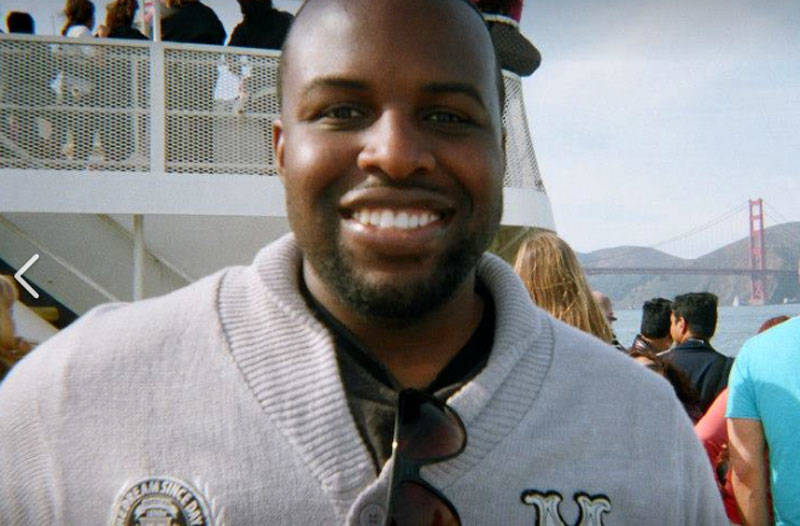
"caption": "Chinedu Valentine Okobi, in a photo posted to his Facebook page.",
"description": "Chinedu Valentine Okobi, in a photo posted to his Facebook page.",
"title": "Okobi",
"credit": "Facebook",
"status": "inherit",
"isLoading": false,
"fetchFailed": false
},
"news_11679872": {
"type": "attachments",
"id": "news_11679872",
"meta": {
"index": "attachments_1716263798",
"site": "news",
"id": "11679872",
"found": true
},
"parent": 11679835,
"imgSizes": {
"small": {
"file": "https://ww2.kqed.org/app/uploads/sites/10/2018/07/CEQAMain-520x362.jpg",
"width": 520,
"mimeType": "image/jpeg",
"height": 362
},
"twentyfourteen-full-width": {
"file": "https://ww2.kqed.org/app/uploads/sites/10/2018/07/CEQAMain-1038x576.jpg",
"width": 1038,
"mimeType": "image/jpeg",
"height": 576
},
"thumbnail": {
"file": "https://ww2.kqed.org/app/uploads/sites/10/2018/07/CEQAMain-160x111.jpg",
"width": 160,
"mimeType": "image/jpeg",
"height": 111
},
"fd-sm": {
"file": "https://ww2.kqed.org/app/uploads/sites/10/2018/07/CEQAMain-960x668.jpg",
"width": 960,
"mimeType": "image/jpeg",
"height": 668
},
"post-thumbnail": {
"file": "https://ww2.kqed.org/app/uploads/sites/10/2018/07/CEQAMain-672x372.jpg",
"width": 672,
"mimeType": "image/jpeg",
"height": 372
},
"xsmall": {
"file": "https://ww2.kqed.org/app/uploads/sites/10/2018/07/CEQAMain-375x261.jpg",
"width": 375,
"mimeType": "image/jpeg",
"height": 261
},
"kqedFullSize": {
"file": "https://ww2.kqed.org/app/uploads/sites/10/2018/07/CEQAMain.jpg",
"width": 1920,
"height": 1335
},
"large": {
"file": "https://ww2.kqed.org/app/uploads/sites/10/2018/07/CEQAMain-1020x709.jpg",
"width": 1020,
"mimeType": "image/jpeg",
"height": 709
},
"xlarge": {
"file": "https://ww2.kqed.org/app/uploads/sites/10/2018/07/CEQAMain-1180x820.jpg",
"width": 1180,
"mimeType": "image/jpeg",
"height": 820
},
"complete_open_graph": {
"file": "https://ww2.kqed.org/app/uploads/sites/10/2018/07/CEQAMain-1200x834.jpg",
"width": 1200,
"mimeType": "image/jpeg",
"height": 834
},
"guest-author-50": {
"file": "https://ww2.kqed.org/app/uploads/sites/10/2018/07/CEQAMain-50x50.jpg",
"width": 50,
"mimeType": "image/jpeg",
"height": 50
},
"guest-author-96": {
"file": "https://ww2.kqed.org/app/uploads/sites/10/2018/07/CEQAMain-96x96.jpg",
"width": 96,
"mimeType": "image/jpeg",
"height": 96
},
"medium": {
"file": "https://ww2.kqed.org/app/uploads/sites/10/2018/07/CEQAMain-800x556.jpg",
"width": 800,
"mimeType": "image/jpeg",
"height": 556
},
"guest-author-64": {
"file": "https://ww2.kqed.org/app/uploads/sites/10/2018/07/CEQAMain-64x64.jpg",
"width": 64,
"mimeType": "image/jpeg",
"height": 64
},
"guest-author-32": {
"file": "https://ww2.kqed.org/app/uploads/sites/10/2018/07/CEQAMain-32x32.jpg",
"width": 32,
"mimeType": "image/jpeg",
"height": 32
},
"fd-lrg": {
"file": "https://ww2.kqed.org/app/uploads/sites/10/2018/07/CEQAMain-1920x1335.jpg",
"width": 1920,
"mimeType": "image/jpeg",
"height": 1335
},
"fd-med": {
"file": "https://ww2.kqed.org/app/uploads/sites/10/2018/07/CEQAMain-1180x820.jpg",
"width": 1180,
"mimeType": "image/jpeg",
"height": 820
},
"full-width": {
"file": "https://ww2.kqed.org/app/uploads/sites/10/2018/07/CEQAMain-1920x1335.jpg",
"width": 1920,
"mimeType": "image/jpeg",
"height": 1335
},
"detail": {
"file": "https://ww2.kqed.org/app/uploads/sites/10/2018/07/CEQAMain-150x150.jpg",
"width": 150,
"mimeType": "image/jpeg",
"height": 150
},
"guest-author-128": {
"file": "https://ww2.kqed.org/app/uploads/sites/10/2018/07/CEQAMain-128x128.jpg",
"width": 128,
"mimeType": "image/jpeg",
"height": 128
},
"xxsmall": {
"file": "https://ww2.kqed.org/app/uploads/sites/10/2018/07/CEQAMain-240x167.jpg",
"width": 240,
"mimeType": "image/jpeg",
"height": 167
}
},
"publishDate": 1531257167,
"modified": 1531257271,
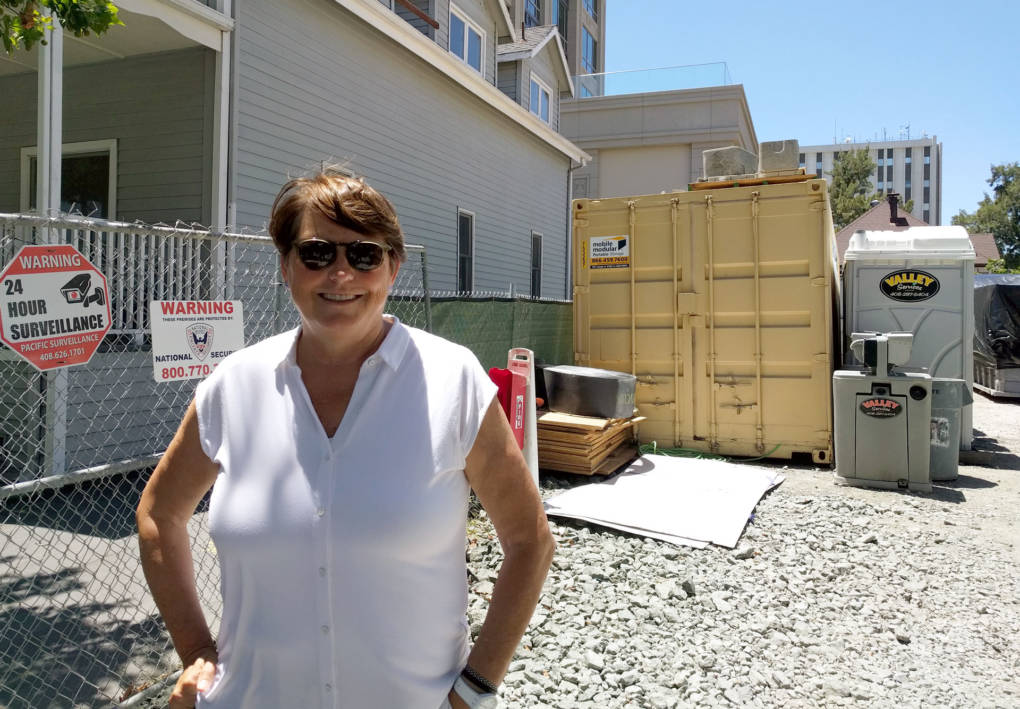
"caption": "Maureen Sedonaen, CEO of Habitat for Humanity Greater San Francisco, stands in the vacant Redwood City lot where the nonprofit is looking to build new affordable housing.",
"description": "Maureen Sedonaen, CEO of Habitat for Humanity Greater San Francisco, stands in the vacant Redwood City lot where the nonprofit is looking to build new affordable housing.",
"title": "CEQAMain",
"credit": "Ben Bradford/Capital Public Radio",
"status": "inherit",
"isLoading": false,
"fetchFailed": false
},
"news_11647991": {
"type": "attachments",
"id": "news_11647991",
"meta": {
"index": "attachments_1716263798",
"site": "news",
"id": "11647991",
"found": true
},
"parent": 11647976,
"imgSizes": {
"small": {
"file": "https://ww2.kqed.org/app/uploads/sites/10/2018/02/Canepa-e1517784445212-520x390.jpg",
"width": 520,
"mimeType": "image/jpeg",
"height": 390
},
"twentyfourteen-full-width": {
"file": "https://ww2.kqed.org/app/uploads/sites/10/2018/02/Canepa-e1517784445212-1038x576.jpg",
"width": 1038,
"mimeType": "image/jpeg",
"height": 576
},
"thumbnail": {
"file": "https://ww2.kqed.org/app/uploads/sites/10/2018/02/Canepa-e1517784445212-160x120.jpg",
"width": 160,
"mimeType": "image/jpeg",
"height": 120
},
"fd-sm": {
"file": "https://ww2.kqed.org/app/uploads/sites/10/2018/02/Canepa-e1517784445212-960x720.jpg",
"width": 960,
"mimeType": "image/jpeg",
"height": 720
},
"post-thumbnail": {
"file": "https://ww2.kqed.org/app/uploads/sites/10/2018/02/Canepa-e1517784445212-672x372.jpg",
"width": 672,
"mimeType": "image/jpeg",
"height": 372
},
"xsmall": {
"file": "https://ww2.kqed.org/app/uploads/sites/10/2018/02/Canepa-e1517784445212-375x281.jpg",
"width": 375,
"mimeType": "image/jpeg",
"height": 281
},
"kqedFullSize": {
"file": "https://ww2.kqed.org/app/uploads/sites/10/2018/02/Canepa-e1517784445212.jpg",
"width": 4032,
"height": 3024
},
"large": {
"file": "https://ww2.kqed.org/app/uploads/sites/10/2018/02/Canepa-e1517784445212-1020x765.jpg",
"width": 1020,
"mimeType": "image/jpeg",
"height": 765
},
"xlarge": {
"file": "https://ww2.kqed.org/app/uploads/sites/10/2018/02/Canepa-e1517784445212-1180x885.jpg",
"width": 1180,
"mimeType": "image/jpeg",
"height": 885
},
"guest-author-50": {
"file": "https://ww2.kqed.org/app/uploads/sites/10/2018/02/Canepa-e1517784445212-50x50.jpg",
"width": 50,
"mimeType": "image/jpeg",
"height": 50
},
"guest-author-96": {
"file": "https://ww2.kqed.org/app/uploads/sites/10/2018/02/Canepa-e1517784445212-96x96.jpg",
"width": 96,
"mimeType": "image/jpeg",
"height": 96
},
"medium": {
"file": "https://ww2.kqed.org/app/uploads/sites/10/2018/02/Canepa-e1517784445212-800x600.jpg",
"width": 800,
"mimeType": "image/jpeg",
"height": 600
},
"guest-author-64": {
"file": "https://ww2.kqed.org/app/uploads/sites/10/2018/02/Canepa-e1517784445212-64x64.jpg",
"width": 64,
"mimeType": "image/jpeg",
"height": 64
},
"guest-author-32": {
"file": "https://ww2.kqed.org/app/uploads/sites/10/2018/02/Canepa-e1517784445212-32x32.jpg",
"width": 32,
"mimeType": "image/jpeg",
"height": 32
},
"fd-lrg": {
"file": "https://ww2.kqed.org/app/uploads/sites/10/2018/02/Canepa-e1517784445212-1920x1440.jpg",
"width": 1920,
"mimeType": "image/jpeg",
"height": 1440
},
"fd-med": {
"file": "https://ww2.kqed.org/app/uploads/sites/10/2018/02/Canepa-e1517784445212-1180x885.jpg",
"width": 1180,
"mimeType": "image/jpeg",
"height": 885
},
"full-width": {
"file": "https://ww2.kqed.org/app/uploads/sites/10/2018/02/Canepa-e1517784445212-1920x1440.jpg",
"width": 1920,
"mimeType": "image/jpeg",
"height": 1440
},
"detail": {
"file": "https://ww2.kqed.org/app/uploads/sites/10/2018/02/Canepa-e1517784445212-150x150.jpg",
"width": 150,
"mimeType": "image/jpeg",
"height": 150
},
"guest-author-128": {
"file": "https://ww2.kqed.org/app/uploads/sites/10/2018/02/Canepa-e1517784445212-128x128.jpg",
"width": 128,
"mimeType": "image/jpeg",
"height": 128
},
"xxsmall": {
"file": "https://ww2.kqed.org/app/uploads/sites/10/2018/02/Canepa-e1517784445212-240x180.jpg",
"width": 240,
"mimeType": "image/jpeg",
"height": 180
}
},
"publishDate": 1517784424,
"modified": 1517874986,
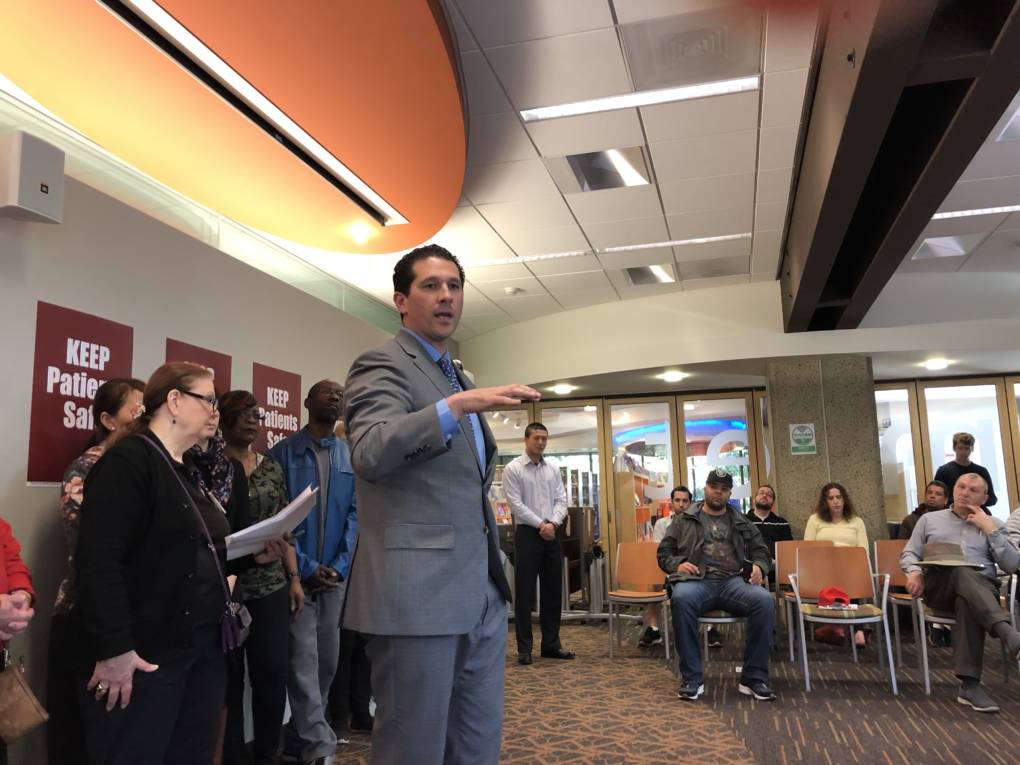
"caption": "San Mateo County Supervisor David Canepa at the launch of a signature-gathering campaign for a health care pricing initiative in Palo Alto on Feb. 3, 2018.",
"description": "San Mateo County Supervisor David Canepa at the launch of signature gathering campaign for a health care pricing initiative in Palo Alto on February 3, 2018.",
"title": "Canepa",
"credit": "Guy Marzorati/KQED",
"status": "inherit",
"isLoading": false,
"fetchFailed": false
},
"news_11485634": {
"type": "attachments",
"id": "news_11485634",
"meta": {
"index": "attachments_1716263798",
"site": "news",
"id": "11485634",
"found": true
},
"parent": 11485632,
"imgSizes": {
"small": {
"file": "https://ww2.kqed.org/app/uploads/sites/10/2017/05/Underwater-1-1024x685-1-520x348.jpeg",
"width": 520,
"mimeType": "image/jpeg",
"height": 348
},
"twentyfourteen-full-width": {
"file": "https://ww2.kqed.org/app/uploads/sites/10/2017/05/Underwater-1-1024x685-1-1024x576.jpeg",
"width": 1024,
"mimeType": "image/jpeg",
"height": 576
},
"thumbnail": {
"file": "https://ww2.kqed.org/app/uploads/sites/10/2017/05/Underwater-1-1024x685-1-160x107.jpeg",
"width": 160,
"mimeType": "image/jpeg",
"height": 107
},
"fd-sm": {
"file": "https://ww2.kqed.org/app/uploads/sites/10/2017/05/Underwater-1-1024x685-1-960x642.jpeg",
"width": 960,
"mimeType": "image/jpeg",
"height": 642
},
"post-thumbnail": {
"file": "https://ww2.kqed.org/app/uploads/sites/10/2017/05/Underwater-1-1024x685-1-672x372.jpeg",
"width": 672,
"mimeType": "image/jpeg",
"height": 372
},
"xsmall": {
"file": "https://ww2.kqed.org/app/uploads/sites/10/2017/05/Underwater-1-1024x685-1-375x251.jpeg",
"width": 375,
"mimeType": "image/jpeg",
"height": 251
},
"kqedFullSize": {
"file": "https://ww2.kqed.org/app/uploads/sites/10/2017/05/Underwater-1-1024x685-1.jpeg",
"width": 1024,
"height": 685
},
"large": {
"file": "https://ww2.kqed.org/app/uploads/sites/10/2017/05/Underwater-1-1024x685-1-1020x682.jpeg",
"width": 1020,
"mimeType": "image/jpeg",
"height": 682
},
"guest-author-50": {
"file": "https://ww2.kqed.org/app/uploads/sites/10/2017/05/Underwater-1-1024x685-1-50x50.jpeg",
"width": 50,
"mimeType": "image/jpeg",
"height": 50
},
"guest-author-96": {
"file": "https://ww2.kqed.org/app/uploads/sites/10/2017/05/Underwater-1-1024x685-1-96x96.jpeg",
"width": 96,
"mimeType": "image/jpeg",
"height": 96
},
"medium": {
"file": "https://ww2.kqed.org/app/uploads/sites/10/2017/05/Underwater-1-1024x685-1-800x535.jpeg",
"width": 800,
"mimeType": "image/jpeg",
"height": 535
},
"guest-author-64": {
"file": "https://ww2.kqed.org/app/uploads/sites/10/2017/05/Underwater-1-1024x685-1-64x64.jpeg",
"width": 64,
"mimeType": "image/jpeg",
"height": 64
},
"guest-author-32": {
"file": "https://ww2.kqed.org/app/uploads/sites/10/2017/05/Underwater-1-1024x685-1-32x32.jpeg",
"width": 32,
"mimeType": "image/jpeg",
"height": 32
},
"detail": {
"file": "https://ww2.kqed.org/app/uploads/sites/10/2017/05/Underwater-1-1024x685-1-150x150.jpeg",
"width": 150,
"mimeType": "image/jpeg",
"height": 150
},
"guest-author-128": {
"file": "https://ww2.kqed.org/app/uploads/sites/10/2017/05/Underwater-1-1024x685-1-128x128.jpeg",
"width": 128,
"mimeType": "image/jpeg",
"height": 128
},
"xxsmall": {
"file": "https://ww2.kqed.org/app/uploads/sites/10/2017/05/Underwater-1-1024x685-1-240x161.jpeg",
"width": 240,
"mimeType": "image/jpeg",
"height": 161
}
},
"publishDate": 1496166473,
"modified": 1496166503,
"caption": "Le Mar Trailer Park in Redwood City.",
"description": null,
"title": "Underwater-1-1024x685",
"credit": "Kiley Roache/Peninsula Press",
"status": "inherit",
"isLoading": false,
"fetchFailed": false
},
"news_10919932": {
"type": "attachments",
"id": "news_10919932",
"meta": {
"index": "attachments_1716263798",
"site": "news",
"id": "10919932",
"found": true
},
"parent": 10919489,
"imgSizes": {
"twentyfourteen-full-width": {
"file": "https://ww2.kqed.org/app/uploads/sites/10/2016/04/RS18971_IMG_9541-qut-1038x576.jpg",
"width": 1038,
"mimeType": "image/jpeg",
"height": 576
},
"thumbnail": {
"file": "https://ww2.kqed.org/app/uploads/sites/10/2016/04/RS18971_IMG_9541-qut-400x267.jpg",
"width": 400,
"mimeType": "image/jpeg",
"height": 267
},
"fd-sm": {
"file": "https://ww2.kqed.org/app/uploads/sites/10/2016/04/RS18971_IMG_9541-qut-960x640.jpg",
"width": 960,
"mimeType": "image/jpeg",
"height": 640
},
"post-thumbnail": {
"file": "https://ww2.kqed.org/app/uploads/sites/10/2016/04/RS18971_IMG_9541-qut-672x372.jpg",
"width": 672,
"mimeType": "image/jpeg",
"height": 372
},
"kqedFullSize": {
"file": "https://ww2.kqed.org/app/uploads/sites/10/2016/04/RS18971_IMG_9541-qut.jpg",
"width": 1920,
"height": 1280
},
"large": {
"file": "https://ww2.kqed.org/app/uploads/sites/10/2016/04/RS18971_IMG_9541-qut-1920x1280.jpg",
"width": 1920,
"mimeType": "image/jpeg",
"height": 1280
},
"guest-author-96": {
"file": "https://ww2.kqed.org/app/uploads/sites/10/2016/04/RS18971_IMG_9541-qut-96x96.jpg",
"width": 96,
"mimeType": "image/jpeg",
"height": 96
},
"medium": {
"file": "https://ww2.kqed.org/app/uploads/sites/10/2016/04/RS18971_IMG_9541-qut-800x533.jpg",
"width": 800,
"mimeType": "image/jpeg",
"height": 533
},
"guest-author-64": {
"file": "https://ww2.kqed.org/app/uploads/sites/10/2016/04/RS18971_IMG_9541-qut-64x64.jpg",
"width": 64,
"mimeType": "image/jpeg",
"height": 64
},
"guest-author-32": {
"file": "https://ww2.kqed.org/app/uploads/sites/10/2016/04/RS18971_IMG_9541-qut-32x32.jpg",
"width": 32,
"mimeType": "image/jpeg",
"height": 32
},
"jmtc-small-thumb": {
"file": "https://ww2.kqed.org/app/uploads/sites/10/2016/04/RS18971_IMG_9541-qut-280x150.jpg",
"width": 280,
"mimeType": "image/jpeg",
"height": 150
},
"fd-lrg": {
"file": "https://ww2.kqed.org/app/uploads/sites/10/2016/04/RS18971_IMG_9541-qut-1920x1280.jpg",
"width": 1920,
"mimeType": "image/jpeg",
"height": 1280
},
"fd-med": {
"file": "https://ww2.kqed.org/app/uploads/sites/10/2016/04/RS18971_IMG_9541-qut-1180x787.jpg",
"width": 1180,
"mimeType": "image/jpeg",
"height": 787
},
"detail": {
"file": "https://ww2.kqed.org/app/uploads/sites/10/2016/04/RS18971_IMG_9541-qut-75x75.jpg",
"width": 75,
"mimeType": "image/jpeg",
"height": 75
},
"guest-author-128": {
"file": "https://ww2.kqed.org/app/uploads/sites/10/2016/04/RS18971_IMG_9541-qut-128x128.jpg",
"width": 128,
"mimeType": "image/jpeg",
"height": 128
}
},
"publishDate": 1459820059,
"modified": 1459896857,
"caption": "About 70 liveaboards are moored at Redwood City's Docktown Marina -- floating buildings or boats adapted for residential uses. The city is looking to potentially relocate residents.",
"description": null,
"title": "RS18971_IMG_9541-qut",
"credit": "Farida Jhabvala Romero / KQED",
"status": "inherit",
"isLoading": false,
"fetchFailed": false
},
"news_10799489": {
"type": "attachments",
"id": "news_10799489",
"meta": {
"index": "attachments_1716263798",
"site": "news",
"id": "10799489",
"found": true
},
"parent": 10798057,
"imgSizes": {
"twentyfourteen-full-width": {
"file": "https://ww2.kqed.org/app/uploads/sites/10/2015/12/17858_transform-1038x576.jpg",
"width": 1038,
"mimeType": "image/jpeg",
"height": 576
},
"thumbnail": {
"file": "https://ww2.kqed.org/app/uploads/sites/10/2015/12/17858_transform-400x274.jpg",
"width": 400,
"mimeType": "image/jpeg",
"height": 274
},
"fd-sm": {
"file": "https://ww2.kqed.org/app/uploads/sites/10/2015/12/17858_transform-960x658.jpg",
"width": 960,
"mimeType": "image/jpeg",
"height": 658
},
"post-thumbnail": {
"file": "https://ww2.kqed.org/app/uploads/sites/10/2015/12/17858_transform-672x372.jpg",
"width": 672,
"mimeType": "image/jpeg",
"height": 372
},
"kqedFullSize": {
"file": "https://ww2.kqed.org/app/uploads/sites/10/2015/12/17858_transform-e1450484041603.jpg",
"width": 1920,
"height": 1315
},
"large": {
"file": "https://ww2.kqed.org/app/uploads/sites/10/2015/12/17858_transform-1440x986.jpg",
"width": 1440,
"mimeType": "image/jpeg",
"height": 986
},
"guest-author-96": {
"file": "https://ww2.kqed.org/app/uploads/sites/10/2015/12/17858_transform-96x96.jpg",
"width": 96,
"mimeType": "image/jpeg",
"height": 96
},
"medium": {
"file": "https://ww2.kqed.org/app/uploads/sites/10/2015/12/17858_transform-800x548.jpg",
"width": 800,
"mimeType": "image/jpeg",
"height": 548
},
"guest-author-64": {
"file": "https://ww2.kqed.org/app/uploads/sites/10/2015/12/17858_transform-64x64.jpg",
"width": 64,
"mimeType": "image/jpeg",
"height": 64
},
"guest-author-32": {
"file": "https://ww2.kqed.org/app/uploads/sites/10/2015/12/17858_transform-32x32.jpg",
"width": 32,
"mimeType": "image/jpeg",
"height": 32
},
"jmtc-small-thumb": {
"file": "https://ww2.kqed.org/app/uploads/sites/10/2015/12/17858_transform-280x150.jpg",
"width": 280,
"mimeType": "image/jpeg",
"height": 150
},
"fd-lrg": {
"file": "https://ww2.kqed.org/app/uploads/sites/10/2015/12/17858_transform-1920x1315.jpg",
"width": 1920,
"mimeType": "image/jpeg",
"height": 1315
},
"fd-med": {
"file": "https://ww2.kqed.org/app/uploads/sites/10/2015/12/17858_transform-1180x808.jpg",
"width": 1180,
"mimeType": "image/jpeg",
"height": 808
},
"detail": {
"file": "https://ww2.kqed.org/app/uploads/sites/10/2015/12/17858_transform-75x75.jpg",
"width": 75,
"mimeType": "image/jpeg",
"height": 75
},
"medium_large": {
"file": "https://ww2.kqed.org/app/uploads/sites/10/2015/12/17858_transform-768x526.jpg",
"width": 768,
"mimeType": "image/jpeg",
"height": 526
},
"guest-author-128": {
"file": "https://ww2.kqed.org/app/uploads/sites/10/2015/12/17858_transform-128x128.jpg",
"width": 128,
"mimeType": "image/jpeg",
"height": 128
}
},
"publishDate": 1450472802,
"modified": 1450832023,
"caption": "Giselle Penuela, 10, and Alexander Penuela, 6, attend at a vigil outside a City Council meeting in Redwood City. ",
"description": null,
"title": "Redwood City vigil on affordable housing",
"credit": "Farida Jhabvala Romero/KQED",
"status": "inherit",
"isLoading": false,
"fetchFailed": false
},
"news_10727609": {
"type": "attachments",
"id": "news_10727609",
"meta": {
"index": "attachments_1716263798",
"site": "news",
"id": "10727609",
"found": true
},
"parent": 10727513,
"imgSizes": {
"twentyfourteen-full-width": {
"file": "https://ww2.kqed.org/app/uploads/sites/10/2015/10/RedwoodCityBoom-1038x576.jpg",
"width": 1038,
"mimeType": "image/jpeg",
"height": 576
},
"thumbnail": {
"file": "https://ww2.kqed.org/app/uploads/sites/10/2015/10/RedwoodCityBoom-400x288.jpg",
"width": 400,
"mimeType": "image/jpeg",
"height": 288
},
"fd-sm": {
"file": "https://ww2.kqed.org/app/uploads/sites/10/2015/10/RedwoodCityBoom-960x690.jpg",
"width": 960,
"mimeType": "image/jpeg",
"height": 690
},
"post-thumbnail": {
"file": "https://ww2.kqed.org/app/uploads/sites/10/2015/10/RedwoodCityBoom-672x372.jpg",
"width": 672,
"mimeType": "image/jpeg",
"height": 372
},
"kqedFullSize": {
"file": "https://ww2.kqed.org/app/uploads/sites/10/2015/10/RedwoodCityBoom.jpg",
"width": 1920,
"height": 1380
},
"large": {
"file": "https://ww2.kqed.org/app/uploads/sites/10/2015/10/RedwoodCityBoom-1440x1035.jpg",
"width": 1440,
"mimeType": "image/jpeg",
"height": 1035
},
"guest-author-96": {
"file": "https://ww2.kqed.org/app/uploads/sites/10/2015/10/RedwoodCityBoom-96x96.jpg",
"width": 96,
"mimeType": "image/jpeg",
"height": 96
},
"medium": {
"file": "https://ww2.kqed.org/app/uploads/sites/10/2015/10/RedwoodCityBoom-800x575.jpg",
"width": 800,
"mimeType": "image/jpeg",
"height": 575
},
"guest-author-64": {
"file": "https://ww2.kqed.org/app/uploads/sites/10/2015/10/RedwoodCityBoom-64x64.jpg",
"width": 64,
"mimeType": "image/jpeg",
"height": 64
},
"guest-author-32": {
"file": "https://ww2.kqed.org/app/uploads/sites/10/2015/10/RedwoodCityBoom-32x32.jpg",
"width": 32,
"mimeType": "image/jpeg",
"height": 32
},
"jmtc-small-thumb": {
"file": "https://ww2.kqed.org/app/uploads/sites/10/2015/10/RedwoodCityBoom-280x150.jpg",
"width": 280,
"mimeType": "image/jpeg",
"height": 150
},
"fd-lrg": {
"file": "https://ww2.kqed.org/app/uploads/sites/10/2015/10/RedwoodCityBoom-1920x1380.jpg",
"width": 1920,
"mimeType": "image/jpeg",
"height": 1380
},
"fd-med": {
"file": "https://ww2.kqed.org/app/uploads/sites/10/2015/10/RedwoodCityBoom-1180x848.jpg",
"width": 1180,
"mimeType": "image/jpeg",
"height": 848
},
"detail": {
"file": "https://ww2.kqed.org/app/uploads/sites/10/2015/10/RedwoodCityBoom-75x75.jpg",
"width": 75,
"mimeType": "image/jpeg",
"height": 75
},
"guest-author-128": {
"file": "https://ww2.kqed.org/app/uploads/sites/10/2015/10/RedwoodCityBoom-128x128.jpg",
"width": 128,
"mimeType": "image/jpeg",
"height": 128
}
},
"publishDate": 1445468070,
"modified": 1445468160,
"caption": "Redwood City residents are urging City Council to slow downtown development. Increased traffic and lack of enough parking have been locals’ two major complaints.",
"description": "Redwood City residents are urging City Council to slow downtown development. Increased traffic and lack of enough parking have been locals’ two major complaints.",
"title": "RedwoodCityBoom",
"credit": "Ana Santos/Peninsula Press",
"status": "inherit",
"isLoading": false,
"fetchFailed": false
},
"news_10604826": {
"type": "attachments",
"id": "news_10604826",
"meta": {
"index": "attachments_1716263798",
"site": "news",
"id": "10604826",
"found": true
},
"parent": 10604513,
"imgSizes": {
"twentyfourteen-full-width": {
"file": "https://ww2.kqed.org/app/uploads/sites/10/2015/07/Redwood-Ciity-1038x576.jpg",
"width": 1038,
"mimeType": "image/jpeg",
"height": 576
},
"thumbnail": {
"file": "https://ww2.kqed.org/app/uploads/sites/10/2015/07/Redwood-Ciity-400x267.jpg",
"width": 400,
"mimeType": "image/jpeg",
"height": 267
},
"fd-sm": {
"file": "https://ww2.kqed.org/app/uploads/sites/10/2015/07/Redwood-Ciity-960x640.jpg",
"width": 960,
"mimeType": "image/jpeg",
"height": 640
},
"post-thumbnail": {
"file": "https://ww2.kqed.org/app/uploads/sites/10/2015/07/Redwood-Ciity-672x372.jpg",
"width": 672,
"mimeType": "image/jpeg",
"height": 372
},
"kqedFullSize": {
"file": "https://ww2.kqed.org/app/uploads/sites/10/2015/07/Redwood-Ciity-e1437171022726.jpg",
"width": 1920,
"height": 1280
},
"large": {
"file": "https://ww2.kqed.org/app/uploads/sites/10/2015/07/Redwood-Ciity-1440x960.jpg",
"width": 1440,
"mimeType": "image/jpeg",
"height": 960
},
"guest-author-96": {
"file": "https://ww2.kqed.org/app/uploads/sites/10/2015/07/Redwood-Ciity-96x96.jpg",
"width": 96,
"mimeType": "image/jpeg",
"height": 96
},
"medium": {
"file": "https://ww2.kqed.org/app/uploads/sites/10/2015/07/Redwood-Ciity-800x533.jpg",
"width": 800,
"mimeType": "image/jpeg",
"height": 533
},
"guest-author-64": {
"file": "https://ww2.kqed.org/app/uploads/sites/10/2015/07/Redwood-Ciity-64x64.jpg",
"width": 64,
"mimeType": "image/jpeg",
"height": 64
},
"guest-author-32": {
"file": "https://ww2.kqed.org/app/uploads/sites/10/2015/07/Redwood-Ciity-32x32.jpg",
"width": 32,
"mimeType": "image/jpeg",
"height": 32
},
"jmtc-small-thumb": {
"file": "https://ww2.kqed.org/app/uploads/sites/10/2015/07/Redwood-Ciity-280x150.jpg",
"width": 280,
"mimeType": "image/jpeg",
"height": 150
},
"fd-lrg": {
"file": "https://ww2.kqed.org/app/uploads/sites/10/2015/07/Redwood-Ciity-1400x933.jpg",
"width": 1400,
"mimeType": "image/jpeg",
"height": 933
},
"fd-med": {
"file": "https://ww2.kqed.org/app/uploads/sites/10/2015/07/Redwood-Ciity-1180x787.jpg",
"width": 1180,
"mimeType": "image/jpeg",
"height": 787
},
"detail": {
"file": "https://ww2.kqed.org/app/uploads/sites/10/2015/07/Redwood-Ciity-75x75.jpg",
"width": 75,
"mimeType": "image/jpeg",
"height": 75
},
"guest-author-128": {
"file": "https://ww2.kqed.org/app/uploads/sites/10/2015/07/Redwood-Ciity-128x128.jpg",
"width": 128,
"mimeType": "image/jpeg",
"height": 128
}
},
"publishDate": 1437170989,
"modified": 1437171102,
"caption": "Sims Metal Management facility in Redwood City.",
"description": null,
"title": "Sims Metal Management-Redwood City",
"credit": "Sims Metal Management",
"status": "inherit",
"isLoading": false,
"fetchFailed": false
},
"news_10461455": {
"type": "attachments",
"id": "news_10461455",
"meta": {
"index": "attachments_1716263798",
"site": "news",
"id": "10461455",
"found": true
},
"parent": 10461187,
"imgSizes": {
"twentyfourteen-full-width": {
"file": "https://ww2.kqed.org/app/uploads/sites/10/2015/03/8771779894_48c019fbc8_o-1038x576.jpg",
"width": 1038,
"mimeType": "image/jpeg",
"height": 576
},
"thumbnail": {
"file": "https://ww2.kqed.org/app/uploads/sites/10/2015/03/8771779894_48c019fbc8_o-400x214.jpg",
"width": 400,
"mimeType": "image/jpeg",
"height": 214
},
"fd-sm": {
"file": "https://ww2.kqed.org/app/uploads/sites/10/2015/03/8771779894_48c019fbc8_o-320x172.jpg",
"width": 320,
"mimeType": "image/jpeg",
"height": 172
},
"post-thumbnail": {
"file": "https://ww2.kqed.org/app/uploads/sites/10/2015/03/8771779894_48c019fbc8_o-672x372.jpg",
"width": 672,
"mimeType": "image/jpeg",
"height": 372
},
"kqedFullSize": {
"file": "https://ww2.kqed.org/app/uploads/sites/10/2015/03/8771779894_48c019fbc8_o.jpg",
"width": 1800,
"height": 965
},
"large": {
"file": "https://ww2.kqed.org/app/uploads/sites/10/2015/03/8771779894_48c019fbc8_o-1440x772.jpg",
"width": 1440,
"mimeType": "image/jpeg",
"height": 772
},
"guest-author-96": {
"file": "https://ww2.kqed.org/app/uploads/sites/10/2015/03/8771779894_48c019fbc8_o-96x96.jpg",
"width": 96,
"mimeType": "image/jpeg",
"height": 96
},
"medium": {
"file": "https://ww2.kqed.org/app/uploads/sites/10/2015/03/8771779894_48c019fbc8_o-800x429.jpg",
"width": 800,
"mimeType": "image/jpeg",
"height": 429
},
"guest-author-64": {
"file": "https://ww2.kqed.org/app/uploads/sites/10/2015/03/8771779894_48c019fbc8_o-64x64.jpg",
"width": 64,
"mimeType": "image/jpeg",
"height": 64
},
"guest-author-32": {
"file": "https://ww2.kqed.org/app/uploads/sites/10/2015/03/8771779894_48c019fbc8_o-32x32.jpg",
"width": 32,
"mimeType": "image/jpeg",
"height": 32
},
"fd-lrg": {
"file": "https://ww2.kqed.org/app/uploads/sites/10/2015/03/8771779894_48c019fbc8_o-1180x633.jpg",
"width": 1180,
"mimeType": "image/jpeg",
"height": 633
},
"fd-med": {
"file": "https://ww2.kqed.org/app/uploads/sites/10/2015/03/8771779894_48c019fbc8_o-768x412.jpg",
"width": 768,
"mimeType": "image/jpeg",
"height": 412
},
"detail": {
"file": "https://ww2.kqed.org/app/uploads/sites/10/2015/03/8771779894_48c019fbc8_o-75x75.jpg",
"width": 75,
"mimeType": "image/jpeg",
"height": 75
},
"guest-author-128": {
"file": "https://ww2.kqed.org/app/uploads/sites/10/2015/03/8771779894_48c019fbc8_o-128x128.jpg",
"width": 128,
"mimeType": "image/jpeg",
"height": 128
}
},
"publishDate": 1426889376,
"modified": 1426889648,
"caption": "The Cargill Salt property in Redwood City that the company and its developer hope to develop as housing. ",
"description": "http://wikimapia.org/1414309/Cargill-Salt-Flats",
"title": "Cargill Salt Flats",
"credit": "\u003ca href=\"https://flic.kr/p/en8Eyo\" target=\"_blank\">Kenneth Lu\u003c/a>/Flickr.",
"status": "inherit",
"isLoading": false,
"fetchFailed": false
}
},
"audioPlayerReducer": {
"postId": "stream_live",
"isPaused": true,
"isPlaying": false,
"pfsActive": false,
"pledgeModalIsOpen": true,
"playerDrawerIsOpen": false,
"liveAudioPlayStartedAt": 0,
"liveAudioPlayContext": ""
},
"authorsReducer": {
"byline_news_11679835": {
"type": "authors",
"id": "byline_news_11679835",
"meta": {
"override": true
},
"slug": "byline_news_11679835",
"name": "\u003cstrong>\u003ca href=\"http://www.capradio.org/about/bios/ben-bradford/\">Ben Bradford\u003c/a>\u003c/strong>",
"isLoading": false
},
"byline_news_11485632": {
"type": "authors",
"id": "byline_news_11485632",
"meta": {
"override": true
},
"slug": "byline_news_11485632",
"name": "\u003cstrong>\u003ca href=\"http://peninsulapress.com/author/kileyroache/\">Kiley Roache\u003c/a>\u003cbr />\u003ca href=\"http://peninsulapress.com/\">Peninsula Press\u003c/a>\u003c/strong>",
"isLoading": false
},
"byline_news_10727513": {
"type": "authors",
"id": "byline_news_10727513",
"meta": {
"override": true
},
"slug": "byline_news_10727513",
"name": "\u003cstrong>\u003ca href=\"http://peninsulapress.com/author/anasantos/\">Ana Santos\u003c/a>\u003c/strong>",
"isLoading": false
},
"byline_news_10604513": {
"type": "authors",
"id": "byline_news_10604513",
"meta": {
"override": true
},
"slug": "byline_news_10604513",
"name": "\u003cstrong>Peter Johnson, Justine Moore and Nathaniel Okun\u003cbr />Peninsula Press\u003c/strong>",
"isLoading": false
},
"gmarzorati": {
"type": "authors",
"id": "227",
"meta": {
"index": "authors_1716337520",
"id": "227",
"found": true
},
"name": "Guy Marzorati",
"firstName": "Guy",
"lastName": "Marzorati",
"slug": "gmarzorati",
"email": "gmarzorati@KQED.org",
"display_author_email": true,
"staff_mastheads": [
"news"
],
"title": "Correspondent",
"bio": "Guy Marzorati is a correspondent on KQED's California Politics and Government Desk, based in San Jose. A graduate of Santa Clara University, Guy joined KQED in 2013. He reports on state and local politics and produces KQED's digital voter guide.",
"avatar": "https://secure.gravatar.com/avatar/e7038b8dbfd55b104369b76b1cd0b9de?s=600&d=blank&r=g",
"twitter": "guymarzorati",
"facebook": null,
"instagram": null,
"linkedin": null,
"sites": [
{
"site": "",
"roles": [
"editor"
]
},
{
"site": "news",
"roles": [
"editor"
]
},
{
"site": "science",
"roles": [
"editor"
]
},
{
"site": "forum",
"roles": [
"editor"
]
},
{
"site": "elections",
"roles": [
"editor"
]
},
{
"site": "liveblog",
"roles": [
"editor"
]
}
],
"headData": {
"title": "Guy Marzorati | KQED",
"description": "Correspondent",
"ogImgSrc": "https://secure.gravatar.com/avatar/e7038b8dbfd55b104369b76b1cd0b9de?s=600&d=blank&r=g",
"twImgSrc": "https://secure.gravatar.com/avatar/e7038b8dbfd55b104369b76b1cd0b9de?s=600&d=blank&r=g"
},
"isLoading": false,
"link": "/author/gmarzorati"
},
"rachael-myrow": {
"type": "authors",
"id": "251",
"meta": {
"index": "authors_1716337520",
"id": "251",
"found": true
},
"name": "Rachael Myrow",
"firstName": "Rachael",
"lastName": "Myrow",
"slug": "rachael-myrow",
"email": "rmyrow@kqed.org",
"display_author_email": true,
"staff_mastheads": [
"news"
],
"title": "Senior Editor of KQED's Silicon Valley News Desk",
"bio": "• I write and edit stories about how Silicon Valley power and policies shape everyday life in California. I’m also passionate about making Bay Area history and culture more accessible to a broad public. • I’ve been a journalist for most of my life, starting in high school with The Franklin Press in Los Angeles, where I grew up. While earning my first degree in English at UC Berkeley, I got my start in public radio at KALX-FM. After completing a second degree in journalism at Cal, I landed my first professional job at Marketplace, then moved on to KPCC (now LAist), and then KQED, where I hosted The California Report for more than seven years. • My reporting has appeared on NPR, The World, WBUR’s \u003ci>Here & Now\u003c/i>, and the BBC. I also guest host for KQED’s \u003ci>Forum\u003c/i>, as well as the Commonwealth Club in San Francisco. • I speak periodically on media, democracy and technology issues, and do voiceover work for documentaries and educational video projects. • Outside of the studio, you'll find me hiking Bay Area trails and whipping up Insta-ready meals in my kitchen. • I do not accept gifts, money, or favors from anyone connected to my reporting, I don't pay people for information, and I do not support or donate to political causes. • I strive to treat the people I report on with fairness, honesty, and respect. I also recognize there are often multiple sides to a story and work to verify information through multiple sources and documentation. If I get something wrong, I correct it.",
"avatar": "https://secure.gravatar.com/avatar/3ed8a3c5f26025e4a805ba634cda8cd764906b97438a6d9ce216b044e340da4e?s=600&d=blank&r=g",
"twitter": "rachaelmyrow",
"bluesky": null,
"facebook": null,
"instagram": null,
"linkedin": "https://www.linkedin.com/in/rachaelmyrow/",
"sites": [
{
"site": "arts",
"roles": [
"administrator"
]
},
{
"site": "news",
"roles": [
"edit_others_posts",
"editor"
]
},
{
"site": "futureofyou",
"roles": [
"editor"
]
},
{
"site": "bayareabites",
"roles": [
"editor"
]
},
{
"site": "stateofhealth",
"roles": [
"editor"
]
},
{
"site": "science",
"roles": [
"editor"
]
},
{
"site": "food",
"roles": [
"editor"
]
},
{
"site": "forum",
"roles": [
"editor"
]
},
{
"site": "liveblog",
"roles": [
"author"
]
}
],
"headData": {
"title": "Rachael Myrow | KQED",
"description": "Senior Editor of KQED's Silicon Valley News Desk",
"ogImgSrc": "https://secure.gravatar.com/avatar/3ed8a3c5f26025e4a805ba634cda8cd764906b97438a6d9ce216b044e340da4e?s=600&d=blank&r=g",
"twImgSrc": "https://secure.gravatar.com/avatar/3ed8a3c5f26025e4a805ba634cda8cd764906b97438a6d9ce216b044e340da4e?s=600&d=blank&r=g"
},
"isLoading": false,
"link": "/author/rachael-myrow"
},
"markfiore": {
"type": "authors",
"id": "3236",
"meta": {
"index": "authors_1716337520",
"id": "3236",
"found": true
},
"name": "Mark Fiore",
"firstName": "Mark",
"lastName": "Fiore",
"slug": "markfiore",
"email": "mark@markfiore.com",
"display_author_email": false,
"staff_mastheads": [
"news"
],
"title": "KQED News Cartoonist",
"bio": "\u003ca href=\"http://www.MarkFiore.com\">MarkFiore.com\u003c/a> | \u003ca href=\"https://twitter.com/markfiore\">Follow on Twitter\u003c/a> | \u003ca href=\"https://www.facebook.com/pages/Mark-Fiore-Animated-Political-Cartoons/94451707396?ref=bookmarks\">Facebook\u003c/a> | \u003ca href=\"mailto:mark@markfiore.com\">email\u003c/a>\r\n\r\nPulitzer Prize-winner, Mark Fiore, who the Wall Street Journal has called “the undisputed guru of the form,” creates animated political cartoons in San Francisco, where his work has been featured regularly on the San Francisco Chronicle’s web site, SFGate.com. His work has appeared on Newsweek.com, Slate.com, CBSNews.com, MotherJones.com, DailyKos.com and NPR’s web site. Fiore’s political animation has appeared on CNN, Frontline, Bill Moyers Journal, Salon.com and cable and broadcast outlets across the globe.\r\n\r\nBeginning his professional life by drawing traditional political cartoons for newspapers, Fiore’s work appeared in publications ranging from the Washington Post to the Los Angeles Times. In the late 1990s, he began to experiment with animating political cartoons and, after a short stint at the San Jose Mercury News as their staff cartoonist, Fiore devoted all his energies to animation.\r\nGrowing up in California, Fiore also spent a good portion of his life in the backwoods of Idaho. It was this combination that shaped him politically. Mark majored in political science at Colorado College, where, in a perfect send-off for a cartoonist, he received his diploma in 1991 as commencement speaker Dick Cheney smiled approvingly.\r\nMark Fiore was awarded the Pulitzer Prize for political cartooning in 2010, a Robert F. Kennedy Journalism Award in 2004 and has twice received an Online Journalism Award for commentary from the Online News Association (2002, 2008). Fiore has received two awards for his work in new media from the National Cartoonists Society (2001, 2002), and in 2006 received The James Madison Freedom of Information Award from The Society of Professional Journalists.",
"avatar": "https://secure.gravatar.com/avatar/fc4e2a612b15b67bad0c6f0e1db4ca9b?s=600&d=blank&r=g",
"twitter": "MarkFiore",
"facebook": null,
"instagram": "https://www.instagram.com/markfiore/?hl=en",
"linkedin": null,
"sites": [
{
"site": "arts",
"roles": [
"contributor"
]
},
{
"site": "news",
"roles": [
"editor"
]
},
{
"site": "futureofyou",
"roles": [
"editor"
]
},
{
"site": "science",
"roles": [
"editor"
]
}
],
"headData": {
"title": "Mark Fiore | KQED",
"description": "KQED News Cartoonist",
"ogImgSrc": "https://secure.gravatar.com/avatar/fc4e2a612b15b67bad0c6f0e1db4ca9b?s=600&d=blank&r=g",
"twImgSrc": "https://secure.gravatar.com/avatar/fc4e2a612b15b67bad0c6f0e1db4ca9b?s=600&d=blank&r=g"
},
"isLoading": false,
"link": "/author/markfiore"
},
"jsmall": {
"type": "authors",
"id": "6625",
"meta": {
"index": "authors_1716337520",
"id": "6625",
"found": true
},
"name": "Julie Small",
"firstName": "Julie",
"lastName": "Small",
"slug": "jsmall",
"email": "jsmall@kqed.org",
"display_author_email": true,
"staff_mastheads": [
"news"
],
"title": "KQED Contributor",
"bio": "Julie Small reports on criminal justice and immigration.\r\n\r\nShe was part of a team at KQED awarded a regional 2019 Edward R. Murrow award for continuing coverage of the Trump Administration's family separation policy.\r\n\r\nThe Society for Professional Journalists recognized Julie's 2018 \u003ca href=\"https://www.kqed.org/news/11636262/the-officer-tased-him-31-times-the-sheriff-called-his-death-an-accident\">reporting\u003c/a> on the San Joaquin County Sheriff's \u003ca href=\"https://www.kqed.org/news/11634689/autopsy-doctors-sheriff-overrode-death-findings-to-protect-law-enforcement\">interference\u003c/a> in death investigations with an Excellence in Journalism Award for Ongoing Coverage.\r\n\r\nJulie's\u003ca href=\"https://www.kqed.org/news/11039666/two-mentally-ill-inmates-died-one-month-in-santa-clara\"> reporting\u003c/a> with Lisa Pickoff-White on the treatment of mentally ill offenders in California jails earned a 2017 regional Edward R. Murrow Award for news reporting and an investigative reporting award from the SPJ of Northern California.\r\n\r\nBefore joining KQED, Julie covered government and politics in Sacramento for Southern California Public Radio (SCPR). Her 2010 \u003ca href=\"https://www.scpr.org/specials/prisonmedical/\">series\u003c/a> on lapses in California’s prison medical care also won a regional Edward R. Murrow Award for investigative reporting and a Golden Mic Award from the RTNDA of Southern California.\r\n\r\nJulie began her career in journalism in 2000 as the deputy foreign editor for public radio's \u003cem>Marketplace, \u003c/em>while earning her master's degree in journalism from USC’s Annenberg School of Communication.",
"avatar": "https://secure.gravatar.com/avatar/4baedf201468df97be97c2a9dd7585d0?s=600&d=blank&r=g",
"twitter": "@SmallRadio2",
"facebook": null,
"instagram": null,
"linkedin": null,
"sites": [
{
"site": "news",
"roles": [
"editor"
]
},
{
"site": "stateofhealth",
"roles": [
"author"
]
},
{
"site": "science",
"roles": [
"author"
]
}
],
"headData": {
"title": "Julie Small | KQED",
"description": "KQED Contributor",
"ogImgSrc": "https://secure.gravatar.com/avatar/4baedf201468df97be97c2a9dd7585d0?s=600&d=blank&r=g",
"twImgSrc": "https://secure.gravatar.com/avatar/4baedf201468df97be97c2a9dd7585d0?s=600&d=blank&r=g"
},
"isLoading": false,
"link": "/author/jsmall"
},
"cveltman": {
"type": "authors",
"id": "8608",
"meta": {
"index": "authors_1716337520",
"id": "8608",
"found": true
},
"name": "Chloe Veltman",
"firstName": "Chloe",
"lastName": "Veltman",
"slug": "cveltman",
"email": "cveltman@kqed.org",
"display_author_email": true,
"staff_mastheads": [],
"title": "Arts and Culture Reporter",
"bio": "Chloe Veltman is a former arts and culture reporter for KQED. Prior to joining the organization, she launched and led the arts bureau at Colorado Public Radio, served as the Bay Area's culture columnist for the New York Times, and was the founder, host and executive producer of VoiceBox, a national award-winning weekly podcast/radio show and live events series all about the human voice. Chloe is the recipient of numerous prizes, grants and fellowships including a Webby Award for her work on interactive storytelling, both the John S Knight Journalism Fellowship and Humanities Center Fellowship at Stanford University, the Sundance Arts Writing Fellowship and a Library of Congress Research Fellowship. She is the author of the book \"On Acting\" and has appeared as a guest lecturer at Yale University and the San Francisco Conservatory of Music among other institutions. She holds a BA in english literature from King's College, Cambridge, and a Masters in Dramaturgy from the Central School of Speech and Drama/Harvard Institute for Advanced Theater Training.\r\n\u003ca href=\"https://www.chloeveltman.com\">www.chloeveltman.com\u003c/a>",
"avatar": "https://secure.gravatar.com/avatar/55403394b00a1ddab683952c2eb2cf85?s=600&d=blank&r=g",
"twitter": "chloeveltman",
"facebook": null,
"instagram": null,
"linkedin": null,
"sites": [
{
"site": "arts",
"roles": []
},
{
"site": "news",
"roles": [
"author"
]
},
{
"site": "pop",
"roles": [
"editor"
]
},
{
"site": "science",
"roles": []
}
],
"headData": {
"title": "Chloe Veltman | KQED",
"description": "Arts and Culture Reporter",
"ogImgSrc": "https://secure.gravatar.com/avatar/55403394b00a1ddab683952c2eb2cf85?s=600&d=blank&r=g",
"twImgSrc": "https://secure.gravatar.com/avatar/55403394b00a1ddab683952c2eb2cf85?s=600&d=blank&r=g"
},
"isLoading": false,
"link": "/author/cveltman"
},
"fjhabvala": {
"type": "authors",
"id": "8659",
"meta": {
"index": "authors_1716337520",
"id": "8659",
"found": true
},
"name": "Farida Jhabvala Romero",
"firstName": "Farida",
"lastName": "Jhabvala Romero",
"slug": "fjhabvala",
"email": "fjhabvala@kqed.org",
"display_author_email": true,
"staff_mastheads": [
"news"
],
"title": "KQED Contributor",
"bio": "Farida Jhabvala Romero is a Labor Correspondent for KQED. She previously covered immigration. Farida was \u003ca href=\"https://www.ccnma.org/2022-most-influential-latina-journalists\">named\u003c/a> one of the 10 Most Influential Latina Journalists in California in 2022 by the California Chicano News Media Association. Her work has won awards from the Society of Professional Journalists (Northern California), as well as a national and regional Edward M. Murrow Award for the collaborative reporting projects “Dangerous Air” and “Graying California.” Before joining KQED, Farida worked as a producer at Radio Bilingüe, a national public radio network. Farida earned her master’s degree in journalism from Stanford University.",
"avatar": "https://secure.gravatar.com/avatar/f9f022d4e2609741874222a1e9d41f48fea74011aa7c615eef91d9a50c944ebe?s=600&d=blank&r=g",
"twitter": "FaridaJhabvala",
"bluesky": null,
"facebook": null,
"instagram": null,
"linkedin": "https://www.linkedin.com/in/faridajhabvala/",
"sites": [
{
"site": "news",
"roles": [
"editor"
]
},
{
"site": "stateofhealth",
"roles": [
"author"
]
},
{
"site": "liveblog",
"roles": [
"author"
]
}
],
"headData": {
"title": "Farida Jhabvala Romero | KQED",
"description": "KQED Contributor",
"ogImgSrc": "https://secure.gravatar.com/avatar/f9f022d4e2609741874222a1e9d41f48fea74011aa7c615eef91d9a50c944ebe?s=600&d=blank&r=g",
"twImgSrc": "https://secure.gravatar.com/avatar/f9f022d4e2609741874222a1e9d41f48fea74011aa7c615eef91d9a50c944ebe?s=600&d=blank&r=g"
},
"isLoading": false,
"link": "/author/fjhabvala"
}
},
"pagesReducer": {
"news_tag_redwood-city": {
"type": "terms",
"id": "news_17867",
"meta": {
"index": "terms_1716263798",
"site": "news",
"id": "17867",
"score": 9.103905
},
"featImg": null,
"name": "Redwood City",
"description": null,
"taxonomy": "tag",
"headData": {
"twImgId": null,
"twTitle": null,
"ogTitle": null,
"ogImgId": null,
"twDescription": null,
"description": null,
"title": "Redwood City Archives | KQED News",
"ogDescription": null
},
"ttid": 17901,
"slug": "redwood-city",
"isLoading": false,
"title": "Redwood City",
"pageMeta": {
"site": "news",
"WpPageTemplate": "page-topic-editorial",
"currentPage": 2
},
"blocks": [
{
"blockName": "kqed/post-list",
"attrs": {
"layout": "cardArticle2",
"query": "posts/news?tag=redwood-city",
"seeMore": false,
"paginated": true,
"page": 2
}
},
{
"blockName": "kqed/ad"
}
]
}
},
"pfsSessionReducer": {},
"postsReducer": {
"stream_live": {
"type": "live",
"id": "stream_live",
"audioUrl": "https://streams.kqed.org/kqedradio",
"title": "Live Stream",
"excerpt": "Live Stream information currently unavailable.",
"link": "/radio",
"featImg": "",
"label": {
"name": "KQED Live",
"link": "/"
}
},
"stream_kqedNewscast": {
"type": "posts",
"id": "stream_kqedNewscast",
"audioUrl": "https://www.kqed.org/.stream/anon/radio/RDnews/newscast.mp3?_=1",
"title": "KQED Newscast",
"featImg": "",
"label": {
"name": "88.5 FM",
"link": "/"
}
},
"news_11813744": {
"type": "posts",
"id": "news_11813744",
"meta": {
"index": "posts_1716263798",
"site": "news",
"id": "11813744",
"score": null,
"sort": [
1587650409000
]
},
"parent": 0,
"labelTerm": {},
"blocks": [],
"publishDate": 1587650409,
"format": "standard",
"disqusTitle": "New Bay Area Parents Adapt to Changing Birth Landscape Under COVID-19",
"title": "New Bay Area Parents Adapt to Changing Birth Landscape Under COVID-19",
"headTitle": "The California Report | KQED News",
"content": "\u003cp>Erica Becks had it all planned out. The first-time San Mateo mom had organized an early baby shower, hired a doula and lined up all her people to be with her at the hospital for the birth.\u003c/p>\n\u003cp>\"I had this dream of having my best friend there, my partner there, my doula there and my sister there,\" Becks said in a video interview with KQED during the final days of her pregnancy. \"And now that has all been shattered.\"\u003c/p>\n\u003cp>Many activities have been canceled or put on hold during the coronavirus pandemic. But when it comes to giving birth, there’s no such thing as rescheduling, and expectant parents across the Bay Area have to adapt fast to these extraordinary times.\u003c/p>\n\u003cp>Due to the coronavirus pandemic, hospitals have been forced to change their maternity policies — like providing masks for women in labor and limiting access to delivery rooms. And as a result, pregnant mothers, like Becks, are dealing with a slew of unforeseen worries.\u003c/p>\n\u003cp>[ad fullwidth]\u003c/p>\n\u003cp>\"I'm getting anxious about weird things that I never thought I would be thinking about, like whether or not I want medical professionals to even be touching my baby,\" Becks said. \"Or does the baby also need to wear a mask? Is that overkill?\"\u003c/p>\n\u003cp>Becks says she turned to her \u003ca href=\"https://www.facebook.com/SanMateoParentsClub/?eid=ARBs8y-0CYVd7l8hMMCO5Fus3mxc8hswzPAtZJBYIMEF_jfBjOzahPS0rkAYNV4PLRQx7GW5Mo_a3bD6\" target=\"_blank\" rel=\"noopener noreferrer\">San Mateo parents Facebook group\u003c/a> for emotional support, like when it came to the tough decision of having to choose between her partner or doula’s company in the maternity ward.\u003c/p>\n\u003cp>\"It’s hard to find other women who are in the same situation,\" Becks said. \"And so I was actually really grateful that I found the group. Because I'm like, 'OK, I'm not alone.' \"\u003c/p>\n\u003cfigure id=\"attachment_11813772\" class=\"wp-caption alignright\" style=\"max-width: 800px\">\u003cimg class=\"wp-image-11813772 size-medium\" src=\"https://ww2.kqed.org/app/uploads/sites/10/2020/04/RS42884_Michele-Berrios-and-daughters-qut-800x799.jpg\" alt=\"\" width=\"800\" height=\"799\" srcset=\"https://ww2.kqed.org/app/uploads/sites/10/2020/04/RS42884_Michele-Berrios-and-daughters-qut-800x799.jpg 800w, https://ww2.kqed.org/app/uploads/sites/10/2020/04/RS42884_Michele-Berrios-and-daughters-qut-160x160.jpg 160w, https://ww2.kqed.org/app/uploads/sites/10/2020/04/RS42884_Michele-Berrios-and-daughters-qut-1020x1019.jpg 1020w, https://ww2.kqed.org/app/uploads/sites/10/2020/04/RS42884_Michele-Berrios-and-daughters-qut-1472x1472.jpg 1472w, https://ww2.kqed.org/app/uploads/sites/10/2020/04/RS42884_Michele-Berrios-and-daughters-qut-1104x1104.jpg 1104w, https://ww2.kqed.org/app/uploads/sites/10/2020/04/RS42884_Michele-Berrios-and-daughters-qut-912x912.jpg 912w, https://ww2.kqed.org/app/uploads/sites/10/2020/04/RS42884_Michele-Berrios-and-daughters-qut-550x550.jpg 550w, https://ww2.kqed.org/app/uploads/sites/10/2020/04/RS42884_Michele-Berrios-and-daughters-qut-470x470.jpg 470w, https://ww2.kqed.org/app/uploads/sites/10/2020/04/RS42884_Michele-Berrios-and-daughters-qut.jpg 1797w\" sizes=\"(max-width: 800px) 100vw, 800px\">\u003cfigcaption class=\"wp-caption-text\">Michele Berrios with her two daughters, 18-month-old Chiara Nazzarena Berrios, and newborn Francesca Carolyn Berrios \u003ccite>(Courtesy of Michele Berrios)\u003c/cite>\u003c/figcaption>\u003c/figure>\n\u003cp>Michele Berrios was also thrown for a loop by hospitals’ decisions to limit bedside support. The Alameda mom had been planning for a natural birth — birth without the use of pain medications — at \u003ca href=\"https://healthy.kaiserpermanente.org/northern-california/facilities/san-leandro-medical-center-301981\" target=\"_blank\" rel=\"noopener noreferrer\">Kaiser Permanente San Leandro Medical Center.\u003c/a>\u003c/p>\n\u003cp>Berrios had relied on the help of her husband to get her through the delivery of their first child, 18 months ago, also through natural birth.\u003c/p>\n\u003cp>\"I needed his support through every contraction of that 36-hour labor. He was there with me and was helping me through it,\" Berrios said. \"And I can't imagine doing it without him.\"\u003c/p>\n\u003cp>So when Berrios started hearing rumors that hospitals were restricting visitor access to the labor ward, she panicked. She even added an advance directive to her birth plan, stating that if something were to go wrong during the delivery, the hospital had to save the child first.\u003c/p>\n\u003cp>\"My husband was like, 'That's really scary.' But I said, 'It has to be done,' \" Berrios said.\u003c/p>\n\u003cp>Berrios also started to think about alternatives. She asked Kaiser Permanente about the possibility of switching to a home birth.\u003c/p>\n\u003cp>\"And they told me that if my gynecologist would deem it medically necessary and prescribe a midwife, that they would cover the home birth,\" she said.\u003c/p>\n\u003cp>Only about 1% of parents opt for home births in the United States. Most insurance policies won’t cover them, and they’re only advisable for low-risk pregnancies. But the coronavirus pandemic is fueling an interest in the time-honored tradition.\u003c/p>\n\u003cp>\"There's definitely a slight uptick in the number of home births that are happening right now,\" said Berkeley-based midwife \u003ca href=\"http://hummingbirdmidwifery.com/\" target=\"_blank\" rel=\"noopener noreferrer\">Morgan West\u003c/a>, \"but a massive uptick in the number of people inquiring about the possibility of a home birth.\"\u003c/p>\n\u003cfigure id=\"attachment_11813880\" class=\"wp-caption aligncenter\" style=\"max-width: 640px\">\u003cimg class=\"size-full wp-image-11813880\" src=\"https://ww2.kqed.org/app/uploads/sites/10/2020/04/DSC09920-1.jpg\" alt=\"\" width=\"640\" height=\"428\" srcset=\"https://ww2.kqed.org/app/uploads/sites/10/2020/04/DSC09920-1.jpg 640w, https://ww2.kqed.org/app/uploads/sites/10/2020/04/DSC09920-1-160x107.jpg 160w\" sizes=\"(max-width: 640px) 100vw, 640px\">\u003cfigcaption class=\"wp-caption-text\">Midwife Morgan West of Berkeley-based Hummingbird Midwifery says there's currently a spike in people interested in home births. \u003ccite>(Courtesy of Morgan West)\u003c/cite>\u003c/figcaption>\u003c/figure>\n\u003cp>Berrios quickly obtained letters of support from her gynecologist, found a midwife and got into gear to have her baby at home.\u003c/p>\n\u003cp>At 39 weeks and after 12 hours of labor, Berrios gave birth.\u003c/p>\n\u003cp>\"Our baby girl was born at 5:38 p.m. on Saturday, March 21,\" Berrios said. \"On my couch.\"\u003c/p>\n\u003cp>Shortly after baby Francesca was born, Berrios learned that she had been misinformed: Her health care provider does not, in fact, authorize home births. So Berrios and her husband may end up having to foot the $7,000 bill themselves.\u003c/p>\n\u003cp>Kaiser Permanente wouldn’t grant KQED an interview or comment directly on Berrios’ case.\u003c/p>\n\u003cp>But the company did issue a written statement rearticulating its no home birth policy.\u003c/p>\n\u003cp>\"Our providers and hospitals offer many patient-centered options for delivery of their babies, and we are confident that we can keep new mothers and babies safe at delivery,\" the statement said. \"We do not provide authorization for home births or other prenatal care outside of Kaiser Permanente.\"\u003c/p>\n\u003cp>[aside label=\"Related Stories\" tag=\"coronavirus\"]\u003c/p>\n\u003cp>Berrios is currently fighting the denial of service. But she is full of hope.\u003c/p>\n\u003cp>\"I feel so fortunate to not have fears and despair bogging us down,\" Berrios said. \"That could be the case, and we don't feel that way.\"\u003c/p>\n\u003cp>Meanwhile, Becks gave birth to her daughter, Emersyn Michelle, on April 14. She said despite her fears, the birth went surprisingly smoothly at \u003ca href=\"https://locations.dignityhealth.org/sequoia-hospital-redwood-city-ca?utm_source=LocalSearch&utm_medium=Facility&utm_campaign=BayArea&utm_term=SequoiaHospital\" target=\"_blank\" rel=\"noopener noreferrer\">Sequoia Hospital\u003c/a> in Redwood City with her partner by her side.\u003c/p>\n\u003cp>But there have been other complications since: Emersyn has trouble breastfeeding.\u003c/p>\n\u003cp>\"She's been crying and fussy, and she hasn't been able to eat,\" Becks said.\u003c/p>\n\u003cp>Under normal circumstances, Becks said the doctor would have seen her right away. But she said office hours for non-essential services are reduced because of COVID-19. So she’ll have to wait.\u003c/p>\n\u003cp>To complicate matters, it's been hard to track down baby formula. Becks said bottles have been flying off store shelves during the pandemic. Luckily, she got help from friends, and now has enough to get by.\u003c/p>\n\u003cp>Becks called these \"first-world problems\" and said they pale in comparison to the joy she feels as a new mom.\u003c/p>\n\u003cp>\"It's totally worth it, and I would do it all over again,\" she said. \"Even in the midst of global pandemic.\"\u003c/p>\n\u003cp>\u003c/p>\n",
"disqusIdentifier": "11813744 https://ww2.kqed.org/news/?p=11813744",
"disqusUrl": "https://ww2.kqed.org/news/2020/04/23/new-bay-area-parents-adapt-to-changing-birth-landscape-under-covid-19/",
"stats": {
"hasVideo": false,
"hasChartOrMap": false,
"hasAudio": false,
"hasPolis": false,
"wordCount": 1026,
"hasGoogleForm": false,
"hasGallery": false,
"hasHearkenModule": false,
"iframeSrcs": [],
"paragraphCount": 35
},
"modified": 1587672039,
"excerpt": "When it comes to giving birth, there’s no such thing as rescheduling. Expectant parents have to adapt because hospitals have changed some of their policies for deliveries.\r\n",
"headData": {
"twImgId": "",
"twTitle": "",
"ogTitle": "",
"ogImgId": "",
"twDescription": "",
"description": "When it comes to giving birth, there’s no such thing as rescheduling. Expectant parents have to adapt because hospitals have changed some of their policies for deliveries.\r\n",
"title": "New Bay Area Parents Adapt to Changing Birth Landscape Under COVID-19 | KQED",
"ogDescription": "",
"schema": {
"@context": "https://schema.org",
"@type": "NewsArticle",
"headline": "New Bay Area Parents Adapt to Changing Birth Landscape Under COVID-19",
"datePublished": "2020-04-23T07:00:09-07:00",
"dateModified": "2020-04-23T13:00:39-07:00",
"image": "https://cdn.kqed.org/wp-content/uploads/2020/02/KQED-OG-Image@1x.png",
"isAccessibleForFree": "True",
"publisher": {
"@type": "NewsMediaOrganization",
"@id": "https://www.kqed.org/#organization",
"name": "KQED",
"logo": "https://cdn.kqed.org/wp-content/uploads/2020/02/KQED-OG-Image@1x.png",
"url": "https://www.kqed.org",
"sameAs": [
"https://www.facebook.com/KQED",
"https://twitter.com/KQED",
"https://www.instagram.com/kqed/",
"https://www.tiktok.com/@kqedofficial",
"https://www.linkedin.com/company/kqed",
"https://www.youtube.com/channel/UCeC0IOo7i1P_61zVUWbJ4nw"
]
}
}
},
"guestAuthors": [],
"slug": "new-bay-area-parents-adapt-to-changing-birth-landscape-under-covid-19",
"status": "publish",
"sourceUrl": "https://www.kqed.org/coronavirus",
"audioUrl": "https://traffic.omny.fm/d/clips/0af137ef-751e-4b19-a055-aaef00d2d578/ffca7e9f-6831-41c5-bcaf-aaef00f5a073/261c0c91-9ea2-4415-a03b-aba6011fcfcf/audio.mp3",
"source": "Coronavirus",
"path": "/news/11813744/new-bay-area-parents-adapt-to-changing-birth-landscape-under-covid-19",
"audioDuration": 250000,
"audioTrackLength": null,
"parsedContent": [
{
"type": "contentString",
"content": "\u003cdiv class=\"post-body\">\u003cp>\u003cp>Erica Becks had it all planned out. The first-time San Mateo mom had organized an early baby shower, hired a doula and lined up all her people to be with her at the hospital for the birth.\u003c/p>\n\u003cp>\"I had this dream of having my best friend there, my partner there, my doula there and my sister there,\" Becks said in a video interview with KQED during the final days of her pregnancy. \"And now that has all been shattered.\"\u003c/p>\n\u003cp>Many activities have been canceled or put on hold during the coronavirus pandemic. But when it comes to giving birth, there’s no such thing as rescheduling, and expectant parents across the Bay Area have to adapt fast to these extraordinary times.\u003c/p>\n\u003cp>Due to the coronavirus pandemic, hospitals have been forced to change their maternity policies — like providing masks for women in labor and limiting access to delivery rooms. And as a result, pregnant mothers, like Becks, are dealing with a slew of unforeseen worries.\u003c/p>\n\u003cp>\u003c/p>\u003c/div>",
"attributes": {
"named": {},
"numeric": []
}
},
{
"type": "component",
"content": "",
"name": "ad",
"attributes": {
"named": {
"label": "fullwidth"
},
"numeric": [
"fullwidth"
]
}
},
{
"type": "contentString",
"content": "\u003cdiv class=\"post-body\">\u003cp>\u003c/p>\n\u003cp>\"I'm getting anxious about weird things that I never thought I would be thinking about, like whether or not I want medical professionals to even be touching my baby,\" Becks said. \"Or does the baby also need to wear a mask? Is that overkill?\"\u003c/p>\n\u003cp>Becks says she turned to her \u003ca href=\"https://www.facebook.com/SanMateoParentsClub/?eid=ARBs8y-0CYVd7l8hMMCO5Fus3mxc8hswzPAtZJBYIMEF_jfBjOzahPS0rkAYNV4PLRQx7GW5Mo_a3bD6\" target=\"_blank\" rel=\"noopener noreferrer\">San Mateo parents Facebook group\u003c/a> for emotional support, like when it came to the tough decision of having to choose between her partner or doula’s company in the maternity ward.\u003c/p>\n\u003cp>\"It’s hard to find other women who are in the same situation,\" Becks said. \"And so I was actually really grateful that I found the group. Because I'm like, 'OK, I'm not alone.' \"\u003c/p>\n\u003cfigure id=\"attachment_11813772\" class=\"wp-caption alignright\" style=\"max-width: 800px\">\u003cimg class=\"wp-image-11813772 size-medium\" src=\"https://ww2.kqed.org/app/uploads/sites/10/2020/04/RS42884_Michele-Berrios-and-daughters-qut-800x799.jpg\" alt=\"\" width=\"800\" height=\"799\" srcset=\"https://ww2.kqed.org/app/uploads/sites/10/2020/04/RS42884_Michele-Berrios-and-daughters-qut-800x799.jpg 800w, https://ww2.kqed.org/app/uploads/sites/10/2020/04/RS42884_Michele-Berrios-and-daughters-qut-160x160.jpg 160w, https://ww2.kqed.org/app/uploads/sites/10/2020/04/RS42884_Michele-Berrios-and-daughters-qut-1020x1019.jpg 1020w, https://ww2.kqed.org/app/uploads/sites/10/2020/04/RS42884_Michele-Berrios-and-daughters-qut-1472x1472.jpg 1472w, https://ww2.kqed.org/app/uploads/sites/10/2020/04/RS42884_Michele-Berrios-and-daughters-qut-1104x1104.jpg 1104w, https://ww2.kqed.org/app/uploads/sites/10/2020/04/RS42884_Michele-Berrios-and-daughters-qut-912x912.jpg 912w, https://ww2.kqed.org/app/uploads/sites/10/2020/04/RS42884_Michele-Berrios-and-daughters-qut-550x550.jpg 550w, https://ww2.kqed.org/app/uploads/sites/10/2020/04/RS42884_Michele-Berrios-and-daughters-qut-470x470.jpg 470w, https://ww2.kqed.org/app/uploads/sites/10/2020/04/RS42884_Michele-Berrios-and-daughters-qut.jpg 1797w\" sizes=\"(max-width: 800px) 100vw, 800px\">\u003cfigcaption class=\"wp-caption-text\">Michele Berrios with her two daughters, 18-month-old Chiara Nazzarena Berrios, and newborn Francesca Carolyn Berrios \u003ccite>(Courtesy of Michele Berrios)\u003c/cite>\u003c/figcaption>\u003c/figure>\n\u003cp>Michele Berrios was also thrown for a loop by hospitals’ decisions to limit bedside support. The Alameda mom had been planning for a natural birth — birth without the use of pain medications — at \u003ca href=\"https://healthy.kaiserpermanente.org/northern-california/facilities/san-leandro-medical-center-301981\" target=\"_blank\" rel=\"noopener noreferrer\">Kaiser Permanente San Leandro Medical Center.\u003c/a>\u003c/p>\n\u003cp>Berrios had relied on the help of her husband to get her through the delivery of their first child, 18 months ago, also through natural birth.\u003c/p>\n\u003cp>\"I needed his support through every contraction of that 36-hour labor. He was there with me and was helping me through it,\" Berrios said. \"And I can't imagine doing it without him.\"\u003c/p>\n\u003cp>So when Berrios started hearing rumors that hospitals were restricting visitor access to the labor ward, she panicked. She even added an advance directive to her birth plan, stating that if something were to go wrong during the delivery, the hospital had to save the child first.\u003c/p>\n\u003cp>\"My husband was like, 'That's really scary.' But I said, 'It has to be done,' \" Berrios said.\u003c/p>\n\u003cp>Berrios also started to think about alternatives. She asked Kaiser Permanente about the possibility of switching to a home birth.\u003c/p>\n\u003cp>\"And they told me that if my gynecologist would deem it medically necessary and prescribe a midwife, that they would cover the home birth,\" she said.\u003c/p>\n\u003cp>Only about 1% of parents opt for home births in the United States. Most insurance policies won’t cover them, and they’re only advisable for low-risk pregnancies. But the coronavirus pandemic is fueling an interest in the time-honored tradition.\u003c/p>\n\u003cp>\"There's definitely a slight uptick in the number of home births that are happening right now,\" said Berkeley-based midwife \u003ca href=\"http://hummingbirdmidwifery.com/\" target=\"_blank\" rel=\"noopener noreferrer\">Morgan West\u003c/a>, \"but a massive uptick in the number of people inquiring about the possibility of a home birth.\"\u003c/p>\n\u003cfigure id=\"attachment_11813880\" class=\"wp-caption aligncenter\" style=\"max-width: 640px\">\u003cimg class=\"size-full wp-image-11813880\" src=\"https://ww2.kqed.org/app/uploads/sites/10/2020/04/DSC09920-1.jpg\" alt=\"\" width=\"640\" height=\"428\" srcset=\"https://ww2.kqed.org/app/uploads/sites/10/2020/04/DSC09920-1.jpg 640w, https://ww2.kqed.org/app/uploads/sites/10/2020/04/DSC09920-1-160x107.jpg 160w\" sizes=\"(max-width: 640px) 100vw, 640px\">\u003cfigcaption class=\"wp-caption-text\">Midwife Morgan West of Berkeley-based Hummingbird Midwifery says there's currently a spike in people interested in home births. \u003ccite>(Courtesy of Morgan West)\u003c/cite>\u003c/figcaption>\u003c/figure>\n\u003cp>Berrios quickly obtained letters of support from her gynecologist, found a midwife and got into gear to have her baby at home.\u003c/p>\n\u003cp>At 39 weeks and after 12 hours of labor, Berrios gave birth.\u003c/p>\n\u003cp>\"Our baby girl was born at 5:38 p.m. on Saturday, March 21,\" Berrios said. \"On my couch.\"\u003c/p>\n\u003cp>Shortly after baby Francesca was born, Berrios learned that she had been misinformed: Her health care provider does not, in fact, authorize home births. So Berrios and her husband may end up having to foot the $7,000 bill themselves.\u003c/p>\n\u003cp>Kaiser Permanente wouldn’t grant KQED an interview or comment directly on Berrios’ case.\u003c/p>\n\u003cp>But the company did issue a written statement rearticulating its no home birth policy.\u003c/p>\n\u003cp>\"Our providers and hospitals offer many patient-centered options for delivery of their babies, and we are confident that we can keep new mothers and babies safe at delivery,\" the statement said. \"We do not provide authorization for home births or other prenatal care outside of Kaiser Permanente.\"\u003c/p>\n\u003cp>\u003c/p>\u003c/div>",
"attributes": {
"named": {},
"numeric": []
}
},
{
"type": "component",
"content": "",
"name": "aside",
"attributes": {
"named": {
"label": "Related Stories ",
"tag": "coronavirus"
},
"numeric": []
}
},
{
"type": "contentString",
"content": "\u003cdiv class=\"post-body\">\u003cp>\u003c/p>\n\u003cp>Berrios is currently fighting the denial of service. But she is full of hope.\u003c/p>\n\u003cp>\"I feel so fortunate to not have fears and despair bogging us down,\" Berrios said. \"That could be the case, and we don't feel that way.\"\u003c/p>\n\u003cp>Meanwhile, Becks gave birth to her daughter, Emersyn Michelle, on April 14. She said despite her fears, the birth went surprisingly smoothly at \u003ca href=\"https://locations.dignityhealth.org/sequoia-hospital-redwood-city-ca?utm_source=LocalSearch&utm_medium=Facility&utm_campaign=BayArea&utm_term=SequoiaHospital\" target=\"_blank\" rel=\"noopener noreferrer\">Sequoia Hospital\u003c/a> in Redwood City with her partner by her side.\u003c/p>\n\u003cp>But there have been other complications since: Emersyn has trouble breastfeeding.\u003c/p>\n\u003cp>\"She's been crying and fussy, and she hasn't been able to eat,\" Becks said.\u003c/p>\n\u003cp>Under normal circumstances, Becks said the doctor would have seen her right away. But she said office hours for non-essential services are reduced because of COVID-19. So she’ll have to wait.\u003c/p>\n\u003cp>To complicate matters, it's been hard to track down baby formula. Becks said bottles have been flying off store shelves during the pandemic. Luckily, she got help from friends, and now has enough to get by.\u003c/p>\n\u003cp>Becks called these \"first-world problems\" and said they pale in comparison to the joy she feels as a new mom.\u003c/p>\n\u003cp>\"It's totally worth it, and I would do it all over again,\" she said. \"Even in the midst of global pandemic.\"\u003c/p>\n\u003cp>\u003c/p>\n\u003c/div>\u003c/p>",
"attributes": {
"named": {},
"numeric": []
}
}
],
"link": "/news/11813744/new-bay-area-parents-adapt-to-changing-birth-landscape-under-covid-19",
"authors": [
"8608"
],
"programs": [
"news_72"
],
"categories": [
"news_8"
],
"tags": [
"news_18848",
"news_27350",
"news_27504",
"news_421",
"news_17867",
"news_19192"
],
"featImg": "news_11813769",
"label": "source_news_11813744"
},
"news_11781771": {
"type": "posts",
"id": "news_11781771",
"meta": {
"index": "posts_1716263798",
"site": "news",
"id": "11781771",
"score": null,
"sort": [
1572876020000
]
},
"guestAuthors": [],
"slug": "how-stanford-became-the-largest-landowner-in-silicon-valley",
"title": "How Stanford Came to Dominate the Landscape in Silicon Valley",
"publishDate": 1572876020,
"format": "standard",
"headTitle": "How Stanford Came to Dominate the Landscape in Silicon Valley | KQED",
"labelTerm": {
"term": 72,
"site": "news"
},
"content": "\u003cp>The Leland Stanford Junior University is as beautiful as it is big: replete with huge palm trees, Romanesque-inspired sandstone buildings, concert halls, art galleries and a football stadium that seats 50,000 people. But in the midst of a housing crisis some say Stanford helped create, locals are asking if the university is doing enough to house those it employs.\u003c/p>\n\u003cp>As part of a multi-newsroom investigative project involving \u003ca href=\"https://www.revealnews.org/local/labs/\" target=\"_blank\" rel=\"noopener noreferrer\">Reveal from The Center for Investigative Reporting\u003c/a>, \u003ca href=\"https://www.mercurynews.com/\" target=\"_blank\" rel=\"noopener noreferrer\">The Mercury News\u003c/a>,\u003ca href=\"https://www.nbcbayarea.com/\" target=\"_blank\" rel=\"noopener noreferrer\"> NBC Bay Area\u003c/a>,\u003ca href=\"https://renjournalism.org/\" target=\"_blank\" rel=\"noopener noreferrer\"> Renaissance Journalism\u003c/a> and\u003ca href=\"https://www.telemundoareadelabahia.com/\" target=\"_blank\" rel=\"noopener noreferrer\"> Telemundo 48 Área de la BahíaTelemundo\u003c/a>, we analyzed county assessor office records from 2018\u003cem> \u003c/em>to identify the largest landowners in Santa Clara County.\u003c/p>\n\u003cp>At the top of the list in terms of property value: Stanford. The value of the university’s holdings is greater than those of Google, Apple and Intel combined.\u003c/p>\n\u003cp>[aside label=\"Who Owns Silicon Valley?\" tag=\"who-owns-silicon-valley\"]\u003c/p>\n\u003cp>On campus and off, the value of Stanford’s real estate empire tops $19.7 billion, as of 2018. That’s probably an undercount because Proposition 13, California’s landmark property tax law from the 1970s, has held down the reported value of a lot of Stanford’s properties.\u003c/p>\n\u003cp>“You can drive for miles and still be on Stanford land. I mean, it’s got a golf course. It’s got a nature preserve. The Stanford Linear Accelerator is operated by the federal government, but it’s on Stanford land,” said Steve Staiger, a historian with the \u003ca href=\"http://www.pahistory.org\" target=\"_blank\" rel=\"noopener noreferrer\">Palo Alto Historical Association\u003c/a>.\u003c/p>\n\u003cp>In recent years, as the region’s housing crisis has metastasized, a growing number of community voices are asking whether Stanford’s size comes attached to a greater responsibility to house its faculty and staff. “Stanford certainly has, in many people’s eyes, a responsibility to do their fair share,” Staiger said. “Now, what they think is their fair share and how that’s being handled? It’s different than others because they have space on their lands for housing.”\u003c/p>\n\u003cfigure id=\"attachment_11782709\" class=\"wp-caption aligncenter\" style=\"max-width: 3081px\">\u003cimg loading=\"lazy\" decoding=\"async\" class=\"wp-image-11782709 size-full\" src=\"https://ww2.kqed.org/news/wp-content/uploads/sites/10/2019/10/PC0001_B1_F44_I002.jpeg\" alt=\"Leland, Jane and Leland Jr. Stanford in Paris c. 1881-1883.\" width=\"3081\" height=\"3838\" srcset=\"https://cdn.kqed.org/wp-content/uploads/sites/10/2019/10/PC0001_B1_F44_I002.jpeg 3081w, https://cdn.kqed.org/wp-content/uploads/sites/10/2019/10/PC0001_B1_F44_I002-160x199.jpeg 160w, https://cdn.kqed.org/wp-content/uploads/sites/10/2019/10/PC0001_B1_F44_I002-800x997.jpeg 800w, https://cdn.kqed.org/wp-content/uploads/sites/10/2019/10/PC0001_B1_F44_I002-1020x1271.jpeg 1020w, https://cdn.kqed.org/wp-content/uploads/sites/10/2019/10/PC0001_B1_F44_I002-963x1200.jpeg 963w, https://cdn.kqed.org/wp-content/uploads/sites/10/2019/10/PC0001_B1_F44_I002-1920x2392.jpeg 1920w\" sizes=\"(max-width: 3081px) 100vw, 3081px\">\u003cfigcaption class=\"wp-caption-text\">Leland, Jane and Leland Stanford Jr. in Paris c. 1881-1883. \u003ccite>((Courtesy of Stanford University Archives))\u003c/cite>\u003c/figcaption>\u003c/figure>\n\u003ch2>How Stanford Came to Be So Big\u003c/h2>\n\u003cp>Stanford has one of the largest campuses in the country and sits on roughly 8,180 acres straddling the border of two counties. UC Davis, for comparison’s sake, is just 5,300 acres.\u003c/p>\n\u003cp>As every visitor who takes a campus tour learns, the university was founded by a grieving father who dedicated the school to his son.\u003c/p>\n\u003cp>Amasa Leland Stanford was one of the “Big Four,” a group of California merchants who banded together to build the western portion of America’s first transcontinental railroad, the Central Pacific, with generous support from state and federal governments.\u003c/p>\n\u003cp>Stanford lived lavishly off the profits of his railroad. He joined an exclusive coterie of ultra-wealthy people and owned both a mansion on Nob Hill in San Francisco and a country estate south of the city. He grew grapes and raised horses on a stretch of land that grew to rival the rancheras of the Spanish colonial era.\u003c/p>\n\u003cp>He might have faded into history if not for a tragedy that struck the family in 1884 when his 15-year-old son, Leland Jr., died of typhoid fever while touring Italy.\u003c/p>\n\u003cp>With no heir to pass on all their wealth to, the grief-stricken parents decided to launch a university. In 1885, they donated their land to a new school — with the unusual stipulation that it could never be sold.\u003c/p>\n\u003cfigure id=\"attachment_11781793\" class=\"wp-caption aligncenter\" style=\"max-width: 1920px\">\u003cimg loading=\"lazy\" decoding=\"async\" class=\"wp-image-11781793 size-full\" src=\"https://ww2.kqed.org/news/wp-content/uploads/sites/10/2019/10/RS36464_IMG_8792-qut.jpg\" alt=\"The Hoover Tower on Stanford University campus houses the Hoover Institution Library and Archives, which were founded by Herbert Hoover before he became President of the United States.\" width=\"1920\" height=\"1439\" srcset=\"https://cdn.kqed.org/wp-content/uploads/sites/10/2019/10/RS36464_IMG_8792-qut.jpg 1920w, https://cdn.kqed.org/wp-content/uploads/sites/10/2019/10/RS36464_IMG_8792-qut-160x120.jpg 160w, https://cdn.kqed.org/wp-content/uploads/sites/10/2019/10/RS36464_IMG_8792-qut-800x600.jpg 800w, https://cdn.kqed.org/wp-content/uploads/sites/10/2019/10/RS36464_IMG_8792-qut-1020x764.jpg 1020w, https://cdn.kqed.org/wp-content/uploads/sites/10/2019/10/RS36464_IMG_8792-qut-1200x899.jpg 1200w, https://cdn.kqed.org/wp-content/uploads/sites/10/2019/10/RS36464_IMG_8792-qut-1832x1374.jpg 1832w, https://cdn.kqed.org/wp-content/uploads/sites/10/2019/10/RS36464_IMG_8792-qut-1376x1032.jpg 1376w, https://cdn.kqed.org/wp-content/uploads/sites/10/2019/10/RS36464_IMG_8792-qut-1044x783.jpg 1044w, https://cdn.kqed.org/wp-content/uploads/sites/10/2019/10/RS36464_IMG_8792-qut-632x474.jpg 632w, https://cdn.kqed.org/wp-content/uploads/sites/10/2019/10/RS36464_IMG_8792-qut-536x402.jpg 536w\" sizes=\"(max-width: 1920px) 100vw, 1920px\">\u003cfigcaption class=\"wp-caption-text\">The Hoover Tower on Stanford University campus houses the Hoover Institution Library and Archives, which were founded by Herbert Hoover before he became president of the United States.\u003c/figcaption>\u003c/figure>\n\u003cp>[ad fullwidth]\u003c/p>\n\u003ch2>Land Rich, Cash Poor\u003c/h2>\n\u003cp>For decades following, this edict guaranteed Stanford would be land rich in an area many considered the boonies. To this day, one of Stanford’s nicknames is “The Farm.”\u003c/p>\n\u003cp>It wasn’t until the 1950s that Stanford officials devised a plan to lease out land they couldn’t sell.\u003c/p>\n\u003cp>“\u003ca href=\"https://www.simon.com/mall/stanford-shopping-center\" target=\"_blank\" rel=\"noopener noreferrer\">[Stanford] Shopping Center\u003c/a> is on leased land,” said Staiger. “The \u003ca href=\"https://stanfordresearchpark.com\" target=\"_blank\" rel=\"noopener noreferrer\">[Stanford] Research Park\u003c/a> is on leased land.” The leasing deals allow Stanford to generate income without selling the land, which they’re prohibited from doing by the 1885 founding grant.\u003c/p>\n\u003cp>Then a man named Fred Terman helped launch what we now call Silicon Valley, first as an electrical engineering professor and then as provost at Stanford. Terman was one of the first to encourage tech talent and businesses to stay close to campus rather than seek fame and fortune elsewhere.\u003c/p>\n\u003cp>“I would say the university made a major contribution to the companies here,” Terman said in a 1969 interview. “But then, the companies made a major contribution to those parts of the university that contributed to these companies. So we all grew up together, really.”\u003c/p>\n\u003cp>Today, Stanford boasts an \u003ca href=\"https://news.stanford.edu/press-releases/2019/10/02/stanford-releasereturn-endowment/\" target=\"_blank\" rel=\"noopener noreferrer\">endowment of $27.7 billion\u003c/a>, which puts it near the top in the U.S., behind Harvard and Yale.\u003c/p>\n\u003cp>[youtube https://www.youtube.com/watch?v=Jwk2Y4mi87w]\u003c/p>\n\u003cp>[pullquote size='medium' align='right' citation='Steve Staiger, a historian with the Palo Alto Historical Association']‘Stanford certainly has, in many people’s eyes, a responsibility to do their fair share. Now: what they think is their fair share and how that’s being handled? It’s different than others because they have space on their lands for housing.’[/pullquote]\u003c/p>\n\u003cp>With the help of Hewlett-Packard, Cisco, PayPal, Google, Yahoo, Netflix and others, the center of gravity for tech companies gradually shifted from the East Coast to the West Coast.\u003c/p>\n\u003cp>Year after year, Silicon Valley companies draw in tens of thousands of software engineers, lawyers and other professionals. Not all of them make huge salaries, but in recent years, the economic influx has displaced thousands of people who do not work in tech, forcing them to leave the Bay Area. A quick search on the real estate platform Zillow reveals the median home price in Palo Alto is $2,833,400.\u003c/p>\n\u003ch2>The Housing Crisis\u003c/h2>\n\u003cp>“You can see people living in vehicles on the streets,” said Lenny Siegel, former mayor of Mountain View. “School districts are losing teachers. It’s gotten worse because we’ve had this unprecedented employment growth and very little housing development.”\u003c/p>\n\u003cp>The \u003ca href=\"https://stanfordresearchpark.com\" target=\"_blank\" rel=\"noopener noreferrer\">Stanford Research Park\u003c/a> is home to more than 150 different companies and their 23,000 employees. The university itself directly employs about 13,028 staff members, plus another 2,240 faculty members as of 2018.\u003c/p>\n\u003cp>“We had faculty housing on campus from the very beginning, to provide an opportunity for faculty to be close to the education and research mission of the institution,” said Martin Shell, Stanford’s vice president and chief external relations officer. “And we think that we’ve been following in that tradition for the last 125 years.”\u003c/p>\n\u003cfigure id=\"attachment_11782708\" class=\"wp-caption alignnone\" style=\"max-width: 800px\">\u003cimg loading=\"lazy\" decoding=\"async\" class=\"size-medium wp-image-11782708\" src=\"https://ww2.kqed.org/news/wp-content/uploads/sites/10/2019/10/RS39801_StandfordEdit006-qut-800x527.jpg\" alt=\"Stanford's campus spans 8,180 acres in San Mateo and Santa Clara counties and is one of the largest in the country\" width=\"800\" height=\"527\" srcset=\"https://cdn.kqed.org/wp-content/uploads/sites/10/2019/10/RS39801_StandfordEdit006-qut-800x527.jpg 800w, https://cdn.kqed.org/wp-content/uploads/sites/10/2019/10/RS39801_StandfordEdit006-qut-160x105.jpg 160w, https://cdn.kqed.org/wp-content/uploads/sites/10/2019/10/RS39801_StandfordEdit006-qut-1020x672.jpg 1020w, https://cdn.kqed.org/wp-content/uploads/sites/10/2019/10/RS39801_StandfordEdit006-qut-1200x791.jpg 1200w, https://cdn.kqed.org/wp-content/uploads/sites/10/2019/10/RS39801_StandfordEdit006-qut.jpg 1920w\" sizes=\"(max-width: 800px) 100vw, 800px\">\u003cfigcaption class=\"wp-caption-text\">Stanford’s campus spans 8,180 acres in San Mateo and Santa Clara counties and is one of the largest in the country. \u003ccite>(Courtesy of Jane Tyska/Bay Area News Group)\u003c/cite>\u003c/figcaption>\u003c/figure>\n\u003cp>“They [Stanford University] are the major employer on the Mid-Peninsula both for the university faculty and staff, but more importantly perhaps, numerically, is the \u003ca href=\"https://stanfordhealthcare.org\" target=\"_blank\" rel=\"noopener noreferrer\">Medical Center\u003c/a>. It’s a huge employer, so big that now they have a separate plant out in Redwood City that thousands of people are working at,” historian Staiger said.\u003c/p>\n\u003cp>Stanford officials told our investigative reporting team they plan to build about 1,300 housing units and more than 2,400 beds for graduate students, at an estimated cost of more than $1 billion.\u003c/p>\n\u003cp>“We did that for many reasons, not the least of which was our graduate students were increasingly having a challenge to find a place to live in close proximity where they could afford to live here,” said Shell.\u003c/p>\n\u003cp>When an apartment complex in the works, the expanded \u003ca href=\"https://newgradhousing.stanford.edu\" target=\"_blank\" rel=\"noopener noreferrer\">Escondido Village Graduate Residences,\u003c/a> opens in about a year, Stanford will house more than 75 percent of its graduate students on its campus. The university already houses all of its undergraduates on campus.\u003c/p>\n\u003cp>Some may ask why building more housing is Stanford’s problem when Mountain View, Palo Alto and other nearby cities also haven’t kept pace with growing demand over the last half-century. Or, for that matter, whether it’s a problem for tech companies in the region to solve.\u003c/p>\n\u003cp>In recent months, tech titans like \u003ca href=\"https://www.kqed.org/news/11755545/google-pledges-1-billion-to-help-fight-bay-area-housing-crisis-it-helped-create\" target=\"_blank\" rel=\"noopener noreferrer\">Google\u003c/a> and Facebook have announced major initiatives to help build housing for their employees and others, providing a combination of cash and land as incentives and asking local municipalities to help shape their housing plans.\u003c/p>\n\u003cp>That shift in the public conversation is putting Stanford in the spotlight for a growing number of local politicians and housing advocates. “Stanford has more land than the city of Mountain View,” said Siegel. “Yeah, they’re a big institution and they do a lot, but they need to do more.”\u003c/p>\n\u003ch2>Expanding Real Estate Empire\u003c/h2>\n\u003cp>Stanford leases homes to faculty at prices well below market rates — it’s one of the ways Stanford attracts top academic talent from around the world that might not otherwise move to the region.\u003c/p>\n\u003cp>[pullquote size='medium' align='right' citation='Pria Graves, College Terrace Residents Association']‘Probably most of Silicon Valley wouldn’t exist without Stanford. On the other hand, there are definite downsides.’[/pullquote]\u003c/p>\n\u003cp>For decades, the university’s concerns about housing affordability have focused largely on faculty, as opposed to staff — or the communities that neighbor Stanford. A university-led \u003ca href=\"https://news.stanford.edu/2019/05/20/affordability-task-force-digging-needs-various-communities/\" target=\"_blank\" rel=\"noopener noreferrer\">Affordability Task Force\u003c/a> is expected to deliver recommendations later this year that expand Stanford’s definition of constituents.\u003c/p>\n\u003cp>But in the meantime, Stanford has been busy expanding its residential real estate portfolio off-campus. For example, in just the last five years, the university has bought more than 30 properties in a neighborhood near the campus called College Terrace.\u003c/p>\n\u003cp>Pria Graves, a retired software engineer from Palo Alto, has lived in College Terrace for 34 years. She’s the \u003ca href=\"https://www.collegeterrace.org\" target=\"_blank\" rel=\"noopener noreferrer\">College Terrace Residents Association’s\u003c/a> “Stanford observer.” She argues that Stanford’s choice to absorb properties off-campus to secure housing for its employees is drying up the pool of available housing for others in the community. That, she says, drives local housing prices past already stratospheric levels.\u003c/p>\n\u003cp>What does Graves say to those who argue her neighborhood wouldn’t be as nice as it is without Stanford, or might not even exist without Stanford? “Oh it probably wouldn’t. Probably most of Silicon Valley wouldn’t exist without Stanford,” Graves admits. “On the other hand, there are definite downsides.”\u003c/p>\n\u003cp>Those downsides are at the center of a contentious battle with Santa Clara County supervisors. After three years of back and forth over Stanford’s proposed plans to build another 3.5 million square feet in the coming years, the university abruptly withdrew its application last week.\u003c/p>\n\u003cp>In a \u003ca href=\"https://news.stanford.edu/2019/11/01/stanford-withdraws-general-use-permit-application/\" target=\"_blank\" rel=\"noopener noreferrer\">statement\u003c/a>, the university acknowledged “obstacles on the path to a successful permit” and committed to “a new phase of engagement and dialogue with its neighbors and surrounding communities.”\u003c/p>\n\u003cp>\u003cimg loading=\"lazy\" decoding=\"async\" class=\"alignnone wp-image-11782840 size-medium\" src=\"https://ww2.kqed.org/news/wp-content/uploads/sites/10/2019/10/Copy-of-WhoOwnsSiliconValley_ppt2-800x450.jpg\" alt='\"Who Owns Silicon Valley?\" is a multi-newsroom investigative project involving Reveal from The Center for Investigative Reporting, The Mercury News, NBC Bay Area, Renaissance Journalism and Telemundo 48 Área de la BahíaTelemundo.' width=\"800\" height=\"450\" srcset=\"https://cdn.kqed.org/wp-content/uploads/sites/10/2019/10/Copy-of-WhoOwnsSiliconValley_ppt2-800x450.jpg 800w, https://cdn.kqed.org/wp-content/uploads/sites/10/2019/10/Copy-of-WhoOwnsSiliconValley_ppt2-160x90.jpg 160w, https://cdn.kqed.org/wp-content/uploads/sites/10/2019/10/Copy-of-WhoOwnsSiliconValley_ppt2-1020x574.jpg 1020w, https://cdn.kqed.org/wp-content/uploads/sites/10/2019/10/Copy-of-WhoOwnsSiliconValley_ppt2-1200x675.jpg 1200w, https://cdn.kqed.org/wp-content/uploads/sites/10/2019/10/Copy-of-WhoOwnsSiliconValley_ppt2.jpg 1920w\" sizes=\"(max-width: 800px) 100vw, 800px\">\u003c/p>\n\u003cp>\u003cem>“Who Owns Silicon Valley?” is a multi-newsroom investigative project involving \u003ca href=\"https://www.revealnews.org/local/labs/\" target=\"_blank\" rel=\"noopener noreferrer\">Reveal from The Center for Investigative Reporting\u003c/a>, \u003ca href=\"https://www.mercurynews.com/\" target=\"_blank\" rel=\"noopener noreferrer\">The Mercury News\u003c/a>,\u003ca href=\"https://www.nbcbayarea.com/\" target=\"_blank\" rel=\"noopener noreferrer\"> NBC Bay Area\u003c/a>,\u003ca href=\"https://renjournalism.org/\" target=\"_blank\" rel=\"noopener noreferrer\"> Renaissance Journalism\u003c/a> and\u003ca href=\"https://www.telemundoareadelabahia.com/\" target=\"_blank\" rel=\"noopener noreferrer\"> Telemundo 48 Área de la BahíaTelemundo\u003c/a> and KQED.\u003c/em>\u003c/p>\n\u003cp>[ad floatright]\u003c/p>\n",
"blocks": [],
"excerpt": "The value of Stanford’s real estate empire is greater than the holdings of Google, Apple and Cisco combined.\r\n",
"status": "publish",
"parent": 0,
"modified": 1729028768,
"stats": {
"hasAudio": false,
"hasVideo": true,
"hasChartOrMap": false,
"iframeSrcs": [],
"hasGoogleForm": false,
"hasGallery": false,
"hasHearkenModule": false,
"hasPolis": false,
"paragraphCount": 45,
"wordCount": 1984
},
"headData": {
"title": "How Stanford Came to Dominate the Landscape in Silicon Valley | KQED",
"description": "The value of Stanford’s real estate empire is greater than the holdings of Google, Apple and Cisco combined.\r\n",
"ogTitle": "",
"ogDescription": "",
"ogImgId": "",
"twTitle": "",
"twDescription": "",
"twImgId": "",
"schema": {
"@context": "https://schema.org",
"@type": "NewsArticle",
"headline": "How Stanford Came to Dominate the Landscape in Silicon Valley",
"datePublished": "2019-11-04T06:00:20-08:00",
"dateModified": "2024-10-15T14:46:08-07:00",
"image": "https://cdn.kqed.org/wp-content/uploads/2020/02/KQED-OG-Image@1x.png",
"isAccessibleForFree": "True",
"publisher": {
"@type": "NewsMediaOrganization",
"@id": "https://www.kqed.org/#organization",
"name": "KQED",
"logo": "https://cdn.kqed.org/wp-content/uploads/2020/02/KQED-OG-Image@1x.png",
"url": "https://www.kqed.org",
"sameAs": [
"https://www.facebook.com/KQED",
"https://twitter.com/KQED",
"https://www.instagram.com/kqed/",
"https://www.tiktok.com/@kqedofficial",
"https://www.linkedin.com/company/kqed",
"https://www.youtube.com/channel/UCeC0IOo7i1P_61zVUWbJ4nw"
]
}
}
},
"sticky": false,
"path": "/news/11781771/how-stanford-became-the-largest-landowner-in-silicon-valley",
"audioTrackLength": null,
"parsedContent": [
{
"type": "contentString",
"content": "\u003cdiv class=\"post-body\">\u003cp>\u003cp>The Leland Stanford Junior University is as beautiful as it is big: replete with huge palm trees, Romanesque-inspired sandstone buildings, concert halls, art galleries and a football stadium that seats 50,000 people. But in the midst of a housing crisis some say Stanford helped create, locals are asking if the university is doing enough to house those it employs.\u003c/p>\n\u003cp>As part of a multi-newsroom investigative project involving \u003ca href=\"https://www.revealnews.org/local/labs/\" target=\"_blank\" rel=\"noopener noreferrer\">Reveal from The Center for Investigative Reporting\u003c/a>, \u003ca href=\"https://www.mercurynews.com/\" target=\"_blank\" rel=\"noopener noreferrer\">The Mercury News\u003c/a>,\u003ca href=\"https://www.nbcbayarea.com/\" target=\"_blank\" rel=\"noopener noreferrer\"> NBC Bay Area\u003c/a>,\u003ca href=\"https://renjournalism.org/\" target=\"_blank\" rel=\"noopener noreferrer\"> Renaissance Journalism\u003c/a> and\u003ca href=\"https://www.telemundoareadelabahia.com/\" target=\"_blank\" rel=\"noopener noreferrer\"> Telemundo 48 Área de la BahíaTelemundo\u003c/a>, we analyzed county assessor office records from 2018\u003cem> \u003c/em>to identify the largest landowners in Santa Clara County.\u003c/p>\n\u003cp>At the top of the list in terms of property value: Stanford. The value of the university’s holdings is greater than those of Google, Apple and Intel combined.\u003c/p>\n\u003cp>\u003c/p>\u003c/div>",
"attributes": {
"named": {},
"numeric": []
}
},
{
"type": "component",
"content": "",
"name": "aside",
"attributes": {
"named": {
"label": "Who Owns Silicon Valley? ",
"tag": "who-owns-silicon-valley"
},
"numeric": []
}
},
{
"type": "contentString",
"content": "\u003cdiv class=\"post-body\">\u003cp>\u003c/p>\n\u003cp>On campus and off, the value of Stanford’s real estate empire tops $19.7 billion, as of 2018. That’s probably an undercount because Proposition 13, California’s landmark property tax law from the 1970s, has held down the reported value of a lot of Stanford’s properties.\u003c/p>\n\u003cp>“You can drive for miles and still be on Stanford land. I mean, it’s got a golf course. It’s got a nature preserve. The Stanford Linear Accelerator is operated by the federal government, but it’s on Stanford land,” said Steve Staiger, a historian with the \u003ca href=\"http://www.pahistory.org\" target=\"_blank\" rel=\"noopener noreferrer\">Palo Alto Historical Association\u003c/a>.\u003c/p>\n\u003cp>In recent years, as the region’s housing crisis has metastasized, a growing number of community voices are asking whether Stanford’s size comes attached to a greater responsibility to house its faculty and staff. “Stanford certainly has, in many people’s eyes, a responsibility to do their fair share,” Staiger said. “Now, what they think is their fair share and how that’s being handled? It’s different than others because they have space on their lands for housing.”\u003c/p>\n\u003cfigure id=\"attachment_11782709\" class=\"wp-caption aligncenter\" style=\"max-width: 3081px\">\u003cimg loading=\"lazy\" decoding=\"async\" class=\"wp-image-11782709 size-full\" src=\"https://ww2.kqed.org/news/wp-content/uploads/sites/10/2019/10/PC0001_B1_F44_I002.jpeg\" alt=\"Leland, Jane and Leland Jr. Stanford in Paris c. 1881-1883.\" width=\"3081\" height=\"3838\" srcset=\"https://cdn.kqed.org/wp-content/uploads/sites/10/2019/10/PC0001_B1_F44_I002.jpeg 3081w, https://cdn.kqed.org/wp-content/uploads/sites/10/2019/10/PC0001_B1_F44_I002-160x199.jpeg 160w, https://cdn.kqed.org/wp-content/uploads/sites/10/2019/10/PC0001_B1_F44_I002-800x997.jpeg 800w, https://cdn.kqed.org/wp-content/uploads/sites/10/2019/10/PC0001_B1_F44_I002-1020x1271.jpeg 1020w, https://cdn.kqed.org/wp-content/uploads/sites/10/2019/10/PC0001_B1_F44_I002-963x1200.jpeg 963w, https://cdn.kqed.org/wp-content/uploads/sites/10/2019/10/PC0001_B1_F44_I002-1920x2392.jpeg 1920w\" sizes=\"(max-width: 3081px) 100vw, 3081px\">\u003cfigcaption class=\"wp-caption-text\">Leland, Jane and Leland Stanford Jr. in Paris c. 1881-1883. \u003ccite>((Courtesy of Stanford University Archives))\u003c/cite>\u003c/figcaption>\u003c/figure>\n\u003ch2>How Stanford Came to Be So Big\u003c/h2>\n\u003cp>Stanford has one of the largest campuses in the country and sits on roughly 8,180 acres straddling the border of two counties. UC Davis, for comparison’s sake, is just 5,300 acres.\u003c/p>\n\u003cp>As every visitor who takes a campus tour learns, the university was founded by a grieving father who dedicated the school to his son.\u003c/p>\n\u003cp>Amasa Leland Stanford was one of the “Big Four,” a group of California merchants who banded together to build the western portion of America’s first transcontinental railroad, the Central Pacific, with generous support from state and federal governments.\u003c/p>\n\u003cp>Stanford lived lavishly off the profits of his railroad. He joined an exclusive coterie of ultra-wealthy people and owned both a mansion on Nob Hill in San Francisco and a country estate south of the city. He grew grapes and raised horses on a stretch of land that grew to rival the rancheras of the Spanish colonial era.\u003c/p>\n\u003cp>He might have faded into history if not for a tragedy that struck the family in 1884 when his 15-year-old son, Leland Jr., died of typhoid fever while touring Italy.\u003c/p>\n\u003cp>With no heir to pass on all their wealth to, the grief-stricken parents decided to launch a university. In 1885, they donated their land to a new school — with the unusual stipulation that it could never be sold.\u003c/p>\n\u003cfigure id=\"attachment_11781793\" class=\"wp-caption aligncenter\" style=\"max-width: 1920px\">\u003cimg loading=\"lazy\" decoding=\"async\" class=\"wp-image-11781793 size-full\" src=\"https://ww2.kqed.org/news/wp-content/uploads/sites/10/2019/10/RS36464_IMG_8792-qut.jpg\" alt=\"The Hoover Tower on Stanford University campus houses the Hoover Institution Library and Archives, which were founded by Herbert Hoover before he became President of the United States.\" width=\"1920\" height=\"1439\" srcset=\"https://cdn.kqed.org/wp-content/uploads/sites/10/2019/10/RS36464_IMG_8792-qut.jpg 1920w, https://cdn.kqed.org/wp-content/uploads/sites/10/2019/10/RS36464_IMG_8792-qut-160x120.jpg 160w, https://cdn.kqed.org/wp-content/uploads/sites/10/2019/10/RS36464_IMG_8792-qut-800x600.jpg 800w, https://cdn.kqed.org/wp-content/uploads/sites/10/2019/10/RS36464_IMG_8792-qut-1020x764.jpg 1020w, https://cdn.kqed.org/wp-content/uploads/sites/10/2019/10/RS36464_IMG_8792-qut-1200x899.jpg 1200w, https://cdn.kqed.org/wp-content/uploads/sites/10/2019/10/RS36464_IMG_8792-qut-1832x1374.jpg 1832w, https://cdn.kqed.org/wp-content/uploads/sites/10/2019/10/RS36464_IMG_8792-qut-1376x1032.jpg 1376w, https://cdn.kqed.org/wp-content/uploads/sites/10/2019/10/RS36464_IMG_8792-qut-1044x783.jpg 1044w, https://cdn.kqed.org/wp-content/uploads/sites/10/2019/10/RS36464_IMG_8792-qut-632x474.jpg 632w, https://cdn.kqed.org/wp-content/uploads/sites/10/2019/10/RS36464_IMG_8792-qut-536x402.jpg 536w\" sizes=\"(max-width: 1920px) 100vw, 1920px\">\u003cfigcaption class=\"wp-caption-text\">The Hoover Tower on Stanford University campus houses the Hoover Institution Library and Archives, which were founded by Herbert Hoover before he became president of the United States.\u003c/figcaption>\u003c/figure>\n\u003cp>\u003c/p>\u003c/div>",
"attributes": {
"named": {},
"numeric": []
}
},
{
"type": "component",
"content": "",
"name": "ad",
"attributes": {
"named": {
"label": "fullwidth"
},
"numeric": [
"fullwidth"
]
}
},
{
"type": "contentString",
"content": "\u003cdiv class=\"post-body\">\u003cp>\u003c/p>\n\u003ch2>Land Rich, Cash Poor\u003c/h2>\n\u003cp>For decades following, this edict guaranteed Stanford would be land rich in an area many considered the boonies. To this day, one of Stanford’s nicknames is “The Farm.”\u003c/p>\n\u003cp>It wasn’t until the 1950s that Stanford officials devised a plan to lease out land they couldn’t sell.\u003c/p>\n\u003cp>“\u003ca href=\"https://www.simon.com/mall/stanford-shopping-center\" target=\"_blank\" rel=\"noopener noreferrer\">[Stanford] Shopping Center\u003c/a> is on leased land,” said Staiger. “The \u003ca href=\"https://stanfordresearchpark.com\" target=\"_blank\" rel=\"noopener noreferrer\">[Stanford] Research Park\u003c/a> is on leased land.” The leasing deals allow Stanford to generate income without selling the land, which they’re prohibited from doing by the 1885 founding grant.\u003c/p>\n\u003cp>Then a man named Fred Terman helped launch what we now call Silicon Valley, first as an electrical engineering professor and then as provost at Stanford. Terman was one of the first to encourage tech talent and businesses to stay close to campus rather than seek fame and fortune elsewhere.\u003c/p>\n\u003cp>“I would say the university made a major contribution to the companies here,” Terman said in a 1969 interview. “But then, the companies made a major contribution to those parts of the university that contributed to these companies. So we all grew up together, really.”\u003c/p>\n\u003cp>Today, Stanford boasts an \u003ca href=\"https://news.stanford.edu/press-releases/2019/10/02/stanford-releasereturn-endowment/\" target=\"_blank\" rel=\"noopener noreferrer\">endowment of $27.7 billion\u003c/a>, which puts it near the top in the U.S., behind Harvard and Yale.\u003c/p>\n\u003cp>\u003c/p>\u003cp>\u003cspan class='utils-parseShortcode-shortcodes-__youtubeShortcode__embedYoutube'>\n \u003cspan class='utils-parseShortcode-shortcodes-__youtubeShortcode__embedYoutubeInside'>\n \u003ciframe\n loading='lazy'\n class='utils-parseShortcode-shortcodes-__youtubeShortcode__youtubePlayer'\n type='text/html'\n src='//www.youtube.com/embed/Jwk2Y4mi87w'\n title='//www.youtube.com/embed/Jwk2Y4mi87w'\n allowfullscreen='true'\n style='border:0;'>\u003c/iframe>\n \u003c/span>\n \u003c/span>\u003c/p>\u003cp>\u003c/p>\n\u003cp>\u003c/p>\u003c/div>",
"attributes": {
"named": {},
"numeric": []
}
},
{
"type": "component",
"content": "‘Stanford certainly has, in many people’s eyes, a responsibility to do their fair share. Now: what they think is their fair share and how that’s being handled? It’s different than others because they have space on their lands for housing.’",
"name": "pullquote",
"attributes": {
"named": {
"size": "medium",
"align": "right",
"citation": "Steve Staiger, a historian with the Palo Alto Historical Association",
"label": ""
},
"numeric": []
}
},
{
"type": "contentString",
"content": "\u003cdiv class=\"post-body\">\u003cp>\u003c/p>\n\u003cp>With the help of Hewlett-Packard, Cisco, PayPal, Google, Yahoo, Netflix and others, the center of gravity for tech companies gradually shifted from the East Coast to the West Coast.\u003c/p>\n\u003cp>Year after year, Silicon Valley companies draw in tens of thousands of software engineers, lawyers and other professionals. Not all of them make huge salaries, but in recent years, the economic influx has displaced thousands of people who do not work in tech, forcing them to leave the Bay Area. A quick search on the real estate platform Zillow reveals the median home price in Palo Alto is $2,833,400.\u003c/p>\n\u003ch2>The Housing Crisis\u003c/h2>\n\u003cp>“You can see people living in vehicles on the streets,” said Lenny Siegel, former mayor of Mountain View. “School districts are losing teachers. It’s gotten worse because we’ve had this unprecedented employment growth and very little housing development.”\u003c/p>\n\u003cp>The \u003ca href=\"https://stanfordresearchpark.com\" target=\"_blank\" rel=\"noopener noreferrer\">Stanford Research Park\u003c/a> is home to more than 150 different companies and their 23,000 employees. The university itself directly employs about 13,028 staff members, plus another 2,240 faculty members as of 2018.\u003c/p>\n\u003cp>“We had faculty housing on campus from the very beginning, to provide an opportunity for faculty to be close to the education and research mission of the institution,” said Martin Shell, Stanford’s vice president and chief external relations officer. “And we think that we’ve been following in that tradition for the last 125 years.”\u003c/p>\n\u003cfigure id=\"attachment_11782708\" class=\"wp-caption alignnone\" style=\"max-width: 800px\">\u003cimg loading=\"lazy\" decoding=\"async\" class=\"size-medium wp-image-11782708\" src=\"https://ww2.kqed.org/news/wp-content/uploads/sites/10/2019/10/RS39801_StandfordEdit006-qut-800x527.jpg\" alt=\"Stanford's campus spans 8,180 acres in San Mateo and Santa Clara counties and is one of the largest in the country\" width=\"800\" height=\"527\" srcset=\"https://cdn.kqed.org/wp-content/uploads/sites/10/2019/10/RS39801_StandfordEdit006-qut-800x527.jpg 800w, https://cdn.kqed.org/wp-content/uploads/sites/10/2019/10/RS39801_StandfordEdit006-qut-160x105.jpg 160w, https://cdn.kqed.org/wp-content/uploads/sites/10/2019/10/RS39801_StandfordEdit006-qut-1020x672.jpg 1020w, https://cdn.kqed.org/wp-content/uploads/sites/10/2019/10/RS39801_StandfordEdit006-qut-1200x791.jpg 1200w, https://cdn.kqed.org/wp-content/uploads/sites/10/2019/10/RS39801_StandfordEdit006-qut.jpg 1920w\" sizes=\"(max-width: 800px) 100vw, 800px\">\u003cfigcaption class=\"wp-caption-text\">Stanford’s campus spans 8,180 acres in San Mateo and Santa Clara counties and is one of the largest in the country. \u003ccite>(Courtesy of Jane Tyska/Bay Area News Group)\u003c/cite>\u003c/figcaption>\u003c/figure>\n\u003cp>“They [Stanford University] are the major employer on the Mid-Peninsula both for the university faculty and staff, but more importantly perhaps, numerically, is the \u003ca href=\"https://stanfordhealthcare.org\" target=\"_blank\" rel=\"noopener noreferrer\">Medical Center\u003c/a>. It’s a huge employer, so big that now they have a separate plant out in Redwood City that thousands of people are working at,” historian Staiger said.\u003c/p>\n\u003cp>Stanford officials told our investigative reporting team they plan to build about 1,300 housing units and more than 2,400 beds for graduate students, at an estimated cost of more than $1 billion.\u003c/p>\n\u003cp>“We did that for many reasons, not the least of which was our graduate students were increasingly having a challenge to find a place to live in close proximity where they could afford to live here,” said Shell.\u003c/p>\n\u003cp>When an apartment complex in the works, the expanded \u003ca href=\"https://newgradhousing.stanford.edu\" target=\"_blank\" rel=\"noopener noreferrer\">Escondido Village Graduate Residences,\u003c/a> opens in about a year, Stanford will house more than 75 percent of its graduate students on its campus. The university already houses all of its undergraduates on campus.\u003c/p>\n\u003cp>Some may ask why building more housing is Stanford’s problem when Mountain View, Palo Alto and other nearby cities also haven’t kept pace with growing demand over the last half-century. Or, for that matter, whether it’s a problem for tech companies in the region to solve.\u003c/p>\n\u003cp>In recent months, tech titans like \u003ca href=\"https://www.kqed.org/news/11755545/google-pledges-1-billion-to-help-fight-bay-area-housing-crisis-it-helped-create\" target=\"_blank\" rel=\"noopener noreferrer\">Google\u003c/a> and Facebook have announced major initiatives to help build housing for their employees and others, providing a combination of cash and land as incentives and asking local municipalities to help shape their housing plans.\u003c/p>\n\u003cp>That shift in the public conversation is putting Stanford in the spotlight for a growing number of local politicians and housing advocates. “Stanford has more land than the city of Mountain View,” said Siegel. “Yeah, they’re a big institution and they do a lot, but they need to do more.”\u003c/p>\n\u003ch2>Expanding Real Estate Empire\u003c/h2>\n\u003cp>Stanford leases homes to faculty at prices well below market rates — it’s one of the ways Stanford attracts top academic talent from around the world that might not otherwise move to the region.\u003c/p>\n\u003cp>\u003c/p>\u003c/div>",
"attributes": {
"named": {},
"numeric": []
}
},
{
"type": "component",
"content": "‘Probably most of Silicon Valley wouldn’t exist without Stanford. On the other hand, there are definite downsides.’",
"name": "pullquote",
"attributes": {
"named": {
"size": "medium",
"align": "right",
"citation": "Pria Graves, College Terrace Residents Association",
"label": ""
},
"numeric": []
}
},
{
"type": "contentString",
"content": "\u003cdiv class=\"post-body\">\u003cp>\u003c/p>\n\u003cp>For decades, the university’s concerns about housing affordability have focused largely on faculty, as opposed to staff — or the communities that neighbor Stanford. A university-led \u003ca href=\"https://news.stanford.edu/2019/05/20/affordability-task-force-digging-needs-various-communities/\" target=\"_blank\" rel=\"noopener noreferrer\">Affordability Task Force\u003c/a> is expected to deliver recommendations later this year that expand Stanford’s definition of constituents.\u003c/p>\n\u003cp>But in the meantime, Stanford has been busy expanding its residential real estate portfolio off-campus. For example, in just the last five years, the university has bought more than 30 properties in a neighborhood near the campus called College Terrace.\u003c/p>\n\u003cp>Pria Graves, a retired software engineer from Palo Alto, has lived in College Terrace for 34 years. She’s the \u003ca href=\"https://www.collegeterrace.org\" target=\"_blank\" rel=\"noopener noreferrer\">College Terrace Residents Association’s\u003c/a> “Stanford observer.” She argues that Stanford’s choice to absorb properties off-campus to secure housing for its employees is drying up the pool of available housing for others in the community. That, she says, drives local housing prices past already stratospheric levels.\u003c/p>\n\u003cp>What does Graves say to those who argue her neighborhood wouldn’t be as nice as it is without Stanford, or might not even exist without Stanford? “Oh it probably wouldn’t. Probably most of Silicon Valley wouldn’t exist without Stanford,” Graves admits. “On the other hand, there are definite downsides.”\u003c/p>\n\u003cp>Those downsides are at the center of a contentious battle with Santa Clara County supervisors. After three years of back and forth over Stanford’s proposed plans to build another 3.5 million square feet in the coming years, the university abruptly withdrew its application last week.\u003c/p>\n\u003cp>In a \u003ca href=\"https://news.stanford.edu/2019/11/01/stanford-withdraws-general-use-permit-application/\" target=\"_blank\" rel=\"noopener noreferrer\">statement\u003c/a>, the university acknowledged “obstacles on the path to a successful permit” and committed to “a new phase of engagement and dialogue with its neighbors and surrounding communities.”\u003c/p>\n\u003cp>\u003cimg loading=\"lazy\" decoding=\"async\" class=\"alignnone wp-image-11782840 size-medium\" src=\"https://ww2.kqed.org/news/wp-content/uploads/sites/10/2019/10/Copy-of-WhoOwnsSiliconValley_ppt2-800x450.jpg\" alt='\"Who Owns Silicon Valley?\" is a multi-newsroom investigative project involving Reveal from The Center for Investigative Reporting, The Mercury News, NBC Bay Area, Renaissance Journalism and Telemundo 48 Área de la BahíaTelemundo.' width=\"800\" height=\"450\" srcset=\"https://cdn.kqed.org/wp-content/uploads/sites/10/2019/10/Copy-of-WhoOwnsSiliconValley_ppt2-800x450.jpg 800w, https://cdn.kqed.org/wp-content/uploads/sites/10/2019/10/Copy-of-WhoOwnsSiliconValley_ppt2-160x90.jpg 160w, https://cdn.kqed.org/wp-content/uploads/sites/10/2019/10/Copy-of-WhoOwnsSiliconValley_ppt2-1020x574.jpg 1020w, https://cdn.kqed.org/wp-content/uploads/sites/10/2019/10/Copy-of-WhoOwnsSiliconValley_ppt2-1200x675.jpg 1200w, https://cdn.kqed.org/wp-content/uploads/sites/10/2019/10/Copy-of-WhoOwnsSiliconValley_ppt2.jpg 1920w\" sizes=\"(max-width: 800px) 100vw, 800px\">\u003c/p>\n\u003cp>\u003cem>“Who Owns Silicon Valley?” is a multi-newsroom investigative project involving \u003ca href=\"https://www.revealnews.org/local/labs/\" target=\"_blank\" rel=\"noopener noreferrer\">Reveal from The Center for Investigative Reporting\u003c/a>, \u003ca href=\"https://www.mercurynews.com/\" target=\"_blank\" rel=\"noopener noreferrer\">The Mercury News\u003c/a>,\u003ca href=\"https://www.nbcbayarea.com/\" target=\"_blank\" rel=\"noopener noreferrer\"> NBC Bay Area\u003c/a>,\u003ca href=\"https://renjournalism.org/\" target=\"_blank\" rel=\"noopener noreferrer\"> Renaissance Journalism\u003c/a> and\u003ca href=\"https://www.telemundoareadelabahia.com/\" target=\"_blank\" rel=\"noopener noreferrer\"> Telemundo 48 Área de la BahíaTelemundo\u003c/a> and KQED.\u003c/em>\u003c/p>\n\u003cp>\u003c/p>\u003c/div>",
"attributes": {
"named": {},
"numeric": []
}
},
{
"type": "component",
"content": "",
"name": "ad",
"attributes": {
"named": {
"label": "floatright"
},
"numeric": [
"floatright"
]
}
},
{
"type": "contentString",
"content": "\u003cdiv class=\"post-body\">\u003cp>\u003c/p>\n\u003c/div>\u003c/p>",
"attributes": {
"named": {},
"numeric": []
}
}
],
"link": "/news/11781771/how-stanford-became-the-largest-landowner-in-silicon-valley",
"authors": [
"251"
],
"programs": [
"news_72"
],
"categories": [
"news_1758",
"news_6266",
"news_8",
"news_33520",
"news_248"
],
"tags": [
"news_1702",
"news_22973",
"news_19542",
"news_93",
"news_450",
"news_727",
"news_2011",
"news_17867",
"news_178",
"news_1631",
"news_351"
],
"featImg": "news_11781773",
"label": "news_72"
},
"news_11733646": {
"type": "posts",
"id": "news_11733646",
"meta": {
"index": "posts_1716263798",
"site": "news",
"id": "11733646",
"score": null,
"sort": [
1552943656000
]
},
"parent": 0,
"labelTerm": {
"site": "news",
"term": 18515
},
"blocks": [],
"publishDate": 1552943656,
"format": "standard",
"disqusTitle": "Salt Marsh Development Dreams Return",
"title": "Salt Marsh Development Dreams Return",
"headTitle": "Mark Fiore: Drawn to the Bay | KQED News",
"content": "\u003cp>The battle over Cargill Salt's 1,400 acres of Redwood City shoreline is back after the Trump administration \u003ca href=\"http://bit.ly/fiorecargill\" target=\"_blank\" rel=\"noopener\">removed a barrier to development\u003c/a>.\u003c/p>\n\u003cp>The Environmental Protection Agency reversed a finding by the Obama EPA that developing the land would violate the Clean Water Act.\u003c/p>\n\u003cp>Though Cargill has yet to release a current development plan, during the previous fight the company announced a plan to build 12,000 houses for 25,000 new residents.\u003c/p>\n\u003cp>This definitely \u003ca href=\"https://www.kqed.org/news/10981586/why-are-there-ships-buried-under-san-francisco\" target=\"_blank\" rel=\"noopener\">isn't the first time\u003c/a> people have \u003ca href=\"http://www.foundsf.org/index.php?title=SAVING_SAN_FRANCISCO_BAY\" target=\"_blank\" rel=\"noopener\">turned to the Bay\u003c/a> to try to get around the fact that land is scarce around these parts.\u003c/p>\n\u003cp>[ad fullwidth]\u003c/p>\u003cp>\u003c/p>\n",
"disqusIdentifier": "11733646 https://ww2.kqed.org/news/?p=11733646",
"disqusUrl": "https://ww2.kqed.org/news/2019/03/18/salt-marsh-development-dreams-return/",
"stats": {
"hasVideo": false,
"hasChartOrMap": false,
"hasAudio": false,
"hasPolis": false,
"wordCount": 103,
"hasGoogleForm": false,
"hasGallery": false,
"hasHearkenModule": false,
"iframeSrcs": [],
"paragraphCount": 6
},
"modified": 1552948771,
"excerpt": "The battle over Cargill Salt's 1,400 acres of Redwood City shoreline is back after the Trump administration removed a barrier to development.",
"headData": {
"twImgId": "",
"twTitle": "",
"ogTitle": "",
"ogImgId": "",
"twDescription": "",
"description": "The battle over Cargill Salt's 1,400 acres of Redwood City shoreline is back after the Trump administration removed a barrier to development.",
"title": "Salt Marsh Development Dreams Return | KQED",
"ogDescription": "",
"schema": {
"@context": "https://schema.org",
"@type": "NewsArticle",
"headline": "Salt Marsh Development Dreams Return",
"datePublished": "2019-03-18T14:14:16-07:00",
"dateModified": "2019-03-18T15:39:31-07:00",
"image": "https://cdn.kqed.org/wp-content/uploads/2020/02/KQED-OG-Image@1x.png",
"isAccessibleForFree": "True",
"publisher": {
"@type": "NewsMediaOrganization",
"@id": "https://www.kqed.org/#organization",
"name": "KQED",
"logo": "https://cdn.kqed.org/wp-content/uploads/2020/02/KQED-OG-Image@1x.png",
"url": "https://www.kqed.org",
"sameAs": [
"https://www.facebook.com/KQED",
"https://twitter.com/KQED",
"https://www.instagram.com/kqed/",
"https://www.tiktok.com/@kqedofficial",
"https://www.linkedin.com/company/kqed",
"https://www.youtube.com/channel/UCeC0IOo7i1P_61zVUWbJ4nw"
]
}
}
},
"guestAuthors": [],
"slug": "salt-marsh-development-dreams-return",
"status": "publish",
"templateType": "standard",
"featuredImageType": "standard",
"path": "/news/11733646/salt-marsh-development-dreams-return",
"audioTrackLength": null,
"parsedContent": [
{
"type": "contentString",
"content": "\u003cdiv class=\"post-body\">\u003cp>\u003cp>The battle over Cargill Salt's 1,400 acres of Redwood City shoreline is back after the Trump administration \u003ca href=\"http://bit.ly/fiorecargill\" target=\"_blank\" rel=\"noopener\">removed a barrier to development\u003c/a>.\u003c/p>\n\u003cp>The Environmental Protection Agency reversed a finding by the Obama EPA that developing the land would violate the Clean Water Act.\u003c/p>\n\u003cp>Though Cargill has yet to release a current development plan, during the previous fight the company announced a plan to build 12,000 houses for 25,000 new residents.\u003c/p>\n\u003cp>This definitely \u003ca href=\"https://www.kqed.org/news/10981586/why-are-there-ships-buried-under-san-francisco\" target=\"_blank\" rel=\"noopener\">isn't the first time\u003c/a> people have \u003ca href=\"http://www.foundsf.org/index.php?title=SAVING_SAN_FRANCISCO_BAY\" target=\"_blank\" rel=\"noopener\">turned to the Bay\u003c/a> to try to get around the fact that land is scarce around these parts.\u003c/p>\n\u003cp>\u003c/p>\u003c/div>",
"attributes": {
"named": {},
"numeric": []
}
},
{
"type": "component",
"content": "",
"name": "ad",
"attributes": {
"named": {
"label": "fullwidth"
},
"numeric": [
"fullwidth"
]
}
},
{
"type": "contentString",
"content": "\u003cdiv class=\"post-body\">\u003cp>\u003c/p>\u003cp>\u003c/p>\n\u003c/div>\u003c/p>",
"attributes": {
"named": {},
"numeric": []
}
}
],
"link": "/news/11733646/salt-marsh-development-dreams-return",
"authors": [
"3236"
],
"series": [
"news_18515"
],
"categories": [
"news_19906",
"news_8",
"news_13"
],
"tags": [
"news_20949",
"news_17867"
],
"featImg": "news_11733663",
"label": "news_18515"
},
"news_11696828": {
"type": "posts",
"id": "news_11696828",
"meta": {
"index": "posts_1716263798",
"site": "news",
"id": "11696828",
"score": null,
"sort": [
1538778097000
]
},
"guestAuthors": [],
"slug": "san-mateo-d-a-says-man-who-died-after-deputy-tased-him-was-unarmed",
"title": "San Mateo DA Says Man Who Died After Deputy Tased Him Was Unarmed",
"publishDate": 1538778097,
"format": "standard",
"headTitle": "San Mateo DA Says Man Who Died After Deputy Tased Him Was Unarmed | KQED",
"labelTerm": {
"term": 72,
"site": "news"
},
"content": "\u003cp>\u003cstrong>Updated Tuesday, Oct. 9, 4:45 p.m.:\u003c/strong> The San Mateo County Sheriff’s Office on Tuesday identified the five employees involved in the Oct. 3 fatal arrest of Chinedu Valentine Okobi.\u003c/p>\n\u003cp>Their names are deputies John DeMartini, Alyssa Lorenzatti, Joshua Wang, Bryan Watt and also Sgt. David Weidner.\u003c/p>\n\u003cp>Okobi died after an altercation with sheriffs in which at least one officer deployed a taser during arrest. \u003c/p>\n\u003cp>\u003cstrong>Original Post, Friday, Oct. 5:\u003c/strong> An African-American man who died this week after a San Mateo County sheriff’s deputy used an electric stun gun to subdue him was not armed, according to San Mateo County’s top prosecutor.\u003c/p>\n\u003cp>Authorities say 36-year-old Chinedu Valentine Okobi of Redwood City was dodging in and out of traffic on El Camino Real in Millbrae on Wednesday afternoon when five sheriff’s deputies tried to arrest him.\u003c/p>\n\u003cp>[ad fullwidth]\u003c/p>\n\u003cp>When one of the deputies got out of his vehicle, Okobi “immediately assaulted” him, according to the San Mateo County Sheriff’s Office \u003ca href=\"http://www.smcsheriff.com/sites/default/files/articles/18-09733.pdf\" target=\"_blank\" rel=\"noopener\">release.\u003c/a>\u003c/p>\n\u003cp>“They were attempting to get control of him as he resisted, and during the course of that a Taser was discharged,” said District Attorney Steve Wagstaffe. “At this point we’re still investigating how many times.”\u003c/p>\n\u003cp>The district attorney’s office is trying to find out if any of the other four officers involved in Okobi’s arrest also used a Taser.\u003c/p>\n\u003cp>Wagstaffe emphasized that Okobi was unarmed.\u003c/p>\n\u003cp>“We have no information, no belief in anything of there being any weapon on his part,” he said.\u003c/p>\n\u003cp>After Okobi was arrested, he stopped breathing, Wagstaffe said. He was treated by paramedics and rushed to Mills Peninsula Medical Center, where he was later pronounced dead.\u003c/p>\n\u003cp>The deputy who was allegedly assaulted by Okobi was later transported to the hospital and treated for injuries.\u003c/p>\n\u003cp>San Mateo County sheriff’s officers do not wear body cameras. But Wagstaffe said his office has obtained footage from cameras mounted on the vehicle dashboards of responding deputies, along with numerous cellphone videos shot by witnesses, who have also been interviewed.\u003c/p>\n\u003cp>Okobi’s Facebook page demonstrates a love for spoken word poetry and includes a \u003ca href=\"https://www.reverbnation.com/chineduvalentine\" target=\"_blank\" rel=\"noopener\">link\u003c/a> to an album he recently posted on ReverbNation.com described as Christian gospel music.\u003c/p>\n\u003cp>His artist biography on the site describes him as a “Bay Area native, born to Nigerian parents who became naturalized American citizens.”\u003c/p>\n\u003cp>The site says he has been writing creatively since age 7 and started recording music at 17. His first album was called “Peace, Love, and Poetry.”\u003c/p>\n\u003cp>An autopsy of Okobi’s body was expected to be completed Friday, but the findings won’t be released to the public until the district attorney issues a final report, according to Wagstaffe.\u003c/p>\n\u003cp>At issue is whether the deputy’s use of a Taser stun gun played a role in Okobi’s death.\u003c/p>\n\u003cp>If it did, Wagstaffe said, Okobi’s death would be considered a homicide. The next step would be to determine whether officers were justified in their actions.\u003c/p>\n\u003cp>Wagstaffe was still waiting on Friday for the officers’ attorneys to allow them to be interviewed, but said he was confident he could reach a decision on whether they acted lawfully within 10 weeks.\u003c/p>\n\u003cp>\u003c/p>\n\u003cp>The sheriff’s office declined to comment on the status of the employees involved, but detective Rosemerry Blankswade said the agency planned to release the five names by the end of the week.\u003c/p>\n\n",
"blocks": [],
"excerpt": "The sheriff’s office said Chinedu Valentine Okobi, a 36-year-old African-American man, was tased after he ‘assaulted’ deputies who tried to arrest him in Millbrae on Wednesday.",
"status": "publish",
"parent": 0,
"modified": 1721112882,
"stats": {
"hasAudio": false,
"hasVideo": false,
"hasChartOrMap": false,
"iframeSrcs": [],
"hasGoogleForm": false,
"hasGallery": false,
"hasHearkenModule": false,
"hasPolis": false,
"paragraphCount": 23,
"wordCount": 602
},
"headData": {
"title": "San Mateo DA Says Man Who Died After Deputy Tased Him Was Unarmed | KQED",
"description": "The sheriff’s office said Chinedu Valentine Okobi, a 36-year-old African-American man, was tased after he ‘assaulted’ deputies who tried to arrest him in Millbrae on Wednesday.",
"ogTitle": "",
"ogDescription": "",
"ogImgId": "",
"twTitle": "",
"twDescription": "",
"twImgId": "",
"schema": {
"@context": "https://schema.org",
"@type": "NewsArticle",
"headline": "San Mateo DA Says Man Who Died After Deputy Tased Him Was Unarmed",
"datePublished": "2018-10-05T15:21:37-07:00",
"dateModified": "2024-07-15T23:54:42-07:00",
"image": "https://cdn.kqed.org/wp-content/uploads/2020/02/KQED-OG-Image@1x.png",
"isAccessibleForFree": "True",
"publisher": {
"@type": "NewsMediaOrganization",
"@id": "https://www.kqed.org/#organization",
"name": "KQED",
"logo": "https://cdn.kqed.org/wp-content/uploads/2020/02/KQED-OG-Image@1x.png",
"url": "https://www.kqed.org",
"sameAs": [
"https://www.facebook.com/KQED",
"https://twitter.com/KQED",
"https://www.instagram.com/kqed/",
"https://www.tiktok.com/@kqedofficial",
"https://www.linkedin.com/company/kqed",
"https://www.youtube.com/channel/UCeC0IOo7i1P_61zVUWbJ4nw"
]
}
}
},
"sticky": false,
"path": "/news/11696828/san-mateo-d-a-says-man-who-died-after-deputy-tased-him-was-unarmed",
"audioTrackLength": null,
"parsedContent": [
{
"type": "contentString",
"content": "\u003cdiv class=\"post-body\">\u003cp>\u003cp>\u003cstrong>Updated Tuesday, Oct. 9, 4:45 p.m.:\u003c/strong> The San Mateo County Sheriff’s Office on Tuesday identified the five employees involved in the Oct. 3 fatal arrest of Chinedu Valentine Okobi.\u003c/p>\n\u003cp>Their names are deputies John DeMartini, Alyssa Lorenzatti, Joshua Wang, Bryan Watt and also Sgt. David Weidner.\u003c/p>\n\u003cp>Okobi died after an altercation with sheriffs in which at least one officer deployed a taser during arrest. \u003c/p>\n\u003cp>\u003cstrong>Original Post, Friday, Oct. 5:\u003c/strong> An African-American man who died this week after a San Mateo County sheriff’s deputy used an electric stun gun to subdue him was not armed, according to San Mateo County’s top prosecutor.\u003c/p>\n\u003cp>Authorities say 36-year-old Chinedu Valentine Okobi of Redwood City was dodging in and out of traffic on El Camino Real in Millbrae on Wednesday afternoon when five sheriff’s deputies tried to arrest him.\u003c/p>\n\u003cp>\u003c/p>\u003c/div>",
"attributes": {
"named": {},
"numeric": []
}
},
{
"type": "component",
"content": "",
"name": "ad",
"attributes": {
"named": {
"label": "fullwidth"
},
"numeric": [
"fullwidth"
]
}
},
{
"type": "contentString",
"content": "\u003cdiv class=\"post-body\">\u003cp>\u003c/p>\n\u003cp>When one of the deputies got out of his vehicle, Okobi “immediately assaulted” him, according to the San Mateo County Sheriff’s Office \u003ca href=\"http://www.smcsheriff.com/sites/default/files/articles/18-09733.pdf\" target=\"_blank\" rel=\"noopener\">release.\u003c/a>\u003c/p>\n\u003cp>“They were attempting to get control of him as he resisted, and during the course of that a Taser was discharged,” said District Attorney Steve Wagstaffe. “At this point we’re still investigating how many times.”\u003c/p>\n\u003cp>The district attorney’s office is trying to find out if any of the other four officers involved in Okobi’s arrest also used a Taser.\u003c/p>\n\u003cp>Wagstaffe emphasized that Okobi was unarmed.\u003c/p>\n\u003cp>“We have no information, no belief in anything of there being any weapon on his part,” he said.\u003c/p>\n\u003cp>After Okobi was arrested, he stopped breathing, Wagstaffe said. He was treated by paramedics and rushed to Mills Peninsula Medical Center, where he was later pronounced dead.\u003c/p>\n\u003cp>The deputy who was allegedly assaulted by Okobi was later transported to the hospital and treated for injuries.\u003c/p>\n\u003cp>San Mateo County sheriff’s officers do not wear body cameras. But Wagstaffe said his office has obtained footage from cameras mounted on the vehicle dashboards of responding deputies, along with numerous cellphone videos shot by witnesses, who have also been interviewed.\u003c/p>\n\u003cp>Okobi’s Facebook page demonstrates a love for spoken word poetry and includes a \u003ca href=\"https://www.reverbnation.com/chineduvalentine\" target=\"_blank\" rel=\"noopener\">link\u003c/a> to an album he recently posted on ReverbNation.com described as Christian gospel music.\u003c/p>\n\u003cp>His artist biography on the site describes him as a “Bay Area native, born to Nigerian parents who became naturalized American citizens.”\u003c/p>\n\u003cp>The site says he has been writing creatively since age 7 and started recording music at 17. His first album was called “Peace, Love, and Poetry.”\u003c/p>\n\u003cp>An autopsy of Okobi’s body was expected to be completed Friday, but the findings won’t be released to the public until the district attorney issues a final report, according to Wagstaffe.\u003c/p>\n\u003cp>At issue is whether the deputy’s use of a Taser stun gun played a role in Okobi’s death.\u003c/p>\n\u003cp>If it did, Wagstaffe said, Okobi’s death would be considered a homicide. The next step would be to determine whether officers were justified in their actions.\u003c/p>\n\u003cp>Wagstaffe was still waiting on Friday for the officers’ attorneys to allow them to be interviewed, but said he was confident he could reach a decision on whether they acted lawfully within 10 weeks.\u003c/p>\n\u003cp>\u003c/p>\n\u003cp>The sheriff’s office declined to comment on the status of the employees involved, but detective Rosemerry Blankswade said the agency planned to release the five names by the end of the week.\u003c/p>\n\n\u003c/div>\u003c/p>",
"attributes": {
"named": {},
"numeric": []
}
}
],
"link": "/news/11696828/san-mateo-d-a-says-man-who-died-after-deputy-tased-him-was-unarmed",
"authors": [
"6625"
],
"programs": [
"news_72"
],
"categories": [
"news_6188",
"news_8"
],
"tags": [
"news_24250",
"news_17725",
"news_116",
"news_17867",
"news_19192",
"news_17656"
],
"featImg": "news_11696923",
"label": "news_72"
},
"news_11679835": {
"type": "posts",
"id": "news_11679835",
"meta": {
"index": "posts_1716263798",
"site": "news",
"id": "11679835",
"score": null,
"sort": [
1531260170000
]
},
"parent": 0,
"labelTerm": {},
"blocks": [],
"publishDate": 1531260170,
"format": "audio",
"disqusTitle": "Is California's Legacy Environmental Law Protecting the State's Beauty or Blocking Affordable Housing?",
"title": "Is California's Legacy Environmental Law Protecting the State's Beauty or Blocking Affordable Housing?",
"headTitle": "The California Dream | The California Report | KQED News",
"content": "\u003cp>[dropcap]M[/dropcap]ore than a year ago, Redwood City approved the kind of affordable housing project California desperately needs: a 20-unit building, downtown, near transit lines, in the heart of Silicon Valley, where the state’s housing crisis is most severe. The developer was a nonprofit, Habitat for Humanity Greater San Francisco.\u003c/p>\n\u003cp>But today the lot remains vacant, except for a row of portable toilets, a trailer and a dumpster.\u003c/p>\n\u003cp>An attorney who works out of a two-story home behind the lot filed a lawsuit against the project last year, and it has since been stalled. He contends the city’s approval of the apartments violated a sweeping, decades-old environmental law, because the building could increase traffic. The Habitat building could also block the view from his home’s rear windows.\u003c/p>\n\u003cp>Is he using the law to preserve California’s natural beauty, or is he merely denying someone else’s affordable home?\u003c/p>\n\u003cp>For critics of the California Environmental Quality Act (CEQA), this case is a poster child for the need for reform. Signed by Gov. Ronald Reagan in 1970 and often referred to as “see-kwuh,” the law calls for “preventing environmental damage, while providing a decent home and satisfying living environment for every Californian.”\u003c/p>\n\u003cp>[ad fullwidth]\u003c/p>\n\u003cp>Environmentalists say CEQA does just that, supplying some of the strongest protection and transparency in the nation.\u003c/p>\n\u003cp>“CEQA is the fundamental law in California for environmental protection that also protects the right of the public to be informed about projects that are going into our neighborhood,” said David Pettit, an attorney with the Natural Resources Defense Council.\u003c/p>\n\u003cp>But critics, particularly developers, say court decisions and opportunists have broadened and weaponized the law so it actively impedes housing, particularly in urban areas.\u003c/p>\n\u003cp>\"This is not about the environment,\" said Jennifer Hernandez, an attorney at Holland & Knight and one of the state’s most vocal advocates for change to the law. \"This signature environmental law is being hijacked to advance economic interests.\"\u003c/p>\n\u003ch2>'Conscience of the Community'\u003c/h2>\n\u003cp>CEQA requires that new public and private projects undergo rigorous reviews to prove they will not cause significant harm to the existing environment. If they will cause harm, developers can be forced to pay to mitigate it.\u003c/p>\n\u003cp>Government agencies and planning departments certify projects have complied with the law when approved. But CEQA relies on another, atypical enforcement mechanism that critics call unbalanced: the public.\u003c/p>\n\u003cp>Anyone can file a lawsuit saying that a project has violated the approval process, even without disclosing their identities.\u003c/p>\n\u003cfigure id=\"attachment_11679843\" class=\"wp-caption aligncenter\" style=\"max-width: 800px\">\u003cimg class=\"size-medium wp-image-11679843\" src=\"https://ww2.kqed.org/news/wp-content/uploads/sites/10/2018/07/CEQAFlowChart800-800x1046.jpg\" alt=\"This state chart shows the processes projects must go through to obtain approval, as well as exemptions, under CEQA.\" width=\"800\" height=\"1046\" srcset=\"https://ww2.kqed.org/app/uploads/sites/10/2018/07/CEQAFlowChart800.jpg 800w, https://ww2.kqed.org/app/uploads/sites/10/2018/07/CEQAFlowChart800-160x209.jpg 160w, https://ww2.kqed.org/app/uploads/sites/10/2018/07/CEQAFlowChart800-240x314.jpg 240w, https://ww2.kqed.org/app/uploads/sites/10/2018/07/CEQAFlowChart800-375x490.jpg 375w, https://ww2.kqed.org/app/uploads/sites/10/2018/07/CEQAFlowChart800-520x680.jpg 520w\" sizes=\"(max-width: 800px) 100vw, 800px\">\u003cfigcaption class=\"wp-caption-text\">This state chart shows the processes projects must go through to obtain approval, as well as exemptions, under CEQA. \u003ccite>(Courtesy of California Resources Agency)\u003c/cite>\u003c/figcaption>\u003c/figure>\n\u003cp>“CEQA lawsuits can be filed anonymously. And they can be filed by people who have only economic competition at stake,” said Hernandez, whose firm is defending Habitat pro bono. “They can be filed by competitors, unions — frankly, racist neighbors. Anybody.”\u003c/p>\n\u003cp>Hernandez \u003ca href=\"https://www.hklaw.com/publications/in-the-name-of-the-environment-litigation-abuse-under-ceqa-august-2015/\">analyzed CEQA lawsuits \u003c/a>in the Bay Area over a three-year period and found prominent environmental groups brought only 13 percent of the cases.\u003c/p>\n\u003caside class=\"pullquote alignright\">'The delay in this process has cost several million dollars out of a nonprofit's pocket that we could be putting toward another housing development, and shame on the people that are doing it.'\u003ccite>Maureen Sedonaen, Habitat for Humanity\u003c/cite>\u003c/aside>\n\u003cp>The lawsuit against Habitat for Humanity is Geoff Carr’s second, and the fourth he’s threatened. He’s an attorney who specializes in criminal defense, not environmental law. But he’s becoming something of an expert.\u003c/p>\n\u003cp>Inside his law office, he points to a high-rise building across the street. “We got in late to fight that one,” he said of his CEQA threat against the apartments, “and we only got a floor off it and a little bit of change.”\u003c/p>\n\u003cp>Across the street from Habitat’s vacant lot, a developer canceled a 91-unit condo project outright. Carr said he threatened a CEQA suit and that once the developer \"found out we were going to the mat with him,\" he pulled the plug.\u003c/p>\n\u003cp>But Carr is most proud of a building down the block from his office, across the street from Redwood City’s historic courthouse.\u003c/p>\n\u003cp>The developer in that case, Steve Dostart, wanted to build a large office building. But Carr, who called the original plan \"another plastic piece of crap,\" said they negotiated a smaller, eight-story building.\u003c/p>\n\u003cp>“We were the conscience of the community,” Carr said. \"We gave and they gave, and I think they got an award for that building.\" Dostart has said that the negotiated building is an improvement on the original proposal, according to \u003ca href=\"https://www.bizjournals.com/sanjose/news/2015/11/17/after-redesign-dostart-developments-601-marshall.html\">a local media outlet\u003c/a>.\u003c/p>\n\u003cfigure id=\"attachment_11679878\" class=\"wp-caption aligncenter\" style=\"max-width: 800px\">\u003cimg class=\"size-medium wp-image-11679878\" src=\"https://ww2.kqed.org/news/wp-content/uploads/sites/10/2018/07/GeoffCarr-800x580.jpg\" alt=\"Geoff Carr, a criminal defense attorney in Redwood City, has challenged or threatened to challenge several developments in his neighborhood, using CEQA.\" width=\"800\" height=\"580\" srcset=\"https://ww2.kqed.org/app/uploads/sites/10/2018/07/GeoffCarr-800x580.jpg 800w, https://ww2.kqed.org/app/uploads/sites/10/2018/07/GeoffCarr-160x116.jpg 160w, https://ww2.kqed.org/app/uploads/sites/10/2018/07/GeoffCarr-1020x739.jpg 1020w, https://ww2.kqed.org/app/uploads/sites/10/2018/07/GeoffCarr-1200x869.jpg 1200w, https://ww2.kqed.org/app/uploads/sites/10/2018/07/GeoffCarr.jpg 1920w, https://ww2.kqed.org/app/uploads/sites/10/2018/07/GeoffCarr-1180x855.jpg 1180w, https://ww2.kqed.org/app/uploads/sites/10/2018/07/GeoffCarr-960x696.jpg 960w, https://ww2.kqed.org/app/uploads/sites/10/2018/07/GeoffCarr-240x174.jpg 240w, https://ww2.kqed.org/app/uploads/sites/10/2018/07/GeoffCarr-375x272.jpg 375w, https://ww2.kqed.org/app/uploads/sites/10/2018/07/GeoffCarr-520x377.jpg 520w\" sizes=\"(max-width: 800px) 100vw, 800px\">\u003cfigcaption class=\"wp-caption-text\">Geoff Carr, a criminal defense attorney in Redwood City, has challenged or threatened to challenge several developments in his neighborhood, using CEQA. \u003ccite>(Ben Bradford/Capital Public Radio)\u003c/cite>\u003c/figcaption>\u003c/figure>\n\u003cp>For Carr, CEQA is the best tool to defend against what he sees as greedy developers and complacent city officials.\u003c/p>\n\u003cp>“I don’t want to be too pejorative about the City Council of Redwood City, but I hate them,” he said. “They’re small-minded peeves, unfortunately.”\u003c/p>\n\u003cp>Maureen Sedonaen, CEO of the Habitat for Humanity chapter, said Carr’s actions are not simply impeding encroaching development: They hurt needy residents.\u003c/p>\n\u003cp>“It’s always easy to think about ‘It’s a lot and it’s a project and we’re stopping it,’ but we’re talking about 20 families being able to permanently stay in the Bay Area,” she said.\u003c/p>\n\u003cp>Redwood City has sought to streamline housing approvals downtown in recent years by preemptively performing the in-depth environmental analysis CEQA requires, as part of a larger development plan. The city can declare that projects conform to the plan and are exempt from performing their own analysis -- a common tactic by local governments to encourage development.\u003c/p>\n\u003cp>But citizens can still sue those exemptions.\u003c/p>\n\u003cp>“The thing that works is you have to find some way where they’re violating their own plan, and it’s not that hard to do,” Carr said.\u003c/p>\n\u003cfigure id=\"attachment_11679883\" class=\"wp-caption aligncenter\" style=\"max-width: 800px\">\u003cimg class=\"size-medium wp-image-11679883\" src=\"https://ww2.kqed.org/news/wp-content/uploads/sites/10/2018/07/VacantLot-800x575.jpg\" alt=\"Habitat for Humanity received city approval to build a six-story affordable housing project on this vacant lot more than a year ago. The project is stalled due to a CEQA lawsuit.\" width=\"800\" height=\"575\" srcset=\"https://ww2.kqed.org/app/uploads/sites/10/2018/07/VacantLot-800x575.jpg 800w, https://ww2.kqed.org/app/uploads/sites/10/2018/07/VacantLot-160x115.jpg 160w, https://ww2.kqed.org/app/uploads/sites/10/2018/07/VacantLot-1020x733.jpg 1020w, https://ww2.kqed.org/app/uploads/sites/10/2018/07/VacantLot-1200x863.jpg 1200w, https://ww2.kqed.org/app/uploads/sites/10/2018/07/VacantLot.jpg 1920w, https://ww2.kqed.org/app/uploads/sites/10/2018/07/VacantLot-1180x848.jpg 1180w, https://ww2.kqed.org/app/uploads/sites/10/2018/07/VacantLot-960x690.jpg 960w, https://ww2.kqed.org/app/uploads/sites/10/2018/07/VacantLot-240x173.jpg 240w, https://ww2.kqed.org/app/uploads/sites/10/2018/07/VacantLot-375x270.jpg 375w, https://ww2.kqed.org/app/uploads/sites/10/2018/07/VacantLot-520x374.jpg 520w\" sizes=\"(max-width: 800px) 100vw, 800px\">\u003cfigcaption class=\"wp-caption-text\">Habitat for Humanity received city approval to build a six-story affordable housing project on this vacant lot more than a year ago. The project is stalled due to a CEQA lawsuit. \u003ccite>(Ben Bradford/Capital Public Radio)\u003c/cite>\u003c/figcaption>\u003c/figure>\n\u003cp>Hernandez said it’s so easy for plaintiffs to win that a project’s funding will immediately freeze once a suit is filed.\u003c/p>\n\u003cp>That’s partially because of the law’s sweeping definition of “environment,” which she sums up this way: “The view from a parking lot is a scenic vista protected under CEQA. ... My environment is where I get to park, and what I get to look at through my front window, and if you change that, I’m going to object and I’m going to use CEQA.”\u003c/p>\n\u003cp>Habitat for Humanity fronts its own money, and Sedonaen said she may greenlight construction on the Redwood City building even before the lawsuit is resolved. That’s a gamble. Losing a CEQA case can force a project to restart the approval process from scratch, sucking up time and money.\u003c/p>\n\u003caside class=\"pullquote alignright\">'I think [CEQA] probably gets more attention than it deserves. I like to think of it as a symptom, not a cause of the underlying challenges we face in producing more housing in urban areas in California.'\u003ccite>Eric Biber, UC Berkeley\u003c/cite>\u003c/aside>\n\u003cp>In the meantime, she said the price continues to rise anyway. The nonprofit originally estimated the project would cost $13 million. That has now risen to $17 million.\u003c/p>\n\u003cp>“The delay in this process has cost us several million dollars out of a nonprofit's pocket that we could be putting toward another housing development, and shame on the people that are doing it,” Sedonaen said.\u003c/p>\n\u003ch2>‘A Challenge Every Step of the Way’\u003c/h2>\n\u003cp>Critics contend that CEQA is the most significant factor in California's housing-affordability crisis -- but the data do not show that.\u003c/p>\n\u003cp>UC Berkeley environmental law professor Eric Biber is part of a team researching the barriers to new housing in California. The \u003ca href=\"https://www.law.berkeley.edu/wp-content/uploads/2018/02/Getting_It_Right.pdf\">initial leg\u003c/a> of the study looked at projects with five units or more approved in five Bay Area cities, how long it took for their approval, and what steps the cities required.\u003c/p>\n\u003cp>In San Francisco, Oakland, Redwood City, Palo Alto and San Jose, Biber said CEQA was not an overriding obstacle.\u003c/p>\n\u003cfigure id=\"attachment_11679886\" class=\"wp-caption aligncenter\" style=\"max-width: 800px\">\u003cimg class=\"size-medium wp-image-11679886\" src=\"https://ww2.kqed.org/news/wp-content/uploads/sites/10/2018/07/Biber-800x569.jpg\" alt=\"Eric Biber is an environmental law professor at UC Berkeley, who is researching barriers to housing in California.\" width=\"800\" height=\"569\" srcset=\"https://ww2.kqed.org/app/uploads/sites/10/2018/07/Biber-800x569.jpg 800w, https://ww2.kqed.org/app/uploads/sites/10/2018/07/Biber-160x114.jpg 160w, https://ww2.kqed.org/app/uploads/sites/10/2018/07/Biber-1020x726.jpg 1020w, https://ww2.kqed.org/app/uploads/sites/10/2018/07/Biber-1200x854.jpg 1200w, https://ww2.kqed.org/app/uploads/sites/10/2018/07/Biber.jpg 1920w, https://ww2.kqed.org/app/uploads/sites/10/2018/07/Biber-1180x840.jpg 1180w, https://ww2.kqed.org/app/uploads/sites/10/2018/07/Biber-960x683.jpg 960w, https://ww2.kqed.org/app/uploads/sites/10/2018/07/Biber-240x171.jpg 240w, https://ww2.kqed.org/app/uploads/sites/10/2018/07/Biber-375x267.jpg 375w, https://ww2.kqed.org/app/uploads/sites/10/2018/07/Biber-520x370.jpg 520w\" sizes=\"(max-width: 800px) 100vw, 800px\">\u003cfigcaption class=\"wp-caption-text\">Eric Biber is an environmental law professor at UC Berkeley, who is researching barriers to housing in California. \u003ccite>(Ben Bradford/Capital Public Radio)\u003c/cite>\u003c/figcaption>\u003c/figure>\n\u003cp>“I think it probably gets more attention than it deserves,” he said. “I like to think of CEQA as a symptom, not a cause of the underlying challenges we face in producing more housing in urban areas in California.”\u003c/p>\n\u003cp>Out of 254 projects approved over a three-year period, only seven faced CEQA lawsuits, according to the study’s most recent data, which is still preliminary. Most of those suits also allege other non-CEQA violations of state zoning and planning law.\u003c/p>\n\u003cp>In other words, the environmental law that has drawn so much ire from developers is used to litigate only a small portion of projects and, without it, those projects would likely end up in court anyway.\u003c/p>\n\u003cp>Biber thinks the barriers to development are more philosophical: Landowners are often resistant to new development near them.\u003c/p>\n\u003cp>“The reason that CEQA is both triggered and used as a lawsuit is to respond to underlying political fights at the local level about development,” Biber said. “And those political fights would occur anyway.”\u003c/p>\n\u003cp>The stalled Habitat for Humanity project in downtown Redwood City conforms to Biber’s findings almost perfectly. The lawsuit alleges violations of CEQA, but also other state zoning and planning law. And the project’s developer, despite building throughout the Bay Area for almost three decades, has rarely faced a CEQA lawsuit. In fact, Sedonaen said this is Habitat for Humanity Greater San Francisco’s first.\u003c/p>\n\u003cp>“It’s so unique,” Sedonaen said. “We’ve never had a project stopped for this reason, and we’ve never had a CEQA lawsuit used against us in our history.”\u003c/p>\n\u003cp>The project faced other obstacles prior to the lawsuit. To win approval from the city, it has shrunk significantly from what Sedonaen envisioned in 2014. The six-story building is less than half the size of the original proposal.\u003c/p>\n\u003cp>“It’s been a challenge every step of the way,” Sedonaen said.\u003c/p>\n\u003cp>Biber said paring back CEQA would do little to change the political dynamics that drive up the cost of projects in cities, but could remove a check on development in less densely populated areas of the state. Put another way: It could promote sprawl.\u003c/p>\n\u003cp>“I don’t think you’d see a major moving of the lever on [urban] development,” Biber said. “But you might open up for a lot more sprawling development that would significantly undermine the state’s climate goals.”\u003c/p>\n\u003cp>But Sedonaen and Hernandez think his findings do not capture how heavily the threat of litigation weighs on urban developers, starting when they propose projects.\u003c/p>\n\u003cp>“We have to pick projects where we don’t think this is going to happen,” Sedonaen said.\u003c/p>\n\u003cp>Studies have tracked the number of approved projects and filed lawsuits, for instance, but not threats of lawsuits used to win concessions or canceled projects.\u003c/p>\n\u003cp>Hernandez suggests the threats outnumber the actual lawsuits, comparing CEQA abuse to an iceberg. “The filed lawsuits are the tip,” she said. “Underneath the surface is the 90 percent of the iceberg, and it’s why we’ll spend three years trying to get a project approved. And every one of those days adds to the cost of housing.”\u003c/p>\n\u003cp>\u003cem>Ben Bradford is state government reporter for Capital Public Radio. \u003c/em>\u003c/p>\n\u003cp>\u003cem>\u003ca href=\"https://www.kqed.org/news/series/californiadream/\" target=\"_blank\" rel=\"noopener\">The California Dream series\u003c/a> is a statewide media collaboration of CALmatters, KPBS, KPCC, KQED and Capital Public Radio with support from the Corporation for Public Broadcasting, the James Irvine Foundation and the College Futures Foundation.\u003c/em>\u003c/p>\n\u003cp>[ad floatright]\u003c/p>\n\u003cp>\u003cimg class=\"aligncenter size-full wp-image-11660142\" src=\"https://ww2.kqed.org/news/wp-content/uploads/sites/10/2018/04/CADreamBanner.jpg\" alt=\"\" width=\"1867\" height=\"512\" srcset=\"https://ww2.kqed.org/app/uploads/sites/10/2018/04/CADreamBanner.jpg 1867w, https://ww2.kqed.org/app/uploads/sites/10/2018/04/CADreamBanner-160x44.jpg 160w, https://ww2.kqed.org/app/uploads/sites/10/2018/04/CADreamBanner-800x219.jpg 800w, https://ww2.kqed.org/app/uploads/sites/10/2018/04/CADreamBanner-1020x280.jpg 1020w, https://ww2.kqed.org/app/uploads/sites/10/2018/04/CADreamBanner-1180x324.jpg 1180w, https://ww2.kqed.org/app/uploads/sites/10/2018/04/CADreamBanner-960x263.jpg 960w, https://ww2.kqed.org/app/uploads/sites/10/2018/04/CADreamBanner-240x66.jpg 240w, https://ww2.kqed.org/app/uploads/sites/10/2018/04/CADreamBanner-375x103.jpg 375w, https://ww2.kqed.org/app/uploads/sites/10/2018/04/CADreamBanner-520x143.jpg 520w\" sizes=\"(max-width: 1867px) 100vw, 1867px\">\u003c/p>\n\n",
"disqusIdentifier": "11679835 https://ww2.kqed.org/news/?p=11679835",
"disqusUrl": "https://ww2.kqed.org/news/2018/07/10/is-californias-legacy-environmental-law-protecting-the-states-beauty-or-blocking-affordable-housing/",
"stats": {
"hasVideo": false,
"hasChartOrMap": false,
"hasAudio": false,
"hasPolis": false,
"wordCount": 2081,
"hasGoogleForm": false,
"hasGallery": false,
"hasHearkenModule": false,
"iframeSrcs": [],
"paragraphCount": 55
},
"modified": 1531261989,
"excerpt": "Habitat for Humanity wants to build affordable housing in Redwood City, but a nearby resident is using the California Environmental Quality Act to stop the apartments.",
"headData": {
"twImgId": "",
"twTitle": "",
"ogTitle": "",
"ogImgId": "",
"twDescription": "",
"description": "Habitat for Humanity wants to build affordable housing in Redwood City, but a nearby resident is using the California Environmental Quality Act to stop the apartments.",
"title": "Is California's Legacy Environmental Law Protecting the State's Beauty or Blocking Affordable Housing? | KQED",
"ogDescription": "",
"schema": {
"@context": "https://schema.org",
"@type": "NewsArticle",
"headline": "Is California's Legacy Environmental Law Protecting the State's Beauty or Blocking Affordable Housing?",
"datePublished": "2018-07-10T15:02:50-07:00",
"dateModified": "2018-07-10T15:33:09-07:00",
"image": "https://cdn.kqed.org/wp-content/uploads/2020/02/KQED-OG-Image@1x.png",
"isAccessibleForFree": "True",
"publisher": {
"@type": "NewsMediaOrganization",
"@id": "https://www.kqed.org/#organization",
"name": "KQED",
"logo": "https://cdn.kqed.org/wp-content/uploads/2020/02/KQED-OG-Image@1x.png",
"url": "https://www.kqed.org",
"sameAs": [
"https://www.facebook.com/KQED",
"https://twitter.com/KQED",
"https://www.instagram.com/kqed/",
"https://www.tiktok.com/@kqedofficial",
"https://www.linkedin.com/company/kqed",
"https://www.youtube.com/channel/UCeC0IOo7i1P_61zVUWbJ4nw"
]
}
}
},
"guestAuthors": [],
"slug": "is-californias-legacy-environmental-law-protecting-the-states-beauty-or-blocking-affordable-housing",
"status": "publish",
"sourceUrl": "http://www.capradio.org/",
"nprByline": "\u003cstrong>\u003ca href=\"http://www.capradio.org/about/bios/ben-bradford/\">Ben Bradford\u003c/a>\u003c/strong>",
"source": "Capital Public Radio",
"path": "/news/11679835/is-californias-legacy-environmental-law-protecting-the-states-beauty-or-blocking-affordable-housing",
"audioTrackLength": null,
"parsedContent": [
{
"type": "contentString",
"content": "\u003cdiv class=\"post-body\">\u003cp>\u003cp>\u003c/p>\u003cp>\u003cspan class=\"utils-parseShortcode-shortcodes-__dropcapShortcode__dropcap\">M\u003c/span>\u003c/p>\u003cp>ore than a year ago, Redwood City approved the kind of affordable housing project California desperately needs: a 20-unit building, downtown, near transit lines, in the heart of Silicon Valley, where the state’s housing crisis is most severe. The developer was a nonprofit, Habitat for Humanity Greater San Francisco.\u003c/p>\n\u003cp>But today the lot remains vacant, except for a row of portable toilets, a trailer and a dumpster.\u003c/p>\n\u003cp>An attorney who works out of a two-story home behind the lot filed a lawsuit against the project last year, and it has since been stalled. He contends the city’s approval of the apartments violated a sweeping, decades-old environmental law, because the building could increase traffic. The Habitat building could also block the view from his home’s rear windows.\u003c/p>\n\u003cp>Is he using the law to preserve California’s natural beauty, or is he merely denying someone else’s affordable home?\u003c/p>\n\u003cp>For critics of the California Environmental Quality Act (CEQA), this case is a poster child for the need for reform. Signed by Gov. Ronald Reagan in 1970 and often referred to as “see-kwuh,” the law calls for “preventing environmental damage, while providing a decent home and satisfying living environment for every Californian.”\u003c/p>\n\u003cp>\u003c/p>\u003c/div>",
"attributes": {
"named": {},
"numeric": []
}
},
{
"type": "component",
"content": "",
"name": "ad",
"attributes": {
"named": {
"label": "fullwidth"
},
"numeric": [
"fullwidth"
]
}
},
{
"type": "contentString",
"content": "\u003cdiv class=\"post-body\">\u003cp>\u003c/p>\n\u003cp>Environmentalists say CEQA does just that, supplying some of the strongest protection and transparency in the nation.\u003c/p>\n\u003cp>“CEQA is the fundamental law in California for environmental protection that also protects the right of the public to be informed about projects that are going into our neighborhood,” said David Pettit, an attorney with the Natural Resources Defense Council.\u003c/p>\n\u003cp>But critics, particularly developers, say court decisions and opportunists have broadened and weaponized the law so it actively impedes housing, particularly in urban areas.\u003c/p>\n\u003cp>\"This is not about the environment,\" said Jennifer Hernandez, an attorney at Holland & Knight and one of the state’s most vocal advocates for change to the law. \"This signature environmental law is being hijacked to advance economic interests.\"\u003c/p>\n\u003ch2>'Conscience of the Community'\u003c/h2>\n\u003cp>CEQA requires that new public and private projects undergo rigorous reviews to prove they will not cause significant harm to the existing environment. If they will cause harm, developers can be forced to pay to mitigate it.\u003c/p>\n\u003cp>Government agencies and planning departments certify projects have complied with the law when approved. But CEQA relies on another, atypical enforcement mechanism that critics call unbalanced: the public.\u003c/p>\n\u003cp>Anyone can file a lawsuit saying that a project has violated the approval process, even without disclosing their identities.\u003c/p>\n\u003cfigure id=\"attachment_11679843\" class=\"wp-caption aligncenter\" style=\"max-width: 800px\">\u003cimg class=\"size-medium wp-image-11679843\" src=\"https://ww2.kqed.org/news/wp-content/uploads/sites/10/2018/07/CEQAFlowChart800-800x1046.jpg\" alt=\"This state chart shows the processes projects must go through to obtain approval, as well as exemptions, under CEQA.\" width=\"800\" height=\"1046\" srcset=\"https://ww2.kqed.org/app/uploads/sites/10/2018/07/CEQAFlowChart800.jpg 800w, https://ww2.kqed.org/app/uploads/sites/10/2018/07/CEQAFlowChart800-160x209.jpg 160w, https://ww2.kqed.org/app/uploads/sites/10/2018/07/CEQAFlowChart800-240x314.jpg 240w, https://ww2.kqed.org/app/uploads/sites/10/2018/07/CEQAFlowChart800-375x490.jpg 375w, https://ww2.kqed.org/app/uploads/sites/10/2018/07/CEQAFlowChart800-520x680.jpg 520w\" sizes=\"(max-width: 800px) 100vw, 800px\">\u003cfigcaption class=\"wp-caption-text\">This state chart shows the processes projects must go through to obtain approval, as well as exemptions, under CEQA. \u003ccite>(Courtesy of California Resources Agency)\u003c/cite>\u003c/figcaption>\u003c/figure>\n\u003cp>“CEQA lawsuits can be filed anonymously. And they can be filed by people who have only economic competition at stake,” said Hernandez, whose firm is defending Habitat pro bono. “They can be filed by competitors, unions — frankly, racist neighbors. Anybody.”\u003c/p>\n\u003cp>Hernandez \u003ca href=\"https://www.hklaw.com/publications/in-the-name-of-the-environment-litigation-abuse-under-ceqa-august-2015/\">analyzed CEQA lawsuits \u003c/a>in the Bay Area over a three-year period and found prominent environmental groups brought only 13 percent of the cases.\u003c/p>\n\u003caside class=\"pullquote alignright\">'The delay in this process has cost several million dollars out of a nonprofit's pocket that we could be putting toward another housing development, and shame on the people that are doing it.'\u003ccite>Maureen Sedonaen, Habitat for Humanity\u003c/cite>\u003c/aside>\n\u003cp>The lawsuit against Habitat for Humanity is Geoff Carr’s second, and the fourth he’s threatened. He’s an attorney who specializes in criminal defense, not environmental law. But he’s becoming something of an expert.\u003c/p>\n\u003cp>Inside his law office, he points to a high-rise building across the street. “We got in late to fight that one,” he said of his CEQA threat against the apartments, “and we only got a floor off it and a little bit of change.”\u003c/p>\n\u003cp>Across the street from Habitat’s vacant lot, a developer canceled a 91-unit condo project outright. Carr said he threatened a CEQA suit and that once the developer \"found out we were going to the mat with him,\" he pulled the plug.\u003c/p>\n\u003cp>But Carr is most proud of a building down the block from his office, across the street from Redwood City’s historic courthouse.\u003c/p>\n\u003cp>The developer in that case, Steve Dostart, wanted to build a large office building. But Carr, who called the original plan \"another plastic piece of crap,\" said they negotiated a smaller, eight-story building.\u003c/p>\n\u003cp>“We were the conscience of the community,” Carr said. \"We gave and they gave, and I think they got an award for that building.\" Dostart has said that the negotiated building is an improvement on the original proposal, according to \u003ca href=\"https://www.bizjournals.com/sanjose/news/2015/11/17/after-redesign-dostart-developments-601-marshall.html\">a local media outlet\u003c/a>.\u003c/p>\n\u003cfigure id=\"attachment_11679878\" class=\"wp-caption aligncenter\" style=\"max-width: 800px\">\u003cimg class=\"size-medium wp-image-11679878\" src=\"https://ww2.kqed.org/news/wp-content/uploads/sites/10/2018/07/GeoffCarr-800x580.jpg\" alt=\"Geoff Carr, a criminal defense attorney in Redwood City, has challenged or threatened to challenge several developments in his neighborhood, using CEQA.\" width=\"800\" height=\"580\" srcset=\"https://ww2.kqed.org/app/uploads/sites/10/2018/07/GeoffCarr-800x580.jpg 800w, https://ww2.kqed.org/app/uploads/sites/10/2018/07/GeoffCarr-160x116.jpg 160w, https://ww2.kqed.org/app/uploads/sites/10/2018/07/GeoffCarr-1020x739.jpg 1020w, https://ww2.kqed.org/app/uploads/sites/10/2018/07/GeoffCarr-1200x869.jpg 1200w, https://ww2.kqed.org/app/uploads/sites/10/2018/07/GeoffCarr.jpg 1920w, https://ww2.kqed.org/app/uploads/sites/10/2018/07/GeoffCarr-1180x855.jpg 1180w, https://ww2.kqed.org/app/uploads/sites/10/2018/07/GeoffCarr-960x696.jpg 960w, https://ww2.kqed.org/app/uploads/sites/10/2018/07/GeoffCarr-240x174.jpg 240w, https://ww2.kqed.org/app/uploads/sites/10/2018/07/GeoffCarr-375x272.jpg 375w, https://ww2.kqed.org/app/uploads/sites/10/2018/07/GeoffCarr-520x377.jpg 520w\" sizes=\"(max-width: 800px) 100vw, 800px\">\u003cfigcaption class=\"wp-caption-text\">Geoff Carr, a criminal defense attorney in Redwood City, has challenged or threatened to challenge several developments in his neighborhood, using CEQA. \u003ccite>(Ben Bradford/Capital Public Radio)\u003c/cite>\u003c/figcaption>\u003c/figure>\n\u003cp>For Carr, CEQA is the best tool to defend against what he sees as greedy developers and complacent city officials.\u003c/p>\n\u003cp>“I don’t want to be too pejorative about the City Council of Redwood City, but I hate them,” he said. “They’re small-minded peeves, unfortunately.”\u003c/p>\n\u003cp>Maureen Sedonaen, CEO of the Habitat for Humanity chapter, said Carr’s actions are not simply impeding encroaching development: They hurt needy residents.\u003c/p>\n\u003cp>“It’s always easy to think about ‘It’s a lot and it’s a project and we’re stopping it,’ but we’re talking about 20 families being able to permanently stay in the Bay Area,” she said.\u003c/p>\n\u003cp>Redwood City has sought to streamline housing approvals downtown in recent years by preemptively performing the in-depth environmental analysis CEQA requires, as part of a larger development plan. The city can declare that projects conform to the plan and are exempt from performing their own analysis -- a common tactic by local governments to encourage development.\u003c/p>\n\u003cp>But citizens can still sue those exemptions.\u003c/p>\n\u003cp>“The thing that works is you have to find some way where they’re violating their own plan, and it’s not that hard to do,” Carr said.\u003c/p>\n\u003cfigure id=\"attachment_11679883\" class=\"wp-caption aligncenter\" style=\"max-width: 800px\">\u003cimg class=\"size-medium wp-image-11679883\" src=\"https://ww2.kqed.org/news/wp-content/uploads/sites/10/2018/07/VacantLot-800x575.jpg\" alt=\"Habitat for Humanity received city approval to build a six-story affordable housing project on this vacant lot more than a year ago. The project is stalled due to a CEQA lawsuit.\" width=\"800\" height=\"575\" srcset=\"https://ww2.kqed.org/app/uploads/sites/10/2018/07/VacantLot-800x575.jpg 800w, https://ww2.kqed.org/app/uploads/sites/10/2018/07/VacantLot-160x115.jpg 160w, https://ww2.kqed.org/app/uploads/sites/10/2018/07/VacantLot-1020x733.jpg 1020w, https://ww2.kqed.org/app/uploads/sites/10/2018/07/VacantLot-1200x863.jpg 1200w, https://ww2.kqed.org/app/uploads/sites/10/2018/07/VacantLot.jpg 1920w, https://ww2.kqed.org/app/uploads/sites/10/2018/07/VacantLot-1180x848.jpg 1180w, https://ww2.kqed.org/app/uploads/sites/10/2018/07/VacantLot-960x690.jpg 960w, https://ww2.kqed.org/app/uploads/sites/10/2018/07/VacantLot-240x173.jpg 240w, https://ww2.kqed.org/app/uploads/sites/10/2018/07/VacantLot-375x270.jpg 375w, https://ww2.kqed.org/app/uploads/sites/10/2018/07/VacantLot-520x374.jpg 520w\" sizes=\"(max-width: 800px) 100vw, 800px\">\u003cfigcaption class=\"wp-caption-text\">Habitat for Humanity received city approval to build a six-story affordable housing project on this vacant lot more than a year ago. The project is stalled due to a CEQA lawsuit. \u003ccite>(Ben Bradford/Capital Public Radio)\u003c/cite>\u003c/figcaption>\u003c/figure>\n\u003cp>Hernandez said it’s so easy for plaintiffs to win that a project’s funding will immediately freeze once a suit is filed.\u003c/p>\n\u003cp>That’s partially because of the law’s sweeping definition of “environment,” which she sums up this way: “The view from a parking lot is a scenic vista protected under CEQA. ... My environment is where I get to park, and what I get to look at through my front window, and if you change that, I’m going to object and I’m going to use CEQA.”\u003c/p>\n\u003cp>Habitat for Humanity fronts its own money, and Sedonaen said she may greenlight construction on the Redwood City building even before the lawsuit is resolved. That’s a gamble. Losing a CEQA case can force a project to restart the approval process from scratch, sucking up time and money.\u003c/p>\n\u003caside class=\"pullquote alignright\">'I think [CEQA] probably gets more attention than it deserves. I like to think of it as a symptom, not a cause of the underlying challenges we face in producing more housing in urban areas in California.'\u003ccite>Eric Biber, UC Berkeley\u003c/cite>\u003c/aside>\n\u003cp>In the meantime, she said the price continues to rise anyway. The nonprofit originally estimated the project would cost $13 million. That has now risen to $17 million.\u003c/p>\n\u003cp>“The delay in this process has cost us several million dollars out of a nonprofit's pocket that we could be putting toward another housing development, and shame on the people that are doing it,” Sedonaen said.\u003c/p>\n\u003ch2>‘A Challenge Every Step of the Way’\u003c/h2>\n\u003cp>Critics contend that CEQA is the most significant factor in California's housing-affordability crisis -- but the data do not show that.\u003c/p>\n\u003cp>UC Berkeley environmental law professor Eric Biber is part of a team researching the barriers to new housing in California. The \u003ca href=\"https://www.law.berkeley.edu/wp-content/uploads/2018/02/Getting_It_Right.pdf\">initial leg\u003c/a> of the study looked at projects with five units or more approved in five Bay Area cities, how long it took for their approval, and what steps the cities required.\u003c/p>\n\u003cp>In San Francisco, Oakland, Redwood City, Palo Alto and San Jose, Biber said CEQA was not an overriding obstacle.\u003c/p>\n\u003cfigure id=\"attachment_11679886\" class=\"wp-caption aligncenter\" style=\"max-width: 800px\">\u003cimg class=\"size-medium wp-image-11679886\" src=\"https://ww2.kqed.org/news/wp-content/uploads/sites/10/2018/07/Biber-800x569.jpg\" alt=\"Eric Biber is an environmental law professor at UC Berkeley, who is researching barriers to housing in California.\" width=\"800\" height=\"569\" srcset=\"https://ww2.kqed.org/app/uploads/sites/10/2018/07/Biber-800x569.jpg 800w, https://ww2.kqed.org/app/uploads/sites/10/2018/07/Biber-160x114.jpg 160w, https://ww2.kqed.org/app/uploads/sites/10/2018/07/Biber-1020x726.jpg 1020w, https://ww2.kqed.org/app/uploads/sites/10/2018/07/Biber-1200x854.jpg 1200w, https://ww2.kqed.org/app/uploads/sites/10/2018/07/Biber.jpg 1920w, https://ww2.kqed.org/app/uploads/sites/10/2018/07/Biber-1180x840.jpg 1180w, https://ww2.kqed.org/app/uploads/sites/10/2018/07/Biber-960x683.jpg 960w, https://ww2.kqed.org/app/uploads/sites/10/2018/07/Biber-240x171.jpg 240w, https://ww2.kqed.org/app/uploads/sites/10/2018/07/Biber-375x267.jpg 375w, https://ww2.kqed.org/app/uploads/sites/10/2018/07/Biber-520x370.jpg 520w\" sizes=\"(max-width: 800px) 100vw, 800px\">\u003cfigcaption class=\"wp-caption-text\">Eric Biber is an environmental law professor at UC Berkeley, who is researching barriers to housing in California. \u003ccite>(Ben Bradford/Capital Public Radio)\u003c/cite>\u003c/figcaption>\u003c/figure>\n\u003cp>“I think it probably gets more attention than it deserves,” he said. “I like to think of CEQA as a symptom, not a cause of the underlying challenges we face in producing more housing in urban areas in California.”\u003c/p>\n\u003cp>Out of 254 projects approved over a three-year period, only seven faced CEQA lawsuits, according to the study’s most recent data, which is still preliminary. Most of those suits also allege other non-CEQA violations of state zoning and planning law.\u003c/p>\n\u003cp>In other words, the environmental law that has drawn so much ire from developers is used to litigate only a small portion of projects and, without it, those projects would likely end up in court anyway.\u003c/p>\n\u003cp>Biber thinks the barriers to development are more philosophical: Landowners are often resistant to new development near them.\u003c/p>\n\u003cp>“The reason that CEQA is both triggered and used as a lawsuit is to respond to underlying political fights at the local level about development,” Biber said. “And those political fights would occur anyway.”\u003c/p>\n\u003cp>The stalled Habitat for Humanity project in downtown Redwood City conforms to Biber’s findings almost perfectly. The lawsuit alleges violations of CEQA, but also other state zoning and planning law. And the project’s developer, despite building throughout the Bay Area for almost three decades, has rarely faced a CEQA lawsuit. In fact, Sedonaen said this is Habitat for Humanity Greater San Francisco’s first.\u003c/p>\n\u003cp>“It’s so unique,” Sedonaen said. “We’ve never had a project stopped for this reason, and we’ve never had a CEQA lawsuit used against us in our history.”\u003c/p>\n\u003cp>The project faced other obstacles prior to the lawsuit. To win approval from the city, it has shrunk significantly from what Sedonaen envisioned in 2014. The six-story building is less than half the size of the original proposal.\u003c/p>\n\u003cp>“It’s been a challenge every step of the way,” Sedonaen said.\u003c/p>\n\u003cp>Biber said paring back CEQA would do little to change the political dynamics that drive up the cost of projects in cities, but could remove a check on development in less densely populated areas of the state. Put another way: It could promote sprawl.\u003c/p>\n\u003cp>“I don’t think you’d see a major moving of the lever on [urban] development,” Biber said. “But you might open up for a lot more sprawling development that would significantly undermine the state’s climate goals.”\u003c/p>\n\u003cp>But Sedonaen and Hernandez think his findings do not capture how heavily the threat of litigation weighs on urban developers, starting when they propose projects.\u003c/p>\n\u003cp>“We have to pick projects where we don’t think this is going to happen,” Sedonaen said.\u003c/p>\n\u003cp>Studies have tracked the number of approved projects and filed lawsuits, for instance, but not threats of lawsuits used to win concessions or canceled projects.\u003c/p>\n\u003cp>Hernandez suggests the threats outnumber the actual lawsuits, comparing CEQA abuse to an iceberg. “The filed lawsuits are the tip,” she said. “Underneath the surface is the 90 percent of the iceberg, and it’s why we’ll spend three years trying to get a project approved. And every one of those days adds to the cost of housing.”\u003c/p>\n\u003cp>\u003cem>Ben Bradford is state government reporter for Capital Public Radio. \u003c/em>\u003c/p>\n\u003cp>\u003cem>\u003ca href=\"https://www.kqed.org/news/series/californiadream/\" target=\"_blank\" rel=\"noopener\">The California Dream series\u003c/a> is a statewide media collaboration of CALmatters, KPBS, KPCC, KQED and Capital Public Radio with support from the Corporation for Public Broadcasting, the James Irvine Foundation and the College Futures Foundation.\u003c/em>\u003c/p>\n\u003cp>\u003c/p>\u003c/div>",
"attributes": {
"named": {},
"numeric": []
}
},
{
"type": "component",
"content": "",
"name": "ad",
"attributes": {
"named": {
"label": "floatright"
},
"numeric": [
"floatright"
]
}
},
{
"type": "contentString",
"content": "\u003cdiv class=\"post-body\">\u003cp>\u003c/p>\n\u003cp>\u003cimg class=\"aligncenter size-full wp-image-11660142\" src=\"https://ww2.kqed.org/news/wp-content/uploads/sites/10/2018/04/CADreamBanner.jpg\" alt=\"\" width=\"1867\" height=\"512\" srcset=\"https://ww2.kqed.org/app/uploads/sites/10/2018/04/CADreamBanner.jpg 1867w, https://ww2.kqed.org/app/uploads/sites/10/2018/04/CADreamBanner-160x44.jpg 160w, https://ww2.kqed.org/app/uploads/sites/10/2018/04/CADreamBanner-800x219.jpg 800w, https://ww2.kqed.org/app/uploads/sites/10/2018/04/CADreamBanner-1020x280.jpg 1020w, https://ww2.kqed.org/app/uploads/sites/10/2018/04/CADreamBanner-1180x324.jpg 1180w, https://ww2.kqed.org/app/uploads/sites/10/2018/04/CADreamBanner-960x263.jpg 960w, https://ww2.kqed.org/app/uploads/sites/10/2018/04/CADreamBanner-240x66.jpg 240w, https://ww2.kqed.org/app/uploads/sites/10/2018/04/CADreamBanner-375x103.jpg 375w, https://ww2.kqed.org/app/uploads/sites/10/2018/04/CADreamBanner-520x143.jpg 520w\" sizes=\"(max-width: 1867px) 100vw, 1867px\">\u003c/p>\n\n\u003c/div>\u003c/p>",
"attributes": {
"named": {},
"numeric": []
}
}
],
"link": "/news/11679835/is-californias-legacy-environmental-law-protecting-the-states-beauty-or-blocking-affordable-housing",
"authors": [
"byline_news_11679835"
],
"programs": [
"news_72"
],
"series": [
"news_21879"
],
"categories": [
"news_1758",
"news_19906",
"news_6266",
"news_8",
"news_13",
"news_356"
],
"tags": [
"news_3921",
"news_4248",
"news_17867"
],
"affiliates": [
"news_22688"
],
"featImg": "news_11679872",
"label": "source_news_11679835"
},
"news_11647976": {
"type": "posts",
"id": "news_11647976",
"meta": {
"index": "posts_1716263798",
"site": "news",
"id": "11647976",
"score": null,
"sort": [
1517817687000
]
},
"guestAuthors": [],
"slug": "ballot-measure-campaign-takes-aim-at-stanford-health-care",
"title": "Ballot Measure Campaign Takes Aim at Stanford Health Care",
"publishDate": 1517817687,
"format": "audio",
"headTitle": "Ballot Measure Campaign Takes Aim at Stanford Health Care | KQED",
"labelTerm": {
"term": 72,
"site": "news"
},
"content": "\u003cp>The union representing thousands of Bay Area health care workers is launching a signature-gathering campaign this week in four Bay Area cities with the goal of qualifying ballot initiatives that would force Stanford Health Care facilities to lower costs or invest more money in care.\u003c/p>\n\u003cp>The Service Employees International Union-United Healthcare Workers West has filed ballot measures for the November election in Palo Alto, Pleasanton, Redwood City and Livermore, all home to Stanford Health Care facilities. The union said a fifth measure in Emeryville has been challenged by the city in court.\u003c/p>\n\u003cp>The measures are being billed as a way to control the costs of hospital visits, which can result in patients being charged widely different amounts for the same type of procedure.\u003c/p>\n\u003cp>“What you actually pay for your care may be substantially lower or different,” said Gerald Kominski, director of the UCLA Center for Health Policy Research.\u003c/p>\n\u003cp>The ballot measures would create a formula that sets a baseline cost for each procedure. Stanford (or any other hospital in the cities) would have to refund patients for any cost more than 15 percent greater than the baseline.\u003c/p>\n\u003cp>[ad fullwidth]\u003c/p>\n\u003cp>“I think it’s a bold measure on the part of the unions to basically force the hospitals to be more transparent about the relationship between their underlying actual costs and their billed prices,” Kominski added.\u003c/p>\n\u003cp>At a signature-gathering kickoff event in Palo Alto on Saturday, supporters of the measures said they want to make sure that Stanford is not simply hoarding its profits.\u003c/p>\n\u003cp>“There are workers who are saying, ‘Look, you’re making a huge amount of revenue. So where is that money going to help with patient care? Where is that money going for new technology? Are you reinvesting that?’ ” said San Mateo County Supervisor David Canepa. “What they’re clearly saying is, ‘Stanford, you’re not doing that right now.’ ”\u003c/p>\n\u003cp>The way the ballot measures are written, however, does not guarantee that patients will be paying less at the hospital.\u003c/p>\n\u003cp>Key to the measures is the baseline cost, defined as the sum of “the reasonable cost of direct patient care” and improvements to health care technologies.\u003c/p>\n\u003cp>“I think the heart of the controversy is who determines what’s reasonable,” said Kristof Stremikis, director of market analysis and insight with the California Health Care Foundation. “What goes into that calculation?”\u003c/p>\n\u003cp>The initiatives would require the cities to implement and enforce the law on their local hospitals.\u003c/p>\n\u003cp>Stanford Health Care declined a request for an interview, but said in a statement, “Local initiatives such as these would impose substantial and burdensome administrative and related costs for the cities affected.”\u003c/p>\n\u003cp>Under the ballot language, an investment in staff wages or training would drive up the “reasonable cost” baseline, thus allowing a hospital to raise prices on the consumer without reaching the 15 percent threshold.\u003c/p>\n\u003cp>Supporters of the measure say that they’d be pleased with either reduced costs or more investment in workers and technology.\u003c/p>\n\u003cp>“I feel as a hospital worker, I’m also an advocate for the patients that we take care of. By bringing the costs down for the patients, we’re advocating for them,” said Linda Cornell, a union member and secretary at Stanford Hospital. “Also, trying to get the hospital to maybe hire more folks so that we do an adequate job.”\u003c/p>\n\u003cp>Cornell said a lack of staffing is at the heart of the \u003ca href=\"https://paloaltoonline.com/news/2017/07/11/union-claims-high-infection-rates-in-stanford-hospital-dispute\" target=\"_blank\" rel=\"noopener\">high infection rates\u003c/a> that union members say still exist at Stanford Medical Center.\u003c/p>\n\u003cp>SEIU-UHW officials are confident that the measures will qualify for local ballots in the November election.\u003c/p>\n\u003cp>It remains to be seen whether the union will push the initiatives all the way to Election Day. The SEIU has been criticized in the past for using the initiative process as a negotiating tool.\u003c/p>\n\u003cp>\u003c/p>\n\u003cp>In 2014, a similar measure qualified for the statewide ballot, only to be \u003ca href=\"https://ww2.kqed.org/stateofhealth/2014/05/06/seiu-teams-up-with-california-hospitals-drops-ballot-initiatives/\" target=\"_blank\" rel=\"noopener\">removed\u003c/a> when the union and the California Hospital Association reached an agreement.\u003c/p>\n\n",
"blocks": [],
"excerpt": "SEIU-UHW has filed ballot measures for the November election in Palo Alto, Pleasanton, Redwood City and Livermore, all home to Stanford Health Care facilities. ",
"status": "publish",
"parent": 0,
"modified": 1726009158,
"stats": {
"hasAudio": false,
"hasVideo": false,
"hasChartOrMap": false,
"iframeSrcs": [],
"hasGoogleForm": false,
"hasGallery": false,
"hasHearkenModule": false,
"hasPolis": false,
"paragraphCount": 22,
"wordCount": 694
},
"headData": {
"title": "Ballot Measure Campaign Takes Aim at Stanford Health Care | KQED",
"description": "SEIU-UHW has filed ballot measures for the November election in Palo Alto, Pleasanton, Redwood City and Livermore, all home to Stanford Health Care facilities. ",
"ogTitle": "",
"ogDescription": "",
"ogImgId": "",
"twTitle": "",
"twDescription": "",
"twImgId": "",
"schema": {
"@context": "https://schema.org",
"@type": "NewsArticle",
"headline": "Ballot Measure Campaign Takes Aim at Stanford Health Care",
"datePublished": "2018-02-05T00:01:27-08:00",
"dateModified": "2024-09-10T15:59:18-07:00",
"image": "https://cdn.kqed.org/wp-content/uploads/2020/02/KQED-OG-Image@1x.png",
"isAccessibleForFree": "True",
"publisher": {
"@type": "NewsMediaOrganization",
"@id": "https://www.kqed.org/#organization",
"name": "KQED",
"logo": "https://cdn.kqed.org/wp-content/uploads/2020/02/KQED-OG-Image@1x.png",
"url": "https://www.kqed.org",
"sameAs": [
"https://www.facebook.com/KQED",
"https://twitter.com/KQED",
"https://www.instagram.com/kqed/",
"https://www.tiktok.com/@kqedofficial",
"https://www.linkedin.com/company/kqed",
"https://www.youtube.com/channel/UCeC0IOo7i1P_61zVUWbJ4nw"
]
}
}
},
"audioUrl": "https://www.kqed.org/.stream/anon/radio/RDnews/2018/02/MarzoratiHospitalInitiatives.mp3",
"sticky": false,
"audioTrackLength": 166,
"path": "/news/11647976/ballot-measure-campaign-takes-aim-at-stanford-health-care",
"parsedContent": [
{
"type": "contentString",
"content": "\u003cdiv class=\"post-body\">\u003cp>\u003cp>The union representing thousands of Bay Area health care workers is launching a signature-gathering campaign this week in four Bay Area cities with the goal of qualifying ballot initiatives that would force Stanford Health Care facilities to lower costs or invest more money in care.\u003c/p>\n\u003cp>The Service Employees International Union-United Healthcare Workers West has filed ballot measures for the November election in Palo Alto, Pleasanton, Redwood City and Livermore, all home to Stanford Health Care facilities. The union said a fifth measure in Emeryville has been challenged by the city in court.\u003c/p>\n\u003cp>The measures are being billed as a way to control the costs of hospital visits, which can result in patients being charged widely different amounts for the same type of procedure.\u003c/p>\n\u003cp>“What you actually pay for your care may be substantially lower or different,” said Gerald Kominski, director of the UCLA Center for Health Policy Research.\u003c/p>\n\u003cp>The ballot measures would create a formula that sets a baseline cost for each procedure. Stanford (or any other hospital in the cities) would have to refund patients for any cost more than 15 percent greater than the baseline.\u003c/p>\n\u003cp>\u003c/p>\u003c/div>",
"attributes": {
"named": {},
"numeric": []
}
},
{
"type": "component",
"content": "",
"name": "ad",
"attributes": {
"named": {
"label": "fullwidth"
},
"numeric": [
"fullwidth"
]
}
},
{
"type": "contentString",
"content": "\u003cdiv class=\"post-body\">\u003cp>\u003c/p>\n\u003cp>“I think it’s a bold measure on the part of the unions to basically force the hospitals to be more transparent about the relationship between their underlying actual costs and their billed prices,” Kominski added.\u003c/p>\n\u003cp>At a signature-gathering kickoff event in Palo Alto on Saturday, supporters of the measures said they want to make sure that Stanford is not simply hoarding its profits.\u003c/p>\n\u003cp>“There are workers who are saying, ‘Look, you’re making a huge amount of revenue. So where is that money going to help with patient care? Where is that money going for new technology? Are you reinvesting that?’ ” said San Mateo County Supervisor David Canepa. “What they’re clearly saying is, ‘Stanford, you’re not doing that right now.’ ”\u003c/p>\n\u003cp>The way the ballot measures are written, however, does not guarantee that patients will be paying less at the hospital.\u003c/p>\n\u003cp>Key to the measures is the baseline cost, defined as the sum of “the reasonable cost of direct patient care” and improvements to health care technologies.\u003c/p>\n\u003cp>“I think the heart of the controversy is who determines what’s reasonable,” said Kristof Stremikis, director of market analysis and insight with the California Health Care Foundation. “What goes into that calculation?”\u003c/p>\n\u003cp>The initiatives would require the cities to implement and enforce the law on their local hospitals.\u003c/p>\n\u003cp>Stanford Health Care declined a request for an interview, but said in a statement, “Local initiatives such as these would impose substantial and burdensome administrative and related costs for the cities affected.”\u003c/p>\n\u003cp>Under the ballot language, an investment in staff wages or training would drive up the “reasonable cost” baseline, thus allowing a hospital to raise prices on the consumer without reaching the 15 percent threshold.\u003c/p>\n\u003cp>Supporters of the measure say that they’d be pleased with either reduced costs or more investment in workers and technology.\u003c/p>\n\u003cp>“I feel as a hospital worker, I’m also an advocate for the patients that we take care of. By bringing the costs down for the patients, we’re advocating for them,” said Linda Cornell, a union member and secretary at Stanford Hospital. “Also, trying to get the hospital to maybe hire more folks so that we do an adequate job.”\u003c/p>\n\u003cp>Cornell said a lack of staffing is at the heart of the \u003ca href=\"https://paloaltoonline.com/news/2017/07/11/union-claims-high-infection-rates-in-stanford-hospital-dispute\" target=\"_blank\" rel=\"noopener\">high infection rates\u003c/a> that union members say still exist at Stanford Medical Center.\u003c/p>\n\u003cp>SEIU-UHW officials are confident that the measures will qualify for local ballots in the November election.\u003c/p>\n\u003cp>It remains to be seen whether the union will push the initiatives all the way to Election Day. The SEIU has been criticized in the past for using the initiative process as a negotiating tool.\u003c/p>\n\u003cp>\u003c/p>\n\u003cp>In 2014, a similar measure qualified for the statewide ballot, only to be \u003ca href=\"https://ww2.kqed.org/stateofhealth/2014/05/06/seiu-teams-up-with-california-hospitals-drops-ballot-initiatives/\" target=\"_blank\" rel=\"noopener\">removed\u003c/a> when the union and the California Hospital Association reached an agreement.\u003c/p>\n\n\u003c/div>\u003c/p>",
"attributes": {
"named": {},
"numeric": []
}
}
],
"link": "/news/11647976/ballot-measure-campaign-takes-aim-at-stanford-health-care",
"authors": [
"227"
],
"programs": [
"news_6944",
"news_72"
],
"categories": [
"news_457",
"news_8",
"news_13"
],
"tags": [
"news_20191",
"news_18543",
"news_804",
"news_24446",
"news_803",
"news_22503",
"news_17867",
"news_178"
],
"featImg": "news_11647991",
"label": "news_72"
},
"news_11485632": {
"type": "posts",
"id": "news_11485632",
"meta": {
"index": "posts_1716263798",
"site": "news",
"id": "11485632",
"score": null,
"sort": [
1496167094000
]
},
"parent": 0,
"labelTerm": {},
"blocks": [],
"publishDate": 1496167094,
"format": "standard",
"disqusTitle": "A Neighborhood Underwater: Redwood City’s Le Mar Trailer Park Hit With Repeated Flooding",
"title": "A Neighborhood Underwater: Redwood City’s Le Mar Trailer Park Hit With Repeated Flooding",
"headTitle": "The California Report | KQED News",
"content": "\u003cp>The water rushed under a fence and through the sandbags meant to deter it. It rose to doorsteps, collecting at a depth of 3 feet in some places. It damaged property and trapped residents inside, keeping them from work.\u003c/p>\n\u003cp>The Le Mar Trailer Park in Redwood City was flooded. Again.\u003c/p>\n\u003cp>The repeated flooding of Le Mar exemplifies a pernicious double bind: Those with the fewest resources are zoned into living in the most dangerous area.\u003c/p>\n\u003cp>The events of Feb. 7 were nothing new for residents. In fact, this wasn’t even a particularly bad flood. Deborah Crivello, the manager of Le Mar and a resident of the park next door, described it more as a “scare” than a flood, since the water lasted for a few days, not weeks, this time and collected only in a few low-lying spots, rather than “filling it [the park] up.” Another resident called the flooding “puddles” compared to other times. Those puddles were at least 2 feet deep in places.\u003c/p>\n\u003cfigure id=\"attachment_11485635\" class=\"wp-caption aligncenter\" style=\"max-width: 800px\">\u003cimg class=\"size-medium wp-image-11485635\" src=\"https://ww2.kqed.org/news/wp-content/uploads/sites/10/2017/05/Underwater-2-1024x685-800x535.jpeg\" alt=\"\" width=\"800\" height=\"535\" srcset=\"https://ww2.kqed.org/app/uploads/sites/10/2017/05/Underwater-2-1024x685-800x535.jpeg 800w, https://ww2.kqed.org/app/uploads/sites/10/2017/05/Underwater-2-1024x685-160x107.jpeg 160w, https://ww2.kqed.org/app/uploads/sites/10/2017/05/Underwater-2-1024x685-1020x682.jpeg 1020w, https://ww2.kqed.org/app/uploads/sites/10/2017/05/Underwater-2-1024x685-960x642.jpeg 960w, https://ww2.kqed.org/app/uploads/sites/10/2017/05/Underwater-2-1024x685-240x161.jpeg 240w, https://ww2.kqed.org/app/uploads/sites/10/2017/05/Underwater-2-1024x685-375x251.jpeg 375w, https://ww2.kqed.org/app/uploads/sites/10/2017/05/Underwater-2-1024x685-520x348.jpeg 520w, https://ww2.kqed.org/app/uploads/sites/10/2017/05/Underwater-2-1024x685.jpeg 1024w\" sizes=\"(max-width: 800px) 100vw, 800px\">\u003cfigcaption class=\"wp-caption-text\">Sandbags attempt to stop water from the canal. \u003ccite>(Kiley Roache/Peninsula Press)\u003c/cite>\u003c/figcaption>\u003c/figure>\n\u003cp>Although many residents continue to be frustrated, the city has taken a number of measures to help in the last few years. Crivello says the efforts have shown, and that she remembers when the situation was much worse.\u003c/p>\n\u003cp>[ad fullwidth]\u003c/p>\n\u003cp>The time that stands out most was 20 years ago. She had recently moved in to the park next door, although she was not yet manager at Le Mar.\u003c/p>\n\u003cp>Police pounding on her door woke Crivello up in the middle of the night. She stood there in pajamas, her husband and baby still asleep inside, as police officers yelled at her family to get out of their house. Grease and oil from the junkyard down the street was mixed in with the water, and it was dangerous to stay. They had five minutes to gather their things.\u003c/p>\n\u003cp>“I opened the door and my stairs were floating,” she said. She carried her daughter on her back as she waded through waist-deep water. The water remained for two weeks, during which she stayed at the nearby VA. When she returned, she found that her car had been ruined; the water had been up to its windows.\u003c/p>\n\u003cp>She remembers being frustrated that no one had explained the risk of flooding in the area to her before that night.\u003c/p>\n\u003cp>“I wouldn’t have moved in if I’d knew that was going to happen.” She laughed. “But now I know.”\u003c/p>\n\u003cp>But what exactly is there to know? Why is it, that in a time of regional drought, this neighborhood has experienced flooding at such a rate that “puddle” has become appropriate shorthand for 2 feet of standing water?\u003c/p>\n\u003cp>In order to understand Le Mar’s situation it is important to zoom out. This rectangle of asphalt wedged between the wetlands and a busy highway sits at the intersection of a number of environmental and governmental forces.\u003c/p>\n\u003cp>The topography of Le Mar makes it particularly vulnerable to flooding. The mobile home park is one of the few developed areas of Redwood City that has been classified as a “special flood hazard area” by FEMA. The majority of this area, in light blue in the map, is a wetland preserve.\u003c/p>\n\u003cfigure id=\"attachment_11485637\" class=\"wp-caption aligncenter\" style=\"max-width: 800px\">\u003cimg class=\"size-medium wp-image-11485637\" src=\"https://ww2.kqed.org/news/wp-content/uploads/sites/10/2017/05/Underwater-3-879x1024-800x932.jpeg\" alt=\"\" width=\"800\" height=\"932\" srcset=\"https://ww2.kqed.org/app/uploads/sites/10/2017/05/Underwater-3-879x1024-800x932.jpeg 800w, https://ww2.kqed.org/app/uploads/sites/10/2017/05/Underwater-3-879x1024-160x186.jpeg 160w, https://ww2.kqed.org/app/uploads/sites/10/2017/05/Underwater-3-879x1024-240x280.jpeg 240w, https://ww2.kqed.org/app/uploads/sites/10/2017/05/Underwater-3-879x1024-375x437.jpeg 375w, https://ww2.kqed.org/app/uploads/sites/10/2017/05/Underwater-3-879x1024-520x606.jpeg 520w, https://ww2.kqed.org/app/uploads/sites/10/2017/05/Underwater-3-879x1024.jpeg 879w\" sizes=\"(max-width: 800px) 100vw, 800px\">\u003cfigcaption class=\"wp-caption-text\">Special hazard zones are indicated in blue. Le Mar is marked with a red dot. Dot added by Peninsula Press \u003ccite>(Courtesy of the FEMA Flood Map Service Center)\u003c/cite>\u003c/figcaption>\u003c/figure>\n\u003cp>These zones are designated by the federal government to discourage development, so as to avoid having people live in dangerous areas, according to Susan Cutter, a professor at University of South Carolina who has conducted extensive research on natural hazard risks.\u003c/p>\n\u003cp>“What normally happens, however, is that those high-hazard areas actually have the most affordable land because of the hazard, and the affordability of the land means that people from lower incomes can reside in those areas,” she said.\u003c/p>\n\u003cp>This is coupled with a particular vulnerability to the ravages of natural hazards, like flooding, among these groups. Wealthier people have more safety nets like insurance or additional bank accounts to dip into when they experience a hazard, Cutter says. But the unexpected cost of repairs and replacements can throw a major wrench into a tight budget.\u003c/p>\n\u003cp>That’s exactly what happened to Crivello, who lost her car because she didn’t have the kind of full coverage that would replace it.\u003c/p>\n\u003cp>Even worse, mobile home residents have a particular vulnerability to environmental hazards because their houses are less sturdy than other housing stock, according to Cutter.\u003c/p>\n\u003cp>A mobile home could “float away in a flood, conceivably,” she said.\u003c/p>\n\u003cp>So then why is it that in Redwood City the very residents who can be hurt most by natural hazards live closest to these environmental forces?\u003c/p>\n\u003cp>It is not just because the land is cheaper, but also because it is the only place these sort of residences are legally allowed to exist.\u003c/p>\n\u003cp>Mobile home parks are a particular zoning designation, according to the Redwood City municipal code. And, as is clear in a zoning map obtained from the city website, there is a very limited amount of land that allows mobile home parks. All of it sits within the high-risk flooding area. In the map below, mobile home areas are indicated in brown. The red dot indicates Le Mar.\u003c/p>\n\u003cfigure id=\"attachment_11485638\" class=\"wp-caption aligncenter\" style=\"max-width: 800px\">\u003cimg class=\"wp-image-11485638 size-medium\" src=\"https://ww2.kqed.org/news/wp-content/uploads/sites/10/2017/05/Underwater-4-1024x530-800x414.jpeg\" alt=\"\" width=\"800\" height=\"414\" srcset=\"https://ww2.kqed.org/app/uploads/sites/10/2017/05/Underwater-4-1024x530-800x414.jpeg 800w, https://ww2.kqed.org/app/uploads/sites/10/2017/05/Underwater-4-1024x530-160x83.jpeg 160w, https://ww2.kqed.org/app/uploads/sites/10/2017/05/Underwater-4-1024x530-1020x528.jpeg 1020w, https://ww2.kqed.org/app/uploads/sites/10/2017/05/Underwater-4-1024x530-960x497.jpeg 960w, https://ww2.kqed.org/app/uploads/sites/10/2017/05/Underwater-4-1024x530-240x124.jpeg 240w, https://ww2.kqed.org/app/uploads/sites/10/2017/05/Underwater-4-1024x530-375x194.jpeg 375w, https://ww2.kqed.org/app/uploads/sites/10/2017/05/Underwater-4-1024x530-520x269.jpeg 520w, https://ww2.kqed.org/app/uploads/sites/10/2017/05/Underwater-4-1024x530.jpeg 1024w\" sizes=\"(max-width: 800px) 100vw, 800px\">\u003cfigcaption class=\"wp-caption-text\">Redwood City zoning. Mobile home areas are indicated in brown. Le Mar is indicated by the red dot. Dot added by Peninsula Press. \u003ccite>(Courtesy of the City of Redwood City website)\u003c/cite>\u003c/figcaption>\u003c/figure>\n\u003cp>In Redwood City, mobile home parks are permitted only in high-risk flood areas.\u003c/p>\n\u003cp>Jonathan Levine, a professor at the University of Michigan and author of “Zoned Out: Regulation, Markets, and Choices in Transportation and Metropolitan Land Use,” says that while there are many good uses for zoning, like keeping people’s homes separate from the noise and odor of industrial areas, there is also an “insidious history” of measures separating different “kinds of people” by housing type. This means an apartment building or duplex may not be allowed to be next to a single-family home. Or that there may be restrictions on where you can live if your house is a mobile home rather than a permanent building.\u003c/p>\n\u003cp>William Chui, an assistant planner at the Community Development Department of Redwood City, said he was not sure if the mobile home parks were built in this area particularly because of zoning, or if the zoning laws were written because the parks were already there. He said the city could not do much to tell owners of private property to modify the land to reduce the effects of flooding, unless there was a development project planned. The exception to that would be the canal, which is government property.\u003c/p>\n\u003cp>The city ensures the canal is dredged every year so that the water flows freely toward the bay, and can store as much as possible. It has also added sand bags and concrete blocks between the edge of the canal and the park to mitigate overflow, according to Ramana Chinnakotla, Redwood City’s public works director. He said the city also has gas-powered pumps, which are far more effective than the electric pumps Le Mar currently owns, to propel water flowing into the park back into the canal.\u003c/p>\n\u003cp>Crivello credits the reduction in flooding over the last few years to these efforts, adding that she was very grateful after a decade and a half of residents dealing with the flooding on their own.\u003c/p>\n\u003cp>But these city measures are not always enough, as Feb. 7 made clear. Although the pumps help prevent smaller floods, Crivello said that when the water is really high and the canal is overflowing into the park, pumping water back into the canal creates an unproductive cycle.\u003c/p>\n\u003cp>“It’s just pouring into the canal to pour it back out [into the park],” she said. She is disappointed that other measures she had been promised, including a steel fence that would prevent water from getting into the park, have not been implemented.\u003c/p>\n\u003cp>Chinnakotla said this was a valid concern, which was why the city was working toward a more “permanent solution.” He said the steel fence was scrapped because it would have taken too much time to get approved, and that he is instead working toward building a storage area for the water to flow into before it makes its way to the bay. He said he has been working on this idea for years, and is currently waiting for it to be approved so he can move forward.\u003c/p>\n\u003cp>Meanwhile, most Le Mar residents seem to know little about why the flooding continues year after year. Raul Acosta, 18, whose family has lived in Le Mar his entire life, said that neighbors discuss property damage, but never why it happens.\u003c/p>\n\u003cp>“People only really talk about it in the first few days that it happens, then it’s business as usual, I guess,” he said.\u003c/p>\n\u003cp>So it is today. As I talk to Acosta, he keeps an eye on his little sister as she twirls around her front yard in a princess dress, playing with the toys that all had to be replaced two years ago. During that flood, right before Christmas, the water had reached all the way to his home, which is roughly a city-block’s distance from the fence.\u003c/p>\n\u003cp>The sun sparkles on the pavement, and except for a few puddles around potted plants — likely from over-zealous watering more than anything — today the ground is dry. A few cats zigzag across the pavement, sauntering slowly, then randomly bolting across the way, as if they hear something we can’t on this quiet afternoon.\u003c/p>\n\u003cp>[ad floatright]\u003c/p>\n\u003cp>But beyond the sleepy scene, beyond the fence surrounding the property, the canal still runs high with water, a subtle reminder that any day, storm clouds could build in the distance, come rumbling through and disrupt life here once again.\u003c/p>\n\n",
"disqusIdentifier": "11485632 https://ww2.kqed.org/news/?p=11485632",
"disqusUrl": "https://ww2.kqed.org/news/2017/05/30/a-neighborhood-underwater-redwood-citys-le-mar-trailer-park-hit-with-repeated-flooding/",
"stats": {
"hasVideo": false,
"hasChartOrMap": false,
"hasAudio": false,
"hasPolis": false,
"wordCount": 1708,
"hasGoogleForm": false,
"hasGallery": false,
"hasHearkenModule": false,
"iframeSrcs": [],
"paragraphCount": 37
},
"modified": 1496184301,
"excerpt": "Repeated flooding of the Le Mar Trailer Park exemplifies a pernicious double bind: Those with the fewest resources are zoned into living in the most dangerous area.",
"headData": {
"twImgId": "",
"twTitle": "",
"ogTitle": "",
"ogImgId": "",
"twDescription": "",
"description": "Repeated flooding of the Le Mar Trailer Park exemplifies a pernicious double bind: Those with the fewest resources are zoned into living in the most dangerous area.",
"title": "A Neighborhood Underwater: Redwood City’s Le Mar Trailer Park Hit With Repeated Flooding | KQED",
"ogDescription": "",
"schema": {
"@context": "https://schema.org",
"@type": "NewsArticle",
"headline": "A Neighborhood Underwater: Redwood City’s Le Mar Trailer Park Hit With Repeated Flooding",
"datePublished": "2017-05-30T10:58:14-07:00",
"dateModified": "2017-05-30T15:45:01-07:00",
"image": "https://cdn.kqed.org/wp-content/uploads/2020/02/KQED-OG-Image@1x.png",
"isAccessibleForFree": "True",
"publisher": {
"@type": "NewsMediaOrganization",
"@id": "https://www.kqed.org/#organization",
"name": "KQED",
"logo": "https://cdn.kqed.org/wp-content/uploads/2020/02/KQED-OG-Image@1x.png",
"url": "https://www.kqed.org",
"sameAs": [
"https://www.facebook.com/KQED",
"https://twitter.com/KQED",
"https://www.instagram.com/kqed/",
"https://www.tiktok.com/@kqedofficial",
"https://www.linkedin.com/company/kqed",
"https://www.youtube.com/channel/UCeC0IOo7i1P_61zVUWbJ4nw"
]
}
}
},
"guestAuthors": [],
"slug": "a-neighborhood-underwater-redwood-citys-le-mar-trailer-park-hit-with-repeated-flooding",
"status": "publish",
"sourceUrl": "http://peninsulapress.com/",
"nprByline": "\u003cstrong>\u003ca href=\"http://peninsulapress.com/author/kileyroache/\">Kiley Roache\u003c/a>\u003cbr />\u003ca href=\"http://peninsulapress.com/\">Peninsula Press\u003c/a>\u003c/strong>",
"source": "Peninsula Press",
"path": "/news/11485632/a-neighborhood-underwater-redwood-citys-le-mar-trailer-park-hit-with-repeated-flooding",
"audioTrackLength": null,
"parsedContent": [
{
"type": "contentString",
"content": "\u003cdiv class=\"post-body\">\u003cp>\u003cp>The water rushed under a fence and through the sandbags meant to deter it. It rose to doorsteps, collecting at a depth of 3 feet in some places. It damaged property and trapped residents inside, keeping them from work.\u003c/p>\n\u003cp>The Le Mar Trailer Park in Redwood City was flooded. Again.\u003c/p>\n\u003cp>The repeated flooding of Le Mar exemplifies a pernicious double bind: Those with the fewest resources are zoned into living in the most dangerous area.\u003c/p>\n\u003cp>The events of Feb. 7 were nothing new for residents. In fact, this wasn’t even a particularly bad flood. Deborah Crivello, the manager of Le Mar and a resident of the park next door, described it more as a “scare” than a flood, since the water lasted for a few days, not weeks, this time and collected only in a few low-lying spots, rather than “filling it [the park] up.” Another resident called the flooding “puddles” compared to other times. Those puddles were at least 2 feet deep in places.\u003c/p>\n\u003cfigure id=\"attachment_11485635\" class=\"wp-caption aligncenter\" style=\"max-width: 800px\">\u003cimg class=\"size-medium wp-image-11485635\" src=\"https://ww2.kqed.org/news/wp-content/uploads/sites/10/2017/05/Underwater-2-1024x685-800x535.jpeg\" alt=\"\" width=\"800\" height=\"535\" srcset=\"https://ww2.kqed.org/app/uploads/sites/10/2017/05/Underwater-2-1024x685-800x535.jpeg 800w, https://ww2.kqed.org/app/uploads/sites/10/2017/05/Underwater-2-1024x685-160x107.jpeg 160w, https://ww2.kqed.org/app/uploads/sites/10/2017/05/Underwater-2-1024x685-1020x682.jpeg 1020w, https://ww2.kqed.org/app/uploads/sites/10/2017/05/Underwater-2-1024x685-960x642.jpeg 960w, https://ww2.kqed.org/app/uploads/sites/10/2017/05/Underwater-2-1024x685-240x161.jpeg 240w, https://ww2.kqed.org/app/uploads/sites/10/2017/05/Underwater-2-1024x685-375x251.jpeg 375w, https://ww2.kqed.org/app/uploads/sites/10/2017/05/Underwater-2-1024x685-520x348.jpeg 520w, https://ww2.kqed.org/app/uploads/sites/10/2017/05/Underwater-2-1024x685.jpeg 1024w\" sizes=\"(max-width: 800px) 100vw, 800px\">\u003cfigcaption class=\"wp-caption-text\">Sandbags attempt to stop water from the canal. \u003ccite>(Kiley Roache/Peninsula Press)\u003c/cite>\u003c/figcaption>\u003c/figure>\n\u003cp>Although many residents continue to be frustrated, the city has taken a number of measures to help in the last few years. Crivello says the efforts have shown, and that she remembers when the situation was much worse.\u003c/p>\n\u003cp>\u003c/p>\u003c/div>",
"attributes": {
"named": {},
"numeric": []
}
},
{
"type": "component",
"content": "",
"name": "ad",
"attributes": {
"named": {
"label": "fullwidth"
},
"numeric": [
"fullwidth"
]
}
},
{
"type": "contentString",
"content": "\u003cdiv class=\"post-body\">\u003cp>\u003c/p>\n\u003cp>The time that stands out most was 20 years ago. She had recently moved in to the park next door, although she was not yet manager at Le Mar.\u003c/p>\n\u003cp>Police pounding on her door woke Crivello up in the middle of the night. She stood there in pajamas, her husband and baby still asleep inside, as police officers yelled at her family to get out of their house. Grease and oil from the junkyard down the street was mixed in with the water, and it was dangerous to stay. They had five minutes to gather their things.\u003c/p>\n\u003cp>“I opened the door and my stairs were floating,” she said. She carried her daughter on her back as she waded through waist-deep water. The water remained for two weeks, during which she stayed at the nearby VA. When she returned, she found that her car had been ruined; the water had been up to its windows.\u003c/p>\n\u003cp>She remembers being frustrated that no one had explained the risk of flooding in the area to her before that night.\u003c/p>\n\u003cp>“I wouldn’t have moved in if I’d knew that was going to happen.” She laughed. “But now I know.”\u003c/p>\n\u003cp>But what exactly is there to know? Why is it, that in a time of regional drought, this neighborhood has experienced flooding at such a rate that “puddle” has become appropriate shorthand for 2 feet of standing water?\u003c/p>\n\u003cp>In order to understand Le Mar’s situation it is important to zoom out. This rectangle of asphalt wedged between the wetlands and a busy highway sits at the intersection of a number of environmental and governmental forces.\u003c/p>\n\u003cp>The topography of Le Mar makes it particularly vulnerable to flooding. The mobile home park is one of the few developed areas of Redwood City that has been classified as a “special flood hazard area” by FEMA. The majority of this area, in light blue in the map, is a wetland preserve.\u003c/p>\n\u003cfigure id=\"attachment_11485637\" class=\"wp-caption aligncenter\" style=\"max-width: 800px\">\u003cimg class=\"size-medium wp-image-11485637\" src=\"https://ww2.kqed.org/news/wp-content/uploads/sites/10/2017/05/Underwater-3-879x1024-800x932.jpeg\" alt=\"\" width=\"800\" height=\"932\" srcset=\"https://ww2.kqed.org/app/uploads/sites/10/2017/05/Underwater-3-879x1024-800x932.jpeg 800w, https://ww2.kqed.org/app/uploads/sites/10/2017/05/Underwater-3-879x1024-160x186.jpeg 160w, https://ww2.kqed.org/app/uploads/sites/10/2017/05/Underwater-3-879x1024-240x280.jpeg 240w, https://ww2.kqed.org/app/uploads/sites/10/2017/05/Underwater-3-879x1024-375x437.jpeg 375w, https://ww2.kqed.org/app/uploads/sites/10/2017/05/Underwater-3-879x1024-520x606.jpeg 520w, https://ww2.kqed.org/app/uploads/sites/10/2017/05/Underwater-3-879x1024.jpeg 879w\" sizes=\"(max-width: 800px) 100vw, 800px\">\u003cfigcaption class=\"wp-caption-text\">Special hazard zones are indicated in blue. Le Mar is marked with a red dot. Dot added by Peninsula Press \u003ccite>(Courtesy of the FEMA Flood Map Service Center)\u003c/cite>\u003c/figcaption>\u003c/figure>\n\u003cp>These zones are designated by the federal government to discourage development, so as to avoid having people live in dangerous areas, according to Susan Cutter, a professor at University of South Carolina who has conducted extensive research on natural hazard risks.\u003c/p>\n\u003cp>“What normally happens, however, is that those high-hazard areas actually have the most affordable land because of the hazard, and the affordability of the land means that people from lower incomes can reside in those areas,” she said.\u003c/p>\n\u003cp>This is coupled with a particular vulnerability to the ravages of natural hazards, like flooding, among these groups. Wealthier people have more safety nets like insurance or additional bank accounts to dip into when they experience a hazard, Cutter says. But the unexpected cost of repairs and replacements can throw a major wrench into a tight budget.\u003c/p>\n\u003cp>That’s exactly what happened to Crivello, who lost her car because she didn’t have the kind of full coverage that would replace it.\u003c/p>\n\u003cp>Even worse, mobile home residents have a particular vulnerability to environmental hazards because their houses are less sturdy than other housing stock, according to Cutter.\u003c/p>\n\u003cp>A mobile home could “float away in a flood, conceivably,” she said.\u003c/p>\n\u003cp>So then why is it that in Redwood City the very residents who can be hurt most by natural hazards live closest to these environmental forces?\u003c/p>\n\u003cp>It is not just because the land is cheaper, but also because it is the only place these sort of residences are legally allowed to exist.\u003c/p>\n\u003cp>Mobile home parks are a particular zoning designation, according to the Redwood City municipal code. And, as is clear in a zoning map obtained from the city website, there is a very limited amount of land that allows mobile home parks. All of it sits within the high-risk flooding area. In the map below, mobile home areas are indicated in brown. The red dot indicates Le Mar.\u003c/p>\n\u003cfigure id=\"attachment_11485638\" class=\"wp-caption aligncenter\" style=\"max-width: 800px\">\u003cimg class=\"wp-image-11485638 size-medium\" src=\"https://ww2.kqed.org/news/wp-content/uploads/sites/10/2017/05/Underwater-4-1024x530-800x414.jpeg\" alt=\"\" width=\"800\" height=\"414\" srcset=\"https://ww2.kqed.org/app/uploads/sites/10/2017/05/Underwater-4-1024x530-800x414.jpeg 800w, https://ww2.kqed.org/app/uploads/sites/10/2017/05/Underwater-4-1024x530-160x83.jpeg 160w, https://ww2.kqed.org/app/uploads/sites/10/2017/05/Underwater-4-1024x530-1020x528.jpeg 1020w, https://ww2.kqed.org/app/uploads/sites/10/2017/05/Underwater-4-1024x530-960x497.jpeg 960w, https://ww2.kqed.org/app/uploads/sites/10/2017/05/Underwater-4-1024x530-240x124.jpeg 240w, https://ww2.kqed.org/app/uploads/sites/10/2017/05/Underwater-4-1024x530-375x194.jpeg 375w, https://ww2.kqed.org/app/uploads/sites/10/2017/05/Underwater-4-1024x530-520x269.jpeg 520w, https://ww2.kqed.org/app/uploads/sites/10/2017/05/Underwater-4-1024x530.jpeg 1024w\" sizes=\"(max-width: 800px) 100vw, 800px\">\u003cfigcaption class=\"wp-caption-text\">Redwood City zoning. Mobile home areas are indicated in brown. Le Mar is indicated by the red dot. Dot added by Peninsula Press. \u003ccite>(Courtesy of the City of Redwood City website)\u003c/cite>\u003c/figcaption>\u003c/figure>\n\u003cp>In Redwood City, mobile home parks are permitted only in high-risk flood areas.\u003c/p>\n\u003cp>Jonathan Levine, a professor at the University of Michigan and author of “Zoned Out: Regulation, Markets, and Choices in Transportation and Metropolitan Land Use,” says that while there are many good uses for zoning, like keeping people’s homes separate from the noise and odor of industrial areas, there is also an “insidious history” of measures separating different “kinds of people” by housing type. This means an apartment building or duplex may not be allowed to be next to a single-family home. Or that there may be restrictions on where you can live if your house is a mobile home rather than a permanent building.\u003c/p>\n\u003cp>William Chui, an assistant planner at the Community Development Department of Redwood City, said he was not sure if the mobile home parks were built in this area particularly because of zoning, or if the zoning laws were written because the parks were already there. He said the city could not do much to tell owners of private property to modify the land to reduce the effects of flooding, unless there was a development project planned. The exception to that would be the canal, which is government property.\u003c/p>\n\u003cp>The city ensures the canal is dredged every year so that the water flows freely toward the bay, and can store as much as possible. It has also added sand bags and concrete blocks between the edge of the canal and the park to mitigate overflow, according to Ramana Chinnakotla, Redwood City’s public works director. He said the city also has gas-powered pumps, which are far more effective than the electric pumps Le Mar currently owns, to propel water flowing into the park back into the canal.\u003c/p>\n\u003cp>Crivello credits the reduction in flooding over the last few years to these efforts, adding that she was very grateful after a decade and a half of residents dealing with the flooding on their own.\u003c/p>\n\u003cp>But these city measures are not always enough, as Feb. 7 made clear. Although the pumps help prevent smaller floods, Crivello said that when the water is really high and the canal is overflowing into the park, pumping water back into the canal creates an unproductive cycle.\u003c/p>\n\u003cp>“It’s just pouring into the canal to pour it back out [into the park],” she said. She is disappointed that other measures she had been promised, including a steel fence that would prevent water from getting into the park, have not been implemented.\u003c/p>\n\u003cp>Chinnakotla said this was a valid concern, which was why the city was working toward a more “permanent solution.” He said the steel fence was scrapped because it would have taken too much time to get approved, and that he is instead working toward building a storage area for the water to flow into before it makes its way to the bay. He said he has been working on this idea for years, and is currently waiting for it to be approved so he can move forward.\u003c/p>\n\u003cp>Meanwhile, most Le Mar residents seem to know little about why the flooding continues year after year. Raul Acosta, 18, whose family has lived in Le Mar his entire life, said that neighbors discuss property damage, but never why it happens.\u003c/p>\n\u003cp>“People only really talk about it in the first few days that it happens, then it’s business as usual, I guess,” he said.\u003c/p>\n\u003cp>So it is today. As I talk to Acosta, he keeps an eye on his little sister as she twirls around her front yard in a princess dress, playing with the toys that all had to be replaced two years ago. During that flood, right before Christmas, the water had reached all the way to his home, which is roughly a city-block’s distance from the fence.\u003c/p>\n\u003cp>The sun sparkles on the pavement, and except for a few puddles around potted plants — likely from over-zealous watering more than anything — today the ground is dry. A few cats zigzag across the pavement, sauntering slowly, then randomly bolting across the way, as if they hear something we can’t on this quiet afternoon.\u003c/p>\n\u003cp>\u003c/p>\u003c/div>",
"attributes": {
"named": {},
"numeric": []
}
},
{
"type": "component",
"content": "",
"name": "ad",
"attributes": {
"named": {
"label": "floatright"
},
"numeric": [
"floatright"
]
}
},
{
"type": "contentString",
"content": "\u003cdiv class=\"post-body\">\u003cp>\u003c/p>\n\u003cp>But beyond the sleepy scene, beyond the fence surrounding the property, the canal still runs high with water, a subtle reminder that any day, storm clouds could build in the distance, come rumbling through and disrupt life here once again.\u003c/p>\n\n\u003c/div>\u003c/p>",
"attributes": {
"named": {},
"numeric": []
}
}
],
"link": "/news/11485632/a-neighborhood-underwater-redwood-citys-le-mar-trailer-park-hit-with-repeated-flooding",
"authors": [
"byline_news_11485632"
],
"programs": [
"news_6944",
"news_72"
],
"categories": [
"news_6266",
"news_8"
],
"tags": [
"news_17867"
],
"affiliates": [
"news_5933"
],
"featImg": "news_11485634",
"label": "source_news_11485632"
},
"news_10919489": {
"type": "posts",
"id": "news_10919489",
"meta": {
"index": "posts_1716263798",
"site": "news",
"id": "10919489",
"score": null,
"sort": [
1459885379000
]
},
"parent": 0,
"labelTerm": {
"site": "news",
"term": 6944
},
"blocks": [],
"publishDate": 1459885379,
"format": "image",
"disqusTitle": "Floating Home Community Vying for Survival in Redwood City",
"title": "Floating Home Community Vying for Survival in Redwood City",
"headTitle": "News Fix | KQED News",
"content": "\u003cp>\u003cstrong>Update, April 5, 6:46 p.m.:\u003c/strong> The State Lands Commission directed staff to work together with Redwood City and residents at Docktown Marina to craft a proposal that would allow residents to stay at the marina for 15 years. The city wants to restrict the rental and transfer of liveaboards during that time, which residents oppose. The final proposal would have to be approved by the state Legislature.\u003c/p>\n\u003cp>\u003cstrong>Original story:\u003c/strong>\u003cbr>\n[dropcap]T[/dropcap]oday the State Lands Commission is considering the future of Redwood City's Docktown Marina, where more than 85 residents rent dock slips from the city to live in floating homes -- also called liveaboards -- on the flowing waters of Redwood Creek.\u003c/p>\n\u003cp>The floating home community of retirees, young families and veterans has been around for decades. But now, residents who raised children and bought homes at Docktown are being told they never really had a right to live there, even though they held leases for dock slips all along.\u003c/p>\n\u003cp>[soundcloud url=\"https://api.soundcloud.com/tracks/257469367\" params=\"color=ff5500&auto_play=false&hide_related=false&show_comments=true&show_user=true&show_reposts=false\" width=\"100%\" height=\"166\" iframe=\"true\" /]\u003c/p>\n\u003cp>Lt. Gov. Gavin Newsom and the other two State Lands commissioners are deciding whether to support a request by Redwood City to allow for a 15-year transitional period to move residents out. If the commission approves the city's proposal, state legislators would still have to introduce and approve a bill, with an uncertain timeline.\u003c/p>\n\u003cfigure id=\"attachment_10919936\" class=\"wp-caption aligncenter\" style=\"max-width: 1920px\">\u003cimg class=\"wp-image-10919936 size-full\" src=\"http://ww2.kqed.org/news/wp-content/uploads/sites/10/2016/04/RS18974_IMG_9562-qut.jpg\" alt=\"Pedestrian bridges connect the docks to adjacent land. \" width=\"1920\" height=\"1280\" srcset=\"https://ww2.kqed.org/app/uploads/sites/10/2016/04/RS18974_IMG_9562-qut.jpg 1920w, https://ww2.kqed.org/app/uploads/sites/10/2016/04/RS18974_IMG_9562-qut-400x267.jpg 400w, https://ww2.kqed.org/app/uploads/sites/10/2016/04/RS18974_IMG_9562-qut-800x533.jpg 800w, https://ww2.kqed.org/app/uploads/sites/10/2016/04/RS18974_IMG_9562-qut-1180x787.jpg 1180w, https://ww2.kqed.org/app/uploads/sites/10/2016/04/RS18974_IMG_9562-qut-960x640.jpg 960w\" sizes=\"(max-width: 1920px) 100vw, 1920px\">\u003cfigcaption class=\"wp-caption-text\">Pedestrian bridges connect the docks to adjacent land. Across the creek, new housing developments are growing. \u003ccite>(Farida Jhabvala Romero / KQED)\u003c/cite>\u003c/figcaption>\u003c/figure>\n\u003ch2>Redwood City Illegally Renting Marina for Residences\u003c/h2>\n\u003cp>Staff at the Office of the Attorney General and the State Lands Commission, which controls tidal and submerged lands, wrote to Redwood City in recent years that residential uses at Docktown Marina are not permitted, as liveaboards are located on public land.\u003c/p>\n\u003cp>[ad fullwidth]\u003c/p>\n\u003cp>Redwood City is currently looking at options to potentially relocate residents to bring the city back into compliance.\u003c/p>\n\u003cp>\"We have to be consistent with state law. We don’t have a choice about that,\" Vice Mayor Ian Bain said. \"If state law or policy doesn’t change, that means liveaboard uses are not allowed.\"\u003c/p>\n\u003cp>The news came as a shock to residents such as Ellen Savage, who bought her two-story floating home at Docktown more than 14 years ago. Savage says she loves smelling the sea breeze and seeing the wildlife and occasional seal from her back porch right above the creek. But more than anything, she loves the community she's built there over the years.\u003c/p>\n\u003cp>\"I don't want to move,\" says Savage, 66. \"I love living here with these people. It's very eclectic but it works really well. We are all very good friends and look out for one another.\"\u003c/p>\n\u003cfigure id=\"attachment_10919928\" class=\"wp-caption aligncenter\" style=\"max-width: 1920px\">\u003cimg class=\"wp-image-10919928 size-full\" src=\"http://ww2.kqed.org/news/wp-content/uploads/sites/10/2016/04/RS18964_IMG_9505-qut.jpg\" alt=\"Ellen Savage has lived for over 14 years at the floating home she bought at Docktown. Savage says she would be unable to afford to live elsewhere in Redwood City or the Peninsula if evicted.\" width=\"1920\" height=\"1280\" srcset=\"https://ww2.kqed.org/app/uploads/sites/10/2016/04/RS18964_IMG_9505-qut.jpg 1920w, https://ww2.kqed.org/app/uploads/sites/10/2016/04/RS18964_IMG_9505-qut-400x267.jpg 400w, https://ww2.kqed.org/app/uploads/sites/10/2016/04/RS18964_IMG_9505-qut-800x533.jpg 800w, https://ww2.kqed.org/app/uploads/sites/10/2016/04/RS18964_IMG_9505-qut-1180x787.jpg 1180w, https://ww2.kqed.org/app/uploads/sites/10/2016/04/RS18964_IMG_9505-qut-960x640.jpg 960w\" sizes=\"(max-width: 1920px) 100vw, 1920px\">\u003cfigcaption class=\"wp-caption-text\">Ellen Savage has lived for over 14 years at the floating home she owns at Docktown. Savage rents her dock slip for $710 a month and says she would be unable to afford to live elsewhere in Redwood City or the Peninsula if the marina closes.\u003c/figcaption>\u003c/figure>\n\u003cp>Savage, a Palo Alto native who is now retired, pays the city $710 to rent her dock slip and for city services such as sewage pumpout. She began leasing directly from Redwood City in 2013, when the city took over management of the marina. Before then, Savage paid rent to the private business operating Docktown.\u003c/p>\n\u003cp>\"I find myself feeling like a pawn in a chess game. Somebody else is going to determine my fate, while they take money from me,\" says Savage, adding that if she had known earlier that residential uses might be unlawful at Redwood Creek, she would not have invested in buying her one-bedroom floating home at Docktown.\u003c/p>\n\u003cp>Savage and other residents believe relocating many of the floating homes, which look more like houses than boats and can't navigate on their own, would be nearly impossible. Other Bay Area marinas, such as in Berkeley and Vallejo, have a years-long wait list for residential slips and require boats to be seaworthy and able to navigate away from those slips every so often.\u003c/p>\n\u003cp>\"If Docktown is closed and there is no place to relocate us, I'll probably get some settlement from the city and that would be it -- the house would go to the crusher,\" says Savage, glancing at her living room full of books, music CDs and other possessions she collected throughout her life with her late husband.\u003c/p>\n\u003cp>Attorney Bill Sloan, of San Francisco's Morrison and Foerster law firm, is concerned that Docktown residents found out about their potential eviction from letters between the city and staff at State Lands, without a proper public hearing or discussion.\u003c/p>\n\u003cp>\"How can it be that this community has been allowed to exist for 50 years and now it's suddenly revealed to them ... that somehow their existence there is not even permitted,\" says Sloan, who is representing Docktowners before the State Lands Commission. \"That to us doesn't sound right. It doesn't sound right as a matter of fairness. But we also have some questions on whether that is an appropriate interpretation of the law.\"\u003c/p>\n\u003cp>Vice Mayor Bain, who has been part of Redwood City's City Council for 13 years, said it's standard practice for cities to consult with their own legal counsel on issues like this. The city's goal is to have a plan for Docktown's future by the end of this year.\u003c/p>\n\u003cp>\"We are committed to working with Docktown residents who will be heavily involved in developing the plan going forward,\" says Bain.\u003c/p>\n\u003cp>Bain says he found out residential uses were not allowed at Docktown only in 2014 from staff at State Lands. Redwood City invited the State Lands Commission to participate in the city's planning process to revamp the 100-acre Inner Harbor area northeast of Highway 101 and along Redwood Creek.\u003c/p>\n\u003cp>\"We allowed liveaboard uses because we weren’t aware that that’s what the state policy was,\" says Bain. \"Once we became aware of the issue with State Lands policy, it’s something that we have been working on ... and our No.1 commitment is to our residents.\"\u003c/p>\n\u003cfigure id=\"attachment_10919929\" class=\"wp-caption aligncenter\" style=\"max-width: 1920px\">\u003cimg class=\"wp-image-10919929 size-full\" src=\"http://ww2.kqed.org/news/wp-content/uploads/sites/10/2016/04/RS18976_IMG_9656-qut.jpg\" alt=\"Emilio Diaz, 71, at the liveaboard he shares with his 20-year old son. Diaz, a Vietnam veteran, says he has stayed at Docktown for more than 15 years because he enjoys the community.\" width=\"1920\" height=\"1280\" srcset=\"https://ww2.kqed.org/app/uploads/sites/10/2016/04/RS18976_IMG_9656-qut.jpg 1920w, https://ww2.kqed.org/app/uploads/sites/10/2016/04/RS18976_IMG_9656-qut-400x267.jpg 400w, https://ww2.kqed.org/app/uploads/sites/10/2016/04/RS18976_IMG_9656-qut-800x533.jpg 800w, https://ww2.kqed.org/app/uploads/sites/10/2016/04/RS18976_IMG_9656-qut-1180x787.jpg 1180w, https://ww2.kqed.org/app/uploads/sites/10/2016/04/RS18976_IMG_9656-qut-960x640.jpg 960w\" sizes=\"(max-width: 1920px) 100vw, 1920px\">\u003cfigcaption class=\"wp-caption-text\">Emilio Diaz, 71, at the liveaboard he shares with his 20-year-old son. Diaz, a Vietnam veteran, says he has stayed at Docktown for 18 years because he values the community. \u003ccite>(Farida Jhabvala Romero / KQED)\u003c/cite>\u003c/figcaption>\u003c/figure>\n\u003ch2>History: Docktown Marina\u003c/h2>\n\u003cp>The state of California granted control and management of \"certain salt marsh, tide and submerged lands\" at Redwood Creek to the city in 1945. In 1964, the city leased the waterway to the owner of the adjacent land, J. Franklin Salaman, who created a marina business that was eventually transferred to Fred Earnhardt Jr.\u003c/p>\n\u003cp>Records show the city became concerned about residential uses at Docktown Marina, particularly the construction of floating homes without permits, safety issues related to the conditions of some vessels and water pollution.\u003c/p>\n\u003cp>By 2001, then-city manager Ed Everett was calling Docktown a \"major concern to the city\" and a \"public nuisance.\"\u003c/p>\n\u003cp>Residents say they have repeatedly requested sewage connections, but the city has connected sewage for only four of the 70 liveaboards. The rest have a sewage pumpout service, and gray water from sinks and showers goes into the creek.\u003c/p>\n\u003cp>In 2013, Earnhardt closed his marina business, and the city began managing Docktown and collecting rent from its residents. The city's revenue for the marina over the last eight months was nearly $422,000, which City Manager Melissa Stevenson Diaz says is not enough to cover operating costs.\u003c/p>\n\u003cp>Between 2011 and 2012, the city earned only $20,400, as most of the dock's rents were going to Earndardt's business.\u003c/p>\n\u003cp> \u003c/p>\n\u003cfigure id=\"attachment_10919938\" class=\"wp-caption aligncenter\" style=\"max-width: 1920px\">\u003cimg class=\"wp-image-10919938 size-full\" src=\"http://ww2.kqed.org/news/wp-content/uploads/sites/10/2016/04/RS18975_IMG_9643-qut-1.jpg\" alt=\"New condo and hotel developments are underway near Docktown Marina. The city is planning to revamp the Inner Harbor area, along Redwood Creek.\" width=\"1920\" height=\"1280\" srcset=\"https://ww2.kqed.org/app/uploads/sites/10/2016/04/RS18975_IMG_9643-qut-1.jpg 1920w, https://ww2.kqed.org/app/uploads/sites/10/2016/04/RS18975_IMG_9643-qut-1-400x267.jpg 400w, https://ww2.kqed.org/app/uploads/sites/10/2016/04/RS18975_IMG_9643-qut-1-800x533.jpg 800w, https://ww2.kqed.org/app/uploads/sites/10/2016/04/RS18975_IMG_9643-qut-1-1180x787.jpg 1180w, https://ww2.kqed.org/app/uploads/sites/10/2016/04/RS18975_IMG_9643-qut-1-960x640.jpg 960w\" sizes=\"(max-width: 1920px) 100vw, 1920px\">\u003cfigcaption class=\"wp-caption-text\">Neighboring condo and hotel developments are underway near Docktown Marina. The city is planning to revamp the 100-acre Inner Harbor area, along Redwood Creek. \u003ccite>(Farida Jhabvala Romero / KQED)\u003c/cite>\u003c/figcaption>\u003c/figure>\n\u003ch2>City Agrees To Settlement Over Docktown\u003c/h2>\n\u003cp>Real estate attorney and sailing enthusiast Ted Hannig can see Docktown every day from his new condo right across the creek. Hannig says the city knew residential uses were not included in the state's land grant for a long time, at least 15 years.\u003c/p>\n\u003cp>\"Everyone has a right to that space under the public trust doctrine,\" says Hannig. \"And the city has been knowingly violating that state law by allowing people to isolate parts of it for residential use.\"\u003c/p>\n\u003cp>Hannig is not popular with his neighbors at the docks. He slammed the city with a 480-page lawsuit last year over public doctrine and environmental violations at Docktown. His lawsuit includes claims that the city didn't properly notify residents or county authorities that the mud under Docktown's liveaboards is highly contaminated with mercury and lead from the area's industrial past.\u003c/p>\n\u003cp>The city settled the case within two months. They agreed to set aside $3 million to address potential relocation assistance and contamination costs for Docktown. The city also awarded Hannig and the group he founded, Citizens for the Public Trust, $1.5 million.\u003c/p>\n\u003cp>\"I wanted the city to know that when they stray off and they continue to do something unlawful for a period of time ... there will be people who come after them. There will be people who recover attorney's fees against them,\" says Hannig.\u003c/p>\n\u003cfigure id=\"attachment_10919933\" class=\"wp-caption aligncenter\" style=\"max-width: 1920px\">\u003cimg class=\"size-full wp-image-10919933\" src=\"http://ww2.kqed.org/news/wp-content/uploads/sites/10/2016/04/RS18969_IMG_9532-qut.jpg\" alt=\"Lush gardens grow from pots at liveaboards in Docktown. The community is fighting for survival.\" width=\"1920\" height=\"1280\" srcset=\"https://ww2.kqed.org/app/uploads/sites/10/2016/04/RS18969_IMG_9532-qut.jpg 1920w, https://ww2.kqed.org/app/uploads/sites/10/2016/04/RS18969_IMG_9532-qut-400x267.jpg 400w, https://ww2.kqed.org/app/uploads/sites/10/2016/04/RS18969_IMG_9532-qut-800x533.jpg 800w, https://ww2.kqed.org/app/uploads/sites/10/2016/04/RS18969_IMG_9532-qut-1180x787.jpg 1180w, https://ww2.kqed.org/app/uploads/sites/10/2016/04/RS18969_IMG_9532-qut-960x640.jpg 960w\" sizes=\"(max-width: 1920px) 100vw, 1920px\">\u003cfigcaption class=\"wp-caption-text\">Lush gardens grow from pots at liveaboards in Docktown. The community is fighting for survival. \u003ccite>(Farida Jhabvala Romero / KQED)\u003c/cite>\u003c/figcaption>\u003c/figure>\n\u003cp>The agreement baffles Docktown residents, who say they are good stewards of the creek, cleaning up trash regularly, and that everyone is welcome to enjoy the waterway. They wonder if Hannig, who worked in the sale and closure of a nearby houseboat marina, sued the city to get Docktowners out of the picture and to benefit developers.\u003c/p>\n\u003cp>But Hannig denies those claims vehemently. He is aware his lawsuit sped up the potential relocation of Docktowners who can't afford to live anywhere else in the city.\u003c/p>\n\u003cp>\"It's not that we're opposed to affordable housing. What we're saying is this is the wrong place, and it's causing potentially long-term damage,\" says Hannig.\u003c/p>\n\u003cp>Vice Mayor Bain says that at this point the city is trying to balance the hardship of requiring the relocation of all tenants from homes that are naturally affordable, with the public's need for greater access to that area. That is why the city is requesting State Lands support legislation that would allow Docktown to remain for a period of 15 years.\u003c/p>\n\u003cp>\"We need a lot of time to look at whether or not we can build another floating community in Redwood City or whether they’ll have to relocate elsewhere,\" says Bain. \"Personally with this community, I would like to keep the community together and I’d like to keep the community in Redwood City.\"\u003c/p>\n\u003cp>Ellen Savage, the Docktown resident, hopes State Lands commissioners will approve the city's request to allow for temporary residential uses at Docktown.\u003c/p>\n\u003cp>[ad floatright]\u003c/p>\n\u003cp>\"It sure beats hearing that we have to be out in 15 months,\" says Savage. \"I can live with this.\"\u003c/p>\n\n",
"disqusIdentifier": "10919489 http://ww2.kqed.org/news/?p=10919489",
"disqusUrl": "https://ww2.kqed.org/news/2016/04/05/floating-home-community-vying-for-survival-in-redwood-city/",
"stats": {
"hasVideo": false,
"hasChartOrMap": false,
"hasAudio": false,
"hasPolis": false,
"wordCount": 1923,
"hasGoogleForm": false,
"hasGallery": false,
"hasHearkenModule": false,
"iframeSrcs": [],
"paragraphCount": 40
},
"modified": 1459919361,
"excerpt": "Residents of Docktown Marina are being told they never really had a right to live there, even though they held leases for dock slips all along.",
"headData": {
"twImgId": "",
"twTitle": "",
"ogTitle": "",
"ogImgId": "",
"twDescription": "",
"description": "Residents of Docktown Marina are being told they never really had a right to live there, even though they held leases for dock slips all along.",
"title": "Floating Home Community Vying for Survival in Redwood City | KQED",
"ogDescription": "",
"schema": {
"@context": "https://schema.org",
"@type": "NewsArticle",
"headline": "Floating Home Community Vying for Survival in Redwood City",
"datePublished": "2016-04-05T12:42:59-07:00",
"dateModified": "2016-04-05T22:09:21-07:00",
"image": "https://cdn.kqed.org/wp-content/uploads/2020/02/KQED-OG-Image@1x.png",
"isAccessibleForFree": "True",
"publisher": {
"@type": "NewsMediaOrganization",
"@id": "https://www.kqed.org/#organization",
"name": "KQED",
"logo": "https://cdn.kqed.org/wp-content/uploads/2020/02/KQED-OG-Image@1x.png",
"url": "https://www.kqed.org",
"sameAs": [
"https://www.facebook.com/KQED",
"https://twitter.com/KQED",
"https://www.instagram.com/kqed/",
"https://www.tiktok.com/@kqedofficial",
"https://www.linkedin.com/company/kqed",
"https://www.youtube.com/channel/UCeC0IOo7i1P_61zVUWbJ4nw"
]
}
}
},
"guestAuthors": [],
"slug": "floating-home-community-vying-for-survival-in-redwood-city",
"status": "publish",
"path": "/news/10919489/floating-home-community-vying-for-survival-in-redwood-city",
"audioTrackLength": null,
"parsedContent": [
{
"type": "contentString",
"content": "\u003cdiv class=\"post-body\">\u003cp>\u003cp>\u003cstrong>Update, April 5, 6:46 p.m.:\u003c/strong> The State Lands Commission directed staff to work together with Redwood City and residents at Docktown Marina to craft a proposal that would allow residents to stay at the marina for 15 years. The city wants to restrict the rental and transfer of liveaboards during that time, which residents oppose. The final proposal would have to be approved by the state Legislature.\u003c/p>\n\u003cp>\u003cstrong>Original story:\u003c/strong>\u003cbr>\n\u003c/p>\u003cp>\u003cspan class=\"utils-parseShortcode-shortcodes-__dropcapShortcode__dropcap\">T\u003c/span>\u003c/p>\u003cp>oday the State Lands Commission is considering the future of Redwood City's Docktown Marina, where more than 85 residents rent dock slips from the city to live in floating homes -- also called liveaboards -- on the flowing waters of Redwood Creek.\u003c/p>\n\u003cp>The floating home community of retirees, young families and veterans has been around for decades. But now, residents who raised children and bought homes at Docktown are being told they never really had a right to live there, even though they held leases for dock slips all along.\u003c/p>\n\u003cp>\u003c/p>\u003cp>\u003cdiv class='utils-parseShortcode-shortcodes-__shortcodes__shortcodeWrapper'>\n \u003ciframe width='100%' height='166'\n scrolling='no' frameborder='no'\n src='https://w.soundcloud.com/player/?url=https://api.soundcloud.com/tracks/257469367&visual=true&color=ff5500&auto_play=false&hide_related=false&show_comments=true&show_user=true&show_reposts=false'\n title='https://api.soundcloud.com/tracks/257469367'>\n \u003c/iframe>\n \u003c/div>\u003c/p>\u003cp>\u003c/p>\n\u003cp>Lt. Gov. Gavin Newsom and the other two State Lands commissioners are deciding whether to support a request by Redwood City to allow for a 15-year transitional period to move residents out. If the commission approves the city's proposal, state legislators would still have to introduce and approve a bill, with an uncertain timeline.\u003c/p>\n\u003cfigure id=\"attachment_10919936\" class=\"wp-caption aligncenter\" style=\"max-width: 1920px\">\u003cimg class=\"wp-image-10919936 size-full\" src=\"http://ww2.kqed.org/news/wp-content/uploads/sites/10/2016/04/RS18974_IMG_9562-qut.jpg\" alt=\"Pedestrian bridges connect the docks to adjacent land. \" width=\"1920\" height=\"1280\" srcset=\"https://ww2.kqed.org/app/uploads/sites/10/2016/04/RS18974_IMG_9562-qut.jpg 1920w, https://ww2.kqed.org/app/uploads/sites/10/2016/04/RS18974_IMG_9562-qut-400x267.jpg 400w, https://ww2.kqed.org/app/uploads/sites/10/2016/04/RS18974_IMG_9562-qut-800x533.jpg 800w, https://ww2.kqed.org/app/uploads/sites/10/2016/04/RS18974_IMG_9562-qut-1180x787.jpg 1180w, https://ww2.kqed.org/app/uploads/sites/10/2016/04/RS18974_IMG_9562-qut-960x640.jpg 960w\" sizes=\"(max-width: 1920px) 100vw, 1920px\">\u003cfigcaption class=\"wp-caption-text\">Pedestrian bridges connect the docks to adjacent land. Across the creek, new housing developments are growing. \u003ccite>(Farida Jhabvala Romero / KQED)\u003c/cite>\u003c/figcaption>\u003c/figure>\n\u003ch2>Redwood City Illegally Renting Marina for Residences\u003c/h2>\n\u003cp>Staff at the Office of the Attorney General and the State Lands Commission, which controls tidal and submerged lands, wrote to Redwood City in recent years that residential uses at Docktown Marina are not permitted, as liveaboards are located on public land.\u003c/p>\n\u003cp>\u003c/p>\u003c/div>",
"attributes": {
"named": {},
"numeric": []
}
},
{
"type": "component",
"content": "",
"name": "ad",
"attributes": {
"named": {
"label": "fullwidth"
},
"numeric": [
"fullwidth"
]
}
},
{
"type": "contentString",
"content": "\u003cdiv class=\"post-body\">\u003cp>\u003c/p>\n\u003cp>Redwood City is currently looking at options to potentially relocate residents to bring the city back into compliance.\u003c/p>\n\u003cp>\"We have to be consistent with state law. We don’t have a choice about that,\" Vice Mayor Ian Bain said. \"If state law or policy doesn’t change, that means liveaboard uses are not allowed.\"\u003c/p>\n\u003cp>The news came as a shock to residents such as Ellen Savage, who bought her two-story floating home at Docktown more than 14 years ago. Savage says she loves smelling the sea breeze and seeing the wildlife and occasional seal from her back porch right above the creek. But more than anything, she loves the community she's built there over the years.\u003c/p>\n\u003cp>\"I don't want to move,\" says Savage, 66. \"I love living here with these people. It's very eclectic but it works really well. We are all very good friends and look out for one another.\"\u003c/p>\n\u003cfigure id=\"attachment_10919928\" class=\"wp-caption aligncenter\" style=\"max-width: 1920px\">\u003cimg class=\"wp-image-10919928 size-full\" src=\"http://ww2.kqed.org/news/wp-content/uploads/sites/10/2016/04/RS18964_IMG_9505-qut.jpg\" alt=\"Ellen Savage has lived for over 14 years at the floating home she bought at Docktown. Savage says she would be unable to afford to live elsewhere in Redwood City or the Peninsula if evicted.\" width=\"1920\" height=\"1280\" srcset=\"https://ww2.kqed.org/app/uploads/sites/10/2016/04/RS18964_IMG_9505-qut.jpg 1920w, https://ww2.kqed.org/app/uploads/sites/10/2016/04/RS18964_IMG_9505-qut-400x267.jpg 400w, https://ww2.kqed.org/app/uploads/sites/10/2016/04/RS18964_IMG_9505-qut-800x533.jpg 800w, https://ww2.kqed.org/app/uploads/sites/10/2016/04/RS18964_IMG_9505-qut-1180x787.jpg 1180w, https://ww2.kqed.org/app/uploads/sites/10/2016/04/RS18964_IMG_9505-qut-960x640.jpg 960w\" sizes=\"(max-width: 1920px) 100vw, 1920px\">\u003cfigcaption class=\"wp-caption-text\">Ellen Savage has lived for over 14 years at the floating home she owns at Docktown. Savage rents her dock slip for $710 a month and says she would be unable to afford to live elsewhere in Redwood City or the Peninsula if the marina closes.\u003c/figcaption>\u003c/figure>\n\u003cp>Savage, a Palo Alto native who is now retired, pays the city $710 to rent her dock slip and for city services such as sewage pumpout. She began leasing directly from Redwood City in 2013, when the city took over management of the marina. Before then, Savage paid rent to the private business operating Docktown.\u003c/p>\n\u003cp>\"I find myself feeling like a pawn in a chess game. Somebody else is going to determine my fate, while they take money from me,\" says Savage, adding that if she had known earlier that residential uses might be unlawful at Redwood Creek, she would not have invested in buying her one-bedroom floating home at Docktown.\u003c/p>\n\u003cp>Savage and other residents believe relocating many of the floating homes, which look more like houses than boats and can't navigate on their own, would be nearly impossible. Other Bay Area marinas, such as in Berkeley and Vallejo, have a years-long wait list for residential slips and require boats to be seaworthy and able to navigate away from those slips every so often.\u003c/p>\n\u003cp>\"If Docktown is closed and there is no place to relocate us, I'll probably get some settlement from the city and that would be it -- the house would go to the crusher,\" says Savage, glancing at her living room full of books, music CDs and other possessions she collected throughout her life with her late husband.\u003c/p>\n\u003cp>Attorney Bill Sloan, of San Francisco's Morrison and Foerster law firm, is concerned that Docktown residents found out about their potential eviction from letters between the city and staff at State Lands, without a proper public hearing or discussion.\u003c/p>\n\u003cp>\"How can it be that this community has been allowed to exist for 50 years and now it's suddenly revealed to them ... that somehow their existence there is not even permitted,\" says Sloan, who is representing Docktowners before the State Lands Commission. \"That to us doesn't sound right. It doesn't sound right as a matter of fairness. But we also have some questions on whether that is an appropriate interpretation of the law.\"\u003c/p>\n\u003cp>Vice Mayor Bain, who has been part of Redwood City's City Council for 13 years, said it's standard practice for cities to consult with their own legal counsel on issues like this. The city's goal is to have a plan for Docktown's future by the end of this year.\u003c/p>\n\u003cp>\"We are committed to working with Docktown residents who will be heavily involved in developing the plan going forward,\" says Bain.\u003c/p>\n\u003cp>Bain says he found out residential uses were not allowed at Docktown only in 2014 from staff at State Lands. Redwood City invited the State Lands Commission to participate in the city's planning process to revamp the 100-acre Inner Harbor area northeast of Highway 101 and along Redwood Creek.\u003c/p>\n\u003cp>\"We allowed liveaboard uses because we weren’t aware that that’s what the state policy was,\" says Bain. \"Once we became aware of the issue with State Lands policy, it’s something that we have been working on ... and our No.1 commitment is to our residents.\"\u003c/p>\n\u003cfigure id=\"attachment_10919929\" class=\"wp-caption aligncenter\" style=\"max-width: 1920px\">\u003cimg class=\"wp-image-10919929 size-full\" src=\"http://ww2.kqed.org/news/wp-content/uploads/sites/10/2016/04/RS18976_IMG_9656-qut.jpg\" alt=\"Emilio Diaz, 71, at the liveaboard he shares with his 20-year old son. Diaz, a Vietnam veteran, says he has stayed at Docktown for more than 15 years because he enjoys the community.\" width=\"1920\" height=\"1280\" srcset=\"https://ww2.kqed.org/app/uploads/sites/10/2016/04/RS18976_IMG_9656-qut.jpg 1920w, https://ww2.kqed.org/app/uploads/sites/10/2016/04/RS18976_IMG_9656-qut-400x267.jpg 400w, https://ww2.kqed.org/app/uploads/sites/10/2016/04/RS18976_IMG_9656-qut-800x533.jpg 800w, https://ww2.kqed.org/app/uploads/sites/10/2016/04/RS18976_IMG_9656-qut-1180x787.jpg 1180w, https://ww2.kqed.org/app/uploads/sites/10/2016/04/RS18976_IMG_9656-qut-960x640.jpg 960w\" sizes=\"(max-width: 1920px) 100vw, 1920px\">\u003cfigcaption class=\"wp-caption-text\">Emilio Diaz, 71, at the liveaboard he shares with his 20-year-old son. Diaz, a Vietnam veteran, says he has stayed at Docktown for 18 years because he values the community. \u003ccite>(Farida Jhabvala Romero / KQED)\u003c/cite>\u003c/figcaption>\u003c/figure>\n\u003ch2>History: Docktown Marina\u003c/h2>\n\u003cp>The state of California granted control and management of \"certain salt marsh, tide and submerged lands\" at Redwood Creek to the city in 1945. In 1964, the city leased the waterway to the owner of the adjacent land, J. Franklin Salaman, who created a marina business that was eventually transferred to Fred Earnhardt Jr.\u003c/p>\n\u003cp>Records show the city became concerned about residential uses at Docktown Marina, particularly the construction of floating homes without permits, safety issues related to the conditions of some vessels and water pollution.\u003c/p>\n\u003cp>By 2001, then-city manager Ed Everett was calling Docktown a \"major concern to the city\" and a \"public nuisance.\"\u003c/p>\n\u003cp>Residents say they have repeatedly requested sewage connections, but the city has connected sewage for only four of the 70 liveaboards. The rest have a sewage pumpout service, and gray water from sinks and showers goes into the creek.\u003c/p>\n\u003cp>In 2013, Earnhardt closed his marina business, and the city began managing Docktown and collecting rent from its residents. The city's revenue for the marina over the last eight months was nearly $422,000, which City Manager Melissa Stevenson Diaz says is not enough to cover operating costs.\u003c/p>\n\u003cp>Between 2011 and 2012, the city earned only $20,400, as most of the dock's rents were going to Earndardt's business.\u003c/p>\n\u003cp> \u003c/p>\n\u003cfigure id=\"attachment_10919938\" class=\"wp-caption aligncenter\" style=\"max-width: 1920px\">\u003cimg class=\"wp-image-10919938 size-full\" src=\"http://ww2.kqed.org/news/wp-content/uploads/sites/10/2016/04/RS18975_IMG_9643-qut-1.jpg\" alt=\"New condo and hotel developments are underway near Docktown Marina. The city is planning to revamp the Inner Harbor area, along Redwood Creek.\" width=\"1920\" height=\"1280\" srcset=\"https://ww2.kqed.org/app/uploads/sites/10/2016/04/RS18975_IMG_9643-qut-1.jpg 1920w, https://ww2.kqed.org/app/uploads/sites/10/2016/04/RS18975_IMG_9643-qut-1-400x267.jpg 400w, https://ww2.kqed.org/app/uploads/sites/10/2016/04/RS18975_IMG_9643-qut-1-800x533.jpg 800w, https://ww2.kqed.org/app/uploads/sites/10/2016/04/RS18975_IMG_9643-qut-1-1180x787.jpg 1180w, https://ww2.kqed.org/app/uploads/sites/10/2016/04/RS18975_IMG_9643-qut-1-960x640.jpg 960w\" sizes=\"(max-width: 1920px) 100vw, 1920px\">\u003cfigcaption class=\"wp-caption-text\">Neighboring condo and hotel developments are underway near Docktown Marina. The city is planning to revamp the 100-acre Inner Harbor area, along Redwood Creek. \u003ccite>(Farida Jhabvala Romero / KQED)\u003c/cite>\u003c/figcaption>\u003c/figure>\n\u003ch2>City Agrees To Settlement Over Docktown\u003c/h2>\n\u003cp>Real estate attorney and sailing enthusiast Ted Hannig can see Docktown every day from his new condo right across the creek. Hannig says the city knew residential uses were not included in the state's land grant for a long time, at least 15 years.\u003c/p>\n\u003cp>\"Everyone has a right to that space under the public trust doctrine,\" says Hannig. \"And the city has been knowingly violating that state law by allowing people to isolate parts of it for residential use.\"\u003c/p>\n\u003cp>Hannig is not popular with his neighbors at the docks. He slammed the city with a 480-page lawsuit last year over public doctrine and environmental violations at Docktown. His lawsuit includes claims that the city didn't properly notify residents or county authorities that the mud under Docktown's liveaboards is highly contaminated with mercury and lead from the area's industrial past.\u003c/p>\n\u003cp>The city settled the case within two months. They agreed to set aside $3 million to address potential relocation assistance and contamination costs for Docktown. The city also awarded Hannig and the group he founded, Citizens for the Public Trust, $1.5 million.\u003c/p>\n\u003cp>\"I wanted the city to know that when they stray off and they continue to do something unlawful for a period of time ... there will be people who come after them. There will be people who recover attorney's fees against them,\" says Hannig.\u003c/p>\n\u003cfigure id=\"attachment_10919933\" class=\"wp-caption aligncenter\" style=\"max-width: 1920px\">\u003cimg class=\"size-full wp-image-10919933\" src=\"http://ww2.kqed.org/news/wp-content/uploads/sites/10/2016/04/RS18969_IMG_9532-qut.jpg\" alt=\"Lush gardens grow from pots at liveaboards in Docktown. The community is fighting for survival.\" width=\"1920\" height=\"1280\" srcset=\"https://ww2.kqed.org/app/uploads/sites/10/2016/04/RS18969_IMG_9532-qut.jpg 1920w, https://ww2.kqed.org/app/uploads/sites/10/2016/04/RS18969_IMG_9532-qut-400x267.jpg 400w, https://ww2.kqed.org/app/uploads/sites/10/2016/04/RS18969_IMG_9532-qut-800x533.jpg 800w, https://ww2.kqed.org/app/uploads/sites/10/2016/04/RS18969_IMG_9532-qut-1180x787.jpg 1180w, https://ww2.kqed.org/app/uploads/sites/10/2016/04/RS18969_IMG_9532-qut-960x640.jpg 960w\" sizes=\"(max-width: 1920px) 100vw, 1920px\">\u003cfigcaption class=\"wp-caption-text\">Lush gardens grow from pots at liveaboards in Docktown. The community is fighting for survival. \u003ccite>(Farida Jhabvala Romero / KQED)\u003c/cite>\u003c/figcaption>\u003c/figure>\n\u003cp>The agreement baffles Docktown residents, who say they are good stewards of the creek, cleaning up trash regularly, and that everyone is welcome to enjoy the waterway. They wonder if Hannig, who worked in the sale and closure of a nearby houseboat marina, sued the city to get Docktowners out of the picture and to benefit developers.\u003c/p>\n\u003cp>But Hannig denies those claims vehemently. He is aware his lawsuit sped up the potential relocation of Docktowners who can't afford to live anywhere else in the city.\u003c/p>\n\u003cp>\"It's not that we're opposed to affordable housing. What we're saying is this is the wrong place, and it's causing potentially long-term damage,\" says Hannig.\u003c/p>\n\u003cp>Vice Mayor Bain says that at this point the city is trying to balance the hardship of requiring the relocation of all tenants from homes that are naturally affordable, with the public's need for greater access to that area. That is why the city is requesting State Lands support legislation that would allow Docktown to remain for a period of 15 years.\u003c/p>\n\u003cp>\"We need a lot of time to look at whether or not we can build another floating community in Redwood City or whether they’ll have to relocate elsewhere,\" says Bain. \"Personally with this community, I would like to keep the community together and I’d like to keep the community in Redwood City.\"\u003c/p>\n\u003cp>Ellen Savage, the Docktown resident, hopes State Lands commissioners will approve the city's request to allow for temporary residential uses at Docktown.\u003c/p>\n\u003cp>\u003c/p>\u003c/div>",
"attributes": {
"named": {},
"numeric": []
}
},
{
"type": "component",
"content": "",
"name": "ad",
"attributes": {
"named": {
"label": "floatright"
},
"numeric": [
"floatright"
]
}
},
{
"type": "contentString",
"content": "\u003cdiv class=\"post-body\">\u003cp>\u003c/p>\n\u003cp>\"It sure beats hearing that we have to be out in 15 months,\" says Savage. \"I can live with this.\"\u003c/p>\n\n\u003c/div>\u003c/p>",
"attributes": {
"named": {},
"numeric": []
}
}
],
"link": "/news/10919489/floating-home-community-vying-for-survival-in-redwood-city",
"authors": [
"8659"
],
"programs": [
"news_6944"
],
"categories": [
"news_6266",
"news_8"
],
"tags": [
"news_1259",
"news_17867"
],
"featImg": "news_10919932",
"label": "news_6944"
},
"news_10798057": {
"type": "posts",
"id": "news_10798057",
"meta": {
"index": "posts_1716263798",
"site": "news",
"id": "10798057",
"score": null,
"sort": [
1450710002000
]
},
"parent": 0,
"labelTerm": {
"site": "news",
"term": 6944
},
"blocks": [],
"publishDate": 1450710002,
"format": "standard",
"disqusTitle": "Redwood City Renters, Officials Face Off as Housing Crisis Intensifies",
"title": "Redwood City Renters, Officials Face Off as Housing Crisis Intensifies",
"headTitle": "Priced Out | News Fix | KQED News",
"content": "\u003cp>\u003cspan style=\"font-size: 4.6875em;float: left;line-height: 0.733em;padding: 0.05em 0.1em 0 0;font-family: times, serif, georgia\">B\u003c/span>ack in October, a crowd of about 80 people marched along busy El Camino Real, near Redwood City’s downtown. The marchers, many of them parents with young children, were demanding that the City Council do something to limit steep rent increases and stop evictions. Among the signs they waved was one reading, \"A healthy community welcomes all.\"\u003c/p>\n\u003cp>Estefania Camacho, a nanny and college student, led the protesters through intersections of halted traffic. Camacho had recently received an eviction notice and she, her mother and husband had to vacate their two-bedroom apartment in less than two months. But the search for another home was not going well.\u003c/p>\n\u003cp>“We are really worried. We are counting the days,” Camacho said at the time. “We haven’t found a place. We cannot afford a place with minimum wage in Redwood City or any place in the Bay Area. Everything is so overpriced.”\u003c/p>\n\u003cfigure id=\"attachment_10799541\" class=\"wp-caption aligncenter\" style=\"max-width: 1920px\">\u003cimg class=\"wp-image-10799541 size-full\" src=\"http://ww2.kqed.org/news/wp-content/uploads/sites/10/2015/12/RS17865_IMG_9698.JPG-qut.jpg\" alt=\"Marchers get ready to cross El Camino Real in Redwood City on October 1, 2015. They ask the City Council limits evictions and rent hikes.\" width=\"1920\" height=\"1280\" srcset=\"https://ww2.kqed.org/app/uploads/sites/10/2015/12/RS17865_IMG_9698.JPG-qut.jpg 1920w, https://ww2.kqed.org/app/uploads/sites/10/2015/12/RS17865_IMG_9698.JPG-qut-400x267.jpg 400w, https://ww2.kqed.org/app/uploads/sites/10/2015/12/RS17865_IMG_9698.JPG-qut-800x533.jpg 800w, https://ww2.kqed.org/app/uploads/sites/10/2015/12/RS17865_IMG_9698.JPG-qut-768x512.jpg 768w, https://ww2.kqed.org/app/uploads/sites/10/2015/12/RS17865_IMG_9698.JPG-qut-1440x960.jpg 1440w, https://ww2.kqed.org/app/uploads/sites/10/2015/12/RS17865_IMG_9698.JPG-qut-1180x787.jpg 1180w, https://ww2.kqed.org/app/uploads/sites/10/2015/12/RS17865_IMG_9698.JPG-qut-960x640.jpg 960w\" sizes=\"(max-width: 1920px) 100vw, 1920px\">\u003cfigcaption class=\"wp-caption-text\">Marchers get ready to cross El Camino Real in Redwood City on Oct. 1, 2015. The cost of housing is transforming the city, once known for its affordability compared with neighboring cities in San Mateo County.\u003c/figcaption>\u003c/figure>\n\u003cp>Across Redwood City, the median rent price for two-bedroom apartments increased from $2,500 to $3,800 since 2012, according to the real estate website Zillow. Minimum wage and other full-time workers are unable to afford those rents. They end up having to move out of the area and sometimes quitting their local jobs. Anecdotes abound of “Help wanted” signs up longer than usual in Redwood City’s downtown businesses, while some local employers worry about retaining workers that can’t afford housing nearby.\u003c/p>\n\u003caside class=\"pullquote alignright\">'We haven’t found a place. We cannot afford a place with minimum wage in Redwood City or any place in the Bay Area. Everything is so overpriced.'\u003ccite>Estefania Camacho,\u003cbr>\nRedwood City renter\u003c/cite>\u003c/aside>\n\u003cp>The issue is prompting a wide array of residents to call for measures such as rent control and “just cause” requirements for eviction, which don't exist in Redwood City or most of San Mateo County.\u003c/p>\n\u003cp>[ad fullwidth]\u003c/p>\n\u003cp>The number of evictions in Redwood City and much of the Bay Area is hard to track, as only cases that make it to court tend to be recorded. Residents and housing advocates say some landlords are getting rid of low-income tenants -- often through “no fault” evictions -- so they can charge higher rents.\u003c/p>\n\u003cp>The lower-income and heavily Latino census tracts surrounding Redwood City's downtown are at risk of or already undergoing displacement, according to UC Berkeley's \u003ca href=\"http://www.urbandisplacement.org/\">Urban Displacement Project\u003c/a>.\u003c/p>\n\u003cp>That’s the area where Estefania Camacho lives. Last summer, Palo Alto-based Spieker Companies Inc. bought the 85-unit apartment complex that includes Camacho's home and, according to residents, began sending eviction letters to tenants. Spieker did not return requests for comment, but Camacho's eviction notice says the company needs her to vacate her unit so it can be remodeled.\u003c/p>\n\u003cp>\u003c!-- iframe plugin v.4.3 wordpress.org/plugins/iframe/ -->\u003cbr>\n\u003ciframe width=\"100%\" height=\"166\" scrolling=\"no\" frameborder=\"no\" src=\"https://w.soundcloud.com/player/?url=https%3A//api.soundcloud.com/tracks/238190822&color=ff5500&auto_play=false&hide_related=false&show_comments=true&show_user=true&show_reposts=false\" class=\"iframe-class\">\u003c/iframe>\u003c/p>\n\u003cp>\u003c!-- iframe plugin v.4.3 wordpress.org/plugins/iframe/ -->\u003cbr>\n\u003ciframe width=\"100%\" height=\"166\" scrolling=\"no\" frameborder=\"no\" src=\"https://w.soundcloud.com/player/?url=https%3A//api.soundcloud.com/tracks/238191076&color=ff5500&auto_play=false&hide_related=false&show_comments=true&show_user=true&show_reposts=false\" class=\"iframe-class\">\u003c/iframe>\u003c/p>\n\u003cp>Camacho and other tenants banded together and got help from attorneys at Community Legal Services in East Palo Alto. They were able to negotiate with the new owners for more time to move out and a gradual, rather than immediate, increase in rent. Tenants will still be forced to leave -- but not until next July. In the meantime, tenants said rent on two-bedroom units, currently $1,600 a month, will increase by $300 next month, with an additional $300 increase coming in April.\u003c/p>\n\u003cp>Camacho and her family are moving after Christmas to Tracy, about 50 miles to the east in San Joaquin County. They will be renting a three-bedroom house there for $1,800 a month.\u003c/p>\n\u003cp>Camacho is quitting her nanny jobs for two families in San Carlos and San Mateo because commuting from Tracy would be too taxing. Her mother is also quitting her work at a Peninsula restaurant.\u003c/p>\n\u003cp>\"It's going to be challenging because we have to find jobs there,\" said Camacho. \"But that's all we can afford for now.\"\u003c/p>\n\u003cp>\u003cspan style=\"font-size: 4.6875em;float: left;line-height: 0.733em;padding: 0.05em 0.1em 0 0;font-family: times, serif, georgia\">S\u003c/span>tories like Camacho’s -- of working residents leaving their jobs and simply moving -- are becoming more common, says Charleen White, a lifelong resident of Redwood City who runs her own interior design and remodeling business. She says her contractor of 15 years got fed up of living in a crammed one-bedroom apartment with his family and he is moving to Los Angeles.\u003c/p>\n\u003cp>\"It makes me very unhappy because we are going to lose our dear friends. We are going to lose our diversity in our community,\" said White. She added that every Sunday at church she hears more news of families struggling to hang on to their homes.\u003c/p>\n\u003cp>The Rev. Ulysses D'Aquila is the pastor at Our Lady of Mount Carmel, a Roman Catholic parish and school that serves over 1,700 families, including White's. Some families have been coming here for generations, while others are new immigrants.\u003c/p>\n\u003cp>D'Aquila says the lack of affordable housing is a source of anxiety for an overwhelming number of his parishioners, including children who sense their parents' stress when they can't afford to pay rent.\u003c/p>\n\u003cp>\"So I think it's a big crisis. And I think it's an economic crisis exteriorly and I think interiorly it's a deep moral crisis, that it's something that we have to answer for as a society here,\" said D'Aquila. He says he supports rent control.\u003c/p>\n\u003cp>Not too long ago, Redwood City had a reputation as being more affordable than its neighbors. Unlike other communities in San Mateo County, the town produced nearly \u003ca href=\"http://abag.ca.gov/planning/housing/datasets.html#reports\" target=\"_blank\">1,000 housing units\u003c/a> for low-income residents from 1988 to 1998, according to the Association of Bay Area Governments. But that supply was dwarfed by demand long ago.\u003c/p>\n\u003cfigure id=\"attachment_10799542\" class=\"wp-caption aligncenter\" style=\"max-width: 1920px\">\u003cimg class=\"wp-image-10799542 size-full\" src=\"http://ww2.kqed.org/news/wp-content/uploads/sites/10/2015/12/RS17861_IMG_0045.JPG-qut.jpg\" alt=\"New construction throughout the city is mostly commercial and market rate housing. Redwood City's principal planner says only about 5 per cent of all the new construction since 2012 was housing for low and moderate incomes.\" width=\"1920\" height=\"1280\" srcset=\"https://ww2.kqed.org/app/uploads/sites/10/2015/12/RS17861_IMG_0045.JPG-qut.jpg 1920w, https://ww2.kqed.org/app/uploads/sites/10/2015/12/RS17861_IMG_0045.JPG-qut-400x267.jpg 400w, https://ww2.kqed.org/app/uploads/sites/10/2015/12/RS17861_IMG_0045.JPG-qut-800x533.jpg 800w, https://ww2.kqed.org/app/uploads/sites/10/2015/12/RS17861_IMG_0045.JPG-qut-768x512.jpg 768w, https://ww2.kqed.org/app/uploads/sites/10/2015/12/RS17861_IMG_0045.JPG-qut-1440x960.jpg 1440w, https://ww2.kqed.org/app/uploads/sites/10/2015/12/RS17861_IMG_0045.JPG-qut-1180x787.jpg 1180w, https://ww2.kqed.org/app/uploads/sites/10/2015/12/RS17861_IMG_0045.JPG-qut-960x640.jpg 960w\" sizes=\"(max-width: 1920px) 100vw, 1920px\">\u003cfigcaption class=\"wp-caption-text\">New construction throughout the city is mostly commercial and market rate housing. Redwood City's principal planner says only about 5 percent of all the new construction since 2012 has been housing for low and moderate incomes. \u003ccite>(Farida Jhabvala Romero/KQED)\u003c/cite>\u003c/figcaption>\u003c/figure>\n\u003cp>Today, the big new buildings under construction downtown are mostly for offices and market-rate housing. Only about 5 percent of all new construction since 2012 has been housing for people with low and moderate incomes, according to Diana O'Dell, Redwood City's principal planner. Moderate incomes, according to county figures, include families of four earning up to $120,000.\u003c/p>\n\u003cp>Barbara Britschgi, who grew up in Redwood City and raised her kids there, says the loss of cultural and economic diversity in the city hurts upper-income families as well, even if they are not struggling directly with displacement.\u003c/p>\n\u003cp>\"To have quality of life we are called to all live together, and this is where we learn and grow from each other,\" said Britschgi, a member of the city's Senior Affairs Commission. \"So if we lose that sense of diversity, we're losing a little bit of our quality of life.\"\u003c/p>\n\u003cp>\u003cspan style=\"font-size: 4.6875em;float: left;line-height: 0.733em;padding: 0.05em 0.1em 0 0;font-family: times, serif, georgia\">A\u003c/span>t the root of the housing crunch is a huge imbalance between the number of jobs and housing created. Between 2010 and 2014, San Mateo County gained 54,600 jobs but only 2,500 new homes, according to the state \u003ca href=\"http://www.labormarketinfo.edd.ca.gov/data/labor-market-data-library.html\" target=\"_blank\">Employment Development Department\u003c/a> and \u003ca href=\"http://www.dof.ca.gov/research/demographic/reports/estimates/e-5/2011-20/view.php\" target=\"_blank\">Department of Finance\u003c/a>.\u003c/p>\n\u003cp>San Mateo County recently created a task force to study that imbalance.\u003c/p>\n\u003cp>\"We’ll see growth taper off as companies decide they can no longer locate in the San Francisco Bay Area due to the lack of workforce housing,\" said Michael Lane, from the \u003ca href=\"http://nonprofithousing.org/\" target=\"_blank\">Non-Profit Housing Association of Northern California\u003c/a> and a member of the task force.\u003c/p>\n\u003cp>The Bay Area Council, a regional business group, identified workforce housing, traffic congestion and the growing difficulty employers face in finding workers as the region’s top \u003ca href=\"http://www.bayareacouncil.org/category/housing-and-sustainable-development/\">challenges\u003c/a> for 2016.\u003c/p>\n\u003caside class=\"pullquote alignleft\">'I think it's a big crisis. ... It's a deep moral crisis that it's something that we have to answer for as a society here.'\u003ccite>The Rev. Ulysses D'Aquila,\u003cbr>\nPastor, Our Lady of Mount Carmel\u003c/cite>\u003c/aside>\n\u003cp>Housing costs are impacting more and more people, and cities across the region are struggling to figure out what to do about it, said Lane. That conversation often includes rent control. Pacifica, Alameda and the city of San Mateo are debating whether to regulate rent increases.\u003c/p>\n\u003cp>\"You have jurisdictions that probably five or 10 years ago would never consider rent stabilization ordinances, and now that’s on the table and residents are demanding that,\" he said.\u003c/p>\n\u003cp>San Jose, which currently allows rent hikes of \u003ca href=\"https://www.sanjoseca.gov/index.aspx?NID=2313\" target=\"_blank\">under 8 percent\u003c/a> in a year, is considering tightening its rent ordinance.\u003c/p>\n\u003cfigure id=\"attachment_10799494\" class=\"wp-caption aligncenter\" style=\"max-width: 1920px\">\u003cimg class=\"wp-image-10799494 size-full\" src=\"http://ww2.kqed.org/news/wp-content/uploads/sites/10/2015/12/RS17860_IMG_0011.JPG-qut.jpg\" alt=\"Barbara Britschgi, 80, prepares for a senior affairs commission meeting in Redwood City, her lifelong hometown. She says skyrocketing rents and housing prices are diminishing Redwood City's diversity, as well as resident's quality of life.\" width=\"1920\" height=\"1280\" srcset=\"https://ww2.kqed.org/app/uploads/sites/10/2015/12/RS17860_IMG_0011.JPG-qut.jpg 1920w, https://ww2.kqed.org/app/uploads/sites/10/2015/12/RS17860_IMG_0011.JPG-qut-400x267.jpg 400w, https://ww2.kqed.org/app/uploads/sites/10/2015/12/RS17860_IMG_0011.JPG-qut-800x533.jpg 800w, https://ww2.kqed.org/app/uploads/sites/10/2015/12/RS17860_IMG_0011.JPG-qut-768x512.jpg 768w, https://ww2.kqed.org/app/uploads/sites/10/2015/12/RS17860_IMG_0011.JPG-qut-1440x960.jpg 1440w, https://ww2.kqed.org/app/uploads/sites/10/2015/12/RS17860_IMG_0011.JPG-qut-1180x787.jpg 1180w, https://ww2.kqed.org/app/uploads/sites/10/2015/12/RS17860_IMG_0011.JPG-qut-960x640.jpg 960w\" sizes=\"(max-width: 1920px) 100vw, 1920px\">\u003cfigcaption class=\"wp-caption-text\">Barbara Britschgi, 80, prepares for a Senior Affairs Commission meeting in Redwood City, her lifelong hometown. She says skyrocketing rents and housing prices are diminishing Redwood City's diversity, as well as residents' quality of life. \u003ccite>(Farida Jhabvala Romero/KQED)\u003c/cite>\u003c/figcaption>\u003c/figure>\n\u003cp>Redwood City has not formally considered rent control, but residents have raised the issue before the City Council. At a recent meeting, children told council members their parents are unable to afford rent increases, and their families will have to leave.\u003c/p>\n\u003cp>Opponents of rent control contend these ordinances have unintended consequences, such as keeping the most affordable units off market. Tenants in rent-controlled units in San Francisco tend to stay there even if they can afford to move somewhere more expensive, says Michael Verdone, president of the San Mateo County Association of Realtors.\u003c/p>\n\u003cp>“What it does is it creates a stagnant housing market,\" said Verdone, former chair of Redwood City's Planning Commission and a resident of the city since the 1980s. \"Normally if there was no rent control, tenants with means would purchase a home, and that unit would become available on the open market.\"\u003c/p>\n\u003cp>Redwood City Councilman Jeff Gee, whose mayoral term ended this month, is also opposed to any rent regulation by the city. Gee, an architect who works full time managing construction projects, says he’s seen that owners of rent-controlled buildings don't spend as much to upgrade and maintain them. Sometimes that means the buildings don't comply with current safety codes.\u003c/p>\n\u003cp>\"Rent control doesn’t address the investment that is needed to maintain a property at quality level,” said Gee, adding that a large portion of the city’s rental stock is old and lacking earthquake retrofits and fire sprinklers. “That’s why we need to find new tools to moderate rents.\"\u003c/p>\n\u003cp>\u003cspan style=\"font-size: 4.6875em;float: left;line-height: 0.733em;padding: 0.05em 0.1em 0 0;font-family: times, serif, georgia\">T\u003c/span>o tackle the issue, Gee and the rest of the City Council approved Fire Safety First, a program aimed at improving safety and stabilizing rents at the same time. The initiative gives property owners low-interest loans to pay for sprinkler installations, and if the owners agree to limit rent increases, the city forgives the loan. It's still unclear how many renters the program might help.\u003c/p>\n\u003cp>The City Council has also taken other steps to ease the housing crisis, such as approving plans to build as many as 137 homes for low-income residents on city land. Developers working on new projects will now also have to pay a fee to fund affordable units.\u003c/p>\n\u003cp>Housing advocates supporting rent control, such as Aracely Mondragon from Peninsula Interfaith Action, say Redwood City's affordable housing measures may bear fruit years from now, but do little for people who are desperate for help now.\u003c/p>\n\u003cp>\"It's just not going to help that family who received a 60-day notice last week and is thinking about moving to Oregon and taking their kids off the school district here,\" said Mondragon, who also leads her organization's countywide campaign for renter protections.\u003c/p>\n\u003cp>Gee says the problem is a regional one, and the solutions need to be worked on by governments in the entire region as well.\u003c/p>\n\u003cp>\"I get it, I see the 'help wanted' signs. ... Living here on minimum wage is a challenge,\" he said. \"But it’s not just my responsibility. We have to work together with our neighbors to address affordability and the housing and employment needs of the region.\"\u003c/p>\n\u003cp>Resident Barbara Britschgi remains hopeful that her neighbors and elected officials will come together to protect the city's diversity.\u003c/p>\n\u003cp>[ad floatright]\u003c/p>\n\u003cp>\"There is a sense of concern and caring for each other, and I think that's going to come through,\" Britschgi said.\u003c/p>\n\n",
"disqusIdentifier": "10798057 http://ww2.kqed.org/news/?p=10798057",
"disqusUrl": "https://ww2.kqed.org/news/2015/12/21/redwood-city-renters-officials-face-off-as-housing-crisis-intensifies/",
"stats": {
"hasVideo": false,
"hasChartOrMap": false,
"hasAudio": true,
"hasPolis": false,
"wordCount": 2142,
"hasGoogleForm": false,
"hasGallery": false,
"hasHearkenModule": false,
"iframeSrcs": [],
"paragraphCount": 45
},
"modified": 1450832923,
"excerpt": "Tenants faced with rising rents and imminent displacement plead for relief as city officials hesitate to impose controls. ",
"headData": {
"twImgId": "",
"twTitle": "",
"ogTitle": "",
"ogImgId": "",
"twDescription": "",
"description": "Tenants faced with rising rents and imminent displacement plead for relief as city officials hesitate to impose controls. ",
"title": "Redwood City Renters, Officials Face Off as Housing Crisis Intensifies | KQED",
"ogDescription": "",
"schema": {
"@context": "https://schema.org",
"@type": "NewsArticle",
"headline": "Redwood City Renters, Officials Face Off as Housing Crisis Intensifies",
"datePublished": "2015-12-21T07:00:02-08:00",
"dateModified": "2015-12-22T17:08:43-08:00",
"image": "https://cdn.kqed.org/wp-content/uploads/2020/02/KQED-OG-Image@1x.png",
"isAccessibleForFree": "True",
"publisher": {
"@type": "NewsMediaOrganization",
"@id": "https://www.kqed.org/#organization",
"name": "KQED",
"logo": "https://cdn.kqed.org/wp-content/uploads/2020/02/KQED-OG-Image@1x.png",
"url": "https://www.kqed.org",
"sameAs": [
"https://www.facebook.com/KQED",
"https://twitter.com/KQED",
"https://www.instagram.com/kqed/",
"https://www.tiktok.com/@kqedofficial",
"https://www.linkedin.com/company/kqed",
"https://www.youtube.com/channel/UCeC0IOo7i1P_61zVUWbJ4nw"
]
}
}
},
"guestAuthors": [],
"slug": "redwood-city-renters-officials-face-off-as-housing-crisis-intensifies",
"status": "publish",
"path": "/news/10798057/redwood-city-renters-officials-face-off-as-housing-crisis-intensifies",
"audioTrackLength": null,
"parsedContent": [
{
"type": "contentString",
"content": "\u003cdiv class=\"post-body\">\u003cp>\u003cp>\u003cspan style=\"font-size: 4.6875em;float: left;line-height: 0.733em;padding: 0.05em 0.1em 0 0;font-family: times, serif, georgia\">B\u003c/span>ack in October, a crowd of about 80 people marched along busy El Camino Real, near Redwood City’s downtown. The marchers, many of them parents with young children, were demanding that the City Council do something to limit steep rent increases and stop evictions. Among the signs they waved was one reading, \"A healthy community welcomes all.\"\u003c/p>\n\u003cp>Estefania Camacho, a nanny and college student, led the protesters through intersections of halted traffic. Camacho had recently received an eviction notice and she, her mother and husband had to vacate their two-bedroom apartment in less than two months. But the search for another home was not going well.\u003c/p>\n\u003cp>“We are really worried. We are counting the days,” Camacho said at the time. “We haven’t found a place. We cannot afford a place with minimum wage in Redwood City or any place in the Bay Area. Everything is so overpriced.”\u003c/p>\n\u003cfigure id=\"attachment_10799541\" class=\"wp-caption aligncenter\" style=\"max-width: 1920px\">\u003cimg class=\"wp-image-10799541 size-full\" src=\"http://ww2.kqed.org/news/wp-content/uploads/sites/10/2015/12/RS17865_IMG_9698.JPG-qut.jpg\" alt=\"Marchers get ready to cross El Camino Real in Redwood City on October 1, 2015. They ask the City Council limits evictions and rent hikes.\" width=\"1920\" height=\"1280\" srcset=\"https://ww2.kqed.org/app/uploads/sites/10/2015/12/RS17865_IMG_9698.JPG-qut.jpg 1920w, https://ww2.kqed.org/app/uploads/sites/10/2015/12/RS17865_IMG_9698.JPG-qut-400x267.jpg 400w, https://ww2.kqed.org/app/uploads/sites/10/2015/12/RS17865_IMG_9698.JPG-qut-800x533.jpg 800w, https://ww2.kqed.org/app/uploads/sites/10/2015/12/RS17865_IMG_9698.JPG-qut-768x512.jpg 768w, https://ww2.kqed.org/app/uploads/sites/10/2015/12/RS17865_IMG_9698.JPG-qut-1440x960.jpg 1440w, https://ww2.kqed.org/app/uploads/sites/10/2015/12/RS17865_IMG_9698.JPG-qut-1180x787.jpg 1180w, https://ww2.kqed.org/app/uploads/sites/10/2015/12/RS17865_IMG_9698.JPG-qut-960x640.jpg 960w\" sizes=\"(max-width: 1920px) 100vw, 1920px\">\u003cfigcaption class=\"wp-caption-text\">Marchers get ready to cross El Camino Real in Redwood City on Oct. 1, 2015. The cost of housing is transforming the city, once known for its affordability compared with neighboring cities in San Mateo County.\u003c/figcaption>\u003c/figure>\n\u003cp>Across Redwood City, the median rent price for two-bedroom apartments increased from $2,500 to $3,800 since 2012, according to the real estate website Zillow. Minimum wage and other full-time workers are unable to afford those rents. They end up having to move out of the area and sometimes quitting their local jobs. Anecdotes abound of “Help wanted” signs up longer than usual in Redwood City’s downtown businesses, while some local employers worry about retaining workers that can’t afford housing nearby.\u003c/p>\n\u003caside class=\"pullquote alignright\">'We haven’t found a place. We cannot afford a place with minimum wage in Redwood City or any place in the Bay Area. Everything is so overpriced.'\u003ccite>Estefania Camacho,\u003cbr>\nRedwood City renter\u003c/cite>\u003c/aside>\n\u003cp>The issue is prompting a wide array of residents to call for measures such as rent control and “just cause” requirements for eviction, which don't exist in Redwood City or most of San Mateo County.\u003c/p>\n\u003cp>\u003c/p>\u003c/div>",
"attributes": {
"named": {},
"numeric": []
}
},
{
"type": "component",
"content": "",
"name": "ad",
"attributes": {
"named": {
"label": "fullwidth"
},
"numeric": [
"fullwidth"
]
}
},
{
"type": "contentString",
"content": "\u003cdiv class=\"post-body\">\u003cp>\u003c/p>\n\u003cp>The number of evictions in Redwood City and much of the Bay Area is hard to track, as only cases that make it to court tend to be recorded. Residents and housing advocates say some landlords are getting rid of low-income tenants -- often through “no fault” evictions -- so they can charge higher rents.\u003c/p>\n\u003cp>The lower-income and heavily Latino census tracts surrounding Redwood City's downtown are at risk of or already undergoing displacement, according to UC Berkeley's \u003ca href=\"http://www.urbandisplacement.org/\">Urban Displacement Project\u003c/a>.\u003c/p>\n\u003cp>That’s the area where Estefania Camacho lives. Last summer, Palo Alto-based Spieker Companies Inc. bought the 85-unit apartment complex that includes Camacho's home and, according to residents, began sending eviction letters to tenants. Spieker did not return requests for comment, but Camacho's eviction notice says the company needs her to vacate her unit so it can be remodeled.\u003c/p>\n\u003cp>\u003c!-- iframe plugin v.4.3 wordpress.org/plugins/iframe/ -->\u003cbr>\n\u003ciframe width=\"100%\" height=\"166\" scrolling=\"no\" frameborder=\"no\" src=\"https://w.soundcloud.com/player/?url=https%3A//api.soundcloud.com/tracks/238190822&color=ff5500&auto_play=false&hide_related=false&show_comments=true&show_user=true&show_reposts=false\" class=\"iframe-class\">\u003c/iframe>\u003c/p>\n\u003cp>\u003c!-- iframe plugin v.4.3 wordpress.org/plugins/iframe/ -->\u003cbr>\n\u003ciframe width=\"100%\" height=\"166\" scrolling=\"no\" frameborder=\"no\" src=\"https://w.soundcloud.com/player/?url=https%3A//api.soundcloud.com/tracks/238191076&color=ff5500&auto_play=false&hide_related=false&show_comments=true&show_user=true&show_reposts=false\" class=\"iframe-class\">\u003c/iframe>\u003c/p>\n\u003cp>Camacho and other tenants banded together and got help from attorneys at Community Legal Services in East Palo Alto. They were able to negotiate with the new owners for more time to move out and a gradual, rather than immediate, increase in rent. Tenants will still be forced to leave -- but not until next July. In the meantime, tenants said rent on two-bedroom units, currently $1,600 a month, will increase by $300 next month, with an additional $300 increase coming in April.\u003c/p>\n\u003cp>Camacho and her family are moving after Christmas to Tracy, about 50 miles to the east in San Joaquin County. They will be renting a three-bedroom house there for $1,800 a month.\u003c/p>\n\u003cp>Camacho is quitting her nanny jobs for two families in San Carlos and San Mateo because commuting from Tracy would be too taxing. Her mother is also quitting her work at a Peninsula restaurant.\u003c/p>\n\u003cp>\"It's going to be challenging because we have to find jobs there,\" said Camacho. \"But that's all we can afford for now.\"\u003c/p>\n\u003cp>\u003cspan style=\"font-size: 4.6875em;float: left;line-height: 0.733em;padding: 0.05em 0.1em 0 0;font-family: times, serif, georgia\">S\u003c/span>tories like Camacho’s -- of working residents leaving their jobs and simply moving -- are becoming more common, says Charleen White, a lifelong resident of Redwood City who runs her own interior design and remodeling business. She says her contractor of 15 years got fed up of living in a crammed one-bedroom apartment with his family and he is moving to Los Angeles.\u003c/p>\n\u003cp>\"It makes me very unhappy because we are going to lose our dear friends. We are going to lose our diversity in our community,\" said White. She added that every Sunday at church she hears more news of families struggling to hang on to their homes.\u003c/p>\n\u003cp>The Rev. Ulysses D'Aquila is the pastor at Our Lady of Mount Carmel, a Roman Catholic parish and school that serves over 1,700 families, including White's. Some families have been coming here for generations, while others are new immigrants.\u003c/p>\n\u003cp>D'Aquila says the lack of affordable housing is a source of anxiety for an overwhelming number of his parishioners, including children who sense their parents' stress when they can't afford to pay rent.\u003c/p>\n\u003cp>\"So I think it's a big crisis. And I think it's an economic crisis exteriorly and I think interiorly it's a deep moral crisis, that it's something that we have to answer for as a society here,\" said D'Aquila. He says he supports rent control.\u003c/p>\n\u003cp>Not too long ago, Redwood City had a reputation as being more affordable than its neighbors. Unlike other communities in San Mateo County, the town produced nearly \u003ca href=\"http://abag.ca.gov/planning/housing/datasets.html#reports\" target=\"_blank\">1,000 housing units\u003c/a> for low-income residents from 1988 to 1998, according to the Association of Bay Area Governments. But that supply was dwarfed by demand long ago.\u003c/p>\n\u003cfigure id=\"attachment_10799542\" class=\"wp-caption aligncenter\" style=\"max-width: 1920px\">\u003cimg class=\"wp-image-10799542 size-full\" src=\"http://ww2.kqed.org/news/wp-content/uploads/sites/10/2015/12/RS17861_IMG_0045.JPG-qut.jpg\" alt=\"New construction throughout the city is mostly commercial and market rate housing. Redwood City's principal planner says only about 5 per cent of all the new construction since 2012 was housing for low and moderate incomes.\" width=\"1920\" height=\"1280\" srcset=\"https://ww2.kqed.org/app/uploads/sites/10/2015/12/RS17861_IMG_0045.JPG-qut.jpg 1920w, https://ww2.kqed.org/app/uploads/sites/10/2015/12/RS17861_IMG_0045.JPG-qut-400x267.jpg 400w, https://ww2.kqed.org/app/uploads/sites/10/2015/12/RS17861_IMG_0045.JPG-qut-800x533.jpg 800w, https://ww2.kqed.org/app/uploads/sites/10/2015/12/RS17861_IMG_0045.JPG-qut-768x512.jpg 768w, https://ww2.kqed.org/app/uploads/sites/10/2015/12/RS17861_IMG_0045.JPG-qut-1440x960.jpg 1440w, https://ww2.kqed.org/app/uploads/sites/10/2015/12/RS17861_IMG_0045.JPG-qut-1180x787.jpg 1180w, https://ww2.kqed.org/app/uploads/sites/10/2015/12/RS17861_IMG_0045.JPG-qut-960x640.jpg 960w\" sizes=\"(max-width: 1920px) 100vw, 1920px\">\u003cfigcaption class=\"wp-caption-text\">New construction throughout the city is mostly commercial and market rate housing. Redwood City's principal planner says only about 5 percent of all the new construction since 2012 has been housing for low and moderate incomes. \u003ccite>(Farida Jhabvala Romero/KQED)\u003c/cite>\u003c/figcaption>\u003c/figure>\n\u003cp>Today, the big new buildings under construction downtown are mostly for offices and market-rate housing. Only about 5 percent of all new construction since 2012 has been housing for people with low and moderate incomes, according to Diana O'Dell, Redwood City's principal planner. Moderate incomes, according to county figures, include families of four earning up to $120,000.\u003c/p>\n\u003cp>Barbara Britschgi, who grew up in Redwood City and raised her kids there, says the loss of cultural and economic diversity in the city hurts upper-income families as well, even if they are not struggling directly with displacement.\u003c/p>\n\u003cp>\"To have quality of life we are called to all live together, and this is where we learn and grow from each other,\" said Britschgi, a member of the city's Senior Affairs Commission. \"So if we lose that sense of diversity, we're losing a little bit of our quality of life.\"\u003c/p>\n\u003cp>\u003cspan style=\"font-size: 4.6875em;float: left;line-height: 0.733em;padding: 0.05em 0.1em 0 0;font-family: times, serif, georgia\">A\u003c/span>t the root of the housing crunch is a huge imbalance between the number of jobs and housing created. Between 2010 and 2014, San Mateo County gained 54,600 jobs but only 2,500 new homes, according to the state \u003ca href=\"http://www.labormarketinfo.edd.ca.gov/data/labor-market-data-library.html\" target=\"_blank\">Employment Development Department\u003c/a> and \u003ca href=\"http://www.dof.ca.gov/research/demographic/reports/estimates/e-5/2011-20/view.php\" target=\"_blank\">Department of Finance\u003c/a>.\u003c/p>\n\u003cp>San Mateo County recently created a task force to study that imbalance.\u003c/p>\n\u003cp>\"We’ll see growth taper off as companies decide they can no longer locate in the San Francisco Bay Area due to the lack of workforce housing,\" said Michael Lane, from the \u003ca href=\"http://nonprofithousing.org/\" target=\"_blank\">Non-Profit Housing Association of Northern California\u003c/a> and a member of the task force.\u003c/p>\n\u003cp>The Bay Area Council, a regional business group, identified workforce housing, traffic congestion and the growing difficulty employers face in finding workers as the region’s top \u003ca href=\"http://www.bayareacouncil.org/category/housing-and-sustainable-development/\">challenges\u003c/a> for 2016.\u003c/p>\n\u003caside class=\"pullquote alignleft\">'I think it's a big crisis. ... It's a deep moral crisis that it's something that we have to answer for as a society here.'\u003ccite>The Rev. Ulysses D'Aquila,\u003cbr>\nPastor, Our Lady of Mount Carmel\u003c/cite>\u003c/aside>\n\u003cp>Housing costs are impacting more and more people, and cities across the region are struggling to figure out what to do about it, said Lane. That conversation often includes rent control. Pacifica, Alameda and the city of San Mateo are debating whether to regulate rent increases.\u003c/p>\n\u003cp>\"You have jurisdictions that probably five or 10 years ago would never consider rent stabilization ordinances, and now that’s on the table and residents are demanding that,\" he said.\u003c/p>\n\u003cp>San Jose, which currently allows rent hikes of \u003ca href=\"https://www.sanjoseca.gov/index.aspx?NID=2313\" target=\"_blank\">under 8 percent\u003c/a> in a year, is considering tightening its rent ordinance.\u003c/p>\n\u003cfigure id=\"attachment_10799494\" class=\"wp-caption aligncenter\" style=\"max-width: 1920px\">\u003cimg class=\"wp-image-10799494 size-full\" src=\"http://ww2.kqed.org/news/wp-content/uploads/sites/10/2015/12/RS17860_IMG_0011.JPG-qut.jpg\" alt=\"Barbara Britschgi, 80, prepares for a senior affairs commission meeting in Redwood City, her lifelong hometown. She says skyrocketing rents and housing prices are diminishing Redwood City's diversity, as well as resident's quality of life.\" width=\"1920\" height=\"1280\" srcset=\"https://ww2.kqed.org/app/uploads/sites/10/2015/12/RS17860_IMG_0011.JPG-qut.jpg 1920w, https://ww2.kqed.org/app/uploads/sites/10/2015/12/RS17860_IMG_0011.JPG-qut-400x267.jpg 400w, https://ww2.kqed.org/app/uploads/sites/10/2015/12/RS17860_IMG_0011.JPG-qut-800x533.jpg 800w, https://ww2.kqed.org/app/uploads/sites/10/2015/12/RS17860_IMG_0011.JPG-qut-768x512.jpg 768w, https://ww2.kqed.org/app/uploads/sites/10/2015/12/RS17860_IMG_0011.JPG-qut-1440x960.jpg 1440w, https://ww2.kqed.org/app/uploads/sites/10/2015/12/RS17860_IMG_0011.JPG-qut-1180x787.jpg 1180w, https://ww2.kqed.org/app/uploads/sites/10/2015/12/RS17860_IMG_0011.JPG-qut-960x640.jpg 960w\" sizes=\"(max-width: 1920px) 100vw, 1920px\">\u003cfigcaption class=\"wp-caption-text\">Barbara Britschgi, 80, prepares for a Senior Affairs Commission meeting in Redwood City, her lifelong hometown. She says skyrocketing rents and housing prices are diminishing Redwood City's diversity, as well as residents' quality of life. \u003ccite>(Farida Jhabvala Romero/KQED)\u003c/cite>\u003c/figcaption>\u003c/figure>\n\u003cp>Redwood City has not formally considered rent control, but residents have raised the issue before the City Council. At a recent meeting, children told council members their parents are unable to afford rent increases, and their families will have to leave.\u003c/p>\n\u003cp>Opponents of rent control contend these ordinances have unintended consequences, such as keeping the most affordable units off market. Tenants in rent-controlled units in San Francisco tend to stay there even if they can afford to move somewhere more expensive, says Michael Verdone, president of the San Mateo County Association of Realtors.\u003c/p>\n\u003cp>“What it does is it creates a stagnant housing market,\" said Verdone, former chair of Redwood City's Planning Commission and a resident of the city since the 1980s. \"Normally if there was no rent control, tenants with means would purchase a home, and that unit would become available on the open market.\"\u003c/p>\n\u003cp>Redwood City Councilman Jeff Gee, whose mayoral term ended this month, is also opposed to any rent regulation by the city. Gee, an architect who works full time managing construction projects, says he’s seen that owners of rent-controlled buildings don't spend as much to upgrade and maintain them. Sometimes that means the buildings don't comply with current safety codes.\u003c/p>\n\u003cp>\"Rent control doesn’t address the investment that is needed to maintain a property at quality level,” said Gee, adding that a large portion of the city’s rental stock is old and lacking earthquake retrofits and fire sprinklers. “That’s why we need to find new tools to moderate rents.\"\u003c/p>\n\u003cp>\u003cspan style=\"font-size: 4.6875em;float: left;line-height: 0.733em;padding: 0.05em 0.1em 0 0;font-family: times, serif, georgia\">T\u003c/span>o tackle the issue, Gee and the rest of the City Council approved Fire Safety First, a program aimed at improving safety and stabilizing rents at the same time. The initiative gives property owners low-interest loans to pay for sprinkler installations, and if the owners agree to limit rent increases, the city forgives the loan. It's still unclear how many renters the program might help.\u003c/p>\n\u003cp>The City Council has also taken other steps to ease the housing crisis, such as approving plans to build as many as 137 homes for low-income residents on city land. Developers working on new projects will now also have to pay a fee to fund affordable units.\u003c/p>\n\u003cp>Housing advocates supporting rent control, such as Aracely Mondragon from Peninsula Interfaith Action, say Redwood City's affordable housing measures may bear fruit years from now, but do little for people who are desperate for help now.\u003c/p>\n\u003cp>\"It's just not going to help that family who received a 60-day notice last week and is thinking about moving to Oregon and taking their kids off the school district here,\" said Mondragon, who also leads her organization's countywide campaign for renter protections.\u003c/p>\n\u003cp>Gee says the problem is a regional one, and the solutions need to be worked on by governments in the entire region as well.\u003c/p>\n\u003cp>\"I get it, I see the 'help wanted' signs. ... Living here on minimum wage is a challenge,\" he said. \"But it’s not just my responsibility. We have to work together with our neighbors to address affordability and the housing and employment needs of the region.\"\u003c/p>\n\u003cp>Resident Barbara Britschgi remains hopeful that her neighbors and elected officials will come together to protect the city's diversity.\u003c/p>\n\u003cp>\u003c/p>\u003c/div>",
"attributes": {
"named": {},
"numeric": []
}
},
{
"type": "component",
"content": "",
"name": "ad",
"attributes": {
"named": {
"label": "floatright"
},
"numeric": [
"floatright"
]
}
},
{
"type": "contentString",
"content": "\u003cdiv class=\"post-body\">\u003cp>\u003c/p>\n\u003cp>\"There is a sense of concern and caring for each other, and I think that's going to come through,\" Britschgi said.\u003c/p>\n\n\u003c/div>\u003c/p>",
"attributes": {
"named": {},
"numeric": []
}
}
],
"link": "/news/10798057/redwood-city-renters-officials-face-off-as-housing-crisis-intensifies",
"authors": [
"8659"
],
"programs": [
"news_6944"
],
"series": [
"news_17411",
"news_18549"
],
"categories": [
"news_1758",
"news_6266"
],
"tags": [
"news_17867",
"news_551"
],
"featImg": "news_10799489",
"label": "news_6944"
},
"news_10727513": {
"type": "posts",
"id": "news_10727513",
"meta": {
"index": "posts_1716263798",
"site": "news",
"id": "10727513",
"score": null,
"sort": [
1445518818000
]
},
"parent": 0,
"labelTerm": {},
"blocks": [],
"publishDate": 1445518818,
"format": "standard",
"disqusTitle": "Redwood City Residents Push to Slow Construction Amid Building Boom",
"title": "Redwood City Residents Push to Slow Construction Amid Building Boom",
"headTitle": "Boomtown | News Fix | KQED News",
"content": "\u003cp>Increased traffic and soaring construction, combined with rising real estate costs, have prompted more than 500 Redwood City residents to sign a petition asking for a moratorium on approval of new commercial buildings.\u003c/p>\n\u003cp>[soundcloud url=\"https://api.soundcloud.com/tracks/229337133\" params=\"color=ff5500&auto_play=false&hide_related=false&show_comments=true&show_user=true&show_reposts=false\" width=\"100%\" height=\"166\" iframe=\"true\" /]\u003c/p>\n\u003cp>In city planning meetings, protesters are routinely demanding that officials amend the Downtown Precise Plan, a blueprint for future growth in the three-block radius surrounding the county’s Old Courthouse downtown.\u003c/p>\n\u003cp>The plan — approved in 2011 and first conceived during the 2007-2010 economic recession — anticipated slow urban growth to take place over 20 years, allowing residents to gauge its impact over time. But as the economy bloomed and conditions changed, the city reached 86 percent of the plan’s office cap in the last four years alone.\u003c/p>\n\u003cfigure id=\"attachment_10727613\" class=\"wp-caption alignright\" style=\"max-width: 800px\">\u003cimg class=\"size-medium wp-image-10727613\" src=\"http://ww2.kqed.org/news/wp-content/uploads/sites/10/2015/10/BoxPlaza-800x478.jpg\" alt=\"New headquarters for tech storage firm Box loom over a gateway to the emerging downtown in Redwood City. Some residents are upset about dramatic changes in the city landscape.\" width=\"800\" height=\"478\" srcset=\"https://ww2.kqed.org/app/uploads/sites/10/2015/10/BoxPlaza-800x478.jpg 800w, https://ww2.kqed.org/app/uploads/sites/10/2015/10/BoxPlaza-400x239.jpg 400w, https://ww2.kqed.org/app/uploads/sites/10/2015/10/BoxPlaza-1440x861.jpg 1440w, https://ww2.kqed.org/app/uploads/sites/10/2015/10/BoxPlaza.jpg 1920w, https://ww2.kqed.org/app/uploads/sites/10/2015/10/BoxPlaza-1180x706.jpg 1180w, https://ww2.kqed.org/app/uploads/sites/10/2015/10/BoxPlaza-960x574.jpg 960w\" sizes=\"(max-width: 800px) 100vw, 800px\">\u003cfigcaption class=\"wp-caption-text\">New headquarters for tech storage firm Box loom over a gateway to the emerging downtown in Redwood City. Some residents are upset about dramatic changes in the city landscape. \u003ccite>(Ana Santos/Peninsula Press)\u003c/cite>\u003c/figcaption>\u003c/figure>\n\u003cp>Calls to freeze growth come as cloud storage firm Box prepares to move to its new headquarters at 900 Middlefield Road, in one of the most significant real estate deals on the Peninsula this year.\u003c/p>\n\u003cp>[ad fullwidth]\u003c/p>\n\u003cp>Box currently has slightly more than 1,300 employees worldwide and expects to have 1,000 employees in Redwood City when the move happens in November. The move is expected to spur more development down the road, as it may attract shops, restaurants and transportation systems catering to the incoming workforce.\u003c/p>\n\u003cp>Residents upset about the height of the Box buildings -- one structure is seven stories and the other is four -- are now trying to prevent another project from gaining approval. Dostart Development Co. is proposing a nine-story office building and 270 parking spots at 601 Marshall St.\u003c/p>\n\u003cp>Redwood City’s Planning Commission says the 112-foot-tall building won’t dwarf historic buildings like the City Hall of Justice (143 feet) or the Old Courthouse (118 feet). But residents remain skeptical, arguing that the project’s modern architecture will change the downtown look and feel.\u003c/p>\n\u003cp>[gallery type=\"rectangular\" ids=\"10727775,10727841\"]\u003c/p>\n\u003cp>“It is simply too much,” said Tania Sole, who is running for City Council in November. “Within less than 12 months, four huge buildings went up and totally changed the character of the city. We’ve gone from a suburban environment to an urban environment.”\u003c/p>\n\u003cp>Sole calls for a new precise plan based on a five-year horizon that would account for changes to the area, such as the drought and new services like Airbnb.\u003c/p>\n\u003cfigure id=\"attachment_10727783\" class=\"wp-caption alignright\" style=\"max-width: 800px\">\u003cimg class=\"size-medium wp-image-10727783\" src=\"http://ww2.kqed.org/news/wp-content/uploads/sites/10/2015/10/DaveG-800x578.jpg\" alt=\"Longtime Redwood City resident Dave Gahagen fears that downtown's rampant development will sprawl into his suburban neighborhood.\" width=\"800\" height=\"578\" srcset=\"https://ww2.kqed.org/app/uploads/sites/10/2015/10/DaveG-800x578.jpg 800w, https://ww2.kqed.org/app/uploads/sites/10/2015/10/DaveG-400x289.jpg 400w, https://ww2.kqed.org/app/uploads/sites/10/2015/10/DaveG-1440x1040.jpg 1440w, https://ww2.kqed.org/app/uploads/sites/10/2015/10/DaveG.jpg 1920w, https://ww2.kqed.org/app/uploads/sites/10/2015/10/DaveG-1180x852.jpg 1180w, https://ww2.kqed.org/app/uploads/sites/10/2015/10/DaveG-960x694.jpg 960w\" sizes=\"(max-width: 800px) 100vw, 800px\">\u003cfigcaption class=\"wp-caption-text\">Longtime Redwood City resident Dave Gahagen fears that downtown's rampant development will sprawl into his suburban neighborhood. \u003ccite>(Ana Santos/Peninsula Press)\u003c/cite>\u003c/figcaption>\u003c/figure>\n\u003cp>“These factors cascade down into society, and people don’t always think of them until it hits them in the face,” she said. “And here, it hit people in the face really brutally, with the number of buildings that came up all of a sudden.\"\u003c/p>\n\u003cp>A construction boom is indeed underway: Fourteen new buildings have been approved under the development plan, and six more are currently being reviewed. From the 500,000 square feet planned for commercial buildings, only 61,341 remain open. In contrast, 1,478 housing units were built to date, from the 2,500 capped — even though a specific objective of the Precise Plan was to provide more downtown housing.\u003c/p>\n\u003cp>For 30-year resident Dave Gahagen, organizer of group “Residents for Sensible Growth in Redwood City” and author of the “Too Tall, Too Fast” petition, the impact of the construction goes beyond downtown.\u003c/p>\n\u003cp>“My concern is with the neighborhoods surrounding the area, because as these apartments and offices start to fill up, we’re going to see a large influx of traffic,” he said. “And I’m afraid that a great deal of that traffic will go by my front door.\"\u003c/p>\n\u003cfigure id=\"attachment_10727785\" class=\"wp-caption alignleft\" style=\"max-width: 800px\">\u003cimg class=\"size-medium wp-image-10727785\" src=\"http://ww2.kqed.org/news/wp-content/uploads/sites/10/2015/10/RalphsVacuum-800x584.jpg\" alt=\"Ralph Garcia stands in front of his Ralph's Vacuum & Sewing Center on Main Street, which opened in 1978.\" width=\"800\" height=\"584\" srcset=\"https://ww2.kqed.org/app/uploads/sites/10/2015/10/RalphsVacuum-800x584.jpg 800w, https://ww2.kqed.org/app/uploads/sites/10/2015/10/RalphsVacuum-400x292.jpg 400w, https://ww2.kqed.org/app/uploads/sites/10/2015/10/RalphsVacuum-1440x1051.jpg 1440w, https://ww2.kqed.org/app/uploads/sites/10/2015/10/RalphsVacuum.jpg 1920w, https://ww2.kqed.org/app/uploads/sites/10/2015/10/RalphsVacuum-1180x861.jpg 1180w, https://ww2.kqed.org/app/uploads/sites/10/2015/10/RalphsVacuum-960x701.jpg 960w\" sizes=\"(max-width: 800px) 100vw, 800px\">\u003cfigcaption class=\"wp-caption-text\">Ralph Garcia stands in front of his Ralph's Vacuum & Sewing Center on Main Street, which opened in 1978. \u003ccite>(Ana Santos/Peninsula Press)\u003c/cite>\u003c/figcaption>\u003c/figure>\n\u003cp>Gahagen believes that the city should allow smaller buildings, and perhaps more of them, at a slower pace.\u003c/p>\n\u003cp>“If this was the case, I don’t think commissioners would face the kind of antagonism that’s being raised,” he said. “To me, development is like salt in a cookie recipe. If you don’t have it, it tastes funny. But if you have too much, you ruin the recipe.\"\u003c/p>\n\u003cp>For Ralph Garcia, owner of Ralph’s Vacuum on Main Street, a big part of the problem is that residents don’t know how the growth will affect them personally, and the pace is frightening.\u003c/p>\n\u003cp>\u003c/p>\n\u003cp>“Obviously [the Precise Plan] is five years ahead of itself and it caught everybody off-guard,\" he said. \"But people in general, and I’m afraid I’m guilty of it, too, don’t like change.\"\u003c/p>\n\n",
"disqusIdentifier": "10727513 http://ww2.kqed.org/news/?p=10727513",
"disqusUrl": "https://ww2.kqed.org/news/2015/10/22/redwood-city-residents-push-to-slow-construction-amid-building-boom/",
"stats": {
"hasVideo": false,
"hasChartOrMap": false,
"hasAudio": false,
"hasPolis": false,
"wordCount": 870,
"hasGoogleForm": false,
"hasGallery": true,
"hasHearkenModule": false,
"iframeSrcs": [],
"paragraphCount": 21
},
"modified": 1445564763,
"excerpt": "More than 500 residents signed petition asking for moratorium on approval of new commercial buildings.",
"headData": {
"twImgId": "",
"twTitle": "",
"ogTitle": "",
"ogImgId": "",
"twDescription": "",
"description": "More than 500 residents signed petition asking for moratorium on approval of new commercial buildings.",
"title": "Redwood City Residents Push to Slow Construction Amid Building Boom | KQED",
"ogDescription": "",
"schema": {
"@context": "https://schema.org",
"@type": "NewsArticle",
"headline": "Redwood City Residents Push to Slow Construction Amid Building Boom",
"datePublished": "2015-10-22T06:00:18-07:00",
"dateModified": "2015-10-22T18:46:03-07:00",
"image": "https://cdn.kqed.org/wp-content/uploads/2020/02/KQED-OG-Image@1x.png",
"isAccessibleForFree": "True",
"publisher": {
"@type": "NewsMediaOrganization",
"@id": "https://www.kqed.org/#organization",
"name": "KQED",
"logo": "https://cdn.kqed.org/wp-content/uploads/2020/02/KQED-OG-Image@1x.png",
"url": "https://www.kqed.org",
"sameAs": [
"https://www.facebook.com/KQED",
"https://twitter.com/KQED",
"https://www.instagram.com/kqed/",
"https://www.tiktok.com/@kqedofficial",
"https://www.linkedin.com/company/kqed",
"https://www.youtube.com/channel/UCeC0IOo7i1P_61zVUWbJ4nw"
]
}
}
},
"guestAuthors": [],
"slug": "redwood-city-residents-push-to-slow-construction-amid-building-boom",
"status": "publish",
"sourceUrl": "http://peninsulapress.com/2015/10/20/redwood-city-building-boom/",
"nprByline": "\u003cstrong>\u003ca href=\"http://peninsulapress.com/author/anasantos/\">Ana Santos\u003c/a>\u003c/strong>",
"source": "Peninsula Press",
"path": "/news/10727513/redwood-city-residents-push-to-slow-construction-amid-building-boom",
"audioTrackLength": null,
"parsedContent": [
{
"type": "contentString",
"content": "\u003cdiv class=\"post-body\">\u003cp>\u003cp>Increased traffic and soaring construction, combined with rising real estate costs, have prompted more than 500 Redwood City residents to sign a petition asking for a moratorium on approval of new commercial buildings.\u003c/p>\n\u003cp>\u003c/p>\u003cp>\u003cdiv class='utils-parseShortcode-shortcodes-__shortcodes__shortcodeWrapper'>\n \u003ciframe width='100%' height='166'\n scrolling='no' frameborder='no'\n src='https://w.soundcloud.com/player/?url=https://api.soundcloud.com/tracks/229337133&visual=true&color=ff5500&auto_play=false&hide_related=false&show_comments=true&show_user=true&show_reposts=false'\n title='https://api.soundcloud.com/tracks/229337133'>\n \u003c/iframe>\n \u003c/div>\u003c/p>\u003cp>\u003c/p>\n\u003cp>In city planning meetings, protesters are routinely demanding that officials amend the Downtown Precise Plan, a blueprint for future growth in the three-block radius surrounding the county’s Old Courthouse downtown.\u003c/p>\n\u003cp>The plan — approved in 2011 and first conceived during the 2007-2010 economic recession — anticipated slow urban growth to take place over 20 years, allowing residents to gauge its impact over time. But as the economy bloomed and conditions changed, the city reached 86 percent of the plan’s office cap in the last four years alone.\u003c/p>\n\u003cfigure id=\"attachment_10727613\" class=\"wp-caption alignright\" style=\"max-width: 800px\">\u003cimg class=\"size-medium wp-image-10727613\" src=\"http://ww2.kqed.org/news/wp-content/uploads/sites/10/2015/10/BoxPlaza-800x478.jpg\" alt=\"New headquarters for tech storage firm Box loom over a gateway to the emerging downtown in Redwood City. Some residents are upset about dramatic changes in the city landscape.\" width=\"800\" height=\"478\" srcset=\"https://ww2.kqed.org/app/uploads/sites/10/2015/10/BoxPlaza-800x478.jpg 800w, https://ww2.kqed.org/app/uploads/sites/10/2015/10/BoxPlaza-400x239.jpg 400w, https://ww2.kqed.org/app/uploads/sites/10/2015/10/BoxPlaza-1440x861.jpg 1440w, https://ww2.kqed.org/app/uploads/sites/10/2015/10/BoxPlaza.jpg 1920w, https://ww2.kqed.org/app/uploads/sites/10/2015/10/BoxPlaza-1180x706.jpg 1180w, https://ww2.kqed.org/app/uploads/sites/10/2015/10/BoxPlaza-960x574.jpg 960w\" sizes=\"(max-width: 800px) 100vw, 800px\">\u003cfigcaption class=\"wp-caption-text\">New headquarters for tech storage firm Box loom over a gateway to the emerging downtown in Redwood City. Some residents are upset about dramatic changes in the city landscape. \u003ccite>(Ana Santos/Peninsula Press)\u003c/cite>\u003c/figcaption>\u003c/figure>\n\u003cp>Calls to freeze growth come as cloud storage firm Box prepares to move to its new headquarters at 900 Middlefield Road, in one of the most significant real estate deals on the Peninsula this year.\u003c/p>\n\u003cp>\u003c/p>\u003c/div>",
"attributes": {
"named": {},
"numeric": []
}
},
{
"type": "component",
"content": "",
"name": "ad",
"attributes": {
"named": {
"label": "fullwidth"
},
"numeric": [
"fullwidth"
]
}
},
{
"type": "contentString",
"content": "\u003cdiv class=\"post-body\">\u003cp>\u003c/p>\n\u003cp>Box currently has slightly more than 1,300 employees worldwide and expects to have 1,000 employees in Redwood City when the move happens in November. The move is expected to spur more development down the road, as it may attract shops, restaurants and transportation systems catering to the incoming workforce.\u003c/p>\n\u003cp>Residents upset about the height of the Box buildings -- one structure is seven stories and the other is four -- are now trying to prevent another project from gaining approval. Dostart Development Co. is proposing a nine-story office building and 270 parking spots at 601 Marshall St.\u003c/p>\n\u003cp>Redwood City’s Planning Commission says the 112-foot-tall building won’t dwarf historic buildings like the City Hall of Justice (143 feet) or the Old Courthouse (118 feet). But residents remain skeptical, arguing that the project’s modern architecture will change the downtown look and feel.\u003c/p>\n\u003cp>\u003c/p>\u003c/div>",
"attributes": {
"named": {},
"numeric": []
}
},
{
"type": "component",
"content": "",
"name": "gallery",
"attributes": {
"named": {
"type": "rectangular",
"ids": "10727775,10727841",
"label": ""
},
"numeric": []
}
},
{
"type": "contentString",
"content": "\u003cdiv class=\"post-body\">\u003cp>\u003c/p>\n\u003cp>“It is simply too much,” said Tania Sole, who is running for City Council in November. “Within less than 12 months, four huge buildings went up and totally changed the character of the city. We’ve gone from a suburban environment to an urban environment.”\u003c/p>\n\u003cp>Sole calls for a new precise plan based on a five-year horizon that would account for changes to the area, such as the drought and new services like Airbnb.\u003c/p>\n\u003cfigure id=\"attachment_10727783\" class=\"wp-caption alignright\" style=\"max-width: 800px\">\u003cimg class=\"size-medium wp-image-10727783\" src=\"http://ww2.kqed.org/news/wp-content/uploads/sites/10/2015/10/DaveG-800x578.jpg\" alt=\"Longtime Redwood City resident Dave Gahagen fears that downtown's rampant development will sprawl into his suburban neighborhood.\" width=\"800\" height=\"578\" srcset=\"https://ww2.kqed.org/app/uploads/sites/10/2015/10/DaveG-800x578.jpg 800w, https://ww2.kqed.org/app/uploads/sites/10/2015/10/DaveG-400x289.jpg 400w, https://ww2.kqed.org/app/uploads/sites/10/2015/10/DaveG-1440x1040.jpg 1440w, https://ww2.kqed.org/app/uploads/sites/10/2015/10/DaveG.jpg 1920w, https://ww2.kqed.org/app/uploads/sites/10/2015/10/DaveG-1180x852.jpg 1180w, https://ww2.kqed.org/app/uploads/sites/10/2015/10/DaveG-960x694.jpg 960w\" sizes=\"(max-width: 800px) 100vw, 800px\">\u003cfigcaption class=\"wp-caption-text\">Longtime Redwood City resident Dave Gahagen fears that downtown's rampant development will sprawl into his suburban neighborhood. \u003ccite>(Ana Santos/Peninsula Press)\u003c/cite>\u003c/figcaption>\u003c/figure>\n\u003cp>“These factors cascade down into society, and people don’t always think of them until it hits them in the face,” she said. “And here, it hit people in the face really brutally, with the number of buildings that came up all of a sudden.\"\u003c/p>\n\u003cp>A construction boom is indeed underway: Fourteen new buildings have been approved under the development plan, and six more are currently being reviewed. From the 500,000 square feet planned for commercial buildings, only 61,341 remain open. In contrast, 1,478 housing units were built to date, from the 2,500 capped — even though a specific objective of the Precise Plan was to provide more downtown housing.\u003c/p>\n\u003cp>For 30-year resident Dave Gahagen, organizer of group “Residents for Sensible Growth in Redwood City” and author of the “Too Tall, Too Fast” petition, the impact of the construction goes beyond downtown.\u003c/p>\n\u003cp>“My concern is with the neighborhoods surrounding the area, because as these apartments and offices start to fill up, we’re going to see a large influx of traffic,” he said. “And I’m afraid that a great deal of that traffic will go by my front door.\"\u003c/p>\n\u003cfigure id=\"attachment_10727785\" class=\"wp-caption alignleft\" style=\"max-width: 800px\">\u003cimg class=\"size-medium wp-image-10727785\" src=\"http://ww2.kqed.org/news/wp-content/uploads/sites/10/2015/10/RalphsVacuum-800x584.jpg\" alt=\"Ralph Garcia stands in front of his Ralph's Vacuum & Sewing Center on Main Street, which opened in 1978.\" width=\"800\" height=\"584\" srcset=\"https://ww2.kqed.org/app/uploads/sites/10/2015/10/RalphsVacuum-800x584.jpg 800w, https://ww2.kqed.org/app/uploads/sites/10/2015/10/RalphsVacuum-400x292.jpg 400w, https://ww2.kqed.org/app/uploads/sites/10/2015/10/RalphsVacuum-1440x1051.jpg 1440w, https://ww2.kqed.org/app/uploads/sites/10/2015/10/RalphsVacuum.jpg 1920w, https://ww2.kqed.org/app/uploads/sites/10/2015/10/RalphsVacuum-1180x861.jpg 1180w, https://ww2.kqed.org/app/uploads/sites/10/2015/10/RalphsVacuum-960x701.jpg 960w\" sizes=\"(max-width: 800px) 100vw, 800px\">\u003cfigcaption class=\"wp-caption-text\">Ralph Garcia stands in front of his Ralph's Vacuum & Sewing Center on Main Street, which opened in 1978. \u003ccite>(Ana Santos/Peninsula Press)\u003c/cite>\u003c/figcaption>\u003c/figure>\n\u003cp>Gahagen believes that the city should allow smaller buildings, and perhaps more of them, at a slower pace.\u003c/p>\n\u003cp>“If this was the case, I don’t think commissioners would face the kind of antagonism that’s being raised,” he said. “To me, development is like salt in a cookie recipe. If you don’t have it, it tastes funny. But if you have too much, you ruin the recipe.\"\u003c/p>\n\u003cp>For Ralph Garcia, owner of Ralph’s Vacuum on Main Street, a big part of the problem is that residents don’t know how the growth will affect them personally, and the pace is frightening.\u003c/p>\n\u003cp>\u003c/p>\n\u003cp>“Obviously [the Precise Plan] is five years ahead of itself and it caught everybody off-guard,\" he said. \"But people in general, and I’m afraid I’m guilty of it, too, don’t like change.\"\u003c/p>\n\n\u003c/div>\u003c/p>",
"attributes": {
"named": {},
"numeric": []
}
}
],
"link": "/news/10727513/redwood-city-residents-push-to-slow-construction-amid-building-boom",
"authors": [
"byline_news_10727513"
],
"programs": [
"news_6944"
],
"series": [
"news_17411"
],
"categories": [
"news_1758",
"news_6266",
"news_8"
],
"tags": [
"news_17867"
],
"affiliates": [
"news_5933"
],
"featImg": "news_10727609",
"label": "source_news_10727513"
},
"news_10604513": {
"type": "posts",
"id": "news_10604513",
"meta": {
"index": "posts_1716263798",
"site": "news",
"id": "10604513",
"score": null,
"sort": [
1437228048000
]
},
"parent": 0,
"labelTerm": {
"site": "news",
"term": 6944
},
"blocks": [],
"publishDate": 1437228048,
"format": "standard",
"disqusTitle": "Redwood City Heavy Metal: A Hard Road to Cleaning Up Recyclers",
"title": "Redwood City Heavy Metal: A Hard Road to Cleaning Up Recyclers",
"headTitle": "News Fix | KQED News",
"content": "\u003cp>\u003cspan style=\"font-size: 4.6875em;float: left;line-height: 0.733em;padding: 0.05em 0.1em 0 0;font-family: times, serif, georgia\">J\u003c/span>ust off U.S. 101 in Redwood City on Seaport Boulevard, a truck carrying stacks of flattened cars rumbles eastward, toward the bay. Moments later, a different truck lugs a covered mound of dirt debris in the opposite direction.\u003c/p>\n\u003cp>The eastbound truck is delivering discarded vehicles to a Sims Metal Management facility, the regional branch of a multinational metal recycling company that operates a 13-acre plant at the Port of Redwood City. Sims purchases metal waste like cars, kitchen appliances and crop irrigation pipes, feeds them into a metal shredder and then sells the scrap overseas, where it will be used in manufacturing.\u003c/p>\n\u003cp>The truck exiting Sims is disposing of non-metal shredder residue, en route to a private landfill far outside county lines. This residue looks like dirt, but is really a blend of plastics, rubber and fabrics that are coated with fine bits of metal from the shredding process.\u003c/p>\n\u003cp>These two vehicles represent the input and output of an intricate metal recycling operation.\u003c/p>\n\u003cfigure id=\"attachment_10604819\" class=\"wp-caption alignright\" style=\"max-width: 400px\">\u003ca href=\"http://ww2.kqed.org/news/wp-content/uploads/sites/10/2015/07/trucks1.jpg\">\u003cimg class=\"size-thumbnail wp-image-10604819\" src=\"http://ww2.kqed.org/news/wp-content/uploads/sites/10/2015/07/trucks1-400x397.jpg\" alt=\"Top: A truck brings discarded cars into Sims Metal Management facility in Redwood City for shredding. Bottom: Truck delivers auto shredder waste to landfill.\" width=\"400\" height=\"397\" srcset=\"https://ww2.kqed.org/app/uploads/sites/10/2015/07/trucks1-400x397.jpg 400w, https://ww2.kqed.org/app/uploads/sites/10/2015/07/trucks1-32x32.jpg 32w, https://ww2.kqed.org/app/uploads/sites/10/2015/07/trucks1-64x64.jpg 64w, https://ww2.kqed.org/app/uploads/sites/10/2015/07/trucks1-96x96.jpg 96w, https://ww2.kqed.org/app/uploads/sites/10/2015/07/trucks1-128x128.jpg 128w, https://ww2.kqed.org/app/uploads/sites/10/2015/07/trucks1-75x75.jpg 75w, https://ww2.kqed.org/app/uploads/sites/10/2015/07/trucks1.jpg 604w\" sizes=\"(max-width: 400px) 100vw, 400px\">\u003c/a>\u003cfigcaption class=\"wp-caption-text\">Top: A truck brings discarded cars into Sims Metal Management facility in Redwood City for shredding. Bottom: Truck delivers auto shredder waste to landfill. \u003ccite>(Peter Johnson/Peninsula Press)\u003c/cite>\u003c/figcaption>\u003c/figure>\n\u003cp>Metal recyclers in California export more than 7 million tons of material a year. The two metal firms currently operating in the Bay Area — Sims in Redwood City and Schnitzer Steel in Oakland — contribute around 600,000 tons a year.\u003c/p>\n\u003cp>[ad fullwidth]\u003c/p>\n\u003cp>While metal recyclers provide benefits by conserving resources and reducing greenhouse gas emissions, the toxic nature of the materials being handled poses a dilemma for the industry and its regulators. When not contained properly, metals such as lead, mercury, copper, zinc and cadmium can have serious health effects for people and wildlife.\u003c/p>\n\u003cp>The industry’s method of managing the risks associated with these metals is under close scrutiny today. There are several agencies responsible for ensuring that metal recyclers abide by state and federal regulations, including the Environmental Protection Agency, Department of Toxic Substances Control, San Francisco Bay Regional Water Quality Control Board and the Bay Area Air Quality Management District.\u003c/p>\n\u003cp>In the past two years, regulators have fined Sims millions of dollars for violating various state and federal laws at its Redwood City plant. The records supporting the fines describe years or even decades of violations and illustrate a broader story about the difficulty of regulating the metal shredding industry.\u003c/p>\n\u003cp>A new law that took effect this year may push more stringent regulation for parts of the metal shredding process, though some environmental advocates question how effective the law will be.\u003c/p>\n\u003cp>Officials from Sims Metal Management declined to be interviewed in detail for this story.\u003c/p>\n\u003cp>Jill Rodby, Sims’ public relations and government affairs manager, pointed the authors to public statements made at the time regarding specific settlements or fines. In general, these statements convey that the company intends to comply with the relevant regulations moving forward. Rodby also provided information about the timeline of improvements being made to the Redwood City facility.\u003c/p>\n\u003cp>\u003c!-- iframe plugin v.4.3 wordpress.org/plugins/iframe/ -->\u003cbr>\n\u003ciframe src=\"//cdn.knightlab.com/libs/timeline/latest/embed/index.html?source=1bBpGNZk4TZ8bejqWgvkM2JCTonA9exOvt_-dTNmdcHM&font=Bevan-PotanoSans&maptype=toner&lang=en&height=450\" width=\"100%\" height=\"450\" frameborder=\"0\" scrolling=\"yes\" class=\"iframe-class\">\u003c/iframe>\u003c/p>\n\u003cp>\u003cstrong>Noxious Smoke in the Air\u003c/strong>\u003c/p>\n\u003cp>\u003cspan style=\"font-size: 4.6875em;float: left;line-height: 0.733em;padding: 0.05em 0.1em 0 0;font-family: times, serif, georgia\">T\u003c/span>he Sims plant drew widespread attention in late 2013, when two fires broke out at the facility in less than two months and spread noxious black smoke over the Peninsula. Redwood City issued shelter-in-place warnings during the first fire, on Nov. 10, and advised citizens to stay indoors and close air-intake systems during the second fire, Dec. 17.\u003c/p>\n\u003cp>The Bay Area Air Quality Management District’s incident reports on the fires note the district’s ambient air-quality monitors detected elevated levels of fine particulates consistent with the smoke plumes, but do not further specify what particulates were found.\u003c/p>\n\u003cp>According to \u003ca href=\"http://www.physics.ucdavis.edu/Text/Cahill.html\" target=\"_blank\">Thomas Cahill\u003c/a>, professor emeritus of physics at UC Davis, the kind of smoke produced by the fires sometimes contains sharply elevated amounts of ultra-fine metals, which can cause serious damage to the cardiovascular system as they accumulate in the lungs.\u003c/p>\n\u003cp>Cahill, whose experience with aerosol pollution spans several decades, happened to be measuring air particulates near another shredder in Oakland during the first fire. His equipment picked up the smoke emanating from the Sims facility.\u003c/p>\n\u003cp>“No one in the world was looking at that smoke at the time,” Cahill said. “The fact that we found it was a surprise. Clearly, the local air district did not know and we found out by accident.”\u003c/p>\n\u003cp>Cahill said he is not able to divulge what he found in the smoke because the results are currently being used in litigation -- though not against Sims.\u003c/p>\n\u003cp>However, he expressed concern that the regulatory agencies were not more closely monitoring the effect of the fires on air quality in the surrounding communities.\u003c/p>\n\u003cfigure id=\"attachment_10604822\" class=\"wp-caption alignleft\" style=\"max-width: 400px\">\u003ca href=\"http://ww2.kqed.org/news/wp-content/uploads/sites/10/2015/07/bair.jpg\">\u003cimg class=\"size-thumbnail wp-image-10604822\" src=\"http://ww2.kqed.org/news/wp-content/uploads/sites/10/2015/07/bair-400x300.jpg\" alt=\"View of the Sims Metal Management facility across Redwood Creek.\" width=\"400\" height=\"300\" srcset=\"https://ww2.kqed.org/app/uploads/sites/10/2015/07/bair-400x300.jpg 400w, https://ww2.kqed.org/app/uploads/sites/10/2015/07/bair-800x599.jpg 800w, https://ww2.kqed.org/app/uploads/sites/10/2015/07/bair.jpg 845w\" sizes=\"(max-width: 400px) 100vw, 400px\">\u003c/a>\u003cfigcaption class=\"wp-caption-text\">View of the Sims Metal Management facility across Redwood Creek. \u003ccite>(San Francisco Bay Regional Water Quality Control Board)\u003c/cite>\u003c/figcaption>\u003c/figure>\n\u003cp>\u003cstrong>Heavy Metals in the Water\u003c/strong>\u003c/p>\n\u003cp>\u003cspan style=\"font-size: 4.6875em;float: left;line-height: 0.733em;padding: 0.05em 0.1em 0 0;font-family: times, serif, georgia\">B\u003c/span>eginning in the early 1990s, Sims operated its ship-loading conveyor without adequate pollution controls to prevent materials from falling into Redwood Creek, according to \u003ca href=\"http://www.epa.gov/region9/mediacenter/sims-metal/Sims_Metal_Complaint.pdf\" target=\"_blank\">a 2014 U.S. Department of Justice lawsuit\u003c/a> against the company. Until the conveyor was enclosed almost two decades later, Sims allowed scrap metal and other materials to fall into the creek, according to the DOJ action.\u003c/p>\n\u003cp>The suit also alleged that for nearly a decade, through 2012, Sims allowed pollutants to flow into Redwood Creek and Redwood City's storm sewer system every day it rained more than one-tenth of an inch.\u003c/p>\n\u003cp>In fact, the suit said, pollution was detected by Sims' own 2003 study of the shoreline near the conveyor system, which found sediment samples with levels of copper, lead, nickel and zinc that exceeded California safety limits.\u003c/p>\n\u003cp>According to David Wampler, an EPA Clean Water Act Enforcement officer, his agency did not know about this study until it launched an investigation of the facility for other violations in 2011. That probe led the EPA to order Sims to correct several Clean Water Act violations.\u003c/p>\n\u003cp>The company settled the 2014 lawsuit, paid a $189,500 fine, and entered into a consent decree that required it to analyze sediments adjacent to its ship-loading facility and undertake a cleanup if concentrations of heavy metals or other toxic material exceeds quality standards.\u003c/p>\n\u003cp>Sims also comes under the jurisdiction of the San Francisco Bay Regional Water Quality Board, which in 2011 conducted its first formal inspection of the recycling facility in 11 years.\u003c/p>\n\u003cp>The long time between inspections is due in part to the sheer number of facilities that fall under the board’s jurisdiction, said Thomas Mumley, the regional board's assistant executive officer.\u003c/p>\n\u003cp>“The type of investigations that have gone on at Sims are more the exception than the rule,” Mumley said. “There’s just a lot of places. Ten percent are inspected [annually] in general and probably a smaller percent are targeted for more detailed investigations.”\u003c/p>\n\u003cp>Wampler noted a similar situation when discussing the EPA’s inspection coverage.\u003c/p>\n\u003cp>“There are hundreds of thousands of facilities that are potential candidates for inspections across our country for Clean Water Act industrial stormwater,\" he said, \"and choosing which ones we go to is an art and a science.”\u003c/p>\n\u003cp>\u003c!-- iframe plugin v.4.3 wordpress.org/plugins/iframe/ -->\u003cbr>\n\u003ciframe src=\"http://infogr.am/sims_metal_vs_legal_limits_for_mean_total_concentration_of_metals\" width=\"100%\" height=\"500\" scrolling=\"yes\" class=\"iframe-class\" frameborder=\"0\">\u003c/iframe>\u003c/p>\n\u003cp>\u003c!-- iframe plugin v.4.3 wordpress.org/plugins/iframe/ -->\u003cbr>\n\u003ciframe src=\"http://infogr.am/sims_metal_vs_legal_limit_for_mean_soluble_concentration_of_metals\" width=\"100%\" height=\"500\" scrolling=\"yes\" class=\"iframe-class\" frameborder=\"0\">\u003c/iframe>\u003c/p>\n\u003cp>\u003cstrong>Gray Fluff on the Flats\u003c/strong>\u003c/p>\n\u003cp>The Sims plant is next to two other properties: Bair Island, which is part of the Don Edwards San Francisco Bay National Wildlife Refuge, and salt flats owned by Cargill.\u003c/p>\n\u003cp>In early 2011, Cargill became concerned about a fluffy gray substance accumulating on its property and reported the issue to the U.S. Fish and Wildlife Service, which maintains Bair Island. According to Mendel Stewart, manager of the refuge at the time, the Fish and Wildlife officials contacted Sims about the fluff and discovered that it was called \"light fibrous material\" -- also known as auto shredder residue.\u003c/p>\n\u003cp>The substance is a byproduct of the metal shredding process and is comprised of non-metal materials that go through the shredder, such as rubber and auto fuel. It can contain levels of metals that exceed the regulatory thresholds, as well as potentially toxic chemical compounds such as polychlorinated biphenyls (PCBs). The Fish and Wildlife Service tested the wetlands of Bair Island and found elevated levels of metals and trace levels of PCBs and phthalates -- the latter a chemical used in making plastics.\u003c/p>\n\u003cp>In May 2011, Fish and Wildlife notified Sims of its concerns. Representatives from the the agency visited the Sims facility in September 2011, but by December had not taken action to resolve the issue. Eventually, the company responded to the complaints by modifying the Redwood City facility layout, installing a large overhead sprinkler system and using water trucks to keep down dust, according to a March 2013 Fish and Wildlife report.\u003c/p>\n\u003cp>However, Sims continued to allow light fibrous material to be released from the plant, according to a civil environmental enforcement action that the state Department of Toxic Substances Control filed against the company in November 2014.\u003c/p>\n\u003cp>Sims settled the case for $2.4 million on the day the action was filed, but admitted no wrongdoing. As part of the settlement, Sims was required to make several capital improvements to the facility, such as fully enclosing the metal shredder, by the end of last month. Sims has completed several upgrades and received an extension for some other work, “primarily completion of the shredder enclosure, for which work has already begun,” Rodby said in an email.\u003c/p>\n\u003cp>\u003cstrong>Attempt to Strengthen Regulations\u003c/strong>\u003c/p>\n\u003cp>A new state law, authored by state Sen. Jerry Hill, a Peninsula Democrat, addresses some of the issues with regulating metal shredders -- particularly the classification and regulation of the 700,000 tons of residue from the shredding process that goes into the state's landfills every year. Once it's in a landfill, this waste may contaminate groundwater and stormwater runoff.\u003c/p>\n\u003cp>Hill said he found after the 2013 fires at Sims that regulation of the recycling industry had been largely ineffective.\u003c/p>\n\u003cp>“I found that basically the industry has not been regulated,” Hill said. “[Regulators] have been trying to regulate it since the 1980s. I felt there was some legislation necessary.”\u003c/p>\n\u003cp>The result, \u003ca href=\"http://leginfo.legislature.ca.gov/faces/billNavClient.xhtml?bill_id=201320140SB1249\" target=\"_blank\">SB1249\u003c/a>, revokes regulators' earlier decisions to treat metal shredder waste as \"non-hazardous\" and requires the Department of Toxic Substance Control to review standards for classifying and handling the waste.\u003c/p>\n\u003cp>Whether the law will lead to new regulations is still an open question. The department can choose to maintain current standards for auto shredder residue if its analysis proves that these standards do not pose a significant potential hazard to human health or the environment.\u003c/p>\n\u003cp>Despite the legislative action, industry followers are dubious of the the agency’s ability to improve its decades-old policies regarding auto shredder residue.\u003c/p>\n\u003cp>“I’m always skeptical,” Hill said. “Especially with the DTSC because historically they have not acted, I believe, responsibly in their oversight of facilities like this.”\u003c/p>\n\u003cp>Len Keck, project manager and owner’s representative at Westfield Consulting, a firm that advises recycling companies, questions whether the DTSC will be able to successfully regulate auto shredder residue, even though this new law gives the agency more authority.\u003c/p>\n\u003cp>“Ever since the 1990s, the DTSC has wanted to regulate it [auto shredder residue],” Keck said. “And it is always going to be next year, or six months from now. I don’t know if this is real, or if this is one more effort at marching in place.”\u003c/p>\n\u003cp>[ad floatright]\u003c/p>\n\u003cp>\u003cstrong>Nerd Box:\u003c/strong>\u003cbr>\n\u003cem>To examine the issue of metal recycling regulation, a team of three Stanford students reviewed inspection data and legal records from five different government agencies, including the Environmental Protection Agency, the San Francisco Regional Water Quality Control Board, the Department of Toxic Substances, the Bay Area Air Quality Management District and the San Francisco District Attorney. Outside environmental and industry experts helped reporters interpret the data and documents and provided commentary about the state of the metal recycling regulation system. Some of the records were available on the web, while others required public records requests. The measurements of metal levels near Sims Metal Management in Redwood City were obtained from facility inspection reports conducted by the Environmental Protection Agency and the San Francisco Water Quality Control Board.\u003c/em>\u003c/p>\n\n",
"disqusIdentifier": "10604513 http://ww2.kqed.org/news/?p=10604513",
"disqusUrl": "https://ww2.kqed.org/news/2015/07/18/draft-peninsula-press-on-sims-recycling/",
"stats": {
"hasVideo": false,
"hasChartOrMap": false,
"hasAudio": false,
"hasPolis": false,
"wordCount": 2048,
"hasGoogleForm": false,
"hasGallery": false,
"hasHearkenModule": false,
"iframeSrcs": [],
"paragraphCount": 53
},
"modified": 1437241739,
"excerpt": "2013 fires drew attention to Redwood City scrap metal plant -- and to industry with relatively little oversight.",
"headData": {
"twImgId": "",
"twTitle": "",
"ogTitle": "",
"ogImgId": "",
"twDescription": "",
"description": "2013 fires drew attention to Redwood City scrap metal plant -- and to industry with relatively little oversight.",
"title": "Redwood City Heavy Metal: A Hard Road to Cleaning Up Recyclers | KQED",
"ogDescription": "",
"schema": {
"@context": "https://schema.org",
"@type": "NewsArticle",
"headline": "Redwood City Heavy Metal: A Hard Road to Cleaning Up Recyclers",
"datePublished": "2015-07-18T07:00:48-07:00",
"dateModified": "2015-07-18T10:48:59-07:00",
"image": "https://cdn.kqed.org/wp-content/uploads/2020/02/KQED-OG-Image@1x.png",
"isAccessibleForFree": "True",
"publisher": {
"@type": "NewsMediaOrganization",
"@id": "https://www.kqed.org/#organization",
"name": "KQED",
"logo": "https://cdn.kqed.org/wp-content/uploads/2020/02/KQED-OG-Image@1x.png",
"url": "https://www.kqed.org",
"sameAs": [
"https://www.facebook.com/KQED",
"https://twitter.com/KQED",
"https://www.instagram.com/kqed/",
"https://www.tiktok.com/@kqedofficial",
"https://www.linkedin.com/company/kqed",
"https://www.youtube.com/channel/UCeC0IOo7i1P_61zVUWbJ4nw"
]
}
}
},
"guestAuthors": [],
"slug": "draft-peninsula-press-on-sims-recycling",
"status": "publish",
"nprByline": "\u003cstrong>Peter Johnson, Justine Moore and Nathaniel Okun\u003cbr />Peninsula Press\u003c/strong>",
"path": "/news/10604513/draft-peninsula-press-on-sims-recycling",
"audioTrackLength": null,
"parsedContent": [
{
"type": "contentString",
"content": "\u003cdiv class=\"post-body\">\u003cp>\u003cp>\u003cspan style=\"font-size: 4.6875em;float: left;line-height: 0.733em;padding: 0.05em 0.1em 0 0;font-family: times, serif, georgia\">J\u003c/span>ust off U.S. 101 in Redwood City on Seaport Boulevard, a truck carrying stacks of flattened cars rumbles eastward, toward the bay. Moments later, a different truck lugs a covered mound of dirt debris in the opposite direction.\u003c/p>\n\u003cp>The eastbound truck is delivering discarded vehicles to a Sims Metal Management facility, the regional branch of a multinational metal recycling company that operates a 13-acre plant at the Port of Redwood City. Sims purchases metal waste like cars, kitchen appliances and crop irrigation pipes, feeds them into a metal shredder and then sells the scrap overseas, where it will be used in manufacturing.\u003c/p>\n\u003cp>The truck exiting Sims is disposing of non-metal shredder residue, en route to a private landfill far outside county lines. This residue looks like dirt, but is really a blend of plastics, rubber and fabrics that are coated with fine bits of metal from the shredding process.\u003c/p>\n\u003cp>These two vehicles represent the input and output of an intricate metal recycling operation.\u003c/p>\n\u003cfigure id=\"attachment_10604819\" class=\"wp-caption alignright\" style=\"max-width: 400px\">\u003ca href=\"http://ww2.kqed.org/news/wp-content/uploads/sites/10/2015/07/trucks1.jpg\">\u003cimg class=\"size-thumbnail wp-image-10604819\" src=\"http://ww2.kqed.org/news/wp-content/uploads/sites/10/2015/07/trucks1-400x397.jpg\" alt=\"Top: A truck brings discarded cars into Sims Metal Management facility in Redwood City for shredding. Bottom: Truck delivers auto shredder waste to landfill.\" width=\"400\" height=\"397\" srcset=\"https://ww2.kqed.org/app/uploads/sites/10/2015/07/trucks1-400x397.jpg 400w, https://ww2.kqed.org/app/uploads/sites/10/2015/07/trucks1-32x32.jpg 32w, https://ww2.kqed.org/app/uploads/sites/10/2015/07/trucks1-64x64.jpg 64w, https://ww2.kqed.org/app/uploads/sites/10/2015/07/trucks1-96x96.jpg 96w, https://ww2.kqed.org/app/uploads/sites/10/2015/07/trucks1-128x128.jpg 128w, https://ww2.kqed.org/app/uploads/sites/10/2015/07/trucks1-75x75.jpg 75w, https://ww2.kqed.org/app/uploads/sites/10/2015/07/trucks1.jpg 604w\" sizes=\"(max-width: 400px) 100vw, 400px\">\u003c/a>\u003cfigcaption class=\"wp-caption-text\">Top: A truck brings discarded cars into Sims Metal Management facility in Redwood City for shredding. Bottom: Truck delivers auto shredder waste to landfill. \u003ccite>(Peter Johnson/Peninsula Press)\u003c/cite>\u003c/figcaption>\u003c/figure>\n\u003cp>Metal recyclers in California export more than 7 million tons of material a year. The two metal firms currently operating in the Bay Area — Sims in Redwood City and Schnitzer Steel in Oakland — contribute around 600,000 tons a year.\u003c/p>\n\u003cp>\u003c/p>\u003c/div>",
"attributes": {
"named": {},
"numeric": []
}
},
{
"type": "component",
"content": "",
"name": "ad",
"attributes": {
"named": {
"label": "fullwidth"
},
"numeric": [
"fullwidth"
]
}
},
{
"type": "contentString",
"content": "\u003cdiv class=\"post-body\">\u003cp>\u003c/p>\n\u003cp>While metal recyclers provide benefits by conserving resources and reducing greenhouse gas emissions, the toxic nature of the materials being handled poses a dilemma for the industry and its regulators. When not contained properly, metals such as lead, mercury, copper, zinc and cadmium can have serious health effects for people and wildlife.\u003c/p>\n\u003cp>The industry’s method of managing the risks associated with these metals is under close scrutiny today. There are several agencies responsible for ensuring that metal recyclers abide by state and federal regulations, including the Environmental Protection Agency, Department of Toxic Substances Control, San Francisco Bay Regional Water Quality Control Board and the Bay Area Air Quality Management District.\u003c/p>\n\u003cp>In the past two years, regulators have fined Sims millions of dollars for violating various state and federal laws at its Redwood City plant. The records supporting the fines describe years or even decades of violations and illustrate a broader story about the difficulty of regulating the metal shredding industry.\u003c/p>\n\u003cp>A new law that took effect this year may push more stringent regulation for parts of the metal shredding process, though some environmental advocates question how effective the law will be.\u003c/p>\n\u003cp>Officials from Sims Metal Management declined to be interviewed in detail for this story.\u003c/p>\n\u003cp>Jill Rodby, Sims’ public relations and government affairs manager, pointed the authors to public statements made at the time regarding specific settlements or fines. In general, these statements convey that the company intends to comply with the relevant regulations moving forward. Rodby also provided information about the timeline of improvements being made to the Redwood City facility.\u003c/p>\n\u003cp>\u003c!-- iframe plugin v.4.3 wordpress.org/plugins/iframe/ -->\u003cbr>\n\u003ciframe src=\"//cdn.knightlab.com/libs/timeline/latest/embed/index.html?source=1bBpGNZk4TZ8bejqWgvkM2JCTonA9exOvt_-dTNmdcHM&font=Bevan-PotanoSans&maptype=toner&lang=en&height=450\" width=\"100%\" height=\"450\" frameborder=\"0\" scrolling=\"yes\" class=\"iframe-class\">\u003c/iframe>\u003c/p>\n\u003cp>\u003cstrong>Noxious Smoke in the Air\u003c/strong>\u003c/p>\n\u003cp>\u003cspan style=\"font-size: 4.6875em;float: left;line-height: 0.733em;padding: 0.05em 0.1em 0 0;font-family: times, serif, georgia\">T\u003c/span>he Sims plant drew widespread attention in late 2013, when two fires broke out at the facility in less than two months and spread noxious black smoke over the Peninsula. Redwood City issued shelter-in-place warnings during the first fire, on Nov. 10, and advised citizens to stay indoors and close air-intake systems during the second fire, Dec. 17.\u003c/p>\n\u003cp>The Bay Area Air Quality Management District’s incident reports on the fires note the district’s ambient air-quality monitors detected elevated levels of fine particulates consistent with the smoke plumes, but do not further specify what particulates were found.\u003c/p>\n\u003cp>According to \u003ca href=\"http://www.physics.ucdavis.edu/Text/Cahill.html\" target=\"_blank\">Thomas Cahill\u003c/a>, professor emeritus of physics at UC Davis, the kind of smoke produced by the fires sometimes contains sharply elevated amounts of ultra-fine metals, which can cause serious damage to the cardiovascular system as they accumulate in the lungs.\u003c/p>\n\u003cp>Cahill, whose experience with aerosol pollution spans several decades, happened to be measuring air particulates near another shredder in Oakland during the first fire. His equipment picked up the smoke emanating from the Sims facility.\u003c/p>\n\u003cp>“No one in the world was looking at that smoke at the time,” Cahill said. “The fact that we found it was a surprise. Clearly, the local air district did not know and we found out by accident.”\u003c/p>\n\u003cp>Cahill said he is not able to divulge what he found in the smoke because the results are currently being used in litigation -- though not against Sims.\u003c/p>\n\u003cp>However, he expressed concern that the regulatory agencies were not more closely monitoring the effect of the fires on air quality in the surrounding communities.\u003c/p>\n\u003cfigure id=\"attachment_10604822\" class=\"wp-caption alignleft\" style=\"max-width: 400px\">\u003ca href=\"http://ww2.kqed.org/news/wp-content/uploads/sites/10/2015/07/bair.jpg\">\u003cimg class=\"size-thumbnail wp-image-10604822\" src=\"http://ww2.kqed.org/news/wp-content/uploads/sites/10/2015/07/bair-400x300.jpg\" alt=\"View of the Sims Metal Management facility across Redwood Creek.\" width=\"400\" height=\"300\" srcset=\"https://ww2.kqed.org/app/uploads/sites/10/2015/07/bair-400x300.jpg 400w, https://ww2.kqed.org/app/uploads/sites/10/2015/07/bair-800x599.jpg 800w, https://ww2.kqed.org/app/uploads/sites/10/2015/07/bair.jpg 845w\" sizes=\"(max-width: 400px) 100vw, 400px\">\u003c/a>\u003cfigcaption class=\"wp-caption-text\">View of the Sims Metal Management facility across Redwood Creek. \u003ccite>(San Francisco Bay Regional Water Quality Control Board)\u003c/cite>\u003c/figcaption>\u003c/figure>\n\u003cp>\u003cstrong>Heavy Metals in the Water\u003c/strong>\u003c/p>\n\u003cp>\u003cspan style=\"font-size: 4.6875em;float: left;line-height: 0.733em;padding: 0.05em 0.1em 0 0;font-family: times, serif, georgia\">B\u003c/span>eginning in the early 1990s, Sims operated its ship-loading conveyor without adequate pollution controls to prevent materials from falling into Redwood Creek, according to \u003ca href=\"http://www.epa.gov/region9/mediacenter/sims-metal/Sims_Metal_Complaint.pdf\" target=\"_blank\">a 2014 U.S. Department of Justice lawsuit\u003c/a> against the company. Until the conveyor was enclosed almost two decades later, Sims allowed scrap metal and other materials to fall into the creek, according to the DOJ action.\u003c/p>\n\u003cp>The suit also alleged that for nearly a decade, through 2012, Sims allowed pollutants to flow into Redwood Creek and Redwood City's storm sewer system every day it rained more than one-tenth of an inch.\u003c/p>\n\u003cp>In fact, the suit said, pollution was detected by Sims' own 2003 study of the shoreline near the conveyor system, which found sediment samples with levels of copper, lead, nickel and zinc that exceeded California safety limits.\u003c/p>\n\u003cp>According to David Wampler, an EPA Clean Water Act Enforcement officer, his agency did not know about this study until it launched an investigation of the facility for other violations in 2011. That probe led the EPA to order Sims to correct several Clean Water Act violations.\u003c/p>\n\u003cp>The company settled the 2014 lawsuit, paid a $189,500 fine, and entered into a consent decree that required it to analyze sediments adjacent to its ship-loading facility and undertake a cleanup if concentrations of heavy metals or other toxic material exceeds quality standards.\u003c/p>\n\u003cp>Sims also comes under the jurisdiction of the San Francisco Bay Regional Water Quality Board, which in 2011 conducted its first formal inspection of the recycling facility in 11 years.\u003c/p>\n\u003cp>The long time between inspections is due in part to the sheer number of facilities that fall under the board’s jurisdiction, said Thomas Mumley, the regional board's assistant executive officer.\u003c/p>\n\u003cp>“The type of investigations that have gone on at Sims are more the exception than the rule,” Mumley said. “There’s just a lot of places. Ten percent are inspected [annually] in general and probably a smaller percent are targeted for more detailed investigations.”\u003c/p>\n\u003cp>Wampler noted a similar situation when discussing the EPA’s inspection coverage.\u003c/p>\n\u003cp>“There are hundreds of thousands of facilities that are potential candidates for inspections across our country for Clean Water Act industrial stormwater,\" he said, \"and choosing which ones we go to is an art and a science.”\u003c/p>\n\u003cp>\u003c!-- iframe plugin v.4.3 wordpress.org/plugins/iframe/ -->\u003cbr>\n\u003ciframe src=\"http://infogr.am/sims_metal_vs_legal_limits_for_mean_total_concentration_of_metals\" width=\"100%\" height=\"500\" scrolling=\"yes\" class=\"iframe-class\" frameborder=\"0\">\u003c/iframe>\u003c/p>\n\u003cp>\u003c!-- iframe plugin v.4.3 wordpress.org/plugins/iframe/ -->\u003cbr>\n\u003ciframe src=\"http://infogr.am/sims_metal_vs_legal_limit_for_mean_soluble_concentration_of_metals\" width=\"100%\" height=\"500\" scrolling=\"yes\" class=\"iframe-class\" frameborder=\"0\">\u003c/iframe>\u003c/p>\n\u003cp>\u003cstrong>Gray Fluff on the Flats\u003c/strong>\u003c/p>\n\u003cp>The Sims plant is next to two other properties: Bair Island, which is part of the Don Edwards San Francisco Bay National Wildlife Refuge, and salt flats owned by Cargill.\u003c/p>\n\u003cp>In early 2011, Cargill became concerned about a fluffy gray substance accumulating on its property and reported the issue to the U.S. Fish and Wildlife Service, which maintains Bair Island. According to Mendel Stewart, manager of the refuge at the time, the Fish and Wildlife officials contacted Sims about the fluff and discovered that it was called \"light fibrous material\" -- also known as auto shredder residue.\u003c/p>\n\u003cp>The substance is a byproduct of the metal shredding process and is comprised of non-metal materials that go through the shredder, such as rubber and auto fuel. It can contain levels of metals that exceed the regulatory thresholds, as well as potentially toxic chemical compounds such as polychlorinated biphenyls (PCBs). The Fish and Wildlife Service tested the wetlands of Bair Island and found elevated levels of metals and trace levels of PCBs and phthalates -- the latter a chemical used in making plastics.\u003c/p>\n\u003cp>In May 2011, Fish and Wildlife notified Sims of its concerns. Representatives from the the agency visited the Sims facility in September 2011, but by December had not taken action to resolve the issue. Eventually, the company responded to the complaints by modifying the Redwood City facility layout, installing a large overhead sprinkler system and using water trucks to keep down dust, according to a March 2013 Fish and Wildlife report.\u003c/p>\n\u003cp>However, Sims continued to allow light fibrous material to be released from the plant, according to a civil environmental enforcement action that the state Department of Toxic Substances Control filed against the company in November 2014.\u003c/p>\n\u003cp>Sims settled the case for $2.4 million on the day the action was filed, but admitted no wrongdoing. As part of the settlement, Sims was required to make several capital improvements to the facility, such as fully enclosing the metal shredder, by the end of last month. Sims has completed several upgrades and received an extension for some other work, “primarily completion of the shredder enclosure, for which work has already begun,” Rodby said in an email.\u003c/p>\n\u003cp>\u003cstrong>Attempt to Strengthen Regulations\u003c/strong>\u003c/p>\n\u003cp>A new state law, authored by state Sen. Jerry Hill, a Peninsula Democrat, addresses some of the issues with regulating metal shredders -- particularly the classification and regulation of the 700,000 tons of residue from the shredding process that goes into the state's landfills every year. Once it's in a landfill, this waste may contaminate groundwater and stormwater runoff.\u003c/p>\n\u003cp>Hill said he found after the 2013 fires at Sims that regulation of the recycling industry had been largely ineffective.\u003c/p>\n\u003cp>“I found that basically the industry has not been regulated,” Hill said. “[Regulators] have been trying to regulate it since the 1980s. I felt there was some legislation necessary.”\u003c/p>\n\u003cp>The result, \u003ca href=\"http://leginfo.legislature.ca.gov/faces/billNavClient.xhtml?bill_id=201320140SB1249\" target=\"_blank\">SB1249\u003c/a>, revokes regulators' earlier decisions to treat metal shredder waste as \"non-hazardous\" and requires the Department of Toxic Substance Control to review standards for classifying and handling the waste.\u003c/p>\n\u003cp>Whether the law will lead to new regulations is still an open question. The department can choose to maintain current standards for auto shredder residue if its analysis proves that these standards do not pose a significant potential hazard to human health or the environment.\u003c/p>\n\u003cp>Despite the legislative action, industry followers are dubious of the the agency’s ability to improve its decades-old policies regarding auto shredder residue.\u003c/p>\n\u003cp>“I’m always skeptical,” Hill said. “Especially with the DTSC because historically they have not acted, I believe, responsibly in their oversight of facilities like this.”\u003c/p>\n\u003cp>Len Keck, project manager and owner’s representative at Westfield Consulting, a firm that advises recycling companies, questions whether the DTSC will be able to successfully regulate auto shredder residue, even though this new law gives the agency more authority.\u003c/p>\n\u003cp>“Ever since the 1990s, the DTSC has wanted to regulate it [auto shredder residue],” Keck said. “And it is always going to be next year, or six months from now. I don’t know if this is real, or if this is one more effort at marching in place.”\u003c/p>\n\u003cp>\u003c/p>\u003c/div>",
"attributes": {
"named": {},
"numeric": []
}
},
{
"type": "component",
"content": "",
"name": "ad",
"attributes": {
"named": {
"label": "floatright"
},
"numeric": [
"floatright"
]
}
},
{
"type": "contentString",
"content": "\u003cdiv class=\"post-body\">\u003cp>\u003c/p>\n\u003cp>\u003cstrong>Nerd Box:\u003c/strong>\u003cbr>\n\u003cem>To examine the issue of metal recycling regulation, a team of three Stanford students reviewed inspection data and legal records from five different government agencies, including the Environmental Protection Agency, the San Francisco Regional Water Quality Control Board, the Department of Toxic Substances, the Bay Area Air Quality Management District and the San Francisco District Attorney. Outside environmental and industry experts helped reporters interpret the data and documents and provided commentary about the state of the metal recycling regulation system. Some of the records were available on the web, while others required public records requests. The measurements of metal levels near Sims Metal Management in Redwood City were obtained from facility inspection reports conducted by the Environmental Protection Agency and the San Francisco Water Quality Control Board.\u003c/em>\u003c/p>\n\n\u003c/div>\u003c/p>",
"attributes": {
"named": {},
"numeric": []
}
}
],
"link": "/news/10604513/draft-peninsula-press-on-sims-recycling",
"authors": [
"byline_news_10604513"
],
"programs": [
"news_6944"
],
"categories": [
"news_19906",
"news_8"
],
"tags": [
"news_17867"
],
"featImg": "news_10604826",
"label": "news_6944"
},
"news_10461187": {
"type": "posts",
"id": "news_10461187",
"meta": {
"index": "posts_1716263798",
"site": "news",
"id": "10461187",
"score": null,
"sort": [
1426890646000
]
},
"parent": 0,
"labelTerm": {
"site": "news",
"term": 6944
},
"blocks": [],
"publishDate": 1426890646,
"format": "image",
"disqusTitle": "EPA Steps Into Redwood City's Salt Pond Development Battle",
"title": "EPA Steps Into Redwood City's Salt Pond Development Battle",
"headTitle": "Boomtown | News Fix | KQED News",
"content": "\u003cp>The U.S. Environmental Protection Agency has stepped into one of the most contentious development battles along the San Francisco Bay shoreline. The \u003ca href=\"http://www.mercurynews.com/drought/ci_27747719/san-francisco-bay-huge-development-project-redwood-city\" target=\"_blank\">San Jose Mercury News\u003c/a> reports the agency has asserted its authority to review a major bayfront development in Redwood City under terms of the federal \u003ca href=\"http://www2.epa.gov/laws-regulations/summary-clean-water-act\" target=\"_blank\">Clean Water Act\u003c/a>.\u003c/p>\n\u003cp>Since 2009, Arizona-based developer DMB has been seeking permission to \u003ca href=\"http://www.rcsaltworks.com/\" target=\"_blank\">develop 1,478 acres\u003c/a> with up to 12,000 homes on a site owned by food and agricultural products company Cargill. There’s a long history of salt ponds in San Francisco Bay, stemming back to the 19th century, but in recent decades the EPA and state and local agencies have been engaged in a multimillion-dollar \u003ca href=\"http://www.southbayrestoration.org/\" target=\"_blank\">effort to restore\u003c/a> the ponds to their previous incarnation: tidal wetlands.\u003c/p>\n\u003cp>\u003c!-- iframe plugin v.4.3 wordpress.org/plugins/iframe/ -->\u003cbr>\n\u003ciframe width=\"512\" height=\"376\" src=\"http://video.pbs.org/viralplayer/2365343054\" frameborder=\"0\" marginwidth=\"0\" marginheight=\"0\" scrolling=\"no\" class=\"iframe-class\">\u003c/iframe>\u003c/p>\n\u003cp>In 2003, Cargill \u003ca href=\"http://www.sfgate.com/bayarea/article/Salt-ponds-on-way-to-becoming-wetlands-Cargill-2816609.php\" target=\"_blank\">sold 16,500 acres\u003c/a> of its salt ponds to the public for $100 million, but the company still has substantial holdings in the bay.\u003c/p>\n\u003cp>Last year, the Army Corps of Engineers determined the property was not subject to the Clean Water Act. But 11 members of the Bay Area's congressional delegation protested, and California Sen. Dianne Feinstein, who brokered the original 2003 deal, also expressed concern.\u003c/p>\n\u003cp>[ad fullwidth]\u003c/p>\n\u003cp>Jared Blumenfeld, the local regional EPA administrator, says his office has been working with the Corps from the beginning. He says his office will launch \"an extensive investigation,\" and should reach a decision by early next year.\u003c/p>\n\u003cfigure id=\"attachment_10461557\" class=\"wp-caption alignright\" style=\"max-width: 400px\">\u003ca href=\"http://ww2.kqed.org/news/wp-content/uploads/sites/10/2015/03/RS14555_Saltworks2-qut.jpg\">\u003cimg class=\"size-thumbnail wp-image-10461557\" src=\"http://ww2.kqed.org/news/wp-content/uploads/sites/10/2015/03/RS14555_Saltworks2-qut-400x271.jpg\" alt=\"Cargill and the developer DMB want to develop 1,478 acres of salt ponds along the waterfront of Redwood City. In a region starved for housing, some welcome the prospect, but environmentalists and a number of locals worry about the potential impacts.\" width=\"400\" height=\"271\" srcset=\"https://ww2.kqed.org/app/uploads/sites/10/2015/03/RS14555_Saltworks2-qut-400x271.jpg 400w, https://ww2.kqed.org/app/uploads/sites/10/2015/03/RS14555_Saltworks2-qut-800x543.jpg 800w, https://ww2.kqed.org/app/uploads/sites/10/2015/03/RS14555_Saltworks2-qut-1440x977.jpg 1440w, https://ww2.kqed.org/app/uploads/sites/10/2015/03/RS14555_Saltworks2-qut-1180x800.jpg 1180w, https://ww2.kqed.org/app/uploads/sites/10/2015/03/RS14555_Saltworks2-qut-768x521.jpg 768w, https://ww2.kqed.org/app/uploads/sites/10/2015/03/RS14555_Saltworks2-qut-320x217.jpg 320w, https://ww2.kqed.org/app/uploads/sites/10/2015/03/RS14555_Saltworks2-qut.jpg 1920w\" sizes=\"(max-width: 400px) 100vw, 400px\">\u003c/a>\u003cfigcaption class=\"wp-caption-text\">Cargill and the developer DMB want to develop 1,478 acres of salt ponds along the waterfront of Redwood City. In a region starved for housing, some welcome the prospect, but environmentalists and a number of locals worry about the potential impacts. \u003ccite>(Matt Leddy)\u003c/cite>\u003c/figcaption>\u003c/figure>\n\u003cp>Blumenfeld says, \"Really, the question before us today is: Should it be afforded Clean Water Act protection or not?\"\u003c/p>\n\u003cp>Why is the EPA considering this question now?\u003c/p>\n\u003cp>\"It took a long time for us to work out exactly what was happening in terms of the jurisdictional determination,\" Blumenfeld says, \"and whether it would indeed benefit from additional scrutiny and oversight by the EPA.\"\u003c/p>\n\u003cp>That's not to say EPA is moving to stop development, but rather, to determine how much if any of the property falls under the protection of the Clean Water Act. If so, and if the development involves fill or dredged material in those areas, Cargill would have to apply to the Army Corps of Engineers for a special permit.\u003c/p>\n\u003cp>The company has not yet responded to requests for comment.\u003c/p>\n\u003cp>Oakland attorney David Smith, who has been representing the project, said he is \u003cspan class=\"st\">\"disappointed and confused.\"\u003c/span>\u003c/p>\n\u003cp>\"EPA has been involved with this since Day One. As far back as eight years ago, we had sit-down meetings with them asking for their engagement,\" Smith says.\u003c/p>\n\u003cp>He says developers asked the EPA to resolve the jurisdiction question three years ago, but the agency declined.\u003c/p>\n\u003cp>\"They've done nothing but sit on the sidelines,\" Smith adds. \"We just want an answer.\"\u003c/p>\n\u003cfigure id=\"attachment_10461559\" class=\"wp-caption alignleft\" style=\"max-width: 400px\">\u003ca href=\"http://ww2.kqed.org/news/wp-content/uploads/sites/10/2015/03/RS14554_Harvest.Cargill_RWC_1204-008-qut.jpg\">\u003cimg class=\"size-thumbnail wp-image-10461559\" src=\"http://ww2.kqed.org/news/wp-content/uploads/sites/10/2015/03/RS14554_Harvest.Cargill_RWC_1204-008-qut-400x261.jpg\" alt='Cargill and the developer DMB want to develop 1,478 acres of salt ponds along the waterfront of Redwood City. The US EPA claims jurisdiction under the Clean Water Act, but a representative for the developer argues the land \"has been completely severed from the bay and any tidal interaction since 1940.\"' width=\"400\" height=\"261\" srcset=\"https://ww2.kqed.org/app/uploads/sites/10/2015/03/RS14554_Harvest.Cargill_RWC_1204-008-qut-400x261.jpg 400w, https://ww2.kqed.org/app/uploads/sites/10/2015/03/RS14554_Harvest.Cargill_RWC_1204-008-qut-800x521.jpg 800w, https://ww2.kqed.org/app/uploads/sites/10/2015/03/RS14554_Harvest.Cargill_RWC_1204-008-qut-1440x938.jpg 1440w, https://ww2.kqed.org/app/uploads/sites/10/2015/03/RS14554_Harvest.Cargill_RWC_1204-008-qut-1180x769.jpg 1180w, https://ww2.kqed.org/app/uploads/sites/10/2015/03/RS14554_Harvest.Cargill_RWC_1204-008-qut-768x500.jpg 768w, https://ww2.kqed.org/app/uploads/sites/10/2015/03/RS14554_Harvest.Cargill_RWC_1204-008-qut-320x209.jpg 320w, https://ww2.kqed.org/app/uploads/sites/10/2015/03/RS14554_Harvest.Cargill_RWC_1204-008-qut.jpg 1920w\" sizes=\"(max-width: 400px) 100vw, 400px\">\u003c/a>\u003cfigcaption class=\"wp-caption-text\">Cargill and the developer DMB want to develop 1,478 acres of salt ponds along the waterfront of Redwood City. The US EPA claims jurisdiction under the Clean Water Act, but a representative for the developer argues the land \"has been completely severed from the bay and any tidal interaction since 1940.\" \u003ccite>(Cargill, Inc.)\u003c/cite>\u003c/figcaption>\u003c/figure>\n\u003cp>The website for \u003ca href=\"http://www.rcsaltworks.com/\" target=\"_blank\">Redwood City Saltworks\u003c/a>, as the project is known, notes the plan has been adjusted to reflect feedback from the community so far:\u003c/p>\n\u003cblockquote>\u003cp>Our revised approach will confine development to less than half the acreage of the earlier “50/50 Balanced Plan” and focus on areas where industrial uses have long occurred and where the land is already highly engineered and has been subject to the greatest industrial use and historic disturbance.\u003c/p>\u003c/blockquote>\n\u003cp>Proponents of the plan see property strategically located near Facebook and Oracle in a region hungry for housing.\u003c/p>\n\u003cp>Others see an area better suited to wetland restoration.\u003c/p>\n\u003cp>\"Save the Bay couldn't be happier\" with the EPA's latest move, said the group's communications director, Cyril Manning.\u003c/p>\n\u003cp>\"The EPA has taken a good step in asserting its authority in the case. Ultimately, that site should be part of the national refuge,\" Manning says, referring to the \u003ca href=\"http://www.fws.gov/refuge/don_edwards_san_francisco_bay/\" target=\"_blank\">Don Edwards San Francisco Bay National Wildlife Refuge\u003c/a>.\u003c/p>\n\u003cp>According to the \u003ca href=\"http://www.sfei.org/sites/default/files/sfbaygoals031799.pdf\" target=\"_blank\">San Francisco Estuary Institute\u003c/a>, there used to be 190,000 acres of tidal marsh around the bay. Currently, there are 40,000 acres of restored and historic tidal marsh, and 31,000 acres more slated for restoration.\u003c/p>\n\u003cp>Manning adds, \"There are plenty of places to develop housing that are appropriate. Developing on the bay is something we did in the past that we don't intend to do anymore.\"\u003c/p>\n\u003cp>Concern over the proposal extends beyond environmental groups.\u003c/p>\n\u003cp>Dan Ponti, president of \u003ca href=\"http://www.rcnu.org/\" target=\"_blank\">Redwood City Neighbors United\u003c/a> said Friday, \"Our group has maintained that this is really a dumb place to build, and a really dumb place to put people.\"\u003c/p>\n\u003cp>He notes the site would need levees to protect it from flooding, both from storms in the short term and rising sea levels in the long terms. Limited access points for traffic would increase congestion, he says.\u003c/p>\n\u003cp>\u003c/p>\n\u003cp>The city, Ponti says, has a growth plan in place that is attempting to concentrate development around transit corridors. \"And what this (Cargill/DMB) plan represents is really the antithesis of that vision.\"\u003c/p>\n\n",
"disqusIdentifier": "10461187 http://ww2.kqed.org/news/?p=10461187",
"disqusUrl": "https://ww2.kqed.org/news/2015/03/20/epa-steps-into-redwood-citys-salt-pond-development-battle/",
"stats": {
"hasVideo": false,
"hasChartOrMap": false,
"hasAudio": false,
"hasPolis": false,
"wordCount": 893,
"hasGoogleForm": false,
"hasGallery": false,
"hasHearkenModule": false,
"iframeSrcs": [],
"paragraphCount": 29
},
"modified": 1426903071,
"excerpt": "Federal agency's review of plans could derail big project slated for Cargill Salt property. ",
"headData": {
"twImgId": "",
"twTitle": "",
"ogTitle": "",
"ogImgId": "",
"twDescription": "",
"description": "Federal agency's review of plans could derail big project slated for Cargill Salt property. ",
"title": "EPA Steps Into Redwood City's Salt Pond Development Battle | KQED",
"ogDescription": "",
"schema": {
"@context": "https://schema.org",
"@type": "NewsArticle",
"headline": "EPA Steps Into Redwood City's Salt Pond Development Battle",
"datePublished": "2015-03-20T15:30:46-07:00",
"dateModified": "2015-03-20T18:57:51-07:00",
"image": "https://cdn.kqed.org/wp-content/uploads/2020/02/KQED-OG-Image@1x.png",
"isAccessibleForFree": "True",
"publisher": {
"@type": "NewsMediaOrganization",
"@id": "https://www.kqed.org/#organization",
"name": "KQED",
"logo": "https://cdn.kqed.org/wp-content/uploads/2020/02/KQED-OG-Image@1x.png",
"url": "https://www.kqed.org",
"sameAs": [
"https://www.facebook.com/KQED",
"https://twitter.com/KQED",
"https://www.instagram.com/kqed/",
"https://www.tiktok.com/@kqedofficial",
"https://www.linkedin.com/company/kqed",
"https://www.youtube.com/channel/UCeC0IOo7i1P_61zVUWbJ4nw"
]
}
}
},
"guestAuthors": [],
"slug": "epa-steps-into-redwood-citys-salt-pond-development-battle",
"status": "publish",
"path": "/news/10461187/epa-steps-into-redwood-citys-salt-pond-development-battle",
"audioTrackLength": null,
"parsedContent": [
{
"type": "contentString",
"content": "\u003cdiv class=\"post-body\">\u003cp>\u003cp>The U.S. Environmental Protection Agency has stepped into one of the most contentious development battles along the San Francisco Bay shoreline. The \u003ca href=\"http://www.mercurynews.com/drought/ci_27747719/san-francisco-bay-huge-development-project-redwood-city\" target=\"_blank\">San Jose Mercury News\u003c/a> reports the agency has asserted its authority to review a major bayfront development in Redwood City under terms of the federal \u003ca href=\"http://www2.epa.gov/laws-regulations/summary-clean-water-act\" target=\"_blank\">Clean Water Act\u003c/a>.\u003c/p>\n\u003cp>Since 2009, Arizona-based developer DMB has been seeking permission to \u003ca href=\"http://www.rcsaltworks.com/\" target=\"_blank\">develop 1,478 acres\u003c/a> with up to 12,000 homes on a site owned by food and agricultural products company Cargill. There’s a long history of salt ponds in San Francisco Bay, stemming back to the 19th century, but in recent decades the EPA and state and local agencies have been engaged in a multimillion-dollar \u003ca href=\"http://www.southbayrestoration.org/\" target=\"_blank\">effort to restore\u003c/a> the ponds to their previous incarnation: tidal wetlands.\u003c/p>\n\u003cp>\u003c!-- iframe plugin v.4.3 wordpress.org/plugins/iframe/ -->\u003cbr>\n\u003ciframe width=\"512\" height=\"376\" src=\"http://video.pbs.org/viralplayer/2365343054\" frameborder=\"0\" marginwidth=\"0\" marginheight=\"0\" scrolling=\"no\" class=\"iframe-class\">\u003c/iframe>\u003c/p>\n\u003cp>In 2003, Cargill \u003ca href=\"http://www.sfgate.com/bayarea/article/Salt-ponds-on-way-to-becoming-wetlands-Cargill-2816609.php\" target=\"_blank\">sold 16,500 acres\u003c/a> of its salt ponds to the public for $100 million, but the company still has substantial holdings in the bay.\u003c/p>\n\u003cp>Last year, the Army Corps of Engineers determined the property was not subject to the Clean Water Act. But 11 members of the Bay Area's congressional delegation protested, and California Sen. Dianne Feinstein, who brokered the original 2003 deal, also expressed concern.\u003c/p>\n\u003cp>\u003c/p>\u003c/div>",
"attributes": {
"named": {},
"numeric": []
}
},
{
"type": "component",
"content": "",
"name": "ad",
"attributes": {
"named": {
"label": "fullwidth"
},
"numeric": [
"fullwidth"
]
}
},
{
"type": "contentString",
"content": "\u003cdiv class=\"post-body\">\u003cp>\u003c/p>\n\u003cp>Jared Blumenfeld, the local regional EPA administrator, says his office has been working with the Corps from the beginning. He says his office will launch \"an extensive investigation,\" and should reach a decision by early next year.\u003c/p>\n\u003cfigure id=\"attachment_10461557\" class=\"wp-caption alignright\" style=\"max-width: 400px\">\u003ca href=\"http://ww2.kqed.org/news/wp-content/uploads/sites/10/2015/03/RS14555_Saltworks2-qut.jpg\">\u003cimg class=\"size-thumbnail wp-image-10461557\" src=\"http://ww2.kqed.org/news/wp-content/uploads/sites/10/2015/03/RS14555_Saltworks2-qut-400x271.jpg\" alt=\"Cargill and the developer DMB want to develop 1,478 acres of salt ponds along the waterfront of Redwood City. In a region starved for housing, some welcome the prospect, but environmentalists and a number of locals worry about the potential impacts.\" width=\"400\" height=\"271\" srcset=\"https://ww2.kqed.org/app/uploads/sites/10/2015/03/RS14555_Saltworks2-qut-400x271.jpg 400w, https://ww2.kqed.org/app/uploads/sites/10/2015/03/RS14555_Saltworks2-qut-800x543.jpg 800w, https://ww2.kqed.org/app/uploads/sites/10/2015/03/RS14555_Saltworks2-qut-1440x977.jpg 1440w, https://ww2.kqed.org/app/uploads/sites/10/2015/03/RS14555_Saltworks2-qut-1180x800.jpg 1180w, https://ww2.kqed.org/app/uploads/sites/10/2015/03/RS14555_Saltworks2-qut-768x521.jpg 768w, https://ww2.kqed.org/app/uploads/sites/10/2015/03/RS14555_Saltworks2-qut-320x217.jpg 320w, https://ww2.kqed.org/app/uploads/sites/10/2015/03/RS14555_Saltworks2-qut.jpg 1920w\" sizes=\"(max-width: 400px) 100vw, 400px\">\u003c/a>\u003cfigcaption class=\"wp-caption-text\">Cargill and the developer DMB want to develop 1,478 acres of salt ponds along the waterfront of Redwood City. In a region starved for housing, some welcome the prospect, but environmentalists and a number of locals worry about the potential impacts. \u003ccite>(Matt Leddy)\u003c/cite>\u003c/figcaption>\u003c/figure>\n\u003cp>Blumenfeld says, \"Really, the question before us today is: Should it be afforded Clean Water Act protection or not?\"\u003c/p>\n\u003cp>Why is the EPA considering this question now?\u003c/p>\n\u003cp>\"It took a long time for us to work out exactly what was happening in terms of the jurisdictional determination,\" Blumenfeld says, \"and whether it would indeed benefit from additional scrutiny and oversight by the EPA.\"\u003c/p>\n\u003cp>That's not to say EPA is moving to stop development, but rather, to determine how much if any of the property falls under the protection of the Clean Water Act. If so, and if the development involves fill or dredged material in those areas, Cargill would have to apply to the Army Corps of Engineers for a special permit.\u003c/p>\n\u003cp>The company has not yet responded to requests for comment.\u003c/p>\n\u003cp>Oakland attorney David Smith, who has been representing the project, said he is \u003cspan class=\"st\">\"disappointed and confused.\"\u003c/span>\u003c/p>\n\u003cp>\"EPA has been involved with this since Day One. As far back as eight years ago, we had sit-down meetings with them asking for their engagement,\" Smith says.\u003c/p>\n\u003cp>He says developers asked the EPA to resolve the jurisdiction question three years ago, but the agency declined.\u003c/p>\n\u003cp>\"They've done nothing but sit on the sidelines,\" Smith adds. \"We just want an answer.\"\u003c/p>\n\u003cfigure id=\"attachment_10461559\" class=\"wp-caption alignleft\" style=\"max-width: 400px\">\u003ca href=\"http://ww2.kqed.org/news/wp-content/uploads/sites/10/2015/03/RS14554_Harvest.Cargill_RWC_1204-008-qut.jpg\">\u003cimg class=\"size-thumbnail wp-image-10461559\" src=\"http://ww2.kqed.org/news/wp-content/uploads/sites/10/2015/03/RS14554_Harvest.Cargill_RWC_1204-008-qut-400x261.jpg\" alt='Cargill and the developer DMB want to develop 1,478 acres of salt ponds along the waterfront of Redwood City. The US EPA claims jurisdiction under the Clean Water Act, but a representative for the developer argues the land \"has been completely severed from the bay and any tidal interaction since 1940.\"' width=\"400\" height=\"261\" srcset=\"https://ww2.kqed.org/app/uploads/sites/10/2015/03/RS14554_Harvest.Cargill_RWC_1204-008-qut-400x261.jpg 400w, https://ww2.kqed.org/app/uploads/sites/10/2015/03/RS14554_Harvest.Cargill_RWC_1204-008-qut-800x521.jpg 800w, https://ww2.kqed.org/app/uploads/sites/10/2015/03/RS14554_Harvest.Cargill_RWC_1204-008-qut-1440x938.jpg 1440w, https://ww2.kqed.org/app/uploads/sites/10/2015/03/RS14554_Harvest.Cargill_RWC_1204-008-qut-1180x769.jpg 1180w, https://ww2.kqed.org/app/uploads/sites/10/2015/03/RS14554_Harvest.Cargill_RWC_1204-008-qut-768x500.jpg 768w, https://ww2.kqed.org/app/uploads/sites/10/2015/03/RS14554_Harvest.Cargill_RWC_1204-008-qut-320x209.jpg 320w, https://ww2.kqed.org/app/uploads/sites/10/2015/03/RS14554_Harvest.Cargill_RWC_1204-008-qut.jpg 1920w\" sizes=\"(max-width: 400px) 100vw, 400px\">\u003c/a>\u003cfigcaption class=\"wp-caption-text\">Cargill and the developer DMB want to develop 1,478 acres of salt ponds along the waterfront of Redwood City. The US EPA claims jurisdiction under the Clean Water Act, but a representative for the developer argues the land \"has been completely severed from the bay and any tidal interaction since 1940.\" \u003ccite>(Cargill, Inc.)\u003c/cite>\u003c/figcaption>\u003c/figure>\n\u003cp>The website for \u003ca href=\"http://www.rcsaltworks.com/\" target=\"_blank\">Redwood City Saltworks\u003c/a>, as the project is known, notes the plan has been adjusted to reflect feedback from the community so far:\u003c/p>\n\u003cblockquote>\u003cp>Our revised approach will confine development to less than half the acreage of the earlier “50/50 Balanced Plan” and focus on areas where industrial uses have long occurred and where the land is already highly engineered and has been subject to the greatest industrial use and historic disturbance.\u003c/p>\u003c/blockquote>\n\u003cp>Proponents of the plan see property strategically located near Facebook and Oracle in a region hungry for housing.\u003c/p>\n\u003cp>Others see an area better suited to wetland restoration.\u003c/p>\n\u003cp>\"Save the Bay couldn't be happier\" with the EPA's latest move, said the group's communications director, Cyril Manning.\u003c/p>\n\u003cp>\"The EPA has taken a good step in asserting its authority in the case. Ultimately, that site should be part of the national refuge,\" Manning says, referring to the \u003ca href=\"http://www.fws.gov/refuge/don_edwards_san_francisco_bay/\" target=\"_blank\">Don Edwards San Francisco Bay National Wildlife Refuge\u003c/a>.\u003c/p>\n\u003cp>According to the \u003ca href=\"http://www.sfei.org/sites/default/files/sfbaygoals031799.pdf\" target=\"_blank\">San Francisco Estuary Institute\u003c/a>, there used to be 190,000 acres of tidal marsh around the bay. Currently, there are 40,000 acres of restored and historic tidal marsh, and 31,000 acres more slated for restoration.\u003c/p>\n\u003cp>Manning adds, \"There are plenty of places to develop housing that are appropriate. Developing on the bay is something we did in the past that we don't intend to do anymore.\"\u003c/p>\n\u003cp>Concern over the proposal extends beyond environmental groups.\u003c/p>\n\u003cp>Dan Ponti, president of \u003ca href=\"http://www.rcnu.org/\" target=\"_blank\">Redwood City Neighbors United\u003c/a> said Friday, \"Our group has maintained that this is really a dumb place to build, and a really dumb place to put people.\"\u003c/p>\n\u003cp>He notes the site would need levees to protect it from flooding, both from storms in the short term and rising sea levels in the long terms. Limited access points for traffic would increase congestion, he says.\u003c/p>\n\u003cp>\u003c/p>\n\u003cp>The city, Ponti says, has a growth plan in place that is attempting to concentrate development around transit corridors. \"And what this (Cargill/DMB) plan represents is really the antithesis of that vision.\"\u003c/p>\n\n\u003c/div>\u003c/p>",
"attributes": {
"named": {},
"numeric": []
}
}
],
"link": "/news/10461187/epa-steps-into-redwood-citys-salt-pond-development-battle",
"authors": [
"251"
],
"programs": [
"news_6944"
],
"series": [
"news_17411"
],
"categories": [
"news_19906",
"news_6266",
"news_13"
],
"tags": [
"news_17867",
"news_1861"
],
"featImg": "news_10461455",
"label": "news_6944"
}
},
"podcastsReducer": {
"isFetching": false,
"fetchFailed": false,
"hasFetched": false,
"podcasts": {}
},
"radioProgramsReducer": {
"isFetching": false,
"fetchFailed": false,
"hasFetched": false,
"radioPrograms": {}
},
"radioSearchSegmentsReducer": {},
"programsReducer": {
"all-things-considered": {
"id": "all-things-considered",
"title": "All Things Considered",
"info": "Every weekday, \u003cem>All Things Considered\u003c/em> hosts Robert Siegel, Audie Cornish, Ari Shapiro, and Kelly McEvers present the program's trademark mix of news, interviews, commentaries, reviews, and offbeat features. Michel Martin hosts on the weekends.",
"airtime": "MON-FRI 1pm-2pm, 4:30pm-6:30pm\u003cbr />SAT-SUN 5pm-6pm",
"imageSrc": "https://cdn.kqed.org/wp-content/uploads/2024/04/All-Things-Considered-Podcast-Tile-360x360-1.jpg",
"officialWebsiteLink": "https://www.npr.org/programs/all-things-considered/",
"meta": {
"site": "news",
"source": "npr"
},
"link": "/radio/program/all-things-considered"
},
"american-suburb-podcast": {
"id": "american-suburb-podcast",
"title": "American Suburb: The Podcast",
"tagline": "The flip side of gentrification, told through one town",
"info": "Gentrification is changing cities across America, forcing people from neighborhoods they have long called home. Call them the displaced. Now those priced out of the Bay Area are looking for a better life in an unlikely place. American Suburb follows this migration to one California town along the Delta, 45 miles from San Francisco. But is this once sleepy suburb ready for them?",
"imageSrc": "https://cdn.kqed.org/wp-content/uploads/2024/04/American-Suburb-Podcast-Tile-703x703-1.jpg",
"officialWebsiteLink": "/news/series/american-suburb-podcast",
"meta": {
"site": "news",
"source": "kqed",
"order": 19
},
"link": "/news/series/american-suburb-podcast/",
"subscribe": {
"npr": "https://rpb3r.app.goo.gl/RBrW",
"apple": "https://itunes.apple.com/WebObjects/MZStore.woa/wa/viewPodcast?mt=2&id=1287748328",
"tuneIn": "https://tunein.com/radio/American-Suburb-p1086805/",
"rss": "https://ww2.kqed.org/news/series/american-suburb-podcast/feed/podcast",
"google": "https://podcasts.google.com/feed/aHR0cHM6Ly9mZWVkcy5tZWdhcGhvbmUuZm0vS1FJTkMzMDExODgxNjA5"
}
},
"baycurious": {
"id": "baycurious",
"title": "Bay Curious",
"tagline": "Exploring the Bay Area, one question at a time",
"info": "KQED’s new podcast, Bay Curious, gets to the bottom of the mysteries — both profound and peculiar — that give the Bay Area its unique identity. And we’ll do it with your help! You ask the questions. You decide what Bay Curious investigates. And you join us on the journey to find the answers.",
"imageSrc": "https://cdn.kqed.org/wp-content/uploads/2024/04/Bay-Curious-Podcast-Tile-703x703-1.jpg",
"imageAlt": "KQED Bay Curious",
"officialWebsiteLink": "/news/series/baycurious",
"meta": {
"site": "news",
"source": "kqed",
"order": 3
},
"link": "/podcasts/baycurious",
"subscribe": {
"apple": "https://podcasts.apple.com/us/podcast/bay-curious/id1172473406",
"npr": "https://www.npr.org/podcasts/500557090/bay-curious",
"rss": "https://ww2.kqed.org/news/category/bay-curious-podcast/feed/podcast",
"amazon": "https://music.amazon.com/podcasts/9a90d476-aa04-455d-9a4c-0871ed6216d4/bay-curious",
"stitcher": "https://www.stitcher.com/podcast/kqed/bay-curious",
"spotify": "https://open.spotify.com/show/6O76IdmhixfijmhTZLIJ8k"
}
},
"bbc-world-service": {
"id": "bbc-world-service",
"title": "BBC World Service",
"info": "The day's top stories from BBC News compiled twice daily in the week, once at weekends.",
"airtime": "MON-FRI 9pm-10pm, TUE-FRI 1am-2am",
"imageSrc": "https://cdn.kqed.org/wp-content/uploads/2024/04/BBC-World-Service-Podcast-Tile-360x360-1.jpg",
"officialWebsiteLink": "https://www.bbc.co.uk/sounds/play/live:bbc_world_service",
"meta": {
"site": "news",
"source": "BBC World Service"
},
"link": "/radio/program/bbc-world-service",
"subscribe": {
"apple": "https://itunes.apple.com/us/podcast/global-news-podcast/id135067274?mt=2",
"tuneIn": "https://tunein.com/radio/BBC-World-Service-p455581/",
"rss": "https://podcasts.files.bbci.co.uk/p02nq0gn.rss"
}
},
"californiareport": {
"id": "californiareport",
"title": "The California Report",
"tagline": "California, day by day",
"info": "KQED’s statewide radio news program providing daily coverage of issues, trends and public policy decisions.",
"imageSrc": "https://cdn.kqed.org/wp-content/uploads/2024/04/The-California-Report-Podcast-Tile-703x703-1.jpg",
"imageAlt": "KQED The California Report",
"officialWebsiteLink": "/californiareport",
"meta": {
"site": "news",
"source": "kqed",
"order": 8
},
"link": "/californiareport",
"subscribe": {
"apple": "https://podcasts.apple.com/us/podcast/kqeds-the-california-report/id79681292",
"amazon": "https://music.amazon.com/podcasts/26099305-72af-4542-9dde-ac1807fe36d5/kqed-s-the-california-report",
"npr": "https://www.npr.org/podcasts/432285393/the-california-report",
"stitcher": "https://www.stitcher.com/podcast/kqedfm-kqeds-the-california-report-podcast-8838",
"rss": "https://ww2.kqed.org/news/tag/tcram/feed/podcast"
}
},
"californiareportmagazine": {
"id": "californiareportmagazine",
"title": "The California Report Magazine",
"tagline": "Your state, your stories",
"info": "Every week, The California Report Magazine takes you on a road trip for the ears: to visit the places and meet the people who make California unique. The in-depth storytelling podcast from the California Report.",
"airtime": "FRI 4:30pm-5pm, 6:30pm-7pm, 11pm-11:30pm",
"imageSrc": "https://cdn.kqed.org/wp-content/uploads/2024/04/The-California-Report-Magazine-Podcast-Tile-703x703-1.jpg",
"imageAlt": "KQED The California Report Magazine",
"officialWebsiteLink": "/californiareportmagazine",
"meta": {
"site": "news",
"source": "kqed",
"order": 10
},
"link": "/californiareportmagazine",
"subscribe": {
"apple": "https://podcasts.apple.com/us/podcast/the-california-report-magazine/id1314750545",
"google": "https://podcasts.google.com/feed/aHR0cHM6Ly9mZWVkcy5tZWdhcGhvbmUuZm0vS1FJTkM3NjkwNjk1OTAz",
"npr": "https://www.npr.org/podcasts/564733126/the-california-report-magazine",
"stitcher": "https://www.stitcher.com/podcast/kqed/the-california-report-magazine",
"rss": "https://ww2.kqed.org/news/tag/tcrmag/feed/podcast"
}
},
"city-arts": {
"id": "city-arts",
"title": "City Arts & Lectures",
"info": "A one-hour radio program to hear celebrated writers, artists and thinkers address contemporary ideas and values, often discussing the creative process. Please note: tapes or transcripts are not available",
"imageSrc": "https://ww2.kqed.org/radio/wp-content/uploads/sites/50/2018/05/cityartsandlecture-300x300.jpg",
"officialWebsiteLink": "https://www.cityarts.net/",
"airtime": "SUN 1pm-2pm, TUE 10pm, WED 1am",
"meta": {
"site": "news",
"source": "City Arts & Lectures"
},
"link": "https://www.cityarts.net",
"subscribe": {
"tuneIn": "https://tunein.com/radio/City-Arts-and-Lectures-p692/",
"rss": "https://www.cityarts.net/feed/"
}
},
"closealltabs": {
"id": "closealltabs",
"title": "Close All Tabs",
"tagline": "Your irreverent guide to the trends redefining our world",
"info": "Close All Tabs breaks down how digital culture shapes our world through thoughtful insights and irreverent humor.",
"imageSrc": "https://cdn.kqed.org/wp-content/uploads/2025/02/CAT_2_Tile-scaled.jpg",
"imageAlt": "KQED Close All Tabs",
"officialWebsiteLink": "/podcasts/closealltabs",
"meta": {
"site": "news",
"source": "kqed",
"order": 1
},
"link": "/podcasts/closealltabs",
"subscribe": {
"apple": "https://podcasts.apple.com/us/podcast/close-all-tabs/id214663465",
"rss": "https://feeds.megaphone.fm/KQINC6993880386",
"amazon": "https://music.amazon.com/podcasts/92d9d4ac-67a3-4eed-b10a-fb45d45b1ef2/close-all-tabs",
"spotify": "https://open.spotify.com/show/6LAJFHnGK1pYXYzv6SIol6?si=deb0cae19813417c"
}
},
"code-switch-life-kit": {
"id": "code-switch-life-kit",
"title": "Code Switch / Life Kit",
"info": "\u003cem>Code Switch\u003c/em>, which listeners will hear in the first part of the hour, has fearless and much-needed conversations about race. Hosted by journalists of color, the show tackles the subject of race head-on, exploring how it impacts every part of society — from politics and pop culture to history, sports and more.\u003cbr />\u003cbr />\u003cem>Life Kit\u003c/em>, which will be in the second part of the hour, guides you through spaces and feelings no one prepares you for — from finances to mental health, from workplace microaggressions to imposter syndrome, from relationships to parenting. The show features experts with real world experience and shares their knowledge. Because everyone needs a little help being human.\u003cbr />\u003cbr />\u003ca href=\"https://www.npr.org/podcasts/510312/codeswitch\">\u003cem>Code Switch\u003c/em> offical site and podcast\u003c/a>\u003cbr />\u003ca href=\"https://www.npr.org/lifekit\">\u003cem>Life Kit\u003c/em> offical site and podcast\u003c/a>\u003cbr />",
"airtime": "SUN 9pm-10pm",
"imageSrc": "https://cdn.kqed.org/wp-content/uploads/2024/04/Code-Switch-Life-Kit-Podcast-Tile-360x360-1.jpg",
"meta": {
"site": "radio",
"source": "npr"
},
"link": "/radio/program/code-switch-life-kit",
"subscribe": {
"apple": "https://podcasts.apple.com/podcast/1112190608?mt=2&at=11l79Y&ct=nprdirectory",
"google": "https://podcasts.google.com/feed/aHR0cHM6Ly93d3cubnByLm9yZy9yc3MvcG9kY2FzdC5waHA_aWQ9NTEwMzEy",
"spotify": "https://open.spotify.com/show/3bExJ9JQpkwNhoHvaIIuyV",
"rss": "https://feeds.npr.org/510312/podcast.xml"
}
},
"commonwealth-club": {
"id": "commonwealth-club",
"title": "Commonwealth Club of California Podcast",
"info": "The Commonwealth Club of California is the nation's oldest and largest public affairs forum. As a non-partisan forum, The Club brings to the public airwaves diverse viewpoints on important topics. The Club's weekly radio broadcast - the oldest in the U.S., dating back to 1924 - is carried across the nation on public radio stations and is now podcasting. Our website archive features audio of our recent programs, as well as selected speeches from our long and distinguished history. This podcast feed is usually updated twice a week and is always un-edited.",
"airtime": "THU 10pm, FRI 1am",
"imageSrc": "https://cdn.kqed.org/wp-content/uploads/2024/04/Commonwealth-Club-Podcast-Tile-360x360-1.jpg",
"officialWebsiteLink": "https://www.commonwealthclub.org/podcasts",
"meta": {
"site": "news",
"source": "Commonwealth Club of California"
},
"link": "/radio/program/commonwealth-club",
"subscribe": {
"apple": "https://itunes.apple.com/us/podcast/commonwealth-club-of-california-podcast/id976334034?mt=2",
"google": "https://podcasts.google.com/feed/aHR0cDovL3d3dy5jb21tb253ZWFsdGhjbHViLm9yZy9hdWRpby9wb2RjYXN0L3dlZWtseS54bWw",
"tuneIn": "https://tunein.com/radio/Commonwealth-Club-of-California-p1060/"
}
},
"forum": {
"id": "forum",
"title": "Forum",
"tagline": "The conversation starts here",
"info": "KQED’s live call-in program discussing local, state, national and international issues, as well as in-depth interviews.",
"airtime": "MON-FRI 9am-11am, 10pm-11pm",
"imageSrc": "https://cdn.kqed.org/wp-content/uploads/2024/04/Forum-Podcast-Tile-703x703-1.jpg",
"imageAlt": "KQED Forum with Mina Kim and Alexis Madrigal",
"officialWebsiteLink": "/forum",
"meta": {
"site": "news",
"source": "kqed",
"order": 9
},
"link": "/forum",
"subscribe": {
"apple": "https://podcasts.apple.com/us/podcast/kqeds-forum/id73329719",
"google": "https://podcasts.google.com/feed/aHR0cHM6Ly9mZWVkcy5tZWdhcGhvbmUuZm0vS1FJTkM5NTU3MzgxNjMz",
"npr": "https://www.npr.org/podcasts/432307980/forum",
"stitcher": "https://www.stitcher.com/podcast/kqedfm-kqeds-forum-podcast",
"rss": "https://feeds.megaphone.fm/KQINC9557381633"
}
},
"freakonomics-radio": {
"id": "freakonomics-radio",
"title": "Freakonomics Radio",
"info": "Freakonomics Radio is a one-hour award-winning podcast and public-radio project hosted by Stephen Dubner, with co-author Steve Levitt as a regular guest. It is produced in partnership with WNYC.",
"imageSrc": "https://ww2.kqed.org/news/wp-content/uploads/sites/10/2018/05/freakonomicsRadio.png",
"officialWebsiteLink": "http://freakonomics.com/",
"airtime": "SUN 1am-2am, SAT 3pm-4pm",
"meta": {
"site": "radio",
"source": "WNYC"
},
"link": "/radio/program/freakonomics-radio",
"subscribe": {
"npr": "https://rpb3r.app.goo.gl/4s8b",
"apple": "https://itunes.apple.com/us/podcast/freakonomics-radio/id354668519",
"tuneIn": "https://tunein.com/podcasts/WNYC-Podcasts/Freakonomics-Radio-p272293/",
"rss": "https://feeds.feedburner.com/freakonomicsradio"
}
},
"fresh-air": {
"id": "fresh-air",
"title": "Fresh Air",
"info": "Hosted by Terry Gross, \u003cem>Fresh Air from WHYY\u003c/em> is the Peabody Award-winning weekday magazine of contemporary arts and issues. One of public radio's most popular programs, Fresh Air features intimate conversations with today's biggest luminaries.",
"airtime": "MON-FRI 7pm-8pm",
"imageSrc": "https://cdn.kqed.org/wp-content/uploads/2024/04/Fresh-Air-Podcast-Tile-360x360-1.jpg",
"officialWebsiteLink": "https://www.npr.org/programs/fresh-air/",
"meta": {
"site": "radio",
"source": "npr"
},
"link": "/radio/program/fresh-air",
"subscribe": {
"npr": "https://rpb3r.app.goo.gl/4s8b",
"apple": "https://itunes.apple.com/WebObjects/MZStore.woa/wa/viewPodcast?s=143441&mt=2&id=214089682&at=11l79Y&ct=nprdirectory",
"tuneIn": "https://tunein.com/radio/Fresh-Air-p17/",
"rss": "https://feeds.npr.org/381444908/podcast.xml"
}
},
"here-and-now": {
"id": "here-and-now",
"title": "Here & Now",
"info": "A live production of NPR and WBUR Boston, in collaboration with stations across the country, Here & Now reflects the fluid world of news as it's happening in the middle of the day, with timely, in-depth news, interviews and conversation. Hosted by Robin Young, Jeremy Hobson and Tonya Mosley.",
"airtime": "MON-THU 11am-12pm",
"imageSrc": "https://cdn.kqed.org/wp-content/uploads/2024/04/Here-And-Now-Podcast-Tile-360x360-1.jpg",
"officialWebsiteLink": "http://www.wbur.org/hereandnow",
"meta": {
"site": "news",
"source": "npr"
},
"link": "/radio/program/here-and-now",
"subsdcribe": {
"apple": "https://itunes.apple.com/WebObjects/MZStore.woa/wa/viewPodcast?mt=2&id=426698661",
"tuneIn": "https://tunein.com/radio/Here--Now-p211/",
"rss": "https://feeds.npr.org/510051/podcast.xml"
}
},
"hidden-brain": {
"id": "hidden-brain",
"title": "Hidden Brain",
"info": "Shankar Vedantam uses science and storytelling to reveal the unconscious patterns that drive human behavior, shape our choices and direct our relationships.",
"imageSrc": "https://ww2.kqed.org/radio/wp-content/uploads/sites/50/2018/05/hiddenbrain.jpg",
"officialWebsiteLink": "https://www.npr.org/series/423302056/hidden-brain",
"airtime": "SUN 7pm-8pm",
"meta": {
"site": "news",
"source": "NPR"
},
"link": "/radio/program/hidden-brain",
"subscribe": {
"apple": "https://itunes.apple.com/us/podcast/hidden-brain/id1028908750?mt=2",
"tuneIn": "https://tunein.com/podcasts/Science-Podcasts/Hidden-Brain-p787503/",
"rss": "https://feeds.npr.org/510308/podcast.xml"
}
},
"how-i-built-this": {
"id": "how-i-built-this",
"title": "How I Built This with Guy Raz",
"info": "Guy Raz dives into the stories behind some of the world's best known companies. How I Built This weaves a narrative journey about innovators, entrepreneurs and idealists—and the movements they built.",
"imageSrc": "https://ww2.kqed.org/news/wp-content/uploads/sites/10/2018/05/howIBuiltThis.png",
"officialWebsiteLink": "https://www.npr.org/podcasts/510313/how-i-built-this",
"airtime": "SUN 7:30pm-8pm",
"meta": {
"site": "news",
"source": "npr"
},
"link": "/radio/program/how-i-built-this",
"subscribe": {
"npr": "https://rpb3r.app.goo.gl/3zxy",
"apple": "https://itunes.apple.com/us/podcast/how-i-built-this-with-guy-raz/id1150510297?mt=2",
"tuneIn": "https://tunein.com/podcasts/Arts--Culture-Podcasts/How-I-Built-This-p910896/",
"rss": "https://feeds.npr.org/510313/podcast.xml"
}
},
"hyphenacion": {
"id": "hyphenacion",
"title": "Hyphenación",
"tagline": "Where conversation and cultura meet",
"info": "What kind of no sabo word is Hyphenación? For us, it’s about living within a hyphenation. Like being a third-gen Mexican-American from the Texas border now living that Bay Area Chicano life. Like Xorje! Each week we bring together a couple of hyphenated Latinos to talk all about personal life choices: family, careers, relationships, belonging … everything is on the table. ",
"imageSrc": "https://cdn.kqed.org/wp-content/uploads/2025/03/Hyphenacion_FinalAssets_PodcastTile.png",
"imageAlt": "KQED Hyphenación",
"officialWebsiteLink": "/podcasts/hyphenacion",
"meta": {
"site": "news",
"source": "kqed",
"order": 15
},
"link": "/podcasts/hyphenacion",
"subscribe": {
"apple": "https://podcasts.apple.com/us/podcast/hyphenaci%C3%B3n/id1191591838",
"spotify": "https://open.spotify.com/show/2p3Fifq96nw9BPcmFdIq0o?si=39209f7b25774f38",
"youtube": "https://www.youtube.com/c/kqedarts",
"amazon": "https://music.amazon.com/podcasts/6c3dd23c-93fb-4aab-97ba-1725fa6315f1/hyphenaci%C3%B3n",
"rss": "https://feeds.megaphone.fm/KQINC2275451163"
}
},
"jerrybrown": {
"id": "jerrybrown",
"title": "The Political Mind of Jerry Brown",
"tagline": "Lessons from a lifetime in politics",
"info": "The Political Mind of Jerry Brown brings listeners the wisdom of the former Governor, Mayor, and presidential candidate. Scott Shafer interviewed Brown for more than 40 hours, covering the former governor's life and half-century in the political game – and Brown has some lessons he'd like to share. ",
"imageSrc": "https://cdn.kqed.org/wp-content/uploads/2024/04/The-Political-Mind-of-Jerry-Brown-Podcast-Tile-703x703-1.jpg",
"imageAlt": "KQED The Political Mind of Jerry Brown",
"officialWebsiteLink": "/podcasts/jerrybrown",
"meta": {
"site": "news",
"source": "kqed",
"order": 18
},
"link": "/podcasts/jerrybrown",
"subscribe": {
"npr": "https://www.npr.org/podcasts/790253322/the-political-mind-of-jerry-brown",
"apple": "https://itunes.apple.com/us/podcast/id1492194549",
"rss": "https://ww2.kqed.org/news/series/jerrybrown/feed/podcast/",
"tuneIn": "http://tun.in/pjGcK",
"stitcher": "https://www.stitcher.com/podcast/kqed/the-political-mind-of-jerry-brown",
"spotify": "https://open.spotify.com/show/54C1dmuyFyKMFttY6X2j6r?si=K8SgRCoISNK6ZbjpXrX5-w",
"amazon": "https://music.amazon.com/podcasts/44420f75-3b0e-4301-ab3b-16da6b09e543/the-political-mind-of-jerry-brown"
}
},
"latino-usa": {
"id": "latino-usa",
"title": "Latino USA",
"airtime": "MON 1am-2am, SUN 6pm-7pm",
"info": "Latino USA, the radio journal of news and culture, is the only national, English-language radio program produced from a Latino perspective.",
"imageSrc": "https://ww2.kqed.org/radio/wp-content/uploads/sites/50/2018/04/latinoUsa.jpg",
"officialWebsiteLink": "http://latinousa.org/",
"meta": {
"site": "news",
"source": "npr"
},
"link": "/radio/program/latino-usa",
"subscribe": {
"npr": "https://rpb3r.app.goo.gl/xtTd",
"apple": "https://itunes.apple.com/WebObjects/MZStore.woa/wa/viewPodcast?s=143441&mt=2&id=79681317&at=11l79Y&ct=nprdirectory",
"tuneIn": "https://tunein.com/radio/Latino-USA-p621/",
"rss": "https://feeds.npr.org/510016/podcast.xml"
}
},
"marketplace": {
"id": "marketplace",
"title": "Marketplace",
"info": "Our flagship program, helmed by Kai Ryssdal, examines what the day in money delivered, through stories, conversations, newsworthy numbers and more. Updated Monday through Friday at about 3:30 p.m. PT.",
"airtime": "MON-FRI 4pm-4:30pm, MON-WED 6:30pm-7pm",
"imageSrc": "https://cdn.kqed.org/wp-content/uploads/2024/04/Marketplace-Podcast-Tile-360x360-1.jpg",
"officialWebsiteLink": "https://www.marketplace.org/",
"meta": {
"site": "news",
"source": "American Public Media"
},
"link": "/radio/program/marketplace",
"subscribe": {
"apple": "https://itunes.apple.com/WebObjects/MZStore.woa/wa/viewPodcast?s=143441&mt=2&id=201853034&at=11l79Y&ct=nprdirectory",
"tuneIn": "https://tunein.com/radio/APM-Marketplace-p88/",
"rss": "https://feeds.publicradio.org/public_feeds/marketplace-pm/rss/rss"
}
},
"masters-of-scale": {
"id": "masters-of-scale",
"title": "Masters of Scale",
"info": "Masters of Scale is an original podcast in which LinkedIn co-founder and Greylock Partner Reid Hoffman sets out to describe and prove theories that explain how great entrepreneurs take their companies from zero to a gazillion in ingenious fashion.",
"airtime": "Every other Wednesday June 12 through October 16 at 8pm (repeats Thursdays at 2am)",
"imageSrc": "https://cdn.kqed.org/wp-content/uploads/2024/04/Masters-of-Scale-Podcast-Tile-360x360-1.jpg",
"officialWebsiteLink": "https://mastersofscale.com/",
"meta": {
"site": "radio",
"source": "WaitWhat"
},
"link": "/radio/program/masters-of-scale",
"subscribe": {
"apple": "http://mastersofscale.app.link/",
"rss": "https://rss.art19.com/masters-of-scale"
}
},
"mindshift": {
"id": "mindshift",
"title": "MindShift",
"tagline": "A podcast about the future of learning and how we raise our kids",
"info": "The MindShift podcast explores the innovations in education that are shaping how kids learn. Hosts Ki Sung and Katrina Schwartz introduce listeners to educators, researchers, parents and students who are developing effective ways to improve how kids learn. We cover topics like how fed-up administrators are developing surprising tactics to deal with classroom disruptions; how listening to podcasts are helping kids develop reading skills; the consequences of overparenting; and why interdisciplinary learning can engage students on all ends of the traditional achievement spectrum. This podcast is part of the MindShift education site, a division of KQED News. KQED is an NPR/PBS member station based in San Francisco. You can also visit the MindShift website for episodes and supplemental blog posts or tweet us \u003ca href=\"https://twitter.com/MindShiftKQED\">@MindShiftKQED\u003c/a> or visit us at \u003ca href=\"/mindshift\">MindShift.KQED.org\u003c/a>",
"imageSrc": "https://cdn.kqed.org/wp-content/uploads/2024/04/Mindshift-Podcast-Tile-703x703-1.jpg",
"imageAlt": "KQED MindShift: How We Will Learn",
"officialWebsiteLink": "/mindshift/",
"meta": {
"site": "news",
"source": "kqed",
"order": 12
},
"link": "/podcasts/mindshift",
"subscribe": {
"apple": "https://podcasts.apple.com/us/podcast/mindshift-podcast/id1078765985",
"google": "https://podcasts.google.com/feed/aHR0cHM6Ly9mZWVkcy5tZWdhcGhvbmUuZm0vS1FJTkM1NzY0NjAwNDI5",
"npr": "https://www.npr.org/podcasts/464615685/mind-shift-podcast",
"stitcher": "https://www.stitcher.com/podcast/kqed/stories-teachers-share",
"spotify": "https://open.spotify.com/show/0MxSpNYZKNprFLCl7eEtyx"
}
},
"morning-edition": {
"id": "morning-edition",
"title": "Morning Edition",
"info": "\u003cem>Morning Edition\u003c/em> takes listeners around the country and the world with multi-faceted stories and commentaries every weekday. Hosts Steve Inskeep, David Greene and Rachel Martin bring you the latest breaking news and features to prepare you for the day.",
"airtime": "MON-FRI 3am-9am",
"imageSrc": "https://cdn.kqed.org/wp-content/uploads/2024/04/Morning-Edition-Podcast-Tile-360x360-1.jpg",
"officialWebsiteLink": "https://www.npr.org/programs/morning-edition/",
"meta": {
"site": "news",
"source": "npr"
},
"link": "/radio/program/morning-edition"
},
"onourwatch": {
"id": "onourwatch",
"title": "On Our Watch",
"tagline": "Deeply-reported investigative journalism",
"info": "For decades, the process for how police police themselves has been inconsistent – if not opaque. In some states, like California, these proceedings were completely hidden. After a new police transparency law unsealed scores of internal affairs files, our reporters set out to examine these cases and the shadow world of police discipline. On Our Watch brings listeners into the rooms where officers are questioned and witnesses are interrogated to find out who this system is really protecting. Is it the officers, or the public they've sworn to serve?",
"imageSrc": "https://cdn.kqed.org/wp-content/uploads/2024/04/On-Our-Watch-Podcast-Tile-703x703-1.jpg",
"imageAlt": "On Our Watch from NPR and KQED",
"officialWebsiteLink": "/podcasts/onourwatch",
"meta": {
"site": "news",
"source": "kqed",
"order": 11
},
"link": "/podcasts/onourwatch",
"subscribe": {
"apple": "https://podcasts.apple.com/podcast/id1567098962",
"google": "https://podcasts.google.com/feed/aHR0cHM6Ly9mZWVkcy5ucHIub3JnLzUxMDM2MC9wb2RjYXN0LnhtbD9zYz1nb29nbGVwb2RjYXN0cw",
"npr": "https://rpb3r.app.goo.gl/onourwatch",
"spotify": "https://open.spotify.com/show/0OLWoyizopu6tY1XiuX70x",
"tuneIn": "https://tunein.com/radio/On-Our-Watch-p1436229/",
"stitcher": "https://www.stitcher.com/show/on-our-watch",
"rss": "https://feeds.npr.org/510360/podcast.xml"
}
},
"on-the-media": {
"id": "on-the-media",
"title": "On The Media",
"info": "Our weekly podcast explores how the media 'sausage' is made, casts an incisive eye on fluctuations in the marketplace of ideas, and examines threats to the freedom of information and expression in America and abroad. For one hour a week, the show tries to lift the veil from the process of \"making media,\" especially news media, because it's through that lens that we see the world and the world sees us",
"airtime": "SUN 2pm-3pm, MON 12am-1am",
"imageSrc": "https://ww2.kqed.org/radio/wp-content/uploads/sites/50/2018/04/onTheMedia.png",
"officialWebsiteLink": "https://www.wnycstudios.org/shows/otm",
"meta": {
"site": "news",
"source": "wnyc"
},
"link": "/radio/program/on-the-media",
"subscribe": {
"apple": "https://itunes.apple.com/us/podcast/on-the-media/id73330715?mt=2",
"tuneIn": "https://tunein.com/radio/On-the-Media-p69/",
"rss": "http://feeds.wnyc.org/onthemedia"
}
},
"pbs-newshour": {
"id": "pbs-newshour",
"title": "PBS NewsHour",
"info": "Analysis, background reports and updates from the PBS NewsHour putting today's news in context.",
"airtime": "MON-FRI 3pm-4pm",
"imageSrc": "https://cdn.kqed.org/wp-content/uploads/2024/04/PBS-News-Hour-Podcast-Tile-360x360-1.jpg",
"officialWebsiteLink": "https://www.pbs.org/newshour/",
"meta": {
"site": "news",
"source": "pbs"
},
"link": "/radio/program/pbs-newshour",
"subscribe": {
"apple": "https://itunes.apple.com/us/podcast/pbs-newshour-full-show/id394432287?mt=2",
"tuneIn": "https://tunein.com/radio/PBS-NewsHour---Full-Show-p425698/",
"rss": "https://www.pbs.org/newshour/feeds/rss/podcasts/show"
}
},
"perspectives": {
"id": "perspectives",
"title": "Perspectives",
"tagline": "KQED's series of daily listener commentaries since 1991",
"info": "KQED's series of daily listener commentaries since 1991.",
"imageSrc": "https://cdn.kqed.org/wp-content/uploads/2025/01/Perspectives_Tile_Final.jpg",
"imageAlt": "KQED Perspectives",
"officialWebsiteLink": "/perspectives/",
"meta": {
"site": "radio",
"source": "kqed",
"order": 14
},
"link": "/perspectives",
"subscribe": {
"apple": "https://podcasts.apple.com/us/podcast/id73801135",
"npr": "https://www.npr.org/podcasts/432309616/perspectives",
"rss": "https://ww2.kqed.org/perspectives/category/perspectives/feed/",
"google": "https://podcasts.google.com/feed/aHR0cHM6Ly93dzIua3FlZC5vcmcvcGVyc3BlY3RpdmVzL2NhdGVnb3J5L3BlcnNwZWN0aXZlcy9mZWVkLw"
}
},
"planet-money": {
"id": "planet-money",
"title": "Planet Money",
"info": "The economy explained. Imagine you could call up a friend and say, Meet me at the bar and tell me what's going on with the economy. Now imagine that's actually a fun evening.",
"airtime": "SUN 3pm-4pm",
"imageSrc": "https://ww2.kqed.org/radio/wp-content/uploads/sites/50/2018/04/planetmoney.jpg",
"officialWebsiteLink": "https://www.npr.org/sections/money/",
"meta": {
"site": "news",
"source": "npr"
},
"link": "/radio/program/planet-money",
"subscribe": {
"npr": "https://rpb3r.app.goo.gl/M4f5",
"apple": "https://itunes.apple.com/us/podcast/planet-money/id290783428?mt=2",
"tuneIn": "https://tunein.com/podcasts/Business--Economics-Podcasts/Planet-Money-p164680/",
"rss": "https://feeds.npr.org/510289/podcast.xml"
}
},
"politicalbreakdown": {
"id": "politicalbreakdown",
"title": "Political Breakdown",
"tagline": "Politics from a personal perspective",
"info": "Political Breakdown is a new series that explores the political intersection of California and the nation. Each week hosts Scott Shafer and Marisa Lagos are joined with a new special guest to unpack politics -- with personality — and offer an insider’s glimpse at how politics happens.",
"airtime": "THU 6:30pm-7pm",
"imageSrc": "https://cdn.kqed.org/wp-content/uploads/2024/04/Political-Breakdown-2024-Podcast-Tile-703x703-1.jpg",
"imageAlt": "KQED Political Breakdown",
"officialWebsiteLink": "/podcasts/politicalbreakdown",
"meta": {
"site": "radio",
"source": "kqed",
"order": 5
},
"link": "/podcasts/politicalbreakdown",
"subscribe": {
"apple": "https://podcasts.apple.com/us/podcast/political-breakdown/id1327641087",
"amazon": "https://music.amazon.com/podcasts/e0c2d153-ad36-4c8d-901d-f1da6a724824/political-breakdown",
"npr": "https://www.npr.org/podcasts/572155894/political-breakdown",
"stitcher": "https://www.stitcher.com/podcast/kqed/political-breakdown",
"spotify": "https://open.spotify.com/show/07RVyIjIdk2WDuVehvBMoN",
"rss": "https://ww2.kqed.org/news/tag/political-breakdown/feed/podcast"
}
},
"possible": {
"id": "possible",
"title": "Possible",
"info": "Possible is hosted by entrepreneur Reid Hoffman and writer Aria Finger. Together in Possible, Hoffman and Finger lead enlightening discussions about building a brighter collective future. The show features interviews with visionary guests like Trevor Noah, Sam Altman and Janette Sadik-Khan. Possible paints an optimistic portrait of the world we can create through science, policy, business, art and our shared humanity. It asks: What if everything goes right for once? How can we get there? Each episode also includes a short fiction story generated by advanced AI GPT-4, serving as a thought-provoking springboard to speculate how humanity could leverage technology for good.",
"airtime": "SUN 2pm",
"imageSrc": "https://cdn.kqed.org/wp-content/uploads/2024/04/Possible-Podcast-Tile-360x360-1.jpg",
"officialWebsiteLink": "https://www.possible.fm/",
"meta": {
"site": "news",
"source": "Possible"
},
"link": "/radio/program/possible",
"subscribe": {
"apple": "https://podcasts.apple.com/us/podcast/possible/id1677184070",
"spotify": "https://open.spotify.com/show/730YpdUSNlMyPQwNnyjp4k"
}
},
"pri-the-world": {
"id": "pri-the-world",
"title": "PRI's The World: Latest Edition",
"info": "Each weekday, host Marco Werman and his team of producers bring you the world's most interesting stories in an hour of radio that reminds us just how small our planet really is.",
"airtime": "MON-FRI 2pm-3pm",
"imageSrc": "https://cdn.kqed.org/wp-content/uploads/2024/04/The-World-Podcast-Tile-360x360-1.jpg",
"officialWebsiteLink": "https://www.pri.org/programs/the-world",
"meta": {
"site": "news",
"source": "PRI"
},
"link": "/radio/program/pri-the-world",
"subscribe": {
"apple": "https://itunes.apple.com/us/podcast/pris-the-world-latest-edition/id278196007?mt=2",
"tuneIn": "https://tunein.com/podcasts/News--Politics-Podcasts/PRIs-The-World-p24/",
"rss": "http://feeds.feedburner.com/pri/theworld"
}
},
"radiolab": {
"id": "radiolab",
"title": "Radiolab",
"info": "A two-time Peabody Award-winner, Radiolab is an investigation told through sounds and stories, and centered around one big idea. In the Radiolab world, information sounds like music and science and culture collide. Hosted by Jad Abumrad and Robert Krulwich, the show is designed for listeners who demand skepticism, but appreciate wonder. WNYC Studios is the producer of other leading podcasts including Freakonomics Radio, Death, Sex & Money, On the Media and many more.",
"airtime": "SUN 12am-1am, SAT 2pm-3pm",
"imageSrc": "https://ww2.kqed.org/radio/wp-content/uploads/sites/50/2018/04/radiolab1400.png",
"officialWebsiteLink": "https://www.wnycstudios.org/shows/radiolab/",
"meta": {
"site": "science",
"source": "WNYC"
},
"link": "/radio/program/radiolab",
"subscribe": {
"apple": "https://itunes.apple.com/us/podcast/radiolab/id152249110?mt=2",
"tuneIn": "https://tunein.com/radio/RadioLab-p68032/",
"rss": "https://feeds.wnyc.org/radiolab"
}
},
"reveal": {
"id": "reveal",
"title": "Reveal",
"info": "Created by The Center for Investigative Reporting and PRX, Reveal is public radios first one-hour weekly radio show and podcast dedicated to investigative reporting. Credible, fact based and without a partisan agenda, Reveal combines the power and artistry of driveway moment storytelling with data-rich reporting on critically important issues. The result is stories that inform and inspire, arming our listeners with information to right injustices, hold the powerful accountable and improve lives.Reveal is hosted by Al Letson and showcases the award-winning work of CIR and newsrooms large and small across the nation. In a radio and podcast market crowded with choices, Reveal focuses on important and often surprising stories that illuminate the world for our listeners.",
"airtime": "SAT 4pm-5pm",
"imageSrc": "https://ww2.kqed.org/radio/wp-content/uploads/sites/50/2018/04/reveal300px.png",
"officialWebsiteLink": "https://www.revealnews.org/episodes/",
"meta": {
"site": "news",
"source": "npr"
},
"link": "/radio/program/reveal",
"subscribe": {
"apple": "https://itunes.apple.com/us/podcast/reveal/id886009669",
"tuneIn": "https://tunein.com/radio/Reveal-p679597/",
"rss": "http://feeds.revealradio.org/revealpodcast"
}
},
"rightnowish": {
"id": "rightnowish",
"title": "Rightnowish",
"tagline": "Art is where you find it",
"info": "Rightnowish digs into life in the Bay Area right now… ish. Journalist Pendarvis Harshaw takes us to galleries painted on the sides of liquor stores in West Oakland. We'll dance in warehouses in the Bayview, make smoothies with kids in South Berkeley, and listen to classical music in a 1984 Cutlass Supreme in Richmond. Every week, Pen talks to movers and shakers about how the Bay Area shapes what they create, and how they shape the place we call home.",
"imageSrc": "https://cdn.kqed.org/wp-content/uploads/2024/04/Rightnowish-Podcast-Tile-500x500-1.jpg",
"imageAlt": "KQED Rightnowish with Pendarvis Harshaw",
"officialWebsiteLink": "/podcasts/rightnowish",
"meta": {
"site": "arts",
"source": "kqed",
"order": 16
},
"link": "/podcasts/rightnowish",
"subscribe": {
"npr": "https://www.npr.org/podcasts/721590300/rightnowish",
"rss": "https://ww2.kqed.org/arts/programs/rightnowish/feed/podcast",
"apple": "https://podcasts.apple.com/us/podcast/rightnowish/id1482187648",
"stitcher": "https://www.stitcher.com/podcast/kqed/rightnowish",
"google": "https://podcasts.google.com/feed/aHR0cHM6Ly9mZWVkcy5tZWdhcGhvbmUuZm0vS1FJTkMxMjU5MTY3NDc4",
"spotify": "https://open.spotify.com/show/7kEJuafTzTVan7B78ttz1I"
}
},
"science-friday": {
"id": "science-friday",
"title": "Science Friday",
"info": "Science Friday is a weekly science talk show, broadcast live over public radio stations nationwide. Each week, the show focuses on science topics that are in the news and tries to bring an educated, balanced discussion to bear on the scientific issues at hand. Panels of expert guests join host Ira Flatow, a veteran science journalist, to discuss science and to take questions from listeners during the call-in portion of the program.",
"airtime": "FRI 11am-1pm",
"imageSrc": "https://cdn.kqed.org/wp-content/uploads/2024/04/Science-Friday-Podcast-Tile-360x360-1.jpg",
"officialWebsiteLink": "https://www.wnycstudios.org/shows/science-friday",
"meta": {
"site": "news",
"source": "npr"
},
"link": "/radio/program/science-friday",
"subscribe": {
"apple": "https://itunes.apple.com/WebObjects/MZStore.woa/wa/viewPodcast?s=143441&mt=2&id=73329284&at=11l79Y&ct=nprdirectory",
"tuneIn": "https://tunein.com/radio/Science-Friday-p394/",
"rss": "http://feeds.wnyc.org/science-friday"
}
},
"snap-judgment": {
"id": "snap-judgment",
"title": "Snap Judgment",
"tagline": "Real stories with killer beats",
"info": "The Snap Judgment radio show and podcast mixes real stories with killer beats to produce cinematic, dramatic radio. Snap's musical brand of storytelling dares listeners to see the world through the eyes of another. This is storytelling... with a BEAT!! Snap first aired on public radio stations nationwide in July 2010. Today, Snap Judgment airs on over 450 public radio stations and is brought to the airwaves by KQED & PRX.",
"airtime": "SAT 1pm-2pm, 9pm-10pm",
"imageSrc": "https://cdn.kqed.org/wp-content/uploads/2024/05/Snap-Judgment-Podcast-Tile-703x703-1.jpg",
"imageAlt": "KQED Snap Judgment",
"officialWebsiteLink": "https://snapjudgment.org",
"meta": {
"site": "arts",
"source": "kqed",
"order": 4
},
"link": "https://snapjudgment.org",
"subscribe": {
"apple": "https://podcasts.apple.com/us/podcast/snap-judgment/id283657561",
"npr": "https://www.npr.org/podcasts/449018144/snap-judgment",
"stitcher": "https://www.pandora.com/podcast/snap-judgment/PC:241?source=stitcher-sunset",
"spotify": "https://open.spotify.com/show/3Cct7ZWmxHNAtLgBTqjC5v",
"rss": "https://snap.feed.snapjudgment.org/"
}
},
"soldout": {
"id": "soldout",
"title": "SOLD OUT: Rethinking Housing in America",
"tagline": "A new future for housing",
"info": "Sold Out: Rethinking Housing in America",
"imageSrc": "https://cdn.kqed.org/wp-content/uploads/2024/04/Sold-Out-Podcast-Tile-703x703-1.jpg",
"imageAlt": "KQED Sold Out: Rethinking Housing in America",
"officialWebsiteLink": "/podcasts/soldout",
"meta": {
"site": "news",
"source": "kqed",
"order": 13
},
"link": "/podcasts/soldout",
"subscribe": {
"npr": "https://www.npr.org/podcasts/911586047/s-o-l-d-o-u-t-a-new-future-for-housing",
"apple": "https://podcasts.apple.com/us/podcast/introducing-sold-out-rethinking-housing-in-america/id1531354937",
"rss": "https://feeds.megaphone.fm/soldout",
"spotify": "https://open.spotify.com/show/38dTBSk2ISFoPiyYNoKn1X",
"stitcher": "https://www.stitcher.com/podcast/kqed/sold-out-rethinking-housing-in-america",
"tunein": "https://tunein.com/radio/SOLD-OUT-Rethinking-Housing-in-America-p1365871/"
}
},
"spooked": {
"id": "spooked",
"title": "Spooked",
"tagline": "True-life supernatural stories",
"info": "",
"imageSrc": "https://cdn.kqed.org/wp-content/uploads/2024/10/Spooked-Podcast-Tile-703x703-1.jpg",
"imageAlt": "KQED Spooked",
"officialWebsiteLink": "https://spookedpodcast.org/",
"meta": {
"site": "news",
"source": "kqed",
"order": 7
},
"link": "https://spookedpodcast.org/",
"subscribe": {
"apple": "https://podcasts.apple.com/us/podcast/spooked/id1279361017",
"npr": "https://www.npr.org/podcasts/549547848/snap-judgment-presents-spooked",
"spotify": "https://open.spotify.com/show/76571Rfl3m7PLJQZKQIGCT",
"rss": "https://feeds.simplecast.com/TBotaapn"
}
},
"tech-nation": {
"id": "tech-nation",
"title": "Tech Nation Radio Podcast",
"info": "Tech Nation is a weekly public radio program, hosted by Dr. Moira Gunn. Founded in 1993, it has grown from a simple interview show to a multi-faceted production, featuring conversations with noted technology and science leaders, and a weekly science and technology-related commentary.",
"airtime": "FRI 10pm",
"imageSrc": "https://cdn.kqed.org/wp-content/uploads/2024/04/Tech-Nation-Radio-Podcast-Tile-360x360-1.jpg",
"officialWebsiteLink": "http://technation.podomatic.com/",
"meta": {
"site": "science",
"source": "Tech Nation Media"
},
"link": "/radio/program/tech-nation",
"subscribe": {
"rss": "https://technation.podomatic.com/rss2.xml"
}
},
"ted-radio-hour": {
"id": "ted-radio-hour",
"title": "TED Radio Hour",
"info": "The TED Radio Hour is a journey through fascinating ideas, astonishing inventions, fresh approaches to old problems, and new ways to think and create.",
"airtime": "SUN 3pm-4pm, SAT 10pm-11pm",
"imageSrc": "https://ww2.kqed.org/radio/wp-content/uploads/sites/50/2018/04/tedRadioHour.jpg",
"officialWebsiteLink": "https://www.npr.org/programs/ted-radio-hour/?showDate=2018-06-22",
"meta": {
"site": "news",
"source": "npr"
},
"link": "/radio/program/ted-radio-hour",
"subscribe": {
"npr": "https://rpb3r.app.goo.gl/8vsS",
"apple": "https://itunes.apple.com/WebObjects/MZStore.woa/wa/viewPodcast?s=143441&mt=2&id=523121474&at=11l79Y&ct=nprdirectory",
"tuneIn": "https://tunein.com/radio/TED-Radio-Hour-p418021/",
"rss": "https://feeds.npr.org/510298/podcast.xml"
}
},
"thebay": {
"id": "thebay",
"title": "The Bay",
"tagline": "Local news to keep you rooted",
"info": "Host Devin Katayama walks you through the biggest story of the day with reporters and newsmakers.",
"imageSrc": "https://cdn.kqed.org/wp-content/uploads/2024/04/The-Bay-Podcast-Tile-703x703-1.jpg",
"imageAlt": "KQED The Bay",
"officialWebsiteLink": "/podcasts/thebay",
"meta": {
"site": "radio",
"source": "kqed",
"order": 2
},
"link": "/podcasts/thebay",
"subscribe": {
"apple": "https://podcasts.apple.com/us/podcast/the-bay/id1350043452",
"amazon": "https://music.amazon.com/podcasts/d800ea4c-7a2c-42f2-b861-edaf78a5db0b/the-bay",
"npr": "https://www.npr.org/podcasts/586725995/the-bay",
"stitcher": "https://www.stitcher.com/podcast/kqed/the-bay",
"spotify": "https://open.spotify.com/show/4BIKBKIujizLHlIlBNaAqQ",
"rss": "https://feeds.megaphone.fm/KQINC8259786327"
}
},
"thelatest": {
"id": "thelatest",
"title": "The Latest",
"tagline": "Trusted local news in real time",
"info": "",
"imageSrc": "https://cdn.kqed.org/wp-content/uploads/2025/05/The-Latest-2025-Podcast-Tile-703x703-1.jpg",
"imageAlt": "KQED The Latest",
"officialWebsiteLink": "/thelatest",
"meta": {
"site": "news",
"source": "kqed",
"order": 6
},
"link": "/thelatest",
"subscribe": {
"apple": "https://podcasts.apple.com/us/podcast/the-latest-from-kqed/id1197721799",
"npr": "https://www.npr.org/podcasts/1257949365/the-latest-from-k-q-e-d",
"spotify": "https://open.spotify.com/show/5KIIXMgM9GTi5AepwOYvIZ?si=bd3053fec7244dba",
"rss": "https://feeds.megaphone.fm/KQINC9137121918"
}
},
"theleap": {
"id": "theleap",
"title": "The Leap",
"tagline": "What if you closed your eyes, and jumped?",
"info": "Stories about people making dramatic, risky changes, told by award-winning public radio reporter Judy Campbell.",
"imageSrc": "https://cdn.kqed.org/wp-content/uploads/2024/04/The-Leap-Podcast-Tile-703x703-1.jpg",
"imageAlt": "KQED The Leap",
"officialWebsiteLink": "/podcasts/theleap",
"meta": {
"site": "news",
"source": "kqed",
"order": 17
},
"link": "/podcasts/theleap",
"subscribe": {
"apple": "https://podcasts.apple.com/us/podcast/the-leap/id1046668171",
"npr": "https://www.npr.org/podcasts/447248267/the-leap",
"stitcher": "https://www.stitcher.com/podcast/kqed/the-leap",
"spotify": "https://open.spotify.com/show/3sSlVHHzU0ytLwuGs1SD1U",
"rss": "https://ww2.kqed.org/news/programs/the-leap/feed/podcast"
}
},
"the-moth-radio-hour": {
"id": "the-moth-radio-hour",
"title": "The Moth Radio Hour",
"info": "Since its launch in 1997, The Moth has presented thousands of true stories, told live and without notes, to standing-room-only crowds worldwide. Moth storytellers stand alone, under a spotlight, with only a microphone and a roomful of strangers. The storyteller and the audience embark on a high-wire act of shared experience which is both terrifying and exhilarating. Since 2008, The Moth podcast has featured many of our favorite stories told live on Moth stages around the country. For information on all of our programs and live events, visit themoth.org.",
"airtime": "SAT 8pm-9pm and SUN 11am-12pm",
"imageSrc": "https://ww2.kqed.org/radio/wp-content/uploads/sites/50/2018/04/theMoth.jpg",
"officialWebsiteLink": "https://themoth.org/",
"meta": {
"site": "arts",
"source": "prx"
},
"link": "/radio/program/the-moth-radio-hour",
"subscribe": {
"apple": "https://itunes.apple.com/us/podcast/the-moth-podcast/id275699983?mt=2",
"tuneIn": "https://tunein.com/radio/The-Moth-p273888/",
"rss": "http://feeds.themoth.org/themothpodcast"
}
},
"the-new-yorker-radio-hour": {
"id": "the-new-yorker-radio-hour",
"title": "The New Yorker Radio Hour",
"info": "The New Yorker Radio Hour is a weekly program presented by the magazine's editor, David Remnick, and produced by WNYC Studios and The New Yorker. Each episode features a diverse mix of interviews, profiles, storytelling, and an occasional burst of humor inspired by the magazine, and shaped by its writers, artists, and editors. This isn't a radio version of a magazine, but something all its own, reflecting the rich possibilities of audio storytelling and conversation. Theme music for the show was composed and performed by Merrill Garbus of tUnE-YArDs.",
"airtime": "SAT 10am-11am",
"imageSrc": "https://cdn.kqed.org/wp-content/uploads/2024/04/The-New-Yorker-Podcast-Tile-360x360-1.jpg",
"officialWebsiteLink": "https://www.wnycstudios.org/shows/tnyradiohour",
"meta": {
"site": "arts",
"source": "WNYC"
},
"link": "/radio/program/the-new-yorker-radio-hour",
"subscribe": {
"apple": "https://itunes.apple.com/us/podcast/id1050430296",
"tuneIn": "https://tunein.com/podcasts/WNYC-Podcasts/New-Yorker-Radio-Hour-p803804/",
"rss": "https://feeds.feedburner.com/newyorkerradiohour"
}
},
"the-sam-sanders-show": {
"id": "the-sam-sanders-show",
"title": "The Sam Sanders Show",
"info": "One of public radio's most dynamic voices, Sam Sanders helped launch The NPR Politics Podcast and hosted NPR's hit show It's Been A Minute. Now, the award-winning host returns with something brand new, The Sam Sanders Show. Every week, Sam Sanders and friends dig into the culture that shapes our lives: what's driving the biggest trends, how artists really think, and even the memes you can't stop scrolling past. Sam is beloved for his way of unpacking the world and bringing you up close to fresh currents and engaging conversations. The Sam Sanders Show is smart, funny and always a good time.",
"airtime": "FRI 12-1pm AND SAT 11am-12pm",
"imageSrc": "https://cdn.kqed.org/wp-content/uploads/2025/11/The-Sam-Sanders-Show-Podcast-Tile-400x400-1.jpg",
"officialWebsiteLink": "https://www.kcrw.com/shows/the-sam-sanders-show/latest",
"meta": {
"site": "arts",
"source": "KCRW"
},
"link": "https://www.kcrw.com/shows/the-sam-sanders-show/latest",
"subscribe": {
"rss": "https://feed.cdnstream1.com/zjb/feed/download/ac/28/59/ac28594c-e1d0-4231-8728-61865cdc80e8.xml"
}
},
"the-splendid-table": {
"id": "the-splendid-table",
"title": "The Splendid Table",
"info": "\u003cem>The Splendid Table\u003c/em> hosts our nation's conversations about cooking, sustainability and food culture.",
"imageSrc": "https://cdn.kqed.org/wp-content/uploads/2024/04/The-Splendid-Table-Podcast-Tile-360x360-1.jpg",
"officialWebsiteLink": "https://www.splendidtable.org/",
"airtime": "SUN 10-11 pm",
"meta": {
"site": "radio",
"source": "npr"
},
"link": "/radio/program/the-splendid-table"
},
"this-american-life": {
"id": "this-american-life",
"title": "This American Life",
"info": "This American Life is a weekly public radio show, heard by 2.2 million people on more than 500 stations. Another 2.5 million people download the weekly podcast. It is hosted by Ira Glass, produced in collaboration with Chicago Public Media, delivered to stations by PRX The Public Radio Exchange, and has won all of the major broadcasting awards.",
"airtime": "SAT 12pm-1pm, 7pm-8pm",
"imageSrc": "https://ww2.kqed.org/radio/wp-content/uploads/sites/50/2018/04/thisAmericanLife.png",
"officialWebsiteLink": "https://www.thisamericanlife.org/",
"meta": {
"site": "news",
"source": "wbez"
},
"link": "/radio/program/this-american-life",
"subscribe": {
"apple": "https://itunes.apple.com/WebObjects/MZStore.woa/wa/viewPodcast?s=143441&mt=2&id=201671138&at=11l79Y&ct=nprdirectory",
"rss": "https://www.thisamericanlife.org/podcast/rss.xml"
}
},
"tinydeskradio": {
"id": "tinydeskradio",
"title": "Tiny Desk Radio",
"info": "We're bringing the best of Tiny Desk to the airwaves, only on public radio.",
"airtime": "SUN 8pm and SAT 9pm",
"imageSrc": "https://cdn.kqed.org/wp-content/uploads/2025/04/300x300-For-Member-Station-Logo-Tiny-Desk-Radio-@2x.png",
"officialWebsiteLink": "https://www.npr.org/series/g-s1-52030/tiny-desk-radio",
"meta": {
"site": "news",
"source": "npr"
},
"link": "/radio/program/tinydeskradio",
"subscribe": {
"rss": "https://feeds.npr.org/g-s1-52030/rss.xml"
}
},
"wait-wait-dont-tell-me": {
"id": "wait-wait-dont-tell-me",
"title": "Wait Wait... Don't Tell Me!",
"info": "Peter Sagal and Bill Kurtis host the weekly NPR News quiz show alongside some of the best and brightest news and entertainment personalities.",
"airtime": "SUN 10am-11am, SAT 11am-12pm, SAT 6pm-7pm",
"imageSrc": "https://cdn.kqed.org/wp-content/uploads/2024/04/Wait-Wait-Podcast-Tile-300x300-1.jpg",
"officialWebsiteLink": "https://www.npr.org/programs/wait-wait-dont-tell-me/",
"meta": {
"site": "news",
"source": "npr"
},
"link": "/radio/program/wait-wait-dont-tell-me",
"subscribe": {
"npr": "https://rpb3r.app.goo.gl/Xogv",
"apple": "https://itunes.apple.com/WebObjects/MZStore.woa/wa/viewPodcast?s=143441&mt=2&id=121493804&at=11l79Y&ct=nprdirectory",
"tuneIn": "https://tunein.com/radio/Wait-Wait-Dont-Tell-Me-p46/",
"rss": "https://feeds.npr.org/344098539/podcast.xml"
}
},
"weekend-edition-saturday": {
"id": "weekend-edition-saturday",
"title": "Weekend Edition Saturday",
"info": "Weekend Edition Saturday wraps up the week's news and offers a mix of analysis and features on a wide range of topics, including arts, sports, entertainment, and human interest stories. The two-hour program is hosted by NPR's Peabody Award-winning Scott Simon.",
"airtime": "SAT 5am-10am",
"imageSrc": "https://cdn.kqed.org/wp-content/uploads/2024/04/Weekend-Edition-Podcast-Tile-360x360-1.jpg",
"officialWebsiteLink": "https://www.npr.org/programs/weekend-edition-saturday/",
"meta": {
"site": "news",
"source": "npr"
},
"link": "/radio/program/weekend-edition-saturday"
},
"weekend-edition-sunday": {
"id": "weekend-edition-sunday",
"title": "Weekend Edition Sunday",
"info": "Weekend Edition Sunday features interviews with newsmakers, artists, scientists, politicians, musicians, writers, theologians and historians. The program has covered news events from Nelson Mandela's 1990 release from a South African prison to the capture of Saddam Hussein.",
"airtime": "SUN 5am-10am",
"imageSrc": "https://cdn.kqed.org/wp-content/uploads/2024/04/Weekend-Edition-Podcast-Tile-360x360-1.jpg",
"officialWebsiteLink": "https://www.npr.org/programs/weekend-edition-sunday/",
"meta": {
"site": "news",
"source": "npr"
},
"link": "/radio/program/weekend-edition-sunday"
}
},
"racesReducer": {},
"racesGenElectionReducer": {},
"racesGenElection2026Reducer": {},
"radioSchedulesReducer": {},
"listsReducer": {
"posts/news?tag=redwood-city": {
"isFetching": false,
"latestQuery": {
"from": 12,
"size": 12
},
"vitalsOnly": false,
"totalRequested": 12,
"isLoading": false,
"isLoadingMore": true,
"total": {
"value": 25,
"relation": "eq"
},
"items": [
"news_11813744",
"news_11781771",
"news_11733646",
"news_11696828",
"news_11679835",
"news_11647976",
"news_11485632",
"news_10919489",
"news_10798057",
"news_10727513",
"news_10604513",
"news_10461187"
],
"complete": true
}
},
"recallGuideReducer": {
"intros": {},
"policy": {},
"candidates": {}
},
"savedArticleReducer": {
"articles": [],
"status": {}
},
"newslettersReducer": {
"isFetching": false,
"fetchFailed": false,
"hasFetched": false,
"newsletters": {},
"isSubscribing": false,
"isUnsubscribing": false,
"subscribedNewsletters": {}
},
"termsReducer": {
"about": {
"name": "About",
"type": "terms",
"id": "about",
"slug": "about",
"link": "/about",
"taxonomy": "site"
},
"arts": {
"name": "Arts & Culture",
"grouping": [
"arts",
"pop",
"trulyca"
],
"description": "KQED Arts provides daily in-depth coverage of the Bay Area's music, art, film, performing arts, literature and arts news, as well as cultural commentary and criticism.",
"type": "terms",
"id": "arts",
"slug": "arts",
"link": "/arts",
"taxonomy": "site"
},
"artschool": {
"name": "Art School",
"parent": "arts",
"type": "terms",
"id": "artschool",
"slug": "artschool",
"link": "/artschool",
"taxonomy": "site"
},
"bayareabites": {
"name": "KQED food",
"grouping": [
"food",
"bayareabites",
"checkplease"
],
"parent": "food",
"type": "terms",
"id": "bayareabites",
"slug": "bayareabites",
"link": "/food",
"taxonomy": "site"
},
"bayareahiphop": {
"name": "Bay Area Hiphop",
"type": "terms",
"id": "bayareahiphop",
"slug": "bayareahiphop",
"link": "/bayareahiphop",
"taxonomy": "site"
},
"campaign21": {
"name": "Campaign 21",
"type": "terms",
"id": "campaign21",
"slug": "campaign21",
"link": "/campaign21",
"taxonomy": "site"
},
"careers": {
"name": "Careers",
"type": "terms",
"id": "careers",
"slug": "careers",
"link": "/careers",
"taxonomy": "site"
},
"checkplease": {
"name": "KQED food",
"grouping": [
"food",
"bayareabites",
"checkplease"
],
"parent": "food",
"type": "terms",
"id": "checkplease",
"slug": "checkplease",
"link": "/food",
"taxonomy": "site"
},
"education": {
"name": "Education",
"grouping": [
"education"
],
"type": "terms",
"id": "education",
"slug": "education",
"link": "/education",
"taxonomy": "site"
},
"elections": {
"name": "Elections",
"type": "terms",
"id": "elections",
"slug": "elections",
"link": "/elections",
"taxonomy": "site"
},
"events": {
"name": "Events",
"type": "terms",
"id": "events",
"slug": "events",
"link": "/events",
"taxonomy": "site"
},
"event": {
"name": "Event",
"alias": "events",
"type": "terms",
"id": "event",
"slug": "event",
"link": "/event",
"taxonomy": "site"
},
"filmschoolshorts": {
"name": "Film School Shorts",
"type": "terms",
"id": "filmschoolshorts",
"slug": "filmschoolshorts",
"link": "/filmschoolshorts",
"taxonomy": "site"
},
"food": {
"name": "KQED food",
"grouping": [
"food",
"bayareabites",
"checkplease"
],
"type": "terms",
"id": "food",
"slug": "food",
"link": "/food",
"taxonomy": "site"
},
"forum": {
"name": "Forum",
"relatedContentQuery": "posts/forum?",
"parent": "news",
"type": "terms",
"id": "forum",
"slug": "forum",
"link": "/forum",
"taxonomy": "site"
},
"futureofyou": {
"name": "Future of You",
"grouping": [
"science",
"futureofyou"
],
"parent": "science",
"type": "terms",
"id": "futureofyou",
"slug": "futureofyou",
"link": "/futureofyou",
"taxonomy": "site"
},
"jpepinheart": {
"name": "KQED food",
"relatedContentQuery": "posts/food,bayareabites,checkplease",
"parent": "food",
"type": "terms",
"id": "jpepinheart",
"slug": "jpepinheart",
"link": "/food",
"taxonomy": "site"
},
"liveblog": {
"name": "Live Blog",
"type": "terms",
"id": "liveblog",
"slug": "liveblog",
"link": "/liveblog",
"taxonomy": "site"
},
"livetv": {
"name": "Live TV",
"parent": "tv",
"type": "terms",
"id": "livetv",
"slug": "livetv",
"link": "/livetv",
"taxonomy": "site"
},
"lowdown": {
"name": "The Lowdown",
"relatedContentQuery": "posts/lowdown?",
"parent": "news",
"type": "terms",
"id": "lowdown",
"slug": "lowdown",
"link": "/lowdown",
"taxonomy": "site"
},
"mindshift": {
"name": "Mindshift",
"parent": "news",
"description": "MindShift explores the future of education by highlighting the innovative – and sometimes counterintuitive – ways educators and parents are helping all children succeed.",
"type": "terms",
"id": "mindshift",
"slug": "mindshift",
"link": "/mindshift",
"taxonomy": "site"
},
"news": {
"name": "News",
"grouping": [
"news",
"forum"
],
"type": "terms",
"id": "news",
"slug": "news",
"link": "/news",
"taxonomy": "site"
},
"newsletters": {
"name": "newsletters",
"type": "terms",
"id": "newsletters",
"slug": "newsletters",
"link": "/newsletters",
"taxonomy": "site"
},
"perspectives": {
"name": "Perspectives",
"parent": "radio",
"type": "terms",
"id": "perspectives",
"slug": "perspectives",
"link": "/perspectives",
"taxonomy": "site"
},
"podcasts": {
"name": "Podcasts",
"type": "terms",
"id": "podcasts",
"slug": "podcasts",
"link": "/podcasts",
"taxonomy": "site"
},
"pop": {
"name": "Pop",
"parent": "arts",
"type": "terms",
"id": "pop",
"slug": "pop",
"link": "/pop",
"taxonomy": "site"
},
"pressroom": {
"name": "Pressroom",
"type": "terms",
"id": "pressroom",
"slug": "pressroom",
"link": "/pressroom",
"taxonomy": "site"
},
"quest": {
"name": "Quest",
"parent": "science",
"type": "terms",
"id": "quest",
"slug": "quest",
"link": "/quest",
"taxonomy": "site"
},
"radio": {
"name": "Radio",
"grouping": [
"forum",
"perspectives"
],
"description": "Listen to KQED Public Radio – home of Forum and The California Report – on 88.5 FM in San Francisco, 89.3 FM in Sacramento, 88.3 FM in Santa Rosa and 88.1 FM in Martinez.",
"type": "terms",
"id": "radio",
"slug": "radio",
"link": "/radio",
"taxonomy": "site"
},
"root": {
"name": "KQED",
"image": "https://ww2.kqed.org/app/uploads/2020/02/KQED-OG-Image@1x.png",
"imageWidth": 1200,
"imageHeight": 630,
"headData": {
"title": "KQED | News, Radio, Podcasts, TV | Public Media for Northern California",
"description": "KQED provides public radio, television, and independent reporting on issues that matter to the Bay Area. We’re the NPR and PBS member station for Northern California."
},
"type": "terms",
"id": "root",
"slug": "root",
"link": "/root",
"taxonomy": "site"
},
"science": {
"name": "Science",
"grouping": [
"science",
"futureofyou"
],
"description": "KQED Science brings you award-winning science and environment coverage from the Bay Area and beyond.",
"type": "terms",
"id": "science",
"slug": "science",
"link": "/science",
"taxonomy": "site"
},
"stateofhealth": {
"name": "State of Health",
"parent": "science",
"type": "terms",
"id": "stateofhealth",
"slug": "stateofhealth",
"link": "/stateofhealth",
"taxonomy": "site"
},
"support": {
"name": "Support",
"type": "terms",
"id": "support",
"slug": "support",
"link": "/support",
"taxonomy": "site"
},
"thedolist": {
"name": "The Do List",
"parent": "arts",
"type": "terms",
"id": "thedolist",
"slug": "thedolist",
"link": "/thedolist",
"taxonomy": "site"
},
"trulyca": {
"name": "Truly CA",
"grouping": [
"arts",
"pop",
"trulyca"
],
"parent": "arts",
"type": "terms",
"id": "trulyca",
"slug": "trulyca",
"link": "/trulyca",
"taxonomy": "site"
},
"tv": {
"name": "TV",
"type": "terms",
"id": "tv",
"slug": "tv",
"link": "/tv",
"taxonomy": "site"
},
"voterguide": {
"name": "Voter Guide",
"parent": "elections",
"alias": "elections",
"type": "terms",
"id": "voterguide",
"slug": "voterguide",
"link": "/voterguide",
"taxonomy": "site"
},
"guiaelectoral": {
"name": "Guia Electoral",
"parent": "elections",
"alias": "elections",
"type": "terms",
"id": "guiaelectoral",
"slug": "guiaelectoral",
"link": "/guiaelectoral",
"taxonomy": "site"
},
"news_tag_redwood-city": {
"isLoading": true
},
"news_17867": {
"type": "terms",
"id": "news_17867",
"meta": {
"index": "terms_1716263798",
"site": "news",
"id": "17867",
"found": true
},
"relationships": {},
"featImg": null,
"name": "Redwood City",
"description": null,
"taxonomy": "tag",
"headData": {
"twImgId": null,
"twTitle": null,
"ogTitle": null,
"ogImgId": null,
"twDescription": null,
"description": null,
"title": "Redwood City Archives | KQED News",
"ogDescription": null
},
"ttid": 17901,
"slug": "redwood-city",
"isLoading": false,
"link": "/news/tag/redwood-city"
},
"source_news_11813744": {
"type": "terms",
"id": "source_news_11813744",
"meta": {
"override": true
},
"name": "Coronavirus",
"link": "https://www.kqed.org/coronavirus",
"isLoading": false
},
"source_news_11679835": {
"type": "terms",
"id": "source_news_11679835",
"meta": {
"override": true
},
"name": "Capital Public Radio",
"link": "http://www.capradio.org/",
"isLoading": false
},
"source_news_11485632": {
"type": "terms",
"id": "source_news_11485632",
"meta": {
"override": true
},
"name": "Peninsula Press",
"link": "http://peninsulapress.com/",
"isLoading": false
},
"source_news_10727513": {
"type": "terms",
"id": "source_news_10727513",
"meta": {
"override": true
},
"name": "Peninsula Press",
"link": "http://peninsulapress.com/2015/10/20/redwood-city-building-boom/",
"isLoading": false
},
"news_72": {
"type": "terms",
"id": "news_72",
"meta": {
"index": "terms_1716263798",
"site": "news",
"id": "72",
"found": true
},
"relationships": {},
"featImg": "https://ww2.kqed.org/app/uploads/sites/10/2014/10/TCR-2-Logo-Web-Banners-03.png",
"name": "The California Report",
"description": null,
"taxonomy": "program",
"headData": {
"twImgId": null,
"twTitle": null,
"ogTitle": null,
"ogImgId": null,
"twDescription": null,
"description": null,
"title": "The California Report Archives | KQED News",
"ogDescription": null
},
"ttid": 6969,
"slug": "the-california-report",
"isLoading": false,
"link": "/news/program/the-california-report"
},
"news_8": {
"type": "terms",
"id": "news_8",
"meta": {
"index": "terms_1716263798",
"site": "news",
"id": "8",
"found": true
},
"relationships": {},
"featImg": null,
"name": "News",
"description": null,
"taxonomy": "category",
"headData": {
"twImgId": null,
"twTitle": null,
"ogTitle": null,
"ogImgId": null,
"twDescription": null,
"description": null,
"title": "News Archives | KQED News",
"ogDescription": null
},
"ttid": 8,
"slug": "news",
"isLoading": false,
"link": "/news/category/news"
},
"news_18848": {
"type": "terms",
"id": "news_18848",
"meta": {
"index": "terms_1716263798",
"site": "news",
"id": "18848",
"found": true
},
"relationships": {},
"featImg": null,
"name": "Alameda",
"description": null,
"taxonomy": "tag",
"headData": {
"twImgId": null,
"twTitle": null,
"ogTitle": null,
"ogImgId": null,
"twDescription": null,
"description": null,
"title": "Alameda Archives | KQED News",
"ogDescription": null
},
"ttid": 18865,
"slug": "alameda",
"isLoading": false,
"link": "/news/tag/alameda"
},
"news_27350": {
"type": "terms",
"id": "news_27350",
"meta": {
"index": "terms_1716263798",
"site": "news",
"id": "27350",
"found": true
},
"relationships": {},
"featImg": null,
"name": "coronavirus",
"description": null,
"taxonomy": "tag",
"headData": {
"twImgId": null,
"twTitle": null,
"ogTitle": null,
"ogImgId": null,
"twDescription": null,
"description": null,
"title": "coronavirus Archives | KQED News",
"ogDescription": null
},
"ttid": 27367,
"slug": "coronavirus",
"isLoading": false,
"link": "/news/tag/coronavirus"
},
"news_27504": {
"type": "terms",
"id": "news_27504",
"meta": {
"index": "terms_1716263798",
"site": "news",
"id": "27504",
"found": true
},
"relationships": {},
"featImg": null,
"name": "covid-19",
"description": null,
"taxonomy": "tag",
"headData": {
"twImgId": null,
"twTitle": null,
"ogTitle": null,
"ogImgId": null,
"twDescription": null,
"description": null,
"title": "covid-19 Archives | KQED News",
"ogDescription": null
},
"ttid": 27521,
"slug": "covid-19",
"isLoading": false,
"link": "/news/tag/covid-19"
},
"news_421": {
"type": "terms",
"id": "news_421",
"meta": {
"index": "terms_1716263798",
"site": "news",
"id": "421",
"found": true
},
"relationships": {},
"featImg": null,
"name": "Kaiser Permanente",
"description": null,
"taxonomy": "tag",
"headData": {
"twImgId": null,
"twTitle": null,
"ogTitle": null,
"ogImgId": null,
"twDescription": null,
"description": null,
"title": "Kaiser Permanente Archives | KQED News",
"ogDescription": null
},
"ttid": 430,
"slug": "kaiser-permanente",
"isLoading": false,
"link": "/news/tag/kaiser-permanente"
},
"news_19192": {
"type": "terms",
"id": "news_19192",
"meta": {
"index": "terms_1716263798",
"site": "news",
"id": "19192",
"found": true
},
"relationships": {},
"featImg": null,
"name": "San Mateo",
"description": null,
"taxonomy": "tag",
"headData": {
"twImgId": null,
"twTitle": null,
"ogTitle": null,
"ogImgId": null,
"twDescription": null,
"description": null,
"title": "San Mateo Archives | KQED News",
"ogDescription": null
},
"ttid": 19209,
"slug": "san-mateo",
"isLoading": false,
"link": "/news/tag/san-mateo"
},
"news_1758": {
"type": "terms",
"id": "news_1758",
"meta": {
"index": "terms_1716263798",
"site": "news",
"id": "1758",
"found": true
},
"relationships": {},
"featImg": null,
"name": "Economy",
"description": null,
"taxonomy": "category",
"headData": {
"twImgId": null,
"twTitle": null,
"ogTitle": null,
"ogImgId": null,
"twDescription": null,
"description": "Full coverage of the economy",
"title": "Economy Archives | KQED News",
"ogDescription": null
},
"ttid": 2648,
"slug": "economy",
"isLoading": false,
"link": "/news/category/economy"
},
"news_6266": {
"type": "terms",
"id": "news_6266",
"meta": {
"index": "terms_1716263798",
"site": "news",
"id": "6266",
"found": true
},
"relationships": {},
"featImg": null,
"name": "Housing",
"description": null,
"taxonomy": "category",
"headData": {
"twImgId": null,
"twTitle": null,
"ogTitle": null,
"ogImgId": null,
"twDescription": null,
"description": null,
"title": "Housing Archives | KQED News",
"ogDescription": null
},
"ttid": 6290,
"slug": "housing",
"isLoading": false,
"link": "/news/category/housing"
},
"news_33520": {
"type": "terms",
"id": "news_33520",
"meta": {
"index": "terms_1716263798",
"site": "news",
"id": "33520",
"found": true
},
"relationships": {},
"featImg": null,
"name": "Podcast",
"description": null,
"taxonomy": "category",
"headData": {
"twImgId": null,
"twTitle": null,
"ogTitle": null,
"ogImgId": null,
"twDescription": null,
"description": null,
"title": "Podcast Archives | KQED News",
"ogDescription": null
},
"ttid": 33537,
"slug": "podcast",
"isLoading": false,
"link": "/news/category/podcast"
},
"news_248": {
"type": "terms",
"id": "news_248",
"meta": {
"index": "terms_1716263798",
"site": "news",
"id": "248",
"found": true
},
"relationships": {},
"featImg": null,
"name": "Technology",
"description": null,
"taxonomy": "category",
"headData": {
"twImgId": null,
"twTitle": null,
"ogTitle": null,
"ogImgId": null,
"twDescription": null,
"description": null,
"title": "Technology Archives | KQED News",
"ogDescription": null
},
"ttid": 256,
"slug": "technology",
"isLoading": false,
"link": "/news/category/technology"
},
"news_1702": {
"type": "terms",
"id": "news_1702",
"meta": {
"index": "terms_1716263798",
"site": "news",
"id": "1702",
"found": true
},
"relationships": {},
"featImg": null,
"name": "Cisco",
"description": null,
"taxonomy": "tag",
"headData": {
"twImgId": null,
"twTitle": null,
"ogTitle": null,
"ogImgId": null,
"twDescription": null,
"description": null,
"title": "Cisco Archives | KQED News",
"ogDescription": null
},
"ttid": 1714,
"slug": "cisco",
"isLoading": false,
"link": "/news/tag/cisco"
},
"news_22973": {
"type": "terms",
"id": "news_22973",
"meta": {
"index": "terms_1716263798",
"site": "news",
"id": "22973",
"found": true
},
"relationships": {},
"featImg": null,
"name": "culture",
"description": null,
"taxonomy": "tag",
"headData": {
"twImgId": null,
"twTitle": null,
"ogTitle": null,
"ogImgId": null,
"twDescription": null,
"description": null,
"title": "culture Archives | KQED News",
"ogDescription": null
},
"ttid": 22990,
"slug": "culture",
"isLoading": false,
"link": "/news/tag/culture"
},
"news_19542": {
"type": "terms",
"id": "news_19542",
"meta": {
"index": "terms_1716263798",
"site": "news",
"id": "19542",
"found": true
},
"relationships": {},
"featImg": null,
"name": "featured",
"description": null,
"taxonomy": "tag",
"headData": {
"twImgId": null,
"twTitle": null,
"ogTitle": null,
"ogImgId": null,
"twDescription": null,
"description": null,
"title": "featured Archives | KQED News",
"ogDescription": null
},
"ttid": 19559,
"slug": "featured",
"isLoading": false,
"link": "/news/tag/featured"
},
"news_93": {
"type": "terms",
"id": "news_93",
"meta": {
"index": "terms_1716263798",
"site": "news",
"id": "93",
"found": true
},
"relationships": {},
"featImg": null,
"name": "Google",
"description": null,
"taxonomy": "tag",
"headData": {
"twImgId": null,
"twTitle": null,
"ogTitle": null,
"ogImgId": null,
"twDescription": null,
"description": null,
"title": "Google Archives | KQED News",
"ogDescription": null
},
"ttid": 96,
"slug": "google",
"isLoading": false,
"link": "/news/tag/google"
},
"news_450": {
"type": "terms",
"id": "news_450",
"meta": {
"index": "terms_1716263798",
"site": "news",
"id": "450",
"found": true
},
"relationships": {},
"featImg": null,
"name": "Hewlett Packard",
"description": null,
"taxonomy": "tag",
"headData": {
"twImgId": null,
"twTitle": null,
"ogTitle": null,
"ogImgId": null,
"twDescription": null,
"description": null,
"title": "Hewlett Packard Archives | KQED News",
"ogDescription": null
},
"ttid": 459,
"slug": "hewlett-packard",
"isLoading": false,
"link": "/news/tag/hewlett-packard"
},
"news_727": {
"type": "terms",
"id": "news_727",
"meta": {
"index": "terms_1716263798",
"site": "news",
"id": "727",
"found": true
},
"relationships": {},
"featImg": null,
"name": "Netflix",
"description": null,
"taxonomy": "tag",
"headData": {
"twImgId": null,
"twTitle": null,
"ogTitle": null,
"ogImgId": null,
"twDescription": null,
"description": null,
"title": "Netflix Archives | KQED News",
"ogDescription": null
},
"ttid": 736,
"slug": "netflix",
"isLoading": false,
"link": "/news/tag/netflix"
},
"news_2011": {
"type": "terms",
"id": "news_2011",
"meta": {
"index": "terms_1716263798",
"site": "news",
"id": "2011",
"found": true
},
"relationships": {},
"featImg": null,
"name": "Rachael Myrow",
"description": null,
"taxonomy": "tag",
"headData": {
"twImgId": null,
"twTitle": null,
"ogTitle": null,
"ogImgId": null,
"twDescription": null,
"description": null,
"title": "Rachael Myrow Archives | KQED News",
"ogDescription": null
},
"ttid": 2026,
"slug": "rachael-myrow-2",
"isLoading": false,
"link": "/news/tag/rachael-myrow-2"
},
"news_178": {
"type": "terms",
"id": "news_178",
"meta": {
"index": "terms_1716263798",
"site": "news",
"id": "178",
"found": true
},
"relationships": {},
"featImg": null,
"name": "Stanford",
"description": null,
"taxonomy": "tag",
"headData": {
"twImgId": null,
"twTitle": null,
"ogTitle": null,
"ogImgId": null,
"twDescription": null,
"description": null,
"title": "Stanford Archives | KQED News",
"ogDescription": null
},
"ttid": 185,
"slug": "stanford",
"isLoading": false,
"link": "/news/tag/stanford"
},
"news_1631": {
"type": "terms",
"id": "news_1631",
"meta": {
"index": "terms_1716263798",
"site": "news",
"id": "1631",
"found": true
},
"relationships": {},
"name": "Technology",
"slug": "technology",
"taxonomy": "tag",
"description": null,
"featImg": null,
"headData": {
"title": "Technology | KQED News",
"description": null,
"ogTitle": null,
"ogDescription": null,
"ogImgId": null,
"twTitle": null,
"twDescription": null,
"twImgId": null
},
"ttid": 1643,
"isLoading": false,
"link": "/news/tag/technology"
},
"news_351": {
"type": "terms",
"id": "news_351",
"meta": {
"index": "terms_1716263798",
"site": "news",
"id": "351",
"found": true
},
"relationships": {},
"featImg": null,
"name": "Yahoo!",
"description": null,
"taxonomy": "tag",
"headData": {
"twImgId": null,
"twTitle": null,
"ogTitle": null,
"ogImgId": null,
"twDescription": null,
"description": null,
"title": "Yahoo! Archives | KQED News",
"ogDescription": null
},
"ttid": 359,
"slug": "yahoo",
"isLoading": false,
"link": "/news/tag/yahoo"
},
"news_18515": {
"type": "terms",
"id": "news_18515",
"meta": {
"index": "terms_1716263798",
"site": "news",
"id": "18515",
"found": true
},
"relationships": {},
"featImg": "https://ww2.kqed.org/app/uploads/sites/10/2015/09/DrawnBayHeader.jpg",
"name": "Mark Fiore: Drawn to the Bay",
"description": "\"Mark Fiore: Drawn to the Bay\" is a look at the Bay Area through the eyes of a longtime local cartoonist. Sometimes current, sometimes quirky, always interesting and engaging, you can find Drawn to the Bay here and on KQED’s Facebook, Twitter and Instagram feeds Monday through Friday. Mark Fiore is a Pulitzer Prize-winning political animator and cartoonist who hatched in California before the Intertubes were even invented.\r\n",
"taxonomy": "series",
"headData": {
"twImgId": null,
"twTitle": null,
"ogTitle": null,
"ogImgId": null,
"twDescription": null,
"description": "\"Mark Fiore: Drawn to the Bay\" is a look at the Bay Area through the eyes of a longtime local cartoonist. Sometimes current, sometimes quirky, always interesting and engaging, you can find Drawn to the Bay here and on KQED’s Facebook, Twitter and Instagram feeds Monday through Friday. Mark Fiore is a Pulitzer Prize-winning political animator and cartoonist who hatched in California before the Intertubes were even invented.",
"title": "Mark Fiore: Drawn to the Bay Archives | KQED News",
"ogDescription": null
},
"ttid": 18549,
"slug": "mark-fiore-drawn-to-the-bay",
"isLoading": false,
"link": "/news/series/mark-fiore-drawn-to-the-bay"
},
"news_19906": {
"type": "terms",
"id": "news_19906",
"meta": {
"index": "terms_1716263798",
"site": "news",
"id": "19906",
"found": true
},
"relationships": {},
"featImg": null,
"name": "Environment",
"description": null,
"taxonomy": "category",
"headData": {
"twImgId": null,
"twTitle": null,
"ogTitle": null,
"ogImgId": null,
"twDescription": null,
"description": null,
"title": "Environment Archives | KQED News",
"ogDescription": null
},
"ttid": 19923,
"slug": "environment",
"isLoading": false,
"link": "/news/category/environment"
},
"news_13": {
"type": "terms",
"id": "news_13",
"meta": {
"index": "terms_1716263798",
"site": "news",
"id": "13",
"found": true
},
"relationships": {},
"name": "Politics",
"slug": "politics",
"taxonomy": "category",
"description": null,
"featImg": null,
"headData": {
"title": "Politics | KQED News",
"description": null,
"ogTitle": null,
"ogDescription": null,
"ogImgId": null,
"twTitle": null,
"twDescription": null,
"twImgId": null
},
"ttid": 13,
"isLoading": false,
"link": "/news/category/politics"
},
"news_20949": {
"type": "terms",
"id": "news_20949",
"meta": {
"index": "terms_1716263798",
"site": "news",
"id": "20949",
"found": true
},
"relationships": {},
"featImg": null,
"name": "mark-fiore-drawn-to-the-bay-featured",
"description": null,
"taxonomy": "tag",
"headData": {
"twImgId": null,
"twTitle": null,
"ogTitle": null,
"ogImgId": null,
"twDescription": null,
"description": null,
"title": "mark-fiore-drawn-to-the-bay-featured Archives | KQED News",
"ogDescription": null
},
"ttid": 20966,
"slug": "mark-fiore-drawn-to-the-bay-featured",
"isLoading": false,
"link": "/news/tag/mark-fiore-drawn-to-the-bay-featured"
},
"news_6188": {
"type": "terms",
"id": "news_6188",
"meta": {
"index": "terms_1716263798",
"site": "news",
"id": "6188",
"found": true
},
"relationships": {},
"featImg": null,
"name": "Law and Justice",
"description": null,
"taxonomy": "category",
"headData": {
"twImgId": null,
"twTitle": null,
"ogTitle": null,
"ogImgId": null,
"twDescription": null,
"description": null,
"title": "Law and Justice Archives | KQED News",
"ogDescription": null
},
"ttid": 6212,
"slug": "law-and-justice",
"isLoading": false,
"link": "/news/category/law-and-justice"
},
"news_24250": {
"type": "terms",
"id": "news_24250",
"meta": {
"index": "terms_1716263798",
"site": "news",
"id": "24250",
"found": true
},
"relationships": {},
"name": "Chinedu Valentine Okobi",
"slug": "chinedu-valentine-okobi",
"taxonomy": "tag",
"description": null,
"featImg": null,
"headData": {
"title": "Chinedu Valentine Okobi | KQED News",
"description": null,
"ogTitle": null,
"ogDescription": null,
"ogImgId": null,
"twTitle": null,
"twDescription": null,
"twImgId": null,
"metaRobotsNoIndex": "noindex"
},
"ttid": 24267,
"isLoading": false,
"link": "/news/tag/chinedu-valentine-okobi"
},
"news_17725": {
"type": "terms",
"id": "news_17725",
"meta": {
"index": "terms_1716263798",
"site": "news",
"id": "17725",
"found": true
},
"relationships": {},
"featImg": null,
"name": "criminal justice",
"description": null,
"taxonomy": "tag",
"headData": {
"twImgId": null,
"twTitle": null,
"ogTitle": null,
"ogImgId": null,
"twDescription": null,
"description": null,
"title": "criminal justice Archives | KQED News",
"ogDescription": null
},
"ttid": 17759,
"slug": "criminal-justice",
"isLoading": false,
"link": "/news/tag/criminal-justice"
},
"news_116": {
"type": "terms",
"id": "news_116",
"meta": {
"index": "terms_1716263798",
"site": "news",
"id": "116",
"found": true
},
"relationships": {},
"featImg": null,
"name": "police",
"description": null,
"taxonomy": "tag",
"headData": {
"twImgId": null,
"twTitle": null,
"ogTitle": null,
"ogImgId": null,
"twDescription": null,
"description": null,
"title": "police Archives | KQED News",
"ogDescription": null
},
"ttid": 120,
"slug": "police",
"isLoading": false,
"link": "/news/tag/police"
},
"news_17656": {
"type": "terms",
"id": "news_17656",
"meta": {
"index": "terms_1716263798",
"site": "news",
"id": "17656",
"found": true
},
"relationships": {},
"featImg": null,
"name": "Taser",
"description": null,
"taxonomy": "tag",
"headData": {
"twImgId": null,
"twTitle": null,
"ogTitle": null,
"ogImgId": null,
"twDescription": null,
"description": null,
"title": "Taser Archives | KQED News",
"ogDescription": null
},
"ttid": 17690,
"slug": "taser",
"isLoading": false,
"link": "/news/tag/taser"
},
"news_21879": {
"type": "terms",
"id": "news_21879",
"meta": {
"index": "terms_1716263798",
"site": "news",
"id": "21879",
"found": true
},
"relationships": {},
"featImg": "https://ww2.kqed.org/app/uploads/sites/10/2017/10/interstate-1920x1080-tight-crop.jpg",
"name": "The California Dream",
"description": "\u003ch1>The California Dream\u003c/h1>\r\nYou became a Californian because someone in your family believed in a dream. A strong public education. The promise of a job. The weather. (Ahhh, the weather.) In its long history, the California Dream has meant different things to different people. Today, the state’s identity is in marked contrast to the rest of the country. The dream may still be alive, but it’s challenged at every corner.\r\n\r\nWhat does it mean today?\r\n\r\nKQED and mission-driven media organizations around the state will explore the California Dream starting this year. Reporters and producers will tell the personal stories and discuss the ideas that make up the history, future and current state of the California Dream.\r\n\r\nIs the dream still attainable for most people who live here? \u003ca href=\"https://www.kqed.org/news/11671006/what-was-your-familys-california-dream\">\u003cstrong>Tell us your California Dream story\u003c/strong>\u003c/a>.\r\n\r\n\u003ca href=\"https://www.kqed.org/news/11671006/what-was-your-familys-california-dream\">\u003cimg class=\"aligncenter size-medium wp-image-11660152\" src=\"https://ww2.kqed.org/news/wp-content/uploads/sites/10/2018/04/CADreamBanner-1-800x219.jpg\" alt=\"\" width=\"800\" height=\"219\" />\u003c/a>",
"taxonomy": "series",
"headData": {
"twImgId": null,
"twTitle": null,
"ogTitle": null,
"ogImgId": null,
"twDescription": null,
"description": "The California Dream You became a Californian because someone in your family believed in a dream. A strong public education. The promise of a job. The weather. (Ahhh, the weather.) In its long history, the California Dream has meant different things to different people. Today, the state’s identity is in marked contrast to the rest of the country. The dream may still be alive, but it’s challenged at every corner. What does it mean today? KQED and mission-driven media organizations around the state will explore the California Dream starting this year. Reporters and producers will tell the personal stories and discuss the ideas that make up the history, future and current state of the California Dream. Is the dream still attainable for most people who live here? Tell us your California Dream story.",
"title": "The California Dream Archives | KQED News",
"ogDescription": null
},
"ttid": 21896,
"slug": "californiadream",
"isLoading": false,
"link": "/news/series/californiadream"
},
"news_356": {
"type": "terms",
"id": "news_356",
"meta": {
"index": "terms_1716263798",
"site": "news",
"id": "356",
"found": true
},
"relationships": {},
"featImg": null,
"name": "Science",
"description": null,
"taxonomy": "category",
"headData": {
"twImgId": null,
"twTitle": null,
"ogTitle": null,
"ogImgId": null,
"twDescription": null,
"description": null,
"title": "Science Archives | KQED News",
"ogDescription": null
},
"ttid": 364,
"slug": "science",
"isLoading": false,
"link": "/news/category/science"
},
"news_3921": {
"type": "terms",
"id": "news_3921",
"meta": {
"index": "terms_1716263798",
"site": "news",
"id": "3921",
"found": true
},
"relationships": {},
"featImg": null,
"name": "affordable housing",
"description": null,
"taxonomy": "tag",
"headData": {
"twImgId": null,
"twTitle": null,
"ogTitle": null,
"ogImgId": null,
"twDescription": null,
"description": null,
"title": "affordable housing Archives | KQED News",
"ogDescription": null
},
"ttid": 3940,
"slug": "affordable-housing",
"isLoading": false,
"link": "/news/tag/affordable-housing"
},
"news_4248": {
"type": "terms",
"id": "news_4248",
"meta": {
"index": "terms_1716263798",
"site": "news",
"id": "4248",
"found": true
},
"relationships": {},
"featImg": null,
"name": "ceqa",
"description": null,
"taxonomy": "tag",
"headData": {
"twImgId": null,
"twTitle": null,
"ogTitle": null,
"ogImgId": null,
"twDescription": null,
"description": null,
"title": "ceqa Archives | KQED News",
"ogDescription": null
},
"ttid": 4267,
"slug": "ceqa",
"isLoading": false,
"link": "/news/tag/ceqa"
},
"news_22688": {
"type": "terms",
"id": "news_22688",
"meta": {
"index": "terms_1716263798",
"site": "news",
"id": "22688",
"found": true
},
"relationships": {},
"featImg": null,
"name": "Capital Public Radio",
"description": null,
"taxonomy": "affiliate",
"headData": {
"twImgId": null,
"twTitle": null,
"ogTitle": null,
"ogImgId": null,
"twDescription": null,
"description": null,
"title": "Capital Public Radio Archives | KQED Arts",
"ogDescription": null
},
"ttid": 22705,
"slug": "capital-public-radio",
"isLoading": false,
"link": "/news/affiliate/capital-public-radio"
},
"news_6944": {
"type": "terms",
"id": "news_6944",
"meta": {
"index": "terms_1716263798",
"site": "news",
"id": "6944",
"found": true
},
"relationships": {},
"featImg": "https://ww2.kqed.org/app/uploads/sites/10/2014/10/News-Fix-Logo-Web-Banners-04.png",
"name": "News Fix",
"description": null,
"taxonomy": "program",
"headData": {
"twImgId": null,
"twTitle": null,
"ogTitle": null,
"ogImgId": null,
"twDescription": null,
"description": "The News Fix is a daily news podcast from KQED that breaks down the latest headlines and provides in-depth analysis of the stories that matter to the Bay Area.",
"title": "News Fix - Daily Dose of Bay Area News | KQED",
"ogDescription": null
},
"ttid": 6968,
"slug": "news-fix",
"isLoading": false,
"link": "/news/program/news-fix"
},
"news_457": {
"type": "terms",
"id": "news_457",
"meta": {
"index": "terms_1716263798",
"site": "news",
"id": "457",
"found": true
},
"relationships": {},
"featImg": null,
"name": "Health",
"description": null,
"taxonomy": "category",
"headData": {
"twImgId": null,
"twTitle": null,
"ogTitle": null,
"ogImgId": null,
"twDescription": null,
"description": null,
"title": "Health Archives | KQED News",
"ogDescription": null
},
"ttid": 16998,
"slug": "health",
"isLoading": false,
"link": "/news/category/health"
},
"news_20191": {
"type": "terms",
"id": "news_20191",
"meta": {
"index": "terms_1716263798",
"site": "news",
"id": "20191",
"found": true
},
"relationships": {},
"featImg": null,
"name": "election 2018",
"description": null,
"taxonomy": "tag",
"headData": {
"twImgId": null,
"twTitle": null,
"ogTitle": null,
"ogImgId": null,
"twDescription": null,
"description": null,
"title": "election 2018 Archives | KQED News",
"ogDescription": null
},
"ttid": 20208,
"slug": "election-2018",
"isLoading": false,
"link": "/news/tag/election-2018"
},
"news_18543": {
"type": "terms",
"id": "news_18543",
"meta": {
"index": "terms_1716263798",
"site": "news",
"id": "18543",
"found": true
},
"relationships": {},
"featImg": null,
"name": "Health",
"description": null,
"taxonomy": "tag",
"headData": {
"twImgId": null,
"twTitle": null,
"ogTitle": null,
"ogImgId": null,
"twDescription": null,
"description": null,
"title": "Health Archives | KQED News",
"ogDescription": null
},
"ttid": 466,
"slug": "health",
"isLoading": false,
"link": "/news/tag/health"
},
"news_804": {
"type": "terms",
"id": "news_804",
"meta": {
"index": "terms_1716263798",
"site": "news",
"id": "804",
"found": true
},
"relationships": {},
"featImg": null,
"name": "Livermore",
"description": null,
"taxonomy": "tag",
"headData": {
"twImgId": null,
"twTitle": null,
"ogTitle": null,
"ogImgId": null,
"twDescription": null,
"description": null,
"title": "Livermore Archives | KQED News",
"ogDescription": null
},
"ttid": 814,
"slug": "livermore",
"isLoading": false,
"link": "/news/tag/livermore"
},
"news_24446": {
"type": "terms",
"id": "news_24446",
"meta": {
"index": "terms_1716263798",
"site": "news",
"id": "24446",
"found": true
},
"relationships": {},
"featImg": null,
"name": "local 2018",
"description": null,
"taxonomy": "tag",
"headData": {
"twImgId": null,
"twTitle": null,
"ogTitle": null,
"ogImgId": null,
"twDescription": null,
"description": null,
"title": "local 2018 Archives | KQED News",
"ogDescription": null
},
"ttid": 24463,
"slug": "local-2018",
"isLoading": false,
"link": "/news/tag/local-2018"
},
"news_803": {
"type": "terms",
"id": "news_803",
"meta": {
"index": "terms_1716263798",
"site": "news",
"id": "803",
"found": true
},
"relationships": {},
"featImg": null,
"name": "Palo Alto",
"description": null,
"taxonomy": "tag",
"headData": {
"twImgId": null,
"twTitle": null,
"ogTitle": null,
"ogImgId": null,
"twDescription": null,
"description": null,
"title": "Palo Alto Archives | KQED News",
"ogDescription": null
},
"ttid": 813,
"slug": "palo-alto",
"isLoading": false,
"link": "/news/tag/palo-alto"
},
"news_22503": {
"type": "terms",
"id": "news_22503",
"meta": {
"index": "terms_1716263798",
"site": "news",
"id": "22503",
"found": true
},
"relationships": {},
"name": "Pleasanton",
"slug": "pleasanton",
"taxonomy": "tag",
"description": null,
"featImg": null,
"headData": {
"title": "Pleasanton | KQED News",
"description": null,
"ogTitle": null,
"ogDescription": null,
"ogImgId": null,
"twTitle": null,
"twDescription": null,
"twImgId": null,
"metaRobotsNoIndex": "noindex"
},
"ttid": 22520,
"isLoading": false,
"link": "/news/tag/pleasanton"
},
"news_5933": {
"type": "terms",
"id": "news_5933",
"meta": {
"index": "terms_1716263798",
"site": "news",
"id": "5933",
"found": true
},
"relationships": {},
"featImg": null,
"name": "Peninsula Press",
"description": null,
"taxonomy": "affiliate",
"headData": {
"twImgId": null,
"twTitle": null,
"ogTitle": null,
"ogImgId": null,
"twDescription": null,
"description": null,
"title": "Peninsula Press Archives | KQED Arts",
"ogDescription": null
},
"ttid": 7088,
"slug": "peninsula-press",
"isLoading": false,
"link": "/news/affiliate/peninsula-press"
},
"news_1259": {
"type": "terms",
"id": "news_1259",
"meta": {
"index": "terms_1716263798",
"site": "news",
"id": "1259",
"found": true
},
"relationships": {},
"featImg": null,
"name": "Peninsula",
"description": null,
"taxonomy": "tag",
"headData": {
"twImgId": null,
"twTitle": null,
"ogTitle": null,
"ogImgId": null,
"twDescription": null,
"description": null,
"title": "Peninsula Archives | KQED News",
"ogDescription": null
},
"ttid": 1271,
"slug": "peninsula",
"isLoading": false,
"link": "/news/tag/peninsula"
},
"news_17411": {
"type": "terms",
"id": "news_17411",
"meta": {
"index": "terms_1716263798",
"site": "news",
"id": "17411",
"found": true
},
"relationships": {},
"featImg": "https://ww2.kqed.org/app/uploads/sites/10/2014/12/boomtown-logo-series.jpg",
"name": "Boomtown",
"description": "Boom-bust. Starting with the Gold Rush in 1849, the Bay Area has experienced dramatic up-and-down cycles that generate tremendous new wealth for some and trouble for others. Exhibit A is the current tech boom.\r\n\r\nKQED’s “Boomtown” series seeks to identify not only what is happening in real time in this boom but drawing out the causes and possible solutions to the conflicts and pressures between the old and the new.",
"taxonomy": "series",
"headData": {
"twImgId": null,
"twTitle": null,
"ogTitle": null,
"ogImgId": null,
"twDescription": null,
"description": "Boom-bust. Starting with the Gold Rush in 1849, the Bay Area has experienced dramatic up-and-down cycles that generate tremendous new wealth for some and trouble for others. Exhibit A is the current tech boom. KQED’s “Boomtown” series seeks to identify not only what is happening in real time in this boom but drawing out the causes and possible solutions to the conflicts and pressures between the old and the new.",
"title": "Boomtown Archives | KQED News",
"ogDescription": null
},
"ttid": 17444,
"slug": "boomtown",
"isLoading": false,
"link": "/news/series/boomtown"
},
"news_18549": {
"type": "terms",
"id": "news_18549",
"meta": {
"index": "terms_1716263798",
"site": "news",
"id": "18549",
"found": true
},
"relationships": {},
"featImg": null,
"name": "Priced Out",
"description": "It seems that almost everyone in the Bay Area has a housing horror story to tell. Anecdotes abound of renters spending months looking for a new place, and the pound of flesh extracted when they do find one. Equally scary are the stories from aspiring, seemingly qualified homeowners who are turned away by banks. \r\n \r\nThroughout 2014, KQED brought out the facts and stories behind the Bay Area housing crisis as part of our series called ‘Priced Out.’ We told the stories of people struggling and surviving amidst the increasing cost of living. We examined the changing neighborhoods and cities in the Bay Area, looked at who is getting evicted and why, as well as the potential solutions that have emerged.",
"taxonomy": "series",
"headData": {
"twImgId": null,
"twTitle": null,
"ogTitle": null,
"ogImgId": null,
"twDescription": null,
"description": "It seems that almost everyone in the Bay Area has a housing horror story to tell. Anecdotes abound of renters spending months looking for a new place, and the pound of flesh extracted when they do find one. Equally scary are the stories from aspiring, seemingly qualified homeowners who are turned away by banks. Throughout 2014, KQED brought out the facts and stories behind the Bay Area housing crisis as part of our series called ‘Priced Out.’ We told the stories of people struggling and surviving amidst the increasing cost of living. We examined the changing neighborhoods and cities in the Bay Area, looked at who is getting evicted and why, as well as the potential solutions that have emerged.",
"title": "Priced Out Archives | KQED News",
"ogDescription": null
},
"ttid": 5066,
"slug": "priced-out",
"isLoading": false,
"link": "/news/series/priced-out"
},
"news_551": {
"type": "terms",
"id": "news_551",
"meta": {
"index": "terms_1716263798",
"site": "news",
"id": "551",
"found": true
},
"relationships": {},
"featImg": null,
"name": "San Mateo County",
"description": null,
"taxonomy": "tag",
"headData": {
"twImgId": null,
"twTitle": null,
"ogTitle": null,
"ogImgId": null,
"twDescription": null,
"description": null,
"title": "San Mateo County Archives | KQED News",
"ogDescription": null
},
"ttid": 560,
"slug": "san-mateo-county",
"isLoading": false,
"link": "/news/tag/san-mateo-county"
},
"news_1861": {
"type": "terms",
"id": "news_1861",
"meta": {
"index": "terms_1716263798",
"site": "news",
"id": "1861",
"found": true
},
"relationships": {},
"featImg": null,
"name": "San Francisco Bay",
"description": null,
"taxonomy": "tag",
"headData": {
"twImgId": null,
"twTitle": null,
"ogTitle": null,
"ogImgId": null,
"twDescription": null,
"description": null,
"title": "San Francisco Bay Archives | KQED News",
"ogDescription": null
},
"ttid": 1876,
"slug": "san-francisco-bay",
"isLoading": false,
"link": "/news/tag/san-francisco-bay"
}
},
"userPermissionsReducer": {
"wpLoggedIn": false
},
"eventsReducer": {},
"fssReducer": {},
"tvDailyScheduleReducer": {},
"tvWeeklyScheduleReducer": {},
"tvPrimetimeScheduleReducer": {},
"tvMonthlyScheduleReducer": {},
"userAccountReducer": {
"user": {
"email": null,
"emailStatus": "EMAIL_UNVALIDATED",
"loggedStatus": "LOGGED_OUT",
"loggingChecked": false,
"articles": [],
"firstName": null,
"lastName": null,
"phoneNumber": null,
"fetchingMembership": false,
"membershipError": false,
"memberships": [
{
"id": null,
"startDate": null,
"firstName": null,
"lastName": null,
"familyNumber": null,
"memberNumber": null,
"memberSince": null,
"expirationDate": null,
"pfsEligible": false,
"isSustaining": false,
"membershipLevel": "Prospect",
"membershipStatus": "Non Member",
"lastGiftDate": null,
"renewalDate": null,
"lastDonationAmount": null
}
]
},
"authModal": {
"isOpen": false,
"view": "LANDING_VIEW"
},
"error": null
},
"youthMediaReducer": {},
"checkPleaseReducer": {
"filterData": {
"region": {
"key": "Restaurant Region",
"filters": [
"Any Region"
]
},
"cuisine": {
"key": "Restaurant Cuisine",
"filters": [
"Any Cuisine"
]
}
},
"restaurantDataById": {},
"restaurantIdsSorted": [],
"error": null
},
"userAgentReducer": {
"userAgent": "Mozilla/5.0 AppleWebKit/537.36 (KHTML, like Gecko; compatible; ClaudeBot/1.0; +claudebot@anthropic.com)",
"isBot": true
},
"requestOutcomesReducer": {
"notFound": []
}
}