window.__IS_SSR__=true
window.__INITIAL_STATE__={
"attachmentsReducer": {
"audio_0": {
"type": "attachments",
"id": "audio_0",
"imgSizes": {
"kqedFullSize": {
"file": "https://ww2.kqed.org/news/wp-content/themes/KQED-unified/img/audio_bgs/background0.jpg"
}
}
},
"audio_1": {
"type": "attachments",
"id": "audio_1",
"imgSizes": {
"kqedFullSize": {
"file": "https://ww2.kqed.org/news/wp-content/themes/KQED-unified/img/audio_bgs/background1.jpg"
}
}
},
"audio_2": {
"type": "attachments",
"id": "audio_2",
"imgSizes": {
"kqedFullSize": {
"file": "https://ww2.kqed.org/news/wp-content/themes/KQED-unified/img/audio_bgs/background2.jpg"
}
}
},
"audio_3": {
"type": "attachments",
"id": "audio_3",
"imgSizes": {
"kqedFullSize": {
"file": "https://ww2.kqed.org/news/wp-content/themes/KQED-unified/img/audio_bgs/background3.jpg"
}
}
},
"audio_4": {
"type": "attachments",
"id": "audio_4",
"imgSizes": {
"kqedFullSize": {
"file": "https://ww2.kqed.org/news/wp-content/themes/KQED-unified/img/audio_bgs/background4.jpg"
}
}
},
"placeholder": {
"type": "attachments",
"id": "placeholder",
"imgSizes": {
"thumbnail": {
"file": "https://cdn.kqed.org/wp-content/uploads/2024/12/KQED-Default-Image-816638274-2000x1333-1-160x107.jpg",
"width": 160,
"height": 107,
"mimeType": "image/jpeg"
},
"medium": {
"file": "https://cdn.kqed.org/wp-content/uploads/2024/12/KQED-Default-Image-816638274-2000x1333-1-800x533.jpg",
"width": 800,
"height": 533,
"mimeType": "image/jpeg"
},
"medium_large": {
"file": "https://cdn.kqed.org/wp-content/uploads/2024/12/KQED-Default-Image-816638274-2000x1333-1-768x512.jpg",
"width": 768,
"height": 512,
"mimeType": "image/jpeg"
},
"large": {
"file": "https://cdn.kqed.org/wp-content/uploads/2024/12/KQED-Default-Image-816638274-2000x1333-1-1020x680.jpg",
"width": 1020,
"height": 680,
"mimeType": "image/jpeg"
},
"1536x1536": {
"file": "https://cdn.kqed.org/wp-content/uploads/2024/12/KQED-Default-Image-816638274-2000x1333-1-1536x1024.jpg",
"width": 1536,
"height": 1024,
"mimeType": "image/jpeg"
},
"fd-lrg": {
"file": "https://cdn.kqed.org/wp-content/uploads/2024/12/KQED-Default-Image-816638274-2000x1333-1-1536x1024.jpg",
"width": 1536,
"height": 1024,
"mimeType": "image/jpeg"
},
"fd-med": {
"file": "https://cdn.kqed.org/wp-content/uploads/2024/12/KQED-Default-Image-816638274-2000x1333-1-1020x680.jpg",
"width": 1020,
"height": 680,
"mimeType": "image/jpeg"
},
"fd-sm": {
"file": "https://cdn.kqed.org/wp-content/uploads/2024/12/KQED-Default-Image-816638274-2000x1333-1-800x533.jpg",
"width": 800,
"height": 533,
"mimeType": "image/jpeg"
},
"post-thumbnail": {
"file": "https://cdn.kqed.org/wp-content/uploads/2024/12/KQED-Default-Image-816638274-2000x1333-1-672x372.jpg",
"width": 672,
"height": 372,
"mimeType": "image/jpeg"
},
"twentyfourteen-full-width": {
"file": "https://cdn.kqed.org/wp-content/uploads/2024/12/KQED-Default-Image-816638274-2000x1333-1-1038x576.jpg",
"width": 1038,
"height": 576,
"mimeType": "image/jpeg"
},
"xxsmall": {
"file": "https://cdn.kqed.org/wp-content/uploads/2024/12/KQED-Default-Image-816638274-2000x1333-1-160x107.jpg",
"width": 160,
"height": 107,
"mimeType": "image/jpeg"
},
"xsmall": {
"file": "https://cdn.kqed.org/wp-content/uploads/2024/12/KQED-Default-Image-816638274-2000x1333-1-672x372.jpg",
"width": 672,
"height": 372,
"mimeType": "image/jpeg"
},
"small": {
"file": "https://cdn.kqed.org/wp-content/uploads/2024/12/KQED-Default-Image-816638274-2000x1333-1-672x372.jpg",
"width": 672,
"height": 372,
"mimeType": "image/jpeg"
},
"xlarge": {
"file": "https://cdn.kqed.org/wp-content/uploads/2024/12/KQED-Default-Image-816638274-2000x1333-1-1020x680.jpg",
"width": 1020,
"height": 680,
"mimeType": "image/jpeg"
},
"full-width": {
"file": "https://cdn.kqed.org/wp-content/uploads/2024/12/KQED-Default-Image-816638274-2000x1333-1-1920x1280.jpg",
"width": 1920,
"height": 1280,
"mimeType": "image/jpeg"
},
"guest-author-32": {
"file": "https://cdn.kqed.org/wp-content/uploads/2025/01/KQED-Default-Image-816638274-1333x1333-1-160x160.jpg",
"width": 32,
"height": 32,
"mimeType": "image/jpeg"
},
"guest-author-50": {
"file": "https://cdn.kqed.org/wp-content/uploads/2025/01/KQED-Default-Image-816638274-1333x1333-1-160x160.jpg",
"width": 50,
"height": 50,
"mimeType": "image/jpeg"
},
"guest-author-64": {
"file": "https://cdn.kqed.org/wp-content/uploads/2025/01/KQED-Default-Image-816638274-1333x1333-1-160x160.jpg",
"width": 64,
"height": 64,
"mimeType": "image/jpeg"
},
"guest-author-96": {
"file": "https://cdn.kqed.org/wp-content/uploads/2025/01/KQED-Default-Image-816638274-1333x1333-1-160x160.jpg",
"width": 96,
"height": 96,
"mimeType": "image/jpeg"
},
"guest-author-128": {
"file": "https://cdn.kqed.org/wp-content/uploads/2025/01/KQED-Default-Image-816638274-1333x1333-1-160x160.jpg",
"width": 128,
"height": 128,
"mimeType": "image/jpeg"
},
"detail": {
"file": "https://cdn.kqed.org/wp-content/uploads/2025/01/KQED-Default-Image-816638274-1333x1333-1-160x160.jpg",
"width": 160,
"height": 160,
"mimeType": "image/jpeg"
},
"kqedFullSize": {
"file": "https://cdn.kqed.org/wp-content/uploads/2024/12/KQED-Default-Image-816638274-2000x1333-1.jpg",
"width": 2000,
"height": 1333
}
}
},
"news_12033113": {
"type": "attachments",
"id": "news_12033113",
"meta": {
"index": "attachments_1716263798",
"site": "news",
"id": "12033113",
"found": true
},
"title": "231218-RainFile-03-BL_qed",
"publishDate": 1743011308,
"status": "inherit",
"parent": 12033109,
"modified": 1743011319,
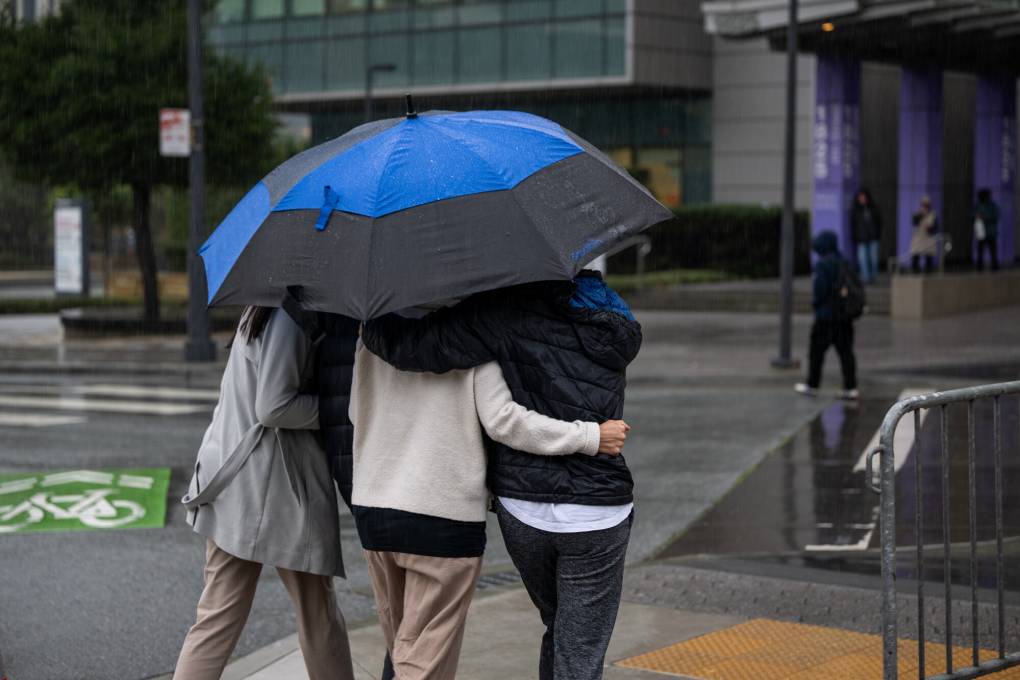
"caption": "A group walks with an umbrella near the UCSF Mission Bay campus in San Francisco on Dec. 18, 2023. Temperatures across the Bay Area are expected to drop 15 to 20 degrees from the early week highs, and light rain with inconsistent weather patterns could persist into next week.",
"credit": "Beth LaBerge/KQED",
"altTag": null,
"description": null,
"imgSizes": {
"medium": {
"file": "https://cdn.kqed.org/wp-content/uploads/sites/10/2025/03/231218-RainFile-03-BL_qed-800x533.jpg",
"width": 800,
"height": 533,
"mimeType": "image/jpeg"
},
"large": {
"file": "https://cdn.kqed.org/wp-content/uploads/sites/10/2025/03/231218-RainFile-03-BL_qed-1020x680.jpg",
"width": 1020,
"height": 680,
"mimeType": "image/jpeg"
},
"thumbnail": {
"file": "https://cdn.kqed.org/wp-content/uploads/sites/10/2025/03/231218-RainFile-03-BL_qed-160x107.jpg",
"width": 160,
"height": 107,
"mimeType": "image/jpeg"
},
"1536x1536": {
"file": "https://cdn.kqed.org/wp-content/uploads/sites/10/2025/03/231218-RainFile-03-BL_qed-1536x1024.jpg",
"width": 1536,
"height": 1024,
"mimeType": "image/jpeg"
},
"post-thumbnail": {
"file": "https://cdn.kqed.org/wp-content/uploads/sites/10/2025/03/231218-RainFile-03-BL_qed-672x372.jpg",
"width": 672,
"height": 372,
"mimeType": "image/jpeg"
},
"twentyfourteen-full-width": {
"file": "https://cdn.kqed.org/wp-content/uploads/sites/10/2025/03/231218-RainFile-03-BL_qed-1038x576.jpg",
"width": 1038,
"height": 576,
"mimeType": "image/jpeg"
},
"full-width": {
"file": "https://cdn.kqed.org/wp-content/uploads/sites/10/2025/03/231218-RainFile-03-BL_qed-1920x1280.jpg",
"width": 1920,
"height": 1280,
"mimeType": "image/jpeg"
},
"kqedFullSize": {
"file": "https://cdn.kqed.org/wp-content/uploads/sites/10/2025/03/231218-RainFile-03-BL_qed.jpg",
"width": 1999,
"height": 1333
}
},
"isLoading": false,
"fetchFailed": false
},
"news_11734231": {
"type": "attachments",
"id": "news_11734231",
"meta": {
"index": "attachments_1716263798",
"site": "news",
"id": "11734231",
"found": true
},
"title": "RS36031_Image from iOS (14)-qut",
"publishDate": 1553110882,
"status": "inherit",
"parent": 11733926,
"modified": 1742229157,
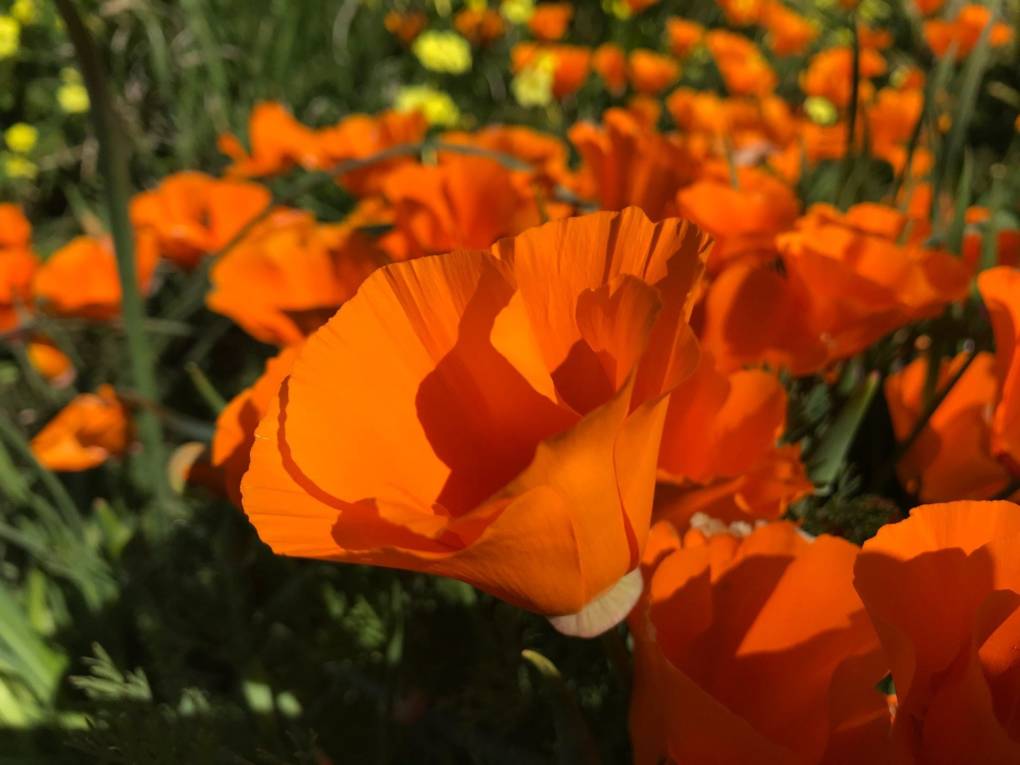
"caption": "Wildflowers atop Mount Davidson in San Francisco on March 20, 2019.",
"credit": "TheRealWBTC/Twitter",
"altTag": null,
"description": null,
"imgSizes": {
"thumbnail": {
"file": "https://cdn.kqed.org/wp-content/uploads/sites/10/2019/03/RS36031_Image-from-iOS-14-qut-160x120.jpg",
"width": 160,
"height": 120,
"mimeType": "image/jpeg"
},
"medium": {
"file": "https://cdn.kqed.org/wp-content/uploads/sites/10/2019/03/RS36031_Image-from-iOS-14-qut-800x600.jpg",
"width": 800,
"height": 600,
"mimeType": "image/jpeg"
},
"large": {
"file": "https://cdn.kqed.org/wp-content/uploads/sites/10/2019/03/RS36031_Image-from-iOS-14-qut-1020x765.jpg",
"width": 1020,
"height": 765,
"mimeType": "image/jpeg"
},
"complete_open_graph": {
"file": "https://cdn.kqed.org/wp-content/uploads/sites/10/2019/03/RS36031_Image-from-iOS-14-qut-1200x900.jpg",
"width": 1200,
"height": 900,
"mimeType": "image/jpeg"
},
"post-thumbnail": {
"file": "https://cdn.kqed.org/wp-content/uploads/sites/10/2019/03/RS36031_Image-from-iOS-14-qut-672x372.jpg",
"width": 672,
"height": 372,
"mimeType": "image/jpeg"
},
"twentyfourteen-full-width": {
"file": "https://cdn.kqed.org/wp-content/uploads/sites/10/2019/03/RS36031_Image-from-iOS-14-qut-1038x576.jpg",
"width": 1038,
"height": 576,
"mimeType": "image/jpeg"
},
"full-width": {
"file": "https://cdn.kqed.org/wp-content/uploads/sites/10/2019/03/RS36031_Image-from-iOS-14-qut-1920x1440.jpg",
"width": 1920,
"height": 1440,
"mimeType": "image/jpeg"
},
"guest-author-32": {
"file": "https://cdn.kqed.org/wp-content/uploads/sites/10/2019/03/RS36031_Image-from-iOS-14-qut-32x32.jpg",
"width": 32,
"height": 32,
"mimeType": "image/jpeg"
},
"guest-author-50": {
"file": "https://cdn.kqed.org/wp-content/uploads/sites/10/2019/03/RS36031_Image-from-iOS-14-qut-50x50.jpg",
"width": 50,
"height": 50,
"mimeType": "image/jpeg"
},
"guest-author-64": {
"file": "https://cdn.kqed.org/wp-content/uploads/sites/10/2019/03/RS36031_Image-from-iOS-14-qut-64x64.jpg",
"width": 64,
"height": 64,
"mimeType": "image/jpeg"
},
"guest-author-96": {
"file": "https://cdn.kqed.org/wp-content/uploads/sites/10/2019/03/RS36031_Image-from-iOS-14-qut-96x96.jpg",
"width": 96,
"height": 96,
"mimeType": "image/jpeg"
},
"guest-author-128": {
"file": "https://cdn.kqed.org/wp-content/uploads/sites/10/2019/03/RS36031_Image-from-iOS-14-qut-128x128.jpg",
"width": 128,
"height": 128,
"mimeType": "image/jpeg"
},
"apple_news_ca_landscape_12_9": {
"file": "https://cdn.kqed.org/wp-content/uploads/sites/10/2019/03/RS36031_Image-from-iOS-14-qut-1832x1374.jpg",
"width": 1832,
"height": 1374,
"mimeType": "image/jpeg"
},
"apple_news_ca_landscape_9_7": {
"file": "https://cdn.kqed.org/wp-content/uploads/sites/10/2019/03/RS36031_Image-from-iOS-14-qut-1376x1032.jpg",
"width": 1376,
"height": 1032,
"mimeType": "image/jpeg"
},
"apple_news_ca_landscape_5_5": {
"file": "https://cdn.kqed.org/wp-content/uploads/sites/10/2019/03/RS36031_Image-from-iOS-14-qut-1044x783.jpg",
"width": 1044,
"height": 783,
"mimeType": "image/jpeg"
},
"apple_news_ca_landscape_4_7": {
"file": "https://cdn.kqed.org/wp-content/uploads/sites/10/2019/03/RS36031_Image-from-iOS-14-qut-632x474.jpg",
"width": 632,
"height": 474,
"mimeType": "image/jpeg"
},
"apple_news_ca_landscape_4_0": {
"file": "https://cdn.kqed.org/wp-content/uploads/sites/10/2019/03/RS36031_Image-from-iOS-14-qut-536x402.jpg",
"width": 536,
"height": 402,
"mimeType": "image/jpeg"
},
"apple_news_ca_portrait_12_9": {
"file": "https://cdn.kqed.org/wp-content/uploads/sites/10/2019/03/RS36031_Image-from-iOS-14-qut-1122x1440.jpg",
"width": 1122,
"height": 1440,
"mimeType": "image/jpeg"
},
"apple_news_ca_portrait_9_7": {
"file": "https://cdn.kqed.org/wp-content/uploads/sites/10/2019/03/RS36031_Image-from-iOS-14-qut-840x1120.jpg",
"width": 840,
"height": 1120,
"mimeType": "image/jpeg"
},
"apple_news_ca_portrait_5_5": {
"file": "https://cdn.kqed.org/wp-content/uploads/sites/10/2019/03/RS36031_Image-from-iOS-14-qut-687x916.jpg",
"width": 687,
"height": 916,
"mimeType": "image/jpeg"
},
"apple_news_ca_portrait_4_7": {
"file": "https://cdn.kqed.org/wp-content/uploads/sites/10/2019/03/RS36031_Image-from-iOS-14-qut-414x552.jpg",
"width": 414,
"height": 552,
"mimeType": "image/jpeg"
},
"apple_news_ca_portrait_4_0": {
"file": "https://cdn.kqed.org/wp-content/uploads/sites/10/2019/03/RS36031_Image-from-iOS-14-qut-354x472.jpg",
"width": 354,
"height": 472,
"mimeType": "image/jpeg"
},
"apple_news_ca_square_12_9": {
"file": "https://cdn.kqed.org/wp-content/uploads/sites/10/2019/03/RS36031_Image-from-iOS-14-qut-1472x1440.jpg",
"width": 1472,
"height": 1440,
"mimeType": "image/jpeg"
},
"apple_news_ca_square_9_7": {
"file": "https://cdn.kqed.org/wp-content/uploads/sites/10/2019/03/RS36031_Image-from-iOS-14-qut-1104x1104.jpg",
"width": 1104,
"height": 1104,
"mimeType": "image/jpeg"
},
"apple_news_ca_square_5_5": {
"file": "https://cdn.kqed.org/wp-content/uploads/sites/10/2019/03/RS36031_Image-from-iOS-14-qut-912x912.jpg",
"width": 912,
"height": 912,
"mimeType": "image/jpeg"
},
"apple_news_ca_square_4_7": {
"file": "https://cdn.kqed.org/wp-content/uploads/sites/10/2019/03/RS36031_Image-from-iOS-14-qut-550x550.jpg",
"width": 550,
"height": 550,
"mimeType": "image/jpeg"
},
"apple_news_ca_square_4_0": {
"file": "https://cdn.kqed.org/wp-content/uploads/sites/10/2019/03/RS36031_Image-from-iOS-14-qut-470x470.jpg",
"width": 470,
"height": 470,
"mimeType": "image/jpeg"
},
"kqedFullSize": {
"file": "https://cdn.kqed.org/wp-content/uploads/sites/10/2019/03/RS36031_Image-from-iOS-14-qut.jpg",
"width": 1920,
"height": 1440
}
},
"isLoading": false,
"fetchFailed": false
},
"news_12031162": {
"type": "attachments",
"id": "news_12031162",
"meta": {
"index": "attachments_1716263798",
"site": "news",
"id": "12031162",
"found": true
},
"title": "Bay Area Snow",
"publishDate": 1741885293,
"status": "inherit",
"parent": 12031151,
"modified": 1742233945,
"caption": "Snow covers the higher elevation of Mount Diablo at sunset, seen from Las Trampas Regional Wilderness Park in San Ramon, California, on Feb. 24, 2023. ",
"credit": "Ray Chavez/MediaNews Group/The Mercury News via Getty Images",
"altTag": null,
"description": null,
"imgSizes": {
"medium": {
"file": "https://cdn.kqed.org/wp-content/uploads/sites/10/2025/03/MountDiabloGetty-800x533.jpg",
"width": 800,
"height": 533,
"mimeType": "image/jpeg"
},
"large": {
"file": "https://cdn.kqed.org/wp-content/uploads/sites/10/2025/03/MountDiabloGetty-1020x680.jpg",
"width": 1020,
"height": 680,
"mimeType": "image/jpeg"
},
"thumbnail": {
"file": "https://cdn.kqed.org/wp-content/uploads/sites/10/2025/03/MountDiabloGetty-160x107.jpg",
"width": 160,
"height": 107,
"mimeType": "image/jpeg"
},
"1536x1536": {
"file": "https://cdn.kqed.org/wp-content/uploads/sites/10/2025/03/MountDiabloGetty-1536x1024.jpg",
"width": 1536,
"height": 1024,
"mimeType": "image/jpeg"
},
"post-thumbnail": {
"file": "https://cdn.kqed.org/wp-content/uploads/sites/10/2025/03/MountDiabloGetty-672x372.jpg",
"width": 672,
"height": 372,
"mimeType": "image/jpeg"
},
"twentyfourteen-full-width": {
"file": "https://cdn.kqed.org/wp-content/uploads/sites/10/2025/03/MountDiabloGetty-1038x576.jpg",
"width": 1038,
"height": 576,
"mimeType": "image/jpeg"
},
"full-width": {
"file": "https://cdn.kqed.org/wp-content/uploads/sites/10/2025/03/MountDiabloGetty-1920x1280.jpg",
"width": 1920,
"height": 1280,
"mimeType": "image/jpeg"
},
"kqedFullSize": {
"file": "https://cdn.kqed.org/wp-content/uploads/sites/10/2025/03/MountDiabloGetty.jpg",
"width": 2000,
"height": 1333
}
},
"isLoading": false,
"fetchFailed": false
},
"news_12030929": {
"type": "attachments",
"id": "news_12030929",
"meta": {
"index": "attachments_1716263798",
"site": "news",
"id": "12030929",
"found": true
},
"title": "241122-StormHitsBayArea-06-BL_qed",
"publishDate": 1741797302,
"status": "inherit",
"parent": 12030924,
"modified": 1741810833,
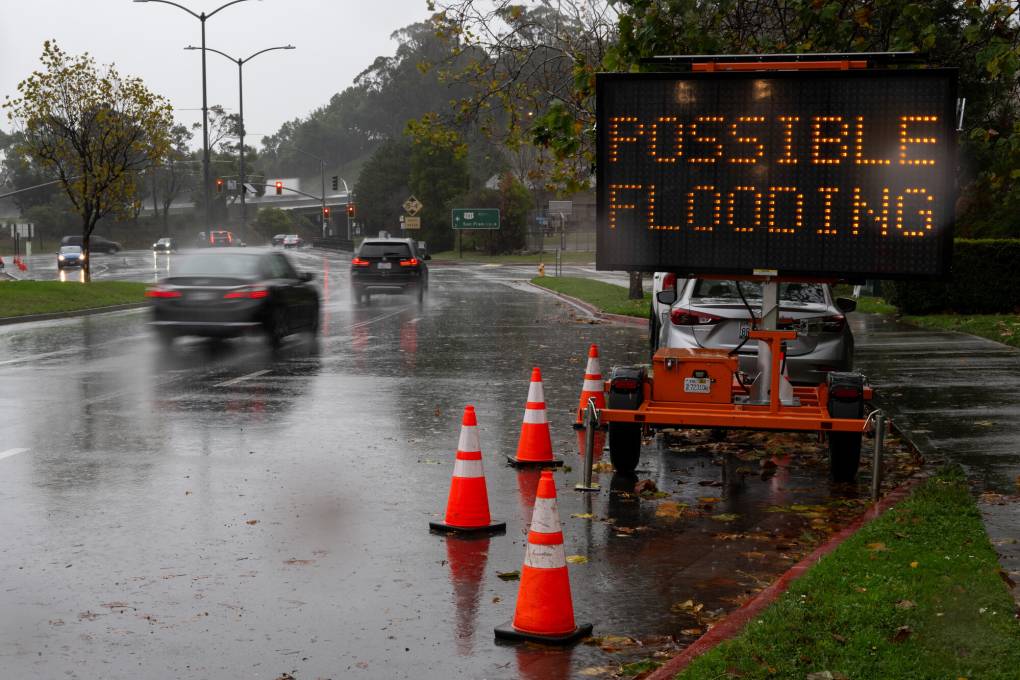
"caption": "A sign says, 'Possible Flooding' in Marin City on Nov. 22, 2024, during a storm bringing heavy rain and strong winds to the Bay Area.",
"credit": "Beth LaBerge/KQED",
"altTag": null,
"description": null,
"imgSizes": {
"medium": {
"file": "https://cdn.kqed.org/wp-content/uploads/sites/10/2025/03/241122-StormHitsBayArea-06-BL_qed-800x533.jpg",
"width": 800,
"height": 533,
"mimeType": "image/jpeg"
},
"large": {
"file": "https://cdn.kqed.org/wp-content/uploads/sites/10/2025/03/241122-StormHitsBayArea-06-BL_qed-1020x680.jpg",
"width": 1020,
"height": 680,
"mimeType": "image/jpeg"
},
"thumbnail": {
"file": "https://cdn.kqed.org/wp-content/uploads/sites/10/2025/03/241122-StormHitsBayArea-06-BL_qed-160x107.jpg",
"width": 160,
"height": 107,
"mimeType": "image/jpeg"
},
"1536x1536": {
"file": "https://cdn.kqed.org/wp-content/uploads/sites/10/2025/03/241122-StormHitsBayArea-06-BL_qed-1536x1024.jpg",
"width": 1536,
"height": 1024,
"mimeType": "image/jpeg"
},
"post-thumbnail": {
"file": "https://cdn.kqed.org/wp-content/uploads/sites/10/2025/03/241122-StormHitsBayArea-06-BL_qed-672x372.jpg",
"width": 672,
"height": 372,
"mimeType": "image/jpeg"
},
"twentyfourteen-full-width": {
"file": "https://cdn.kqed.org/wp-content/uploads/sites/10/2025/03/241122-StormHitsBayArea-06-BL_qed-1038x576.jpg",
"width": 1038,
"height": 576,
"mimeType": "image/jpeg"
},
"full-width": {
"file": "https://cdn.kqed.org/wp-content/uploads/sites/10/2025/03/241122-StormHitsBayArea-06-BL_qed-1920x1280.jpg",
"width": 1920,
"height": 1280,
"mimeType": "image/jpeg"
},
"kqedFullSize": {
"file": "https://cdn.kqed.org/wp-content/uploads/sites/10/2025/03/241122-StormHitsBayArea-06-BL_qed.jpg",
"width": 1999,
"height": 1333
}
},
"isLoading": false,
"fetchFailed": false
},
"news_12030577": {
"type": "attachments",
"id": "news_12030577",
"meta": {
"index": "attachments_1716263798",
"site": "news",
"id": "12030577",
"found": true
},
"title": "241120-StormHitsBayArea-09-BL_qed",
"publishDate": 1741627569,
"status": "inherit",
"parent": 12030575,
"modified": 1741627579,
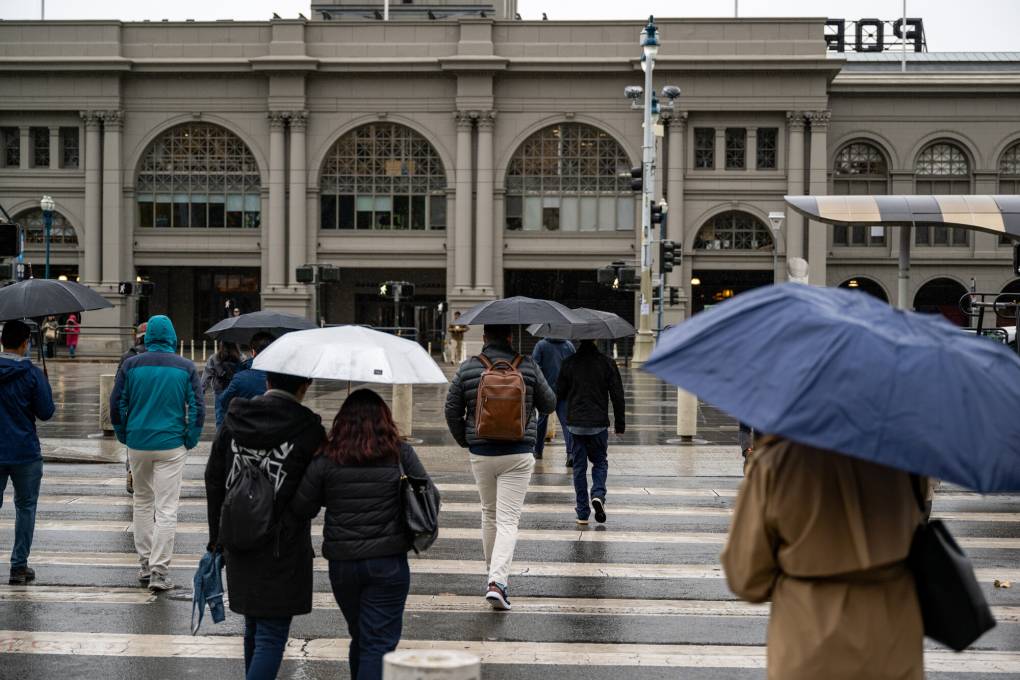
"caption": "People with umbrellas walk across the Embarcadero in San Francisco on Nov. 20, 2024.",
"credit": "Beth LaBerge/KQED",
"altTag": null,
"description": null,
"imgSizes": {
"medium": {
"file": "https://cdn.kqed.org/wp-content/uploads/sites/10/2025/03/241120-StormHitsBayArea-09-BL_qed-800x533.jpg",
"width": 800,
"height": 533,
"mimeType": "image/jpeg"
},
"large": {
"file": "https://cdn.kqed.org/wp-content/uploads/sites/10/2025/03/241120-StormHitsBayArea-09-BL_qed-1020x680.jpg",
"width": 1020,
"height": 680,
"mimeType": "image/jpeg"
},
"thumbnail": {
"file": "https://cdn.kqed.org/wp-content/uploads/sites/10/2025/03/241120-StormHitsBayArea-09-BL_qed-160x107.jpg",
"width": 160,
"height": 107,
"mimeType": "image/jpeg"
},
"1536x1536": {
"file": "https://cdn.kqed.org/wp-content/uploads/sites/10/2025/03/241120-StormHitsBayArea-09-BL_qed-1536x1024.jpg",
"width": 1536,
"height": 1024,
"mimeType": "image/jpeg"
},
"post-thumbnail": {
"file": "https://cdn.kqed.org/wp-content/uploads/sites/10/2025/03/241120-StormHitsBayArea-09-BL_qed-672x372.jpg",
"width": 672,
"height": 372,
"mimeType": "image/jpeg"
},
"twentyfourteen-full-width": {
"file": "https://cdn.kqed.org/wp-content/uploads/sites/10/2025/03/241120-StormHitsBayArea-09-BL_qed-1038x576.jpg",
"width": 1038,
"height": 576,
"mimeType": "image/jpeg"
},
"full-width": {
"file": "https://cdn.kqed.org/wp-content/uploads/sites/10/2025/03/241120-StormHitsBayArea-09-BL_qed-1920x1280.jpg",
"width": 1920,
"height": 1280,
"mimeType": "image/jpeg"
},
"kqedFullSize": {
"file": "https://cdn.kqed.org/wp-content/uploads/sites/10/2025/03/241120-StormHitsBayArea-09-BL_qed.jpg",
"width": 2000,
"height": 1333
}
},
"isLoading": false,
"fetchFailed": false
},
"news_12029443": {
"type": "attachments",
"id": "news_12029443",
"meta": {
"index": "attachments_1716263798",
"site": "news",
"id": "12029443",
"found": true
},
"title": "20241122_NorcalStorm_GC-7_qed",
"publishDate": 1741024106,
"status": "inherit",
"parent": 12029441,
"modified": 1741024140,
"caption": "A car drives through a puddle on Piner Road in Santa Rosa during an atmospheric river storm affecting the Bay Area on Nov. 22, 2024. ",
"credit": "Gina Castro/KQED",
"altTag": null,
"description": null,
"imgSizes": {
"medium": {
"file": "https://cdn.kqed.org/wp-content/uploads/sites/10/2025/03/20241122_NorcalStorm_GC-7_qed-800x516.jpg",
"width": 800,
"height": 516,
"mimeType": "image/jpeg"
},
"large": {
"file": "https://cdn.kqed.org/wp-content/uploads/sites/10/2025/03/20241122_NorcalStorm_GC-7_qed-1020x658.jpg",
"width": 1020,
"height": 658,
"mimeType": "image/jpeg"
},
"thumbnail": {
"file": "https://cdn.kqed.org/wp-content/uploads/sites/10/2025/03/20241122_NorcalStorm_GC-7_qed-160x103.jpg",
"width": 160,
"height": 103,
"mimeType": "image/jpeg"
},
"1536x1536": {
"file": "https://cdn.kqed.org/wp-content/uploads/sites/10/2025/03/20241122_NorcalStorm_GC-7_qed-1536x991.jpg",
"width": 1536,
"height": 991,
"mimeType": "image/jpeg"
},
"post-thumbnail": {
"file": "https://cdn.kqed.org/wp-content/uploads/sites/10/2025/03/20241122_NorcalStorm_GC-7_qed-672x372.jpg",
"width": 672,
"height": 372,
"mimeType": "image/jpeg"
},
"twentyfourteen-full-width": {
"file": "https://cdn.kqed.org/wp-content/uploads/sites/10/2025/03/20241122_NorcalStorm_GC-7_qed-1038x576.jpg",
"width": 1038,
"height": 576,
"mimeType": "image/jpeg"
},
"full-width": {
"file": "https://cdn.kqed.org/wp-content/uploads/sites/10/2025/03/20241122_NorcalStorm_GC-7_qed-1920x1239.jpg",
"width": 1920,
"height": 1239,
"mimeType": "image/jpeg"
},
"kqedFullSize": {
"file": "https://cdn.kqed.org/wp-content/uploads/sites/10/2025/03/20241122_NorcalStorm_GC-7_qed.jpg",
"width": 2000,
"height": 1291
}
},
"isLoading": false,
"fetchFailed": false
},
"news_12027143": {
"type": "attachments",
"id": "news_12027143",
"meta": {
"index": "attachments_1716263798",
"site": "news",
"id": "12027143",
"found": true
},
"title": "download-67af5e1815e7f",
"publishDate": 1739546195,
"status": "inherit",
"parent": 12027141,
"modified": 1739546243,
"caption": "Residents in Oakhurst, Calif., stand in front of “Mount Chipotle” following a concert. Mount Chipotle was demolished shortly after.",
"credit": "Photo courtesy of Kristina McCarty",
"altTag": null,
"description": null,
"imgSizes": {
"medium": {
"file": "https://cdn.kqed.org/wp-content/uploads/sites/10/2025/02/download-67af5e1815e7f-800x600.jpg",
"width": 800,
"height": 600,
"mimeType": "image/jpeg"
},
"large": {
"file": "https://cdn.kqed.org/wp-content/uploads/sites/10/2025/02/download-67af5e1815e7f-1020x765.jpg",
"width": 1020,
"height": 765,
"mimeType": "image/jpeg"
},
"thumbnail": {
"file": "https://cdn.kqed.org/wp-content/uploads/sites/10/2025/02/download-67af5e1815e7f-160x120.jpg",
"width": 160,
"height": 120,
"mimeType": "image/jpeg"
},
"1536x1536": {
"file": "https://cdn.kqed.org/wp-content/uploads/sites/10/2025/02/download-67af5e1815e7f-1536x1152.jpg",
"width": 1536,
"height": 1152,
"mimeType": "image/jpeg"
},
"post-thumbnail": {
"file": "https://cdn.kqed.org/wp-content/uploads/sites/10/2025/02/download-67af5e1815e7f-672x372.jpg",
"width": 672,
"height": 372,
"mimeType": "image/jpeg"
},
"twentyfourteen-full-width": {
"file": "https://cdn.kqed.org/wp-content/uploads/sites/10/2025/02/download-67af5e1815e7f-1038x576.jpg",
"width": 1038,
"height": 576,
"mimeType": "image/jpeg"
},
"kqedFullSize": {
"file": "https://cdn.kqed.org/wp-content/uploads/sites/10/2025/02/download-67af5e1815e7f.jpg",
"width": 1760,
"height": 1320
}
},
"isLoading": false,
"fetchFailed": false
},
"news_12026888": {
"type": "attachments",
"id": "news_12026888",
"meta": {
"index": "attachments_1716263798",
"site": "news",
"id": "12026888",
"found": true
},
"title": "20241122_NorcalStorm_GC-12_qed (1)",
"publishDate": 1739467889,
"status": "inherit",
"parent": 12026874,
"modified": 1739467901,
"caption": "A car left stranded on Rohnert Park Expressway after heavy rainfall flooded the street, during an atmospheric river storm affecting the Bay Area, on Nov. 22, 2024.",
"credit": "Gina Castro/KQED",
"altTag": null,
"description": null,
"imgSizes": {
"medium": {
"file": "https://cdn.kqed.org/wp-content/uploads/sites/10/2025/02/20241122_NorcalStorm_GC-12_qed-1-800x533.jpg",
"width": 800,
"height": 533,
"mimeType": "image/jpeg"
},
"large": {
"file": "https://cdn.kqed.org/wp-content/uploads/sites/10/2025/02/20241122_NorcalStorm_GC-12_qed-1-1020x680.jpg",
"width": 1020,
"height": 680,
"mimeType": "image/jpeg"
},
"thumbnail": {
"file": "https://cdn.kqed.org/wp-content/uploads/sites/10/2025/02/20241122_NorcalStorm_GC-12_qed-1-160x107.jpg",
"width": 160,
"height": 107,
"mimeType": "image/jpeg"
},
"1536x1536": {
"file": "https://cdn.kqed.org/wp-content/uploads/sites/10/2025/02/20241122_NorcalStorm_GC-12_qed-1-1536x1024.jpg",
"width": 1536,
"height": 1024,
"mimeType": "image/jpeg"
},
"post-thumbnail": {
"file": "https://cdn.kqed.org/wp-content/uploads/sites/10/2025/02/20241122_NorcalStorm_GC-12_qed-1-672x372.jpg",
"width": 672,
"height": 372,
"mimeType": "image/jpeg"
},
"twentyfourteen-full-width": {
"file": "https://cdn.kqed.org/wp-content/uploads/sites/10/2025/02/20241122_NorcalStorm_GC-12_qed-1-1038x576.jpg",
"width": 1038,
"height": 576,
"mimeType": "image/jpeg"
},
"full-width": {
"file": "https://cdn.kqed.org/wp-content/uploads/sites/10/2025/02/20241122_NorcalStorm_GC-12_qed-1-1920x1280.jpg",
"width": 1920,
"height": 1280,
"mimeType": "image/jpeg"
},
"kqedFullSize": {
"file": "https://cdn.kqed.org/wp-content/uploads/sites/10/2025/02/20241122_NorcalStorm_GC-12_qed-1.jpg",
"width": 2000,
"height": 1333
}
},
"isLoading": false,
"fetchFailed": false
},
"news_12020771": {
"type": "attachments",
"id": "news_12020771",
"meta": {
"index": "attachments_1716263798",
"site": "news",
"id": "12020771",
"found": true
},
"title": "112124_Santa-Rosa-Flooding_AP_CM_01 copy",
"publishDate": 1736359626,
"status": "inherit",
"parent": 12020768,
"modified": 1736359712,
"caption": "A pedestrian walks along a flooded street during a storm in Santa Rosa on Nov. 21, 2024.",
"credit": "Jeff Chiu/AP Photo",
"altTag": "A person in full rain gear walks through a flooded street with trees and some traffic signs in the background, and reflected off the water. It is not raining.",
"description": null,
"imgSizes": {
"medium": {
"file": "https://cdn.kqed.org/wp-content/uploads/sites/10/2025/01/112124_Santa-Rosa-Flooding_AP_CM_01-copy-800x533.jpg",
"width": 800,
"height": 533,
"mimeType": "image/jpeg"
},
"large": {
"file": "https://cdn.kqed.org/wp-content/uploads/sites/10/2025/01/112124_Santa-Rosa-Flooding_AP_CM_01-copy-1020x680.jpg",
"width": 1020,
"height": 680,
"mimeType": "image/jpeg"
},
"thumbnail": {
"file": "https://cdn.kqed.org/wp-content/uploads/sites/10/2025/01/112124_Santa-Rosa-Flooding_AP_CM_01-copy-160x107.jpg",
"width": 160,
"height": 107,
"mimeType": "image/jpeg"
},
"1536x1536": {
"file": "https://cdn.kqed.org/wp-content/uploads/sites/10/2025/01/112124_Santa-Rosa-Flooding_AP_CM_01-copy-1536x1024.jpg",
"width": 1536,
"height": 1024,
"mimeType": "image/jpeg"
},
"post-thumbnail": {
"file": "https://cdn.kqed.org/wp-content/uploads/sites/10/2025/01/112124_Santa-Rosa-Flooding_AP_CM_01-copy-672x372.jpg",
"width": 672,
"height": 372,
"mimeType": "image/jpeg"
},
"twentyfourteen-full-width": {
"file": "https://cdn.kqed.org/wp-content/uploads/sites/10/2025/01/112124_Santa-Rosa-Flooding_AP_CM_01-copy-1038x576.jpg",
"width": 1038,
"height": 576,
"mimeType": "image/jpeg"
},
"full-width": {
"file": "https://cdn.kqed.org/wp-content/uploads/sites/10/2025/01/112124_Santa-Rosa-Flooding_AP_CM_01-copy-1920x1280.jpg",
"width": 1920,
"height": 1280,
"mimeType": "image/jpeg"
},
"kqedFullSize": {
"file": "https://cdn.kqed.org/wp-content/uploads/sites/10/2025/01/112124_Santa-Rosa-Flooding_AP_CM_01-copy.jpg",
"width": 2000,
"height": 1333
}
},
"isLoading": false,
"fetchFailed": false
},
"news_12015608": {
"type": "attachments",
"id": "news_12015608",
"meta": {
"index": "attachments_1716263798",
"site": "news",
"id": "12015608",
"found": true
},
"title": "241122-StormHitsBayArea-21-BL",
"publishDate": 1732310382,
"status": "inherit",
"parent": 0,
"modified": 1732310412,
"caption": "A person walks their dog on Haight Street in San Francisco on Nov. 22, 2024, during a storm bringing heavy rain and strong winds to the Bay Area.",
"credit": "Beth LaBerge/KQED",
"altTag": null,
"description": null,
"imgSizes": {
"medium": {
"file": "https://cdn.kqed.org/wp-content/uploads/sites/10/2024/11/241122-StormHitsBayArea-21-BL-800x533.jpg",
"width": 800,
"height": 533,
"mimeType": "image/jpeg"
},
"large": {
"file": "https://cdn.kqed.org/wp-content/uploads/sites/10/2024/11/241122-StormHitsBayArea-21-BL-1020x680.jpg",
"width": 1020,
"height": 680,
"mimeType": "image/jpeg"
},
"thumbnail": {
"file": "https://cdn.kqed.org/wp-content/uploads/sites/10/2024/11/241122-StormHitsBayArea-21-BL-160x107.jpg",
"width": 160,
"height": 107,
"mimeType": "image/jpeg"
},
"1536x1536": {
"file": "https://cdn.kqed.org/wp-content/uploads/sites/10/2024/11/241122-StormHitsBayArea-21-BL-1536x1024.jpg",
"width": 1536,
"height": 1024,
"mimeType": "image/jpeg"
},
"post-thumbnail": {
"file": "https://cdn.kqed.org/wp-content/uploads/sites/10/2024/11/241122-StormHitsBayArea-21-BL-672x372.jpg",
"width": 672,
"height": 372,
"mimeType": "image/jpeg"
},
"twentyfourteen-full-width": {
"file": "https://cdn.kqed.org/wp-content/uploads/sites/10/2024/11/241122-StormHitsBayArea-21-BL-1038x576.jpg",
"width": 1038,
"height": 576,
"mimeType": "image/jpeg"
},
"full-width": {
"file": "https://cdn.kqed.org/wp-content/uploads/sites/10/2024/11/241122-StormHitsBayArea-21-BL-1920x1280.jpg",
"width": 1920,
"height": 1280,
"mimeType": "image/jpeg"
},
"kqedFullSize": {
"file": "https://cdn.kqed.org/wp-content/uploads/sites/10/2024/11/241122-StormHitsBayArea-21-BL.jpg",
"width": 2000,
"height": 1333
}
},
"isLoading": false,
"fetchFailed": false
},
"news_12015609": {
"type": "attachments",
"id": "news_12015609",
"meta": {
"index": "attachments_1716263798",
"site": "news",
"id": "12015609",
"found": true
},
"title": "241122-StormHitsBayArea-25-BL",
"publishDate": 1732310395,
"status": "inherit",
"parent": 0,
"modified": 1732311763,
"caption": "A person walks on Haight Street in the rain in San Francisco on Nov. 22, 2024, during a storm bringing heavy rain and strong winds to the Bay Area.",
"credit": "Beth LaBerge/KQED",
"altTag": null,
"description": null,
"imgSizes": {
"medium": {
"file": "https://cdn.kqed.org/wp-content/uploads/sites/10/2024/11/241122-StormHitsBayArea-25-BL-800x533.jpg",
"width": 800,
"height": 533,
"mimeType": "image/jpeg"
},
"large": {
"file": "https://cdn.kqed.org/wp-content/uploads/sites/10/2024/11/241122-StormHitsBayArea-25-BL-1020x680.jpg",
"width": 1020,
"height": 680,
"mimeType": "image/jpeg"
},
"thumbnail": {
"file": "https://cdn.kqed.org/wp-content/uploads/sites/10/2024/11/241122-StormHitsBayArea-25-BL-160x107.jpg",
"width": 160,
"height": 107,
"mimeType": "image/jpeg"
},
"1536x1536": {
"file": "https://cdn.kqed.org/wp-content/uploads/sites/10/2024/11/241122-StormHitsBayArea-25-BL-1536x1024.jpg",
"width": 1536,
"height": 1024,
"mimeType": "image/jpeg"
},
"post-thumbnail": {
"file": "https://cdn.kqed.org/wp-content/uploads/sites/10/2024/11/241122-StormHitsBayArea-25-BL-672x372.jpg",
"width": 672,
"height": 372,
"mimeType": "image/jpeg"
},
"twentyfourteen-full-width": {
"file": "https://cdn.kqed.org/wp-content/uploads/sites/10/2024/11/241122-StormHitsBayArea-25-BL-1038x576.jpg",
"width": 1038,
"height": 576,
"mimeType": "image/jpeg"
},
"full-width": {
"file": "https://cdn.kqed.org/wp-content/uploads/sites/10/2024/11/241122-StormHitsBayArea-25-BL-1920x1280.jpg",
"width": 1920,
"height": 1280,
"mimeType": "image/jpeg"
},
"kqedFullSize": {
"file": "https://cdn.kqed.org/wp-content/uploads/sites/10/2024/11/241122-StormHitsBayArea-25-BL.jpg",
"width": 2000,
"height": 1333
}
},
"isLoading": false,
"fetchFailed": false
}
},
"audioPlayerReducer": {
"postId": "stream_live",
"isPaused": true,
"isPlaying": false,
"pfsActive": false,
"pledgeModalIsOpen": true,
"playerDrawerIsOpen": false,
"liveAudioPlayStartedAt": 0,
"liveAudioPlayContext": ""
},
"authorsReducer": {
"byline_news_12020768": {
"type": "authors",
"id": "byline_news_12020768",
"meta": {
"override": true
},
"slug": "byline_news_12020768",
"name": "\u003ca href=\"https://calmatters.org/author/alastair-bland/\">Alastair Bland\u003c/a>, CalMatters",
"isLoading": false
},
"matthewgreen": {
"type": "authors",
"id": "1263",
"meta": {
"index": "authors_1716337520",
"id": "1263",
"found": true
},
"name": "Matthew Green",
"firstName": "Matthew",
"lastName": "Green",
"slug": "matthewgreen",
"email": "mgreen@kqed.org",
"display_author_email": false,
"staff_mastheads": [],
"title": "KQED Editor/Reporter",
"bio": "Matthew Green is a digital media producer for KQED News. He previously produced \u003ca href=\"http://www.kqed.org/lowdown\">The Lowdown\u003c/a>, KQED’s multimedia news education blog. Matthew's written for numerous Bay Area publications, including the Oakland Tribune and San Francisco Chronicle. He also taught journalism classes at Fremont High School in East Oakland.\r\n\r\nEmail: mgreen@kqed.org; Twitter: @MGreenKQED",
"avatar": "https://secure.gravatar.com/avatar/3bf498d1267ca02c8494f33d8cfc575e?s=600&d=blank&r=g",
"twitter": "MGreenKQED",
"facebook": null,
"instagram": null,
"linkedin": null,
"sites": [
{
"site": "news",
"roles": []
},
{
"site": "lowdown",
"roles": []
},
{
"site": "science",
"roles": []
},
{
"site": "education",
"roles": []
},
{
"site": "quest",
"roles": []
},
{
"site": "liveblog",
"roles": []
}
],
"headData": {
"title": "Matthew Green | KQED",
"description": "KQED Editor/Reporter",
"ogImgSrc": "https://secure.gravatar.com/avatar/3bf498d1267ca02c8494f33d8cfc575e?s=600&d=blank&r=g",
"twImgSrc": "https://secure.gravatar.com/avatar/3bf498d1267ca02c8494f33d8cfc575e?s=600&d=blank&r=g"
},
"isLoading": false,
"link": "/author/matthewgreen"
},
"kmizuguchi": {
"type": "authors",
"id": "11739",
"meta": {
"index": "authors_1716337520",
"id": "11739",
"found": true
},
"name": "Keith Mizuguchi",
"firstName": "Keith",
"lastName": "Mizuguchi",
"slug": "kmizuguchi",
"email": "kmizuguchi@kqed.org",
"display_author_email": false,
"staff_mastheads": [],
"title": "KQED Contributor",
"bio": null,
"avatar": "https://secure.gravatar.com/avatar/64d8a7de0723d4099b9fe4e915136103febcc20809abce228ee4415bcb237023?s=600&d=blank&r=g",
"twitter": null,
"bluesky": null,
"facebook": null,
"instagram": null,
"linkedin": null,
"sites": [
{
"site": "news",
"roles": [
"editor"
]
},
{
"site": "science",
"roles": [
"editor"
]
}
],
"headData": {
"title": "Keith Mizuguchi | KQED",
"description": "KQED Contributor",
"ogImgSrc": "https://secure.gravatar.com/avatar/64d8a7de0723d4099b9fe4e915136103febcc20809abce228ee4415bcb237023?s=600&d=blank&r=g",
"twImgSrc": "https://secure.gravatar.com/avatar/64d8a7de0723d4099b9fe4e915136103febcc20809abce228ee4415bcb237023?s=600&d=blank&r=g"
},
"isLoading": false,
"link": "/author/kmizuguchi"
},
"eromero": {
"type": "authors",
"id": "11746",
"meta": {
"index": "authors_1716337520",
"id": "11746",
"found": true
},
"name": "Ezra David Romero",
"firstName": "Ezra David",
"lastName": "Romero",
"slug": "eromero",
"email": "eromero@kqed.org",
"display_author_email": true,
"staff_mastheads": [
"news",
"science"
],
"title": "Climate Reporter",
"bio": "Ezra David Romero is a climate reporter for KQED News. He covers the absence and excess of water in the Bay Area — think sea level rise, flooding and drought. For nearly a decade he’s covered how warming temperatures are altering the lives of Californians. He’s reported on farmers worried their pistachio trees aren’t getting enough sleep, families desperate for water, scientists studying dying giant sequoias, and alongside firefighters containing wildfires. His work has appeared on local stations across California and nationally on public radio shows like Morning Edition, Here and Now, All Things Considered and Science Friday. ",
"avatar": "https://secure.gravatar.com/avatar/c76404d287c10ed40224227551ac36e24352c7306f106632caf6fead76f8801f?s=600&d=blank&r=g",
"twitter": "ezraromero",
"bluesky": null,
"facebook": null,
"instagram": null,
"linkedin": null,
"sites": [
{
"site": "arts",
"roles": [
"editor"
]
},
{
"site": "news",
"roles": [
"editor"
]
},
{
"site": "science",
"roles": [
"editor"
]
},
{
"site": "liveblog",
"roles": [
"author"
]
}
],
"headData": {
"title": "Ezra David Romero | KQED",
"description": "Climate Reporter",
"ogImgSrc": "https://secure.gravatar.com/avatar/c76404d287c10ed40224227551ac36e24352c7306f106632caf6fead76f8801f?s=600&d=blank&r=g",
"twImgSrc": "https://secure.gravatar.com/avatar/c76404d287c10ed40224227551ac36e24352c7306f106632caf6fead76f8801f?s=600&d=blank&r=g"
},
"isLoading": false,
"link": "/author/eromero"
},
"kdebenedetti": {
"type": "authors",
"id": "11913",
"meta": {
"index": "authors_1716337520",
"id": "11913",
"found": true
},
"name": "Katie DeBenedetti",
"firstName": "Katie",
"lastName": "DeBenedetti",
"slug": "kdebenedetti",
"email": "kdebenedetti@kqed.org",
"display_author_email": false,
"staff_mastheads": [
"news",
"science"
],
"title": "KQED Contributor",
"bio": "Katie DeBenedetti is a digital reporter covering daily news for the Express Desk. Prior to joining KQED as a culture reporting intern in January 2024, she covered education and city government for the Napa Valley Register.",
"avatar": "https://secure.gravatar.com/avatar/6e31073cb8f7e4214ab03f42771d0f45?s=600&d=blank&r=g",
"twitter": null,
"facebook": null,
"instagram": null,
"linkedin": null,
"sites": [
{
"site": "news",
"roles": [
"author"
]
},
{
"site": "science",
"roles": [
"author"
]
},
{
"site": "liveblog",
"roles": [
"author"
]
}
],
"headData": {
"title": "Katie DeBenedetti | KQED",
"description": "KQED Contributor",
"ogImgSrc": "https://secure.gravatar.com/avatar/6e31073cb8f7e4214ab03f42771d0f45?s=600&d=blank&r=g",
"twImgSrc": "https://secure.gravatar.com/avatar/6e31073cb8f7e4214ab03f42771d0f45?s=600&d=blank&r=g"
},
"isLoading": false,
"link": "/author/kdebenedetti"
},
"slim": {
"type": "authors",
"id": "11920",
"meta": {
"index": "authors_1716337520",
"id": "11920",
"found": true
},
"name": "Samantha Lim",
"firstName": "Samantha",
"lastName": "Lim",
"slug": "slim",
"email": "slim@KQED.org",
"display_author_email": false,
"staff_mastheads": [],
"title": "KQED Contributor",
"bio": null,
"avatar": "https://secure.gravatar.com/avatar/82e592e6c15fe1a04d385e8ad0fb0b4e?s=600&d=blank&r=g",
"twitter": null,
"facebook": null,
"instagram": null,
"linkedin": null,
"sites": [
{
"site": "news",
"roles": []
}
],
"headData": {
"title": "Samantha Lim | KQED",
"description": "KQED Contributor",
"ogImgSrc": "https://secure.gravatar.com/avatar/82e592e6c15fe1a04d385e8ad0fb0b4e?s=600&d=blank&r=g",
"twImgSrc": "https://secure.gravatar.com/avatar/82e592e6c15fe1a04d385e8ad0fb0b4e?s=600&d=blank&r=g"
},
"isLoading": false,
"link": "/author/slim"
}
},
"pagesReducer": {
"news_tag_rain": {
"type": "terms",
"id": "news_465",
"meta": {
"index": "terms_1716263798",
"site": "news",
"id": "465",
"score": 9.30565
},
"featImg": null,
"name": "rain",
"description": null,
"taxonomy": "tag",
"headData": {
"twImgId": null,
"twTitle": null,
"ogTitle": null,
"ogImgId": null,
"twDescription": null,
"description": null,
"title": "rain Archives | KQED News",
"ogDescription": null
},
"ttid": 474,
"slug": "rain",
"isLoading": false,
"title": "rain",
"pageMeta": {
"site": "news",
"WpPageTemplate": "page-topic-editorial",
"currentPage": 2
},
"blocks": [
{
"blockName": "kqed/post-list",
"attrs": {
"layout": "cardArticle2",
"query": "posts/news?tag=rain",
"seeMore": false,
"paginated": true,
"page": 2
}
},
{
"blockName": "kqed/ad"
}
]
}
},
"pfsSessionReducer": {},
"postsReducer": {
"stream_live": {
"type": "live",
"id": "stream_live",
"audioUrl": "https://streams.kqed.org/kqedradio",
"title": "Live Stream",
"excerpt": "Live Stream information currently unavailable.",
"link": "/radio",
"featImg": "",
"label": {
"name": "KQED Live",
"link": "/"
}
},
"stream_kqedNewscast": {
"type": "posts",
"id": "stream_kqedNewscast",
"audioUrl": "https://www.kqed.org/.stream/anon/radio/RDnews/newscast.mp3?_=1",
"title": "KQED Newscast",
"featImg": "",
"label": {
"name": "88.5 FM",
"link": "/"
}
},
"news_12033109": {
"type": "posts",
"id": "news_12033109",
"meta": {
"index": "posts_1716263798",
"site": "news",
"id": "12033109",
"score": null,
"sort": [
1743016272000
]
},
"guestAuthors": [],
"slug": "after-record-spring-heat-bay-area-weather-turn-cooler-rainier",
"title": "After Record Spring Heat, Bay Area Weather Will Turn Cooler and Rainier",
"publishDate": 1743016272,
"format": "standard",
"headTitle": "After Record Spring Heat, Bay Area Weather Will Turn Cooler and Rainier | KQED",
"labelTerm": {
"site": "news"
},
"content": "\u003cp>After Bay Area residents experienced a \u003ca href=\"https://www.kqed.org/news/12032741/enjoy-sun-bay-area-brief-spring-heat-wave-another-chance-rain\">record-setting March heat wave\u003c/a> this week, a sudden weather whiplash is set to mark an indefinite return to gloomy skies and cool spring showers starting Wednesday.\u003c/p>\n\u003cp>Temperatures across the North Bay and into San Francisco are expected to dip below seasonal averages this week, sitting somewhere between the high 50s and low 60s — a 15- to 20-degree drop from the highs of Monday and Tuesday. Residents in the rest of the Bay Area, particularly the inland regions, can expect slightly warmer temperatures ranging from the mid to high 60s.\u003c/p>\n\u003cp>“After warm conditions on Monday and Tuesday, we have returned to an unsettled pattern,” said Roger Gass, a meteorologist with the \u003ca href=\"https://www.kqed.org/news/tag/national-weather-service\">National Weather Service\u003c/a>’s Bay Area office. “We’re not expecting a return to warm temperatures. It’s going to stay generally cool through the forecast period.”\u003c/p>\n\u003cp>[ad fullwidth]\u003c/p>\n\u003cp>The heat wave set \u003ca href=\"https://x.com/NWSBayArea/status/1904705158447054889\">daily high temperature records\u003c/a>, including Tuesday’s highs of 90 degrees in Livermore, which broke a record of 82 set in 1997, and 84 degrees in San José, which tied a record set all the way back in 1930. The momentary rise in temperature, surging into the 80s and low 90s across the Bay Area, was caused by high-pressure systems hanging over the region, Gass said.\u003c/p>\n\u003cp>However, as a moisture-rich marine layer and low-pressure troughs begin to settle in the area, meteorologists expect rain in the North Bay and light precipitation south of the Golden Gate starting Wednesday.\u003c/p>\n\u003cp>Little to no rainfall is expected for the Central Coast, and the highest rainfall totals are likely to be in the coastal ranges of Sonoma and Napa counties and Marin County.[aside postID=science_1992036 hero='https://cdn.kqed.org/wp-content/uploads/sites/35/2024/03/iStock-501441083-1020x680.jpg']Inconsistent weather patterns are expected to persist into next week, Gass said. An atmospheric river is approaching the region and is expected to settle in the Bay Area by the middle of next week, bringing with it more fog and drizzle.\u003c/p>\n\u003cp>The National Weather Service also announced a \u003ca href=\"https://www.weather.gov/mtr/\">high surf advisory and beach hazards statement\u003c/a> for Pacific Coast beaches beginning early Thursday morning and continuing into Friday. Meteorologists are urging residents to look out for potential rip currents, high breaking waves and other hazardous weather conditions.\u003c/p>\n\u003cp>The region is in a state of transition, said Rick Canepa, another meteorologist at the weather service. Some inconsistency in weather conditions across the Bay Area is expected as cool air and moisture filters into and around the atmosphere, he added.\u003c/p>\n\u003cp>“Forecast models can have trouble trying to predict the more precise location of an atmospheric river because just a slight shift over the Pacific makes a difference by the time it reaches the coast,” he said.\u003c/p>\n\u003cp>The rain starting Wednesday and continuing through the rest of the month will likely be beneficial showers, Canepa said. By early April, however, there’s a chance the changes in atmosphere and a drop in pressure could bring in a stronger storm system with heavier rains and winds in certain areas. As the spring season continues, it will get more tricky to forecast exact weather, he said.\u003c/p>\n\u003cp>Bay Area residents should expect the wet and cold to continue as cloudy conditions persist, he said. It’s likely that swimsuits and flip-flops will have to stay stored away for at least the next few weeks.\u003c/p>\n\u003cp>\u003c/p>\n",
"blocks": [],
"excerpt": "Temperatures across the Bay Area are expected to drop 15 to 20 degrees from the early week highs, and light rain with inconsistent weather patterns could persist into next week.",
"status": "publish",
"parent": 0,
"modified": 1743027709,
"stats": {
"hasAudio": false,
"hasVideo": false,
"hasChartOrMap": false,
"iframeSrcs": [],
"hasGoogleForm": false,
"hasGallery": false,
"hasHearkenModule": false,
"hasPolis": false,
"paragraphCount": 13,
"wordCount": 584
},
"headData": {
"title": "After Record Spring Heat, Bay Area Weather Will Turn Cooler and Rainier | KQED",
"description": "Temperatures across the Bay Area are expected to drop 15 to 20 degrees from the early week highs, and light rain with inconsistent weather patterns could persist into next week.",
"ogTitle": "",
"ogDescription": "",
"ogImgId": "",
"twTitle": "",
"twDescription": "",
"twImgId": "",
"schema": {
"@context": "https://schema.org",
"@type": "NewsArticle",
"headline": "After Record Spring Heat, Bay Area Weather Will Turn Cooler and Rainier",
"datePublished": "2025-03-26T12:11:12-07:00",
"dateModified": "2025-03-26T15:21:49-07:00",
"image": "https://cdn.kqed.org/wp-content/uploads/2020/02/KQED-OG-Image@1x.png",
"isAccessibleForFree": "True",
"publisher": {
"@type": "NewsMediaOrganization",
"@id": "https://www.kqed.org/#organization",
"name": "KQED",
"logo": "https://cdn.kqed.org/wp-content/uploads/2020/02/KQED-OG-Image@1x.png",
"url": "https://www.kqed.org",
"sameAs": [
"https://www.facebook.com/KQED",
"https://twitter.com/KQED",
"https://www.instagram.com/kqed/",
"https://www.tiktok.com/@kqedofficial",
"https://www.linkedin.com/company/kqed",
"https://www.youtube.com/channel/UCeC0IOo7i1P_61zVUWbJ4nw"
]
}
}
},
"sticky": false,
"nprStoryId": "kqed-12033109",
"templateType": "standard",
"featuredImageType": "standard",
"excludeFromSiteSearch": "Include",
"articleAge": "0",
"path": "/news/12033109/after-record-spring-heat-bay-area-weather-turn-cooler-rainier",
"audioTrackLength": null,
"parsedContent": [
{
"type": "contentString",
"content": "\u003cdiv class=\"post-body\">\u003cp>\u003cp>After Bay Area residents experienced a \u003ca href=\"https://www.kqed.org/news/12032741/enjoy-sun-bay-area-brief-spring-heat-wave-another-chance-rain\">record-setting March heat wave\u003c/a> this week, a sudden weather whiplash is set to mark an indefinite return to gloomy skies and cool spring showers starting Wednesday.\u003c/p>\n\u003cp>Temperatures across the North Bay and into San Francisco are expected to dip below seasonal averages this week, sitting somewhere between the high 50s and low 60s — a 15- to 20-degree drop from the highs of Monday and Tuesday. Residents in the rest of the Bay Area, particularly the inland regions, can expect slightly warmer temperatures ranging from the mid to high 60s.\u003c/p>\n\u003cp>“After warm conditions on Monday and Tuesday, we have returned to an unsettled pattern,” said Roger Gass, a meteorologist with the \u003ca href=\"https://www.kqed.org/news/tag/national-weather-service\">National Weather Service\u003c/a>’s Bay Area office. “We’re not expecting a return to warm temperatures. It’s going to stay generally cool through the forecast period.”\u003c/p>\n\u003cp>\u003c/p>\u003c/div>",
"attributes": {
"named": {},
"numeric": []
}
},
{
"type": "component",
"content": "",
"name": "ad",
"attributes": {
"named": {
"label": "fullwidth"
},
"numeric": [
"fullwidth"
]
}
},
{
"type": "contentString",
"content": "\u003cdiv class=\"post-body\">\u003cp>\u003c/p>\n\u003cp>The heat wave set \u003ca href=\"https://x.com/NWSBayArea/status/1904705158447054889\">daily high temperature records\u003c/a>, including Tuesday’s highs of 90 degrees in Livermore, which broke a record of 82 set in 1997, and 84 degrees in San José, which tied a record set all the way back in 1930. The momentary rise in temperature, surging into the 80s and low 90s across the Bay Area, was caused by high-pressure systems hanging over the region, Gass said.\u003c/p>\n\u003cp>However, as a moisture-rich marine layer and low-pressure troughs begin to settle in the area, meteorologists expect rain in the North Bay and light precipitation south of the Golden Gate starting Wednesday.\u003c/p>\n\u003cp>Little to no rainfall is expected for the Central Coast, and the highest rainfall totals are likely to be in the coastal ranges of Sonoma and Napa counties and Marin County.\u003c/p>\u003c/div>",
"attributes": {
"named": {},
"numeric": []
}
},
{
"type": "component",
"content": "",
"name": "aside",
"attributes": {
"named": {
"postid": "science_1992036",
"hero": "https://cdn.kqed.org/wp-content/uploads/sites/35/2024/03/iStock-501441083-1020x680.jpg",
"label": ""
},
"numeric": []
}
},
{
"type": "contentString",
"content": "\u003cdiv class=\"post-body\">\u003cp>Inconsistent weather patterns are expected to persist into next week, Gass said. An atmospheric river is approaching the region and is expected to settle in the Bay Area by the middle of next week, bringing with it more fog and drizzle.\u003c/p>\n\u003cp>The National Weather Service also announced a \u003ca href=\"https://www.weather.gov/mtr/\">high surf advisory and beach hazards statement\u003c/a> for Pacific Coast beaches beginning early Thursday morning and continuing into Friday. Meteorologists are urging residents to look out for potential rip currents, high breaking waves and other hazardous weather conditions.\u003c/p>\n\u003cp>The region is in a state of transition, said Rick Canepa, another meteorologist at the weather service. Some inconsistency in weather conditions across the Bay Area is expected as cool air and moisture filters into and around the atmosphere, he added.\u003c/p>\n\u003cp>“Forecast models can have trouble trying to predict the more precise location of an atmospheric river because just a slight shift over the Pacific makes a difference by the time it reaches the coast,” he said.\u003c/p>\n\u003cp>The rain starting Wednesday and continuing through the rest of the month will likely be beneficial showers, Canepa said. By early April, however, there’s a chance the changes in atmosphere and a drop in pressure could bring in a stronger storm system with heavier rains and winds in certain areas. As the spring season continues, it will get more tricky to forecast exact weather, he said.\u003c/p>\n\u003cp>Bay Area residents should expect the wet and cold to continue as cloudy conditions persist, he said. It’s likely that swimsuits and flip-flops will have to stay stored away for at least the next few weeks.\u003c/p>\n\u003cp>\u003c/p>\n\u003c/div>\u003c/p>",
"attributes": {
"named": {},
"numeric": []
}
}
],
"link": "/news/12033109/after-record-spring-heat-bay-area-weather-turn-cooler-rainier",
"authors": [
"11920"
],
"categories": [
"news_31795",
"news_34165",
"news_8"
],
"tags": [
"news_1386",
"news_34945",
"news_19204",
"news_18352",
"news_28199",
"news_34054",
"news_465",
"news_38",
"news_3"
],
"featImg": "news_12033113",
"label": "news"
},
"news_12031578": {
"type": "posts",
"id": "news_12031578",
"meta": {
"index": "posts_1716263798",
"site": "news",
"id": "12031578",
"score": null,
"sort": [
1742234294000
]
},
"guestAuthors": [],
"slug": "bay-area-set-for-sunny-spring-weekend-first-another-chance-rain",
"title": "Bay Area Is Set for a Sunny Spring Weekend. But First, Another Chance for Rain",
"publishDate": 1742234294,
"format": "standard",
"headTitle": "Bay Area Is Set for a Sunny Spring Weekend. But First, Another Chance for Rain | KQED",
"labelTerm": {
"site": "news"
},
"content": "\u003cp>After last week’s \u003ca href=\"https://www.kqed.org/news/12030575/bay-area-braces-for-rain-snow-potential-flooding\">conveyor belt of storms\u003c/a>, the Bay Area will see a few chances for showers and some chilly nights this week before making way for a sunny first weekend of spring.\u003c/p>\n\u003cp>Light rain that began Sunday night will pass through the South Bay by midmorning Monday, leaving behind clear, if cold, skies and capping off a wintry weather week in Northern California.\u003c/p>\n\u003cp>A string of dreary days last week didn’t produce record rainfall in the Bay Area, but the cold temperatures and scattered showers that blew through the region dropped major snow on the Sierra Nevada.\u003c/p>\n\u003cp>[ad fullwidth]\u003c/p>\n\u003cp>Last Tuesday marked the snowiest day in two years in the area north of Lake Tahoe — more than 10 inches of powder were recorded at \u003ca href=\"https://www.kqed.org/science/1995954/at-hidden-tahoe-lab-scientists-learn-the-art-of-measuring-snow\">UC Berkeley’s Central Sierra Snow Lab\u003c/a> in Soda Springs. In the last seven days, the area has gotten more than 4 feet of snow, and it’s expecting more Monday, according to Mark Deutschendorf at the weather service’s Reno office.\u003c/p>\n\u003cp>“Generally between 2 and 9 inches was the range of snow that fell overnight into early morning,” Deutschendorf said. “We’ll probably see another, maybe 6 to 10 inches for the rest of today.”\u003c/p>\n\u003cfigure id=\"attachment_11980519\" class=\"wp-caption aligncenter\" style=\"max-width: 1920px\">\u003cimg loading=\"lazy\" decoding=\"async\" class=\"wp-image-11980519 size-full\" src=\"https://cdn.kqed.org/wp-content/uploads/sites/10/2024/02/GettyImages-1244621245_qut.jpg\" alt=\"\" width=\"1920\" height=\"1280\" srcset=\"https://cdn.kqed.org/wp-content/uploads/sites/10/2024/02/GettyImages-1244621245_qut.jpg 1920w, https://cdn.kqed.org/wp-content/uploads/sites/10/2024/02/GettyImages-1244621245_qut-800x533.jpg 800w, https://cdn.kqed.org/wp-content/uploads/sites/10/2024/02/GettyImages-1244621245_qut-1020x680.jpg 1020w, https://cdn.kqed.org/wp-content/uploads/sites/10/2024/02/GettyImages-1244621245_qut-160x107.jpg 160w, https://cdn.kqed.org/wp-content/uploads/sites/10/2024/02/GettyImages-1244621245_qut-1536x1024.jpg 1536w\" sizes=\"auto, (max-width: 1920px) 100vw, 1920px\">\u003cfigcaption class=\"wp-caption-text\">Snow-blanketed South Lake Tahoe in California on Nov. 8, 2022. \u003ccite>(Tayfun Coskun/Anadolu Agency via Getty Images)\u003c/cite>\u003c/figcaption>\u003c/figure>\n\u003cp>He said that a short storm Wednesday into Thursday morning could drop 3 to 6 more inches of snow before the mountains enter a quieter weather period.\u003c/p>\n\u003cp>This week’s forecast back in the Bay Area looks to be a mixed bag as weeks of gloomy weather that \u003ca href=\"https://www.kqed.org/news/12026874/bay-area-heavy-rain-flooding-landslides-thousands-without-power\">first hit in February\u003c/a> start to subside. Monday brings a slight chance of thunderstorms as showers on the backside of Sunday’s storm move toward the Central Coast.\u003c/p>\n\u003cp>Tuesday is expected to be dry but cold, with overnight temperatures dipping into the 30s and 40s before rain makes a final return on Wednesday.[aside postID=science_1996323 hero='https://cdn.kqed.org/wp-content/uploads/sites/35/2023/03/GettyImages-1141101456-1020x680.jpg']That storm doesn’t look to be particularly impactful, with local forecasts predicting a few hundredths to a tenth of an inch of new rainfall, according to the weather service. The Sonoma County coast could see the most significant rains, totaling about half an inch.\u003c/p>\n\u003cp>After midweek, conditions should dry out, and NWS Bay Area meteorologist Nicole Sarment said the weekend looks “sunny and warm.”\u003c/p>\n\u003cp>“The Climate Prediction Center is highlighting us to be above average for temperatures and near normal for precipitation for the next two weeks,” Sarment said.\u003c/p>\n\u003cp>Temperatures should get up to the high 60s in San Francisco and the low 70s in the North Bay on Saturday and Sunday, so for the bravest among us, it could be a good time for a polar plunge.\u003c/p>\n\u003cp>\u003c/p>\n",
"blocks": [],
"excerpt": "After light rain moves through Northern California on Monday, another storm is forecast to bring a bit more rain — and Sierra snow — before dry, warmer weather.",
"status": "publish",
"parent": 0,
"modified": 1742236291,
"stats": {
"hasAudio": false,
"hasVideo": false,
"hasChartOrMap": false,
"iframeSrcs": [],
"hasGoogleForm": false,
"hasGallery": false,
"hasHearkenModule": false,
"hasPolis": false,
"paragraphCount": 13,
"wordCount": 488
},
"headData": {
"title": "Bay Area Is Set for a Sunny Spring Weekend. But First, Another Chance for Rain | KQED",
"description": "After light rain moves through Northern California on Monday, another storm is forecast to bring a bit more rain — and Sierra snow — before dry, warmer weather.",
"ogTitle": "",
"ogDescription": "",
"ogImgId": "",
"twTitle": "",
"twDescription": "",
"twImgId": "",
"schema": {
"@context": "https://schema.org",
"@type": "NewsArticle",
"headline": "Bay Area Is Set for a Sunny Spring Weekend. But First, Another Chance for Rain",
"datePublished": "2025-03-17T10:58:14-07:00",
"dateModified": "2025-03-17T11:31:31-07:00",
"image": "https://cdn.kqed.org/wp-content/uploads/2020/02/KQED-OG-Image@1x.png",
"isAccessibleForFree": "True",
"publisher": {
"@type": "NewsMediaOrganization",
"@id": "https://www.kqed.org/#organization",
"name": "KQED",
"logo": "https://cdn.kqed.org/wp-content/uploads/2020/02/KQED-OG-Image@1x.png",
"url": "https://www.kqed.org",
"sameAs": [
"https://www.facebook.com/KQED",
"https://twitter.com/KQED",
"https://www.instagram.com/kqed/",
"https://www.tiktok.com/@kqedofficial",
"https://www.linkedin.com/company/kqed",
"https://www.youtube.com/channel/UCeC0IOo7i1P_61zVUWbJ4nw"
]
}
}
},
"sticky": false,
"nprStoryId": "kqed-12031578",
"templateType": "standard",
"featuredImageType": "standard",
"excludeFromSiteSearch": "Include",
"articleAge": "0",
"path": "/news/12031578/bay-area-set-for-sunny-spring-weekend-first-another-chance-rain",
"audioTrackLength": null,
"parsedContent": [
{
"type": "contentString",
"content": "\u003cdiv class=\"post-body\">\u003cp>\u003cp>After last week’s \u003ca href=\"https://www.kqed.org/news/12030575/bay-area-braces-for-rain-snow-potential-flooding\">conveyor belt of storms\u003c/a>, the Bay Area will see a few chances for showers and some chilly nights this week before making way for a sunny first weekend of spring.\u003c/p>\n\u003cp>Light rain that began Sunday night will pass through the South Bay by midmorning Monday, leaving behind clear, if cold, skies and capping off a wintry weather week in Northern California.\u003c/p>\n\u003cp>A string of dreary days last week didn’t produce record rainfall in the Bay Area, but the cold temperatures and scattered showers that blew through the region dropped major snow on the Sierra Nevada.\u003c/p>\n\u003cp>\u003c/p>\u003c/div>",
"attributes": {
"named": {},
"numeric": []
}
},
{
"type": "component",
"content": "",
"name": "ad",
"attributes": {
"named": {
"label": "fullwidth"
},
"numeric": [
"fullwidth"
]
}
},
{
"type": "contentString",
"content": "\u003cdiv class=\"post-body\">\u003cp>\u003c/p>\n\u003cp>Last Tuesday marked the snowiest day in two years in the area north of Lake Tahoe — more than 10 inches of powder were recorded at \u003ca href=\"https://www.kqed.org/science/1995954/at-hidden-tahoe-lab-scientists-learn-the-art-of-measuring-snow\">UC Berkeley’s Central Sierra Snow Lab\u003c/a> in Soda Springs. In the last seven days, the area has gotten more than 4 feet of snow, and it’s expecting more Monday, according to Mark Deutschendorf at the weather service’s Reno office.\u003c/p>\n\u003cp>“Generally between 2 and 9 inches was the range of snow that fell overnight into early morning,” Deutschendorf said. “We’ll probably see another, maybe 6 to 10 inches for the rest of today.”\u003c/p>\n\u003cfigure id=\"attachment_11980519\" class=\"wp-caption aligncenter\" style=\"max-width: 1920px\">\u003cimg loading=\"lazy\" decoding=\"async\" class=\"wp-image-11980519 size-full\" src=\"https://cdn.kqed.org/wp-content/uploads/sites/10/2024/02/GettyImages-1244621245_qut.jpg\" alt=\"\" width=\"1920\" height=\"1280\" srcset=\"https://cdn.kqed.org/wp-content/uploads/sites/10/2024/02/GettyImages-1244621245_qut.jpg 1920w, https://cdn.kqed.org/wp-content/uploads/sites/10/2024/02/GettyImages-1244621245_qut-800x533.jpg 800w, https://cdn.kqed.org/wp-content/uploads/sites/10/2024/02/GettyImages-1244621245_qut-1020x680.jpg 1020w, https://cdn.kqed.org/wp-content/uploads/sites/10/2024/02/GettyImages-1244621245_qut-160x107.jpg 160w, https://cdn.kqed.org/wp-content/uploads/sites/10/2024/02/GettyImages-1244621245_qut-1536x1024.jpg 1536w\" sizes=\"auto, (max-width: 1920px) 100vw, 1920px\">\u003cfigcaption class=\"wp-caption-text\">Snow-blanketed South Lake Tahoe in California on Nov. 8, 2022. \u003ccite>(Tayfun Coskun/Anadolu Agency via Getty Images)\u003c/cite>\u003c/figcaption>\u003c/figure>\n\u003cp>He said that a short storm Wednesday into Thursday morning could drop 3 to 6 more inches of snow before the mountains enter a quieter weather period.\u003c/p>\n\u003cp>This week’s forecast back in the Bay Area looks to be a mixed bag as weeks of gloomy weather that \u003ca href=\"https://www.kqed.org/news/12026874/bay-area-heavy-rain-flooding-landslides-thousands-without-power\">first hit in February\u003c/a> start to subside. Monday brings a slight chance of thunderstorms as showers on the backside of Sunday’s storm move toward the Central Coast.\u003c/p>\n\u003cp>Tuesday is expected to be dry but cold, with overnight temperatures dipping into the 30s and 40s before rain makes a final return on Wednesday.\u003c/p>\u003c/div>",
"attributes": {
"named": {},
"numeric": []
}
},
{
"type": "component",
"content": "",
"name": "aside",
"attributes": {
"named": {
"postid": "science_1996323",
"hero": "https://cdn.kqed.org/wp-content/uploads/sites/35/2023/03/GettyImages-1141101456-1020x680.jpg",
"label": ""
},
"numeric": []
}
},
{
"type": "contentString",
"content": "\u003cdiv class=\"post-body\">\u003cp>That storm doesn’t look to be particularly impactful, with local forecasts predicting a few hundredths to a tenth of an inch of new rainfall, according to the weather service. The Sonoma County coast could see the most significant rains, totaling about half an inch.\u003c/p>\n\u003cp>After midweek, conditions should dry out, and NWS Bay Area meteorologist Nicole Sarment said the weekend looks “sunny and warm.”\u003c/p>\n\u003cp>“The Climate Prediction Center is highlighting us to be above average for temperatures and near normal for precipitation for the next two weeks,” Sarment said.\u003c/p>\n\u003cp>Temperatures should get up to the high 60s in San Francisco and the low 70s in the North Bay on Saturday and Sunday, so for the bravest among us, it could be a good time for a polar plunge.\u003c/p>\n\u003cp>\u003c/p>\n\u003c/div>\u003c/p>",
"attributes": {
"named": {},
"numeric": []
}
}
],
"link": "/news/12031578/bay-area-set-for-sunny-spring-weekend-first-another-chance-rain",
"authors": [
"11913"
],
"categories": [
"news_31795",
"news_34165",
"news_8"
],
"tags": [
"news_1386",
"news_34945",
"news_129",
"news_19204",
"news_28199",
"news_34054",
"news_465",
"news_30125",
"news_38",
"news_4747",
"news_466",
"news_25259",
"news_3"
],
"featImg": "news_11734231",
"label": "news"
},
"news_12031151": {
"type": "posts",
"id": "news_12031151",
"meta": {
"index": "posts_1716263798",
"site": "news",
"id": "12031151",
"score": null,
"sort": [
1741885462000
]
},
"guestAuthors": [],
"slug": "cold-bay-area-storm-could-dust-mount-diablo-with-snow-drop-hail-some-parts",
"title": "Cold Bay Area Storm Could Dust Mount Diablo With Snow, Drop Hail in Some Parts",
"publishDate": 1741885462,
"format": "standard",
"headTitle": "Cold Bay Area Storm Could Dust Mount Diablo With Snow, Drop Hail in Some Parts | KQED",
"labelTerm": {
"site": "news"
},
"content": "\u003cp>Bay Area mountain tops could see snow on Thursday morning after a \u003ca href=\"https://www.kqed.org/news/12030924/bay-area-storms-bring-days-wind-rain-unsettled-weather\">cold front arrived in the region\u003c/a> overnight. While the powder dusting won’t reach San Francisco or San José, the wider Bay Area could be hit with hail and thunderstorms before a break in the rain late in the day.\u003c/p>\n\u003cp>The bulk of the rainfall from the storm that rolled through Wednesday has passed, according to the National Weather Service, but lingering moisture-rich clouds and low temperatures could create the perfect conditions for short, heavy downpours and thunderstorms throughout the morning.\u003c/p>\n\u003cp>Brayden Murdock, a meteorologist at the weather service’s Bay Area office, said hail is likely to accompany any thunder, but the chance is slim — just about 15% across the region. The South and East Bay have the highest chances for pea-sized pellets of ice.\u003c/p>\n\u003cp>[ad fullwidth]\u003c/p>\n\u003cp>Temperatures across the region will be 8 to 15 degrees below seasonal averages throughout the day, with San Francisco and San José’s highs at 55 and 56 degrees.\u003c/p>\n\u003cp>The chilly air blown in by Wednesday’s winds is more likely to drop snow on the North and South Bay’s mountains. Snow levels will descend to about 3,000 feet, according to the weather service, which includes Mount Diablo, Mount Hamilton, and some of the Santa Lucias’ highest peaks.\u003c/p>\n\u003cp>[aside postID=news_12029553 hero='https://cdn.kqed.org/wp-content/uploads/sites/10/2017/08/cleaner-1180x787.jpg']\u003c/p>\n\u003cp>“It’s probably going to be what we call wetter snow, so not exactly like individual flakes, but dusting will be possible,” Murdock said.\u003c/p>\n\u003cp>The chances will be short-lived, though, as rain peters out this evening before the next in \u003ca href=\"https://www.kqed.org/news/12030575/bay-area-braces-for-rain-snow-potential-flooding\">a series of storms\u003c/a> this week moves in. Murdock said that that system, arriving overnight, will bring warmer air with it.\u003c/p>\n\u003cp>“This next system is not going to be as cold, so we’re probably not looking at another chance for snow again in this part of the forecast,” he told KQED.\u003c/p>\n\u003cp>The heaviest rain on Friday will hit in the morning, and showers are expected throughout the day. Saturday looks fairly dry before a third storm is expected Sunday morning.\u003c/p>\n\u003cp>That storm is shaping up to hit the North Bay hardest, but the rest of the Bay Area shouldn’t see rainfall totals greater than an inch.\u003c/p>\n\u003cp>The forecast into next week is still uncertain, but the first day of spring could be a wet one since the weather service said it’s picking up another potential storm late in the week.\u003c/p>\n\u003cp>\u003c/p>\n",
"blocks": [],
"excerpt": "Northern California should see a break in rain by Thursday evening, but in the meantime, there will be a chance of some thunderstorms and snow as low as 3,000 feet. ",
"status": "publish",
"parent": 0,
"modified": 1741886390,
"stats": {
"hasAudio": false,
"hasVideo": false,
"hasChartOrMap": false,
"iframeSrcs": [],
"hasGoogleForm": false,
"hasGallery": false,
"hasHearkenModule": false,
"hasPolis": false,
"paragraphCount": 14,
"wordCount": 441
},
"headData": {
"title": "Cold Bay Area Storm Could Dust Mount Diablo With Snow, Drop Hail in Some Parts | KQED",
"description": "Northern California should see a break in rain by Thursday evening, but in the meantime, there will be a chance of some thunderstorms and snow as low as 3,000 feet. ",
"ogTitle": "",
"ogDescription": "",
"ogImgId": "",
"twTitle": "",
"twDescription": "",
"twImgId": "",
"schema": {
"@context": "https://schema.org",
"@type": "NewsArticle",
"headline": "Cold Bay Area Storm Could Dust Mount Diablo With Snow, Drop Hail in Some Parts",
"datePublished": "2025-03-13T10:04:22-07:00",
"dateModified": "2025-03-13T10:19:50-07:00",
"image": "https://cdn.kqed.org/wp-content/uploads/2020/02/KQED-OG-Image@1x.png",
"isAccessibleForFree": "True",
"publisher": {
"@type": "NewsMediaOrganization",
"@id": "https://www.kqed.org/#organization",
"name": "KQED",
"logo": "https://cdn.kqed.org/wp-content/uploads/2020/02/KQED-OG-Image@1x.png",
"url": "https://www.kqed.org",
"sameAs": [
"https://www.facebook.com/KQED",
"https://twitter.com/KQED",
"https://www.instagram.com/kqed/",
"https://www.tiktok.com/@kqedofficial",
"https://www.linkedin.com/company/kqed",
"https://www.youtube.com/channel/UCeC0IOo7i1P_61zVUWbJ4nw"
]
}
}
},
"sticky": false,
"nprStoryId": "kqed-12031151",
"templateType": "standard",
"featuredImageType": "standard",
"excludeFromSiteSearch": "Include",
"articleAge": "0",
"path": "/news/12031151/cold-bay-area-storm-could-dust-mount-diablo-with-snow-drop-hail-some-parts",
"audioTrackLength": null,
"parsedContent": [
{
"type": "contentString",
"content": "\u003cdiv class=\"post-body\">\u003cp>\u003cp>Bay Area mountain tops could see snow on Thursday morning after a \u003ca href=\"https://www.kqed.org/news/12030924/bay-area-storms-bring-days-wind-rain-unsettled-weather\">cold front arrived in the region\u003c/a> overnight. While the powder dusting won’t reach San Francisco or San José, the wider Bay Area could be hit with hail and thunderstorms before a break in the rain late in the day.\u003c/p>\n\u003cp>The bulk of the rainfall from the storm that rolled through Wednesday has passed, according to the National Weather Service, but lingering moisture-rich clouds and low temperatures could create the perfect conditions for short, heavy downpours and thunderstorms throughout the morning.\u003c/p>\n\u003cp>Brayden Murdock, a meteorologist at the weather service’s Bay Area office, said hail is likely to accompany any thunder, but the chance is slim — just about 15% across the region. The South and East Bay have the highest chances for pea-sized pellets of ice.\u003c/p>\n\u003cp>\u003c/p>\u003c/div>",
"attributes": {
"named": {},
"numeric": []
}
},
{
"type": "component",
"content": "",
"name": "ad",
"attributes": {
"named": {
"label": "fullwidth"
},
"numeric": [
"fullwidth"
]
}
},
{
"type": "contentString",
"content": "\u003cdiv class=\"post-body\">\u003cp>\u003c/p>\n\u003cp>Temperatures across the region will be 8 to 15 degrees below seasonal averages throughout the day, with San Francisco and San José’s highs at 55 and 56 degrees.\u003c/p>\n\u003cp>The chilly air blown in by Wednesday’s winds is more likely to drop snow on the North and South Bay’s mountains. Snow levels will descend to about 3,000 feet, according to the weather service, which includes Mount Diablo, Mount Hamilton, and some of the Santa Lucias’ highest peaks.\u003c/p>\n\u003cp>\u003c/p>\u003c/div>",
"attributes": {
"named": {},
"numeric": []
}
},
{
"type": "component",
"content": "",
"name": "aside",
"attributes": {
"named": {
"postid": "news_12029553",
"hero": "https://cdn.kqed.org/wp-content/uploads/sites/10/2017/08/cleaner-1180x787.jpg",
"label": ""
},
"numeric": []
}
},
{
"type": "contentString",
"content": "\u003cdiv class=\"post-body\">\u003cp>\u003c/p>\n\u003cp>“It’s probably going to be what we call wetter snow, so not exactly like individual flakes, but dusting will be possible,” Murdock said.\u003c/p>\n\u003cp>The chances will be short-lived, though, as rain peters out this evening before the next in \u003ca href=\"https://www.kqed.org/news/12030575/bay-area-braces-for-rain-snow-potential-flooding\">a series of storms\u003c/a> this week moves in. Murdock said that that system, arriving overnight, will bring warmer air with it.\u003c/p>\n\u003cp>“This next system is not going to be as cold, so we’re probably not looking at another chance for snow again in this part of the forecast,” he told KQED.\u003c/p>\n\u003cp>The heaviest rain on Friday will hit in the morning, and showers are expected throughout the day. Saturday looks fairly dry before a third storm is expected Sunday morning.\u003c/p>\n\u003cp>That storm is shaping up to hit the North Bay hardest, but the rest of the Bay Area shouldn’t see rainfall totals greater than an inch.\u003c/p>\n\u003cp>The forecast into next week is still uncertain, but the first day of spring could be a wet one since the weather service said it’s picking up another potential storm late in the week.\u003c/p>\n\u003cp>\u003c/p>\n\u003c/div>\u003c/p>",
"attributes": {
"named": {},
"numeric": []
}
}
],
"link": "/news/12031151/cold-bay-area-storm-could-dust-mount-diablo-with-snow-drop-hail-some-parts",
"authors": [
"11913"
],
"categories": [
"news_31795",
"news_34165",
"news_8"
],
"tags": [
"news_1386",
"news_34945",
"news_19204",
"news_27626",
"news_28199",
"news_3431",
"news_4794",
"news_465",
"news_3"
],
"featImg": "news_12031162",
"label": "news"
},
"news_12030924": {
"type": "posts",
"id": "news_12030924",
"meta": {
"index": "posts_1716263798",
"site": "news",
"id": "12030924",
"score": null,
"sort": [
1741799389000
]
},
"guestAuthors": [],
"slug": "bay-area-storms-bring-days-wind-rain-unsettled-weather",
"title": "Bay Area Storms Are About to Bring Days of Wind, Rain and ‘Unsettled Weather’",
"publishDate": 1741799389,
"format": "standard",
"headTitle": "Bay Area Storms Are About to Bring Days of Wind, Rain and ‘Unsettled Weather’ | KQED",
"labelTerm": {
"site": "news"
},
"content": "\u003cp>The Bay Area is in for a wet rest of the workweek as a \u003ca href=\"https://www.kqed.org/news/12030575/bay-area-braces-for-rain-snow-potential-flooding\">series of storms\u003c/a> promising waves of wind and rain roll into Northern California on Wednesday.\u003c/p>\n\u003cp>After early morning rain along the coast, the main weather system will hit the North Bay by late morning and spread south, hitting San Francisco around midday. The South Bay mountains and Central Coast are expected to get hit the hardest, according to Roger Gass, a meteorologist in the National Weather Service’s Bay Area office.\u003c/p>\n\u003cp>Consistent, heavy rainfall and strong southerly winds will make for “nasty” conditions in the early afternoon, the weather service said, before a cold front arriving in the evening changes the storm pattern across the region. It said to be prepared for downed trees and related disruptions to roadways and power lines.\u003c/p>\n\u003cp>[ad fullwidth]\u003c/p>\n\u003cp>A wind advisory is in effect until 8 p.m. Wednesday, with gusts up to 45 mph in many places and up to 55 mph along the coast and on ridgelines, according to the weather service.\u003c/p>\n\u003cp>As steady rain turns into more unstable showers, volatility will continue into Thursday, with heightened chances for thunderstorms and possibly hail. Rainfall is expected to ebb in the evening, offering a brief reprieve before more storms arrive through the weekend.\u003c/p>\n\u003cp>“We’re forecasting unsettled weather conditions to persist and be generally at or below average for this time of year, but the strongest storm system is the one today,” Gass said. “We’re expecting the subsequent ones to be less impactful, and the next week will be kind of unsettled and cool.”\u003c/p>\n\u003cp>[aside postID=news_12028190 hero='https://cdn.kqed.org/wp-content/uploads/sites/10/2024/11/241115-PropKFolo-18-BL-1020x680.jpg']\u003c/p>\n\u003cp>Through Thursday afternoon, forecasters are expecting half an inch to an inch of rain across San Francisco. The highest totals will be in coastal ranges like the Santa Cruz Mountains, which could see up to 2 ½ inches, Gass said.\u003c/p>\n\u003cp>The storm will also bring \u003ca href=\"https://www.kqed.org/news/12029075/california-snowpack-rebounds-amid-a-wobbly-winter-with-more-storms-on-the-way\">more snow\u003c/a> to the Sierra Nevada with colder conditions Wednesday night. It could dump 8 to 12 inches on the Lake Tahoe area overnight, according to Gass, and another few inches throughout the day Thursday.\u003c/p>\n\u003cp>The second of three storms this week will arrive Friday, bringing more steady rain similar to Wednesday, though likely less intense, according to the National Weather Service. A third similar storm is expected to hit the Bay Area on Monday.\u003c/p>\n\u003cp>The rainfall totals aren’t expected to threaten river \u003ca href=\"https://www.kqed.org/news/12026874/bay-area-heavy-rain-flooding-landslides-thousands-without-power\">flooding\u003c/a> like the Bay Area saw in February, according to Gass, but streams, creeks and ponding on roadways could come as repeated storms dump a few inches at a time over the coming days.\u003c/p>\n\u003cp>Past Monday, the forecast is fairly uncertain, but the weather service said conditions continue to look “unstable,” so don’t expect spring sunshine just yet.\u003c/p>\n\u003cp>“We’re not seeing much dry weather,” Gass said. “There will be breaks in between the systems, but we’re not expecting them to last long as more systems are on the way.”\u003c/p>\n\u003cp>\u003c/p>\n",
"blocks": [],
"excerpt": "A wind advisory is in effect for the Bay Area on Wednesday, and rain will pick up by midday, with the South Bay mountains and Central Coast expected to be hit the hardest.",
"status": "publish",
"parent": 0,
"modified": 1741810836,
"stats": {
"hasAudio": false,
"hasVideo": false,
"hasChartOrMap": false,
"iframeSrcs": [],
"hasGoogleForm": false,
"hasGallery": false,
"hasHearkenModule": false,
"hasPolis": false,
"paragraphCount": 15,
"wordCount": 527
},
"headData": {
"title": "Bay Area Storms Are About to Bring Days of Wind, Rain and ‘Unsettled Weather’ | KQED",
"description": "A wind advisory is in effect for the Bay Area on Wednesday, and rain will pick up by midday, with the South Bay mountains and Central Coast expected to be hit the hardest.",
"ogTitle": "",
"ogDescription": "",
"ogImgId": "",
"twTitle": "",
"twDescription": "",
"twImgId": "",
"schema": {
"@context": "https://schema.org",
"@type": "NewsArticle",
"headline": "Bay Area Storms Are About to Bring Days of Wind, Rain and ‘Unsettled Weather’",
"datePublished": "2025-03-12T10:09:49-07:00",
"dateModified": "2025-03-12T13:20:36-07:00",
"image": "https://cdn.kqed.org/wp-content/uploads/2020/02/KQED-OG-Image@1x.png",
"isAccessibleForFree": "True",
"publisher": {
"@type": "NewsMediaOrganization",
"@id": "https://www.kqed.org/#organization",
"name": "KQED",
"logo": "https://cdn.kqed.org/wp-content/uploads/2020/02/KQED-OG-Image@1x.png",
"url": "https://www.kqed.org",
"sameAs": [
"https://www.facebook.com/KQED",
"https://twitter.com/KQED",
"https://www.instagram.com/kqed/",
"https://www.tiktok.com/@kqedofficial",
"https://www.linkedin.com/company/kqed",
"https://www.youtube.com/channel/UCeC0IOo7i1P_61zVUWbJ4nw"
]
}
}
},
"sticky": false,
"nprStoryId": "kqed-12030924",
"templateType": "standard",
"featuredImageType": "standard",
"excludeFromSiteSearch": "Include",
"articleAge": "0",
"path": "/news/12030924/bay-area-storms-bring-days-wind-rain-unsettled-weather",
"audioTrackLength": null,
"parsedContent": [
{
"type": "contentString",
"content": "\u003cdiv class=\"post-body\">\u003cp>\u003cp>The Bay Area is in for a wet rest of the workweek as a \u003ca href=\"https://www.kqed.org/news/12030575/bay-area-braces-for-rain-snow-potential-flooding\">series of storms\u003c/a> promising waves of wind and rain roll into Northern California on Wednesday.\u003c/p>\n\u003cp>After early morning rain along the coast, the main weather system will hit the North Bay by late morning and spread south, hitting San Francisco around midday. The South Bay mountains and Central Coast are expected to get hit the hardest, according to Roger Gass, a meteorologist in the National Weather Service’s Bay Area office.\u003c/p>\n\u003cp>Consistent, heavy rainfall and strong southerly winds will make for “nasty” conditions in the early afternoon, the weather service said, before a cold front arriving in the evening changes the storm pattern across the region. It said to be prepared for downed trees and related disruptions to roadways and power lines.\u003c/p>\n\u003cp>\u003c/p>\u003c/div>",
"attributes": {
"named": {},
"numeric": []
}
},
{
"type": "component",
"content": "",
"name": "ad",
"attributes": {
"named": {
"label": "fullwidth"
},
"numeric": [
"fullwidth"
]
}
},
{
"type": "contentString",
"content": "\u003cdiv class=\"post-body\">\u003cp>\u003c/p>\n\u003cp>A wind advisory is in effect until 8 p.m. Wednesday, with gusts up to 45 mph in many places and up to 55 mph along the coast and on ridgelines, according to the weather service.\u003c/p>\n\u003cp>As steady rain turns into more unstable showers, volatility will continue into Thursday, with heightened chances for thunderstorms and possibly hail. Rainfall is expected to ebb in the evening, offering a brief reprieve before more storms arrive through the weekend.\u003c/p>\n\u003cp>“We’re forecasting unsettled weather conditions to persist and be generally at or below average for this time of year, but the strongest storm system is the one today,” Gass said. “We’re expecting the subsequent ones to be less impactful, and the next week will be kind of unsettled and cool.”\u003c/p>\n\u003cp>\u003c/p>\u003c/div>",
"attributes": {
"named": {},
"numeric": []
}
},
{
"type": "component",
"content": "",
"name": "aside",
"attributes": {
"named": {
"postid": "news_12028190",
"hero": "https://cdn.kqed.org/wp-content/uploads/sites/10/2024/11/241115-PropKFolo-18-BL-1020x680.jpg",
"label": ""
},
"numeric": []
}
},
{
"type": "contentString",
"content": "\u003cdiv class=\"post-body\">\u003cp>\u003c/p>\n\u003cp>Through Thursday afternoon, forecasters are expecting half an inch to an inch of rain across San Francisco. The highest totals will be in coastal ranges like the Santa Cruz Mountains, which could see up to 2 ½ inches, Gass said.\u003c/p>\n\u003cp>The storm will also bring \u003ca href=\"https://www.kqed.org/news/12029075/california-snowpack-rebounds-amid-a-wobbly-winter-with-more-storms-on-the-way\">more snow\u003c/a> to the Sierra Nevada with colder conditions Wednesday night. It could dump 8 to 12 inches on the Lake Tahoe area overnight, according to Gass, and another few inches throughout the day Thursday.\u003c/p>\n\u003cp>The second of three storms this week will arrive Friday, bringing more steady rain similar to Wednesday, though likely less intense, according to the National Weather Service. A third similar storm is expected to hit the Bay Area on Monday.\u003c/p>\n\u003cp>The rainfall totals aren’t expected to threaten river \u003ca href=\"https://www.kqed.org/news/12026874/bay-area-heavy-rain-flooding-landslides-thousands-without-power\">flooding\u003c/a> like the Bay Area saw in February, according to Gass, but streams, creeks and ponding on roadways could come as repeated storms dump a few inches at a time over the coming days.\u003c/p>\n\u003cp>Past Monday, the forecast is fairly uncertain, but the weather service said conditions continue to look “unstable,” so don’t expect spring sunshine just yet.\u003c/p>\n\u003cp>“We’re not seeing much dry weather,” Gass said. “There will be breaks in between the systems, but we’re not expecting them to last long as more systems are on the way.”\u003c/p>\n\u003cp>\u003c/p>\n\u003c/div>\u003c/p>",
"attributes": {
"named": {},
"numeric": []
}
}
],
"link": "/news/12030924/bay-area-storms-bring-days-wind-rain-unsettled-weather",
"authors": [
"11913"
],
"categories": [
"news_31795",
"news_34165",
"news_8"
],
"tags": [
"news_34945",
"news_19204",
"news_27626",
"news_28199",
"news_3431",
"news_465",
"news_30125",
"news_466",
"news_3"
],
"featImg": "news_12030929",
"label": "news"
},
"news_12030575": {
"type": "posts",
"id": "news_12030575",
"meta": {
"index": "posts_1716263798",
"site": "news",
"id": "12030575",
"score": null,
"sort": [
1741633264000
]
},
"guestAuthors": [],
"slug": "bay-area-braces-for-rain-snow-potential-flooding",
"title": "‘A Conveyor Belt of Storms’: Bay Area Braces for Rain, Snow and Potential Flooding",
"publishDate": 1741633264,
"format": "standard",
"headTitle": "‘A Conveyor Belt of Storms’: Bay Area Braces for Rain, Snow and Potential Flooding | KQED",
"labelTerm": {
"site": "news"
},
"content": "\u003cp>Back-to-back storms will bring widespread rainfall, potential snow at high elevations and a slight chance of flash floods across the Bay Area this week.\u003c/p>\n\u003cp>The storms will also drop a fresh blanket of pearlescent snow across the Sierra Nevada, according to the National Weather Service — giving a boost to \u003ca href=\"https://www.kqed.org/news/12029075/california-snowpack-rebounds-amid-a-wobbly-winter-with-more-storms-on-the-way\">the state’s snowpack\u003c/a>, which has been \u003ca href=\"https://cdec.water.ca.gov/snowapp/sweq.action\">hovering around average\u003c/a>.\u003c/p>\n\u003cp>“We’re setting up for a conveyor belt of storm systems,” said Brayden Murdock, a meteorologist with the weather service’s Bay Area office.\u003c/p>\n\u003cp>[ad fullwidth]\u003c/p>\n\u003cp>In the Bay Area, forecasters expect the heaviest rain on Wednesday into early Thursday — up to an inch in populated areas and 2 inches at higher elevations, like Mount Tamalpais. There will be a slight chance of thunderstorms, as well as gusty winds and high surf.\u003c/p>\n\u003cp>While the coastal range could get up to 4 inches, meteorologists said the East and South Bay could see moderate to heavy rainfall on Wednesday, with gusts of up to 80 mph.\u003c/p>\n\u003cfigure id=\"attachment_11622415\" class=\"wp-caption aligncenter\" style=\"max-width: 1920px\">\u003cimg loading=\"lazy\" decoding=\"async\" class=\"size-full wp-image-11622415\" src=\"https://cdn.kqed.org/wp-content/uploads/sites/10/2017/10/15359812401_c1ee1788cd_o-1-e1532569326843.jpg\" alt=\"\" width=\"1920\" height=\"1280\">\u003cfigcaption class=\"wp-caption-text\">The Big Sur coastline. \u003ccite>(Ashley Spratt, \u003ca href=\"https://flic.kr/p/ppi46K\">USFWS\u003c/a>, \u003ca href=\"http://creativecommons.org/licenses/by/4.0/\">CC BY\u003c/a>)\u003c/cite>\u003c/figcaption>\u003c/figure>\n\u003cp>The early-week system could also cause minor flooding in areas with poor drainage systems, and the Weather Prediction Center forecasts a 5% probability of rainfall exceeding its flash flood guidance.\u003c/p>\n\u003cp>Murdock said snow could also fall at elevations above 2,500 feet in places like Mount Hamilton in the South Bay and the Big Sur coast.\u003c/p>\n\u003cp>[aside postID=news_12029178 hero='https://cdn.kqed.org/wp-content/uploads/sites/10/2025/02/NOAAGetty-1020x680.jpg']\u003c/p>\n\u003cp>“There could be some snow on those mountain tops, especially the highest of the high elevations for the areas to the south,” he said.\u003c/p>\n\u003cp>A second round of rainfall arrives Friday morning as a weak surface cold front extends from southern Oregon through the region. The storm will likely drop just as much rain as the first system.\u003c/p>\n\u003cp>By Sunday morning, forecasters expect a third storm to park over the Bay Area. Meteorologists said it is too early to tell how the storm will play out, but they expect multiple rounds of impactful rainfall, especially across the North Bay.\u003c/p>\n\u003cp>“We’re looking at a pretty wet environment into next week; maybe our first real break will be next Wednesday,” Murdock said.\u003c/p>\n\u003cp>During the first round of rain, Murdock expects only nuisance flooding. But as back-to-back storms hit, the flood risk may grow into next week, he said, “especially in urban environments — if there’s not enough of a break in between, it’s harder to drain that water out of those areas.”\u003c/p>\n\u003ch2>Potential for the snowpack to rebound\u003c/h2>\n\u003cp>Forecasters expect the first storm to drop up to 4 feet of snow at the highest peaks of the Sierra starting Wednesday. By Thursday morning, the snow line could drop to 2,000 feet as the system progresses.\u003c/p>\n\u003cp>A winter storm watch is in effect for much of the mountain region from 10 p.m. Tuesday through 10 p.m. Thursday.\u003c/p>\n\u003cfigure id=\"attachment_11955232\" class=\"wp-caption aligncenter\" style=\"max-width: 2000px\">\u003cimg loading=\"lazy\" decoding=\"async\" class=\"size-full wp-image-11955232\" src=\"https://cdn.kqed.org/wp-content/uploads/sites/10/2023/07/230501-DWR-Snow-Survey-KJ-0107-KQED.jpg\" alt=\"A snow-covered foreground with green pine trees in the background and a small river running between.\" width=\"2000\" height=\"1333\" srcset=\"https://cdn.kqed.org/wp-content/uploads/sites/10/2023/07/230501-DWR-Snow-Survey-KJ-0107-KQED.jpg 2000w, https://cdn.kqed.org/wp-content/uploads/sites/10/2023/07/230501-DWR-Snow-Survey-KJ-0107-KQED-800x533.jpg 800w, https://cdn.kqed.org/wp-content/uploads/sites/10/2023/07/230501-DWR-Snow-Survey-KJ-0107-KQED-1020x680.jpg 1020w, https://cdn.kqed.org/wp-content/uploads/sites/10/2023/07/230501-DWR-Snow-Survey-KJ-0107-KQED-160x107.jpg 160w, https://cdn.kqed.org/wp-content/uploads/sites/10/2023/07/230501-DWR-Snow-Survey-KJ-0107-KQED-1536x1024.jpg 1536w, https://cdn.kqed.org/wp-content/uploads/sites/10/2023/07/230501-DWR-Snow-Survey-KJ-0107-KQED-1920x1280.jpg 1920w\" sizes=\"auto, (max-width: 2000px) 100vw, 2000px\">\u003cfigcaption class=\"wp-caption-text\">Snow runoff near the California Department of Water Resources snow survey site at Phillips Station in the Sierra Nevada Mountains on May 1, 2023. \u003ccite>(Ken James/California Department of Water Resources)\u003c/cite>\u003c/figcaption>\u003c/figure>\n\u003cp>“It’s an above-average snow event, but nothing historic for the Sierra,” said Dakari Anderson, a meteorologist with the weather service’s Sacramento office.\u003c/p>\n\u003cp>Snowfall in the Sierra on Wednesday will be thick, Anderson said, with up to 70% of rates exceeding 2 inches per hour. He also said the heavy snowfall and gusty winds of up to 60 miles per hour may likely create significant visibility issues and whiteout conditions.\u003c/p>\n\u003cp>Travel impacts are expected Wednesday into Thursday, and people \u003ca href=\"https://www.kqed.org/news/11937204/lake-tahoe-weather-forecast-road-conditions-snow-chains\">driving to Lake Tahoe\u003c/a> on Interstate 80 or Highway 50 could experience delays and chain controls.\u003c/p>\n\u003cp>“We expect snow-covered and slippery roads,” Anderson said. “The snow will be heaviest in the afternoon commute hours.”\u003c/p>\n\u003cp>https://twitter.com/nwsreno/status/1898838994198450639?s=46&t=8L9OHVE58oUXKjH2wCBDtA\u003c/p>\n\u003cp>Altogether, more than a foot of snow could fall in the Tahoe basin and several feet across the Sierra crests, said GiGi Giralte, a meteorologist with the weather service’s Reno office. She adds that the storms in the Tahoe area will drop more fluffy, dry snow than storms earlier in the winter.\u003c/p>\n\u003cp>At least two additional storms will \u003ca href=\"https://www.kqed.org/news/12029075/california-snowpack-rebounds-amid-a-wobbly-winter-with-more-storms-on-the-way\">add to the snowpack\u003c/a> this weekend into next week, with snow in the foothills on Friday. As a result, Giralte said the best time to travel across the Sierra is before Wednesday afternoon or next week.\u003c/p>\n\u003cp>“We’ve got a lot of weather going on in the Sierra this week,” she said. “We could be seeing snowpack levels get back up to normal for the Sierra with this system.”\u003c/p>\n\u003cp>Courtney Carpenter, warning coordination meteorologist with the weather service’s Sacramento office, said all the snow over the next week is good news for building the snowpack.\u003c/p>\n\u003cp>“It’s a little bit of a miracle March good news for our Sierra snowpack,” she said.\u003c/p>\n\u003cp>Carpenter said the region is forecast to dry out by mid to late March with near-normal rain and snow conditions.\u003c/p>\n\u003cp>\u003c/p>\n",
"blocks": [],
"excerpt": "Back-to-back storms across the Bay Area will bring widespread rainfall, potential snow and a slight chance of flash floods. The storms will also drop snow across the Sierra Nevada.",
"status": "publish",
"parent": 0,
"modified": 1741640717,
"stats": {
"hasAudio": false,
"hasVideo": false,
"hasChartOrMap": false,
"iframeSrcs": [],
"hasGoogleForm": false,
"hasGallery": false,
"hasHearkenModule": false,
"hasPolis": false,
"paragraphCount": 27,
"wordCount": 876
},
"headData": {
"title": "‘A Conveyor Belt of Storms’: Bay Area Braces for Rain, Snow and Potential Flooding | KQED",
"description": "Back-to-back storms across the Bay Area will bring widespread rainfall, potential snow and a slight chance of flash floods. The storms will also drop snow across the Sierra Nevada.",
"ogTitle": "",
"ogDescription": "",
"ogImgId": "",
"twTitle": "",
"twDescription": "",
"twImgId": "",
"schema": {
"@context": "https://schema.org",
"@type": "NewsArticle",
"headline": "‘A Conveyor Belt of Storms’: Bay Area Braces for Rain, Snow and Potential Flooding",
"datePublished": "2025-03-10T12:01:04-07:00",
"dateModified": "2025-03-10T14:05:17-07:00",
"image": "https://cdn.kqed.org/wp-content/uploads/2020/02/KQED-OG-Image@1x.png",
"isAccessibleForFree": "True",
"publisher": {
"@type": "NewsMediaOrganization",
"@id": "https://www.kqed.org/#organization",
"name": "KQED",
"logo": "https://cdn.kqed.org/wp-content/uploads/2020/02/KQED-OG-Image@1x.png",
"url": "https://www.kqed.org",
"sameAs": [
"https://www.facebook.com/KQED",
"https://twitter.com/KQED",
"https://www.instagram.com/kqed/",
"https://www.tiktok.com/@kqedofficial",
"https://www.linkedin.com/company/kqed",
"https://www.youtube.com/channel/UCeC0IOo7i1P_61zVUWbJ4nw"
]
}
}
},
"sticky": false,
"nprStoryId": "kqed-12030575",
"templateType": "standard",
"featuredImageType": "standard",
"excludeFromSiteSearch": "Include",
"articleAge": "0",
"path": "/news/12030575/bay-area-braces-for-rain-snow-potential-flooding",
"audioTrackLength": null,
"parsedContent": [
{
"type": "contentString",
"content": "\u003cdiv class=\"post-body\">\u003cp>\u003cp>Back-to-back storms will bring widespread rainfall, potential snow at high elevations and a slight chance of flash floods across the Bay Area this week.\u003c/p>\n\u003cp>The storms will also drop a fresh blanket of pearlescent snow across the Sierra Nevada, according to the National Weather Service — giving a boost to \u003ca href=\"https://www.kqed.org/news/12029075/california-snowpack-rebounds-amid-a-wobbly-winter-with-more-storms-on-the-way\">the state’s snowpack\u003c/a>, which has been \u003ca href=\"https://cdec.water.ca.gov/snowapp/sweq.action\">hovering around average\u003c/a>.\u003c/p>\n\u003cp>“We’re setting up for a conveyor belt of storm systems,” said Brayden Murdock, a meteorologist with the weather service’s Bay Area office.\u003c/p>\n\u003cp>\u003c/p>\u003c/div>",
"attributes": {
"named": {},
"numeric": []
}
},
{
"type": "component",
"content": "",
"name": "ad",
"attributes": {
"named": {
"label": "fullwidth"
},
"numeric": [
"fullwidth"
]
}
},
{
"type": "contentString",
"content": "\u003cdiv class=\"post-body\">\u003cp>\u003c/p>\n\u003cp>In the Bay Area, forecasters expect the heaviest rain on Wednesday into early Thursday — up to an inch in populated areas and 2 inches at higher elevations, like Mount Tamalpais. There will be a slight chance of thunderstorms, as well as gusty winds and high surf.\u003c/p>\n\u003cp>While the coastal range could get up to 4 inches, meteorologists said the East and South Bay could see moderate to heavy rainfall on Wednesday, with gusts of up to 80 mph.\u003c/p>\n\u003cfigure id=\"attachment_11622415\" class=\"wp-caption aligncenter\" style=\"max-width: 1920px\">\u003cimg loading=\"lazy\" decoding=\"async\" class=\"size-full wp-image-11622415\" src=\"https://cdn.kqed.org/wp-content/uploads/sites/10/2017/10/15359812401_c1ee1788cd_o-1-e1532569326843.jpg\" alt=\"\" width=\"1920\" height=\"1280\">\u003cfigcaption class=\"wp-caption-text\">The Big Sur coastline. \u003ccite>(Ashley Spratt, \u003ca href=\"https://flic.kr/p/ppi46K\">USFWS\u003c/a>, \u003ca href=\"http://creativecommons.org/licenses/by/4.0/\">CC BY\u003c/a>)\u003c/cite>\u003c/figcaption>\u003c/figure>\n\u003cp>The early-week system could also cause minor flooding in areas with poor drainage systems, and the Weather Prediction Center forecasts a 5% probability of rainfall exceeding its flash flood guidance.\u003c/p>\n\u003cp>Murdock said snow could also fall at elevations above 2,500 feet in places like Mount Hamilton in the South Bay and the Big Sur coast.\u003c/p>\n\u003cp>\u003c/p>\u003c/div>",
"attributes": {
"named": {},
"numeric": []
}
},
{
"type": "component",
"content": "",
"name": "aside",
"attributes": {
"named": {
"postid": "news_12029178",
"hero": "https://cdn.kqed.org/wp-content/uploads/sites/10/2025/02/NOAAGetty-1020x680.jpg",
"label": ""
},
"numeric": []
}
},
{
"type": "contentString",
"content": "\u003cdiv class=\"post-body\">\u003cp>\u003c/p>\n\u003cp>“There could be some snow on those mountain tops, especially the highest of the high elevations for the areas to the south,” he said.\u003c/p>\n\u003cp>A second round of rainfall arrives Friday morning as a weak surface cold front extends from southern Oregon through the region. The storm will likely drop just as much rain as the first system.\u003c/p>\n\u003cp>By Sunday morning, forecasters expect a third storm to park over the Bay Area. Meteorologists said it is too early to tell how the storm will play out, but they expect multiple rounds of impactful rainfall, especially across the North Bay.\u003c/p>\n\u003cp>“We’re looking at a pretty wet environment into next week; maybe our first real break will be next Wednesday,” Murdock said.\u003c/p>\n\u003cp>During the first round of rain, Murdock expects only nuisance flooding. But as back-to-back storms hit, the flood risk may grow into next week, he said, “especially in urban environments — if there’s not enough of a break in between, it’s harder to drain that water out of those areas.”\u003c/p>\n\u003ch2>Potential for the snowpack to rebound\u003c/h2>\n\u003cp>Forecasters expect the first storm to drop up to 4 feet of snow at the highest peaks of the Sierra starting Wednesday. By Thursday morning, the snow line could drop to 2,000 feet as the system progresses.\u003c/p>\n\u003cp>A winter storm watch is in effect for much of the mountain region from 10 p.m. Tuesday through 10 p.m. Thursday.\u003c/p>\n\u003cfigure id=\"attachment_11955232\" class=\"wp-caption aligncenter\" style=\"max-width: 2000px\">\u003cimg loading=\"lazy\" decoding=\"async\" class=\"size-full wp-image-11955232\" src=\"https://cdn.kqed.org/wp-content/uploads/sites/10/2023/07/230501-DWR-Snow-Survey-KJ-0107-KQED.jpg\" alt=\"A snow-covered foreground with green pine trees in the background and a small river running between.\" width=\"2000\" height=\"1333\" srcset=\"https://cdn.kqed.org/wp-content/uploads/sites/10/2023/07/230501-DWR-Snow-Survey-KJ-0107-KQED.jpg 2000w, https://cdn.kqed.org/wp-content/uploads/sites/10/2023/07/230501-DWR-Snow-Survey-KJ-0107-KQED-800x533.jpg 800w, https://cdn.kqed.org/wp-content/uploads/sites/10/2023/07/230501-DWR-Snow-Survey-KJ-0107-KQED-1020x680.jpg 1020w, https://cdn.kqed.org/wp-content/uploads/sites/10/2023/07/230501-DWR-Snow-Survey-KJ-0107-KQED-160x107.jpg 160w, https://cdn.kqed.org/wp-content/uploads/sites/10/2023/07/230501-DWR-Snow-Survey-KJ-0107-KQED-1536x1024.jpg 1536w, https://cdn.kqed.org/wp-content/uploads/sites/10/2023/07/230501-DWR-Snow-Survey-KJ-0107-KQED-1920x1280.jpg 1920w\" sizes=\"auto, (max-width: 2000px) 100vw, 2000px\">\u003cfigcaption class=\"wp-caption-text\">Snow runoff near the California Department of Water Resources snow survey site at Phillips Station in the Sierra Nevada Mountains on May 1, 2023. \u003ccite>(Ken James/California Department of Water Resources)\u003c/cite>\u003c/figcaption>\u003c/figure>\n\u003cp>“It’s an above-average snow event, but nothing historic for the Sierra,” said Dakari Anderson, a meteorologist with the weather service’s Sacramento office.\u003c/p>\n\u003cp>Snowfall in the Sierra on Wednesday will be thick, Anderson said, with up to 70% of rates exceeding 2 inches per hour. He also said the heavy snowfall and gusty winds of up to 60 miles per hour may likely create significant visibility issues and whiteout conditions.\u003c/p>\n\u003cp>Travel impacts are expected Wednesday into Thursday, and people \u003ca href=\"https://www.kqed.org/news/11937204/lake-tahoe-weather-forecast-road-conditions-snow-chains\">driving to Lake Tahoe\u003c/a> on Interstate 80 or Highway 50 could experience delays and chain controls.\u003c/p>\n\u003cp>“We expect snow-covered and slippery roads,” Anderson said. “The snow will be heaviest in the afternoon commute hours.”\u003c/p>\u003c/p>\u003c/div>",
"attributes": {
"named": {},
"numeric": []
}
},
{
"type": "component",
"content": "",
"name": "singleTwitterStatus",
"attributes": {
"named": {
"id": "1898838994198450639"
},
"numeric": []
}
},
{
"type": "contentString",
"content": "\u003cdiv class=\"post-body\">\u003cp>\n\u003cp>Altogether, more than a foot of snow could fall in the Tahoe basin and several feet across the Sierra crests, said GiGi Giralte, a meteorologist with the weather service’s Reno office. She adds that the storms in the Tahoe area will drop more fluffy, dry snow than storms earlier in the winter.\u003c/p>\n\u003cp>At least two additional storms will \u003ca href=\"https://www.kqed.org/news/12029075/california-snowpack-rebounds-amid-a-wobbly-winter-with-more-storms-on-the-way\">add to the snowpack\u003c/a> this weekend into next week, with snow in the foothills on Friday. As a result, Giralte said the best time to travel across the Sierra is before Wednesday afternoon or next week.\u003c/p>\n\u003cp>“We’ve got a lot of weather going on in the Sierra this week,” she said. “We could be seeing snowpack levels get back up to normal for the Sierra with this system.”\u003c/p>\n\u003cp>Courtney Carpenter, warning coordination meteorologist with the weather service’s Sacramento office, said all the snow over the next week is good news for building the snowpack.\u003c/p>\n\u003cp>“It’s a little bit of a miracle March good news for our Sierra snowpack,” she said.\u003c/p>\n\u003cp>Carpenter said the region is forecast to dry out by mid to late March with near-normal rain and snow conditions.\u003c/p>\n\u003cp>\u003c/p>\n\u003c/div>\u003c/p>",
"attributes": {
"named": {},
"numeric": []
}
}
],
"link": "/news/12030575/bay-area-braces-for-rain-snow-potential-flooding",
"authors": [
"11746"
],
"categories": [
"news_34165",
"news_8",
"news_356"
],
"tags": [
"news_1386",
"news_34945",
"news_19204",
"news_255",
"news_27626",
"news_28199",
"news_465",
"news_30125",
"news_3"
],
"featImg": "news_12030577",
"label": "news"
},
"news_12029441": {
"type": "posts",
"id": "news_12029441",
"meta": {
"index": "posts_1716263798",
"site": "news",
"id": "12029441",
"score": null,
"sort": [
1741031722000
]
},
"guestAuthors": [],
"slug": "california-weather-colder-rainier-after-hint-spring",
"title": "California Weather to Get Colder and Rainier After a Hint of Spring",
"publishDate": 1741031722,
"format": "standard",
"headTitle": "California Weather to Get Colder and Rainier After a Hint of Spring | KQED",
"labelTerm": {
"site": "news"
},
"content": "\u003cp>The Bay Area’s sunny spring weather last week seems to have been a tease, with rain dotting the current forecast while meteorologists warn that the first half of the month at least looks dreary.\u003c/p>\n\u003cp>“It looks like we’re gonna be cold and wet,” said Dylan Flynn, a meteorologist at the \u003ca href=\"https://www.kqed.org/news/tag/national-weather-service\">National Weather Service\u003c/a>’s Bay Area office. “Colder than average and wetter than average, at least through the middle of the month.”\u003c/p>\n\u003cp>After some early morning rain on Monday, the rest of the day should be pretty dry across the Bay Area, with only slight chances of spotty showers in Monterey County. When the rain returns later in the week, it will be unusually focused on Southern California, dropping just about an inch across Northern California counties that bore the brunt of February’s winter weather.\u003c/p>\n\u003cp>[ad fullwidth]\u003c/p>\n\u003cp>The National Weather Service said there’s about a 50% chance the Bay Area will get light rain on Tuesday before the odds increase throughout Wednesday and into Thursday morning.\u003c/p>\n\u003cp>Most of the rainfall will occur south of San José, and the Santa Cruz Mountains and Monterey’s Santa Lucia Mountains could get about an inch of rainfall. Throughout the north and east Bay Area and San Francisco, just about a quarter to half an inch could fall.\u003c/p>\n\u003cfigure id=\"attachment_12015646\" class=\"wp-caption aligncenter\" style=\"max-width: 2000px\">\u003cimg loading=\"lazy\" decoding=\"async\" class=\"size-full wp-image-12015646\" src=\"https://cdn.kqed.org/wp-content/uploads/sites/10/2024/11/241122-StormHitsBayArea-37-BL.jpg\" alt=\"\" width=\"2000\" height=\"1333\" srcset=\"https://cdn.kqed.org/wp-content/uploads/sites/10/2024/11/241122-StormHitsBayArea-37-BL.jpg 2000w, https://cdn.kqed.org/wp-content/uploads/sites/10/2024/11/241122-StormHitsBayArea-37-BL-800x533.jpg 800w, https://cdn.kqed.org/wp-content/uploads/sites/10/2024/11/241122-StormHitsBayArea-37-BL-1020x680.jpg 1020w, https://cdn.kqed.org/wp-content/uploads/sites/10/2024/11/241122-StormHitsBayArea-37-BL-160x107.jpg 160w, https://cdn.kqed.org/wp-content/uploads/sites/10/2024/11/241122-StormHitsBayArea-37-BL-1536x1024.jpg 1536w, https://cdn.kqed.org/wp-content/uploads/sites/10/2024/11/241122-StormHitsBayArea-37-BL-1920x1280.jpg 1920w\" sizes=\"auto, (max-width: 2000px) 100vw, 2000px\">\u003cfigcaption class=\"wp-caption-text\">Water spills over the Highway 101 overpass in San Francisco on Nov. 22, 2024, during a storm bringing heavy rain and strong winds to the Bay Area. \u003ccite>(Beth LaBerge/KQED)\u003c/cite>\u003c/figcaption>\u003c/figure>\n\u003cp>Monitoring the rainfall in the Santa Cruz Mountains over the next few days could be more difficult than usual after the NWS’s radar on Mount Umunhum, just south of San José, \u003ca href=\"https://x.com/NWSBayArea/status/1895941600813203859\">went down\u003c/a> Saturday. It is one of 160 radars across the state that help meteorologists track rainfall by examining particles in raindrops and snow.\u003c/p>\n\u003cp>“Some of our components wore out, and we needed to order replacements, so as soon as the replacements come in, we’re sending our technicians up to get it repaired,” Flynn said. He said it’s not uncommon for the radars to need maintenance, especially since they are often on mountaintops and spin constantly.\u003c/p>\n\u003cp>“It’s unfortunate when we don’t have a replacement part on hand, and there’s rain also coming because that’s where we really rely on the radar to see through the clouds and what’s happening in the rain,” Flynn told KQED.\u003c/p>\n\u003cp>[aside postID=news_12029178 hero='https://cdn.kqed.org/wp-content/uploads/sites/10/2025/02/NOAAGetty-1020x680.jpg']\u003c/p>\n\u003cp>He said that the replacement part is expected to arrive in the next day or so and that NWS is working to have the radar repaired before the next round of rain begins Wednesday.\u003c/p>\n\u003cp>Flynn called the series of showers “beneficial rains” that won’t mirror \u003ca href=\"https://www.kqed.org/news/12026874/bay-area-heavy-rain-flooding-landslides-thousands-without-power\">February’s deluges\u003c/a> — less than half an inch of rainfall is predicted throughout most of the Bay Area, and the San Mateo and Santa Clara coasts are expected to top out at about one inch.\u003c/p>\n\u003cp>These are “amounts that are noticeable, measurable, might not be the most comfortable thing to go and walk your dog in, but it’s not a big flooding concern,” Flynn said. “It more helps fill up the reservoirs, it’s good as we get to the drier months ahead for the state.”\u003c/p>\n\u003cp>Unlike the atmospheric river-fueled storms that have dominated the Bay Area’s winter weather so far, this series will bring more evenly distributed rain throughout the state, with the low-pressure systems hanging in the Central Valley and reaching Southern California. The storms will also be considerably colder since there’s less moisture gathering in the air.\u003c/p>\n\u003cp>That means the Sierra Nevada can expect significant snowfall throughout the week after getting 6 to 12 inches around the mountains this past weekend.\u003c/p>\n\u003cp>“I would assume it’ll [be] pretty much on par with what we got over the weekend for each of these [systems],” Flynn said.\u003c/p>\n\u003cp>Friday and Saturday should be dry — though cold and windy — before rain returns Sunday, dropping up to an inch of rain across the Bay Area. Flynn said the National Weather Service is starting to see hints that a larger storm system could be gearing up to hit the region in the middle of next week.\u003c/p>\n\u003cp>“Enjoy the short periods of dry weather,” the NWS’s forecast discussion said Monday.\u003c/p>\n\u003cp>\u003c/p>\n",
"blocks": [],
"excerpt": "Rain is dotting the forecast for the Bay Area and other parts of the state, but monitoring it could be more difficult after a weather service radar went down.",
"status": "publish",
"parent": 0,
"modified": 1741033330,
"stats": {
"hasAudio": false,
"hasVideo": false,
"hasChartOrMap": false,
"iframeSrcs": [],
"hasGoogleForm": false,
"hasGallery": false,
"hasHearkenModule": false,
"hasPolis": false,
"paragraphCount": 19,
"wordCount": 773
},
"headData": {
"title": "California Weather to Get Colder and Rainier After a Hint of Spring | KQED",
"description": "Rain is dotting the forecast for the Bay Area and other parts of the state, but monitoring it could be more difficult after a weather service radar went down.",
"ogTitle": "",
"ogDescription": "",
"ogImgId": "",
"twTitle": "",
"twDescription": "",
"twImgId": "",
"schema": {
"@context": "https://schema.org",
"@type": "NewsArticle",
"headline": "California Weather to Get Colder and Rainier After a Hint of Spring",
"datePublished": "2025-03-03T11:55:22-08:00",
"dateModified": "2025-03-03T12:22:10-08:00",
"image": "https://cdn.kqed.org/wp-content/uploads/2020/02/KQED-OG-Image@1x.png",
"isAccessibleForFree": "True",
"publisher": {
"@type": "NewsMediaOrganization",
"@id": "https://www.kqed.org/#organization",
"name": "KQED",
"logo": "https://cdn.kqed.org/wp-content/uploads/2020/02/KQED-OG-Image@1x.png",
"url": "https://www.kqed.org",
"sameAs": [
"https://www.facebook.com/KQED",
"https://twitter.com/KQED",
"https://www.instagram.com/kqed/",
"https://www.tiktok.com/@kqedofficial",
"https://www.linkedin.com/company/kqed",
"https://www.youtube.com/channel/UCeC0IOo7i1P_61zVUWbJ4nw"
]
}
}
},
"sticky": false,
"nprStoryId": "kqed-12029441",
"templateType": "standard",
"featuredImageType": "standard",
"excludeFromSiteSearch": "Include",
"articleAge": "0",
"path": "/news/12029441/california-weather-colder-rainier-after-hint-spring",
"audioTrackLength": null,
"parsedContent": [
{
"type": "contentString",
"content": "\u003cdiv class=\"post-body\">\u003cp>\u003cp>The Bay Area’s sunny spring weather last week seems to have been a tease, with rain dotting the current forecast while meteorologists warn that the first half of the month at least looks dreary.\u003c/p>\n\u003cp>“It looks like we’re gonna be cold and wet,” said Dylan Flynn, a meteorologist at the \u003ca href=\"https://www.kqed.org/news/tag/national-weather-service\">National Weather Service\u003c/a>’s Bay Area office. “Colder than average and wetter than average, at least through the middle of the month.”\u003c/p>\n\u003cp>After some early morning rain on Monday, the rest of the day should be pretty dry across the Bay Area, with only slight chances of spotty showers in Monterey County. When the rain returns later in the week, it will be unusually focused on Southern California, dropping just about an inch across Northern California counties that bore the brunt of February’s winter weather.\u003c/p>\n\u003cp>\u003c/p>\u003c/div>",
"attributes": {
"named": {},
"numeric": []
}
},
{
"type": "component",
"content": "",
"name": "ad",
"attributes": {
"named": {
"label": "fullwidth"
},
"numeric": [
"fullwidth"
]
}
},
{
"type": "contentString",
"content": "\u003cdiv class=\"post-body\">\u003cp>\u003c/p>\n\u003cp>The National Weather Service said there’s about a 50% chance the Bay Area will get light rain on Tuesday before the odds increase throughout Wednesday and into Thursday morning.\u003c/p>\n\u003cp>Most of the rainfall will occur south of San José, and the Santa Cruz Mountains and Monterey’s Santa Lucia Mountains could get about an inch of rainfall. Throughout the north and east Bay Area and San Francisco, just about a quarter to half an inch could fall.\u003c/p>\n\u003cfigure id=\"attachment_12015646\" class=\"wp-caption aligncenter\" style=\"max-width: 2000px\">\u003cimg loading=\"lazy\" decoding=\"async\" class=\"size-full wp-image-12015646\" src=\"https://cdn.kqed.org/wp-content/uploads/sites/10/2024/11/241122-StormHitsBayArea-37-BL.jpg\" alt=\"\" width=\"2000\" height=\"1333\" srcset=\"https://cdn.kqed.org/wp-content/uploads/sites/10/2024/11/241122-StormHitsBayArea-37-BL.jpg 2000w, https://cdn.kqed.org/wp-content/uploads/sites/10/2024/11/241122-StormHitsBayArea-37-BL-800x533.jpg 800w, https://cdn.kqed.org/wp-content/uploads/sites/10/2024/11/241122-StormHitsBayArea-37-BL-1020x680.jpg 1020w, https://cdn.kqed.org/wp-content/uploads/sites/10/2024/11/241122-StormHitsBayArea-37-BL-160x107.jpg 160w, https://cdn.kqed.org/wp-content/uploads/sites/10/2024/11/241122-StormHitsBayArea-37-BL-1536x1024.jpg 1536w, https://cdn.kqed.org/wp-content/uploads/sites/10/2024/11/241122-StormHitsBayArea-37-BL-1920x1280.jpg 1920w\" sizes=\"auto, (max-width: 2000px) 100vw, 2000px\">\u003cfigcaption class=\"wp-caption-text\">Water spills over the Highway 101 overpass in San Francisco on Nov. 22, 2024, during a storm bringing heavy rain and strong winds to the Bay Area. \u003ccite>(Beth LaBerge/KQED)\u003c/cite>\u003c/figcaption>\u003c/figure>\n\u003cp>Monitoring the rainfall in the Santa Cruz Mountains over the next few days could be more difficult than usual after the NWS’s radar on Mount Umunhum, just south of San José, \u003ca href=\"https://x.com/NWSBayArea/status/1895941600813203859\">went down\u003c/a> Saturday. It is one of 160 radars across the state that help meteorologists track rainfall by examining particles in raindrops and snow.\u003c/p>\n\u003cp>“Some of our components wore out, and we needed to order replacements, so as soon as the replacements come in, we’re sending our technicians up to get it repaired,” Flynn said. He said it’s not uncommon for the radars to need maintenance, especially since they are often on mountaintops and spin constantly.\u003c/p>\n\u003cp>“It’s unfortunate when we don’t have a replacement part on hand, and there’s rain also coming because that’s where we really rely on the radar to see through the clouds and what’s happening in the rain,” Flynn told KQED.\u003c/p>\n\u003cp>\u003c/p>\u003c/div>",
"attributes": {
"named": {},
"numeric": []
}
},
{
"type": "component",
"content": "",
"name": "aside",
"attributes": {
"named": {
"postid": "news_12029178",
"hero": "https://cdn.kqed.org/wp-content/uploads/sites/10/2025/02/NOAAGetty-1020x680.jpg",
"label": ""
},
"numeric": []
}
},
{
"type": "contentString",
"content": "\u003cdiv class=\"post-body\">\u003cp>\u003c/p>\n\u003cp>He said that the replacement part is expected to arrive in the next day or so and that NWS is working to have the radar repaired before the next round of rain begins Wednesday.\u003c/p>\n\u003cp>Flynn called the series of showers “beneficial rains” that won’t mirror \u003ca href=\"https://www.kqed.org/news/12026874/bay-area-heavy-rain-flooding-landslides-thousands-without-power\">February’s deluges\u003c/a> — less than half an inch of rainfall is predicted throughout most of the Bay Area, and the San Mateo and Santa Clara coasts are expected to top out at about one inch.\u003c/p>\n\u003cp>These are “amounts that are noticeable, measurable, might not be the most comfortable thing to go and walk your dog in, but it’s not a big flooding concern,” Flynn said. “It more helps fill up the reservoirs, it’s good as we get to the drier months ahead for the state.”\u003c/p>\n\u003cp>Unlike the atmospheric river-fueled storms that have dominated the Bay Area’s winter weather so far, this series will bring more evenly distributed rain throughout the state, with the low-pressure systems hanging in the Central Valley and reaching Southern California. The storms will also be considerably colder since there’s less moisture gathering in the air.\u003c/p>\n\u003cp>That means the Sierra Nevada can expect significant snowfall throughout the week after getting 6 to 12 inches around the mountains this past weekend.\u003c/p>\n\u003cp>“I would assume it’ll [be] pretty much on par with what we got over the weekend for each of these [systems],” Flynn said.\u003c/p>\n\u003cp>Friday and Saturday should be dry — though cold and windy — before rain returns Sunday, dropping up to an inch of rain across the Bay Area. Flynn said the National Weather Service is starting to see hints that a larger storm system could be gearing up to hit the region in the middle of next week.\u003c/p>\n\u003cp>“Enjoy the short periods of dry weather,” the NWS’s forecast discussion said Monday.\u003c/p>\n\u003cp>\u003c/p>\n\u003c/div>\u003c/p>",
"attributes": {
"named": {},
"numeric": []
}
}
],
"link": "/news/12029441/california-weather-colder-rainier-after-hint-spring",
"authors": [
"11913"
],
"categories": [
"news_34165",
"news_28250",
"news_8"
],
"tags": [
"news_20061",
"news_1386",
"news_34945",
"news_19204",
"news_255",
"news_27626",
"news_28199",
"news_461",
"news_465",
"news_30125",
"news_18541",
"news_21285",
"news_3"
],
"featImg": "news_12029443",
"label": "news"
},
"news_12027141": {
"type": "posts",
"id": "news_12027141",
"meta": {
"index": "posts_1716263798",
"site": "news",
"id": "12027141",
"score": null,
"sort": [
1739560472000
]
},
"guestAuthors": [],
"slug": "madera-county-community-rallies-around-unique-landmark",
"title": "Madera County Community Rallies Around Unique 'Landmark'",
"publishDate": 1739560472,
"format": "audio",
"headTitle": "Madera County Community Rallies Around Unique ‘Landmark’ | KQED",
"labelTerm": {},
"content": "\u003cp>\u003cb>Here are the morning’s top stories on Friday, February 14, 2025…\u003c/b>\u003c/p>\n\u003cul>\n\u003cli style=\"font-weight: 400\">\u003cspan style=\"font-weight: 400\">American society often feels divided. But sometimes, even the most surprising things can bring us together. For a small Central Sierra Nevada community, residents recently found themselves \u003c/span>\u003ca href=\"https://www.kvpr.org/community/2025-02-05/a-pile-of-dirt-sat-on-a-parking-lot-then-residents-made-it-famous\">\u003cspan style=\"font-weight: 400\">rallying around an unlikely source.\u003c/span>\u003c/a>\u003cspan style=\"font-weight: 400\"> \u003c/span>\u003c/li>\n\u003cli style=\"font-weight: 400\">\u003cspan style=\"font-weight: 400\">Communities across California are waking up this morning to the damage left behind from Thursday’s powerful storm system. The \u003c/span>\u003ca href=\"https://laist.com/news/biggest-storm-february-mudslides-debris\">\u003cspan style=\"font-weight: 400\">brunt of the damage\u003c/span>\u003c/a>\u003cspan style=\"font-weight: 400\"> was in Southern California.\u003c/span>\u003c/li>\n\u003cli style=\"font-weight: 400\">\u003cspan style=\"font-weight: 400\"> 20,000 University of California healthcare and other workers have voted to authorize a statewide strike . \u003c/span>\u003c/li>\n\u003c/ul>\n\u003ch2 class=\"ArtP-headline\">\u003ca href=\"https://www.kvpr.org/community/2025-02-05/a-pile-of-dirt-sat-on-a-parking-lot-then-residents-made-it-famous\">\u003cstrong>A Pile Of Dirt Sat On A Parking Lot. Then Residents Made It Famous\u003c/strong>\u003c/a>\u003c/h2>\n\u003cp>Holli Martinez owns a gift shop in the central Sierra Nevada community of Oakhurst. Her business, “7 Rivers Pickers,” is stacked floor to ceiling with hoodies, dresses, mugs and stickers. She said it’s like all the mall stores combined. There’s even an area with a bunch of guitars.\u003c/p>\n\u003cp>On a recent day, as Martinez hummed to music playing over the shop’s speakers, she proclaimed Oakhurst is the real “gateway to Yosemite.” Just a 15-mile drive north, Yosemite National Park is visible on much of the merchandise in her store. Iconic images like Half Dome and El Capitan are stamped on the clothing and cups and mugs fully stocked on the shop’s racks and shelves. Recently, a new landmark became the focus for her merchandise. Over the last few months, locals in Oakhurst took a liking to a dirt pile that sat in the parking lot of a shopping center. People named it “Mount Chipotle,” because it sat next to a Chipotle restaurant.\u003c/p>\n\u003cp>The lot’s owner, Mitch Eisner, told KVPR he had been waiting for the right weather to truck the dirt away. Eisner doesn’t know exactly how long it sat there, but he estimates at least a year. But before he could get rid of the dirt, it had taken on a life of its own. It quickly rose to fame. Martinez and her husband saw an opportunity, and started printing merchandise with the image of the dirt proudly displayed as a tough mountain. Orders started coming in for Mount Chipotle T-shirts from across the country.\u003c/p>\n\u003cp>The dirt pile sparked unity in the community. Now that it’s gone, people in town want to find the next thing they can beautify.\u003c/p>\n\u003ch2 class=\"Page-headline\">\u003ca href=\"https://apnews.com/article/southern-california-debris-flow-rain-wildfire-663334ac70b701eb8e761da5269dd02d\">\u003cstrong>Southern California Hit By Destructive Debris Flows Caused By Heavy Rains\u003c/strong>\u003c/a>\u003c/h2>\n\u003cp>Southern California faces the continued risk of rock and mudslides on \u003cspan class=\"LinkEnhancement\">\u003ca class=\"Link AnClick-LinkEnhancement\" href=\"https://apnews.com/article/los-angeles-wildfires-southern-california-212389bfba69f39baaf72579f1644ddd\" data-gtm-enhancement-style=\"LinkEnhancementA\">wildfire-scarred hillsides\u003c/a>\u003c/span> Friday, a day after heavy rains sent debris across several roadways, including the Pacific Coast Highway, where a fire department vehicle was pushed into the ocean.\u003c/p>\n\u003cp>[ad fullwidth]\u003c/p>\n\u003cp>The \u003cspan class=\"LinkEnhancement\">\u003ca class=\"Link AnClick-LinkEnhancement\" href=\"https://apnews.com/article/california-rain-flooding-oregon-ice-snow-d00f3bf4f37d073d16dabef98197597e\" data-gtm-enhancement-style=\"LinkEnhancementA\">storm hitting the region\u003c/a>\u003c/span> began to ease Thursday night, but \u003cspan class=\"LinkEnhancement\">\u003ca class=\"Link AnClick-LinkEnhancement\" href=\"https://apnews.com/article/california-mudslides-wildfires-landslides-debris-flows-a6db2745e95eedb209d2035609581211\" data-gtm-enhancement-style=\"LinkEnhancementA\">dangerous slides can strike\u003c/a>\u003c/span> even after rain stops, particularly in scorched areas where vegetation that helps keep soil anchored has burned away.\u003c/p>\n\u003ch2>\u003ca href=\"https://www.kqed.org/news/12027153/uc-workers-vote-to-strike-amid-federal-funding-threats\">\u003cstrong>Thousands Of UC Workers Authorize Strike\u003c/strong>\u003c/a>\u003c/h2>\n\u003cp>Thousands of \u003ca href=\"https://www.kqed.org/news/tag/uc-system\">University of California\u003c/a> health care, research and technical employees have voted to authorize their union to call a strike, potentially disrupting hospitals and research facilities statewide as the \u003ca href=\"https://www.kqed.org/news/12026447/judge-blocks-trump-plan-cut-research-funding-after-california-other-states-sue\">federal government threatens cuts\u003c/a> to the university’s funding.\u003c/p>\n\u003cp>The vote, which concluded Thursday, passed with 98% support, according to a Friday press release from the University Professional and Technical Employees Local 9119, which represents more than 20,000 UC employees. The union said the strike has been scheduled for Feb. 26–28 and will involve members across all UC campuses.\u003c/p>\n\u003cp>\u003c/p>\n\u003cp>It represents the latest escalation in a \u003ca href=\"https://www.kqed.org/news/12011878/thousands-of-uc-san-francisco-workers-are-preparing-to-strike\">conflict over staffing levels and compensation\u003c/a> that sparked a two-day work stoppage at UC San Francisco in November. Before the results were released, a spokesperson for the university called the union’s talk of preparing for a work stoppage “disheartening.”\u003c/p>\n\n",
"blocks": [],
"excerpt": "People named it “Mount Chipotle.” It was a dirt pile in the parking lot of a shopping center. ",
"status": "publish",
"parent": 0,
"modified": 1743708933,
"stats": {
"hasAudio": false,
"hasVideo": false,
"hasChartOrMap": false,
"iframeSrcs": [],
"hasGoogleForm": false,
"hasGallery": false,
"hasHearkenModule": false,
"hasPolis": false,
"paragraphCount": 12,
"wordCount": 661
},
"headData": {
"title": "Madera County Community Rallies Around Unique 'Landmark' | KQED",
"description": "People named it “Mount Chipotle.” It was a dirt pile in the parking lot of a shopping center. ",
"ogTitle": "",
"ogDescription": "",
"ogImgId": "",
"twTitle": "",
"twDescription": "",
"twImgId": "",
"schema": {
"@context": "https://schema.org",
"@type": "NewsArticle",
"headline": "Madera County Community Rallies Around Unique 'Landmark'",
"datePublished": "2025-02-14T11:14:32-08:00",
"dateModified": "2025-04-03T12:35:33-07:00",
"image": "https://cdn.kqed.org/wp-content/uploads/2020/02/KQED-OG-Image@1x.png",
"isAccessibleForFree": "True",
"publisher": {
"@type": "NewsMediaOrganization",
"@id": "https://www.kqed.org/#organization",
"name": "KQED",
"logo": "https://cdn.kqed.org/wp-content/uploads/2020/02/KQED-OG-Image@1x.png",
"url": "https://www.kqed.org",
"sameAs": [
"https://www.facebook.com/KQED",
"https://twitter.com/KQED",
"https://www.instagram.com/kqed/",
"https://www.tiktok.com/@kqedofficial",
"https://www.linkedin.com/company/kqed",
"https://www.youtube.com/channel/UCeC0IOo7i1P_61zVUWbJ4nw"
]
}
}
},
"source": "The California Report",
"sourceUrl": "https://www.kqed.org/news/tag/tcrarchive/",
"audioUrl": "https://www.podtrac.com/pts/redirect.mp3/chrt.fm/track/G6C7C3/traffic.megaphone.fm/KQINC2024106112.mp3?updated=1739546860",
"sticky": false,
"nprStoryId": "kqed-12027141",
"templateType": "standard",
"featuredImageType": "standard",
"excludeFromSiteSearch": "Include",
"articleAge": "0",
"path": "/news/12027141/madera-county-community-rallies-around-unique-landmark",
"audioTrackLength": null,
"parsedContent": [
{
"type": "contentString",
"content": "\u003cdiv class=\"post-body\">\u003cp>\u003cp>\u003cb>Here are the morning’s top stories on Friday, February 14, 2025…\u003c/b>\u003c/p>\n\u003cul>\n\u003cli style=\"font-weight: 400\">\u003cspan style=\"font-weight: 400\">American society often feels divided. But sometimes, even the most surprising things can bring us together. For a small Central Sierra Nevada community, residents recently found themselves \u003c/span>\u003ca href=\"https://www.kvpr.org/community/2025-02-05/a-pile-of-dirt-sat-on-a-parking-lot-then-residents-made-it-famous\">\u003cspan style=\"font-weight: 400\">rallying around an unlikely source.\u003c/span>\u003c/a>\u003cspan style=\"font-weight: 400\"> \u003c/span>\u003c/li>\n\u003cli style=\"font-weight: 400\">\u003cspan style=\"font-weight: 400\">Communities across California are waking up this morning to the damage left behind from Thursday’s powerful storm system. The \u003c/span>\u003ca href=\"https://laist.com/news/biggest-storm-february-mudslides-debris\">\u003cspan style=\"font-weight: 400\">brunt of the damage\u003c/span>\u003c/a>\u003cspan style=\"font-weight: 400\"> was in Southern California.\u003c/span>\u003c/li>\n\u003cli style=\"font-weight: 400\">\u003cspan style=\"font-weight: 400\"> 20,000 University of California healthcare and other workers have voted to authorize a statewide strike . \u003c/span>\u003c/li>\n\u003c/ul>\n\u003ch2 class=\"ArtP-headline\">\u003ca href=\"https://www.kvpr.org/community/2025-02-05/a-pile-of-dirt-sat-on-a-parking-lot-then-residents-made-it-famous\">\u003cstrong>A Pile Of Dirt Sat On A Parking Lot. Then Residents Made It Famous\u003c/strong>\u003c/a>\u003c/h2>\n\u003cp>Holli Martinez owns a gift shop in the central Sierra Nevada community of Oakhurst. Her business, “7 Rivers Pickers,” is stacked floor to ceiling with hoodies, dresses, mugs and stickers. She said it’s like all the mall stores combined. There’s even an area with a bunch of guitars.\u003c/p>\n\u003cp>On a recent day, as Martinez hummed to music playing over the shop’s speakers, she proclaimed Oakhurst is the real “gateway to Yosemite.” Just a 15-mile drive north, Yosemite National Park is visible on much of the merchandise in her store. Iconic images like Half Dome and El Capitan are stamped on the clothing and cups and mugs fully stocked on the shop’s racks and shelves. Recently, a new landmark became the focus for her merchandise. Over the last few months, locals in Oakhurst took a liking to a dirt pile that sat in the parking lot of a shopping center. People named it “Mount Chipotle,” because it sat next to a Chipotle restaurant.\u003c/p>\n\u003cp>The lot’s owner, Mitch Eisner, told KVPR he had been waiting for the right weather to truck the dirt away. Eisner doesn’t know exactly how long it sat there, but he estimates at least a year. But before he could get rid of the dirt, it had taken on a life of its own. It quickly rose to fame. Martinez and her husband saw an opportunity, and started printing merchandise with the image of the dirt proudly displayed as a tough mountain. Orders started coming in for Mount Chipotle T-shirts from across the country.\u003c/p>\n\u003cp>The dirt pile sparked unity in the community. Now that it’s gone, people in town want to find the next thing they can beautify.\u003c/p>\n\u003ch2 class=\"Page-headline\">\u003ca href=\"https://apnews.com/article/southern-california-debris-flow-rain-wildfire-663334ac70b701eb8e761da5269dd02d\">\u003cstrong>Southern California Hit By Destructive Debris Flows Caused By Heavy Rains\u003c/strong>\u003c/a>\u003c/h2>\n\u003cp>Southern California faces the continued risk of rock and mudslides on \u003cspan class=\"LinkEnhancement\">\u003ca class=\"Link AnClick-LinkEnhancement\" href=\"https://apnews.com/article/los-angeles-wildfires-southern-california-212389bfba69f39baaf72579f1644ddd\" data-gtm-enhancement-style=\"LinkEnhancementA\">wildfire-scarred hillsides\u003c/a>\u003c/span> Friday, a day after heavy rains sent debris across several roadways, including the Pacific Coast Highway, where a fire department vehicle was pushed into the ocean.\u003c/p>\n\u003cp>\u003c/p>\u003c/div>",
"attributes": {
"named": {},
"numeric": []
}
},
{
"type": "component",
"content": "",
"name": "ad",
"attributes": {
"named": {
"label": "fullwidth"
},
"numeric": [
"fullwidth"
]
}
},
{
"type": "contentString",
"content": "\u003cdiv class=\"post-body\">\u003cp>\u003c/p>\n\u003cp>The \u003cspan class=\"LinkEnhancement\">\u003ca class=\"Link AnClick-LinkEnhancement\" href=\"https://apnews.com/article/california-rain-flooding-oregon-ice-snow-d00f3bf4f37d073d16dabef98197597e\" data-gtm-enhancement-style=\"LinkEnhancementA\">storm hitting the region\u003c/a>\u003c/span> began to ease Thursday night, but \u003cspan class=\"LinkEnhancement\">\u003ca class=\"Link AnClick-LinkEnhancement\" href=\"https://apnews.com/article/california-mudslides-wildfires-landslides-debris-flows-a6db2745e95eedb209d2035609581211\" data-gtm-enhancement-style=\"LinkEnhancementA\">dangerous slides can strike\u003c/a>\u003c/span> even after rain stops, particularly in scorched areas where vegetation that helps keep soil anchored has burned away.\u003c/p>\n\u003ch2>\u003ca href=\"https://www.kqed.org/news/12027153/uc-workers-vote-to-strike-amid-federal-funding-threats\">\u003cstrong>Thousands Of UC Workers Authorize Strike\u003c/strong>\u003c/a>\u003c/h2>\n\u003cp>Thousands of \u003ca href=\"https://www.kqed.org/news/tag/uc-system\">University of California\u003c/a> health care, research and technical employees have voted to authorize their union to call a strike, potentially disrupting hospitals and research facilities statewide as the \u003ca href=\"https://www.kqed.org/news/12026447/judge-blocks-trump-plan-cut-research-funding-after-california-other-states-sue\">federal government threatens cuts\u003c/a> to the university’s funding.\u003c/p>\n\u003cp>The vote, which concluded Thursday, passed with 98% support, according to a Friday press release from the University Professional and Technical Employees Local 9119, which represents more than 20,000 UC employees. The union said the strike has been scheduled for Feb. 26–28 and will involve members across all UC campuses.\u003c/p>\n\u003cp>\u003c/p>\n\u003cp>It represents the latest escalation in a \u003ca href=\"https://www.kqed.org/news/12011878/thousands-of-uc-san-francisco-workers-are-preparing-to-strike\">conflict over staffing levels and compensation\u003c/a> that sparked a two-day work stoppage at UC San Francisco in November. Before the results were released, a spokesperson for the university called the union’s talk of preparing for a work stoppage “disheartening.”\u003c/p>\n\n\u003c/div>\u003c/p>",
"attributes": {
"named": {},
"numeric": []
}
}
],
"link": "/news/12027141/madera-county-community-rallies-around-unique-landmark",
"authors": [
"11739"
],
"programs": [
"news_72"
],
"categories": [
"news_33520",
"news_34018"
],
"tags": [
"news_35035",
"news_35034",
"news_465",
"news_1083",
"news_35036",
"news_21998",
"news_21268",
"news_379"
],
"featImg": "news_12027143",
"label": "source_news_12027141"
},
"news_12026874": {
"type": "posts",
"id": "news_12026874",
"meta": {
"index": "posts_1716263798",
"site": "news",
"id": "12026874",
"score": null,
"sort": [
1739480901000
]
},
"guestAuthors": [],
"slug": "bay-area-heavy-rain-flooding-landslides-thousands-without-power",
"title": "Bay Area Hit by Heavy Rain, Flooding and Landslides; Thousands Without Power",
"publishDate": 1739480901,
"format": "standard",
"headTitle": "Bay Area Hit by Heavy Rain, Flooding and Landslides; Thousands Without Power | KQED",
"labelTerm": {
"site": "news"
},
"content": "\u003cp>\u003cem>Updated 4:34 p.m. Thursday\u003c/em>\u003c/p>\n\u003cp>Heavy rain fell across the Bay Area Thursday morning and afternoon as \u003ca href=\"https://www.kqed.org/news/12026803/one-of-the-years-strongest-storms-is-about-to-hit-the-bay-area\">one of the strongest atmospheric river storms of the year\u003c/a> hit California, causing highway flooding, power outages and a few landslides.\u003c/p>\n\u003cp>The National Weather Service says the Santa Cruz Mountains have been hit the hardest, leading to a rare flash flood warning for parts of that region, and a minor flood watch for most of the Bay Area remains until Sunday as the rain recedes. But flood advisories are in effect for most of the Bay Area through 5:30 p.m.\u003c/p>\n\u003cp>“We’ve heard numerous reports of flooding from the East Bay, Santa Cruz Mountains and the North Bay,” said Rachel Kennedy, a meteorologist with the weather service’s Bay Area office. “There have been several landslides, but from here on out, we should see rain rates decrease.”\u003c/p>\n\u003cp>[ad fullwidth]\u003c/p>\n\u003cp>As many as 10,000 PG&E customers \u003ca href=\"https://www.kqed.org/science/1950931/map-pge-power-outages\">are without power\u003c/a>, with the majority in the South Bay. One man was killed in an early morning crash west of Santa Cruz, but it was not immediately certain whether the rain was a factor.\u003c/p>\n\u003cp>Dylan Flynn, a meteorologist with the weather service’s Bay Area office, said the worst of the storm was expected before 10 a.m., though the \u003ca href=\"https://www.kqed.org/news/12025860/trump-orders-and-atmospheric-rivers-how-prepared-are-californias-levees\">atmospheric river\u003c/a> will bring moderate to heavy rainfall and wind gusts over 50 mph across the Bay Area through Friday morning.\u003c/p>\n\u003cp>https://twitter.com/nwsbayarea/status/1890074097117536551?s=46&t=8L9OHVE58oUXKjH2wCBDtA\u003c/p>\n\u003cp>Between 1 and 3 inches of rain have fallen over the region so far. By the time the storm passes, the North Bay could receive up to 4 inches of rain, the Bay Area up to 3 inches and the Santa Cruz Mountains up to 6 inches.\u003c/p>\n\u003cp>“It’s pumping tropical moisture through the atmosphere directly at us; It’s like a fire hose,” Flynn said. “In terms of rainfall rates, this is about as heavy as it gets for us for atmospheric rivers. The only good news is that principal impacts only lasted about 12 hours.”\u003c/p>\n\u003cp>Arrival flights are experiencing delays at San Francisco International Airport by more than an hour because of winds, according to FlightAware. The website reports departures are delayed by nearly an hour and a half. Inbound flights are delayed at the origin by more than two hours due to the wind.\u003c/p>\n\u003cp>The storm has knocked over trees from Marin to Santa Cruz, including a large tree blocking Skyline Boulevard at Brandy Rock Way in Oakland’s Ridgemont neighborhood, according to an X post by the Oakland Fire Department.\u003c/p>\n\u003cp>https://twitter.com/OaklandFireLive/status/1890140306768871698\u003c/p>\n\u003cp>Multiple roads are closed across Sonoma County and on major highways across the region near Oakland, San Mateo, Sunnyvale, Redwood City, Hercules, Vallejo, South San Francisco, San Carlos, Emeryville and Castro Valley, according to the Metropolitan Transportation Commission.\u003c/p>\n\u003cp>“Highways are sort of the canary in the coal mine of where we start to see flooding in the typical places and how flooding is likely to become more widespread from there,” Kennedy said.\u003c/p>\n\u003cp>Evacuation orders have been lifted across Santa Cruz County. Evacuation orders covered Felton Grove residents living near the San Lorenzo River, as well as residents near Watsonville because of rising water levels in two local creeks: Corralitos and Salsipuedes.\u003c/p>\n\u003cp>Santa Cruz County posted a video on Facebook showing the Corralitos Creek overflowing with brown, muddy water.\u003c/p>\n\u003cp>https://twitter.com/CHPscrz/status/1890091906086105334\u003c/p>\n\u003cp>In Soquel, Main Street above Bates Creek was closed due to a tree down with fallen wires, and a landslide and flooding shut down San Jose Road. Some roads were also closed in Watsonville and Interlaken, according to the county.\u003c/p>\n\u003cp>Israel Murillo, public information officer for the California Highway Patrol office in Santa Cruz, said that as the atmospheric river pounds the region, all available officers are working and gearing up for anything else the storm brings.\u003c/p>\n\u003cp>“We had a vehicle that got stuck in the middle of the roadway because that individual chose to drive across flooded roads,” he said.\u003c/p>\n\u003cp>He also said a man was killed around 4:20 a.m. on State Route 1 and Scaroni Road when he was hit by a truck. Murillo said he can’t at this point attribute the death to the rain, but it happened during the storm.\u003c/p>\n\u003cp>The National Weather Service is paying close attention to any notable rise in streams and major rivers, with the Russian River at Guerneville and the San Lorenzo River having the highest chances of going into flood stage. “San Lorenzo is of particular concern given the rain so far and how flashy that basin is. The river gauge is already reporting a sharp rise,” meteorologists wrote in the weather service’s morning forecast discussion.\u003c/p>\n\u003cp>Stanford climate scientist Noah Diffenbaugh said this atmospheric river mirrors a more significant trend.\u003c/p>\n\u003cp>[aside postID=science_1996145 hero='https://cdn.kqed.org/wp-content/uploads/sites/35/2025/02/250210-SurferSewage-05-BL-1020x680.jpg']\u003c/p>\n\u003cp>“There’s a trend towards the atmospheric river storms that make landfall getting warmer,” he said. “They’ll tend to produce more rainfall than snow, which creates runoff right away.”\u003c/p>\n\u003cp>All that water is spilling into roadways, which is causing traffic issues, especially in the North Bay, said Sgt. Andrew Barclay, public information officer with the California Highway Patrol Golden Gate Division.\u003c/p>\n\u003cp>“We’re seeing flooding, we’re seeing debris, and we are seeing people that are driving too fast in those conditions that are losing control and spinning out,” he said.\u003c/p>\n\u003cp>In San Francisco, the weather service wrote in its most recent flood advisory that “downtown is the most likely place to experience minor flooding” and that on Thursday afternoon, “flooding may transpire, mainly in areas of hilly terrain.”\u003c/p>\n\u003cp>The weather service forecasts high surf with waves up 45 to feet through Saturday and has issued a flood watch through Saturday evening for the entire Bay Area and Central Coast, except for regions south of Hollister. Heavy rainfall may also continue to cause landslides.\u003c/p>\n\u003cp>“While the rain and wind grabs everybody’s attention, the most deadly weather we have here in the Bay Area is high surf and people getting swept out to sea,” Flynn said.\u003c/p>\n\u003cp>Flynn said scattered showers will pick up Thursday afternoon with a chance of thunderstorms, but the rain will be spottier than what happened overnight.\u003c/p>\n\u003cp>“By Friday afternoon, the sun will make a triumphant return, and the rain will stop,” he said.\u003c/p>\n\u003cp>Meteorologists expect a weaker storm to move through the region Sunday, with light rain focused on the North Bay. Forecasters wrote that the long-range discussion for the rest of the month is “split, but the majority of solutions point to a much drier second half of February as our roller-coaster rainy season continues.”\u003c/p>\n\u003cp>\u003c!-- iframe plugin v.4.3 wordpress.org/plugins/iframe/ -->\u003cbr>\n\u003ciframe loading=\"lazy\" src=\"https://kqednews.maps.arcgis.com/apps/instant/basic/index.html?appid=a04a97b02e764b5e94905acaaecf2edc\" width=\"1000\" height=\"600\" frameborder=\"0\" style=\"border:0\" scrolling=\"yes\" class=\"iframe-class\">\u003c/iframe>\u003c/p>\n\u003cp>[ad floatright]\u003c/p>\n",
"blocks": [],
"excerpt": "A strong storm hitting California has caused highway flooding, power outages and a few landslides across the Bay Area, with the Santa Cruz Mountains hit the hardest.",
"status": "publish",
"parent": 0,
"modified": 1739493309,
"stats": {
"hasAudio": false,
"hasVideo": false,
"hasChartOrMap": true,
"iframeSrcs": [
"https://kqednews.maps.arcgis.com/apps/instant/basic/index.html"
],
"hasGoogleForm": false,
"hasGallery": false,
"hasHearkenModule": false,
"hasPolis": false,
"paragraphCount": 33,
"wordCount": 1178
},
"headData": {
"title": "Bay Area Hit by Heavy Rain, Flooding and Landslides; Thousands Without Power | KQED",
"description": "A strong storm hitting California has caused highway flooding, power outages and a few landslides across the Bay Area, with the Santa Cruz Mountains hit the hardest.",
"ogTitle": "",
"ogDescription": "",
"ogImgId": "",
"twTitle": "",
"twDescription": "",
"twImgId": "",
"schema": {
"@context": "https://schema.org",
"@type": "NewsArticle",
"headline": "Bay Area Hit by Heavy Rain, Flooding and Landslides; Thousands Without Power",
"datePublished": "2025-02-13T13:08:21-08:00",
"dateModified": "2025-02-13T16:35:09-08:00",
"image": "https://cdn.kqed.org/wp-content/uploads/2020/02/KQED-OG-Image@1x.png",
"isAccessibleForFree": "True",
"publisher": {
"@type": "NewsMediaOrganization",
"@id": "https://www.kqed.org/#organization",
"name": "KQED",
"logo": "https://cdn.kqed.org/wp-content/uploads/2020/02/KQED-OG-Image@1x.png",
"url": "https://www.kqed.org",
"sameAs": [
"https://www.facebook.com/KQED",
"https://twitter.com/KQED",
"https://www.instagram.com/kqed/",
"https://www.tiktok.com/@kqedofficial",
"https://www.linkedin.com/company/kqed",
"https://www.youtube.com/channel/UCeC0IOo7i1P_61zVUWbJ4nw"
]
}
}
},
"sticky": false,
"nprStoryId": "kqed-12026874",
"excludeFromSiteSearch": "Include",
"articleAge": "0",
"path": "/news/12026874/bay-area-heavy-rain-flooding-landslides-thousands-without-power",
"audioTrackLength": null,
"parsedContent": [
{
"type": "contentString",
"content": "\u003cdiv class=\"post-body\">\u003cp>\u003cp>\u003cem>Updated 4:34 p.m. Thursday\u003c/em>\u003c/p>\n\u003cp>Heavy rain fell across the Bay Area Thursday morning and afternoon as \u003ca href=\"https://www.kqed.org/news/12026803/one-of-the-years-strongest-storms-is-about-to-hit-the-bay-area\">one of the strongest atmospheric river storms of the year\u003c/a> hit California, causing highway flooding, power outages and a few landslides.\u003c/p>\n\u003cp>The National Weather Service says the Santa Cruz Mountains have been hit the hardest, leading to a rare flash flood warning for parts of that region, and a minor flood watch for most of the Bay Area remains until Sunday as the rain recedes. But flood advisories are in effect for most of the Bay Area through 5:30 p.m.\u003c/p>\n\u003cp>“We’ve heard numerous reports of flooding from the East Bay, Santa Cruz Mountains and the North Bay,” said Rachel Kennedy, a meteorologist with the weather service’s Bay Area office. “There have been several landslides, but from here on out, we should see rain rates decrease.”\u003c/p>\n\u003cp>\u003c/p>\u003c/div>",
"attributes": {
"named": {},
"numeric": []
}
},
{
"type": "component",
"content": "",
"name": "ad",
"attributes": {
"named": {
"label": "fullwidth"
},
"numeric": [
"fullwidth"
]
}
},
{
"type": "contentString",
"content": "\u003cdiv class=\"post-body\">\u003cp>\u003c/p>\n\u003cp>As many as 10,000 PG&E customers \u003ca href=\"https://www.kqed.org/science/1950931/map-pge-power-outages\">are without power\u003c/a>, with the majority in the South Bay. One man was killed in an early morning crash west of Santa Cruz, but it was not immediately certain whether the rain was a factor.\u003c/p>\n\u003cp>Dylan Flynn, a meteorologist with the weather service’s Bay Area office, said the worst of the storm was expected before 10 a.m., though the \u003ca href=\"https://www.kqed.org/news/12025860/trump-orders-and-atmospheric-rivers-how-prepared-are-californias-levees\">atmospheric river\u003c/a> will bring moderate to heavy rainfall and wind gusts over 50 mph across the Bay Area through Friday morning.\u003c/p>\u003c/p>\u003c/div>",
"attributes": {
"named": {},
"numeric": []
}
},
{
"type": "component",
"content": "",
"name": "singleTwitterStatus",
"attributes": {
"named": {
"id": "1890074097117536551"
},
"numeric": []
}
},
{
"type": "contentString",
"content": "\u003cdiv class=\"post-body\">\u003cp>\n\u003cp>Between 1 and 3 inches of rain have fallen over the region so far. By the time the storm passes, the North Bay could receive up to 4 inches of rain, the Bay Area up to 3 inches and the Santa Cruz Mountains up to 6 inches.\u003c/p>\n\u003cp>“It’s pumping tropical moisture through the atmosphere directly at us; It’s like a fire hose,” Flynn said. “In terms of rainfall rates, this is about as heavy as it gets for us for atmospheric rivers. The only good news is that principal impacts only lasted about 12 hours.”\u003c/p>\n\u003cp>Arrival flights are experiencing delays at San Francisco International Airport by more than an hour because of winds, according to FlightAware. The website reports departures are delayed by nearly an hour and a half. Inbound flights are delayed at the origin by more than two hours due to the wind.\u003c/p>\n\u003cp>The storm has knocked over trees from Marin to Santa Cruz, including a large tree blocking Skyline Boulevard at Brandy Rock Way in Oakland’s Ridgemont neighborhood, according to an X post by the Oakland Fire Department.\u003c/p>\u003c/p>\u003c/div>",
"attributes": {
"named": {},
"numeric": []
}
},
{
"type": "component",
"content": "",
"name": "singleTwitterStatus",
"attributes": {
"named": {
"id": "1890140306768871698"
},
"numeric": []
}
},
{
"type": "contentString",
"content": "\u003cdiv class=\"post-body\">\u003cp>\n\u003cp>Multiple roads are closed across Sonoma County and on major highways across the region near Oakland, San Mateo, Sunnyvale, Redwood City, Hercules, Vallejo, South San Francisco, San Carlos, Emeryville and Castro Valley, according to the Metropolitan Transportation Commission.\u003c/p>\n\u003cp>“Highways are sort of the canary in the coal mine of where we start to see flooding in the typical places and how flooding is likely to become more widespread from there,” Kennedy said.\u003c/p>\n\u003cp>Evacuation orders have been lifted across Santa Cruz County. Evacuation orders covered Felton Grove residents living near the San Lorenzo River, as well as residents near Watsonville because of rising water levels in two local creeks: Corralitos and Salsipuedes.\u003c/p>\n\u003cp>Santa Cruz County posted a video on Facebook showing the Corralitos Creek overflowing with brown, muddy water.\u003c/p>\u003c/p>\u003c/div>",
"attributes": {
"named": {},
"numeric": []
}
},
{
"type": "component",
"content": "",
"name": "singleTwitterStatus",
"attributes": {
"named": {
"id": "1890091906086105334"
},
"numeric": []
}
},
{
"type": "contentString",
"content": "\u003cdiv class=\"post-body\">\u003cp>\n\u003cp>In Soquel, Main Street above Bates Creek was closed due to a tree down with fallen wires, and a landslide and flooding shut down San Jose Road. Some roads were also closed in Watsonville and Interlaken, according to the county.\u003c/p>\n\u003cp>Israel Murillo, public information officer for the California Highway Patrol office in Santa Cruz, said that as the atmospheric river pounds the region, all available officers are working and gearing up for anything else the storm brings.\u003c/p>\n\u003cp>“We had a vehicle that got stuck in the middle of the roadway because that individual chose to drive across flooded roads,” he said.\u003c/p>\n\u003cp>He also said a man was killed around 4:20 a.m. on State Route 1 and Scaroni Road when he was hit by a truck. Murillo said he can’t at this point attribute the death to the rain, but it happened during the storm.\u003c/p>\n\u003cp>The National Weather Service is paying close attention to any notable rise in streams and major rivers, with the Russian River at Guerneville and the San Lorenzo River having the highest chances of going into flood stage. “San Lorenzo is of particular concern given the rain so far and how flashy that basin is. The river gauge is already reporting a sharp rise,” meteorologists wrote in the weather service’s morning forecast discussion.\u003c/p>\n\u003cp>Stanford climate scientist Noah Diffenbaugh said this atmospheric river mirrors a more significant trend.\u003c/p>\n\u003cp>\u003c/p>\u003c/div>",
"attributes": {
"named": {},
"numeric": []
}
},
{
"type": "component",
"content": "",
"name": "aside",
"attributes": {
"named": {
"postid": "science_1996145",
"hero": "https://cdn.kqed.org/wp-content/uploads/sites/35/2025/02/250210-SurferSewage-05-BL-1020x680.jpg",
"label": ""
},
"numeric": []
}
},
{
"type": "contentString",
"content": "\u003cdiv class=\"post-body\">\u003cp>\u003c/p>\n\u003cp>“There’s a trend towards the atmospheric river storms that make landfall getting warmer,” he said. “They’ll tend to produce more rainfall than snow, which creates runoff right away.”\u003c/p>\n\u003cp>All that water is spilling into roadways, which is causing traffic issues, especially in the North Bay, said Sgt. Andrew Barclay, public information officer with the California Highway Patrol Golden Gate Division.\u003c/p>\n\u003cp>“We’re seeing flooding, we’re seeing debris, and we are seeing people that are driving too fast in those conditions that are losing control and spinning out,” he said.\u003c/p>\n\u003cp>In San Francisco, the weather service wrote in its most recent flood advisory that “downtown is the most likely place to experience minor flooding” and that on Thursday afternoon, “flooding may transpire, mainly in areas of hilly terrain.”\u003c/p>\n\u003cp>The weather service forecasts high surf with waves up 45 to feet through Saturday and has issued a flood watch through Saturday evening for the entire Bay Area and Central Coast, except for regions south of Hollister. Heavy rainfall may also continue to cause landslides.\u003c/p>\n\u003cp>“While the rain and wind grabs everybody’s attention, the most deadly weather we have here in the Bay Area is high surf and people getting swept out to sea,” Flynn said.\u003c/p>\n\u003cp>Flynn said scattered showers will pick up Thursday afternoon with a chance of thunderstorms, but the rain will be spottier than what happened overnight.\u003c/p>\n\u003cp>“By Friday afternoon, the sun will make a triumphant return, and the rain will stop,” he said.\u003c/p>\n\u003cp>Meteorologists expect a weaker storm to move through the region Sunday, with light rain focused on the North Bay. Forecasters wrote that the long-range discussion for the rest of the month is “split, but the majority of solutions point to a much drier second half of February as our roller-coaster rainy season continues.”\u003c/p>\n\u003cp>\u003c!-- iframe plugin v.4.3 wordpress.org/plugins/iframe/ -->\u003cbr>\n\u003ciframe loading=\"lazy\" src=\"https://kqednews.maps.arcgis.com/apps/instant/basic/index.html?appid=a04a97b02e764b5e94905acaaecf2edc\" width=\"1000\" height=\"600\" frameborder=\"0\" style=\"border:0\" scrolling=\"yes\" class=\"iframe-class\">\u003c/iframe>\u003c/p>\n\u003cp>\u003c/p>\u003c/div>",
"attributes": {
"named": {},
"numeric": []
}
},
{
"type": "component",
"content": "",
"name": "ad",
"attributes": {
"named": {
"label": "floatright"
},
"numeric": [
"floatright"
]
}
},
{
"type": "contentString",
"content": "\u003cdiv class=\"post-body\">\u003cp>\u003c/p>\n\u003c/div>\u003c/p>",
"attributes": {
"named": {},
"numeric": []
}
}
],
"link": "/news/12026874/bay-area-heavy-rain-flooding-landslides-thousands-without-power",
"authors": [
"11746"
],
"categories": [
"news_31795",
"news_34165",
"news_8"
],
"tags": [
"news_20061",
"news_1386",
"news_34945",
"news_19204",
"news_255",
"news_28199",
"news_3431",
"news_465",
"news_30125",
"news_3"
],
"featImg": "news_12026888",
"label": "news"
},
"news_12025049": {
"type": "posts",
"id": "news_12025049",
"meta": {
"index": "posts_1716263798",
"site": "news",
"id": "12025049",
"score": null,
"sort": [
1738352735000
]
},
"guestAuthors": [],
"slug": "bay-area-flood-watch-as-atmospheric-rivers-bring-heavy-rain-and-rising-river-levels",
"title": "Bay Area Flood Watch as Atmospheric Rivers Bring Heavy Rain and Rising River Levels",
"publishDate": 1738352735,
"format": "standard",
"headTitle": "Bay Area Flood Watch as Atmospheric Rivers Bring Heavy Rain and Rising River Levels | KQED",
"labelTerm": {
"site": "news"
},
"content": "\u003cp>The entire Bay Area — from Santa Rosa to San José — is under flood watch until 10 p.m. Sunday as the first of \u003ca href=\"https://www.kqed.org/news/12024774/bay-areas-dry-january-ending-with-pair-atmospheric-river-storms\">two atmospheric rivers\u003c/a> sweeps through the region, the National Weather Service’s Bay Area office warns.\u003c/p>\n\u003cp>The good news is that initial flooding concerns remain low for the first few days of rain as the dry month prior will help buffer the impact of the upcoming rain.\u003c/p>\n\u003cp>Flooding concerns escalate later this weekend and into next week, as consecutive days of heavy rain could bring up to 8 inches to the North Bay, 5 inches to San Francisco and 2 inches to the South Bay.\u003c/p>\n\u003cp>[ad fullwidth]\u003c/p>\n\u003cp>The weather service is closely monitoring North Bay rivers and streams, where the highest flood risk exists due to heavy rainfall, while the rest of the Bay Area faces potential nuisance flooding.\u003c/p>\n\u003cp>“We’re not looking much in the way of flash flood conditions, but we are looking at more long-term flooding issues,” said Brayden Murdock, a meteorologist with the weather service’s Bay Area office. “That could be road closures, situations where you need to turn around, don’t drown because of some of these really low-lying spots.”\u003c/p>\n\u003cp>Friday’s storm originating from the Gulf of Alaska is merging with a Pacific system, intensifying into an atmospheric river. By Sunday, the system may weaken, primarily impacting the North Bay.\u003c/p>\n\u003cp>[aside postID=news_12023983 hero='https://cdn.kqed.org/wp-content/uploads/sites/10/2025/01/250120-YouthClimateProtest-09-BL_qed.jpg']\u003c/p>\n\u003cp>“It’s kind of a saving grace that this one is moving around and we can spread those rainfall amounts around the region versus it staying in one spot and accumulating big time for just a few areas,” he said.\u003c/p>\n\u003cp>Forecasters predict the heaviest showers on Saturday, with a 15% chance of excessive rainfall in the North Bay and San Francisco. As the moisture plume shifts north on Sunday, lighter rain is expected, focusing on the North Bay. A third round of moderate showers arrives on Monday, bringing the potential for excessive rainfall in the northern region as another system moves through.\u003c/p>\n\u003cp>By Tuesday, the entire region faces a widespread “marginal” risk of excessive rainfall, accompanied by cold nighttime lows and strong winds. The weather service warns this combination could pose issues for residents “without adequate heat or shelter mid to late next week.”\u003c/p>\n\u003cp>“It’s going to be much more of a marathon than a sprint as far as the rain comes through,” Murdock said. “But over eight days, those rainfall numbers add up. The fact that this will be prolonged could cause additional issues later.”\u003c/p>\n\u003cp>Paul Lowenthal, division chief fire marshal for the Santa Rosa Fire Department, doesn’t anticipate the extreme flooding seen in November when at least \u003ca href=\"https://www.kqed.org/news/12015534/bay-area-record-breaking-rainfall-deluge-surprises-forecasters\">two people died in Sonoma County\u003c/a> during a record-breaking storm. As the atmospheric river strikes next week, however, Lowenthal said the greatest flooding risk will emerge then.\u003c/p>\n\u003cfigure id=\"attachment_12015556\" class=\"wp-caption alignnone\" style=\"max-width: 2000px\">\u003ca href=\"https://cdn.kqed.org/wp-content/uploads/sites/10/2024/11/SantaRosaStormGetty.jpg\">\u003cimg loading=\"lazy\" decoding=\"async\" class=\"size-full wp-image-12015556\" src=\"https://cdn.kqed.org/wp-content/uploads/sites/10/2024/11/SantaRosaStormGetty.jpg\" alt=\"\" width=\"2000\" height=\"1334\" srcset=\"https://cdn.kqed.org/wp-content/uploads/sites/10/2024/11/SantaRosaStormGetty.jpg 2000w, https://cdn.kqed.org/wp-content/uploads/sites/10/2024/11/SantaRosaStormGetty-800x534.jpg 800w, https://cdn.kqed.org/wp-content/uploads/sites/10/2024/11/SantaRosaStormGetty-1020x680.jpg 1020w, https://cdn.kqed.org/wp-content/uploads/sites/10/2024/11/SantaRosaStormGetty-160x107.jpg 160w, https://cdn.kqed.org/wp-content/uploads/sites/10/2024/11/SantaRosaStormGetty-1536x1025.jpg 1536w, https://cdn.kqed.org/wp-content/uploads/sites/10/2024/11/SantaRosaStormGetty-1920x1281.jpg 1920w\" sizes=\"auto, (max-width: 2000px) 100vw, 2000px\">\u003c/a>\u003cfigcaption class=\"wp-caption-text\">Santa Rosa firefighters monitor flooding from Piner Creek with a stalled car still sitting in the water in the driveway to the Sutter North Bay Medical Plaza in Santa Rosa, California, on Thursday, Nov. 21, 2024. \u003ccite>(Alvin A.H. Jornada/San Francisco Chronicle via Getty Images)\u003c/cite>\u003c/figcaption>\u003c/figure>\n\u003cp>“There’s always potential for events like last November when we get back-to-back systems with heavy rainfall,” he said. “Fortunately, the soils aren’t completely saturated like they were during our last storm, but we anticipate a lot of localized nuisance flooding at a minimum.”\u003c/p>\n\u003cp>Lowenthal said North Bay residents should prepare by clearing gutters of debris, surveying their properties for risks and paying close attention to trees as winds pick up next week.\u003c/p>\n\u003cp>“A lot of the excessive runoff will end up likely causing rapid rises of our streams and creeks,” he said.\u003c/p>\n\u003cp>Andrea Rodriguez, communications manager for Sonoma Water, agrees that smaller streams and urban areas are at a higher risk of flooding, but “due to how dry the past month has been, flooding is not expected on the Russian River this weekend.”\u003c/p>\n\u003cp>While January was unusually dry compared to the past two years, Murdock predicts a wetter February. He advised that it’s still too early to determine if the storm door will remain open for the rest of winter.\u003c/p>\n\u003cp>But, at least, “it’s open for this week,” he said.\u003c/p>\n\u003cp>\u003c/p>\n",
"blocks": [],
"excerpt": "The entire Bay Area — from Santa Rosa to San José — is under a flood watch through Sunday evening as the first of two atmospheric rivers move over the region.",
"status": "publish",
"parent": 0,
"modified": 1738793638,
"stats": {
"hasAudio": false,
"hasVideo": false,
"hasChartOrMap": false,
"iframeSrcs": [],
"hasGoogleForm": false,
"hasGallery": false,
"hasHearkenModule": false,
"hasPolis": false,
"paragraphCount": 20,
"wordCount": 762
},
"headData": {
"title": "Bay Area Flood Watch as Atmospheric Rivers Bring Heavy Rain and Rising River Levels | KQED",
"description": "The entire Bay Area — from Santa Rosa to San José — is under a flood watch through Sunday evening as the first of two atmospheric rivers move over the region.",
"ogTitle": "",
"ogDescription": "",
"ogImgId": "",
"twTitle": "",
"twDescription": "",
"twImgId": "",
"schema": {
"@context": "https://schema.org",
"@type": "NewsArticle",
"headline": "Bay Area Flood Watch as Atmospheric Rivers Bring Heavy Rain and Rising River Levels",
"datePublished": "2025-01-31T11:45:35-08:00",
"dateModified": "2025-02-05T14:13:58-08:00",
"image": "https://cdn.kqed.org/wp-content/uploads/2020/02/KQED-OG-Image@1x.png",
"isAccessibleForFree": "True",
"publisher": {
"@type": "NewsMediaOrganization",
"@id": "https://www.kqed.org/#organization",
"name": "KQED",
"logo": "https://cdn.kqed.org/wp-content/uploads/2020/02/KQED-OG-Image@1x.png",
"url": "https://www.kqed.org",
"sameAs": [
"https://www.facebook.com/KQED",
"https://twitter.com/KQED",
"https://www.instagram.com/kqed/",
"https://www.tiktok.com/@kqedofficial",
"https://www.linkedin.com/company/kqed",
"https://www.youtube.com/channel/UCeC0IOo7i1P_61zVUWbJ4nw"
]
}
}
},
"sticky": false,
"nprStoryId": "kqed-12025049",
"excludeFromSiteSearch": "Include",
"articleAge": "0",
"path": "/news/12025049/bay-area-flood-watch-as-atmospheric-rivers-bring-heavy-rain-and-rising-river-levels",
"audioTrackLength": null,
"parsedContent": [
{
"type": "contentString",
"content": "\u003cdiv class=\"post-body\">\u003cp>\u003cp>The entire Bay Area — from Santa Rosa to San José — is under flood watch until 10 p.m. Sunday as the first of \u003ca href=\"https://www.kqed.org/news/12024774/bay-areas-dry-january-ending-with-pair-atmospheric-river-storms\">two atmospheric rivers\u003c/a> sweeps through the region, the National Weather Service’s Bay Area office warns.\u003c/p>\n\u003cp>The good news is that initial flooding concerns remain low for the first few days of rain as the dry month prior will help buffer the impact of the upcoming rain.\u003c/p>\n\u003cp>Flooding concerns escalate later this weekend and into next week, as consecutive days of heavy rain could bring up to 8 inches to the North Bay, 5 inches to San Francisco and 2 inches to the South Bay.\u003c/p>\n\u003cp>\u003c/p>\u003c/div>",
"attributes": {
"named": {},
"numeric": []
}
},
{
"type": "component",
"content": "",
"name": "ad",
"attributes": {
"named": {
"label": "fullwidth"
},
"numeric": [
"fullwidth"
]
}
},
{
"type": "contentString",
"content": "\u003cdiv class=\"post-body\">\u003cp>\u003c/p>\n\u003cp>The weather service is closely monitoring North Bay rivers and streams, where the highest flood risk exists due to heavy rainfall, while the rest of the Bay Area faces potential nuisance flooding.\u003c/p>\n\u003cp>“We’re not looking much in the way of flash flood conditions, but we are looking at more long-term flooding issues,” said Brayden Murdock, a meteorologist with the weather service’s Bay Area office. “That could be road closures, situations where you need to turn around, don’t drown because of some of these really low-lying spots.”\u003c/p>\n\u003cp>Friday’s storm originating from the Gulf of Alaska is merging with a Pacific system, intensifying into an atmospheric river. By Sunday, the system may weaken, primarily impacting the North Bay.\u003c/p>\n\u003cp>\u003c/p>\u003c/div>",
"attributes": {
"named": {},
"numeric": []
}
},
{
"type": "component",
"content": "",
"name": "aside",
"attributes": {
"named": {
"postid": "news_12023983",
"hero": "https://cdn.kqed.org/wp-content/uploads/sites/10/2025/01/250120-YouthClimateProtest-09-BL_qed.jpg",
"label": ""
},
"numeric": []
}
},
{
"type": "contentString",
"content": "\u003cdiv class=\"post-body\">\u003cp>\u003c/p>\n\u003cp>“It’s kind of a saving grace that this one is moving around and we can spread those rainfall amounts around the region versus it staying in one spot and accumulating big time for just a few areas,” he said.\u003c/p>\n\u003cp>Forecasters predict the heaviest showers on Saturday, with a 15% chance of excessive rainfall in the North Bay and San Francisco. As the moisture plume shifts north on Sunday, lighter rain is expected, focusing on the North Bay. A third round of moderate showers arrives on Monday, bringing the potential for excessive rainfall in the northern region as another system moves through.\u003c/p>\n\u003cp>By Tuesday, the entire region faces a widespread “marginal” risk of excessive rainfall, accompanied by cold nighttime lows and strong winds. The weather service warns this combination could pose issues for residents “without adequate heat or shelter mid to late next week.”\u003c/p>\n\u003cp>“It’s going to be much more of a marathon than a sprint as far as the rain comes through,” Murdock said. “But over eight days, those rainfall numbers add up. The fact that this will be prolonged could cause additional issues later.”\u003c/p>\n\u003cp>Paul Lowenthal, division chief fire marshal for the Santa Rosa Fire Department, doesn’t anticipate the extreme flooding seen in November when at least \u003ca href=\"https://www.kqed.org/news/12015534/bay-area-record-breaking-rainfall-deluge-surprises-forecasters\">two people died in Sonoma County\u003c/a> during a record-breaking storm. As the atmospheric river strikes next week, however, Lowenthal said the greatest flooding risk will emerge then.\u003c/p>\n\u003cfigure id=\"attachment_12015556\" class=\"wp-caption alignnone\" style=\"max-width: 2000px\">\u003ca href=\"https://cdn.kqed.org/wp-content/uploads/sites/10/2024/11/SantaRosaStormGetty.jpg\">\u003cimg loading=\"lazy\" decoding=\"async\" class=\"size-full wp-image-12015556\" src=\"https://cdn.kqed.org/wp-content/uploads/sites/10/2024/11/SantaRosaStormGetty.jpg\" alt=\"\" width=\"2000\" height=\"1334\" srcset=\"https://cdn.kqed.org/wp-content/uploads/sites/10/2024/11/SantaRosaStormGetty.jpg 2000w, https://cdn.kqed.org/wp-content/uploads/sites/10/2024/11/SantaRosaStormGetty-800x534.jpg 800w, https://cdn.kqed.org/wp-content/uploads/sites/10/2024/11/SantaRosaStormGetty-1020x680.jpg 1020w, https://cdn.kqed.org/wp-content/uploads/sites/10/2024/11/SantaRosaStormGetty-160x107.jpg 160w, https://cdn.kqed.org/wp-content/uploads/sites/10/2024/11/SantaRosaStormGetty-1536x1025.jpg 1536w, https://cdn.kqed.org/wp-content/uploads/sites/10/2024/11/SantaRosaStormGetty-1920x1281.jpg 1920w\" sizes=\"auto, (max-width: 2000px) 100vw, 2000px\">\u003c/a>\u003cfigcaption class=\"wp-caption-text\">Santa Rosa firefighters monitor flooding from Piner Creek with a stalled car still sitting in the water in the driveway to the Sutter North Bay Medical Plaza in Santa Rosa, California, on Thursday, Nov. 21, 2024. \u003ccite>(Alvin A.H. Jornada/San Francisco Chronicle via Getty Images)\u003c/cite>\u003c/figcaption>\u003c/figure>\n\u003cp>“There’s always potential for events like last November when we get back-to-back systems with heavy rainfall,” he said. “Fortunately, the soils aren’t completely saturated like they were during our last storm, but we anticipate a lot of localized nuisance flooding at a minimum.”\u003c/p>\n\u003cp>Lowenthal said North Bay residents should prepare by clearing gutters of debris, surveying their properties for risks and paying close attention to trees as winds pick up next week.\u003c/p>\n\u003cp>“A lot of the excessive runoff will end up likely causing rapid rises of our streams and creeks,” he said.\u003c/p>\n\u003cp>Andrea Rodriguez, communications manager for Sonoma Water, agrees that smaller streams and urban areas are at a higher risk of flooding, but “due to how dry the past month has been, flooding is not expected on the Russian River this weekend.”\u003c/p>\n\u003cp>While January was unusually dry compared to the past two years, Murdock predicts a wetter February. He advised that it’s still too early to determine if the storm door will remain open for the rest of winter.\u003c/p>\n\u003cp>But, at least, “it’s open for this week,” he said.\u003c/p>\n\u003cp>\u003c/p>\n\u003c/div>\u003c/p>",
"attributes": {
"named": {},
"numeric": []
}
}
],
"link": "/news/12025049/bay-area-flood-watch-as-atmospheric-rivers-bring-heavy-rain-and-rising-river-levels",
"authors": [
"11746"
],
"categories": [
"news_34165",
"news_8"
],
"tags": [
"news_20061",
"news_34945",
"news_18538",
"news_255",
"news_20023",
"news_28199",
"news_3431",
"news_6615",
"news_465",
"news_4981"
],
"featImg": "news_12020771",
"label": "news"
},
"news_12024274": {
"type": "posts",
"id": "news_12024274",
"meta": {
"index": "posts_1716263798",
"site": "news",
"id": "12024274",
"score": null,
"sort": [
1738024833000
]
},
"guestAuthors": [],
"slug": "bay-area-weather-rain-likely-to-return-friday-along-with-sierra-snow",
"title": "Bay Area Weather: Rain Likely to Return Friday, Along With Sierra Snow",
"publishDate": 1738024833,
"format": "standard",
"headTitle": "Bay Area Weather: Rain Likely to Return Friday, Along With Sierra Snow | KQED",
"labelTerm": {
"site": "news"
},
"content": "\u003cp>For Bay Area residents who resolved to have a dry January: mission accomplished.\u003c/p>\n\u003cp>With no rain expected until at least Friday — the last day of the month — this January will go down as one of the driest on record in much of the region.\u003c/p>\n\u003cp>Take downtown San Francisco, which has gotten less than .2 inches of rain since the start of the year, an iota of the city’s 4.5-inch January average.\u003c/p>\n\u003cp>“Usually, we see probably half our water year within the January month,” said Brayden Murdock, a meteorologist at the National Weather Service’s Bay Area office. “So the fact that it’s that low is typically not great.”\u003c/p>\n\u003cp>But at least a bit of moisture is likely on the way, just in time for the weekend.\u003c/p>\n\u003cp>[ad fullwidth]\u003c/p>\n\u003cp>The persistent high-pressure ridge, which has parked itself over the West Coast, blocking storms for most of the month — and recalling the \u003ca href=\"https://weatherwest.com/archives/1021\">‘ridiculously resilient ridge’\u003c/a> of 2013 — is expected to finally break down later this week, opening the door to wetter weather.\u003c/p>\n\u003cp>A low-pressure system spinning southward down the West Coast from Canada is expected to form a weak \u003ca href=\"https://www.kqed.org/science/1935067/rivers-in-the-sky-what-you-need-to-know-about-atmospheric-river-storms\">atmospheric river\u003c/a> which could bring a moderate amount of rain to the Bay Area beginning Friday morning and continuing through the weekend, and possibly into Monday, Murdock said. So far, the North Bay is more likely to see heavier precipitation.\u003c/p>\n\u003cp>[aside postID=science_1935067]\u003c/p>\n\u003cp>“The highest coastal mountains in northern Sonoma County will probably get close to 2.5 inches. And then as you go further south, much less,” he said, with about 1.25 inches expected to fall in Santa Rosa, half to three-quarters of an inch in San Francisco and the East Bay, and less than a quarter of an inch in San José.\u003c/p>\n\u003cp>After a bit of a pause, another system is likely to bring more rain to the area next Wednesday, he said.\u003c/p>\n\u003cp>“So it’s not going to make up the deficit that we saw, with as dry as January has been,” he said. “But at least this puts us in a step forward to seeing some of that rain come back into the forecast.”\u003c/p>\n\u003cp>As gray skies return to the region in the coming days, “it’s going to feel like winter again,” Murdock said.\u003c/p>\n\u003cp>The subtropical moisture the upcoming system will likely tap is also expected to lift this week’s frigid nighttime temperatures that have led to ongoing \u003ca href=\"https://forecast.weather.gov/wwamap/wwatxtget.php?cwa=MTR&wwa=freeze%20warning\">frost advisories and freeze watches\u003c/a> and could bring some fresh snow to parts of the northern Sierra, \u003ca href=\"https://opensnow.com/dailysnow/tahoe/post/38413\">including the Tahoe region\u003c/a> for the first time in weeks.\u003c/p>\n\u003cp>Such a dry start to the year, in what is often the wettest month, may come as a shock after the last two Januaries, when massive atmospheric rivers drenched the Bay Area, dumping nearly \u003ca href=\"https://www.kqed.org/news/11937216/calm-before-the-next-storms-a-reeling-california-braces-for-back-to-back-atmospheric-rivers\">8.9 inches in 2023\u003c/a> and 6.6 in 2024, Murdock said. But the lack of rain is certainly not unprecedented.\u003c/p>\n\u003cp>“Back in 2015, we actually \u003ca href=\"https://ggweather.com/sf/monthly.html\">didn’t receive any rain\u003c/a> in San Francisco. And then in 2014, we had .06 [inches],” he said. “So this isn’t the driest of the dry, but it’s still fairly dry, especially compared to the more recent years.”\u003c/p>\n\u003cp>That said, Murdock added, the longer-term forecast shows stronger chances of rain into February.\u003c/p>\n\u003cp>“It’ll be hard to kind of make up for that deficit, but it’s still a possibility.”\u003c/p>\n\u003cp>Despite the abnormally dry January, most of California’s major reservoirs still remain at above-average levels for this time of year after recovering significantly over the last two winters, \u003ca href=\"https://cdec.water.ca.gov/resapp/RescondMain\">according to data from the California Department of Water Resources (DWR)\u003c/a>.\u003c/p>\n\u003cp>\u003c/p>\n\u003cp>But maintaining that supply through the year is contingent on significantly more rain and snowfall this winter, state officials say.\u003c/p>\n\n",
"blocks": [],
"excerpt": "After a very dry January, a low-pressure system is expected to form a weak atmospheric river, which could deliver a moderate amount of precipitation beginning Friday and continuing through the weekend.",
"status": "publish",
"parent": 0,
"modified": 1738041811,
"stats": {
"hasAudio": false,
"hasVideo": false,
"hasChartOrMap": false,
"iframeSrcs": [],
"hasGoogleForm": false,
"hasGallery": false,
"hasHearkenModule": false,
"hasPolis": false,
"paragraphCount": 21,
"wordCount": 669
},
"headData": {
"title": "Bay Area Weather: Rain Likely to Return Friday, Along With Sierra Snow | KQED",
"description": "After a very dry January, a low-pressure system is expected to form a weak atmospheric river, which could deliver a moderate amount of precipitation beginning Friday and continuing through the weekend.",
"ogTitle": "",
"ogDescription": "",
"ogImgId": "",
"twTitle": "",
"twDescription": "",
"twImgId": "",
"schema": {
"@context": "https://schema.org",
"@type": "NewsArticle",
"headline": "Bay Area Weather: Rain Likely to Return Friday, Along With Sierra Snow",
"datePublished": "2025-01-27T16:40:33-08:00",
"dateModified": "2025-01-27T21:23:31-08:00",
"image": "https://cdn.kqed.org/wp-content/uploads/2020/02/KQED-OG-Image@1x.png",
"isAccessibleForFree": "True",
"publisher": {
"@type": "NewsMediaOrganization",
"@id": "https://www.kqed.org/#organization",
"name": "KQED",
"logo": "https://cdn.kqed.org/wp-content/uploads/2020/02/KQED-OG-Image@1x.png",
"url": "https://www.kqed.org",
"sameAs": [
"https://www.facebook.com/KQED",
"https://twitter.com/KQED",
"https://www.instagram.com/kqed/",
"https://www.tiktok.com/@kqedofficial",
"https://www.linkedin.com/company/kqed",
"https://www.youtube.com/channel/UCeC0IOo7i1P_61zVUWbJ4nw"
]
}
}
},
"sticky": false,
"nprStoryId": "kqed-12024274",
"excludeFromSiteSearch": "Include",
"articleAge": "0",
"path": "/news/12024274/bay-area-weather-rain-likely-to-return-friday-along-with-sierra-snow",
"audioTrackLength": null,
"parsedContent": [
{
"type": "contentString",
"content": "\u003cdiv class=\"post-body\">\u003cp>\u003cp>For Bay Area residents who resolved to have a dry January: mission accomplished.\u003c/p>\n\u003cp>With no rain expected until at least Friday — the last day of the month — this January will go down as one of the driest on record in much of the region.\u003c/p>\n\u003cp>Take downtown San Francisco, which has gotten less than .2 inches of rain since the start of the year, an iota of the city’s 4.5-inch January average.\u003c/p>\n\u003cp>“Usually, we see probably half our water year within the January month,” said Brayden Murdock, a meteorologist at the National Weather Service’s Bay Area office. “So the fact that it’s that low is typically not great.”\u003c/p>\n\u003cp>But at least a bit of moisture is likely on the way, just in time for the weekend.\u003c/p>\n\u003cp>\u003c/p>\u003c/div>",
"attributes": {
"named": {},
"numeric": []
}
},
{
"type": "component",
"content": "",
"name": "ad",
"attributes": {
"named": {
"label": "fullwidth"
},
"numeric": [
"fullwidth"
]
}
},
{
"type": "contentString",
"content": "\u003cdiv class=\"post-body\">\u003cp>\u003c/p>\n\u003cp>The persistent high-pressure ridge, which has parked itself over the West Coast, blocking storms for most of the month — and recalling the \u003ca href=\"https://weatherwest.com/archives/1021\">‘ridiculously resilient ridge’\u003c/a> of 2013 — is expected to finally break down later this week, opening the door to wetter weather.\u003c/p>\n\u003cp>A low-pressure system spinning southward down the West Coast from Canada is expected to form a weak \u003ca href=\"https://www.kqed.org/science/1935067/rivers-in-the-sky-what-you-need-to-know-about-atmospheric-river-storms\">atmospheric river\u003c/a> which could bring a moderate amount of rain to the Bay Area beginning Friday morning and continuing through the weekend, and possibly into Monday, Murdock said. So far, the North Bay is more likely to see heavier precipitation.\u003c/p>\n\u003cp>\u003c/p>\u003c/div>",
"attributes": {
"named": {},
"numeric": []
}
},
{
"type": "component",
"content": "",
"name": "aside",
"attributes": {
"named": {
"postid": "science_1935067",
"label": ""
},
"numeric": []
}
},
{
"type": "contentString",
"content": "\u003cdiv class=\"post-body\">\u003cp>\u003c/p>\n\u003cp>“The highest coastal mountains in northern Sonoma County will probably get close to 2.5 inches. And then as you go further south, much less,” he said, with about 1.25 inches expected to fall in Santa Rosa, half to three-quarters of an inch in San Francisco and the East Bay, and less than a quarter of an inch in San José.\u003c/p>\n\u003cp>After a bit of a pause, another system is likely to bring more rain to the area next Wednesday, he said.\u003c/p>\n\u003cp>“So it’s not going to make up the deficit that we saw, with as dry as January has been,” he said. “But at least this puts us in a step forward to seeing some of that rain come back into the forecast.”\u003c/p>\n\u003cp>As gray skies return to the region in the coming days, “it’s going to feel like winter again,” Murdock said.\u003c/p>\n\u003cp>The subtropical moisture the upcoming system will likely tap is also expected to lift this week’s frigid nighttime temperatures that have led to ongoing \u003ca href=\"https://forecast.weather.gov/wwamap/wwatxtget.php?cwa=MTR&wwa=freeze%20warning\">frost advisories and freeze watches\u003c/a> and could bring some fresh snow to parts of the northern Sierra, \u003ca href=\"https://opensnow.com/dailysnow/tahoe/post/38413\">including the Tahoe region\u003c/a> for the first time in weeks.\u003c/p>\n\u003cp>Such a dry start to the year, in what is often the wettest month, may come as a shock after the last two Januaries, when massive atmospheric rivers drenched the Bay Area, dumping nearly \u003ca href=\"https://www.kqed.org/news/11937216/calm-before-the-next-storms-a-reeling-california-braces-for-back-to-back-atmospheric-rivers\">8.9 inches in 2023\u003c/a> and 6.6 in 2024, Murdock said. But the lack of rain is certainly not unprecedented.\u003c/p>\n\u003cp>“Back in 2015, we actually \u003ca href=\"https://ggweather.com/sf/monthly.html\">didn’t receive any rain\u003c/a> in San Francisco. And then in 2014, we had .06 [inches],” he said. “So this isn’t the driest of the dry, but it’s still fairly dry, especially compared to the more recent years.”\u003c/p>\n\u003cp>That said, Murdock added, the longer-term forecast shows stronger chances of rain into February.\u003c/p>\n\u003cp>“It’ll be hard to kind of make up for that deficit, but it’s still a possibility.”\u003c/p>\n\u003cp>Despite the abnormally dry January, most of California’s major reservoirs still remain at above-average levels for this time of year after recovering significantly over the last two winters, \u003ca href=\"https://cdec.water.ca.gov/resapp/RescondMain\">according to data from the California Department of Water Resources (DWR)\u003c/a>.\u003c/p>\n\u003cp>\u003c/p>\n\u003cp>But maintaining that supply through the year is contingent on significantly more rain and snowfall this winter, state officials say.\u003c/p>\n\n\u003c/div>\u003c/p>",
"attributes": {
"named": {},
"numeric": []
}
}
],
"link": "/news/12024274/bay-area-weather-rain-likely-to-return-friday-along-with-sierra-snow",
"authors": [
"1263"
],
"categories": [
"news_34165",
"news_8"
],
"tags": [
"news_465",
"news_3"
],
"featImg": "news_12015608",
"label": "news"
},
"news_12023238": {
"type": "posts",
"id": "news_12023238",
"meta": {
"index": "posts_1716263798",
"site": "news",
"id": "12023238",
"score": null,
"sort": [
1737487270000
]
},
"guestAuthors": [],
"slug": "after-weeks-without-rain-california-forecast-takes-turn-dont-expect-much",
"title": "After Weeks Without Rain, California Forecast Takes a Turn. But Don’t Expect Much",
"publishDate": 1737487270,
"format": "standard",
"headTitle": "After Weeks Without Rain, California Forecast Takes a Turn. But Don’t Expect Much | KQED",
"labelTerm": {
"site": "news"
},
"content": "\u003cp>After weeks of dry weather, there’s a chance rain could return to the Bay Area this weekend, but don’t expect a storm.\u003c/p>\n\u003cp>Northern California’s current dry spell, which has lasted nearly three weeks through the heart of the rainy season, is expected to continue at least through Friday when a weather system on the horizon could offer some reprieve. Meanwhile, Southern California is hoping for any amount of rain to ease \u003ca href=\"https://www.kqed.org/science/1995420/climate-scientists-warn-of-growing-whiplash-effect-on-weather-patterns\">dangerously dry conditions\u003c/a> there.\u003c/p>\n\u003cp>On Thursday night, there will be a disturbance over the Pacific Northwest similar to those that have created \u003ca href=\"https://www.kqed.org/news/12020521/winds-raise-extreme-fire-risk-in-southern-california-but-bay-area-is-spared-by-rain\">strong offshore winds throughout California\u003c/a> in recent weeks. Whether this one could bring rain instead depends on how far over the water the storm moves as it reaches California, according to National Weather Service meteorologist Dalton Behringer.\u003c/p>\n\u003cp>[ad fullwidth]\u003c/p>\n\u003cp>“The further west [the storm] moves, the higher chance of rain, and the further inland it stays, the lower chance of rain and actually the higher chance that we see offshore winds,” he said.\u003c/p>\n\u003cp>The chance of rain is “slim,” Behringer said, and any rainfall is not expected to be very significant. If people around the Bay Area do see rain, it likely won’t be anything more than a few light showers.\u003c/p>\n\u003cfigure id=\"attachment_12015185\" class=\"wp-caption aligncenter\" style=\"max-width: 2000px\">\u003cimg loading=\"lazy\" decoding=\"async\" class=\"size-full wp-image-12015185\" src=\"https://cdn.kqed.org/wp-content/uploads/sites/10/2024/11/241120-StormHitsBayArea-05-BL.jpg\" alt=\"\" width=\"2000\" height=\"1333\" srcset=\"https://cdn.kqed.org/wp-content/uploads/sites/10/2024/11/241120-StormHitsBayArea-05-BL.jpg 2000w, https://cdn.kqed.org/wp-content/uploads/sites/10/2024/11/241120-StormHitsBayArea-05-BL-800x533.jpg 800w, https://cdn.kqed.org/wp-content/uploads/sites/10/2024/11/241120-StormHitsBayArea-05-BL-1020x680.jpg 1020w, https://cdn.kqed.org/wp-content/uploads/sites/10/2024/11/241120-StormHitsBayArea-05-BL-160x107.jpg 160w, https://cdn.kqed.org/wp-content/uploads/sites/10/2024/11/241120-StormHitsBayArea-05-BL-1536x1024.jpg 1536w, https://cdn.kqed.org/wp-content/uploads/sites/10/2024/11/241120-StormHitsBayArea-05-BL-1920x1280.jpg 1920w\" sizes=\"auto, (max-width: 2000px) 100vw, 2000px\">\u003cfigcaption class=\"wp-caption-text\">A person walks in the rain near the Embarcadero in San Francisco on Nov. 20, 2024. \u003ccite>(Beth LaBerge/KQED)\u003c/cite>\u003c/figcaption>\u003c/figure>\n\u003cp>Farther north, Lake Tahoe could see \u003ca href=\"https://www.kqed.org/news/12020122/northern-california-snowpack-much-stronger-start-than-last-year\">fresh snow for the first time since early January\u003c/a>, with chances for snow showers between 30%–50% and 60%–70% around various parts of the Sierra.\u003c/p>\n\u003cp>Southern California, meanwhile, could see its third rainfall of the season after weeks of extreme fire danger amid a historically dry winter.\u003c/p>\n\u003cp>Ventura and Los Angeles counties have again been on high alert Monday and Tuesday as the latest in a string of destructive Santa Ana windstorms blows through.\u003c/p>\n\u003cp>[aside postID=news_12023122 hero='https://cdn.kqed.org/wp-content/uploads/sites/10/2025/01/250120-YouthClimateProtest-06-BL-1020x680.jpg']\u003c/p>\n\u003cp>Dangerous wind conditions are expected to continue through Friday, threatening to worsen the \u003ca href=\"https://www.kqed.org/news/12022988/workers-now-begin-massive-cleanup-after-la-fires-can-the-state-keep-them-safe\">Palisades and Eaton fires\u003c/a> as fire crews work to contain them — or quickly spread any new blazes that might start.\u003c/p>\n\u003cp>The winds gusting through the state since early January have been so much more damaging in Los Angeles and its surroundings because of the dry vegetation there. While the Bay Area was poured on in November and December, parts of Southern California plunged into drought.\u003c/p>\n\u003cp>According to the National Weather Service, there’s a good chance of showers in Los Angeles on Saturday night, bringing a small but welcome amount of rain — a quarter-inch to a half-inch — in most areas. Less welcome is a slight chance of thunderstorms with the rainfall, which NWS officials say would increase the threat of mud and debris flows in and below recently burned areas.\u003c/p>\n\u003cp>Unfortunately, this weekend’s forecast doesn’t appear to be a signal that rain is here to stay, Behringer said. The event looks like a “one-off” in the rest of January’s forecast in the Bay Area at least, but there is a chance that shifting weather patterns in February could bring more rainy days.\u003c/p>\n\u003cp>“It does look like we go through a bit of a pattern change,” he told KQED. “Whether or not we move into a much wetter period is still kind of up for question, but it at least looks like we’re moving into a more active period in February.”\u003c/p>\n\u003cp>\u003c/p>\n",
"blocks": [],
"excerpt": "Northern California’s current dry spell, which has lasted nearly three weeks, could end this weekend. Southern California, meanwhile, has had a historically dry winter.",
"status": "publish",
"parent": 0,
"modified": 1737489151,
"stats": {
"hasAudio": false,
"hasVideo": false,
"hasChartOrMap": false,
"iframeSrcs": [],
"hasGoogleForm": false,
"hasGallery": false,
"hasHearkenModule": false,
"hasPolis": false,
"paragraphCount": 16,
"wordCount": 603
},
"headData": {
"title": "After Weeks Without Rain, California Forecast Takes a Turn. But Don’t Expect Much | KQED",
"description": "Northern California’s current dry spell, which has lasted nearly three weeks, could end this weekend. Southern California, meanwhile, has had a historically dry winter.",
"ogTitle": "",
"ogDescription": "",
"ogImgId": "",
"twTitle": "",
"twDescription": "",
"twImgId": "",
"schema": {
"@context": "https://schema.org",
"@type": "NewsArticle",
"headline": "After Weeks Without Rain, California Forecast Takes a Turn. But Don’t Expect Much",
"datePublished": "2025-01-21T11:21:10-08:00",
"dateModified": "2025-01-21T11:52:31-08:00",
"image": "https://cdn.kqed.org/wp-content/uploads/2020/02/KQED-OG-Image@1x.png",
"isAccessibleForFree": "True",
"publisher": {
"@type": "NewsMediaOrganization",
"@id": "https://www.kqed.org/#organization",
"name": "KQED",
"logo": "https://cdn.kqed.org/wp-content/uploads/2020/02/KQED-OG-Image@1x.png",
"url": "https://www.kqed.org",
"sameAs": [
"https://www.facebook.com/KQED",
"https://twitter.com/KQED",
"https://www.instagram.com/kqed/",
"https://www.tiktok.com/@kqedofficial",
"https://www.linkedin.com/company/kqed",
"https://www.youtube.com/channel/UCeC0IOo7i1P_61zVUWbJ4nw"
]
}
}
},
"sticky": false,
"nprStoryId": "kqed-12023238",
"excludeFromSiteSearch": "Include",
"articleAge": "0",
"path": "/news/12023238/after-weeks-without-rain-california-forecast-takes-turn-dont-expect-much",
"audioTrackLength": null,
"parsedContent": [
{
"type": "contentString",
"content": "\u003cdiv class=\"post-body\">\u003cp>\u003cp>After weeks of dry weather, there’s a chance rain could return to the Bay Area this weekend, but don’t expect a storm.\u003c/p>\n\u003cp>Northern California’s current dry spell, which has lasted nearly three weeks through the heart of the rainy season, is expected to continue at least through Friday when a weather system on the horizon could offer some reprieve. Meanwhile, Southern California is hoping for any amount of rain to ease \u003ca href=\"https://www.kqed.org/science/1995420/climate-scientists-warn-of-growing-whiplash-effect-on-weather-patterns\">dangerously dry conditions\u003c/a> there.\u003c/p>\n\u003cp>On Thursday night, there will be a disturbance over the Pacific Northwest similar to those that have created \u003ca href=\"https://www.kqed.org/news/12020521/winds-raise-extreme-fire-risk-in-southern-california-but-bay-area-is-spared-by-rain\">strong offshore winds throughout California\u003c/a> in recent weeks. Whether this one could bring rain instead depends on how far over the water the storm moves as it reaches California, according to National Weather Service meteorologist Dalton Behringer.\u003c/p>\n\u003cp>\u003c/p>\u003c/div>",
"attributes": {
"named": {},
"numeric": []
}
},
{
"type": "component",
"content": "",
"name": "ad",
"attributes": {
"named": {
"label": "fullwidth"
},
"numeric": [
"fullwidth"
]
}
},
{
"type": "contentString",
"content": "\u003cdiv class=\"post-body\">\u003cp>\u003c/p>\n\u003cp>“The further west [the storm] moves, the higher chance of rain, and the further inland it stays, the lower chance of rain and actually the higher chance that we see offshore winds,” he said.\u003c/p>\n\u003cp>The chance of rain is “slim,” Behringer said, and any rainfall is not expected to be very significant. If people around the Bay Area do see rain, it likely won’t be anything more than a few light showers.\u003c/p>\n\u003cfigure id=\"attachment_12015185\" class=\"wp-caption aligncenter\" style=\"max-width: 2000px\">\u003cimg loading=\"lazy\" decoding=\"async\" class=\"size-full wp-image-12015185\" src=\"https://cdn.kqed.org/wp-content/uploads/sites/10/2024/11/241120-StormHitsBayArea-05-BL.jpg\" alt=\"\" width=\"2000\" height=\"1333\" srcset=\"https://cdn.kqed.org/wp-content/uploads/sites/10/2024/11/241120-StormHitsBayArea-05-BL.jpg 2000w, https://cdn.kqed.org/wp-content/uploads/sites/10/2024/11/241120-StormHitsBayArea-05-BL-800x533.jpg 800w, https://cdn.kqed.org/wp-content/uploads/sites/10/2024/11/241120-StormHitsBayArea-05-BL-1020x680.jpg 1020w, https://cdn.kqed.org/wp-content/uploads/sites/10/2024/11/241120-StormHitsBayArea-05-BL-160x107.jpg 160w, https://cdn.kqed.org/wp-content/uploads/sites/10/2024/11/241120-StormHitsBayArea-05-BL-1536x1024.jpg 1536w, https://cdn.kqed.org/wp-content/uploads/sites/10/2024/11/241120-StormHitsBayArea-05-BL-1920x1280.jpg 1920w\" sizes=\"auto, (max-width: 2000px) 100vw, 2000px\">\u003cfigcaption class=\"wp-caption-text\">A person walks in the rain near the Embarcadero in San Francisco on Nov. 20, 2024. \u003ccite>(Beth LaBerge/KQED)\u003c/cite>\u003c/figcaption>\u003c/figure>\n\u003cp>Farther north, Lake Tahoe could see \u003ca href=\"https://www.kqed.org/news/12020122/northern-california-snowpack-much-stronger-start-than-last-year\">fresh snow for the first time since early January\u003c/a>, with chances for snow showers between 30%–50% and 60%–70% around various parts of the Sierra.\u003c/p>\n\u003cp>Southern California, meanwhile, could see its third rainfall of the season after weeks of extreme fire danger amid a historically dry winter.\u003c/p>\n\u003cp>Ventura and Los Angeles counties have again been on high alert Monday and Tuesday as the latest in a string of destructive Santa Ana windstorms blows through.\u003c/p>\n\u003cp>\u003c/p>\u003c/div>",
"attributes": {
"named": {},
"numeric": []
}
},
{
"type": "component",
"content": "",
"name": "aside",
"attributes": {
"named": {
"postid": "news_12023122",
"hero": "https://cdn.kqed.org/wp-content/uploads/sites/10/2025/01/250120-YouthClimateProtest-06-BL-1020x680.jpg",
"label": ""
},
"numeric": []
}
},
{
"type": "contentString",
"content": "\u003cdiv class=\"post-body\">\u003cp>\u003c/p>\n\u003cp>Dangerous wind conditions are expected to continue through Friday, threatening to worsen the \u003ca href=\"https://www.kqed.org/news/12022988/workers-now-begin-massive-cleanup-after-la-fires-can-the-state-keep-them-safe\">Palisades and Eaton fires\u003c/a> as fire crews work to contain them — or quickly spread any new blazes that might start.\u003c/p>\n\u003cp>The winds gusting through the state since early January have been so much more damaging in Los Angeles and its surroundings because of the dry vegetation there. While the Bay Area was poured on in November and December, parts of Southern California plunged into drought.\u003c/p>\n\u003cp>According to the National Weather Service, there’s a good chance of showers in Los Angeles on Saturday night, bringing a small but welcome amount of rain — a quarter-inch to a half-inch — in most areas. Less welcome is a slight chance of thunderstorms with the rainfall, which NWS officials say would increase the threat of mud and debris flows in and below recently burned areas.\u003c/p>\n\u003cp>Unfortunately, this weekend’s forecast doesn’t appear to be a signal that rain is here to stay, Behringer said. The event looks like a “one-off” in the rest of January’s forecast in the Bay Area at least, but there is a chance that shifting weather patterns in February could bring more rainy days.\u003c/p>\n\u003cp>“It does look like we go through a bit of a pattern change,” he told KQED. “Whether or not we move into a much wetter period is still kind of up for question, but it at least looks like we’re moving into a more active period in February.”\u003c/p>\n\u003cp>\u003c/p>\n\u003c/div>\u003c/p>",
"attributes": {
"named": {},
"numeric": []
}
}
],
"link": "/news/12023238/after-weeks-without-rain-california-forecast-takes-turn-dont-expect-much",
"authors": [
"11913"
],
"categories": [
"news_31795",
"news_34165",
"news_8"
],
"tags": [
"news_1386",
"news_18538",
"news_23064",
"news_19204",
"news_18352",
"news_21238",
"news_465",
"news_38",
"news_18355",
"news_4463"
],
"featImg": "news_12015609",
"label": "news"
},
"news_12020768": {
"type": "posts",
"id": "news_12020768",
"meta": {
"index": "posts_1716263798",
"site": "news",
"id": "12020768",
"score": null,
"sort": [
1736366457000
]
},
"guestAuthors": [],
"slug": "how-the-north-south-disparity-in-californias-rain-is-good-for-the-water-supply",
"title": "How the North-South Disparity in California's Rain Is Good for the Water Supply",
"publishDate": 1736366457,
"format": "standard",
"headTitle": "How the North-South Disparity in California’s Rain Is Good for the Water Supply | KQED",
"labelTerm": {
"term": 18481,
"site": "news"
},
"content": "\u003cp>A remarkably wet kickoff to Northern California’s rainy season has coincided with a desperately dry fall in Southern California — a huge disparity, perhaps \u003ca href=\"https://weatherwest.com/archives/43171\">unprecedented\u003c/a>, between the haves and have-nots of rainfall.\u003c/p>\n\u003cp>Los Angeles usually gets several inches of rain by now, halfway into the rainy season, but it’s only recorded a fifth of an inch downtown since July, its second driest period in almost \u003ca href=\"https://www.laalmanac.com/weather/we131b.php\">150 years of record-keeping\u003c/a>. The rest of Southern California is just as bone-dry.\u003c/p>\n\u003cp>At the same time, much of the northern third of the state has weathered nearly two months of storms, flooding and even tornadoes. Santa Rosa, north of San Francisco, has received more rain than nearly any other city in California — nearly two times its average rainfall to date. At the city’s airport, almost 7 inches fell on Nov. 20 alone, an all-time daily record.\u003c/p>\n\u003cp>[ad fullwidth]\u003c/p>\n\u003cp>Northern California is always wetter than the semi-arid southern half. But the scale of the north-south gap that has persisted for several months has stunned experts.\u003c/p>\n\u003cp>“There have been few if any years since 1895 … that have been so much above-normal in the northern part of the state while simultaneously so dry in the south,” Daniel Swain, a UCLA climate scientist, wrote in his blog \u003ca href=\"https://weatherwest.com/\">Weather West\u003c/a>. He added, in an email exchange with CalMatters, that “it is likely that the current north-south disparity is record-breaking in magnitude by at least some metrics.”\u003c/p>\n\u003cp>This season’s stark imbalance isn’t bad in terms of water supply. That’s because Northern California’s rain and snow feed major reservoirs, which provide much of the water used by Californians. If this occurred in reverse — a wet south and a dry north — most of the water would remain uncaptured, providing little benefit for supplies.\u003c/p>\n\u003cp>\u003ca href=\"https://cdec.water.ca.gov/reportapp/javareports?name=swccond.pdf\">Snowfall to date (PDF)\u003c/a> has followed a similar pattern, with relatively heavy snowpack accumulating in the northern Sierra Nevada and substantially below-average levels in the southern Sierra.\u003c/p>\n\u003cp>\u003c!-- iframe plugin v.4.3 wordpress.org/plugins/iframe/ -->\u003cbr>\n\u003ciframe loading=\"lazy\" src=\"https://datawrapper.dwcdn.net/W7BDQ/3/\" width=\"800\" height=\"750\" scrolling=\"yes\" class=\"iframe-class\" frameborder=\"0\">\u003c/iframe>\u003c/p>\n\u003cp>All of Southern California, between Kern County and the borders with Arizona and Mexico, is experiencing \u003ca href=\"https://www.drought.gov/states/california\">moderate to extreme drought\u003c/a> so far this season. The dryness, along with fierce Santa Ana winds, ignited two major fast-moving wildfires in Los Angeles County on Tuesday.\u003c/p>\n\u003cp>But while the latest forecasts predict dry weather for at least the next 12 days, water suppliers aren’t panicking. They say thanks to ample precipitation two years in a row, their reservoirs and groundwater basins are brimming with water to supply Southern Californians.\u003c/p>\n\u003cp>“In terms of water reliability and water supply at this moment in Southern California, things are looking pretty solid,” said Mike McNutt of the Las Virgenes Municipal Water District, which serves 75,000 people in northwest Los Angeles County.\u003c/p>\n\u003cp>In addition, demand in the district has declined since the 2020 drought year by 23%, McNutt said.\u003c/p>\n\u003cp>Statewide, average per capita water use has declined sharply \u003ca href=\"https://www.ppic.org/publication/water-use-in-california/\">since the 1990s\u003c/a> in spite of a growing population. Last July, state officials approved controversial and costly \u003ca href=\"https://calmatters.org/environment/water/2024/07/california-water-conservation-rules-adopted/\">mandatory conservation rules\u003c/a> that force 405 cities and other urban suppliers serving about 95% of Californians to meet individualized water budgets that decline over time.\u003c/p>\n\u003cp>Orange County Water District Chief Hydrogeologist Roy Herndon said his agency, which supplies groundwater to the north half of the county, has enough supply to carry its 2.5 million customers through the worst of any potential droughts — multiple years in a row with minimal rainfall. “Three years, no problem. I’d say even five years,” Herndon said.\u003c/p>\n\u003cp>The Metropolitan Water District of Southern California — which serves 19 million people mostly with imported water — also has an abundance, “with a record 3.8 million acre-feet of water in storage,” according to Interim General Manager Deven Upadhyay, who issued a statement last week. That’s enough water to supply 40 million people for a year.\u003c/p>\n\u003cp>Last year was the \u003ca href=\"https://ca.water.usgs.gov/california-drought/california-drought-runoff.html\">eighth wettest year\u003c/a> statewide in a century, and 2024 was about average. Now, the state’s largest reservoirs are \u003ca href=\"https://calmatters.org/california-drought-monitor/\">well above their average levels \u003c/a>for this time of year. Lake Oroville, the State Water Project’s largest, contained 128% of its average to-date storage as of Jan. 6. Lake Shasta was at 130%. Casitas and Diamond Valley reservoirs, key holding facilities for Southern California’s supply, are both almost full.\u003c/p>\n\u003cp>Moreover, \u003ca href=\"https://www.kqed.org/news/12020122/northern-california-snowpack-much-stronger-start-than-last-year\">snowpack conditions\u003c/a> in the Sierra Nevada are promising.\u003c/p>\n\u003cp>As of Monday, the Sierra Nevada contained a \u003ca href=\"https://cdec.water.ca.gov/reportapp/javareports?name=swccond.pdf\">snow water equivalent (PDF)\u003c/a> of 103% of average. The northern end of the mountain range is at 150% — a reassuring status since it’s the source of the bulk of the reservoirs. The southern end, however, now holds just two-thirds of its average for early January.\u003c/p>\n\u003cfigure id=\"attachment_12020772\" class=\"wp-caption aligncenter\" style=\"max-width: 1568px\">\u003cimg loading=\"lazy\" decoding=\"async\" class=\"size-full wp-image-12020772\" src=\"https://cdn.kqed.org/wp-content/uploads/sites/10/2025/01/010225-Snow-Survey-DWR-CM-copy.jpg\" alt=\"\" width=\"1568\" height=\"1045\" srcset=\"https://cdn.kqed.org/wp-content/uploads/sites/10/2025/01/010225-Snow-Survey-DWR-CM-copy.jpg 1568w, https://cdn.kqed.org/wp-content/uploads/sites/10/2025/01/010225-Snow-Survey-DWR-CM-copy-800x533.jpg 800w, https://cdn.kqed.org/wp-content/uploads/sites/10/2025/01/010225-Snow-Survey-DWR-CM-copy-1020x680.jpg 1020w, https://cdn.kqed.org/wp-content/uploads/sites/10/2025/01/010225-Snow-Survey-DWR-CM-copy-160x107.jpg 160w, https://cdn.kqed.org/wp-content/uploads/sites/10/2025/01/010225-Snow-Survey-DWR-CM-copy-1536x1024.jpg 1536w\" sizes=\"auto, (max-width: 1568px) 100vw, 1568px\">\u003cfigcaption class=\"wp-caption-text\">At right, California Department of Water Resources staff member Andy Reising conducts the first snow survey of the 2025 season at Phillips Station in the Sierra Nevada., on Jan. 2, 2025. \u003ccite>(Nick Shockey/California Department of Water Resources)\u003c/cite>\u003c/figcaption>\u003c/figure>\n\u003cp>“Off to a better start this water year than we were last year, but much remains to be seen in terms of how this water year actually ends up,” said David Rizzardo, hydrology section manager of the California Department of Water Resources.\u003c/p>\n\u003cp>The agency announced in early December that its State Water Project — which serves 750,000 acres of farmland and 27 million people — would be delivering 5% of requested water supplies to local agencies. Later in the month, after November’s atmospheric rivers pummeled Northern California, the department boosted the initial allocation to 15%. The allocation will likely jump again before the rainy season peters out — usually in April or May.\u003c/p>\n\u003ch2>What’s in store for the next three months?\u003c/h2>\n\u003cp>In California climatology, only one prediction is downright easy to make: Summers will be dry across most of the state. But California’s winters are extremely variable, and how the next three months — historically the wettest of most years — will unwind is anyone’s guess.\u003c/p>\n\u003cp>Michael Anderson, a climatologist with the California Department of Water Resources, said a single large storm could change the outlook for Southern California’s water year. But he also observed that most years that have started out so exceptionally dry have stayed dry.\u003c/p>\n\u003cp>Of the ten times on record when Southern California’s coastal region had received less than an inch of rain by New Year’s Day, only once did the water year’s precipitation tally come out above normal, he said. Three of those times, precipitation levels reached almost average.\u003c/p>\n\u003cp>John Abatzoglou, a climatologist at UC Merced, said an abrupt shift in precipitation patterns into a full-on drought statewide, though not necessarily probable, would not be surprising, either.\u003c/p>\n\u003cp>“That is certainly the California story — bouts of very wet to bouts of very dry, flipping within a single season, flipping year to year, hoping that it evens out in the end,” he said.\u003c/p>\n\u003cp>Though it’s essentially a tossup how the rest of the year shapes up, there is a caveat: the onset of \u003ca href=\"https://www.cpc.ncep.noaa.gov/products/analysis_monitoring/enso_advisory/ensodisc.shtml\">La Niña\u003c/a>. The counterpart to the more prestigious El Niño, La Niña often features dry conditions in Southern California and wetter conditions farther north.\u003c/p>\n\u003cp>Alexander Gershunov, a research meteorologist at UC San Diego’s Scripps Institution of Oceanography, said the precipitation patterns seen so far this year, while somewhat consistent with La Niña, are more the “outcome of natural variability.”\u003c/p>\n\u003cp>“La Niña signals typically don’t kick in until January,” he said.\u003c/p>\n\u003cp>A classic La Niña could draw out current patterns through the remainder of the winter, though Gershunov also leaned toward the possibility that the year would finish up a wet one. Citing 2011, 2017 and 2023, he said, “three of the wettest years this century were La Niña years.”\u003c/p>\n\u003cp>Southern California’s dry conditions primed the region to burn. The largest wildfire, the \u003ca href=\"https://www.fire.ca.gov/incidents/2025/1/7/palisades-fire\">Palisades Fire\u003c/a>, in Los Angeles County’s Pacific Palisades, grew to more than 3,000 acres within hours, forcing evacuation of tens of thousands of residences and destroying homes. The \u003ca href=\"https://www.fire.ca.gov/incidents/2025/1/7/eaton-fire\">Eaton Fire \u003c/a>ignited in Altadena, near the San Gabriel Mountains, on Tuesday night.\u003c/p>\n\u003ch2>Wetter wets and drier dries\u003c/h2>\n\u003cp>Increasingly pronounced weather extremes have been a growing area of interest among scientists and state officials, who frequently cite “weather whiplash” — “wetter wets” and “drier dries” — as one of the most pressing climate-related challenges facing California.\u003c/p>\n\u003cp>Mid-winter wildfires are just one potential outcome of this climate pattern. Increasingly erratic and unpredictable water cycles are another. California’s intricate system of reservoirs, canals and pumping stations was built to accommodate winter rainfall followed by a steady flow of snowmelt in the summer.\u003c/p>\n\u003cp>“Our reservoir system was predicated on the notion that much of our water would stay frozen in the mountains for months,” said Jeffrey Mount, a senior fellow and water supply expert at the Public Policy Institute of California.[aside label=\"Related Stories\" postID=\"news_12020122,news_11986659,science_1935067\"]But the climate that has historically supported this pattern is changing.\u003c/p>\n\u003cp>“Hots are getting hotter, dries are getting drier, the wets are getting a lot wetter,” said Gov. Gavin Newsom in a recent press briefing. “You have simultaneous droughts and simultaneous rain bombs.”\u003c/p>\n\u003cp>One trend frequently described is that of warmer and shorter winters, compressed from both ends. This causes more precipitation to fall in a shorter period of time, more of it to fall as rain, and more of the snow that does fall to melt earlier in the season.\u003c/p>\n\u003cp>Climate models suggest that the state’s snowpack — a resource that on average has provided \u003ca href=\"https://oehha.ca.gov/climate-change/epic-2022/impacts-physical-systems/snow-water-content\">15 million acre-feet of water annually\u003c/a>, or nearly four times the capacity of the state’s largest reservoir — could mostly disappear by the end of the century, when winters may be too warm to support long-lasting snow on all but the highest peaks and ridges in the state.\u003c/p>\n\u003cp>“The outlooks for California are a warmer future, where we see that snow line … moving up the hill, towards the end of the century, really leaving that seasonal snowpack to the higher elevations,” Anderson, at the Department of Water Resources, said.\u003c/p>\n\u003cp>Mount said the decline of snowpack is happening slowly on average, but with extreme snow drought periods increasingly falling into the bar charts of California history. Notable gaps are seen from 2012 to 2015 and 2020 to 2023 — low-snow periods that could reflect future norms.\u003c/p>\n\u003cp>“We’re facing a future without snowpack, and we’re not ready for that,” Mount said.\u003c/p>\n\u003cp>This shifting hydrology has prompted calls from many water supply advocates for more reservoirs and enlargement of existing ones to capture more water at once. The long-delayed proposed \u003ca href=\"https://calmatters.org/environment/2023/02/california-sites-reservoir/\">Sites Reservoir\u003c/a> — one of Newsom’s frequent rallying points — is well into planning stages, and other reservoirs are being enlarged.\u003c/p>\n\u003cp>Mount said relying on such concrete infrastructure enhancements will eventually prove much too costly. The solution, he says, lies underground.\u003c/p>\n\u003cp>“Our best hope is to aggressively start using groundwater for our main storage for the future,” he said.\u003c/p>\n\u003ch2>Underground solutions\u003c/h2>\n\u003cp>That’s not so easy in agricultural areas. Farms use such great volumes of water that it’s impossible to recharge many groundwater basins faster than growers pump it out, especially in the \u003ca href=\"https://calmatters.org/environment/water/2023/02/california-depleted-groundwater-storms/\">San Joaquin Valley\u003c/a>. Water agencies and state officials are seeking ways to channel floodwaters into gravelly basins where water can rapidly sink in, but logistical and regulatory barriers continue to stifle progress.\u003c/p>\n\u003cp>Because urban areas use relatively little water compared to farmland, local stormwater capture has made more of a splash. The Los Angeles Department of Water and Power captured more than \u003ca href=\"https://www.ladwpnews.com/record-snowpack-dramatically-improves-water-supply-outlook-for-los-angeles/\">108,000 acre-feet\u003c/a> of local stormwater in 2023 — about 20% of its annual demands — and diverted it into groundwater basins. Last year, the agency captured \u003ca href=\"https://www.ladwpnews.com/the-city-of-los-angeles-captures-5-billion-more-gallons-of-stormwater-in-february-2024-than-february-2023/\">41,000 acre-feet\u003c/a> of stormwater in February alone.\u003c/p>\n\u003cp>Delon Kwan, the department’s assistant director of water resources, said city plans are afoot to increase stormwater capture to 150,000 acre-feet per year by 2035, in part by using urban parks as infiltration grounds.\u003c/p>\n\u003cp>Water recycling systems are another way to help drought-proof California communities. In his 2022 \u003ca href=\"https://resources.ca.gov/-/media/CNRA-Website/Files/Initiatives/Water-Resilience/CA-Water-Supply-Strategy.pdf\">water supply strategy (PDF)\u003c/a>, Newsom set a target of 800,000 acre-feet of recycled water by 2030 and 1.8 million acre-feet by 2040. Some cities already reuse wastewater for irrigation or treat it after storing it in aquifers. Now, direct potable reuse — sometimes erroneously called toilet-to-tap — has been \u003ca href=\"https://calmatters.org/environment/2023/12/california-rules-turn-sewage-into-drinking-water/#:~:text=Gavin%20Newsom%20called%20for%20increasing,streams%20and%20the%20deep%20ocean.\">approved \u003c/a>in California.\u003c/p>\n\u003cp>Mount said Southern California has made great steps toward improving local water supplies, but climate change could limit the region’s potential for self-sufficiency.\u003c/p>\n\u003cp>“As you see increasing aridity in Southern California, with a climate more and more like the Southwest, you’re going to see increasing reliance on water from other areas,” he said. “If you haven’t got water to recycle, it becomes a real problem. If you haven’t got stormwater to capture, it’s a problem.”\u003c/p>\n\u003cp>[ad floatright]\u003c/p>\n",
"blocks": [],
"excerpt": "Some Northern California cities have been soaked with almost twice their average rainfall, while southern cities are bone-dry. This season’s huge — possibly unprecedented — disparity works in favor of the state’s water supplies.",
"status": "publish",
"parent": 0,
"modified": 1736366870,
"stats": {
"hasAudio": false,
"hasVideo": false,
"hasChartOrMap": true,
"iframeSrcs": [
"https://datawrapper.dwcdn.net/W7BDQ/3/"
],
"hasGoogleForm": false,
"hasGallery": false,
"hasHearkenModule": false,
"hasPolis": false,
"paragraphCount": 50,
"wordCount": 2298
},
"headData": {
"title": "How the North-South Disparity in California's Rain Is Good for the Water Supply | KQED",
"description": "Some Northern California cities have been soaked with almost twice their average rainfall, while southern cities are bone-dry. This season’s huge — possibly unprecedented — disparity works in favor of the state’s water supplies.",
"ogTitle": "",
"ogDescription": "",
"ogImgId": "",
"twTitle": "",
"twDescription": "",
"twImgId": "",
"schema": {
"@context": "https://schema.org",
"@type": "NewsArticle",
"headline": "How the North-South Disparity in California's Rain Is Good for the Water Supply",
"datePublished": "2025-01-08T12:00:57-08:00",
"dateModified": "2025-01-08T12:07:50-08:00",
"image": "https://cdn.kqed.org/wp-content/uploads/2020/02/KQED-OG-Image@1x.png",
"isAccessibleForFree": "True",
"publisher": {
"@type": "NewsMediaOrganization",
"@id": "https://www.kqed.org/#organization",
"name": "KQED",
"logo": "https://cdn.kqed.org/wp-content/uploads/2020/02/KQED-OG-Image@1x.png",
"url": "https://www.kqed.org",
"sameAs": [
"https://www.facebook.com/KQED",
"https://twitter.com/KQED",
"https://www.instagram.com/kqed/",
"https://www.tiktok.com/@kqedofficial",
"https://www.linkedin.com/company/kqed",
"https://www.youtube.com/channel/UCeC0IOo7i1P_61zVUWbJ4nw"
]
}
}
},
"sticky": false,
"nprByline": "\u003ca href=\"https://calmatters.org/author/alastair-bland/\">Alastair Bland\u003c/a>, CalMatters",
"nprStoryId": "kqed-12020768",
"excludeFromSiteSearch": "Include",
"showOnAuthorArchivePages": "No",
"articleAge": "0",
"path": "/news/12020768/how-the-north-south-disparity-in-californias-rain-is-good-for-the-water-supply",
"audioTrackLength": null,
"parsedContent": [
{
"type": "contentString",
"content": "\u003cdiv class=\"post-body\">\u003cp>\u003cp>A remarkably wet kickoff to Northern California’s rainy season has coincided with a desperately dry fall in Southern California — a huge disparity, perhaps \u003ca href=\"https://weatherwest.com/archives/43171\">unprecedented\u003c/a>, between the haves and have-nots of rainfall.\u003c/p>\n\u003cp>Los Angeles usually gets several inches of rain by now, halfway into the rainy season, but it’s only recorded a fifth of an inch downtown since July, its second driest period in almost \u003ca href=\"https://www.laalmanac.com/weather/we131b.php\">150 years of record-keeping\u003c/a>. The rest of Southern California is just as bone-dry.\u003c/p>\n\u003cp>At the same time, much of the northern third of the state has weathered nearly two months of storms, flooding and even tornadoes. Santa Rosa, north of San Francisco, has received more rain than nearly any other city in California — nearly two times its average rainfall to date. At the city’s airport, almost 7 inches fell on Nov. 20 alone, an all-time daily record.\u003c/p>\n\u003cp>\u003c/p>\u003c/div>",
"attributes": {
"named": {},
"numeric": []
}
},
{
"type": "component",
"content": "",
"name": "ad",
"attributes": {
"named": {
"label": "fullwidth"
},
"numeric": [
"fullwidth"
]
}
},
{
"type": "contentString",
"content": "\u003cdiv class=\"post-body\">\u003cp>\u003c/p>\n\u003cp>Northern California is always wetter than the semi-arid southern half. But the scale of the north-south gap that has persisted for several months has stunned experts.\u003c/p>\n\u003cp>“There have been few if any years since 1895 … that have been so much above-normal in the northern part of the state while simultaneously so dry in the south,” Daniel Swain, a UCLA climate scientist, wrote in his blog \u003ca href=\"https://weatherwest.com/\">Weather West\u003c/a>. He added, in an email exchange with CalMatters, that “it is likely that the current north-south disparity is record-breaking in magnitude by at least some metrics.”\u003c/p>\n\u003cp>This season’s stark imbalance isn’t bad in terms of water supply. That’s because Northern California’s rain and snow feed major reservoirs, which provide much of the water used by Californians. If this occurred in reverse — a wet south and a dry north — most of the water would remain uncaptured, providing little benefit for supplies.\u003c/p>\n\u003cp>\u003ca href=\"https://cdec.water.ca.gov/reportapp/javareports?name=swccond.pdf\">Snowfall to date (PDF)\u003c/a> has followed a similar pattern, with relatively heavy snowpack accumulating in the northern Sierra Nevada and substantially below-average levels in the southern Sierra.\u003c/p>\n\u003cp>\u003c!-- iframe plugin v.4.3 wordpress.org/plugins/iframe/ -->\u003cbr>\n\u003ciframe loading=\"lazy\" src=\"https://datawrapper.dwcdn.net/W7BDQ/3/\" width=\"800\" height=\"750\" scrolling=\"yes\" class=\"iframe-class\" frameborder=\"0\">\u003c/iframe>\u003c/p>\n\u003cp>All of Southern California, between Kern County and the borders with Arizona and Mexico, is experiencing \u003ca href=\"https://www.drought.gov/states/california\">moderate to extreme drought\u003c/a> so far this season. The dryness, along with fierce Santa Ana winds, ignited two major fast-moving wildfires in Los Angeles County on Tuesday.\u003c/p>\n\u003cp>But while the latest forecasts predict dry weather for at least the next 12 days, water suppliers aren’t panicking. They say thanks to ample precipitation two years in a row, their reservoirs and groundwater basins are brimming with water to supply Southern Californians.\u003c/p>\n\u003cp>“In terms of water reliability and water supply at this moment in Southern California, things are looking pretty solid,” said Mike McNutt of the Las Virgenes Municipal Water District, which serves 75,000 people in northwest Los Angeles County.\u003c/p>\n\u003cp>In addition, demand in the district has declined since the 2020 drought year by 23%, McNutt said.\u003c/p>\n\u003cp>Statewide, average per capita water use has declined sharply \u003ca href=\"https://www.ppic.org/publication/water-use-in-california/\">since the 1990s\u003c/a> in spite of a growing population. Last July, state officials approved controversial and costly \u003ca href=\"https://calmatters.org/environment/water/2024/07/california-water-conservation-rules-adopted/\">mandatory conservation rules\u003c/a> that force 405 cities and other urban suppliers serving about 95% of Californians to meet individualized water budgets that decline over time.\u003c/p>\n\u003cp>Orange County Water District Chief Hydrogeologist Roy Herndon said his agency, which supplies groundwater to the north half of the county, has enough supply to carry its 2.5 million customers through the worst of any potential droughts — multiple years in a row with minimal rainfall. “Three years, no problem. I’d say even five years,” Herndon said.\u003c/p>\n\u003cp>The Metropolitan Water District of Southern California — which serves 19 million people mostly with imported water — also has an abundance, “with a record 3.8 million acre-feet of water in storage,” according to Interim General Manager Deven Upadhyay, who issued a statement last week. That’s enough water to supply 40 million people for a year.\u003c/p>\n\u003cp>Last year was the \u003ca href=\"https://ca.water.usgs.gov/california-drought/california-drought-runoff.html\">eighth wettest year\u003c/a> statewide in a century, and 2024 was about average. Now, the state’s largest reservoirs are \u003ca href=\"https://calmatters.org/california-drought-monitor/\">well above their average levels \u003c/a>for this time of year. Lake Oroville, the State Water Project’s largest, contained 128% of its average to-date storage as of Jan. 6. Lake Shasta was at 130%. Casitas and Diamond Valley reservoirs, key holding facilities for Southern California’s supply, are both almost full.\u003c/p>\n\u003cp>Moreover, \u003ca href=\"https://www.kqed.org/news/12020122/northern-california-snowpack-much-stronger-start-than-last-year\">snowpack conditions\u003c/a> in the Sierra Nevada are promising.\u003c/p>\n\u003cp>As of Monday, the Sierra Nevada contained a \u003ca href=\"https://cdec.water.ca.gov/reportapp/javareports?name=swccond.pdf\">snow water equivalent (PDF)\u003c/a> of 103% of average. The northern end of the mountain range is at 150% — a reassuring status since it’s the source of the bulk of the reservoirs. The southern end, however, now holds just two-thirds of its average for early January.\u003c/p>\n\u003cfigure id=\"attachment_12020772\" class=\"wp-caption aligncenter\" style=\"max-width: 1568px\">\u003cimg loading=\"lazy\" decoding=\"async\" class=\"size-full wp-image-12020772\" src=\"https://cdn.kqed.org/wp-content/uploads/sites/10/2025/01/010225-Snow-Survey-DWR-CM-copy.jpg\" alt=\"\" width=\"1568\" height=\"1045\" srcset=\"https://cdn.kqed.org/wp-content/uploads/sites/10/2025/01/010225-Snow-Survey-DWR-CM-copy.jpg 1568w, https://cdn.kqed.org/wp-content/uploads/sites/10/2025/01/010225-Snow-Survey-DWR-CM-copy-800x533.jpg 800w, https://cdn.kqed.org/wp-content/uploads/sites/10/2025/01/010225-Snow-Survey-DWR-CM-copy-1020x680.jpg 1020w, https://cdn.kqed.org/wp-content/uploads/sites/10/2025/01/010225-Snow-Survey-DWR-CM-copy-160x107.jpg 160w, https://cdn.kqed.org/wp-content/uploads/sites/10/2025/01/010225-Snow-Survey-DWR-CM-copy-1536x1024.jpg 1536w\" sizes=\"auto, (max-width: 1568px) 100vw, 1568px\">\u003cfigcaption class=\"wp-caption-text\">At right, California Department of Water Resources staff member Andy Reising conducts the first snow survey of the 2025 season at Phillips Station in the Sierra Nevada., on Jan. 2, 2025. \u003ccite>(Nick Shockey/California Department of Water Resources)\u003c/cite>\u003c/figcaption>\u003c/figure>\n\u003cp>“Off to a better start this water year than we were last year, but much remains to be seen in terms of how this water year actually ends up,” said David Rizzardo, hydrology section manager of the California Department of Water Resources.\u003c/p>\n\u003cp>The agency announced in early December that its State Water Project — which serves 750,000 acres of farmland and 27 million people — would be delivering 5% of requested water supplies to local agencies. Later in the month, after November’s atmospheric rivers pummeled Northern California, the department boosted the initial allocation to 15%. The allocation will likely jump again before the rainy season peters out — usually in April or May.\u003c/p>\n\u003ch2>What’s in store for the next three months?\u003c/h2>\n\u003cp>In California climatology, only one prediction is downright easy to make: Summers will be dry across most of the state. But California’s winters are extremely variable, and how the next three months — historically the wettest of most years — will unwind is anyone’s guess.\u003c/p>\n\u003cp>Michael Anderson, a climatologist with the California Department of Water Resources, said a single large storm could change the outlook for Southern California’s water year. But he also observed that most years that have started out so exceptionally dry have stayed dry.\u003c/p>\n\u003cp>Of the ten times on record when Southern California’s coastal region had received less than an inch of rain by New Year’s Day, only once did the water year’s precipitation tally come out above normal, he said. Three of those times, precipitation levels reached almost average.\u003c/p>\n\u003cp>John Abatzoglou, a climatologist at UC Merced, said an abrupt shift in precipitation patterns into a full-on drought statewide, though not necessarily probable, would not be surprising, either.\u003c/p>\n\u003cp>“That is certainly the California story — bouts of very wet to bouts of very dry, flipping within a single season, flipping year to year, hoping that it evens out in the end,” he said.\u003c/p>\n\u003cp>Though it’s essentially a tossup how the rest of the year shapes up, there is a caveat: the onset of \u003ca href=\"https://www.cpc.ncep.noaa.gov/products/analysis_monitoring/enso_advisory/ensodisc.shtml\">La Niña\u003c/a>. The counterpart to the more prestigious El Niño, La Niña often features dry conditions in Southern California and wetter conditions farther north.\u003c/p>\n\u003cp>Alexander Gershunov, a research meteorologist at UC San Diego’s Scripps Institution of Oceanography, said the precipitation patterns seen so far this year, while somewhat consistent with La Niña, are more the “outcome of natural variability.”\u003c/p>\n\u003cp>“La Niña signals typically don’t kick in until January,” he said.\u003c/p>\n\u003cp>A classic La Niña could draw out current patterns through the remainder of the winter, though Gershunov also leaned toward the possibility that the year would finish up a wet one. Citing 2011, 2017 and 2023, he said, “three of the wettest years this century were La Niña years.”\u003c/p>\n\u003cp>Southern California’s dry conditions primed the region to burn. The largest wildfire, the \u003ca href=\"https://www.fire.ca.gov/incidents/2025/1/7/palisades-fire\">Palisades Fire\u003c/a>, in Los Angeles County’s Pacific Palisades, grew to more than 3,000 acres within hours, forcing evacuation of tens of thousands of residences and destroying homes. The \u003ca href=\"https://www.fire.ca.gov/incidents/2025/1/7/eaton-fire\">Eaton Fire \u003c/a>ignited in Altadena, near the San Gabriel Mountains, on Tuesday night.\u003c/p>\n\u003ch2>Wetter wets and drier dries\u003c/h2>\n\u003cp>Increasingly pronounced weather extremes have been a growing area of interest among scientists and state officials, who frequently cite “weather whiplash” — “wetter wets” and “drier dries” — as one of the most pressing climate-related challenges facing California.\u003c/p>\n\u003cp>Mid-winter wildfires are just one potential outcome of this climate pattern. Increasingly erratic and unpredictable water cycles are another. California’s intricate system of reservoirs, canals and pumping stations was built to accommodate winter rainfall followed by a steady flow of snowmelt in the summer.\u003c/p>\n\u003cp>“Our reservoir system was predicated on the notion that much of our water would stay frozen in the mountains for months,” said Jeffrey Mount, a senior fellow and water supply expert at the Public Policy Institute of California.\u003c/p>\u003c/div>",
"attributes": {
"named": {},
"numeric": []
}
},
{
"type": "component",
"content": "",
"name": "aside",
"attributes": {
"named": {
"label": "Related Stories ",
"postid": "news_12020122,news_11986659,science_1935067"
},
"numeric": []
}
},
{
"type": "contentString",
"content": "\u003cdiv class=\"post-body\">\u003cp>But the climate that has historically supported this pattern is changing.\u003c/p>\n\u003cp>“Hots are getting hotter, dries are getting drier, the wets are getting a lot wetter,” said Gov. Gavin Newsom in a recent press briefing. “You have simultaneous droughts and simultaneous rain bombs.”\u003c/p>\n\u003cp>One trend frequently described is that of warmer and shorter winters, compressed from both ends. This causes more precipitation to fall in a shorter period of time, more of it to fall as rain, and more of the snow that does fall to melt earlier in the season.\u003c/p>\n\u003cp>Climate models suggest that the state’s snowpack — a resource that on average has provided \u003ca href=\"https://oehha.ca.gov/climate-change/epic-2022/impacts-physical-systems/snow-water-content\">15 million acre-feet of water annually\u003c/a>, or nearly four times the capacity of the state’s largest reservoir — could mostly disappear by the end of the century, when winters may be too warm to support long-lasting snow on all but the highest peaks and ridges in the state.\u003c/p>\n\u003cp>“The outlooks for California are a warmer future, where we see that snow line … moving up the hill, towards the end of the century, really leaving that seasonal snowpack to the higher elevations,” Anderson, at the Department of Water Resources, said.\u003c/p>\n\u003cp>Mount said the decline of snowpack is happening slowly on average, but with extreme snow drought periods increasingly falling into the bar charts of California history. Notable gaps are seen from 2012 to 2015 and 2020 to 2023 — low-snow periods that could reflect future norms.\u003c/p>\n\u003cp>“We’re facing a future without snowpack, and we’re not ready for that,” Mount said.\u003c/p>\n\u003cp>This shifting hydrology has prompted calls from many water supply advocates for more reservoirs and enlargement of existing ones to capture more water at once. The long-delayed proposed \u003ca href=\"https://calmatters.org/environment/2023/02/california-sites-reservoir/\">Sites Reservoir\u003c/a> — one of Newsom’s frequent rallying points — is well into planning stages, and other reservoirs are being enlarged.\u003c/p>\n\u003cp>Mount said relying on such concrete infrastructure enhancements will eventually prove much too costly. The solution, he says, lies underground.\u003c/p>\n\u003cp>“Our best hope is to aggressively start using groundwater for our main storage for the future,” he said.\u003c/p>\n\u003ch2>Underground solutions\u003c/h2>\n\u003cp>That’s not so easy in agricultural areas. Farms use such great volumes of water that it’s impossible to recharge many groundwater basins faster than growers pump it out, especially in the \u003ca href=\"https://calmatters.org/environment/water/2023/02/california-depleted-groundwater-storms/\">San Joaquin Valley\u003c/a>. Water agencies and state officials are seeking ways to channel floodwaters into gravelly basins where water can rapidly sink in, but logistical and regulatory barriers continue to stifle progress.\u003c/p>\n\u003cp>Because urban areas use relatively little water compared to farmland, local stormwater capture has made more of a splash. The Los Angeles Department of Water and Power captured more than \u003ca href=\"https://www.ladwpnews.com/record-snowpack-dramatically-improves-water-supply-outlook-for-los-angeles/\">108,000 acre-feet\u003c/a> of local stormwater in 2023 — about 20% of its annual demands — and diverted it into groundwater basins. Last year, the agency captured \u003ca href=\"https://www.ladwpnews.com/the-city-of-los-angeles-captures-5-billion-more-gallons-of-stormwater-in-february-2024-than-february-2023/\">41,000 acre-feet\u003c/a> of stormwater in February alone.\u003c/p>\n\u003cp>Delon Kwan, the department’s assistant director of water resources, said city plans are afoot to increase stormwater capture to 150,000 acre-feet per year by 2035, in part by using urban parks as infiltration grounds.\u003c/p>\n\u003cp>Water recycling systems are another way to help drought-proof California communities. In his 2022 \u003ca href=\"https://resources.ca.gov/-/media/CNRA-Website/Files/Initiatives/Water-Resilience/CA-Water-Supply-Strategy.pdf\">water supply strategy (PDF)\u003c/a>, Newsom set a target of 800,000 acre-feet of recycled water by 2030 and 1.8 million acre-feet by 2040. Some cities already reuse wastewater for irrigation or treat it after storing it in aquifers. Now, direct potable reuse — sometimes erroneously called toilet-to-tap — has been \u003ca href=\"https://calmatters.org/environment/2023/12/california-rules-turn-sewage-into-drinking-water/#:~:text=Gavin%20Newsom%20called%20for%20increasing,streams%20and%20the%20deep%20ocean.\">approved \u003c/a>in California.\u003c/p>\n\u003cp>Mount said Southern California has made great steps toward improving local water supplies, but climate change could limit the region’s potential for self-sufficiency.\u003c/p>\n\u003cp>“As you see increasing aridity in Southern California, with a climate more and more like the Southwest, you’re going to see increasing reliance on water from other areas,” he said. “If you haven’t got water to recycle, it becomes a real problem. If you haven’t got stormwater to capture, it’s a problem.”\u003c/p>\n\u003cp>\u003c/p>\u003c/div>",
"attributes": {
"named": {},
"numeric": []
}
},
{
"type": "component",
"content": "",
"name": "ad",
"attributes": {
"named": {
"label": "floatright"
},
"numeric": [
"floatright"
]
}
},
{
"type": "contentString",
"content": "\u003cdiv class=\"post-body\">\u003cp>\u003c/p>\n\u003c/div>\u003c/p>",
"attributes": {
"named": {},
"numeric": []
}
}
],
"link": "/news/12020768/how-the-north-south-disparity-in-californias-rain-is-good-for-the-water-supply",
"authors": [
"byline_news_12020768"
],
"categories": [
"news_31795",
"news_34165",
"news_19906",
"news_8",
"news_356"
],
"tags": [
"news_19204",
"news_465",
"news_467",
"news_483"
],
"affiliates": [
"news_18481"
],
"featImg": "news_12020771",
"label": "news_18481"
}
},
"podcastsReducer": {
"isFetching": false,
"fetchFailed": false,
"hasFetched": false,
"podcasts": {}
},
"radioProgramsReducer": {
"isFetching": false,
"fetchFailed": false,
"hasFetched": false,
"radioPrograms": {}
},
"radioSearchSegmentsReducer": {},
"programsReducer": {
"all-things-considered": {
"id": "all-things-considered",
"title": "All Things Considered",
"info": "Every weekday, \u003cem>All Things Considered\u003c/em> hosts Robert Siegel, Audie Cornish, Ari Shapiro, and Kelly McEvers present the program's trademark mix of news, interviews, commentaries, reviews, and offbeat features. Michel Martin hosts on the weekends.",
"airtime": "MON-FRI 1pm-2pm, 4:30pm-6:30pm\u003cbr />SAT-SUN 5pm-6pm",
"imageSrc": "https://cdn.kqed.org/wp-content/uploads/2024/04/All-Things-Considered-Podcast-Tile-360x360-1.jpg",
"officialWebsiteLink": "https://www.npr.org/programs/all-things-considered/",
"meta": {
"site": "news",
"source": "npr"
},
"link": "/radio/program/all-things-considered"
},
"american-suburb-podcast": {
"id": "american-suburb-podcast",
"title": "American Suburb: The Podcast",
"tagline": "The flip side of gentrification, told through one town",
"info": "Gentrification is changing cities across America, forcing people from neighborhoods they have long called home. Call them the displaced. Now those priced out of the Bay Area are looking for a better life in an unlikely place. American Suburb follows this migration to one California town along the Delta, 45 miles from San Francisco. But is this once sleepy suburb ready for them?",
"imageSrc": "https://cdn.kqed.org/wp-content/uploads/2024/04/American-Suburb-Podcast-Tile-703x703-1.jpg",
"officialWebsiteLink": "/news/series/american-suburb-podcast",
"meta": {
"site": "news",
"source": "kqed",
"order": 19
},
"link": "/news/series/american-suburb-podcast/",
"subscribe": {
"npr": "https://rpb3r.app.goo.gl/RBrW",
"apple": "https://itunes.apple.com/WebObjects/MZStore.woa/wa/viewPodcast?mt=2&id=1287748328",
"tuneIn": "https://tunein.com/radio/American-Suburb-p1086805/",
"rss": "https://ww2.kqed.org/news/series/american-suburb-podcast/feed/podcast",
"google": "https://podcasts.google.com/feed/aHR0cHM6Ly9mZWVkcy5tZWdhcGhvbmUuZm0vS1FJTkMzMDExODgxNjA5"
}
},
"baycurious": {
"id": "baycurious",
"title": "Bay Curious",
"tagline": "Exploring the Bay Area, one question at a time",
"info": "KQED’s new podcast, Bay Curious, gets to the bottom of the mysteries — both profound and peculiar — that give the Bay Area its unique identity. And we’ll do it with your help! You ask the questions. You decide what Bay Curious investigates. And you join us on the journey to find the answers.",
"imageSrc": "https://cdn.kqed.org/wp-content/uploads/2024/04/Bay-Curious-Podcast-Tile-703x703-1.jpg",
"imageAlt": "KQED Bay Curious",
"officialWebsiteLink": "/news/series/baycurious",
"meta": {
"site": "news",
"source": "kqed",
"order": 3
},
"link": "/podcasts/baycurious",
"subscribe": {
"apple": "https://podcasts.apple.com/us/podcast/bay-curious/id1172473406",
"npr": "https://www.npr.org/podcasts/500557090/bay-curious",
"rss": "https://ww2.kqed.org/news/category/bay-curious-podcast/feed/podcast",
"amazon": "https://music.amazon.com/podcasts/9a90d476-aa04-455d-9a4c-0871ed6216d4/bay-curious",
"stitcher": "https://www.stitcher.com/podcast/kqed/bay-curious",
"spotify": "https://open.spotify.com/show/6O76IdmhixfijmhTZLIJ8k"
}
},
"bbc-world-service": {
"id": "bbc-world-service",
"title": "BBC World Service",
"info": "The day's top stories from BBC News compiled twice daily in the week, once at weekends.",
"airtime": "MON-FRI 9pm-10pm, TUE-FRI 1am-2am",
"imageSrc": "https://cdn.kqed.org/wp-content/uploads/2024/04/BBC-World-Service-Podcast-Tile-360x360-1.jpg",
"officialWebsiteLink": "https://www.bbc.co.uk/sounds/play/live:bbc_world_service",
"meta": {
"site": "news",
"source": "BBC World Service"
},
"link": "/radio/program/bbc-world-service",
"subscribe": {
"apple": "https://itunes.apple.com/us/podcast/global-news-podcast/id135067274?mt=2",
"tuneIn": "https://tunein.com/radio/BBC-World-Service-p455581/",
"rss": "https://podcasts.files.bbci.co.uk/p02nq0gn.rss"
}
},
"californiareport": {
"id": "californiareport",
"title": "The California Report",
"tagline": "California, day by day",
"info": "KQED’s statewide radio news program providing daily coverage of issues, trends and public policy decisions.",
"imageSrc": "https://cdn.kqed.org/wp-content/uploads/2024/04/The-California-Report-Podcast-Tile-703x703-1.jpg",
"imageAlt": "KQED The California Report",
"officialWebsiteLink": "/californiareport",
"meta": {
"site": "news",
"source": "kqed",
"order": 8
},
"link": "/californiareport",
"subscribe": {
"apple": "https://podcasts.apple.com/us/podcast/kqeds-the-california-report/id79681292",
"amazon": "https://music.amazon.com/podcasts/26099305-72af-4542-9dde-ac1807fe36d5/kqed-s-the-california-report",
"npr": "https://www.npr.org/podcasts/432285393/the-california-report",
"stitcher": "https://www.stitcher.com/podcast/kqedfm-kqeds-the-california-report-podcast-8838",
"rss": "https://ww2.kqed.org/news/tag/tcram/feed/podcast"
}
},
"californiareportmagazine": {
"id": "californiareportmagazine",
"title": "The California Report Magazine",
"tagline": "Your state, your stories",
"info": "Every week, The California Report Magazine takes you on a road trip for the ears: to visit the places and meet the people who make California unique. The in-depth storytelling podcast from the California Report.",
"airtime": "FRI 4:30pm-5pm, 6:30pm-7pm, 11pm-11:30pm",
"imageSrc": "https://cdn.kqed.org/wp-content/uploads/2024/04/The-California-Report-Magazine-Podcast-Tile-703x703-1.jpg",
"imageAlt": "KQED The California Report Magazine",
"officialWebsiteLink": "/californiareportmagazine",
"meta": {
"site": "news",
"source": "kqed",
"order": 10
},
"link": "/californiareportmagazine",
"subscribe": {
"apple": "https://podcasts.apple.com/us/podcast/the-california-report-magazine/id1314750545",
"google": "https://podcasts.google.com/feed/aHR0cHM6Ly9mZWVkcy5tZWdhcGhvbmUuZm0vS1FJTkM3NjkwNjk1OTAz",
"npr": "https://www.npr.org/podcasts/564733126/the-california-report-magazine",
"stitcher": "https://www.stitcher.com/podcast/kqed/the-california-report-magazine",
"rss": "https://ww2.kqed.org/news/tag/tcrmag/feed/podcast"
}
},
"city-arts": {
"id": "city-arts",
"title": "City Arts & Lectures",
"info": "A one-hour radio program to hear celebrated writers, artists and thinkers address contemporary ideas and values, often discussing the creative process. Please note: tapes or transcripts are not available",
"imageSrc": "https://ww2.kqed.org/radio/wp-content/uploads/sites/50/2018/05/cityartsandlecture-300x300.jpg",
"officialWebsiteLink": "https://www.cityarts.net/",
"airtime": "SUN 1pm-2pm, TUE 10pm, WED 1am",
"meta": {
"site": "news",
"source": "City Arts & Lectures"
},
"link": "https://www.cityarts.net",
"subscribe": {
"tuneIn": "https://tunein.com/radio/City-Arts-and-Lectures-p692/",
"rss": "https://www.cityarts.net/feed/"
}
},
"closealltabs": {
"id": "closealltabs",
"title": "Close All Tabs",
"tagline": "Your irreverent guide to the trends redefining our world",
"info": "Close All Tabs breaks down how digital culture shapes our world through thoughtful insights and irreverent humor.",
"imageSrc": "https://cdn.kqed.org/wp-content/uploads/2025/02/CAT_2_Tile-scaled.jpg",
"imageAlt": "KQED Close All Tabs",
"officialWebsiteLink": "/podcasts/closealltabs",
"meta": {
"site": "news",
"source": "kqed",
"order": 1
},
"link": "/podcasts/closealltabs",
"subscribe": {
"apple": "https://podcasts.apple.com/us/podcast/close-all-tabs/id214663465",
"rss": "https://feeds.megaphone.fm/KQINC6993880386",
"amazon": "https://music.amazon.com/podcasts/92d9d4ac-67a3-4eed-b10a-fb45d45b1ef2/close-all-tabs",
"spotify": "https://open.spotify.com/show/6LAJFHnGK1pYXYzv6SIol6?si=deb0cae19813417c"
}
},
"code-switch-life-kit": {
"id": "code-switch-life-kit",
"title": "Code Switch / Life Kit",
"info": "\u003cem>Code Switch\u003c/em>, which listeners will hear in the first part of the hour, has fearless and much-needed conversations about race. Hosted by journalists of color, the show tackles the subject of race head-on, exploring how it impacts every part of society — from politics and pop culture to history, sports and more.\u003cbr />\u003cbr />\u003cem>Life Kit\u003c/em>, which will be in the second part of the hour, guides you through spaces and feelings no one prepares you for — from finances to mental health, from workplace microaggressions to imposter syndrome, from relationships to parenting. The show features experts with real world experience and shares their knowledge. Because everyone needs a little help being human.\u003cbr />\u003cbr />\u003ca href=\"https://www.npr.org/podcasts/510312/codeswitch\">\u003cem>Code Switch\u003c/em> offical site and podcast\u003c/a>\u003cbr />\u003ca href=\"https://www.npr.org/lifekit\">\u003cem>Life Kit\u003c/em> offical site and podcast\u003c/a>\u003cbr />",
"airtime": "SUN 9pm-10pm",
"imageSrc": "https://cdn.kqed.org/wp-content/uploads/2024/04/Code-Switch-Life-Kit-Podcast-Tile-360x360-1.jpg",
"meta": {
"site": "radio",
"source": "npr"
},
"link": "/radio/program/code-switch-life-kit",
"subscribe": {
"apple": "https://podcasts.apple.com/podcast/1112190608?mt=2&at=11l79Y&ct=nprdirectory",
"google": "https://podcasts.google.com/feed/aHR0cHM6Ly93d3cubnByLm9yZy9yc3MvcG9kY2FzdC5waHA_aWQ9NTEwMzEy",
"spotify": "https://open.spotify.com/show/3bExJ9JQpkwNhoHvaIIuyV",
"rss": "https://feeds.npr.org/510312/podcast.xml"
}
},
"commonwealth-club": {
"id": "commonwealth-club",
"title": "Commonwealth Club of California Podcast",
"info": "The Commonwealth Club of California is the nation's oldest and largest public affairs forum. As a non-partisan forum, The Club brings to the public airwaves diverse viewpoints on important topics. The Club's weekly radio broadcast - the oldest in the U.S., dating back to 1924 - is carried across the nation on public radio stations and is now podcasting. Our website archive features audio of our recent programs, as well as selected speeches from our long and distinguished history. This podcast feed is usually updated twice a week and is always un-edited.",
"airtime": "THU 10pm, FRI 1am",
"imageSrc": "https://cdn.kqed.org/wp-content/uploads/2024/04/Commonwealth-Club-Podcast-Tile-360x360-1.jpg",
"officialWebsiteLink": "https://www.commonwealthclub.org/podcasts",
"meta": {
"site": "news",
"source": "Commonwealth Club of California"
},
"link": "/radio/program/commonwealth-club",
"subscribe": {
"apple": "https://itunes.apple.com/us/podcast/commonwealth-club-of-california-podcast/id976334034?mt=2",
"google": "https://podcasts.google.com/feed/aHR0cDovL3d3dy5jb21tb253ZWFsdGhjbHViLm9yZy9hdWRpby9wb2RjYXN0L3dlZWtseS54bWw",
"tuneIn": "https://tunein.com/radio/Commonwealth-Club-of-California-p1060/"
}
},
"forum": {
"id": "forum",
"title": "Forum",
"tagline": "The conversation starts here",
"info": "KQED’s live call-in program discussing local, state, national and international issues, as well as in-depth interviews.",
"airtime": "MON-FRI 9am-11am, 10pm-11pm",
"imageSrc": "https://cdn.kqed.org/wp-content/uploads/2024/04/Forum-Podcast-Tile-703x703-1.jpg",
"imageAlt": "KQED Forum with Mina Kim and Alexis Madrigal",
"officialWebsiteLink": "/forum",
"meta": {
"site": "news",
"source": "kqed",
"order": 9
},
"link": "/forum",
"subscribe": {
"apple": "https://podcasts.apple.com/us/podcast/kqeds-forum/id73329719",
"google": "https://podcasts.google.com/feed/aHR0cHM6Ly9mZWVkcy5tZWdhcGhvbmUuZm0vS1FJTkM5NTU3MzgxNjMz",
"npr": "https://www.npr.org/podcasts/432307980/forum",
"stitcher": "https://www.stitcher.com/podcast/kqedfm-kqeds-forum-podcast",
"rss": "https://feeds.megaphone.fm/KQINC9557381633"
}
},
"freakonomics-radio": {
"id": "freakonomics-radio",
"title": "Freakonomics Radio",
"info": "Freakonomics Radio is a one-hour award-winning podcast and public-radio project hosted by Stephen Dubner, with co-author Steve Levitt as a regular guest. It is produced in partnership with WNYC.",
"imageSrc": "https://ww2.kqed.org/news/wp-content/uploads/sites/10/2018/05/freakonomicsRadio.png",
"officialWebsiteLink": "http://freakonomics.com/",
"airtime": "SUN 1am-2am, SAT 3pm-4pm",
"meta": {
"site": "radio",
"source": "WNYC"
},
"link": "/radio/program/freakonomics-radio",
"subscribe": {
"npr": "https://rpb3r.app.goo.gl/4s8b",
"apple": "https://itunes.apple.com/us/podcast/freakonomics-radio/id354668519",
"tuneIn": "https://tunein.com/podcasts/WNYC-Podcasts/Freakonomics-Radio-p272293/",
"rss": "https://feeds.feedburner.com/freakonomicsradio"
}
},
"fresh-air": {
"id": "fresh-air",
"title": "Fresh Air",
"info": "Hosted by Terry Gross, \u003cem>Fresh Air from WHYY\u003c/em> is the Peabody Award-winning weekday magazine of contemporary arts and issues. One of public radio's most popular programs, Fresh Air features intimate conversations with today's biggest luminaries.",
"airtime": "MON-FRI 7pm-8pm",
"imageSrc": "https://cdn.kqed.org/wp-content/uploads/2024/04/Fresh-Air-Podcast-Tile-360x360-1.jpg",
"officialWebsiteLink": "https://www.npr.org/programs/fresh-air/",
"meta": {
"site": "radio",
"source": "npr"
},
"link": "/radio/program/fresh-air",
"subscribe": {
"npr": "https://rpb3r.app.goo.gl/4s8b",
"apple": "https://itunes.apple.com/WebObjects/MZStore.woa/wa/viewPodcast?s=143441&mt=2&id=214089682&at=11l79Y&ct=nprdirectory",
"tuneIn": "https://tunein.com/radio/Fresh-Air-p17/",
"rss": "https://feeds.npr.org/381444908/podcast.xml"
}
},
"here-and-now": {
"id": "here-and-now",
"title": "Here & Now",
"info": "A live production of NPR and WBUR Boston, in collaboration with stations across the country, Here & Now reflects the fluid world of news as it's happening in the middle of the day, with timely, in-depth news, interviews and conversation. Hosted by Robin Young, Jeremy Hobson and Tonya Mosley.",
"airtime": "MON-THU 11am-12pm",
"imageSrc": "https://cdn.kqed.org/wp-content/uploads/2024/04/Here-And-Now-Podcast-Tile-360x360-1.jpg",
"officialWebsiteLink": "http://www.wbur.org/hereandnow",
"meta": {
"site": "news",
"source": "npr"
},
"link": "/radio/program/here-and-now",
"subsdcribe": {
"apple": "https://itunes.apple.com/WebObjects/MZStore.woa/wa/viewPodcast?mt=2&id=426698661",
"tuneIn": "https://tunein.com/radio/Here--Now-p211/",
"rss": "https://feeds.npr.org/510051/podcast.xml"
}
},
"hidden-brain": {
"id": "hidden-brain",
"title": "Hidden Brain",
"info": "Shankar Vedantam uses science and storytelling to reveal the unconscious patterns that drive human behavior, shape our choices and direct our relationships.",
"imageSrc": "https://ww2.kqed.org/radio/wp-content/uploads/sites/50/2018/05/hiddenbrain.jpg",
"officialWebsiteLink": "https://www.npr.org/series/423302056/hidden-brain",
"airtime": "SUN 7pm-8pm",
"meta": {
"site": "news",
"source": "NPR"
},
"link": "/radio/program/hidden-brain",
"subscribe": {
"apple": "https://itunes.apple.com/us/podcast/hidden-brain/id1028908750?mt=2",
"tuneIn": "https://tunein.com/podcasts/Science-Podcasts/Hidden-Brain-p787503/",
"rss": "https://feeds.npr.org/510308/podcast.xml"
}
},
"how-i-built-this": {
"id": "how-i-built-this",
"title": "How I Built This with Guy Raz",
"info": "Guy Raz dives into the stories behind some of the world's best known companies. How I Built This weaves a narrative journey about innovators, entrepreneurs and idealists—and the movements they built.",
"imageSrc": "https://ww2.kqed.org/news/wp-content/uploads/sites/10/2018/05/howIBuiltThis.png",
"officialWebsiteLink": "https://www.npr.org/podcasts/510313/how-i-built-this",
"airtime": "SUN 7:30pm-8pm",
"meta": {
"site": "news",
"source": "npr"
},
"link": "/radio/program/how-i-built-this",
"subscribe": {
"npr": "https://rpb3r.app.goo.gl/3zxy",
"apple": "https://itunes.apple.com/us/podcast/how-i-built-this-with-guy-raz/id1150510297?mt=2",
"tuneIn": "https://tunein.com/podcasts/Arts--Culture-Podcasts/How-I-Built-This-p910896/",
"rss": "https://feeds.npr.org/510313/podcast.xml"
}
},
"hyphenacion": {
"id": "hyphenacion",
"title": "Hyphenación",
"tagline": "Where conversation and cultura meet",
"info": "What kind of no sabo word is Hyphenación? For us, it’s about living within a hyphenation. Like being a third-gen Mexican-American from the Texas border now living that Bay Area Chicano life. Like Xorje! Each week we bring together a couple of hyphenated Latinos to talk all about personal life choices: family, careers, relationships, belonging … everything is on the table. ",
"imageSrc": "https://cdn.kqed.org/wp-content/uploads/2025/03/Hyphenacion_FinalAssets_PodcastTile.png",
"imageAlt": "KQED Hyphenación",
"officialWebsiteLink": "/podcasts/hyphenacion",
"meta": {
"site": "news",
"source": "kqed",
"order": 15
},
"link": "/podcasts/hyphenacion",
"subscribe": {
"apple": "https://podcasts.apple.com/us/podcast/hyphenaci%C3%B3n/id1191591838",
"spotify": "https://open.spotify.com/show/2p3Fifq96nw9BPcmFdIq0o?si=39209f7b25774f38",
"youtube": "https://www.youtube.com/c/kqedarts",
"amazon": "https://music.amazon.com/podcasts/6c3dd23c-93fb-4aab-97ba-1725fa6315f1/hyphenaci%C3%B3n",
"rss": "https://feeds.megaphone.fm/KQINC2275451163"
}
},
"jerrybrown": {
"id": "jerrybrown",
"title": "The Political Mind of Jerry Brown",
"tagline": "Lessons from a lifetime in politics",
"info": "The Political Mind of Jerry Brown brings listeners the wisdom of the former Governor, Mayor, and presidential candidate. Scott Shafer interviewed Brown for more than 40 hours, covering the former governor's life and half-century in the political game – and Brown has some lessons he'd like to share. ",
"imageSrc": "https://cdn.kqed.org/wp-content/uploads/2024/04/The-Political-Mind-of-Jerry-Brown-Podcast-Tile-703x703-1.jpg",
"imageAlt": "KQED The Political Mind of Jerry Brown",
"officialWebsiteLink": "/podcasts/jerrybrown",
"meta": {
"site": "news",
"source": "kqed",
"order": 18
},
"link": "/podcasts/jerrybrown",
"subscribe": {
"npr": "https://www.npr.org/podcasts/790253322/the-political-mind-of-jerry-brown",
"apple": "https://itunes.apple.com/us/podcast/id1492194549",
"rss": "https://ww2.kqed.org/news/series/jerrybrown/feed/podcast/",
"tuneIn": "http://tun.in/pjGcK",
"stitcher": "https://www.stitcher.com/podcast/kqed/the-political-mind-of-jerry-brown",
"spotify": "https://open.spotify.com/show/54C1dmuyFyKMFttY6X2j6r?si=K8SgRCoISNK6ZbjpXrX5-w",
"amazon": "https://music.amazon.com/podcasts/44420f75-3b0e-4301-ab3b-16da6b09e543/the-political-mind-of-jerry-brown"
}
},
"latino-usa": {
"id": "latino-usa",
"title": "Latino USA",
"airtime": "MON 1am-2am, SUN 6pm-7pm",
"info": "Latino USA, the radio journal of news and culture, is the only national, English-language radio program produced from a Latino perspective.",
"imageSrc": "https://ww2.kqed.org/radio/wp-content/uploads/sites/50/2018/04/latinoUsa.jpg",
"officialWebsiteLink": "http://latinousa.org/",
"meta": {
"site": "news",
"source": "npr"
},
"link": "/radio/program/latino-usa",
"subscribe": {
"npr": "https://rpb3r.app.goo.gl/xtTd",
"apple": "https://itunes.apple.com/WebObjects/MZStore.woa/wa/viewPodcast?s=143441&mt=2&id=79681317&at=11l79Y&ct=nprdirectory",
"tuneIn": "https://tunein.com/radio/Latino-USA-p621/",
"rss": "https://feeds.npr.org/510016/podcast.xml"
}
},
"marketplace": {
"id": "marketplace",
"title": "Marketplace",
"info": "Our flagship program, helmed by Kai Ryssdal, examines what the day in money delivered, through stories, conversations, newsworthy numbers and more. Updated Monday through Friday at about 3:30 p.m. PT.",
"airtime": "MON-FRI 4pm-4:30pm, MON-WED 6:30pm-7pm",
"imageSrc": "https://cdn.kqed.org/wp-content/uploads/2024/04/Marketplace-Podcast-Tile-360x360-1.jpg",
"officialWebsiteLink": "https://www.marketplace.org/",
"meta": {
"site": "news",
"source": "American Public Media"
},
"link": "/radio/program/marketplace",
"subscribe": {
"apple": "https://itunes.apple.com/WebObjects/MZStore.woa/wa/viewPodcast?s=143441&mt=2&id=201853034&at=11l79Y&ct=nprdirectory",
"tuneIn": "https://tunein.com/radio/APM-Marketplace-p88/",
"rss": "https://feeds.publicradio.org/public_feeds/marketplace-pm/rss/rss"
}
},
"masters-of-scale": {
"id": "masters-of-scale",
"title": "Masters of Scale",
"info": "Masters of Scale is an original podcast in which LinkedIn co-founder and Greylock Partner Reid Hoffman sets out to describe and prove theories that explain how great entrepreneurs take their companies from zero to a gazillion in ingenious fashion.",
"airtime": "Every other Wednesday June 12 through October 16 at 8pm (repeats Thursdays at 2am)",
"imageSrc": "https://cdn.kqed.org/wp-content/uploads/2024/04/Masters-of-Scale-Podcast-Tile-360x360-1.jpg",
"officialWebsiteLink": "https://mastersofscale.com/",
"meta": {
"site": "radio",
"source": "WaitWhat"
},
"link": "/radio/program/masters-of-scale",
"subscribe": {
"apple": "http://mastersofscale.app.link/",
"rss": "https://rss.art19.com/masters-of-scale"
}
},
"mindshift": {
"id": "mindshift",
"title": "MindShift",
"tagline": "A podcast about the future of learning and how we raise our kids",
"info": "The MindShift podcast explores the innovations in education that are shaping how kids learn. Hosts Ki Sung and Katrina Schwartz introduce listeners to educators, researchers, parents and students who are developing effective ways to improve how kids learn. We cover topics like how fed-up administrators are developing surprising tactics to deal with classroom disruptions; how listening to podcasts are helping kids develop reading skills; the consequences of overparenting; and why interdisciplinary learning can engage students on all ends of the traditional achievement spectrum. This podcast is part of the MindShift education site, a division of KQED News. KQED is an NPR/PBS member station based in San Francisco. You can also visit the MindShift website for episodes and supplemental blog posts or tweet us \u003ca href=\"https://twitter.com/MindShiftKQED\">@MindShiftKQED\u003c/a> or visit us at \u003ca href=\"/mindshift\">MindShift.KQED.org\u003c/a>",
"imageSrc": "https://cdn.kqed.org/wp-content/uploads/2024/04/Mindshift-Podcast-Tile-703x703-1.jpg",
"imageAlt": "KQED MindShift: How We Will Learn",
"officialWebsiteLink": "/mindshift/",
"meta": {
"site": "news",
"source": "kqed",
"order": 12
},
"link": "/podcasts/mindshift",
"subscribe": {
"apple": "https://podcasts.apple.com/us/podcast/mindshift-podcast/id1078765985",
"google": "https://podcasts.google.com/feed/aHR0cHM6Ly9mZWVkcy5tZWdhcGhvbmUuZm0vS1FJTkM1NzY0NjAwNDI5",
"npr": "https://www.npr.org/podcasts/464615685/mind-shift-podcast",
"stitcher": "https://www.stitcher.com/podcast/kqed/stories-teachers-share",
"spotify": "https://open.spotify.com/show/0MxSpNYZKNprFLCl7eEtyx"
}
},
"morning-edition": {
"id": "morning-edition",
"title": "Morning Edition",
"info": "\u003cem>Morning Edition\u003c/em> takes listeners around the country and the world with multi-faceted stories and commentaries every weekday. Hosts Steve Inskeep, David Greene and Rachel Martin bring you the latest breaking news and features to prepare you for the day.",
"airtime": "MON-FRI 3am-9am",
"imageSrc": "https://cdn.kqed.org/wp-content/uploads/2024/04/Morning-Edition-Podcast-Tile-360x360-1.jpg",
"officialWebsiteLink": "https://www.npr.org/programs/morning-edition/",
"meta": {
"site": "news",
"source": "npr"
},
"link": "/radio/program/morning-edition"
},
"onourwatch": {
"id": "onourwatch",
"title": "On Our Watch",
"tagline": "Deeply-reported investigative journalism",
"info": "For decades, the process for how police police themselves has been inconsistent – if not opaque. In some states, like California, these proceedings were completely hidden. After a new police transparency law unsealed scores of internal affairs files, our reporters set out to examine these cases and the shadow world of police discipline. On Our Watch brings listeners into the rooms where officers are questioned and witnesses are interrogated to find out who this system is really protecting. Is it the officers, or the public they've sworn to serve?",
"imageSrc": "https://cdn.kqed.org/wp-content/uploads/2024/04/On-Our-Watch-Podcast-Tile-703x703-1.jpg",
"imageAlt": "On Our Watch from NPR and KQED",
"officialWebsiteLink": "/podcasts/onourwatch",
"meta": {
"site": "news",
"source": "kqed",
"order": 11
},
"link": "/podcasts/onourwatch",
"subscribe": {
"apple": "https://podcasts.apple.com/podcast/id1567098962",
"google": "https://podcasts.google.com/feed/aHR0cHM6Ly9mZWVkcy5ucHIub3JnLzUxMDM2MC9wb2RjYXN0LnhtbD9zYz1nb29nbGVwb2RjYXN0cw",
"npr": "https://rpb3r.app.goo.gl/onourwatch",
"spotify": "https://open.spotify.com/show/0OLWoyizopu6tY1XiuX70x",
"tuneIn": "https://tunein.com/radio/On-Our-Watch-p1436229/",
"stitcher": "https://www.stitcher.com/show/on-our-watch",
"rss": "https://feeds.npr.org/510360/podcast.xml"
}
},
"on-the-media": {
"id": "on-the-media",
"title": "On The Media",
"info": "Our weekly podcast explores how the media 'sausage' is made, casts an incisive eye on fluctuations in the marketplace of ideas, and examines threats to the freedom of information and expression in America and abroad. For one hour a week, the show tries to lift the veil from the process of \"making media,\" especially news media, because it's through that lens that we see the world and the world sees us",
"airtime": "SUN 2pm-3pm, MON 12am-1am",
"imageSrc": "https://ww2.kqed.org/radio/wp-content/uploads/sites/50/2018/04/onTheMedia.png",
"officialWebsiteLink": "https://www.wnycstudios.org/shows/otm",
"meta": {
"site": "news",
"source": "wnyc"
},
"link": "/radio/program/on-the-media",
"subscribe": {
"apple": "https://itunes.apple.com/us/podcast/on-the-media/id73330715?mt=2",
"tuneIn": "https://tunein.com/radio/On-the-Media-p69/",
"rss": "http://feeds.wnyc.org/onthemedia"
}
},
"pbs-newshour": {
"id": "pbs-newshour",
"title": "PBS NewsHour",
"info": "Analysis, background reports and updates from the PBS NewsHour putting today's news in context.",
"airtime": "MON-FRI 3pm-4pm",
"imageSrc": "https://cdn.kqed.org/wp-content/uploads/2024/04/PBS-News-Hour-Podcast-Tile-360x360-1.jpg",
"officialWebsiteLink": "https://www.pbs.org/newshour/",
"meta": {
"site": "news",
"source": "pbs"
},
"link": "/radio/program/pbs-newshour",
"subscribe": {
"apple": "https://itunes.apple.com/us/podcast/pbs-newshour-full-show/id394432287?mt=2",
"tuneIn": "https://tunein.com/radio/PBS-NewsHour---Full-Show-p425698/",
"rss": "https://www.pbs.org/newshour/feeds/rss/podcasts/show"
}
},
"perspectives": {
"id": "perspectives",
"title": "Perspectives",
"tagline": "KQED's series of daily listener commentaries since 1991",
"info": "KQED's series of daily listener commentaries since 1991.",
"imageSrc": "https://cdn.kqed.org/wp-content/uploads/2025/01/Perspectives_Tile_Final.jpg",
"imageAlt": "KQED Perspectives",
"officialWebsiteLink": "/perspectives/",
"meta": {
"site": "radio",
"source": "kqed",
"order": 14
},
"link": "/perspectives",
"subscribe": {
"apple": "https://podcasts.apple.com/us/podcast/id73801135",
"npr": "https://www.npr.org/podcasts/432309616/perspectives",
"rss": "https://ww2.kqed.org/perspectives/category/perspectives/feed/",
"google": "https://podcasts.google.com/feed/aHR0cHM6Ly93dzIua3FlZC5vcmcvcGVyc3BlY3RpdmVzL2NhdGVnb3J5L3BlcnNwZWN0aXZlcy9mZWVkLw"
}
},
"planet-money": {
"id": "planet-money",
"title": "Planet Money",
"info": "The economy explained. Imagine you could call up a friend and say, Meet me at the bar and tell me what's going on with the economy. Now imagine that's actually a fun evening.",
"airtime": "SUN 3pm-4pm",
"imageSrc": "https://ww2.kqed.org/radio/wp-content/uploads/sites/50/2018/04/planetmoney.jpg",
"officialWebsiteLink": "https://www.npr.org/sections/money/",
"meta": {
"site": "news",
"source": "npr"
},
"link": "/radio/program/planet-money",
"subscribe": {
"npr": "https://rpb3r.app.goo.gl/M4f5",
"apple": "https://itunes.apple.com/us/podcast/planet-money/id290783428?mt=2",
"tuneIn": "https://tunein.com/podcasts/Business--Economics-Podcasts/Planet-Money-p164680/",
"rss": "https://feeds.npr.org/510289/podcast.xml"
}
},
"politicalbreakdown": {
"id": "politicalbreakdown",
"title": "Political Breakdown",
"tagline": "Politics from a personal perspective",
"info": "Political Breakdown is a new series that explores the political intersection of California and the nation. Each week hosts Scott Shafer and Marisa Lagos are joined with a new special guest to unpack politics -- with personality — and offer an insider’s glimpse at how politics happens.",
"airtime": "THU 6:30pm-7pm",
"imageSrc": "https://cdn.kqed.org/wp-content/uploads/2024/04/Political-Breakdown-2024-Podcast-Tile-703x703-1.jpg",
"imageAlt": "KQED Political Breakdown",
"officialWebsiteLink": "/podcasts/politicalbreakdown",
"meta": {
"site": "radio",
"source": "kqed",
"order": 5
},
"link": "/podcasts/politicalbreakdown",
"subscribe": {
"apple": "https://podcasts.apple.com/us/podcast/political-breakdown/id1327641087",
"amazon": "https://music.amazon.com/podcasts/e0c2d153-ad36-4c8d-901d-f1da6a724824/political-breakdown",
"npr": "https://www.npr.org/podcasts/572155894/political-breakdown",
"stitcher": "https://www.stitcher.com/podcast/kqed/political-breakdown",
"spotify": "https://open.spotify.com/show/07RVyIjIdk2WDuVehvBMoN",
"rss": "https://ww2.kqed.org/news/tag/political-breakdown/feed/podcast"
}
},
"possible": {
"id": "possible",
"title": "Possible",
"info": "Possible is hosted by entrepreneur Reid Hoffman and writer Aria Finger. Together in Possible, Hoffman and Finger lead enlightening discussions about building a brighter collective future. The show features interviews with visionary guests like Trevor Noah, Sam Altman and Janette Sadik-Khan. Possible paints an optimistic portrait of the world we can create through science, policy, business, art and our shared humanity. It asks: What if everything goes right for once? How can we get there? Each episode also includes a short fiction story generated by advanced AI GPT-4, serving as a thought-provoking springboard to speculate how humanity could leverage technology for good.",
"airtime": "SUN 2pm",
"imageSrc": "https://cdn.kqed.org/wp-content/uploads/2024/04/Possible-Podcast-Tile-360x360-1.jpg",
"officialWebsiteLink": "https://www.possible.fm/",
"meta": {
"site": "news",
"source": "Possible"
},
"link": "/radio/program/possible",
"subscribe": {
"apple": "https://podcasts.apple.com/us/podcast/possible/id1677184070",
"spotify": "https://open.spotify.com/show/730YpdUSNlMyPQwNnyjp4k"
}
},
"pri-the-world": {
"id": "pri-the-world",
"title": "PRI's The World: Latest Edition",
"info": "Each weekday, host Marco Werman and his team of producers bring you the world's most interesting stories in an hour of radio that reminds us just how small our planet really is.",
"airtime": "MON-FRI 2pm-3pm",
"imageSrc": "https://cdn.kqed.org/wp-content/uploads/2024/04/The-World-Podcast-Tile-360x360-1.jpg",
"officialWebsiteLink": "https://www.pri.org/programs/the-world",
"meta": {
"site": "news",
"source": "PRI"
},
"link": "/radio/program/pri-the-world",
"subscribe": {
"apple": "https://itunes.apple.com/us/podcast/pris-the-world-latest-edition/id278196007?mt=2",
"tuneIn": "https://tunein.com/podcasts/News--Politics-Podcasts/PRIs-The-World-p24/",
"rss": "http://feeds.feedburner.com/pri/theworld"
}
},
"radiolab": {
"id": "radiolab",
"title": "Radiolab",
"info": "A two-time Peabody Award-winner, Radiolab is an investigation told through sounds and stories, and centered around one big idea. In the Radiolab world, information sounds like music and science and culture collide. Hosted by Jad Abumrad and Robert Krulwich, the show is designed for listeners who demand skepticism, but appreciate wonder. WNYC Studios is the producer of other leading podcasts including Freakonomics Radio, Death, Sex & Money, On the Media and many more.",
"airtime": "SUN 12am-1am, SAT 2pm-3pm",
"imageSrc": "https://ww2.kqed.org/radio/wp-content/uploads/sites/50/2018/04/radiolab1400.png",
"officialWebsiteLink": "https://www.wnycstudios.org/shows/radiolab/",
"meta": {
"site": "science",
"source": "WNYC"
},
"link": "/radio/program/radiolab",
"subscribe": {
"apple": "https://itunes.apple.com/us/podcast/radiolab/id152249110?mt=2",
"tuneIn": "https://tunein.com/radio/RadioLab-p68032/",
"rss": "https://feeds.wnyc.org/radiolab"
}
},
"reveal": {
"id": "reveal",
"title": "Reveal",
"info": "Created by The Center for Investigative Reporting and PRX, Reveal is public radios first one-hour weekly radio show and podcast dedicated to investigative reporting. Credible, fact based and without a partisan agenda, Reveal combines the power and artistry of driveway moment storytelling with data-rich reporting on critically important issues. The result is stories that inform and inspire, arming our listeners with information to right injustices, hold the powerful accountable and improve lives.Reveal is hosted by Al Letson and showcases the award-winning work of CIR and newsrooms large and small across the nation. In a radio and podcast market crowded with choices, Reveal focuses on important and often surprising stories that illuminate the world for our listeners.",
"airtime": "SAT 4pm-5pm",
"imageSrc": "https://ww2.kqed.org/radio/wp-content/uploads/sites/50/2018/04/reveal300px.png",
"officialWebsiteLink": "https://www.revealnews.org/episodes/",
"meta": {
"site": "news",
"source": "npr"
},
"link": "/radio/program/reveal",
"subscribe": {
"apple": "https://itunes.apple.com/us/podcast/reveal/id886009669",
"tuneIn": "https://tunein.com/radio/Reveal-p679597/",
"rss": "http://feeds.revealradio.org/revealpodcast"
}
},
"rightnowish": {
"id": "rightnowish",
"title": "Rightnowish",
"tagline": "Art is where you find it",
"info": "Rightnowish digs into life in the Bay Area right now… ish. Journalist Pendarvis Harshaw takes us to galleries painted on the sides of liquor stores in West Oakland. We'll dance in warehouses in the Bayview, make smoothies with kids in South Berkeley, and listen to classical music in a 1984 Cutlass Supreme in Richmond. Every week, Pen talks to movers and shakers about how the Bay Area shapes what they create, and how they shape the place we call home.",
"imageSrc": "https://cdn.kqed.org/wp-content/uploads/2024/04/Rightnowish-Podcast-Tile-500x500-1.jpg",
"imageAlt": "KQED Rightnowish with Pendarvis Harshaw",
"officialWebsiteLink": "/podcasts/rightnowish",
"meta": {
"site": "arts",
"source": "kqed",
"order": 16
},
"link": "/podcasts/rightnowish",
"subscribe": {
"npr": "https://www.npr.org/podcasts/721590300/rightnowish",
"rss": "https://ww2.kqed.org/arts/programs/rightnowish/feed/podcast",
"apple": "https://podcasts.apple.com/us/podcast/rightnowish/id1482187648",
"stitcher": "https://www.stitcher.com/podcast/kqed/rightnowish",
"google": "https://podcasts.google.com/feed/aHR0cHM6Ly9mZWVkcy5tZWdhcGhvbmUuZm0vS1FJTkMxMjU5MTY3NDc4",
"spotify": "https://open.spotify.com/show/7kEJuafTzTVan7B78ttz1I"
}
},
"science-friday": {
"id": "science-friday",
"title": "Science Friday",
"info": "Science Friday is a weekly science talk show, broadcast live over public radio stations nationwide. Each week, the show focuses on science topics that are in the news and tries to bring an educated, balanced discussion to bear on the scientific issues at hand. Panels of expert guests join host Ira Flatow, a veteran science journalist, to discuss science and to take questions from listeners during the call-in portion of the program.",
"airtime": "FRI 11am-1pm",
"imageSrc": "https://cdn.kqed.org/wp-content/uploads/2024/04/Science-Friday-Podcast-Tile-360x360-1.jpg",
"officialWebsiteLink": "https://www.wnycstudios.org/shows/science-friday",
"meta": {
"site": "news",
"source": "npr"
},
"link": "/radio/program/science-friday",
"subscribe": {
"apple": "https://itunes.apple.com/WebObjects/MZStore.woa/wa/viewPodcast?s=143441&mt=2&id=73329284&at=11l79Y&ct=nprdirectory",
"tuneIn": "https://tunein.com/radio/Science-Friday-p394/",
"rss": "http://feeds.wnyc.org/science-friday"
}
},
"snap-judgment": {
"id": "snap-judgment",
"title": "Snap Judgment",
"tagline": "Real stories with killer beats",
"info": "The Snap Judgment radio show and podcast mixes real stories with killer beats to produce cinematic, dramatic radio. Snap's musical brand of storytelling dares listeners to see the world through the eyes of another. This is storytelling... with a BEAT!! Snap first aired on public radio stations nationwide in July 2010. Today, Snap Judgment airs on over 450 public radio stations and is brought to the airwaves by KQED & PRX.",
"airtime": "SAT 1pm-2pm, 9pm-10pm",
"imageSrc": "https://cdn.kqed.org/wp-content/uploads/2024/05/Snap-Judgment-Podcast-Tile-703x703-1.jpg",
"imageAlt": "KQED Snap Judgment",
"officialWebsiteLink": "https://snapjudgment.org",
"meta": {
"site": "arts",
"source": "kqed",
"order": 4
},
"link": "https://snapjudgment.org",
"subscribe": {
"apple": "https://podcasts.apple.com/us/podcast/snap-judgment/id283657561",
"npr": "https://www.npr.org/podcasts/449018144/snap-judgment",
"stitcher": "https://www.pandora.com/podcast/snap-judgment/PC:241?source=stitcher-sunset",
"spotify": "https://open.spotify.com/show/3Cct7ZWmxHNAtLgBTqjC5v",
"rss": "https://snap.feed.snapjudgment.org/"
}
},
"soldout": {
"id": "soldout",
"title": "SOLD OUT: Rethinking Housing in America",
"tagline": "A new future for housing",
"info": "Sold Out: Rethinking Housing in America",
"imageSrc": "https://cdn.kqed.org/wp-content/uploads/2024/04/Sold-Out-Podcast-Tile-703x703-1.jpg",
"imageAlt": "KQED Sold Out: Rethinking Housing in America",
"officialWebsiteLink": "/podcasts/soldout",
"meta": {
"site": "news",
"source": "kqed",
"order": 13
},
"link": "/podcasts/soldout",
"subscribe": {
"npr": "https://www.npr.org/podcasts/911586047/s-o-l-d-o-u-t-a-new-future-for-housing",
"apple": "https://podcasts.apple.com/us/podcast/introducing-sold-out-rethinking-housing-in-america/id1531354937",
"rss": "https://feeds.megaphone.fm/soldout",
"spotify": "https://open.spotify.com/show/38dTBSk2ISFoPiyYNoKn1X",
"stitcher": "https://www.stitcher.com/podcast/kqed/sold-out-rethinking-housing-in-america",
"tunein": "https://tunein.com/radio/SOLD-OUT-Rethinking-Housing-in-America-p1365871/"
}
},
"spooked": {
"id": "spooked",
"title": "Spooked",
"tagline": "True-life supernatural stories",
"info": "",
"imageSrc": "https://cdn.kqed.org/wp-content/uploads/2024/10/Spooked-Podcast-Tile-703x703-1.jpg",
"imageAlt": "KQED Spooked",
"officialWebsiteLink": "https://spookedpodcast.org/",
"meta": {
"site": "news",
"source": "kqed",
"order": 7
},
"link": "https://spookedpodcast.org/",
"subscribe": {
"apple": "https://podcasts.apple.com/us/podcast/spooked/id1279361017",
"npr": "https://www.npr.org/podcasts/549547848/snap-judgment-presents-spooked",
"spotify": "https://open.spotify.com/show/76571Rfl3m7PLJQZKQIGCT",
"rss": "https://feeds.simplecast.com/TBotaapn"
}
},
"tech-nation": {
"id": "tech-nation",
"title": "Tech Nation Radio Podcast",
"info": "Tech Nation is a weekly public radio program, hosted by Dr. Moira Gunn. Founded in 1993, it has grown from a simple interview show to a multi-faceted production, featuring conversations with noted technology and science leaders, and a weekly science and technology-related commentary.",
"airtime": "FRI 10pm",
"imageSrc": "https://cdn.kqed.org/wp-content/uploads/2024/04/Tech-Nation-Radio-Podcast-Tile-360x360-1.jpg",
"officialWebsiteLink": "http://technation.podomatic.com/",
"meta": {
"site": "science",
"source": "Tech Nation Media"
},
"link": "/radio/program/tech-nation",
"subscribe": {
"rss": "https://technation.podomatic.com/rss2.xml"
}
},
"ted-radio-hour": {
"id": "ted-radio-hour",
"title": "TED Radio Hour",
"info": "The TED Radio Hour is a journey through fascinating ideas, astonishing inventions, fresh approaches to old problems, and new ways to think and create.",
"airtime": "SUN 3pm-4pm, SAT 10pm-11pm",
"imageSrc": "https://ww2.kqed.org/radio/wp-content/uploads/sites/50/2018/04/tedRadioHour.jpg",
"officialWebsiteLink": "https://www.npr.org/programs/ted-radio-hour/?showDate=2018-06-22",
"meta": {
"site": "news",
"source": "npr"
},
"link": "/radio/program/ted-radio-hour",
"subscribe": {
"npr": "https://rpb3r.app.goo.gl/8vsS",
"apple": "https://itunes.apple.com/WebObjects/MZStore.woa/wa/viewPodcast?s=143441&mt=2&id=523121474&at=11l79Y&ct=nprdirectory",
"tuneIn": "https://tunein.com/radio/TED-Radio-Hour-p418021/",
"rss": "https://feeds.npr.org/510298/podcast.xml"
}
},
"thebay": {
"id": "thebay",
"title": "The Bay",
"tagline": "Local news to keep you rooted",
"info": "Host Devin Katayama walks you through the biggest story of the day with reporters and newsmakers.",
"imageSrc": "https://cdn.kqed.org/wp-content/uploads/2024/04/The-Bay-Podcast-Tile-703x703-1.jpg",
"imageAlt": "KQED The Bay",
"officialWebsiteLink": "/podcasts/thebay",
"meta": {
"site": "radio",
"source": "kqed",
"order": 2
},
"link": "/podcasts/thebay",
"subscribe": {
"apple": "https://podcasts.apple.com/us/podcast/the-bay/id1350043452",
"amazon": "https://music.amazon.com/podcasts/d800ea4c-7a2c-42f2-b861-edaf78a5db0b/the-bay",
"npr": "https://www.npr.org/podcasts/586725995/the-bay",
"stitcher": "https://www.stitcher.com/podcast/kqed/the-bay",
"spotify": "https://open.spotify.com/show/4BIKBKIujizLHlIlBNaAqQ",
"rss": "https://feeds.megaphone.fm/KQINC8259786327"
}
},
"thelatest": {
"id": "thelatest",
"title": "The Latest",
"tagline": "Trusted local news in real time",
"info": "",
"imageSrc": "https://cdn.kqed.org/wp-content/uploads/2025/05/The-Latest-2025-Podcast-Tile-703x703-1.jpg",
"imageAlt": "KQED The Latest",
"officialWebsiteLink": "/thelatest",
"meta": {
"site": "news",
"source": "kqed",
"order": 6
},
"link": "/thelatest",
"subscribe": {
"apple": "https://podcasts.apple.com/us/podcast/the-latest-from-kqed/id1197721799",
"npr": "https://www.npr.org/podcasts/1257949365/the-latest-from-k-q-e-d",
"spotify": "https://open.spotify.com/show/5KIIXMgM9GTi5AepwOYvIZ?si=bd3053fec7244dba",
"rss": "https://feeds.megaphone.fm/KQINC9137121918"
}
},
"theleap": {
"id": "theleap",
"title": "The Leap",
"tagline": "What if you closed your eyes, and jumped?",
"info": "Stories about people making dramatic, risky changes, told by award-winning public radio reporter Judy Campbell.",
"imageSrc": "https://cdn.kqed.org/wp-content/uploads/2024/04/The-Leap-Podcast-Tile-703x703-1.jpg",
"imageAlt": "KQED The Leap",
"officialWebsiteLink": "/podcasts/theleap",
"meta": {
"site": "news",
"source": "kqed",
"order": 17
},
"link": "/podcasts/theleap",
"subscribe": {
"apple": "https://podcasts.apple.com/us/podcast/the-leap/id1046668171",
"npr": "https://www.npr.org/podcasts/447248267/the-leap",
"stitcher": "https://www.stitcher.com/podcast/kqed/the-leap",
"spotify": "https://open.spotify.com/show/3sSlVHHzU0ytLwuGs1SD1U",
"rss": "https://ww2.kqed.org/news/programs/the-leap/feed/podcast"
}
},
"the-moth-radio-hour": {
"id": "the-moth-radio-hour",
"title": "The Moth Radio Hour",
"info": "Since its launch in 1997, The Moth has presented thousands of true stories, told live and without notes, to standing-room-only crowds worldwide. Moth storytellers stand alone, under a spotlight, with only a microphone and a roomful of strangers. The storyteller and the audience embark on a high-wire act of shared experience which is both terrifying and exhilarating. Since 2008, The Moth podcast has featured many of our favorite stories told live on Moth stages around the country. For information on all of our programs and live events, visit themoth.org.",
"airtime": "SAT 8pm-9pm and SUN 11am-12pm",
"imageSrc": "https://ww2.kqed.org/radio/wp-content/uploads/sites/50/2018/04/theMoth.jpg",
"officialWebsiteLink": "https://themoth.org/",
"meta": {
"site": "arts",
"source": "prx"
},
"link": "/radio/program/the-moth-radio-hour",
"subscribe": {
"apple": "https://itunes.apple.com/us/podcast/the-moth-podcast/id275699983?mt=2",
"tuneIn": "https://tunein.com/radio/The-Moth-p273888/",
"rss": "http://feeds.themoth.org/themothpodcast"
}
},
"the-new-yorker-radio-hour": {
"id": "the-new-yorker-radio-hour",
"title": "The New Yorker Radio Hour",
"info": "The New Yorker Radio Hour is a weekly program presented by the magazine's editor, David Remnick, and produced by WNYC Studios and The New Yorker. Each episode features a diverse mix of interviews, profiles, storytelling, and an occasional burst of humor inspired by the magazine, and shaped by its writers, artists, and editors. This isn't a radio version of a magazine, but something all its own, reflecting the rich possibilities of audio storytelling and conversation. Theme music for the show was composed and performed by Merrill Garbus of tUnE-YArDs.",
"airtime": "SAT 10am-11am",
"imageSrc": "https://cdn.kqed.org/wp-content/uploads/2024/04/The-New-Yorker-Podcast-Tile-360x360-1.jpg",
"officialWebsiteLink": "https://www.wnycstudios.org/shows/tnyradiohour",
"meta": {
"site": "arts",
"source": "WNYC"
},
"link": "/radio/program/the-new-yorker-radio-hour",
"subscribe": {
"apple": "https://itunes.apple.com/us/podcast/id1050430296",
"tuneIn": "https://tunein.com/podcasts/WNYC-Podcasts/New-Yorker-Radio-Hour-p803804/",
"rss": "https://feeds.feedburner.com/newyorkerradiohour"
}
},
"the-sam-sanders-show": {
"id": "the-sam-sanders-show",
"title": "The Sam Sanders Show",
"info": "One of public radio's most dynamic voices, Sam Sanders helped launch The NPR Politics Podcast and hosted NPR's hit show It's Been A Minute. Now, the award-winning host returns with something brand new, The Sam Sanders Show. Every week, Sam Sanders and friends dig into the culture that shapes our lives: what's driving the biggest trends, how artists really think, and even the memes you can't stop scrolling past. Sam is beloved for his way of unpacking the world and bringing you up close to fresh currents and engaging conversations. The Sam Sanders Show is smart, funny and always a good time.",
"airtime": "FRI 12-1pm AND SAT 11am-12pm",
"imageSrc": "https://cdn.kqed.org/wp-content/uploads/2025/11/The-Sam-Sanders-Show-Podcast-Tile-400x400-1.jpg",
"officialWebsiteLink": "https://www.kcrw.com/shows/the-sam-sanders-show/latest",
"meta": {
"site": "arts",
"source": "KCRW"
},
"link": "https://www.kcrw.com/shows/the-sam-sanders-show/latest",
"subscribe": {
"rss": "https://feed.cdnstream1.com/zjb/feed/download/ac/28/59/ac28594c-e1d0-4231-8728-61865cdc80e8.xml"
}
},
"the-splendid-table": {
"id": "the-splendid-table",
"title": "The Splendid Table",
"info": "\u003cem>The Splendid Table\u003c/em> hosts our nation's conversations about cooking, sustainability and food culture.",
"imageSrc": "https://cdn.kqed.org/wp-content/uploads/2024/04/The-Splendid-Table-Podcast-Tile-360x360-1.jpg",
"officialWebsiteLink": "https://www.splendidtable.org/",
"airtime": "SUN 10-11 pm",
"meta": {
"site": "radio",
"source": "npr"
},
"link": "/radio/program/the-splendid-table"
},
"this-american-life": {
"id": "this-american-life",
"title": "This American Life",
"info": "This American Life is a weekly public radio show, heard by 2.2 million people on more than 500 stations. Another 2.5 million people download the weekly podcast. It is hosted by Ira Glass, produced in collaboration with Chicago Public Media, delivered to stations by PRX The Public Radio Exchange, and has won all of the major broadcasting awards.",
"airtime": "SAT 12pm-1pm, 7pm-8pm",
"imageSrc": "https://ww2.kqed.org/radio/wp-content/uploads/sites/50/2018/04/thisAmericanLife.png",
"officialWebsiteLink": "https://www.thisamericanlife.org/",
"meta": {
"site": "news",
"source": "wbez"
},
"link": "/radio/program/this-american-life",
"subscribe": {
"apple": "https://itunes.apple.com/WebObjects/MZStore.woa/wa/viewPodcast?s=143441&mt=2&id=201671138&at=11l79Y&ct=nprdirectory",
"rss": "https://www.thisamericanlife.org/podcast/rss.xml"
}
},
"tinydeskradio": {
"id": "tinydeskradio",
"title": "Tiny Desk Radio",
"info": "We're bringing the best of Tiny Desk to the airwaves, only on public radio.",
"airtime": "SUN 8pm and SAT 9pm",
"imageSrc": "https://cdn.kqed.org/wp-content/uploads/2025/04/300x300-For-Member-Station-Logo-Tiny-Desk-Radio-@2x.png",
"officialWebsiteLink": "https://www.npr.org/series/g-s1-52030/tiny-desk-radio",
"meta": {
"site": "news",
"source": "npr"
},
"link": "/radio/program/tinydeskradio",
"subscribe": {
"rss": "https://feeds.npr.org/g-s1-52030/rss.xml"
}
},
"wait-wait-dont-tell-me": {
"id": "wait-wait-dont-tell-me",
"title": "Wait Wait... Don't Tell Me!",
"info": "Peter Sagal and Bill Kurtis host the weekly NPR News quiz show alongside some of the best and brightest news and entertainment personalities.",
"airtime": "SUN 10am-11am, SAT 11am-12pm, SAT 6pm-7pm",
"imageSrc": "https://cdn.kqed.org/wp-content/uploads/2024/04/Wait-Wait-Podcast-Tile-300x300-1.jpg",
"officialWebsiteLink": "https://www.npr.org/programs/wait-wait-dont-tell-me/",
"meta": {
"site": "news",
"source": "npr"
},
"link": "/radio/program/wait-wait-dont-tell-me",
"subscribe": {
"npr": "https://rpb3r.app.goo.gl/Xogv",
"apple": "https://itunes.apple.com/WebObjects/MZStore.woa/wa/viewPodcast?s=143441&mt=2&id=121493804&at=11l79Y&ct=nprdirectory",
"tuneIn": "https://tunein.com/radio/Wait-Wait-Dont-Tell-Me-p46/",
"rss": "https://feeds.npr.org/344098539/podcast.xml"
}
},
"weekend-edition-saturday": {
"id": "weekend-edition-saturday",
"title": "Weekend Edition Saturday",
"info": "Weekend Edition Saturday wraps up the week's news and offers a mix of analysis and features on a wide range of topics, including arts, sports, entertainment, and human interest stories. The two-hour program is hosted by NPR's Peabody Award-winning Scott Simon.",
"airtime": "SAT 5am-10am",
"imageSrc": "https://cdn.kqed.org/wp-content/uploads/2024/04/Weekend-Edition-Podcast-Tile-360x360-1.jpg",
"officialWebsiteLink": "https://www.npr.org/programs/weekend-edition-saturday/",
"meta": {
"site": "news",
"source": "npr"
},
"link": "/radio/program/weekend-edition-saturday"
},
"weekend-edition-sunday": {
"id": "weekend-edition-sunday",
"title": "Weekend Edition Sunday",
"info": "Weekend Edition Sunday features interviews with newsmakers, artists, scientists, politicians, musicians, writers, theologians and historians. The program has covered news events from Nelson Mandela's 1990 release from a South African prison to the capture of Saddam Hussein.",
"airtime": "SUN 5am-10am",
"imageSrc": "https://cdn.kqed.org/wp-content/uploads/2024/04/Weekend-Edition-Podcast-Tile-360x360-1.jpg",
"officialWebsiteLink": "https://www.npr.org/programs/weekend-edition-sunday/",
"meta": {
"site": "news",
"source": "npr"
},
"link": "/radio/program/weekend-edition-sunday"
}
},
"racesReducer": {},
"racesGenElectionReducer": {},
"racesGenElection2026Reducer": {},
"racesGenElection2026PresidentialReducer": {},
"radioSchedulesReducer": {},
"listsReducer": {
"posts/news?tag=rain": {
"isFetching": false,
"latestQuery": {
"from": 12,
"size": 12
},
"vitalsOnly": false,
"totalRequested": 12,
"isLoading": false,
"isLoadingMore": true,
"total": {
"value": 93,
"relation": "eq"
},
"items": [
"news_12033109",
"news_12031578",
"news_12031151",
"news_12030924",
"news_12030575",
"news_12029441",
"news_12027141",
"news_12026874",
"news_12025049",
"news_12024274",
"news_12023238",
"news_12020768"
],
"complete": true
}
},
"recallGuideReducer": {
"intros": {},
"policy": {},
"candidates": {}
},
"savedArticleReducer": {
"articles": [],
"status": {}
},
"newslettersReducer": {
"isFetching": false,
"fetchFailed": false,
"hasFetched": false,
"newsletters": {},
"isSubscribing": false,
"isUnsubscribing": false,
"subscribedNewsletters": {}
},
"termsReducer": {
"about": {
"name": "About",
"type": "terms",
"id": "about",
"slug": "about",
"link": "/about",
"taxonomy": "site"
},
"arts": {
"name": "Arts & Culture",
"grouping": [
"arts",
"pop",
"trulyca"
],
"description": "KQED Arts provides daily in-depth coverage of the Bay Area's music, art, film, performing arts, literature and arts news, as well as cultural commentary and criticism.",
"type": "terms",
"id": "arts",
"slug": "arts",
"link": "/arts",
"taxonomy": "site"
},
"artschool": {
"name": "Art School",
"parent": "arts",
"type": "terms",
"id": "artschool",
"slug": "artschool",
"link": "/artschool",
"taxonomy": "site"
},
"bayareabites": {
"name": "KQED food",
"grouping": [
"food",
"bayareabites",
"checkplease"
],
"parent": "food",
"type": "terms",
"id": "bayareabites",
"slug": "bayareabites",
"link": "/food",
"taxonomy": "site"
},
"bayareahiphop": {
"name": "Bay Area Hiphop",
"type": "terms",
"id": "bayareahiphop",
"slug": "bayareahiphop",
"link": "/bayareahiphop",
"taxonomy": "site"
},
"campaign21": {
"name": "Campaign 21",
"type": "terms",
"id": "campaign21",
"slug": "campaign21",
"link": "/campaign21",
"taxonomy": "site"
},
"careers": {
"name": "Careers",
"type": "terms",
"id": "careers",
"slug": "careers",
"link": "/careers",
"taxonomy": "site"
},
"checkplease": {
"name": "KQED food",
"grouping": [
"food",
"bayareabites",
"checkplease"
],
"parent": "food",
"type": "terms",
"id": "checkplease",
"slug": "checkplease",
"link": "/food",
"taxonomy": "site"
},
"education": {
"name": "Education",
"grouping": [
"education"
],
"type": "terms",
"id": "education",
"slug": "education",
"link": "/education",
"taxonomy": "site"
},
"elections": {
"name": "Elections",
"type": "terms",
"id": "elections",
"slug": "elections",
"link": "/elections",
"taxonomy": "site"
},
"events": {
"name": "Events",
"type": "terms",
"id": "events",
"slug": "events",
"link": "/events",
"taxonomy": "site"
},
"event": {
"name": "Event",
"alias": "events",
"type": "terms",
"id": "event",
"slug": "event",
"link": "/event",
"taxonomy": "site"
},
"filmschoolshorts": {
"name": "Film School Shorts",
"type": "terms",
"id": "filmschoolshorts",
"slug": "filmschoolshorts",
"link": "/filmschoolshorts",
"taxonomy": "site"
},
"food": {
"name": "KQED food",
"grouping": [
"food",
"bayareabites",
"checkplease"
],
"type": "terms",
"id": "food",
"slug": "food",
"link": "/food",
"taxonomy": "site"
},
"forum": {
"name": "Forum",
"relatedContentQuery": "posts/forum?",
"parent": "news",
"type": "terms",
"id": "forum",
"slug": "forum",
"link": "/forum",
"taxonomy": "site"
},
"futureofyou": {
"name": "Future of You",
"grouping": [
"science",
"futureofyou"
],
"parent": "science",
"type": "terms",
"id": "futureofyou",
"slug": "futureofyou",
"link": "/futureofyou",
"taxonomy": "site"
},
"jpepinheart": {
"name": "KQED food",
"relatedContentQuery": "posts/food,bayareabites,checkplease",
"parent": "food",
"type": "terms",
"id": "jpepinheart",
"slug": "jpepinheart",
"link": "/food",
"taxonomy": "site"
},
"liveblog": {
"name": "Live Blog",
"type": "terms",
"id": "liveblog",
"slug": "liveblog",
"link": "/liveblog",
"taxonomy": "site"
},
"livetv": {
"name": "Live TV",
"parent": "tv",
"type": "terms",
"id": "livetv",
"slug": "livetv",
"link": "/livetv",
"taxonomy": "site"
},
"lowdown": {
"name": "The Lowdown",
"relatedContentQuery": "posts/lowdown?",
"parent": "news",
"type": "terms",
"id": "lowdown",
"slug": "lowdown",
"link": "/lowdown",
"taxonomy": "site"
},
"mindshift": {
"name": "Mindshift",
"parent": "news",
"description": "MindShift explores the future of education by highlighting the innovative – and sometimes counterintuitive – ways educators and parents are helping all children succeed.",
"type": "terms",
"id": "mindshift",
"slug": "mindshift",
"link": "/mindshift",
"taxonomy": "site"
},
"news": {
"name": "News",
"grouping": [
"news",
"forum"
],
"type": "terms",
"id": "news",
"slug": "news",
"link": "/news",
"taxonomy": "site"
},
"newsletters": {
"name": "newsletters",
"type": "terms",
"id": "newsletters",
"slug": "newsletters",
"link": "/newsletters",
"taxonomy": "site"
},
"perspectives": {
"name": "Perspectives",
"parent": "radio",
"type": "terms",
"id": "perspectives",
"slug": "perspectives",
"link": "/perspectives",
"taxonomy": "site"
},
"podcasts": {
"name": "Podcasts",
"type": "terms",
"id": "podcasts",
"slug": "podcasts",
"link": "/podcasts",
"taxonomy": "site"
},
"pop": {
"name": "Pop",
"parent": "arts",
"type": "terms",
"id": "pop",
"slug": "pop",
"link": "/pop",
"taxonomy": "site"
},
"pressroom": {
"name": "Pressroom",
"type": "terms",
"id": "pressroom",
"slug": "pressroom",
"link": "/pressroom",
"taxonomy": "site"
},
"quest": {
"name": "Quest",
"parent": "science",
"type": "terms",
"id": "quest",
"slug": "quest",
"link": "/quest",
"taxonomy": "site"
},
"radio": {
"name": "Radio",
"grouping": [
"forum",
"perspectives"
],
"description": "Listen to KQED Public Radio – home of Forum and The California Report – on 88.5 FM in San Francisco, 89.3 FM in Sacramento, 88.3 FM in Santa Rosa and 88.1 FM in Martinez.",
"type": "terms",
"id": "radio",
"slug": "radio",
"link": "/radio",
"taxonomy": "site"
},
"root": {
"name": "KQED",
"image": "https://ww2.kqed.org/app/uploads/2020/02/KQED-OG-Image@1x.png",
"imageWidth": 1200,
"imageHeight": 630,
"headData": {
"title": "KQED | News, Radio, Podcasts, TV | Public Media for Northern California",
"description": "KQED provides public radio, television, and independent reporting on issues that matter to the Bay Area. We’re the NPR and PBS member station for Northern California."
},
"type": "terms",
"id": "root",
"slug": "root",
"link": "/root",
"taxonomy": "site"
},
"science": {
"name": "Science",
"grouping": [
"science",
"futureofyou"
],
"description": "KQED Science brings you award-winning science and environment coverage from the Bay Area and beyond.",
"type": "terms",
"id": "science",
"slug": "science",
"link": "/science",
"taxonomy": "site"
},
"stateofhealth": {
"name": "State of Health",
"parent": "science",
"type": "terms",
"id": "stateofhealth",
"slug": "stateofhealth",
"link": "/stateofhealth",
"taxonomy": "site"
},
"support": {
"name": "Support",
"type": "terms",
"id": "support",
"slug": "support",
"link": "/support",
"taxonomy": "site"
},
"thedolist": {
"name": "The Do List",
"parent": "arts",
"type": "terms",
"id": "thedolist",
"slug": "thedolist",
"link": "/thedolist",
"taxonomy": "site"
},
"trulyca": {
"name": "Truly CA",
"grouping": [
"arts",
"pop",
"trulyca"
],
"parent": "arts",
"type": "terms",
"id": "trulyca",
"slug": "trulyca",
"link": "/trulyca",
"taxonomy": "site"
},
"tv": {
"name": "TV",
"type": "terms",
"id": "tv",
"slug": "tv",
"link": "/tv",
"taxonomy": "site"
},
"voterguide": {
"name": "Voter Guide",
"parent": "elections",
"alias": "elections",
"type": "terms",
"id": "voterguide",
"slug": "voterguide",
"link": "/voterguide",
"taxonomy": "site"
},
"guiaelectoral": {
"name": "Guia Electoral",
"parent": "elections",
"alias": "elections",
"type": "terms",
"id": "guiaelectoral",
"slug": "guiaelectoral",
"link": "/guiaelectoral",
"taxonomy": "site"
},
"news_tag_rain": {
"isLoading": true
},
"news_465": {
"type": "terms",
"id": "news_465",
"meta": {
"index": "terms_1716263798",
"site": "news",
"id": "465",
"found": true
},
"relationships": {},
"featImg": null,
"name": "rain",
"description": null,
"taxonomy": "tag",
"headData": {
"twImgId": null,
"twTitle": null,
"ogTitle": null,
"ogImgId": null,
"twDescription": null,
"description": null,
"title": "rain Archives | KQED News",
"ogDescription": null
},
"ttid": 474,
"slug": "rain",
"isLoading": false,
"link": "/news/tag/rain"
},
"source_news_12027141": {
"type": "terms",
"id": "source_news_12027141",
"meta": {
"override": true
},
"name": "The California Report",
"link": "https://www.kqed.org/news/tag/tcrarchive/",
"isLoading": false
},
"news_31795": {
"type": "terms",
"id": "news_31795",
"meta": {
"index": "terms_1716263798",
"site": "news",
"id": "31795",
"found": true
},
"relationships": {},
"featImg": null,
"name": "California",
"description": null,
"taxonomy": "category",
"headData": {
"twImgId": null,
"twTitle": null,
"ogTitle": null,
"ogImgId": null,
"twDescription": null,
"description": null,
"title": "California Archives | KQED News",
"ogDescription": null
},
"ttid": 31812,
"slug": "california",
"isLoading": false,
"link": "/news/category/california"
},
"news_34165": {
"type": "terms",
"id": "news_34165",
"meta": {
"index": "terms_1716263798",
"site": "news",
"id": "34165",
"found": true
},
"relationships": {},
"name": "Climate",
"slug": "climate",
"taxonomy": "category",
"description": null,
"featImg": null,
"headData": {
"title": "Climate Archives | KQED News",
"description": null,
"ogTitle": null,
"ogDescription": null,
"ogImgId": null,
"twTitle": null,
"twDescription": null,
"twImgId": null
},
"ttid": 34182,
"isLoading": false,
"link": "/news/category/climate"
},
"news_8": {
"type": "terms",
"id": "news_8",
"meta": {
"index": "terms_1716263798",
"site": "news",
"id": "8",
"found": true
},
"relationships": {},
"featImg": null,
"name": "News",
"description": null,
"taxonomy": "category",
"headData": {
"twImgId": null,
"twTitle": null,
"ogTitle": null,
"ogImgId": null,
"twDescription": null,
"description": null,
"title": "News Archives | KQED News",
"ogDescription": null
},
"ttid": 8,
"slug": "news",
"isLoading": false,
"link": "/news/category/news"
},
"news_1386": {
"type": "terms",
"id": "news_1386",
"meta": {
"index": "terms_1716263798",
"site": "news",
"id": "1386",
"found": true
},
"relationships": {},
"featImg": null,
"name": "Bay Area",
"description": null,
"taxonomy": "tag",
"headData": {
"twImgId": null,
"twTitle": null,
"ogTitle": null,
"ogImgId": null,
"twDescription": null,
"description": null,
"title": "Bay Area Archives | KQED News",
"ogDescription": null
},
"ttid": 1398,
"slug": "bay-area",
"isLoading": false,
"link": "/news/tag/bay-area"
},
"news_34945": {
"type": "terms",
"id": "news_34945",
"meta": {
"index": "terms_1716263798",
"site": "news",
"id": "34945",
"found": true
},
"relationships": {},
"name": "bay area weather",
"slug": "bay-area-weather",
"taxonomy": "tag",
"description": null,
"featImg": null,
"headData": {
"title": "bay area weather | KQED News",
"description": null,
"ogTitle": null,
"ogDescription": null,
"ogImgId": null,
"twTitle": null,
"twDescription": null,
"twImgId": null
},
"ttid": 34962,
"isLoading": false,
"link": "/news/tag/bay-area-weather"
},
"news_19204": {
"type": "terms",
"id": "news_19204",
"meta": {
"index": "terms_1716263798",
"site": "news",
"id": "19204",
"found": true
},
"relationships": {},
"featImg": null,
"name": "climate",
"description": null,
"taxonomy": "tag",
"headData": {
"twImgId": null,
"twTitle": null,
"ogTitle": null,
"ogImgId": null,
"twDescription": null,
"description": null,
"title": "climate Archives | KQED News",
"ogDescription": null
},
"ttid": 19221,
"slug": "climate",
"isLoading": false,
"link": "/news/tag/climate"
},
"news_18352": {
"type": "terms",
"id": "news_18352",
"meta": {
"index": "terms_1716263798",
"site": "news",
"id": "18352",
"found": true
},
"relationships": {},
"featImg": null,
"name": "East Bay",
"description": null,
"taxonomy": "tag",
"headData": {
"twImgId": null,
"twTitle": null,
"ogTitle": null,
"ogImgId": null,
"twDescription": null,
"description": null,
"title": "East Bay Archives | KQED News",
"ogDescription": null
},
"ttid": 18386,
"slug": "east-bay",
"isLoading": false,
"link": "/news/tag/east-bay"
},
"news_28199": {
"type": "terms",
"id": "news_28199",
"meta": {
"index": "terms_1716263798",
"site": "news",
"id": "28199",
"found": true
},
"relationships": {},
"featImg": null,
"name": "featured-science",
"description": null,
"taxonomy": "tag",
"headData": {
"twImgId": null,
"twTitle": null,
"ogTitle": null,
"ogImgId": null,
"twDescription": null,
"description": null,
"title": "featured-science Archives | KQED News",
"ogDescription": null
},
"ttid": 28216,
"slug": "featured-science",
"isLoading": false,
"link": "/news/tag/featured-science"
},
"news_34054": {
"type": "terms",
"id": "news_34054",
"meta": {
"index": "terms_1716263798",
"site": "news",
"id": "34054",
"found": true
},
"relationships": {},
"featImg": null,
"name": "oakland",
"description": null,
"taxonomy": "tag",
"headData": {
"twImgId": null,
"twTitle": null,
"ogTitle": null,
"ogImgId": null,
"twDescription": null,
"description": null,
"title": "oakland Archives | KQED News",
"ogDescription": null
},
"ttid": 34071,
"slug": "oakland",
"isLoading": false,
"link": "/news/tag/oakland"
},
"news_38": {
"type": "terms",
"id": "news_38",
"meta": {
"index": "terms_1716263798",
"site": "news",
"id": "38",
"found": true
},
"relationships": {},
"featImg": null,
"name": "San Francisco",
"description": null,
"taxonomy": "tag",
"headData": {
"twImgId": null,
"twTitle": null,
"ogTitle": null,
"ogImgId": null,
"twDescription": null,
"description": null,
"title": "San Francisco Archives | KQED News",
"ogDescription": null
},
"ttid": 58,
"slug": "san-francisco",
"isLoading": false,
"link": "/news/tag/san-francisco"
},
"news_3": {
"type": "terms",
"id": "news_3",
"meta": {
"index": "terms_1716263798",
"site": "news",
"id": "3",
"found": true
},
"relationships": {},
"featImg": null,
"name": "weather",
"description": null,
"taxonomy": "tag",
"headData": {
"twImgId": null,
"twTitle": null,
"ogTitle": null,
"ogImgId": null,
"twDescription": null,
"description": null,
"title": "weather Archives | KQED News",
"ogDescription": null
},
"ttid": 3,
"slug": "weather",
"isLoading": false,
"link": "/news/tag/weather"
},
"news_33738": {
"type": "terms",
"id": "news_33738",
"meta": {
"index": "terms_1716263798",
"site": "news",
"id": "33738",
"found": true
},
"relationships": {},
"featImg": null,
"name": "California",
"description": null,
"taxonomy": "interest",
"headData": {
"twImgId": null,
"twTitle": null,
"ogTitle": null,
"ogImgId": null,
"twDescription": null,
"description": null,
"title": "California Archives | KQED News",
"ogDescription": null
},
"ttid": 33755,
"slug": "california",
"isLoading": false,
"link": "/news/interest/california"
},
"news_33750": {
"type": "terms",
"id": "news_33750",
"meta": {
"index": "terms_1716263798",
"site": "news",
"id": "33750",
"found": true
},
"relationships": {},
"featImg": null,
"name": "Climate",
"description": null,
"taxonomy": "interest",
"headData": {
"twImgId": null,
"twTitle": null,
"ogTitle": null,
"ogImgId": null,
"twDescription": null,
"description": null,
"title": "Climate Archives | KQED News",
"ogDescription": null
},
"ttid": 33767,
"slug": "climate",
"isLoading": false,
"link": "/news/interest/climate"
},
"news_33733": {
"type": "terms",
"id": "news_33733",
"meta": {
"index": "terms_1716263798",
"site": "news",
"id": "33733",
"found": true
},
"relationships": {},
"featImg": null,
"name": "News",
"description": null,
"taxonomy": "interest",
"headData": {
"twImgId": null,
"twTitle": null,
"ogTitle": null,
"ogImgId": null,
"twDescription": null,
"description": null,
"title": "News Archives | KQED News",
"ogDescription": null
},
"ttid": 33750,
"slug": "news",
"isLoading": false,
"link": "/news/interest/news"
},
"news_129": {
"type": "terms",
"id": "news_129",
"meta": {
"index": "terms_1716263798",
"site": "news",
"id": "129",
"found": true
},
"relationships": {},
"featImg": null,
"name": "Berkeley",
"description": null,
"taxonomy": "tag",
"headData": {
"twImgId": null,
"twTitle": null,
"ogTitle": null,
"ogImgId": null,
"twDescription": null,
"description": null,
"title": "Berkeley Archives | KQED News",
"ogDescription": null
},
"ttid": 133,
"slug": "berkeley",
"isLoading": false,
"link": "/news/tag/berkeley"
},
"news_30125": {
"type": "terms",
"id": "news_30125",
"meta": {
"index": "terms_1716263798",
"site": "news",
"id": "30125",
"found": true
},
"relationships": {},
"featImg": null,
"name": "rain storm",
"description": null,
"taxonomy": "tag",
"headData": {
"twImgId": null,
"twTitle": null,
"ogTitle": null,
"ogImgId": null,
"twDescription": null,
"description": null,
"title": "rain storm Archives | KQED News",
"ogDescription": null
},
"ttid": 30142,
"slug": "rain-storm",
"isLoading": false,
"link": "/news/tag/rain-storm"
},
"news_4747": {
"type": "terms",
"id": "news_4747",
"meta": {
"index": "terms_1716263798",
"site": "news",
"id": "4747",
"found": true
},
"relationships": {},
"featImg": null,
"name": "Sierra Nevada",
"description": null,
"taxonomy": "tag",
"headData": {
"twImgId": null,
"twTitle": null,
"ogTitle": null,
"ogImgId": null,
"twDescription": null,
"description": null,
"title": "Sierra Nevada Archives | KQED News",
"ogDescription": null
},
"ttid": 4766,
"slug": "sierra-nevada",
"isLoading": false,
"link": "/news/tag/sierra-nevada"
},
"news_466": {
"type": "terms",
"id": "news_466",
"meta": {
"index": "terms_1716263798",
"site": "news",
"id": "466",
"found": true
},
"relationships": {},
"featImg": null,
"name": "snow",
"description": null,
"taxonomy": "tag",
"headData": {
"twImgId": null,
"twTitle": null,
"ogTitle": null,
"ogImgId": null,
"twDescription": null,
"description": null,
"title": "snow Archives | KQED News",
"ogDescription": null
},
"ttid": 475,
"slug": "snow",
"isLoading": false,
"link": "/news/tag/snow"
},
"news_25259": {
"type": "terms",
"id": "news_25259",
"meta": {
"index": "terms_1716263798",
"site": "news",
"id": "25259",
"found": true
},
"relationships": {},
"featImg": null,
"name": "South Lake Tahoe",
"description": null,
"taxonomy": "tag",
"headData": {
"twImgId": null,
"twTitle": null,
"ogTitle": null,
"ogImgId": null,
"twDescription": null,
"description": null,
"title": "South Lake Tahoe Archives | KQED News",
"ogDescription": null
},
"ttid": 25276,
"slug": "south-lake-tahoe",
"isLoading": false,
"link": "/news/tag/south-lake-tahoe"
},
"news_27626": {
"type": "terms",
"id": "news_27626",
"meta": {
"index": "terms_1716263798",
"site": "news",
"id": "27626",
"found": true
},
"relationships": {},
"featImg": null,
"name": "featured-news",
"description": null,
"taxonomy": "tag",
"headData": {
"twImgId": null,
"twTitle": null,
"ogTitle": null,
"ogImgId": null,
"twDescription": null,
"description": null,
"title": "featured-news Archives | KQED News",
"ogDescription": null
},
"ttid": 27643,
"slug": "featured-news",
"isLoading": false,
"link": "/news/tag/featured-news"
},
"news_3431": {
"type": "terms",
"id": "news_3431",
"meta": {
"index": "terms_1716263798",
"site": "news",
"id": "3431",
"found": true
},
"relationships": {},
"name": "Flooding",
"slug": "flooding",
"taxonomy": "tag",
"description": null,
"featImg": null,
"headData": {
"title": "Flooding | KQED News",
"description": null,
"ogTitle": null,
"ogDescription": null,
"ogImgId": null,
"twTitle": null,
"twDescription": null,
"twImgId": null
},
"ttid": 3449,
"isLoading": false,
"link": "/news/tag/flooding"
},
"news_4794": {
"type": "terms",
"id": "news_4794",
"meta": {
"index": "terms_1716263798",
"site": "news",
"id": "4794",
"found": true
},
"relationships": {},
"featImg": null,
"name": "mount diablo",
"description": null,
"taxonomy": "tag",
"headData": {
"twImgId": null,
"twTitle": null,
"ogTitle": null,
"ogImgId": null,
"twDescription": null,
"description": null,
"title": "mount diablo Archives | KQED News",
"ogDescription": null
},
"ttid": 4813,
"slug": "mount-diablo",
"isLoading": false,
"link": "/news/tag/mount-diablo"
},
"news_356": {
"type": "terms",
"id": "news_356",
"meta": {
"index": "terms_1716263798",
"site": "news",
"id": "356",
"found": true
},
"relationships": {},
"featImg": null,
"name": "Science",
"description": null,
"taxonomy": "category",
"headData": {
"twImgId": null,
"twTitle": null,
"ogTitle": null,
"ogImgId": null,
"twDescription": null,
"description": null,
"title": "Science Archives | KQED News",
"ogDescription": null
},
"ttid": 364,
"slug": "science",
"isLoading": false,
"link": "/news/category/science"
},
"news_255": {
"type": "terms",
"id": "news_255",
"meta": {
"index": "terms_1716263798",
"site": "news",
"id": "255",
"found": true
},
"relationships": {},
"featImg": null,
"name": "climate change",
"description": null,
"taxonomy": "tag",
"headData": {
"twImgId": null,
"twTitle": null,
"ogTitle": null,
"ogImgId": null,
"twDescription": null,
"description": null,
"title": "climate change Archives | KQED News",
"ogDescription": null
},
"ttid": 263,
"slug": "climate-change",
"isLoading": false,
"link": "/news/tag/climate-change"
},
"news_28250": {
"type": "terms",
"id": "news_28250",
"meta": {
"index": "terms_1716263798",
"site": "news",
"id": "28250",
"found": true
},
"relationships": {},
"featImg": null,
"name": "Local",
"description": null,
"taxonomy": "category",
"headData": {
"twImgId": null,
"twTitle": null,
"ogTitle": null,
"ogImgId": null,
"twDescription": null,
"description": null,
"title": "Local Archives | KQED News",
"ogDescription": null
},
"ttid": 28267,
"slug": "local",
"isLoading": false,
"link": "/news/category/local"
},
"news_20061": {
"type": "terms",
"id": "news_20061",
"meta": {
"index": "terms_1716263798",
"site": "news",
"id": "20061",
"found": true
},
"relationships": {},
"featImg": null,
"name": "Atmospheric River",
"description": null,
"taxonomy": "tag",
"headData": {
"twImgId": null,
"twTitle": null,
"ogTitle": null,
"ogImgId": null,
"twDescription": null,
"description": null,
"title": "Atmospheric River Archives | KQED News",
"ogDescription": null
},
"ttid": 20078,
"slug": "atmospheric-river",
"isLoading": false,
"link": "/news/tag/atmospheric-river"
},
"news_461": {
"type": "terms",
"id": "news_461",
"meta": {
"index": "terms_1716263798",
"site": "news",
"id": "461",
"found": true
},
"relationships": {},
"featImg": null,
"name": "National Weather Service",
"description": null,
"taxonomy": "tag",
"headData": {
"twImgId": null,
"twTitle": null,
"ogTitle": null,
"ogImgId": null,
"twDescription": null,
"description": null,
"title": "National Weather Service Archives | KQED News",
"ogDescription": null
},
"ttid": 470,
"slug": "national-weather-service",
"isLoading": false,
"link": "/news/tag/national-weather-service"
},
"news_18541": {
"type": "terms",
"id": "news_18541",
"meta": {
"index": "terms_1716263798",
"site": "news",
"id": "18541",
"found": true
},
"relationships": {},
"featImg": null,
"name": "San Jose",
"description": null,
"taxonomy": "tag",
"headData": {
"twImgId": null,
"twTitle": null,
"ogTitle": null,
"ogImgId": null,
"twDescription": null,
"description": null,
"title": "San Jose Archives | KQED News",
"ogDescription": null
},
"ttid": 91,
"slug": "san-jose",
"isLoading": false,
"link": "/news/tag/san-jose"
},
"news_21285": {
"type": "terms",
"id": "news_21285",
"meta": {
"index": "terms_1716263798",
"site": "news",
"id": "21285",
"found": true
},
"relationships": {},
"featImg": null,
"name": "South Bay",
"description": null,
"taxonomy": "tag",
"headData": {
"twImgId": null,
"twTitle": null,
"ogTitle": null,
"ogImgId": null,
"twDescription": null,
"description": null,
"title": "South Bay Archives | KQED News",
"ogDescription": null
},
"ttid": 21302,
"slug": "south-bay",
"isLoading": false,
"link": "/news/tag/south-bay"
},
"news_72": {
"type": "terms",
"id": "news_72",
"meta": {
"index": "terms_1716263798",
"site": "news",
"id": "72",
"found": true
},
"relationships": {},
"featImg": "https://ww2.kqed.org/app/uploads/sites/10/2014/10/TCR-2-Logo-Web-Banners-03.png",
"name": "The California Report",
"description": null,
"taxonomy": "program",
"headData": {
"twImgId": null,
"twTitle": null,
"ogTitle": null,
"ogImgId": null,
"twDescription": null,
"description": null,
"title": "The California Report Archives | KQED News",
"ogDescription": null
},
"ttid": 6969,
"slug": "the-california-report",
"isLoading": false,
"link": "/news/program/the-california-report"
},
"news_33520": {
"type": "terms",
"id": "news_33520",
"meta": {
"index": "terms_1716263798",
"site": "news",
"id": "33520",
"found": true
},
"relationships": {},
"featImg": null,
"name": "Podcast",
"description": null,
"taxonomy": "category",
"headData": {
"twImgId": null,
"twTitle": null,
"ogTitle": null,
"ogImgId": null,
"twDescription": null,
"description": null,
"title": "Podcast Archives | KQED News",
"ogDescription": null
},
"ttid": 33537,
"slug": "podcast",
"isLoading": false,
"link": "/news/category/podcast"
},
"news_34018": {
"type": "terms",
"id": "news_34018",
"meta": {
"index": "terms_1716263798",
"site": "news",
"id": "34018",
"found": true
},
"relationships": {},
"featImg": null,
"name": "tcr",
"description": null,
"taxonomy": "category",
"headData": {
"twImgId": null,
"twTitle": null,
"ogTitle": null,
"ogImgId": null,
"twDescription": null,
"description": null,
"title": "tcr Archives | KQED News",
"ogDescription": null
},
"ttid": 34035,
"slug": "tcr",
"isLoading": false,
"link": "/news/category/tcr"
},
"news_35035": {
"type": "terms",
"id": "news_35035",
"meta": {
"index": "terms_1716263798",
"site": "news",
"id": "35035",
"found": true
},
"relationships": {},
"name": "debris",
"slug": "debris",
"taxonomy": "tag",
"description": null,
"featImg": null,
"headData": {
"title": "debris | KQED News",
"description": null,
"ogTitle": null,
"ogDescription": null,
"ogImgId": null,
"twTitle": null,
"twDescription": null,
"twImgId": null
},
"ttid": 35052,
"isLoading": false,
"link": "/news/tag/debris"
},
"news_35034": {
"type": "terms",
"id": "news_35034",
"meta": {
"index": "terms_1716263798",
"site": "news",
"id": "35034",
"found": true
},
"relationships": {},
"name": "Mount Chipotle",
"slug": "mount-chipotle",
"taxonomy": "tag",
"description": null,
"featImg": null,
"headData": {
"title": "Mount Chipotle | KQED News",
"description": null,
"ogTitle": null,
"ogDescription": null,
"ogImgId": null,
"twTitle": null,
"twDescription": null,
"twImgId": null
},
"ttid": 35051,
"isLoading": false,
"link": "/news/tag/mount-chipotle"
},
"news_1083": {
"type": "terms",
"id": "news_1083",
"meta": {
"index": "terms_1716263798",
"site": "news",
"id": "1083",
"found": true
},
"relationships": {},
"featImg": null,
"name": "storm",
"description": null,
"taxonomy": "tag",
"headData": {
"twImgId": null,
"twTitle": null,
"ogTitle": null,
"ogImgId": null,
"twDescription": null,
"description": null,
"title": "storm Archives | KQED News",
"ogDescription": null
},
"ttid": 1094,
"slug": "storm",
"isLoading": false,
"link": "/news/tag/storm"
},
"news_35036": {
"type": "terms",
"id": "news_35036",
"meta": {
"index": "terms_1716263798",
"site": "news",
"id": "35036",
"found": true
},
"relationships": {},
"name": "strike vote",
"slug": "strike-vote",
"taxonomy": "tag",
"description": null,
"featImg": null,
"headData": {
"title": "strike vote | KQED News",
"description": null,
"ogTitle": null,
"ogDescription": null,
"ogImgId": null,
"twTitle": null,
"twDescription": null,
"twImgId": null
},
"ttid": 35053,
"isLoading": false,
"link": "/news/tag/strike-vote"
},
"news_21998": {
"type": "terms",
"id": "news_21998",
"meta": {
"index": "terms_1716263798",
"site": "news",
"id": "21998",
"found": true
},
"relationships": {},
"featImg": null,
"name": "TCRAM",
"description": null,
"taxonomy": "tag",
"headData": {
"twImgId": null,
"twTitle": null,
"ogTitle": null,
"ogImgId": null,
"twDescription": null,
"description": null,
"title": "TCRAM Archives | KQED News",
"ogDescription": null
},
"ttid": 22015,
"slug": "tcram",
"isLoading": false,
"link": "/news/tag/tcram"
},
"news_21268": {
"type": "terms",
"id": "news_21268",
"meta": {
"index": "terms_1716263798",
"site": "news",
"id": "21268",
"found": true
},
"relationships": {},
"featImg": null,
"name": "tcrarchive",
"description": null,
"taxonomy": "tag",
"headData": {
"twImgId": null,
"twTitle": null,
"ogTitle": null,
"ogImgId": null,
"twDescription": null,
"description": null,
"title": "tcrarchive Archives | KQED News",
"ogDescription": null
},
"ttid": 21285,
"slug": "tcrarchive",
"isLoading": false,
"link": "/news/tag/tcrarchive"
},
"news_379": {
"type": "terms",
"id": "news_379",
"meta": {
"index": "terms_1716263798",
"site": "news",
"id": "379",
"found": true
},
"relationships": {},
"featImg": null,
"name": "UC",
"description": null,
"taxonomy": "tag",
"headData": {
"twImgId": null,
"twTitle": null,
"ogTitle": null,
"ogImgId": null,
"twDescription": null,
"description": null,
"title": "UC Archives | KQED News",
"ogDescription": null
},
"ttid": 387,
"slug": "uc",
"isLoading": false,
"link": "/news/tag/uc"
},
"news_18538": {
"type": "terms",
"id": "news_18538",
"meta": {
"index": "terms_1716263798",
"site": "news",
"id": "18538",
"found": true
},
"relationships": {},
"featImg": null,
"name": "California",
"description": null,
"taxonomy": "tag",
"headData": {
"twImgId": null,
"twTitle": null,
"ogTitle": null,
"ogImgId": null,
"twDescription": null,
"description": null,
"title": "California Archives | KQED News",
"ogDescription": null
},
"ttid": 31,
"slug": "california",
"isLoading": false,
"link": "/news/tag/california"
},
"news_20023": {
"type": "terms",
"id": "news_20023",
"meta": {
"index": "terms_1716263798",
"site": "news",
"id": "20023",
"found": true
},
"relationships": {},
"featImg": null,
"name": "environment",
"description": null,
"taxonomy": "tag",
"headData": {
"twImgId": null,
"twTitle": null,
"ogTitle": null,
"ogImgId": null,
"twDescription": null,
"description": null,
"title": "environment Archives | KQED News",
"ogDescription": null
},
"ttid": 20040,
"slug": "environment",
"isLoading": false,
"link": "/news/tag/environment"
},
"news_6615": {
"type": "terms",
"id": "news_6615",
"meta": {
"index": "terms_1716263798",
"site": "news",
"id": "6615",
"found": true
},
"relationships": {},
"featImg": null,
"name": "North Bay",
"description": null,
"taxonomy": "tag",
"headData": {
"twImgId": null,
"twTitle": null,
"ogTitle": null,
"ogImgId": null,
"twDescription": null,
"description": null,
"title": "North Bay Archives | KQED News",
"ogDescription": null
},
"ttid": 6639,
"slug": "north-bay",
"isLoading": false,
"link": "/news/tag/north-bay"
},
"news_4981": {
"type": "terms",
"id": "news_4981",
"meta": {
"index": "terms_1716263798",
"site": "news",
"id": "4981",
"found": true
},
"relationships": {},
"featImg": null,
"name": "Sonoma County",
"description": null,
"taxonomy": "tag",
"headData": {
"twImgId": null,
"twTitle": null,
"ogTitle": null,
"ogImgId": null,
"twDescription": null,
"description": null,
"title": "Sonoma County Archives | KQED News",
"ogDescription": null
},
"ttid": 5000,
"slug": "sonoma-county",
"isLoading": false,
"link": "/news/tag/sonoma-county"
},
"news_33743": {
"type": "terms",
"id": "news_33743",
"meta": {
"index": "terms_1716263798",
"site": "news",
"id": "33743",
"found": true
},
"relationships": {},
"featImg": null,
"name": "North Bay",
"description": null,
"taxonomy": "interest",
"headData": {
"twImgId": null,
"twTitle": null,
"ogTitle": null,
"ogImgId": null,
"twDescription": null,
"description": null,
"title": "North Bay Archives | KQED News",
"ogDescription": null
},
"ttid": 33760,
"slug": "north-bay",
"isLoading": false,
"link": "/news/interest/north-bay"
},
"news_33729": {
"type": "terms",
"id": "news_33729",
"meta": {
"index": "terms_1716263798",
"site": "news",
"id": "33729",
"found": true
},
"relationships": {},
"featImg": null,
"name": "San Francisco",
"description": null,
"taxonomy": "interest",
"headData": {
"twImgId": null,
"twTitle": null,
"ogTitle": null,
"ogImgId": null,
"twDescription": null,
"description": null,
"title": "San Francisco Archives | KQED News",
"ogDescription": null
},
"ttid": 33746,
"slug": "san-francisco",
"isLoading": false,
"link": "/news/interest/san-francisco"
},
"news_23064": {
"type": "terms",
"id": "news_23064",
"meta": {
"index": "terms_1716263798",
"site": "news",
"id": "23064",
"found": true
},
"relationships": {},
"featImg": null,
"name": "California weather",
"description": null,
"taxonomy": "tag",
"headData": {
"twImgId": null,
"twTitle": null,
"ogTitle": null,
"ogImgId": null,
"twDescription": null,
"description": null,
"title": "California weather Archives | KQED News",
"ogDescription": null
},
"ttid": 23081,
"slug": "california-weather",
"isLoading": false,
"link": "/news/tag/california-weather"
},
"news_21238": {
"type": "terms",
"id": "news_21238",
"meta": {
"index": "terms_1716263798",
"site": "news",
"id": "21238",
"found": true
},
"relationships": {},
"featImg": null,
"name": "Los Angeles County",
"description": null,
"taxonomy": "tag",
"headData": {
"twImgId": null,
"twTitle": null,
"ogTitle": null,
"ogImgId": null,
"twDescription": null,
"description": null,
"title": "Los Angeles County Archives | KQED News",
"ogDescription": null
},
"ttid": 21255,
"slug": "los-angeles-county",
"isLoading": false,
"link": "/news/tag/los-angeles-county"
},
"news_18355": {
"type": "terms",
"id": "news_18355",
"meta": {
"index": "terms_1716263798",
"site": "news",
"id": "18355",
"found": true
},
"relationships": {},
"featImg": null,
"name": "Southern California",
"description": null,
"taxonomy": "tag",
"headData": {
"twImgId": null,
"twTitle": null,
"ogTitle": null,
"ogImgId": null,
"twDescription": null,
"description": null,
"title": "Southern California Archives | KQED News",
"ogDescription": null
},
"ttid": 18389,
"slug": "southern-california",
"isLoading": false,
"link": "/news/tag/southern-california"
},
"news_4463": {
"type": "terms",
"id": "news_4463",
"meta": {
"index": "terms_1716263798",
"site": "news",
"id": "4463",
"found": true
},
"relationships": {},
"featImg": null,
"name": "wildfires",
"description": null,
"taxonomy": "tag",
"headData": {
"twImgId": null,
"twTitle": null,
"ogTitle": null,
"ogImgId": null,
"twDescription": null,
"description": null,
"title": "wildfires Archives | KQED News",
"ogDescription": null
},
"ttid": 4482,
"slug": "wildfires",
"isLoading": false,
"link": "/news/tag/wildfires"
},
"news_19906": {
"type": "terms",
"id": "news_19906",
"meta": {
"index": "terms_1716263798",
"site": "news",
"id": "19906",
"found": true
},
"relationships": {},
"featImg": null,
"name": "Environment",
"description": null,
"taxonomy": "category",
"headData": {
"twImgId": null,
"twTitle": null,
"ogTitle": null,
"ogImgId": null,
"twDescription": null,
"description": null,
"title": "Environment Archives | KQED News",
"ogDescription": null
},
"ttid": 19923,
"slug": "environment",
"isLoading": false,
"link": "/news/category/environment"
},
"news_467": {
"type": "terms",
"id": "news_467",
"meta": {
"index": "terms_1716263798",
"site": "news",
"id": "467",
"found": true
},
"relationships": {},
"featImg": null,
"name": "snowpack",
"description": null,
"taxonomy": "tag",
"headData": {
"twImgId": null,
"twTitle": null,
"ogTitle": null,
"ogImgId": null,
"twDescription": null,
"description": null,
"title": "snowpack Archives | KQED News",
"ogDescription": null
},
"ttid": 476,
"slug": "snowpack",
"isLoading": false,
"link": "/news/tag/snowpack"
},
"news_483": {
"type": "terms",
"id": "news_483",
"meta": {
"index": "terms_1716263798",
"site": "news",
"id": "483",
"found": true
},
"relationships": {},
"featImg": null,
"name": "water",
"description": null,
"taxonomy": "tag",
"headData": {
"twImgId": null,
"twTitle": null,
"ogTitle": null,
"ogImgId": null,
"twDescription": null,
"description": null,
"title": "water Archives | KQED News",
"ogDescription": null
},
"ttid": 492,
"slug": "water-2",
"isLoading": false,
"link": "/news/tag/water-2"
},
"news_18481": {
"type": "terms",
"id": "news_18481",
"meta": {
"index": "terms_1716263798",
"site": "news",
"id": "18481",
"found": true
},
"relationships": {},
"featImg": null,
"name": "CALmatters",
"description": null,
"taxonomy": "affiliate",
"headData": {
"twImgId": null,
"twTitle": null,
"ogTitle": null,
"ogImgId": null,
"twDescription": null,
"description": null,
"title": "CALmatters Archives | KQED Arts",
"ogDescription": null
},
"ttid": 18515,
"slug": "calmatters",
"isLoading": false,
"link": "/news/affiliate/calmatters"
},
"news_33737": {
"type": "terms",
"id": "news_33737",
"meta": {
"index": "terms_1716263798",
"site": "news",
"id": "33737",
"found": true
},
"relationships": {},
"featImg": null,
"name": "Science",
"description": null,
"taxonomy": "interest",
"headData": {
"twImgId": null,
"twTitle": null,
"ogTitle": null,
"ogImgId": null,
"twDescription": null,
"description": null,
"title": "Science Archives | KQED News",
"ogDescription": null
},
"ttid": 33754,
"slug": "science",
"isLoading": false,
"link": "/news/interest/science"
}
},
"userPermissionsReducer": {
"wpLoggedIn": false
},
"eventsReducer": {},
"fssReducer": {},
"tvDailyScheduleReducer": {},
"tvWeeklyScheduleReducer": {},
"tvPrimetimeScheduleReducer": {},
"tvMonthlyScheduleReducer": {},
"userAccountReducer": {
"user": {
"email": null,
"emailStatus": "EMAIL_UNVALIDATED",
"loggedStatus": "LOGGED_OUT",
"loggingChecked": false,
"articles": [],
"firstName": null,
"lastName": null,
"phoneNumber": null,
"fetchingMembership": false,
"membershipError": false,
"memberships": [
{
"id": null,
"startDate": null,
"firstName": null,
"lastName": null,
"familyNumber": null,
"memberNumber": null,
"memberSince": null,
"expirationDate": null,
"pfsEligible": false,
"isSustaining": false,
"membershipLevel": "Prospect",
"membershipStatus": "Non Member",
"lastGiftDate": null,
"renewalDate": null,
"lastDonationAmount": null
}
]
},
"authModal": {
"isOpen": false,
"view": "LANDING_VIEW"
},
"error": null
},
"youthMediaReducer": {},
"checkPleaseReducer": {
"filterData": {
"region": {
"key": "Restaurant Region",
"filters": [
"Any Region"
]
},
"cuisine": {
"key": "Restaurant Cuisine",
"filters": [
"Any Cuisine"
]
}
},
"restaurantDataById": {},
"restaurantIdsSorted": [],
"error": null
},
"userAgentReducer": {
"userAgent": "Mozilla/5.0 AppleWebKit/537.36 (KHTML, like Gecko; compatible; ClaudeBot/1.0; +claudebot@anthropic.com)",
"isBot": true
},
"requestOutcomesReducer": {
"notFound": []
}
}