window.__IS_SSR__=true
window.__INITIAL_STATE__={
"attachmentsReducer": {
"audio_0": {
"type": "attachments",
"id": "audio_0",
"imgSizes": {
"kqedFullSize": {
"file": "https://ww2.kqed.org/news/wp-content/themes/KQED-unified/img/audio_bgs/background0.jpg"
}
}
},
"audio_1": {
"type": "attachments",
"id": "audio_1",
"imgSizes": {
"kqedFullSize": {
"file": "https://ww2.kqed.org/news/wp-content/themes/KQED-unified/img/audio_bgs/background1.jpg"
}
}
},
"audio_2": {
"type": "attachments",
"id": "audio_2",
"imgSizes": {
"kqedFullSize": {
"file": "https://ww2.kqed.org/news/wp-content/themes/KQED-unified/img/audio_bgs/background2.jpg"
}
}
},
"audio_3": {
"type": "attachments",
"id": "audio_3",
"imgSizes": {
"kqedFullSize": {
"file": "https://ww2.kqed.org/news/wp-content/themes/KQED-unified/img/audio_bgs/background3.jpg"
}
}
},
"audio_4": {
"type": "attachments",
"id": "audio_4",
"imgSizes": {
"kqedFullSize": {
"file": "https://ww2.kqed.org/news/wp-content/themes/KQED-unified/img/audio_bgs/background4.jpg"
}
}
},
"placeholder": {
"type": "attachments",
"id": "placeholder",
"imgSizes": {
"thumbnail": {
"file": "https://cdn.kqed.org/wp-content/uploads/2024/12/KQED-Default-Image-816638274-2000x1333-1-160x107.jpg",
"width": 160,
"height": 107,
"mimeType": "image/jpeg"
},
"medium": {
"file": "https://cdn.kqed.org/wp-content/uploads/2024/12/KQED-Default-Image-816638274-2000x1333-1-800x533.jpg",
"width": 800,
"height": 533,
"mimeType": "image/jpeg"
},
"medium_large": {
"file": "https://cdn.kqed.org/wp-content/uploads/2024/12/KQED-Default-Image-816638274-2000x1333-1-768x512.jpg",
"width": 768,
"height": 512,
"mimeType": "image/jpeg"
},
"large": {
"file": "https://cdn.kqed.org/wp-content/uploads/2024/12/KQED-Default-Image-816638274-2000x1333-1-1020x680.jpg",
"width": 1020,
"height": 680,
"mimeType": "image/jpeg"
},
"1536x1536": {
"file": "https://cdn.kqed.org/wp-content/uploads/2024/12/KQED-Default-Image-816638274-2000x1333-1-1536x1024.jpg",
"width": 1536,
"height": 1024,
"mimeType": "image/jpeg"
},
"fd-lrg": {
"file": "https://cdn.kqed.org/wp-content/uploads/2024/12/KQED-Default-Image-816638274-2000x1333-1-1536x1024.jpg",
"width": 1536,
"height": 1024,
"mimeType": "image/jpeg"
},
"fd-med": {
"file": "https://cdn.kqed.org/wp-content/uploads/2024/12/KQED-Default-Image-816638274-2000x1333-1-1020x680.jpg",
"width": 1020,
"height": 680,
"mimeType": "image/jpeg"
},
"fd-sm": {
"file": "https://cdn.kqed.org/wp-content/uploads/2024/12/KQED-Default-Image-816638274-2000x1333-1-800x533.jpg",
"width": 800,
"height": 533,
"mimeType": "image/jpeg"
},
"post-thumbnail": {
"file": "https://cdn.kqed.org/wp-content/uploads/2024/12/KQED-Default-Image-816638274-2000x1333-1-672x372.jpg",
"width": 672,
"height": 372,
"mimeType": "image/jpeg"
},
"twentyfourteen-full-width": {
"file": "https://cdn.kqed.org/wp-content/uploads/2024/12/KQED-Default-Image-816638274-2000x1333-1-1038x576.jpg",
"width": 1038,
"height": 576,
"mimeType": "image/jpeg"
},
"xxsmall": {
"file": "https://cdn.kqed.org/wp-content/uploads/2024/12/KQED-Default-Image-816638274-2000x1333-1-160x107.jpg",
"width": 160,
"height": 107,
"mimeType": "image/jpeg"
},
"xsmall": {
"file": "https://cdn.kqed.org/wp-content/uploads/2024/12/KQED-Default-Image-816638274-2000x1333-1-672x372.jpg",
"width": 672,
"height": 372,
"mimeType": "image/jpeg"
},
"small": {
"file": "https://cdn.kqed.org/wp-content/uploads/2024/12/KQED-Default-Image-816638274-2000x1333-1-672x372.jpg",
"width": 672,
"height": 372,
"mimeType": "image/jpeg"
},
"xlarge": {
"file": "https://cdn.kqed.org/wp-content/uploads/2024/12/KQED-Default-Image-816638274-2000x1333-1-1020x680.jpg",
"width": 1020,
"height": 680,
"mimeType": "image/jpeg"
},
"full-width": {
"file": "https://cdn.kqed.org/wp-content/uploads/2024/12/KQED-Default-Image-816638274-2000x1333-1-1920x1280.jpg",
"width": 1920,
"height": 1280,
"mimeType": "image/jpeg"
},
"guest-author-32": {
"file": "https://cdn.kqed.org/wp-content/uploads/2025/01/KQED-Default-Image-816638274-1333x1333-1-160x160.jpg",
"width": 32,
"height": 32,
"mimeType": "image/jpeg"
},
"guest-author-50": {
"file": "https://cdn.kqed.org/wp-content/uploads/2025/01/KQED-Default-Image-816638274-1333x1333-1-160x160.jpg",
"width": 50,
"height": 50,
"mimeType": "image/jpeg"
},
"guest-author-64": {
"file": "https://cdn.kqed.org/wp-content/uploads/2025/01/KQED-Default-Image-816638274-1333x1333-1-160x160.jpg",
"width": 64,
"height": 64,
"mimeType": "image/jpeg"
},
"guest-author-96": {
"file": "https://cdn.kqed.org/wp-content/uploads/2025/01/KQED-Default-Image-816638274-1333x1333-1-160x160.jpg",
"width": 96,
"height": 96,
"mimeType": "image/jpeg"
},
"guest-author-128": {
"file": "https://cdn.kqed.org/wp-content/uploads/2025/01/KQED-Default-Image-816638274-1333x1333-1-160x160.jpg",
"width": 128,
"height": 128,
"mimeType": "image/jpeg"
},
"detail": {
"file": "https://cdn.kqed.org/wp-content/uploads/2025/01/KQED-Default-Image-816638274-1333x1333-1-160x160.jpg",
"width": 160,
"height": 160,
"mimeType": "image/jpeg"
},
"kqedFullSize": {
"file": "https://cdn.kqed.org/wp-content/uploads/2024/12/KQED-Default-Image-816638274-2000x1333-1.jpg",
"width": 2000,
"height": 1333
}
}
},
"news_12057602": {
"type": "attachments",
"id": "news_12057602",
"meta": {
"index": "attachments_1716263798",
"site": "news",
"id": "12057602",
"found": true
},
"title": "BART employees stand outside a damaged 3-car train at the Fruitvale station in Oakland, Calif. on Thursday, July 9, 2015 after an early morning fire below the train between the Coliseum and Fruitvale stations disrupted the morning commute. At least three",
"publishDate": 1758821425,
"status": "inherit",
"parent": 12057594,
"modified": 1769128187,
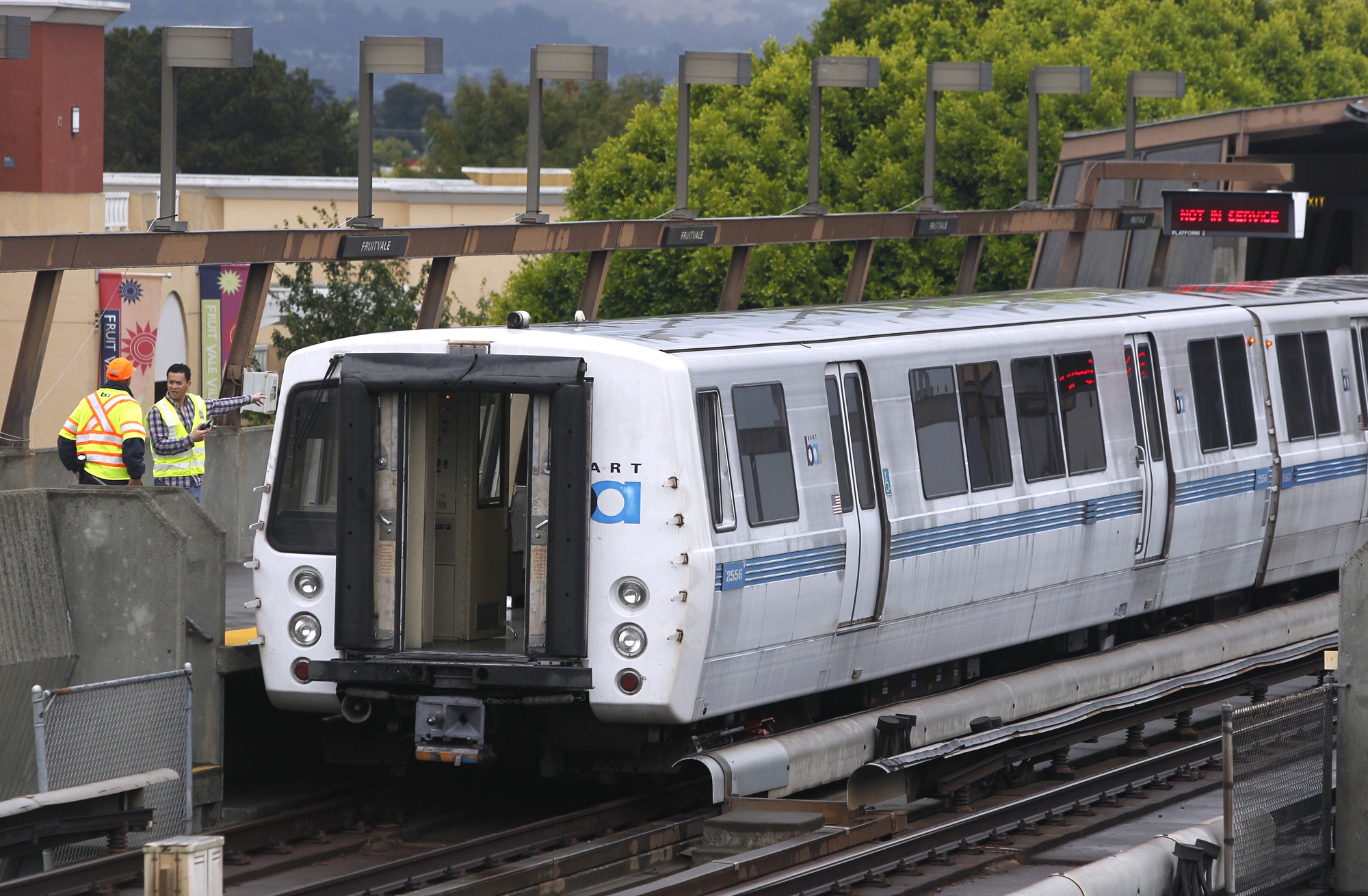
"caption": "BART employees stand outside a damaged 3-car train at the Fruitvale station in Oakland, California, on July 9, 2015. A new watchdog report reveals BART spent nearly $100 million on overtime in recent years, raising concerns about staffing, weak data systems and long-term financial management.",
"credit": "Paul Chinn/The San Francisco Chronicle via Getty Images",
"altTag": null,
"description": null,
"imgSizes": {
"thumbnail": {
"file": "https://cdn.kqed.org/wp-content/uploads/sites/10/2025/09/BARTEmployeesGetty-160x105.jpg",
"width": 160,
"height": 105,
"mimeType": "image/jpeg"
},
"1536x1536": {
"file": "https://cdn.kqed.org/wp-content/uploads/sites/10/2025/09/BARTEmployeesGetty-1536x1006.jpg",
"width": 1536,
"height": 1006,
"mimeType": "image/jpeg"
},
"post-thumbnail": {
"file": "https://cdn.kqed.org/wp-content/uploads/sites/10/2025/09/BARTEmployeesGetty-672x372.jpg",
"width": 672,
"height": 372,
"mimeType": "image/jpeg"
},
"twentyfourteen-full-width": {
"file": "https://cdn.kqed.org/wp-content/uploads/sites/10/2025/09/BARTEmployeesGetty-1038x576.jpg",
"width": 1038,
"height": 576,
"mimeType": "image/jpeg"
},
"kqedFullSize": {
"file": "https://cdn.kqed.org/wp-content/uploads/sites/10/2025/09/BARTEmployeesGetty.jpg",
"width": 2000,
"height": 1310
}
},
"isLoading": false,
"fetchFailed": false
},
"news_12057475": {
"type": "attachments",
"id": "news_12057475",
"meta": {
"index": "attachments_1716263798",
"site": "news",
"id": "12057475",
"found": true
},
"title": "250325-ApartmentsonWestside-21-BL_qed",
"publishDate": 1758749930,
"status": "inherit",
"parent": 12057465,
"modified": 1758749939,
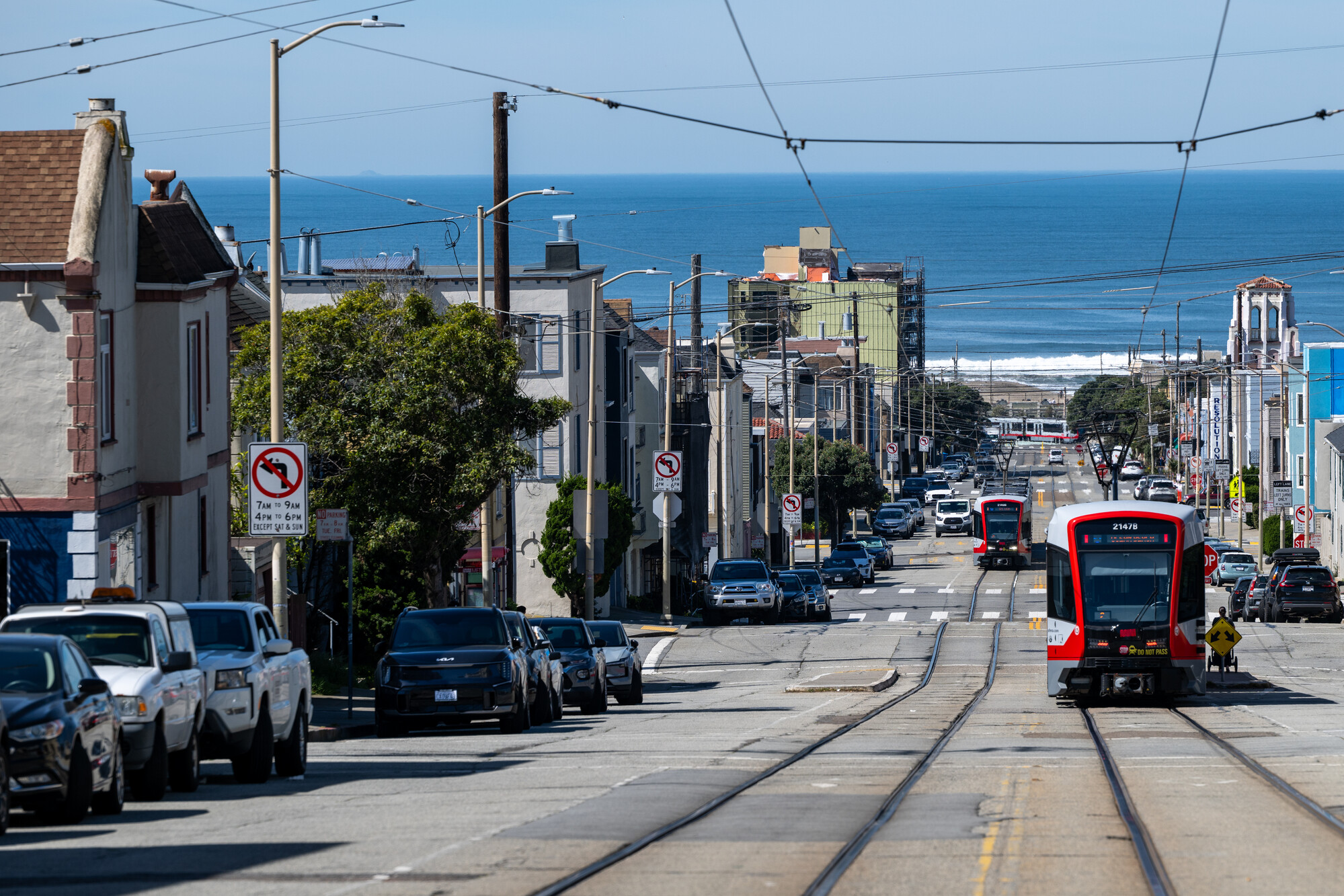
"caption": "Muni Metro cars runs along Judah Street in San Francisco’s Sunset District on March 25, 2025.",
"credit": "Beth LaBerge/KQED",
"altTag": null,
"description": null,
"imgSizes": {
"thumbnail": {
"file": "https://cdn.kqed.org/wp-content/uploads/sites/10/2025/09/250325-ApartmentsonWestside-21-BL_qed-160x107.jpg",
"width": 160,
"height": 107,
"mimeType": "image/jpeg"
},
"1536x1536": {
"file": "https://cdn.kqed.org/wp-content/uploads/sites/10/2025/09/250325-ApartmentsonWestside-21-BL_qed-1536x1024.jpg",
"width": 1536,
"height": 1024,
"mimeType": "image/jpeg"
},
"post-thumbnail": {
"file": "https://cdn.kqed.org/wp-content/uploads/sites/10/2025/09/250325-ApartmentsonWestside-21-BL_qed-672x372.jpg",
"width": 672,
"height": 372,
"mimeType": "image/jpeg"
},
"twentyfourteen-full-width": {
"file": "https://cdn.kqed.org/wp-content/uploads/sites/10/2025/09/250325-ApartmentsonWestside-21-BL_qed-1038x576.jpg",
"width": 1038,
"height": 576,
"mimeType": "image/jpeg"
},
"kqedFullSize": {
"file": "https://cdn.kqed.org/wp-content/uploads/sites/10/2025/09/250325-ApartmentsonWestside-21-BL_qed.jpg",
"width": 1999,
"height": 1333
}
},
"isLoading": false,
"fetchFailed": false
},
"news_12057152": {
"type": "attachments",
"id": "news_12057152",
"meta": {
"index": "attachments_1716263798",
"site": "news",
"id": "12057152",
"found": true
},
"title": "250626-VTAFILE-JG-4_qed",
"publishDate": 1758577878,
"status": "inherit",
"parent": 12057095,
"modified": 1758577955,
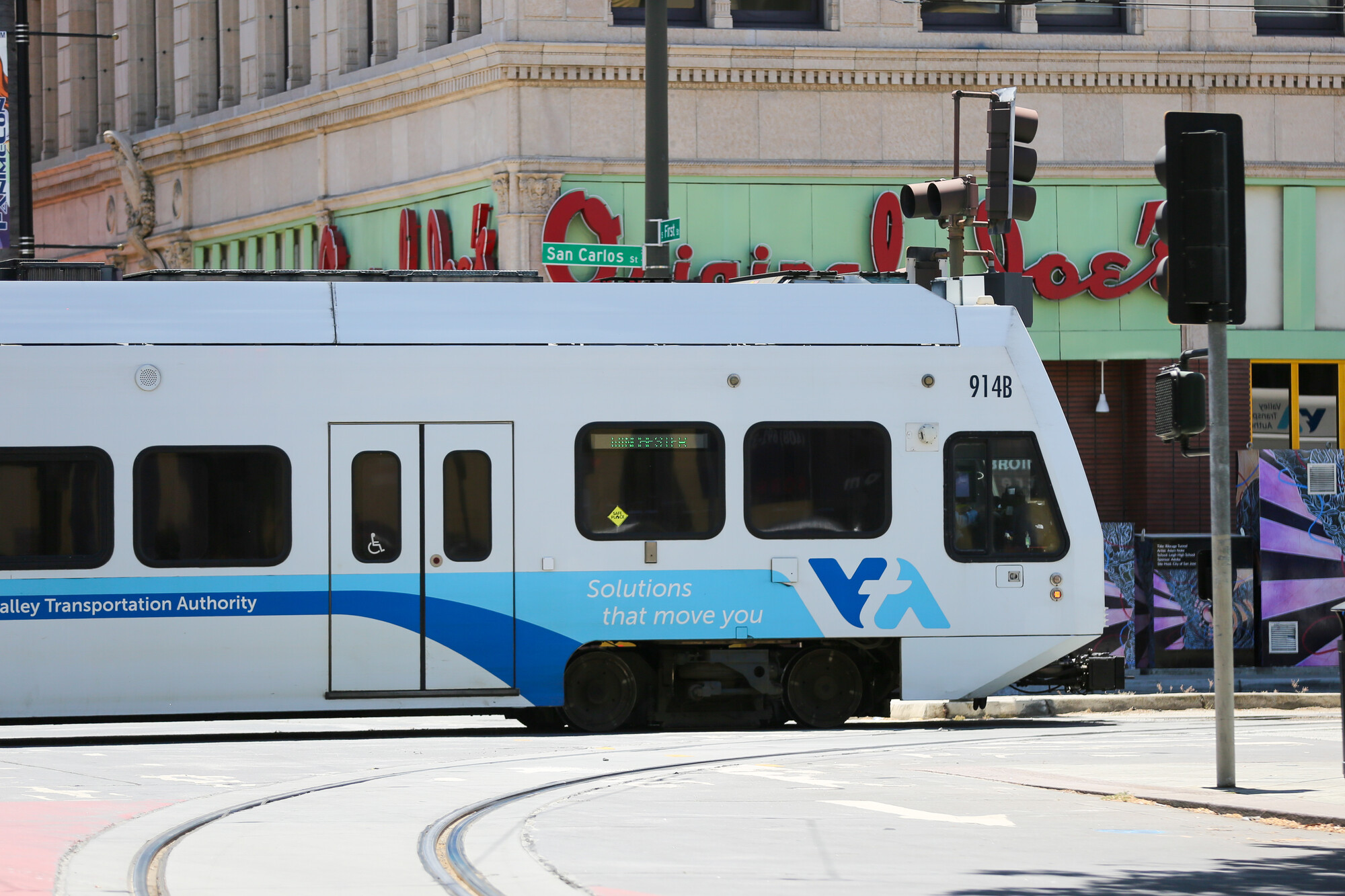
"caption": "A VTA light rail train rolls down the tracks on San Carlos Street in San José on June 26, 2025.",
"credit": "Joseph Geha/ KQED",
"altTag": null,
"description": null,
"imgSizes": {
"thumbnail": {
"file": "https://cdn.kqed.org/wp-content/uploads/sites/10/2025/09/250626-VTAFILE-JG-4_qed-160x107.jpg",
"width": 160,
"height": 107,
"mimeType": "image/jpeg"
},
"1536x1536": {
"file": "https://cdn.kqed.org/wp-content/uploads/sites/10/2025/09/250626-VTAFILE-JG-4_qed-1536x1024.jpg",
"width": 1536,
"height": 1024,
"mimeType": "image/jpeg"
},
"post-thumbnail": {
"file": "https://cdn.kqed.org/wp-content/uploads/sites/10/2025/09/250626-VTAFILE-JG-4_qed-672x372.jpg",
"width": 672,
"height": 372,
"mimeType": "image/jpeg"
},
"twentyfourteen-full-width": {
"file": "https://cdn.kqed.org/wp-content/uploads/sites/10/2025/09/250626-VTAFILE-JG-4_qed-1038x576.jpg",
"width": 1038,
"height": 576,
"mimeType": "image/jpeg"
},
"kqedFullSize": {
"file": "https://cdn.kqed.org/wp-content/uploads/sites/10/2025/09/250626-VTAFILE-JG-4_qed.jpg",
"width": 2000,
"height": 1333
}
},
"isLoading": false,
"fetchFailed": false
},
"news_12055199": {
"type": "attachments",
"id": "news_12055199",
"meta": {
"index": "attachments_1716263798",
"site": "news",
"id": "12055199",
"found": true
},
"title": "TransitFundingKQED3",
"publishDate": 1757365914,
"status": "inherit",
"parent": 12055129,
"modified": 1757365953,
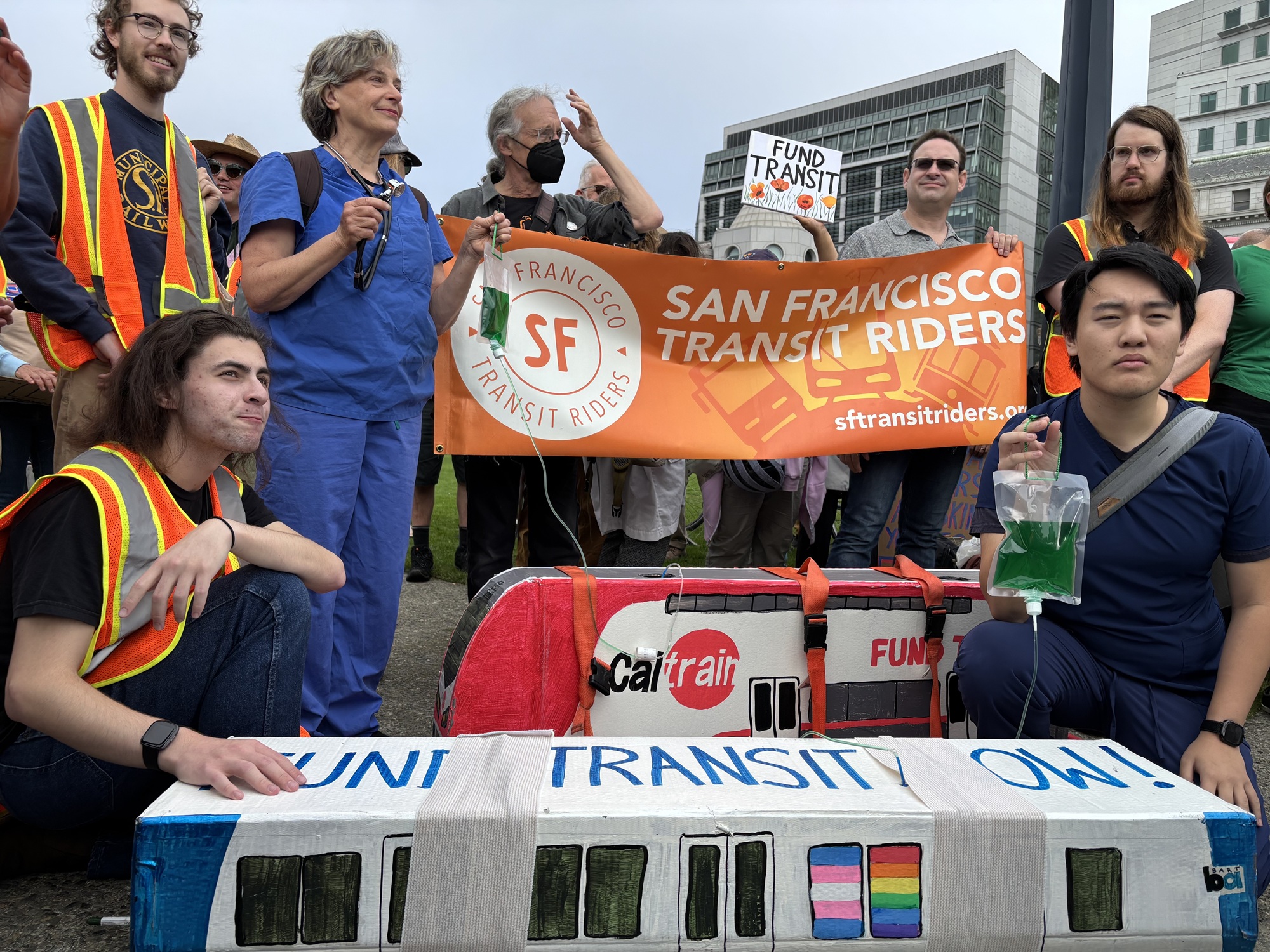
"caption": "More than a hundred people gathered at San Francisco’s Civic Center Plaza on Sept. 8, 2025, in support of an emergency state loan for Bay Area public transit agencies. ",
"credit": "Farida Jhabvala Romero/KQED",
"altTag": null,
"description": null,
"imgSizes": {
"thumbnail": {
"file": "https://cdn.kqed.org/wp-content/uploads/sites/10/2025/09/TransitFundingKQED3-160x120.jpg",
"width": 160,
"height": 120,
"mimeType": "image/jpeg"
},
"1536x1536": {
"file": "https://cdn.kqed.org/wp-content/uploads/sites/10/2025/09/TransitFundingKQED3-1536x1152.jpg",
"width": 1536,
"height": 1152,
"mimeType": "image/jpeg"
},
"post-thumbnail": {
"file": "https://cdn.kqed.org/wp-content/uploads/sites/10/2025/09/TransitFundingKQED3-672x372.jpg",
"width": 672,
"height": 372,
"mimeType": "image/jpeg"
},
"twentyfourteen-full-width": {
"file": "https://cdn.kqed.org/wp-content/uploads/sites/10/2025/09/TransitFundingKQED3-1038x576.jpg",
"width": 1038,
"height": 576,
"mimeType": "image/jpeg"
},
"kqedFullSize": {
"file": "https://cdn.kqed.org/wp-content/uploads/sites/10/2025/09/TransitFundingKQED3.jpg",
"width": 2000,
"height": 1500
}
},
"isLoading": false,
"fetchFailed": false
},
"news_11999606": {
"type": "attachments",
"id": "news_11999606",
"meta": {
"index": "attachments_1716263798",
"site": "news",
"id": "11999606",
"found": true
},
"title": "240313-BART-Train-arrives",
"publishDate": 1723226703,
"status": "inherit",
"parent": 11999596,
"modified": 1746824991,
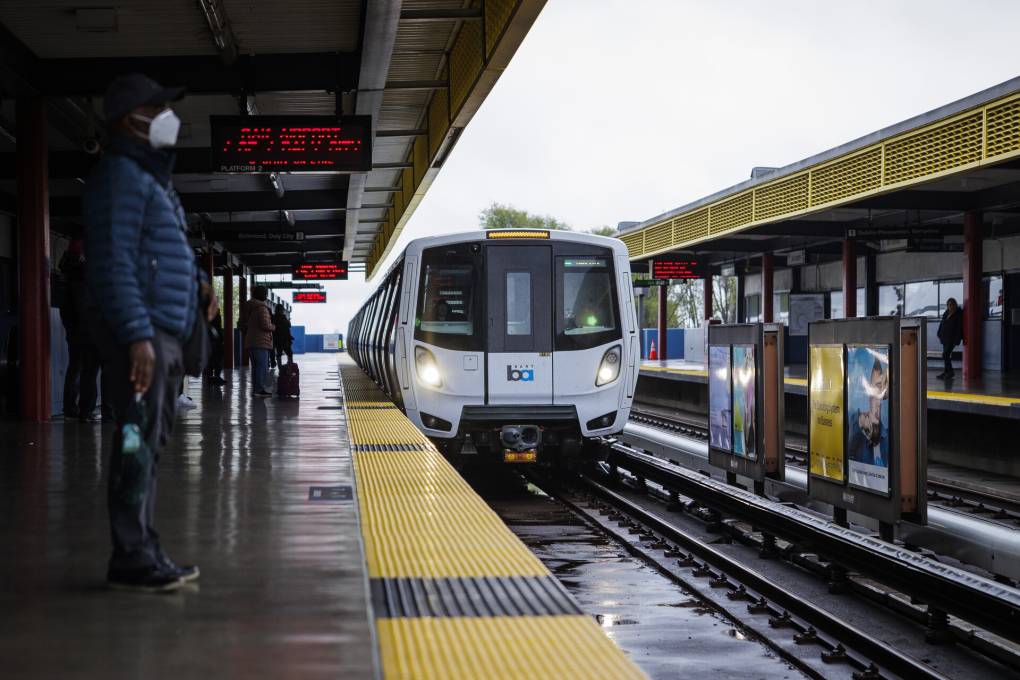
"caption": "A BART train approaches a station on March 13, 2024. ",
"credit": "Martin do Nascimento/KQED",
"altTag": null,
"description": null,
"imgSizes": {
"medium": {
"file": "https://cdn.kqed.org/wp-content/uploads/sites/10/2024/08/240313-BART-Train-arrives-800x533.jpg",
"width": 800,
"height": 533,
"mimeType": "image/jpeg"
},
"large": {
"file": "https://cdn.kqed.org/wp-content/uploads/sites/10/2024/08/240313-BART-Train-arrives-1020x680.jpg",
"width": 1020,
"height": 680,
"mimeType": "image/jpeg"
},
"thumbnail": {
"file": "https://cdn.kqed.org/wp-content/uploads/sites/10/2024/08/240313-BART-Train-arrives-160x107.jpg",
"width": 160,
"height": 107,
"mimeType": "image/jpeg"
},
"1536x1536": {
"file": "https://cdn.kqed.org/wp-content/uploads/sites/10/2024/08/240313-BART-Train-arrives-1536x1024.jpg",
"width": 1536,
"height": 1024,
"mimeType": "image/jpeg"
},
"post-thumbnail": {
"file": "https://cdn.kqed.org/wp-content/uploads/sites/10/2024/08/240313-BART-Train-arrives-672x372.jpg",
"width": 672,
"height": 372,
"mimeType": "image/jpeg"
},
"twentyfourteen-full-width": {
"file": "https://cdn.kqed.org/wp-content/uploads/sites/10/2024/08/240313-BART-Train-arrives-1038x576.jpg",
"width": 1038,
"height": 576,
"mimeType": "image/jpeg"
},
"kqedFullSize": {
"file": "https://cdn.kqed.org/wp-content/uploads/sites/10/2024/08/240313-BART-Train-arrives.jpg",
"width": 1920,
"height": 1280
}
},
"isLoading": false,
"fetchFailed": false
},
"news_12054087": {
"type": "attachments",
"id": "news_12054087",
"meta": {
"index": "attachments_1716263798",
"site": "news",
"id": "12054087",
"found": true
},
"title": "Pickett Fire in California",
"publishDate": 1756407212,
"status": "inherit",
"parent": 12054072,
"modified": 1757104458,
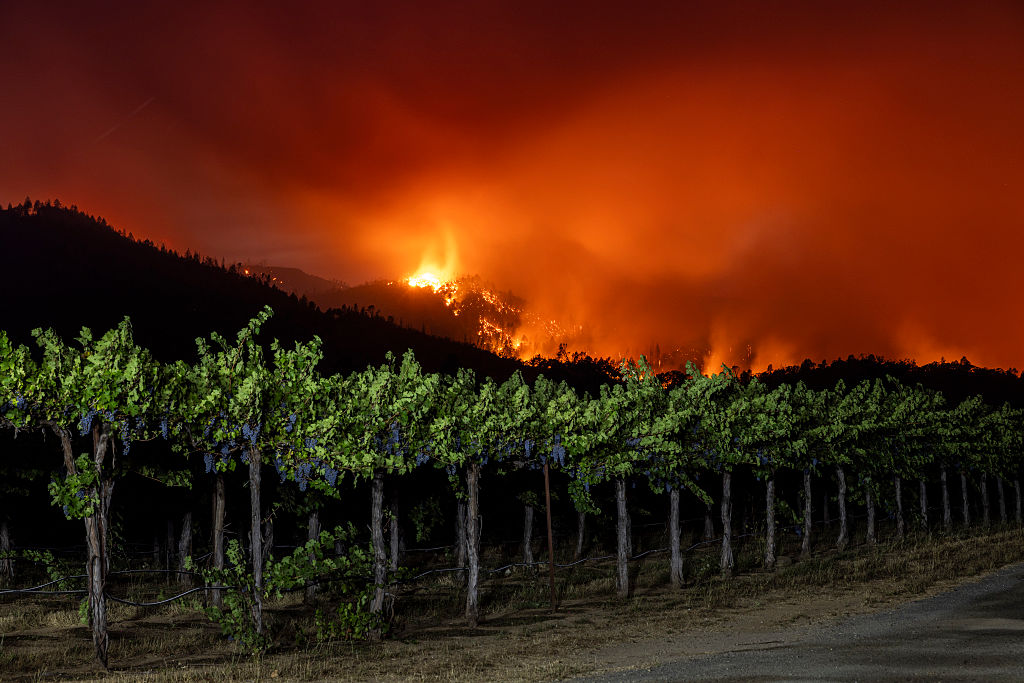
"caption": "Wine grapes are seen at a vineyard as the Pickett Fire burns on a ridge in a distance in Pope Valley, Calif., Friday, Aug. 22, 2025. ",
"credit": "Photo by Stephen Lam/San Francisco Chronicle via Getty Images",
"altTag": null,
"description": null,
"imgSizes": {
"thumbnail": {
"file": "https://cdn.kqed.org/wp-content/uploads/sites/10/2025/08/GettyImages-2230716833-160x107.jpg",
"width": 160,
"height": 107,
"mimeType": "image/jpeg"
},
"post-thumbnail": {
"file": "https://cdn.kqed.org/wp-content/uploads/sites/10/2025/08/GettyImages-2230716833-672x372.jpg",
"width": 672,
"height": 372,
"mimeType": "image/jpeg"
},
"twentyfourteen-full-width": {
"file": "https://cdn.kqed.org/wp-content/uploads/sites/10/2025/08/GettyImages-2230716833-1024x576.jpg",
"width": 1024,
"height": 576,
"mimeType": "image/jpeg"
},
"kqedFullSize": {
"file": "https://cdn.kqed.org/wp-content/uploads/sites/10/2025/08/GettyImages-2230716833.jpg",
"width": 1024,
"height": 683
}
},
"isLoading": false,
"fetchFailed": false
},
"news_12051898": {
"type": "attachments",
"id": "news_12051898",
"meta": {
"index": "attachments_1716263798",
"site": "news",
"id": "12051898",
"found": true
},
"title": "250623-VTAWESTPORTAL-JG-4_qed",
"publishDate": 1755026156,
"status": "inherit",
"parent": 12051730,
"modified": 1755037592,
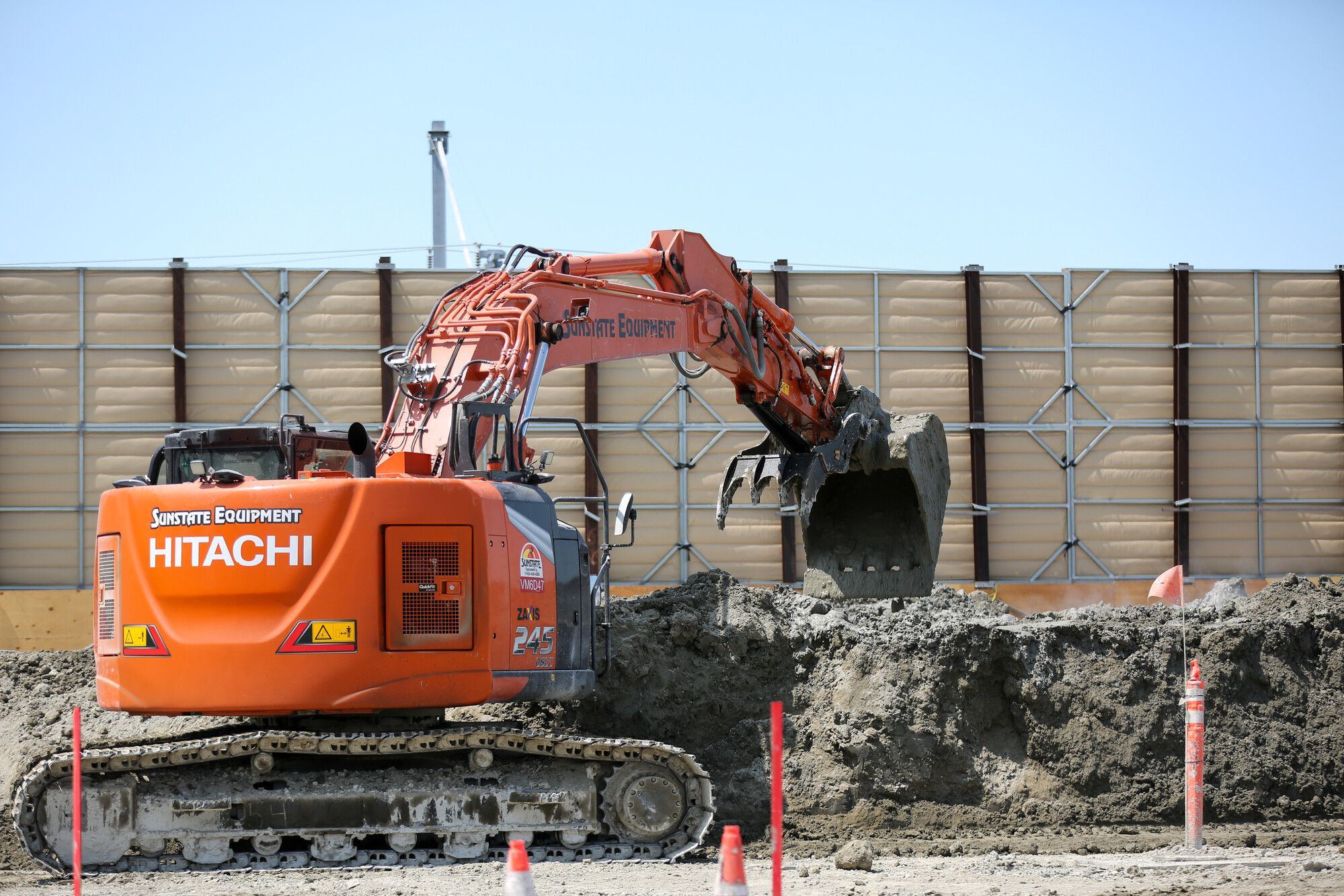
"caption": "An excavator operator moves material during early work on VTA’s BART to Silicon Valley Phase II Extension project at the West Portal construction site in San José on June 23, 2025.",
"credit": "Joseph Geha/KQED",
"altTag": null,
"description": null,
"imgSizes": {
"thumbnail": {
"file": "https://cdn.kqed.org/wp-content/uploads/sites/10/2025/08/250623-VTAWESTPORTAL-JG-4_qed-160x107.jpg",
"width": 160,
"height": 107,
"mimeType": "image/jpeg"
},
"1536x1536": {
"file": "https://cdn.kqed.org/wp-content/uploads/sites/10/2025/08/250623-VTAWESTPORTAL-JG-4_qed-1536x1024.jpg",
"width": 1536,
"height": 1024,
"mimeType": "image/jpeg"
},
"post-thumbnail": {
"file": "https://cdn.kqed.org/wp-content/uploads/sites/10/2025/08/250623-VTAWESTPORTAL-JG-4_qed-672x372.jpg",
"width": 672,
"height": 372,
"mimeType": "image/jpeg"
},
"twentyfourteen-full-width": {
"file": "https://cdn.kqed.org/wp-content/uploads/sites/10/2025/08/250623-VTAWESTPORTAL-JG-4_qed-1038x576.jpg",
"width": 1038,
"height": 576,
"mimeType": "image/jpeg"
},
"kqedFullSize": {
"file": "https://cdn.kqed.org/wp-content/uploads/sites/10/2025/08/250623-VTAWESTPORTAL-JG-4_qed.jpg",
"width": 1999,
"height": 1333
}
},
"isLoading": false,
"fetchFailed": false
},
"news_12052429": {
"type": "attachments",
"id": "news_12052429",
"meta": {
"index": "attachments_1716263798",
"site": "news",
"id": "12052429",
"found": true
},
"title": "20241204-BART-JY-023_qed",
"publishDate": 1755288565,
"status": "inherit",
"parent": 12052424,
"modified": 1755288593,
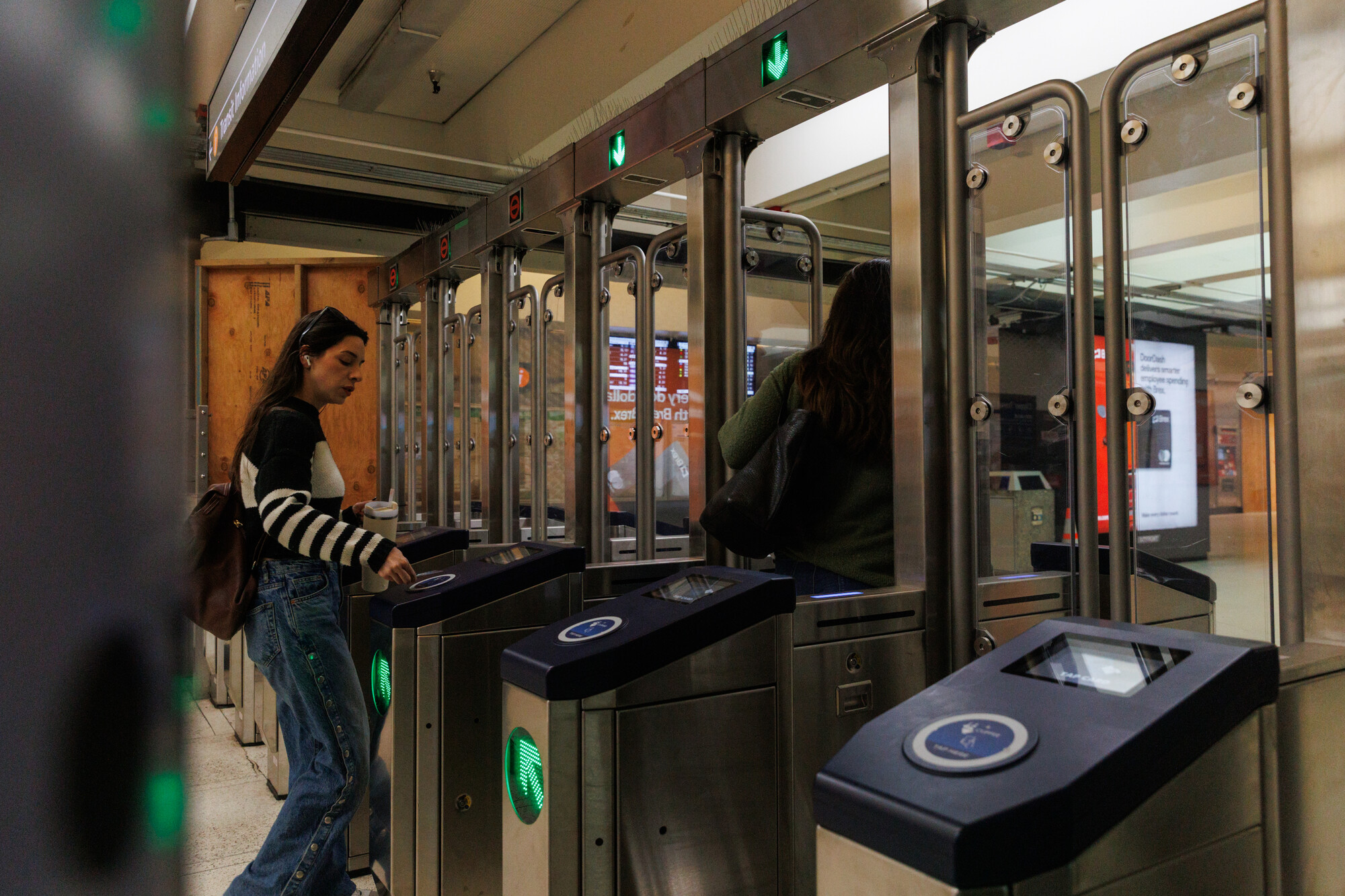
"caption": "Passengers tag their Clipper cards at Montgomery BART Station in San Francisco on Dec. 4, 2024.",
"credit": "Juliana Yamada/KQED",
"altTag": null,
"description": null,
"imgSizes": {
"thumbnail": {
"file": "https://cdn.kqed.org/wp-content/uploads/sites/10/2025/08/20241204-BART-JY-023_qed-160x107.jpg",
"width": 160,
"height": 107,
"mimeType": "image/jpeg"
},
"1536x1536": {
"file": "https://cdn.kqed.org/wp-content/uploads/sites/10/2025/08/20241204-BART-JY-023_qed-1536x1024.jpg",
"width": 1536,
"height": 1024,
"mimeType": "image/jpeg"
},
"post-thumbnail": {
"file": "https://cdn.kqed.org/wp-content/uploads/sites/10/2025/08/20241204-BART-JY-023_qed-672x372.jpg",
"width": 672,
"height": 372,
"mimeType": "image/jpeg"
},
"twentyfourteen-full-width": {
"file": "https://cdn.kqed.org/wp-content/uploads/sites/10/2025/08/20241204-BART-JY-023_qed-1038x576.jpg",
"width": 1038,
"height": 576,
"mimeType": "image/jpeg"
},
"kqedFullSize": {
"file": "https://cdn.kqed.org/wp-content/uploads/sites/10/2025/08/20241204-BART-JY-023_qed.jpg",
"width": 2000,
"height": 1333
}
},
"isLoading": false,
"fetchFailed": false
},
"news_12051894": {
"type": "attachments",
"id": "news_12051894",
"meta": {
"index": "attachments_1716263798",
"site": "news",
"id": "12051894",
"found": true
},
"title": "250623-VTAWESTPORTAL-JG-5_qed",
"publishDate": 1755026070,
"status": "inherit",
"parent": 0,
"modified": 1755026105,
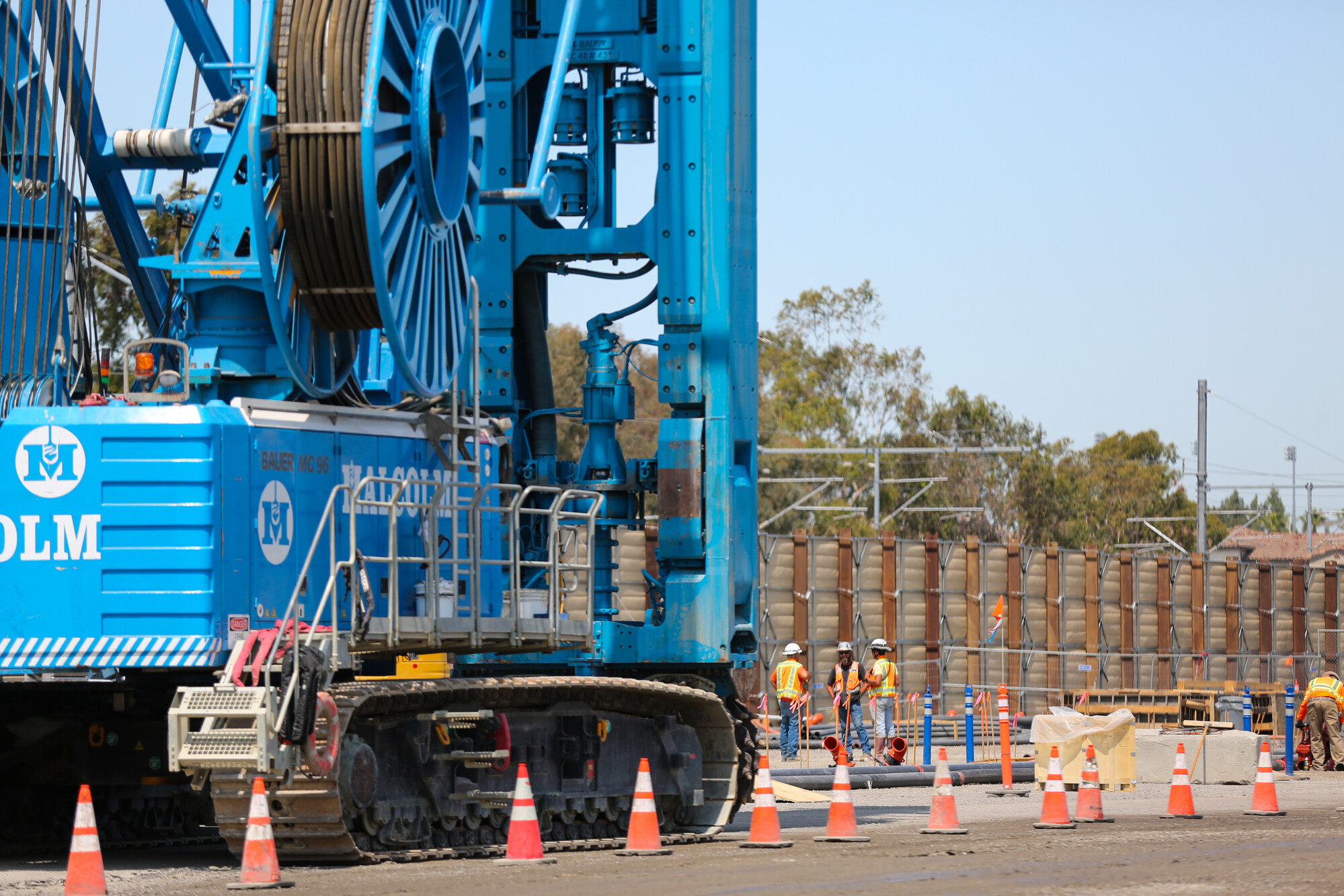
"caption": "A massive cutter soil-mixing rig injects materials into soil at the West Portal construction site in San José on June 23, 2025.",
"credit": "Joseph Geha/KQED",
"altTag": null,
"description": null,
"imgSizes": {
"thumbnail": {
"file": "https://cdn.kqed.org/wp-content/uploads/sites/10/2025/08/250623-VTAWESTPORTAL-JG-5_qed-160x107.jpg",
"width": 160,
"height": 107,
"mimeType": "image/jpeg"
},
"1536x1536": {
"file": "https://cdn.kqed.org/wp-content/uploads/sites/10/2025/08/250623-VTAWESTPORTAL-JG-5_qed-1536x1024.jpg",
"width": 1536,
"height": 1024,
"mimeType": "image/jpeg"
},
"post-thumbnail": {
"file": "https://cdn.kqed.org/wp-content/uploads/sites/10/2025/08/250623-VTAWESTPORTAL-JG-5_qed-672x372.jpg",
"width": 672,
"height": 372,
"mimeType": "image/jpeg"
},
"twentyfourteen-full-width": {
"file": "https://cdn.kqed.org/wp-content/uploads/sites/10/2025/08/250623-VTAWESTPORTAL-JG-5_qed-1038x576.jpg",
"width": 1038,
"height": 576,
"mimeType": "image/jpeg"
},
"kqedFullSize": {
"file": "https://cdn.kqed.org/wp-content/uploads/sites/10/2025/08/250623-VTAWESTPORTAL-JG-5_qed.jpg",
"width": 1999,
"height": 1333
}
},
"isLoading": false,
"fetchFailed": false
},
"news_12051374": {
"type": "attachments",
"id": "news_12051374",
"meta": {
"index": "attachments_1716263798",
"site": "news",
"id": "12051374",
"found": true
},
"title": "20241204-BART-JY-002_qed",
"publishDate": 1754609699,
"status": "inherit",
"parent": 12051362,
"modified": 1757189961,
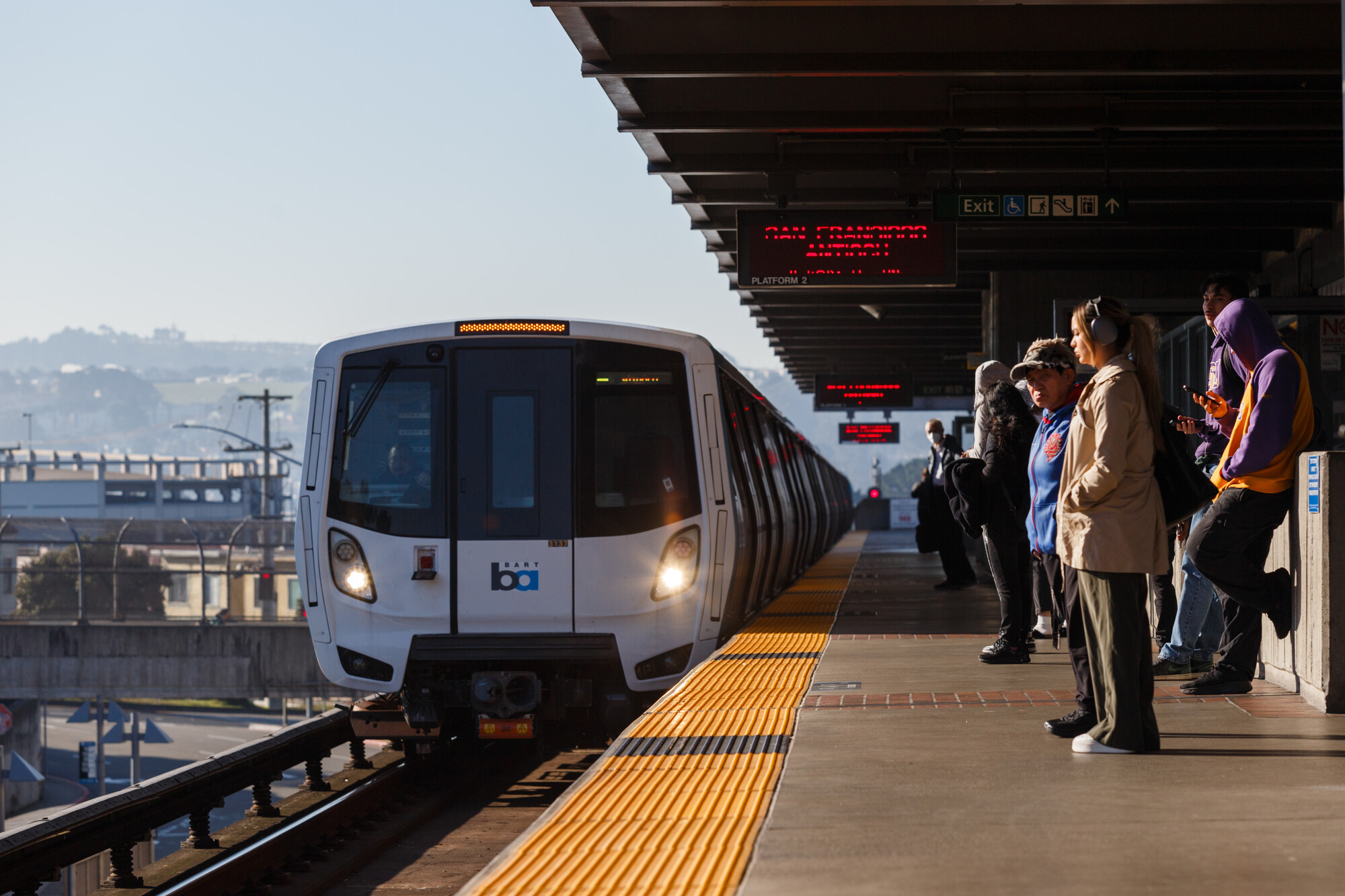
"caption": "A BART car approaches the platform at Daly City Station in Daly City, on Dec. 4, 2024.",
"credit": "Juliana Yamada/KQED",
"altTag": null,
"description": null,
"imgSizes": {
"thumbnail": {
"file": "https://cdn.kqed.org/wp-content/uploads/sites/10/2025/08/20241204-BART-JY-002_qed-160x107.jpg",
"width": 160,
"height": 107,
"mimeType": "image/jpeg"
},
"1536x1536": {
"file": "https://cdn.kqed.org/wp-content/uploads/sites/10/2025/08/20241204-BART-JY-002_qed-1536x1024.jpg",
"width": 1536,
"height": 1024,
"mimeType": "image/jpeg"
},
"post-thumbnail": {
"file": "https://cdn.kqed.org/wp-content/uploads/sites/10/2025/08/20241204-BART-JY-002_qed-672x372.jpg",
"width": 672,
"height": 372,
"mimeType": "image/jpeg"
},
"twentyfourteen-full-width": {
"file": "https://cdn.kqed.org/wp-content/uploads/sites/10/2025/08/20241204-BART-JY-002_qed-1038x576.jpg",
"width": 1038,
"height": 576,
"mimeType": "image/jpeg"
},
"kqedFullSize": {
"file": "https://cdn.kqed.org/wp-content/uploads/sites/10/2025/08/20241204-BART-JY-002_qed.jpg",
"width": 2000,
"height": 1333
}
},
"isLoading": false,
"fetchFailed": false
},
"news_12049213": {
"type": "attachments",
"id": "news_12049213",
"meta": {
"index": "attachments_1716263798",
"site": "news",
"id": "12049213",
"found": true
},
"title": "250722-DEADCOMUNI_00014_TV-KQED",
"publishDate": 1753213865,
"status": "inherit",
"parent": 0,
"modified": 1753222205,
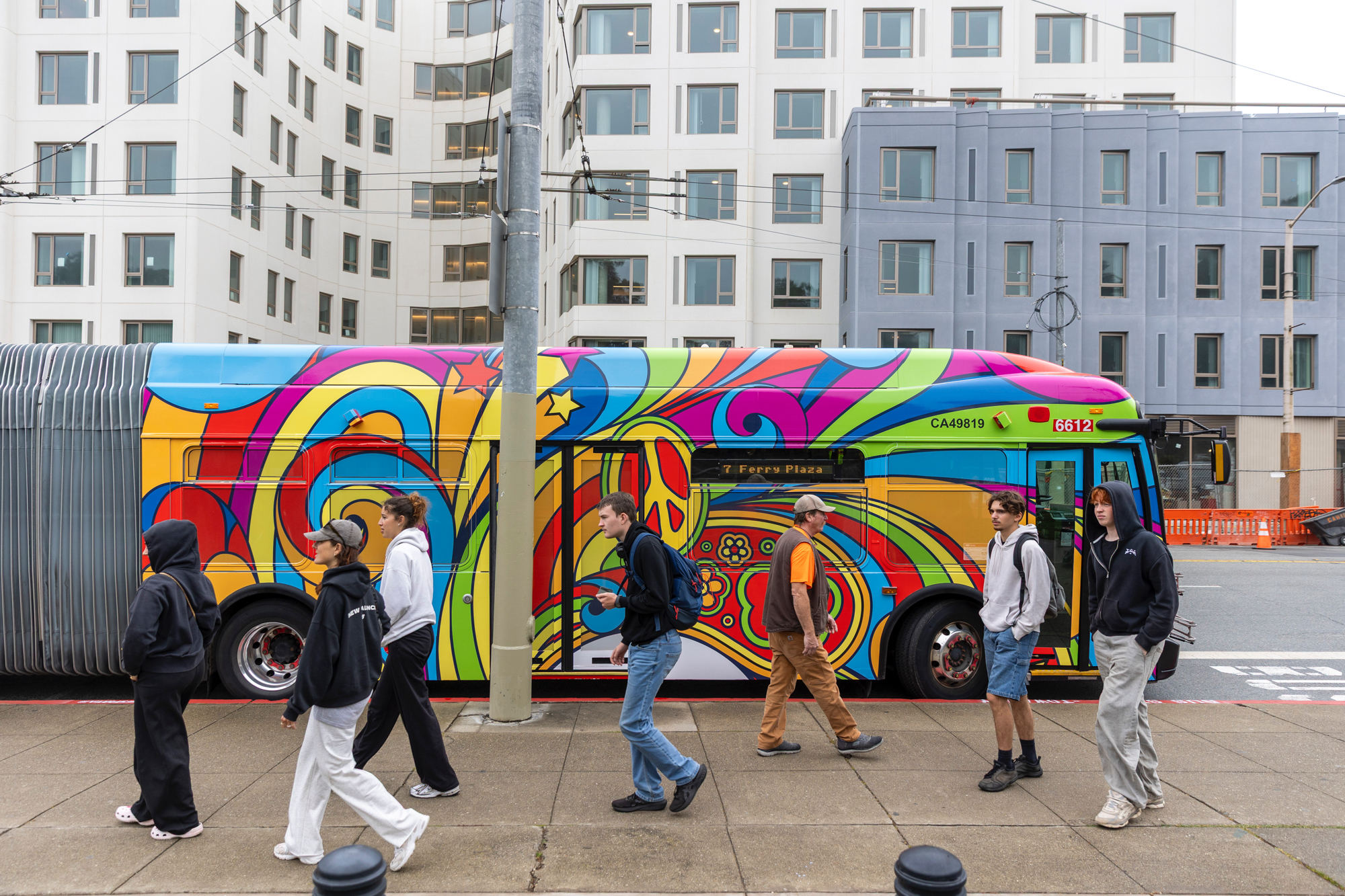
"caption": "Pedestrians walk past one of the psychedelic-themed buses in the Haight Ashbury District in San Francisco on July 22, 2025. Mayor Daniel Lurie and the SFMTA unveil one of several tie-dye Muni buses in celebration of the Dead & Company 60th anniversary concert.",
"credit": "Tâm Vũ/KQED",
"altTag": null,
"description": null,
"imgSizes": {
"thumbnail": {
"file": "https://cdn.kqed.org/wp-content/uploads/sites/10/2025/07/250722-DEADCOMUNI_00014_TV-KQED-160x107.jpg",
"width": 160,
"height": 107,
"mimeType": "image/jpeg"
},
"1536x1536": {
"file": "https://cdn.kqed.org/wp-content/uploads/sites/10/2025/07/250722-DEADCOMUNI_00014_TV-KQED-1536x1024.jpg",
"width": 1536,
"height": 1024,
"mimeType": "image/jpeg"
},
"post-thumbnail": {
"file": "https://cdn.kqed.org/wp-content/uploads/sites/10/2025/07/250722-DEADCOMUNI_00014_TV-KQED-672x372.jpg",
"width": 672,
"height": 372,
"mimeType": "image/jpeg"
},
"twentyfourteen-full-width": {
"file": "https://cdn.kqed.org/wp-content/uploads/sites/10/2025/07/250722-DEADCOMUNI_00014_TV-KQED-1038x576.jpg",
"width": 1038,
"height": 576,
"mimeType": "image/jpeg"
},
"kqedFullSize": {
"file": "https://cdn.kqed.org/wp-content/uploads/sites/10/2025/07/250722-DEADCOMUNI_00014_TV-KQED.jpg",
"width": 2000,
"height": 1333
}
},
"isLoading": false,
"fetchFailed": false
}
},
"audioPlayerReducer": {
"postId": "stream_live",
"isPaused": true,
"isPlaying": false,
"pfsActive": false,
"pledgeModalIsOpen": true,
"playerDrawerIsOpen": false,
"liveAudioPlayStartedAt": 0,
"liveAudioPlayContext": ""
},
"authorsReducer": {
"danbrekke": {
"type": "authors",
"id": "222",
"meta": {
"index": "authors_1716337520",
"id": "222",
"found": true
},
"name": "Dan Brekke",
"firstName": "Dan",
"lastName": "Brekke",
"slug": "danbrekke",
"email": "dbrekke@kqed.org",
"display_author_email": true,
"staff_mastheads": [
"news",
"science"
],
"title": "KQED Editor and Reporter",
"bio": "Dan Brekke is a reporter and editor for KQED News, responsible for coverage of topics ranging from California water issues to the Bay Area's transportation challenges. In a newsroom career that began in Chicago in 1972, Dan has worked for \u003cem>The San Francisco Examiner,\u003c/em> Wired and TechTV and has been published in The New York Times, The New York Times Magazine, Business 2.0, Salon and elsewhere.\r\n\r\nSince joining KQED in 2007, Dan has reported, edited and produced both radio and online features and breaking news pieces. He has shared as both editor and reporter in four Society of Professional Journalists Norcal Excellence in Journalism awards and one Edward R. Murrow regional award. He was chosen for a spring 2017 residency at the Mesa Refuge to advance his research on California salmon.\r\n\r\nEmail Dan at: \u003ca href=\"mailto:dbrekke@kqed.org\">dbrekke@kqed.org\u003c/a>\r\n\r\n\u003cstrong>Twitter:\u003c/strong> \u003ca href=\"https://twitter.com/danbrekke\" rel=\"noopener noreferrer\">twitter.com/danbrekke\u003c/a>\r\n\u003cstrong>Facebook:\u003c/strong> \u003ca href=\"https://www.facebook.com/danbrekke\" rel=\"noopener noreferrer\">www.facebook.com/danbrekke\u003c/a>\r\n\u003cstrong>LinkedIn:\u003c/strong> \u003ca href=\"https://www.linkedin.com/in/danbrekke\" rel=\"noopener noreferrer\">www.linkedin.com/in/danbrekke\u003c/a>",
"avatar": "https://secure.gravatar.com/avatar/8f1f0d2a978fb3b23426c922c7e2af558fa36905b49c4ce76a97dc3c72d27226?s=600&d=mm&r=g",
"twitter": "danbrekke",
"bluesky": null,
"facebook": null,
"instagram": "https://www.instagram.com/dan.brekke/",
"linkedin": "https://www.linkedin.com/in/danbrekke/",
"sites": [
{
"site": "news",
"roles": [
"administrator",
"create_posts"
]
},
{
"site": "stateofhealth",
"roles": [
"editor"
]
},
{
"site": "science",
"roles": [
"editor"
]
},
{
"site": "quest",
"roles": [
"contributor"
]
},
{
"site": "food",
"roles": [
"contributor"
]
},
{
"site": "forum",
"roles": [
"contributor"
]
},
{
"site": "elections",
"roles": [
"editor"
]
},
{
"site": "liveblog",
"roles": [
"editor"
]
}
],
"headData": {
"title": "Dan Brekke | KQED",
"description": "KQED Editor and Reporter",
"ogImgSrc": "https://secure.gravatar.com/avatar/8f1f0d2a978fb3b23426c922c7e2af558fa36905b49c4ce76a97dc3c72d27226?s=600&d=mm&r=g",
"twImgSrc": "https://secure.gravatar.com/avatar/8f1f0d2a978fb3b23426c922c7e2af558fa36905b49c4ce76a97dc3c72d27226?s=600&d=mm&r=g"
},
"isLoading": false,
"link": "/author/danbrekke"
},
"ecruzguevarra": {
"type": "authors",
"id": "8654",
"meta": {
"index": "authors_1716337520",
"id": "8654",
"found": true
},
"name": "Ericka Cruz Guevarra",
"firstName": "Ericka",
"lastName": "Cruz Guevarra",
"slug": "ecruzguevarra",
"email": "ecruzguevarra@kqed.org",
"display_author_email": true,
"staff_mastheads": [
"news"
],
"title": "Producer, The Bay Podcast",
"bio": "Ericka Cruz Guevarra is host of \u003ca href=\"https://www.kqed.org/podcasts/thebay\">\u003cem>The Bay\u003c/em>\u003c/a> podcast at KQED. Before host, she was the show’s producer. Her work in that capacity includes a three-part reported series on policing in Vallejo, which won a 2020 excellence in journalism award from the Society of Professional Journalists. Ericka has worked as a breaking news reporter at Oregon Public Broadcasting, helped produce the Code Switch podcast, and was KQED’s inaugural Raul Ramirez Diversity Fund intern. She’s also an alumna of NPR’s Next Generation Radio program. Send her an email if you have strong feelings about whether Fairfield and Suisun City are the Bay. Ericka is represented by SAG-AFTRA.",
"avatar": "https://secure.gravatar.com/avatar/accefc1de4bafc7e234b69bcb9b6f6536c130fd84709bc3069ef11a78787e1bb?s=600&d=blank&r=g",
"twitter": "NotoriousECG",
"bluesky": null,
"facebook": null,
"instagram": null,
"linkedin": null,
"sites": [
{
"site": "arts",
"roles": [
"subscriber"
]
},
{
"site": "news",
"roles": [
"editor",
"manage_categories"
]
},
{
"site": "futureofyou",
"roles": [
"subscriber"
]
},
{
"site": "stateofhealth",
"roles": [
"subscriber"
]
},
{
"site": "science",
"roles": [
"editor"
]
},
{
"site": "forum",
"roles": [
"subscriber"
]
}
],
"headData": {
"title": "Ericka Cruz Guevarra | KQED",
"description": "Producer, The Bay Podcast",
"ogImgSrc": "https://secure.gravatar.com/avatar/accefc1de4bafc7e234b69bcb9b6f6536c130fd84709bc3069ef11a78787e1bb?s=600&d=blank&r=g",
"twImgSrc": "https://secure.gravatar.com/avatar/accefc1de4bafc7e234b69bcb9b6f6536c130fd84709bc3069ef11a78787e1bb?s=600&d=blank&r=g"
},
"isLoading": false,
"link": "/author/ecruzguevarra"
},
"nvoynovskaya": {
"type": "authors",
"id": "11387",
"meta": {
"index": "authors_1716337520",
"id": "11387",
"found": true
},
"name": "Nastia Voynovskaya",
"firstName": "Nastia",
"lastName": "Voynovskaya",
"slug": "nvoynovskaya",
"email": "nvoynovskaya@kqed.org",
"display_author_email": false,
"staff_mastheads": [
"arts"
],
"title": "Editor and reporter",
"bio": "Nastia Voynovskaya is a reporter, editor and host at KQED Arts & Culture. She's been covering the arts in the Bay Area for over a decade, with a focus on music, queer culture, labor issues and grassroots organizing. She has edited KQED story series such as Trans Bay: A History of San Francisco's Gender-Diverse Community, and co-created KQED's Bay Area hip-hop history project, That's My Word. Nastia's work has been recognized by the Society of Professional Journalists and San Francisco Press Club. She regularly appears on podcasts and radio programs, including NPR's All Songs Considered, and hosts live events where music, culture and conversation meet.",
"avatar": "https://secure.gravatar.com/avatar/5025ee460e5a85d69ca20ea6c6f2f80d7e17795c828f61ea3aecfcd924e9042e?s=600&d=blank&r=g",
"twitter": null,
"bluesky": null,
"facebook": null,
"instagram": "https://www.instagram.com/nananastia/",
"linkedin": null,
"sites": [
{
"site": "",
"roles": [
"editor"
]
},
{
"site": "arts",
"roles": [
"administrator"
]
},
{
"site": "news",
"roles": [
"editor"
]
},
{
"site": "pop",
"roles": [
"administrator"
]
},
{
"site": "bayareabites",
"roles": [
"editor"
]
},
{
"site": "podcasts",
"roles": [
"editor"
]
},
{
"site": "hiphop",
"roles": [
"editor"
]
}
],
"headData": {
"title": "Nastia Voynovskaya | KQED",
"description": "Editor and reporter",
"ogImgSrc": "https://secure.gravatar.com/avatar/5025ee460e5a85d69ca20ea6c6f2f80d7e17795c828f61ea3aecfcd924e9042e?s=600&d=blank&r=g",
"twImgSrc": "https://secure.gravatar.com/avatar/5025ee460e5a85d69ca20ea6c6f2f80d7e17795c828f61ea3aecfcd924e9042e?s=600&d=blank&r=g"
},
"isLoading": false,
"link": "/author/nvoynovskaya"
},
"amontecillo": {
"type": "authors",
"id": "11649",
"meta": {
"index": "authors_1716337520",
"id": "11649",
"found": true
},
"name": "Alan Montecillo",
"firstName": "Alan",
"lastName": "Montecillo",
"slug": "amontecillo",
"email": "amontecillo@kqed.org",
"display_author_email": false,
"staff_mastheads": [
"news"
],
"title": "KQED Contributor",
"bio": "Alan Montecillo is the senior editor of \u003cem>\u003ca href=\"http://kqed.org/thebay\">The Bay\u003c/a>, \u003c/em> KQED's local news podcast. Before moving to the Bay Area, he worked as a senior talk show producer for WILL in Champaign-Urbana, Illinois and at Oregon Public Broadcasting in Portland, Oregon. He has won journalism awards from the Society of Professional Journalists Northern California, the Public Media Journalists Association, The Signal Awards, and has also received a regional Edward R. Murrow award. Alan is a Filipino American from Hong Kong and a graduate of Reed College.",
"avatar": "https://secure.gravatar.com/avatar/268f53a2066899ea9efdd8a5900218b17c822d9862cbc9326cccec53ef41d349?s=600&d=blank&r=g",
"twitter": "alanmontecillo",
"bluesky": null,
"facebook": null,
"instagram": null,
"linkedin": null,
"sites": [
{
"site": "",
"roles": [
"editor"
]
},
{
"site": "news",
"roles": [
"editor",
"manage_categories"
]
}
],
"headData": {
"title": "Alan Montecillo | KQED",
"description": "KQED Contributor",
"ogImgSrc": "https://secure.gravatar.com/avatar/268f53a2066899ea9efdd8a5900218b17c822d9862cbc9326cccec53ef41d349?s=600&d=blank&r=g",
"twImgSrc": "https://secure.gravatar.com/avatar/268f53a2066899ea9efdd8a5900218b17c822d9862cbc9326cccec53ef41d349?s=600&d=blank&r=g"
},
"isLoading": false,
"link": "/author/amontecillo"
},
"abandlamudi": {
"type": "authors",
"id": "11672",
"meta": {
"index": "authors_1716337520",
"id": "11672",
"found": true
},
"name": "Adhiti Bandlamudi",
"firstName": "Adhiti",
"lastName": "Bandlamudi",
"slug": "abandlamudi",
"email": "abandlamudi@kqed.org",
"display_author_email": false,
"staff_mastheads": [
"news"
],
"title": "KQED Housing Reporter",
"bio": "Adhiti Bandlamudi reports for KQED's Housing desk. She focuses on how housing gets built across the Bay Area. Before joining KQED in 2020, she reported for WUNC in Durham, North Carolina, WABE in Atlanta, Georgia and Capital Public Radio in Sacramento. In 2017, she was awarded a Kroc Fellowship at NPR where she reported on everything from sprinkles to the Golden State Killer's arrest. When she's not reporting, she's baking new recipes in her kitchen or watching movies with friends and family. She's originally from Georgia and has strong opinions about Great British Bake Off.",
"avatar": "https://secure.gravatar.com/avatar/868129c8b257bb99a3500e2c86a65400?s=600&d=mm&r=g",
"twitter": "oddity_adhiti",
"facebook": null,
"instagram": null,
"linkedin": null,
"sites": [
{
"site": "arts",
"roles": [
"author"
]
},
{
"site": "news",
"roles": [
"editor"
]
},
{
"site": "liveblog",
"roles": [
"author"
]
}
],
"headData": {
"title": "Adhiti Bandlamudi | KQED",
"description": "KQED Housing Reporter",
"ogImgSrc": "https://secure.gravatar.com/avatar/868129c8b257bb99a3500e2c86a65400?s=600&d=mm&r=g",
"twImgSrc": "https://secure.gravatar.com/avatar/868129c8b257bb99a3500e2c86a65400?s=600&d=mm&r=g"
},
"isLoading": false,
"link": "/author/abandlamudi"
},
"ccabreralomeli": {
"type": "authors",
"id": "11708",
"meta": {
"index": "authors_1716337520",
"id": "11708",
"found": true
},
"name": "Carlos Cabrera-Lomelí",
"firstName": "Carlos",
"lastName": "Cabrera-Lomelí",
"slug": "ccabreralomeli",
"email": "ccabreralomeli@KQED.org",
"display_author_email": true,
"staff_mastheads": [
"news"
],
"title": "Community Reporter",
"bio": "Carlos Cabrera-Lomelí is a community reporter with KQED's digital engagement team. He also reports and co-produces for KQED's bilingual news hub KQED en Español. He grew up in San Francisco's Mission District and has previously worked with Univision, 48 Hills and REFORMA in Mexico City.",
"avatar": "https://secure.gravatar.com/avatar/c309be9665e484f887b818c89e273ecc673004f426f36b24d00a4d813a2e0518?s=600&d=blank&r=g",
"twitter": "@LomeliCabrera",
"bluesky": null,
"facebook": null,
"instagram": null,
"linkedin": null,
"sites": [
{
"site": "arts",
"roles": [
"editor"
]
},
{
"site": "news",
"roles": [
"editor"
]
},
{
"site": "about",
"roles": [
"editor"
]
},
{
"site": "science",
"roles": [
"editor"
]
},
{
"site": "perspectives",
"roles": [
"editor"
]
},
{
"site": "elections",
"roles": [
"editor"
]
},
{
"site": "liveblog",
"roles": [
"contributor"
]
}
],
"headData": {
"title": "Carlos Cabrera-Lomelí | KQED",
"description": "Community Reporter",
"ogImgSrc": "https://secure.gravatar.com/avatar/c309be9665e484f887b818c89e273ecc673004f426f36b24d00a4d813a2e0518?s=600&d=blank&r=g",
"twImgSrc": "https://secure.gravatar.com/avatar/c309be9665e484f887b818c89e273ecc673004f426f36b24d00a4d813a2e0518?s=600&d=blank&r=g"
},
"isLoading": false,
"link": "/author/ccabreralomeli"
},
"jlara": {
"type": "authors",
"id": "11761",
"meta": {
"index": "authors_1716337520",
"id": "11761",
"found": true
},
"name": "Juan Carlos Lara",
"firstName": "Juan Carlos",
"lastName": "Lara",
"slug": "jlara",
"email": "jlara@kqed.org",
"display_author_email": false,
"staff_mastheads": [],
"title": "KQED Contributor",
"bio": null,
"avatar": "https://secure.gravatar.com/avatar/19e2052b9b05657c5ff2af2121846e9c?s=600&d=blank&r=g",
"twitter": null,
"facebook": null,
"instagram": null,
"linkedin": null,
"sites": [
{
"site": "arts",
"roles": [
"editor"
]
},
{
"site": "news",
"roles": [
"editor"
]
},
{
"site": "forum",
"roles": [
"editor"
]
},
{
"site": "liveblog",
"roles": [
"contributor"
]
}
],
"headData": {
"title": "Juan Carlos Lara | KQED",
"description": "KQED Contributor",
"ogImgSrc": "https://secure.gravatar.com/avatar/19e2052b9b05657c5ff2af2121846e9c?s=600&d=blank&r=g",
"twImgSrc": "https://secure.gravatar.com/avatar/19e2052b9b05657c5ff2af2121846e9c?s=600&d=blank&r=g"
},
"isLoading": false,
"link": "/author/jlara"
},
"adahlstromeckman": {
"type": "authors",
"id": "11785",
"meta": {
"index": "authors_1716337520",
"id": "11785",
"found": true
},
"name": "Azul Dahlstrom-Eckman",
"firstName": "Azul",
"lastName": "Dahlstrom-Eckman",
"slug": "adahlstromeckman",
"email": "adahlstrom-eckman@kqed.org",
"display_author_email": true,
"staff_mastheads": [],
"title": "Reporter",
"bio": "Azul is a reporter for KQED focusing on transportation and features. He joined KQED in 2021 as an alumna of KALW's Audio Academy radio journalism training program.",
"avatar": "https://secure.gravatar.com/avatar/9cb750298435add7815a777f55bf1f46845c1386bb8452555c60a7b820b5aba3?s=600&d=blank&r=g",
"twitter": "@zuliemann",
"bluesky": "@azul415.bsky.social",
"facebook": null,
"instagram": null,
"linkedin": null,
"sites": [
{
"site": "arts",
"roles": [
"editor"
]
},
{
"site": "news",
"roles": [
"editor"
]
},
{
"site": "science",
"roles": [
"editor"
]
},
{
"site": "liveblog",
"roles": [
"author"
]
}
],
"headData": {
"title": "Azul Dahlstrom-Eckman | KQED",
"description": "Reporter",
"ogImgSrc": "https://secure.gravatar.com/avatar/9cb750298435add7815a777f55bf1f46845c1386bb8452555c60a7b820b5aba3?s=600&d=blank&r=g",
"twImgSrc": "https://secure.gravatar.com/avatar/9cb750298435add7815a777f55bf1f46845c1386bb8452555c60a7b820b5aba3?s=600&d=blank&r=g"
},
"isLoading": false,
"link": "/author/adahlstromeckman"
},
"jessicakariisa": {
"type": "authors",
"id": "11831",
"meta": {
"index": "authors_1716337520",
"id": "11831",
"found": true
},
"name": "Jessica Kariisa",
"firstName": "Jessica",
"lastName": "Kariisa",
"slug": "jessicakariisa",
"email": "jkariisa@kqed.org",
"display_author_email": false,
"staff_mastheads": [],
"title": "Producer, The Bay",
"bio": "Jessica Kariisa is the producer of The Bay. She first joined KQED as an intern for The California Report Magazine, after which she became an on-call producer. She reported a Bay Curious episode on the use of rap lyrics in criminal trials which won a Society of Professional Journalists award in 2023 for Excellence in Features Journalism and the 2023 Signal Award for Best Conversation Starter. She’s worked on podcasts for Snap Judgment and American Public Media. Before embarking on her audio career, she was a music journalist.\r\n\r\nJessica Kariisa is represented by SAG-AFTRA.",
"avatar": "https://secure.gravatar.com/avatar/522e97b28ac0b3d411621c0fde8f3419c7b71ea2c5c262c57c4bb600963f328c?s=600&d=blank&r=g",
"twitter": null,
"bluesky": null,
"facebook": null,
"instagram": null,
"linkedin": null,
"sites": [
{
"site": "arts",
"roles": [
"author"
]
},
{
"site": "news",
"roles": [
"editor",
"manage_categories"
]
}
],
"headData": {
"title": "Jessica Kariisa | KQED",
"description": "Producer, The Bay",
"ogImgSrc": "https://secure.gravatar.com/avatar/522e97b28ac0b3d411621c0fde8f3419c7b71ea2c5c262c57c4bb600963f328c?s=600&d=blank&r=g",
"twImgSrc": "https://secure.gravatar.com/avatar/522e97b28ac0b3d411621c0fde8f3419c7b71ea2c5c262c57c4bb600963f328c?s=600&d=blank&r=g"
},
"isLoading": false,
"link": "/author/jessicakariisa"
},
"nkhan": {
"type": "authors",
"id": "11867",
"meta": {
"index": "authors_1716337520",
"id": "11867",
"found": true
},
"name": "Nisa Khan",
"firstName": "Nisa",
"lastName": "Khan",
"slug": "nkhan",
"email": "nkhan@kqed.org",
"display_author_email": false,
"staff_mastheads": [],
"title": "KQED Contributor",
"bio": "Nisa Khan is a reporter for KQED's Audience News Desk. She was formerly a data reporter at Michigan Radio. She earned a Bachelor of Science in Information from the University of Michigan and a Master of Arts in Communication from Stanford University.",
"avatar": "https://secure.gravatar.com/avatar/8720459eef081ff64582b3506b124d58523e80e120704a0cbd9892533c914991?s=600&d=blank&r=g",
"twitter": "mnisakhan",
"bluesky": null,
"facebook": null,
"instagram": null,
"linkedin": null,
"sites": [
{
"site": "arts",
"roles": [
"editor"
]
},
{
"site": "news",
"roles": [
"editor"
]
},
{
"site": "science",
"roles": [
"editor",
"author"
]
},
{
"site": "forum",
"roles": [
"editor"
]
},
{
"site": "liveblog",
"roles": [
"contributor"
]
}
],
"headData": {
"title": "Nisa Khan | KQED",
"description": "KQED Contributor",
"ogImgSrc": "https://secure.gravatar.com/avatar/8720459eef081ff64582b3506b124d58523e80e120704a0cbd9892533c914991?s=600&d=blank&r=g",
"twImgSrc": "https://secure.gravatar.com/avatar/8720459eef081ff64582b3506b124d58523e80e120704a0cbd9892533c914991?s=600&d=blank&r=g"
},
"isLoading": false,
"link": "/author/nkhan"
},
"jgeha": {
"type": "authors",
"id": "11906",
"meta": {
"index": "authors_1716337520",
"id": "11906",
"found": true
},
"name": "Joseph Geha",
"firstName": "Joseph",
"lastName": "Geha",
"slug": "jgeha",
"email": "jgeha@kqed.org",
"display_author_email": false,
"staff_mastheads": [
"news",
"science"
],
"title": "KQED Contributor",
"bio": null,
"avatar": "https://secure.gravatar.com/avatar/ea84d2b6dd93d6369d453edf19dd583f117cd1759d2d9c9c92f9de77017354fe?s=600&d=blank&r=g",
"twitter": null,
"bluesky": null,
"facebook": null,
"instagram": null,
"linkedin": null,
"sites": [
{
"site": "news",
"roles": [
"editor"
]
},
{
"site": "liveblog",
"roles": [
"author"
]
}
],
"headData": {
"title": "Joseph Geha | KQED",
"description": "KQED Contributor",
"ogImgSrc": "https://secure.gravatar.com/avatar/ea84d2b6dd93d6369d453edf19dd583f117cd1759d2d9c9c92f9de77017354fe?s=600&d=blank&r=g",
"twImgSrc": "https://secure.gravatar.com/avatar/ea84d2b6dd93d6369d453edf19dd583f117cd1759d2d9c9c92f9de77017354fe?s=600&d=blank&r=g"
},
"isLoading": false,
"link": "/author/jgeha"
},
"kdebenedetti": {
"type": "authors",
"id": "11913",
"meta": {
"index": "authors_1716337520",
"id": "11913",
"found": true
},
"name": "Katie DeBenedetti",
"firstName": "Katie",
"lastName": "DeBenedetti",
"slug": "kdebenedetti",
"email": "kdebenedetti@kqed.org",
"display_author_email": false,
"staff_mastheads": [
"news",
"science"
],
"title": "KQED Contributor",
"bio": "Katie DeBenedetti is a digital reporter covering daily news for the Express Desk. Prior to joining KQED as a culture reporting intern in January 2024, she covered education and city government for the Napa Valley Register.",
"avatar": "https://secure.gravatar.com/avatar/6e31073cb8f7e4214ab03f42771d0f45?s=600&d=blank&r=g",
"twitter": null,
"facebook": null,
"instagram": null,
"linkedin": null,
"sites": [
{
"site": "news",
"roles": [
"author"
]
},
{
"site": "science",
"roles": [
"author"
]
},
{
"site": "liveblog",
"roles": [
"author"
]
}
],
"headData": {
"title": "Katie DeBenedetti | KQED",
"description": "KQED Contributor",
"ogImgSrc": "https://secure.gravatar.com/avatar/6e31073cb8f7e4214ab03f42771d0f45?s=600&d=blank&r=g",
"twImgSrc": "https://secure.gravatar.com/avatar/6e31073cb8f7e4214ab03f42771d0f45?s=600&d=blank&r=g"
},
"isLoading": false,
"link": "/author/kdebenedetti"
}
},
"pagesReducer": {
"news_tag_public-transit": {
"type": "terms",
"id": "news_1764",
"meta": {
"index": "terms_1716263798",
"site": "news",
"id": "1764",
"score": 9.306014
},
"featImg": null,
"name": "public transit",
"description": null,
"taxonomy": "tag",
"headData": {
"twImgId": null,
"twTitle": null,
"ogTitle": null,
"ogImgId": null,
"twDescription": null,
"description": null,
"title": "public transit Archives | KQED News",
"ogDescription": null
},
"ttid": 1777,
"slug": "public-transit",
"isLoading": false,
"title": "public transit",
"pageMeta": {
"site": "news",
"WpPageTemplate": "page-topic-editorial",
"currentPage": 5
},
"blocks": [
{
"blockName": "kqed/post-list",
"attrs": {
"layout": "cardArticle2",
"query": "posts/news?tag=public-transit",
"seeMore": false,
"paginated": true,
"page": 5
}
},
{
"blockName": "kqed/ad"
}
]
}
},
"pfsSessionReducer": {},
"postsReducer": {
"stream_live": {
"type": "live",
"id": "stream_live",
"audioUrl": "https://streams.kqed.org/kqedradio",
"title": "Live Stream",
"excerpt": "Live Stream information currently unavailable.",
"link": "/radio",
"featImg": "",
"label": {
"name": "KQED Live",
"link": "/"
}
},
"stream_kqedNewscast": {
"type": "posts",
"id": "stream_kqedNewscast",
"audioUrl": "https://www.kqed.org/.stream/anon/radio/RDnews/newscast.mp3?_=1",
"title": "KQED Newscast",
"featImg": "",
"label": {
"name": "88.5 FM",
"link": "/"
}
},
"news_12057594": {
"type": "posts",
"id": "news_12057594",
"meta": {
"index": "posts_1716263798",
"site": "news",
"id": "12057594",
"score": null,
"sort": [
1758847425000
]
},
"guestAuthors": [],
"slug": "bart-audit-flags-overtime-costs-weak-controls-as-agency-spends-96-million",
"title": "BART Audit Flags Overtime Costs, Weak Controls as Agency Spends $96 Million",
"publishDate": 1758847425,
"format": "standard",
"headTitle": "BART Audit Flags Overtime Costs, Weak Controls as Agency Spends $96 Million | KQED",
"labelTerm": {
"site": "news"
},
"content": "\u003cp>Rigid union rules. Persistent staffing gaps. Outdated timekeeping systems.\u003c/p>\n\u003cp>Those are among the factors \u003ca href=\"https://www.kqed.org/news/tag/bart\">BART’s\u003c/a> inspector general pointed to in explaining why the transit agency continues to spend a growing share of its budget on overtime.\u003c/p>\n\u003cp>According to the watchdog office’s \u003ca href=\"https://www.bartoig.org/files/d8c036b58/BART+Overtime+Risks+Can+be+Reduced+by+Strategic+Improvements+in+Oversight+and+Management+June+13+-+2025.pdf\">recently published report\u003c/a>, overtime accounted for 14% of BART’s budget last year, with 57 employees doubling their base salaries through extra hours. While the trend dipped slightly last year, the report showed spending escalated from 2021 to 2023, when the agency paid about $96 million in overtime.\u003c/p>\n\u003cp>[ad fullwidth]\u003c/p>\n\u003cp>“Overtime is gonna happen — you can’t run BART without overtime,” Inspector General Claudette Biemeret told the Board of Directors on Wednesday. “But at the end of the fiscal year, you wanna have your costs pretty close to what your budget was and not having these huge variances.”\u003c/p>\n\u003cp>BART staff said the pandemic played a large role in the staffing shortages. In 2021 alone, the agency lost 567 employees, 287 of whom retired after an incentive program was approved by the board. Others left after the agency implemented a \u003ca href=\"https://www.bart.gov/sites/default/files/docs/Memo%20Vaccine%20Mandate%20for%20Consultants%20%20Contractors_10.29.2021.pdf\">COVID-19 vaccine mandate\u003c/a>. Since then, however, BART has steadily hired, growing its workforce by 11.5%.\u003c/p>\n\u003cp>Still, overtime spending grew through 2023.\u003c/p>\n\u003cfigure id=\"attachment_12054821\" class=\"wp-caption aligncenter\" style=\"max-width: 2000px\">\u003cimg loading=\"lazy\" decoding=\"async\" class=\"size-full wp-image-12054821\" src=\"https://cdn.kqed.org/wp-content/uploads/sites/10/2025/09/250905-BARTOutage-03-BL_qed.jpg\" alt=\"\" width=\"2000\" height=\"1333\" srcset=\"https://cdn.kqed.org/wp-content/uploads/sites/10/2025/09/250905-BARTOutage-03-BL_qed.jpg 2000w, https://cdn.kqed.org/wp-content/uploads/sites/10/2025/09/250905-BARTOutage-03-BL_qed-160x107.jpg 160w, https://cdn.kqed.org/wp-content/uploads/sites/10/2025/09/250905-BARTOutage-03-BL_qed-1536x1024.jpg 1536w\" sizes=\"auto, (max-width: 2000px) 100vw, 2000px\">\u003cfigcaption class=\"wp-caption-text\">Tape blocks the entrance to the 24th Street BART Station in San Francisco during an outage on Sept. 5, 2025. \u003ccite>(Beth LaBerge/KQED)\u003c/cite>\u003c/figcaption>\u003c/figure>\n\u003cp>Biemeret said her office tried to identify the root causes but struggled to access key information in BART’s timekeeping system. Employees are required to file timesheets with overtime codes.\u003c/p>\n\u003cp>“But there is one field that [is] just a basic comment field — it’s freeform — you can type whatever you want in it, where people might put in the reason why they worked overtime,” she said. “Someone called out sick, there was an emergency, there was some sort of unexpected problem, whatever that may be. We could not get that information out of the system.”\u003c/p>\n\u003cp>Later in Wednesday’s meeting, BART’s Chief Financial Officer Joseph Beach contradicted Biemeret.[aside postID=news_12052690 hero='https://cdn.kqed.org/wp-content/uploads/sites/10/2025/08/20241204-BART-JY-023_qed.jpg']“Actually, we do have that information available that can come out of the system,” he said. “It’s just data in the system; there should be no reason we shouldn’t get that for you.”\u003c/p>\n\u003cp>Biemeret said it was a surprise to hear that, since her staff had worked extensively to obtain the data, but were told it was inaccessible.\u003c/p>\n\u003cp>The report recommended several reforms, including stronger data collection, tighter overtime approval controls and better anti-fraud tools.\u003c/p>\n\u003cp>Although the audit did not uncover fraud, Biemeret said BART’s current data collection system was not robust enough to detect inconsistencies or red flags.\u003c/p>\n\u003cp>During public comment, SEIU 1021 President John Arantes, who represents 1,700 BART employees, blasted the report as “totally slanderous” to workers.\u003c/p>\n\u003cp>\u003cstrong>“\u003c/strong>If you gave us enough [of a] raise to live in the Bay Area, we [would] not need to work overtime,” he said. “We are not slaves or indentured servants. We have rights. We work overtime, and you shall pay us for the work that we do.”\u003c/p>\n\u003cp>Biemeret and board members stressed the audit was not to determine whether overtime should be allowed or paid, but rather to help BART manage costs.\u003c/p>\n\u003cp>The board instructed staff to begin implementing some recommendations while the inspector general’s office continues its review.\u003c/p>\n\u003cp>\u003cem>\u003cstrong>Clarification:\u003c/strong> A photo in a Sept. 25 story about a BART audit was miscaptioned. The image showed SFMTA employees assisting passengers at the 24th Street BART station on Sept. 5, not BART employees as originally stated.\u003c/em>\u003c/p>\n\u003cp>\u003c/p>\n",
"blocks": [],
"excerpt": "A new watchdog report reveals BART spent nearly $100 million on overtime in recent years, raising concerns about staffing, weak data systems and long-term financial management.",
"status": "publish",
"parent": 0,
"modified": 1759341625,
"stats": {
"hasAudio": false,
"hasVideo": false,
"hasChartOrMap": false,
"iframeSrcs": [],
"hasGoogleForm": false,
"hasGallery": false,
"hasHearkenModule": false,
"hasPolis": false,
"paragraphCount": 19,
"wordCount": 641
},
"headData": {
"title": "BART Audit Flags Overtime Costs, Weak Controls as Agency Spends $96 Million | KQED",
"description": "A new watchdog report reveals BART spent nearly $100 million on overtime in recent years, raising concerns about staffing, weak data systems and long-term financial management.",
"ogTitle": "",
"ogDescription": "",
"ogImgId": "",
"twTitle": "",
"twDescription": "",
"twImgId": "",
"schema": {
"@context": "https://schema.org",
"@type": "NewsArticle",
"headline": "BART Audit Flags Overtime Costs, Weak Controls as Agency Spends $96 Million",
"datePublished": "2025-09-25T17:43:45-07:00",
"dateModified": "2025-10-01T11:00:25-07:00",
"image": "https://cdn.kqed.org/wp-content/uploads/2020/02/KQED-OG-Image@1x.png",
"isAccessibleForFree": "True",
"publisher": {
"@type": "NewsMediaOrganization",
"@id": "https://www.kqed.org/#organization",
"name": "KQED",
"logo": "https://cdn.kqed.org/wp-content/uploads/2020/02/KQED-OG-Image@1x.png",
"url": "https://www.kqed.org",
"sameAs": [
"https://www.facebook.com/KQED",
"https://twitter.com/KQED",
"https://www.instagram.com/kqed/",
"https://www.tiktok.com/@kqedofficial",
"https://www.linkedin.com/company/kqed",
"https://www.youtube.com/channel/UCeC0IOo7i1P_61zVUWbJ4nw"
]
}
}
},
"primaryCategory": {
"termId": 34551,
"slug": "labor",
"name": "Labor"
},
"sticky": false,
"nprStoryId": "kqed-12057594",
"templateType": "standard",
"featuredImageType": "standard",
"excludeFromSiteSearch": "Include",
"articleAge": "0",
"path": "/news/12057594/bart-audit-flags-overtime-costs-weak-controls-as-agency-spends-96-million",
"audioTrackLength": null,
"parsedContent": [
{
"type": "contentString",
"content": "\u003cdiv class=\"post-body\">\u003cp>\u003cp>Rigid union rules. Persistent staffing gaps. Outdated timekeeping systems.\u003c/p>\n\u003cp>Those are among the factors \u003ca href=\"https://www.kqed.org/news/tag/bart\">BART’s\u003c/a> inspector general pointed to in explaining why the transit agency continues to spend a growing share of its budget on overtime.\u003c/p>\n\u003cp>According to the watchdog office’s \u003ca href=\"https://www.bartoig.org/files/d8c036b58/BART+Overtime+Risks+Can+be+Reduced+by+Strategic+Improvements+in+Oversight+and+Management+June+13+-+2025.pdf\">recently published report\u003c/a>, overtime accounted for 14% of BART’s budget last year, with 57 employees doubling their base salaries through extra hours. While the trend dipped slightly last year, the report showed spending escalated from 2021 to 2023, when the agency paid about $96 million in overtime.\u003c/p>\n\u003cp>\u003c/p>\u003c/div>",
"attributes": {
"named": {},
"numeric": []
}
},
{
"type": "component",
"content": "",
"name": "ad",
"attributes": {
"named": {
"label": "fullwidth"
},
"numeric": [
"fullwidth"
]
}
},
{
"type": "contentString",
"content": "\u003cdiv class=\"post-body\">\u003cp>\u003c/p>\n\u003cp>“Overtime is gonna happen — you can’t run BART without overtime,” Inspector General Claudette Biemeret told the Board of Directors on Wednesday. “But at the end of the fiscal year, you wanna have your costs pretty close to what your budget was and not having these huge variances.”\u003c/p>\n\u003cp>BART staff said the pandemic played a large role in the staffing shortages. In 2021 alone, the agency lost 567 employees, 287 of whom retired after an incentive program was approved by the board. Others left after the agency implemented a \u003ca href=\"https://www.bart.gov/sites/default/files/docs/Memo%20Vaccine%20Mandate%20for%20Consultants%20%20Contractors_10.29.2021.pdf\">COVID-19 vaccine mandate\u003c/a>. Since then, however, BART has steadily hired, growing its workforce by 11.5%.\u003c/p>\n\u003cp>Still, overtime spending grew through 2023.\u003c/p>\n\u003cfigure id=\"attachment_12054821\" class=\"wp-caption aligncenter\" style=\"max-width: 2000px\">\u003cimg loading=\"lazy\" decoding=\"async\" class=\"size-full wp-image-12054821\" src=\"https://cdn.kqed.org/wp-content/uploads/sites/10/2025/09/250905-BARTOutage-03-BL_qed.jpg\" alt=\"\" width=\"2000\" height=\"1333\" srcset=\"https://cdn.kqed.org/wp-content/uploads/sites/10/2025/09/250905-BARTOutage-03-BL_qed.jpg 2000w, https://cdn.kqed.org/wp-content/uploads/sites/10/2025/09/250905-BARTOutage-03-BL_qed-160x107.jpg 160w, https://cdn.kqed.org/wp-content/uploads/sites/10/2025/09/250905-BARTOutage-03-BL_qed-1536x1024.jpg 1536w\" sizes=\"auto, (max-width: 2000px) 100vw, 2000px\">\u003cfigcaption class=\"wp-caption-text\">Tape blocks the entrance to the 24th Street BART Station in San Francisco during an outage on Sept. 5, 2025. \u003ccite>(Beth LaBerge/KQED)\u003c/cite>\u003c/figcaption>\u003c/figure>\n\u003cp>Biemeret said her office tried to identify the root causes but struggled to access key information in BART’s timekeeping system. Employees are required to file timesheets with overtime codes.\u003c/p>\n\u003cp>“But there is one field that [is] just a basic comment field — it’s freeform — you can type whatever you want in it, where people might put in the reason why they worked overtime,” she said. “Someone called out sick, there was an emergency, there was some sort of unexpected problem, whatever that may be. We could not get that information out of the system.”\u003c/p>\n\u003cp>Later in Wednesday’s meeting, BART’s Chief Financial Officer Joseph Beach contradicted Biemeret.\u003c/p>\u003c/div>",
"attributes": {
"named": {},
"numeric": []
}
},
{
"type": "component",
"content": "",
"name": "aside",
"attributes": {
"named": {
"postid": "news_12052690",
"hero": "https://cdn.kqed.org/wp-content/uploads/sites/10/2025/08/20241204-BART-JY-023_qed.jpg",
"label": ""
},
"numeric": []
}
},
{
"type": "contentString",
"content": "\u003cdiv class=\"post-body\">\u003cp>“Actually, we do have that information available that can come out of the system,” he said. “It’s just data in the system; there should be no reason we shouldn’t get that for you.”\u003c/p>\n\u003cp>Biemeret said it was a surprise to hear that, since her staff had worked extensively to obtain the data, but were told it was inaccessible.\u003c/p>\n\u003cp>The report recommended several reforms, including stronger data collection, tighter overtime approval controls and better anti-fraud tools.\u003c/p>\n\u003cp>Although the audit did not uncover fraud, Biemeret said BART’s current data collection system was not robust enough to detect inconsistencies or red flags.\u003c/p>\n\u003cp>During public comment, SEIU 1021 President John Arantes, who represents 1,700 BART employees, blasted the report as “totally slanderous” to workers.\u003c/p>\n\u003cp>\u003cstrong>“\u003c/strong>If you gave us enough [of a] raise to live in the Bay Area, we [would] not need to work overtime,” he said. “We are not slaves or indentured servants. We have rights. We work overtime, and you shall pay us for the work that we do.”\u003c/p>\n\u003cp>Biemeret and board members stressed the audit was not to determine whether overtime should be allowed or paid, but rather to help BART manage costs.\u003c/p>\n\u003cp>The board instructed staff to begin implementing some recommendations while the inspector general’s office continues its review.\u003c/p>\n\u003cp>\u003cem>\u003cstrong>Clarification:\u003c/strong> A photo in a Sept. 25 story about a BART audit was miscaptioned. The image showed SFMTA employees assisting passengers at the 24th Street BART station on Sept. 5, not BART employees as originally stated.\u003c/em>\u003c/p>\n\u003cp>\u003c/p>\n\u003c/div>\u003c/p>",
"attributes": {
"named": {},
"numeric": []
}
}
],
"link": "/news/12057594/bart-audit-flags-overtime-costs-weak-controls-as-agency-spends-96-million",
"authors": [
"11672"
],
"categories": [
"news_34551",
"news_28250",
"news_8",
"news_1397"
],
"tags": [
"news_269",
"news_1386",
"news_27626",
"news_19904",
"news_1764",
"news_20517"
],
"featImg": "news_12057602",
"label": "news"
},
"news_12057465": {
"type": "posts",
"id": "news_12057465",
"meta": {
"index": "posts_1716263798",
"site": "news",
"id": "12057465",
"score": null,
"sort": [
1758750118000
]
},
"guestAuthors": [],
"slug": "sf-muni-riders-say-morning-train-barreled-through-stop-felt-like-it-could-derail",
"title": "SF Muni Riders Say Morning Train Barreled Through Stop, Felt Like It Could Derail",
"publishDate": 1758750118,
"format": "standard",
"headTitle": "SF Muni Riders Say Morning Train Barreled Through Stop, Felt Like It Could Derail | KQED",
"labelTerm": {
"site": "news"
},
"content": "\u003cp>\u003ca href=\"https://www.kqed.org/news/tag/san-francisco-muni\">San Francisco’s Muni\u003c/a> is investigating after riders on the N Judah train reported a frightening Wednesday morning commute that they said seemed to go largely unaddressed.\u003c/p>\n\u003cp>About 8:38 a.m., a train headed east coming out of the Sunset Tunnel barreled through its usual stop at Duboce Avenue and Noe Street, making multiple S curves along the track at abnormal speeds. Many passengers standing in its packed aisles were knocked over, according to people on the train.\u003c/p>\n\u003cp>“It was definitely scary. I had people fall on me as we were going around the first curve. There were a couple loud yells, but then the train didn’t really stop immediately,” said Jack Logar, whose usual work commute on the N Judah was interrupted by the incident. “It definitely seemed like for at least five seconds, maybe longer, the train was just flying.”\u003c/p>\n\u003cp>[ad fullwidth]\u003c/p>\n\u003cp>Logar and other riders said the train came to an abrupt stop about half a block past its usual drop-off point, where all of the passengers exited. After it was cleared, the train moved a bit farther toward the station at Duboce and Church Street, where Muni attendants were seen boarding and assessing it.\u003c/p>\n\u003cp>The train was put on hold, and Muni was investigating, according to spokesperson Erica Kato. She said there were no reports of injuries.\u003c/p>\n\u003cfigure id=\"attachment_12057471\" class=\"wp-caption aligncenter\" style=\"max-width: 1999px\">\u003cimg loading=\"lazy\" decoding=\"async\" class=\"size-full wp-image-12057471\" src=\"https://cdn.kqed.org/wp-content/uploads/sites/10/2025/09/20231128-Muni-011-JY_qed.jpg\" alt=\"\" width=\"1999\" height=\"1333\" srcset=\"https://cdn.kqed.org/wp-content/uploads/sites/10/2025/09/20231128-Muni-011-JY_qed.jpg 1999w, https://cdn.kqed.org/wp-content/uploads/sites/10/2025/09/20231128-Muni-011-JY_qed-160x107.jpg 160w, https://cdn.kqed.org/wp-content/uploads/sites/10/2025/09/20231128-Muni-011-JY_qed-1536x1024.jpg 1536w\" sizes=\"auto, (max-width: 1999px) 100vw, 1999px\">\u003cfigcaption class=\"wp-caption-text\">Passengers wait for the train at West Portal Station in San Francisco on Nov. 28, 2023. \u003ccite>(Juliana Yamada/KQED)\u003c/cite>\u003c/figcaption>\u003c/figure>\n\u003cp>Logar said it felt like the driver didn’t apply any brakes until about 100 yards past the station, in front of Duboce Park Cafe. Another rider said that as the train was going through the tunnel, they heard a loud sound and the train picked up speed rapidly as it went downhill. It took two curves at high speeds, jerking and knocking people forward.\u003c/p>\n\u003cp>“It seems like we were pretty close to derailing, and it seems like we narrowly avoided what could have been a major accident,” Logar said. “It was definitely out of control.”\u003c/p>\n\u003cp>As the train came out of the tunnel, it blew past its usual stop onto Duboce Avenue. Kenny Sandon, another rider en route to work, wrote via email, “thank goodness no pedestrians or cars were hit as that is a shared roadway.”[aside postID=news_12056134 hero='https://cdn.kqed.org/wp-content/uploads/sites/10/2025/05/GETTYIMAGES-1788126569-KQED-1020x680.jpg']One person commenting on a \u003ca href=\"https://www.reddit.com/r/sanfrancisco/comments/1npg9xs/anyone_know_what_happened_with_the_muni_n_at/\">Reddit thread about the morning’s incident\u003c/a> said that given the busy intersection where the close call occurred, “I’m surprised someone’s Tesla didn’t get t-boned.”\u003c/p>\n\u003cp>“Perhaps SF needs more funding for Muni maintenance and less free concerts,” another said.\u003c/p>\n\u003cp>Logar and other riders told KQED that there wasn’t any announcement from a train attendant when the vehicle came to a stop, but when the doors opened, riders took it as a cue to get off. One said they smelled burning plastic.\u003c/p>\n\u003cp>Sandon said the driver exited the vehicle, visibly shaken and was saying in passing that the train wouldn’t stop.\u003c/p>\n\u003cp>As of midday, there hadn’t been any report on the Muni Alert website, but a number of riders said they had submitted complaints to the agency. Logar said he didn’t expect any acknowledgement from the Municipal Transportation Agency.\u003c/p>\n\u003cp>“A lot of people would agree that San Francisco city departments have a lot of trouble self-regulating,” he told KQED. “I was very doubtful about any reports to Muni actually leading to any change or removing a driver if they acted inappropriately. This is clearly a very unsafe event, and I honestly doubt Muni and [San Francisco’s] ability to self-police.”\u003c/p>\n\u003cp>\u003c/p>\n",
"blocks": [],
"excerpt": "San Francisco’s Muni is investigating after riders on an eastbound N Judah train said it sped through the Sunset Tunnel, missed its station and then came to an abrupt stop.",
"status": "publish",
"parent": 0,
"modified": 1758753831,
"stats": {
"hasAudio": false,
"hasVideo": false,
"hasChartOrMap": false,
"iframeSrcs": [],
"hasGoogleForm": false,
"hasGallery": false,
"hasHearkenModule": false,
"hasPolis": false,
"paragraphCount": 15,
"wordCount": 645
},
"headData": {
"title": "SF Muni Riders Say Morning Train Barreled Through Stop, Felt Like It Could Derail | KQED",
"description": "San Francisco’s Muni is investigating after riders on an eastbound N Judah train said it sped through the Sunset Tunnel, missed its station and then came to an abrupt stop.",
"ogTitle": "",
"ogDescription": "",
"ogImgId": "",
"twTitle": "",
"twDescription": "",
"twImgId": "",
"schema": {
"@context": "https://schema.org",
"@type": "NewsArticle",
"headline": "SF Muni Riders Say Morning Train Barreled Through Stop, Felt Like It Could Derail",
"datePublished": "2025-09-24T14:41:58-07:00",
"dateModified": "2025-09-24T15:43:51-07:00",
"image": "https://cdn.kqed.org/wp-content/uploads/2020/02/KQED-OG-Image@1x.png",
"isAccessibleForFree": "True",
"publisher": {
"@type": "NewsMediaOrganization",
"@id": "https://www.kqed.org/#organization",
"name": "KQED",
"logo": "https://cdn.kqed.org/wp-content/uploads/2020/02/KQED-OG-Image@1x.png",
"url": "https://www.kqed.org",
"sameAs": [
"https://www.facebook.com/KQED",
"https://twitter.com/KQED",
"https://www.instagram.com/kqed/",
"https://www.tiktok.com/@kqedofficial",
"https://www.linkedin.com/company/kqed",
"https://www.youtube.com/channel/UCeC0IOo7i1P_61zVUWbJ4nw"
]
}
}
},
"primaryCategory": {
"termId": 1397,
"slug": "transportation",
"name": "Transportation"
},
"sticky": false,
"nprStoryId": "kqed-12057465",
"templateType": "standard",
"featuredImageType": "standard",
"excludeFromSiteSearch": "Include",
"articleAge": "0",
"path": "/news/12057465/sf-muni-riders-say-morning-train-barreled-through-stop-felt-like-it-could-derail",
"audioTrackLength": null,
"parsedContent": [
{
"type": "contentString",
"content": "\u003cdiv class=\"post-body\">\u003cp>\u003cp>\u003ca href=\"https://www.kqed.org/news/tag/san-francisco-muni\">San Francisco’s Muni\u003c/a> is investigating after riders on the N Judah train reported a frightening Wednesday morning commute that they said seemed to go largely unaddressed.\u003c/p>\n\u003cp>About 8:38 a.m., a train headed east coming out of the Sunset Tunnel barreled through its usual stop at Duboce Avenue and Noe Street, making multiple S curves along the track at abnormal speeds. Many passengers standing in its packed aisles were knocked over, according to people on the train.\u003c/p>\n\u003cp>“It was definitely scary. I had people fall on me as we were going around the first curve. There were a couple loud yells, but then the train didn’t really stop immediately,” said Jack Logar, whose usual work commute on the N Judah was interrupted by the incident. “It definitely seemed like for at least five seconds, maybe longer, the train was just flying.”\u003c/p>\n\u003cp>\u003c/p>\u003c/div>",
"attributes": {
"named": {},
"numeric": []
}
},
{
"type": "component",
"content": "",
"name": "ad",
"attributes": {
"named": {
"label": "fullwidth"
},
"numeric": [
"fullwidth"
]
}
},
{
"type": "contentString",
"content": "\u003cdiv class=\"post-body\">\u003cp>\u003c/p>\n\u003cp>Logar and other riders said the train came to an abrupt stop about half a block past its usual drop-off point, where all of the passengers exited. After it was cleared, the train moved a bit farther toward the station at Duboce and Church Street, where Muni attendants were seen boarding and assessing it.\u003c/p>\n\u003cp>The train was put on hold, and Muni was investigating, according to spokesperson Erica Kato. She said there were no reports of injuries.\u003c/p>\n\u003cfigure id=\"attachment_12057471\" class=\"wp-caption aligncenter\" style=\"max-width: 1999px\">\u003cimg loading=\"lazy\" decoding=\"async\" class=\"size-full wp-image-12057471\" src=\"https://cdn.kqed.org/wp-content/uploads/sites/10/2025/09/20231128-Muni-011-JY_qed.jpg\" alt=\"\" width=\"1999\" height=\"1333\" srcset=\"https://cdn.kqed.org/wp-content/uploads/sites/10/2025/09/20231128-Muni-011-JY_qed.jpg 1999w, https://cdn.kqed.org/wp-content/uploads/sites/10/2025/09/20231128-Muni-011-JY_qed-160x107.jpg 160w, https://cdn.kqed.org/wp-content/uploads/sites/10/2025/09/20231128-Muni-011-JY_qed-1536x1024.jpg 1536w\" sizes=\"auto, (max-width: 1999px) 100vw, 1999px\">\u003cfigcaption class=\"wp-caption-text\">Passengers wait for the train at West Portal Station in San Francisco on Nov. 28, 2023. \u003ccite>(Juliana Yamada/KQED)\u003c/cite>\u003c/figcaption>\u003c/figure>\n\u003cp>Logar said it felt like the driver didn’t apply any brakes until about 100 yards past the station, in front of Duboce Park Cafe. Another rider said that as the train was going through the tunnel, they heard a loud sound and the train picked up speed rapidly as it went downhill. It took two curves at high speeds, jerking and knocking people forward.\u003c/p>\n\u003cp>“It seems like we were pretty close to derailing, and it seems like we narrowly avoided what could have been a major accident,” Logar said. “It was definitely out of control.”\u003c/p>\n\u003cp>As the train came out of the tunnel, it blew past its usual stop onto Duboce Avenue. Kenny Sandon, another rider en route to work, wrote via email, “thank goodness no pedestrians or cars were hit as that is a shared roadway.”\u003c/p>\u003c/div>",
"attributes": {
"named": {},
"numeric": []
}
},
{
"type": "component",
"content": "",
"name": "aside",
"attributes": {
"named": {
"postid": "news_12056134",
"hero": "https://cdn.kqed.org/wp-content/uploads/sites/10/2025/05/GETTYIMAGES-1788126569-KQED-1020x680.jpg",
"label": ""
},
"numeric": []
}
},
{
"type": "contentString",
"content": "\u003cdiv class=\"post-body\">\u003cp>One person commenting on a \u003ca href=\"https://www.reddit.com/r/sanfrancisco/comments/1npg9xs/anyone_know_what_happened_with_the_muni_n_at/\">Reddit thread about the morning’s incident\u003c/a> said that given the busy intersection where the close call occurred, “I’m surprised someone’s Tesla didn’t get t-boned.”\u003c/p>\n\u003cp>“Perhaps SF needs more funding for Muni maintenance and less free concerts,” another said.\u003c/p>\n\u003cp>Logar and other riders told KQED that there wasn’t any announcement from a train attendant when the vehicle came to a stop, but when the doors opened, riders took it as a cue to get off. One said they smelled burning plastic.\u003c/p>\n\u003cp>Sandon said the driver exited the vehicle, visibly shaken and was saying in passing that the train wouldn’t stop.\u003c/p>\n\u003cp>As of midday, there hadn’t been any report on the Muni Alert website, but a number of riders said they had submitted complaints to the agency. Logar said he didn’t expect any acknowledgement from the Municipal Transportation Agency.\u003c/p>\n\u003cp>“A lot of people would agree that San Francisco city departments have a lot of trouble self-regulating,” he told KQED. “I was very doubtful about any reports to Muni actually leading to any change or removing a driver if they acted inappropriately. This is clearly a very unsafe event, and I honestly doubt Muni and [San Francisco’s] ability to self-police.”\u003c/p>\n\u003cp>\u003c/p>\n\u003c/div>\u003c/p>",
"attributes": {
"named": {},
"numeric": []
}
}
],
"link": "/news/12057465/sf-muni-riders-say-morning-train-barreled-through-stop-felt-like-it-could-derail",
"authors": [
"11913"
],
"categories": [
"news_28250",
"news_8",
"news_1397"
],
"tags": [
"news_1386",
"news_17768",
"news_18352",
"news_320",
"news_22456",
"news_1764",
"news_1533",
"news_38",
"news_20517"
],
"featImg": "news_12057475",
"label": "news"
},
"news_12057095": {
"type": "posts",
"id": "news_12057095",
"meta": {
"index": "posts_1716263798",
"site": "news",
"id": "12057095",
"score": null,
"sort": [
1758578414000
]
},
"guestAuthors": [],
"slug": "free-fare-day-in-the-south-bay-on-tuesday",
"title": "Free Fare Day in the South Bay on Tuesday",
"publishDate": 1758578414,
"format": "standard",
"headTitle": "Free Fare Day in the South Bay on Tuesday | KQED",
"labelTerm": {
"site": "news"
},
"content": "\u003cp>The \u003ca href=\"https://www.kqed.org/news/tag/santa-clara\">Santa Clara\u003c/a> Valley Transportation Authority is offering free rides on its buses and trains all day Tuesday.\u003c/p>\n\u003cp>“Free Fare Day,” as the VTA is calling the event, starts at the beginning of service in the early morning hours of Tuesday, Sept. 23, and will run through 3 a.m. Wednesday, Sept. 24, the agency said.\u003c/p>\n\u003cp>Stacey Hendler Ross, a VTA spokesperson, said Free Fare Day is a way for the agency to thank existing riders, and a way to attract potential new riders with the hope of reviving sluggish train ridership figures and boosting revenue during its current multi-year budget deficit.\u003c/p>\n\u003cp>[ad fullwidth]\u003c/p>\n\u003cp>“They may say, ‘OK, well I’ll take the train this day, or I’ll take the bus this particular day because I don’t have to pay,’ and that may turn them into a new regular customer,” Hendler Ross said.\u003c/p>\n\u003cp>The daylong free rides also coincide with All Aboard Transit Day, part of the larger \u003ca href=\"https://sftransitriders.org/transitmonth/\">Transit Month \u003c/a>celebrations in September by more than 20 of the region’s public transit agencies.\u003c/p>\n\u003cfigure id=\"attachment_12057154\" class=\"wp-caption aligncenter\" style=\"max-width: 1999px\">\u003cimg loading=\"lazy\" decoding=\"async\" class=\"size-full wp-image-12057154\" src=\"https://cdn.kqed.org/wp-content/uploads/sites/10/2025/09/250626-VTAFILE-JG-3_qed.jpg\" alt=\"\" width=\"1999\" height=\"1333\" srcset=\"https://cdn.kqed.org/wp-content/uploads/sites/10/2025/09/250626-VTAFILE-JG-3_qed.jpg 1999w, https://cdn.kqed.org/wp-content/uploads/sites/10/2025/09/250626-VTAFILE-JG-3_qed-160x107.jpg 160w, https://cdn.kqed.org/wp-content/uploads/sites/10/2025/09/250626-VTAFILE-JG-3_qed-1536x1024.jpg 1536w\" sizes=\"auto, (max-width: 1999px) 100vw, 1999px\">\u003cfigcaption class=\"wp-caption-text\">A VTA bus rolls down First Street in San José on June 26, 2025. \u003ccite>(Joseph Geha/ KQED)\u003c/cite>\u003c/figcaption>\u003c/figure>\n\u003cp>During \u003ca href=\"https://allaboardbayarea.com/\">All Aboard Transit Day\u003c/a>, various agencies are hosting events, participating in panel discussions and giving away transit-branded swag, among other efforts, to drum up interest and boost transit use.\u003c/p>\n\u003cp>“Transit Month is something to just raise the consciousness of transit in people’s minds, to let them know that it’s here, to remind them that it is environmentally a great way to get around the Bay Area,” Hendler Ross said.\u003c/p>\n\u003cp>VTA buses and light rail trains move tens of thousands of people around the South Bay each day, but the agency has faced major challenges, including the tightening financial picture and a 17-day \u003ca href=\"https://www.kqed.org/news/12030584/santa-clara-county-transit-grinds-to-a-halt-as-vta-workers-strike\">strike\u003c/a> by its bus drivers and train operators in March that only came to an end by \u003ca href=\"https://www.kqed.org/news/12033248/vta-strike-will-end-after-judges-order\">order of a judge\u003c/a>.[aside postID=news_12053738 hero='https://cdn.kqed.org/wp-content/uploads/sites/10/2025/08/250623-VTAWESTPORTAL-JG-4_qed.jpg']The agency has seen steady growth in its bus ridership after the pandemic, and currently sits at about 90% of pre-pandemic levels, with some days exceeding those prior totals, Hendler Ross said.\u003c/p>\n\u003cp>Light rail trains, however, have faced a harder road to recovery, remaining about 60% as full as they were before the pandemic, which she attributed to the rise in remote work and partial shutdowns for improvements in recent years.\u003c/p>\n\u003cp>The agency’s board approved a two-year budget earlier this summer that includes using reserves to cover a roughly $868,000 hole in fiscal year 2026, and millions more in reserves, along with cost-saving measures, to patch a nearly \u003ca href=\"https://www.vta.org/sites/default/files/2025-09/Biennial-Budget-FY26-FY27.pdf\">$15 million gap\u003c/a> in 2027.\u003c/p>\n\u003cp>The agency is also heading up the effort to build a 6-mile, four-station \u003ca href=\"https://www.kqed.org/news/12051730/the-vta-is-all-in-on-one-tunnel-to-connect-san-jose-by-bart\">extension\u003c/a> of the BART system through downtown San José and into Santa Clara. That project, expected to be finished in 2037, would complete a long-held vision to encircle the Bay with transit options.\u003c/p>\n\u003cp>The extension project is currently expected to cost roughly $12.7 billion.\u003c/p>\n\u003cp>Riders can plan trips on \u003ca href=\"https://www.vta.org/\">VTA\u003c/a> buses and light rail trains through the agency’s \u003ca href=\"https://www.vta.org/trip-planner\">Trip Planner \u003c/a>or on the agency’s \u003ca href=\"https://www.vta.org/go/transit-app\">app\u003c/a>.\u003c/p>\n\u003cp>\u003c/p>\n",
"blocks": [],
"excerpt": "The VTA is holding Free Fare Day on Tuesday in an effort to thank existing riders and attract new ones.",
"status": "publish",
"parent": 0,
"modified": 1758579269,
"stats": {
"hasAudio": false,
"hasVideo": false,
"hasChartOrMap": false,
"iframeSrcs": [],
"hasGoogleForm": false,
"hasGallery": false,
"hasHearkenModule": false,
"hasPolis": false,
"paragraphCount": 15,
"wordCount": 563
},
"headData": {
"title": "Free Fare Day in the South Bay on Tuesday | KQED",
"description": "The VTA is holding Free Fare Day on Tuesday in an effort to thank existing riders and attract new ones.",
"ogTitle": "",
"ogDescription": "",
"ogImgId": "",
"twTitle": "",
"twDescription": "",
"twImgId": "",
"schema": {
"@context": "https://schema.org",
"@type": "NewsArticle",
"headline": "Free Fare Day in the South Bay on Tuesday",
"datePublished": "2025-09-22T15:00:14-07:00",
"dateModified": "2025-09-22T15:14:29-07:00",
"image": "https://cdn.kqed.org/wp-content/uploads/2020/02/KQED-OG-Image@1x.png",
"isAccessibleForFree": "True",
"publisher": {
"@type": "NewsMediaOrganization",
"@id": "https://www.kqed.org/#organization",
"name": "KQED",
"logo": "https://cdn.kqed.org/wp-content/uploads/2020/02/KQED-OG-Image@1x.png",
"url": "https://www.kqed.org",
"sameAs": [
"https://www.facebook.com/KQED",
"https://twitter.com/KQED",
"https://www.instagram.com/kqed/",
"https://www.tiktok.com/@kqedofficial",
"https://www.linkedin.com/company/kqed",
"https://www.youtube.com/channel/UCeC0IOo7i1P_61zVUWbJ4nw"
]
}
}
},
"primaryCategory": {
"termId": 1397,
"slug": "transportation",
"name": "Transportation"
},
"sticky": false,
"nprStoryId": "kqed-12057095",
"templateType": "standard",
"featuredImageType": "standard",
"excludeFromSiteSearch": "Include",
"articleAge": "0",
"path": "/news/12057095/free-fare-day-in-the-south-bay-on-tuesday",
"audioTrackLength": null,
"parsedContent": [
{
"type": "contentString",
"content": "\u003cdiv class=\"post-body\">\u003cp>\u003cp>The \u003ca href=\"https://www.kqed.org/news/tag/santa-clara\">Santa Clara\u003c/a> Valley Transportation Authority is offering free rides on its buses and trains all day Tuesday.\u003c/p>\n\u003cp>“Free Fare Day,” as the VTA is calling the event, starts at the beginning of service in the early morning hours of Tuesday, Sept. 23, and will run through 3 a.m. Wednesday, Sept. 24, the agency said.\u003c/p>\n\u003cp>Stacey Hendler Ross, a VTA spokesperson, said Free Fare Day is a way for the agency to thank existing riders, and a way to attract potential new riders with the hope of reviving sluggish train ridership figures and boosting revenue during its current multi-year budget deficit.\u003c/p>\n\u003cp>\u003c/p>\u003c/div>",
"attributes": {
"named": {},
"numeric": []
}
},
{
"type": "component",
"content": "",
"name": "ad",
"attributes": {
"named": {
"label": "fullwidth"
},
"numeric": [
"fullwidth"
]
}
},
{
"type": "contentString",
"content": "\u003cdiv class=\"post-body\">\u003cp>\u003c/p>\n\u003cp>“They may say, ‘OK, well I’ll take the train this day, or I’ll take the bus this particular day because I don’t have to pay,’ and that may turn them into a new regular customer,” Hendler Ross said.\u003c/p>\n\u003cp>The daylong free rides also coincide with All Aboard Transit Day, part of the larger \u003ca href=\"https://sftransitriders.org/transitmonth/\">Transit Month \u003c/a>celebrations in September by more than 20 of the region’s public transit agencies.\u003c/p>\n\u003cfigure id=\"attachment_12057154\" class=\"wp-caption aligncenter\" style=\"max-width: 1999px\">\u003cimg loading=\"lazy\" decoding=\"async\" class=\"size-full wp-image-12057154\" src=\"https://cdn.kqed.org/wp-content/uploads/sites/10/2025/09/250626-VTAFILE-JG-3_qed.jpg\" alt=\"\" width=\"1999\" height=\"1333\" srcset=\"https://cdn.kqed.org/wp-content/uploads/sites/10/2025/09/250626-VTAFILE-JG-3_qed.jpg 1999w, https://cdn.kqed.org/wp-content/uploads/sites/10/2025/09/250626-VTAFILE-JG-3_qed-160x107.jpg 160w, https://cdn.kqed.org/wp-content/uploads/sites/10/2025/09/250626-VTAFILE-JG-3_qed-1536x1024.jpg 1536w\" sizes=\"auto, (max-width: 1999px) 100vw, 1999px\">\u003cfigcaption class=\"wp-caption-text\">A VTA bus rolls down First Street in San José on June 26, 2025. \u003ccite>(Joseph Geha/ KQED)\u003c/cite>\u003c/figcaption>\u003c/figure>\n\u003cp>During \u003ca href=\"https://allaboardbayarea.com/\">All Aboard Transit Day\u003c/a>, various agencies are hosting events, participating in panel discussions and giving away transit-branded swag, among other efforts, to drum up interest and boost transit use.\u003c/p>\n\u003cp>“Transit Month is something to just raise the consciousness of transit in people’s minds, to let them know that it’s here, to remind them that it is environmentally a great way to get around the Bay Area,” Hendler Ross said.\u003c/p>\n\u003cp>VTA buses and light rail trains move tens of thousands of people around the South Bay each day, but the agency has faced major challenges, including the tightening financial picture and a 17-day \u003ca href=\"https://www.kqed.org/news/12030584/santa-clara-county-transit-grinds-to-a-halt-as-vta-workers-strike\">strike\u003c/a> by its bus drivers and train operators in March that only came to an end by \u003ca href=\"https://www.kqed.org/news/12033248/vta-strike-will-end-after-judges-order\">order of a judge\u003c/a>.\u003c/p>\u003c/div>",
"attributes": {
"named": {},
"numeric": []
}
},
{
"type": "component",
"content": "",
"name": "aside",
"attributes": {
"named": {
"postid": "news_12053738",
"hero": "https://cdn.kqed.org/wp-content/uploads/sites/10/2025/08/250623-VTAWESTPORTAL-JG-4_qed.jpg",
"label": ""
},
"numeric": []
}
},
{
"type": "contentString",
"content": "\u003cdiv class=\"post-body\">\u003cp>The agency has seen steady growth in its bus ridership after the pandemic, and currently sits at about 90% of pre-pandemic levels, with some days exceeding those prior totals, Hendler Ross said.\u003c/p>\n\u003cp>Light rail trains, however, have faced a harder road to recovery, remaining about 60% as full as they were before the pandemic, which she attributed to the rise in remote work and partial shutdowns for improvements in recent years.\u003c/p>\n\u003cp>The agency’s board approved a two-year budget earlier this summer that includes using reserves to cover a roughly $868,000 hole in fiscal year 2026, and millions more in reserves, along with cost-saving measures, to patch a nearly \u003ca href=\"https://www.vta.org/sites/default/files/2025-09/Biennial-Budget-FY26-FY27.pdf\">$15 million gap\u003c/a> in 2027.\u003c/p>\n\u003cp>The agency is also heading up the effort to build a 6-mile, four-station \u003ca href=\"https://www.kqed.org/news/12051730/the-vta-is-all-in-on-one-tunnel-to-connect-san-jose-by-bart\">extension\u003c/a> of the BART system through downtown San José and into Santa Clara. That project, expected to be finished in 2037, would complete a long-held vision to encircle the Bay with transit options.\u003c/p>\n\u003cp>The extension project is currently expected to cost roughly $12.7 billion.\u003c/p>\n\u003cp>Riders can plan trips on \u003ca href=\"https://www.vta.org/\">VTA\u003c/a> buses and light rail trains through the agency’s \u003ca href=\"https://www.vta.org/trip-planner\">Trip Planner \u003c/a>or on the agency’s \u003ca href=\"https://www.vta.org/go/transit-app\">app\u003c/a>.\u003c/p>\n\u003cp>\u003c/p>\n\u003c/div>\u003c/p>",
"attributes": {
"named": {},
"numeric": []
}
}
],
"link": "/news/12057095/free-fare-day-in-the-south-bay-on-tuesday",
"authors": [
"11906"
],
"categories": [
"news_1758",
"news_8",
"news_1397"
],
"tags": [
"news_1764",
"news_1533",
"news_3197",
"news_18183",
"news_18188",
"news_29087",
"news_21285",
"news_3237",
"news_20517",
"news_20675"
],
"featImg": "news_12057152",
"label": "news"
},
"news_12055129": {
"type": "posts",
"id": "news_12055129",
"meta": {
"index": "posts_1716263798",
"site": "news",
"id": "12055129",
"score": null,
"sort": [
1757366268000
]
},
"guestAuthors": [],
"slug": "riders-rally-to-keep-bay-area-transit-loan-running-on-time",
"title": "Riders Rally to Keep Bay Area Transit Loan Running on Time",
"publishDate": 1757366268,
"format": "standard",
"headTitle": "Riders Rally to Keep Bay Area Transit Loan Running on Time | KQED",
"labelTerm": {
"site": "news"
},
"content": "\u003cp>\u003ca href=\"https://www.kqed.org/news/tag/public-transit\">Public transit\u003c/a> riders in the Bay Area are used to the occasional delay, but news that sorely needed state funding could be running late has sent advocates into emergency mode.\u003c/p>\n\u003cp>Dressed as medical responders, activists carried mock transit vehicles on stretchers across San Francisco’s Civic Center Plaza on Monday to implore Gov. Gavin Newsom to deliver a promised $750 million loan. The money, meant to prevent looming service cuts at some of the Bay Area’s largest transit agencies, would bridge the gap until lawmakers can put a regional funding measure on the ballot.\u003c/p>\n\u003cp>“ This emergency loan would stave off imminent service cuts that would devastate working people, seniors, students, families and businesses,” said Carter Lavin, co-founder of the Transbay Coalition.\u003c/p>\n\u003cp>[ad fullwidth]\u003c/p>\n\u003cp>The rally came after state Sens. Scott Wiener, D-San Francisco, and Jesse Arreguín, D-Oakland, said \u003ca href=\"https://www.kqed.org/news/12054992/newsom-will-not-provide-stopgap-loan-to-prevent-cuts-to-bay-area-transit-lawmakers-say\">Saturday \u003c/a>that the California Department of Finance informed them that it would not finalize the loan before Friday’s legislative deadline.\u003c/p>\n\u003cp>“This failure by the Department of Finance is unacceptable,” the senators wrote in a press release.\u003c/p>\n\u003cp>But by Monday, Newsom’s office sought to dispel the notion that the loan would not be delivered.\u003c/p>\n\u003cfigure id=\"attachment_12055197\" class=\"wp-caption aligncenter\" style=\"max-width: 2000px\">\u003cimg loading=\"lazy\" decoding=\"async\" class=\"size-full wp-image-12055197\" src=\"https://cdn.kqed.org/wp-content/uploads/sites/10/2025/09/TransitFundingKQED2.jpg\" alt=\"\" width=\"2000\" height=\"1500\" srcset=\"https://cdn.kqed.org/wp-content/uploads/sites/10/2025/09/TransitFundingKQED2.jpg 2000w, https://cdn.kqed.org/wp-content/uploads/sites/10/2025/09/TransitFundingKQED2-160x120.jpg 160w, https://cdn.kqed.org/wp-content/uploads/sites/10/2025/09/TransitFundingKQED2-1536x1152.jpg 1536w\" sizes=\"auto, (max-width: 2000px) 100vw, 2000px\">\u003cfigcaption class=\"wp-caption-text\">State Sen. Scott Wiener addresses a rally at San Francisco Civic Center Plaza on Monday, Sept. 8, 2025. More than a hundred transit advocates and elected officials called for Gov. Gavin Newsom’s administration to sign off on a $750 million emergency loan for Bay Area transit agencies. \u003ccite>(Farida Jhabvala Romero/KQED)\u003c/cite>\u003c/figcaption>\u003c/figure>\n\u003cp>“We are working closely with all stakeholders on the parameters of a funding deal. Our shared goal is to agree on the terms of a deal by this fall,” the governor’s office said in a statement.\u003c/p>\n\u003cp>Newsom and state lawmakers agreed to \u003ca href=\"https://www.kqed.org/news/12043556/california-lawmakers-plan-would-help-bay-area-transit-avoid-fiscal-disaster-for-now\">the loan\u003c/a> earlier this summer, and it was included in the June budget passed by the Legislature. Since then, Wiener said he and others have been working with the Department of Finance to negotiate terms to implement the loan, and have submitted three different proposals to the department.\u003c/p>\n\u003cp>“They just kept saying no. But now they’ve said that this [latest] proposal is something that they can work with, which is great,” Wiener said. “ We’re working to take a strong step before we adjourn on Friday. We’ll keep working on it over the fall. This is really important, and we need to get it done.”[aside postID=news_12054754 hero='https://cdn.kqed.org/wp-content/uploads/sites/10/2025/09/250905-bartoutage00435_TV_qed.jpg']Bay Area transit agencies like BART, Muni, AC Transit and Caltrain are staring down immense budget deficits beginning in fiscal year 2026–27, as one-time state and federal funding related to the pandemic is exhausted, and ridership numbers fail to rebound to pre-pandemic levels.\u003c/p>\n\u003cp>The loan is intended as a stopgap measure to prevent service cuts between now and 2027, when funding from the potential regional tax measure would kick in.\u003c/p>\n\u003cp>That measure, \u003ca href=\"https://www.kqed.org/news/12039394/last-ditch-effort-fund-bay-area-transit-tries-pick-up-support\">SB 63\u003c/a>, would impose a 0.5% sales tax in Alameda, Contra Costa, San Mateo and Santa Clara counties, and a 1% sales tax in San Francisco County to fund local transit agencies. If passed by lawmakers, the bill would need to be approved by voters on the November 2026 ballot and would provide funding for 14 years.\u003c/p>\n\u003cp>Advocates caution that without both the loan and the regional tax measure, Bay Area public transit service would wither.\u003c/p>\n\u003cp>BART is facing a budget deficit of approximately $375 million in the 2027 fiscal year, the most severe of all the local transit agencies. Officials say that if SB 63 fails to pass, the agency could be forced to end weekend service, cut two lines entirely or end service at 9 p.m.\u003c/p>\n\u003cfigure id=\"attachment_12055202\" class=\"wp-caption aligncenter\" style=\"max-width: 2000px\">\u003cimg loading=\"lazy\" decoding=\"async\" class=\"size-full wp-image-12055202\" src=\"https://cdn.kqed.org/wp-content/uploads/sites/10/2025/09/TransitFundingKQED.jpg\" alt=\"\" width=\"2000\" height=\"1500\" srcset=\"https://cdn.kqed.org/wp-content/uploads/sites/10/2025/09/TransitFundingKQED.jpg 2000w, https://cdn.kqed.org/wp-content/uploads/sites/10/2025/09/TransitFundingKQED-160x120.jpg 160w, https://cdn.kqed.org/wp-content/uploads/sites/10/2025/09/TransitFundingKQED-1536x1152.jpg 1536w\" sizes=\"auto, (max-width: 2000px) 100vw, 2000px\">\u003cfigcaption class=\"wp-caption-text\">Activists and lawmakers are calling on Gov. Gavin Newsom to make good on a promised $750 million loan to prevent drastic service cuts to local transit next year. \u003ccite>(Farida Jhabvala Romero/KQED)\u003c/cite>\u003c/figcaption>\u003c/figure>\n\u003cp>BART has experienced \u003ca href=\"https://www.kqed.org/news/12054754/bart-outage-shuts-down-entire-system-for-2nd-time-in-months\">two \u003c/a>major systemwide outages this year, which snarled morning commutes and contributed to worse-than-usual traffic on Bay Area roads. Supporters of public transit warn this \u003ca href=\"https://www.kqed.org/news/12039472/bart-shuts-down-entire-train-service-due-to-computer-networking-problem\">could be a regular occurrence\u003c/a> if both the loan and the regional sales tax measure fail to materialize.\u003c/p>\n\u003cp>“ The Bay Area does not run without buses and trains. We saw this last week when, for just a couple hours, [BART] was down,” Assemblymember Matt Haney, D-San Francisco, said. “It brought the Bay nearly to gridlock. People couldn’t get to work, they couldn’t get to school.”\u003c/p>\n\u003cp>Wiener said the loan is needed by next spring, but he stressed that time is of the essence in getting it secured.\u003c/p>\n\u003cp>“Whether the loan gets finalized now or in a couple months, it doesn’t matter, but it needs to get finalized soon,” Wiener said. “ The transit agencies need to have confidence that the money is coming.”\u003c/p>\n\u003cp>He said he is “more optimistic now than I was a few days ago,” but “it’s still not guaranteed.”\u003c/p>\n\u003cp>\u003cem>KQED’s \u003ca href=\"https://www.kqed.org/author/fjhabvala\">Farida Jhabvala Romero\u003c/a> contributed to this report.\u003c/em>\u003c/p>\n\u003cp>\u003c/p>\n",
"blocks": [],
"excerpt": "Activists and lawmakers are calling on Gov. Gavin Newsom to make good on a promised $750 million loan to prevent drastic service cuts to local transit next year. ",
"status": "publish",
"parent": 0,
"modified": 1757369529,
"stats": {
"hasAudio": false,
"hasVideo": false,
"hasChartOrMap": false,
"iframeSrcs": [],
"hasGoogleForm": false,
"hasGallery": false,
"hasHearkenModule": false,
"hasPolis": false,
"paragraphCount": 21,
"wordCount": 881
},
"headData": {
"title": "Riders Rally to Keep Bay Area Transit Loan Running on Time | KQED",
"description": "Activists and lawmakers are calling on Gov. Gavin Newsom to make good on a promised $750 million loan to prevent drastic service cuts to local transit next year. ",
"ogTitle": "",
"ogDescription": "",
"ogImgId": "",
"twTitle": "",
"twDescription": "",
"twImgId": "",
"schema": {
"@context": "https://schema.org",
"@type": "NewsArticle",
"headline": "Riders Rally to Keep Bay Area Transit Loan Running on Time",
"datePublished": "2025-09-08T14:17:48-07:00",
"dateModified": "2025-09-08T15:12:09-07:00",
"image": "https://cdn.kqed.org/wp-content/uploads/2020/02/KQED-OG-Image@1x.png",
"isAccessibleForFree": "True",
"publisher": {
"@type": "NewsMediaOrganization",
"@id": "https://www.kqed.org/#organization",
"name": "KQED",
"logo": "https://cdn.kqed.org/wp-content/uploads/2020/02/KQED-OG-Image@1x.png",
"url": "https://www.kqed.org",
"sameAs": [
"https://www.facebook.com/KQED",
"https://twitter.com/KQED",
"https://www.instagram.com/kqed/",
"https://www.tiktok.com/@kqedofficial",
"https://www.linkedin.com/company/kqed",
"https://www.youtube.com/channel/UCeC0IOo7i1P_61zVUWbJ4nw"
]
}
}
},
"primaryCategory": {
"termId": 1397,
"slug": "transportation",
"name": "Transportation"
},
"sticky": false,
"nprStoryId": "kqed-12055129",
"templateType": "standard",
"featuredImageType": "standard",
"excludeFromSiteSearch": "Include",
"articleAge": "0",
"path": "/news/12055129/riders-rally-to-keep-bay-area-transit-loan-running-on-time",
"audioTrackLength": null,
"parsedContent": [
{
"type": "contentString",
"content": "\u003cdiv class=\"post-body\">\u003cp>\u003cp>\u003ca href=\"https://www.kqed.org/news/tag/public-transit\">Public transit\u003c/a> riders in the Bay Area are used to the occasional delay, but news that sorely needed state funding could be running late has sent advocates into emergency mode.\u003c/p>\n\u003cp>Dressed as medical responders, activists carried mock transit vehicles on stretchers across San Francisco’s Civic Center Plaza on Monday to implore Gov. Gavin Newsom to deliver a promised $750 million loan. The money, meant to prevent looming service cuts at some of the Bay Area’s largest transit agencies, would bridge the gap until lawmakers can put a regional funding measure on the ballot.\u003c/p>\n\u003cp>“ This emergency loan would stave off imminent service cuts that would devastate working people, seniors, students, families and businesses,” said Carter Lavin, co-founder of the Transbay Coalition.\u003c/p>\n\u003cp>\u003c/p>\u003c/div>",
"attributes": {
"named": {},
"numeric": []
}
},
{
"type": "component",
"content": "",
"name": "ad",
"attributes": {
"named": {
"label": "fullwidth"
},
"numeric": [
"fullwidth"
]
}
},
{
"type": "contentString",
"content": "\u003cdiv class=\"post-body\">\u003cp>\u003c/p>\n\u003cp>The rally came after state Sens. Scott Wiener, D-San Francisco, and Jesse Arreguín, D-Oakland, said \u003ca href=\"https://www.kqed.org/news/12054992/newsom-will-not-provide-stopgap-loan-to-prevent-cuts-to-bay-area-transit-lawmakers-say\">Saturday \u003c/a>that the California Department of Finance informed them that it would not finalize the loan before Friday’s legislative deadline.\u003c/p>\n\u003cp>“This failure by the Department of Finance is unacceptable,” the senators wrote in a press release.\u003c/p>\n\u003cp>But by Monday, Newsom’s office sought to dispel the notion that the loan would not be delivered.\u003c/p>\n\u003cfigure id=\"attachment_12055197\" class=\"wp-caption aligncenter\" style=\"max-width: 2000px\">\u003cimg loading=\"lazy\" decoding=\"async\" class=\"size-full wp-image-12055197\" src=\"https://cdn.kqed.org/wp-content/uploads/sites/10/2025/09/TransitFundingKQED2.jpg\" alt=\"\" width=\"2000\" height=\"1500\" srcset=\"https://cdn.kqed.org/wp-content/uploads/sites/10/2025/09/TransitFundingKQED2.jpg 2000w, https://cdn.kqed.org/wp-content/uploads/sites/10/2025/09/TransitFundingKQED2-160x120.jpg 160w, https://cdn.kqed.org/wp-content/uploads/sites/10/2025/09/TransitFundingKQED2-1536x1152.jpg 1536w\" sizes=\"auto, (max-width: 2000px) 100vw, 2000px\">\u003cfigcaption class=\"wp-caption-text\">State Sen. Scott Wiener addresses a rally at San Francisco Civic Center Plaza on Monday, Sept. 8, 2025. More than a hundred transit advocates and elected officials called for Gov. Gavin Newsom’s administration to sign off on a $750 million emergency loan for Bay Area transit agencies. \u003ccite>(Farida Jhabvala Romero/KQED)\u003c/cite>\u003c/figcaption>\u003c/figure>\n\u003cp>“We are working closely with all stakeholders on the parameters of a funding deal. Our shared goal is to agree on the terms of a deal by this fall,” the governor’s office said in a statement.\u003c/p>\n\u003cp>Newsom and state lawmakers agreed to \u003ca href=\"https://www.kqed.org/news/12043556/california-lawmakers-plan-would-help-bay-area-transit-avoid-fiscal-disaster-for-now\">the loan\u003c/a> earlier this summer, and it was included in the June budget passed by the Legislature. Since then, Wiener said he and others have been working with the Department of Finance to negotiate terms to implement the loan, and have submitted three different proposals to the department.\u003c/p>\n\u003cp>“They just kept saying no. But now they’ve said that this [latest] proposal is something that they can work with, which is great,” Wiener said. “ We’re working to take a strong step before we adjourn on Friday. We’ll keep working on it over the fall. This is really important, and we need to get it done.”\u003c/p>\u003c/div>",
"attributes": {
"named": {},
"numeric": []
}
},
{
"type": "component",
"content": "",
"name": "aside",
"attributes": {
"named": {
"postid": "news_12054754",
"hero": "https://cdn.kqed.org/wp-content/uploads/sites/10/2025/09/250905-bartoutage00435_TV_qed.jpg",
"label": ""
},
"numeric": []
}
},
{
"type": "contentString",
"content": "\u003cdiv class=\"post-body\">\u003cp>Bay Area transit agencies like BART, Muni, AC Transit and Caltrain are staring down immense budget deficits beginning in fiscal year 2026–27, as one-time state and federal funding related to the pandemic is exhausted, and ridership numbers fail to rebound to pre-pandemic levels.\u003c/p>\n\u003cp>The loan is intended as a stopgap measure to prevent service cuts between now and 2027, when funding from the potential regional tax measure would kick in.\u003c/p>\n\u003cp>That measure, \u003ca href=\"https://www.kqed.org/news/12039394/last-ditch-effort-fund-bay-area-transit-tries-pick-up-support\">SB 63\u003c/a>, would impose a 0.5% sales tax in Alameda, Contra Costa, San Mateo and Santa Clara counties, and a 1% sales tax in San Francisco County to fund local transit agencies. If passed by lawmakers, the bill would need to be approved by voters on the November 2026 ballot and would provide funding for 14 years.\u003c/p>\n\u003cp>Advocates caution that without both the loan and the regional tax measure, Bay Area public transit service would wither.\u003c/p>\n\u003cp>BART is facing a budget deficit of approximately $375 million in the 2027 fiscal year, the most severe of all the local transit agencies. Officials say that if SB 63 fails to pass, the agency could be forced to end weekend service, cut two lines entirely or end service at 9 p.m.\u003c/p>\n\u003cfigure id=\"attachment_12055202\" class=\"wp-caption aligncenter\" style=\"max-width: 2000px\">\u003cimg loading=\"lazy\" decoding=\"async\" class=\"size-full wp-image-12055202\" src=\"https://cdn.kqed.org/wp-content/uploads/sites/10/2025/09/TransitFundingKQED.jpg\" alt=\"\" width=\"2000\" height=\"1500\" srcset=\"https://cdn.kqed.org/wp-content/uploads/sites/10/2025/09/TransitFundingKQED.jpg 2000w, https://cdn.kqed.org/wp-content/uploads/sites/10/2025/09/TransitFundingKQED-160x120.jpg 160w, https://cdn.kqed.org/wp-content/uploads/sites/10/2025/09/TransitFundingKQED-1536x1152.jpg 1536w\" sizes=\"auto, (max-width: 2000px) 100vw, 2000px\">\u003cfigcaption class=\"wp-caption-text\">Activists and lawmakers are calling on Gov. Gavin Newsom to make good on a promised $750 million loan to prevent drastic service cuts to local transit next year. \u003ccite>(Farida Jhabvala Romero/KQED)\u003c/cite>\u003c/figcaption>\u003c/figure>\n\u003cp>BART has experienced \u003ca href=\"https://www.kqed.org/news/12054754/bart-outage-shuts-down-entire-system-for-2nd-time-in-months\">two \u003c/a>major systemwide outages this year, which snarled morning commutes and contributed to worse-than-usual traffic on Bay Area roads. Supporters of public transit warn this \u003ca href=\"https://www.kqed.org/news/12039472/bart-shuts-down-entire-train-service-due-to-computer-networking-problem\">could be a regular occurrence\u003c/a> if both the loan and the regional sales tax measure fail to materialize.\u003c/p>\n\u003cp>“ The Bay Area does not run without buses and trains. We saw this last week when, for just a couple hours, [BART] was down,” Assemblymember Matt Haney, D-San Francisco, said. “It brought the Bay nearly to gridlock. People couldn’t get to work, they couldn’t get to school.”\u003c/p>\n\u003cp>Wiener said the loan is needed by next spring, but he stressed that time is of the essence in getting it secured.\u003c/p>\n\u003cp>“Whether the loan gets finalized now or in a couple months, it doesn’t matter, but it needs to get finalized soon,” Wiener said. “ The transit agencies need to have confidence that the money is coming.”\u003c/p>\n\u003cp>He said he is “more optimistic now than I was a few days ago,” but “it’s still not guaranteed.”\u003c/p>\n\u003cp>\u003cem>KQED’s \u003ca href=\"https://www.kqed.org/author/fjhabvala\">Farida Jhabvala Romero\u003c/a> contributed to this report.\u003c/em>\u003c/p>\n\u003cp>\u003c/p>\n\u003c/div>\u003c/p>",
"attributes": {
"named": {},
"numeric": []
}
}
],
"link": "/news/12055129/riders-rally-to-keep-bay-area-transit-loan-running-on-time",
"authors": [
"11785"
],
"categories": [
"news_31795",
"news_28250",
"news_8",
"news_1397"
],
"tags": [
"news_269",
"news_1386",
"news_18538",
"news_21536",
"news_34388",
"news_16",
"news_1764",
"news_38",
"news_20517"
],
"featImg": "news_12055199",
"label": "news"
},
"news_12054992": {
"type": "posts",
"id": "news_12054992",
"meta": {
"index": "posts_1716263798",
"site": "news",
"id": "12054992",
"score": null,
"sort": [
1757194251000
]
},
"guestAuthors": [],
"slug": "newsom-will-not-provide-stopgap-loan-to-prevent-cuts-to-bay-area-transit-lawmakers-say",
"title": "Newsom Will Not Provide Stopgap Loan In Time to Prevent Cuts to Bay Area Transit, Lawmakers Say",
"publishDate": 1757194251,
"format": "standard",
"headTitle": "Newsom Will Not Provide Stopgap Loan In Time to Prevent Cuts to Bay Area Transit, Lawmakers Say | KQED",
"labelTerm": {
"site": "news"
},
"content": "\u003cp>\u003cstrong>Updated, 1:30 p.m. Sunday\u003c/strong>\u003c/p>\n\u003cp>Gov. Gavin Newsom’s office has signaled it will not provide stopgap funding for Bay Area transit agencies facing budget shortfalls before next week’s legislative deadline, according to lawmakers, raising concerns about steep service cuts to BART and other Bay Area public transportation.\u003c/p>\n\u003cp>State Sens. Scott Wiener, D-San Francisco, and Jesse Arreguín, D-Oakland, who have been negotiating the terms of a $750 million loan with the governor’s office, released a joint statement on Saturday responding to what they called the Department of Finance’s “decision to stop [the] Bay Area transit funding agreement.”\u003c/p>\n\u003cp>[ad fullwidth]\u003c/p>\n\u003cp>“The Governor’s Department of Finance informed lawmakers it will not be finalizing a critical bridge loan to prevent serious service cuts to BART, Muni, AC Transit and other Bay Area public transit operators next year,” the senators said.\u003c/p>\n\u003cp>Wiener clarified in a call to KQED that the department has not stopped the funding agreement entirely, but merely seeks to extend talks.\u003c/p>\n\u003cp>“The Department of Finance has indicated that they want to keep working on it over the fall, potentially for action next January,” Wiener said. “And that’s a problem because if our transit systems don’t have confidence that the money and financial support are coming, they’re going to have to start making cuts to service and that would be terrible for the Bay Area.”\u003c/p>\n\u003cp>But Newsom’s Department of Finance pushed back on the idea that delaying the deal would lead to immediate service cuts, saying it was the department’s understanding that local transit agencies don’t need backfill funding until the middle of 2026 at the earliest. That, the department argued, still leaves time for the deal to be finalized next year.\u003c/p>\n\u003cp>Newsom and state lawmakers agreed to the loan earlier this summer and have been working ever since to finalize its terms. The legislature faces a Sept. 12 deadline to pass bills during this session.\u003c/p>\n\u003cp>[aside postID=news_12043556 hero='https://cdn.kqed.org/wp-content/uploads/sites/10/2025/06/20241204-BART-JY-003_qed.jpg']\u003c/p>\n\u003cp>“It’s essential that this loan happen,” Wiener and Arreguín wrote in the joint statement on Saturday. “The state needs to step up and ensure we don’t see debilitating service cuts at BART, Muni, Caltrain, AC Transit, and other operators.”\u003c/p>\n\u003cp>The senators have been working to put a regional funding ballot measure before voters during the November 2026 election. But even if approved, that funding would not begin until 2027 — the state loan was meant to help bridge that gap.\u003c/p>\n\u003cp>In the Saturday afternoon interview, Wiener declined to comment on the specifics of his conversations with state officials.\u003c/p>\n\u003cp>“There’s not a specific sticking point; this is about just having the will to get it done this coming week,” Wiener said.\u003c/p>\n\u003cp>In a statement, a spokesperson for the Department of Finance said the department hasn’t had enough time to review the legislature’s latest proposal.\u003c/p>\n\u003cp>“Although their need for financial assistance in the 2026–27 budget year has been known for months, the Administration only received an outline of proposed loan terms from the Legislature two days ago — still short of a legislative proposal that is necessary to resolve this issue,” the spokesperson wrote. “We’re committed to developing solutions that will support riders and transit agencies alike in a timely manner.”\u003c/p>\n\u003cp>BART officials have warned of drastic cuts without the temporary funding, saying they face a $350 to $400 million annual deficit beginning in the 2027 fiscal year.\u003c/p>\n\u003cp>“Were we not able to secure the $750 million temporary loan, we could see two of BART’s five lines cancelled. We could see stations closed,” BART board of directors member Edward Wright told KQED on Friday. “We could see a dramatic reduction in our service hours and a dramatic reduction in service frequency.”\u003c/p>\n\u003cp>Wiener and Arreguín pointed to a systemwide BART outage on Friday morning as an example of what residents might expect from a future with reduced services.\u003c/p>\n\u003cp>“Even on a Friday, when fewer people commute to the office, BART service shutting down meant our roads were choked with bumper-to-bumper traffic throughout the day, children and working people lost access to school and work, and our air got more polluted,” the senators said.\u003c/p>\n\u003cp>BART’s current financial troubles mirror those of other local agencies. Officials say emergency funding implemented in response to the COVID-19 pandemic will run out next year, but ridership rates never fully recovered as many employers embraced remote work.\u003c/p>\n\u003cp>For some transit agency officials, the larger concern is not the immediate potential cuts, but rather the cascading impacts down the road.\u003c/p>\n\u003cp>“The real fear is, aside from the degree to which that will provide an incredibly bad experience for people who rely on transit, it also could trigger what’s been referred to as a doom loop,” Wright said. “The worse our service becomes, the less people will want to ride it. The less people ride it, the less we’re gaining in fare revenue and the bigger our deficit grows.”\u003c/p>\n\u003cp>\u003cem>Clarification: This story has been updated to reflect new comments from state Sen. Scott Wiener clarifying that state finance officials have not fully ended talks over the bridge loan, but instead want to extend negotiations beyond this legislative session. \u003c/em>\u003c/p>\n\u003cp>\u003c/p>\n",
"blocks": [],
"excerpt": "State Sens. Wiener and Arreguín say the Newsom administration has told lawmakers it will not finalize a loan in time to prevent steep service cuts for Bay Area transit agencies.",
"status": "publish",
"parent": 0,
"modified": 1757364221,
"stats": {
"hasAudio": false,
"hasVideo": false,
"hasChartOrMap": false,
"iframeSrcs": [],
"hasGoogleForm": false,
"hasGallery": false,
"hasHearkenModule": false,
"hasPolis": false,
"paragraphCount": 25,
"wordCount": 944
},
"headData": {
"title": "Newsom Will Not Provide Stopgap Loan In Time to Prevent Cuts to Bay Area Transit, Lawmakers Say | KQED",
"description": "State Sens. Wiener and Arreguín say the Newsom administration has told lawmakers it will not finalize a loan in time to prevent steep service cuts for Bay Area transit agencies.",
"ogTitle": "",
"ogDescription": "",
"ogImgId": "",
"twTitle": "",
"twDescription": "",
"twImgId": "",
"schema": {
"@context": "https://schema.org",
"@type": "NewsArticle",
"headline": "Newsom Will Not Provide Stopgap Loan In Time to Prevent Cuts to Bay Area Transit, Lawmakers Say",
"datePublished": "2025-09-06T14:30:51-07:00",
"dateModified": "2025-09-08T13:43:41-07:00",
"image": "https://cdn.kqed.org/wp-content/uploads/2020/02/KQED-OG-Image@1x.png",
"isAccessibleForFree": "True",
"publisher": {
"@type": "NewsMediaOrganization",
"@id": "https://www.kqed.org/#organization",
"name": "KQED",
"logo": "https://cdn.kqed.org/wp-content/uploads/2020/02/KQED-OG-Image@1x.png",
"url": "https://www.kqed.org",
"sameAs": [
"https://www.facebook.com/KQED",
"https://twitter.com/KQED",
"https://www.instagram.com/kqed/",
"https://www.tiktok.com/@kqedofficial",
"https://www.linkedin.com/company/kqed",
"https://www.youtube.com/channel/UCeC0IOo7i1P_61zVUWbJ4nw"
]
}
}
},
"primaryCategory": {
"termId": 8,
"slug": "news",
"name": "News"
},
"sticky": false,
"nprStoryId": "kqed-12054992",
"templateType": "standard",
"featuredImageType": "standard",
"excludeFromSiteSearch": "Include",
"articleAge": "0",
"path": "/news/12054992/newsom-will-not-provide-stopgap-loan-to-prevent-cuts-to-bay-area-transit-lawmakers-say",
"audioTrackLength": null,
"parsedContent": [
{
"type": "contentString",
"content": "\u003cdiv class=\"post-body\">\u003cp>\u003cp>\u003cstrong>Updated, 1:30 p.m. Sunday\u003c/strong>\u003c/p>\n\u003cp>Gov. Gavin Newsom’s office has signaled it will not provide stopgap funding for Bay Area transit agencies facing budget shortfalls before next week’s legislative deadline, according to lawmakers, raising concerns about steep service cuts to BART and other Bay Area public transportation.\u003c/p>\n\u003cp>State Sens. Scott Wiener, D-San Francisco, and Jesse Arreguín, D-Oakland, who have been negotiating the terms of a $750 million loan with the governor’s office, released a joint statement on Saturday responding to what they called the Department of Finance’s “decision to stop [the] Bay Area transit funding agreement.”\u003c/p>\n\u003cp>\u003c/p>\u003c/div>",
"attributes": {
"named": {},
"numeric": []
}
},
{
"type": "component",
"content": "",
"name": "ad",
"attributes": {
"named": {
"label": "fullwidth"
},
"numeric": [
"fullwidth"
]
}
},
{
"type": "contentString",
"content": "\u003cdiv class=\"post-body\">\u003cp>\u003c/p>\n\u003cp>“The Governor’s Department of Finance informed lawmakers it will not be finalizing a critical bridge loan to prevent serious service cuts to BART, Muni, AC Transit and other Bay Area public transit operators next year,” the senators said.\u003c/p>\n\u003cp>Wiener clarified in a call to KQED that the department has not stopped the funding agreement entirely, but merely seeks to extend talks.\u003c/p>\n\u003cp>“The Department of Finance has indicated that they want to keep working on it over the fall, potentially for action next January,” Wiener said. “And that’s a problem because if our transit systems don’t have confidence that the money and financial support are coming, they’re going to have to start making cuts to service and that would be terrible for the Bay Area.”\u003c/p>\n\u003cp>But Newsom’s Department of Finance pushed back on the idea that delaying the deal would lead to immediate service cuts, saying it was the department’s understanding that local transit agencies don’t need backfill funding until the middle of 2026 at the earliest. That, the department argued, still leaves time for the deal to be finalized next year.\u003c/p>\n\u003cp>Newsom and state lawmakers agreed to the loan earlier this summer and have been working ever since to finalize its terms. The legislature faces a Sept. 12 deadline to pass bills during this session.\u003c/p>\n\u003cp>\u003c/p>\u003c/div>",
"attributes": {
"named": {},
"numeric": []
}
},
{
"type": "component",
"content": "",
"name": "aside",
"attributes": {
"named": {
"postid": "news_12043556",
"hero": "https://cdn.kqed.org/wp-content/uploads/sites/10/2025/06/20241204-BART-JY-003_qed.jpg",
"label": ""
},
"numeric": []
}
},
{
"type": "contentString",
"content": "\u003cdiv class=\"post-body\">\u003cp>\u003c/p>\n\u003cp>“It’s essential that this loan happen,” Wiener and Arreguín wrote in the joint statement on Saturday. “The state needs to step up and ensure we don’t see debilitating service cuts at BART, Muni, Caltrain, AC Transit, and other operators.”\u003c/p>\n\u003cp>The senators have been working to put a regional funding ballot measure before voters during the November 2026 election. But even if approved, that funding would not begin until 2027 — the state loan was meant to help bridge that gap.\u003c/p>\n\u003cp>In the Saturday afternoon interview, Wiener declined to comment on the specifics of his conversations with state officials.\u003c/p>\n\u003cp>“There’s not a specific sticking point; this is about just having the will to get it done this coming week,” Wiener said.\u003c/p>\n\u003cp>In a statement, a spokesperson for the Department of Finance said the department hasn’t had enough time to review the legislature’s latest proposal.\u003c/p>\n\u003cp>“Although their need for financial assistance in the 2026–27 budget year has been known for months, the Administration only received an outline of proposed loan terms from the Legislature two days ago — still short of a legislative proposal that is necessary to resolve this issue,” the spokesperson wrote. “We’re committed to developing solutions that will support riders and transit agencies alike in a timely manner.”\u003c/p>\n\u003cp>BART officials have warned of drastic cuts without the temporary funding, saying they face a $350 to $400 million annual deficit beginning in the 2027 fiscal year.\u003c/p>\n\u003cp>“Were we not able to secure the $750 million temporary loan, we could see two of BART’s five lines cancelled. We could see stations closed,” BART board of directors member Edward Wright told KQED on Friday. “We could see a dramatic reduction in our service hours and a dramatic reduction in service frequency.”\u003c/p>\n\u003cp>Wiener and Arreguín pointed to a systemwide BART outage on Friday morning as an example of what residents might expect from a future with reduced services.\u003c/p>\n\u003cp>“Even on a Friday, when fewer people commute to the office, BART service shutting down meant our roads were choked with bumper-to-bumper traffic throughout the day, children and working people lost access to school and work, and our air got more polluted,” the senators said.\u003c/p>\n\u003cp>BART’s current financial troubles mirror those of other local agencies. Officials say emergency funding implemented in response to the COVID-19 pandemic will run out next year, but ridership rates never fully recovered as many employers embraced remote work.\u003c/p>\n\u003cp>For some transit agency officials, the larger concern is not the immediate potential cuts, but rather the cascading impacts down the road.\u003c/p>\n\u003cp>“The real fear is, aside from the degree to which that will provide an incredibly bad experience for people who rely on transit, it also could trigger what’s been referred to as a doom loop,” Wright said. “The worse our service becomes, the less people will want to ride it. The less people ride it, the less we’re gaining in fare revenue and the bigger our deficit grows.”\u003c/p>\n\u003cp>\u003cem>Clarification: This story has been updated to reflect new comments from state Sen. Scott Wiener clarifying that state finance officials have not fully ended talks over the bridge loan, but instead want to extend negotiations beyond this legislative session. \u003c/em>\u003c/p>\n\u003cp>\u003c/p>\n\u003c/div>\u003c/p>",
"attributes": {
"named": {},
"numeric": []
}
}
],
"link": "/news/12054992/newsom-will-not-provide-stopgap-loan-to-prevent-cuts-to-bay-area-transit-lawmakers-say",
"authors": [
"11761"
],
"categories": [
"news_31795",
"news_28250",
"news_8",
"news_1397"
],
"tags": [
"news_2505",
"news_269",
"news_4090",
"news_27626",
"news_16",
"news_1764",
"news_1217"
],
"featImg": "news_11999606",
"label": "news"
},
"news_12054072": {
"type": "posts",
"id": "news_12054072",
"meta": {
"index": "posts_1716263798",
"site": "news",
"id": "12054072",
"score": null,
"sort": [
1756461609000
]
},
"guestAuthors": [],
"slug": "the-pickett-fire-barts-tap-and-ride-and-local-artists-leaving-spotify",
"title": "The Pickett Fire, BART’s ‘Tap and Ride', and Local Artists Leaving Spotify",
"publishDate": 1756461609,
"format": "audio",
"headTitle": "The Pickett Fire, BART’s ‘Tap and Ride’, and Local Artists Leaving Spotify | KQED",
"labelTerm": {},
"content": "\u003cp>On this edition of The Bay’s monthly news roundup, Ericka is joined by The Bay’s senior editor Alan Montecillo and KQED associate arts and culture editor Nastia Voynovskaya. We talk about the Pickett Fire currently burning in Napa, scheduling and payment changes to public transit across the Bay, and why some local artists have decided to take their music off Spotify.\u003c/p>\n\u003cp>\u003c!-- iframe plugin v.4.3 wordpress.org/plugins/iframe/ -->\u003cbr>\n\u003ciframe loading=\"lazy\" frameborder=\"0\" height=\"200\" scrolling=\"no\" src=\"https://playlist.megaphone.fm?e=KQINC1460162369&light=true\" width=\"100%\" class=\"iframe-class\">\u003c/iframe>\u003c/p>\n\u003cp>\u003cem>\u003ci>Some members of the KQED podcast team are represented by The Screen Actors Guild, American Federation of Television and Radio Artists. San Francisco Northern California Local.\u003c/i>\u003c/em>\u003c/p>\n\u003cp>\u003cb>Links:\u003c/b>\u003c/p>\n\u003cul>\n\u003cli>\u003ca href=\"https://www.fire.ca.gov/incidents/2025/8/21/pickett-fire\">Pickett Fire\u003c/a>\u003c/li>\n\u003cli>\u003ca href=\"https://www.pressdemocrat.com/article/napa/pickett-fire-napa-cause-woodbridge/\">Did ‘escaped control burn’ cause Napa County’s Pickett Fire? Dispatch records raise questions about blaze’s origin\u003c/a>\u003c/li>\n\u003cli>\u003ca href=\"https://www.kqed.org/news/12052690/bart-fares-2025-credit-card-clipper-tap-and-ride-contactless\">Starting This Week, You Can Tap Onto BART With a Credit Card — Here’s How\u003c/a>\u003c/li>\n\u003cli>\u003ca href=\"https://www.kqed.org/arts/13978141/deerhoof-quits-spotify-daniel-ek-700-million-military-ai-investment\">SF Band Ditches Spotify Over CEO’s $700M Military AI Investment\u003c/a>\u003c/li>\n\u003cli>\u003ca href=\"https://www.bart.gov/news/articles/2025/news20250811\">Bay Area transit’s latest Big Sync improves transfers, saving riders up to 20 minutes per trip\u003c/a>\u003c/li>\n\u003c/ul>\n\u003cp>\u003cem>This is a computer-generated transcript. While our team has reviewed it, there may be errors.\u003c/em>\u003c/p>\n\u003cp>[ad fullwidth]\u003c/p>\n\u003cp>\u003cstrong>Ericka Cruz Guevarra \u003c/strong>[00:00:02] I’m Ericka Cruz Guevarra and welcome to The Bay, local news to keep you rooted. And welcome to our August news roundup where we talk about some of the other stories that The Bay team and today a special guest have been following this month. I’m joined by senior editor, Alan Montecillo. What’s up, Alan?\u003c/p>\n\u003cp>\u003cstrong>Alan Montecillo \u003c/strong>[00:00:21] Hello.\u003c/p>\n\u003cp>\u003cstrong>Ericka Cruz Guevarra \u003c/strong>[00:00:22] And our very special guest today is Nastia Vojnovskaya, associate editor of arts and culture for KQED. Hey Nastia.\u003c/p>\n\u003cp>\u003cstrong>Nastia Voynovskaya \u003c/strong>[00:00:29] Hi Ericka!\u003c/p>\n\u003cp>\u003cstrong>Ericka Cruz Guevarra \u003c/strong>[00:00:30] Thank you so much for joining us.\u003c/p>\n\u003cp>\u003cstrong>Nastia Voynovskaya \u003c/strong>[00:00:32] Thanks for having me.\u003c/p>\n\u003cp>\u003cstrong>Ericka Cruz Guevarra \u003c/strong>[00:00:35] Before we dig into the stories that we’ve been following, Nastia, we wanted to have you on because it’s been a pretty busy August for you and the Arts Desk. Can you tell us a little bit about all the things you’ve been covering this month?\u003c/p>\n\u003cp>\u003cstrong>Nastia Voynovskaya \u003c/strong>[00:00:49] It’s music festival season and full swing in the Bay Area. So earlier this month, I had the pleasure of covering Outside Lands. Um, I cover it every year. And this was a particularly good one where had I not been covering, I would have definitely wanted to be there for fun. Super standout performance by Doechii, who was not even a headliner.\u003c/p>\n\u003cp>\u003cstrong>Ericka Cruz Guevarra \u003c/strong>[00:01:13] Wow. I was just going to ask what were your favorite sets?\u003c/p>\n\u003cp>\u003cstrong>Nastia Voynovskaya \u003c/strong>[00:01:25] She already had been at the top of my list of artists I’m watching, just based on her super strong album from last year, Alligator Bites Never Heal. And she just really showed everyone what showmanship and what being a performer is all about.\u003c/p>\n\u003cp>\u003cstrong>Nastia Voynovskaya \u003c/strong>[00:01:52] She can rap with the dexterity of Kendrick Lamar while moving like Megan Thee Stallion with no backing track. And then the whole performance was also formatted with this cheeky classroom lesson theme about hip hop. There were also so many homages to who came before and where she came from while creating this super futuristic vision.\u003c/p>\n\u003cp>\u003cstrong>Alan Montecillo \u003c/strong>[00:02:16] August was kind of the month of music festivals or concerts in Golden Gate Park, right? There was Denton Company, Outside Lands, Zach Bryan. With Outside Lands how did it compare to previous years? And I mean, how do you know as an attendee and as someone covering it, whether it was like a big success compared to years past?\u003c/p>\n\u003cp>\u003cstrong>Nastia Voynovskaya \u003c/strong>[00:02:35] I would say this year they did some very, very savvy booking. So in addition to Doechii, they had Doja Cat and also Tyler, The Creator. Tyler, he had played Outside Lands before, so when they announced it back in April, I was like, okay, I’m excited to see him again. I like him. But shortly before the festival, he released a fantastic new album. And it’s called Don’t Tap the Glass and the whole theme of that album is being present for the music in person and not being on your phone. And you kind of saw that translate in the crowd the way that people were so engaged. There were some really smart choices of well-positioned breakout acts that they booked. There’s this Brooklyn indie band whose name unfortunately we cannot say on the Radio, and it’s spelled F-C-U-K-E-R-S. And they played this smaller side stage earlier in the day. And I was so impressed by just how they packed out that stage with teens and 20-somethings who were just in this very dense crowd jumping up and down. They kind of have this indie sleaze vibe with electronics and live instruments and just like very sassy vocals. It’s very children of brat. And that band actually had a super packed high energy show, The Rickshaw Stop the night before. So I was just very impressed by how the festival had this mix of established and breaking acts that I think are about to be a lot bigger soon.\u003c/p>\n\u003cp>\u003cstrong>Ericka Cruz Guevarra \u003c/strong>[00:04:05] I know LaRussell also performed at Outside Lands, and we also did a really amazing event with him this month as well. More on that on the show next month, actually. We did a real cool music showcase with LaRussall and the Good Company team. Really got to see some amazing artists locally, and we’re gonna do an interview with the winner next month. So look out for that, listeners.\u003c/p>\n\u003cp>\u003cstrong>Alan Montecillo \u003c/strong>[00:04:34] I have a confession to make. I live next to the park. I have lived next to park for several years and I haven’t been to outside lands yet.\u003c/p>\n\u003cp>\u003cstrong>Nastia Voynovskaya \u003c/strong>[00:04:41] But at least you can hear it.\u003c/p>\n\u003cp>\u003cstrong>Alan Montecillo \u003c/strong>[00:04:43] I can hear it, I can definitely hear it. Some of my neighbors don’t love the fact that they can hear it, but I don’t mind. I should go and I will go. It’s expensive, but from what I hear, it’s worth it. I will get around to it, but I’m always a little embarrassed whenever this comes up.\u003c/p>\n\u003cp>\u003cstrong>Ericka Cruz Guevarra \u003c/strong>[00:04:59] Very clutch parking spot in front of his house, if you’re an outside lens attendee. Not that I’m offering it to our listeners. Well we’re gonna take a quick break and when we come back we’re going to dig into all the stories that we have been following this month. Stay with us.\u003c/p>\n\u003cp>\u003cstrong>Ericka Cruz Guevarra \u003c/strong>[00:05:27] Let’s go ahead and dive into some of the other stories that we have been following this month. Alan, I wanna start with you and you’ve been following the Pickett Fire in Napa.\u003c/p>\n\u003cp>\u003cstrong>Alan Montecillo \u003c/strong>[00:05:38] Yes, after a cold summer, a robust marine layer, Karl the Fog, out in full force, we are essentially in peak fire season from now until winter, basically, when it starts raining. And over the last week, we’ve had what has been the largest fire in the Bay Area so far, which is the Pickett fire. As of this taping, so Thursday morning, it has burned about 6,800 acres and is about 33% contained.\u003c/p>\n\u003cp>\u003cstrong>Ericka Cruz Guevarra \u003c/strong>[00:06:07] Yeah, and obviously whenever it comes to fire in the Bay Area, I think one of the main ways folks experience it is air quality, and I’ve been really watching that very closely. But can you tell us a little bit about where the fire is burning exactly? I know it’s pretty close to some big wineries in Napa, right, who are just about to approach harvest season.\u003c/p>\n\u003cp>\u003cstrong>Alan Montecillo \u003c/strong>[00:06:33] Yeah. So the fire broke out on the 21st of August along Pickett road in Napa County, just outside the town of Calistoga near several vineyards. So this fire is firmly, you know, in wine country, you know, In terms of smoke, the air quality management district did lift that advisory on Tuesday. So hopefully it’s not too bad anymore, but there’s still many areas where there are evacuation orders or evacuation warnings.\u003c/p>\n\u003cp>\u003cstrong>Nastia Voynovskaya \u003c/strong>[00:07:00] So has it burned down any residential areas?\u003c/p>\n\u003cp>\u003cstrong>Alan Montecillo \u003c/strong>[00:07:03] So far, it doesn’t seem like that’s happened. Not all the damage has been assessed yet. It seems like the main damage that’s been done, apart from smoke that can be hazardous to people’s health, is to crops. As Ericka mentioned, it is harvest season for these wineries. One early estimate from the county ag commissioner says approximately 1,500 acres of crops have been affected either by fire, by heat, or by smoke. Totaling and estimated, and again this is preliminary, about $65 million in damage.\u003c/p>\n\u003cp>\u003cstrong>Ericka Cruz Guevarra \u003c/strong>[00:07:38] Oh, wow.\u003c/p>\n\u003cp>\u003cstrong>Alan Montecillo \u003c/strong>[00:07:38] And what that means in a practical sense is, are wine grapes going to get ruined by the fire? This happened in 2020. And so the question just is, could that happen again?\u003c/p>\n\u003cp>\u003cstrong>Nastia Voynovskaya \u003c/strong>[00:07:50] Do you know how the wine industry has been adapting to that, if at all?\u003c/p>\n\u003cp>\u003cstrong>Alan Montecillo \u003c/strong>[00:07:54] Winemakers say, you know, over the last decade or so, the industry is trying to push for more research to figure out how to reduce the taste of smoke and minimize the effects of wildfire because you know it’s hard to tell immediately if the smoke has ruined your grapes. You won’t really know until you taste it. And there actually isn’t a ton of research yet on how to at least mitigate that. So maybe you do have smoke in your area because fire is a reality in California, but maybe there’s ways to minimize the taste and save the crops.\u003c/p>\n\u003cp>\u003cstrong>Nastia Voynovskaya \u003c/strong>[00:08:23] And I know it usually takes a while to figure out how a fire actually started, but do we know anything about how this fire in Napa began?\u003c/p>\n\u003cp>\u003cstrong>Alan Montecillo \u003c/strong>[00:08:33] So that is still under investigation. We don’t know for sure. But there have been some questions and details trickling out, and reporters asking whether this fire started as the result of a “escaped control burn”, basically a fire that’s intended to reduce vegetation on a property. The Press Democrat noted that those words, escape control, burn, appeared on a Cal Fire public safety dispatch around the same time the fire was reported. For what it’s worth, the winery in question said through a spokesperson, you know, we’re working with fire investigators. This is premature. So nothing has been confirmed officially yet, but there are some worries that this could have been how the fire started.\u003c/p>\n\u003cp>\u003cstrong>Ericka Cruz Guevarra \u003c/strong>[00:09:19] Well, Alan, thank you so much for sharing that story with us. We’re going to be following that one in the weeks ahead, I’m sure. Moving on to the story that I have been following this month, Nastia, Alan, you’re both public transit writers in the Bay Area, right?\u003c/p>\n\u003cp>\u003cstrong>Nastia Voynovskaya \u003c/strong>[00:09:39] Yes, I took BART here this morning.\u003c/p>\n\u003cp>\u003cstrong>Alan Montecillo \u003c/strong>[00:09:42] I’m a regular N rider.\u003c/p>\n\u003cp>\u003cstrong>Ericka Cruz Guevarra \u003c/strong>[00:09:44] Nice and of course I’m a regular ferry rider and this might be of interest to all of us in this room. Some big changes have been happening to public transit in the Bay Area that is really all about making transit easier to ride. Not sure if you all have started using your debit or credit cards to ride BART but that is now a thing that you can do. And there’s also something called the Big Sync that is happening. Basically, all these transit systems in the Bay Area coordinating to make transfers a lot easier if you’re using one or more transit system. It’s about time. Right. I remember going to New York a couple of years ago and being able to ride the subway by just tapping my credit card. And as a tourist. I was amazed. I was mind blown.\u003c/p>\n\u003cp>\u003cstrong>Nastia Voynovskaya \u003c/strong>[00:10:43] Yeah, when they got rid of paper tickets and introduced clipper cards, I honestly always found it really problematic that if you lose your clipper card, you have to spend three dollars or something to get a new plastic card. And if you’re a low-income rider, you know that’s money you could be using for a meal. So I’m glad that they’re changing the way it’s done.\u003c/p>\n\u003cp>\u003cstrong>Alan Montecillo \u003c/strong>[00:11:02] Well, and it also brings BART closer to transit systems that already have this. You mentioned this already. New York has it. Chicago has it, many places overseas have it already. Sadly, for those of us who travel among multiple transit agencies, so let’s say you’re going BART to Muni like you do, it hasn’t come to Muni yet, right? You’ll still tap your credit card for BART and then use something else for Muni.\u003c/p>\n\u003cp>\u003cstrong>Ericka Cruz Guevarra \u003c/strong>[00:11:25] Yeah, fumble to find your other plastic card to ride Muni. Yes, that is correct. This open payment system, as it’s called, of using a debit card or a credit card has not rolled out for Muni yet, but that kind of is the goal. Bay Area Transit officials say that they do want to use this eventually for all regional operators, Muni, Caltrain, AC Transit. So TBD for you, Alan. But I will say there is still something for Muni writers in the month of August, which is this big sink that I’m talking about. Have any of you heard of that? No, tell us more. So if you’re using more than one transit system, so you’re going from BART to Muni, all these agencies have tried to overhaul their schedules in order to make transfers a lot easier and a lot faster. So the focus is really for transfer hubs. In the Bay Area, so Dublin Pleasanton, BART, Daly City BART, Palo Alto Caltrain, and Concord BART Station. In all, these agencies adjusted 18 bus routes at these four hubs to improve connection times with each other. No more sprinting from Caltrain to BART for example. These agencies are saying that these changes account for a 33% increase in weekday ideal transfers. So basically you get five to 10 minutes in between one transit system to another to calmly start your morning and walk to your next transfer.\u003c/p>\n\u003cp>\u003cstrong>Nastia Voynovskaya \u003c/strong>[00:13:08] That’s gonna make a big difference for a lot of people, because I talk to so many people that want to ride public transit more, but oftentimes it just takes so much longer than driving or getting a rideshare.\u003c/p>\n\u003cp>\u003cstrong>Ericka Cruz Guevarra \u003c/strong>[00:13:19] Right, exactly. You know, these agencies, these transportation agencies that have been really struggling since the pandemic, they got a lot of work to do to get people back on busses and trains, right? And this is really part of it. In terms of the why, this is part of an ongoing implementation of what’s known as the Bay Area Transformation Action Plan from 2021, which is all about improving public transit, making it more user-friendly. And creating a more connected system among all these different transit agencies around the Bay Area.\u003c/p>\n\u003cp>\u003cstrong>Nastia Voynovskaya \u003c/strong>[00:13:54] Love to see it.\u003c/p>\n\u003cp>\u003cstrong>Alan Montecillo \u003c/strong>[00:13:55] See you on the N, or the 22…maybe I shouldn’t give out —\u003c/p>\n\u003cp>\u003cstrong>Ericka Cruz Guevarra \u003c/strong>[00:13:58] Yeah you’re right. We’re just getting closer and closer to figuring out where Alan Montecillo lives in this episode.\u003c/p>\n\u003cp>\u003cstrong>Ericka Cruz Guevarra \u003c/strong>[00:14:15] Well, that is the story that I have been following. Nastia, we’re gonna wrap this one up with you. What story have you been following this month?\u003c/p>\n\u003cp>\u003cstrong>Nastia Voynovskaya \u003c/strong>[00:14:24] I’ve been following the story of cultural boycotts. So in late July, a bunch of artists announced that they’re taking their music off Spotify because the CEO, Daniel Ek actually just became the chairman of an AI weapons company called Helsing. In light of Israel’s war in Gaza, a lot of artists have been thinking in past couple of years, how… Cultural institutions and companies that serve the culture sector can be complicit in war profiteering. Gabe Moline from KQED Arts wrote a great piece about how Dear Hoof, which is an indie band that formed in San Francisco and are pretty big, announced taking their music off Spotify. And another big voice in that has been Kadia Bonet, who’s this great singer-songwriter, also from the Bay.\u003c/p>\n\u003cp>\u003cstrong>Alan Montecillo \u003c/strong>[00:15:19] How much of a financial hit would artists take for deciding to pull their music off something like Spotify, which obviously is huge, you know, so many people use it.\u003c/p>\n\u003cp>\u003cstrong>Nastia Voynovskaya \u003c/strong>[00:15:28] Well, just based off streams, honestly, negligible.\u003c/p>\n\u003cp>\u003cstrong>Alan Montecillo \u003c/strong>[00:15:32] Because they don’t get paid that much?\u003c/p>\n\u003cp>\u003cstrong>Ericka Cruz Guevarra \u003c/strong>[00:15:32] They do not. They do not get paid much at all. I’ve actually been covering artists’ fight for better pay on streaming services for a few years now. And Spotify doesn’t release its exact figures of how much it pays, but the general estimate going around in the industry is that they get a third of a cent per stream. So basically to make the equivalent of earning $15 an hour at a full time job, an artist would have to get over 650,000 Spotify streams per month.\u003c/p>\n\u003cp>\u003cstrong>Ericka Cruz Guevarra \u003c/strong>[00:16:06] Oh my gosh.\u003c/p>\n\u003cp>\u003cstrong>Nastia Voynovskaya\u003c/strong> [00:16:06] So you have to be very popular to even see any amount of money. Most of the money in the music industry is in touring, but of course, Spotify does have a lot of clout. There’s a lot clout attached to being featured in a prominent playlist and having your music served up. To listeners, but despite that, there are a lot of artists that have been saying the way that Spotify is set up is rigged against the small indie artists.\u003c/p>\n\u003cp>\u003cstrong>Ericka Cruz Guevarra \u003c/strong>[00:16:32] This is making me think about the story of the Bay Area DJs who protested boiler room for coming to San Francisco because of the company’s investments in the defense industry in Israel. Sort of the same kind of deal, and I feel like Bay Area artists really like putting their foot down.\u003c/p>\n\u003cp>\u003cstrong>Nastia Voynovskaya \u003c/strong>[00:16:53] Yeah, very similar. My good friend Olivia Cruz Mayeda covered that story for SF Chronicle.\u003c/p>\n\u003cp>\u003cstrong>Ericka Cruz Guevarra \u003c/strong>[00:16:59] Shout out Olivia.\u003c/p>\n\u003cp>\u003cstrong>Nastia Voynovskaya \u003c/strong>[00:17:00] Yeah, shout out Olivia! Boiler Room, for those that don’t know, it’s this huge online platform for DJs and they basically go to all these really cool music scenes from around the world and produce these really high quality videos of DJs killing it at parties that really puts you in the scene. So in previous years, being in BoilerRoom for a DJ was a stamp of approval. So it was a really big deal that all these smaller electronic music collectives that I’m sure would want the clout that comes with Boiler Room put their foot down and they pretty much organized an anti-Boiler Room music festival as a sign of protest because Boiler Rooms parent company, KKR, has weapons investments.\u003c/p>\n\u003cp>\u003cstrong>Alan Montecillo \u003c/strong>[00:17:44] Has Spotify said anything about this? Are they noticing that there are some artists who are upset, whether it’s about their CEO specifically or payment in general?\u003c/p>\n\u003cp>\u003cstrong>Nastia Voynovskaya \u003c/strong>[00:17:54] So Spotify has not issued a public statement about its CEO becoming chairman of the AI weapons company, but it does have a lot of information on its website kind of arguing that it does give artists all these opportunities and that artists wouldn’t be making a certain amount of money if it wasn’t for Spotify. So they do have a whole section of their website that’s all about payment structure that people can go look at.\u003c/p>\n\u003cp>\u003cstrong>Alan Montecillo \u003c/strong>[00:18:20] From the consumer side, let’s say I really like one of these bands and I use Spotify and they’ve taken their music off, how should I listen to and support these artists?\u003c/p>\n\u003cp>\u003cstrong>Nastia Voynovskaya \u003c/strong>[00:18:30] A lot of people recommend Bandcamp, not every artist has their music on there, but you can buy it directly and a big percentage goes to the artists. I know Apple Music introduced a new feature that easily allows you to transfer your Spotify playlists to Apple Music. People are talking about title. There are other streaming alternatives, but I will say I don’t think any of these artists would say that any of the services are perfect and all have their drawbacks. But I think if people want to support artists, especially the independent artists and their community, the best way is to buy tickets and show up to live shows and honestly buy merch, because merch is really the way that most artists make money these days.\u003c/p>\n\u003cp>\u003cstrong>Nastia Voynovskaya \u003c/strong>[00:19:16] Well, Nastia Voynovskaya, Associate Editor of Arts and Culture, thank you so much for bringing that story.\u003c/p>\n\u003cp>\u003cstrong>Nastia Voynovskaya \u003c/strong>[00:19:22] Thank you, Ericka and Alan for having me.\u003c/p>\n\u003cp>\u003cstrong>Ericka Cruz Guevarra \u003c/strong>[00:19:26] And Alan Montecillo, Senior Editor of The Bay, thank you as well.\u003c/p>\n\u003cp>[ad floatright]\u003c/p>\n\u003cp>\u003cstrong>Alan Montecillo \u003c/strong>[00:19:30] My pleasure.\u003c/p>\n\n",
"blocks": [],
"excerpt": "We talk about the Pickett Fire currently burning in Napa, scheduling and payment changes to public transit across the Bay, and why some local artists have decided to take their music off Spotify.",
"status": "publish",
"parent": 0,
"modified": 1756497528,
"stats": {
"hasAudio": true,
"hasVideo": false,
"hasChartOrMap": false,
"iframeSrcs": [],
"hasGoogleForm": false,
"hasGallery": false,
"hasHearkenModule": false,
"hasPolis": false,
"paragraphCount": 69,
"wordCount": 3815
},
"headData": {
"title": "The Pickett Fire, BART’s ‘Tap and Ride', and Local Artists Leaving Spotify | KQED",
"description": "We talk about the Pickett Fire currently burning in Napa, scheduling and payment changes to public transit across the Bay, and why some local artists have decided to take their music off Spotify.",
"ogTitle": "",
"ogDescription": "",
"ogImgId": "",
"twTitle": "",
"twDescription": "",
"twImgId": "",
"schema": {
"@context": "https://schema.org",
"@type": "NewsArticle",
"headline": "The Pickett Fire, BART’s ‘Tap and Ride', and Local Artists Leaving Spotify",
"datePublished": "2025-08-29T03:00:09-07:00",
"dateModified": "2025-08-29T12:58:48-07:00",
"image": "https://cdn.kqed.org/wp-content/uploads/2020/02/KQED-OG-Image@1x.png",
"isAccessibleForFree": "True",
"publisher": {
"@type": "NewsMediaOrganization",
"@id": "https://www.kqed.org/#organization",
"name": "KQED",
"logo": "https://cdn.kqed.org/wp-content/uploads/2020/02/KQED-OG-Image@1x.png",
"url": "https://www.kqed.org",
"sameAs": [
"https://www.facebook.com/KQED",
"https://twitter.com/KQED",
"https://www.instagram.com/kqed/",
"https://www.tiktok.com/@kqedofficial",
"https://www.linkedin.com/company/kqed",
"https://www.youtube.com/channel/UCeC0IOo7i1P_61zVUWbJ4nw"
]
}
}
},
"source": "The Bay",
"sourceUrl": "https://www.kqed.org/podcasts/thebay",
"audioUrl": "https://www.podtrac.com/pts/redirect.mp3/chrt.fm/track/G6C7C3/traffic.megaphone.fm/KQINC1460162369.mp3?updated=1756443433",
"sticky": false,
"nprStoryId": "kqed-12054072",
"templateType": "standard",
"featuredImageType": "standard",
"excludeFromSiteSearch": "Include",
"articleAge": "0",
"path": "/news/12054072/the-pickett-fire-barts-tap-and-ride-and-local-artists-leaving-spotify",
"audioTrackLength": null,
"parsedContent": [
{
"type": "contentString",
"content": "\u003cdiv class=\"post-body\">\u003cp>\u003cp>On this edition of The Bay’s monthly news roundup, Ericka is joined by The Bay’s senior editor Alan Montecillo and KQED associate arts and culture editor Nastia Voynovskaya. We talk about the Pickett Fire currently burning in Napa, scheduling and payment changes to public transit across the Bay, and why some local artists have decided to take their music off Spotify.\u003c/p>\n\u003cp>\u003c!-- iframe plugin v.4.3 wordpress.org/plugins/iframe/ -->\u003cbr>\n\u003ciframe loading=\"lazy\" frameborder=\"0\" height=\"200\" scrolling=\"no\" src=\"https://playlist.megaphone.fm?e=KQINC1460162369&light=true\" width=\"100%\" class=\"iframe-class\">\u003c/iframe>\u003c/p>\n\u003cp>\u003cem>\u003ci>Some members of the KQED podcast team are represented by The Screen Actors Guild, American Federation of Television and Radio Artists. San Francisco Northern California Local.\u003c/i>\u003c/em>\u003c/p>\n\u003cp>\u003cb>Links:\u003c/b>\u003c/p>\n\u003cul>\n\u003cli>\u003ca href=\"https://www.fire.ca.gov/incidents/2025/8/21/pickett-fire\">Pickett Fire\u003c/a>\u003c/li>\n\u003cli>\u003ca href=\"https://www.pressdemocrat.com/article/napa/pickett-fire-napa-cause-woodbridge/\">Did ‘escaped control burn’ cause Napa County’s Pickett Fire? Dispatch records raise questions about blaze’s origin\u003c/a>\u003c/li>\n\u003cli>\u003ca href=\"https://www.kqed.org/news/12052690/bart-fares-2025-credit-card-clipper-tap-and-ride-contactless\">Starting This Week, You Can Tap Onto BART With a Credit Card — Here’s How\u003c/a>\u003c/li>\n\u003cli>\u003ca href=\"https://www.kqed.org/arts/13978141/deerhoof-quits-spotify-daniel-ek-700-million-military-ai-investment\">SF Band Ditches Spotify Over CEO’s $700M Military AI Investment\u003c/a>\u003c/li>\n\u003cli>\u003ca href=\"https://www.bart.gov/news/articles/2025/news20250811\">Bay Area transit’s latest Big Sync improves transfers, saving riders up to 20 minutes per trip\u003c/a>\u003c/li>\n\u003c/ul>\n\u003cp>\u003cem>This is a computer-generated transcript. While our team has reviewed it, there may be errors.\u003c/em>\u003c/p>\n\u003cp>\u003c/p>\u003c/div>",
"attributes": {
"named": {},
"numeric": []
}
},
{
"type": "component",
"content": "",
"name": "ad",
"attributes": {
"named": {
"label": "fullwidth"
},
"numeric": [
"fullwidth"
]
}
},
{
"type": "contentString",
"content": "\u003cdiv class=\"post-body\">\u003cp>\u003c/p>\n\u003cp>\u003cstrong>Ericka Cruz Guevarra \u003c/strong>[00:00:02] I’m Ericka Cruz Guevarra and welcome to The Bay, local news to keep you rooted. And welcome to our August news roundup where we talk about some of the other stories that The Bay team and today a special guest have been following this month. I’m joined by senior editor, Alan Montecillo. What’s up, Alan?\u003c/p>\n\u003cp>\u003cstrong>Alan Montecillo \u003c/strong>[00:00:21] Hello.\u003c/p>\n\u003cp>\u003cstrong>Ericka Cruz Guevarra \u003c/strong>[00:00:22] And our very special guest today is Nastia Vojnovskaya, associate editor of arts and culture for KQED. Hey Nastia.\u003c/p>\n\u003cp>\u003cstrong>Nastia Voynovskaya \u003c/strong>[00:00:29] Hi Ericka!\u003c/p>\n\u003cp>\u003cstrong>Ericka Cruz Guevarra \u003c/strong>[00:00:30] Thank you so much for joining us.\u003c/p>\n\u003cp>\u003cstrong>Nastia Voynovskaya \u003c/strong>[00:00:32] Thanks for having me.\u003c/p>\n\u003cp>\u003cstrong>Ericka Cruz Guevarra \u003c/strong>[00:00:35] Before we dig into the stories that we’ve been following, Nastia, we wanted to have you on because it’s been a pretty busy August for you and the Arts Desk. Can you tell us a little bit about all the things you’ve been covering this month?\u003c/p>\n\u003cp>\u003cstrong>Nastia Voynovskaya \u003c/strong>[00:00:49] It’s music festival season and full swing in the Bay Area. So earlier this month, I had the pleasure of covering Outside Lands. Um, I cover it every year. And this was a particularly good one where had I not been covering, I would have definitely wanted to be there for fun. Super standout performance by Doechii, who was not even a headliner.\u003c/p>\n\u003cp>\u003cstrong>Ericka Cruz Guevarra \u003c/strong>[00:01:13] Wow. I was just going to ask what were your favorite sets?\u003c/p>\n\u003cp>\u003cstrong>Nastia Voynovskaya \u003c/strong>[00:01:25] She already had been at the top of my list of artists I’m watching, just based on her super strong album from last year, Alligator Bites Never Heal. And she just really showed everyone what showmanship and what being a performer is all about.\u003c/p>\n\u003cp>\u003cstrong>Nastia Voynovskaya \u003c/strong>[00:01:52] She can rap with the dexterity of Kendrick Lamar while moving like Megan Thee Stallion with no backing track. And then the whole performance was also formatted with this cheeky classroom lesson theme about hip hop. There were also so many homages to who came before and where she came from while creating this super futuristic vision.\u003c/p>\n\u003cp>\u003cstrong>Alan Montecillo \u003c/strong>[00:02:16] August was kind of the month of music festivals or concerts in Golden Gate Park, right? There was Denton Company, Outside Lands, Zach Bryan. With Outside Lands how did it compare to previous years? And I mean, how do you know as an attendee and as someone covering it, whether it was like a big success compared to years past?\u003c/p>\n\u003cp>\u003cstrong>Nastia Voynovskaya \u003c/strong>[00:02:35] I would say this year they did some very, very savvy booking. So in addition to Doechii, they had Doja Cat and also Tyler, The Creator. Tyler, he had played Outside Lands before, so when they announced it back in April, I was like, okay, I’m excited to see him again. I like him. But shortly before the festival, he released a fantastic new album. And it’s called Don’t Tap the Glass and the whole theme of that album is being present for the music in person and not being on your phone. And you kind of saw that translate in the crowd the way that people were so engaged. There were some really smart choices of well-positioned breakout acts that they booked. There’s this Brooklyn indie band whose name unfortunately we cannot say on the Radio, and it’s spelled F-C-U-K-E-R-S. And they played this smaller side stage earlier in the day. And I was so impressed by just how they packed out that stage with teens and 20-somethings who were just in this very dense crowd jumping up and down. They kind of have this indie sleaze vibe with electronics and live instruments and just like very sassy vocals. It’s very children of brat. And that band actually had a super packed high energy show, The Rickshaw Stop the night before. So I was just very impressed by how the festival had this mix of established and breaking acts that I think are about to be a lot bigger soon.\u003c/p>\n\u003cp>\u003cstrong>Ericka Cruz Guevarra \u003c/strong>[00:04:05] I know LaRussell also performed at Outside Lands, and we also did a really amazing event with him this month as well. More on that on the show next month, actually. We did a real cool music showcase with LaRussall and the Good Company team. Really got to see some amazing artists locally, and we’re gonna do an interview with the winner next month. So look out for that, listeners.\u003c/p>\n\u003cp>\u003cstrong>Alan Montecillo \u003c/strong>[00:04:34] I have a confession to make. I live next to the park. I have lived next to park for several years and I haven’t been to outside lands yet.\u003c/p>\n\u003cp>\u003cstrong>Nastia Voynovskaya \u003c/strong>[00:04:41] But at least you can hear it.\u003c/p>\n\u003cp>\u003cstrong>Alan Montecillo \u003c/strong>[00:04:43] I can hear it, I can definitely hear it. Some of my neighbors don’t love the fact that they can hear it, but I don’t mind. I should go and I will go. It’s expensive, but from what I hear, it’s worth it. I will get around to it, but I’m always a little embarrassed whenever this comes up.\u003c/p>\n\u003cp>\u003cstrong>Ericka Cruz Guevarra \u003c/strong>[00:04:59] Very clutch parking spot in front of his house, if you’re an outside lens attendee. Not that I’m offering it to our listeners. Well we’re gonna take a quick break and when we come back we’re going to dig into all the stories that we have been following this month. Stay with us.\u003c/p>\n\u003cp>\u003cstrong>Ericka Cruz Guevarra \u003c/strong>[00:05:27] Let’s go ahead and dive into some of the other stories that we have been following this month. Alan, I wanna start with you and you’ve been following the Pickett Fire in Napa.\u003c/p>\n\u003cp>\u003cstrong>Alan Montecillo \u003c/strong>[00:05:38] Yes, after a cold summer, a robust marine layer, Karl the Fog, out in full force, we are essentially in peak fire season from now until winter, basically, when it starts raining. And over the last week, we’ve had what has been the largest fire in the Bay Area so far, which is the Pickett fire. As of this taping, so Thursday morning, it has burned about 6,800 acres and is about 33% contained.\u003c/p>\n\u003cp>\u003cstrong>Ericka Cruz Guevarra \u003c/strong>[00:06:07] Yeah, and obviously whenever it comes to fire in the Bay Area, I think one of the main ways folks experience it is air quality, and I’ve been really watching that very closely. But can you tell us a little bit about where the fire is burning exactly? I know it’s pretty close to some big wineries in Napa, right, who are just about to approach harvest season.\u003c/p>\n\u003cp>\u003cstrong>Alan Montecillo \u003c/strong>[00:06:33] Yeah. So the fire broke out on the 21st of August along Pickett road in Napa County, just outside the town of Calistoga near several vineyards. So this fire is firmly, you know, in wine country, you know, In terms of smoke, the air quality management district did lift that advisory on Tuesday. So hopefully it’s not too bad anymore, but there’s still many areas where there are evacuation orders or evacuation warnings.\u003c/p>\n\u003cp>\u003cstrong>Nastia Voynovskaya \u003c/strong>[00:07:00] So has it burned down any residential areas?\u003c/p>\n\u003cp>\u003cstrong>Alan Montecillo \u003c/strong>[00:07:03] So far, it doesn’t seem like that’s happened. Not all the damage has been assessed yet. It seems like the main damage that’s been done, apart from smoke that can be hazardous to people’s health, is to crops. As Ericka mentioned, it is harvest season for these wineries. One early estimate from the county ag commissioner says approximately 1,500 acres of crops have been affected either by fire, by heat, or by smoke. Totaling and estimated, and again this is preliminary, about $65 million in damage.\u003c/p>\n\u003cp>\u003cstrong>Ericka Cruz Guevarra \u003c/strong>[00:07:38] Oh, wow.\u003c/p>\n\u003cp>\u003cstrong>Alan Montecillo \u003c/strong>[00:07:38] And what that means in a practical sense is, are wine grapes going to get ruined by the fire? This happened in 2020. And so the question just is, could that happen again?\u003c/p>\n\u003cp>\u003cstrong>Nastia Voynovskaya \u003c/strong>[00:07:50] Do you know how the wine industry has been adapting to that, if at all?\u003c/p>\n\u003cp>\u003cstrong>Alan Montecillo \u003c/strong>[00:07:54] Winemakers say, you know, over the last decade or so, the industry is trying to push for more research to figure out how to reduce the taste of smoke and minimize the effects of wildfire because you know it’s hard to tell immediately if the smoke has ruined your grapes. You won’t really know until you taste it. And there actually isn’t a ton of research yet on how to at least mitigate that. So maybe you do have smoke in your area because fire is a reality in California, but maybe there’s ways to minimize the taste and save the crops.\u003c/p>\n\u003cp>\u003cstrong>Nastia Voynovskaya \u003c/strong>[00:08:23] And I know it usually takes a while to figure out how a fire actually started, but do we know anything about how this fire in Napa began?\u003c/p>\n\u003cp>\u003cstrong>Alan Montecillo \u003c/strong>[00:08:33] So that is still under investigation. We don’t know for sure. But there have been some questions and details trickling out, and reporters asking whether this fire started as the result of a “escaped control burn”, basically a fire that’s intended to reduce vegetation on a property. The Press Democrat noted that those words, escape control, burn, appeared on a Cal Fire public safety dispatch around the same time the fire was reported. For what it’s worth, the winery in question said through a spokesperson, you know, we’re working with fire investigators. This is premature. So nothing has been confirmed officially yet, but there are some worries that this could have been how the fire started.\u003c/p>\n\u003cp>\u003cstrong>Ericka Cruz Guevarra \u003c/strong>[00:09:19] Well, Alan, thank you so much for sharing that story with us. We’re going to be following that one in the weeks ahead, I’m sure. Moving on to the story that I have been following this month, Nastia, Alan, you’re both public transit writers in the Bay Area, right?\u003c/p>\n\u003cp>\u003cstrong>Nastia Voynovskaya \u003c/strong>[00:09:39] Yes, I took BART here this morning.\u003c/p>\n\u003cp>\u003cstrong>Alan Montecillo \u003c/strong>[00:09:42] I’m a regular N rider.\u003c/p>\n\u003cp>\u003cstrong>Ericka Cruz Guevarra \u003c/strong>[00:09:44] Nice and of course I’m a regular ferry rider and this might be of interest to all of us in this room. Some big changes have been happening to public transit in the Bay Area that is really all about making transit easier to ride. Not sure if you all have started using your debit or credit cards to ride BART but that is now a thing that you can do. And there’s also something called the Big Sync that is happening. Basically, all these transit systems in the Bay Area coordinating to make transfers a lot easier if you’re using one or more transit system. It’s about time. Right. I remember going to New York a couple of years ago and being able to ride the subway by just tapping my credit card. And as a tourist. I was amazed. I was mind blown.\u003c/p>\n\u003cp>\u003cstrong>Nastia Voynovskaya \u003c/strong>[00:10:43] Yeah, when they got rid of paper tickets and introduced clipper cards, I honestly always found it really problematic that if you lose your clipper card, you have to spend three dollars or something to get a new plastic card. And if you’re a low-income rider, you know that’s money you could be using for a meal. So I’m glad that they’re changing the way it’s done.\u003c/p>\n\u003cp>\u003cstrong>Alan Montecillo \u003c/strong>[00:11:02] Well, and it also brings BART closer to transit systems that already have this. You mentioned this already. New York has it. Chicago has it, many places overseas have it already. Sadly, for those of us who travel among multiple transit agencies, so let’s say you’re going BART to Muni like you do, it hasn’t come to Muni yet, right? You’ll still tap your credit card for BART and then use something else for Muni.\u003c/p>\n\u003cp>\u003cstrong>Ericka Cruz Guevarra \u003c/strong>[00:11:25] Yeah, fumble to find your other plastic card to ride Muni. Yes, that is correct. This open payment system, as it’s called, of using a debit card or a credit card has not rolled out for Muni yet, but that kind of is the goal. Bay Area Transit officials say that they do want to use this eventually for all regional operators, Muni, Caltrain, AC Transit. So TBD for you, Alan. But I will say there is still something for Muni writers in the month of August, which is this big sink that I’m talking about. Have any of you heard of that? No, tell us more. So if you’re using more than one transit system, so you’re going from BART to Muni, all these agencies have tried to overhaul their schedules in order to make transfers a lot easier and a lot faster. So the focus is really for transfer hubs. In the Bay Area, so Dublin Pleasanton, BART, Daly City BART, Palo Alto Caltrain, and Concord BART Station. In all, these agencies adjusted 18 bus routes at these four hubs to improve connection times with each other. No more sprinting from Caltrain to BART for example. These agencies are saying that these changes account for a 33% increase in weekday ideal transfers. So basically you get five to 10 minutes in between one transit system to another to calmly start your morning and walk to your next transfer.\u003c/p>\n\u003cp>\u003cstrong>Nastia Voynovskaya \u003c/strong>[00:13:08] That’s gonna make a big difference for a lot of people, because I talk to so many people that want to ride public transit more, but oftentimes it just takes so much longer than driving or getting a rideshare.\u003c/p>\n\u003cp>\u003cstrong>Ericka Cruz Guevarra \u003c/strong>[00:13:19] Right, exactly. You know, these agencies, these transportation agencies that have been really struggling since the pandemic, they got a lot of work to do to get people back on busses and trains, right? And this is really part of it. In terms of the why, this is part of an ongoing implementation of what’s known as the Bay Area Transformation Action Plan from 2021, which is all about improving public transit, making it more user-friendly. And creating a more connected system among all these different transit agencies around the Bay Area.\u003c/p>\n\u003cp>\u003cstrong>Nastia Voynovskaya \u003c/strong>[00:13:54] Love to see it.\u003c/p>\n\u003cp>\u003cstrong>Alan Montecillo \u003c/strong>[00:13:55] See you on the N, or the 22…maybe I shouldn’t give out —\u003c/p>\n\u003cp>\u003cstrong>Ericka Cruz Guevarra \u003c/strong>[00:13:58] Yeah you’re right. We’re just getting closer and closer to figuring out where Alan Montecillo lives in this episode.\u003c/p>\n\u003cp>\u003cstrong>Ericka Cruz Guevarra \u003c/strong>[00:14:15] Well, that is the story that I have been following. Nastia, we’re gonna wrap this one up with you. What story have you been following this month?\u003c/p>\n\u003cp>\u003cstrong>Nastia Voynovskaya \u003c/strong>[00:14:24] I’ve been following the story of cultural boycotts. So in late July, a bunch of artists announced that they’re taking their music off Spotify because the CEO, Daniel Ek actually just became the chairman of an AI weapons company called Helsing. In light of Israel’s war in Gaza, a lot of artists have been thinking in past couple of years, how… Cultural institutions and companies that serve the culture sector can be complicit in war profiteering. Gabe Moline from KQED Arts wrote a great piece about how Dear Hoof, which is an indie band that formed in San Francisco and are pretty big, announced taking their music off Spotify. And another big voice in that has been Kadia Bonet, who’s this great singer-songwriter, also from the Bay.\u003c/p>\n\u003cp>\u003cstrong>Alan Montecillo \u003c/strong>[00:15:19] How much of a financial hit would artists take for deciding to pull their music off something like Spotify, which obviously is huge, you know, so many people use it.\u003c/p>\n\u003cp>\u003cstrong>Nastia Voynovskaya \u003c/strong>[00:15:28] Well, just based off streams, honestly, negligible.\u003c/p>\n\u003cp>\u003cstrong>Alan Montecillo \u003c/strong>[00:15:32] Because they don’t get paid that much?\u003c/p>\n\u003cp>\u003cstrong>Ericka Cruz Guevarra \u003c/strong>[00:15:32] They do not. They do not get paid much at all. I’ve actually been covering artists’ fight for better pay on streaming services for a few years now. And Spotify doesn’t release its exact figures of how much it pays, but the general estimate going around in the industry is that they get a third of a cent per stream. So basically to make the equivalent of earning $15 an hour at a full time job, an artist would have to get over 650,000 Spotify streams per month.\u003c/p>\n\u003cp>\u003cstrong>Ericka Cruz Guevarra \u003c/strong>[00:16:06] Oh my gosh.\u003c/p>\n\u003cp>\u003cstrong>Nastia Voynovskaya\u003c/strong> [00:16:06] So you have to be very popular to even see any amount of money. Most of the money in the music industry is in touring, but of course, Spotify does have a lot of clout. There’s a lot clout attached to being featured in a prominent playlist and having your music served up. To listeners, but despite that, there are a lot of artists that have been saying the way that Spotify is set up is rigged against the small indie artists.\u003c/p>\n\u003cp>\u003cstrong>Ericka Cruz Guevarra \u003c/strong>[00:16:32] This is making me think about the story of the Bay Area DJs who protested boiler room for coming to San Francisco because of the company’s investments in the defense industry in Israel. Sort of the same kind of deal, and I feel like Bay Area artists really like putting their foot down.\u003c/p>\n\u003cp>\u003cstrong>Nastia Voynovskaya \u003c/strong>[00:16:53] Yeah, very similar. My good friend Olivia Cruz Mayeda covered that story for SF Chronicle.\u003c/p>\n\u003cp>\u003cstrong>Ericka Cruz Guevarra \u003c/strong>[00:16:59] Shout out Olivia.\u003c/p>\n\u003cp>\u003cstrong>Nastia Voynovskaya \u003c/strong>[00:17:00] Yeah, shout out Olivia! Boiler Room, for those that don’t know, it’s this huge online platform for DJs and they basically go to all these really cool music scenes from around the world and produce these really high quality videos of DJs killing it at parties that really puts you in the scene. So in previous years, being in BoilerRoom for a DJ was a stamp of approval. So it was a really big deal that all these smaller electronic music collectives that I’m sure would want the clout that comes with Boiler Room put their foot down and they pretty much organized an anti-Boiler Room music festival as a sign of protest because Boiler Rooms parent company, KKR, has weapons investments.\u003c/p>\n\u003cp>\u003cstrong>Alan Montecillo \u003c/strong>[00:17:44] Has Spotify said anything about this? Are they noticing that there are some artists who are upset, whether it’s about their CEO specifically or payment in general?\u003c/p>\n\u003cp>\u003cstrong>Nastia Voynovskaya \u003c/strong>[00:17:54] So Spotify has not issued a public statement about its CEO becoming chairman of the AI weapons company, but it does have a lot of information on its website kind of arguing that it does give artists all these opportunities and that artists wouldn’t be making a certain amount of money if it wasn’t for Spotify. So they do have a whole section of their website that’s all about payment structure that people can go look at.\u003c/p>\n\u003cp>\u003cstrong>Alan Montecillo \u003c/strong>[00:18:20] From the consumer side, let’s say I really like one of these bands and I use Spotify and they’ve taken their music off, how should I listen to and support these artists?\u003c/p>\n\u003cp>\u003cstrong>Nastia Voynovskaya \u003c/strong>[00:18:30] A lot of people recommend Bandcamp, not every artist has their music on there, but you can buy it directly and a big percentage goes to the artists. I know Apple Music introduced a new feature that easily allows you to transfer your Spotify playlists to Apple Music. People are talking about title. There are other streaming alternatives, but I will say I don’t think any of these artists would say that any of the services are perfect and all have their drawbacks. But I think if people want to support artists, especially the independent artists and their community, the best way is to buy tickets and show up to live shows and honestly buy merch, because merch is really the way that most artists make money these days.\u003c/p>\n\u003cp>\u003cstrong>Nastia Voynovskaya \u003c/strong>[00:19:16] Well, Nastia Voynovskaya, Associate Editor of Arts and Culture, thank you so much for bringing that story.\u003c/p>\n\u003cp>\u003cstrong>Nastia Voynovskaya \u003c/strong>[00:19:22] Thank you, Ericka and Alan for having me.\u003c/p>\n\u003cp>\u003cstrong>Ericka Cruz Guevarra \u003c/strong>[00:19:26] And Alan Montecillo, Senior Editor of The Bay, thank you as well.\u003c/p>\n\u003cp>\u003c/p>\u003c/div>",
"attributes": {
"named": {},
"numeric": []
}
},
{
"type": "component",
"content": "",
"name": "ad",
"attributes": {
"named": {
"label": "floatright"
},
"numeric": [
"floatright"
]
}
},
{
"type": "contentString",
"content": "\u003cdiv class=\"post-body\">\u003cp>\u003c/p>\n\u003cp>\u003cstrong>Alan Montecillo \u003c/strong>[00:19:30] My pleasure.\u003c/p>\n\n\u003c/div>\u003c/p>",
"attributes": {
"named": {},
"numeric": []
}
}
],
"link": "/news/12054072/the-pickett-fire-barts-tap-and-ride-and-local-artists-leaving-spotify",
"authors": [
"8654",
"11649",
"11387",
"11831"
],
"categories": [
"news_8"
],
"tags": [
"news_21077",
"news_4092",
"news_25184",
"news_32662",
"news_269",
"news_19204",
"news_33812",
"news_1425",
"news_2520",
"news_6565",
"news_35807",
"news_1764",
"news_1533",
"news_22598",
"news_34684",
"news_1275",
"news_21765"
],
"featImg": "news_12054087",
"label": "source_news_12054072"
},
"news_12053738": {
"type": "posts",
"id": "news_12053738",
"meta": {
"index": "posts_1716263798",
"site": "news",
"id": "12053738",
"score": null,
"sort": [
1756243545000
]
},
"guestAuthors": [],
"slug": "bart-slams-vta-for-cost-cutting-secrecy-in-12-7b-silicon-valley-extension",
"title": "BART Slams VTA for Cost-Cutting Secrecy in $12.7 Billion Silicon Valley Extension",
"publishDate": 1756243545,
"format": "standard",
"headTitle": "BART Slams VTA for Cost-Cutting Secrecy in $12.7 Billion Silicon Valley Extension | KQED",
"labelTerm": {
"site": "news"
},
"content": "\u003cp>In the midst of a critical moment for BART’s long-delayed $12.7 billion Silicon Valley extension, the agency’s leadership is calling out \u003ca href=\"https://www.kqed.org/news/tag/south-bay\">South Bay\u003c/a> transit officials for a lack of communication about cost-cutting measures and other key elements of the project.\u003c/p>\n\u003cp>Shane Edwards, BART’s assistant general manager, wrote a scathing Aug. 15 letter to Carolyn Gonot, general manager of the Santa Clara Valley Transportation Authority, which is building the six-mile extension through downtown San José and into Santa Clara for BART.\u003c/p>\n\u003cp>Edwards wrote that his agency is “gravely concerned” that VTA failed to alert BART of an Aug. 11 press release about a report of the costs of a potential twin-tunnel design for the extension. VTA managers used the report to justify \u003ca href=\"https://www.kqed.org/news/12051730/the-vta-is-all-in-on-one-tunnel-to-connect-san-jose-by-bart\">doubling down\u003c/a> on a single-tunnel approach for the project, despite concerns from some independent experts.\u003c/p>\n\u003cp>[ad fullwidth]\u003c/p>\n\u003cp>Edwards also said VTA publicly presented the project’s oversight committee board members with a cost-saving proposal to significantly scale down the planned Newhall Yard in Santa Clara without having advanced discussions with BART.\u003c/p>\n\u003cp>“Both actions violate established protocols, undermine the trust and coordination that have guided this partnership, and represent serious breaches of process,” Edwards wrote in a letter obtained by KQED. \u003ca href=\"https://sanjosespotlight.com/bart-voices-frustrations-about-lack-of-transparency-from-vta/\">\u003cem>San José Spotlight \u003c/em>first reported \u003c/a>news of the letter to VTA.\u003c/p>\n\u003cfigure id=\"attachment_12051900\" class=\"wp-caption aligncenter\" style=\"max-width: 2000px\">\u003cimg loading=\"lazy\" decoding=\"async\" class=\"size-full wp-image-12051900\" src=\"https://cdn.kqed.org/wp-content/uploads/sites/10/2025/08/250623-VTAWESTPORTAL-JG-3_qed.jpg\" alt=\"\" width=\"2000\" height=\"1333\" srcset=\"https://cdn.kqed.org/wp-content/uploads/sites/10/2025/08/250623-VTAWESTPORTAL-JG-3_qed.jpg 2000w, https://cdn.kqed.org/wp-content/uploads/sites/10/2025/08/250623-VTAWESTPORTAL-JG-3_qed-160x107.jpg 160w, https://cdn.kqed.org/wp-content/uploads/sites/10/2025/08/250623-VTAWESTPORTAL-JG-3_qed-1536x1024.jpg 1536w\" sizes=\"auto, (max-width: 2000px) 100vw, 2000px\">\u003cfigcaption class=\"wp-caption-text\">Workers and machinery are seen at VTA’s West Portal construction site in San José on June 23, 2025. \u003ccite>(Joseph Geha/KQED)\u003c/cite>\u003c/figcaption>\u003c/figure>\n\u003cp>“These lapses are incompatible with the level of transparency and cooperation expected between primary project partners,” Edwards continued, saying VTA’s actions could affect BART’s ability to safely operate the extension.\u003c/p>\n\u003cp>“Given the scale, complexity, and visibility of this project, these failures are not minor oversights; they are unacceptable breaches of trust,” he said.\u003c/p>\n\u003cp>The VTA is nearing the final stages of a nearly yearlong process to look for ways to cut as much as $1 billion off its total project cost, to bring the extension in line with an approximately $12.1 billion budget, including a \u003ca href=\"https://www.kqed.org/news/11998646/feds-commit-5-1-billion-to-south-bay-bart-extension\">$5 billion pledge\u003c/a> from the federal government. The agency originally hoped to receive as much as $6.3 billion in federal money.\u003c/p>\n\u003cp>The agency also announced earlier this summer that it \u003ca href=\"https://www.kqed.org/news/12043328/vta-officials-want-to-ditch-contractor-on-south-bay-bart-extension\">plans to ditch\u003c/a> its primary tunneling and trackwork contractor to find a new one, due to a dispute over cost.[aside postID=news_12051730 hero='https://cdn.kqed.org/wp-content/uploads/sites/10/2025/08/250623-VTAWESTPORTAL-JG-5_qed.jpg']Edwards also said he was “formally notifying VTA” that BART rejected the yard redesign that was floated at the oversight meeting.\u003c/p>\n\u003cp>In an emailed statement, VTA said it “remains committed to a strong partnership with BART and to delivering the BART Silicon Valley Phase II project to the highest standards of safety, efficiency, and fiscal responsibility.”\u003c/p>\n\u003cp>The statement said VTA takes communication concerns seriously, and highlighted regular updates made to its oversight committee and detailed monthly reports on the progress and finances of the project.\u003c/p>\n\u003cp>“We are addressing the concerns raised in BART’s August 15 letter and are ensuring the Newhall yard design fully supports BART’s safe and efficient operations,” the statement said.\u003c/p>\n\u003cp>Barney Smits, a retired engineer who worked for BART for 25 years, said “it’s about time that BART management stepped up” to raise concerns about communication, transparency and the apparently stressed partnership between the two agencies.\u003c/p>\n\u003cp>“They always, for either political reasons or whatever, paint it as they’re getting along,” Smits told KQED. “But VTA has not followed the BART standards, and does not comply with the comprehensive agreement” between the two agencies focused on safety, convenience and customer service standards.\u003c/p>\n\u003cp>“Assistant General Manager Edwards slammed them, but unfortunately, it’s too little too late, if you ask me,” he said, adding that BART’s rejection of the Newhall Yard redesign is significant.\u003c/p>\n\u003cp>“That’s a pretty strong stand from this partner that supposedly you always work with hand in hand,” Smits said.\u003c/p>\n\u003cp>VTA, in its statement, said the two agencies “continue to work closely, with BART staff embedded in the project office and BART has been actively involved in the design process.”\u003c/p>\n\u003cp>\u003c/p>\n",
"blocks": [],
"excerpt": "A new letter reveals growing tension between BART and the Santa Clara Valley Transportation Authority over design changes, cost-cutting measures and transparency in the Silicon Valley extension project.",
"status": "publish",
"parent": 0,
"modified": 1756252468,
"stats": {
"hasAudio": false,
"hasVideo": false,
"hasChartOrMap": false,
"iframeSrcs": [],
"hasGoogleForm": false,
"hasGallery": false,
"hasHearkenModule": false,
"hasPolis": false,
"paragraphCount": 19,
"wordCount": 736
},
"headData": {
"title": "BART Slams VTA for Cost-Cutting Secrecy in $12.7 Billion Silicon Valley Extension | KQED",
"description": "A new letter reveals growing tension between BART and the Santa Clara Valley Transportation Authority over design changes, cost-cutting measures and transparency in the Silicon Valley extension project.",
"ogTitle": "",
"ogDescription": "",
"ogImgId": "",
"twTitle": "",
"twDescription": "",
"twImgId": "",
"schema": {
"@context": "https://schema.org",
"@type": "NewsArticle",
"headline": "BART Slams VTA for Cost-Cutting Secrecy in $12.7 Billion Silicon Valley Extension",
"datePublished": "2025-08-26T14:25:45-07:00",
"dateModified": "2025-08-26T16:54:28-07:00",
"image": "https://cdn.kqed.org/wp-content/uploads/2020/02/KQED-OG-Image@1x.png",
"isAccessibleForFree": "True",
"publisher": {
"@type": "NewsMediaOrganization",
"@id": "https://www.kqed.org/#organization",
"name": "KQED",
"logo": "https://cdn.kqed.org/wp-content/uploads/2020/02/KQED-OG-Image@1x.png",
"url": "https://www.kqed.org",
"sameAs": [
"https://www.facebook.com/KQED",
"https://twitter.com/KQED",
"https://www.instagram.com/kqed/",
"https://www.tiktok.com/@kqedofficial",
"https://www.linkedin.com/company/kqed",
"https://www.youtube.com/channel/UCeC0IOo7i1P_61zVUWbJ4nw"
]
}
}
},
"primaryCategory": {
"termId": 8,
"slug": "news",
"name": "News"
},
"sticky": false,
"nprStoryId": "kqed-12053738",
"templateType": "standard",
"featuredImageType": "standard",
"excludeFromSiteSearch": "Include",
"articleAge": "0",
"path": "/news/12053738/bart-slams-vta-for-cost-cutting-secrecy-in-12-7b-silicon-valley-extension",
"audioTrackLength": null,
"parsedContent": [
{
"type": "contentString",
"content": "\u003cdiv class=\"post-body\">\u003cp>\u003cp>In the midst of a critical moment for BART’s long-delayed $12.7 billion Silicon Valley extension, the agency’s leadership is calling out \u003ca href=\"https://www.kqed.org/news/tag/south-bay\">South Bay\u003c/a> transit officials for a lack of communication about cost-cutting measures and other key elements of the project.\u003c/p>\n\u003cp>Shane Edwards, BART’s assistant general manager, wrote a scathing Aug. 15 letter to Carolyn Gonot, general manager of the Santa Clara Valley Transportation Authority, which is building the six-mile extension through downtown San José and into Santa Clara for BART.\u003c/p>\n\u003cp>Edwards wrote that his agency is “gravely concerned” that VTA failed to alert BART of an Aug. 11 press release about a report of the costs of a potential twin-tunnel design for the extension. VTA managers used the report to justify \u003ca href=\"https://www.kqed.org/news/12051730/the-vta-is-all-in-on-one-tunnel-to-connect-san-jose-by-bart\">doubling down\u003c/a> on a single-tunnel approach for the project, despite concerns from some independent experts.\u003c/p>\n\u003cp>\u003c/p>\u003c/div>",
"attributes": {
"named": {},
"numeric": []
}
},
{
"type": "component",
"content": "",
"name": "ad",
"attributes": {
"named": {
"label": "fullwidth"
},
"numeric": [
"fullwidth"
]
}
},
{
"type": "contentString",
"content": "\u003cdiv class=\"post-body\">\u003cp>\u003c/p>\n\u003cp>Edwards also said VTA publicly presented the project’s oversight committee board members with a cost-saving proposal to significantly scale down the planned Newhall Yard in Santa Clara without having advanced discussions with BART.\u003c/p>\n\u003cp>“Both actions violate established protocols, undermine the trust and coordination that have guided this partnership, and represent serious breaches of process,” Edwards wrote in a letter obtained by KQED. \u003ca href=\"https://sanjosespotlight.com/bart-voices-frustrations-about-lack-of-transparency-from-vta/\">\u003cem>San José Spotlight \u003c/em>first reported \u003c/a>news of the letter to VTA.\u003c/p>\n\u003cfigure id=\"attachment_12051900\" class=\"wp-caption aligncenter\" style=\"max-width: 2000px\">\u003cimg loading=\"lazy\" decoding=\"async\" class=\"size-full wp-image-12051900\" src=\"https://cdn.kqed.org/wp-content/uploads/sites/10/2025/08/250623-VTAWESTPORTAL-JG-3_qed.jpg\" alt=\"\" width=\"2000\" height=\"1333\" srcset=\"https://cdn.kqed.org/wp-content/uploads/sites/10/2025/08/250623-VTAWESTPORTAL-JG-3_qed.jpg 2000w, https://cdn.kqed.org/wp-content/uploads/sites/10/2025/08/250623-VTAWESTPORTAL-JG-3_qed-160x107.jpg 160w, https://cdn.kqed.org/wp-content/uploads/sites/10/2025/08/250623-VTAWESTPORTAL-JG-3_qed-1536x1024.jpg 1536w\" sizes=\"auto, (max-width: 2000px) 100vw, 2000px\">\u003cfigcaption class=\"wp-caption-text\">Workers and machinery are seen at VTA’s West Portal construction site in San José on June 23, 2025. \u003ccite>(Joseph Geha/KQED)\u003c/cite>\u003c/figcaption>\u003c/figure>\n\u003cp>“These lapses are incompatible with the level of transparency and cooperation expected between primary project partners,” Edwards continued, saying VTA’s actions could affect BART’s ability to safely operate the extension.\u003c/p>\n\u003cp>“Given the scale, complexity, and visibility of this project, these failures are not minor oversights; they are unacceptable breaches of trust,” he said.\u003c/p>\n\u003cp>The VTA is nearing the final stages of a nearly yearlong process to look for ways to cut as much as $1 billion off its total project cost, to bring the extension in line with an approximately $12.1 billion budget, including a \u003ca href=\"https://www.kqed.org/news/11998646/feds-commit-5-1-billion-to-south-bay-bart-extension\">$5 billion pledge\u003c/a> from the federal government. The agency originally hoped to receive as much as $6.3 billion in federal money.\u003c/p>\n\u003cp>The agency also announced earlier this summer that it \u003ca href=\"https://www.kqed.org/news/12043328/vta-officials-want-to-ditch-contractor-on-south-bay-bart-extension\">plans to ditch\u003c/a> its primary tunneling and trackwork contractor to find a new one, due to a dispute over cost.\u003c/p>\u003c/div>",
"attributes": {
"named": {},
"numeric": []
}
},
{
"type": "component",
"content": "",
"name": "aside",
"attributes": {
"named": {
"postid": "news_12051730",
"hero": "https://cdn.kqed.org/wp-content/uploads/sites/10/2025/08/250623-VTAWESTPORTAL-JG-5_qed.jpg",
"label": ""
},
"numeric": []
}
},
{
"type": "contentString",
"content": "\u003cdiv class=\"post-body\">\u003cp>Edwards also said he was “formally notifying VTA” that BART rejected the yard redesign that was floated at the oversight meeting.\u003c/p>\n\u003cp>In an emailed statement, VTA said it “remains committed to a strong partnership with BART and to delivering the BART Silicon Valley Phase II project to the highest standards of safety, efficiency, and fiscal responsibility.”\u003c/p>\n\u003cp>The statement said VTA takes communication concerns seriously, and highlighted regular updates made to its oversight committee and detailed monthly reports on the progress and finances of the project.\u003c/p>\n\u003cp>“We are addressing the concerns raised in BART’s August 15 letter and are ensuring the Newhall yard design fully supports BART’s safe and efficient operations,” the statement said.\u003c/p>\n\u003cp>Barney Smits, a retired engineer who worked for BART for 25 years, said “it’s about time that BART management stepped up” to raise concerns about communication, transparency and the apparently stressed partnership between the two agencies.\u003c/p>\n\u003cp>“They always, for either political reasons or whatever, paint it as they’re getting along,” Smits told KQED. “But VTA has not followed the BART standards, and does not comply with the comprehensive agreement” between the two agencies focused on safety, convenience and customer service standards.\u003c/p>\n\u003cp>“Assistant General Manager Edwards slammed them, but unfortunately, it’s too little too late, if you ask me,” he said, adding that BART’s rejection of the Newhall Yard redesign is significant.\u003c/p>\n\u003cp>“That’s a pretty strong stand from this partner that supposedly you always work with hand in hand,” Smits said.\u003c/p>\n\u003cp>VTA, in its statement, said the two agencies “continue to work closely, with BART staff embedded in the project office and BART has been actively involved in the design process.”\u003c/p>\n\u003cp>\u003c/p>\n\u003c/div>\u003c/p>",
"attributes": {
"named": {},
"numeric": []
}
}
],
"link": "/news/12053738/bart-slams-vta-for-cost-cutting-secrecy-in-12-7b-silicon-valley-extension",
"authors": [
"11906"
],
"categories": [
"news_28250",
"news_8",
"news_1397"
],
"tags": [
"news_269",
"news_17768",
"news_27626",
"news_1764",
"news_1533",
"news_18188",
"news_29087",
"news_34586",
"news_21285",
"news_20517",
"news_20675"
],
"featImg": "news_12051898",
"label": "news"
},
"news_12052690": {
"type": "posts",
"id": "news_12052690",
"meta": {
"index": "posts_1716263798",
"site": "news",
"id": "12052690",
"score": null,
"sort": [
1755613823000
]
},
"guestAuthors": [],
"slug": "bart-fares-2025-credit-card-clipper-tap-and-ride-contactless",
"title": "Starting This Week, You Can Tap Onto BART With a Credit Card — Here’s How",
"publishDate": 1755613823,
"format": "standard",
"headTitle": "Starting This Week, You Can Tap Onto BART With a Credit Card — Here’s How | KQED",
"labelTerm": {
"site": "news"
},
"content": "\u003cp>\u003cem>Updated 3 p.m. Wednesday\u003c/em>\u003c/p>\n\u003cp>This week, BART is finally catching up to its public transit counterparts in New York and London.\u003c/p>\n\u003cp>Now, instead of just using the Bay’s designated Clipper card to pay for a ride, riders can simply\u003ca href=\"https://www.kqed.org/news/12052424/you-can-soon-tap-a-credit-card-to-pay-bart-fare-its-been-a-long-time-coming\"> tap their credit card or debit card\u003c/a> on the turnstile to pay for their fare — as well as Apple Pay and Google Pay on mobile.\u003c/p>\n\u003cp>BART officials have been referring to this method as “contactless payment,” “open payment” or “Tap and Ride” (not to be confused with \u003ca href=\"https://www.bart.gov/guide/parking/payment/tap-and-go\">their existing “Tap and Go” program \u003c/a>for parking payments at BART stations).\u003c/p>\n\u003cp>[ad fullwidth]\u003c/p>\n\u003cp>The open payment update is part of a much longer effort to upgrade the Clipper card system, which has been under \u003ca href=\"https://www.kqed.org/news/12052424/you-can-soon-tap-a-credit-card-to-pay-bart-fare-its-been-a-long-time-coming\">development for a decade\u003c/a> and has attracted some harsh \u003ca href=\"https://www.kqed.org/news/12052424/you-can-soon-tap-a-credit-card-to-pay-bart-fare-its-been-a-long-time-coming\">criticism from transit executives\u003c/a>. \u003ca href=\"https://www.cnbc.com/2019/05/31/the-new-york-city-subway-systems-cashless-payments-start-friday.html\">New York’s Metropolitan Transportation Authority\u003c/a> and \u003ca href=\"https://tfl.gov.uk/info-for/media/press-releases/2014/july/contactless-payments-set-to-launch\">Transport for London \u003c/a>have offered this type of open payment for their cities’ riders for several years.\u003c/p>\n\u003cp>Keep reading for what to know about BART’s Tap and Ride, who should keep using their Clipper card even after Wednesday, and the “card clash” problem that might jam you up at the BART turnstile.\u003c/p>\n\u003cul>\n\u003cli>\u003cstrong>Jump straight to: \u003ca href=\"#bart-credit-card-possible-problem\">The problem you could encounter using a bank card for BART\u003c/a>\u003c/strong>\u003c/li>\n\u003c/ul>\n\u003ch2>When is contactless payment at BART rolling out?\u003c/h2>\n\u003cp>You’ll be able to use Tap and Ride starting Wednesday, Aug. 20. \u003ca href=\"https://www.bart.gov/tickets/contactless\">There is no registration process\u003c/a> to set up Tap and Ride.\u003c/p>\n\u003ch2>What cards can I use to Tap and Ride on BART?\u003c/h2>\n\u003cp>Starting Wednesday morning, you can use:\u003c/p>\n\u003cul>\n\u003cli>A credit card\u003c/li>\n\u003cli>A debit card\u003c/li>\n\u003cli>Apple Pay on mobile\u003c/li>\n\u003cli>Google Pay on mobile.\u003c/li>\n\u003c/ul>\n\u003cfigure id=\"attachment_12040953\" class=\"wp-caption aligncenter\" style=\"max-width: 2000px\">\u003ca href=\"https://cdn.kqed.org/wp-content/uploads/sites/10/2025/05/20241204-BART-JY-033_qed.jpg\">\u003cimg loading=\"lazy\" decoding=\"async\" class=\"size-full wp-image-12040953\" src=\"https://cdn.kqed.org/wp-content/uploads/sites/10/2025/05/20241204-BART-JY-033_qed.jpg\" alt=\"\" width=\"2000\" height=\"1333\" srcset=\"https://cdn.kqed.org/wp-content/uploads/sites/10/2025/05/20241204-BART-JY-033_qed.jpg 2000w, https://cdn.kqed.org/wp-content/uploads/sites/10/2025/05/20241204-BART-JY-033_qed-800x533.jpg 800w, https://cdn.kqed.org/wp-content/uploads/sites/10/2025/05/20241204-BART-JY-033_qed-1020x680.jpg 1020w, https://cdn.kqed.org/wp-content/uploads/sites/10/2025/05/20241204-BART-JY-033_qed-160x107.jpg 160w, https://cdn.kqed.org/wp-content/uploads/sites/10/2025/05/20241204-BART-JY-033_qed-1536x1024.jpg 1536w, https://cdn.kqed.org/wp-content/uploads/sites/10/2025/05/20241204-BART-JY-033_qed-1920x1280.jpg 1920w\" sizes=\"auto, (max-width: 2000px) 100vw, 2000px\">\u003c/a>\u003cfigcaption class=\"wp-caption-text\">People walk through Montgomery BART Station in San Francisco, on Dec. 4, 2024. \u003ccite>(Juliana Yamada/KQED)\u003c/cite>\u003c/figcaption>\u003c/figure>\n\u003cp>Cards accepted include Visa, Mastercard, American Express, and Discover Network.\u003c/p>\n\u003cp>Just tap your card (or your phone) to the reader, exactly like you would tap your Clipper card. And like Clipper, you’ll tap onto your ride and tap off too.\u003c/p>\n\u003cp>Unfortunately, riders with HealthEquity debit cards will have trouble using this new feature. BART officials said they are working with HealthEquity to address the issue, but there’s a chance these riders may need to ask HealthEquity for a replacement card.\u003c/p>\n\u003ch2>How much will I pay each time I tap on BART with a bank card?\u003c/h2>\n\u003cp>According to a BART spokesperson, people who use Tap and Ride on BART will be charged the full adult fare for their journey.\u003c/p>\n\u003cp>You can find out how much your fare is by using\u003ca href=\"https://www.bart.gov/tickets/calculator\"> BART’s online calculator\u003c/a>.\u003c/p>\n\u003ch2>Can I tap onto BART with one bank card and off BART with another payment method?\u003c/h2>\n\u003cp>No. Whichever payment method \u003ca href=\"https://www.kqed.org/news/12052424/you-can-soon-tap-a-credit-card-to-pay-bart-fare-its-been-a-long-time-coming\">you used to tap in\u003c/a> is the one you have to use when tapping out.\u003c/p>\n\u003ch2>What if I share a credit card with family members?\u003c/h2>\n\u003cp>According to BART’s website, “each rider must pay with their own card or mobile device.”\u003c/p>\n\u003cp>“If family members have the same credit card number but they are on different cards and devices, they will be able to use it.”\u003c/p>\n\u003ch2>Can I use Tap and Ride on other public transit, like SF Muni or AC Transit?\u003c/h2>\n\u003cp>[aside postID=news_12051362 hero='https://cdn.kqed.org/wp-content/uploads/sites/10/2025/08/20241204-BART-JY-002_qed.jpg']For now, this is only a BART deal — which means you can’t, for example, tap onto a Muni Metro train from BART within the station.\u003c/p>\n\u003cp>However, a spokesperson for BART told KQED by email that it will “eventually” be offered by other Bay Area transit agencies — there just isn’t a timeline for this expansion yet.\u003c/p>\n\u003cp>In a sense, BART is serving as the contactless payment’s guinea pig. According to a\u003ca href=\"https://baha.granicus.com/player/clip/21113?view_id=1&redirect=true\"> June 28 agenda item\u003c/a> on the Clipper Executive Board’s meeting discussing the change, “it was decided that BART would be the most impactful operator for the initial customer rollout of Open Payments” after “a review of potential candidates.”\u003c/p>\n\u003ch2>I use discounted BART fares. Can I still get them through Tap and Ride?\u003c/h2>\n\u003cp>Bay Area public transit has\u003ca href=\"https://www.bart.gov/tickets/discounts\"> several plans for riders\u003c/a>, including discounts for\u003ca href=\"https://www.clippercard.com/ClipperWeb/discounts.html\"> seniors, students\u003c/a>,\u003ca href=\"https://www.clipperstartcard.com/s/\"> low-income residents\u003c/a>, and people who are transferring from\u003ca href=\"https://www.sfmta.com/getting-around/muni/fares\"> one mode of public transit to another\u003c/a>.\u003c/p>\n\u003cp>But you won’t be able to see or use these discounts if you use your payment card to tap on and off. So, according to the BART spokesperson’s email, riders who are “those who are currently eligible for discounts or plan to transfer to another system should continue using their Clipper cards.”\u003c/p>\n\u003cp>However, BART officials say that in the future, discounted riders should hopefully be able to use Tap and Ride.\u003c/p>\n\u003cfigure id=\"attachment_12043558\" class=\"wp-caption aligncenter\" style=\"max-width: 1999px\">\u003ca href=\"https://cdn.kqed.org/wp-content/uploads/sites/10/2025/06/20241204-BART-JY-003_qed.jpg\">\u003cimg loading=\"lazy\" decoding=\"async\" class=\"size-full wp-image-12043558\" src=\"https://cdn.kqed.org/wp-content/uploads/sites/10/2025/06/20241204-BART-JY-003_qed.jpg\" alt=\"\" width=\"1999\" height=\"1333\" srcset=\"https://cdn.kqed.org/wp-content/uploads/sites/10/2025/06/20241204-BART-JY-003_qed.jpg 1999w, https://cdn.kqed.org/wp-content/uploads/sites/10/2025/06/20241204-BART-JY-003_qed-160x107.jpg 160w, https://cdn.kqed.org/wp-content/uploads/sites/10/2025/06/20241204-BART-JY-003_qed-1536x1024.jpg 1536w\" sizes=\"auto, (max-width: 1999px) 100vw, 1999px\">\u003c/a>\u003cfigcaption class=\"wp-caption-text\">Passengers wait to board BART at Daly City Station in Daly City, California, on Wednesday, Dec. 4, 2024. \u003ccite>(Juliana Yamada/KQED)\u003c/cite>\u003c/figcaption>\u003c/figure>\n\u003ch2>Can I use my employer’s commuter benefits program with Tap and Ride?\u003c/h2>\n\u003cp>If you use an employee benefit like Commuter Check to load pre-tax funds onto your Clipper card, you won’t be able to use that on Tap and Ride — at least not yet.\u003c/p>\n\u003ch2>So, who \u003cem>will \u003c/em>Tap and Ride work best for?\u003c/h2>\n\u003cp>For one thing, tourists to the Bay Area — who now won’t have to spend $3 to purchase a plastic Clipper card to load and use.\u003c/p>\n\u003cp>People who don’t ride BART or Bay Area public transit that often, whose Clipper card is gathering dust somewhere in their home, will probably also appreciate the convenience of tapping a payment card.\u003c/p>\n\u003ch2>What if I change my mind after I tap into the station and don’t want to use BART after all?\u003c/h2>\n\u003cp>According to BART’s website, Tap and Ride users will have a 30-minute grace period to avoid \u003ca href=\"https://www.bart.gov/guide/faq#:~:text=A:%20We%20apologize%20for%20the,and%20abuse%20of%20parking%20rules.\">the $7.10 excursion fare\u003c/a> if they enter a station and then change their mind about taking the BART somewhere.\u003c/p>\n\u003cp>(Clipper users still have to see an agent before exiting or contact customer services to avoid the fare. BART plans for Clipper card users to also get a grace period in the future, according to officials.)\u003c/p>\n\u003ch2>\u003ca id=\"bart-credit-card-possible-problem\">\u003c/a>How can I avoid “card clash” when using Tap and Ride?\u003c/h2>\n\u003cp>There is a chance that BART’s system will be confused when the Clipper reader detects more than one type of payment method, said Jason Weinstein, Clipper program director for the Metropolitan Transportation Commission, during \u003ca href=\"https://baha.granicus.com/player/clip/21113?view_id=1&redirect=true\">a June 28 meeting\u003c/a>.[aside postID=news_12051907 hero='https://cdn.kqed.org/wp-content/uploads/sites/10/2025/08/250808-CASUAL-CARPOOL-MD-01-KQED.jpg']This so-called \u003ca href=\"https://tfl.gov.uk/fares/refunds-and-replacements/card-clash\">“card clash”\u003c/a> can apply to both Clipper cards and contactless bank cards — including any cards you’ve got saved in digital wallets like Apple Pay or Google Pay.\u003c/p>\n\u003cp>So how can you stop a potential card clash? Weinstein advised:\u003c/p>\n\u003cul>\n\u003cli>If you’re using a plastic credit or debit, physically take it out from your wallet, or bag or phone case before tapping.\u003c/li>\n\u003cli>If you’re using Apple Pay, try setting up \u003ca href=\"https://support.apple.com/en-us/105123\">Express Mode in your Apple Wallet \u003c/a>for your preferred card to avoid charging the wrong one.\u003c/li>\n\u003cli>If you’re using Google Pay and don’t want to unlock your phone each time you pay, go to the Security tab in your Wallet app and turn off Verification.\u003c/li>\n\u003cli>If you’re using an Android device, Weinstein said these phones tend to automatically charge the Clipper card first — so you’ll need to be more deliberate about choosing your stored credit or debit card.\u003c/li>\n\u003c/ul>\n\u003cp>Weinstein said during the meeting that BART will add signage in its stations to warn people of this problem, as well as the solutions for people running into card clashes. Station agents can help you if you are not able to resolve your problem.\u003c/p>\n\u003cp>You can get more updates and details by checking out \u003ca href=\"https://www.bart.gov/tickets/contactless\">BART’s Contactless Payment page. \u003c/a>\u003c/p>\n\u003cp>\u003cem>This story contains reporting from KQED’s Dan Brekke and Carly Severn.\u003c/em>\u003c/p>\n\u003cp>[ad floatright]\u003c/p>\n",
"blocks": [],
"excerpt": "This week, BART’s long-awaited “Tap and Ride” system launches, no Clipper card needed. Here’s how paying for your fare with a credit or debit card will work.",
"status": "publish",
"parent": 0,
"modified": 1755726955,
"stats": {
"hasAudio": false,
"hasVideo": false,
"hasChartOrMap": false,
"iframeSrcs": [],
"hasGoogleForm": false,
"hasGallery": false,
"hasHearkenModule": false,
"hasPolis": false,
"paragraphCount": 34,
"wordCount": 1371
},
"headData": {
"title": "Starting This Week, You Can Tap Onto BART With a Credit Card — Here’s How | KQED",
"description": "This week, BART’s long-awaited “Tap and Ride” system launches, no Clipper card needed. Here’s how paying for your fare with a credit or debit card will work.",
"ogTitle": "",
"ogDescription": "",
"ogImgId": "",
"twTitle": "",
"twDescription": "",
"twImgId": "",
"schema": {
"@context": "https://schema.org",
"@type": "NewsArticle",
"headline": "Starting This Week, You Can Tap Onto BART With a Credit Card — Here’s How",
"datePublished": "2025-08-19T07:30:23-07:00",
"dateModified": "2025-08-20T14:55:55-07:00",
"image": "https://cdn.kqed.org/wp-content/uploads/2020/02/KQED-OG-Image@1x.png",
"isAccessibleForFree": "True",
"publisher": {
"@type": "NewsMediaOrganization",
"@id": "https://www.kqed.org/#organization",
"name": "KQED",
"logo": "https://cdn.kqed.org/wp-content/uploads/2020/02/KQED-OG-Image@1x.png",
"url": "https://www.kqed.org",
"sameAs": [
"https://www.facebook.com/KQED",
"https://twitter.com/KQED",
"https://www.instagram.com/kqed/",
"https://www.tiktok.com/@kqedofficial",
"https://www.linkedin.com/company/kqed",
"https://www.youtube.com/channel/UCeC0IOo7i1P_61zVUWbJ4nw"
]
}
}
},
"primaryCategory": {
"termId": 8,
"slug": "news",
"name": "News"
},
"sticky": false,
"nprStoryId": "kqed-12052690",
"templateType": "standard",
"featuredImageType": "standard",
"excludeFromSiteSearch": "Include",
"articleAge": "0",
"path": "/news/12052690/bart-fares-2025-credit-card-clipper-tap-and-ride-contactless",
"audioTrackLength": null,
"parsedContent": [
{
"type": "contentString",
"content": "\u003cdiv class=\"post-body\">\u003cp>\u003cp>\u003cem>Updated 3 p.m. Wednesday\u003c/em>\u003c/p>\n\u003cp>This week, BART is finally catching up to its public transit counterparts in New York and London.\u003c/p>\n\u003cp>Now, instead of just using the Bay’s designated Clipper card to pay for a ride, riders can simply\u003ca href=\"https://www.kqed.org/news/12052424/you-can-soon-tap-a-credit-card-to-pay-bart-fare-its-been-a-long-time-coming\"> tap their credit card or debit card\u003c/a> on the turnstile to pay for their fare — as well as Apple Pay and Google Pay on mobile.\u003c/p>\n\u003cp>BART officials have been referring to this method as “contactless payment,” “open payment” or “Tap and Ride” (not to be confused with \u003ca href=\"https://www.bart.gov/guide/parking/payment/tap-and-go\">their existing “Tap and Go” program \u003c/a>for parking payments at BART stations).\u003c/p>\n\u003cp>\u003c/p>\u003c/div>",
"attributes": {
"named": {},
"numeric": []
}
},
{
"type": "component",
"content": "",
"name": "ad",
"attributes": {
"named": {
"label": "fullwidth"
},
"numeric": [
"fullwidth"
]
}
},
{
"type": "contentString",
"content": "\u003cdiv class=\"post-body\">\u003cp>\u003c/p>\n\u003cp>The open payment update is part of a much longer effort to upgrade the Clipper card system, which has been under \u003ca href=\"https://www.kqed.org/news/12052424/you-can-soon-tap-a-credit-card-to-pay-bart-fare-its-been-a-long-time-coming\">development for a decade\u003c/a> and has attracted some harsh \u003ca href=\"https://www.kqed.org/news/12052424/you-can-soon-tap-a-credit-card-to-pay-bart-fare-its-been-a-long-time-coming\">criticism from transit executives\u003c/a>. \u003ca href=\"https://www.cnbc.com/2019/05/31/the-new-york-city-subway-systems-cashless-payments-start-friday.html\">New York’s Metropolitan Transportation Authority\u003c/a> and \u003ca href=\"https://tfl.gov.uk/info-for/media/press-releases/2014/july/contactless-payments-set-to-launch\">Transport for London \u003c/a>have offered this type of open payment for their cities’ riders for several years.\u003c/p>\n\u003cp>Keep reading for what to know about BART’s Tap and Ride, who should keep using their Clipper card even after Wednesday, and the “card clash” problem that might jam you up at the BART turnstile.\u003c/p>\n\u003cul>\n\u003cli>\u003cstrong>Jump straight to: \u003ca href=\"#bart-credit-card-possible-problem\">The problem you could encounter using a bank card for BART\u003c/a>\u003c/strong>\u003c/li>\n\u003c/ul>\n\u003ch2>When is contactless payment at BART rolling out?\u003c/h2>\n\u003cp>You’ll be able to use Tap and Ride starting Wednesday, Aug. 20. \u003ca href=\"https://www.bart.gov/tickets/contactless\">There is no registration process\u003c/a> to set up Tap and Ride.\u003c/p>\n\u003ch2>What cards can I use to Tap and Ride on BART?\u003c/h2>\n\u003cp>Starting Wednesday morning, you can use:\u003c/p>\n\u003cul>\n\u003cli>A credit card\u003c/li>\n\u003cli>A debit card\u003c/li>\n\u003cli>Apple Pay on mobile\u003c/li>\n\u003cli>Google Pay on mobile.\u003c/li>\n\u003c/ul>\n\u003cfigure id=\"attachment_12040953\" class=\"wp-caption aligncenter\" style=\"max-width: 2000px\">\u003ca href=\"https://cdn.kqed.org/wp-content/uploads/sites/10/2025/05/20241204-BART-JY-033_qed.jpg\">\u003cimg loading=\"lazy\" decoding=\"async\" class=\"size-full wp-image-12040953\" src=\"https://cdn.kqed.org/wp-content/uploads/sites/10/2025/05/20241204-BART-JY-033_qed.jpg\" alt=\"\" width=\"2000\" height=\"1333\" srcset=\"https://cdn.kqed.org/wp-content/uploads/sites/10/2025/05/20241204-BART-JY-033_qed.jpg 2000w, https://cdn.kqed.org/wp-content/uploads/sites/10/2025/05/20241204-BART-JY-033_qed-800x533.jpg 800w, https://cdn.kqed.org/wp-content/uploads/sites/10/2025/05/20241204-BART-JY-033_qed-1020x680.jpg 1020w, https://cdn.kqed.org/wp-content/uploads/sites/10/2025/05/20241204-BART-JY-033_qed-160x107.jpg 160w, https://cdn.kqed.org/wp-content/uploads/sites/10/2025/05/20241204-BART-JY-033_qed-1536x1024.jpg 1536w, https://cdn.kqed.org/wp-content/uploads/sites/10/2025/05/20241204-BART-JY-033_qed-1920x1280.jpg 1920w\" sizes=\"auto, (max-width: 2000px) 100vw, 2000px\">\u003c/a>\u003cfigcaption class=\"wp-caption-text\">People walk through Montgomery BART Station in San Francisco, on Dec. 4, 2024. \u003ccite>(Juliana Yamada/KQED)\u003c/cite>\u003c/figcaption>\u003c/figure>\n\u003cp>Cards accepted include Visa, Mastercard, American Express, and Discover Network.\u003c/p>\n\u003cp>Just tap your card (or your phone) to the reader, exactly like you would tap your Clipper card. And like Clipper, you’ll tap onto your ride and tap off too.\u003c/p>\n\u003cp>Unfortunately, riders with HealthEquity debit cards will have trouble using this new feature. BART officials said they are working with HealthEquity to address the issue, but there’s a chance these riders may need to ask HealthEquity for a replacement card.\u003c/p>\n\u003ch2>How much will I pay each time I tap on BART with a bank card?\u003c/h2>\n\u003cp>According to a BART spokesperson, people who use Tap and Ride on BART will be charged the full adult fare for their journey.\u003c/p>\n\u003cp>You can find out how much your fare is by using\u003ca href=\"https://www.bart.gov/tickets/calculator\"> BART’s online calculator\u003c/a>.\u003c/p>\n\u003ch2>Can I tap onto BART with one bank card and off BART with another payment method?\u003c/h2>\n\u003cp>No. Whichever payment method \u003ca href=\"https://www.kqed.org/news/12052424/you-can-soon-tap-a-credit-card-to-pay-bart-fare-its-been-a-long-time-coming\">you used to tap in\u003c/a> is the one you have to use when tapping out.\u003c/p>\n\u003ch2>What if I share a credit card with family members?\u003c/h2>\n\u003cp>According to BART’s website, “each rider must pay with their own card or mobile device.”\u003c/p>\n\u003cp>“If family members have the same credit card number but they are on different cards and devices, they will be able to use it.”\u003c/p>\n\u003ch2>Can I use Tap and Ride on other public transit, like SF Muni or AC Transit?\u003c/h2>\n\u003cp>\u003c/p>\u003c/div>",
"attributes": {
"named": {},
"numeric": []
}
},
{
"type": "component",
"content": "",
"name": "aside",
"attributes": {
"named": {
"postid": "news_12051362",
"hero": "https://cdn.kqed.org/wp-content/uploads/sites/10/2025/08/20241204-BART-JY-002_qed.jpg",
"label": ""
},
"numeric": []
}
},
{
"type": "contentString",
"content": "\u003cdiv class=\"post-body\">\u003cp>For now, this is only a BART deal — which means you can’t, for example, tap onto a Muni Metro train from BART within the station.\u003c/p>\n\u003cp>However, a spokesperson for BART told KQED by email that it will “eventually” be offered by other Bay Area transit agencies — there just isn’t a timeline for this expansion yet.\u003c/p>\n\u003cp>In a sense, BART is serving as the contactless payment’s guinea pig. According to a\u003ca href=\"https://baha.granicus.com/player/clip/21113?view_id=1&redirect=true\"> June 28 agenda item\u003c/a> on the Clipper Executive Board’s meeting discussing the change, “it was decided that BART would be the most impactful operator for the initial customer rollout of Open Payments” after “a review of potential candidates.”\u003c/p>\n\u003ch2>I use discounted BART fares. Can I still get them through Tap and Ride?\u003c/h2>\n\u003cp>Bay Area public transit has\u003ca href=\"https://www.bart.gov/tickets/discounts\"> several plans for riders\u003c/a>, including discounts for\u003ca href=\"https://www.clippercard.com/ClipperWeb/discounts.html\"> seniors, students\u003c/a>,\u003ca href=\"https://www.clipperstartcard.com/s/\"> low-income residents\u003c/a>, and people who are transferring from\u003ca href=\"https://www.sfmta.com/getting-around/muni/fares\"> one mode of public transit to another\u003c/a>.\u003c/p>\n\u003cp>But you won’t be able to see or use these discounts if you use your payment card to tap on and off. So, according to the BART spokesperson’s email, riders who are “those who are currently eligible for discounts or plan to transfer to another system should continue using their Clipper cards.”\u003c/p>\n\u003cp>However, BART officials say that in the future, discounted riders should hopefully be able to use Tap and Ride.\u003c/p>\n\u003cfigure id=\"attachment_12043558\" class=\"wp-caption aligncenter\" style=\"max-width: 1999px\">\u003ca href=\"https://cdn.kqed.org/wp-content/uploads/sites/10/2025/06/20241204-BART-JY-003_qed.jpg\">\u003cimg loading=\"lazy\" decoding=\"async\" class=\"size-full wp-image-12043558\" src=\"https://cdn.kqed.org/wp-content/uploads/sites/10/2025/06/20241204-BART-JY-003_qed.jpg\" alt=\"\" width=\"1999\" height=\"1333\" srcset=\"https://cdn.kqed.org/wp-content/uploads/sites/10/2025/06/20241204-BART-JY-003_qed.jpg 1999w, https://cdn.kqed.org/wp-content/uploads/sites/10/2025/06/20241204-BART-JY-003_qed-160x107.jpg 160w, https://cdn.kqed.org/wp-content/uploads/sites/10/2025/06/20241204-BART-JY-003_qed-1536x1024.jpg 1536w\" sizes=\"auto, (max-width: 1999px) 100vw, 1999px\">\u003c/a>\u003cfigcaption class=\"wp-caption-text\">Passengers wait to board BART at Daly City Station in Daly City, California, on Wednesday, Dec. 4, 2024. \u003ccite>(Juliana Yamada/KQED)\u003c/cite>\u003c/figcaption>\u003c/figure>\n\u003ch2>Can I use my employer’s commuter benefits program with Tap and Ride?\u003c/h2>\n\u003cp>If you use an employee benefit like Commuter Check to load pre-tax funds onto your Clipper card, you won’t be able to use that on Tap and Ride — at least not yet.\u003c/p>\n\u003ch2>So, who \u003cem>will \u003c/em>Tap and Ride work best for?\u003c/h2>\n\u003cp>For one thing, tourists to the Bay Area — who now won’t have to spend $3 to purchase a plastic Clipper card to load and use.\u003c/p>\n\u003cp>People who don’t ride BART or Bay Area public transit that often, whose Clipper card is gathering dust somewhere in their home, will probably also appreciate the convenience of tapping a payment card.\u003c/p>\n\u003ch2>What if I change my mind after I tap into the station and don’t want to use BART after all?\u003c/h2>\n\u003cp>According to BART’s website, Tap and Ride users will have a 30-minute grace period to avoid \u003ca href=\"https://www.bart.gov/guide/faq#:~:text=A:%20We%20apologize%20for%20the,and%20abuse%20of%20parking%20rules.\">the $7.10 excursion fare\u003c/a> if they enter a station and then change their mind about taking the BART somewhere.\u003c/p>\n\u003cp>(Clipper users still have to see an agent before exiting or contact customer services to avoid the fare. BART plans for Clipper card users to also get a grace period in the future, according to officials.)\u003c/p>\n\u003ch2>\u003ca id=\"bart-credit-card-possible-problem\">\u003c/a>How can I avoid “card clash” when using Tap and Ride?\u003c/h2>\n\u003cp>There is a chance that BART’s system will be confused when the Clipper reader detects more than one type of payment method, said Jason Weinstein, Clipper program director for the Metropolitan Transportation Commission, during \u003ca href=\"https://baha.granicus.com/player/clip/21113?view_id=1&redirect=true\">a June 28 meeting\u003c/a>.\u003c/p>\u003c/div>",
"attributes": {
"named": {},
"numeric": []
}
},
{
"type": "component",
"content": "",
"name": "aside",
"attributes": {
"named": {
"postid": "news_12051907",
"hero": "https://cdn.kqed.org/wp-content/uploads/sites/10/2025/08/250808-CASUAL-CARPOOL-MD-01-KQED.jpg",
"label": ""
},
"numeric": []
}
},
{
"type": "contentString",
"content": "\u003cdiv class=\"post-body\">\u003cp>This so-called \u003ca href=\"https://tfl.gov.uk/fares/refunds-and-replacements/card-clash\">“card clash”\u003c/a> can apply to both Clipper cards and contactless bank cards — including any cards you’ve got saved in digital wallets like Apple Pay or Google Pay.\u003c/p>\n\u003cp>So how can you stop a potential card clash? Weinstein advised:\u003c/p>\n\u003cul>\n\u003cli>If you’re using a plastic credit or debit, physically take it out from your wallet, or bag or phone case before tapping.\u003c/li>\n\u003cli>If you’re using Apple Pay, try setting up \u003ca href=\"https://support.apple.com/en-us/105123\">Express Mode in your Apple Wallet \u003c/a>for your preferred card to avoid charging the wrong one.\u003c/li>\n\u003cli>If you’re using Google Pay and don’t want to unlock your phone each time you pay, go to the Security tab in your Wallet app and turn off Verification.\u003c/li>\n\u003cli>If you’re using an Android device, Weinstein said these phones tend to automatically charge the Clipper card first — so you’ll need to be more deliberate about choosing your stored credit or debit card.\u003c/li>\n\u003c/ul>\n\u003cp>Weinstein said during the meeting that BART will add signage in its stations to warn people of this problem, as well as the solutions for people running into card clashes. Station agents can help you if you are not able to resolve your problem.\u003c/p>\n\u003cp>You can get more updates and details by checking out \u003ca href=\"https://www.bart.gov/tickets/contactless\">BART’s Contactless Payment page. \u003c/a>\u003c/p>\n\u003cp>\u003cem>This story contains reporting from KQED’s Dan Brekke and Carly Severn.\u003c/em>\u003c/p>\n\u003cp>\u003c/p>\u003c/div>",
"attributes": {
"named": {},
"numeric": []
}
},
{
"type": "component",
"content": "",
"name": "ad",
"attributes": {
"named": {
"label": "floatright"
},
"numeric": [
"floatright"
]
}
},
{
"type": "contentString",
"content": "\u003cdiv class=\"post-body\">\u003cp>\u003c/p>\n\u003c/div>\u003c/p>",
"attributes": {
"named": {},
"numeric": []
}
}
],
"link": "/news/12052690/bart-fares-2025-credit-card-clipper-tap-and-ride-contactless",
"authors": [
"11867"
],
"categories": [
"news_31795",
"news_34168",
"news_28250",
"news_8",
"news_1397"
],
"tags": [
"news_32707",
"news_269",
"news_1386",
"news_18538",
"news_1764"
],
"featImg": "news_12052429",
"label": "news"
},
"news_12052424": {
"type": "posts",
"id": "news_12052424",
"meta": {
"index": "posts_1716263798",
"site": "news",
"id": "12052424",
"score": null,
"sort": [
1755532813000
]
},
"guestAuthors": [],
"slug": "you-can-soon-tap-a-credit-card-to-pay-bart-fare-its-been-a-long-time-coming",
"title": "You Can Soon Tap a Credit Card to Pay BART Fare. It’s Been a Long Time Coming",
"publishDate": 1755532813,
"format": "standard",
"headTitle": "You Can Soon Tap a Credit Card to Pay BART Fare. It’s Been a Long Time Coming | KQED",
"labelTerm": {
"site": "news"
},
"content": "\u003cp>\u003ca href=\"https://www.kqed.org/news/tag/bart\">BART\u003c/a> riders are about to get their first chance to use at least part of the long-awaited Clipper 2.0 fare-payment system.\u003c/p>\n\u003cp>The system, which has been under development for more than a decade, will debut Wednesday with contactless card payments at the turnstile — only one of the many features Bay Area transportation officials have promised.\u003c/p>\n\u003cp>Clipper 2.0’s “open payments” capability means BART passengers will be able to use contactless credit and debit cards — essentially, cards with a chip — in addition to Clipper cards and mobile phone apps to tap through at fare gates.\u003c/p>\n\u003cp>[ad fullwidth]\u003c/p>\n\u003cp>In a memo circulated to BART staff, the agency said passengers need to be aware of several issues unique to the new system:\u003c/p>\n\u003cul>\n\u003cli>Each rider must use a separate contactless bank card.\u003c/li>\n\u003cli>Those using open payments will be charged the full adult fare. People entitled to take advantage of BART discounts, such as seniors, youth and people with disabilities, will still need to use a Clipper card or the Clipper mobile app to get their reduced fare.\u003c/li>\n\u003cli>Whatever payment method is used to tap in must be used to tap out.\u003c/li>\n\u003cli>Riders should be aware of possible “card clash.” To avoid getting overcharged, riders should take out only one fare payment method at the fare gate. Contactless cards must be removed from a wallet; if riders are using a mobile wallet, a default payment card must be selected.\u003c/li>\n\u003c/ul>\n\u003cp>The \u003ca href=\"https://www.kqed.org/news/12046678/bay-area-transit-agencies-open-fare-gates-after-total-clipper-system-outage\">Clipper payment system\u003c/a> has been criticized over the years for being slow to incorporate features like phone and smartwatch payments. It was launched in 2006 under the name TransLink.\u003c/p>\n\u003cp>The Metropolitan Transportation Commission has been preparing for a next-generation system, dubbed Clipper 2.0,\u003ca href=\"https://web.archive.org/web/20141224210546/https:/www.futureofclipper.com/\"> since 2013\u003c/a>. In 2018, the commission awarded a $461 million contract to Cubic to develop and operate the new system.\u003c/p>\n\u003cp>By 2020, MTC and Cubic were promising a full transition to Clipper 2.0 by the end of 2023. The date was moved back to the spring of 2024, then to spring of 2025.\u003c/p>\n\u003cfigure id=\"attachment_12051374\" class=\"wp-caption aligncenter\" style=\"max-width: 2000px\">\u003cimg loading=\"lazy\" decoding=\"async\" class=\"size-full wp-image-12051374\" src=\"https://cdn.kqed.org/wp-content/uploads/sites/10/2025/08/20241204-BART-JY-002_qed.jpg\" alt=\"\" width=\"2000\" height=\"1333\" srcset=\"https://cdn.kqed.org/wp-content/uploads/sites/10/2025/08/20241204-BART-JY-002_qed.jpg 2000w, https://cdn.kqed.org/wp-content/uploads/sites/10/2025/08/20241204-BART-JY-002_qed-160x107.jpg 160w, https://cdn.kqed.org/wp-content/uploads/sites/10/2025/08/20241204-BART-JY-002_qed-1536x1024.jpg 1536w\" sizes=\"auto, (max-width: 2000px) 100vw, 2000px\">\u003cfigcaption class=\"wp-caption-text\">A BART car approaches the platform at Daly City Station in Daly City, California, on Dec. 4, 2024. \u003ccite>(Juliana Yamada/KQED)\u003c/cite>\u003c/figcaption>\u003c/figure>\n\u003cp>The MTC and operators have promised that the new system will make it possible to offer a wide range of fare programs designed to make transit more attractive: credit and debit card payments; free transfers between bus and rail agencies; and “fare-capping,” a system that sets a maximum daily or weekly cost for users regardless of how many times they ride.\u003c/p>\n\u003cp>The repeated delays in introducing the new card have prompted sharp criticism from a committee of transit executives appointed to monitor the work.\u003c/p>\n\u003cp>“We get close to the milestone, we get close to the goalpost, the goalpost moves to the right,” BART General Manager Robert Powers said to project managers in January. “Then we get closer, closer, closer — the goalposts moved again.”\u003c/p>\n\u003cp>At the committee’s meeting in June, Powers blasted Cubic for failing to meet the latest delivery date.\u003c/p>\n\u003cp>“You have zero credibility,” Powers said. “I mean, you’re talking about building confidence. You’ve got zero, you, meaning Cubic.”\u003c/p>\n\u003cp>It’s still unknown when the Bay Area will see a general launch of the fully featured Clipper 2.0 system.\u003c/p>\n\u003cp>\u003c/p>\n",
"blocks": [],
"excerpt": "The rollout of \"open payments\" marks a soft launch for Clipper 2.0, a next-generation payment platform that's years overdue. ",
"status": "publish",
"parent": 0,
"modified": 1755302543,
"stats": {
"hasAudio": false,
"hasVideo": false,
"hasChartOrMap": false,
"iframeSrcs": [],
"hasGoogleForm": false,
"hasGallery": false,
"hasHearkenModule": false,
"hasPolis": false,
"paragraphCount": 15,
"wordCount": 561
},
"headData": {
"title": "You Can Soon Tap a Credit Card to Pay BART Fare. It’s Been a Long Time Coming | KQED",
"description": "The rollout of "open payments" marks a soft launch for Clipper 2.0, a next-generation payment platform that's years overdue. ",
"ogTitle": "",
"ogDescription": "",
"ogImgId": "",
"twTitle": "",
"twDescription": "",
"twImgId": "",
"schema": {
"@context": "https://schema.org",
"@type": "NewsArticle",
"headline": "You Can Soon Tap a Credit Card to Pay BART Fare. It’s Been a Long Time Coming",
"datePublished": "2025-08-18T09:00:13-07:00",
"dateModified": "2025-08-15T17:02:23-07:00",
"image": "https://cdn.kqed.org/wp-content/uploads/2020/02/KQED-OG-Image@1x.png",
"isAccessibleForFree": "True",
"publisher": {
"@type": "NewsMediaOrganization",
"@id": "https://www.kqed.org/#organization",
"name": "KQED",
"logo": "https://cdn.kqed.org/wp-content/uploads/2020/02/KQED-OG-Image@1x.png",
"url": "https://www.kqed.org",
"sameAs": [
"https://www.facebook.com/KQED",
"https://twitter.com/KQED",
"https://www.instagram.com/kqed/",
"https://www.tiktok.com/@kqedofficial",
"https://www.linkedin.com/company/kqed",
"https://www.youtube.com/channel/UCeC0IOo7i1P_61zVUWbJ4nw"
]
}
}
},
"primaryCategory": {
"termId": 8,
"slug": "news",
"name": "News"
},
"sticky": false,
"templateType": "standard",
"featuredImageType": "standard",
"excludeFromSiteSearch": "Include",
"articleAge": "0",
"path": "/news/12052424/you-can-soon-tap-a-credit-card-to-pay-bart-fare-its-been-a-long-time-coming",
"audioTrackLength": null,
"parsedContent": [
{
"type": "contentString",
"content": "\u003cdiv class=\"post-body\">\u003cp>\u003cp>\u003ca href=\"https://www.kqed.org/news/tag/bart\">BART\u003c/a> riders are about to get their first chance to use at least part of the long-awaited Clipper 2.0 fare-payment system.\u003c/p>\n\u003cp>The system, which has been under development for more than a decade, will debut Wednesday with contactless card payments at the turnstile — only one of the many features Bay Area transportation officials have promised.\u003c/p>\n\u003cp>Clipper 2.0’s “open payments” capability means BART passengers will be able to use contactless credit and debit cards — essentially, cards with a chip — in addition to Clipper cards and mobile phone apps to tap through at fare gates.\u003c/p>\n\u003cp>\u003c/p>\u003c/div>",
"attributes": {
"named": {},
"numeric": []
}
},
{
"type": "component",
"content": "",
"name": "ad",
"attributes": {
"named": {
"label": "fullwidth"
},
"numeric": [
"fullwidth"
]
}
},
{
"type": "contentString",
"content": "\u003cdiv class=\"post-body\">\u003cp>\u003c/p>\n\u003cp>In a memo circulated to BART staff, the agency said passengers need to be aware of several issues unique to the new system:\u003c/p>\n\u003cul>\n\u003cli>Each rider must use a separate contactless bank card.\u003c/li>\n\u003cli>Those using open payments will be charged the full adult fare. People entitled to take advantage of BART discounts, such as seniors, youth and people with disabilities, will still need to use a Clipper card or the Clipper mobile app to get their reduced fare.\u003c/li>\n\u003cli>Whatever payment method is used to tap in must be used to tap out.\u003c/li>\n\u003cli>Riders should be aware of possible “card clash.” To avoid getting overcharged, riders should take out only one fare payment method at the fare gate. Contactless cards must be removed from a wallet; if riders are using a mobile wallet, a default payment card must be selected.\u003c/li>\n\u003c/ul>\n\u003cp>The \u003ca href=\"https://www.kqed.org/news/12046678/bay-area-transit-agencies-open-fare-gates-after-total-clipper-system-outage\">Clipper payment system\u003c/a> has been criticized over the years for being slow to incorporate features like phone and smartwatch payments. It was launched in 2006 under the name TransLink.\u003c/p>\n\u003cp>The Metropolitan Transportation Commission has been preparing for a next-generation system, dubbed Clipper 2.0,\u003ca href=\"https://web.archive.org/web/20141224210546/https:/www.futureofclipper.com/\"> since 2013\u003c/a>. In 2018, the commission awarded a $461 million contract to Cubic to develop and operate the new system.\u003c/p>\n\u003cp>By 2020, MTC and Cubic were promising a full transition to Clipper 2.0 by the end of 2023. The date was moved back to the spring of 2024, then to spring of 2025.\u003c/p>\n\u003cfigure id=\"attachment_12051374\" class=\"wp-caption aligncenter\" style=\"max-width: 2000px\">\u003cimg loading=\"lazy\" decoding=\"async\" class=\"size-full wp-image-12051374\" src=\"https://cdn.kqed.org/wp-content/uploads/sites/10/2025/08/20241204-BART-JY-002_qed.jpg\" alt=\"\" width=\"2000\" height=\"1333\" srcset=\"https://cdn.kqed.org/wp-content/uploads/sites/10/2025/08/20241204-BART-JY-002_qed.jpg 2000w, https://cdn.kqed.org/wp-content/uploads/sites/10/2025/08/20241204-BART-JY-002_qed-160x107.jpg 160w, https://cdn.kqed.org/wp-content/uploads/sites/10/2025/08/20241204-BART-JY-002_qed-1536x1024.jpg 1536w\" sizes=\"auto, (max-width: 2000px) 100vw, 2000px\">\u003cfigcaption class=\"wp-caption-text\">A BART car approaches the platform at Daly City Station in Daly City, California, on Dec. 4, 2024. \u003ccite>(Juliana Yamada/KQED)\u003c/cite>\u003c/figcaption>\u003c/figure>\n\u003cp>The MTC and operators have promised that the new system will make it possible to offer a wide range of fare programs designed to make transit more attractive: credit and debit card payments; free transfers between bus and rail agencies; and “fare-capping,” a system that sets a maximum daily or weekly cost for users regardless of how many times they ride.\u003c/p>\n\u003cp>The repeated delays in introducing the new card have prompted sharp criticism from a committee of transit executives appointed to monitor the work.\u003c/p>\n\u003cp>“We get close to the milestone, we get close to the goalpost, the goalpost moves to the right,” BART General Manager Robert Powers said to project managers in January. “Then we get closer, closer, closer — the goalposts moved again.”\u003c/p>\n\u003cp>At the committee’s meeting in June, Powers blasted Cubic for failing to meet the latest delivery date.\u003c/p>\n\u003cp>“You have zero credibility,” Powers said. “I mean, you’re talking about building confidence. You’ve got zero, you, meaning Cubic.”\u003c/p>\n\u003cp>It’s still unknown when the Bay Area will see a general launch of the fully featured Clipper 2.0 system.\u003c/p>\n\u003cp>\u003c/p>\n\u003c/div>\u003c/p>",
"attributes": {
"named": {},
"numeric": []
}
}
],
"link": "/news/12052424/you-can-soon-tap-a-credit-card-to-pay-bart-fare-its-been-a-long-time-coming",
"authors": [
"222"
],
"categories": [
"news_28250",
"news_8",
"news_1397"
],
"tags": [
"news_269",
"news_31530",
"news_1386",
"news_17768",
"news_1764",
"news_20517"
],
"featImg": "news_12052429",
"label": "news"
},
"news_12051730": {
"type": "posts",
"id": "news_12051730",
"meta": {
"index": "posts_1716263798",
"site": "news",
"id": "12051730",
"score": null,
"sort": [
1755037664000
]
},
"guestAuthors": [],
"slug": "the-vta-is-all-in-on-one-tunnel-to-connect-san-jose-by-bart",
"title": "The VTA Is All in on 1 Tunnel to Connect San José By BART",
"publishDate": 1755037664,
"format": "standard",
"headTitle": "The VTA Is All in on 1 Tunnel to Connect San José By BART | KQED",
"labelTerm": {
"site": "news"
},
"content": "\u003cp>\u003ca href=\"https://www.kqed.org/news/tag/south-bay\">South Bay\u003c/a> transit officials in charge of building the $12.7 billion \u003ca href=\"https://www.kqed.org/news/tag/bart\">BART\u003c/a> extension through downtown San José are doubling down on a single-tunnel design for the long-delayed megaproject, despite concerns from some engineering experts that conclusions made in a newly released report may lack “validity.”\u003c/p>\n\u003cp>Managers of the Santa Clara Valley Transportation Authority, which is building the 6-mile, four-station project for BART, say their plan to dig one of the largest underground tunnels on earth to house the train tracks and its platforms 80 feet below ground is still the best option.\u003c/p>\n\u003cp>They reaffirmed that determination on Monday, after the agency released what it called an independent cost, risk and impact analysis of a previously considered design that would use two smaller tunnels at a shallower depth — a more conventional approach to building subways in line with most of the existing BART system.\u003c/p>\n\u003cp>[ad fullwidth]\u003c/p>\n\u003cp>“This report was prepared in direct response to inquiries from our board of directors and reflects VTA’s ongoing commitment to transparency, fiscal responsibility, and thoughtful data-driven decision-making,” Carolyn Gonot, VTA’s general manager, said Monday during a press briefing on the analysis.\u003c/p>\n\u003cp>Tom Maguire, head of megaprojects for VTA, said the report highlighted a higher cost and additional time required to construct a twin-bore design.\u003c/p>\n\u003cfigure id=\"attachment_11990511\" class=\"wp-caption aligncenter\" style=\"max-width: 1920px\">\u003cimg loading=\"lazy\" decoding=\"async\" class=\"wp-image-11990511 size-full\" src=\"https://cdn.kqed.org/wp-content/uploads/sites/10/2024/06/240614-VTAGROUNDBREAKING-JG-09_qut.jpg\" alt=\"\" width=\"1920\" height=\"1280\" srcset=\"https://cdn.kqed.org/wp-content/uploads/sites/10/2024/06/240614-VTAGROUNDBREAKING-JG-09_qut.jpg 1920w, https://cdn.kqed.org/wp-content/uploads/sites/10/2024/06/240614-VTAGROUNDBREAKING-JG-09_qut-800x533.jpg 800w, https://cdn.kqed.org/wp-content/uploads/sites/10/2024/06/240614-VTAGROUNDBREAKING-JG-09_qut-1020x680.jpg 1020w, https://cdn.kqed.org/wp-content/uploads/sites/10/2024/06/240614-VTAGROUNDBREAKING-JG-09_qut-160x107.jpg 160w, https://cdn.kqed.org/wp-content/uploads/sites/10/2024/06/240614-VTAGROUNDBREAKING-JG-09_qut-1536x1024.jpg 1536w\" sizes=\"auto, (max-width: 1920px) 100vw, 1920px\">\u003cfigcaption class=\"wp-caption-text\">VTA General Manager Carolyn Gonot speaks during the agency’s BART to Silicon Valley Phase II project groundbreaking event on June 14, 2024. \u003ccite>(Joseph Geha/KQED)\u003c/cite>\u003c/figcaption>\u003c/figure>\n\u003cp>“Changing the design of the BART Silicon Valley extension from its current single-bore back to a twin-bore design would increase the cost of the project by at least $600 million, and would not allow us to open the project any sooner than the 2037 date, which we are currently on track to deliver,” Maguire said.\u003c/p>\n\u003cp>In 2014, the project was expected to cost $4.7 billion, with an intended completion date in 2026.\u003c/p>\n\u003cp>Maguire said updating plans and environmental reviews for the original twin-bore blueprints that were partially completed in 2008 — when BART’s extension into Santa Clara County was first being planned — risks pushing back the project timeline even more. Building underground “boxes” to house stations around the two smaller tunnels would drive significant cost increases, he said.[aside postID=news_11990508 hero='https://cdn.kqed.org/wp-content/uploads/sites/10/2024/06/240614-VTAGROUNDBREAKING-JG-01_qut-1020x680.jpg']The single-bore option would also be less disruptive, Maguire said, and requires less tearing up of surface streets like San José’s downtown thoroughfare, Santa Clara Street — as opposed to digging to build the shallower stations, or “cut-and-cover” construction.\u003c/p>\n\u003cp>The report, assembled by three different teams of VTA consultants, responded to critics, transit advocates and some VTA board members who say the twin-bore design might have been dismissed too quickly in 2018 by VTA because of concerns about the impacts of cut-and-cover construction.\u003c/p>\n\u003cp>However, a consultant for the VTA board’s project oversight committee, tasked with reviewing the report and offering feedback, questioned the agency’s conclusions and calculations about the twin-bore model.\u003c/p>\n\u003cp>Nasri Munfah, a principal at engineering firm Gall Zeidler, told VTA managers in a written memo that the cost estimate of the twin-bore design “appears to be overinflated” due to overly conservative timelines and nonessential design additions.\u003c/p>\n\u003cp>“These results invite questions of the validity of the cost estimate,” Munfah wrote in his response to the report.\u003c/p>\n\u003cfigure id=\"attachment_12051900\" class=\"wp-caption aligncenter\" style=\"max-width: 2000px\">\u003cimg loading=\"lazy\" decoding=\"async\" class=\"size-full wp-image-12051900\" src=\"https://cdn.kqed.org/wp-content/uploads/sites/10/2025/08/250623-VTAWESTPORTAL-JG-3_qed.jpg\" alt=\"\" width=\"2000\" height=\"1333\" srcset=\"https://cdn.kqed.org/wp-content/uploads/sites/10/2025/08/250623-VTAWESTPORTAL-JG-3_qed.jpg 2000w, https://cdn.kqed.org/wp-content/uploads/sites/10/2025/08/250623-VTAWESTPORTAL-JG-3_qed-160x107.jpg 160w, https://cdn.kqed.org/wp-content/uploads/sites/10/2025/08/250623-VTAWESTPORTAL-JG-3_qed-1536x1024.jpg 1536w\" sizes=\"auto, (max-width: 2000px) 100vw, 2000px\">\u003cfigcaption class=\"wp-caption-text\">Workers and machinery are seen at VTA’s West Portal construction site in San José on June 23, 2025. \u003ccite>(Joseph Geha/KQED)\u003c/cite>\u003c/figcaption>\u003c/figure>\n\u003cp>Munfah wrote that the report fell short because it did “not compare the twin-bore vs the large single-bore concepts nor does it provide advantages/disadvantages of either of the two methods, or address risk assessment of either method.”\u003c/p>\n\u003cp>Barney Smits, a retired engineer who worked for BART for 25 years, told KQED the comments from Gall Zeidler are “right on target,” and said the VTA report seems “completely inaccurate.”\u003c/p>\n\u003cp>“They deliberately added things to the twin-bore design to make it more expensive and deliberately removed things from the single-bore design to try and make it look less expensive,” Smits said, of the VTA.\u003c/p>\n\u003cp>In a response, the VTA pushed back against much of Gall Zeidler’s critiques about project schedules, saying they “appear to be opinion-based rather than analysis-based.” The agency said its teams made “conservative but reasonable” assumptions in their analysis.\u003c/p>\n\u003cp>Gall Zeidler needed to include more “specific examples and details” to support concerns raised about the estimated cost of stations, the agency continued, and said VTA staff “takes exception to certain statements such as ‘overinflated’ and ‘questioning the validity.’”\u003c/p>\n\u003cfigure id=\"attachment_12051898\" class=\"wp-caption aligncenter\" style=\"max-width: 1999px\">\u003cimg loading=\"lazy\" decoding=\"async\" class=\"size-full wp-image-12051898\" src=\"https://cdn.kqed.org/wp-content/uploads/sites/10/2025/08/250623-VTAWESTPORTAL-JG-4_qed.jpg\" alt=\"\" width=\"1999\" height=\"1333\" srcset=\"https://cdn.kqed.org/wp-content/uploads/sites/10/2025/08/250623-VTAWESTPORTAL-JG-4_qed.jpg 1999w, https://cdn.kqed.org/wp-content/uploads/sites/10/2025/08/250623-VTAWESTPORTAL-JG-4_qed-160x107.jpg 160w, https://cdn.kqed.org/wp-content/uploads/sites/10/2025/08/250623-VTAWESTPORTAL-JG-4_qed-1536x1024.jpg 1536w\" sizes=\"auto, (max-width: 1999px) 100vw, 1999px\">\u003cfigcaption class=\"wp-caption-text\">An excavator operator moves material during early work on VTA’s BART to Silicon Valley Phase II Extension project at the West Portal construction site in San José on June 23, 2025. \u003ccite>(Joseph Geha/KQED)\u003c/cite>\u003c/figcaption>\u003c/figure>\n\u003cp>As of Monday, the VTA said it isn’t planning to do any further analysis of the twin-bore design. It appears transit officials are hopeful this report will put to bed any skepticism of the agency’s decision.\u003c/p>\n\u003cp>Sudhanshu “Suds” Jain, a Santa Clara council member and a VTA board member, said Monday in an interview with KQED that he has “a great deal of skepticism” about the report, and is concerned overall about a lack of transparency from VTA higher-ups to the board and the public.\u003c/p>\n\u003cp>He said the project has been marred by questionable decision-making by VTA managers, such as waiting too long to \u003ca href=\"https://www.kqed.org/news/12043328/vta-officials-want-to-ditch-contractor-on-south-bay-bart-extension\">ditch the project’s primary \u003c/a>contractor earlier this year, which is expected to delay the start of tunneling by roughly a year and a half.\u003c/p>\n\u003cp>Jain also sits on the VTA board’s project oversight committee, which will review the report at its meeting on Thursday at noon.\u003c/p>\n\u003cp>Smits, the retired BART engineer, said the latest twin-bore report is “certainly not responsive to what the board and the public had requested,” and he expects the board members will have concerns with the way the report was prepared.\u003c/p>\n\u003cp>“The questions should continue,” Smits said, “because this report is not independent, it’s not a true apples-to-apples comparison.”\u003c/p>\n\u003cp>\u003c/p>\n",
"blocks": [],
"excerpt": "Some engineering experts raised questions about projected costs and construction timelines in a new VTA report about the long-awaited plans to connect more of the South Bay by BART. ",
"status": "publish",
"parent": 0,
"modified": 1755043846,
"stats": {
"hasAudio": false,
"hasVideo": false,
"hasChartOrMap": false,
"iframeSrcs": [],
"hasGoogleForm": false,
"hasGallery": false,
"hasHearkenModule": false,
"hasPolis": false,
"paragraphCount": 25,
"wordCount": 1104
},
"headData": {
"title": "The VTA Is All in on 1 Tunnel to Connect San José By BART | KQED",
"description": "Some engineering experts raised questions about projected costs and construction timelines in a new VTA report about the long-awaited plans to connect more of the South Bay by BART. ",
"ogTitle": "",
"ogDescription": "",
"ogImgId": "",
"twTitle": "",
"twDescription": "",
"twImgId": "",
"schema": {
"@context": "https://schema.org",
"@type": "NewsArticle",
"headline": "The VTA Is All in on 1 Tunnel to Connect San José By BART",
"datePublished": "2025-08-12T15:27:44-07:00",
"dateModified": "2025-08-12T17:10:46-07:00",
"image": "https://cdn.kqed.org/wp-content/uploads/2020/02/KQED-OG-Image@1x.png",
"isAccessibleForFree": "True",
"publisher": {
"@type": "NewsMediaOrganization",
"@id": "https://www.kqed.org/#organization",
"name": "KQED",
"logo": "https://cdn.kqed.org/wp-content/uploads/2020/02/KQED-OG-Image@1x.png",
"url": "https://www.kqed.org",
"sameAs": [
"https://www.facebook.com/KQED",
"https://twitter.com/KQED",
"https://www.instagram.com/kqed/",
"https://www.tiktok.com/@kqedofficial",
"https://www.linkedin.com/company/kqed",
"https://www.youtube.com/channel/UCeC0IOo7i1P_61zVUWbJ4nw"
]
}
}
},
"primaryCategory": {
"termId": 8,
"slug": "news",
"name": "News"
},
"sticky": false,
"nprStoryId": "kqed-12051730",
"templateType": "standard",
"featuredImageType": "standard",
"excludeFromSiteSearch": "Include",
"articleAge": "0",
"path": "/news/12051730/the-vta-is-all-in-on-one-tunnel-to-connect-san-jose-by-bart",
"audioTrackLength": null,
"parsedContent": [
{
"type": "contentString",
"content": "\u003cdiv class=\"post-body\">\u003cp>\u003cp>\u003ca href=\"https://www.kqed.org/news/tag/south-bay\">South Bay\u003c/a> transit officials in charge of building the $12.7 billion \u003ca href=\"https://www.kqed.org/news/tag/bart\">BART\u003c/a> extension through downtown San José are doubling down on a single-tunnel design for the long-delayed megaproject, despite concerns from some engineering experts that conclusions made in a newly released report may lack “validity.”\u003c/p>\n\u003cp>Managers of the Santa Clara Valley Transportation Authority, which is building the 6-mile, four-station project for BART, say their plan to dig one of the largest underground tunnels on earth to house the train tracks and its platforms 80 feet below ground is still the best option.\u003c/p>\n\u003cp>They reaffirmed that determination on Monday, after the agency released what it called an independent cost, risk and impact analysis of a previously considered design that would use two smaller tunnels at a shallower depth — a more conventional approach to building subways in line with most of the existing BART system.\u003c/p>\n\u003cp>\u003c/p>\u003c/div>",
"attributes": {
"named": {},
"numeric": []
}
},
{
"type": "component",
"content": "",
"name": "ad",
"attributes": {
"named": {
"label": "fullwidth"
},
"numeric": [
"fullwidth"
]
}
},
{
"type": "contentString",
"content": "\u003cdiv class=\"post-body\">\u003cp>\u003c/p>\n\u003cp>“This report was prepared in direct response to inquiries from our board of directors and reflects VTA’s ongoing commitment to transparency, fiscal responsibility, and thoughtful data-driven decision-making,” Carolyn Gonot, VTA’s general manager, said Monday during a press briefing on the analysis.\u003c/p>\n\u003cp>Tom Maguire, head of megaprojects for VTA, said the report highlighted a higher cost and additional time required to construct a twin-bore design.\u003c/p>\n\u003cfigure id=\"attachment_11990511\" class=\"wp-caption aligncenter\" style=\"max-width: 1920px\">\u003cimg loading=\"lazy\" decoding=\"async\" class=\"wp-image-11990511 size-full\" src=\"https://cdn.kqed.org/wp-content/uploads/sites/10/2024/06/240614-VTAGROUNDBREAKING-JG-09_qut.jpg\" alt=\"\" width=\"1920\" height=\"1280\" srcset=\"https://cdn.kqed.org/wp-content/uploads/sites/10/2024/06/240614-VTAGROUNDBREAKING-JG-09_qut.jpg 1920w, https://cdn.kqed.org/wp-content/uploads/sites/10/2024/06/240614-VTAGROUNDBREAKING-JG-09_qut-800x533.jpg 800w, https://cdn.kqed.org/wp-content/uploads/sites/10/2024/06/240614-VTAGROUNDBREAKING-JG-09_qut-1020x680.jpg 1020w, https://cdn.kqed.org/wp-content/uploads/sites/10/2024/06/240614-VTAGROUNDBREAKING-JG-09_qut-160x107.jpg 160w, https://cdn.kqed.org/wp-content/uploads/sites/10/2024/06/240614-VTAGROUNDBREAKING-JG-09_qut-1536x1024.jpg 1536w\" sizes=\"auto, (max-width: 1920px) 100vw, 1920px\">\u003cfigcaption class=\"wp-caption-text\">VTA General Manager Carolyn Gonot speaks during the agency’s BART to Silicon Valley Phase II project groundbreaking event on June 14, 2024. \u003ccite>(Joseph Geha/KQED)\u003c/cite>\u003c/figcaption>\u003c/figure>\n\u003cp>“Changing the design of the BART Silicon Valley extension from its current single-bore back to a twin-bore design would increase the cost of the project by at least $600 million, and would not allow us to open the project any sooner than the 2037 date, which we are currently on track to deliver,” Maguire said.\u003c/p>\n\u003cp>In 2014, the project was expected to cost $4.7 billion, with an intended completion date in 2026.\u003c/p>\n\u003cp>Maguire said updating plans and environmental reviews for the original twin-bore blueprints that were partially completed in 2008 — when BART’s extension into Santa Clara County was first being planned — risks pushing back the project timeline even more. Building underground “boxes” to house stations around the two smaller tunnels would drive significant cost increases, he said.\u003c/p>\u003c/div>",
"attributes": {
"named": {},
"numeric": []
}
},
{
"type": "component",
"content": "",
"name": "aside",
"attributes": {
"named": {
"postid": "news_11990508",
"hero": "https://cdn.kqed.org/wp-content/uploads/sites/10/2024/06/240614-VTAGROUNDBREAKING-JG-01_qut-1020x680.jpg",
"label": ""
},
"numeric": []
}
},
{
"type": "contentString",
"content": "\u003cdiv class=\"post-body\">\u003cp>The single-bore option would also be less disruptive, Maguire said, and requires less tearing up of surface streets like San José’s downtown thoroughfare, Santa Clara Street — as opposed to digging to build the shallower stations, or “cut-and-cover” construction.\u003c/p>\n\u003cp>The report, assembled by three different teams of VTA consultants, responded to critics, transit advocates and some VTA board members who say the twin-bore design might have been dismissed too quickly in 2018 by VTA because of concerns about the impacts of cut-and-cover construction.\u003c/p>\n\u003cp>However, a consultant for the VTA board’s project oversight committee, tasked with reviewing the report and offering feedback, questioned the agency’s conclusions and calculations about the twin-bore model.\u003c/p>\n\u003cp>Nasri Munfah, a principal at engineering firm Gall Zeidler, told VTA managers in a written memo that the cost estimate of the twin-bore design “appears to be overinflated” due to overly conservative timelines and nonessential design additions.\u003c/p>\n\u003cp>“These results invite questions of the validity of the cost estimate,” Munfah wrote in his response to the report.\u003c/p>\n\u003cfigure id=\"attachment_12051900\" class=\"wp-caption aligncenter\" style=\"max-width: 2000px\">\u003cimg loading=\"lazy\" decoding=\"async\" class=\"size-full wp-image-12051900\" src=\"https://cdn.kqed.org/wp-content/uploads/sites/10/2025/08/250623-VTAWESTPORTAL-JG-3_qed.jpg\" alt=\"\" width=\"2000\" height=\"1333\" srcset=\"https://cdn.kqed.org/wp-content/uploads/sites/10/2025/08/250623-VTAWESTPORTAL-JG-3_qed.jpg 2000w, https://cdn.kqed.org/wp-content/uploads/sites/10/2025/08/250623-VTAWESTPORTAL-JG-3_qed-160x107.jpg 160w, https://cdn.kqed.org/wp-content/uploads/sites/10/2025/08/250623-VTAWESTPORTAL-JG-3_qed-1536x1024.jpg 1536w\" sizes=\"auto, (max-width: 2000px) 100vw, 2000px\">\u003cfigcaption class=\"wp-caption-text\">Workers and machinery are seen at VTA’s West Portal construction site in San José on June 23, 2025. \u003ccite>(Joseph Geha/KQED)\u003c/cite>\u003c/figcaption>\u003c/figure>\n\u003cp>Munfah wrote that the report fell short because it did “not compare the twin-bore vs the large single-bore concepts nor does it provide advantages/disadvantages of either of the two methods, or address risk assessment of either method.”\u003c/p>\n\u003cp>Barney Smits, a retired engineer who worked for BART for 25 years, told KQED the comments from Gall Zeidler are “right on target,” and said the VTA report seems “completely inaccurate.”\u003c/p>\n\u003cp>“They deliberately added things to the twin-bore design to make it more expensive and deliberately removed things from the single-bore design to try and make it look less expensive,” Smits said, of the VTA.\u003c/p>\n\u003cp>In a response, the VTA pushed back against much of Gall Zeidler’s critiques about project schedules, saying they “appear to be opinion-based rather than analysis-based.” The agency said its teams made “conservative but reasonable” assumptions in their analysis.\u003c/p>\n\u003cp>Gall Zeidler needed to include more “specific examples and details” to support concerns raised about the estimated cost of stations, the agency continued, and said VTA staff “takes exception to certain statements such as ‘overinflated’ and ‘questioning the validity.’”\u003c/p>\n\u003cfigure id=\"attachment_12051898\" class=\"wp-caption aligncenter\" style=\"max-width: 1999px\">\u003cimg loading=\"lazy\" decoding=\"async\" class=\"size-full wp-image-12051898\" src=\"https://cdn.kqed.org/wp-content/uploads/sites/10/2025/08/250623-VTAWESTPORTAL-JG-4_qed.jpg\" alt=\"\" width=\"1999\" height=\"1333\" srcset=\"https://cdn.kqed.org/wp-content/uploads/sites/10/2025/08/250623-VTAWESTPORTAL-JG-4_qed.jpg 1999w, https://cdn.kqed.org/wp-content/uploads/sites/10/2025/08/250623-VTAWESTPORTAL-JG-4_qed-160x107.jpg 160w, https://cdn.kqed.org/wp-content/uploads/sites/10/2025/08/250623-VTAWESTPORTAL-JG-4_qed-1536x1024.jpg 1536w\" sizes=\"auto, (max-width: 1999px) 100vw, 1999px\">\u003cfigcaption class=\"wp-caption-text\">An excavator operator moves material during early work on VTA’s BART to Silicon Valley Phase II Extension project at the West Portal construction site in San José on June 23, 2025. \u003ccite>(Joseph Geha/KQED)\u003c/cite>\u003c/figcaption>\u003c/figure>\n\u003cp>As of Monday, the VTA said it isn’t planning to do any further analysis of the twin-bore design. It appears transit officials are hopeful this report will put to bed any skepticism of the agency’s decision.\u003c/p>\n\u003cp>Sudhanshu “Suds” Jain, a Santa Clara council member and a VTA board member, said Monday in an interview with KQED that he has “a great deal of skepticism” about the report, and is concerned overall about a lack of transparency from VTA higher-ups to the board and the public.\u003c/p>\n\u003cp>He said the project has been marred by questionable decision-making by VTA managers, such as waiting too long to \u003ca href=\"https://www.kqed.org/news/12043328/vta-officials-want-to-ditch-contractor-on-south-bay-bart-extension\">ditch the project’s primary \u003c/a>contractor earlier this year, which is expected to delay the start of tunneling by roughly a year and a half.\u003c/p>\n\u003cp>Jain also sits on the VTA board’s project oversight committee, which will review the report at its meeting on Thursday at noon.\u003c/p>\n\u003cp>Smits, the retired BART engineer, said the latest twin-bore report is “certainly not responsive to what the board and the public had requested,” and he expects the board members will have concerns with the way the report was prepared.\u003c/p>\n\u003cp>“The questions should continue,” Smits said, “because this report is not independent, it’s not a true apples-to-apples comparison.”\u003c/p>\n\u003cp>\u003c/p>\n\u003c/div>\u003c/p>",
"attributes": {
"named": {},
"numeric": []
}
}
],
"link": "/news/12051730/the-vta-is-all-in-on-one-tunnel-to-connect-san-jose-by-bart",
"authors": [
"11906"
],
"categories": [
"news_28250",
"news_8",
"news_13",
"news_1397"
],
"tags": [
"news_269",
"news_1386",
"news_17768",
"news_27626",
"news_1764",
"news_1533",
"news_18541",
"news_34586",
"news_21285",
"news_20517",
"news_20675"
],
"featImg": "news_12051894",
"label": "news"
},
"news_12051362": {
"type": "posts",
"id": "news_12051362",
"meta": {
"index": "posts_1716263798",
"site": "news",
"id": "12051362",
"score": null,
"sort": [
1754650809000
]
},
"guestAuthors": [],
"slug": "bart-and-ac-transits-new-schedules-and-changes-start-this-week-check-if-your-routes-affected",
"title": "BART and AC Transit’s New Schedules and Changes Start This Week. Check If Your Route’s Affected",
"publishDate": 1754650809,
"format": "standard",
"headTitle": "BART and AC Transit’s New Schedules and Changes Start This Week. Check If Your Route’s Affected | KQED",
"labelTerm": {
"site": "news"
},
"content": "\u003cp>\u003ca href=\"https://www.kqed.org/news/tag/bay-area\">Bay Area\u003c/a> commuters: big changes are coming your way.\u003c/p>\n\u003cp>On Aug. 10, \u003ca href=\"https://www.kqed.org/news/tag/ac-transit\">AC Transit\u003c/a> will begin the so-called “realign” you might have seen signs on buses about: adding 14 new bus lines and updating dozens of existing routes.\u003c/p>\n\u003cp>The very next day, \u003ca href=\"https://www.kqed.org/news/tag/bart\">BART\u003c/a> will also be making its own — if smaller — changes, with all five train lines getting slight updates to their timetables.\u003c/p>\n\u003cp>Both transit agencies say they’re making the changes to better serve riders and adapt to a post-pandemic reality. While AC Transit ridership \u003ca href=\"https://www.actransit.org/press-release/ac-transit-realign-updating-104-bus-lines-starting-august-10\">is now back at 85%\u003c/a> of what it was before the pandemic, the agency still faces a $41.5 million budget shortfall. While BART is also facing \u003ca href=\"https://www.kqed.org/news/12041824/bay-area-transit-faces-a-fiscal-crisis-newsoms-budget-plan-could-make-it-worse\">its own financial challenges\u003c/a>, the network’s scheduling changes are apparently intended to help improve the transfer process for commuters who hop between multiple transit agencies to make their journeys.\u003c/p>\n\u003cp>[ad fullwidth]\u003c/p>\n\u003cp>“With fewer people riding the bus, you’ve got fewer people paying at the fare box,” AC Transit spokesperson Robert Lyles told KQED. “As a result, we need to go back and look at how we can make the system better respond to where people are riding— and how they are riding.”\u003c/p>\n\u003cp>Keep reading for what to know about these upcoming changes in the Bay Area’s biggest public transit systems.\u003c/p>\n\u003cfigure id=\"attachment_12051372\" class=\"wp-caption aligncenter\" style=\"max-width: 1999px\">\u003cimg loading=\"lazy\" decoding=\"async\" class=\"size-full wp-image-12051372\" src=\"https://cdn.kqed.org/wp-content/uploads/sites/10/2025/08/20241204-BART-JY-027_qed.jpg\" alt=\"\" width=\"1999\" height=\"1333\" srcset=\"https://cdn.kqed.org/wp-content/uploads/sites/10/2025/08/20241204-BART-JY-027_qed.jpg 1999w, https://cdn.kqed.org/wp-content/uploads/sites/10/2025/08/20241204-BART-JY-027_qed-160x107.jpg 160w, https://cdn.kqed.org/wp-content/uploads/sites/10/2025/08/20241204-BART-JY-027_qed-1536x1024.jpg 1536w\" sizes=\"auto, (max-width: 1999px) 100vw, 1999px\">\u003cfigcaption class=\"wp-caption-text\">A passenger tags their Clipper card at Montgomery BART Station in San Francisco on Dec. 4, 2024. \u003ccite>(Juliana Yamada/KQED)\u003c/cite>\u003c/figcaption>\u003c/figure>\n\u003ch2>BART: The new schedule changes\u003c/h2>\n\u003cp>The headline: All five BART lines will see changes to both their weekday and weekend schedules. For example, if you are used to taking the orange line at Berryessa Station on weekdays at 7:16 a.m., that train will now be leaving at 8:21 a.m.\u003c/p>\n\u003cp>BART is still updating its \u003ca href=\"https://www.bart.gov/planner\">Trip Planner tool\u003c/a> to include these changes, so remember: if you visit that website \u003cem>before \u003c/em>Aug. 11, you’ll get travel information that will soon be outdated. But another option is to review the upcoming “Aug. 11 and beyond” timetable for the routes you usually take:\u003c/p>\n\u003cp>Yellow Line: \u003cstrong>Antioch to SFO\u003c/strong>\u003c/p>\n\u003cul>\n\u003cli>\u003ca href=\"https://www.bart.gov/sites/default/files/2025-07/August%2011%2C%202025%20WDAY%20Service%20for%20Antioch_SFO%20%28Yellow%29%20Line.pdf\">Weekday schedule\u003c/a>\u003c/li>\n\u003cli>\u003ca href=\"https://www.bart.gov/sites/default/files/2025-07/August%2011%2C%202025%20Sat_Sun%20Service%20for%20Antioch%20to%20SFO%20%28Yellow%29%20Line.pdf\">Weekend schedule\u003c/a>[aside postID=news_12044945 hero='https://cdn.kqed.org/wp-content/uploads/sites/10/2025/06/20241204-BART-JY-009_qed.jpg']Green Line: \u003cstrong>Berryessa/North San José to Daly City\u003c/strong>\u003c/li>\n\u003c/ul>\n\u003cul>\n\u003cli>\u003ca href=\"https://www.bart.gov/sites/default/files/2025-07/August%2011%2C%202025%20WDAY%20Service%20for%20Berryessa_N%20San%20Jose%E2%95%A0%C3%BC%20to%20Daly%20City%20%28Green%29%20Line.pdf\">Weekday schedule\u003c/a>\u003c/li>\n\u003cli>\u003ca href=\"https://www.bart.gov/sites/default/files/2025-07/August%2011%2C%202025%20Sat_Sun%20Service%20for%20Berryessa%20N%20San%20Jose%20to%20Daly%20City%20%28Green%29%20Line.pdf\">Weekend schedule\u003cbr>\n\u003c/a>\u003c/li>\n\u003c/ul>\n\u003cp>Orange Line: \u003cstrong>Berryessa/North San José to Richmond\u003c/strong>\u003c/p>\n\u003cul>\n\u003cli>\u003ca href=\"https://www.bart.gov/sites/default/files/2025-07/August%2011%2C%202025%20%20WDAY%20Service%20for%20Berryessa_N%20San%20Jose%E2%95%A0%C3%BC%20to%20Richmond%20%28Orange%29%20Line.pdf\">Weekday schedule\u003c/a>\u003c/li>\n\u003cli>\u003ca href=\"https://www.bart.gov/sites/default/files/2025-07/August%2011%2C%202025%20Sat_Sun%20Service%20for%20Berryessa%20N%20San%20Jose%20to%20Richmond%20%28Orange%29%20Line.pdf\">Weekend schedule\u003cbr>\n\u003c/a>\u003c/li>\n\u003c/ul>\n\u003cp>Blue Line: \u003cstrong>Dublin/Pleasanton to Daly City\u003c/strong>\u003c/p>\n\u003cul>\n\u003cli>\u003ca href=\"https://www.bart.gov/sites/default/files/2025-07/August%2011%2C%202025%20%20WDAY%20Service%20for%20Dublin_Pleasanton%20to%20Daly%20City%20%28Blue%29%20Line.pdf\">Weekday schedule\u003c/a>\u003c/li>\n\u003cli>\u003ca href=\"https://www.bart.gov/sites/default/files/2025-07/August%2011%2C%202025%20Sat_Sun%20Service%20for%20Dublin_Pleasanton%20to%20Daly%20City%20%28Blue%29%20Line.pdf\">Weekend schedule\u003cbr>\n\u003c/a>\u003c/li>\n\u003c/ul>\n\u003cp>Red Line: \u003cstrong>Richmond to Millbrae\u003c/strong>\u003c/p>\n\u003cul>\n\u003cli>\u003ca href=\"https://www.bart.gov/sites/default/files/2025-07/August%2011%2C%20%202025%20%20WDAY%20Service%20for%20Richmond%20to%20Millbrae%20%28Red%29%20Line.pdf\">Weekday schedule\u003c/a>\u003c/li>\n\u003cli>\u003ca href=\"https://www.bart.gov/sites/default/files/2025-07/August%2011%2C%202025%20Sat_Sun%20Service%20for%20Richmond%20to%20Millbrae%20%2BSFO%20%28Red%29%20Line.pdf\">Weekend schedule\u003c/a>\u003c/li>\n\u003c/ul>\n\u003ch2>AC Transit: The bus lines being added, rerouted and cut\u003c/h2>\n\u003cp>More than 100 existing AC Transit bus lines all over the East Bay will see changes to their schedules and routes starting Aug. 10.\u003c/p>\n\u003cp>There are some lines, however, that are not seeing any changes at all, including the \u003cstrong>1T\u003c/strong>.\u003c/p>\n\u003cfigure id=\"attachment_12051375\" class=\"wp-caption aligncenter\" style=\"max-width: 2000px\">\u003cimg loading=\"lazy\" decoding=\"async\" class=\"size-full wp-image-12051375\" src=\"https://cdn.kqed.org/wp-content/uploads/sites/10/2025/08/112.jpg\" alt=\"\" width=\"2000\" height=\"1333\" srcset=\"https://cdn.kqed.org/wp-content/uploads/sites/10/2025/08/112.jpg 2000w, https://cdn.kqed.org/wp-content/uploads/sites/10/2025/08/112-160x107.jpg 160w, https://cdn.kqed.org/wp-content/uploads/sites/10/2025/08/112-1536x1024.jpg 1536w\" sizes=\"auto, (max-width: 2000px) 100vw, 2000px\">\u003cfigcaption class=\"wp-caption-text\">An AC transit bus stops to pick up people at the MacArthur BART station on June 24, 2013. \u003ccite>(Deborah Svoboda/KQED)\u003c/cite>\u003c/figcaption>\u003c/figure>\n\u003cp>Check if your line will be affected \u003ca href=\"https://www.actransit.org/realign/service-changes\">on AC Transit’s dashboard\u003c/a>.\u003c/p>\n\u003cp>While some of these planned changes impact scheduling (the All Nighter \u003cstrong>801\u003c/strong> line, for example, will now run every 60 minutes), other lines are seeing their routes redrawn to reach more locations. There will also be 14 new lines, some of which are variations of formerly existing routes: \u003cstrong>9, 22, 27, 30, 31, 72L, 211, 231, 281, 627, 633, 639, 678 \u003c/strong>and \u003cstrong>689.\u003c/strong>\u003c/p>\n\u003cp>AC Transit has also decided to eliminate dozens of routes, pointing to low ridership and shifting ridership needs after the pandemic. These lines are: \u003cstrong>10, 20, 21, 29, 33, 39, 46, 47, 72R, 79, 80, 83, 94, 99, 212, 215, 217, 232, 314, 339, 356, 376, 626, 628, 671, 672, 676, as well as lines B, BF3, C, CB, H, LA, M, NX1, NX2, NX4, NXC, OX, S, SB \u003c/strong>and \u003cstrong>Z.\u003c/strong>\u003c/p>\n\u003cp>\u003cem>This story includes reporting from KQED’s Nibras Suliman.\u003c/em>\u003c/p>\n\u003cp>\u003c/p>\n",
"blocks": [],
"excerpt": "Is your regular journey changing on AC Transit or BART? See the new schedules, changes and cuts coming to Bay Area public transit in August.",
"status": "publish",
"parent": 0,
"modified": 1754665433,
"stats": {
"hasAudio": false,
"hasVideo": false,
"hasChartOrMap": false,
"iframeSrcs": [],
"hasGoogleForm": false,
"hasGallery": false,
"hasHearkenModule": false,
"hasPolis": false,
"paragraphCount": 20,
"wordCount": 663
},
"headData": {
"title": "BART and AC Transit’s New Schedules and Changes Start This Week. Check If Your Route’s Affected | KQED",
"description": "Is your regular journey changing on AC Transit or BART? See the new schedules, changes and cuts coming to Bay Area public transit in August.",
"ogTitle": "",
"ogDescription": "",
"ogImgId": "",
"twTitle": "",
"twDescription": "",
"twImgId": "",
"schema": {
"@context": "https://schema.org",
"@type": "NewsArticle",
"headline": "BART and AC Transit’s New Schedules and Changes Start This Week. Check If Your Route’s Affected",
"datePublished": "2025-08-08T04:00:09-07:00",
"dateModified": "2025-08-08T08:03:53-07:00",
"image": "https://cdn.kqed.org/wp-content/uploads/2020/02/KQED-OG-Image@1x.png",
"isAccessibleForFree": "True",
"publisher": {
"@type": "NewsMediaOrganization",
"@id": "https://www.kqed.org/#organization",
"name": "KQED",
"logo": "https://cdn.kqed.org/wp-content/uploads/2020/02/KQED-OG-Image@1x.png",
"url": "https://www.kqed.org",
"sameAs": [
"https://www.facebook.com/KQED",
"https://twitter.com/KQED",
"https://www.instagram.com/kqed/",
"https://www.tiktok.com/@kqedofficial",
"https://www.linkedin.com/company/kqed",
"https://www.youtube.com/channel/UCeC0IOo7i1P_61zVUWbJ4nw"
]
}
}
},
"primaryCategory": {
"termId": 8,
"slug": "news",
"name": "News"
},
"sticky": false,
"nprStoryId": "kqed-12051362",
"templateType": "standard",
"featuredImageType": "standard",
"excludeFromSiteSearch": "Include",
"articleAge": "0",
"path": "/news/12051362/bart-and-ac-transits-new-schedules-and-changes-start-this-week-check-if-your-routes-affected",
"audioTrackLength": null,
"parsedContent": [
{
"type": "contentString",
"content": "\u003cdiv class=\"post-body\">\u003cp>\u003cp>\u003ca href=\"https://www.kqed.org/news/tag/bay-area\">Bay Area\u003c/a> commuters: big changes are coming your way.\u003c/p>\n\u003cp>On Aug. 10, \u003ca href=\"https://www.kqed.org/news/tag/ac-transit\">AC Transit\u003c/a> will begin the so-called “realign” you might have seen signs on buses about: adding 14 new bus lines and updating dozens of existing routes.\u003c/p>\n\u003cp>The very next day, \u003ca href=\"https://www.kqed.org/news/tag/bart\">BART\u003c/a> will also be making its own — if smaller — changes, with all five train lines getting slight updates to their timetables.\u003c/p>\n\u003cp>Both transit agencies say they’re making the changes to better serve riders and adapt to a post-pandemic reality. While AC Transit ridership \u003ca href=\"https://www.actransit.org/press-release/ac-transit-realign-updating-104-bus-lines-starting-august-10\">is now back at 85%\u003c/a> of what it was before the pandemic, the agency still faces a $41.5 million budget shortfall. While BART is also facing \u003ca href=\"https://www.kqed.org/news/12041824/bay-area-transit-faces-a-fiscal-crisis-newsoms-budget-plan-could-make-it-worse\">its own financial challenges\u003c/a>, the network’s scheduling changes are apparently intended to help improve the transfer process for commuters who hop between multiple transit agencies to make their journeys.\u003c/p>\n\u003cp>\u003c/p>\u003c/div>",
"attributes": {
"named": {},
"numeric": []
}
},
{
"type": "component",
"content": "",
"name": "ad",
"attributes": {
"named": {
"label": "fullwidth"
},
"numeric": [
"fullwidth"
]
}
},
{
"type": "contentString",
"content": "\u003cdiv class=\"post-body\">\u003cp>\u003c/p>\n\u003cp>“With fewer people riding the bus, you’ve got fewer people paying at the fare box,” AC Transit spokesperson Robert Lyles told KQED. “As a result, we need to go back and look at how we can make the system better respond to where people are riding— and how they are riding.”\u003c/p>\n\u003cp>Keep reading for what to know about these upcoming changes in the Bay Area’s biggest public transit systems.\u003c/p>\n\u003cfigure id=\"attachment_12051372\" class=\"wp-caption aligncenter\" style=\"max-width: 1999px\">\u003cimg loading=\"lazy\" decoding=\"async\" class=\"size-full wp-image-12051372\" src=\"https://cdn.kqed.org/wp-content/uploads/sites/10/2025/08/20241204-BART-JY-027_qed.jpg\" alt=\"\" width=\"1999\" height=\"1333\" srcset=\"https://cdn.kqed.org/wp-content/uploads/sites/10/2025/08/20241204-BART-JY-027_qed.jpg 1999w, https://cdn.kqed.org/wp-content/uploads/sites/10/2025/08/20241204-BART-JY-027_qed-160x107.jpg 160w, https://cdn.kqed.org/wp-content/uploads/sites/10/2025/08/20241204-BART-JY-027_qed-1536x1024.jpg 1536w\" sizes=\"auto, (max-width: 1999px) 100vw, 1999px\">\u003cfigcaption class=\"wp-caption-text\">A passenger tags their Clipper card at Montgomery BART Station in San Francisco on Dec. 4, 2024. \u003ccite>(Juliana Yamada/KQED)\u003c/cite>\u003c/figcaption>\u003c/figure>\n\u003ch2>BART: The new schedule changes\u003c/h2>\n\u003cp>The headline: All five BART lines will see changes to both their weekday and weekend schedules. For example, if you are used to taking the orange line at Berryessa Station on weekdays at 7:16 a.m., that train will now be leaving at 8:21 a.m.\u003c/p>\n\u003cp>BART is still updating its \u003ca href=\"https://www.bart.gov/planner\">Trip Planner tool\u003c/a> to include these changes, so remember: if you visit that website \u003cem>before \u003c/em>Aug. 11, you’ll get travel information that will soon be outdated. But another option is to review the upcoming “Aug. 11 and beyond” timetable for the routes you usually take:\u003c/p>\n\u003cp>Yellow Line: \u003cstrong>Antioch to SFO\u003c/strong>\u003c/p>\n\u003cul>\n\u003cli>\u003ca href=\"https://www.bart.gov/sites/default/files/2025-07/August%2011%2C%202025%20WDAY%20Service%20for%20Antioch_SFO%20%28Yellow%29%20Line.pdf\">Weekday schedule\u003c/a>\u003c/li>\n\u003cli>\u003ca href=\"https://www.bart.gov/sites/default/files/2025-07/August%2011%2C%202025%20Sat_Sun%20Service%20for%20Antioch%20to%20SFO%20%28Yellow%29%20Line.pdf\">Weekend schedule\u003c/a>\u003c/p>\u003c/div>",
"attributes": {
"named": {},
"numeric": []
}
},
{
"type": "component",
"content": "",
"name": "aside",
"attributes": {
"named": {
"postid": "news_12044945",
"hero": "https://cdn.kqed.org/wp-content/uploads/sites/10/2025/06/20241204-BART-JY-009_qed.jpg",
"label": ""
},
"numeric": []
}
},
{
"type": "contentString",
"content": "\u003cdiv class=\"post-body\">\u003cp>Green Line: \u003cstrong>Berryessa/North San José to Daly City\u003c/strong>\u003c/li>\n\u003c/ul>\n\u003cul>\n\u003cli>\u003ca href=\"https://www.bart.gov/sites/default/files/2025-07/August%2011%2C%202025%20WDAY%20Service%20for%20Berryessa_N%20San%20Jose%E2%95%A0%C3%BC%20to%20Daly%20City%20%28Green%29%20Line.pdf\">Weekday schedule\u003c/a>\u003c/li>\n\u003cli>\u003ca href=\"https://www.bart.gov/sites/default/files/2025-07/August%2011%2C%202025%20Sat_Sun%20Service%20for%20Berryessa%20N%20San%20Jose%20to%20Daly%20City%20%28Green%29%20Line.pdf\">Weekend schedule\u003cbr>\n\u003c/a>\u003c/li>\n\u003c/ul>\n\u003cp>Orange Line: \u003cstrong>Berryessa/North San José to Richmond\u003c/strong>\u003c/p>\n\u003cul>\n\u003cli>\u003ca href=\"https://www.bart.gov/sites/default/files/2025-07/August%2011%2C%202025%20%20WDAY%20Service%20for%20Berryessa_N%20San%20Jose%E2%95%A0%C3%BC%20to%20Richmond%20%28Orange%29%20Line.pdf\">Weekday schedule\u003c/a>\u003c/li>\n\u003cli>\u003ca href=\"https://www.bart.gov/sites/default/files/2025-07/August%2011%2C%202025%20Sat_Sun%20Service%20for%20Berryessa%20N%20San%20Jose%20to%20Richmond%20%28Orange%29%20Line.pdf\">Weekend schedule\u003cbr>\n\u003c/a>\u003c/li>\n\u003c/ul>\n\u003cp>Blue Line: \u003cstrong>Dublin/Pleasanton to Daly City\u003c/strong>\u003c/p>\n\u003cul>\n\u003cli>\u003ca href=\"https://www.bart.gov/sites/default/files/2025-07/August%2011%2C%202025%20%20WDAY%20Service%20for%20Dublin_Pleasanton%20to%20Daly%20City%20%28Blue%29%20Line.pdf\">Weekday schedule\u003c/a>\u003c/li>\n\u003cli>\u003ca href=\"https://www.bart.gov/sites/default/files/2025-07/August%2011%2C%202025%20Sat_Sun%20Service%20for%20Dublin_Pleasanton%20to%20Daly%20City%20%28Blue%29%20Line.pdf\">Weekend schedule\u003cbr>\n\u003c/a>\u003c/li>\n\u003c/ul>\n\u003cp>Red Line: \u003cstrong>Richmond to Millbrae\u003c/strong>\u003c/p>\n\u003cul>\n\u003cli>\u003ca href=\"https://www.bart.gov/sites/default/files/2025-07/August%2011%2C%20%202025%20%20WDAY%20Service%20for%20Richmond%20to%20Millbrae%20%28Red%29%20Line.pdf\">Weekday schedule\u003c/a>\u003c/li>\n\u003cli>\u003ca href=\"https://www.bart.gov/sites/default/files/2025-07/August%2011%2C%202025%20Sat_Sun%20Service%20for%20Richmond%20to%20Millbrae%20%2BSFO%20%28Red%29%20Line.pdf\">Weekend schedule\u003c/a>\u003c/li>\n\u003c/ul>\n\u003ch2>AC Transit: The bus lines being added, rerouted and cut\u003c/h2>\n\u003cp>More than 100 existing AC Transit bus lines all over the East Bay will see changes to their schedules and routes starting Aug. 10.\u003c/p>\n\u003cp>There are some lines, however, that are not seeing any changes at all, including the \u003cstrong>1T\u003c/strong>.\u003c/p>\n\u003cfigure id=\"attachment_12051375\" class=\"wp-caption aligncenter\" style=\"max-width: 2000px\">\u003cimg loading=\"lazy\" decoding=\"async\" class=\"size-full wp-image-12051375\" src=\"https://cdn.kqed.org/wp-content/uploads/sites/10/2025/08/112.jpg\" alt=\"\" width=\"2000\" height=\"1333\" srcset=\"https://cdn.kqed.org/wp-content/uploads/sites/10/2025/08/112.jpg 2000w, https://cdn.kqed.org/wp-content/uploads/sites/10/2025/08/112-160x107.jpg 160w, https://cdn.kqed.org/wp-content/uploads/sites/10/2025/08/112-1536x1024.jpg 1536w\" sizes=\"auto, (max-width: 2000px) 100vw, 2000px\">\u003cfigcaption class=\"wp-caption-text\">An AC transit bus stops to pick up people at the MacArthur BART station on June 24, 2013. \u003ccite>(Deborah Svoboda/KQED)\u003c/cite>\u003c/figcaption>\u003c/figure>\n\u003cp>Check if your line will be affected \u003ca href=\"https://www.actransit.org/realign/service-changes\">on AC Transit’s dashboard\u003c/a>.\u003c/p>\n\u003cp>While some of these planned changes impact scheduling (the All Nighter \u003cstrong>801\u003c/strong> line, for example, will now run every 60 minutes), other lines are seeing their routes redrawn to reach more locations. There will also be 14 new lines, some of which are variations of formerly existing routes: \u003cstrong>9, 22, 27, 30, 31, 72L, 211, 231, 281, 627, 633, 639, 678 \u003c/strong>and \u003cstrong>689.\u003c/strong>\u003c/p>\n\u003cp>AC Transit has also decided to eliminate dozens of routes, pointing to low ridership and shifting ridership needs after the pandemic. These lines are: \u003cstrong>10, 20, 21, 29, 33, 39, 46, 47, 72R, 79, 80, 83, 94, 99, 212, 215, 217, 232, 314, 339, 356, 376, 626, 628, 671, 672, 676, as well as lines B, BF3, C, CB, H, LA, M, NX1, NX2, NX4, NXC, OX, S, SB \u003c/strong>and \u003cstrong>Z.\u003c/strong>\u003c/p>\n\u003cp>\u003cem>This story includes reporting from KQED’s Nibras Suliman.\u003c/em>\u003c/p>\n\u003cp>\u003c/p>\n\u003c/div>\u003c/p>",
"attributes": {
"named": {},
"numeric": []
}
}
],
"link": "/news/12051362/bart-and-ac-transits-new-schedules-and-changes-start-this-week-check-if-your-routes-affected",
"authors": [
"11708"
],
"categories": [
"news_34168",
"news_28250",
"news_8",
"news_1397"
],
"tags": [
"news_2505",
"news_32707",
"news_269",
"news_31530",
"news_1386",
"news_17768",
"news_27626",
"news_1764",
"news_1533",
"news_4511",
"news_20517"
],
"featImg": "news_12051374",
"label": "news"
},
"news_12049174": {
"type": "posts",
"id": "news_12049174",
"meta": {
"index": "posts_1716263798",
"site": "news",
"id": "12049174",
"score": null,
"sort": [
1753221902000
]
},
"guestAuthors": [],
"slug": "catch-them-if-you-can-man-sfmta-rolls-out-grateful-dead-inspired-muni-buses",
"title": "Catch Them If You Can, Man: SFMTA Rolls Out Grateful Dead-Inspired Muni Buses",
"publishDate": 1753221902,
"format": "standard",
"headTitle": "Catch Them If You Can, Man: SFMTA Rolls Out Grateful Dead-Inspired Muni Buses | KQED",
"labelTerm": {
"site": "news"
},
"content": "\u003cp>All aboard the “Trippy Train.”\u003c/p>\n\u003cp>Beginning Tuesday, the San Francisco Municipal Transit Agency is rolling out three Grateful Dead-inspired Muni vehicles, wrapped in fluorescent florals and psychedelic-inspired graphics, ready to transport riders back to the Summer of Love.\u003c/p>\n\u003cp>“There’s no better place to celebrate 60 years of the Grateful Dead than right here in San Francisco, and now that legacy is rolling through our neighborhoods literally,” Mayor Daniel Lurie said at a press conference on Tuesday morning.\u003c/p>\n\u003cp>[ad fullwidth]\u003c/p>\n\u003cp>San Franciscans riding the 5 Fulton, 7 Haight/Noriega or N Judah routes might get lucky enough to take a long, strange trip on one of the ‘60s-inspired, tie-dye vehicles now through the end of the Dead & Company’s highly-anticipated run of outdoor concerts at Golden Gate Park’s Polo Fields Aug. 1–3.\u003c/p>\n\u003cp>The two “Psychedeli-Buses” and the “Trippy” Metro Train will be a part of the fleets on those standard routes for the next three weeks, and a few of the dozens of vehicles Muni plans to run to and from the shows, which are expected to draw tens of thousands to the city per night.\u003c/p>\n\u003cfigure id=\"attachment_12049214\" class=\"wp-caption aligncenter\" style=\"max-width: 2000px\">\u003ca href=\"https://cdn.kqed.org/wp-content/uploads/sites/10/2025/07/250722-DEADCOMUNI_00045_TV-KQED.jpg\">\u003cimg loading=\"lazy\" decoding=\"async\" class=\"size-full wp-image-12049214\" src=\"https://cdn.kqed.org/wp-content/uploads/sites/10/2025/07/250722-DEADCOMUNI_00045_TV-KQED.jpg\" alt=\"\" width=\"2000\" height=\"1333\" srcset=\"https://cdn.kqed.org/wp-content/uploads/sites/10/2025/07/250722-DEADCOMUNI_00045_TV-KQED.jpg 2000w, https://cdn.kqed.org/wp-content/uploads/sites/10/2025/07/250722-DEADCOMUNI_00045_TV-KQED-160x107.jpg 160w, https://cdn.kqed.org/wp-content/uploads/sites/10/2025/07/250722-DEADCOMUNI_00045_TV-KQED-1536x1024.jpg 1536w\" sizes=\"auto, (max-width: 2000px) 100vw, 2000px\">\u003c/a>\u003cfigcaption class=\"wp-caption-text\">Captain and Field Operations Bureau of the Golden Gate Division Angela Wilhelm (left) and Mayor Daniel Lurie (right) chat before boarding one of the psychedelic-themed buses in the Haight Ashbury District in San Francisco on July 22, 2025. Mayor Daniel Lurie and the SFMTA unveil one of several tie-dye Muni buses in celebration of the Dead & Company 60th anniversary concert. \u003ccite>(Tâm Vũ/KQED)\u003c/cite>\u003c/figcaption>\u003c/figure>\n\u003cp>Most Muni wrap campaigns are targeted advertising — Kraft Heinz ran a more-than-$300,000 campaign in 2022 to cover 30 buses in Lunchable-inspired stacks of crackers, ham and cheese, according to a report by the \u003ca href=\"https://www.sfexaminer.com/news/the-city/how-much-money-muni-gets-for-those-lunchables-ads-and-why-it-matters/article_975e9704-4355-11ed-b1fb-ab8d1fce0497.html\">\u003cem>San Francisco Examiner\u003c/em>\u003c/a>.\u003c/p>\n\u003cp>Muni is financing these Grateful Dead vehicles from the agency’s own marketing budget. SFMTA did not respond to questions about how much the three-bus campaign will cost, which comes as Muni is in a tight position financially. The transit agency is currently projecting annual deficits above \u003ca href=\"https://www.kqed.org/news/12037653/sfmta-launches-major-reorganization-to-address-mounting-budget-shortfall\">$300 million \u003c/a>beginning in 2026, fueled by low post-pandemic ridership and decreased funding sources, as it makes cuts to staff and services.[aside postID=arts_13978193 hero='https://cdn.kqed.org/wp-content/uploads/sites/2/2025/07/0-2000x1333.jpg']The funky additions to the fleet may be a part of a push to reach younger residents, a strategy that has included the launch of \u003ca href=\"https://themunistore.com/\">merchandise\u003c/a> with its iconic worm logo earlier this year and partnering with the \u003ca href=\"https://shop.sfcityfc.com/collections/jerseys\">SF City FC soccer club\u003c/a> on a new line of jerseys with the signature emblem across the chest. A special tie-dye Muni shirt is available in honor of the wrapped buses and shows.\u003c/p>\n\u003cp>Lurie said the concerts — and multitude of city events built up around them — are bringing visitors, and Muni riders, to the city, boosting the city’s economy and tourism industry.\u003c/p>\n\u003cp>“This is not just about the music,” he said. “These events are going to generate major economic revenue for the city of San Francisco … Hotel demand for Thursday, July 31 to Sunday, Aug. 3rd, is up an average of 53%, tourism industry leaders are reporting bookings from fans across the country and the world and small business owners right here on Haight say their sales have already seen a noticeable increase in foot traffic.”\u003c/p>\n\u003cp>With their limited run, a ride on the hippie bus may be as coveted as concert passes themselves. With three-day tickets starting at $635, VIP passes to the festival — which will also feature special guests Sturgill Simpson, Billy Strings and the Trey Anastasio Band — are listed \u003ca href=\"https://www.stubhub.com/dead-company-san-francisco-tickets-8-1-2025/event/158351685/?quantity=2\">for as much as $10,000\u003c/a> apiece on the resale site StubHub.\u003c/p>\n\u003cp>\u003c/p>\n",
"blocks": [],
"excerpt": "Deadheads rejoice: a trio of Grateful Dead-themed MUNI vehicles are hitting San Francisco streets. ",
"status": "publish",
"parent": 0,
"modified": 1753224213,
"stats": {
"hasAudio": false,
"hasVideo": false,
"hasChartOrMap": false,
"iframeSrcs": [],
"hasGoogleForm": false,
"hasGallery": false,
"hasHearkenModule": false,
"hasPolis": false,
"paragraphCount": 12,
"wordCount": 652
},
"headData": {
"title": "Catch Them If You Can, Man: SFMTA Rolls Out Grateful Dead-Inspired Muni Buses | KQED",
"description": "Deadheads rejoice: a trio of Grateful Dead-themed MUNI vehicles are hitting San Francisco streets. ",
"ogTitle": "",
"ogDescription": "",
"ogImgId": "",
"twTitle": "",
"twDescription": "",
"twImgId": "",
"schema": {
"@context": "https://schema.org",
"@type": "NewsArticle",
"headline": "Catch Them If You Can, Man: SFMTA Rolls Out Grateful Dead-Inspired Muni Buses",
"datePublished": "2025-07-22T15:05:02-07:00",
"dateModified": "2025-07-22T15:43:33-07:00",
"image": "https://cdn.kqed.org/wp-content/uploads/2020/02/KQED-OG-Image@1x.png",
"isAccessibleForFree": "True",
"publisher": {
"@type": "NewsMediaOrganization",
"@id": "https://www.kqed.org/#organization",
"name": "KQED",
"logo": "https://cdn.kqed.org/wp-content/uploads/2020/02/KQED-OG-Image@1x.png",
"url": "https://www.kqed.org",
"sameAs": [
"https://www.facebook.com/KQED",
"https://twitter.com/KQED",
"https://www.instagram.com/kqed/",
"https://www.tiktok.com/@kqedofficial",
"https://www.linkedin.com/company/kqed",
"https://www.youtube.com/channel/UCeC0IOo7i1P_61zVUWbJ4nw"
]
}
}
},
"primaryCategory": {
"termId": 8,
"slug": "news",
"name": "News"
},
"sticky": false,
"nprStoryId": "kqed-12049174",
"templateType": "standard",
"featuredImageType": "standard",
"excludeFromSiteSearch": "Include",
"articleAge": "0",
"path": "/news/12049174/catch-them-if-you-can-man-sfmta-rolls-out-grateful-dead-inspired-muni-buses",
"audioTrackLength": null,
"parsedContent": [
{
"type": "contentString",
"content": "\u003cdiv class=\"post-body\">\u003cp>\u003cp>All aboard the “Trippy Train.”\u003c/p>\n\u003cp>Beginning Tuesday, the San Francisco Municipal Transit Agency is rolling out three Grateful Dead-inspired Muni vehicles, wrapped in fluorescent florals and psychedelic-inspired graphics, ready to transport riders back to the Summer of Love.\u003c/p>\n\u003cp>“There’s no better place to celebrate 60 years of the Grateful Dead than right here in San Francisco, and now that legacy is rolling through our neighborhoods literally,” Mayor Daniel Lurie said at a press conference on Tuesday morning.\u003c/p>\n\u003cp>\u003c/p>\u003c/div>",
"attributes": {
"named": {},
"numeric": []
}
},
{
"type": "component",
"content": "",
"name": "ad",
"attributes": {
"named": {
"label": "fullwidth"
},
"numeric": [
"fullwidth"
]
}
},
{
"type": "contentString",
"content": "\u003cdiv class=\"post-body\">\u003cp>\u003c/p>\n\u003cp>San Franciscans riding the 5 Fulton, 7 Haight/Noriega or N Judah routes might get lucky enough to take a long, strange trip on one of the ‘60s-inspired, tie-dye vehicles now through the end of the Dead & Company’s highly-anticipated run of outdoor concerts at Golden Gate Park’s Polo Fields Aug. 1–3.\u003c/p>\n\u003cp>The two “Psychedeli-Buses” and the “Trippy” Metro Train will be a part of the fleets on those standard routes for the next three weeks, and a few of the dozens of vehicles Muni plans to run to and from the shows, which are expected to draw tens of thousands to the city per night.\u003c/p>\n\u003cfigure id=\"attachment_12049214\" class=\"wp-caption aligncenter\" style=\"max-width: 2000px\">\u003ca href=\"https://cdn.kqed.org/wp-content/uploads/sites/10/2025/07/250722-DEADCOMUNI_00045_TV-KQED.jpg\">\u003cimg loading=\"lazy\" decoding=\"async\" class=\"size-full wp-image-12049214\" src=\"https://cdn.kqed.org/wp-content/uploads/sites/10/2025/07/250722-DEADCOMUNI_00045_TV-KQED.jpg\" alt=\"\" width=\"2000\" height=\"1333\" srcset=\"https://cdn.kqed.org/wp-content/uploads/sites/10/2025/07/250722-DEADCOMUNI_00045_TV-KQED.jpg 2000w, https://cdn.kqed.org/wp-content/uploads/sites/10/2025/07/250722-DEADCOMUNI_00045_TV-KQED-160x107.jpg 160w, https://cdn.kqed.org/wp-content/uploads/sites/10/2025/07/250722-DEADCOMUNI_00045_TV-KQED-1536x1024.jpg 1536w\" sizes=\"auto, (max-width: 2000px) 100vw, 2000px\">\u003c/a>\u003cfigcaption class=\"wp-caption-text\">Captain and Field Operations Bureau of the Golden Gate Division Angela Wilhelm (left) and Mayor Daniel Lurie (right) chat before boarding one of the psychedelic-themed buses in the Haight Ashbury District in San Francisco on July 22, 2025. Mayor Daniel Lurie and the SFMTA unveil one of several tie-dye Muni buses in celebration of the Dead & Company 60th anniversary concert. \u003ccite>(Tâm Vũ/KQED)\u003c/cite>\u003c/figcaption>\u003c/figure>\n\u003cp>Most Muni wrap campaigns are targeted advertising — Kraft Heinz ran a more-than-$300,000 campaign in 2022 to cover 30 buses in Lunchable-inspired stacks of crackers, ham and cheese, according to a report by the \u003ca href=\"https://www.sfexaminer.com/news/the-city/how-much-money-muni-gets-for-those-lunchables-ads-and-why-it-matters/article_975e9704-4355-11ed-b1fb-ab8d1fce0497.html\">\u003cem>San Francisco Examiner\u003c/em>\u003c/a>.\u003c/p>\n\u003cp>Muni is financing these Grateful Dead vehicles from the agency’s own marketing budget. SFMTA did not respond to questions about how much the three-bus campaign will cost, which comes as Muni is in a tight position financially. The transit agency is currently projecting annual deficits above \u003ca href=\"https://www.kqed.org/news/12037653/sfmta-launches-major-reorganization-to-address-mounting-budget-shortfall\">$300 million \u003c/a>beginning in 2026, fueled by low post-pandemic ridership and decreased funding sources, as it makes cuts to staff and services.\u003c/p>\u003c/div>",
"attributes": {
"named": {},
"numeric": []
}
},
{
"type": "component",
"content": "",
"name": "aside",
"attributes": {
"named": {
"postid": "arts_13978193",
"hero": "https://cdn.kqed.org/wp-content/uploads/sites/2/2025/07/0-2000x1333.jpg",
"label": ""
},
"numeric": []
}
},
{
"type": "contentString",
"content": "\u003cdiv class=\"post-body\">\u003cp>The funky additions to the fleet may be a part of a push to reach younger residents, a strategy that has included the launch of \u003ca href=\"https://themunistore.com/\">merchandise\u003c/a> with its iconic worm logo earlier this year and partnering with the \u003ca href=\"https://shop.sfcityfc.com/collections/jerseys\">SF City FC soccer club\u003c/a> on a new line of jerseys with the signature emblem across the chest. A special tie-dye Muni shirt is available in honor of the wrapped buses and shows.\u003c/p>\n\u003cp>Lurie said the concerts — and multitude of city events built up around them — are bringing visitors, and Muni riders, to the city, boosting the city’s economy and tourism industry.\u003c/p>\n\u003cp>“This is not just about the music,” he said. “These events are going to generate major economic revenue for the city of San Francisco … Hotel demand for Thursday, July 31 to Sunday, Aug. 3rd, is up an average of 53%, tourism industry leaders are reporting bookings from fans across the country and the world and small business owners right here on Haight say their sales have already seen a noticeable increase in foot traffic.”\u003c/p>\n\u003cp>With their limited run, a ride on the hippie bus may be as coveted as concert passes themselves. With three-day tickets starting at $635, VIP passes to the festival — which will also feature special guests Sturgill Simpson, Billy Strings and the Trey Anastasio Band — are listed \u003ca href=\"https://www.stubhub.com/dead-company-san-francisco-tickets-8-1-2025/event/158351685/?quantity=2\">for as much as $10,000\u003c/a> apiece on the resale site StubHub.\u003c/p>\n\u003cp>\u003c/p>\n\u003c/div>\u003c/p>",
"attributes": {
"named": {},
"numeric": []
}
}
],
"link": "/news/12049174/catch-them-if-you-can-man-sfmta-rolls-out-grateful-dead-inspired-muni-buses",
"authors": [
"11913"
],
"categories": [
"news_29992",
"news_8",
"news_1397"
],
"tags": [
"news_1386",
"news_17768",
"news_823",
"news_2472",
"news_320",
"news_1425",
"news_1764",
"news_1533",
"news_38",
"news_4096",
"news_1334",
"news_21156",
"news_20517"
],
"featImg": "news_12049213",
"label": "news"
}
},
"podcastsReducer": {
"isFetching": false,
"fetchFailed": false,
"hasFetched": false,
"podcasts": {}
},
"radioProgramsReducer": {
"isFetching": false,
"fetchFailed": false,
"hasFetched": false,
"radioPrograms": {}
},
"radioSearchSegmentsReducer": {},
"programsReducer": {
"all-things-considered": {
"id": "all-things-considered",
"title": "All Things Considered",
"info": "Every weekday, \u003cem>All Things Considered\u003c/em> hosts Robert Siegel, Audie Cornish, Ari Shapiro, and Kelly McEvers present the program's trademark mix of news, interviews, commentaries, reviews, and offbeat features. Michel Martin hosts on the weekends.",
"airtime": "MON-FRI 1pm-2pm, 4:30pm-6:30pm\u003cbr />SAT-SUN 5pm-6pm",
"imageSrc": "https://cdn.kqed.org/wp-content/uploads/2024/04/All-Things-Considered-Podcast-Tile-360x360-1.jpg",
"officialWebsiteLink": "https://www.npr.org/programs/all-things-considered/",
"meta": {
"site": "news",
"source": "npr"
},
"link": "/radio/program/all-things-considered"
},
"american-suburb-podcast": {
"id": "american-suburb-podcast",
"title": "American Suburb: The Podcast",
"tagline": "The flip side of gentrification, told through one town",
"info": "Gentrification is changing cities across America, forcing people from neighborhoods they have long called home. Call them the displaced. Now those priced out of the Bay Area are looking for a better life in an unlikely place. American Suburb follows this migration to one California town along the Delta, 45 miles from San Francisco. But is this once sleepy suburb ready for them?",
"imageSrc": "https://cdn.kqed.org/wp-content/uploads/2024/04/American-Suburb-Podcast-Tile-703x703-1.jpg",
"officialWebsiteLink": "/news/series/american-suburb-podcast",
"meta": {
"site": "news",
"source": "kqed",
"order": 19
},
"link": "/news/series/american-suburb-podcast/",
"subscribe": {
"npr": "https://rpb3r.app.goo.gl/RBrW",
"apple": "https://itunes.apple.com/WebObjects/MZStore.woa/wa/viewPodcast?mt=2&id=1287748328",
"tuneIn": "https://tunein.com/radio/American-Suburb-p1086805/",
"rss": "https://ww2.kqed.org/news/series/american-suburb-podcast/feed/podcast",
"google": "https://podcasts.google.com/feed/aHR0cHM6Ly9mZWVkcy5tZWdhcGhvbmUuZm0vS1FJTkMzMDExODgxNjA5"
}
},
"baycurious": {
"id": "baycurious",
"title": "Bay Curious",
"tagline": "Exploring the Bay Area, one question at a time",
"info": "KQED’s new podcast, Bay Curious, gets to the bottom of the mysteries — both profound and peculiar — that give the Bay Area its unique identity. And we’ll do it with your help! You ask the questions. You decide what Bay Curious investigates. And you join us on the journey to find the answers.",
"imageSrc": "https://cdn.kqed.org/wp-content/uploads/2024/04/Bay-Curious-Podcast-Tile-703x703-1.jpg",
"imageAlt": "KQED Bay Curious",
"officialWebsiteLink": "/news/series/baycurious",
"meta": {
"site": "news",
"source": "kqed",
"order": 3
},
"link": "/podcasts/baycurious",
"subscribe": {
"apple": "https://podcasts.apple.com/us/podcast/bay-curious/id1172473406",
"npr": "https://www.npr.org/podcasts/500557090/bay-curious",
"rss": "https://ww2.kqed.org/news/category/bay-curious-podcast/feed/podcast",
"amazon": "https://music.amazon.com/podcasts/9a90d476-aa04-455d-9a4c-0871ed6216d4/bay-curious",
"stitcher": "https://www.stitcher.com/podcast/kqed/bay-curious",
"spotify": "https://open.spotify.com/show/6O76IdmhixfijmhTZLIJ8k"
}
},
"bbc-world-service": {
"id": "bbc-world-service",
"title": "BBC World Service",
"info": "The day's top stories from BBC News compiled twice daily in the week, once at weekends.",
"airtime": "MON-FRI 9pm-10pm, TUE-FRI 1am-2am",
"imageSrc": "https://cdn.kqed.org/wp-content/uploads/2024/04/BBC-World-Service-Podcast-Tile-360x360-1.jpg",
"officialWebsiteLink": "https://www.bbc.co.uk/sounds/play/live:bbc_world_service",
"meta": {
"site": "news",
"source": "BBC World Service"
},
"link": "/radio/program/bbc-world-service",
"subscribe": {
"apple": "https://itunes.apple.com/us/podcast/global-news-podcast/id135067274?mt=2",
"tuneIn": "https://tunein.com/radio/BBC-World-Service-p455581/",
"rss": "https://podcasts.files.bbci.co.uk/p02nq0gn.rss"
}
},
"californiareport": {
"id": "californiareport",
"title": "The California Report",
"tagline": "California, day by day",
"info": "KQED’s statewide radio news program providing daily coverage of issues, trends and public policy decisions.",
"imageSrc": "https://cdn.kqed.org/wp-content/uploads/2024/04/The-California-Report-Podcast-Tile-703x703-1.jpg",
"imageAlt": "KQED The California Report",
"officialWebsiteLink": "/californiareport",
"meta": {
"site": "news",
"source": "kqed",
"order": 8
},
"link": "/californiareport",
"subscribe": {
"apple": "https://podcasts.apple.com/us/podcast/kqeds-the-california-report/id79681292",
"amazon": "https://music.amazon.com/podcasts/26099305-72af-4542-9dde-ac1807fe36d5/kqed-s-the-california-report",
"npr": "https://www.npr.org/podcasts/432285393/the-california-report",
"stitcher": "https://www.stitcher.com/podcast/kqedfm-kqeds-the-california-report-podcast-8838",
"rss": "https://ww2.kqed.org/news/tag/tcram/feed/podcast"
}
},
"californiareportmagazine": {
"id": "californiareportmagazine",
"title": "The California Report Magazine",
"tagline": "Your state, your stories",
"info": "Every week, The California Report Magazine takes you on a road trip for the ears: to visit the places and meet the people who make California unique. The in-depth storytelling podcast from the California Report.",
"airtime": "FRI 4:30pm-5pm, 6:30pm-7pm, 11pm-11:30pm",
"imageSrc": "https://cdn.kqed.org/wp-content/uploads/2024/04/The-California-Report-Magazine-Podcast-Tile-703x703-1.jpg",
"imageAlt": "KQED The California Report Magazine",
"officialWebsiteLink": "/californiareportmagazine",
"meta": {
"site": "news",
"source": "kqed",
"order": 10
},
"link": "/californiareportmagazine",
"subscribe": {
"apple": "https://podcasts.apple.com/us/podcast/the-california-report-magazine/id1314750545",
"google": "https://podcasts.google.com/feed/aHR0cHM6Ly9mZWVkcy5tZWdhcGhvbmUuZm0vS1FJTkM3NjkwNjk1OTAz",
"npr": "https://www.npr.org/podcasts/564733126/the-california-report-magazine",
"stitcher": "https://www.stitcher.com/podcast/kqed/the-california-report-magazine",
"rss": "https://ww2.kqed.org/news/tag/tcrmag/feed/podcast"
}
},
"city-arts": {
"id": "city-arts",
"title": "City Arts & Lectures",
"info": "A one-hour radio program to hear celebrated writers, artists and thinkers address contemporary ideas and values, often discussing the creative process. Please note: tapes or transcripts are not available",
"imageSrc": "https://ww2.kqed.org/radio/wp-content/uploads/sites/50/2018/05/cityartsandlecture-300x300.jpg",
"officialWebsiteLink": "https://www.cityarts.net/",
"airtime": "SUN 1pm-2pm, TUE 10pm, WED 1am",
"meta": {
"site": "news",
"source": "City Arts & Lectures"
},
"link": "https://www.cityarts.net",
"subscribe": {
"tuneIn": "https://tunein.com/radio/City-Arts-and-Lectures-p692/",
"rss": "https://www.cityarts.net/feed/"
}
},
"closealltabs": {
"id": "closealltabs",
"title": "Close All Tabs",
"tagline": "Your irreverent guide to the trends redefining our world",
"info": "Close All Tabs breaks down how digital culture shapes our world through thoughtful insights and irreverent humor.",
"imageSrc": "https://cdn.kqed.org/wp-content/uploads/2025/02/CAT_2_Tile-scaled.jpg",
"imageAlt": "KQED Close All Tabs",
"officialWebsiteLink": "/podcasts/closealltabs",
"meta": {
"site": "news",
"source": "kqed",
"order": 1
},
"link": "/podcasts/closealltabs",
"subscribe": {
"apple": "https://podcasts.apple.com/us/podcast/close-all-tabs/id214663465",
"rss": "https://feeds.megaphone.fm/KQINC6993880386",
"amazon": "https://music.amazon.com/podcasts/92d9d4ac-67a3-4eed-b10a-fb45d45b1ef2/close-all-tabs",
"spotify": "https://open.spotify.com/show/6LAJFHnGK1pYXYzv6SIol6?si=deb0cae19813417c"
}
},
"code-switch-life-kit": {
"id": "code-switch-life-kit",
"title": "Code Switch / Life Kit",
"info": "\u003cem>Code Switch\u003c/em>, which listeners will hear in the first part of the hour, has fearless and much-needed conversations about race. Hosted by journalists of color, the show tackles the subject of race head-on, exploring how it impacts every part of society — from politics and pop culture to history, sports and more.\u003cbr />\u003cbr />\u003cem>Life Kit\u003c/em>, which will be in the second part of the hour, guides you through spaces and feelings no one prepares you for — from finances to mental health, from workplace microaggressions to imposter syndrome, from relationships to parenting. The show features experts with real world experience and shares their knowledge. Because everyone needs a little help being human.\u003cbr />\u003cbr />\u003ca href=\"https://www.npr.org/podcasts/510312/codeswitch\">\u003cem>Code Switch\u003c/em> offical site and podcast\u003c/a>\u003cbr />\u003ca href=\"https://www.npr.org/lifekit\">\u003cem>Life Kit\u003c/em> offical site and podcast\u003c/a>\u003cbr />",
"airtime": "SUN 9pm-10pm",
"imageSrc": "https://cdn.kqed.org/wp-content/uploads/2024/04/Code-Switch-Life-Kit-Podcast-Tile-360x360-1.jpg",
"meta": {
"site": "radio",
"source": "npr"
},
"link": "/radio/program/code-switch-life-kit",
"subscribe": {
"apple": "https://podcasts.apple.com/podcast/1112190608?mt=2&at=11l79Y&ct=nprdirectory",
"google": "https://podcasts.google.com/feed/aHR0cHM6Ly93d3cubnByLm9yZy9yc3MvcG9kY2FzdC5waHA_aWQ9NTEwMzEy",
"spotify": "https://open.spotify.com/show/3bExJ9JQpkwNhoHvaIIuyV",
"rss": "https://feeds.npr.org/510312/podcast.xml"
}
},
"commonwealth-club": {
"id": "commonwealth-club",
"title": "Commonwealth Club of California Podcast",
"info": "The Commonwealth Club of California is the nation's oldest and largest public affairs forum. As a non-partisan forum, The Club brings to the public airwaves diverse viewpoints on important topics. The Club's weekly radio broadcast - the oldest in the U.S., dating back to 1924 - is carried across the nation on public radio stations and is now podcasting. Our website archive features audio of our recent programs, as well as selected speeches from our long and distinguished history. This podcast feed is usually updated twice a week and is always un-edited.",
"airtime": "THU 10pm, FRI 1am",
"imageSrc": "https://cdn.kqed.org/wp-content/uploads/2024/04/Commonwealth-Club-Podcast-Tile-360x360-1.jpg",
"officialWebsiteLink": "https://www.commonwealthclub.org/podcasts",
"meta": {
"site": "news",
"source": "Commonwealth Club of California"
},
"link": "/radio/program/commonwealth-club",
"subscribe": {
"apple": "https://itunes.apple.com/us/podcast/commonwealth-club-of-california-podcast/id976334034?mt=2",
"google": "https://podcasts.google.com/feed/aHR0cDovL3d3dy5jb21tb253ZWFsdGhjbHViLm9yZy9hdWRpby9wb2RjYXN0L3dlZWtseS54bWw",
"tuneIn": "https://tunein.com/radio/Commonwealth-Club-of-California-p1060/"
}
},
"forum": {
"id": "forum",
"title": "Forum",
"tagline": "The conversation starts here",
"info": "KQED’s live call-in program discussing local, state, national and international issues, as well as in-depth interviews.",
"airtime": "MON-FRI 9am-11am, 10pm-11pm",
"imageSrc": "https://cdn.kqed.org/wp-content/uploads/2024/04/Forum-Podcast-Tile-703x703-1.jpg",
"imageAlt": "KQED Forum with Mina Kim and Alexis Madrigal",
"officialWebsiteLink": "/forum",
"meta": {
"site": "news",
"source": "kqed",
"order": 9
},
"link": "/forum",
"subscribe": {
"apple": "https://podcasts.apple.com/us/podcast/kqeds-forum/id73329719",
"google": "https://podcasts.google.com/feed/aHR0cHM6Ly9mZWVkcy5tZWdhcGhvbmUuZm0vS1FJTkM5NTU3MzgxNjMz",
"npr": "https://www.npr.org/podcasts/432307980/forum",
"stitcher": "https://www.stitcher.com/podcast/kqedfm-kqeds-forum-podcast",
"rss": "https://feeds.megaphone.fm/KQINC9557381633"
}
},
"freakonomics-radio": {
"id": "freakonomics-radio",
"title": "Freakonomics Radio",
"info": "Freakonomics Radio is a one-hour award-winning podcast and public-radio project hosted by Stephen Dubner, with co-author Steve Levitt as a regular guest. It is produced in partnership with WNYC.",
"imageSrc": "https://ww2.kqed.org/news/wp-content/uploads/sites/10/2018/05/freakonomicsRadio.png",
"officialWebsiteLink": "http://freakonomics.com/",
"airtime": "SUN 1am-2am, SAT 3pm-4pm",
"meta": {
"site": "radio",
"source": "WNYC"
},
"link": "/radio/program/freakonomics-radio",
"subscribe": {
"npr": "https://rpb3r.app.goo.gl/4s8b",
"apple": "https://itunes.apple.com/us/podcast/freakonomics-radio/id354668519",
"tuneIn": "https://tunein.com/podcasts/WNYC-Podcasts/Freakonomics-Radio-p272293/",
"rss": "https://feeds.feedburner.com/freakonomicsradio"
}
},
"fresh-air": {
"id": "fresh-air",
"title": "Fresh Air",
"info": "Hosted by Terry Gross, \u003cem>Fresh Air from WHYY\u003c/em> is the Peabody Award-winning weekday magazine of contemporary arts and issues. One of public radio's most popular programs, Fresh Air features intimate conversations with today's biggest luminaries.",
"airtime": "MON-FRI 7pm-8pm",
"imageSrc": "https://cdn.kqed.org/wp-content/uploads/2024/04/Fresh-Air-Podcast-Tile-360x360-1.jpg",
"officialWebsiteLink": "https://www.npr.org/programs/fresh-air/",
"meta": {
"site": "radio",
"source": "npr"
},
"link": "/radio/program/fresh-air",
"subscribe": {
"npr": "https://rpb3r.app.goo.gl/4s8b",
"apple": "https://itunes.apple.com/WebObjects/MZStore.woa/wa/viewPodcast?s=143441&mt=2&id=214089682&at=11l79Y&ct=nprdirectory",
"tuneIn": "https://tunein.com/radio/Fresh-Air-p17/",
"rss": "https://feeds.npr.org/381444908/podcast.xml"
}
},
"here-and-now": {
"id": "here-and-now",
"title": "Here & Now",
"info": "A live production of NPR and WBUR Boston, in collaboration with stations across the country, Here & Now reflects the fluid world of news as it's happening in the middle of the day, with timely, in-depth news, interviews and conversation. Hosted by Robin Young, Jeremy Hobson and Tonya Mosley.",
"airtime": "MON-THU 11am-12pm",
"imageSrc": "https://cdn.kqed.org/wp-content/uploads/2024/04/Here-And-Now-Podcast-Tile-360x360-1.jpg",
"officialWebsiteLink": "http://www.wbur.org/hereandnow",
"meta": {
"site": "news",
"source": "npr"
},
"link": "/radio/program/here-and-now",
"subsdcribe": {
"apple": "https://itunes.apple.com/WebObjects/MZStore.woa/wa/viewPodcast?mt=2&id=426698661",
"tuneIn": "https://tunein.com/radio/Here--Now-p211/",
"rss": "https://feeds.npr.org/510051/podcast.xml"
}
},
"hidden-brain": {
"id": "hidden-brain",
"title": "Hidden Brain",
"info": "Shankar Vedantam uses science and storytelling to reveal the unconscious patterns that drive human behavior, shape our choices and direct our relationships.",
"imageSrc": "https://ww2.kqed.org/radio/wp-content/uploads/sites/50/2018/05/hiddenbrain.jpg",
"officialWebsiteLink": "https://www.npr.org/series/423302056/hidden-brain",
"airtime": "SUN 7pm-8pm",
"meta": {
"site": "news",
"source": "NPR"
},
"link": "/radio/program/hidden-brain",
"subscribe": {
"apple": "https://itunes.apple.com/us/podcast/hidden-brain/id1028908750?mt=2",
"tuneIn": "https://tunein.com/podcasts/Science-Podcasts/Hidden-Brain-p787503/",
"rss": "https://feeds.npr.org/510308/podcast.xml"
}
},
"how-i-built-this": {
"id": "how-i-built-this",
"title": "How I Built This with Guy Raz",
"info": "Guy Raz dives into the stories behind some of the world's best known companies. How I Built This weaves a narrative journey about innovators, entrepreneurs and idealists—and the movements they built.",
"imageSrc": "https://ww2.kqed.org/news/wp-content/uploads/sites/10/2018/05/howIBuiltThis.png",
"officialWebsiteLink": "https://www.npr.org/podcasts/510313/how-i-built-this",
"airtime": "SUN 7:30pm-8pm",
"meta": {
"site": "news",
"source": "npr"
},
"link": "/radio/program/how-i-built-this",
"subscribe": {
"npr": "https://rpb3r.app.goo.gl/3zxy",
"apple": "https://itunes.apple.com/us/podcast/how-i-built-this-with-guy-raz/id1150510297?mt=2",
"tuneIn": "https://tunein.com/podcasts/Arts--Culture-Podcasts/How-I-Built-This-p910896/",
"rss": "https://feeds.npr.org/510313/podcast.xml"
}
},
"hyphenacion": {
"id": "hyphenacion",
"title": "Hyphenación",
"tagline": "Where conversation and cultura meet",
"info": "What kind of no sabo word is Hyphenación? For us, it’s about living within a hyphenation. Like being a third-gen Mexican-American from the Texas border now living that Bay Area Chicano life. Like Xorje! Each week we bring together a couple of hyphenated Latinos to talk all about personal life choices: family, careers, relationships, belonging … everything is on the table. ",
"imageSrc": "https://cdn.kqed.org/wp-content/uploads/2025/03/Hyphenacion_FinalAssets_PodcastTile.png",
"imageAlt": "KQED Hyphenación",
"officialWebsiteLink": "/podcasts/hyphenacion",
"meta": {
"site": "news",
"source": "kqed",
"order": 15
},
"link": "/podcasts/hyphenacion",
"subscribe": {
"apple": "https://podcasts.apple.com/us/podcast/hyphenaci%C3%B3n/id1191591838",
"spotify": "https://open.spotify.com/show/2p3Fifq96nw9BPcmFdIq0o?si=39209f7b25774f38",
"youtube": "https://www.youtube.com/c/kqedarts",
"amazon": "https://music.amazon.com/podcasts/6c3dd23c-93fb-4aab-97ba-1725fa6315f1/hyphenaci%C3%B3n",
"rss": "https://feeds.megaphone.fm/KQINC2275451163"
}
},
"jerrybrown": {
"id": "jerrybrown",
"title": "The Political Mind of Jerry Brown",
"tagline": "Lessons from a lifetime in politics",
"info": "The Political Mind of Jerry Brown brings listeners the wisdom of the former Governor, Mayor, and presidential candidate. Scott Shafer interviewed Brown for more than 40 hours, covering the former governor's life and half-century in the political game – and Brown has some lessons he'd like to share. ",
"imageSrc": "https://cdn.kqed.org/wp-content/uploads/2024/04/The-Political-Mind-of-Jerry-Brown-Podcast-Tile-703x703-1.jpg",
"imageAlt": "KQED The Political Mind of Jerry Brown",
"officialWebsiteLink": "/podcasts/jerrybrown",
"meta": {
"site": "news",
"source": "kqed",
"order": 18
},
"link": "/podcasts/jerrybrown",
"subscribe": {
"npr": "https://www.npr.org/podcasts/790253322/the-political-mind-of-jerry-brown",
"apple": "https://itunes.apple.com/us/podcast/id1492194549",
"rss": "https://ww2.kqed.org/news/series/jerrybrown/feed/podcast/",
"tuneIn": "http://tun.in/pjGcK",
"stitcher": "https://www.stitcher.com/podcast/kqed/the-political-mind-of-jerry-brown",
"spotify": "https://open.spotify.com/show/54C1dmuyFyKMFttY6X2j6r?si=K8SgRCoISNK6ZbjpXrX5-w",
"amazon": "https://music.amazon.com/podcasts/44420f75-3b0e-4301-ab3b-16da6b09e543/the-political-mind-of-jerry-brown"
}
},
"latino-usa": {
"id": "latino-usa",
"title": "Latino USA",
"airtime": "MON 1am-2am, SUN 6pm-7pm",
"info": "Latino USA, the radio journal of news and culture, is the only national, English-language radio program produced from a Latino perspective.",
"imageSrc": "https://ww2.kqed.org/radio/wp-content/uploads/sites/50/2018/04/latinoUsa.jpg",
"officialWebsiteLink": "http://latinousa.org/",
"meta": {
"site": "news",
"source": "npr"
},
"link": "/radio/program/latino-usa",
"subscribe": {
"npr": "https://rpb3r.app.goo.gl/xtTd",
"apple": "https://itunes.apple.com/WebObjects/MZStore.woa/wa/viewPodcast?s=143441&mt=2&id=79681317&at=11l79Y&ct=nprdirectory",
"tuneIn": "https://tunein.com/radio/Latino-USA-p621/",
"rss": "https://feeds.npr.org/510016/podcast.xml"
}
},
"marketplace": {
"id": "marketplace",
"title": "Marketplace",
"info": "Our flagship program, helmed by Kai Ryssdal, examines what the day in money delivered, through stories, conversations, newsworthy numbers and more. Updated Monday through Friday at about 3:30 p.m. PT.",
"airtime": "MON-FRI 4pm-4:30pm, MON-WED 6:30pm-7pm",
"imageSrc": "https://cdn.kqed.org/wp-content/uploads/2024/04/Marketplace-Podcast-Tile-360x360-1.jpg",
"officialWebsiteLink": "https://www.marketplace.org/",
"meta": {
"site": "news",
"source": "American Public Media"
},
"link": "/radio/program/marketplace",
"subscribe": {
"apple": "https://itunes.apple.com/WebObjects/MZStore.woa/wa/viewPodcast?s=143441&mt=2&id=201853034&at=11l79Y&ct=nprdirectory",
"tuneIn": "https://tunein.com/radio/APM-Marketplace-p88/",
"rss": "https://feeds.publicradio.org/public_feeds/marketplace-pm/rss/rss"
}
},
"masters-of-scale": {
"id": "masters-of-scale",
"title": "Masters of Scale",
"info": "Masters of Scale is an original podcast in which LinkedIn co-founder and Greylock Partner Reid Hoffman sets out to describe and prove theories that explain how great entrepreneurs take their companies from zero to a gazillion in ingenious fashion.",
"airtime": "Every other Wednesday June 12 through October 16 at 8pm (repeats Thursdays at 2am)",
"imageSrc": "https://cdn.kqed.org/wp-content/uploads/2024/04/Masters-of-Scale-Podcast-Tile-360x360-1.jpg",
"officialWebsiteLink": "https://mastersofscale.com/",
"meta": {
"site": "radio",
"source": "WaitWhat"
},
"link": "/radio/program/masters-of-scale",
"subscribe": {
"apple": "http://mastersofscale.app.link/",
"rss": "https://rss.art19.com/masters-of-scale"
}
},
"mindshift": {
"id": "mindshift",
"title": "MindShift",
"tagline": "A podcast about the future of learning and how we raise our kids",
"info": "The MindShift podcast explores the innovations in education that are shaping how kids learn. Hosts Ki Sung and Katrina Schwartz introduce listeners to educators, researchers, parents and students who are developing effective ways to improve how kids learn. We cover topics like how fed-up administrators are developing surprising tactics to deal with classroom disruptions; how listening to podcasts are helping kids develop reading skills; the consequences of overparenting; and why interdisciplinary learning can engage students on all ends of the traditional achievement spectrum. This podcast is part of the MindShift education site, a division of KQED News. KQED is an NPR/PBS member station based in San Francisco. You can also visit the MindShift website for episodes and supplemental blog posts or tweet us \u003ca href=\"https://twitter.com/MindShiftKQED\">@MindShiftKQED\u003c/a> or visit us at \u003ca href=\"/mindshift\">MindShift.KQED.org\u003c/a>",
"imageSrc": "https://cdn.kqed.org/wp-content/uploads/2024/04/Mindshift-Podcast-Tile-703x703-1.jpg",
"imageAlt": "KQED MindShift: How We Will Learn",
"officialWebsiteLink": "/mindshift/",
"meta": {
"site": "news",
"source": "kqed",
"order": 12
},
"link": "/podcasts/mindshift",
"subscribe": {
"apple": "https://podcasts.apple.com/us/podcast/mindshift-podcast/id1078765985",
"google": "https://podcasts.google.com/feed/aHR0cHM6Ly9mZWVkcy5tZWdhcGhvbmUuZm0vS1FJTkM1NzY0NjAwNDI5",
"npr": "https://www.npr.org/podcasts/464615685/mind-shift-podcast",
"stitcher": "https://www.stitcher.com/podcast/kqed/stories-teachers-share",
"spotify": "https://open.spotify.com/show/0MxSpNYZKNprFLCl7eEtyx"
}
},
"morning-edition": {
"id": "morning-edition",
"title": "Morning Edition",
"info": "\u003cem>Morning Edition\u003c/em> takes listeners around the country and the world with multi-faceted stories and commentaries every weekday. Hosts Steve Inskeep, David Greene and Rachel Martin bring you the latest breaking news and features to prepare you for the day.",
"airtime": "MON-FRI 3am-9am",
"imageSrc": "https://cdn.kqed.org/wp-content/uploads/2024/04/Morning-Edition-Podcast-Tile-360x360-1.jpg",
"officialWebsiteLink": "https://www.npr.org/programs/morning-edition/",
"meta": {
"site": "news",
"source": "npr"
},
"link": "/radio/program/morning-edition"
},
"onourwatch": {
"id": "onourwatch",
"title": "On Our Watch",
"tagline": "Deeply-reported investigative journalism",
"info": "For decades, the process for how police police themselves has been inconsistent – if not opaque. In some states, like California, these proceedings were completely hidden. After a new police transparency law unsealed scores of internal affairs files, our reporters set out to examine these cases and the shadow world of police discipline. On Our Watch brings listeners into the rooms where officers are questioned and witnesses are interrogated to find out who this system is really protecting. Is it the officers, or the public they've sworn to serve?",
"imageSrc": "https://cdn.kqed.org/wp-content/uploads/2024/04/On-Our-Watch-Podcast-Tile-703x703-1.jpg",
"imageAlt": "On Our Watch from NPR and KQED",
"officialWebsiteLink": "/podcasts/onourwatch",
"meta": {
"site": "news",
"source": "kqed",
"order": 11
},
"link": "/podcasts/onourwatch",
"subscribe": {
"apple": "https://podcasts.apple.com/podcast/id1567098962",
"google": "https://podcasts.google.com/feed/aHR0cHM6Ly9mZWVkcy5ucHIub3JnLzUxMDM2MC9wb2RjYXN0LnhtbD9zYz1nb29nbGVwb2RjYXN0cw",
"npr": "https://rpb3r.app.goo.gl/onourwatch",
"spotify": "https://open.spotify.com/show/0OLWoyizopu6tY1XiuX70x",
"tuneIn": "https://tunein.com/radio/On-Our-Watch-p1436229/",
"stitcher": "https://www.stitcher.com/show/on-our-watch",
"rss": "https://feeds.npr.org/510360/podcast.xml"
}
},
"on-the-media": {
"id": "on-the-media",
"title": "On The Media",
"info": "Our weekly podcast explores how the media 'sausage' is made, casts an incisive eye on fluctuations in the marketplace of ideas, and examines threats to the freedom of information and expression in America and abroad. For one hour a week, the show tries to lift the veil from the process of \"making media,\" especially news media, because it's through that lens that we see the world and the world sees us",
"airtime": "SUN 2pm-3pm, MON 12am-1am",
"imageSrc": "https://ww2.kqed.org/radio/wp-content/uploads/sites/50/2018/04/onTheMedia.png",
"officialWebsiteLink": "https://www.wnycstudios.org/shows/otm",
"meta": {
"site": "news",
"source": "wnyc"
},
"link": "/radio/program/on-the-media",
"subscribe": {
"apple": "https://itunes.apple.com/us/podcast/on-the-media/id73330715?mt=2",
"tuneIn": "https://tunein.com/radio/On-the-Media-p69/",
"rss": "http://feeds.wnyc.org/onthemedia"
}
},
"pbs-newshour": {
"id": "pbs-newshour",
"title": "PBS NewsHour",
"info": "Analysis, background reports and updates from the PBS NewsHour putting today's news in context.",
"airtime": "MON-FRI 3pm-4pm",
"imageSrc": "https://cdn.kqed.org/wp-content/uploads/2024/04/PBS-News-Hour-Podcast-Tile-360x360-1.jpg",
"officialWebsiteLink": "https://www.pbs.org/newshour/",
"meta": {
"site": "news",
"source": "pbs"
},
"link": "/radio/program/pbs-newshour",
"subscribe": {
"apple": "https://itunes.apple.com/us/podcast/pbs-newshour-full-show/id394432287?mt=2",
"tuneIn": "https://tunein.com/radio/PBS-NewsHour---Full-Show-p425698/",
"rss": "https://www.pbs.org/newshour/feeds/rss/podcasts/show"
}
},
"perspectives": {
"id": "perspectives",
"title": "Perspectives",
"tagline": "KQED's series of daily listener commentaries since 1991",
"info": "KQED's series of daily listener commentaries since 1991.",
"imageSrc": "https://cdn.kqed.org/wp-content/uploads/2025/01/Perspectives_Tile_Final.jpg",
"imageAlt": "KQED Perspectives",
"officialWebsiteLink": "/perspectives/",
"meta": {
"site": "radio",
"source": "kqed",
"order": 14
},
"link": "/perspectives",
"subscribe": {
"apple": "https://podcasts.apple.com/us/podcast/id73801135",
"npr": "https://www.npr.org/podcasts/432309616/perspectives",
"rss": "https://ww2.kqed.org/perspectives/category/perspectives/feed/",
"google": "https://podcasts.google.com/feed/aHR0cHM6Ly93dzIua3FlZC5vcmcvcGVyc3BlY3RpdmVzL2NhdGVnb3J5L3BlcnNwZWN0aXZlcy9mZWVkLw"
}
},
"planet-money": {
"id": "planet-money",
"title": "Planet Money",
"info": "The economy explained. Imagine you could call up a friend and say, Meet me at the bar and tell me what's going on with the economy. Now imagine that's actually a fun evening.",
"airtime": "SUN 3pm-4pm",
"imageSrc": "https://ww2.kqed.org/radio/wp-content/uploads/sites/50/2018/04/planetmoney.jpg",
"officialWebsiteLink": "https://www.npr.org/sections/money/",
"meta": {
"site": "news",
"source": "npr"
},
"link": "/radio/program/planet-money",
"subscribe": {
"npr": "https://rpb3r.app.goo.gl/M4f5",
"apple": "https://itunes.apple.com/us/podcast/planet-money/id290783428?mt=2",
"tuneIn": "https://tunein.com/podcasts/Business--Economics-Podcasts/Planet-Money-p164680/",
"rss": "https://feeds.npr.org/510289/podcast.xml"
}
},
"politicalbreakdown": {
"id": "politicalbreakdown",
"title": "Political Breakdown",
"tagline": "Politics from a personal perspective",
"info": "Political Breakdown is a new series that explores the political intersection of California and the nation. Each week hosts Scott Shafer and Marisa Lagos are joined with a new special guest to unpack politics -- with personality — and offer an insider’s glimpse at how politics happens.",
"airtime": "THU 6:30pm-7pm",
"imageSrc": "https://cdn.kqed.org/wp-content/uploads/2024/04/Political-Breakdown-2024-Podcast-Tile-703x703-1.jpg",
"imageAlt": "KQED Political Breakdown",
"officialWebsiteLink": "/podcasts/politicalbreakdown",
"meta": {
"site": "radio",
"source": "kqed",
"order": 5
},
"link": "/podcasts/politicalbreakdown",
"subscribe": {
"apple": "https://podcasts.apple.com/us/podcast/political-breakdown/id1327641087",
"amazon": "https://music.amazon.com/podcasts/e0c2d153-ad36-4c8d-901d-f1da6a724824/political-breakdown",
"npr": "https://www.npr.org/podcasts/572155894/political-breakdown",
"stitcher": "https://www.stitcher.com/podcast/kqed/political-breakdown",
"spotify": "https://open.spotify.com/show/07RVyIjIdk2WDuVehvBMoN",
"rss": "https://ww2.kqed.org/news/tag/political-breakdown/feed/podcast"
}
},
"possible": {
"id": "possible",
"title": "Possible",
"info": "Possible is hosted by entrepreneur Reid Hoffman and writer Aria Finger. Together in Possible, Hoffman and Finger lead enlightening discussions about building a brighter collective future. The show features interviews with visionary guests like Trevor Noah, Sam Altman and Janette Sadik-Khan. Possible paints an optimistic portrait of the world we can create through science, policy, business, art and our shared humanity. It asks: What if everything goes right for once? How can we get there? Each episode also includes a short fiction story generated by advanced AI GPT-4, serving as a thought-provoking springboard to speculate how humanity could leverage technology for good.",
"airtime": "SUN 2pm",
"imageSrc": "https://cdn.kqed.org/wp-content/uploads/2024/04/Possible-Podcast-Tile-360x360-1.jpg",
"officialWebsiteLink": "https://www.possible.fm/",
"meta": {
"site": "news",
"source": "Possible"
},
"link": "/radio/program/possible",
"subscribe": {
"apple": "https://podcasts.apple.com/us/podcast/possible/id1677184070",
"spotify": "https://open.spotify.com/show/730YpdUSNlMyPQwNnyjp4k"
}
},
"pri-the-world": {
"id": "pri-the-world",
"title": "PRI's The World: Latest Edition",
"info": "Each weekday, host Marco Werman and his team of producers bring you the world's most interesting stories in an hour of radio that reminds us just how small our planet really is.",
"airtime": "MON-FRI 2pm-3pm",
"imageSrc": "https://cdn.kqed.org/wp-content/uploads/2024/04/The-World-Podcast-Tile-360x360-1.jpg",
"officialWebsiteLink": "https://www.pri.org/programs/the-world",
"meta": {
"site": "news",
"source": "PRI"
},
"link": "/radio/program/pri-the-world",
"subscribe": {
"apple": "https://itunes.apple.com/us/podcast/pris-the-world-latest-edition/id278196007?mt=2",
"tuneIn": "https://tunein.com/podcasts/News--Politics-Podcasts/PRIs-The-World-p24/",
"rss": "http://feeds.feedburner.com/pri/theworld"
}
},
"radiolab": {
"id": "radiolab",
"title": "Radiolab",
"info": "A two-time Peabody Award-winner, Radiolab is an investigation told through sounds and stories, and centered around one big idea. In the Radiolab world, information sounds like music and science and culture collide. Hosted by Jad Abumrad and Robert Krulwich, the show is designed for listeners who demand skepticism, but appreciate wonder. WNYC Studios is the producer of other leading podcasts including Freakonomics Radio, Death, Sex & Money, On the Media and many more.",
"airtime": "SUN 12am-1am, SAT 2pm-3pm",
"imageSrc": "https://ww2.kqed.org/radio/wp-content/uploads/sites/50/2018/04/radiolab1400.png",
"officialWebsiteLink": "https://www.wnycstudios.org/shows/radiolab/",
"meta": {
"site": "science",
"source": "WNYC"
},
"link": "/radio/program/radiolab",
"subscribe": {
"apple": "https://itunes.apple.com/us/podcast/radiolab/id152249110?mt=2",
"tuneIn": "https://tunein.com/radio/RadioLab-p68032/",
"rss": "https://feeds.wnyc.org/radiolab"
}
},
"reveal": {
"id": "reveal",
"title": "Reveal",
"info": "Created by The Center for Investigative Reporting and PRX, Reveal is public radios first one-hour weekly radio show and podcast dedicated to investigative reporting. Credible, fact based and without a partisan agenda, Reveal combines the power and artistry of driveway moment storytelling with data-rich reporting on critically important issues. The result is stories that inform and inspire, arming our listeners with information to right injustices, hold the powerful accountable and improve lives.Reveal is hosted by Al Letson and showcases the award-winning work of CIR and newsrooms large and small across the nation. In a radio and podcast market crowded with choices, Reveal focuses on important and often surprising stories that illuminate the world for our listeners.",
"airtime": "SAT 4pm-5pm",
"imageSrc": "https://ww2.kqed.org/radio/wp-content/uploads/sites/50/2018/04/reveal300px.png",
"officialWebsiteLink": "https://www.revealnews.org/episodes/",
"meta": {
"site": "news",
"source": "npr"
},
"link": "/radio/program/reveal",
"subscribe": {
"apple": "https://itunes.apple.com/us/podcast/reveal/id886009669",
"tuneIn": "https://tunein.com/radio/Reveal-p679597/",
"rss": "http://feeds.revealradio.org/revealpodcast"
}
},
"rightnowish": {
"id": "rightnowish",
"title": "Rightnowish",
"tagline": "Art is where you find it",
"info": "Rightnowish digs into life in the Bay Area right now… ish. Journalist Pendarvis Harshaw takes us to galleries painted on the sides of liquor stores in West Oakland. We'll dance in warehouses in the Bayview, make smoothies with kids in South Berkeley, and listen to classical music in a 1984 Cutlass Supreme in Richmond. Every week, Pen talks to movers and shakers about how the Bay Area shapes what they create, and how they shape the place we call home.",
"imageSrc": "https://cdn.kqed.org/wp-content/uploads/2024/04/Rightnowish-Podcast-Tile-500x500-1.jpg",
"imageAlt": "KQED Rightnowish with Pendarvis Harshaw",
"officialWebsiteLink": "/podcasts/rightnowish",
"meta": {
"site": "arts",
"source": "kqed",
"order": 16
},
"link": "/podcasts/rightnowish",
"subscribe": {
"npr": "https://www.npr.org/podcasts/721590300/rightnowish",
"rss": "https://ww2.kqed.org/arts/programs/rightnowish/feed/podcast",
"apple": "https://podcasts.apple.com/us/podcast/rightnowish/id1482187648",
"stitcher": "https://www.stitcher.com/podcast/kqed/rightnowish",
"google": "https://podcasts.google.com/feed/aHR0cHM6Ly9mZWVkcy5tZWdhcGhvbmUuZm0vS1FJTkMxMjU5MTY3NDc4",
"spotify": "https://open.spotify.com/show/7kEJuafTzTVan7B78ttz1I"
}
},
"science-friday": {
"id": "science-friday",
"title": "Science Friday",
"info": "Science Friday is a weekly science talk show, broadcast live over public radio stations nationwide. Each week, the show focuses on science topics that are in the news and tries to bring an educated, balanced discussion to bear on the scientific issues at hand. Panels of expert guests join host Ira Flatow, a veteran science journalist, to discuss science and to take questions from listeners during the call-in portion of the program.",
"airtime": "FRI 11am-1pm",
"imageSrc": "https://cdn.kqed.org/wp-content/uploads/2024/04/Science-Friday-Podcast-Tile-360x360-1.jpg",
"officialWebsiteLink": "https://www.wnycstudios.org/shows/science-friday",
"meta": {
"site": "news",
"source": "npr"
},
"link": "/radio/program/science-friday",
"subscribe": {
"apple": "https://itunes.apple.com/WebObjects/MZStore.woa/wa/viewPodcast?s=143441&mt=2&id=73329284&at=11l79Y&ct=nprdirectory",
"tuneIn": "https://tunein.com/radio/Science-Friday-p394/",
"rss": "http://feeds.wnyc.org/science-friday"
}
},
"snap-judgment": {
"id": "snap-judgment",
"title": "Snap Judgment",
"tagline": "Real stories with killer beats",
"info": "The Snap Judgment radio show and podcast mixes real stories with killer beats to produce cinematic, dramatic radio. Snap's musical brand of storytelling dares listeners to see the world through the eyes of another. This is storytelling... with a BEAT!! Snap first aired on public radio stations nationwide in July 2010. Today, Snap Judgment airs on over 450 public radio stations and is brought to the airwaves by KQED & PRX.",
"airtime": "SAT 1pm-2pm, 9pm-10pm",
"imageSrc": "https://cdn.kqed.org/wp-content/uploads/2024/05/Snap-Judgment-Podcast-Tile-703x703-1.jpg",
"imageAlt": "KQED Snap Judgment",
"officialWebsiteLink": "https://snapjudgment.org",
"meta": {
"site": "arts",
"source": "kqed",
"order": 4
},
"link": "https://snapjudgment.org",
"subscribe": {
"apple": "https://podcasts.apple.com/us/podcast/snap-judgment/id283657561",
"npr": "https://www.npr.org/podcasts/449018144/snap-judgment",
"stitcher": "https://www.pandora.com/podcast/snap-judgment/PC:241?source=stitcher-sunset",
"spotify": "https://open.spotify.com/show/3Cct7ZWmxHNAtLgBTqjC5v",
"rss": "https://snap.feed.snapjudgment.org/"
}
},
"soldout": {
"id": "soldout",
"title": "SOLD OUT: Rethinking Housing in America",
"tagline": "A new future for housing",
"info": "Sold Out: Rethinking Housing in America",
"imageSrc": "https://cdn.kqed.org/wp-content/uploads/2024/04/Sold-Out-Podcast-Tile-703x703-1.jpg",
"imageAlt": "KQED Sold Out: Rethinking Housing in America",
"officialWebsiteLink": "/podcasts/soldout",
"meta": {
"site": "news",
"source": "kqed",
"order": 13
},
"link": "/podcasts/soldout",
"subscribe": {
"npr": "https://www.npr.org/podcasts/911586047/s-o-l-d-o-u-t-a-new-future-for-housing",
"apple": "https://podcasts.apple.com/us/podcast/introducing-sold-out-rethinking-housing-in-america/id1531354937",
"rss": "https://feeds.megaphone.fm/soldout",
"spotify": "https://open.spotify.com/show/38dTBSk2ISFoPiyYNoKn1X",
"stitcher": "https://www.stitcher.com/podcast/kqed/sold-out-rethinking-housing-in-america",
"tunein": "https://tunein.com/radio/SOLD-OUT-Rethinking-Housing-in-America-p1365871/"
}
},
"spooked": {
"id": "spooked",
"title": "Spooked",
"tagline": "True-life supernatural stories",
"info": "",
"imageSrc": "https://cdn.kqed.org/wp-content/uploads/2024/10/Spooked-Podcast-Tile-703x703-1.jpg",
"imageAlt": "KQED Spooked",
"officialWebsiteLink": "https://spookedpodcast.org/",
"meta": {
"site": "news",
"source": "kqed",
"order": 7
},
"link": "https://spookedpodcast.org/",
"subscribe": {
"apple": "https://podcasts.apple.com/us/podcast/spooked/id1279361017",
"npr": "https://www.npr.org/podcasts/549547848/snap-judgment-presents-spooked",
"spotify": "https://open.spotify.com/show/76571Rfl3m7PLJQZKQIGCT",
"rss": "https://feeds.simplecast.com/TBotaapn"
}
},
"tech-nation": {
"id": "tech-nation",
"title": "Tech Nation Radio Podcast",
"info": "Tech Nation is a weekly public radio program, hosted by Dr. Moira Gunn. Founded in 1993, it has grown from a simple interview show to a multi-faceted production, featuring conversations with noted technology and science leaders, and a weekly science and technology-related commentary.",
"airtime": "FRI 10pm",
"imageSrc": "https://cdn.kqed.org/wp-content/uploads/2024/04/Tech-Nation-Radio-Podcast-Tile-360x360-1.jpg",
"officialWebsiteLink": "http://technation.podomatic.com/",
"meta": {
"site": "science",
"source": "Tech Nation Media"
},
"link": "/radio/program/tech-nation",
"subscribe": {
"rss": "https://technation.podomatic.com/rss2.xml"
}
},
"ted-radio-hour": {
"id": "ted-radio-hour",
"title": "TED Radio Hour",
"info": "The TED Radio Hour is a journey through fascinating ideas, astonishing inventions, fresh approaches to old problems, and new ways to think and create.",
"airtime": "SUN 3pm-4pm, SAT 10pm-11pm",
"imageSrc": "https://ww2.kqed.org/radio/wp-content/uploads/sites/50/2018/04/tedRadioHour.jpg",
"officialWebsiteLink": "https://www.npr.org/programs/ted-radio-hour/?showDate=2018-06-22",
"meta": {
"site": "news",
"source": "npr"
},
"link": "/radio/program/ted-radio-hour",
"subscribe": {
"npr": "https://rpb3r.app.goo.gl/8vsS",
"apple": "https://itunes.apple.com/WebObjects/MZStore.woa/wa/viewPodcast?s=143441&mt=2&id=523121474&at=11l79Y&ct=nprdirectory",
"tuneIn": "https://tunein.com/radio/TED-Radio-Hour-p418021/",
"rss": "https://feeds.npr.org/510298/podcast.xml"
}
},
"thebay": {
"id": "thebay",
"title": "The Bay",
"tagline": "Local news to keep you rooted",
"info": "Host Devin Katayama walks you through the biggest story of the day with reporters and newsmakers.",
"imageSrc": "https://cdn.kqed.org/wp-content/uploads/2024/04/The-Bay-Podcast-Tile-703x703-1.jpg",
"imageAlt": "KQED The Bay",
"officialWebsiteLink": "/podcasts/thebay",
"meta": {
"site": "radio",
"source": "kqed",
"order": 2
},
"link": "/podcasts/thebay",
"subscribe": {
"apple": "https://podcasts.apple.com/us/podcast/the-bay/id1350043452",
"amazon": "https://music.amazon.com/podcasts/d800ea4c-7a2c-42f2-b861-edaf78a5db0b/the-bay",
"npr": "https://www.npr.org/podcasts/586725995/the-bay",
"stitcher": "https://www.stitcher.com/podcast/kqed/the-bay",
"spotify": "https://open.spotify.com/show/4BIKBKIujizLHlIlBNaAqQ",
"rss": "https://feeds.megaphone.fm/KQINC8259786327"
}
},
"thelatest": {
"id": "thelatest",
"title": "The Latest",
"tagline": "Trusted local news in real time",
"info": "",
"imageSrc": "https://cdn.kqed.org/wp-content/uploads/2025/05/The-Latest-2025-Podcast-Tile-703x703-1.jpg",
"imageAlt": "KQED The Latest",
"officialWebsiteLink": "/thelatest",
"meta": {
"site": "news",
"source": "kqed",
"order": 6
},
"link": "/thelatest",
"subscribe": {
"apple": "https://podcasts.apple.com/us/podcast/the-latest-from-kqed/id1197721799",
"npr": "https://www.npr.org/podcasts/1257949365/the-latest-from-k-q-e-d",
"spotify": "https://open.spotify.com/show/5KIIXMgM9GTi5AepwOYvIZ?si=bd3053fec7244dba",
"rss": "https://feeds.megaphone.fm/KQINC9137121918"
}
},
"theleap": {
"id": "theleap",
"title": "The Leap",
"tagline": "What if you closed your eyes, and jumped?",
"info": "Stories about people making dramatic, risky changes, told by award-winning public radio reporter Judy Campbell.",
"imageSrc": "https://cdn.kqed.org/wp-content/uploads/2024/04/The-Leap-Podcast-Tile-703x703-1.jpg",
"imageAlt": "KQED The Leap",
"officialWebsiteLink": "/podcasts/theleap",
"meta": {
"site": "news",
"source": "kqed",
"order": 17
},
"link": "/podcasts/theleap",
"subscribe": {
"apple": "https://podcasts.apple.com/us/podcast/the-leap/id1046668171",
"npr": "https://www.npr.org/podcasts/447248267/the-leap",
"stitcher": "https://www.stitcher.com/podcast/kqed/the-leap",
"spotify": "https://open.spotify.com/show/3sSlVHHzU0ytLwuGs1SD1U",
"rss": "https://ww2.kqed.org/news/programs/the-leap/feed/podcast"
}
},
"the-moth-radio-hour": {
"id": "the-moth-radio-hour",
"title": "The Moth Radio Hour",
"info": "Since its launch in 1997, The Moth has presented thousands of true stories, told live and without notes, to standing-room-only crowds worldwide. Moth storytellers stand alone, under a spotlight, with only a microphone and a roomful of strangers. The storyteller and the audience embark on a high-wire act of shared experience which is both terrifying and exhilarating. Since 2008, The Moth podcast has featured many of our favorite stories told live on Moth stages around the country. For information on all of our programs and live events, visit themoth.org.",
"airtime": "SAT 8pm-9pm and SUN 11am-12pm",
"imageSrc": "https://ww2.kqed.org/radio/wp-content/uploads/sites/50/2018/04/theMoth.jpg",
"officialWebsiteLink": "https://themoth.org/",
"meta": {
"site": "arts",
"source": "prx"
},
"link": "/radio/program/the-moth-radio-hour",
"subscribe": {
"apple": "https://itunes.apple.com/us/podcast/the-moth-podcast/id275699983?mt=2",
"tuneIn": "https://tunein.com/radio/The-Moth-p273888/",
"rss": "http://feeds.themoth.org/themothpodcast"
}
},
"the-new-yorker-radio-hour": {
"id": "the-new-yorker-radio-hour",
"title": "The New Yorker Radio Hour",
"info": "The New Yorker Radio Hour is a weekly program presented by the magazine's editor, David Remnick, and produced by WNYC Studios and The New Yorker. Each episode features a diverse mix of interviews, profiles, storytelling, and an occasional burst of humor inspired by the magazine, and shaped by its writers, artists, and editors. This isn't a radio version of a magazine, but something all its own, reflecting the rich possibilities of audio storytelling and conversation. Theme music for the show was composed and performed by Merrill Garbus of tUnE-YArDs.",
"airtime": "SAT 10am-11am",
"imageSrc": "https://cdn.kqed.org/wp-content/uploads/2024/04/The-New-Yorker-Podcast-Tile-360x360-1.jpg",
"officialWebsiteLink": "https://www.wnycstudios.org/shows/tnyradiohour",
"meta": {
"site": "arts",
"source": "WNYC"
},
"link": "/radio/program/the-new-yorker-radio-hour",
"subscribe": {
"apple": "https://itunes.apple.com/us/podcast/id1050430296",
"tuneIn": "https://tunein.com/podcasts/WNYC-Podcasts/New-Yorker-Radio-Hour-p803804/",
"rss": "https://feeds.feedburner.com/newyorkerradiohour"
}
},
"the-sam-sanders-show": {
"id": "the-sam-sanders-show",
"title": "The Sam Sanders Show",
"info": "One of public radio's most dynamic voices, Sam Sanders helped launch The NPR Politics Podcast and hosted NPR's hit show It's Been A Minute. Now, the award-winning host returns with something brand new, The Sam Sanders Show. Every week, Sam Sanders and friends dig into the culture that shapes our lives: what's driving the biggest trends, how artists really think, and even the memes you can't stop scrolling past. Sam is beloved for his way of unpacking the world and bringing you up close to fresh currents and engaging conversations. The Sam Sanders Show is smart, funny and always a good time.",
"airtime": "FRI 12-1pm AND SAT 11am-12pm",
"imageSrc": "https://cdn.kqed.org/wp-content/uploads/2025/11/The-Sam-Sanders-Show-Podcast-Tile-400x400-1.jpg",
"officialWebsiteLink": "https://www.kcrw.com/shows/the-sam-sanders-show/latest",
"meta": {
"site": "arts",
"source": "KCRW"
},
"link": "https://www.kcrw.com/shows/the-sam-sanders-show/latest",
"subscribe": {
"rss": "https://feed.cdnstream1.com/zjb/feed/download/ac/28/59/ac28594c-e1d0-4231-8728-61865cdc80e8.xml"
}
},
"the-splendid-table": {
"id": "the-splendid-table",
"title": "The Splendid Table",
"info": "\u003cem>The Splendid Table\u003c/em> hosts our nation's conversations about cooking, sustainability and food culture.",
"imageSrc": "https://cdn.kqed.org/wp-content/uploads/2024/04/The-Splendid-Table-Podcast-Tile-360x360-1.jpg",
"officialWebsiteLink": "https://www.splendidtable.org/",
"airtime": "SUN 10-11 pm",
"meta": {
"site": "radio",
"source": "npr"
},
"link": "/radio/program/the-splendid-table"
},
"this-american-life": {
"id": "this-american-life",
"title": "This American Life",
"info": "This American Life is a weekly public radio show, heard by 2.2 million people on more than 500 stations. Another 2.5 million people download the weekly podcast. It is hosted by Ira Glass, produced in collaboration with Chicago Public Media, delivered to stations by PRX The Public Radio Exchange, and has won all of the major broadcasting awards.",
"airtime": "SAT 12pm-1pm, 7pm-8pm",
"imageSrc": "https://ww2.kqed.org/radio/wp-content/uploads/sites/50/2018/04/thisAmericanLife.png",
"officialWebsiteLink": "https://www.thisamericanlife.org/",
"meta": {
"site": "news",
"source": "wbez"
},
"link": "/radio/program/this-american-life",
"subscribe": {
"apple": "https://itunes.apple.com/WebObjects/MZStore.woa/wa/viewPodcast?s=143441&mt=2&id=201671138&at=11l79Y&ct=nprdirectory",
"rss": "https://www.thisamericanlife.org/podcast/rss.xml"
}
},
"tinydeskradio": {
"id": "tinydeskradio",
"title": "Tiny Desk Radio",
"info": "We're bringing the best of Tiny Desk to the airwaves, only on public radio.",
"airtime": "SUN 8pm and SAT 9pm",
"imageSrc": "https://cdn.kqed.org/wp-content/uploads/2025/04/300x300-For-Member-Station-Logo-Tiny-Desk-Radio-@2x.png",
"officialWebsiteLink": "https://www.npr.org/series/g-s1-52030/tiny-desk-radio",
"meta": {
"site": "news",
"source": "npr"
},
"link": "/radio/program/tinydeskradio",
"subscribe": {
"rss": "https://feeds.npr.org/g-s1-52030/rss.xml"
}
},
"wait-wait-dont-tell-me": {
"id": "wait-wait-dont-tell-me",
"title": "Wait Wait... Don't Tell Me!",
"info": "Peter Sagal and Bill Kurtis host the weekly NPR News quiz show alongside some of the best and brightest news and entertainment personalities.",
"airtime": "SUN 10am-11am, SAT 11am-12pm, SAT 6pm-7pm",
"imageSrc": "https://cdn.kqed.org/wp-content/uploads/2024/04/Wait-Wait-Podcast-Tile-300x300-1.jpg",
"officialWebsiteLink": "https://www.npr.org/programs/wait-wait-dont-tell-me/",
"meta": {
"site": "news",
"source": "npr"
},
"link": "/radio/program/wait-wait-dont-tell-me",
"subscribe": {
"npr": "https://rpb3r.app.goo.gl/Xogv",
"apple": "https://itunes.apple.com/WebObjects/MZStore.woa/wa/viewPodcast?s=143441&mt=2&id=121493804&at=11l79Y&ct=nprdirectory",
"tuneIn": "https://tunein.com/radio/Wait-Wait-Dont-Tell-Me-p46/",
"rss": "https://feeds.npr.org/344098539/podcast.xml"
}
},
"weekend-edition-saturday": {
"id": "weekend-edition-saturday",
"title": "Weekend Edition Saturday",
"info": "Weekend Edition Saturday wraps up the week's news and offers a mix of analysis and features on a wide range of topics, including arts, sports, entertainment, and human interest stories. The two-hour program is hosted by NPR's Peabody Award-winning Scott Simon.",
"airtime": "SAT 5am-10am",
"imageSrc": "https://cdn.kqed.org/wp-content/uploads/2024/04/Weekend-Edition-Podcast-Tile-360x360-1.jpg",
"officialWebsiteLink": "https://www.npr.org/programs/weekend-edition-saturday/",
"meta": {
"site": "news",
"source": "npr"
},
"link": "/radio/program/weekend-edition-saturday"
},
"weekend-edition-sunday": {
"id": "weekend-edition-sunday",
"title": "Weekend Edition Sunday",
"info": "Weekend Edition Sunday features interviews with newsmakers, artists, scientists, politicians, musicians, writers, theologians and historians. The program has covered news events from Nelson Mandela's 1990 release from a South African prison to the capture of Saddam Hussein.",
"airtime": "SUN 5am-10am",
"imageSrc": "https://cdn.kqed.org/wp-content/uploads/2024/04/Weekend-Edition-Podcast-Tile-360x360-1.jpg",
"officialWebsiteLink": "https://www.npr.org/programs/weekend-edition-sunday/",
"meta": {
"site": "news",
"source": "npr"
},
"link": "/radio/program/weekend-edition-sunday"
}
},
"racesReducer": {},
"racesGenElectionReducer": {},
"racesGenElection2026Reducer": {},
"racesGenElection2026PresidentialReducer": {},
"radioSchedulesReducer": {},
"listsReducer": {
"posts/news?tag=public-transit": {
"isFetching": false,
"latestQuery": {
"from": 48,
"size": 12
},
"vitalsOnly": false,
"totalRequested": 12,
"isLoading": false,
"isLoadingMore": true,
"total": {
"value": 143,
"relation": "eq"
},
"items": [
"news_12057594",
"news_12057465",
"news_12057095",
"news_12055129",
"news_12054992",
"news_12054072",
"news_12053738",
"news_12052690",
"news_12052424",
"news_12051730",
"news_12051362",
"news_12049174"
],
"complete": true
}
},
"recallGuideReducer": {
"intros": {},
"policy": {},
"candidates": {}
},
"savedArticleReducer": {
"articles": [],
"status": {}
},
"newslettersReducer": {
"isFetching": false,
"fetchFailed": false,
"hasFetched": false,
"newsletters": {},
"isSubscribing": false,
"isUnsubscribing": false,
"subscribedNewsletters": {}
},
"termsReducer": {
"about": {
"name": "About",
"type": "terms",
"id": "about",
"slug": "about",
"link": "/about",
"taxonomy": "site"
},
"arts": {
"name": "Arts & Culture",
"grouping": [
"arts",
"pop",
"trulyca"
],
"description": "KQED Arts provides daily in-depth coverage of the Bay Area's music, art, film, performing arts, literature and arts news, as well as cultural commentary and criticism.",
"type": "terms",
"id": "arts",
"slug": "arts",
"link": "/arts",
"taxonomy": "site"
},
"artschool": {
"name": "Art School",
"parent": "arts",
"type": "terms",
"id": "artschool",
"slug": "artschool",
"link": "/artschool",
"taxonomy": "site"
},
"bayareabites": {
"name": "KQED food",
"grouping": [
"food",
"bayareabites",
"checkplease"
],
"parent": "food",
"type": "terms",
"id": "bayareabites",
"slug": "bayareabites",
"link": "/food",
"taxonomy": "site"
},
"bayareahiphop": {
"name": "Bay Area Hiphop",
"type": "terms",
"id": "bayareahiphop",
"slug": "bayareahiphop",
"link": "/bayareahiphop",
"taxonomy": "site"
},
"campaign21": {
"name": "Campaign 21",
"type": "terms",
"id": "campaign21",
"slug": "campaign21",
"link": "/campaign21",
"taxonomy": "site"
},
"careers": {
"name": "Careers",
"type": "terms",
"id": "careers",
"slug": "careers",
"link": "/careers",
"taxonomy": "site"
},
"checkplease": {
"name": "KQED food",
"grouping": [
"food",
"bayareabites",
"checkplease"
],
"parent": "food",
"type": "terms",
"id": "checkplease",
"slug": "checkplease",
"link": "/food",
"taxonomy": "site"
},
"education": {
"name": "Education",
"grouping": [
"education"
],
"type": "terms",
"id": "education",
"slug": "education",
"link": "/education",
"taxonomy": "site"
},
"elections": {
"name": "Elections",
"type": "terms",
"id": "elections",
"slug": "elections",
"link": "/elections",
"taxonomy": "site"
},
"events": {
"name": "Events",
"type": "terms",
"id": "events",
"slug": "events",
"link": "/events",
"taxonomy": "site"
},
"event": {
"name": "Event",
"alias": "events",
"type": "terms",
"id": "event",
"slug": "event",
"link": "/event",
"taxonomy": "site"
},
"filmschoolshorts": {
"name": "Film School Shorts",
"type": "terms",
"id": "filmschoolshorts",
"slug": "filmschoolshorts",
"link": "/filmschoolshorts",
"taxonomy": "site"
},
"food": {
"name": "KQED food",
"grouping": [
"food",
"bayareabites",
"checkplease"
],
"type": "terms",
"id": "food",
"slug": "food",
"link": "/food",
"taxonomy": "site"
},
"forum": {
"name": "Forum",
"relatedContentQuery": "posts/forum?",
"parent": "news",
"type": "terms",
"id": "forum",
"slug": "forum",
"link": "/forum",
"taxonomy": "site"
},
"futureofyou": {
"name": "Future of You",
"grouping": [
"science",
"futureofyou"
],
"parent": "science",
"type": "terms",
"id": "futureofyou",
"slug": "futureofyou",
"link": "/futureofyou",
"taxonomy": "site"
},
"jpepinheart": {
"name": "KQED food",
"relatedContentQuery": "posts/food,bayareabites,checkplease",
"parent": "food",
"type": "terms",
"id": "jpepinheart",
"slug": "jpepinheart",
"link": "/food",
"taxonomy": "site"
},
"liveblog": {
"name": "Live Blog",
"type": "terms",
"id": "liveblog",
"slug": "liveblog",
"link": "/liveblog",
"taxonomy": "site"
},
"livetv": {
"name": "Live TV",
"parent": "tv",
"type": "terms",
"id": "livetv",
"slug": "livetv",
"link": "/livetv",
"taxonomy": "site"
},
"lowdown": {
"name": "The Lowdown",
"relatedContentQuery": "posts/lowdown?",
"parent": "news",
"type": "terms",
"id": "lowdown",
"slug": "lowdown",
"link": "/lowdown",
"taxonomy": "site"
},
"mindshift": {
"name": "Mindshift",
"parent": "news",
"description": "MindShift explores the future of education by highlighting the innovative – and sometimes counterintuitive – ways educators and parents are helping all children succeed.",
"type": "terms",
"id": "mindshift",
"slug": "mindshift",
"link": "/mindshift",
"taxonomy": "site"
},
"news": {
"name": "News",
"grouping": [
"news",
"forum"
],
"type": "terms",
"id": "news",
"slug": "news",
"link": "/news",
"taxonomy": "site"
},
"newsletters": {
"name": "newsletters",
"type": "terms",
"id": "newsletters",
"slug": "newsletters",
"link": "/newsletters",
"taxonomy": "site"
},
"perspectives": {
"name": "Perspectives",
"parent": "radio",
"type": "terms",
"id": "perspectives",
"slug": "perspectives",
"link": "/perspectives",
"taxonomy": "site"
},
"podcasts": {
"name": "Podcasts",
"type": "terms",
"id": "podcasts",
"slug": "podcasts",
"link": "/podcasts",
"taxonomy": "site"
},
"pop": {
"name": "Pop",
"parent": "arts",
"type": "terms",
"id": "pop",
"slug": "pop",
"link": "/pop",
"taxonomy": "site"
},
"pressroom": {
"name": "Pressroom",
"type": "terms",
"id": "pressroom",
"slug": "pressroom",
"link": "/pressroom",
"taxonomy": "site"
},
"quest": {
"name": "Quest",
"parent": "science",
"type": "terms",
"id": "quest",
"slug": "quest",
"link": "/quest",
"taxonomy": "site"
},
"radio": {
"name": "Radio",
"grouping": [
"forum",
"perspectives"
],
"description": "Listen to KQED Public Radio – home of Forum and The California Report – on 88.5 FM in San Francisco, 89.3 FM in Sacramento, 88.3 FM in Santa Rosa and 88.1 FM in Martinez.",
"type": "terms",
"id": "radio",
"slug": "radio",
"link": "/radio",
"taxonomy": "site"
},
"root": {
"name": "KQED",
"image": "https://ww2.kqed.org/app/uploads/2020/02/KQED-OG-Image@1x.png",
"imageWidth": 1200,
"imageHeight": 630,
"headData": {
"title": "KQED | News, Radio, Podcasts, TV | Public Media for Northern California",
"description": "KQED provides public radio, television, and independent reporting on issues that matter to the Bay Area. We’re the NPR and PBS member station for Northern California."
},
"type": "terms",
"id": "root",
"slug": "root",
"link": "/root",
"taxonomy": "site"
},
"science": {
"name": "Science",
"grouping": [
"science",
"futureofyou"
],
"description": "KQED Science brings you award-winning science and environment coverage from the Bay Area and beyond.",
"type": "terms",
"id": "science",
"slug": "science",
"link": "/science",
"taxonomy": "site"
},
"stateofhealth": {
"name": "State of Health",
"parent": "science",
"type": "terms",
"id": "stateofhealth",
"slug": "stateofhealth",
"link": "/stateofhealth",
"taxonomy": "site"
},
"support": {
"name": "Support",
"type": "terms",
"id": "support",
"slug": "support",
"link": "/support",
"taxonomy": "site"
},
"thedolist": {
"name": "The Do List",
"parent": "arts",
"type": "terms",
"id": "thedolist",
"slug": "thedolist",
"link": "/thedolist",
"taxonomy": "site"
},
"trulyca": {
"name": "Truly CA",
"grouping": [
"arts",
"pop",
"trulyca"
],
"parent": "arts",
"type": "terms",
"id": "trulyca",
"slug": "trulyca",
"link": "/trulyca",
"taxonomy": "site"
},
"tv": {
"name": "TV",
"type": "terms",
"id": "tv",
"slug": "tv",
"link": "/tv",
"taxonomy": "site"
},
"voterguide": {
"name": "Voter Guide",
"parent": "elections",
"alias": "elections",
"type": "terms",
"id": "voterguide",
"slug": "voterguide",
"link": "/voterguide",
"taxonomy": "site"
},
"guiaelectoral": {
"name": "Guia Electoral",
"parent": "elections",
"alias": "elections",
"type": "terms",
"id": "guiaelectoral",
"slug": "guiaelectoral",
"link": "/guiaelectoral",
"taxonomy": "site"
},
"news_tag_public-transit": {
"isLoading": true
},
"news_1764": {
"type": "terms",
"id": "news_1764",
"meta": {
"index": "terms_1716263798",
"site": "news",
"id": "1764",
"found": true
},
"relationships": {},
"featImg": null,
"name": "public transit",
"description": null,
"taxonomy": "tag",
"headData": {
"twImgId": null,
"twTitle": null,
"ogTitle": null,
"ogImgId": null,
"twDescription": null,
"description": null,
"title": "public transit Archives | KQED News",
"ogDescription": null
},
"ttid": 1777,
"slug": "public-transit",
"isLoading": false,
"link": "/news/tag/public-transit"
},
"source_news_12054072": {
"type": "terms",
"id": "source_news_12054072",
"meta": {
"override": true
},
"name": "The Bay",
"link": "https://www.kqed.org/podcasts/thebay",
"isLoading": false
},
"news_34551": {
"type": "terms",
"id": "news_34551",
"meta": {
"index": "terms_1716263798",
"site": "news",
"id": "34551",
"found": true
},
"relationships": {},
"name": "Labor",
"slug": "labor",
"taxonomy": "category",
"description": "We examine worker safety, workplace regulation, employment trends and union organizing.",
"featImg": null,
"headData": {
"title": "Labor | KQED News",
"description": "We examine worker safety, workplace regulation, employment trends and union organizing.",
"ogTitle": null,
"ogDescription": null,
"ogImgId": null,
"twTitle": null,
"twDescription": null,
"twImgId": null
},
"ttid": 34568,
"isLoading": false,
"link": "/news/category/labor"
},
"news_28250": {
"type": "terms",
"id": "news_28250",
"meta": {
"index": "terms_1716263798",
"site": "news",
"id": "28250",
"found": true
},
"relationships": {},
"featImg": null,
"name": "Local",
"description": null,
"taxonomy": "category",
"headData": {
"twImgId": null,
"twTitle": null,
"ogTitle": null,
"ogImgId": null,
"twDescription": null,
"description": null,
"title": "Local Archives | KQED News",
"ogDescription": null
},
"ttid": 28267,
"slug": "local",
"isLoading": false,
"link": "/news/category/local"
},
"news_8": {
"type": "terms",
"id": "news_8",
"meta": {
"index": "terms_1716263798",
"site": "news",
"id": "8",
"found": true
},
"relationships": {},
"featImg": null,
"name": "News",
"description": null,
"taxonomy": "category",
"headData": {
"twImgId": null,
"twTitle": null,
"ogTitle": null,
"ogImgId": null,
"twDescription": null,
"description": null,
"title": "News Archives | KQED News",
"ogDescription": null
},
"ttid": 8,
"slug": "news",
"isLoading": false,
"link": "/news/category/news"
},
"news_1397": {
"type": "terms",
"id": "news_1397",
"meta": {
"index": "terms_1716263798",
"site": "news",
"id": "1397",
"found": true
},
"relationships": {},
"featImg": null,
"name": "Transportation",
"description": null,
"taxonomy": "category",
"headData": {
"twImgId": null,
"twTitle": null,
"ogTitle": null,
"ogImgId": null,
"twDescription": null,
"description": null,
"title": "Transportation Archives | KQED News",
"ogDescription": null
},
"ttid": 1409,
"slug": "transportation",
"isLoading": false,
"link": "/news/category/transportation"
},
"news_269": {
"type": "terms",
"id": "news_269",
"meta": {
"index": "terms_1716263798",
"site": "news",
"id": "269",
"found": true
},
"relationships": {},
"featImg": null,
"name": "BART",
"description": null,
"taxonomy": "tag",
"headData": {
"twImgId": null,
"twTitle": null,
"ogTitle": null,
"ogImgId": null,
"twDescription": null,
"description": null,
"title": "BART Archives | KQED News",
"ogDescription": null
},
"ttid": 277,
"slug": "bart",
"isLoading": false,
"link": "/news/tag/bart"
},
"news_1386": {
"type": "terms",
"id": "news_1386",
"meta": {
"index": "terms_1716263798",
"site": "news",
"id": "1386",
"found": true
},
"relationships": {},
"featImg": null,
"name": "Bay Area",
"description": null,
"taxonomy": "tag",
"headData": {
"twImgId": null,
"twTitle": null,
"ogTitle": null,
"ogImgId": null,
"twDescription": null,
"description": null,
"title": "Bay Area Archives | KQED News",
"ogDescription": null
},
"ttid": 1398,
"slug": "bay-area",
"isLoading": false,
"link": "/news/tag/bay-area"
},
"news_27626": {
"type": "terms",
"id": "news_27626",
"meta": {
"index": "terms_1716263798",
"site": "news",
"id": "27626",
"found": true
},
"relationships": {},
"featImg": null,
"name": "featured-news",
"description": null,
"taxonomy": "tag",
"headData": {
"twImgId": null,
"twTitle": null,
"ogTitle": null,
"ogImgId": null,
"twDescription": null,
"description": null,
"title": "featured-news Archives | KQED News",
"ogDescription": null
},
"ttid": 27643,
"slug": "featured-news",
"isLoading": false,
"link": "/news/tag/featured-news"
},
"news_19904": {
"type": "terms",
"id": "news_19904",
"meta": {
"index": "terms_1716263798",
"site": "news",
"id": "19904",
"found": true
},
"relationships": {},
"name": "Labor",
"slug": "labor",
"taxonomy": "tag",
"description": null,
"featImg": null,
"headData": {
"title": "Labor | KQED News",
"description": null,
"ogTitle": null,
"ogDescription": null,
"ogImgId": null,
"twTitle": null,
"twDescription": null,
"twImgId": null
},
"ttid": 19921,
"isLoading": false,
"link": "/news/tag/labor"
},
"news_20517": {
"type": "terms",
"id": "news_20517",
"meta": {
"index": "terms_1716263798",
"site": "news",
"id": "20517",
"found": true
},
"relationships": {},
"featImg": null,
"name": "transportation",
"description": null,
"taxonomy": "tag",
"headData": {
"twImgId": null,
"twTitle": null,
"ogTitle": null,
"ogImgId": null,
"twDescription": null,
"description": null,
"title": "transportation Archives | KQED News",
"ogDescription": null
},
"ttid": 20534,
"slug": "transportation",
"isLoading": false,
"link": "/news/tag/transportation"
},
"news_33741": {
"type": "terms",
"id": "news_33741",
"meta": {
"index": "terms_1716263798",
"site": "news",
"id": "33741",
"found": true
},
"relationships": {},
"featImg": null,
"name": "East Bay",
"description": null,
"taxonomy": "interest",
"headData": {
"twImgId": null,
"twTitle": null,
"ogTitle": null,
"ogImgId": null,
"twDescription": null,
"description": null,
"title": "East Bay Archives | KQED News",
"ogDescription": null
},
"ttid": 33758,
"slug": "east-bay",
"isLoading": false,
"link": "/news/interest/east-bay"
},
"news_33733": {
"type": "terms",
"id": "news_33733",
"meta": {
"index": "terms_1716263798",
"site": "news",
"id": "33733",
"found": true
},
"relationships": {},
"featImg": null,
"name": "News",
"description": null,
"taxonomy": "interest",
"headData": {
"twImgId": null,
"twTitle": null,
"ogTitle": null,
"ogImgId": null,
"twDescription": null,
"description": null,
"title": "News Archives | KQED News",
"ogDescription": null
},
"ttid": 33750,
"slug": "news",
"isLoading": false,
"link": "/news/interest/news"
},
"news_33729": {
"type": "terms",
"id": "news_33729",
"meta": {
"index": "terms_1716263798",
"site": "news",
"id": "33729",
"found": true
},
"relationships": {},
"featImg": null,
"name": "San Francisco",
"description": null,
"taxonomy": "interest",
"headData": {
"twImgId": null,
"twTitle": null,
"ogTitle": null,
"ogImgId": null,
"twDescription": null,
"description": null,
"title": "San Francisco Archives | KQED News",
"ogDescription": null
},
"ttid": 33746,
"slug": "san-francisco",
"isLoading": false,
"link": "/news/interest/san-francisco"
},
"news_17768": {
"type": "terms",
"id": "news_17768",
"meta": {
"index": "terms_1716263798",
"site": "news",
"id": "17768",
"found": true
},
"relationships": {},
"featImg": null,
"name": "commuting",
"description": null,
"taxonomy": "tag",
"headData": {
"twImgId": null,
"twTitle": null,
"ogTitle": null,
"ogImgId": null,
"twDescription": null,
"description": null,
"title": "commuting Archives | KQED News",
"ogDescription": null
},
"ttid": 17802,
"slug": "commuting",
"isLoading": false,
"link": "/news/tag/commuting"
},
"news_18352": {
"type": "terms",
"id": "news_18352",
"meta": {
"index": "terms_1716263798",
"site": "news",
"id": "18352",
"found": true
},
"relationships": {},
"featImg": null,
"name": "East Bay",
"description": null,
"taxonomy": "tag",
"headData": {
"twImgId": null,
"twTitle": null,
"ogTitle": null,
"ogImgId": null,
"twDescription": null,
"description": null,
"title": "East Bay Archives | KQED News",
"ogDescription": null
},
"ttid": 18386,
"slug": "east-bay",
"isLoading": false,
"link": "/news/tag/east-bay"
},
"news_320": {
"type": "terms",
"id": "news_320",
"meta": {
"index": "terms_1716263798",
"site": "news",
"id": "320",
"found": true
},
"relationships": {},
"featImg": null,
"name": "Muni",
"description": null,
"taxonomy": "tag",
"headData": {
"twImgId": null,
"twTitle": null,
"ogTitle": null,
"ogImgId": null,
"twDescription": null,
"description": null,
"title": "Muni Archives | KQED News",
"ogDescription": null
},
"ttid": 328,
"slug": "muni",
"isLoading": false,
"link": "/news/tag/muni"
},
"news_22456": {
"type": "terms",
"id": "news_22456",
"meta": {
"index": "terms_1716263798",
"site": "news",
"id": "22456",
"found": true
},
"relationships": {},
"featImg": null,
"name": "public safety",
"description": null,
"taxonomy": "tag",
"headData": {
"twImgId": null,
"twTitle": null,
"ogTitle": null,
"ogImgId": null,
"twDescription": null,
"description": null,
"title": "public safety Archives | KQED News",
"ogDescription": null
},
"ttid": 22473,
"slug": "public-safety",
"isLoading": false,
"link": "/news/tag/public-safety"
},
"news_1533": {
"type": "terms",
"id": "news_1533",
"meta": {
"index": "terms_1716263798",
"site": "news",
"id": "1533",
"found": true
},
"relationships": {},
"featImg": null,
"name": "public transportation",
"description": null,
"taxonomy": "tag",
"headData": {
"twImgId": null,
"twTitle": null,
"ogTitle": null,
"ogImgId": null,
"twDescription": null,
"description": null,
"title": "public transportation Archives | KQED News",
"ogDescription": null
},
"ttid": 1545,
"slug": "public-transportation",
"isLoading": false,
"link": "/news/tag/public-transportation"
},
"news_38": {
"type": "terms",
"id": "news_38",
"meta": {
"index": "terms_1716263798",
"site": "news",
"id": "38",
"found": true
},
"relationships": {},
"featImg": null,
"name": "San Francisco",
"description": null,
"taxonomy": "tag",
"headData": {
"twImgId": null,
"twTitle": null,
"ogTitle": null,
"ogImgId": null,
"twDescription": null,
"description": null,
"title": "San Francisco Archives | KQED News",
"ogDescription": null
},
"ttid": 58,
"slug": "san-francisco",
"isLoading": false,
"link": "/news/tag/san-francisco"
},
"news_1758": {
"type": "terms",
"id": "news_1758",
"meta": {
"index": "terms_1716263798",
"site": "news",
"id": "1758",
"found": true
},
"relationships": {},
"featImg": null,
"name": "Economy",
"description": null,
"taxonomy": "category",
"headData": {
"twImgId": null,
"twTitle": null,
"ogTitle": null,
"ogImgId": null,
"twDescription": null,
"description": "Full coverage of the economy",
"title": "Economy Archives | KQED News",
"ogDescription": null
},
"ttid": 2648,
"slug": "economy",
"isLoading": false,
"link": "/news/category/economy"
},
"news_3197": {
"type": "terms",
"id": "news_3197",
"meta": {
"index": "terms_1716263798",
"site": "news",
"id": "3197",
"found": true
},
"relationships": {},
"name": "ride",
"slug": "ride",
"taxonomy": "tag",
"description": null,
"featImg": null,
"headData": {
"title": "ride | KQED News",
"description": null,
"ogTitle": null,
"ogDescription": null,
"ogImgId": null,
"twTitle": null,
"twDescription": null,
"twImgId": null,
"metaRobotsNoIndex": "noindex"
},
"ttid": 3215,
"isLoading": false,
"link": "/news/tag/ride"
},
"news_18183": {
"type": "terms",
"id": "news_18183",
"meta": {
"index": "terms_1716263798",
"site": "news",
"id": "18183",
"found": true
},
"relationships": {},
"featImg": null,
"name": "ride services",
"description": null,
"taxonomy": "tag",
"headData": {
"twImgId": null,
"twTitle": null,
"ogTitle": null,
"ogImgId": null,
"twDescription": null,
"description": null,
"title": "ride services Archives | KQED News",
"ogDescription": null
},
"ttid": 18217,
"slug": "ride-services",
"isLoading": false,
"link": "/news/tag/ride-services"
},
"news_18188": {
"type": "terms",
"id": "news_18188",
"meta": {
"index": "terms_1716263798",
"site": "news",
"id": "18188",
"found": true
},
"relationships": {},
"featImg": null,
"name": "Santa Clara County",
"description": null,
"taxonomy": "tag",
"headData": {
"twImgId": null,
"twTitle": null,
"ogTitle": null,
"ogImgId": null,
"twDescription": null,
"description": null,
"title": "Santa Clara County Archives | KQED News",
"ogDescription": null
},
"ttid": 18222,
"slug": "santa-clara-county",
"isLoading": false,
"link": "/news/tag/santa-clara-county"
},
"news_29087": {
"type": "terms",
"id": "news_29087",
"meta": {
"index": "terms_1716263798",
"site": "news",
"id": "29087",
"found": true
},
"relationships": {},
"featImg": null,
"name": "Santa Clara Valley Transportation Authority",
"description": null,
"taxonomy": "tag",
"headData": {
"twImgId": null,
"twTitle": null,
"ogTitle": null,
"ogImgId": null,
"twDescription": null,
"description": null,
"title": "Santa Clara Valley Transportation Authority Archives | KQED News",
"ogDescription": null
},
"ttid": 29104,
"slug": "santa-clara-valley-transportation-authority",
"isLoading": false,
"link": "/news/tag/santa-clara-valley-transportation-authority"
},
"news_21285": {
"type": "terms",
"id": "news_21285",
"meta": {
"index": "terms_1716263798",
"site": "news",
"id": "21285",
"found": true
},
"relationships": {},
"featImg": null,
"name": "South Bay",
"description": null,
"taxonomy": "tag",
"headData": {
"twImgId": null,
"twTitle": null,
"ogTitle": null,
"ogImgId": null,
"twDescription": null,
"description": null,
"title": "South Bay Archives | KQED News",
"ogDescription": null
},
"ttid": 21302,
"slug": "south-bay",
"isLoading": false,
"link": "/news/tag/south-bay"
},
"news_3237": {
"type": "terms",
"id": "news_3237",
"meta": {
"index": "terms_1716263798",
"site": "news",
"id": "3237",
"found": true
},
"relationships": {},
"featImg": null,
"name": "tranist",
"description": null,
"taxonomy": "tag",
"headData": {
"twImgId": null,
"twTitle": null,
"ogTitle": null,
"ogImgId": null,
"twDescription": null,
"description": null,
"title": "tranist Archives | KQED News",
"ogDescription": null
},
"ttid": 3255,
"slug": "tranist",
"isLoading": false,
"link": "/news/tag/tranist"
},
"news_20675": {
"type": "terms",
"id": "news_20675",
"meta": {
"index": "terms_1716263798",
"site": "news",
"id": "20675",
"found": true
},
"relationships": {},
"featImg": null,
"name": "VTA",
"description": null,
"taxonomy": "tag",
"headData": {
"twImgId": null,
"twTitle": null,
"ogTitle": null,
"ogImgId": null,
"twDescription": null,
"description": null,
"title": "VTA Archives | KQED News",
"ogDescription": null
},
"ttid": 20692,
"slug": "vta",
"isLoading": false,
"link": "/news/tag/vta"
},
"news_33740": {
"type": "terms",
"id": "news_33740",
"meta": {
"index": "terms_1716263798",
"site": "news",
"id": "33740",
"found": true
},
"relationships": {},
"featImg": null,
"name": "Events",
"description": null,
"taxonomy": "interest",
"headData": {
"twImgId": null,
"twTitle": null,
"ogTitle": null,
"ogImgId": null,
"twDescription": null,
"description": null,
"title": "Events Archives | KQED News",
"ogDescription": null
},
"ttid": 33757,
"slug": "events",
"isLoading": false,
"link": "/news/interest/events"
},
"news_33731": {
"type": "terms",
"id": "news_33731",
"meta": {
"index": "terms_1716263798",
"site": "news",
"id": "33731",
"found": true
},
"relationships": {},
"featImg": null,
"name": "South Bay",
"description": null,
"taxonomy": "interest",
"headData": {
"twImgId": null,
"twTitle": null,
"ogTitle": null,
"ogImgId": null,
"twDescription": null,
"description": null,
"title": "South Bay Archives | KQED News",
"ogDescription": null
},
"ttid": 33748,
"slug": "south-bay",
"isLoading": false,
"link": "/news/interest/south-bay"
},
"news_31795": {
"type": "terms",
"id": "news_31795",
"meta": {
"index": "terms_1716263798",
"site": "news",
"id": "31795",
"found": true
},
"relationships": {},
"featImg": null,
"name": "California",
"description": null,
"taxonomy": "category",
"headData": {
"twImgId": null,
"twTitle": null,
"ogTitle": null,
"ogImgId": null,
"twDescription": null,
"description": null,
"title": "California Archives | KQED News",
"ogDescription": null
},
"ttid": 31812,
"slug": "california",
"isLoading": false,
"link": "/news/category/california"
},
"news_18538": {
"type": "terms",
"id": "news_18538",
"meta": {
"index": "terms_1716263798",
"site": "news",
"id": "18538",
"found": true
},
"relationships": {},
"featImg": null,
"name": "California",
"description": null,
"taxonomy": "tag",
"headData": {
"twImgId": null,
"twTitle": null,
"ogTitle": null,
"ogImgId": null,
"twDescription": null,
"description": null,
"title": "California Archives | KQED News",
"ogDescription": null
},
"ttid": 31,
"slug": "california",
"isLoading": false,
"link": "/news/tag/california"
},
"news_21536": {
"type": "terms",
"id": "news_21536",
"meta": {
"index": "terms_1716263798",
"site": "news",
"id": "21536",
"found": true
},
"relationships": {},
"featImg": null,
"name": "Civic Center",
"description": null,
"taxonomy": "tag",
"headData": {
"twImgId": null,
"twTitle": null,
"ogTitle": null,
"ogImgId": null,
"twDescription": null,
"description": null,
"title": "Civic Center Archives | KQED News",
"ogDescription": null
},
"ttid": 21553,
"slug": "civic-center",
"isLoading": false,
"link": "/news/tag/civic-center"
},
"news_34388": {
"type": "terms",
"id": "news_34388",
"meta": {
"index": "terms_1716263798",
"site": "news",
"id": "34388",
"found": true
},
"relationships": {},
"name": "funding",
"slug": "funding",
"taxonomy": "tag",
"description": null,
"featImg": null,
"headData": {
"title": "funding Archives | KQED News",
"description": null,
"ogTitle": null,
"ogDescription": null,
"ogImgId": null,
"twTitle": null,
"twDescription": null,
"twImgId": null
},
"ttid": 34405,
"isLoading": false,
"link": "/news/tag/funding"
},
"news_16": {
"type": "terms",
"id": "news_16",
"meta": {
"index": "terms_1716263798",
"site": "news",
"id": "16",
"found": true
},
"relationships": {},
"featImg": null,
"name": "Gavin Newsom",
"description": null,
"taxonomy": "tag",
"headData": {
"twImgId": null,
"twTitle": null,
"ogTitle": null,
"ogImgId": null,
"twDescription": null,
"description": null,
"title": "Gavin Newsom Archives | KQED News",
"ogDescription": null
},
"ttid": 16,
"slug": "gavin-newsom",
"isLoading": false,
"link": "/news/tag/gavin-newsom"
},
"news_2505": {
"type": "terms",
"id": "news_2505",
"meta": {
"index": "terms_1716263798",
"site": "news",
"id": "2505",
"found": true
},
"relationships": {},
"featImg": null,
"name": "AC Transit",
"description": null,
"taxonomy": "tag",
"headData": {
"twImgId": null,
"twTitle": null,
"ogTitle": null,
"ogImgId": null,
"twDescription": null,
"description": null,
"title": "AC Transit Archives | KQED News",
"ogDescription": null
},
"ttid": 2520,
"slug": "ac-transit",
"isLoading": false,
"link": "/news/tag/ac-transit"
},
"news_4090": {
"type": "terms",
"id": "news_4090",
"meta": {
"index": "terms_1716263798",
"site": "news",
"id": "4090",
"found": true
},
"relationships": {},
"featImg": null,
"name": "Bay Area Traffic",
"description": null,
"taxonomy": "tag",
"headData": {
"twImgId": null,
"twTitle": null,
"ogTitle": null,
"ogImgId": null,
"twDescription": null,
"description": "KQED's Bay Area Traffic is your go-to source for the latest updates on traffic conditions. We share real-time traffic reports to help commuters stay informed.",
"title": "Bay Area Traffic Archives | KQED News",
"ogDescription": null
},
"ttid": 4109,
"slug": "bay-area-traffic",
"isLoading": false,
"link": "/news/tag/bay-area-traffic"
},
"news_1217": {
"type": "terms",
"id": "news_1217",
"meta": {
"index": "terms_1716263798",
"site": "news",
"id": "1217",
"found": true
},
"relationships": {},
"featImg": null,
"name": "Scott Wiener",
"description": null,
"taxonomy": "tag",
"headData": {
"twImgId": null,
"twTitle": null,
"ogTitle": null,
"ogImgId": null,
"twDescription": null,
"description": null,
"title": "Scott Wiener Archives | KQED News",
"ogDescription": null
},
"ttid": 1229,
"slug": "scott-wiener",
"isLoading": false,
"link": "/news/tag/scott-wiener"
},
"news_33738": {
"type": "terms",
"id": "news_33738",
"meta": {
"index": "terms_1716263798",
"site": "news",
"id": "33738",
"found": true
},
"relationships": {},
"featImg": null,
"name": "California",
"description": null,
"taxonomy": "interest",
"headData": {
"twImgId": null,
"twTitle": null,
"ogTitle": null,
"ogImgId": null,
"twDescription": null,
"description": null,
"title": "California Archives | KQED News",
"ogDescription": null
},
"ttid": 33755,
"slug": "california",
"isLoading": false,
"link": "/news/interest/california"
},
"news_21077": {
"type": "terms",
"id": "news_21077",
"meta": {
"index": "terms_1716263798",
"site": "news",
"id": "21077",
"found": true
},
"relationships": {},
"featImg": null,
"name": "activism",
"description": null,
"taxonomy": "tag",
"headData": {
"twImgId": null,
"twTitle": null,
"ogTitle": null,
"ogImgId": null,
"twDescription": null,
"description": null,
"title": "activism Archives | KQED News",
"ogDescription": null
},
"ttid": 21094,
"slug": "activism",
"isLoading": false,
"link": "/news/tag/activism"
},
"news_4092": {
"type": "terms",
"id": "news_4092",
"meta": {
"index": "terms_1716263798",
"site": "news",
"id": "4092",
"found": true
},
"relationships": {},
"featImg": null,
"name": "agriculture",
"description": null,
"taxonomy": "tag",
"headData": {
"twImgId": null,
"twTitle": null,
"ogTitle": null,
"ogImgId": null,
"twDescription": null,
"description": null,
"title": "agriculture Archives | KQED News",
"ogDescription": null
},
"ttid": 4111,
"slug": "agriculture-2",
"isLoading": false,
"link": "/news/tag/agriculture-2"
},
"news_25184": {
"type": "terms",
"id": "news_25184",
"meta": {
"index": "terms_1716263798",
"site": "news",
"id": "25184",
"found": true
},
"relationships": {},
"featImg": null,
"name": "AI",
"description": null,
"taxonomy": "tag",
"headData": {
"twImgId": null,
"twTitle": null,
"ogTitle": null,
"ogImgId": null,
"twDescription": null,
"description": null,
"title": "AI Archives | KQED News",
"ogDescription": null
},
"ttid": 25201,
"slug": "ai",
"isLoading": false,
"link": "/news/tag/ai"
},
"news_32662": {
"type": "terms",
"id": "news_32662",
"meta": {
"index": "terms_1716263798",
"site": "news",
"id": "32662",
"found": true
},
"relationships": {},
"featImg": null,
"name": "arts and culture",
"description": null,
"taxonomy": "tag",
"headData": {
"twImgId": null,
"twTitle": null,
"ogTitle": null,
"ogImgId": null,
"twDescription": null,
"description": null,
"title": "arts and culture Archives | KQED News",
"ogDescription": null
},
"ttid": 32679,
"slug": "arts-and-culture",
"isLoading": false,
"link": "/news/tag/arts-and-culture"
},
"news_19204": {
"type": "terms",
"id": "news_19204",
"meta": {
"index": "terms_1716263798",
"site": "news",
"id": "19204",
"found": true
},
"relationships": {},
"featImg": null,
"name": "climate",
"description": null,
"taxonomy": "tag",
"headData": {
"twImgId": null,
"twTitle": null,
"ogTitle": null,
"ogImgId": null,
"twDescription": null,
"description": null,
"title": "climate Archives | KQED News",
"ogDescription": null
},
"ttid": 19221,
"slug": "climate",
"isLoading": false,
"link": "/news/tag/climate"
},
"news_33812": {
"type": "terms",
"id": "news_33812",
"meta": {
"index": "terms_1716263798",
"site": "news",
"id": "33812",
"found": true
},
"relationships": {},
"featImg": null,
"name": "Interests",
"description": null,
"taxonomy": "tag",
"headData": {
"twImgId": null,
"twTitle": null,
"ogTitle": null,
"ogImgId": null,
"twDescription": null,
"description": null,
"title": "Interests Archives | KQED News",
"ogDescription": null
},
"ttid": 33829,
"slug": "interests",
"isLoading": false,
"link": "/news/tag/interests"
},
"news_1425": {
"type": "terms",
"id": "news_1425",
"meta": {
"index": "terms_1716263798",
"site": "news",
"id": "1425",
"found": true
},
"relationships": {},
"featImg": null,
"name": "music",
"description": null,
"taxonomy": "tag",
"headData": {
"twImgId": null,
"twTitle": null,
"ogTitle": null,
"ogImgId": null,
"twDescription": null,
"description": null,
"title": "music Archives | KQED News",
"ogDescription": null
},
"ttid": 1437,
"slug": "music",
"isLoading": false,
"link": "/news/tag/music"
},
"news_2520": {
"type": "terms",
"id": "news_2520",
"meta": {
"index": "terms_1716263798",
"site": "news",
"id": "2520",
"found": true
},
"relationships": {},
"featImg": null,
"name": "Napa",
"description": null,
"taxonomy": "tag",
"headData": {
"twImgId": null,
"twTitle": null,
"ogTitle": null,
"ogImgId": null,
"twDescription": null,
"description": null,
"title": "Napa Archives | KQED News",
"ogDescription": null
},
"ttid": 2535,
"slug": "napa",
"isLoading": false,
"link": "/news/tag/napa"
},
"news_6565": {
"type": "terms",
"id": "news_6565",
"meta": {
"index": "terms_1716263798",
"site": "news",
"id": "6565",
"found": true
},
"relationships": {},
"featImg": null,
"name": "Napa County",
"description": null,
"taxonomy": "tag",
"headData": {
"twImgId": null,
"twTitle": null,
"ogTitle": null,
"ogImgId": null,
"twDescription": null,
"description": null,
"title": "Napa County Archives | KQED News",
"ogDescription": null
},
"ttid": 6589,
"slug": "napa-county",
"isLoading": false,
"link": "/news/tag/napa-county"
},
"news_35807": {
"type": "terms",
"id": "news_35807",
"meta": {
"index": "terms_1716263798",
"site": "news",
"id": "35807",
"found": true
},
"relationships": {},
"name": "Pickett Fire",
"slug": "pickett-fire",
"taxonomy": "tag",
"description": null,
"featImg": null,
"headData": {
"title": "Pickett Fire | KQED News",
"description": null,
"ogTitle": null,
"ogDescription": null,
"ogImgId": null,
"twTitle": null,
"twDescription": null,
"twImgId": null
},
"ttid": 35824,
"isLoading": false,
"link": "/news/tag/pickett-fire"
},
"news_22598": {
"type": "terms",
"id": "news_22598",
"meta": {
"index": "terms_1716263798",
"site": "news",
"id": "22598",
"found": true
},
"relationships": {},
"featImg": null,
"name": "The Bay",
"description": "\u003cimg class=\"alignnone size-medium wp-image-11638190\" src=\"https://ww2.kqed.org/news/wp-content/uploads/sites/10/2018/02/TheBay_1200x6301.png\" alt=\"\" />\r\n\u003cbr/>\r\n\r\nEvery good story starts local. So that’s where we start. \u003ci>The Bay\u003c/i> is storytelling for daily news. KQED host Devin Katayama talks with reporters to help us make sense of what’s happening in the Bay Area. One story. One conversation. One idea.\r\n\r\n\u003cstrong>Subscribe to The Bay:\u003c/strong>\r\n\r\n\u003ca href=\"https://itunes.apple.com/us/podcast/the-bay/id1350043452?mt=2\">\u003cimg src=\"https://ww2.kqed.org/news/wp-content/uploads/sites/10/2018/01/Listen_on_Apple_Podcasts_sRGB_US-e1515635079510.png\" />\u003c/a>",
"taxonomy": "tag",
"headData": {
"twImgId": null,
"twTitle": null,
"ogTitle": null,
"ogImgId": null,
"twDescription": null,
"description": "Every good story starts local. So that’s where we start. The Bay is storytelling for daily news. KQED host Devin Katayama talks with reporters to help us make sense of what’s happening in the Bay Area. One story. One conversation. One idea. Subscribe to The Bay:",
"title": "The Bay Archives | KQED News",
"ogDescription": null
},
"ttid": 22615,
"slug": "the-bay",
"isLoading": false,
"link": "/news/tag/the-bay"
},
"news_34684": {
"type": "terms",
"id": "news_34684",
"meta": {
"index": "terms_1716263798",
"site": "news",
"id": "34684",
"found": true
},
"relationships": {},
"name": "wildfire",
"slug": "wildfire",
"taxonomy": "tag",
"description": null,
"featImg": null,
"headData": {
"title": "wildfire | KQED News",
"description": null,
"ogTitle": null,
"ogDescription": null,
"ogImgId": null,
"twTitle": null,
"twDescription": null,
"twImgId": null
},
"ttid": 34701,
"isLoading": false,
"link": "/news/tag/wildfire"
},
"news_1275": {
"type": "terms",
"id": "news_1275",
"meta": {
"index": "terms_1716263798",
"site": "news",
"id": "1275",
"found": true
},
"relationships": {},
"featImg": null,
"name": "wine",
"description": null,
"taxonomy": "tag",
"headData": {
"twImgId": null,
"twTitle": null,
"ogTitle": null,
"ogImgId": null,
"twDescription": null,
"description": null,
"title": "wine Archives | KQED News",
"ogDescription": null
},
"ttid": 1287,
"slug": "wine",
"isLoading": false,
"link": "/news/tag/wine"
},
"news_21765": {
"type": "terms",
"id": "news_21765",
"meta": {
"index": "terms_1716263798",
"site": "news",
"id": "21765",
"found": true
},
"relationships": {},
"featImg": null,
"name": "wine country",
"description": null,
"taxonomy": "tag",
"headData": {
"twImgId": null,
"twTitle": null,
"ogTitle": null,
"ogImgId": null,
"twDescription": null,
"description": null,
"title": "wine country Archives | KQED News",
"ogDescription": null
},
"ttid": 21782,
"slug": "wine-country",
"isLoading": false,
"link": "/news/tag/wine-country"
},
"news_34586": {
"type": "terms",
"id": "news_34586",
"meta": {
"index": "terms_1716263798",
"site": "news",
"id": "34586",
"found": true
},
"relationships": {},
"name": "Silicon Valley",
"slug": "silicon-valley",
"taxonomy": "tag",
"description": null,
"featImg": null,
"headData": {
"title": "Silicon Valley | KQED News",
"description": null,
"ogTitle": null,
"ogDescription": null,
"ogImgId": null,
"twTitle": null,
"twDescription": null,
"twImgId": null
},
"ttid": 34603,
"isLoading": false,
"link": "/news/tag/silicon-valley"
},
"news_34168": {
"type": "terms",
"id": "news_34168",
"meta": {
"index": "terms_1716263798",
"site": "news",
"id": "34168",
"found": true
},
"relationships": {},
"name": "Guides and Explainers",
"slug": "guides-and-explainers",
"taxonomy": "category",
"description": null,
"featImg": null,
"headData": {
"title": "Guides and Explainers Archives | KQED News",
"description": null,
"ogTitle": null,
"ogDescription": null,
"ogImgId": null,
"twTitle": null,
"twDescription": null,
"twImgId": null
},
"ttid": 34185,
"isLoading": false,
"link": "/news/category/guides-and-explainers"
},
"news_32707": {
"type": "terms",
"id": "news_32707",
"meta": {
"index": "terms_1716263798",
"site": "news",
"id": "32707",
"found": true
},
"relationships": {},
"featImg": null,
"name": "audience-news",
"description": null,
"taxonomy": "tag",
"headData": {
"twImgId": null,
"twTitle": null,
"ogTitle": null,
"ogImgId": null,
"twDescription": null,
"description": null,
"title": "audience-news Archives | KQED News",
"ogDescription": null
},
"ttid": 32724,
"slug": "audience-news",
"isLoading": false,
"link": "/news/tag/audience-news"
},
"news_33730": {
"type": "terms",
"id": "news_33730",
"meta": {
"index": "terms_1716263798",
"site": "news",
"id": "33730",
"found": true
},
"relationships": {},
"featImg": null,
"name": "Oakland",
"description": null,
"taxonomy": "interest",
"headData": {
"twImgId": null,
"twTitle": null,
"ogTitle": null,
"ogImgId": null,
"twDescription": null,
"description": null,
"title": "Oakland Archives | KQED News",
"ogDescription": null
},
"ttid": 33747,
"slug": "oakland",
"isLoading": false,
"link": "/news/interest/oakland"
},
"news_33744": {
"type": "terms",
"id": "news_33744",
"meta": {
"index": "terms_1716263798",
"site": "news",
"id": "33744",
"found": true
},
"relationships": {},
"featImg": null,
"name": "Peninsula",
"description": null,
"taxonomy": "interest",
"headData": {
"twImgId": null,
"twTitle": null,
"ogTitle": null,
"ogImgId": null,
"twDescription": null,
"description": null,
"title": "Peninsula Archives | KQED News",
"ogDescription": null
},
"ttid": 33761,
"slug": "peninsula",
"isLoading": false,
"link": "/news/interest/peninsula"
},
"news_31530": {
"type": "terms",
"id": "news_31530",
"meta": {
"index": "terms_1716263798",
"site": "news",
"id": "31530",
"found": true
},
"relationships": {},
"featImg": null,
"name": "BART fares",
"description": null,
"taxonomy": "tag",
"headData": {
"twImgId": null,
"twTitle": null,
"ogTitle": null,
"ogImgId": null,
"twDescription": null,
"description": null,
"title": "BART fares Archives | KQED News",
"ogDescription": null
},
"ttid": 31547,
"slug": "bart-fares",
"isLoading": false,
"link": "/news/tag/bart-fares"
},
"news_13": {
"type": "terms",
"id": "news_13",
"meta": {
"index": "terms_1716263798",
"site": "news",
"id": "13",
"found": true
},
"relationships": {},
"name": "Politics",
"slug": "politics",
"taxonomy": "category",
"description": null,
"featImg": null,
"headData": {
"title": "Politics | KQED News",
"description": null,
"ogTitle": null,
"ogDescription": null,
"ogImgId": null,
"twTitle": null,
"twDescription": null,
"twImgId": null
},
"ttid": 13,
"isLoading": false,
"link": "/news/category/politics"
},
"news_18541": {
"type": "terms",
"id": "news_18541",
"meta": {
"index": "terms_1716263798",
"site": "news",
"id": "18541",
"found": true
},
"relationships": {},
"featImg": null,
"name": "San Jose",
"description": null,
"taxonomy": "tag",
"headData": {
"twImgId": null,
"twTitle": null,
"ogTitle": null,
"ogImgId": null,
"twDescription": null,
"description": null,
"title": "San Jose Archives | KQED News",
"ogDescription": null
},
"ttid": 91,
"slug": "san-jose",
"isLoading": false,
"link": "/news/tag/san-jose"
},
"news_33734": {
"type": "terms",
"id": "news_33734",
"meta": {
"index": "terms_1716263798",
"site": "news",
"id": "33734",
"found": true
},
"relationships": {},
"featImg": null,
"name": "Local Politics",
"description": null,
"taxonomy": "interest",
"headData": {
"twImgId": null,
"twTitle": null,
"ogTitle": null,
"ogImgId": null,
"twDescription": null,
"description": null,
"title": "Local Politics Archives | KQED News",
"ogDescription": null
},
"ttid": 33751,
"slug": "local-politics",
"isLoading": false,
"link": "/news/interest/local-politics"
},
"news_4511": {
"type": "terms",
"id": "news_4511",
"meta": {
"index": "terms_1716263798",
"site": "news",
"id": "4511",
"found": true
},
"relationships": {},
"featImg": null,
"name": "rate increase",
"description": null,
"taxonomy": "tag",
"headData": {
"twImgId": null,
"twTitle": null,
"ogTitle": null,
"ogImgId": null,
"twDescription": null,
"description": null,
"title": "rate increase Archives | KQED News",
"ogDescription": null
},
"ttid": 4530,
"slug": "rate-increase",
"isLoading": false,
"link": "/news/tag/rate-increase"
},
"news_29992": {
"type": "terms",
"id": "news_29992",
"meta": {
"index": "terms_1716263798",
"site": "news",
"id": "29992",
"found": true
},
"relationships": {},
"featImg": null,
"name": "Arts",
"description": null,
"taxonomy": "category",
"headData": {
"twImgId": null,
"twTitle": null,
"ogTitle": null,
"ogImgId": null,
"twDescription": null,
"description": null,
"title": "Arts Archives | KQED News",
"ogDescription": null
},
"ttid": 30009,
"slug": "arts",
"isLoading": false,
"link": "/news/category/arts"
},
"news_823": {
"type": "terms",
"id": "news_823",
"meta": {
"index": "terms_1716263798",
"site": "news",
"id": "823",
"found": true
},
"relationships": {},
"featImg": null,
"name": "Golden Gate Park",
"description": null,
"taxonomy": "tag",
"headData": {
"twImgId": null,
"twTitle": null,
"ogTitle": null,
"ogImgId": null,
"twDescription": null,
"description": null,
"title": "Golden Gate Park Archives | KQED News",
"ogDescription": null
},
"ttid": 833,
"slug": "golden-gate-park",
"isLoading": false,
"link": "/news/tag/golden-gate-park"
},
"news_2472": {
"type": "terms",
"id": "news_2472",
"meta": {
"index": "terms_1716263798",
"site": "news",
"id": "2472",
"found": true
},
"relationships": {},
"featImg": null,
"name": "Grateful Dead",
"description": null,
"taxonomy": "tag",
"headData": {
"twImgId": null,
"twTitle": null,
"ogTitle": null,
"ogImgId": null,
"twDescription": null,
"description": null,
"title": "Grateful Dead Archives | KQED News",
"ogDescription": null
},
"ttid": 2487,
"slug": "grateful-dead",
"isLoading": false,
"link": "/news/tag/grateful-dead"
},
"news_4096": {
"type": "terms",
"id": "news_4096",
"meta": {
"index": "terms_1716263798",
"site": "news",
"id": "4096",
"found": true
},
"relationships": {},
"featImg": null,
"name": "San Francisco Municipal Transportation Agency",
"description": null,
"taxonomy": "tag",
"headData": {
"twImgId": null,
"twTitle": null,
"ogTitle": null,
"ogImgId": null,
"twDescription": null,
"description": null,
"title": "San Francisco Municipal Transportation Agency Archives | KQED News",
"ogDescription": null
},
"ttid": 4115,
"slug": "san-francisco-municipal-transportation-agency",
"isLoading": false,
"link": "/news/tag/san-francisco-municipal-transportation-agency"
},
"news_1334": {
"type": "terms",
"id": "news_1334",
"meta": {
"index": "terms_1716263798",
"site": "news",
"id": "1334",
"found": true
},
"relationships": {},
"featImg": null,
"name": "SFMTA",
"description": null,
"taxonomy": "tag",
"headData": {
"twImgId": null,
"twTitle": null,
"ogTitle": null,
"ogImgId": null,
"twDescription": null,
"description": null,
"title": "SFMTA Archives | KQED News",
"ogDescription": null
},
"ttid": 1346,
"slug": "sfmta",
"isLoading": false,
"link": "/news/tag/sfmta"
},
"news_21156": {
"type": "terms",
"id": "news_21156",
"meta": {
"index": "terms_1716263798",
"site": "news",
"id": "21156",
"found": true
},
"relationships": {},
"featImg": null,
"name": "The Grateful Dead",
"description": null,
"taxonomy": "tag",
"headData": {
"twImgId": null,
"twTitle": null,
"ogTitle": null,
"ogImgId": null,
"twDescription": null,
"description": null,
"title": "The Grateful Dead Archives | KQED News",
"ogDescription": null
},
"ttid": 21173,
"slug": "the-grateful-dead",
"isLoading": false,
"link": "/news/tag/the-grateful-dead"
},
"news_33736": {
"type": "terms",
"id": "news_33736",
"meta": {
"index": "terms_1716263798",
"site": "news",
"id": "33736",
"found": true
},
"relationships": {},
"featImg": null,
"name": "Arts and Culture",
"description": null,
"taxonomy": "interest",
"headData": {
"twImgId": null,
"twTitle": null,
"ogTitle": null,
"ogImgId": null,
"twDescription": null,
"description": null,
"title": "Arts and Culture Archives | KQED News",
"ogDescription": null
},
"ttid": 33753,
"slug": "arts-and-culture",
"isLoading": false,
"link": "/news/interest/arts-and-culture"
},
"news_33749": {
"type": "terms",
"id": "news_33749",
"meta": {
"index": "terms_1716263798",
"site": "news",
"id": "33749",
"found": true
},
"relationships": {},
"featImg": null,
"name": "Entertainment",
"description": null,
"taxonomy": "interest",
"headData": {
"twImgId": null,
"twTitle": null,
"ogTitle": null,
"ogImgId": null,
"twDescription": null,
"description": null,
"title": "Entertainment Archives | KQED News",
"ogDescription": null
},
"ttid": 33766,
"slug": "entertainment",
"isLoading": false,
"link": "/news/interest/entertainment"
}
},
"userPermissionsReducer": {
"wpLoggedIn": false
},
"eventsReducer": {},
"fssReducer": {},
"tvDailyScheduleReducer": {},
"tvWeeklyScheduleReducer": {},
"tvPrimetimeScheduleReducer": {},
"tvMonthlyScheduleReducer": {},
"userAccountReducer": {
"user": {
"email": null,
"emailStatus": "EMAIL_UNVALIDATED",
"loggedStatus": "LOGGED_OUT",
"loggingChecked": false,
"articles": [],
"firstName": null,
"lastName": null,
"phoneNumber": null,
"fetchingMembership": false,
"membershipError": false,
"memberships": [
{
"id": null,
"startDate": null,
"firstName": null,
"lastName": null,
"familyNumber": null,
"memberNumber": null,
"memberSince": null,
"expirationDate": null,
"pfsEligible": false,
"isSustaining": false,
"membershipLevel": "Prospect",
"membershipStatus": "Non Member",
"lastGiftDate": null,
"renewalDate": null,
"lastDonationAmount": null
}
]
},
"authModal": {
"isOpen": false,
"view": "LANDING_VIEW"
},
"error": null
},
"youthMediaReducer": {},
"checkPleaseReducer": {
"filterData": {
"region": {
"key": "Restaurant Region",
"filters": [
"Any Region"
]
},
"cuisine": {
"key": "Restaurant Cuisine",
"filters": [
"Any Cuisine"
]
}
},
"restaurantDataById": {},
"restaurantIdsSorted": [],
"error": null
},
"userAgentReducer": {
"userAgent": "Mozilla/5.0 AppleWebKit/537.36 (KHTML, like Gecko; compatible; ClaudeBot/1.0; +claudebot@anthropic.com)",
"isBot": true
},
"requestOutcomesReducer": {
"notFound": []
}
}